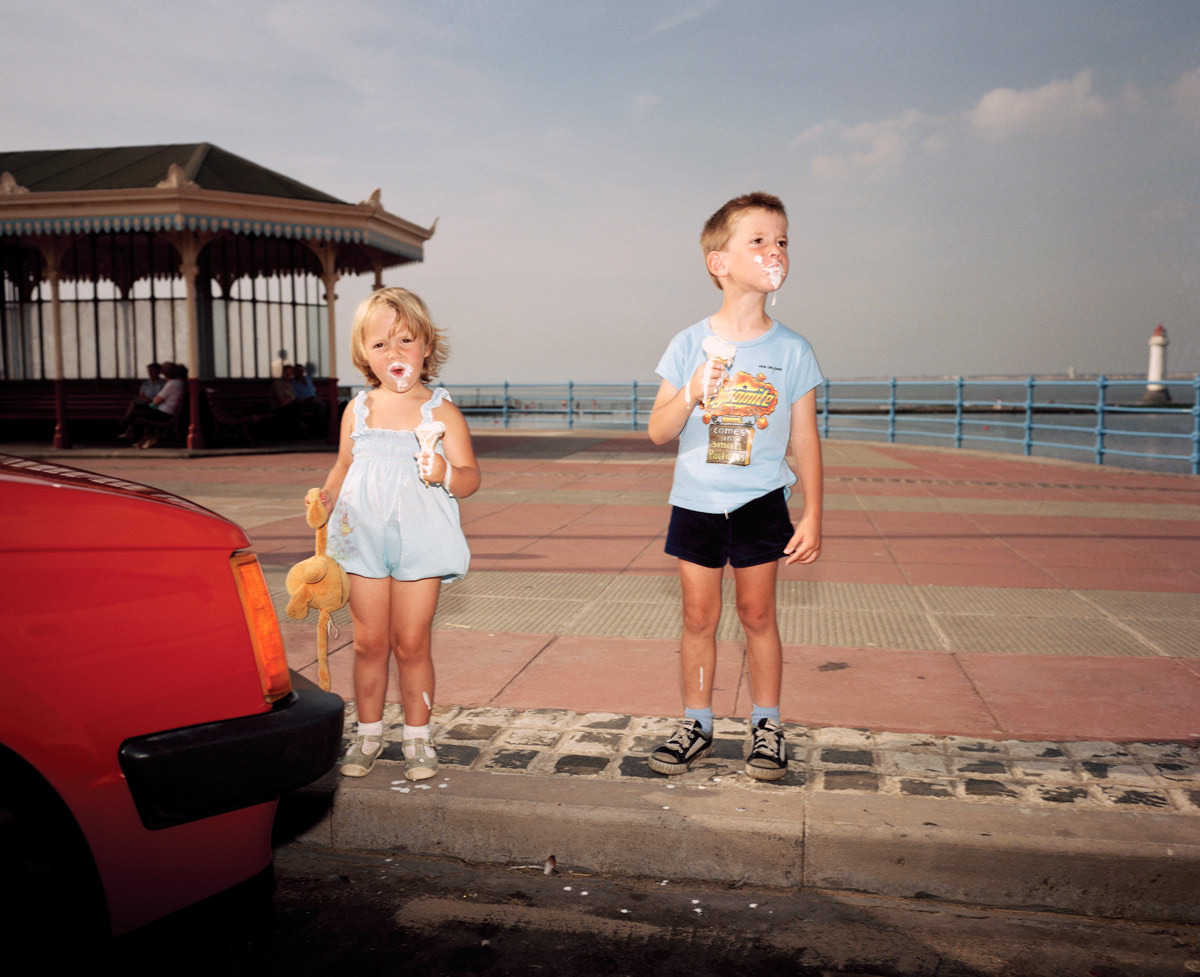
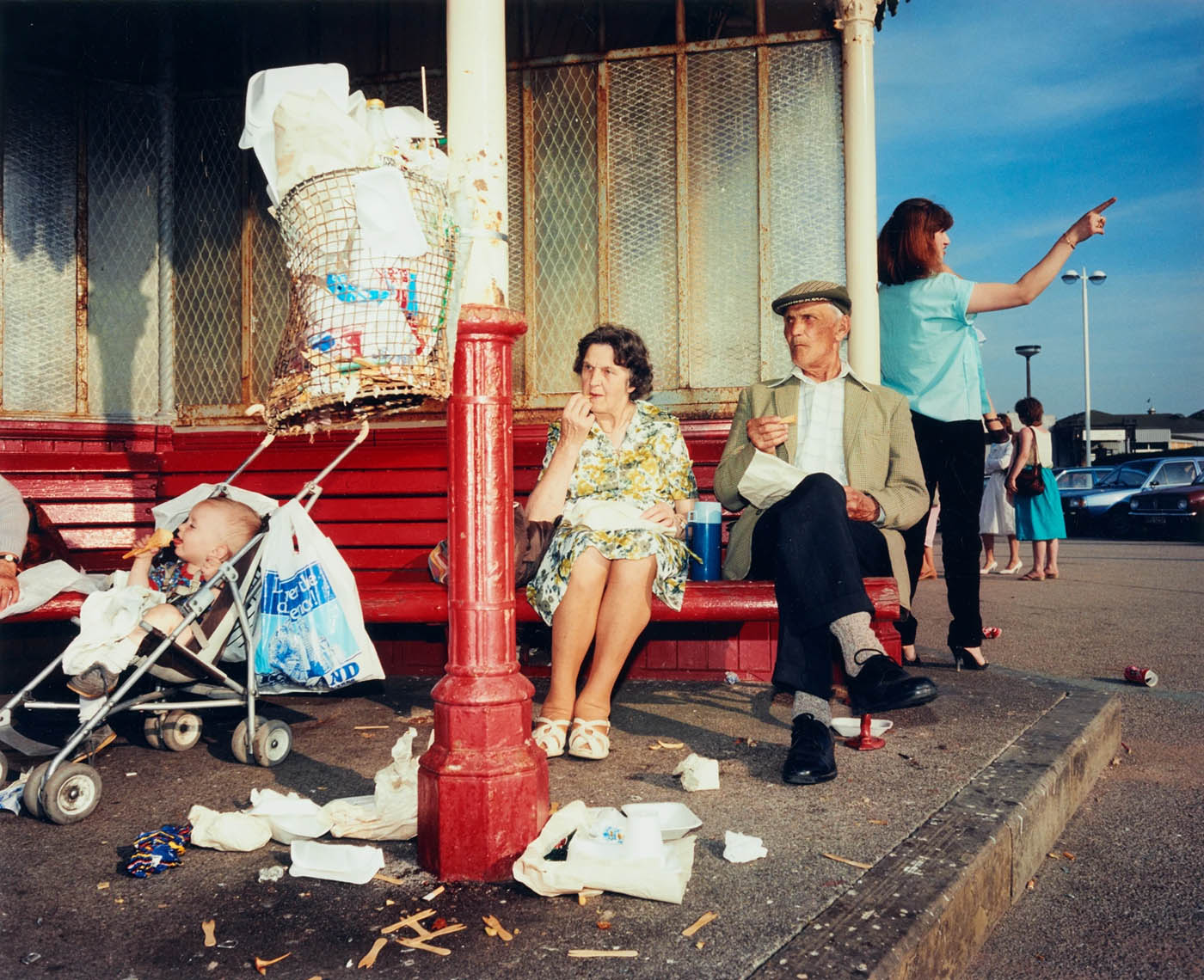
Martin Parr (British, 1952-2025) New Brighton, England From the series The Last Resort 1983-1985 Pigment print
From life, the absurd, the (un)familiar
The death of the English photographer Martin Parr is very sad news 😦
I feel like I have known his intimate photographs from life for a very long time. Through his beautifully observed and humorous photographs Martin Parr became a national treasure.
Incisive and insightful, his best photographs shone a light on the British class system, British rituals and everyday conversations – “candid and often humorous depictions of everyday life” – captured with visual deftness and containing a wry sense of humour mirroring the British character.
“Parr’s work was at its best when he concentrated on the volume of space within the image plane and the details that emerge from such a concentrated visualisation – whether it be the tension points within the image, assemblage of colour, incongruity of dress, messiness of childhood or philistine nature of luxury.” (MB, 2102)
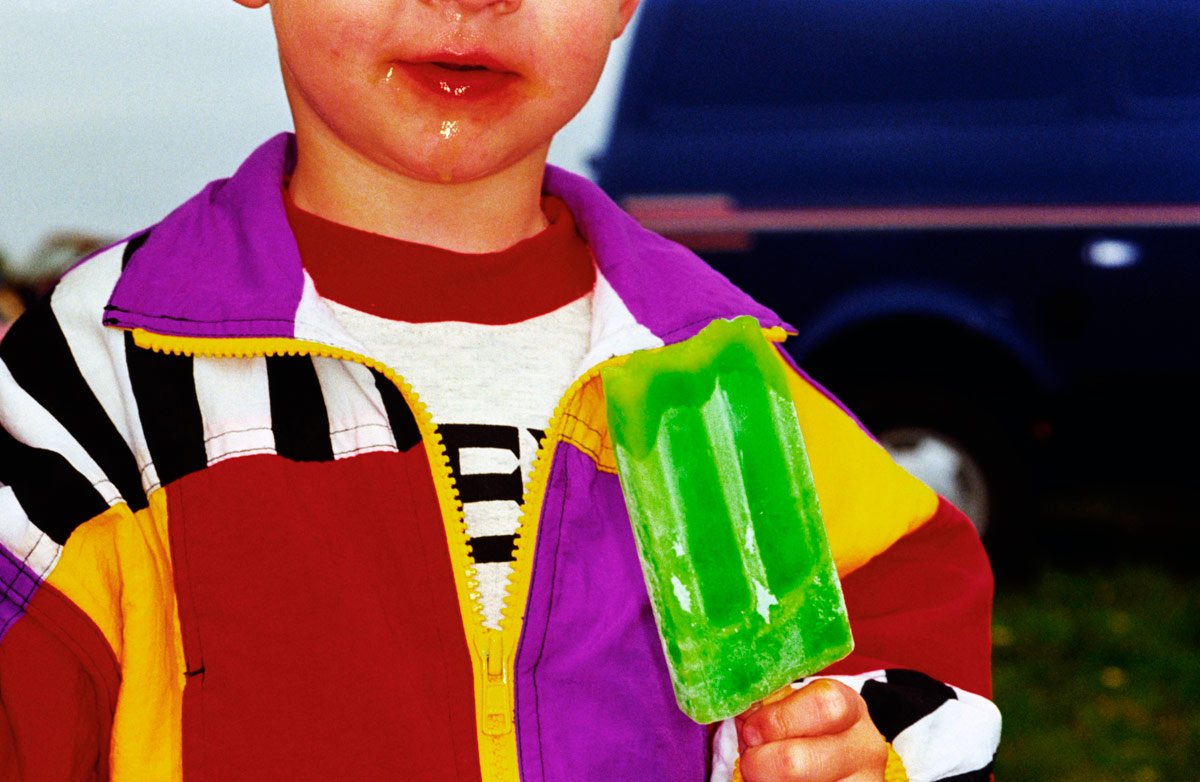
His photographs have a wonderful frisson about them, a genuine love of and resonance with the things he was imaging. The dirt under the fingernails of the child eating a doughnut, the lurid colours of the popsicle and jacket of the kid with dribble on his face, all fantastic. Images full of incongruity, humour, and pathos. The absurd and the (un)familiar.
And so it goes… we loose another great photographer.
Vale Martin Parr and thank you!
Dr Marcus Bunyan
Please click on the photographs for a larger version of the image.
Read my text “Out in the midday sun” on the exhibition Martin Parr. Early Works at Fotografie Forum Frankfurt (FFF), September 2024 – February 2025
“Photography is the simplest thing in the world, but it is incredibly complicated to make it really work.”
“I think the mindset you require is stamina, discipline, and just sheer hard work. There are basically very few shortcuts. You’ve either got that ability to apply yourself to a given situation or a given idea and explore it and resolve it, or you haven’t. Most people are just lazy. The danger with photography is that it looks very easy but in fact, it’s a very difficult medium to really excel well in because basically, people don’t work hard enough – they’re lazy. Don’t be lazy!”
Martin Parr
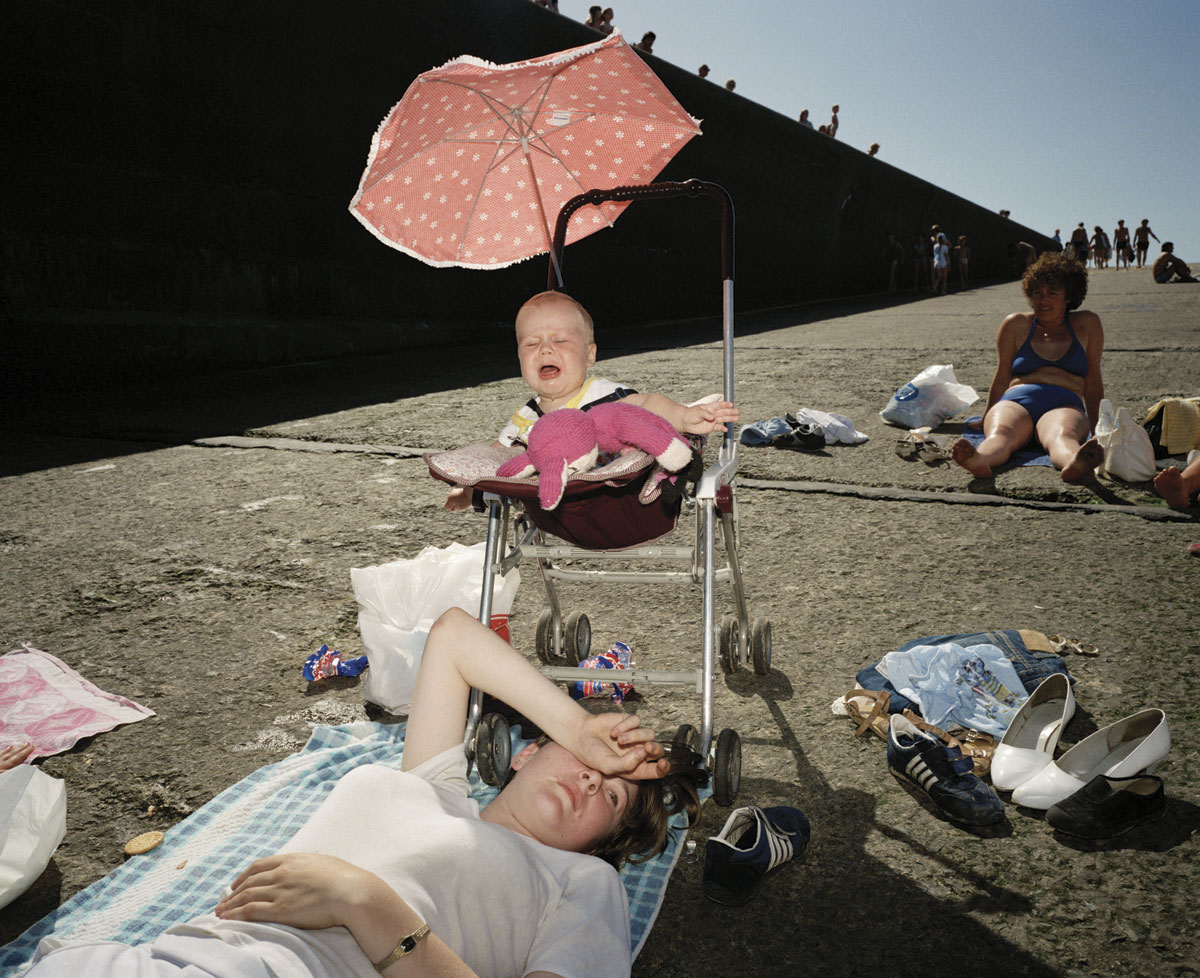
Martin Parr (British, 1952-2025) New Brighton, England From the series Last Resort 1983-1985 Pigment print
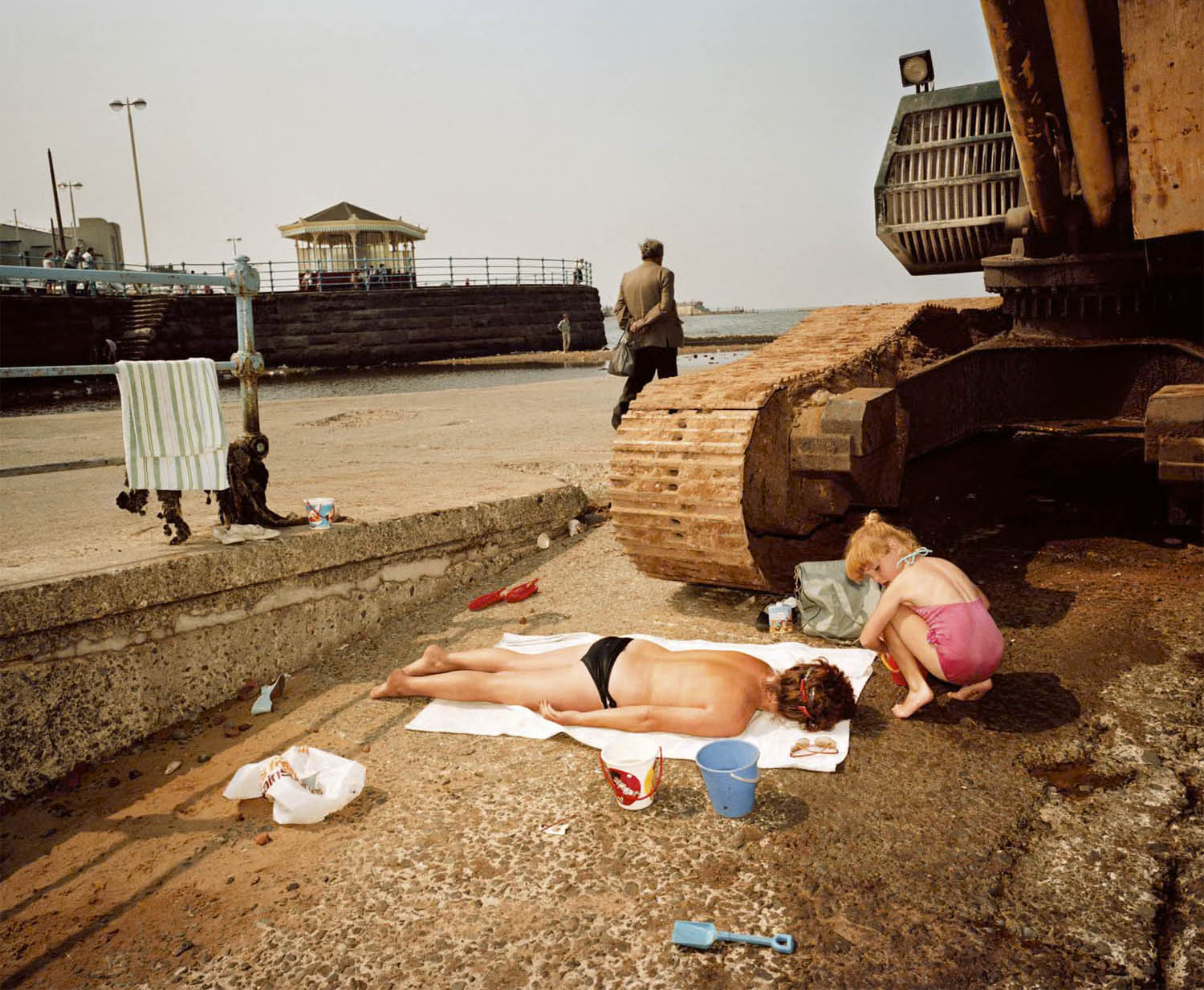
Martin Parr (British, 1952-2025) New Brighton, England From the series The Last Resort 1983-1985 Pigment print
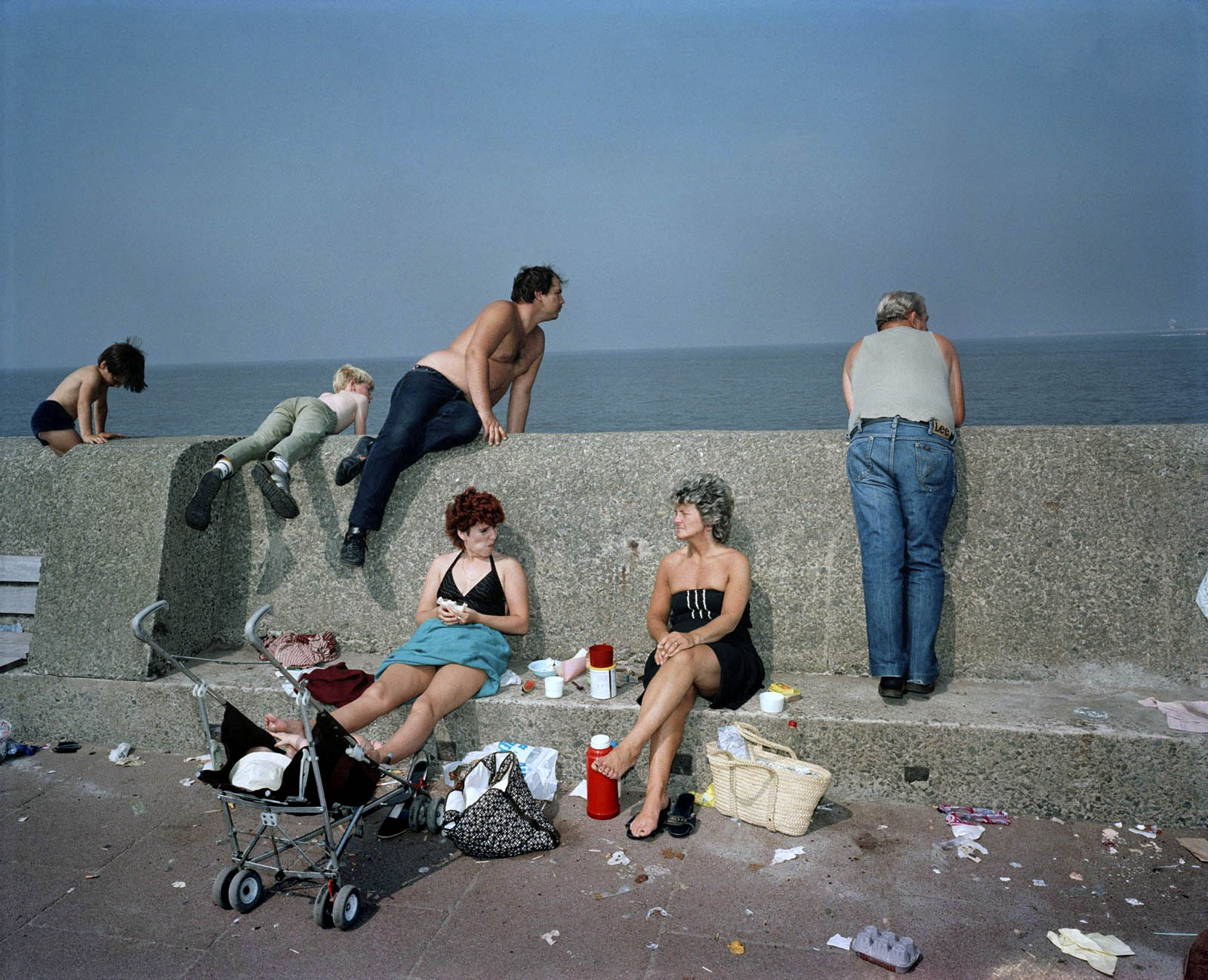
Martin Parr (British, 1952-2025) New Brighton, England From the series The Last Resort 1983-1985 Pigment print
Martin Parr (British, 1952-2025) New Brighton, England From the series The Last Resort 1983-1985 Pigment print
Martin Parr (British, 1952-2025) New Brighton, Merseyside, England 1984 From the series The Last Resort Pigment print
Martin Parr (British, b. 1952) England. Bristol. Car boot sale. 1995 From the series British Food 1994-1995 Traditional C-type print
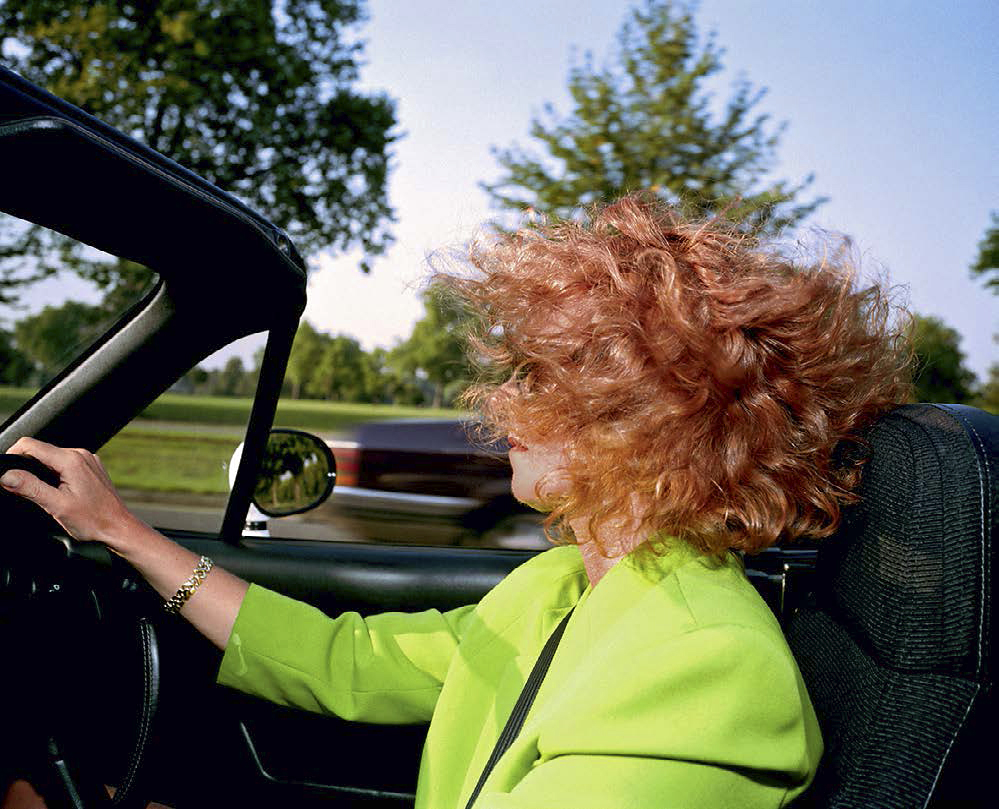
Martin Parr (British, b. 1952) From A to B. Tales of Modern Motoring series 1994 Pigment print
I have found a hidden gem in Roberto Donetta. He has become one of my favourite photographers, this seed salesman from Bleniotal, who died in obscurity and poverty in 1932.
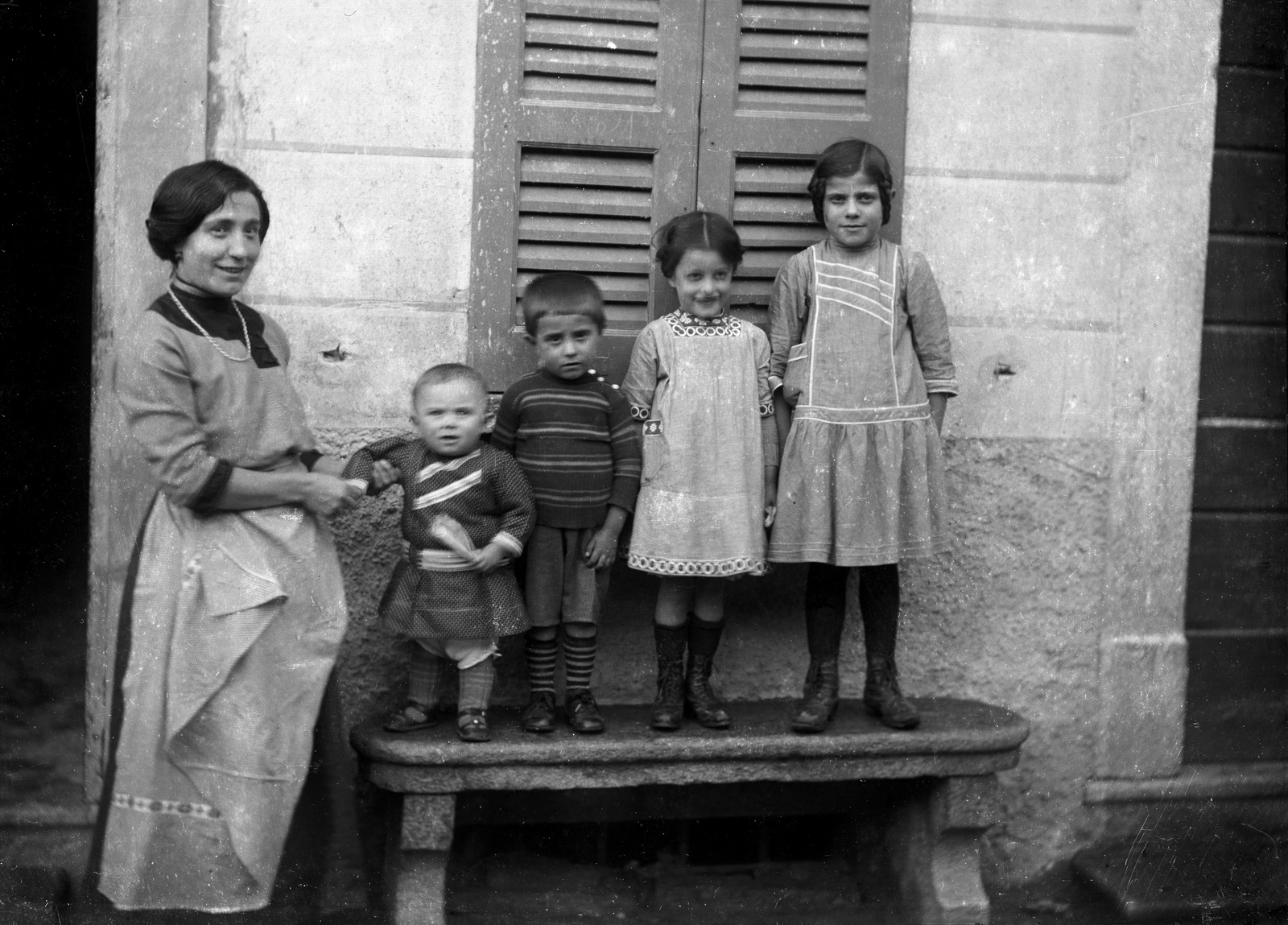
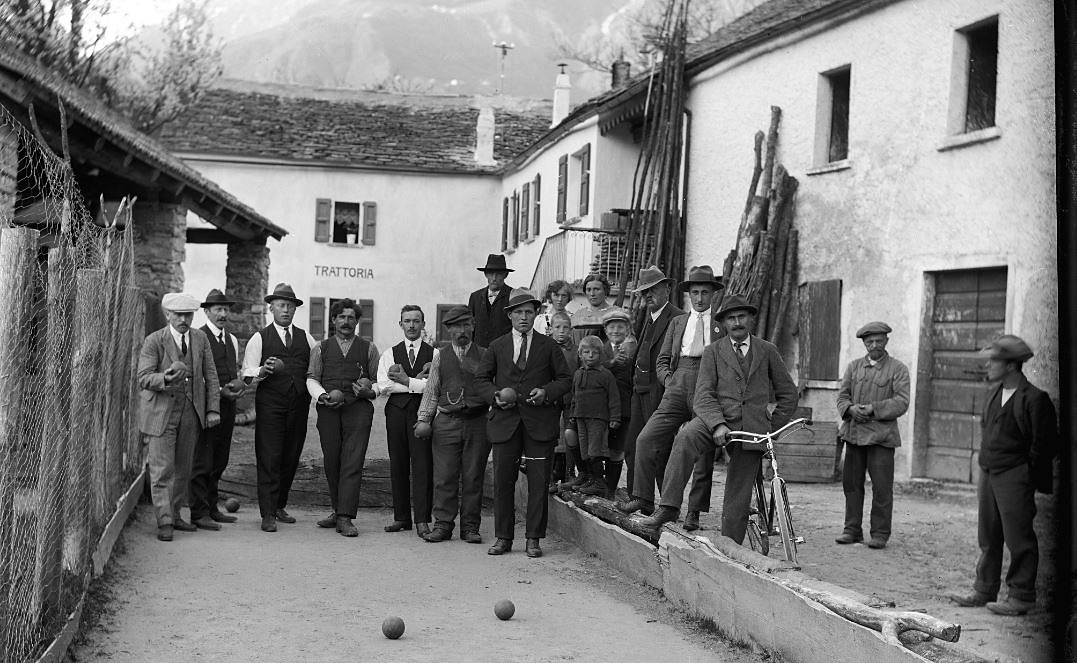
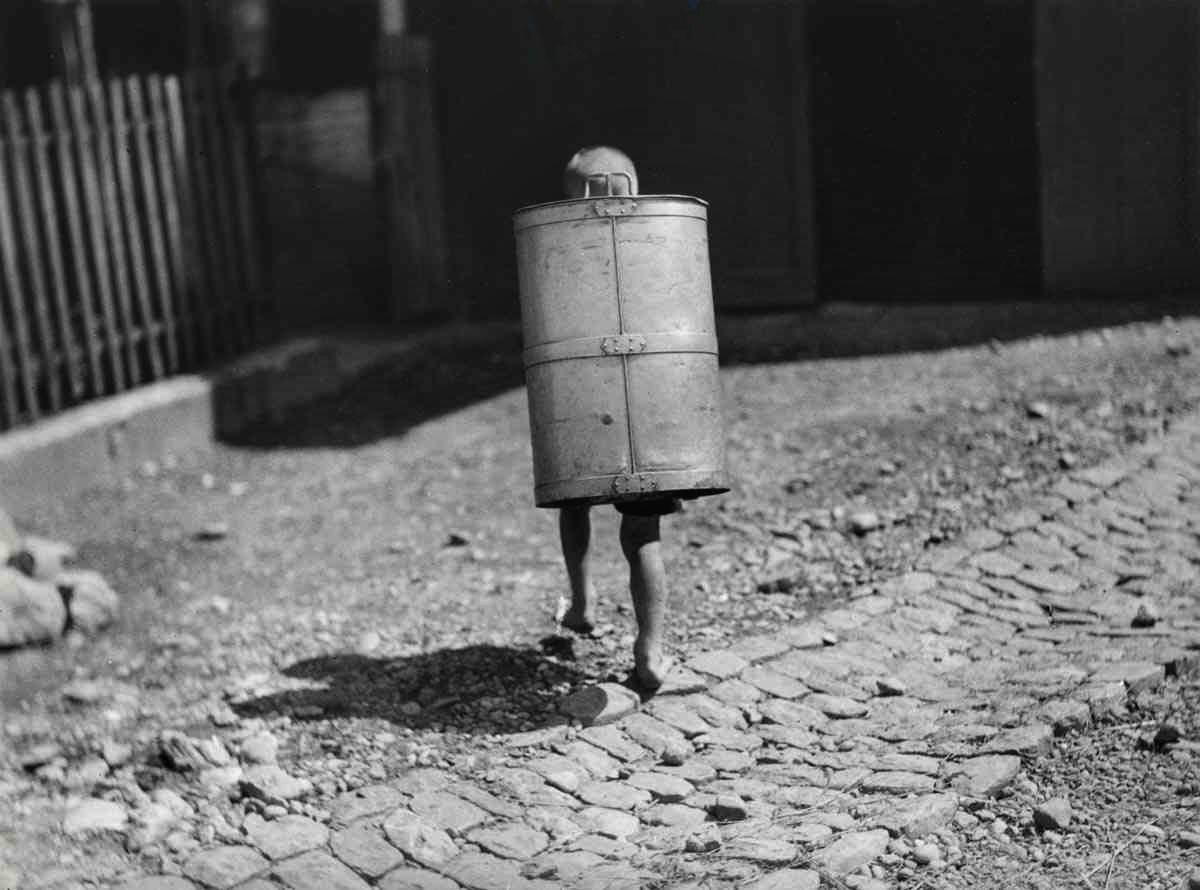
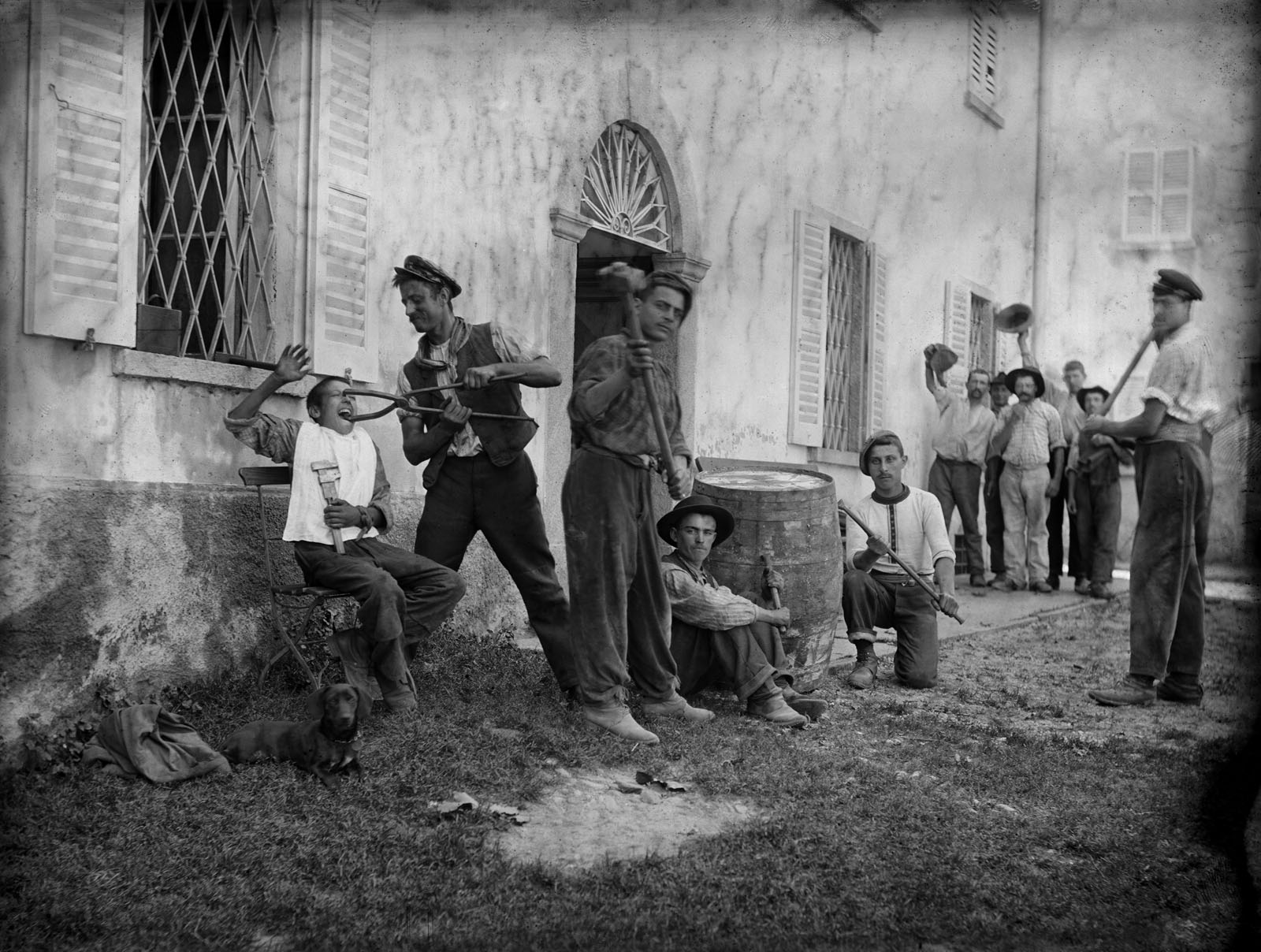
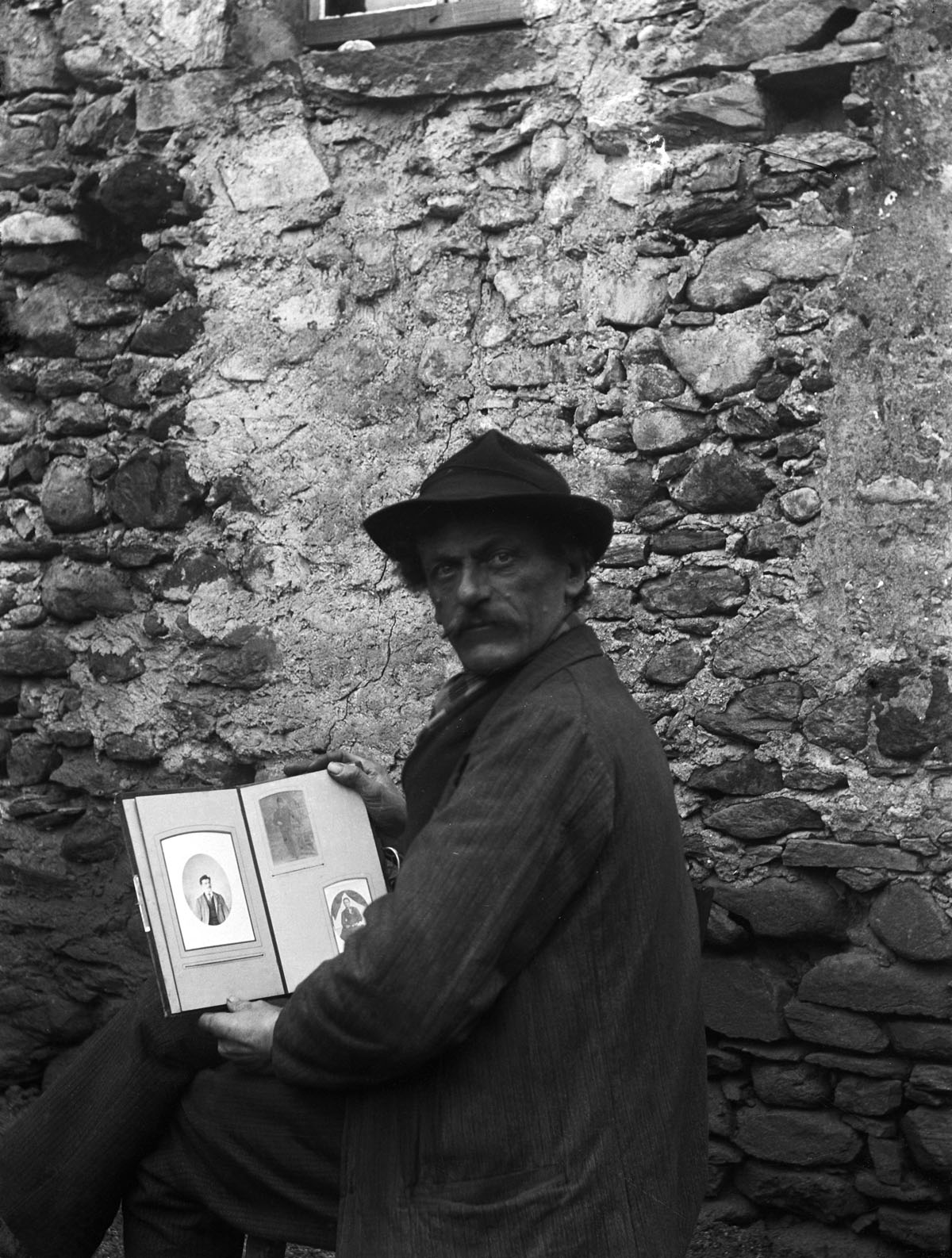
His photographs are like no other that I have seen. There is a directness to his photographs that is deceptively disarming, and humour as well. His theatre is the the theatre of life: the archaic life of his compatriots in the Blenio Valley. If you look at his work on the Roberto Donetta Archive website the landscapes and ambiguous object photographs are interesting, but it is in the genre of portrait photography that he really excels. This was his passion, photographing people.
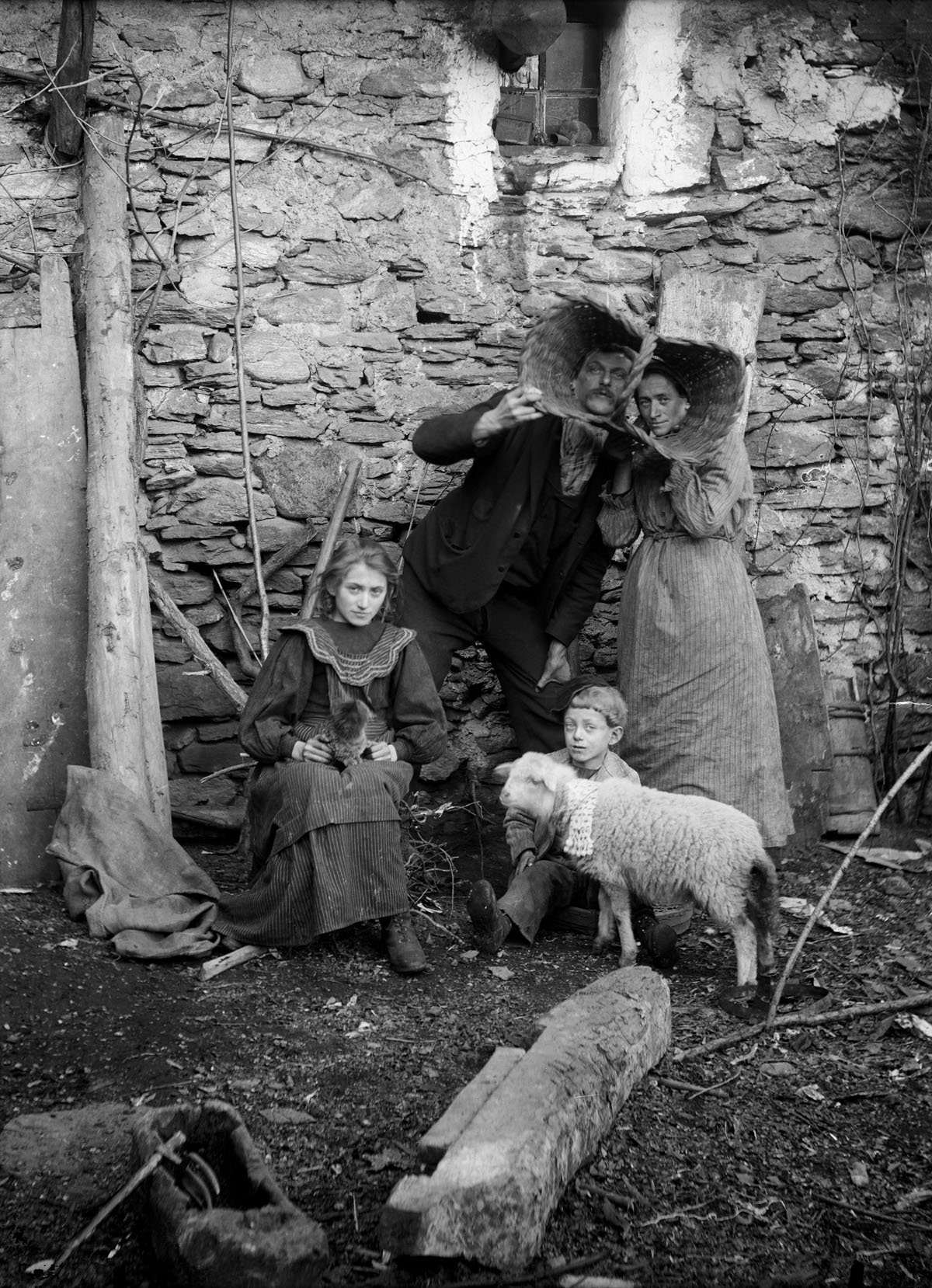
Somehow, it seems as if the person being photographed has forgotten that the camera was there, as though it has disappeared from view. As the press release observes, “the people did not dissimulate [to disguise or conceal under a false appearance], indeed it’s almost as if they forgot that someone with a camera was watching, so self-engrossed do they look, serious, at one with themselves.” At one with themselves but also at one with being photographed, which is very unusual. There is little affectation here.
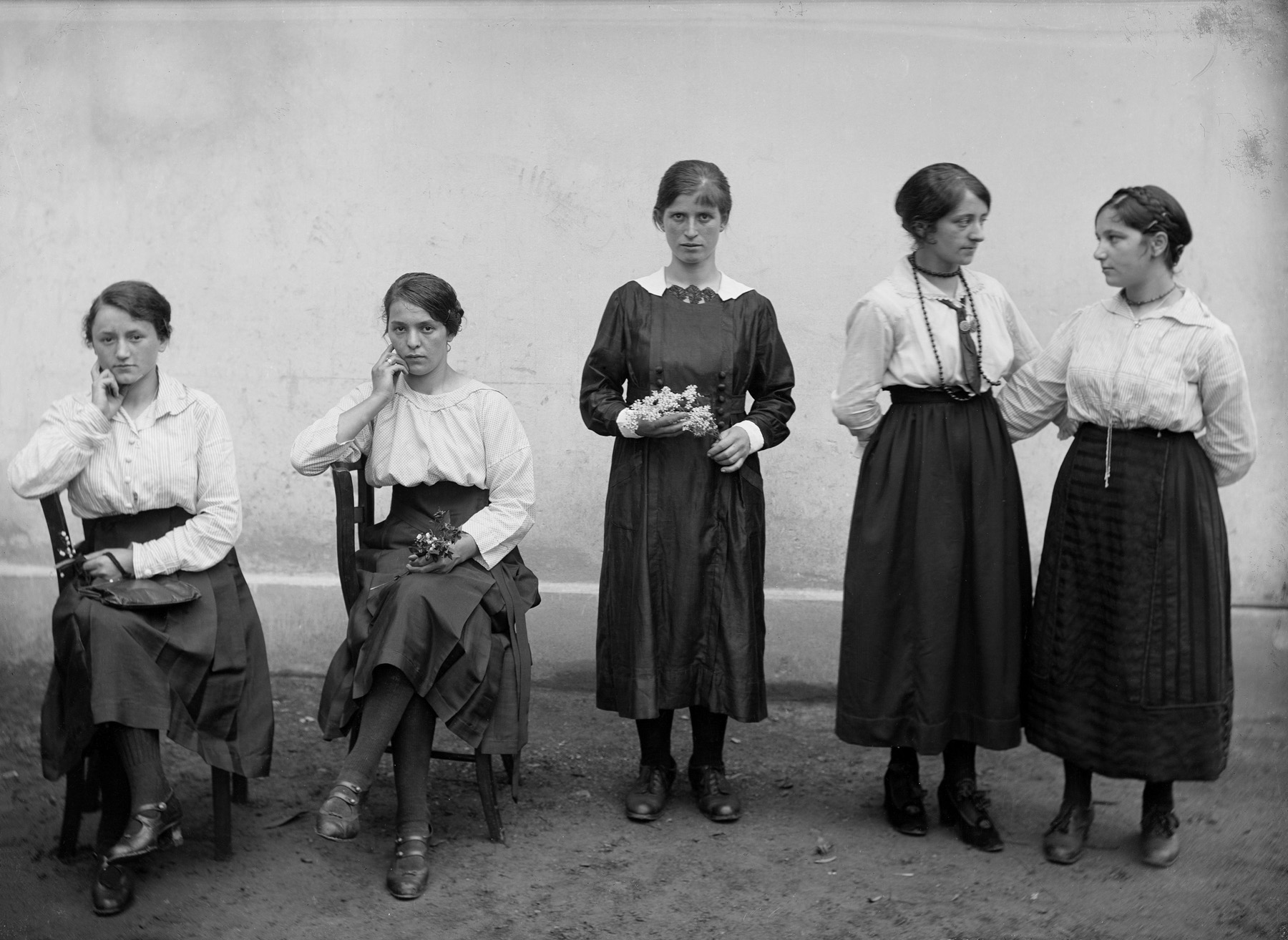
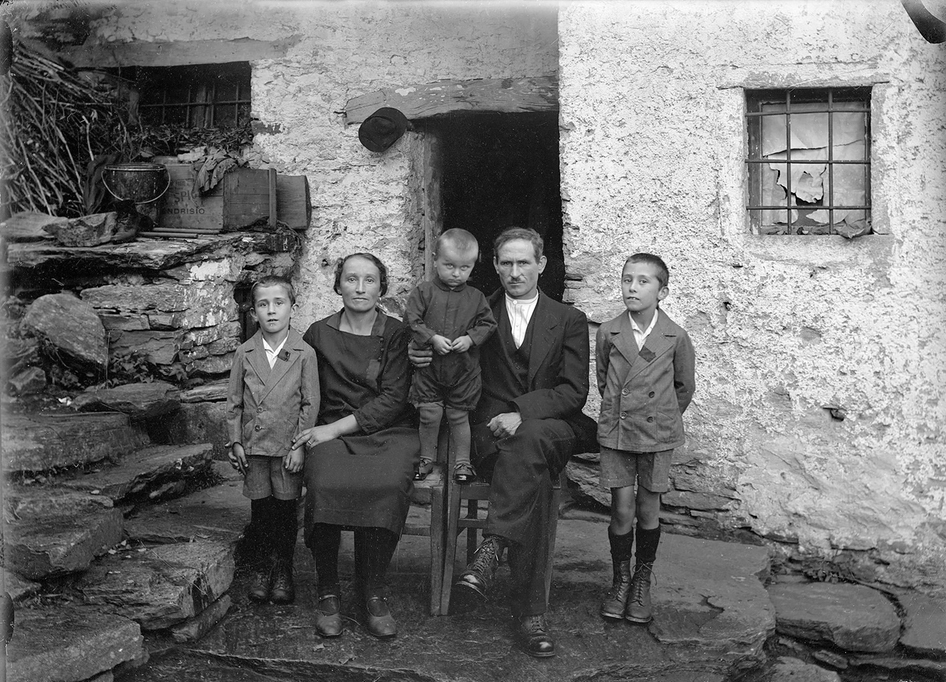
The details of the photographs are fascinating. The placement of the figures in Female Workers in Front of the Chocolate Factory Cima Norma for example, where the left two sitting figures have their legs crossed in the opposite direction while both rest their face in their hands, a central figure, and then two figures interlocked as in an infinity symbol looking at each other. The ‘line’ of the photograph changes from one height to another. We observe that Donetta stages his photographs with infinite care, even when there is a blank wall behind the sitter. In Family Portrait, Bleniotal there is a gorgeous touch, as the mother holds the arm of the boy on the left hand side and gently rests two fingers on his other hand. Donetta’s photographs are full of these familial and human observations.
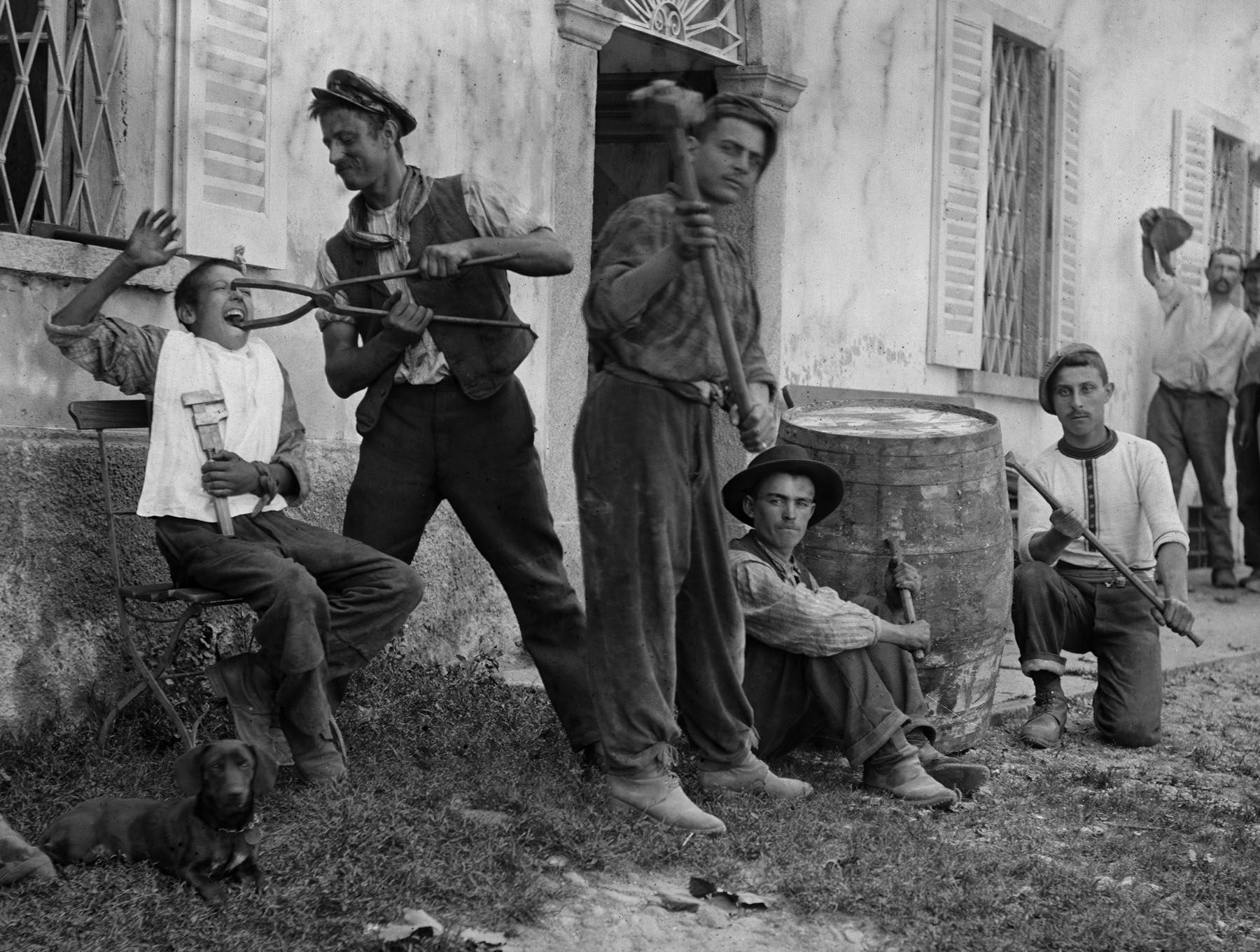
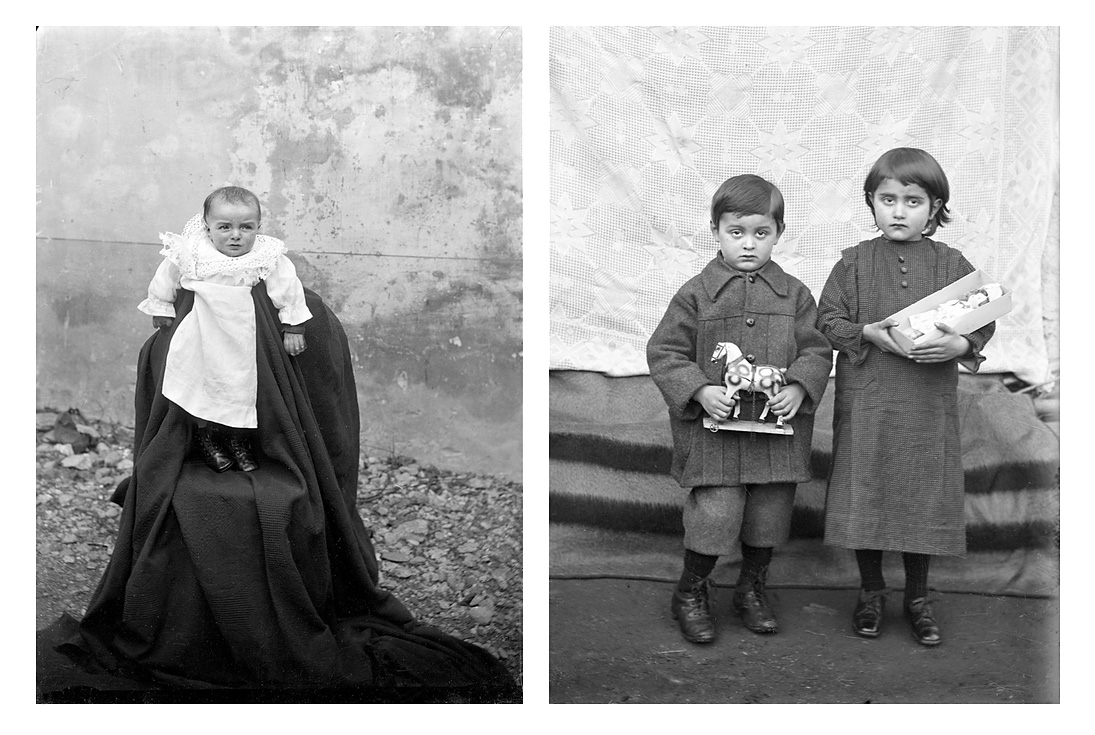
In Group of musicians in front of a building all the men have cigarettes hanging from their mouths, even as they stare directly, unflinchingly into the camera lens. In Humoristic scene, Bleniotal the man holding the tongs can hardly suppress laughing as the theatrical photograph is being taken. Kittens or toys are held in hands while protective arms wrap around shoulders. Here are the precursors to the work of Diane Arbus, in their honesty and straight forwardness: in its modernity Children with Toys, Bleniotal even reminds me a little of Arbus’ Identical Twins, Roselle, New Jersey, 1967. And then there is the use of temporary backdrops, to imitate the upmarket studios of larger towns: “Donetta did imitate the decorative aesthetic of the late 19th century professional studios: he transformed interior or outdoor spaces into improvised studios by, for example, hanging up fabrics or carpets as backdrops and placing objects like chairs or tables with vases of flowers in the foreground. His portraits are carefully composed and arranged, look uncontrived, calm and archaic.”
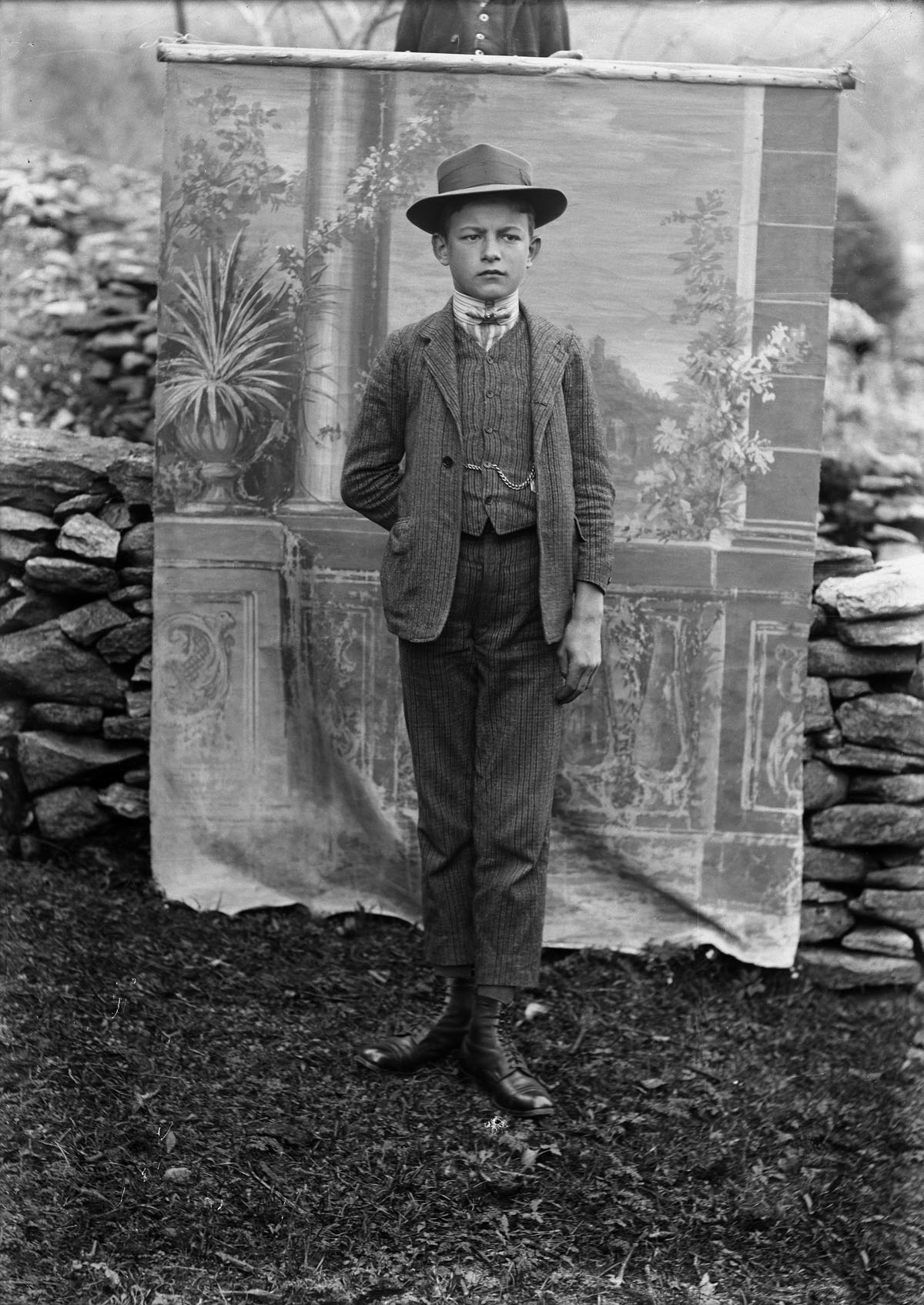
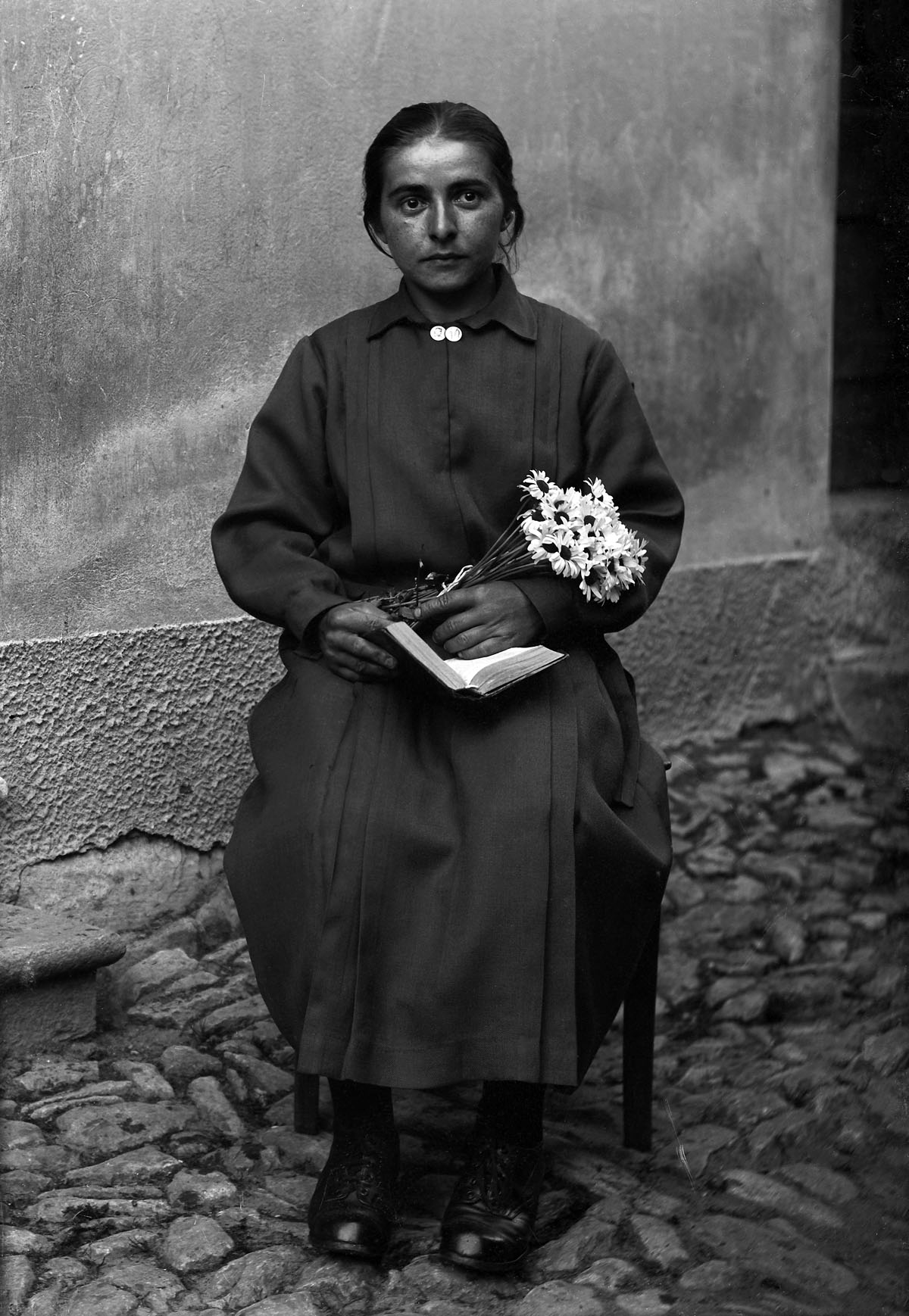
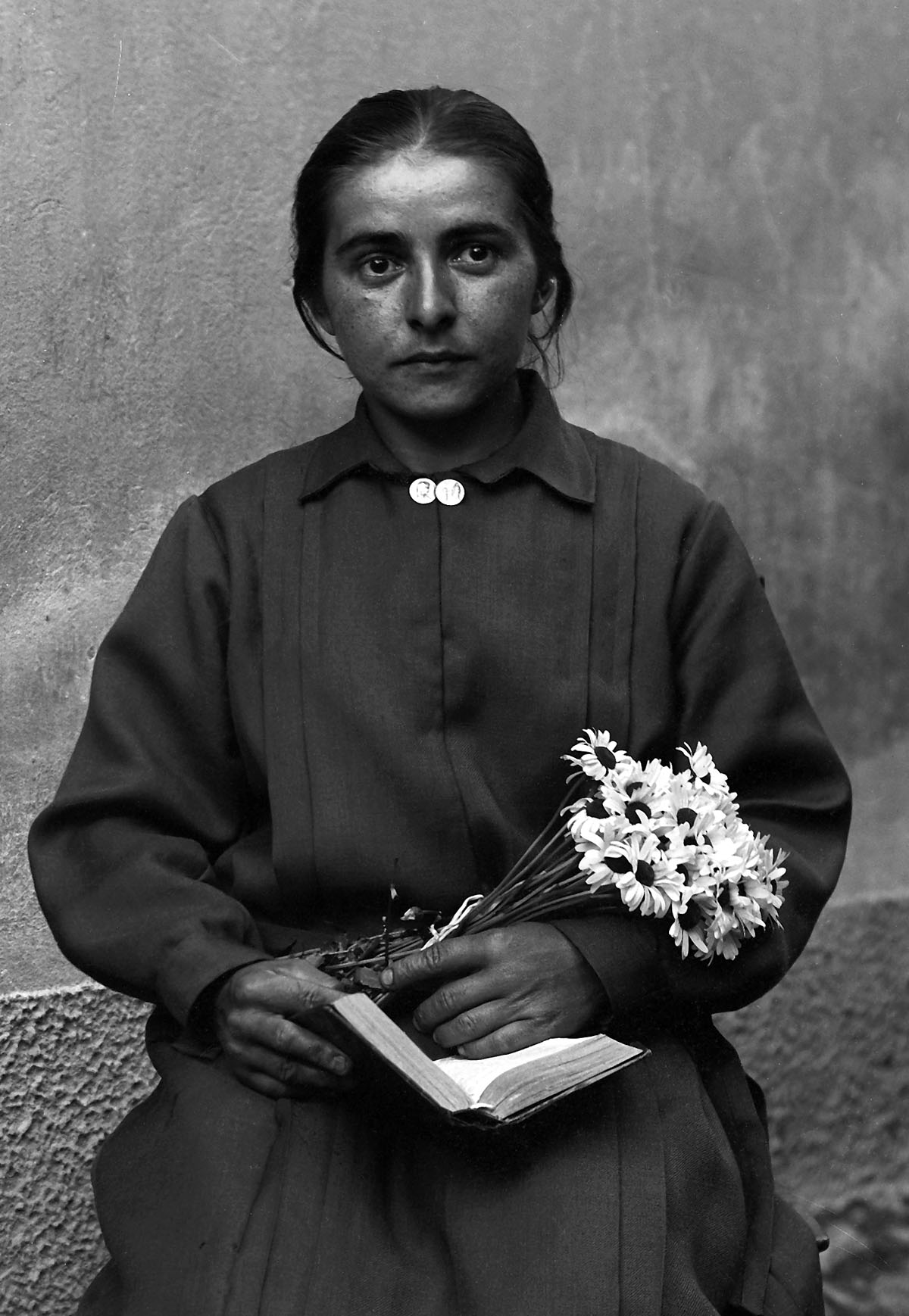
Despite their deceptively simple nature, there is a mysterious quality to Donetta’s photographs which is enhanced through the use of these portable backdrops. The fabric backdrop and sheet to the left in A wedding couple staged in front of a cloth obscures a rock wall; the idyllic scene behind the boy in Portrait of a Boy, Bleniotal hides an earthy, rudimentary stone wall (and note the figure at the top of the image, holding the backdrop up); in Family Portrait, Bleniotal the hastily hung sheet has been decorated with leaves and branches; and in Untitled [Portrait of a women] a plain concrete wall acts as the backdrop even as a) the women looks out of the image not towards the camera; b) the eye can escape down the left hand side of the image and c) there is a ghost-like figure at the very right hand side of the image standing in what I presume is a doorway. The frontality of his photographs is also very powerful: in Untitled [Portrait of a man] the man looks like he is wearing his Sunday best jacket replete with bow tie. His legs are spread on the chair, the jacket looks to big for him, is stiff and unforgiving, his workers hands rest in his lap and he stares quizzically out of the image: calm, accepting, himself. In Portrait of Cesarina Andreazzi Lazzari, Bleniotal we (again) notice the textures in the image – the stipple, the concrete, the rocks – and then Cesarina’s stubby, dark hands clutching a bunch of flowers and a book, reminiscent of the dirt under the finger nails and dark features of the peasant boys that appear in the work of Baron Wilhelm von Gloeden.
Above all these are honest, direct and engaging photographs. You can think of Lewis Hine, Jacob Riis, Eugène Atget, Walker Evans, Dorothea Lange and all the FSA photographers, Diane Arbus and others, and yet they don’t come close to the modern/archaic aesthetic of this man. These photographs are a pilgrimage into a past that has long disappeared. But these faces, these people and their lives, still resonate long after they have passed. I was so moved by these photographs I was in tears the other night when I was constructing this posting, studying the intimate details of these images. That means a lot to me.
Dr Marcus Bunyan
PS. I usually don’t publish photographs without title and date but in this instance, to gather together as many Donetta images as possible, I have published them when I have found good quality images on the internet. I believe that in this instance it is very worth while.
Many thankx to Fotostiftung Schweiz for allowing me to publish some of the photographs in the posting. Please click on the photographs for a larger version of the image.
Roberto Donetta (1865-1932) from Ticino is one of Swiss photography’s great outsiders. He managed to survive as a travelling photographer and seed salesman, and upon his death left almost 5,000 glass plates which were preserved merely by chance. These capture the archaic life of his compatriots in the Blenio Valley, which at the time was totally isolated, and the gradual advent of modern times in a precise and sensitive way. Over a period of 30 years and in an era of great change, Donetta became a unique chronicler. At the same time, he saw himself as an artist who – self-taught – experimented freely and knew how to master his medium. His pictures are penetrating and humorous, cheerful and deadly serious – be they of children, families, wedding couples, professional people, the harsh everyday-life of women and men, or of the photographer himself. The Blenio Valley as a microcosm: with Donetta the mountain valley becomes the stage for a great Theater of the World. The exhibition will display about 120 works from the Donetta Archive, many of them on show to the public for the first time ever.
Roberto Donetta was born in Biasca on 6 June 1865. It is not known where he spent his youth. Towards the late 1870s his family most probably moved to Castro in the Blenio Valley, as his father had got a job there as a military functionary. An official register entry on the occasion of his marriage to Teodolinda Tinetti indicates that Roberto Donetta certainly lived in the valley as of 1886. He is registered there as “contadino”, a farmer, which he most likely never was. In 1892 he opened a small grocery shop in Corzoneso, but he had it for only six months. In 1894 he went to London to work as a waiter, returning just 15 months later, sick and exhausted. He then became a hawker and travelled into the most remote corners of the whole valley selling vegetable and flower seeds. As of 1900 he lived in the “Casa Rotonda” in Casserio, part of the Corzoneso municipality. He and Teodolinda meantime had seven children, one of whom died at the age of one. It was around that time that Donetta began to be involved with photography. Apparently Dionigi Sorgesa, a sculptor from Corzoneso, introduced him to the profession and also rented him a camera. Now Donetta was not only a seed merchant but also the valley’s photographer.
A Constant traveller
After turbulent quarrels about the use of their sparse income, he and his family separated in 1912: his wife and children left him in the direction of Bellinzona in search of more lucrative work. Only the youngest son, Saul, remained with his father. On 6 June 1913, his 48th birthday, some of Donetta’s belongings were seized and, for a couple of months, he had no camera, which was a great worry to him: “Not to be able to work for a period of nine months – that severed my connection with my art and made me totally destitute.” Donetta spent the years after the First World War in great solitude, constantly on the road throughout the valley. From 1927 onwards, some of his photographs were published in one of Switzerland’s first illustrated journals, L’Illustré, issued by Ringier.
On the morning of 6 September 1932, Roberto Donetta was found dead in his home. All his photographic equipment was confiscated and auctioned so as to pay off his debts to the municipality. The glass plates, however, were all left untouched. In the mid-1980s Mariarosa Bozzini rediscovered them in Corzoneso.
Between tradition and modernity
Donetta’s personality was full of contradictions. On the one hand, he expressed considerable interest in all the phenomena associated with the advent of modern achievements, such as photography. On the other hand, he was decidedly conservative when it came to the cohesion of the family or his close links with nature. The latter prevented him from leaving the valley to look for more secure work in town. He lamented the constant changes associated with road building and new railway lines, which he did not see as a blessing for the valley. In his capacity as a photographer he succumbed to the fascination of the modern, yet at the same time he expressed a deep respect for long-standing traditions and rituals.
Roberto Donetta’s passion was undoubtedly for portrait photography. The self-taught photographer not only exhibited an astonishing technical mastery in portraying people, but was also able to give free rein to his creativity – despite the fact that this particular field of photography was strongly influenced by the conventions and expectations of his clients. His numerous portraits of children are remarkable. With children he was well able to live out his delight in composing, his talent in staging small scenes. He took the young people seriously, and they in turn were his accomplices, becoming involved in his idiosyncratic ideas.
The chronicler and his style
Throughout his life Donetta accompanied life in the valley, taking commissioned photographs of the inhabitants and the representatives of the different professions, as well as of various events: a visit by a bishop, the arrival of a carousel, a flood, a fire, the construction of a railway line or a bell tower. He was also present at life’s rituals, the transitions from one age group to another, from one social group to the next, or else the prominent fixed points in the year’s cycle, be they secular or ecclesiastical: festivals, weddings, funerals, processions, outdoor church services, these were inconceivable without “il fotografo”. Donetta made photography an important part of those rituals, and over the course of time the photographer was as much a part of the valley as the parson was of the church. This is surely the source of the quality of his photographs: the people did not dissimulate, indeed it’s almost as if they forgot that someone with a camera was watching, so self-engrossed do they look, serious, at one with themselves.
The improvised studio
As Donetta did not have a studio of his own, he travelled the whole valley to take his portraits and produced only small modest prints in postcard format (ie. 7 x 11 cm), which he occasionally stamped with his initials. Often the only ornamentation was an oval vignetting or rounded edges. He regularly delivered the commissioned photographs late because, in order to save chemicals, he only developed his films infrequently. After his rounds as a seed merchant, he then struggled with his business correspondence late into the evening. His works differ greatly from the elegant, classic, gold-edged cards that people could have done those days in the city studios without long waiting periods.
Yet in his own way Donetta did imitate the decorative aesthetic of the late 19th century professional studios: he transformed interior or outdoor spaces into improvised studios by, for example, hanging up fabrics or carpets as backdrops and placing objects like chairs or tables with vases of flowers in the foreground. His portraits are carefully composed and arranged, look uncontrived, calm and archaic. Because of the long exposure times, he was concerned to eliminate chance and spontaneity as far as possible.
In addition to this, he also experimented, or simply took photographs for himself: still life, stormy scenes, cloud formations, strangely shaped cliff or tree outlines. These photographs impress us by their modernity and originality and testify to an inquisitive man with an interest in aesthetic issues.
William Eggleston (American, b. 1939) Untitled 1960
Courtesy Cheim & Read, New York and Peder Lund, Oslo
Eggleston Artistic Trust
Photo Courtesy Vegard Kleven, Oslo
“As these rediscovered prints reveal, the man who made colour photography into an artform worked brilliantly in monochrome – and his eye for unsettling detail is every bit as sharp”
Sean O’Hagan
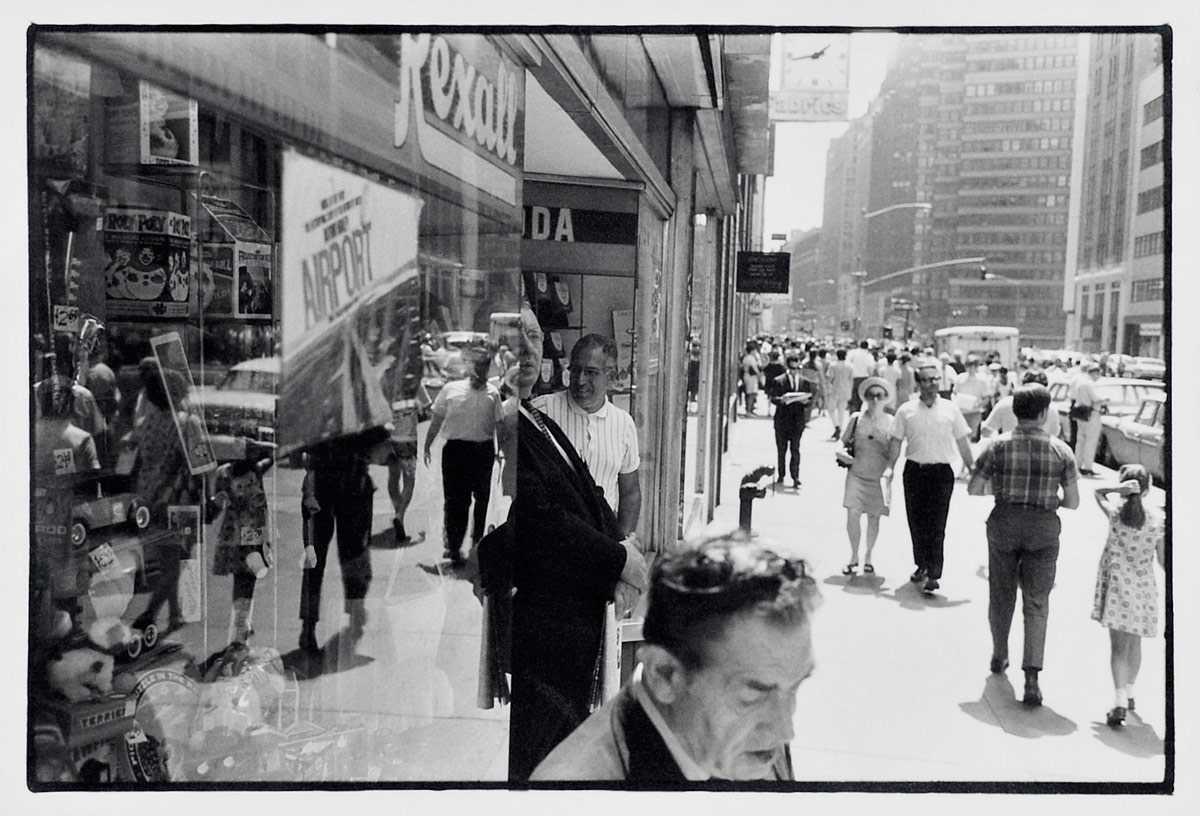
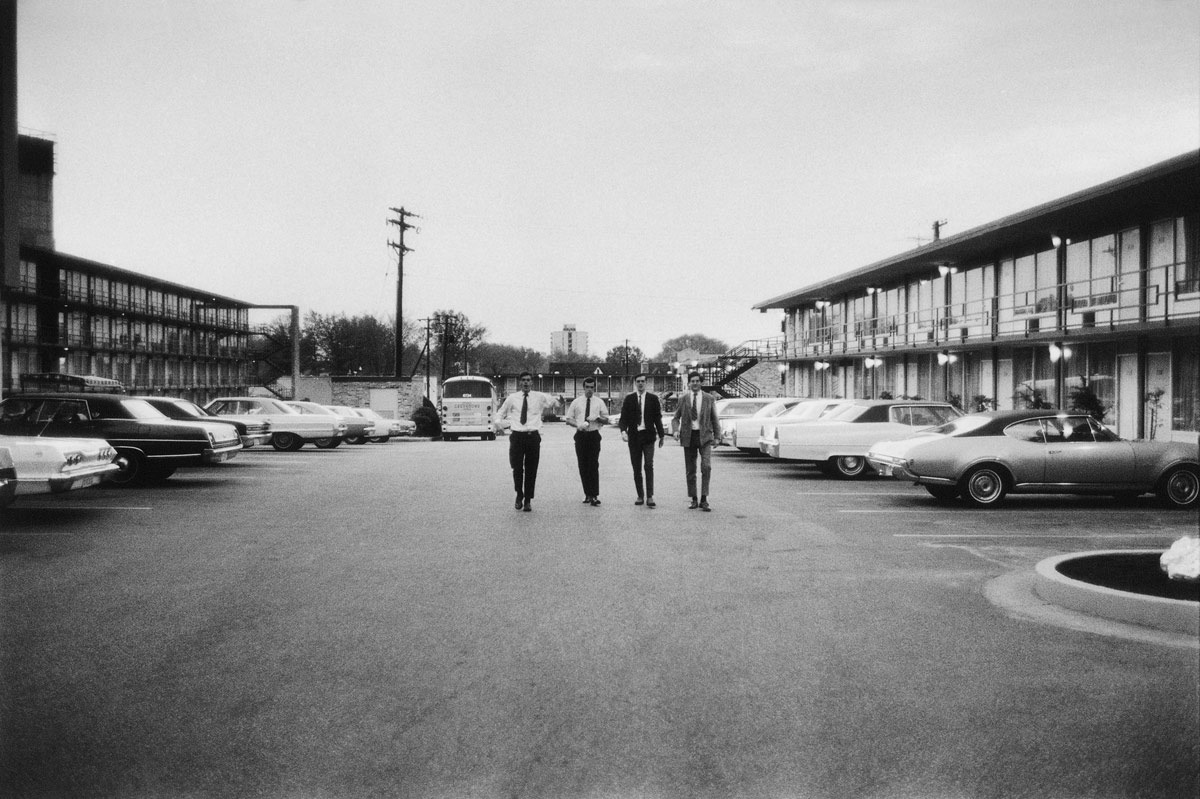
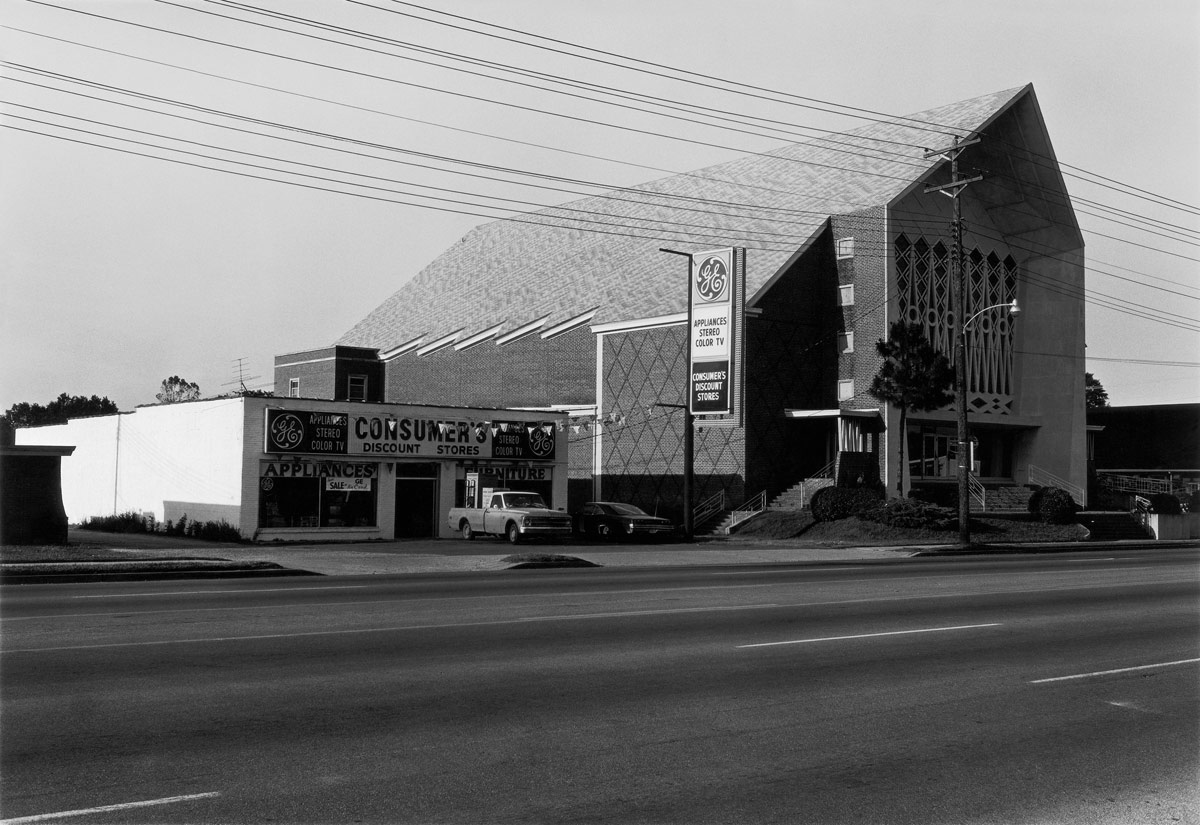
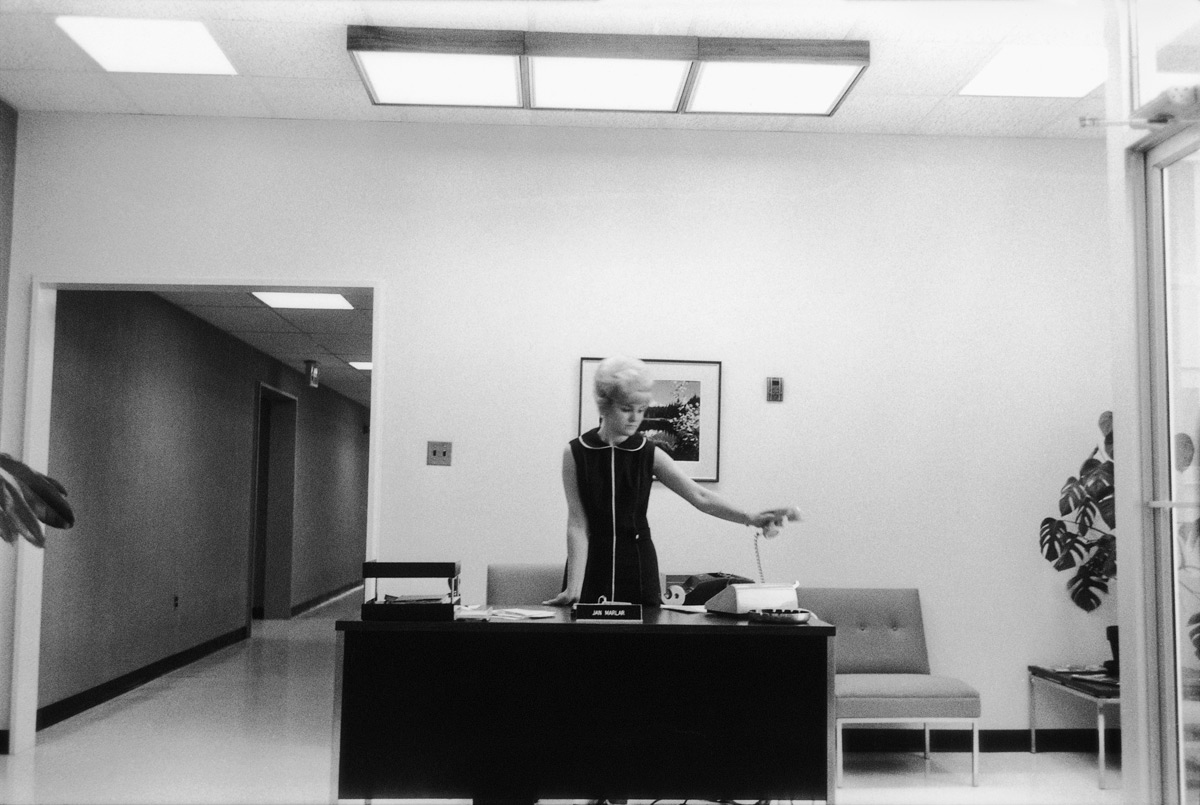
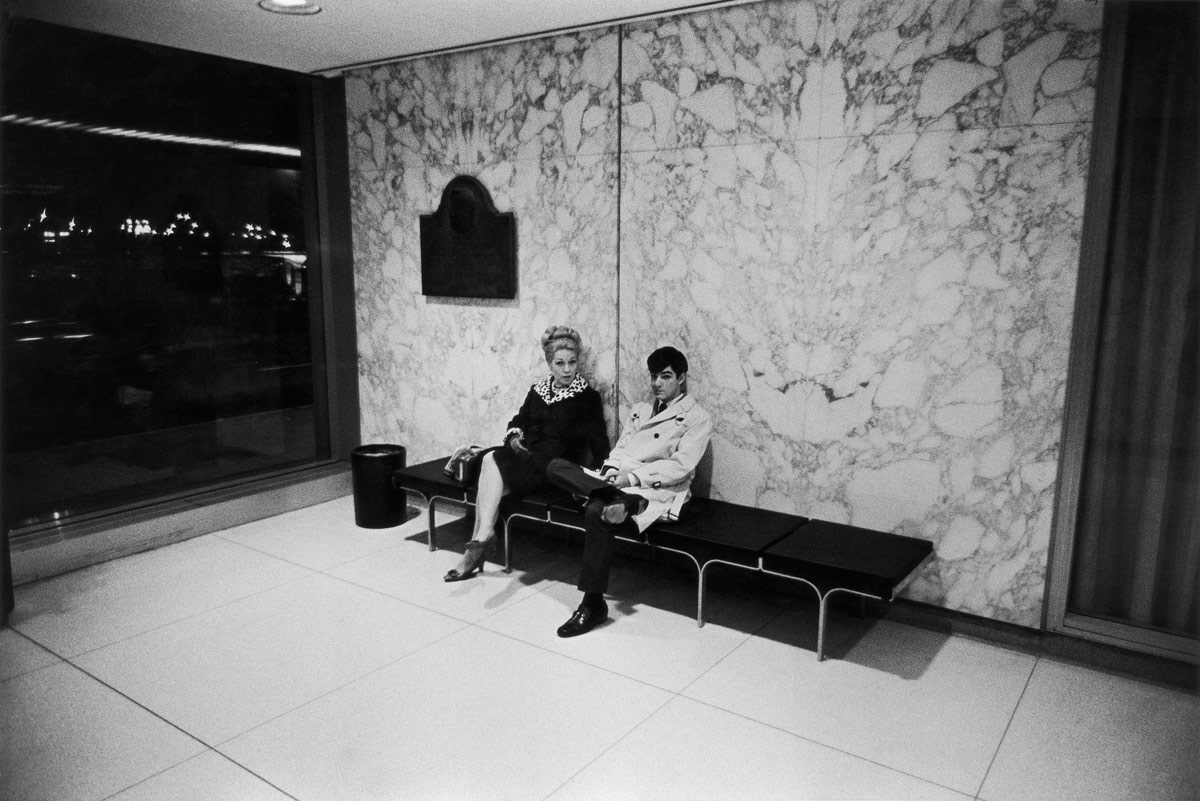
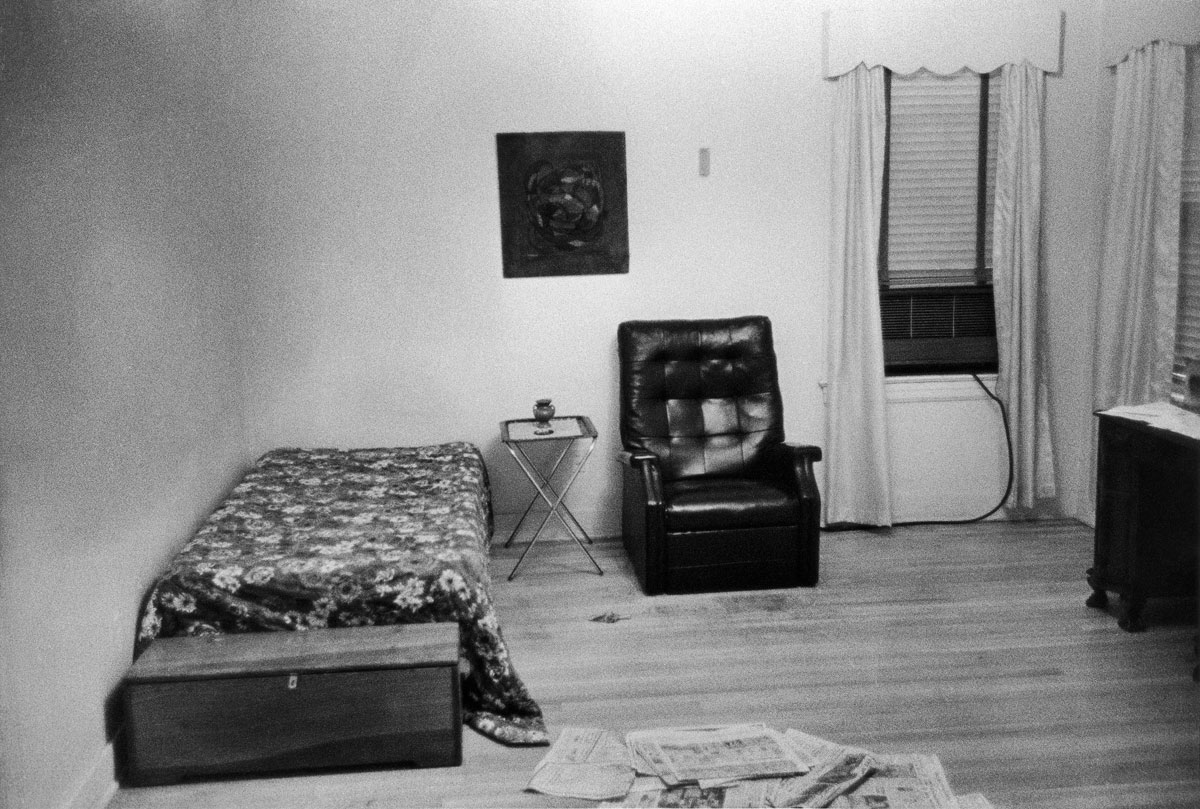
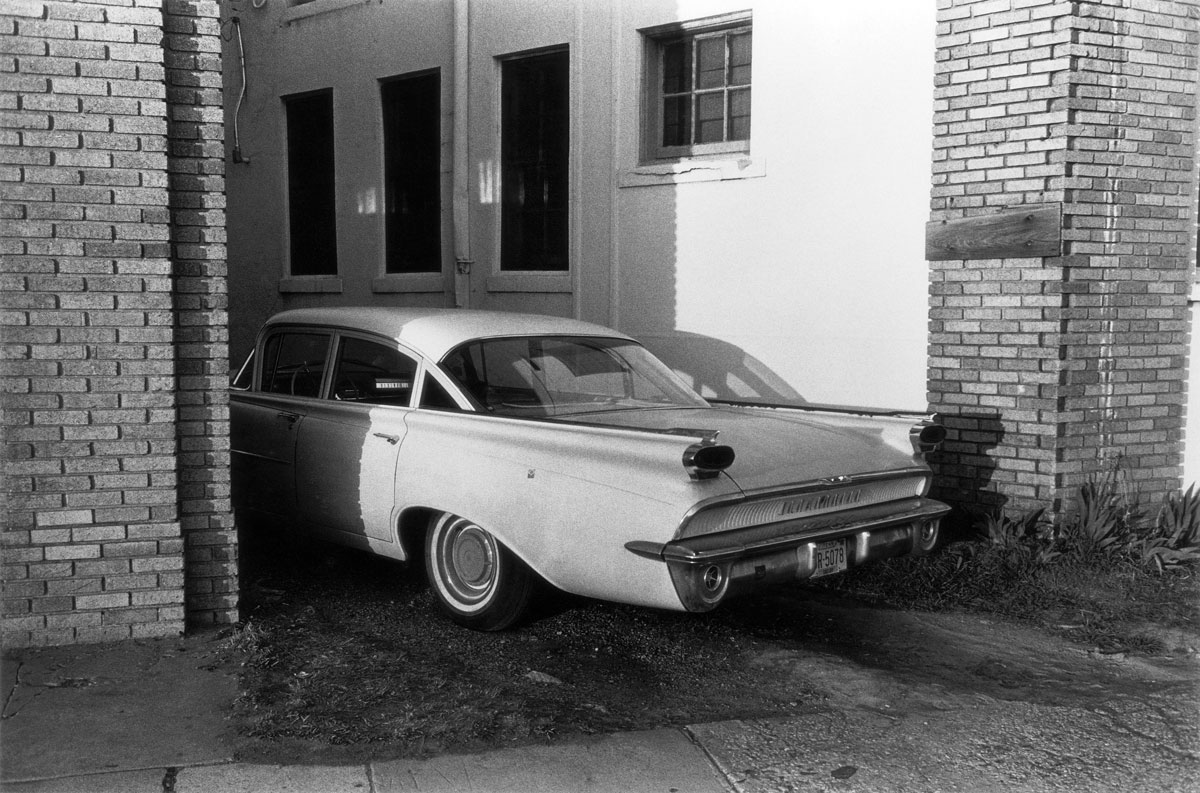
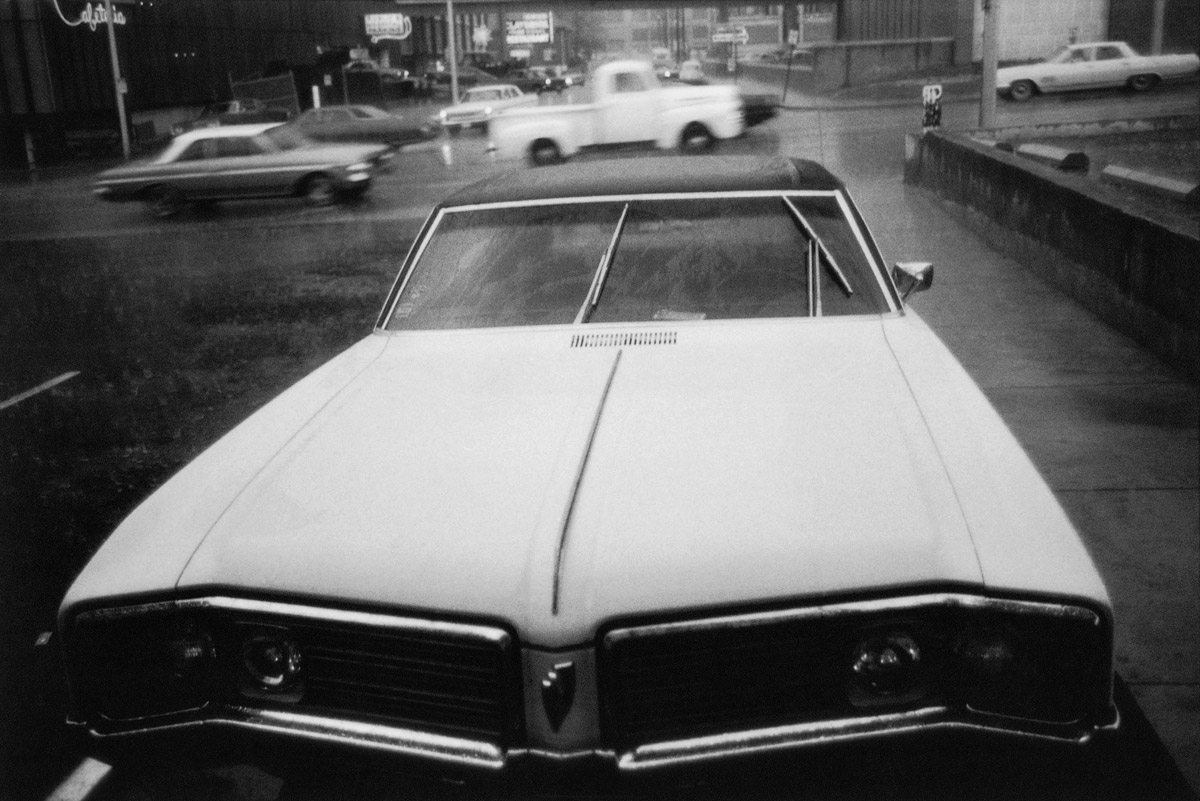
These are magnificent, intelligent photographs. They are works from the master that show that Eggleston found his own style early on. His understanding of the “quietness” of space and form within the picture plane is already fully developed and his aesthetic decision to use grainy, black and white high speed film just adds to the stillness and eeriness of the photographs. His signature style, his unique messianic voice, really shines through in these recently discovered images which could be seen to be BC – before the beginning of colour (photography) as eulogised by the museum establishment.
Highlights in these photographs include:
~ The pose of the women caught mid-stride, about to put the telephone back in its cradle
~ The man and the woman frozen mid-conversation in a minimal hotel lobby(?) with the shroud of a dark man on the plaque behind
~ The barren hotel room with old air conditioner, vinyl chair, floral bedspread and newspapers strewn over the floor (remeniscent of the spaces of so many of his later colour photographs)
~ And my favourite, Untitled (1960, below), the bulk of the heavy car looming out of the murk at the bottom of the picture frame, the intransigent windscreen wipers, the rain and the blurred traffic moving behind. You can almost touch and taste the atmosphere of this moment, in this day, of that year…
. The wondrous thing is that Eggleston’s voice transfers beautifully through into the saturation of his later colour dye-transfer prints. His pared down vision of “Southern” life and world become unmistakably his own in the colour photographs. Unlike the Japanese photographer Daido Moriyama, whose panache in his black and white photographs is matched only by the shallowness of his colour work, here Eggleston lays the ground work for the rest of his monumental career.
Great to see these early photographs. I’m so glad they found them!
Dr Marcus Bunyan
Many thankx to the Nederlands Fotomuseum for allowing me to publish the photographs in the posting. Please click on the photographs to view a larger version of the image.
William Eggleston (American, b. 1939) Untitled
1960
Courtesy Cheim & Read, New York and Peder Lund, Oslo
Eggleston Artistic Trust
Photo Courtesy Cheim & Read, New York
William Eggleston (American, b. 1939) Untitled
1966
Private collection, Oslo. Courtesy Peder Lund
Eggleston Artistic Trust
Photo Courtesy Cheim & Read, New York
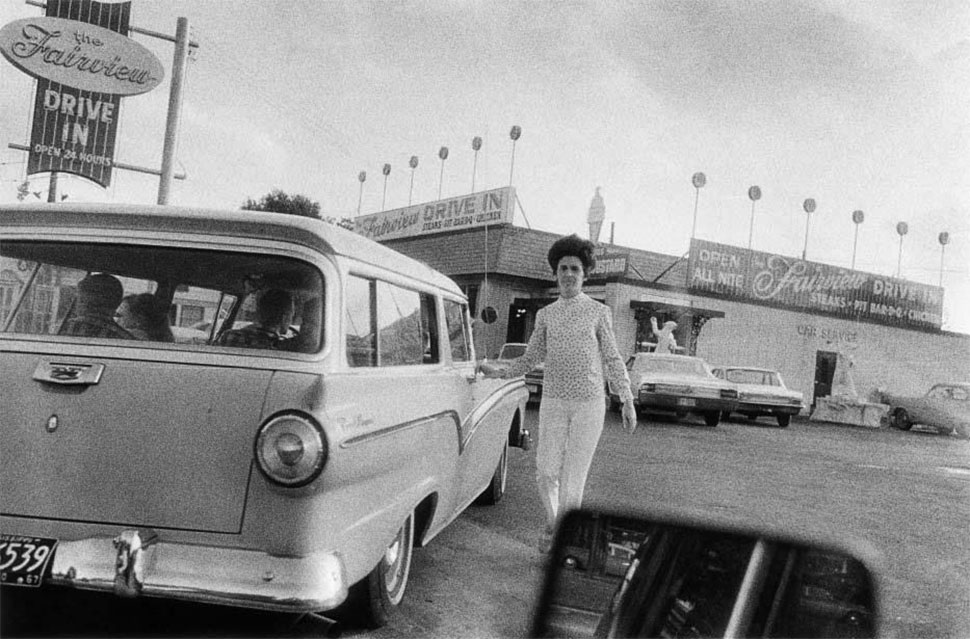
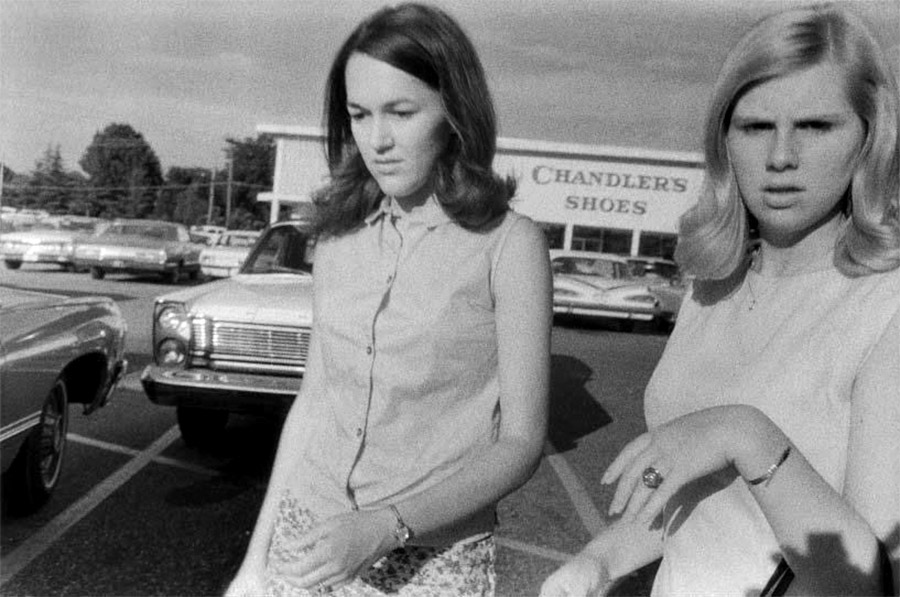
The American photographer William Eggleston (1939) is known as one of the first major pioneers of artistic colour photography. His book William Eggleston’s Guide was one of the most influential photography books of the 20th century and still inspires many today. Eggleston’s black-and-white photographs are less well-known. In Before Color, the Nederlands Fotomuseum highlights this famous photographer’s earliest work, which was only recently discovered. The photographs show that Eggleston found his own style early on. Inspired by Henri Cartier-Bresson, Eggleston used a 35mm camera and fast black-and-white film to photograph the American way of life in the early 1960s. We see his own surroundings: suburban Memphis, with its diners, car parks and supermarkets, as well as the houses and domestic interiors of the people who lived there. Before Color by William Eggleston will be on display from 16 June until 26 August.
Black-and-white snapshots
When Eggleston started taking photographs in the early 1960s, he was particularly inspired by the French photographer Henri Cartier-Bresson and his book The Decisive Moment from 1952. Contrary to the big names in American photography at the time – who were preoccupied with the stunning landscape, like Ansel Adams – Cartier-Bresson took snapshots of everyday life. Eggleston found this approach very appealing. Using a 35mm camera and fast black-and-white film he began photographing his own surroundings. These were predominantly shaped by suburban Memphis, with its diners, car parks and supermarkets, but he also focused on the houses and domestic interiors of the people who lived there.
Breaking a tradition
At the same time Eggleston experimented with colour photography. Together with Joel Meyerowitz, Joel Sternfeld and others, he broke the long tradition of black-and-white photography by working in colour and focusing on subjects from daily life. In 1972 he completed an extensive series of 2,200 photographs entitled Los Alamos, which provided a unique picture of life in America in the ’60s and early ’70s. He discovered the deep and saturated colours of the so-called dye-transfer printing technique, originally a commercial application that he perfected and that would become his international trademark. His first solo exhibition in 1976 was also the first exhibition in the Museum of Modern Art devoted to colour photography. The exhibition was accompanied by what would become the acclaimed and influential book William Eggleston’s Guide.
Before color
Eggleston would later abandon black-and-white film altogether and his earliest work was forgotten. So it was a surprise when a box of his black-and-white photographs was recently found in the archives of the William Eggleston Artistic Trust in Memphis. The photographs were exhibited for the first time in 2010 at the Cheim & Read Gallery in New York and published in the book Before Color (Steidl, 2010).
Before Color exhibition
This is the first time that Before Color has been exhibited in the Netherlands and includes nearly 40 photographs from William Eggleston’s early career. The images show that Eggleston found his personal style and photographic motifs early on and provide a wonderful picture of the American way.
Press release from the Nederlands Fotomuseum website
William Eggleston (American, b. 1939) Untitled
1960
Courtesy Cheim & Read, New York and Peder Lund, Oslo
Eggleston Artistic Trust
Photo Courtesy Cheim & Read, New York
William Eggleston (American, b. 1939) Untitled
Nd
Courtesy Cheim & Read, New York and Peder Lund, Oslo
Eggleston Artistic Trust
Photo Courtesy Cheim & Read, New York
William Eggleston (American, b. 1939) Untitled
Nd
Courtesy Cheim & Read, New York and Peder Lund, Oslo
Eggleston Artistic Trust
Photo Courtesy Cheim & Read, New York
William Eggleston (American, b. 1939) Untitled
Nd
Courtesy Cheim & Read, New York and Peder Lund, Oslo
Eggleston Artistic Trust
Photo Courtesy Cheim & Read, New York
William Eggleston (American, b. 1939) Untitled
Nd
Courtesy Cheim & Read, New York and Peder Lund, Oslo
Eggleston Artistic Trust
Photo Courtesy Cheim & Read, New York
William Eggleston (American, b. 1939) Untitled
Nd
Courtesy Cheim & Read, New York and Peder Lund, Oslo
Eggleston Artistic Trust
Photo Courtesy Cheim & Read, New York
William Eggleston (American, b. 1939) Untitled
Nd
Courtesy Cheim & Read, New York and Peder Lund, Oslo
Eggleston Artistic Trust
Photo Courtesy Cheim & Read, New York
William Eggleston (American, b. 1939) Untitled
Nd
Courtesy Cheim & Read, New York and Peder Lund, Oslo
Eggleston Artistic Trust
Photo Courtesy Cheim & Read, New York
The history of the “South” and what it is to be “Southern” cannot easily be separated from its horrific legacy of abject cruelty and malevolence against African Americans… of slavery, lynching, segregation, Jim Crow laws and lasting prejudice…
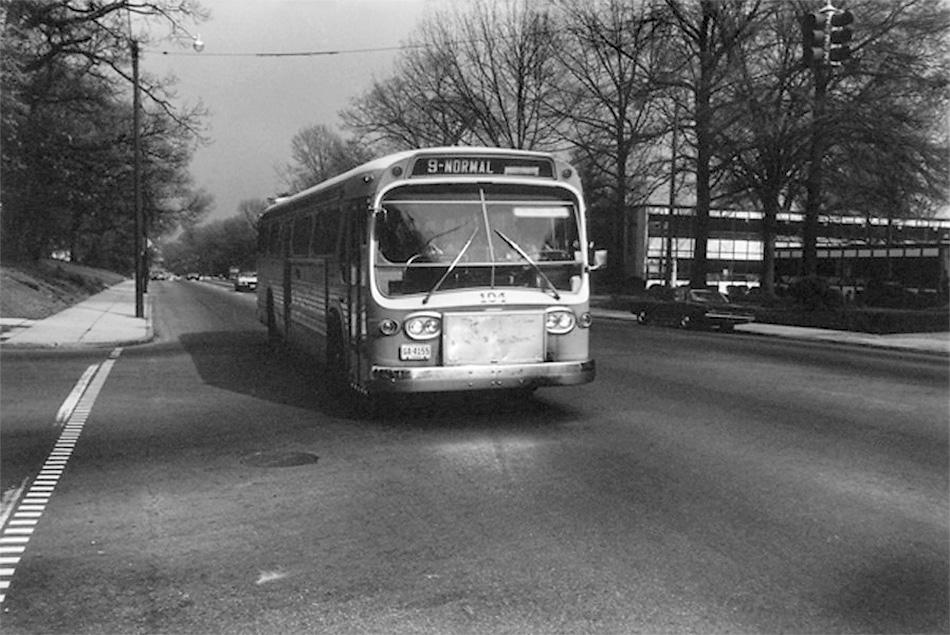
William Eggleston: Before Color is then surely a tour into this menace and heinous history and into the “Southern” legacy. In fact with the absence of color in this work, it is a significantly stronger embodiment of this history and of this malice. Although 90% of the book is absent of African American subjects, one can’t help but “feel” them in almost all of the pictures. The photographs, mainly consisting of white Memphis residents in the 1950-60’s, and their homes, cars and places, are also then filled by a default and implication with blacks. There is also a palpable undertone and a foreshadowing of the socio-economic decay that will fall on to this city and much of the South. As you look at the pictures, you “see” what “they” have done and the legacy that has been created, what has and what will occur. The atmosphere is dreary and ugly, there is no “Southern charm”. In photographs of newly constructed houses for example, through Eggleston’s gaze, the places are already giving hints to coming decay. It is as if the legacy has become an omen and what has been reaped, for generations now, everyone will sow.
William Eggleston (American, b. 1939) Untitled
1960
Private collection, Oslo. Courtesy Peder Lund
Eggleston Artistic Trust
Photo Courtesy Cheim & Read, New York
William Eggleston (American, b. 1939) Untitled
1960
Private collection, Oslo. Courtesy Peder Lund
Eggleston Artistic Trust
Photo Courtesy Cheim & Read, New York
William Eggleston (American, b. 1939) Untitled
c. 1968
William Eggleston/2010 Eggleston Artistic Trust
Courtesy Cheim & Read, New York
William Eggleston (American, b. 1939) Untitled
c. 1970
William Eggleston/2010 Eggleston Artistic Trust. Courtesy Cheim & Read, New York
William Eggleston (American, b. 1939) Untitled
c. 1970
William Eggleston/2010 Eggleston Artistic Trust. Courtesy Cheim & Read, New York
Nederlands Fotomuseum Wilhelminakade 332
3072 AR Rotterdam
The Netherlands




![Roberto Donetta (Swiss, 1865-1932) 'Untitled [Basket maker], Bleniotal' Nd](https://artblart.com/wp-content/uploads/2016/08/donetta-l-web.jpg "Roberto Donetta (Swiss, 1865-1932) 'Untitled [Basket maker], Bleniotal' Nd")
![Roberto Donetta (Swiss, 1865-1932) 'Untitled [Group Portrait], Bleniotal' Nd](https://artblart.com/wp-content/uploads/2016/08/donetta-j-web.jpg "Roberto Donetta (Swiss, 1865-1932) 'Untitled [Group Portrait], Bleniotal' Nd")

![Roberto Donetta (Swiss, 1865-1932) 'Untitled [Group of men], Bleniotal' Nd](https://artblart.com/wp-content/uploads/2016/08/donetta-i-web.jpg "Roberto Donetta (Swiss, 1865-1932) 'Untitled [Group of men], Bleniotal' Nd")




![Roberto Donetta (Swiss, 1865-1932) 'Untitled [Boy and girl]' Nd](https://artblart.com/wp-content/uploads/2016/08/donetta-r-web.jpg "Roberto Donetta (Swiss, 1865-1932) 'Untitled [Boy and girl]' Nd")





![Roberto Donetta (Swiss, 1865-1932) 'Untitled [Portrait of a women]' Nd](https://artblart.com/wp-content/uploads/2016/08/donetta-p-web.jpg "Roberto Donetta (Swiss, 1865-1932) 'Untitled [Portrait of a women]' Nd")
![Roberto Donetta (Swiss, 1865-1932) 'Untitled [Portrait of a man]' Nd](https://artblart.com/wp-content/uploads/2016/08/donetta-o-web.jpg "Roberto Donetta (Swiss, 1865-1932) 'Untitled [Portrait of a man]' Nd")





 Art Blart _ art and cultural memory archive
You must be logged in to post a comment.