Exhibition: ‘Now You See Us: Women Artists in Britain 1520-1920’ at Tate Britain, London

Exhibition dates: 16th May – 13th October 2024

Curator: Tabitha Barber


Attributed to Levina Teerlinc (Flemish, 1510-1576) 'Portrait of a Lady holding a Monkey' 1560s


Attributed to Levina Teerlinc (Flemish, 1510-1576)
Portrait of a Lady holding a Monkey
1560s
Watercolour and bodycolour heightened with gold and silver
Image: 46 × 46 mm
Frame, circular: 62 × 62 mm
Victor Reynolds and Richard Chadwick


There have been some mixed reviews of this exhibition – “tremendous show… an archaeological dig into the nation’s cultural past” (Jonathan Jones in The Guardian); “niggardly photography section… Only rarely do women’s art and women’s history spark together in this show… For even the best of the artists here are occasionally represented by the least of their works, quite apart from the mystifying omissions.” (Laura Cumming in The Guardian).

Indeed, Laura Cumming poses an interesting question: “Here is a dilemma straight away: which should take precedence, the painting or the fact? Should the show present art on its own terms, or as instance, evidence, expression of social history? It is an extremely complex remit…”

Having not been to London to see the exhibition I can only make generalised comment, but in my opinion the presentation should be a combination of both – art and social history – recognising that one does not exist, emerge, without the other. Art does not live in a bubble isolated from society and society itself is influenced by new ideas, new concepts of art. It’s not the chicken and the egg, it’s the scramble to make sense of living in this world using art as an expression, a (real, surreal, revolutionary, dream, abstract etc…) vision of the world that surrounds us.

Just from compiling this posting I have been enlightened as to the lives of many artists that I had never heard of before. I have admired their work and learnt about their lives and the conditions under which they worked. The exhibition has brought into my consciousness (and the consciousness of others) artists that I would have never have known about. It tells their stories in however fragmented a way … but at least it tells them. And that is a very good thing.

My particular favourites in the posting are three portraits where the sitter stares directly at you: Joan Carlile’s perceptive Portrait of a Lady Wearing an Oyster Satin Dress (1650s, below) so captivating of gaze, so incisive in its simplicity; Maria Cosway’s beautifully rendered Self Portrait (Nd, below) such a luminous and engaging presence; and Gwen John’s powerful Self-Portrait (1902, below) vibrant of colour, full of self-assurance. Wonderful evocations of humanity.

Scottish artist Dame Ethel Walker observes,

“There is no such thing as a woman artist. There are only two kinds of artist – bad and good.”


And that is what his exhibition gives you the obligation to do: to educate yourself, to make yourself a little more informed, to use your brain, eyes, and heart …and make up your own mind about the merit of the work.

I for one are very grateful for that opportunity.

Dr Marcus Bunyan

PS. I have added relevant text from the large print guide and other bibliographic information from accredited sources to illuminate the works presented.


Many thankx to the Tate for allowing me to publish the art work and photographs in the posting. Please click on the photographs for a larger version of the image.


Installation view of the exhibition 'Now You See Us Women Artists in Britain 1520-1920' at Tate Britain showing at right, Lucy Kemp-Welch's 'Colt Hunting in the New Forest' 1897


Installation view of the exhibition Now You See Us Women Artists in Britain 1520-1920 at Tate Britain showing at right, Lucy Kemp-Welch’s Colt Hunting in the New Forest 1897


Spanning 400 years, this exhibition follows women on their journeys to becoming professional artists. From Tudor times to the First World War, artists such as Mary Beale, Angelica Kauffman, Elizabeth Butler and Laura Knight paved a new artistic path for generations of women. They challenged what it meant to be a working woman of the time by going against society’s expectations – having commercial careers as artists and taking part in public exhibitions.

Including over 150 works, the show dismantles stereotypes surrounding women artists in history, who were often thought of as amateurs. Determined to succeed and refusing to be boxed in, they daringly painted what were usually thought to be subjects for male artists: history pieces, battle scenes and the nude.

The exhibition sheds light on how these artists championed equal access to art training and academy membership, breaking boundaries and overcoming many obstacles to establish what it meant to be a woman in the art world.

Text from the Tate Britain website


Installation view of the exhibition 'Now You See Us Women Artists in Britain 1520-1920' at Tate Britain showing Artemisia Gentileschi's 'Self-Portrait as the Allegory of Painting (La Pittura)' c. 1638-1639


Installation view of the exhibition Now You See Us Women Artists in Britain 1520-1920 at Tate Britain showing Artemisia Gentileschi’s Self-Portrait as the Allegory of Painting (La Pittura) c. 1638-1639 (below)


Artemisia Gentileschi (Italian, 1593-1653) 'Self-Portrait as the Allegory of Painting (La Pittura)' c. 1638-1639 (installation view)


Artemisia Gentileschi (Italian, 1593-1653)
Self-Portrait as the Allegory of Painting (La Pittura)
c. 1638-1639
Oil on canvas
98.6 x 75.2cm (support, canvas/panel/stretcher external)
Royal Collection Trust
© His Majesty King Charles III 2024


Artemisia Gentileschi (Italian, 1593-1653) 'Self-Portrait as the Allegory of Painting (La Pittura)' c. 1638-1639


Artemisia Gentileschi (Italian, 1593-1653)
Self-Portrait as the Allegory of Painting (La Pittura)
c. 1638-1639
Oil on canvas
98.6 x 75.2cm (support, canvas/panel/stretcher external)
Royal Collection Trust
© His Majesty King Charles III 2024


Gentileschi claimed that ‘all the … Princes’ displayed her self-portrait in their galleries. In addition to this work, Charles I owned another self-portrait, which is now lost. Here, Gentileschi uses her own image to portray the allegorical figure of Pittura (also the Italian feminine noun for painting), who she depicts in a working apron before an easel absorbed in the act of creation.

Text from the exhibition large print guide


As a self-portrait the painting is particularly sophisticated and accomplished. The position in which Artemisia has portrayed herself would have been extremely difficult for the artist to capture, yet the work is economically painted, with very few pentiments. In order to view her own image she may have arranged two mirrors on either side of herself, facing each other. Depicting herself in the act of painting in this challenging pose, the angle and position of her head would have been the hardest to accurately render, requiring skilful visualisation.

Text from the Royal Collection Trust website


Installation view of the exhibition 'Now You See Us Women Artists in Britain 1520-1920' at Tate Britain showing Artemisia Gentileschi's 'Susanna and the Elders' c. 1638-1640


Installation view of the exhibition ‘Now You See Us Women Artists in Britain 1520-1920’ at Tate Britain showing Artemisia Gentileschi’s Susanna and the Elders c. 1638-1640 (below)
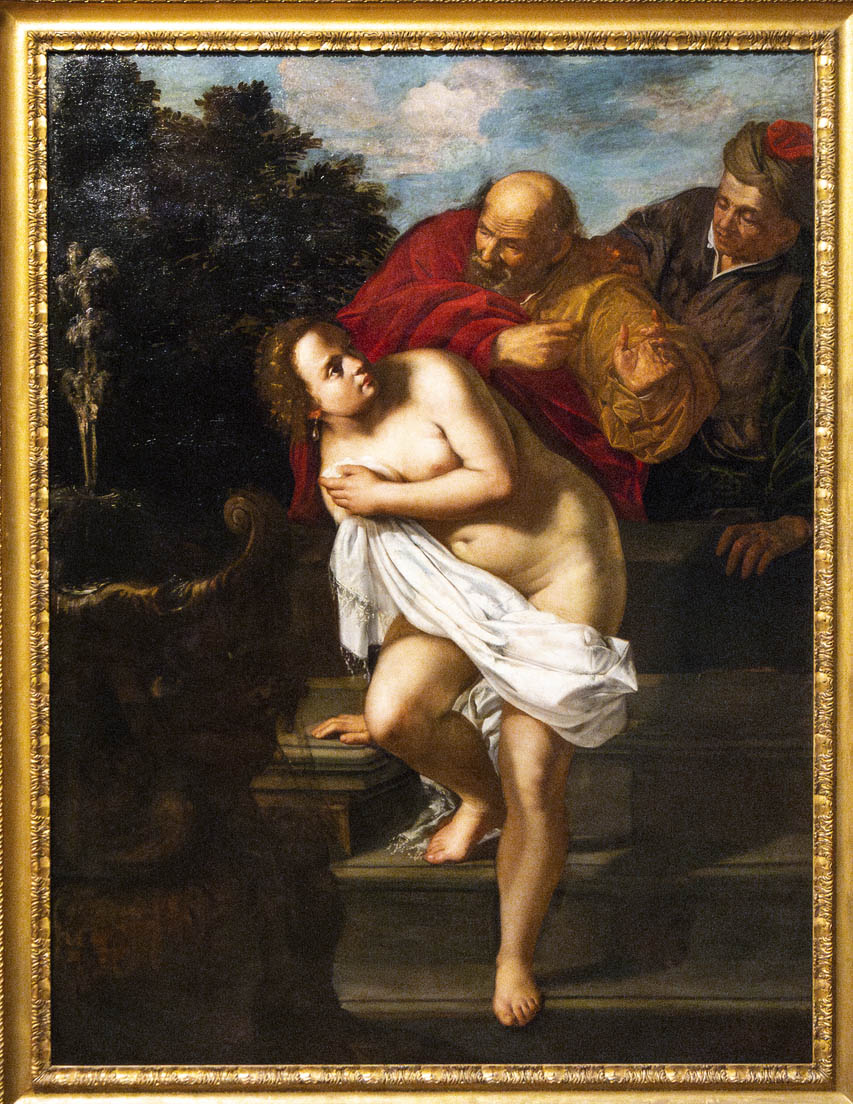
 

Artemisia Gentileschi (Italian, 1593-1653) 'Susanna and the Elders' c. 1638-1640 (installation view)


Artemisia Gentileschi (Italian, 1593-1653)
Susanna and the Elders
c. 1638-1640
Oil on canvas
189.0 x 143.2cm (support, canvas/panel/stretcher external)
Royal Collection Trust / © His Majesty King Charles III 2024


Artemisia Gentileschi (Italian, 1593-1653) 'Susanna and the Elders' c. 1638-1640


Artemisia Gentileschi (Italian, 1593-1653)
Susanna and the Elders
c. 1638-1640
Oil on canvas
189.0 x 143.2cm (support, canvas/panel/stretcher external)
Royal Collection Trust / © His Majesty King Charles III 2024


Likely commissioned by Queen Henrietta Maria, this work was displayed in her Withdrawing Chamber in Whitehall Palace. The subject is an Old Testament narrative on virtue and faith. Susanna, bathing in privacy, is spied on by two elders who attempt to sexually assault her. When she resists them, the men accuse her of adultery. Susanna is arrested and about to be put to death until the men are questioned, and her innocence is revealed. Here, Gentileschi depicts Susanna as vulnerable and fearful, shielding her nakedness. She returned to the subject throughout her career.

Text from the exhibition large print guide


This spring, Tate Britain will present Now You See Us: Women Artists in Britain 1520-1920. This ambitious group show will chart women’s road to being recognised as professional artists, a 400-year journey which paved the way for future generations and established what it meant to be a woman in the British art world. The exhibition covers the period in which women were visibly working as professional artists, but went against societal expectations to do so.

Featuring over 100 artists, the exhibition will celebrate well-known names such as Artemisia GentileschiAngelica Kauffman, Julia Margaret Cameron and Gwen John, alongside many others who are only now being rediscovered. Their careers were as varied as the works they produced: some prevailed over genres deemed suitable for women like watercolour landscapes and domestic scenes. Others dared to take on subjects dominated by men like battle scenes and the nude, or campaigned for equal access to training and membership of professional institutions. Tate Britain will showcase over 200 works, including oil painting, watercolour, pastel, sculpture, photography and ‘needlepainting’ to tell the story of these trailblazing artists.

Now You See Us will begin at the Tudor court with Levina Teerlinc, many of whose miniatures will be brought together for the first time in four decades, and Esther Inglis, whose manuscripts contain Britain’s earliest known self-portraits by a woman artist. The exhibition will then look to the 17th century. Focus will be given to one of art history’s most celebrated women artists, Artemisia Gentileschi, who created major works in London at the court of Charles I, including the recently rediscovered Susanna and the Elders 1638-40, on loan from the Royal Collection for the very first time. The exhibition will also look to women such as Mary BealeJoan Carlile and Maria Verelst who broke new ground as professional portrait painters in oil.

In the 18th century, women artists took part in Britain’s first public art exhibitions, including overlooked figures such as Katherine Read and Mary Black; the sculptor Anne Seymour Damer; and Margaret Sarah Carpenter, a leading figure in her day but little heard of now. The show will look at Angelica Kauffman and Mary Moser, the only women included among the Founder Members of the Royal Academy of Arts; it took 160 years for membership to be granted to another woman. Women artists of this era are often dismissed as amateurs pursuing ‘feminine’ occupations like watercolour and flower painting, but many worked in these genres professionally: needlewoman Mary Linwood, whose gallery was a major tourist attraction; miniaturist Sarah Biffin, who painted with her mouth, having been born without arms and legs; and Augusta Withers, a botanical illustrator employed by the Horticultural Society.

The Victorian period saw a vast expansion in public exhibition venues. Now You See Us will showcase major works by critically appraised artists of this period, including Elizabeth Butler (née Thompson)‘s monumental The Roll Call 1874 (Butler’s work prompted critic John Ruskin to retract his statement that “no women could paint”), and nudes by Henrietta Rae and Annie Swynnerton, which sparked both debate and celebration. The exhibition will also look at women’s connection to activism, including Florence Claxton‘s satirical ‘Woman’s Work’: A Medley 1861 which will be on public display for the first time since it was painted; and an exploration of the life of Barbara Leigh Smith Bodichon, an early member of the Society of Female Artists who is credited with the campaign for women to be admitted to the Royal Academy Schools. On show will be the student work of women finally admitted to art schools, as well as their petitions for equal access to life drawing classes.

The exhibition will end in the early 20th century with women’s suffrage and the First World War. Women artists like Gwen John, Vanessa Bell and Helen Saunders played an important role in the emergence of modernism, abstraction and vorticism, but others, such as Anna Airy, who also worked as a war artist, continued to excel in conventional traditions. The final artists in the show, Laura Knight and Ethel Walker, offer powerful examples of ambitious, independent, confident professionals who achieved critical acclaim and – finally – membership of the Royal Academy.

Press release from Tate Britain
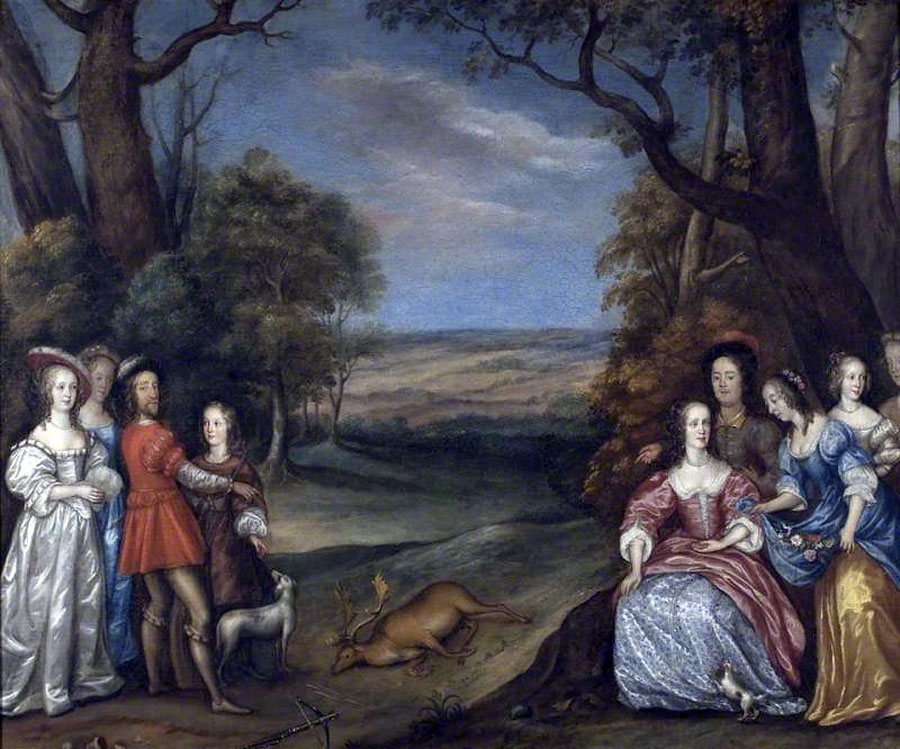
 

Joan Carlile (English, 1606-1679) 'The Carlile Family with Sir Justinian Isham in Richmond Park' 1650s


Joan Carlile (English, 1606-1679)
The Carlile Family with Sir Justinian Isham in Richmond Park
1650s
Oil on canvas
Lamport Hall
CC BY-NC-ND
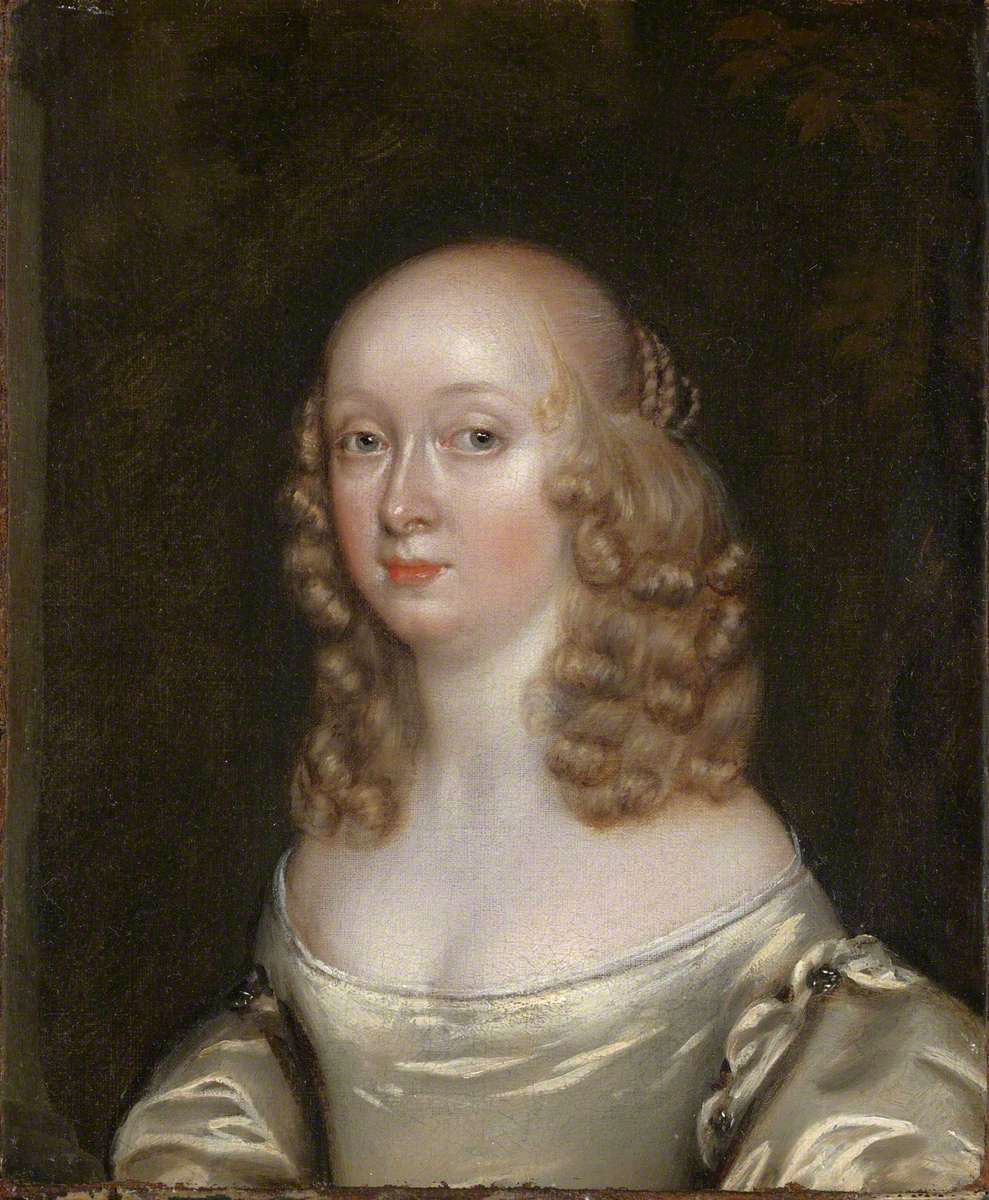
 

Joan Carlile (English, 1600-1679) 'Portrait of a Lady Wearing an Oyster Satin Dress' 1650s


Joan Carlile (English, 1600-1679)
Portrait of a Lady Wearing an Oyster Satin Dress
1650s
Oil on canvas
30.8 x 25.5cm
National Portrait Gallery, London
Government Art Collection
Purchased from Philip Mould Ltd, 2018


Joan Carlile or Carlell or Carliell (c. 1606-1679), was an English portrait painter. She was one of the first British women known to practise painting professionally. Before Carlile, known professional female painters working in Britain were born elsewhere in Europe, principally the Low Countries.


Installation view of the exhibition 'Now You See Us Women Artists in Britain 1520-1920' at Tate Britain showing at left, Joan Carlile's 'Portrait of an Unknown Lady known as Elizabeth Murray, Countess of Dysart and Duchess of Lauderdale' 1650s; and at right, 'Portrait of an Unknown Lady' 1650-1655


Installation view of the exhibition Now You See Us Women Artists in Britain 1520-1920 at Tate Britain showing at left, Joan Carlile’s Portrait of an Unknown Lady known as Elizabeth Murray, Countess of Dysart and Duchess of Lauderdale 1650s (below); and at right, Portrait of an Unknown Lady 1650-1655 (below)
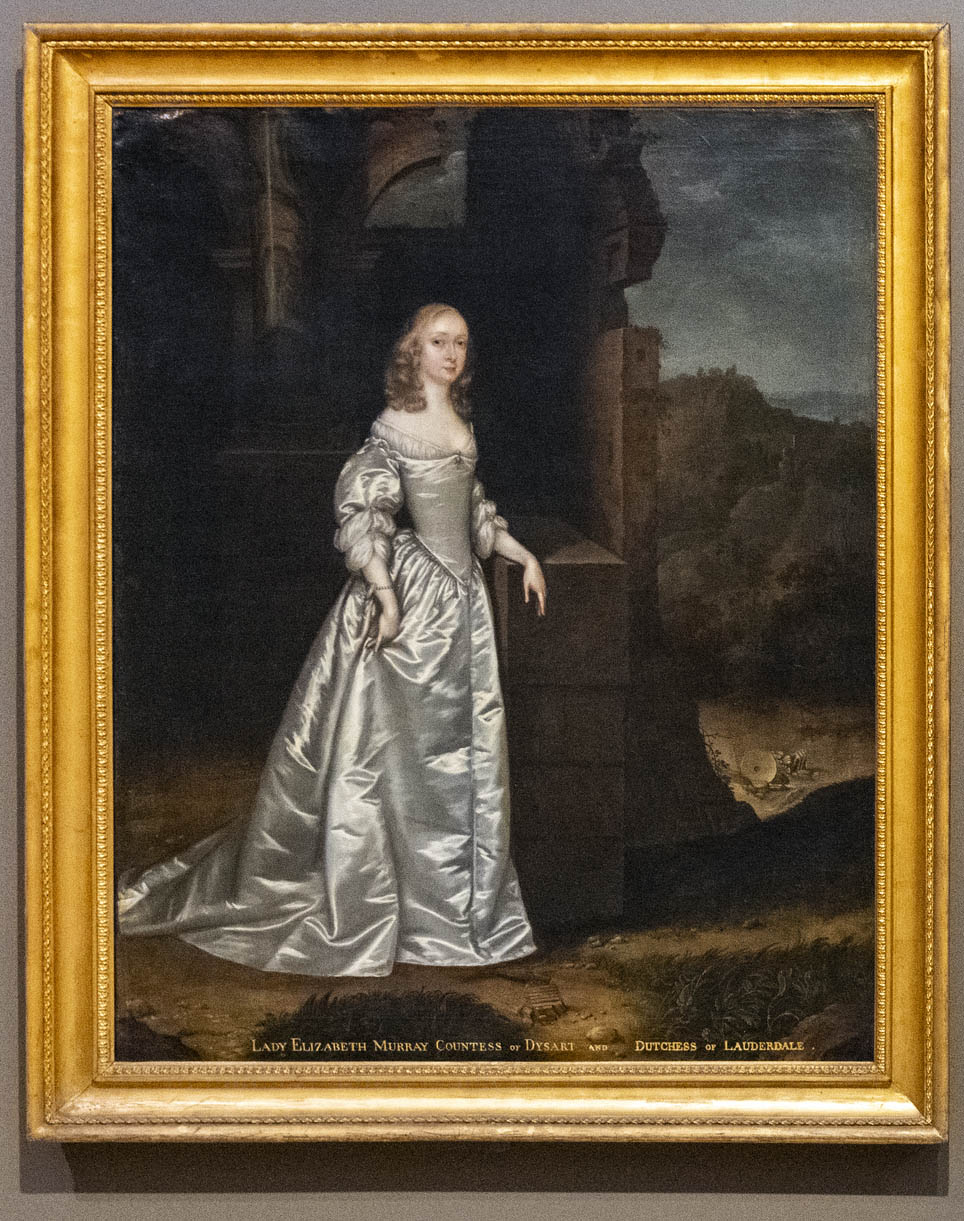
 

Joan Carlile (English, 1606-1679) 'Portrait of an Unknown Lady' 1650-1655 (installation view)


Joan Carlile (English, 1606-1679)
Portrait of an Unknown Lady (installation view)
1650-1655
Oil on canvas
Support: 1107 × 900 mm
Frame: 1205 × 1012 × 73 mm
Photo: Tate
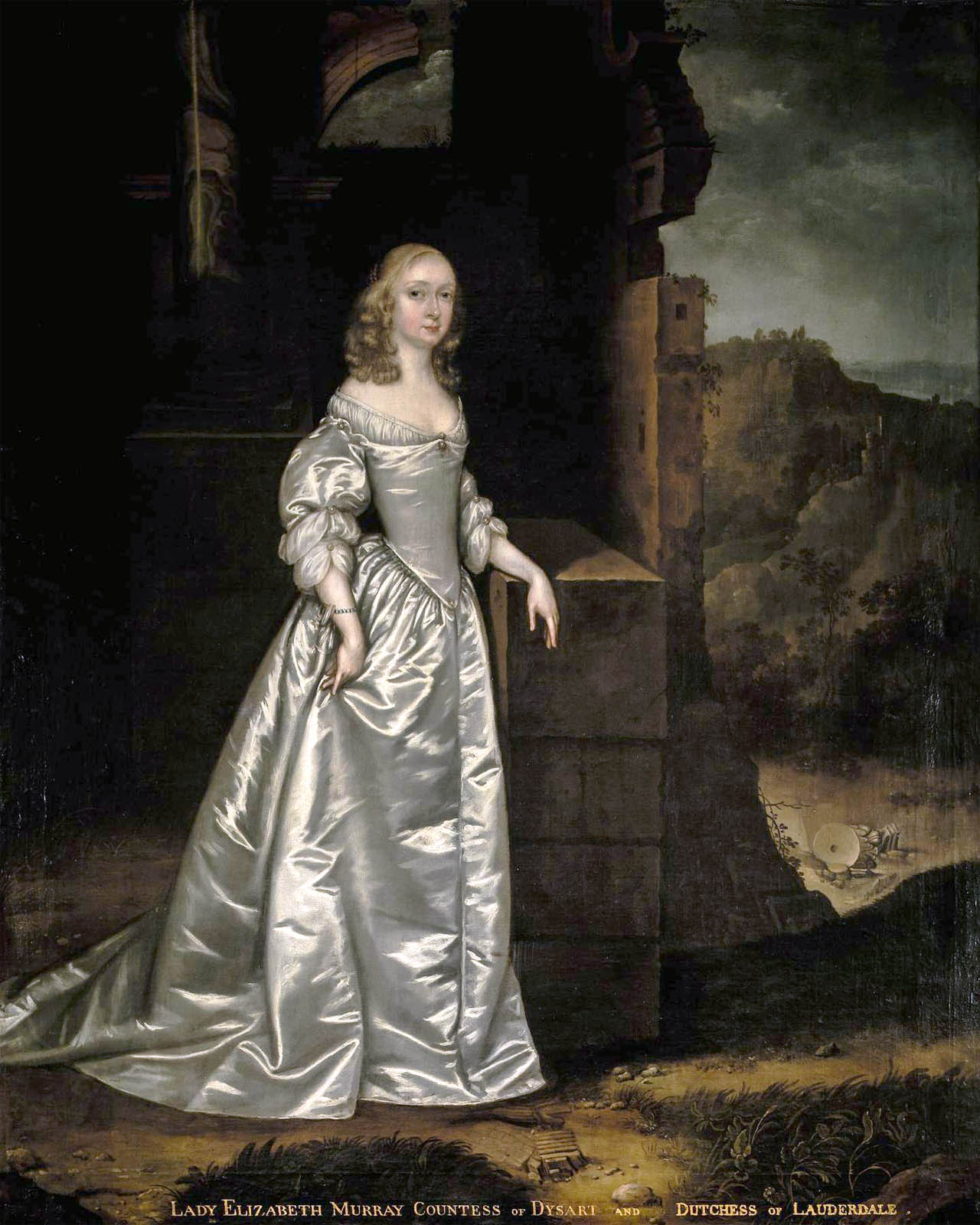
 

Joan Carlile (English, 1606-1679) 'Portrait of an Unknown Lady known as Elizabeth Murray, Countess of Dysart and Duchess of Lauderdale' 1650s


Joan Carlile (English, 1606-1679)
Portrait of an Unknown Lady known as Elizabeth Murray, Countess of Dysart and Duchess of Lauderdale
1650s
Oil on canvas
The Bute Collection at Mount Stuart


Here, Carlile uses the same white satin dress seen in a nearby painting. The pose, with the sitter elegantly gathering a handful of fabric, is taken from works by Charles I’s portrait painter, Flemish artist Anthony van Dyck (1599-1641). The sitter is sometimes identified as Elizabeth Murray, Countess of Dysart and Duchess of Lauderdale. She was Carlile’s near neighbour in Petersham, at Ham House. The broken columns in the background are often used to symbolise loss.

Text from the exhibition large print guide


Joan Carlile (English, 1606-1679) 'Portrait of an Unknown Lady' 1650-1655


Joan Carlile (English, 1606-1679)
Portrait of an Unknown Lady
1650-1655
Oil on canvas
Support: 1107 × 900 mm
Frame: 1205 × 1012 × 73 mm
Photo: Tate


Portraits by Joan Carlile are rare and this is one of only approximately ten that can be identified. Of these, two are in public collections (Ham House, Surrey, and National Portrait Gallery, London), while others are held in historic house collections and family trusts in the United Kingdom, for example Lamport Hall, Burghley House and Berkeley Castle. Carlile seems to have specialised in small-scale full length portraits of figures, usually female, set in large landscape or garden settings. The composition employed here, in which the figure holds the skirt of her dress with one hand and shawl with another, was most likely a template arrangement. It appears in two other portraits, one showing the figure facing the same way as here, the other in reverse, but with both figures wearing the same white satin dress. This repeated composition adds weight to the proposition that Carlile was a professional artist. The wife of Lodowick Carlile (or Carlell), a minor poet and dramatist who also held the office of Gentleman of the Bows to Charles I, Joan Carlile lived with her husband in Petersham, a suburb of London. However, in 1653 their neighbour, Brian Duppa, recorded that ‘the Mistress of the Family intends for London, where she meanes to make use of her skill to som more Advantage then hitherto she hath don’ (quoted in Toynbee and Isham 1954, p.275). In 1654 Carlile is recorded as living in London’s Covent Garden, then the heart of the artistic community (see Burnett 2004/2010, accessed 2 October 2015).

Text from the Tate website


Joan Carlile challenged societal expectations by becoming one of Britain’s first professional women artists in the 1600s, earning her living as an oil painter. Initially employed in King Charles I’s household, Carlile liked to paint in her spare time. With the outbreak of the Civil War, she began painting to support herself.

Carlile moved to Covent Garden in the 1650s – then the centre of the art world – and set up a successful commercial portrait business. Her template of carefully posed figures in silk gowns against landscape backgrounds, seen here in Portrait of an Unknown Lady (1650-5), proved extremely popular. Admired as a professional artist in her lifetime, only a small number of her portraits still exist, some which have never been seen in public.

Text from the Tate website


In her Portrait of an Unknown Lady (1650-1655) the astonishing nacreous lustre of the sitter’s white silk gown, shown full length, shines against the foil of the dull brown foliage behind her. At this point, the Civil War had ended but the restoration of the monarchy was still in the future, and Carlile’s painting, with its overt celebration of luxury and leisure (the spotless pale fabric speaks of both) seems provocative.

It is possible that Carlile taught Anne Killigrew (1660-1685), an accomplished painter and poet whose family encouraged her creative pursuits, although it’s not clear if she ever painted professionally. Only a handful of Killigrew’s works survive today, including Venus Attired by the Three Graces, which reveals her interest in mythological scenes.

Although she died of smallpox aged just 25, Killigrew stands alongside Beale and Carlile as one of Britain’s first female artists.

Alicia Foster. “Blazing a trail: Britain’s first women artists deserve to be better known,” on the Art UK website 13 May 2024 [Online] Cited 03/09/2024
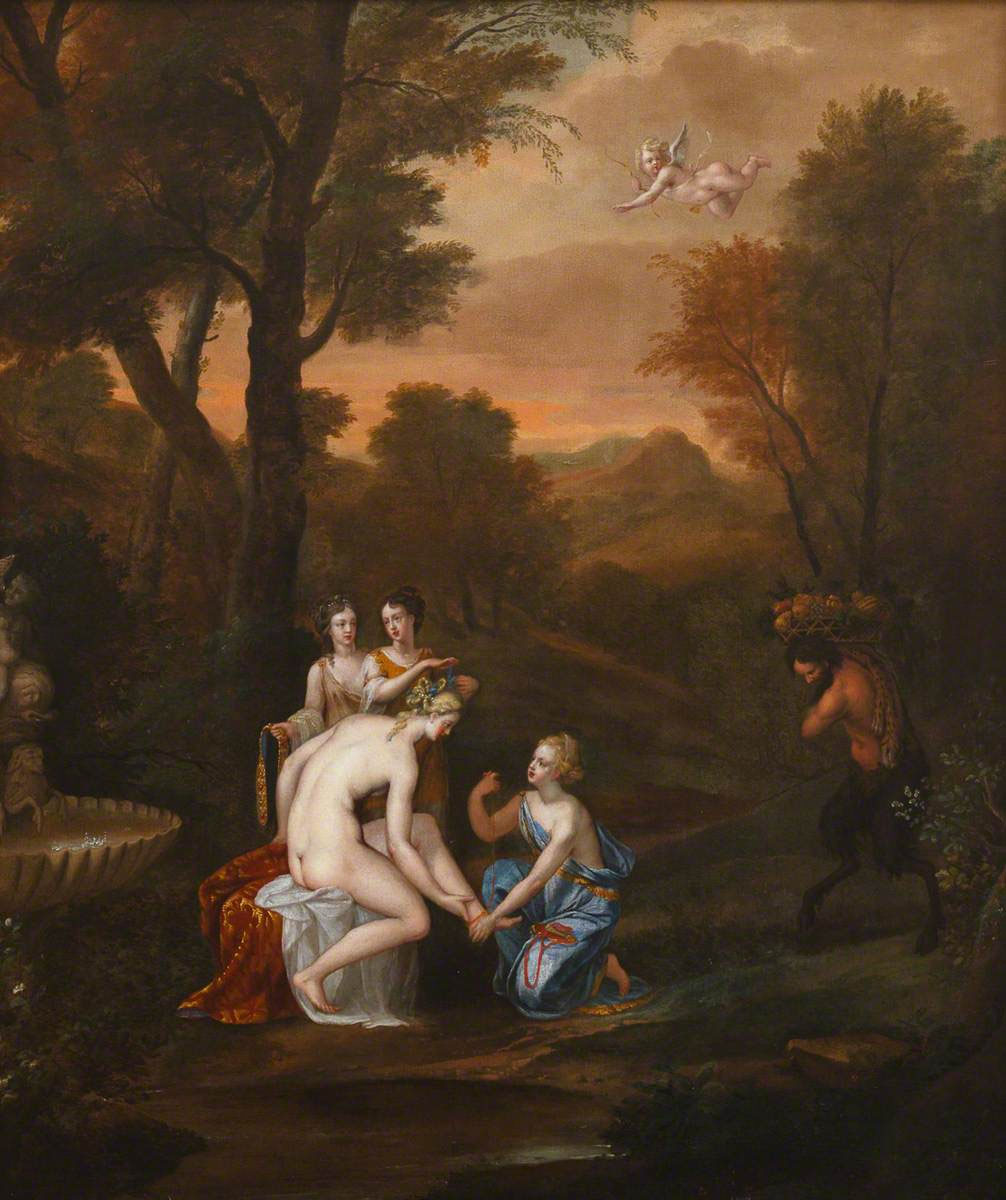
 

Anne Killigrew (English, 1660-1685) 'Venus Attired by the Three Graces' c. 1680


Anne Killigrew (English, 1660-1685)
Venus Attired by the Three Graces
c. 1680
Oil on canvas
Support: 1120 × 950 mm
Frame: 1282 × 1102 × 63 mm
Falmouth Art Gallery
Purchased with the assistance of the Victoria and Albert Museum Purchase Grant Fund, Heritage Lottery Fund, the Art Fund, the Beecroft Bequest, Falmouth Decorative and Fine Arts Society, the Estate of Barry Hughes in memory of Grace and Thomas Hughes and generous donations from local supporters
Public domain


Anne Killigrew has been described as the most celebrated female English prodigy of the Seventeeth Century. A poet and artist of great beauty and repute, Killigrew died of smallpox at the age of just 25. Anne’s exceptional qualities as an artist and a poet were highly praised in her short lifetime. The poet John Dryden dedicated a poem to her in which he refers directly to this picture: ‘Where nymphs of brightest form appear, and shaggy satyrs standing near’ (from ‘To the Pious Memory of the Accomplished Young Lady Mrs Anne Killigrew Excellent In The Two Sister-Arts of Poesy And Painting: An Ode’). Anne Killigrew worked at the Royal Court of King James II as Lady-in-Waiting to the Queen. Anne’s grandfather, Sir William Killigrew, was the Governor of Pendennis Castle, and his son, Dr Henry Killigrew moved to London to work as chaplain to King Charles I. He later became master of the Savoy Hospital.

Text from the Falmouth Art Gallery website
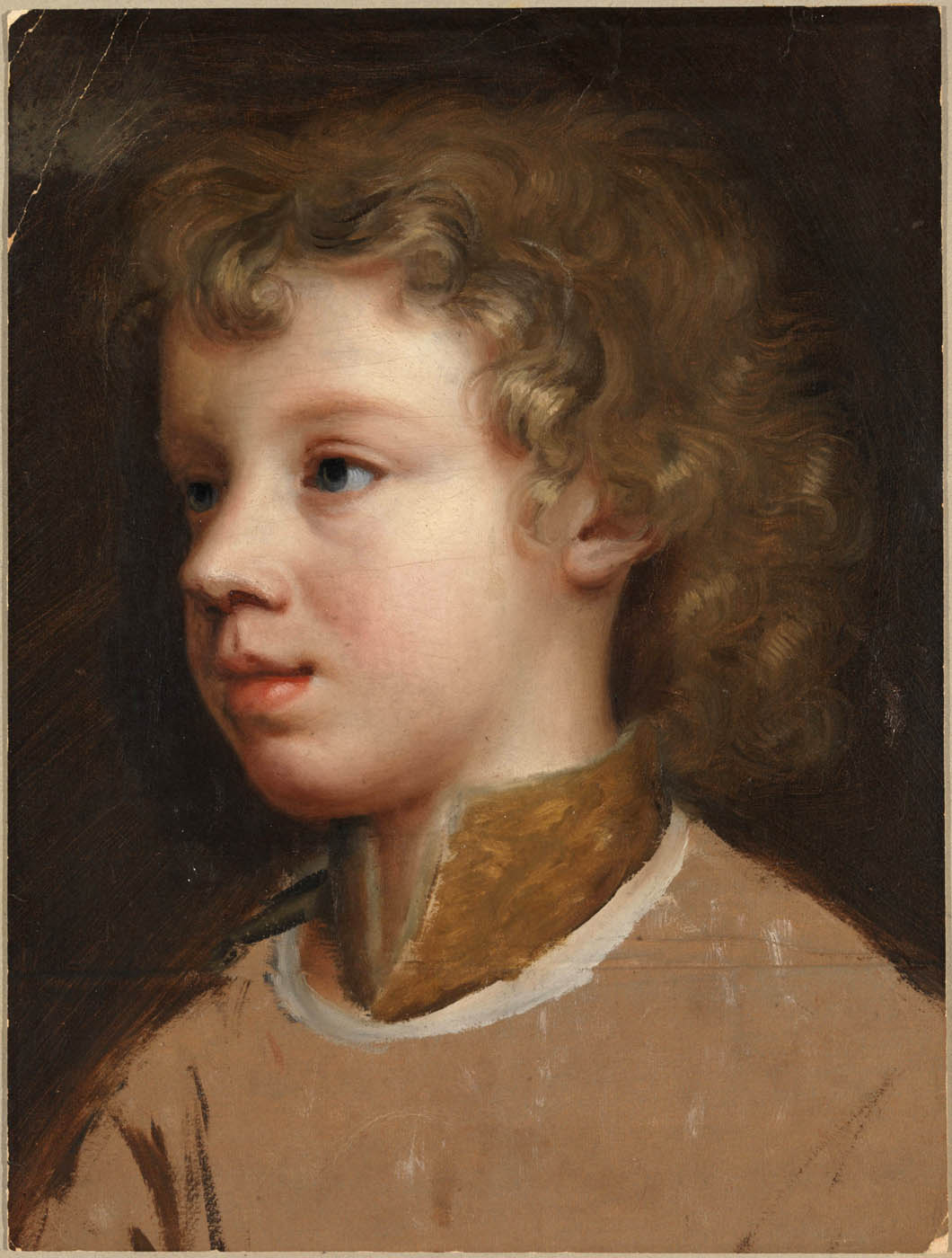
 

Mary Beale (English, 1633-1699) 'Sketch of the Artist's Son, Bartholomew Beale, Facing Left' c. 1660


Mary Beale (English, 1633-1699)
Sketch of the Artist’s Son, Bartholomew Beale, Facing Left
c. 1660
Oil on paper
Support: 325 × 245 mm
Frame: 421 × 340 × 32 mm
Tate
Purchased 2010
Photo: Tate


In the late 1650s and early 1660s Beale and her family were living on Hind Court, off Fleet Street in London. She painted privately and had a painting room in her home. Her husband had a civil service position as Deputy Clerk of the Patents. Portrait sittings of family and friends were often social occasions, with conversation and dinner afterwards. It is in this period that Beale produced small oil sketches on paper of family members, particularly her two young sons. Whether they relate to larger oil on canvas portraits is unclear.

This oil sketch of a young boy, shown in three-quarter profile, is of Mary Beale’s eldest son Bartholomew, baptised in 1656. His appearance, both in age and costume, is very similar to that in Mary Beale’s Self-portrait with her family (Geffrye Museum, London), painted c. 1659-60, before the birth of her youngest son Charles. It relates closely to another sketch of Bartholomew in oil on paper painted at the same time, Sketch of the Artist’s Son, Bartholomew Beale, in Profile c. 1660 (Tate T13245). Whether these sketches are connected to the production of the Geffrye Museum portrait, or were simply executed at around the same time, is not known. They are painted in oil on paper, which seems to have been a feature of Beale’s working method in the early 1660s but is not known in her later career, when she made preparatory sketches in chalk on paper or in oil on canvas (see, for example, Portrait of a Young Girl c. 1679-81, Tate T06612). When this sketch was made, the Beale family was living in Hind Court, off Fleet Street in London, where Mary Beale’s husband, Charles, was employed as Deputy Clerk of the Patents Office. It is difficult to determine whether Beale had much of a commercial portrait practice at this date, but documents certainly record the production of portraits of family and friends. In her ‘painting room’, Beale had ‘pencills [sic.], brushes, goose & swan fitches’, as well as ‘quantities of primed paper to paint on’ (George Vertue, transcription of Charles Beale’s 1661 notebook, now lost, quoted in Barber 1999, p. 16).

Text from the Tate website


Installation view of the exhibition 'Now You See Us Women Artists in Britain 1520-1920' at Tate Britain showing Mary Beale’s 'Anne Sotheby' (1676-1677)


Installation view of the exhibition Now You See Us Women Artists in Britain 1520-1920 at Tate Britain showing Mary Beale’s Anne Sotheby 1676-1677 


Mary Beale (English, 1633-1699) 'Anne Sotheby' 1676-1677


Mary Beale (English, 1633-1699)
Anne Sotheby
1676-1677
Oil on canvas
Tate
Purchased with funds provided by the Nicholas Themans Trust 2024


Beale’s husband kept a daily record of her activities in the studio. Two of his over 30 notebooks and a few partial transcripts are still known. They record Beale’s sitters, her painting stages, her painting materials and her prices. For her commissioned works, she borrowed poses from the portraits of the court artist Peter Lely (1618-1680). Anne Sotheby’s pose is taken from his portrait of Lady Essex Finch. Beale charged £10 for paintings of this size. Her sons acted as studio assistants; her youngest, Charles, was paid to paint the drapery in this portrait.

Text from the exhibition large print guide


Mary Beale (née Cradock) (1633-1699) was an English portrait painter. She was part of a small band of female professional artists working in London. Beale became the main financial provider for her family through her professional work – a career she maintained from 1670/71 to the 1690s. Beale was also a writer, whose prose Discourse on Friendship of 1666 presents a scholarly, uniquely female take on the subject. Her 1663 manuscript Observations, on the materials and techniques employed “in her painting of Apricots”, though not printed, is the earliest known instructional text in English written by a female painter. Praised first as a “virtuous” practitioner in “Oyl Colours” by Sir William Sanderson in his 1658 book Graphice: Or The use of the Pen and Pensil; In the Excellent Art of PAINTING, Beale’s work was later commended by court painter Sir Peter Lely and, soon after her death, by the author of “An Essay towards an English-School”, his account of the most noteworthy artists of her generation.

Text from the Wikipedia website
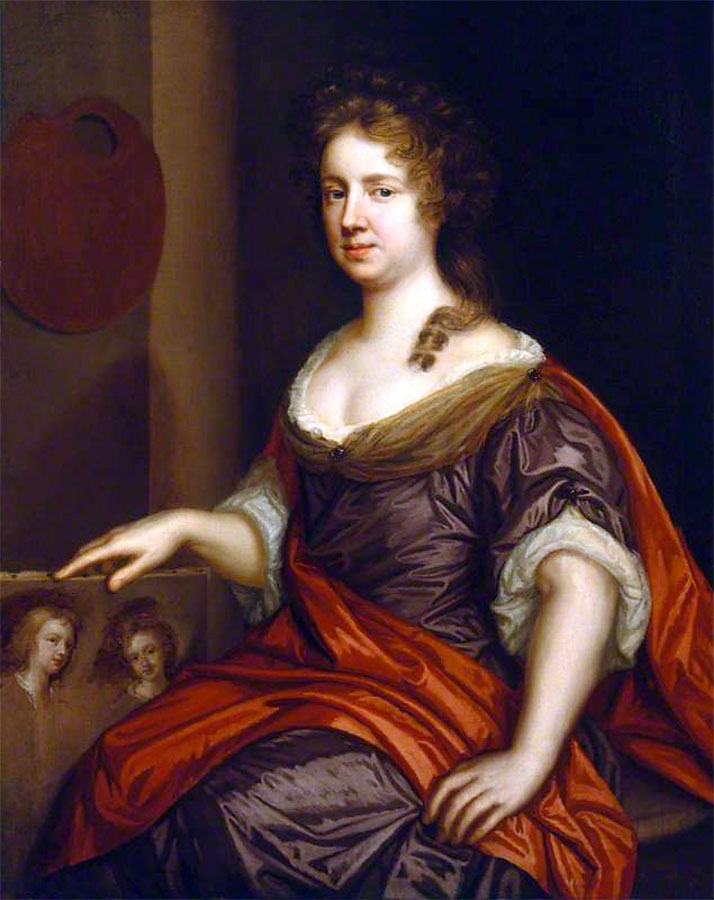
 

Mary Beale (English, 1633-1699) 'Mary Beale' c. 1666


Mary Beale (English, 1633-1699)
Mary Beale
c. 1666
Oil on canvas
109.2 x 87.6cm
National Portrait Gallery, London
Purchased, 1912
CC BY-NC-ND


Beale is shown holding an unframed canvas on which are sketch portraits of her two sons, Bartholomew (1656-1709) and Charles (1660-1714?)


Mary Beale (English, 1633-1699) 'Self Portrait' c. 1675


Mary Beale (English, 1633-1699)
Self Portrait
c. 1675
Oil on sacking
89 x 73cm
West Suffolk Heritage Service
Purchased
CC BY-NC-ND


The early English portrait painter Mary Beale (1622/1623-1699) had a father who was an amateur artist, miniature painter and a collector of paintings (her family owned work by Peter Paul Rubens and Anthony van Dyck) and her husband, Charles, was also an amateur painter and ran her studio in London’s fashionable Pall Mall.

Unusually, in her case, her talent was matched by her spouse’s high regard of it, and she was allowed to supersede him and establish a professional career. She took on female apprentices, though no records of their subsequent careers survive.

Alicia Foster. “Blazing a trail: Britain’s first women artists deserve to be better known,” on the Art UK website 13 May 2024 [Online] Cited 03/09/2024


Exhibition guide

Now You See Us: Women Artists in Britain 1520-1920 celebrates over 100 women who forged public careers as artists. The exhibition begins with the earliest recorded women artists working in Britain. It ends with women’s place in society fundamentally changed by the First World War and the first women gaining the right to vote. Across these 400 years, women were a constant presence in the art world. Now You See Us explores these artists’ careers and asks why so many have been erased from mainstream art histories.

Organised chronologically, the exhibition follows women who practised art as a livelihood rather than an accomplishment. The chosen works were often exhibited at public exhibitions, where these artists sold their art and made their reputations. Most of the women featured belonged to a social class that gave them the time and opportunity to develop their talents. Many were the daughters, sisters or wives of artists. Yet even these women were regarded differently. Now You See Us charts their fight to be accepted as professional artists on equal terms with men.

Many of the exhibited works reflect prejudiced notions of the most appropriate art forms and subjects for women. Others challenge the commonly held belief that women were best suited to ‘imitation’, proving they have always been capable of creative invention. From painting epic battle scenes to campaigning for access to art academies, these women defied society’s limited expectations of them and forged their own paths. Yet so many of their careers have been forgotten and artworks lost. Drawing on the artists’ own writings, art criticism, and new and established research, this exhibition attempts to restore these women to their rightful place in art history. Now You See Us aims to ensure these artists are not only seen but remembered.

Women at the Tudor Courts

There are significant gaps in our knowledge of women’s artistic lives in the sixteenth century. As is the case for many artists in this exhibition, their lives are poorly documented and often hidden behind those of their husbands and fathers. The problems this presents are evident in this room.

Susanna Horenbout (1503-1554) and Levina Teerlinc (c. 1510s-1576) are among the earliest women in Britain to be named as artists. Their reputations are clearly recorded. In 1521, Horenbout’s skill was admired by the German painter and printmaker Albrecht Dürer (1471-1528), and in 1567, both artists were praised by the Italian historian Lodovico Guicciardini (1521-1589). Yet no works by Horenbout have been identified, and those attributed to Teerlinc are not certain.

Horenbout and Teerlinc were both daughters of Flemish manuscript illuminators and were likely trained in their family workshops. Both arrived in England to work at the court of Henry VIII. But as women, they were not employed as artists. While Horenbout’s brother Lucas Horenbout (1490-1544) was Henry VIII’s painter, she served Anne of Cleves as one of her Gentlewomen of the Privy Chamber. Teerlinc served Elizabeth I likewise. This does not mean that they did not paint – at court, their artistic talents would have been a distinguishing skill – but, as is a common feature of this exhibition, written histories have failed to record their activities.

Working in a different context – as a scribe and calligrapher – the works of Esther Inglis (1571-1624) can be identified. Inglis authored more than 60 manuscript books and included her name and self-portrait in many. Raised in Scotland, she may have learnt the art of calligraphy from her mother, Marie Presot (active 1569-1574).

Artemisia Gentileschi

Italian artist Artemisia Gentileschi arrived in London in c. 1638-9 by invitation of Charles I. Like other European rulers, Charles I employed artists of international reputation to signal the cultural sophistication of his court. Gentileschi had prestigious patrons across Europe, including the Grand Duke of Tuscany and Philip IV of Spain. She was the first woman to be a member of the Academy of the Arts of Drawing in Florence, and in Rome, her house had been ‘full of cardinals and princes’. Gentileschi’s fame as an artist was augmented by her status as a woman.

In London, Gentileschi worked for Charles I and Queen Henrietta Maria. Records suggest she produced seven works for the royal collection. These included self-portraits and large history paintings, with subject matter drawn from classical history, mythology, and the Bible. Only the two displayed here are still known. Gentileschi often placed women at the centre of her works, depicting narratives that celebrate their strength and virtue. Susanna and the Elders is an example of the kind of work for which Gentileschi was celebrated.

Gentileschi achieved in her lifetime what many women who came after her had to fight to attain: she was a professional artist who ran her own studio, was a member of an art academy, worked from life models and was ranked as a serious artist alongside men. Despite this, Gentileschi’s status has fluctuated over time, and the artist has faded in and out of art history.

Early accounts of Gentileschi’s work focus on her personal life as much as her painting. Like many of the women artists who came after her, the details of her biography continue to dictate interpretations of her work.

The First Professionals

In 1658, historian William Sanderson (c. 1586-1676) published Graphice. The use of the pen and pensil. Or, The most excellent art of painting. The publication lists contemporary artists practising in England. He includes four women working in oil paint: ‘Mrs Carlile’ (Joan Carlile), ‘Mrs Beale’ (Mary Beale), ‘Mrs Brooman’ (probably Sarah Broman) and ‘Mrs Weimes’ (Anne Wemyss). Carlile and Beale are believed to be two of the earliest British women to have worked as professional artists. Very little is known about Broman or Wemyss beyond snatches of information in archives.

This short list highlights how unusual it was for British women to pursue art as a profession in the seventeenth century. Women had little agency over their own lives and were subject first to their fathers and then their husbands. Limited to the domestic sphere, they were not expected to conduct public lives. Many women painted privately with no thought of turning it into a career. While young men began as apprentices or assistants in the studios of professionals, this route was not open to most women.

In the seventeenth century women writers, poets, playwrights and artists began to give voice to those questioning their secondary status and petitioning for women’s rights. They argued that it was lack of education, not ‘weak minds’ that limited their opportunities. This fight for equality and access to education runs throughout the exhibition.

The First Exhibitors

The first public art exhibition in Britain took place in London in 1760, and art shows soon became an important part of the city’s social calendar. Founded in 1768, the Royal Academy quickly emerged as a driving force in cultural life, with its Summer Exhibition attracting tens of thousands of visitors every year. Other venues, including the Society of Artists and the British Institution also hosted exhibitions.

Women artists played an active part in this competitive world. An estimated 900 women exhibited their work between 1760 and 1830. Angelica Kauffman and Mary Moser were both founding members of the Royal Academy (although, as women, they weren’t awarded full membership and were excluded from the Academy’s council meetings and governance). Despite this precedent, it would take more than 150 years for the next woman to be elected to membership.

Kauffman is one of the few women artists of the eighteenth century whose profile has been sustained. Many others made names for themselves, but their careers are not well documented. Even Moser is less well known, perhaps because she painted flowers while Kauffman pursued the ‘high genre’ of history painting, depicting historical, mythological and biblical narratives.

Art critics of the time often criticised women for their ‘weak’ figurative work, yet they were denied access to life-drawing classes. Women artists also had to battle social expectations. Publishing a private or studio address in an exhibition catalogue was a signal of commercial practice, but painting for money was considered improper. Women artists of higher social rank were listed as ‘honorary’ exhibitors; some exhibited simply as ‘a Lady’, and after marriage, many switched their status from ‘commercial’ to ‘amateur’.

‘Just What Ladies Do For Amusement’

In 1770, the Royal Academy banned ‘Needle-work, artificial Flowers, cut Paper, Shell-work, or any such baubles’ from its exhibitions. They also banned works that were copies. Other categories of art that the Academy considered ‘lower’, such as miniature painting, pastel and watercolour were also treated dismissively. Joshua Reynolds (1723-1792), the Academy’s President, said that working in pastel was unworthy of real artists and was ‘just what ladies do when they paint for their own amusement’.

These ‘lower arts’ were ones that women practised the most. Small in scale and considered less technically challenging than oil painting, they demanded less equipment and could be pursued at home. They were taught to middle and upper-class girls and were the realm of women who pursued art as amateur accomplishment.

Despite this, these art forms offered opportunities for women to earn a living. Many turned miniature painting, needlework and pastel into lucrative professional careers, supplementing their income through tutoring. Their patrons were often women, and some boasted large, fashionable clienteles and even galleries which became tourist attractions.

Founded in 1754, the Society for the Encouragement of Arts, Manufactures and Commerce (the Society of Arts) offered cash prizes and medals in many categories, including the ‘polite arts’. Awards were given for patterns for embroidery, copies of prints, drawings of statues and of ‘beasts, birds, fruit or flowers’, as well as landscapes. Some prizes were specifically intended for young women. The Society was a stepping stone to a career and many of the artists in this exhibition won medals. Yet most of the women recorded as submitting work for competition can no longer be identified beyond their names.

Flowers

In the eighteenth and nineteenth centuries, painting flowers was considered a suitably delicate pursuit for women. Imitating nature (rather than demonstrating creative or imaginative flair) was thought to be an appropriate outlet for women’s artistic skills. Flowers were also at the heart of respectable hobbies like embroidery, botany and gardening. In the 1850s, the women’s periodical the Ladies’ Treasury called flower painting ‘a ladylike and truly feminine accomplishment’. When Mary Moser exhibited Cymon and Iphigenia (based on a poem by John Dryden, 1631-1700) at the Royal Academy in 1789, a reviewer urged her to stick to flowers. She painted flowers ‘transcendently’, he noted, and should do ‘nothing else’.

Many women were employed as professional illustrators, recording plant species for horticulturists and botanical publishers. Some conducted hybrid careers, working as illustrators and drawing tutors while exhibiting flower paintings for a wider market. In the Victorian era, critics applauded several women artists as leaders of the genre. Yet the idea that flower painting, especially in watercolour, was an exclusively amateur pastime has damaged the legacies of many accomplished artists who successfully worked within this genre.

Victorian Spectacle

Grand exhibitions were a defining part of the Victorian art world. The Royal Academy, the leading art institution since 1768, was still Britain’s most prestigious exhibition venue, but was later criticised for its traditional conservatism. New venues, such as London’s Grosvenor Gallery, which opened in 1877, became rival spaces, and exhibitions in Liverpool and Manchester offered fresh opportunities for exhibiting artists. The Victorian era was also the age of World Fairs. Major exhibitions were held in London and Paris, and in 1893, the World’s Exposition in Chicago was visited by over 25 million people.

This room explores the successes of women artists on this public stage. Many of the works on display were shown in these exhibitions. They won international medals, praise from art critics and public recognition. Yet women tackling ‘male’ subjects, such as battle scenes, caused surprise. Opinion was also divided on women painting the nude: some thought it immoral, others brave.

Exhibitions gave women a public platform to build substantial reputations, and some became popular names. Despite this, membership of the Royal Academy, which was a mark of professional recognition, remained out of reach. As a result, women had no automatic exhibiting rights and were reliant on committees of men selecting their works for exhibition. Without institutional support, they had to navigate the commercial art market on their own.

Women artists’ campaigns for access to the Academy joined calls for greater equality in society. From the 1850s, women petitioned for equal rights to education and work, as well as women’s suffrage. These causes are reflected in the works in this room.

Watercolour

Watercolour was considered one of the ‘polite arts’ best suited to women. However, there were few opportunities to practice professionally. The principal watercolour societies – the Old (founded in 1804) and the rival New (founded in 1807 and reconstituted in 1831) – restricted the membership of women. Membership of the Old was limited to six women (in practice, usually four), while the New admitted around ten.

In both societies, women were confined to the category of ‘Lady Members’ until the end of the nineteenth century. They had no say in governance and were denied access to the financial premiums awarded to full members. Since the annual exhibitions of both societies were closed to non-members, most women had limited opportunities to exhibit their work.

Against these odds, many women water colourists achieved significant commercial and critical success. They enjoyed solo shows and developed commercial relationships with dealers, taking control of their careers.

In 1857, a group of women founded the Society of Female Artists (later, the Society of Lady Artists in c. 1869, then the Society of Women Artists in 1899) to promote the work of women artists in Britain.

Photography

The announcement of photography in 1839 marked a major shift in the art world. In its first decades, photography was a laborious practice that required an understanding of chemistry and optics, as well as expensive equipment. It needed more money, specialist instruction and time than most other art forms. For women who had access to these privileges, the medium provided new opportunities.

From its foundation in 1853, the Photographic Society of London welcomed women members. However, they rarely attended meetings, which were scheduled in the evenings when women required a chaperone to leave the house. The atmosphere of the meetings was described as a ‘men’s club’ and it wasn’t until 1898 that the Society belatedly banned smoking ‘in respect of ladies’ attendance’. Meetings often included papers on new techniques and equipment, providing significant benefits to those who were able to join.

Women participated in London’s first public photographic exhibitions at the Royal Society of Arts in 1852-3 and at the Photographic Society in 1854. The Amateur Photographic Association, established in 1861, also welcomed women from its outset. In the 1890s and early 1900s, London’s Photographic Salon became a key venue. Founded by the Linked Ring Brotherhood, who promoted photography as a fine art, Salon exhibitors included women from across Europe and the US. A photograph of British photographer Carine Cadby in silhouette, examining one of her glass plate negatives, featured on the cover of the 1896 Salon catalogue. Despite this, women were not elected as members of the Linked Ring until 1900. By 1909, they numbered just 8 among 63 men.

Art School

Women were excluded from enrolment at the Royal Academy Schools, Britain’s principal art academy, until 1860. Laura Herford (1831-1870) was the first woman admitted. She had submitted her work for consideration using only her initials and was assumed to be a man. Once women gained entry, they were determined to achieve equal access to training.

Women were barred from the Academy’s life-drawing classes until 1893. Their exclusion from this vital component of art education was justified on many grounds. Chiefly, it was to ‘protect’ women’s supposed modesty, but also because they were considered amateurs who lacked the intellectual capacity to practice art at the highest level. Women students marshalled critical support for their cause and submitted petitions. Life drawing was considered essential to the training of men pursuing careers as artists. Why, they argued, was it not also essential for women?

The Female School of Art, founded in 1842, provided another route into art education. Like several regional schools, such as that in Manchester, it encouraged women into vocational careers in design. Women also had access to private academies, including Sass’s and Leigh’s (later Heatherleys) in London, which prepared students for admission to the Royal Academy Schools. And some women artists, such as Louise Jopling, established their own art school.

In 1871, the founding of the Slade School of Fine Art at University College London signalled a fundamental change of attitudes. From the outset, the Slade offered women an education on equal terms with men. Studying from life models was a central focus of teaching and by the turn of the century, women students outnumbered men by three to one. Access to life drawing had been regarded as the last barrier to equal opportunity. Now they could study from life, some critics argued it was up to women to prove they could be successful artists.

Being Modern

The first two decades of the twentieth century saw rapid change for women, with their rights, roles and opportunities evolving at an unprecedented pace. The First World War signalled a decisive change for women’s place in society and in 1918, after decades of campaigning, some women finally gained the right to vote.

At the same time, the art world was also changing. New art groups and exhibiting societies rejected tradition and promoted modernist aesthetics. Instead of figurative realism, they privileged form, colour and experimentation. Many saw modernism as an opportunity for greater artistic freedom. However, despite growing liberalism in art and society, women artists still faced challenges. The New English Art Club became a rival exhibiting venue to the Royal Academy but was slow to admit women. The Camden Town Group labelled itself ‘progressive’ but openly excluded women.

While modernism is often presented as the dominant movement of the early twentieth century, it doesn’t account for all artistic production of the period. Membership of the Royal Academy, an exhibiting venue many now regarded as too traditional, remained a symbolic goal for many women. When Annie Swynnerton was elected an Associate Member in 1922, Laura Knight said she had broken down the ‘barriers of prejudice’. In 1936, Knight was elected a Royal Academician, becoming the first woman to achieve full membership since the eighteenth century.

The artworks in the final room of the exhibition explore this complex period. Their variety reveals women forging their own paths and pursuing professional careers with purpose and confidence. While many chose not to challenge traditional artistic values, they pushed the boundaries of what was expected of them, paving the way for generations of women artists who came after them.

Text from the Tate exhibition guide
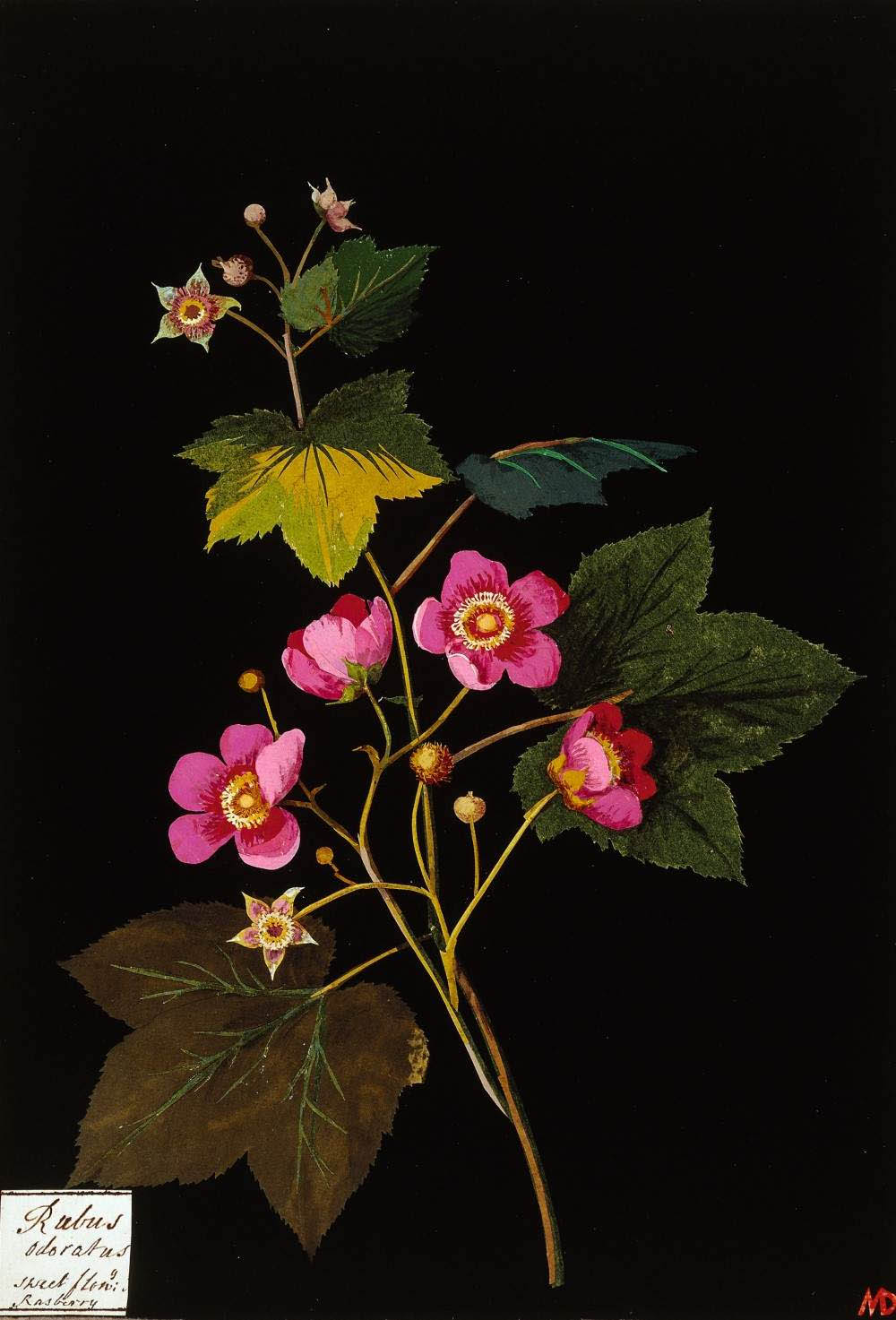
 

Mary Delany (English, 1700-1788) 'Rubus Odoratus' 1772-1782


Mary Delany (English, 1700-1788)
Rubus Odoratus
1772-1782
The British Museum
Bequeathed by Augusta Hall, Baroness Llanover in 1897


Delany was not a professional artist. However, she pursued art with a seriousness of purpose, working in a range of artistic and decorative mediums. She was in her early seventies when she turned to botanical collage, which stemmed from the Dutch art known as knipkunst or schaarkunst. Over the course of a decade, Delany created nearly one thousand botanically accurate collages of plants made from intricately cut pieces of coloured paper. In this collage, Delany shows a flowering raspberry, which was introduced to Britain from North America in 1770.

Text from the exhibition large print guide
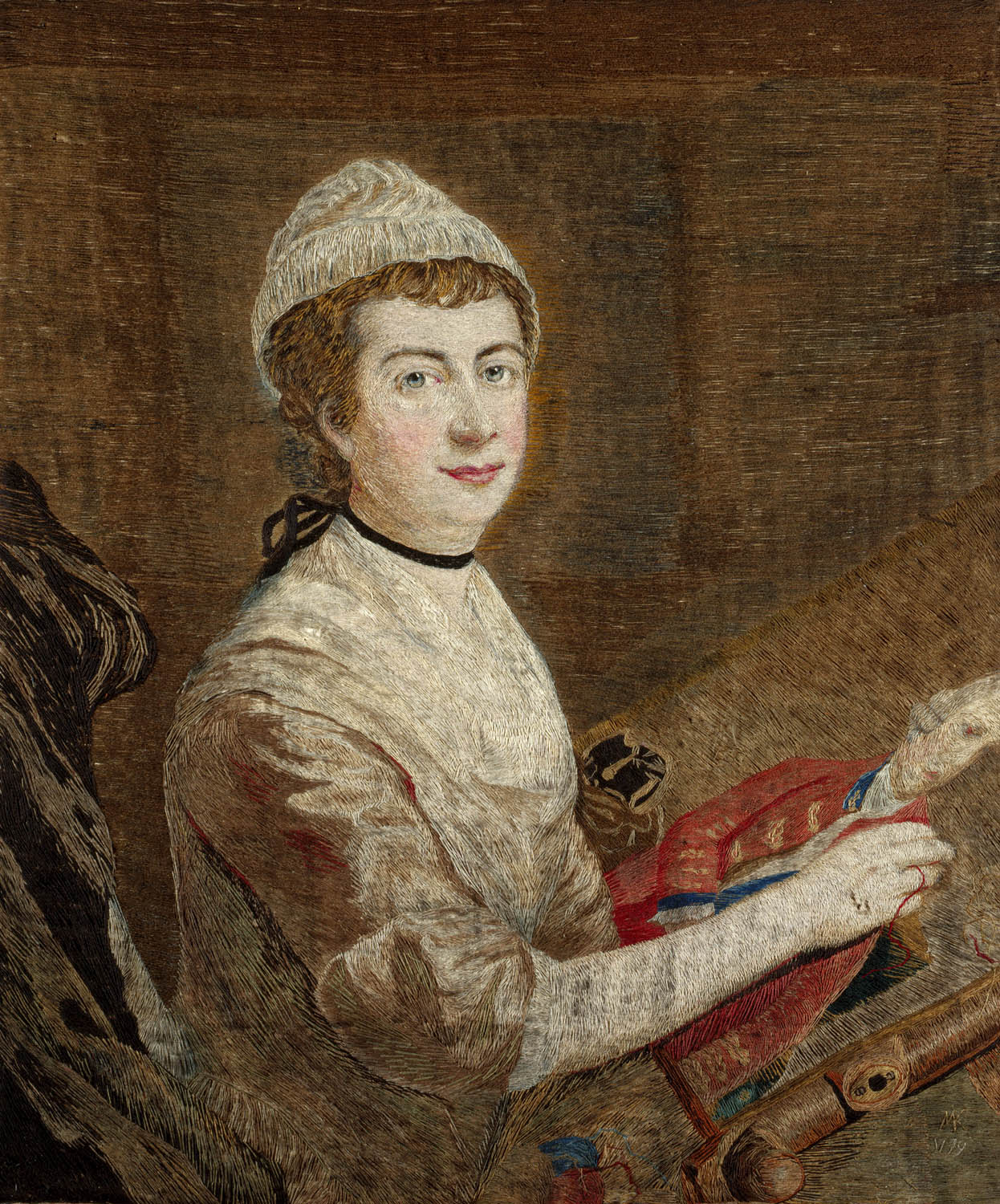
 

Mary Knowles (English, 1733-1807) 'Needlework Picture' 1779


Mary Knowles (English, 1733-1807)
Needlework Picture
1779
Silk (textile), wool, giltwood, glass (material) embroidered, dyeing
89.2 x 84.5cm (frame, external)
Royal Collection Trust / © His Majesty King Charles III 2024


Mary Morris Knowles, born of a Quaker family in Rugeley, Staffordshire, was celebrated as much for her intellect, religious conviction and unusual powers of conversation as for her skill with the needle. A friend of the poetess Anna Seward (‘The Swan of Lichfield’) and of Dr Johnson, she is now regarded as an important early protagonist of the feminist viewpoint in English cultural life. Her support for the abolition of slavery, her investigation into mystical science and her knowledge of garden design, in addition to her accomplishment as a needlewoman, suggest the breadth of her interests. In 1771 she was introduced by her fellow Quaker Benjamin West to Queen Charlotte, who remained on terms of friendship with her over the next thirty years and whose interest in female accomplishments, notably needlework, was well known. Mrs Knowles’s visits to Buckingham House included an occasion in 1778 on which she presented her 5-year-old son George to the King and Queen.

Following the first visit in 1771, the Queen commissioned Mrs Knowles to make a copy of Zoffany’s portrait of George III in needlework or ‘needle painting’ as it was also known. This technique ‘so highly finished, that it has all the softness and Effect of painting’ was achieved with a combination of irregular satin-stitch and long-and-short stitch, worked on hand-woven tammy in an arbitrary pattern and at speed, using fine wool dyed in a wide range of colours under her own supervision. Eight years later Mrs Knowles embroidered the self portrait showing her at work on the Zoffany which, like the earlier piece, she signed with initials and dated. This appears always to have been in the Royal Collection and was presumably also commissioned by Queen Charlotte.

Text from the Royal Collection Trust website
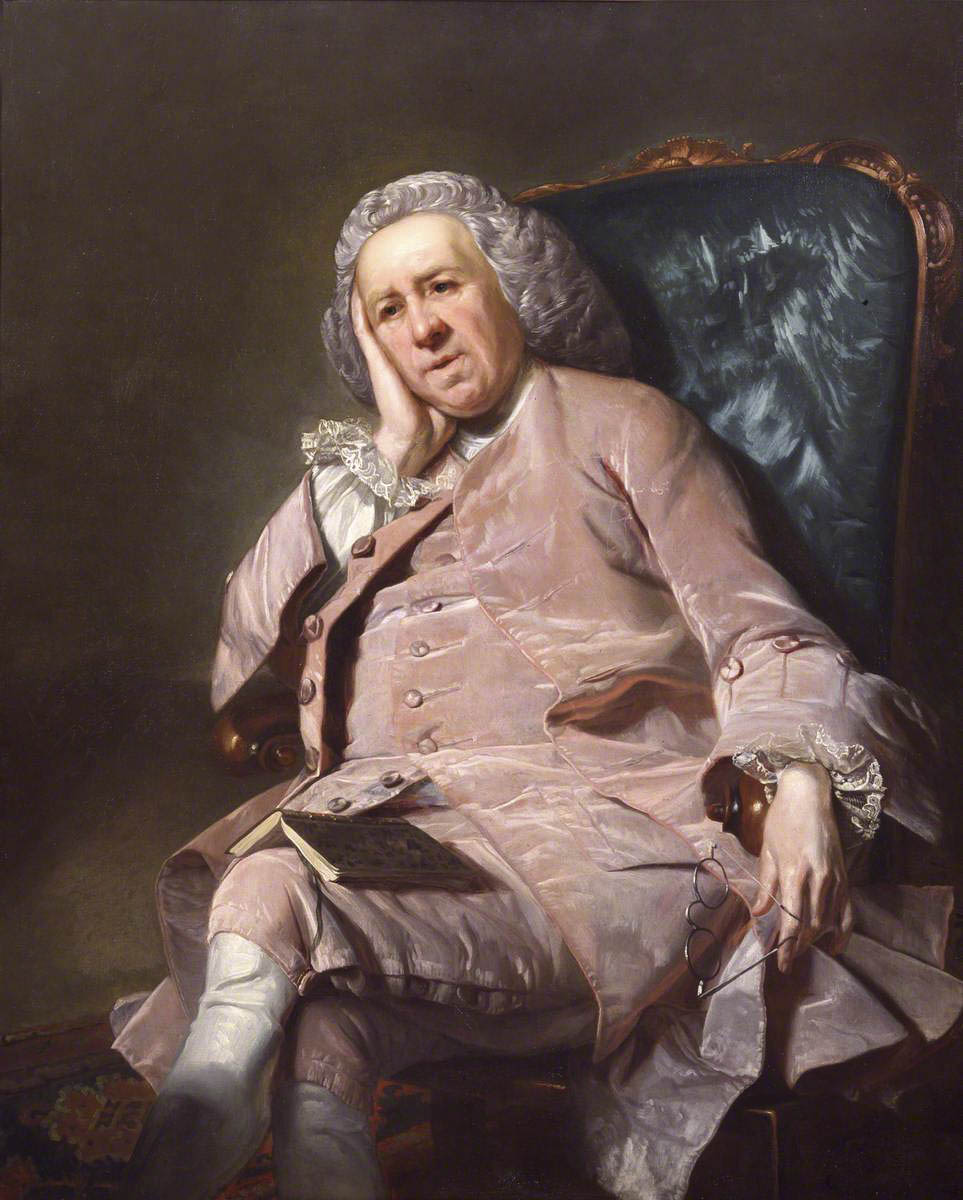
 

Mary Black (English, c. 1737-1814) 'Messenger Monsey (1693-1788)' 1764


Mary Black (English, c. 1737-1814)
Messenger Monsey (1693-1788)
1764
Oil on canvas
127 x 101.6cm
Gift from Frederick Walford, 1877
Royal College of Physicians, London
CC BY-NC-ND


This portrait of the physician Messenger Monsey (1694-1788) is Black’s only known oil painting. Black likely hoped it was a step towards establishing herself as a professional artist, but the issue of payment caused friction. Black hope to charge her client £25, half the amount charged by leading portraitist Joshua Reynolds, but after Monsey’s complaint offered to drop it to a quarter. Monsey considered Black’s expectation of a fee improper. He claimed it would damage her reputation if word got out, and even referred to her as a ‘slut’ in a letter to his cousin.

Wall text from the exhibition


Little is known of the father-and-daughter artists Thomas and Mary Black. Thomas was mainly employed painting draperies for more successful painters, and Mary usually painted copies of old masters. In a letter from Monsey to Mary Black, the doctor wrote: ‘I was bedevilled to let you make your first attempt upon my gracefull person… drawn like a Hog in armour’.

Text from the Art UK website


Black was clearly unfazed by awkward sitters. She built a flourishing artistic practice, painting and teaching the aristocracy, earning enough to live independently (she never married) and keep servants and a horse and carriage at her London home. She died there in old age just as the nineteenth century began.

Alicia Foster. “Blazing a trail: Britain’s first women artists deserve to be better known,” on the Art UK website 13 May 2024 [Online] Cited 03/09/2024


Mary Moser RA (English, 1744-1819) 'Standing Female Nude' Nd


Mary Moser RA (English, 1744-1819)
Standing Female Nude
Nd
Black and white chalk on grey-green paper
49 x W 30.2cm
The Fitzwilliam Museum, Cambridge


As women were excluded from life drawing classes, many took their own steps to improve their anatomical knowledge. They sketched from casts and statues and copied from other artists’ drawings and anatomy books. These rare works show that some artists found ways around these restrictions, although little is known about how Moser and Stone accessed life models.

Text from the exhibition large print guide


Mary Moser RA (English, 1744-1819) 'Flowers in a vase, which stands on a ledge' 1765


Mary Moser RA (English, 1744-1819)
Flowers in a vase, which stands on a ledge
1765
Watercolour and bodycolour on paper
The Syndics of the Fitzwilliam Museum, University of Cambridge


From the same series as the work nearby, this watercolour represents Sagittarius. The vase is filled with a cascade of late flowering plants: asters, chrysanthemums and rare pale nerines, captured in the cold light of winter. In addition to her professional profile as a Royal Academician, Moser acted as a royal tutor. She was part of Queen Charlotte’s circle and taught the princesses botany, embroidery and flower painting. She worked alongside other artists, including Meen and Delany, whose work is also displayed in this room.

Text from the exhibition large print guide


Admired for her striking paintings of flowers, Mary Moser was recognised for her talent from a very young age. She trained with her father, an acclaimed artist and goldsmith, winning her first medal for flower drawing at 14. At just 24, she became one of only two female founders of the Royal Academy, alongside Angelica Kauffman.

Moser painted portraits and historical scenes, but her skilled floral still life works, like Flowers in a vase, which stands on a ledge (1765), were praised by critics. Though still life was traditionally seen as a ‘lesser subject’, her floral works were so widely appreciated she received royal commissions, including one from Queen Charlotte. Despite recognition and the exhibition of many paintings, few of Moser’s works survive today.

Text from the Tate website
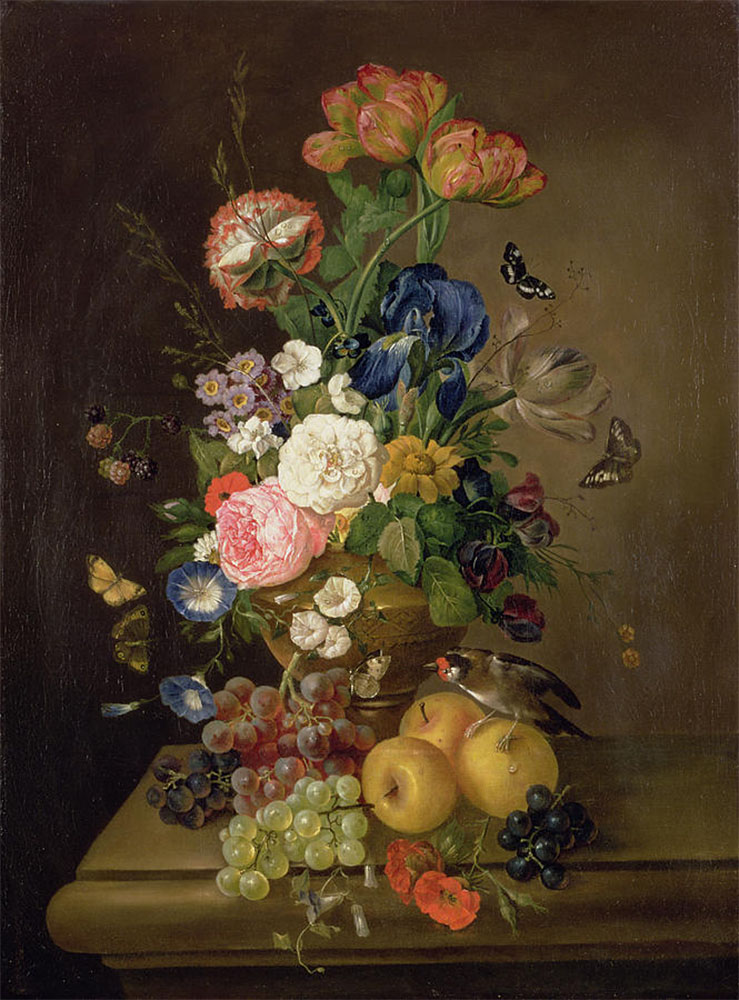
 

Mary Moser RA (English, 1744-1819) 'Vase of Flowers' Between 1758 and 1819


Mary Moser RA (English, 1744-1819)
Vase of Flowers
Between 1758 and 1819
Oil on canvas
72.1 x W 53.6cm
The Fitzwilliam Museum
Gift from Major the Hon. Henry Rogers Broughton, 1966


The exquisite attention to detail in her painting, with its beads of dew and butterflies on the wing, was perhaps nurtured by seeing her father’s work; as a goldsmith and medallion maker, this was also his talent. But the gorgeous sensuality – seen also in her approach to the nude figure – was entirely her own. She married, aged 53, but also had an affair with the estranged husband of another artist: Maria Hadfield Cosway (1759-1839).

Alicia Foster. “Blazing a trail: Britain’s first women artists deserve to be better known,” on the Art UK website 13 May 2024 [Online] Cited 03/09/2024


Installation view of the exhibition 'Now You See Us Women Artists in Britain 1520-1920' at Tate Britain showing Angelica Kauffman's 'Colouring' 1778-1780


Installation view of the exhibition Now You See Us Women Artists in Britain 1520-1920 at Tate Britain showing Angelica Kauffman’s Colouring 1778-1780 (below)
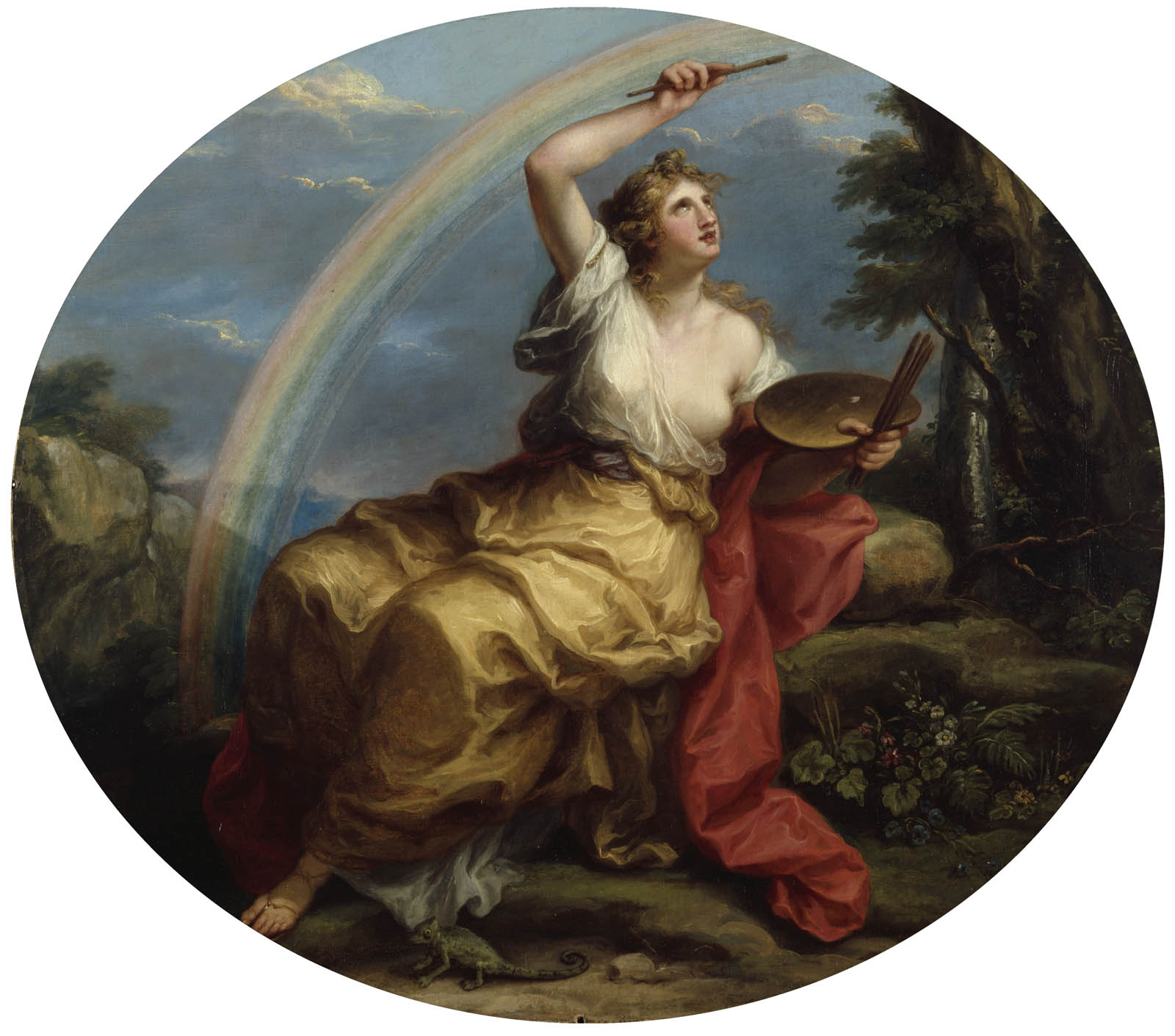
 

Angelica Kauffman RA (Swiss, 1741-1807) 'Colouring' 1778-1780


Angelica Kauffman RA (Swiss, 1741-1807)
Colouring
1778-1780
Oil on canvas
1260 x 1485 x 25 mm
© Royal Academy of Arts, London
Photo: John Hammond


This painting is part of a set of the four [titled ‘Elements of Art’] commissioned from Kauffman by the Royal Academy to decorate the ceiling of the Royal Academy’s new Council Room in Somerset House which opened in 1780. …

Kauffman represented each of her four Elements of Art as women. Female personifications of abstract concepts and values were commonplace in European art but depicting all four as women was unusual. Design (or Disegno), in particular, was known as ‘the father of all the arts’ and was traditionally depicted as a man, often in contrast to Colour or Painting personified as a woman (see Baumgartel). In Design and Colouring, the women are physically engaged in the act of creating whereas in Composition and Invention they are shown in contemplation. In Invention the figure looks to the sky for inspiration and in Composition she is deep in thought with her head resting on her hand in the traditional gesture of melancholy or reverie.

Text from the Royal Academy website


Installation view of the exhibition 'Now You See Us Women Artists in Britain 1520-1920' at Tate Britain showing at centre, Maria Cosway's 'Georgiana as Cynthia from Spenser's 'Faerie Queene'' 1781-1882; and at right, Cosway's 'A Persian Lady Worshipping the Rising Sun' 1784


Installation view of the exhibition Now You See Us Women Artists in Britain 1520-1920 at Tate Britain showing at centre, Maria Cosway’s Georgiana as Cynthia from Spenser’s ‘Faerie Queene’ 1781-1782 (below); and at right, Cosway’s A Persian Lady Worshipping the Rising Sun 1784 (below)
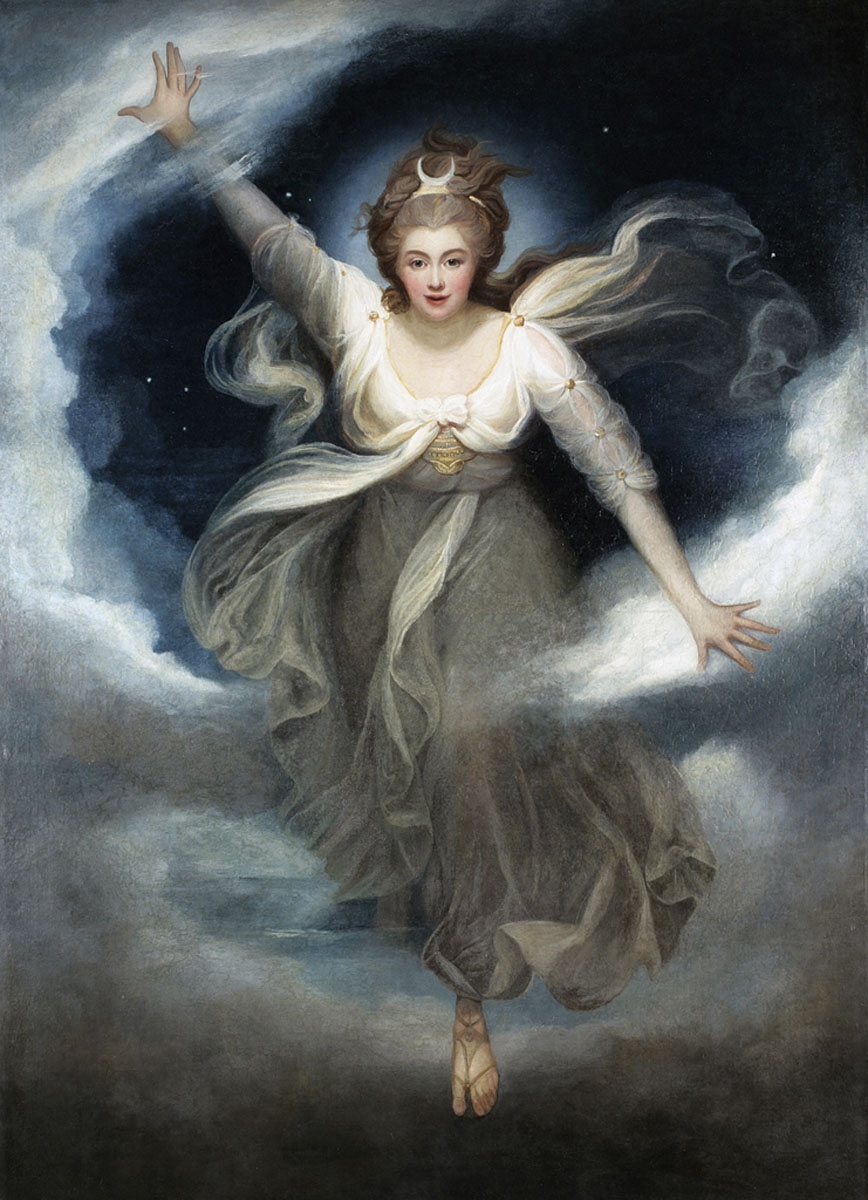
 

Maria Cosway (Italian-English 1760-1838) 'Georgiana as Cynthia from Spenser's 'Faerie Queene'' 1781-1782


Maria Cosway (Italian-English 1760-1838)
Georgiana as Cynthia from Spenser’s ‘Faerie Queene’
1781-1782
Oil on canvas
Chatsworth House
Reproduced by permission of Chatsworth Settlement Trustees / Bridgeman Images
Public domain
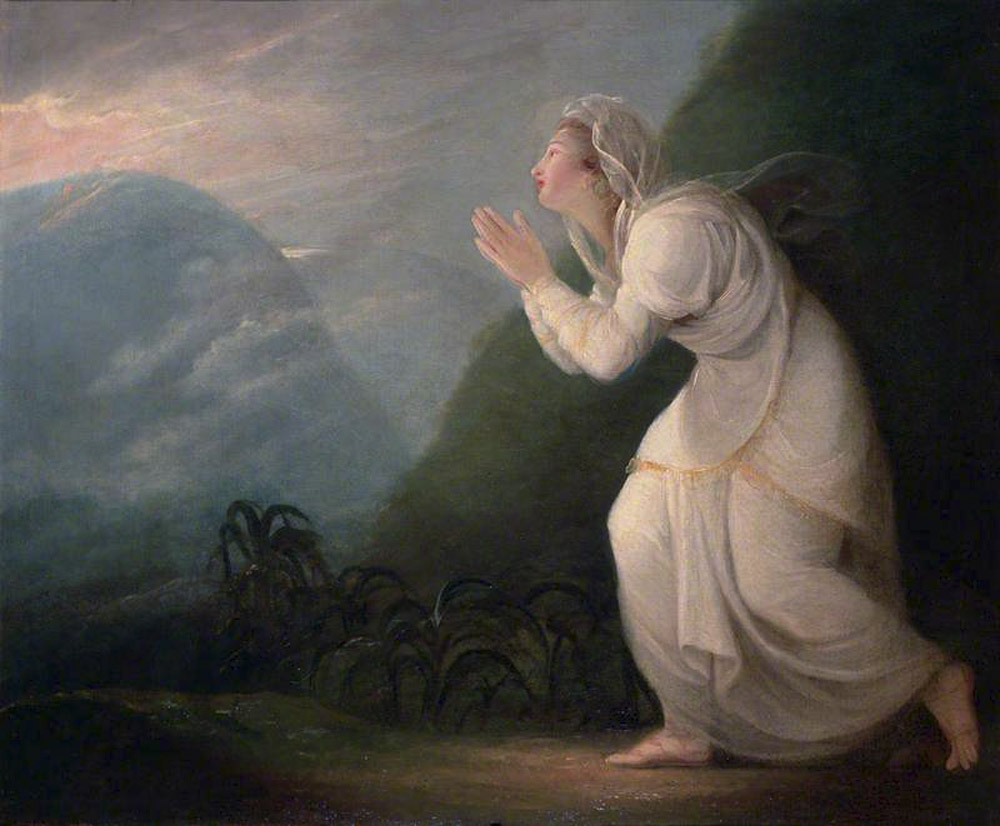
 

Maria Cosway (Italian-English 1760-1838) 'A Persian Lady Worshipping the Rising Sun' 1784


Maria Cosway (Italian-English 1760-1838)
A Persian Lady Worshipping the Rising Sun
1784
Oil on canvas
61 x 73.7cm
Sir John Soane’s Museum
Gift from the artist, 1822
By courtesy of the Trustees of Sir John Soane’s Museum, London
CC BY-NC-ND


As well as portraits, Cosway exhibited history paintings. This work was shown at the Royal Academy in 1784. Although only a few of Cosway’s history pictures can be located now, paintings such as this one were well known through reproductions made by leading engravers and print publishers. Cosway’s success was hindered by her husband, who did not like her to paint professionally. She reflected later that had he permitted it, she would have ‘made a better painter, but left to myself by degrees, instead of improving, I lost what I brought from Italy of my early studies.’

Text from the exhibition large print guide
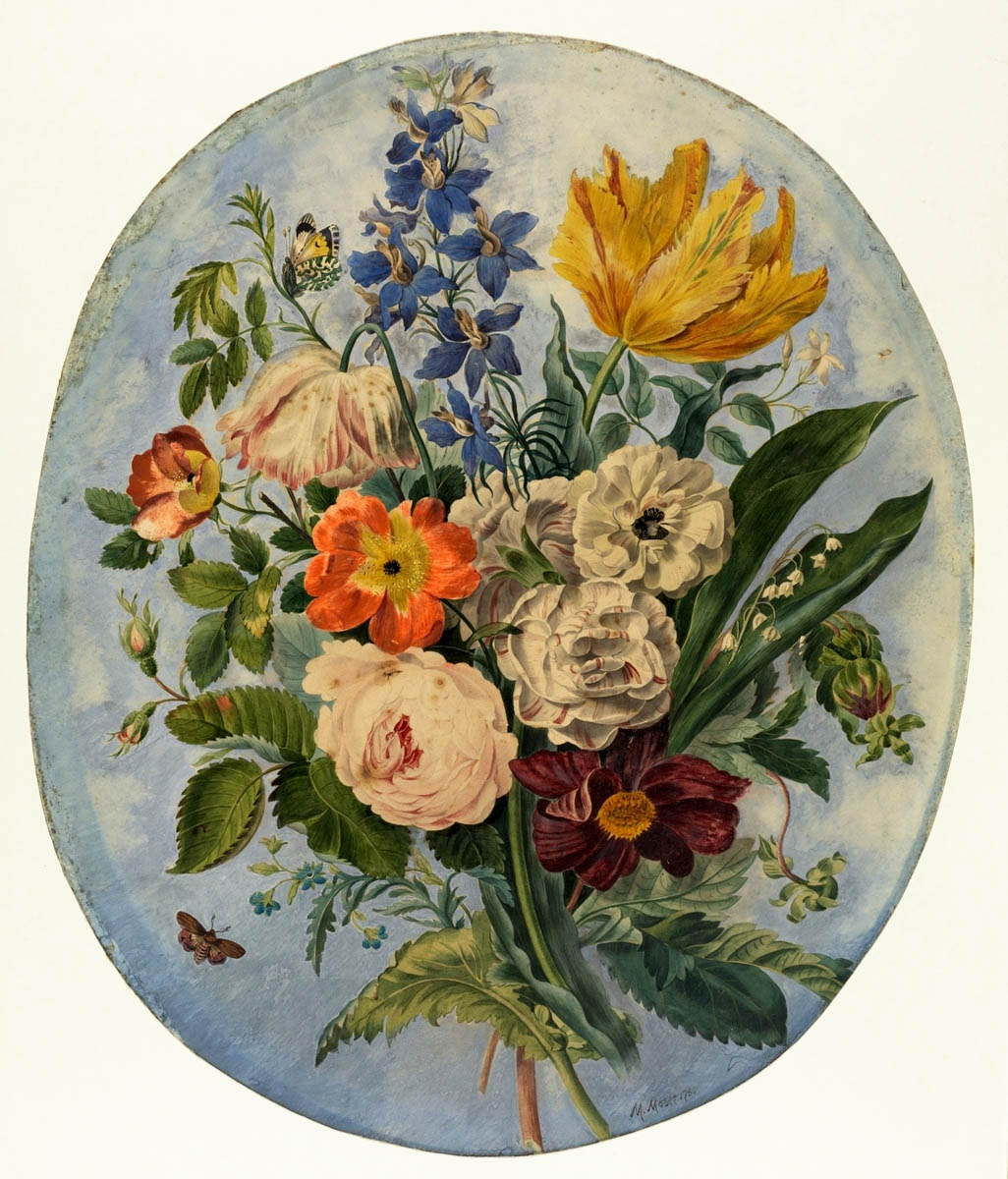
 

Maria Cosway (Italian-English 1760-1838) 'Bouquet of Flowers' 1780


Maria Cosway (Italian-English 1760-1838)
Bouquet of Flowers
1780
Watercolour on paper
The Courtauld, London (Samuel Courtauld Trust)
Bequeathed by Sir Robert Clermont Witt, 1952
CC BY-NC-ND
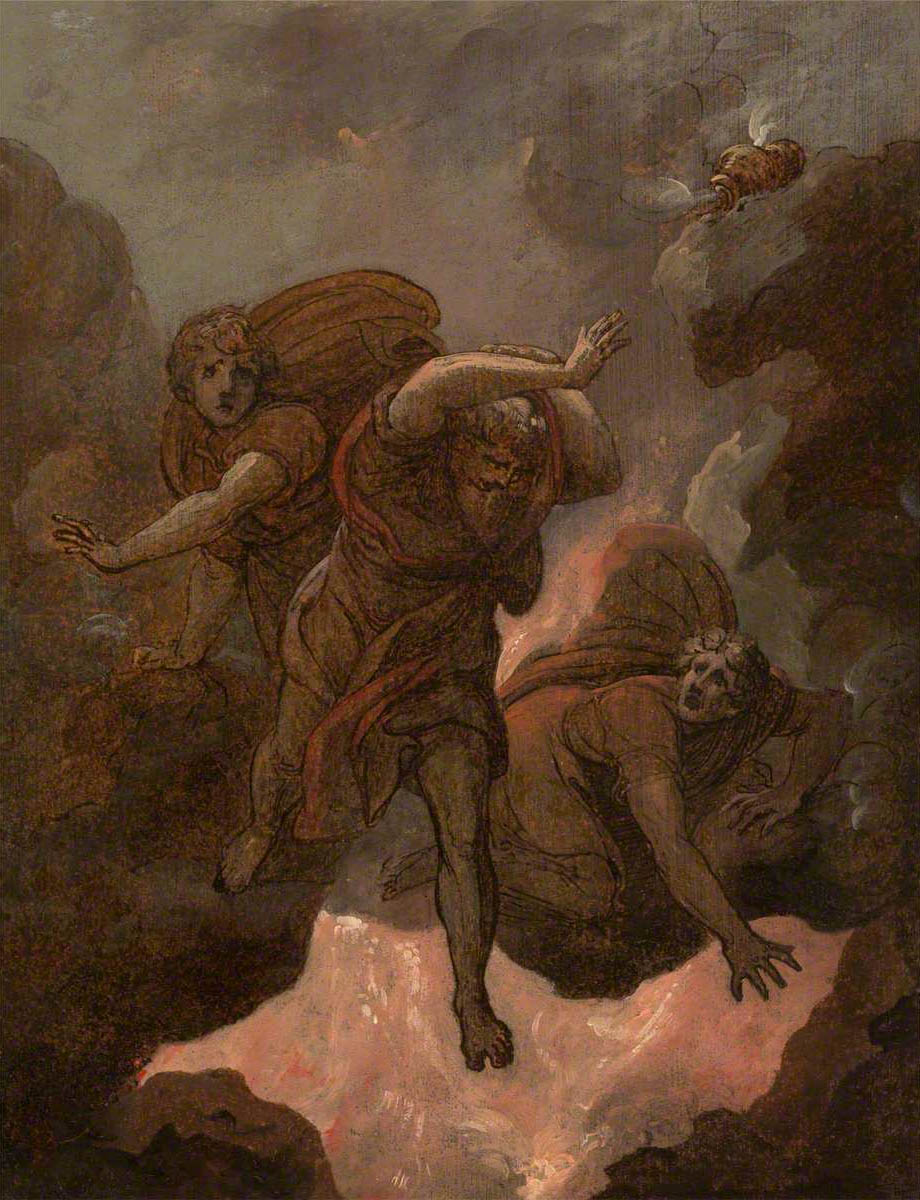
 

Maria Cosway (Italian-English 1760-1838) 'The Judgement of Korah, Dathan and Abiram' c. 1801


Maria Cosway (Italian-English 1760-1838)
The Judgement of Korah, Dathan and Abiram
c. 1801
Pen, ink and oil on canvas
37.5 x 29.2cm
Yale Center for British Art
Paul Mellon Collection
CC BY-NC-ND
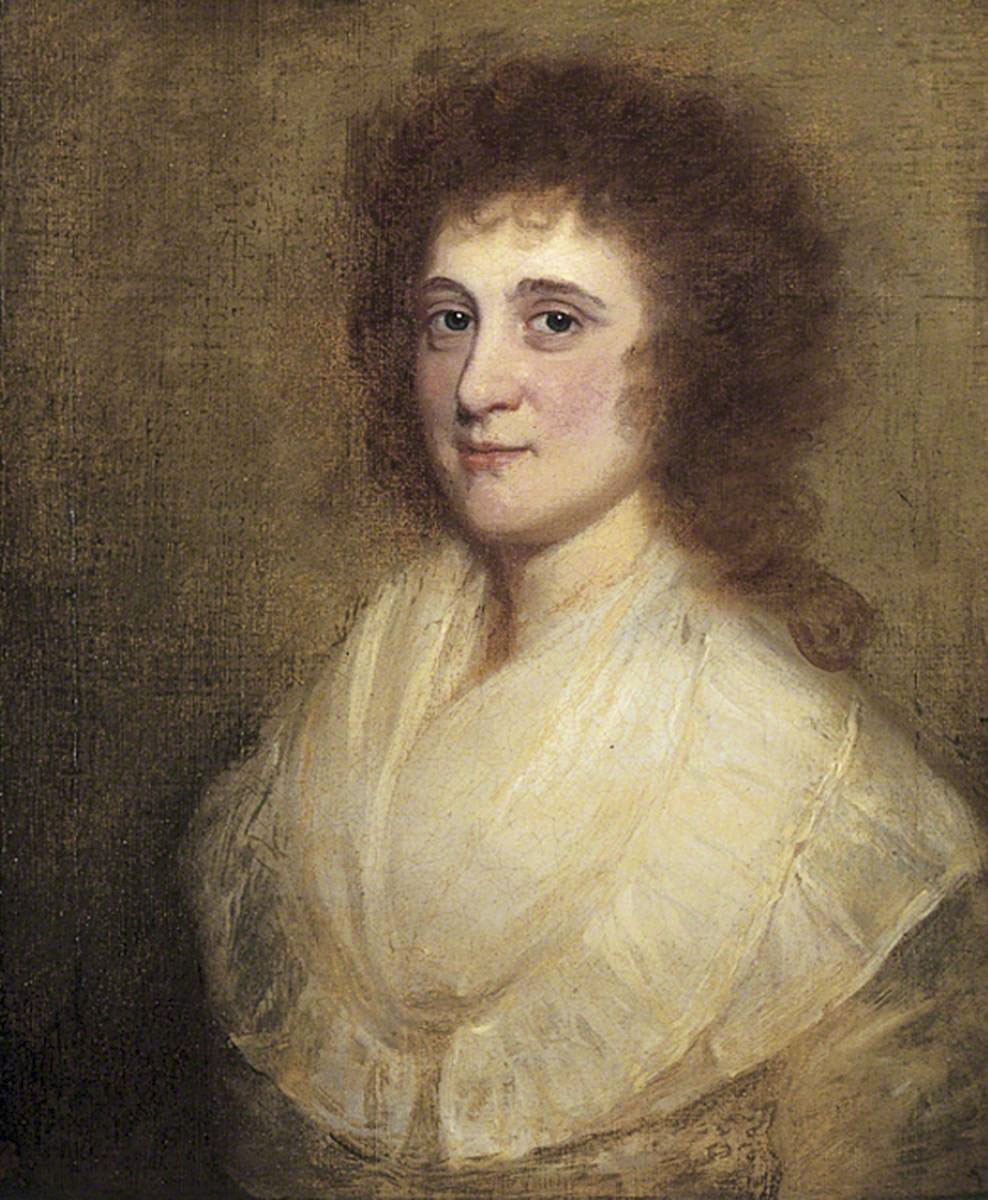
 

Maria Cosway (1759-1838) (after) 'Self Portrait' Nd


Maria Cosway (1759-1838) (after)
Self Portrait
Nd
Oil on canvas
61 x W 50.8cm
Temple Newsam House, Leeds Museums and Galleries
Bequeathed by Sam Wilson, 1925
CC BY-NC-ND
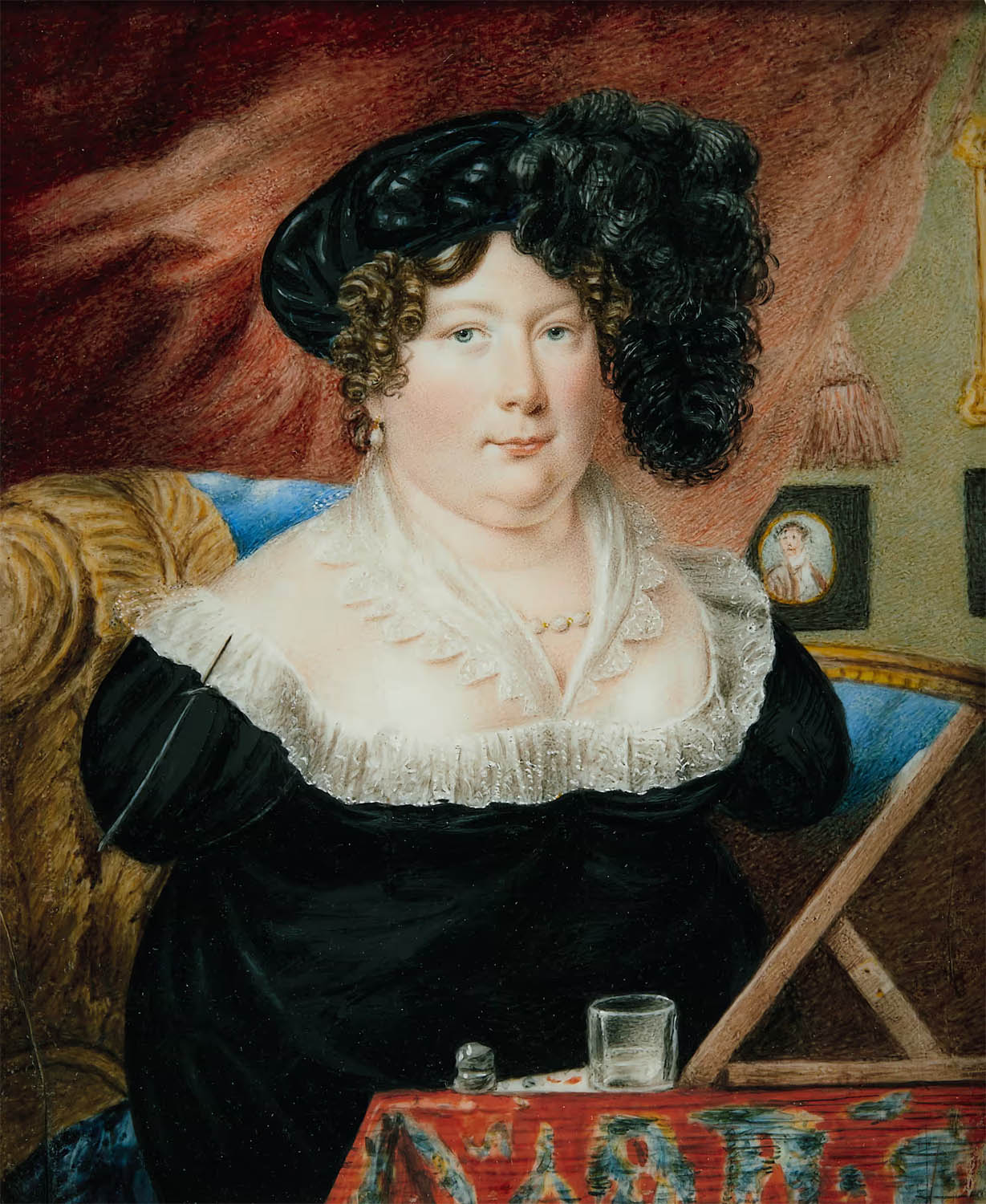
 

Sarah Biffin (English, 1784-1850) 'Self-portrait' c. 1821


Sarah Biffin (English, 1784-1850)
Self-portrait
c. 1821
Watercolour and bodycolour on ivory
Private collection


Biffin, whose baptism record notes that she was born ‘without arms or legs’, taught herself to sew, write and paint using her mouth and shoulder. She wrote that, as a child, ‘I was continually practising every invention; till at length I could, with my mouth – thread a needle – tie a knot – do fancy work – cut out and make my own dresses’.

Text from the exhibition large print guide
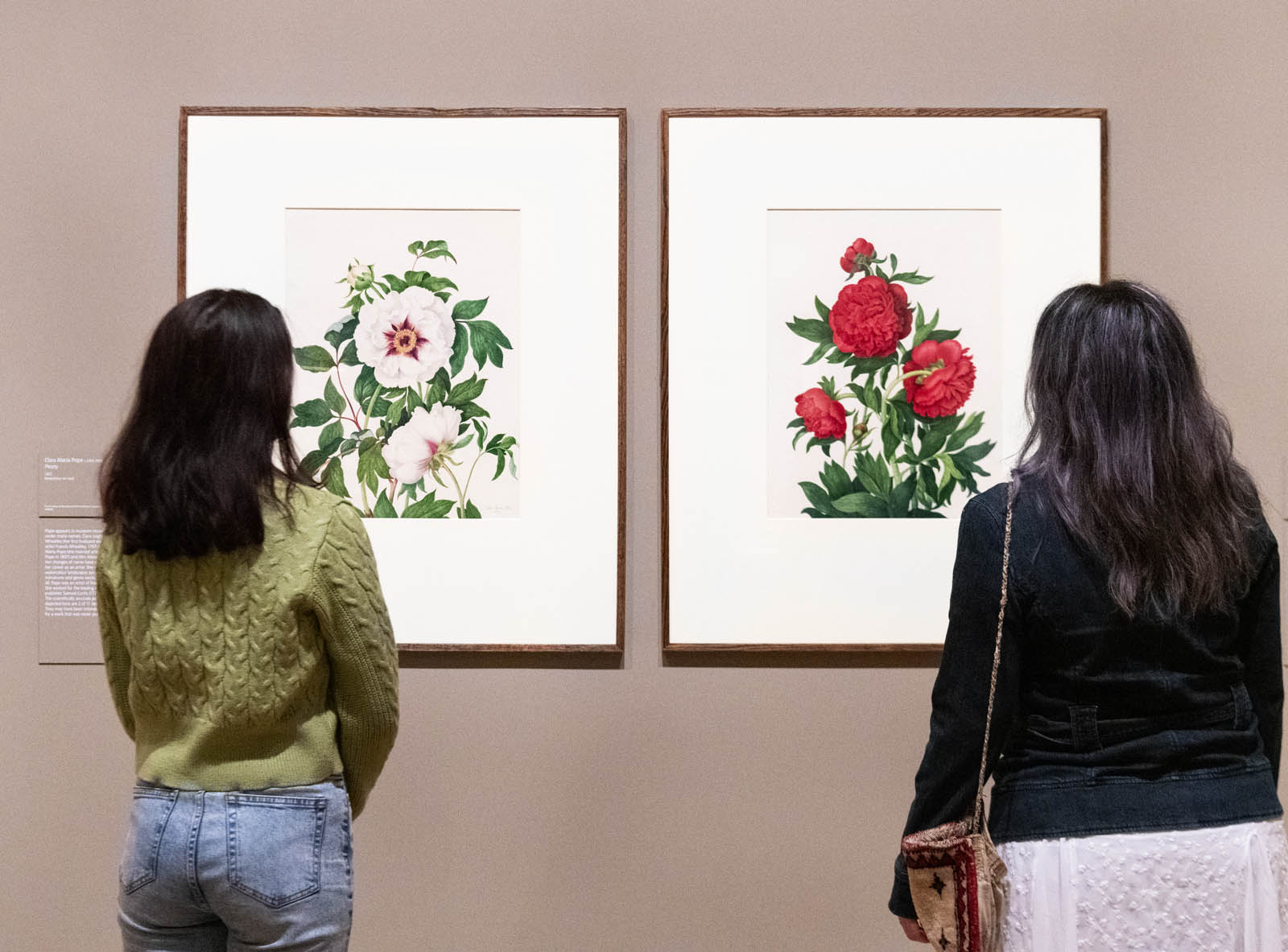
 

Installation view of the exhibition 'Now You See Us Women Artists in Britain 1520-1920' at Tate Britain showing at left, Clara Maria Pope's 'Peony' 1822; and at right, Pope's 'Peony' 1821


Installation view of the exhibition Now You See Us Women Artists in Britain 1520-1920 at Tate Britain showing at left, Clara Maria Pope’s Peony 1822 (below); and at right, Pope’s Peony 1821 (below)
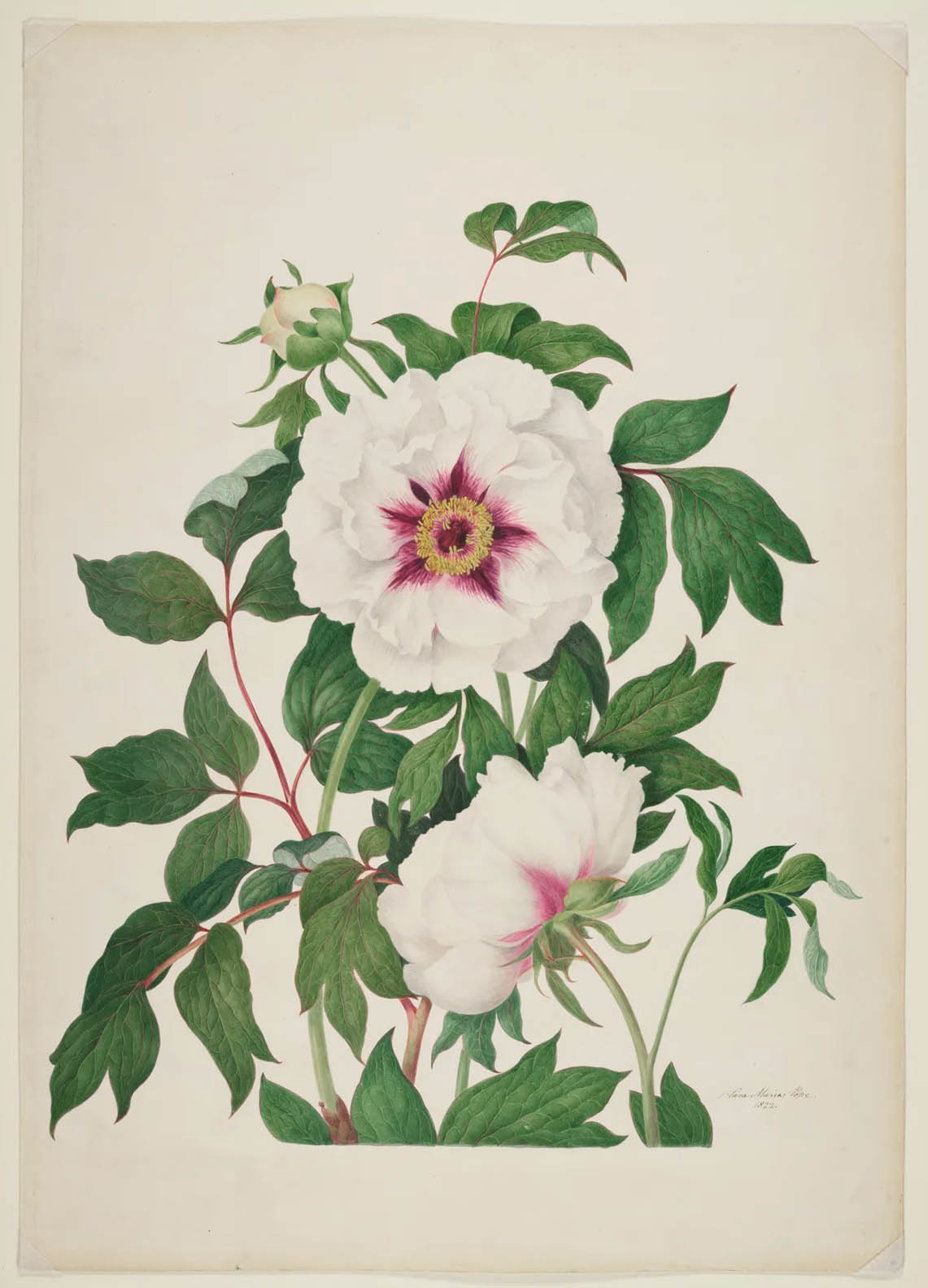
 

Clara Maria Pope (British, 1767-1831) 'Peony' 1822


Clara Maria Pope (British, 1767-1831)
Peony
1822
Bodycolour on card
The Trustees of the Natural History Museum, London
Courtesy the Natural History Museum
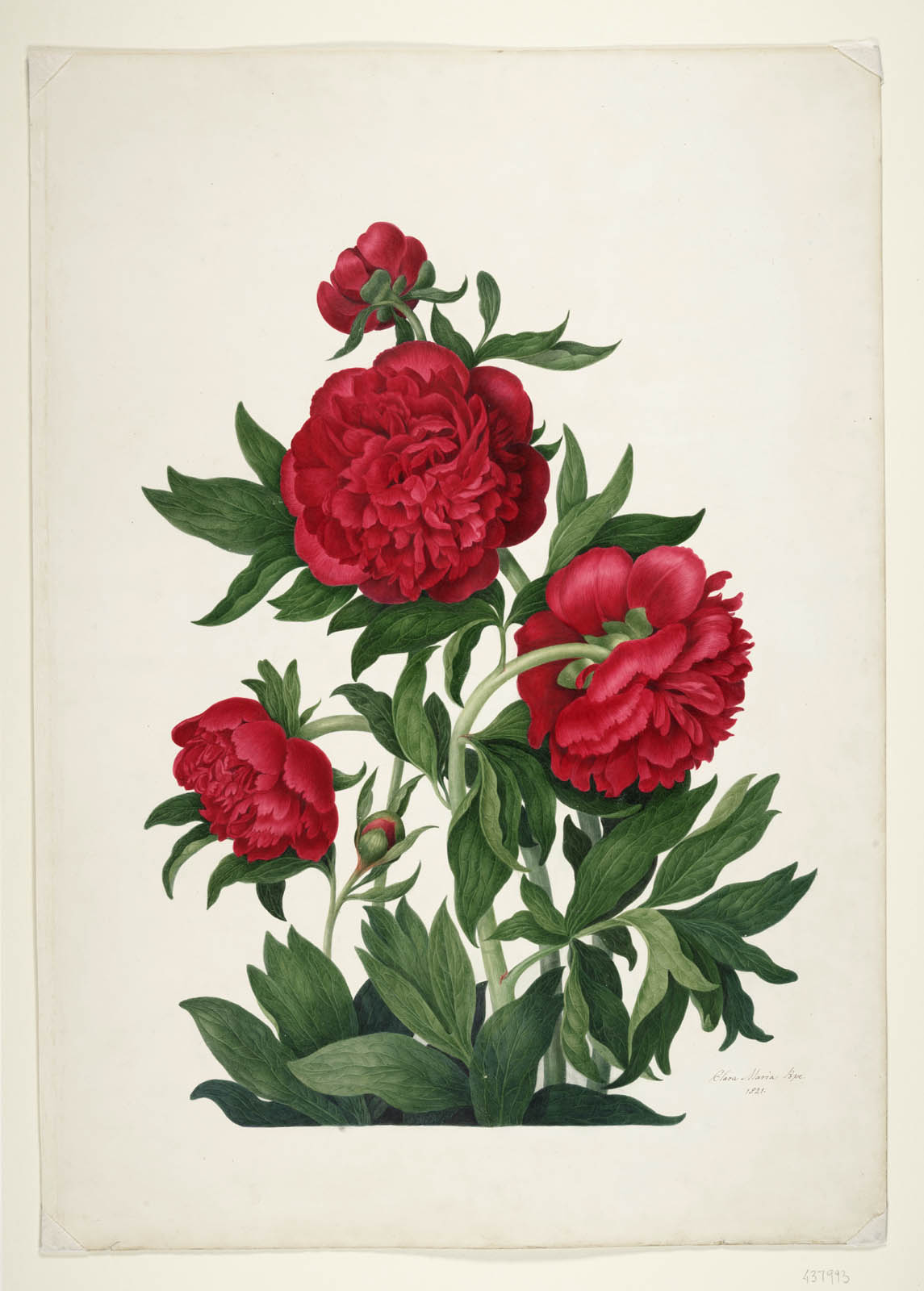
 

Clara Maria Pope (British, 1767-1831) 'Peony' 1821


Clara Maria Pope (British, 1767-1831)
Peony
1821
Bodycolour on card
The Trustees of the Natural History Museum, London
Courtesy the Natural History Museum


Pope appears in museum records under many names: Clara Leigh, Clara Wheatley (her first husband was the artist Francis Wheatley, 1747-1801), Clara Maria Pope (she married actor Alexander Pope in 1807) and Mrs Alexander Pope. Her changes of name have obscured her career as an artist. She exhibited watercolour landscapes and portraits, miniatures and genre works, but above all, Pope was an artist of flowers. She worked for the leading botanical publisher Samuel Curtis (1779-1860). The scientifically accurate peonies depicted here are 2 of 11 designs. They may have been intended as plates for a work that was never published.

Text from the exhibition large print guide
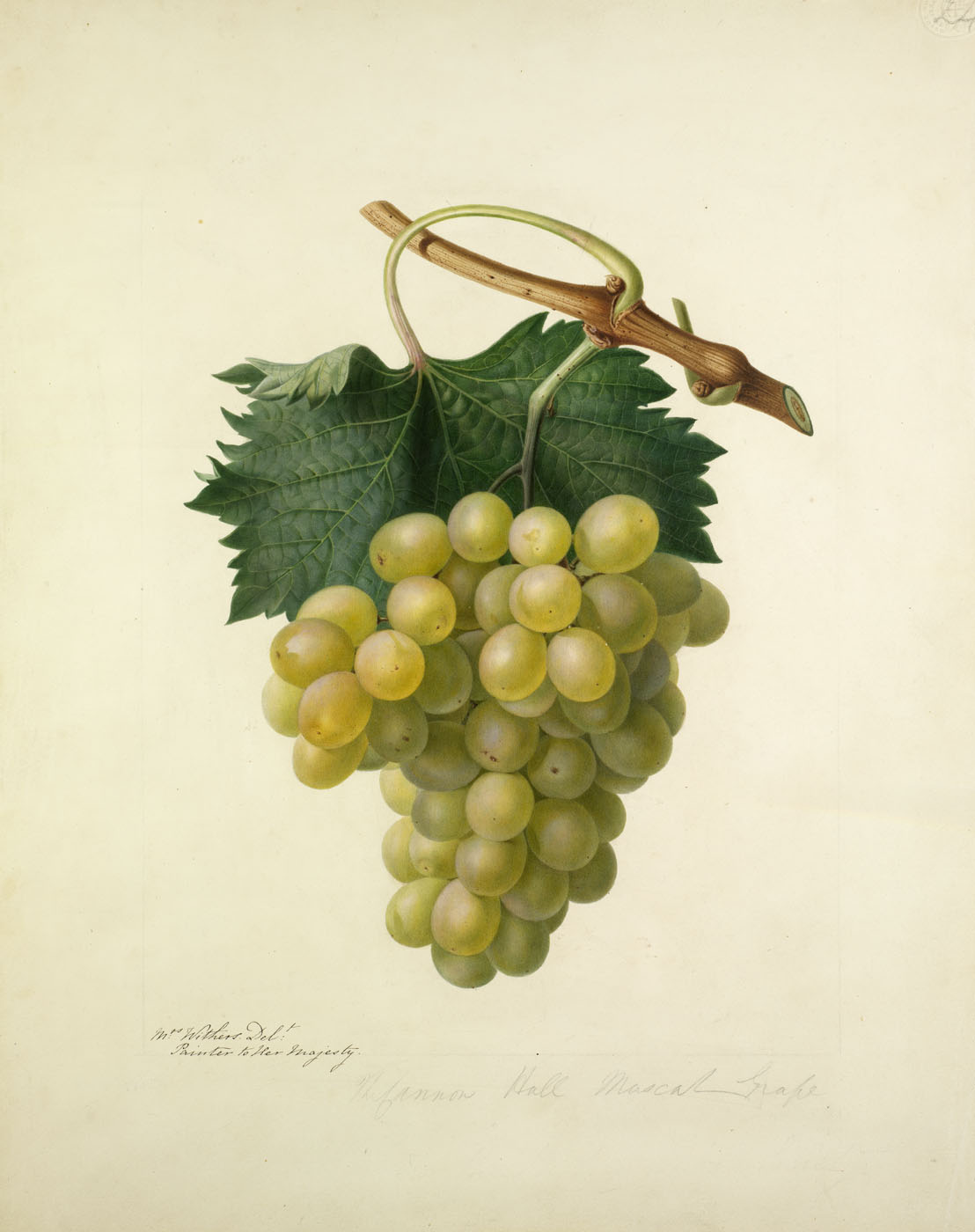
 

Augusta Innes Withers (English, 1792-1877) 'The Canon Hall Muscat Grape' c. 1825


Augusta Innes Withers (English, 1792-1877)
The Canon Hall Muscat Grape
c. 1825
Watercolour on paper
444 × 352 mm
RHS Lindley Collections
Courtesy the Royal Horticultural Society, Lindley Library


Withers was employed by the Horticultural Society to make official ‘portraits’ of varieties of fruit growing in their orchards. The quality of Withers’s work meant her high fees were not questioned. Here, she paints sunlight glowing through grapes and the translucency of the skin of gooseberries in great detail. Withers drew and handcoloured engraved illustrations in the Horticultural Society’s Transactions and made illustrations of fruit for John Lindley’s Pomological Magazine in 1828 (Lindley was Secretary of the Society). Withers was also regarded as one of the best teachers of botanical illustration.

Text from the exhibition large print guide
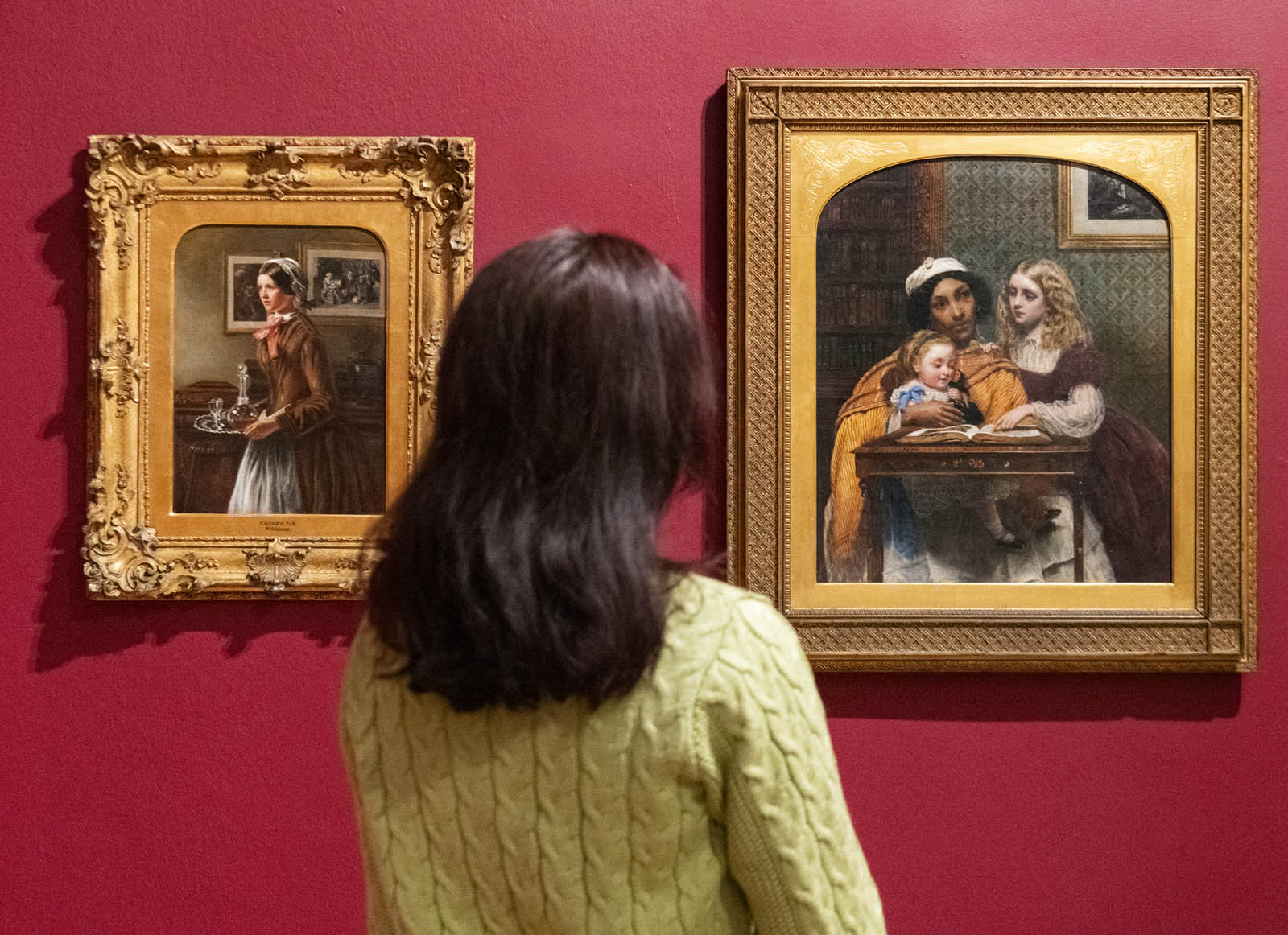
 

Installation view of the exhibition 'Now You See Us Women Artists in Britain 1520-1920' at Tate Britain showing at left, Rebecca Solomon's 'Sherry, Sir?' c. 1858-1862; and at right, Solomon's 'A Young Teacher' 1861


Installation view of the exhibition Now You See Us Women Artists in Britain 1520-1920 at Tate Britain showing at left, Rebecca Solomon’s Sherry, Sir?
c. 1858-1862 (below); and at right, Solomon’s A Young Teacher 1861 (below)
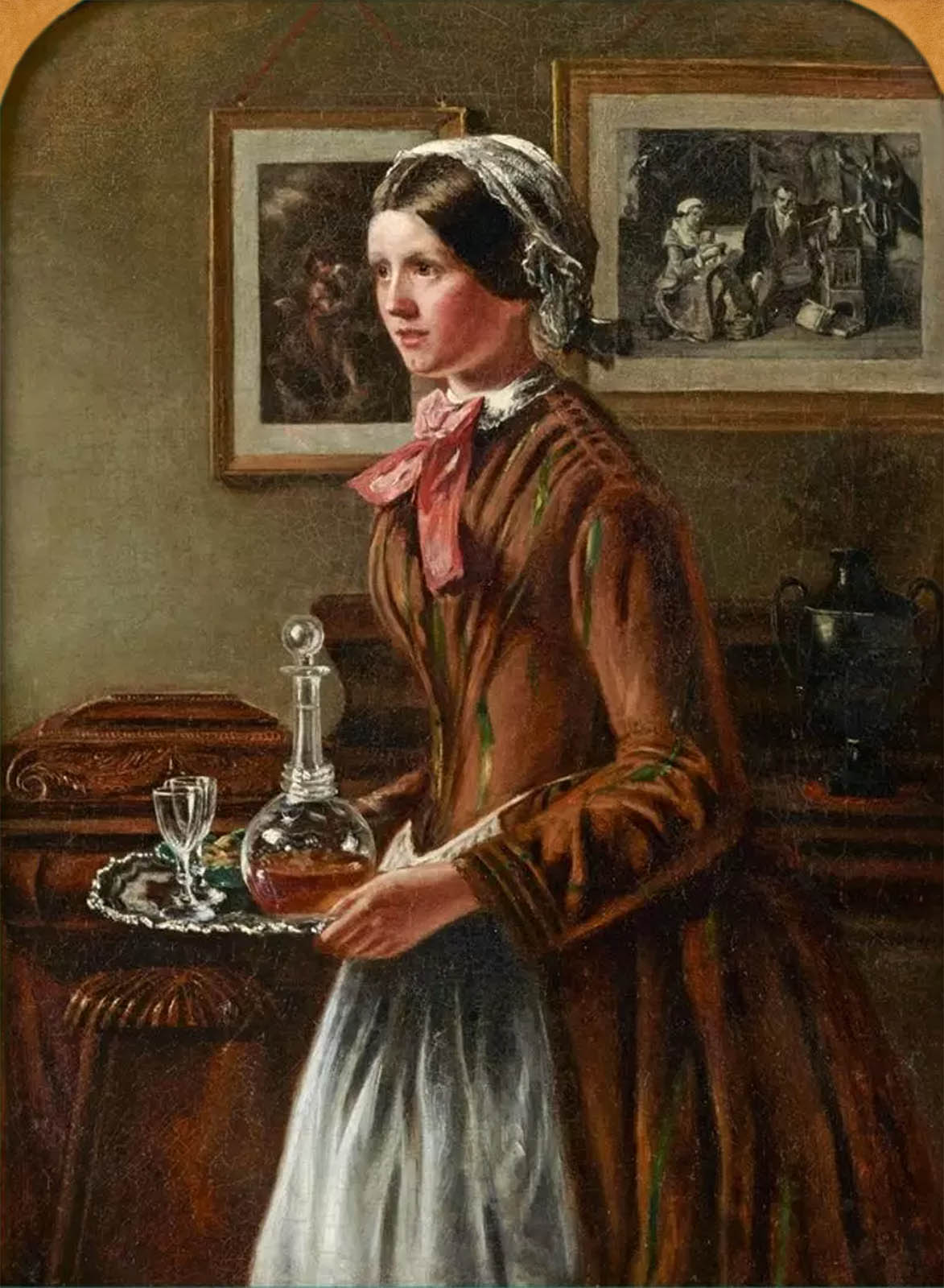
 

Rebecca Solomon (English, 1832-1886) 'Sherry, Sir?' c. 1858-1862


Rebecca Solomon (English, 1832-1886)
Sherry, Sir?
c. 1858-1862
Oil on canvas
Private collection


Solomon often painted scenes of domestic life and interiors, which were considered more suitable subjects for women artists than history painting. Solomon’s domestic scenes include subtle commentary on social hierarchies. Sherry, Sir? depicts a maid with a silver tray. It reprises a well-known painting of the same title, painted by William Powell Frith (1819-1909) in 1851, but unlike Frith’s painting, Solomon draws attention to domestic labour and the hierarchies of a middle-class home. Solomon was the sister of artists Abraham Solomon (1823-1862) and Simeon Solomon (1840-1905).

Text from the exhibition large print guide


Rebecca Solomon (London 26 September 1832 – 20 November 1886 London) was a 19th-century English Pre-Raphaelite draftsman, illustrator, engraver, and painter of social injustices. She is the second of three children who all became artists, in a prominent Jewish family. …

Solomon’s artistic style was typical of popular 19th-century painting at the time and falls under the category of genre painting. She used her visual images to critique ethnic, gender and class prejudice in Victorian England. When Solomon started painting genre scenes, her work demonstrated an observant eye for class, ethnic and gender discrimination. Solomon’s paintings reflect a combination of interest in the theatre and commitment to social consciousness that is not exist in other artist’s painting in the nineteenth century.

Text from the Wikipedia website


Solomon painted in a more equivocal manner… She [the subject of the painting] is equally attractive and demure, but, by being painted from the side and against the background of a middle-class interior, the viewer is invited to reflect on her social status.

This is framed in a genre painting and by no means a piece with pretensions to social realism, but Solomon seems to be underlining the definite restrictions on this young woman’s position in society.

The pictures hanging behind her may contribute to that interpretation of the artist. They are not yet identified, but it seems that on the left we are shown an allegorical subject later than Gainsborough or Reynolds, depicting a young peasant boy or young peasant girl holding a dog in a landscape. On the right, a more specific engraving of a genre painting from Solomon’s own time showing what appears to be an itinerant family of street vendors. By placing his servant girl between these two paintings, Solomon seems to be asking us to compare.

José Luis Jiménez García. “La otra versión de la ‘Sherry Girl’,” on the Diario de Jerez website 07 June 2023 [Online] Cited 28/08/2024 Translated from the Spanish by Google Translate
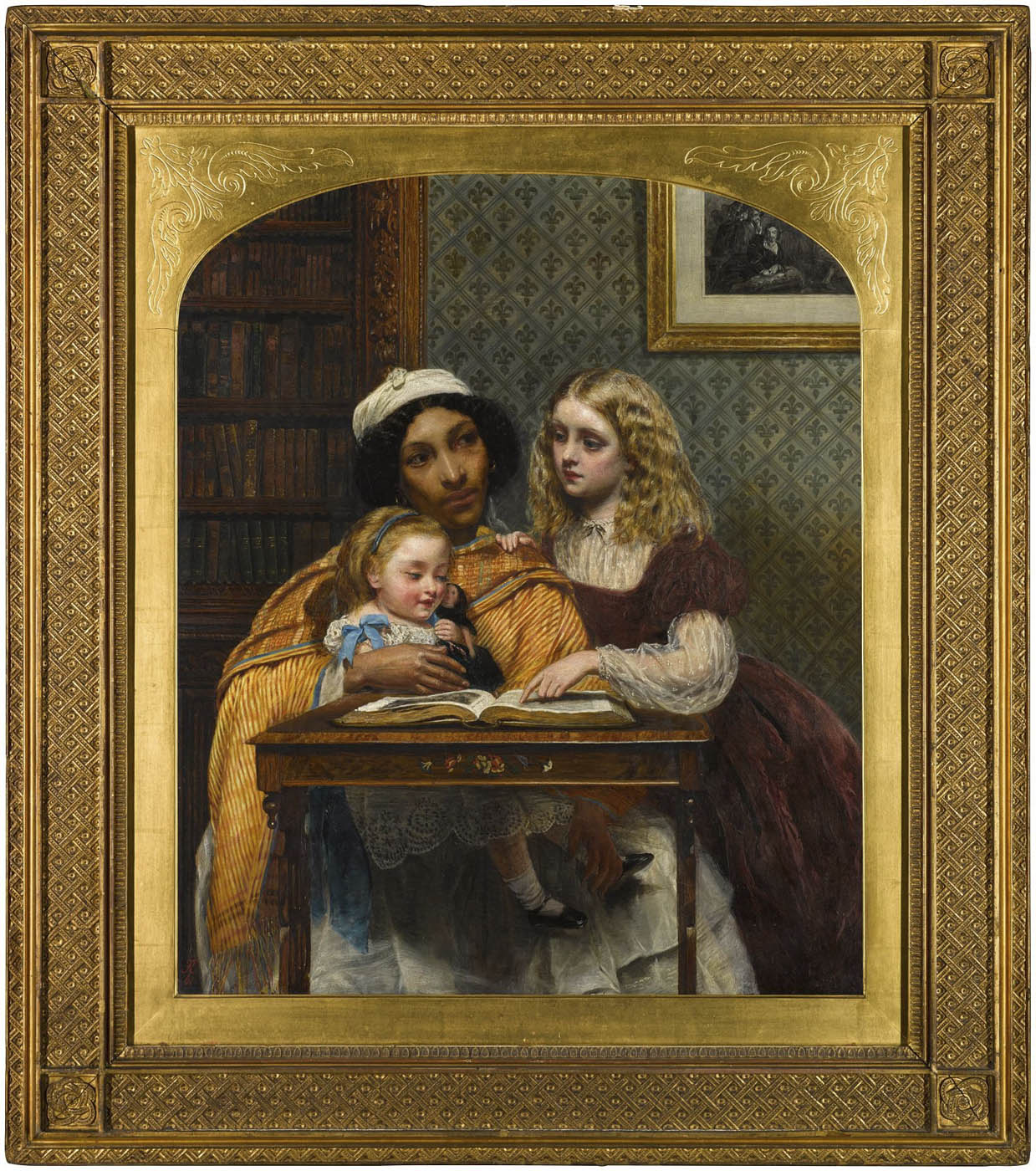
 

Rebecca Solomon (English, 1832-1886) 'A Young Teacher' 1861


Rebecca Solomon (English, 1832-1886)
A Young Teacher
1861
Oil on canvas
61 by 51cm
Tate and the Museum of the Home


Rebecca Solomon’s painting is a complex reflection on gender, race, religion and education in mid-nineteenth century London. As with many of her works, it considers women who worked in better-off households as professional carers. In A Young Teacher, Solomon modifies a traditional domestic scene between mother and child, with the surrounding books stressing the theme of learning. The woman at the centre of the image was modelled by Jamaican-born Fanny Eaton, who became a prominent muse for many Victorian artists and featured in some of the most iconic paintings of the Pre-Raphaelite period. …

Believed to be the first Jewish woman to become a professional artist in England, Rebecca Solomon’s work shone a light on inequality and prejudice at a time when these subjects were far from mainstream. She was active in social reform movements, including as part of a group of 38 artists who petitioned the Royal Academy of Arts to open its schools to women.

Text from the Tate website
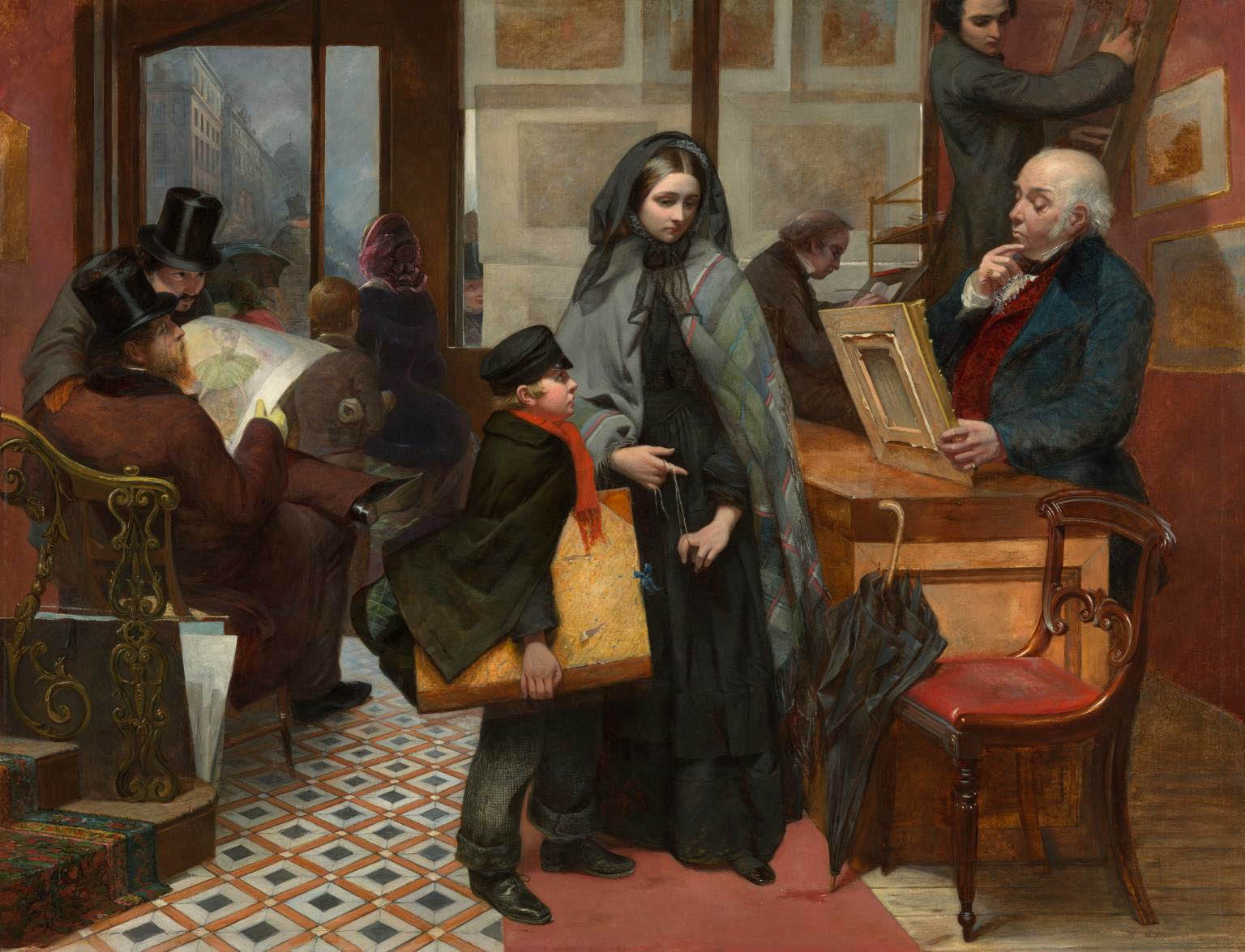
 

Emily Osborn (English, 1828-1925) 'Nameless and Friendless. "The rich man's wealth is his strong city: the destruction of the poor is their poverty (Proverbs: 10:15)' 1857


Emily Osborn (English, 1828-1925)
Nameless and Friendless.
“The rich man’s wealth is his strong city: the destruction of the poor is their poverty” (Proverbs: 10:15)
1857
Oil on canvas
Support: 825 × 1038 mm
Frame: 1042 × 1258 × 75 mm
Tate
Purchased with assistance from Tate Members, the Millwood Legacy and a private donor 2009
Creative Commons CC BY-NC-ND 4.0 DEED


Osborn exhibited widely and was supported by wealthy patrons. She was also part of the ‘rights of woman’ debate, campaigning for more public roles for women. Nameless and Friendless, exhibited at the Royal Academy in 1857, dramatises the difficulties faced by women artists. Osborn shows a young woman offering a painting to a sceptical dealer. With no reputation (‘Nameless’) and no connections (‘Friendless’), she has little chance of a sale. Behind her, two leering men emphasise the impression of her isolation and vulnerability.

Text from the exhibition large print guide


Installation view of the exhibition 'Now You See Us Women Artists in Britain 1520-1920' at Tate Britain showing Emily Mary Osborn's 'Barbara Bodichon (1827-1891)' Nd (below)


Installation view of the exhibition Now You See Us Women Artists in Britain 1520-1920 at Tate Britain showing Emily Mary Osborn’s Barbara Bodichon (1827-1891) Nd (below)
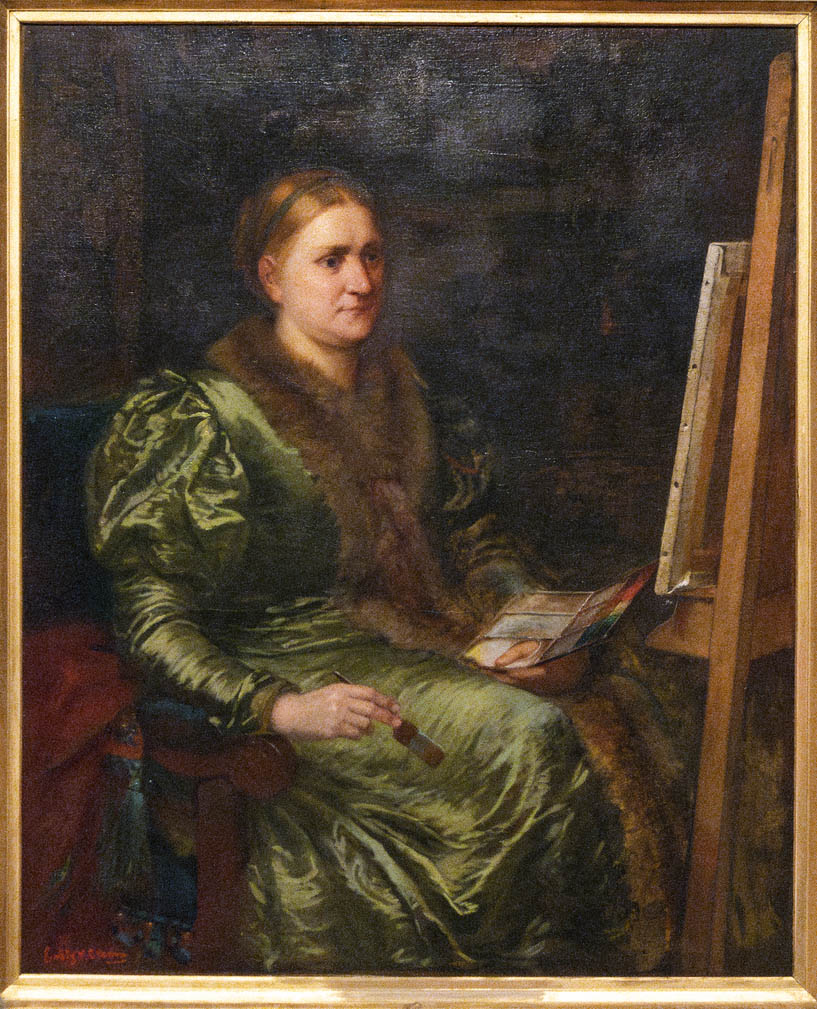
 

Emily Mary Osborn (1828-1925) 'Barbara Bodichon (1827-1891)' Nd (installation view)


Emily Mary Osborn (1828-1925)
Barbara Bodichon (1827-1891) (installation view)
Nd
Oil on canvas
120 x 97cm
Girton College, University of Cambridge


Martha Darley Mutrie (British, 1824-1885) 'Wild Flowers at the Corner of a Cornfield' 1855-1860


Martha Darley Mutrie (British, 1824-1885)
Wild Flowers at the Corner of a Cornfield
1855-1860
Oil on canvas
Support: 821 × 632 mm
Frame: 958 × 781 × 65 mm
Photo: Tate (Seraphina Neville)


Martha Darley Mutrie is considered one of the leading painters of flowers active in Britain in the nineteenth century. She was born in Ardwick, near Manchester. She trained together with her sister, the painter Annie Feray Mutrie (1826-1893), under George Wallis (1811-1891) at the Manchester School of Design from 1844 to 1846, and also undertook private lessons with him. The sisters began exhibiting at the Royal Manchester Institution from 1845 and at the Royal Academy, London, showing there consistently from the early 1850s. Their work was regularly well received by the critics. Mutrie and her sister moved to London in 1854, where they painted flowers in interior settings, carefully arranged, and also outdoors in mock natural settings.

Despite the prominence of women artists painting still lifes and flowers, the men practitioners of the genre, such as George Lance (1802-1864) and William Henry ‘Birds Nest’ Hunt (1790-1864), received greater critical and institutional attention. Martha and Annie Mutrie achieved success that was otherwise rare for women working as artists at the time.

The art critic John Ruskin admired both artists’ work and wrote about one of Annie’s pictures in his review of the 1855 Royal Academy exhibition. In his review Ruskin suggested that she abandon artificial compositions and paint instead ‘some banks of flowers in wild country, just as they grow’ (John Ruskin, Notes on Some of the Principal Pictures Exhibited at the Royal Academy, London, 1855). This painting might be seen as a response to Ruskin’s insight and the advances in science that in the 1850s brought a new focus to the study of nature, with arguments over beauty and truth.

Text from the Tate website
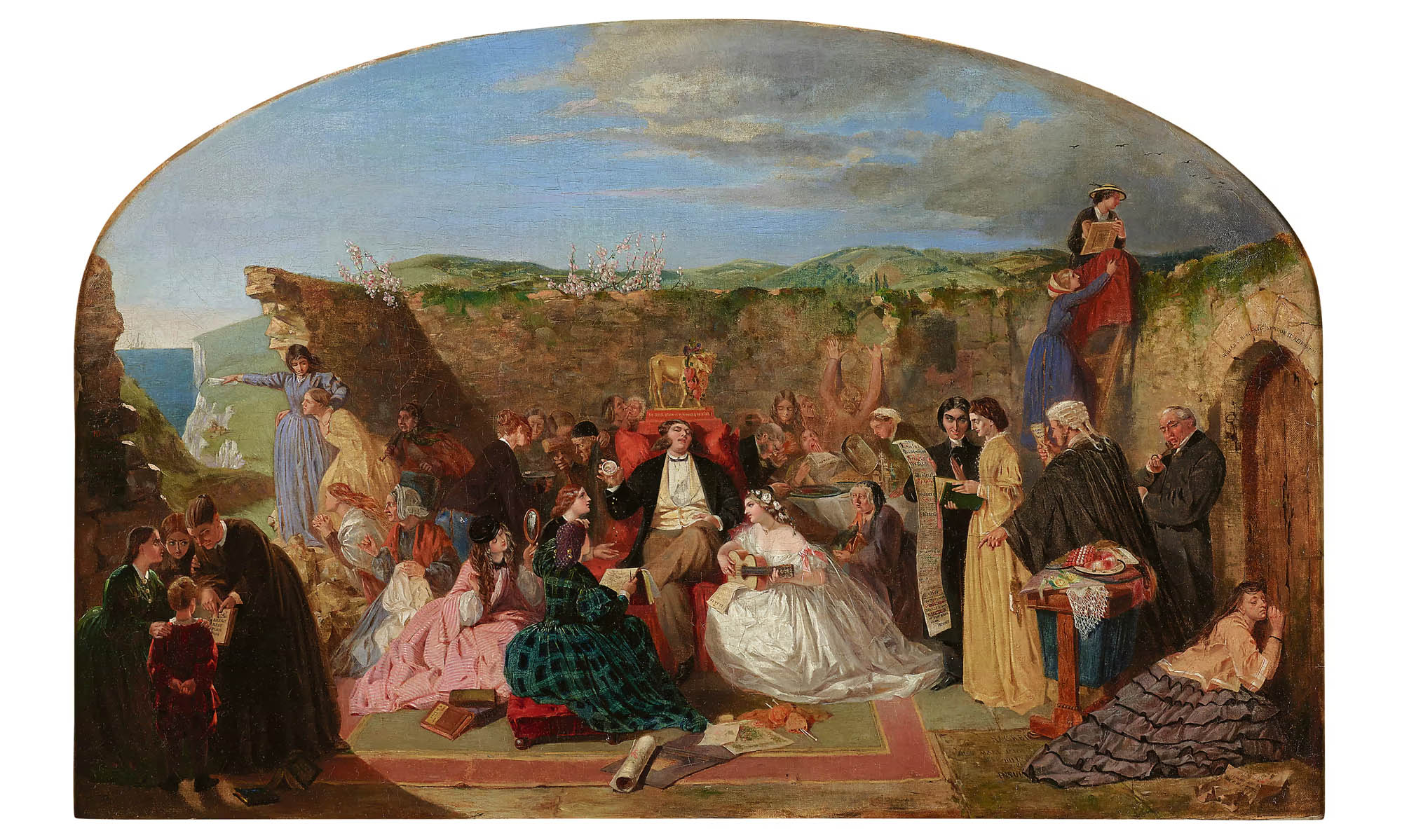
 

Florence Claxton (British, 1838-1920) ''Woman's Work': A Medley' 1861


Florence Claxton (British, 1838-1920)
‘Woman’s Work’: A Medley
1861
Oil on canvas
Martin Beisly Fine Art, London


In the 1850s, Claxton became part of the UK’s first organised movement for women’s rights. Woman’s Work satirises women’s opportunities for professional employment. At its centre a group of women fawn at the feet of a man seated below a statue of the Golden Calf – a false idol. Confined by
a surrounding wall, doors to professions such as medicine are shut to the women. Only the artist Rosa Bonheur has managed to scale the wall’s heights. The painting was exhibited at London’s National Institution for Fine Arts in 1861 and received mixed reviews. Some praised its comic strength but others described it as ‘vulgar’.

Text from the exhibition large print guide
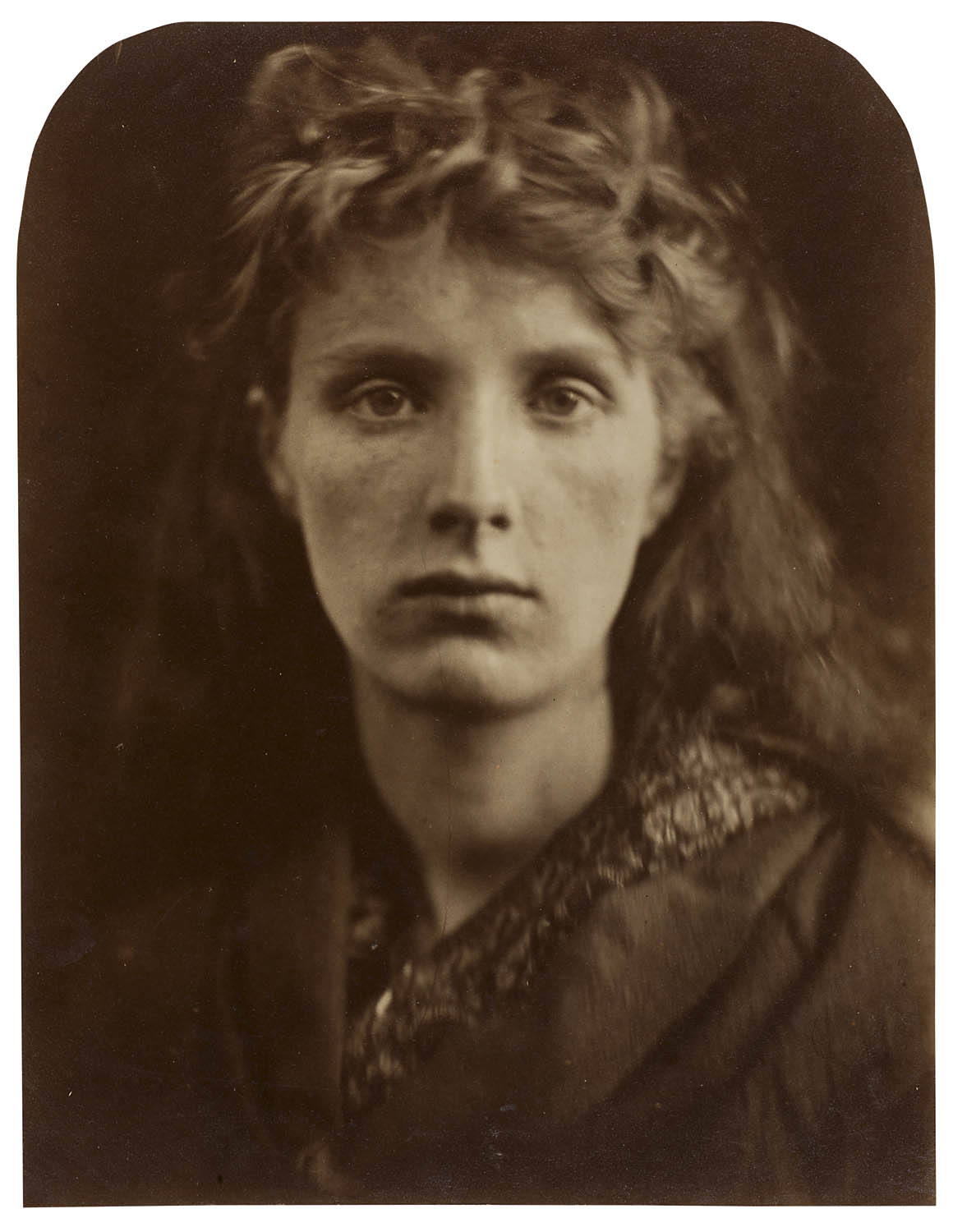
 

Julia Margaret Cameron (British born India, 1815-1879) 'Mountain Nymph, Sweet Liberty' 1865


Julia Margaret Cameron (British born India, 1815-1879)
Mountain Nymph, Sweet Liberty
1865
Albumen print
Wilson Centre of Photography


Annie Keene (1842/3-1901) was an artist’s model at the Royal Academy Schools. Cameron showed Keene’s portrait at the 1866 Hampshire and Isle of Wight Loan Exhibition, and it was for sale at her 1868 exhibition at London’s German Gallery. In this photograph, Cameron’s shallow depth-of-field gives a bold effect. Her friend, the scientist and photographic innovator John Herschel (1792-1871), praised the portrait as ‘a most astonishing piece of high relief – She is absolutely alive and thrusting out her head from the paper into the air’.

Text from the exhibition large print guide
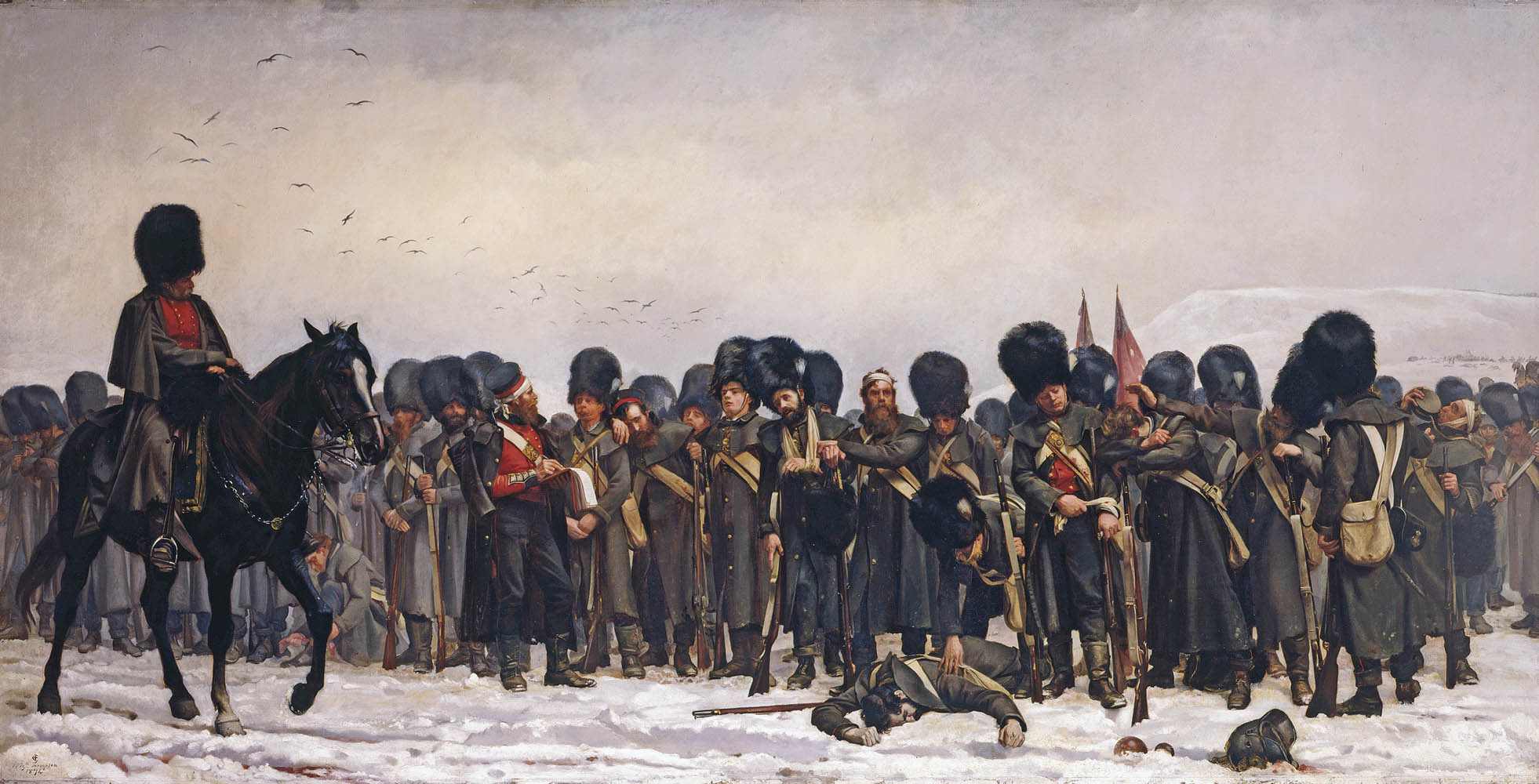
 

Elizabeth Butler (British, 1846-1933) 'The Roll Call' 1874


Elizabeth Butler (British, 1846-1933)
The Roll Call
1874
Oil on canvas
93.3 x 183.5cm (support, canvas/panel/stretcher external)
Royal Collection Trust
© Royal Collection Trust / His Majesty King Charles III 2024


Butler specialised in battle paintings, challenging society’s expectations of women artists. The exhibition of The Roll Call at the Royal Academy in 1874 was one of the greatest art sensations of the nineteenth century. It was praised by Academicians and hung ‘on the line’ (the most prestigious, eye-level position). The painting proved so popular with the public that a policeman had to be stationed nearby to protect the adjacent paintings. Queen Victoria summoned the work to Buckingham Palace for a private viewing, and the copyright sold for the enormous sum of £1,200.

Text from the exhibition large print guide


The Roll Call captured the imagination of the country when exhibited at the Royal Academy in 1874, turning the artist into a national celebrity. So popular was the painting that a policeman had to be stationed before it to hold back the crowds and it went on to tour the country in triumph. The painting’s focus on the endurance and bravery of ordinary soldiers without reference to the commanders of the army accorded with the mood of the times and the increasing awareness of the need for social and military reforms.

Though the public had been exposed to other images of the Crimean War, primarily prints, photographs and newspaper illustrations, never before had the plight of ordinary soldiers been portrayed with such realism. Butler researched her subject by studying A. W. Kinglake’s seminal history of the Crimean War, as well as by consulting veterans of the Crimea, several of whom served as models for the painting. She also painstakingly sought out uniforms and equipment from the Crimean period in order to be correct in the smallest military details. The sombre mood and simple yet dramatic composition Butler achieved in The Roll Call vividly epitomised the grimness not only of the Crimean War but of all wars.

Text from the Royal Collection Trust website


Installation view of the exhibition 'Now You See Us Women Artists in Britain 1520-1920' at Tate Britain showing at left, Louise Jopling's 'Through the Looking-Glass' 1875; and at right, Jopling's 'A Modern Cinderella' 1875


Installation view of the exhibition Now You See Us Women Artists in Britain 1520-1920 at Tate Britain showing at left, Louise Jopling’s Through the Looking-Glass 1875 (below); and at right, Jopling’s A Modern Cinderella 1875 (below)


Louise Jopling (English, 1843-1933) 'Through the Looking-Glass' 1875


Louise Jopling (English, 1843-1933)
Through the Looking-Glass
1875
Oil paint on canvas
Support: 539 × 437 mm
Tate
Purchased with funds provided by the Nicholas Themans Trust and Tate Patrons 2024
Photo: Tate (Sonal Bakrania)


This is a self-portrait Jopling made while pregnant with her son, Lindsay, in 1875.

Jopling was one of the most successful and best-known women artists of the late nineteenth century. She exhibited regularly and, from the 1880s, ran her own art school for women. Jopling hosted receptions and established connections with many artists and art dealers. She carefully planned the exhibition of her work by choosing venues appropriate to each painting’s scale and ambition. Jopling sent this self-portrait to the Society of Lady Artists in 1875. In the same year, A Modern Cinderella, hanging nearby, was shown at the Royal Academy. Both works were purchased by the dealer Agnew: this work for £26, but Cinderella for £262.

Text from the exhibition large print guide


Tabitha Barber, curator of the exhibition, said: “What’s happened to Jopling’s legacy is the story of what’s happened to most women artists … They have been regarded, studied and judged differently.”

Jopling, who in 1901 became one of the first women admitted to the Royal Society of British Artists, was a celebrated artist in her day, Barber said. Her patrons included the de Rothschild family, and the Grosvenor Gallery founders Sir Coutts and Lady Lindsay. “At a time when women weren’t allowed to be members of the Royal Academy, her works were exhibited there almost every year and spoken about in the press. She was reviewed by male art critics, and reviewed well.”

Jopling’s paintings were also commercially successful, selling for some of the highest prices that British female artists could command – albeit far less than their male contemporaries.

“She is among a handful of female artists who were society figures and household names – and it just seems so astonishing that they’re so little known now,” said Barber.

Donna Ferguson. “Tate Britain acquires first painting by pioneering English female artist overlooked for a century,” on The Guardian website 12 May 2024 [Online] Cited 02/09/2024


Louise Jopling (English, 1843-1933) 'A Modern Cinderella' 1875 (installation view)


Louise Jopling (English, 1843-1933)
A Modern Cinderella
1875
Oil on canvas
Support: 910 × 700 mm
Private collection


Louise Jopling (English, 1843-1933) 'A Modern Cinderella' 1875


Louise Jopling (English, 1843-1933)
A Modern Cinderella
1875
Oil on canvas
Support: 910 × 700 mm
Private collection


A Modern Cinderella shows a model removing her fine clothes at the end of a painting session. A glimpse of Jopling’s easel can be seen in the mirror’s reflection. In 1875, Jopling exhibited this work at the Royal Academy. There, the model’s naked shoulder was cause for criticism. Although one reviewer thought it was ‘quite harmless’, a picture dealer’s wife reportedly said that ‘she could never hang such a thing in her house’. Jopling also showed the painting at the 1878 Exposition Universelle in Paris, where she had also trained.

Text from the exhibition large print guide


If this is, indeed, a self-portrait, Jopling has painted herself as somewhere in the liminal space between the social groups she simultaneously belonged to and was excluded from. Despite Jopling’s notoriety and prominence among high-class Pre-Raphaelite artist circles, she experienced a high degree of discrimination. In 1883, she was commissioned to paint a portrait for 150 guineas but lost her employment in favour of Sir John Everett Millais, who requested 1000 guineas for the same project (Clement). In the traditional circles of high society, Jopling was looked down upon for pursuing a career in the fine arts, which was inherently a masculine task. The woman in the image is either taking the dress off or putting it on, but either way, has turned her back to her easel, which could be interpreted as forfeiting a part of her true identity to fit either end of the accepted spectrum of femininity. The underclothing she portrays herself in fit the Pre-Raphaelite aesthetic style of dress, which fit natural waists and emphasised a woman’s beauty through medieval and Greek-inspired silhouettes (Shrimpton, Jayne. Victorian Fashion. Shire Publications, 2016). The inclusion of this white aesthetic dress, as well as the scandalous drop of the strap is a signal of societal rebellion against traditional beauty norms. The woman in the image could also be read as shedding the skin of the two dresses before her to reveal her true, natural, artistic self below.

Emily Goldstein. “‘A modern Cinderella, 1875. Oil on Canvas’ by Louise Jopling,” on the COVE Studio website 23/10/2020 [Online] Cited 02/09/2024


Marianne Stokes (Austrian, 1855-1927) 'The Passing Train' 1890


Marianne Stokes (Austrian, 1855-1927)
The Passing Train
1890
Oil on canvas
Support: 600 × 760 mm
Frame: 885 × 955 mm
Private collection


Marianne Stokes (née Preindlsberger; 1855-1927) was an Austrian painter. She settled in England after her marriage to Adrian Scott Stokes (1854-1935), the landscape painter, whom she had met in Pont-Aven. Stokes was considered one of the leading women artists in Victorian England.


Annie Louisa Swynnerton ARA (British, 1844-1933) 'Mater Triumphalis' 1892


Annie Louisa Swynnerton ARA (British, 1844-1933)
Mater Triumphalis
1892
Paris, musée d’Orsay
Donated by Edmund Davis, 1915


Swynnerton campaigned for women’s suffrage, access to professional training, and equal opportunities. She rebelled against the belief that ‘women could not paint’. Exhibited at the New Gallery in 1892, Mater Triumphalis was regarded as a bold work. It brought Swynnerton international recognition, winning a medal at the 1893 World Exposition in Chicago. Despite this, Swynnerton received mixed reviews from British critics. They were impressed by the artist’s skill and the painting’s ‘quivering life’ but found the ‘frank realism’ of the woman’s naked body disconcerting.

Text from the exhibition large print guide
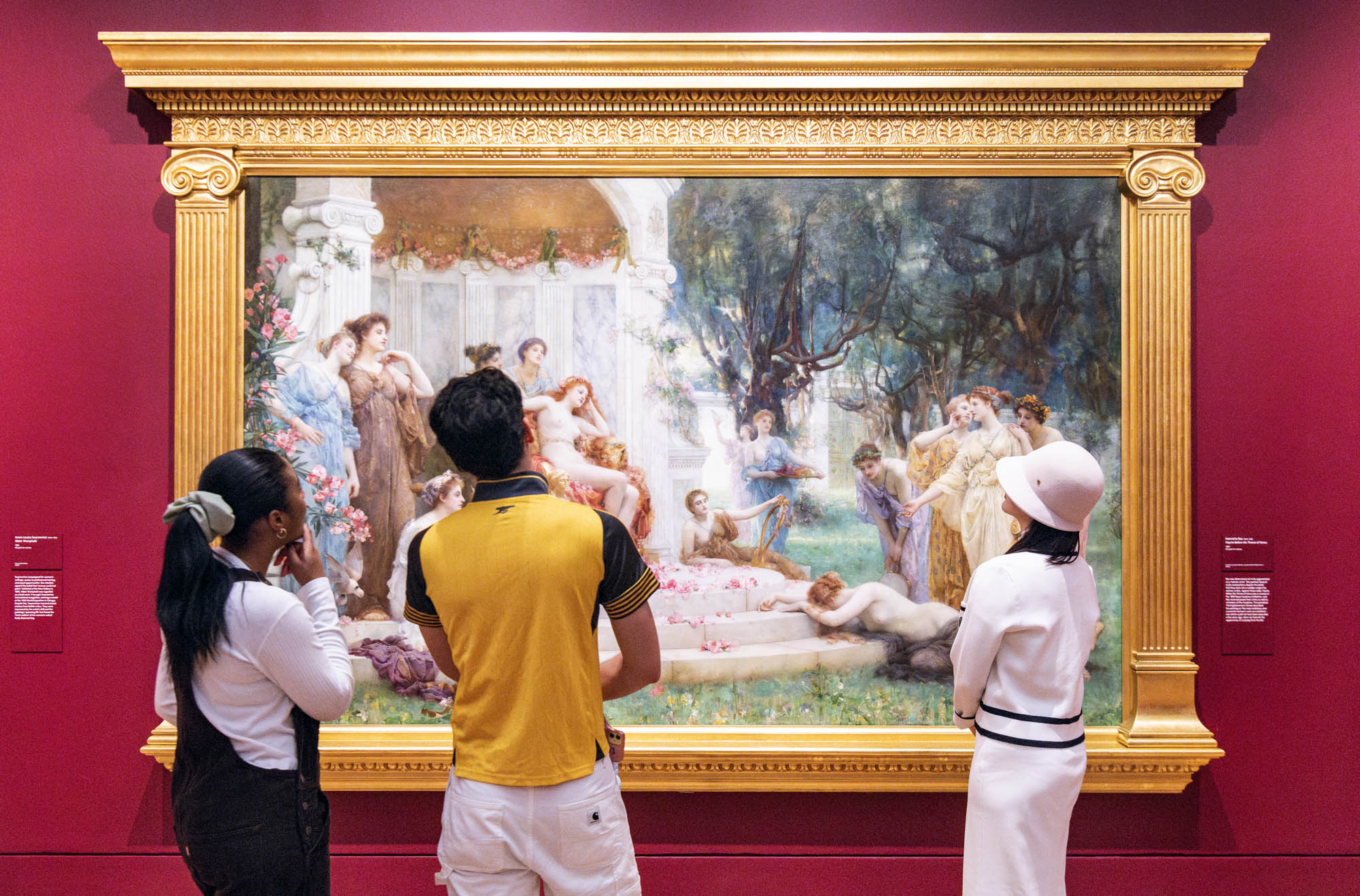
 

Installation view of the exhibition 'Now You See Us Women Artists in Britain 1520-1920' at Tate Britain showing Henrietta Rae's 'Psyche before the throne of Venus' 1894


Installation view of the exhibition Now You See Us Women Artists in Britain 1520-1920 at Tate Britain showing Henrietta Rae’s Psyche before the throne of Venus 1894 (below)
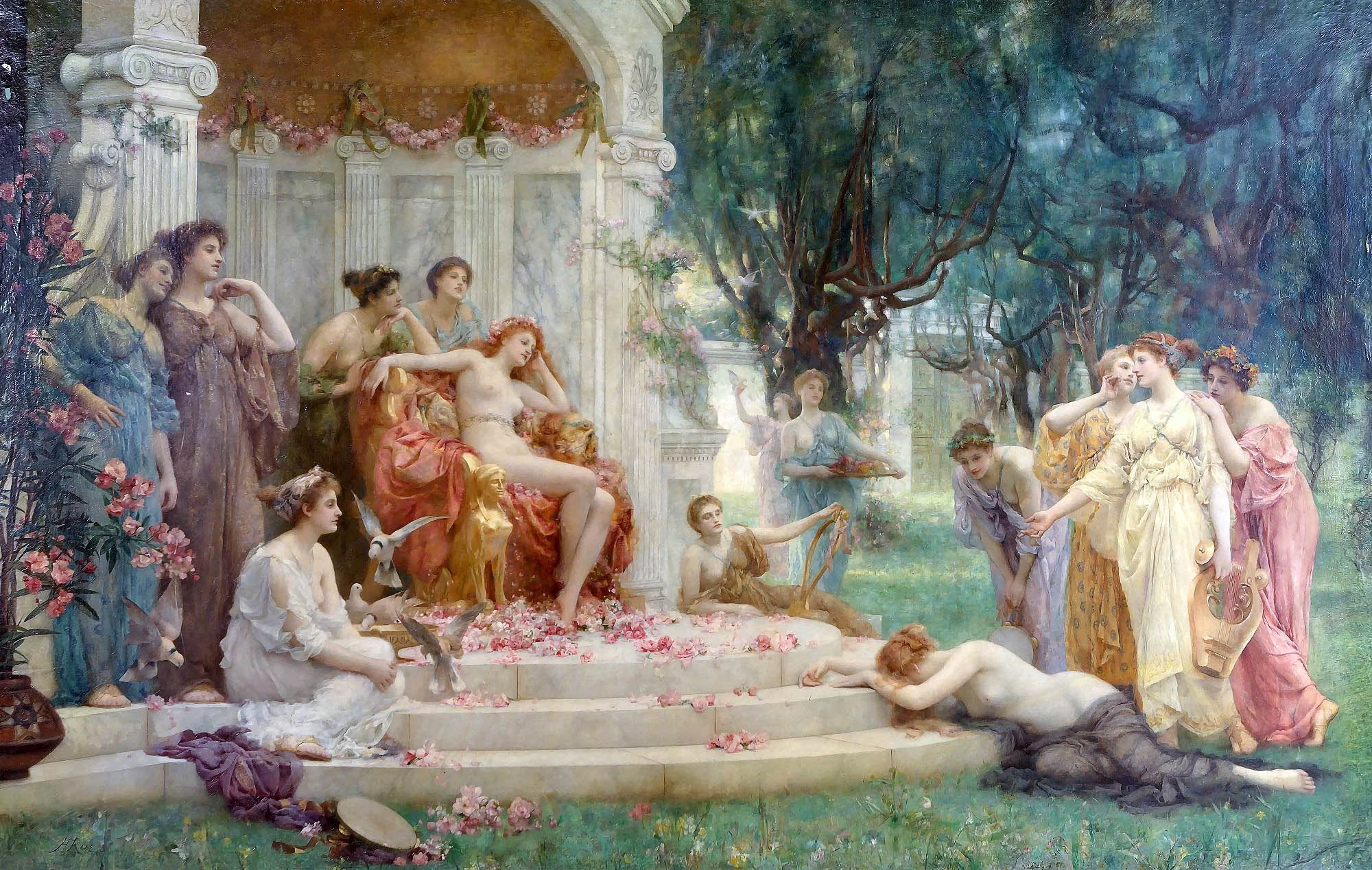
 

Henrietta Rae (British, 1859-1928) 'Psyche before the throne of Venus' 1894


Henrietta Rae (British, 1859-1928)
Psyche before the throne of Venus
1894
Oil paint on canvas
Support: 1941 × 3058 × 31 mm
Frame: 2525 × 3826 × 270 mm
Lent from a private collection, courtesy of Martin Beisly Fine Art


Rae was determined not to be pigeonholed as a ‘woman artist’. She painted classical nude compositions despite the belief that they were not a suitable subject for women artists. Against these odds, Psyche Before the Throne of Venus was a success at the 1894 Royal Academy Exhibition, and Rae received praise from critics as well as members of the Academy. The periodical The Englishwoman’s Review described the painting as ‘the most ambitious and successful woman’s work yet exhibited – one which could not have been executed a few years ago, when we had not the opportunity of studying from the life’.

Text from the exhibition large print guide


Installation view of the exhibition 'Now You See Us Women Artists in Britain 1520-1920' at Tate Britain showing Lucy Kemp-Welch's 'Colt Hunting in the New Forest' 1897


Installation view of the exhibition Now You See Us Women Artists in Britain 1520-1920 at Tate Britain showing Lucy Kemp-Welch’s Colt Hunting in the New Forest 1897


One of the most important pieces of art ever inspired by the New Forest was a painting by Lucy Kemp-Welch (1869-1958), entitled ‘Colt Hunting in the New Forest’. This painting was exhibited at the Royal Academy in 1897, when she was only 26 years old. It was an impressive canvas measuring 1537 x 3060 mm (approximately 5ft x 10ft) and was described as depicting ‘a wide glade in the forest, along which race a number of colts unwilling to relinquish their liberty and to fall into the hands of the four mounted lads who try to catch them’.[1] Lucy Kemp-Welch was born in Bournemouth, in 1869, and spent much of her time wandering in the New Forest, where she ‘personally studied the wild ponies in this pleasant part of England’.[2] Her love of horses and wild ponies remained with her all her life. In order to capture the energy and excitement of the pony drifts for ‘Colt Hunting’ she actually had the full-sized canvas transported to the Forest, where she sketched from life, as the commoners galloped their ponies past her. When the painting was exhibited at the Royal Academy it caused a sensation and was promptly purchased for £525.00.[3] The buyers were trustees of the Chantrey Bequest, who administered a large sum of money left in the will of Sir F. L. Chantrey to obtain works of art by British artists, in order to create a national collection. It was only the third time, since its creation in 1875, that the Chantrey Bequest had purchased artwork by a woman. Lucy Kemp-Welch became a celebrity overnight.[4]

In the same year that Lucy Kemp-Welch exhibited ‘Colt Hunting in the New Forest’, the Tate Galley was built and her painting was transferred to this new, public collection. However, ‘Colt Hunting’ was immediately archived and has never been publicly exhibited. Indeed, there are rumours that the Tate Gallery loaned the painting to the Royal Academy during the Blitz ‘in the hope that the Luftwaffe’s friendly bombs might rid them of this monstrous woman’s work for good’.[5] It is difficult to conceive of the prejudice against women in the late Victorian period and early 20th century, particularly women such as Lucy Kemp-Welch, who stepped out of the roles proscribed to them by a patriarchal society.[6] Her sympathies for the suffragette movement certainly didn’t endear her to the male-establishment figures that controlled the art world. She nevertheless continued to paint and made a successful, and award winning (Paris Salon) career as an artist.

newforestcommoner. “Lucy Kemp-Welch: Colt Hunting in the New Forest,” on the New Forest Commoner website November 27, 2016 [Online] Cited 28/08/2024
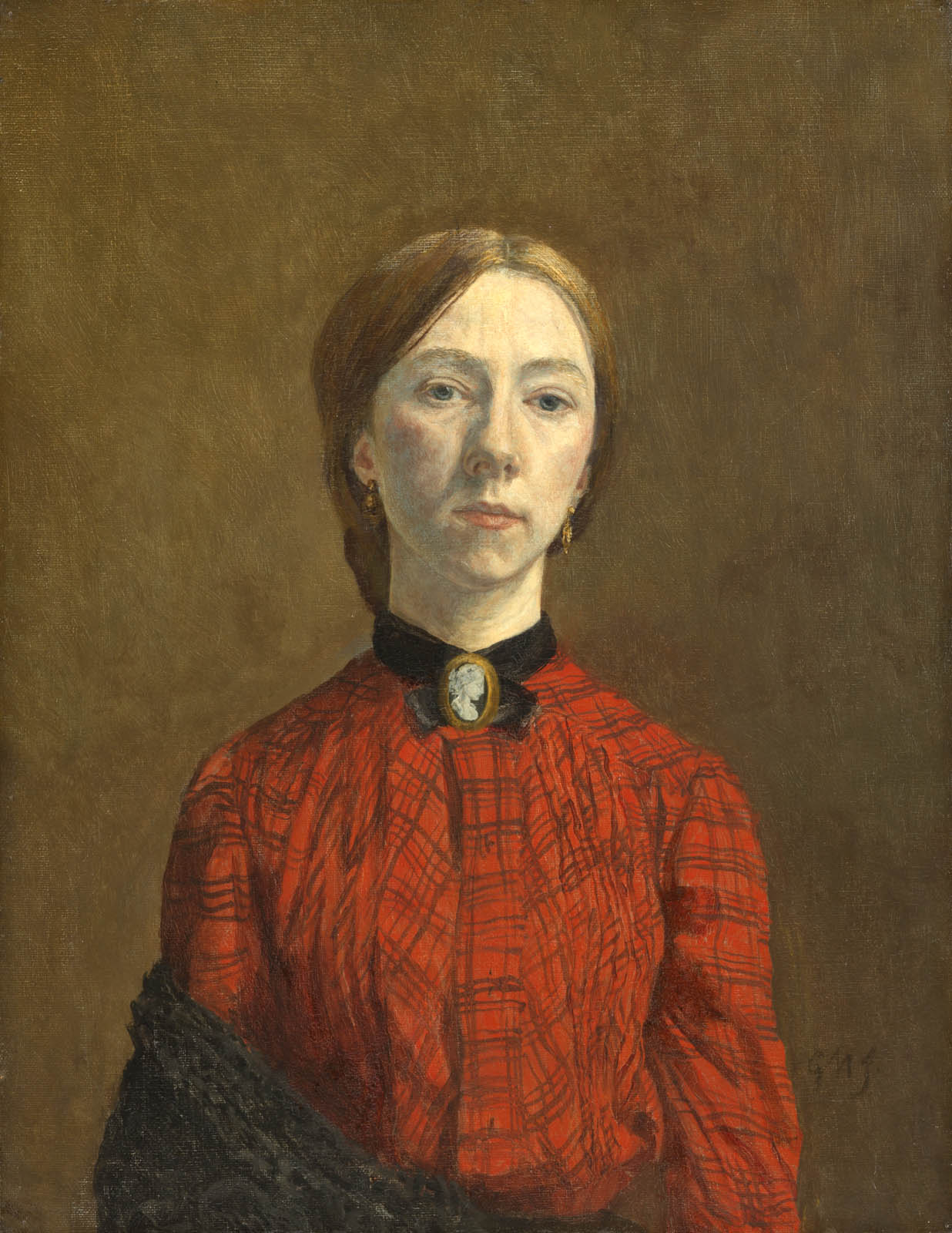
 

Gwen John (Welsh, 1876-1939) 'Self-Portrait' 1902


Gwen John (Welsh, 1876-1939)
Self-Portrait
1902
Oil on canvas
Tate
Purchased 1942
Photo: Tate (Mark Heathcote and Samuel Cole)


John exhibited this self-portrait at the New English Art Club (NEAC) in 1900. It was her debut as an exhibitor. The NEAC had been founded as a forward-thinking artists’ group, created out of dissatisfaction with the art establishment, exemplified by the conservative Royal Academy. Tutors from the Slade, where John had trained, were on the NEAC committee. Despite its progressive stance, in 1900 John was one of only 16 women exhibitors among 75 men. John’s choice to show a self-portrait was perhaps a deliberate assertion of her presence.

Text from the exhibition large print guide


Here is a dilemma straight away: which should take precedence, the painting or the fact? Should the show present art on its own terms, or as instance, evidence, expression of social history? It is an extremely complex remit…

[Laura] Knight is strongly represented with a sequence of cliff-edge paintings; but what about her near-namesake, Winifred Knights? The Deluge is a shattering masterpiece of British modernism, painted in 1920 and thus eligible, yet not here. And why are the ethereal and supremely original blue cyanotypes of Anna Atkins (1799-1871) missing from the niggardly photography section, along with Christina Broom (1862-1939), pioneering photojournalist, whose stirring portraits of suffragettes would have been so apt?

The show is thick with flowers, descending from Delany right down to Helen Allingham’s twee cottage gardens, all ready for their postcard reproductions. And if Allingham, then why not the visionary genius of Beatrix Potter? Weak pre-Raphaelite schlock fills the largest gallery, along with Victorian pieties such as Emily Osborn’s distressed gentlewoman, eyes downcast, awaiting the verdict of a dealer on her latest canvas, while two male artists leer in the background. Nameless and Friendless is terminally mawkish.

Only rarely do women’s art and women’s history spark together in this show. You see it in Ethel Wright’s fabulous 1912 portrait of the suffragette Una Dugdale Duval, in an arsenical green dress beneath a wallpaper of ludicrous fighting cocks, where Wright’s modern bravado exactly meets that of her sitter. And you see it in Gwen John’s immortal 1902 self-portrait, small and distanced, light catching her eyelashes in an atmosphere of hushed stillness, so direct and yet so self-contained: the momentous assertion of reticence.

That epochal image appears on the exhibition posters, perhaps promising too much. For even the best of the artists here are occasionally represented by the least of their works, quite apart from the mystifying omissions. The theme of Now You See Us is undoubtedly riveting. The captions (and the excellent catalogue) are superbly written. But art is trumped by social history too often in this show, words overshadowing images.

Laura Cumming. “Now You See Us: Women Artists in Britain 1520-1920 review – revelations and mystifying omissions,” on The Guardian website 19 May 2024 [Online] Cited 02/09/2024


Gwen John (Welsh, 1876-1939) 'Chloë Boughton-Leigh (1868-1947)' 1904-1908


Gwen John (Welsh, 1876-1939)
Chloë Boughton-Leigh (1868-1947)
1904-1908
Oil on canvas
58.4 x 38.1cm
Tate
Purchased 1925


Gwendolen Mary John (22 June 1876 – 18 September 1939) was a Welsh artist who worked in France for most of her career. Her paintings, mainly portraits of anonymous female sitters, are rendered in a range of closely related tones. Although in her lifetime, John’s work was overshadowed by that of her brother Augustus and her mentor and lover Auguste Rodin, awareness and esteem for John’s artistic contributions has grown considerably since her death.

Gwen John trained at the Slade School of Art in London, where her brother Augustus was also a student. She settled in Paris in 1904, working as a model, becoming Rodin’s mistress and immersing herself in the artistic world of the metropolis. She lived in France for the rest of her life, exhibiting on both sides of the Channel. The portrait shown here is of a Paris friend, Chloë Boughton-Leigh. The subdued colouring, short foreground and self-absorption of the sitter create a deeply intense atmosphere. John showed it in London, at the New English Art Club.

Text from the WikiArt website


Minna Keene (née Bergmann, Canadian born Germany, 1861-1943) 'Decorative Study No. 1, Pomegranates' c. 1906


Minna Keene (née Bergmann, Canadian born Germany, 1861-1943)
Decorative Study No. 1, Pomegranates
c. 1906
Carbon print


The subject of this photograph is believed to be of Violet Keene, Minna Keene’s daughter.
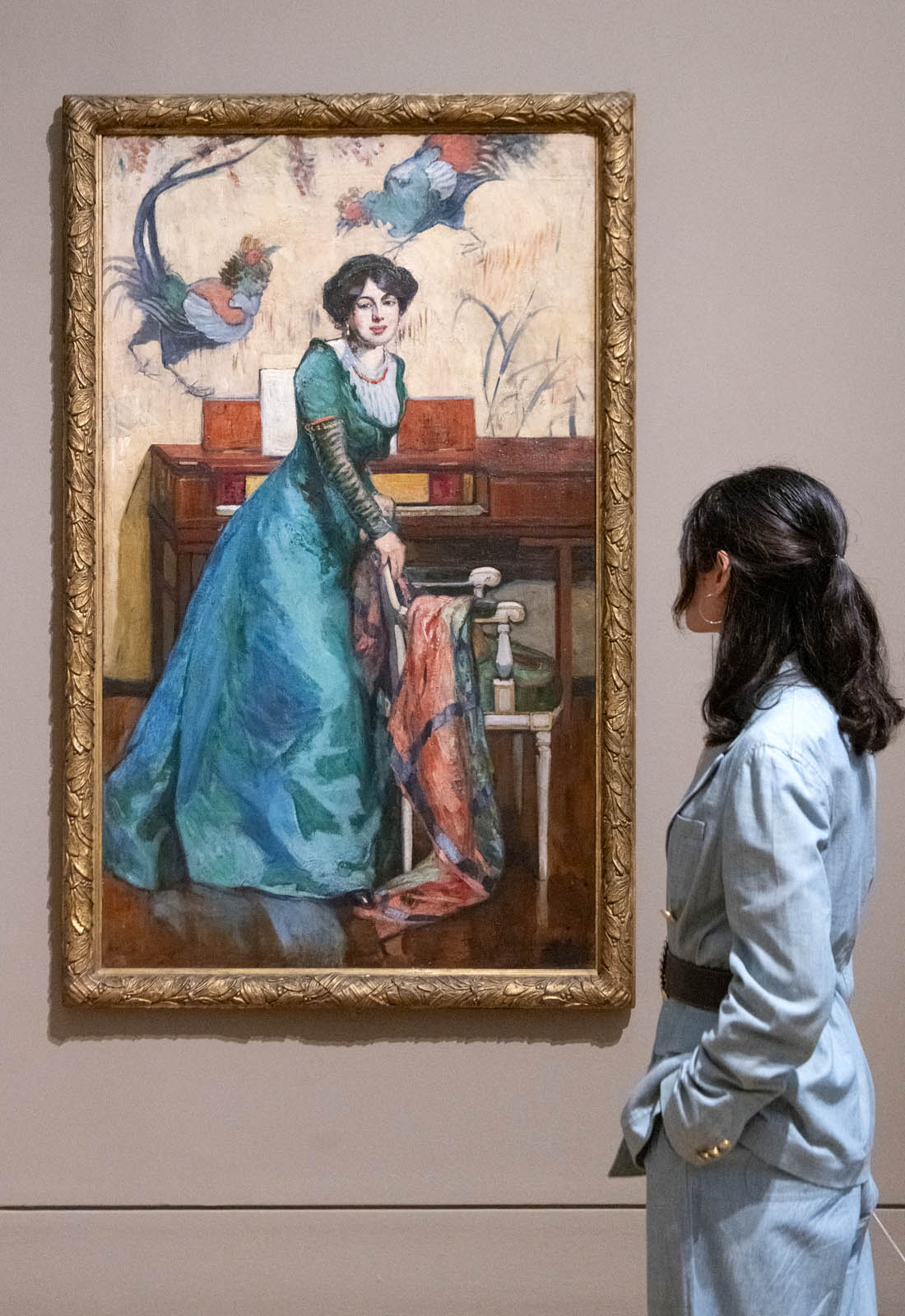
 

Installation view of the exhibition 'Now You See Us Women Artists in Britain 1520-1920' at Tate Britain showing Ethel Wright's 'The Music Room, Portrait of Una Dugdale' 1912


Installation view of the exhibition Now You See Us Women Artists in Britain 1520-1920 at Tate Britain showing Ethel Wright’s The Music Room, Portrait of Una Dugdale 1912 (below)


Ethel Wright (British, 1866-1939) 'The Music Room, Portrait of Una Dugdale' 1912 (installation view)


Ethel Wright (British, 1866-1939)
The Music Room, Portrait of Una Dugdale (installation view)
1912
Oil on canvas
Private collection


This portrait of suffragette and women’s rights activist Una Dugdale Duval (1879-1975) was exhibited at the Stafford Gallery in October 1912. Its flat areas of colour and bold outlines represent a stylistic shift for Wright, who had exhibited at the Royal Academy since the 1880s. Wright shows Duval as cultured and sophisticated, dressed in green, a suffrage colour. Wright made the work the same year Duval made national news for her refusal to promise to obey her husband during their marriage vows. In 1913, Duval published a pamphlet, Love and Honour but Not Obey.

Text from the exhibition large print guide
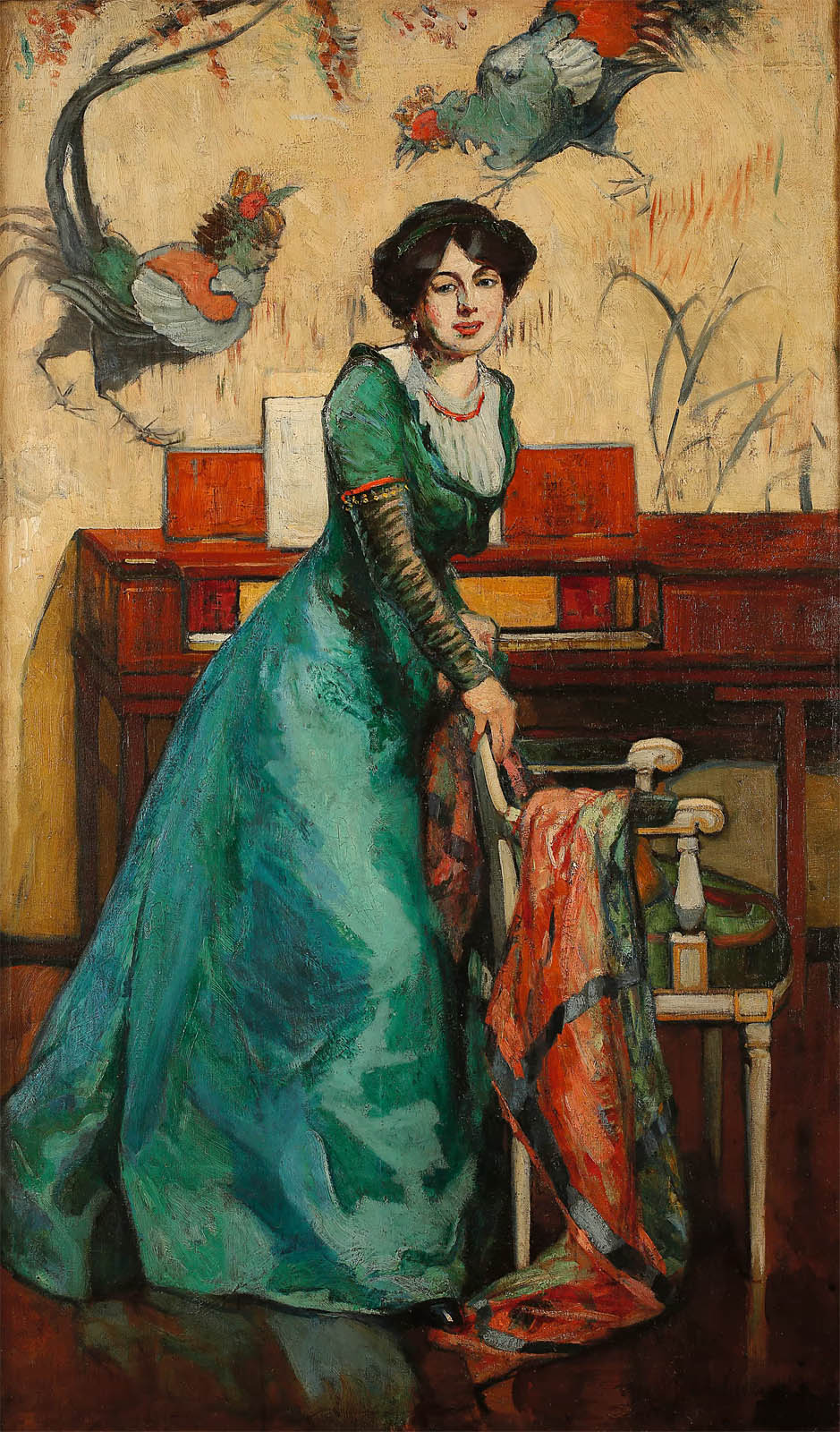
 

Ethel Wright (British, 1866-1939) 'The Music Room, Portrait of Una Dugdale' 1912


Ethel Wright (British, 1866-1939)
The Music Room, Portrait of Una Dugdale
1912
Oil on canvas
Private collection


Vanessa Bell (English, 1879-1961) 'Still Life on Corner of a Mantelpiece' 1914


Vanessa Bell (English, 1879-1961)
Still Life on Corner of a Mantelpiece
1914
Oil on canvas
Support: 559 × 457 mm
Frame: 614 × 512 × 49 mm
Tate
Purchased 1969
© Estate of Vanessa Bell


In 1913, Bell left the Friday Club for the short-lived exhibiting society, the Grafton Group. It included artists who were experimenting with post-impressionism. She was also a founding member of the Omega Workshops. Based in Bloomsbury’s Fitzroy Square, the Workshops aimed to remove the false divisions between fine and decorative arts. The mantelpiece in this painting was in Bell’s house at 46 Gordon Square in London. The objects on it include handmade paper flowers from the Omega Workshops. Bell’s use of an unconventional low viewpoint, fractured, abstracted forms and bright colours show her exploring different techniques associated with twentieth-century art movements.

Text from the exhibition large print guide


Dame Laura Knight DBE RA RWS (English, 1877-1970) 'A Dark Pool' 1917


Dame Laura Knight DBE RA RWS (English, 1877-1970)
A Dark Pool
1917
Oil on canvas
460 × 458 mm
Tyne & Wear Archives & Museums, Laing Art Gallery, Newcastle upon Tyne
© Estate of Dame Laura Knight. All rights reserved 2024 / Bridgeman Images
Image credit: Laing Art Gallery


Anna Airy (English, 1882-1964) 'Shop for Machining 15-inch Shells: Singer Manufacturing Company, Clydebank, Glasgow' 1918


Anna Airy (English, 1882-1964)
Shop for Machining 15-inch Shells: Singer Manufacturing Company, Clydebank, Glasgow
1918
Oil on canvas
Support: Height 1828 mm., Width 2133 mm
© Imperial War Museum


In 1918, Airy received a commission from the Imperial War Museum, thereby becoming Britain’s first official woman war artist. Her 1.7 by 1.8-metre canvases depict munitions production and war-related heavy industry. She later recalled the hot and dangerous conditions in which she worked. A former Slade student, Airy enjoyed a high public profile, won through exhibition and good reviews at the Royal Academy. In 1915, an art critic hailed her as ‘the most accomplished artist of her sex’. Airy was aware, however, of the prejudice women artists still faced. Galleries and buyers, she said, felt ‘safer with a man’.

Text from the exhibition large print guide
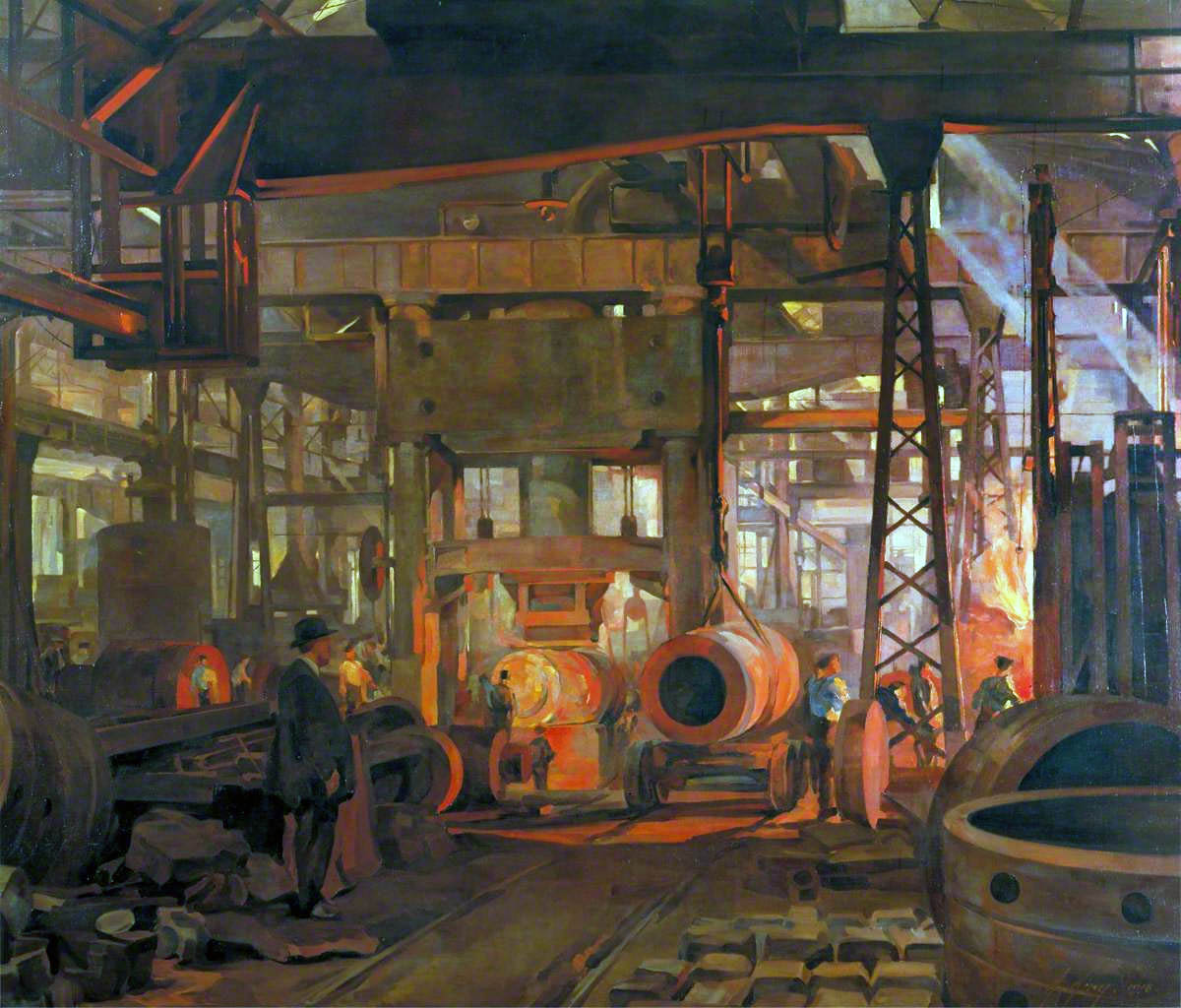
 

Anna Airy (English, 1882-1964) 'Study for 'The L Press: Forging the Jacket of an 18-inch Gun, Armstrong-Whitworth Works, Openshaw'' 1918


Anna Airy (English, 1882-1964)
Study for ‘The L Press: Forging the Jacket of an 18-inch Gun, Armstrong-Whitworth Works, Openshaw’
1918
Oil on canvas
Private collection
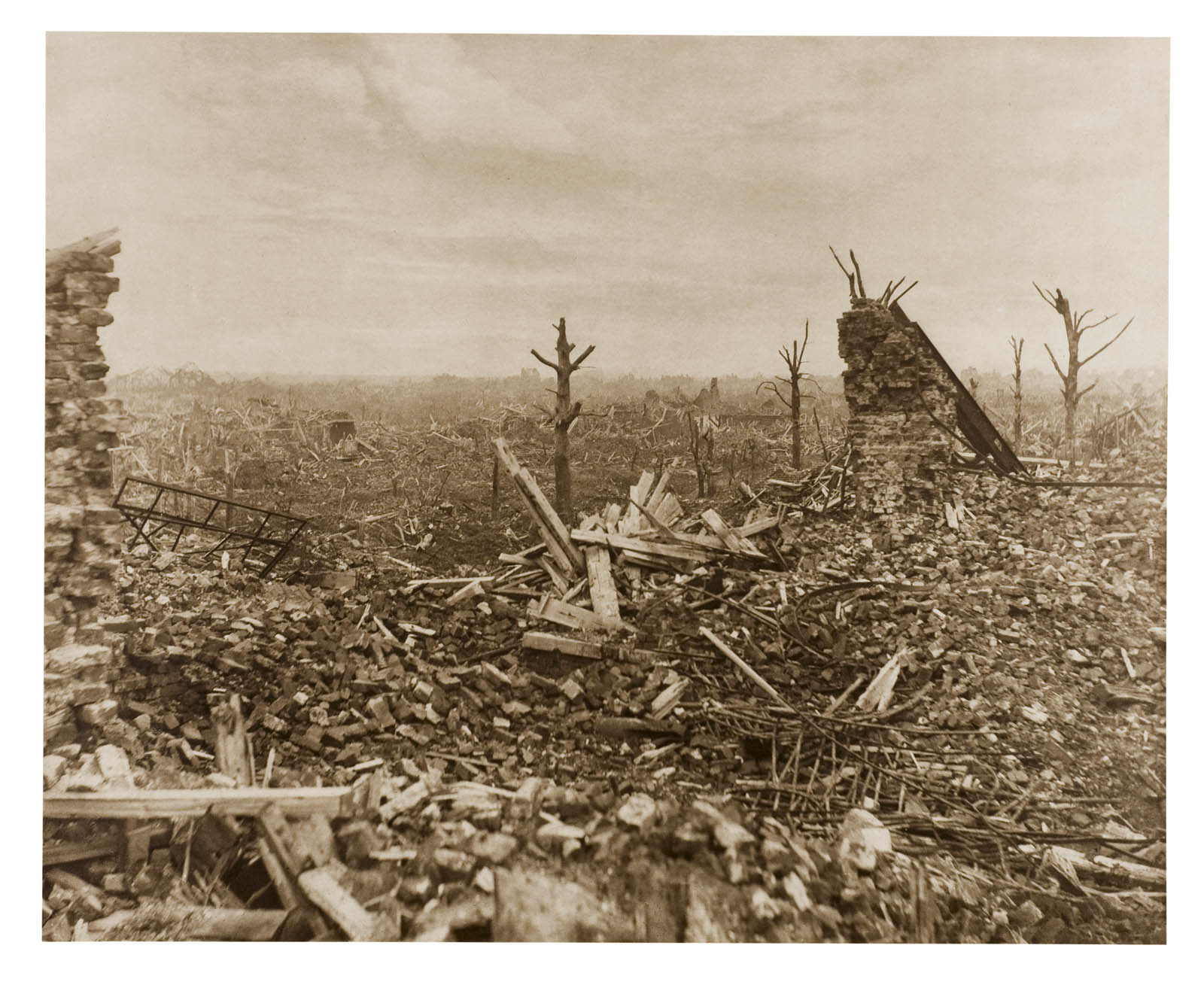
 

Olive Edis (British, 1876-1955) 'War' 1919


Olive Edis (British, 1876-1955)
War
1919
Carbon print on paper
Wilson Centre for Photography


Edis was Britain’s first woman war photographer. She was commissioned by the Imperial War Museum to photograph the activities of servicewomen on duty in France and Flanders. This bleak, blasted landscape captures the impact of the First World War.

Text from the exhibition large print guide


Installation view of the exhibition 'Now You See Us Women Artists in Britain 1520-1920' at Tate Britain


Installation view of the exhibition Now You See Us Women Artists in Britain 1520-1920 at Tate Britain showing Dame Ethel Walker’s Decoration The Excursion of Nausicaa 1920 (below)
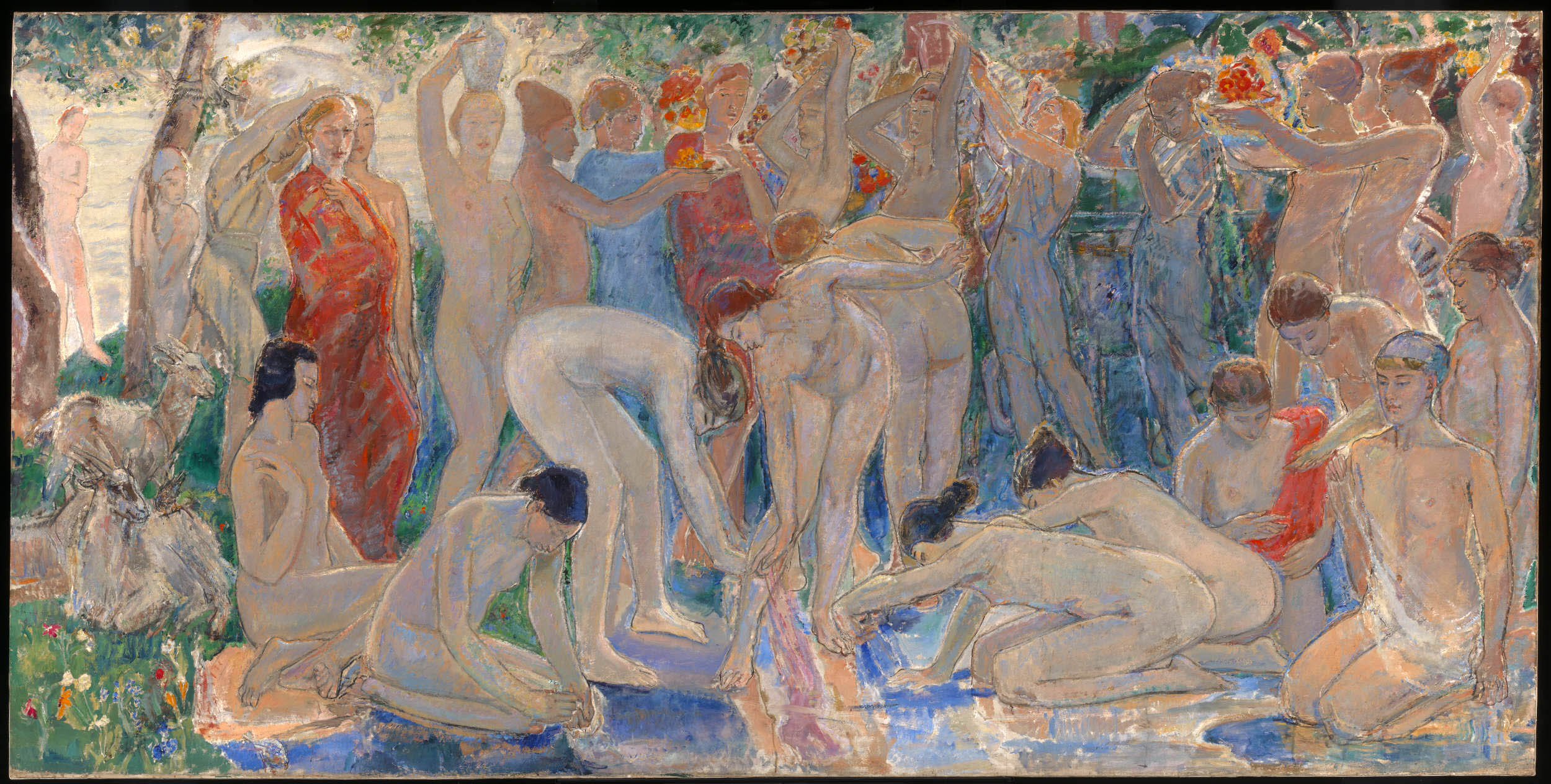
 

Dame Ethel Walker DBE ARA (Scottish, 1861-1951) 'Decoration: The Excursion of Nausicaa' 1920


Dame Ethel Walker DBE ARA (Scottish, 1861-1951)
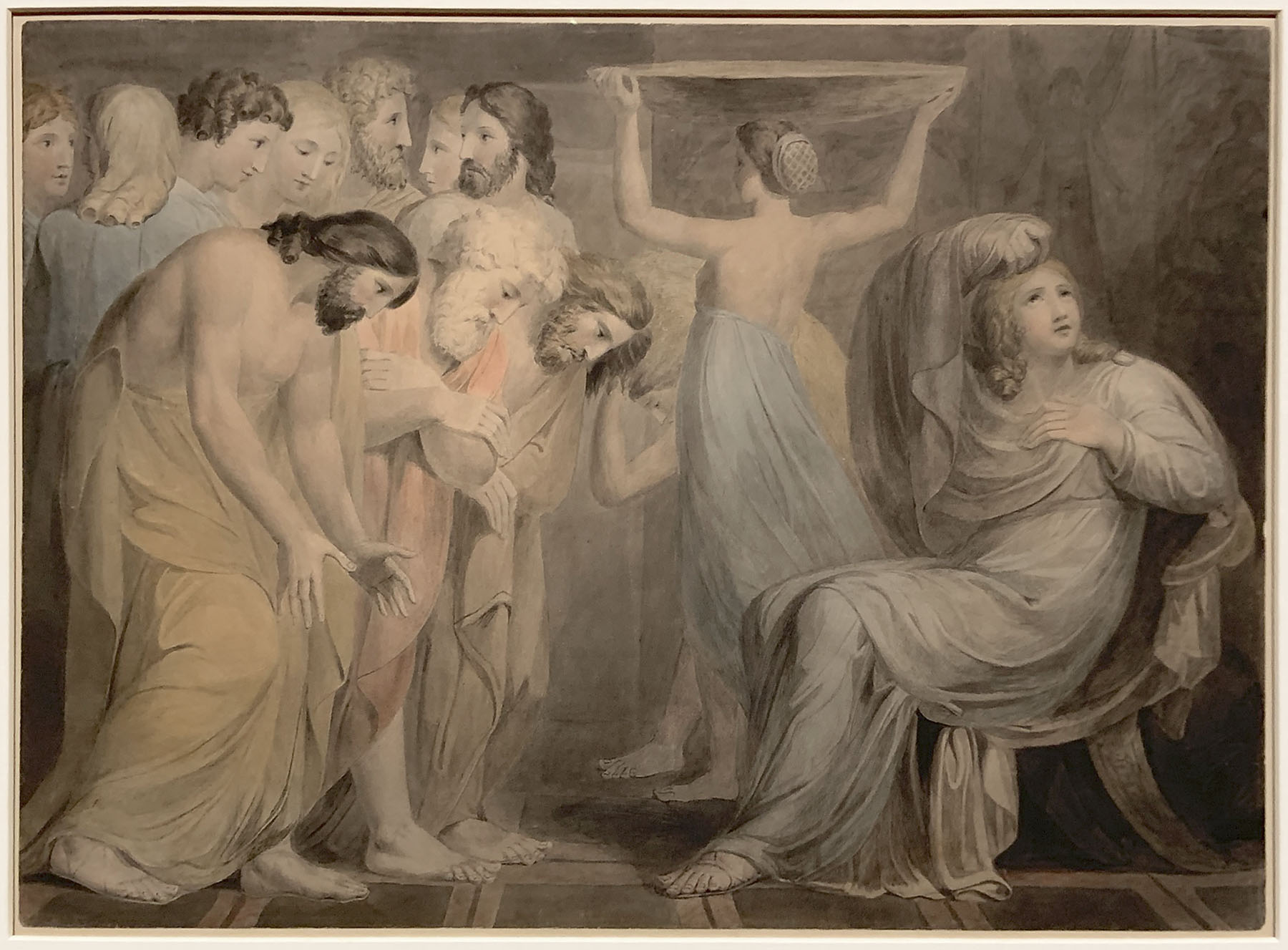
Decoration: The Excursion of Nausicaa
1920
Oil on canvas
1835 × 3670 mm
Tate
Purchased 1924
Photo: Tate


Writing to J. B. Manson (Monday, 2 June, no year given, but almost certainly 1924), the artist described her work thus:’… Nausicaa early one lovely summer’s morning goes to her father and mother – the King and Queen – to ask permission to have a waggon and mules given to her to take her and her attendants and to fill it with the clothes of the palace that require washing, also with dainties and wine and good food for a forthcoming picnic – and go down to the river adjoining the sea to wash them – which he gives her. On arriving at the river they unharness the mules and are unpacking or unloading the waggons of the clothes and the food for the picnic, and are beginning to wash them in the river. A little wood divides the sea from the river where the goat girl – kneeling by the tree near her goats – hears the strange voices that are sounding in her usually silent little wood. To show it is the sea a girl, nude, has stepped up on to the bank after bathing….’ The story is based on Book VI of the Odyssey: ‘… they spread/The raiment orderly along the beach/Where dashing tides …/… leaving the garments, stretch’d/ In noon-day fervour of the sun, to dry.’

Text from the Tate website


In her lifetime Scottish artist Ethel Walker was celebrated for her trailblazing paintings of the female form. A teacher before she painted fulltime, she developed her own unique style – large, mural-like paintings, which she called her ‘decorations.’ Walker often painted male and female nudes confidently placing female sensuality at the centre of her work, as seen in Decoration: The Excursion of Nausicaa (1920). Its dream-like vision of a feminist utopia was ahead of its time.

Working steadily for decades, she achieved many professional milestones, exhibiting around the world and representing Britain at the Venice Biennale four times. In 1943, Walker was made a Dame of the British Empire, and after her death The Times called her ‘the most important woman artist of her time.’ Despite this, it is only now that her artistic legacy is finally being recognised.

Text from the Tate website


‘There is no such thing as a woman artist. There are only two kinds of artist – bad and good.’

– Ethel Walker


Tate Britain
Millbank, London SW1P 4RG
United Kingdom
Phone: +44 20 7887 8888

Opening hours:
10.00am – 18.00pm daily

Tate Britain website

LIKE ART BLART ON FACEBOOK

Back to top

Exhibition: ‘Aubrey Beardsley’ at Tate Britain, London

Exhibition dates: 4th March – 25th May, 2020

Curators: Caroline Corbeau-Parsons, Curator of British Art 1850-1915, and Stephen Calloway with Alice Insley, Assistant Curator, Historic British Art

#MuseumFromHome


Frederick Evans (British, 1853-1943) 'Aubrey Beardsley [with hands]' 1893 from the exhibition 'Aubrey Beardsley' at Tate Britain, London, March - May, 2020


Frederick Evans (British, 1853-1943)
Aubrey Beardsley [with hands]
1893
Platinum print and photogravure, mounted on opposing pages of a paper folio
Wilson Centre for Photography


While working as a clerk, Beardsley spent his lunchtimes browsing in Frederick Evans’ nearby second-hand bookshop. This had an important impact on his developing artistic and literary tastes. Beardsley became close friends with Evans, who was also a talented amateur photographer. The image on the left has become known as the ‘gargoyle portrait’ because Beardsley’s pose echoes the famous carved figure on Notre-Dame Cathedral in Paris. This portrait was used in early editions of Beardsley’s work and has become the defining image of the artist.


There he is

There he is, all aquiline nose, patrician air; thin wrists and hands that infinity strengthens,

Mannerist hands, hands like the buttresses of some great cathedral, supporting that noble face.

There he is, this genius of invention, this suave sophisticate, this pervader of decadent beauty,

this grotesque who produced a thousand drawings in seven years, who lived a thousand lives in just seven years.

There he is, this son of Blake, this offspring of Lautrec and japonaiserie,

all primed in subtle sexualities, shocking, fame, subversion… strange.

There he is, love of yellow, flowering enormous genitalia, erotic illustrations of distorting scale, women ambiguity,

as bold as life, diseased as death, driving his body on while his mind accretes mythologies.

Now he stands, a fantastical visionary, existing as product of unchecked imagination.

An illusion, a fabrication of the mind; an unrealisable dream, a fancy,

his utopia a grotesque, chimerical beauty.


Dr Marcus Bunyan


Many thankx to Tate Britain for allowing me to publish the media images in the posting. Please click on the photographs for a larger version of the image.


Tate Britain’s major new exhibition celebrates the brief but astonishing career of Aubrey Beardsley. Although he died tragically young at the age of just 25, Beardsley’s strange, sinuous black-and-white images have continued to shock and delight for over a century. Bringing together 200 spectacular works, this is the largest display of his original drawings in over 50 years and the first exhibition of his work at Tate since 1923.

Beardsley (1872-1898) became one of the enfants terribles of fin-de-siècle London, best remembered for illustrating Oscar Wilde’s controversial play Salomé. His opulent imagery anticipated the elegance of Art Nouveau but also alighted on the subversive and erotic aspects of life and legend, shocking audiences with a bizarre sense of humour and fascination with the grotesque. Beardsley was prolific, producing hundreds of illustrations for books, periodicals and posters in a career spanning just under seven years. Line block printing enabled his distinct black-and-white works to be easily reproduced and widely circulated, winning notoriety and admirers around the world, but the original pen and ink drawings are rarely seen. Tate Britain exhibits a huge array of these drawings, revealing his unrivalled skill as a draughtsman in exquisite detail.

The exhibition highlights each of the key commissions that defined Beardsley’s career as an illustrator, notably Malory’s Le Morte d’Arthur 1893-1894, Wilde’s Salomé 1893 and Alexander Pope’s The Rape of the Lock 1896, of which five of the original drawings are shown together for the first time. As art director of the daring literary quarterly The Yellow Book, the artist also created seminal graphic works that came to define the decadence of the era and scandalised public opinion. Bound editions and plates are displayed alongside subsequent works from The Savoy and illustrations for Volpone 1898 and Lysistrata 1896, in which Beardsley further explored his fascination with eroticism and the absurd.

Beardsley’s imagination was fuelled by diverse cultural influences, from ancient Greek vases and Japanese woodblock prints, to illicit French literature and the Rococo. He also responded to his contemporaries such as Gustave Moreau, Edward Burne-Jones and Toulouse Lautrec, whose works are shown at Tate Britain to provide context for Beardsley’s individual mode of expression. A room in the exhibition is dedicated to portraits of Beardsley and the artist’s wider circle, presenting him at the heart of the arts scene in London in the 1890’s despite the frequent confinement of his rapidly declining health. As notorious for his complex persona as he was for his work, the artist had a preoccupation with his own image, relayed throughout the exhibition by striking self-portraits and depictions by the likes of Walter Sickert and Jacques-Emile Blanche.

Additional highlights include a selection of Beardsley’s bold poster designs and his only oil painting. Charles Bryant and Alla Nazimova’s remarkable 1923 film Salomé is also screened in a gallery adjacent to Beardsley’s illustrations, showcasing the costume and set designs they inspired. The exhibition closes with an overview of Beardsley’s legacy from Art Nouveau to the present day, including Picasso’s Portrait of Marie Derval 1901 and Klaus Voormann’s iconic artwork for the cover of Revolver 1966 by the Beatles.

Aubrey Beardsley is organised by Tate Britain in collaboration with the Musée d’Orsay, Paris, with the generous support of the V&A, private lenders and other public institutions. It is curated by Caroline Corbeau-Parsons, Curator of British Art 1850-1915, and Stephen Calloway with Alice Insley, Assistant Curator, Historic British Art.

Press release from the Tate Britain website


Aubrey Beardsley at Tate Britain – Exhibition Tour | Tate

Join Tate curators Caroline Corbeau-Parsons and Alice Insley as they discuss the iconic illustrator’s short and scandalous career.

Before his untimely death aged twenty-five, Beardsley produced over a thousand illustrations. He drew everything from legendary tales featuring dragons and knights, to explicit scenes of sex and debauchery. His fearless attitude to art continues to inspire creatives more than a century after his death.


Aubrey Beardsley (British, 1872-98) 'Withered Spring' 1891 from the exhibition 'Aubrey Beardsley' at Tate Britain, London, March - May, 2020


Aubrey Beardsley (British, 1872-1898)
Withered Spring
1891
Graphite, ink and gouache on paper
National Gallery of Art, Washington, Rosenwald Collection


The framing of the main image by ornamental panels and lettering shows the influence of aesthetic movement illustrators, as well as that of Burne-Jones. The inscription on the gate behind the figure is partly obscured. In full it would read ‘Ars Longa Vita Brevis’ (‘art is long-lasting, life is short’). As Beardsley was diagnosed with tuberculosis aged seven, this Latin saying must have had personal resonance.


Introduction

Few artists have stamped their personality so indelibly on their era as Aubrey Beardsley. He died in 1898 at the age of just 25 but had already become one of the most discussed and celebrated artists in Europe. His extraordinary black-and-white drawings were instantly recognisable. Then, as now, he seemed the quintessential figure of 1890s decadence.

At the end of the 19th century, a period that had seen vast social and technological changes, many began to fear that civilisation had reached its peak and was doomed to crumble. ‘Decadent’ artists and writers retreated into the imagination. Severing the link between art and nature, they created a new sensibility based upon self-indulgence, refinement and often a love of the bizarre. No other artist captured the danger and the beauty, the cynicism and brilliance of the age as Beardsley did with pen and ink.

Beardsley was diagnosed with tuberculosis at the age of seven. The disease was then incurable, so he knew from childhood that his life would be a brief one. This led him to work at a hectic pace. One contemporary described his determination ‘to fill his few working years with the immediate echo of a great notoriety’. Moving rapidly from style to style, he created well over a thousand illustrations and designs in just five years. Beardsley was catapulted to fame in 1893 by an article about his work in The Studio magazine. He went on to illustrate Oscar Wilde’s play Salome and become art editor of The Yellow Book, a periodical that came to define the era.

Beardsley’s illustrations displayed remarkable skill and versatility, but few people ever saw his actual drawings. He always drew for publication and his work was seen primarily in books and magazines. He was one of the first artists whose fame came through the easy dissemination of images, his reputation growing day by day as his sensational designs appeared.

This exhibition offers a rare chance to see many of Beardsley’s original drawings. It also sets Beardsley in his social and artistic context. Works by other artists punctuate the exhibition, showing how he absorbed diverse artistic influences but always retained his own style.


Aubrey Beardsley (British, 1872-98) 'Incipit Vita Nova' 1892


Aubrey Beardsley (British, 1872-1898)
Incipit Vita Nova
1892
Graphite, ink and gouache on paper
Linda Gertner Zatlin


The title of this drawing refers to Dante Alighieri’s 1294 text La Vita Nuova and translates as ‘New Life Begins’. Some have seen the foetus as a potent symbol for Beardsley. Its significance is unclear beyond linking sexuality, life and death, all key themes in Beardsley’s work. It also reflects his fascination with shocking imagery and the grotesque, the term used traditionally to describe deliberate distortions and exaggerations of forms to create an effect of fantasy or strangeness. He once said, ‘if I am not grotesque I am nothing’.


Beginnings

Beardsley’s artistic career spanned just under seven years, between 1891 and 1898. When he was 18 he met the Pre-Raphaelite painter Edward Burne-Jones, an artist he deeply admired. Having seen Beardsley’s portfolio, Burne-Jones responded: ‘I seldom or never advise anyone to take up art as a profession, but in your case I can do nothing else.’ On his recommendation, for a short time Beardsley attended classes at Westminster School of Art.

Beardsley longed for fame and recognition. This went hand in hand with an intensely cultivated self-image and pose as a dandy-aesthete. This important aspect of his identity is illuminated through self-portraits and portraits by his contemporaries throughout the exhibition.

Witty, tall, ‘spotlessly clean & well-groomed’, Beardsley was soon noted for his dandyism. A delight in refinement and artificiality in both dress and manner, dandyism was integral to the decadent creed. Some contemporaries related the artist’s extreme thinness and fragile physical appearance to ideas of morbidity also associated with decadence.

While Beardsley rejected the label of decadence, his work explores many aspects of it, such as a fascination with the ‘anti-natural’ and the bizarre, with sexual freedom and gender fluidity. What present-day society refers to as LGBTQIA+ identities were only just beginning to be formulated and articulated during his lifetime. Beardsley was attracted to women, but he was a pioneer in representing what we might now call queer desires and identities. Though fascinated by all aspects of sexuality, it seems likely that his explorations of these interests were primarily through literature and art.


Aubrey Beardsley (British, 1872-98) 'Self-portrait' 1892


Aubrey Beardsley (British, 1872-1898)
Self-portrait
1892
Ink on paper
British Museum
Presented by Robert Ross in 1906


Apart from a few childish sketches, this is Beardsley’s first recorded self-portrait, made at the age of about 19. His newly adopted centre-parted fringe, fashionable high collar and large bow tie show that he had already formed a distinctive self-image. A few months earlier, he had described himself as having ‘a vile constitution, a sallow face and sunken eyes’.


Russell & Sons. 'Portrait of Aubrey Beardsley' c. 1893?


Russell & Sons (Photographers)
Portrait of Aubrey Beardsley
c. 1893?
Cartes de visite / cabinet card
Albumen print

Please note: This photograph is not in the exhibition


Edward Coley Burne-Jones (British, 1833-1898) 'The Finding of Medusa; The Death of Medusa (The Birth of Pegasus and Chrysaor); Perseus Pursued by the Gorgons' 1875-1876


Edward Coley Burne-Jones (British, 1833-1898)
The Finding of Medusa; The Death of Medusa (The Birth of Pegasus and Chrysaor); Perseus Pursued by the Gorgons
1875-1876
Gouache, paint and ink on paper
Tate. Presented by the Trustees of the Chantrey Bequest 1919
Image released under Creative Commons CC-BY-NC-ND (3.0 Unported)


This design forms part of Burne-Jones’s ambitious scheme for a series of large wall decorations on the theme of Perseus. Although the work was never completed as he intended, Burne-Jones still proudly displayed ten full-scale preparatory drawings for the panels in his garden studio. They must have made a strong impression on Beardsley when he visited Burne-Jones in August 1891.


Edward Coley Burne-Jones (British, 1833-1898) 'The Finding of Medusa' 1875-1876


Edward Coley Burne-Jones (British, 1833-1898)
The Finding of Medusa
1875-1876
Gouache, paint and ink on paper
Tate. Presented by the Trustees of the Chantrey Bequest 1919
Image released under Creative Commons CC-BY-NC-ND (3.0 Unported)


Edward Coley Burne-Jones (British, 1833-1898) 'The Death of Medusa (The Birth of Pegasus and Chrysaor)' 1875-1876


Edward Coley Burne-Jones (British, 1833-1898)
The Death of Medusa (The Birth of Pegasus and Chrysaor)
1875-1876
Gouache, paint and ink on paper
Tate. Presented by the Trustees of the Chantrey Bequest 1919
Image released under Creative Commons CC-BY-NC-ND (3.0 Unported)


Edward Coley Burne-Jones (British, 1833-1898) 'Perseus Pursued by the Gorgons' 1875-1876


Edward Coley Burne-Jones (British, 1833-1898)
Perseus Pursued by the Gorgons
1875-1876
Gouache, paint and ink on paper
Tate. Presented by the Trustees of the Chantrey Bequest 1919
Image released under Creative Commons CC-BY-NC-ND (3.0 Unported)


Perseus eventually discovers Medusa with her sisters, the Gorgons. Unlike her they are all immortal. Using Athena’s mirror to defend himself, Perseus beheads Medusa, at which point the winged horse Pegasus and the warrior Chrysaor spring from her decapitated body. When the Gorgons attempt to punish Perseus for killing their sister, he evades them by using the helmet given to him by the sea nymphs, thus becoming invisible.

Gallery label, June 1993


Aubrey Beardsley (British, 1872-98) 'The Litany of Mary Magdalen' 1891


Aubrey Beardsley (British, 1872-1898)
The Litany of Mary Magdalen
1891
Graphite on cream wove paper laid down on board
227 × 169 mm
The Art Institute of Chicago, The Charles Deering Collection
Public domain


The Italian painter Andrea Mantegna (c. 1431-1506) was a key reference for both Burne-Jones and Beardsley. At Burne-Jones’s suggestion, Beardsley particularly studied the early engravings after Mantegna’s designs. Throughout his life Beardsley kept a set of reproductions of these prints pinned to his wall. In this subject of his own invention, he freely borrows details of costume, pose and gesture from figures in various of Mantegna’s works, particularly The Entombment (c. 1465-1470).


Andrea Mantegna (Italian, c.  1431-1506) 'The Entombment of Christ' c. 1465-1475


Andrea Mantegna (Italian, c.  1431-1506)
The Entombment of Christ
c. 1465-1475
Engraving and drypoint; second state of two
11 7/16 × 16 3/8 in. (29 × 41.6cm)
The Metropolitan Museum of Art, Harris Brisbane Dick Fund, 1937
Public domain

Please note: This engraving is not in the exhibition


Aubrey Beardsley (British, 1872-98) 'Tannhäuser' 1891


Aubrey Beardsley (British, 1872-1898)
Tannhäuser
1891
Ink, wash and gouache on paper
National Gallery of Art, Washington, Rosenwald Collection
Public domain


Beardsley was an avid opera-goer. He attended several performances of Wagner’s works at this time, including Tannhäuser at Covent Garden in April or May 1891. He would return to Wagnerian subjects many times in his art and writings. The story of Tannhäuser was a particular favourite. He later made it the subject of his own erotic novella The Story of Venus and Tannhäuser. Here he shows the knight in pilgrim’s robes, among trees that appear like prison bars, trying to find his way back to the goddess’s enchanted realm, the Venusberg.


Aubrey Beardsley (British, 1872-98) 'Die Götterdämmerung' 1892


Aubrey Beardsley (British, 1872-1898)
Die Götterdämmerung
1892
Ink, wash and gouache on paper
Aubrey Beardsley Collection, Manuscripts Division, Department of Special Collections, Princeton University


Beardsley took this subject from Wagner’s opera, the title of which translates as ‘The Twilight of the Gods’. It has been suggested that the frieze-like composition depicts three different moments of the story. According to this interpretation, the scene to the right refers to the prologue, showing the Fates, with the bearded Wotan holding his magic spear. He also appears seated at the centre of the composition with Siegfried standing by him to tell his story to a group of hunters. Finally, Wotan may be represented again seated, in profile, wearing his Wanderer’s hat.


Götterdämmerung (Twilight of the Gods), is the last in Richard Wagner’s cycle of four music dramas titled Der Ring des Nibelungen (The Ring of the Nibelung, or The Ring for short). It received its premiere at the Bayreuth Festspielhaus on 17 August 1876, as part of the first complete performance of the Ring.

Die Götterdämmerung,” notes Emma Sutton in Aubrey Beardsley and British Wagnerism in the 1890s (2002), “Beardsley’s only drawing of the concluding part of the Ring cycle, was probably prompted by the first performance for a decade of the Ring in London in June and July 1892. It is extremely likely that he attended a performance of the drama; he certainly attended Siegfried, and produced drawings on Siegfried and Götterdämmerung, and of the principle singers, in this year.

No interpretation of the drawing has, to my knowledge, ever been offered, perhaps because its stylistics might suggest that it is an incomplete or experimental, Impressionistic work. The drawing is, however, an intricate and highly knowledgeable representation of Wagner’s work, demonstrating Beardsley’s comprehensive knowledge of Die Götterdämmerung (and, indeed, of the whole cycle) from the very start of the decade. Beardsley presents the gods shrouded in long drapes in a bleak forest setting; with their elongated limbs and enveloping robes they appear androgynous figures, listless and melancholy, entrapped by the sharp bare stems that rise from the border and ground around them.

Despite the undulating lines of the landscape, Die Gotterdammerung is a scene of desolate stasis, bleakly portraying Wagner’s Twilight of the Gods. A compression of several scenes from Wagner’s drama, the drawing is, I would suggest, an extraordinarily innovative and ambitious attempt to evoke concisely the narrative events and cumulative tone of the entire drama.”

~ Emma Sutton, Aubrey Beardsley and British Wagnerism in the 1890s (2002)


Anonymous. “Aubrey Beardsley’s “Die Götterdämmerung”,” on the Graphic Arts Collection, Princeton website [Online] Cited 02/03/2020


Le Morte Darthur

In early 1892, Beardsley received his first major commission. His friend, the photographer and bookseller Frederick H. Evans, introduced him to J.M. Dent. The energetic and enterprising publisher was looking for an illustrator for Le Morte Darthur, Sir Thomas Malory’s 15th-century version of the legends of King Arthur. Dent planned a substantial edition in the style of William Morris’s Kelmscott Press books. Between autumn 1892 and June 1894 Beardsley produced 353 drawings, including full and double-page illustrations, elaborate border designs and numerous small-scale ornamental chapter headings. He received £250 over the course of this commission. This freed him to leave his hated job as a clerk and focus on art-making.

Beardsley gradually grew weary of this colossal undertaking and went off-brief. Subversive details started to appear in his drawings. He also introduced incongruous characters such as mermaids and satyrs, goat-legged hybrid creatures from classical mythology.

His illustrations were reproduced using the relatively new and economical line block printing process in which drawings are transferred onto printing plates photographically. Beardsley was at first disappointed with the printing of his drawings, but he quickly adapted his style to suit the line block process. Uniquely, this could reproduce both the finest of lines and large, flat areas of black.

The works in this room demonstrate the development of Beardsley’s art over two years, and how he combined many different sources to create his own visual language.


Aubrey Beardsley (British, 1872-98) 'The Achieving of the Sangreal' 1892


Aubrey Beardsley (British, 1872-1898)
The Achieving of the Sangreal
1892
Ink and wash on paper
Private collection


This is the sample drawing that secured Beardsley the Morte Darthur commission. Dent declared it ‘a masterpiece’, and it was used as the frontispiece for Volume II. It seems to refer to the crucial episode of the book, in Chapter XIV, where Sir Percival kneels to make a prayer to Jesus in the presence of Sir Ector, and the Sangreal (popularly called the Holy Grail) appears to him, ‘borne by a maiden’.


Aubrey Beardsley (British, 1872-98) 'How Morgan Le Fay Gave a Shield to Sir Tristram' 1893


Aubrey Beardsley (British, 1872-1898)
How Morgan Le Fay Gave a Shield to Sir Tristram
1893
Ink on paper
The Syndics of the Fitzwilliam Museum, University of Cambridge


(Illustration from: Sir Thomas Malory, Le Morte d’Arthur. London: Dent, 1894)


Aubrey Beardsley (British, 1872-98) 'How la Beale Isoud Wrote to Sir Tristram' c. 1893


Aubrey Beardsley (British, 1872-1898)
How la Beale Isoud Wrote to Sir Tristram
c. 1893
Ink over graphite on paper
Alessandra and Simon Wilson


This drawing brings to mind the comment by the art historian John Rothenstein that ‘the greatest among Beardsley’s gifts was his power of assimilating every influence and yet retaining, nay developing, his own peculiar individuality’.

Isoud (Isolde) here resembles the Pre-Raphaelite figure Jane Morris. The German Renaissance form of her desk is borrowed from Albrecht Dürer’s engraving St Jerome in his Study (1513-1514). The simple, flattened construction of the space reflects Beardsley’s interest in Japanese prints. These contrast with the flowing lines of the sunflower border, a typical aesthetic motif.


Aubrey Beardsley (British, 1872-98) 'How Sir Tristram Drank of the Love Drink' 1893


Aubrey Beardsley (British, 1872-1898)
How Sir Tristram Drank of the Love Drink
1893
Ink on paper
Harvard Art Museums/Fogg Museum, Bequest of Scofield Thayer


This is one of Beardsley’s boldest and most rhythmic drawings. Tristram’s outstretched arm follows the movement of the hybrid flower. The flat outline of Isolde’s recoiling body parallels that of Tristram’s cloak, all against the strong vertical and horizontal lines formed by the curtains with their stylised rose border. Isolde’s long cape, seen from the back, is a forerunner of Beardsley’s famous Peacock Skirt in his Salome illustrations (on display later in this exhibition).


Aubrey Beardsley (British, 1872-98) 'How La Beale Isoud Nursed Sir Tristram' 1893


Aubrey Beardsley (British, 1872-1898)
How La Beale Isoud Nursed Sir Tristram
1893
Ink over graphite on paper
Harvard Art Museums/Fogg Museum, Bequest of Scofield Thayer


Aubrey Beardsley (British, 1872-1898) 'How King Arthur saw the Questing Beast, and thereof had great marvel' 1893


Aubrey Beardsley (British, 1872-1898)
How King Arthur saw the Questing Beast, and thereof had great marvel
1893
Ink and wash on paper
Victoria and Albert Museum


Together with Siegfried Act II (shown nearby), this drawing reflects the height of Beardsley’s fine ‘hair-line manner’. The drawing has great variety of treatment, showing that Beardsley’s style evolved while working on the commission. To alleviate boredom, he took great liberties with Malory’s text. He introduced mythological characters with little to do with the Arthurian legend, such as Pan, here. There are also discreet additions, including a treble clef top right, and even a phallus on the far left of the bank.


Something suggestive of Japan

The European craze for Japanese visual culture had begun in the 1860s after trade links were re-established. Beardsley grew up surrounded by western interpretations of Japanese art. In the summer of 1891, together with his sister Mabel, he visited the London mansion of the shipping magnate Frederick Leyland. There he saw the ‘Peacock Room’ created 15 years earlier by the expatriate North American artist James McNeill Whistler. Decorated with borrowed and reworked Japanese motifs, this masterpiece of the aesthetic movement had become one of the most celebrated interiors in London. Mesmerised by his visit, Beardsley began to introduce such details into his own drawings.

Japanese woodblock prints (Ukiyo-e) were also an important influence. Beardsley adopted their graphic conventions. His new style included areas of flat pattern contrasted with precisely drawn figures against abstracted or empty backgrounds. Like several artists at this time, he also favoured the distinctive, tall and narrow format of traditional Japanese kakemono scrolls.

In a letter to a friend, Beardsley bragged, ‘I struck for myself an entirely new method of drawing and composition, something suggestive of Japan… The subjects were quite mad and a little indecent.’


Aubrey Beardsley (British, 1872-1898) Design for a Frontispiece to 'Virgilius the Sorcerer' c. 1893


Aubrey Beardsley (British, 1872-98)
Design for a Frontispiece to Virgilius the Sorcerer
c. 1893
Ink over graphite on paper laid down on board
The Art Institute of Chicago, Gift of Robert Allerton


Following the glowing article in The Studio, many publishers approached Beardsley with commissions for illustrations and book covers. David Nutt, an old established publishing firm, generally specialised in early texts and folklore. Although made for Nutt’s ‘medieval legends’ series, Beardsley’s design is, somewhat incongruously, in the style of a Japanese print.


A New Illustrator

Beardsley first came to public notice in April 1893. He was the subject of the lead article, ‘A New Illustrator’, in the first issue of the new art magazine The Studio. In it, the graphic art expert Joseph Pennell praised Beardsley’s work as ‘quite as remarkable in its execution as in its invention: a very rare combination.’

Pennell welcomed Beardsley’s use of ‘mechanical reproduction for the publication of his drawings’. The article highlighted how photographic line block printing showed the true quality of an artist’s line.

The reproductions in The Studio article included both medieval and Pre-Raphaelite style illustrations for the forthcoming Le Morte Darthur and examples of Beardsley’s work inspired by Japanese woodblock prints. This displayed his versatility and led to further commissions for books and popular journals, such as the Pall Mall Magazine. J.M. Dent, the publisher of Le Morte Darthur, rightly worried Beardsley would get bored of that long-term project. To keep him interested, he invited him to create hundreds of tiny ‘grotesque’ illustrations for the Bon-Mots series, three miniature books of witty sayings. In this context, the term grotesque relates to distortion or exaggeration of form to create an effect of fantasy or strangeness. For Beardsley the idea was central to his way of seeing the world. Summing up his own art, he later said, ‘I am nothing if I am not grotesque.’

Grotesque

In art history, the grotesque – which originally referred to the decoration of grottoes – has come to denote a strand of Renaissance art composed of deliberately weird elements, often including imaginary hybrid forms. These often combine parts of human heads and bodies, animals and plants. Mermaids, satyrs, fauns and other mythical figures frequently appear in Beardsley’s art. But he also added foetuses, often with adult bodies, and other distorted figures to his grotesque repertoire. The resulting imagery is playful, irreverent and fantastical, but also has dark undertones. The grotesque lies at the heart of Beardsley’s art. He explained: ‘I see everything in a grotesque way. When I go to the theatre, for example, things shape themselves before my eyes just as a I draw them… They all seem weird and strange to me. Things have always impressed me in this way.’


Aubrey Beardsley (British, 1872-1898) 'The Kiss of Judas' 1893


Aubrey Beardsley (British, 1872-1898)
The Kiss of Judas
1893
Ink on paper
Victoria and Albert Museum


This drawing illustrates a short story by ‘X.L’ (the North American writer of horror fiction Julian Osgood Field). The macabre tale tells of a legend of the descendants of Judas, the disciple who betrayed Jesus in the Christian New Testament. It is written with the arch tone of much 1890s fiction:

‘They say that the children of Judas, lineal descendants of the arch traitor, are prowling about the world, seeking to do harm, and that they will kill you with a kiss.’ ‘Oh, how delightful!’ murmured the Dowager Duchess.


Smaller figures appear in many of Beardsley’s works, such as the nude in The Kiss of Judas. Some viewers have read these as representations of people with dwarfism. In most cases we do not know if this was Beardsley’s intention. He never strived for realism in his work. He played with scale, exaggerating and distorting lines and shapes, including in self-portraits. But the cultural stereotyping of people with dwarfism was prevalent in Beardsley’s lifetime. In the late 19th and early 20th century, they were predominantly seen as sources of entertainment in ‘freak shows’ and carnivals. These offensive attitudes almost certainly influenced Beardsley’s imagery to some extent.

Salomé

In 1892, Beardsley made a drawing in response to Salomé, Oscar Wilde’s play, originally written in French and based on the biblical story. Salomé falls in love with Iokanaan (John the Baptist). When he rejects her, she demands his head from her step-father, Herod Antipas, as a reward for performing the dance of the seven veils. Beardsley depicts her about to kiss Iokanaan’s severed head. Wilde admired the drawing and he and his publisher, John Lane, chose Beardsley to illustrate the English translation of the play. The illustrations weave together themes of sensuality and death, and explore a wide range of sexual desires. The play’s publication created a sensation, just as Beardsley and Wilde had hoped.

Beardsley delighted in hiding provocative elements in his drawings. Lane recalled, ‘one had, so to speak, to place his drawings under a microscope, and look at them upside down’. Nervously, he censored ‘problematic’ details in Beardsley’s title page and the illustration Enter Herodias and rejected two designs altogether from the first edition. Even so, Lane missed many erotic details and, surprisingly, also allowed publication of Beardsley’s teasing drawings that include caricatures of Wilde.

Beardsley produced 18 designs in total, of which only 10 appeared in the first printing of the play. The impressions exhibited here come from the portfolio which Lane issued in 1907, almost a decade after Beardsley’s death. This was the first edition to contain all the original designs and an additional one, Salome on Settle.


Aubrey Beardsley (British, 1872-1898) 'The Climax' 1893


Aubrey Beardsley (British, 1872-1898)
The Climax
1893
Line block print on paper
Stephen Calloway


The flowing, sinuous lines in this design demonstrate how much art nouveau is indebted to Beardsley. He abandoned the Japanese kakemono format and hairline style of his original version of the image J’ai baisé ta bouche, Iokanaan (also in this room). By simplifying the lines of the design, he creates a more powerful focus on the moment when Salome can finally kiss Jokanaan’s lips – now that he has been beheaded. The stream of blood forms an elegant ribbon, while the lily rising from the pool that the fluid creates symbolises his chastity.


The Climax

The Climax is an 1893 illustration by Aubrey Beardsley (1872-1898), a leading artist of the Decadent (1880-1900) and Aesthetic movements. It depicts a scene from Oscar Wilde’s play Salome, in which the femme fatale Salome has just kissed the severed head of John the Baptist, which she grasps in her hands. Elements of eroticism, symbolism, and Orientalism are present in the piece. This illustration is one of sixteen Wilde commissioned Beardsley to create for the publication of the play. The series is considered to be Beardsley’s most celebrated work, created at the age of 21. …

First published in 1894, The Climax consists of strong, precise lines, decorative motifs characteristic of the developing Art Nouveau style, and the use of only black ink. Beardsley’s style was influenced by Japanese woodcuts also known as Ukiyo-e, which comes through in the flatness of imagery, compositional arrangement, and the stylistic motifs. Elements of eroticism are also apparent.

The main focus of this illustration, Salome, floats in midair and in her hands she holds the head of John the Baptist just after she kissed it, depicting the final words said by Salome in the play “J’ai baisé ta bouche Iokanaan, j’ai baisé ta bouche” (“I have kissed your mouth, Jokannan, I have kissed your mouth”). Her hair billows in snake-like tendrils above her as she stares powerfully into the eyes of John the Baptist. His severed head drips blood that nourishes the phallic lily. The flower also symbolises purity. Composing the background behind these two figures is a white quarter section of the moon and a stylised depiction of peacock feathers, a signature motif in Beardsley’s illustrations, made of concentric circles.

Beardsley satirised Victorian values regarding sex, that at the time highly valued respectability, and men’s fear of female superiority, as the women’s movement made gains in economic rights and occupational and educational opportunities by the 1880s. Salome’s power over men can be seen in the way that Beardsley presents her as a monster-like figure, reminiscent of Medusa.

Reaction

Beardsley said of his drawing that rather than using thicker lines for the foreground than those for the background, he felt that the lines should be the same width. Morgan Meis of The New Yorker states that “his influence on the look of Art Nouveau, and then on early modernism, is hard to overstate. His thick black lines fused the graphical ideas of the past with the techniques and subject matter of a new age just on the horizon.” He was an inspiration to Japanese illustrators, graphic designers, and printmakers of the early 20th century Taishō period.

The Climax is described as among his finest works by Ian Fletcher and established him as one of the “Decadence”. It was not appreciated, though, by mainstream art critics of the time, who found the Salome drawings repulsive and unintelligible. Art historian Kenneth Clark said that it “aroused more horror and indignation than any graphic work hitherto produced in England.”

Text from the Wikipedia website


Aubrey Beardsley (British, 1872-1898) 'The Dancer’s Reward' 1893


Aubrey Beardsley (British, 1872-1898)
The Dancer’s Reward
1893
Line block print on paper
Stephen Calloway


Salome is contemplating her prize. Gaping, she tilts Jokanaan’s severed and bleeding head towards her. Once again, their expressions mirror each other. The elongated arm of the executioner holds up the platter on which the head rests. This drawing resonates with European symbolist art, in which the contemplation of a severed head is a recurring image.


Aubrey Beardsley (British, 1872-1898) 'The Toilette of Salome' (second version) 1893


Aubrey Beardsley (British, 1872-1898)
The Toilette of Salome (second version)
1893
Line block print on paper
Stephen Calloway


Aubrey Beardsley (British, 1872-1898) 'The Stomach Dance' 1893


Aubrey Beardsley (British, 1872-1898)
The Stomach Dance
1893
Line block print on paper
Stephen Calloway


Salome is shown performing her celebrated dance to the sounds produced by an impish musician. Wilde wrote appreciatively to Beardsley after Salome was published: ‘For Aubrey: for the only artist who, besides myself, knows what the dance of the seven veils is, and can see that invisible dance.’


Aubrey Beardsley (British, 1872-1898) 'The Eyes of Herod' 1893


Aubrey Beardsley (British, 1872-1898)
The Eyes of Herod
1893
Line block print on paper
Stephen Calloway


This illustrates the passage before Salome’s famous dance in exchange for the head of Jokanaan. Talking about Herod, Salome remarks pensively: ‘Why does the Tetrarch look at me all the while with his mole’s eyes under his shaking eyelids? It is strange that the husband of my mother looks at me like that. I know not what it means. Of a truth I know it too well.’


Aubrey Beardsley (British, 1872-1898) 'Enter Herodias' 1893


Aubrey Beardsley (British, 1872-1898)
Enter Herodias
1893 (published 1907)
Stephen Calloway


Enter Herodias is named after a stage direction in Oscar Wilde’s play Salomé. Wilde originally wrote the play in French, and he chose Beardsley to illustrate the English translation of the play. Beardsley drew erotic and satirical images, some of which were entirely unrelated to the plot of play.

Enter Herodias shows the moment when Salome’s mother enters the stage. To the bottom right there is a caricature of Oscar Wilde holding a copy of Salome and gesturing up at his own play. It also includes two nude figures. Herodias’s breasts are exposed but she is covered by the large cloak. John Lane, who was Beardsley’s publisher, demanded that Beardsley cover the page on the right’s genitalia with a fig-leaf. But he failed to spot the penis-shaped candles the artist had drawn in the foreground, and the erection of the figure to the left.

Beardsley’s obsession with the erotic played upon Victorian taboos. Beardsley was often deliberately trying to be provocative. Many people at the time thought that Beardsley’s obsession with erotic art came from the fact that he was young and ‘consumptive’. Today we call ‘consumption’ Tuberculosis (or TB). A strange, but frequent 19th century perception of TB was that it went hand in hand with an obsession about sex.


Aubrey Beardsley (British, 1872-1898) 'John and Salome' 1893


Aubrey Beardsley (British, 1872-1898)
John and Salome
1893
Line block print on paper
Stephen Calloway


This depicts a scene of powerful tension between Jokanaan (left) and Salome (right). By the use of mirrored poses and interlocking folds of drapery – like an image of yin and yang – he expresses the characters’ conflicted feelings of attraction and rejection. John Lane refused the design, either because of the partial nudity of Salome, or possibly because of the androgynous appearance of the Baptist who could here be Salome’s twin.


Aubrey Beardsley (British, 1872-1898) 'The Black Cape' 1893


Aubrey Beardsley (British, 1872-1898)
The Black Cape
1893
Line block print on paper
Stephen Calloway


Aubrey Beardsley (British, 1872-1898) 'The Peacock Skirt' 1893


Aubrey Beardsley (British, 1872-1898)
The Peacock Skirt
1893
Line block print on paper
Stephen Calloway


This is one of Beardsley’s most famous and acclaimed designs. It conflates two scenes from the play. In one, the page of Herodias warns the young Syrian about looking too much at Salome. In the other, Herod promises 50 of his white peacocks in exchange for Salome’s dance and imagines them forming a ‘great white cloud’ around her. The scene was abstracted by Beardsley in a flamboyant demonstration of his calligraphic skills.


Aubrey Beardsley (British, 1872-1898) 'J’ai baisé ta bouche Iokanaan' 1892-1893


Aubrey Beardsley (British, 1872-1898)
J’ai baisé ta bouche Iokanaan
1892-3
Ink and wash on paper
Aubrey Beardsley Collection, Manuscripts Division, Department of Special Collections, Princeton University


This is Beardsley’s first interpretation of Oscar Wilde’s play, before it was translated into English. It was reproduced in the first issue of The Studio, and it is characteristic of Beardsley’s intricate hairline style. It may well have been a bid to illustrate the play. If it was, it paid off, as Wilde did ask John Lane to commission Beardsley. The artist applied some green watercolour to the drawing after it was published.


Gustave Moreau. 'The apparition' 1874-1876 (detail)


Gustave Moreau (French, 1826-1898)
The Apparition (detail)
1874-1876
Watercolour on paper
Musée d’Orsay, Paris, gift of Charles Ayem


This watercolour made a strong impression on Oscar Wilde at the 1876 Paris Salon exhibition. It represents the bloody vision of John the Baptist’s head appearing while Salomé dances for Herod. It featured in Joris-Karl Huysmans’s 1884 novel À Rebours (Against Nature). In it, the reclusive hero contemplates this watercolour. Wilde could quote at length from this ‘bible’ of decadence. Both the novel and The Apparition played a part in the creation of Wilde’s own Salomé.


Alla Nazimova (1879-1945)
Charles Bryant (1879-1948)
Salomé
1923
Film, 35 mm, black and white
Running time: 1hr 12mins
Sets and costumes by Natacha Rambova, after Aubrey Beardsley


This 1923 silent “Salome” is probably the best filmed version of the scandalous Oscar Wilde one-act play. It’s basically a photographed avant-garde theatre production performed on a single set based on Aubrey Beardsley’s illustrations for the published play.


Alla Nazimova’s Salomé

This 1923 silent film is an adaptation of Oscar Wilde’s play. The imaginative set and costumes by Natacha Rambova are directly inspired by Beardsley’s drawings, and credited as such. The project was conceived and led by Alla Nazimova, a famous Hollywood actor during the silent movie era. She was drawn to Salome and financed its screen adaptation herself. Nazimova had relationships with women and her film reflects themes of same-sex desire present in Beardsley’s drawings. Charles Bryant, with whom she pretended to be married, was credited as the director, as women did not have equal status in Hollywood.

This film perpetuates some demeaning stereotypes that were current during Beardsley’s lifetime and beyond. This is reflected particularly in the portrayal of the musicians with dwarfism. At that time people with restricted growth were widely associated with servitude and treated as a source of spectacle.

Posters

When Beardsley first travelled to Paris in 1892, he was enthralled by the many posters that adorned the city. The French posters showed the possibilities of this new mass-produced outdoor format and the potential of large-scale colour reproduction. Beardsley was quick to embrace this. Understanding that posters would be viewed in passing, often at a distance, his designs experimented with bold, simplified forms and solid blocks of colour. For Beardsley, advertising was central to modern life and an opportunity to integrate art into everyday experience. As he put it, ‘Beauty has laid siege to the city’.

In the autumn of 1894, the first ever English exhibition of posters opened in London. Pictorial posters were enjoying a boom in Britain and were beginning to be recognised as an art form. The exhibition featured work by celebrated French artists such as Jules Chéret and Henri de Toulouse-Lautrec, known as the ‘fathers’ of the modern poster. Significantly, it also included several works by Beardsley. Not only did this place Beardsley’s posters on a par with the art that had inspired him, it also attested to his importance in the development of British poster design.


Henri de Toulouse-Lautrec (French, 1864-1901) Divan Japonais 1892


Henri de Toulouse-Lautrec (French, 1864-1901)
Divan Japonais
1892
Colour lithograph on paper
Victoria and Albert Museum


In Paris, Beardsley would have encountered Toulouse-Lautrec’s posters, including this one, on hoardings across the city. It advertises the popular cabaret nightspot, the Divan Japonais, and depicts two stars of Parisian nightlife, the singer Yvette Guilbert and the dancer Jane Avril. Beardsley was inspired as much by Toulouse-Lautrec’s vivid portrayal of modern life as his striking style, typified by dramatic blocks of colour, silhouettes and bold outlines. The admiration was mutual: Toulouse-Lautrec also expressed the wish to buy a copy of Salome.


Aubrey Beardsley (British, 1872-1898) 'The Pseudonym and Autonym Libraries' 1894


Aubrey Beardsley (British, 1872-1898)
The Pseudonym and Autonym Libraries
1894
Colour lithograph on paper
Victoria and Albert Museum


This poster shares its title with the series of novels and short story collections it promotes. The name was inspired by the publisher, T. Fisher Unwin’s, recognition that women often wrote under a pseudonym, whereas men used their actual name (autonym). The woman pictured here appears confident as she rushes towards the bookshop, implying that knowledge brings freedom.


Aubrey Beardsley (British, 1872-1898) 'Isolde' Printed 1899


Aubrey Beardsley (British, 1872-1898)
Isolde
Printed 1899
Colour lithograph and line block print on paper
Victoria and Albert Museum


Turning again to Wagner for inspiration, Beardsley depicts the tragic heroine, Isolde, on the brink of drinking the fateful love potion. She stands against a stage curtain, bright red in the original design and equally bold in the orange used for this first printing. Beardsley asserted, ‘I have no great care for colour, but [in posters] colour is essential’. This design was published as a colour lithograph supplement in The Studio in October 1895.


Aubrey Beardsley (British, 1872-1898) 'A Comedy of Sighs' 1894


Aubrey Beardsley (British, 1872-1898)
A Comedy of Sighs
1894
Colour lithograph on paper
Victoria and Albert Museum


This was Beardsley’s first poster design. It appeared on walls and hoardings around London shortly after the publication of Salome and introduced his art to an even wider audience. The poster stole the limelight from the performances of the two short plays it advertised. Critics were outraged by the woman’s ‘ugliness’ and the indecency of her plunging neckline. Punch magazine even punned, ‘Let’s “Ave-a-nue” Poster!’


Beardsley’s Circle

This room introduces the key figures in Beardsley’s life. The glowing article in The Studio and his success with Le Morte Darthur had brought him into the public eye at the age of 20. Following this, a sequence of fortuitous meetings with leading cultural figures of the day led him to the heart of avant-garde literary and artistic circles in 1890s London. Witty, talented and well-read, he was rapidly taken up by a group of young artists and writers who identified as aesthetes, acutely sensitive to art and beauty. These included the portrait painter William Rothenstein; Max Beerbohm, the essayist and caricaturist; and the art critic and dealer Robert Ross, the friend and former lover of Oscar Wilde. Beardsley’s fame grew with the publication of his illustrations to Wilde’s Salome in 1894 and his involvement in the fashionable magazine The Yellow Book, a period addressed in the following room. At this point his group of friends began to expand rapidly. But with the fall of Wilde early in 1895, Beardsley moved first to Dieppe, and thereafter spent little time in England.

In his last years his circle included fellow contributors to The Savoy magazine: the poets W.B. Yeats and Arthur Symons and the painter Charles Conder. The wealthy French-Russian poet and writer Marc-André Raffalovich became an important supporter and patron. His most significant friend in this period was Leonard Smithers, his endearing but unscrupulous publisher.

His mother and sister Mabel were constants throughout his brief life. They were with him when he died at Menton on the French Riviera in 1898.

This room nods at Beardsley’s orange and black decoration scheme in the Pimlico house that he and Mabel owned briefly in 1894. ‘Orangé’ was famously described as the chief decadent colour by Joris-Karl Huysmans in his 1884 novel À rebours (Against Nature), which may have informed Beardsley’s choice.


Aubrey Beardsley (British, 1872-1898) 'Professor Fred Brown' 1892


Aubrey Beardsley (British, 1872-1898)
Professor Fred Brown
1892
Graphite and ink on paper
Tate. Presented by Mrs Helen Thorp 1927


In 1891 Beardsley enrolled at the Westminster School of Art on the advice of Edward Burne-Jones. For just a few months he attended evening classes given by the school’s principal, the painter Fred Brown. Brown was a pillar of the avant-garde exhibiting society, the New English Art Club. Beardsley added the society’s initials to Brown’s name in the title of this drawing.


Jacques-Émile Blanche (French, 1861-1942) 'Charles Conder' 1904


Jacques-Émile Blanche (French, 1861-1942)
Charles Conder
1904
Oil paint on canvas
Tate, Presented by Georges A. Mevil-Blanche 1947


Conder specialised in painting fans and small pictures on silk depicting romanticised figures in 18th-century costume. He and Beardsley became close during the planning of The Savoy magazine in the summer of 1895 when many of their circle were gathered in Dieppe.

Jacques-Emile Blanche lived near Dieppe and was a friend of Degas, Manet and Renoir. However, he also made frequent visits to England, where he painted and exhibited and was well known in artistic and society circles. This is a portrait of the British painter Charles Conder (1868-1909), who was greatly interested in contemporary French art. Conder befriended Toulouse-Lautrec who helped him obtain an exhibition in Paris. Blanche first met Conder in Paris, but they became friends in 1895 when they both spent the summer in Dieppe. This portrait, which captures his flamboyant character, was painted in Conder’s house in London.

Gallery label, August 2004


Jacques-Émile Blanche (French, 1861-1942) 'Aubrey Beardsley' 1895


Jacques-Émile Blanche (French, 1861-1942)
Aubrey Beardsley
1895
Oil paint on canvas
National Portrait Gallery, London


The society painter Blanche welcomed many of the English artists and writers who visited Dieppe to his nearby family home. This portrait, painted during the summer of 1895, shows the extent to which Beardsley had adopted the dress and cultivated the manner of Parisian dandies such as Comte Robert de Montesquiou.


Walter Richard Sickert (British, 1860-1942) 'Aubrey Beardsley' 1894


Walter Richard Sickert (British, 1860-1942)
Aubrey Beardsley
1894
Tempera on canvas
Tate, Purchased with assistance from the Art Fund 1932


Sickert observed Beardsley in Hampstead churchyard following a ceremony for the unveiling of a bust commemorating the Romantic poet John Keats (1795-1821). Though angular and painfully thin, he was elegantly dressed as always. Keats had died young from tuberculosis. The parallel between the poet and the artist cannot have been lost on those friends, like Sickert, who knew of Beardsley’s condition.


Alvin Langdon Coburn (English, born America 1882-1966) 'W.B. Yeats' 1908


Alvin Langdon Coburn (English born America, 1882-1966)
W.B. Yeats
1908
Photo-etching on paper
National Portrait Gallery, London


Yeats was a leading figure of the Irish poetic and nationalist movement, the ‘Celtic Twilight’. He was also central as an activist in London literary circles. The idea of the poets, writers and artists of the 1890s as sensitive, decadent and doomed owes much to Yeats’s myth-making in his later memoirs. In these he painted a compelling picture of ‘The Tragic Generation’.


William Rothenstein (British, 1872-1945) 'Robbie Ross' 1895-1930


William Rothenstein (British, 1872-1945)
Robbie Ross
1895-1930
Oil on canvas
13 1/8 in. x 10 in. (333 mm x 254 mm)
Accepted in lieu of tax by H.M. Government and allocated to the Gallery, 2005
© National Portrait Gallery, London


The writer and art critic Robert Ross was a pivotal figure in the aesthetic and decadent culture of 1890s London. He was Oscar Wilde’s first male lover and later became his literary executor, working tirelessly to safeguard his works and re-establish his reputation. Ross also used his connections and influence to promote and protect many friends, including Beardsley and his family. His 1909 book on Beardsley was one of the first serious studies and remains a valuable source of insights.


Reginald Savage (British, 1886-1932) 'John Gray' c. 1896-1897


Reginald Savage (British, 1886-1932)
John Gray
c. 1896-1897
Lithograph on paper
National Portrait Gallery, London


As a young poet John Gray was initially a protégé of Oscar Wilde. He later moved away from the decadents and converted to Catholicism. He was ordained in 1901 and served for many years as the priest at St Peter’s Morningside, Edinburgh. The church was built by his lifelong companion Marc-André Raffalovich, a wealthy writer who provided Beardsley’s principal financial support in his last years.


The Yellow Book

In 1894, Beardsley became art editor of The Yellow Book, a magazine that would become the most iconic publication of the decade. Its distinctive appearance immediately set the tone. Yellow was fashionable, urban, ironic and risqué, recalling the yellow wrappers of popular French erotic novels. The first volume was an instant and controversial success. Notably, it put art and literature on an equal footing. But it was Beardsley’s drawings that stole the show and gave the magazine its avant-garde reputation. Their bold style and daring modernity received praise and scorn in equal measure. With each new volume, his notoriety increased. To many the publication embodied the decadent spirit, and, as one critic observed, ‘to most, Aubrey Beardsley is The Yellow Book.

However, Beardsley’s meteoric success was short-lived. In 1895, Oscar Wilde was put on trial for sexual relationships with men and prosecuted for ‘gross indecency’. As the scandal tore through London, the backlash turned towards the notorious magazine and its audacious art editor. In the public mind, Beardsley was already connected to Wilde through his Salome illustrations. When Wilde was seen at his arrest carrying a yellow book (in fact a French novel, not The Yellow Book), the link between the author and the artist was damning. Outraged crowds broke the windows of the publishing house. John Lane, the publisher, succumbed to pressure and sacked Beardsley.


Aubrey Beardsley (British, 1872-1898) 'Cover Design for 'The Yellow Book'' Vol.I 1894


Aubrey Beardsley (British, 1872-1898)
Cover Design for The Yellow Book Vol.I
1894
Ink on paper
Tate. Bequeathed by John Lane 1926


Beardsley instantly set the tone for the magazine with this design for the first volume. His highly stylised manner, dramatically setting pure white against flat black, was completely new. The subject, two masked revellers abandoning themselves to hedonism, was also bold. The overt sensuality of the laughing woman was particularly shocking for the time. Oscar Wilde described her as ‘a terrible naked harlot’.


Aubrey Beardsley (British, 1872-1898) 'The Yellow Book' Volume I 1894


Aubrey Beardsley (British, 1872-1898)
Edited by Aubrey Beardsley 1872-1898 (art) and Henry Harland 1861-1905 (literature)
The Yellow Book, Volume I
1894
Elkin Mathews & John Lane, London April 1894
Stephen Calloway


In 1894 Aubrey Beardsley became the first Art Editor for The Yellow Book, a new literary periodical. There were hostile reactions to The Yellow Book from the wider press, who were alarmed by the shocking and ‘immoral’ illustrations and writing. The Westminster Gazette even commented that the publication should be made illegal. Things only got worse for Beardsley and The Yellow Book in 1895. The trial and conviction of Oscar Wilde for ‘gross indecency’ with men became linked to the publication. The press mistakenly reported seeing Wilde leaving the Cadogan Hotel with a copy of The Yellow Book under his arm. In fact, he was carrying a French erotic novel, which often had yellow covers.

Beardsley, who had collaborated with Wilde on Salome and whose art was strongly linked with The Yellow Book, was caught up in the scandal. He was dismissed as editor for The Yellow Book. Having lost his regular source of income, he was forced to sell his house and he temporarily moved to France.


Aubrey Beardsley (British, 1872-1898) 'The Slippers of Cinderella' 1894


Aubrey Beardsley (British, 1872-1898)
The Slippers of Cinderella
1894
Ink and watercolour on paper
Mark Samuels Lasner Collection, University of Delaware Library, Museums and Press


This is one of the rare drawings in which Beardsley used colour. It was first printed in black and white as he added the watercolour later. When it was published in the second volume of The Yellow Book, it was accompanied by a caption, probably written by the artist himself. This outlined a darker version of the Cinderella story, in which she is poisoned by powdered glass from her own slippers.


Aubrey Beardsley (British, 1872-1898) 'La Dame aux Camélias' 1894


Aubrey Beardsley (British, 1872-1898)
La Dame aux Camélias
1894
Ink and watercolour on paper
Tate. Presented by Colonel James Lister Melvill at the request of his brother, Harry Edward Melvill 1931


Beardsley was fascinated with the depiction of women at their dressing-tables. Here, the woman gazing into the mirror is the tragic heroine of the novel La Dame aux Camélias (1848), by French writer Alexandre Dumas. Beardsley may have identified with her because she, like him, had tuberculosis. He added washes of watercolour to the drawing between 1894 and 1897, after it had been published in The Yellow Book.

The title refers to the novel by Alexandre Dumas fils, published in 1852, which tells the tragic story of a courtesan who sacrificed herself for her lover. The picture is part of a group of drawings of a woman at her dressing table and was originally published simply as Girl at Her Toilet. It is not clear whether Beardsley intended it from the outset to be a portrait of Madeleine Gautier, but it appears to relate to an earlier drawing of 1890, which is inscribed with the title of Dumas’s novel and bears some resemblance to this work in the silhouetted figure and treatment of the draperies. Beardsley may have identified with Madeleine Gautier, since, like her, he suffered from tuberculosis and would eventually also die of the disease.

The leitmotif of a woman admiring herself in a mirror recalls the paintings of Dante Gabriel Rossetti (1828-1882), which Beardsley would have known. He may also have had in mind the work of Edgar Degas (1834-1917), who devoted much of his later career to pictures of woman at their toilet. Like many of Beardsley’s drawings of this period the picture is highly stylised. A solid black mass envelops the lower half of the room and seems about to consume the figure. Her arms have disappeared altogether, and her face is barely revealed above the extravagant collar of her frilly overcoat. The influence of Japanese woodcuts, which Beardsley collected, is apparent in the broad flat areas of colour and the use of silhouette. The most carefully realised passages in the drawing are the objects on the dressing table and the floral pattern of the wallpaper, which depicts either roses or camellias. The woman’s profile reveals dark shadows under the narrowed eyes and a turned down mouth, giving the impression of either illness or dissipation. However, in general, realism and individuality are suppressed in favour of surface pattern and overall design.

The drawing was first published in the journal St Paul’s on 2 April 1894, and at the time it was one of Beardsley’s most popular works. Six months later it was illustrated with the present title in Volume Three of The Yellow Book, an avant-garde journal of which Beardsley was art editor. Between 1894 and 1897 Beardsley added watercolour washes of pinkish-purple to the drawing, reducing the clarity of the image.


Aubrey Beardsley (British, 1872-1898) 'The Black Cat' 1894-1895


Aubrey Beardsley (British, 1872-1898)
The Black Cat
1894-1895
Line block print on paper
Stephen Calloway


Commissioned by a North American publisher, Beardsley made four designs for the macabre tales of Edgar Allan Poe (1809-1849). This illustrates Poe’s story of a man who tries to cover up the murder of his wife by concealing her body in the wall. He is betrayed by the shrieks of his black cat, mistakenly enclosed in the wall as well. The fearsome cat appears out of the darkness, its form outlined in white and starkly contrasting with the white of the dead woman’s face.


Aubrey Beardsley (British, 1872-1898) 'Frontispiece to Chopin’s Third Ballade' 1895


Aubrey Beardsley (British, 1872-1898)
Frontispiece to Chopin’s Third Ballade
1895
Ink and wash on paper
Tate. Presented by the Patrons of British Art through the Tate Gallery Foundation 1999
Image released under Creative Commons CC-BY-NC-ND (3.0 Unported)


The Polish composer Frédéric Chopin (1810-1849) was one of Beardsley’s musical heroes. Beardsley emphasises his delicately pointed fingers here. This relates to Chopin’s reputation as a powerful and subtle pianist. Beardsley’s setting is not historically accurate. Instead it is reminiscent of 1870s aesthetic movement interiors. The position of the figure and the curtain recall Whistler’s celebrated portrait of his mother, copied by Beardsley in the letter nearby.

Private collection, Maas Gallery


The Third Ballade was one of the greatest compositions by the Polish pianist and composer Frédéric Chopin who died in 1849 at the age of thirty nine. While an initial viewing might suggest a simple equestrian portrait, there is an implicit subtext of female domination in the woman’s mastery of the horse. Her determined expression, and the disparity between the horse and rider, reinforce this. Although never published in his lifetime, this design was used to illustrate Beardsley’s obituary in The Studio in 1898.

Gallery label, August 2004


Aubrey Beardsley (British, 1872-1898) 'The Fat Woman' 1894


Aubrey Beardsley (British, 1872-1898)
The Fat Woman
1894
Ink on paper
Tate. Presented by Colonel James Lister Melvill at the request of his brother, Harry Edward Melvill 1931


John Lane refused to publish this drawing in The Yellow Book. The most likely reason is because it is an unflattering caricature of the artist Beatrice Whistler, James McNeill Whistler’s wife. Seated in the Café Royal, she is depicted as a domineering member of the demi-monde. Beardsley’s alternative title for the drawing – A Study in Major Lines – emphasises its artistic qualities but also jibes at Whistler’s musical titles.


Aubrey Beardsley (British, 1872-1898) Title page to 'The Story of Venus and Tannhäuser' 1895


Aubrey Beardsley (British, 1872-1898)
Title page to The Story of Venus and Tannhäuser
1895
Line block and letterpress print on paper
Victoria and Albert Museum


This design was planned as the frontispiece for Beardsley’s own novel. The story was an erotic and humorous version of the Tannhäuser legend, in which the poet discovers the home of Venus and becomes one of her worshippers. Beardsley had ambitions to be a writer and he continued to obsess over the ultimately unfinished novel until his death. He admitted early on that it progressed ‘tortoise fashion but admirably’. Initially Lane agreed to publish the novel, but in the aftermath of Wilde’s trial he did not dare.


Aubrey Beardsley (British, 1872-1898) 'The Mirror of Love' 1895


Aubrey Beardsley (British, 1872-1898)
The Mirror of Love
1895
Ink over traces of graphite on paper
Victoria and Albert Museum


Beardsley first met Marc-André Raffalovich, a poet and writer, in April 1895. It was not long afterwards that he drew this frontispiece for his collection of poems, The Thread and the Path. The figure in the mirror expresses the theme of the first poem: the quest towards a new ideal that transcended traditional definitions of gender and sexuality. However, the publisher, David Nutt, was shocked by the figure which he believed had both female and male attributes and refused to print it.


Aubrey Beardsley (British, 1872-1898) 'Venus between Terminal Gods' 1895


Aubrey Beardsley (British, 1872-1898)
Venus between Terminal Gods
1895
Ink on paper
Trustees of the Cecil Higgins Art Gallery (The Higgins Bedford)


This drawing was also intended as an illustration for Beardsley’s unrealised novel for John Lane. It depicts Venus framed by two statues of male gods in the form of herms. Frederic Leighton (1830-1896), then President of the Royal Academy, was interested in the rising generation of artists and often commissioned drawings from them. Beardsley recorded that Leighton was encouraging about his work and greatly admired this design.


Aubrey Beardsley (British, 1872-1898) 'Caprice' c. 1894


Aubrey Beardsley (British, 1872-1898)
Caprice
Verso: Masked Woman with a White Mouse
c. 1894
Oil paint on canvas
Tate. Purchased 1923


This is Beardsley’s only known oil painting. Unusually, it is double-sided. He began it in Walter Sickert’s studio, under his guidance. The subject on the front, Caprice, was painted first and relates closely to The Comedy Ballet of Marionettes I, displayed nearby. It shows a young woman being led through a doorway by an unfinished figure in a fanciful 18th-century costume. In the late-17th and 18th centuries, servants in European noble households included people of colour who were often enslaved and people with dwarfism. They were considered as ‘trophies’, demonstrating the power and status of those they served. Servants with dwarfism were often treated as ‘pets’, expected to amuse and entertain.


This is the only known oil painting by the illustrator Aubrey Beardsley and was painted in the studio of Walter Sickert. It comprises two pictures on one canvas. Caprice, in which a woman is invited through a doorway by a dwarf, and on the back, Woman with a White Mouse. Both are ambiguous scenes that appear to represent carnival. Caprice derives from the drawing Comedy Ballet of Marionettes I which appeared in The Yellow Book in 1894. Like Beardsley’s drawings, Caprice simplifies shape and colour to strengthen the effect.

Gallery label, February 2016


This is the only known oil painting by Beardsley and, unusually, it comprises two pictures on the one canvas. The first painting to be completed appears to have been A Caprice, a fanciful yet sinister work, depicting a woman in a black dress with green trimmings and a black dwarf in a red costume. On the other side, painted between the stretchers, is an almost surreal image of a masked woman with a white mouse. Both works are unfinished, and should be regarded as experimental

A Caprice appears to derive from the drawing Comedy Ballet of Marionettes I, one of a series of three which appeared in the avant-garde journal, The Yellow Book, in July 1894. In both drawing and painting the woman is being invited by the sinister dwarf to pass through a doorway. The sexual connotations of this gesture are made more overt in the drawing, where the phallic form of the door is emphasised. Beardsley was constantly challenging the conventional view of male-female relations and in the second drawing in the series the woman approaches a door symbolising the female sexual organs.

The symbolism of Woman with a White Mouse also appears to be sexual, and Wilson refers to Freud’s theory that in dreams such things as mice become a substitute for the penis. Nevertheless, although Reade, too, describes the symbolism in this picture as ‘Freudian’, he also points out that Freud’s work was unknown in England in 1894.

Aware of the dramatic potential of black and shadowed areas, Beardsley contrasts areas of dark and light to great effect in both works. He also employs his favourite complementaries, red and green, to provide a stronger colour note in A Caprice. Stylistically he may have been influenced in these paintings by the early work of William Rothenstein (1872-1945), with whom he shared a studio, and whose pictures are inhabited by similarly bold and gloomy saturated forms. He may also have had in mind the work of the Venetian artist Pietro Longhi (1702-1783).

The title A Caprice was invented by the Beardsley scholar R.A. Walker who was the picture’s first owner. The name invites associations with the work of the fin-de-siècle poet Théodore Wratislaw (1871-1933), who published a selection of poems entitled Caprices in 1893.

Frances Fowle
December 2000


Aubrey Beardsley (British, 1872-1898) 'Masked Woman with a White Mouse' c. 1894


Aubrey Beardsley (British, 1872-1898)
Masked Woman with a White Mouse
c. 1894
Oil paint on canvas
Tate. Purchased 1923


Masked Woman with a White Mouse was painted second. Beardsley seems to have preferred this side and hung it on the wall in the house he bought in Pimlico.


The Savoy

Dismissed from The Yellow Book, Beardsley faced the loss of his income and a newly hostile atmosphere in London. Despite his international fame, his financial situation was precarious, and he was forced to sell his house. Beardsley left England for Dieppe, the favourite French seaside resort of English writers and artists. There he encountered Leonard Smithers, an enterprising publisher (and occasional pornographer). Smithers proposed starting a new magazine to rival The Yellow Book.

With Beardsley as art editor and the poet Arthur Symons in charge of literature, The Savoy was launched in 1896, at first as a quarterly. After two issues, Smithers – perhaps unwisely – decided to publish monthly. The consequent strain on his resources meant The Savoy folded after just a year. However, over just eight numbers it became one of the most significant and most beautifully produced ‘little magazines’ of the period.

The Savoy was published in Britain, but social and artistic conservatism were on the rise there following Wilde’s trial. Smithers was the only publisher who would print work by Wilde or Beardsley at this time. Some booksellers, like W.H. Smith, refused to display works by Beardsley in their windows. W.B. Yeats famously declared that The Savoy had valiantly waged ‘warfare on the British public at a time when we had all against us’.


Aubrey Beardsley (British, 1872-1898) 'The Savoy', Number 1 1896


Aubrey Beardsley (British, 1872-1898)
The Savoy, Number 1
1896
Edited by Aubrey Beardsley 1872-1898 (art) and Arthur Symons 1865-1945 (literature)
Leonard Smithers, London, January 1896
Stephen Calloway


Aubrey Beardsley (British, 1872-1898) 'Third Tableau of Das Rheingold' c. 1896


Aubrey Beardsley (British, 1872-1898)
Third Tableau of Das Rheingold
c. 1896
Ink on paper
Lent by Museum of Art, Rhode Island School of Design, Providence, Museum Appropriation Fund


This drawing, like a play-within-a-play, illustrates an episode in Under the Hill in which the Abbé is ‘ravished with the wit and beauty’ of a performance of Wagner’s opera Das Rheingold.


Aubrey Beardsley (British, 1872-1898) 'The Savoy', Number 2 1896


Aubrey Beardsley (British, 1872-1898)
The Savoy, Number 2
1896
Edited by Aubrey Beardsley 1872-1898 (art) and Arthur Symons 1865-1945 (literature)
Leonard Smithers, London, April 1896
Stephen Calloway


Aubrey Beardsley (British, 1872-1898) 'Ave Atque Vale' 1896


Aubrey Beardsley (British, 1872-1898)
Ave Atque Vale
1896
Ink on paper
Private collection


This drawing accompanies Beardsley’s translation of the Hail and Farewell poem (Carmen CI) by Catullus (c. 84 – c. 54 BCE). In it, the Roman poet addresses his dead brother. Beardsley’s spare and beautiful composition captures the moving spirit of the poem. It attracted considerable praise when it appeared in the seventh number of The Savoy. Max Beerbohm wrote that ‘Catullus could not have craved a more finely emotional picture for his elegy’.


The Rape of Lock

Beardsley was a great admirer of the poet Alexander Pope (1688-1744). Oscar Wilde had ridiculed his poetic taste, claiming ‘there are two ways of disliking poetry; one way is to dislike it, the other is to like Pope’.

Yet in 1896 Beardsley embarked on the illustration of his mock-epic poem, The Rape of the Lock (1712). In Pope’s title, the word ‘rape’ is used in its original sense of theft or abduction, rather than referring to sexual assault. The poem makes fun of a real incident during which Lord Petre (renamed ‘the Baron’) cut off a lock of the hair of Arabella Fermor (‘Belinda’ in the poem) without her permission, causing a feud between their families.

Inspired by the linear intricacies of French 18th-century copper-plate engravings, which he admired and collected, Beardsley developed a new, highly decorative style. The title page amusingly credits him as having ’embroidered’ the illustrations.

This is the first time that so many of the original drawings for the book have been exhibited together.


Aubrey Beardsley (British, 1872-1898) 'The Dream' 1896


Aubrey Beardsley (British, 1872-1898)
The Dream
1896
Ink over graphite on paper
The J. Paul Getty Museum, Los Angeles


Beardsley drew this as the frontispiece for Pope’s poem. It illustrates Ariel, Belinda’s guardian sylph (a spirit of the air), by her bed, while she is still dreaming. Beardsley used his new ‘stippled manner’ or use of dots, to render the intricate patterns on the bed curtains.


Aubrey Beardsley (British, 1872-1898 'The Baron’s Prayer' 1896


Aubrey Beardsley (British, 1872-1898)
The Baron’s Prayer
1896
Ink and graphite on paper
Harvard Art Museums/Fogg Museum, Bequest of Scofield Thayer


The Baron is depicted kneeling at an altar made from a pile of books of love stories. He prays to the God of Love for help to obtain the prize of a lock of Belinda’s hair.


Aubrey Beardsley (British, 1872-1898 'The Rape of the Lock' 1896


Aubrey Beardsley (British, 1872-1898)
The Rape of the Lock
1896
Ink over graphite on paper
Private collection


The drawing illustrates the fateful moment when the Baron approaches to cut a lock of Belinda’s hair. She is unaware, her back turned to him. The fancifully dressed pageboy in the foreground (who may be a person with dwarfism) seems to reference a similar character in The Toilette scene in the Marriage A-la-mode series by William Hogarth (1697-1764). This adds an 18th-century connection to the work. He is the only figure to engage with the viewer, as if to point knowingly to the Baron’s mischief.


Aubrey Beardsley (British, 1872-1898) 'The Cave of Spleen' 1896


Aubrey Beardsley (British, 1872-1898)
The Cave of Spleen
1896
Ink on paper
Museum of Fine Arts, Boston. William Sturgis Bigelow Collection


Belinda, sitting to the right, across the drawing, has sought refuge in the Cave of Spleen. Umbriel, a gnome, is addressing her. Beardsley interpreted the author’s fantastical description of the cave and creatures within. This unleashed his delight in grotesque forms:

Unnumbered throngs on every side are seen
of bodies changed to various forms by Spleen.
Here living teapots stand, one arm held out,
One bent; the handle this, and that the spout…
Men prove with child, a powerful fancy works,
And maids, turned bottles, cry aloud for corks.


Aubrey Beardsley (British, 1872-1898) 'The Battle of the Beaux and the Belles' c. 1896


Aubrey Beardsley (British, 1872-1898)
The Battle of the Beaux and the Belles
c. 1896
Ink on paper
The Henry Barber Trust, the Barber Institute of Fine Art, The University of Birmingham


Belinda, furious at the theft of the lock of her hair, faces her attacker the baron. Beardsley chose to depict the moment in the poem just before she throws a pinch of snuff in his face and overpowers him. This drawing was praised for its dramatic action. Beardsley’s virtuosity as a draughtsman is seen in the close-laid lines of his Rape of the Lock illustrations which were particularly admired by his contemporaries. Many thought this series of designs his best work.


Mademoiselle de Maupin

Beardsley worked on illustrating Théophile Gautier’s novel Mademoiselle de Maupin (1835) for Leonard Smithers between February and October 1897. The hero of the story, D’Albert, searches for the ‘perfect’ woman. Instead he becomes overwhelmingly drawn to a young man. The object of his desire is eventually revealed to be Madelaine de Maupin, a woman who does not conform to gender expectations of the day, particularly through dress, and is attracted to both men and women. The plot reflects on an ideal unification of male and female attributes, a widely discussed idea in literary and artistic circles in 19th-century Europe.

In his preface, Gautier promoted ‘art for art’s sake’. This would become the doctrine of the aesthetic movement, which developed in the late 19th century to promote beauty over meaning or morality in art. D’Albert and de Maupin’s sexual encounter is described in terms of aesthetic perfection. However, de Maupin leaves D’Albert immediately afterwards.

Beardsley used watercolour in his drawings to create a new softer decorative style. His friend Robert Ross suggested that this technique was ‘less demanding’ at a time when his health was in rapid decline. But Beardsley later reverted to a more detailed approach, showing that he was simply exploring new modes of expression.


Aubrey Beardsley (British, 1872-1898) 'Mademoiselle de Maupin' 1898


Aubrey Beardsley (British, 1872-1898)
Mademoiselle de Maupin
1898
Photo-etching on paper
Stephen Calloway


This is Beardsley’s frontispiece for Mademoiselle de Maupin. It shows the heroine dressed in her preferred outfit, men’s clothes as imagined by Beardsley. This is the first illustration of just six that Beardsley completed for Smithers’s planned edition of Gautier’s novel. He had optimistically intended to draw 32 but was too unwell to fulfil this ambition.


Aubrey Beardsley (British, 1872-1898) 'The Lady with the Rose' 1897


Aubrey Beardsley (British, 1872-1898)
The Lady with the Rose
1897
Ink, wash and graphite on paper
Harvard Art Museums/Fogg Museum, Bequest of Scofield Thayer


D’Albert does not find Madelaine de Maupin straight away. He first embarks on an affair with a woman he calls Rosette, the subject of this illustration. Beardsley developed different ‘types’ of women in his work, defined by particular features. Here, Rosette, sultry with large, heavy-lidded eyes, conforms to Beardsley’s late ‘type’. The striped walls of the room recall the style of interior decoration that Beardsley had favoured in his own house at 114 Cambridge Street, Pimlico.


Curiosa

While recuperating in the south of England during the summer of 1896, Beardsley began his two most explicit series of drawings yet. These were both inspired by classical sources. The first was a set of eight designs for the Ancient Greek comedy, Lysistrata, by Aristophanes. In this famous satirical play, Athenian and Spartan women bring an end to conflict by refusing to have sex with their warring menfolk until there is peace between their two cities. Beardsley’s other, equally outrageous set of drawings was made for Juvenal’s Sixth Satire, a misogynistic attack on the morals and sexual habits of the women of Ancient Rome.

These subjects chimed with Beardsley’s own irreverent humour and fascination with all aspects of sexuality – and, perhaps, his own sexual frustrations. Smithers, who prided himself that he would ‘publish what all the others are afraid to touch’, no doubt encouraged him. Matching the exuberant eroticism of the texts, Beardsley adopted a starkly linear style for these drawings. This bold new direction was inspired by his knowledge of Ancient Greek vase painting and Japanese erotic prints.

Very few of Beardsley’s contemporaries would have known of these drawings. Their ‘indecency’ meant they could not be published and advertised in the usual way. Instead they were only made available by Smithers to a select group of like-minded collectors through private subscription. Even so, Beardsley seems to have had second thoughts, perhaps prompted by his growing Catholic faith. On his deathbed, he wrote to Smithers imploring him to destroy all his ‘obscene drawings’, a request that Smithers ignored.


Aubrey Beardsley (British, 1872-1898) 'Lysistrata Shielding her Coynte' 1896


Aubrey Beardsley (British, 1872-1898)
Lysistrata Shielding her Coynte
1896
Ink over graphite on paper
Victoria and Albert Museum


Beardsley made this as the frontispiece image for the book. It introduces the key themes of the play. Lysistrata, the women’s leader, turns her back on a statue of an aroused male deity, usually a symbol of fertility and virility. With one hand she seems to bar sexual relations or, perhaps, pleasure herself. With the other she holds an olive branch and delicately touches the top of an enormous phallus. The implication is that peace will bring an end to war and male sexual frustration. Her knowing smile reveals her control. Her sexual empowerment disrupts traditional Victorian views of male power and of female ignorance about sex.


Aubrey Beardsley (British, 1872-1898) 'Two Athenian Women in Distress' 1896


Aubrey Beardsley (British, 1872-1898)
Two Athenian Women in Distress
1896
Collotype print on paper
Victoria and Albert Museum


Beardsley referred to this scene as ‘the rampant women’. The play describes the women deserting Athens as abstinence begins to take its toll. One woman even tries to escape by flying on the back of a sparrow. The bird was used as a symbol for male virility and dominance in contemporary pornography, as Beardsley would have known. He subverts that association here by making the sparrow a symbol of female sexual liberation. The drawing for this illustration was destroyed in a fire in 1929. Fortunately, a set of full-size collotype photographic reproductions had been made shortly before.


Aubrey Beardsley (British, 1872-1898) 'Cinesias Entreating Myrrhina to Coition' 1896


Aubrey Beardsley (British, 1872-1898)
Cinesias Entreating Myrrhina to Coition
1896
Line block printed in purple on paper
Victoria and Albert Museum
Wikipedia Commons Public domain


Originally Beardsley wanted to print the Lysistrata series in purple ink, but Smithers abandoned this idea, probably for financial reasons. It depicts Myrrhina dashing away after teasing her husband, Cinesias. Myrrhina has provoked him to the point that he will do anything in return for sex. She has all the power while her husband is incapacitated by desire. Her clothes, particularly the thigh-high black stockings, suggest Beardsley was influenced by 18th-century pornography and more recent erotic works such as those of the Belgian artist Félicien Rops (1833-1898).


Aubrey Beardsley (British, 1872-1898) 'The Examination of the Herald' 1896


Aubrey Beardsley (British, 1872-1898)
The Examination of the Herald
1896
Ink over graphite on paper
Victoria and Albert Museum


Beardsley was greatly inspired by Japanese shunga (erotic) prints. He even hung a series by Utamaro (c. 1753-1806) on the walls of his house in Pimlico, London – to the shock of those that visited. His study of such art is apparent in his adoption of exaggeratedly large phalluses to dramatise the extent of the men’s sexual frustration. In this illustration, the herald’s arrival in Athens to announce that Sparta is prepared to make peace becomes a bawdy joke. The young Spartan is conspicuously vigorous and virile. In contrast, the Athenian is elderly and shrivelled. His close inspection could be read as desire for the younger man or an interest in restoring his own virility.


Aubrey Beardsley (British, 1872-1898) 'The Lacedaemonian Ambassadors' 1896


Aubrey Beardsley (British, 1872-1898)
The Lacedaemonian Ambassadors
1896
Ink over graphite on paper
Victoria and Albert Museum


The success of the women’s sex strike is apparent in this drawing. The Lacedaemonian (or Spartan) ambassadors arrive in Athens to make peace, their frustrated sexual desires evident in their absurdly enlarged erections. Beardsley subverts this symbol of male virility and power as it incapacitates the Spartans and makes them ridiculous. The drawing also reveals Beardsley’s knowledge of classical culture. In Ancient Greek comic stage performances, actors sometimes wore large stage-prop phalluses to signal aspects of their character to the more distant sections of the audience.


Aubrey Beardsley (British, 1872-1898) 'The Impatient Adulterer' 1896-1897


Aubrey Beardsley (British, 1872-1898)
The Impatient Adulterer
1896-7
Ink over graphite on paper
Victoria and Albert Museum


Beardsley described this drawing as ‘the adulterer fiddling with his foreskin in impatient expectation’. It illustrates Juvenal’s warning against Roman women who pretend to be ill, only so they can stay in bed and await their lovers. The man’s intention is clear, his toes are curled in desire and echo his insulting hand gesture, making the horns of a cuckold (a man whose wife is unfaithful). Contemporary viewers would also have identified his low brow as an indicator of an unintelligent and brutish character – perhaps a subtle signal that this is not his plot, but that of his scheming lover.


Aubrey Beardsley (British, 1872-1898) 'Messalina and her Companion' 1895


Aubrey Beardsley (British, 1872-1898)
Messalina and her Companion
1895
Graphite, ink and watercolour on paper
Tate. Presented by A.L. Assheton 1928


Messalina was the third wife of the Roman Emperor, Claudius I, and a shrewd political strategist. Yet historically she has been portrayed entirely in terms of her sexuality, either as a woman with no control over her desires or as a ruthless courtier using sex to achieve her goals. In his Sixth Satire, Juvenal perpetuated the myth that she secretly volunteered in a brothel. In this, Beardsley’s first depiction of the empress, he shows her disguised in a blonde wig and hooded cloak as she goes on one of her nightly visits. It was rejected from The Yellow Book as too daring.


Epilogue

After a wild spur-of-the-moment trip to Brussels in the spring of 1896, Beardsley suffered a much more severe haemorrhage of the lung from which he never fully recovered. Painfully aware of his own mortality, he moved from place to place in search of the ‘healthier’ air his doctors advised. Though the advance of his condition was relentless, with each change of location came new inspiration. His final years are characterised by a pattern of enthusiastically taking up new projects only to grow tired and abandon them. While his focus and energy gradually diminished, his late works show that his ambition, intellect, imagination and technical power did not.

Beardsley died in Menton in the south of France on 16 March 1898. He was 25 years old. As his friend Robert Ross commented: ‘there need be no sorrow for an “inheritor of unfulfilled renown.” Old age is no more a necessary complement to the realisation of genius than premature death. Within six years… he produced masterpieces he might have repeated but never surpassed.’


William Rothenstein (English, 1872-1945) 'Aubrey Beardsley' 1897


William Rothenstein (English, 1872-1945)
Aubrey Beardsley
1897 (published 1899)
Lithograph on paper
National Portrait Gallery, London


This sensitive portrait of Beardsley was drawn by Rothenstein, one of his closest friends. It was probably done while Beardsley was in Paris in April 1897. The city – with its promenades, shops and cafés – raised his spirits and temporarily revived his health.


Aubrey Beardsley (British, 1872-1898) 'Volpone Adoring his Treasure' 1898


Aubrey Beardsley (British, 1872-1898)
Volpone Adoring his Treasure
1898
Ink over graphite on paper
Aubrey Beardsley Collection, Manuscripts Division, Department of Special Collections, Princeton University Library


Beardsley’s final project was to illustrate Ben Jonson’s 17th-century play, Volpone or the Foxe. He had originally planned a sequence of 24 illustrations but died before the project was completed. This picture of Volpone worshipping at the altar of his wealth is a testament to Beardsley’s technical skill. Evoking 17th-century engravings, the drawing balances intricate linework with curving forms and blocks of white space. This was to be his last great drawing. It poignantly shows that Beardsley’s imagination and stylistic development continued even as his health was declining.


Monsieur Abel. 'Aubrey Beardsley in the room in which he died, Hôtel Cosmopolitain, Menton' 1897


Monsieur Abel
Aubrey Beardsley in the room in which he died, Hôtel Cosmopolitain, Menton
1897
Photograph, collodion printing-out paper print on paper
National Portrait Gallery, London


This photograph is the last portrait of Beardsley before his death. Despite his poor health, he is still dressed elegantly and languorously posed. The walls are covered with his cherished prints by Andrea Mantegna (c. 1431-1506). The bookshelf is lined with photographs of those he loved and admired: his mother and sister, Raffalovich and a likeness of Wagner. On his desk stands a crucifix, reflecting his recent conversion to Catholicism.


Aubrey Beardsley (British, 1872-1898) 'Ali Baba' 1897


Aubrey Beardsley (British, 1872-1898)
Ali Baba
1897
Line block print on paper
Victoria and Albert Museum


This is Beardsley’s only other completed design for Ali Baba and the Forty Thieves. It was made almost a year after his first drawing (shown nearby) and intended as the cover of the book. Ali Baba is shown, having discovered the cave of treasures, dripping in jewels and grown fat.


After Beardsley – The Early Years

The fall of Oscar Wilde was a blow from which the decadent artistic and literary world of the fin de siècle (‘end of century’) never fully recovered. But it was Beardsley’s death in 1898 that truly marked the end of an era. His friend Max Beerbohm caught this mood when he wrote of himself, ‘I belong to the Beardsley period’.

Beardsley’s drawings had been much imitated in his lifetime. Following his death, many young illustrators sought to step into his shoes. They worked in his style or, in some cases, made deliberate forgeries of his work. Few approached his skill as a draftsman or the rich fantasy of his imagination. Gathered here are some notable exceptions.

Collected editions of Beardsley’s drawings published after his death brought his work to an even wider audience. Alongside the illustrations to his most famous books, these included many of his drawings previously printed only in ephemeral publications. His designs proved influential for artists not only in Britain, but also throughout Europe and in Russia and Japan.


Charles Rennie Mackintosh (Scottish, 1868-1928) 'Poster for ‘The Glasgow Institute of Fine Arts’' 1894-1896


Charles Rennie Mackintosh (Scottish, 1868-1928)
Poster for ‘The Glasgow Institute of Fine Arts’
1894-1896
© The Hunterian, University of Glasgow


The large stylised flower held by the woman and the bold expressive lines used by Mackintosh in this poster were enough for contemporaries to make a link with Beardsley. The art dealer Alexander Reid exhibited posters and designs by Mackintosh, Beardsley and others together in his Glasgow gallery in 1895. This prompted a comparison between both artists in the press.


Harry Clarke (Irish, 1889-1931) 'The Hindu Maid' 1916


Harry Clarke (Irish, 1889-1931)
The Hindu Maid
1916
In Hans Christian Andersen, Fairy Tales, 1st edition, George Harrap & Co, London 1916
Private collection


Harry Clarke (Irish, 1889-1931) '‘Music! Music’ cried the Emperor. ‘You little precious golden bird, sing!’' 1916


Harry Clarke (Irish, 1889-1931)
‘Music! Music’ cried the Emperor. ‘You little precious golden bird, sing!’
1916
In Hans Christian Andersen, Fairy Tales, 1st edition, George Harrap & Co, London 1916
Private collection


The Irish artist Harry Clarke became known for his book illustrations and, later in his career, for his stained-glass windows. His illustrations for Hans Christian Andersen’s Fairy Tales were his first to be published, in 1916. They reveal a close observation of Beardsley’s intricate lines, but also of his subjects. ‘Music! Music’ … in particular seems to pay homage to Beardsley’s Self-portrait in Bed, published in The Yellow Book.


Harry Clarke (Irish, 1889-1931) ''I know what you want,' said the Sea Witch' 1916


Harry Clarke (Irish, 1889-1931)
‘I know what you want,’ said the Sea Witch
1916
In Hans Christian Andersen, Fairy Tales, 1st edition, George Harrap & Co, London 1916
Private collection
Wikipedia Commons Public domain


Tate Britain
Millbank, London SW1P 4RG
United Kingdom
Phone: +44 20 7887 8888

Opening hours:
10.00am – 18.00pm daily

Tate Britain website

LIKE ART BLART ON FACEBOOK

Back to top

European research tour exhibition: ‘William Blake’ at Tate Britain, London Part 1

Exhibition dates: 11th September, 2019 – 2nd February, 2020
Visited October 2019 posted January 2020

Curators: Martin Myrone, Senior Curator, pre-1800 British Art, and Amy Concannon, Curator, British Art 1790-1850


Installation view of the exhibition 'William Blake' at Tate Britain, London Photo: Marcus Bunyan


Installation view of the exhibition William Blake at Tate Britain, London
Photo: Marcus Bunyan


This first of two parts of this humongous posting. This exhibition has to be one of the highlights of my (art) life. The techniques, the colours, the forms and the MAGIC of Blake’s compositions brought me to tears.

I will write more on the work in the second part of the posting.

Dr Marcus Bunyan


Many thankx to Tate Britain for allowing me to publish the media images in the posting. All other installation photographs as noted © Dr Marcus Bunyan. Please click on the photographs for a larger version of the image.


“Every page is a window open in Heaven … interwoven designs companion the poems, and gold and yellow tints diffuse themselves over the page like summer clouds. The poems [of Songs of Innocence] are the morning song of Blake’s genius.”


W.B. Yeats


“Blake sang of the ideal world, of the truth of the intellect, and of the divinity of the imagination. … The only writer to have written songs for children with the soul of a child … he holds, in my view, a unique position because he unites intellectual sharpness with mystic sentiment.”


James Joyce


Installation view of the exhibition 'William Blake' at Tate Britain

Installation view of the exhibition 'William Blake' at Tate Britain

Installation view of the exhibition 'William Blake' at Tate Britain

Installation view of the exhibition 'William Blake' at Tate Britain

Installation view of the exhibition 'William Blake' at Tate Britain

Installation view of the exhibition 'William Blake' at Tate Britain

Installation view of the exhibition 'William Blake' at Tate Britain

Installation view of the exhibition 'William Blake' at Tate Britain


Installation views of the exhibition William Blake at Tate Britain
© Tate
Photos: Seraphina Neville


Tate Britain presents the largest survey of work by William Blake (1757-1827) in the UK for a generation. A visionary painter, printmaker and poet, Blake created some of the most iconic images in the history of British art and has remained an inspiration to artists, musicians, writers and performers worldwide for over two centuries. This ambitious exhibition brings together over 300 remarkable and rarely seen works and rediscovers Blake as a visual artist for the 21st century.

Tate Britain reimagines the artist’s work as he intended it to be experienced. Blake’s art was a product of his tumultuous times, with revolution, war and progressive politics acting as the crucible of his unique imagination, yet he struggled to be understood and appreciated during his life. Now renowned as a poet, Blake also had grand ambitions as a visual artist and envisioned vast frescos that were never realised. For the first time, The Spiritual Form of Nelson Guiding Leviathan c. 1805-1809 and The Spiritual Form of Pitt Guiding Behemoth c. 1805 have been enlarged and projected onto the gallery wall on the huge scale that Blake imagined. The original artworks are displayed nearby in a re-staging of Blake’s ill-fated exhibition of 1809, the artist’s only significant attempt to create a public reputation for himself as a painter. Tate has recreated the domestic room above his family hosiery shop in which the show was held, allowing visitors to encounter the paintings exactly as people did over 200 years ago.

The exhibition also provides a vivid biographical framework in which to consider Blake’s life and work. There is a focus on London, the city in which he was born and lived for most of his life. The burgeoning metropolis was a constant source of inspiration for the artist, offering an environment in which harsh realities and pure imagination were woven together. Blake’s creative freedom was also dependent on the unwavering support of those closest to him: his friends, family and patrons. Tate Britain highlights the vital presence of his wife Catherine Blake who offered both practical assistance and became an unacknowledged hand in the production of the artist’s engravings and illuminated books. The exhibition showcases a series of illustrations to Pilgrim’s Progress 1824-1827 and a copy of the book The Complaint, and the Consolation, or, Night Thoughts 1797, now thought to be coloured by Catherine.

William Blake was a staunch defender of the fundamental role of art in society and the importance of artistic freedom. Shaped by his personal struggles in a period of political terror and oppression, his technical innovation, and his political commitment, these beliefs have inspired the generations that followed and remain pertinent today. Tate Britain’s exhibition opens with Albion Rose c. 1793, an exuberant visualisation of the mythical founding of Britain, created in contrast to the commercialisation, austerity and crass populism of the times. A section of the exhibition is also dedicated to his illuminated books such as Songs of Innocence and of Experience 1794, his central achievement as a radical poet.

Additional highlights include some of Blake’s best-known works including Newton 1795 – c. 1805 and Ghost of a Flea c. 1819-1820. This intricate painting was inspired by a séance-induced vision and is shown alongside a rarely seen preliminary sketch. The exhibition closes with The Ancient of Days 1827, an illustration for an edition of Europe: A Prophecy, completed only days before the artist’s death.

William Blake at Tate Britain is curated by Martin Myrone, Senior Curator, pre-1800 British Art, and Amy Concannon, Curator, British Art 1790-1850. The exhibition is accompanied by a catalogue from Tate Publishing and a programme of talks and events in the gallery.

Text from Tate Britain


William Blake (British, 1757-1827) 'Albion Rose' c. 1793 (installation view)

William Blake (British, 1757-1827) 'Albion Rose' c. 1793 (installation view)

William Blake (British, 1757-1827) 'Albion Rose' c. 1793 (installation view)

William Blake (British, 1757-1827) 'Albion Rose' c. 1793 (installation view detail)


William Blake (British, 1757-1827)
Albion Rose (installation views)
c. 1793
Colour engraving
250 x 211 mm
Courtesy of the Huntington Art Collections
Photos: Marcus Bunyan


This image exemplifies how any single work by Blake might have multiple meanings. It can be related to several different strands within Blake’s poetry and thought. The figure has been reinterpreted many times, as a symbol of youthful rebellion, spiritual freedom and of creativity.

Wall text from the exhibition


William Blake (British, 1757-1827) 'Albion Rose' c. 1793 from the exhibition 'William Blake' at Tate Britain, London, September 2019 - February 2020


William Blake (British, 1757-1827)
Albion Rose
c. 1793
Colour engraving
250 x 211 mm
Courtesy of the Huntington Art Collections


William Blake

The art and poetry of William Blake have influenced generations. He has inspired many creative people, political radicals and independent minds. His images and words are admired around the world for their originality and spirituality.

Blake lived at a time of radical thought, war and global unrest. The British Empire was expanding. New ideas about social justice developed alongside rapid industrialisation. Blake created imaginative images and texts that resonated with this changing world. They drew on his deeply felt religious beliefs and personal struggles.

The exhibition is organised chronologically. It takes us through the ups and downs of Blake’s creative and professional life. The full range of Blake’s work is on display here. His commercial engravings, original prints, his unique ‘illuminated books’ and paintings are all included. These have been drawn from public and private collections from around the world. To preserve these rarely seen objects, the light levels across the exhibition are deliberately low.

Blake’s art and poetry have appealed to many kinds of people, for different reasons. His work has provoked diverse interpretations. This exhibition does not try to explain Blake’s imagery and symbolism in a definitive way.

Instead it considers the reception of his art and how it was experienced by his contemporaries. It sets out the personal and social conditions in which it was made. In doing so we hope to reveal the circumstances that gave Blake the freedom to create such innovative works.

Wall text


Room 1

The art and poetry of William Blake have influenced generations. He has inspired many creative people, political radicals and independent minds. His images and words are admired around the world for their originality and spirituality.

Blake lived at a time of radical thought, war and global unrest. The British Empire was expanding. New ideas about social justice developed alongside rapid industrialisation. Blake created imaginative images and texts that resonated with this changing world. They drew on his deeply felt religious beliefs and personal struggles.

The exhibition is organised chronologically. It takes us through the ups and downs of Blake’s creative and professional life. The full range of Blake’s work is on display here. His commercial engravings, original prints, his unique ‘illuminated books’ and paintings are all included. These have been drawn from public and private collections from around the world. To preserve these rarely seen objects, the light levels across the exhibition are deliberately low.

Blake’s art and poetry have appealed to many kinds of people, for different reasons. His work has provoked diverse interpretations. This exhibition does not try to explain Blake’s imagery and symbolism in a definitive way. Instead it considers the reception of his art and how it was experienced by his contemporaries. It sets out the personal and social conditions in which it was made. In doing so we hope to reveal the circumstances that gave Blake the freedom to create such innovative works.


William Blake (British, 1757-1827) 'Joseph Making himself Known to his Brethren' 1784-1785 (installation view)

William Blake (British, 1757-1827) 'Joseph Making himself Known to his Brethren' 1784-1785 (installation view)


William Blake (British, 1757-1827)
Joseph Making himself Known to his Brethren (installation views)
1784-1785
India ink and watercolour over graphite on paper
The Syndics of the Fitzwilliam Museum, University of Cambridge
Photos: Marcus Bunyan


Installation view of the exhibition 'William Blake' at Tate Britain, London showing at left, Blake's 'Joseph's Brethren Bowing down before him' (1784-1785) and at right, 'Joseph Ordering Simeon to be Bound' (1784-1785)


Installation view of the exhibition William Blake at Tate Britain, London showing at left, Blake’s Joseph’s Brethren Bowing down before him (1784-1785) and at right, Joseph Ordering Simeon to be Bound (1784-1785)
Photo: Marcus Bunyan


The story of Joseph

Blake’s bitter view of the contemporary art world has its origins in the disappointments and frustrations he experienced early in his career.

In 1785 Blake exhibited these three watercolour designs showing the biblical story of Joseph. Blake showed them at the annual exhibition at the Royal Academy of Arts, the main showcase for contemporary art.

Students at the Academy were encouraged to depict serious, dramatic subject matter in a classical style. But these exhibitions were filled with more commercial artworks. The exhibition catalogue, also on display here, shows the dominance of portraits, landscapes and light-hearted ‘fancy’ subjects. Being watercolours, Blake’s designs were shown in a separate space where they got less public attention than the oil paintings in the main gallery.

Wall text from the exhibition


William Blake (British, 1757-1827) 'Joseph's Brethren Bowing down before him' 1784-1785 (installation view)

William Blake (British, 1757-1827) 'Joseph's Brethren Bowing down before him' 1784-1785 (installation view)


William Blake (British, 1757-1827)
Joseph’s Brethren Bowing down before him (installation views)
1784-1785
India ink and watercolour over graphite on paper
The Syndics of the Fitzwilliam Museum, University of Cambridge
Photos: Marcus Bunyan


Installation view of the exhibition 'William Blake' at Tate Britain, London with at bottom middle, 'Drawing of the legs of Cincinnatus' (c. 1779-1780) Photo: Marcus Bunyan


Installation view of the exhibition William Blake at Tate Britain, London with at bottom middle, Drawing of the legs of Cincinnatus (c. 1779-1780)
Photo: Marcus Bunyan


William Blake wall text


William Blake wall text


William Blake (British, 1757-1827) 'Drawing of the legs of Cincinnatus' c. 1779-1780 (installation view)


William Blake (British, 1757-1827)
Drawing of the legs of Cincinnatus (installation view)
c. 1779-1780
Ink and wash over graphite on paper
Bolton Museum and Archive
Photo: Marcus Bunyan


This intimate and apparently casually-drawn portrait shows Catherine Blake (née Boucher, 1762-1831). William and Catherine were married from 1782 until Blake’s death in 1827. Catherine played a huge part in Blake’s creative and commercial work. She helped him with printing and colouring his works, even finishing some of his drawings. Blake’s extraordinary vision depended on his partnership with Catherine.

Wall text


William Blake (British, 1757-1827) 'Catherine Blake' 1805 (installation view)


William Blake (British, 1757-1827)
Catherine Blake (installation view)
1805
Graphite on paper
286 x 221 mm
Tate. Bequeathed by Miss Alice G.E. Carthew 1940
Photo: Marcus Bunyan


William Blake (British, 1757-1827) 'Catherine Blake' 1805  from the exhibition 'William Blake' at Tate Britain, London, September 2019 - February 2020


William Blake (British, 1757-1827)
Catherine Blake
1805
Graphite on paper
286 x 221 mm
Tate. Bequeathed by Miss Alice G.E. Carthew 1940


A portrait of William Blake, thought to be his only self-portrait, will be exhibited in the UK for the first time in a major survey of his work at Tate Britain. In the 200 years since its creation, the detailed pencil drawing only been shown once before and never in the artist’s own country. It offers a unique insight into the visionary painter, printmaker and poet responsible for some of Britain’s best loved artwork and will be displayed alongside a sketch of Blake’s wife Catherine from the same period, highlighting her vital contribution to his life and work.

Created when Blake was around 45 years old, the work is thought to present an idealised likeness. Rather than showing Blake as a painter or engraver, signs of his creative intensity are conveyed in his direct hypnotic gaze. This compelling image was produced after 1802, at a turning-point in Blake’s life. Having lived in Sussex for three years and been falsely accused of treason, Blake returned to his native city of London and was re-establishing himself as an artist. The portrait shows Blake as an isolated and misunderstood figure.

A crucial presence in Blake’s life, Catherine offered both practical assistance and became an unacknowledged hand in the production of his engravings and illuminated books. His visual art and poetry began to develop in original ways only after their marriage in 1782. At the time she was illiterate but learnt to read and write with her husband and became an accomplished printmaker in her own right. Together, these rare examples of Blake’s portraiture highlight the ways in which his extraordinary vision was dependent on the domestic stability of his life with Catherine.

Text from the Tate Britain website


William Blake (British, 1757-1827) 'Portrait of William Blake' c. 1802 (installation view)


William Blake (British, 1757-1827)
Portrait of William Blake (installation view)
c. 1802
Graphite with black, white and grey washes on paper
Collection of Robert N. Essick
Photo: Marcus Bunyan


This is probably a self-portrait drawn by Blake when he was in his 40s. It does not present him in the act of writing or drawing. Instead, the image invites us to see his intense gaze as a sign of his creative force. This perhaps reflects his claim that he saw visions. Blake’s art and personal behaviour divided contemporary opinion. A few friends and supporters accepted him as a genius. Many others considered him eccentric or questioned his mental health.

Wall text from the exhibition


William Blake (British, 1757-1827) 'Portrait of William Blake' c. 1802 (installation view)


William Blake (British, 1757-1827)
Portrait of William Blake (installation view)
c. 1802
Graphite with black, white and grey washes on paper
Collection of Robert N. Essick
Photo: Marcus Bunyan


‘Blake be an artist!’

Blake was born in London in 1757, the son of a fairly successful shopkeeper in Broad Street, Soho. Blake wanted to be an artist from an early age. His family indulged his passion. They bought prints and plaster casts for him to copy, paid for drawing lessons and funded his training as an apprentice engraver. In 1779 he enrolled as a student at the Royal Academy of Arts. This gallery explores the art he created in the years that followed. It was during this time that he developed his ambitions as an original artist and poet.

The Royal Academy encouraged its students to imitate the great art of the past. They were expected to copy antique sculptures and look to Renaissance artists like Michelangelo and Raphael for inspiration.

Blake later rejected the more rigid ideas associated with Academic teaching. He sought to create a more personal vision and began to identify with the ‘Gothic’ artists of the medieval past. He felt the Academy was being taken over by portrait painters motivated by self-interest. But he did admire some ambitious and individualistic figures there. These included James Barry and Henry Fuseli. Blake took seriously their ideas about painting great public works full of moral purpose and drama. The conflict between such aims and the realities of a cynical and market-driven art world would be a shaping force in Blake’s creative life.

Wall text from the exhibition


William Blake (British, 1757-1827) 'Academy Study' 1779-1780 (installation view)


William Blake (British, 1757-1827)
Academy Study (installation view)
1779-1780
Graphite on paper
Lent by the British Museum, London
Photo: Marcus Bunyan


Installation view of the exhibition 'William Blake' at Tate Britain, London Photo: Marcus Bunyan


Installation view of the exhibition William Blake at Tate Britain, London
Photo: Marcus Bunyan


Early drawings and watercolours

Blake’s earliest drawings typically used sweeping lines and areas of grey washed ink or watercolour. His figures make grand gestures in bare, even abstract, settings.

His style was based on the innovative art of the 1760s and 1770s, especially the drawings of James Barry, Henry Fuseli, and John Flaxman. They became well known for creating works with strong visual and emotional impact and communicating ideas in a bold way.

Blake’s subjects were often drawn from history, literature and the Bible. This was in keeping with the teaching of the Royal Academy and traditional ideas about ‘high art’. However, Blake’s subject matter from these early years is sometimes unclear. Spiritual forms, ghosts and visions start to appear. This means that the story and meaning of his individual works can be difficult to decipher.

Wall text from the exhibition


Installation view of the exhibition 'William Blake' at Tate Britain, London showing Blake's 'Age Teaching Youth' (c. 1785-1790) Photo: Marcus Bunyan


Installation view of the exhibition William Blake at Tate Britain, London showing Blake’s Age Teaching Youth (c. 1785-1790)
Photo: Marcus Bunyan


William Blake (British, 1757-1827) 'An Allegory of the Bible' c. 1780-1785 (installation view)


William Blake (British, 1757-1827)
An Allegory of the Bible (installation view)
c. 1780-1785
Graphite, ink and watercolour on paper
Tate, Bequeathed by Miss Rachel M. Dyer 1969
Photo: Marcus Bunyan


Blake started using more colours in the mid-1780s. The mysterious subject matter of this design is new as well. The title is not the artist’s own. It was added by later commentators, as is often the case with Blake’s symbolic designs.

Wall text from the exhibition


William Blake (British, 1757-1827) 'An Allegory of the Bible' c. 1780-1785


William Blake (British, 1757-1827)
An Allegory of the Bible
c. 1780-1785
Graphite, ink and watercolour on paper
Tate, Bequeathed by Miss Rachel M. Dyer 1969


The title of this work is not Blake’s, but its theme seems to be the revelation of knowledge.

Unusually, the foreground and background were both painted initially with a single base colour. The figures and the screen behind those in the background were applied straight onto the white paper. The screen and the lower half of the sky behind it were originally painted a deep rose, with a red lake pigment that is probably brazilwood. This has lost so much colour, except at the edges, that it gives the unintended effect of a flat brown base tone to the whole screen.

Gallery label, September 2004


Installation view of the exhibition 'William Blake' at Tate Britain, London showing Blake's 'The Good Farmer, Probably the Parable of the Wheat and the Tares' (c. 1780-1785) Photo: Marcus Bunyan


Installation view of the exhibition William Blake at Tate Britain, London showing Blake’s The Good Farmer, Probably the Parable of the Wheat and the Tares (c. 1780-1785)
Photo: Marcus Bunyan


This is an illustration of one of Christ’s parables, which appears in several biblical sources.


William Blake (British, 1757-1827) 'The Good Farmer, Probably the Parable of the Wheat and the Tares' c. 1780-1785 (installation view)


William Blake (British, 1757-1827)
The Good Farmer, Probably the Parable of the Wheat and the Tares (installation view)
c. 1780-1785
Ink and watercolour on paper
Tate. Bequeathed by Miss Alice G.E. Carthew 1940
Photo: Marcus Bunyan


Installation view of the exhibition 'William Blake' at Tate Britain, London Photo: Marcus Bunyan

Installation view of the exhibition 'William Blake' at Tate Britain, London Photo: Marcus Bunyan


Installation views of the exhibition William Blake at Tate Britain, London
Photos: Marcus Bunyan


Tiriel

In the late 1780s Blake had established a reputation as a designer and poet among a small circle of friends. He began writing an epic poem, which he also intended to illustrate. It is not clear how Blake would have funded the production of an illustrated edition and it was not published.

Blake’s manuscript and many of the surviving drawings are displayed here. The story combined elements of Greek tragedy and Shakespeare. It also drew on supposedly ancient Gaelic stories (actually composed by the Scottish writer James Macpherson in the 1760s). The narrative concerns a king, now blind, his arguments with his sons and daughters, and his encounter with his elderly parents, Har and Heva. The language is dramatic, with exaggerated imagery suggesting surging emotions, ‘Thunder & fire & pestilence’.

The project represents the culmination of Blake’s early efforts as a painter and poet. It also exposes how his ambitions to combine epic images and texts were frustrated by conventional publishing techniques.

Wall text from the exhibition


Installation view of the exhibition 'William Blake' at Tate Britain, London Photo: Marcus Bunyan


Installation view of the exhibition William Blake at Tate Britain, London
Photo: Marcus Bunyan


William Blake (British, 1757-1827) 'Oberon, Titania and Puck with Fairies Dancing' c. 1786


William Blake (British, 1757-1827)
Oberon, Titania and Puck with Fairies Dancing
c. 1786
Watercolour and graphite on paper
Support: 475 × 675 mm
Tate. Presented by Alfred A. de Pass in memory of his wife Ethel 1910
Creative Commons CC-BY-NC-ND (3.0 Unported)


The subject is from Shakespeare’s A Midsummer Night’s Dream illustrating Titania’s instruction to her fairy train in the last scene:

Hand in hand, with fairy grace,
Will we sing, and bless this place.

Oberon and Titania, King and Queen of the fairies, are on the left. Puck, the perplexer of mortals, faces us. The fairies Moth and Peaseblossom are easily identifiable.

During the 1780s there was a growing taste for Shakespeare illustrations. Blake had formed a print-publishing partnership in 1784. If the approximate dating of this work is correct, it may represent an attempt by Blake to break into this market.

Supernatural and fantastical subject matter like this enjoyed great popularity in Blake’s time.

Wall text from the exhibition and gallery label, August 2004


William Blake (British, 1757-1827) 'Oberon, Titania and Puck with Fairies Dancing' c. 1786 (installation view detail)

William Blake (British, 1757-1827) 'Oberon, Titania and Puck with Fairies Dancing' c. 1786 (installation view detail)


William Blake (British, 1757-1827)
Oberon, Titania and Puck with Fairies Dancing (installation view details)
c. 1786
Watercolour and graphite on paper
Support: 475 × 675 mm
Tate. Presented by Alfred A. de Pass in memory of his wife Ethel 1910
Photos: Marcus Bunyan


Installation view of the exhibition 'William Blake' at Tate Britain, London

Installation views of the exhibition 'William Blake' at Tate Britain, London


Installation views of the exhibition William Blake at Tate Britain, London
Photos: Marcus Bunyan


William Blake (British, 1757-1827) 'Europe, A Prophecy (Copy E)' 1794 (installation view)

William Blake (British, 1757-1827) 'Europe, A Prophecy (Copy E)' 1794 (installation view)


William Blake (British, 1757-1827)
Europe, A Prophecy (Copy E) (installation views)
1794
Book, 17 plates on 10 leaves
Open to plates 17: Ethinius queen of waters... and 18 Shot from the heights of Enitharrnon
Relief and white-line etching with colour printing and hand colouring
Library of Congress. Lessing J. Rosenwald collection, 1806
Photos: Marcus Bunyan


William Blake (British, 1757-1827) 'Europe, A Prophecy (Copy A)' 1794 (installation view)

William Blake (British, 1757-1827) 'Europe, A Prophecy (Copy A)' 1794 (installation view)


William Blake (British, 1757-1827)
Europe, A Prophecy (Copy A) (installation views)
1794
Book, 17 plates on 17 leaves
Open to Plate 2, title page
Colour-printed relief etching in dark brown with pen and black ink, oil and watercolour on paper
Photos: Marcus Bunyan


Europe, A Prophecy relates contemporary historical events – specifically the French Revolution – in an epic, symbolic form. As Blake’s biographer Alexander Gilchrist (1828-1861) observed of the book: ‘It is hard to describe poems wherein the dramatis personae are giant shadows, gloomy phantoms; the scene, the realms of space; the time, of such corresponding vastness, that eighteen hundred years pass as a dream’. Catherine Blake is likely to have coloured many of the plates in this copy, including the title page. This copy, may be that bought from Blake by the painter George Romney (1734-1802).

Label text


William Blake (British, 1757-1827) 'First Book of Urizen' pl. 6 1796, printed c. 1818


William Blake (British, 1757-1827)
First Book of Urizen pl. 6 ‘I sought Pleasure & found Pain, Unntennable’
1796, printed c. 1818
Etching with paint, watercolour and ink on paper
Tate. Purchased with funds provided by the Art Fund, Tate Members, Tate Patrons, Tate Fund and individual donors 2009
Creative Commons CC-BY-NC-ND (3.0 Unported)


William Blake (British, 1757-1827) 'The First Book of Urizen (Copy G)' 1794, printed c. 1818 (installation view)

William Blake (British, 1757-1827) 'The First Book of Urizen (Copy G)' 1794, printed c. 1818 (installation view)


William Blake (British, 1757-1827)
The First Book of Urizen (Copy G) (installation views)
1794, printed c. 1818
27 leaves, open to plate number 14
Relief etching printed in yellow brown with watercolour and gold
Library of Congress. Lessing J. Rosenwald collection, 1807
Photos: Marcus Bunyan


During his lifetime, Blake’s books were appreciated by collectors for their visual qualities far more than for their political and literary content. The First Book of Urizen was first printed in 1794. It was already strongly visual. In this new copy, printed in around 1818, Blake has enhanced this full-page image with intense colouring and gold.

Label text


William Blake (British, 1757-1827) 'The Marriage of Heaven and Hell (Copy H)' c. 1790 (installation view)


William Blake (British, 1757-1827)
The Marriage of Heaven and Hell (Copy H) (installation view)
c. 1790
Book, 27 plates on 15 leaves
Open to title page
Relief etching with hand-colouring
The Syndics of the Fitzwilliam Museum, University of Cambridge
Photo: Marcus Bunyan


William Blake (British, 1757-1827) 'The Marriage of Heaven and Hell (Copy B)' c. 1790 (installation view)

William Blake (British, 1757-1827) 'The Marriage of Heaven and Hell (Copy B)' c. 1790 (installation view)

William Blake label text


William Blake (British, 1757-1827)
The Marriage of Heaven and Hell (Copy B) (installation views)
c. 1790
Book, 27 plates on 15 leaves
Open to A Memorable Fancy
Relief etched plates in coloured inks with glue-based pigments and hand-colouring paper
Bodlieian Libraries, University of Oxford
Photos: Marcus Bunyan


A Memorable Fancy describes Blake’s invention of relief etching in symbolic terms. His text does little to explain his process practically. Blake’s commitment to individualism and rebellious nature are present in this description of art-making as an experimental and inspired process. This copy belonged to the scholar and collector Francis Douce (1757-1834) and may be in his original binding.

Label text


Relief etching

Blake conceived his technique of relief etching in around 1788. He claimed this was under the inspiration of his brother Robert, who had died in 1787. The technical details of his method have long fascinated and frustrated scholars and collectors and remain debated.

Engraving and etching involve making lines in a copper plate which are filled with ink to create the printed image. Relief etching, on the other hand, involves using acid to eat away areas of the plate that you want to leave unprinted. The remaining surfaces are inked and printed. Relief etching allowed Blake to combine hand-written texts and images on a single plate. These were normally entirely separate processes. Blake also experimented in printing with colours, and added pen and ink, watercolour and later on gold to create more dense, painterly images.

Wall text from the exhibition


William Blake (British, 1757-1827) 'Book of Thel (Copy I)' c. 1789 (installation view)


William Blake (British, 1757-1827)
There is no Natural Religion (Copy B) (installation view)
c. 1788 (composition date)
c. 1794 (print date)
Book, 11 plates on 11 leaves
Open to Plate 10. I Mans Perceptions are not Bounded…
Colour-printed relief etching on paper
Yale Center for British Art, Paul Mellon Collection
Photo: Marcus Bunyan


This collection of short philosophical statements was one of Blake’s first experiments in relief etching. This copy, printed in coloured inks, was produced in 1794.

Label text


Room 2

Making prints, making a living


“I curse & bless Engraving alternately because it takes so much time & is so untractable.
tho capable of such beauty & perfection”

~ William Blake


Blake was trained as a reproductive engraver. This exacting craft involved copying an image by cutting fine lines onto a metal plate so that it could be printed and reproduced many times. Blake enjoyed the precision of this work. He gained a good reputation and engraving provided him with an income throughout his life. He was sometimes employed to design as well as engrave illustrations, and for a short period from 1784 ran his own print publishing business with his friend and fellow engraver James Parker.

While Blake admired the uncompromising qualities of older prints, the market favoured more obviously decorative techniques. Blake could adapt his style, but he found the limitations of commercial work frustrating.

Around 1788 Blake invented a new form of printmaking, ‘relief etching’. He described the technique in poetic rather than practical terms so his exact methods remain mysterious. The process allowed Blake to print in colour and combine texts and images. Blake used the technique to create a succession of visionary books. These engaged with the most pressing moral and political questions of the day, including revolution, sexual freedom and the slave trade. Blake’s illuminated books combined poetry and images in experimental ways. His images rarely illustrate the text directly. He also printed some of the images separately without words. Later in life Blake continued to print copies for fellow artists and rare book collectors, adding richer colours and gold to make them more visually enticing.

Wall text from the exhibition


William Blake (British, 1757-1827) 'Joseph of Arimathea among the Rocks of Albion' c. 1810 (installation view)


William Blake (British, 1757-1827)
Joseph of Arimathea among the Rocks of Albion (installation view)
c. 1810
Engraving using carbon ink on paper
The Syndics of the Fitzwilliam Museum, University of Cambridge
Photo: Marcus Bunyan


William Blake (British, 1757-1827) 'Joseph of Arimathea among the Rocks of Albion' c. 1810 (installation view)


William Blake (British, 1757-1827)
Joseph of Arimathea among the Rocks of Albion (installation view)
c. 1810
Engraving using carbon ink on paper
The Syndics of the Fitzwilliam Museum, University of Cambridge
Photo: Marcus Bunyan


William Blake (British, 1757-1827) 'Los and Orc' c. 1792-1793


William Blake (British, 1757-1827)
Los and Orc
c. 1792-1793
Ink and watercolour on paper
217 × 295 mm
Tate. Presented by Mrs Jane Samuel in memory of her husband 1962
Creative Commons CC-BY-NC-ND (3.0 Unported)


This watercolour represents a turning-point in Blake’s art because it depicts a subject taken from his invented mythology which he used across the illuminated books. The figures appear to be the characters Los, representing imagination, and the chained Orc, the spirit of rebellion.

Wall text from the exhibition


William Blake (British, 1757-1827) 'Hell beneath is Moved for thee, to Meet thee at thy Coming Isaiah, xiv, 9' c. 1780-1885 (installation view)


William Blake (British, 1757-1827)
Hell beneath is Moved for thee, to Meet thee at thy Coming (installation view)
Isaiah, xiv, 9
c. 1780-1785
Ink and grey wash on toned paper
Lent by her Majesty The Queen
Photo: Marcus Bunyan


William Blake (British, 1757-1827) 'Lucifer and the Pope in Hell' c. 1794-1796 (installation view)


William Blake (British, 1757-1827)
Lucifer and the Pope in Hell (installation view)
c. 1794-1796
Etching or engraving printed in colour with gum or glue-based pigments and hand-finished with watercolours and ink on paper
The Huntington Library, Art Collections, and Botanical Gardens
Photo: Marcus Bunyan


This image was produced using Blake’s relief etching method, printed in colour with additional pen and ink and watercolour, to create a dense, painterly effect. It is based on an earlier drawing.

Wall text from the exhibition


Installation view of the exhibition 'William Blake' at Tate Britain showing Frontispiece and Plate 4 to 'Visions of the Daughters of Albion' (installation view) c. 1795


William Blake (British, 1757-1827)
Frontispiece to ‘Visions of the Daughters of Albion’ (installation view)
c. 1795
Relief etching, ink and watercolour on paper
Tate

William Blake (British, 1757-1827)
Plate 4 of ‘Visions of the Daughters of Albion’ (installation view)
c. 1795
Relief etching, ink and watercolour on paper
Tate
Photo: Marcus Bunyan


William Blake (British, 1757-1827) Frontispiece to 'Visions of the Daughters of Albion' c. 1795 (installation view)


William Blake (British, 1757-1827)
Frontispiece to ‘Visions of the Daughters of Albion’ (installation view)
c. 1795
Relief etching, ink and watercolour on paper
Tate
Photo: Marcus Bunyan


Installation view of the exhibition 'William Blake' at Tate Britain showing Small Book of Designs: Plate 7, 'Of life on his forsaken mountains' (installation view) 1794 and Small Book of Designs: Plate 8, 'dark seascape with figure in water' (installation view) 1794


William Blake (British, 1757-1827)
Small Book of Designs: Plate 7, ‘Of life on his forsaken mountains’ (installation view)
1794
Colour-printed relief etching with hand-colouring, on paper
Lent by the British Museum, London

William Blake (British, 1757-1827)
Small Book of Designs: Plate 8, ‘dark seascape with figure in water’ (installation view)
1794
Colour-printed relief etching with hand-colouring, on paper
Lent by the British Museum, London
Photo: Marcus Bunyan


William Blake (British, 1757-1827) Small Book of Designs: Plate 7, 'Of life on his forsaken mountains' 1794 (installation view)


William Blake (British, 1757-1827)
Small Book of Designs: Plate 7, ‘Of life on his forsaken mountains’ (installation view)
1794
Colour-printed relief etching with hand-colouring, on paper
Lent by the British Museum, London
Photo: Marcus Bunyan


William Blake (British, 1757-1827) 'A Small Book of Designs copy A object 7 The First Book of Urizen plate 23' 1796


William Blake (British, 1757-1827)
A Small Book of Designs copy A object 7 The First Book of Urizen plate 23
1796
Colour-printed relief etching with hand-colouring, on paper
The William Blake Archive, The British Museum
Wikipedia Commons, Public Domain


William Blake (British, 1757-1827) Small Book of Designs: Plate 8, 'dark seascape with figure in water' 1794 (installation view)


William Blake (British, 1757-1827)
Small Book of Designs: Plate 8, ‘dark seascape with figure in water’ (installation view)
1794
Colour-printed relief etching with hand-colouring, on paper
Lent by the British Museum, London
Photo: Marcus Bunyan


William Blake (British, 1757-1827) Small Book of Designs: Plate 9, 'Lo, a shadow of horror' 1794 (installation view)


William Blake (British, 1757-1827)
Small Book of Designs: Plate 9, ‘Lo, a shadow of horror’ (installation view)
1794
Colour-printed relief etching with hand-colouring, on paper
Lent by The British Museum, London
Photo: Marcus Bunyan


William Blake (British, 1757-1827) Small Book of Designs: Plate 11, 'Gowned Male Seen from behind' 1794 (installation view)


William Blake (British, 1757-1827)
Small Book of Designs: Plate 11, ‘Gowned Male Seen from behind’ (installation view)
1794
Colour-printed relief etching with hand-colouring, on paper
Lent by The British Museum, London
Photo: Marcus Bunyan


William Blake (British, 1757-1827) 'The Book of Thel, Plate 6' 1796, c. 1818 (installation view)

William Blake (British, 1757-1827) 'The Book of Thel, Plate 6' 1796, c. 1818 (installation view)

William Blake (British, 1757-1827) 'The Book of Thel, Plate 6' 1796, c. 1818 (installation view)


William Blake (British, 1757-1827)
The Book of Thel, Plate 6 ‘Doth God take Care of these’ (installation views)
1796, c. 1818
Etching with paint, watercolour and ink on paper
Tate. Purchased with funds provided by the Art Fund, Tate Members,Tate Patrons, Tate Fund and individual donors 2009
Photos: Marcus Bunyan


William Blake (British, 1757-1827) 'Copy A, Plate 7 in 'The First Book of Urizen' 1794 (installation view)


William Blake (British, 1757-1827)
Copy A, Plate 7 in ‘The First Book of Urizen’ (installation view)
1794
Colour relief etching predominantly in black, grey and pink, with hand-colouring, on paper
Lent by The British Museum, London
Photo: Marcus Bunyan


William Blake (British, 1757-1827) Copy A, plate 12, Design from 'Preludium' in 'The First Book of Urizen' 1794 (installation view)


William Blake (British, 1757-1827)
Copy A, plate 12, Design from ‘Preludium’ in ‘The First Book of Urizen’ (installation view)
1794
Colour-printed relief etchings with hand-colouring, on paper
Lent by The British Museum, London
Photo: Marcus Bunyan


William Blake (British, 1757-1827) 'First Book of Urizen, Plate 10' 1796, c. 1818 (installation view)

William Blake (British, 1757-1827) 'First Book of Urizen, Plate 10' 1796, c. 1818 (installation view)


William Blake (British, 1757-1827)
First Book of Urizen, Plate 10 ‘Every thing is an attempt, To be Human’ (installation views)
1796, c. 1818
Etching with paint, watercolour and ink on paper
Tate. Purchased with funds provided by the Art Fund, Tate Members, Tate Patrons, Tate Fund and individual donors 2009
Photos: Marcus Bunyan


William Blake (British, 1757-1827)
First Book of Urizen, Plate 10 ‘Every thing is an attempt, To be Human’
1796, c. 1818
Etching with paint, watercolour and ink on paper
Tate. Purchased with funds provided by the Art Fund, Tate Members, Tate Patrons, Tate Fund and individual donors 2009
Creative Commons CC-BY-NC-ND (3.0 Unported)


“I was in a Printing house in Hell, & saw the method in which knowledge is transmitted from generation to generation.”


William Blake, ‘The Marriage of Heaven and Hell’ c. 1790


William Blake (British, 1757-1827) 'First Book of Urizen, Plate 15' 1796, c. 1818 (installation view)

William Blake (British, 1757-1827) 'First Book of Urizen, Plate 15' 1796, c. 1818 (installation view)

William Blake (British, 1757-1827) 'First Book of Urizen, Plate 15' 1796, c. 1818 (installation view)


William Blake (British, 1757-1827)
First Book of Urizen, Plate 15 (installation views)
1796, c. 1818
Etching with paint, watercolour and ink on paper
Tate. Purchased with funds provided by the Art Fund, Tate Members, Tate Patrons, Tate Fund and individual donors 2009
Photos: Marcus Bunyan


William Blake (British, 1757-1827) 'First Book of Urizen, Plate 15' 1796, c. 1818


William Blake (British, 1757-1827)
First Book of Urizen, Plate 15 ‘Vegetating in fibres of Blood’
1796, c. 1818
Etching with paint, watercolour and ink on paper
Tate. Purchased with funds provided by the Art Fund, Tate Members, Tate Patrons, Tate Fund and individual donors 2009
Creative Commons CC-BY-NC-ND (3.0 Unported)


William Blake (British, 1757-1827) 'First Book of Urizen, Plate 17' 1796, c.1818 (installation view)

William Blake (British, 1757-1827) 'First Book of Urizen, Plate 17' 1796, c.1818 (installation view)

William Blake (British, 1757-1827) 'First Book of Urizen, Plate 17' 1796, c.1818 (installation view)


William Blake (British, 1757-1827)
First Book of Urizen, Plate 17 ‘Is the Female Death, Become new Life’ (installation views)
1796, c. 1818
Etching with paint, watercolour and ink on paper
Tate. Purchased with funds provided by the Art Fund, Tate Members, Tate Patrons, Tate Fund and individual donors 2009
Photos: Marcus Bunyan


William Blake (British, 1757-1827) 'First Book of Urizen, Plate 17' 1796, c.1818


William Blake (British, 1757-1827)
First Book of Urizen, Plate 17 ‘Is the Female Death, Become new Life’
1796, c. 1818
Etching with paint, watercolour and ink on paper
Tate. Purchased with funds provided by the Art Fund, Tate Members, Tate Patrons, Tate Fund and individual donors 2009
Creative Commons CC-BY-NC-ND (3.0 Unported)


Songs of Innocence and of Experience

Songs of Innocence (1789), Songs of Experience (1793) and the combined Songs of Innocence and of Experience (1794) are the best known of Blake’s illuminated books. He sold more copies of these books than any other (although he probably printed no more than 30 in his lifetime).

The poems deal with themes of childhood and morality, and include striking observations about suffering and social injustice. The visual style is highly decorative. The dense crowding of texts and borders is suggestive of illustrations to children’s books or even embroidered samplers.

Wall text


Installation view of the exhibition 'William Blake' at Tate Britain, London


Installation view of the exhibition William Blake at Tate Britain, London
Photo: Marcus Bunyan


Installation view of the exhibition 'William Blake' at Tate Britain, London

Installation view of the exhibition 'William Blake' at Tate Britain, London


Installation view of the exhibition William Blake at Tate Britain, London
Photo: Marcus Bunyan


William Blake (British, 1757-1827) America, A Prophecy (Copy M) Plate 13, 'Fiery the Angels Rose...' 1793 (installation view)

William Blake (British, 1757-1827) America, A Prophecy (Copy M) Plate 13, 'Fiery the Angels Rose...' 1793 (installation view)


William Blake (British, 1757-1827)
America, A Prophecy (Copy M) Plate 13, ‘Fiery the Angels Rose…’ (installation view)
1793
18 plates on 18 leaves, disbound
Colour-printed relief etching in brown with ink and watercolour on paper
Yale Center for British Art, Paul Mellon Collection
Photo: Marcus Bunyan


The American War of Independence (1775-1783) was the key historical event of Blake’s youth. It shattered the British elite’s assumptions that they could rule over a global, English-speaking empire. For many others, including Blake, it was a heroic overturning of the oppressive old order. Blake’s poem deals with historical events in mythical terms. The central character is Orc, the spirit of revolution, who pursues the ‘shadowy daughter of Urthona’. It was produced at a time when the French Revolution inspired both hope and fear that revolution would spread across Europe.

Wall text


Room 3

Patronage and independence

Throughout his life Blake depended upon the support of family and friends. These included several fellow-artists and amateurs, including John and Ann FlaxmanThomas Stothard and George Cumberland. In the 1790s Blake started selling works to Thomas Butts, a senior civil servant. Butts became his most important patron, eventually owning up to 200 works by the artist. The Rev. Joseph Thomas also commissioned series of watercolours illustrating Milton and Shakespeare. The wealthy poet William Hayley was another important supporter. In 1800-1803 Blake went to work for Hayley, moving with Catherine to Sussex.

The move opened up new connections, with the Rev. John Johnson and Elizabeth Ilive, Countess of Egremont. The support of Flaxman, Butts, Hayley and their friends gave Blake a degree of financial stability. Blake’s patrons were well-off and socially established, much more so than the artist. They admired the artist’s unconventional character and independent spirit. But Blake resented being their employee and the advice they sometimes offered. As a result these relationships often became strained.

Wall text from the exhibition


Edward Young (British, 1683-1765) 'Night Thoughts' 1797 (installation view)


Edward Young (British, 1683-1765)
Night Thoughts (installation view)
1797
Book, 43 plates on 43 leaves
Engravings with hand-colouring
By courtesy of the Trustees of Sir John Soane’s Museum, London
Photo: Marcus Bunyan


Blake produced over 530 watercolours for Edward Young’s long poem on ‘life, death and immortality’. He created bold designs in large margins around each sheet of the printed text. These often give literal form to ideas in the text. Publisher Richard Edwards commissioned Blake, but later abandoned the project and closed down his business. Blake had asked for over £100 for the designs but was paid only £21. He despaired, writing in 1799: ‘I am laid by in a corner as if I did not Exist’. This copy was hand-coloured by Blake or by Catherine Blake.

Label text


William Blake (British, 1757-1827). 'The Christ Child Asleep on the Cross' 1799-1800 (installation view)


William Blake (British, 1757-1827)
The Christ Child Asleep on the Cross (installation view)
1799-1800
Tempera on canvas Lent by the Victoria and Albert Museum, London
Photo: Marcus Bunyan


William Blake (British, 1757-1827) 'Christ Blessing the Little Children' 1799 (installation view)

William Blake (British, 1757-1827) 'Christ Blessing the Little Children' 1799 (installation view) 'Christ Blessing the Little Children' 1799 (installation view detail)


William Blake (British, 1757-1827)
Christ Blessing the Little Children (installation views)
1799
Tempera on canvas
Tate. Presented by the executors of W. Graham Robertson through the Art Fund 1949
Photos: Marcus Bunyan


William Blake (British, 1757-1827) 'Christ Blessing the Little Children' 1799


William Blake (British, 1757-1827)
Christ Blessing the Little Children
1799
Tempera on canvas
Tate. Presented by the executors of W. Graham Robertson through the Art Fund 1949
Creative Commons CC-BY-NC-ND (3.0 Unported)


This painting is from of a group of fifty illustrations to the Bible commissioned by Blake’s patron, Thomas Butts. Its subject is taken from chapter 10 of St Mark’s Gospel. Christ, seated beneath a spreading tree, blesses children brought to him while he was preaching. To the left is one of his disciples, who tries to send the children away. Christ tells the disciples:

Suffer the little children to come unto me, and forbid them not: for of such is the kingdom of God… Whosoever shall not receive the kingdom of God as a little child, he shall not enter therein.

Gallery label, August 2004


William Blake (British, 1757-1827) 'The Body of Christ Borne to the Tomb' c. 1799-1800 (installation view)

William Blake (British, 1757-1827) 'The Body of Christ Borne to the Tomb' c. 1799-1800 (installation view detail)


William Blake (British, 1757-1827)
The Body of Christ Borne to the Tomb (installation views)
c. 1799-1800
Tempera on canvas mounted onto cardboard
Tate. Presented by Francis T. Palgrave 1884
Photos: Marcus Bunyan


The frame is original and may even have been chosen by Blake.


William Blake (British, 1757-1827) 'The Body of Christ Borne to the Tomb' c. 1799-1800


William Blake (British, 1757-1827)
The Body of Christ Borne to the Tomb
c. 1799-1800
Tempera on canvas mounted onto cardboard
Tate. Presented by Francis T. Palgrave 1884
Creative Commons CC-BY-NC-ND (3.0 Unported)


This tempera is very well preserved, mainly because it was painted on thin linen canvas, stuck onto thin cardboard. This is stiff enough to reduce the cracking that develops on flexible canvas. It also made it unnecessary to add the animal glue lining which has spoilt the opaque white effect of Blake’s chalk preparatory layer in many temperas. As a result, Blake’s delicate painted details can still be seen as he intended.

This is the only Blake tempera in this room in a frame dating from the time it was painted. Blake may have chosen the frame design himself.

Gallery label, August 2004


William Blake (British, 1757-1827) 'The Great Red Dragon and the Beast from the Sea' c. 1805 (installation view)

William Blake (British, 1757-1827) 'The Great Red Dragon and the Beast from the Sea' c. 1805 (installation view detail)

William Blake (British, 1757-1827) 'The Great Red Dragon and the Beast from the Sea' c. 1805 (installation view detail)

William Blake (British, 1757-1827) 'The Great Red Dragon and the Beast from the Sea' c. 1805 (installation view detail)


William Blake (British, 1757-1827)
The Great Red Dragon and the Beast from the Sea (installation views)
c. 1805
Ink with watercolour over graphite on paper
National Gallery of Art, Washington, Rosenwald Collection, 1943
Photos: Marcus Bunyan


William Blake (British, 1757-1827) 'The Great Red Dragon and the Beast from the Sea' c. 1805


William Blake (British, 1757-1827)
The Great Red Dragon and the Beast from the Sea
c. 1805
Ink with watercolour over graphite on paper
National Gallery of Art, Washington, Rosenwald Collection, 1943
Wikipedia Commons, Public Domain


William Blake (British, 1757-1827) The Number of the Beast is 666 c. 1805 (installation view)

William Blake (British, 1757-1827) 'The Number of the Beast is 666' c. 1805 (installation view)

William Blake (British, 1757-1827) The Number of the Beast is 666 c. 1805 (installation view detail)


William Blake (British, 1757-1827)
The Number of the Beast is 666 (installation views)
c. 1805
Ink and watercolour on paper
The Rosenbach, Philadelphia
Photos: Marcus Bunyan


William Blake (British, 1757-1827) 'The Number of the Beast is 666' c. 1805


William Blake (British, 1757-1827)
The Number of the Beast is 666
c. 1805
Ink and watercolour on paper
The Rosenbach, Philadelphia
Wikipedia Commons, Public Domain


William Blake (British, 1757-1827) Satan in his Original Glory: 'Thou wast Perfect till Iniquity was Found in Thee' c. 1805 (installation view)

William Blake (British, 1757-1827) Satan in his Original Glory: 'Thou wast Perfect till Iniquity was Found in Thee' c. 1805 (installation view)

William Blake (British, 1757-1827) Satan in his Original Glory: 'Thou wast Perfect till Iniquity was Found in Thee' c. 1805 (installation view)

William Blake (British, 1757-1827) Satan in his Original Glory: 'Thou wast Perfect till Iniquity was Found in Thee' c. 1805 (installation view)


William Blake (British, 1757-1827)
Satan in his Original Glory: ‘Thou wast Perfect till Iniquity was Found in Thee’ (installation views)
c. 1805
Ink and watercolour on paper
Tate. Presented by the executors of W. Graham Robertson through the Art Fund 1949
Photos: Marcus Bunyan


This watercolour shows how such works have changed over time. There is a strip of much stronger blue colour at the bottom right edge, in an area which had been masked from the light in the past.

This watercolour shows Satan as he once was, a perfect part of God’s creation, before his fall from grace. His orb and sceptre symbolise his role as Prince of this World. It is also an extreme example of the damaging effects of over-exposure to light. The sky was originally an intense blue, now only visible at the lower right edge. The only colours which have survived unaltered are the vermilion red Blake used for the flesh, and red ochre in Satan’s wings. The paper has yellowed considerably. There is no evidence left of any yellow gamboge or pinkish red lakes.

Gallery label, September 2004


William Blake (British, 1757-1827) 'Christ Girding Himself with Strength' c. 1805 (installation view)


William Blake (British, 1757-1827)
Christ Girding Himself with Strength (installation view)
c. 1805
Chalk and watercolour over pencil on paper
280 × 325 mm
Bristol Culture: Bristol Museums & Art Gallery
Photo: Marcus Bunyan


William Blake (British, 1757-1827) 'David Delivered out of Many Waters' c. 1805


William Blake (British, 1757-1827)
David Delivered out of Many Waters
c. 1805
Ink and watercolour on paper
Tate. Presented by George Thomas Saul 1878
Creative Commons CC-BY-NC-ND (3.0 Unported)


This work shows how Blake responded visually to textual sources. It is an illustration to Psalm 18, in which David (at the bottom of the image with his arms stretched wide) calls out to God for salvation from his enemies. Christ appears above, riding upon seven cherubim (angels), not one as in the text. Blake’s gentle, linear style, formal composition and free interpretation of a written source made him attractive to many modern artists. Paul Nash saw Blake as representing a British imaginative tradition.

Gallery label, August 2004


William Blake (British, 1757-1827) The Crucifixion: 'Behold Thy Mother' c. 1805


William Blake (British, 1757-1827)
The Crucifixion: ‘Behold Thy Mother’
c. 1805
Ink and watercolour on paper
Tate. Presented by the executors of W. Graham Robertson through the Art Fund 1949
Creative Commons CC-BY-NC-ND (3.0 Unported)


Blake often treated subjects from Jerusalem’s history. Christian thought is centred on Christ’s crucifixion at Calvary outside the city, when he died to redeem mankind. His cross, his resurrection and return to earth three days after his death are central to Stanley Spencer’s Resurrection of the Soldiers altarpiece at Sandham; sketches for this are shown in the display case to your left.

Spencer believed that the soldiers had a ‘perfect understanding’ of the sacrifice they had to make. This suggests that both Blake’s ‘Mental Fight’ to build the Jerusalem of peace in England, and the soldiers’ physical fight are equally valid.

Gallery label, July 2008


William Blake (British, 1757-1827) 'The Magdalene at the Sepulchre' c. 1805 (installation view)

William Blake (British, 1757-1827) 'The Magdalene at the Sepulchre' c. 1805 (installation view detail)


William Blake (British, 1757-1827)
The Magdalene at the Sepulchre (installation views)
c. 1805
Pen, ink and watercolour on paper
427 × 311 mm
Yale Center for British Art, Paul Mellon Collection
Photos: Marcus Bunyan


William Blake (British, 1757-1827) 'The Angel Rolling away the Stone' c. 1805


William Blake (British, 1757-1827)
The Angel Rolling away the Stone
c. 1805
Watercolour on paper
Victoria and Albert Museum, London, the Morse gift


Two angels in white the one at the head, and the other at the feet / Matw. cn. 28th v. 2nd And below there was a great earthquake, for the angel of the Lord descended from heaven, and came and rolled back the stone from the door. /17.


William Blake (British, 1757-1827) 'The Angel Rolling away the Stone' c. 1805 (detail)


William Blake (British, 1757-1827)
The Angel Rolling away the Stone (detail)
c. 1805
Watercolour on paper
Victoria and Albert Museum, London, the Morse gift


William Blake (British, 1757-1827) Illustrations to Milton's 'Paradise Lost' (Thomas set) 1807 (installation view)

William Blake (British, 1757-1827) Illustrations to Milton's 'Paradise Lost' (Thomas set) 1807 (installation view detail)


William Blake (British, 1757-1827)
Illustrations to Milton’s ‘Paradise Lost’ Plate 1: ‘Satan Arousing the Rebel Angels’ (Thomas set) (installation views)
1807
12 designs on 12 sheets
Ink and watercolour on paper
The Huntington Library, Art Collections, and Botanical Gardens
Photos: Marcus Bunyan


John Milton’s epic poem describes Adam and Eve’s banishment from the Garden of Eden. Satan, the rebellious fallen angel, is a major character. Blake made these illustrations for the Rev. Joseph Thomas, following an introduction from Flaxman.

There are three sets: the Thomas set (1807), the Butts set (1808) and the incomplete Linnell set (1822).


The Thomas set

The paintings of the Thomas set are each approximately 10x 8.25 inches. They were commissioned by the Reverend Joseph Thomas at an unrecorded date, sometime before 1807. Although the sheets were trimmed at some time, obliterating the date from several, some still retain the date of 1807, establishing the year of their completion. Thomas’ grandson inherited them from his father, and sold them at Sotheby’s in 1872. By 1876 they were in the collection of Alfred Aspland, who by 1885 took them to Sotheby’s again, dispersing the set among several buyers. Henry Huntington reunited the works in 1914, and today they are still in the collection of the Huntington Library.

Text from the Wikipedia website

Reverend Joseph Thomas

The Rev. Joseph Thomas of Epsom, Surrey, was a clergyman and friend of Flaxman. Flaxman put him and Blake in touch, leading to a series of commissions. Thomas had married an heiress, Millicent Pankhurst. He held no church appointment and was free to pursue his artistic and scholarly interests.

Blake produced several series of watercolours for Thomas illustrating the poetry of the 17th-century writer John Milton, and Shakespeare’s plays. Thomas also purchased a few published works by Blake.

Wall text from the exhibition


William Blake (British, 1757-1827) Illustrations to Milton's 'Paradise Lost' Plate 1: 'Satan Arousing the Rebel Angels' (Thomas set) 1807


William Blake (British, 1757-1827)
Illustrations to Milton’s ‘Paradise Lost’ Plate 1: ‘Satan Arousing the Rebel Angels’ (Thomas set)
1807
12 designs on 12 sheets
Ink and watercolour on paper
The Huntington Library, Art Collections, and Botanical Gardens
Google Art Project, Wikipedia Commons, Public Domain


William Blake (British, 1757-1827) Illustrations to Milton's 'Paradise Lost' Plate 2: 'Satan, Sin, and Death: Satan Comes to the Gates of Hell' (Thomas set) 1807


William Blake (British, 1757-1827)
Illustrations to Milton’s ‘Paradise Lost’ Plate 2: ‘Satan, Sin, and Death: Satan Comes to the Gates of Hell’ (Thomas set)
1807
12 designs on 12 sheets
Ink and watercolour on paper
The Huntington Library, Art Collections, and Botanical Gardens
Google Art Project, Wikipedia Commons, Public Domain


William Blake (British, 1757-1827) Illustrations to Milton's 'Paradise Lost' Plate 4: 'Satan Spying on Adam and Eve's Descent into Paradise' (Thomas set) 1807


William Blake (British, 1757-1827)
Illustrations to Milton’s ‘Paradise Lost’ Plate 4: ‘Satan Spying on Adam and Eve’s Descent into Paradise’ (Thomas set)
1807
12 designs on 12 sheets
Ink and watercolour on paper
The Huntington Library, Art Collections, and Botanical Gardens
Google Art Project, Wikipedia Commons, Public Domain


William Blake (British, 1757-1827) Illustrations to Milton's 'Paradise Lost' Plate 7: 'The Rout of the Rebel Angels' (Thomas set) 1807 (installation view)


William Blake (British, 1757-1827)
Illustrations to Milton’s ‘Paradise Lost’ Plate 7: ‘The Rout of the Rebel Angels’ (Thomas set) (installation view)
1807
12 designs on 12 sheets
Ink and watercolour on paper
The Huntington Library, Art Collections, and Botanical Gardens
Photo: Marcus Bunyan


William Blake (British, 1757-1827) Illustrations to Milton's 'Paradise Lost' Plate 7: 'The Rout of the Rebel Angels' (Thomas set) 1807


William Blake (British, 1757-1827)
Illustrations to Milton’s ‘Paradise Lost’ Plate 7: ‘The Rout of the Rebel Angels’ (Thomas set)
1807
12 designs on 12 sheets
Ink and watercolour on paper
The Huntington Library, Art Collections, and Botanical Gardens
Google Art Project, Wikipedia Commons, Public Domain


William Blake (British, 1757-1827) Illustrations to Milton's 'Paradise Lost' Plate 8: 'The Creation of Eve' (Thomas set) 1807 (installation view)

William Blake (British, 1757-1827) Illustrations to Milton's 'Paradise Lost' Plate 8: 'The Creation of Eve' (Thomas set) 1807 (installation view detail)


William Blake (British, 1757-1827)
Illustrations to Milton’s ‘Paradise Lost’ Plate 8: ‘The Creation of Eve’ (Thomas set) (installation views)
1807
12 designs on 12 sheets
Ink and watercolour on paper
The Huntington Library, Art Collections, and Botanical Gardens
Photos: Marcus Bunyan


William Blake (British, 1757-1827) Illustrations to Milton's 'Paradise Lost' Plate 8: 'The Creation of Eve' (Thomas set) 1807


William Blake (British, 1757-1827)
Illustrations to Milton’s ‘Paradise Lost’ Plate 8: ‘The Creation of Eve’ (Thomas set)
1807
12 designs on 12 sheets
Ink and watercolour on paper
The Huntington Library, Art Collections, and Botanical Gardens
Google Art Project, Wikipedia Commons, Public Domain


William Blake (British, 1757-1827) Illustrations to Milton's Hymn 'On the Morning of Christ's Nativity' Plate 2: 'The Angels appearing to the Shepherds' 1809 (installation view)

William Blake (British, 1757-1827) Illustrations to Milton's Hymn 'On the Morning of Christ's Nativity' Plate 2: 'The Angels appearing to the Shepherds' 1809 (installation view)


William Blake (British, 1757-1827)
Illustrations to Milton’s Hymn ‘On the Morning of Christ’s Nativity’ Plate 2: ‘The Angels appearing to the Shepherds’ (installation views)
1809
6 designs on 6 sheets
Graphite, ink and watercolour on paper
The Whitworth, The University of Manchester
Photos: Marcus Bunyan


Blake was paid two pounds for each of these six designs by Thomas, twice what he was paid by Butts for the individual Bible watercolours. He made another set of these illustrations for Thomas Butts. Milton’s poem celebrates the birth of Christ, and the retreat of pagan and evil forces.


William Blake (British, 1757-1827) Illustrations to Milton's Hymn 'On the Morning of Christ's Nativity' Plate 3: 'The Descent of Typhon and the Gods into Hell' 1809 (installation view)

William Blake (British, 1757-1827) Illustrations to Milton's Hymn 'On the Morning of Christ's Nativity' Plate 3: 'The Descent of Typhon and the Gods into Hell' 1809 (installation view)

William Blake (British, 1757-1827) Illustrations to Milton's Hymn 'On the Morning of Christ's Nativity' Plate 3: 'The Descent of Typhon and the Gods into Hell' 1809 (installation view)


William Blake (British, 1757-1827)
Illustrations to Milton’s Hymn ‘On the Morning of Christ’s Nativity’ Plate 3: ‘The Descent of Typhon and the Gods into Hell’ (installation views)
1809
6 designs on 6 sheets
Graphite, ink and watercolour on paper
The Whitworth, The University of Manchester
Photos: Marcus Bunyan


Tate Britain
Millbank, London SW1P 4RG
United Kingdom
Phone: +44 20 7887 8888

Opening hours:
10.00am – 18.00pm daily

Tate Britain website

LIKE ART BLART ON FACEBOOK

Back to top

Exhibition: ‘Julia Margaret Cameron’ at The Metropolitan Museum of Art, New York

Exhibition dates: 9th August 2013 – 5th January 2014


Julia Margaret Cameron (British born India, Calcutta 1815 - 1879 Kalutara, Ceylon) 'King Lear and his Three Daughters' 1872


Julia Margaret Cameron (British born India, Calcutta 1815 – 1879 Kalutara, Ceylon)
King Lear and his Three Daughters
1872
Albumen silver print from glass negative
Bequest of Maurice B. Sendak, 2013
The Metropolitan Museum of Art


The three Liddell sisters – Lorina, Elizabeth, and Alice – posed with the photographer’s husband playing the tragically deceived King Lear in one of Cameron’s few Shakespearean compositions. Goneril and Regan whisper false flattery in the ageing king’s ear while the truly devoted but disinherited Cordelia – here unadorned and dressed in white – stands before him, an embodiment of disillusioned innocence.


The first posting of a new year, and finally I get to do a posting on one of the greatest photographers of all time. Nobody has ever taken portraits like JMC before or since. What a unique vision, different from everyone else: “directed light, soft focus, and long exposures that allowed the sitters’ slight movement to register in her pictures, instilling them with a sense of breath and life.”

The portrait of Sir John Herschel (April 1867, below) is one of the most famous portraits in the history of photography. What a magnificent achievement, to capture the spirit of this human being on a glass plate… “Our Julia” as my friend Joyce Evans lovingly calls her. It’s funny how everyone takes her to their heart.

Dr Marcus Bunyan


Many thankx to the The Metropolitan Museum of Art for allowing me to publish the photographs in the posting. Please click on the photographs for a larger version of the image.


Julia Margaret Cameron (British born India, Calcutta 1815 - 1879 Kalutara, Ceylon) 'Sappho' 1865


Julia Margaret Cameron (British born India, Calcutta 1815 – 1879 Kalutara, Ceylon)
Sappho
1865
Albumen silver print from glass negative
The Rubel Collection, Purchase, Jennifer and Joseph Duke and Anonymous Gifts, 1997
The Metropolitan Museum of Art


Mary Hillier, a beautiful young house servant at Dimbola, Cameron’s home in Freshwater, was often pressed into photographic service, frequently in the role of the Virgin Mary. She managed to assume her various guises in a remarkably unselfconscious way, projecting both gentleness and strength of character. Hillier is also the model for Cameron’s Sappho, a profile portrait in the Florentine Quattrocento style, perhaps inspired by the chromolithographic reproductions of Italian paintings distributed by the Arundel Society, of which Cameron was a member. The image has great presence, so much so that Cameron decided to print it even though she broke the negative. Precisely what the picture has to do with the Greek poet of Lesbos is unclear, especially since Cameron inscribed another print of the same image Adriana. The titles of two close variants reveal that, by looking left instead of right, Hillier was apparently transformed from Sappho into Dora or, when photographed from one step further back, Clio. Although Cameron often set out to portray a certain ideal, she also titled pictures after the fact, sometimes because the image seemed to embody the character of a certain literary or biblical figure, but sometimes, one suspects, quite simply because there was more of a market for images of the Virgin, Sappho, or Christabel than for portraits of the photographer’s niece or a parlour maid from the Isle of Wight.


Julia Margaret Cameron (British born India, Calcutta 1815 - 1879 Kalutara, Ceylon) 'The Mountain Nymph Sweet Liberty' 1866


Julia Margaret Cameron (British born India, Calcutta 1815 – 1879 Kalutara, Ceylon)
The Mountain Nymph Sweet Liberty
1866
Albumen silver print from glass negative
Harris Brisbane Dick Fund, 1941
The Metropolitan Museum of Art


In Cameron’s The Mountain Nymph Sweet Liberty, Miss Keene, an arresting model about whom we know nothing but her last name, stares directly at the camera (and, by extension, at the viewer), her hair loose and her eyes open wide. Filling the frame, she seems to step out of the picture. The photograph takes its title from John Milton’s poem L’Allegro, a celebration of life’s pleasures:

Come, and trip it as you go
On the light fantastic toe;
And in thy right hand lead with thee
The mountain nymph, sweet Liberty.

Cameron sent the photograph to her friend, the renowned scientist Sir John Herschel, who wrote back, “That head of the ‘Mountain Nymph Sweet liberty’ (a little farouche & égarée [timid and distraught] by the way, as if first let loose & half afraid that it was too good to last) is really a most astonishing piece of high relief. She is absolutely alive and thrusting out her head from the paper into the air. This is your own special style.” Herschel seized upon the photograph’s most striking quality, its startling sense of presence and of psychological connection with the viewer.


Julia Margaret Cameron (British born India, Calcutta 1815 - 1879 Kalutara, Ceylon) 'Zoe, Maid of Athens' 1866


Julia Margaret Cameron (British born India, Calcutta 1815 – 1879 Kalutara, Ceylon)
Zoe, Maid of Athens
1866
Albumen silver print from glass negative
The Rubel Collection, Purchase, Lila Acheson Wallace, Ann Tenenbaum and Thomas H. Lee, and Muriel Kallis Newman Gifts, 1997
The Metropolitan Museum of Art


Here Cameron photographed May Prinsep, her sister’s adopted daughter. By allowing Prinsep’s slight movement and by intentionally softening the focus, Cameron instilled a sense of breath and soul in this living apparition, for the true subject of her photograph was a poetic evocation of love and longing. “Maid of Athens, ere we part, / Give, oh, give me back my heart!” begin the verses composed by Lord Byron as he departed Greece in 1810. In the poem that inspired Cameron, Byron swore “By those tresses unconfined, / Wooed by each Aegean wind; / By those lids whose jetty fringe / Kiss thy soft cheeks’ blooming tinge; / By those wild eyes like the roe, / Zoë mou sas agapo [My life, I love you].”


Julia Margaret Cameron (British born India, Calcutta 1815 - 1879 Kalutara, Ceylon) 'Christabel' 1866


Julia Margaret Cameron (British born India, Calcutta 1815 – 1879 Kalutara, Ceylon)
Christabel
1866
Albumen silver print from glass negative
Harris Brisbane Dick Fund, 1941
The Metropolitan Museum of Art (41.21.26)


“Yea, she doth smile, and she doth weep,
Like a youthful hermitess,
Beauteous in a wilderness.”


Samuel Taylor Coleridge


Coleridge’s unfinished poem “Christabel” (1816) tells the story of a young woman debased by sorcery. A dark poem, full of rolling fog and lesbian innuendo, “Christabel” was the kind of tale that appealed to the Victorian palate – a soup of sexual transgression and moral repair. Cameron rarely made portraits of women; rather, when she photographed them, they appeared as representations of some biblical, mythological, or literary figure. Cameron’s niece, May Prinsep, who would later marry Hallam Tennyson, son of the poet laureate, appears here as the ethereal Christabel before her corruption. Cameron’s long exposure time and distinct soft-focus technique lend the work its idealising gravitas even while, paradoxically, intensifying the realistic presence of the individual before the lens. For all her “high art” aspirations, Cameron was always quick to note that her images were “from life.”


Julia Margaret Cameron (British born India, Calcutta 1815 - 1879 Kalutara, Ceylon) '[Kate Keown]' 1866


Julia Margaret Cameron (British born India, Calcutta 1815 – 1879 Kalutara, Ceylon)
[Kate Keown]
1866
Albumen silver print from glass negative
Gilman Collection, Purchase, Jennifer and Joseph Duke Gift, 2005
The Metropolitan Museum of Art


In spring and summer 1866, having purchased a new, larger camera capable of making twelve-by-fifteen-inch negatives, Cameron produced a series of twelve “life-sized heads,” including this angelic study of tender sorrow somewhat in the style of Botticelli. Throughout her work, poetic truth was valued above photographic truthfulness. She conveyed a sense of life and breath and of honest emotion through careful lighting, her models’ slight movement during long exposures, a shallow depth of field, and softness of focus. “My first successes in my out-of-focus pictures were a fluke,” Cameron wrote. “That is to say, that when focusing and coming to something which, to my eye, was very beautiful, I stopped there instead of screwing on the lens to the more definite focus which all other photographers insist on.” In so doing, she gave the feeling of both flesh and spirit without, in Rejlander’s words, “an exaggerated idea of the bark of the skin.”


Julia Margaret Cameron (British born India, Calcutta 1815 - 1879 Kalutara, Ceylon) 'Mrs. Herbert Duckworth' 1867


Julia Margaret Cameron (British born India, Calcutta 1815 – 1879 Kalutara, Ceylon)
Mrs. Herbert Duckworth
1867
Albumen silver print from glass negative
32.8 x 23.7cm (12 15/16 x 9 5/16 in.)
Gilman Collection, Purchase, Alfred Stieglitz Society Gifts, 2005


This portrait of Julia Jackson, which is usually trimmed to an oval, suggests an antique cameo carved in deep relief. Its success lies partly in its subject’s actual beauty and partly in the way the photographer modelled it to suggest Christian and classical ideals of purity, strength, and grace. The photograph was made the year Julia married Herbert Duckworth. Three years later she was a widow and the mother of three children.

Her second marriage, in 1878, to the great Victorian intellectual Sir Leslie Stephen, produced the painter Vanessa Bell and the writer Virginia Woolf. In her novel To the Lighthouse (1927), Virginia portrayed her mother as the searching, sensitive Mrs. Ramsay, ever suspended in thought. “She bore about with her, she could not help knowing it, the torch of her beauty; she carried it erect into any room that she entered.”


Julia Margaret Cameron (British born India, Calcutta 1815 - 1879 Kalutara, Ceylon) 'Alice Liddell / Pomona' 1872


Julia Margaret Cameron (British born India, Calcutta 1815 – 1879 Kalutara, Ceylon)
Alice Liddell / Pomona
1872
Albumen silver print from glass negative
David Hunter McAlpin Fund, 1963
The Metropolitan Museum of Art


Alice Liddell (1852-1934) – who, as a child, was Lewis Carroll’s muse and frequent photographic model – posed for Cameron a dozen times in August and September 1872. Against a dense background of foliage and bedecked with flowers, the twenty-year-old Liddell was photographed by Cameron as the embodiment of fruitful abundance, Pomona, Roman goddess of gardens and fruit trees.


One of the greatest portraitists in the history of photography, Julia Margaret Cameron (1815-1879) blended an unorthodox technique, a deeply spiritual sensibility, and a Pre-Raphaelite-inflected aesthetic to create a gallery of vivid portraits and a mirror of the Victorian soul. Julia Margaret Cameron, on view at the Metropolitan Museum of Art beginning August 19, 2013, is the first New York City museum exhibition devoted to Cameron’s work in nearly a generation and the first ever at the Met. The showing of 35 works is drawn entirely from the Metropolitan’s rich collection, including major works from the Rubel Collection acquired in 1997 and the Gilman Collection acquired in 2005. The exhibition is made possible by The Hite Foundation, in memory of Sybil Hite.

When she received her first camera in December 1863 as a Christmas gift from her daughter and son-in-law, Cameron was 48, a mother of six, and a deeply religious, well-read, somewhat eccentric friend of many notable Victorian artists, poets, and thinkers. “From the first moment I handled my lens with a tender ardour,” she wrote, “and it has become to me as a living thing, with voice and memory and creative vigour.” Condemned by some contemporaries for sloppy craftsmanship, she purposely avoided the perfect resolution and minute detail that glass negatives permitted, opting instead for carefully directed light, soft focus, and long exposures that allowed the sitters’ slight movement to register in her pictures, instilling them with a sense of breath and life.

The exhibition features masterpieces from each of her three major bodies of work: portraits of men “great thro’ genius” including the poet Alfred, Lord Tennyson, scientist Sir John Herschel, and philosopher Thomas Carlyle; women “great thro’ love” including relatives, neighbours, and household staff, often titled as literary, historical, or biblical subjects; and staged groupings such as her illustrations for Tennyson’s Idylls of the King, her Annunciation in the style of Perugino, or her depiction of King Lear and his daughters. Julia Margaret Cameron is organised by Malcolm Daniel, Senior Curator in the Department of Photographs at The Metropolitan Museum of Art.”

Press release from The Metropolitan Museum of Art website


Julia Margaret Cameron (British born India, Calcutta 1815 - 1879 Kalutara, Ceylon) 'Philip Stanhope Worsley' 1866


Julia Margaret Cameron (British born India, Calcutta 1815 – 1879 Kalutara, Ceylon)
Philip Stanhope Worsley
1866
Albumen silver print from glass negative
Gilman Collection, Purchase, The Horace W. Goldsmith Foundation Gift through Joyce and Robert Menschel, 2005
The Metropolitan Museum of Art


On February 21, 1866, Cameron wrote to Henry Cole, director of the South Kensington Museum, “I have been for 8 weeks nursing poor Philip Worsley on his dying bed… The heart of man cannot conceive a sight more pitiful than the outward evidence of the breaking up of his whole being.” An Oxford-educated poet who translated the Odyssey and part of the Iliad into Spenserian verse, Worsley died of tuberculosis at the age of thirty the following May. Cameron’s portrait, made the year of his death, vividly conveys the intensity of Worsley’s intellectual life and something of its tragedy. To her subject’s hypnotic gravity she added intimations of sacrifice, engulfing the dying poet in dramatic darkness.


Julia Margaret Cameron (British born India, Calcutta 1815 - 1879 Kalutara, Ceylon) 'Alfred, Lord Tennyson' July 4, 1866


Julia Margaret Cameron (British born India, Calcutta 1815 – 1879 Kalutara, Ceylon)
Alfred, Lord Tennyson
July 4, 1866
Albumen silver print from glass negative
The Rubel Collection, Purchase, Lila Acheson Wallace, Michael and Jane Wilson, and Harry Kahn Gifts, 1997
The Metropolitan Museum of Art


When Cameron’s husband retired in 1848 from the Calcutta Council of Education and the Supreme Council of India, they moved to England, settling first in Tunbridge Wells, near Charles’s old friend the poet Henry Taylor, and later in Putney Heath, near the poet laureate Alfred, Lord Tennyson and his wife. For Cameron, these men were not merely friends and neighbours, but also intellectual, spiritual, and artistic advisors. In 1860, while her husband was in Ceylon checking on the family coffee plantations, Cameron visited the Tennysons’ new home at Freshwater on the Isle of Wight and promptly purchased two cottages next door, which she joined together as the new family home. Cameron’s friendship and determination knew no bounds – indeed, her kindness could be overbearing at times. It took three years of pleading before Cameron convinced Tennyson (who jokingly referred to her models as “victims”) to sit for his portrait.


Julia Margaret Cameron (British born India, Calcutta 1815 - 1879 Kalutara, Ceylon) 'Sir John Herschel' April 1867


Julia Margaret Cameron (British born India, Calcutta 1815 – 1879 Kalutara, Ceylon)
Sir John Herschel
April 1867
Albumen silver print from glass negative
The Rubel Collection, Promised Gift of William Rubel
The Metropolitan Museum of Art


No commercial portrait photographer of the period would have portrayed Herschel as Cameron did here, devoid of classical columns, weighty tomes, scientific attributes, and academic poses – the standard vehicles for conveying the high stature and classical learning that one’s sitter possessed (or pretended to possess). To Cameron, Herschel was more than a renowned scientist; he was “as a Teacher and High Priest,” an “illustrious and revered as well as beloved friend” whom she had known for thirty years. Naturally, her image of him would not be a stiff, formal effigy. Instead, she had him wash and tousle his hair to catch the light, draped him in black, brought her camera close to his face, and photographed him emerging from the darkness like a vision of an Old Testament prophet.


Julia Margaret Cameron (British born India, Calcutta 1815 - 1879 Kalutara, Ceylon) 'A Study' 1865-66


Julia Margaret Cameron (British born India, Calcutta 1815 – 1879 Kalutara, Ceylon)
A Study
1865-66
Albumen silver print from glass negative
34.4 x 26.4cm (13 9/16 x 10 3/8 in.)
Bequest of James David Nelson, in memory of Samuel J. Wagstaff Jr., 1990


This image, also titled After Perugino / The Annunciation, is one of more than 130 religiously themed images inspired by Cameron’s deep Christian devotion and her artistic admiration of Italian painting of the early Renaissance. Such photographs adhere to traditional iconography only in the broadest sense. Here, for example, Cameron follows the precedent of paintings of the Annunciation in which the angel Gabriel presents a lily – symbol of purity – to the Virgin Mary. More important, however, Cameron’s sincerity of sentiment imbues her work with an aura of devotion and claims for it a place equal to sacred art of the past.


Julia Margaret Cameron (British born India, Calcutta 1815 - 1879 Kalutara, Ceylon) 'The Parting of Lancelot and Guinevere' 1874


Julia Margaret Cameron (English, 1815-1879)
The Parting of Lancelot and Guinevere
1874
Albumen silver print from glass negative
David Hunter McAlpin Fund, 1952
The Metropolitan Museum of Art


In 1874 Tennyson asked Cameron to make photographic illustrations for a new edition of his Idylls of the Kings, a recasting of the Arthurian legends. Responding that both knew that “it is immortality to me to be bound up with you,” Cameron willingly accepted the assignment. Costuming family and friends, she made some 245 exposures to arrive at the handful she wanted for the book. Ultimately – and predictably – she was unhappy with the way her photographs looked reduced in scale and translated into wood engravings, and she chose to issue a deluxe edition, at her own risk, that included a dozen full size photographic prints in each of two volumes.


The Metropolitan Museum of Art
1000 Fifth Avenue at 82nd Street
New York, New York 10028-0198
Phone: 212-535-7710

Opening hours:
Thursday – Tuesday 10am – 5pm

The Metropolitan Museum of Art website

LIKE ART BLART ON FACEBOOK

Back to top