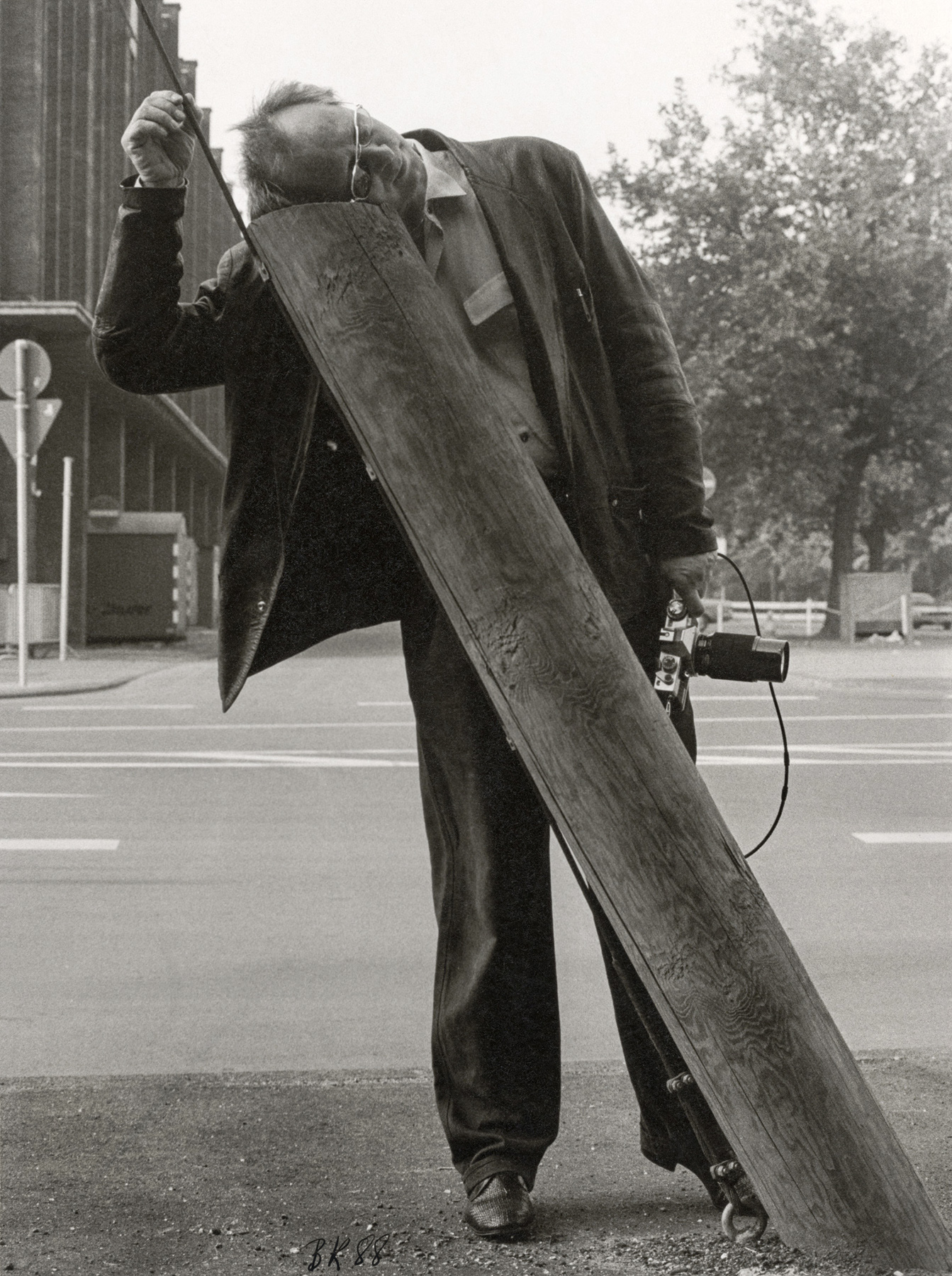
Exhibition: ‘Bernd & Hilla Becher – History of a Method’ at Die Photographische Sammlung/SK Stiftung Kultur, Cologne

Exhibition dates: 5th September, 2025 – 1st February, 2026

An exhibition by Die Photographische Sammlung/SK Stiftung Kultur in cooperation with the Bernd & Hilla Becher Studio, Düsseldorf
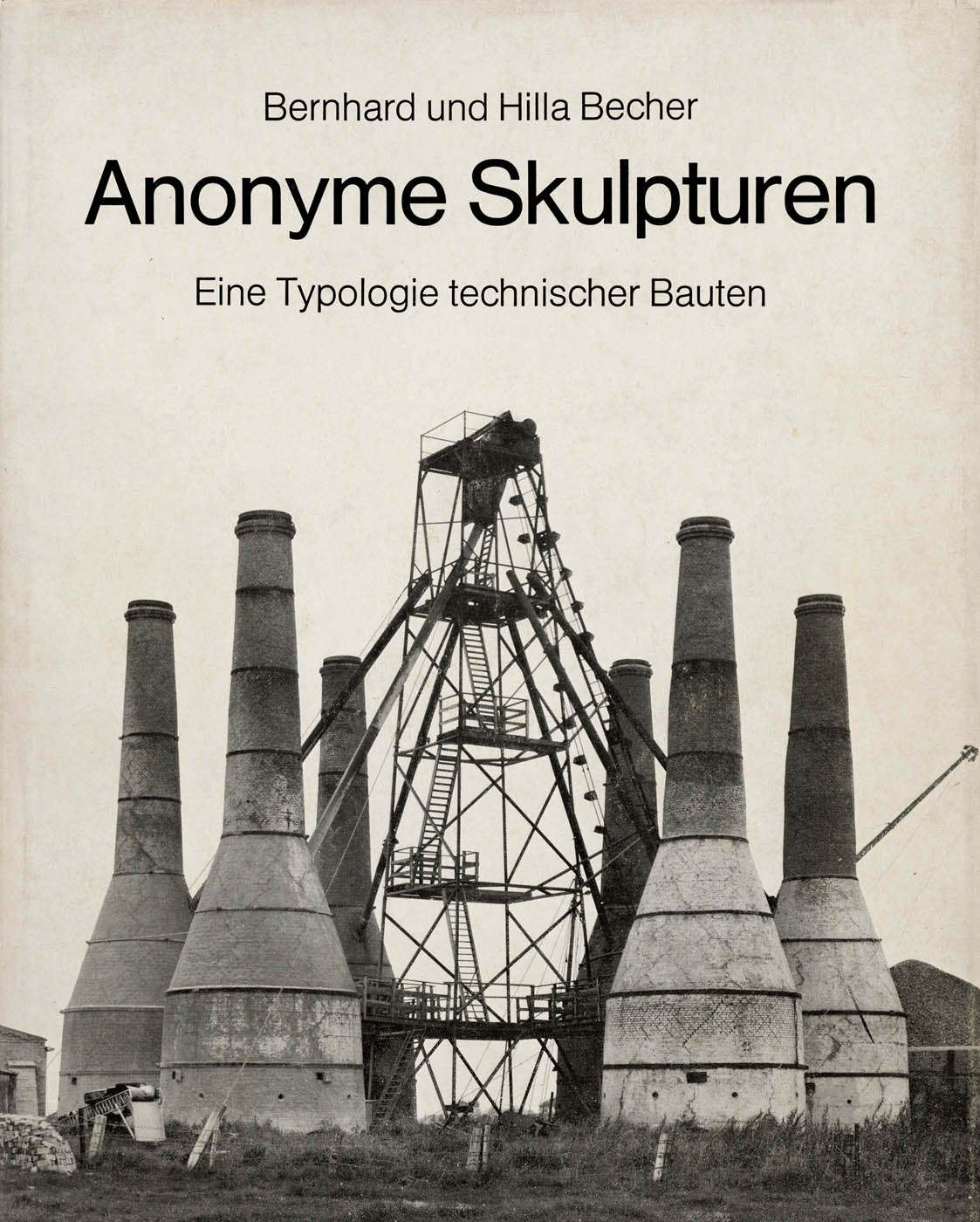
 

'Anonyme Skulpturen. Eine Typologie technischer Bauten, Düsseldorf: Art-Press' (Anonymous Sculptures: A Typology of Technical Buildings) Düsseldorf: Art-Press 1970 (Buchcover)


Anonyme Skulpturen. Eine Typologie technischer Bauten, Düsseldorf: Art-Press
Anonymous Sculptures: A Typology of Technical Buildings, Düsseldorf: Art-Press
1970 (Buchcover)
Courtesy Die Photographische Sammlung/SK Stiftung Kultur, Köln


When we think about the most influential photographers of the first five decades of the 20th century we conjure up names such as Eugène Atget, Alfred Stieglitz, Paul Strand, Walker Evans, László Moholy-Nagy, Dorothea Lange, and Berenice Abbott, to name just a few – and by influential, I mean those photographers that altered the intensification of the medium – the conceptualisation, creation, veracity, meaning and reception of the image.

In the last 50 years of the 20th century there are less of these medium-shifting artists that have really made a difference. Diane Arbus and Lee Friedlander are the two that readily spring to mind. And then there are the Bechers, Bernd & Hilla Becher. These German photographers changed the course of contemporary photographic practice, their conceptual art / objective photographic raison d’être still embedded at the heart of fine art photography today.

But, as I have argued elsewhere, their typologies and grids, their topographic state, their same same photographs and perspectives of industrial sculptures and landscapes are anything but objective. Their pictorial grammar, underlaid by a conceptual approach to subject matter, continuously reflected in the systematics of capture and display (the juxtaposition of works together), is constantly undermined by the ghost in the machine – those viral codes of mutation and difference which cannot be controlled.

While they professed to “eschew entirely entirely the aspects of beauty, emotion and opinion,” every photograph they took involves a subjective point of view, an element of uniqueness and beauty that can never be repeated.

“Despite protestations to the contrary (appeals to the objectivity of the image, eschewing entirely the aspects of beauty, emotion and opinion; the rigorous frontality of the individual images giving them the simplicity of diagrams, while their density of detail offers encyclopaedic richness) these are subjective images for all their objective desire. The paradox is the more a photographer strives for objectivity, the more ego drops away, the more the work becomes their own: subjective, beautiful, emotive.

Even though the Bechers’ demonstrate great photographic restraint with regard to documenting the object, the documentary gaze is always corrupted / mutated / distorted by personal interpretation: where to position the camera, what to include or exclude, how to interpret the context of place, how to crop or print the image, and how to display the image, in grids, sequences or singularly. In other words there are always multiple (con)texts to which artists conform or transgress. What makes great photographers, such as Eugène Atget, Walker Evans, August Sander and the Bechers, is the idiosyncratic “nature” of their vision: how Atget places his large view camera – at that particular height and angle to the subject – leaves an indelible feeling that only he could have made that image, to reveal the magic of that space in a photograph. It is their personal, unique thumbprint, recognisable in an instant. So it is with the Bechers.”1

For a deeper dive into the work of the Bechers, please see my text “Ghosts in the machine,” on the exhibition Bernd and Hilla Becher at the Metropolitan Museum of Art, New York, July – November, 2022.

Dr Marcus Bunyan


1/ Marcus Bunyan text on the exhibition Bernd and Hilla Becher: Mines and Mills – Industrial Landscapes at Fotomuseum Winterthur, Zurich, November 2011 – February 2012 [Online] Cited 05/12/2025


Many thankx to Die Photographische Sammlung/SK Stiftung Kultur, Cologne for allowing me to publish the photographs in the posting. Please click on the photographs for a larger version of the image.
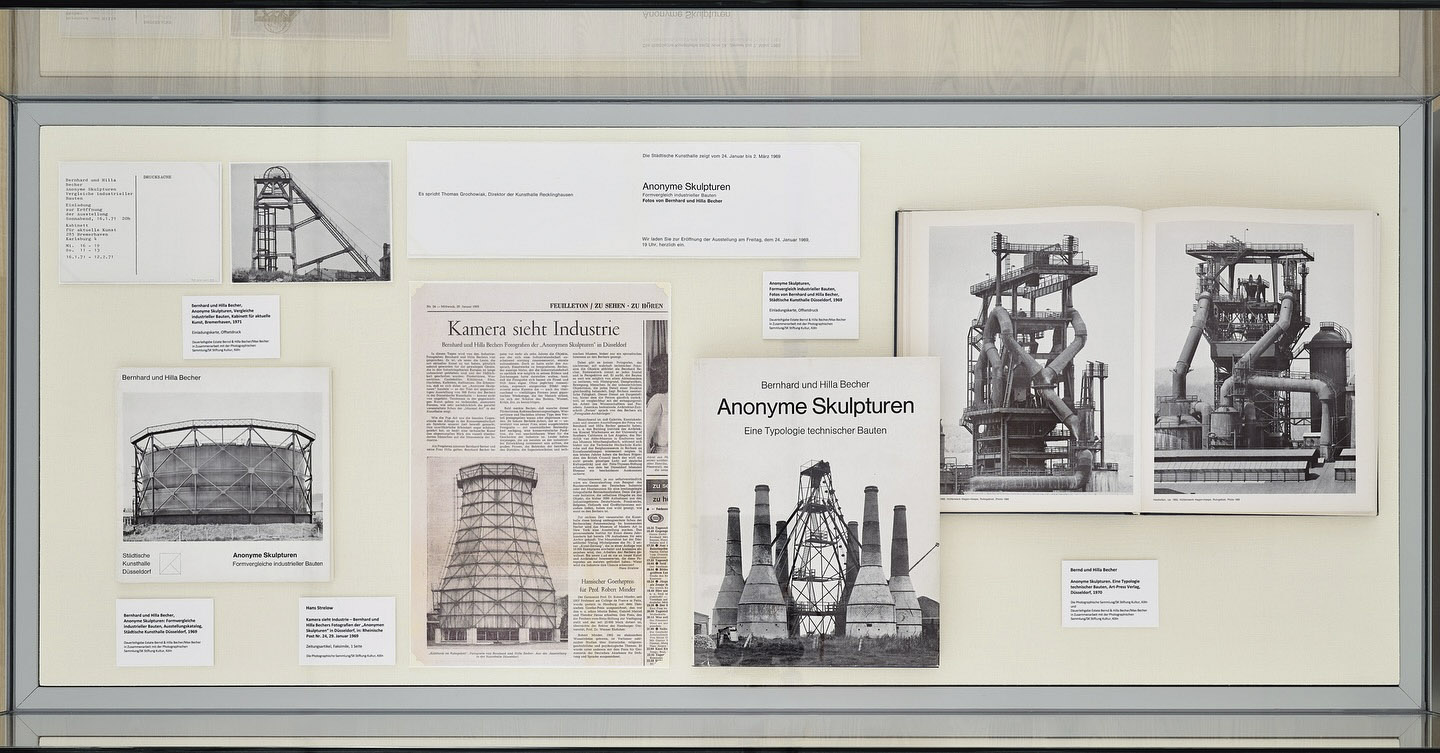


Installation view of the exhibition 'Bernd & Hilla Becher – History of a Method' at Die Photographische Sammlung/SK Stiftung Kultur, Cologne September, 2025 – February, 2026


Installation view of the exhibition Bernd & Hilla Becher – History of a Method at Die Photographische Sammlung/SK Stiftung Kultur, Cologne
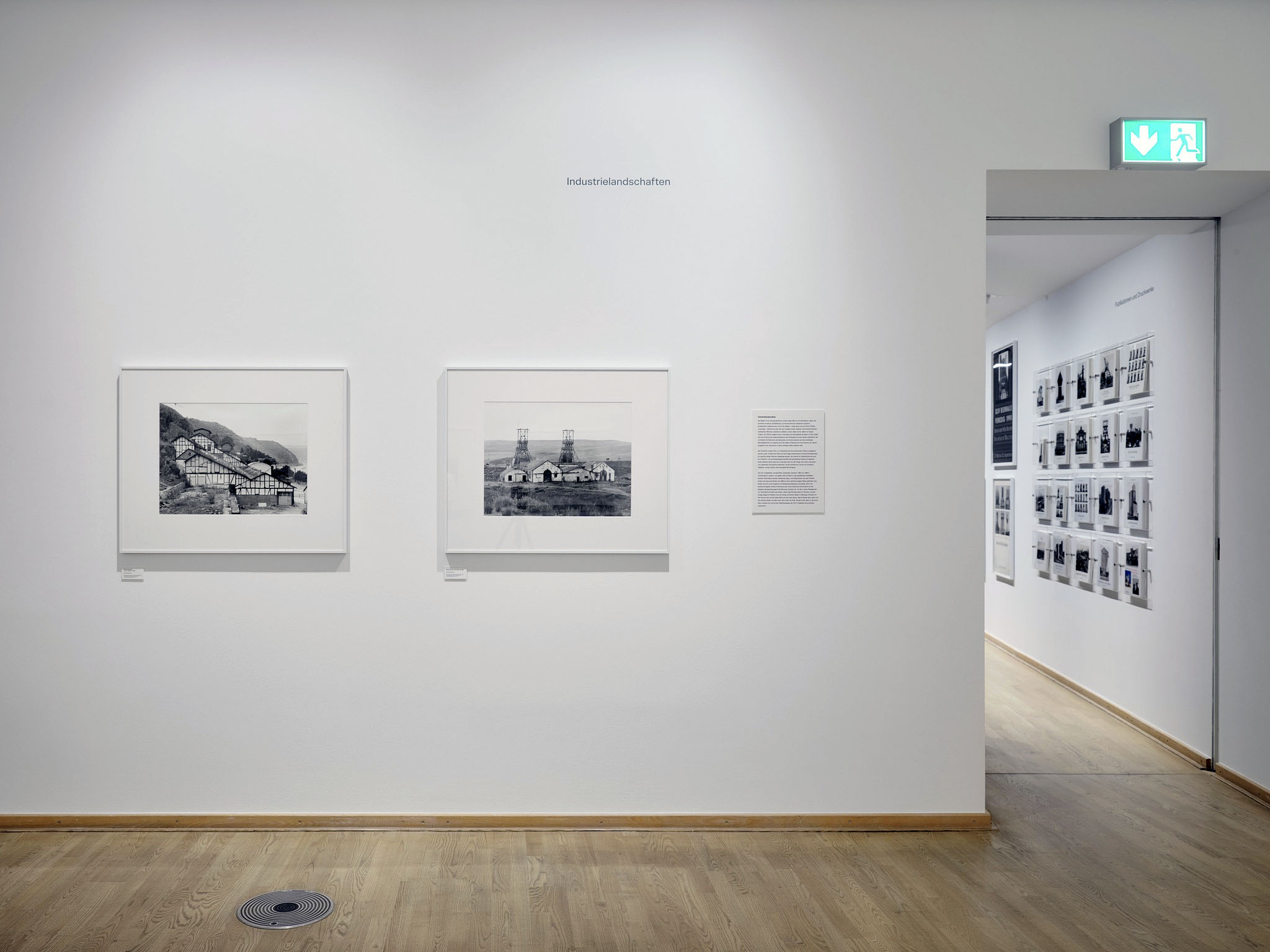
 

Installation view of the exhibition 'Bernd & Hilla Becher – History of a Method' at Die Photographische Sammlung/SK Stiftung Kultur, Cologne September, 2025 – February, 2026


Installation view of the exhibition Bernd & Hilla Becher – History of a Method at Die Photographische Sammlung/SK Stiftung Kultur, Cologne
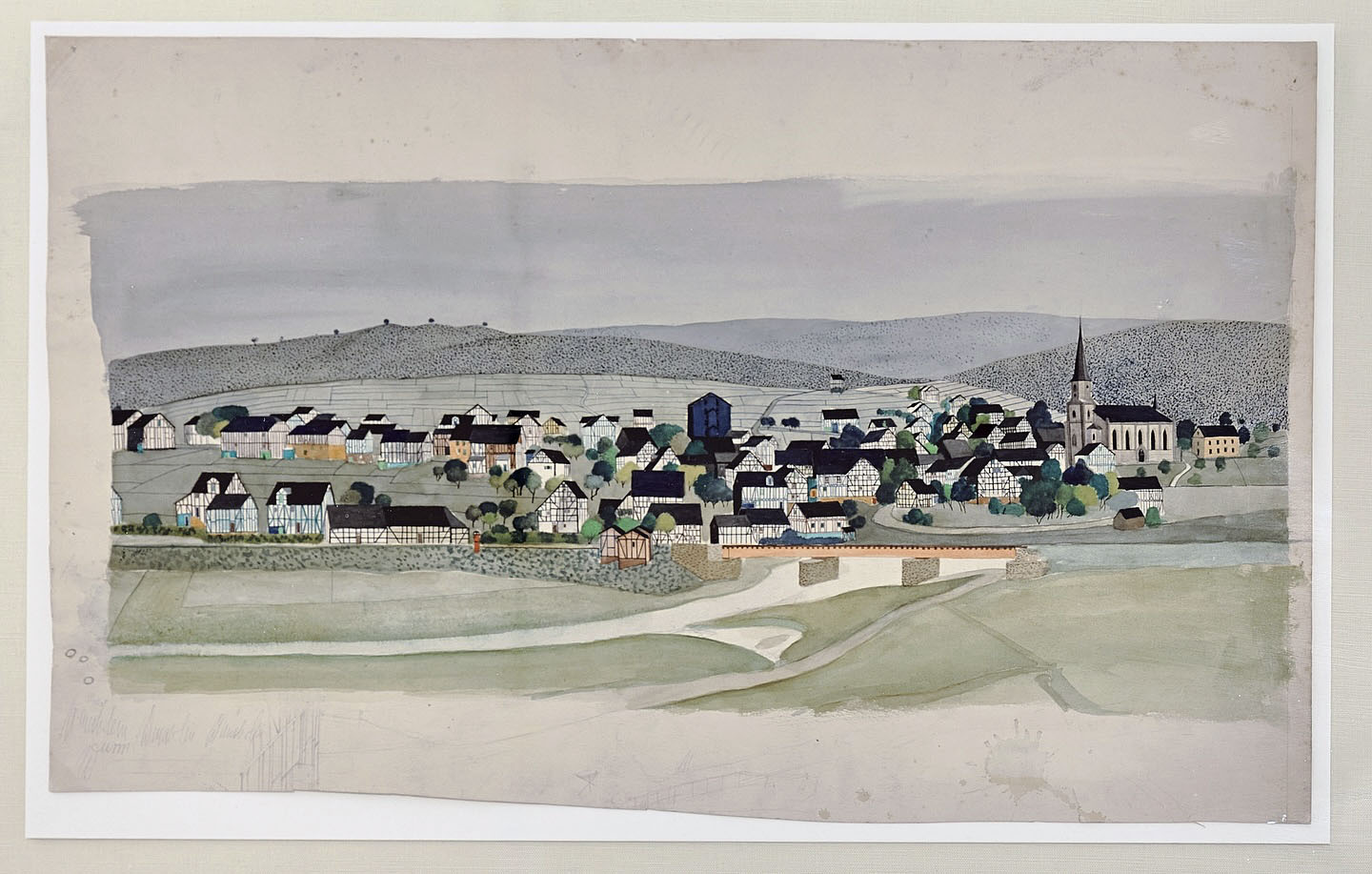
 

Bernd Becher (German, 1931-2007) 'Mudersbach' 1950s


Bernd Becher (German, 1931-2007)
Mudersbach
1950s
Watercolour
35.5 x 59.9cm
© Estate Bernd & Hilla Becher, vertreten durch Max Becher
Courtesy Die Photographische Sammlung/SK Stiftung Kultur – Bernd und Hilla Becher Archiv, Köln
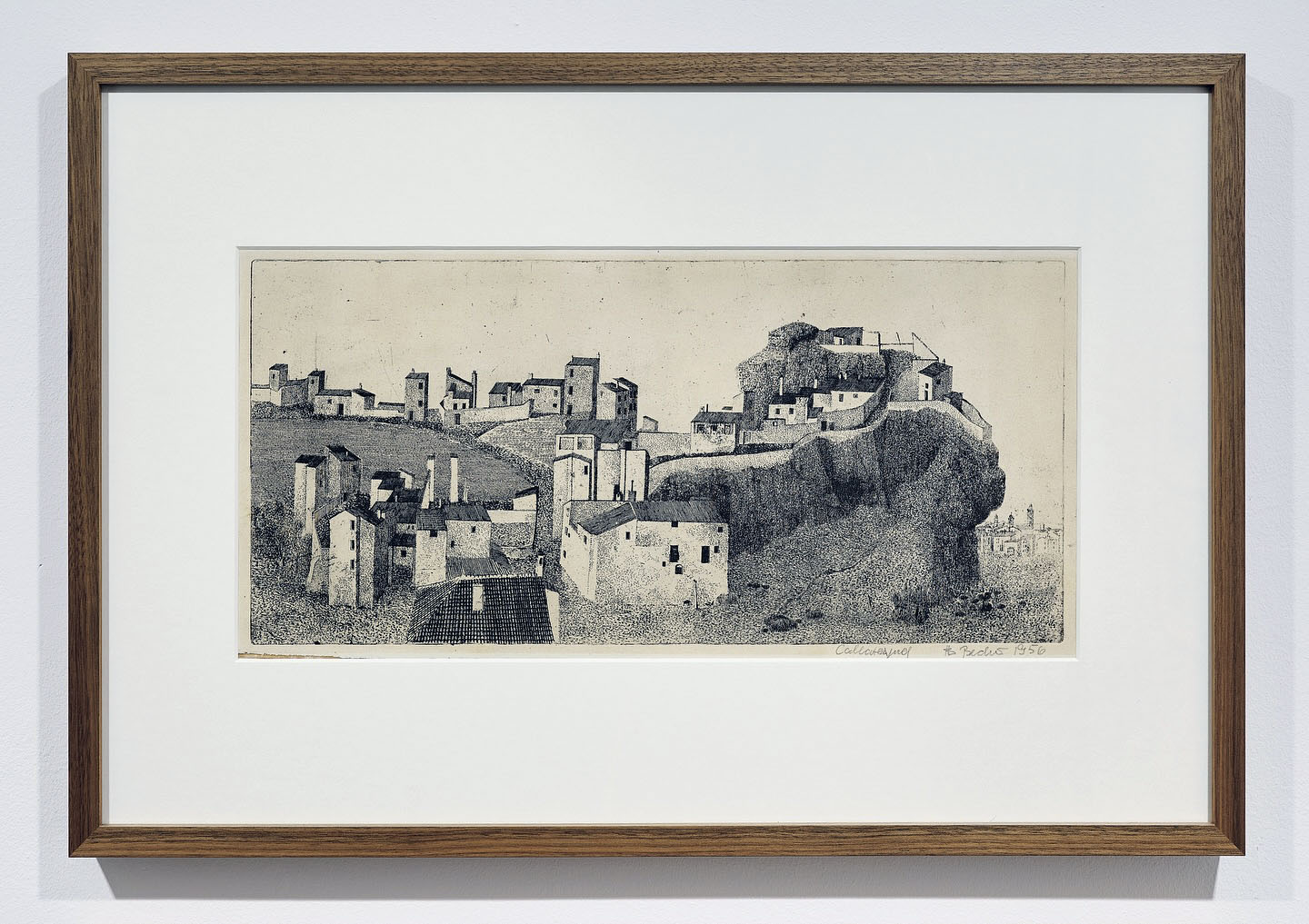
 

Installation view of the exhibition 'Bernd & Hilla Becher – History of a Method' at Die Photographische Sammlung/SK Stiftung Kultur, Cologne September, 2025 – February, 2026 showing Bernd Becher's 'Calatayud' 1956


Installation view of the exhibition Bernd & Hilla Becher – History of a Method at Die Photographische Sammlung/SK Stiftung Kultur, Cologne showing Bernd Becher’s Calatayud 1956 (below)
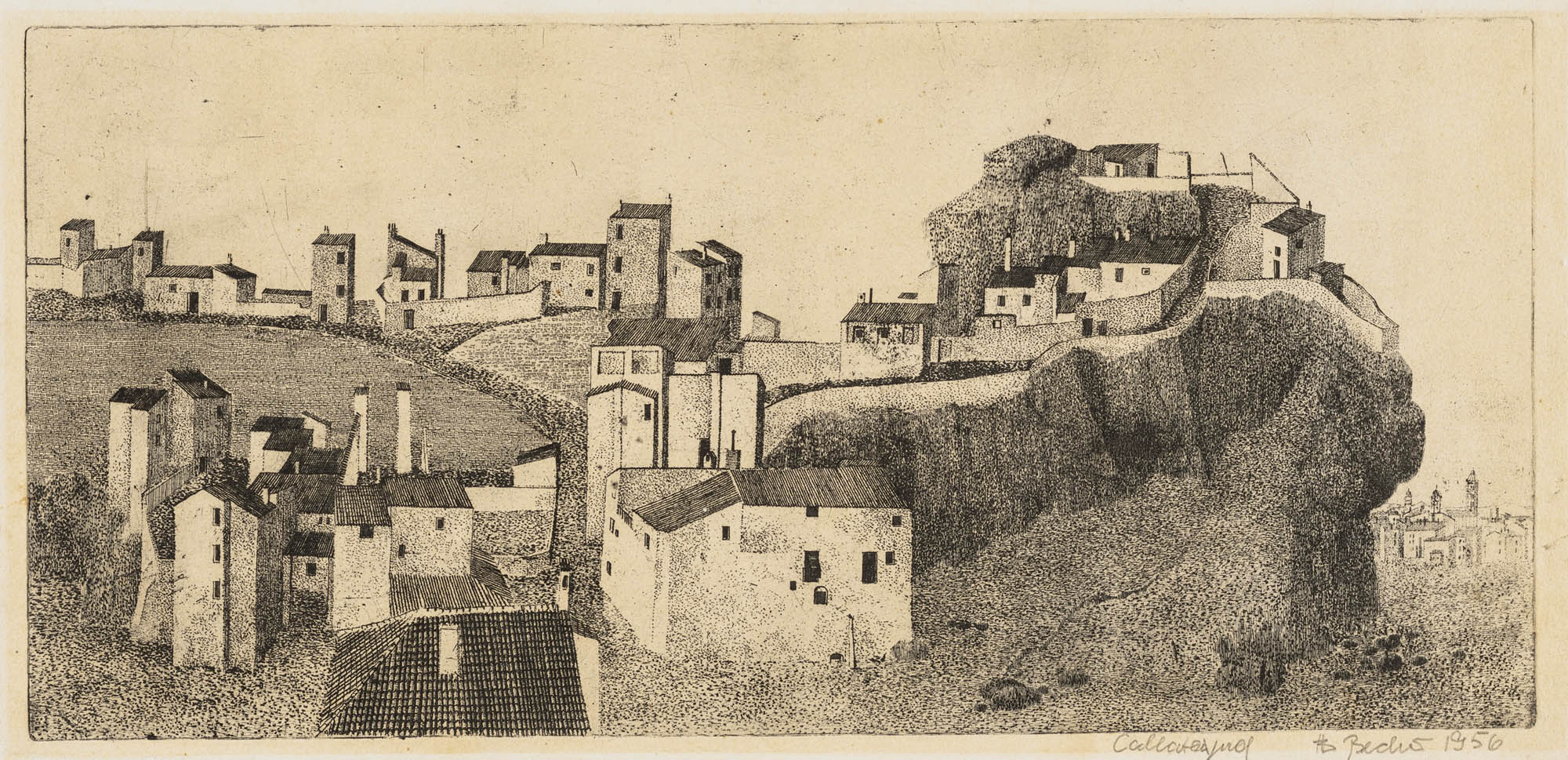
 

Bernd Becher (German, 1931-2007) 'Calatayud' 1956


Bernd Becher (German, 1931-2007)
Calatayud
1956
Aquatint on laid paper
20.8 x 44.0cm
© Estate Bernd & Hilla Becher, vertreten durch Max Becher
Courtesy Die Photographische Sammlung/SK Stiftung Kultur – Bernd und Hilla Becher Archiv, Köln
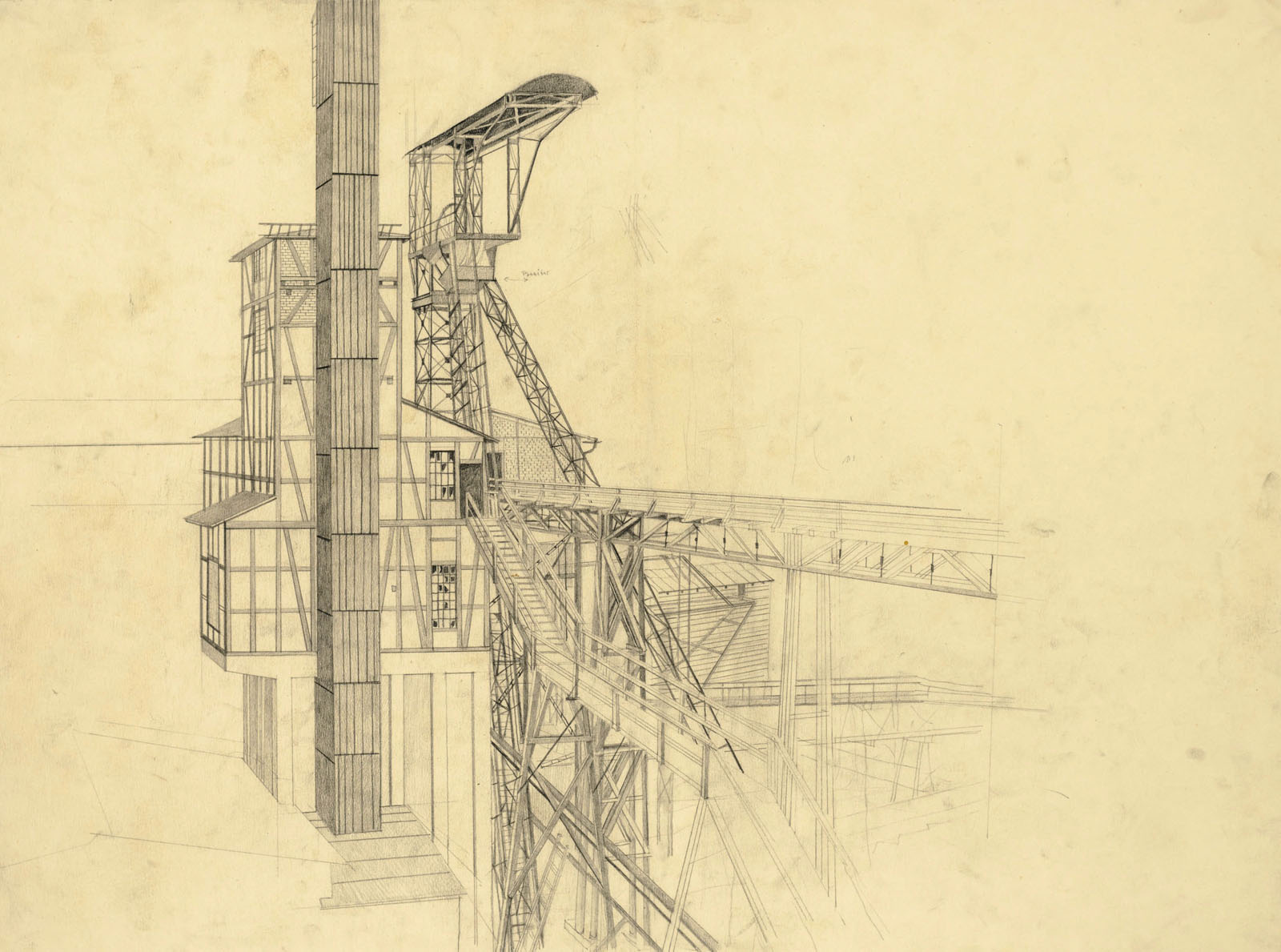
 

Bernd Becher (German, 1931-2007) 'Grube Eisernhardter Tiefbau, Eisern, D' (Eisernhardter Tiefbau mine, Eisern, Germany) 1955/56


Bernd Becher (German, 1931-2007)
Grube Eisernhardter Tiefbau, Eisern, D (Eisernhardter Tiefbau mine, Eisern, Germany)
1955/56
Pencil on paper
42.0 x 56.5cm
© Estate Bernd & Hilla Becher, vertreten durch Max Becher
Courtesy Die Photographische Sammlung/SK Stiftung Kultur – Bernd und Hilla Becher Archiv, Köln
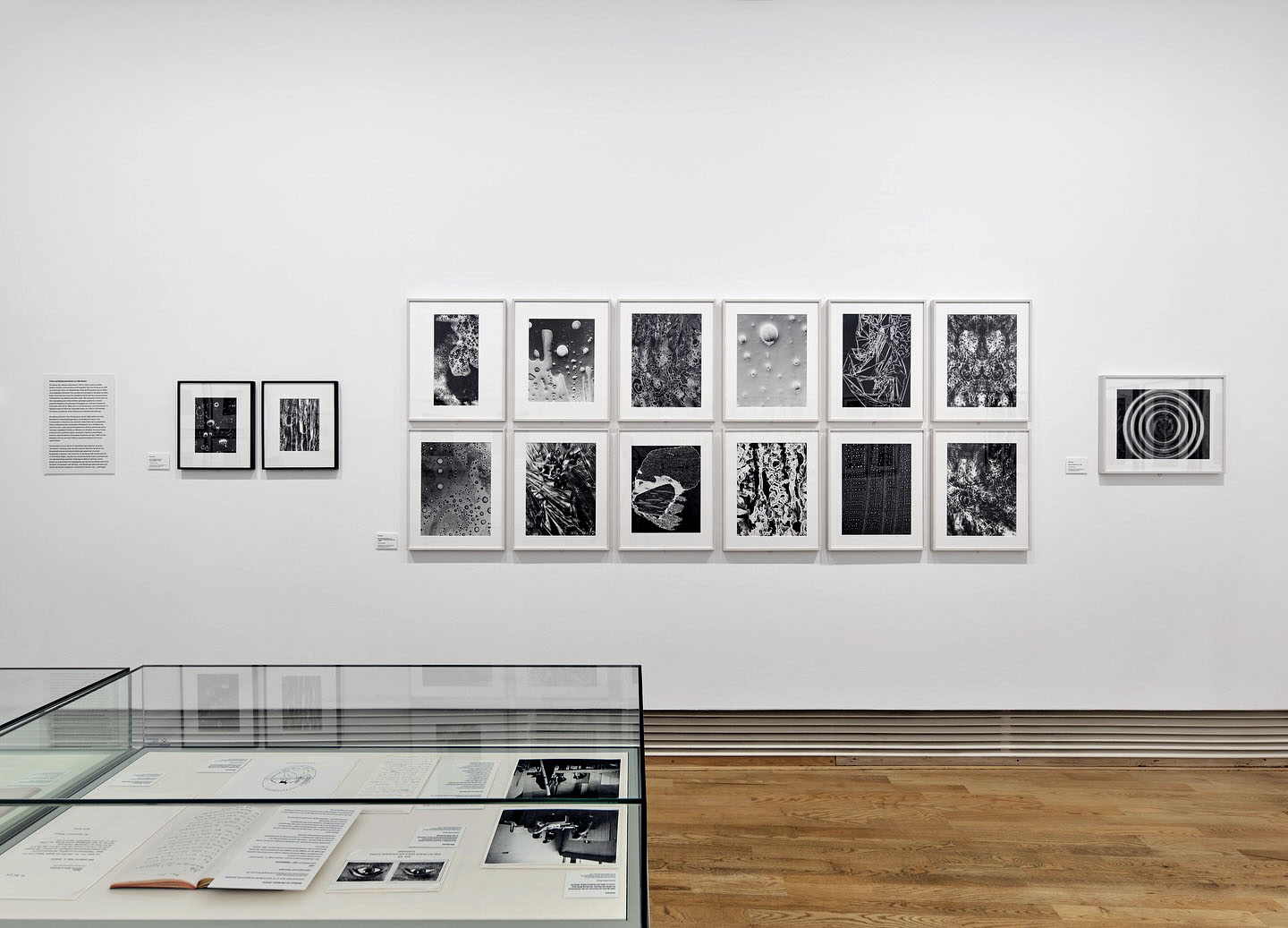
 

Installation view of the exhibition 'Bernd & Hilla Becher – History of a Method' at Die Photographische Sammlung/SK Stiftung Kultur, Cologne September, 2025 – February, 2026


Installation view of the exhibition Bernd & Hilla Becher – History of a Method at Die Photographische Sammlung/SK Stiftung Kultur, Cologne
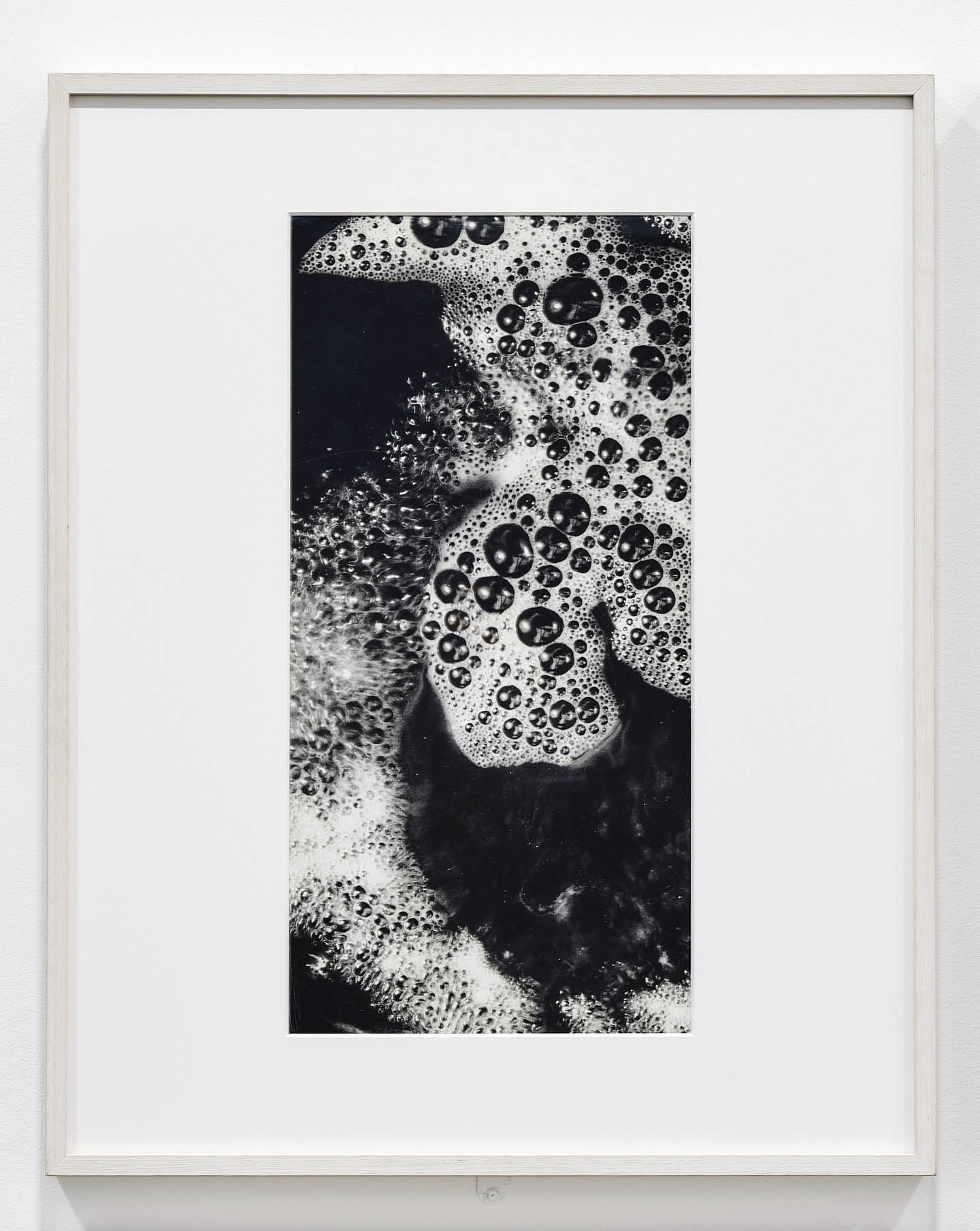
 

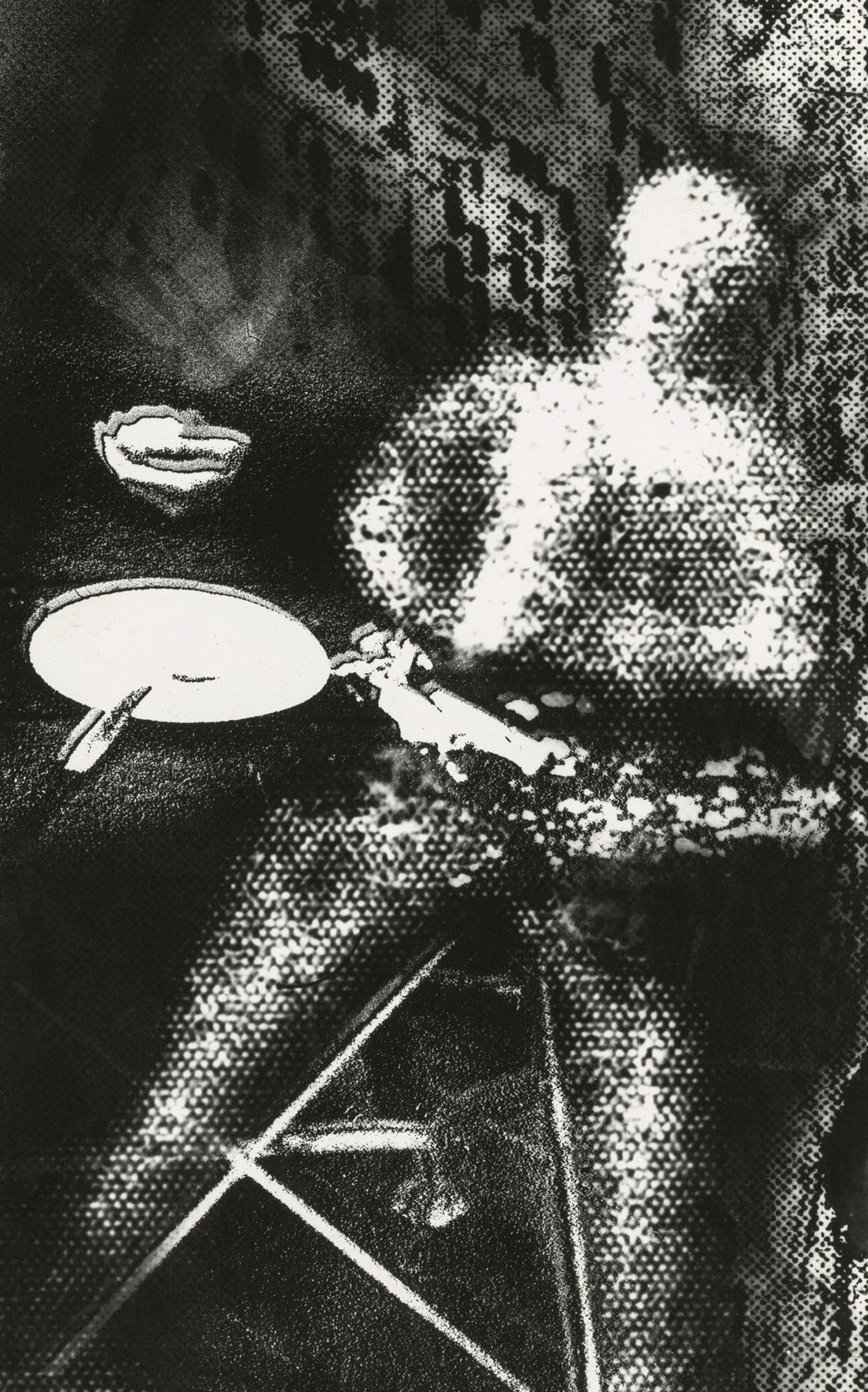
Installation view of the exhibition 'Bernd & Hilla Becher – History of a Method' at Die Photographische Sammlung/SK Stiftung Kultur, Cologne September, 2025 – February, 2026 showing Hilla Becher's 'Untitled (Makroaufnahme von Schaum)' (Macro shot of foam) c. 1960


Installation view of the exhibition Bernd & Hilla Becher – History of a Method at Die Photographische Sammlung/SK Stiftung Kultur, Cologne showing Hilla Becher’s Untitled (Makroaufnahme von Schaum) (Macro shot of foam) c. 1960
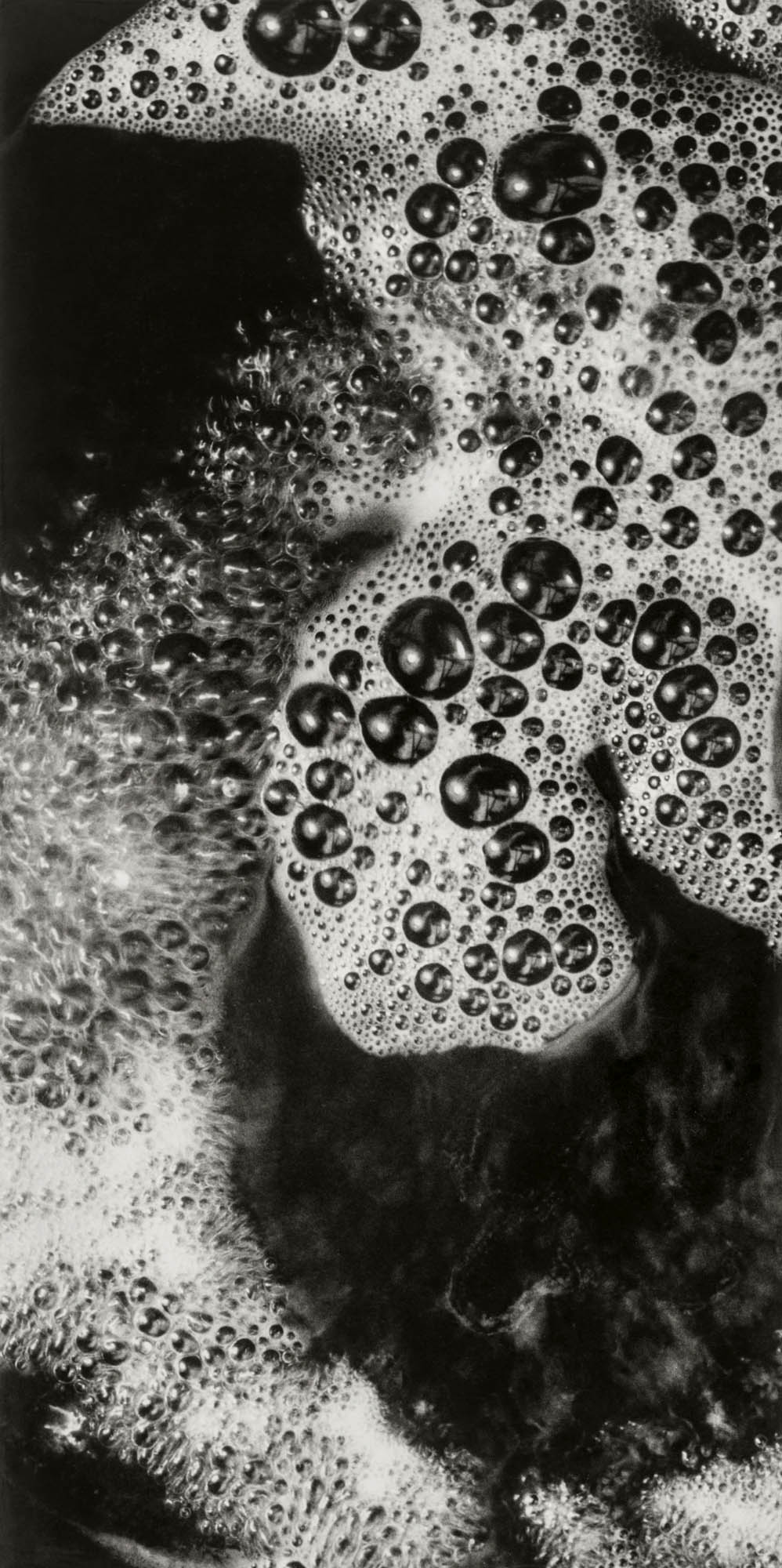
 

Hilla Becher (German, 1934-2015) 'Untitled (Makroaufnahme von Schaum)' (Macro shot of foam) c. 1960


Hilla Becher (German, 1934-2015)
Untitled (Makroaufnahme von Schaum) (Macro shot of foam)
c. 1960
Gelatin silver print
38.9 x 19.4cm
© Estate Bernd & Hilla Becher, vertreten durch Max Becher
Courtesy Die Photographische Sammlung/SK Stiftung Kultur – Bernd und Hilla Becher Archiv, Köln


Hilla Becher (née Wobeser) discovered photography as a teenager. Her mother had trained as a photographer at the Lette Verein in Berlin and supported her daughter’s interest. Accordingly, from 1951 to 1953, Hilla completed an apprenticeship as a photographer at the Walter Eichgrün studio in her hometown of Potsdam. In 1953, the family fled East Germany, and Hilla continued her career in West Germany. For example, in 1957 she worked at the Troost advertising agency in Düsseldorf, where she also met Bernd Becher.

The photograph shown above belongs to a series of surface and structural studies from around 1960. Nothing is known about the exact context of the photographs; however, their stylistic affinity to the “Subjective Photography” movement, which gained influence from the early 1950s onward, is interesting. Distortion techniques were an important tool in “Subjective Photography,” and Hilla Becher’s macro photographs utilise extreme proximity to the subject as a means of creating a sense of alienation.

Text from the SK Stiftung Kultur Die Photographische Sammlung Instagram page
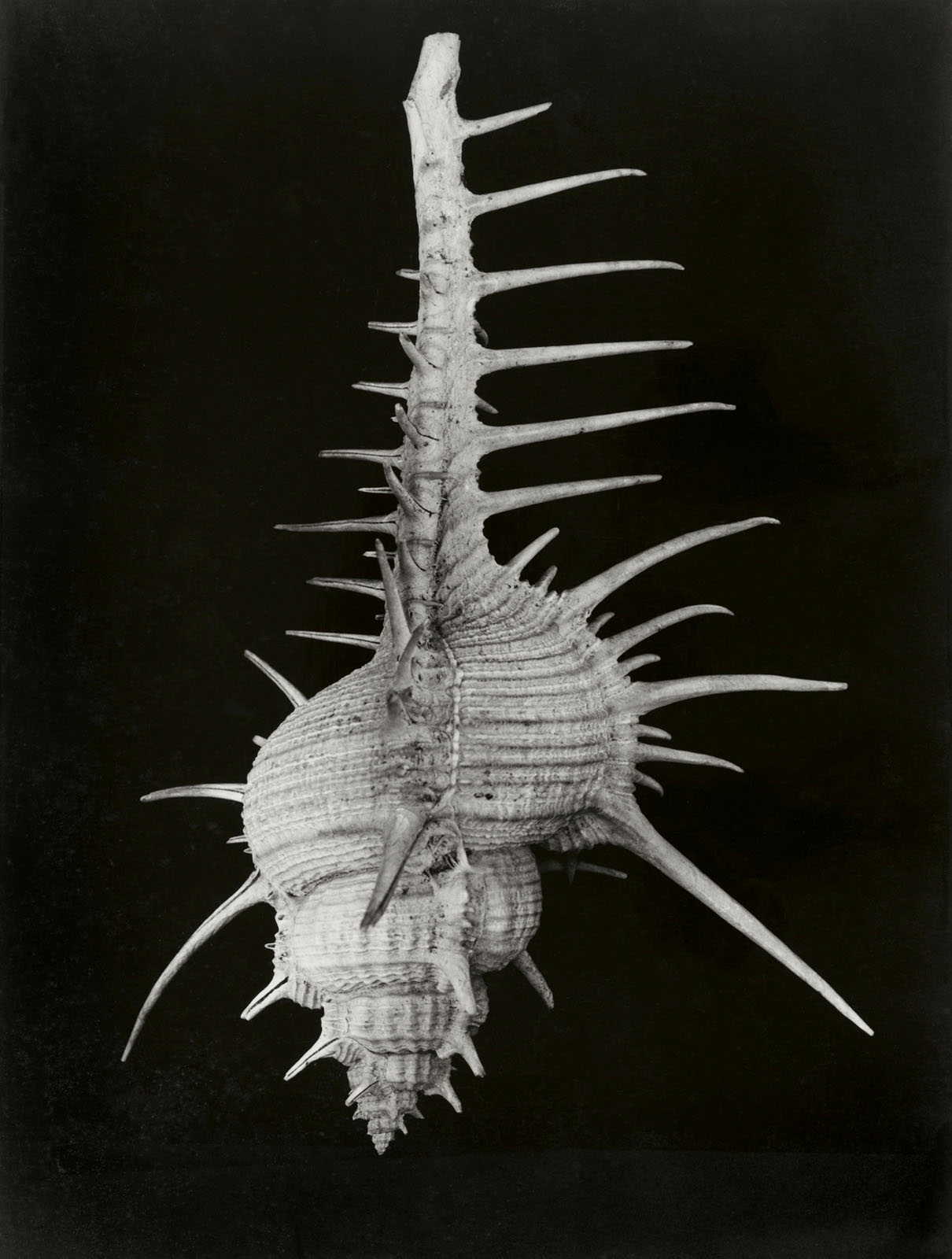
 

Hilla Becher (German, 1934-2015) 'Meeresschnecke (Venuskamm)' (Sea snail (Venus comb)) 1960s


Hilla Becher (German, 1934-2015)
Meeresschnecke (Venuskamm) (Sea snail (Venus comb))
1960s
Gelatin silver print
39.6 x 30cm
© Estate Bernd & Hilla Becher, vertreten durch Max Becher
Courtesy Die Photographische Sammlung/SK Stiftung Kultur – Bernd und Hilla Becher Archiv, Köln
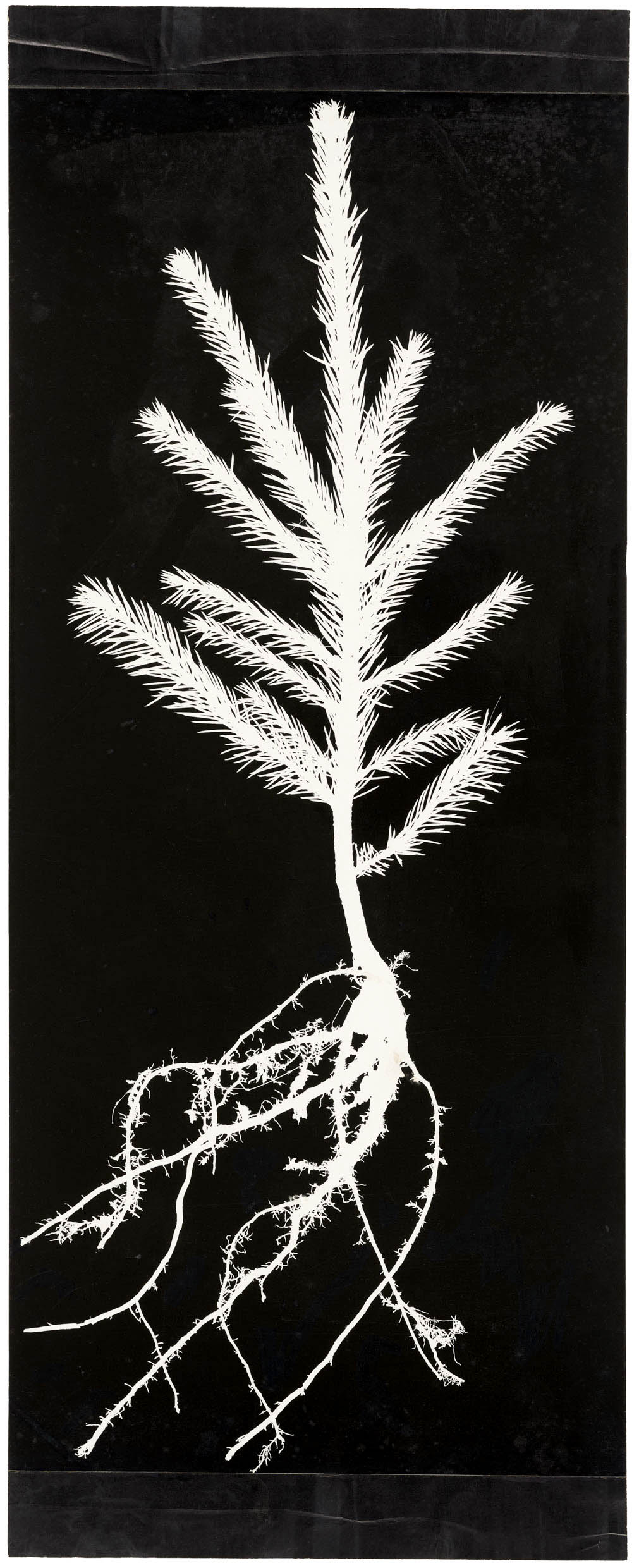
 

Hilla Becher (German, 1934-2015) 'Pflanzenstudie, Photogramme' (Plant study, photograms) 1960s


Hilla Becher (German, 1934-2015)
Pflanzenstudie, Photogramme (Plant study, photograms)
1960s
© Estate Bernd & Hilla Becher, vertreten durch Max Becher
Courtesy Die Photographische Sammlung/SK Stiftung Kultur – Bernd und Hilla Becher Archiv, Köln
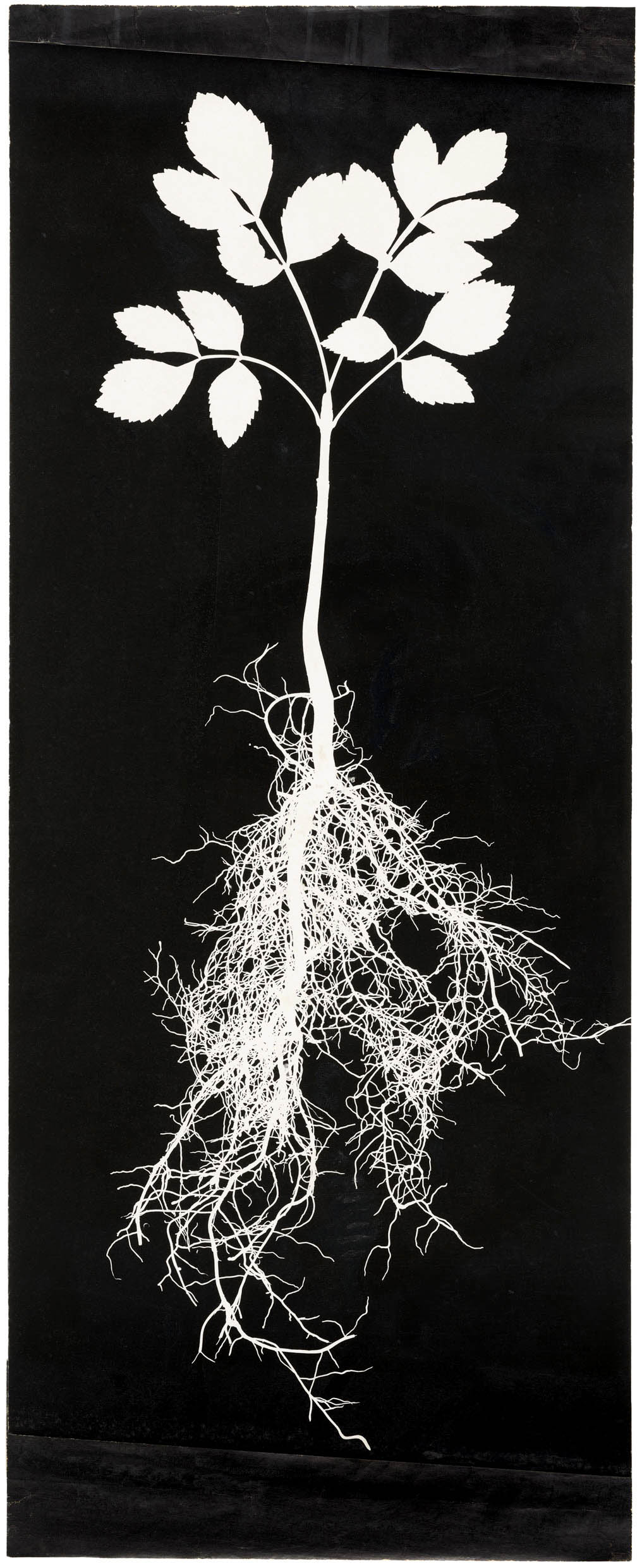
 

Hilla Becher (German, 1934-2015) 'Pflanzenstudie, Photogramme' (Plant study, photograms) 1960s


Hilla Becher (German, 1934-2015)
Pflanzenstudie, Photogramme (Plant study, photograms)
1960s
© Estate Bernd & Hilla Becher, vertreten durch Max Becher
Courtesy Die Photographische Sammlung/SK Stiftung Kultur – Bernd und Hilla Becher Archiv, Köln


An exhibition of Die Photographische Sammlung/SK Stiftung Kultur in cooperation with the Bernd & Hilla Becher Studio, Düsseldorf

The artist couple Bernd and Hilla Becher (1931-2007/1934-2015) has written photographic history. With their joint work, which they developed from 1959 until the 2000s on the basis of an almost uninterrupted photographic activity in the industrial regions of Germany, the Benelux countries, Great Britain, France, Italy, the USA and Canada, they created a new artistically motivated documentary style.

For the first time in Europe, this exhibition will present the methodological and thematic range of their oeuvre in great detail with over 300 original black and white photographs and other exhibits by the artist couple. In the individual sections, almost all of Becher’s found subjects can be located in a compilation and sequencing largely determined by themselves. Photographs of landscapes, winding towers, blast furnaces, cooling towers, gas tanks or even views of entire collieries etc. are considered her trademark. The juxtaposition of the groups of works authentically conveys the pictorial grammar developed by Bernd and Hilla Becher and their continuously reflected systematics and conceptual approach.

The exhibits come from the Bernd and Hilla Becher Archive in Die Photographische Sammlung/SK Stiftung Kultur and the Bernd & Hilla Becher Studio, Düsseldorf, in collaboration with Max Becher under the supervision of the Bernd & Hilla Becher Estate. There are also loans from Sprüth Magers and the LVR-Landesmuseum Bonn.

The publication accompanying the exhibition will be published by Schirmer / Mosel Verlag, with texts by Max Becher, Gabriele Conrath-Scholl, Marianne Kapfer and Urs Stahel.

Text from the Die Photographische Sammlung/SK Stiftung Kultur, Cologne website
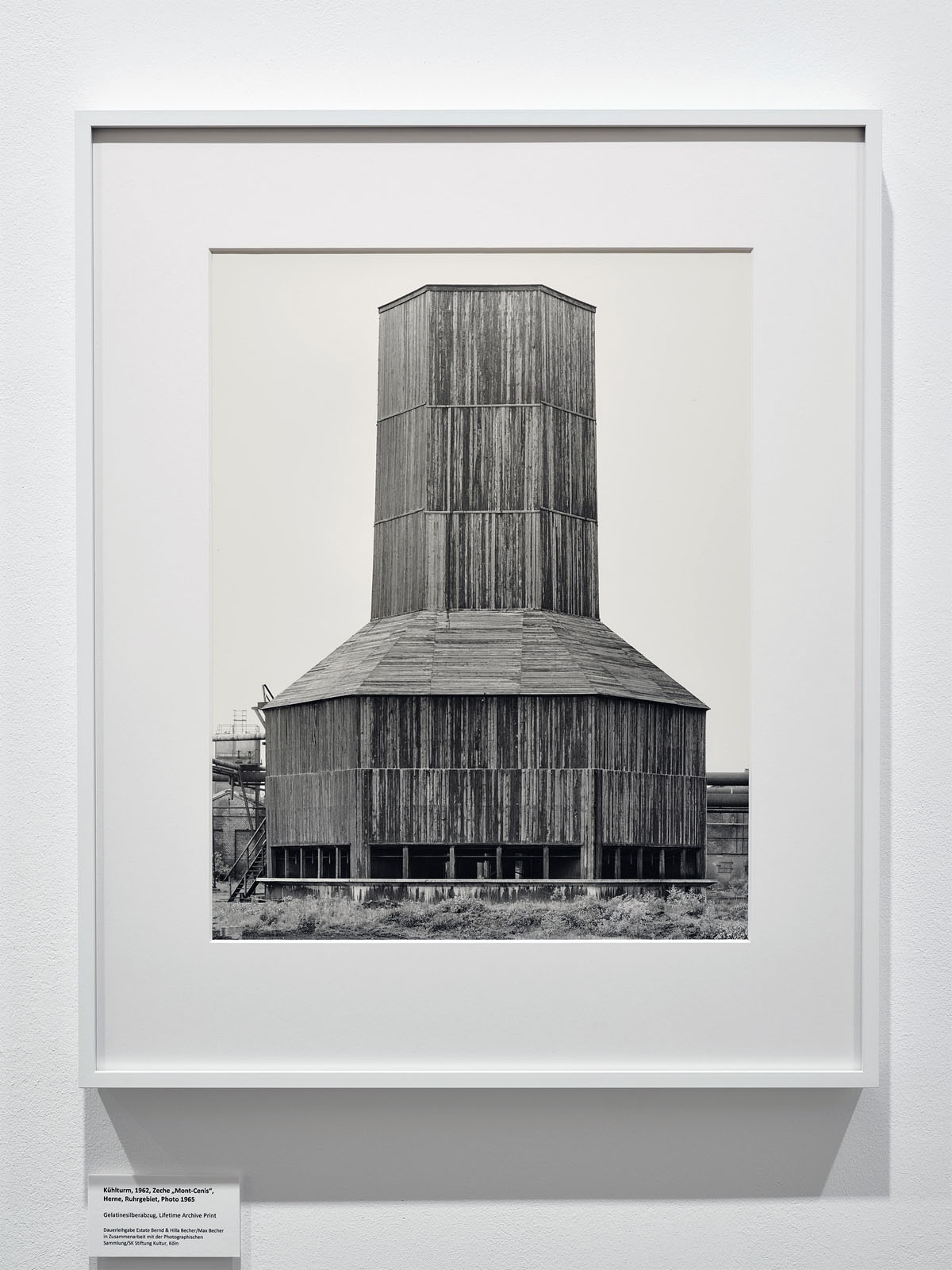
 

Installation view of the exhibition 'Bernd & Hilla Becher – History of a Method' at Die Photographische Sammlung/SK Stiftung Kultur, Cologne September, 2025 – February, 2026 showing Bernd and Hilla Becher's photograph 'Kühlturm (Cooling tower) 1962, "Mont-Cenis" mine, Herne, Ruhr area' 1965


Installation view of the exhibition Bernd & Hilla Becher – History of a Method at Die Photographische Sammlung/SK Stiftung Kultur, Cologne showing Bernd and Hilla Becher’s photograph Kühlturm (Cooling tower) 1962, “Mont-Cenis” mine, Herne, Ruhr area 1965 (below)
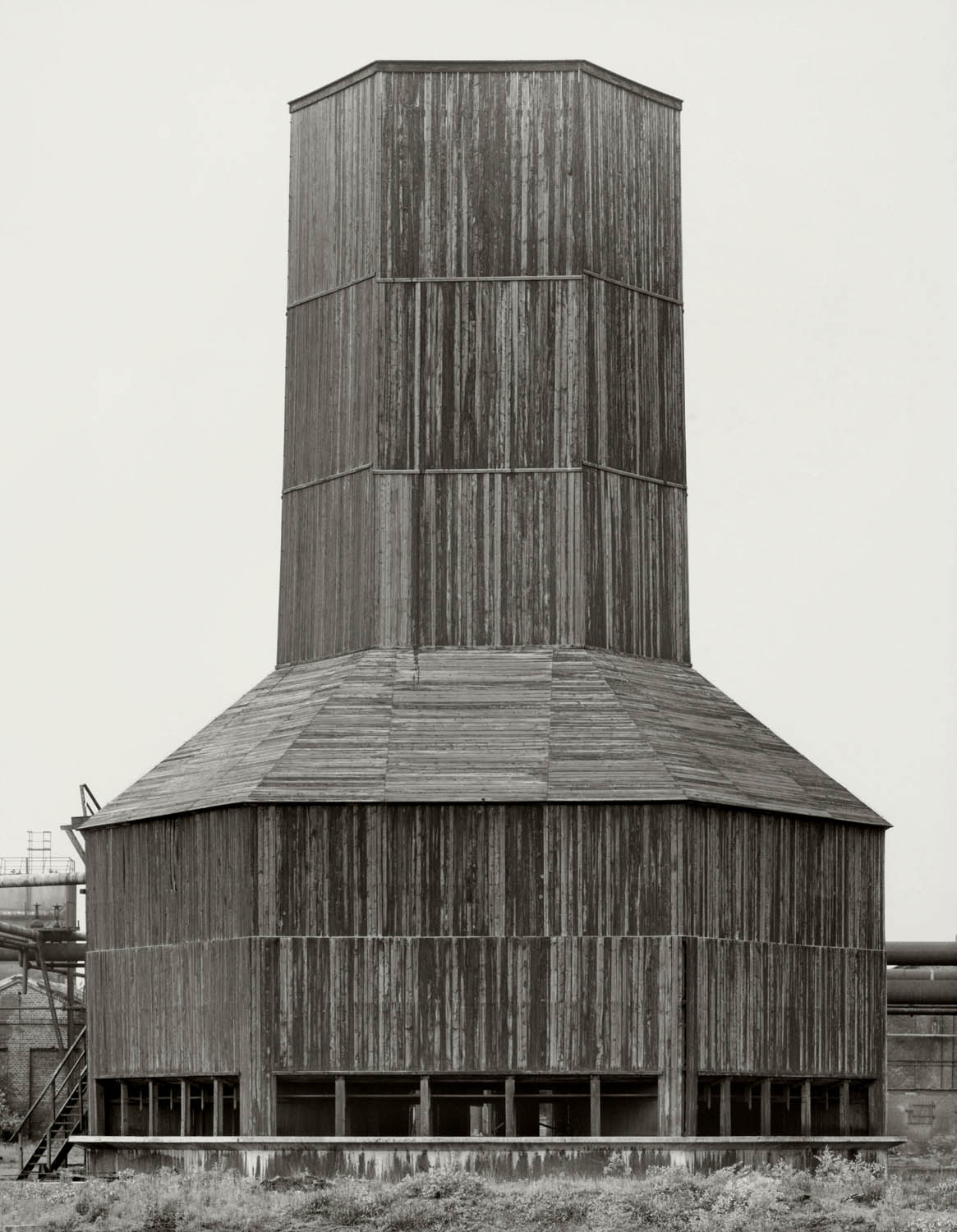
 

Bernd and Hilla Becher (German, 1931-2007/1934-2015) 'Kühlturm (Cooling tower) 1962, "Mont-Cenis" mine, Herne, Ruhr area' 1965


Bernd and Hilla Becher (German, 1931-2007/1934-2015)
Kühlturm (Cooling tower) 1962, “Mont-Cenis” mine, Herne, Ruhr area
1965
Gelatin silver print
40.3 x 31.5cm
© Estate Bernd & Hilla Becher, vertreten durch Max Becher
Courtesy Die Photographische Sammlung/SK Stiftung Kultur – Bernd und Hilla Becher Archiv, Köln


We have dedicated an entire room of our current exhibition to the group of “Anonymous Sculptures.” With this series of images, Bernd and Hilla Becher defined the building types that were important to them, such as cooling towers. The fundamental principle of the comparability of the motifs was introduced, and the work on publications, so crucial to Bernd and Hilla Becher’s artistic output, was also initiated.

You can trace the artists’ approach using 41 photographs that exemplify the building types presented in seven chapters of the 1970 publication “Anonymous Sculptures: A Typology of Technical Structures.” An exhibition at the Düsseldorf Municipal Art Gallery preceded the book in 1969 [see the book cover at the top of the posting].

The term “Anonymous Sculptures” establishes a link to conceptual art. This connection between Bernd and Hilla Becher’s work and the visual arts was important for their subsequent work and its presentation in museums and galleries.

Text from the SK Stiftung Kultur Die Photographische Sammlung Instagram page
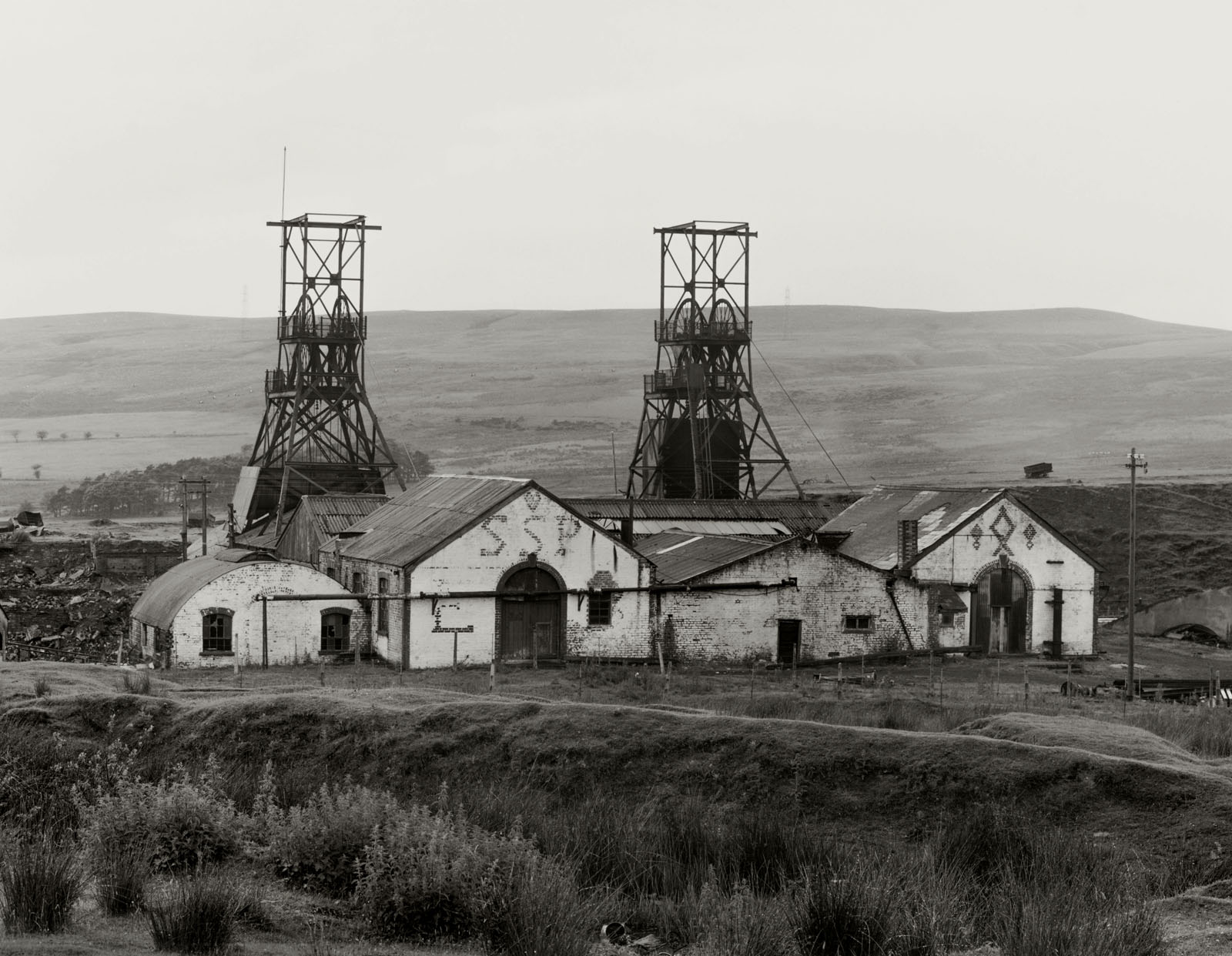
 

Bernd and Hilla Becher (German, 1931-2007/1934-2015) 'Seven Sisters Pit, South Wales, GB' 1966


Bernd and Hilla Becher (German, 1931-2007/1934-2015)
Seven Sisters Pit, South Wales, GB
1966
Gelatin silver print
© Estate Bernd & Hilla Becher, vertreten durch Max Becher
Courtesy Die Photographische Sammlung/SK Stiftung Kultur – Bernd und Hilla Becher Archiv, Köln, 2025
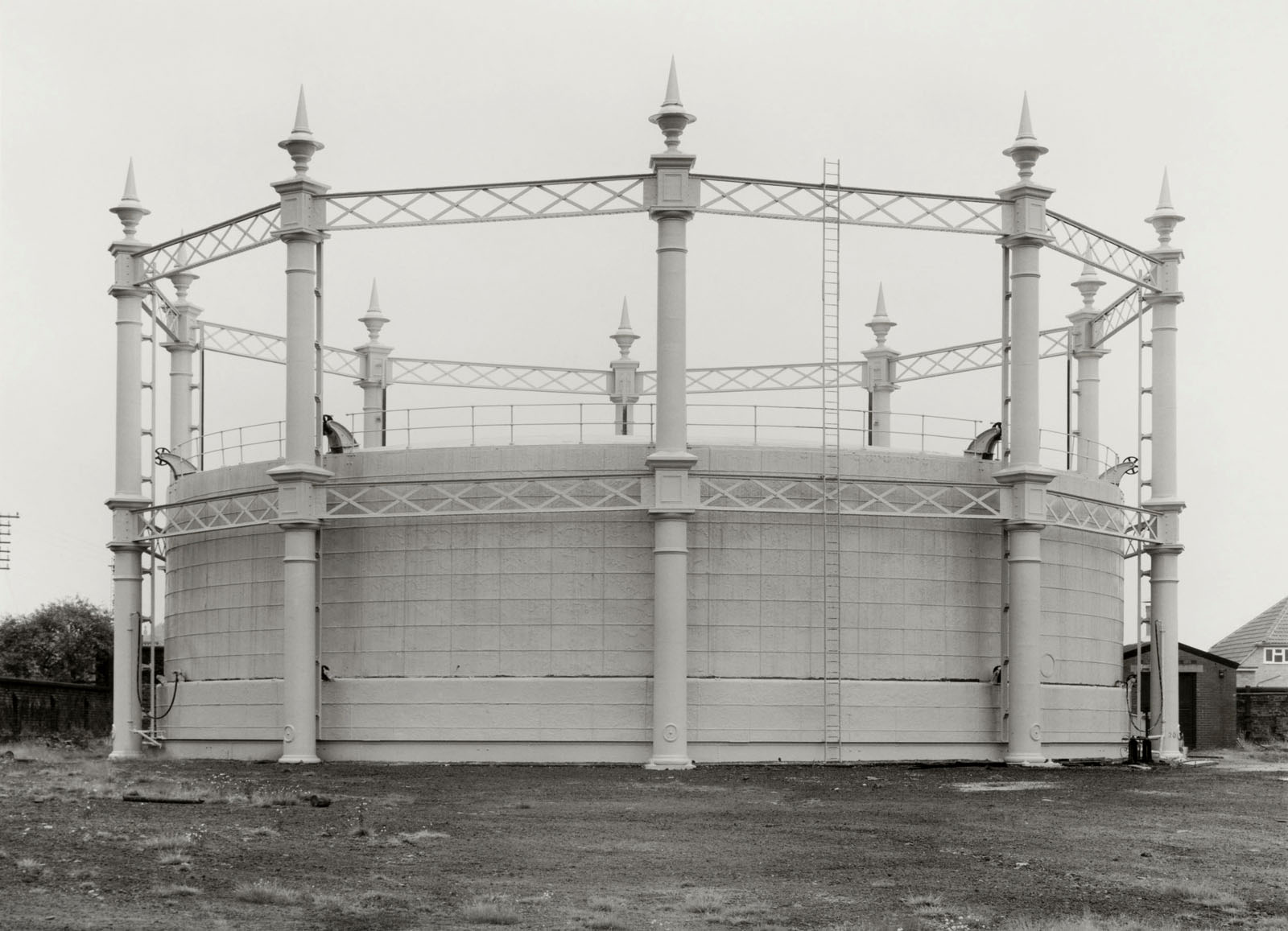
 

Bernd and Hilla Becher (German, 1931-2007/1934-2015) 'Gasbehälter (Gas container) 1886 Tyldesley near Manchester, UK' 1966


Bernd and Hilla Becher (German, 1931-2007/1934-2015)
Gasbehälter (Gas container) 1886 Tyldesley near Manchester, UK
1966
Gelatin silver print
30.4 x 41.5cm
© Estate Bernd & Hilla Becher, vertreten durch Max Becher
Courtesy Die Photographische Sammlung/SK Stiftung Kultur – Bernd und Hilla Becher Archiv, Köln
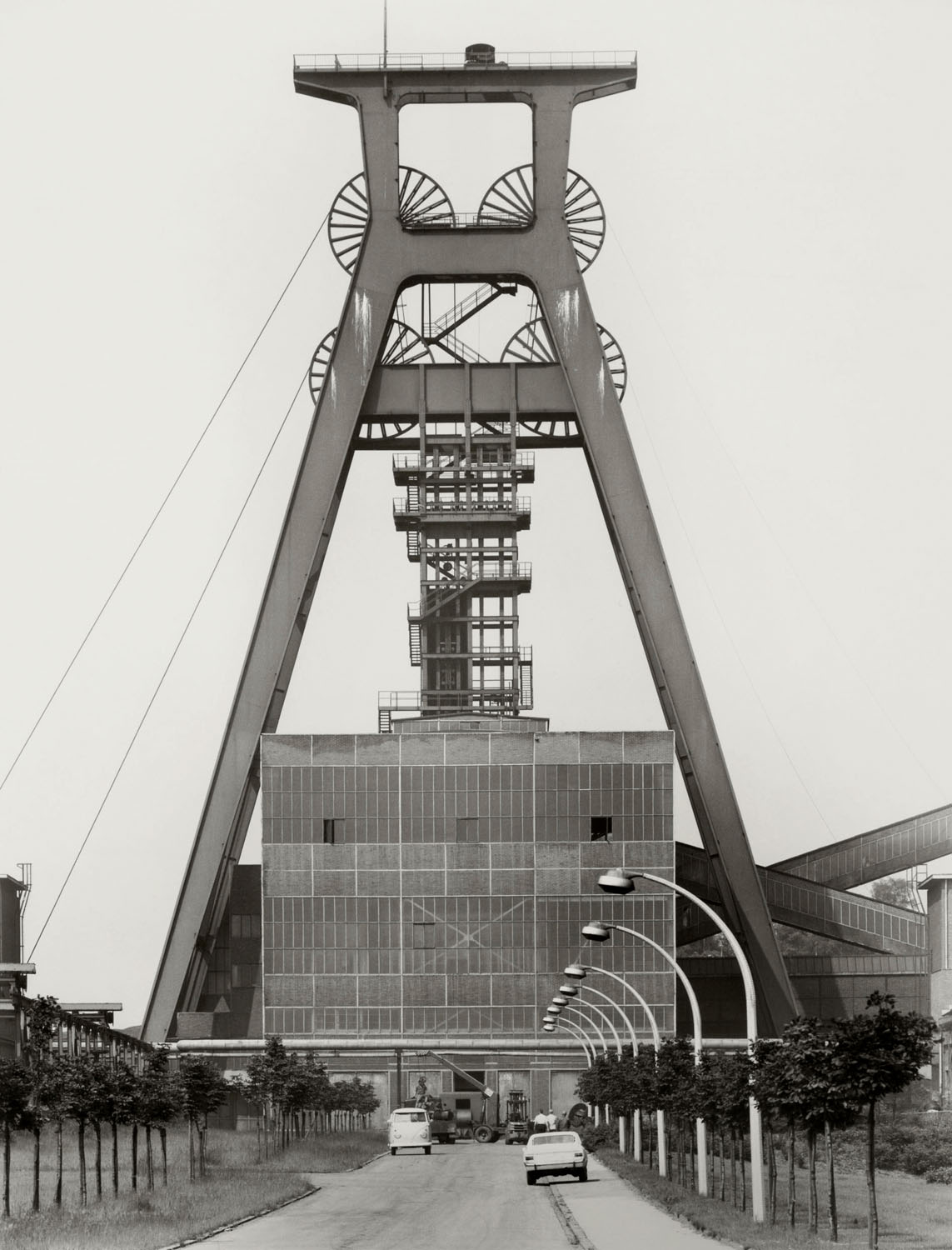
 

Bernd and Hilla Becher (German, 1931-2007/1934-2015) 'Förderturm (Conveyor tower) 1958 "Graf Bismarck" mine, Gelsenkirchen, Ruhr area' 1967


Bernd and Hilla Becher (German, 1931-2007/1934-2015)
Förderturm (Conveyor tower) 1958 “Graf Bismarck” mine, Gelsenkirchen, Ruhr area
1967
Gelatin silver print
40.3 x 31.1cm
© Estate Bernd & Hilla Becher, vertreten durch Max Becher
Courtesy Die Photographische Sammlung/SK Stiftung Kultur – Bernd und Hilla Becher Archiv, Köln


Bernd and Hilla Becher (German, 1931-2007/1934-2015) 'Hochofen (Blast furnace) c. 1930, Blast furnace plant, Esch, Luxembourg' 1969


Bernd and Hilla Becher (German, 1931-2007/1934-2015)
Hochofen (Blast furnace) c. 1930, Blast furnace plant, Esch, Luxembourg
1969
Gelatin silver print
40.4 x 31.5 cm
© Estate Bernd & Hilla Becher, vertreten durch Max Becher
Courtesy Die Photographische Sammlung/SK Stiftung Kultur – Bernd und Hilla Becher Archiv, Köln
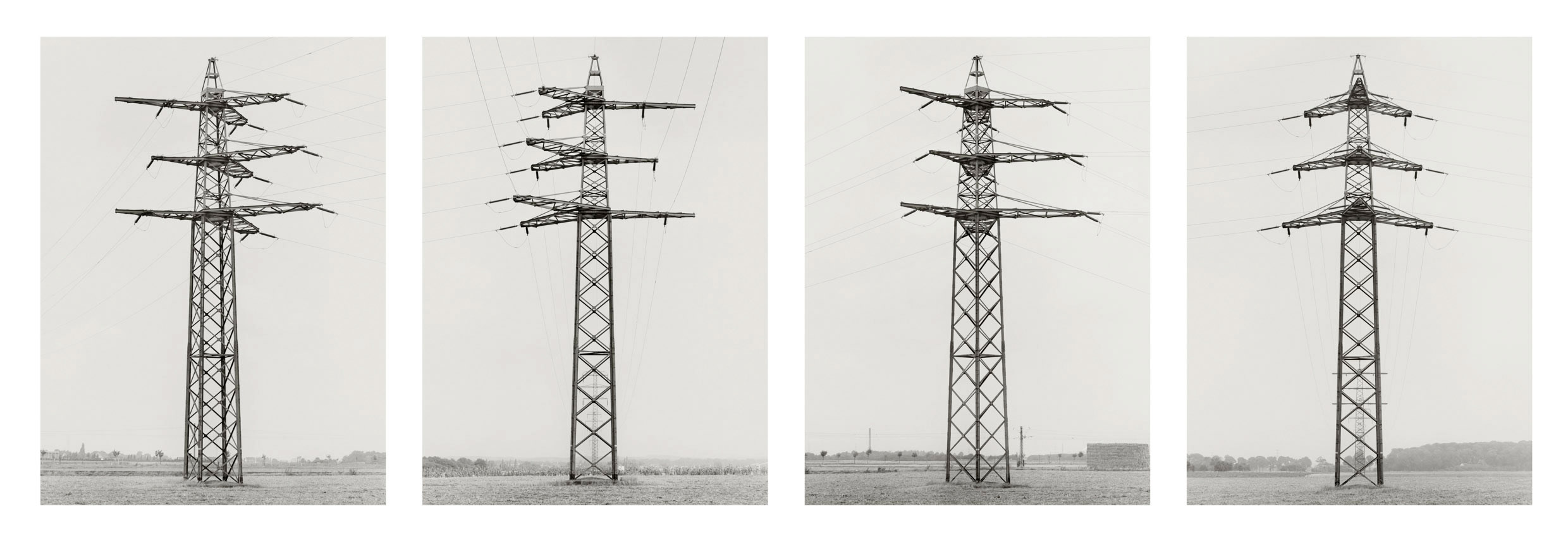
 

Bernd and Hilla Becher (German, 1931-2007/1934-2015) 'Hochspannungsmast, Düsseldorf, D' (High-voltage pylon, Düsseldorf, Germany) 1969


Bernd and Hilla Becher (German, 1931-2007/1934-2015)
Hochspannungsmast, Düsseldorf, D (High-voltage pylon, Düsseldorf, Germany)
1969
4 gelatin silver prints
Each approx. 41.3 x 30.4cm
© Estate Bernd & Hilla Becher, vertreten durch Max Becher
Courtesy Die Photographische Sammlung/SK Stiftung Kultur – Bernd und Hilla Becher Archiv, Köln
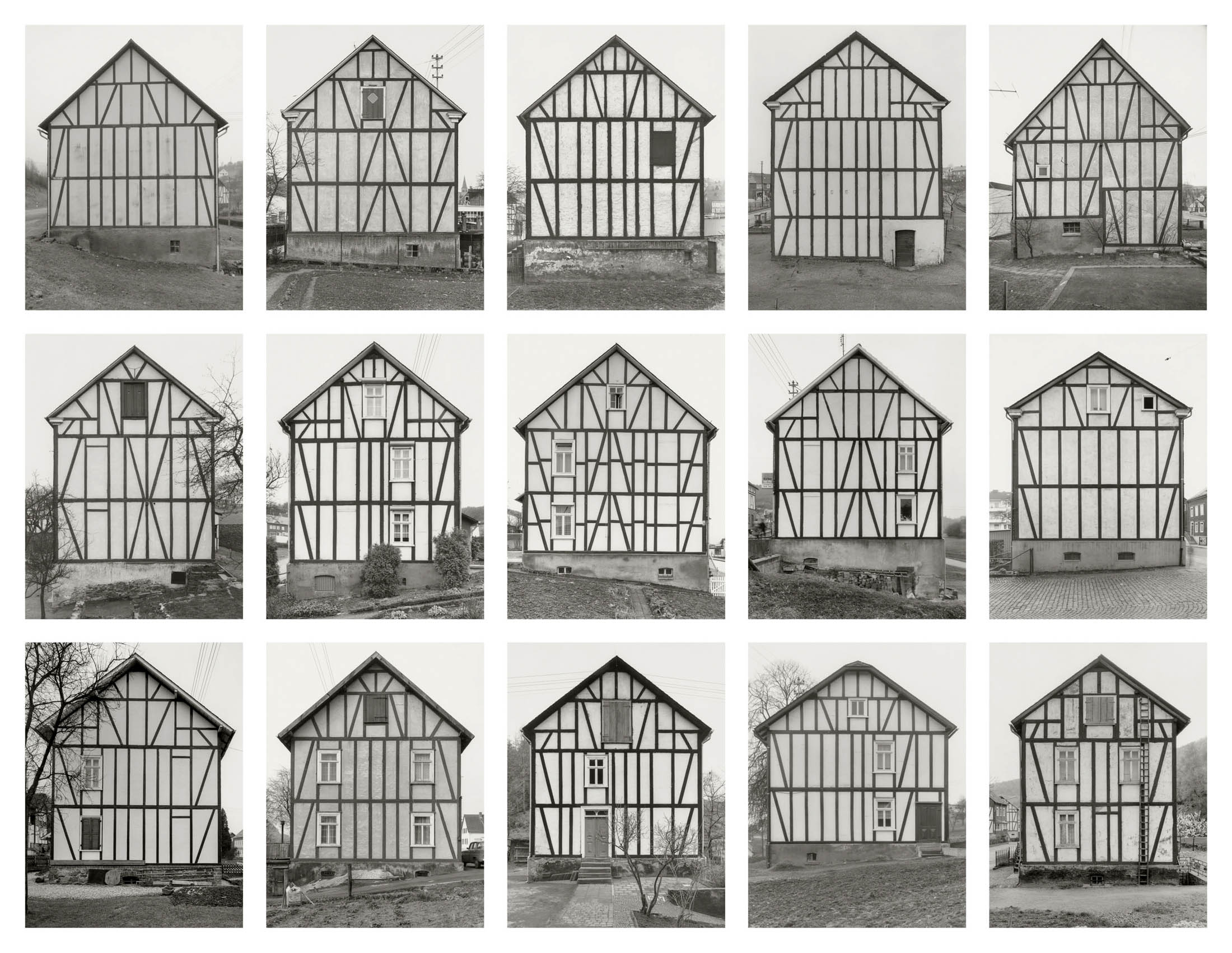
 

Bernd and Hilla Becher (German, 1931-2007/1934-2015) 'Giebelseiten Fachwerk, Siegerland D' (Gable sides half-timbered, Siegerland D) 1959-1973


Bernd and Hilla Becher (German, 1931-2007/1934-2015)
Giebelseiten Fachwerk, Siegerland D (Gable sides half-timbered, Siegerland D)
1959-1973
15 gelatin silver prints
Each approx. 40 x 31cm
© Estate Bernd & Hilla Becher, vertreten durch Max Becher
Courtesy Museum für Gegenwartskunst Siegen und Die Photographische Sammlung/SK Stiftung Kultur, Köln

The first subjects Bernd and Hilla Becher photographed on their nearly fifty-year journey to documenting industrial buildings were half-timbered houses in the Siegerland region. For Bernd Becher, it was natural to photograph these “poor people’s houses,” as Hilla called them, from his childhood and youth. For the film “The Photographers Bernd and Hilla Becher,” we attempted to identify the Bechers’ subjects using the book “Siegerland Half-Timbered Houses” by Schirmer/Mosel. We asked locals and showed them the book. Although the Bechers provided the exact address of each house, they were often unrecognisable. Many, being drafty and cold, had been clad with asbestos cement, thus obscuring their exposed timber framing. Their original appearance is preserved only in the Bechers’ photographs.

Text from the Text from the SK Stiftung Kultur Facebook page
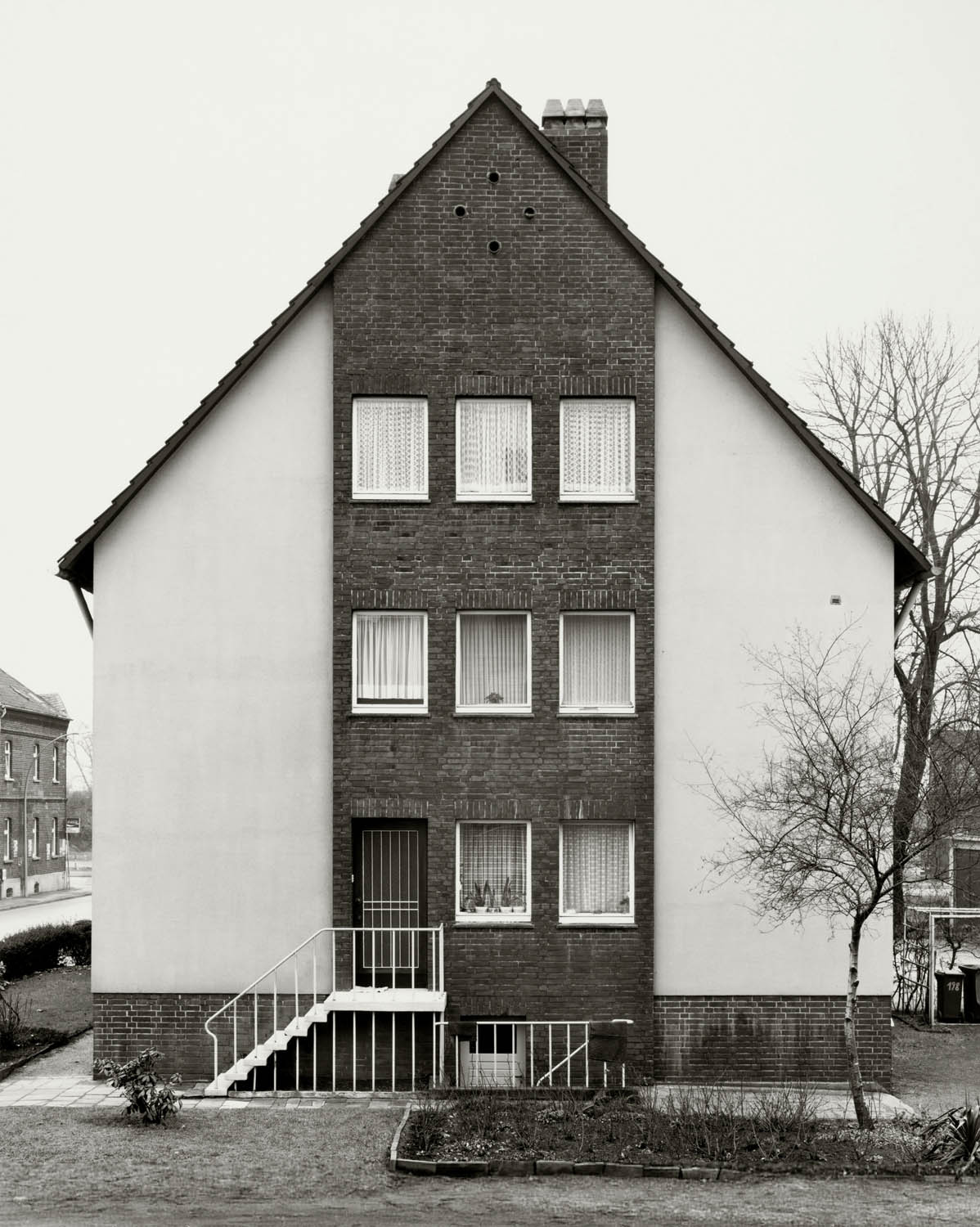
 

Bernd and Hilla Becher (German, 1931-2007/1934-2015) 'Bottrop, D' 1976


Bernd and Hilla Becher (German, 1931-2007/1934-2015)
Bottrop, D
1976
© Estate Bernd & Hilla Becher, vertreten durch Max Becher
Courtesy Die Photographische Sammlung/SK Stiftung Kultur – Bernd und Hilla Becher Archiv, Köln, 2025
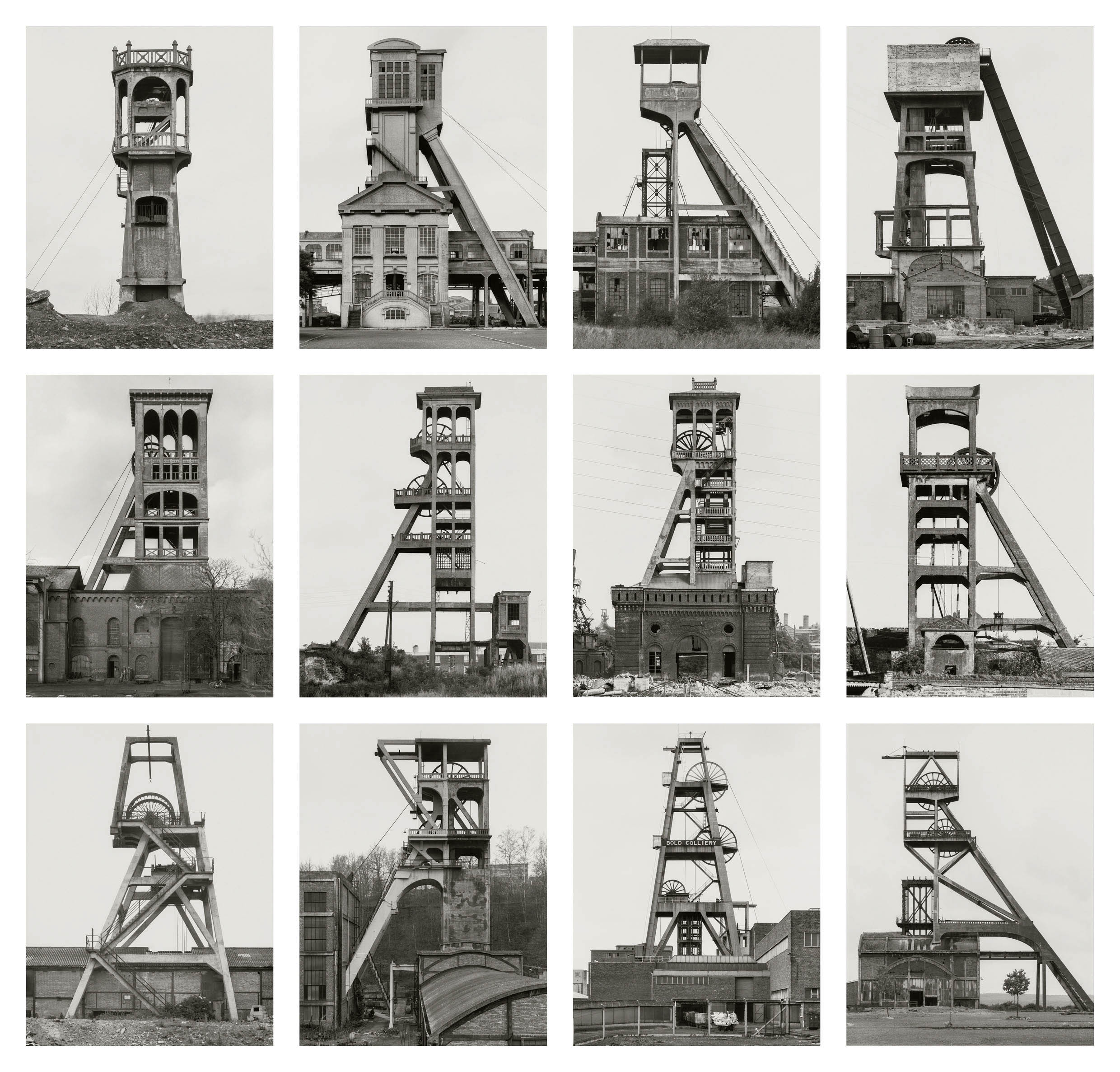
 

Bernd and Hilla Becher (German, 1931-2007/1934-2015) 'Fördertürme' (Winding towers) 1966-1979


Bernd and Hilla Becher (German, 1931-2007/1934-2015)
Fördertürme (Winding towers)
1966-1979
12 gelatin silver print
Each approx. 41 x 31cm
© Estate Bernd & Hilla Becher, vertreten durch Max Becher
Courtesy Die Photographische Sammlung/SK Stiftung Kultur – Bernd und Hilla Becher Archiv, Köln
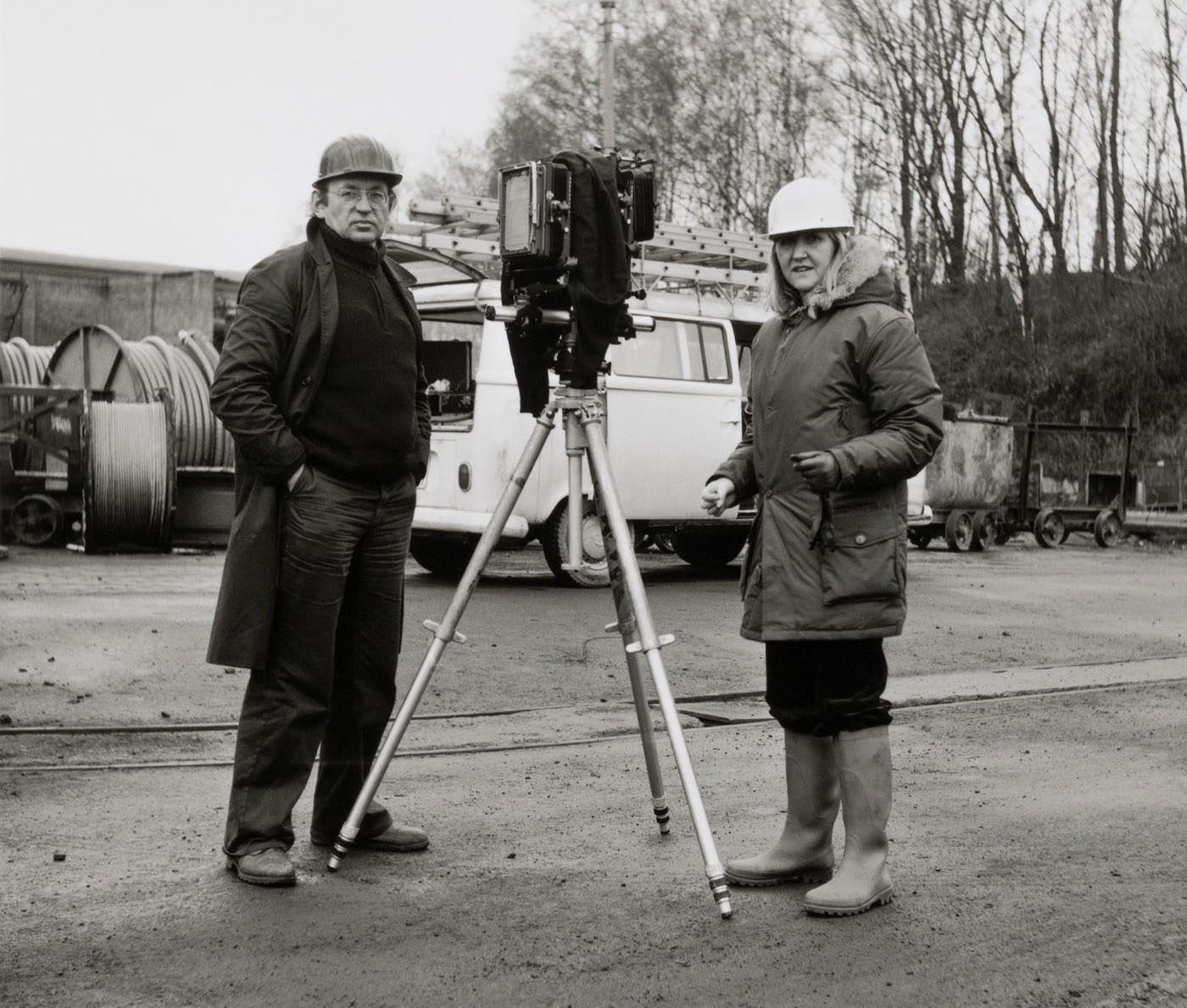
 

Bernd and Hilla Becher (German, 1931-2007/1934-2015) 'auf der Grube Ensdorf, Saarland' (at the Ensdorf mine, Saarland) 1979


Bernd and Hilla Becher (German, 1931-2007/1934-2015)
auf der Grube Ensdorf, Saarland (at the Ensdorf mine, Saarland)
1979
Gelatin silver print
12 x 14.1cm
© Estate Bernd & Hilla Becher, vertreten durch Max Becher
Courtesy Die Photographische Sammlung/SK Stiftung Kultur – Bernd und Hilla Becher Archiv, Köln


The artist couple Bernd and Hilla Becher (1931-2007/1934-2015) set a benchmark in the history of photography with their work. Beginning in 1959, they collaborated almost continuously for decades on a joint oeuvre, developed across Germany, the Benelux countries, the United Kingdom, France, Italy, the United States, and Canada. Their artistic style, characterised by a precise, documentary visual language and methodical systematisation, resonated significantly with movements such as Minimal Art and Conceptual Art. Against the backdrop of New Objectivity and inspired by 19th-century documentary photography, they created a visual grammar whose influence remains palpable in contemporary photography.

For the first time in Europe, Die Photographische Sammlung/SK Stiftung Kultur presents an extensive retrospective featuring over 300 original black-and-white photographs and complementary exhibits, showcasing the formal and thematic breadth and depth of Bernd and Hilla Becher’s work. The exhibition centers on the themes and methods developed by the Bechers: consistent methodical approaches to the photographic motif that evolved and were variably applied over decades. The exhibition explores how these methods emerged, how they developed, and how they reflected the Bechers’ perspective on the different shapes, functions, and integration of industrial buildings into the landscape.

Rare early works from both artists – created between the 1950s and 1970s – are on view, many for the first time. These pieces provide insight into the evolution of their shared aesthetic.

Room 2 is dedicated to the book Anonyme Skulpturen. Eine Typologie technischer Bauten (Anonymous Sculptures. A Typology of Technical Constructions), 1970, considered the foundation of their work. This publication systematically catalogued industrial structures and remains a key reference point. Quoted texts on the function of the objects and original prints illuminate its significance within their oeuvre.

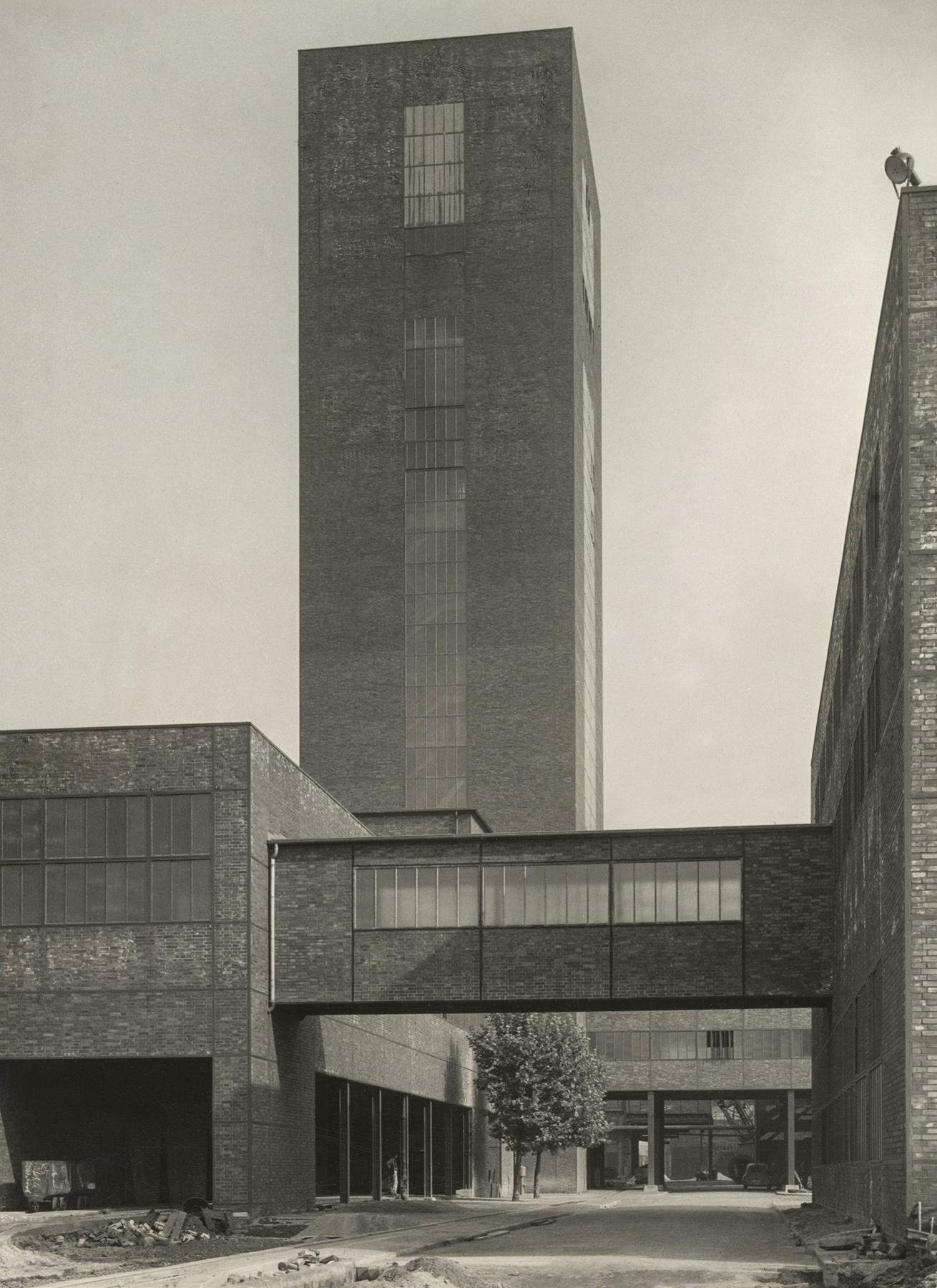
Industrial Landscapes and photographs of entire sites form another focus and demonstrate that the Bechers did not merely document isolated buildings, but also functional and spatial relationships. Featured works include views of the Zollern 2 coal mine in Dortmund (published 1977) and the Ewald Fortsetzung mine in Recklinghausen (1982-1985).

The exhibition also includes “portraits” of residential and settlement houses from the Ruhr region – especially from the post-war era – reflecting the everyday life and environment of industrial workers. A framework house from the Siegerland region is used to show how a single subject can take on different meanings depending on presentation and context.

“Sequences” or “unfoldings” are illustrated using various building groups, presenting structures from multiple perspectives, so that a sculptural image of the motifs is created.

Lastly, the exhibition presents typologies – photographic series of coal bunkers, grain silos, winding and water towers, blast furnaces, and cooling towers. These highlight how the Bechers used specific representational strategies, systematic arrangement, and variation to achieve artistic expression. Created between the 1960s and early 2000s across different countries, the works powerfully demonstrate the visual grammar developed by the Bechers.

A kind of “cinematic epilogue” is provided by a video created by Max Becher, who accompanied his parents on a work trip to Ohio in 1987, offering an evocative glimpse into their working process.

The works are drawn from the Bernd and Hilla Becher Archive at Die Photographische Sammlung/SK Stiftung Kultur and the Bernd & Hilla Becher Studio in Düsseldorf, directed by Max Becher. Additional loans are provided by Sprüth Magers and the LVR-Landesmuseum Bonn.

A catalogue will accompany the exhibition, published by Schirmer/Mosel Verlag, Munich, with texts by Max Becher, Gabriele Conrath-Scholl, Marianne Kapfer, and Urs Stahel. (Will be released in early November.)

Press release from Die Photographische Sammlung/SK Stiftung Kultur
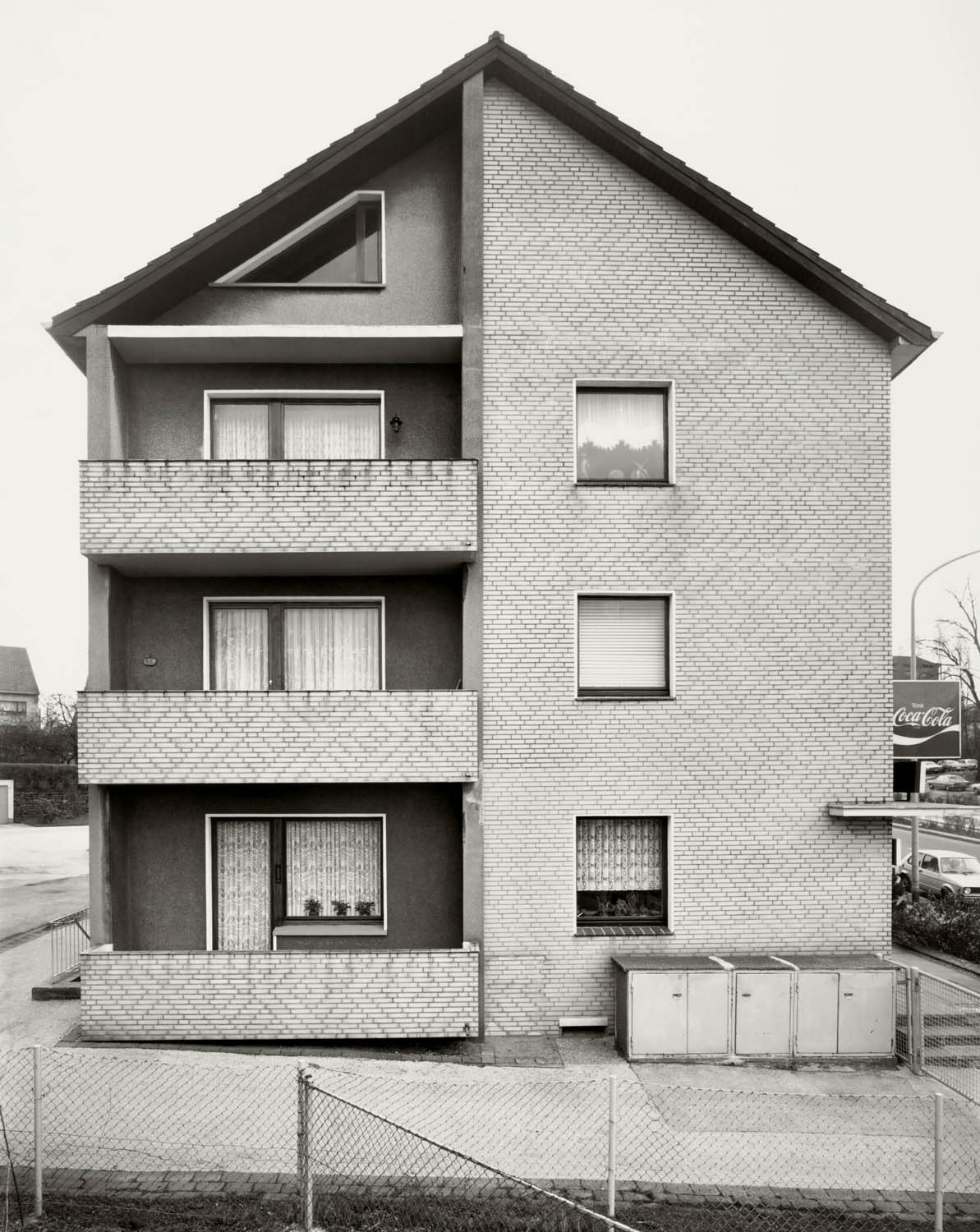
 

Bernd and Hilla Becher (German, 1931-2007/1934-2015) 'Essen-Schönebeck, D' 1981


Bernd and Hilla Becher (German, 1931-2007/1934-2015)
Essen-Schönebeck, D
1981
© Estate Bernd & Hilla Becher, vertreten durch Max Becher
Courtesy Die Photographische Sammlung/SK Stiftung Kultur – Bernd und Hilla Becher Archiv, Köln
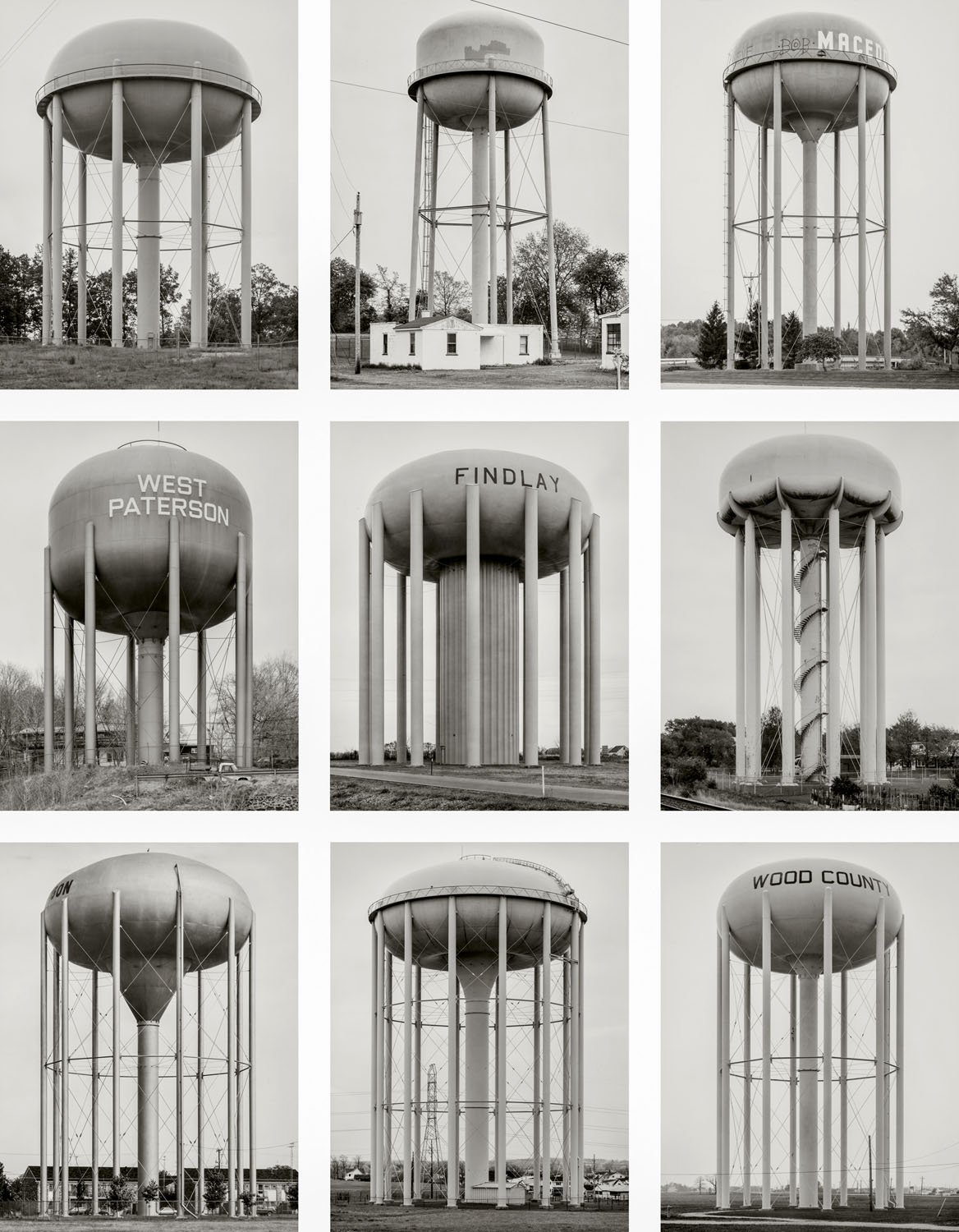
 

Bernd and Hilla Becher (German, 1931-2007/1934-2015) 'Wassertürme, USA' (Water towers, USA) 1974-1983


Bernd and Hilla Becher (German, 1931-2007/1934-2015)
Wassertürme, USA (Water towers, USA)
1974-1983
Gelatin silver prints
© Estate Bernd & Hilla Becher, vertreten durch Max Becher
Courtesy Die Photographische Sammlung/SK Stiftung Kultur – Bernd und Hilla Becher Archiv, Köln, 2025
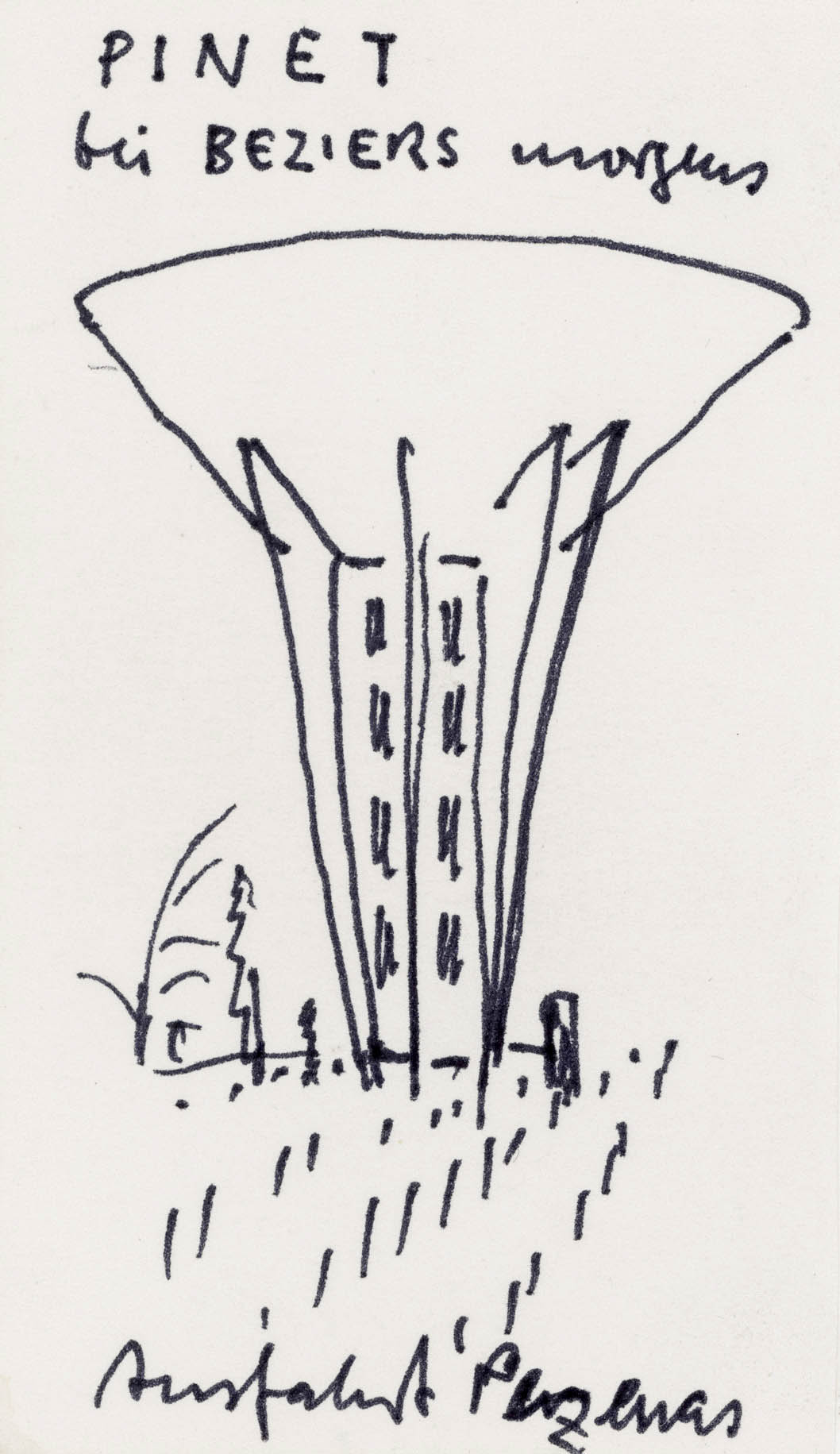
 

Bernd Becher (German, 1931-2007) 'Untitled (Water tower, Béziers, Hérault, F)' c. 1984


Bernd Becher (German, 1931-2007)
Untitled (Water tower, Béziers, Hérault, F)
c. 1984
Ink on paper
9 x 5.1cm
© Estate Bernd & Hilla Becher, vertreten durch Max Becher
Courtesy Die Photographische Sammlung/SK Stiftung Kultur – Bernd und Hilla Becher Archiv, Köln, 20255
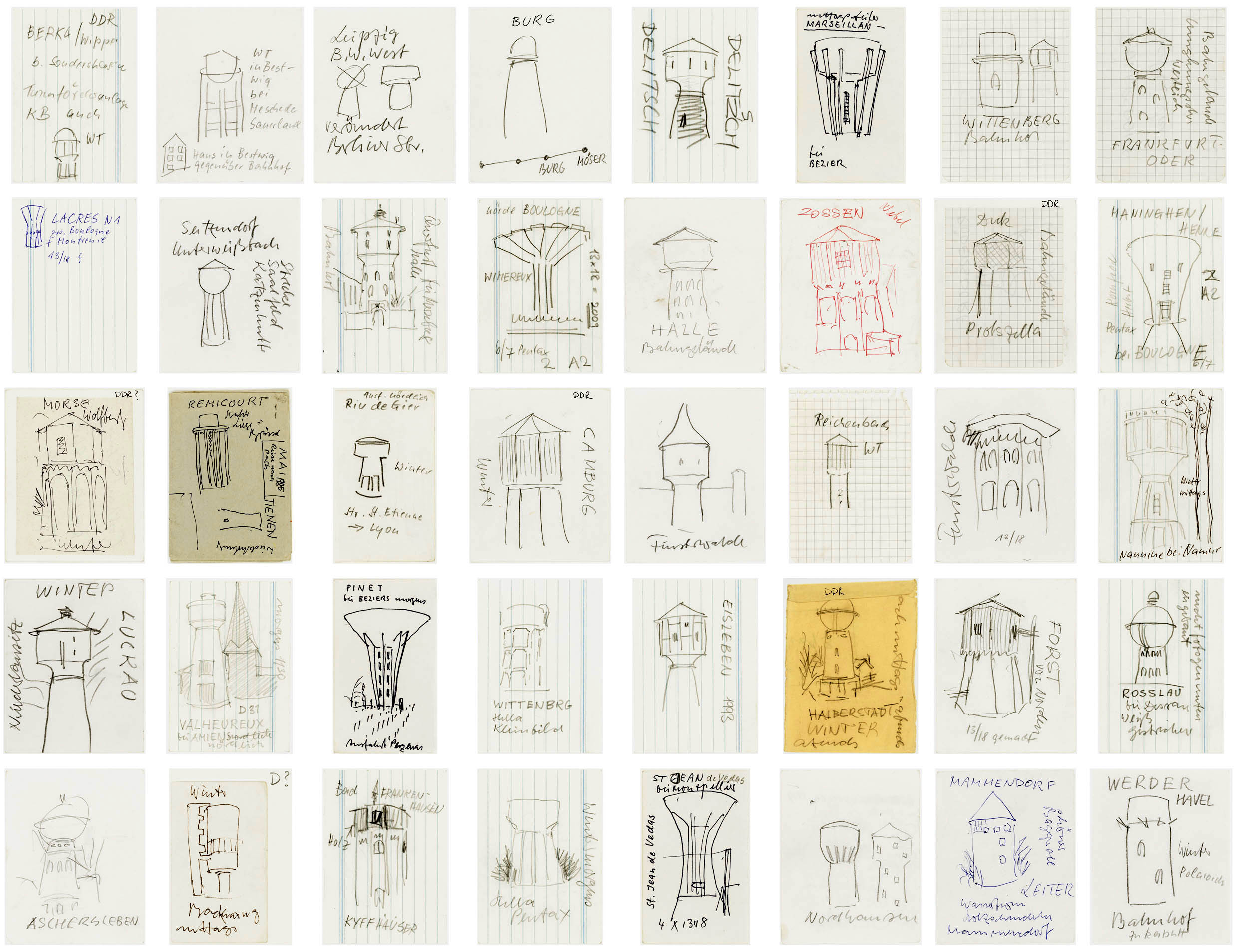
 

Bernd and Hilla Becher (German, 1931-2007/1934-2015) 'Wassertürme' (Water tower) 1960s-1980s


Bernd and Hilla Becher (German, 1931-2007/1934-2015)
Wassertürme (Water tower)
1960s-1980s
Drawings with felt-tip pen, pencil, ballpoint pen on cardboard, paper, index cards
Various sizes around 10.5 x 8.5cm
© Estate Bernd & Hilla Becher, vertreten durch Max Becher
Courtesy Die Photographische Sammlung/SK Stiftung Kultur – Bernd und Hilla Becher Archiv, Köln


Walker Evans (United States of America 1903 - 1975) 'Graveyard and steel mill, Bethlehem, Pennsylvania' 1935


Walker Evans (United States of America 1903-1975)
Graveyard and steel mill, Bethlehem, Pennsylvania
1935
Gelatin silver print
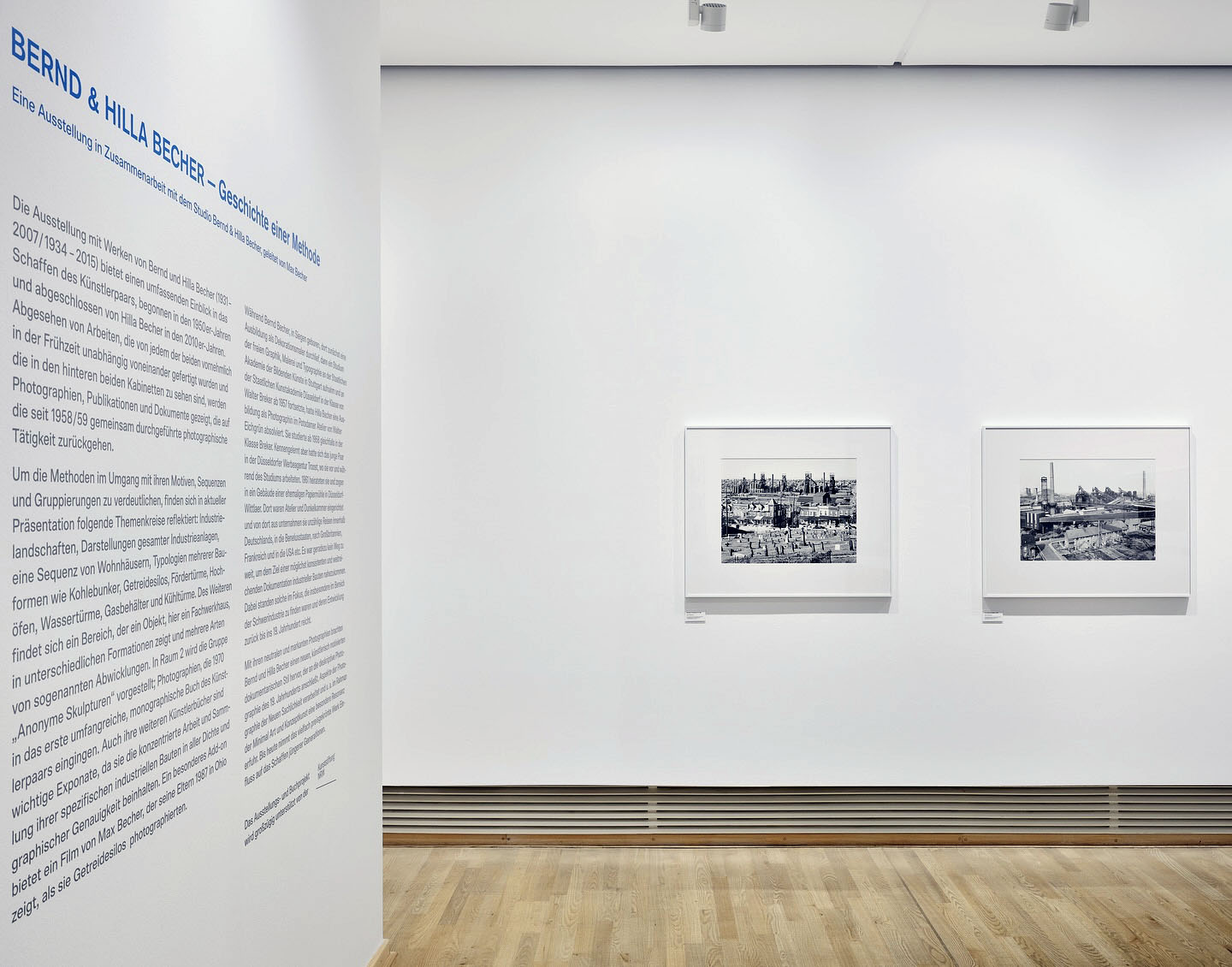
 

Installation view of the exhibition 'Bernd & Hilla Becher – History of a Method' at Die Photographische Sammlung/SK Stiftung Kultur, Cologne September, 2025 – February, 2026 showing at left Bernd and Hilla Becher's photograph 'Bethlehem, Pennsylvania, USA' 1986


Installation view of the exhibition Bernd & Hilla Becher – History of a Method at Die Photographische Sammlung/SK Stiftung Kultur, Cologne showing at left Bernd and Hilla Becher’s photograph Bethlehem, Pennsylvania, USA 1986 (below)
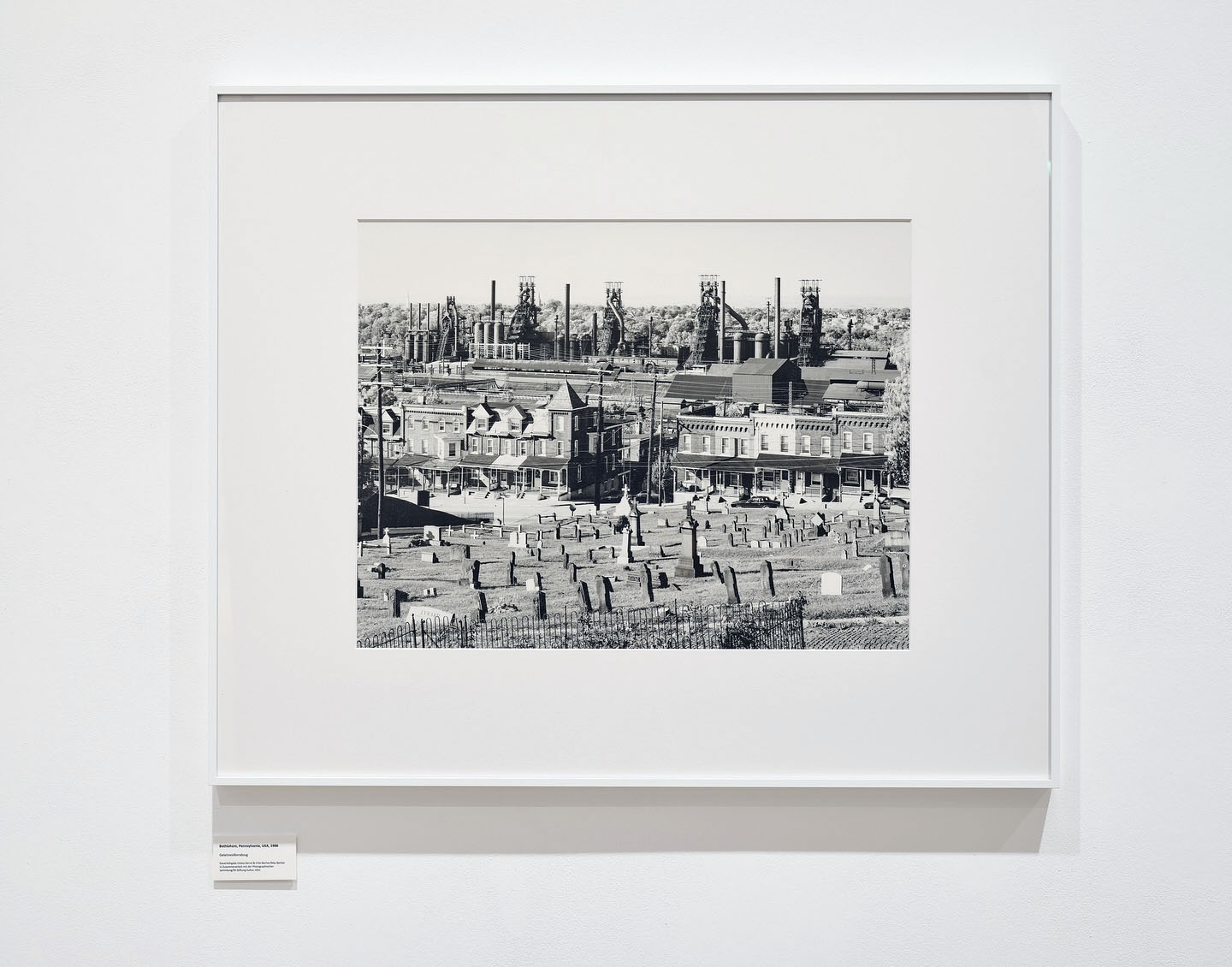
 

Installation view of the exhibition 'Bernd & Hilla Becher – History of a Method' at Die Photographische Sammlung/SK Stiftung Kultur, Cologne September, 2025 – February, 2026 showing Bernd and Hilla Becher's photograph 'Bethlehem, Pennsylvania, USA' 1986


Installation view of the exhibition Bernd & Hilla Becher – History of a Method at Die Photographische Sammlung/SK Stiftung Kultur, Cologne showing Bernd and Hilla Becher’s photograph Bethlehem, Pennsylvania, USA 1986 (below)
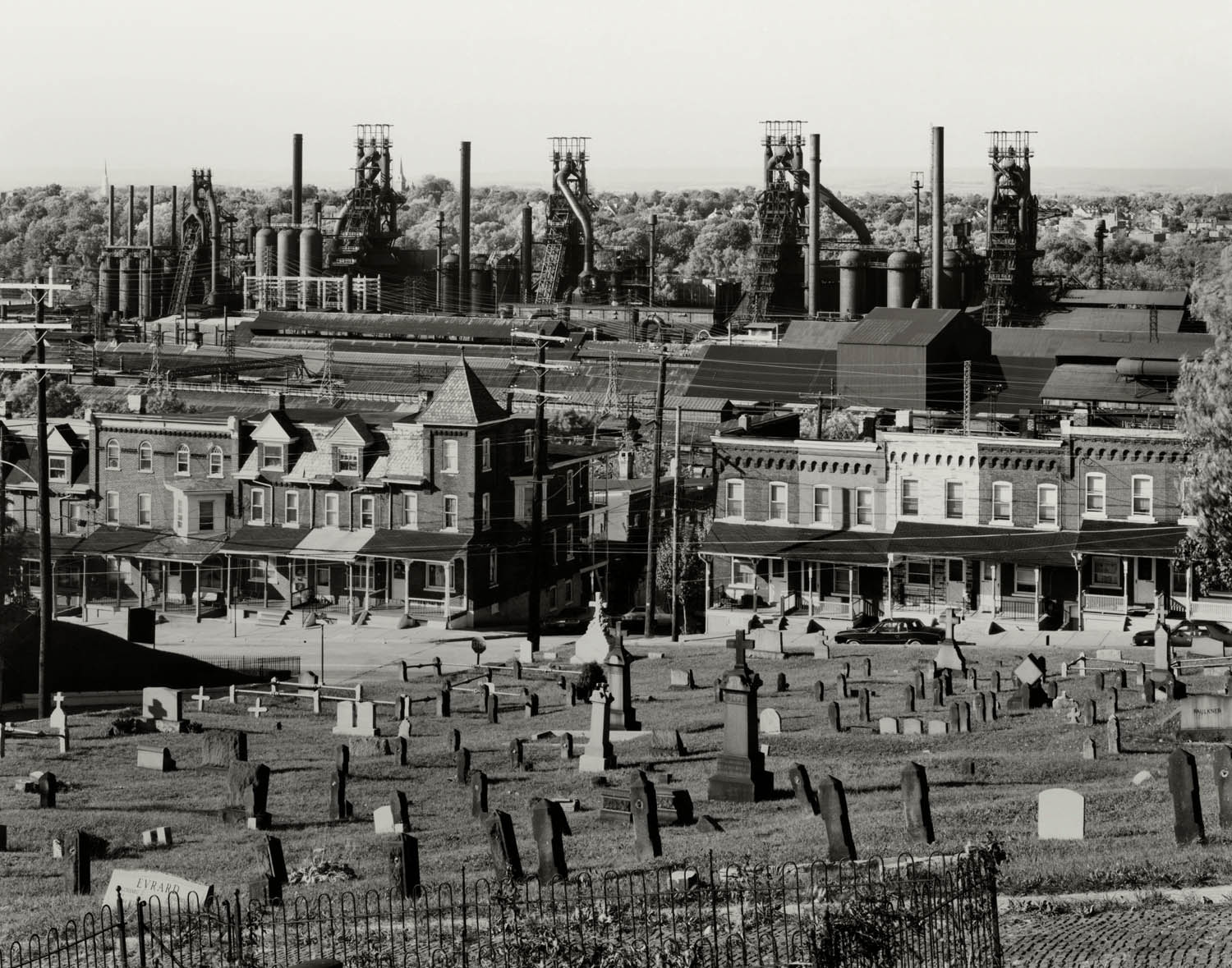
 

Bernd and Hilla Becher (German, 1931-2007/1934-2015) 'Bethlehem, Pennsylvania, USA' 1986


Bernd and Hilla Becher (German, 1931-2007/1934-2015)
Bethlehem, Pennsylvania, USA
1986
Gelatin silver print
46.7 x 60cm
© Estate Bernd & Hilla Becher, vertreten durch Max Becher
Courtesy Die Photographische Sammlung/SK Stiftung Kultur – Bernd und Hilla Becher Archiv, Köln


With their blast furnaces, chimneys, pipes, and conveyor belts, steelworks are less buildings than gigantic machines. They are among the most imposing industrial structures that Bernd and Hilla Becher have photographed since the late 1950s. Anatomically speaking, blast furnaces are like a body without skin, the artist couple wrote in 1990: excessively high temperatures, too much pressure, too many gases make cladding the steel shell impossible; they are nothing but function. In Bethlehem, Pennsylvania, the enormous work practically hangs over the town. Photographed from an elevated vantage point (similar to the one Walker Evans had chosen in 1935), the blast furnaces, houses, and the cemetery – work, life, death – are compressed into an inescapable proximity. Space compressed, time compressed.

Dr. Maria Müller-Schareck, art historian and member of the PS/SK management team

Text from the SK Stiftung Kultur Die Photographische Sammlung Instagram page
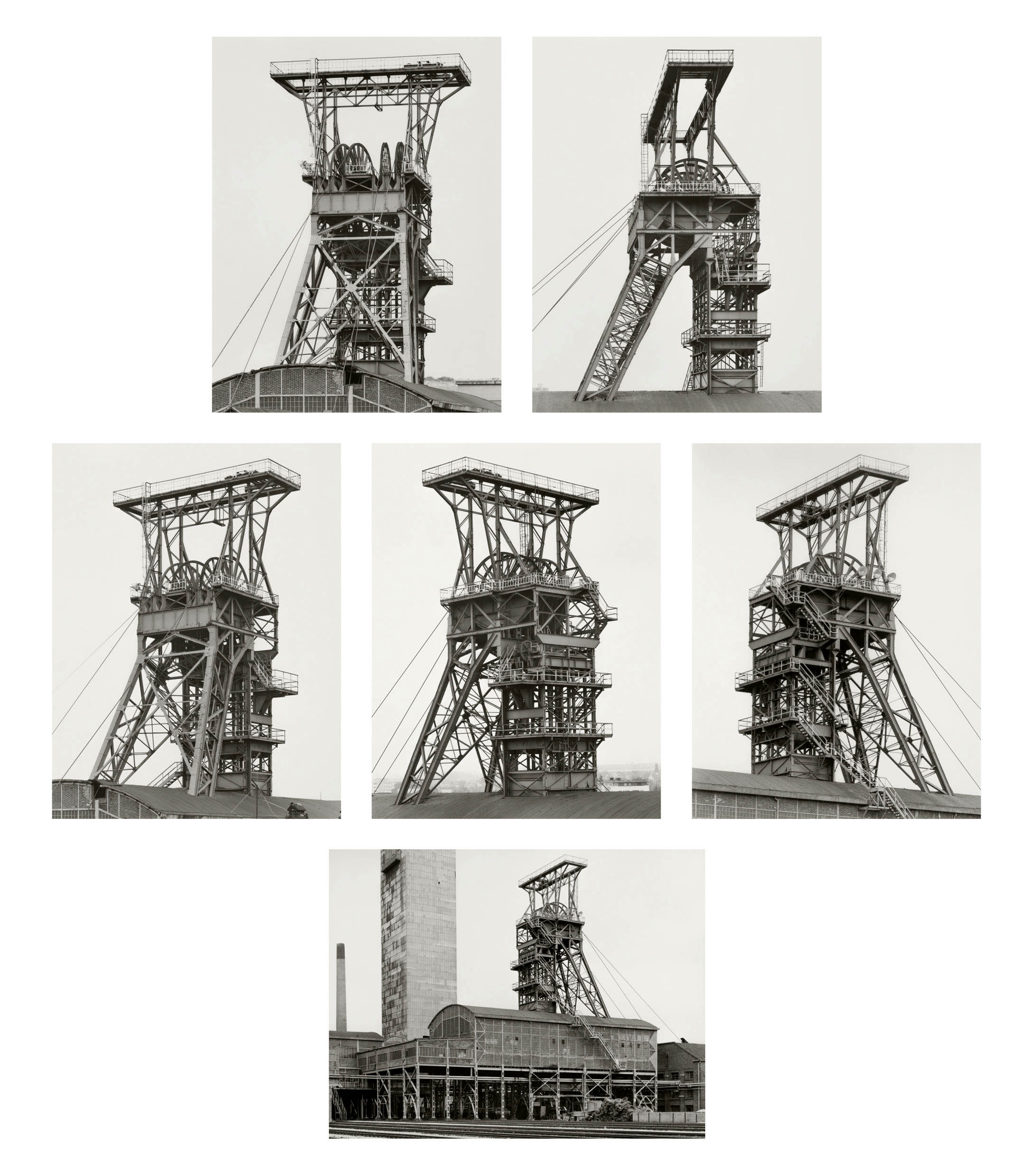
 

Bernd and Hilla Becher (German, 1931-2007/1934-2015) 'Förderturm, Schacht 2' (Winding tower, shaft 2) 1982


Bernd and Hilla Becher (German, 1931-2007/1934-2015)
Förderturm, Schacht 2 (Winding tower, shaft 2)
1982
6 gelatin silver prints,
Each approx. 40 x 31cm
© Estate Bernd & Hilla Becher, vertreten durch Max Becher
Courtesy Die Photographische Sammlung/SK Stiftung Kultur – Bernd und Hilla Becher Archiv, Köln
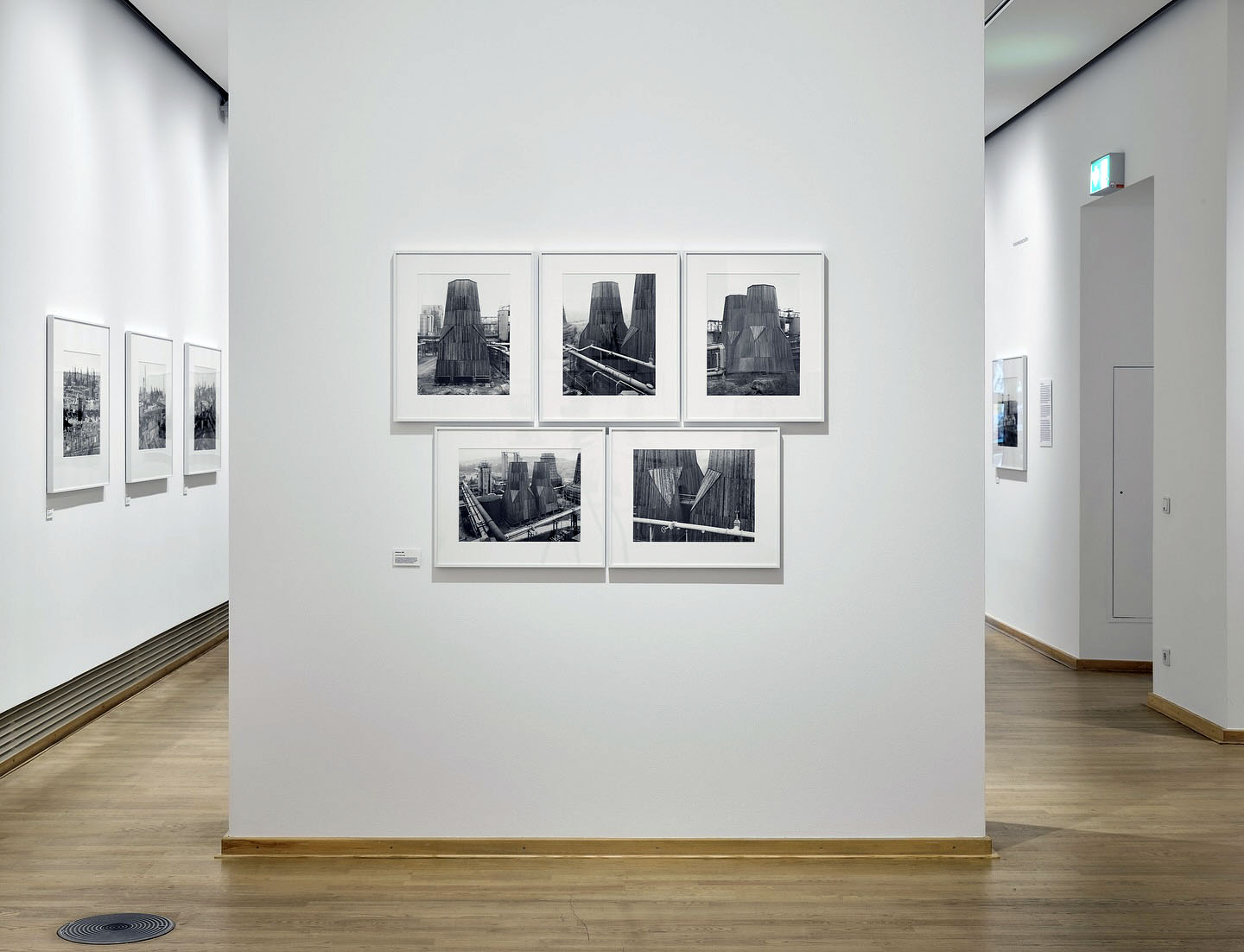
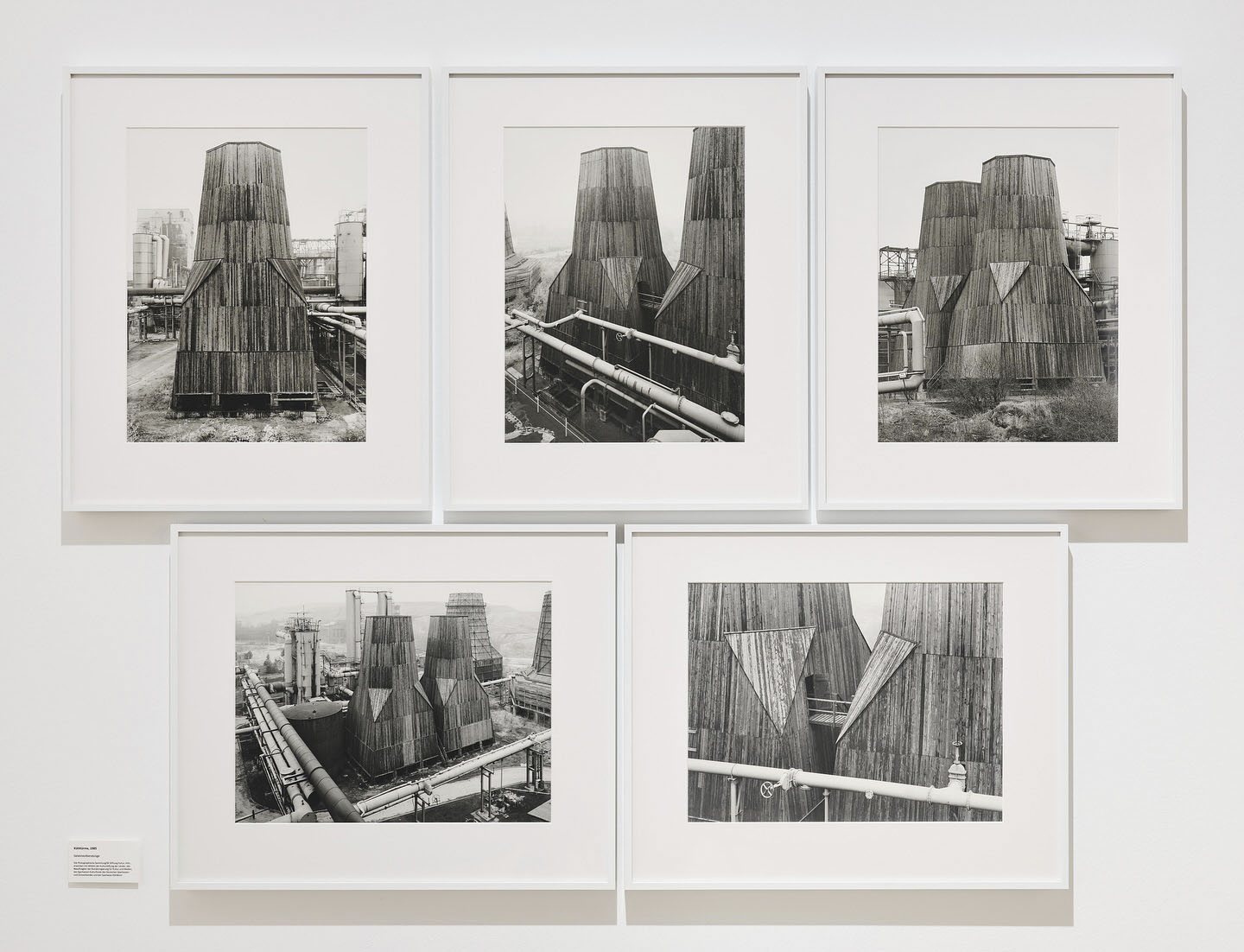
 

Installation view of the exhibition 'Bernd & Hilla Becher – History of a Method' at Die Photographische Sammlung/SK Stiftung Kultur, Cologne September, 2025 – February, 2026 showing Bernd and Hilla Becher's 'Zeche Ewald Fortsetzung, Kühlturm/-türme' (Ewald mine continuation, cooling tower(s)) 1985


Installation views of the exhibition Bernd & Hilla Becher – History of a Method at Die Photographische Sammlung/SK Stiftung Kultur, Cologne showing Bernd and Hilla Becher’s Zeche Ewald Fortsetzung, Kühlturm/-türme (Ewald mine continuation, cooling tower(s)) 1985 (below)


Bernd and Hilla Becher (German, 1931-2007/1934-2015) 'Zeche Ewald Fortsetzung, Kühlturm/-türme' (Ewald mine continuation, cooling tower(s)) 1985


Bernd and Hilla Becher (German, 1931-2007/1934-2015)
Zeche Ewald Fortsetzung, Kühlturm/-türme (Ewald mine continuation, cooling tower(s))
1985
5 gelatin silver prints
Each approx. 40.0 x 31.0cm
© Estate Bernd & Hilla Becher, vertreten durch Max Becher
Courtesy Die Photographische Sammlung/SK Stiftung Kultur – Bernd und Hilla Becher Archiv, Köln


Over the course of their artistic career, Bernd and Hilla Becher documented approximately 200 industrial sites, including the Ewald Fortsetzung coal mine in Recklinghausen, which we are featuring in our exhibition.

These documentations are based on systematic walks through the industrial sites and surrounding areas. A panoramic photograph, often central to each site, provides an overview of the grounds and allows the individual buildings to be located and understood in relation to one another.

The subsequent photographs portray the individual building types, in this case, two cooling towers. The five images in this group clearly demonstrate how Bernd and Hilla Becher approach their subject, photographing the building from different sides and perspectives, and highlighting a specific detail. The aim of this approach was to depict the industrial buildings in a way that is both technically clear and aesthetically pleasing.

Text from the SK Stiftung Kultur Die Photographische Sammlung Instagram page
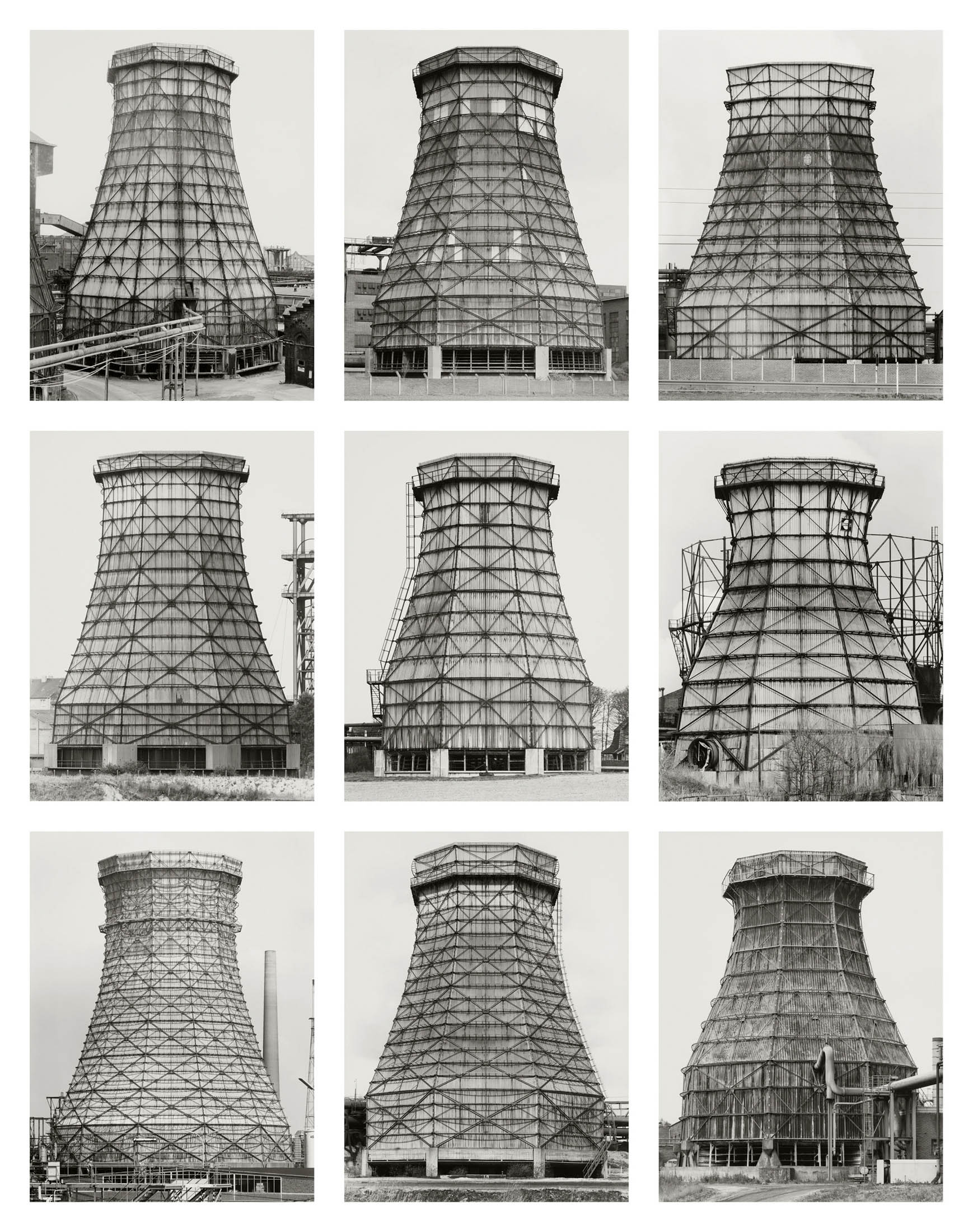
 

Bernd and Hilla Becher (German, 1931-2007/1934-2015) 'Kühltürme' (Cooling towers) 1964-1993


Bernd and Hilla Becher (German, 1931-2007/1934-2015)
Kühltürme (Cooling towers)
1964-1993
9 gelatin silver prints
Each approx. 41 x 31cm
© Estate Bernd & Hilla Becher, vertreten durch Max Becher
Courtesy Die Photographische Sammlung/SK Stiftung Kultur – Bernd und Hilla Becher Archiv, Köln
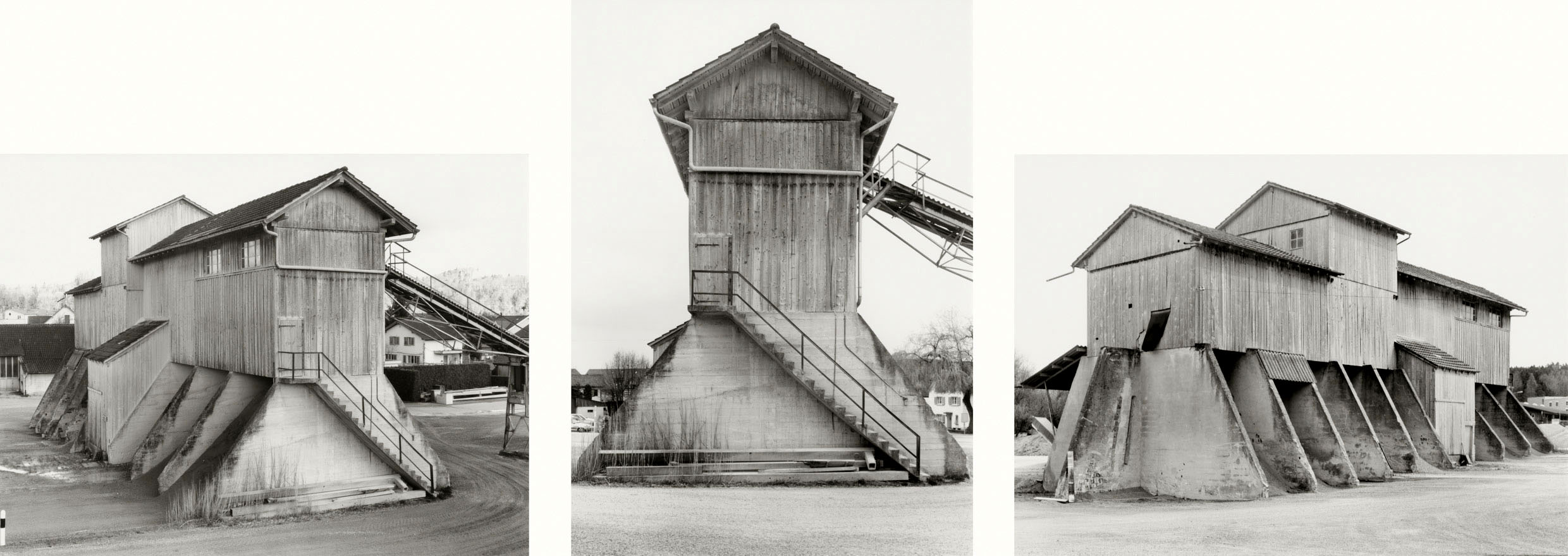
 

Bernd and Hilla Becher (German, 1931-2007/1934-2015) 'Kies- und Schotterwerk, Oberbüren/St. Gallen, CH' (Gravel and crushed stone works, Oberbüren/St. Gallen, CH) 2001


Bernd and Hilla Becher (German, 1931-2007/1934-2015)
Kies- und Schotterwerk, Oberbüren/St. Gallen, CH (Gravel and crushed stone works, Oberbüren/St. Gallen, CH)
2001
3 gelatin silver print
Each approx. 30 x 40cm
© Estate Bernd & Hilla Becher, vertreten durch Max Becher
Courtesy Sprüth Magers
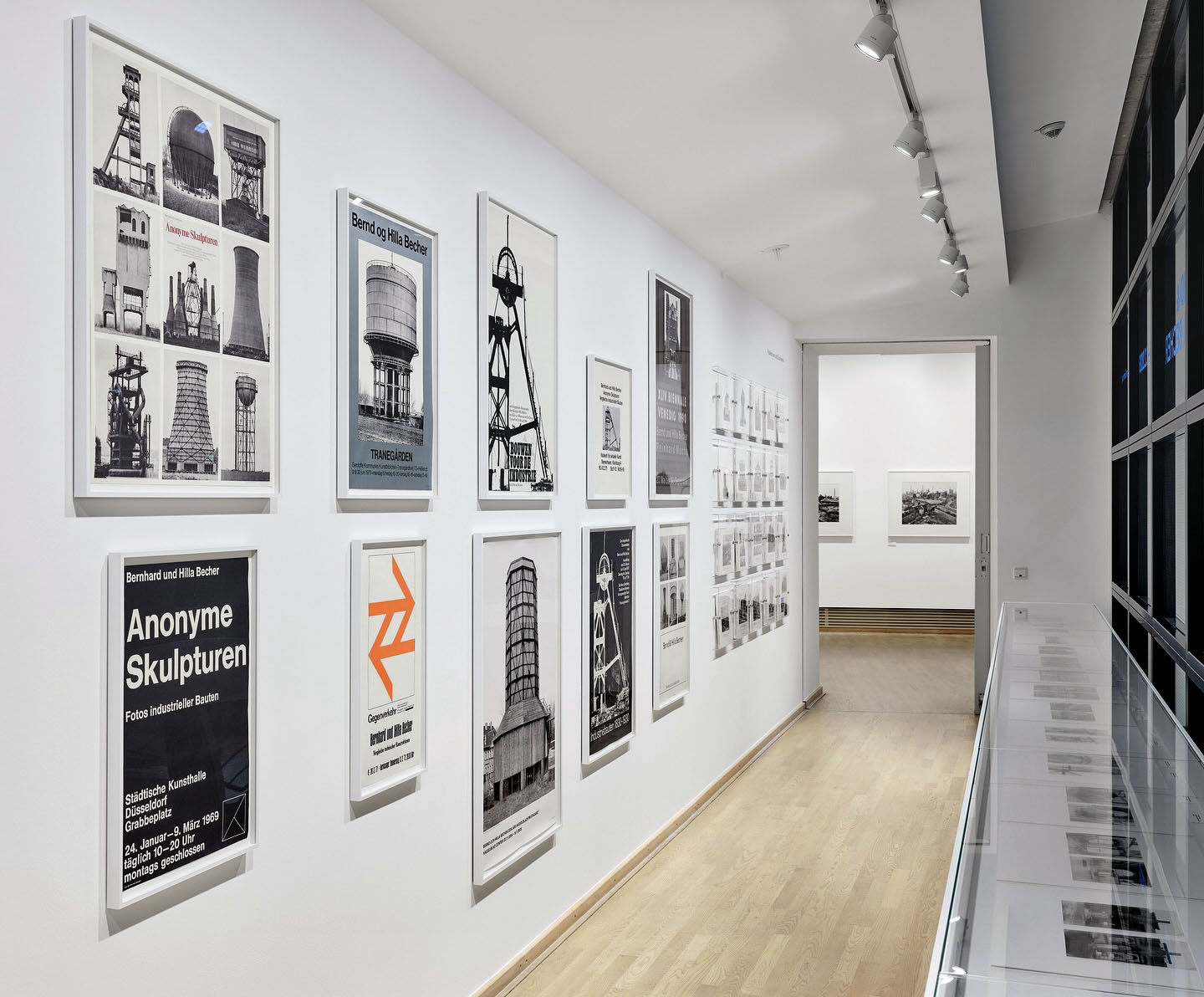
 

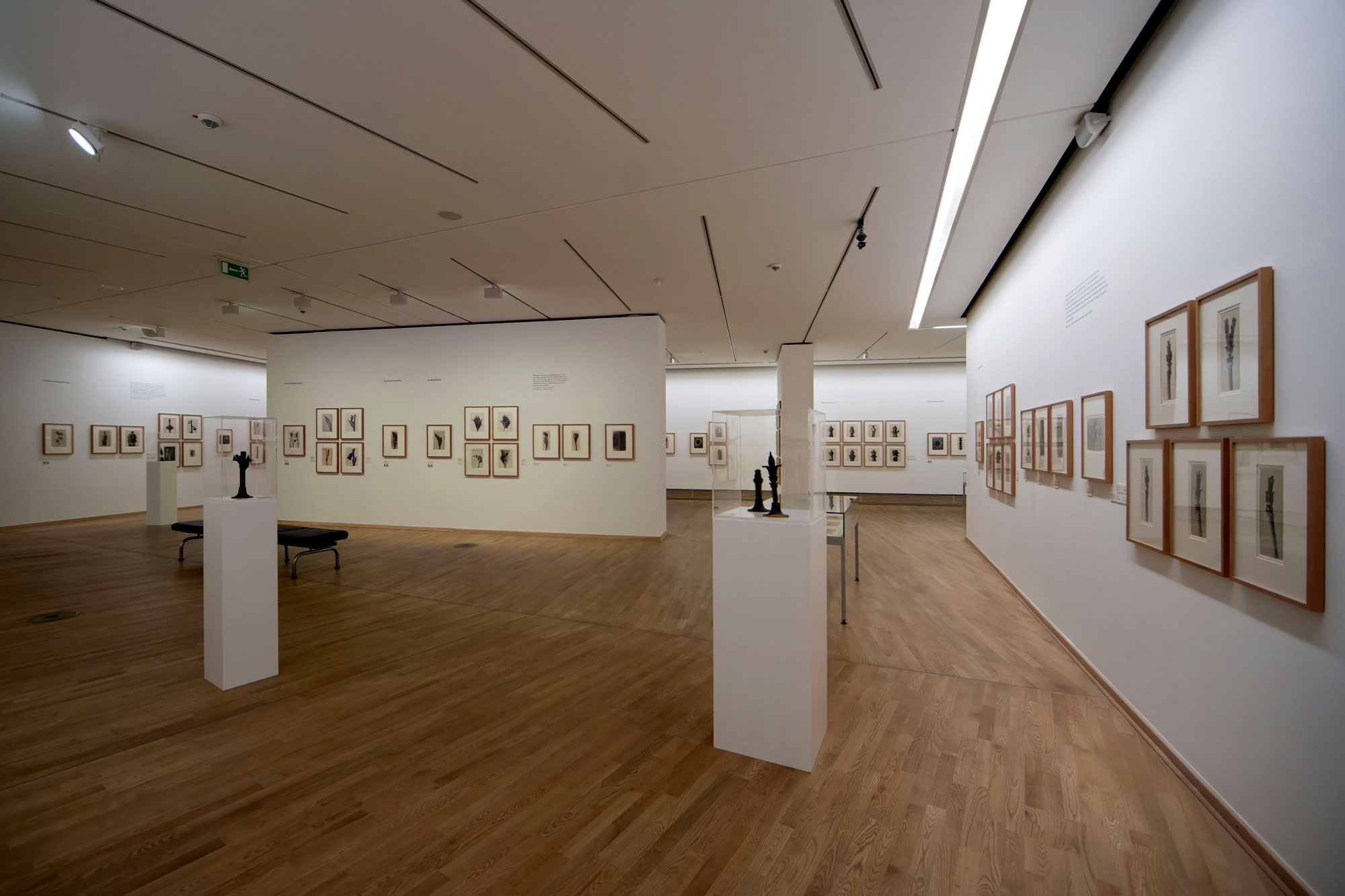
Installation view of the exhibition 'Bernd & Hilla Becher – History of a Method' at Die Photographische Sammlung/SK Stiftung Kultur, Cologne September, 2025 – February, 2026


Installation view of the exhibition Bernd & Hilla Becher – History of a Method at Die Photographische Sammlung/SK Stiftung Kultur, Cologne September, 2025 – February, 2026


'Bernd & Hilla Becher – History of a Method' book cover


Bernd & Hilla Becher – History of a Method book cover


Die Photographische Sammlung/SK Stiftung Kultur
Im Mediapark 7, 50670 Cologne
Phone: +49 221/888 95 300

Opening hours: Daily (except Wednesdays): 2pm – 7pm
Die Photographische Sammlung/SK Stiftung Kultur website

LIKE ART BLART ON FACEBOOK

Back to top

Exhibition: ‘Tata Ronkholz: Designed World. A Retrospective’ at the Die Photographische Sammlung/SK Stiftung Kultur, Cologne in collaboration with VAN HAM Art Estate and Stadtmuseum Düsseldorf

Exhibition dates: 14th March – 13th July, 2025


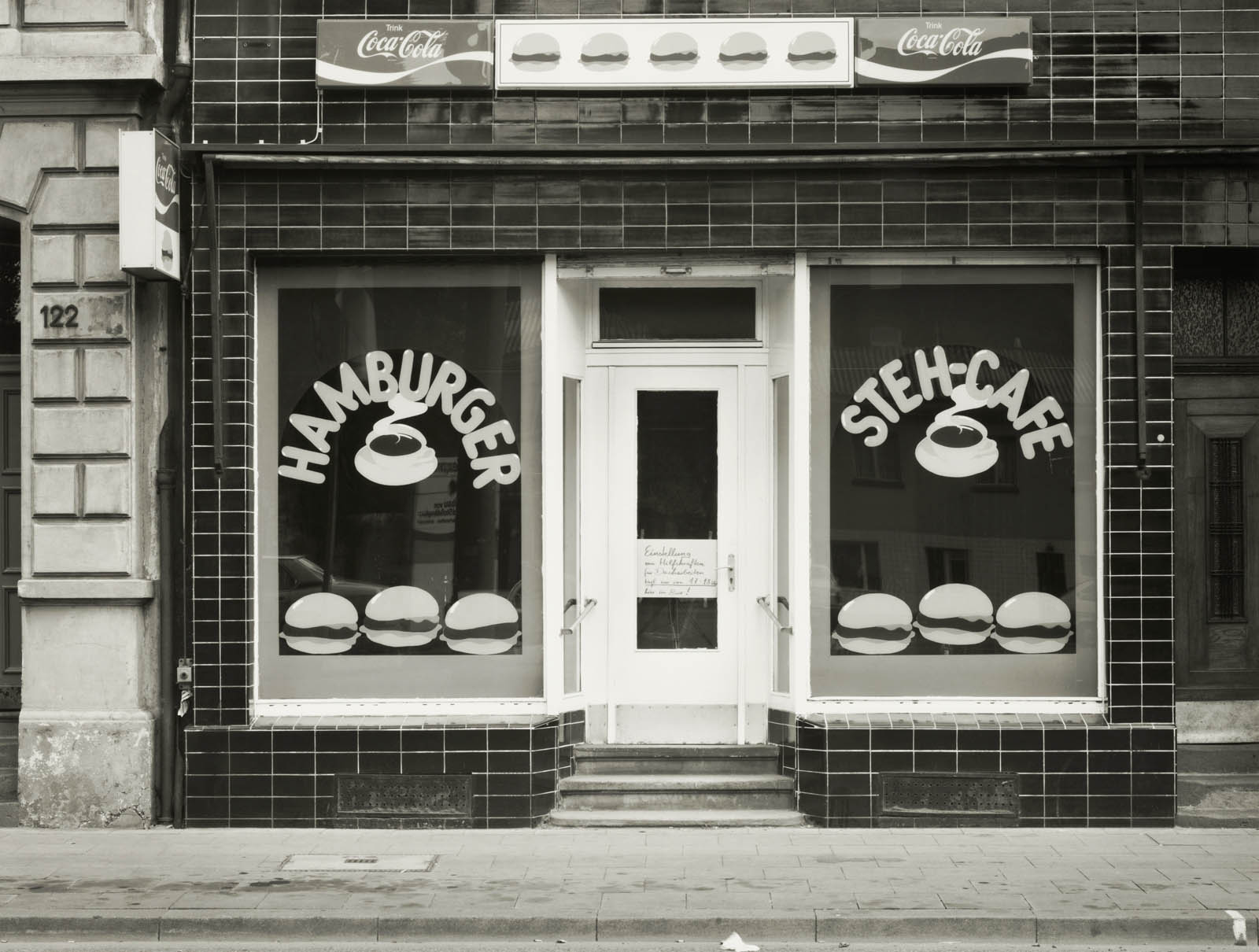
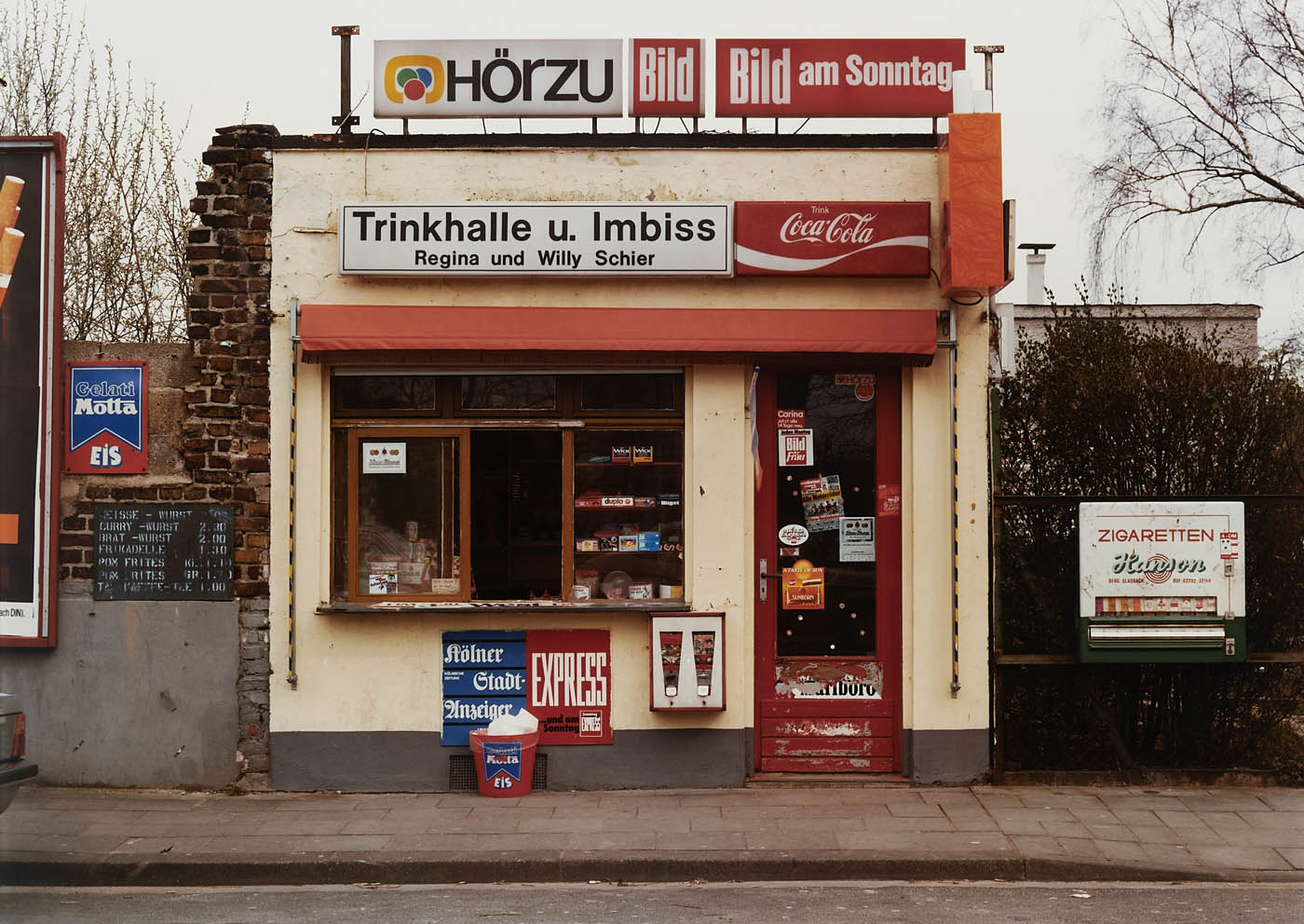
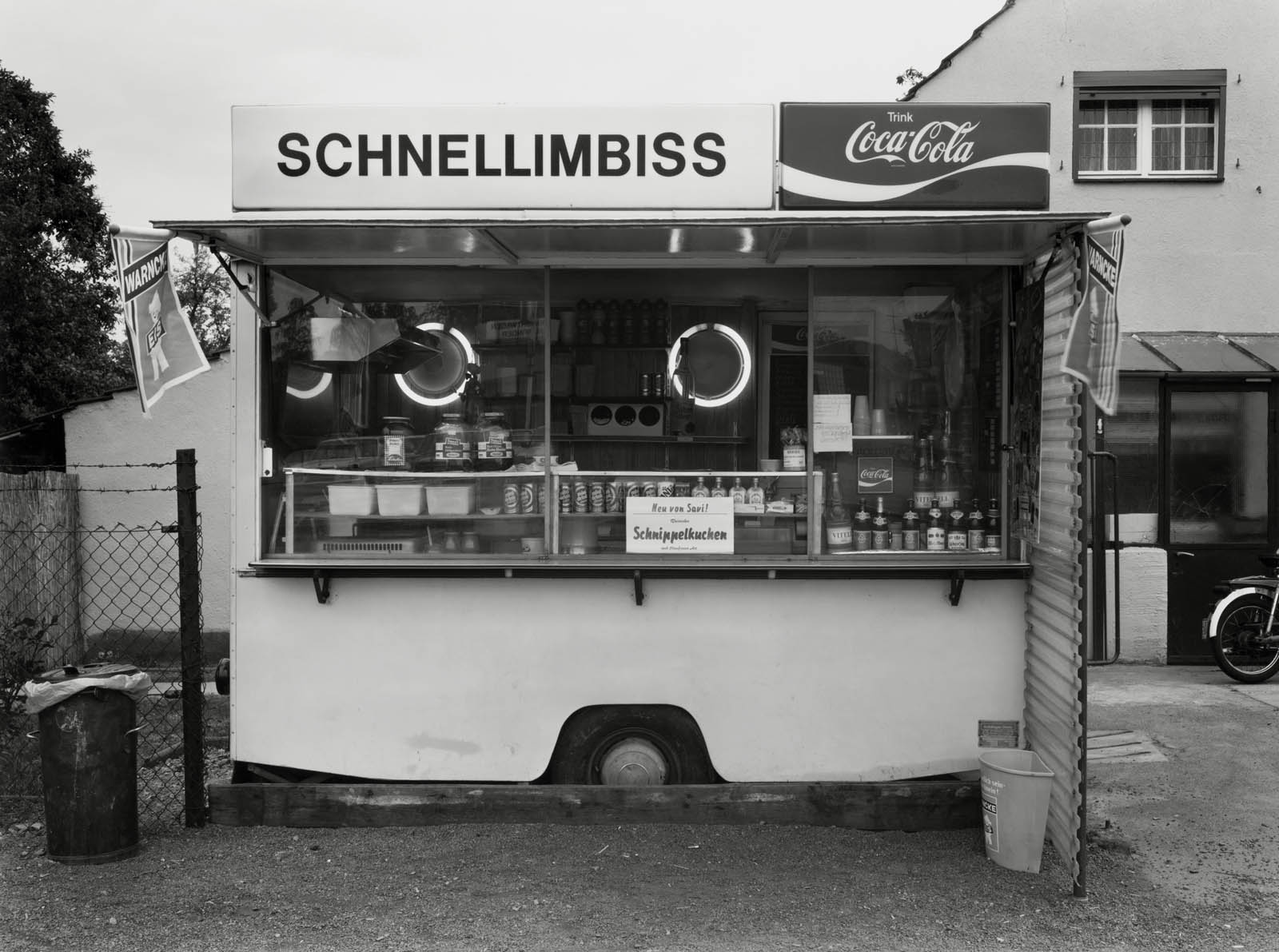
Tata Ronkholz (German, 1940-1997) 'Imbissstube Düsseldorf-Rath, Linienstraße 141 (Snack bar Düsseldorf-Rath, Linienstraße 141)' 1977


Tata Ronkholz (German, 1940-1997)
Imbissstube Düsseldorf-Rath, Linienstraße 141 (Snack bar Düsseldorf-Rath, Linienstraße 141)
1977
© VAN HAM Art Estate: Tata Ronkholz, 2025


The work of Tata Ronkholz belongs to the Düsseldorf School of Photography which refers to a group of photographers who studied at the Kunstakademie Düsseldorf in the mid 1970s with teachers Bernd and Hiller Becher – whose conceptual rationale for an objective excellence for art photography emerged from the German Neue Sachlichkeit (New Objectivity) modern realist movement of the 1920s.

“This [objective] conceptualisation opens up an expanded terrain of becoming for photography … The work of these artists is vital to an understanding of the place of photography within the observation, construction and taxonomy of contemporary culture and its pictorial representation.”1

Ronkholz’s photographs are images of infinite focus … where the attention of the photographer is tightly controlled as to the conceptualisation of the image and the constructed reality that is being re/presented.

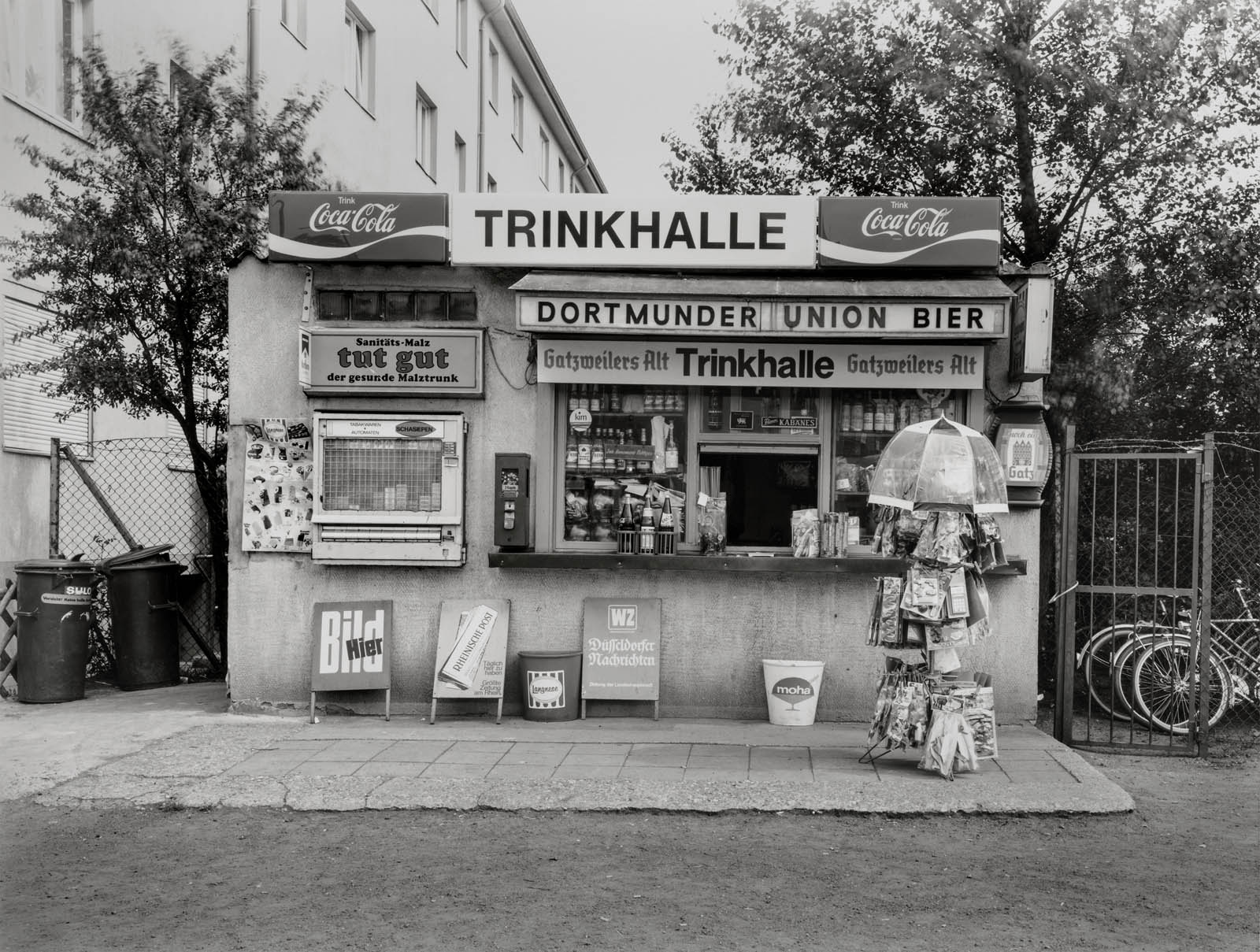
Ronkholz was aware of the importance of these ephemeral structures, the importance of documenting them, these industrial gates, kiosks and small shops, which arise and then are gone. Here today, gone tomorrow (much like life itself). “These often small, sometimes freestanding structures, with their designs, surroundings, product offerings, and advertisements, serve as vivid testaments to everyday culture.”2

And testaments to the transitory nature of contemporary culture.

I love these photographs of everyday things for their clear seeing, their frontality, their directness, which allows the viewer to address a reality which might have passed them by as they walk the streets in a dream.

Look. Awake.

Dr Marcus Bunyan


1/ Marcus Bunyan commenting on the exhibition Photographs Become Pictures. The Becher Class at the Städel Museum, Frankfurt, April – August, 2017

2/ Text from the Die Photographische Sammlung/SK Stiftung Kultur, Cologne website


Many thankx to Die Photographische Sammlung/ SK Stiftung Kultur, Cologne for allowing me to publish the photographs in the posting. Please click on the photographs for a larger version of the image.


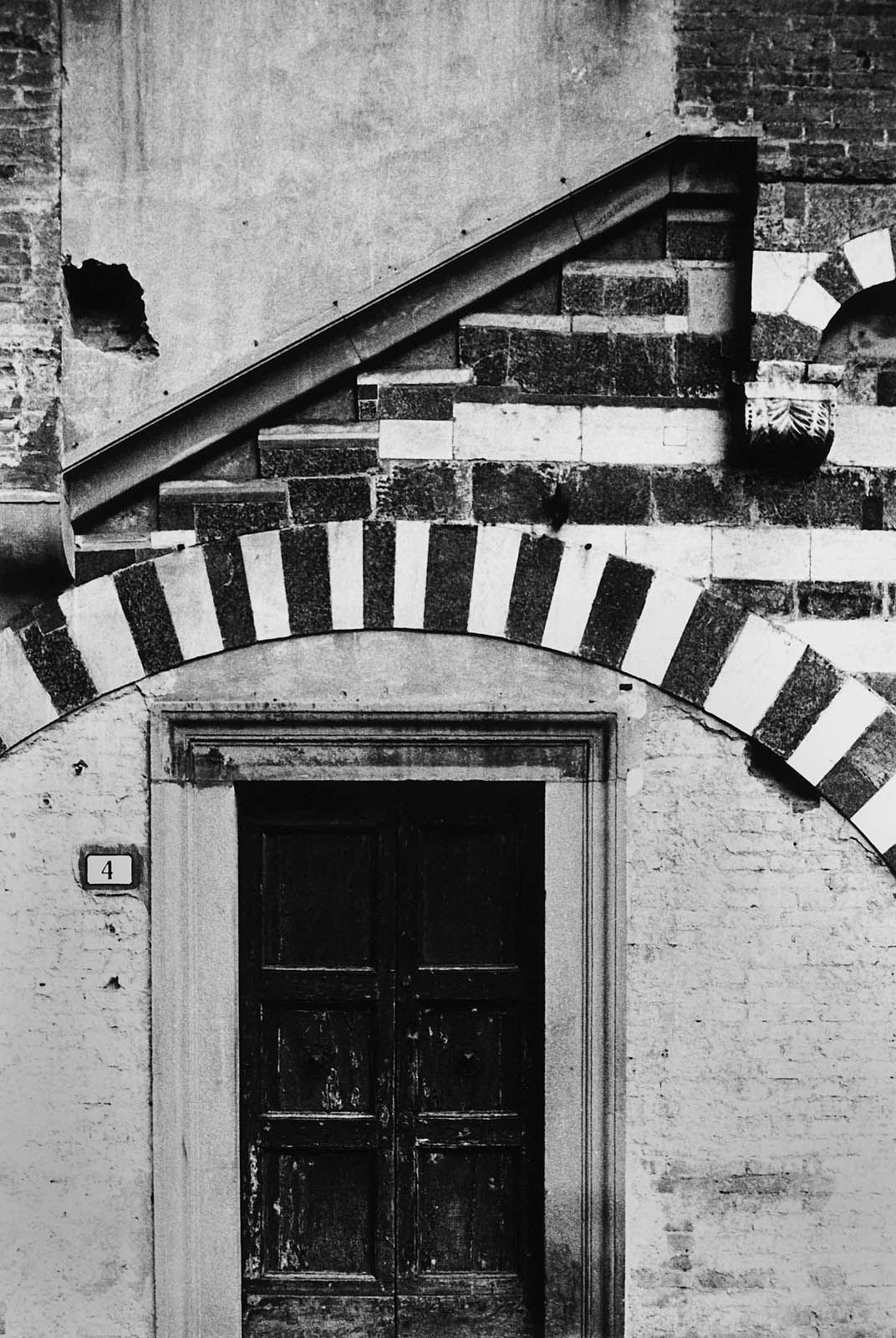
Tata Ronkholz (German, 1940-1997) 'Palazzo dei Vescovi (Museo dell'Antico), Pistoia' 1975


Tata Ronkholz (German, 1940-1997)
Palazzo dei Vescovi (Museo dell’Antico), Pistoia
1975
© VAN HAM Art Estate: Tata Ronkholz, 2025


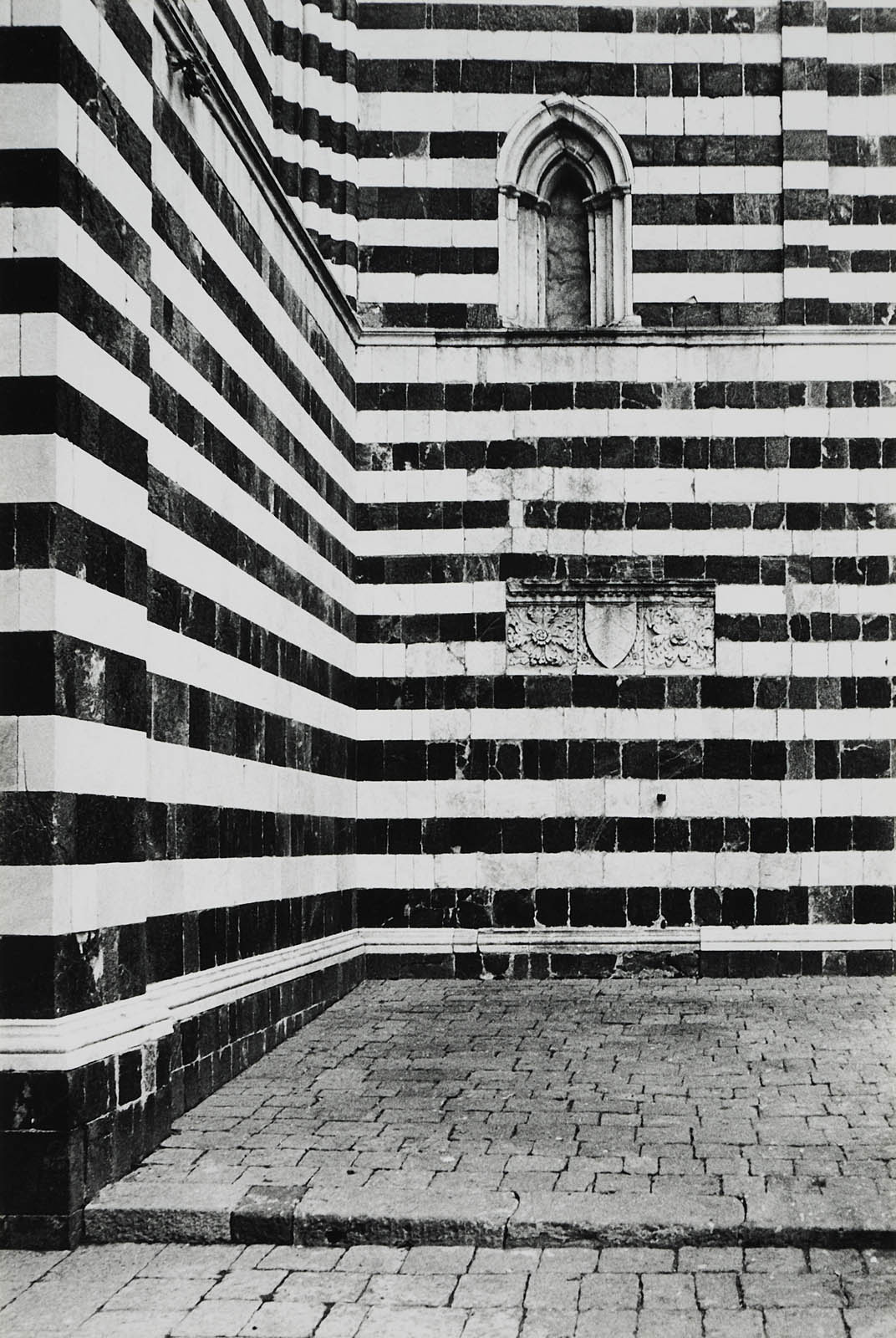
Tata Ronkholz (German, 1940-1997) 'Santa Maria Assunta, Dom, Volterra' 1975


Tata Ronkholz (German, 1940-1997)
Santa Maria Assunta, Dom, Volterra
1975
© VAN HAM Art Estate: Tata Ronkholz, 2025


An exhibition by Die Photographische Sammlung/SK Stiftung Kultur in collaboration with the  Stadtmuseum Düsseldorf and VAN HAM Art Estate

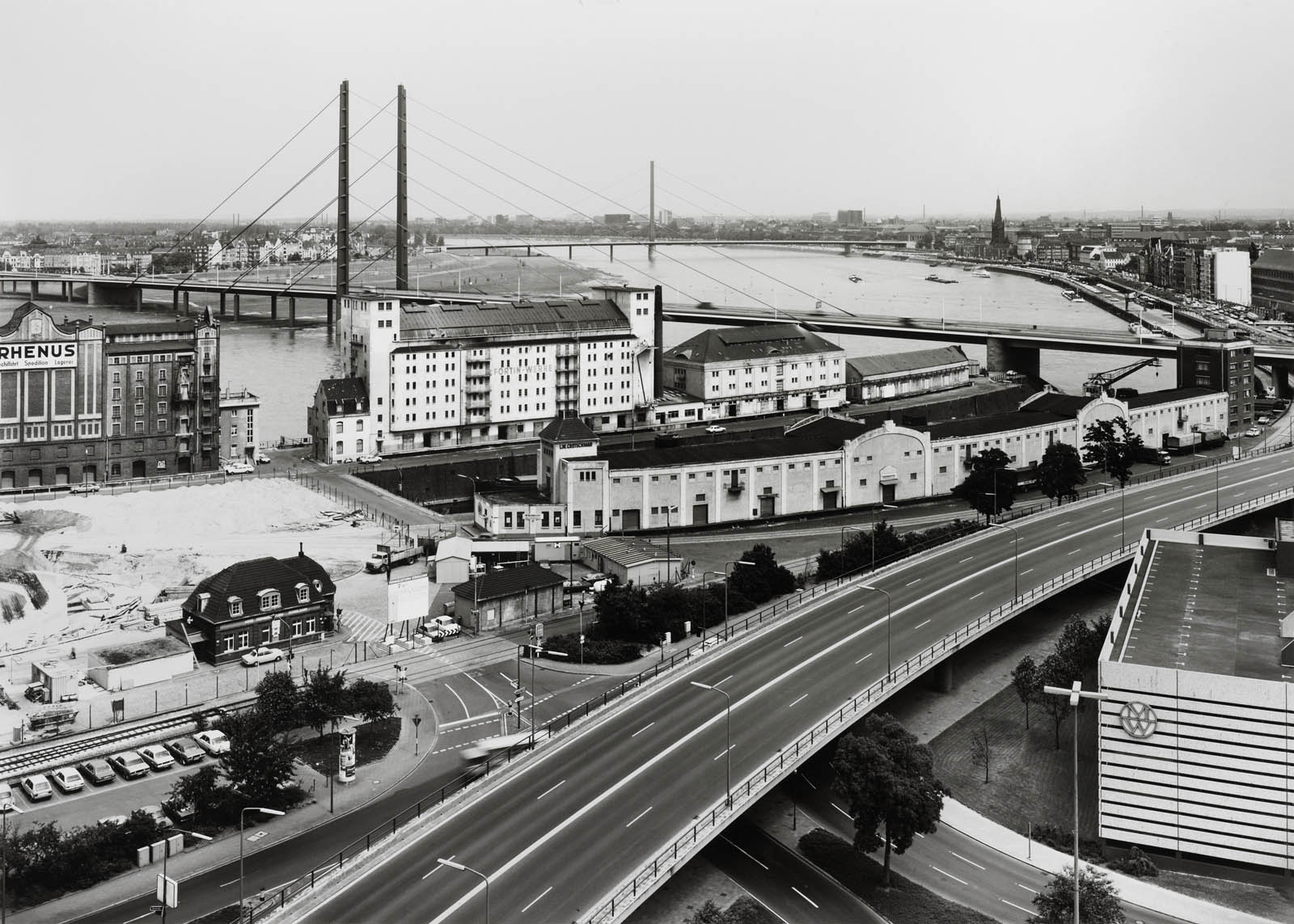
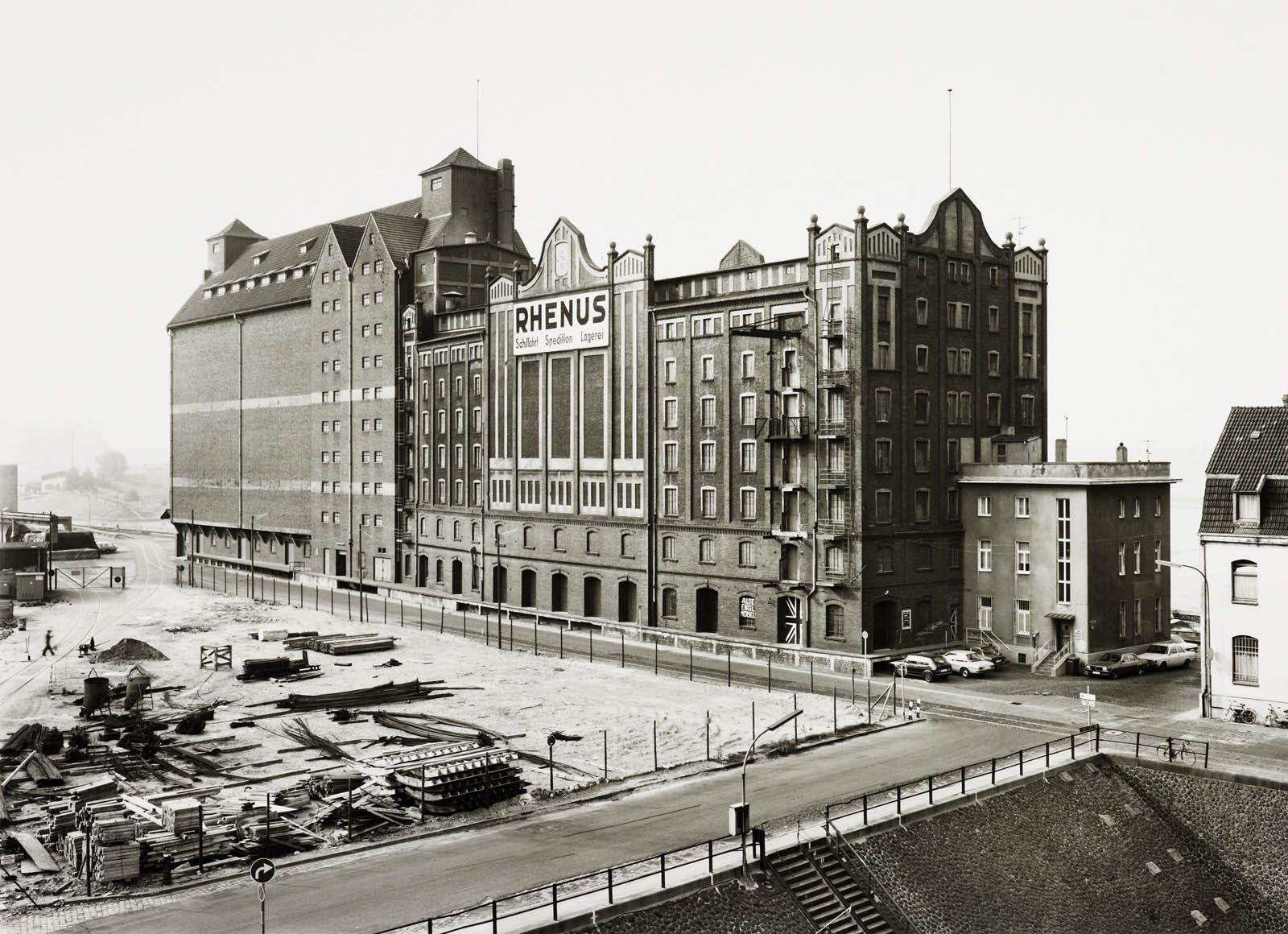
The artist and photographer Tata Ronkholz (1940-1997) will be honoured in the spring with her first major retrospective. She is one of the first members of the class taught by Bernd Becher at the Kunstakademie Düsseldorf. Due to her early death Ronkholz’s work has long been recognised only partly even though her oeuvre reflects a profound and continuous engagement with multiple themes. Ronkholz is best known for her series of kiosks and small shops in the Rhineland and Ruhr area, which she began in 1977. These often small, sometimes freestanding structures, with their designs, surroundings, product offerings, and advertisements, serve as vivid testaments to everyday culture. Additionally, she created a photographic series documenting various industrial gates. Together with her fellow student Thomas Struth, she documented Düsseldorf’s Rheinhafen district from 1979 to 1981 before its transformation into the so-called “Medienhafen”.

The exhibition will also feature surprising insights into Ronkholz’s early works as a freelance product designer and photographs of architectural forms taken in Italy. An accompanying catalog will be published.

Text from the Die Photographische Sammlung/SK Stiftung Kultur, Cologne website


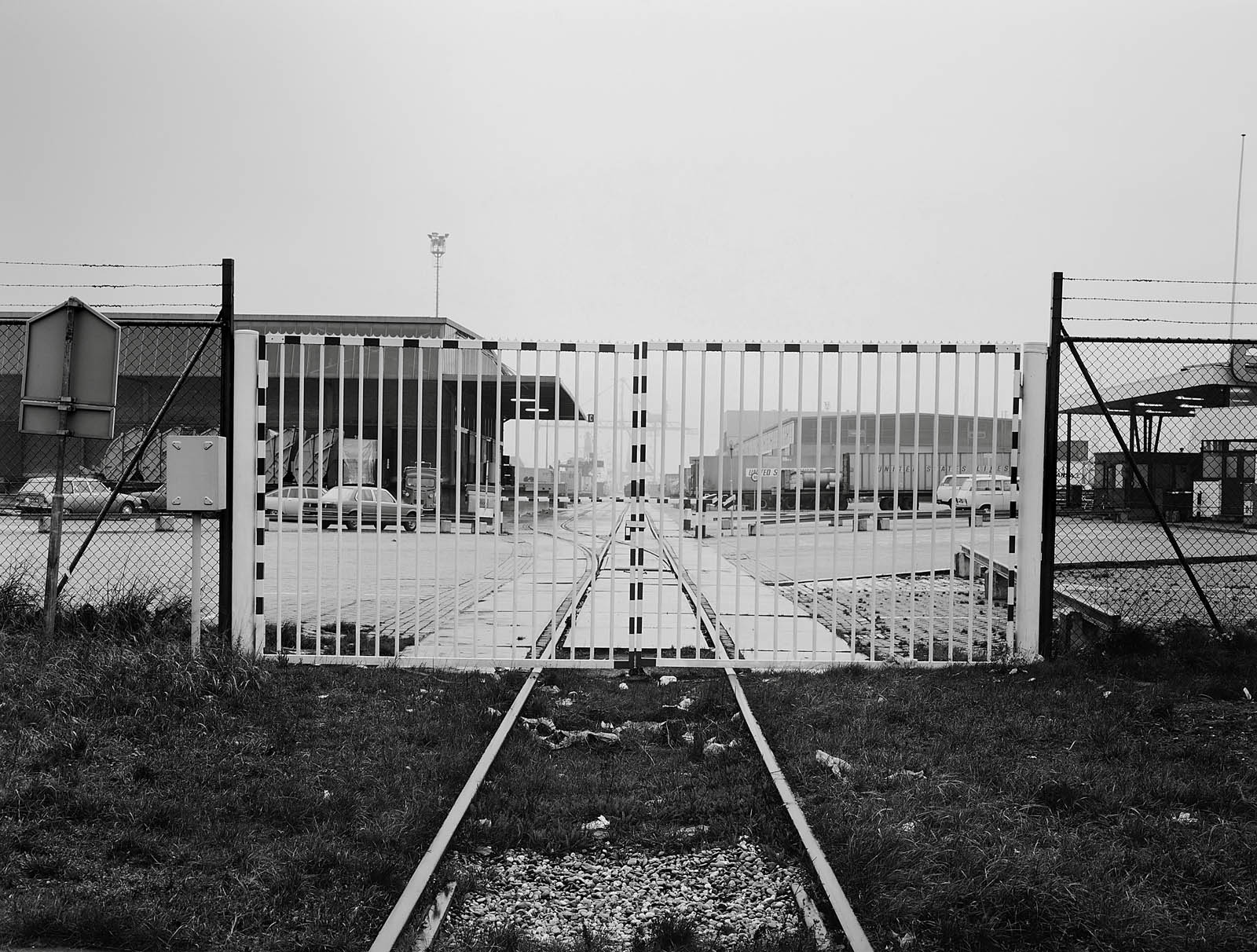
Tata Ronkholz (German, 1940-1997) 'ECT. Rotterdam / Prinses Beatrixhaven, Reeweg' 1977


Tata Ronkholz (German, 1940-1997)
ECT. Rotterdam / Prinses Beatrixhaven, Reeweg
1977
© VAN HAM Art Estate: Tata Ronkholz, 2025


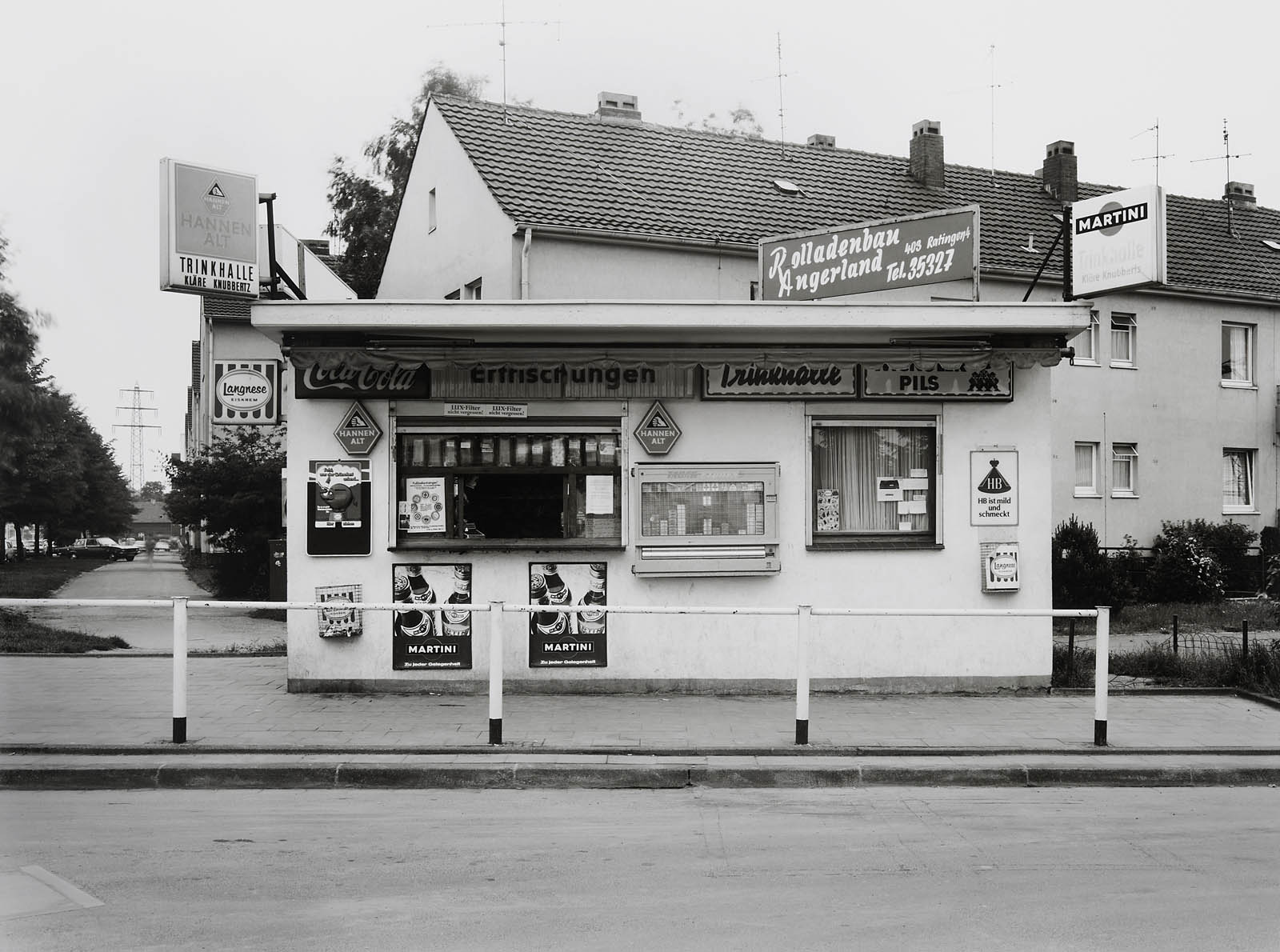
Tata Ronkholz (German, 1940-1997) 'Trinkhalle, Ratingen, Volkardeyer Straße 25' 1977


Tata Ronkholz (German, 1940-1997)
Trinkhalle, Ratingen, Volkardeyer Straße 25
1977
© VAN HAM Art Estate: Tata Ronkholz, 2025


Tata Ronkholz (German, 1940-1997) 'Trinkhalle, Düsseldorf, Sankt-Franziskus-Straße 107' 1977


Tata Ronkholz (German, 1940-1997)
Trinkhalle, Düsseldorf, Sankt-Franziskus-Straße 107
1977
© VAN HAM Art Estate: Tata Ronkholz, 2025


Tata Ronkholz (German, 1940-1997) 'Imbissstube Köln-Mülheim, Berliner Straße 120 (Snack bar Cologne-Mülheim, Berliner Straße 120)' 1979


Tata Ronkholz (German, 1940-1997)
Imbissstube Köln-Mülheim, Berliner Straße 120 (Snack bar Cologne-Mülheim, Berliner Straße 120)
1979
© VAN HAM Art Estate: Tata Ronkholz, 2025


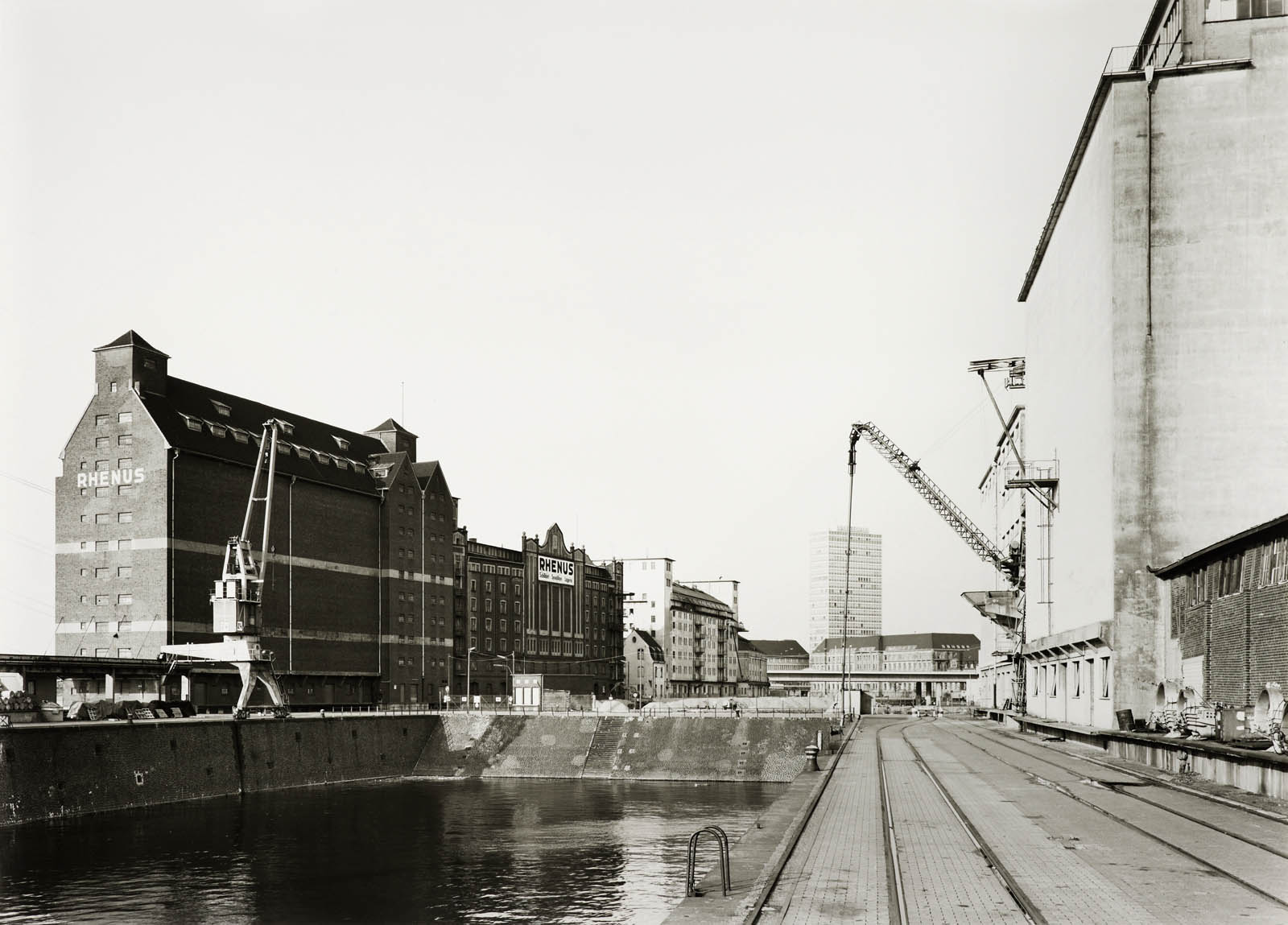
Thomas Struth (German, b. 1954) 'Rheinhafen (Berger Hafen v. d. VHS), Düsseldorf' 1979


Thomas Struth (German, b. 1954)
Rheinhafen (Berger Hafen v. d. VHS), Düsseldorf
1979
From the series Rheinhafen Düsseldorf 1979-1981
© Thomas Struth


Thomas Struth (German, b. 1954) 'Getreidespeicher, Rhenus seitlich (Grain silo, Rhenus side)' 1979


Thomas Struth (German, b. 1954)
Getreidespeicher, Rhenus seitlich (Grain silo, Rhenus side)
1979
From the series Rheinhafen Düsseldorf 1979-1981
© Thomas Struth


Thomas Struth (German, b. 1954) 'Zollhafen (Customs port)' 1979


Thomas Struth (German, b. 1954)
Zollhafen (Customs port)
1979
From the series Rheinhafen Düsseldorf 1979-1981
© Thomas Struth


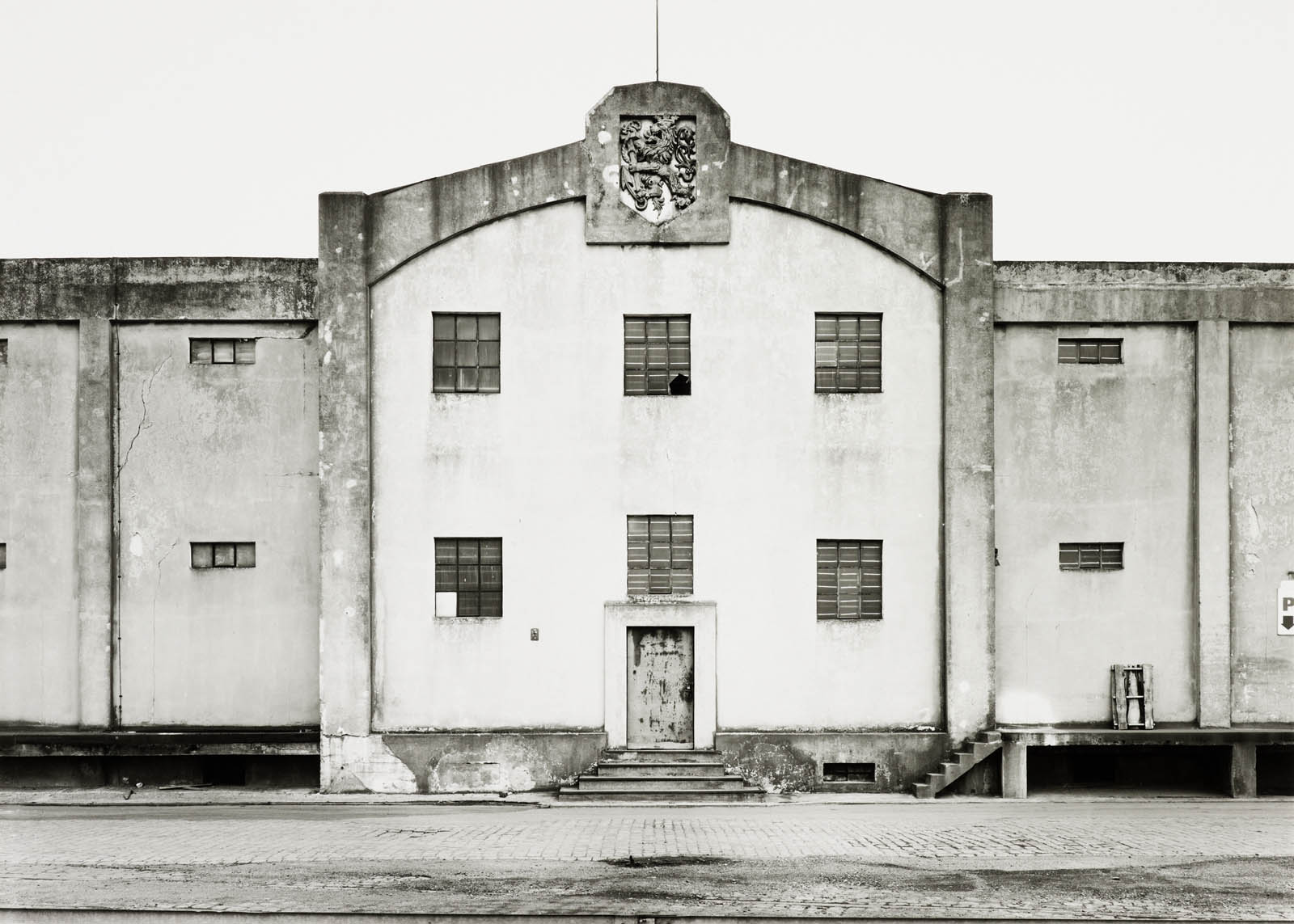
Tata Ronkholz (German, 1940-1997) 'Lagerhalle mit Löwenwappen (Warehouse with lion crest)' 1979


Tata Ronkholz (German, 1940-1997)
Lagerhalle mit Löwenwappen (Warehouse with lion crest)
1979
From the series Rheinhafen Düsseldorf 1979-1981
© VAN HAM Art Estate: Tata Ronkholz, 2025


This retrospective is the first comprehensive tribute to the versatile work of Tata Ronkholz (born 1940 in Krefeld; died 1997 in Hürth-Kendenich, née Maria Juliana Roswitha Tölle). The exhibition features works by the photographer, product designer, and interior architect who was one of the early students of the Becher class at the Kunstakademie Düsseldorf. Among her fellow students were renowned artists such as Candida Höfer, Axel Hütte, Thomas Ruff, Thomas Struth, and Petra Wunderlich. Ronkholz’s estate, acquired in 2011 by VAN HAM Art Estate in Cologne, forms the basis of the exhibition alongside the holdings of Stadtmuseum Düsseldorf. Significant contributions have also been made from the in-house collections of Die Photographische Sammlung/ SK Stiftung Kultur and from other lenders.

The retrospective finds its stylistically fitting context in the Photographic Collection, with the on-site Bernd and Hilla Becher Archive. Ronkholz’s works follow in the tradition of objective, documentary photography – a tradition decisively shaped by the Bechers. Her work is characterised by clear compositions, a serial approach, and a documentary focus on architectural structures and everyday architectures. Using her large-format camera, she produced sharply defined and realistic photographs in which the subject matter, rather than the photographer’s personal signature, takes center stage. Her work is predominantly in black and white, although color images also appear, demonstrating her ambition to engage with the emerging artistic colour photography in Germany during the 1970s and 80s.

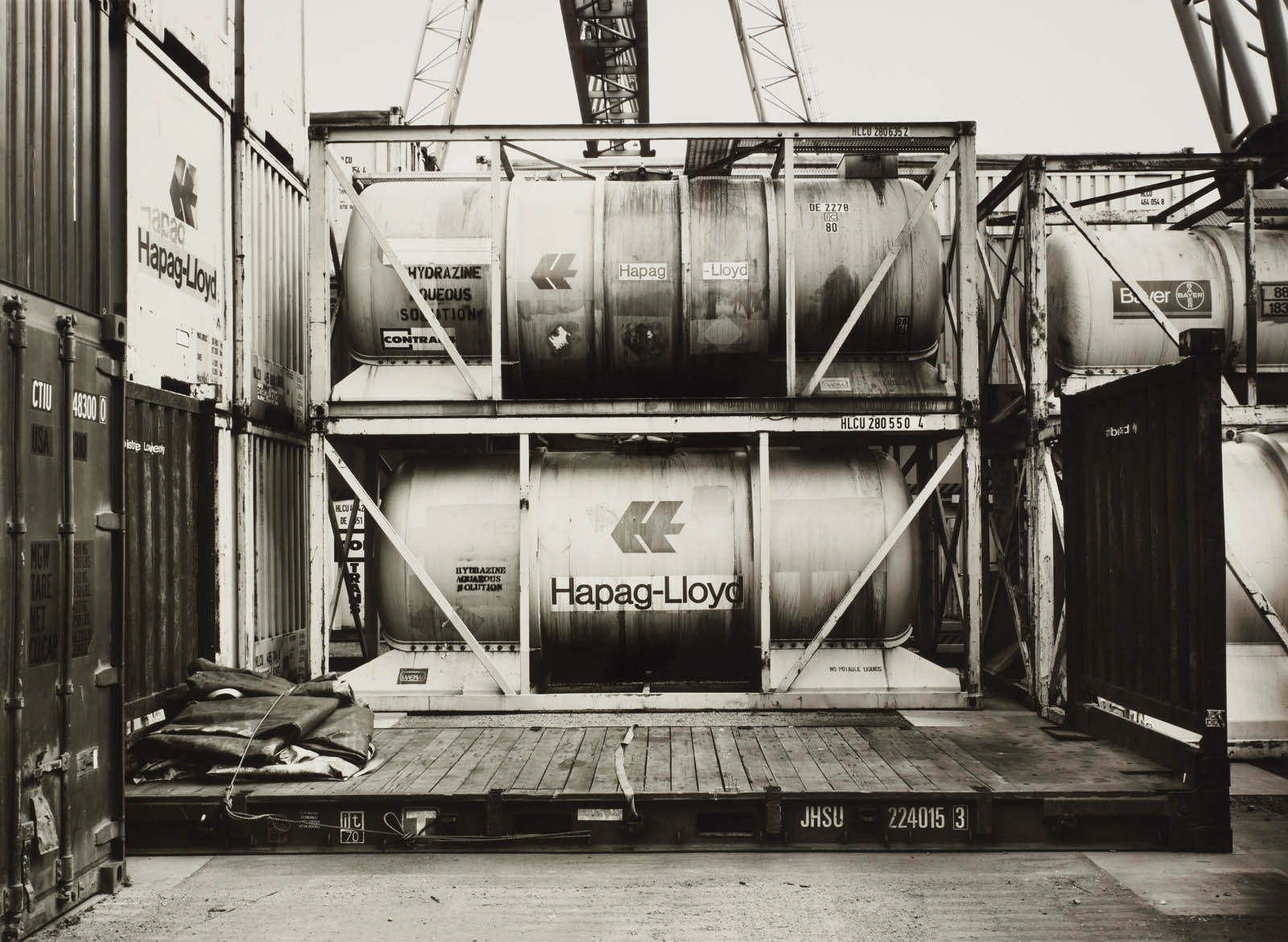
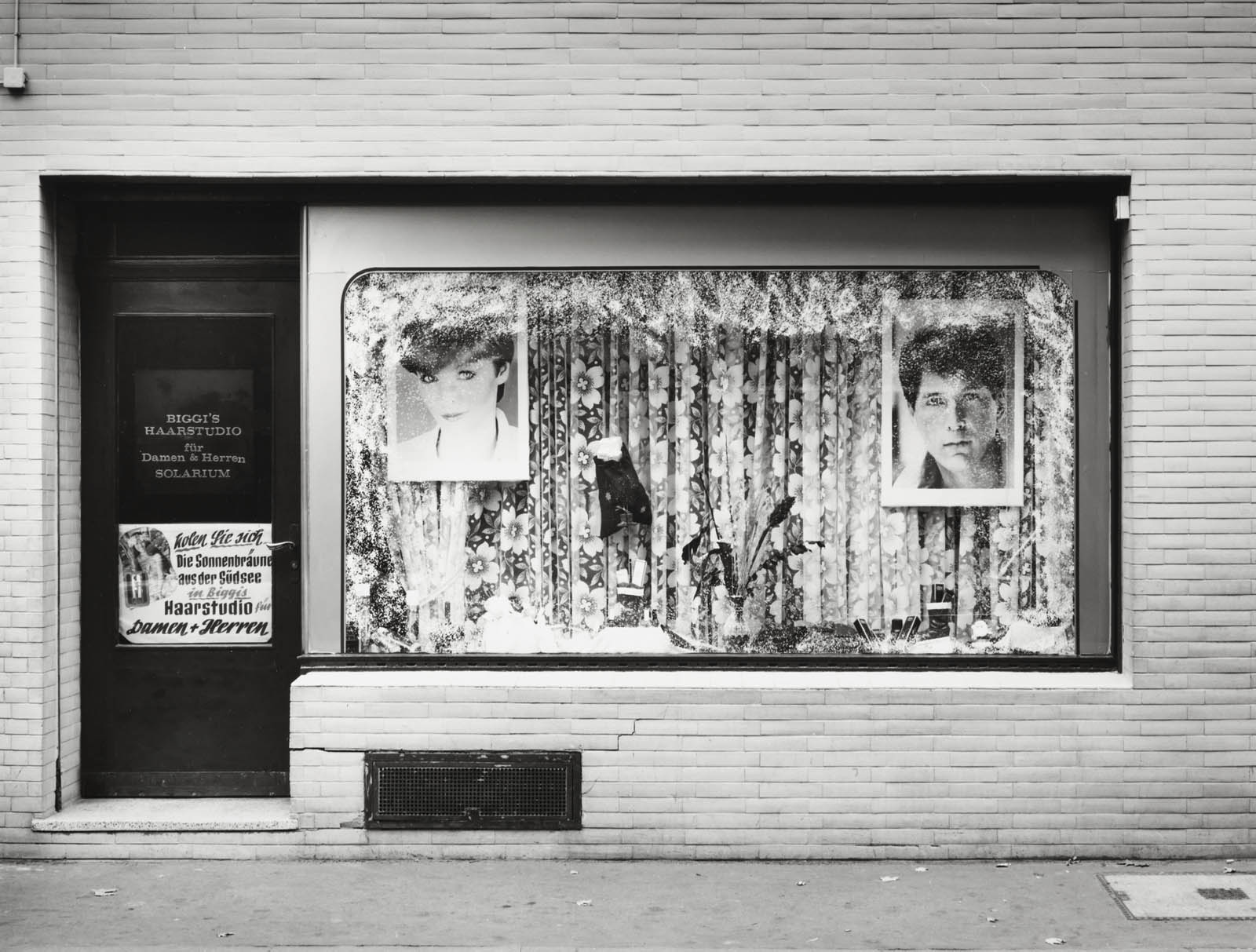
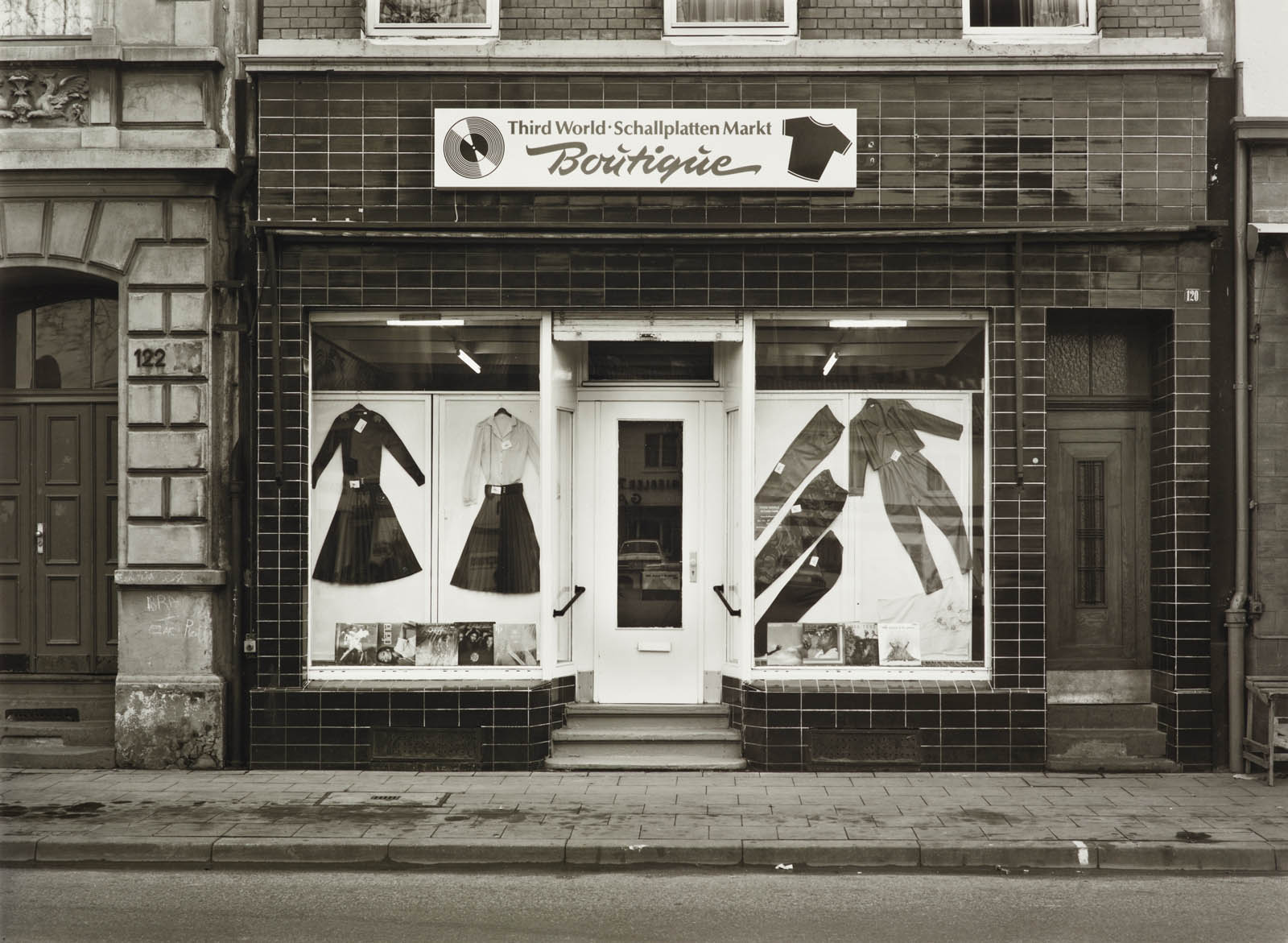
Tata Ronkholz became known for her appealing series of kiosks and small shops that capture typical moments of urban everyday culture. These were photographed between 1977 and 1985, particularly in neighborhoods of Cologne and Düsseldorf, in the Ruhr area, as well as in Leverkusen and Krefeld. For example, the kiosk in Cologne-Nippes – with its ice cream and newspaper advertisements and vending machines for chewing gum and cigarettes – is captured in a straightforward, unadorned manner that is as amusing and engaging as the boutique in Cologne-Mülheim on Berliner Straße 120, where, according to the store sign, alongside clothing, “Third World records” were also offered. Many details in the images evoke personal memories – perhaps a shopping trip to a Turkish grocery store or an ice cream sundae at Eiscafé Fortuna. The photographs illustrate the transformation of product offerings, decoration, and advertising in urban spaces. The depicted details remind viewers of their own surroundings and provide insight into the shopping habits of past decades.

In this way, the subjects in Tata Ronkholz’s work indirectly testify to social, cultural, and economic change while also revealing how the personal tastes of shop owners influenced the design of these small retail outlets. Viewed in this light, her images offer a vivid basis for a sociological examination of our own species, addressing fundamental societal questions: What needs did we have and do we have? What did we need and do we need to live? How do we shape our surroundings? What role do images play?

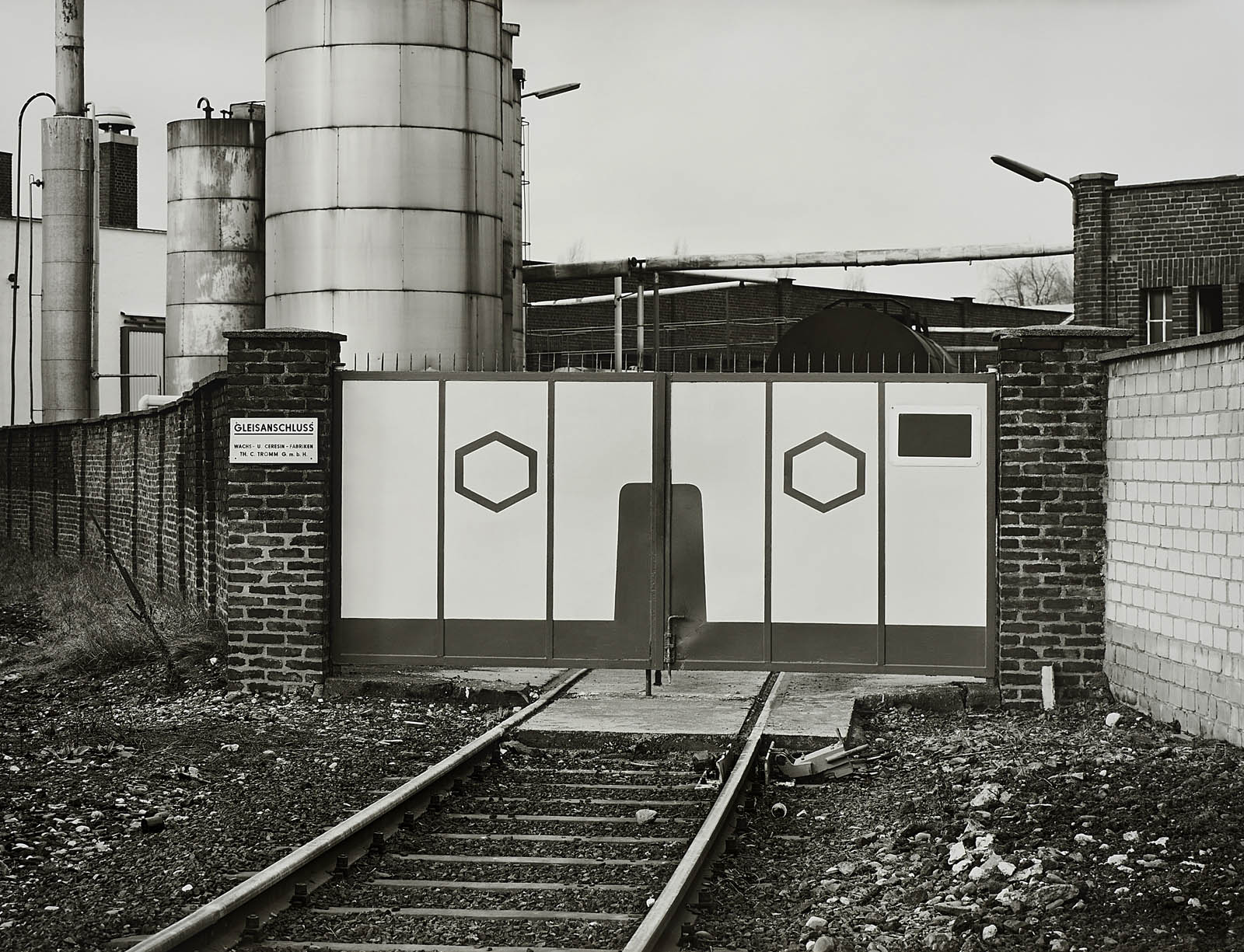
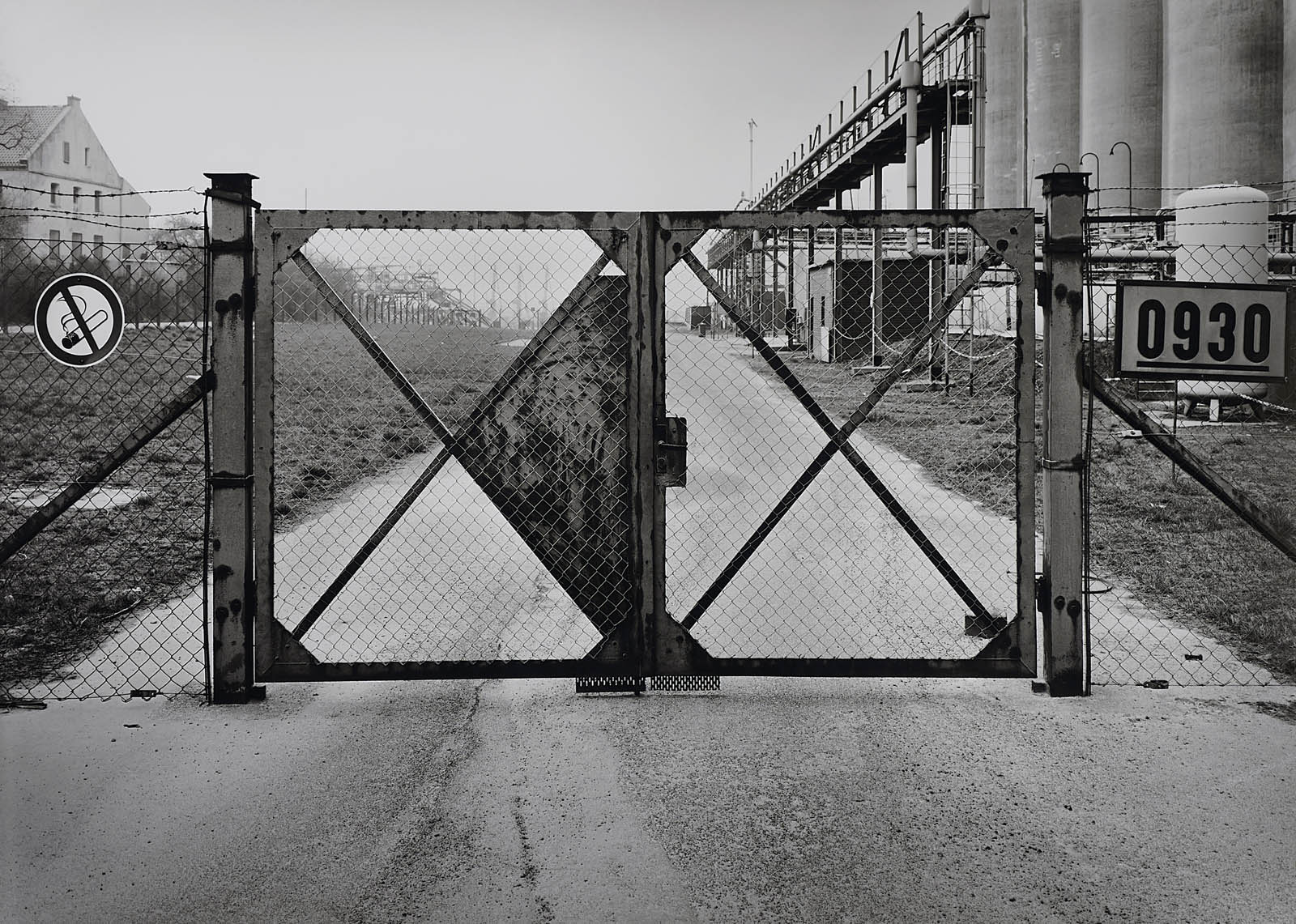
Another significant series is dedicated to industrial gates, photographed between 1977 and 1985. The simple black-and-white images of these gates, with their grids and frameworks, offer glimpses into the interiors of industrial areas, their graphic structure appearing almost abstract. In the photographs, the gates function as interfaces between private and public space, between interior and exterior, and between activity and calm. Their aesthetic, reminiscent of abstract artworks, imbues the everyday with a new significance.

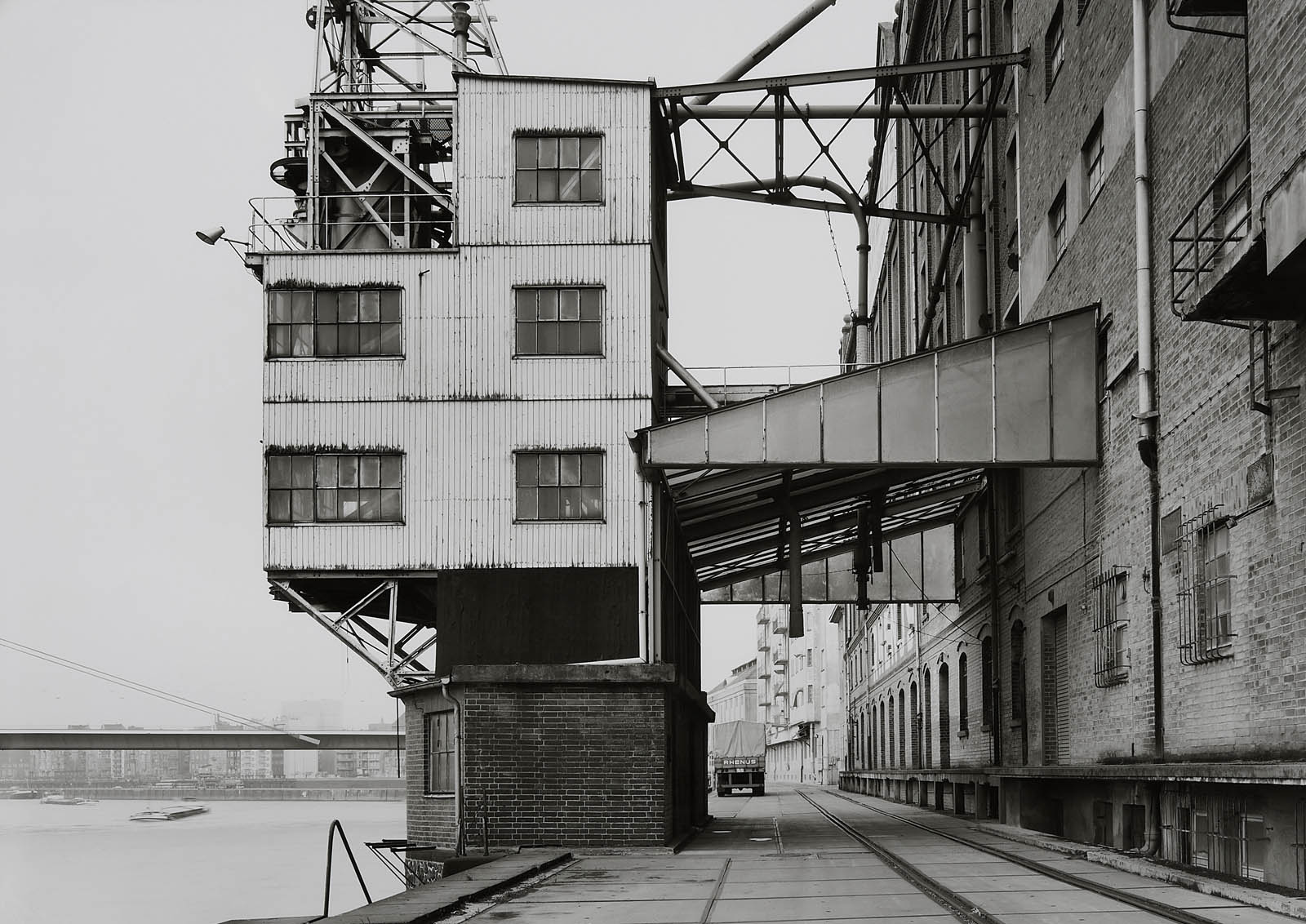
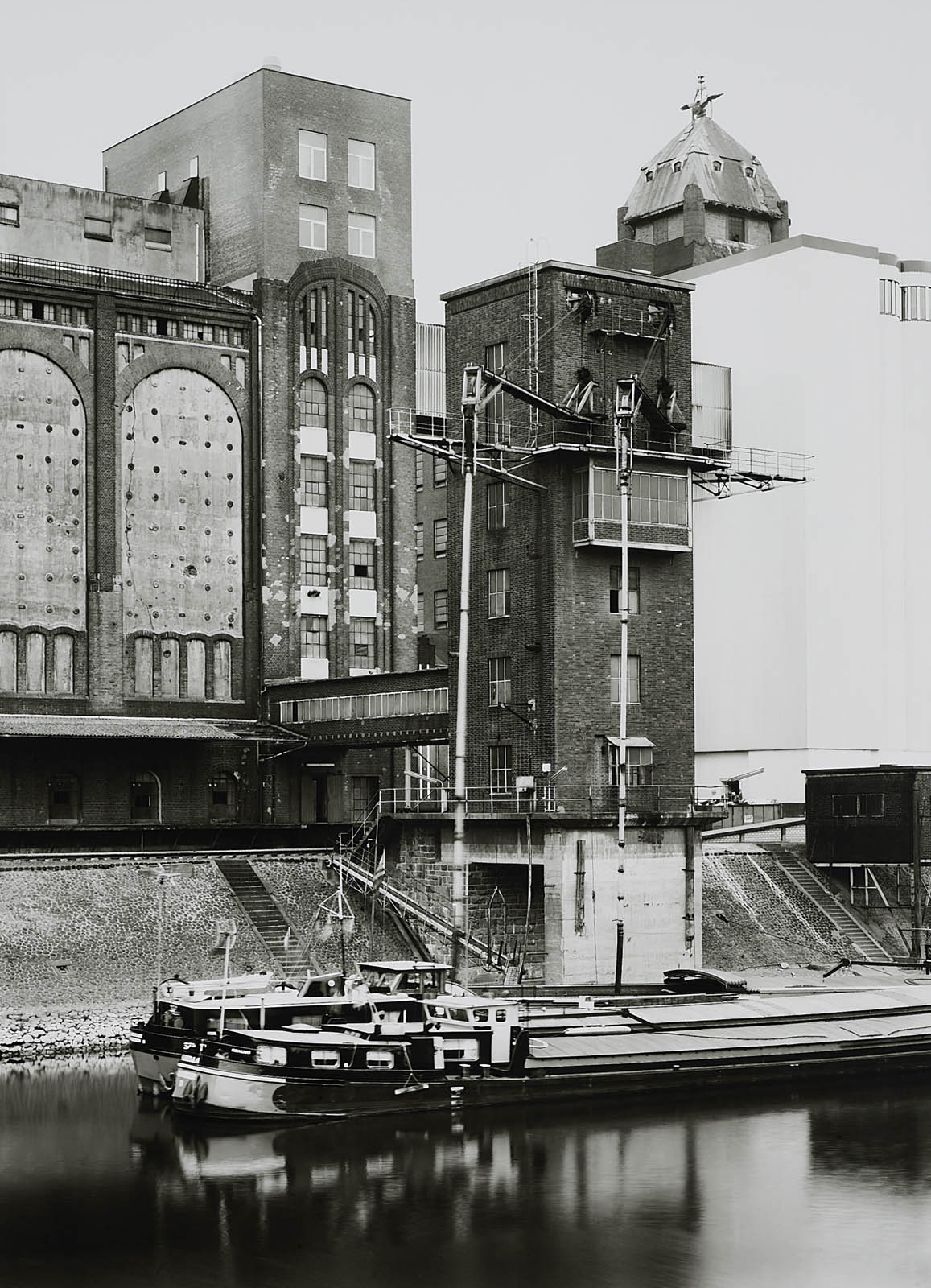
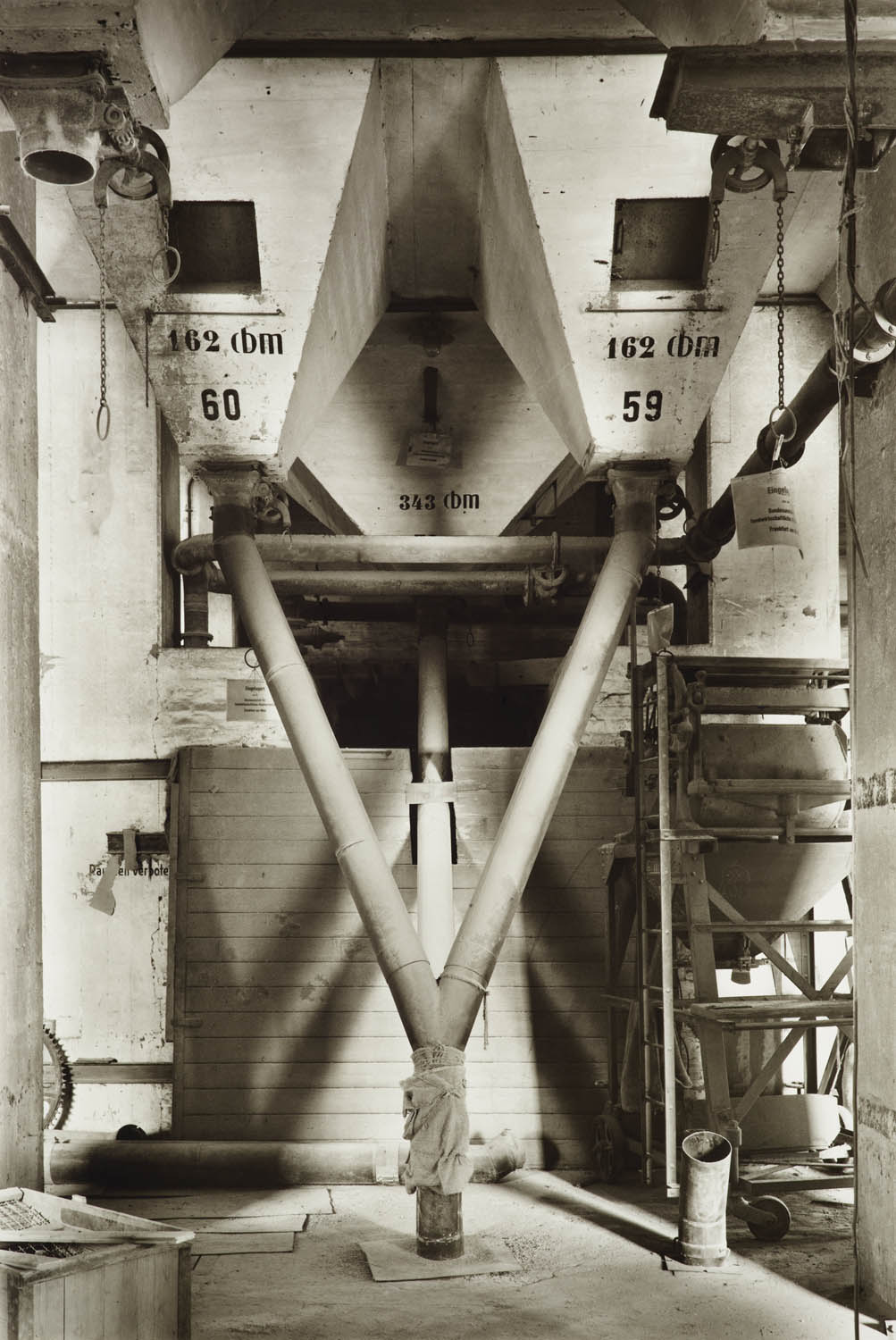
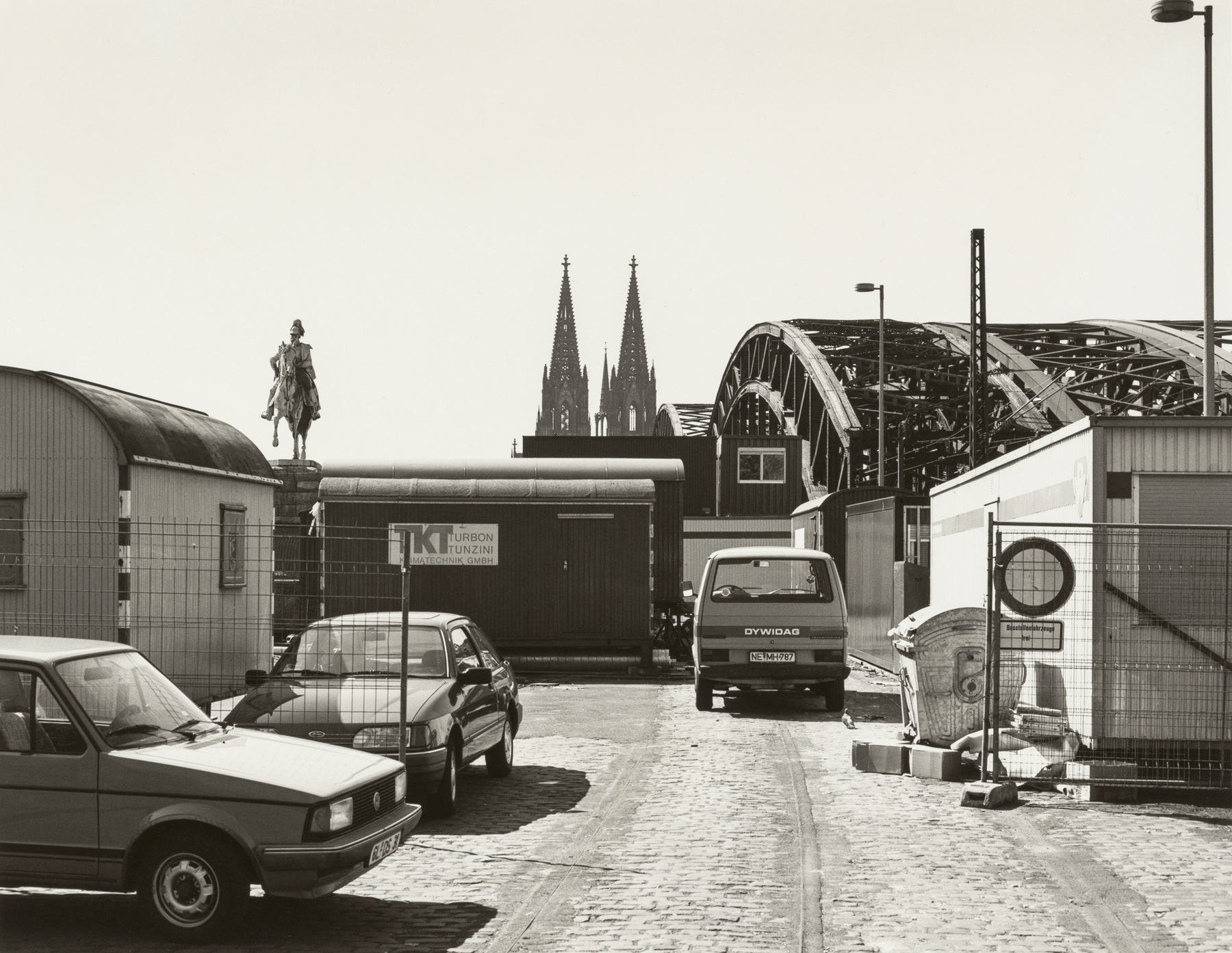
A particularly impressive documentary series is the body of work on the Düsseldorf Rhine Harbor, which Ronkholz began in 1979 together with her then fellow student Thomas Struth. The project originated from the planned redevelopment of the historic harbor area – a site that, in its original form, was considered an industrial area of significant urban historical and architectural importance. Struth observed the initial changes from his studio and convinced Tata Ronkholz to join the project. Together, they set out to document the harbor in its entirety, capturing its historic buildings, technical installations, and operational structures. They recorded façades, interiors, silos, warehouses, crane structures, and harbor basins in carefully composed images, before these elements partially disappeared or were fundamentally altered during the restructuring. The photographs strikingly showcase the industrial architecture of the 19th and 20th centuries while simultaneously highlighting the transformation from a center of commerce and production to today’s media harbor. Overall, this critically composed documentation of the Düsseldorf Rhine Harbor stands as an exemplary case for the complex issues of urban redevelopment in other locations as well.

In addition, the exhibition presents works that highlight Ronkholz’s achievements as a product designer, including depictions of geometrically shaped furniture and lighting fixtures as well as designs for office and cafeteria furniture. Between 1961 and 1965, she studied at the Werkkunstschule Krefeld with a focus on furniture design and subsequently worked as a freelance designer until 1977. Her designs are characterised by clear forms and functional elegance, as exemplified by the “Spherical Light” developed in collaboration with Adolf Luther, featuring a convex glass element. Finally, the retrospective also presents early photographs of architectural forms created in 1975/76 in Italy and France. Even in these works, her strong affinity for the aspects of the designed world across various areas of life becomes apparent.

Accompanying the exhibition is the catalog Tata Ronkholz: Designed World. A Retrospective published by Schirmer / Mosel Verlag, featuring texts by renowned authors (ger/en). The exhibition is supported by the City of Düsseldorf and VAN HAM Cologne.

Press release from Die Photographische Sammlung/ SK Stiftung Kultur, Cologne


Tata Ronkholz (German, 1940-1997) 'Rheinhafen Düsseldorf, Technik und Kräne (Rhine port Düsseldorf, technology and cranes)' Undated


Tata Ronkholz (German, 1940-1997)
Rheinhafen Düsseldorf, Technik und Kräne (Rhine port Düsseldorf, technology and cranes)
Undated
From the series Rheinhafen Düsseldorf 1979-1981
© VAN HAM Art Estate: Tata Ronkholz, 2025


Tata Ronkholz (German, 1940-1997) 'Rheinhafen Düsseldorf, Technik und Kräne (Rhine port Düsseldorf, technology and cranes)' Undated


Tata Ronkholz (German, 1940-1997)
Rheinhafen Düsseldorf, Technik und Kräne (Rhine port Düsseldorf, technology and cranes)
Undated
From the series Rheinhafen Düsseldorf 1979-1981
© VAN HAM Art Estate: Tata Ronkholz, 2025


Tata Ronkholz (German, 1940-1997) 'Im Düsseldorfer Hafen (In Düsseldorf harbour)' Around 1980


Tata Ronkholz (German, 1940-1997)
Im Düsseldorfer Hafen (In Düsseldorf harbour)
Around 1980
From the series Rheinhafen Düsseldorf 1979-1981
© VAN HAM Art Estate: Tata Ronkholz, 2025


Tata Ronkholz (German, 1940-1997) 'Im Düsseldorfer Hafen (In Düsseldorf harbour)' Around 1980


Tata Ronkholz (German, 1940-1997)
Im Düsseldorfer Hafen (In Düsseldorf harbour)
Around 1980
From the series Rheinhafen Düsseldorf 1979-1981
© VAN HAM Art Estate: Tata Ronkholz, 2025


Tata Ronkholz (German, 1940-1997) 'Friseur, Köln-Ehrenfeld, Philippstraße 30 (Barber, Köln-Ehrenfeld, Philippstraße 30)' 1980


Tata Ronkholz (German, 1940-1997)
Friseur, Köln-Ehrenfeld, Philippstraße 30 (Barber, Köln-Ehrenfeld, Philippstraße 30)
1980
© VAN HAM Art Estate: Tata Ronkholz, 2025


Tata Ronkholz (German, 1940-1997) 'Boutique, Köln-Mülheim, Berliner Straße 120' 1980


Tata Ronkholz (German, 1940-1997)
Boutique, Köln-Mülheim, Berliner Straße 120
1980
© VAN HAM Art Estate: Tata Ronkholz, 2025


Tata Ronkholz (German, 1940-1997) 'Trinkhalle, Köln-Nippes, Merheimer Straße 294' 1983


Tata Ronkholz (German, 1940-1997)
Trinkhalle, Köln-Nippes, Merheimer Straße 294
1983
© VAN HAM Art Estate: Tata Ronkholz, 2025


Tata Ronkholz (German, 1940-1997) 'Firma Tromm, Tor Gleisanschluss, Köln-Niehl (Tromm Company, Gate Rail Connection, Cologne-Niehl)' 1983


Tata Ronkholz (German, 1940-1997)
Firma Tromm, Tor Gleisanschluss, Köln-Niehl (Tromm Company, Gate Rail Connection, Cologne-Niehl)
1983
© VAN HAM Art Estate: Tata Ronkholz, 2025


Tata Ronkholz (German, 1940-1997) 'Firma ROW, Hafen, Tor Nr. 0930, Wesseling-Godorf' 1984


Tata Ronkholz (German, 1940-1997)
Firma ROW, Hafen, Tor Nr. 0930, Wesseling-Godorf
1984
© VAN HAM Art Estate: Tata Ronkholz, 2025


Die Photographische Sammlung/SK Stiftung Kultur
Im Mediapark 7, 50670 Köln
Phone: +49 221/888 95

Opening hours:
The ongoing exhibitions are open daily from 2pm to 7pm. With the exception of being closed on Wednesdays.
Die Photographische Sammlung website

LIKE ART BLART ON FACEBOOK

Back to top

Exhibition: ‘Karl Blossfeldt – Photography in the Light of Art’ at the Die Photographische Sammlung / SK Stiftung Kultur, Cologne

Exhibition dates: 6th September, 2024 – 2nd February, 2025


Karl Blossfeldt (German, 1865-1932) 'Lichtnelke' Before 1932 from the exhibition 'Karl Blossfeldt – Photography in the Light of Art' at the Die Photographische Sammlung / SK Stiftung Kultur, Cologne
 

Karl Blossfeldt (German, 1865-1932)
Lichtnelke
Before 1932
Gelatin silver print
Courtesy Universität der Künste, Berlin, Universitätsarchiv, in Zusammenarbeit mit der Photographischen Sammlung/SK Stiftung Kultur, Köln


Karl Blossfeldt’s photographs have been associated with Modernism, Surrealism and New Objectivity / New Vision.

“Hailed as a master for discovering a hitherto ‘unknown universe’ and for his exemplary technical feats as a photographer Blossfeldt’s work is, nevertheless, decidedly subjective as author Hanako Murata notes in her excellent essay on the artist Material Forms in Nature: The Photographs of Karl Blossfeldt (2014). “Not only did he carefully select, arrange, and in some cases physically modify his specimens, but his meticulous attention to detail and image refinement continued throughout each step of production, beginning with his negatives.” Blossfeldt uses the logic of the plant and the logic of his mind to achieve his final vision. A/symmetry as art form.” (MB 2015)

Love them or hate them there are still few photographs like them in the history of photography. Magnificent photographs.

Dr Marcus Bunyan


Many thankx to the Die Photographische Sammlung / SK Stiftung Kultur, Cologne for allowing me to publish the photographs in the posting. Please click on the photographs for a larger version of the image.


“In contrast to sketched enlargements, which always contain a subjective element, these images present pure nature, so they are likely to provide inspiring material for students. In many cases, these photographs were made by enlarging small details that students could not easily make out in evening light. This considerably facilitates projects. I probably have more than a thousand of such photographs, from which, however, I can only slowly make prints.” ~ Karl Blossfeldt

 This was written by Karl Blossfeldt in a letter dated April 11, 1906, to the administration of the educational institution of the art school where he taught from 1899 to 1930. The original letter is displayed in the current exhibition, along with other documents and publications, in a showcase. The quote provides insight into Blossfeldt’s pedagogical practice and highlights his appreciation for documentary photography and its potential for enlargement.


Press release from Die Photographische Sammlung


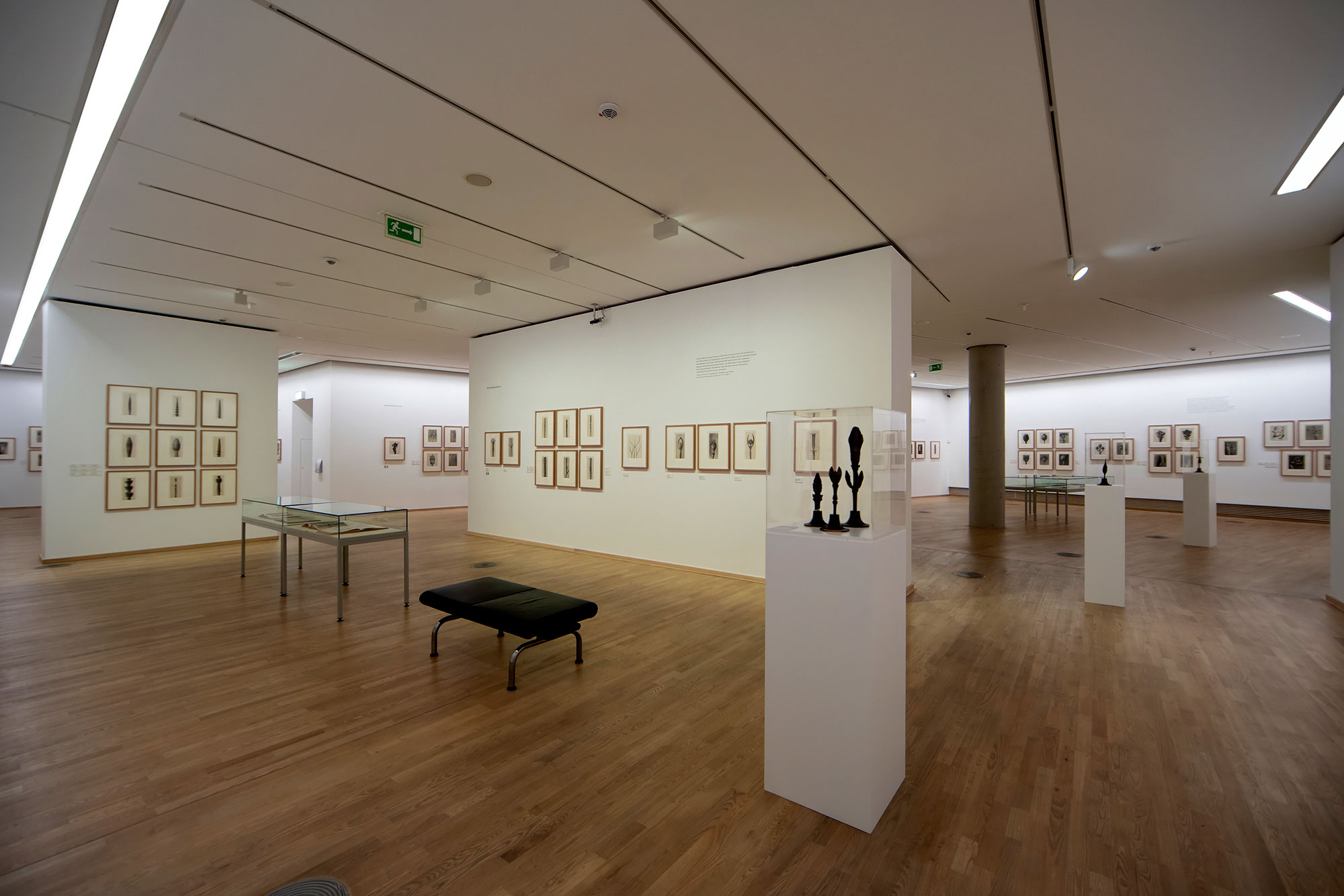
Installation view of the exhibition 'Karl Blossfeldt – Photography in the Light of Art' at the Die Photographische Sammlung / SK Stiftung Kultur, Cologne

Installation view of the exhibition 'Karl Blossfeldt – Photography in the Light of Art' at the Die Photographische Sammlung / SK Stiftung Kultur, Cologne

Installation view of the exhibition 'Karl Blossfeldt – Photography in the Light of Art' at the Die Photographische Sammlung / SK Stiftung Kultur, Cologne


Installation views of the exhibition Karl Blossfeldt – Photography in the Light of Art at the Die Photographische Sammlung / SK Stiftung Kultur, Cologne


Installation view of the exhibition 'Karl Blossfeldt – Photography in the Light of Art' at the Die Photographische Sammlung / SK Stiftung Kultur, Cologne

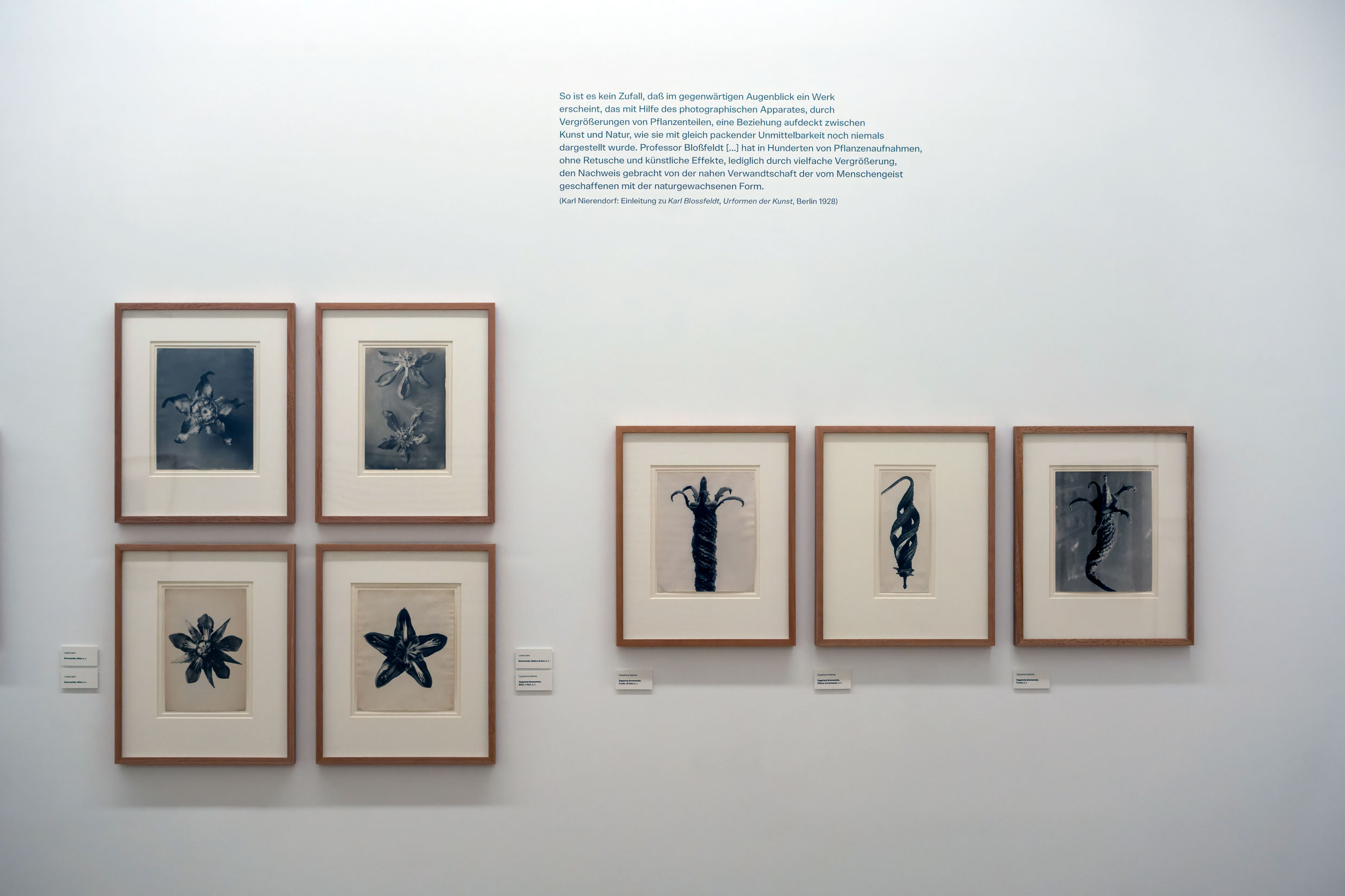
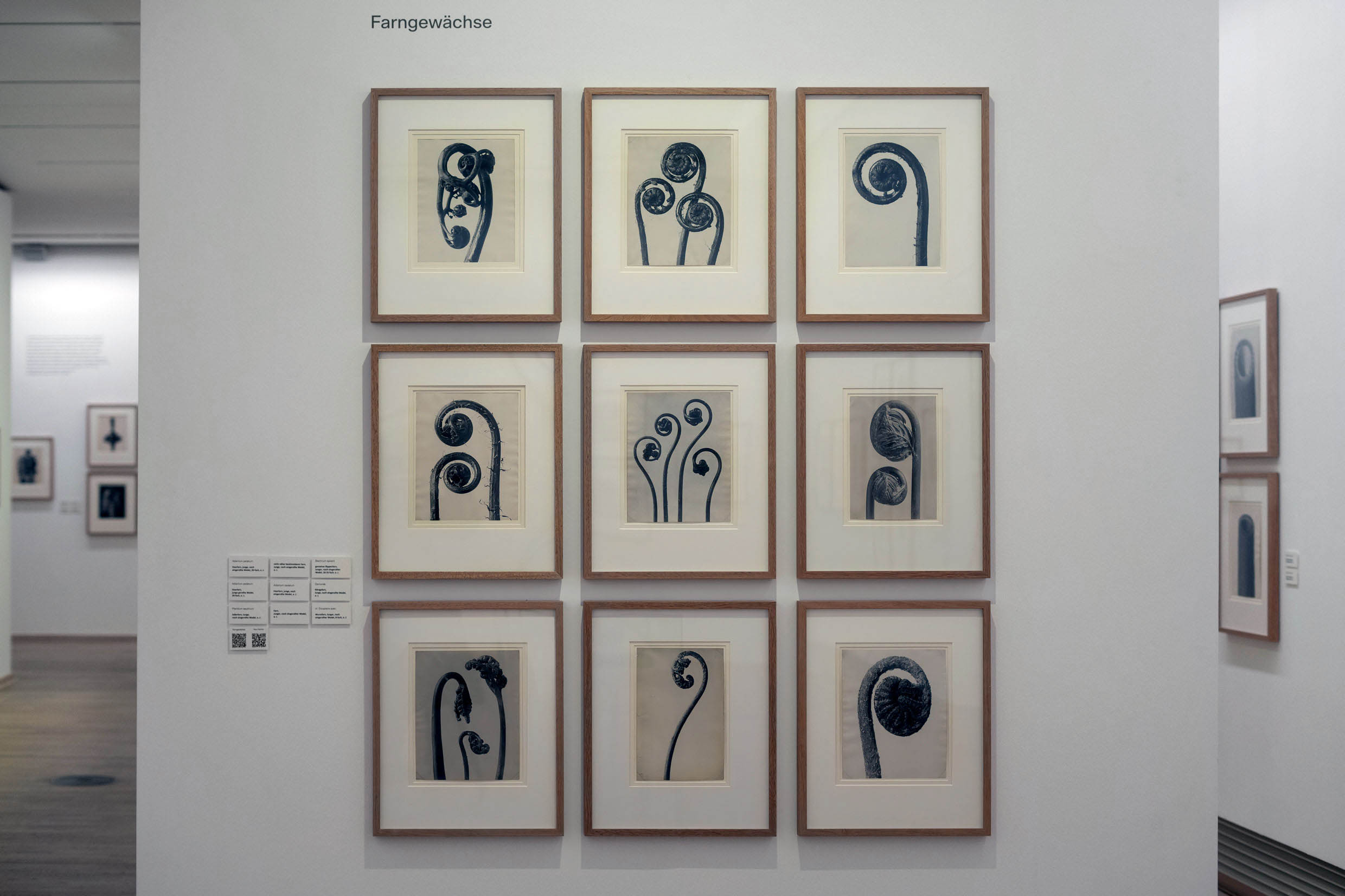
Installation view of the exhibition 'Karl Blossfeldt – Photography in the Light of Art' at the Die Photographische Sammlung / SK Stiftung Kultur, Cologne showing Farngewächse (Ferns)


Installation views of the exhibition Karl Blossfeldt – Photography in the Light of Art at the Die Photographische Sammlung / SK Stiftung Kultur, Cologne showing in the bottom image, Farngewächse (Ferns)


With 271 original prints, the oeuvre of Karl Blossfeldt (1865-1932) is being presented in this scope for the first time in two decades. A consistent photographic oeuvre unfolds impressively, which emerged in the context of art education and was only discovered as an independent artistic approach a few years before Blossfeldt’s death. Today it ranks among the classics of photographic history and is mentioned in the same breath as August Sander and Albert Renger-Patzsch. In terms of reception, Blossfeldt’s photographs are regarded above all as prototypical of the artistic movements of New Objectivity and New Vision.

The exhibition is based on the holdings of the Berlin University of the Arts, the institution at whose predecessor school Blossfeldt himself trained as a sculptor and where he taught the subject of “modelling from living plants” for three decades from 1899. It was there that he created his plant photographs, which he used as illustrative models to teach his students about the variety of forms and details of the botanical world. The precise observation and artistic realisation of the vegetal forms were to serve as creative inspiration for designs in the field of applied art and architecture. In addition to photographs, Blossfeldt also made bronze casts of plant forms as teaching aids – albeit in much smaller numbers – and used them in class. Exemplary pieces are included in the presentation as well as handwritten letters, which provide insights into school procedures and contain statements on the relationship between natural and artistic forms.

Photography was an elementary means of expression for Karl Blossfeldt, which he used specifically for his own purposes. He photographed the heavily processed plant material in multiple enlargements and against a neutral background of light or dark tones. The photographs are of great formal power and concentration, which, beyond their function as teaching pieces, formulate a pictorial language that departs from the representational and leads to abstraction. In particular, Blossfeldt’s two publications “Urformen der Kunst” (1928) and “Wundergarten der Natur” (1932), which appeared during his lifetime, illustrate his own artistic interest in the photographic image. They impressively show how intensively he researched his subject area and how much he appreciated the aesthetic expressive possibilities of the plant as well as its mysteriously magical aura.

A comprehensive catalog presenting the Berlin Blossfeldt collection will be published by Schirmer / Mosel. The publication and exhibition are based on many years of cooperation with the Photographische Sammlung / SK Stiftung Kultur.

Text from the Die Photographische Sammlung website


Karl Blossfeldt (German, 1865-1932) 'Osmundaceae - Königsfarngewächse' (Osmundaceae - Royal fern family) Nd 'Karl Blossfeldt – Photography in the Light of Art' at the Die Photographische Sammlung / SK Stiftung Kultur, Cologne


Karl Blossfeldt (German, 1865-1932)
Osmundaceae – Königsfarngewächse (Osmundaceae – Royal fern family)
Nd
Gelatin silver print
20.0 x 28.4cm
Courtesy Universität der Künste, Berlin, Universitätsarchiv, in Zusammenarbeit mit der Photographischen Sammlung/SK Stiftung Kultur, Köln


Karl Blossfeldt (German, 1865-1932) 'Adiantum pedatum' (Northern maidenhair fern – young rolled up fronds) Nd 'Karl Blossfeldt – Photography in the Light of Art' at the Die Photographische Sammlung / SK Stiftung Kultur, Cologne


Karl Blossfeldt (German, 1865-1932)
Adiantum pedatum (Northern maidenhair fern – young rolled up fronds)
Nd
Gelatin silver print
Courtesy Universität der Künste, Berlin, Universitätsarchiv, in Zusammenarbeit mit der Photographischen Sammlung/SK Stiftung Kultur, Köln


Karl Blossfeldt (German, 1865-1932) 'Haarfarn (Adiantum pedatum), Junge gerollte Wedel, 20-fach' (Hair fern (Adiantum pedatum), young rolled fronds, 20x) Nd 'Karl Blossfeldt – Photography in the Light of Art' at the Die Photographische Sammlung / SK Stiftung Kultur, Cologne


Karl Blossfeldt (German, 1865-1932)
Haarfarn (Adiantum pedatum), Junge gerollte Wedel, 20-fach (Hair fern (Adiantum pedatum), young rolled fronds, 20x)
Nd
Gelatin silver print
Courtesy Universität der Künste, Berlin, Universitätsarchiv, in Zusammenarbeit mit der Photographischen Sammlung/SK Stiftung Kultur, Köln


Karl Blossfeldt (German, 1865-1932) 'Akelei (Aquilegia chrysantha), Blüte' (Columbine (Aquilegia chrysantha), flower) Nd 'Karl Blossfeldt – Photography in the Light of Art' at the Die Photographische Sammlung / SK Stiftung Kultur, Cologne


Karl Blossfeldt (German, 1865-1932)
Akelei (Aquilegia chrysantha), Blüte (Columbine (Aquilegia chrysantha), flower)
Nd
Gelatin silver print
Courtesy Universität der Künste, Berlin, Universitätsarchiv, in Zusammenarbeit mit der Photographischen Sammlung/SK Stiftung Kultur, Köln


Karl Blossfeldt (German, 1865-1932) 'Ziegelrote Brennwinde (Cajophora lateritia), Frucht, 10-fach' (Brick-red morning glory (Cajophora lateritia), fruit, 10-fold) Nd 'Karl Blossfeldt – Photography in the Light of Art' at the Die Photographische Sammlung / SK Stiftung Kultur, Cologne


Karl Blossfeldt (German, 1865-1932)
Ziegelrote Brennwinde (Cajophora lateritia), Frucht, 10-fach (Brick-red morning glory (Cajophora lateritia), fruit, 10-fold)
Nd
Gelatin silver print
Courtesy Universität der Künste, Berlin, Universitätsarchiv, in Zusammenarbeit mit der Photographischen Sammlung/SK Stiftung Kultur, Köln


The exhibition features 271 original prints by Karl Blossfeldt and 13 corresponding bronzes, created in the context of his teaching at the educational institution of the Royal Museum of Applied Arts in Berlin. They come from a collection of over 600 original photographs from the archive of the Berlin University of the Arts, the predecessor of the named educational institution. Blossfeldt himself was trained as a sculptor there and later taught the subject “Modelling after Living Plants” at the same school. To familiarize his students with the diversity and details of the botanical world, he continuously developed new plant images. He chose his subjects based on his botanical and art historical knowledge, exploring the Berlin surroundings and the local botanical garden. The detailed observation of plant forms and their free artistic interpretation were intended to serve as inspiration for designs in applied arts and architecture.

Photography became an essential means of expression for Karl Blossfeldt, which he used with specifically crafted equipment for his purposes. He photographed the occasionally heavily modified plant material in multiple enlargements against a neutral light or dark background, producing images of great formal strength that vividly demonstrate the diversity of the plant world. Walter Benjamin’s insightful reaction to Blossfeldt’s photographs was correspondingly admiring: “The diversity of forms in nature is infinitely great. Of the approximately two billion people living on earth, there are no two who are completely alike. The same applies to the entire plant and animal world. Everywhere variations, everywhere mutations of a basic type.” (Walter Benjamin: “News from Flowers,” in: Die Literarische Welt, November 23, 1928)

Ultimately, Blossfeldt’s works have asserted themselves as independent artworks beyond their function as teaching aids. They start from the representational and lead to an abstract, typifying visual language that invites many associations. Particularly, the publications “Urformen der Kunst” (Art Forms in Nature), 1928, and “Wundergarten der Natur” (Wonders of Nature), 1932, which appeared during Blossfeldt’s lifetime, show how intensively he had explored his subject matter and how much he appreciated the aesthetic possibilities of plants and their mysteriously magical aura.

A comprehensive catalog presenting the Berlin Blossfeldt collection is published by Schirmer/Mosel Verlag (600 pages, 733 colour illustrations, €98, German/English, texts by Gabriele Conrath-Scholl, Angela Lammert, Norbert Palz, Dietmar Schenk, Claudia Schubert). The publication and exhibition are based on the long-standing cooperation between the Universität der Künste, Berlin (Berlin University of the Arts) and the Die Photographische Sammlung/SK Stiftung Kultur, Cologne.

Press release from Die Photographische Sammlung


Karl Blossfeldt (German, 1865-1932) 'Schönmalve (Abutilon), Samenkapseln, 6-fach' (Abutilon, seed capsules, 6-fold) Nd 'Karl Blossfeldt – Photography in the Light of Art' at the Die Photographische Sammlung / SK Stiftung Kultur, Cologne


Karl Blossfeldt (German, 1865-1932)
Schönmalve (Abutilon), Samenkapseln, 6-fach (Abutilon, seed capsules, 6-fold)
Nd
Gelatin silver print
Courtesy Universität der Künste, Berlin, Universitätsarchiv, in Zusammenarbeit mit der Photographischen Sammlung/SK Stiftung Kultur, Köln


Karl Blossfeldt (German, 1865-1932) 'Traubenholunder' (Elderberry) Nd 'Karl Blossfeldt – Photography in the Light of Art' at the Die Photographische Sammlung / SK Stiftung Kultur, Cologne


Karl Blossfeldt (German, 1865-1932)
Traubenholunder (Elderberry)
Nd
Gelatin silver print
Courtesy Universität der Künste, Berlin, Universitätsarchiv, in Zusammenarbeit mit der Photographischen Sammlung/SK Stiftung Kultur, Köln


Karl Blossfeldt (German, 1865-1932) 'Osterluzei' (Easter Lily) Before 1928 'Karl Blossfeldt – Photography in the Light of Art' at the Die Photographische Sammlung / SK Stiftung Kultur, Cologne


Karl Blossfeldt (German, 1865-1932)
Osterluzei (Easter Lily)
Before 1928
Gelatin silver print
Courtesy Universität der Künste, Berlin, Universitätsarchiv, in Zusammenarbeit mit der Photographischen Sammlung/SK Stiftung Kultur, Köln


Karl Blossfeldt (German, 1865-1932) 'Bohne (Phaseolus), Keimling' (Bean (Phaseolus), seedling) Nd 'Karl Blossfeldt – Photography in the Light of Art' at the Die Photographische Sammlung / SK Stiftung Kultur, Cologne


Karl Blossfeldt (German, 1865-1932)
Bohne (Phaseolus), Keimling (Bean (Phaseolus), seedling)
Nd
Gelatin silver print
Courtesy Universität der Künste, Berlin, Universitätsarchiv, in Zusammenarbeit mit der Photographischen Sammlung/SK Stiftung Kultur, Köln


Karl Blossfeldt (German, 1865-1932) 'Ackerschachtelhalm (Equisetum arvense), Sommertrieb' (Field horsetail (Equisetum arvense), summer shoot) Before 1926 'Karl Blossfeldt – Photography in the Light of Art' at the Die Photographische Sammlung / SK Stiftung Kultur, Cologne


Karl Blossfeldt (German, 1865-1932)
Ackerschachtelhalm (Equisetum arvense), Sommertrieb (Field horsetail (Equisetum arvense), summer shoot)
Before 1926
Gelatin silver print
Courtesy Universität der Künste, Berlin, Universitätsarchiv, in Zusammenarbeit mit der Photographischen Sammlung/SK Stiftung Kultur, Köln


Karl Blossfeldt (German, 1865-1932) 'Winterschachtelhalm' (Winter Horsetail) Before 1927 'Karl Blossfeldt – Photography in the Light of Art' at the Die Photographische Sammlung / SK Stiftung Kultur, Cologne


Karl Blossfeldt (German, 1865-1932)
Winterschachtelhalm (Winter Horsetail)
Before 1927
Gelatin silver print
Courtesy Universität der Künste, Berlin, Universitätsarchiv, in Zusammenarbeit mit der Photographischen Sammlung/SK Stiftung Kultur, Köln


Die Photographische Sammlung/SK Stiftung Kultur
Im Mediapark 7, 50670 Köln
Phone: +49 221/888 95

Opening hours:
The ongoing exhibitions are open daily from 2pm to 7pm. With the exception of being closed on Wednesdays.

Die Photographische Sammlung website

LIKE ART BLART ON FACEBOOK

Back to top

Exhibition: ‘Photographic Concepts and Treasures – Works from the Collection Part 1 – Portraiture, Landscape, Botany’ at Die Photographische Sammlung / SK Stiftung Kultur, Cologne

Exhibition dates: 11th February – 21st July, 2022

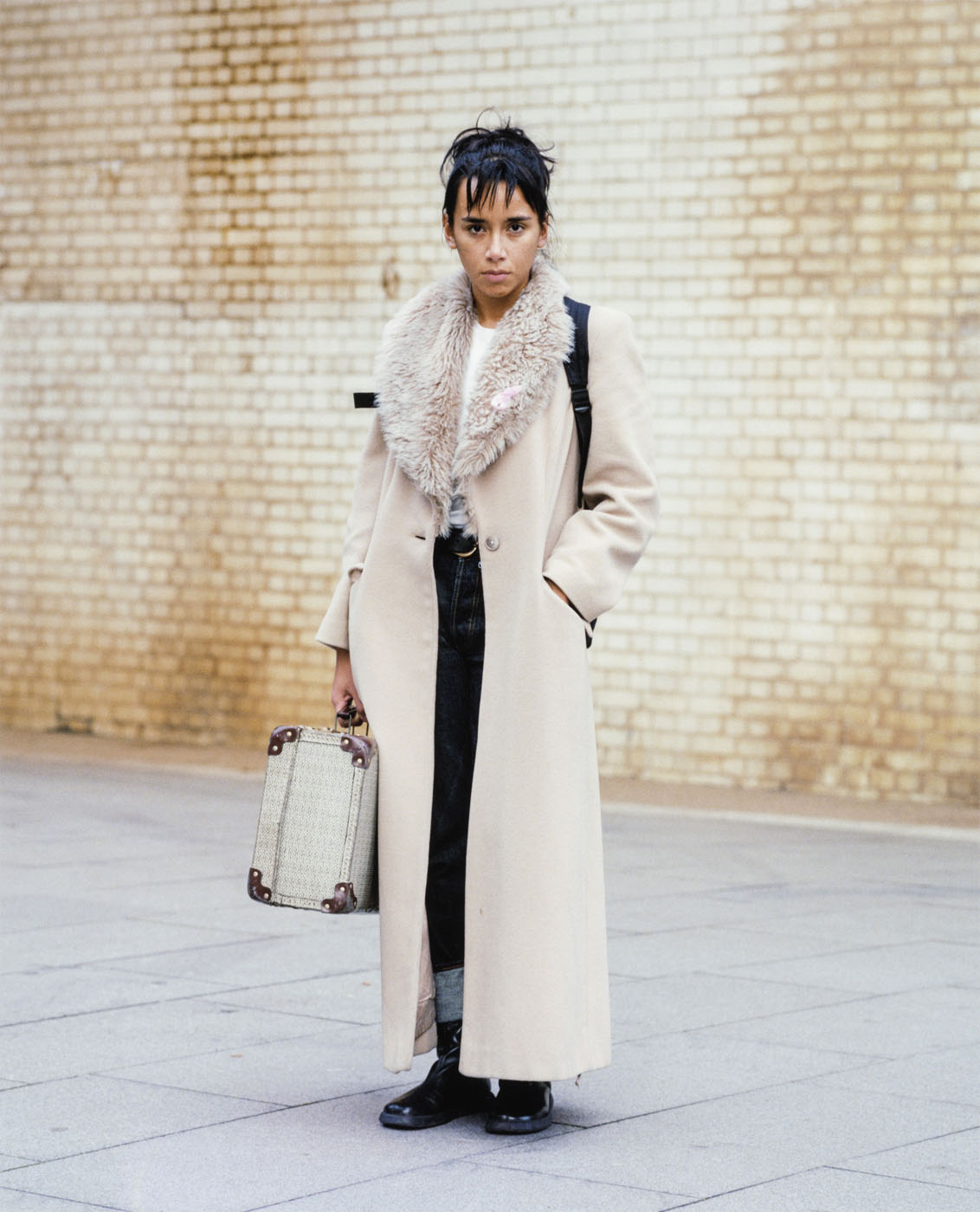
Featuring photographs by Eugène Atget, Lawrence Beck, Laurenz Berges, Karl Blossfeldt, Ursula Böhmer, Christian Borchert, Natascha Borowsky, Paul Dobe, Hans Eijkelboom, Folkwang-Auriga Verlag, Bernhard Fuchs, Candida Höfer, Fred Koch, August Kotzsch, Andreas Mader, Francesco Neri, Simone Nieweg, Gabriele and Helmut Nothhelfer, Albert Renger-Patzsch, Andrea Robbins/Max Becher, Judith Joy Ross, Martin Rosswog, August Sander, Oliver Sieber, Antanas Sutkus, Jerry L. Thompson, and Albrecht Tübke.


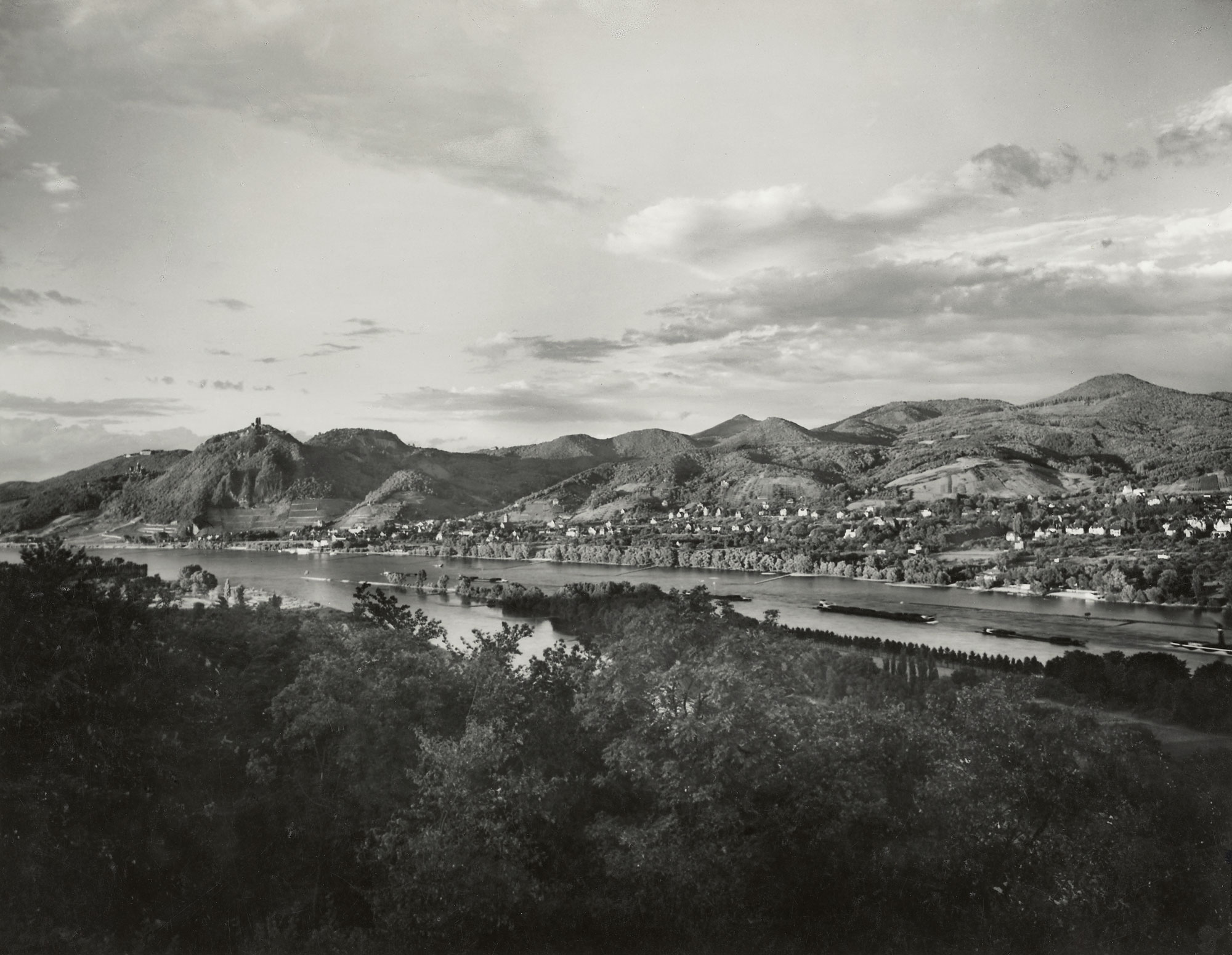
August Sander (German, 1876-1964) 'Das Siebengebirge von der unteren Terrasse hin zur Löwenburg' (The Siebengebirge from the lower terrace towards the Löwenburg castle) 1922 from the exhibition 'Photographic Concepts and Treasures – Works from the Collection Part 1 – Portraiture, Landscape, Botany' at Die Photographische Sammlung / SK Stiftung Kultur, Cologne, Feb - July, 2022


August Sander (German, 1876-1964)
Das Siebengebirge von der unteren Terrasse hin zur Löwenburg
The Siebengebirge from the lower terrace towards the Löwenburg castle

1922
Gelatin silver print
© Die Photographische Sammlung/SK Sitftung Kultur – August Sander Archiv, Köln; VG Bild-Kunst, Bonn, 2022


The gift of existence

It’s always a pleasure to be able to publish images by such photographic luminaries as August Sander and Karl Blossfeldt, although I feel the link between portrait, landscape and botanical photography is rather more complicated than the organisers of the exhibition would acknowledge in their press release … or, perhaps, we could rephrase that, of a different order of association than simply a result of human economics, culture and habitation over time as they state.

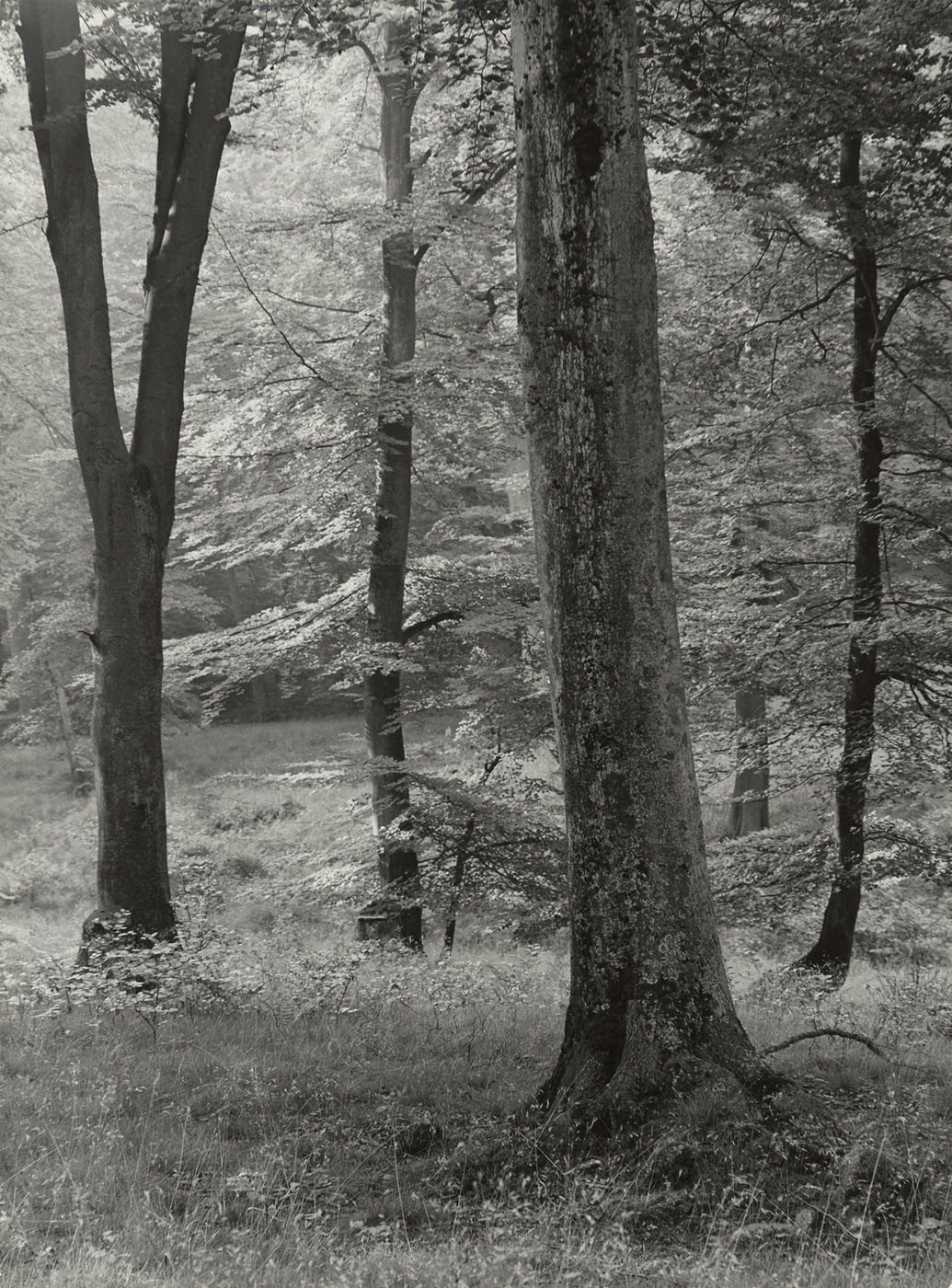
For me there is an essentialness about a human standing on the soil of earth, the energy of the tree of life spreading up through our limbs as we ground ourself in the earth – committing our body to the ground, earth to earth, ashes to ashes, dust to dust – whilst acknowledging the eternal energy of the cosmos. This has everything to do with understanding the time of the cosmos and the time of the earth (and our time on it), perceived as a connection to the earth as a living organism – Gaia, the Mother Earth – and very little to do with economics, culture or habitation. As Minor White would argue when photographing the landscape in meditation, he would hope for a release of energy in revelatio, in revelation, in the captured negative, over time. Again, very little to do with economics, culture or habitation.

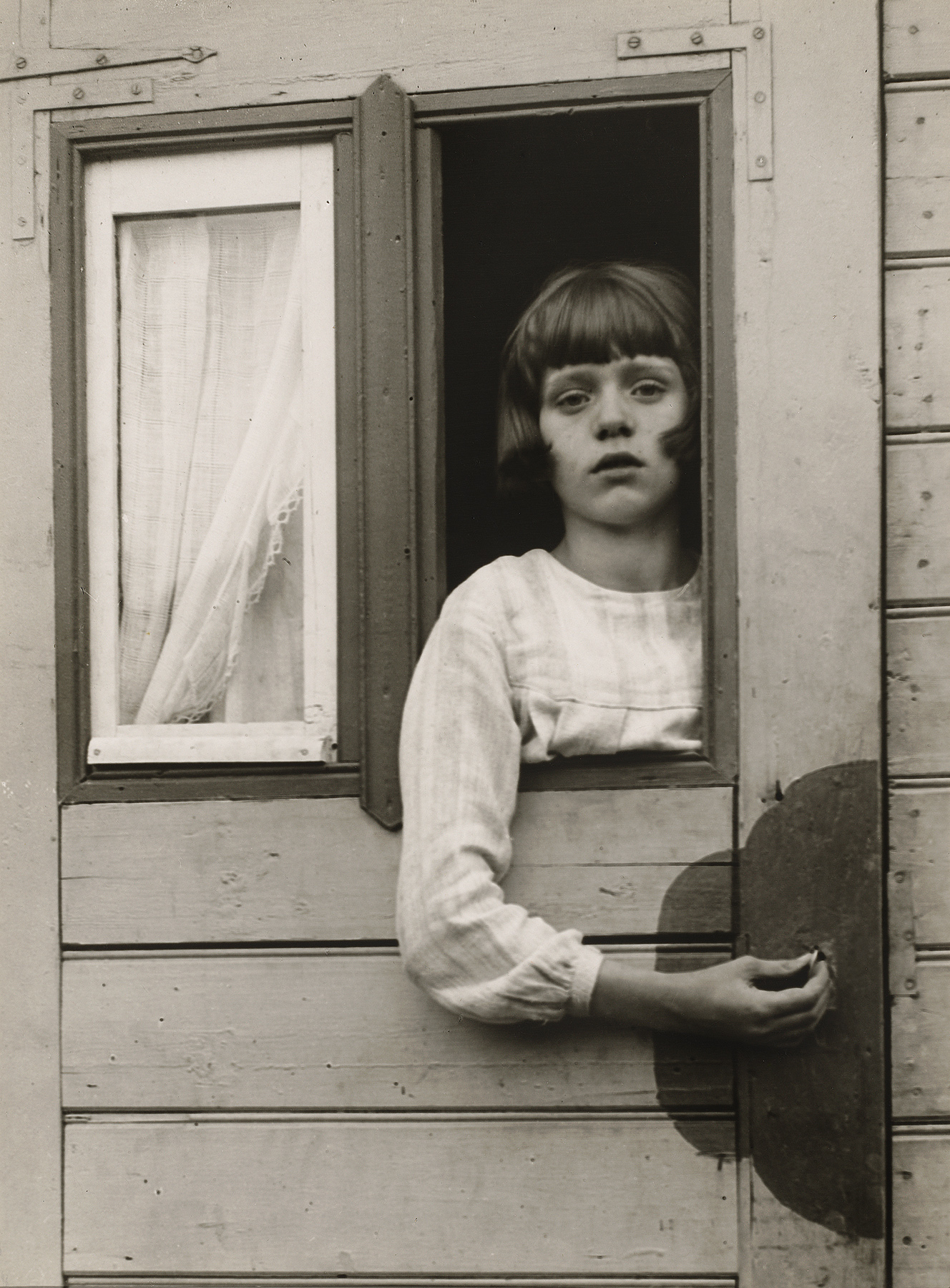
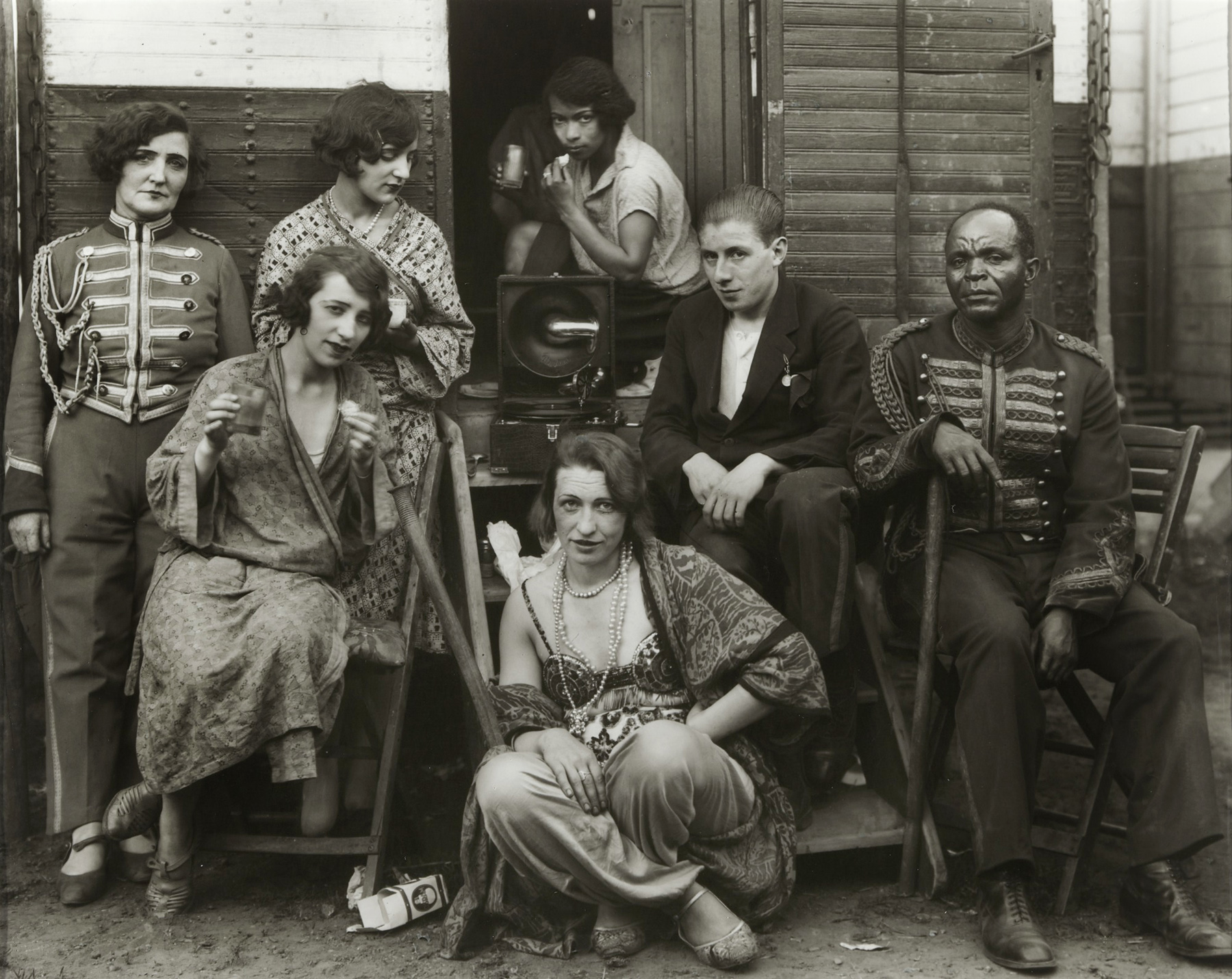
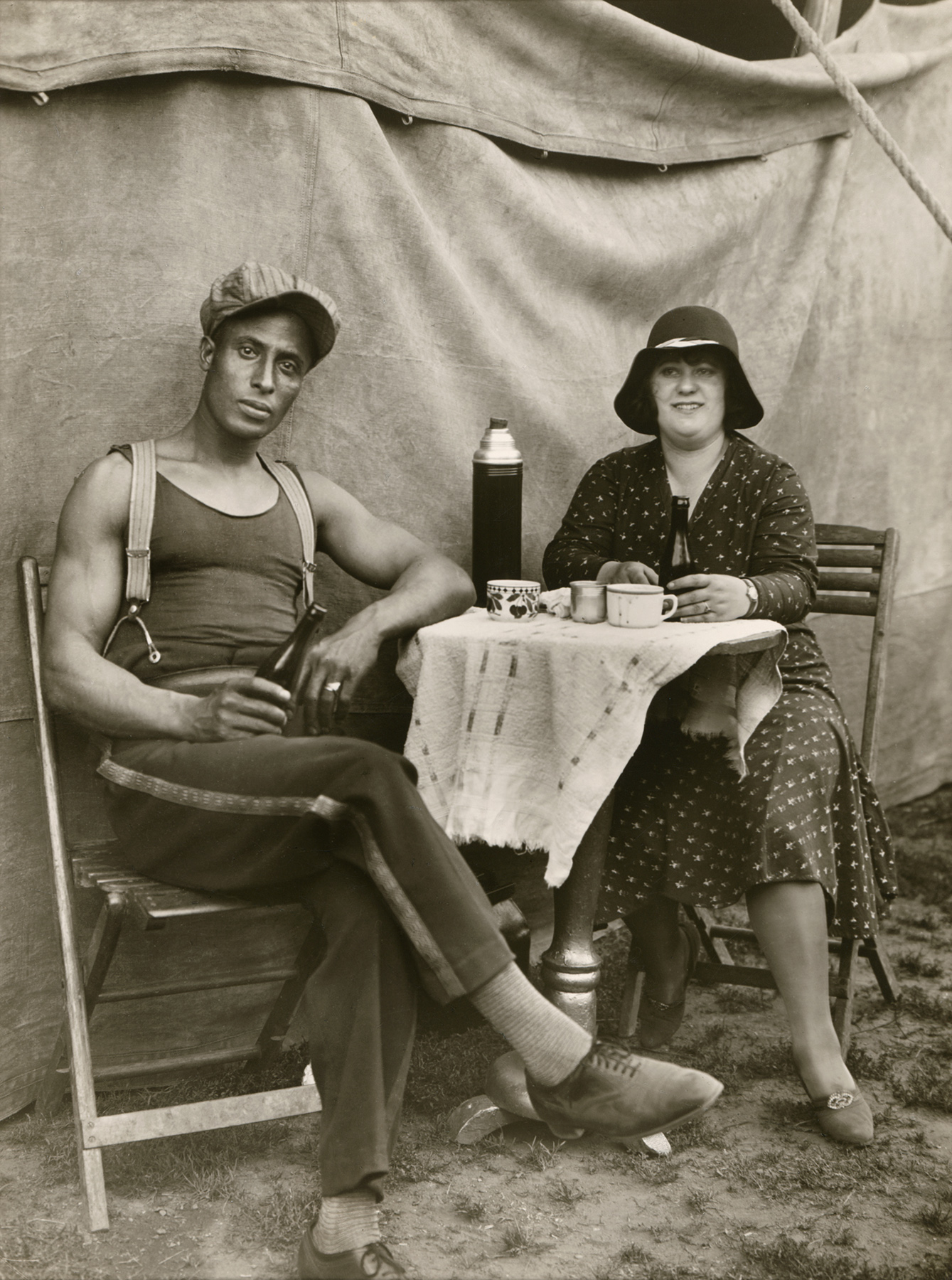
Because of the concentration on his portrait photography, notably work from his major project People of the Twentieth Century (Menschen des 20. Jahrhunderts), the landscape photographs of August Sander are often overlooked and therefore underrated. Whilst in Cologne in 2019 I even went so far as to buy a rare book on Sander’s landscapes that’s how much I like them. The light in Sander’s landscape photographs with their expansive skies and panoramic vistas – paired with his intimate woodlands, snowscapes and photographs of ancient trees – have a magical energy embedded in them which crystallises life on earth. In this posting there is only one landscape but you can check out more online. There are also three magnificent portraits of Sander’s that I have never seen before: Newspaper publisher [Karl Richter] (1924, below); Blacksmith (c. 1930, below); and Fairground Woman (c. 1930, below).

I believe that one way that traditional photography can approach a new terrain of becoming, in order to lend photographic visions current and future pertinence, is a rebalancing of the scales between conceptual and what I would call “spiritual” photography. A factual documentary approach accompanied by a defined concept should not preclude access to the spiritual or the sublime in traditional photography, or an acknowledgement of other ways of seeing and feeling the world. A transcendent liminality can inhabit images, one in which we cross the threshold into a transitional state between one world and the next, where can photographs proffer a ‘releasement toward things’ which, as Heidegger observes, grant us the possibility of dwelling in the world in a totally different way. As I have continued to argue on Art Blart for the last 15 years, the essentialness or reality of photography is that the photograph is never truly here and is always located elsewhere – in our feelings, in our hearts, in our memories and in the time and energy of the cosmos that surrounds us. A photograph is as much a true vibration of energy as it is a concept or a document, if not more so.

“To try to see more and better is not a matter of whim or curiosity or self-indulgence. To see or to perish is the very condition laid upon everything that makes up the universe, by reason of the mysterious gift of existence.” ~ Teilhard de Chardin, “Seeing” 1947

Dr Marcus Bunyan


Many thankx to Die Photographische Sammlung/SK Stiftung Kultur for allowing me to publish the photographs in the posting. Please click on the photographs for a larger version of the image.


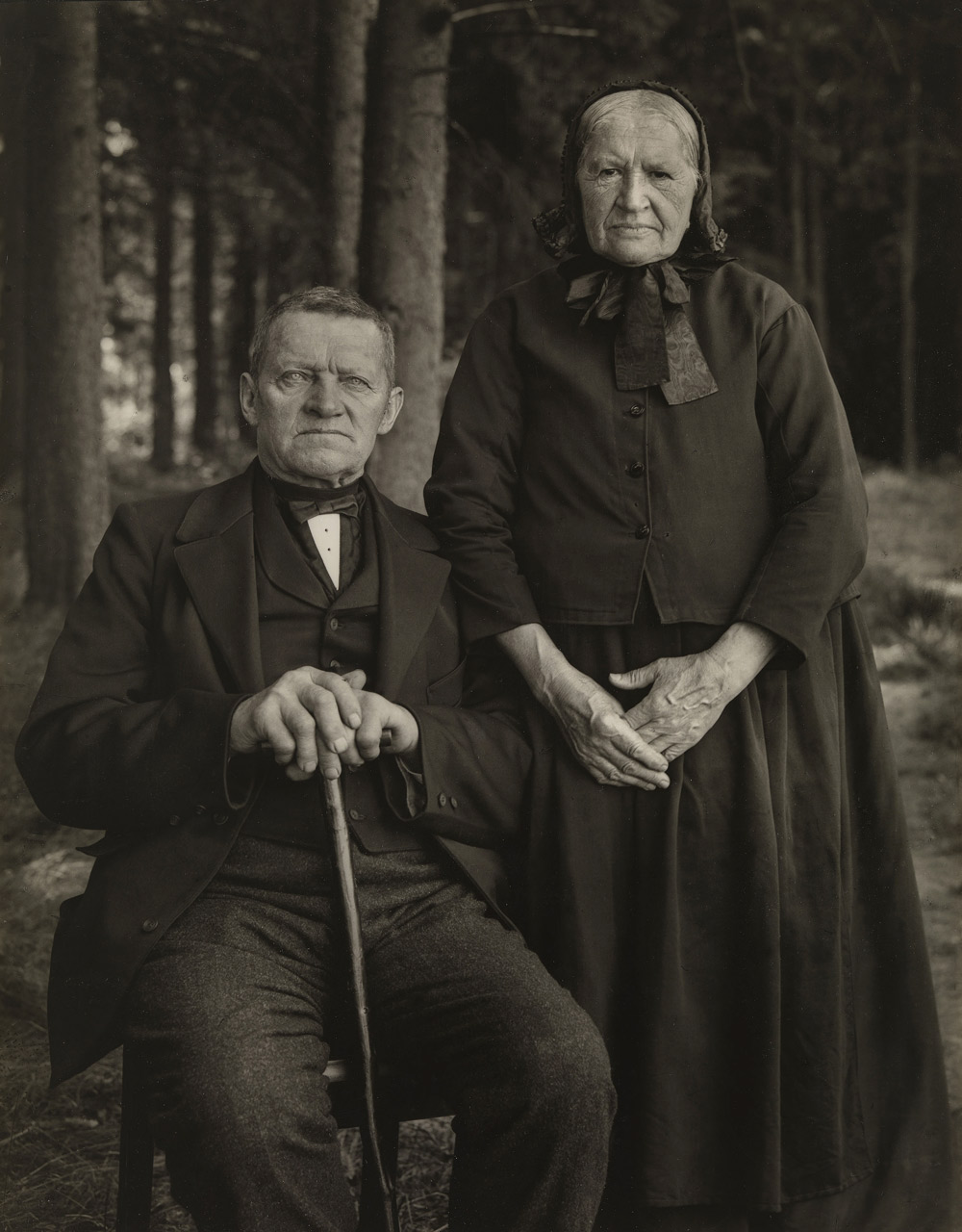
August Sander (German, 1876-1964) 'Farming Couple, Westerwald' 1912 from the exhibition 'Photographic Concepts and Treasures – Works from the Collection Part 1 – Portraiture, Landscape, Botany' at Die Photographische Sammlung / SK Stiftung Kultur, Cologne, Feb - July, 2022


August Sander (German, 1876-1964)
Farming Couple, Westerwald
1912
Gelatin silver print
© Die Photographische Sammlung/SK Stiftung Kultur – August Sander Archiv, Köln; VG Bild-Kunst, Bonn 2021


August Sander (German, 1876-1964) 'Newspaper publisher [Karl Richter]' 1924


August Sander (German, 1876-1964)
Newspaper publisher [Karl Richter]
1924
© Die Photographische Sammlung/SK Stiftung Kultur – August Sander Archiv, Köln; VG Bild-Kunst, Bonn 2021


August Sander (German, 1876-1964) 'Blacksmith' c. 1930


August Sander (German, 1876-1964)
Blacksmith
c. 1930
Gelatin silver print
© Die Photographische Sammlung/SK Stiftung Kultur – August Sander Archiv, Köln; VG Bild-Kunst, Bonn 2021


August Sander (German, 1876-1964) 'Three Generations of the Family' 1912


August Sander (German, 1876-1964)
Three Generations of the Family
1912
Gelatin silver print
© Die Photographische Sammlung/SK Stiftung Kultur – August Sander Archiv, Köln; VG Bild-Kunst, Bonn 2021


August Sander (German, 1876-1964) 'Fairground Woman' c. 1930


August Sander (German, 1876-1964)
Fairground Woman
c. 1930
Gelatin silver print
© Die Photographische Sammlung/SK Stiftung Kultur – August Sander Archiv, Köln; VG Bild-Kunst, Bonn 2021


Installation view of the exhibition 'Photographic Concepts and Treasures – Works from the Collection Part 1 – Portraiture, Landscape, Botany' at Die Photographische Sammlung / SK Stiftung Kultur, Cologne showing at left, the work of August Sander including 'Three Generations of the Family' (1912) and 'Farming Couple, Westerwald' (1912)


Installation view of the exhibition Photographic Concepts and Treasures – Works from the Collection Part 1 – Portraiture, Landscape, Botany at Die Photographische Sammlung / SK Stiftung Kultur, Cologne showing at left, the work of August Sander including Three Generations of the Family (1912, above) and Farming Couple, Westerwald (1912, above)


Installation view of the exhibition 'Photographic Concepts and Treasures – Works from the Collection Part 1 – Portraiture, Landscape, Botany' at Die Photographische Sammlung / SK Stiftung Kultur, Cologne showing at left, the work of August Sander (above); and at centre, the work of Andrea Robbins and Max Becher (below)


Installation view of the exhibition Photographic Concepts and Treasures – Works from the Collection Part 1 – Portraiture, Landscape, Botany at Die Photographische Sammlung / SK Stiftung Kultur, Cologne showing at left, the work of August Sander (above); and at centre, the work of Andrea Robbins and Max Becher (below)


Max Becher (German, b. 1964) and Andrea Robbins (American, b. 1963) 'Franklin Willmore' 1999-2001


Max Becher (German, b. 1964) and Andrea Robbins (American, b. 1963)
Franklin Willmore
1999-2001
From the series Americans of Samaná
© Andrea Robbins und Max Becher


In 2022, Die Photographische Sammlung/SK Stiftung Kultur celebrates the 25th year of its exhibition program in Cologne’s Mediapark, launched in 1997 under the forward-looking title “Comparative Concepts.” This anniversary offers an occasion to present many works from the collection in two exhibitions, each with its own focus, enabling Die Photographische Sammlung to provide visitors with a broad overview of its holdings.

With over 380 exhibits, the current presentation focuses on the central themes of “Portraiture, Landscape, Botany” as illustrated by the work of 25 historical and contemporary artistic photographers. A second exhibition to follow from September 2 will spotlight the related areas of “Urban Life, Architecture, Industry.” Viewers will discover a variety of links between the two presentations.

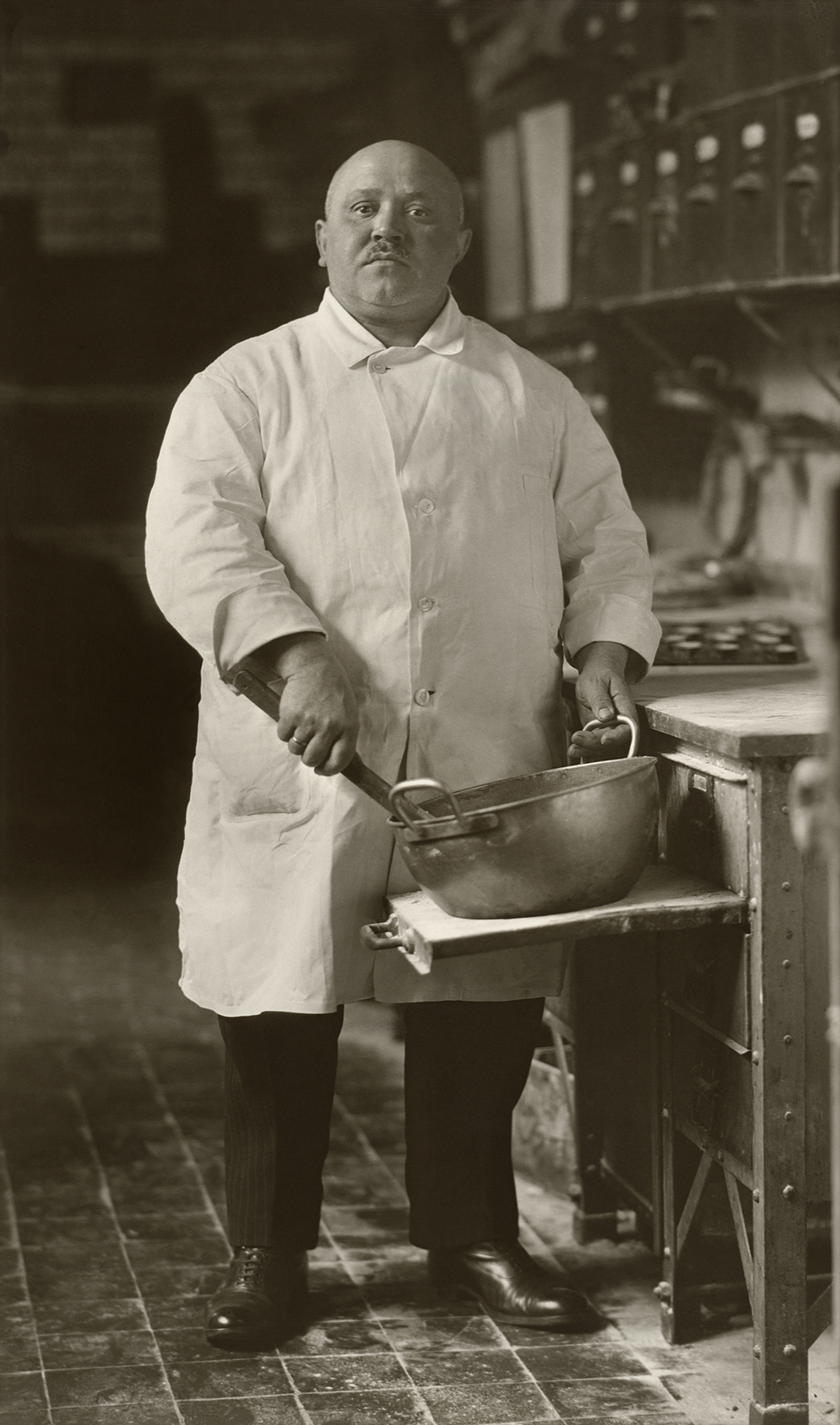
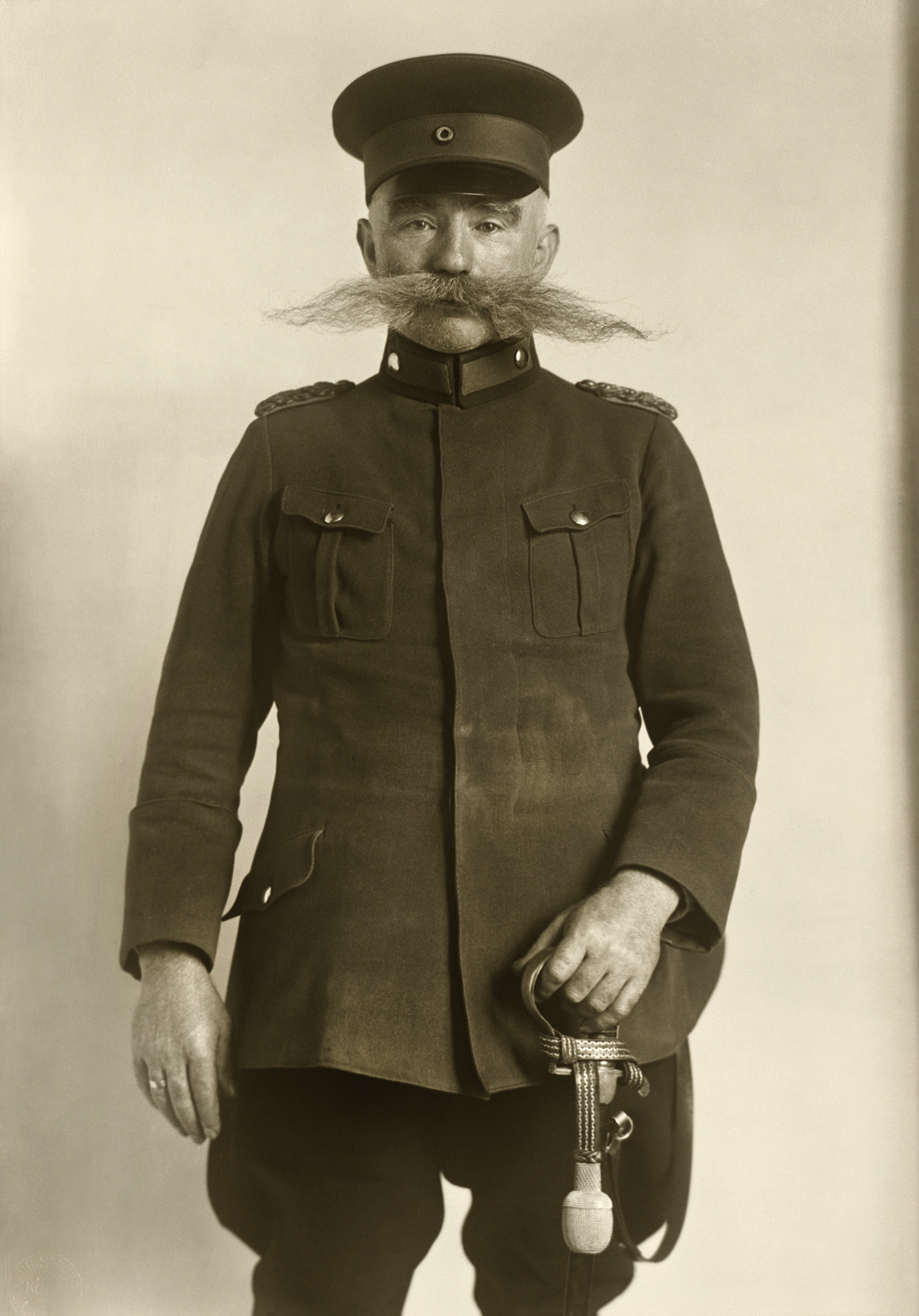
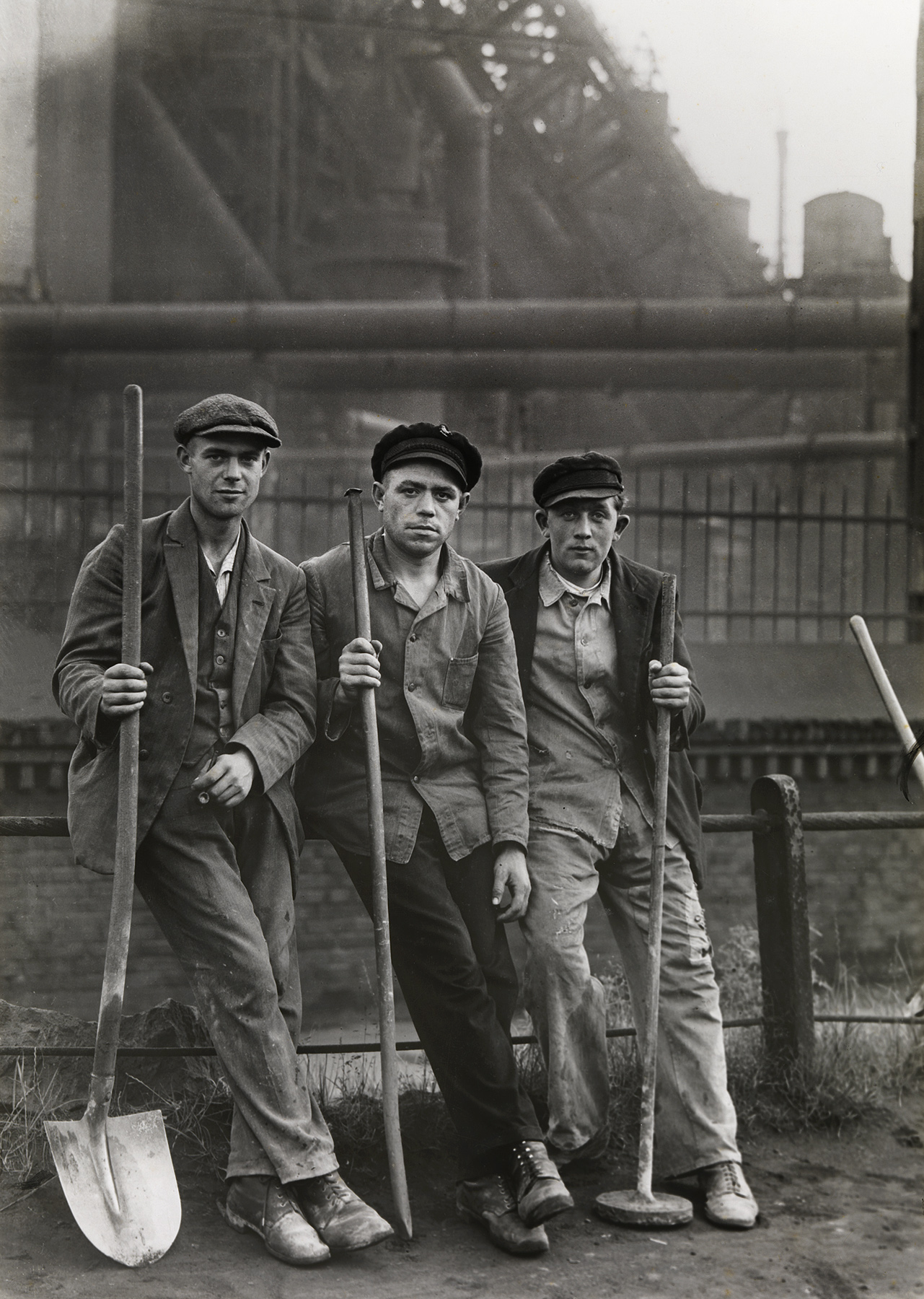
The portrait genre will be examined first, based on the work of August Sander, whose archive has provided vital inspiration for the institution’s collection and program concept. With his iconic series “Citizens of the Twentieth Century,” represented in the current show by over 50 original prints, Sander took the photographic portrait in a new and innovative direction as a method of factual documentary. Compiled in the first half of the last century and consisting of hundreds of images, this work still has a singular standing to this day as an enormously multifaceted oeuvre following a predefined concept that was implemented step by step starting in the mid-1920s. The series reflects fundamental new challenges in dealing with the medium, as well as aspects of the individual and group portrait – considerations that are a core component of Die Photographische Sammlung.

The portraits in the collection for example inquire into the relationship between the individual and society, exploring questions of identity and of social, family, and professional circumstances and relationships, and thereby providing a glimpse of various life stages and living conditions. The influence of the ever-changing impulses, possibilities, and synergies over time is very much in evidence here. This connection is particularly vivid in documentary projects that are pursued over longer periods. They show how individuals are continuously shaped by the respective cultural environment. This circumstance is reflected not only in the image they have of their own lives but also in how they respond to their life realities.

Accordingly, the subject areas of landscape and botany are connected with the portrait on many levels. Like portraiture, landscape as both a human habitat and economic and cultural realm reflects temporal phenomena. Botanical studies that are rendered like portraits may come to life as naturalistic individuals or in other cases allude to the world of aesthetics and sculpture.

By offering an opportunity to compare and contrast various photo series, the exhibition compellingly underscores how the unifying criterion of a factual documentary approach accompanied by a defined concept has always been a leitmotif for the activities of Die Photographische Sammlung / SK Stiftung Kultur. A concentration on this specific current in photography is what defines the collection’s distinctive profile. Rather than representing a cross-section of the history of photography, the aim is to emphasise photographic visions that creatively guide traditional approaches onto new terrain in order to lend them current and future pertinence.

Press release from Die Photographische Sammlung/SK Stiftung Kultur


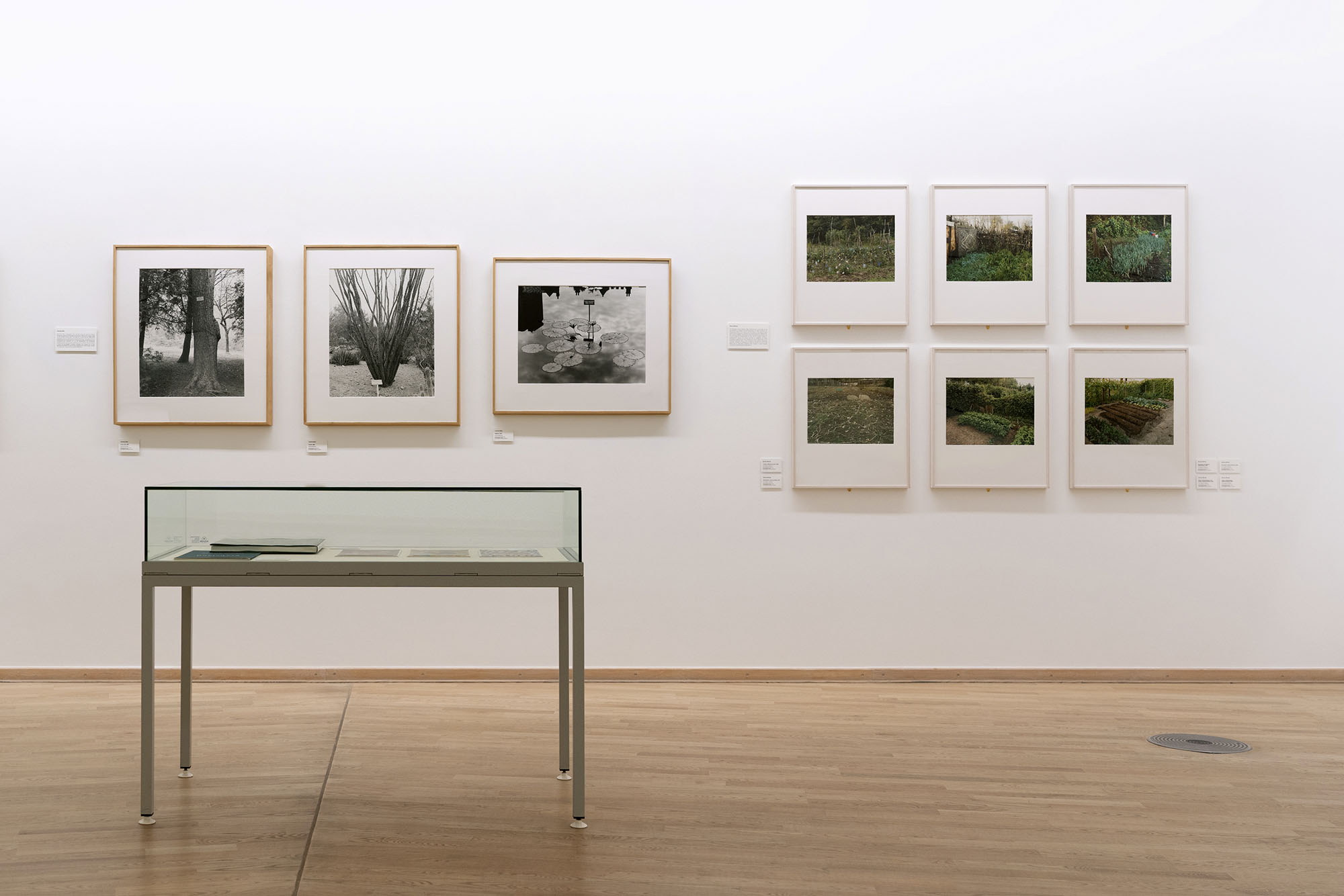
Installation view of the exhibition 'Photographic Concepts and Treasures – Works from the Collection Part 1 – Portraiture, Landscape, Botany' at Die Photographische Sammlung / SK Stiftung Kultur, Cologne showing at right, the work of Simone Nieweg


Installation view of the exhibition Photographic Concepts and Treasures – Works from the Collection Part 1 – Portraiture, Landscape, Botany at Die Photographische Sammlung / SK Stiftung Kultur, Cologne showing at right, the work of Simone Nieweg (below)


Simone Nieweg (German, b. 1962) 'Tomaten, Belfort/Cravanche' 2004


Simone Nieweg (German, b. 1962)
Tomaten, Belfort/Cravanche
2004
Chromogenic print
16 x 20 inches
© Simone Nieweg/VG Bild-Kunst, Bonn 2022


Simone Nieweg (German, b. 1962) 'Gewassertes Beet, Dusseldorf-Kalkum' 2004


Simone Nieweg (German, b. 1962)
Gewassertes Beet, Dusseldorf-Kalkum
2004
Chromogenic print
16 x 20 inches
© Simone Nieweg/VG Bild-Kunst, Bonn 2022


The gardens shown in Nieweg’s photographs is of a type known in German as Grabeland – literally “land for digging.” Unlike typical allotment gardens, such plots are not available for long-term lease or ownership but are instead zoned for interim use on a year-by-year basis until they become building land or are put to some other use. The plantings are also prescribed to reflect this provisional state; no perennials, bushes, shrubs, or trees are allowed.
Since Grabeland is impermanent terrain, entirely subject to utility and optimisation, one rarely finds here any of the decorative elements that populate allotment gardens. There are no garden furnishings, grills, or sun umbrellas – indeed there is nothing that would indicate the presence of leisure. What we see instead are the instruments of work, tools used to prepare the soil and cultivate the plants.

What Nieweg finds especially interesting about Grabeland are the forms and structures to which such conditions give rise. She has been working on this project since the mid-1980s, shortly after beginning her studies with Bernd Becher at the Düsseldorf Art Academy. Gardens, fields, landscapes, and more recently, views into forests are among the subjects that Nieweg has consistently explored in series taken over extended periods. She prefers using a large-format camera and elaborating her motifs in colour.

Text from the Die Photographische Sammlung/SK Stiftung Kultur, Köln website. No longer available online


Installation view of the exhibition 'Photographic Concepts and Treasures – Works from the Collection Part 1 – Portraiture, Landscape, Botany' at Die Photographische Sammlung / SK Stiftung Kultur, Cologne showing at left, the work of Karl Blossfeldt; and at right, work published by Folkwang-Auriga Verlag


Installation view of the exhibition Photographic Concepts and Treasures – Works from the Collection Part 1 – Portraiture, Landscape, Botany at Die Photographische Sammlung / SK Stiftung Kultur, Cologne showing at left, the work of Karl Blossfeldt (below); and at right, work published by Folkwang-Auriga Verlag (below)


Folkwang-Auriga Verlag. 'Compositae. Zinnia elegans' Knospe 1929/1930


Folkwang-Auriga Verlag
Compositae. Zinnia elegans Knospe
1929/1930
© gemeinfrei


Karl Blossfeldt (German, 1865-1932) 'Winterschachtelhalm, Stängelquerschnitt' (Winter horsetail, stem cross section), enlarged 30 times Before 1926


Karl Blossfeldt (German, 1865-1932)
Winterschachtelhalm, Stängelquerschnitt (Winter horsetail, stem cross section), enlarged 30 times
Before 1926
Gelatin silver print
© Karl Blossfeldt Archiv / Stiftung Ann und Jürgen Wilde, Pinakothek der Moderne, München


Karl Blossfeldt (German, 1865-1932) 'Thujopsis dolabrata' 1928


Karl Blossfeldt (German, 1865-1932)
Thujopsis dolabrata
1928
Gelatin silver print
© Karl Blossfeldt Archiv / Stiftung Ann und Jürgen Wilde, Pinakothek der Moderne, München


Karl Blossfeldt (German, 1865-1932) 'Cucurbita' 1928


Karl Blossfeldt (German, 1865-1932)
Cucurbita
1928
Gelatin silver print


Karl Blossfeldt (German, 1865-1932) 'Cirsium canum' (Grey thistle) 1928


Karl Blossfeldt (German, 1865-1932)
Cirsium canum (Grey thistle)
1928
Gelatin silver print
© Karl Blossfeldt Archiv / Stiftung Ann und Jürgen Wilde, Pinakothek der Moderne, München


Karl Blossfeldt (German, 1865-1932) 'Hairy catsear – young leaf' 1928


Karl Blossfeldt (German, 1865-1932)
Hairy catsear – young leaf
1928
Gelatin silver print
© Karl Blossfeldt Archiv / Stiftung Ann und Jürgen Wilde, Pinakothek der Moderne, München


August Kotzsch (German, 1836-1910) 'Roots over rocks' Around 1870


August Kotzsch (German, 1836-1910)
Roots over rocks
Around 1870
© public domain


Albert Renger-Patzsch (German, 1897-1966) 'Buchenwald' Before 1962


Albert Renger-Patzsch (German, 1897-1966)
Buchenwald
Before 1962
Gelatin silver print
© Albert Renger-Patzsch / Archiv Ann und Jürgen Wilde, Zülpich / VG Bild-Kunst, Bonn 2022


Christian Borchert (German, b. 1942) 'Familie A.' 1993


Christian Borchert (German, b. 1942)
Familie A. (Maler/Grafiker und Fotograf, Grafikerin) (Painter/graphic artist and photographer, graphic designer)
Steinhagen-Krummenhagen, 1993
© SLUB Dresden, Deutsche Fotothek


Andreas Mader (German, b. 1960) 'Rojan and Herveva' 2017


Andreas Mader (German, b. 1960)
Rojan and Herveva
2017
From the series Die Tage Das Leben (Days, Life), 1988-2018
© Andreas Mader


In the series “Die Tage Das Leben (Days. Life)”, begun in 1988, I photograph my friends again and again. I watch them finding themselves and each other and separating and having children; how they are alone and with others; how they get older and take each other’s hands so they don’t get lost along the way. I think of them full of tenderness. ~ Andreas Mader


Judith Joy Ross (American, b. 1946) 'Policeman, Bethlehem, Pennsylvania' 1990


Judith Joy Ross (American, b. 1946)
Policeman, Bethlehem, Pennsylvania
1990
© Judith Joy Ross


Oliver Sieber (German, b. 1966) 'Spiky, Osaka' 2006


Oliver Sieber (German, b. 1966)
Spiky, Osaka
2006
© Oliver Sieber, 2022


Oliver Sieber studied photography in Bielefeld and Düssseldorf. Since 1999 he has worked with Katja Stuke on Frau Böhm, a photo project in the form of a magazine.

Sieber’s work usually takes the form of series and he is fascinated by the subject of identity and the phenomenon of young people and their subcultures. This led to the series SkinsModsTeds, B-Boyz B-Girlz, 11Girlfriends and Boy meets Girl. In 2006 he spent time in Japan for an artist in residence programme, where he made the series J_Subs as well as character thieves, for which he photographed young people dressed up as their favourite manga characters. Over the past few years exhibitions of his work have been held at, among others, the Photographers Gallery London, the Photographische Sammlung SK / Stiftung Kultur in Cologne, the National Museum of Photography in Copenhagen, the Photo Espana Festival in Madrid, Yours gallery in Krakow and Fotomuseum Winterthur. Sieber has published a number of books. The latest two are based on his work character thieves and imaginary club.

Dr Christoph Schaden. “Oliver Sieber,” on the PhMuseum website Nd [Online] Cited 22/06/2022. No longer available online


Jerry L. Thompson (American, b. 1945) 'North Fifth Street off Bedford Avenue towards Berry Street' 19 June 2016


Jerry L. Thompson (American, b. 1945)
North Fifth Street off Bedford Avenue towards Berry Street
19 June 2016
© Jerry L. Thompson


Albrecht Tübke (German, b. 1971) 'London' 2001


Albrecht Tübke (German, b. 1971)
London
2001
From the series Citizens
© Albrecht Tübke


Tübke’s photographs examine the representation of the human being and the role of the individual in society, in search for its identity while oscillating between adaptation and demarcation. Among his most famous projects are the portrait series Dalliendorf from 1996 and Citizens from 2001.

In photography, Tübke’s field is the human image. These are mainly full – length portraits in which the colour is greatly reduced. Tübke is concerned with the representation of individuality and uniqueness of people. The people portrayed almost always look into the camera. Through the concentration of the gaze as well as through the sensitively observed posture of the person portrayed, Tübke succeeds in creating images of very strong intensity with a documentary approach.

Text translated from the German Wikipedia website


Die Photographische Sammlung/SK Stiftung Kultur
Im Mediapark 7
50670 Cologne
Phone: 0049-(0)221-88895 300

Opening hours:
Open daily 14 – 19hrs
Closed Wednesdays

Die Photographische Sammlung/SK Stiftung Kultur website

LIKE ART BLART ON FACEBOOK

Back to top

Exhibition: ‘From Becher to Blume – Photographs from the Garnatz Collection and Die Photographische Sammlung/SK Stiftung Kultur in Dialogue’ at Die Photographische Sammlung/SK Stiftung Kultur, Cologne

Exhibition dates: 12th March – 8th August, 2021

Artists: Bernd and Hilla Becher, Boris Becker, Anna and Bernhard Blume, Chargesheimer, Jim Dine, Frank Dömer, Gina Lee Felber, Candida Höfer, Benjamin Katz, Jürgen Klauke, Astrid Klein, Werner Mantz, Augustina von Nagel, Floris Neusüss, Sigmar Polke, Arnulf Rainer, Albert Renger-Patzsch, Tata Ronkholz, Thomas Ruff, Hugo Schmölz, Wilhelm Schürmann, and Thomas Struth.


Werner Mantz (German, 1901-1983) 'Waldecker Str., Cologne-Buchforst (formerly Kalker Feld)' 1928 from the exhibition Exhibition: 'From Becher to Blume – Photographs from the Garnatz Collection and Die Photographische Sammlung/SK Stiftung Kultur in Dialogue' at Die Photographische Sammlung/SK Stiftung Kultur, Cologne, March - August, 2021


Werner Mantz (German, 1901-1983)
Waldecker Str., Köln-Buchforst (ehemals Kalker Feld)
Waldecker Str., Cologne-Buchforst (formerly Kalker Feld)
1928
© VG Bild-Kunst, Bonn 2020


A Kodak Brownie camera launched Werner Mantz‘s photographic career. As an adolescent, he photographed Cologne and the surrounding landscape and later studied photography at the Bavarian State Academy in Munich. He returned to Cologne, set up a studio and began a freelance career. Mantz soon distinguished himself as an architectural photographer, receiving numerous commissions. In 1932 he moved to Maastricht, in the Netherlands near the German border. He opened a second studio there and closed the Cologne studio in 1938. Mantz received public and private commissions throughout his career and retired in 1971.

Text from the Getty website [Online] Cited 19/03/2021


Werner Mantz‘s (German, 1901-1983) youthful passion for taking pictures inspired him to study photography at the Bayerische Lehr-und Versuchsanstalt in Munich in 1920-1921. After that he opened a portrait photography studio in Cologne and joined the artists group Kölner Progressive. Around 1926, encouraged by architect Wilhelm Ripahn, Mantz became one of the leading contemporary photographers of modern architecture in the Rhineland. He worked for architects such as Bruno Paul and Hans Schumacher and was under exclusive contract with the architects Ripahn & Grod. In 1932 he relocated to Maastricht in the Netherlands close to the German border. He opened a second studio there and closed the Cologne studio in 1938. In addition to his architectural work he devoted himself to photographing children.

Text from the Kicken Berlin website [Online] Cited 19/03/2021


The Renger-Patzsch is a cracker.

Further information about the Dusseldorf School artists and their successors can be found at ‘Photographs Become Pictures. The Becher Class’ at the Städel Museum, Frankfurt, April – August 2017.

Marcus


Many thankx to the Die Photographische Sammlung / SK Stiftung Kultur for allowing me to publish the photographs in the posting. Please click on the photographs for a larger version of the image.


Albert Renger-Patzsch (German, 1897-1966) 'Untitled (Grimberg colliery, Bergkamen)' 1951-1952 from the exhibition Exhibition: 'From Becher to Blume – Photographs from the Garnatz Collection and Die Photographische Sammlung/SK Stiftung Kultur in Dialogue' at Die Photographische Sammlung/SK Stiftung Kultur, Cologne, March - August, 2021


Albert Renger-Patzsch (German, 1897-1966)
Ohne Titel (Zeche Grimberg, Bergkamen)
Untitled (Grimberg colliery, Bergkamen)
1951-1952
© 2020 Albert Renger-Patzsch / Archiv Ann und Jurgen Wilde, Zulpich / VG Bild-Kunst, Bonn


Tata Ronkholz (German, 1940-1977) 'Trinkhalle, Sankt-Franziskusstraße 107' 1977


Tata Ronkholz (German, 1940-1977)
Trinkhalle (Refreshment Stand), Sankt-Franziskusstraße 107
1977
© VAN HAM Art Estate: Tata Ronkholz


Along with Thomas Ruff, Candida Höfer, and Thomas Struth, Tata Ronkholz (German, 1940-1997) was among the first students of Bernd Becher at the Kunstakademie Düsseldorf. Ronkholz is perhaps best known for her most extensive series Trinkhallen: kiosks and small shops around the corner that are witnesses of social neighbourhoods and vernacular cultures. In her work, Tata Ronkholz shows elements of urban architecture, which due to their transient nature turn the photographs into valuable historical documents. Ronkholz found her characteristic subjects in Cologne, Düsseldorf, Bochum, and parts of the Rhineland. Together with Thomas Struth, Tata Ronkholz documented a part of the port of Düsseldorf between 1978 and 1980, shortly before it was torn down. Struth and Ronkholz created a unique historical document, which also received great recognition from the city of Düsseldorf. In 1979 Ronkholz took part in the seminal exhibition In Deutschland (In Germany) at the Rheinisches Landesmuseum in Bonn.

Text from the Kicken Berlin website [Online] Cited 19/03/2021


Cigarette and gumball machines are fixed to exterior walls. Advertising posters overlap. Beverages, magazines and sweets are visibly lined up behind glass. It is Tata Ronkholz’ serial presentation that enables the comparison of the kiosks and their study as a social phenomenon in urban contexts.

Kiosks are everyday meeting points and the setting for social life. At the same time their role fundamentally changed in the past decades. Ronkholz photographs kiosks as socially grown places. She positions them centrally in their architectural environment – people are absent. This is what the photos have in common with Becher-photographs. Like her teachers, Ronkholz is committed to the conservation and archiving of a changing urban culture.

More information about the work of Tata Ronkholz: ‘Photographs Become Pictures. The Becher Class’ at the Städel Museum, Frankfurt


Tata Ronkholz (German, 1940-1977) Thomas Struth (German, b. 1954) 'Rheinhafen, Düsseldorf' 1979-1980


Tata Ronkholz (German, 1940-1977)
Thomas Struth (German, b. 1954)
Rheinhafen, Düsseldorf
1979-1980
© VAN HAM Art Estate: Tata Ronkholz
© Thomas Struth


Tata Ronkholz was born in 1940 in Krefeld under the female name Roswitha Tolle. She studied architecture and interior design at the School of Applied Arts in Krefeld. Thereafter, she completed a one-year apprenticeship at the Schroer Furniture Store in Krefeld. She subsequently began work as a freelance product designer. Tata Ronkholz first encountered photography through her husband, Coco Ronkholz, who managed the production of a catalogue for Bernd Becher. In 1977, she enrolled in the State Art Academy in Düsseldorf and studied photography shortly thereafter with Prof. Becher. Along with Volker Döhne, Andreas Gursky, Candida Höfer, Axel Hütte, Thomas Ruff, and Thomas Struth, Ronkholz counts among Becher’s earliest (and later legendary) students at the Academy. In 1985, she gave up photography and worked for photography agency in Cologne from 1985-95 to support herself. In 1997, Ronkholz died at Burg Kendenich near Cologne. Her photographs of refreshment stands, of which few remain, were arguably her most substantial works. In 1978, she also began to collaborate with Thomas Struth on documenting the Rhine harbor. Ronkholz called her final group of photographs Schaufenster (Display Windows).

Text from the Van Ham Art Estate website [Online] Cited 19/03/2021


Wilhelm Schürmann (German, b. 1946) 'Untitled (construction trailer and view of Cologne Cathedral)' 1988


Wilhelm Schürmann (German, b. 1946)
Ohne Titel (Bauwagen und Blick auf Kölner Dom)
Untitled (construction trailer and view of Cologne Cathedral)
1988
© Wilhelm Schürmann


Bernd and Hilla Becher. 'Charleroi-Montigny, B' 1984


Bernd (German, 1931-2007) and Hilla (German, 1934-2015) Becher
Charleroi-Montigny, B
1984
© Estate Bernd & Hilla Becher, vertreten durch Max Becher, courtesy Die Photographische Sammlung / SK Stiftung Kultur – Bernd und Hilla Becher Archiv, Köln, 2020


Boris Becker (German, b. 1961) 'Zeebrugge' 2003


Boris Becker (German, b. 1961)
Zeebrugge
2003
© VG Bild-Kunst, Bonn 2020


“The great charm of Boris Becker’s photographs is due to the fact that through the consequent isolation of his objects they appear mysterious and alienated which makes us curious to look closer with greater attention and to see things in a different way.”

Rupert Pfab, Exhibition catalogue: “Boris Becker”, published by Städtisches Museum Zwickau, 1995, p. 15.


Frank Dömer (German, b. 1961) 'Äbnet' 2002


Frank Dömer (German, b. 1961)
Äbnet
2002
© Frank Dömer


Anna and Bernhard Blume. 'Telekinetisch hysterische Szene' (Telekinetically hysterical scene) 1986-1987


Anna (German, 1936-2020) and Bernhard (German, 1937-2011) Blume
Telekinetisch hysterische Szene (Telekinetically hysterical scene)
1986-87
From the series Trautes Heim (Sweet home)
© VG Bild-Kunst, Bonn 2020


Anna and Bernhard Blume were a collaborative duo of German artists, best known for their large-scale, monochromatic photographs. Throughout their practice, they captured themselves dynamically engaging with Minimalist sculpture, resulting in humorous investigations into space, art history, and contemporary life. Anna was born Anna Helming in Bork, Germany and Bernhard was born in Dortmond, Germany, both in 1937. They went on to study at the Staatliche Kunstakademie in Düsseldorf from 1960 to 1965, where they met and were married in 1966. Notably, their work is entirely self-produced, from conceptualisation to finished product, with total mastery of technical components. “We paint with our camera,” Anna Blume explained, “and this painterly work continues in the lab, too.”

Anna and Bernhard Blume’s work has been widely acclaimed, resulting in such exhibitions as at the Museum Ludwig in Cologne in 2005, The Museum of Modern Art in New York in 1989, and documenta 6 in Kassel in 1977. Bernhard Blume died in Cologne, Germany on September 1, 2011. Anna Blume passed away on June 18, 2020 at the age of 84 after a long illness.

Text from the Artnet website [Online] Cited 19/03/2021


Jim Dine. 'Leaves Painted in the Eastern Part of the State' 2010


Jim Dine (American, b. 1935)
Leaves Painted in the Eastern Part of the State
2010
© VG Bild-Kunst, Bonn 2020


Candida Höfer. 'Kunsthalle Karlsruhe V' 1999


Candida Höfer (German, b. 1944)
Kunsthalle Karlsruhe V
1999
© VG Bild-Kunst, Bonn 2020


Thomas Struth (German, b. 1954) 'Rijksmuseum Amsterdam 1' 1990


Thomas Struth (German, b. 1954)
Rijksmuseum Amsterdam 1
1990
© Thomas Struth


The exhibition From Becher to Blume provides in-depth insights in particular into the influential photography of the 1980s and 90s, a period that produced a number of innovative bodies of work and concepts. A central role is played by the Rhineland, home to numerous artists, museums, and galleries. The collector couple Ute and Eberhard Garnatz were part of this extremely lively scene, and began as early as the 1970s to pursue their collecting activities with great dedication. In addition to amassing a large number of paintings, sculptures, and prints, they also built a distinctive and remarkably diverse collection of photographs, some of them dating back to the 1950s but for the most part produced during the 1980s to the 2000s. During that decade, photography was more and more becoming part of the fine arts cosmos. The medium resolutely carved out a place for itself with and alongside the traditional genres. And the collectors followed this development with an alert eye. Keeping pace with the times, they began to focus on artists who used the photographic image as basis for their work and for whom the camera was hence a matter-of-fact technical tool in their artistic practice. Some of these artists chose the documentary image as their springboard, while others were far less interested in the medium’s ability to faithfully reproduce reality and instead ventured into experimental realms. There were also those who attempted to confound the world of objects in their photos, or who staged or made use of the chemical nature of the photographic process to arrive at pictorial works in a more painterly idiom.

Showcasing the Garnatz Collection offers Die Photographische Sammlung / SK Stiftung Kultur the opportunity to arrange photographs from both collections in a productive dialogue. A common denominator can be found in particular in the works of Bernd and Hilla Becher, while photographers including Boris Becker, Candida Höfer, Thomas Ruff, and Thomas Struth are likewise represented in both collections. The exhibition furthermore places rare staged and experimental works in context. These are juxtaposed with other works that straddle the genres of photography and painting. As much as the medium of photography claims to reproduce reality, the range of possibilities it offers equally inspires artists to create works verging on the abstract or lyrical.

From Becher to Blume thus unfurls a broad and extremely varied spectrum of photographic approaches, which come together here in a refreshingly informal way to reveal their many contrasts and contradictions. On display are over 150 exhibits, including extensive serial works, by a total of 22 artists who have been instrumental in shaping recent German photography through their innovative contributions and continue to exert a major influence on the artistic medium.

A catalogue has been published by Snoeck Verlag to accompany the exhibition.

Press release from Die Photographische Sammlung/SK Stiftung Kultur


Chargesheimer (Karl-Heinz Hargesheimer) (German, 1924-1972) 'Untitled (girl scattering confetti)' c. 1956-1957


Chargesheimer (Karl-Heinz Hargesheimer) (German, 1924-1972)
Ohne Titel (Konfetti streuendes Mädchen)
Untitled (girl scattering confetti)
c. 1956-1957
© Museum Ludwig Köln


Chargesheimer (Karl Heinz Hargesheimer) belongs among the most outstanding artists of his generation – as photographer, sculptor, stage designer and director. The press called Chargesheimer a “restlessly proliferative creative spirit” and an artist “who loves to provoke.”

He was during his entire life an individual who never compromised. “Chargesheimer was insatiable, a person for whom nothing was ever enough, who consumed himself, a malcontent with an entirely crazy life (…). He made life for himself and his peers as difficult as possible.” (Georg Ramseger)

Chargesheimer began his career in 1947 as an independent photographer for various theaters in Germany. Towards the end of the 1940s he was in contact with the photographic group “fotoform.” In 1950 he participated in the “photo-kino” exhibition in Cologne and also in the legendary exhibitions of “Subjective Photography” in 1952 and 1954. At the core of Chargesheimer’s photographic oeuvre, alongside portraiture and experimental photography, stands his Street Photography, depictions of street life in Cologne and other cities of post-war Germany. These works were as a rule put by Chargesheimer into different series, and from 1957 to 1970 published in book form.

In 1958 he published concurrently two photography books, Unter Krahnenbäumen (the name of a tiny and notorious street behind the train station in Cologne) and Im Ruhrgebiet (In the Ruhr Valley), with texts from the Nobel Prizewinner for Literature Heinrich Böll. In these works Chargesheimer portrays the everyday life of ordinary people from a radical subjective perspective without a trace of sentimentality. In close succession are found all the basic human emotions and behaviours: love and sadness, cares and conflicts, reflectiveness and high spirits, the dignity of age and the exuberance of youth…

Text from the Priska Pasquer website [Online] Cited 19/03/2021


Floris Neusüss (German, 1937-2020) 'Neusüss leaves the shadows, Kassel' 1976


Floris Neusüss (German, 1937-2020)
Neusüss verlässt den Schatten, Kassel
Neusüss leaves the shadows, Kassel
1976
© Floris Neusüss


Floris Neusüss was born in Lennep, Germany, on 3 March 1937. He began as a painter the took up photography which he studied at the Wuppertal School of Arts and Crafts in North Rhine-Westphalia, before continuing at the Bavarian State Institute of Photography in Munich. He trained alongside photographer Heinz Hajek-Halke at the Berlin University of the Arts. In 1957, he began making photograms and photomontages.

His series Körperbilder (whole-body photograms) set him in the 1960s on a lifelong exploration of conceptual, technical and artistic possibilities of camera-less photography. From 1964 he has also experimented with chemical painting on photograms. Neusüss brought the photogram out of the darkroom and out of the studio to the objects recording motifs not with a camera but rather a folder with photo paper, on which he exposed subjects such as plants or windows, as in the photo series Dream Images. Continuing into the 1970s are his nudograms; silhouettes of nude figures; and also life-size portraits, including several using his friend and frequent collaborator, Robert Heinecken as the subject; and shadowy reproductions of museum sculptures, such as those of Greek statues from the Glypothek in Munich For Neusüss, the photographic medium was not an impression, but a contact image. According to this interpretation, the original object touched the image;

“It is true that the subject resting on the photo-sensitive paper presents its reverse side to be recorded, the side that is in shadow, the shadow cast by the object itself. This intimate physical connection inscribes into the paper, and this, if you are open to it, is the real fascination of photograms: the tension between the hidden and the revealed.”

Text from the Wikipedia website


Floris Neusüss is a contemporary experimental German photographer known for his use of camera-less photography (photograms). His most famous works are the Nudogramms from the late 1960s, in which he exposed a nude figure directly onto photographic paper “Photograms don’t show us what’s beyond the visible, but they give us a hint of it,” Neusüss has said. “It is true that the subject resting on the photo-sensitive paper presents its reverse side to be recorded, the side that is in shadow, the shadow cast by the object itself. This intimate physical connection inscribes into the paper, and this, if you are open to it, is the real fascination of photograms: the tension between the hidden and the revealed.” Born on March 3, 1937 in Remscheid Lennep, Germany, he studied at a number of schools throughout Germany before completing his education at the School of Art in Berlin, where he studied under the revered photographer Heinz Hajek-Halke. Graduating in 1960, Neusüss went on to teach at the Academy of Fine Arts in Kassel while beginning to experiment with photograms. The artist continues to live and work in Kassel, Germany. Today, his works are held in the collections of the Victoria and Albert Museum in London, the San Francisco Museum of Modern Art, and the Art Institute of Chicago, among others.

Text from the Artnet website [Online] Cited 19/03/2021


Arnulf Rainer (Austrian, b. 1929) 'Selbst mit Ei (Self with an egg)' c. 1969-1971


Arnulf Rainer (Austrian, b. 1929)
Selbst mit Ei (Self with an egg)
c. 1969-1971
© Arnulf Rainer


Arnulf Rainer (born 8 December 1929) is an Austrian painter noted for his abstract informal art.

Rainer was born in Baden, Austria. During his early years, Rainer was influenced by Surrealism. In 1950, he founded the Hundsgruppe (dog group) together with Ernst Fuchs, Arik Brauer, and Josef Mikl. After 1954, Rainer’s style evolved towards Destruction of Forms, with blackenings, overpaintings, and maskings of illustrations and photographs dominating his later work. He was close to the Vienna Actionism, featuring body art and painting under the influence of drugs. He painted extensively on the subject of Hiroshima such as it relates to the nuclear bombing of the Japanese city and the inherent political and physical fallout.

In 1978, he received the Grand Austrian State Prize. In the same year, and in 1980, he became the Austrian representative at the Venice Biennale. From 1981 to 1995, Rainer held a professorship at the Academy of Fine Arts in Vienna – the same place where he aborted his own studies after three days, unsatisfied.

Text from the Wikipedia website


Sigmar Polke (German, 1941-2010) 'Untitled (Oberkassel Bridge)' 1971-1983


Sigmar Polke (German, 1941-2010)
Ohne Titel (Oberkasseler Brücke)
Untitled (Oberkassel Bridge)
1971-83
© The Estate of Sigmar Polke, Cologne / VG Bild-Kunst, Bonn 2020


Sigmar Polke (13 February 1941 – 10 June 2010) was a German painter and photographer.

Polke experimented with a wide range of styles, subject matters and materials. In the 1970s, he concentrated on photography, returning to paint in the 1980s, when he produced abstract works created by chance through chemical reactions between paint and other products. In the last 20 years of his life, he produced paintings focused on historical events and perceptions of them…

Work

In 1963, Polke founded the painting movement “Kapitalistischer Realismus” (“Capitalist realism”) with Gerhard Richter and Konrad Fischer (alias Konrad Lueg as artist). It is an anti-style of art, appropriating the pictorial shorthand of advertising. This title also referred to the realist style of art known as “Socialist Realism”, then the official art doctrine of the Soviet Union and its satellites (from one which he had fled with his family), but it also commented upon the consumer-driven art “doctrine” of western capitalism. He also participated in “Demonstrative Ausstellung”, a store-front exhibition in Düsseldorf with Manfred Kuttner, Lueg, and Richter. Essentially a self-taught photographer, Polke spent the next three years painting, experimenting with filmmaking and performance art.

Photography

In 1966-1968, during his most conceptual period, Polke used a Rollei camera to capture ephemeral arrangements of objects in his home and studio.[6] In 1968, the year after he left the art academy, Polke published these images as a portfolio of 14 photographs of small sculptures he had made from odds and ends – buttons, balloons, a glove. From 1968 to 1971, he completed several films and took thousands of photographs, most of which he could not afford to print.

During the 1970s, Polke slowed his art production in favour of travel to Afghanistan, Brazil, France, Pakistan, and the U.S., where he shot photographs (using a handheld 35mm Leica camera) and film footage that he would incorporate in his subsequent works during the 1980s. In 1973 he visited the U.S. with artist James Lee Byars in search of the “other” America; the fruit of that journey was a series of manipulated images of homeless alcoholics living on New York’s Bowery. He produced an additional series of photographic suites based on his journeys to Paris (1971), Afghanistan and Pakistan (1974) and São Paulo (1975), often treating the original image as raw material to be manipulated in the dark room, or in the artist’s studio. Beginning with his 1971 Paris photographs printed using chemical staining to create works full of strange presences while under the influence of LSD, Polke exploited the photographic process as a means to alter “reality.” He combined both negatives and positives with images that had both vertical and horizontal orientations. The resulting collage-like compositions take advantage of under- and overexposure and negative and positive printing to create enigmatic narratives. With the negative in his enlarger, the artist developed large sheets selectively, pouring on photographic solutions and repeatedly creasing and folding the wet paper.

Completed in 1995 in collaboration with his later wife Augustina von Nagel, a suite of 35 prints entitled “Aachener Strasse” combine street photography with images from Polke’s paintings, developed using techniques of multiple exposures and multiple negatives.

Text from the Wikipedia website


Benjamin Katz (Belgium, b. 1939) 'Sigmar Polke in Düsseldorf' 1984


Benjamin Katz (Belgium, b. 1939)
Sigmar Polke in Düsseldorf
1984
© VG Bild-Kunst, Bonn 2020


More information about and images from the artist: ‘Benjamin Katz Berlin Havelhöhe, 1960/61’ at Museum Ludwig, Cologne


Astrid Klein (German, b. 1951) 'Zwischenbereich (Intermediate area)' 1986


Astrid Klein (German, b. 1951)
Zwischenbereich (Intermediate area)
1986
© Astrid Klein / Courtesy Sprüth Magers


Astrid Klein (b. 1951) is one of Germany’s most distinguished conceptual artists. Collage constitutes the main formal and artistic principal of her work. Her large-scale wall pieces often combine found images with her own text or quotes from philosophy, theory or science to illuminate suppressed aspects of the collective unconscious and to question conventional power structures and modes of representation. Her oeuvre – comprising photographic work but also neon and mirror sculptures, installations, painting and drawing – oscillates between poetry and criticism, skepticism and longing.

Photoworks

Klein began working with photography in 1978. Her early works were based on themes of human tragedy and often combined texts with images.

Klein produces photographic images on a large scale to make what she refers to as ‘photoworks’, distinguishing them from straightforward photographs. Starting with images drawn from newspapers and magazines, Klein transforms them with a variety of processing and printing techniques in the darkroom, often verging on abstraction. The resulting works question assumptions about photography as an accurate documentary medium.

Text from the Wikipedia website


Gina Lee Felber (German, b. 1957) 'Tacet (Silent)' 1988


Gina Lee Felber (German, b. 1957)
Tacet (Silent)
1988
© Gina Lee Felber


Jürgen Klauke (German, b. 1943) 'Untitled (Flying Hats)' 1990-1992


Jürgen Klauke (German, b. 1943)
Ohne Titel (Fliegende Hüte)
Untitled (Flying Hats)
1990-92
From the series Sonntagsneurosen (Sunday Neuroses)
© Jürgen Klauke


Jürgen Klauke (born 6 September 1943) is a German artist. Beginning in the 1960s, he used his own body as a subject of his photographs. He also experimented with minimalism and surrealism. The ZKM in Karlsruhe exhibits his work. Since 1968 he lives and works in Cologne.


Augustina von Nagel (German, b. 1952) 'Der Denker (The Thinker)' 1997


Augustina von Nagel (German, b. 1952)
Der Denker (The Thinker)
1997
© Augustina von Nagel


Married to Sigmar Polke.


Die Photographische Sammlung/SK Stiftung Kultur
Im Mediapark 7
50670 Cologne
Phone: 0049-(0)221-88895 300

Opening hours:
Open daily 14 – 19hrs
Closed Wednesdays

Die Photographische Sammlung/SK Stiftung Kultur website

LIKE ART BLART ON FACEBOOK

Back to top

Exhibition: ‘August Sander – Masterpieces: Photographs from “People of the 20th century”‘ at Die Photographische Sammlung/SK Stiftung Kultur, Cologne

Exhibition dates: 7th September, 2018 – 27th January, 2019


August Sander (German, 1876-1964) 'Three Generations of the Family' 1912 from the exhibition 'August Sander – Masterpieces: Photographs from "People of the 20th century"' at Die Photographische Sammlung/SK Stiftung Kultur, Cologne, Sept 2018 - Jan 2019


August Sander (German, 1876-1964)
Three Generations of the Family
1912
Gelatin silver print
© Die Photographische Sammlung / SK Stiftung Kultur – August Sander Archiv; VG Bild-Kunst, 2018; Dauerleihgabe / Permanent Loan, Stadt Herdorf


A wonderful posting of photographs by this master photographer, including numerous images (Young Mother, Middle-class; Middle-class Children; Peddler; Girl in Fairground Caravan; “Test your Strength” Showman; Workmen in the Ruhr Region) I have never seen before.

What can you say about the work of this legend of photography that has not been said before, by so many people, in so many words. Therefore I will not be verbose but just note a few impressions.

How did Sander get these people to pose for him in this direct, open way? There is no affectation, no histrionics, the sitters (whether outside en plein air or inside against a ubiquitous plain wall / blank canvas) gaze directly, steadfastly, into his camera lens – quite pre/posed, quietly proposed and confident of their own identity and image. The peddler with his box of wares, the café waitress with her tray of tea and milk, the pastry chef with his bowl, or the showman whose gnarled and dirty hand clasps a cigar.

The “presence” and aura of these people is incredible. You can ascribe this presence to modernism and New Objectivity (a sharply focused, documentary quality to the photographic art) that sought to portray the reality of a life but to do so holy to the exclusion of the poetic in Sander’s work would be a mistake. While not self-consciously poetic, Sander’s work still contains elements of the pictorial – for example the painterly quality in his use of depth of field in portrait’s such as that of Painter [Heinrich Hoerle] (where we notice the very small depth of field from the front of the shirt to the back), or the framing of Girl in Fairground Caravan with its notably impressionistic melancholy and longing.

What I am really looking forward to is the book that is being published from this exhibition. As the text on Amazon notes, “A novel feature of this book is that all the reproductions are based on vintage prints produced and authorised by August Sander himself. The croppings and the desired tonal values are authentically rendered here for the first time in the long publication history of Sander’s brilliant portrait work.”

This is as close as you will get in book form to the original printing and tonality of Sander’s work. I am sure the book will become a classic and sell out quickly so get your orders in now for a June 2019 release.

Dr Marcus Bunyan


Many thankx to the Die Photographische Sammlung/SK Stiftung Kultur for allowing me to publish the photographs in the posting. Please click on the photographs for a larger version of the image.


August Sander (German, 1876-1964) 'Young Mother, Middle-class' 1926 from the exhibition 'August Sander – Masterpieces: Photographs from "People of the 20th century"' at Die Photographische Sammlung/SK Stiftung Kultur, Cologne, Sept 2018 - Jan 2019


August Sander (German, 1876-1964)
Young Mother, Middle-class
1926
Gelatin silver print
© Die Photographische Sammlung/SK Stiftung Kultur – August Sander Archiv; VG Bild-Kunst, 2018; Courtesy: The J. Paul Getty Museum, Los Angeles


August Sander (German, 1876-1964) 'Middle-class Children' 1925


August Sander (German, 1876-1964)
Middle-class Children
1925
Gelatin silver print
© Die Photographische Sammlung/SK Stiftung Kultur – August Sander Archiv; VG Bild-Kunst, 2018


The portrait photographs by August Sander count among the masterworks of their kind. Ever since acquiring the photographer’s estate, Die Photographische Sammlung/SK Stiftung Kultur has been busy cataloguing the Sander archive and has already presented these photographs in several theme-based shows. With “People of the 20th Century,” his most famous photographic compendium, Sander aspired to nothing less than to document the society of his day, based on examples of people pursuing different occupations and from various walks of life. The conceptually planned body of work testifies to the photographer’s acuity of perception and consummate skill at the use of the photographic medium. Over the decades, pictures such as “Young Farmers” (1914) and “Pastry Cook” (1928) have become photographic icons. But August Sander’s portraiture in fact harbours a large number of motifs of remarkable quality. These images provide insights, for example, into the population of the rural Westerwald region, the artist communities in Cologne and Berlin, and city life in general during his era.

In the current exhibition, Die Photographische Sammlung/SK Stiftung Kultur is displaying a representative selection of more then 150 original prints from “People of the 20th Century.” The majority come from the collection’s own holdings, joined by works on loan from the Museum of Modern Art, New York; the J. Paul Getty Museum, Los Angeles; the Pinakothek der Moderne, Munich; the Museum Ludwig Cologne / Photography Collection, the Berlinische Galerie, Berlin and private collections. Based on many years of research, the accompanying catalogue traces the genesis of these works in great depth and detail.

Text from the Die Photographische Sammlung/SK Stiftung Kultur website


August Sander (German, 1876-1964) 'Farm Children' 1913


August Sander (German, 1876-1964)
Farm Children
1913
Gelatin silver print
© Die Photographische Sammlung/SK Stiftung Kultur – August Sander Archiv; VG Bild-Kunst, 2018


The current exhibition with over 150 original photographs and numerous showcase material shows a representative cross-section of the project “People of the 20th Century”.

Sanders’ extensive portraiture was aimed at showing a cross-section of the population in which the different occupational and social types, spread over different generations, are reflected – a mirror of the times. In the title Sanders first published book in 1929, Antlitz der Zeit (Face of Our Time), this intention finds its echo. Both the indirectly expressed face of time and the individual physiognomies were the subject of the photographer’s unbroken attention for decades.

In order to give shape and form to his growing compendium, Sander created a concept in the mid-1920s in which he extensively named the image groups and folders that he had focused on. The groups are called “The Farmer”, “The Craftsman”, “The Woman”, “The Estates”, “The Artists”, “The Big City” and “The Last Man”. The latter perhaps misleading name stands for a series of pictures that very respectfully shows people on the margins of society. Sander’s concept of that time, which proposes a sequence of groups and folders, is also followed by the current exhibition with the inclusion of individual or several representative portfolio prints from the corresponding picture folders.

For the most part, the photographs are taken from the inventory of the August Sander Archive, which was acquired in 1992, which forms the foundation for the further development of the Photographic Collection / SK Stiftung Kultur, Cologne. Exclusive loans from originals will be consulted, such as the Berlinische Galerie, Museum of Modern Art, Berlin, the J. Paul Getty Museum, Los Angeles, the Museum Ludwig Köln, the Museum of Modern Art, New York and the Pinakothek der Moderne. Munich as well as from important private collections.

At Schirmer / Mosel Verlag, the book “August Sander – Masterpieces” was created at the same time as the exhibition in German and English editions. For the first time in the publication history of the photographer, the original prints are reproduced in authentic tonality, as well as in original cut-out reproduction.

Text from the Die Photographische Sammlung/SK Stiftung Kultur website


August Sander (German, 1876-1964) 'Compère' 1930


August Sander (German, 1876-1964)
Compère
1930
Gelatin silver print
© Die Photographische Sammlung/SK Stiftung Kultur – August Sander Archiv; VG Bild-Kunst, 2018


August Sander (German, 1876-1964) 'The Dadaist Raoul Hausmann [with Hedwig Mankiewitz and Vera Broïdo]' 1929


August Sander (German, 1876-1964)
The Dadaist Raoul Hausmann [with Hedwig Mankiewitz and Vera Broïdo]
1929
Gelatin silver print
© Die Photographische Sammlung/SK Stiftung Kultur – August Sander Archiv; VG Bild-Kunst, 2018


August Sander (German, 1876-1964) 'Peddler' 1930


August Sander (German, 1876-1964)
Peddler
1930
Gelatin silver print
© Die Photographische Sammlung/SK Stiftung Kultur – August Sander Archiv; VG Bild-Kunst, 2018


August Sander (German, 1876-1964) 'Young Farmers' 1914


August Sander (German, 1876-1964)
Young Farmers
1914
Gelatin silver print
© Die Photographische Sammlung/SK Stiftung Kultur – August Sander Archiv; VG Bild-Kunst, 2018


August Sander (German, 1876-1964) 'Café Waitress' 1928/29


August Sander (German, 1876-1964)
Café Waitress
1928/29
Gelatin silver print
© Die Photographische Sammlung/SK Stiftung Kultur – August Sander Archiv; VG Bild-Kunst, 2018


August Sander (German, 1876-1964) 'Pastry Cook' 1928


August Sander (German, 1876-1964)
Pastry Cook
1928
Gelatin silver print
© Die Photographische Sammlung/SK Stiftung Kultur – August Sander Archiv; VG Bild-Kunst, 2018


The current exhibition, featuring over 150 original photographs and numerous documents shown in display cases, presents a representative cross-section of the “People of the 20th Century” project.

The portraits from August Sander’s epochal work are not only of fundamental importance for the history of photography; they are also highly exciting objects of study – masterpieces for anyone who has an unsentimental, unbiased love of people and life; who likes to ask questions about the past and gather experiences for the future; who has a passion for looking, discovering, fantasising, and analysing:

How do the people portrayed appear to us today?
How did they spend their lives?
What delighted or shocked them?
What experiences left a mark on their faces, their hands, their physiognomy?
What can they share with us from their own bygone world and times?
How did Sander manage to meet and talk to so many different people, and to entice them into posing for a picture?
What does the photographic material convey to us today – at a time when hardly any photographs are developed in the darkroom and a kind of magic has thus been lost?
What does time and manual craft mean for artistic engagement?


Viewed together, the people August Sander (1876-1964) depicted in such an objective yet dignified and personal manner unfold a whole cosmos that brings history to life. Looking at Sander’s photographs challenges us to search for similarities, differences, and comparable qualities. They summon memories of accounts from the past, render tangible transformations in people’s living conditions and way of life; we see occupations that have changed, which no longer exist or have been replaced; developments or events in society are made more vivid to us, as are changing pictorial styles and artistic aesthetics.

And yet apart from the referential character of Sander’s photographs, their historical relevance and inspirational force, qualities that have been highlighted by renowned authors such as Walter Benjamin, Alfred Döblin, Golo Mann, and Kurt Tucholsky, the pictures depict very concrete moments and display individually a remarkable degree of aesthetic quality. They compellingly demonstrate Sander’s knack at capturing reality and his eye for composing specific details into lifelike documentary photographs. Being able to experience this quality up close based on August Sander’s original handmade prints is a real privilege and something that can only be made possible on this scale in rare cases due to the conservation requirements of these so-called vintage prints.

August Sander first presented his project “People of the 20th Century” in 1927 at the Kölnischer Kunstverein. He had selected more than 110 prints, a group that, as far as can be reconstructed, largely diverges from the current presentation, let alone the fact that several different prints of individual motifs were and are in circulation. Since Sander developed the project or – as he called it – his cultural work “People of the 20th Century” between circa 1925 and 1955, i.e., over the course of three decades, also incorporating motifs he had produced from 1892 onwards, his stock of original prints and portfolios had grown immensely by the end of his life. Within his archive, this group of works forms a kind of cache from which the photographer drew freely for exhibitions and publications. This was a uniquely innovative approach in his day. Sander’s awareness of the exponential effect of image series as opposed to individual images made him a pioneer of conceptual photography, as did his resolute use of an unmanipulated, factual reproduction of his chosen motifs. His portraits were meant to underline his documentary approach and to do without any artistic embellishments while nonetheless manifesting a fine-tuned and restrained design.

Text from the Die Photographische Sammlung/SK Stiftung Kultur website


August Sander (German, 1876-1964) 'Painter [Heinrich Hoerle]' 1928-1932


August Sander (German, 1876-1964)
Painter [Heinrich Hoerle]
1928-1932
Gelatin silver print
© Die Photographische Sammlung/SK Stiftung Kultur – August Sander Archiv; VG Bild-Kunst, 2018, Courtesy: Privatsammlung / Private Collection, München / Munich


August Sander (German, 1876-1964) 'Painter [Heinrich Hoerle]' 1928-1932 (detail)


August Sander (German, 1876-1964)
Painter [Heinrich Hoerle] (detail)
1928-1932
Gelatin silver print
© Die Photographische Sammlung/SK Stiftung Kultur – August Sander Archiv; VG Bild-Kunst, 2018, Courtesy: Privatsammlung / Private Collection, München / Munich


August Sander (German, 1876-1964) 'Girl in Fairground Caravan' 1926-1932


August Sander (German, 1876-1964)
Girl in Fairground Caravan
1926-1932
Gelatin silver print
© Die Photographische Sammlung/SK Stiftung Kultur – August Sander Archiv; VG Bild-Kunst, 2018; Courtesy: The Museum of Modern Art, New York


August Sander (German, 1876-1964) 'Police Officer' 1925


August Sander (German, 1876-1964)
Police Officer
1925
Gelatin silver print
© Die Photographische Sammlung/SK Stiftung Kultur – August Sander Archiv; VG Bild-Kunst, 2018


August Sander (German, 1876-1964) '"Test your Strength" Showman' 1930


August Sander (German, 1876-1964)
“Test your Strength” Showman
1930
Gelatin silver print
© Die Photographische Sammlung/SK Stiftung Kultur – August Sander Archiv; VG Bild-Kunst, 2018


August Sander (German, 1876-1964) 'Workmen in the Ruhr Region' c. 1928


August Sander (German, 1876-1964)
Workmen in the Ruhr Region
c. 1928
Gelatin silver print
© Die Photographische Sammlung/SK Stiftung Kultur – August Sander Archiv; VG Bild-Kunst, 2018; Courtesy: Bayerische Staatgemäldesammlungen: Sammlung Moderne Kunst in der Pinakothek der Moderne, München /nMunich, Sammlung / Collection Lothar Schirmer


August Sander (German, 1876-1964) 'Zirkusartisten' (Circus Artists) 1926-1932


August Sander (German, 1876-1964)
Zirkusartisten (Circus Artists)
1926-1932
Gelatin silver print
© Die Photographische Sammlung/SK Stiftung Kultur – August Sander Archiv, Köln; VG Bild-Kunst, Bonn, 2014


August Sander (German, 1876-1964) 'Circus Worker' 1926-1932


August Sander (German, 1876-1964)
Circus Worker
1926-1932
Gelatin silver print
© Die Photographische Sammlung/SK Stiftung Kultur – August Sander Archiv; VG Bild-Kunst, 2018


Die Photographische Sammlung/SK Stiftung Kultur
Im Mediapark 7
50670 Cologne
Phone: 0049-(0)221-88895 300

Opening hours:
Open daily 14 – 19hrs
Closed Wednesdays

Die Photographische Sammlung/SK Stiftung Kultur website

LIKE ART BLART ON FACEBOOK

Back to top