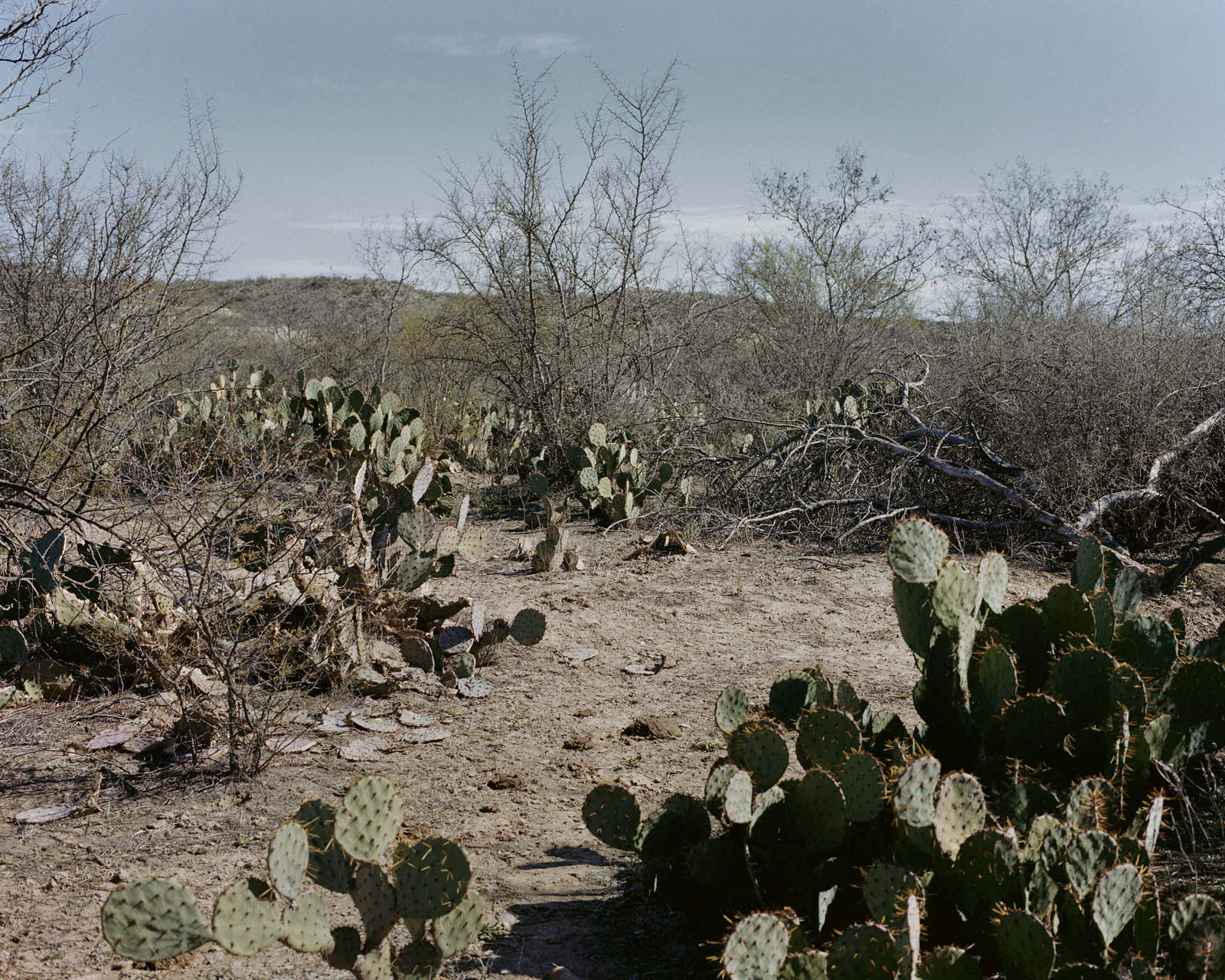
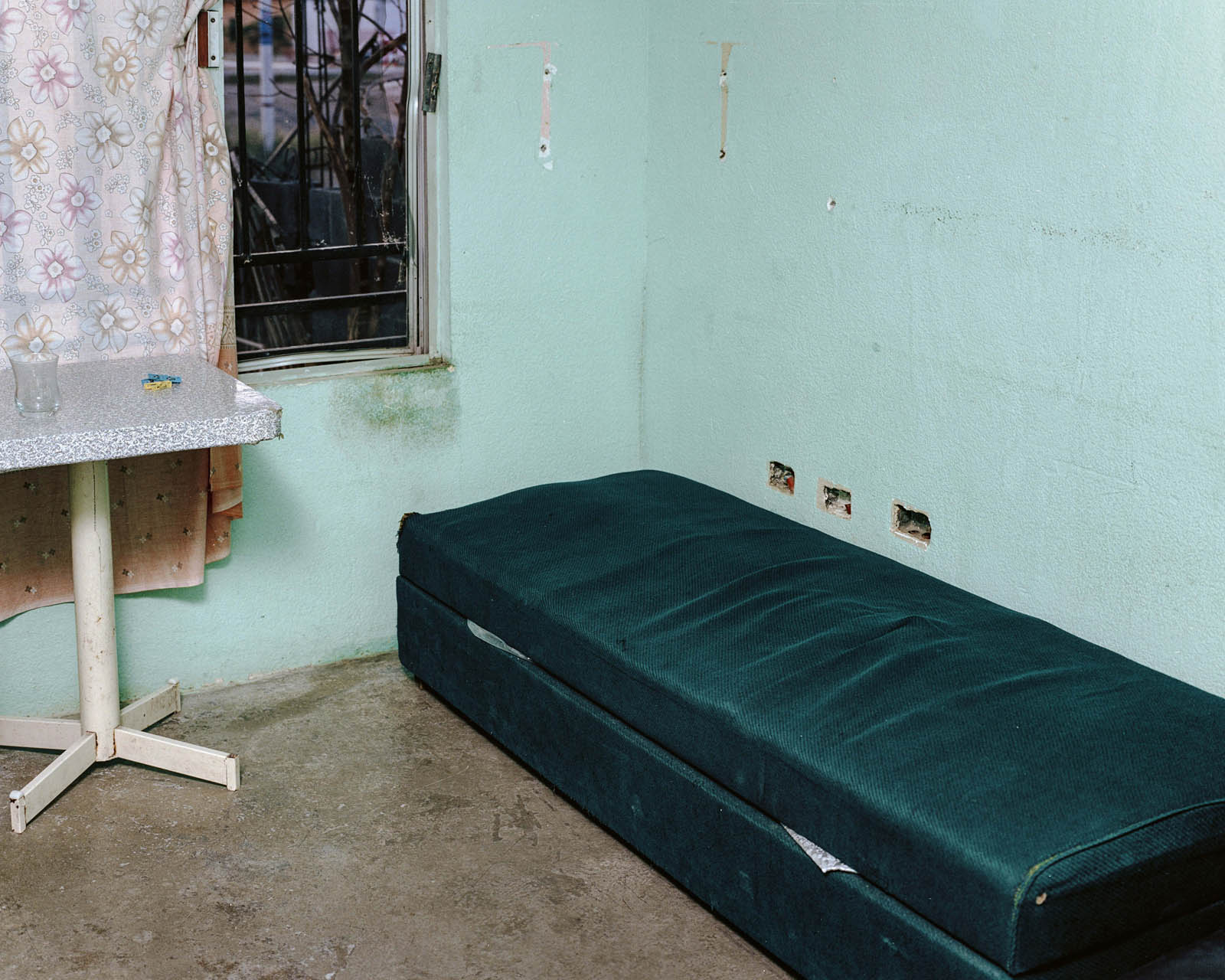
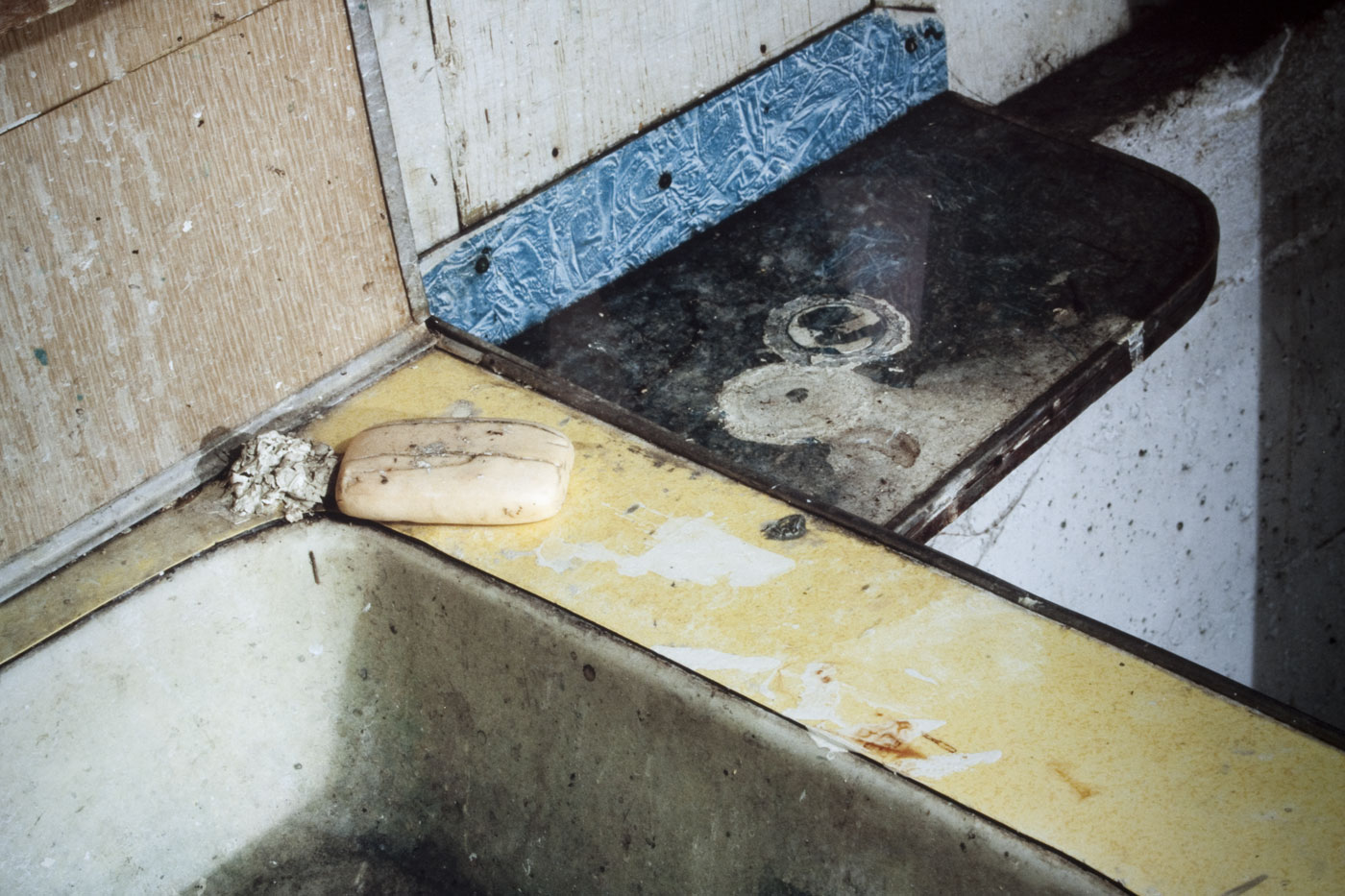
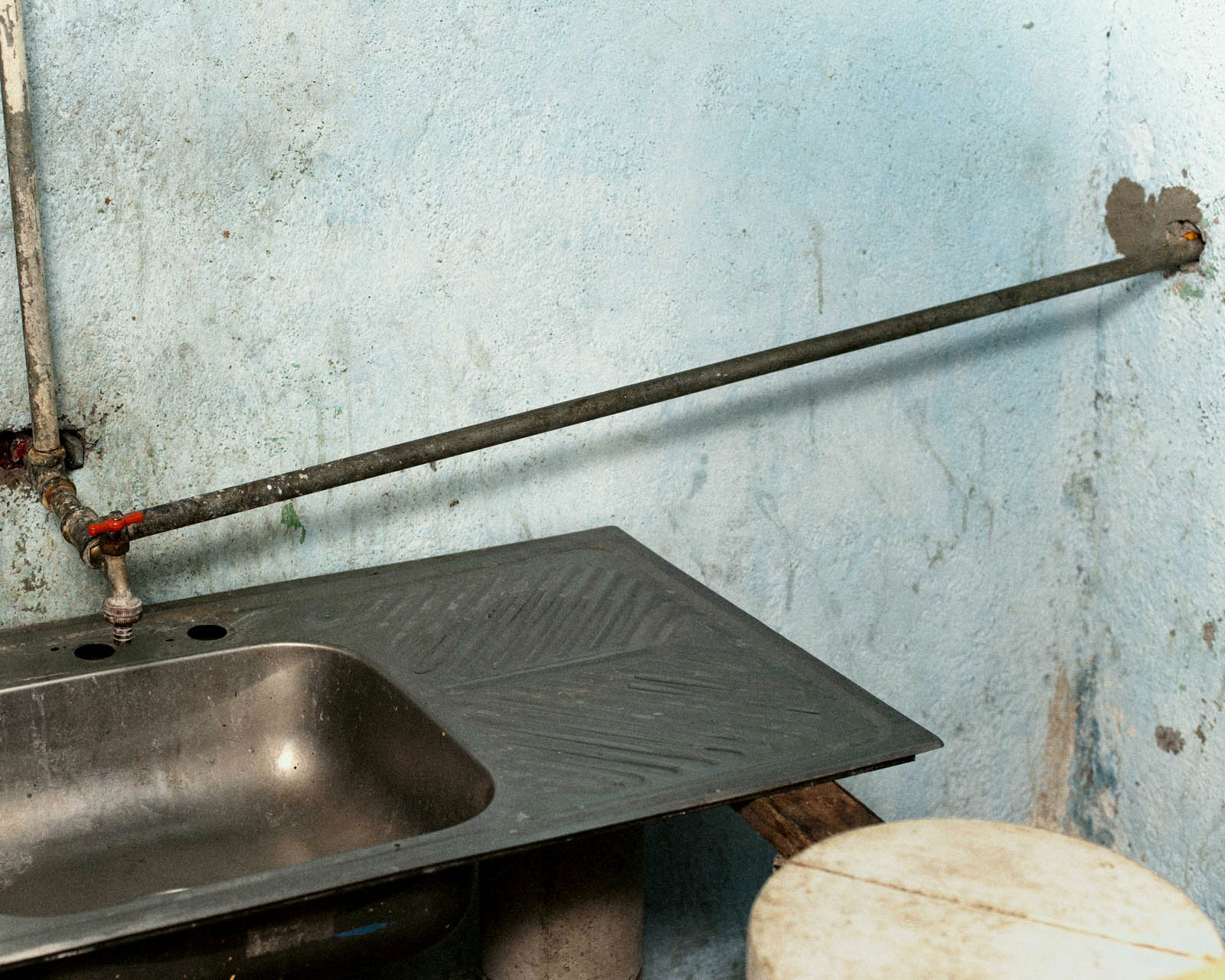
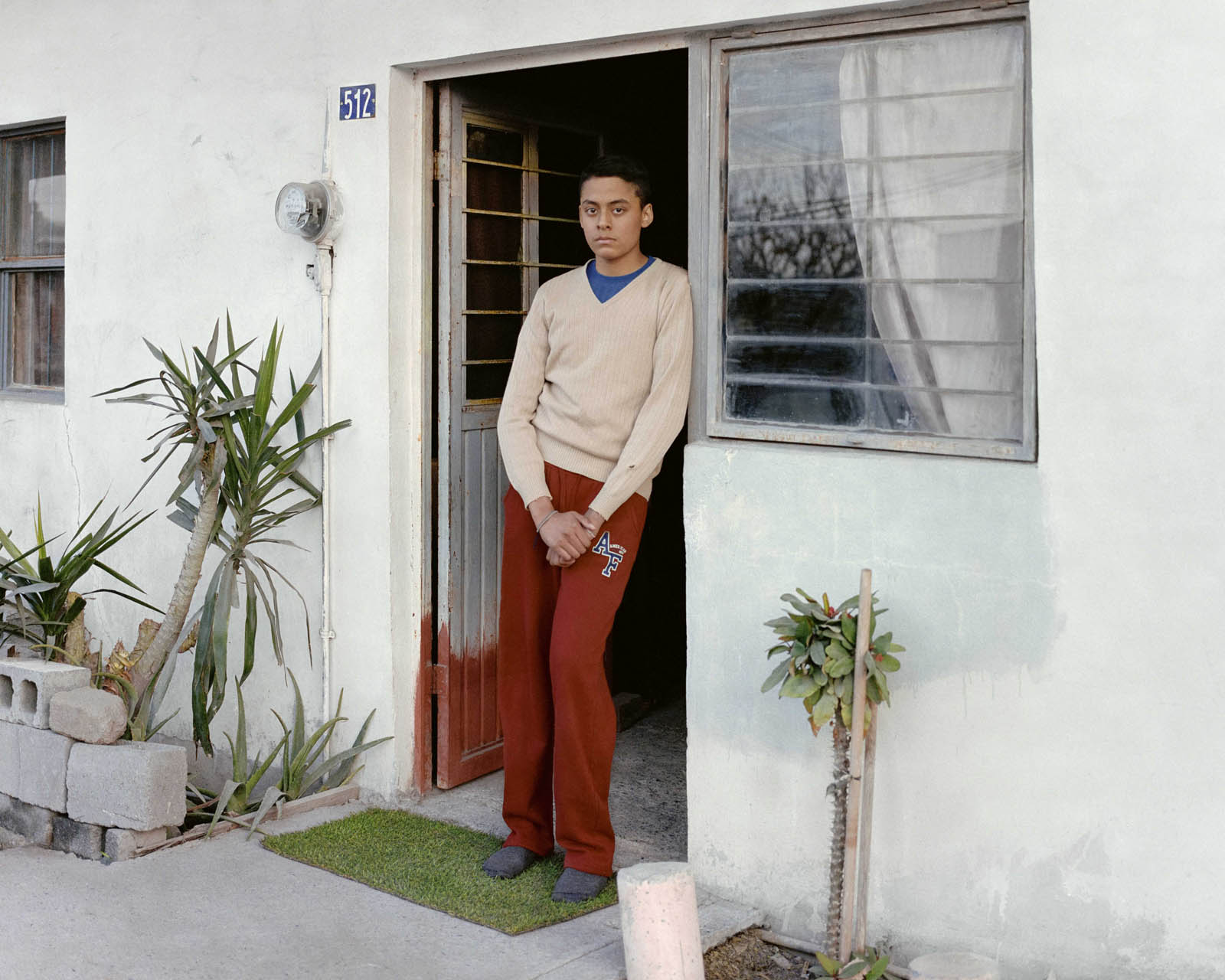
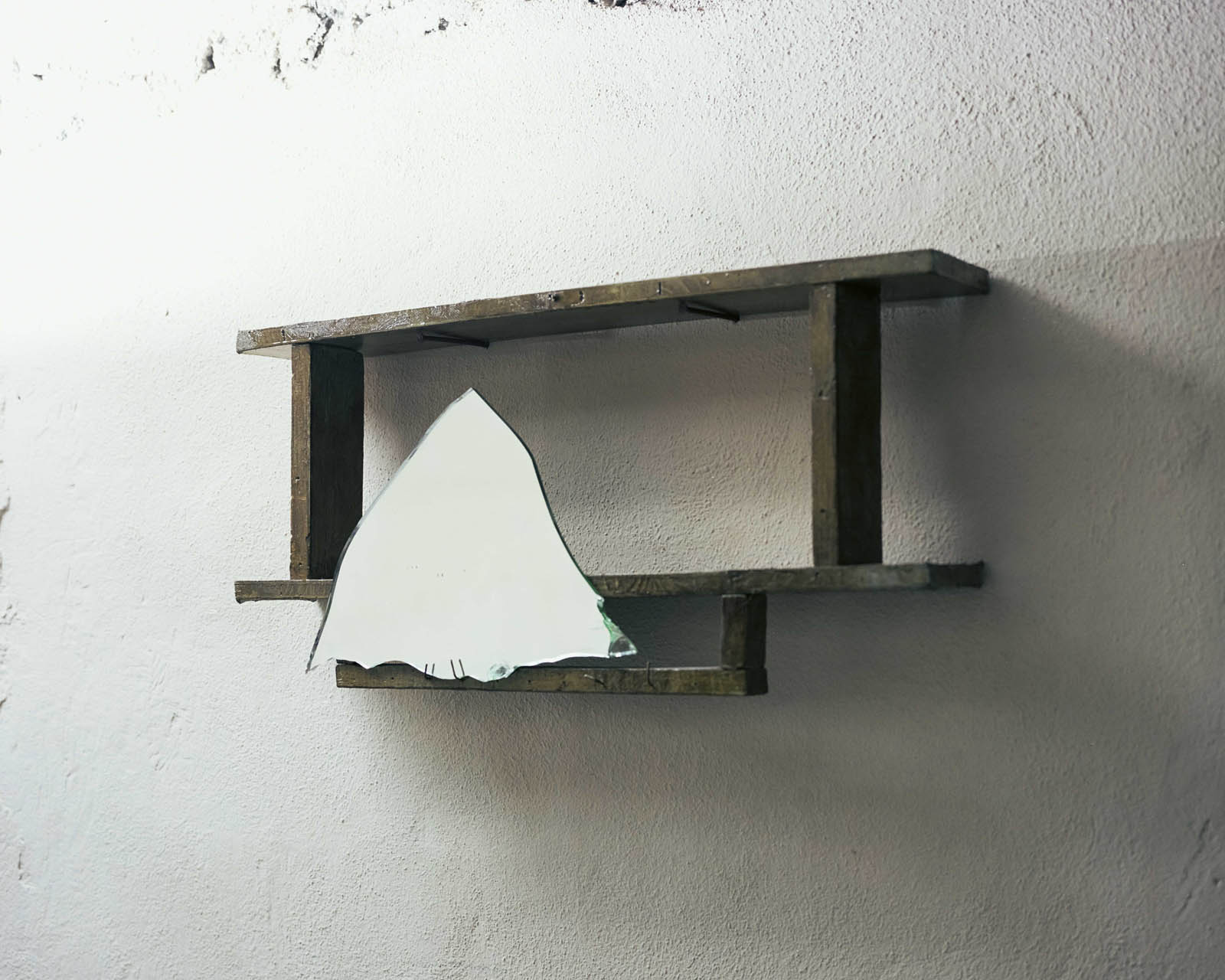
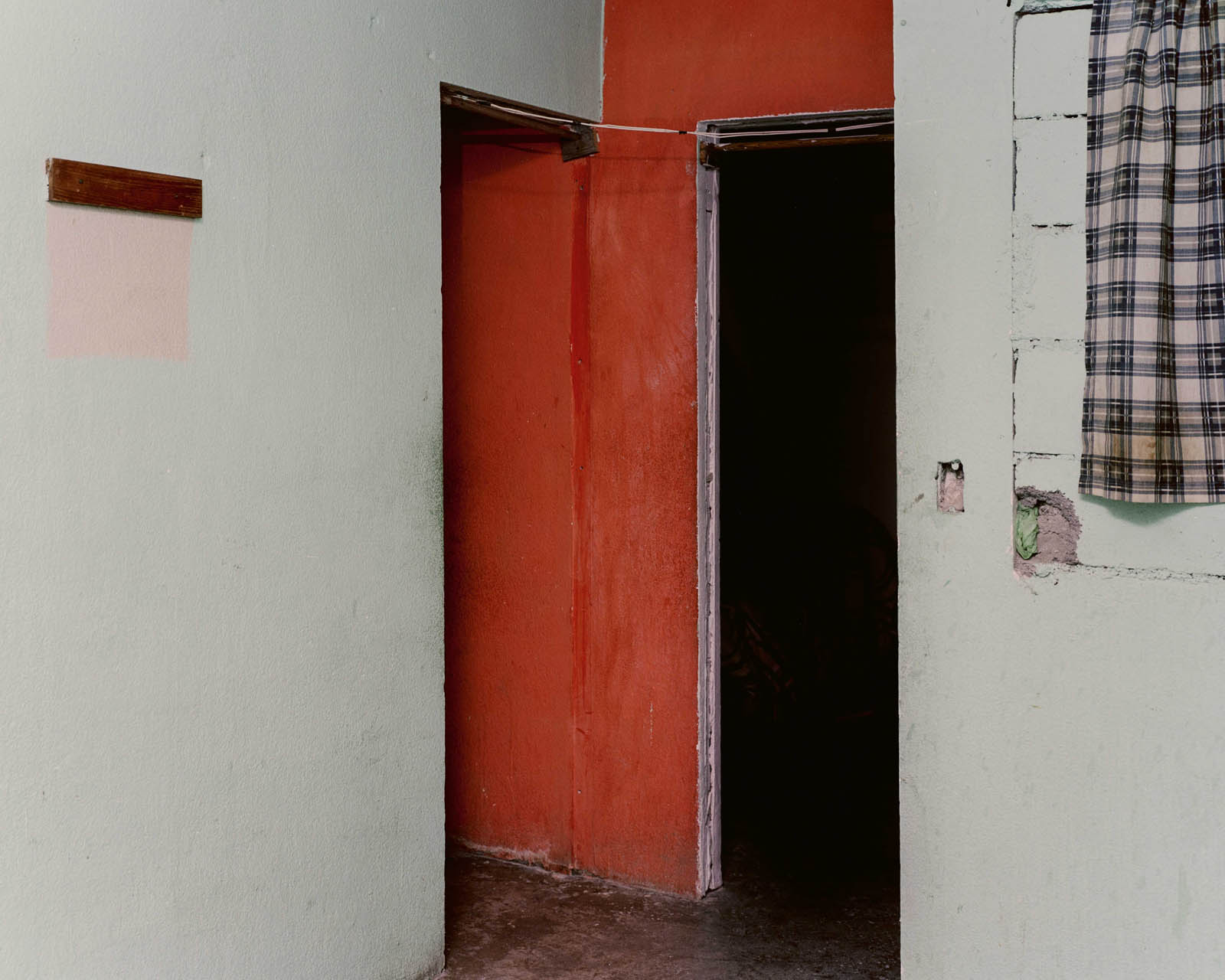
Felipe Romero Beltrán (Colombian, b. 1992) Breach #1 2021-2024 40 x 50cm Lambda print
At their best there are some wonderfully spare and tensioned photographs of “crossing points” in this posting which examine the space between one state and another, one land and another, one country and another.
Other photographs go the usual performative “dead pan” route, some more successfully than others, and documentary observations of seemingly unremarkable spaces, derivative of the work of the Canadian photographer Jeff Wall who did the same thing more effectively way back in 1993 (see Diagonal Composition below).
Dr Marcus Bunyan
Many thankx to Fundación MAPFRE for allowing me to publish the photographs in the posting. Please click on the photographs for a larger version of the image.
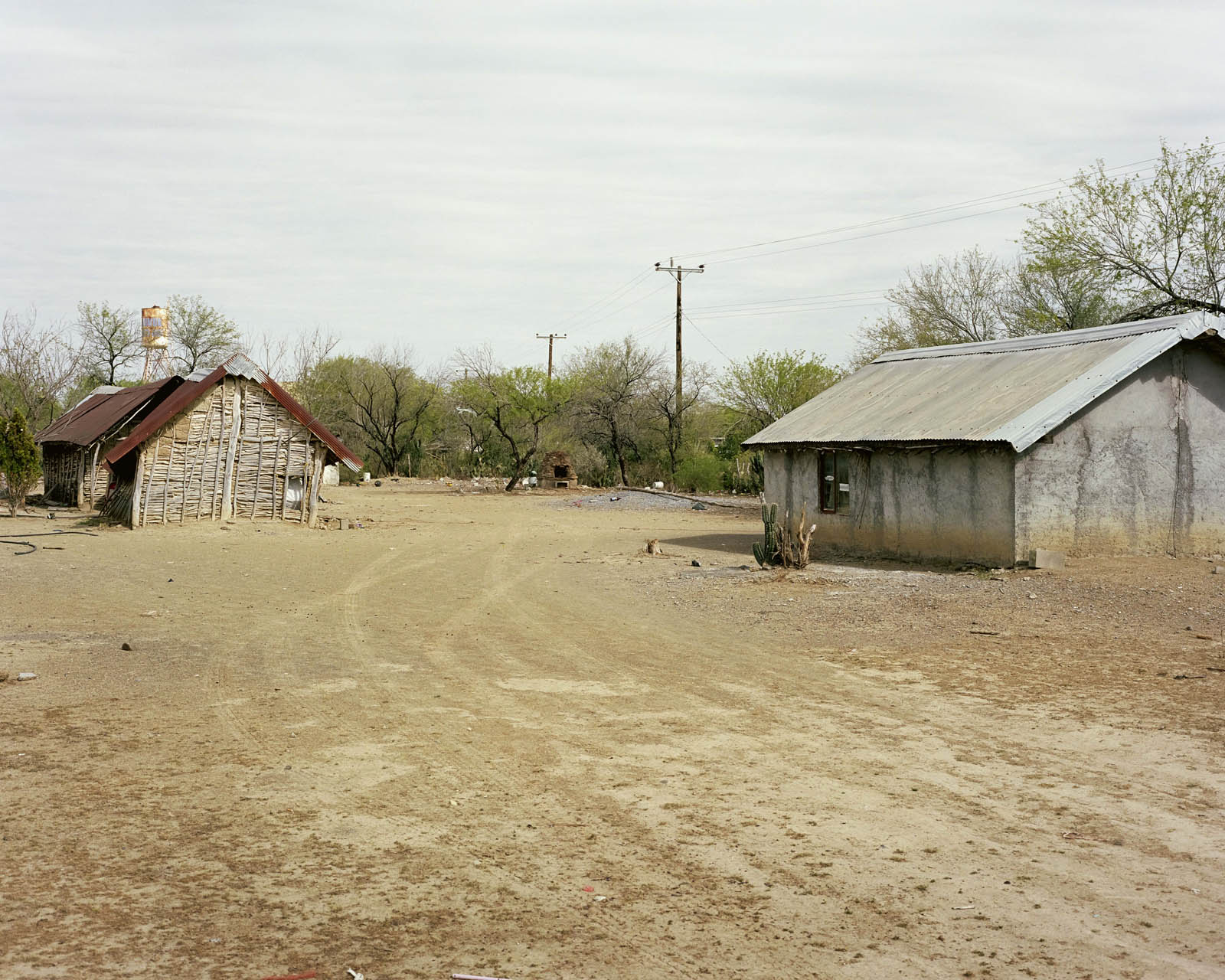
Felipe Romero Beltrán (Colombian, b. 1992) Breach #18 2021-2024 40 x 50cm Lambda print
After earning a degree in Visual Arts in Buenos Aires, Felipe Romero Beltrán (Bogotá, Colombia, 1992) traveled to Jerusalem on a scholarship, where he developed photographic projects in the Middle East. In 2016, he moved to Madrid to further his studies in photography.
Throughout his work, Felipe Romero has been drawn to territories that have been or continue to be sites of tension, conflict and visual reflection.
In the Bravo project, he focuses on the more than 1,000 kilometers of the Río Bravo (known as the Rio Grande in the United States) that form the border between the United States and Mexico. His images place the viewer in a specific section of the Mexican side. People from Colombia, Honduras, El Salvador and Guatemala arrive, reaching the final stage of a long and arduous journey. In this setting, the river dictates everything, ultimately shaping the identity and way of life of those who encounter it.
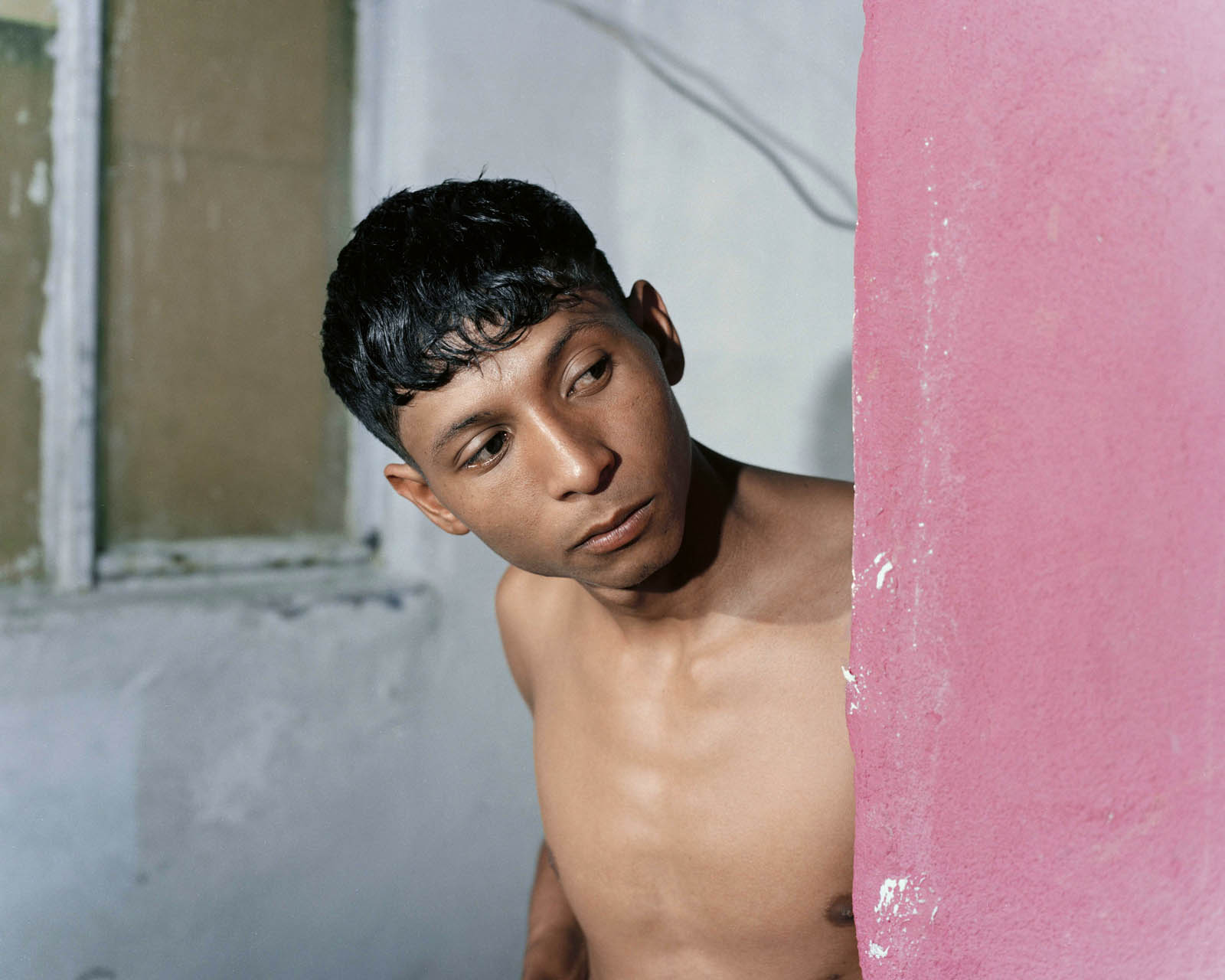
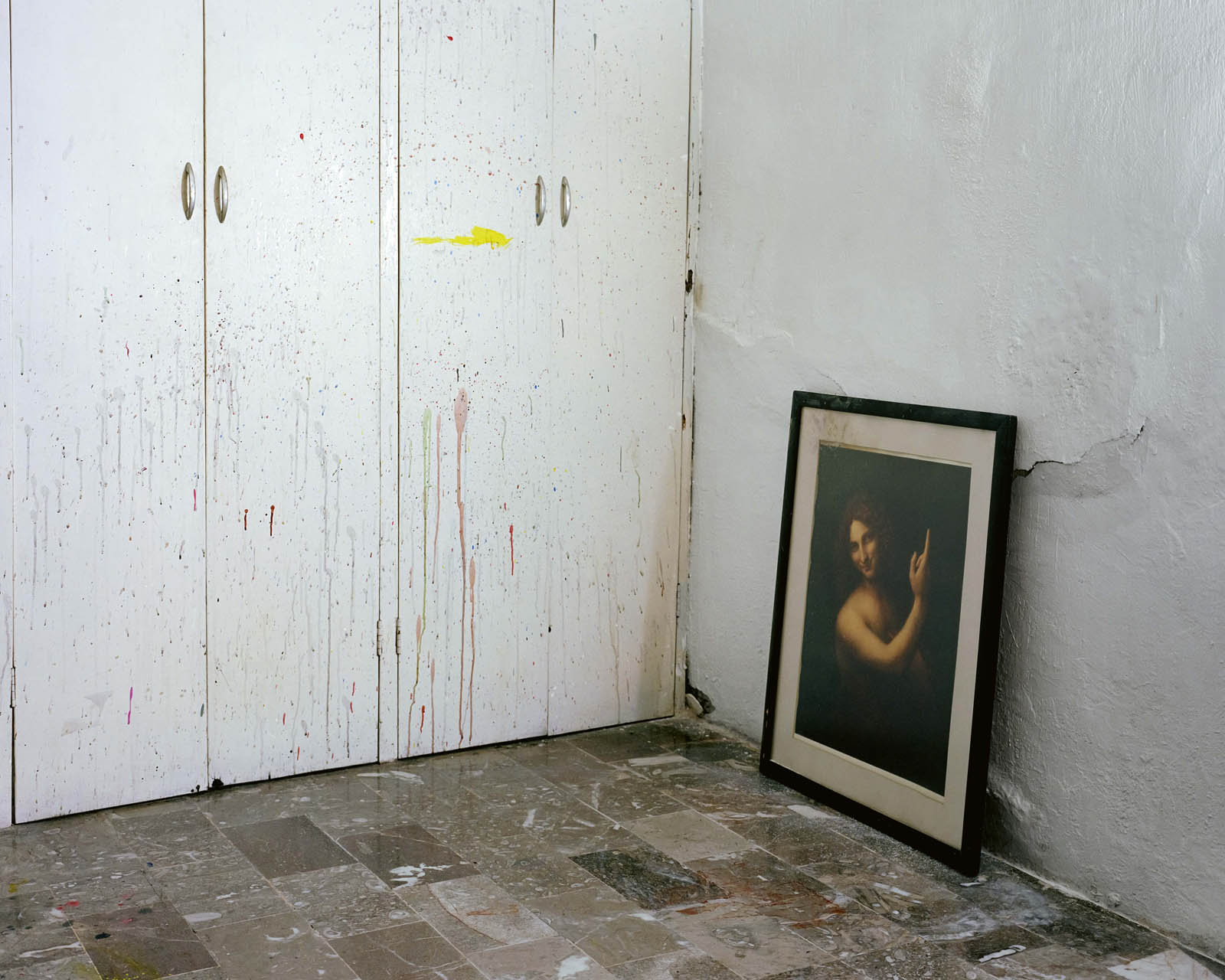
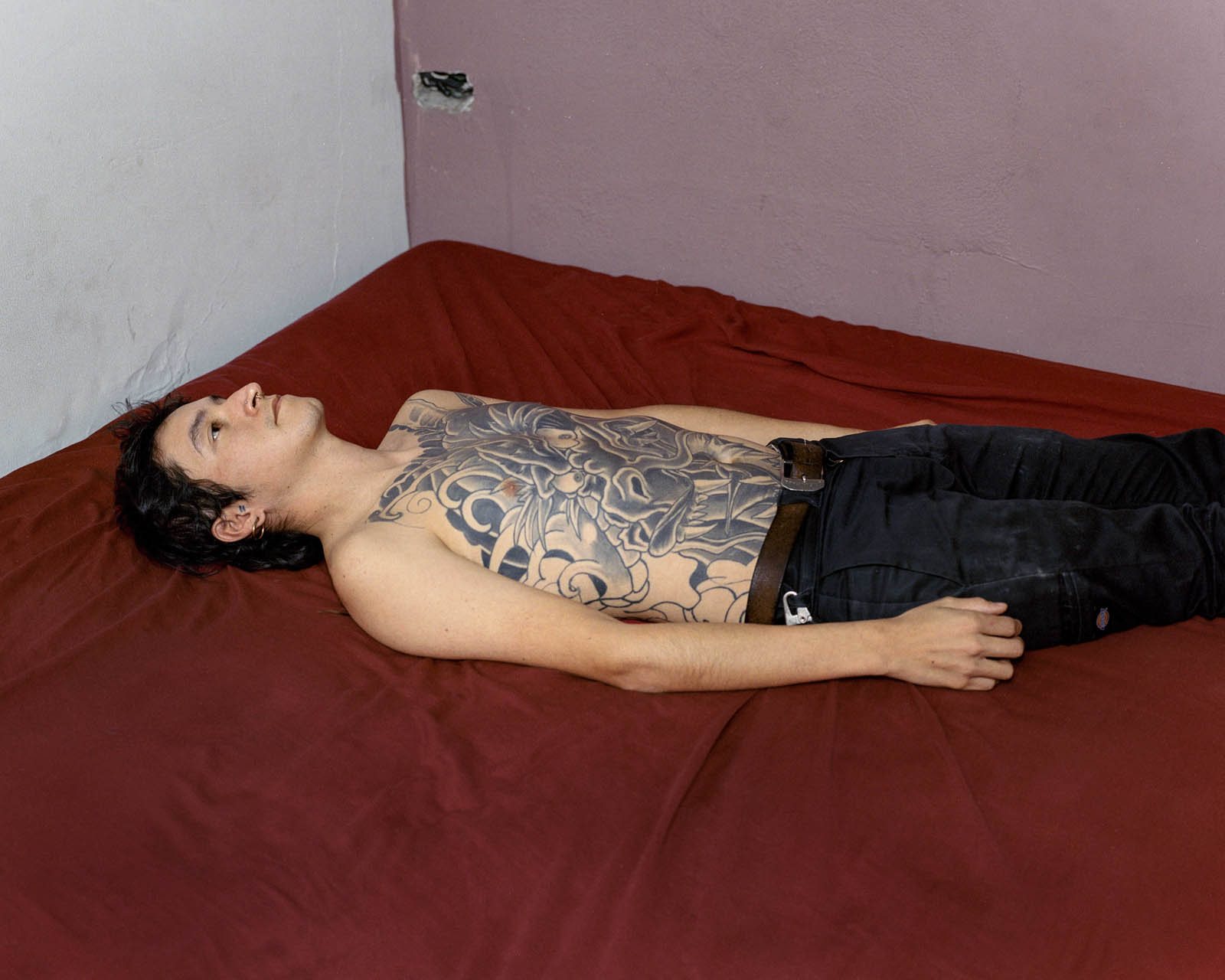
Bravo is conceived as a photographic essay composed of fifty-two images that explore this reality through a series of photographs of architecture, people and landscapes: closures, bodies and breaches. Almost bare interiors, walls and surfaces where textures, colors and portraits of individuals the artist has encountered during his travels to the region stand out. Ultimately: a poignant visual essay, both stark and poetic, on the themes of waiting and border identity.
Text from the Fundación MAPFRE website
Felipe Romero Beltrán (Colombian, b. 1992) Breach #33 2021-2024 40 x 50cm Lambda print
Felipe Romero Beltrán (Colombian, b. 1992) Breach #57 2021-2024 40 x 50cm Lambda print
Felipe Romero Beltrán (Colombian, b. 1992) El Friki’s friend and pink wall 2021-2024 120 x 150cm Lambda print
Felipe Romero Beltrán (Colombian, b. 1992) Sound system 2021-2024 120 x 150cm Lambda print
Felipe Romero Beltrán (Colombian, b. 1992) San Juan Bautista. Nina’s visit 2021-2024 120 x 150cm Lambda print
Felipe Romero Beltrán (Colombian, b. 1992) Sofa and table. Rebeca’s house 2021-2024 120 x 150cm Lambda print
Introduction
In 2021, Fundación MAPFRE launched its first KBr Photo Award, a prize created with the aim of reaffirming the institution’s commitment to emerging artistic creation, offering the winner of the contest significant visibility in both the national and international art scenes. In keeping with the biennial nature of this award, the second edition took place in 2023, with Colombian artist Felipe Romero Beltrán as the winner.
The artist
Felipe Romero Beltrán was born in 1992 in Bogota , Colombia. After studying visual arts in Buenos Aires, he traveled to Jerusalem on a scholarship to work on photographic projects in the Middle East. In 2016, he moved to Madrid to continue his training in photography and in 2024, he received his PhD from the Faculty of Information Sciences of the Complutense University with a thesis on the documentary image. Romero Beltrán’s photographic practice lies at the edge of documentary photography, using typical elements of this genre – direct recordings of everyday life, documentation of specific historical realities, etc. – and placing them in dialogue with other artistic, pictorial, and performative elements. The result consists of images that transcend the purely photographic realm to encompass the entire field of visual representation.
Throughout his career, Romero Beltrán has always been interested in territories that are or have been marked by tension, conflict and visual reflection.
The first project that brought him recognition was Magdalena, one of Colombia’s most important rivers and a witness to the armed struggle that began in 1960 between the guerrilla organisation Revolutionary Armed Forces of Colombia (FARC) and the country’s government, one of the bloodiest events in history, which ended with a peace agreement in late 2016. For more than fifty years, the river became a graveyard where the bodies of those killed were hidden. Many of these bodies, either intact or dismembered, were later swept away by the Magdalena’s powerful currents.
Later, in Dialecto/Dialect, the author explored the situation of the Strait of Gibraltar – a crossing point for immigrants entering Europe through Spain – through a group of migrant minors who, once at their destination – a center in Seville – find themselves in legal limbo under the guardianship of the Spanish State. This second work, which was accompanied by a series of performative audiovisual pieces, Recital (2020), Instrucción/Instruction (2022) and Esta es tu ley/This is Your Law, a reference to immigration law, marked a turning póint in his career, as he began to gain international recognition as an artist and photographer and his work was exhibited at the Fotografiemuseum in Amsterdam (FOAM) in January 2024.
Bravo
Bravo, the winning project of this second edition of the KBr Photo Award, is once again structured around a border as its leitmotif. The Bravo River has a dual identity: it is both a river and a border between the United States and Mexico. Its geography carries a heavy political burden that has accumulated conflicts and tensions since the nineteenth century, reaching an unsustainable situation in recent years. In this case, Romero Beltrán places the viewer in a specific stretch of this river, more than three thousand kilometers long. It is an area near the Mexican city of Monterrey, where both the river and the flow of people attempting to cross it shape the identity and way of life of the local population. This movement of people affects not only Mexican citizens, but extends to all of Central and South America. Migrants also come from Colombia, Honduras, El Salvador and Guatemala; for them, crossing the river is the last stage of a long and arduous journey. The border acts as a magnet, drawing people in despite the risks involved in crossing it and the fact that it has almost become a militarized zone. The author considers the river as a political actor, as a border, although throughout the photographs it only appears as a supporting character. As Romero Beltrán himself points out: “The Bravo River, rather than being the central axis that structures the project, functions as its limit, that is to say, it is an exercise in exhaustion until one reaches the river, without the possibility of crossing it. In this sense, the river exists as its visual negation, focusing interest on what comes after it: the entrance to the United States.”
Bravo was conceived as a photographic essay of fifty-two photographs that explore this reality through a series of images of architecture, people and landscapes: endings, bodies and breaches. Almost bare interiors, walls and surfaces where textures and colors stand out; fragments and remains of roads and buildings that show the traces of the passage of migrants; and portraits of people that the artist encountered during his visits to the area where he carried out the project.
The audiovisual work El cruce (The Crossing), which accompanies the exhibition, was created by the artist before the photographs. Romero Beltran thus expands the visual reflection on the river, showing us scenes that challenge its condition as a border, revealing other uses and situations linked to its dual geographical and political character: a Protestant baptism in the river itself; a fishing competition between the United States and Mexico at La Amistad dam, built in the 20th century to control the waters of the Bravo River; a series of interviews between the author and some migrants focused on linguistic changes; the testimonies of Guadalupe, a man who grew up on the Mexican side of the river and regularly swims in it with no intention of crossing it, and Luis, who frequently crosses the river to collect the wet clothes that migrants leave behind in the illegal breaches after crossing, so that he can sell them once he brings them back to Mexico.
Catalogue
The catalog accompanying the exhibition contains reproductions of all the works on display, as well as an essay by the curator, Victoria del Val, and an interview with Felipe Romero Beltrán himself. The publication also includes texts by Albert Corbí , who writes an essay on the very nature of the photographic medium in the context of migration; by artist Alejandra Aragon, on what it means to be a border person; and by Dominick Bermudez, a migrant of Salvadoran origin who describes how, after a long journey, he arrived in Monterrey, where he currently lives. Finally, the catalog features illustrations from the diary of Thom Díaz, Romero Beltrán’s “traveling companion”.
The catalog is published in Spanish by Fundación MAPFRE. The English version is co-published with Loose Joint Publishing.
Text from Fundación MAPFRE
Felipe Romero Beltrán (Colombian, b. 1992) Grecia Evangelina. Thom’s house 2021-2024 120 x 150cm Lambda print
Exhibition dates: 17th June – 25th September, 2016
Curator: Julian Cox
Danny Lyon (American, b. 1942) Self-portrait, Chicago 1965/1995 Gelatin silver print montage Image: 31.2 x 27.8cm (12 1/4 x 10 15/16 in.) Mount: 50.8 x 40.6cm (20 x 16 in.) Collection of the artist
This man is a living legend. What a strong body of socially conscious work he has produced over a long period of time. Each series proposes further insight into the human condition – and adds ‘value’ to series that have gone before. It is a though the artist possesses the intuition for a good story and the imagination to photograph it to best advantage, building the story over multiple encounters and contexts to form a thematic whole.
In a press release for a currently showing parallel exhibition titled Journey at Edwynn Houk Gallery the text states, “Continuing in the tradition of Walker Evans and Robert Frank, Lyon forged a new style of realistic photography, described as “New Journalism,” where the photographer immerses himself in his subject’s world.” This reference to immersion is reinforced by the second quotation below, where “the power of Lyon’s work has often derived from his willingness of immerse himself entirely in the cultures and communities he documents.”
While the observation is correct that the artist immerses himself in the cultures and communities he documents, this is different to the tradition of Robert Frank and to a lesser extent, Walker Evans. Frank was a Swiss man who imaged his impressions of America on a road trip across the country. His “photographs were notable for their distanced view of both high and low strata of American society” which pictured the culture as both alienating and strange, “skeptical of contemporary values and evocative of ubiquitous loneliness”. This is why The Americans had so much power and caused so much consternation when it was first released in 1959 in America, for it held up a mirror to an insular society, one not used to looking at itself especially from the position of an “outsider” – where the tone of the book was perceived as derogatory to national ideals – and it didn’t like what it saw. The American Walker Evans was also an outsider photographing outsiders, journeying through disparate towns and communities documenting his impressions how I can I say, subjectively with an objective focus, at one and the same time. He never immersed himself in the culture but was an active observer and documenter, never an insider.
Lyon was one of the first “embedded” social documentary photographers of the American street photography movement of the 1960s who had the free will and the social conscience to tell it like it is. His self-proclaimed “advocacy journalism” is much more than just advocacy / journalism. It is a vitality of being, of spirit, an inquiry of the mind that allows the artist to get close, both physically and emotionally, to the problems of others through becoming one with them – and then to picture that so that others can see their story, so that he can “change history and preserve humanity.” But, we must acknowledge, that humanity is mainly (good looking) males: outlaw motorcycle clubs, mainly male prisons, mainly male civil rights, tattoo shops, and male Uptown, Chicago. Women are seemingly reduced to bit-players at best, singular portraits or standing in the background at funerals. This is a man’s world and you better not forget it…
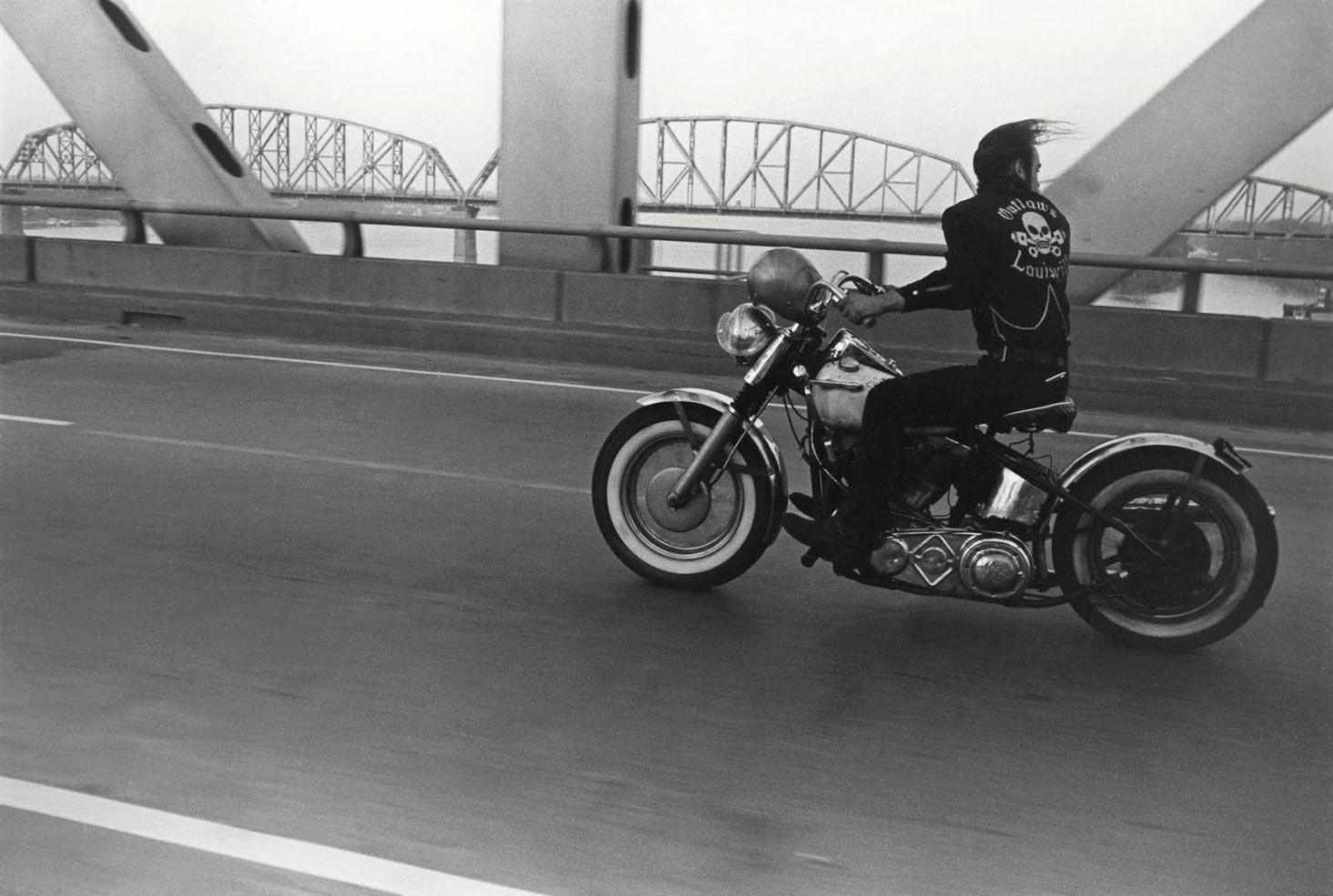
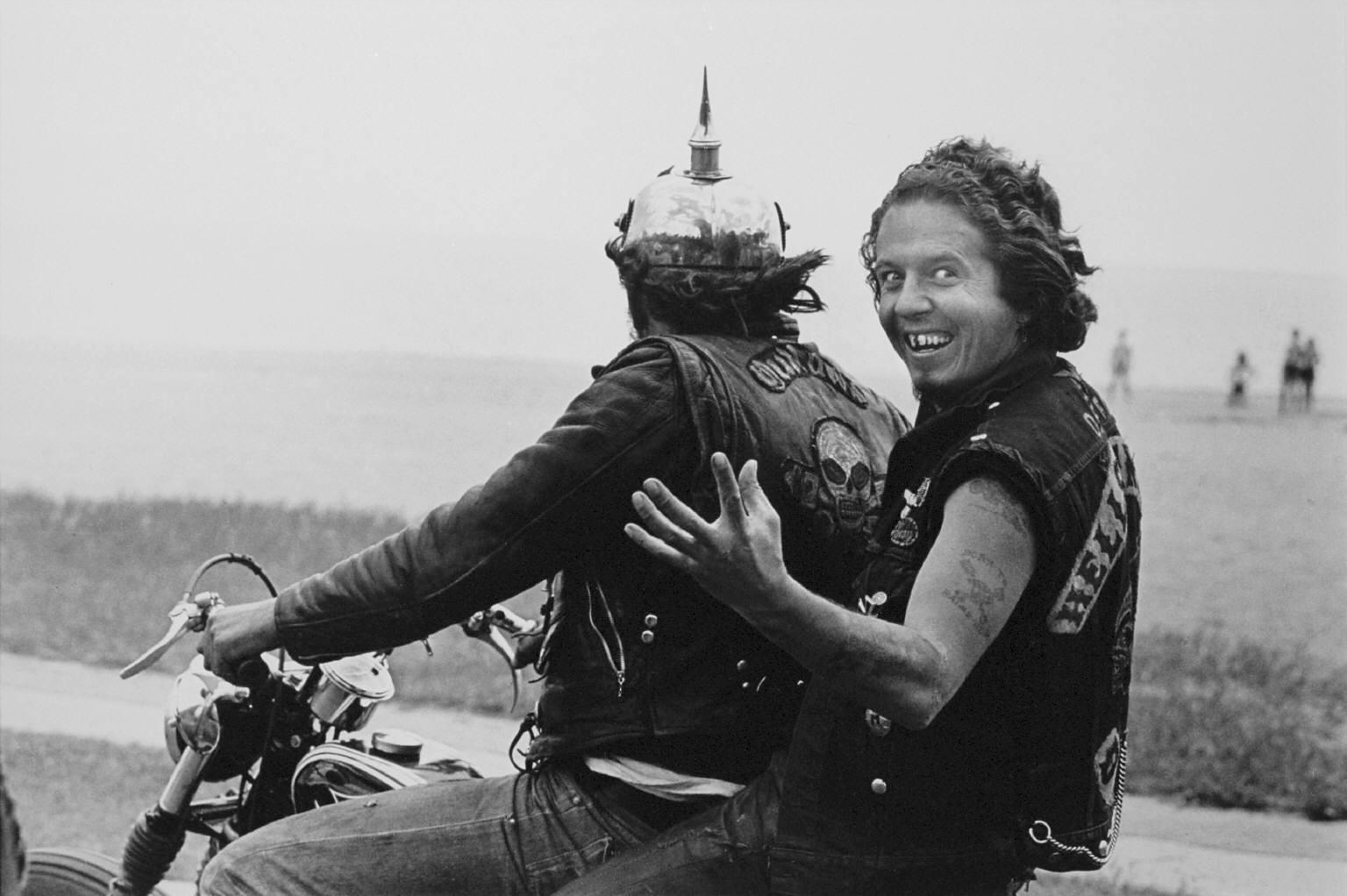
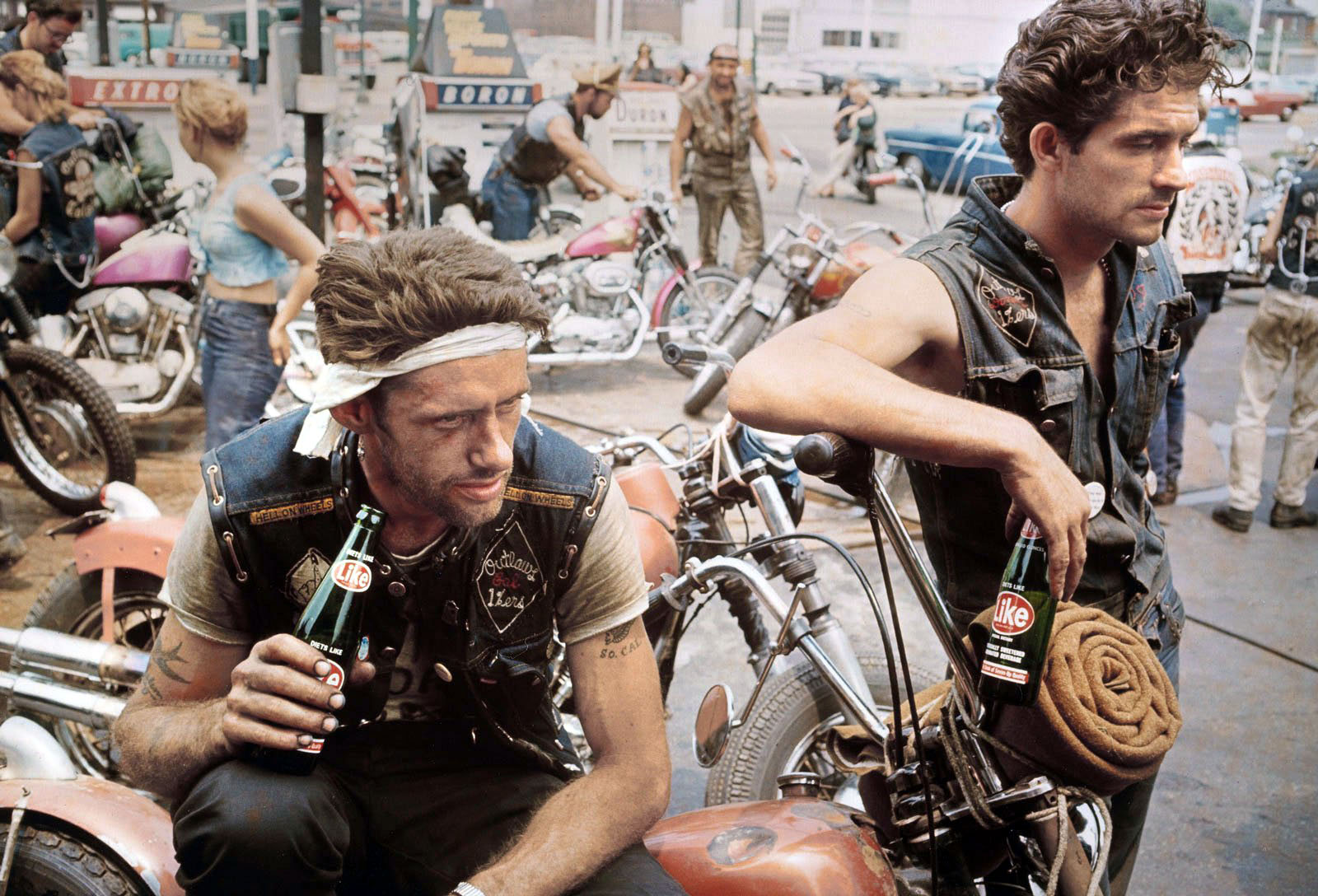
Having said that, can you imagine living the life, spending four years as a member of the Chicago Outlaw Motorcycle Club. How exhilarating, how enmeshed with the culture you would become – the people, the travel, the ups and downs, the life, the danger – and then when you get photographs like Funny Sonny Packing with Zipco, Milwaukee (1966, below) with the manic look in Funny Sonny’s eyes, how your heart would sing. If I had to nominate one image that is for me the epitome of America in the 1960s it would be this: Crossing the Ohio River, Louisville (1966, below): all Easy Rider (an 1969 American road movie) encapsulated in one image. The structure and modernism / of the two bridges frames / the speeding / wicked bike / helmet lodged over the headlight; the man / wearing a skull and crossbones emblazoned jacket / helmet-less / head turned / behind / hair flying in the wind / not looking where / he is going / as though his destiny: unknown.
Danny Lyon IS one of the great artists working in photography today. He is a rebel with his own cause. Through his vital and engaging images his message to the future is this: everyone has their own story, their own trials and tribulations, each deserving of empathy, compassion, and non-judgemental acceptance. Prejudice has no voice here, a lesson never more pertinent than for America today as it decides who to elect – a woman who has fought every inch of the way or a narcissistic megalomaniac who preaches hate to minorities.
Dr Marcus Bunyan
Many thankx to the Whitney Museum of American Art for allowing me to publish the photographs in the posting. Please click on the photographs for a larger version of the image.
“Closeness, both physical and emotional, is a recurring theme throughout the 175 works in “Message to the Future,” Lyon’s Whitney Museum retrospective, a quietly brilliant affair curated with panache by Julian Cox. (Later this year, the show will travel to the Fine Arts Museums in San Francisco, which organized it; Elisabeth Sussman oversaw the Whitney installation.) We see here a photographer who was witness to a changing America and, occasionally, other places in the world. Since the early ’60s, Lyon has been infiltrating outsider groups – talking to and photographing bikers, Texas prison inmates, and hippies, and learning from them by becoming close with them. It’s as if Lyon has no sense of personal space. That, as this revelatory show proves, is his greatest attribute…
Lyon is a deft stylist who cares deeply about his subjects, to the point of exchanging letters with them for years after taking their pictures. What results is something more intimate, more political, and, in some ways, better than traditional photojournalism – a fuller portrait of America since the ’60s.”
“Self-taught, and driven by his twin passions for social change and the medium of photography, the power of Lyon’s work has often derived from his willingness of immerse himself entirely in the cultures and communities he documents. This was evident early on in his series ‘Bikeriders’ (1968; reissued in 2003 by Chronicle Books), which evolved from four years spent as a member of the Chicago Outlaw Motorcycle Club. And ‘Conversations with the Dead’ derived from his close study of the Texas prison system; it also revealed Lyon’s novel and distinctive approach to the photobook, which often sees him splicing images with texts drawn from various sources, including interviews, letters, and even fiction.”
Text from the Edwynn Houk Gallery website [Online] Cited 21/09/2016. No longer available online
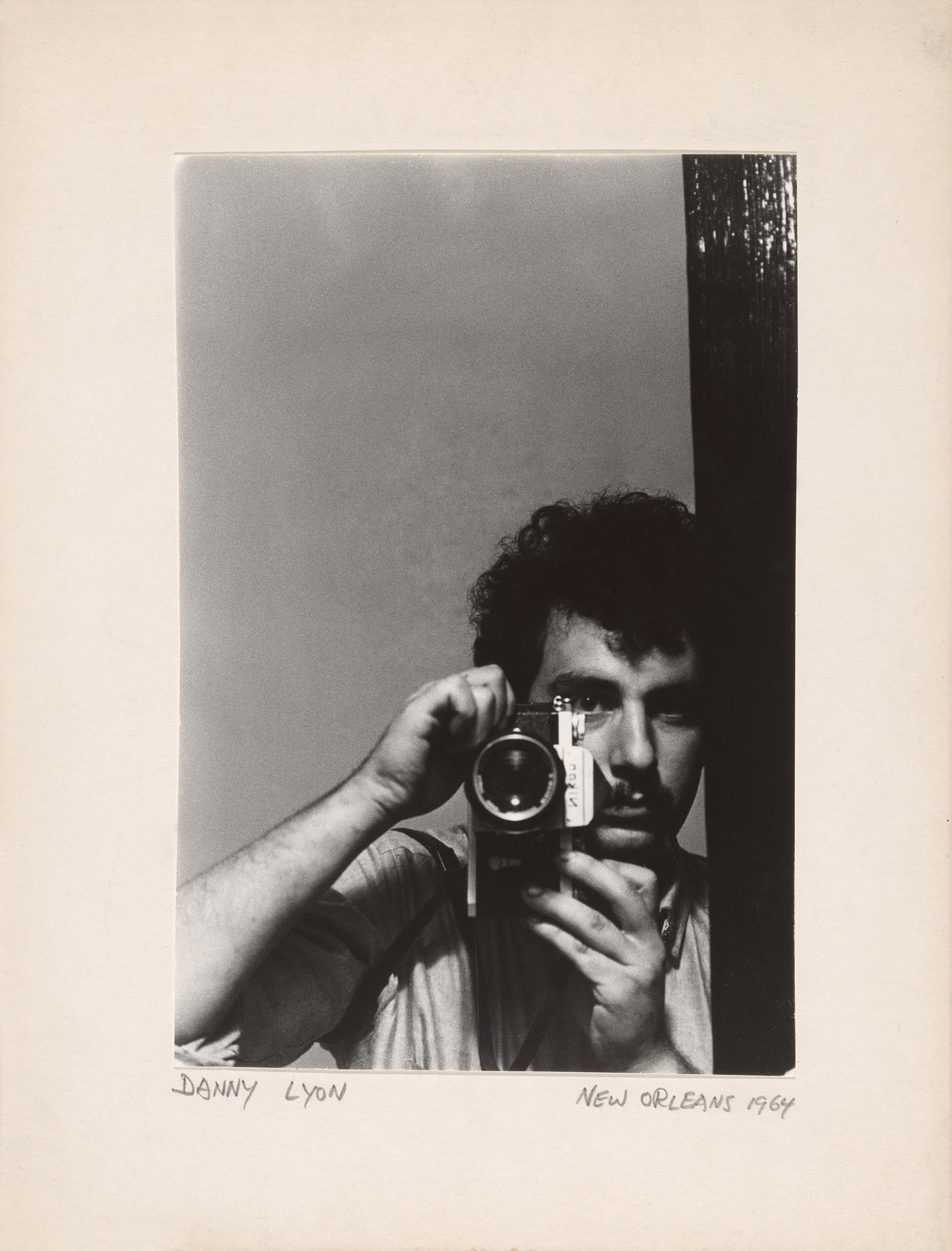
Danny Lyon (American, b. 1942) Self-Portrait, New Orleans, 1964 1964 Gelatin silver print 18.2 x 12.2cm (7 3/16 x 4 13/16 in.) Collection of the artist
In his 1981 book, “Danny Lyon: Pictures From the New World,” he wrote of starting out in the early ’60s. “Photography then seemed new and exciting, and all America, which I regarded with mystery and reverence, lay before me.”
That sense of newness and excitement fills the show. What we’re discovering now, Lyon was discovering then – not just seeing or observing, but discovering, with the sense of revelation that brings. Mystery and reverence are here, too, but complicatedly. Framing them – debating with them? – are the clarity of precision the camera affords and a skepticism born of a forthrightly ’60s sensibility. Several photographs of the Occupy movement attest to how vigorous that sensibility remains…
He was working as a documentarian but not a photojournalist. That’s an important distinction. These images are implicitly polemical – inevitably polemical, too. Rarely in our nation’s history has the distinction between what’s right and what’s wrong been as clear cut. Yet then as now, people matter more to Lyon than any ideological stance. Outsiders attract Lyon and populate the show: civil rights demonstrators, transgender people (in Galveston, Texas, of all places), lower Manhattan demolition crews, inmates, undocumented workers, Indians, Appalachian whites transplanted to Chicago, motorcycle gangs…
Enclosure and entrapment are not for Lyon – nor, for that matter, is the absence of people (a very rare condition in his work). A larger restlessness in Lyon’s career reflects the energy so often evident within the frame – within the frame being another form of enclosure and entrapment. The South, Chicago, lower Manhattan, Texas, New Mexico, China, Haiti, Latin America share space in the show. Even so, sense of place doesn’t signify as much for Lyon as a sense of a place’s inhabitants. More likely he’d say that the two are indistinguishable. Looking at his pictures, you can see why he’d think so.”
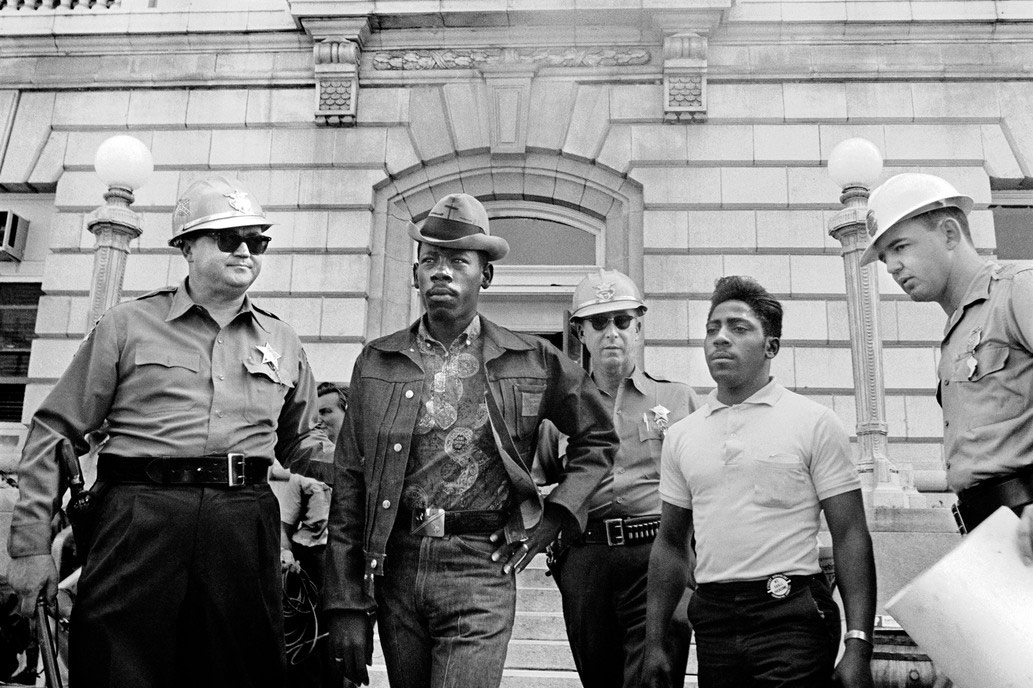
Danny Lyon (American, b. 1942) Arrest of Eddie Brown, Albany, Georgia 1962 Gelatin silver print Image: 22 x 31.7cm (8 5/8 x 12 1/2 in.) Sheet: 27.9 x 35.6cm (11 x 14 in.) Collection of the artist
Eddie Brown former gang leader and movement activist is arrested.
“The first sit-in arrests I see and photograph are those of Eddie Brown, a former Albany gang leader, and a visitor from the North. Both have volunteered to be arrested for the photographs. The picture of Eddie Brown, calmly being carried off by the Albany police, is widely distributed as the image of the classic non-violent arrest, Georgia.”
~ Danny Lyon
“Eddie Charles Brown, Jr., a great-souled human being committed to fighting the oppression of all people from Mississippi to South Africa, died at his home on November 23, 2011. In political circles, Ed was respected for his enduring commitment to our people. As a consequence of his tireless devotion to, and success in advancing the culture and economic progress of poor black folk, Ed Brown was widely recognised as among the most, incorruptible, responsible, resourceful and effective of the activist leaders of the Movement. As his SNCC colleagues said of him, “More than most, Ed’s life embodies and exemplifies to a remarkable degree, the principle of undying love for our people both here and in the Motherland.” …
A native of Louisiana, Ed was born on August 19, 1941, in New Orleans and raised in Baton Rouge to Thelma Warren and Eddie Charles Brown, Sr. Ed’s historical efforts to fight segregation and all forms of oppression as well as to empower Black people started in 1960 as a young student at Louisiana’s Southern University. He and 16 other classmates confronted the University and staged a sit-in protesting the racial segregation prevalent in Louisiana at the time. After he and the others were arrested, expelled and banned from enrolling in any university in Louisiana Ed began the ongoing struggle for justice, which would define his entire life. This expulsion led Ed to Howard University in Washington, D.C. in 1961, where he landed on the front line of the Civil Rights Movement. Ed was an active member of the Nonviolent Action Group, the SNCC affiliate at Howard.
As a leader and field secretary for the Student Nonviolent Coordinating Committee (SNCC) he fought to win constitutional rights for Blacks and all disenfranchised people. Ed always proclaimed that he was “fighting fire with a feather,” but he knew he would prevail because he often said, ironically, he was protected by “asbestos gloves.””
The most comprehensive retrospective of the work of American photographer, filmmaker, and writer Danny Lyon in twenty-five years debuts at the Whitney on June 17, 2016. The first major photography exhibition to be presented in the Museum’s downtown home, Danny Lyon: Message to the Future is organised by the Fine Arts Museums of San Francisco, where it will make its West Coast debut at the de Young Museum on November 5, 2016. The exhibition assembles approximately 175 photographs and is the first to assess the artist’s achievements as a filmmaker. The presentation also includes a rare look at works from Lyon’s archives, including vintage prints, unseen 16mm film footage made inside Texas prisons, and his personal photo albums. A leading figure in the American street photography movement of the 1960s, Lyon has distinguished himself by the personal intimacy he establishes with his subjects and the inventiveness of his practice.
Photographer, filmmaker, and writer Danny Lyon (b. 1942) has over the past five decades presented a charged alternative to the sanitised vision of American life presented in the mass media. Throughout, he has rejected the standard detached humanism of the traditional documentary approach in favour of a more immersive, complicated involvement with his subjects. “You put a camera in my hand,” he has explained, “I want to get close to people. Not just physically close, emotionally close, all of it.” In the process he has made several iconic bodies of work, which have not only pictured recent history but helped to shape it.
Lyon committed intensively to photography from the beginning. In 1962, while still a student at the University of Chicago, he hitchhiked to the segregated South to make a photographic record of the civil rights movement. He went on to photograph biker subcultures, explore the lives of the incarcerated, and document the architectural transformation of Lower Manhattan. He has travelled to Latin America and China, and has lived for years in New Mexico; the work he has made throughout these journeys demonstrates his respect for the people he photographs on the social and cultural margins.
Message to the Future, shaped in collaboration with the artist, incorporates seldom-exhibited materials from Lyon’s archive, including rare vintage prints, previously unseen 16mm film footage made inside the Texas prisons, his personal photo albums, and related documents and ephemera. In his roles as a photographer, filmmaker, and writer, Lyon has reinvented the expectations for how the still photographic image can be woven together with journalism, books, films, and collage to present a diverse record of social customs and human behaviour. His work, which he continues to make today, reveals a restless idealist, digging deep into his own life and those of his subjects to uncover the political in the personal and the personal in the political.
Text from the Whitney Museum of American Art
Civil rights
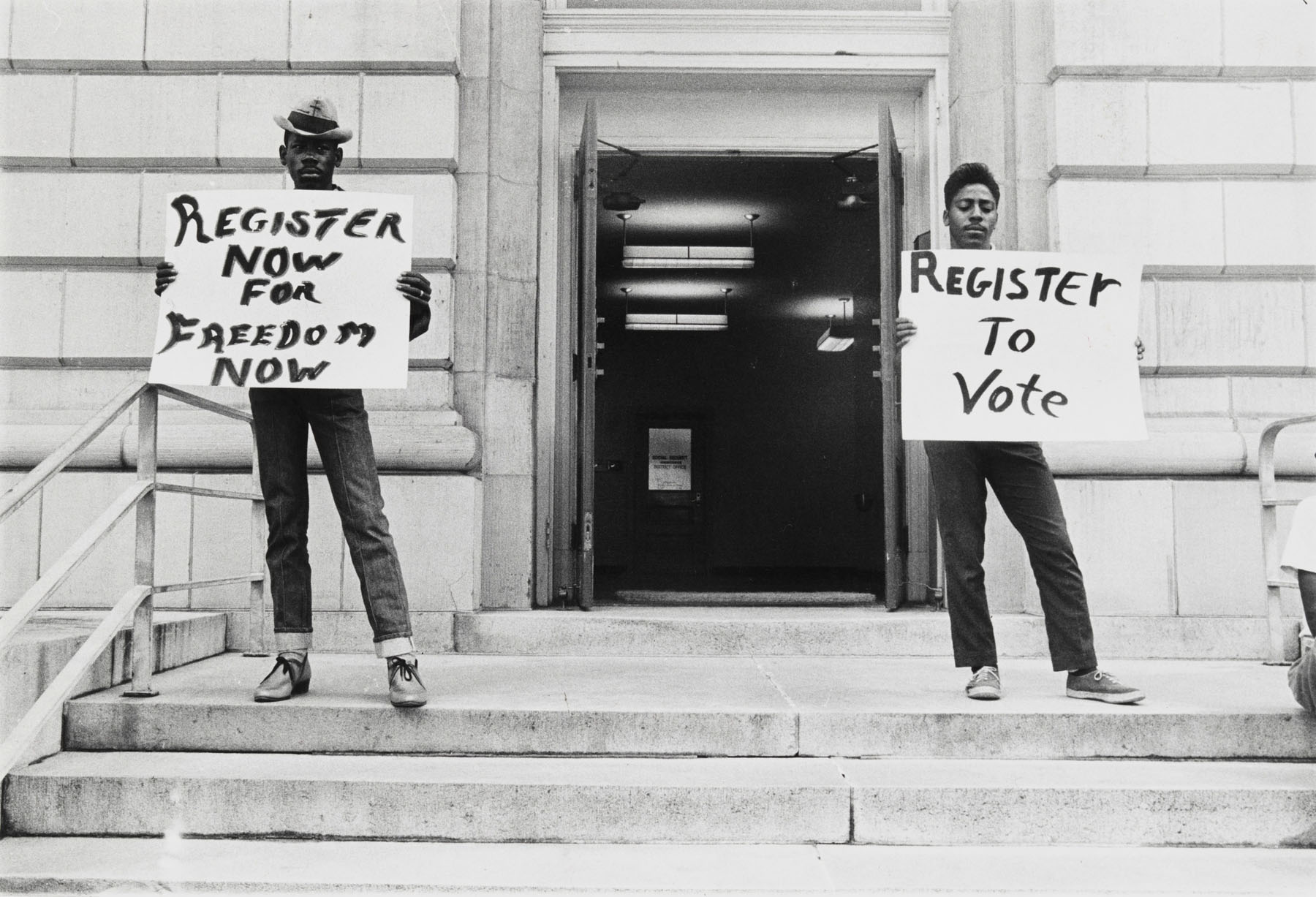
In the summer of 1962, Lyon hitchhiked to Cairo, Illinois, to witness demonstrations and a speech by John Lewis, chairman of the Student Nonviolent Coordinating Committee (SNCC), one of the most important organisations driving the civil rights movement of the early 1960s. Inspired to see the making of history firsthand, Lyon then headed to the South to participate in and photograph the civil rights movement. There, SNCC executive director James Forman recruited Lyon to be the organisation’s first official photographer, based out of its Atlanta headquarters. Traveling throughout the South with SNCC, Lyon documented sit-ins, marches, funerals, and violent clashes with the police, often developing his negatives quickly in makeshift darkrooms.
Lyon’s photographs were used in political posters, brochures, and leaflets produced by SNCC to raise money and recruit workers to the movement. Julian Bond, the communications director of SNCC, wrote of Lyon’s pictures, “They put faces on the movement, put courage in the fearful, shone light on darkness, and helped make the movement move.”
Danny Lyon (American, b. 1942) Student Nonviolent Coordinating Committee (SNCC) Sit-In, Atlanta 1963 Gelatin silver print Image: 16.1 x 24cm (6 3/8 x 9 1/2 in.) Sheet: 20.3 x 25.4cm (8 x 10 in.) Collection of the artist
Danny Lyon (American, b. 1942) The Leesburg Stockade, Leesburg, Georgia 1963 Gelatin silver print Image: 17.5 x 26cm (6 7/8 x 10 3/16 in.) Sheet: 27.9 x 35.6cm (11 x 14 in.) Collection of the artist
Danny Lyon (American, b. 1942) Abernathy, Shuttlesworth (SCLC), King and Wilkinson (NAACP) 1963 Gelatin silver print
Danny Lyon (American, b. 1942) Voting Rights Demonstration, Organized by the Student Nonviolent Coordinating Committee (SNCC), Selma, Alabama October 7, 1963 Gelatin silver print Image: 18.3 x 26.8cm (7 3/16 x 10 9/16 in.) Sheet: 27.8 x 35.4cm (10 15/16 x 13 15/16 in.) Whitney Museum of American Art, New York; purchase with funds from the Photography Committee
Danny Lyon (American, b. 1942) Sheriff Jim Clark Arresting Demonstrators, Selma, Alabama October 7, 1963 Gelatin silver print Image: 18.4 x 27cm (7 1/4 x 10 5/8 in.) Sheet: 27.8 x 35.4cm (10 15/16 x 13 15/16 in.) Whitney Museum of American Art, New York; purchased with funds from the Photography Committee
Danny Lyon (American, b. 1942) Stokely Carmichael, Confrontation with National Guard, Cambridge, Maryland 1964 Gelatin silver print Image: 16.5 x 22.2cm (6 1/2 x 8 3/4 in.) Sheet: 20.3 x 25.4cm (8 x 10 in.) Collection of the High Museum of Art, Atlanta; purchase with funds from Joan N. Whitcomb
Danny Lyon (American, b. 1942) Woman Holds Off a Mob, Atlanta 1963 Gelatin silver print
Danny Lyon (American, b. 1942) Bob Dylan behind the SNCC office, Greenwood, Mississippi 1963 Gelatin silver print
Danny Lyon (American, b. 1942) Arrest of Taylor Washington, Atlanta 1963 Gelatin silver print 24 x 16cm (9 7/16 x 6 1/4 in.) Collection of the artist
Atlanta, Georgia. High school student Taylor Washington is arrested at Lebs Delicatessen. His eighth arrest.
“One of Taylor Washington’s numerous arrests is immortalised as he yells while passing before me. The photograph became the cover of SNCC’s photo book, The Movement, and was reproduced in the former Soviet Union in Pravda, captioned “Police Brutality USA.””
~ Danny Lyon
The Civil Rights movement of the 1960’s was a widespread effort to end racial segregation and discrimination against African Americans. News coverage of sit-ins and freedom rides dominated the cultural and political landscape of the United States. At this time Danny Lyon was in his early 20s and an undergraduate student at the University of Chicago. After meeting John Lewis, the chairman of the Student Nonviolent Coordinating Committee’s (SNCC’s) in Cairo, Illinois, Lyon then traveled to Mississippi, to cover voter registrations, and soon he was present at almost all of the major SNCC events during the movement. Lyon served as SNCC’s photographer from 1962 to 1964 and later documented his experiences in his book Memories of the Southern Civil Rights Movement.
Text from the Minneapolis Institute of Art Collection website
Danny Lyon (American, b. 1942) The March on Washington August 28, 1963 Gelatin silver print 29.8 x 20.8cm (11 3/4 x 8 3/16 in.) Museum of Modern Art, New York; Gift of Anne Ehrenkranz
Galveston
Danny Lyon (American, b. 1942) Pumpkin and Roberta, Galveston, Texas 1967 Gelatin silver print Image: 23.8 x 16.1cm (6 3/8 x 9 3/8 in.) Sheet: 20.3 x 25.4cm (8 x 10 in.) Collection of the artist
Prisons
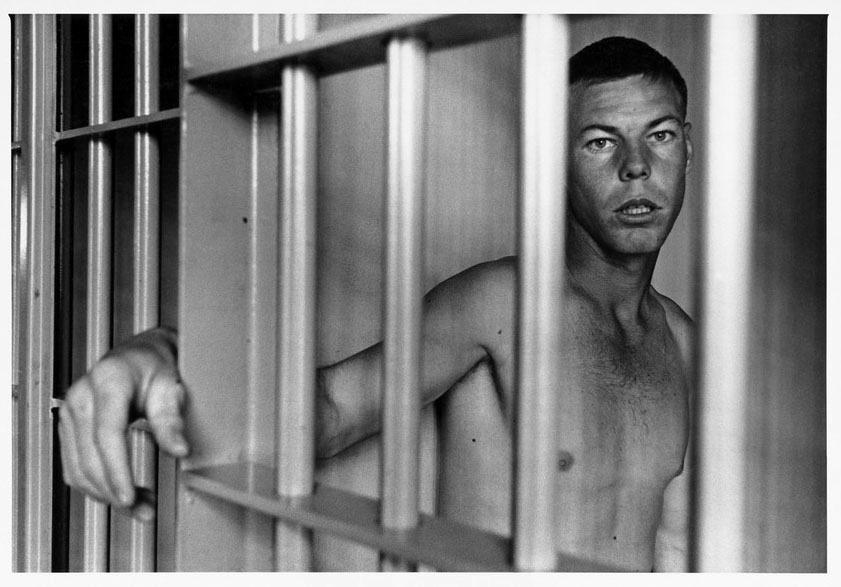
In 1967, Lyon applied to the Texas Department of Corrections for access to the state prisons. Dr. George Beto, then director of the prisons, granted Lyon the right to move freely among the various prison units, which he photographed and filmed extensively over a fourteen-month period. The result is a searing record of the Texas penal system and, symbolically, of incarceration everywhere.
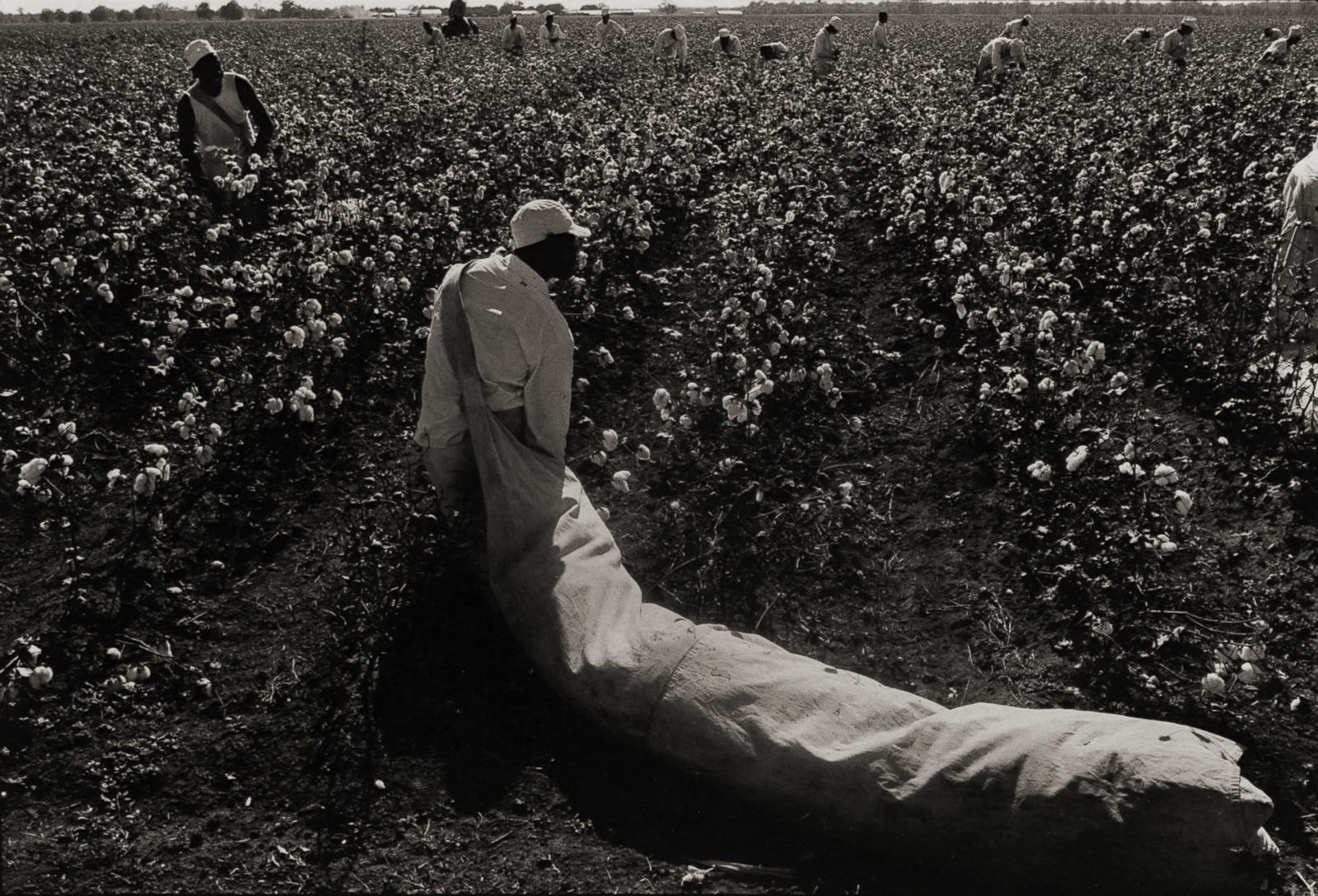
Lyon’s aim was to “make a picture of imprisonment as distressing as I knew it to be in reality.” This meant riding out to the fields to follow prisoners toiling in the sun, as well as visiting the Wynne Treatment Centre, which housed primarily convicts with mental disabilities. He befriended many of the prisoners, listening to their stories and finding the humanity in their experiences, and still maintains contact with some of them.
Danny Lyon (American, b. 1942) Weight Lifters, Ramsey Unit, Texas 1968 Gelatin silver print Image: 22.4 x 33.2cm (8 7/8 x 13 1/16 in.) Sheet: 27.7 x 35.6cm (11 x 14 in.) Collection of the artist
Danny Lyon (American, b. 1942) New Arrivals from Corpus Christi, The Walls, Texas 1968 Gelatin silver print Image: 21.4 x 32cm (8 7/16 x 12 5/8 in.) Sheet: 27.9 x 35.6cm (11 x 14 in.) Collection of the artist
Danny Lyon (American, b. 1942) Contents of Arriving Prisoner’s Wallet, Diagnostic Unit, The Walls, Huntsville, Texas 1968 Gelatin silver print Image: 24.3 x 17.5cm (9 9/16 x 6 3/4 in.) Sheet: 25.4 x 20.3cm (10 x 8 in.) Collection of the artist
Danny Lyon (American, b. 1942) Six-Wing Cell Block, Ramsey Unit, Texas 1968 Gelatin silver print Image: 16 x 24cm (6 5/16 x 9 7/16 in.) Sheet: 20.3 x 25.4cm (8 x 10 in.) Collection of the artist
Danny Lyon (American, b. 1942) Charlie Lowe, Ellis Unit, Texas 1968 Gelatin silver print Image: 16.2 x 23.8cm (6 3/8 x 9 3/8 in.) Sheet: 20.3 x 25.4cm (8 x 10 in.) Collection of the artist
Danny Lyon (American, b. 1942) Shakedown, Ellis Unit, Texas 1968 Gelatin silver print 21.6 x 31.3cm (8 1/2 x 12 1/4 in.) Museum of Modern Art, New York; purchase
Danny Lyon (American, b. 1942) Shakedown, Ramsey Unit, Texas 1968 Gelatin silver print Image: 17 x 24.2cm (6 5/8 x 9 9/16 in.) Sheet: 20.3 x 25.4cm (8 x 10 in.) Collection of the artist
Danny Lyon (American, b. 1942) Convict With a Bag of Cotton, Texas 1968 Gelatin silver print
Danny Lyon (American, b. 1942) Two Inmates, Goree Unit, Texas 1968 Gelatin silver print Image: 16.8 x 24cm (6 5/8 x 9 91/6 in.) Sheet: 20.3 x 25.4cm (8 x 10 in.) Collection of the artist
The destruction of Lower Manhattan
In late 1966 and into the summer of 1967, starting from his loft at the corner of Beekman and William Streets near City Hall Park, Lyon documented the demolition of some sixty acres of predominantly nineteenth-century buildings below Canal Street in lower Manhattan. With funding from the New York State Council on the Arts, he photographed most of the buildings that would be torn down to make way for the World Trade Center. Lyon recalled later: “I wanted to inhabit [the buildings] with feelings and give them and their demise a meaning.”
Moving from the outside of the buildings to their deserted interiors, Lyon also took pictures of the workers involved in the demolition. The photographs, together with Lyon’s journal entries, became a book, published by Macmillan in 1969 and dedicated to his close friend, sculptor Mark di Suvero. The volume’s significance lies in part in its depiction of a city – and, more broadly, a culture – cannibalising its own architectural history for the sake of development.
Danny Lyon (American, b. 1942) View South from 100 Gold Street, New York 1967 Gelatin silver print 18.3 x 18.2cm (7 1/4 x 7 3/16 in.) Collection of Melissa Schiff Soros and Robert Soros
Danny Lyon (American, b. 1942) Self-Portrait in Susquehanna Hotel, Third-Floor Room with Grass, New York 1967 Gelatin silver print 18.2 x 18.2cm (7 3/16 x 7 3/16 in.) Collection of Melissa Schiff Soros and Robert Soros
Danny Lyon (American, b. 1942) Ruins of 100 Gold Street, New York 1967 Gelatin silver print 23.6 x 23.4cm (9 5/16 x 10 7/16 in.) Collection of Melissa Schiff Soros and Robert Soros
The Bikeriders
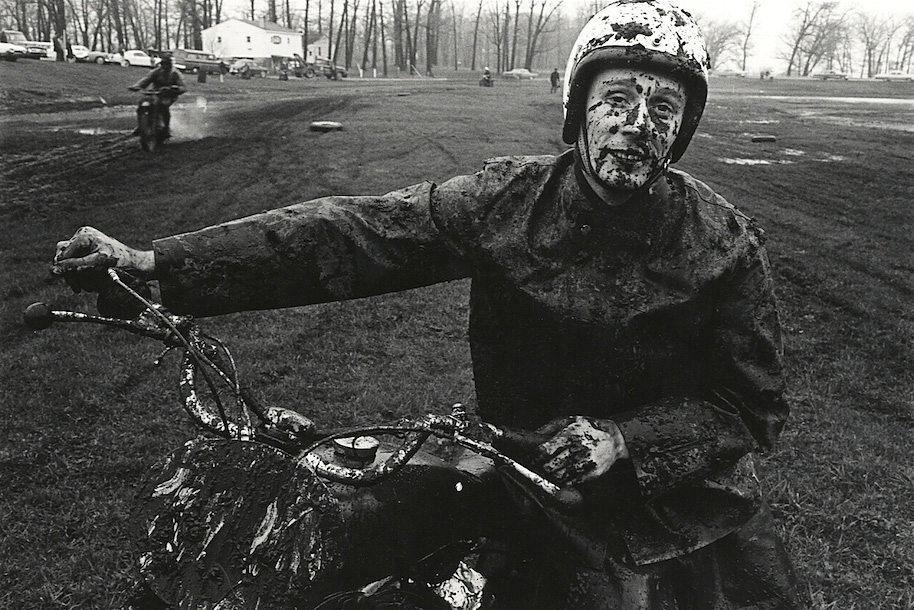
Lyon purchased his first motorcycle – a 1953 Triumph TR6 – in 1962, after spending weekends watching college friend and motorcycle racer Frank Jenner compete at informal dirt track races across the Midwest. When he returned to Chicago in 1965 after leaving SNCC, Lyon joined the hard-riding, hard-drinking Chicago Outlaws Motorcycle Club and began making photographs with a goal to “record and glorify the life of the American bike rider.” With clubs like the Hells Angels making headlines for their criminal and vigilante activities at the time, bike riders were simultaneously feared for their anarchism and romanticised for their independence.
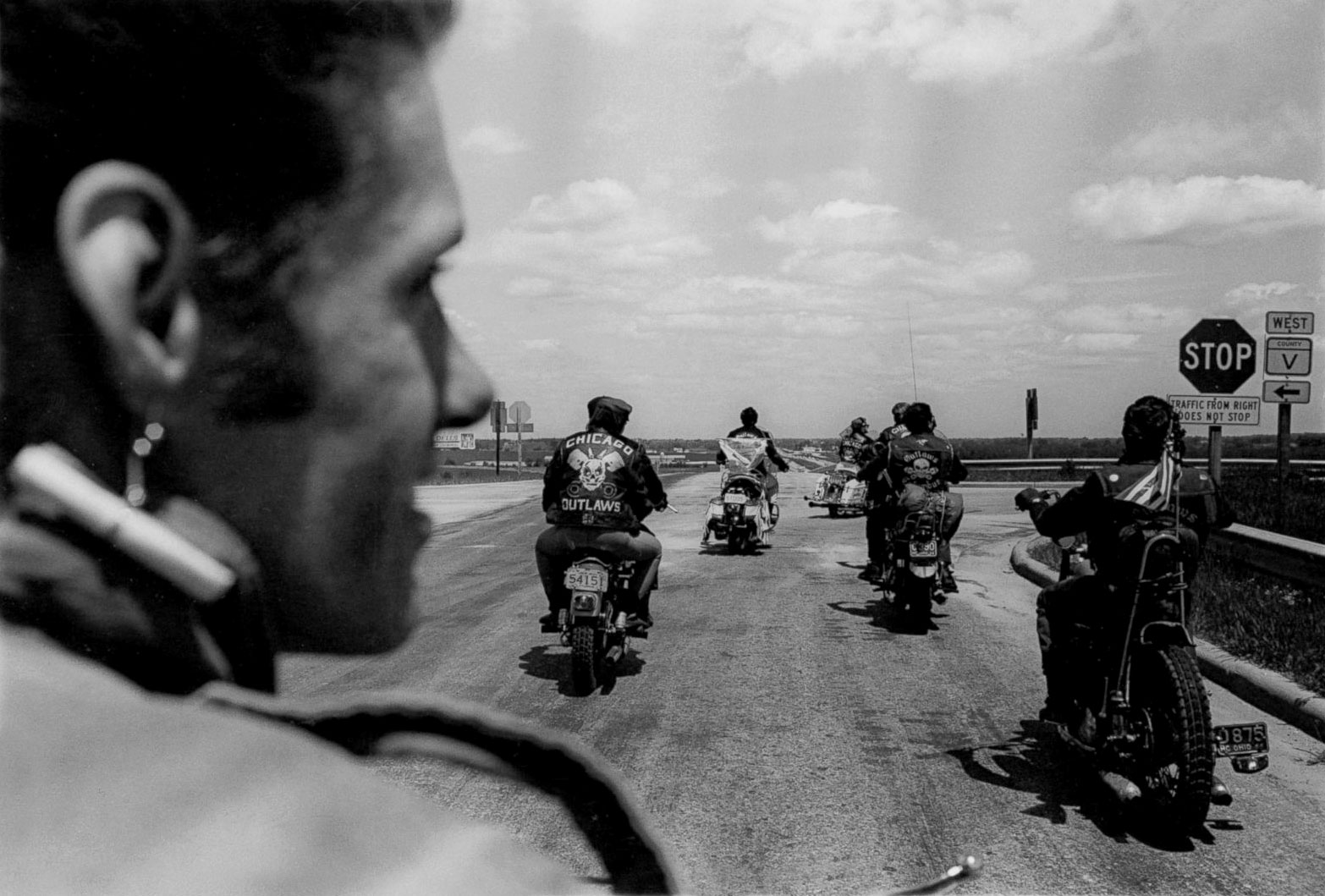
Riding with the Outlaws, Lyon attempted to capture their way of life from the inside out. Their unapologetic pursuit of freedom and libertine pleasures compelled him to get close to them as people. Lyon’s images are intimate and familiar, whether taken during rides or at clubhouse meetings. He also used a tape recorder to document the bikers speaking for themselves, unobtrusively capturing their collective voice. The resulting photographs were gathered into the now classic book of the same name, published in 1968, combining his pictures with an edited transcription of the interviews.
Danny Lyon (American, b. 1942) Racer, Schererville, Indiana 1965 Gelatin silver print 13.9 x 20.3cm (5 1/2 x 8 in.) Silverman Museum Collection
Danny Lyon (American, b. 1942) Crossing the Ohio River, Louisville 1966 Gelatin silver print 20.3 x 31.8cm (8 x 12 1/2 in.) Silverman Museum Collection
Danny Lyon (American, b. 1942) Route 12, Wisconsin 1963 Gelatin silver print 15.6 x 23.8cm (6 1/8 x 9 1/8 in.) Silverman Museum Collection
Danny Lyon (American, b. 1942) Sparky and Cowboy, Schererville, Indiana 1965 Gelatin silver print Image: 16.1 x 23.9cm (6 3/8 x 9 3/8 in.) Sheet: 20.3 x 25.4cm (8 x 10 in.) Collection of the artist
Danny Lyon (American, b. 1942) Untitled (Close Up of Cal on the Road) 1966 Gelatin silver print
Danny Lyon (American, b. 1942) Renegade’s funeral, Detroit 1966 Gelatin silver print
Danny Lyon (American, b. 1942) Funny Sonny Packing with Zipco, Milwaukee 1966 Gelatin silver print
Danny Lyon (American, b. 1942) Kathy, Chicago 1965 (printed 1966) Gelatin silver print 25.8 x 25.5cm (10 1/8 x 10 1/16 in.) Collection of the artist
Danny Lyon (American, b. 1942) Cal on the Springfield Run, Illinois 1966 (printed 2003) Cibachrome print Image: 22.8 x 32.5cm (9 x 13 1/4 in.) Sheet: 27.9 x 35.6cm (11 x 14 in.) Collection of the artist
Danny Lyon (American, b. 1942) Cowboy, Rogue’s Picnic, Chicago 1966 Gelatin silver print Image: 23.5 x 15.9cm (9 1/4 x 6 1/4 in.) Mount: 50.8 x 40.6cm (20 x 16 in.) Collection of the artist
Danny Lyon (American, b. 1942) Benny, Grand and Division, Chicago 1965 Gelatin silver print 24.5 x 17.2cm (9 5/8 x 6 3/4 in.) Collection of the artist
New Mexico and the West
Lyon headed west from New York in 1969. Tired of the hectic pace of the big city and in search of new surroundings, he settled in Sandoval County, New Mexico. He developed a great admiration for the region’s close knit communities of Native Americans and Chicanos. Lyon’s photographs and, increasingly, his films reflected his growing understanding of the cross-cultural flow between these disparate groups and how they interacted with the geography of the Southwest.
With the help of his good friend, a migrant labourer named Eduardo Rivera Marquez, Lyon built a traditional adobe home for his family in Bernalillo, in the Rio Grande Valley just north of Albuquerque. As Lyon’s family grew, his children also became a frequent subject, often depicted against the dramatic Western landscape. Though Lyon moved back to New York in 1980, New Mexico would remain a centre of gravity for the artist, who returned every summer with his family to photograph and make films.
Danny Lyon (American, b. 1942) Eddie, New Mexico 1972 Gelatin silver print Image: 23 x 34.5cm (9 x 13 5/8 in.) Sheet: 27.9 x 35.6cm (11 x 14 in.) Collection of the artist
Danny Lyon (American, b. 1942) Navajo Boy, Gallup, New Mexico 1971 Gelatin silver print Image: 23.3 x 33.8cm (9 1/8 x 13 5/16 in.) Sheet: 27.9 x 35.6cm (11 x 14 in.) Collection of the artist
Danny Lyon (American, b. 1942) Maricopa County, Arizona 1977 Gelatin silver print Image: 22.8 x 33.5cm (9 x 13 3/16 in.) Sheet: 27.9 x 35.6cm (11 x 14 in.) Collection of the artist
Danny Lyon (American, b. 1942) Stephanie, Sandoval County, New Mexico 1969/1975 Gelatin silver print (decorated) Image: 16.7 x 25cm (6 9/16 x 9 3/4 in.) Sheet: 27.9 x 35.6cm (11 x 14 in.) Collection of the artist
Danny Lyon (American, b. 1942) El Paso, Texas 1975 (printed 2015) Pigmented inkjet print Image: 27.9 x 40.6cm (11 x 16 in.) Sheet: 33 x 45.7cm (13 x 18 in.) Collection of the artist
Danny Lyon (American, b. 1942) El Paso, Texas 1975
Films and montages
Lyon started making 16mm films in earnest in the 1970s, focusing on marginalised communities and injustice as he had in his photographs. His subjects included Colombian street kids in Los Niños Abandonados (1975) and undocumented workers from Mexico in El Mojado (1974) and El Otro Lado (1978). Lyon has explained that after leaving the Texas prisons he struggled to move forward, feeling that there were “no more worlds to conquer” in creating photography books. Filmmaking became the means by which he could continue to make sense of the beauty and inequality he saw in the world around him.
Lyon did not give up photography completely, however. He turned to assembling family albums and creating collaged works that he describes as montages, referencing the filmmaking practice of juxtaposing disparate images to form a continuous whole. Lyon’s montages combine multiple images and materials sourced from his archives. Initially meant as vehicles for reflection and, in the case of the albums, as family heirlooms, these deeply personal works bridge past generations of his family with his present.
Danny Lyon (American, b. 1942) Los Niños Abandonados 1975
Danny Lyon (American, b. 1942) El Mojado 1974 New Mexico, colour, 14 minutes [The Wetback] English and Spanish with subtitles A portrait of a hard-working undocumented labourer from Mexico produced by J.J. Meeker
Danny Lyon (American, b. 1942) El Otro Lado 1978 Mexico and Arizona, colour, 60 minutes [The Other Side] Spanish with English subtitles An honest film infused with poignant beauty, without political rhetoric
Danny Lyon (American, b. 1942) Dear Mark 1981, New York and France, colour and b&w, 15 minutes A comedy in which the artist’s voice has been replaced by Gene Autry’s Lyon’s homage to his friend, sculptor Mark di Suvero, from footage shot in 1965 and 1975.
Danny Lyon (American, b. 1942) Soc Sci 127 1969 Houston, color and b&w, 21 minutes A comedy – Danny Lyon’s first film with the late great Bill Sanders and his “painless” tattoo shop.
Danny Lyon (American, b. 1942) Willie 1985 New Mexico, color, b&w, 82 minutes Willie is a realistic film made in Bernalillo, home of Willie Jaramillo and filmmakers Danny and Nancy Weiss Lyon Defiantly individual and implacable in the face of authority, Willie is repeatedly thrown into jail for relatively minor offences. The filmmakers gain access to jail cells, day rooms, lunatic wards, and the worst cellblock in the penitentiary where Willie is locked up next to his childhood friend and convicted murderer, Michael Guzman.
Knoxville
Danny Lyon (American, b. 1942) Knoxville 1967 Gelatin silver print
Danny Lyon (American, b. 1942) Knoxville, Tennessee 1967 Gelatin silver print
Danny Lyon (American, b. 1942) Leslie, Downtown Knoxville 1967 Gelatin silver print Image: 28.7 x 19.1cm (11 1/4 x 7 1/2 in.) Mount: 56.2 x 45.7cm (22 1/8 x 18 in.) Art Institute of Chicago; gift of Mr. Danny Lyon
Tattoo
Danny Lyon (American, b. 1942) Bill Sanders, Tattoo Artist, Houston, Texas 1968 Gelatin silver print Image: 20.7 x 20.7cm (8 3/16 x 8 3/16 in.) Sheet: 35.6 x 27.9cm (14 x 11 in.) Collection of the artist
Chicago
Danny Lyon (American, b. 1942) Two youths in Uptown, Chicago, Illinois, a neighborhood of poor white southerners 1974
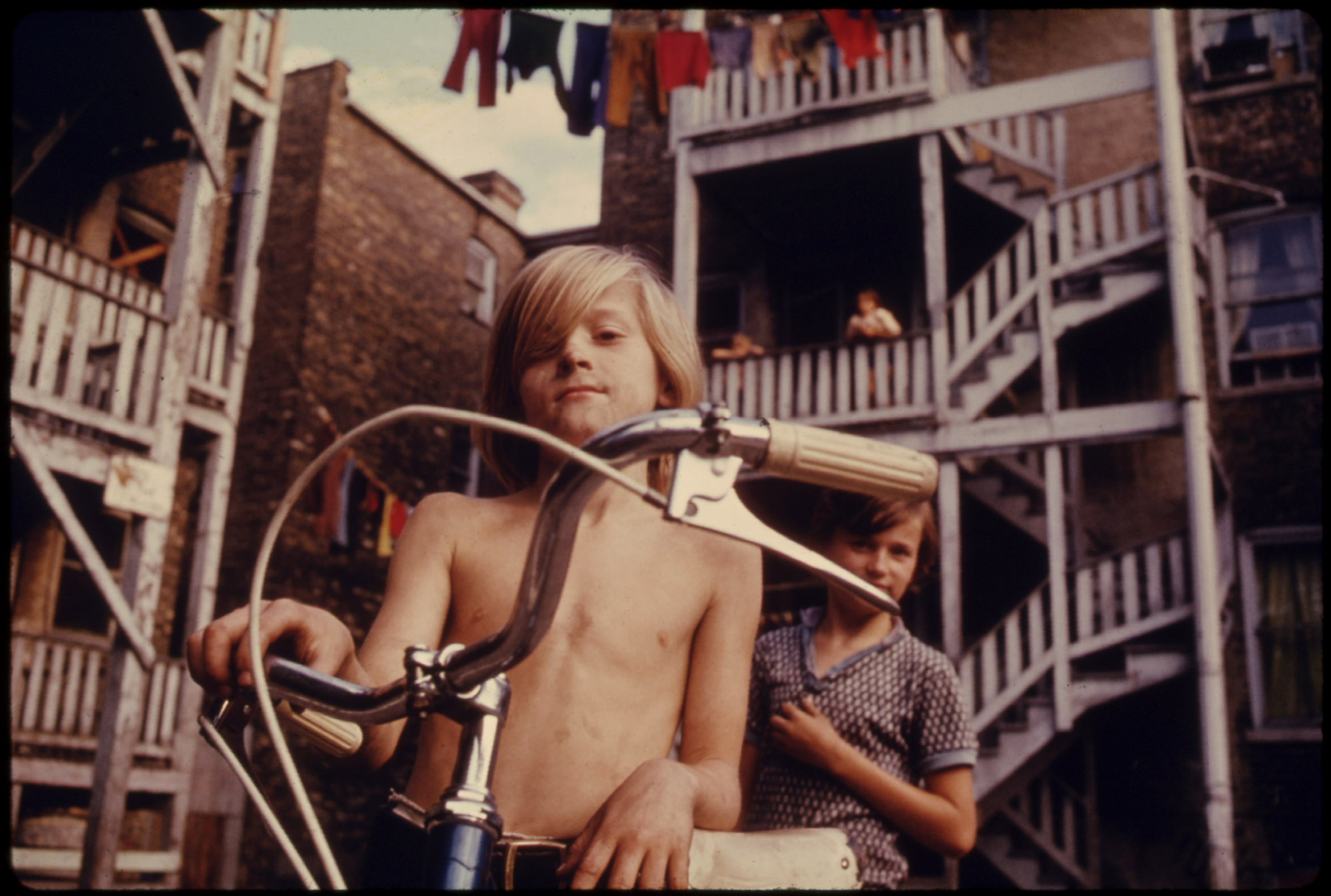
Danny Lyon (American, b. 1942) Children at an apartment entrance 1965 From series Uptown, Chicago Gelatin silver print
Danny Lyon (American, b. 1942) Kathy, Uptown, Chicago 1965 Gelatin silver print Image: 24.1 x 23.9cm (9 1/2 x 9 3/8 in.) Sheet: 35.6 x 27.9cm (14 x 11 in.) Collection of the artist
Danny Lyon (American, b. 1942) Uptown, Chicago 1965 Gelatin silver print Image: 16.4 x 16.4cm (6 1/2 x 6 1/2 in.) Mount: 50.8 x 40.6cm (20 x 16 in.) Collection of the artist
New York
Danny Lyon (American, b. 1942) Subway, New York 1966 (printed 2015) Pigmented inkjet print Image: 23.7 x 24.1cm (9 5/16 x 9 1/2 in.) Sheet: 28.8 x 29.2cm (11 5/16 x 11 1/2 in.) Collection of the artist
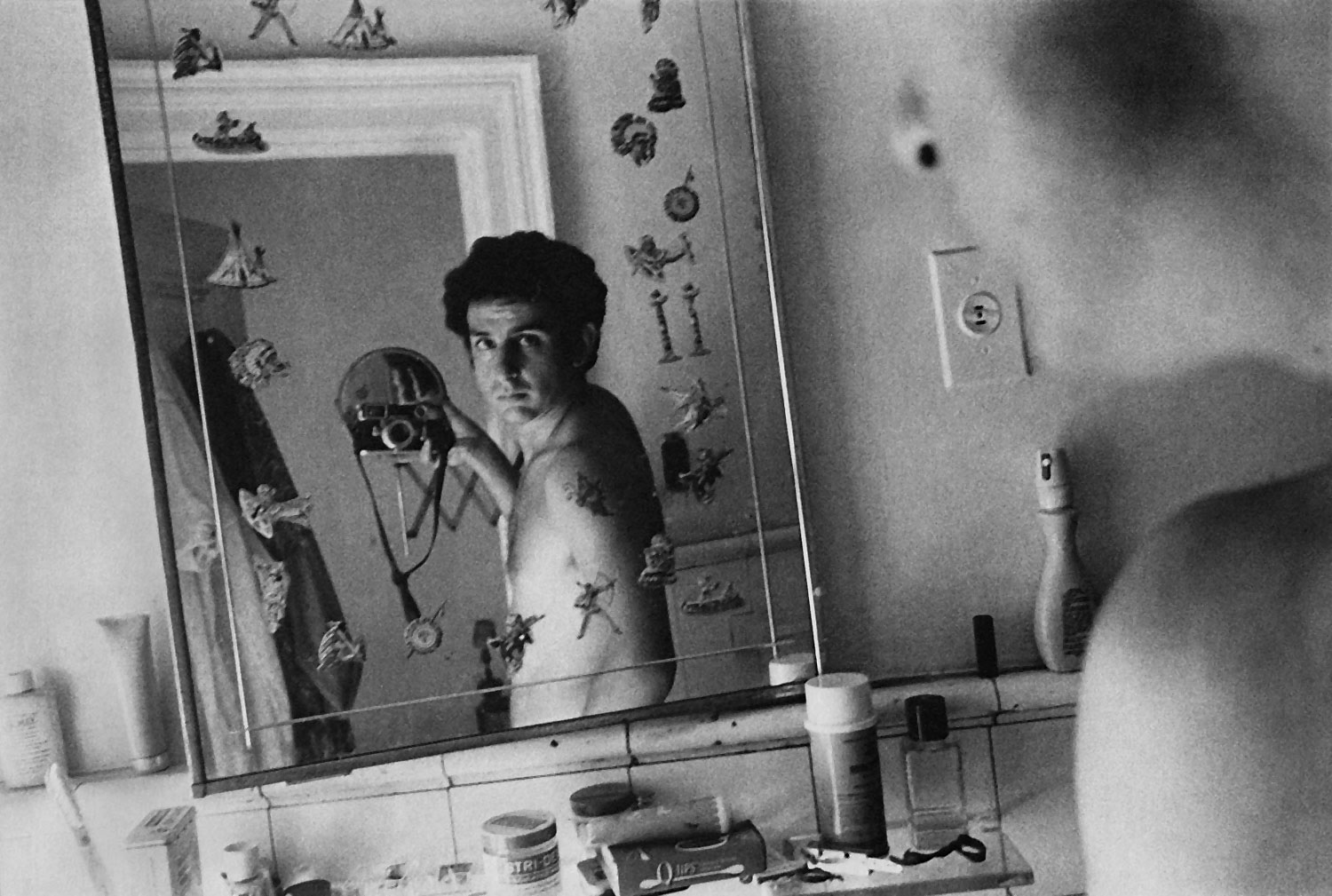
Danny Lyon (American, b. 1942) Self-Portrait in Mary Frank’s Bathroom, New York 1969 Gelatin silver print Image: 15.6 x 23.5cm (6 1/8 x 9 1/4 in.) Sheet: 20.3 x 25.2cm (8 x 9 15/16 in.) Whitney Museum of American Art, New York; purchase with funds from Joanna Leonhardt Casullo, Niko Elmaleh, Lauren DePalo, Julia Macklowe, and Fern Kaye Tessler
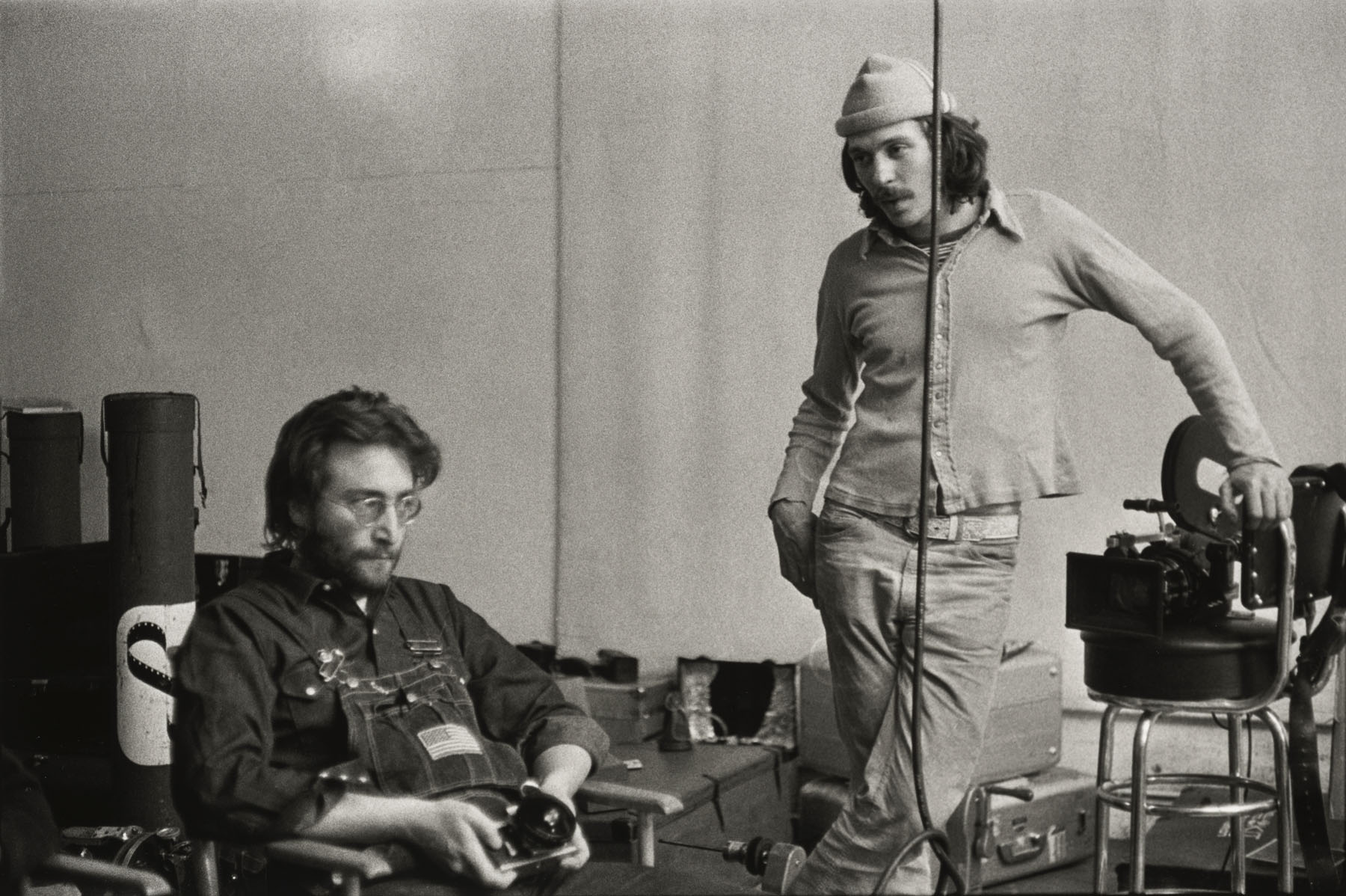
Danny Lyon (American, b. 1942) John Lennon and Danny Seymour, The Bowery, New York 1969 (printed c. 2005) Gelatin silver print, printed later Image: 22.3 x 33.3cm (8 13/16 x 13 1/8 in.) Sheet: 27.6 x 35.4cm (11 x 14 in.) Collection of the artist
Danny Lyon (American, b. 1942) Mark di Suvero and Danny Lyon, Hyde Park, Chicago 1965 Gelatin silver print Image: 23.9 x 16.2cm (9 3/8 x 6 3/8 in.) Sheet: 25.4 x 20.3cm (10 x 8 in.) Collection of the artist
Colombia
Danny Lyon (American, b. 1942) Mary, Santa Marta, Colombia 1972 Gelatin silver print Image: 17.1 x 25.3cm (6 3/4 x 10 in.) Sheet: 27.9 x 35.6cm (11 x 14 in.) Collection of the artist
Danny Lyon (American, b. 1942) Tesca, Cartagena, Colombia 1966 (printed 2008) Cibachrome print Image: 25.7 x 25.7cm (10 1/8 x 10 1/8 in.) Sheet: 35.6 x 27.9cm (14 x 11 in.) Collection of the artist
The most comprehensive retrospective of the work of American photographer, filmmaker, and writer Danny Lyon in twenty-five years debuted at the Whitney on June 17, 2016. The first major photography exhibition to be presented in the Museum’s downtown home, Danny Lyon: Message to the Future is organised by the Fine Arts Museums of San Francisco, where it will make its West Coast debut at the de Young Museum on November 5, 2016.
The exhibition assembles approximately 175 photographs and is the first to assess the artist’s achievements as a filmmaker as well as a photographer. The presentation also includes many objects that have seldom or never been exhibited before and offers a rare look at works from Lyon’s archives, including vintage prints, unseen 16mm film footage made inside Texas prisons, and his personal photo albums.
A leading figure in the American street photography movement of the 1960s, Lyon has distinguished himself by the personal intimacy he establishes with his subjects and the inventiveness of his practice. With his ability to find beauty in the starkest reality, Lyon has presented a charged alternative to the vision of American life presented in the mass media. Throughout, he has rejected the traditional documentary approach in favour of a more immersive, complicated involvement with his subjects. “You put a camera in my hand,” he has explained, “I want to get close to people. Not just physically close, emotionally close, all of it.” In the process he has made several iconic bodies of work, which have not only pictured recent history, but helped to shape it.
“We are delighted to partner with the Fine Arts Museums of San Francisco on Danny Lyon: Message to the Future,” stated Adam D. Weinberg, the Alice Pratt Brown Director of the Whitney Museum of American Art. “Since the early 1960s, Lyon’s photographs and films have upturned conventional notions of American life. The Whitney has long championed Lyon’s work and we are thrilled to present this retrospective, which encompasses more than half a century of important work.”
In 1962, while still a student at the University of Chicago, Lyon hitchhiked to the segregated South to make a photographic record of the Civil Rights movement. His other projects have included photographing biker subcultures, exploring the lives of individuals in prison, and documenting the architectural transformation of Lower Manhattan. Lyon has lived for years in New Mexico, and his commitment to personal adventure has taken him to Mexico and other countries in Latin America, China, and the less-traveled parts of the American West.
“Danny Lyon is one of the great artists working in photography today,” said Julian Cox, Founding Curator of Photography for the Fine Arts Museums of San Francisco and Chief Curator at the de Young Museum. “Lyon’s dedication to his art and his conviction to produce work underpinned by strong ethical and ideological motivations sets him apart from many of his peers.
Press release from the Whitney Museum of American Art
Ongoing activism
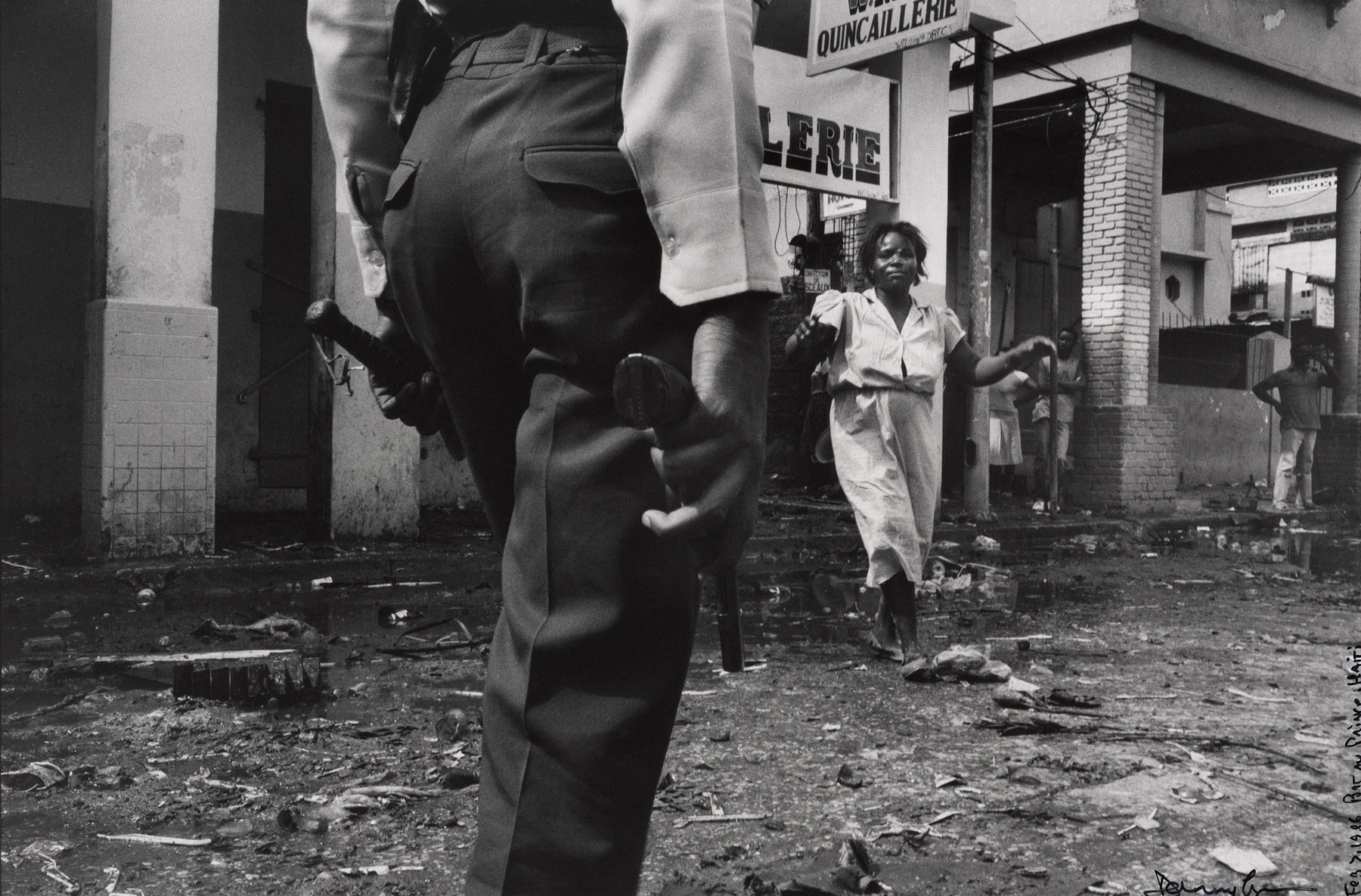
Lyon’s first encounter with Latin America was through a trip to Colombia in February 1966, during which he photographed extensively in and around Cartagena. In the 1970s and 1980s, Lyon’s self-described “advocacy journalism” took him to Bolivia, where he captured the hard lives of rural miners; Mexico, where he photographed undocumented workers moving back and forth across the U.S. – Mexico border; back to Colombia, where he made the film Los Niños Abandonados, chronicling the lives of street children; and to Haiti, where he witnessed firsthand the violent revolution overthrowing Jean-Claude Duvalier’s dictatorship.
More recently, Lyon made six trips between 2005 and 2009 to Shanxi province in northeast China. Aided by a guide, he photographed the people living in this highly polluted coal-producing region. As in his work in the civil rights movement and the Texas prisons, Lyon’s photographs from his travels are examples of his advocacy journalism, part of his effort to “change history and preserve humanity.”
Danny Lyon (American, b. 1942) Boulevard Jean-Jacques Dessalines, Port-au-Prince, Haiti February 7, 1986 Gelatin silver print Image: 21.3 x 32.1cm (8 3/8 x 12 5/8 in.) Sheet: 27.9 x 35.6cm (11 x 14 in.) Collection of the artist
Occupy
Danny Lyon (American, b. 1942) Occupy Demonstration on Broadway, Los Angeles 2011 Inkjet print Image: 24.5 x 32.9cm (9 5/8 x 12 15/16 in.) Sheet: 32.7 x 40cm (13 x 15 3/4 in.) Collection of the artist
Danny Lyon (American, b. 1942) Occupy Oakland, City Hall, Oakland 2011 Pigmented inkjet print Image: 24.6 x 33cm (9 3/4 x 13 in.) Sheet: 27.3 x 38cm (10 3/4 x 15 in.) Collection of the artist
Whitney Museum of American Art 99 Gansevoort Street New York, NY 10014 Phone: (212) 570-3600
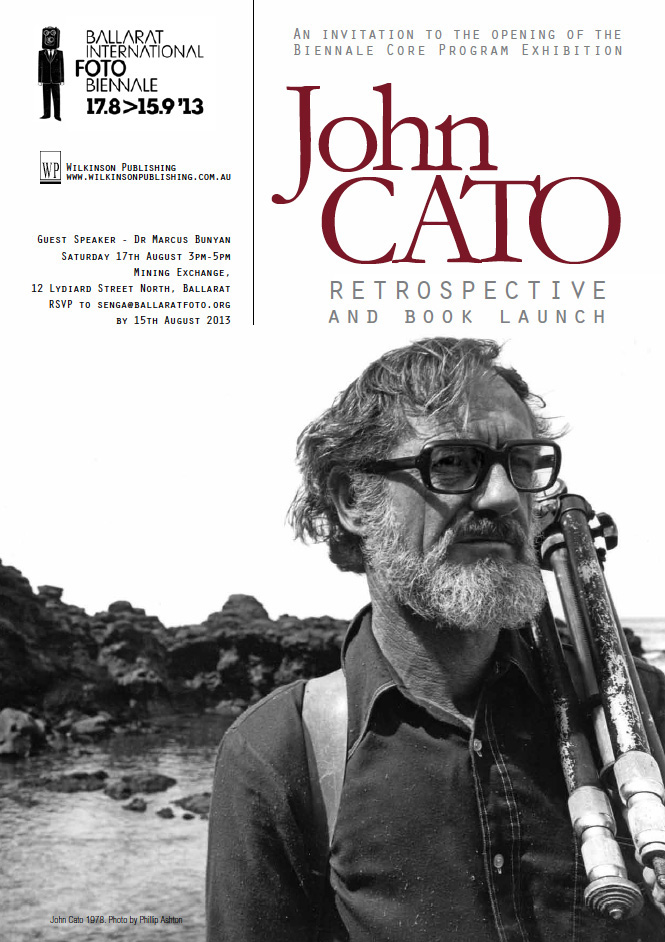
Opening date: 17th August 2013
BiFB dates: 17th August – 15th September 2013
Venue: The Mining Exchange, 12 Lydiard Street North, Ballarat Opening hours: 9am – 5pm daily
I have the great honour of being guest speaker at the John Cato Retrospective and book launch at the Ballarat International Foto Biennale on the 17th August, 2013. My essay … And His Forms Were Without Number from the 2002 retrospective I co-curated at the Photographers Gallery, has been included in the book. John is one of the most underrated but influential artists in the history of Australian photography and it is wonderful that a book is being published about his work. Finally, the recognition he so strongly deserves.
I have also written the catalogue essay for another core program, Erika Diettes Sudarios (Shrouds) that also opens on the same day. This was one of the most complex writing assignments that I have undertaken for the subject matter is very difficult and I wanted to do the work justice. I will publish the essay in an upcoming posting. The artist is flying over from Colombia for the opening so it will be great to meet her.
I hope you can make the trip to Ballarat for these important events!
Dr Marcus Bunyan
“Probably John Cato was the most philosophical of the lecturers at Prahran. Paul [Cox] was away with the fairies, while John was really into that because of the way he photographed the landscape. It was all symbolic, to draw out a picture of a root or a bit of seaweed, it describes his personality as well. He was a very direct person. There’s no bullshit with John; he’d talk about things in simple emotional terms, nothing intellectual about it, but it wasn’t bullshit, it was his belief and he was passionate about it. I believe he’s the only photographer that’s come to terms with the Australian landscape; and it was hard, because, how do you get the dimension, the size of the space, of the air in a bloody picture? How do you convey that kind of feeling of isolation and vulnerability when there’s a big open sky and the sun’s beating down? He did it all…”
Jim McFarlane quoted in James McArdle. “Élan,” on the On This Date In Photography website 29th February 2024 [Online] Cited 02/03/2024
John Cato Retrospective
“The meeting of land and sea has always held a mystic fascination for me. Through my camera, my experience of it has been heightened, my awareness of its wonder deepened. Above all, I remember its clamourous silence.”
John Cato 1976
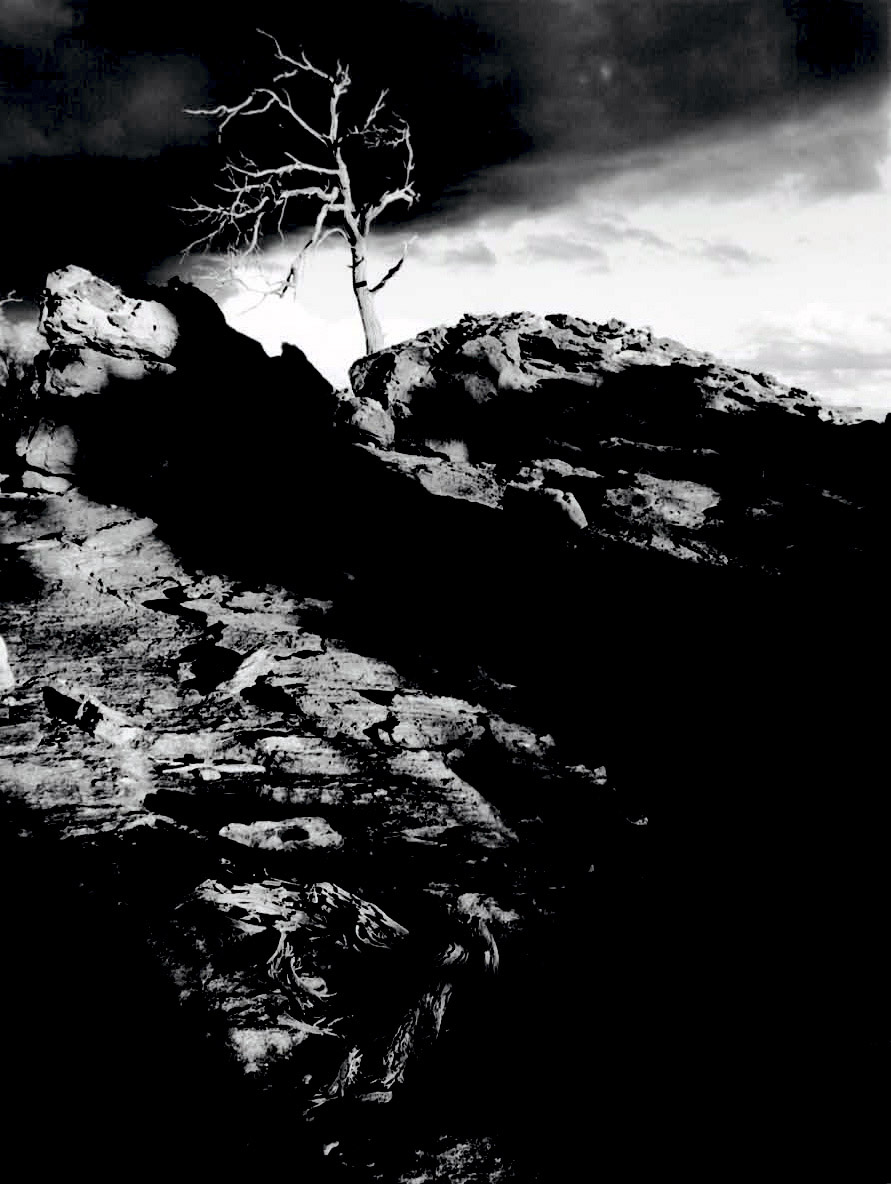
John Cato was one of the first photographers in Australia to consider the lyrical and poetic aspects of landscape and to create extended series of photographic essays. He wanted to ‘explore the elements of landscape’ and gave himself 10 years to complete his study, two years for each of the five elements. His practice would take him into the desert for extended periods of time. He would spend 40 days, seeing, observing and waiting for the perfect conditions for the shot, on one occasion exposing 3 rolls of film and being satisfied enough to use only 11 photographs from them. These powerful images, free of manipulation, capture the essential qualities of natural elements and indeed how John Cato saw the world.
This exhibition of work from 1971-1991 honours the achievement of John Cato as mentor and as teacher. It pays homage to his significant contribution of photography in Australia. John Cato was born in Hobart, Tasmania in 1926. From the age of 12 years he was apprenticed to his father the photographer Jack Cato. John Cato had been a press photographer with the Argus newspaper and a commercial photographer in partnership with Athol Shmith for 20 years before experiencing ‘a kind of menopause’. He walked away from a successful career, quietly burned all his commercial work and became an educator and fine art photographer. Cato was involved in the foundation years of the Photography Studies College, still in South Melbourne, and a lecturer there and at Prahran College of Advanced Education becoming Department Head in 1979 until he retired in 1991 by which time it was called Victoria College. He felt ‘duty bound’ to hand on his experience. He loved teaching and he was a much-loved teacher. Many of his past students are now highly regarded photographers, whilst others hold important positions in universities and art institutions around Australia.
Cato exhibited nationally and internationally in solo and group exhibitions and his work is featured in many public collections, including the National Gallery of Australia, the National Gallery of Victoria and the Bibliotheque Nationale, Paris.
Text from the Ballarat International Foto Biennale core special guide.
The exhibition is curated by Paul Cox.
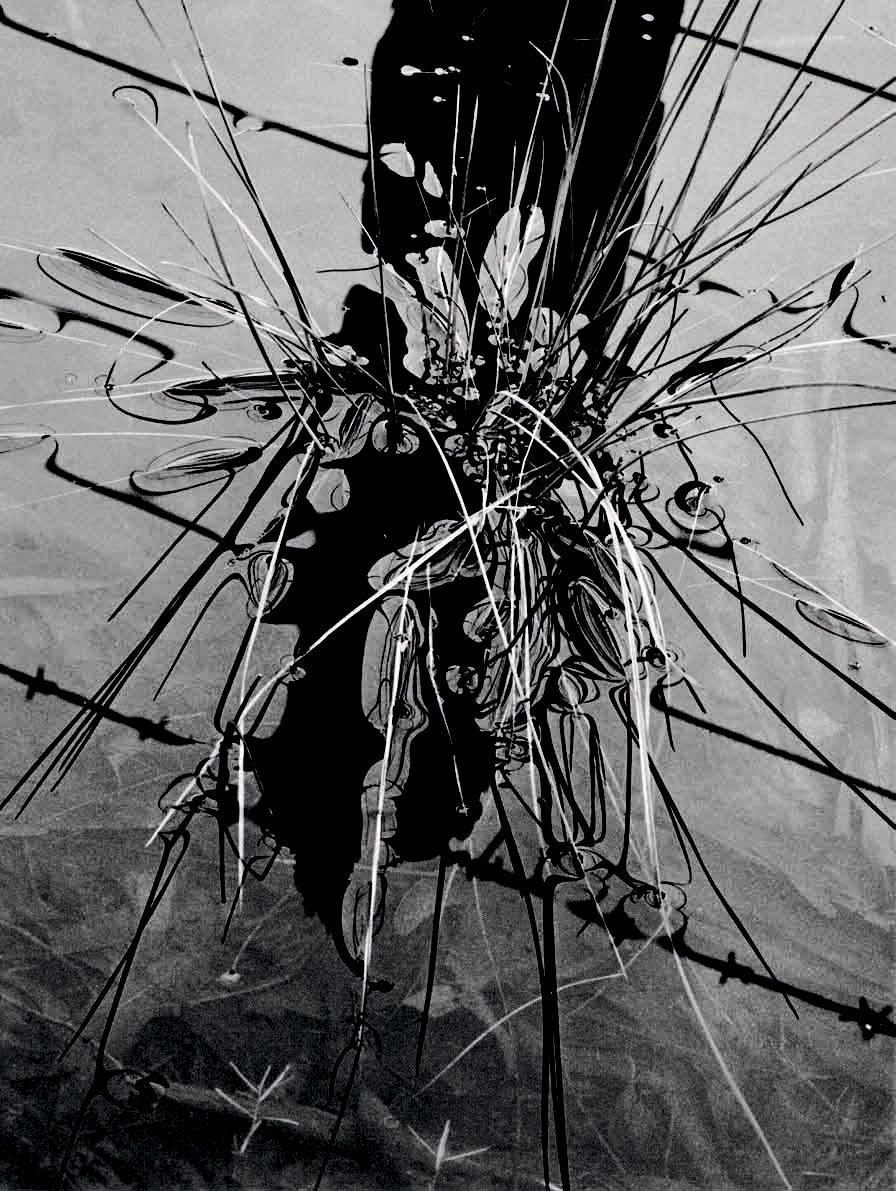
John Cato (Australian, 1926-2011)
Tree, a journey #1
From the Tree, a journey series 1971-73
Gelatin silver photograph
45.3 x 35.1cm
John Cato (Australian, 1926-2011)
Tree, a journey #18
From the Tree, a journey series 1971-73
Gelatin silver photograph
45.3 x 35.1cm
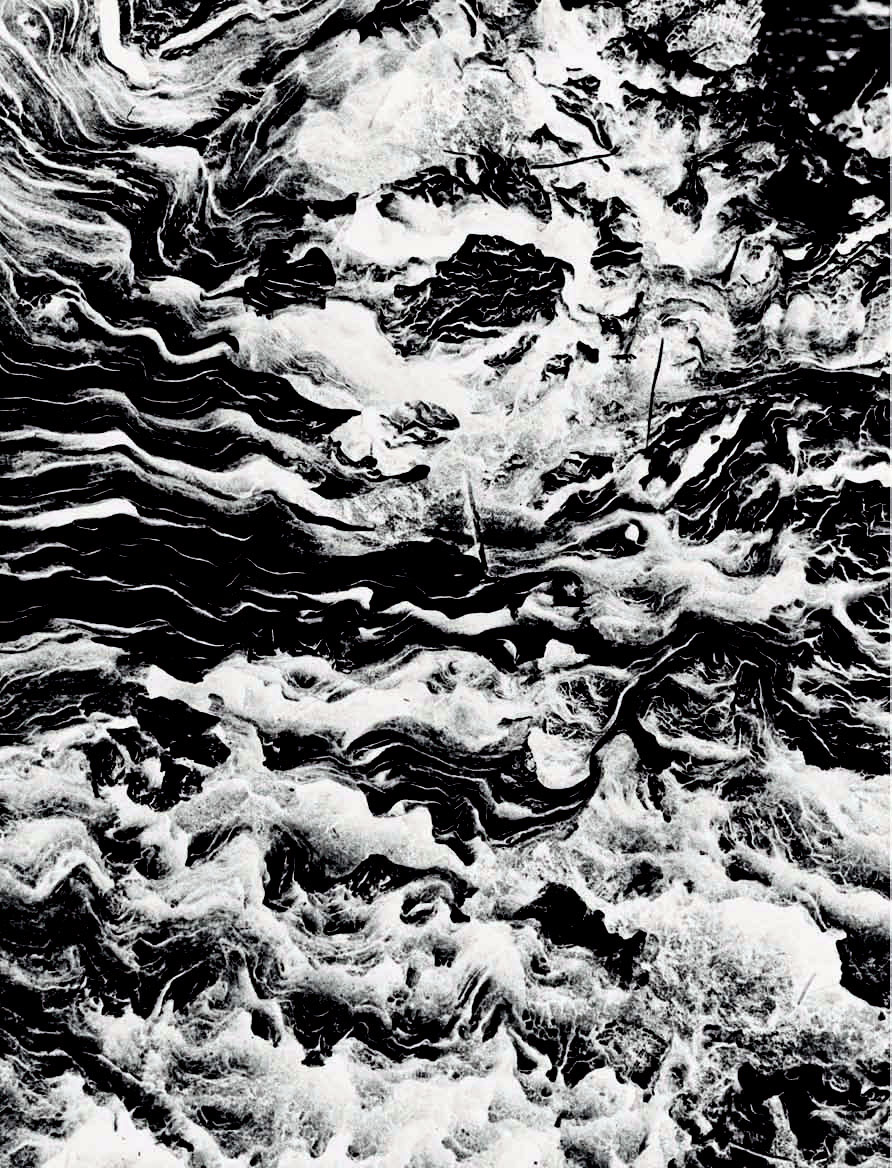
John Cato (Australian, 1926-2011) Double concerto #13 From the Double Concerto series 1985-91
Gelatin silver photograph
45.5 x 32.8cm
Erika Diettes Sudarios (Shrouds)
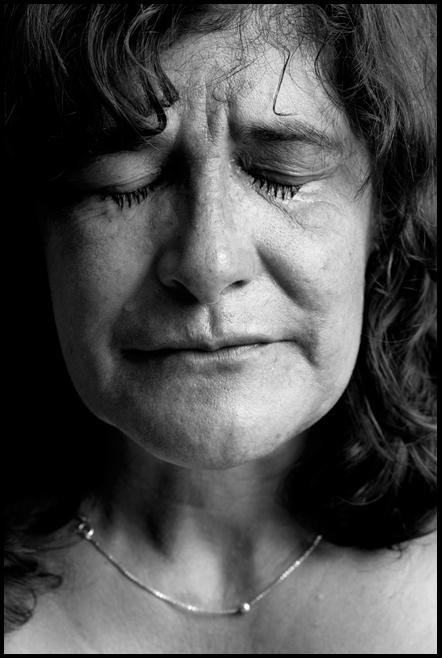
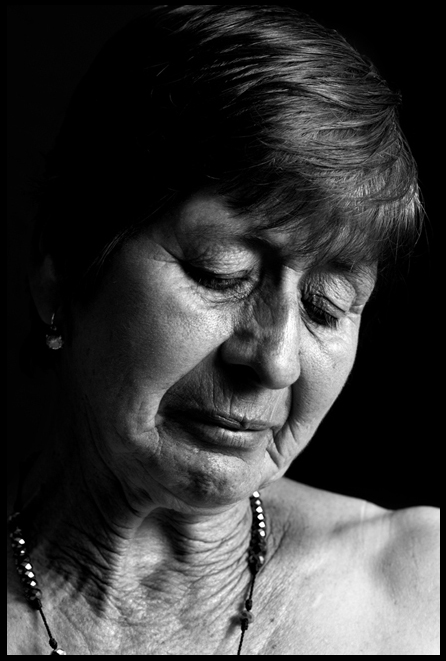
Many times, with my camera, I have been a witness of the moment when people have to close their eyes as they recall the event which divided their life into two parts. My decision to create Sudarios (Shrouds) comes from unanswered questions that came out of my pervious series Silencios (Silences), which dealt with survivors of the Second World War who live in Colombia. Similarities are also to be found in Río Abajo (Drifting Away), a series which focuses on the victims of forced disappearance, and A Punta de Sangre (By Force of Blood), a series in which I examine the idea of the search for the bodies of the disappeared by their families, who, in the midst of despair, find a ray of hope in the vultures that might lead them to the remains of their loved ones. To date, I have received the testimonies of more than 300 victims of the violence in Colombia. They have confided intimacies of this violence to me: not only its harrowing details, but the way they rebuild their lives and keep going despite what they have suffered.
The women who serve as the models in Sudarios were first-hand witnesses of acts of horror. The intention of the series is to enable the spectator to observe the moment when these women close their eyes, with no other way to communicate the horror that they witnessed and the intensity of the sorrow they were subjected to. They were forced to feel on their own flesh, or in front of their own eyes, that there is no difference between man and the most savage beasts of nature; but that we are the only species capable of mass murder and the only ones who do not adapt to our own kind (N. Timbergen, 1968). I am convinced that this series speaks of something that is timeless, universal and infinite.
Erika Diettes is a visual artist who lives and works in Bogotá. Her work explores the problems of memory, sorrow, absence and death. She has a Masters in Anthropology from the Universidad de los Andes, Bogotá, with a major in photographic production, and a degree in Social Communication from the Pontificia Universidad de Bogotá.
Text from the Ballarat International Foto Biennale core special guide.
Ballarat International Foto Biennale 12 Lydiard Street North, Ballarat 3350 Australia PO Box 41 Ballarat Central 3353 Australia Email: info[at]ballaratfoto.org
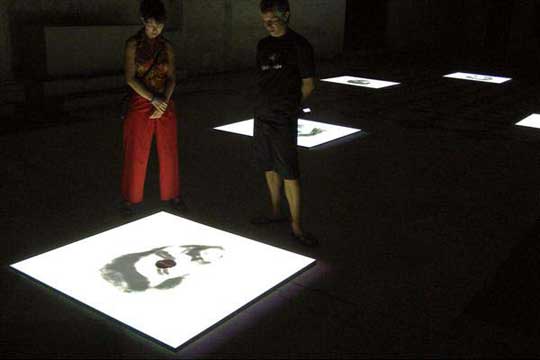
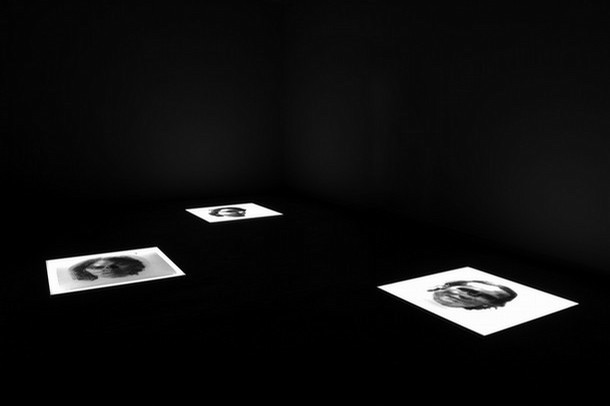
Óscar Muñoz (Colombian, b. 1951) Biografías (installation views) 2002 5 video projections, 7 ‘, loop, without sound, DVD, mdf support, metal grids, variable dimensions
“How can one construe a notion of time in this immemorial setting? How can one assimilate and articulate in one’s memory all these events that have been happening for so many years now?”
“My work today … is based on my endeavour to understand the mechanism developed by a society which has ultimately suffered the routinisation of war… A past, a present and in all likelihood a future full of violent events on a daily basis, which are stubbornly repeated, in a practically identical fashion.”
Óscar Muñoz
Óscar Muñoz is something of a gentle magician. His ‘disappearing’ drawings are poignant and beautiful, combining consummate skill with conceptual subtlety and rigour.
Muñoz is a senior Colombian artist. He plays an important role in mentoring younger artists but his own work is very focused on a personal language that is closely tied to the body and its disappearance. His work has always combined traditional drawing skills with video in a completely original and surprising way.
Although Muñoz is not assertively political, his work is more about mortality than specific acts of violence but it is impossible not to look at it in the context of Colombian life. A common technique for social control has become the ‘disappearing’ of people. The work shown in this exhibition, Biografías 2002 is structured to reflect this pervasive theme of disappearance.
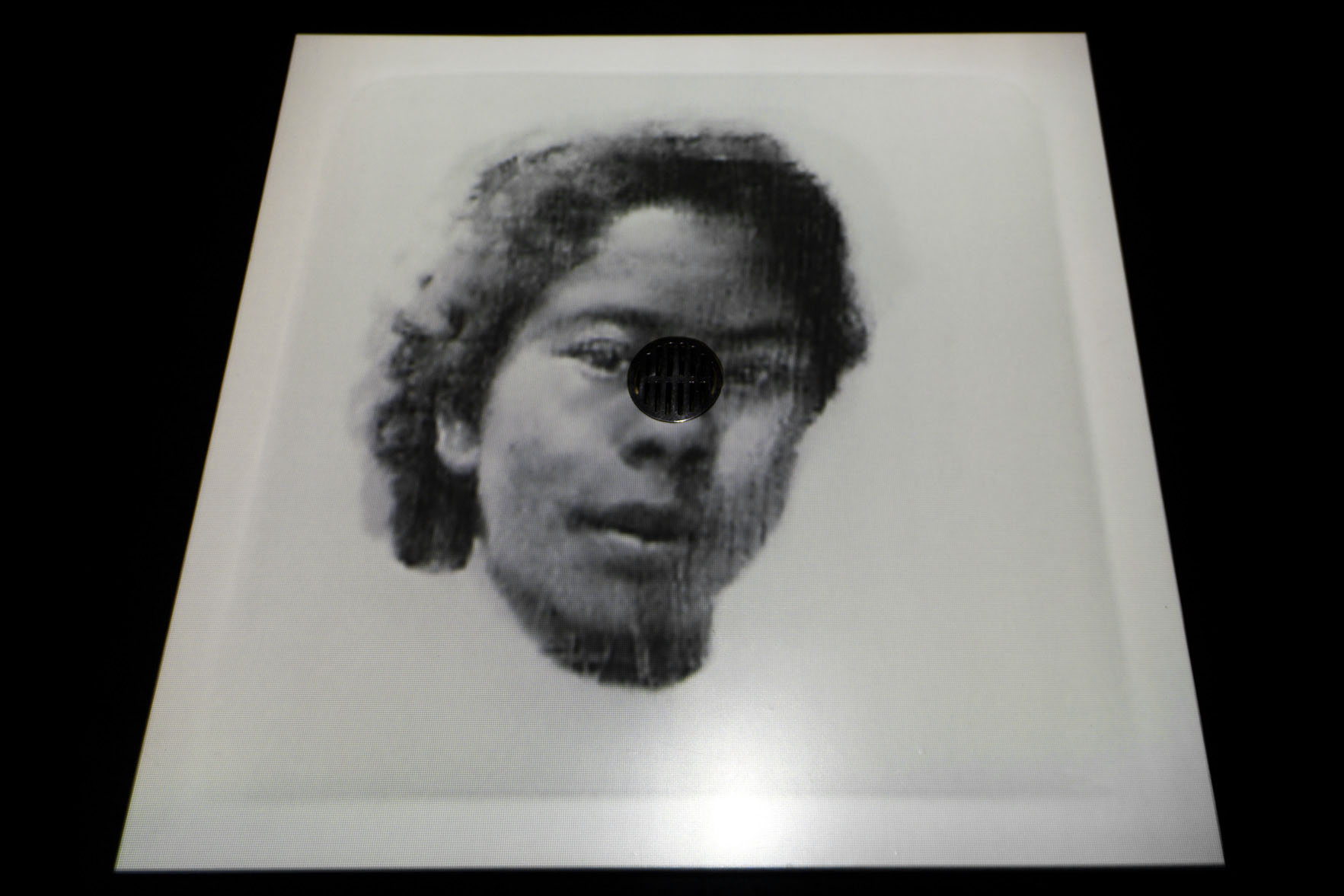
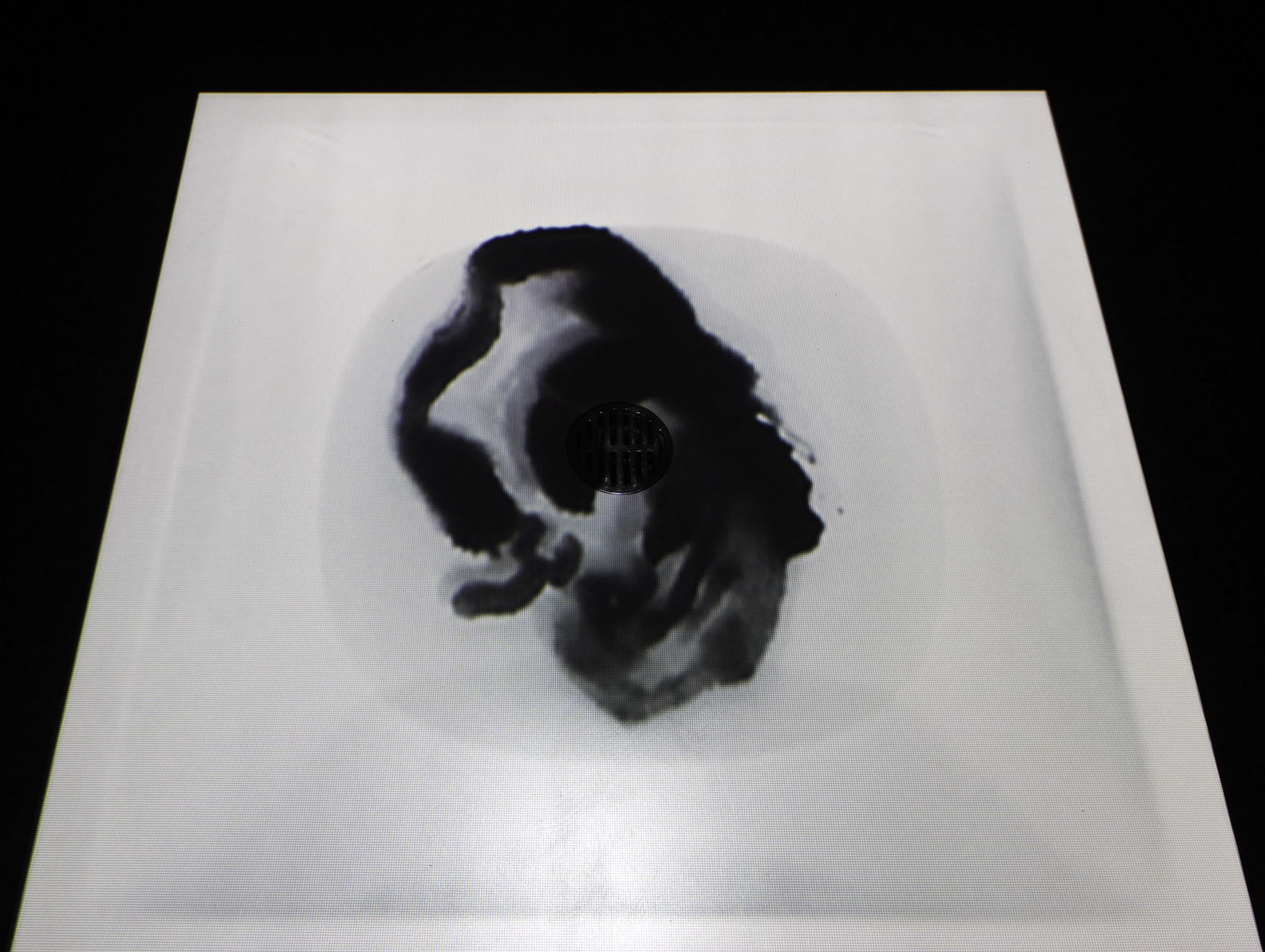
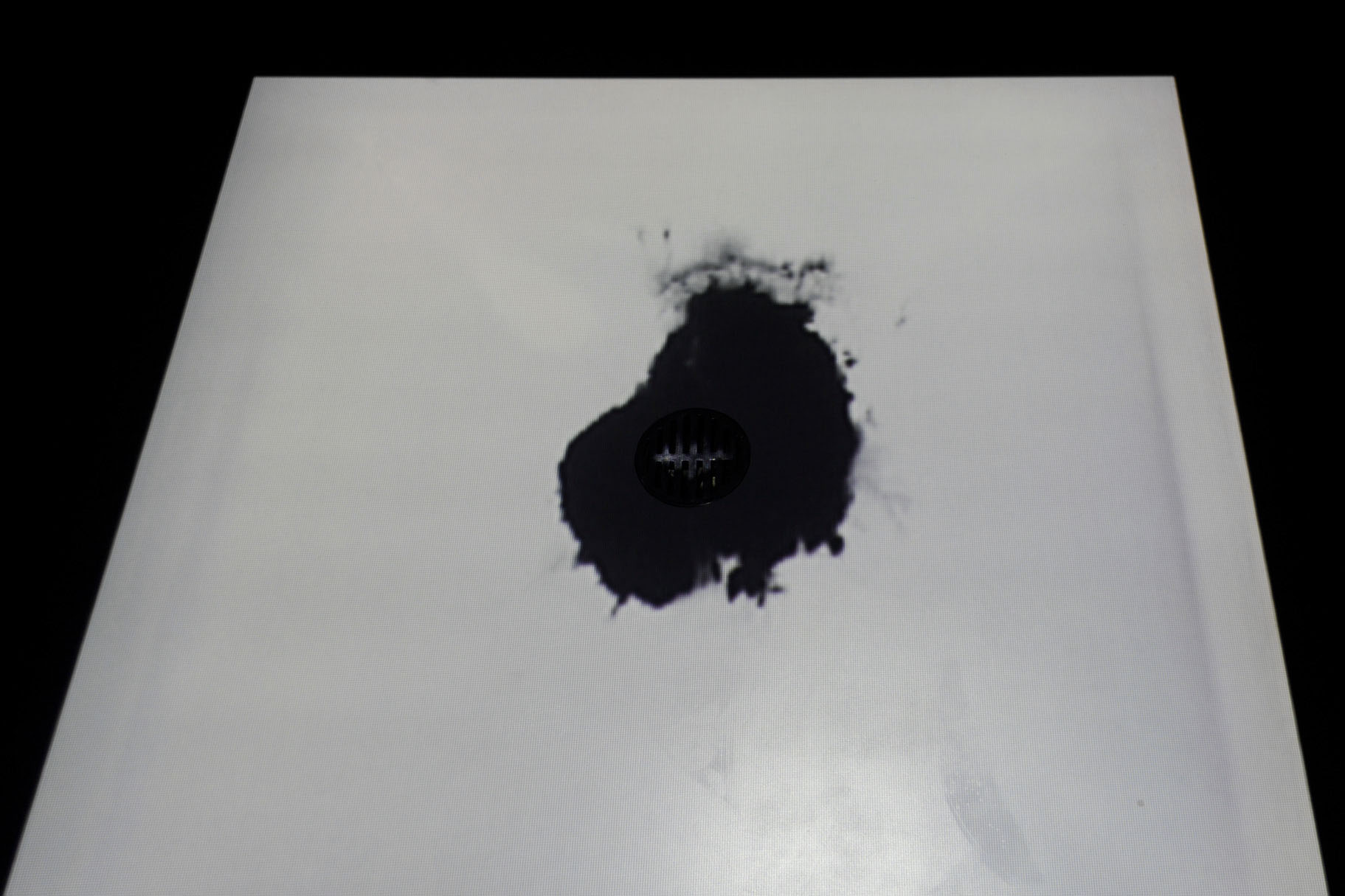
Biografías is one of a series of works in which portraits slowly disappear, reflecting the disappearance of people on a regular basis in Colombia. Muñoz has made silk screen portraits of people but instead of forcing ink through the screen onto paper he has dusted fine coal dust through the screen onto a flat basin of water. The portrait in coal is then transferred to float on the surface of the water. After a while the water starts to drain out of a plug hole in the basin causing the image to begin to distort. Eventually the image is compressed becomes unrecognisable and finally disappears down the drain.
Five such portraits are shown in Biografías by projecting video of the performed drawings onto screens on the floor complete with plug holes beneath which you hear the sound of water running down the drain.
Text from the Art Gallery of New South Wales website [Online] Cited 22/02/2009 (no longer online)
Many thankx to Art Gallery of New South Wales for allowing me to publish the art work in the posting. Please click on the art work for a larger version of the image.
Óscar Muñoz (Colombian, b. 1951) Biografías (stills) 2002 5 video projections, 7 ‘, loop, without sound, DVD, mdf support, metal grids, variable dimensions
Óscar Muñoz Biografías
The work refers to the idea of death, disappearance and transience of memory, linked to acts of violence.
Muñoz is also known for his use of ephemeral materials, in poetic reflections upon memory and mortality.
Art Gallery of New South Wales Art Gallery Road, The Domain Sydney NSW 2000, Australia
Opening hours: Open every day 10am – 5pm except Christmas Day and Good Friday


























![Installation photograph of Erika Diettes 'Sudarios' (Shrouds) at Iglesia de Chinquinquirá (La Chinca). Santa Fe de Antioquia [COL] December 5-9, 2012](https://artblart.com/wp-content/uploads/2013/07/04.jpg "Installation photograph of Erika Diettes 'Sudarios' (Shrouds) at Iglesia de Chinquinquirá (La Chinca). Santa Fe de Antioquia [COL] December 5-9, 2012")
![Installation photograph of Erika Diettes 'Sudarios' (Shrouds) at Iglesia de Chinquinquirá (La Chinca). Santa Fe de Antioquia [COL] December 5-9, 2012](https://artblart.com/wp-content/uploads/2013/07/06.jpg "Installation photograph of Erika Diettes 'Sudarios' (Shrouds) at Iglesia de Chinquinquirá (La Chinca). Santa Fe de Antioquia [COL] December 5-9, 2012")
![Installation photograph of Erika Diettes 'Sudarios' (Shrouds) at Ex Teresa Arte Actual. México D.F. [MEX] May-Jun, 2012](https://artblart.com/wp-content/uploads/2013/07/sudarios_mex_02.jpg "Installation photograph of Erika Diettes 'Sudarios' (Shrouds) at Ex Teresa Arte Actual. México D.F. [MEX] May-Jun, 2012")
![Installation photograph of Erika Diettes 'Sudarios' (Shrouds) at Trinity Episcopal Church. Houston TX [USA] Feb-Apr 2012](https://artblart.com/wp-content/uploads/2013/07/006-houston.jpg "Installation photograph of Erika Diettes 'Sudarios' (Shrouds) at Trinity Episcopal Church. Houston TX [USA] Feb-Apr 2012")
 Art Blart _ art and cultural memory archive
You must be logged in to post a comment.