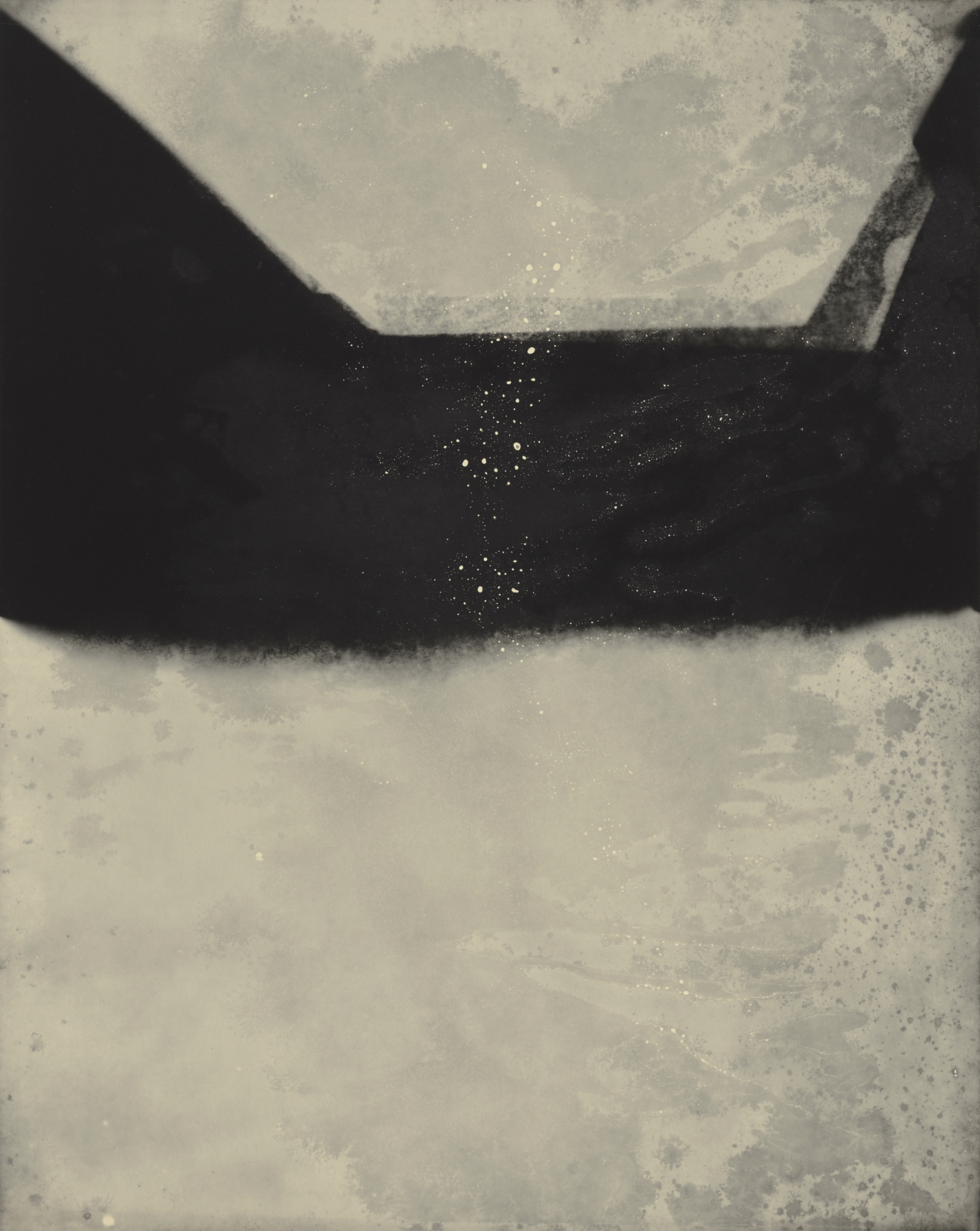
Exhibition: ‘Dawoud Bey & Carrie Mae Weems: In Dialogue’ at the J. Paul Getty Museum, Los Angeles

Exhibition dates: 4th April – 9th July, 2023


Dawoud Bey (American, b. 1953) 'Two Women at a Parade' 1978 from the exhibition 'Dawoud Bey & Carrie Mae Weems: In Dialogue' at the J. Paul Getty Museum, Los Angeles, April-  July, 2023


Dawoud Bey (American, b. 1953)
Two Women at a Parade
1978
Gelatin silver print
Grand Rapids Art Museum, Michigan Museum purchase
© Dawoud Bey
Courtesy of Stephen Daiter Gallery


Engaging each other in light

Dialogue: Old English dialogas (plural), from Latin from Greek dialogos, from dia ‘through’ + logos ‘word’

“As we define it, dialogue is “a communicative process in which people with different perspectives seek understanding.” To be in dialogue means that participants are not only engaging each other in light of their different views, but they are also striving to achieve a degree of mutual understanding.”

Jason Combs. “What is Dialogue?” on the University of Dayton website Monday October 28, 2019 [Online] Cited 01/07/2023


Short and sweet because I’m not feeling well.

What an inspired pairing for an exhibition. “Each [artist] addresses race, class, representation, and systems of power in their work, creating photographic series grounded in Black history and realities that speak to the human condition.”

From street-based photographs of everyday life to conceptual excavations of Black Histories, they produce incisive thought provoking works “that intermingle past and present, referenc[ing] African Americans whose lives and stories have been co-opted or lost.”

I love them both for their commitment to and passion for life in all its different forms. Bringing people together. Expressing a degree of mutual understanding.

#BlackLivesMatter #AllLivesMatter

Dr Marcus Bunyan


Many thankx to the J. Paul Getty Museum for allowing me to publish the photographs in the posting. Please click on the photographs for a larger version of the image.


Dawoud Bey and Carrie Mae Weems have been friends and colleagues for more than 40 years. Each addresses race, class, representation, and systems of power in their work, creating photographic series grounded in Black history and realities that speak to the human condition. This exhibition sheds light on their unique trajectories and modes of presentation, and their shared consciousness and principles. Organised by the Grand Rapids Art Museum.
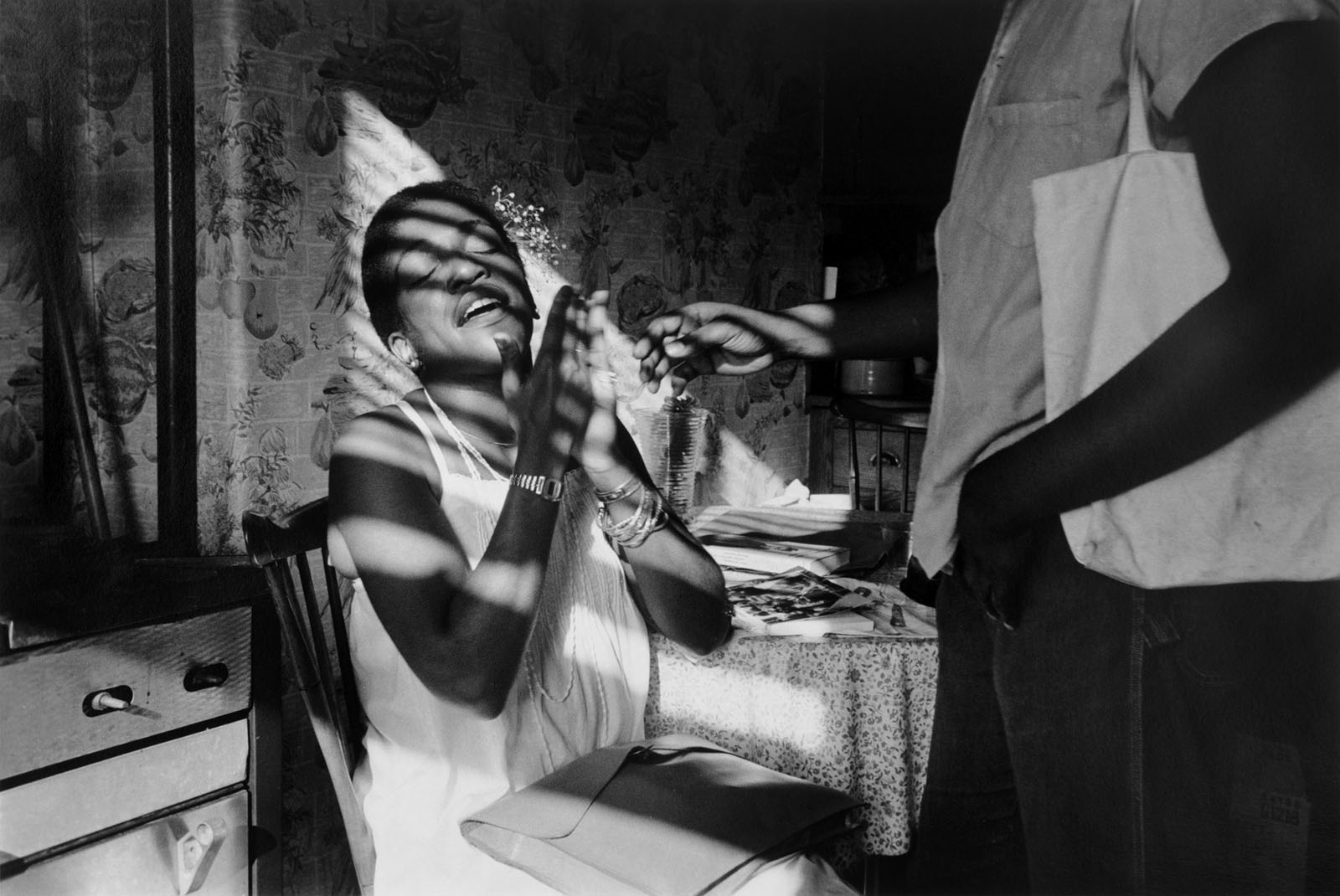
 

Dawoud Bey (American, b. 1953) 'The Woman in the Light, Harlem, NY' 1980 from the exhibition 'Dawoud Bey & Carrie Mae Weems: In Dialogue' at the J. Paul Getty Museum, Los Angeles, April-  July, 2023


Dawoud Bey (American, b. 1953)
The Woman in the Light, Harlem, NY
1980
Gelatin silver print
© Dawoud Bey
Courtesy of Stephen Daiter Gallery


Dawoud Bey (American, b. 1953) 'Self and Shadow, New York, NY' 1980 from the exhibition 'Dawoud Bey & Carrie Mae Weems: In Dialogue' at the J. Paul Getty Museum, Los Angeles, April-  July, 2023


Dawoud Bey (American, b. 1953)
Self and Shadow, New York, NY
1980
Gelatin silver print
© Dawoud Bey
Courtesy of Stephen Daiter Gallery


Dawoud Bey (American, b. 1953) 'A Young Man Resting on an Exercise Bike, Amityville, NY' 1988


Dawoud Bey (American, b. 1953)
A Young Man Resting on an Exercise Bike, Amityville, NY
1988
Gelatin silver print
© Dawoud Bey
Courtesy of Stephen Daiter Gallery


Dawoud Bey (American, b. 1953) 'Couple in Prospect Park, Brooklyn, NY' 1990


Dawoud Bey (American, b. 1953)
Couple in Prospect Park, Brooklyn, NY
1990
Gelatin silver print Getty Museum
© Dawoud Bey


In 1976 I had been making photographs for a couple of years. I had certainly been looking at a lot more photographs than I had actually made. From looking at photographs in books and magazines and going to exhibitions of pictures by Mike Disfarmer at MoMA, Richard Avedon at Marlborough, and haunting whatever other places there were to see photographs in New York in the early 1970s, I had begun to educate myself, with the intent of adding something to the conversation through my own pictures.

The artist Janet Henry, who was from the same Jamaica, Queens neighborhood that I lived in, had gotten a job in the Education Department at the Studio Museum in Harlem, then located above a Kentucky Fried Chicken on 125th Street and Fifth Avenue in a large second floor loft space. When Frank Stewart, the museum’s staff photographer and photo teacher, left to do a commissioned project in Cuba, Janet called me and asked if I would take over the class. On the first day of class a few students straggled in. One of them, a seemingly shy woman with big expressive eyes, introduced herself, “Hi, my name is Carrie. Do you think I could be a photographer?” she asked, holding her Leica camera in her hand. That began what has now been 33 years of friendship and camaraderie with one of the most brilliant people I know.

From the very beginning, Carrie Mae Weems has had a sharp intelligence that was looking for a way into the world. From her early documentary photographs to the more expansive and materially varied recent works, she has consistently set out to visually define the world on her own terms and to redefine for all of us the nature of the world that we are in. After all these years I still anticipate her work with a fresh sense of wonderment, knowing that her restless search for the deeper meaning of things will yield a continuing rich trove of objects and images. On a Sunday morning in May I called from my home in Chicago to reconnect with my dear friend while she was traveling in Seville, Spain.

Dawoud Bey quoted in “Carrie Mae Weems by Dawoud Bey,” on the BOMB Magazine website July 1, 2009 [Online] Cited 18/06/2023


Dawoud Bey (American, b. 1953) 'Taneesha' 1999


Dawoud Bey (American, b. 1953)
Taneesha
1999
Dye diffusion prints
Collection of Jack and Sandra Guthman
© Dawoud Bey
Courtesy of Stephen Daiter Gallery


Dawoud Bey (American, b. 1953) 'The Birmingham Project: Wallace Simmons and Eric Allums' 2012


Dawoud Bey (American, b. 1953)
The Birmingham Project: Wallace Simmons and Eric Allums
2012
Inkjet prints
Rennie Collection, Vancouver
© Dawoud Bey
Courtesy of Stephen Daiter Gallery


Dawoud Bey (American, b. 1953) 'The Birmingham Project: Taylor Falls and Deborah Hackworth' 2012


Dawoud Bey (American, b. 1953)
The Birmingham Project: Taylor Falls and Deborah Hackworth
2012
Inkjet prints
Rennie Collection, Vancouver
© Dawoud Bey
Courtesy of Stephen Daiter Gallery
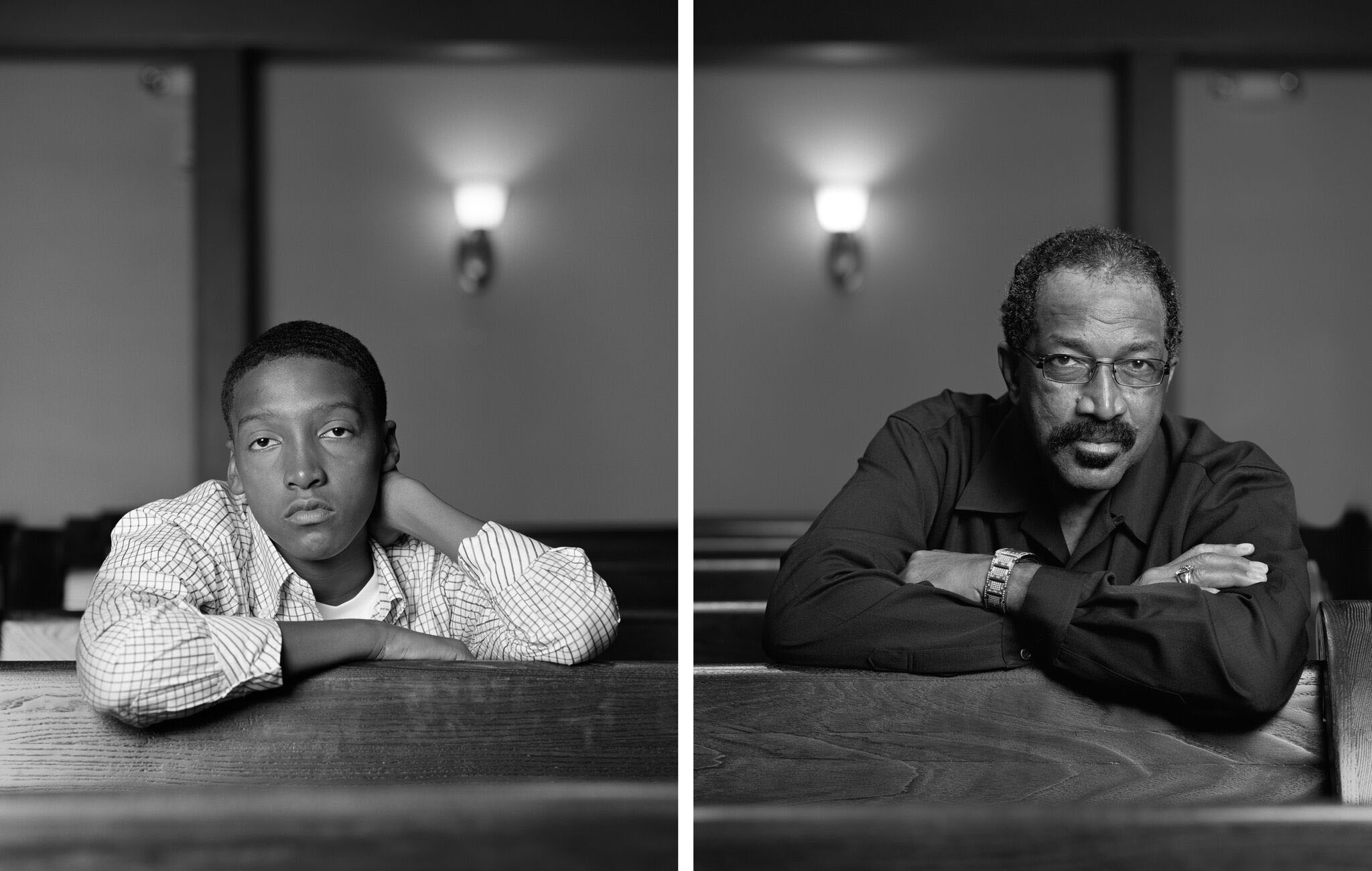
 

Dawoud Bey (American, b. 1953) 'Braxton McKinney and Lavone Thomas, Birmingham, AL' 2012


Dawoud Bey (American, b. 1953)
The Birmingham Project: Braxton McKinney and Lavone Thomas
2012
Inkjet prints
Rennie Collection, Vancouver
© Dawoud Bey
Courtesy of Stephen Daiter Gallery
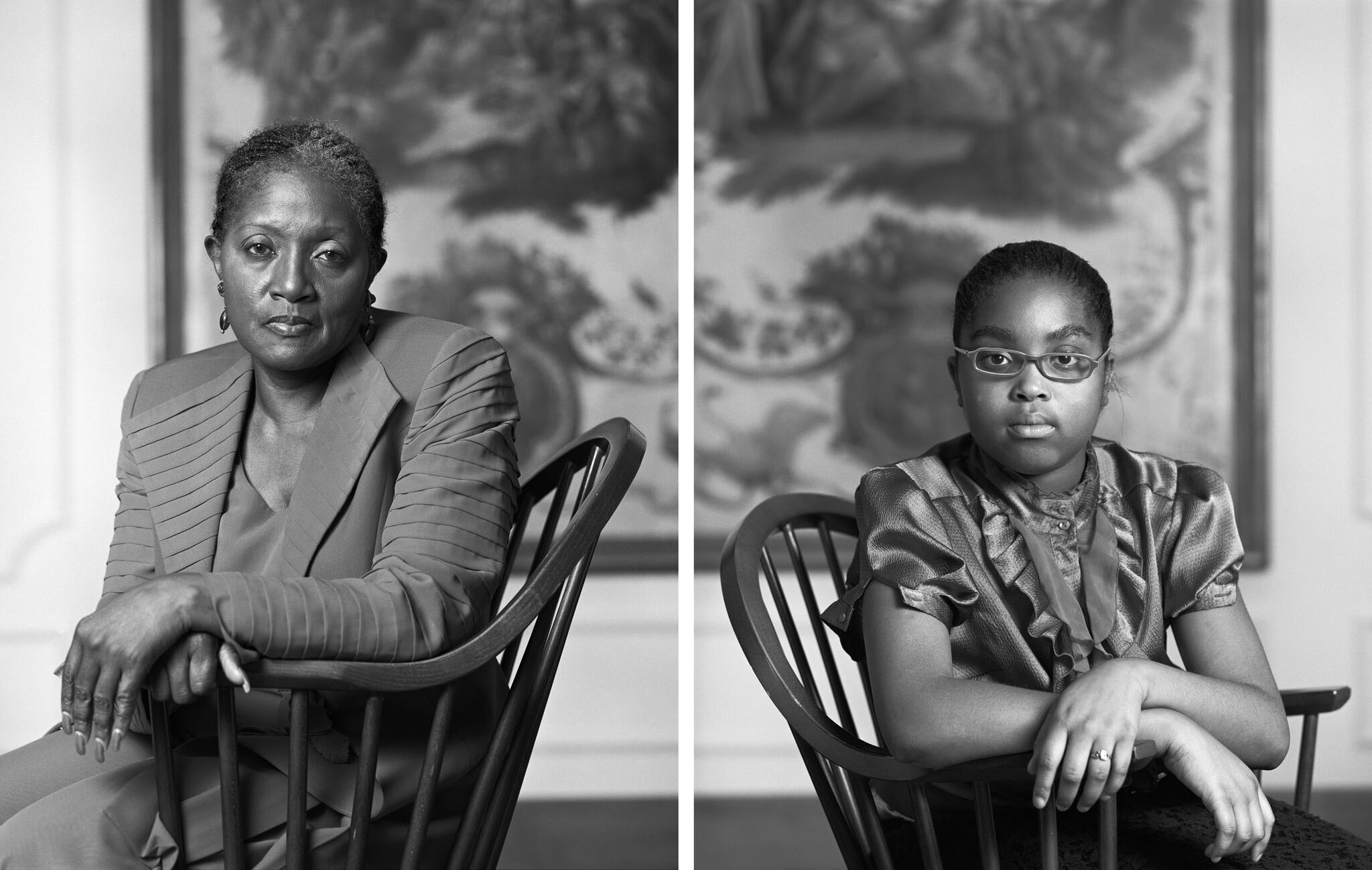
 

Dawoud Bey (American, b. 1953) 'Betty Selvage and Faith Speights, Birmingham, AL' 2012


Dawoud Bey (American, b. 1953)
The Birmingham Project: Betty Selvage and Faith Speights
2012
Inkjet prints
Rennie Collection, Vancouver
© Dawoud Bey
Courtesy of Stephen Daiter Gallery


Dawoud Bey (American, b. 1953) 'Boy on Skateboard, Harlem, NY' 2014


Dawoud Bey (American, b. 1953)
Boy on Skateboard, Harlem, NY
2014
Inkjet print
© Dawoud Bey
Courtesy of Stephen Daiter Gallery
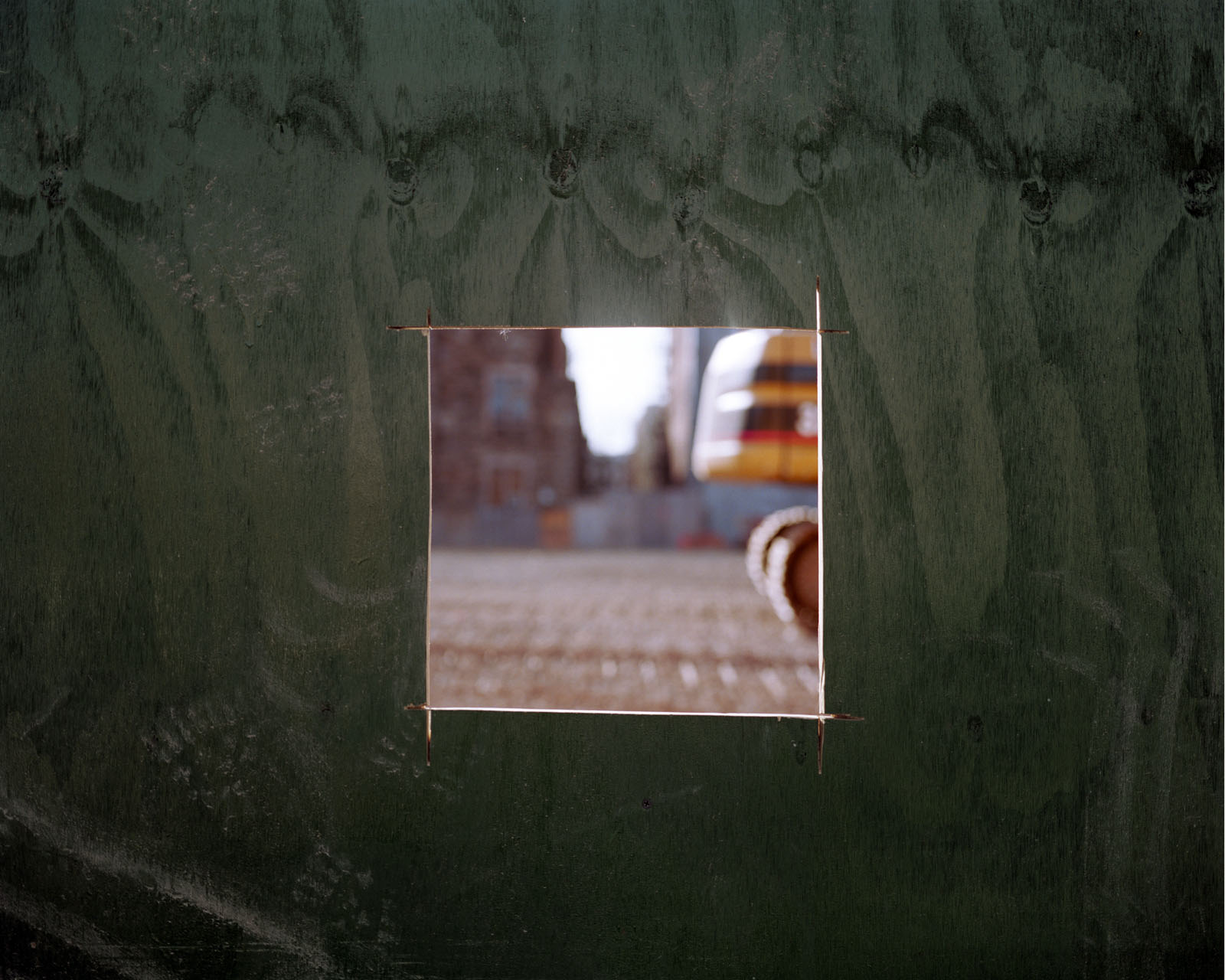
 

Dawoud Bey (American, b. 1953) 'Former Renaissance Ballroom Site, Harlem, NY' 2015


Dawoud Bey (American, b. 1953)
Former Renaissance Ballroom Site, Harlem, NY
2015
Inkjet print
© Dawoud Bey
Courtesy of Stephen Daiter Gallery


Dawoud Bey (American, b. 1953) 'Untitled #15 (Forest with Small Trees)' 2017


Dawoud Bey (American, b. 1953)
Untitled #15 (Forest with Small Trees)
2017
Gelatin silver print
Getty Museum, purchased with funds provided by the Photographs Council
© Dawoud Bey


Since meeting at the Studio Museum in Harlem in 1977, Dawoud Bey and Carrie Mae Weems have been intellectual colleagues and companions.

From the outset of their careers, both have operated from a deep social commitment to participate in, describe, and define culture. In seeking to express themselves fully, each has expanded possibilities within photography and video to address their chosen subjects.

Dawoud Bey & Carrie Mae Weems: In Dialogue, on view April 4 through July 9, 2023, brings together for the first time a focused selection of work from a period of over 40 years by two of today’s most important and influential photo-based artists. Each grapples with issues of race, class, and representation in their work, making art grounded in the experiences and realities of Black Americans while also speaking to the broader human condition.

“The Museum’s Department of Photographs has made great strides in recent years in building an exhibitions program that highlights more expansive narratives of photographic history,” says Timothy Potts, Maria Hummer-Tuttle and Robert Tuttle Director of the J. Paul Getty Museum. “Dawoud Bey and Carrie Mae Weems are two artists who reframe American traumas that have been ignored or simplified in the national historical record. We are proud to showcase their work in dialogue with one another.”

Jim Ganz, senior curator of photographs, adds, “These artists are two of the most dynamic and insightful of our time. As presented in this extraordinary exhibition, their eloquent dialogue gives unique perspective on their shared concerns as image makers.”

Dawoud Bey (American, born 1953) creates photographs that focus on individuals, communities, and important but often overlooked American histories. His carefully composed images convey the dignity and rich inner lives of his subjects. Carrie Mae Weems (American, born 1953) first gained recognition in the 1980s for exploring identity, race, power, and history, themes that still fuel her art. Over her career, Weems has turned increasingly to staged photography and the use of text to heighten the emotional intensity of her work.

This exhibition is divided into five sections, starting with early pictures that both artists made in the photodocumentary tradition and followed by ambitious, groundbreaking explorations of the medium as it developed technologically and artistically. The exhibition then focuses on how both artists moved beyond candid pictures of everyday life and began making larger scale work that is more planned than spontaneous. Bey’s portraiture evolved from street-based glimpses of the world made with a handheld camera to portraits that are formal but intimate, in which his subjects appear at ease and engage directly with the lens. With her Kitchen Table Series, Weems transitioned from representing real people in their natural environments to creating staged photo essays. For each artist, the techniques developed in this period became the foundation for future projects.

In Resurrecting Black Histories, each artist addresses the 19th century and its legacies in distinctive ways. Bey’s carefully composed landscapes evoke the experience of fleeing along the Underground Railroad, the clandestine network that helped enslaved people escape the South. Weems, by incorporating texts that intermingle past and present, references African Americans whose lives and stories have been co-opted or lost.

In Memorial & Requiem, Bey and Weems reference traumatic 20th-century events. They worked with community partners to stage scenes meant to reinvigorate discussion of the American legacy of racial violence. Each photographer also created a related video, bringing their own sensibility – Bey’s searching, intimate gaze; Weems’ choreographed social commentary – to the moving image, using sequencing and sound to deepen engagement with American history.

The exhibition ends with Revelation in the Landscape, where both Bey and Weems contemplate the built environments in which we live and how those spaces affect our perceptions of the world and ourselves. Bey returns to the Harlem neighbourhoods he photographed in the late 1970s, tracking the changes wrought by gentrification. Weems photographs imposing sites in Rome, inserting herself into historical places imbued with power and legacy. Both series reveal the economic and institutional forces that shape daily life.

In conjunction with the exhibition Getty has created a community program inspired by the exhibition, L.A.: In Dialogue. This program brings Dawoud Bey & Carrie Mae Weems: In Dialogue to a wider Los Angeles community, furthering the influence of the two artists and introducing their work to a new generation of artists and viewers. The artist-led program will host educational workshops for local teens and young adult photographers, and will teach participants techniques in black-and-white photography and the artistic practice of capturing portraiture and place. They will explore themes from the exhibition, collaborate with peers, and explore their local communities: Culver City (Black Image Center), South L.A. (LA Commons), Downtown L.A. (Inner-City Arts), and Venice Beach (Venice Arts). This program will result in a satellite exhibition that will open in June 2023.

Related programming includes Dawoud Bey and Carrie Mae Weems in Conversation on Tuesday, April 4 at 4pm. That evening at 7pm, the Museum presents master saxophonist David Murray in concert with his newly formed quartet as part of the exhibition programming.

Press release from the J. Paul Getty Museum


Carrie Mae Weems (American, b. 1953) 'First Self Portrait' 1975 from the exhibition 'Dawoud Bey & Carrie Mae Weems: In Dialogue' at the J. Paul Getty Museum, Los Angeles, April-  July, 2023


Carrie Mae Weems (American, b. 1953)
First Self Portrait
1975
Gelatin silver print
© Carrie Mae Weems
Courtesy of the artist and Jack Shainman Gallery, New York
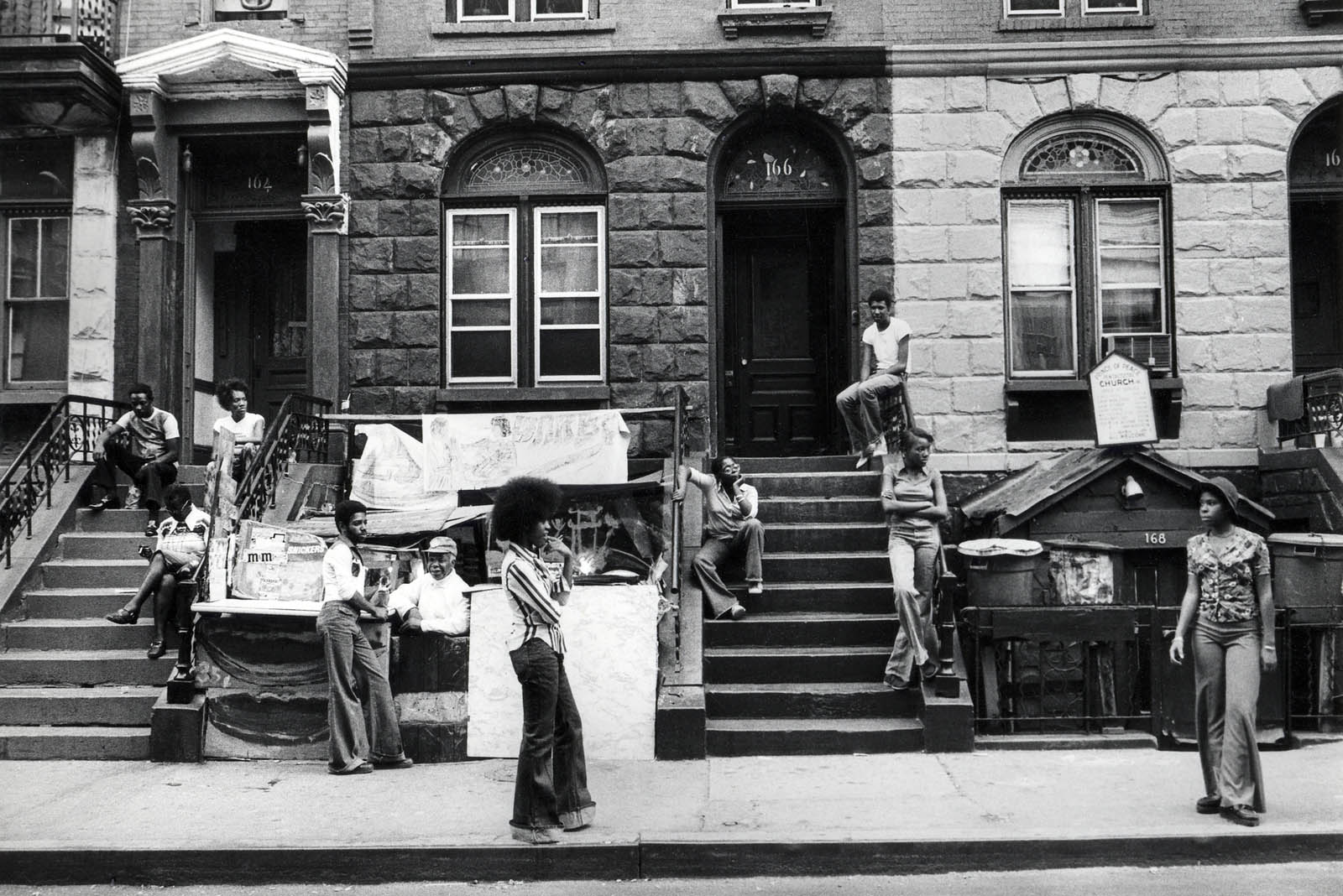
 

Carrie Mae Weems (American, b. 1953) 'Harlem Street' 1976-1977 from the exhibition 'Dawoud Bey & Carrie Mae Weems: In Dialogue' at the J. Paul Getty Museum, Los Angeles, April-  July, 2023


Carrie Mae Weems (American, b. 1953)
Harlem Street
1976-1977
Gelatin silver print
© Carrie Mae Weems
Courtesy of the artist and Jack Shainman Gallery, New York


Carrie Mae Weems (American, b. 1953) 'Woman in Shorts, Boardwalk, Santa Monica' 1980-1982


Carrie Mae Weems (American, b. 1953)
Woman in Shorts, Boardwalk, Santa Monica
1980-1982
Gelatin silver print
© Carrie Mae Weems
Courtesy of the artist and Jack Shainman Gallery, New York
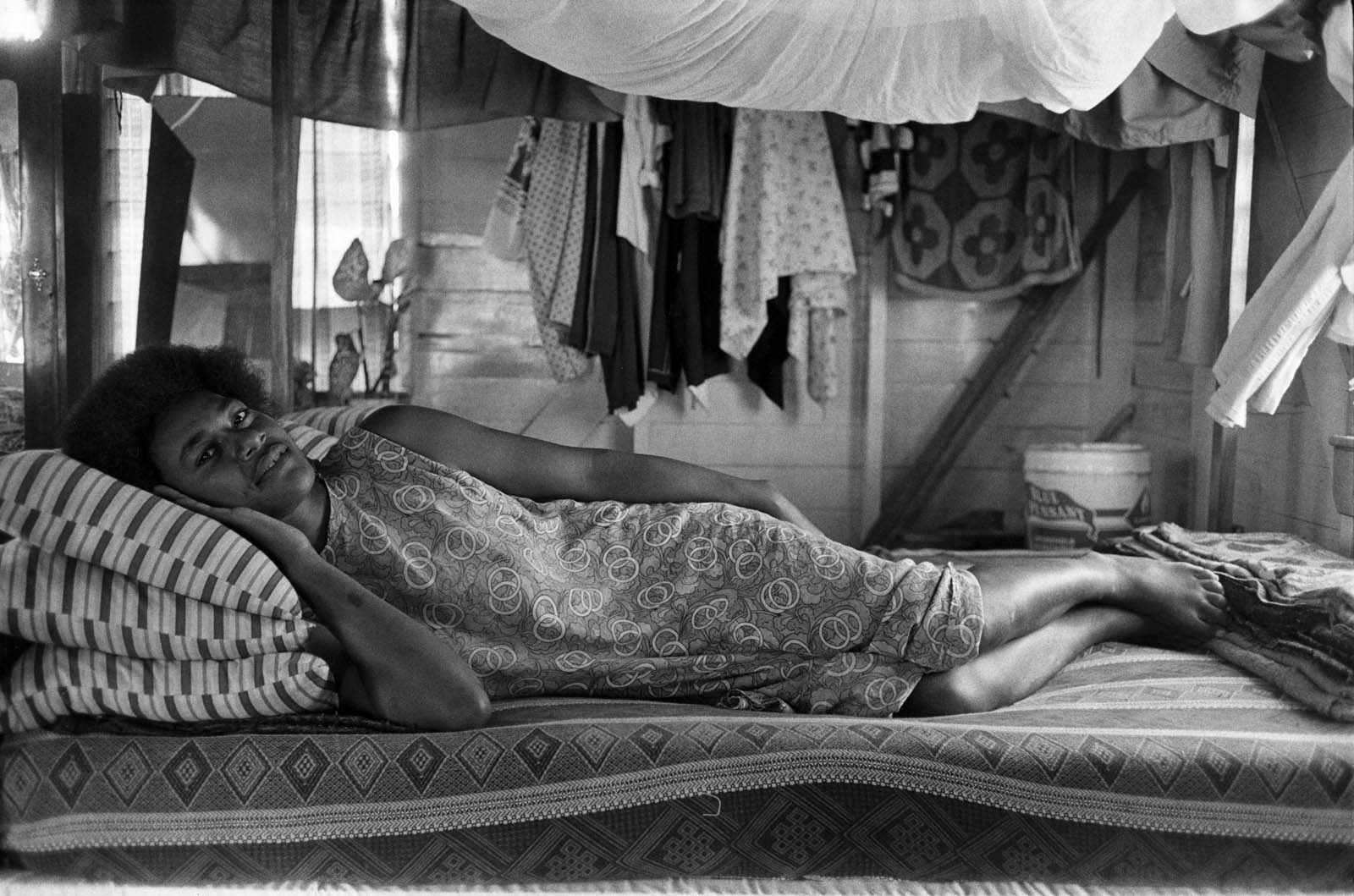
 

Carrie Mae Weems (American, b. 1953) 'Reclining Girl, Fiji' 1982-1983


Carrie Mae Weems (American, b. 1953)
Reclining Girl, Fiji
1982-1983
Gelatin silver print
© Carrie Mae Weems
Courtesy of the artist and Jack Shainman Gallery, New York


Carrie Mae Weems (American, b. 1953) 'Untitled (Woman and daughter with children)' 1990


Carrie Mae Weems (American, b. 1953)
Untitled (Woman and daughter with children)
1990
Gelatin silver print
© Carrie Mae Weems
Courtesy of the artist and Jack Shainman Gallery, New York


Carrie Mae Weems (American, b. 1953) 'Untitled (Woman standing alone)' 1990


Carrie Mae Weems (American, b. 1953)
Untitled (Woman standing alone)
1990
Gelatin silver print
© Carrie Mae Weems
Courtesy of the artist and Jack Shainman Gallery, New York


Carrie Mae Weems (American, b. 1953) 'Untitled (Woman and Daughter with Makeup)' 1990


Carrie Mae Weems (American, b. 1953)
Untitled (Woman and Daughter with Makeup)
1990
Gelatin silver print
© Carrie Mae Weems
Courtesy of the artist and Jack Shainman Gallery, New York


Carrie Mae Weems (American, b. 1953) 'See No Evil' 1991


Carrie Mae Weems (American, b. 1953)
See No Evil
1991
Dye diffusion print (Polaroid Polacolor)
61 × 50.5cm (24 × 19 7/8 in.)
The J. Paul Getty Museum, Los Angeles, Gift of Daniel Greenberg and Susan Steinhauser
© Carrie Mae Weems


Carrie Mae Weems (American, b. 1953) 'Road Sign' 1991-1992


Carrie Mae Weems (American, b. 1953)
Road Sign
1991-1992
Gelatin silver print
© Carrie Mae Weems
Courtesy of the artist and Jack Shainman Gallery, New York


Carrie Mae Weems (American, b. 1953) 'Untitled (Ebo Landing)' 1992


Carrie Mae Weems (American, b. 1953)
Untitled (Ebo Landing)
1992
Two gelatin silver prints and one screenprinted text panel
© Carrie Mae Weems
Courtesy of the artist and Jack Shainman Gallery, New York


Carrie Mae Weems (American, b. 1953) 'You Became a Scientific Profile / An Anthropological Debate / A Negroid Type / A Photographic Subject' 1995-1996


Carrie Mae Weems (American, b. 1953)
You Became a Scientific Profile / An Anthropological Debate / A Negroid Type / A Photographic Subject
1995-1996
From From Here I Saw What Happened and I Cried
© Carrie Mae Weems
Courtesy of the artist and Jack Shainman Gallery, New York


Carrie Mae Weems (American, b. 1953) 'The Edge of Time – Ancient Rome' 2006


Carrie Mae Weems (American, b. 1953)
The Edge of Time – Ancient Rome
2006
Chromogenic print
© Carrie Mae Weems


Carrie Mae Weems (American, b. 1953) 'The Tragedy of Hiroshima' 2008


Carrie Mae Weems (American, b. 1953)
The Tragedy of Hiroshima
2008
Inkjet print
© Carrie Mae Weems
Courtesy of the artist and Jack Shainman Gallery, New York


The pose of the figures, other than the obvious reference to the Pieta, reminds me of that famous and most moving Eugene W. Smith photograph Tomoko and Mother in the Bath (1971)


The J. Paul Getty Museum
1200 Getty Center Drive
Los Angeles, California 90049

Opening hours:
Daily 10am – 5pm

The J. Paul Getty Museum website

LIKE ART BLACK ON FACEBOOK

Back to top

Exhibition: ‘Unseen: 35 Years of Collecting Photographs’ at the J. Paul Getty Museum, Los Angeles

Exhibition dates: 17th December, 2019 – 8th March, 2020

Curators: Jim Ganz, senior curator of photographs at the Getty Museum in collaboration with Getty curators Mazie Harris, Virginia Heckert, Karen Hellman, Arpad Kovacs, Amanda Maddox, and Paul Martineau.


Weegee (Arthur Fellig) (American born Austria, 1899-1968) '[Calypso]' about 1944; before 1946 from the exhibition Exhibition: 'Unseen: 35 Years of Collecting Photographs' at the J. Paul Getty Museum, Los Angeles, Dec 2019 - March 2020


Weegee (Arthur Fellig) (American born Austria, 1899-1968)
[Calypso]
about 1944; before 1946
Gelatin silver print
26.2 x 33.3cm (10 5/16 x 13 1/8 in.)
The J. Paul Getty Museum, Los Angeles
© International Center of Photography


Imagine having these photographs in your collection!

My particular favourite is Hiromu Kira’s The Thinker (about 1930). For me it sums up our singular 1 thoughtful 2 imaginative 3 ephemeral 4 ether/real 5 existence.

“Aether is the fifth element in the series of classical elements thought to make up our experience of the universe… Although the Aether goes by as many names as there are cultures that have referenced it, the general meaning always transcends and includes the same four “material” elements [earth, air, water, fire]. It is sometimes more generally translated simply as “Spirit” when referring to an incorporeal living force behind all things. In Japanese, it is considered to be the void through which all other elements come into existence.” (Adam Amorastreya. “The End of the Aether,” on the Resonance website Feb 16, 2015 [Online] Cited 23/02/2020)

Dr Marcus Bunyan


Many thankx to the J. Paul Getty Museum for allowing me to publish the photographs in the posting. Please click on the photographs for a larger version of the image.


Carleton Watkins (American, 1829-1916) '[Guadalupe Mill]' 1860 from the exhibition Exhibition: 'Unseen: 35 Years of Collecting Photographs' at the J. Paul Getty Museum, Los Angeles, Dec 2019 - March 2020


Carleton Watkins (American, 1829-1916)
[Guadalupe Mill]
1860
Salted paper print
Image (dome-topped): 33.8 × 41.6cm (13 5/16 × 16 3/8 in.)
The J. Paul Getty Museum, Los Angeles


Martin Munkácsi (American born Hungary, 1896-1963) 'The Goalie Gets There a Split Second Too Late' about 1923 from the exhibition Exhibition: 'Unseen: 35 Years of Collecting Photographs' at the J. Paul Getty Museum, Los Angeles, Dec 2019 - March 2020


Martin Munkácsi (American born Hungary, 1896-1963)
The Goalie Gets There a Split Second Too Late
about 1923
Gelatin silver print
29.8 × 36.7cm (11 3/4 × 14 7/16 in.)
The J. Paul Getty Museum, Los Angeles
© Estate of Martin Munkácsi, Courtesy Howard Greenberg Gallery, New York


Hiromu Kira (American, 1898-1991) 'The Thinker' about 1930


Hiromu Kira (American, 1898-1991)
The Thinker
about 1930
Gelatin silver print
27.9 × 35.1cm (11 × 13 13/16 in.)
The J. Paul Getty Museum, Los Angeles
© Sadamura Family Trust


Hiromu Kira (1898-1991) was one of the most successful and well-known Japanese American photographers in prewar Los Angeles. He was born in Waipahu, O’ahu, Hawai’i on April 5, 1898, but was sent to Kumamoto, Japan, for his early education. When he was eighteen years old, he returned to the United States and settled in Seattle, Washington, where he first became interested in photography. In 1923, he submitted prints to the Seattle Photography Salon which accepted two of the photographs. In 1923, his work was accepted in the Pittsburg Salon and the Annual Competition of American Photography. He found work at the camera department of a local Seattle pharmacy and began meeting other Issei, Nisei and Kibei photographers such as Kyo Koike and joined the Seattle Camera Club.

In 1926, Kira moved to Los Angeles with his wife and two young children. Although he was never a member of the Japanese Camera Pictorialists of California, a group that was active in Los Angeles at that time, he developed strong friendships with club members associated with the pictorialist movement of the 1920s and ’30s such as K. Asaishi and T. K. Shindo. In 1928, Kira was named an associate of the Royal Photography Society, and the following year he was made a full fellow and began exhibiting both nationally and internationally. In 1929 alone, Kira exhibited ninety-six works in twenty-five different shows. In the late twenties, he worked at T. Iwata’s art store. In 1931, his photograph The Thinker, made while showing a customer how to use his newly purchased camera properly, appeared on the March 1931 issue of Vanity Fair magazine.

On December 5, two days before the attack on Pearl Harbor, Kira was selected to be included in the 25th Annual International Salon of the Camera Pictorialists of Los Angeles. Within a few months, he was forced to store his camera, photography books and prints in the basement of the Nishi Hongwanji Buddhist Temple in Little Tokyo, Los Angeles for the duration of World War II. He and his family were incarcerated at Santa Anita Assembly Center and the Gila River, Arizona concentration camp from 1942-1944, leaving the latter in April 1944.

Following his release, he lived briefly in Chicago before returning to Los Angeles in 1946, where he remained for the rest of his life. In Los Angeles, he worked as a photo retoucher and printer for the Disney, RKO and Columbia Picture studios but never exhibited again as he had before the war.

Text from the Hiromu Kira page on the Densho Encyclopedia website [Online] Cited 23/02/2020


Marinus Jacob Kjeldgaard (Danish, 1884-1964, active Paris, France late 1930s - late 1940s) '[Collage: Balance of Powers]' about 1939


Marinus Jacob Kjeldgaard (Danish, 1884-1964, active Paris, France late 1930s – late 1940s)
[Collage: Balance of Powers]
about 1939
Gelatin silver print
28.5 × 32cm (11 1/4 × 12 5/8 in.)
The J. Paul Getty Museum, Los Angeles
© Estate of Marinus Jacob Kjeldgaard


Paul Outerbridge (American, 1896-1958) '[Egg in Spotlight]' 1943


Paul Outerbridge (American, 1896-1958)
[Egg in Spotlight]
1943
Gelatin silver print
26.4x 34.4cm (10 3/8 x 13 9/16 in.)
The J. Paul Getty Museum, Los Angeles
© 2019 G. Ray Hawkins Gallery, Beverly Hills, CA


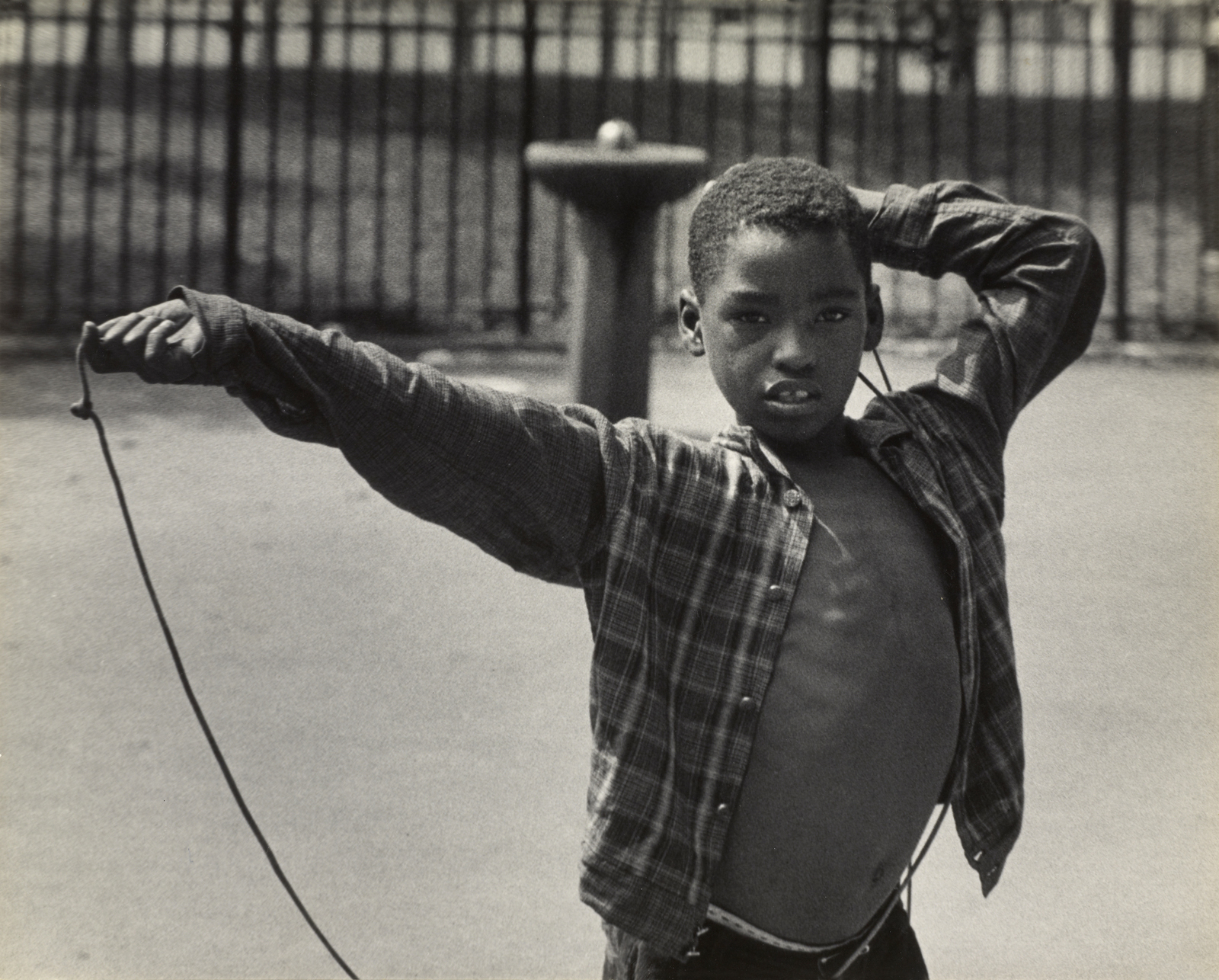
Emil Cadoo (American, 1926-2002) 'Children of Harlem' 1965


Emil Cadoo (American, 1926-2002)
Children of Harlem
1965
Gelatin silver print
20.3 × 25.2cm (8 × 9 15/16 in.)
The J. Paul Getty Museum, Los Angeles, Gift of Joyce Cadoo / Janos Gat Gallery
© Estate of Emil Cadoo, courtesy of Janos Gat Gallery


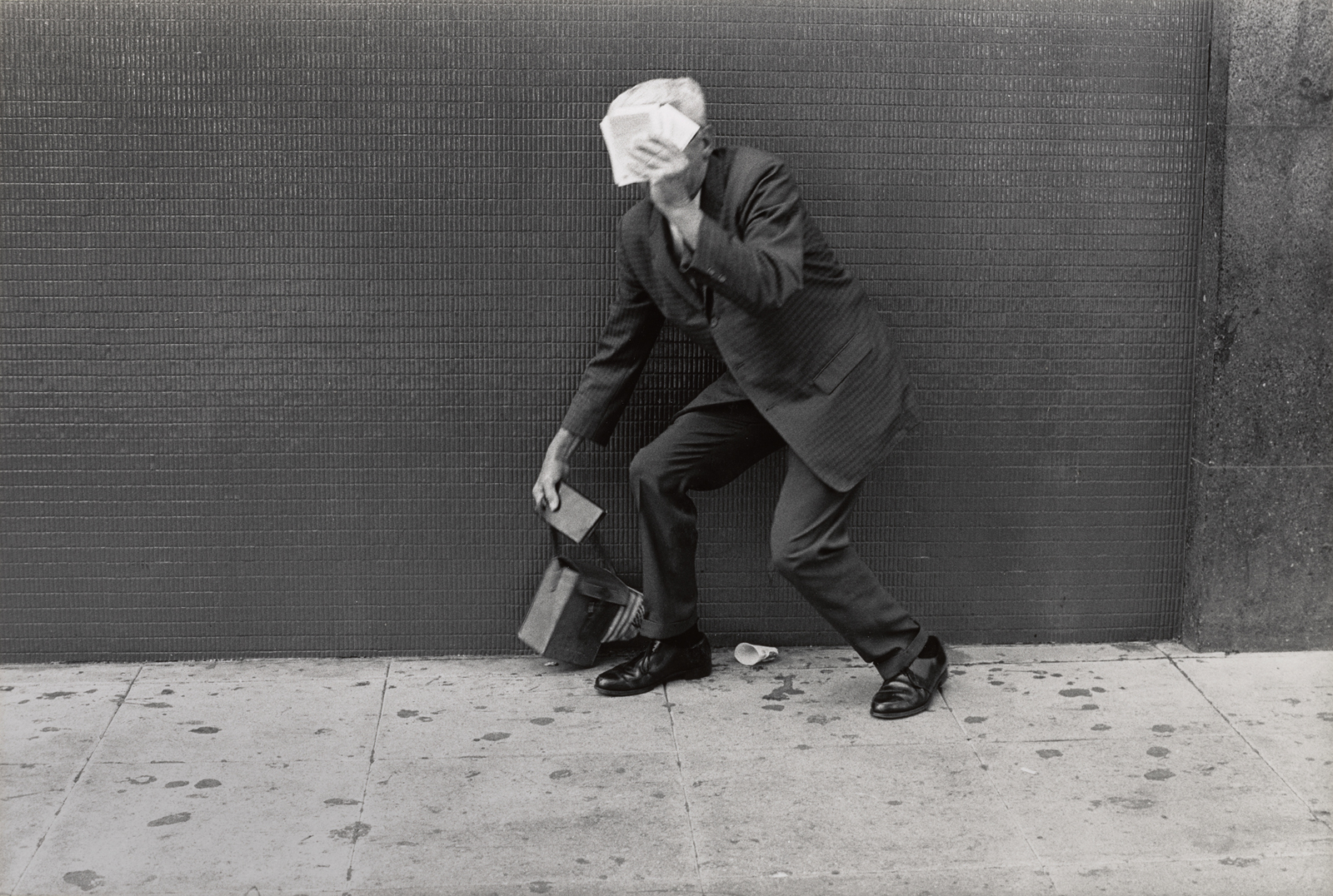
Anthony Hernandez (American, b. 1947) 'Los Angeles #1' 1969


Anthony Hernandez (American, b. 1947)
Los Angeles #1
1969
Gelatin silver print
18.9 × 28.4cm (7 7/16 × 11 3/16 in.)
The J. Paul Getty Museum, Los Angeles, Purchased in part with funds provided by the Photographs Council
© Anthony Hernandez


William Eggleston (American, b. 1939) 'Dolls on Cadillac, Memphis' 1972


William Eggleston (American, b. 1939)
Dolls on Cadillac, Memphis
1972
Chromogenic print
25.4 × 38.1cm (10 × 15 in.)
The J. Paul Getty Museum, Los Angeles
© Eggleston Artistic Trust


William Wegman (American, b, 1943) 'Dog and Ball' 1973


William Wegman (American, b, 1943)
Dog and Ball
1973
Gelatin silver print
The J. Paul Getty Museum, Los Angeles
© William Wegman


Marketa Luskacova (Czech, b. 1944) 'Sclater St, Woman with Baby and Girl' 1975


Markéta Luskačová (Czech, b. 1944)
Sclater St, Woman with Baby and Girl
1975
Gelatin silver print
21 x 31.8cm (8 1/4 x 12 1/2 in.)
The J. Paul Getty Museum, Los Angeles
© Markéta Luskačová


Markéta Luskačová (Czech, b. 1944)

Markéta Luskačová (born 1944) is a Czech photographer known for her series of photographs taken in Slovakia, Britain and elsewhere. Considered one of the best Czech social photographers to date, since the 1990s she has photographed children in the Czech Republic, Slovakia, and also Poland…

In the 1970s and 1980s, the communist censorship attempted to conceal her international reputation. Her works were banned in Czechoslovakia, and the catalogues for the exhibition Pilgrims in the Victoria and Albert Museum were lost on their way to Czechoslovakia.

Luskačová started photographing London’s markets in 1974. In the markets of Portobello Road, Brixton and Spitalfields, she “[found] a vivid Dickensian staging”.

In 2016 she self-published a collection of photographs of street musicians, mostly taken in the markets of east London, under the title To Remember – London Street Musicians 1975-1990, and with an introduction by John Berger.

Text from the Wikipedia website [Online] Cited 23/02/2020


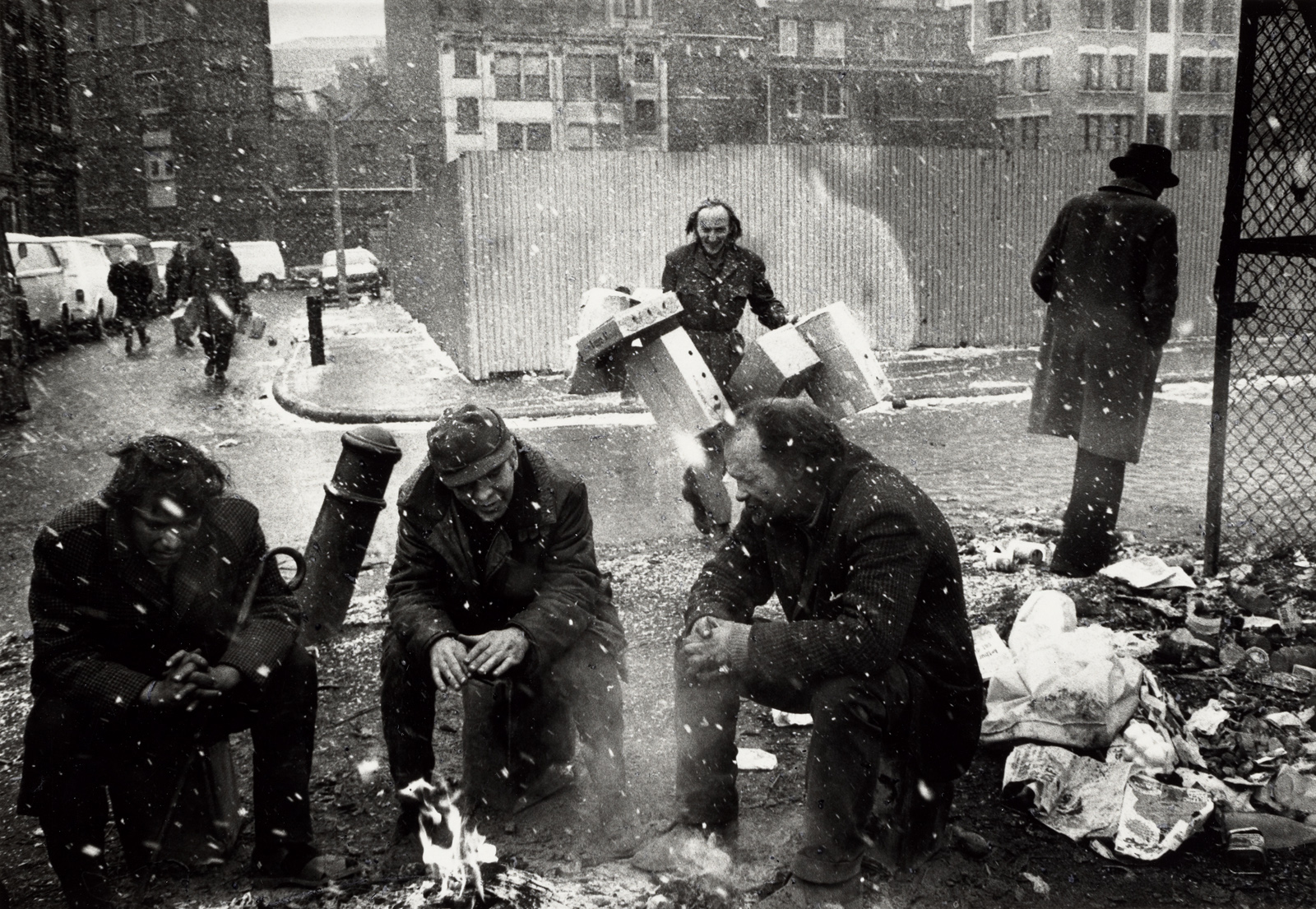
Marketa Luskacova (Czech, b. 1944) 'Men around Fire, Spitalfields Market' Negative 1976, print 1991


Markéta Luskačová (Czech, b. 1944)
Men around Fire, Spitalfields Market
Negative 1976, print 1991
Gelatin silver print
22.8 x 32.9cm (9 x 12 15/16 in.)
The J. Paul Getty Museum, Los Angeles
© Markéta Luskačová


Shigeichi Nagano (Japanese, 1925-2019, active Tokyo, Japan) '[Tokyo, Aobadai (Nishi Saigoyama Park), Meguro Ward]' 1988


Shigeichi Nagano (Japanese, 1925-2019)
[Tokyo, Aobadai (Nishi Saigoyama Park), Meguro Ward]
1988
Gelatin silver print
26 × 39.4cm (10 1/4 × 15 1/2 in.)
The J. Paul Getty Museum, Los Angeles, Purchased with funds provided by the Photographs Council
© Shigeichi Nagano


Shigeichi Nagano (Japanese, 1925-2019)

During the 1960s Nagano observed the period of intense economic growth in Japan, depicting the lives of Tokyo’s sarariman with some humour. The photographs of this period were only published in book form much later, as Dorīmu eiji and 1960 (1978 and 1990 respectively).

Nagano exhibited recent examples of his street photography in 1986, winning the Ina Nobuo Award. He published several books of his works since then, and won a number of awards. Nagano had a major retrospective at the Tokyo Metropolitan Museum of Photography in 2000.

Nagano died two months short of his 94th birthday, on January 30, 2019.

Text from the Wikipedia website


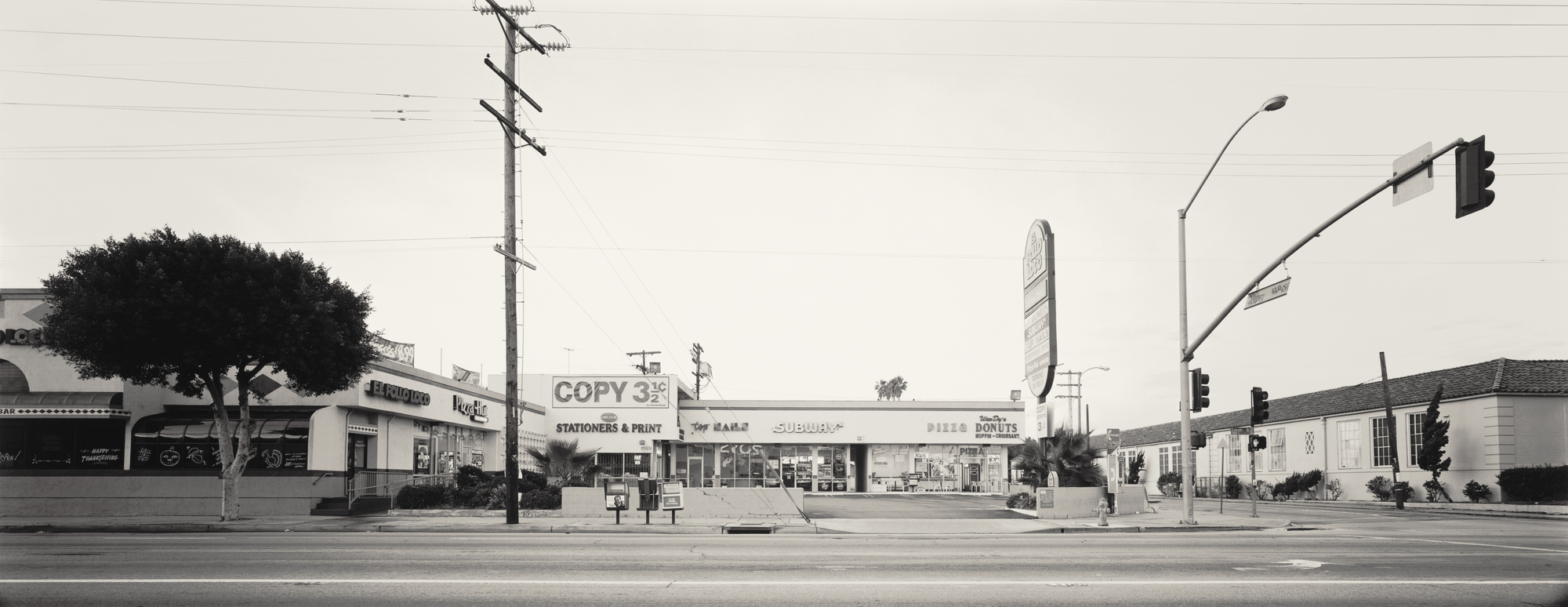
Catherine Opie (American, b. 1961) 'Untitled #15' 1997


Catherine Opie (American, b. 1961)
Untitled #15
1997
Inkjet print
40.6 × 104.1cm (16 × 41 in.)
The J. Paul Getty Museum, Los Angeles
© Catherine Opie


Nan Goldin (American, b. 1953) 'Self Portrait, Red, Zurich' 2002


Nan Goldin (American, b. 1953)
Self Portrait, Red, Zurich
2002
Silver-dye bleach print
Framed (outer dim): 72.4 x 104.1cm (28 1/2 x 41 in.)
The J. Paul Getty Museum, Los Angeles
© Nan Goldin, courtesy of Matthew Marks Gallery and the artist


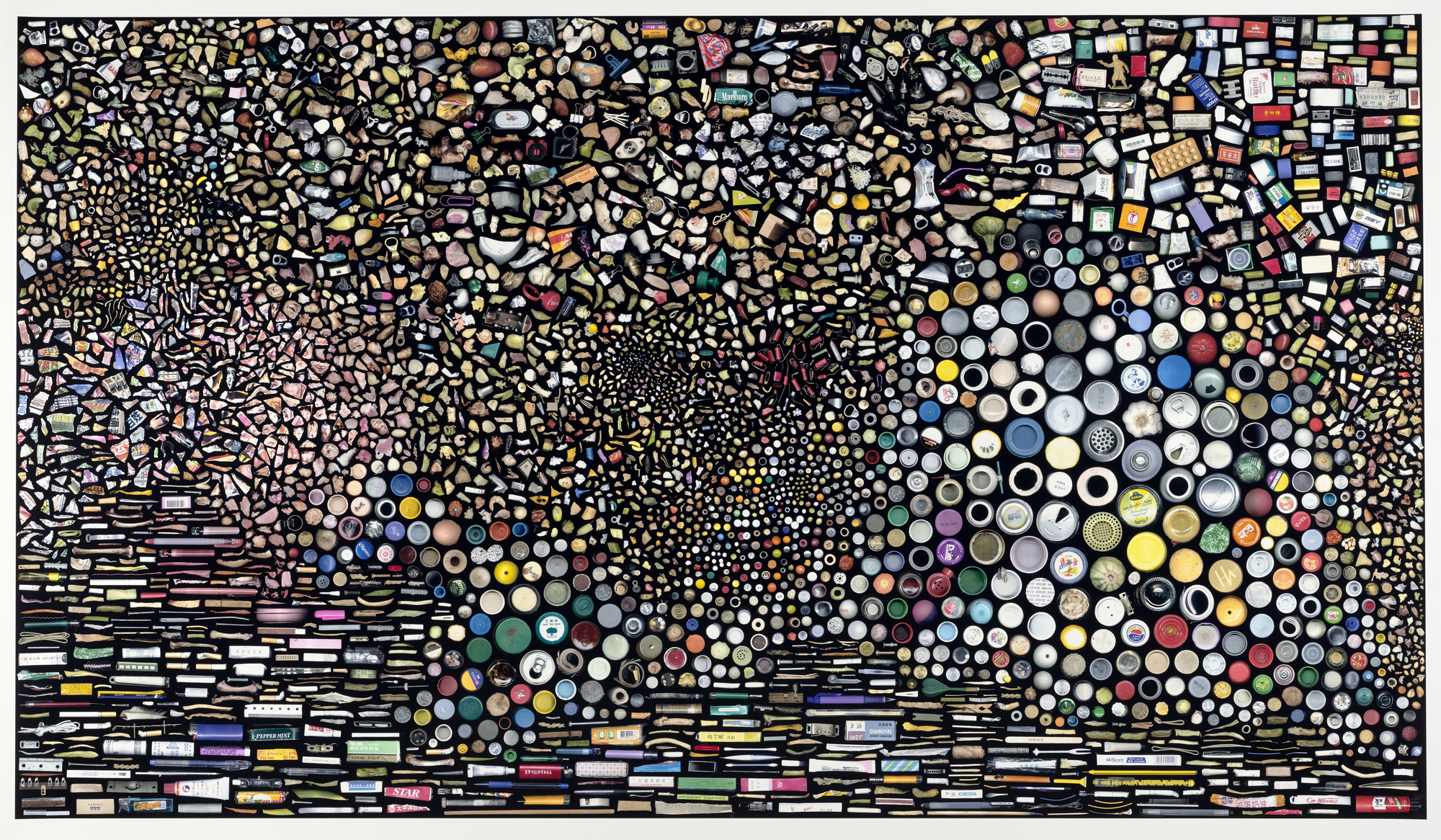
Hong Hao (Chinese, b. 1965) 'My Things No. 5 - 5,000 Pieces of Rubbish' 2002


Hong Hao (Chinese, b. 1965)
My Things No. 5 – 5,000 Pieces of Rubbish
2002
Chromogenic print
120 × 210.8cm (47 1/4 × 83 in.)
The J. Paul Getty Museum, Los Angeles, Anonymous Gift
© Hong Hao, Courtesy of Chambers Fine Art


Veronika Kellndorfer (German, b. 1962) 'Succulent Screen' 2007


Veronika Kellndorfer (German, b. 1962)
Succulent Screen
2007
Silkscreen print on glass
288 × 351.5cm (113 3/8 × 138 3/8 in.)
Gift of Christopher Grimes in honour of Virginia Heckert
The J. Paul Getty Museum, Los Angeles
© Veronika Kellndorfer


A three-panel silkscreen print on glass, Succulent Screen depicts a detail view of one of the signature miter-cut windows of Frank Lloyd Wright’s Freeman House. The house was built in the Hollywood Hills in 1923, was listed on the National Register of Historic Places in 1971 as a California Historical Landmark and as Los Angeles Historic-Cultural Monument #247 in 1981; it was bequeathed to the USC School of Architecture in 1986.

Text from the Getty Museum website


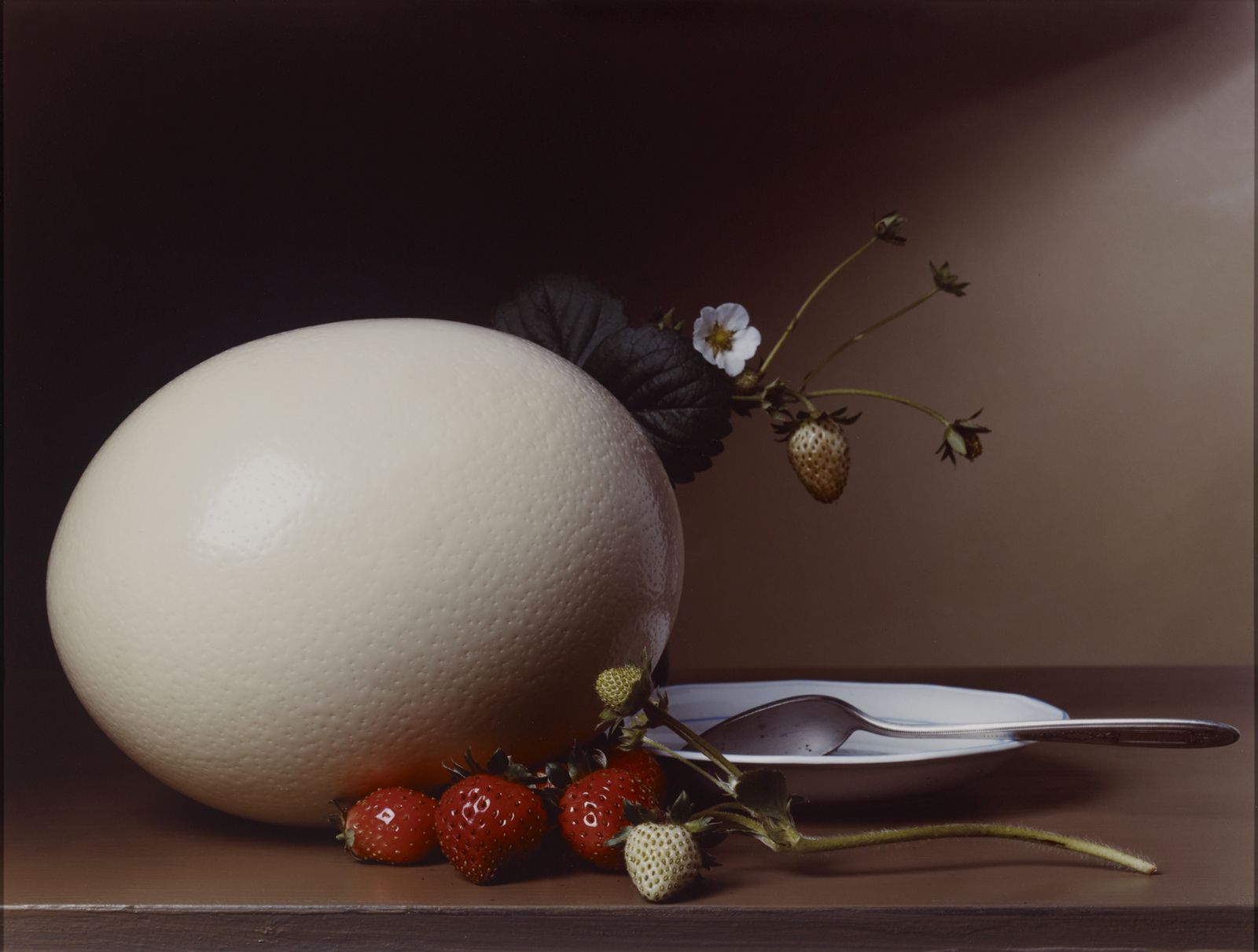
Sharon Core (American, b. 1965) 'Early American, Strawberries and Ostrich Egg' 2007


Sharon Core (American, b. 1965)
Early American, Strawberries and Ostrich Egg
2007
Chromogenic print
42.8 x 56.8cm (16 7/8 x 22 3/8 in.)
The J. Paul Getty Museum, Los Angeles
© Sharon Core


The Getty Museum holds one of the largest collections of photographs in the United States, with more than 148,000 prints. However, only a small percentage of these have ever been exhibited at the Museum. To celebrate the 35th anniversary of the founding of the Department of Photographs, the Getty Museum is exhibiting 200 of these never-before-seen photographs and pull back the curtain on the work of the many professionals who care for this important collection in Unseen: 35 Years of Collecting Photographs, on view December 17, 2019 – March 8, 2020.

“Rather than showcasing again the best-known highlights of the collection, the time is right to dig deeper into our extraordinary holdings and present a selection of never-before-seen treasures. I have no doubt that visitors will be intrigued and delighted by the diversity and quality of the collection, whose riches will support exhibition and research well into the decades ahead,” says Timothy Potts, director of the J. Paul Getty Museum.

The exhibition includes photographs by dozens of artists from the birth of the medium in the mid-19th century to the present day. The selection also encompasses a variety of photographic processes, including the delicate cyanotypes of Anna Atkins (British, 1799-1871), Polaroids by Carrie Mae Weems (American, born 1953) and Mary Ellen Mark (American, 1940-2015) and an architectural photographic silkscreen on glass by Veronika Kellndorfer (German, born 1962).

Visual associations among photographs from different places and times illuminate the breadth of the Getty’s holdings and underscore a sense of continuity and change within the history of the medium. The curators have also personalised some of the labels in the central galleries to give voice to their individual insights and perspectives.

Growth of the collection

In 1984, as the J. Paul Getty Trust was in the early stages of conceiving what would eventually become the Getty Center, the Getty Museum created its Department of Photographs. It did so with the acquisition of several world-famous private collections, including those of Sam Wagstaff, André Jammes, Arnold Crane, and Volker Kahmen and Georg Heusch. These dramatic acquisitions immediately established the Museum as a leading center for photography.

While the founding collections are particularly strong in 19th and early 20th century European and American work, the department now embraces contemporary photography and, increasingly, work produced around the world. The collection continues to evolve, has been shaped by several generations of curators and benefits from the generosity of patrons and collectors.

Behind the scenes

In addition to the photographs on view, the exhibition spotlights members of Getty staff who care for, handle, and monitor these works of art.

“What the general public may not realise is that before a single photograph is hung on a wall, the object and its related data is managed by teams of professional conservators, registrars, curators, mount-makers, and many others,” says Jim Ganz, senior curator of photographs at the Getty Museum. “In addition to exposing works of art in the collection that are not well known, we wanted to shed light on the largely hidden activity that goes into caring for such a collection.”

Collecting Contemporary Photography

The department’s collecting of contemporary photography has been given strong encouragement by the Getty Museum Photographs Council, and a section of the exhibition will be dedicated to objects purchased with the Council’s funding. Established in 2005, this group supports the department’s curatorial program, especially with the acquisition of works made after 1945 by artists not yet represented or underrepresented in the collection. Since its founding, the Council has contributed over $3 million toward the purchase of nearly five hundred photographs by artists from Argentina, Australia, Canada, Japan, Korea, Malaysia, South Africa, and Taiwan, as well as Europe and the United States.

Looking ahead

The exhibition also looks towards the future of the collection, and includes a gallery of very newly-acquired works by Laura Aguilar (American, 1959-2018), Osamu Shiihara (Japanese, 1905-1974), as well as highlights of the Dennis Reed collection of photographs by Japanese American photographers. The selection represents the department’s strengthening of diversity in front of and behind the camera, the collection of works relevant to Southern California communities, and the acquisition of photographs that expand the understanding of the history of the medium.

“With this exhibition we celebrate the past 35 years of collecting, and look forward to the collection’s continued expansion, encompassing important work by artists all over the world and across three centuries,” adds Potts.

Unseen: 35 Years of Collecting Photographs is on view December 17, 2019 – March 8, 2020 at the Getty Center. The exhibition is organised by Jim Ganz, senior curator of photographs at the Getty Museum in collaboration with Getty curators Mazie Harris, Virginia Heckert, Karen Hellman, Arpad Kovacs, Amanda Maddox, and Paul Martineau.

Press release from the J. Paul Getty Museum [Online] Cited 09/20/2020


Hiroshi Sugimoto (Japanese, b. 1948) 'Botanical Specimen (Erica mutabolis), March 1839' 2009


Hiroshi Sugimoto (Japanese, born 1948)
Botanical Specimen (Erica mutabolis), March 1839
2009
Toned gelatin silver print
93.7 x 74.9cm (36 7/8 x 29 1/2 in.)
© Hiroshi Sugimoto


Julia Margaret Cameron (British born India, 1815-1879) '[Spring]' 1873


Julia Margaret Cameron (British born India, 1815-1879)
[Spring]
1873
Albumen silver print
35.4 × 25.7cm (13 15/16 × 10 1/8 in.)
The J. Paul Getty Museum, Los Angeles


Reverend William Ellis (British, 1794-1872) and Samuel Smith. '[Portrait of a Black Couple]' about 1873


Reverend William Ellis (British, 1794-1872) and Samuel Smith
[Portrait of a Black Couple]
about 1873
Albumen silver print
24.1 × 18.6cm (9 1/2 × 7 5/16 in.)
The J. Paul Getty Museum, Los Angeles


Prince Roland Napoleon Bonaparte (French, 1858-1924) 'Jacobus Huch, 26 ans' about 1888


Prince Roland Napoleon Bonaparte (French, 1858-1924)
Jacobus Huch, 26 ans
about 1888
Albumen silver print
15.9 × 10.9cm (6 1/4 × 4 5/16 in.)
The J. Paul Getty Museum, Los Angeles


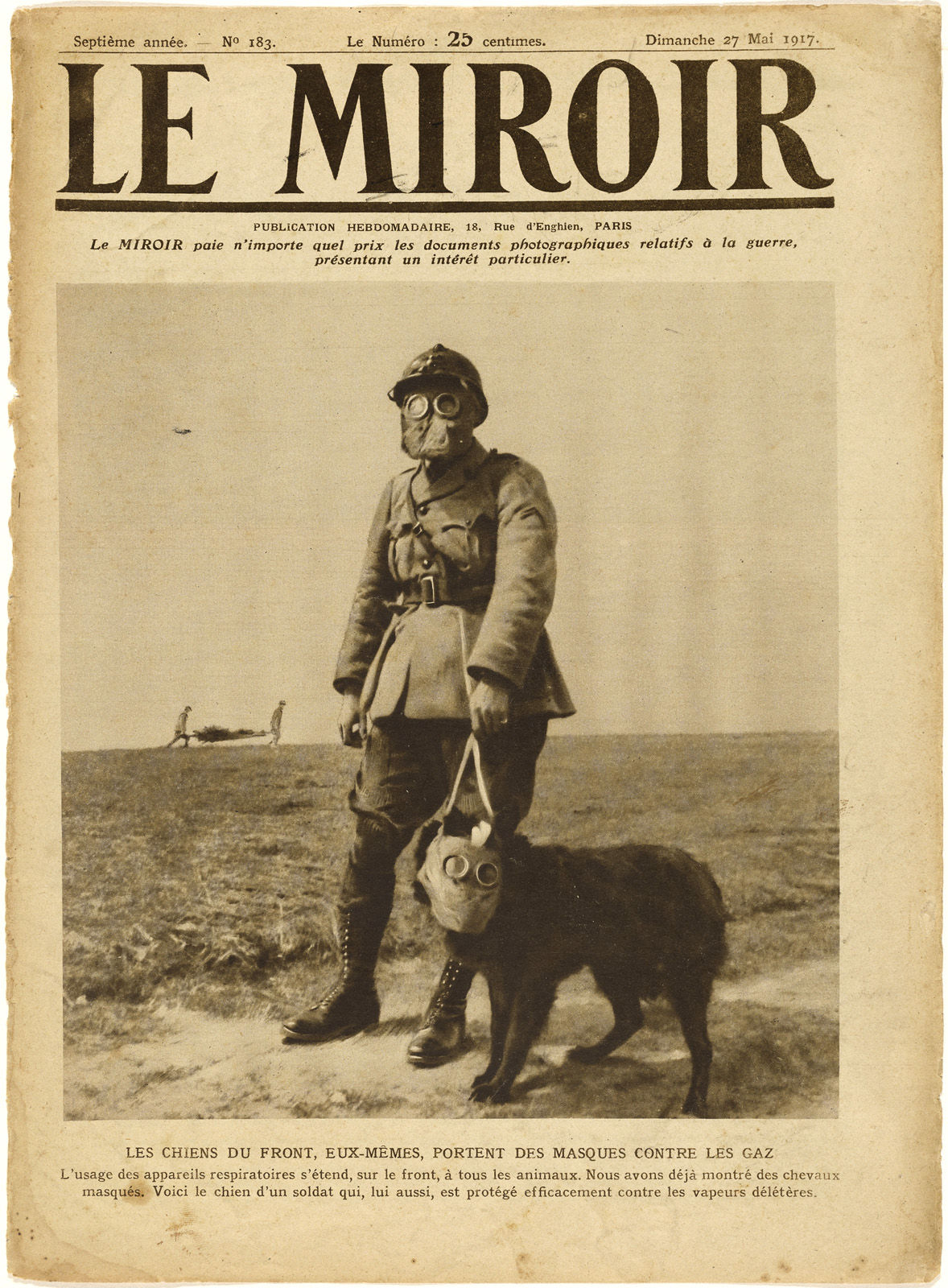
Underwood & Underwood (American, founded 1881, dissolved 1940s) 'Les Chiens du Front, eux-mems, portent des masques contre les gaz' May 27, 1917


Underwood & Underwood (American, founded 1881, dissolved 1940s)
Les Chiens du Front, eux-mems, portent des masques contre les gaz
May 27, 1917
Rotogravure
22 × 20.4cm (8 11/16 × 8 1/16 in.)
The J. Paul Getty Museum, Los Angeles


László Moholy-Nagy (American born Hungary, 1895-1946) '[The Law of the Series]' 1925


László Moholy-Nagy (American born Hungary, 1895-1946)
[The Law of the Series]
1925
Gelatin silver print
21.6 × 16.2cm (8 1/2 × 6 3/8 in.)
The J. Paul Getty Museum, Los Angeles
© 2019 Estate of László Moholy-Nagy / Artists Rights Society (ARS), New York


Martin Munkácsi (American born Hungary, 1896-1963) 'Big Dummies' 1927-1933


Martin Munkácsi (American born Hungary, 1896-1963)
Big Dummies
1927-1933
Gelatin silver print
33.5 × 26.7cm (13 3/16 × 10 1/2 in.)
The J. Paul Getty Museum, Los Angeles
© Estate of Martin Munkácsi, Courtesy Howard Greenberg Gallery, New York


Munkácsi was a newspaper writer and photographer in Hungary, specialising in sports. At the time, sports action photography could only be done in bright light outdoors. Munkácsi’s innovation was to make sport photographs as meticulously composed action photographs, which required both artistic and technical skill.

Munkácsi’s break was to happen upon a fatal brawl, which he photographed. Those photos affected the outcome of the trial of the accused killer, and gave Munkácsi considerable notoriety. That notoriety helped him get a job in Berlin in 1928, for Berliner Illustrirte Zeitung, where his first published photo was a motorcycle splashing its way through a puddle. He also worked for the fashion magazine Die Dame.

More than just sports and fashion, he photographed Berliners, rich and poor, in all their activities. He traveled to Turkey, Sicily, Egypt, London, New York, and Liberia, for photo spreads in Berliner Illustrirte Zeitung.

The speed of the modern age and the excitement of new photographic viewpoints enthralled him, especially flying. There are aerial photographs; there are air-to-air photographs of a flying school for women; there are photographs from a Zeppelin, including the ones on his trip to Brazil, where he crossed over a boat whose passengers wave to the airship above.

On 21 March 1933, he photographed the fateful Day of Potsdam, when the aged President Paul von Hindenburg handed Germany over to Adolf Hitler. On assignment for Berliner Illustrirte Zeitung, he photographed Hitler’s inner circle, although he was a Jewish foreigner.

Munkácsi left for New York City… Munkácsi died in poverty and controversy. Several universities and museums declined to accept his archives, and they were scattered around the world.

Text from the Wikipedia website [Online] Cited 23/02/2020


Erwin Blumenfeld (American born Germany, 1897-1969) 'Hitlerfresse (Hitler's Mug)' January 30, 1933


Erwin Blumenfeld (American born Germany, 1897-1969)
Hitlerfresse (Hitler’s Mug)
January 30, 1933
Gelatin silver print collage with ink
29.2 × 21.3cm (11 1/2 × 8 3/8 in.)
The J. Paul Getty Museum, Los Angeles
© The Estate of Erwin Blumenfeld


Erwin Blumenfeld (American born Germany, 1897-1969)

Blumenfeld was born in Berlin on 26 January 1897. As a young man he worked in the clothes trade and wrote poetry. In 1918 he went to Amsterdam, where he came into contact with Paul Citroen and Georg Grosz. In 1933 he made a photomontage showing Hitler as a skull with a swastika on its forehead; this image was later used in Allied propaganda material in 1943.

He married Lena Citroen, with whom he had three children, in 1921. In 1922 he started a leather goods shop, which failed in 1935. He moved to Paris, where in 1936 he set up as a photographer and did free-lance work for French Vogue. After the outbreak of the Second World War he was placed in an internment camp; in 1941 he was able to emigrate to the United States. There he soon became a successful and well-paid fashion photographer, and worked as a free-lancer for Harper’s Bazaar, Life and American Vogue. Blumenfeld died in Rome on 4 July 1969.

Text from the Wikipedia website [Online] Cited 23/02/3030


Paul Wolff (German, 1887-1951) and Dr Wolff & Tritschler OHG (German, founded 1927, dissolved 1963) '[Dog at the beach]' 1936


Paul Wolff (German, 1887-1951) and Dr Wolff & Tritschler OHG (German, founded 1927, dissolved 1963)
[Dog at the beach]
1936
Gelatin silver print
23.4 x 17.8cm (9 3/16 x 7 in.)
The J. Paul Getty Museum, Los Angeles
© Dr Paul Wolff & Tritschler, Historisches Bildarchiv, D-77654 Offenburg, Germany


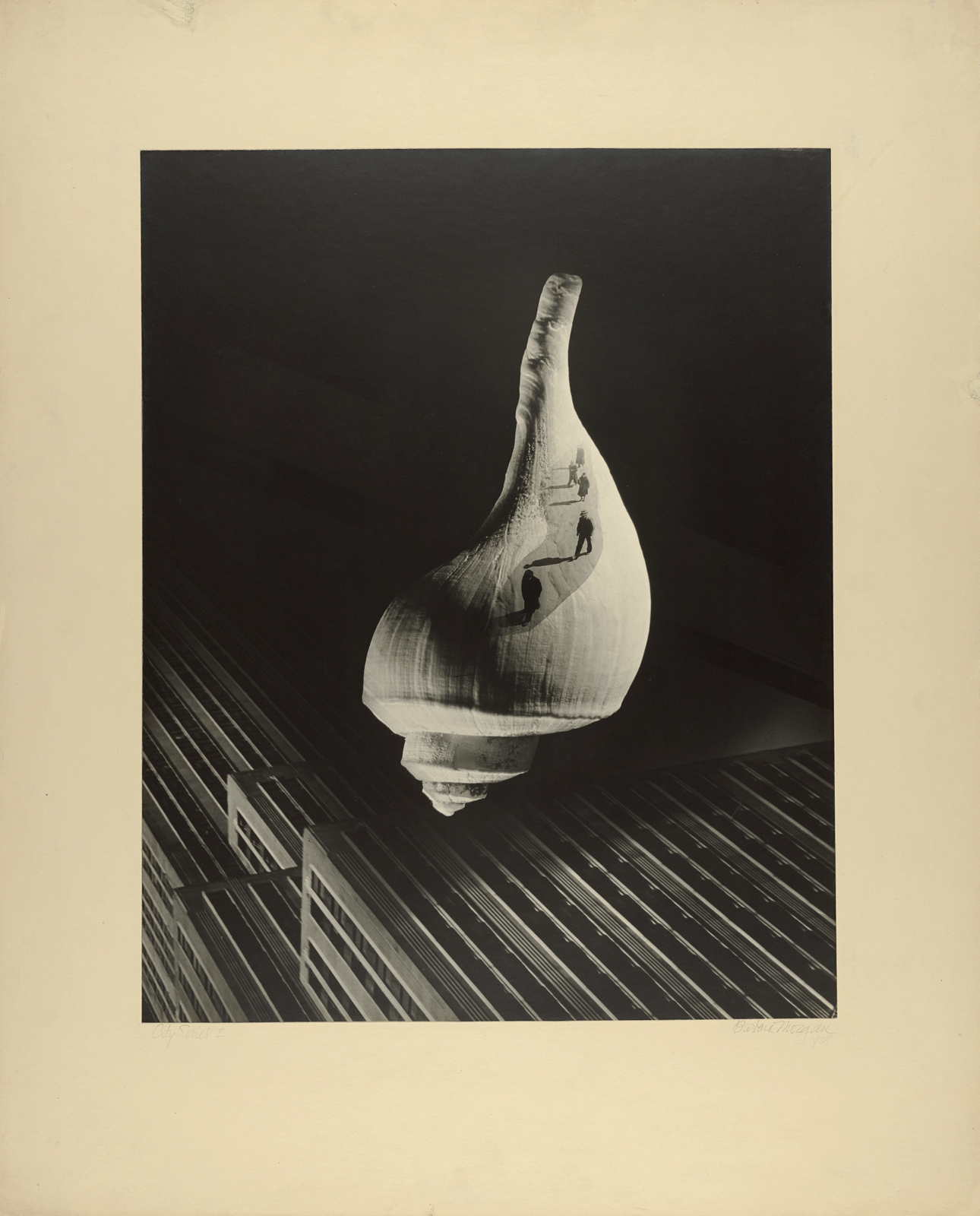
Barbara Morgan (American, 1900 - 1992) 'City Shell' 1938


Barbara Morgan (American, 1900-1992)
City Shell
1938
Gelatin silver print
49.2 × 39.4cm (19 3/8 × 15 1/2 in.)
Reproduced courtesy of the Barbara and Willard Morgan Photographs and Papers, Library Special Collections, Charles E. Young Research Library, UCLA
The J. Paul Getty Museum, Los Angeles


Walker Evans (American, 1903 - 1975) '[Two Giraffes, Circus Winter Quarters, Sarasota]' 1941


Walker Evans (American, 1903-1975)
[Two Giraffes, Circus Winter Quarters, Sarasota]
1941
Gelatin silver print
15.1 × 18.3cm (5 15/16 × 7 3/16 in.)
The J. Paul Getty Museum, Los Angeles
© Walker Evans Archive, The Metropolitan Museum of Art


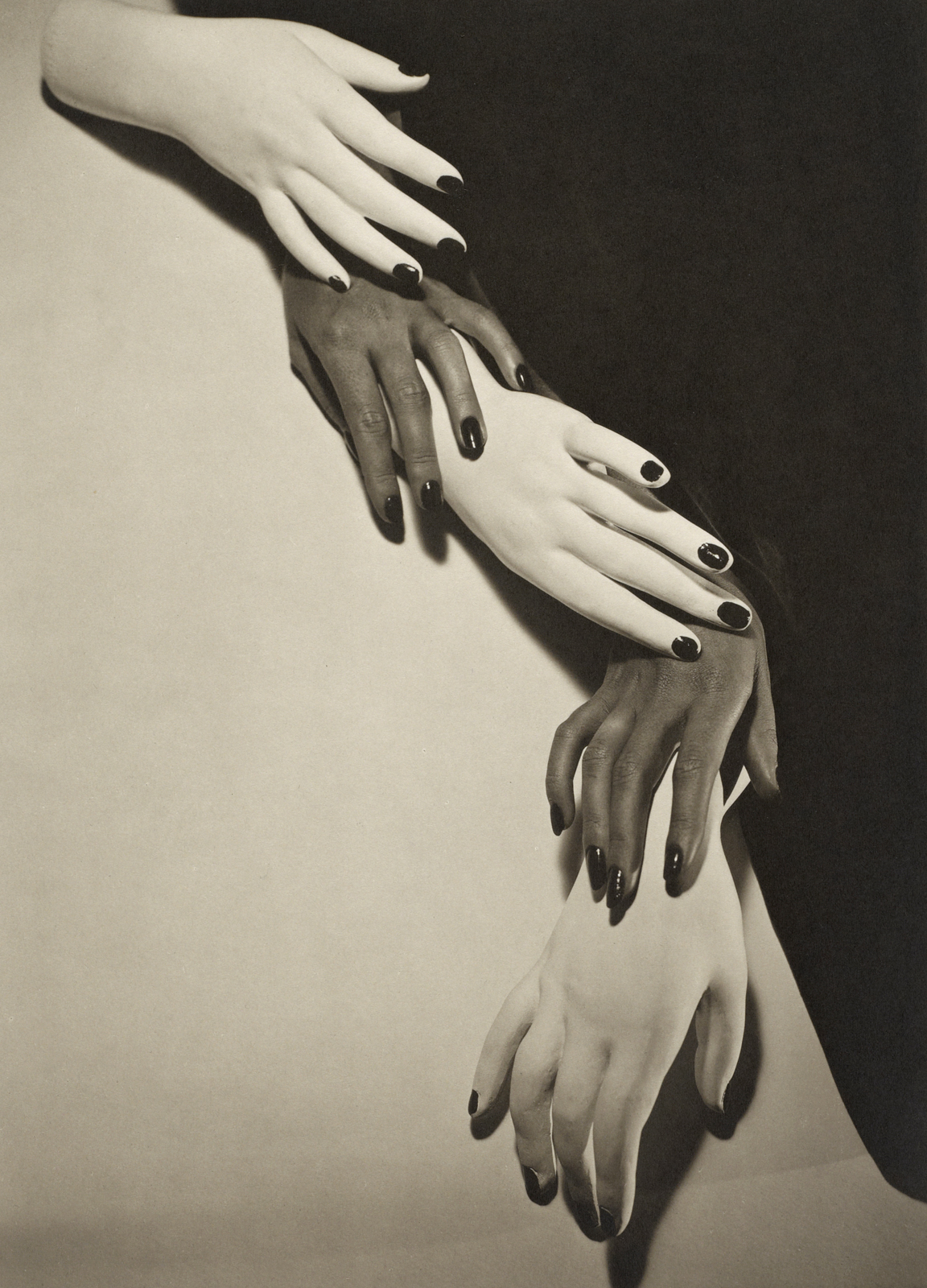
Horst P. Horst (American born Germany, 1906-1999) 'Hands, Hands' 1941


Horst P. Horst (American born Germany, 1906-1999)
Hands, Hands
1941
Platinum and palladium print
23.7 × 17cm (9 5/16 × 6 11/16 in.)
The J. Paul Getty Museum, Los Angeles, Gift of Manfred Heiting
© The Estate of Horst P. Horst and Condé Nast


Erwin Blumenfeld (American born Germany, 1897-1969) 'Maroua Motherwell, New York' 1941-1943


Erwin Blumenfeld (American born Germany, 1897-1969)
Maroua Motherwell, New York
1941-1943
Gelatin silver print
48.5 x 38.7cm (19 1/8 x 15 1/4 in.)
The J. Paul Getty Museum, Los Angeles
© The Estate of Erwin Blumenfeld


Henry Holmes Smith (American, 1909-1986) 'Photography Student' 1947


Henry Holmes Smith (American, 1909-1986)
Photography Student
1947
Gelatin silver print
11.4 × 9.6cm (4 1/2 × 3 3/4 in.)
The J. Paul Getty Museum, Los Angeles, Gift of the Smith Family Trust
© J. Paul Getty Trust


Henry Holmes Smith (American, 1909-1986)

Henry Holmes Smith (1909-1986) was an American photographer and one of the most influential fine art photography teachers of the mid 20th century. He was inspired by the work that had been done at the German Bauhaus and in 1937 was invited to teach photography at the New Bauhaus being founded by Moholy-Nagy in Chicago. After World War II, he spent many years teaching at Indiana University. His students included Jerry Uelsmann, Jack Welpott, Robert W. Fichter, Betty Hahn and Jaromir Stephany.

Smith was often involved in the cutting edge of photographic techniques: in 1931 he started experimenting with high-speed flash photography of action subjects, and started doing colour work in 1936 when few people considered it a serious artistic medium. His later images were nearly all abstract, often made directly (without a camera, i.e. like photograms), for instance images created by refracting light through splashes of water and corn syrup on a glass plate. However, although acclaimed as a photographic teacher, Holmes’ own photographs and other images did not achieve any real recognition from his peers.

Text from the Wikipedia website [Online] Cited 23/02/2020


Andreas Feininger (American born France, 1906-1999) 'Elegant Disk Clam, dosinia elegans, Conrad' 1948


Andreas Feininger (American born France, 1906-1999)
Elegant Disk Clam, dosinia elegans, Conrad
1948
Gelatin silver print
30.4 x 23.8cm (11 15/16 x 9 3/8 in.)
The J. Paul Getty Museum, Los Angeles
© Estate of Gertrud E. Feininger


Alexander Rodchenko (Russian, 1891-1956) 'Roll (of Film)' 1950


Alexander Rodchenko (Russian, 1891-1956)
Roll (of Film)
1950
Gelatin silver print
30.5 × 24cm (12 × 9 7/16 in.)
The J. Paul Getty Museum, Los Angeles
© 2019 Estate of Alexander Rodchenko / UPRAVIS, Moscow / Artists Rights Society, NY


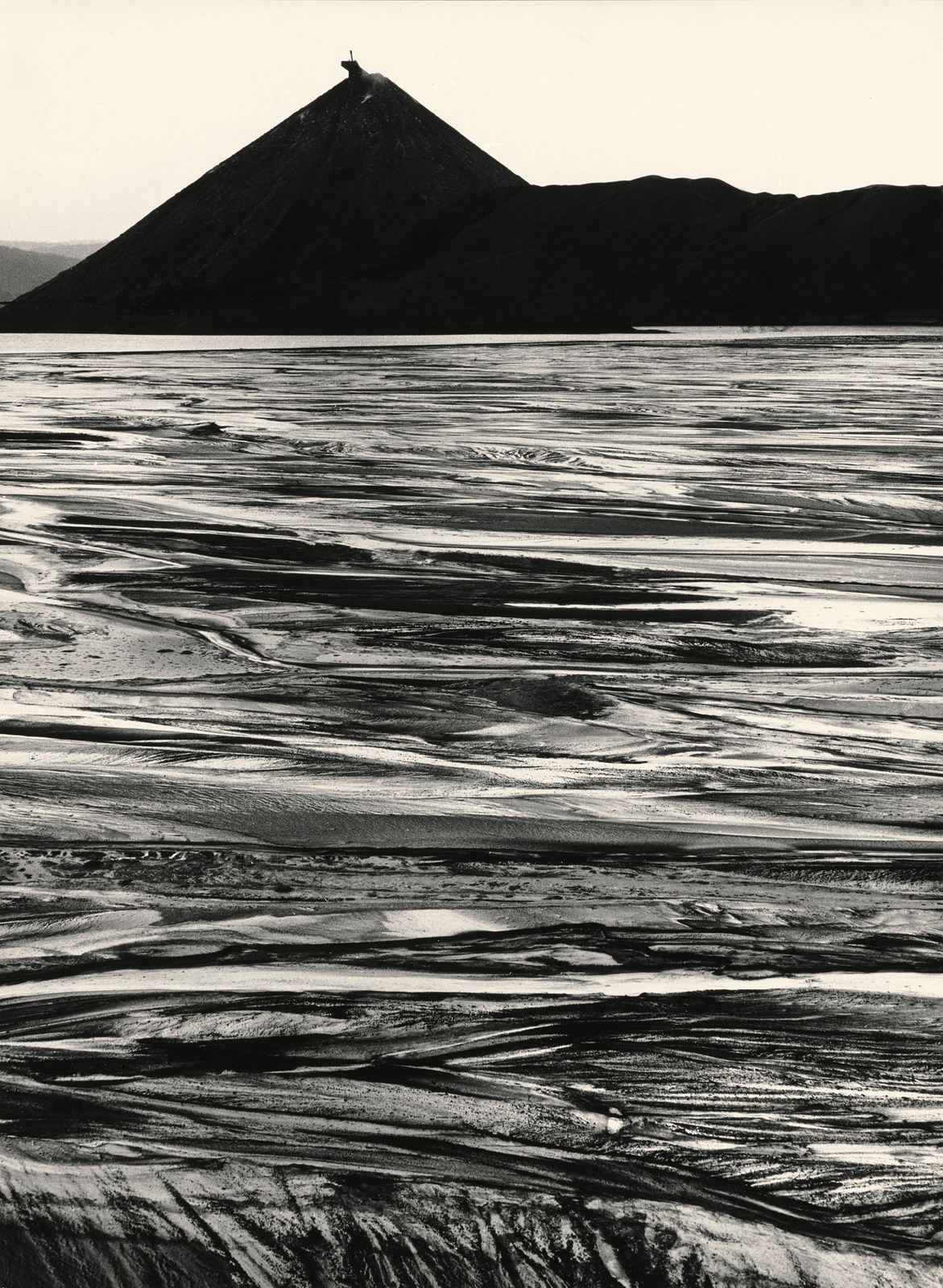
Otto Steinert (German, 1915-1978) 'Schlammweiher 2' Negative 1953, print about 1960s


Otto Steinert (German, 1915-1978)
Schlammweiher 2
Negative 1953, print about 1960s
Gelatin silver print
39.6 x 29.1cm (15 9/16 x 11 7/16 in.)
The J. Paul Getty Museum, Los Angeles
Courtesy Galerie Johannes Faber


André Kertész (American born Hungary, 1894-1985) 'Still Life with Snake' Negative 1960; print later


André Kertész (American born Hungary, 1894-1985)
Still Life with Snake
Negative 1960; print later
Gelatin silver print
Image: 24.8 × 19.7cm (9 3/4 × 7 3/4 in.)
The J. Paul Getty Museum, Los Angeles
© Estate of André Kertész


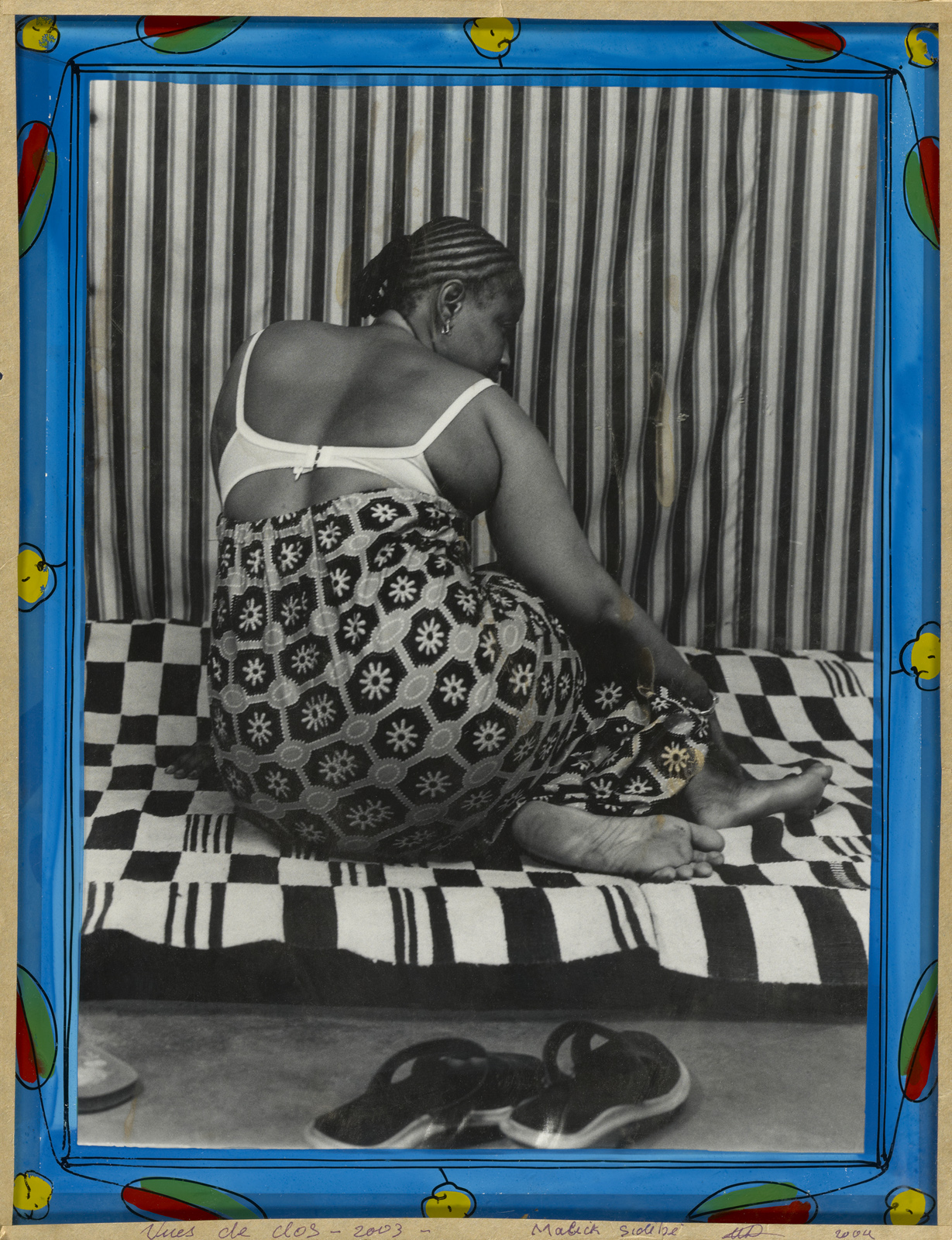
Malick Sidibé (Malian, 1936-2016) 'Vues de dos' Nd, print 2003


Malick Sidibé (Malian, 1936-2016)
Vues de dos
Nd, print 2003
Gelatin silver print, glass, paint, cardboard, tape, and string
36.5 x 27cm (14 3/8 x 10 5/8 in.)
The J. Paul Getty Museum, Los Angeles
© Estate of Malick Sidibé


Irving Penn (American, 1917-2009) 'Red Apples' July 15, 1985


Irving Penn (American, 1917-2009)
Red Apples
July 15, 1985
Silver-dye bleach print
25.4 × 20.3cm (10 × 8 in.)
The J. Paul Getty Museum, Los Angeles, Gift of Nancy and Bruce Berman
© 1985 Irving Penn


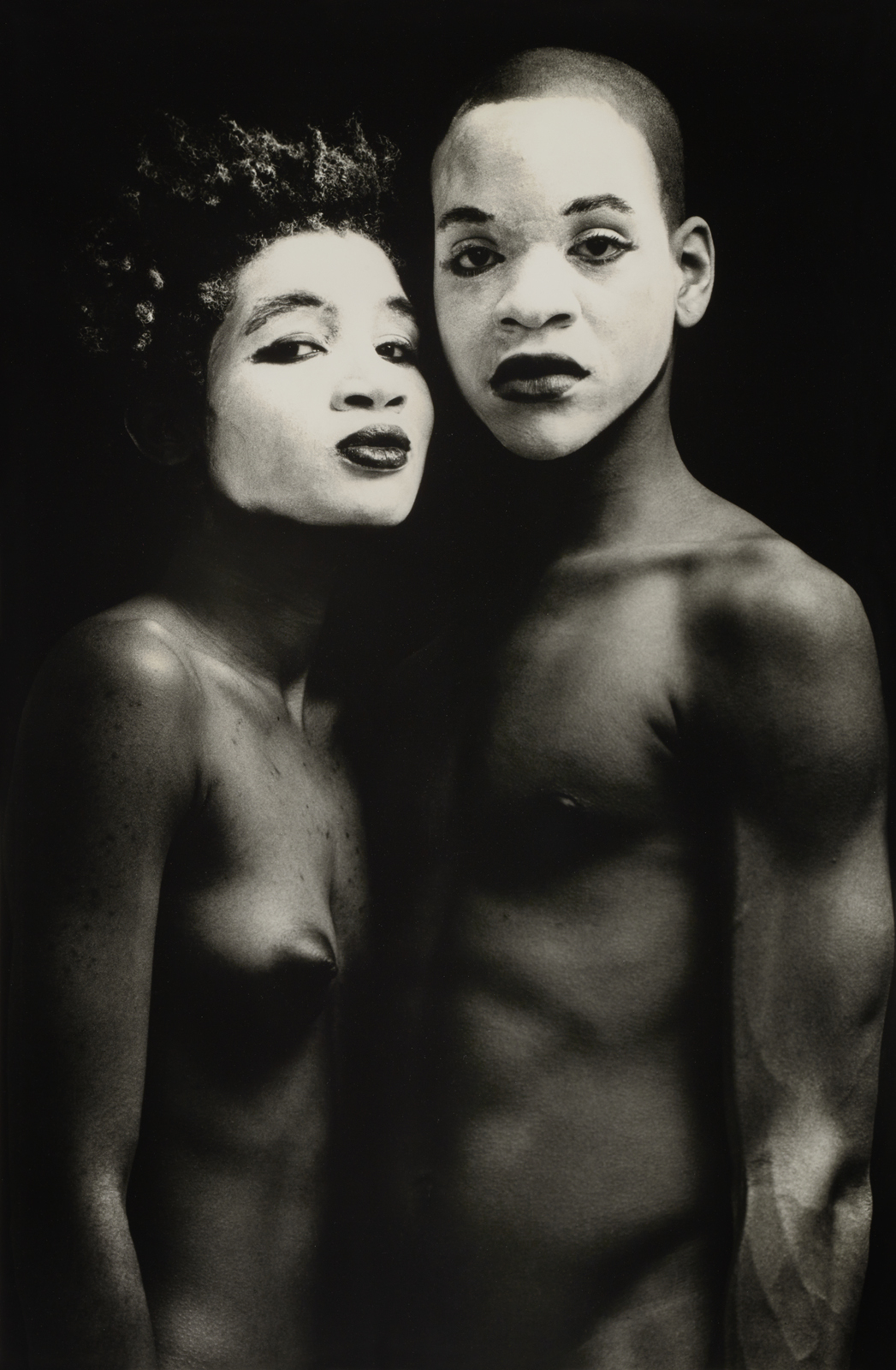
Lyle Ashton Harris (American, b. 1965) 'Man and Woman #1' 1987-1988


Lyle Ashton Harris (American, b. 1965)
Man and Woman #1
1987-1988
Gelatin silver print
74.3 x 48.9cm (29 1/4 x 19 1/4 in.)
The J. Paul Getty Museum, Los Angeles
© Lyle Ashton Harris


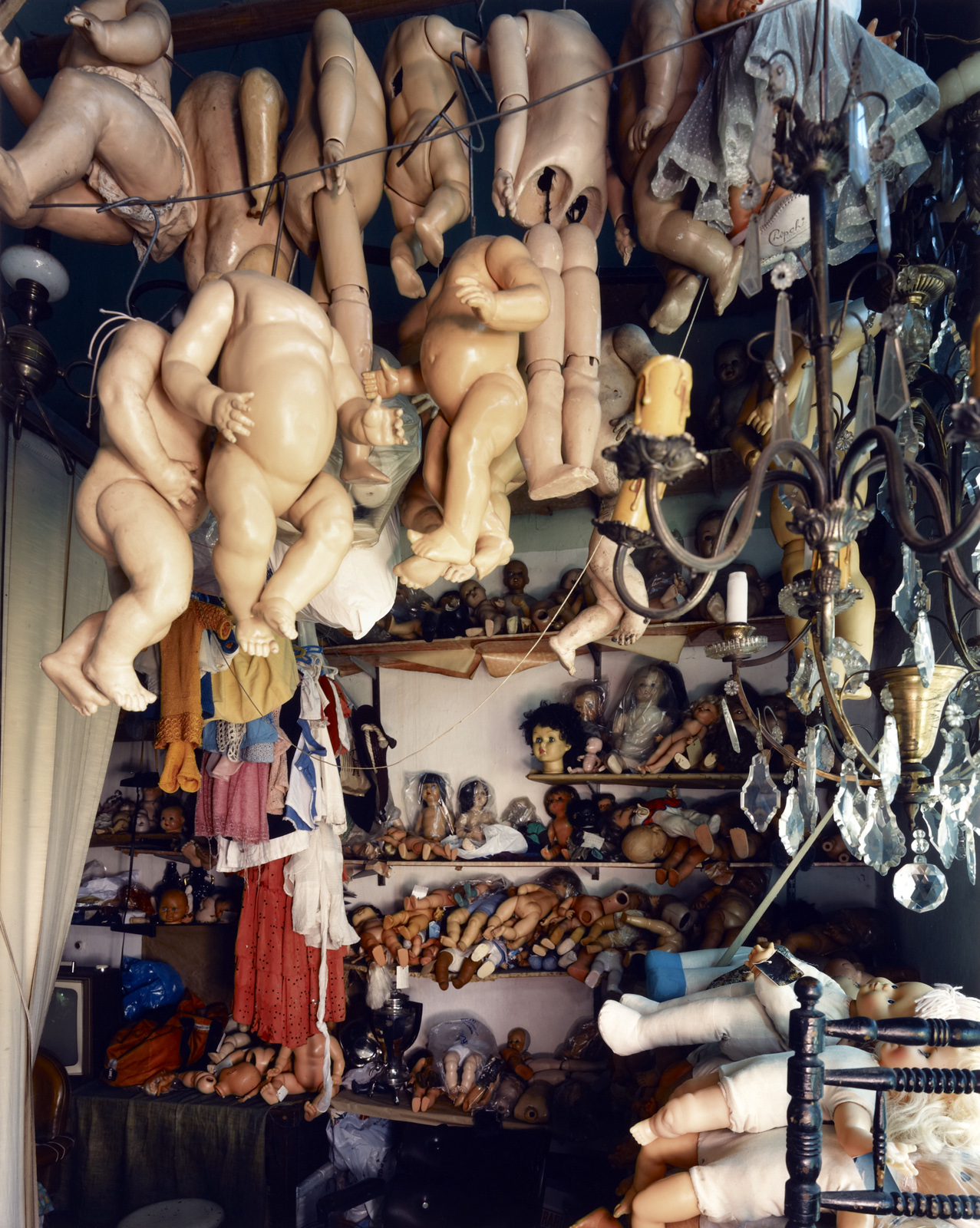
Jim Dow (American, b. 1942) 'Doll Repair Shop Window, Buenos Aires, Argentina' 1990


Jim Dow (American, b. 1942)
Doll Repair Shop Window, Buenos Aires, Argentina
1990
Chromogenic print
51.2 × 40.6cm (20 3/16 × 16 in.)
The J. Paul Getty Museum, Los Angeles, Gift of Nancy and Bruce Berman
© Jim Dow


Carrie Mae Weems (American, b. 1953) 'See No Evil' 1991


Carrie Mae Weems (American, b. 1953)
See No Evil
1991
Dye diffusion print (Polaroid Polacolor)
61 × 50.5cm (24 × 19 7/8 in.)
The J. Paul Getty Museum, Los Angeles, Gift of Daniel Greenberg and Susan Steinhauser
© Carrie Mae Weems


Myoung Ho Lee (South Korean, b. 1975) '[Tree #2]' 2006


Myoung Ho Lee (South Korean, b. 1975)
[Tree #2]
2006
Inkjet print
39.8 × 32.1cm (15 11/16 × 12 5/8 in.)
The J. Paul Getty Museum, Los Angeles, Purchased with funds provided by the Photographs Council
© Myoung Ho Lee, Courtesy Yossi Milo Gallery, New York


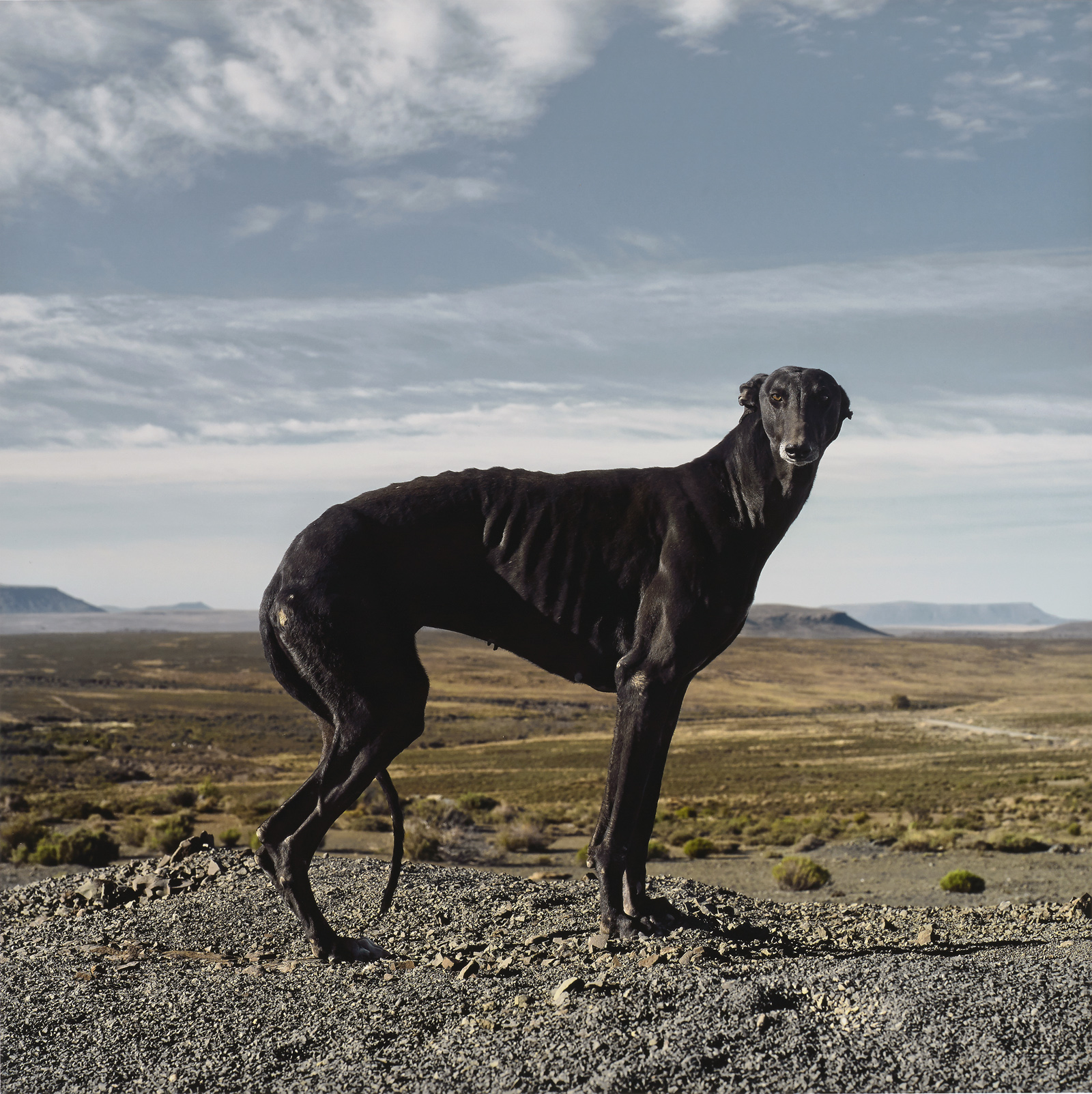
Daniel Naudé (South African, b. 1984) 'Africanis 18. Murraysburg, Western Cape, 10 May 2010' 2010


Daniel Naudé (South African, b. 1984)
Africanis 18. Murraysburg, Western Cape, 10 May 2010
2010
60 x 60cm (23 5/8 x 23 5/8 in.)
The J. Paul Getty Museum, Los Angeles
© Daniel Naudé


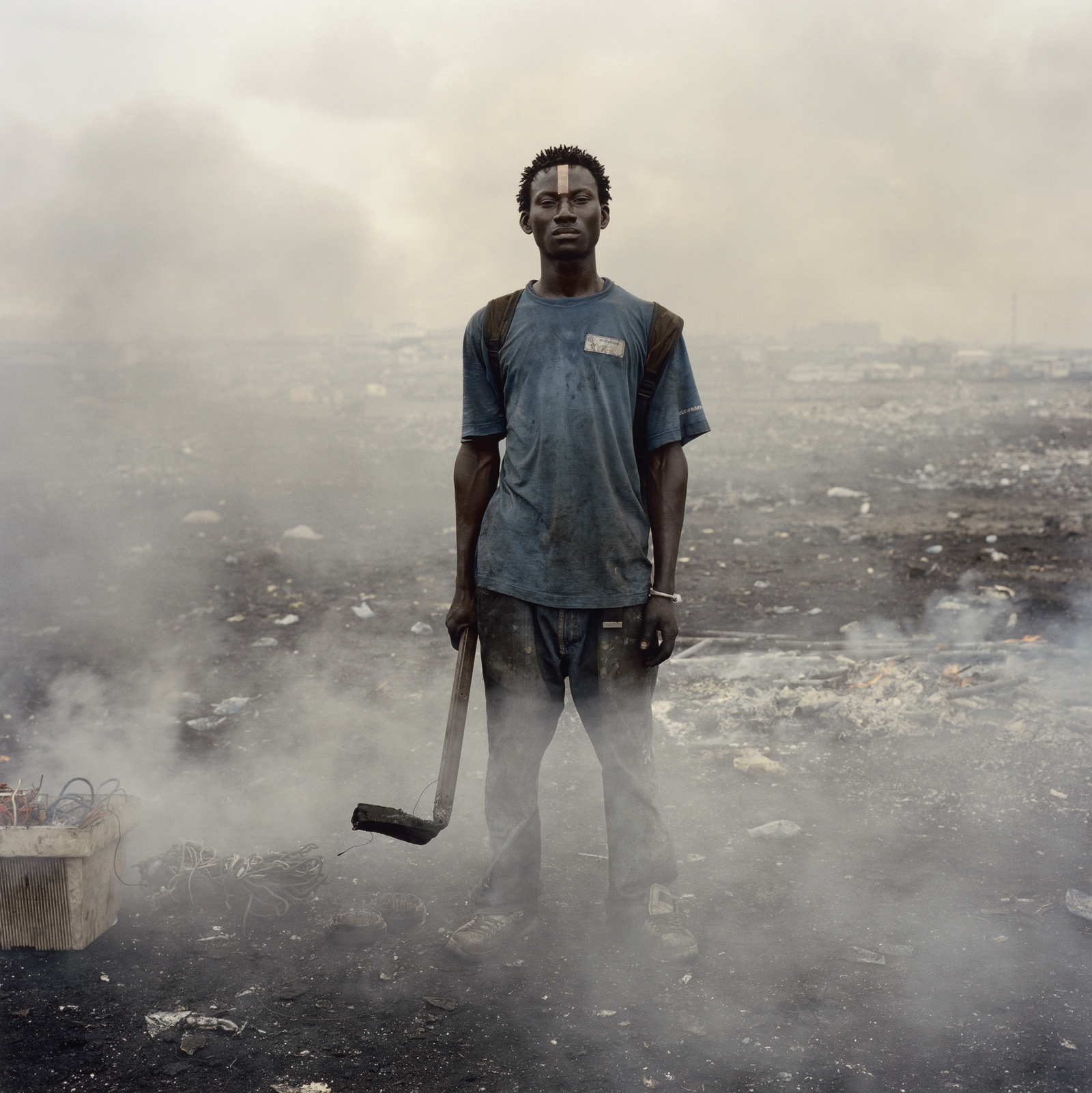
Pieter Hugo (South African, b. 1976) 'Aissah Salifu, Agbogbloshie Market, Accra, Ghana' 2010


Pieter Hugo (South African, b. 1976)
Aissah Salifu, Agbogbloshie Market, Accra, Ghana
2010
From the Permanent Error series
Digital chromogenic print
81.3 x 81.3cm (32 x 32 in.)
The J. Paul Getty Museum, Los Angeles
© Pieter Hugo


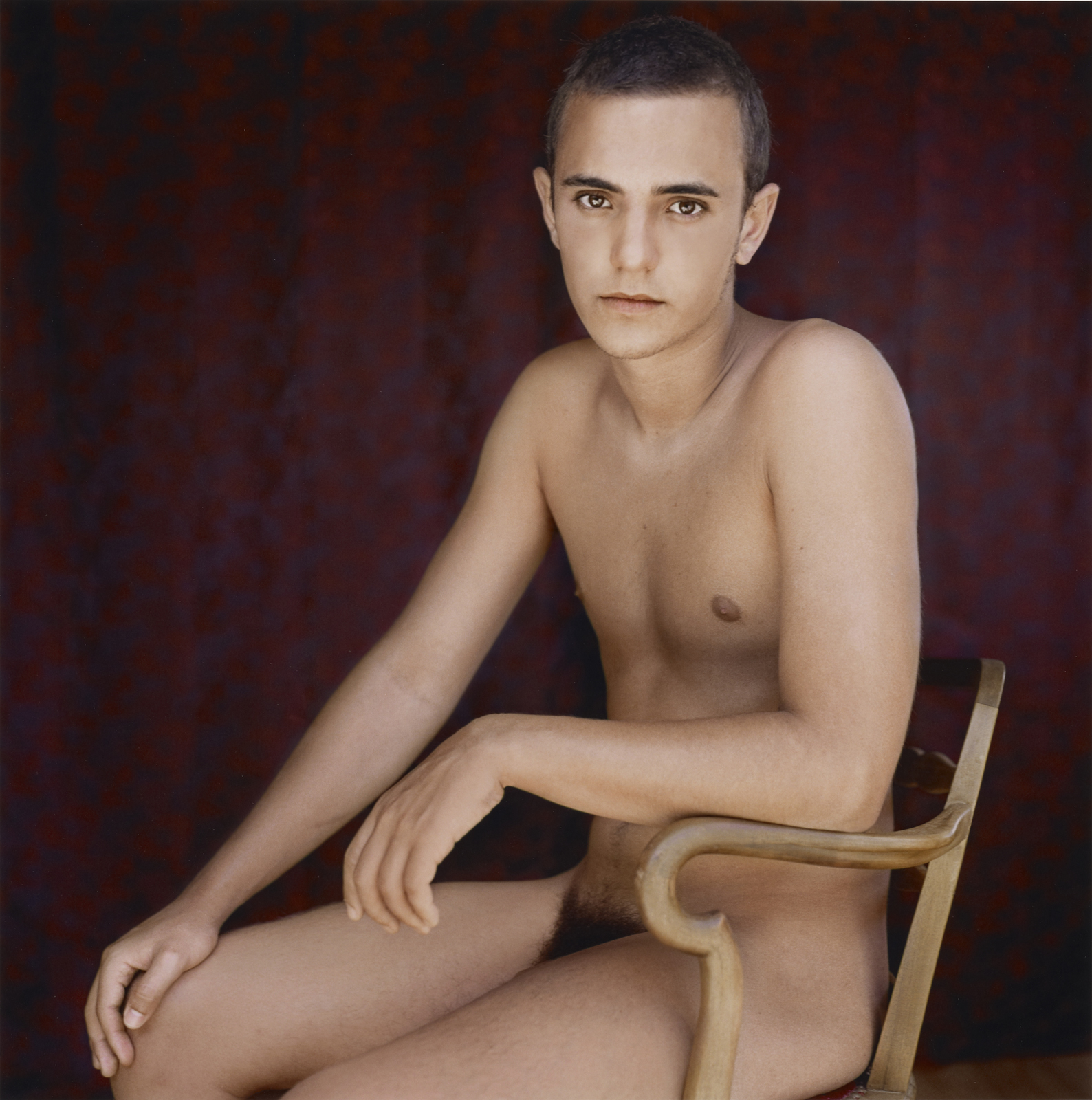
Mona Kuhn (German born Brazil, 1969) 'Portrait 37' 2011


Mona Kuhn (German born Brazil, 1969)
Portrait 37
2011
Chromogenic print
38.3 x 38.1cm (15 1/16 x 15 in.)
The J. Paul Getty Museum, Los Angeles
© Mona Kuhn


Alison Rossiter (American, b. 1953) 'Eastman Kodak Azo E, expired May 1927, processed 2014' 2014


Alison Rossiter (American, b. 1953)
Eastman Kodak Azo E, expired May 1927, processed 2014
2014
Gelatin silver print
25 x 20cm (9 13/16 x 7 7/8 in.)
The J. Paul Getty Museum, Los Angeles
© Alison Rossiter


The J. Paul Getty Museum
1200 Getty Center Drive
Los Angeles, California 90049

Opening hours:
Daily 10am – 5.30pm

The J. Paul Getty Museum website

LIKE ART BLACK ON FACEBOOK

Back to top