Display: ‘Stan Firm inna Inglan’ at Tate Britain, London

November 2017


James Barnor (Ghanaian based in London, b. 1929) 'Mike Eghan at the BBC Studios, London' 1967, printed 2010 (installation view) from the display 'Stan Firm inna Inglan' at Tate Britain, London, November 2017


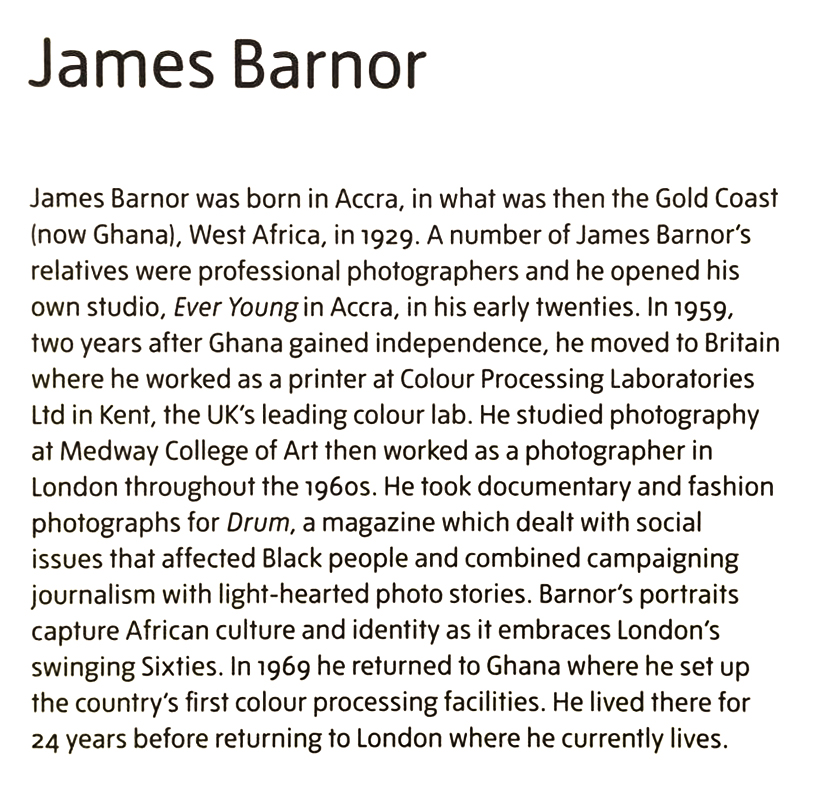
James Barnor (Ghanaian based in London, b. 1929)
Mike Eghan at the BBC Studios, London (installation view)
1967, printed 2010
Gelatin silver on paper
Gift of Eric and Louise Franck London Collection 2013
Photo: Marcus Bunyan


This was the best photography exhibition which wasn’t an exhibition – because it was a “display” – that I saw on my recent trip to Europe.

Why was it the best? Because this is what strong, insightful photography can do: it can capture life; it can document different cultures; and it can be a powerful agent for social change.

I remember London in the 1970s. I lived in Clapham (Claiff-ham Heights) and Stockwell (we called it St. Ockwell) near Brixton at the time. I remember the Brixton riot of 1981, as I was living in my little room down the road, as the cars burnt and the buildings were smashed. “Brixton in South London was an area with serious social and economic problems. The whole United Kingdom was affected by a recession by 1981, but the local African-Caribbean community was suffering particularly high unemployment, poor housing, and a higher than average crime rate.” (Wikipedia) People felt oppressed by recession, racism, the police, and by the establishment, for this was the era of Margaret Thatcher and her bullies. But as these photographs show, there was such a vibrant sense of community in these areas as they sought to ‘stand firm in England’ because it was their home.

It is our great privilege that we have the images of this very talented group of photographers who documented Black communities in London during this time: Raphael Albert, Bandele ‘Tex’ Ajetunmobi, James Barnor, Colin Jones, Neil Kenlock, Dennis Morris, Syd Shelton and Al Vandenberg. And I find it heartening that all of these photographers were documenting their community at the same time. The African-Caribbean diaspora is part of the genetic makeup of the UK and multiculturalism, from where ever it emanates, should be valued in societies around the world. It enriches contemporary culture through an understanding and acceptance of difference.

Against racism; against fascism; against discrimination. For freedom from oppression and the right to be heard.

Dr Marcus Bunyan

PS. There were no media images so I took iPhone installation photographs of the display, so please excuse any reflection of the gallery in the images. I have cleaned and balanced them as much as possible.

All installation shots are © Dr Marcus Bunyan. Please click on the photographs for a larger version of the image.


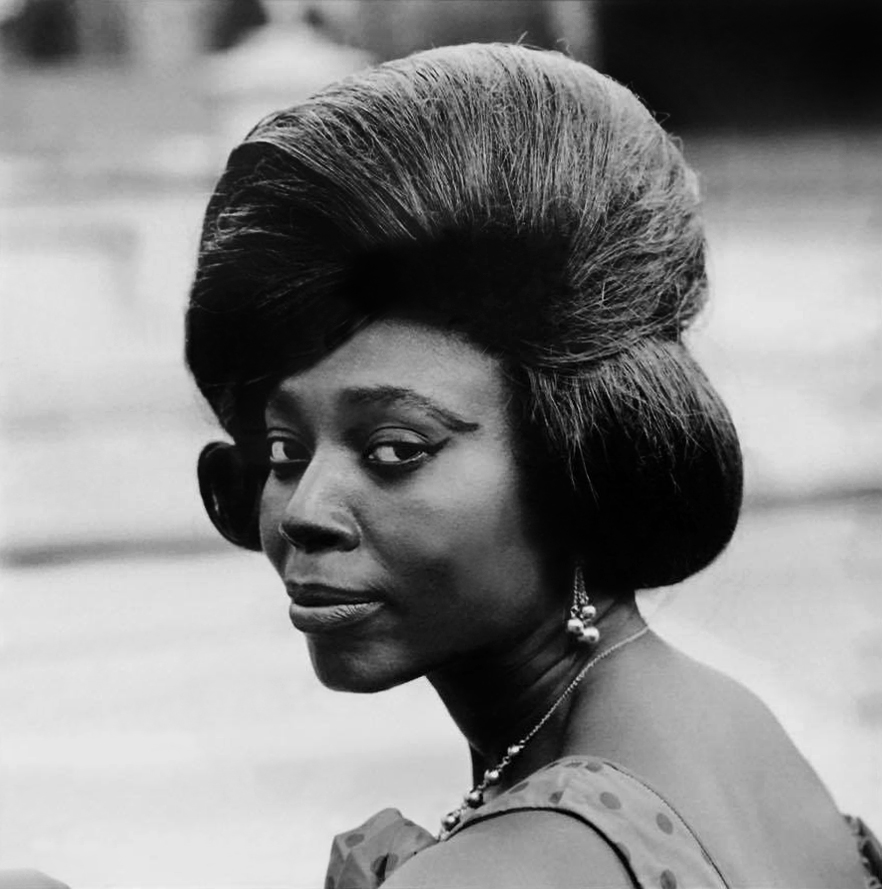
James Barnor wall text from the display


James Barnor (Ghanaian based in London, b. 1929) 'Drum Cover Girl Erlin Ibreck, London' 1966, printed 2010 (installation view) from the display 'Stan Firm inna Inglan' at Tate Britain, London, November 2017


James Barnor (Ghanaian based in London, b. 1929)
Drum Cover Girl Erlin Ibreck, London (installation view)
1966, printed 2010
C-print on paper
Gift of Eric and Louise Franck London Collection 2013
Photo: Marcus Bunyan


“The picture of a young woman leaning against a shiny grey Jaguar was taken in Kilburn, north London, in 1966. The pastel minidress, heavy fringe and costume jewellery feel instantly familiar as belonging to the era, but while we’re used to seeing a pallid Twiggy or Penelope Tree striding about London in fashion shoots from the same time, we rarely see images in which the model is black.

The pictures shown here of young women with 1960s-style beehives and miniskirts were shot as fashion stories for Drum , an influential anti-apartheid magazine based in Johannesburg, and Africa’s first black lifestyle magazine. …

Erlin Ibreck, the model in the main photograph who was 19 at the time, remembers Barnor asking her to pose in Trafalgar Square while flocks of excited pigeons landed on her. ‘I was more nervous about the pigeons than people around us who were staring.’

Some of the models were professional, but Ibreck was someone Barnor spotted in a bus queue at Victoria station. Ibreck was living in Cheshire but visiting her sister, who lived in London. Barnor asked if she would like to be photographed for Drum magazine and eventually she agreed.

Encouraged by Barnor, Ibreck enrolled at the Lucie Clayton modelling school in Manchester, but finding work as a black model in the 1960s was not easy.

‘It was very tough as there were very few black models,’ she says. ‘I was selected by Lucie Clayton to model De Beers diamonds – a South African company, and this was during apartheid. When they discovered that I was black De Beers cancelled the booking and chose a white model.

‘That booking would have enhanced my career, so it was a very painful experience to have been rejected on the basis of my colour. This experience made me realise what I was up against.’ After two years Ibreck gave up modelling and moved to New York.”

Although Barnor says he wasn’t consciously attempting to chronicle ‘black culture’ in England, and was simply taking photographs of things that interested him and the readers of Drum, the effect was, none the less, an optimistic suggestion that these cosmopolitan young African women were part of the exciting new, multicultural society in London that people were talking about.

Barnor’s memories of the time seem to be largely positive, and he says he doesn’t remember experiencing any overt racism. ‘I moved in enlightened circles so I did not have to put up with most of what other black people had to go through, though I did notice when I sat on a bus many people didn’t want to sit next to me’.”

Kate Salter. “Colour me beautiful: James Barnor’s photographs for Drum magazine,” on the Telegraph website 07 December 2010 [Online] Cited 08/10/2017. No longer available online


James Barnor (Ghanaian based in London, b. 1929) 'Wedding Guests, London' 1960s, printed 2010 (installation view)


James Barnor (Ghanaian based in London, b. 1929)
Wedding Guests, London (installation view)
1960s, printed 2010
Gelatin silver on paper
Gift of Eric and Louise Franck London Collection 2013
Photo: Marcus Bunyan


James Barnor (Ghanaian based in London, b. 1929) 'Eva, London' 1960s, printed 2010


James Barnor (Ghanaian based in London, b. 1929)
Eva, London
1960s, printed 2010
Gelatin silver on paper
Gift of Eric and Louise Franck London Collection 2013


Stan Firm wall text from the display


This display brings together works from the 1960s and 1970s by eight photographers who documented Black communities in London: Raphael Albert, Bandele ‘Tex’ Ajetunmobi, James Barnor, Colin Jones, Neil Kenlock, Dennis Morris, Syd Shelton and Al Vandenberg.

The photographs reveal the many and varied experiences of individuals who travelled from the Caribbean region and West Africa to live in London, from everyday family life to political engagement. They show people as they respond to, react against and move beyond the racial tension and exclusion that were part of life for Black communities in the British capital. The title of the display, ‘Stan Firm inna Inglan’, is taken from the poem It Dread inna Inglan by Linton Kwesi Johnson, who in the 1970s gave a voice and poetic form to the Afro-Caribbean diaspora and its resistance in the face of racism. The poem expresses in Jamaican patois (creole) the resolve of African, Asian and Caribbean immigrants to ‘stand firm in England’, asserting the determination of Black British communities to remain in Britain and declare it as their rightful home.

The work of most of the photographers has gained prominence in recent years through the research and curatorial work of Autograph ABP, which was established in London in 1988 to advocate the inclusion of historically marginalised photographic practices. All works in the display have been gifted to the Tate collection and form part of the Eric and Louise Franck London Collection, an important collection of photography which was assembled over more than 20 years.

This display has been curated by Elena Crippa, Allison Thompson and Susana Vargas Cervantes. Alison and Susana worked at Tate as part of the Brooks International Fellowship programme for three months in 2016, fully funded by the Rory and Elizabeth Brooks Foundation and in partnership with the Delfina Foundation.

Text from the Tate Britain website


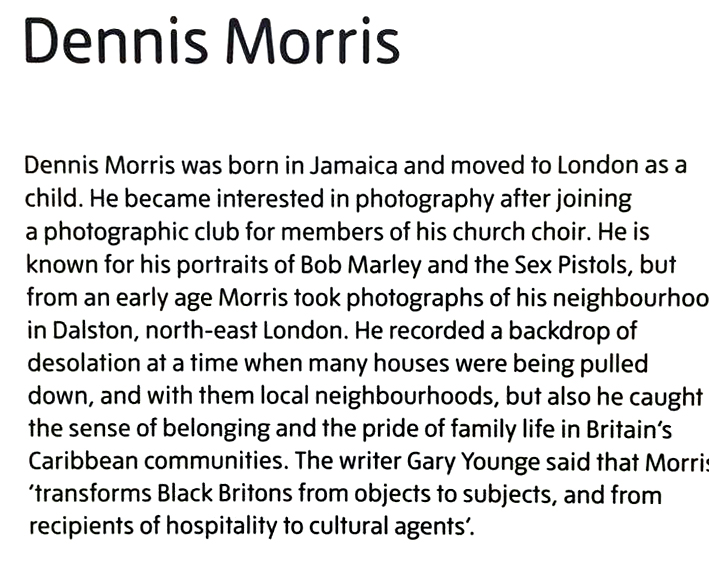
Dennis Morris wall text from the display


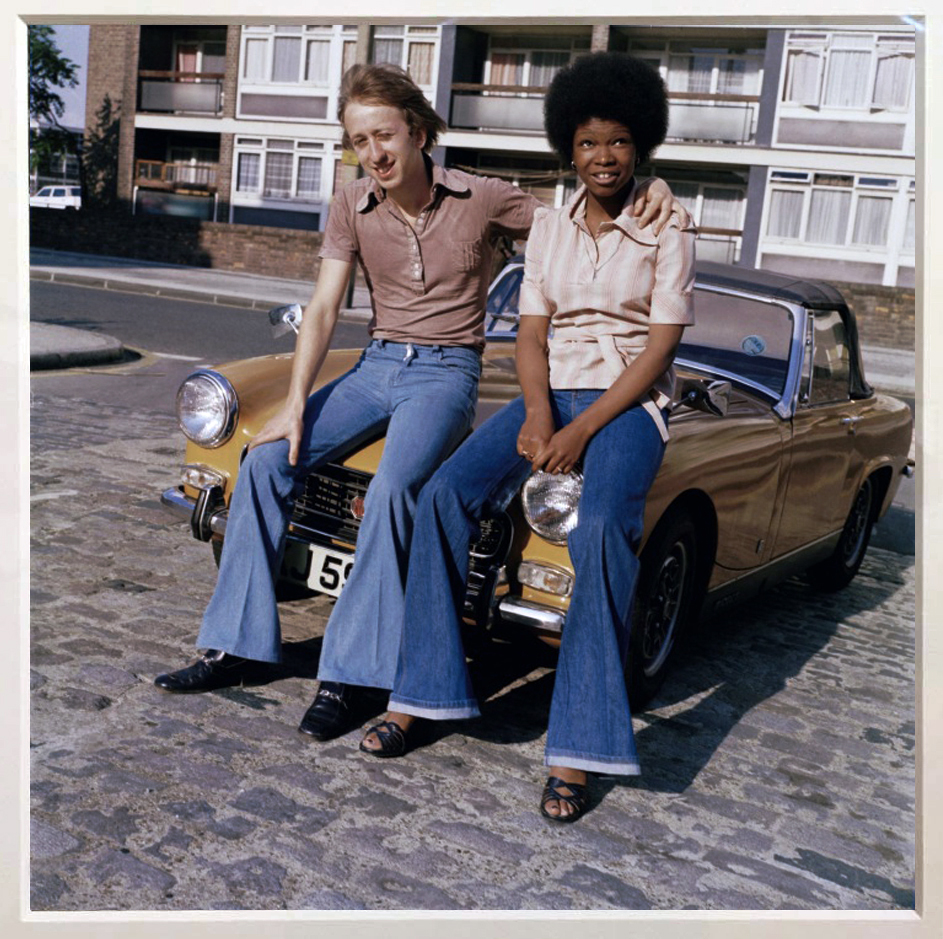
Dennis Morris (British, b. 1960) ''Mother's Pride', Hackney' 1976, printed 2012 (installation view)


Dennis Morris (British, b. 1960)
‘Mother’s Pride’, Hackney (installation view)
1976, printed 2012
Gelatin silver print on paper
Gift of Eric and Louise Franck London Collection 2016
Photo: Marcus Bunyan


Dennis Morris (British, b. 1960) 'Young Gun, Hackney' 1969, printed 2012 (installation view)


Dennis Morris (British, b. 1960)
Young Gun, Hackney (installation view)
1969, printed 2012
Gelatin silver print on paper
Gift of Eric and Louise Franck London Collection 2016
Photo: Marcus Bunyan


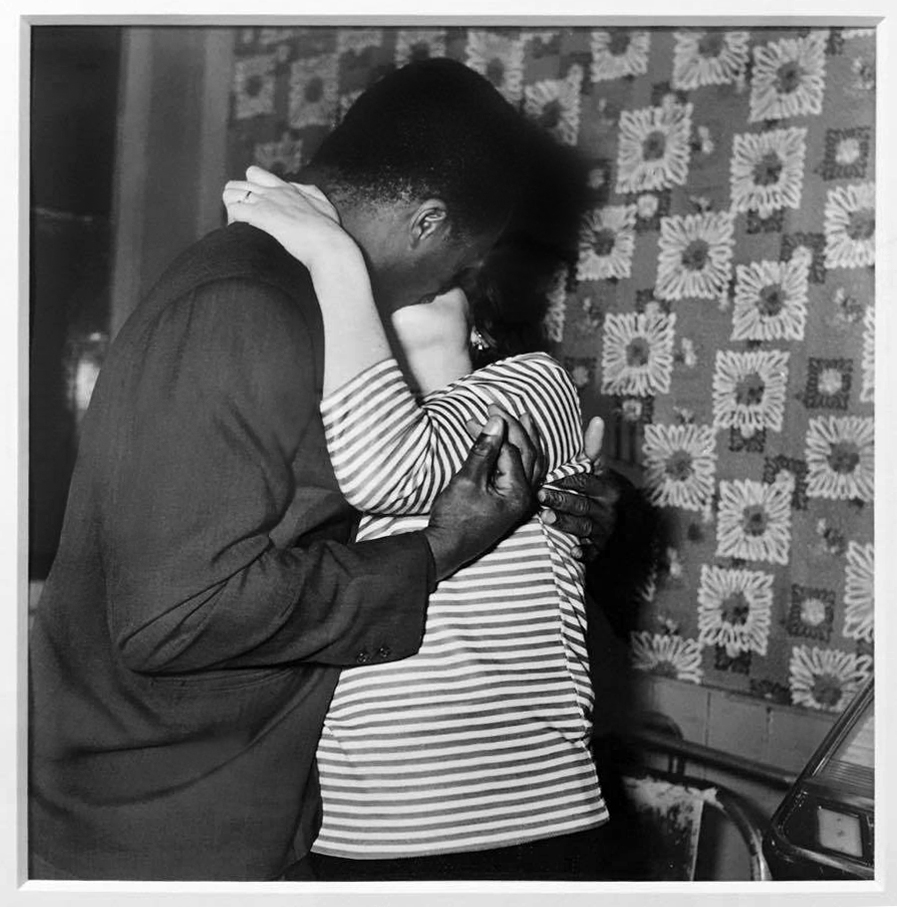
Bandele Ajetunmobi (British, 1921-1994) 'Couple Kissing, Whitechapel, London' 1960s, printed 2012 (installation view)


Bandele Ajetunmobi (British, 1921-1994)
Couple Kissing, Whitechapel, London (installation view)
1960s, printed 2012
Gelatin silver print on paper
Gift of Eric and Louise Franck London Collection 2016
Photo: Marcus Bunyan


“Bandele Ajetunmobi – widely known as Tex – took photographs in the East End for almost half a century, starting in the late forties. He recorded a tender vision of interracial camaraderie, notably as manifest in a glamorous underground nightlife culture yet sometimes underscored with melancholy too – creating poignant portraits that witness an almost-forgotten era of recent history.

In 1947, at twenty-six years old, he stowed away on a boat from Nigeria – where he found himself an outcast on account of the disability he acquired from polio as a child – and in East London he discovered the freedom to pursue his life’s passion for photography, not for money or reputation but for the love of it.

He was one of Britain’s first black photographers and he lived here in Commercial St, Spitalfields, yet most of his work was destroyed when he died in 1994 and, if his niece had not rescued a couple of hundred negatives from a skip, we should have no evidence of his breathtaking talent. …

“He did all this photography yet he didn’t do it to make money, he did it for pleasure and for artistic purposes. He was doing it for art’s sake.He had lots of books of photography and he studied it. He was doing it because those things needed to be recorded. You fall in love with a medium and that’s what happened to him. He spent all his money on photography. He had expensive cameras, Hasselblads and Leicas. My mother said, ‘If you sold one, you could make a visit to Nigeria.’ But he never went back, he was probably a bit of an outcast because of his polio as a child and it suited him to be somewhere people didn’t judge him for that. …

He used to do buying and selling from a stall in Brick Lane. When he died, they found so much stuff in his flat, art equipment, pens, old records and fountain pens. He had a very good eye for things. Everybody knew him, he was always with his camera and they stopped him in the street and asked him to take their picture. He was able to take photographs in clubs, so he must have been a trusted and respected figure. Even if the subjects are poor, they are strutting their stuff for the camera. He gave them their pride and I like that.” (Victoria Loughran)

The Gentle Author. “Bandele “Tex” Ajetunmobi, Photographer,” on the Spitalfields Life website December 2, 2013 [Online] Cited 08/10/2017


Bandele Ajetunmobi (British, 1921-1994) 'East End, London' c. 1975, printed 2012 (installation view)


Bandele Ajetunmobi (British, 1921-1994)
East End, London (installation view)
c. 1975, printed 2012
C-print on paper
Gift of Eric and Louise Franck London Collection 2016
Photo: Marcus Bunyan


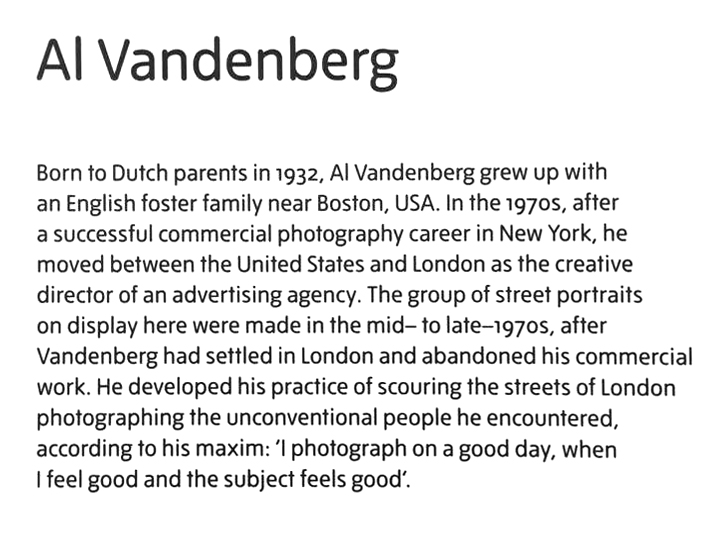
Al Vandenberg wall text from the display


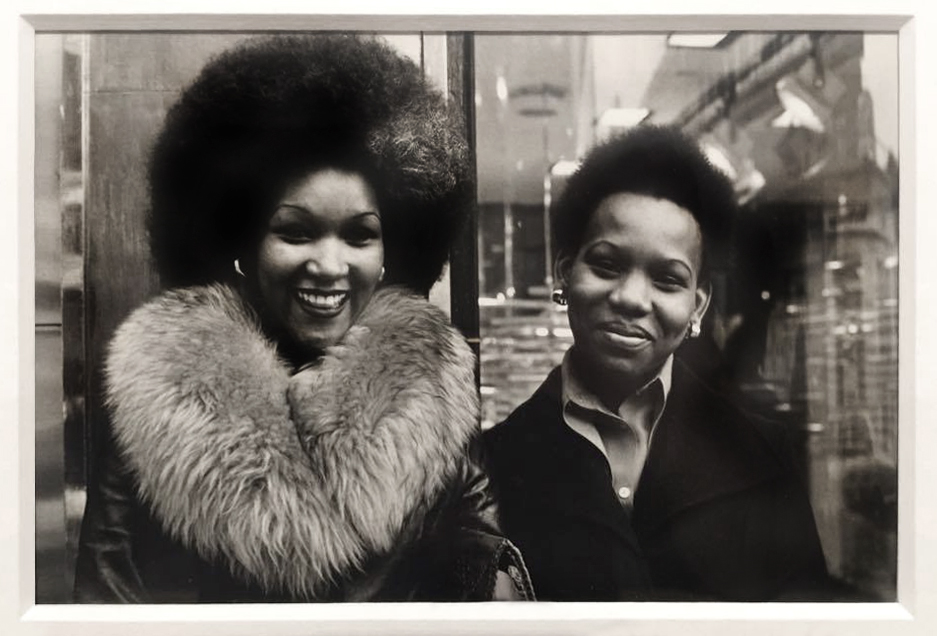
Al Vanbenberg (American, 1932-2012) 'Untitled' c. 1975-1980 (installation view)


Al Vanbenberg (American, 1932-2012)
Untitled (installation view)
c. 1975-1980
From the series On a Good Day
Gelatin silver print on paper
Gift of Eric and Louise Franck London Collection 2013
Photo: Marcus Bunyan


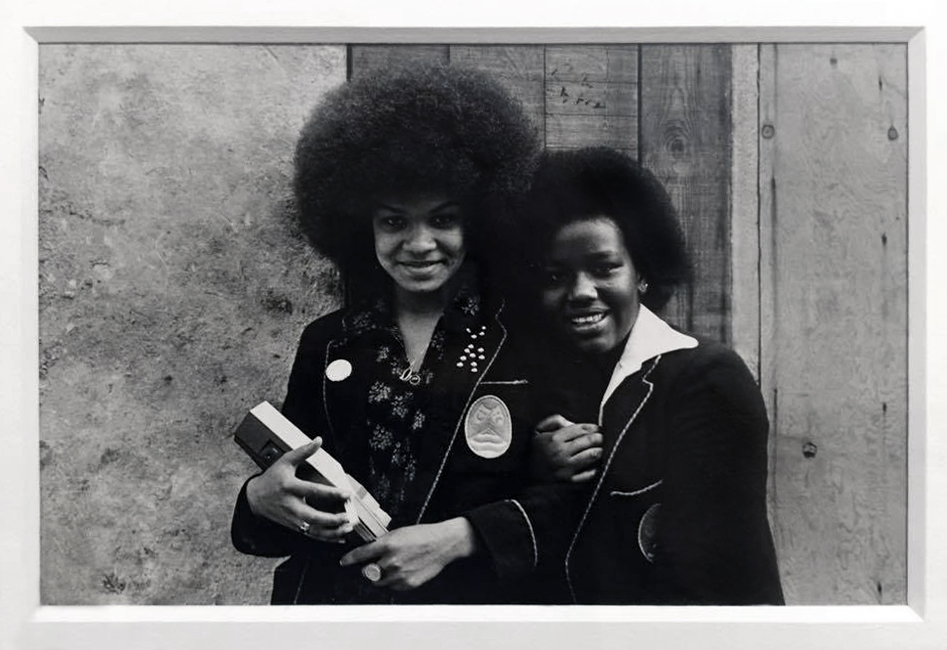
Al Vanbenberg (American, 1932-2012) 'Untitled' c. 1975-1980 (installation view)


Al Vanbenberg (American, 1932-2012)
Untitled
c. 1975-1980
From the series On a Good Day
Gelatin silver print on paper
Gift of Eric and Louise Franck London Collection 2013
Photo: Marcus Bunyan


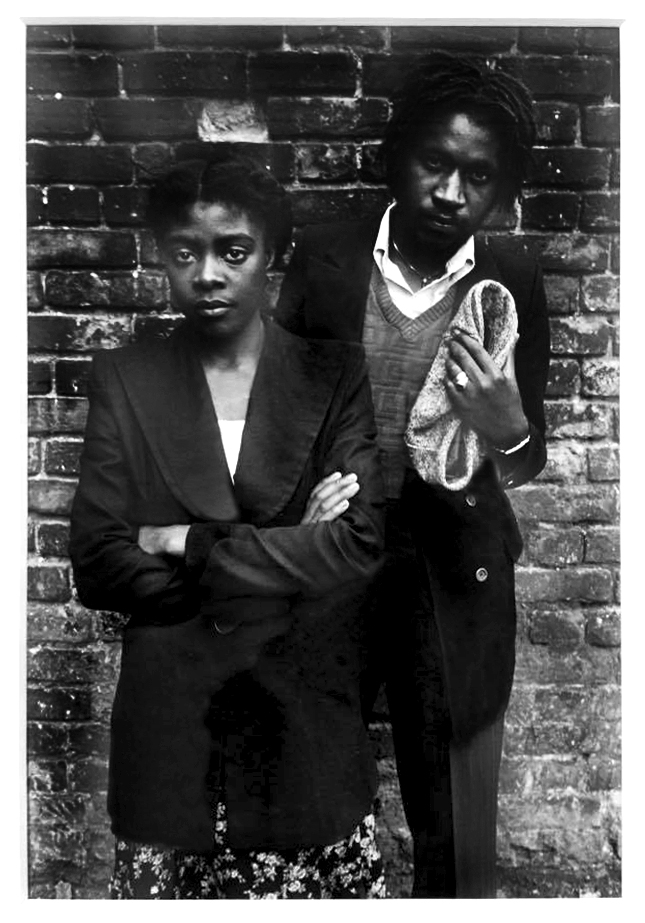
Al Vanbenberg (American, 1932-2012) 'Untitled' c. 1975-1980 (installation view)


Al Vanbenberg (American, 1932-2012)
Untitled (installation view)
c. 1975-1980
From the series On a Good Day
Gelatin silver print on paper
Gift of Eric and Louise Franck London Collection 2013
Photo: Marcus Bunyan


Colin Jones wall text from the display


Colin Jones (English, 1936-2021) From the series 'The Black House, 571 Holloway Road, London' 1976, printed 2012 (installation view)

Colin Jones (English, 1936-2021) From the series 'The Black House, 571 Holloway Road, London' 1976, printed 2012 (installation view)

Colin Jones (English, 1936-2021) From the series 'The Black House, 571 Holloway Road, London' 1976, printed 2012 (installation view)

Colin Jones (English, 1936-2021) From the series 'The Black House, 571 Holloway Road, London' 1976, printed 2012 (installation view)

Colin Jones (English, 1936-2021) From the series 'The Black House, 571 Holloway Road, London' 1976, printed 2012 (installation view)

Colin Jones (English, 1936-2021) From the series 'The Black House, 571 Holloway Road, London' 1976, printed 2012 (installation view)


Colin Jones (English, 1936-2021)
From the series The Black House, 571 Holloway Road, London (installation views)
1976, printed 2012
Gelatin silver print on paper
Gift Eric and Louise Franck London Collection 2016
Photo: Marcus Bunyan


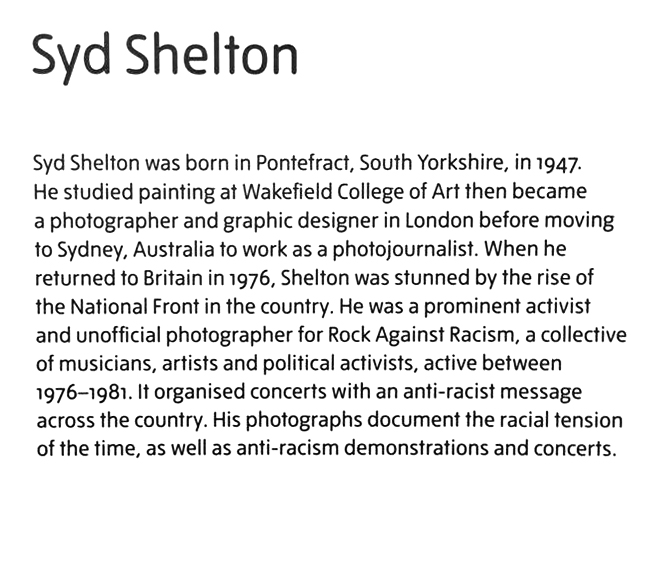
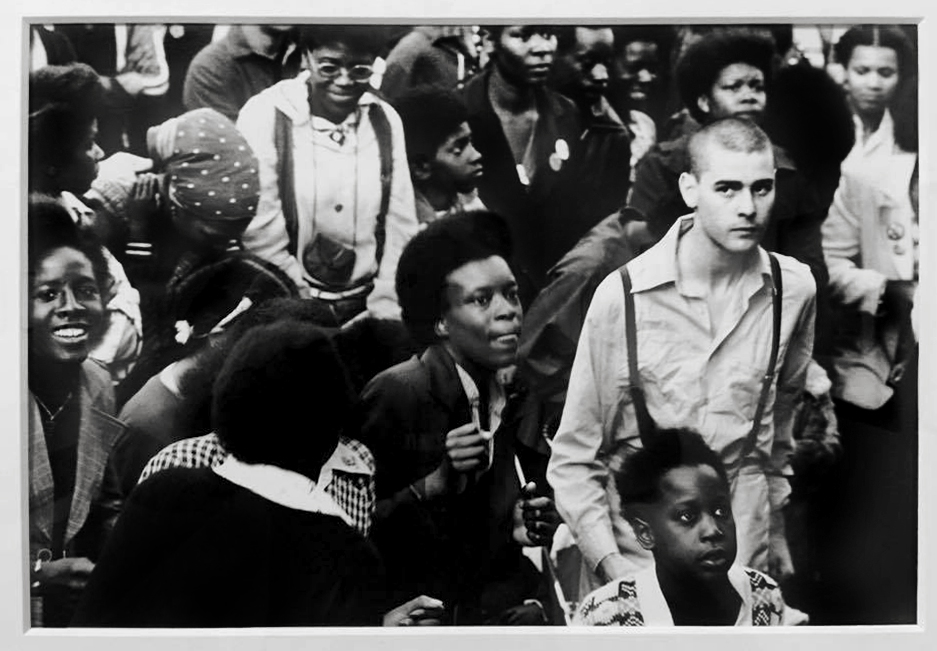
Syd Shelton wall text from the display


Syd Shelton (British, b. 1947) 'Southhall Carnival against the Nazis' 1979, printed 2012 (installation view)


Syd Shelton (British, b. 1947)
Southhall Carnival against the Nazis (installation view)
1979, printed 2012
Gelatin silver print on paper
Gift Eric and Louise Franck London Collection 2016
Photo: Marcus Bunyan


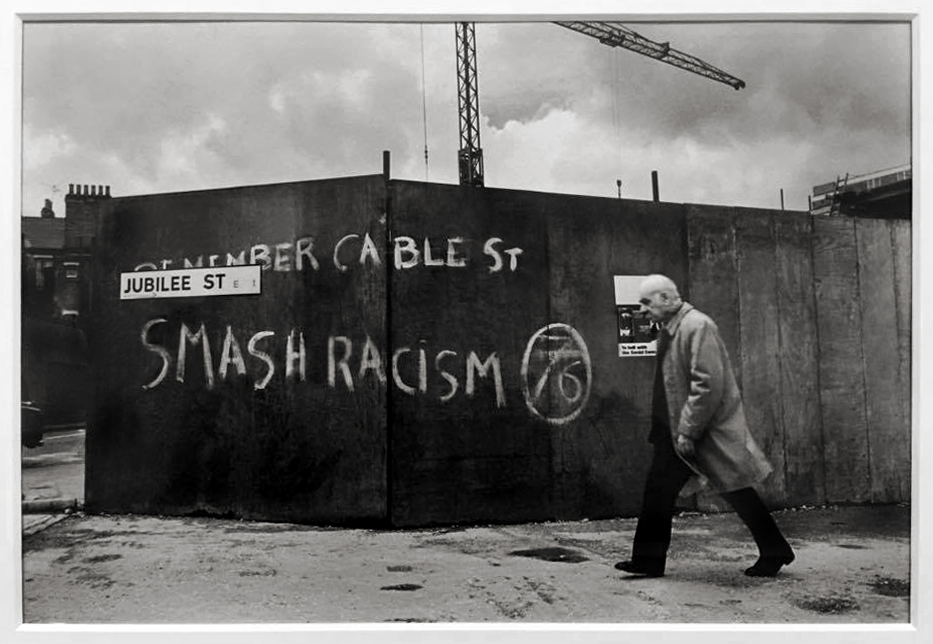
Syd Shelton (British, b. 1947) 'Jubilee Street, Stepney, London' 1977, printed 2012 (installation view)


Syd Shelton (British, b. 1947)
Jubilee Street, Stepney, London (installation view)
1977, printed 2012
Gelatin silver print on paper
Gift Eric and Louise Franck London Collection 2016
Photo: Marcus Bunyan


Syd Shelton (British, b. 1947) 'Bagga (Bevin Fagan), Hackney, East London' 1979, printed 2012 (installation view)


Syd Shelton (British, b. 1947)
Bagga (Bevin Fagan), Hackney, East London (installation view)
1979, printed 2012
Gelatin silver print on paper
Gift Eric and Louise Franck London Collection 2016
Photo: Marcus Bunyan


Syd Shelton (British, b. 1947) 'Skinheads, Petticoat Lane, East London' 1979, printed 2012 (installation view)


Syd Shelton (British, b. 1947)
Skinheads, Petticoat Lane, East London (installation view)
1979, printed 2012
Gelatin silver print on paper
Gift Eric and Louise Franck London Collection 2016
Photo: Marcus Bunyan


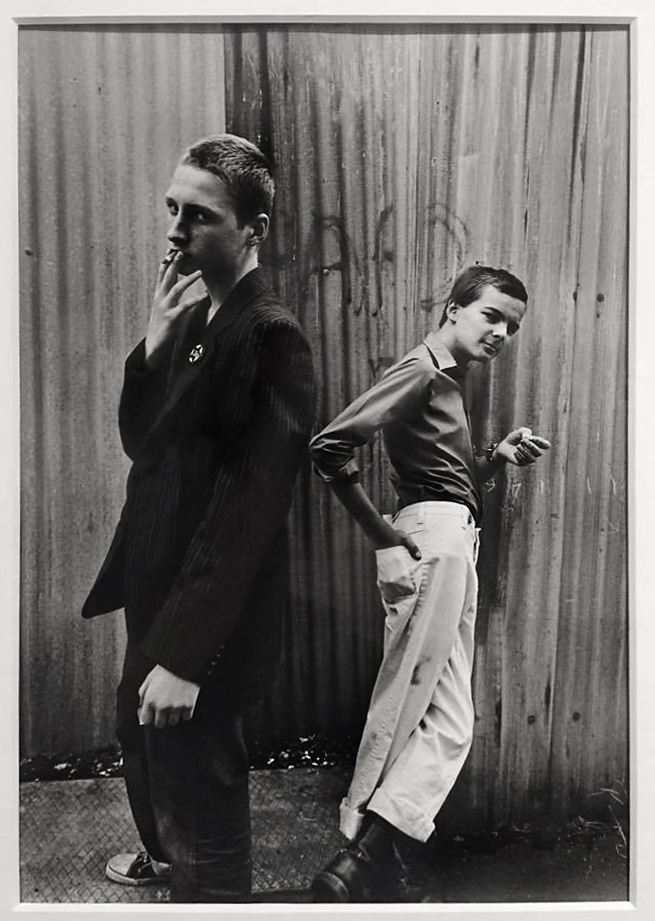
Syd Shelton (British, b. 1947) 'Anti racist Skinheads, Hackney, London' 1979, printed 2012 (installation view)


Syd Shelton (British, b. 1947)
Anti racist Skinheads, Hackney, London (installation view)
1979, printed 2012
Gelatin silver print on paper
Gift Eric and Louise Franck London Collection 2016


Neil Kenlock wall text from the display


Neil Kenlock (British born Jamaica, b. 1950) 'The Bailey Sisters in Clapham' c. 1970, printed 2010 (installation view)


Neil Kenlock (British born Jamaica, b. 1950)
The Bailey Sisters in Clapham (installation view)
c. 1970, printed 2010
Gelatin silver print on paper
Presented by Tate Members 2013 and forming part of the Eric and Louise Franck London Collection
Photo: Marcus Bunyan


Neil Kenlock (born 1950) 'Demonstration outside Brixton Library' 1972, printed 2010


Neil Kenlock (British born Jamaica, b. 1950)
Demonstration outside Brixton Library (installation view)
1972, printed 2010
Gelatin silver print on paper
Presented by Tate Members 2013 and forming part of the Eric and Louise Franck London Collection
Photo: Marcus Bunyan


Neil Kenlock (British born Jamaica, b. 1950) ''Keep Britain White' graffiti, Balham' 1972, printed 2010 (installation view)


Neil Kenlock (British born Jamaica, b. 1950)
‘Keep Britain White’ graffiti, Balham (installation view)
1972, printed 2010
Gelatin silver print on paper
Presented by Tate Members 2013 and forming part of the Eric and Louise Franck London Collection
Photo: Marcus Bunyan


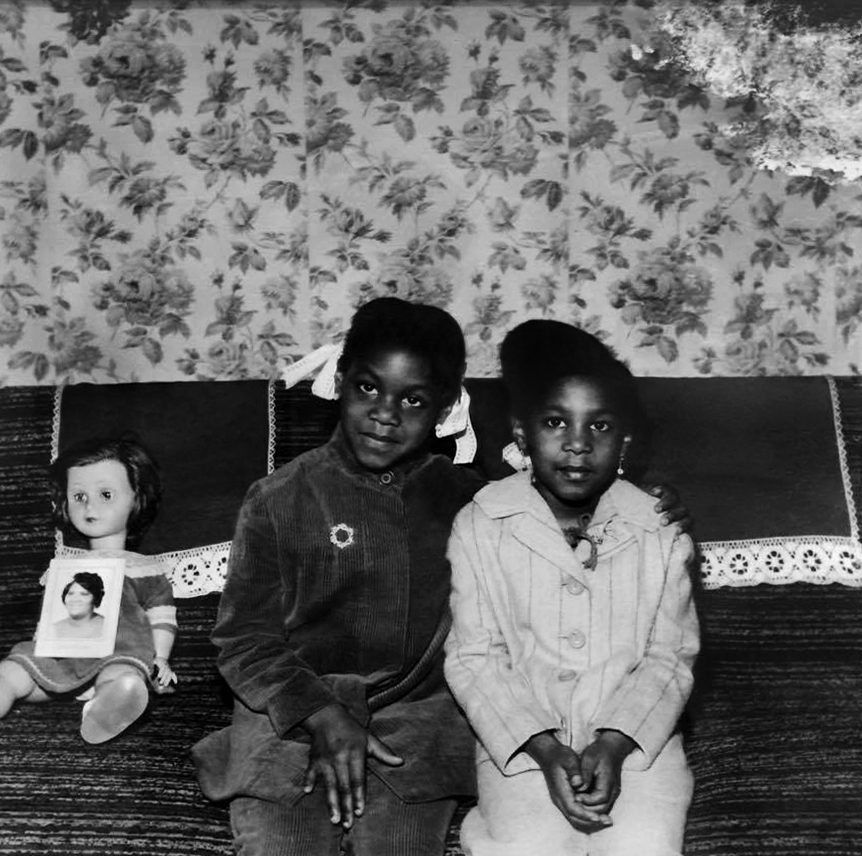
Raphael Albert wall text from the display


Raphael Albert (British born Grenada, 1935-2009) 'The Golden Chip, Hammersmith, London' c. 1970, printed 2012 (installation view)


Raphael Albert (British born Grenada, 1935-2009)
The Golden Chip, Hammersmith, London (installation view)
c. 1970, printed 2012
Gelatin silver print on paper
Gift Eric and Louise Franck London Collection 2016
Photo: Marcus Bunyan


Raphael Albert (British born Grenada, 1935-2009) 'Hammersmith, London' 1960s, printed 2012


Raphael Albert (British born Grenada, 1935-2009)
Hammersmith, London (installation view)
1960s, printed 2012
Gelatin silver print on paper
Gift Eric and Louise Franck London Collection 2016


Raphael Albert (British born Grenada, 1935-2009) 'The Harder They Come, Hammersmith Apollo' c. 1972, printed 2012


Raphael Albert (British born Grenada, 1935-2009)
The Harder They Come, Hammersmith Apollo (installation view)
c. 1972, printed 2012
Gelatin silver print on paper
Gift Eric and Louise Franck London Collection 2016


Raphael Albert (British born Grenada, 1935-2009) 'Holley posing at Blythe Road, London' c. 1974, printed 2012 (installation view)


Raphael Albert (British born Grenada, 1935-2009)
Holley posing at Blythe Road, London (installation view)
c. 1974, printed 2012
Gelatin silver print on paper
Gift Eric and Louise Franck London Collection 2016
Photo: Marcus Bunyan


Tate Britain
Millbank, London SW1P 4RG
United Kingdom
Phone: +44 20 7887 8888

Opening hours:
10.00am – 18.00pm daily

Tate Britain website

LIKE ART BLART ON FACEBOOK

Back to top

Exhibition: ‘Tim Hetherington / Doug Rickard’ at Stills Gallery, Sydney

Exhibition dates: 22nd May to 22nd June 2013

In association with Yossi Milo Gallery and Head On Photo Festival


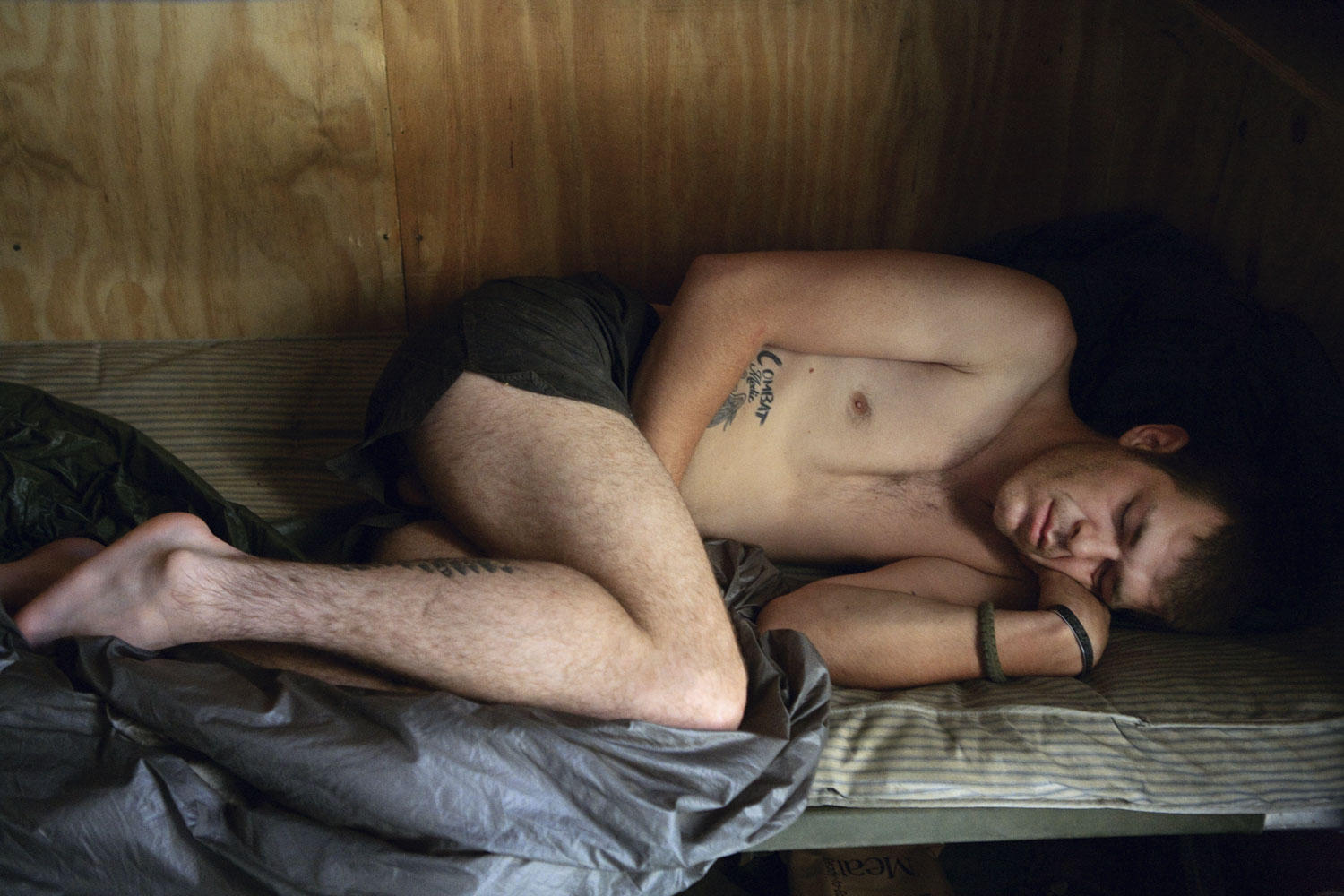
Tim Hetherington (British, 1970-2011) 'Alcantara, Korengal Valley, Kunar Province, Afghanistan' 2008


Tim Hetherington (British, 1970-2011)
Alcantara, Korengal Valley, Kunar Province, Afghanistan
2008
from Sleeping Soldiers, 2008
Digital C-prints
76.2 x 114.3cm
Editions of 18 + 4AP


“Our generation is not attached to this myth of photography as objective reporting because we know it’s not. And so he and I had been kind of playing with the idea of, so where is that line? What does that mean? Are we, by definition, objective? Is there something else that can be reported about war that can be more about the experience? That touches on what it’s like to be there, on the individual conflict of what it means to be there? That’s what that particular work is about.”


Chris Anderson


The intimacy of war

Both of these series depict human bodies under surveillance. In one (Tim Hetherington) the subject is un/aware. Having given the photographer prior consent to be photographed while they were sleeping the American servicemen remain blissfully unaware of the result of the camera “snapping” them. Just as they seem to be on the very verge of snapping in the video Sleeping Soldiers_single screen (2009, below). The psychological scars of war don’t differentiate between awake and asleep, aware and unaware:

“The photographer wanted to reveal the soldiers how they must seem to their mothers: innocent, vulnerable. Still it is a portrait of the scars of war because, as Hetherington said, their sleep was often helped along by drugs… That a soldier allowed Hetherington to capture him while asleep illustrates the photographer’s dedication and connection to the platoon.” (Philip Brookman, Corcoran chief curator on the Washington Post website [Online] Cited 12/06/2013)


Hetherington spent 15 months in Afghanistan between 2007-2008 following the members of a 15-strong platoon of US paratroopers at one of the most remote and dangerous outposts in the war zone. He went on to make the award winning film Restrepo (2010) with the footage that he shot during his year-long engagement with the spaces of war. In repose, the US soldiers seem angelic, contemplative, or vulnerable: in the photographs posted here I see Adonis (Alcantara), foetal (Kelso), corpse (Lizama) and death mask (Richardson). As Michael Fried comments on the 1930s Walker Evans subway photographs were he took pictures of commuters with a hidden camera, “the notion that persons who are unaware of being photographed who at the limit are unaware of being beheld manifest the inner truth of their meaning on their faces.” This way of capturing an inner truth is rare in the history of art. While there are plenty of individual paintings that depict sleeping men in art I could find no body of work that depicts men sleeping in photography.

Although the exhibition is of the still photographs, what I find most chilling however is how Hetherington melds the sleeping bodies with action footage in the video. The overlaying of the sound of helicopters onto images of the sleeping soldiers, the blending of bodies and machines, the reverberation of voices with the rat tat tat of heavy weapons fire is particularly disturbing. The look in the soldier’s eyes as he freaks out when one of his compatriots is shot at 3.24 – 3.38 of the video is frightening. The grief, the fear, palpable – and then to end the video with the corpse-like body of Lizama… THIS is the horror of war. Kill or be killed, boredom, nightmares, as if fighting and sleeping in a dream. Hetherington lays it all on the line for the viewer.

“For me, it’s kind of the closest thing I’ve seen, in any form, that actually shows what it must feel like to be in combat. You’re right there with the soldiers, and they’re not heroic; they’re really just struggling to come to terms with what is going on around them. That’s really what this is. So instead of showing them just being honourable, he’s showing this stuff, the scenes of them being in combat, as a kind of dream.” (Philip Brookman, Corcoran chief curator)

Dr Marcus Bunyan


Many thankx to Stills Gallery for allowing me to publish the photographs in the posting. Please click on the photographs for a larger version of the image.


Tim Hetherington (British, 1970-2011) 'Donoho, Korengal Valley, Kunar Province, Afghanistan' 2008


Tim Hetherington (British, 1970-2011)
Donoho, Korengal Valley, Kunar Province, Afghanistan
2008
from Sleeping Soldiers, 2008
Digital C-prints
76.2 x 114.3cm
Editions of 18 + 4AP


Tim Hetherington (British, 1970-2011) 'Kelso, Korengal Valley, Kunar Province, Afghanistan' 2008


Tim Hetherington (British, 1970-2011)
Kelso, Korengal Valley, Kunar Province, Afghanistan
2008
from Sleeping Soldiers, 2008
Digital C-prints
76.2 x 114.3cm
Editions of 18 + 4AP


“The book and film are about the intimacy of war,” explains Hetherington. “And that’s what I see when I see the photographs of these guys sleeping. We are used to seeing soldiers as cardboard cut-outs. We dehumanise them, but war is a very intimate act. All of those soldiers would die for each other. We’re not talking about friendship. We’re talking about brotherhood.”

“You can get bored of taking pictures of fighting,” he says. “I got more interested in the relationship between the soldiers. That’s where the shots of them sleeping came from. If you go to these places you can sometimes get all your media oxygen sucked up by the fighting; we were lucky to have time to explore other things.”

“In America, soldiers are used by the right wing as a symbol of patriotic duty, but the truth is they are all individuals,” he concludes. “And the Left want a moral condemnation of the war. What I say is that if we have a full understanding of what the soldiers can and can’t do out there, it is a good starting point for peace-building. The heart of the war machine is in fact taking a group of young men and putting them on the side of a mountain. We need to understand that experience. Certainly if we have any hope of properly reintegrating them into society.”

Rob Sharp. “Combat fatigue: Tim Hetherington’s intimate portraits of US soldiers at rest reveal the other side of Afghanistan,” on The Independent website, 11th September 2010 [Online] Cited 19/09/2022


Tim Hetherington (British, 1970-2011) 'Kelso, Korengal Valley, Kunar Province, Afghanistan' 2008


Tim Hetherington (British, 1970-2011)
Kelso, Korengal Valley, Kunar Province, Afghanistan
2008
from Sleeping Soldiers, 2008
Digital C-prints
76.2 x 114.3cm
Editions of 18 + 4AP


Tim Hetherington (British, 1970-2011) 'Kim, Korengal Valley, Kunar Province, Afghanistan' 2008


Tim Hetherington (British, 1970-2011)
Kim, Korengal Valley, Kunar Province, Afghanistan
2008
from Sleeping Soldiers, 2008
Digital C-prints
76.2 x 114.3cm
Editions of 18 + 4AP


Tim Hetherington (British, 1970-2011) 'Lizama, Korengal Valley, Kunar Province, Afghanistan' 2008


Tim Hetherington (British, 1970-2011)
Lizama, Korengal Valley, Kunar Province, Afghanistan
2008
from Sleeping Soldiers, 2008
Digital C-prints
76.2 x 114.3cm
Editions of 18 + 4AP


Tim Hetherington (British, 1970-2011) 'Nevalla, Korengal Valley, Kunar Province, Afghanistan' 2008


Tim Hetherington (British, 1970-2011)
Nevalla, Korengal Valley, Kunar Province, Afghanistan
2008
from Sleeping Soldiers, 2008
Digital C-prints
76.2 x 114.3cm
Editions of 18 + 4AP


Tim Hetherington (British, 1970-2011) 'Richardson, Korengal Valley, Kunar Province, Afghanistan' 2008


Tim Hetherington (British, 1970-2011)
Richardson, Korengal Valley, Kunar Province, Afghanistan
2008
from Sleeping Soldiers, 2008
Digital C-prints
76.2 x 114.3cm
Editions of 18 + 4AP


Sleeping Soldiers_single screen (2009) from Tim Hetherington.


In association with Head On Photo Festival, Stills Gallery is delighted to host compelling works by two internationally acclaimed artists, Tim Hetherington and Doug Rickard, brought to Australian audiences from Yossi Milo Gallery, New York.

Without the guns and artillery of war, or the armor of bravado and aggression, Tim Hetherington’s images of sleeping American soldiers are disarmingly peaceful and childlike in their vulnerability. Hetherington observed this active-duty battalion while they were stationed in Afghanistan’s Korengal Valley during 2007-08, capturing beneath the camouflage the most intimate of moments, which are seemingly at odds with common reportage images of adrenaline-fuelled and stony-faced soldiers. Through his photographs, writing and films, Tim Hetherington gave us new ways to look at and think about human suffering. Tim was tragically killed on April 20, 2011, while photographing and filming the conflict in Libya.

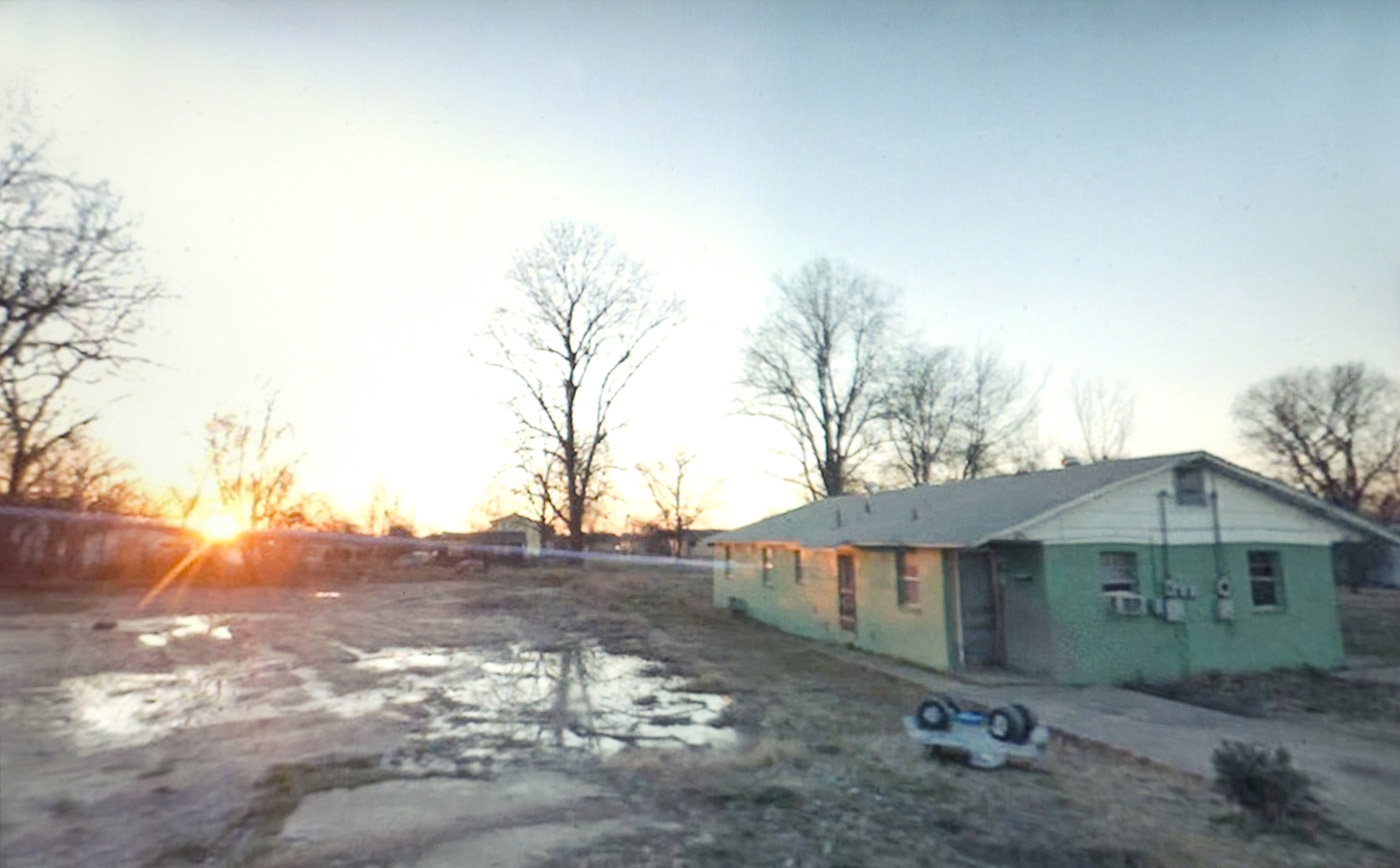
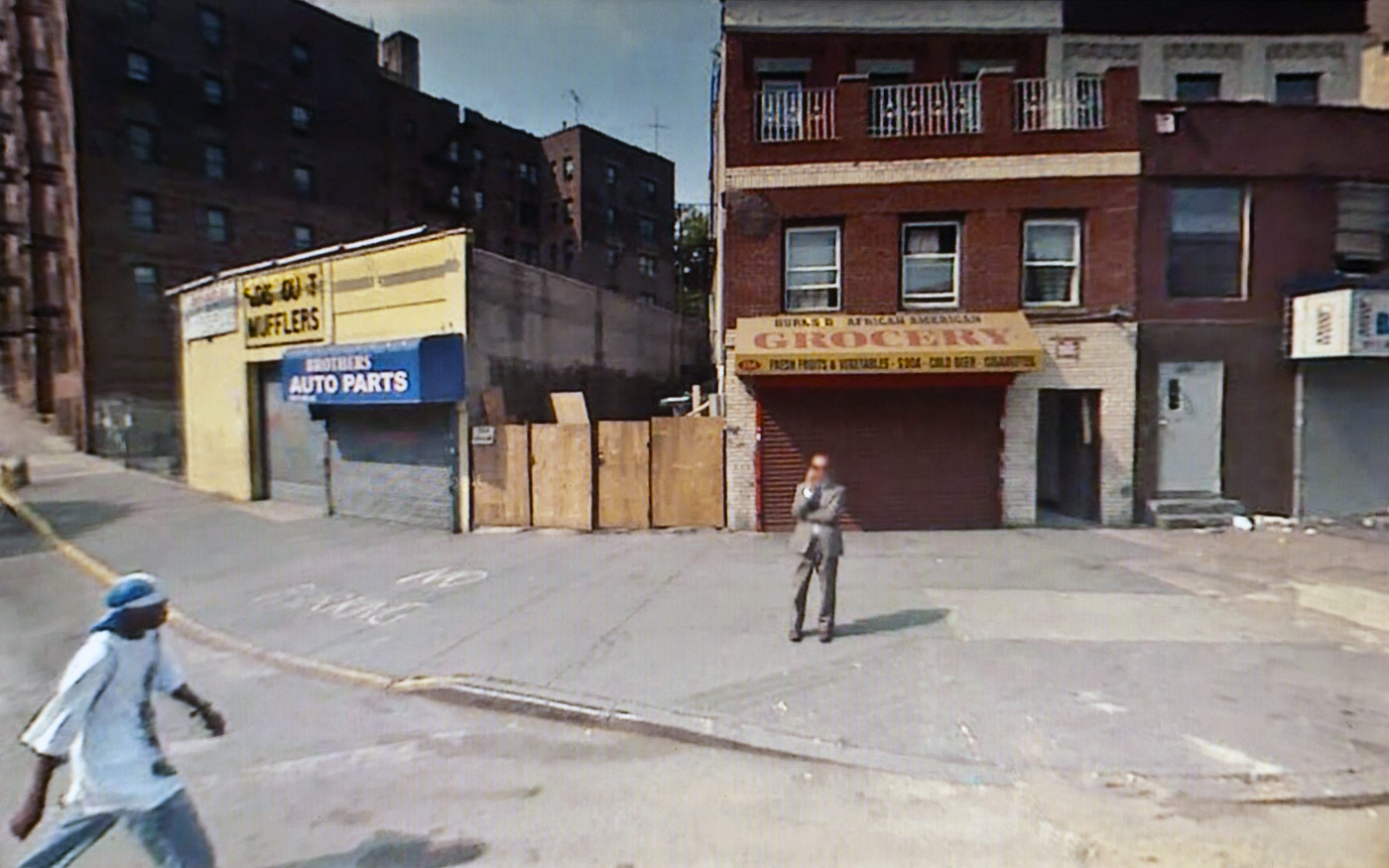
Doug Rickard’s A New American Picture depicts American street scenes, located using the internet platform Google Street View. Over a four-year period, Rickard virtually explored the roads of America looking for forgotten, economically devastated, and largely abandoned places. After locating and composing scenes of urban and rural decay, Rickard re-photographed the images on his computer screen, freeing the image from its technological origins and re-presenting them on a new documentary plane. Rickard’s work evokes a connection to the tradition of American street photography. He both follows and advances that tradition, with a documentary strategy that acknowledges an increasingly technological world. Collectively, these images present a photographic portrait of the socially disenfranchised and economically powerless, those living an inversion of the American Dream.

Both artists are highly regarded for their contributions to contemporary photographic and film practices. Before his untimely death Hetherington received numerous accolades for his documentation of conflict zones, including the 2007 World Press Photo of the Year, the Rory Peck Award for Features (2008), an Alfred I. duPont Award (2009), and an Academy Award nomination for Restrepo (2011). His work has posthumously become part of the Magnum Photo Archive. Doug Rickard is founder of American Suburb X and These Americans, and his work has been widely exhibited including in New Photography 2011 at MOMA, New York, Le Bal, Paris, and the 42nd edition of Les Rencontres d’Arles. A monograph of A New American Picture was first published in 2010 and was rereleased in 2012.This is the first opportunity for Australian audiences to see many of these works, and it is also a new collaboration with the prestigious Yossi Milo Gallery, established in 2000, and focused on the representation of artists specialising in photo-based art, video and works on paper.

Text from the Stills Gallery website


Doug Rickard (American, b. 1968) '#32.700542, Dallas, TX (2009)' 2011


Doug Rickard (American, b. 1968)
#32.700542, Dallas, TX (2009)
2011
from A New American Picture
Archival pigment prints
66.04 x 105.41cm
Editions of 5 + 3AP

.

Doug Rickard (American, b. 1968) '#34.546147, Helena-West Helena, AR (2008)' 2010


Doug Rickard (American, b. 1968)
#34.546147, Helena-West Helena, AR (2008)
2010
from A New American Picture
Archival pigment prints
66.04 x 105.41cm
Editions of 5 + 3AP


Doug Rickard (American, b. 1968) '#40.700776, Jersey City, NJ (2007)' 2011


Doug Rickard (American, b. 1968)
#40.700776, Jersey City, NJ (2007)
2011
from A New American Picture
Archival pigment prints
66.04 x 105.41cm
Editions of 5 + 3AP


Doug Rickard (American, b. 1968) '#40.805716, Bronx, NY (2007)' 2011


Doug Rickard (American, b. 1968)
#40.805716, Bronx, NY (2007)
2011
from A New American Picture
Archival pigment prints
66.04 x 105.41cm
Editions of 5 + 3AP


Doug Rickard (American, b. 1968) '#82.948842, Detroit, MI (2009)' 2010


Doug Rickard (American, b. 1968)
#82.948842, Detroit, MI (2009)
2010
from A New American Picture
Archival pigment prints
101.6 x 162.56cm
Edition of 5 + 3AP


Doug Rickard (American, b. 1968) '#114.196622, Lennox, CA (2007)' 2012


Doug Rickard (American, b. 1968)
#114.196622, Lennox, CA (2007)
2012
from A New American Picture
Archival pigment prints
66.04 x 105.41cm
Editions of 5 + 3AP


Stills Gallery

This gallery has now closed.

Stills Gallery website

LIKE ART BLART ON FACEBOOK

Back to top

Exhibition: ‘Edith Tudor-Hart: In the Shadow of Tyranny’ at the Scottish National Portrait Gallery, Edinburgh

Exhibition dates: 2nd March – 26th May 2013


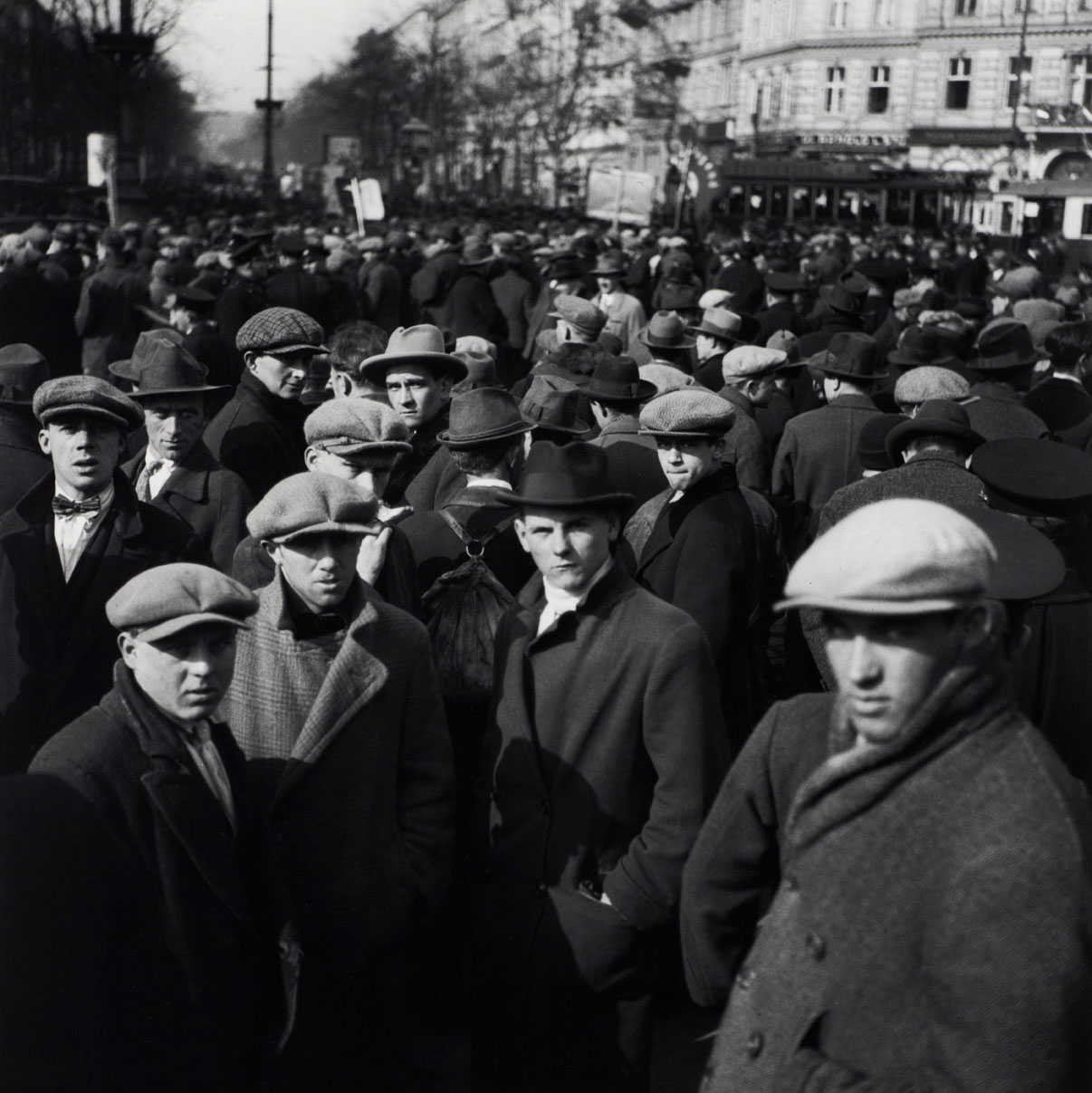
Edith Tudor-Hart (Austrian-British, 1908-1973) 'Untitled (Unemployed Workers' Demonstration, Vienna)' 1932


Edith Tudor-Hart (Austrian-British, 1908-1973)
Untitled (Unemployed Workers’ Demonstration, Vienna)
1932
Modern silver gelatine print from archival negative
30.3 x 30cm
Scottish National Portrait Gallery: Archive presented by Wolfgang Suschitzky 2004
© The Estate of Edith Tudor-Hart


Another photographer unknown to me, who “attempted to use the camera as a political weapon, aligning her practice with the wider worker photography movement” and produced “images that show a sophisticated realism, marked by their directness and capacity to communicate issues of inequality and deprivation.” In other words she was using photography to fight the good fight, producing photographs that interrogate issues of poverty, unemployment and slum housing.

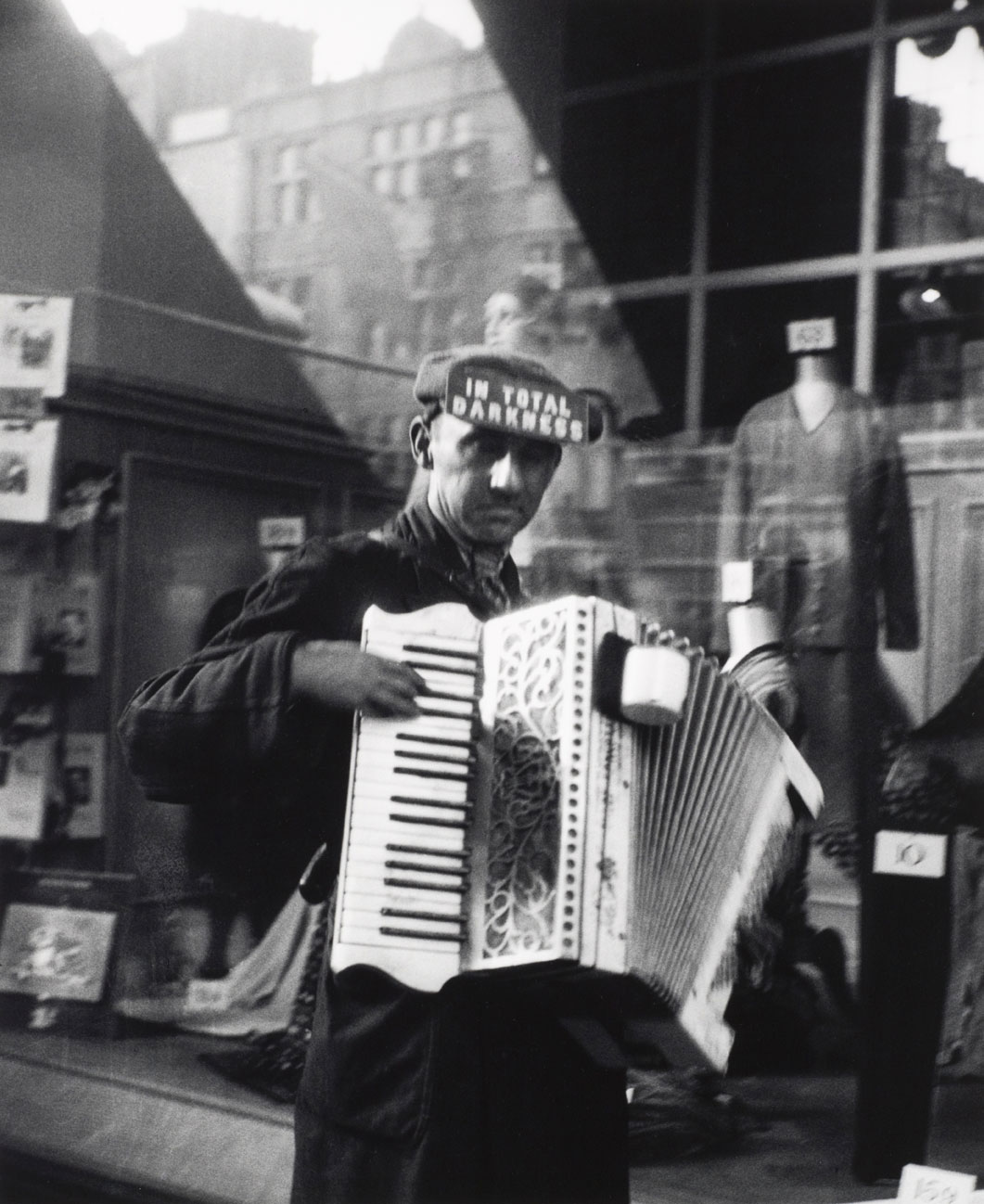
But there is more to Tudor-Hart’s photographs than just social realism otherwise they would not hold us so. Beyond a perceptive understanding of light and the formal elements of the picture plane there is that ineffable something that a good photographer always has – the ability to transcend the scene, to capture the chance encounter – be it the look on a woman’s face, the ensemble of children preparing vegetables or the untitled man ‘In Total Darkness’ (with traces of Eugene Atget). The aesthetic of engagement, the ability of her photographs to speak directly to the viewer in a vital, dynamic way, also speaks to the life of the photographer: studied at the Bauhaus, an agent for the Communist party, I would have liked to have met this artist.

Dr Marcus Bunyan


Many thankx to the Scottish National Portrait Gallery for allowing me to publish the photographs in the posting. Please click on the photographs for a larger version of the image.


Edith Tudor-Hart (Austrian-British, 1908-1973) 'Demonstration, South Wales' 1935


Edith Tudor-Hart (Austrian-British, 1908-1973)
Demonstration, South Wales
1935
Printed 2004 from original negatives held in the Edith Tudor Hart Archive
Gelatin silver print
Framed: 50.80 x 40.64cm
© The Estate of Edith Tudor-Hart


Edith Tudor Hart was in South Wales in the 1930s following her husband’s appointment as a GP there. As communists they would have sympathised with the economic hardship of the miners in the Rhondda valley. During the industrial depression following the First World War, unemployment figures in the area soared. With the help of other unions, the National Unemployed Workers’ Movement (NUWM) organised Hunger Marches, which demanded more fair unemployment legislation. This photograph was taken during one such demonstration, with the photographer perched on a post opposite the crowd of men.

Text from the National Galleries of Scotland website


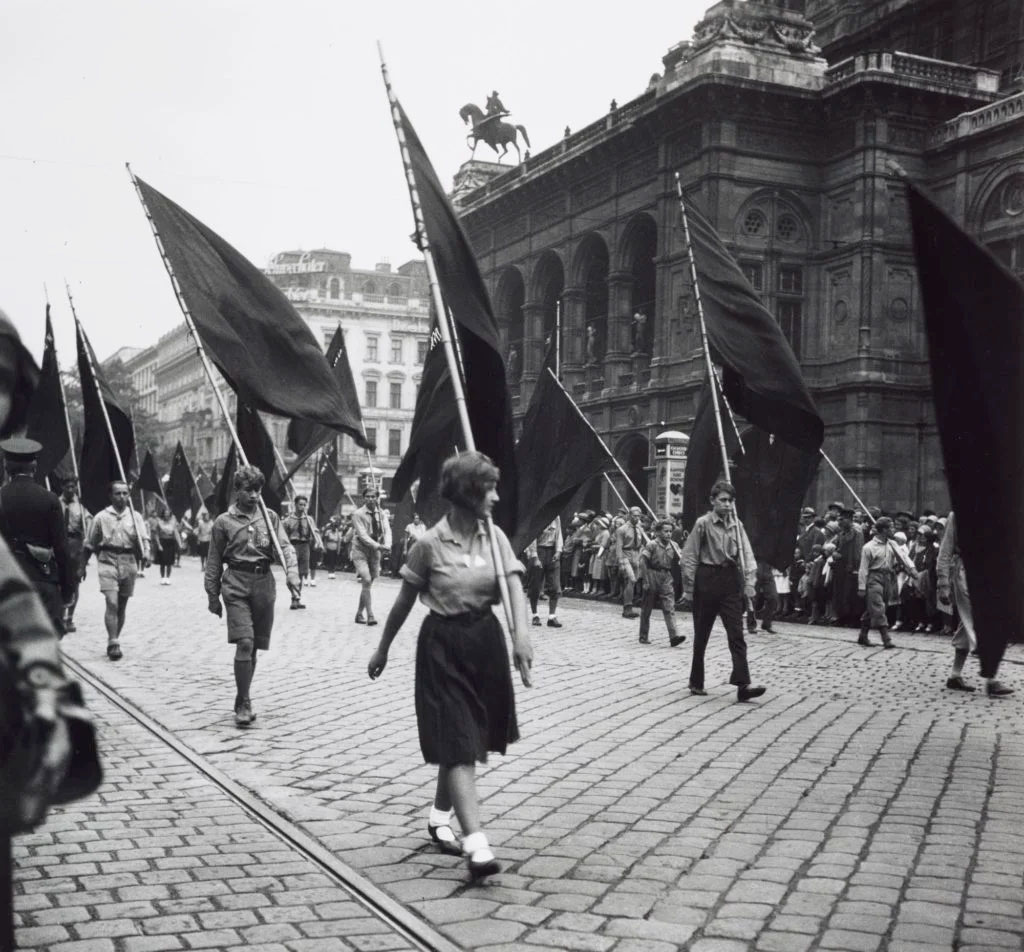
Edith Tudor-Hart (Austrian-British, 1908-1973) 'Members of the Social-Democratic Youth Movement Marching Past the Opera House, Opernring, Vienna' c. 1928


Edith Tudor-Hart (Austrian-British, 1908-1973)
Members of the Social-Democratic Youth Movement Marching Past the Opera House, Opernring, Vienna
c. 1928
Printed 2004 from original negatives held in the Edith Tudor Hart Archive
Gelatin silver print
28 x 30cm
Scottish National Portrait Gallery
© Copyright held jointly by Peter Suschitzky, Julia Donat & Misha Donat


This is a very dynamic image showing members of the Social-Democratic Youth Movement marching in Vienna. In the wake of the First World War, the Austrian political parties had a youthful membership – it is estimated that up to sixty per cent of the Viennese Social Democrats were under forty years of age. The limits of teenagers’ political engagement was a particular source of controversy, with many arguing that the youth movement should be more educational than political. Memoirs of the period reveal that political identification was often fluid. A common joke amongst young activists was that you went to bed a Social Democrat and woke up a Communist!

Text from the National Galleries of Scotland website


Edith Tudor-Hart (Austrian-British, 1908-1973) 'Untitled (Man Selling Fruit, Vienna)' c. 1930


Edith Tudor-Hart (Austrian-British, 1908-1973)
Untitled (Man Selling Fruit, Vienna)
c. 1930
Modern silver gelatine print from archival negative
30.3 x 30.1cm
Scottish National Portrait Gallery: Archive presented by Wolfgang Suschitzky 2004
© The Estate of Edith Tudor-Hart


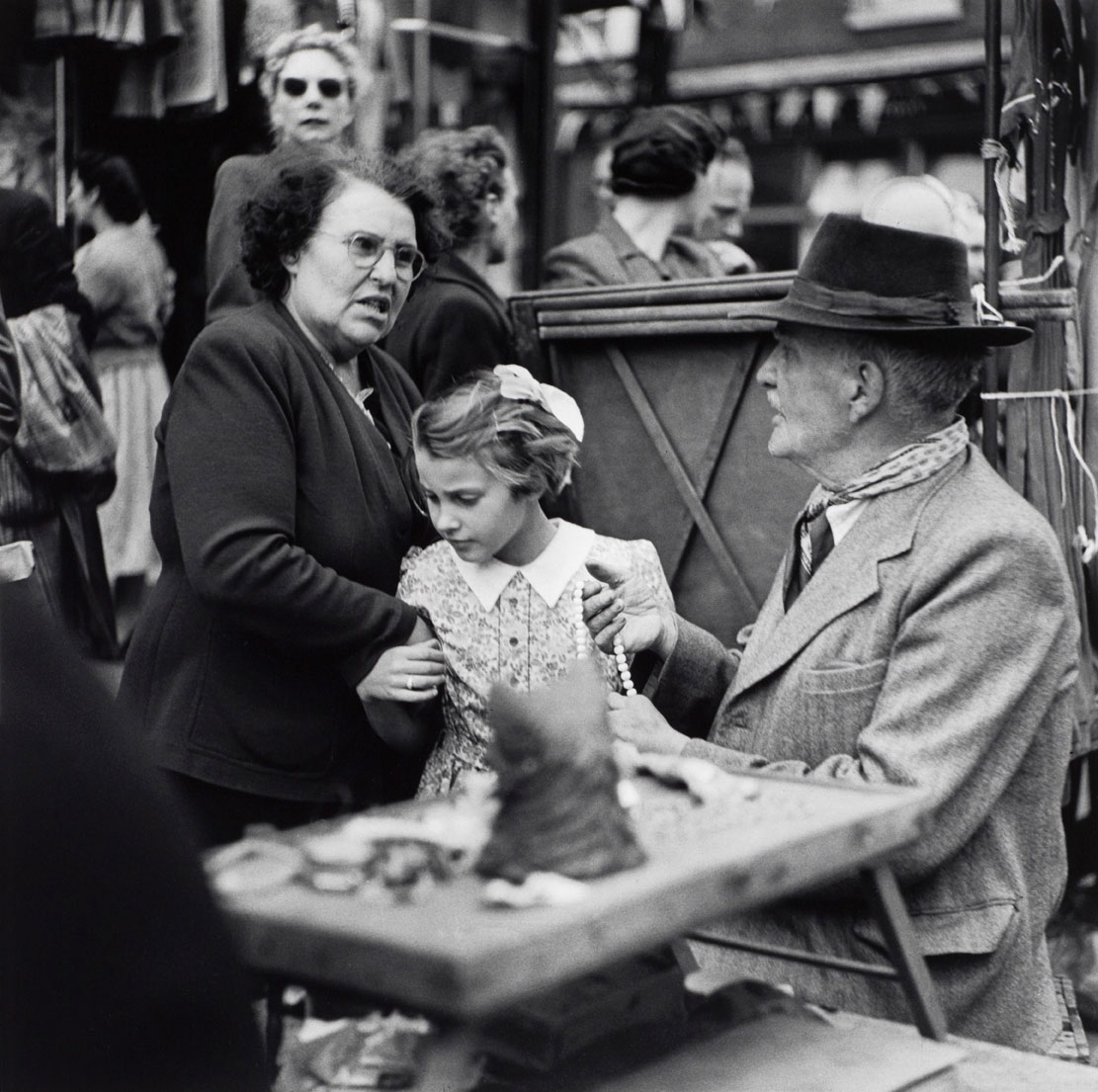
Edith Tudor-Hart (Austrian-British, 1908-1973) 'Untitled (Caledonian Market, London)' c. 1931


Edith Tudor-Hart (Austrian-British, 1908-1973)
Untitled (Caledonian Market, London)
c. 1931
Modern silver gelatine print from archival negative
27.7 x 27.5cm
Scottish National Portrait Gallery: Archive presented by Wolfgang Suschitzky 2004
© The Estate of Edith Tudor-Hart


Edith Tudor-Hart (Austrian-British, 1908-1973) 'Ferris Wheel, Vienna' c. 1931


Edith Tudor-Hart (Austrian-British, 1908-1973)
Ferris Wheel, Vienna
c. 1931
Printed 2004 from original negatives held in the Edith Tudor Hart Archive
Gelatin silver print
29.3 x 29.2cm
Scottish National Portrait Gallery: Archive presented by Wolfgang Suschitzky 2004
© The Estate of Edith Tudor-Hart


Before marrying Edith Tudor Hart had studied photography at the Bauhaus in Dessau. The concerns of this school are obvious in the geometries and startling perspective of this image. Note the exaggerated size of the steel supports of the wheel and the minute figures of the people standing on the ground. The photographer’s eagerness to document the dynamism of urban life suggests she was aware of developments in Soviet avant-garde photography.

Text from the National Galleries of Scotland website


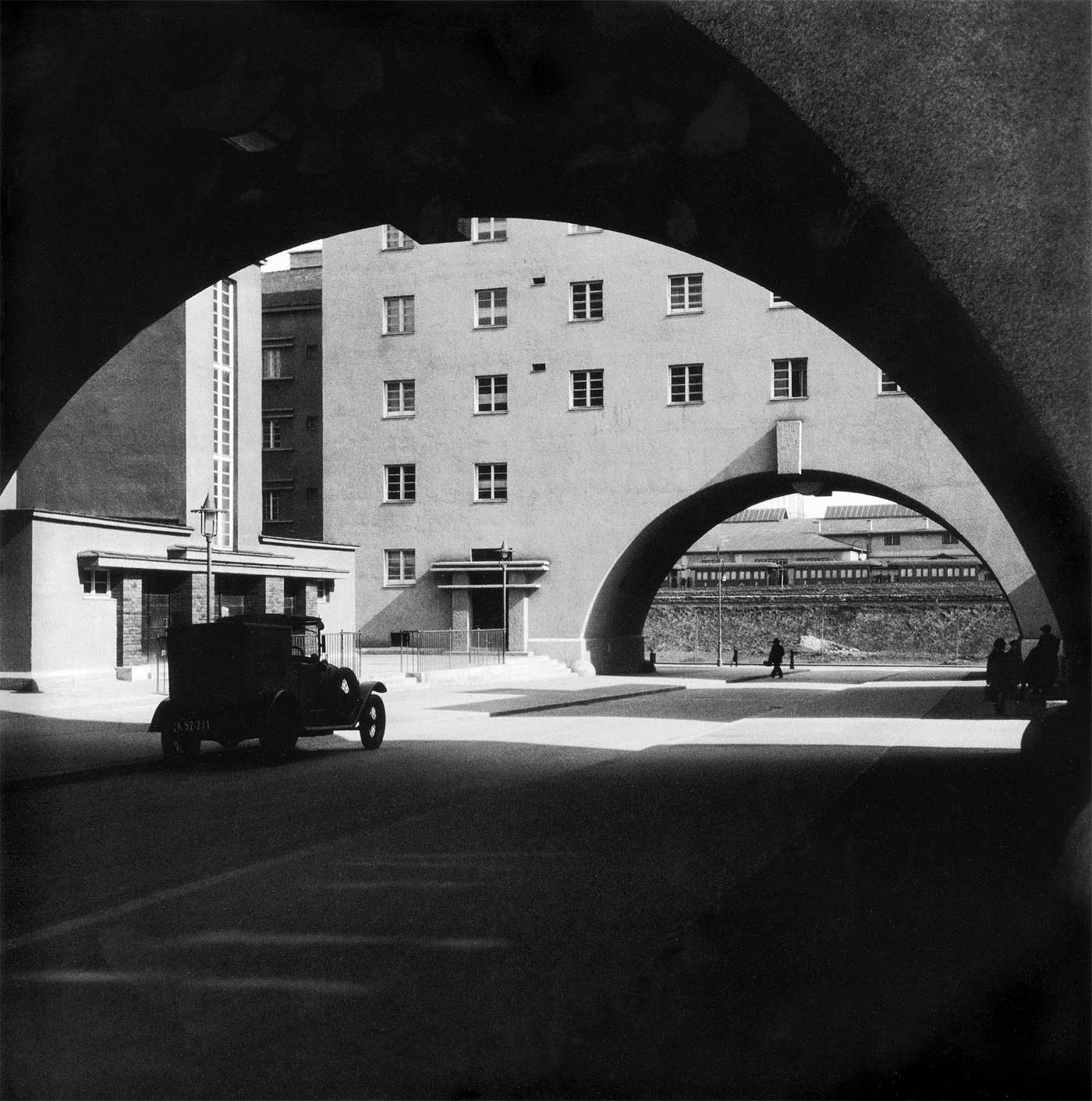
Edith Tudor-Hart (Austrian-British, 1908-1973) 'Karl-Marx-Hof, Vienna' c. 1932


Edith Tudor-Hart (Austrian-British, 1908-1973)
Karl-Marx-Hof, Vienna
c. 1932
Printed 2004 from original negatives held in the Edith Tudor Hart Archive
Gelatin silver print
30.2 x 30cm
Scottish National Portrait Gallery
© Copyright held jointly by Peter Suschitzky, Julia Donat & Misha Donat


The Karl-Marx-Hof was a fortress-like housing estate built by the Social Democrats between 1927 and 1930. A kilometre in length, its huge walls contained nearly 1400 apartments for Viennese workers. In her photograph of the building Tudor-Hart summons both its strength and sense of modernity. However, the permanence evoked by the architecture soon proved to be more apparent than real. In February 1934, during the short-lived Austrian civil war, the building was shelled by Austro-fascist forces. Out-gunned, and concerned about women and children still in their homes, the Karl-Marx-Hof’s defenders surrendered. The first mass movement against European fascism was easily defeated and the Austrian Social Democrats were driven into illegality and exile.

Text from the National Galleries of Scotland website


Edith Tudor-Hart (Austrian-British, 1908-1973) 'Family Group, Stepney, London' c. 1932


Edith Tudor-Hart (Austrian-British, 1908-1973)
Family Group, Stepney, London
c. 1932
Printed 2004 from original negatives held in the Edith Tudor Hart Archive
Gelatin silver print
Scottish National Portrait Gallery
© Copyright held jointly by Peter Suschitzky, Julia Donat & Misha Donat


Tudor-Hart worked extensively amongst working-class communities in East and North London, photographing children on the streets and families in their homes. She was part of a larger movement on the left concerned about the effect of widespread slum housing. However, Tudor-Hart’s imagery is rarely merely propaganda and her ability to connect with those she photographs – often women and children – is evident. This complex photograph explores the photographer’s relationship to her subjects. Shot deliberately through the window it emphasises her voyeurism, thus limiting the sentimental impact of the image.

Text from the National Galleries of Scotland website


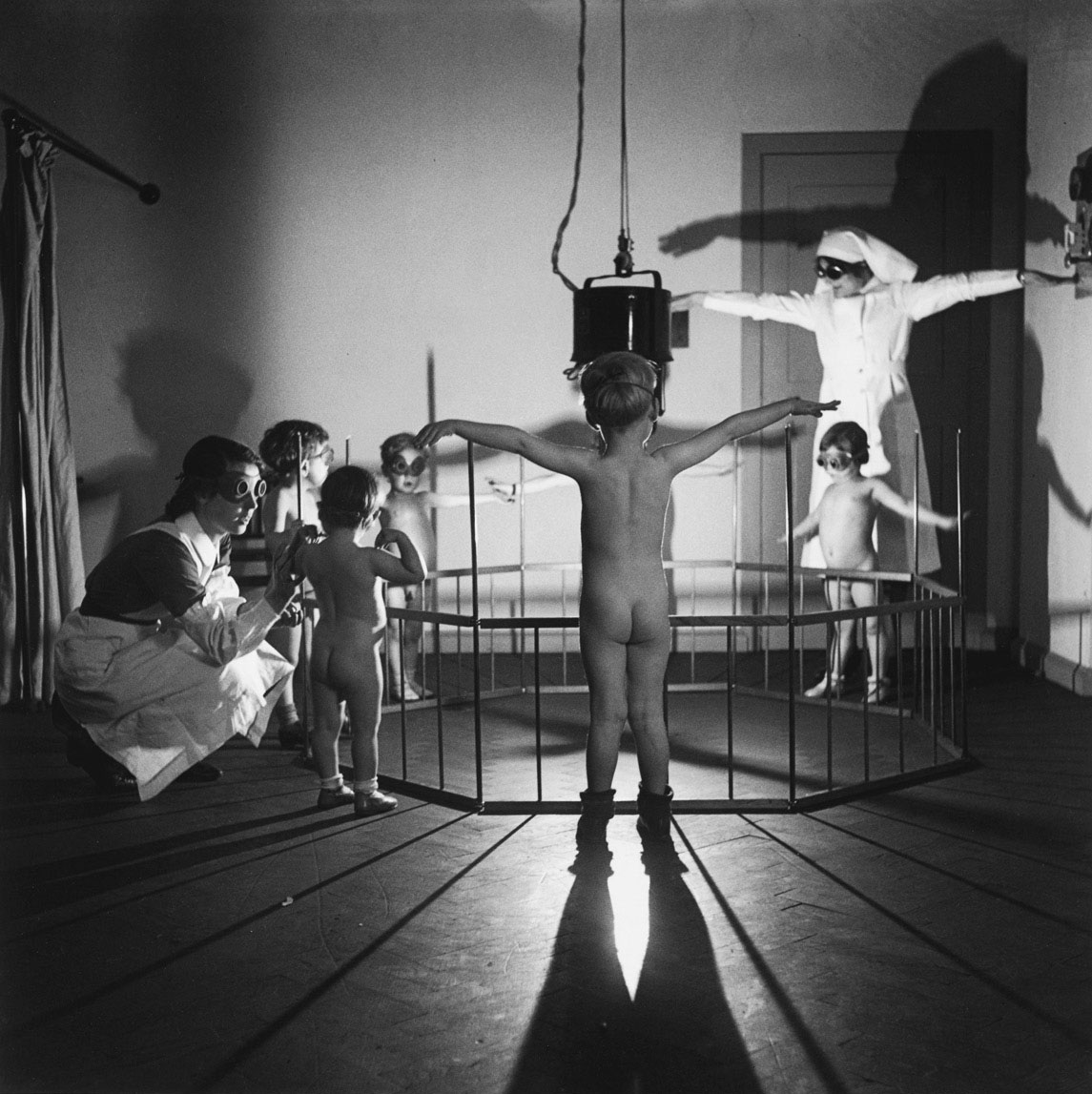
Edith Tudor-Hart (Austrian-British, 1908-1973) 'Untitled (Ultraviolet Light Treatment, South London Hospital for Women and Children)' c. 1935


Edith Tudor-Hart (Austrian-British, 1908-1973)
Untitled (Ultraviolet Light Treatment, South London Hospital for Women and Children)
c. 1935
Modern silver gelatine print from archival negative
30.3 × 30cm
Scottish National Portrait Gallery: Archive presented by Wolfgang Suschitzky 2004


This photograph was taken for a booklet promoting the work of the South London Hospital for Women and Children, produced in collaboration with the German exile photographer, Grete Stern. It shows light treatment for children suffering from vitamin deficiencies, a standard cure at the time. The South London Hospital was founded in 1912 “to meet the growing demand of women for medical treatment by members of their own sex.” Tudor-Hart campaigned throughout her life for health reforms for women and children, part of a wider movement of women whose activity was vital to the formation of the National Health Service in 1948.

Text from the National Galleries of Scotland website


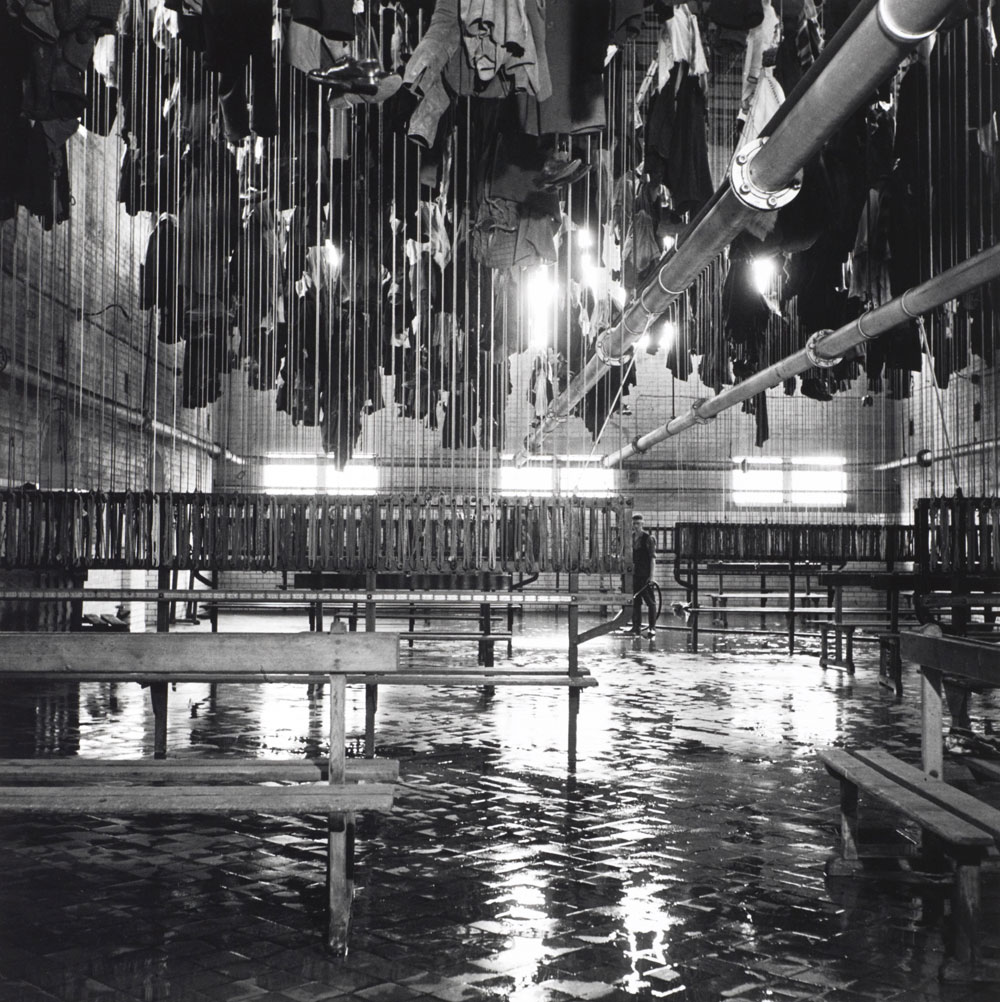
Edith Tudor-Hart (Austrian-British, 1908-1973) 'Untitled (Drying Room, Pit-head Baths, Ashington Colliery, Northumberland)' c. 1937


Edith Tudor-Hart (Austrian-British, 1908-1973)
Untitled (Drying Room, Pit-head Baths, Ashington Colliery, Northumberland)
c. 1937
Modern silver gelatine print from archival negative
30.3 x 30.1cm
Scottish National Portrait Gallery: Archive presented by Wolfgang Suschitzky 2004
© The Estate of Edith Tudor-Hart


The life and work of one of the most extraordinary photographers in Britain during the 1930s and 1940s is the subject of a major new exhibition at the Scottish National Portrait Gallery. Based on extensive new research, Edith Tudor-Hart: In the Shadow of Tyranny, is the first full presentation of the Austrian-born photographer’s work. The exhibition presents over 80 photographs, many of which have never been shown before, and includes film footage, Tudor-Hart’s scrapbook and a selection of her published stories in books and magazines.

During the 1930s, photography became implicated in the vital political and social questions of the era as never before. The enhanced technological capacities of the camera and faster printing processes offered left-wing political activists new techniques for popular mobilisation. The medium took on a sharper social purpose, breaking down the traditional divisions of culture through its quality of immediacy and capacity for self-representation.

Edith Tudor-Hart was a key exponent of this aesthetic of engagement, with images that show a sophisticated realism, marked by their directness and capacity to communicate issues of inequality and deprivation. In a turbulent decade, she attempted to use the camera as a political weapon, aligning her practice with the wider worker photography movement. Tudor-Hart’s photography dealt with many of the major social issues of the day, including poverty, unemployment and slum housing. Her imagery is a vital record of the politically-charged atmosphere of inter-war Vienna and Britain during the Great Slump of the 1930s. After 1945, Tudor-Hart concentrated on questions of child welfare, producing some of the most psychologically penetrating imagery of children of her era.

Tudor-Hart’s life story as a photographer is inextricably tied to the great political upheavals of the twentieth century. Born Edith Suschitzky in Vienna in 1908, she grew up in radical Jewish circles in a city ravaged by the impact of the First World War. Her childhood was dominated by social issues in a culture acutely aware of the impact of the Russian Revolution. After training as a Montessori teacher, she studied photography at the Bauhaus in Dessau and pursued a career as a photojournalist. However, her life was turned upside down in May 1933 when she was arrested whilst working as an agent for the Communist Party of Austria. She escaped long-term imprisonment by marrying an English doctor, Alexander Tudor-Hart, and was exiled to London shortly afterwards. Notoriously, Tudor-Hart continued to combine her practice as a photographer with low-level espionage for the Soviet Union and was pursued by the security services until her death in 1973.

Tudor-Hart’s photography introduced into Britain formal and narrative features that derived from her training on the Continent. Her method initiates a dialogue with those she photographs, very different from the more distancing imagery of the photojournalists. Along with thirty or so German-speaking exile photographers, many of Jewish origin, Tudor-Hart helped transform British photography. After the Second World War, rejected by Fleet Street and the British establishment, Tudor-Hart turned to documenting issues of child welfare. Her photographs were published in Picture Post and a range of other British magazines. By the late 1950s she had abandoned photography altogether.

Commenting on the exhibition, Director of the Scottish National Portrait Gallery, Christopher Baker, said, ‘We are really pleased to be staging this thrilling retrospective of Tudor-Hart’s photography. It combines stunning images with an intriguing life-story and illuminates a turbulent period in European history. Tudor-Hart was one of the great photographers of her era.’ Edith Tudor-Hart: In the Shadow of Tyranny is drawn largely from the photographer’s negative archive, which was donated to the National Galleries of Scotland by her family in 2004. The exhibition travels to the Wien Museum in September and will form the first complete presentation of her work in Austria.

Press release from the Scottish National Portrait Gallery


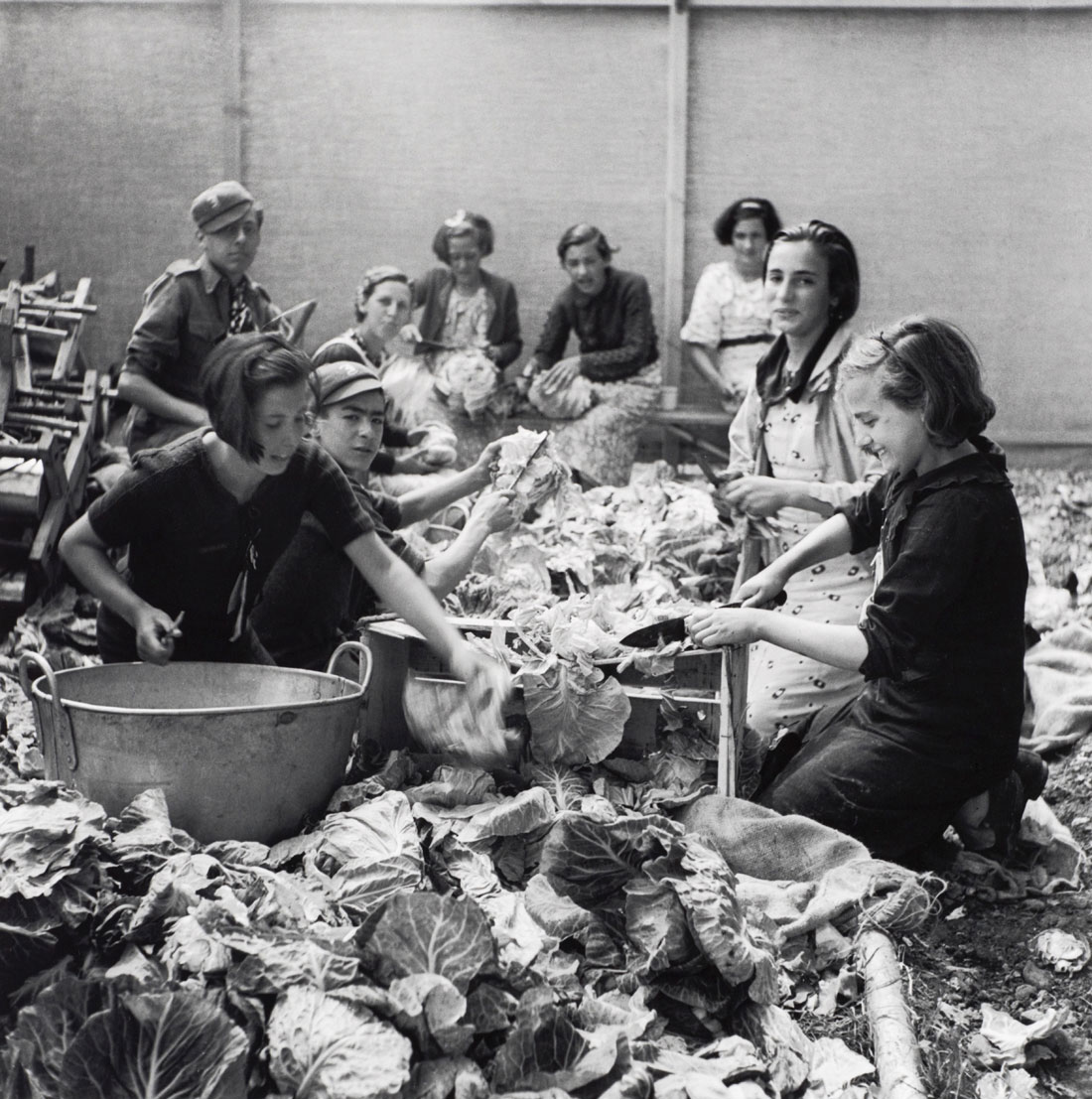
Edith Tudor-Hart (Austrian-British, 1908-1973) 'Untitled (Children Preparing Vegetables, North Stoneham Camp, Hampshire)' 1937


Edith Tudor-Hart (Austrian-British, 1908-1973)
Untitled (Children Preparing Vegetables, North Stoneham Camp, Hampshire)
1937
Modern silver gelatine print from archival negative
30.2 x 29.8cm
Scottish National Portrait Gallery: Archive presented by Wolfgang Suschitzky 2004
© The Estate of Edith Tudor-Hart


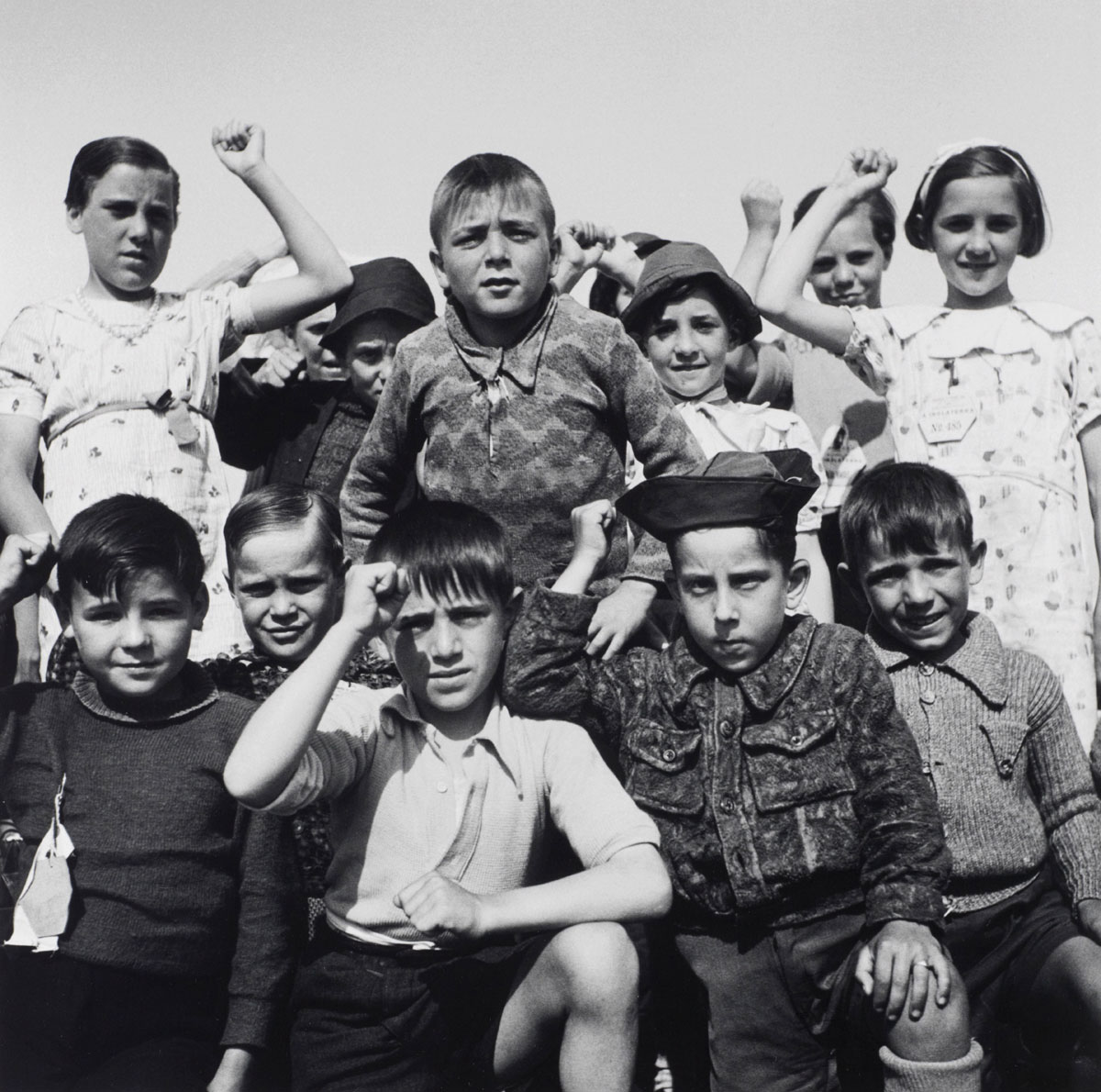
Edith Tudor-Hart (Austrian-British, 1908-1973) 'Untitled (Basque Refugee Children, North Stoneham Camp, Hampshire)' 1937


Edith Tudor-Hart (Austrian-British, 1908-1973)
Untitled (Basque Refugee Children, North Stoneham Camp, Hampshire)
1937
Modern silver gelatine print from archival negative
30.2 x 30cm
Scottish National Portrait Gallery: Archive presented by Wolfgang Suschitzky 2004
© The Estate of Edith Tudor-Hart


The children are giving the Spanish anti-fascist Republican salute.


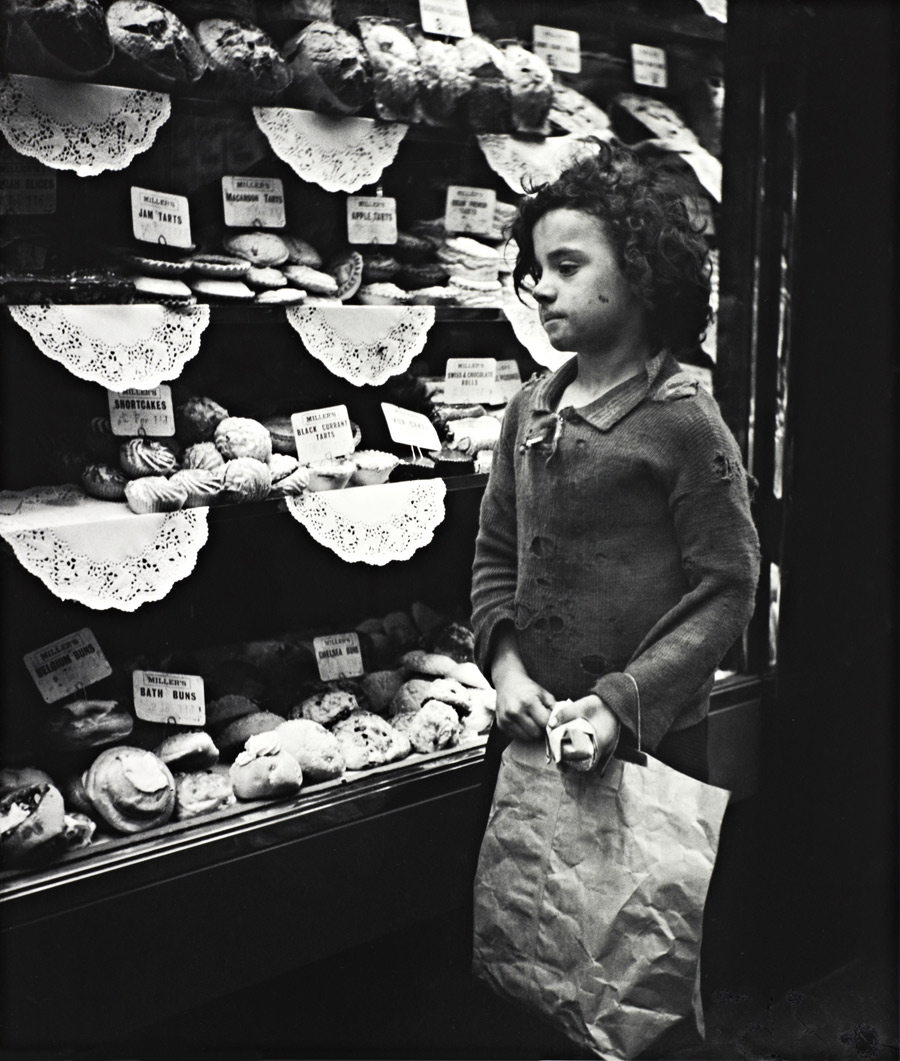
Edith Tudor-Hart (Austrian-British, 1908-1973) 'Untitled (Child Staring into Bakery Window)' c. 1935


Edith Tudor-Hart (Austrian-British, 1908-1973)
Untitled (Child Staring into Bakery Window)
c. 1935
Modern silver gelatine print from archival negative
35.30 x 30.00cm
Scottish National Portrait Gallery: Archive presented by Wolfgang Suschitzky 2004
© The Estate of Edith Tudor-Hart


Edith Tudor-Hart (Austrian-British, 1908-1973) 'Untitled (In Total Darkness, London)' c. 1935


Edith Tudor-Hart (Austrian-British, 1908-1973)
Untitled (In Total Darkness, London)
c. 1935
Modern silver gelatine print from archival negative
27.70 x 27.50cm
Scottish National Portrait Gallery: Archive presented by Wolfgang Suschitzky 2004
© The Estate of Edith Tudor-Hart


Scottish National Portrait Gallery
1 Queen Street, Edinburgh EH2 1JD
Phone: +44 131 624 6200

Opening hours:
Daily 10am – 5pm

Scottish National Portrait Gallery website

LIKE ART BLART ON FACEBOOK

Back to top

Exhibition: ‘Don McCullin: A Retrospective’ at the National Gallery of Canada, Ottawa

Exhibition dates: 1st February – 14th April 2013


Don McCullin (British, b. 1935) 'Catholic youth escaping a CS gas assault in the Bogside, Londonderry, Northern Ireland' 1971


Don McCullin (British, b. 1935)
Catholic youth escaping a CS gas assault in the Bogside, Londonderry, Northern Ireland
1971
Gelatin silver print
© Don McCullin / Contact Press Images


“Photography for me is not looking, it’s feeling. If you can’t feel what you’re looking at, then you’re never going to get others to feel anything when they look at your pictures”

“You do not go away from here without carrying a huge burden, if you are a decent human being and you have a conscience.”

“I photograph the humble, the anonymous, who are spontaneous and mirror all of us.”


Don McCullin, Sleeping With Ghosts: A Life’s Work in Photography


Many thankx to the National Gallery of Canada for allowing me to publish the photographs in the posting. Please click on the photographs for a larger version of the image.


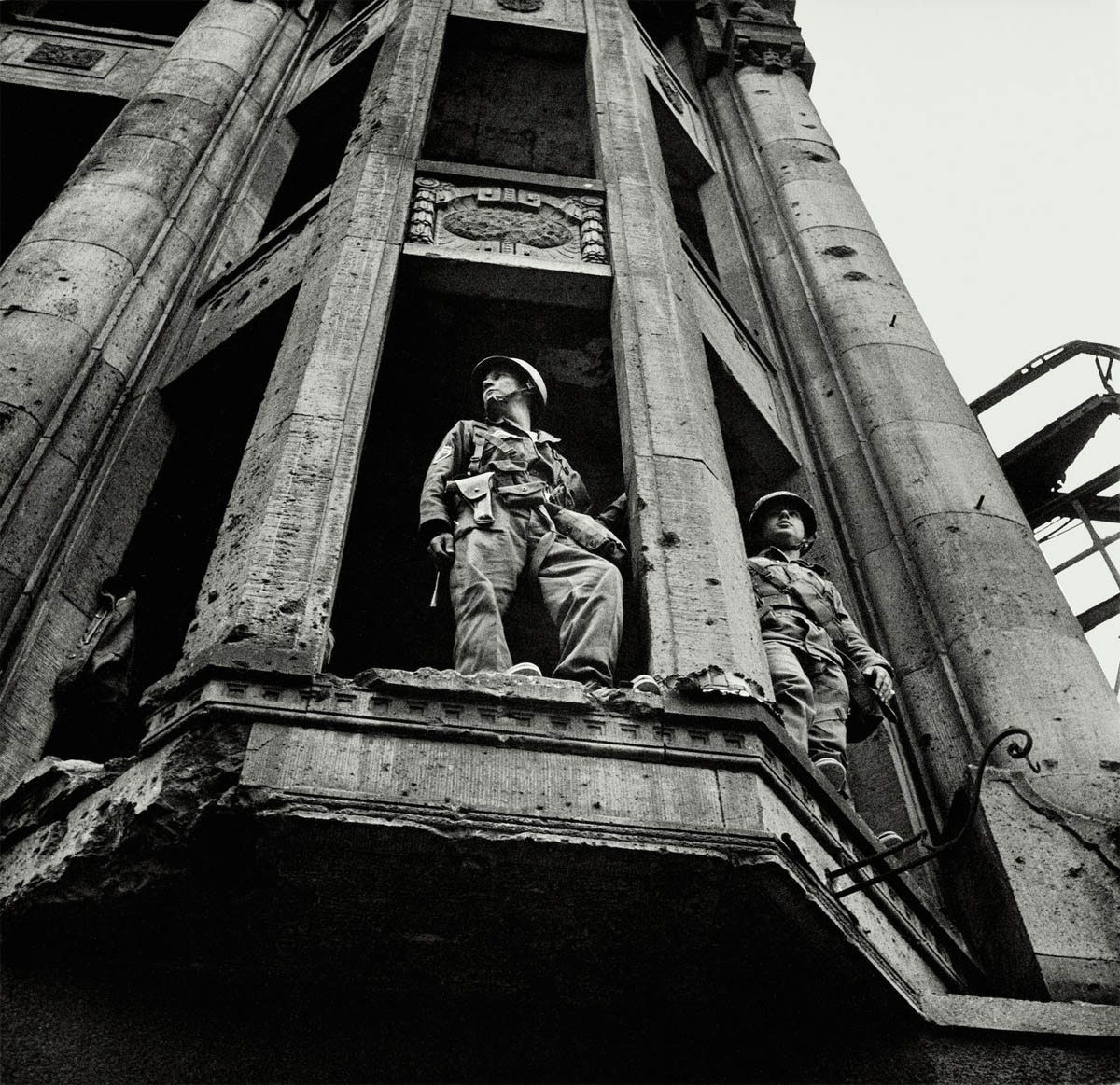
Don McCullin (British, b. 1935) 'American soldiers, Checkpoint Charlie, West Berlin' August 1961


Don McCullin (British, b. 1935)
American soldiers, Checkpoint Charlie, West Berlin
August 1961
Gelatin silver print
© Don McCullin / Contact Press Images


Don McCullin (British, b. 1935) 'American Troops Looking across the Wall, Berlin' 1961


Don McCullin (British, b. 1935)
American Troops Looking across the Wall, Berlin
1961
Gelatin silver print
© Don McCullin / Contact Press Images


Don McCullin (British, b. 1935) 'Protester, Cuban missile crisis, Whitehall, London' 1962


Don McCullin (British, b. 1935)
Protester, Cuban missile crisis, Whitehall, London
1962
Gelatin silver print
© Don McCullin / Contact Press Images


Don McCullin (British, b. 1935) 'Turkish defender leaving the side-entrance of a cinema, Limassol, Cyprus' 1964


Don McCullin (British, b. 1935)
Turkish defender leaving the side-entrance of a cinema, Limassol, Cyprus
1964
Gelatin silver print
© Don McCullin / Contact Press Images


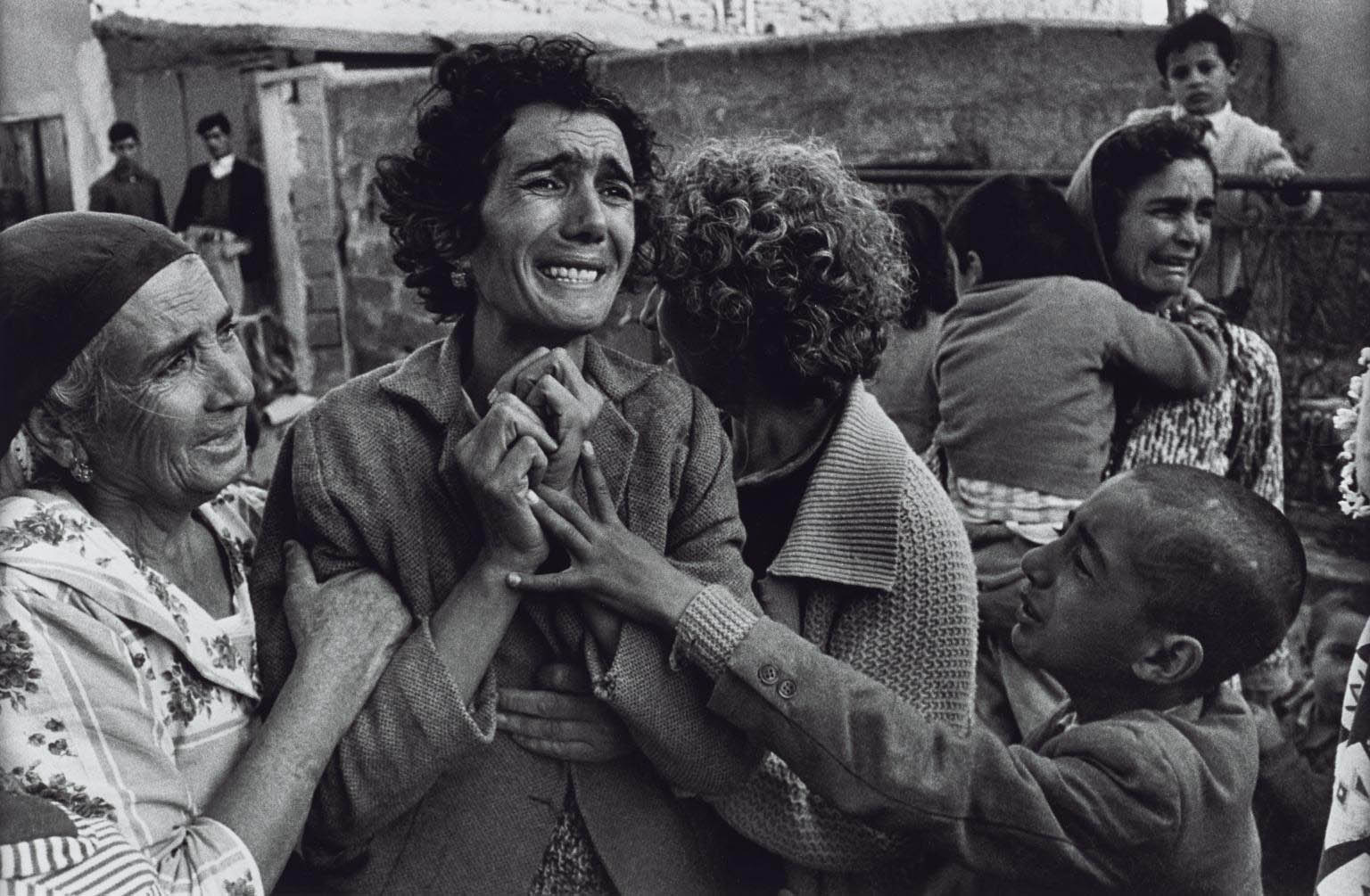
Don McCullin (British, b. 1935) 'Turkish woman mourning the death of her husband killed by Greek forces during the Civil War, Limassol, Cyprus' 1964


Don McCullin (British, b. 1935)
Turkish woman mourning the death of her husband killed by Greek forces during the Civil War, Limassol, Cyprus
1964
Gelatin silver print
© Don McCullin / Contact Press Images


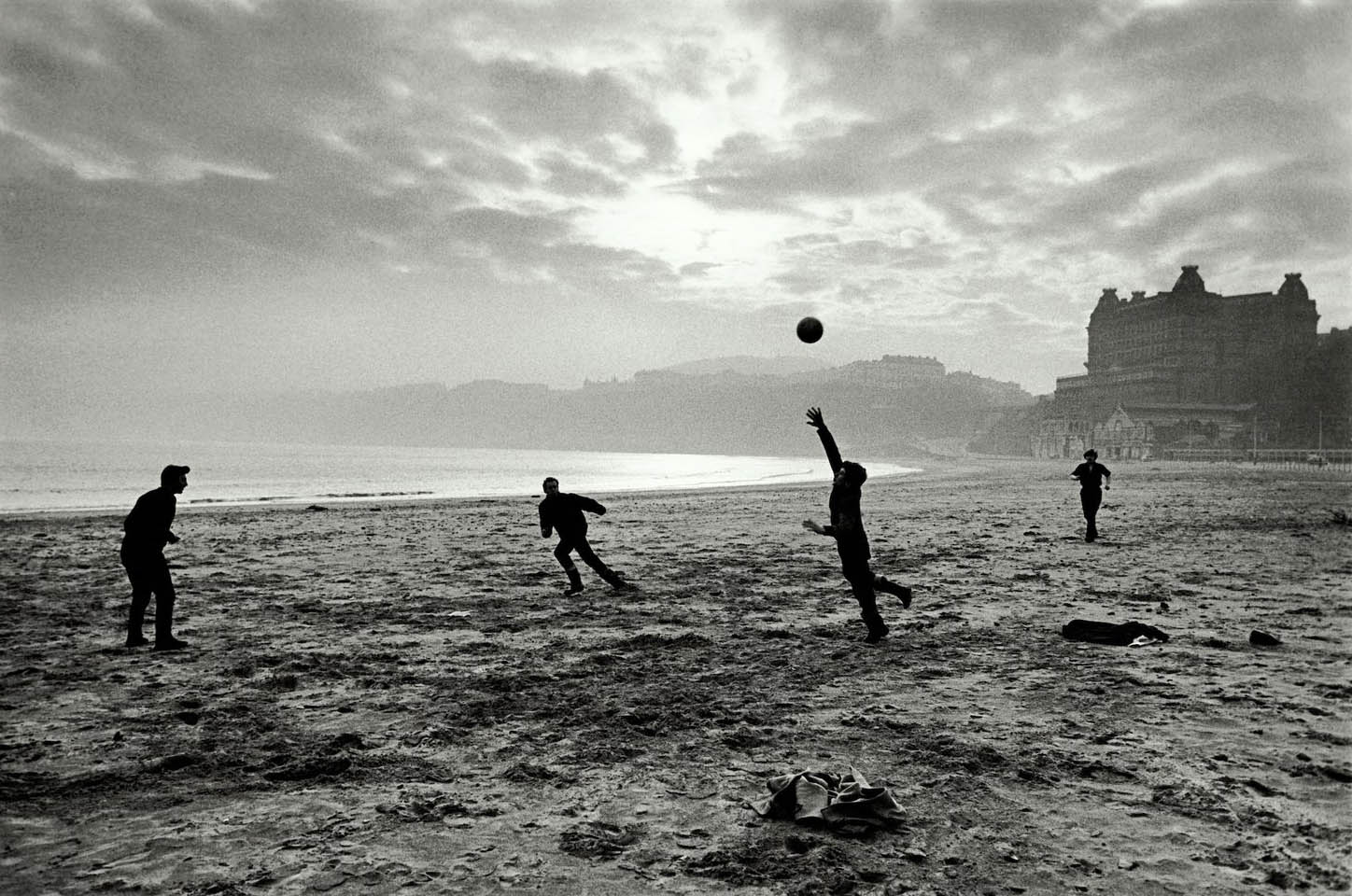
Don McCullin (British, b. 1935) 'Fishermen playing during their lunch break, Scarborough, Yorkshire' 1967


Don McCullin (British, b. 1935)
Fishermen playing during their lunch break, Scarborough, Yorkshire
1967
Gelatin silver print
© Don McCullin / Contact Press Images


Don McCullin (British, b. 1935) 'US marine throwing grenade, Tet Offensive, Hué, South Vietnam' February 1968


Don McCullin (British, b. 1935)
US marine throwing grenade, Tet Offensive, Hué, South Vietnam
February 1968
Gelatin silver print
© Don McCullin / Contact Press Images


Don McCullin (British, b. 1935) 'U.S. Marines with wounded soldier, the Citadel, Hue' 1968


Don McCullin (British, b. 1935)
U.S. Marines with wounded soldier, the Citadel, Hue
1968
Gelatin silver print
35.7 x 54.7cm
© Don McCullin / Contact Press Images


Don McCullin (British, b. 1935) 'The Bogside, Northern Ireland, Londonderry' 1971


Don McCullin (British, b. 1935)
The Bogside, Northern Ireland, Londonderry
1971
Gelatin silver print
© Don McCullin / Contact Press Images


Don McCullin (British, b. 1935) 'Two local boys in Bradford / No Nazis in Bradford, England' 1972


Don McCullin (British, b. 1935)
Two local boys in Bradford / No Nazis in Bradford, England
1972
Gelatin silver print
© Don McCullin / Contact Press Images


For the first time ever, the National Gallery of Canada is organising an monographic exhibition dedicated to the work of a contemporary British photographer. Don McCullin: A Retrospective features a collection of 134 exceptional black-and-white photographs taken by McCullin, an unflinching photojournalist best known for his coverage of the world’s most dangerous conflict zones. His photographs have been published in major newspapers and magazines, including The Observer, The Sunday Times and The Daily Telegraph. McCullin has also created an important body of social documentary work and a series of lyrical landscapes in his native Britain. Several of these photographs are included in the exhibition, which will be on display until April 14, 2013 in the NGC’s Prints, Drawings and Photographs Galleries. “McCullin’s photographs belong in an art gallery because they consistently bring clarity and compositional grace to their compelling subject matter. These pictures are both hard to look at and hard not to,” said NGC director and CEO Marc Mayer.
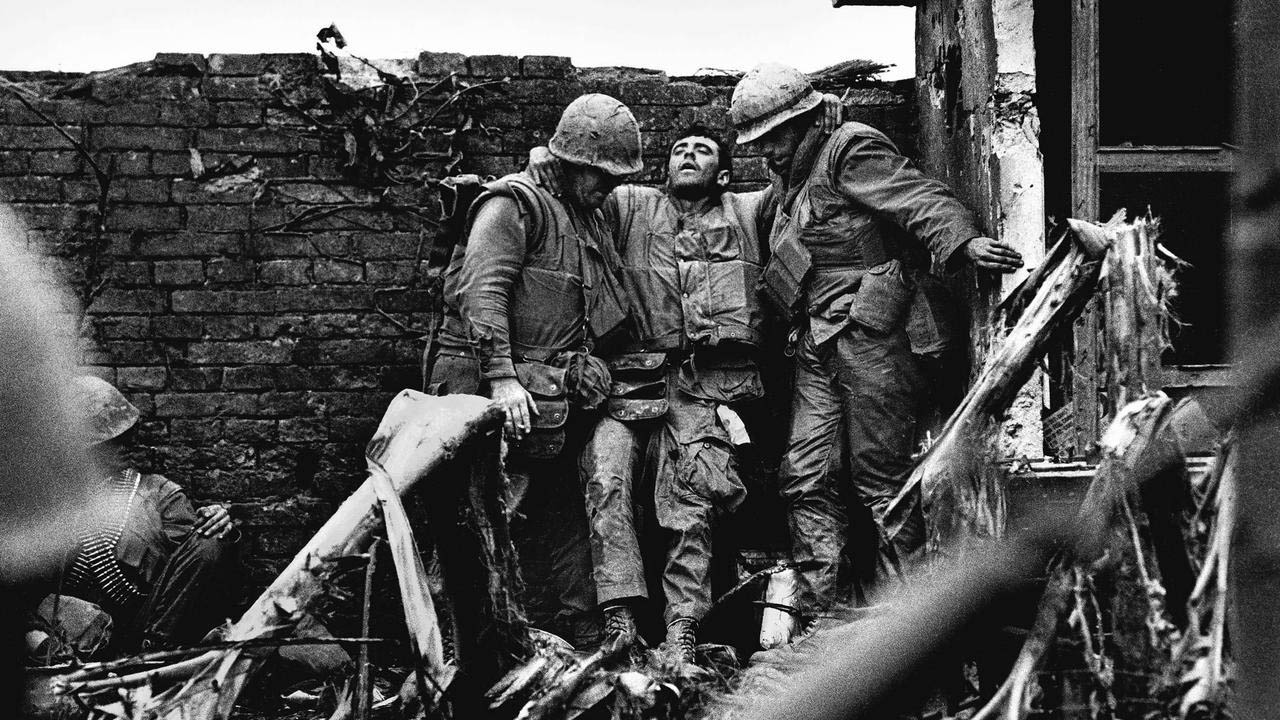
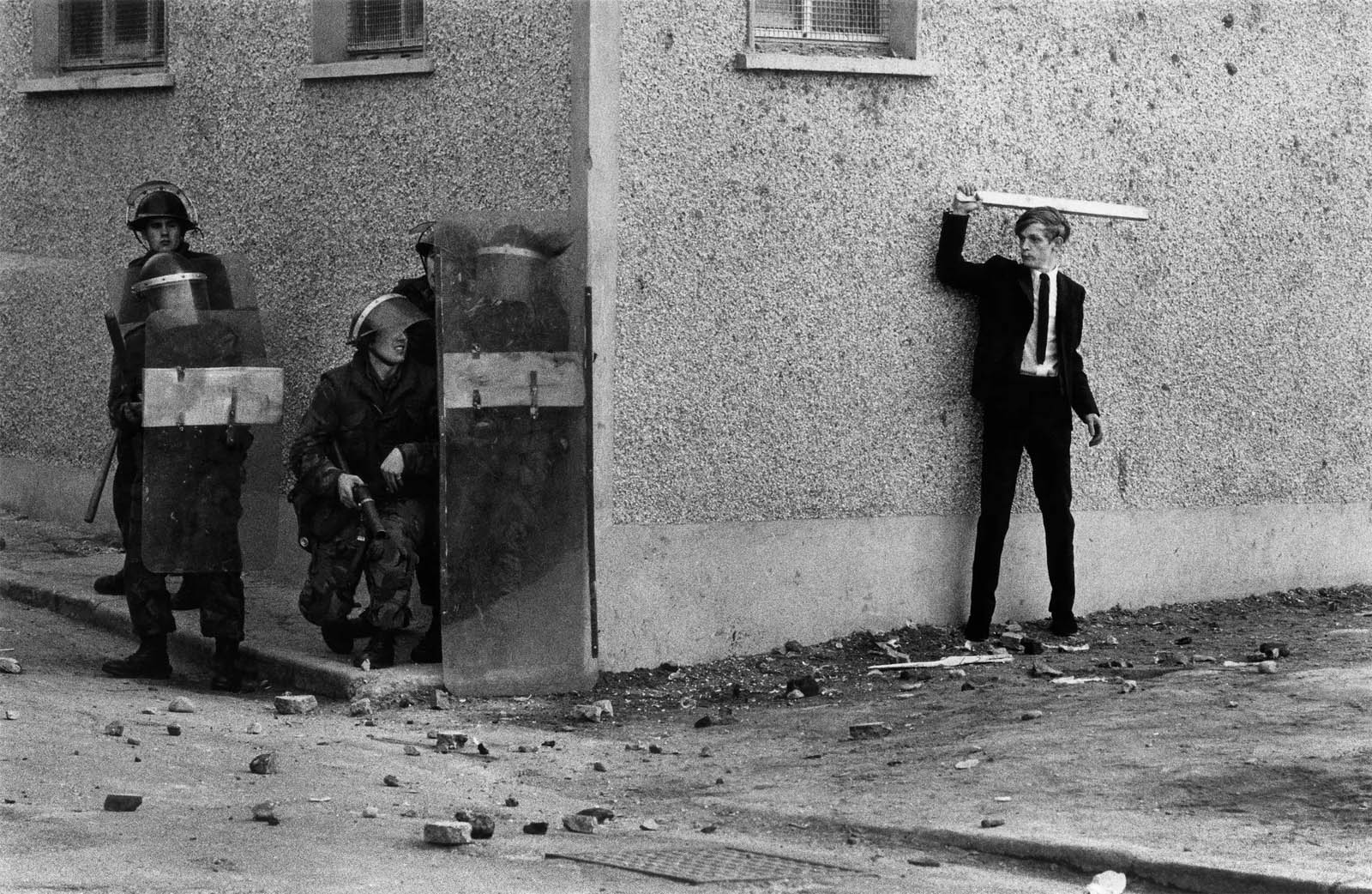
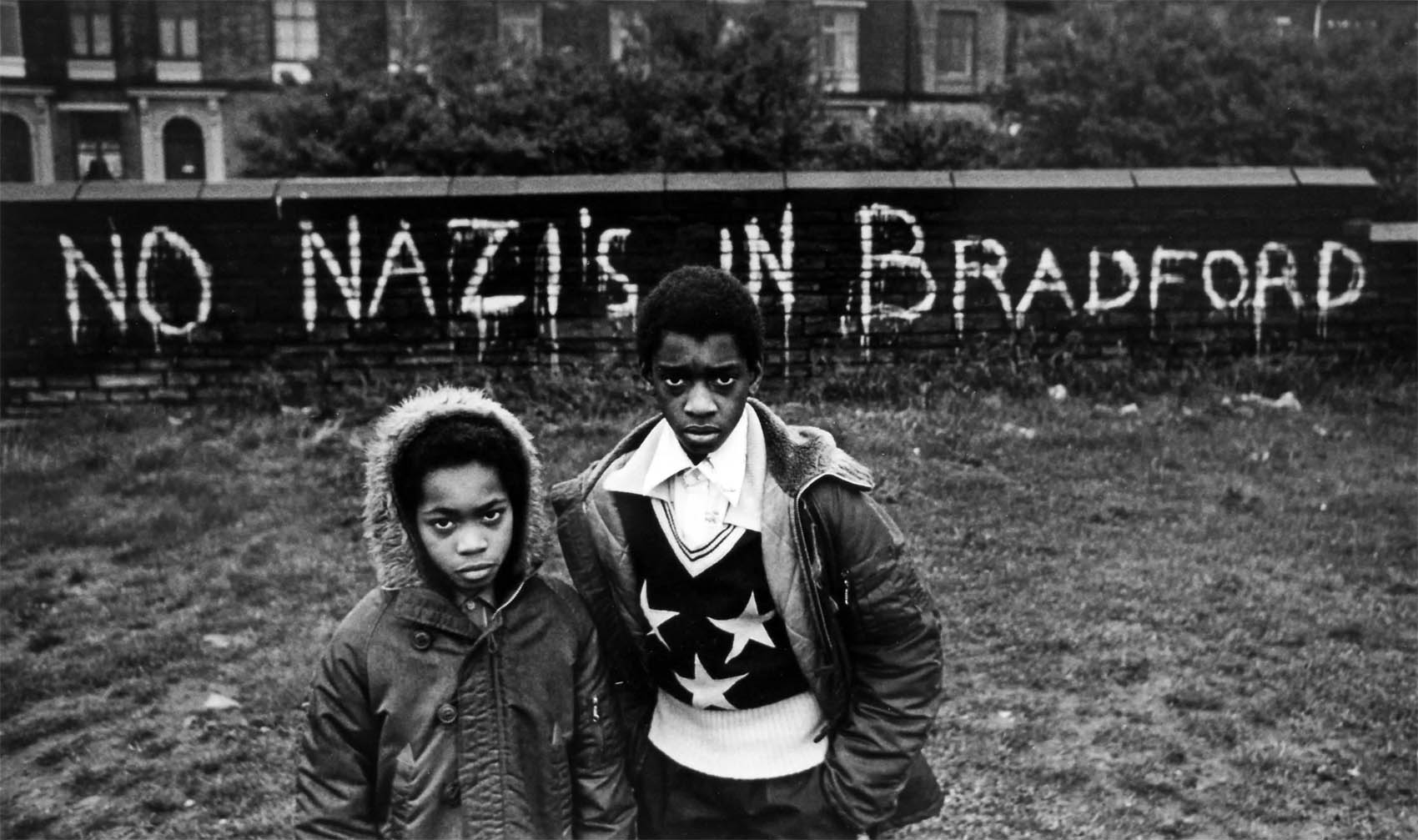
Don McCullin: A Retrospective highlights works from all of McCullin’s major series: portraits of the poor and the homeless in London and northern England (1950s to 1980s); the construction of the Berlin Wall (1961); war and famine in Cyprus, the Congo, Biafra, Vietnam, Bangladesh, Cambodia, Lebanon and Northern Ireland (1964-1982); peoples of Southeast Asia and Africa (1988-2004); and landscapes in Somerset, England, and northern France (1970-2011). In this exhibition, the artist’s journey from working class England to the killing fields and to the landscape of Arthurian myth reveals his searing outrage and profound compassion. Also included are magazines and newspapers relating to past assignments.

McCullin covered war zones on four continents, primarily from the 1960s to the 1980s. His photographs from the battlefields belong to a tradition of war art practiced by Francisco de Goya, Otto Dix and photographer Robert Capa, artists who, like himself, sought to communicate in images the horrors of human conflict. Particularly compelling for their narrative depth, sombre lighting and powerful composition, McCullin’s photographs convey the intensity and intimacy of his human encounters. His landscapes, although also dark and brooding, speak to his desire to distance himself from the subject of human suffering.

Although, McCullin did travel to Syria recently for The Times on one final war assignment (these photographs are not included in the exhibition), his exposure to the worst human atrocities took such a toll on him that he more or less retreated from conflict zones beginning in the 1980s. McCullin does not like being called a war photographer. Nor does he think of himself as an artist, but rather as a photojournalist, or simply, a photographer. In her insightful essay in the exhibition catalogue, Sobey Curatorial Assistant Katherine Stauble writes of the war photographs: “Likely (these images) were not meant to hang on a gallery wall, but rather, to communicate information, to reveal truths and to mobilise action. Now that McCullin has escaped the battlefield and for the past twenty years has been focusing his lens on landscape and still life, one might expect the artist moniker to sit more comfortably with him.”

Press release from the National Gallery of Canada website


Don McCullin (British, b. 1935) 'The Guvnors, Finsbury Park, London' 1958


Don McCullin (British, b. 1935)
The Guvnors, Finsbury Park, London
1958
Gelatin silver print
© Don McCullin / Contact Press Images


Don McCullin (British, b. 1935) 'At a café in Finsbury Park, London' 1958


Don McCullin (British, b. 1935)
At a café in Finsbury Park, London
1958
Gelatin silver print
© Don McCullin / Contact Press Images
Photo © NGC


Don McCullin (British, b. 1935) 'Old Vietnamese man, Tet Offensive, Hué, South Vietnam' February 1968


Don McCullin (British, b. 1935)
Old Vietnamese man, Tet Offensive, Hué, South Vietnam
February 1968
Gelatin silver print
© Don McCullin / Contact Press Images


Don McCullin (British, b. 1935) 'Homeless Irishman, Aldgate, East End, London' 1970


Don McCullin (British, b. 1935)
Homeless Irishman, Aldgate, East End, London
1970
Gelatin silver print
© Don McCullin / Contact Press Images


Don McCullin (British, b. 1935) 'Jean, a homeless woman, Aldgate, East End, London' 1984, printed c. 1985


Don McCullin (British, b. 1935)
Jean, a homeless woman, Aldgate, East End, London
1984, printed c. 1985
Gelatin silver print
© Don McCullin / Contact Press Images


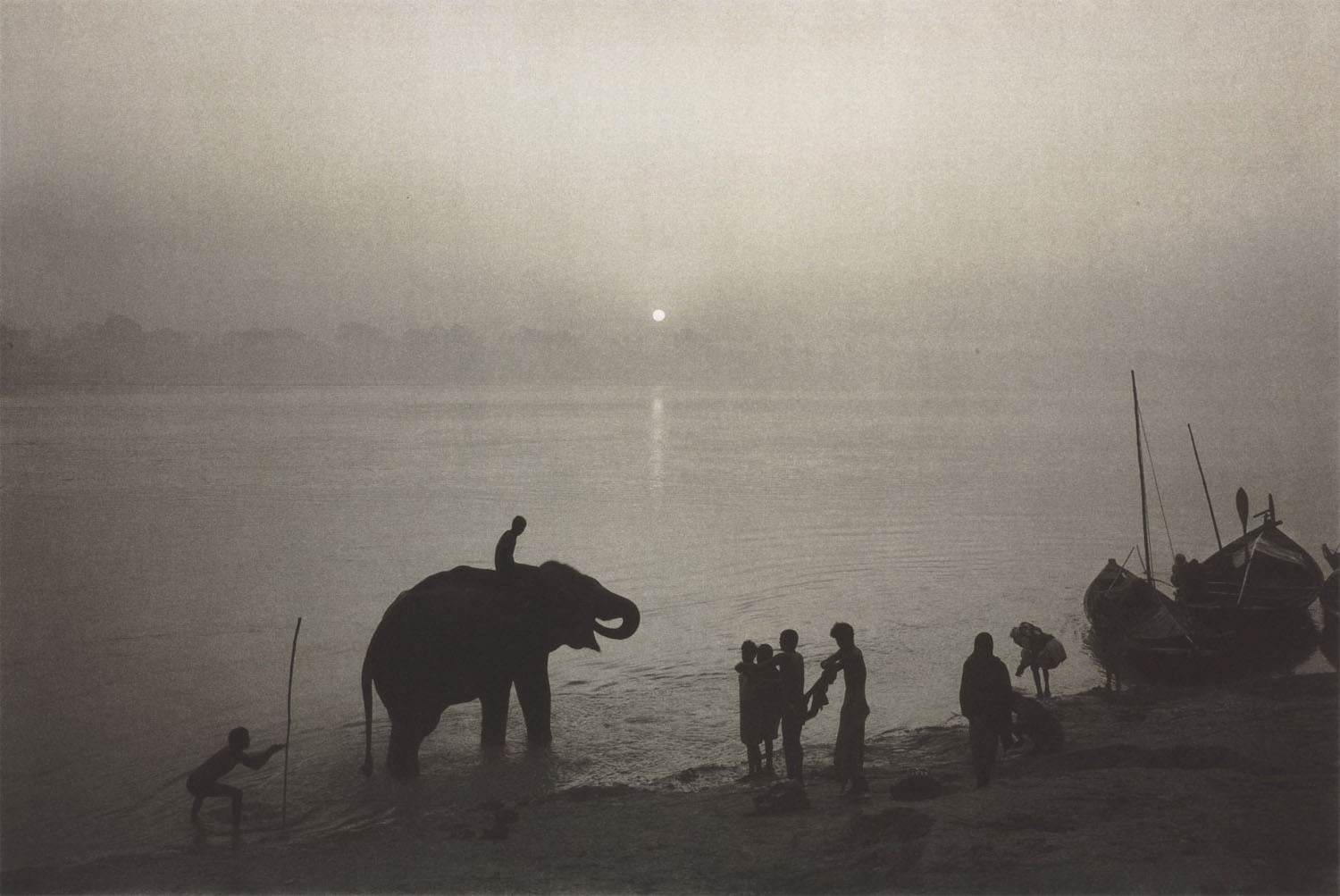
Don McCullin (British, b. 1935) 'Along the Ganges during the Sonepur Mela festival, Bihar, India' 1993


Don McCullin (British, b. 1935)
Along the Ganges during the Sonepur Mela festival, Bihar, India
1993
Platinum print
Gelatin silver print
© Don McCullin / Contact Press Images


National Gallery of Canada
380 Sussex Dr  Ottawa
ON K1N 9N4, Canada
Phone: +1 613-990-1985

Opening hours:
Tuesday – Sunday 10am – 5pm
Closed Mondays

National Gallery of Canada website

LIKE ART BLART ON FACEBOOK

Back to top