Exhibition: ‘Gordon Parks: Back to Fort Scott’ at the Museum of Fine Arts, Boston

Exhibition dates: 17th January 2015 – 13th September 2015

Robert and Jane Burke Gallery (Gallery 335)


Gordon Parks (American, 1912-2006) 'Husband and Wife, Sunday Morning, Detroit, Michigan' 1950


Gordon Parks (American, 1912-2006)
Husband and Wife, Sunday Morning, Detroit, Michigan
1950
Gelatin silver print
Courtesy and © The Gordon Parks Foundation
Courtesy Museum of Fine Arts, Boston


It’s been a really tough time writing the Art Blart recently, as my beloved Apple Pro tower that has served me so well over the years has died and gone to god. I have been making do with a small laptop, but tomorrow I pick up my new 27 inch iMac with Retina screen, to pair with my Eizo Flexscan monitor. I can’t wait!

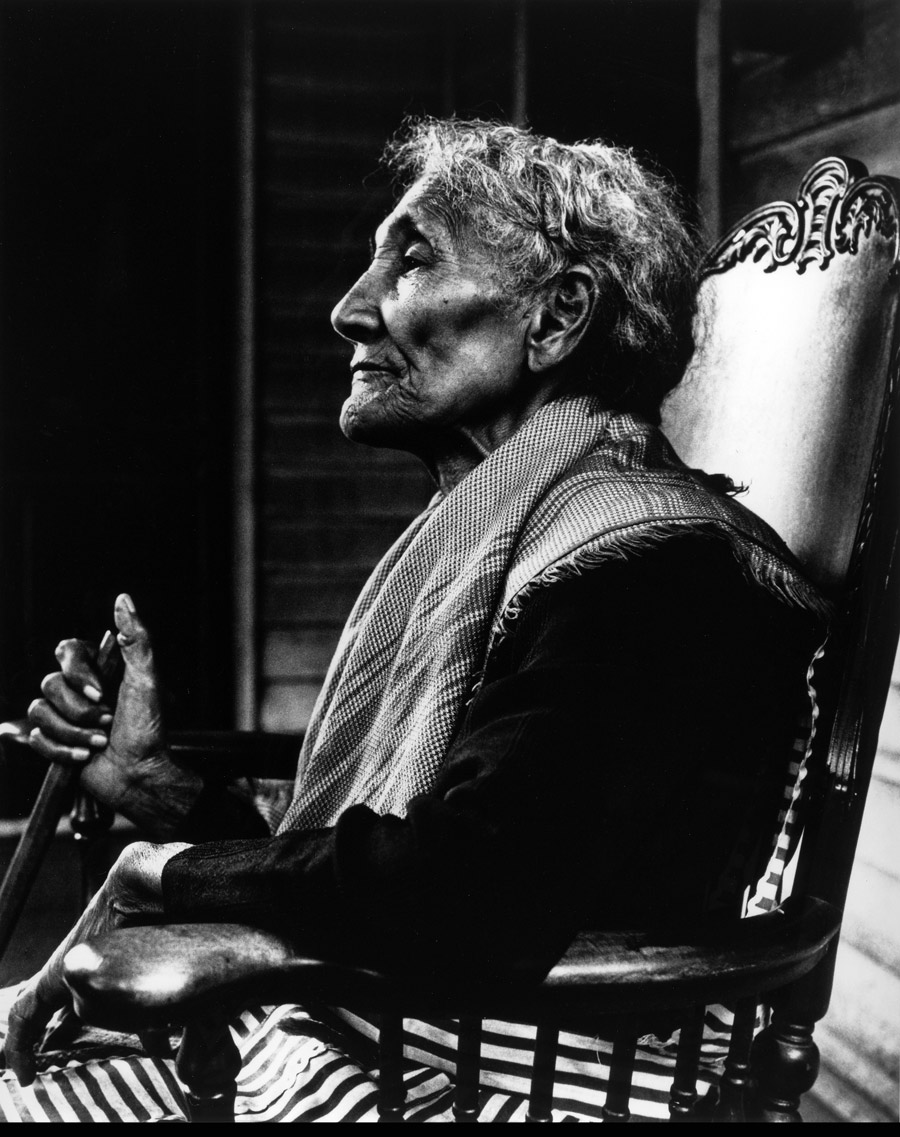
I have so much admiration for the work of this man. The light, the sensitivity to the social documentary narrative just emanates from these images. You don’t need to say much, it’s all there in front of you. Just look at the proud profile of that old woman, Mrs. Jefferson, Fort Scott, Kansas (1950, below), and you are instantly transported back to the slave fields and southern plantations of the 19th century. No words are necessary. The bony hands, gaunt cheeks and determined stare speak of a life hard lived.

Dr Marcus Bunyan


Many thankx to the Museum of Fine Arts, Boston for allowing me to publish the photographs in the posting. Please click on the photographs for a larger version of the image.


Gordon Parks (American, 1912-2006) 'Untitled, St. Louis, Missouri' 1950


Gordon Parks (American, 1912-2006)
Untitled, St. Louis, Missouri
1950
Gelatin silver print
Courtesy and © The Gordon Parks Foundation
Courtesy Museum of Fine Arts, Boston


Gordon Parks (American, 1912-2006) 'Tenement Dwellers, Chicago, Illinois' 1950


Gordon Parks (American, 1912-2006)
Tenement Dwellers, Chicago, Illinois
1950
Gelatin silver print
Courtesy and © The Gordon Parks Foundation
Courtesy Museum of Fine Arts, Boston


Gordon Parks (1912-2006), one of the most celebrated African-American photographers of all time, is the subject of a new exhibition of groundbreaking photographs at the Museum of Fine Arts, Boston (MFA). Gordon Parks: Back to Fort Scott (January 17 – September 13, 2015) traces Parks’ return to his hometown of Fort Scott, Kansas and then to other Midwestern cities, to track down and photograph each of his childhood classmates. On view in the MFA’s Art of the Americas Wing, the exhibition’s 42 photographs were from a series originally meant to accompany a Life magazine photo essay – but for reasons unknown, the story was never published. The images depict the realities of life under segregation in 1950 – presenting a rarely seen view of everyday lives of African-American citizens in the years before the Civil Rights movement began in earnest. One of the most personal and captivating of all Parks’ projects, the images, now owned by The Gordon Parks Foundation, represent a rare and little-known group within Parks’ oeuvre. This exhibition, on view in the Robert and Jane Burke Gallery, is accompanied by a publication by Karen Haas, the MFA’s Lane Curator of Photographs, in collaboration with The Gordon Parks Foundation, which includes an introduction by Isabel Wilkerson, Pulitzer-prize winning author of The Warmth of Other Suns: The Epic Story of America’s Great Migration. The book includes previously unpublished photographs as well as archival materials such as contact sheets and a portion of the 1927 yearbook from the segregated school Parks attended as a child.

“These personal and often touching photos offer a glimpse into the life of Gordon Parks and the prejudice that confronted African Americans in the 1940s and 1950s,” said Malcolm Rogers, Ann and Graham Gund Director at the MFA. “We’re grateful to The Gordon Parks Foundation for giving us the opportunity to display these moving works.”

Fort Scott, Kansas was an emotional touchstone for Gordon Parks and a place that he was drawn to over and over again as an adult, even though it held haunting memories of racism and discrimination. Parks was born in Fort Scott in 1912 to a poor tenant farmer family and left home as a teenager after his mother died and he found himself – the youngest of 15 children – suddenly having to make his own way in the world. By 1948, Parks was the first African-American photographer hired full time by Life magazine. One of the rare African-American photojournalists in the field, Parks was frequently given magazine assignments involving social issues that his fellow white photographers were not asked to cover. For an assignment on the impact of school segregation, Parks returned to Fort Scott to revisit early memories of his birthplace – many involving racial discrimination – and to reconnect with childhood friends, all of whom went to the same all-black elementary school that Parks had attended.  He was able to track down all but two members of the Plaza School Class of 1927, although only one was still living in Fort Scott at the time. As he met with fellow classmates, his story quickly shifted its focus to the Great Migration north by African Americans. Over the course of several days Parks visited with his childhood friends – by this time residing in Kansas City; Saint Louis; Columbus, Ohio; Detroit; and Chicago – joining them in their parlours and on their front porches while they recounted their life stories to him. Organised around each of these cities and families, the exhibition features previously unpublished photographs as well as a seven-page draft of Parks’ text for the article.

“With the Back to Fort Scott story, Parks showed – really for the first time – a willingness to mine his own childhood for memories both happy and painful, something he would continue to do in a series of memoirs over the course of his long career” said Haas. “The experience also seems to have inspired him to write The Learning Tree in 1963, his best-selling novel about growing up poor and black in Kansas, that he transformed a few years later into a groundbreaking Hollywood movie – the first by an African American writer-director.”

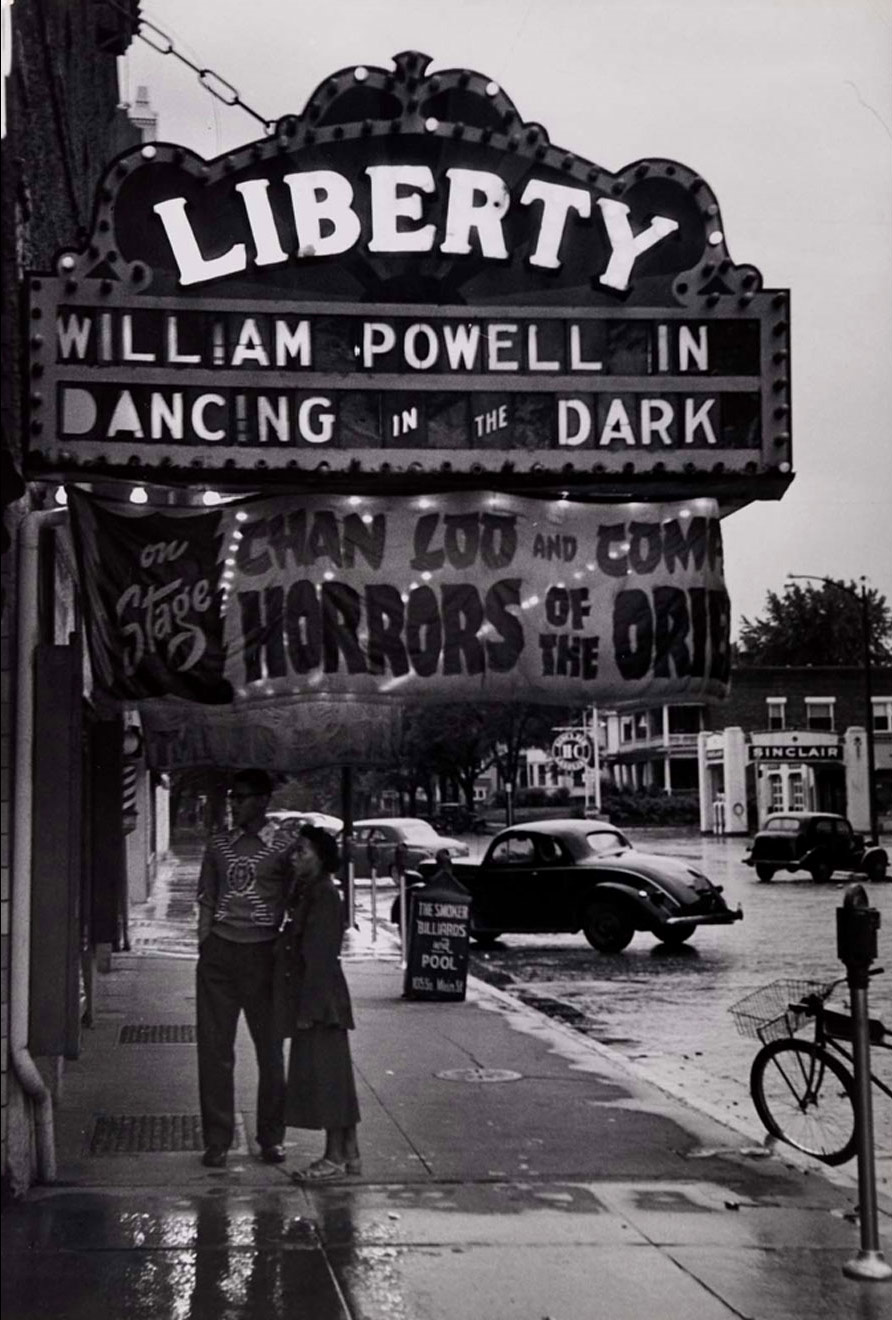
Parks began his research in Fort Scott, where he found classmate Luella Russell. In addition to photographing Luella with her husband and 16-year-old daughter, Parks took photos of his own family and life around town – finding friends and acquaintances at the local theatre, railway station and pool hall. Parks also visited the local baseball field at Othick Park, where he recorded a group of white spectators seated at one end of the bleachers watching a game, while two African-American girls in summer dresses stand at the other end, in an area loosely designated for the town’s black residents. Parks’ image of the girls at the ballpark, where black and white baseball teams sometimes competed against each other, subtly refers to the separation of the races that marked much of everyday life in Fort Scott.

Fort Scott had not changed dramatically since Parks’ youth. Parks attended the all-black Plaza School through the ninth grade  in 1927, and as he wrote in his draft for Life magazine: “Twenty-four years before I had walked proudly to the centre of the stage and received a diploma. There were twelve of us (six girls and six boys) that night. Our emotions were intermingled with sadness and gaiety. None of us understood why the first years of our education were separated from those of the whites, nor did we bother to ask. The situation existed when we were born. We waded in normal at the tender age of six and swam out maladjusted… nine years later.”

After Fort Scott, Parks discovered three of his classmates in Kansas City and St. Louis – cities that were easily reached by rail and were often the first stops made by African Americans leaving smaller towns. Many left towns like Fort Scott in the hope of finding jobs and better futures for their children in these larger, more industrial cities. When Parks tracked down his classmates, he recorded their jobs and wages – the sort of detail that Life typically included in such pieces, allowing its readers to measure their own lives against a story’s subjects. In Kansas City, classmate Peter Thomason was working as a postal transportation clerk (a position, Parks noted, with a minimum salary of $3,700 a year), while in St. Louis, Parks recorded that classmate Norman Earl Collins was doing quite well, making $1.22 an hour at Union Electric of Missouri. Parks’ sympathetic images of Earl and his daughter, Doris Jean, may have been a conscious effort on Parks’ part to offset contemporary stereotypes of black families as less stable and strong than their white counterparts.

By 1950, Chicago was the de facto capital of African-American life in the US, with more black inhabitants than any other city in America – including three of Parks’ classmates. Parks discovered them residing only a mile or two apart from one another on the city’s South Side. Untitled, Chicago, Illinois (1950), depicts Parks’ classmate Fred Wells and his wife Mary in front of their apartment building in the Washington Park neighbourhood. A number of the photographs in the exhibition repeat the simple compositional device seen here – featuring a classmate and his or her family, framed by the front door of their home. These images highlighted the families’ similarities to, rather than differences from Life‘s readers, who would have found such strong representations of black families at once surprising and reassuring.

In Detroit, Parks traced classmate Pauline Terry to the McDougall-Hunt neighbourhood. In Fort Scott, Pauline had married Bert Collins, who had run a restaurant during much of the 1930s. By 1950, they were settled in Detroit and had five children. Unlike Parks’ other classmates who had migrated north in search of opportunity, Pauline (yearbook ambition: “To be young forever; to be a Mrs.”) now had a large family and no longer worked outside the home. In the course of her conversation with Parks, she emphasised the importance of religion in their lives. Parks’ powerful portrait of the couple walking to Sunday services at the Macedonia Baptist Church, Husband and Wife, Sunday Morning, Detroit, Michigan (1950) reinforces the seriousness of their faith. The cigar-smoking Bert wears a sharp suit and straw boater and carries a well-worn Bible.

Once completed, Parks’ Fort Scott photo essay never appeared in Life. The reason for that remains a mystery, although the US entry into the Korean War that summer had a major impact on the content of its pages for some time. The magazine’s editors did try to resuscitate the story early in April of 1951 only to have it passed over by the news of President Truman’s firing of General Douglas MacArthur. In the end, all that survives, as far as written documentation of the Fort Scott assignment, are Parks’ project notes from his individual visits with his classmates in May and June of 1950; several telegrams sent by Life staffers regarding his friends’ whereabouts before his arrival; fact-checking when the piece was again slated to run in April 1951; and an annotated seven-page draft. Because the photos were never published, and most have never before been on view, the exhibition presents a unique opportunity to explore a body of work that is almost completely unknown to the public.

“The Gordon Parks Foundation is pleased to collaborate with the Museum of Fine Arts, Boston, on this exhibition and publication highlighting a series of very personal, early works by the artist” said Peter W. Kunhardt, Jr., the Foundation’s executive director. “Gordon Parks: Back to Fort Scott allows us a focused look at a single Life magazine story and reveals a fascinating tale of Gordon Parks’ segregated beginnings in rural Kansas and the migration stories of his classmates, many of whom, like him, left in search of better lives for themselves and their families.”

Press release from the Museum of Fine Arts, Boston website


Gordon Parks (American, 1912-2006) 'Untitled, Fort Scott, Kansas' 1950


Gordon Parks (American, 1912-2006)
Untitled, Fort Scott, Kansas
1950
Courtesy and © The Gordon Parks Foundation
Courtesy Museum of Fine Arts, Boston


Gordon Parks (American, 1912-2006) 'Untitled, Fort Scott, Kansas' 1950


Gordon Parks (American, 1912-2006)
Untitled, Fort Scott, Kansas
1950
Courtesy and © The Gordon Parks Foundation
Courtesy Museum of Fine Arts, Boston


Gordon Parks (American, 1912-2006) 'Untitled, Chicago, Illinois' 1950


Gordon Parks (American, 1912-2006)
Untitled, Chicago, Illinois
1950
Courtesy and © The Gordon Parks Foundation
Courtesy Museum of Fine Arts, Boston


Gordon Parks (American, 1912-2006) 'Untitled, Columbus, Ohio' 1950


Gordon Parks (American, 1912-2006)
Untitled, Columbus, Ohio
1950
Courtesy and © The Gordon Parks Foundation
Courtesy Museum of Fine Arts, Boston


The lives of the classmates – six girls and five boys who graduated from the segregated Plaza School in 1927, in what was then a town of 10,000 people – present a miniature snapshot of African-American aspiration and struggle in the years before Brown v. Board of Education or the civil rights movement.

Parks found Emma Jane Wells in Kansas City, Mo., where she sold clothes door-to-door to supplement her husband’s salary at a paper-bag factory. Peter Thomason lived a few blocks away, working for the post office, one of the best jobs available to black men at the time. But others from the class led much more precarious lives. Parks tracked down Mazel Morgan on the South Side of Chicago, in a transient hotel with her husband, who Parks said robbed him at gunpoint after a photo session. Morgan’s middle-school yearbook description had been ebullient (“Tee hee, tee ho, tee hi, ha hum/Jolly, good-natured, full of fun”), but in 1950 she told Parks, “I’ve felt dead so long that I don’t figure suicide is worthwhile anymore.”

The most promising of the classmates, Donald Beatty, lived in an integrated neighbourhood in Columbus, Ohio, where he had a highly desirable job as a supervisor at a state agency and where Parks’s pictures show him – very much in the vernacular of Life magazine’s Eisenhower-era domestic scenes – happy and secure with his wife and toddler son and a brand-new Buick. But notes made by a Life fact-checker just a year later, when the magazine planned once again to run Parks’s article, recorded a tragedy, blithely and with no explanation: “Aside from the death of their son, nothing much has happened to them.”

Lorraine Madway, curator of Wichita State University’s special collections, said of the Fort Scott story: “There are those moments in an archive when you know you’ve found the gold, and this is one of them. It’s a wonderful example of micro-history. It’s not only that there is so much material written at a specific time in people’s lives, but then there are Parks’s reflections on it later.” …

Besides fact-checking notes, Parks’s own notes and a typewritten draft for what might have been his introduction to the photo spread, there is almost no other documentation surrounding the project, for which Parks shot about 30 rolls of 35-millimetre and medium-format film. And so the question of why it was not published might never be answered. In an essay for the show’s catalog, Ms. Haas speculates that it might have been doomed by its very newsworthiness, as national challenges to school segregation began gathering speed and Life waited – in the end too long – for just the right moment…

Parks carried his own psychic wounds from those years, which profoundly shaped his writing and approach to photography. But his feelings were always bittersweet. Though he lived for many years in New York City, he chose to be buried in his hometown, whose African-American population has declined even more markedly than its overall population. In a 1968 poem about his childhood, he wrote that he would miss “this Kansas land that I was leaving,” one of “wide prairies filled with green and cornstalk,” of the “winding sound of crickets rubbing dampness from wings” and “silver September rain.”

Then he added: “Yes, all this I would miss – /along with the fear, hatred and violence/We blacks had suffered upon this beautiful land.”

Extract from Randy Kennedy. “‘A Long Hungry Look’: Forgotten Gordon Parks Photos Document Segregation,” on The New York Times website, December 24, 2014 [Online] Cited 29/08/2015.


Gordon Parks (American, 1912-2006) 'Railway Station Entrance, Fort Scott, Kansas' 1950


Gordon Parks (American, 1912-2006)
Railway Station Entrance, Fort Scott, Kansas
1950
Courtesy and © The Gordon Parks Foundation
Courtesy Museum of Fine Arts, Boston


Gordon Parks (American, 1912-2006) 'Shoes, Fort Scott, Kansas' 1950


Gordon Parks (American, 1912-2006)
Shoes, Fort Scott, Kansas
1950
Courtesy and © The Gordon Parks Foundation
Courtesy Museum of Fine Arts, Boston


Gordon Parks (American, 1912-2006) 'Untitled (Outside the Liberty Theater)' 1950


Gordon Parks (American, 1912-2006)
Untitled (Outside the Liberty Theater)
1950
Courtesy and © The Gordon Parks Foundation
Courtesy Museum of Fine Arts, Boston


Gordon Parks (American, 1912-2006) 'Untitled, Fort Scott, Kansas' 1950


Gordon Parks (American, 1912-2006)
Untitled, Fort Scott, Kansas
1950
Courtesy and © The Gordon Parks Foundation
Courtesy Museum of Fine Arts, Boston


Gordon Parks (American, 1912-2006) 'Uncle James Parks, Fort Scott, Kansas' 1950


Gordon Parks (American, 1912-2006)
Uncle James Parks, Fort Scott, Kansas
1950
Courtesy and © The Gordon Parks Foundation
Courtesy Museum of Fine Arts, Boston


Gordon Parks (American, 1912-2006) 'Mrs. Jefferson, Fort Scott, Kansas' 1950


Gordon Parks (American, 1912-2006)
Mrs. Jefferson, Fort Scott, Kansas
1950
Courtesy and © The Gordon Parks Foundation
Courtesy Museum of Fine Arts, Boston


Museum of Fine Arts, Boston
Avenue of the Arts
465 Huntington Avenue
Boston, Massachusetts

Opening hours:
Wednesday – Monday 10am – 5pm
Closed Tuesdays

Museum of Fine Arts, Boston website

LIKE ART BLART ON FACEBOOK

Back to top

Exhibition: ‘Gordon Parks: Segregation Story’ at the High Museum of Art, Atlanta

Exhibition dates: 15th November 2014 – 21st June 2015


Gordon Parks (American, 1912-2006) 'Airline Terminal, Atlanta, Georgia' 1956


Gordon Parks (American, 1912-2006)
Airline Terminal, Atlanta, Georgia
1956
Courtesy of and copyright The Gordon Parks Foundation


The more I see of this man’s work, the more I admire it.

A sense of history, truth and injustice; a sense of beauty, colour and disenfranchisement; above all, a sense of composition and knowing the right time to take a photograph to tell the story. It’s all there, right in front of us, in almost every photograph. Photographs of institutionalised racism and the American apartheid, “the state of being apart”, laid bare for all to see.

From the languid curl and mass of the red sofa on which Mr. and Mrs. Albert Thornton, Mobile, Alabama (1956) sit, which makes them seem very small and which forms the horizontal plane, intersected by the three generations of family photos from top to bottom – youth, age, family … to the blank stare of the nanny holding the white child while the mother looks on in Airline Terminal, Atlanta, Georgia (1956). I love the amorphous mass of black at the right hand side of the this image. From the neon delightful, downward pointing arrow of ‘Colored Entrance’ in Department Store, Mobile, Alabama (1956) to the ‘WHITE ONLY’ obelisk in At Segregated Drinking Fountain, Mobile, Alabama (1956). And so the story flows on like some great river, unstoppable, unquenchable…

But then we have two of the most intimate moments of beauty that brings me to tears as I write this, the two photographs at the bottom of the posting Untitled, Shady Grove, Alabama (1956). Just look at the light that Parks uses, this drawing with light. And then the use of depth of field, colour, composition (horizontal, vertical and diagonal elements) that leads the eye into these images and the utter, what can you say, engagement – no – quiescent knowingness on the children’s faces (like an old soul in a young body). This is a wondrous thing.

Notice how the photographer has pre-exposed the sheet of film so that the highlights in both images do not blow out. Pre-exposing the film lessens the contrast range allowing shadow detail and highlight areas to be held in balance. Also notice how in both images the photographer lets the eye settle in the centre of the image – in the photograph of the boy, the out of focus stairs in the distance; in the photograph of the three girls, the bonnet of the red car – before he then pulls our gaze back and to the right of the image to let the viewer focus on the faces of his subjects. In both photographs we have vertical elements (a door jam and a telegraph post) coming out of the red colours in the images and this vertically is reinforced in the image of the three girls by the rising ladder of the back of the chair. Masterful image making, this push and pull, this bravura art of creation.

Surely, Gordon Parks ranks up there with the greatest photographers of the 20th century.

Dr Marcus Bunyan


Many thankx to the High Museum of Art for allowing me to publish the photographs in the posting. Please click on the photographs for a larger version of the image. Many thanx also to Carlos Eguiguren for sending me his portrait of Gordon Parks taken in New York in 1985, which reveals a wonderful vulnerability within the artist.


Carlos Eguiguren (Chile, b. 1955) 'Gordon Parks, New York' 1985


Carlos Eguiguren (Chile, b. 1955)
Gordon Parks, New York
1985
4 x 5″ transparency film
© Carlos Eguiguren


Gordon Parks (American, 1912-2006) 'Mr. and Mrs. Albert Thornton, Mobile, Alabama' 1956


Gordon Parks (American, 1912-2006)
Mr. and Mrs. Albert Thornton, Mobile, Alabama
1956
Promised gift of The Gordon Parks Foundation
Courtesy of and copyright The Gordon Parks Foundation


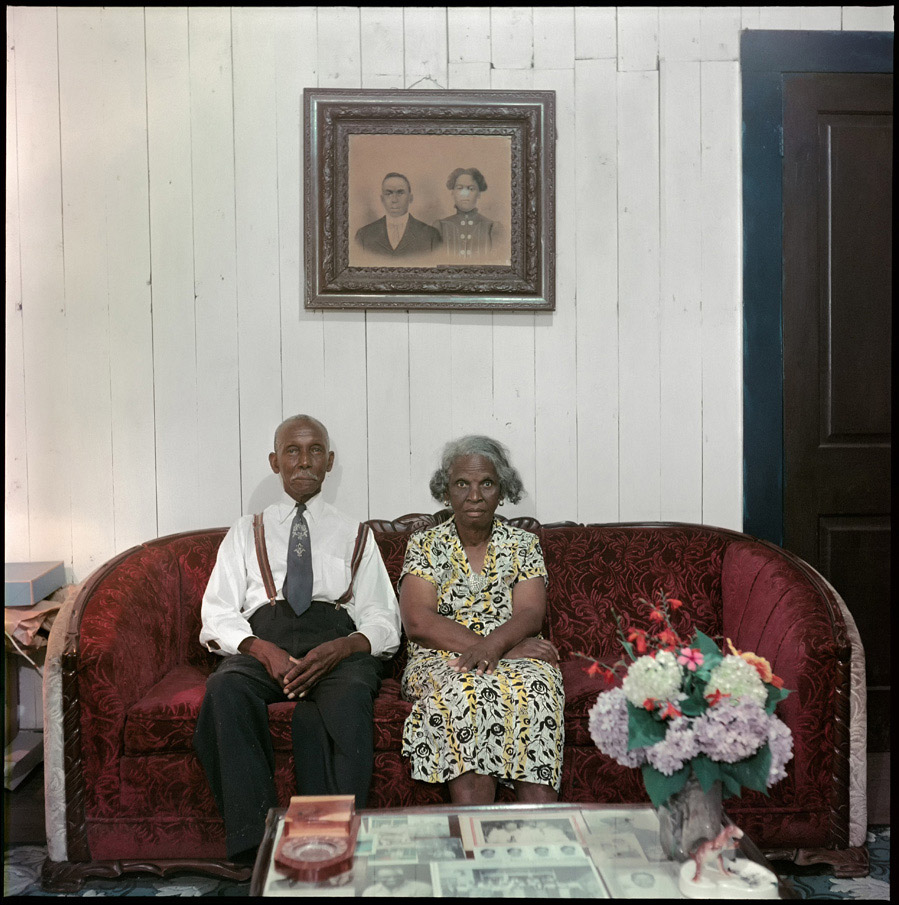
This portrait of Mr. and Mrs. Albert Thornton Sr., aged 82 and 70, served as the opening image of Parks’s photo essay. The well-dressed couple stares directly into the camera, asserting their status as patriarch and matriarch of their extensive Southern family. Photography is featured prominently within the image: a framed portrait, made shortly after the couple was married in 1906, hangs on the wall behind them, while family snapshots, including some of the Thorntons’ nine children and nineteen grandchildren, are proudly displayed on the coffee table in the foreground.


Gordon Parks (American, 1912-2006) 'Department Store, Mobile, Alabama' 1956


Gordon Parks (American, 1912-2006)
Department Store, Mobile, Alabama
1956
Promised gift of The Gordon Parks Foundation
Courtesy of and copyright The Gordon Parks Foundation


Joanne Wilson, one of the Thorntons’ daughters, is shown standing with her niece in front of a department store in downtown Mobile. The pair is impeccably dressed in light, summery frocks. The jarring neon of the “Colored Entrance” sign looming above them clashes with the two young women’s elegant appearance, transforming a casual afternoon outing into an example of overt discrimination. Notice the fallen strap of Wilson’s slip. Though this detail might appear discordant with the rest of the picture, its inclusion may have been strategic: it allowed Parks to emphasise the humanity of his subjects.


Gordon Parks (American, 1912-2006) 'Outside Looking In, Mobile, Alabama' 1956


Gordon Parks (American, 1912-2006)
Outside Looking In, Mobile, Alabama
1956
Promised gift of The Gordon Parks Foundation
Courtesy of and copyright The Gordon Parks Foundation


A group of children peers across a chain-link fence into a whites-only playground with a Ferris wheel. Although they had access to a “separate but equal” recreational area in their own neighbourhood, this photograph captures the allure of this other, inaccessible space. The children, likely innocent to the cruel implications of their exclusion, longingly reach their hands out to the mysterious and forbidden arena beyond. The pristinely manicured lawn on the other side of the fence contrasts with the overgrowth of weeds in the foreground, suggesting the persistent reality of racial inequality.


Gordon Parks (American, 1912-2006) 'At Segregated Drinking Fountain, Mobile, Alabama' 1956


Gordon Parks (American, 1912-2006)
At Segregated Drinking Fountain, Mobile, Alabama
1956
Promised gift of The Gordon Parks Foundation
Courtesy of and copyright The Gordon Parks Foundation


The Jim Crow laws established in the South ensured that public amenities remained racially segregated. These laws applied to schools, public transportation, restaurants, recreational facilities, and even drinking fountains, as shown here. The photograph documents the prevalence of such prejudice, while at the same time capturing a scene of compassion. Here, a gentleman helps one of the young girls reach the fountain to have a refreshing drink of water.


Gordon Parks (American, 1912-2006) 'Ondria Tanner and Her Grandmother Window-Shopping, Mobile, Alabama' 1956


Gordon Parks (American, 1912-2006)
Ondria Tanner and Her Grandmother Window-Shopping, Mobile, Alabama
1956
Promised gift of The Gordon Parks Foundation
Courtesy of and copyright The Gordon Parks Foundation


RARE PHOTOS BY GORDON PARKS PREMIERE AT HIGH MUSEUM OF ART

Featuring works created for Parks’ powerful 1956 Life magazine photo essay that have never been publicly exhibited.

The High Museum of Art presents rarely seen photographs by trailblazing African American artist and filmmaker Gordon Parks in Gordon Parks: Segregation Story on view November 15, 2014 through June 21, 2015.

The exhibition, presented in collaboration with The Gordon Parks Foundation, features more than 40 of Parks’ colour prints – most on view for the first time – created for a powerful and influential 1950s Life magazine article documenting the lives of an extended African-American family in segregated Alabama. The series represents one of Parks’ earliest social documentary studies on colour film. The High will acquire 12 of the colour prints featured in the exhibition, supplementing the two Parks works – both gelatin silver prints – already owned by the High. These works augment the Museum’s extensive collection of Civil Rights era photography, one of the most significant in the nation.

Following the publication of the Life article, many of the photos Parks shot for the essay were stored away and presumed lost for more than 50 years until they were rediscovered in 2012 (six years after Parks’ death). Though a small selection of these images has been previously exhibited, the High’s presentation brings to light a significant number that have never before been displayed publicly. As the first African-American photographer for Life magazine, Parks published some of the 20th century’s most iconic social justice-themed photo essays and became widely celebrated for his black-and-white photography, the dominant medium of his era. The photographs that Parks created for Life’s 1956 photo essay The Restraints: Open and Hidden are remarkable for their vibrant colour and their intimate exploration of shared human experience.

The images provide a unique perspective on one of America’s most controversial periods. Rather than capturing momentous scenes of the struggle for civil rights, Parks portrayed a family going about daily life in unjust circumstances. Parks believed empathy to be vital to the undoing of racial prejudice. His corresponding approach to the Life project eschewed the journalistic norms of the day and represented an important chapter in Parks’ career-long endeavour to use the camera as his “weapon of choice” for social change. The Restraints: Open and Hidden gave Parks his first national platform to challenge segregation. The images he created offered a deeper look at life in the Jim Crow South, transcending stereotypes to reveal a common humanity.

“Parks’ images brought the segregated South to the public consciousness in a very poignant way – not only in colour, but also through the eyes of one of the century’s most influential documentarians,” said Brett Abbott, exhibition curator and Keough Family curator of photography and head of collections at the High. “To present these works in Atlanta, one of the centres of the Civil Rights Movement, is a rare and exciting opportunity for the High. It is also a privilege to add Parks’ images to our collection, which will allow the High to share his unique perspective with generations of visitors to come.

A Day in the Life

For The Restraints: Open and Hidden, Parks focused on the everyday activities of the related Thornton, Causey and Tanner families in and near Mobile, Ala. The images present scenes of Sunday church services, family gatherings, farm work, domestic duties, child’s play, window shopping and at-home haircuts – all in the context of the restraints of the Jim Crow South.

Key images in the exhibition include:

~ Mr. and Mrs. Albert Thornton, Mobile Alabama (1956)
~ Outside Looking In, Mobile, Alabama (1956)
~ Department Store, Mobile Alabama (1956)
~ Airline Terminal, Atlanta, Georgia (1956)
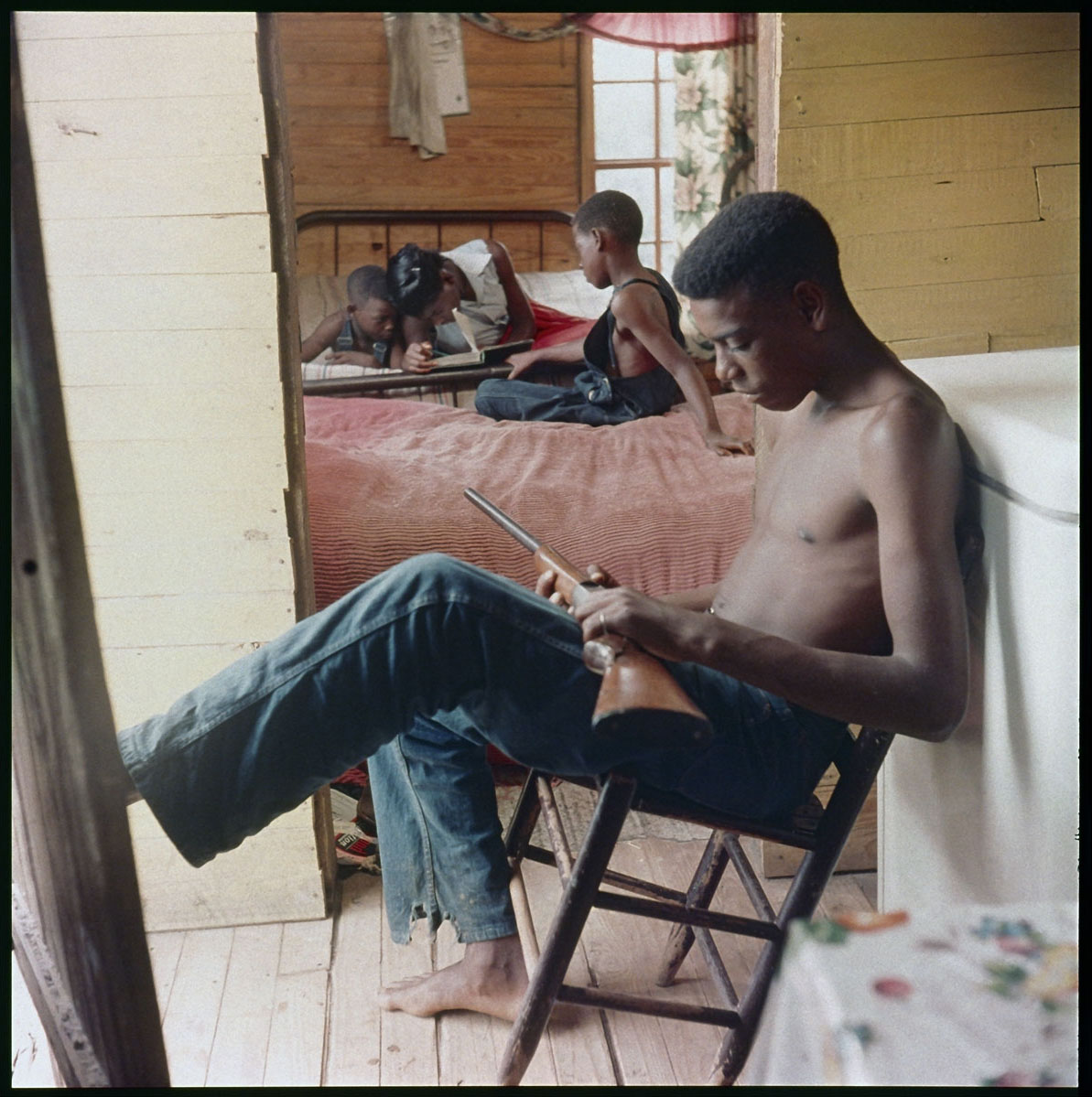
~ Willie Causey, Jr., with Gun During Violence in Alabama, Shady Grove, Alabama (1956)

About Gordon Parks

Gordon Parks was born in Fort Scott, Kansas. He grew up poor and faced racial discrimination. Parks was initially drawn to photography as a young man after seeing images of migrant workers published in a magazine, which made him realise photography’s potential to alter perspective. Parks became a self-taught photographer after purchasing his first camera at a pawnshop, and he honed his skills during a stint as a society and fashion photographer in Chicago. After earning a Julius Rosenwald Fellowship for his gritty photographs of that city’s South Side, the Farm Security Administration hired Parks in the early 1940s to document the current social conditions of the nation.

By 1944, Parks was the only black photographer working for Vogue, and he joined Life magazine in 1948 as the first African-American staff photographer. In 1970, Parks co-founded Essence magazine and served as the editorial director for the first three years of its publication. Parks later became Hollywood’s first major black director when he released the film adaptation of his autobiographical novel The Learning Tree, for which he also composed the musical score, however he is best known as the director of the 1971 hit movie Shaft. Parks received the National Medal of Arts in 1988 and received more than 50 honorary doctorates over the course of his career. He died in 2006

About The Gordon Parks Foundation

The Gordon Parks Foundation permanently preserves the work of Gordon Parks, makes it available to the public through exhibitions, books, and electronic media and supports artistic and educational activities that advance what Gordon described as “the common search for a better life and a better world.” The Foundation is a division of The Meserve-Kunhardt Foundation.

Press release from the High Museum of Art


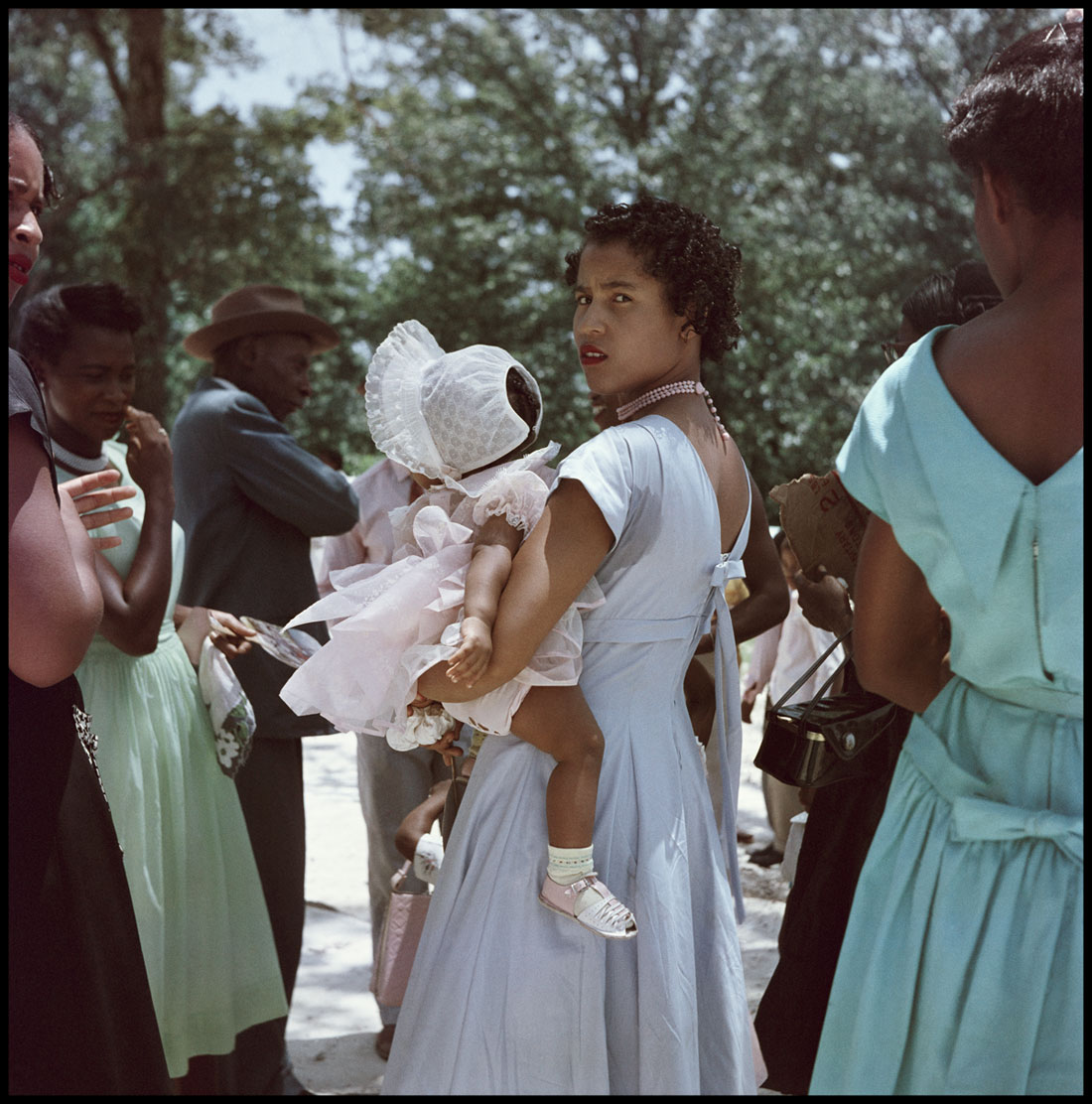
Gordon Parks (American, 1912-2006) 'Untitled, Alabama' 1956


Gordon Parks (American, 1912-2006)
Untitled, Alabama
1956
Collection of The Gordon Parks Foundation
Courtesy of and copyright The Gordon Parks Foundation


Gordon Parks (American, 1912-2006) 'Untitled, Shady Grove, Alabama' 1956


Gordon Parks (American, 1912-2006)
Untitled, Shady Grove, Alabama
1956
Collection of The Gordon Parks Foundation
Courtesy of and copyright The Gordon Parks Foundation


Gordon Parks (American, 1912-2006) 'Store Front, Mobile Alabama' 1956


Gordon Parks (American, 1912-2006)
Store Front, Mobile Alabama
1956
Collection of The Gordon Parks Foundation
Courtesy of and copyright The Gordon Parks Foundation


Gordon Parks (American, 1912-2006) 'Untitled, Shady Grove, Alabama' 1956


Gordon Parks (American, 1912-2006)
Untitled, Shady Grove, Alabama
1956
Collection of The Gordon Parks Foundation
Courtesy of and copyright The Gordon Parks Foundation


Gordon Parks (American, 1912-2006) 'Willie Causey, Jr., with Gun During Violence in Alabama, Shady Grove, Alabama' 1956


Gordon Parks (American, 1912-2006)
Willie Causey, Jr., with Gun During Violence in Alabama, Shady Grove, Alabama
1956
Collection of The Gordon Parks Foundation
Courtesy of and copyright The Gordon Parks Foundation


Gordon Parks (American, 1912-2006) 'Untitled, Shady Grove, Alabama' 1956


Gordon Parks (American, 1912-2006)
Untitled, Shady Grove, Alabama
1956
Collection of The Gordon Parks Foundation
Courtesy of and copyright The Gordon Parks Foundation


Gordon Parks (American, 1912-2006) 'Untitled, Shady Grove, Alabama' 1956


Gordon Parks (American, 1912-2006)
Untitled, Shady Grove, Alabama
1956
Collection of The Gordon Parks Foundation
Courtesy of and copyright The Gordon Parks Foundation


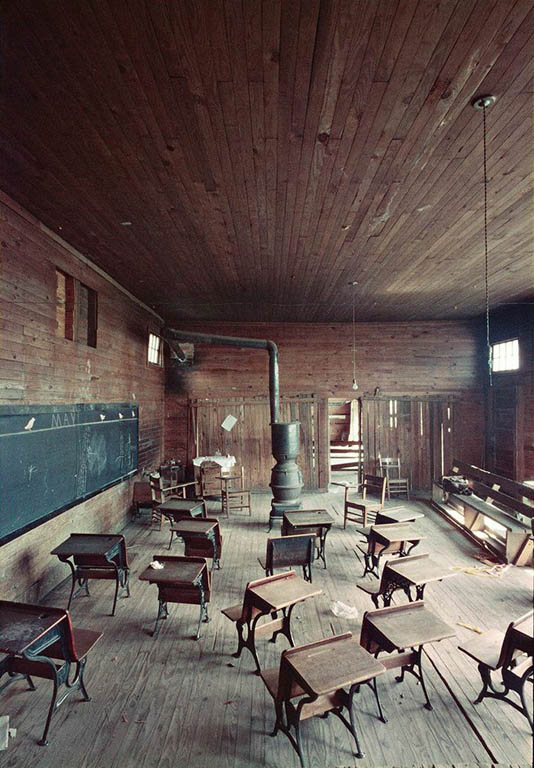
Gordon Parks (American, 1912-2006) 'Black Classroom, Shady Grove, Alabama' 1956


Gordon Parks (American, 1912-2006)
Black Classroom, Shady Grove, Alabama
1956
Promised gift of The Gordon Parks Foundation
Courtesy of and copyright The Gordon Parks Foundation


Although this photograph was taken in the 1950s, the wood-panelled interior, with a wood-burning stove at its centre, is reminiscent of an earlier time. Parks’s photograph of the segregated schoolhouse, here emptied of its students, evokes both the poetic and prosaic: springtime sunlight streams through the missing slats on the doors, while scraps of paper, rope, and other detritus litter the uneven floorboards. One of the Thorntons’ daughters, Allie Lee Causey, taught elementary-grade students in this dilapidated, four-room structure. After Parks’s article was published in Life, Mrs. Causey, who was quoted speaking out against segregation, was suspended from her job. She never held a teaching position again.


High Museum of Art
1280 Peachtree Street,
N.E. Atlanta, GA 30309

Opening hours:
Monday – Closed
Tuesday – Saturday 10am – 5pm
Sunday 12 – 5pm

High Museum of Art website

LIKE ART BLART ON FACEBOOK

Back to top

Exhibition: ‘Carrie Mae Weems: Three Decades of Photography and Video’ at The Solomon R. Guggenheim Museum, New York

Exhibition dates: 24th January – 14th May 2014


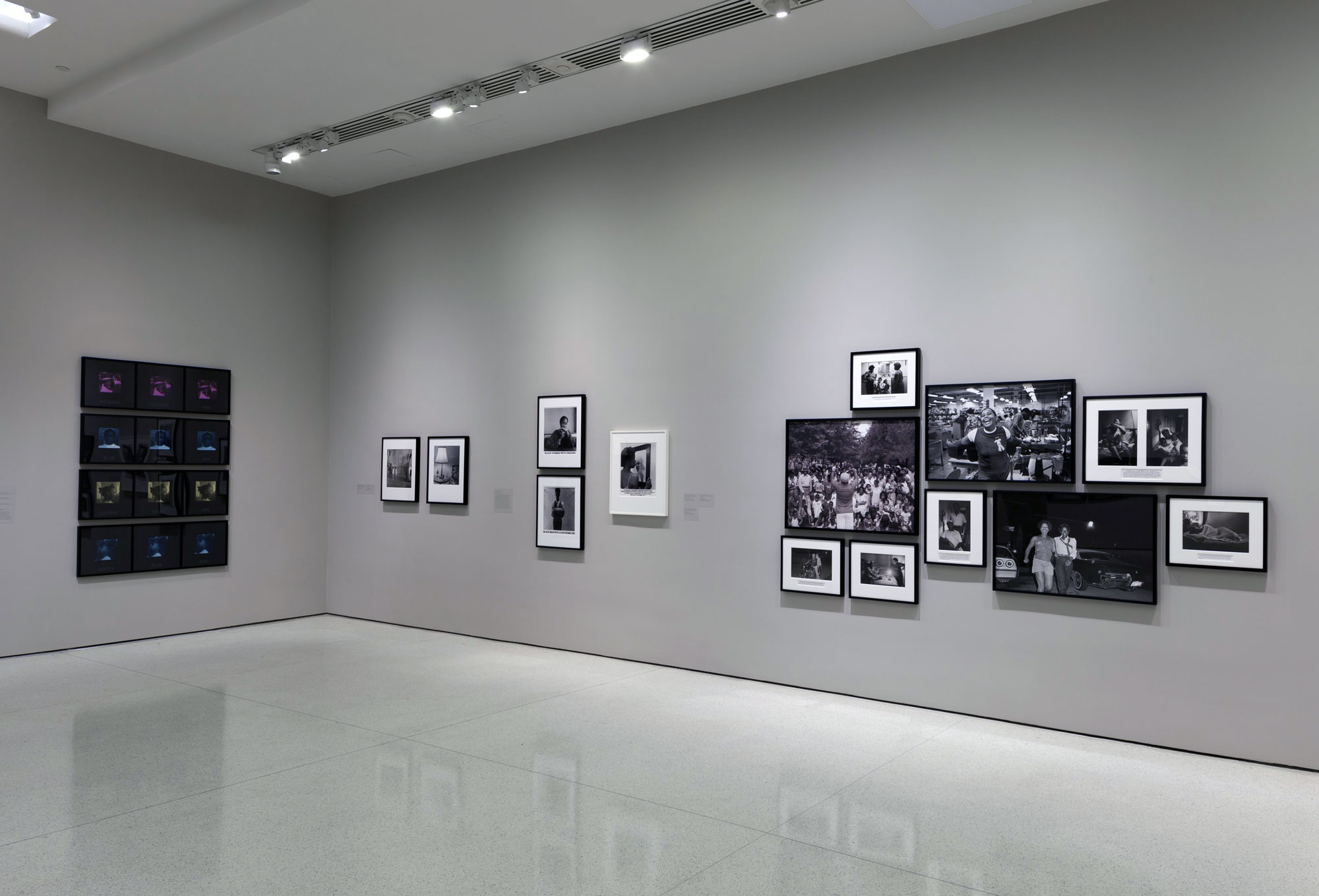
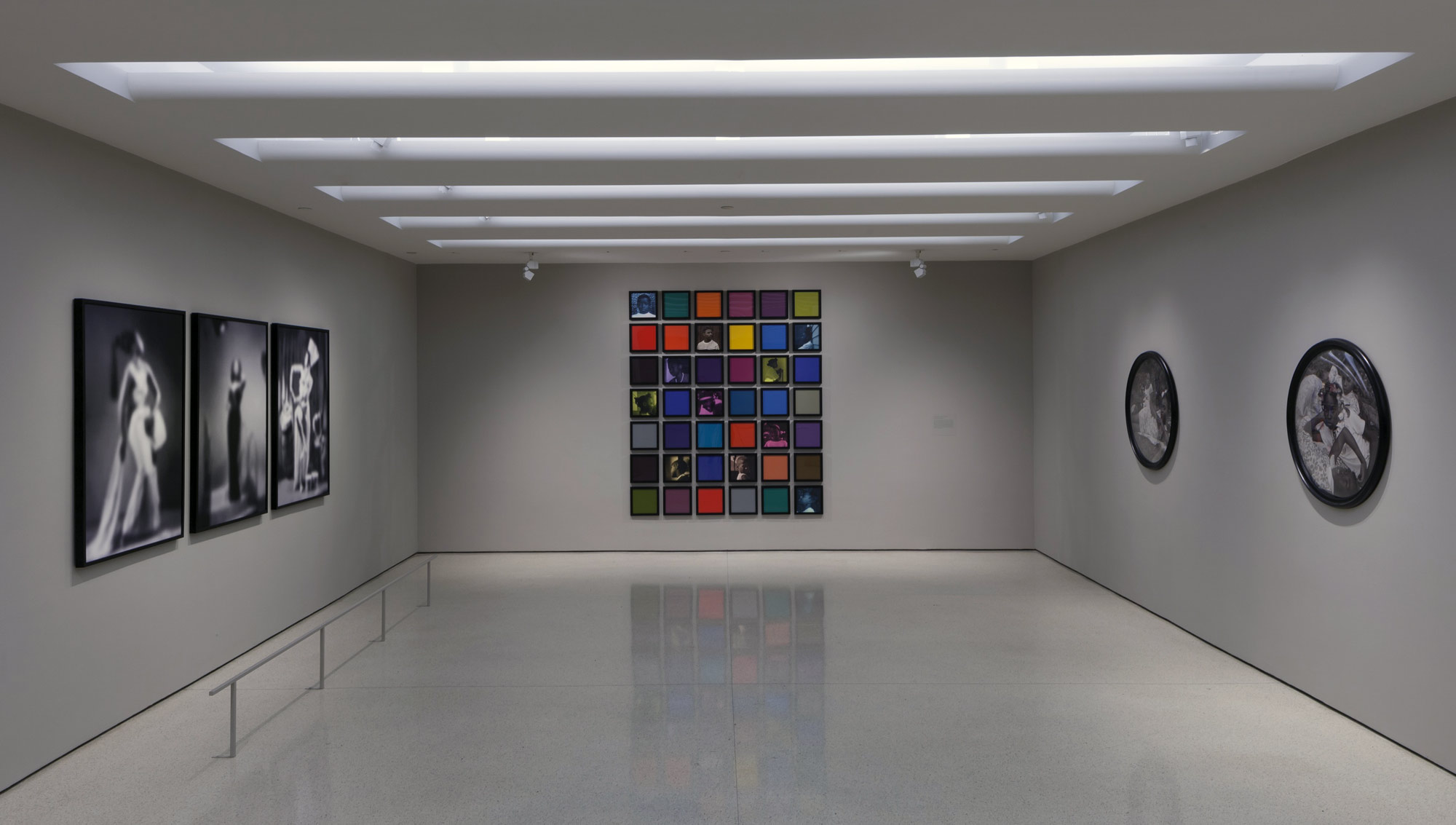
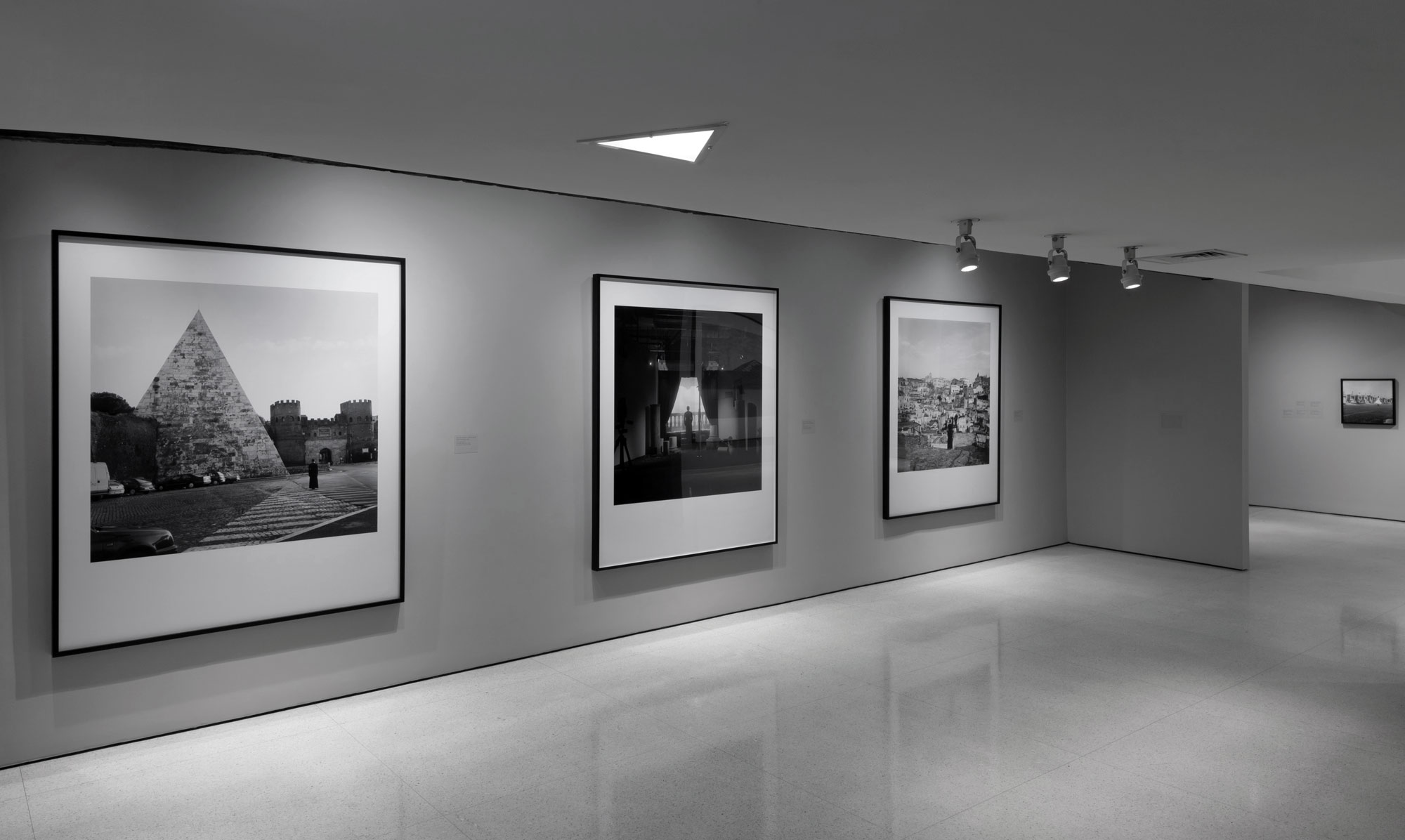
Installation view: 'Carrie Mae Weems: Three Decades of Photography and Video', Solomon R. Guggenheim Museum, New York, January 24-May 14, 2014


Installation view: Carrie Mae Weems: Three Decades of Photography and Video, Solomon R. Guggenheim Museum, New York, January 24-May 14, 2014
Photo: David Heald © Solomon R. Guggenheim Foundation.


A busy time with postings on the archive over the next week with a lot of exhibitions finishing on the 18th May 2014. The posting about this artist is one of the best of them. I have been wanting to show this artist on this site since it started, nearly 6 years ago. Finally, I get my chance!


I ask the question:

Who are the interesting photographers anywhere who are alive now?

That is – by looking at the ideas that are present in poetry, music, philosophy or even politics – who is there that is truly taking these ideas forward (or ideas that are as interesting). Or, who is arranging images with the elegance of a Sommer or an Atget or the dynamics of Arbus.

In other words whose acts am I hanging upon, so that I am waiting with great anticipation to see what they are going to do next?

Which living photographers would I walk over broken glass to see their work? = some

If I was being essential (and if you were walking over glass you would be), the list would be very short:

Carrie Mae Weems and Wolfgang Tillmans.


What both these image makers – for they are not photographers in the traditional sense – do, is problematise and reconfigure narration and visualisation in the conceptualisation of subject. Tillmans experiments with a sensory experiential backdrop against and within which the photographs are produced. Modes of perception and the regimes of emotion are inducted into the aesthetics of production and meaning so that, “the pictures communicate with each other in a way that is not bound to the pattern of a closed narrative or any particular line of argument.” The mobilisation and reversal of value and meaning are central strategies in Tillmans’ praxis, where realistic and abstract elements are never intentionally separated from each other, and where the physicality and space of the photographs is also acknowledged in the installation of the work.

A similar sensory experience can be observed in the work of Carrie Mae Weems, only this artist invites contemplation of issues surrounding race, gender, and class inequality – bringing to light the voices of marginalised and oppressed people and histories – through a multidimensional picture of history and humanity, intended to spur greater cultural awareness and compassion. As the press release observes, “Although her subjects are often African American, Weems wants “people of color to stand for the human multitudes” and for her art to resonate with audiences of all backgrounds… Weems often appropriates words and images, re-presenting them to viewers as biting reminders of the persistence of bigoted attitudes in the United States.”

This is the power of both artists work, the creation of open ended narratives, multidimensional pictures of history and humanity which allows the viewer to create a space beyond the art works.

Using ekphrasis – the structuring patterns of language, in Weems’ case emphasising the role of both spoken and written narrative – to vividly represent a wide range of perceptual experiences, she creates a complementary space outside of the art work in the reader’s mind. The author creates links, “designating the paths along which the reader may travel, and thus, in a much freer manner than modernist authors, structures the network of allusions, parallelisms, and juxtapositions that contribute to the sense of textual space.”1 This allows the viewer to create a language of personal associations and engages in them an autonomy of experience, one encouraged by the products, the texts and images that these authors create.

These thoughts come to mind. Some things we interpret and then remember that interpretation, but we are no longer involved in the actual act of interpretation – and there are other, probably fewer things that continue to involve us – where we never finish the first way of looking at them, we are always coming to them and not arriving. Unfortunately, I find a lot of things in the first group, and as much as theoreticians try to inspire me to re-interpret, the work they have done often only works as an adjunct to something that has settled.

The art of Weems and Tillmans resides, lives and breathes of the second category, for we can never be sure of the pattern of narrative, the form of aesthetic and thematic interaction and the specificity of the marginalised histories they examine. These histories apply to all of us.

Dr Marcus Bunyan


1/ Tolva, John. Ut Pictura Hyperpoesis: Spatial Form, Visuality, and the Digital World,” in HYPERTEXT ’96 Proceedings of the the seventh ACM conference on Hypertext, 1996, p. 71.


Many thankx to The Solomon R. Guggenheim Museum for allowing me to publish the photographs in the posting. Please click on the photographs for a larger version of the image.


“Over the past thirty years, Carrie Mae Weems has yearned to insert marginalized peoples into the historical record. She does this not only to bring ignored or erased experiences to light but to provide a more multidimensional picture of humanity as a whole, a picture that ultimately will spur greater awareness and compassion. Weems believes deeply that “my responsibility as an artist is to … make art. beautiful and powerful, that adds and reveals; to beautify the mess of a messy world, to heal the sick and feed the helpless; to shout bravely from the roof-tops and storm barricaded doors and voice the specifics of our historic moment.””


Carrie Mae Weems quoted in Kathryn E. Delmez. “Introduction,” from Kathryn E. Delmez (ed.,). Carrie Mae Weems: Three Decades of Photography and Video. Yale University Press 2012, p. 1.


“Weems [work] exist at the intersection of photography and race, image and text.”


John Pultz


“Belying the myth that conceptual artists disdain the old-fashioned notion of aesthetics, Weems has long been consumed and galvanized by the idea of beauty. The notion of beauty encompasses and reaches beyond aesthetics. It is not a simple concept, as often there are unspoken political implications in her use. Beauty is a powerful adjective in her hands and an important tool in her work. Her work is always about beauty and purposely so. She seduces the viewer through the very process of creating luscious prints, or beautiful images, without ever using beauty purely to seduce. But no matter what one encounters within the text or within one’s own revelations about what the texts ultimately say, the religion of beauty always undergirds Weem’s vision and informs her work.”


Thelma Golden. “Some Thoughts on Carrie Mae Weems,” in Golden, T. and Piché Jr., T. Carrie Mae Weems: Recent Work, 1992-1998. New York: George Braziller, 1998, p. 32 quoted in Deborah Willis. “Photographing between the Lines: Beauty, Politics, and the Poetic Vision of Carrie Mae Weems,” in Kathryn E. Delmez (ed.,). Carrie Mae Weems: Three Decades of Photography and Video. Yale University Press 2012, p. 33.


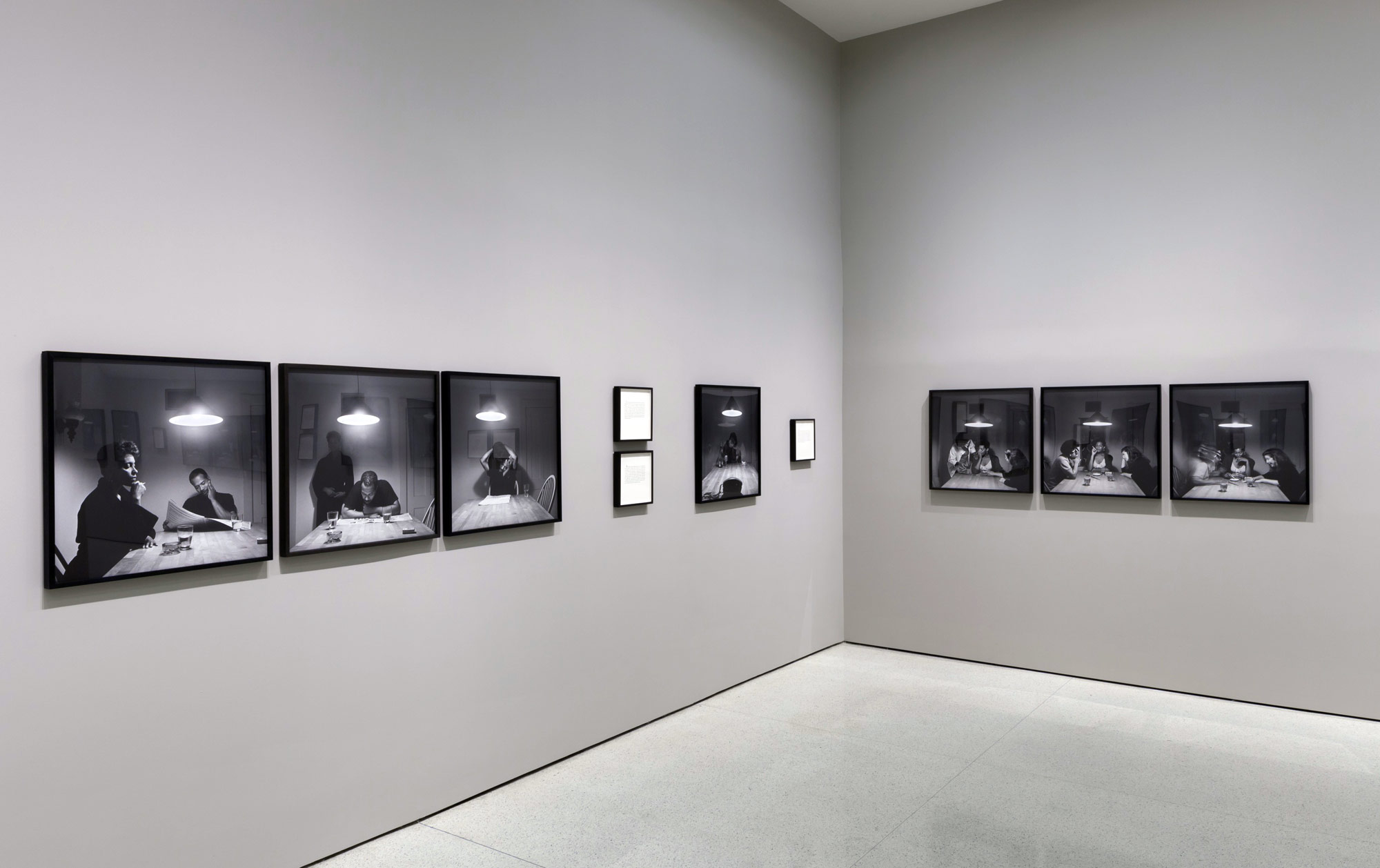
Installation view: 'Carrie Mae Weems: Three Decades of Photography and Video', Solomon R. Guggenheim Museum, New York, January 24-May 14, 2014

Installation view: 'Carrie Mae Weems: Three Decades of Photography and Video', Solomon R. Guggenheim Museum, New York, January 24-May 14, 2014

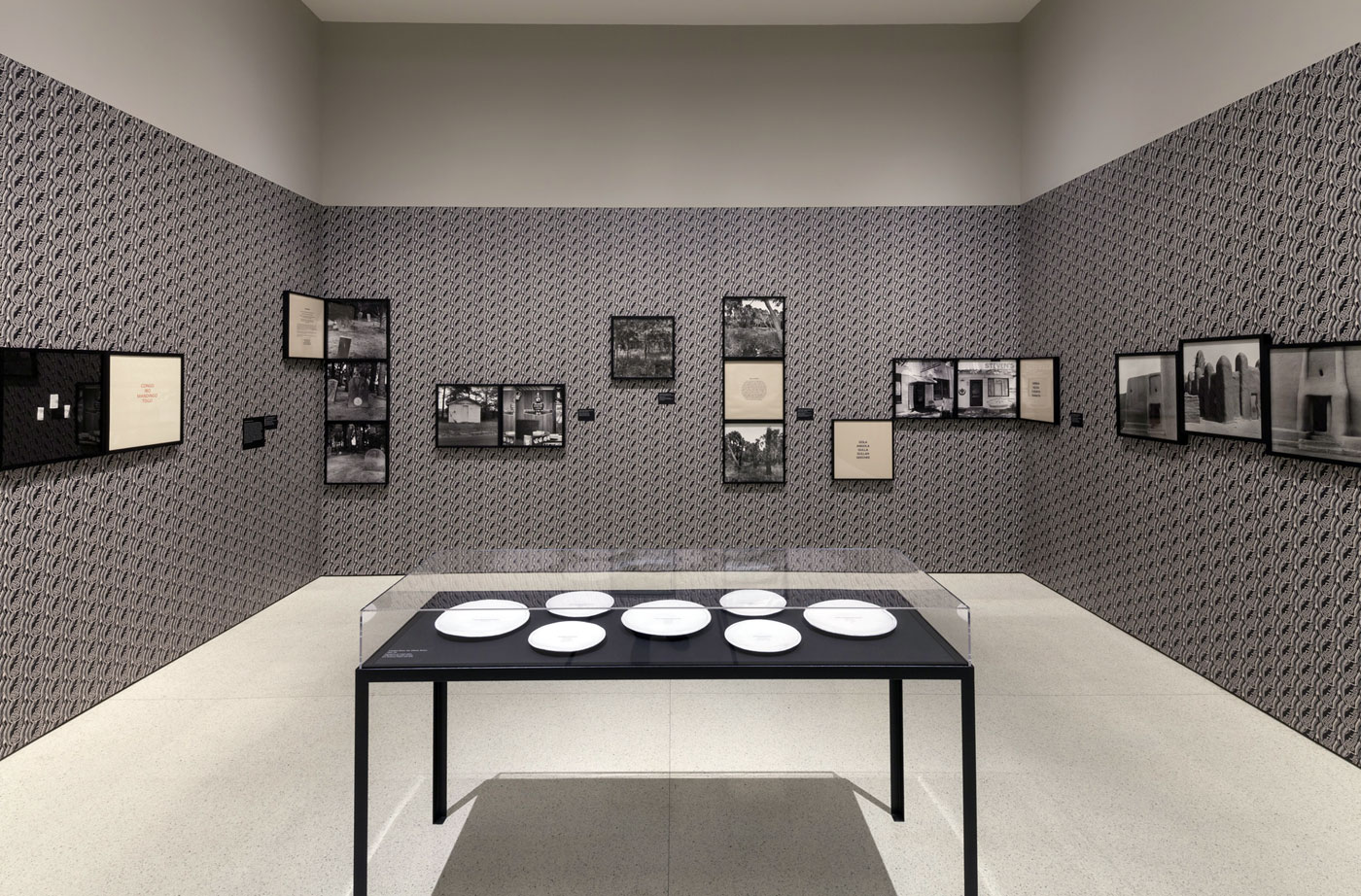
Installation view: 'Carrie Mae Weems: Three Decades of Photography and Video', Solomon R. Guggenheim Museum, New York, January 24-May 14, 2014

Installation view: 'Carrie Mae Weems: Three Decades of Photography and Video', Solomon R. Guggenheim Museum, New York, January 24-May 14, 2014

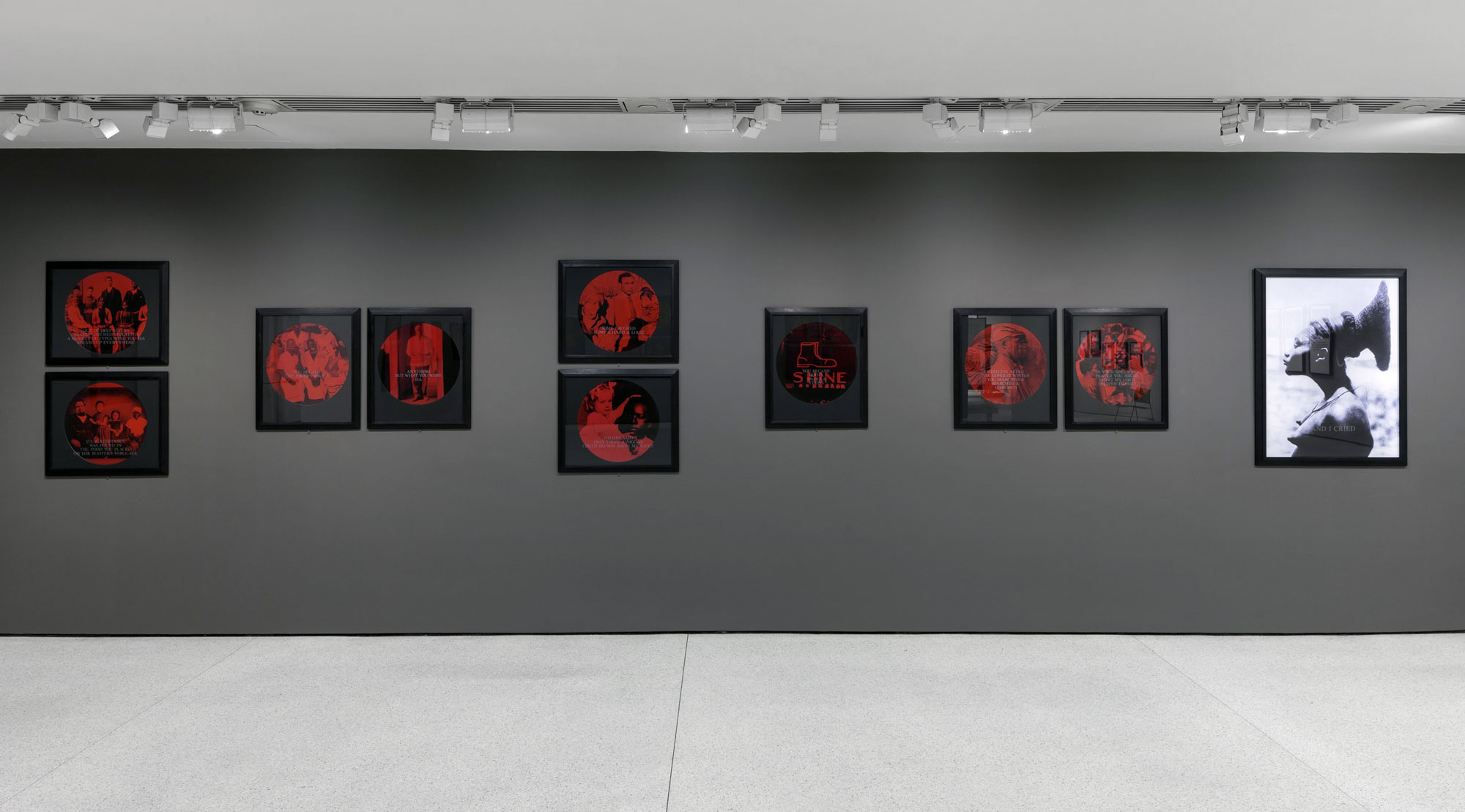
Installation view: 'Carrie Mae Weems: Three Decades of Photography and Video', Solomon R. Guggenheim Museum, New York, January 24-May 14, 2014


Installation views: Carrie Mae Weems: Three Decades of Photography and Video, Solomon R. Guggenheim Museum, New York, January 24-May 14, 2014
Photos: David Heald © Solomon R. Guggenheim Foundation.


The Solomon R. Guggenheim Museum presents Carrie Mae Weems: Three Decades of Photography and Video, the first major New York museum retrospective devoted to this socially motivated artist. Weems has long been acclaimed as one of the most eloquent and respected interpreters of African American experiences, and she continues to be an important influence for many young artists today. Featuring more than 120 works – primarily photographs, but also texts, videos, and an audio recording – as well as a range of related educational programs, this comprehensive survey offers an opportunity to experience the full breadth of the artist’s oeuvre and gain new insight into her practice.

Carrie Mae Weems: Three Decades of Photography and Video is organised by the Frist Center for the Visual Arts, Nashville, Tennessee. The exhibition has been curated by Kathryn Delmez, the Frist Center, where it opened in September 2012. The Solomon R. Guggenheim Museum presentation is organised by Jennifer Blessing, Senior Curator, Photography, with Susan Thompson, Assistant Curator. This exhibition is supported in part by The Robert Mapplethorpe Foundation. The Leadership Committee for Carrie Mae Weems: Three Decades of Photography and Video is also gratefully acknowledged for its support, including Jo Carole and Ronald S. Lauder, Robert Menschel Vital Projects, and Jack Shainman Gallery, as well as Henry Buhl, Crystal R. McCrary and Raymond J. McGuire, Beth Rudin DeWoody, Rhona Hoffman Gallery, Toby Devan Lewis, Louise and Gerald W. Puschel, and Miyoung Lee and Neil Simpkins. Additional funding is provided by the William Talbott Hillman Foundation and the New York State Council on the Arts.

The work of Carrie Mae Weems (b. 1953, Portland, Oregon) invites contemplation of issues surrounding race, gender, and class inequality. Over the past thirty years, Weems has used her art to bring to light the ignored or erased experiences of marginalised people. Her work proposes a multidimensional picture of history and humanity, intended to spur greater cultural awareness and compassion. Although her subjects are often African American, Weems wants “people of colour to stand for the human multitudes” and for her art to resonate with audiences of all backgrounds.

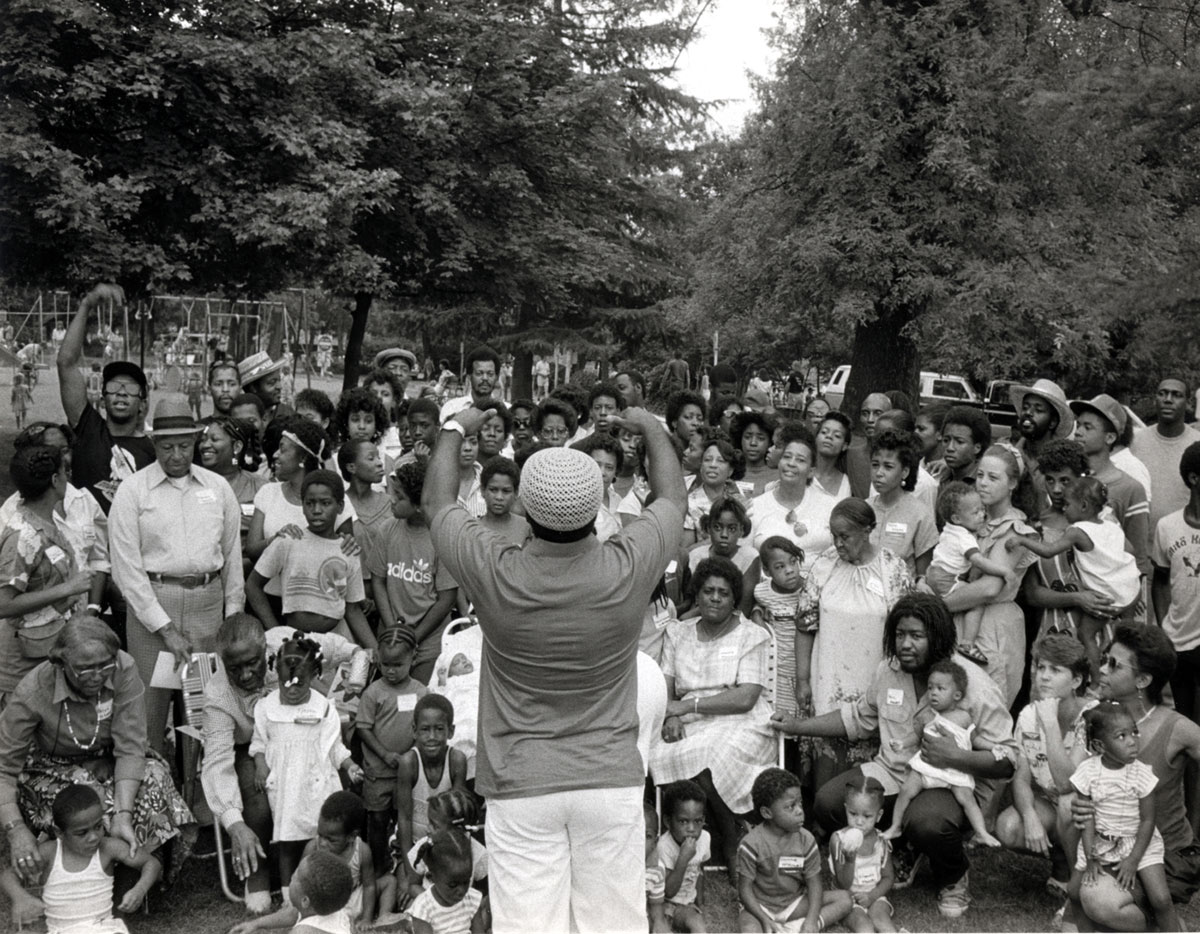
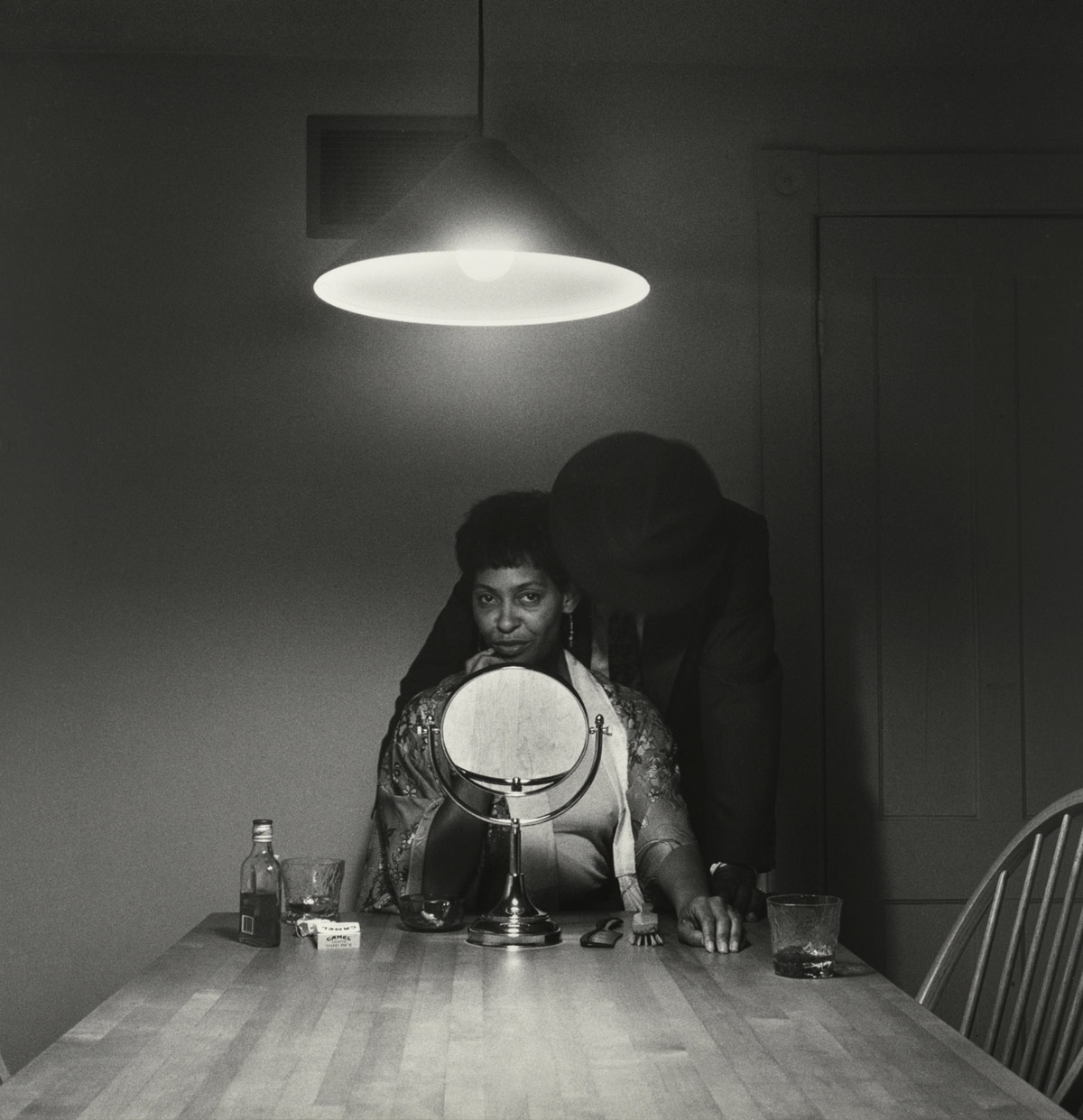
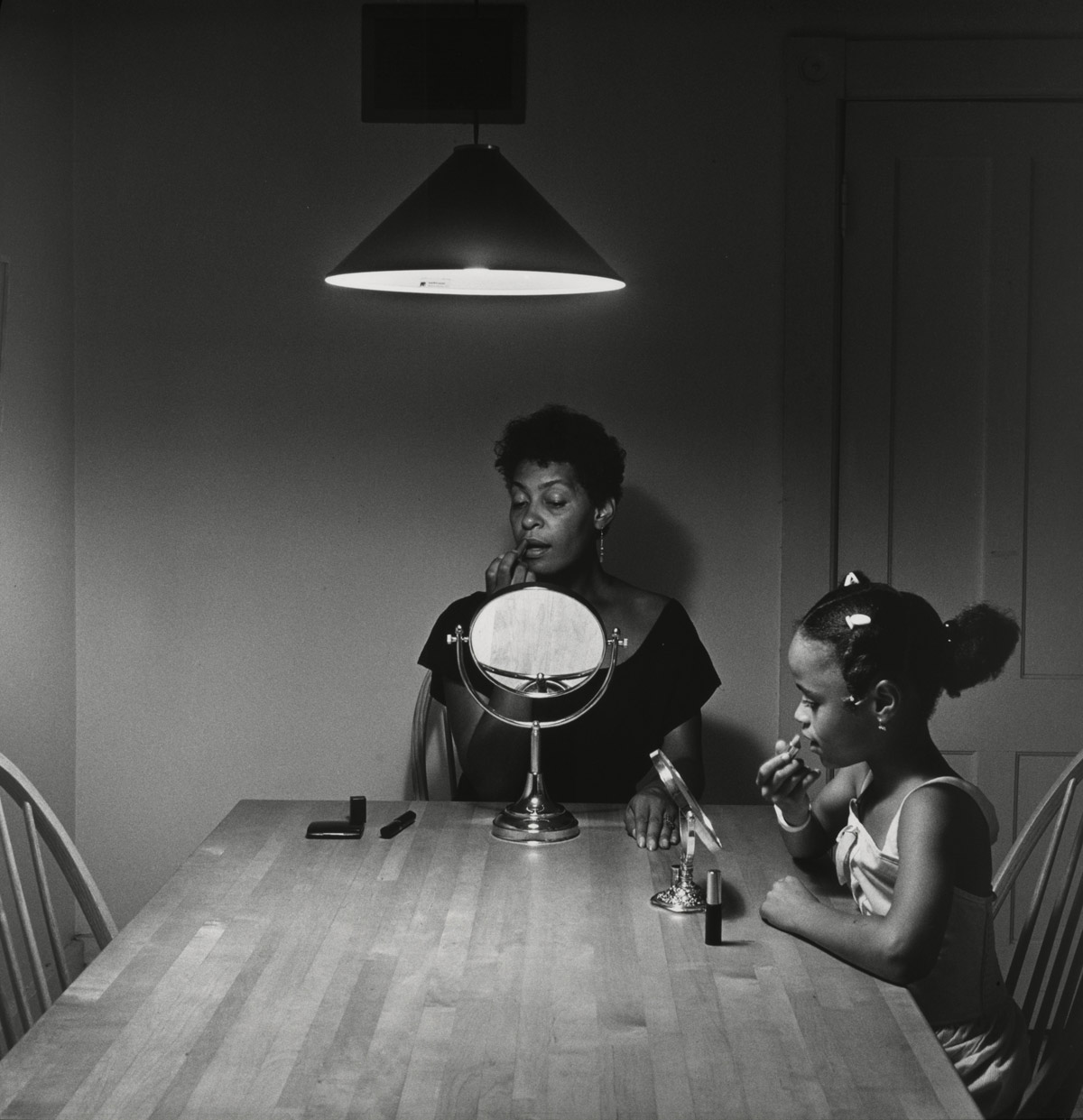
Organised in a loosely chronological order throughout two of the museum’s Annex Levels, the exhibition begins on Level 2 with the series Family Pictures and Stories (1978-1984). This series, like many of Weems’s early works, explores matters relating to contemporary black identity, highlighting individuals in social contexts – including in this case her own kin. Her landmark Kitchen Table Series (1990) employs text and photography to explore the range of women’s roles within a community, pointedly situating the photographs’ subject within a domestic setting. Selections from Weems’s Sea Islands Series (1991-1992), Africa (1993), and Slave Coast (1993) demonstrate her ongoing interest in language and storytelling. These works, made during the artist’s travels to the titular locales, pair images with evocative vernacular texts or etymological investigations that trace English words to African roots. The artist’s practice emphasises the role of both spoken and written narrative, reflecting her graduate studies in folklore.

Weems often appropriates words and images, re-presenting them to viewers as biting reminders of the persistence of bigoted attitudes in the United States. Her renowned series From Here I Saw What Happened and I Cried (1995-1996), presented on Annex Level 4, layers new text over found historical imagery to critique and lament prejudiced attitudes toward African Americans throughout the nineteenth and twentieth centuries. A yearning to investigate the underlying causes and effects of racism, slavery, and imperialism has spurred Weems to travel widely throughout the United States, Africa, Europe, and the Caribbean. During extended visits to these places, depicted in series such as Dreaming in Cuba (2002), The Louisiana Project (2003), and Roaming (2006), all represented in the exhibition, she looks to the surrounding land and architecture in order to foster communion with inhabitants past and present.

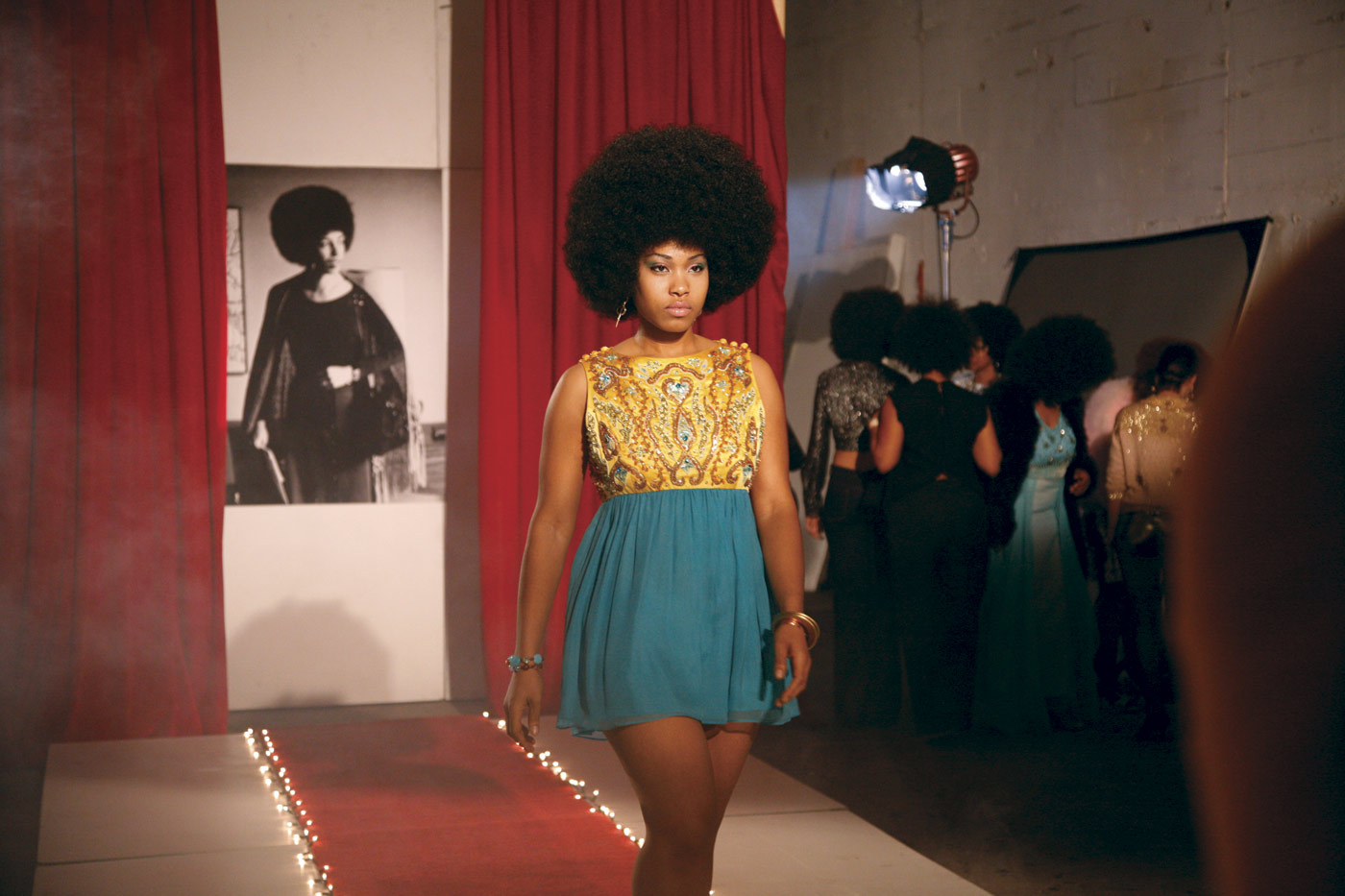
Video is a natural extension of Weems’s narrative photographic practice, also providing an opportunity for the artist to include music in her work. Although she worked in film during her undergraduate years at the California Institute of the Arts, Weems’s first major endeavour in the medium came in 2003-2004 with Coming Up for Air, a work comprised of series of poetic vignettes that will be screened in the New Media Theater in the Guggenheim’s Sackler Center for Arts Education. Other video works, including Italian Dreams (2006), Afro Chic (2009), and Constructing History: A Requiem to Mark the Moment (2008) will be integrated into the exhibition near related photographs.

Press release from The Solomon R. Guggenheim Museum website


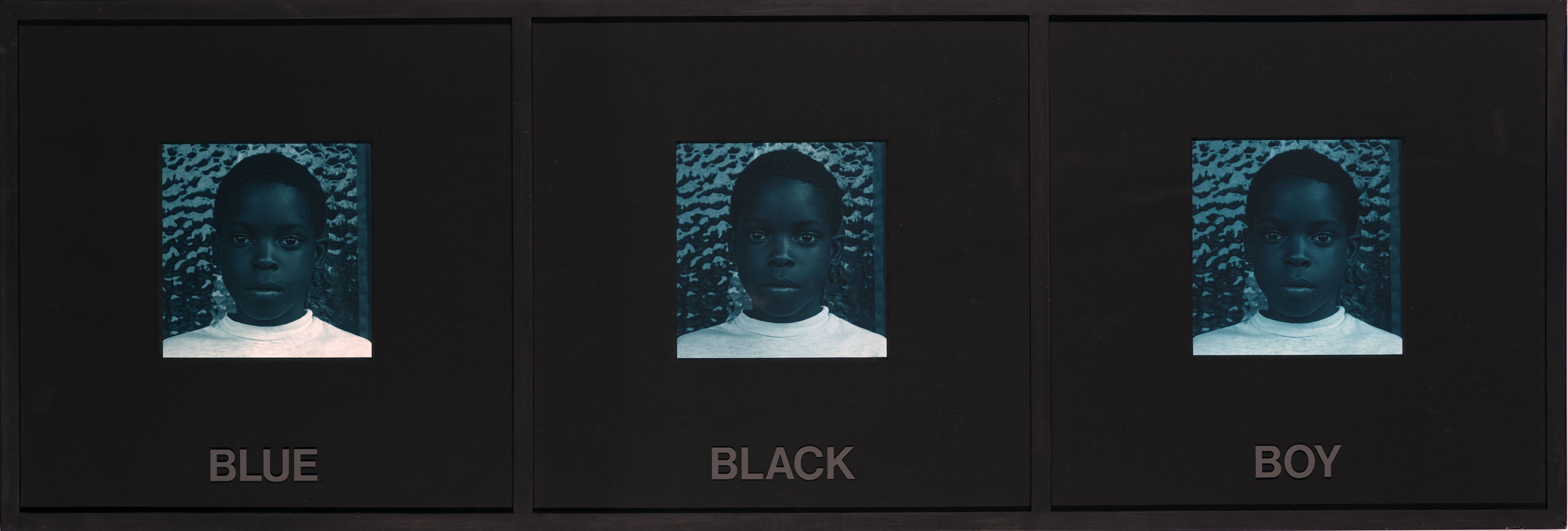
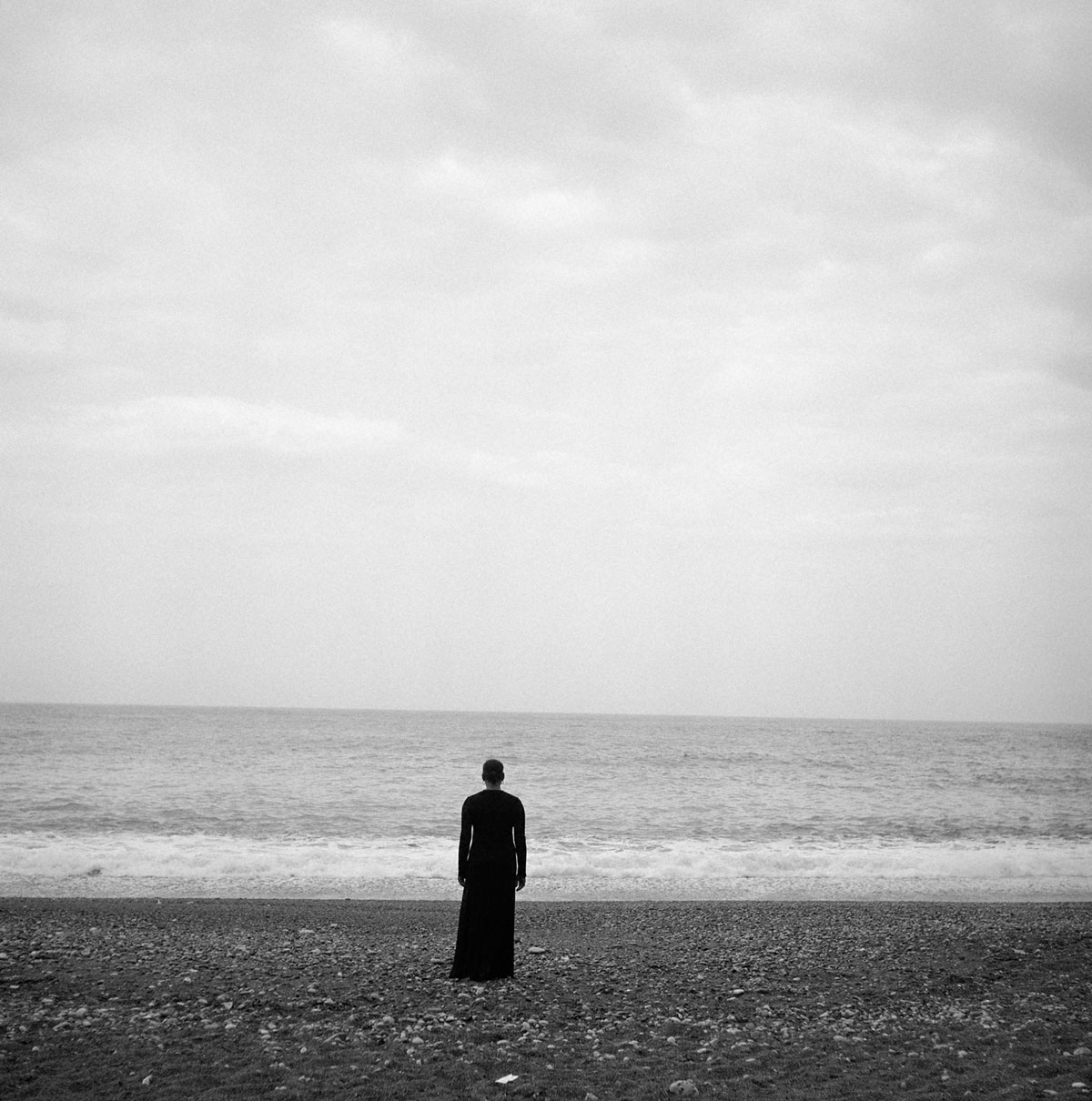
Carrie Mae Weems (American, b. 1953) 'Blue Black Boy (from 'Colored People')' 1989-1990


Carrie Mae Weems (American, b. 1953)
Blue Black Boy (from Colored People)
1989-90
Triptych, three toned gelatin silver prints with Prestype and frame
16 x 48 inches (40.6 x 121.9cm) overall
Whitney Museum of American Art, New York, Purchase, with funds from the Photography Committee
© Carrie Mae Weems


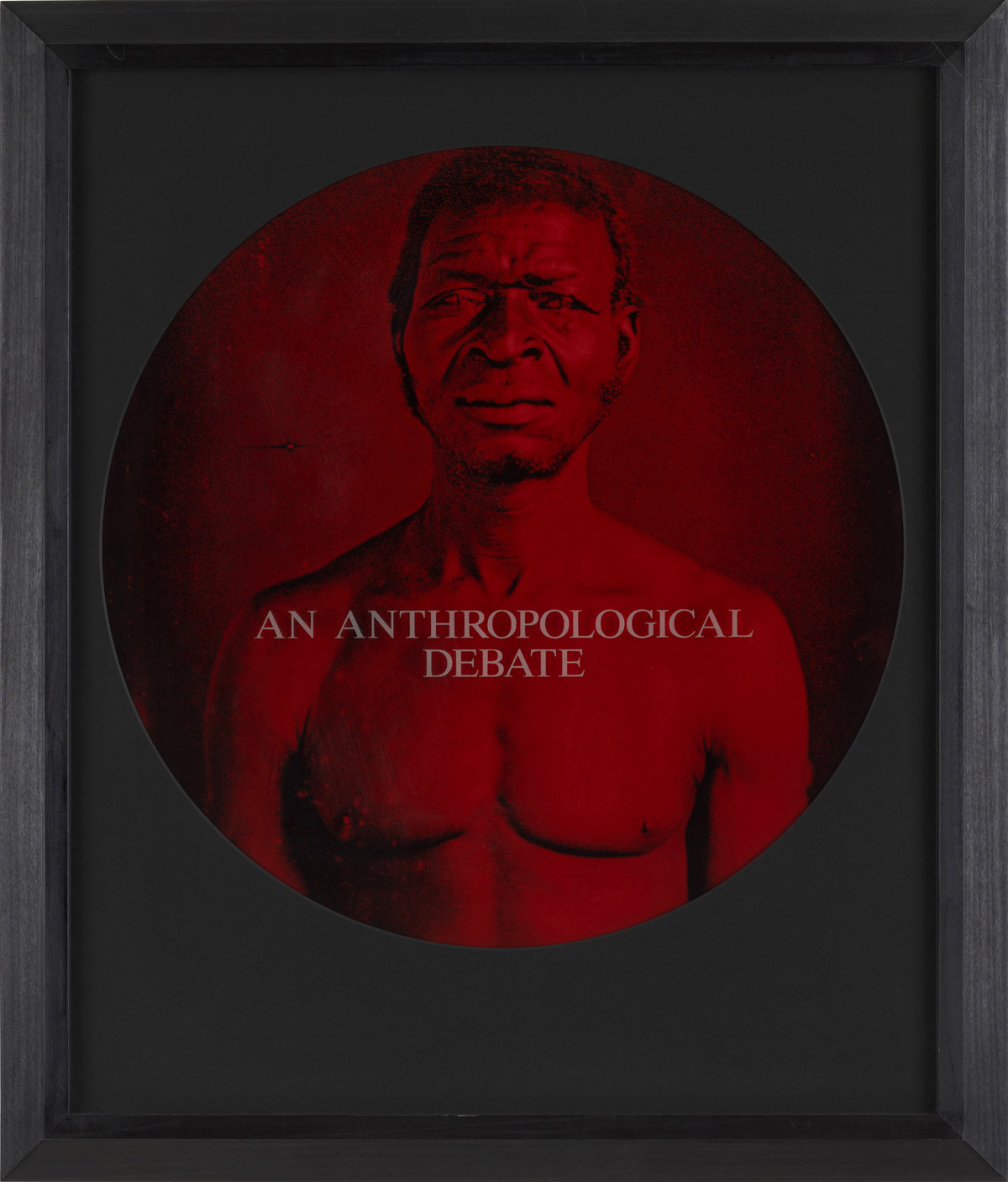
Carrie Mae Weems (American, b. 1953) 'An Anthropological Debate' (from 'From Here I Saw What Happened and I Cried') 1995-1996


Carrie Mae Weems (American, b. 1953)
An Anthropological Debate (from From Here I Saw What Happened and I Cried)
1995-96
Chromogenic print with etched text on glass
26 1/2 x 22 3/4 inches (67.3 x 57.8cm)
The Museum of Modern Art, New York, Gift on behalf of The Friends of Education of the Museum of Modern Art
From an original daguerreotype taken by J.T. Zealy, 1850. Peabody Museum, Harvard University.Copyright President & Fellows of Harvard College, 1977. All rights reserved.
Photo: © 2012, MoMA, NY


Carrie Mae Weems (American, b. 1953) 'Afro-Chic' 2010


Carrie Mae Weems (American, b. 1953)
Afro-Chic
2010
Digital colour video, with sound, 5 min., 30 sec.
Collection of the artist, courtesy Courtesy the artist and Jack Shainman Gallery, New York
© Carrie Mae Weems


Carrie Mae Weems (American, b. 1953) 'Family Reunion' (from 'Family Pictures and Stories') 1978-84


Carrie Mae Weems (American, b. 1953)
Family Reunion (from Family Pictures and Stories)
1978-1984
Gelatin silver print
30 x 40 inches (76.2 x 101.6cm)
Collection of the artist, courtesy Jack Shainman Gallery, New York
© Carrie Mae Weems


Carrie Mae Weems (American, b. 1953) 'Untitled (Man and mirror)' (from 'Kitchen Table Series') 1990


Carrie Mae Weems (American, b. 1953)
Untitled (Man and mirror) (from Kitchen Table Series)
1990
Gelatin silver print
27 1/4 x 27 1/4 inches (69.2 x 69.2 cm)
Collection of Eric and Liz Lefkofsky, Promised gift to The Art Institute of Chicago
© Carrie Mae Weems
Photo: © The Art Institute of Chicago


Carrie Mae Weems (American, b. 1953) 'Untitled (Woman and daughter with makeup)' (from 'Kitchen Table Series') 1990


Carrie Mae Weems (American, b. 1953)
Untitled (Woman and daughter with makeup) (from Kitchen Table Series)
1990
Gelatin silver print
27 1/4 x 27 1/4 inches (69.2 x 69.2cm)
Collection of Eric and Liz Lefkofsky, Promised gift to The Art Institute of Chicago
© Carrie Mae Weems
Photo: © The Art Institute of Chicago


Carrie Mae Weems (American, b. 1953) 'A Broad and Expansive Sky - Ancient Rome' (from 'Roaming') 2006


Carrie Mae Weems (American, b. 1953)
A Broad and Expansive Sky – Ancient Rome (from Roaming)
2006
Chromogenic print
73 x 61 inches (185.4 x 154.9cm)
Private collection, Portland, Oregon
© Carrie Mae Weems


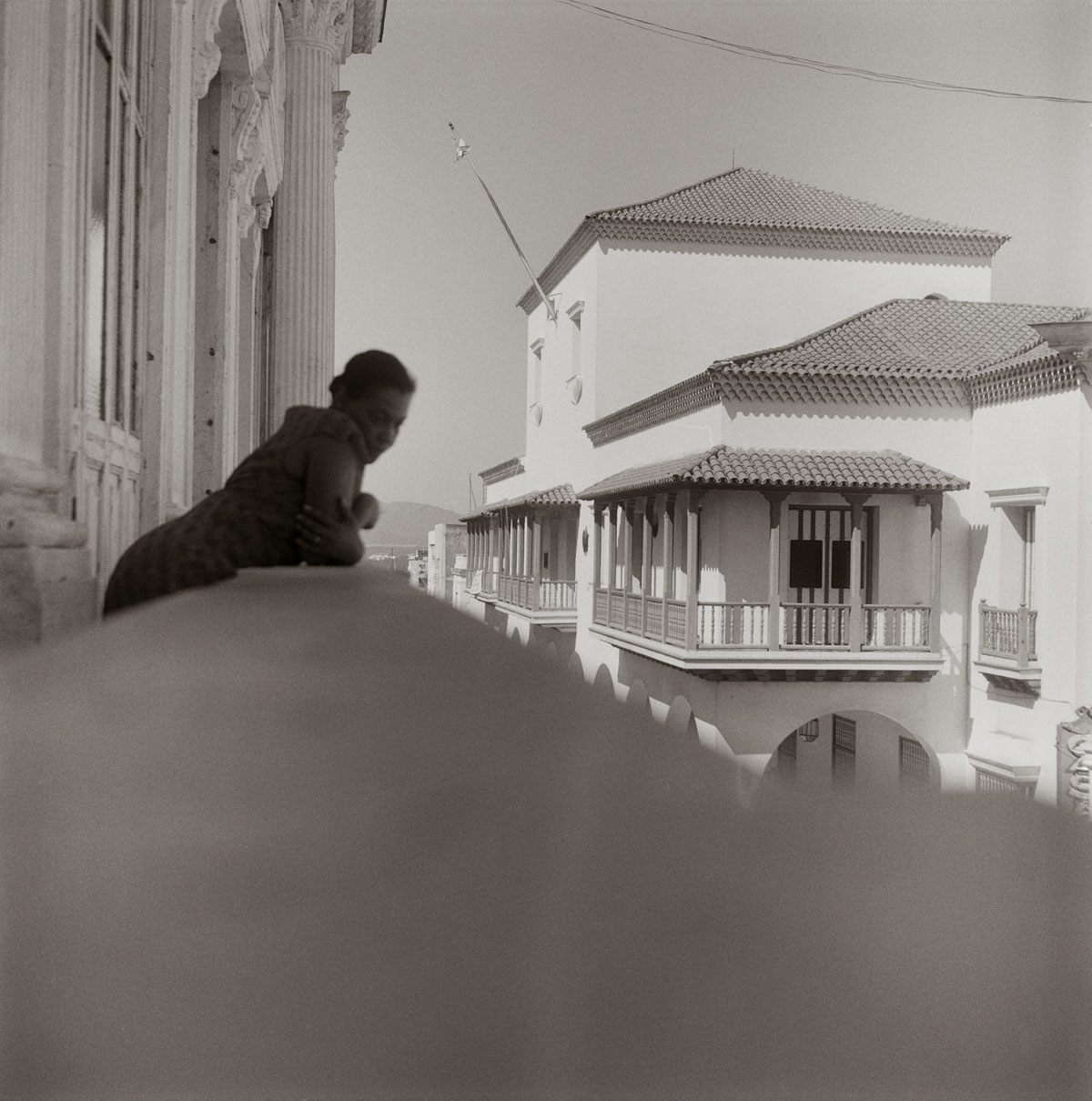
Carrie Mae Weems (American, b. 1953) 'Listening for the Sounds of Revolution' (from 'Dreaming in Cuba') 2002


Carrie Mae Weems (American, b. 1953)
Listening for the Sounds of Revolution (from Dreaming in Cuba)
2002
Gelatin silver print
28 1/2 x 28 1/2 inches (72.4 x 72.4cm)
Collection of the artist, courtesy Courtesy the artist and Jack Shainman Gallery, New York
© Carrie Mae Weems


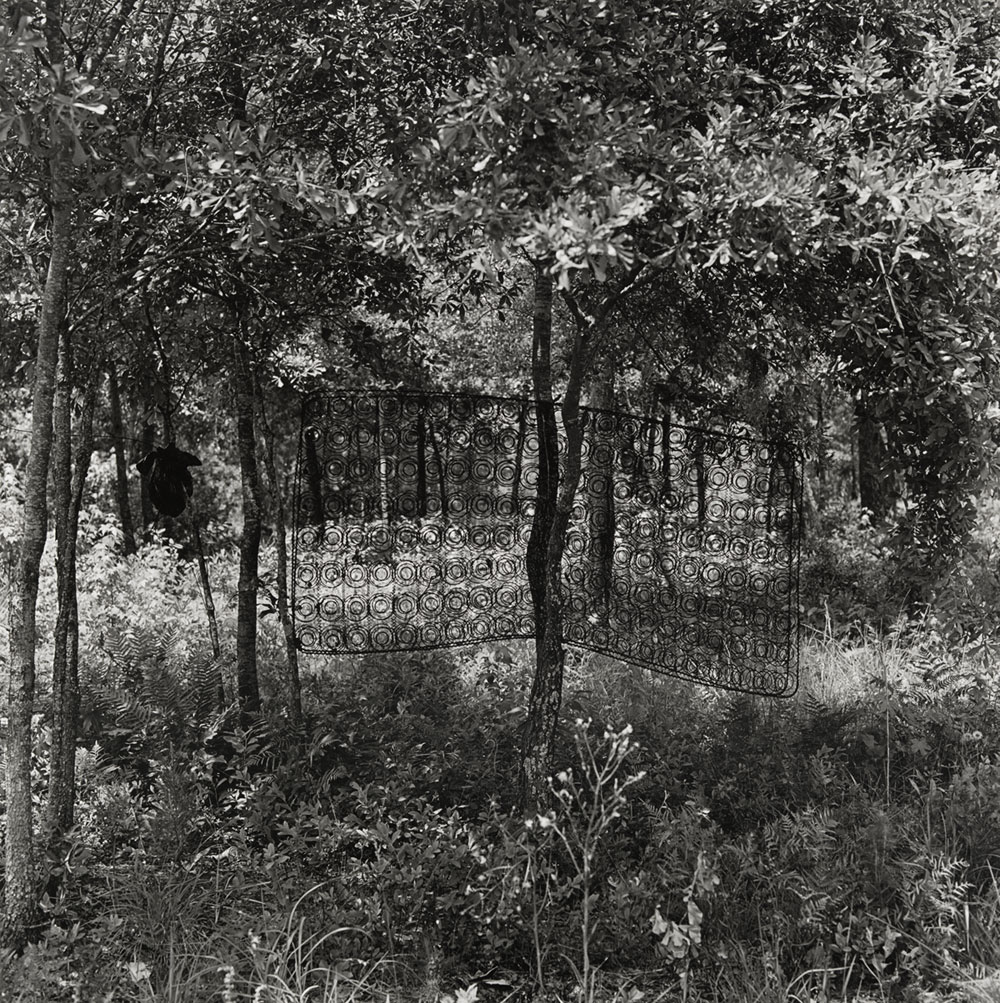
Carrie Mae Weems. 'Untitled (Box Spring in Tree)' (from 'Sea Islands Series') 1991-92
Carrie Mae Weems (American, b. 1953)
Untitled (Box Spring in Tree) (from Sea Islands Series)
1991-1992
Gelatin silver print
20 x 20 inches (50.8 x 50.8cm)
Whitney Museum of American Art, New York, Gift of Carrie Mae Weems and P•P•O•W, 97.97.1
© Carrie Mae Weems
Photo: Robert Gerhardt


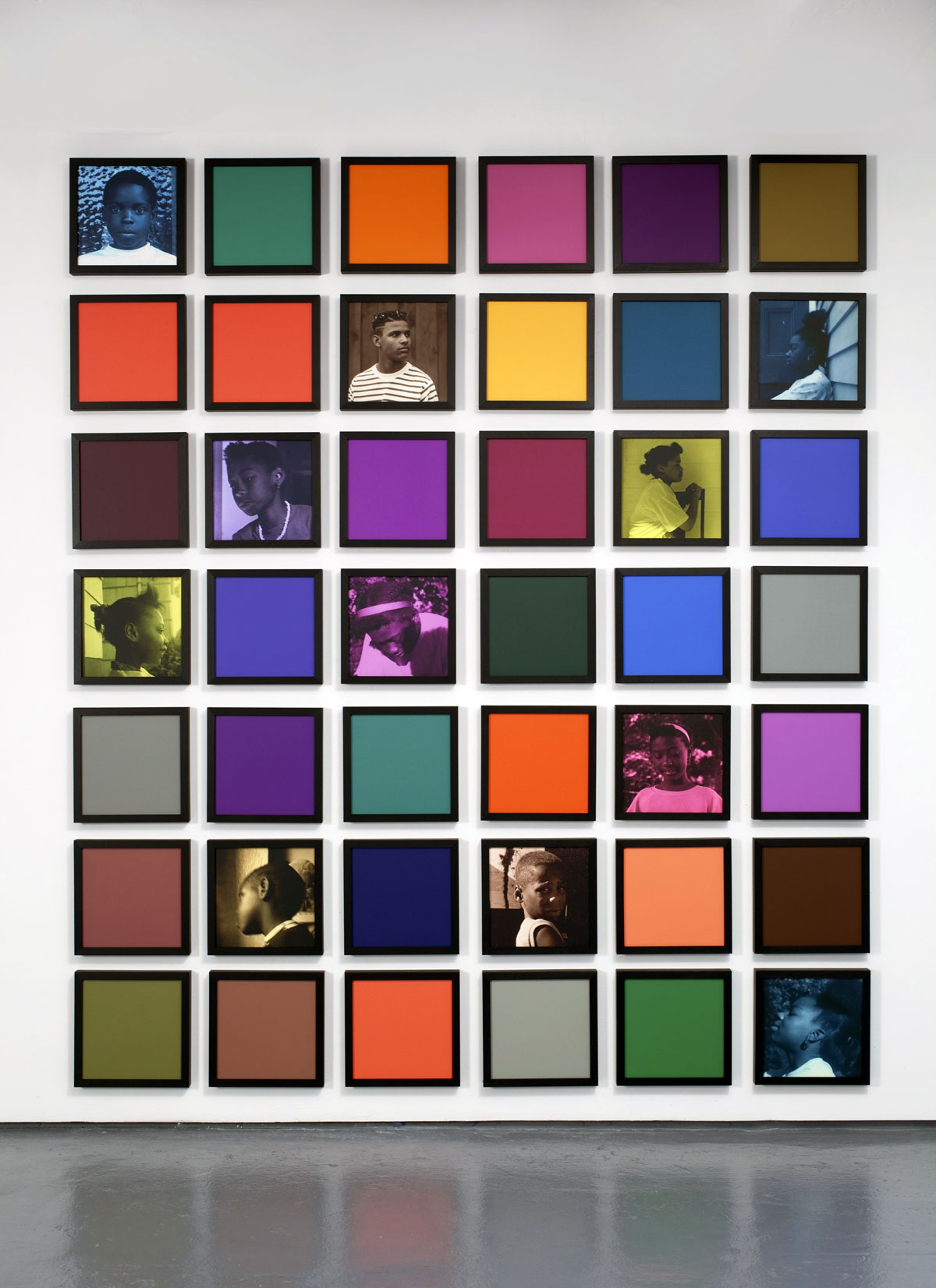
Carrie Mae Weems (American, b. 1953) 'Untitled (Colored People Grid)' 2009-2010


Carrie Mae Weems (American, b. 1953)
Untitled (Colored People Grid)
2009-2010
11 inkjet prints and 31 coloured clay papers
Dimensions variable overall; individual components: 10 x 10 inches (25.4 x 25.4cm) each
Collection of Rodney M. Miller
© Carrie Mae Weems


Solomon R. Guggenheim Museum
1071 5th Avenue (at 89th Street)
New York

Opening hours:
Sunday – Monday, 11am – 6pm
Wednesday – Friday 11am – 6pm
Saturday 11am – 8pm
Closed Tuesday

Solomon R. Guggenheim Museum website

LIKE ART BLART ON FACEBOOK

Back to top

Exhibition: ‘Gordon Parks: 100 Moments’ at New York State Museum

Exhibition dates: 26th January – 19th May 2013


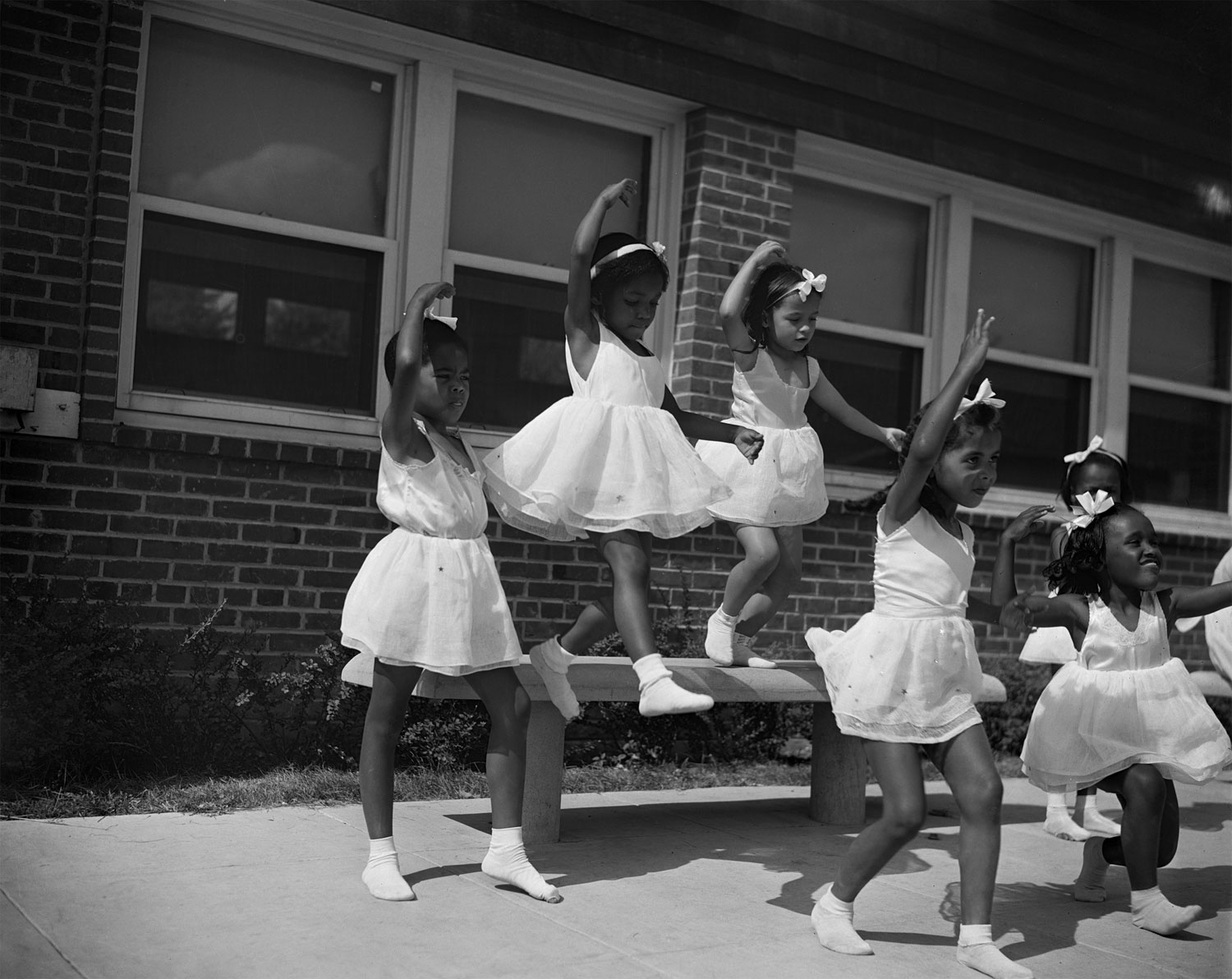
Gordon Parks (American, 1912-2006) 'A dance group, Frederick Douglass housing project, Anacostia, Washington, DC, 1942' 1942


Gordon Parks (American, 1912-2006)
A dance group, Frederick Douglass housing project, Anacostia, Washington, DC, 1942
1942
Gelatin silver print
17.5 x 22″
Prints and Photographs Division
Library of Congress


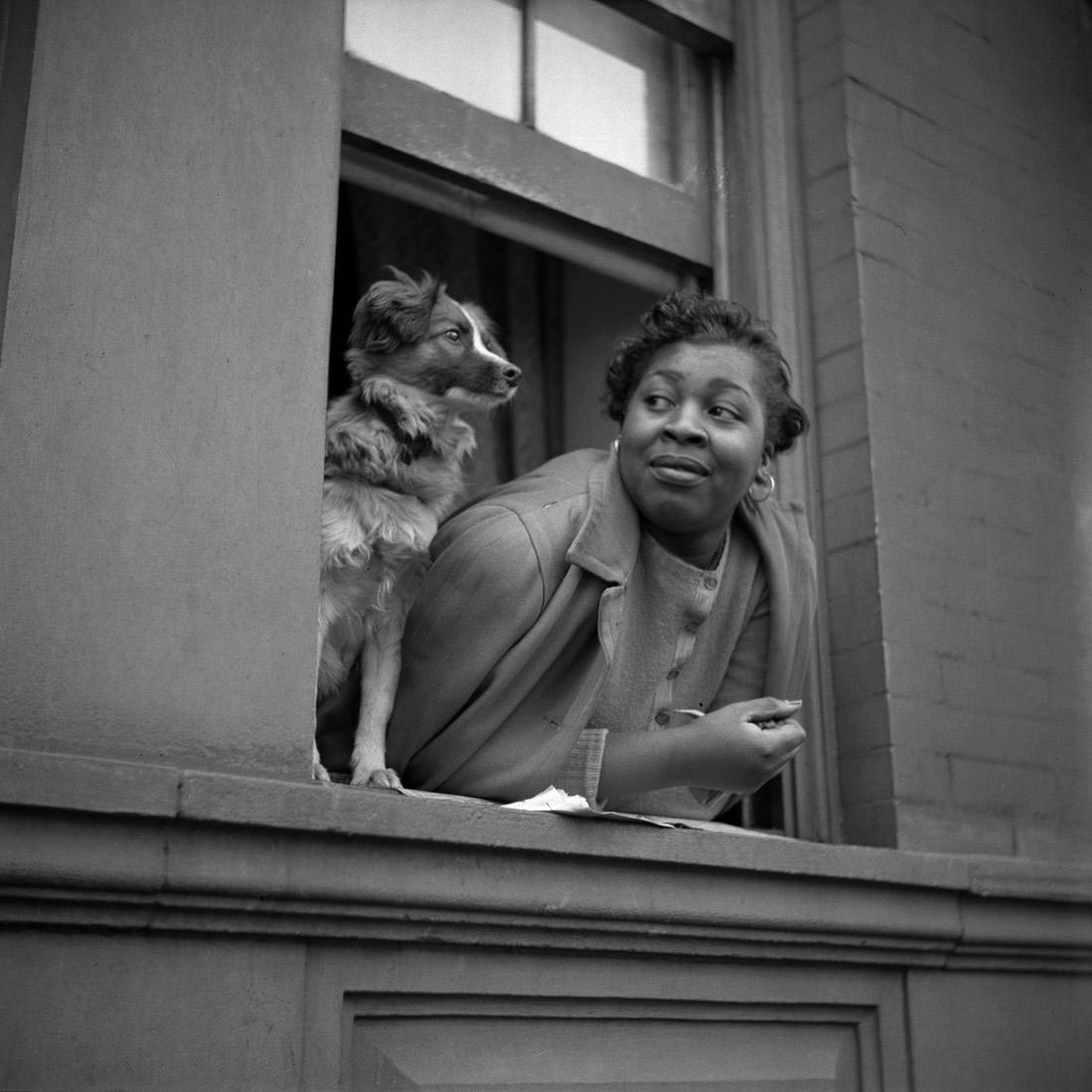
The more I see the work of this outstanding artist, the more I fall in love with it. There is just a beautiful lyricism here – nothing extraneous or superfluous within the picture frame, sensitively balanced photographs that are whimsical and engaging. A woman and her dog in Harlem, NY, 1943 (below) is just a joy.

Dr Marcus Bunyan


Many thankx to the New York State Museum for allowing me to publish the photographs in the posting. Please click on the photographs for a larger version of the image.


“I saw that the camera could be a weapon against poverty, against racism, against all sorts of social wrongs. I knew at that point I had to have a camera.”


Gordon Parks


Gordon Parks (American, 1912-2006) 'A woman and her dog in Harlem, NY, 1943' 1943


Gordon Parks (American, 1912-2006)
A woman and her dog in Harlem, NY, 1943
1943
Gelatin silver print
23 x 21″
Prints and Photographs Division
Library of Congress


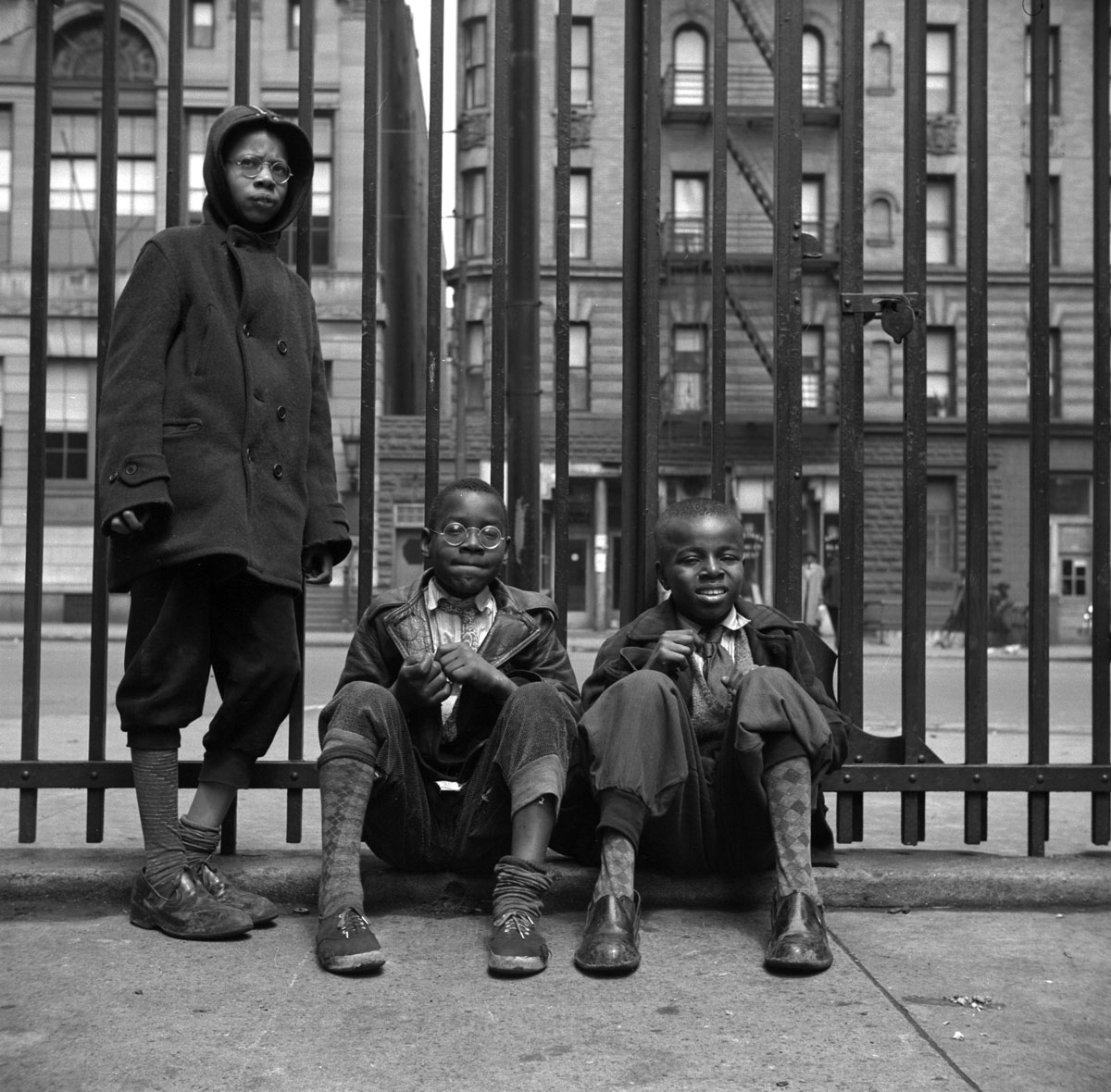
Gordon Parks (American, 1912-2006) 'Street Scene: Three young boys, Harlem, NY, 1943' 1943


Gordon Parks (American, 1912-2006)
Street Scene: Three young boys, Harlem, NY, 1943
1943
Gelatin silver print
23 x 21″
Prints and Photographs Division
Library of Congress


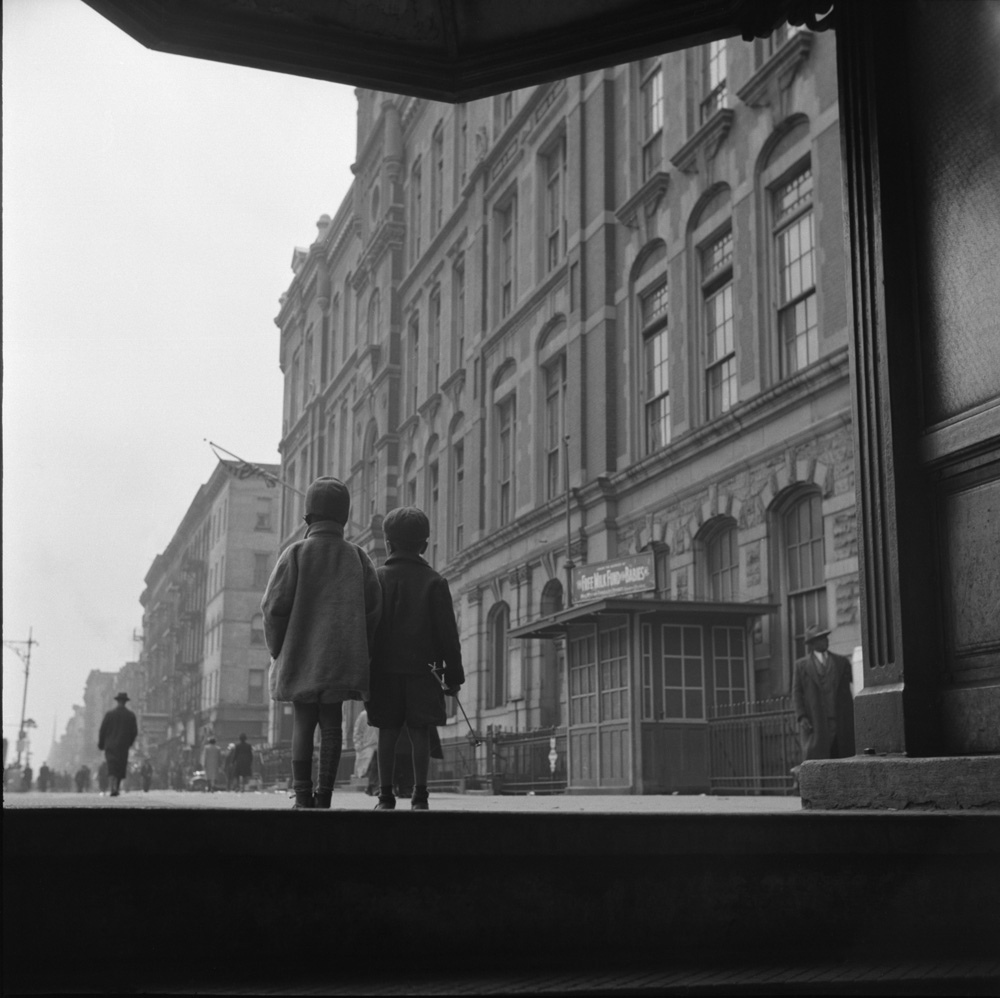
Gordon Parks (American, 1912-2006) 'Street Scene: Two children walking, Harlem, NY, 1943' 1943


Gordon Parks (American, 1912-2006)
Street Scene: Two children walking, Harlem, NY, 1943
1943
Gelatin silver print
23 x 21″
Prints and Photographs Division
Library of Congress


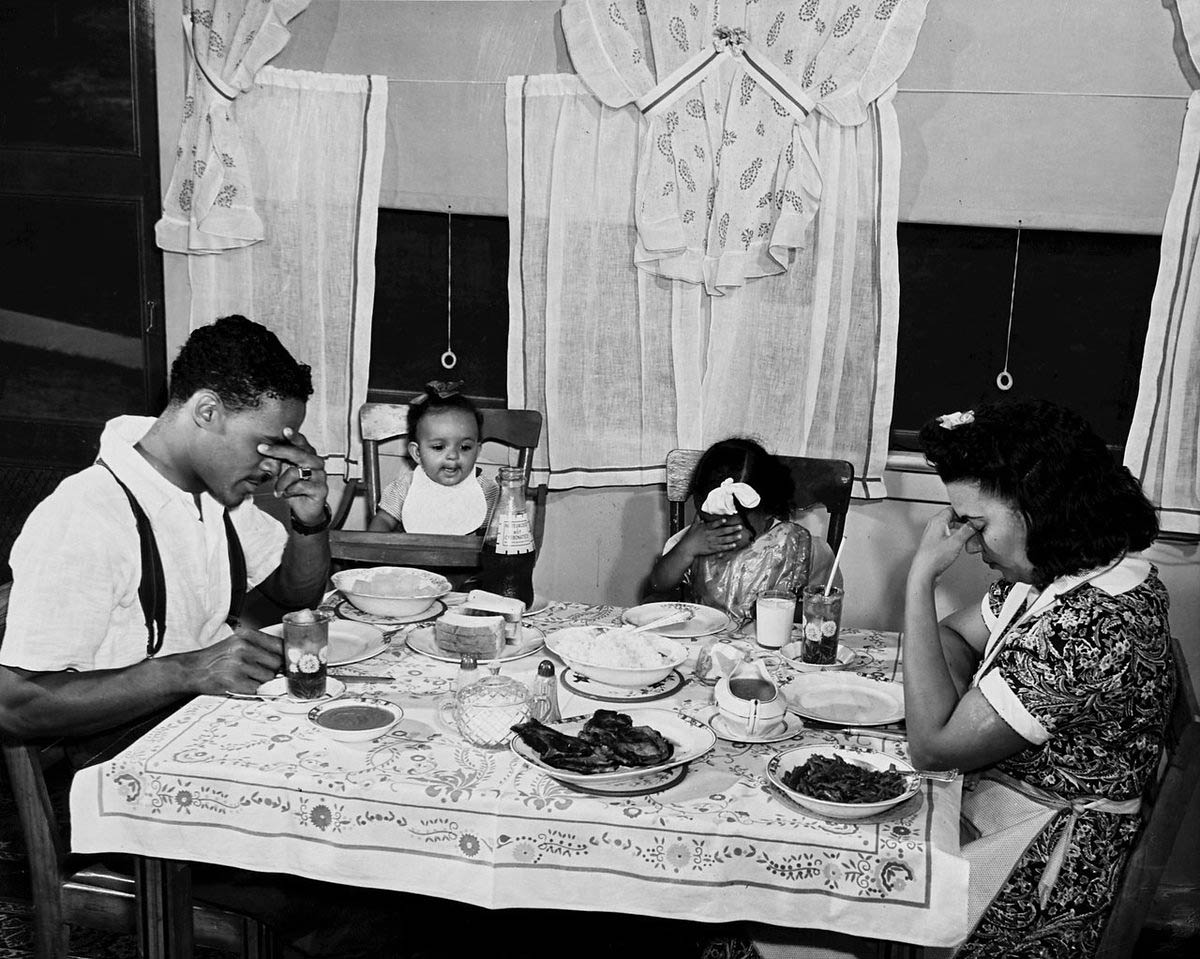
Gordon Parks (American, 1912-2006) 'Anacostia, D.C. Frederick Douglass Housing Project. A family says grace before the evening meal. June 1942' 1942


Gordon Parks (American, 1912-2006)
Anacostia, D.C. Frederick Douglass Housing Project. A family says grace before the evening meal. June 1942
1942
Gelatin silver print
Gordon Parks Collection, Photographs and Prints Division
Schomburg Center for Research in Black Culture, The New York Public Library


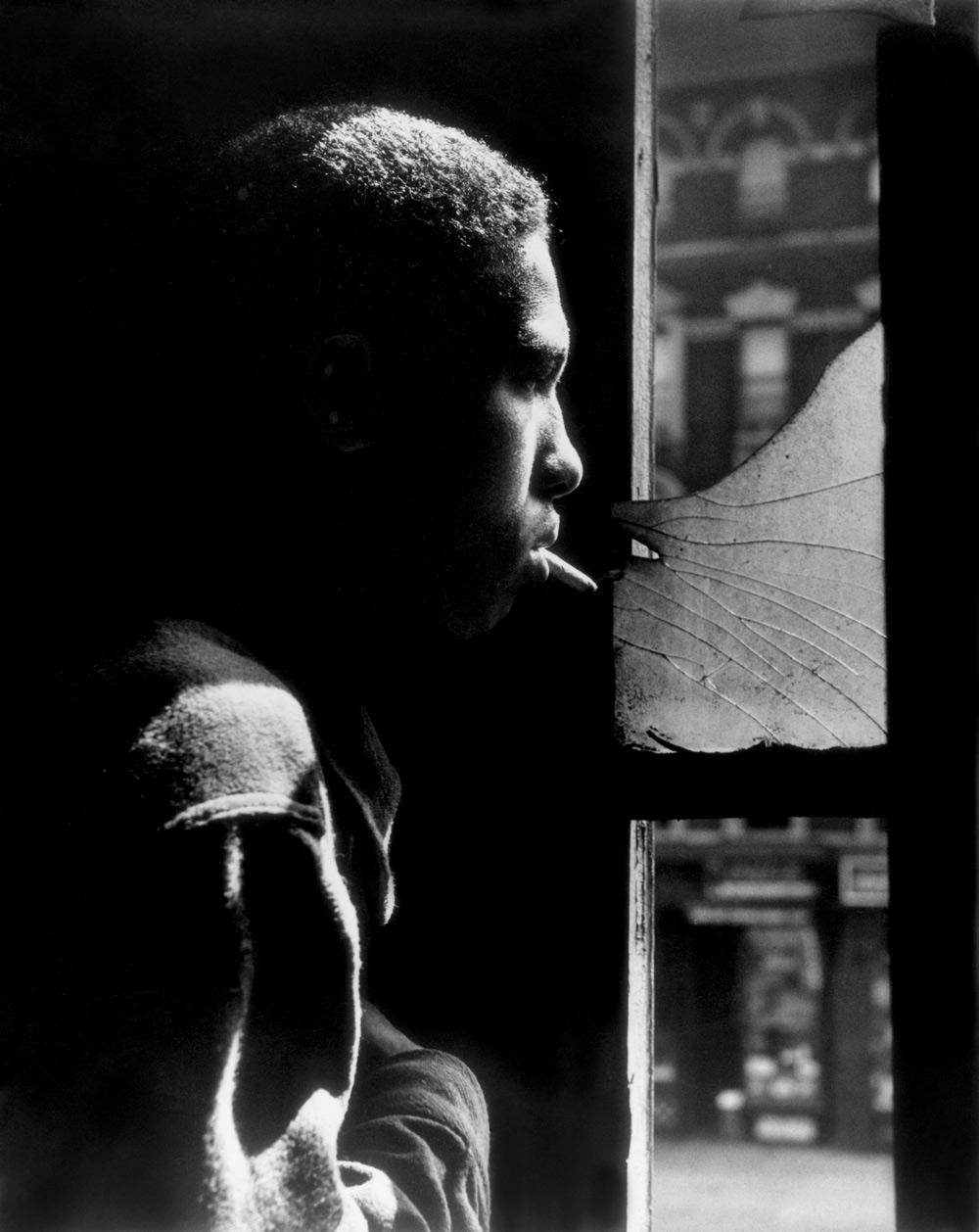
Gordon Parks (American, 1912-2006) 'Red Jackson, Harlem' 1948


Gordon Parks (American, 1912-2006)
Red Jackson, Harlem
1948
Gelatin silver print
Gordon Parks Collection, Photographs and Prints Division
Schomburg Center for Research in Black Culture, The New York Public Library


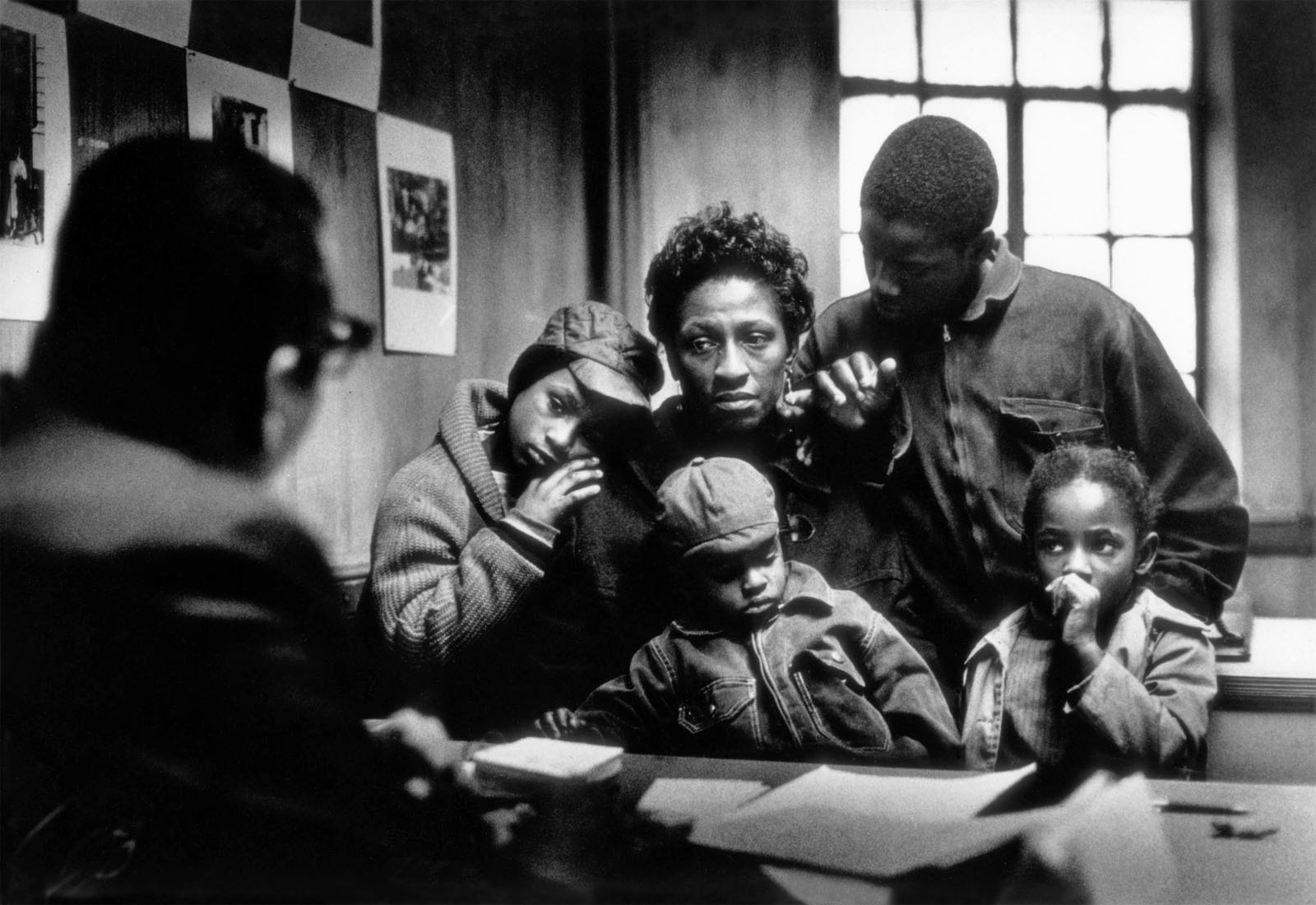
Gordon Parks (American, 1912-2006) 'The Fontenelle Family' 1967


Gordon Parks (American, 1912-2006)
The Fontenelle Family
1967
Gelatin silver print
Gordon Parks Collection, Photographs and Prints Division
Schomburg Center for Research in Black Culture, The New York Public Library


Another Parks image in the show, taken in 1967 and published in Life magazine, is subtler though ultimately more powerful. It shows Harlem resident Bessie Fontenelle and four of her children at the welfare office. Across a desk, the family faces an anonymous white man, his back to the camera, with a suit, thick-framed spectacles and slicked hair. Fontenelle looks drawn and careworn, ground down by poverty. Parks lived with the family for a month and documented their lives for a story and photo essay for Life, an assignment he devised in response to an editor’s question about why inner-city residents were rioting across America.

“The problem in documenting a family like that,” Parks later said, “is that you wonder, in the end, whether you should have touched the family, or just left them alone.” While he lived with them, the alcoholic father, Norman, was unemployed, and Parks struggled with journalistic objectivity as he resisted the impulse to provide funds for food and clothing.

After their story was published, money flooded in from Life readers, and the Fontenelles were able to buy a small house in Queens. They’d been there just three months when Norman, who was drunk, dropped a lit cigarette onto the couch and burned the house down. He died in the fire, as did one of the six kids; another boy died a few years later, and three girls eventually were claimed by AIDS. Parks spent the rest of his life wondering whether, in service of telling the larger story of urban poverty for many families, he’d contributed to the destruction of the one he photographed.

Steve Barnes. “On exhibit: ‘Gordon Parks: 100 Moments’ at the State Museum,” on the Times Union website Jan 23, 2013 [Online] Cited 15/07/2024


Gordon Parks (American, 1912-2006) 'Boy at Swimming Pool, Harlem, NY, 1942' 1942


Gordon Parks (American, 1912-2006)
Boy at Swimming Pool, Harlem, NY, 1942
1942
Gelatin silver print
22 x 17.5″
Gordon Parks Collection, Photographs and Prints Division
Schomburg Center for Research in Black Culture, The New York Public Library


A new exhibition celebrating the 100th birthday of world-renowned photographer Gordon Parks opens on January 26, 2013 at the New York State Museum. Gordon Parks: 100 Moments showcases six decades of Parks’ photographs, including numerous never-before-seen images and Parks’ most famous photo, American Gothic, Washington, D.C. On display at the State Museum through May 19, 2013, the stunning visual collection is organised by the Schomburg Center for Research in Black Culture. The exhibit also includes images from the Farm Security Administration and Office of War Information (OWI) collections at the Library of Congress, Prints and Photographs Division.

“Gordon Parks was a true Renaissance man – musician, writer, film director and, most notably, world-class photographer,” said State Education Commissioner John B. King, Jr. “His work helped drive the Civil Rights movement by exposing the stark realities of life faced by so many African Americans. We are honoured to exhibit some of his most important images at the New York State Museum.”

“The State Museum is honoured to present this landmark exhibition by Gordon Parks, one of New York’s greatest photographers,” said State Museum Director Mark Schaming. “This is truly a unique opportunity to see these powerful images from the Schomburg’s vast collections together in a beautifully curated exhibition.”

Known for documenting the ordinary yet compelling lives of African Americans in cities like Harlem and Washington, D.C., Parks began his career in 1948 as a professional photographer for Life magazine, where he was the publication’s first African American employee. Tackling issues in black communities like post-World War II urban migration, the expansion of black newspapers and radio, entrenched segregation and economic discrimination, Parks was a consummate storyteller of urban life through his ever-questioning lens. Parks died in 2006.

Press release from the New York State Museum website


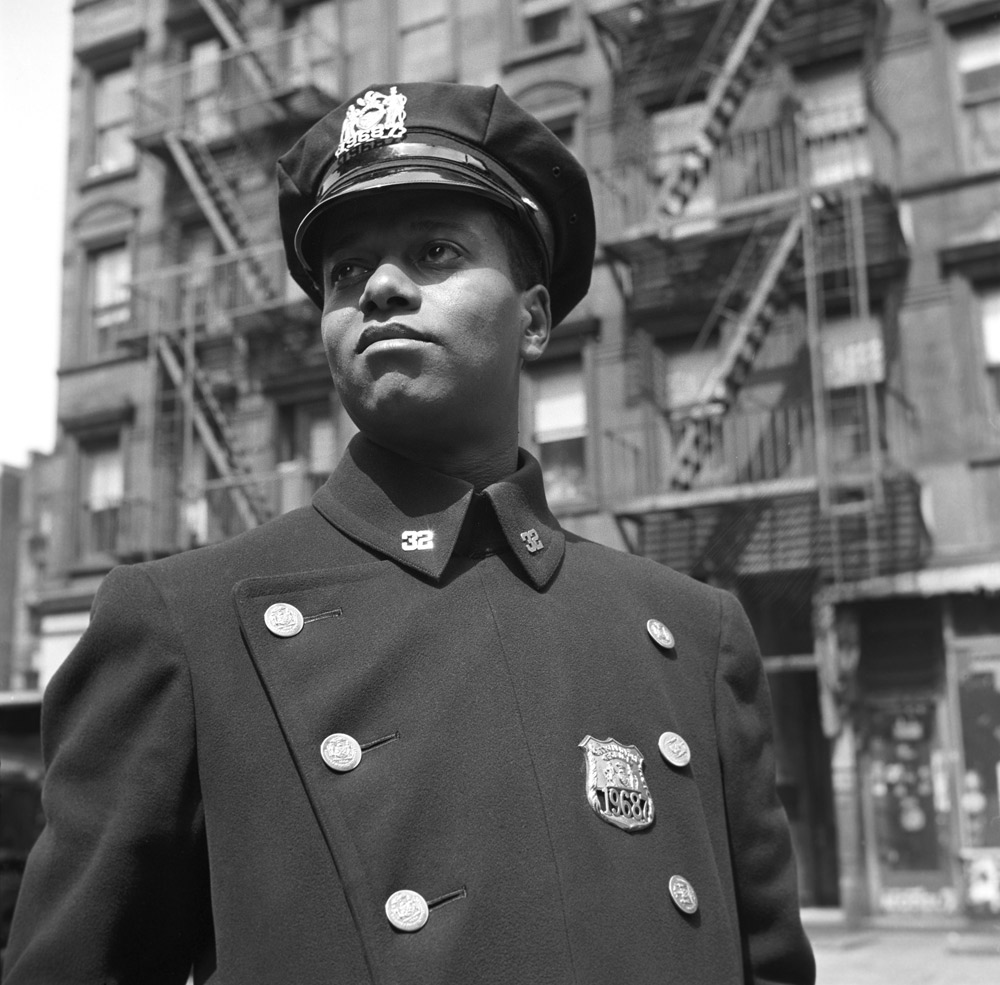
Gordon Parks (American, 1912-2006) 'Policeman, badge no. 19687, NY, 1943' 1943


Gordon Parks (American, 1912-2006)
Policeman, badge no. 19687, NY, 1943
1943
Gelatin silver print
23 x 21″
Prints and Photographs Division
Library of Congress


Gordon Parks (American, 1912-2006) 'American Gothic, Washington, D.C., (Ella Watson)' 1942


Gordon Parks (American, 1912-2006)
American Gothic, Washington, D.C., (Ella Watson)
1942
Gelatin silver print


One of Parks’ most famous images, taken in Washington, D.C., in 1942, captures Ella Watson, who at that point had been a cleaning woman in federal offices for 26 years and supported a family of six on a salary of about $20 a week. She’s in front of a large, vertically hung American flag and flanked by a broom and a mop, their well-used heads a testament to the rigor of her nightly labors. Watson, whom Parks chronicled as part of his work as the first black photographer for the Farm Security Administration, has a stony expression, and she looks slightly to the side of the camera – a gaze diverted and downcast. It’s a polemical picture, and its obvious echo of Grant Wood’s painting “American Gothic” led to Parks’ photo becoming familiarly known by the same name. Parks later said the photo was meant to highlight racism and inequality and that when he made the picture he was still seething from having been refused service at several retail establishments in Washington.

Steve Barnes. “On exhibit: ‘Gordon Parks: 100 Moments’ at the State Museum,” on the Times Union website Jan 23, 2013 [Online] Cited 15/07/2024


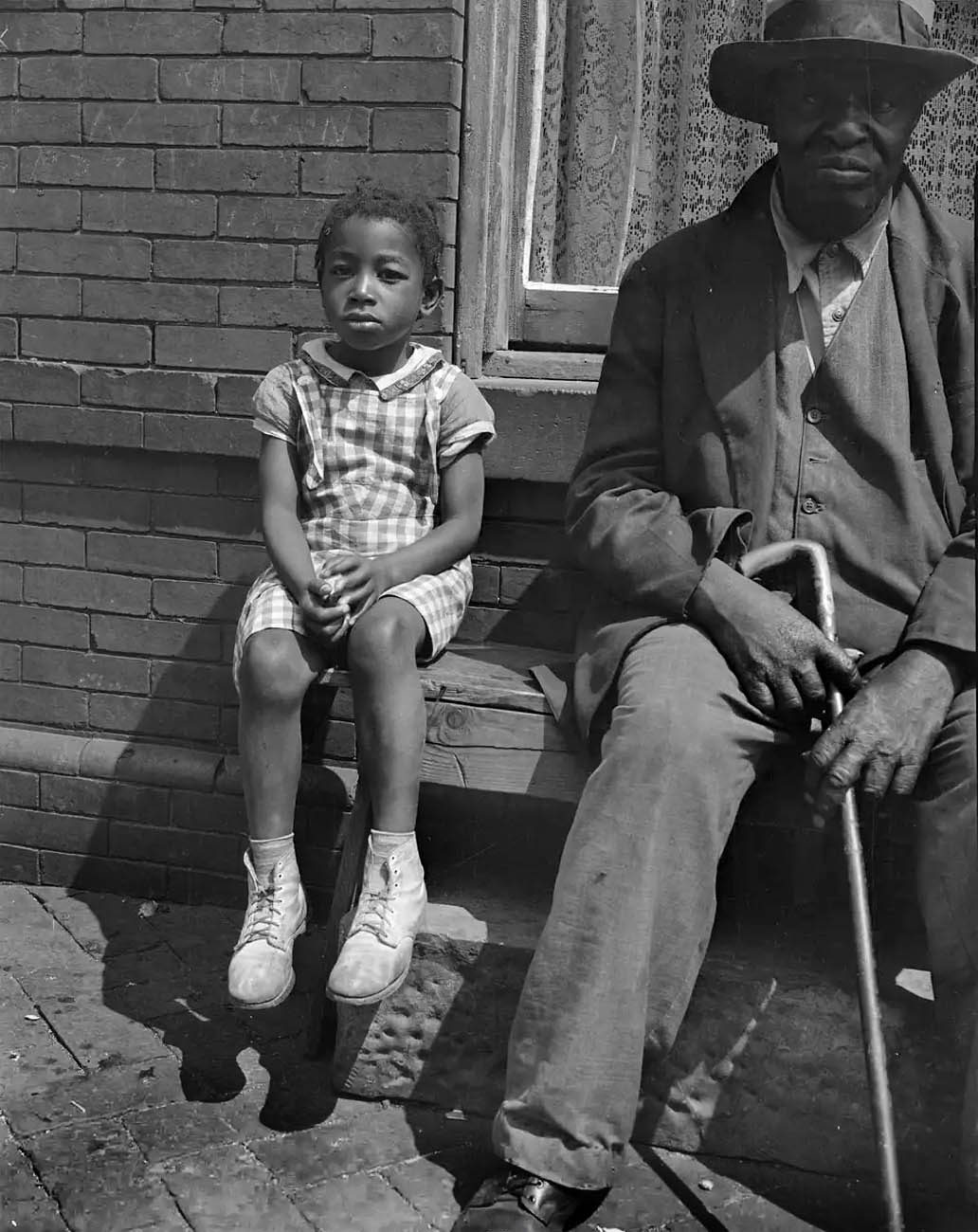
Gordon Parks (American, 1912-2006) 'Grandfather and grandchild on Seaton Road, Washington, DC, 1942' 1942


Gordon Parks (American, 1912-2006)
Grandfather and grandchild on Seaton Road, Washington, DC, 1942
1942
Gelatin silver print
21 x 17″
Prints and Photographs Division
Library of Congress


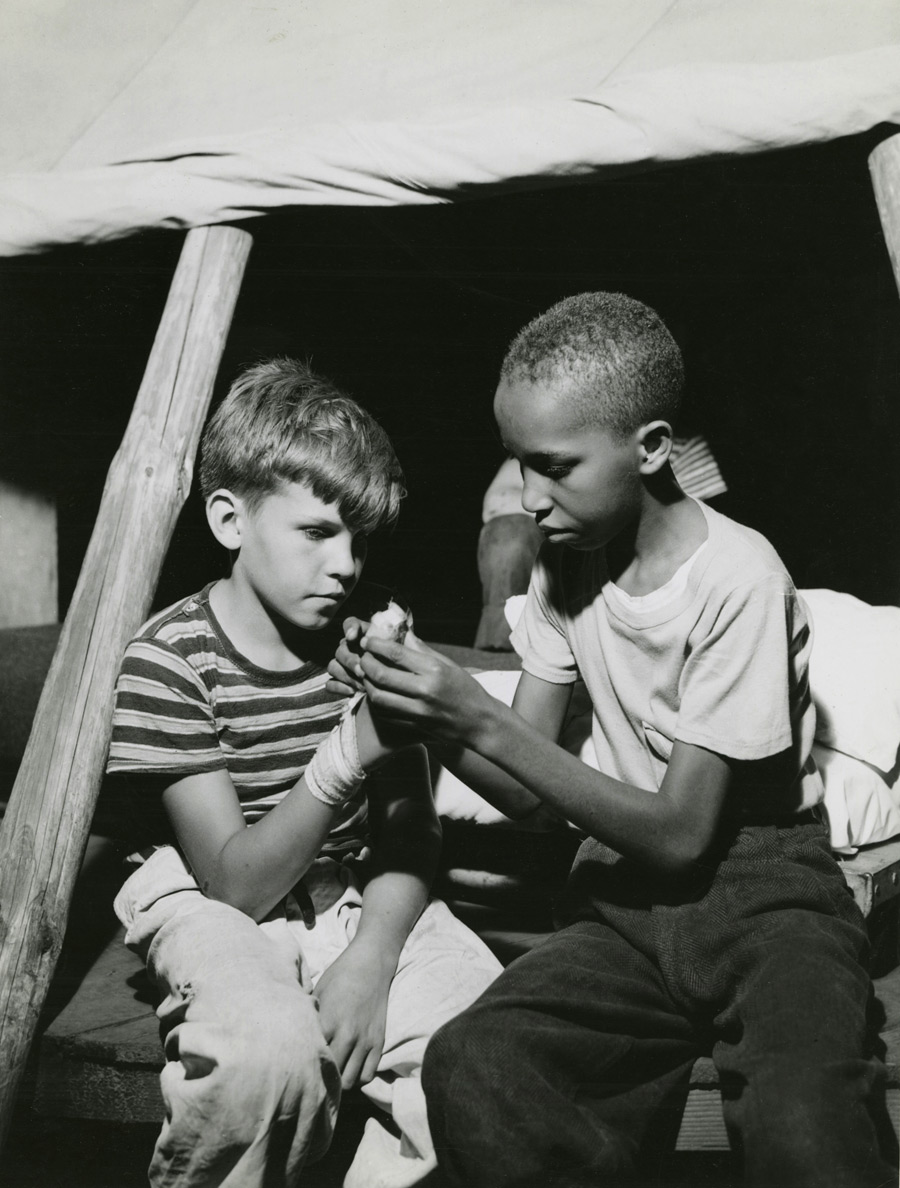
Gordon Parks (American, 1912-2006) 'First Aid: Interracial activities at Camp Nathan Hale, Southfields, NY, 1943' 1943


Gordon Parks (American, 1912-2006)
First Aid: Interracial activities at Camp Nathan Hale, Southfields, NY, 1943
1943
Gelatin silver print
22 x 17.5″
Gordon Parks Collection, Photographs and Prints Division
Schomburg Center for Research in Black Culture, The New York Public Library


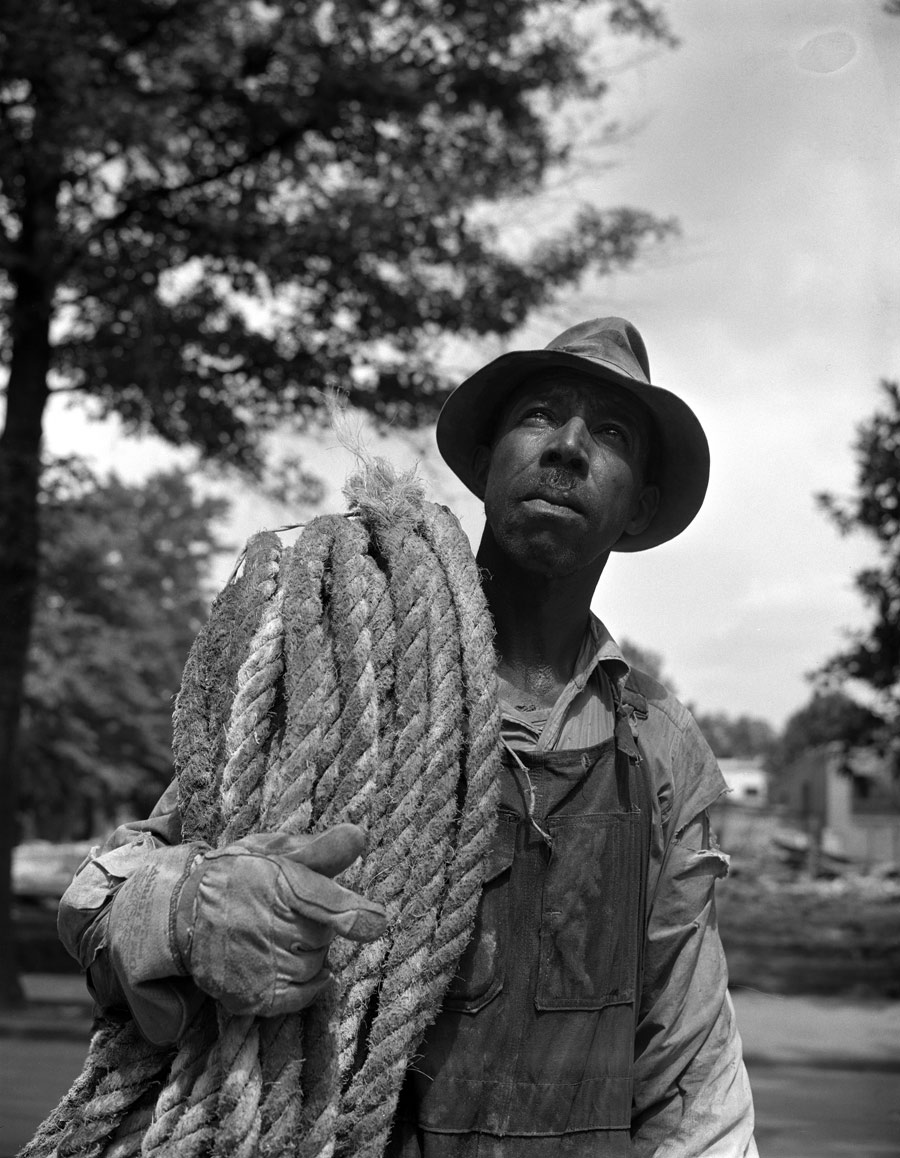
Gordon Parks (American, 1912-2006) 'Construction workman, Washington, DC, 1942' 1942


Gordon Parks (American, 1912-2006)
Construction workman, Washington, DC, 1942
1942
Gelatin silver print
21″ x 17″
Prints and Photographs Division
Library of Congress


New York State Museum
260 Madison Ave  Albany
NY 12230, United States
Phone: +1 518-474-5877

Opening hours:
Tuesday – Sunday 9.30am – 5.00pm
Closed Monday
Closed Thanksgiving, Christmas, and New Year’s Day

New York State Museum website

LIKE ART BLART ON FACEBOOK

Back to top

Exhibition: ‘Gordon Parks: Centennial’ at Jenkins Johnson Gallery, San Francisco

Exhibition dates: 21st February – 27th April 2013


Gordon Parks (American, 1912-2006) 'Ondria Tanner and Her Grandmother Window-shopping, Mobile, Alabama' 1956


Gordon Parks (American, 1912-2006)
Ondria Tanner and Her Grandmother Window-shopping, Mobile, Alabama
1956
Edition 19 of 25
Pigment print
14 x 14 inches
Modern print
© The Gordon Parks Foundation


What an admirable photographer Gordon Parks was. It is a joy to see five of his colour photographs in this posting because I have never seen any before. They are glorious, complex compositions that ebb and flow like music whilst at the same time they are also damning indictments of the racially segregated society that was America in the 1950s (and still is today). Bitterness, discrimination and racism have deep roots in any country – just look at contemporary Australia. The little girl looks on in Ondria Tanner and Her Grandmother Window-shopping (1956, above), her left index finger bent upward on the pane of glass as the prettily dressed white, automaton mannequins march on, oblivious to her gaze; Mr. and Mrs. Albert Thornton, Mobile, Alabama  (1956, below) are surrounded by photographs, their pose mimicking that of their parents hanging behind them, while before them on the coffee table (under glass) are other, younger members of their extended family. Past, present and future coalesce in this one poignant image.

“Sensibility” is based on personal impressions of pleasure or pain. The sensibility of Parks photographs is a refined sensitivity based on experience – his experience of the discrimination of human beings toward each other. These hard-wired responses toward such a situation will vary from person to person.

These photographs were his hard-wired response. This was his feeling towards subject matter and that is why these insightful photographs still matter to us today.

Dr Marcus Bunyan


Many thankx to the Jenkins Johnson Gallery for allowing me to publish the photographs in the posting. Please click on the photographs for a larger version of the image.


Gordon Parks is the most important black photographer in the history of photojournalism. Long after the events that he photographed have been forgotten, his images will remain with us, testaments to the genius of his art, transcending time, place and subject matter.


Dr Henry Louis Gates


Gordon Parks (American, 1912-2006) 'At Segregated Drinking Fountain, Mobile, Alabama' 1956


Gordon Parks (American, 1912-2006)
At Segregated Drinking Fountain, Mobile, Alabama
1956
Edition 19 of 25
Pigment print
14 x 14 inches
Modern print
© The Gordon Parks Foundation


Gordon Parks (American, 1912-2006) 'Department Store, Mobile, Alabama' 1956


Gordon Parks (American, 1912-2006)
Department Store, Mobile, Alabama
1956
Edition 20 of 25
Pigment print
14 x 14 inches
Modern print
© The Gordon Parks Foundation


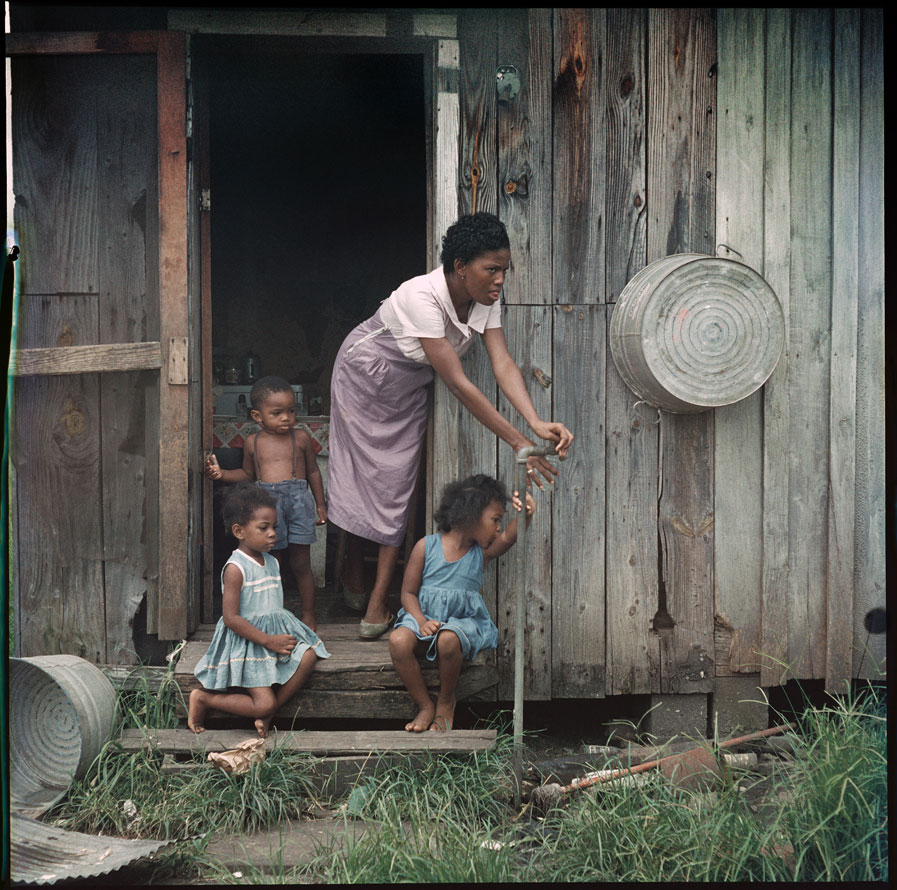
Gordon Parks (American, 1912-2006) 'Mother and Children, Mobile, Alabama' 1956


Gordon Parks (American, 1912-2006)
Mother and Children, Mobile, Alabama
1956
Edition 17 of 25
Pigment print
13 7/8 x 14 inches
Modern print
© The Gordon Parks Foundation


Gordon Parks (American, 1912-2006) 'Mr. and Mrs. Albert Thornton, Mobile, Alabama' 1956


Gordon Parks (American, 1912-2006)
Mr. and Mrs. Albert Thornton, Mobile, Alabama
1956
Edition 17 of 25
Pigment print
14 1/8 x 14 inches
Modern print
© The Gordon Parks Foundation


In celebration of the 100th birthday of Gordon Parks, one of the most influential African American photographers of the 20th century, Jenkins Johnson Gallery in collaboration with The Gordon Parks Foundation presents Gordon Parks: Centennial, on view from February 21 through April 27, 2013. Gordon Parks, an iconic photographer, writer, composer, and filmmaker, would have turned 100 on November 30, 2012. This will be the first solo exhibition for Parks on the West Coast in thirteen years. The exhibition will survey works spanning six decades of the artist’s career starting in 1940. The exhibition consists of more than seventy-five gelatin silver and pigment prints, including selections from Life magazine photo essays: Invisible Man, 1952; Segregation Story, 1956; The Black Panthers, 1970; and Flavio, 1960, about favelas in Brazil. Also included in the exhibition is his reinterpretation of American Gothic and his elegant depictions of artists like Alexander Calder, fashion models, and movie stars.

Noteworthy highlights include groundbreaking prints from the Invisible Man series which unfolds a visual narrative based on Ralph Ellison’s award winning novel. The images capture the essence of social isolation and the struggle of a black man who feels invisible to the outside world. Also on view will be a number of colour prints from Segregation Story, 1956, which are a part of a limited edition portfolio of twelve colour photographs with an essay by Maurice Berger. Newly released, these images were produced from transparencies found in early 2012, discovered in a storage box at The Gordon Parks Foundation. In the late 1960s Life magazine asked Gordon Parks to report on the Oakland, California-based Black Panther Party, including Eldridge Cleaver. Parks’ striking image of Eldridge Cleaver and His Wife, Kathleen, Algiers, Algeria, 1970 depicts Cleaver recovering from gun wounds after being ambushed by the Oakland police as well as an insert of Huey P. Newton, co-founder of the party along with Bobby Seale.

About Gordon Parks

Parks was born into poverty in Fort Scott, Kansas in 1912, the youngest of fifteen children. He worked several odd jobs until he bought a camera at a Pawn Shop in 1937 in Seattle and was hired to photograph fashion at a department store in Minneapolis. In 1942 Parks received a photography fellowship from the Farm Security Administration, succeeding Dorothea Lange among others. While at the F.S.A., Parks created American Gothic, now known as one of his signature images, in which he shows Ella Watson, a cleaning women, holding a mop and broom, standing in front of an American flag. The image makes a poignant commentary on social injustice whilst referencing Grant Wood’s celebrated painting American Gothic which it is also named after. He became a freelance photographer working for Vogue as well as publishing two books, Flash Photography (1947) and Camera Portraits: Techniques and Principles of Documentary Portraiture (1948). In 1948 Parks was hired by Life magazine to do a photographic essay on Harlem gang leader, Red Jackson, which led to a permanent position at Life, where he worked for twenty years. Parks developed his skills as a composer and author and in 1969 he became the first African American to direct a major motion picture, The Learning Tree based on his best selling novel and in 1971 he directed Shaft. A true Renaissance man, Gordon Parks passed away in 2006.

As Philip Brookman, curator of photography and media arts at the Corcoran, states, “Gordon Parks’ art has now changed the way we perceive and remember chronic issues, such as race, poverty, and crime, just as it has influenced our understanding of beauty: of nature, landscape, childhood, fashion, and memory.”

Press release from the Jenkins Johnson Gallery website


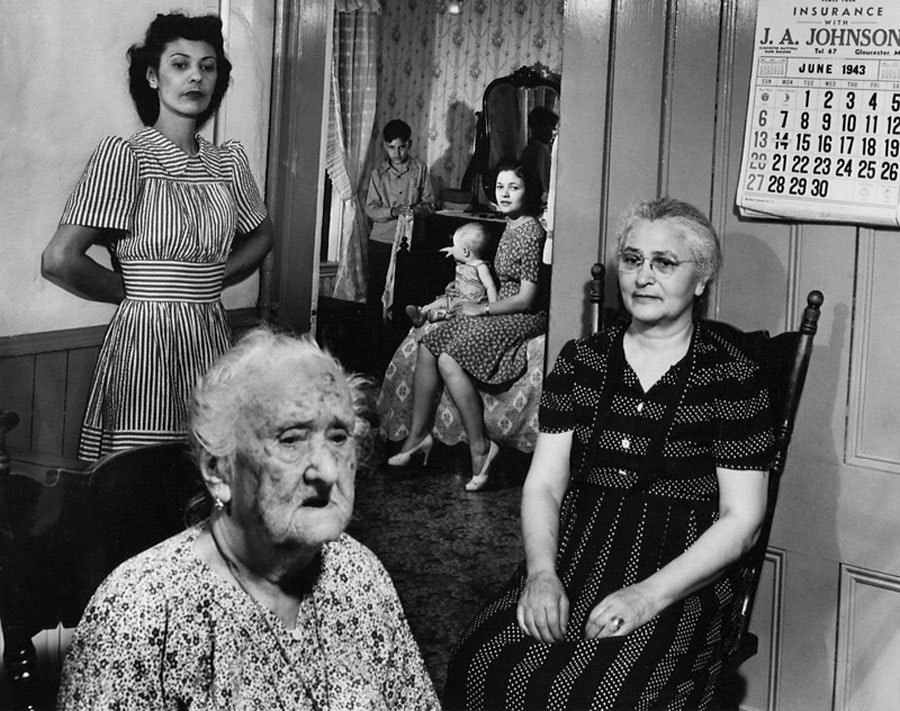
Gordon Parks (American, 1912-2006) 'Mary Machado, Mother of Isabell Lopez, and Family, Gloucester, Massachusetts' 1943


Gordon Parks (American, 1912-2006)
Mary Machado, Mother of Isabell Lopez, and Family, Gloucester, Massachusetts
1943
Gelatin silver print
© The Gordon Parks Foundation


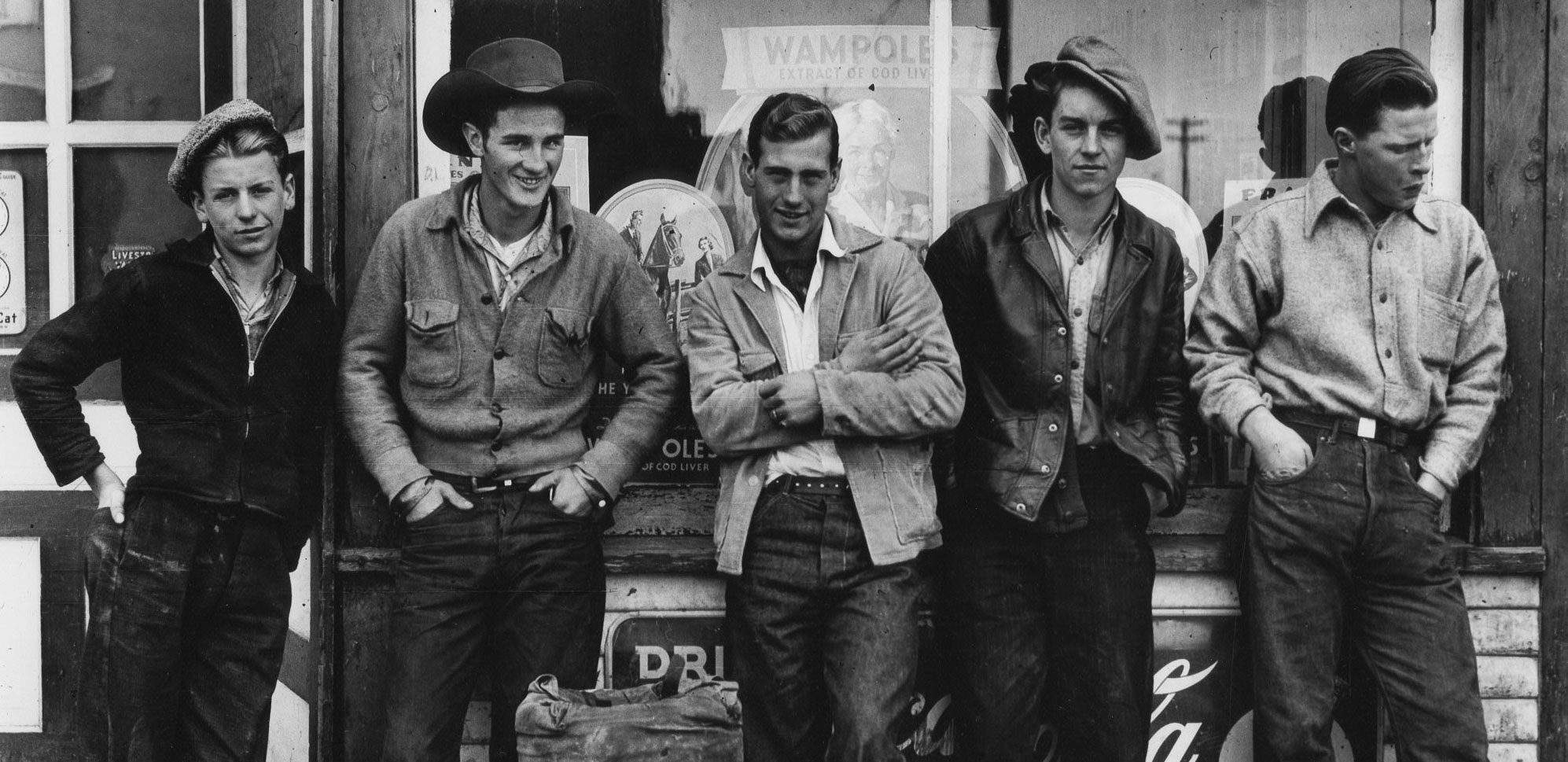
Gordon Parks (American, 1912-2006) 'Drugstore Cowboys, Turner Valley, Canada' 1945


Gordon Parks (American, 1912-2006)
Drugstore Cowboys, Turner Valley, Canada
1945
Gelatin silver print
9 7/8 x 12 7/8 inches
Modern print
© The Gordon Parks Foundation


Gordon Parks (American, 1912-2006) 'Untitled' 1950


Gordon Parks (American, 1912-2006)
Untitled
1950
Gelatin silver print
© The Gordon Parks Foundation


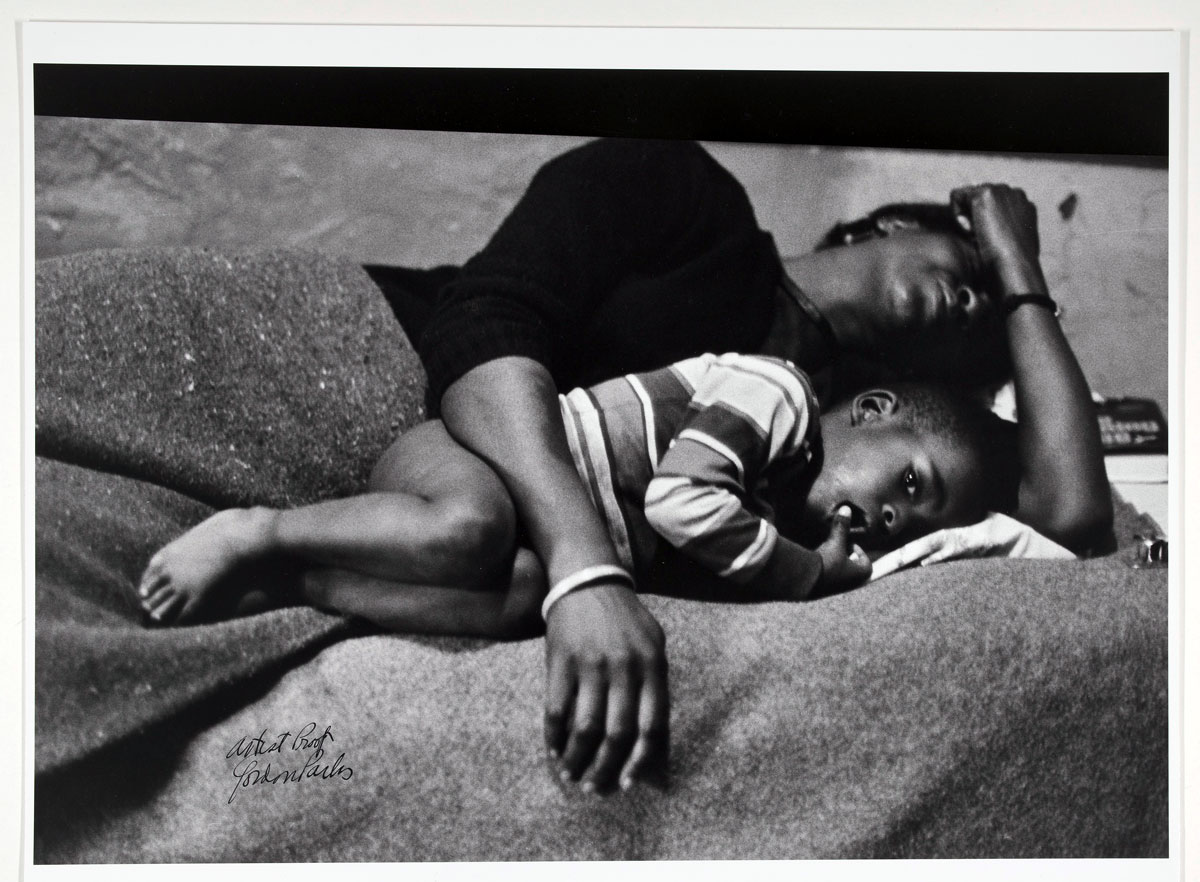
Gordon Parks (American, 1912-2006) 'Tenement Dwellers, Chicago, Illinois' 1950


Gordon Parks (American, 1912-2006)
Tenement Dwellers, Chicago, Illinois
1950
Gelatin silver print
7 x 9 inches
Modern print
© The Gordon Parks Foundation


Gordon Parks (American, 1912-2006) 'Mysticism, Harlem, New York' 1952


Gordon Parks (American, 1912-2006)
Mysticism, Harlem, New York
1952
Gelatin silver print
10 5/8 x 10 3/8 inches
Vintage print
© The Gordon Parks Foundation


Gordon Parks (American, 1912-2006) 'Harlem Neighborhood, Harlem, New York' 1952


Gordon Parks (American, 1912-2006)
Harlem Neighborhood, Harlem, New York
1952
Gelatin silver print
10 3/8 x 13 1/2 inches
Vintage print
© The Gordon Parks Foundation


Gordon Parks (American, 1912-2006) 'The Invisible Man, Harlem, New York' 1952


Gordon Parks (American, 1912-2006)
The Invisible Man, Harlem, New York
1952
Edition 1 of 10
Pigment print
14 1/8 x 14 inches
Modern print
© The Gordon Parks Foundation


Gordon Parks (American, 1912-2006) 'Muhammad Ali' 1966


Gordon Parks (American, 1912-2006)
Muhammad Ali
1966
Gelatin silver print
© The Gordon Parks Foundation


Gordon Parks (American, 1912-2006) 'Ellen's Feet, Harlem, New York' 1967


Gordon Parks (American, 1912-2006)
Ellen’s Feet, Harlem, New York
1967
Gelatin silver print
6 1/4 x 9 3/8 inches
Modern print
© The Gordon Parks Foundation


Gordon Parks (American, 1912-2006) 'Norman Fontenelle, Sr., Harlem, New York' 1967


Gordon Parks (American, 1912-2006)
Norman Fontenelle, Sr., Harlem, New York
1967
Gelatin silver print
13 x 9 1/8 inches
Modern print
© The Gordon Parks Foundation


Gordon Parks (American, 1912-2006) 'Bessie and Little Richard the Morning After She Scalded Her Husband, Harlem, New York, 1968' 1968


Gordon Parks (American, 1912-2006)
Bessie and Little Richard the Morning After She Scalded Her Husband, Harlem, New York, 1968
1968
Gelatin silver print
© The Gordon Parks Foundation


Jenkins Johnson Gallery
1275 Minnesota Street, #200
San Francisco, CA 94107
Phone: 415.677.0770

Opening hours:
Tuesday – Saturday 11am – 5pm

Jenkins Johnson Gallery website

LIKE ART BLART ON FACEBOOK

Back to top

Exhibition: ‘Bare Witness: Photographs by Gordon Parks’ at the Phoenix Art Museum

Exhibition dates: 20th August – 6th November 2011


Many thankx to the Phoenix Art Museum for allowing me to publish the photographs in the posting. Please click on the photographs for a larger version of the image.


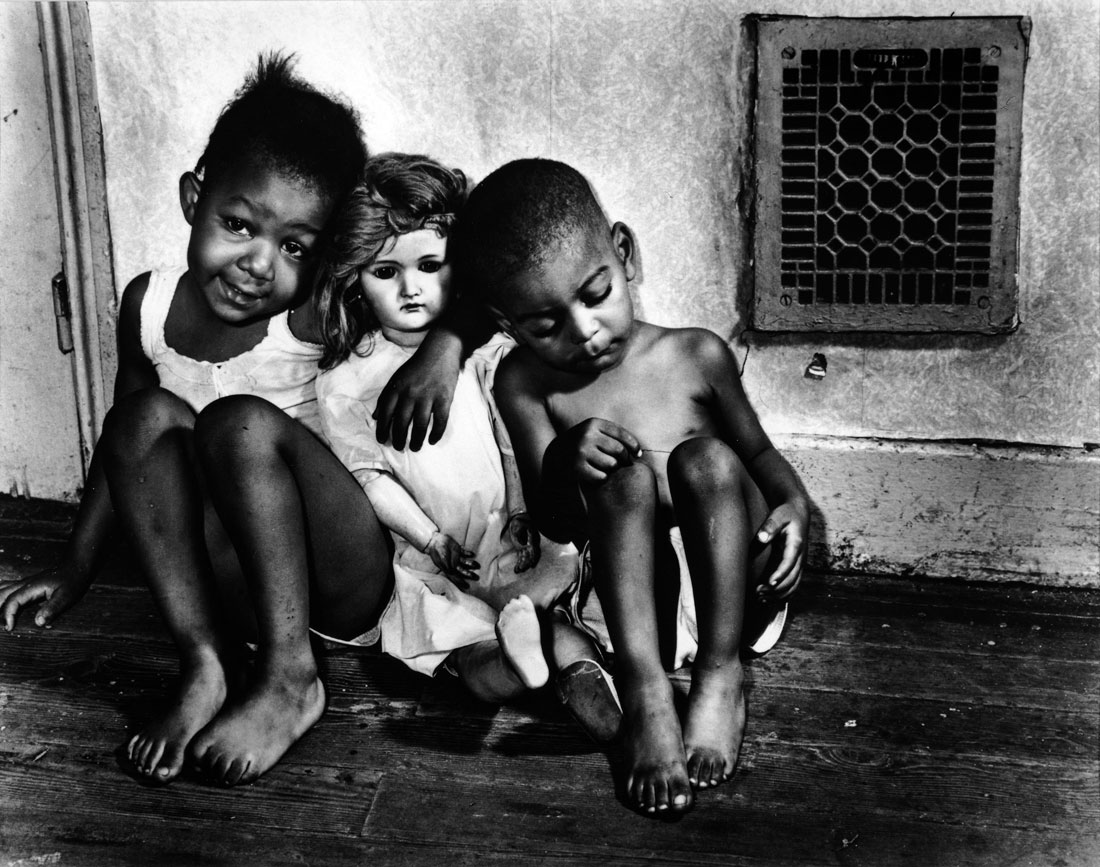
Gordon Parks (American, 1912-2006) 'Children with Doll (Ella Watson’s Grandchildren)' 1942
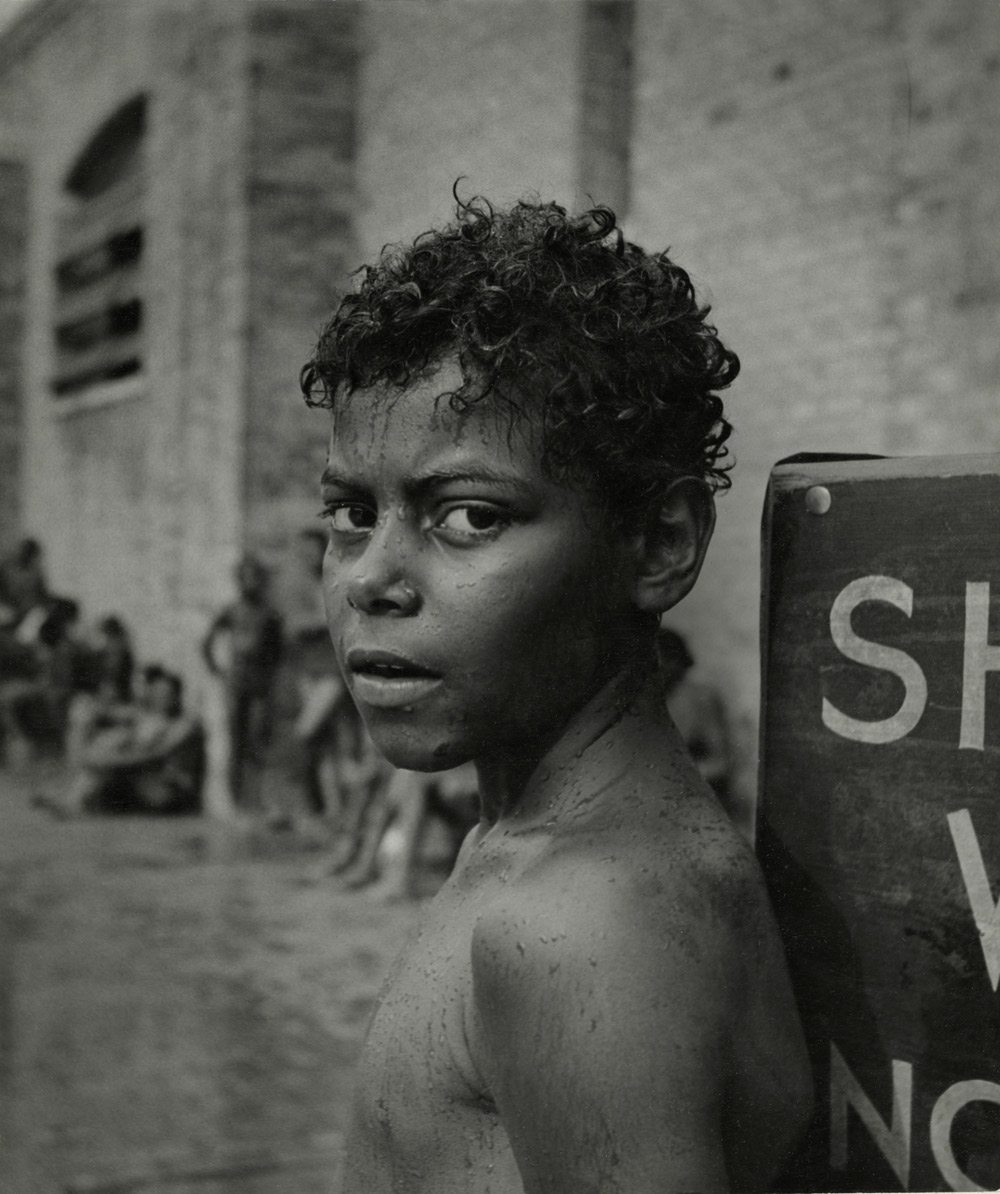
 

Gordon Parks (American, 1912-2006)
Children with Doll (Ella Watson’s Grandchildren)
1942
Gelatin silver print
11 x 14 inches
Lent by The Capitol Group Foundation
© 2006 The Gordon Parks Foundation


Gordon Parks (American, 1912-2006) 'Ingrid Bergman at Stromboli' 1949


Gordon Parks (American, 1912-2006)
Ingrid Bergman at Stromboli
1949
Gelatin silver print
16 x 20 inches
Lent by The Capitol Group Foundation
© 2006 The Gordon Parks Foundation


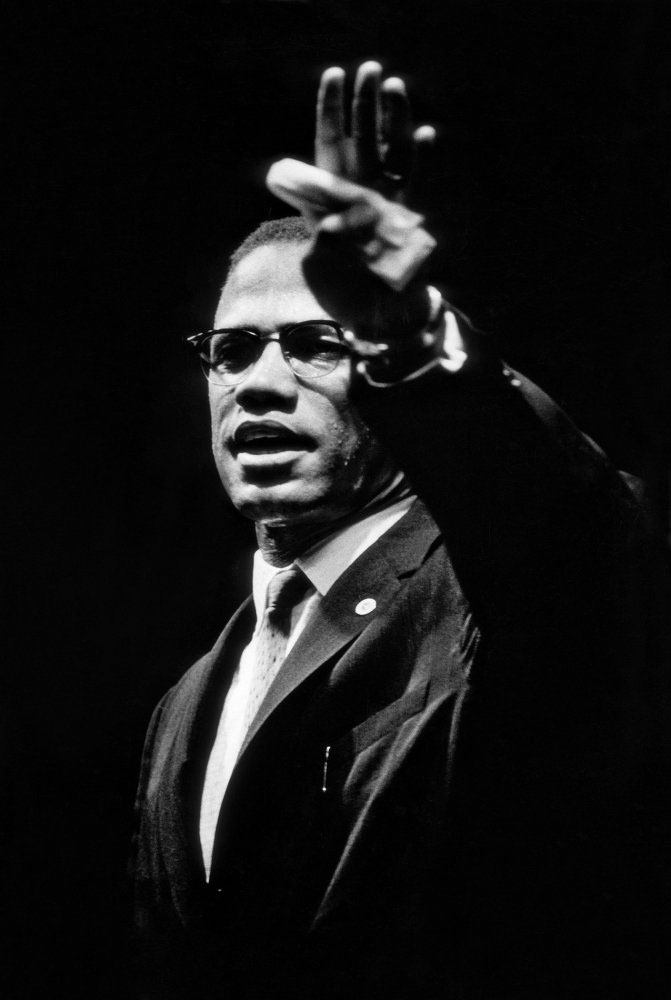
Gordon Parks (American, 1912-2006) 'Black Muslim Rally' New York, 1963


Gordon Parks (American, 1912-2006)
Black Muslim Rally
New York, 1963
Gelatin silver print
16 x 20 inches
Lent by The Capitol Group Foundation
© 2006 The Gordon Parks Foundation


Gordon Parks (American, 1912-2006) 'Alberto Giacometti, Paris' 1951


Gordon Parks (American, 1912-2006)
Alberto Giacometti, Paris
1951
Gelatin silver print
16 x 20 inches
Lent by The Capitol Group Foundation
© 2006 The Gordon Parks Foundation


Gordon Parks spent the majority of his professional career at the crossroads of the glamorous and the ghetto – two extremes the noted photographer knew well.  Perhaps best recognised for his works chronicling the African-American experience, Parks was also an accomplished fashion photographer. Bare Witness: Photographs by Gordon Parks provides a revealing look at the diversity and breadth of Parks’s most potent imagery. Featuring 73 works specifically selected by Parks for the photographic collection of the Los Angeles-based Capital Group, Bare Witness divulges heart wrenching images, iconic moments, celebrities and slices of everyday life.

Born in 1912 in Fort Scott, Kansas, Parks, who died in 2006 at age 93, was an African American photographer who began working professionally in the 1930’s. Parks tackled the harsh truth and dignity of the black urban and rural poor in the United States. He photographed aspects of the Civil Rights movements and individuals associated with the Black Panthers and Black Muslims. For nearly 25 years, from 1948 to 1972, he served as staff photographer for Life magazine. He also established himself as a foremost fashion photographer, providing spreads for respected magazines such as Vogue.

Bare Witness features many of Parks’s most memorable images such as “American Gothic.” Taken during Parks’s brief time with the Farm Security Agency, the photograph depicts a black cleaning woman named Ella Watson standing stiffly in front of an American flag, a mop in one hand and a broom in the other. Also included in the exhibition is a series of photos from Parks’s most famous Life magazine essay about Flavio da Silva, a malnourished and asthmatic boy living in a Rio de Janerio slum. Portraits of Muhammad Ali, Duke Ellington, Alexander Calder, Ingrid Bergman, Langston Hughes and Malcolm X among others will also be on view.

“Whether photographing celebrities or common folk, children or the elderly, Harlem gang leaders or fellow artists, Parks brought his straightforward, sympathetic ear and mind to bear witness to late 20th century civilisation,” commented Hilarie Faberman, the Robert M. and Ruth L. Halperin Curator of Modern and Contemporary Art at Cantor Arts Center and organiser of the exhibition. “His photographs balance the dichotomies of black and white, rich and poor, revealing his strengths and struggles as an artist and a man.”

In addition to his documentary and fashion photography, Parks was a filmmaker, author, musician and publisher. He was the first black artist to produce and direct a major Hollywood film, “The Learning Tree” in 1969, which was based on his early life experiences. He subsequently directed the popular action films “Shaft” and “Shaft’s Big Score.” He was a founder and editorial director of Essence magazine and wrote several autobiographies, novels and poems. In 1988, he received the National Medal of Arts award and throughout his lifetime was the recipient of 40 honorary doctorates from colleges and universities in the United States and England.

“Parks was a renaissance man whose career embodied the American ideal of equality and whose art was deeply personal. This exhibition is an exciting opportunity for Museum visitors to experience the poignant images he made over five decades,” commented Rebecca Senf, Norton Curator of Photography, Phoenix Art Museum.

The exhibition includes an illustrated catalogue with an essay by photography scholar Maren Stange who writes frequently on modern American culture. This exhibition has already enjoyed a five-venue tour, where the photographs were received with great excitement. The exhibition has been revived for a final showing at the Phoenix Art Museum. Bare Witness: Photographs by Gordon Parks was organised by the Iris & B. Gerald Cantor Center for Visual Arts at Stanford University. The exhibition and its accompanying catalogue are made possible by generous support from The Capital Group Foundation, the Cantor Arts Center’s Hohbach Family Fund, and Cantor Arts Center’s Members.

Press release from the Phoenix Museum of Art website


Gordon Parks (American, 1912-2006) 'American Gothic' 1942


Gordon Parks (American, 1912-2006)
American Gothic
1942
Gelatin silver print
24 x 20 inches
Lent by The Capitol Group Foundation
© 2006 The Gordon Parks Foundation


Gordon Parks (American, 1912-2006) 'Red Jackson, Harlem' 1948


Gordon Parks (American, 1912-2006)
Red Jackson, Harlem
1948
Gelatin silver print
Lent by The Capitol Group Foundation
© 2006 The Gordon Parks Foundation


Gordon Parks (American, 1912-2006) 'Mrs. Jefferson, Fort Scott' 1949


Gordon Parks (American, 1912-2006)
Mrs. Jefferson, Fort Scott
1949
Gelatin silver print
20 x 16 inches
Lent by The Capitol Group Foundation
© 2006 The Gordon Parks Foundation


Gordon Parks (American, 1912-2006) 'A Gambling Woman, Caribe Hilton Hotel, San Juan, Puerto Rico' December 1949


Gordon Parks (American, 1912-2006)
A Gambling Woman, Caribe Hilton Hotel, San Juan, Puerto Rico
December 1949
Gelatin silver print
20 x 16 inches
Lent by The Capitol Group Foundation
© 2006 The Gordon Parks Foundation


Gordon Parks (American, 1912-2006) 'Mário da Silva, Crying after Being Bitten by Dog, Rio de Janeiro, Brazil' 1961


Gordon Parks (American, 1912-2006)
Mário da Silva, Crying after Being Bitten by Dog, Rio de Janeiro, Brazil
1961
Gelatin silver print
14 x 11 inches
Lent by The Capitol Group Foundation
© 2006 The Gordon Parks Foundation


Gordon Parks (American, 1912-2006) 'Malcolm X at Rally, Chicago, Illinois' 1963


Gordon Parks (American, 1912-2006)
Malcolm X at Rally, Chicago, Illinois
1963
From the series Chicago Muslim Story (1963)
Gelatin silver print
Lent by The Capitol Group Foundation
© 2006 The Gordon Parks Foundation


Gordon Parks relocated from Minnesota to Chicago’s South Side in 1940, immersing himself in the local art community while operating a portrait studio out of the South Side Community Art Center. In 1941 he was awarded a Rosenwald Fellowship for a portfolio of photographs he created on the South Side; the award gave him the means to move east to Washington, DC. By 1948 Life magazine hired him as its first African American staff photographer.

In 1963 Parks returned to Chicago on assignment for Life to report on the Nation of Islam, newly headquartered in the city. Parks gained unprecedented access to this radical civil rights movement through his friendship with Malcolm X, who arranged a meeting with Elijah Muhammad, the group’s leader, so that Parks could obtain permission to proceed with the story. Parks spent weeks with the Black Muslim community, documenting a range of its activities – from self-defense training to religious services led by Malcolm X.

Parks’s photo-essay ran in the May 31, 1963, issue of Life, along with an essay by Parks that reflects on his dual status as insider and outsider. The text begins with his return to Chicago after nearly a decade and his memories of “the hopelessness that seeped into the black souls of that jungle.” Parks goes on to describe his current position: “I was a Black Man in White Man’s clothing, sent by the very ‘devils’ [Elijah Muhammad] criticized so much… . I wondered whether or not my achievements in the white world had cost me a certain objectivity.” He concludes, “I sympathize with much of what they say, but I also disagree with much of what they say… . Nevertheless, I acknowledge that the circumstance of common struggle has willed us brothers.”

Text from the Art Institute of Chicago website 


Gordon Parks (American, 1912-2006) 'Muhammad Ali' c. 1970


Gordon Parks (American, 1912-2006)
Muhammad Ali
c. 1970
Gelatin silver print
24 x 20 inches
Lent by The Capitol Group Foundation
© 2006 The Gordon Parks Foundation


Gordon Parks (American, 1912-2006) 'Muhammad Ali' 1970


Gordon Parks (American, 1912-2006)
Muhammad Ali
1970
Cibachrome
20 x 16 inches
Lent by The Capitol Group Foundation
© 2006 The Gordon Parks Foundation


Phoenix Art Museum
McDowell Road & Central Avenue
1625 N. Central Avenue
Phoenix, AZ 85004

Opening hours:
Monday Closed
Tuesday Closed
Wednesday 10am – 9pm
Thursday – Sunday 10am – 5pm

Phoenix Art Museum website

LIKE ART BLART ON FACEBOOK

Back to top