Exhibition: ‘Photography and the Performative’ at the Chau Chak Wing Museum at The University of Sydney

Exhibition dates: 29th April 2023 – 4th August 2024

Curator: Katrina Liberiou


Installation view of the exhibition Photography and the Performative at the Chau Chak Wing Museum at The University of Sydney showing at left, photographs by Michael Riley including at second left bottom, 'Moree women' (1991)


Installation view of the exhibition Photography and the Performative at the Chau Chak Wing Museum at The University of Sydney showing at left, photographs by Michael Riley including at second left bottom, Moree women (1991, below)


It’s great to see another Australian museum taking up the mantle of staging challenging photography exhibitions after the ball has been so gloriously dropped by both national and state galleries in recent years.

Of course, photography and performance have been associated with each other since the birth of photography. The very act of posing for the camera is a performative act. Indeed, one of the earliest self-portraits in the history of photography, Hippolyte Bayard’s famous Le Noyé [The Drowned Man] (1840) is a performance by the artist protesting against the lack of recognition for him as one of the inventors of photography. His humorous, yet biting text read:

“The corpse of the gentleman you see here…. is that of Monsieur Bayard, inventor of the process that you have just seen…. As far as I know this ingenious and indefatigable experimenter has been occupied for about three years with perfecting his discovery…. The Government, who gave much to Monsieur Daguerre, has said it can do nothing for Monsieur Bayard, and the poor wretch has drowned himself. Oh! The precariousness of human affairs!” (Text from the J. Paul Getty Museum website)


With interesting sections such as ‘Photography as witness’, ‘Performative document’ and ‘Performing spaces’ – any one of which could have provided the basis of a large exhibition in their own right – the only problem with this exhibition is that it’s too small, particularly in the limited number of works that illuminate each section. For example, having a small body of early Bill Henson Untitled crowd photographs (1980/82), a small body of Mark Ellen Mark’s photographs of Ward 81 (1979), and one Araya Rasdjarmrearnsook photograph to illustrate the section ‘Photography as witness’ is barely adequate to begin a conversation on the subject.

Even as the exhibition tries to cover too much ground with too little resources one must congratulate the museum for even attempting such an insightful examination of how photography records performative actions in fields such as visual, architectural, spatial, gestural and gendered. The problem is that it needed to be either a/ focused on one section, or b/ much larger with more resources in order to encompass the breadth of the subject being investigated.

Having said that, I wish other galleries around Australia had such get up and go, such inquisitiveness vis a vis the history of photography and its place and influence in the modern world. I’ve not heard of any recent photographic exhibitions in Australia which attempt such a complex visual and intellectual investigation into one subject, which says a lot about the state of photographic exhibitions in Australia.

I have added hopefully interesting referenced texts to provide information on some of the art works and artists in the posting.

The exhibition is held at the same time as the exhibition The Staged Photograph at Chau Chak Wing Museum at The University of Sydney (finishes 4th August 2024). A posting on this exhibition to follow soon.

Dr Marcus Bunyan


Many thankx to the Chau Chak Wing Museum for allowing me to publish the photographs in the posting. Please click on the photographs for a larger version of the image.


An exhibition exploring the intersection between photography and performance.

This exhibition examines recent ideas and theories that frame performance as a phenomenon that is everywhere. Performative actions may include the manifestation of ideas, whether literal, oral, spoken, or written. Such forms can be visual, architectural, spatial, gestural and gendered. This exhibition looks at how these different modes may be ‘recorded’ via the medium of photography.

Since the 1960s, photography and performance have experienced a shared history. Artists have embraced the possibilities of this time-based medium by deploying a documentary mode – capturing the fleeting, the happening, the ephemeral. The camera becomes an extension of the artist’s body, documenting their actions and interventions.

Text from the Chau Chak Wing Museum website


Installation view of the exhibition Photography and the Performative at the Chau Chak Wing Museum at The University of Sydney showing at front, Polaroids from Imants Tillers' 'If I close my eyes' (2021)


Installation view of the exhibition Photography and the Performative at the Chau Chak Wing Museum at The University of Sydney showing at front, Polaroids from Imants Tillers’ If I close my eyes (2021)


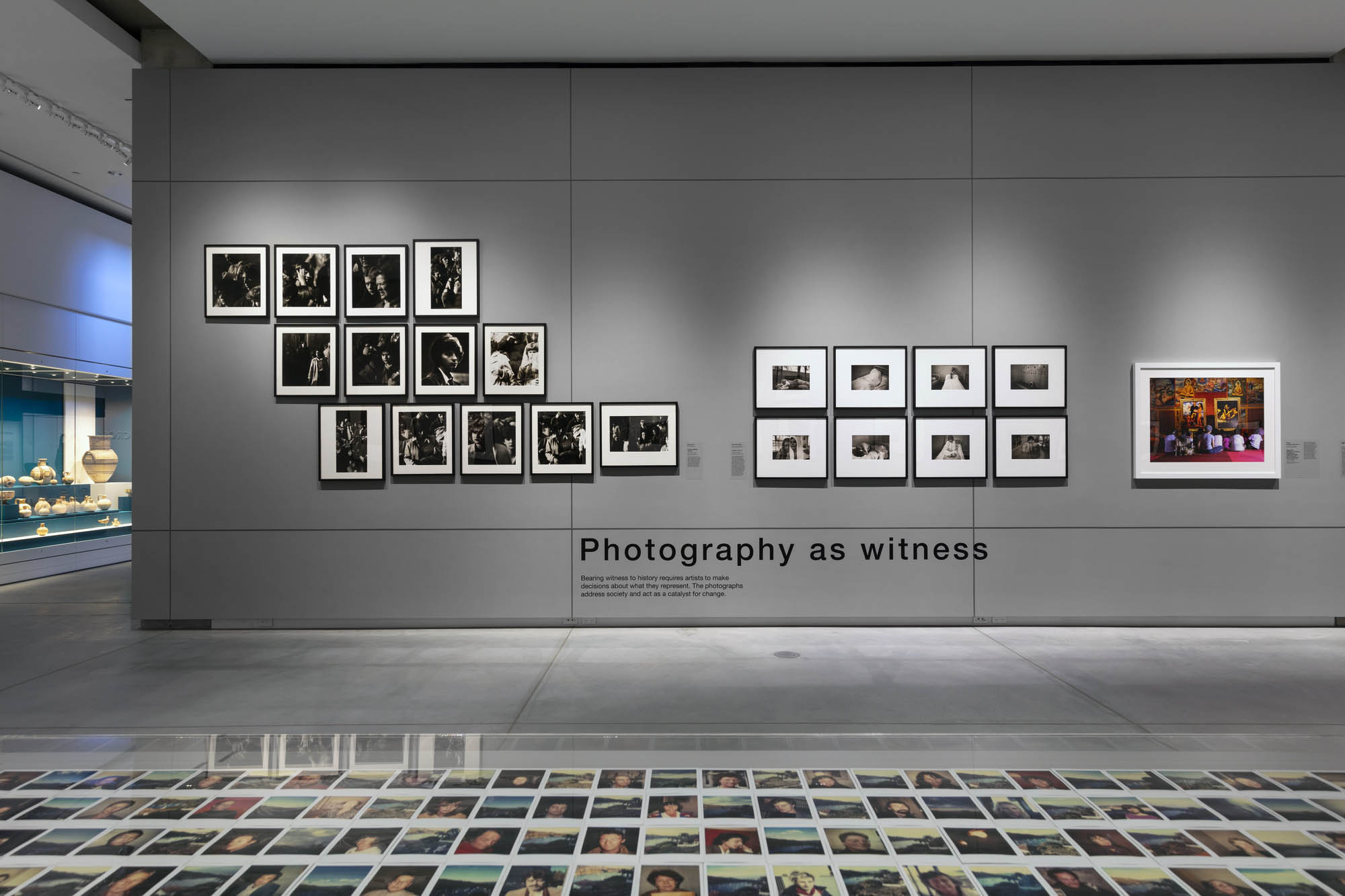
Installation view of the exhibition Photography and the Performative at the Chau Chak Wing Museum at The University of Sydney showing at left photographs from Bill Henson's 'Untitled 1980/82' (1980/82); at centre, photographs from Mary Ellen Mark's 'Ward 81' (1979); and at right, Araya Rasdjarmrearnsook's 'Village and Elsewhere: Artemisia Gentileschi's Judith Beheading Holofernes Jeff Koons's Untitled and Thai Villagers' (2011)


Installation view of the exhibition Photography and the Performative at the Chau Chak Wing Museum at The University of Sydney showing at left photographs from Bill Henson’s Untitled 1980/82 (1980/82, below); at centre, photographs from Mary Ellen Mark’s Ward 81 (1979, below); and at right, Araya Rasdjarmrearnsook’s Village and Elsewhere: Artemisia Gentileschi’s Judith Beheading Holofernes, Jeff Koons’s Untitled, and Thai Villagers (2011, below)
 

Installation view of the exhibition Photography and the Performative at the Chau Chak Wing Museum at The University of Sydney showing at back left, photographs from Bill Henson's 'Untitled 1980/82' (1980/82); at back centre, photographs from Mary Ellen Mark's 'Ward 81' (1979); at back right, Araya Rasdjarmrearnsook's 'Village and Elsewhere: Artemisia Gentileschi's Judith Beheading Holofernes Jeff Koons's Untitled and Thai Villagers' (2011); and at front, Polaroids from Imants Tillers' 'If I close my eyes' (2021)


Installation view of the exhibition Photography and the Performative at the Chau Chak Wing Museum at The University of Sydney showing at back left, photographs from Bill Henson’s Untitled 1980/82 (1980/82, below); at back centre, photographs from Mary Ellen Mark’s Ward 81 (1979, below); at back right, Araya Rasdjarmrearnsook’s Village and Elsewhere: Artemisia Gentileschi’s Judith Beheading Holofernes, Jeff Koons’s Untitled, and Thai Villagers (2011, below); and at front, Polaroids from Imants Tillers’ If I close my eyes (2021)


Installation view of the exhibition Photography and the Performative at the Chau Chak Wing Museum at The University of Sydney showing at back centre, photographs from Mary Ellen Mark's 'Ward 81' (1979); and at front, Polaroids from Imants Tillers' 'If I close my eyes' (2021)


Installation view of the exhibition Photography and the Performative at the Chau Chak Wing Museum at The University of Sydney showing at back centre, photographs from Mary Ellen Mark’s Ward 81 (1979, below); and at front, Polaroids from Imants Tillers’ If I close my eyes (2021)


Installation view of the exhibition Photography and the Performative at the Chau Chak Wing Museum at The University of Sydney showing at left, Hiroshi Sugimoto's 'State Theatre, Sydney' (1997); at second left, Hiroshi Sugimoto's 'Seagram Building – Ludwig Mies Van Der Rohe' (1997); at third left, Olive Cotton's 'Clarence Street, Sydney' (c. 1942); at third right, Christo and Jeanne-Claude’s 'Packed public building, project for Sydney' (1969); and at right, Grant Mudford's 'From Ocean boulevard, Long Beach' (1979-1980)


Installation view of the exhibition Photography and the Performative at the Chau Chak Wing Museum at The University of Sydney showing at left, Hiroshi Sugimoto’s State Theatre, Sydney (1997, below); at second left, Hiroshi Sugimoto’s Seagram Building – Ludwig Mies Van Der Rohe (1997, below); at third left, Olive Cotton’s Clarence Street, Sydney (c. 1942, below); at third right, Christo and Jeanne-Claude’s Packed public building, project for Sydney (1969, below); and at right, Grant Mudford’s From Ocean boulevard, Long Beach (1979-1980, below)
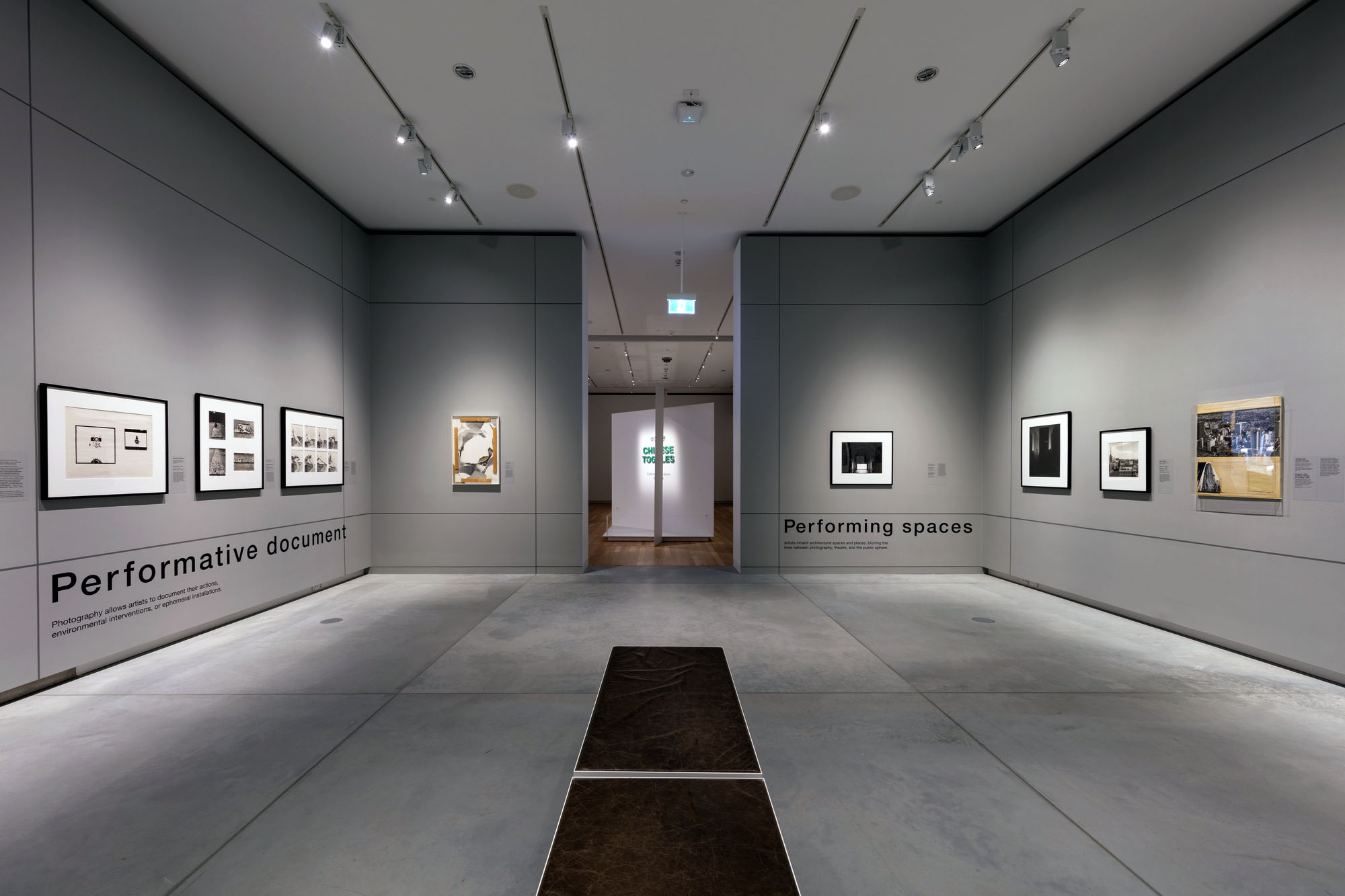
 

Installation view of the exhibition Photography and the Performative at the Chau Chak Wing Museum at The University of Sydney showing at left, Krzysztof Wodiczko's 'Eye to Eye' (c. 1973); at fourth left, Guilio Paolini's 'Incipit' (1975); at fourth right, Hiroshi Sugimoto's 'State Theatre, Sydney' (1997); at third right, Hiroshi Sugimoto's Seagram 'Building – Ludwig Mies Van Der Rohe' (1997); at second right, Olive Cotton's 'Clarence Street, Sydney' (c. 1942); and at right, Christo and Jeanne-Claude's 'Packed public building, project for Sydney' (1969)


Installation view of the exhibition Photography and the Performative at the Chau Chak Wing Museum at The University of Sydney showing at left, Krzysztof Wodiczko’s Eye to Eye (c. 1973, below); at fourth left, Guilio Paolini’s Incipit (1975, below); at fourth right, Hiroshi Sugimoto’s State Theatre, Sydney (1997, below); at third right, Hiroshi Sugimoto’s Seagram Building – Ludwig Mies Van Der Rohe (1997, below); at second right, Olive Cotton’s Clarence Street, Sydney (c. 1942, below); and at right, Christo and Jeanne-Claude’s Packed public building, project for Sydney (1969, below)


How photography captures performance

Some of photography’s best-known luminaries feature in a new Chau Chak Wing Museum exhibition examining the interaction between photography and performance.

From Olive Cotton’s Clarence Street, Sydney (c. 1942) to Imants Tillers’ If I Close My Eyes (2021), the images in Photography and the Performative capture performers, performance spaces and audiences over an 80-year period. The punk aesthetic of 1980s New York, Hollywood B-grade movies and generational discrimination faced by Aboriginal communities are among the diverse phenomena examined in this exhibition. Cindy Sherman, Hiroshi Sugimoto, Bill Henson, Barber Kruger and Araya Rasdjarmrearnsook are among the featured artists.

“Performance as a concept is everywhere,” said Chau Chak Wing curator Katrina Liberiou. “This exhibition conveys performative elements from the widest imaginable range of settings including streets, studios, villages, institutions and performance spaces.”

“Since the 1960s, photography and performance have experienced a shared history. The camera became an extension of the artist’s body, documenting their actions and interventions.”

Rather than record performances, works in Photography and the Performative look at the supporting roles of space, the human body and ideas in performance. International works include disturbing images from the hospital where Milos Forman’s One Flew Over the Cuckoo’s Nest was filmed. Mary Ellen Mark spent 36 days living at the Oregon State Hospital to document the lives of women incarcerated there, a year after she worked as the Oscar-winning film’s set photographer.

Closer to home, Christo’s Packed public building, project for Sydney (1969) imagines wrapping Sydney’s Australia Square, then a new skyscraper designed by architect Harry Seidler. This work was a precursor to the artists’ epic Wrapped Coast, created with support from Harry and Penelope Seidler. Hiroshi Sugimoto’s long exposures of the State Theatre and Seagram Building, also in Sydney, play homage to mid-twentieth century modernism. Imants Tillers If I close my eyes (2021, on display until August 2023) is a grid of Polaroid photographs interspersing portraits of Tillers’ friends, family and fellow artists with images of Sydney’s harbour. The latter depict the same view, from Tillers’ home in Mosman, captured over a three-year period.

The photographs in Photography and the Performative range from vintage black and white prints to alternative processes (including solarisation and photograms) to early colour photography and digital prints. All featured works have been selected from the University of Sydney Art Collection.

Photography and the Perfomative is one of two photographic exhibitions currently on show at the Chau Chak Wing Museum. The second, The Staged Photograph, presents a range of staged images taken in Australia between the mid-19th and early 20th centuries.

Anonymous. “From Henson to Christo,” on The University of Sydney website 24 April 2023 [Online] 12/06/2024


Olive Cotton (Australian, 1911-2003) 'Clarence Street, Sydney' c. 1942


Olive Cotton (Australian, 1911-2003)
Clarence Street, Sydney
c. 1942
Gelatin silver print
Chau Chak Wing Museum


Christo Vladimirov Javacheff (American born Bulgaria, 1935-2020) and Jeanne-Claude Denat de Guillebon (American born Bulgaria, 1935-2009) 'Packed public building, project for Sydney' 1969


Christo Vladimirov Javacheff (American born Bulgaria, 1935-2020) and Jeanne-Claude Denat de Guillebon (American born Bulgaria, 1935-2009)
Packed public building, project for Sydney
1969
Synthetic polymer paint, cotton fabric, cotton thread, pencil, coloured pencil, pressure-sensitive tape on photographs, synthetic polymer weave and staples on cardboard
72.0 x 76.9cm
Donated by Chandler Coventry, 1972
J W Power collection, Chau Chak Wing Museum
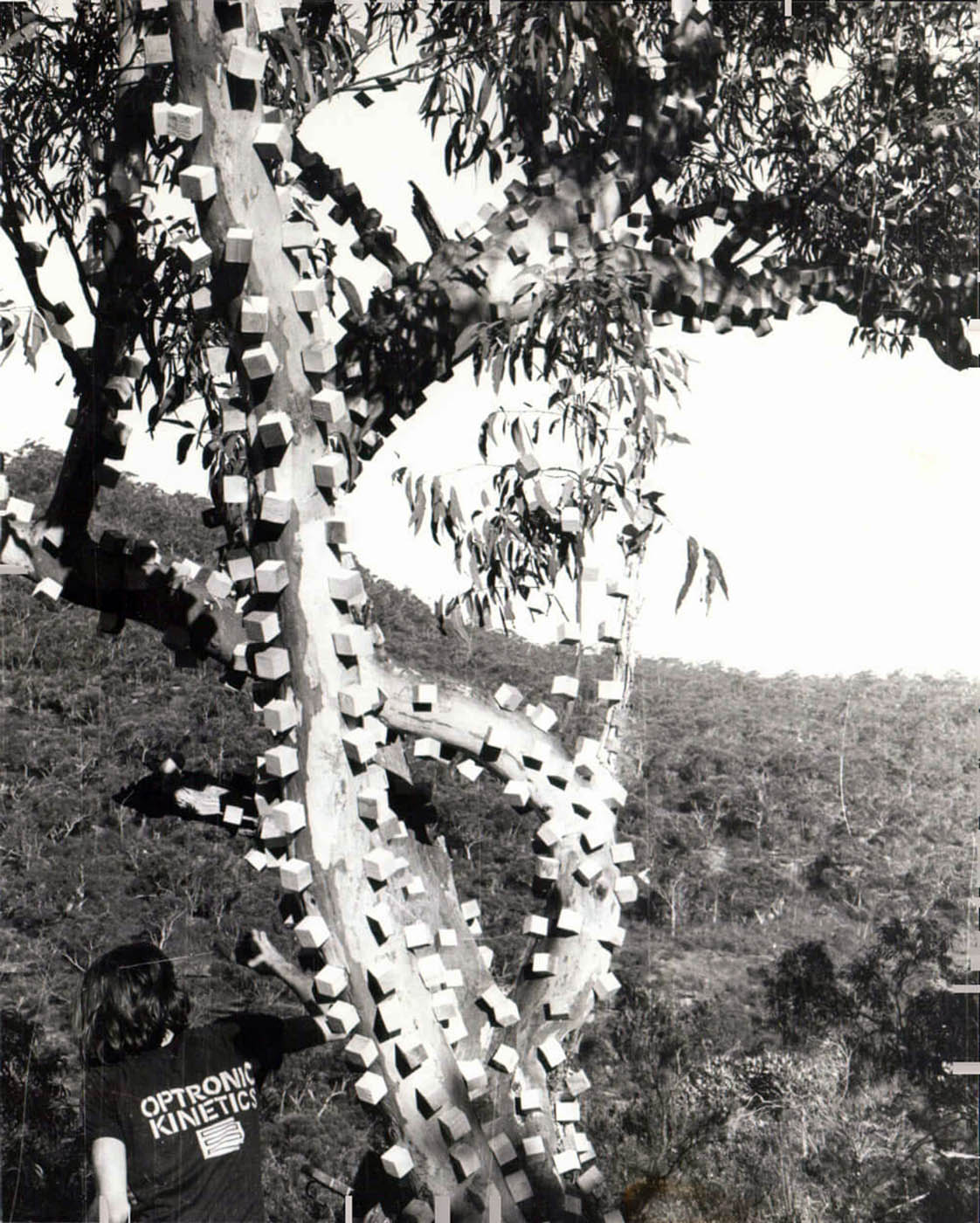
 

Optronic Kinetics (active c. 1970-72) 'Cubed Tree' 1971


Optronic Kinetics (active c. 1970-72)
Cubed Tree
1971
Black and white photograph
61 x 42cm
Donated by the artist 1973
J W Power collection, Chau Chak Wing Museum


Optronic Kinetics (active c. 1970-72) 'Feathered Office' c. 1973


Optronic Kinetics (active c. 1970-72)
Feathered Office
c. 1973
Black and white photograph
61 x 42cm
Donated by the artist 1973
J W Power collection, Chau Chak Wing Museum


Optronic Kinetics

Optronic Kinetics was an art collective that emerged from the University of Sydney’s infamous Tin Sheds Art Workshop in the early 1970s. At this time, the Tin Sheds was a hotbed for radical thought, student activism and a celebrated ‘alternate art space’, where ideas about conceptual and post-object art were explored and put into practice. From the late 1960s to the early 1980s, the Tin Sheds gave rise to some of Australia’s most progressive and political creative practitioners.

Renowned sculptor and artist Bert Flugelman (1923-2013) was the Tin Sheds’ coordinator from 1968 to 1973, and under his guidance encouraged students from across the University’s disciplines to explore the Art Workshop’s offerings. Combined with the enthusiasm of artist, critic and theorist Donald Brook (1927-2018), a University of Sydney academic at the time, a small cohort of medical and engineering students began to investigate and experiment with electronics and movement. Initially the students had wanted to create ‘very conservative paintings’, so in response Flugelman gave them an introduction to sculpture and convinced them to push the boundaries of their own studies and skills. Flugelman and Brook believed that you did not need to master a creative discipline in order to understand it, but you had to be familiar with its ideas and processes. It was this guiding principle that brought Optronic Kinetics into being.

Spurred by the desire to amalgamate science and technology with art, the collective’s founding members included Fine Arts student Julie Ewington, now a recognised writer and curator, and electrical engineering students David Smith and Jim McDonnell. Together with Flugelman they created conceptually ambitious and humorous works such as Cubed treeFeathered office and Flashing boob. Other works such as Electronic colour organ and Reflector employed cutting edge technological innovations and theories to bridge the perceived divide between art and science.

Madeline Reece. “Optronic Kinetics,” on the Take 5 Flinders University Museum of Art website 2020 [Online] Cited 21/06/2024 © Flinders University Museum of Art


Cecile Abish (American, b. 1930) 'Mail-Art: Field Coil' c. 1973 (detail)


Cecile Abish (American, b. 1930)
Mail-Art: Field Coil (detail)
c. 1973
Black and white photographs (template and typed documentation not exhibited)
25.5 x 20.4cm
Donated by the artist 1973
J W Power collection, Chau Chak Wing Museum


Cecile Abish (born 1930) is an American artist known primarily for her works in sculpture and photography.

“Field Coil was specifically made for the lower level space at 112, with its unobstructed linear run and uncluttered cement floor. The work consisted of 104 separate coiled kraft paper units that were placed one next to the other. Each section before being rolled measures 36 × 46″, the slits were 36″ long, cut at 1″ intervals and parallel to the 46″ length. The 104 separate units lost their intrinsic apartness as the coils were placed one next to the other, leaving only the uppermost part of each unit exposed to form an extended field. The dimensions of the entire work were 7″ high x 3′ wide x 49′ long.”

Excerpted from Brentano, R., & Savitt, M. (1981). 112 Workshop, 112 Greene Street: History, artists & artworks. New York: New York University Press cited on the White Columns website Nd [Online] Cited 21/06/2024


Petr Stembera (Czech, b. 1945) 'Mail-Art: (rolling a sleeve; 8 parts)' c. 1973 (detail)


Petr Stembera (Czech, b. 1945)
Mail-Art: (rolling a sleeve; 8 parts) (detail)
c. 1973
Black and white photographs
24.0 x 17.8 cm
Donated by the artist 1973
J W Power collection, Chau Chak Wing Museum


His [Stembera’s] Daily Activities, a series of performances for a camera from the early 1970s, dealing with routine actions, such as rolling up sleeves, typewriting, tying shoelaces, or fastening buttons are mainly found in collections outside Czechoslovakia and, thus, virtually absent from Czech collections, as the artist stopped displaying his photographic works after he turned to live performance in 1974. …

[Petr] Rezek wrote about photographic documentation as a basis for communication. Speaking about the Czech context and leaving aside the different financial and technical possibilities, Štembera’s use of photographic documentation was not especially innovative. Photography served for many as an easily reproducible medium, as the lingua franca of performance art. Its importance was rooted in its utility rather than its aesthetics. However, the specific form of the use of this almost universally understood language depended on many factors. If we look more closely at its uses and direct our focus towards the various dialects, idiolects, and sociolects it encompasses, we can also learn more about the nature of the art it transmitted.

The fact that the Daily Activities series was crucial for Štembera at the time is confirmed, for example, by a reproduction of a photograph showing him buttoning his shirt, which was used on the poster for his solo exhibition in Antwerp organized by D’Hondt in 1974. Such low-quality reproductions, which appeared in non-profit publications in the West as well as in unofficial and semi-official publications in the East were one of the typical outputs of these exchanges. In addition to gelatin silver prints, photomechanical reproductions played a crucial role in facilitating international transfers. Besides the posters and invitation cards, the reproductions in exhibition catalogues and in foreign magazines were seminal in distributing the original art piece to a wide audience. Through the catalogs, some of the exhibited works reached a secondary audience but also returned to the archives of the authors and to libraries, where they continue to serve as a source of information to this day.

Hanna Buddeus. “Photography: The Lingua Franca of Performance Art?” on the Art Margins website 14th March 2024 [Online] Cited 21/06/2024


Krzysztof Wodiczko (Polish, b. 1943) 'Eye to Eye' c. 1973


Krzysztof Wodiczko (Polish, b. 1943)
Eye to Eye
c. 1973
Gelatin silver photograph
47.6 x 59cm
Donated by the artist 1973
J W Power collection, Chau Chak Wing Museum


Giulio Paolini (Italian, b. 1940) 'Incipit' 1975


Giulio Paolini (Italian, b. 1940)
Incipit
1975
Torn photograph, canvas, wood, in Perspex frame
91.0 x 61.5cm
Purchased with funds from the J W Power Bequest 1976
J W Power collection
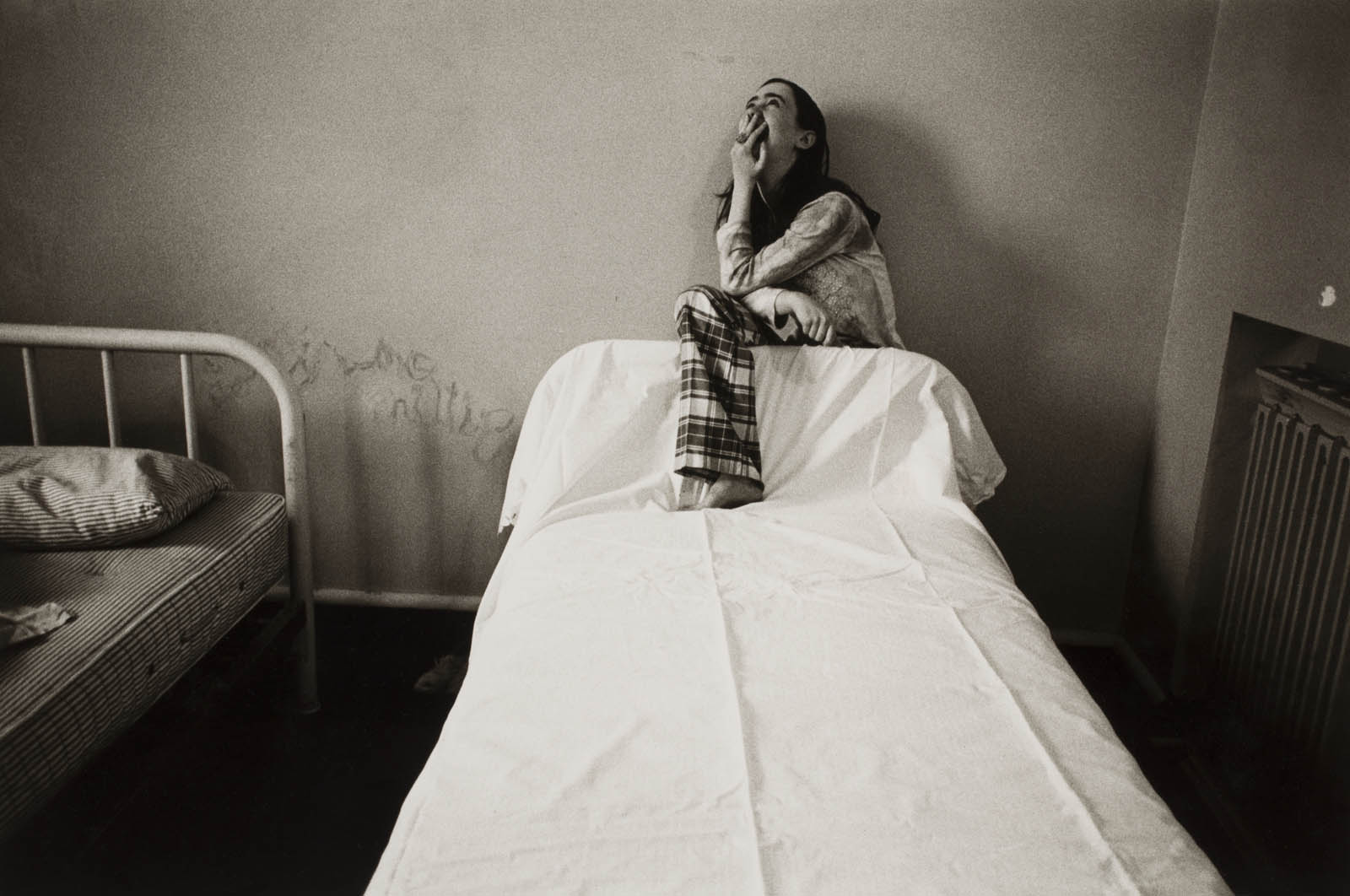
 

Mary Ellen Mark (American, 1940-2015) 'Untitled' 1976-1978


Mary Ellen Mark (American, 1940-2015)
Untitled
1976-1978
From the series Ward 81, Oregon State Hospital, Salem, Oregon
Silver gelatin photograph
20.3 x 30.5cm
Purchased with funds from the JW Power Bequest 1978
JW Power Collection, Chau Chak Wing Museum


In 1975, photographer Mary Ellen Mark was assigned by The Pennsylvania Gazette to produce a story on the making of Milos Forman’s film of Ken Kesey’s 1962 novel One Flew Over the Cuckoo’s Nest, shot on location at the Oregon State Hospital, a mental institution. While on set, Mark met the women of Ward 81, the only locked hospital security ward for women in the state: The inmates were considered dangerous to themselves or to others. In February of 1976, just before the ward closed (it ceased to exist in November of 1977, when it became the female section of a coeducational treatment ward), Mark and Karen Folger Jacobs, a writer and social scientist, were given permission to make a more extended stay, living on the ward in order to photograph and interview the women. They spent 36 days on Ward 81, photographing and documenting. Jacobs recalls their slow, inevitable assimilation: “We felt the degeneration of our own bodies and the erosion of our self-confidence. We were horrified at the thought of what we might become after a year or two of confinement and therapy on Ward 81.”

Text from the Google Books website


Mary Ellen Mark (American, 1940-2015) 'Untitled' 1976-1978


Mary Ellen Mark (American, 1940-2015)
Untitled
1976-1978
From the series Ward 81, Oregon State Hospital, Salem, Oregon
Silver gelatin photograph
20.3 x 30.5cm
Purchased with funds from the JW Power Bequest 1978
JW Power Collection, Chau Chak Wing Museum
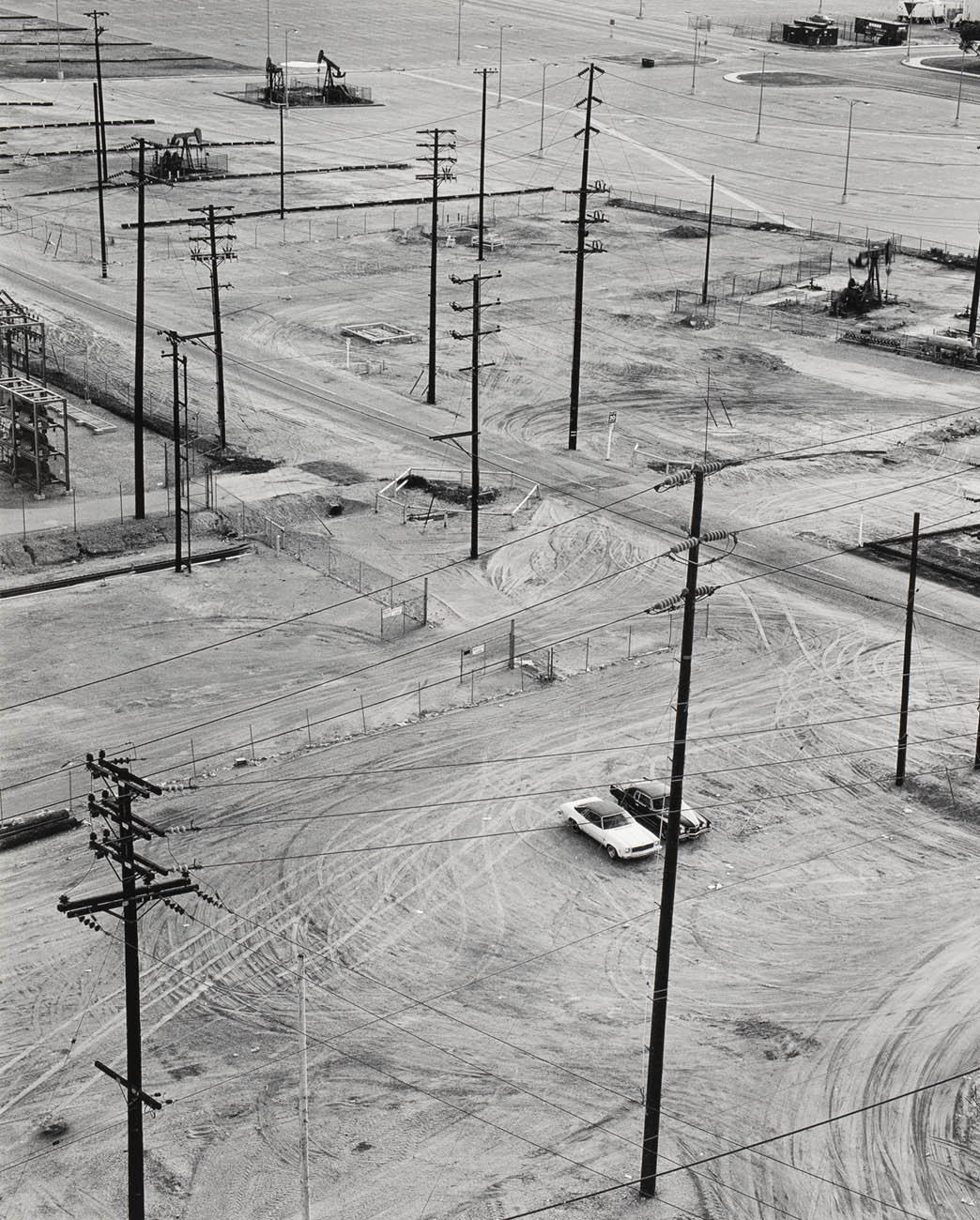
 

Grant Mudford (Australian, b. 1944) 'From Ocean boulevard, Long Beach' 1979-1980


Grant Mudford (Australian, b. 1944)
From Ocean boulevard, Long Beach
1979-1980
Black and white photograph on paper
60.3 x 50.3cm
Purchased with funds from the J W Power Bequest 1980
J W Power collection, Chau Chak Wing Museum


Bill Henson (Australian, b. 1955) 'Untitled 1980/82' 1980-1982


Bill Henson (Australian, b. 1955)
Untitled 1980/82
1980-1982
Gelatin silver photograph
43.1 x 39cm
Donated by University of Sydney Union 2019
University Art Collection, Chau Chak Wing Museum


“A selection of photographs from the Crowd Series (1980-1982) by Bill Henson. Snapped in secret these black and white journalistic surveillance photographs (‘taken’ in an around Flinders Street railway station in Melbourne) have a brooding intensity and melancholic beauty. Henson uses a flattened perspective that is opposed to the principles of linear perspective in these photographs. Known as The Art of Describing6 and much used in Dutch still life painting of the 17th century to give equal weight to objects within the image plane, here Henson uses the technique to emphasise the mass and jostle of the crowd with their “waiting, solemn and compliant” people.

“When exhibiting the full series, Henson arranges the works into small groupings that create an overall effect of aberrant movement and fragmentation. From within these bustling clusters of images, individual faces emerge like spectres of humanity that will once again dissolve into the crowd … all apparently adrift in the flow of urban life. The people in these images have an anonymity that allows them to represent universal human experiences of alienation, mortality and fatigue.”7

Marcus Bunyan. “Un/aware and in re/pose: the self, the subject and the city,” review of the exhibition ‘In camera and in public’ at the Centre for Contemporary Photography, Melbourne on the Art Blart website October 16, 2011 [Online] Cited 12/06/2024

6/ See Alpers, Svetlana. The Art of Describing: Dutch Art in the Seventeenth Century. University Of Chicago Press, 1984

7/ Anon. BILL HENSON: early work from the MGA collection. Education Resource. A Monash Gallery of Art Travelling Exhibition [Online] Cited 14/10/2011. No longer available online
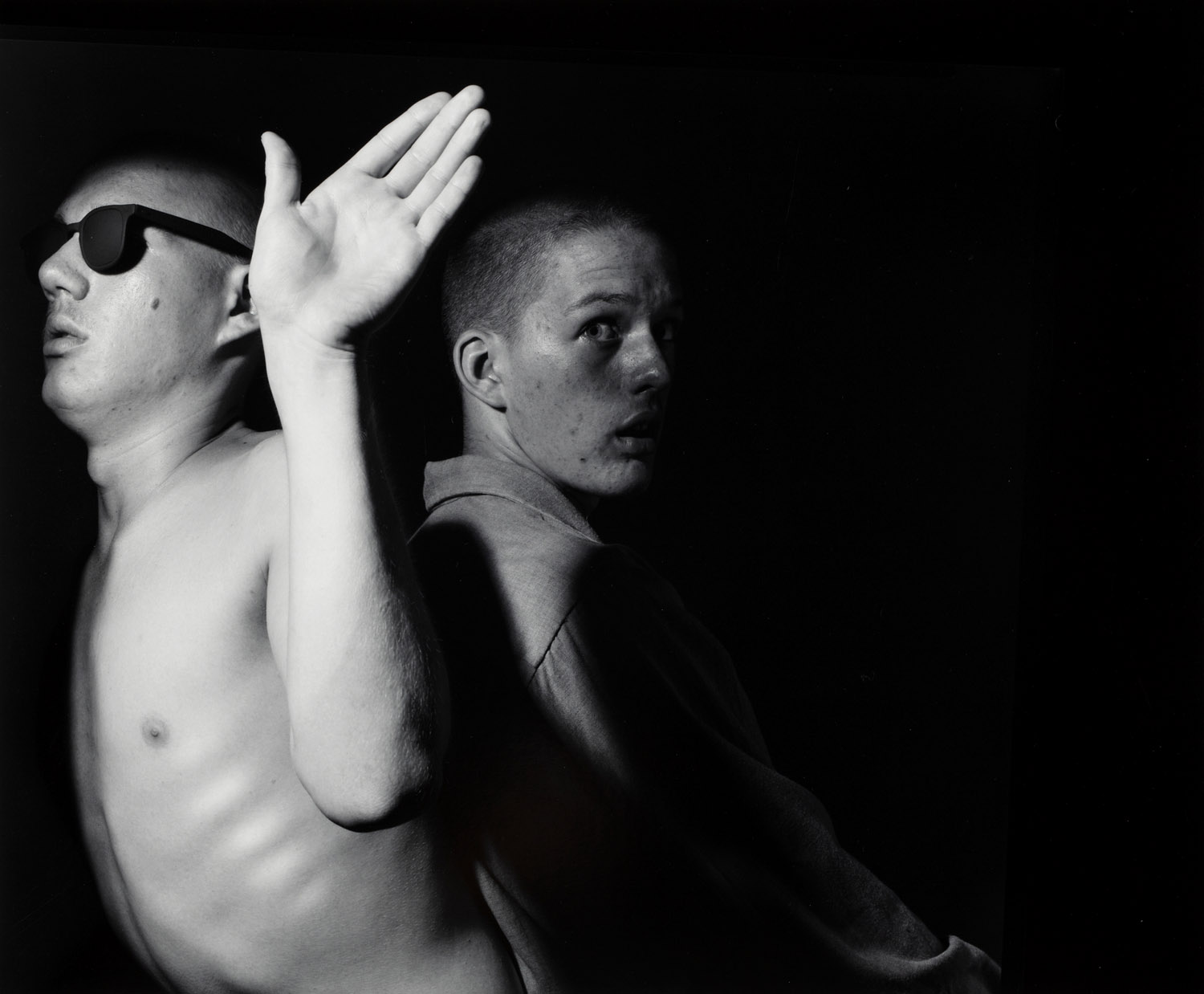
 

Todd Watts (American, b. 1949) 'On the 21st century' 1982


Todd Watts (American, b. 1949)
On the 21st century
1982
Silver gelatin photograph
49.0 x 59.2cm
Purchased with funds from the JW Power Bequest 1986
JW Power Collection, Chau Chak Wing Museum
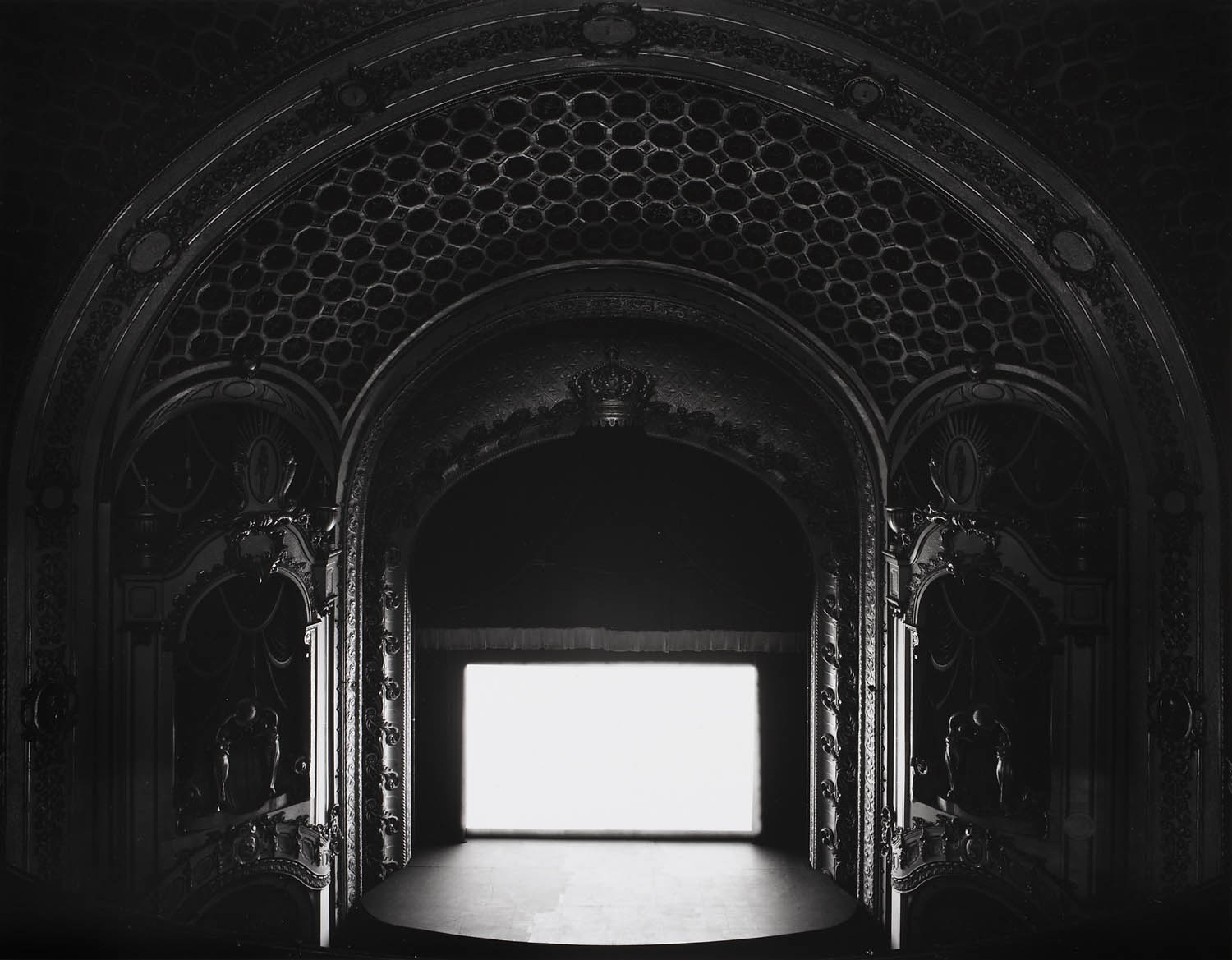
 

Hiroshi Sugimoto (Japanese, b. 1948) 'State Theatre, Sydney' 1997


Hiroshi Sugimoto (Japanese, b. 1948)
State Theatre, Sydney
1997
Silver gelatin photograph
42.3 x 54.6cm
Purchased with funds from the Dr M J Morrissey Bequest Fund in memory of Professor A L Sadler 2017
University Art Collection, Chau Chak Wing Museum


I loved Sugimoto’s time lapse movie screens, where the exact length of a movie was captured by the open lens of the camera, the substance of time and space evidenced by a seemingly empty screen. There was something wonderfully poetic and transformational about that gesture, about the notion of compressing the narrative, reality and action of a movie into a single frame of light: “the ‘annihilation of time and space’ as a particular moment in a dynamic cycle of rupture and recuperation enables a deliberate focus on the process of transition.”1 The process of transition in the flow of space and time.

Marcus Bunyan on the exhibition “Hiroshi Sugimoto: Past Tense” at the J. Paul Getty Museum, Getty Center, Los Angeles on the Art Blart website June 3, 2014 [Online] Cited 21/06/2024


Hiroshi Sugimoto (Japanese, b. 1948) 'Seagram Building – Ludwig Mies Van Der Rohe' 1997


Hiroshi Sugimoto (Japanese, b. 1948)
Seagram Building – Ludwig Mies Van Der Rohe
1997
Silver gelatin photograph
University Art Collection, Chau Chak Wing Museum
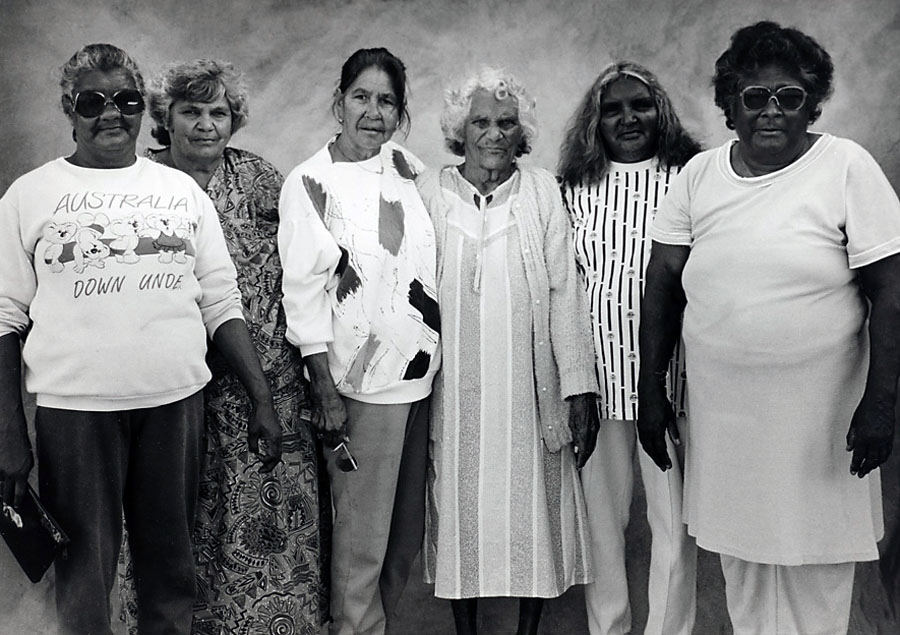
 

Michael Riley (Australian / Wiradjuri/Kamilaroi, 1960-2004) 'Moree women' 1991


Michael Riley (Australian / Wiradjuri/Kamilaroi, 1960-2004)
Moree women
1991
Gelatin silver print
40.0 x 56.5cm
Donated by University of Sydney Union, 2019
University Art Collection, Chau Chak Wing Museum
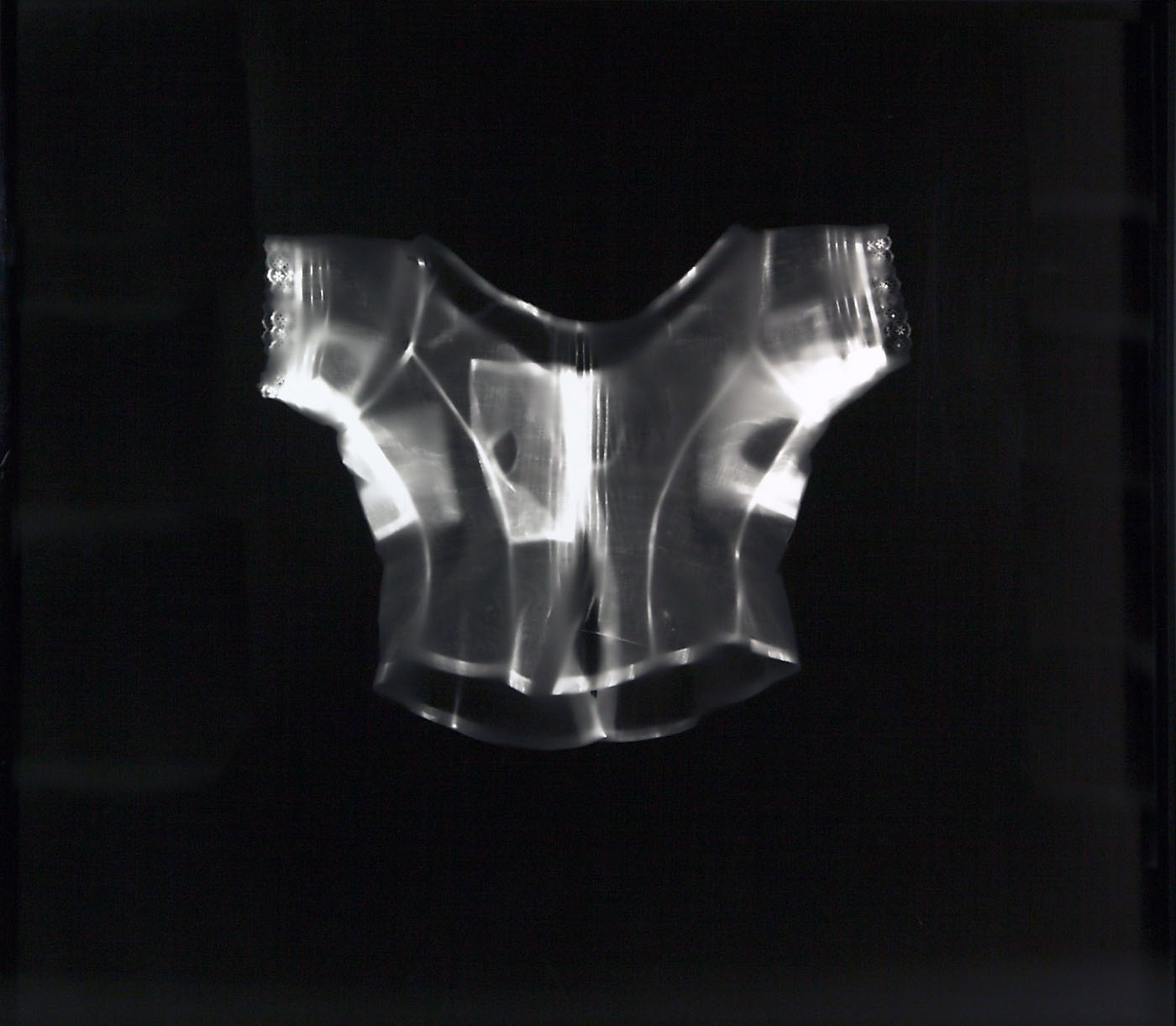
 

Anne Ferran (Australian, b. 1949) 'Untitled (Bodice)' 1998


Anne Ferran (Australian, b. 1949)
Untitled (Bodice)
1998
Gelatin silver photogram
82.0 x 93.5cm
Donated by University of Sydney Union 2019
University Art Collection, Chau Chak Wing Museum


In 1998 Australian artist Anne Ferran was offered an artist-in-resident’s position at an historic homestead not far from Sydney that had been occupied by successive generations of the same family since 1813. Ferran spent six months systematically making contact prints using the dresses, bodices, skirts, petticoats, and collars still contained in the house. Hovering in a surrounding darkness, softly radiating an inner light, the ghostly traces of these translucent garments now act as residual filaments for a century of absorbed sunshine. Many of them have been patched over the years and their signs of wear and repair are made clear. This allows us to witness a history of the use of each piece of clothing, seeing inside them to those small and skilful acts of home economy – the labour of women – usually kept hidden from a public gaze.

Wall text from the exhibition “Emanations: The Art of the Cameraless Photograph” at the Govett-Brewster Art Gallery / Len Lye Centre, New Plymouth, New Zealand on the Art Blart website July 31, 2016 [Online] Cited 21/06/2024


Cindy Sherman (American, b. 1954) 'Untitled #131' 1983


Cindy Sherman (American, b. 1954)
Untitled #131
1983
C-type photograph
139.9 x 100cm
University Art Collection, Chau Chak Wing Museum
Purchased with funds from the J W Power Bequest 1984
JW Power Collection, Chau Chak Wing Museum


The Twilight Girls (active 1997 - present) 'The Power and the Glory i' 2004 (detail)


The Twilight Girls (Helen Hyatt-Johnston and Jane Polkinghorne) (active 1997 – present)
The Power and the Glory i (detail)
2004
Colour photographic print
75.9 x 50.5cm
Donated by University of Sydney Union 2019
University Art Collection, Chau Chak Wing Museum


Hyatt-Johnston and Polkinghorne’s work is a hilarious celebration of the endless potential to personalise Hollywood fantasy so as to enjoy the vicarious glamour and tack without foreclosing either individual expression or the subversion of mainstream codes. The artists confuse genres and disciplines, feminist aspirations and sacred cows, in a mad comic brew that speaks more of the pleasure of play and friendship than of the construction of sexed identities. And this is the point, to evade the strictures of accepted feminist strategies by putting inclusive play back on the map.

Jacqueline Millner. “Twilight Girls: Helen Hyatt-Johnston and Jane Polkinghorne,” on the Contemporary Art and Feminism website October 22, 2013 [Online] Cited 21/06/2024 © Jacqueline Millner, 2002
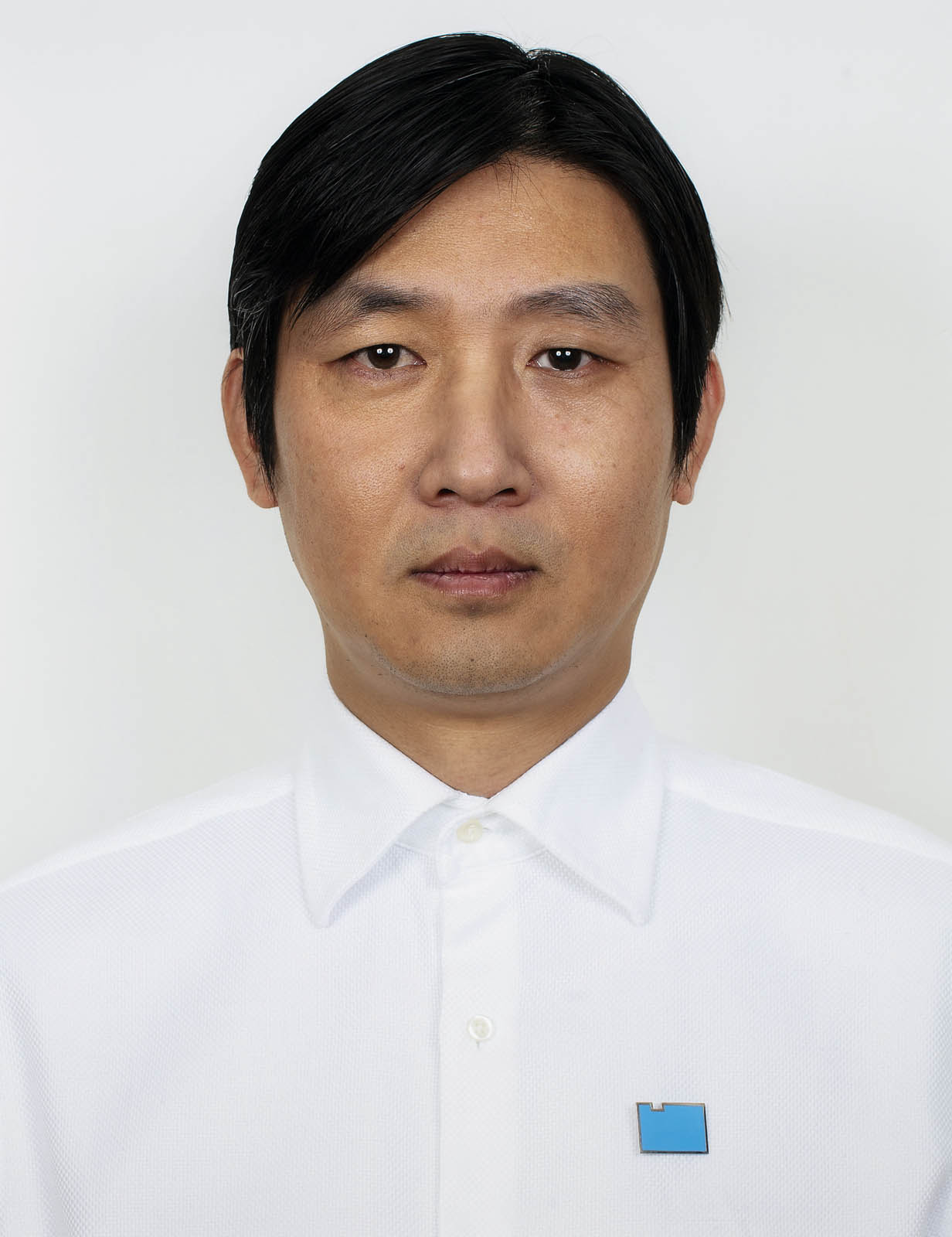
 

Polit-Sheer-Form Office (PSFO) (active 2005-2009) 'Mr Zhang' 2008


Polit-Sheer-Form Office (PSFO) (active 2005-2009)
Mr Zhang
2008
C-type print
170.4 x 135.5cm
Donated by Gene and Brian Sherman through the Australian Government’s Cultural Gifts Program 2021
University Art Collection, Chau Chak Wing Museum


Polit-Sheer-Form-Office (PSFO) is a China-based art group established in 2005 by artists Hong Hao, Xiao Yu, Song Dong, Liu Jianhua and curator / critic Leng Lin. Born in the mid-1960s, as children they all experienced the late Cultural Revolution, a period of Communist ideological orthodoxy that powerfully affected the preceding generation.

Drawing on this personal history, PSFO’s artistic practice strives to create a collective way of life while removing the political content historically associated with it. In its activities and artworks, PSFO attempts to create a framework – albeit tongue-in-cheek – for collective life in today’s consumer-oriented China. Within this framework, individuals may find the ties that bind them to others. At the same time, “sheer form” without content allows room for the individual to grow. By eating, drinking and playing together, the PSFO members revive a collective way of life associated with the Communist era of their youth, reawakening a long-lost state of being, by which they contend with contemporary China’s ideology of consumerism. But this is not nostalgia for one of the most controversial periods of Chinese history. The very emptiness of the political rhetoric of their childhood is what inspires the group’s name. Instead of political content, we have sheer, unadulterated political form – hence “Polit-Sheer-Form-Office.” The fact that the group calls itself an “Office” is another ironic reference to officialdom. …

Mr. Zheng is a digital amalgam of the faces of the five PSFO members in the form of a generic identification photo. This artwork straightforwardly embodies the union of the group’s five members, each sacrificing his individuality to become this new single entity. As a nod to the so-called “leader portraits” of Chairman Mao that were hung over buildings in China during the Socialist era… This virtual leader combines the characteristics of all five members, and is therefore not a portrait of authoritarianism, but of collectivism.

In American culture, individualism is a core value, yet a new understanding of the need for the collective has emerged. Similarly, while collectivism has been a core Chinese value, there has been increasing interest in individual pursuits. Is doing a good deed human nature’s need or a need for ideology? What is the real content and meaning of collectivism?

Ruijin Shen, curator, Guangdong Times Museum. “Polit-Sheer-Form-Office (PSFO) Polit-Sheer-Form!,” on the Queens Museum website 2014 [Online] Cited 07/07/2024
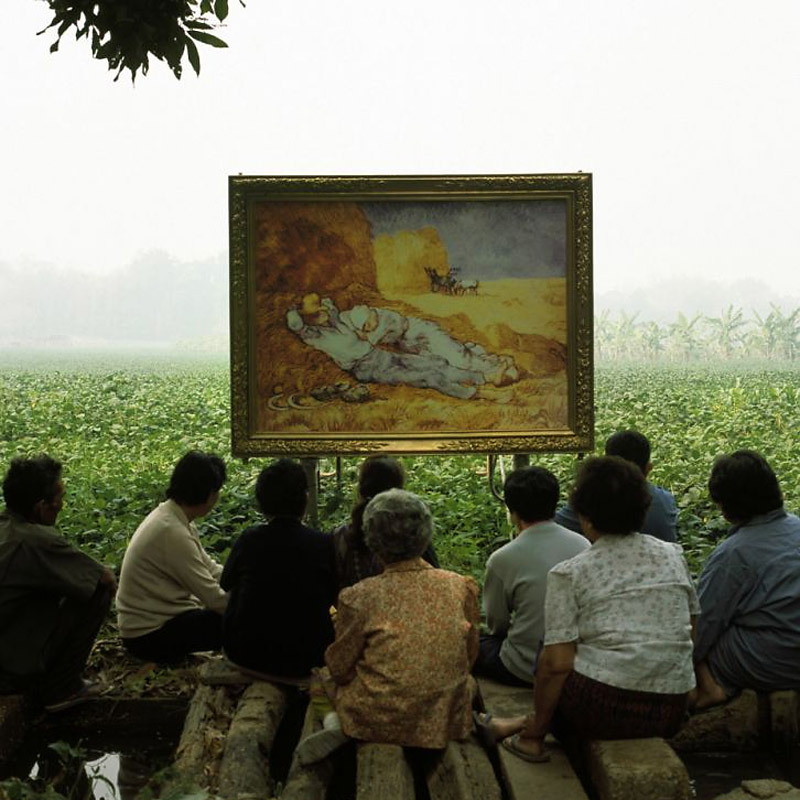
 

Araya Rasdjarmrearnsook (Thailand, b. 1957) 'The Two Planets: Van Gogh's The Midday Sleep 1889/90, and the Thai Villagers' 2008


Araya Rasdjarmrearnsook (Thailand, b. 1957)
The Two Planets: Van Gogh’s The Midday Sleep 1889/90, and the Thai Villagers
2008
Digital print
75.7 x 75.7cm
Purchased with funds from the Dr M J Morrissey Bequest Fund in memory of Professor A L Sadler 2014
University Art Collection, Chau Chak Wing Museum


Araya explores the relational potential of the tableau most fully in two video installation series: The Two Planets (2008) and Village and Elsewhere (2011), both of which are composed of short audiovisual vignettes that are usually exhibited as multichannel video and photographic installations. The individual works in each series are almost identical in terms of visual composition. Araya re-situates one or two large-scale, ostentatiously gold-framed reproductions of famous western paintings in outdoor or neighborhood spaces in the rural outskirts of the northern Thai city of Chiang Mai. The video camera frames these reproductions and their visually associative physical surroundings in a straight-on shot. On-screen, the framed reproductions are frontally displayed in the background. In the foreground, small groups of people are visible from the back, and their murmurings, chatter, gossip, speculations, and digressions as they look at the reproductions audible. …

In each of these audiovisual vignettes, the duration of the scene displayed approximates the duration of spectatorship by a figural group whose faces we do not see. The visualization of the group signifies “Thai Villagers,” or “Thai Farmers,” transfiguring people who, in everyday life, live in the same suburb as the artist. In each tableau, the group is sitting on the ground, their backs to us, facing the framed reproduction. The shortest of these videos are nearly ten minutes, and the longer ones about twenty-five. Someone comments on a detail that strikes them about the picture in the frame. Another person observes something about this face or that body, this plant, that tool, this hat, or that dish. The group amuses itself, speculating wildly on the backstory in the displayed scene. Sometimes they prod one another to dart up to the framed picture and point out a small detail – or to caress the image of a face, the skin, a body part. With the van Gogh reproduction, the group contemplates the placement of the sickle, the number of wheels on the wooden cart, the total number of oxen legs visible, and the casting of the sunlight on the haystack, all in order to decipher winning lottery numbers. Their conversation flows easily, often straying from the framed reproduction to random neighborhood gossip. Each video is unscripted and staged as a one-take piece using a static shot. The editing is minimal, involving discreet jump cuts to crop out of parts of the conversation without changing the visual composition, giving the impression that the vignettes are displaying spectatorial experiences in real time.

May Adadol Ingawanij. “Araya Rasdjarmrearnsook’s Relational Tableaux,” on the MoMA Post website August 9, 2023 [Online] Cited 21/06/2024


Araya Rasdjarmrearnsook (Thailand, b. 1957) 'Village and Elsewhere: Artemisia Gentileschi's Judith Beheading Holofernes, Jeff Koons's Untitled, and Thai Villagers' 2008


Araya Rasdjarmrearnsook (Thailand, b. 1957)
Village and Elsewhere: Artemisia Gentileschi’s Judith Beheading, Holofernes Jeff Koons’s Untitled, and Thai Villagers
2008
Purchased with funds from the Dr M J Morrissey Bequest Fund in memory of Professor A L Sadler 2014
University Art Collection, Chau Chak Wing Museum


The tableau display of the gold-framed reproductions references and aggrandizes museum conventions of hanging and presenting artworks on walls, an exhibition apparatus that lays claim to addressing everyone. Yet the spectators in The Two Planets and Village and Elsewhere exceed the boundary of that universalizing assertion with their actualization of what, following Elaine Castillo, we might call the spectatorship of the unintended.14 At the same time, their encounters with the reproductions take place in spaces that do not cohere with the museological value of suspending the time and space of daily life. The “Thai Villagers” and “Thai Farmers” in Araya’s tableaux are shown engaging with framed reproductions of art in neighborhood spaces – the local field, temple, and bamboo forest. The spectatorship of the unintended that they enact is a kind of unruly hosting, an extending of hospitality to the foreign, an unpredictable engagement with mobile artifacts from distant lands, cultures, and times.

May Adadol Ingawanij. “Araya Rasdjarmrearnsook’s Relational Tableaux,” on the MoMA Post website August 9, 2023 [Online] Cited 21/06/2024


Chau Chak Wing Museum – The University of Sydney
Level 1, University Place, Camperdown, NSW 2006
Phone: 02 9351 2812

Opening hours:
Monday to Friday (until 9pm Thursdays) 9am – 5pm
Saturday and Sunday 12 – 4pm
Closed public holidays

Chau Chak Wing Museum website

LIKE ART BLART ON FACEBOOK

Back to top

Essay / review: ‘In camera and in public’ at the Centre for Contemporary Photography, Melbourne

Exhibition dates:  16th September – 23rd October 2011

Curator: Naomi Cass

Artists: ASIO de-classified photos and footage, Denis Beaubois (France/Australia), Luc Delahaye (France), Cherine Fahd (Australia), Percy Grainger (Australia/USA), Bill Henson (Australia), Sonia Leber and David Chesworth (Australia), Walid Raad (Lebanon/USA), Kohei Yoshiyuki (Japan)


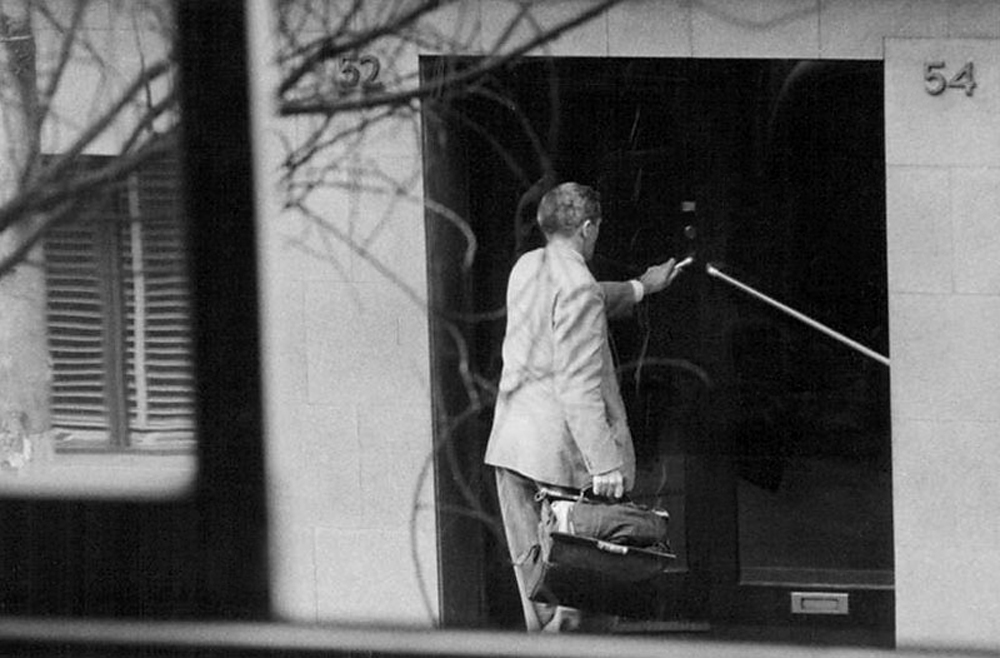
Persons Of Interest - ASIO surveillance 1949 -1980. 'Author Frank Hardy in the doorway of the Building Workers Industrial Union, 535 George St, Sydney, August 1955'


Persons Of Interest – ASIO surveillance 1949-1980
Author Frank Hardy in the doorway of the Building Workers Industrial Union, 535 George St, Sydney, August 1955
NAA A9626, 212


Un/aware and in re/pose: the self, the subject and the city

Keywords: surveillance, surveillance photography, the gaze, the camera, photography, stolen images, voyeurism, scopophilia, public/private, disciplinary systems, facework, civil inattention, portrait, social history, persons of interest, the city, the self, subject, awareness, repose, reciprocity, the spectacle, the spectator.


“The paradox is the more we seek to fix our vision of the world and to control it the less sure we are as to who we are and what our place is in the world.”


Marcus Bunyan 2011


“Stare. It is the way to educate your eye, and more. Stare, pry, listen, eavesdrop. Die knowing something. You are not here long.”


Walker Evans


“Texts that testify do not simply report facts but, in different ways, encounter – and make us encounter – strangeness.”


Shoshana Felman and Dori Laub 1


Curated by Naomi Cass as part of the Melbourne Festival, this is a brilliant exhibition at the Centre for Contemporary Photography, Melbourne. The exhibition explores, “the fraught relationship between the camera and the subject: where the image is stolen, candid or where the unspoken contract between photographer and subject is broken in some way – sometimes to make art, sometimes to do something malevolent.”2 It examines the promiscuity of gazes in public/private space specifically looking at surveillance, voyeurism, desire, scopophilia, secret photography and self-reflexivity. It investigates the camera and its moral and physical relationship to the unsuspecting subject. Does the camera see something different if the subject is unaware? Is the viewer complicit in the process as they (repeatedly) stare at the photographs? Are we all implicated in a kind of “mass social surveillance” based on Foucault’s concept of the self-regulating disciplinary society, a society that is watched from a single, panoptic vantage point (that of the omnipresent camera lens) and through the agency of the watchers watching each other?3 More on this later in the writing.

To the left

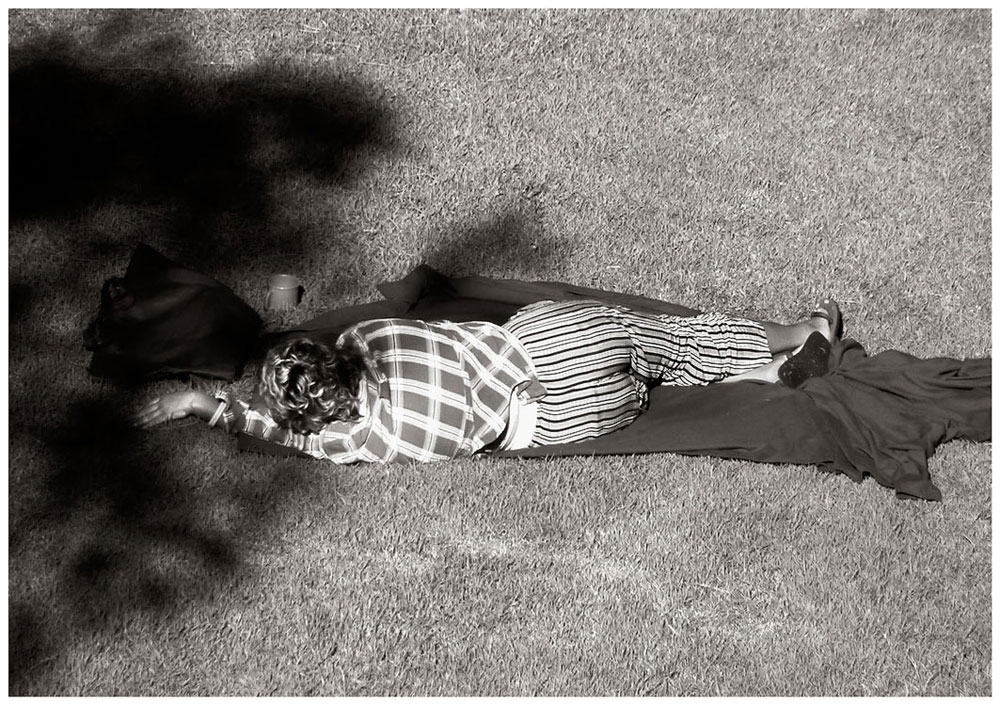
A selection of photographs from the series The Sleepers by Cherine Fahd, A4 sized black and white photographs of homeless people, asleep on the grass in a park, taken in secret from a sixth floor apartment in Kings Cross, Sydney. Fahd “went to great pains to make sure her subjects were anonymous, unidentifiable, their faces turned away”4 resulting in photographs of corpse-like bodies on contextless backgrounds – wrapped, isolated, entwined, covered in shadow, the bodies disorientated in space and consequently disorientating the gaze of the viewer.

To the right

A selection of photographs from the Crowd Series (1980-82) by Bill Henson. Snapped in secret these black and white journalistic surveillance photographs (‘taken’ in an around Flinders Street railway station in Melbourne) have a brooding intensity and melancholic beauty. Henson uses a flattened perspective that is opposed to the principles of linear perspective in these photographs. Known as The Art of Describing5 and much used in Dutch still life painting of the 17th century to give equal weight to objects within the image plane, here Henson uses the technique to emphasise the mass and jostle of the crowd with their “waiting, solemn and compliant” people.

“When exhibiting the full series, Henson arranges the works into small groupings that create an overall effect of aberrant movement and fragmentation. From within these bustling clusters of images, individual faces emerge like spectres of humanity that will once again dissolve into the crowd … all apparently adrift in the flow of urban life. The people in these images have an anonymity that allows them to represent universal human experiences of alienation, mortality and fatigue.”6


Henson states, “The great beauty in the subject comes, for me, from the haunted space, that unbridgeable gap – which separates the profound intimacy and solitude of our interior world from the ‘other’… The business of how a child’s small hand appearing between two adults at a street crossing can suggest both a vulnerability, great tenderness, and yet also contain within it all of the power that beauty commands, is endlessly fascinating to me.”7 His observation is astute but for me it is the un/awareness of the people in these photographs that are their beauty, their insertion into the crowd but their isolation from the crowd and from themselves. As Maggie Finch observes, it is “that feeling of being both alone and private in a crowd, thus free but also exposed.”8

In the sociologist Erving Goffman’s terms the photographs can be seen as examples of what he calls “civil inattention”9 which is a carefully monitored demonstration of what might be called polite estrangement, the “facework” as we glance at people in the crowd, holding the gaze of the other only briefly, then looking ahead as each passes the other.

“Civil inattention is the most basic type of facework commitment involved in encounters with strangers in circumstances of modernity. It involves not just the use of the face itself, but the subtle employment of bodily posture and positioning which gives off the message “you may trust me to be without hostile intent” – in the street, public buildings, trains or buses, or at ceremonial gatherings, parties, or other assemblies. Civil inattention is TRUST as ‘background noise’ – not as a random collection of sounds, but as carefully restrained and controlled social rhythms. It is characteristic of what Goffman calls “unfocused interaction.””10


This is what I believe Henson’s photographs are about. Not so much the tenderness of the child’s hand but a fear of engagement with the ‘other’. As such they can be seen as image precursors to the absence/presence of contemporary communication and music technologies. How many times do people talk on their mobile phone or listen to iPods in crowds, on trams and trains, physically present but absenting themselves from interaction with other people. Here but not here; here and there. The body is immersed in absent presence, present and not present, conscious and not conscious, aware and yet not aware of the narratives of a ‘recipro/city failure’. A failure to engage with the light of place, the time of exposure and an attentiveness to the city.

As Susan Stewart insightfully observes,

“To walk in the city is to experience the disjuncture of partial vision/partial consciousness … The walkers of the city travel at different speeds, their steps like handwriting of a personal mobility. In the milling of the crowd is the choking of class relations, the interruption of speed, and the machine.”11

On a pedestal

Travelling in the city, in a machine (in this case a subway train) is the subject of the next body of work in the exhibition, represented by the book L’Autre (The Other) by French artist Luc Delahaye.12 Using a hidden camera Delahaye photographs the commuters faces in repose.

“I stole these photographs between ’95 and ’97 in the Paris metro. ‘Stole’ because it is against the law to take them, it’s forbidden. The law states that everyone owns their own image. But our image, this worthless alias of ourselves, is everywhere without us knowing it. How and why can it be said to belong to us? But more importantly, there’s another rule, that non-aggression pact we all subscribe to: the prohibition against looking at others. Apart from the odd illicit glance, you keep staring at the wall. We are very much alone in these public places and there’s violence in this calm acceptance of a closed world.”13


This is another example of Goffman’s civil inattention as Delahaye stares into the distance and feigns absence long enough to get his stolen photograph (much like Walker Evans earlier photographs of people on the New York subway photographed with Evans’s camera concealed inside his overcoat).14 Here the photographs are much closer cropped than Evans’, allowing the viewer no escape from staring at the stolen faces. The faces seen in repose remind me of the composite portraits of criminals and the diseased, Specimens of Composite Portraiture c. 1883 by Sir Francis Galton, remembering that one of the earliest scientific functions of the camera was to document the likenesses of criminals, degenerates and other aberrant beings. We must also remember that, as Geoffrey Batchen suggests, “we are so used to the idea that we are always being watched that we might have turned our whole lives into “a grand, impenetrable pose” because we assume the camera eye is always present.”15

In the physiognomy of these faces the viewer is asked to assess a person’s character or personality from their outer appearance. While the viewer may be complicit in this task we must also remember that the photographer who stole these photographs has also re/posed these faces, choosing which people to secretly photograph and culling images that did not meet his conceptual project. We find no smiling or laughing faces in the book, no context is given (the photographs being tightly cropped on the body and face) and the phatic image, the one that grabs us has been manipulated, reposed and restaged for our edification. While the subject may be unaware of being photographed and their face may be in repose, this repose is as much a cultural construct as if they had known their photograph was being taken.

As John Berger and Jean Mohr write,

“The photographer choses the events he photographs. This choice can be thought of as a cultural construction. The space for this construction is, as it were, cleared by his rejection of what he did not choose to photograph.”16

On the wall in front

Series of images from Persons of Interest: ASIO surveillance photographs 1949-1980 taken in secret to record the state’s purported enemies (ASIO is the Australian Security Intelligence Organisation, Australia’s national security service, which is responsible for the protection of the country and its citizens from espionage, sabotage, acts of foreign interference, politically-motivated violence, attacks on the Australian defence system, and terrorism). The photographs were not taken as art and served a purely utilitarian purpose, that of recording and documenting the conversations and movements of persons of interest to the powers that be. “The camera can’t change the world, but there’s an idea that it can protect us – hence surveillance, which promises to watch over us, and watch out for us, rather than merely watch.”17

According to Haydn Keenan, director of the documentary Persons of Interest “Surveillance secretly records an image of someone so that the recorder so that the recorder can have advantage over the subject. Sometimes it’s political, sometimes social, but the very essence of surveillance is the secret theft of the image.”18 Keenan goes on to identify four types of photographic surveillance:

1/ Photographs taken by ASIO agents who are known to the person of interest. These are particularly disconcerting because they are the kind of intimate photographs that you would see in a family album
2/ ASIO photographer taking photographs in public, at demos and public meetings, always happening to get the person of interest “in the frame” so to speak.
3/ Long lens photographs taken by setting up an observation post and then sitting down and waiting.
4/ Photographs taken by what was called a ‘butterbox’ – a camera concealed in another object like a briefcase.19


There are thousands of these images, photographs of people in the wrong place at the wrong time. The closely cropped black and white photographs have an intimacy and anonymity to them. They build up a mental image of the changing face of what the State saw as threat: Aboriginal land rights, gay rights, women’s liberation, anti-Vietnam demonstrations, youth culture, Communism – and now terrorism. These photographs evince an inherent suspicion about social issues and they had the power to dramatically alter lives (through the loss of work or home, through imprisonment). “Yet what ASIO didn’t realise is that they were constructing an invaluable social history of Australian dissent as they gradually confused subversion with dissent.”20 The eye of the beholder cast a dark shadow but one that would not remain private forever.

Around the corner

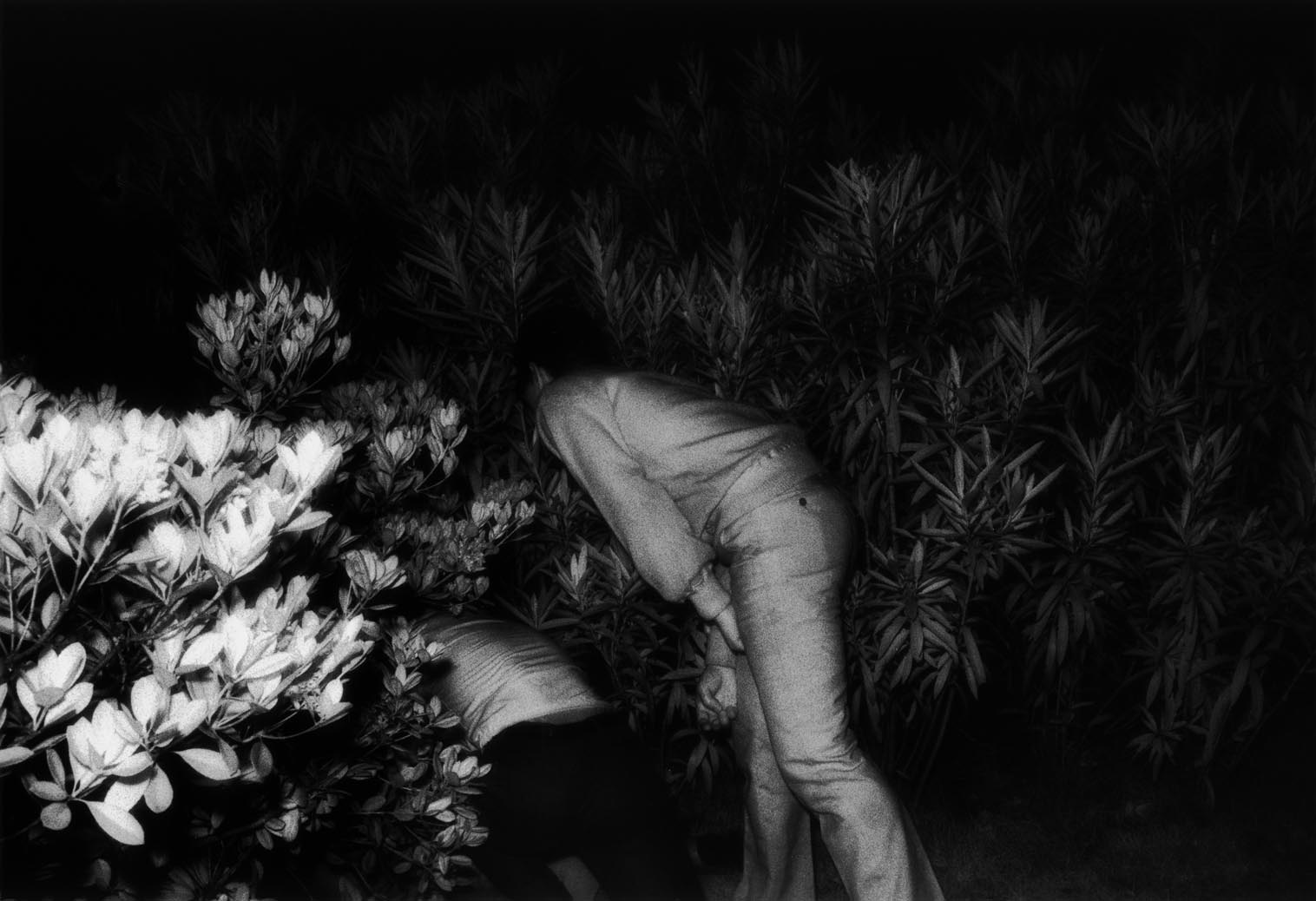
The largest series of the exhibition, The Park by Japanese photographer Kohei Yoshiyuki (1971-1979), features twenty-five luscious A3 sized black and white photographs with deep blacks, framed in thin white, wood frames. The photographs were taken in Japanese parks at night where fornicating couples use public space as private space. In most cases the couples were not aware they were being observed by voyeurs and if they were, “with exhibitionist complicity, they fornicate to an audience of peeping Toms.”21 What they were definitely not aware of was that they were being photographed. As Amelia Groom observes, “The levels of complicity, performativity and victimisation of the subjects remains ambiguous.”22

These informal, grainy, infra-red flash photographs, “were first published in 1972 in the popular ‘secret camera’ genre magazine Shukan Shincho and were not initially considered as art photography … however they also sit within a broad tradition of voyeurism in Japanese art.”23 Starting in mid-distance the photographs eventually close right in on the subject matter, tightly composed on the mass of hands going everywhere, the flash over exposing various elements of the infra-red composition. The photographs are most effective when the viewer does not see the object of desire, but is positioned behind the voyeur who is hidden behind the hedge, looking. The viewpoint of the erotic act is denied, is out of shot/sight. We are literally “lined up right behind Yoshiyuki in the chain of voyeurism”24 imbibing the camera’s active, desiring masculine gaze. “Looking at Yoshiyuki’s images induces an uneasiness that has something to do with seeing the seer looking while seeing ourselves being seen looking.”25 The photographs are multiply voyeuristic, implicating the watchers, the photographer and us.26 But they implicate us only as part of a larger cultural signification.

Penny Modra in The Sunday Age M magazine observes of these photographs that, “you are a peeping Tom peeping at peeping Toms peeping at people.”27 I believe it is more than that. The definition of “peeping” is that of stealing a quick glance; to peer through a small aperture or from behind something (peering through a small aperture number is quite an appropriate metaphor since we are dealing with the photographic lens). While this may be true of the act of photography itself it is not true of the process of photography that took place to get the photographer to the point of exposure. Yoshiyuki himself “assembled the story of his association with the park voyeurs and details how the series was shot after spending six months getting to know those observers in the shrubbery.”28 Much as Diane Arbus befriended the subjects in her photographs, Yoshiyuki, rather than having a furtive glance of desire, planned his series using the all seeing narrative eye trained on its target over several months. He positions his subject squarely in his line of sight. And while a voyeur “can be defined as a person who observes without participation, a powerless or passive spectator … a photographer, contemplating a nude or any sexual subject is also a voyeur, but someone with a camera, or the means to distribute a photograph, is not entirely passive or powerless.”29 This power can be seen in the fame that the series has bought the photographer, his infamous series now heralded around the world.

At the centre

Black and white ‘snapshot’ photographs from the series Lust Branch by Percy Grainger, printed between 1933 and 1942, that document his sadomasochistic sexual practices including ‘self beating’ which he believed were intrinsic to his creativity. The envelope containing some of the photographs was marked “Private Matters: Do Not Open Until 10 (ten) Years After My Death.” The archive has the quality of forensic records as it documents, in a quasi-scientific Victorian tradition, evidence of his proclivities, his normalcy. The dark 4″ x 5″ brown-toned photographs show Grainger posing in a domestic setting (in Kansas) with a chair and also show the use of a suspended mirror to document his fustigations. Robert Nelson states that the shock of these images isn’t the flagellantism itself but that we’re looking at it. “The transgression isn’t the perversity but the breach of privacy the composer orchestrated: he lashed himself not only with a whip but a camera.”30 Personally I don’t register this shock as S/M practices have regularly been part of my life. What I find more disquieting is people who try to define what is normal and what should be recorded or not and by whom and who gets to see them.

I vividly remember going to the Minor White archive at Princeton University and seeing photographs of erect penises taken by White (who was gay) and thinking why I hadn’t seen these photographs before. The shock was not of seeing them but the fact that they were still hidden and had never been reproduced. Similarly, at The Kinsey Institute there are colour photographs of 1950s physique magazine body builders having full on sex, never to be seen in public. Also at the Kinsey are erotic photographs by the gay George Platt Lynes, taken for his own pleasure but never exhibited in public.31 Lynes had to resort to sending his erotic work to an early German pornographic magazine to get the photographs published. Taking these photographs is not a breach of privacy but an expression of normalcy, freedom and creativity.

In conclusion

“The idea of a photographic ‘gaze’ relates to a specific way of looking, and being looked at through the camera, and implies a certain psychological relationship of power and control.”32 Foucault’s analysis of the gaze as a means of surveillance, which is predatory and controlling, used to classify and discipline, allows the camera and mirror to be equated as tools of self-reflection and surveillance, where the double (created through self-reflection and surveillance) can be alienated from the self, taken away (like a photograph) for closer examination.33 Victor Burgin in his seminal 1977 essay Looking at photographs “argues that the ‘recording eye’ of the camera sets it apart from the subject at which it looks. The camera creates an ordering device which ‘depicts a scene and the gaze of the spectator, an object and a viewing subject.'”34 The camera’s gaze is not passive, it is active; it imparts its own subjectivity forming a triangular relationship between the object being photographed, camera and photographer. It has its own reality.

In a society where we are living in the age of ubiquitous networked photography35 the borders between public and private are collapsing. The idea that the gazer is able to see but not be seen; in essence, that the looking is anonymous36 is becoming a fallacy. Everything, even the watcher, becomes visible (after an ever shorter time). The separation that takes place between the looker and the looked-at is disappearing; we all know we are being watched even as we watch (and post) ourselves. “The act of seeing and the thing seen, the seer and the spectacle … are [becoming] one.”37

I would suggest that there is no fixed definition of private and public. For example even after people sign out from Facebook the sites they visit are still tracked.38 Anything that you post on Facebook, the music you like – if you just listen to it, Facebook takes it to mean that you approve of it and distributes it too your friends. Similarly with CCTV, ASIO images, mobile phone images, what is thought of as an invasion of privacy is eventually made public through FOI, leaking, teenage girls posting online (Ricky Nixon) etc … As noted earlier someone with a camera, or the means to distribute a photograph, is not entirely passive or powerless.

Even as the photographer “lifts” the object of his attention with his machine, the camera, he “takes” a picture, “and in so doing he makes a claim for that object or that composition, and a claim for his act of seeing in the first place … transposing a particular and emphatically personal point of view”39 and making a claim for the very act of seeing itself. The thing itself (the object photographed) and the way the photographer looks at it cannot be separated. In other words, in constant oscillation, we stand behind but also in front of the metaphorical camera: “I am nothing; I see all.”40

We know that we are being monitored and so we conform; even if no one is there, even if we cannot see the guard (as in Jeremy Bentham’s Panopticon prison) we suspect we are being watched and so self regulate our behaviour. “And yet, our contemporary society … has ironically embraced surveillance … This is most apparent in social media where millions of people regularly upload their most intimate moments via webcam … we happily embrace the mechanisms devised to control us and turn them into a kind of freefall celebration.”41

“It is though the millions of people, artists or not, who produce and publish images of themselves, their friends, surroundings and ideas in a sort of mass social surveillance (while often being tracked by the devices they are using) are implicated … in surveillance as a source of entertainment and personal gratification.”42

Surveillance, sousveillance as the sight of (perverse) resistance.


These contradictory, constantly shifting contemporary information and image flows tends to erode the moral authority of any social order, patriarchal or otherwise, opening up an expanded and abstracted terrain of becoming. Images exceed, incorporate or reverse the values that are presumed to reside within them.43 These phatic images, for that is what they are – targeted images that force you to look and hold your attention – “produce a ‘message-intensification’ within the visual image that accentuates pictorial detail while simultaneously forcing image context and location to recede or disappear. The phatic image is at once technically-mediated, manipulable, intensified and perhaps most importantly for [Paul] Virilio de-localized.”44 This can be observed in bodies of work in this exhibition: most have no image context or defined location while intensifying their message through close-up details. All have been circulated around the world for consumption. Vision is everywhere and nowhere at one and the same time.

The person who gazes is not unfamiliar with the world upon which he looks; he understands the image as seen from without as another would see it, in the midst of the visible.45 No longer is the image seen or considered from a certain spot. That vision is decentred by the networks of signifiers that come to me from the social milieu …

“The viewing subject does not stand at the center of the perceptual horizon, and cannot command the chains and series of signifiers passing across the visual domain. Vision unfolds to the side of, in tangent to, the field of the other. And to that form of seeing Lacan gives a name: seeing on the field of the other, seeing under the Gaze.”46


While the self and environment are under constant surveillance in an attempt to resemble the truth, to re-assemble the referentiality of the image, it is not the breakdown of an already existing web of visuality (the disciplinary gaze of surveillance) but the wilful amending of its intent that opens up new terrains of becoming. In the public city it is the publicity of the image that will continue to thwart the controlling eye. We are all actors in a performative space, transforming the gaze and collapsing its vision into the tactile worlds of virtual reality (Ron Burnett), “engaging with ideas of pose, of masquerade, of performance, of witness and record as they transact across increasingly contingent boundaries of private and public, fact and artifice,”47 to question who we become in the necessarily public register of the photographic – the public register of memory and history.48

Each enframing of reality opens up the possibility of new discourses. The paradox is the more we seek to fix our vision of the world and to control it the less sure we are as to who we are and what our place is in the world. Does the painting emerge from the figure or the figure from the painting?

Does the image/reality emerge from the image …


Dr Marcus Bunyan

Word count: 3,870


Many thank to the CCP and Naomi Cass for allowing me to publish the text and photographs in the posting. Please click on the photographs for a larger version of the image. Text © Centre for Contemporary Photography 2011.


Endnotes

1/ Felman, Shoshana and Laub, Dori. Testimony: Crises of Witnessing in Literature, Psychoanalysis, and History. London: Routledge, 1992, p. 5 quoted in  Fisher, Jean. “Witness for the Prosecution: The Writings of Coco Fusco,” in Fusco, Coco. The Bodies That Were Not Ours. London: Routledge, 2001, pp. 227-228

2/ Stephens, Andrew. “Who’s watching you?” in The Saturday Age. 23rd September 2011 [Online] Cited 14/10/2011

3/ Foucault, Michel. Discipline and Punish: The Birth of the Prison. Translated from the French by Alan Sheridan. New York: Pantheon Books, 1977 cited in McDonald, Helen. “It’s Rude to Stare,” Footnote 9 in Radok, Stephanie (ed.,). Artlink: Art & Surveillance. South Australia: Artlink, Vol. 31, No. 3, 2011, p. 25

4/ Stephens, Op. cit.,

5/ See Alpers, Svetlana. The Art of Describing: Dutch Art in the Seventeenth Century. University Of Chicago Press, 1984

6/ AnonBILL HENSON: early work from the MGA collection. Education Resource. A Monash Gallery of Art Travelling Exhibition [Online] Cited 14/10/2011. No longer available online

7/ Henson, Bill quoted in the exhibition catalogue. First published as a pdf for the exhibition In camera and in public. Curated by Naomi Cass. Centre for Contemporary Photography, 16 September – 23 October 2011

8/ Stephens, Op. cit.,

9/ See  Goffman, E. Behaviour in Public Places. New York: Free Press, 1963

10/ Giddens, Anthony. The Consequences of Modernity. Cambridge: Polity Press, 1991, pp. 82-83

11/ Stewart, Susan. On Longing: Narratives of the Miniature, the Gigantic, the Souvenir, the Collection. Durham: Duke University Press, 1993, p. 2. Prologue

12/ Delahaye, Luc. L’Autre. Phaidon Press, 1999

13/ Delahaye, Luc quoted in the exhibition catalogue. First published as a pdf for the exhibition In camera and in public. Curated by Naomi Cass. Centre for Contemporary Photography, 16 September – 23 October 2011

14/ Morrison, Blake. “Exposed: Voyeurism, Surveillance and the Camera,” on the The Guardian website 22nd May 2011 [Online] Cited 14/10/2011

15/ Stephens, Op. cit.,

16/ Berger, John and Mohr, Jean. Another Way of Telling. New York: Pantheon Books, 1982, pp. 92-93

17/ Morrison, Op. cit.,

18/ Keenan, Haydn. “A Job for the Dogs,” in Radok, Stephanie (ed.,). Artlink: Art & Surveillance. South Australia: Artlink, Vol. 31, No. 3, 2011, p. 18

19/ Ibid.,

20/ Keenan, Haydn quoted in the exhibition catalogue. First published as a pdf for the exhibition In camera and in public. Curated by Naomi Cass. Centre for Contemporary Photography, 16 September – 23 October 2011

21/ Nelson, Robert. “Snapped in the moment – forever,” in The Age newspaper. Wednesday, October 5th 2011, p. 19

22/ Groom, Amelia. “Seeing Darkness,” in Kohei Yoshiyuki: The Park. Institute of Modern Art pamphlet for the exhibition

23/ Cass, Naomi quoted in the exhibition catalogue. First published as a pdf for the exhibition In camera and in public. Curated by Naomi Cass. Centre for Contemporary Photography, 16 September – 23 October 2011

24/  Groom, Op. cit.,

25/ Ibid.,

26/ Goldberg, Vicky. “Voyeurism Exposed,” on Artnet magazine website. 2010 [Online] Cited 14/10/2011

27/ Modra, Penny. The Sunday Age M magazine. September 25th, 2011

28/ Gefter, Philip. “Sex in the Park, and its Sneaky Spectators,” in The New York Times, 23rd September 2007 cited in Lida, Shihoko. “Gaze without Subjectivity: Kohei Yoshiyuki and Yoko Asakai,” Footnote 4 in Radok, Stephanie (ed.,). Artlink: Art & Surveillance. South Australia: Artlink, Vol. 31, No. 3, 2011, p. 28

29/ Goldberg, Op. cit.,

30/ Nelson, Op cit.,

31/ See Bunyan, Marcus, “Thesis Notes II – Research Notes and Papers: Research Notes on the Photographs from the Collection at The Minor White Archive and The Kinsey Insitute,” in Pressing the Flesh: Sex, Body Image and the Gay Male. 2001 [Online] Cited 14/10/2011. No longer available online

32/ Finch, Maggie. Looking at Looking. Melbourne: National Gallery of Victoria, 2011, p. 2

33/ Ibid.,

34/ Burgin, Victor, “Looking at photographs,” in Burgin, Victor (ed.,). Thinking Photography. London: Macmillan Education, 1987, p. 146 quoted in Finch, Maggie. Looking at Looking. Melbourne: National Gallery of Victoria, 2011, p. 3

35/ Palmer, Daniel and Whyte, Jessica. “‘No credible photographic interest’: photographic restrictions and surveillance in a time of terror,” in Philosophy of Photography Vol. 1, No. 2, 2010, p. 182

36/ Mulvey, Laura. “Visual Pleasure and Narrative Cinema.” Film Theory and Criticism: Introductory Readings in Braudy, Leo and Cohen, Marshall (eds.,). New York: Oxford UP, 1999, pp. 833-44 cited in Boen, Ashley. “The Male Pornographic Gaze,” on Boen, Ashley. Cultures of the Camera: The Male Gaze website [Online] Cited 15/10/2011. No longer available online

37/ Parrington, Vernon Louis. Main Currents in American Thought 1927-1930. New York: Harcourt Brace and Co., 1930 quoted in Blinder, Caroline. “”The Transparent Eyeball”: On Emerson and Walker Evans,” Footnote 11 in Mosaic: a Journal for the Interdisciplinary Study of Literature. Winnipeg: Dec 2004. Vol. 37, Iss. 4; pg. 149, 15 pgs

38/ Bloomberg. “Facebook in tracking suit,” in The Age newspaper. Monday, October 3rd 2011, p. 3

39/ Blinder, Caroline. “”The Transparent Eyeball”: On Emerson and Walker Evans,” Footnote 11 in Mosaic: a Journal for the Interdisciplinary Study of Literature. Winnipeg: Dec 2004. Vol. 37, Iss. 4; pg. 149, 15 pgs

40/ Ibid.,

41/ Marsh, Anne. “Surveillance Art: Genre and Political Action,” in Radok, Stephanie (ed.,). Artlink: Art & Surveillance. South Australia: Artlink, Vol. 31, No. 3, 2011, p. 57

42/ King, Natalie and Fraser, Virginia. “People Who Love To Watch,” in Radok, Stephanie (ed.,). Artlink: Art & Surveillance. South Australia: Artlink, Vol. 31, No. 3, 2011, p. 15

43/ Lumby, Catharine. “Nothing Personal: Sex, Gender and Identity in The Media Age,” in Matthews, Jill (ed.,). Sex in Public: Australian Sexual Cultures. St. Leonards: Allen and Unwin, 1997, pp. 14-15

44/ Virilio, Paul. “A topographical amnesia,” in The Vision Machine. London: British Film Institute, 1994 cited in Thumlert, Kurt. Intervisuality, Visual Culture, and Education. [Online] Cited 10/10/2011. No longer available online

45/ Merleau-Ponty, Maurice. Le Visible et l’invisible. Paris: 1964, p. 177 (trans. by Alphonso Lingis, Evanston, 1968, p. 134) quoted in Damisch, Hubert. The Origin of Perspective. (trans. John Goodman). Cambridge, MA.: MIT Press, 1994, pp. 34-35

46/ Foster, Hal (ed.,). Vision and Visuality. Bay Press, Seattle: Dia Art Foundation Discussions in Contemporary Culture, Number 2, 1988, p. 94

47/ French, Blair. “The Things That Bill Sees,” catalogue essay from the exhibition Perfect Strangers. Canberra: Canberra Contemporary Art Space, 2000, np.

48/ Ibid.,


Cherine Fahd (Australian, b. 1974) 'Untitled' from the series 'The Sleepers' 2005-2008


Cherine Fahd (Australian, b. 1974)
Untitled
From the series The Sleepers
2005-2008
Lightjet print
28.5 × 40.2 cm
Courtesy the artist


Cherine Fahd (Australian, b. 1974) 'Untitled' from the series 'The Sleepers' 2005-2008


Cherine Fahd (Australian, b. 1974)
Untitled
From the series The Sleepers
2005-2008
Lightjet print
28.5 × 40.2 cm
Courtesy the artist


In 2003 I began photographing people I didn’t know in the streets of Paris, working in a conventional street photography style. I became a prowler searching for photographic opportunities in the faces and gestures of total strangers, fascinated with capturing private moments within the public realm.

In 2005 I was living on the sixth floor of an apartment in Kings Cross, Sydney, below was a park unadorned by play equipment or even a bench. From my window I could see homeless people asleep on the grass in the middle of the day. What struck me most were their bodies resting in dappled light and gesturing in ways usually saved for private moments. The drape of their clothes and the quality of light reminded me of so many paintings I had seen.

So The Sleepers began. I photographed people asleep in the park with my mini DV camera, which allowed me to zoom in and capture detail but also allowed for a grainy image reminiscent of surveillance footage. In the sleeping posture – curled up or lying flat – people generally covered their faces, ensuring their anonymity. I liked this aspect of the work. Although I was photographing them unawares, I wasn’t really intruding if I couldn’t see their faces. Oddly, I have stopped working in this candid way. I wasn’t sure why at the time. In retrospect I understand that it became too difficult because audiences became obsessed with whether I had permission to photograph people. I never considered asking anyone if I could take their photo. It would have defeated the whole point. People change when they know there is a camera present, better to let them be.

The moral dilemmas engulfing candid photography are not something I am interested in addressing in my work. I would much rather ponder whether their faces, or their bodies, or their gestures are cues to something more mysterious, spiritual and human.

Cherine Fahd 2011 text from the exhibition catalogue


Kohei Yoshiyuki (Japanese, b. 1946) 'Untitled' 1971 From the series 'The Park'


Kohei Yoshiyuki (Japanese, b. 1946)
Untitled
1971
From the series The Park
Gelatin Silver Print
© Kohei Yoshiyuki, Courtesy Yossi Milo Gallery, New York


Kohei Yoshiyuki (Japanese, b. 1946) 'Untitled' 1971 From the series 'The Park'


Kohei Yoshiyuki (Japanese, b. 1946)
Untitled
1971
From the series The Park
Gelatin Silver Print
© Kohei Yoshiyuki, Courtesy Yossi Milo Gallery, New York


Kohei Yoshiyuki’s now infamous documentation of voyeurism features confronting photographs of public space clandestinely used as private space at night: Japanese parks where, in the absence of privacy, young people perform intimate acts while being watched by onlookers.

During the 1970s, young commercial photographer Kohei Yoshiyuki (a pseudonym; his real name remains unknown) frequented Tokyo’s Shinjuku, Yoyogi and Aoyama parks at night with a 35mm camera, infrared film and a flash. Photographed over a decade, the series was exhibited at the Komai Gallery in Tokyo in 1979 where the images were printed life-size and exhibited in the dark while visitors used hand held torches to view the photographs. These prints were subsequently destroyed.1

Images from The Park were first published in 1972 in the popular ‘secret camera’ genre magazine Shukan Shincho and were not initially considered as art photography.2 However, Yoshiyuki’s series also sits within a broad tradition of voyeurism in Japanese art, including eighteenth and nineteenth century erotic ukiyo-e prints and in cinema.

In 1980 Yoshiyuki published a further selection and, in 1989, he wrote about the process of getting to know the park voyeurs. In 2006 Yoshiyuki was included in Martin Parr’s publication The Photobook: A History: Volume 2 as an unknown innovator, prompting Yossi Milo Gallery to track down the reclusive artist and convince him to reprint the remaining negatives for what became a highly successful exhibition in 2007.

Of the relationship between couples and voyeur Yoshiyuki wrote: ‘The couples were not aware of the voyeurs in most cases. The voyeurs try to look at the couple from a distance … then slowly approach toward the couple behind the bushes, and from the blind spots of the couple they try to come as close as possible, and finally peep from a very close distance. But sometimes there are the voyeurs who try to touch … and gradually escalating – then trouble would happen.’3

Naomi Cass text from the exhibition catalogue


1/ Amelia Groom. “Seeing Darkness,” in Kohei Yoshiyuki: The Park exhibition catalogue, IMA, Brisbane, July 2011
2/ Shihoko Iida, “Gaze without subjectivity,” in Artlink: Art and Surveillance, 31: 3, 2011, p. 28
3/ Philip Gefter, “Sex in the Park, and its Sneaky Spectators,” in The New York Times, 23 Sept 2007


Luc Delahaye (French, b. 1962) 'Untitled' from the series 'L'Autre' 1995/1997


Luc Delahaye (French, b. 1962)
Untitled
1995/1997
From the series L’Autre
Courtesy the artist and Galerie Nathalie Obadia


I stole these photographs between ’95 and ’97 in the Paris metro. ‘Stole’ because it is against the law to take them, it’s forbidden. The law states that everyone owns their own image. But our image, this worthless alias of ourselves, is everywhere without us knowing it. How and why can it be said to belong to us? But more importantly, there’s another rule, that non-aggression pact we all subscribe to: the prohibition against looking at others. Apart from the odd illicit glance, you keep staring at the wall. We are very much alone in these public places and there’s violence in this calm acceptance of a closed world.

I am sitting in front of someone to record his image, the form of evidence, but just like him I too stare into the distance and feign absence. I try to be like him. It’s all a sham, a necessary lie lasting long enough to take a picture. If to look is to be free, the same holds true for photographing: I hold my breath and let the shutter go.

Luc Delahaye, from L’Autre, Phaidon Press, London, 1999 text from the exhibition catalogue


Luc Delahaye (French, b. 1962) 'Untitled' from the series 'L'Autre' 1995/1997


Luc Delahaye (French, b. 1962)
Untitled
1995/1997
From the series L’Autre
Courtesy the artist and Galerie Nathalie Obadia


To photograph people is to violate them, by seeing them as they never see themselves, by having knowledge of them that they can never have; it turns people into objects that can be symbolically possessed. Just as a camera is a sublimation of the gun, to photograph someone is a subliminal murder – a soft murder, appropriate to a sad, frightened time.


Susan Sontag On Photography 1977


In camera and in pubic is about the relationship between camera and subject when this is fraught in some way, in particular, where the subject is not aware of being photographed, where the contract between photographer and subject has been broken.

Candid photography has been critical in the development of art and evidential photography, in revealing aspects of our history and society which have been hidden, ignored, lied about or simply abandoned. Candid photography has delivered some of the most widely regarded, potent and treasured images.

However, the camera is merely a technical device and some would even say a dumb device, which can be, and is used for contradictory and malicious ends. Candid photography has also hurt, harmed and destroyed people. There are more images in the world than ever before, and image sharing technologies in the hands of those with subversive, destructive or immature desires. Paradoxically, on one hand there is greater access to unmediated information of all genres through the internet but also a counter move of public disquiet about candid photography. Many well-regarded, indeed renowned photographers will no longer photograph at the beach, by a pubic pool, at a junior sports match, on the street. The context for photography has changed.

This exhibition looks at the physical and moral proximity of camera to subject in both historical and contemporary work by Cherine Fahd, Bill Henson, Luc Delahaye, Sonia Leber and David Chesworth, Kohei Yoshiyuki, Denis Beaubois, Percy Grainger, Walid Raad and declassified ASIO images from the late 1940s to the 1980s.

In viewing In camera… it is sobering to consider where the photographer is positioned, to viscerally experience the proximity of camera to unsuspecting subject because, importantly, the exhibition moves from candid photography taken with the sole intention of making art (Henson, Fahd, Delahaye, Leber and Chesworth, Raad and Yoshiyuki) through to the intention of surveillance. Not surprisingly, on first view, even the declassified ASIO images are compelling and beautiful.

Of the artists, the viewer might well ask, have you obtained permission to photograph? But as we all know the unprepared body and face reveals quite a different story than the figure composed for the camera. It is the non-composed figure which is the lifeblood of much art and photography.

Surveillance is in part the subject of work by Denis Beaubois, Walid Raad and to some extent in Leber and Chesworth’s multi-media work. Certainly Beaubois, Leber and Chesworth consider the role of architectural space and the all-seeing eye of the state and in the latter, the eye of god within the panopticon of the domed cathedral. Walid Raad puts the tedium of surveillance in perspective when his fictional operative repeatedly forgoes his designated work to relish the setting sun.

In camera and in public exploits the form of CCP’s nautilus galleries and reflects the progress of the camera turned towards an unsuspecting subject until Gallery 4 where, in the hand of Percy Grainger, the camera is turned towards himself, in an astonishing series of vintage photographs, possibly created for display in the Grainger Museum. ‘In camera’ and in public, indeed. In 1941 Grainger wrote, “Most museums, most cultural endeavours, suffer from being subjected to too much taste, too much elimination, too much selection, too much specialisation! What we want (in museums and cultural records) is all-sidedness, side lights, crossreferences.”

We all love to stare, to linger, to see what we might have missed, and with advancing technologies, to see what is unavailable to the naked human eye, and here lies the problem. In looking at these images, are we implicated in an act of transgression?”

Text Naomi Cass September 2011 from the exhibition catalogue


Denis Beaubois (Mauritius, b. 1970) 'In the event of Amnesia the city will recall…' 1996-1997


Denis Beaubois (Mauritius, b. 1970)
In the event of Amnesia the city will recall…
1996-1997
DVD
9 mins 30 secs
Courtesy the artist


This work explores the relationship between the individual and the metropolis. Twelve sites were selected around the city of Sydney where surveillance cameras are prominently placed, the locations were mapped out and the stage for this work was created. A daily pilgrimage was made to the sites for a period of three days. No permission was sought for the use of these sites. The performer arrived unannounced and carried out his actions. Upon arrival the performer attempted to engage with the electronic eye. The performer’s actions were directed to the camera, which adopted the role of audience.

The primary audience was the surveillance camera (or those who monitor them). Their willingness to observe is not based upon the longing for entertainment. It stems from a necessity to assess and monitor designated terrain. Imbued with a watchdog consciousness, the primary audience scans the field for suspects, clues and leads. Like many audiences, it assesses the scene and attempts to pre-empt the plot. However this audience is extremely discerning and, ultimately, by assessing and reacting to the event it also adopts the role of performer.

Within this metropolis the walls do not have ears but are equipped with eyes. The city must understand the movements of those who dwell within its domain. To successfully achieve this it must be capable of reading its inhabitants. What can be read can be controlled in theory. Yet the city’s eyes are not content following the narrative provided by its inhabitants. The city weaves its own text within the surface narrative. A paranoid fiction based on foresight.

Denis Beaubois 1997 text from the exhibition catalogue


Denis Beaubois (Mauritius, b. 1970) 'In the event of Amnesia the city will recall…' 1996-1997


Denis Beaubois (Mauritius, b. 1970)
In the event of Amnesia the city will recall…
1996-1997
DVD
9 mins 30 secs
Courtesy the artist


In camera and in public represents a very different approach to this year’s Festival theme of protest and revolution. Taking a look at society through the lens of the state, the street photographer, the artist and the eye of the voyeur, this exhibition curated by Naomi Cass examines the abandonment of the contract between photographer and subject.

Ranging from candid street photography through to surveillance photography, In camera explores the camera and its relationship to the subject, unaware of being photographed. From images taken in public spaces, including a series of striking faces taken on the Paris metro, the exhibition proceeds to the grainy anxiety of declassified ASIO photos from the 1960s.

Kohei Yoshiyuki’s now infamous documentation of voyeurism, The Park (1970-1979), features confronting photographs of public space clandestinely used as private space at night: Japanese parks where, in the absence of privacy, young people perform intimate acts while being watched by onlookers.

At the heart of CCP galleries are Percy Grainger’s extraordinary naked self-portraits from his so-called ‘lust branch’ collection, hand printed by Grainger between 1933 and 1942. Here the camera is turned on himself, in camera.

Cherine Fahd offers frank photographs of daytime sleeping bodies in a Kings Cross park taken from her 6th floor apartment, while Bill Henson captures hauntingly beautiful crowd scenes during the 1980s. Sonia Leber and David Chesworth secretly film from the dome of St Pauls Cathedral, London and Walid Raad impersonates a fictional operative who failing in his surveillance task, repeatedly films the sunset.

Finally, Denis Beaubois, with a playful and performative video, seeks a kind of revenge of the subject, through his attempts to engage with a number of surveillance cameras, inviting the camera to respond to pleas earnestly delivered on cue cards.

Press release from the CCP website


Bill Henson (Australian, b. 1955) 'Untitled 1980/82'


Bill Henson (Australian, b. 1955)
Untitled 1980/82
Gelatin silver chlorobromide print
From a series of 220
57.5 × 53.4cm
Courtesy the artist and Roslyn Oxley9 Gallery, Sydney


Bill Henson (Australian, b. 1955) 'Untitled 1980/82'


Bill Henson (Australian, b. 1955)
Untitled 1980/82
Gelatin silver chlorobromide print
from a series of 220
57.5 × 53.4cm
courtesy the artist and Roslyn Oxley9 Gallery, Sydney


The great beauty in the subject comes, for me, from the haunted space, that unbridgeable gap – which separates the profound intimacy and solitude of our interior world from the ‘other’ and in trying to show, in this case through envisioning the crowd, how an awesome, unassailable, even monumental, beauty and grace might attend the undulating, fluid mass of a wall of people as they move toward you.

It is the contradictory nature of life and the way in which this can be suggested in art which first drew me to photograph crowds – much as this underpins my interest in any art form…

The business of how a child’s small hand appearing between two adults at a street crossing can suggest both a vulnerability, great tenderness, and yet also contain within it all of the power that beauty commands, is endlessly fascinating to me.

Bill Henson 2011 text from the exhibition catalogue


Persons Of Interest - ASIO surveillance 1949-1980 'Writer Frank Hardy, St Kilda, July 1964'


Persons Of Interest – ASIO surveillance 1949-1980
Writer Frank Hardy, St Kilda, July 1964
NAA 9626, 212


Persons Of Interest - ASIO surveillance 1949 -1980. 'Eddie Mabo, CPA district conference, Townsville, September 1965'


Persons Of Interest – ASIO surveillance 1949-1980
Eddie Mabo, CPA district conference, Townsville, September 1965
NAA A9626, 162


Persons Of Interest – ASIO surveillance 1949-1980
Curated by Haydn Keenan
Selected surveillance images from a forthcoming documentary series from Smart Street Films


I discovered these images as part of my research for our documentary series Persons Of Interest which will be screened on SBS early next year. They are part of a massive archive of pictures secretly recorded by the Australian Security Intelligence Organisation (ASIO) from 1949 onwards.

These images are not art. Unlike art these pictures have the power to alter lives dramatically. Be photographed at the wrong place and you’ll find it hard to get a job, when you do you’ll get the sack soon after. Appear in these images and your career will go nowhere without explanation. The eye of the beholder will cast a shadow you will not see until thirty years later when you get access to your file.

The photos create a strange world of frozen youth, high hopes and issues that were seen as subversive then but are now so integrated into the mainstream that they need explanation for Gen Y. ASIO was created to hunt down and eliminate a Soviet spy ring operating in Canberra in the late 1940s. Most of the members of the spy ring were connected with or were members of the Communist Party of Australia. For the next forty years ASIO followed everything the Party did.

The purpose of photographic surveillance is to identify Persons Of Interest in a definitive manner and to record their associations and contacts thereby building a network. Surveillance would occur during demonstrations, May Day marches and at political meetings. It would also occur at specific locations and everyone entering or leaving the location would be recorded. Each person in a photograph with an ASIO file would have an identifying number marked on the image next to them.

I have thousands of these images and what I have noticed is that one builds up a mental image of the changing face of what the State saw as a threat. What starts as the hunt for Communist spies gradually evolves into suspicion about social issues like Aboriginal land rights, youth culture, Women’s Liberation, anti Vietnam, Apartheid – even amateur actors at New Theatre were thoroughly photographed. There’s even a file on the Mother’s Club at Gardenvale Primary School. The absurdity is evident in hindsight. Yet what ASIO didn’t realise is that they were constructing an invaluable social history of Australian dissent as they gradually confused subversion with dissent.

They recorded many people, especially in the 1960s filled with youthful exuberance, high in hope and action. These people were questioning the central values of a society their parents had created. Here they are frozen in the malevolent eye of the security services. Whilst it’s invasive, seedy and incompetent, even they can’t diminish sunlit youth.

Haydn Keenan 2011 text from the exhibition catalogue


Percy Grainger (Australian, 1882-1961) 'Private Matters: Do not open until 10 (ten) years after my death' 1955-1956


Percy Grainger (Australian, 1882-1961)
Private Matters: Do not open until 10 (ten) years after my death
1955-1956
Envelope
25.1 x 32cm
Courtesy the Grainger Museum, The University of Melbourne


Internationally renowned Australian pianist and composer Percy Grainger (1882-1961) built new sounds by modifying old instruments. He built electronic instruments from recycled materials; he built new words, new types of garments and previously unforged links between folk and classical music. He also built the Past-Horde-House, his term for museum, in which he curated his life.

In these photographs, hand printed between 1933 and 1942, Percy Grainer turns the camera on himself (and to a lesser degree his wife Ella) to document his sexual practices, which he believed were intrinsic to his being and his creativity. These works form part of what Grainer called the ‘lust branch’ of his Museum.

Grainger was a sadomasochist and wrote to his partners and friends quite openly about his thoughts on sex, including what he called ‘self beating’. However when in 1956 Sir Eugene Goossens, British composer and Sydney Symphony Orchestra conductor was detained for bringing pornography into the country, and was subsequently destroyed by the scandal, Grainger, like a number of prominent Australian artists, either left the country or outwardly restrained their behaviour. Consequently, Grainger sealed his ‘lust branch’ of the Museum, a selection of books, whips and photographs related to sadomasochistic behaviour in a travelling trunk, and left the instruction: Not to be opened until 10 (ten) years after my death (exhibited). Contained within the accompanying envelope is a kind of manifesto in the form of a letter, the pages of which are carefully bound together by hand, in which he writes, ‘The photographs of myself whipped by myself in Kansas City and the various photographs of my wife whipped by me show that my flagellantism was not make-believe or puerility, but had the element of drasticness in it. Nevertheless my flagellantism was never inhuman or uncontrolled.’

While Grainger was the subject of intense, international media scrutiny, marketing and photography, to document their sadomasochistic practices Grainger had to teach himself photography. The archive he left has the quality of forensic records, consistent with the quasi scientific method he practiced in other aspects of his life. Exhibited is Grainger’s self-printed, hand-made album, Photo-skills Guide in which he makes technical observations, similarly evident in and on other ‘lust branch’ photographs.

Grainger considered his sexual expression integral to all aspects of his life, indeed for Grainger sexuality was inseparable from his renowned life as a pianist and composer. It is probable that the ‘lust branch’ images were designed for display in the Museum, in a more enlightened period. In 1941 Grainger wrote, ‘I have a bottomless hunger for truth … life is innocent, yet full of meaning. Destroy nothing, forget nothing … say all. Trust life, trust mankind. As long as the picture of truth is placed in the right frame (art, science, history) it will offend none.’

Naomi Cass 2011 text from the exhibition catalogue


Centre for Contemporary Photography
Level 2, Perry St Building
Collingwood Yards, Collingwood
Victoria 3066

Opening hours:
Wednesday – Saturday 11am – 5pm

Centre for Contemporary Photography website

LIKE ART BLART ON FACEBOOK

Back to top