
Exhibition dates: 6th March – 12th August, 2013
Curators: Sarah Hermanson Meister, assisted by Drew Sawyer, Beaumont and Nancy Newhall Curatorial Fellow in the Department of Photography
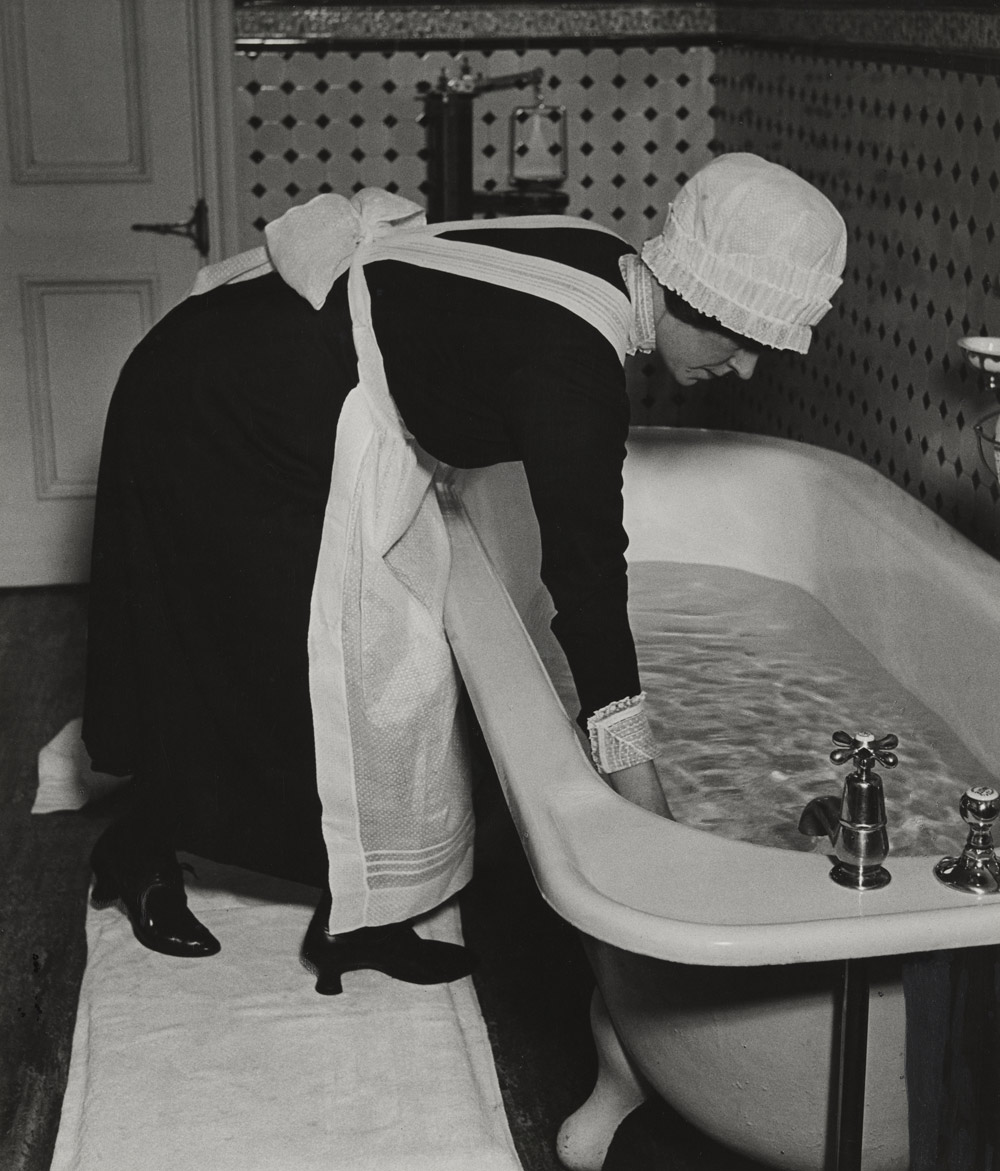
Bill Brandt (British born Germany, 1904-1983)
Parlourmaid Preparing a Bath before Dinner
c. 1936
Gelatin silver print
9 1/16 x 7 11/16″ (23 x 19.5cm)
The Museum of Modern Art
Horace W. Goldsmith Fund through Robert B. Menschel
© 2012 Bill Brandt Archive Ltd.
“Brandt ranks among the visionaries who, in the diversity of their approach, established the creative potential of photography based on observation of the world around them. Brandt’s distinctive vision – his ability to present the mundane world as fresh and strange – emerged in London in the 1930s, and drew from his time in the Paris studio of Man Ray. His visual explorations of the society, landscape, and literature of England are indispensable to any understanding of photographic history and, arguably, to our understanding of life in Britain during the middle of the 20th century.”
Text from the press release
Together with Julia Margaret Cameron and Martin Parr, Bill Brandt is the greatest British photographer of all time.
Why is it so?
1/ There is the diversity of his approach over decades of artistic endeavour, from social documentary, portrait and landscape photography to nudes.
2/ There is a consistency to this enquiry. He is concerned with the same ideas in the 1930s as the 1960s, only expressed in a different form.
3/ There is a subtle ambiguity to all his work, no doubt influenced by his time in the Paris studio of Man Ray. For example, in the portrait of Northumbrian Miner at His Evening Meal (1937, below), there is an odd sense of surrealism to the mise-en-scène.
Notice the placement of the objects on the table, the positioning of both people’s heads with the jardiniere between, and the askance attitude of the satchel and framed image covered by drying, hanging clothes on the wall behind. And then, just to emphasise this pictorial disjunction, we notice that the miner is leaning one way and, in the framed image, another man with a tie is leaning the other, peering around the edge of the drying clothes. The man and wife and the framed man for a triangle within the pictorial plane
4/ There is his understanding of light. Look at any of the images in this posting – Bombed Regency Staircase, Upper Brook Street, Mayfair (c. 1942, below), Evening in Kenwood (c. 1934, below) etc… and marvel at Brandt’s “ability to present the mundane world as fresh and strange.” Looking at the light of the world with a sense of wonder!
5/ And his understanding of “perspective”.
Brandt is not afraid of the out of focus photograph as long as it gives him the “feeling” that he wants from the image. For example, see Losing at the Horse Races, Auteuil, Paris (c. 1932, below), shot from below, quickly, to capture the pensiveness of loosing money.
Brandt is not afraid of foreshortening as in the photographs Evening in Kenwood (c. 1934, below) or A Snicket in Halifax (1937, below), where the use of this device leads the viewers eye into the body of the image. Brandt is also not afraid of a shallow depth of field or of placing objects or people right in the forefront of the image in order to create a complex picture plane. For example, in Kensington Children’s Party (c. 1934, below) the two children at bottom right are completely out of focus but hold up that corner of the image and give the image the stability and energy it needs to lead the eye into the small, frontal boy and the suspended balloons.
Notice the really shallow depth of field, as only the girl at extreme right and a small number of balloons are in focus. Another later and more extreme example is the photograph Seaford, East Sussex Coast (1957, below) and the distortions in his book Perspective of Nudes (1961) – “a series that is both personal and universal, sensual and strange… rendering what might otherwise have been hopelessly clichéd aspects of the female form unfamiliar and surprising.
Brandt’s skewed perspectives are not only literal but also have psychological undertones. His work challenges traditional ideas of identity, place and time and makes the mundane seem fresh and strange. Over and over again. These photographs remain as fresh today as the day they were taken BECAUSE OF THE COMPLEXITY OF THOUGHT THAT LIES BEHIND EACH IMAGE.
Many a photographer could do no better than study the work of this incredible artist. I see so many images in Melbourne and from around the world that really say nothing and go nowhere, because of a lack of understanding of what is POSSIBLE when making a photograph, when telling a story. Rules are there to be broken, out of focus, shallow depth of field, complex pictures, complex thoughts succinctly and elegantly told. For Brandt, in any photograph, the artifice necessary to make a work was irrelevant so long as he felt the picture rang true. That does not mean lazy story telling, poor conceptualisation, bland visual construction.
As a good friend of mine artist Joyce Evans is fond of saying, “There is no excuse for bad photography.”
Dr Marcus Bunyan
Many thankx to the Museum of Modern Art for allowing me to publish the photographs in the posting. Please click on the photographs for a larger version of the image.
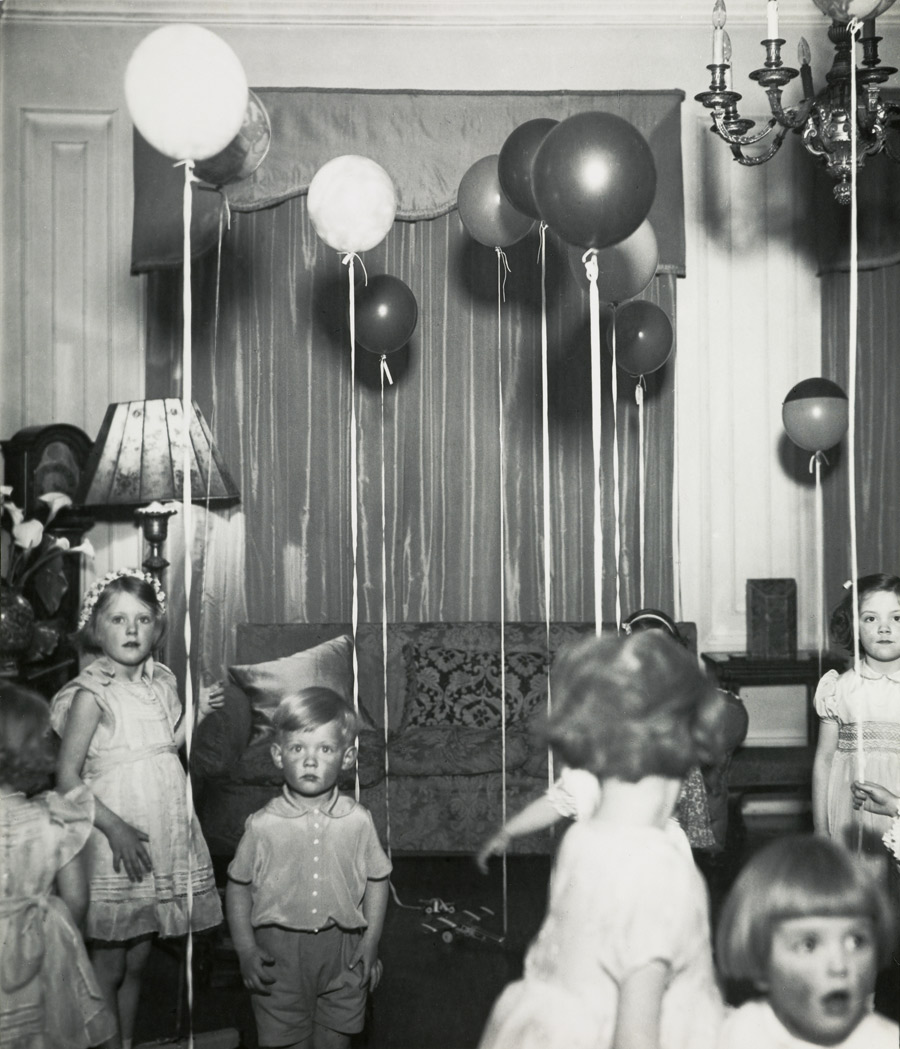
Bill Brandt (British born Germany, 1904-1983)
Kensington Children’s Party
c. 1934
Gelatin silver print
8 5/8 x 7 3/16″ (21.9 x 18.3cm)
The Museum of Modern Art
Gift of David Dechman and Michel Mercure
© 2012 Estate of Bill Brandt
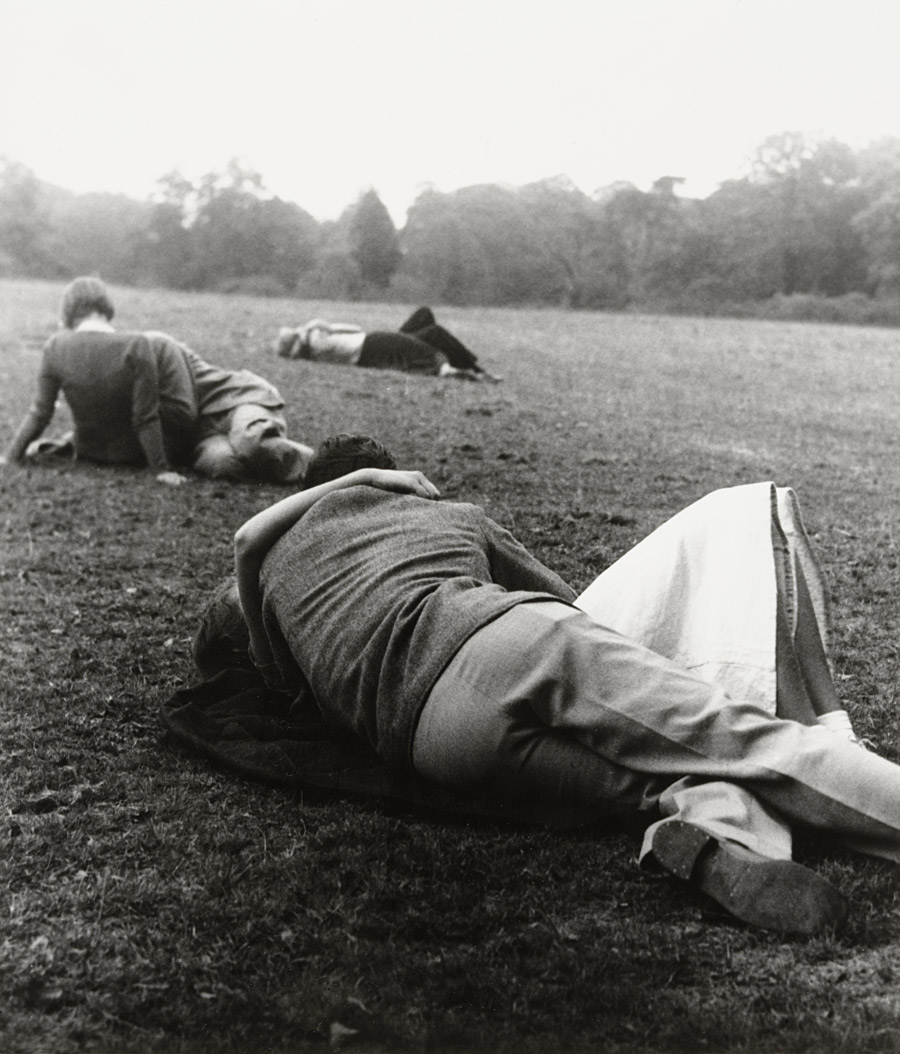
Bill Brandt (British born Germany, 1904-1983)
Evening in Kenwood
c. 1934
Gelatin silver print
9 x 7 3/4″ (22.9 x 19.7cm)
The Museum of Modern Art
Acquired through the generosity of David Dechman and Michel Mercure and the Committee on Photography Fund
© 2012 Bill Brandt Archive Ltd.
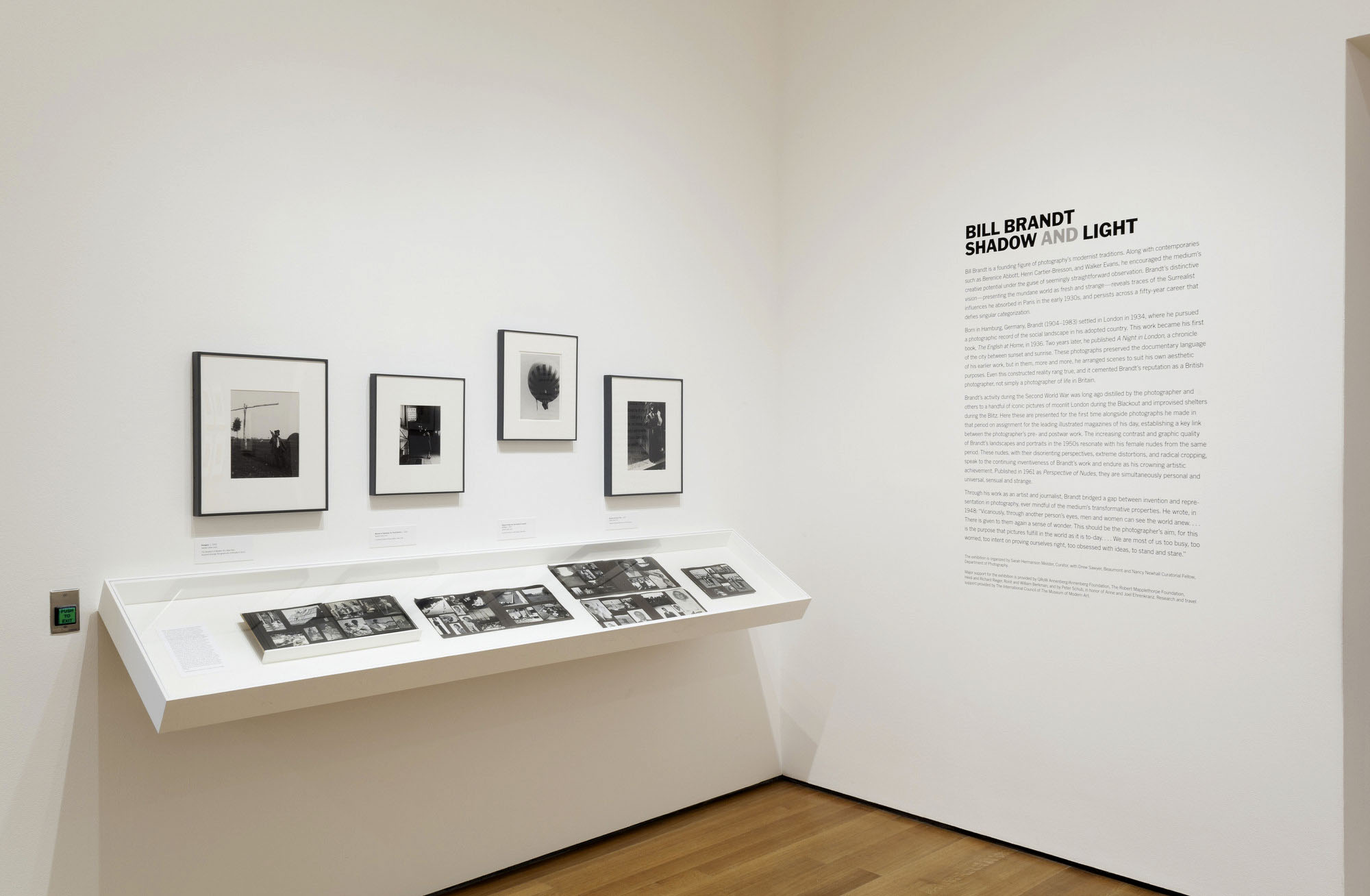
The Museum of Modern Art presents Bill Brandt: Shadow and Light, a major critical reevaluation of the heralded career of Bill Brandt (British born Germany, 1904-1983) from March 6 to August 12, 2013. A founding figure in photography’s modernist traditions, Brandt ranks among the visionaries who, in the diversity of their approach, established the creative potential of photography based on observation of the world around them. Brandt’s distinctive vision – his ability to present the mundane world as fresh and strange – emerged in London in the 1930s, and drew from his time in the Paris studio of Man Ray. His visual explorations of the society, landscape, and literature of England are indispensable to any understanding of photographic history and, arguably, to our understanding of life in Britain during the middle of the 20th century. Bill Brandt: Shadow and Light is organised by Sarah Meister, Curator, with Drew Sawyer, Beaumont and Nancy Newhall Curatorial Fellow, Department of Photography.
The impressive breadth of Brandt’s career, which suggests his restless experimental impulse, and the dramatic transformations of his printing style have often confounded those seeking to understand the link between the highly celebrated and seemingly unrelated chapters of his oeuvre. The exhibition brings together more than 150 works divided into six sections, each corresponding with a distinct aspect of Brandt’s achievement: London in the Thirties; Northern England; World War II; Portraits; Landscapes; and Nudes. Beginning with a highly selective display of albums and prints made around the European continent as Brandt was forming his artistic identity, the exhibition presents an opportunity to understand Brandt in a new light: one that establishes a chronological trajectory of his career, with an expanded consideration of his activity during World War II. In addition, a closer look at his printing methods with the finest known prints from across the range of Brandt’s career will clarify how the artist, whose early work is characterised by the muted, wistful portrait of a young housewife scrubbing the threshold to her home (East End Morning, 1937), would come to create a bold and unpredictable series of nudes on the rocky English coast (East Sussex Coast, 1957).
Brandt established his reputation before the Second World War with the publication of The English at Home (1936) and A Night in London (1938), books that distilled his early photographic studies of life in Britain. Noted works from this period on view include: Parlourmaid Preparing a Bath before Dinner (c. 1936); Soho Bedroom (1934); Street Scene, London (1936); and Losing at the Horse Races, Auteuil, Paris (c. 1932), which Brandt later re-titled Racegoers in Sandown Park in order to present it in the context of his English pictures, an expression of his disdain for slavish adherence to facts.
During this same period, Brandt ventured to several industrial towns in northern England to witness firsthand the impact of the Depression. Striking images from this group, including A Snicket in Halifax (1937), Coal-Searcher Coming Home from Jarrow (1937), and Northumbrian Miner at His Evening Meal (1937), bear unequivocal witness to the devastating unemployment that plagued the region at the time, but there is a subtle ambiguity to many of these images that suggests Brandt found the artistic potential of these soot-blackened structures and faces competing for his attention.
Brandt’s activity during the Second World War – long distilled by Brandt and others to a handful of now-iconic pictures of moonlit London during the Blackout and improvised shelters during the Blitz – are presented for the first time in the context of his assignments for the leading illustrated magazines of his day, establishing a key link between his pre- and postwar work. In addition to photographs such as Liverpool Street Underground Station Shelter (1940) and Deserted Street in Bloomsbury (1942), this section includes lesser-known works from the period such as: Bombed Regency Staircase, Upper Brook Street, Mayfair (c. 1942); Packaging Post for the War (c. 1942); and a suite of extraordinary wartime portraits.
Brandt’s assignments for Picture Post and Lilliput magazines, as well as Harper’s Bazaar (UK and US), led variously into extended investigations of portraiture and landscape photography, with a strong emphasis on contemporary literary figures in Britain and the country’s rich literary heritage. A solemn, vaguely distracted expression became a hallmark of Brandt’s portraiture, and notable examples on view include Dylan Thomas, Norman Douglas, Evelyn Waugh, Reg Butler, Harold Pinter, Martin Amis, Tom Stoppard, Vanessa Redgrave, Barbara Hepworth, Henry Moore, and Francis Bacon.
Brandt’s crowning artistic achievement – published as Perspective of Nudes in 1961 – is a series that is both personal and universal, sensual and strange, collectively exemplifying the “sense of wonder”, to quote Brandt, that is paramount in his photographs. His extended investigation of the female nude remains his most original and memorable work, defying preconceived notions of the genre with his choice of settings (inhospitably barren seashores or prim Victorian interiors that conflated the domestic and the sexual in lieu of sterile, but safe, studios), as well as the extreme exaggeration of his distortions, cropping, and printing styles, rendering what might otherwise have been hopelessly clichéd aspects of the female form unfamiliar and surprising. On view are over 40 photographs from this period, including four prints of his iconic London (1952), which together suggest Brandt’s willingness to reinterpret even the most supremely resolved images in his oeuvre.
Through a rigorous analysis of each chapter of Brandt’s career across a half century of work, the exhibition clarifies the achievement of this towering figure in photography’s modernist tradition.
Press release from the MoMA website
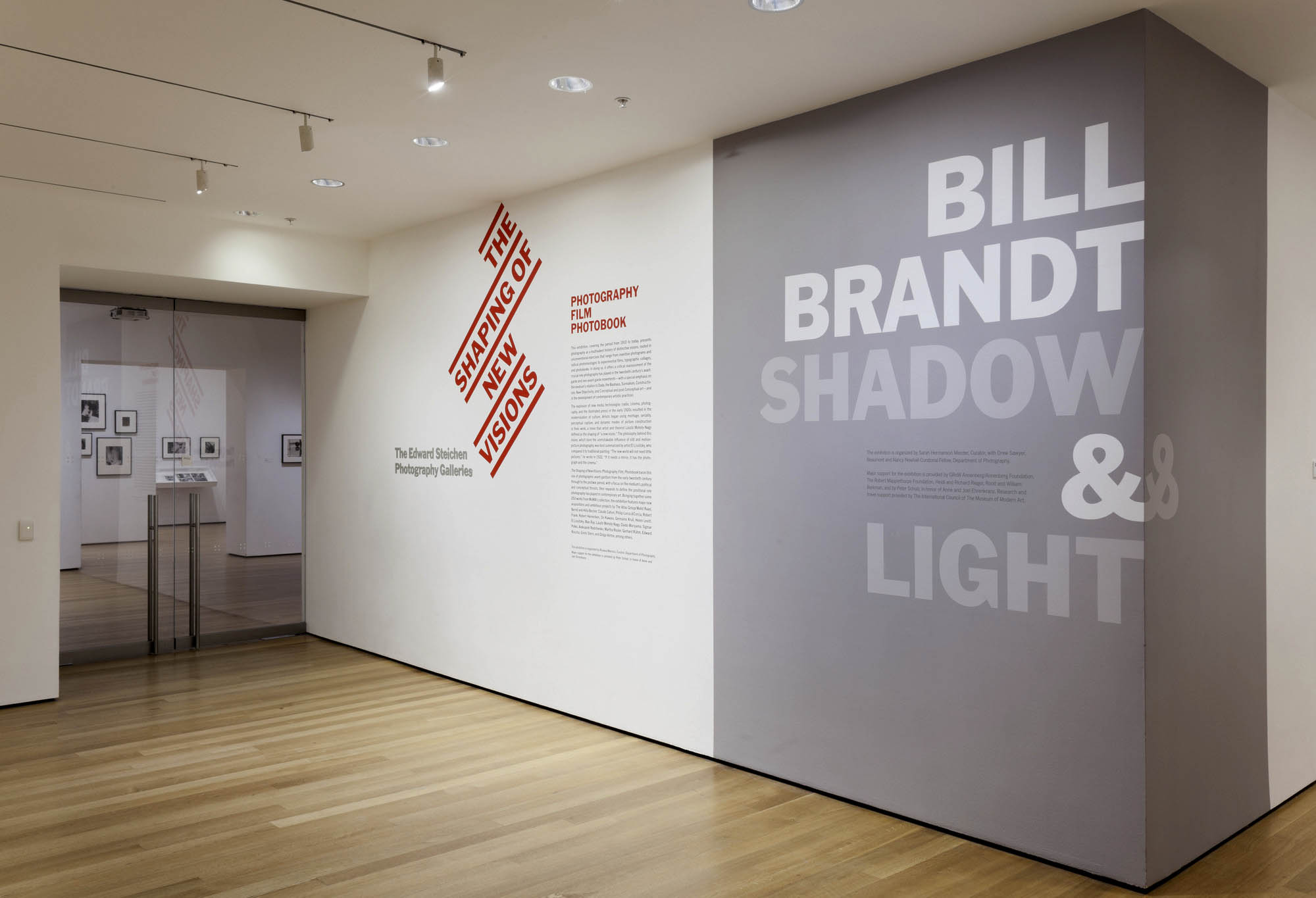
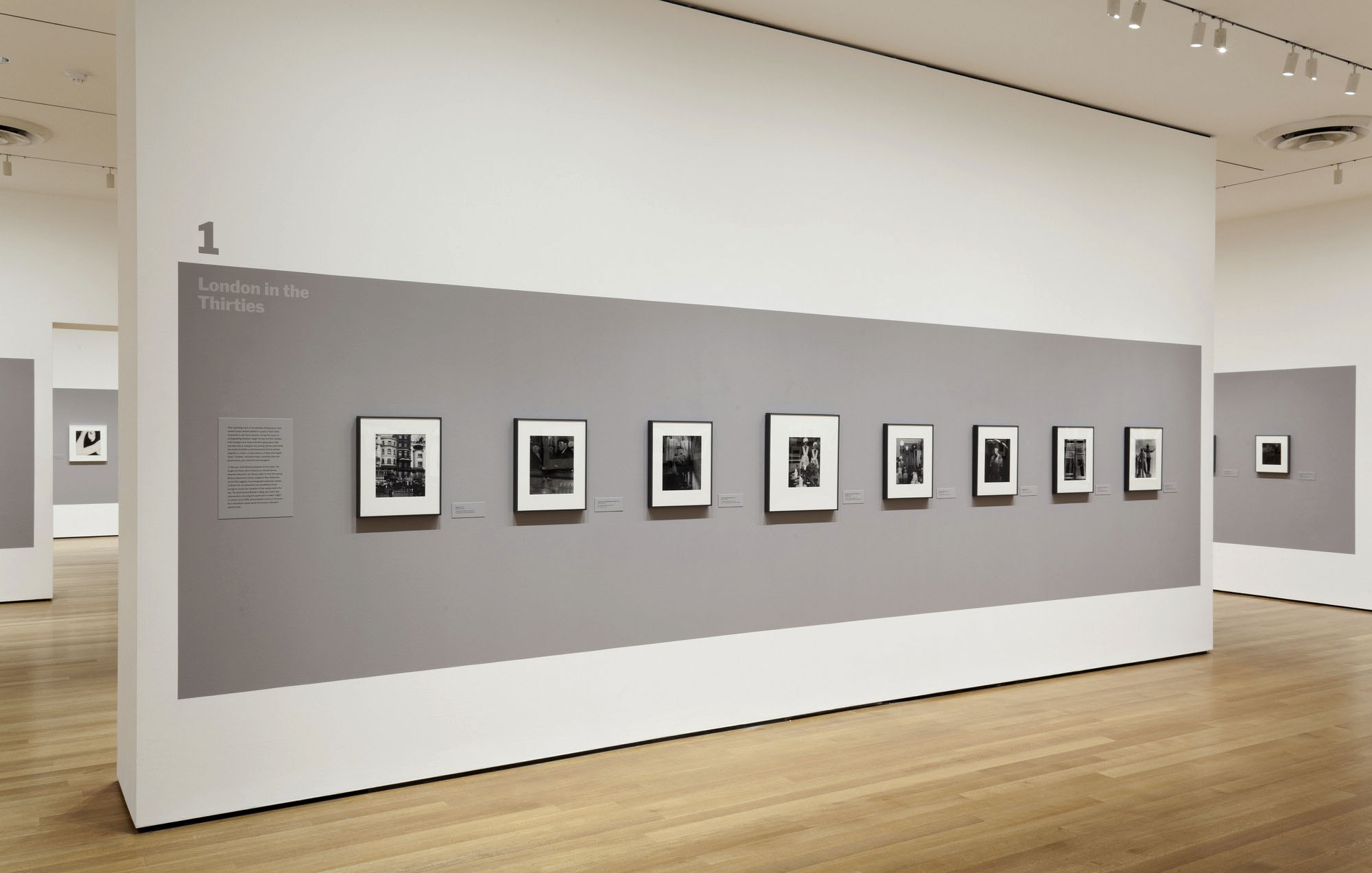
Installation views of the exhibition Bill Brandt: Shadow and Light at The Museum of Modern Art, New York, March – August, 2013 showing in the bottom image Brandt’s photographs from “London in the Thirties” including at left, Park Lane (1932); at second left, Customers at the Crooked Billet, Tower Hill (1939); at third left, Girls in Shared Attic, Shoreditch (1939); at second right, Parlourmaid at a Window in Kensington (c. 1939, below); and at right, Tic-Tac Men at Ascot Races (1935)
Photo: Thomas Griesel
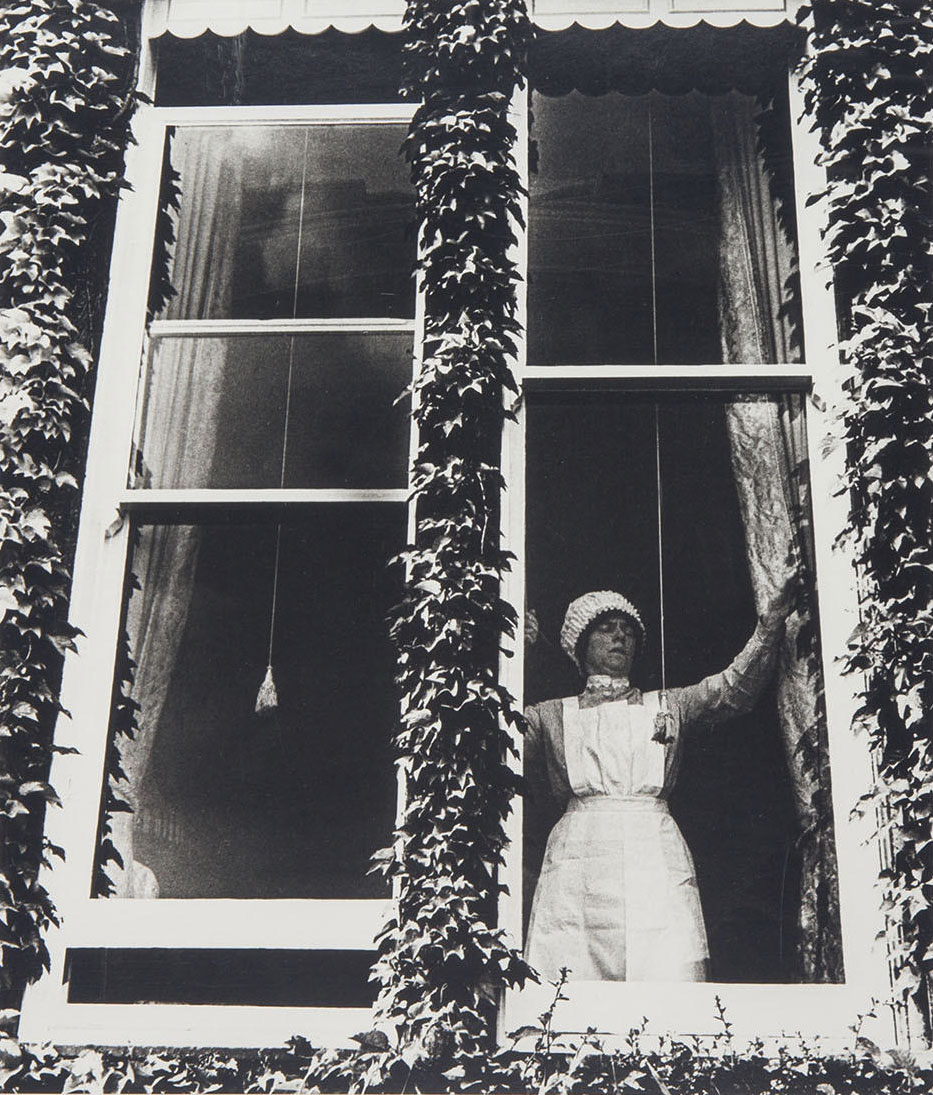
Bill Brandt (British born Germany, 1904-1983)
Parlourmaid at a Window in Kensington
c. 1939
Gelatin silver print
5/8 x 9 5/8″ (29.6 x 24.5cm)
The Museum of Modern Art
Acquired through the generosity of Ronald A. Kurtz
© 2012 Bill Brandt Archive Ltd.
Installation view of the exhibition Bill Brandt: Shadow and Light at The Museum of Modern Art, New York, March – August, 2013 showing at third left, Brandt’s photograph Street Scene, London (1936, below); at second left, Barmaid at the Crooked Billet, Tower Hill (1939, below); and at right, Parlourmaid Preparing a Bath before Dinner (c. 1937, top)
Photo: Thomas Griesel
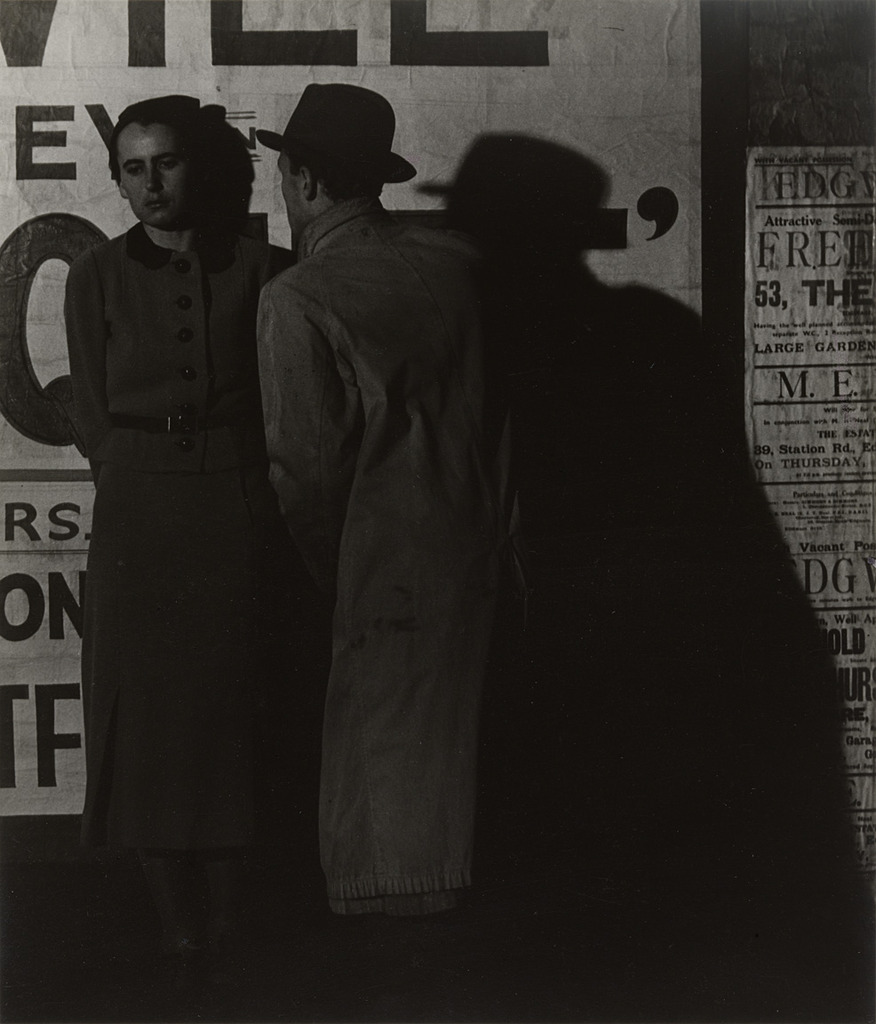
Bill Brandt (British born Germany, 1904-1983)
Street Scene, London
1936
Gelatin silver print
9 1/16 x 7 11/16″ (23 x 19.6cm)
The Museum of Modern Art
© 2013 Estate of Bill Brandt
This picture, first published in Brandt’s book A Night in London in 1938, recalls the work of the Hungarian-born photographer Brassaï, who had a particular talent for capturing illicit, marginalised, or unconventional activity in the lamplit streets of Paris. Many of Brandt’s pictures, however, feature his family members playing roles. Here he placed his brother and sister-in-law, Rolf and Esther Brandt, in front of a large poster. Using a nearby streetlight or perhaps his own floodlight, Brandt cast Rolf’s profile in melodramatic shadow. The artifice necessary to make a work was irrelevant for Brandt so long as he felt the picture rang true.
Text from MoMA website

Bill Brandt (British, born Germany 1904-1983)
Barmaid at the Crooked Billet, Tower Hill
March 1939
Gelatin silver print
8 1/8 x 6 7/8″ (20.6 x 17.4cm)
The Museum of Modern Art
Gift of Edwynn Houk
© 2013 Estate of Bill Brandt
Brandt often used additive techniques to enhance his photographs. In this print of a barmaid, taken for the Picture Post photo-story “A Barmaid’s Day” (1939), Brandt used black wash to add depth and uniformity to the shadowy background. He applied the passages so thickly that brushstrokes can be seen by the naked eye upon close inspection, while particles of pigment are visible as sandy texture under magnification. Brandt also used graphite to outline the eyebrows and facial features of the title subject.
Wall text from the exhibition
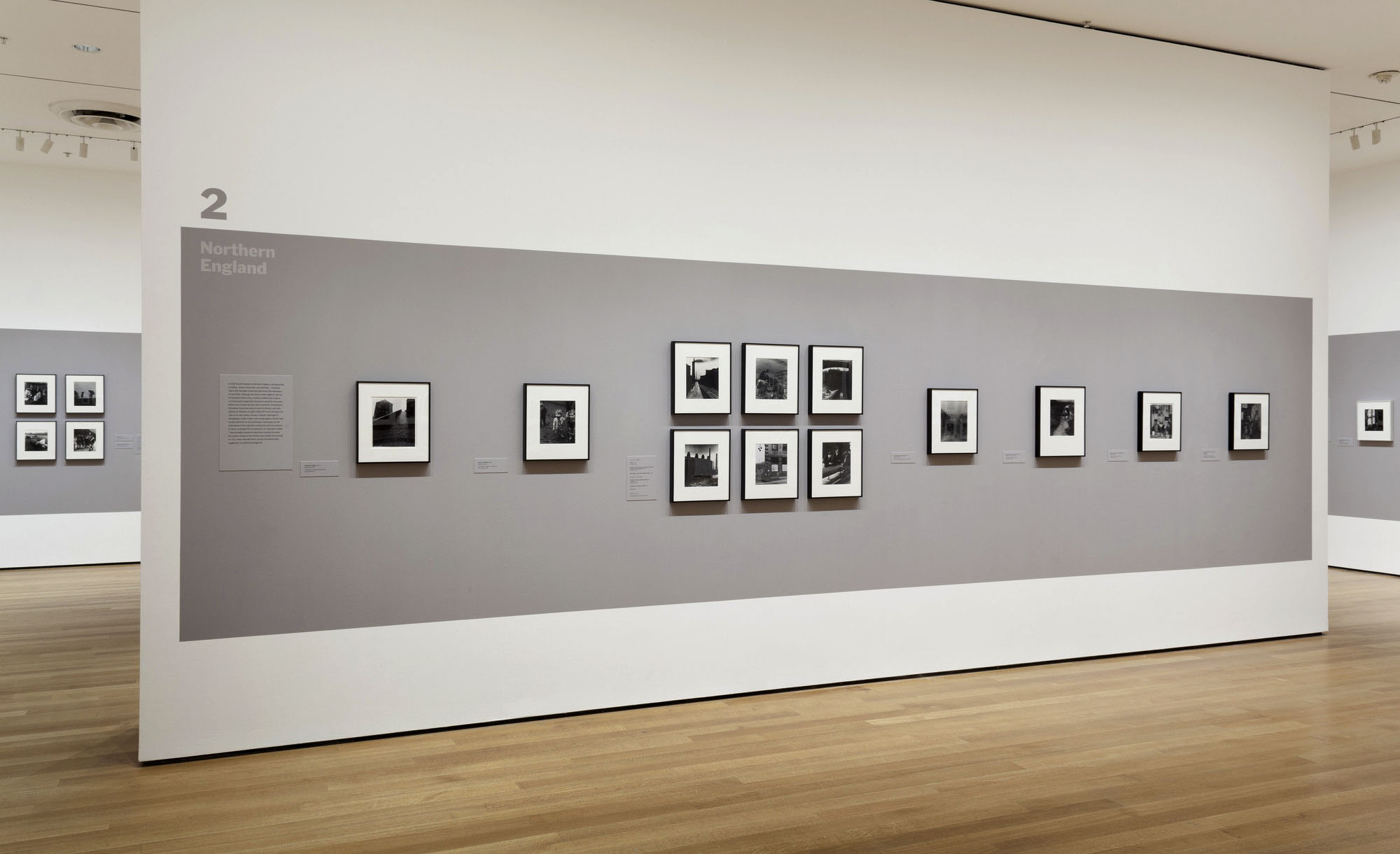
Installation view of the exhibition Bill Brandt: Shadow and Light at The Museum of Modern Art, New York, March – August, 2013 showing photographs from the section “Northern England” including at left, Brandt’s A Snicket in Halifax (1937, below); at third right, Coal-Searcher Going Home to Jarrow (1937); at second right, Northumbrian Miner at His Evening Meal (1937, below); and at right, East Durham Coal-Miner Just Home from the Pit (1937)
Photo: Thomas Griesel

Bill Brandt (British born Germany, 1904-1983)
A Snicket in Halifax
1937
Gelatin silver print
9 x 7 11/16″ (22.9 x 19.6cm)
Carl Jacobs Fund
© 2013 Estate of Bill Brandt
In 1929, Brandt spent three months in Paris working as an apprentice in the photographic studio of Man Ray. In the years that followed, he was heavily influenced by photographers whose portrayal of the urban landscapes conveyed a sense of alienation or mystery. Returning to England in 1931, Brandt continued to turn his lens on the environment, capturing high contrast, dark scenes in London and other towns with a mysterious edge. “I believe this power of seeing the world as fresh and strange lies hidden in every human being,” he wrote in 1948.
Gallery label from 517: A Surreal Lens, 2025

Bill Brandt (British born Germany, 1904-1983)
Northumbrian Miner at His Evening Meal
1937
Gelatin silver print
8 3/4 x 7 3/8″ (22.2 x 18.8cm)
The Museum of Modern Art
John Parkinson III Fund
© 2012 Bill Brandt Archive Ltd.
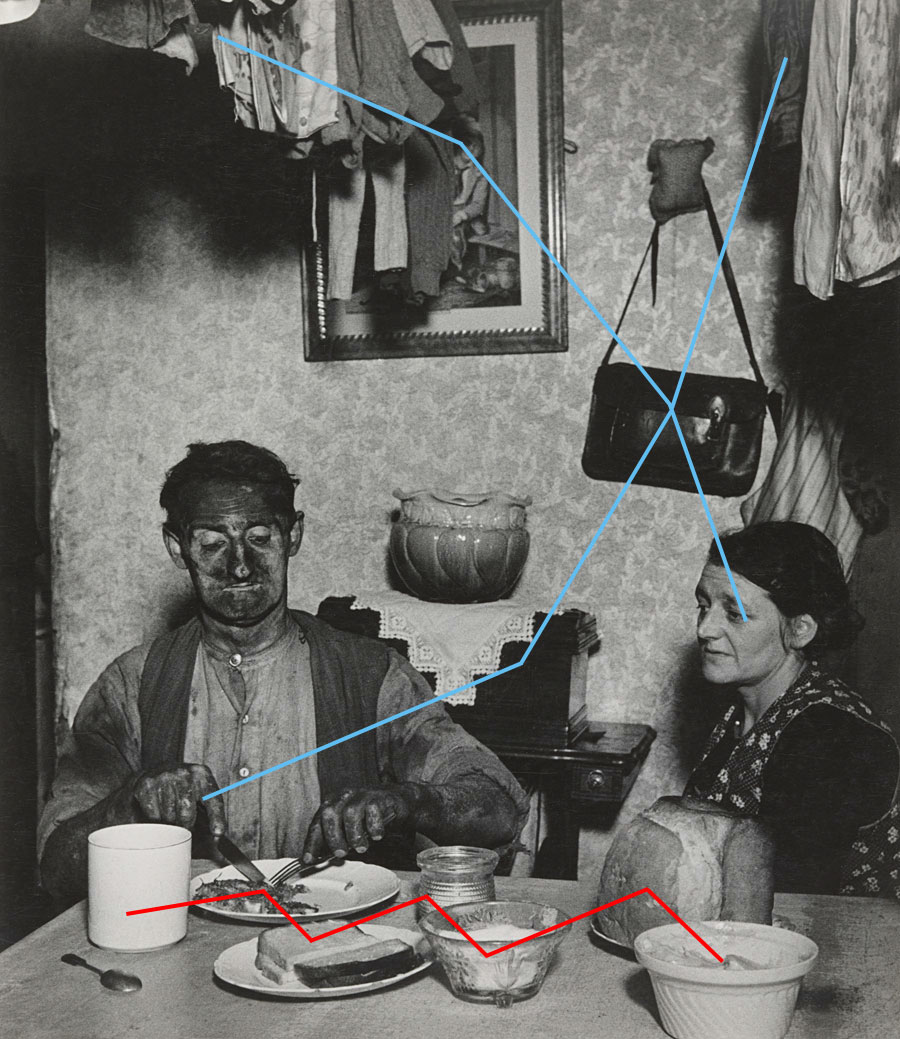

Analysis of Brandt’s visual exploration in Northumbrian Miner at His Evening Meal (1937)
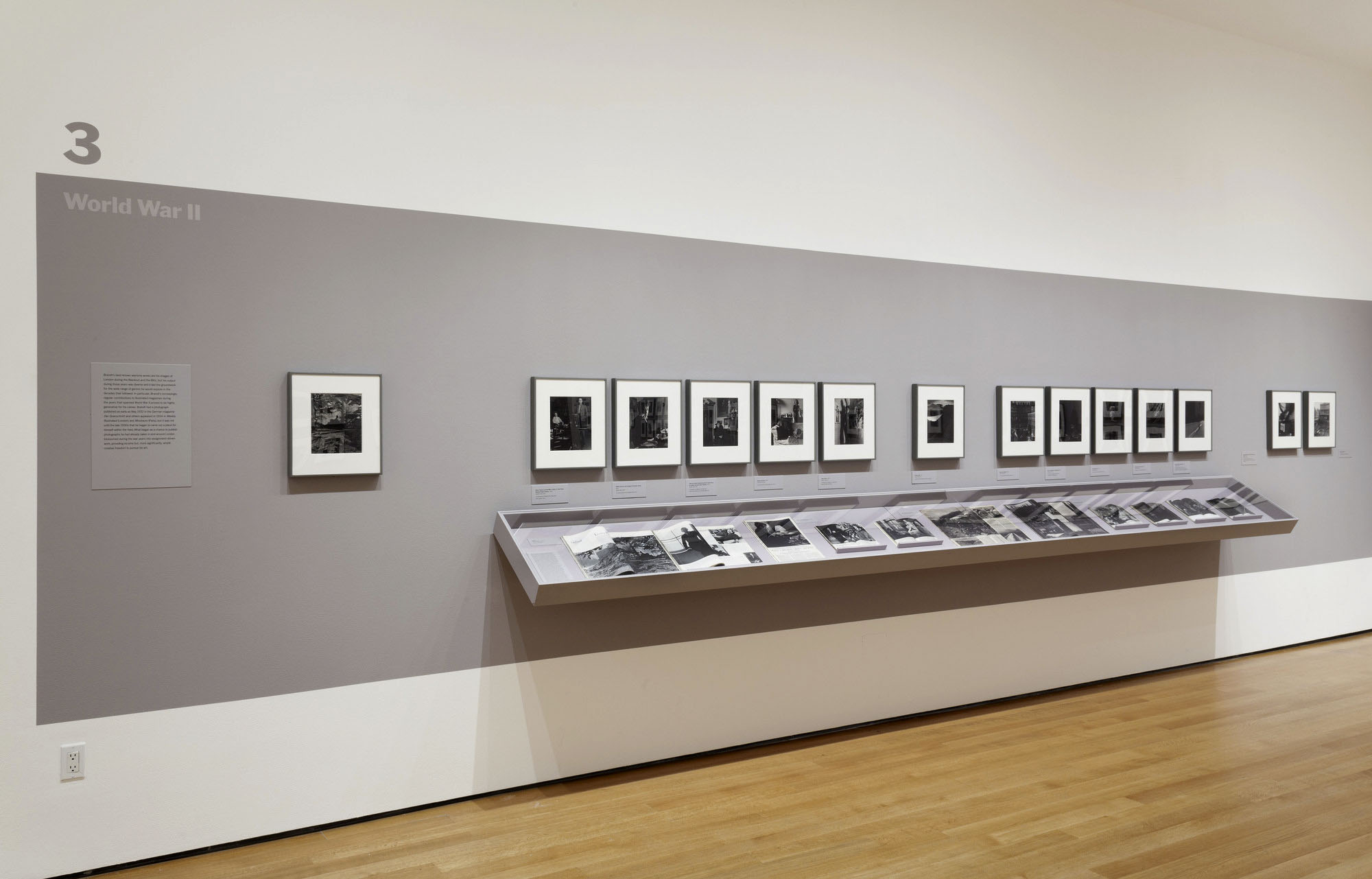
Installation view of the exhibition Bill Brandt: Shadow and Light at The Museum of Modern Art, New York, March – August, 2013 showing photographs from the section “World War II” (below)
Photo: Thomas Griesel
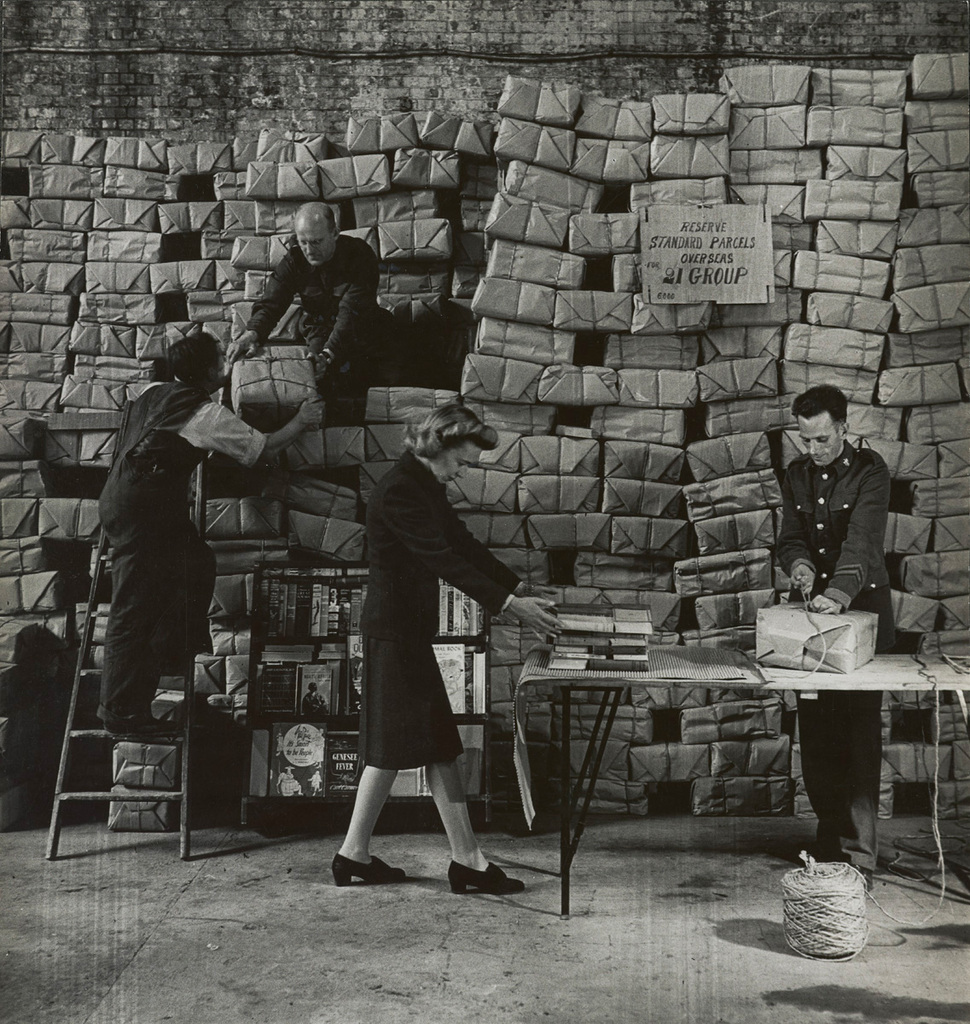
Bill Brandt (British born Germany, 1904-1983)
Packaging Post for the War
c. 1942
Gelatin silver print
8 3/16 x 7 13/16″ (20.8 x 19.9cm)
The Museum of Modern Art
Acquired through the generosity of Mark Levine
© 2013 Estate of Bill Brandt
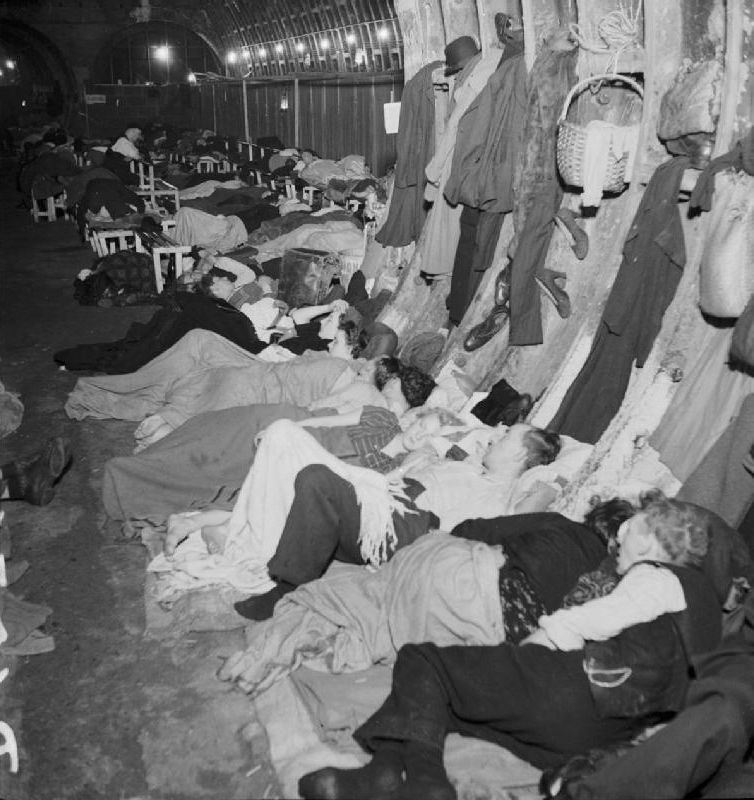
Bill Brandt (British born Germany, 1904-1983)
Liverpool Street Underground Station Shelter
1940
Gelatin silver print
11 11/16 x 9 11/16″ (29.7 x 24.6cm)
The Museum of Modern Art
© 2013 Estate of Bill Brandt
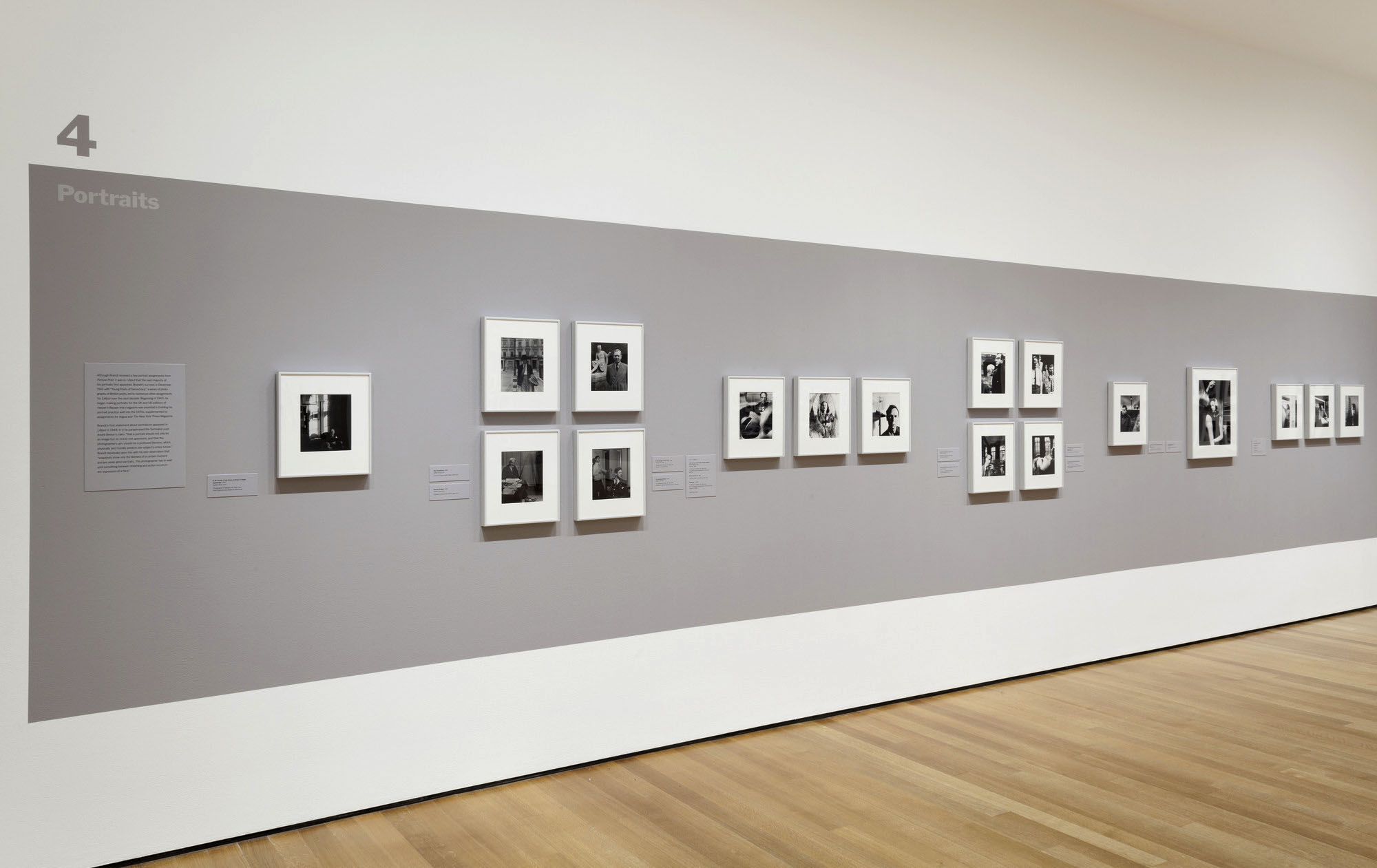
Installation view of the exhibition Bill Brandt: Shadow and Light at The Museum of Modern Art, New York, March – August, 2013 showing photographs from the section “Portraits” including at fourth left, Bill Brandt’s photograph Henry Moore in His Studio at Much Hadham, Hertfordshire (1946 printed c. 1965, below); and at eighth left bottom, Portrait of a Young Girl, Eaton Place (1955, below)
Photo: Thomas Griesel
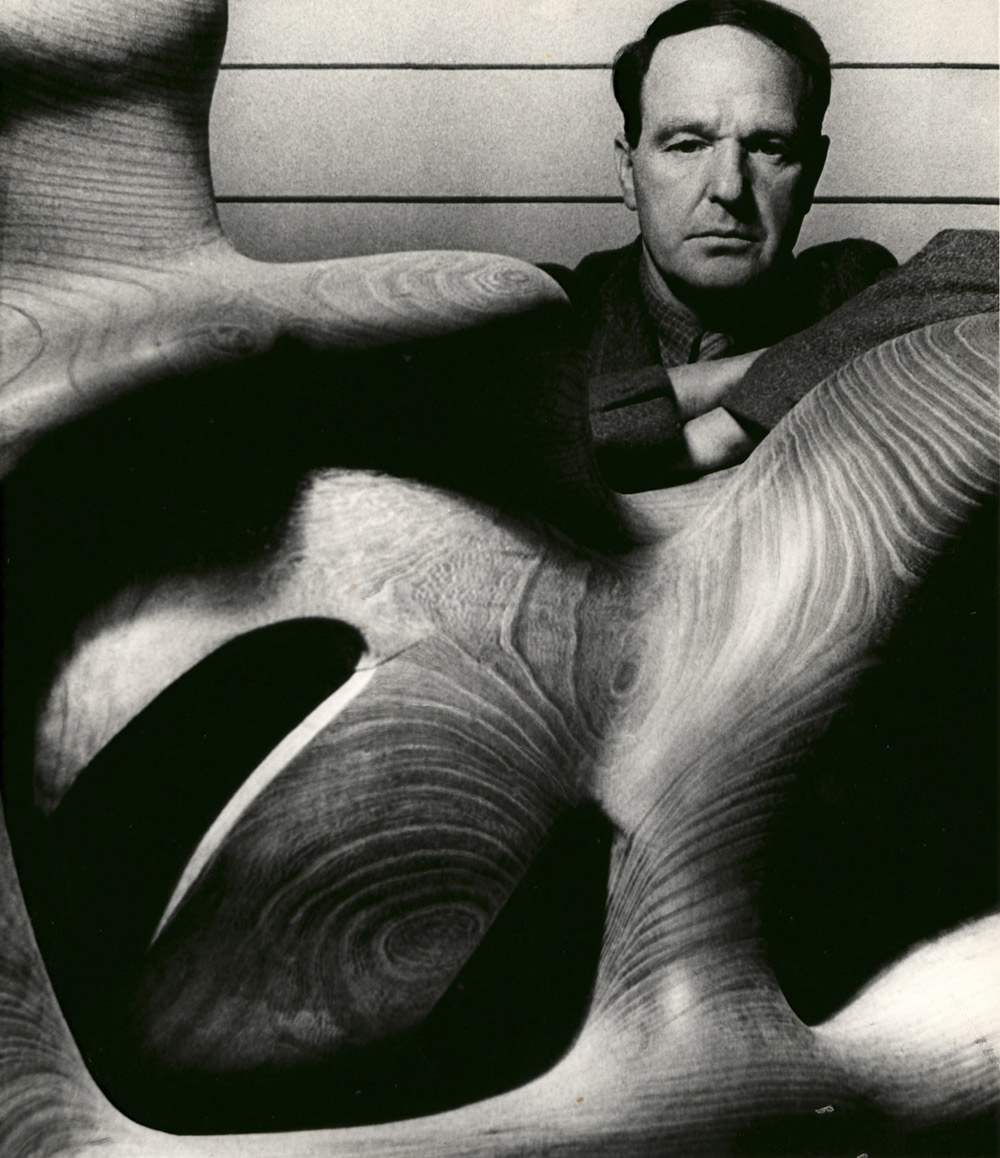
Bill Brandt (British born Germany, 1904-1983)
Henry Moore in His Studio at Much Hadham, Hertfordshire
1946 (printed c. 1965)
Gelatin silver print
9 x 7 3/4″ (22.9 x 19.7cm)
The Museum of Modern Art
Acquired through the generosity of Richard E. and Laura Salomon
© 2012 Bill Brandt Archive Ltd.

Bill Brandt (British born Germany, 1904-1983)
Portrait of a Young Girl, Eaton Place
1955
Gelatin silver print
9 x 7 3/4″ (22.9 x 19.7cm)
The Museum of Modern Art
Acquired through the generosity of David Dechman and Michel Mercure
© 2012 Bill Brandt Archive Ltd.
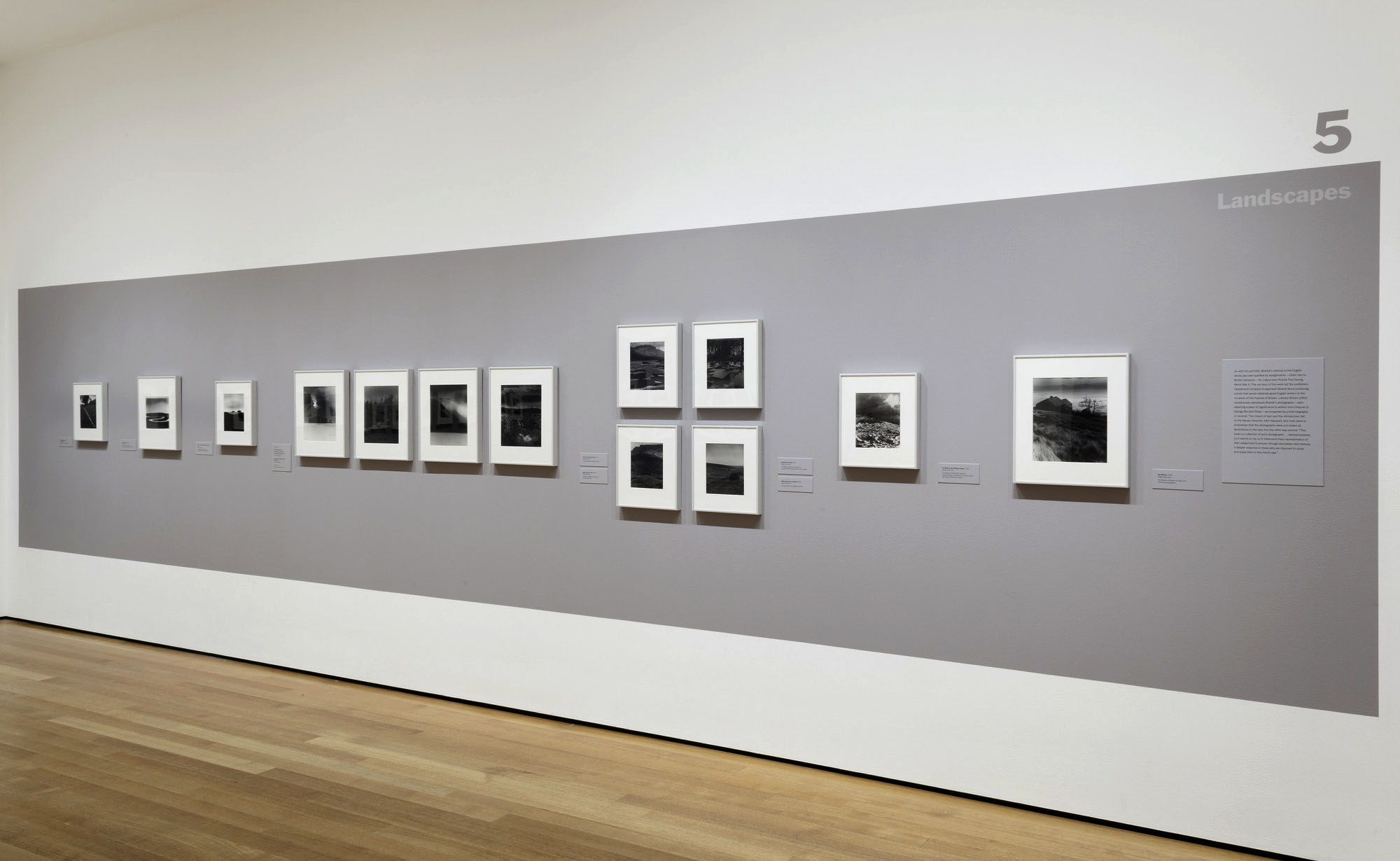
Installation view of the exhibition Bill Brandt: Shadow and Light at The Museum of Modern Art, New York, March – August, 2013 showing photographs from the section “Landscapes” including at fifth right, Gull’s Nest, Late on Midsummer Night, Isle of Skye (1947, below); third right top, Haworth Churchyard (1945, below); at second right, Top Withens, West Riding, Yorkshire (1945, below); and at right, Top Withens (1945, below)

Bill Brandt (British born Germany, 1904-1983)
Gull’s Nest, Late on Midsummer Night, Isle of Skye
1947
Gelatin silver print
12 7/16 x 10 1/2″ (31.6 x 26.7cm)
The Museum of Modern Art
Gift of Harper’s Bazaar
© 2012 Bill Brandt Archive Ltd.
Brandt took this photograph for the picture story “Over the Sea to Skye,” published in Lilliput in November 1947. Uncharacteristically, he also wrote the text that accompanied the story’s eight images. The Isle of Skye, the northernmost large island of the Inner Hebrides of Scotland, is known for its dramatic mountain scenery and abundant wildlife. Brandt emphasised both by dramatically juxtaposing the foreground and background, a pictorial device that is prominent in his portraits and nudes.
Wall text from the exhibition
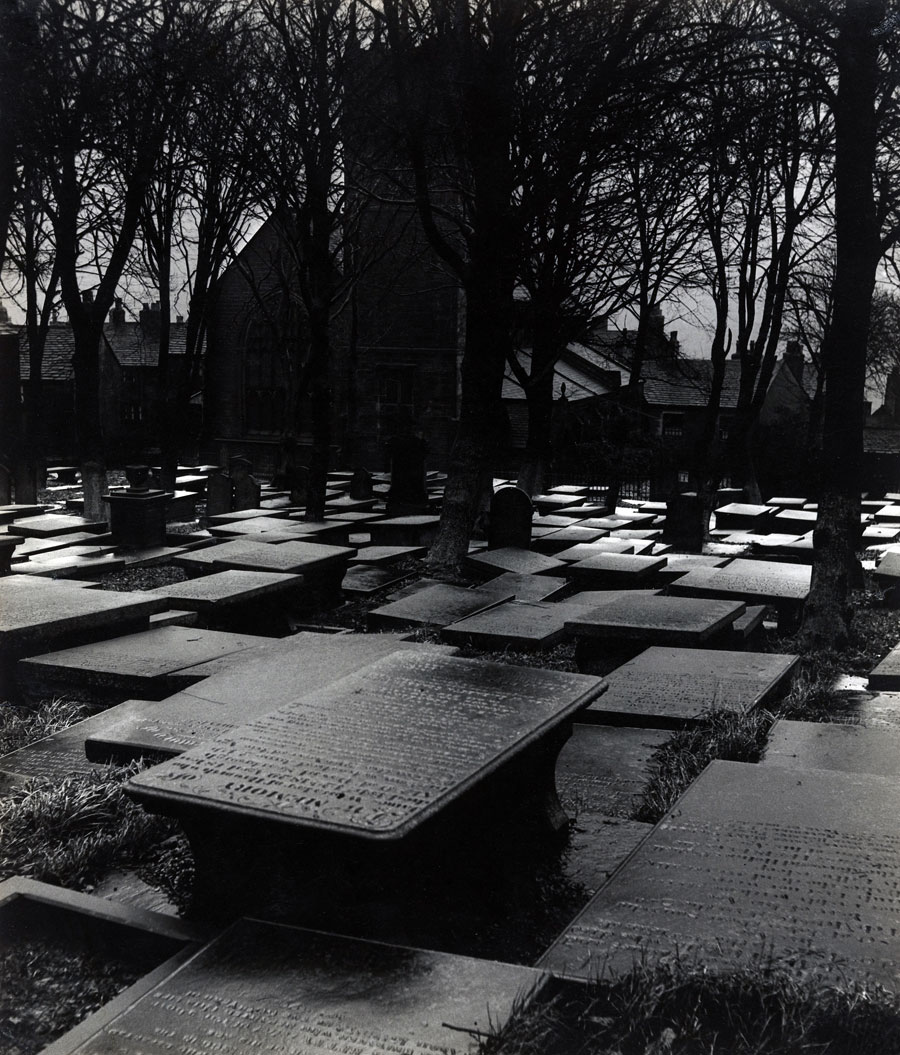
Bill Brandt (British born Germany, 1904-1983)
Haworth Churchyard
1945
Gelatin silver print
8 15/16 x 7 11/16″ (22.7 x 19.5cm)
The Museum of Modern Art
Acquired through the generosity of Jon L. Stryker
© 2012 Bill Brandt Archive Ltd.

Bill Brandt (British born Germany, 1904-1983)
Top Withens, West Riding, Yorkshire
1945
Gelatin silver print
9 3/16 x 7 3/4″ (23.3 x 19.7cm)
The Museum of Modern Art
Acquired through the generosity of Clarissa Alcock Bronfman, and Richard E. and Laura Salomon
© 2012 Bill Brandt Archive Ltd.
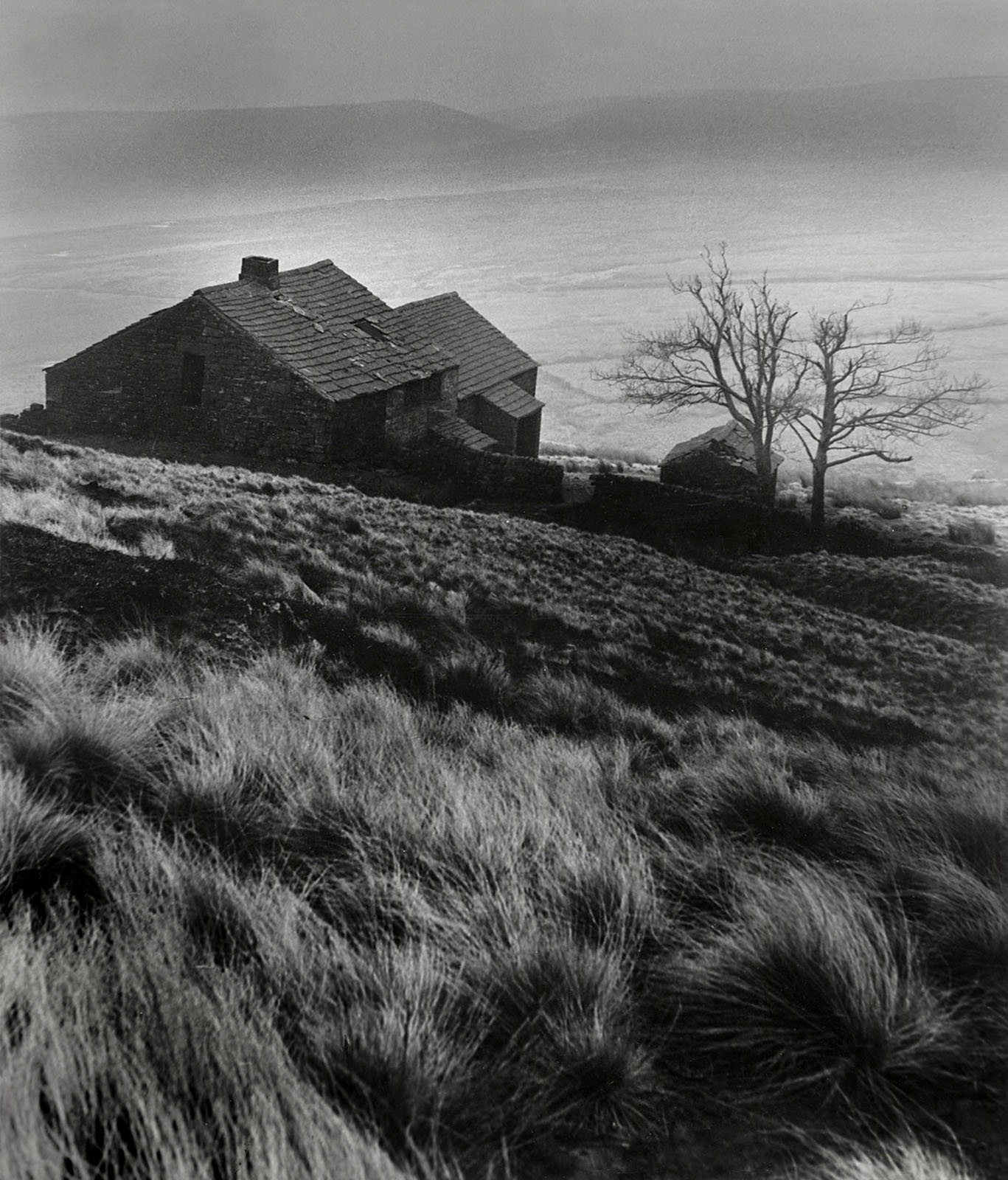
Bill Brandt (British born Germany, 1904-1983)
Top Withens
1945
Gelatin silver print
12 1/2 x 10 11/16″ (31.8 x 27.2cm)
The Museum of Modern Art
Gift of the artist
© 2012 Bill Brandt Archive Ltd.
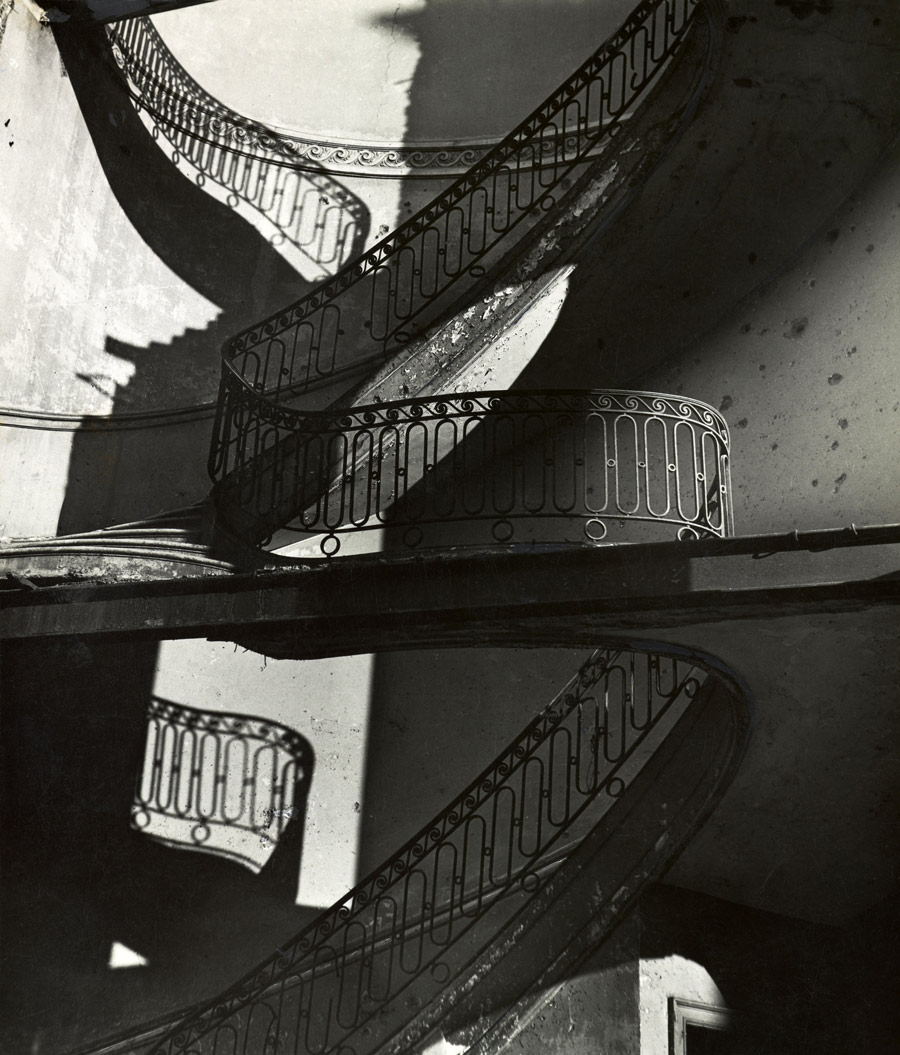
Bill Brandt (British born Germany, 1904-1983)
Bombed Regency Staircase, Upper Brook Street, Mayfair
c. 1942
Gelatin silver print
9 x 7 5/8″ (22.8 x 19.4cm)
The Museum of Modern Art
Acquired through the generosity of Clarissa A. Bronfman
© 2012 Bill Brandt Archive Ltd.

Bill Brandt (British born Germany, 1904-1983)
Soho Bedroom
1934
Gelatin silver print
8 3/4 x 7 9/16″ (22.2 x 19.2cm)
Acquired through the generosity of Michèle Gerber Klein
© 2013 Estate of Bill Brandt
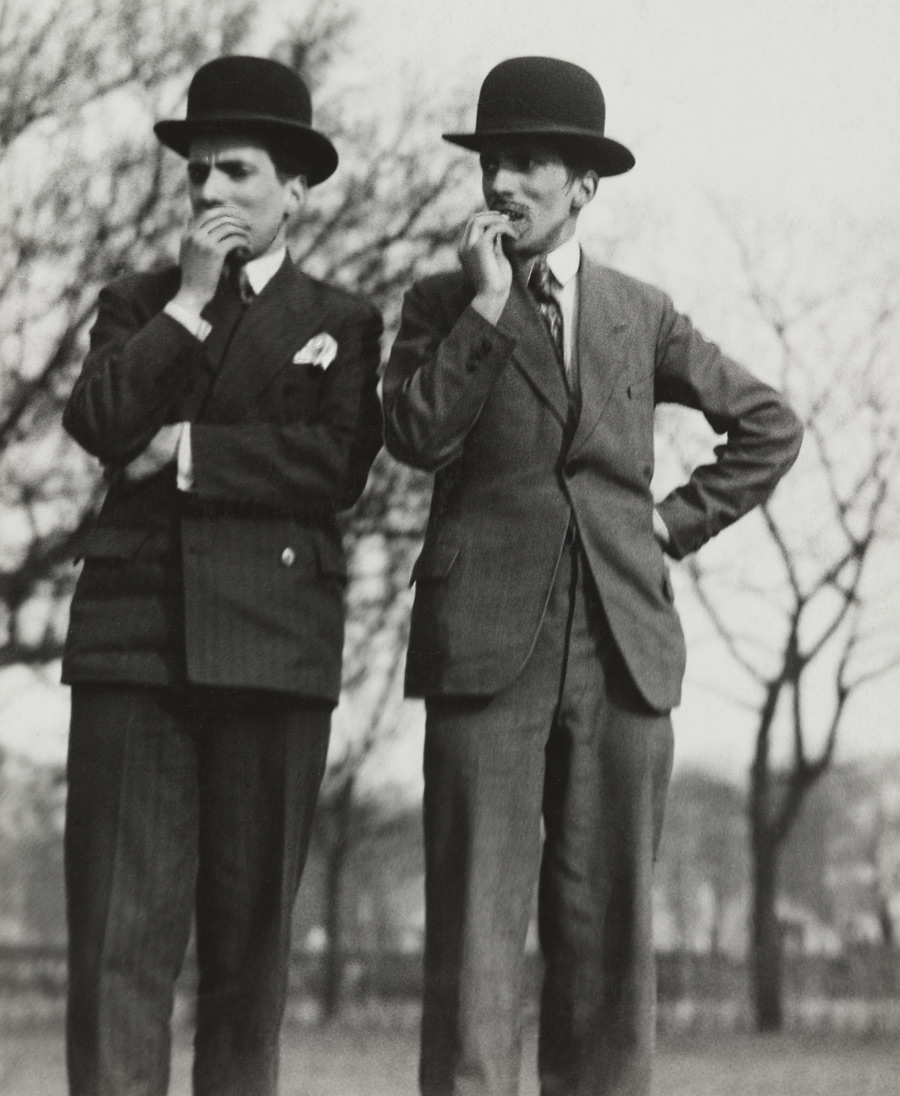
Bill Brandt (British born Germany, 1904-1983)
Losing at the Horse Races, Auteuil, Paris
c. 1932
Gelatin silver print
8 3/8 x 6 15/16″ (21.3 x 17.6cm)
The Museum of Modern Art. Gift of Edwynn Houk
© 2012 Bill Brandt Archive Ltd.
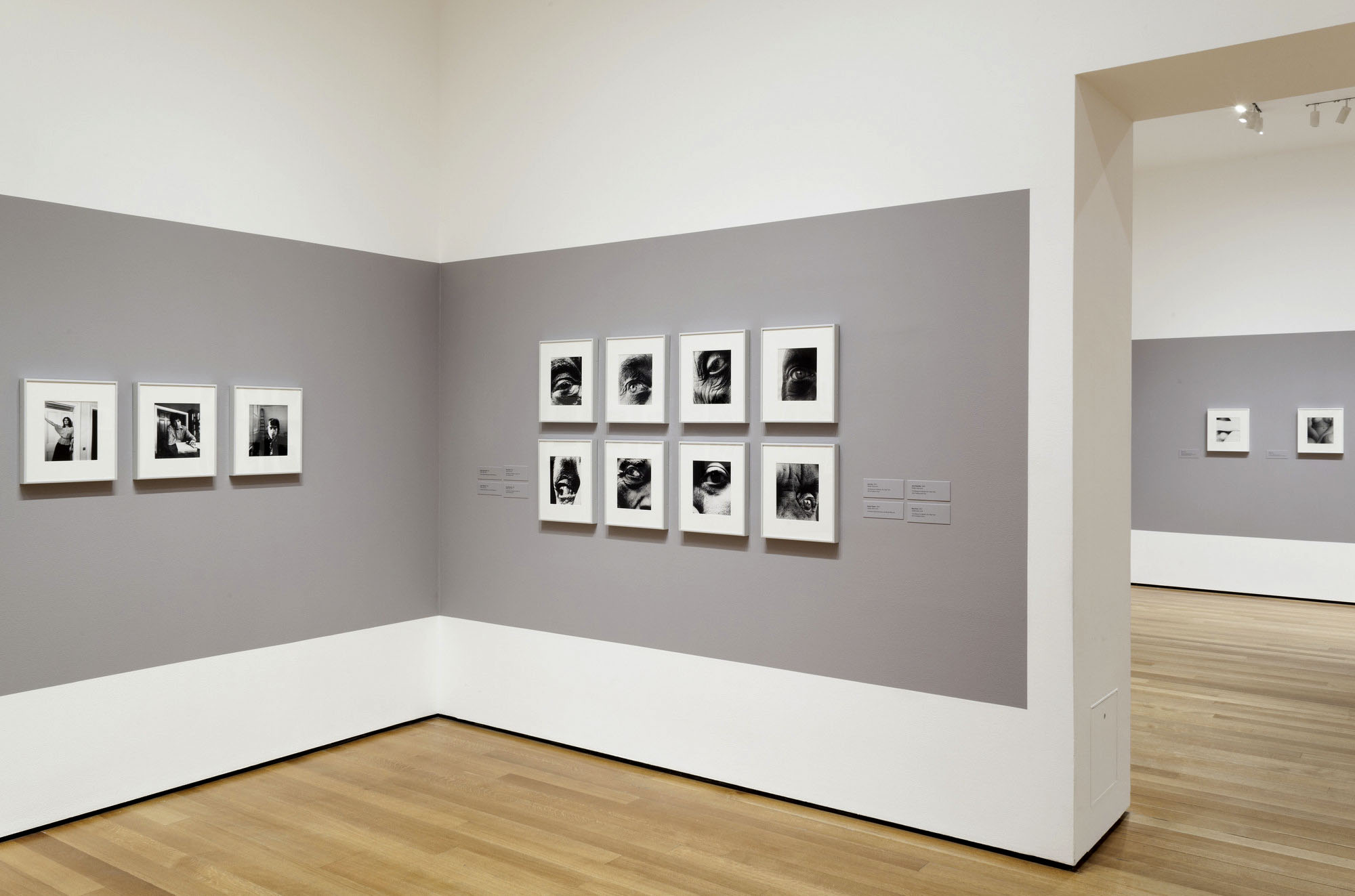
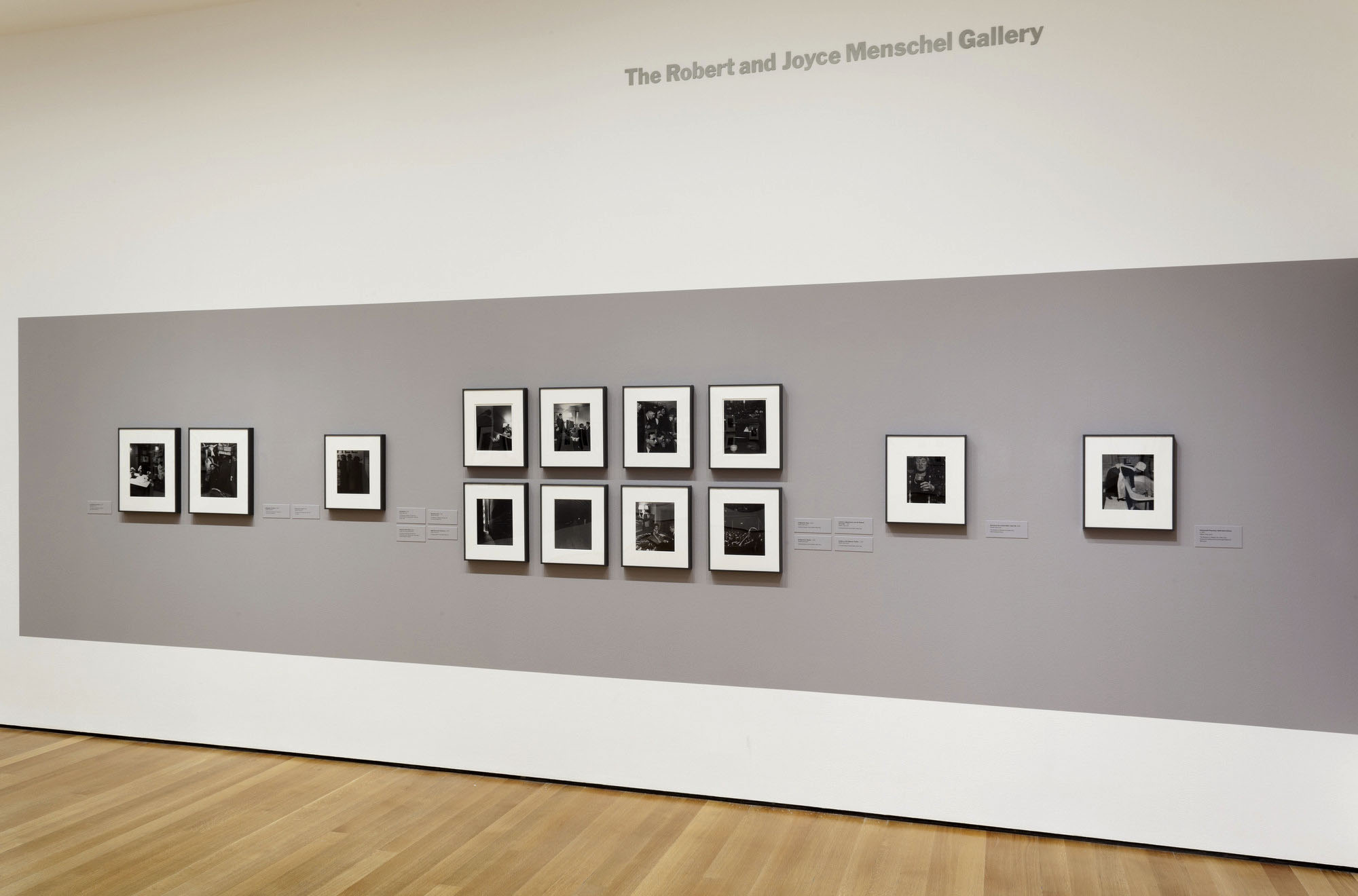
Installation view of the exhibition Bill Brandt: Shadow and Light at The Museum of Modern Art, New York, March – August, 2013 showing at centre, photographs from Bill Brandt’s Eye series (1954-1960) featuring the eyes of artist Henry Moore, Max Ernst, Jean Arp, Georges Braque, Bill Brandt and Jean Dubuffet (see below)
Photo: Thomas Griesel
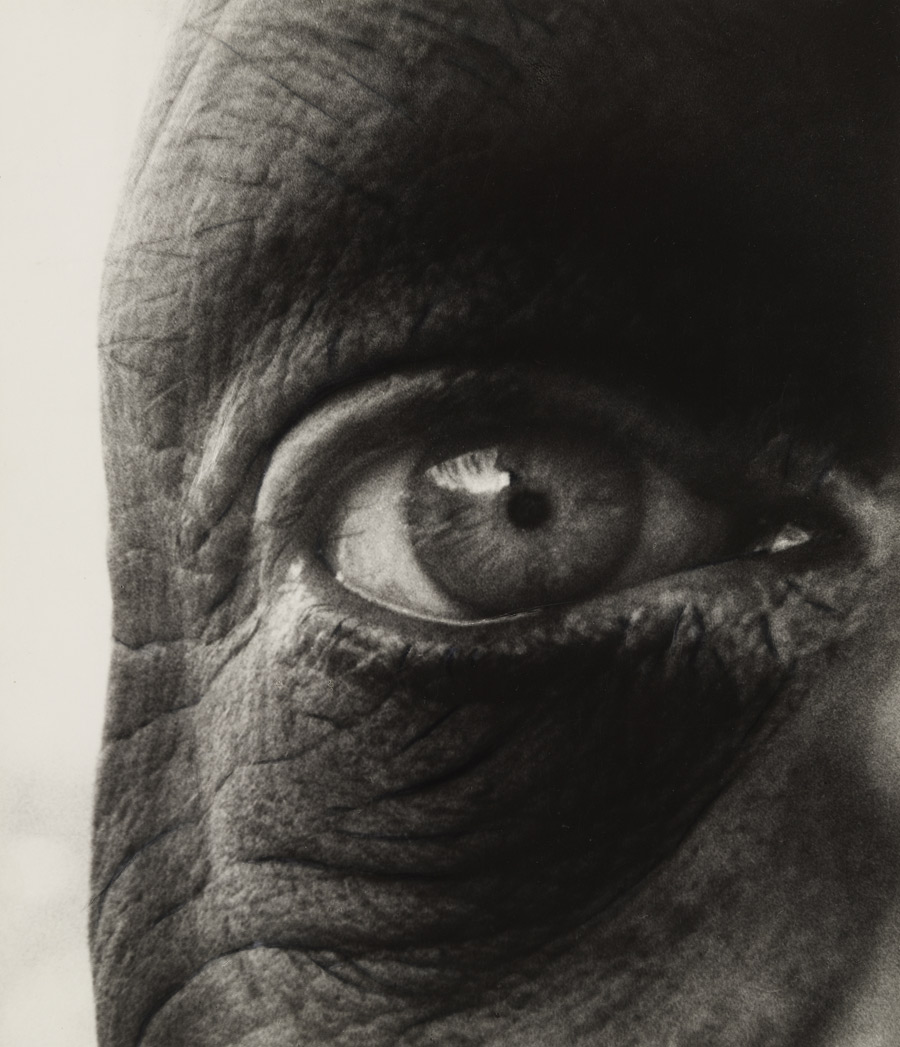
Bill Brandt (British born Germany, 1904-1983)
Jean Dubuffet
1960
Gelatin silver print
8 3/8 x 7 1/4″ (21.3 x 18.4cm)
The Museum of Modern Art
John Parkinson III Fund
© 2012 Bill Brandt Archive Ltd.

Bill Brandt (British, born Germany 1904-1983)
Georges Braque
1960
Gelatin silver print
9 1/16 x 7 13/16″ (23 x 19.9cm)
The Museum of Modern Art
Gift of Edwynn Houk
© 2012 Bill Brandt Archive Ltd.
This closely cropped eye belongs to the artist Georges Braque. Brandt made ten photographs of notable visual artists; a few seem to have been taken at the same session as a published portrait, although none appear to be enlargements from other known works. They are striking departures from Brandt’s typical practice, mysterious despite their clarity of description, and they underscore the photographer’s experimental impulse, even late in his career. There is no record of their ever being published in a magazine.
Wall text from the exhibition
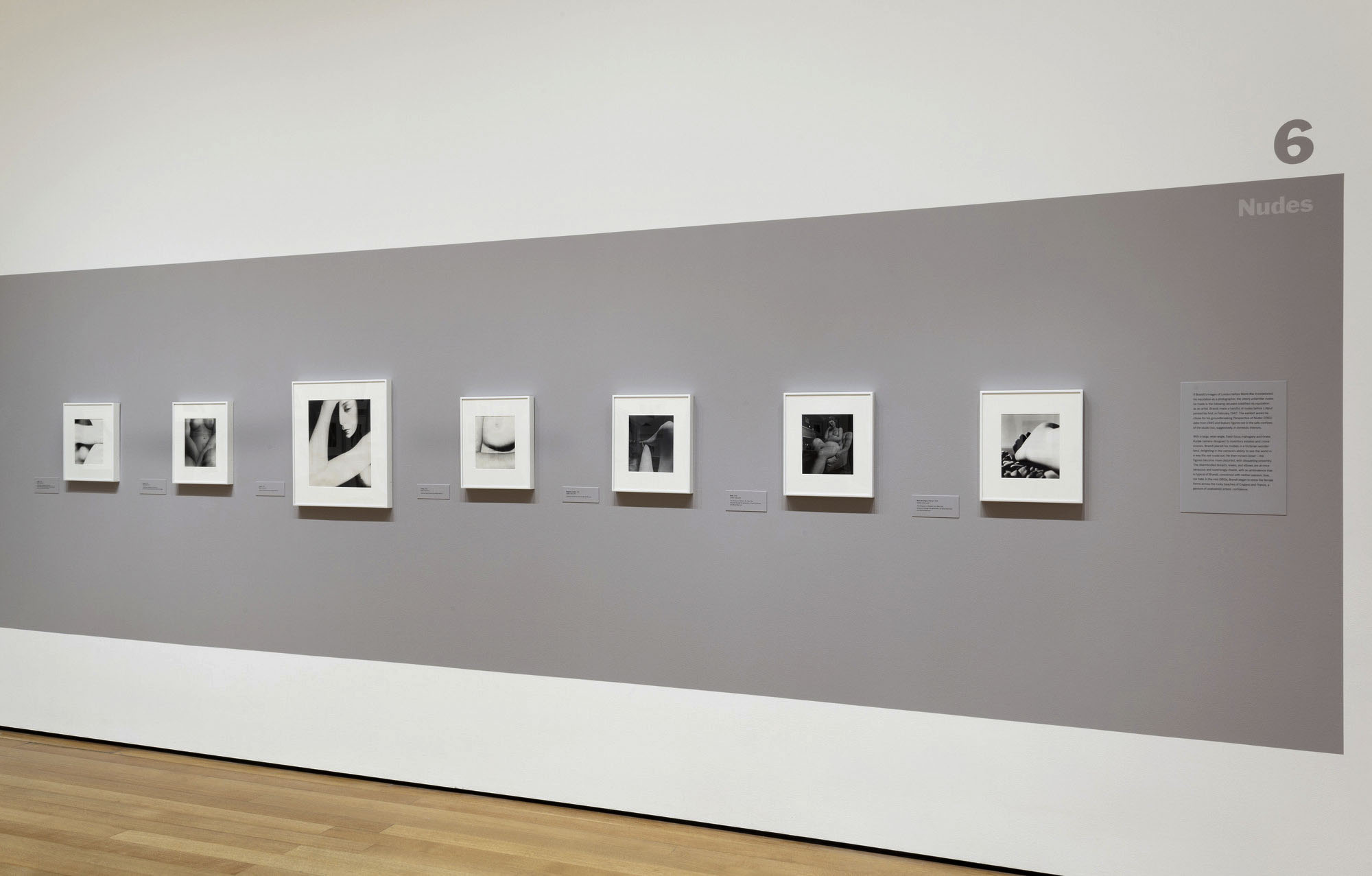
Installation view of the exhibition Bill Brandt: Shadow and Light at The Museum of Modern Art, New York, March – August, 2013 showing photographs from the section “Nudes” including at left, London (1954, below); and at third left, London (1952, below)
Photo: Thomas Griesel

Bill Brandt (British born Germany, 1904-1983)
London
1954
Gelatin silver print
9 1/8 x 7 3/4″ (23.1 x 19.7cm)
The Museum of Modern Art
Acquired through the generosity of Clarissa Alcock Bronfman and Richard E. Salomon
© 2012 Bill Brandt Archive Ltd.
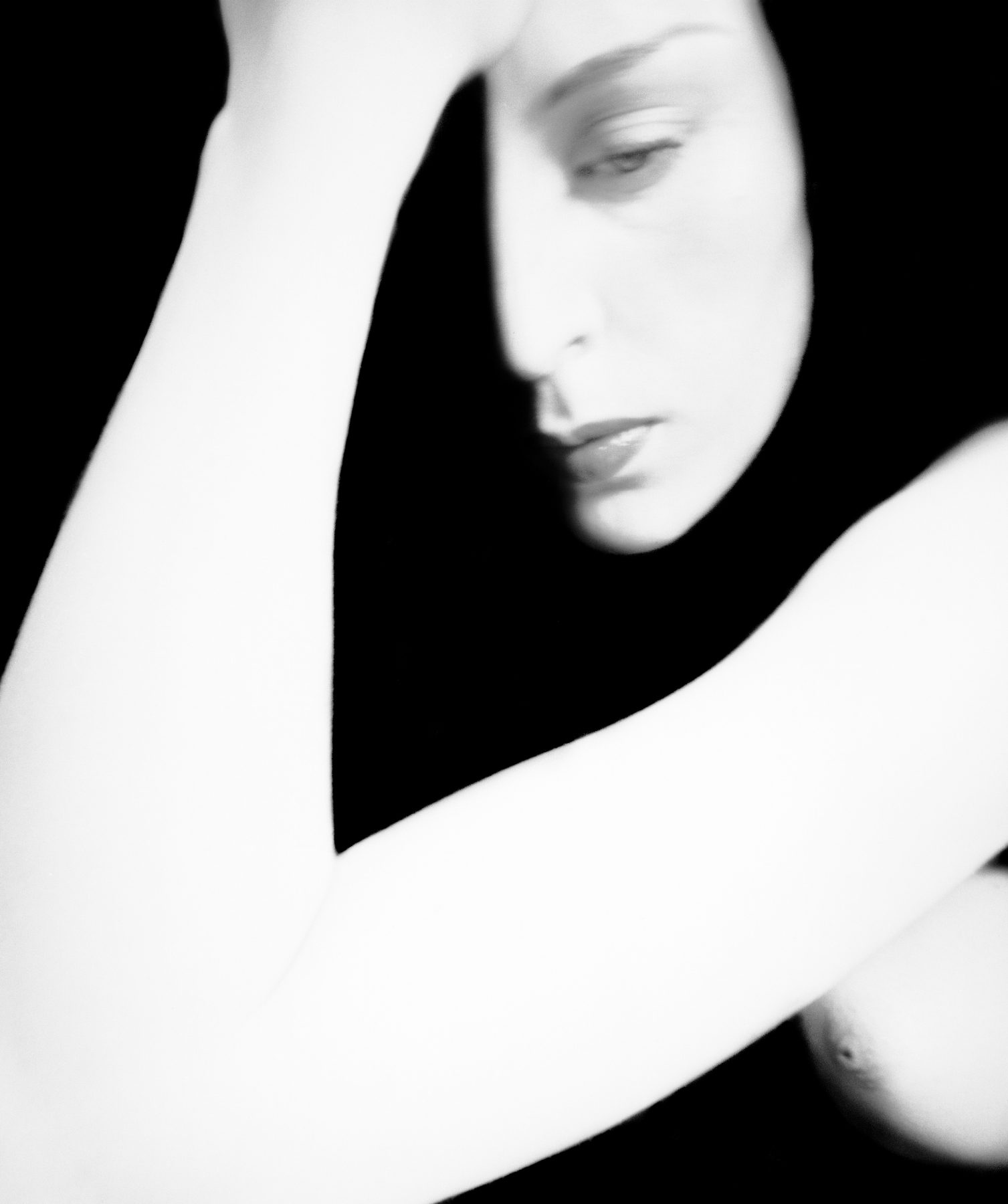
Bill Brandt (British, born Germany 1904-1983)
London
1952, printed 1969
Gelatin silver print
24 5/16 × 20 9/16″ (61.7 × 52.2cm)
The Museum of Modern Art
Purchase
© 2012 Bill Brandt Archive Ltd.
Bill Brandt A Perspective of Nudes 1961
A book that looks back to Kertesz’s Distortions and forward to the psychedelia of the late 60s. As Vince Aletti writes in The Book of 101 Books, Brandt “conjure[d] a dream world of skewed perspectives in which his nude female subjects appeared to float unanchored or loom like giants.” Parr and Badger writing in The Photobook: A History, vol. 1, assert that these images “rewrote the language of nude photography in not one, but several quarters… [they are] as interesting for their psychological undertones as for the wealth of unexpected forms he conjured… Brandt pictured a world of faded grandeur, of Edwardian bourgeois homes metamorphosing into 1940s bedsit land – cavernous refuges for European émigrés or bohemian nonconformists.”
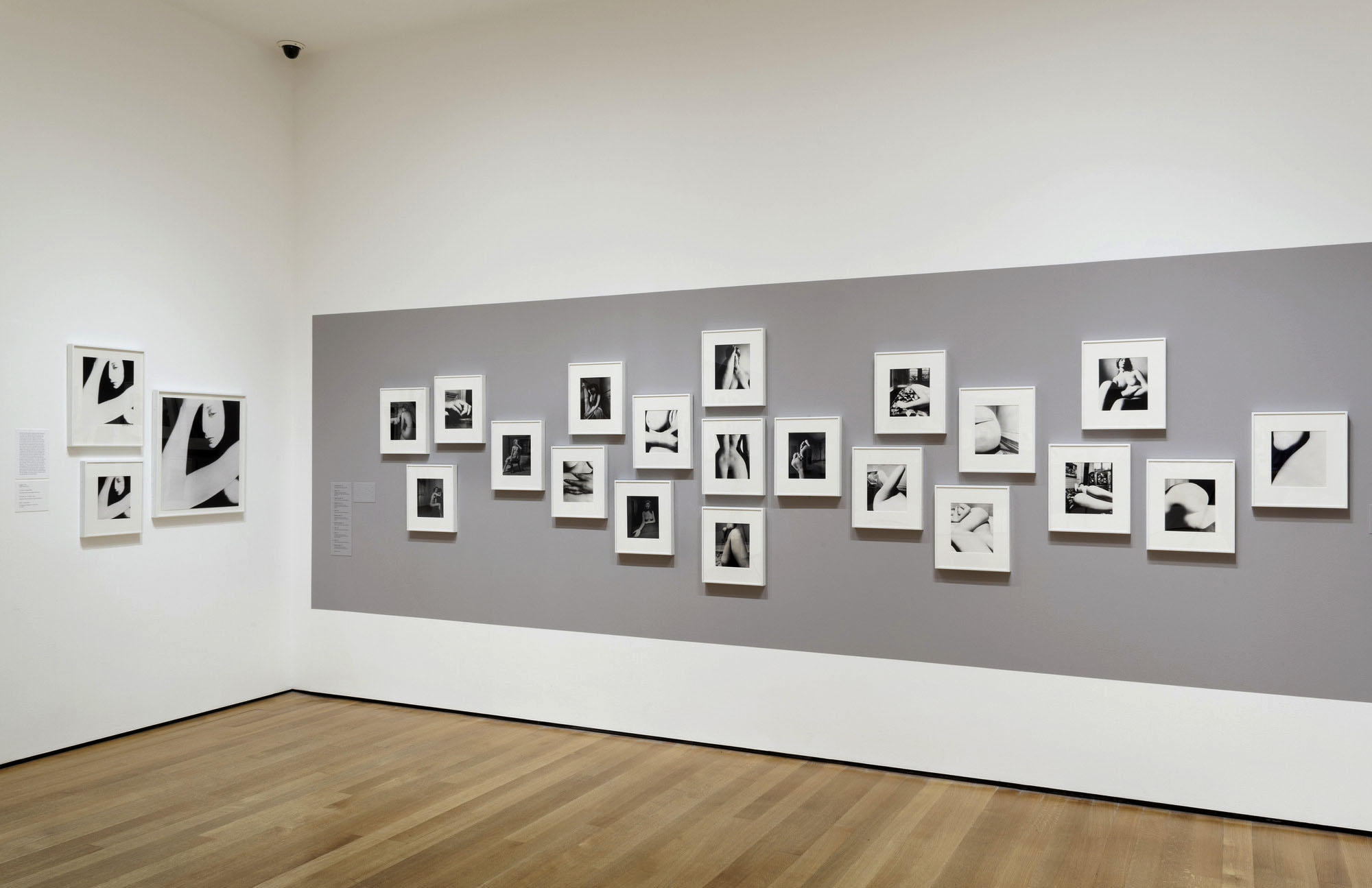
Installation view of the exhibition Bill Brandt: Shadow and Light at The Museum of Modern Art, New York, March – August, 2013 showing photographs from the section “Nudes”
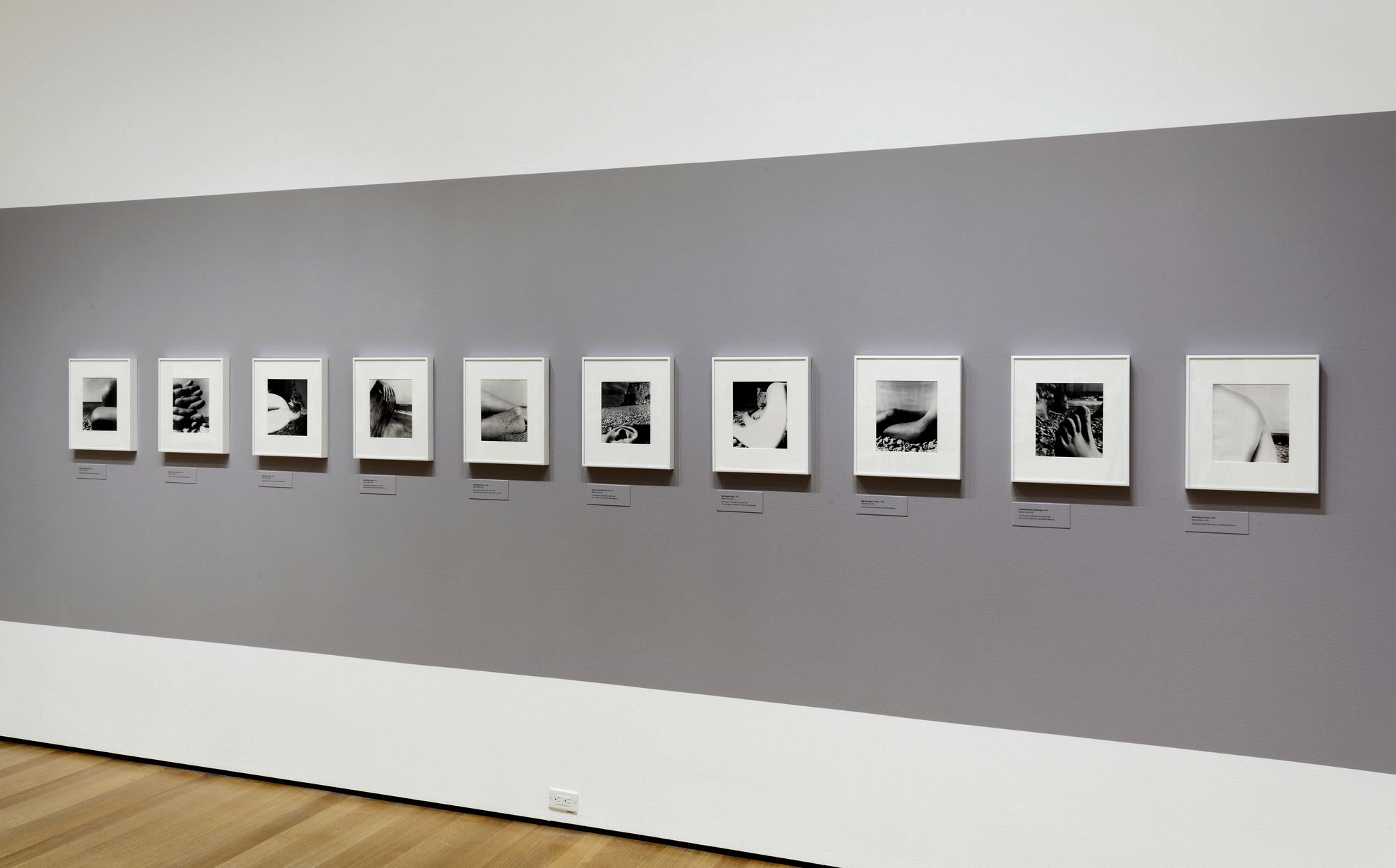
Installation view of the exhibition Bill Brandt: Shadow and Light at The Museum of Modern Art, New York, March – August, 2013 showing photographs from the section “Nudes” including at fifth left, Taxo d’Aval, France (1958, below); at sixth left, Seaford, East Sussex Coast (1957, below); at third right, Baie des Anges (1959); and at second right, Vastérival Beach, Normandy (1954, below)

Bill Brandt (British born Germany, 1904-1983)
Taxo d’Aval, France
1958
Gelatin silver print
9 1/16 x 7 3/4″ (23 × 19.7cm)
The Museum of Modern Art
Acquired through the generosity of Jon L. Stryker
© 2012 Bill Brandt Archive Ltd.

Bill Brandt (British born Germany, 1904-1983)
Seaford, East Sussex Coast
1957
Gelatin silver print
9 x 7 11/16″ (22.9 x 19.5cm)
The Museum of Modern Art
Gift of David Dechman and Michel Mercure
© 2012 Bill Brandt Archive Ltd.

Bill Brandt (British born Germany, 1904-1983)
Vasterival, Normandy
1954
Gelatin silver print
9 1/16 x 7 3/4″ (23 x 19.7cm)
The Museum of Modern Art
Gift of David Dechman and Michel Mercure
© 2012 Bill Brandt Archive Ltd.
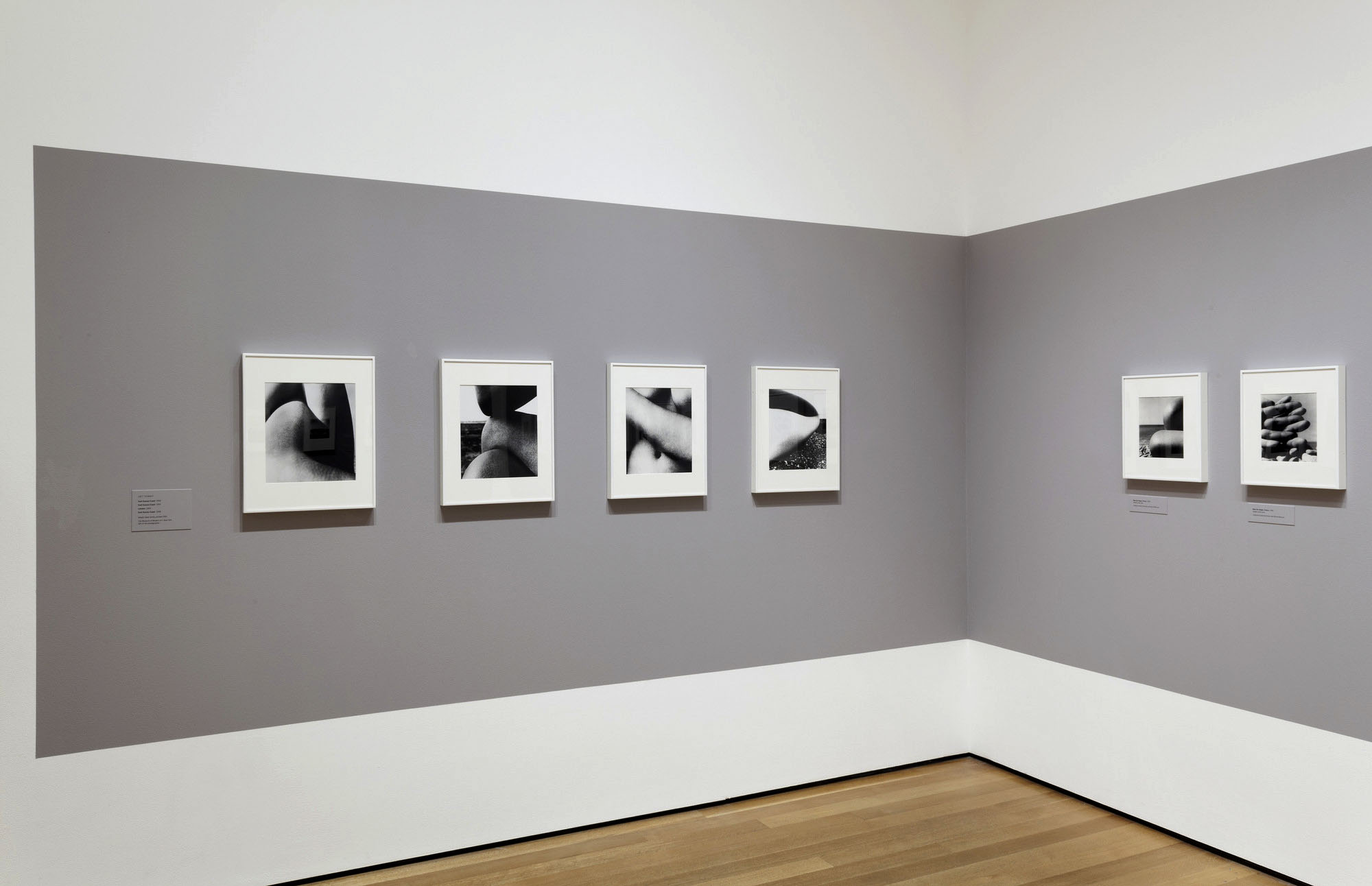
Installation view of the exhibition Bill Brandt: Shadow and Light at The Museum of Modern Art, New York, March – August, 2013 showing photographs from the section “Nudes” including at second left, East Sussex Coast (1959, below)

Bill Brandt (British born Germany, 1904-1983)
East Sussex Coast
1959
Gelatin silver print
13 3/16 x 11 5/16″ (33.5 x 28.8cm)
The Museum of Modern Art
Gift of the artist
© 2012 Bill Brandt Archive Ltd.
The Museum of Modern Art
11 West 53 Street
New York, NY 10019
Phone: (212) 708-9400
Opening hours:
10.30am – 5.30pm daily


You must be logged in to post a comment.