Exhibition: ‘The Poetry of the Everyday. Photographs by Elfriede Mejchar’ at Museum der Moderne Salzburg

Exhibition dates: 26th April – 15th September 2024

Altstadt (Rupertinum)

Curator: Katharina Ehrl
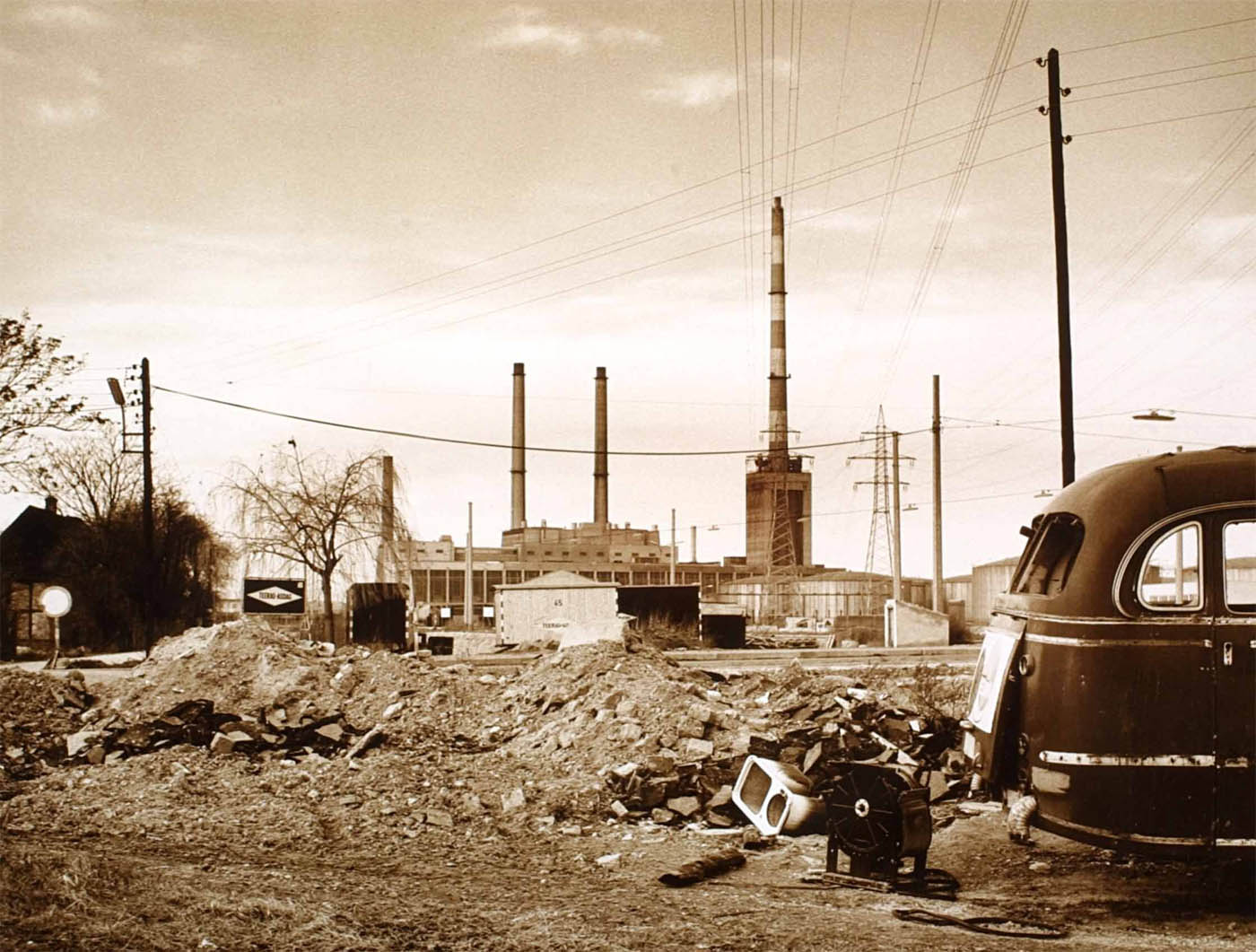
 

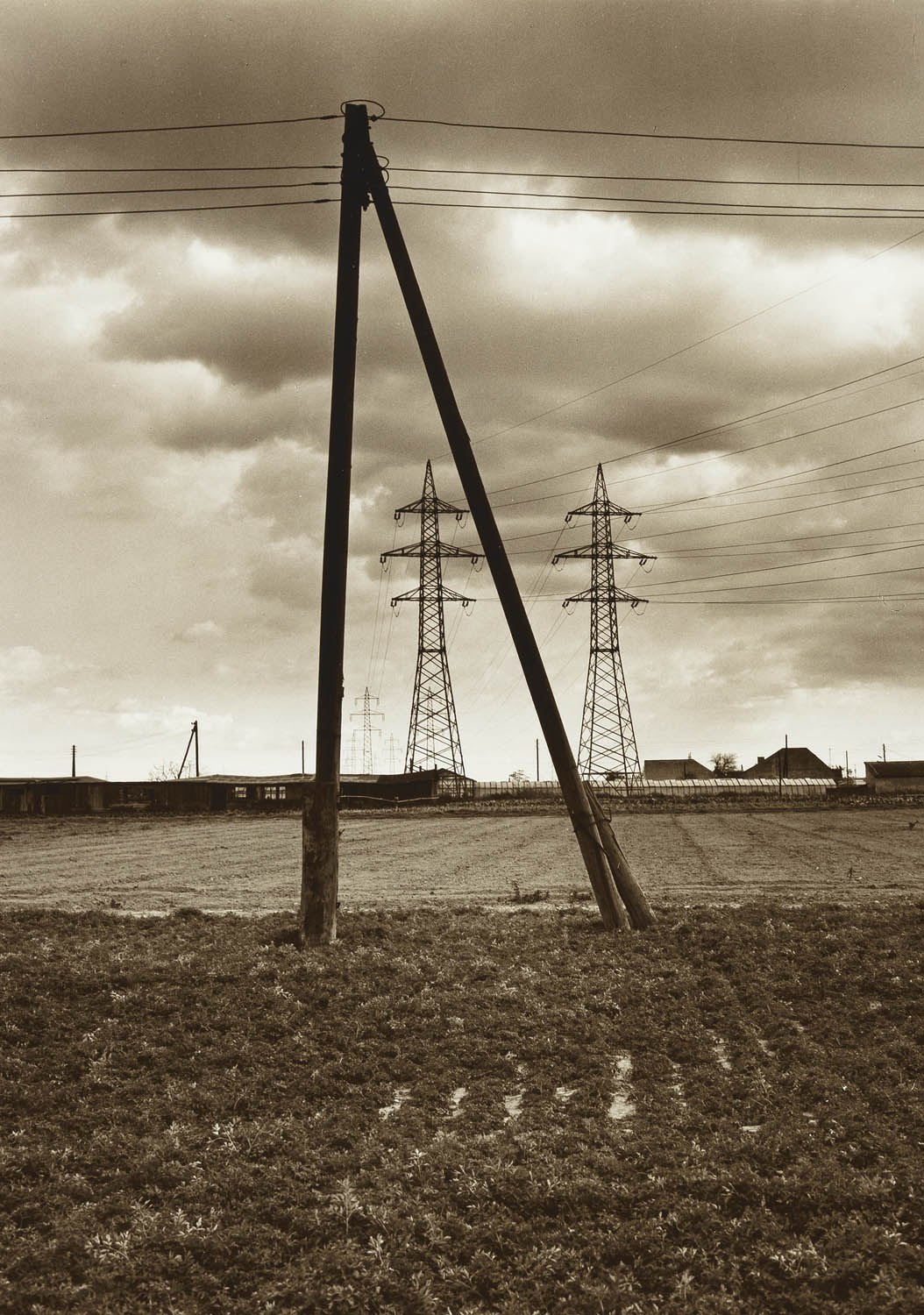
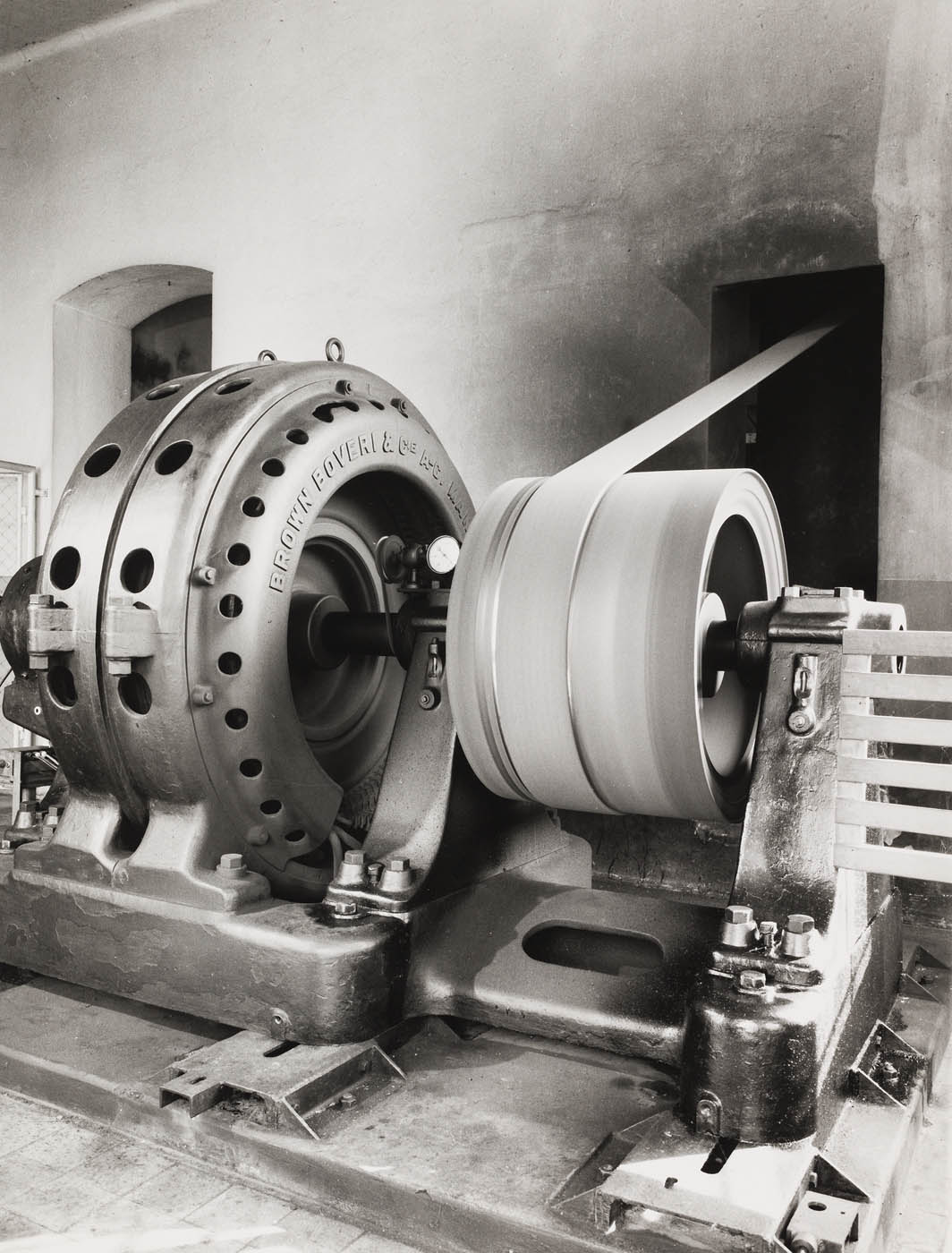
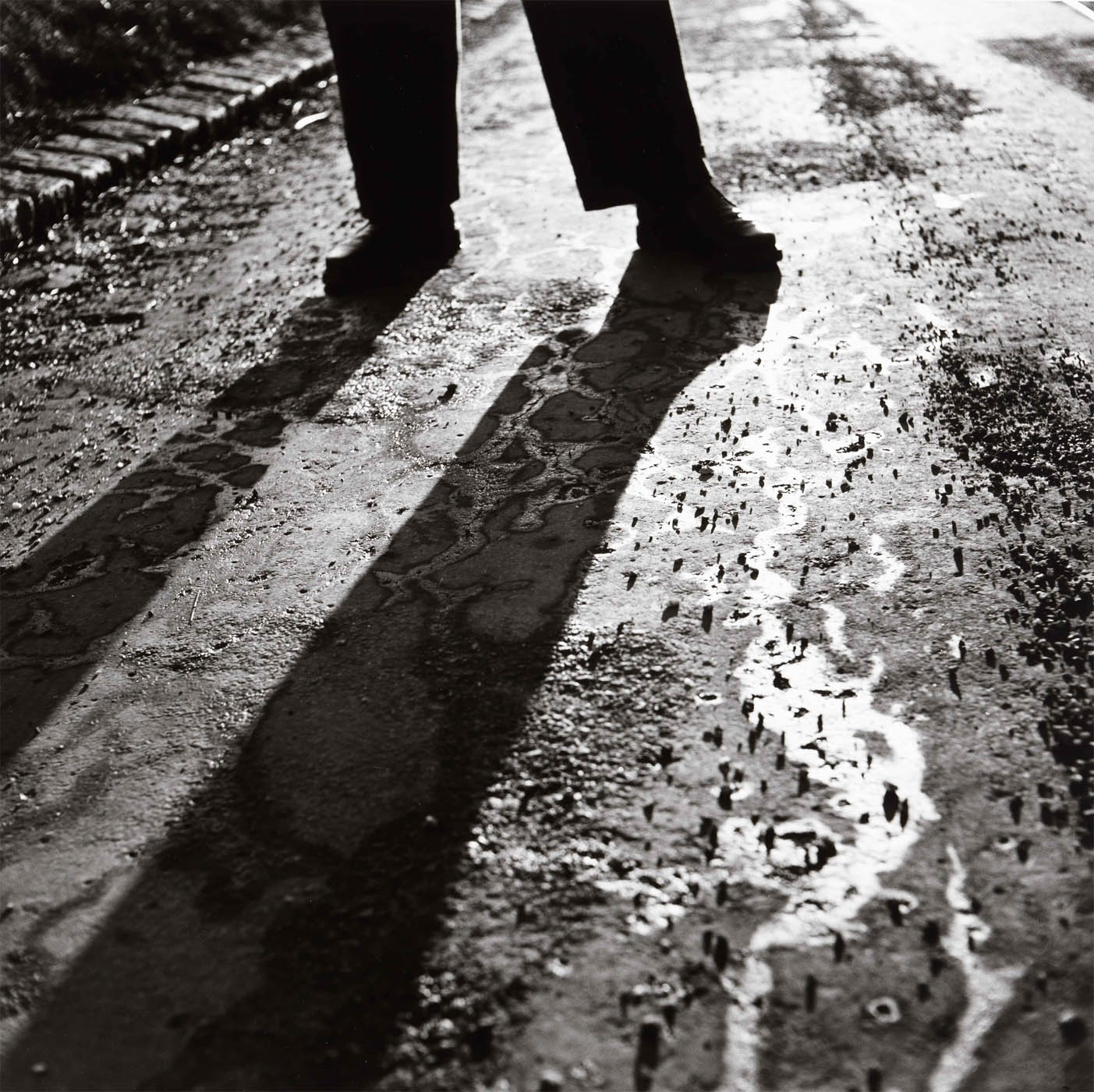
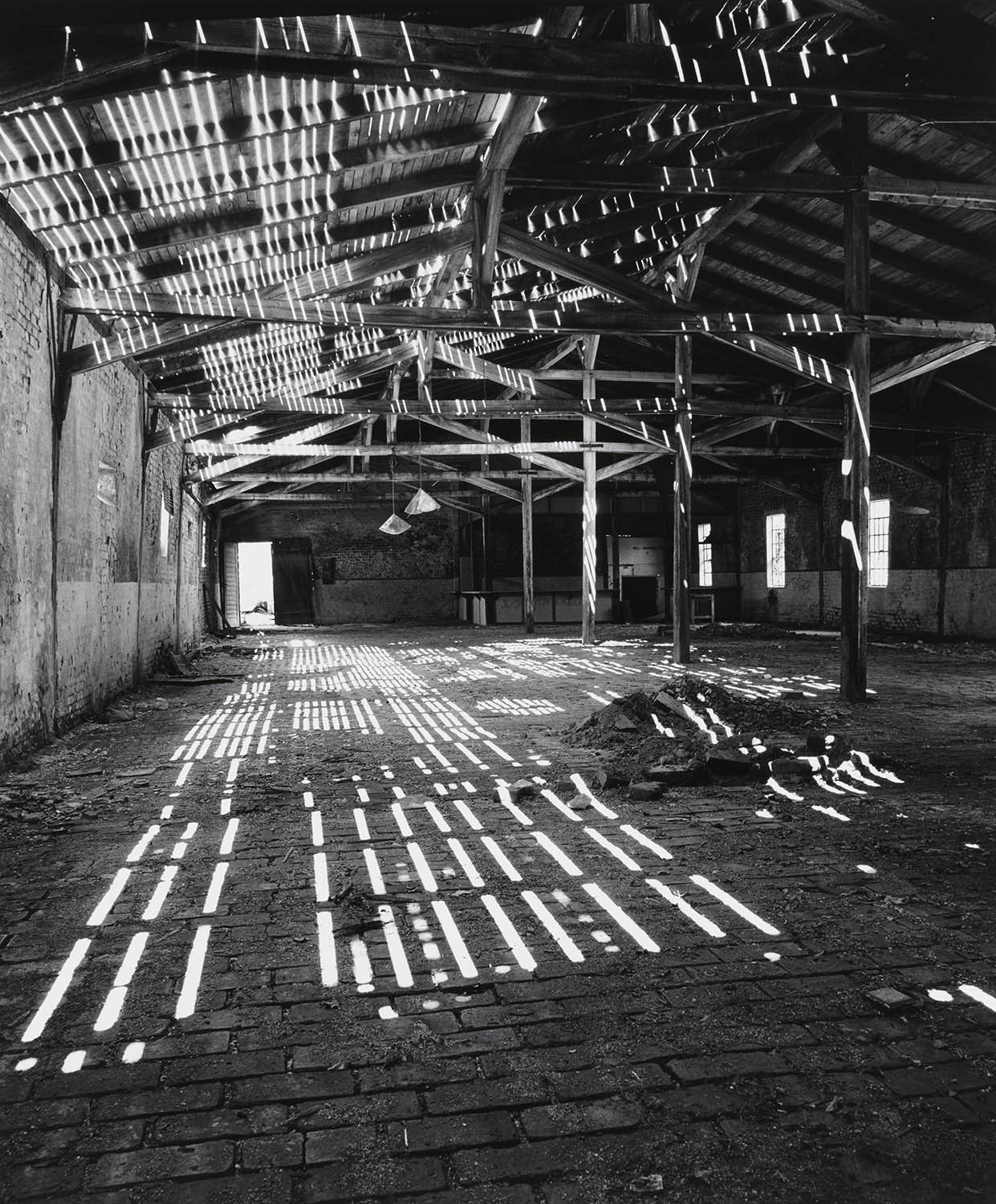
Elfriede Mejchar (Austrian, 1924-2020) From the series 'Simmeringer Heide und Erdberger Mais', 1967-1976


Elfriede Mejchar (Austrian, 1924-2020)
From the series Simmeringer Heide und Erdberger Mais, 1967-1976
Silver gelatine print on baryta paper, brown toned
Museum der Moderne Salzburg
© Bildrecht, Vienna 2024


Deriving pleasure from the dérive

In recent weeks Art Blart has posted on social documentary photographers of the urbanscape: David Goldblatt documenting social conditions in South Africa under apartheid and Roger Mayne with his “mixture of reality and unreality” photographs of the communities of Southam Road and surrounds, London.

One could argue that both could be seen as a focused urban male flâneur (or flâneuse in the case of a female), who saunters around the city observing society – the serendipitous Mayne more so than the working in series focused Goldblatt. And here we have another photographer of the urbanscape until recently unknown to me, that of the magnificent Austrian photographer Elfriede Mejchar (1924-2020) who – according to the exhibition text – is another flâneur, “her flaneur-like practice underlying her earlier bodies of work.”

But Mejchar’s was a very concentrated photographic practice, one in which the photographer again and again “explored Vienna’s peripheral zones on the southeast edge of the city” to create photographic series often created over several years. Therefore, rather than being a wandering dilettante photographer, I believe that Mejchar was a focused conceptual artist who used Guy Debord’s “Theory of the Dérive” (1956)1 (or “drift”) to ground her photographic practice.

With its focused flow of acts, its gestures, its strolls, its encounters, one of the goals of the dérive includes studying the terrain of the city (psychogeography), the exploration of urban environments that emphasises interpersonal connections to places. The pyschogeography of the urbanscape.2

A quotation by Grant W. Ray is instructive in this regard:

“Debord’s Dérive is not simple a walk through the streets of the city, of chance encounters. Instead one must move rapidly and decisively through the urban space, with intention… They should be aware of their surroundings, of the “… ecological analysis of the absolute or relative character of fissures in the urban network, of the role of microclimates, of distinct neighborhoods with no relation to administrative boundaries, and above all of the dominating action of centers of attraction…” Thus the most talented photographers who’s oeuvre includes the investigation of the urbanscape. The walk itself, the interaction of operator, camera, and site breaks down the normal relationship we have with public urban spaces. Their activity alone is the Dérive.”3


Working decisively and with intention, at the edge of the city, in spaces with no boundaries, where there were few people, or using different typologies of the city such as hotel rooms in which she stayed during her everyday job, Mejchar focused on the pyschogeography of the urbanscape through her reflective, non-decisive moment photographs, capturing “the complexity of this desolate and yet, in her eyes, beautiful landscape” and the changes that were happening to the urbanscape.

“Elfriede Mejchar consciously broke away from the photographic mainstream and the reportage style that was popular at the time. Rather than searching for the so-called “decisive moment,” she approached her subjects in a strongly conceptual and serial manner. She focused not on the extraordinary but on the unspectacular and the commonplace, the everyday and the banal, repeatedly addressing these in new ways in her photographic series.” (Text from the Wien Museum website)

Working with the periphery, the borders between urban and rural spaces, the non-decisive moment, landscapes subjected to human interventions and photographs in series, Mejchar’s photographs are more than mere representation of these sites: they challenge the viewer to “instigate more than just chance encounters for the viewer looking at the photographs,” through an understanding of the “subtle variations of the daily social realities created and maintained through public works and layout.”4 “The photographers activity of finding these sites is the dérive, the photograph itself is the pyschogeography, the questioning.”4

With her training as a classical photographer in the manner of Sudek, Brassaï or Tudor-Hart (see the first two photographs in the posting On Her Own. The photographer Elfriede Mejchar) grounding her later objective conceptual photographs, Mejchar’s point of departure is the pleasure she derives from the focused dérive and the results of her activity (through the objective and precise eye of a topographer a la Bernd and Hiller Becher) – the questioning photographs – brought to the attention of the viewer.

Mejchar investigates “traces of civilisation that humans leave in nature or along the edges of the urban fabric” and in so doing brings peripheral things (and her ideas about them) to the centre of our attention, making them psychologically valuable for all of us. The artist derives pleasure from her measured dérive and investigation of the evanescent, posing important questions about seemingly mundane things before they pass out of sight, memory, and existence.

And in her pleasure, is ours.

Dr Marcus Bunyan

See another posting about the artist’s work: On Her Own. The photographer Elfriede Mejchar at Wien Museum MUSA, Vienna, 18th April – 1st September, 2024


1/ “Psychogeography describes the effect of a geographical location on the emotions and behaviour of individuals.

How do different places make us feel and behave? The term psychogeography was invented by the Marxist theorist Guy Debord in 1955 in order to explore this. Inspired by the French nineteenth century poet and writer Charles Baudelaire’s concept of the flâneur – an urban wanderer – Debord suggested playful and inventive ways of navigating the urban environment in order to examine its architecture and spaces.”

Anonymous. “Psychogeography,” on the Tate website Nd [Online] Cited 13/09/2024

2/ Guy Debord (November 1956). “Theory of the Dérive”. Les Lèvres Nues (9). Translated by Ken Knabb.

3/ Guy Debord, “Theory of the Dérive,” 1958 on the Bureau of Public Secrets website Nd quoted in Grant W. Ray. “Dérive,” on the Silverpoetics website 13 July 2009 [Online] Cited 20/08/2024

4/ Ibid.,


Many thankx to the Museum der Moderne Salzburg for allowing me to publish the photographs in the posting. Please click on the photographs for a larger version of the image.


Poesie des Alltäglichen. Fotografien von Elfriede Mejchar / The poetry of the everyday

To mark the centenary of her birth, in 2024 three museums in Austria host exhibitions of works by the photographer Elfriede Mejchar (1924-2020, Vienna, AT). The Museum der Moderne Salzburg presents the artist as a portraitist. Curator Katharina Ehrl guides you through the exhibition in this short film.


In 2024, three museums host exhibitions of works by the Austrian photographer Elfriede Mejchar (1924-2020, Vienna, AT). The Museum der Moderne Salzburg is collaborating with the Landesgalerie Niederösterreich and the Wien Museum to honor the artist’s work at three different locations on the occasion of her 100th birthday, with each location offering a different focus.

Salzburg’s contribution to this collaborative project will present the artist’s portraits. With her series of works entitled “Artists at work” (1954-1961), for example, Mejchar demonstrates impressively how she engages with the artistic personalities of Christa Hauer, Friedensreich Hundertwasser, Josef Mikl and Arnulf Rainer by mapping their working situation in their studios. But she also demonstrated the same precision of perception when encountering the inanimate objects in her surroundings, thereby giving landscapes, flowers and discarded furniture the appearance of animated portraits.

The photo collections at the Museum der Moderne Salzburg hold a total of 665 photographs by Mejchar. Otto Breicha, the first director of the Museum’s predecessor institution, was a long-time colleague of Mejchar who recognised the artistic value of her photographic work and helped to promote it. As early as 1982, one year before the official opening of the Rupertinum, a comprehensive collection of her work was added to the photographic collection that later grew through further purchases and donations and today constitutes a focal point of the Museum’s photographic holdings.

Text from the Museum der Moderne Salzburg website
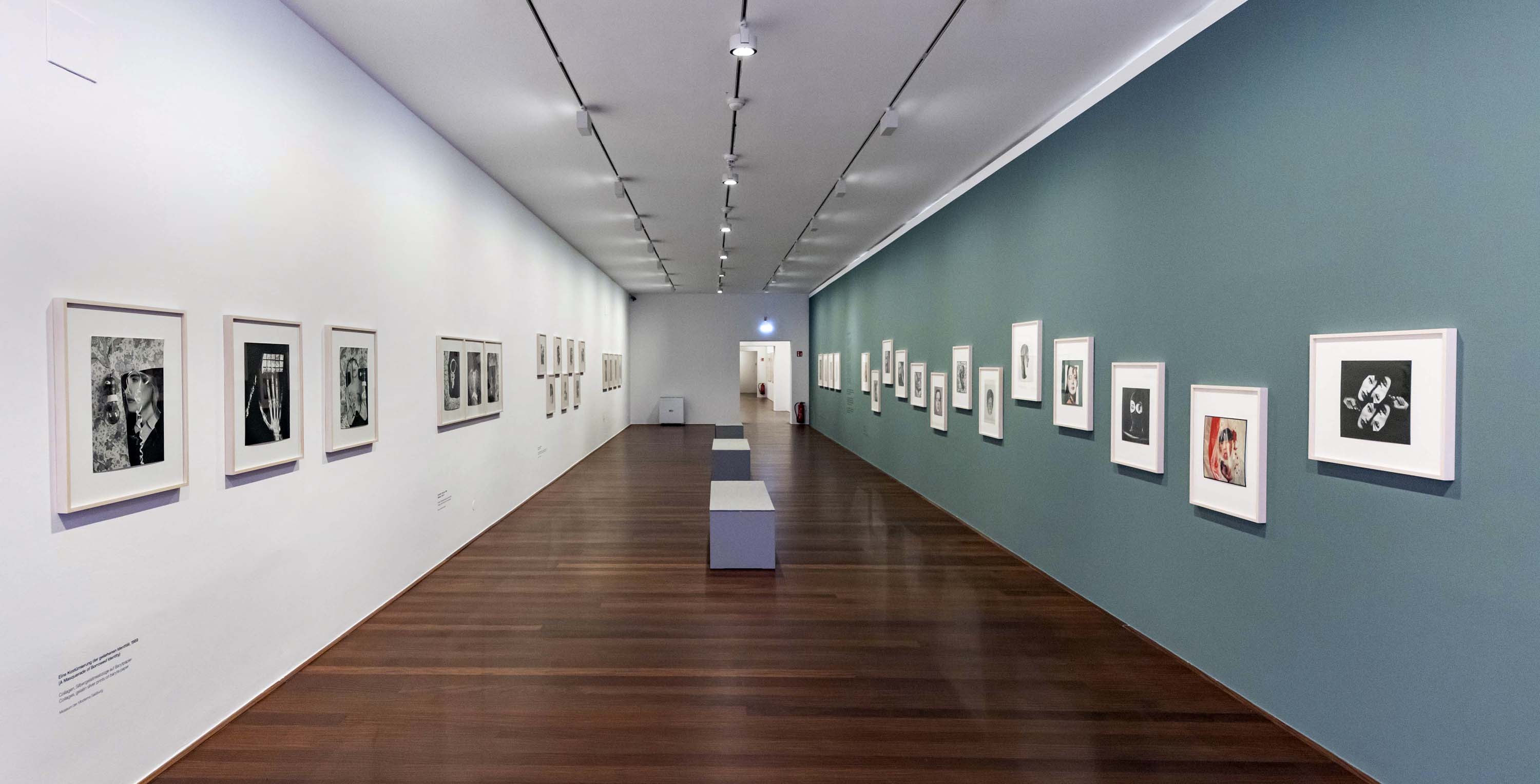
 

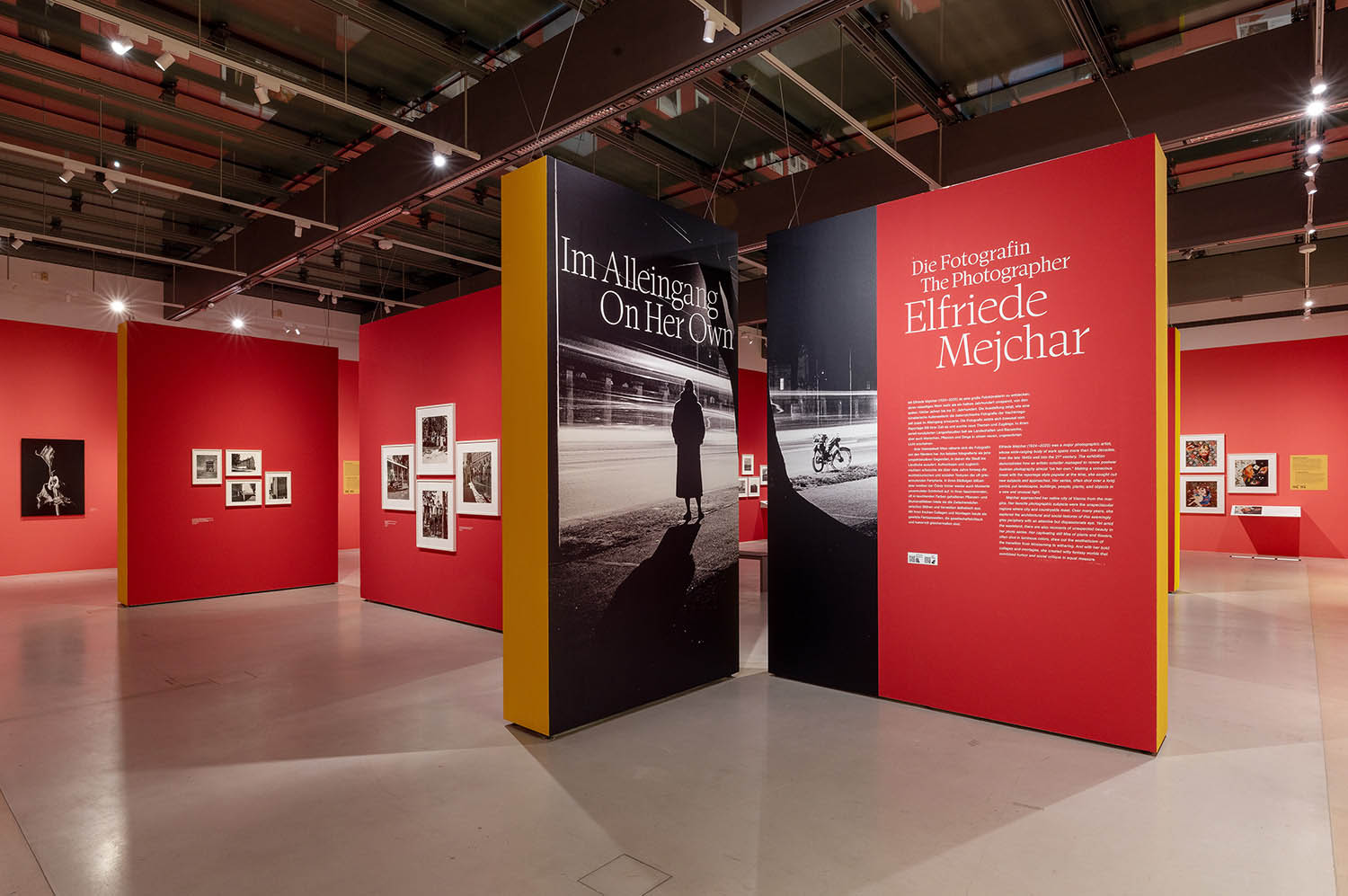
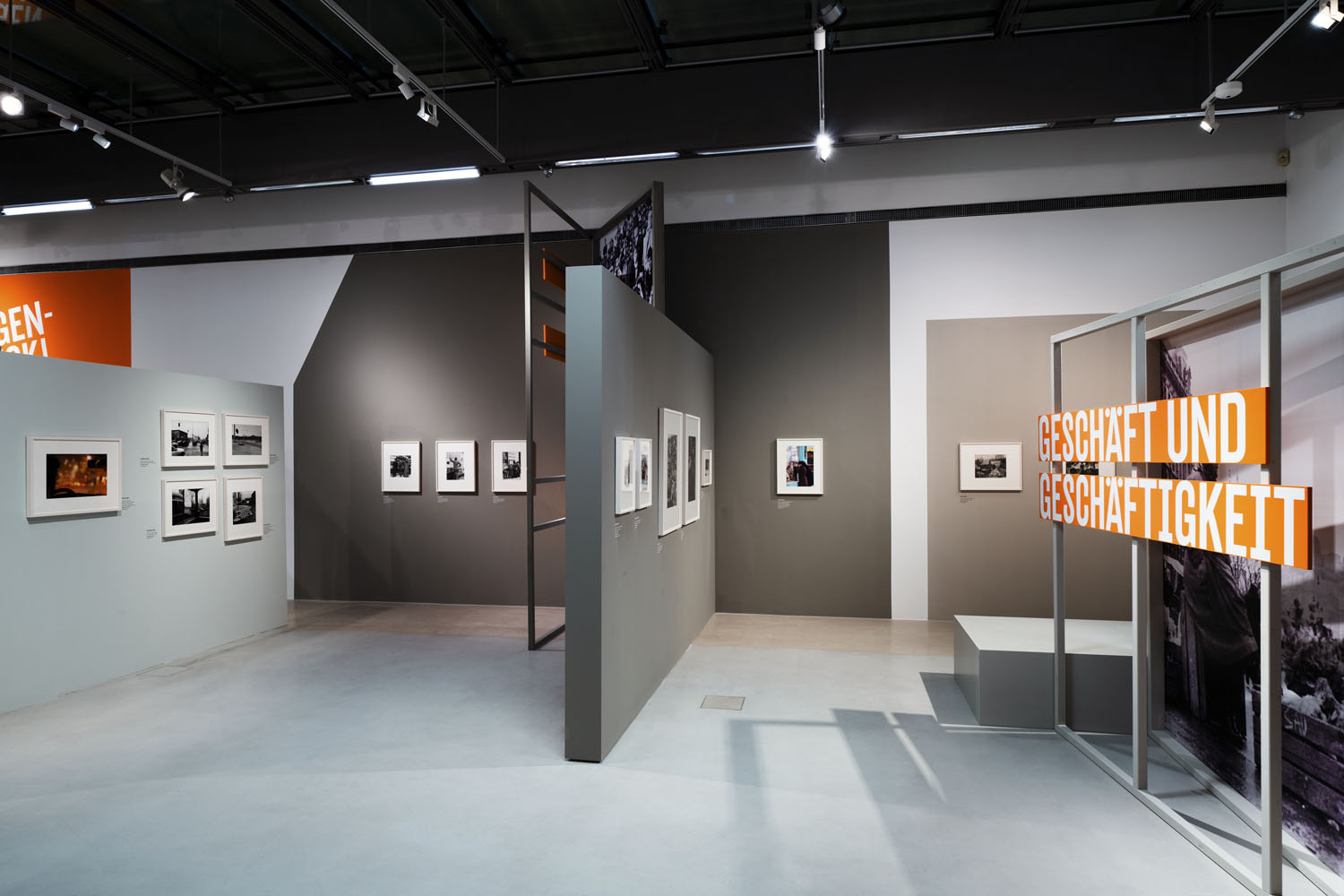
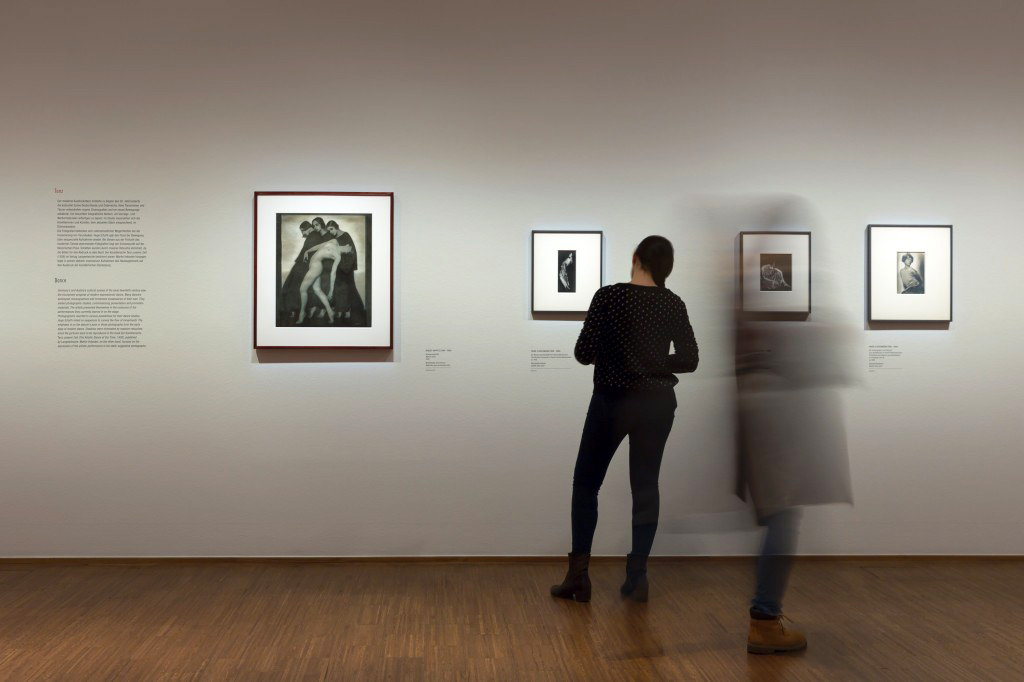
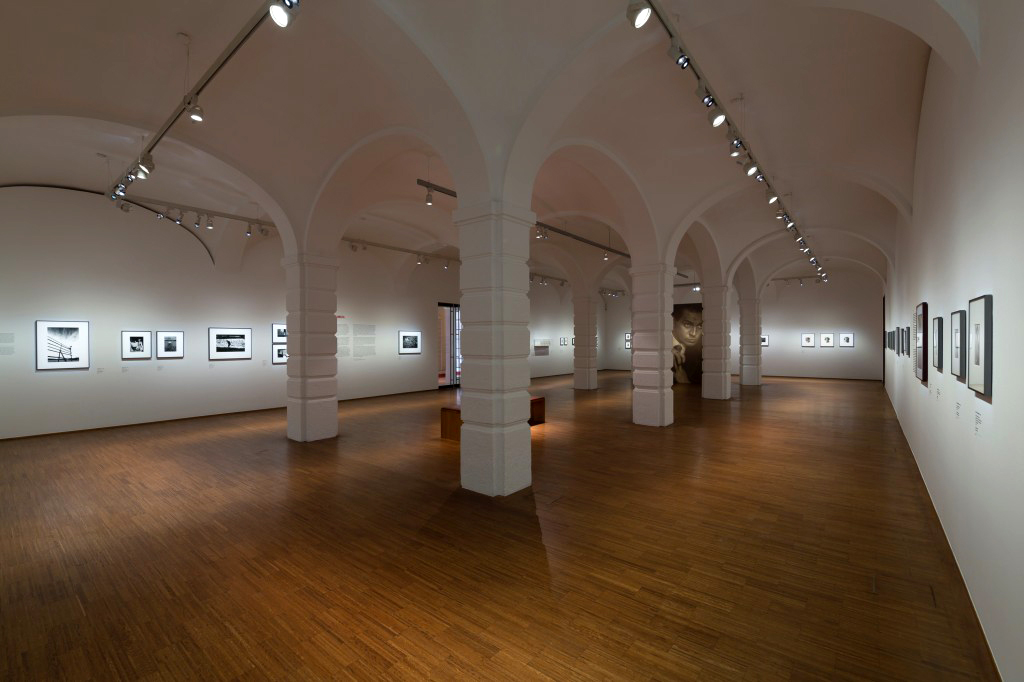
Installation view of the exhibition 'The Poetry of the Everyday. Photographs by Elfriede Mejchar', Museum der Moderne Salzburg 2024


Installation view of the exhibition The Poetry of the Everyday. Photographs by Elfriede Mejchar, Museum der Moderne Salzburg 2024 showing at left, work from Mejchar’s series Eine Kostümierung der geliehenen Identität (A Masquerade of Borrowed Identity) (below); and at right, photographs from the series Nobody is Perfect (below)
© Museum der Moderne Salzburg
Photo: wildbild/Günter Freund
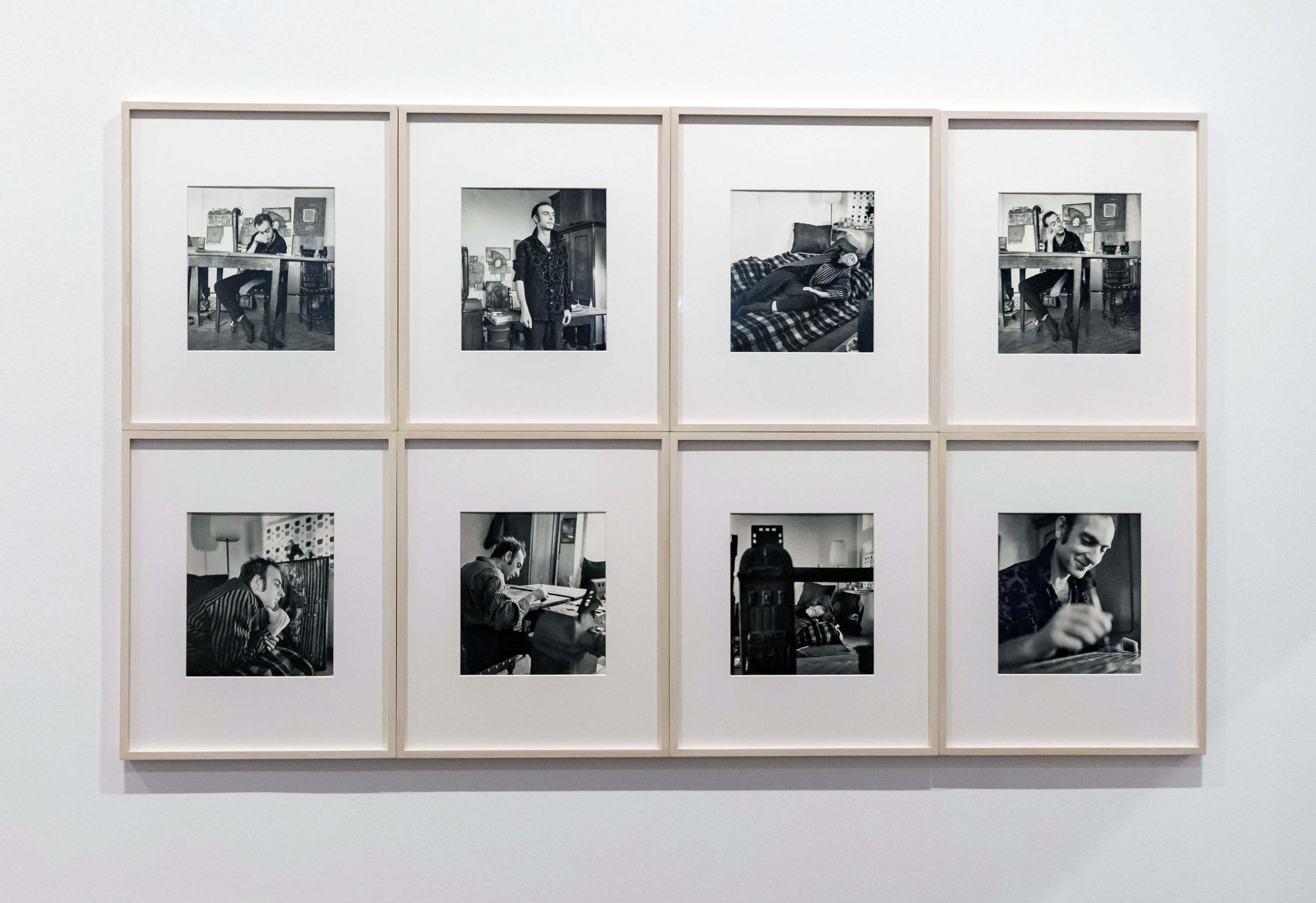
 

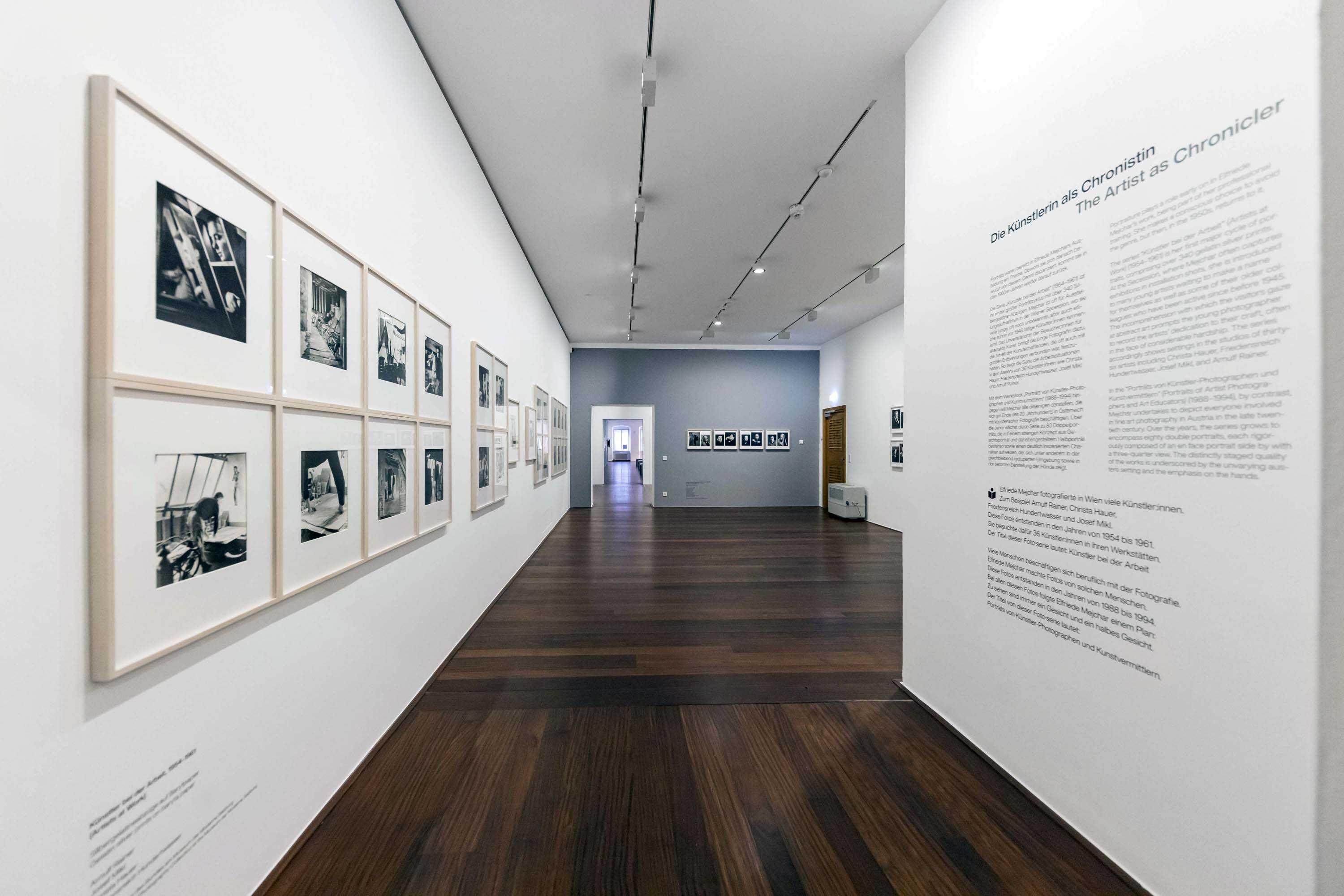
Installation view of the exhibition 'The Poetry of the Everyday. Photographs by Elfriede Mejchar', Museum der Moderne Salzburg 2024 showing work from Mejchar's series 'Künstler bei der Arbeit, 1954-1961' (Artists at work, 1954–1961)


Installation view of the exhibition The Poetry of the Everyday. Photographs by Elfriede Mejchar, Museum der Moderne Salzburg 2024 showing work from Mejchar’s series Künstler bei der Arbeit, 1954-1961 (Artists at work, 1954-1961) (below)
© Museum der Moderne Salzburg
Photo: wildbild/Günter Freund


Elfriede Mejchar (Austrian, 1924-2020) 'Arnulf Rainer' 1954-1961


Elfriede Mejchar (Austrian, 1924-2020)
Arnulf Rainer
1954-1961
From the series Künstler bei der Arbeit, 1954-1961 (Artists at work, 1954-1961)
Silver gelatin print on baryta paper
Federal Photography Collection at the Museum der Moderne Salzburg


Arnulf Rainer (Austrian, b. 1929)

Arnulf Rainer (born 8 December 1929) is an Austrian painter noted for his abstract informal art.

Rainer was born in Baden, Austria. During his early years, Rainer was influenced by Surrealism. In 1950, he founded the Hundsgruppe (dog group) together with Ernst Fuchs, Arik Brauer, and Josef Mikl. After 1954, Rainer’s style evolved towards Destruction of Forms, with blackenings, overpaintings, and maskings of illustrations and photographs dominating his later work. He was close to the Vienna Actionism, featuring body art and painting under the influence of drugs. He painted extensively on the subject of Hiroshima such as it relates to the nuclear bombing of the Japanese city and the inherent political and physical fallout.

Text from the Wikipedia website 
 

Elfriede Mejchar (Austrian, 1924-2020) 'Christa Hauer' 1954-1961


Elfriede Mejchar (Austrian, 1924-2020)
Christa Hauer
1954-1961
From the series Künstler bei der Arbeit, 1954-1961 (Artists at work, 1954–1961)
Silver gelatin print on baryta paper
Federal Photography Collection at the Museum der Moderne Salzburg


Christa Hauer-Fruhmann (Austrian, 1925-2013)

Christa Hauer-Fruhmann (b. March 13, 1925 in Vienna; d. March 21, 2013 in St. Pölten) was an Austrian painter. …

She was initially under the artistic influence of her father and created representational works such as landscapes, portraits and nude drawings. At the end of her stay in the USA, around 1960, she turned to abstract painting, particularly action painting, color field painting and informal art. Later, cosmic forms and a turn to nature determined her works.

Text from the German Wikipedia website translated by Google Translate
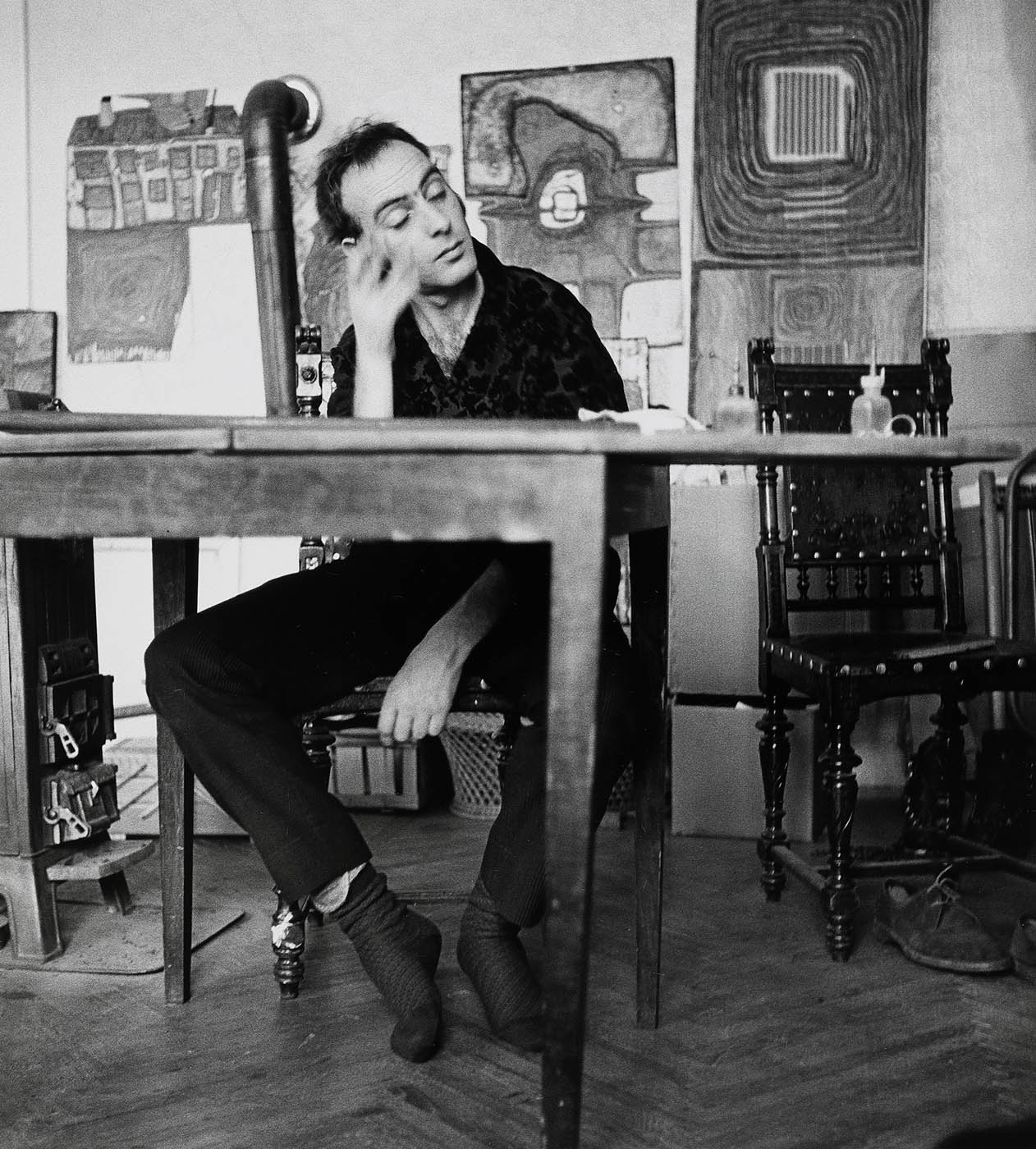
 

Elfriede Mejchar (Austrian, 1924-2020) 'Friedensreich Hundertwasser' 1954-1961


Elfriede Mejchar (Austrian, 1924-2020)
Friedensreich Hundertwasser
1954-1961
From the series Künstler bei der Arbeit, 1954-1961 (Artists at work, 1954-1961)
Silver gelatin print on baryta paper
Federal Photography Collection at the Museum der Moderne Salzburg


Friedensreich Hundertwasser (Austrian, 1928-2000)

Friedensreich Hundertwasser Regentag Dunkelbunt (born Friedrich Stowasser, born December 15, 1928 in Vienna; died February 19, 2000 on board the Queen Elizabeth 2 off Brisbane) was an Austrian artist, who worked primarily as a painter, but also in the fields of architecture and environmental protection. …

Artistically, he was an opponent of the “straight line” and any kind of standardisation throughout his life. This is particularly evident in his work in the field of building design, which is characterised by imaginative liveliness and individuality, but above all by the inclusion of nature in architecture.

Text from the German Wikipedia website translated by Google Translate


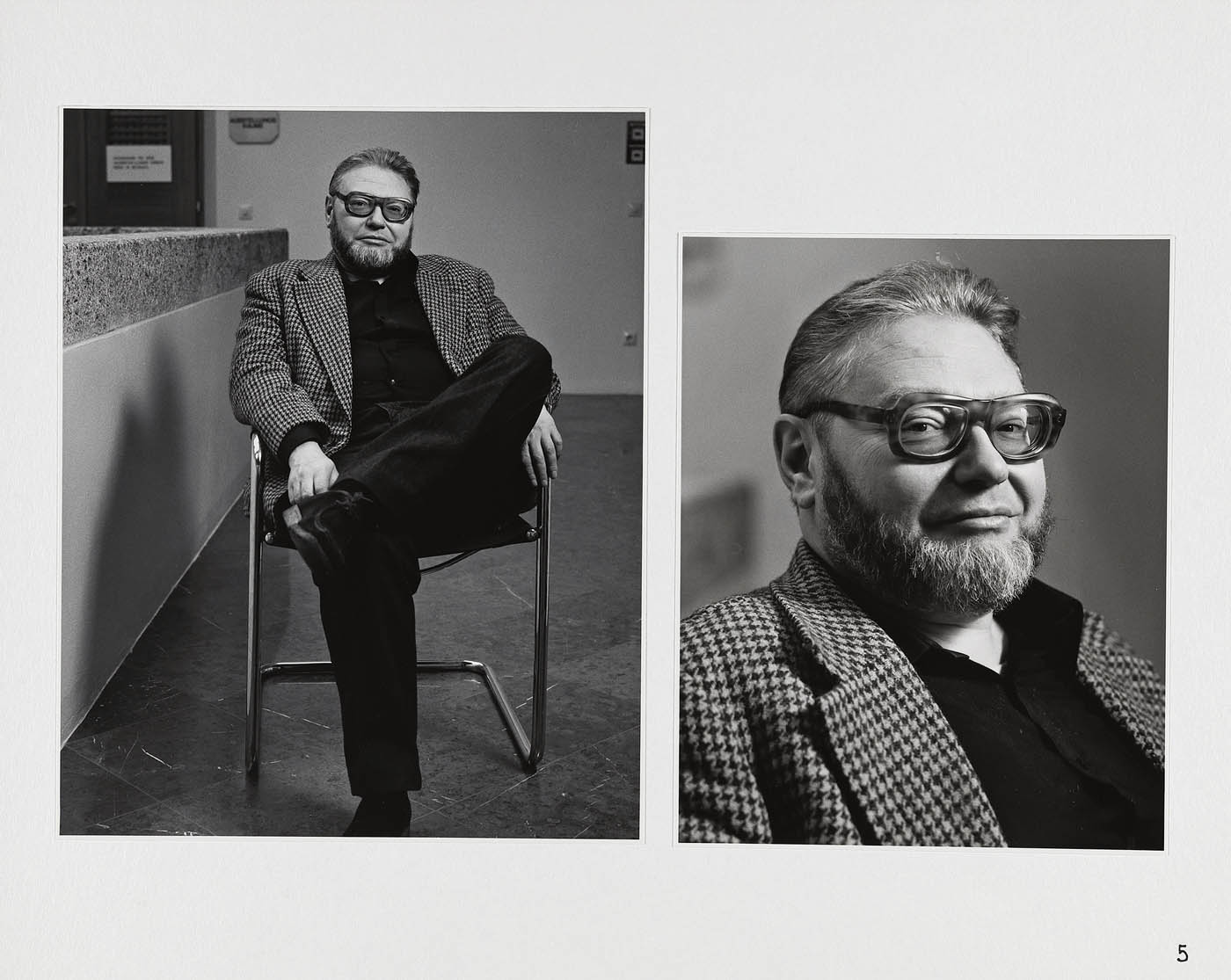
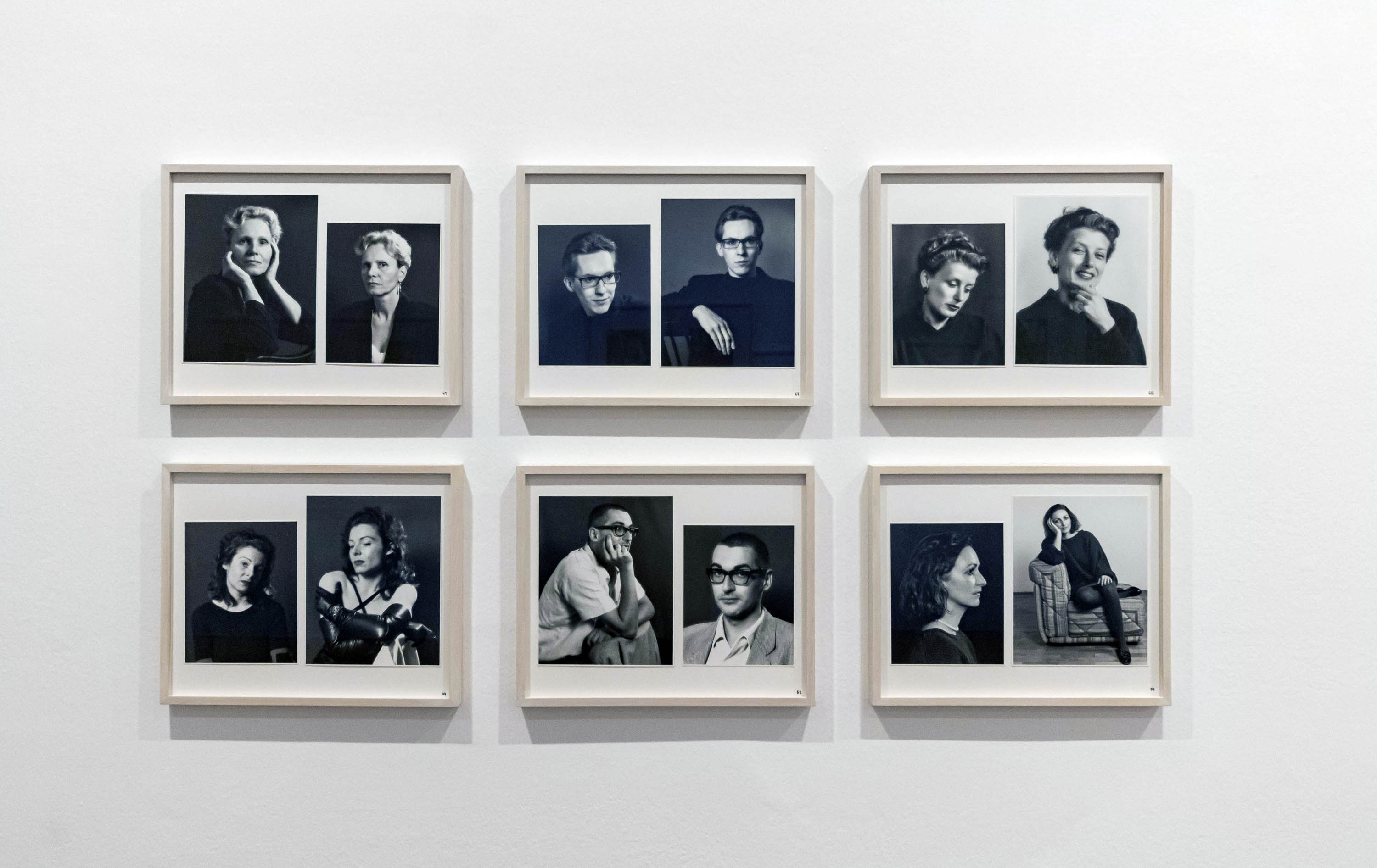
Installation view of the exhibition 'The Poetry of the Everyday. Photographs by Elfriede Mejchar', Museum der Moderne Salzburg 2024 showing photographs from Mejchar's series 'Porträts von Künstler-Photographen und Kunstvermittlern' (Portraits of Artist Photographers and Art Educators)

Installation view of the exhibition 'The Poetry of the Everyday. Photographs by Elfriede Mejchar', Museum der Moderne Salzburg 2024 showing photographs from Mejchar's series 'Porträts von Künstler-Photographen und Kunstvermittlern' (Portraits of Artist Photographers and Art Educators)


Installation view of the exhibition The Poetry of the Everyday. Photographs by Elfriede Mejchar, Museum der Moderne Salzburg 2024 showing photographs from Mejchar’s series Porträts von Künstler-Photographen und Kunstvermittlern (Portraits of Artist Photographers and Art Educators) (below)
© Museum der Moderne Salzburg, photo: wildbild/Günter Freund


Elfriede Mejchar (Austrian, 1924-2020) 'Aglaia Konrad' 1988


Elfriede Mejchar (Austrian, 1924-2020)
Aglaia Konrad
1988
From the series Porträts von Künstler-Photographen und Kunstvermittlern (Portraits of Artist Photographers and Art Educators)
Silver gelatin print on baryta paper
Federal Photography Collection at the Museum der Moderne Salzburg


Aglaia Konrad (Austrian, b. 1960)

Aglaia Konrad (born 1960) is an Austrian photographer and educator living in Brussels. …

Konrad’s photographs explore urban space in large cities. Konrad’s work has been to known to be distinctly international in that it highlights urban elements independent of cultural markers. Her work highlights the ubiquitous elements of urban life through methods like filming a city from the perspective of a moving car or compiling a series of aerial views of skyscrapers.

Text from the Wikipedia website


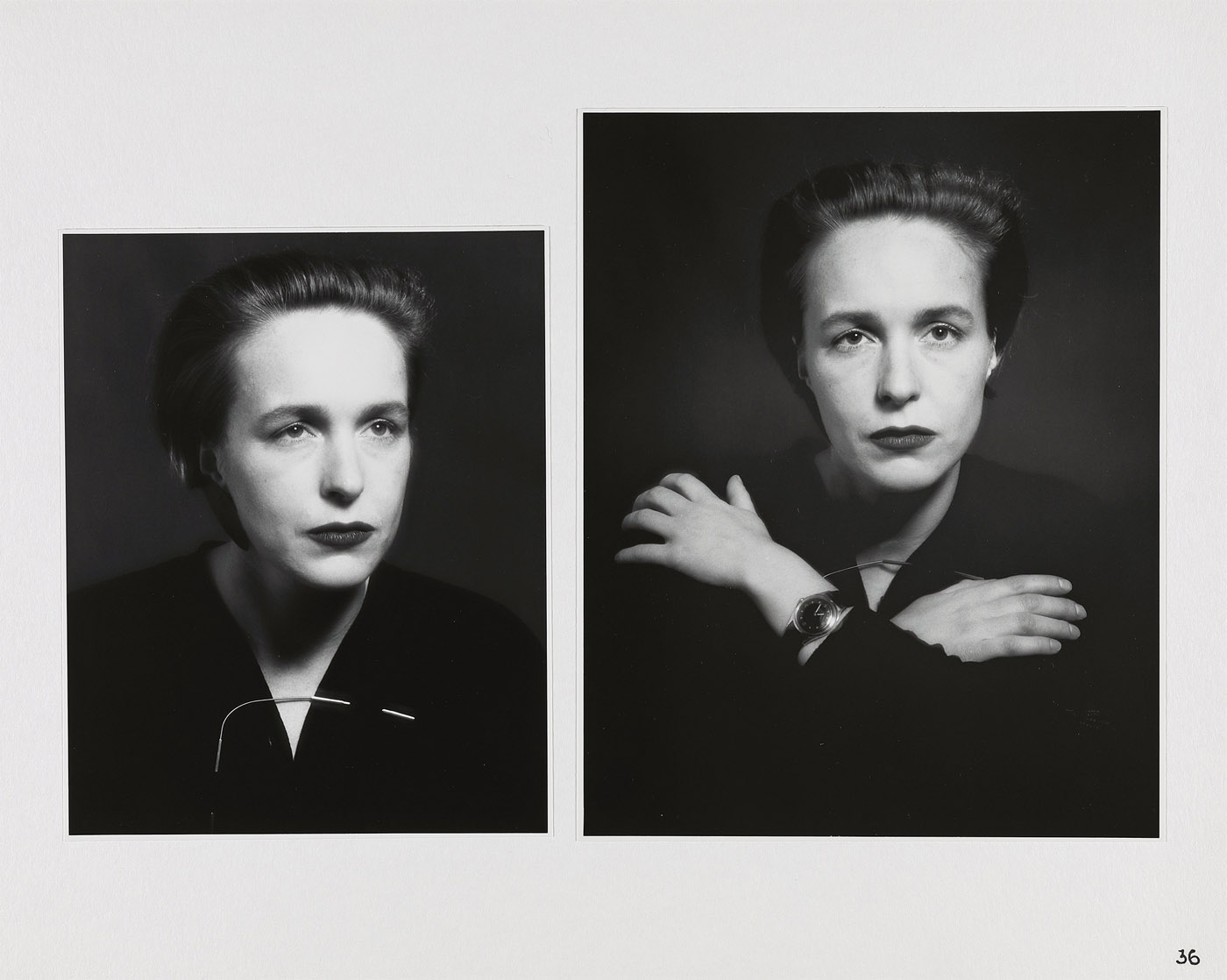
Elfriede Mejchar (Austrian, 1924-2020) 'Prof. Dr. Otto Breicha' 1988


Elfriede Mejchar (Austrian, 1924-2020)
Prof. Dr. Otto Breicha
1988
From the series Porträts von Künstler-Photographen und Kunstvermittlern (Portraits of Artist Photographers and Art Educators)
Silver gelatin print on baryta paper
Federal Photography Collection at the Museum der Moderne Salzburg


Otto Breicha (Austrian, 1932-2003)

Otto Breicha (b. 26 July 1932 in Vienna; d, 28 December 2003 in Vienna) was an Austrian art historian, publicist and museum director. …

Breicha is considered an important integration figure in the Austrian art and literature scene of the 1960s. As director of the Rupertinum he collected works by Kurt Moldovan, Günter Brus, Fritz Wotruba and Gotthard Muhr, among others. He edited portfolios by Karl Anton Fleck, Gotthard Muhr, Peter Pongratz, Alois Riedl, Karl Rössing, Johannes Wanke, Max Weiler and many others.

Breicha built up an important photo collection in the Rupertinum. He also took photos of authors himself, especially during his time at the Austrian Society for Literature from 1962 to 1972.

Text from the German Wikipedia website translated by Google Translate
 

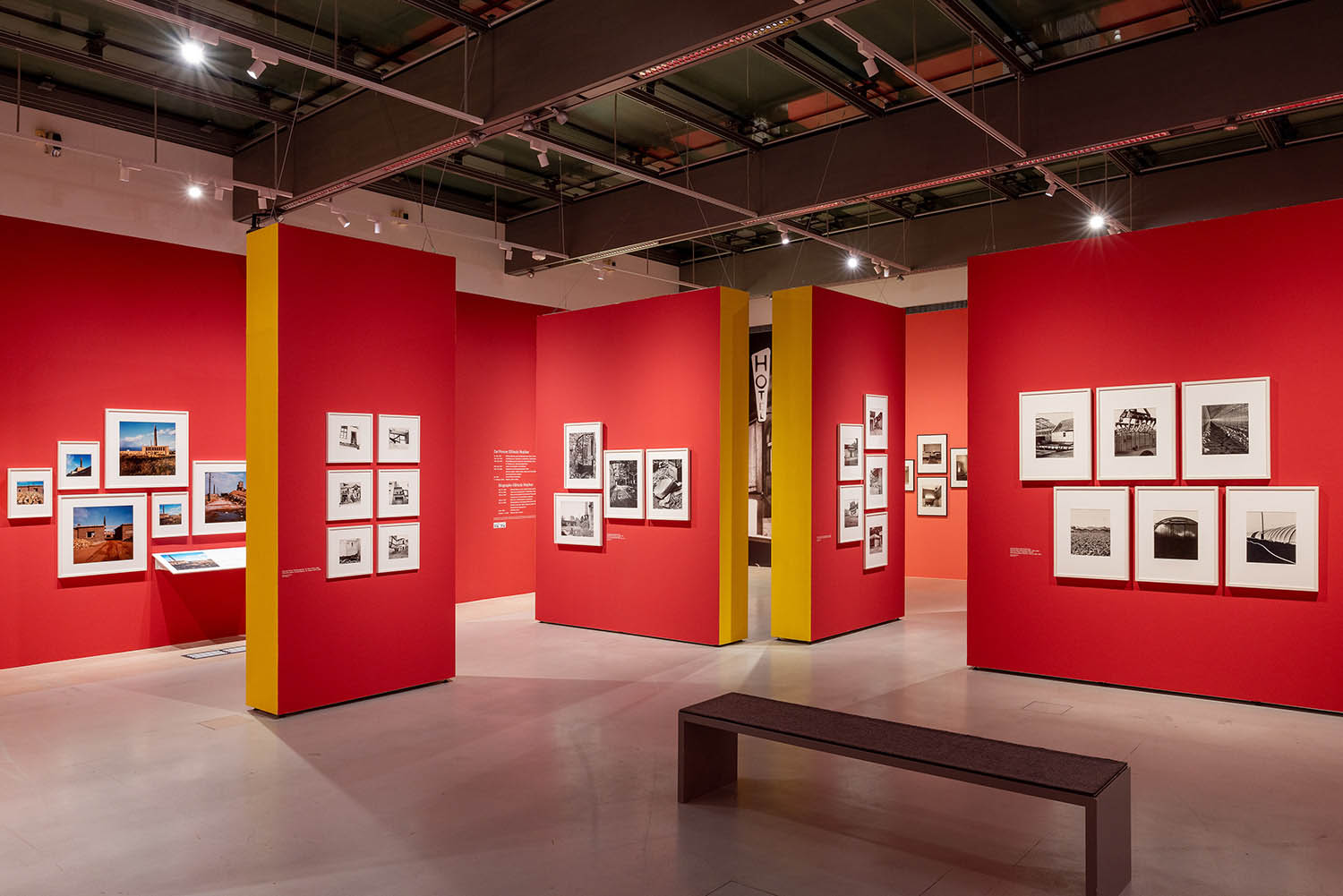
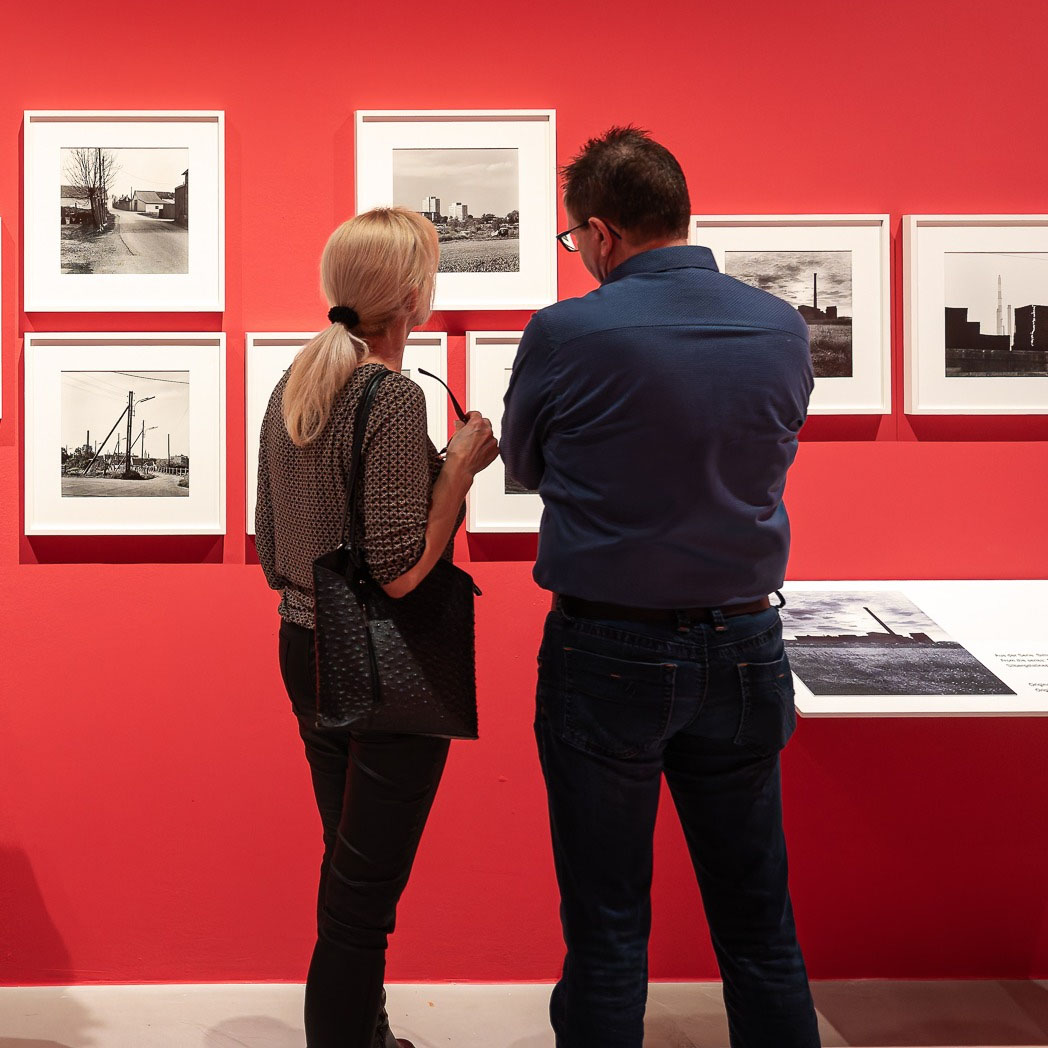
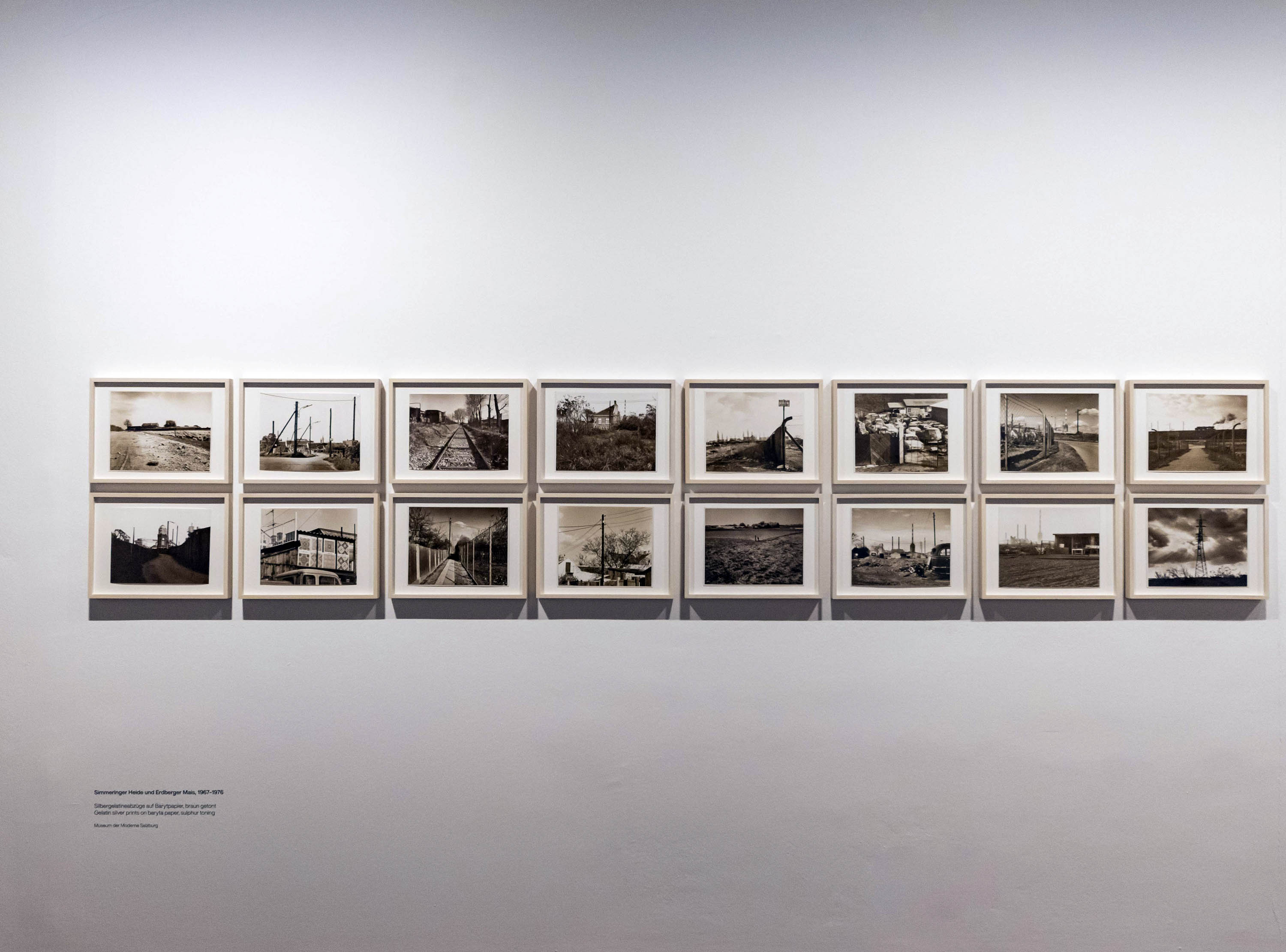
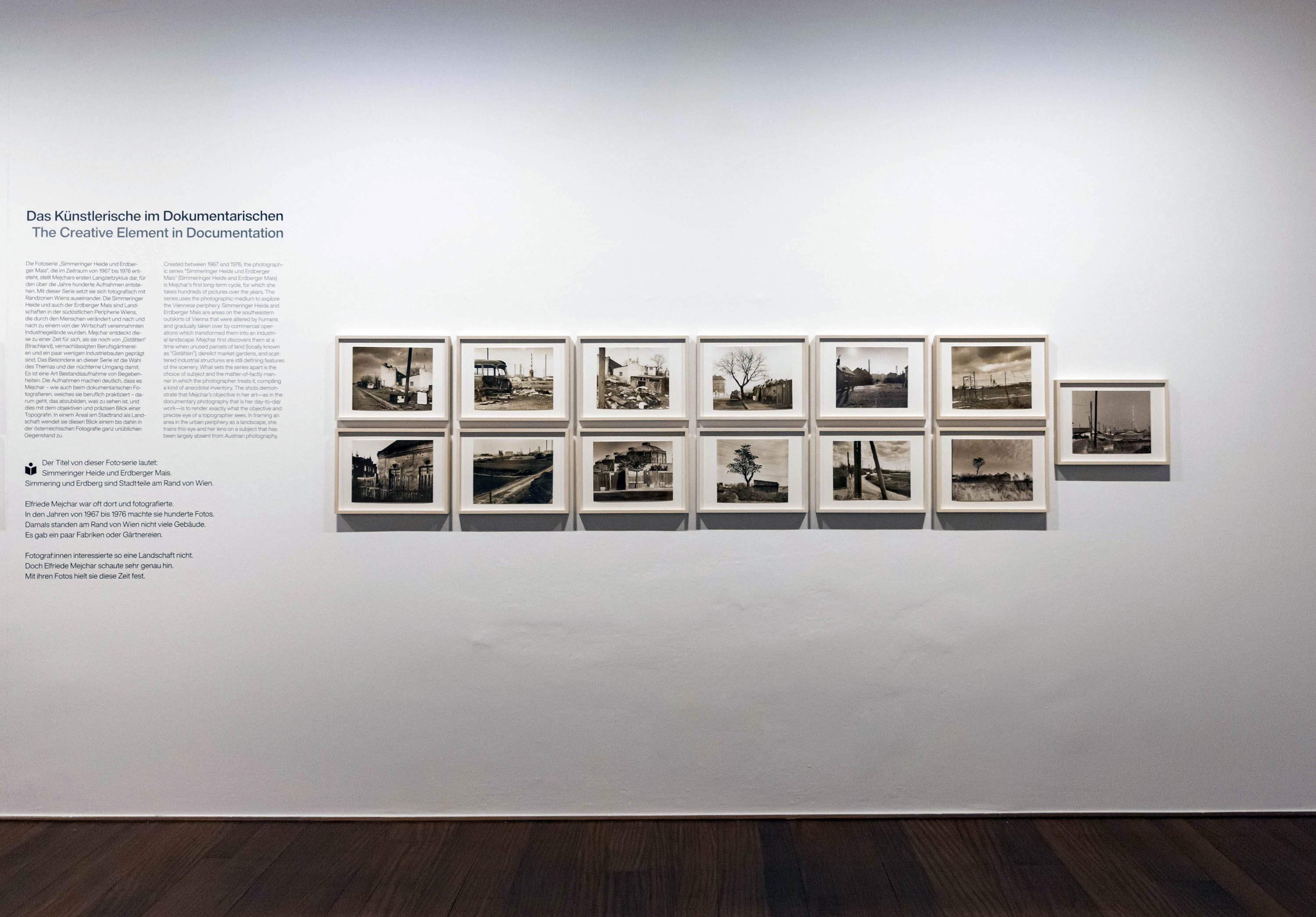
Installation view of the exhibition 'The Poetry of the Everyday. Photographs by Elfriede Mejchar', Museum der Moderne Salzburg 2024 showing photographs from Mejchar's series 'Simmeringer Heide und Erdberger Mais, 1967-1976'

Installation view of the exhibition 'The Poetry of the Everyday. Photographs by Elfriede Mejchar', Museum der Moderne Salzburg 2024 showing photographs from Mejchar's series 'Simmeringer Heide und Erdberger Mais, 1967-1976'

Installation view of the exhibition 'The Poetry of the Everyday. Photographs by Elfriede Mejchar', Museum der Moderne Salzburg 2024 showing photographs from Mejchar's series 'Simmeringer Heide und Erdberger Mais, 1967-1976'

Installation view of the exhibition 'The Poetry of the Everyday. Photographs by Elfriede Mejchar', Museum der Moderne Salzburg 2024 showing photographs from Mejchar's series 'Simmeringer Heide und Erdberger Mais, 1967-1976'


Installation view of the exhibition The Poetry of the Everyday. Photographs by Elfriede Mejchar, Museum der Moderne Salzburg 2024 showing photographs from Mejchar’s series Simmeringer Heide und Erdberger Mais, 1967-1976 (below)
© Museum der Moderne Salzburg, photo: wildbild/Günter Freund
 

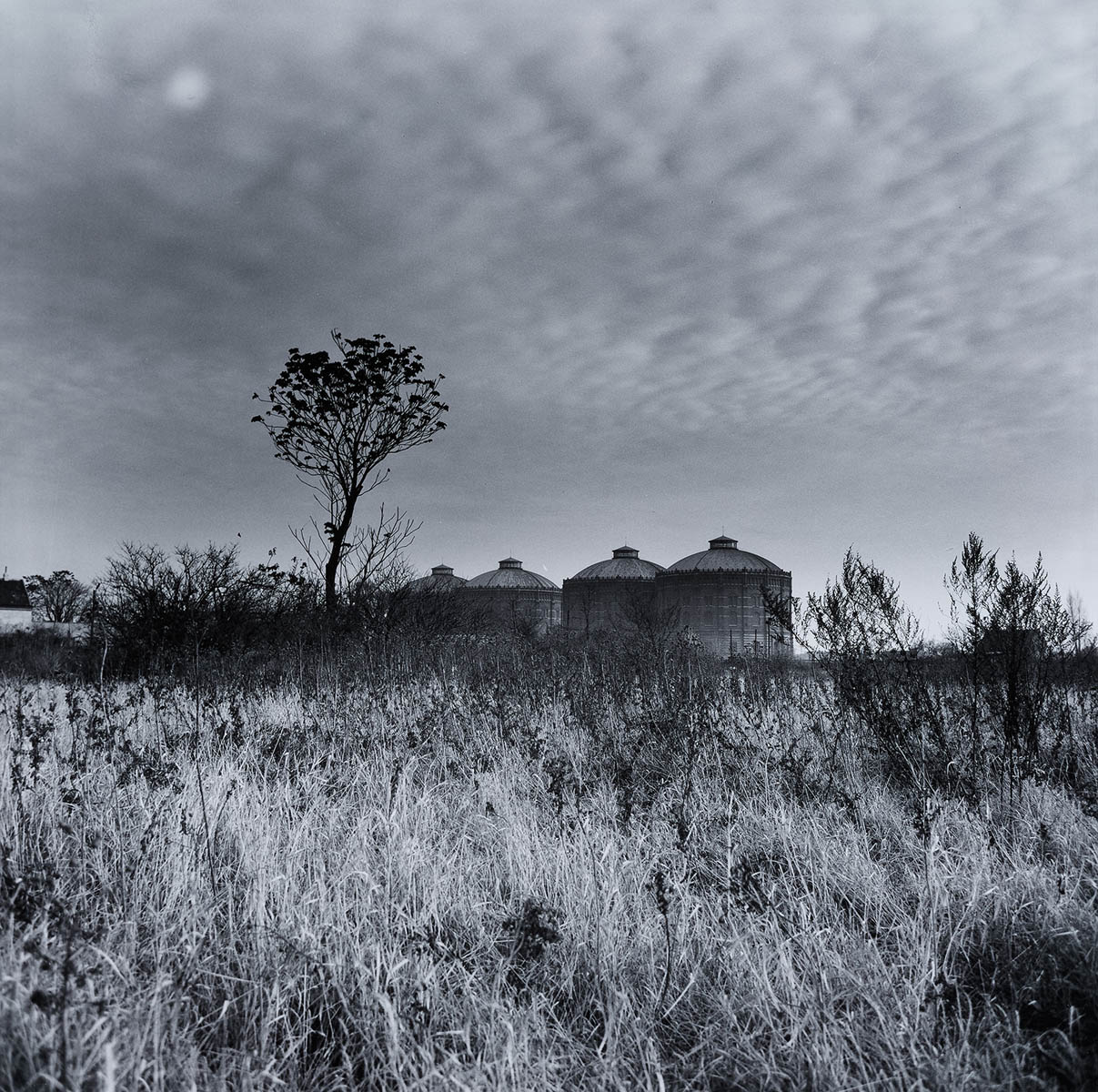
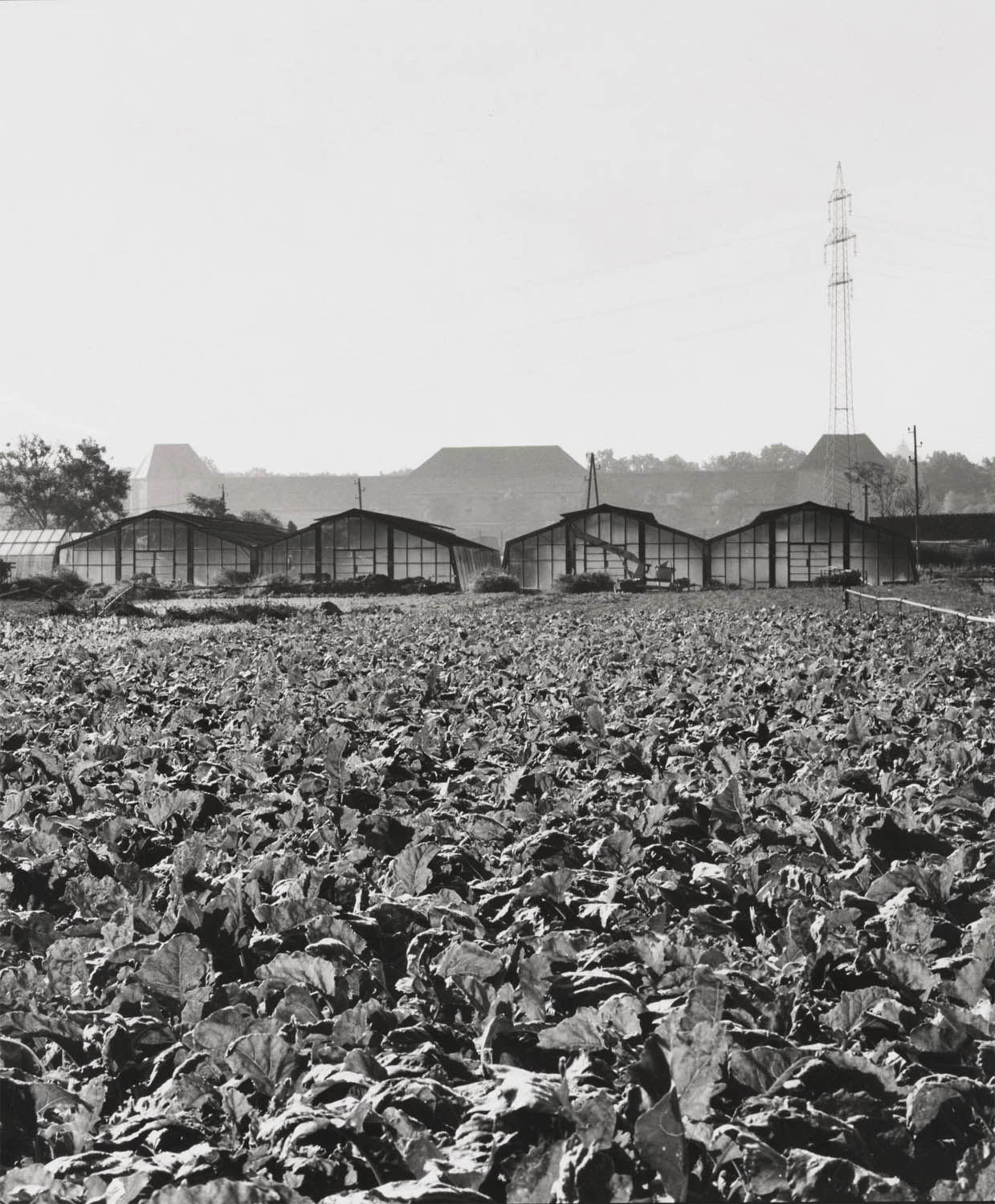
Elfriede Mejchar (Austrian, 1924-2020) From the series 'Simmeringer Heide und Erdberger Mais', 1967-1976


Elfriede Mejchar (Austrian, 1924-2020)
From the series Simmeringer Heide und Erdberger Mais, 1967-1976
Silver gelatine print on baryta paper, brown toned
Museum der Moderne Salzburg
© Bildrecht, Vienna 2024


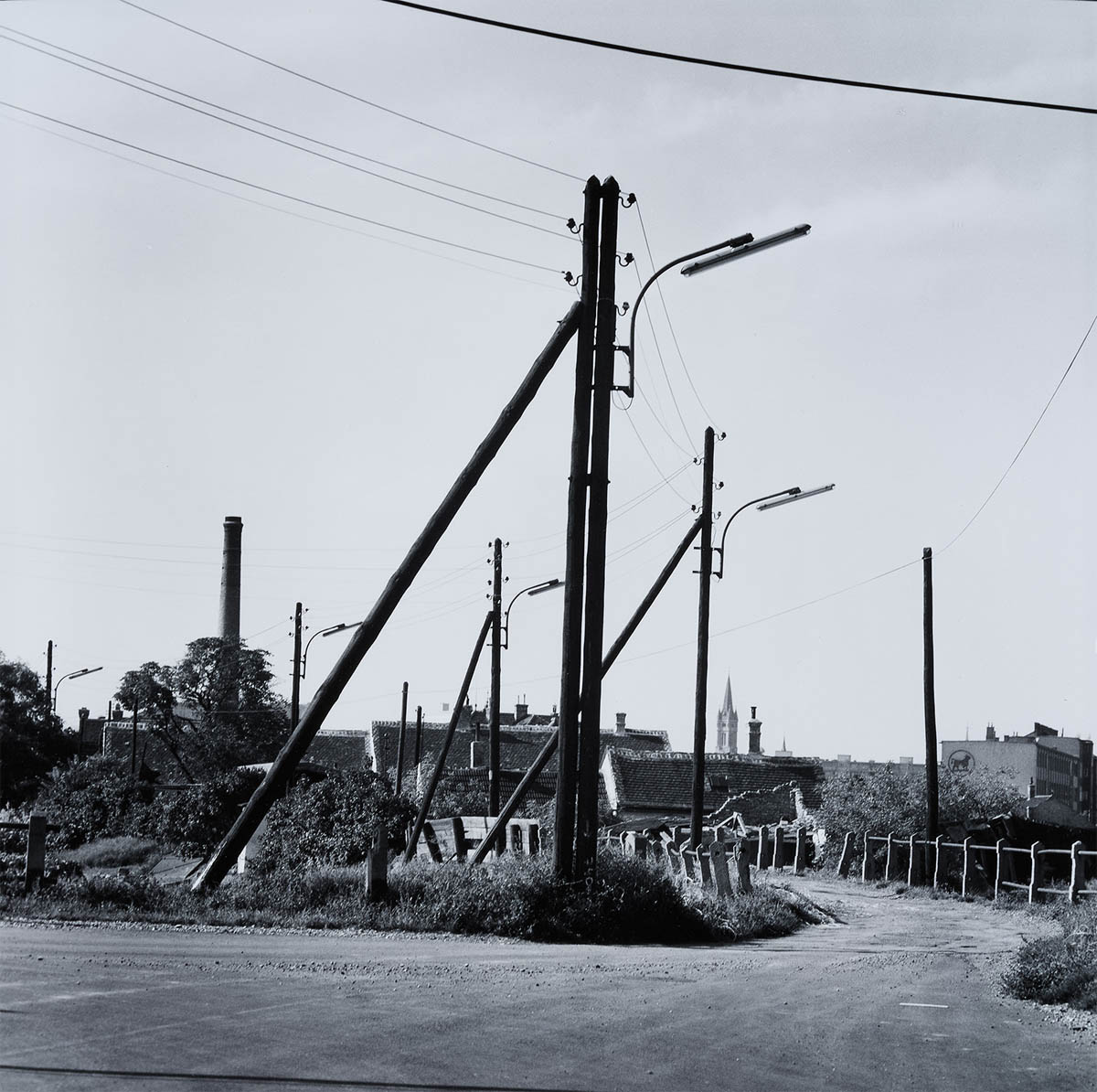
Elfriede Mejchar (Austrian, 1924-2020) From the series 'Simmeringer Heide und Erdberger Mais, 1967-1976'


Elfriede Mejchar (Austrian, 1924-2020)
From the series Simmeringer Heide und Erdberger Mais, 1967-1976
Silver gelatine print on baryta paper, brown toned
Museum der Moderne Salzburg
© Bildrecht, Vienna 2024


The Creative Element in Documentation

Created between 1967 and 1976, the photographic series “Simmeringer Heide und Erdberger Mais” (Simmeringer Heide and Erdberger Mais) is Mejchar’s first long-term cycle, for which she takes hundreds of pictures over the years. The series uses the photographic medium to explore the Viennese periphery. Simmeringer Heide and Erdberger Mais are areas on the southeastern outskirts of Vienna that were altered by humans and gradually taken over by commercial operations which transformed them into an industrial landscape. Mekchav first discovers them at a time when unused parcels of land (locally known as “Gstatten”), derelict market gardens, and scattered industrial structures are still defining features of the scenery. What sets the series apart is the choice of subject and the matter-of-fact manner in which the photographer treats it, compiling a kind of anecdotal inventory. The shots demonstrate that Mejchar’s objective in there art – as in the documentary photography that is her day-to-day work – is to render exactly what the objective and precise eye of a topographer sees. In framing an area in the urban periphery as a landscape, she trains this eye and her lens on a subject that has been largely absent from Austrian photography.

Wall text from the exhibition


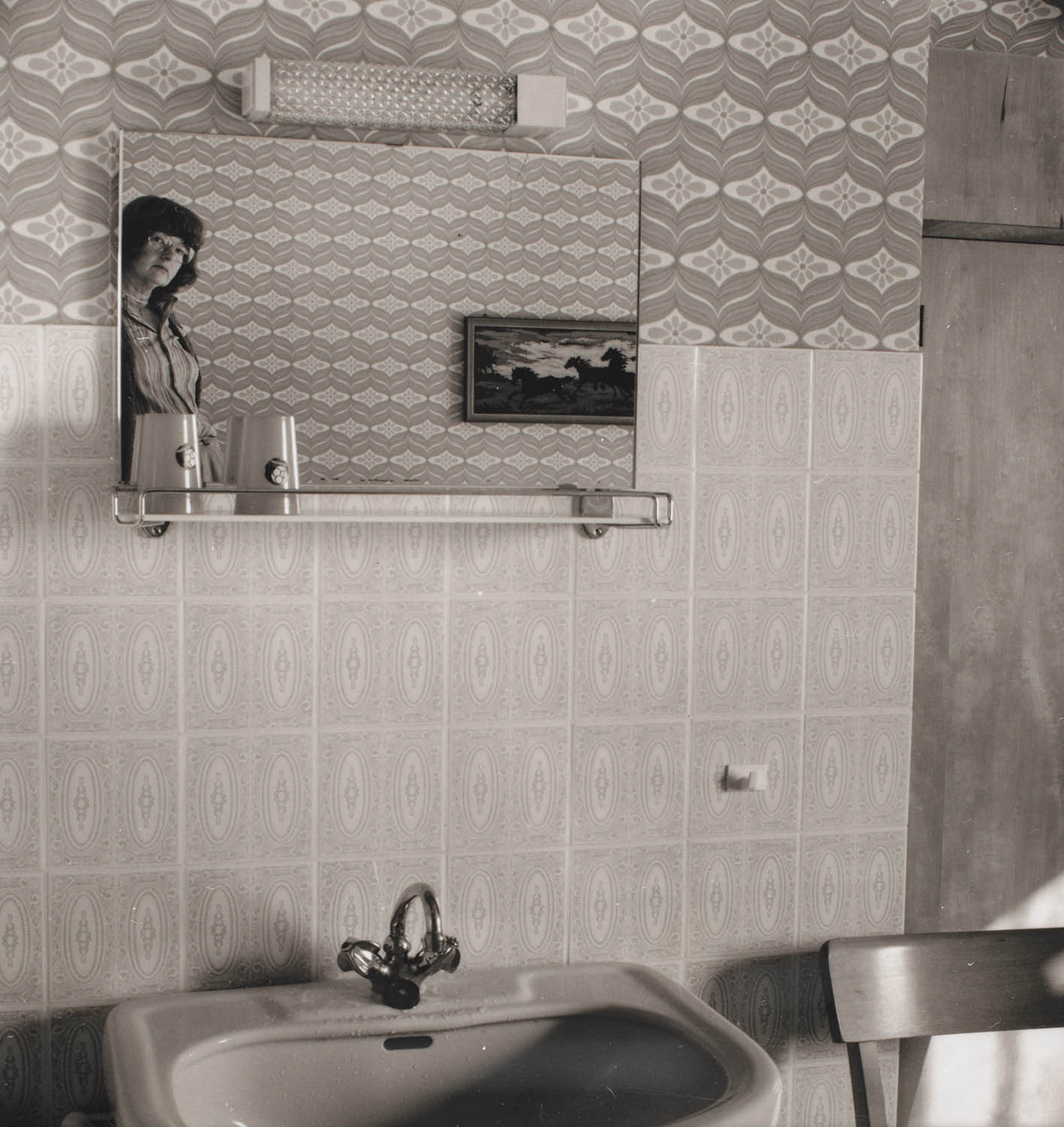
Installation view of the exhibition 'The Poetry of the Everyday. Photographs by Elfriede Mejchar', Museum der Moderne Salzburg 2024 showing work from Mejchar's series 'Hotel (Fremdenzimmer), 1970-1986' (Hotel (Guest Room), 1970-1986)


Installation view of the exhibition The Poetry of the Everyday. Photographs by Elfriede Mejchar, Museum der Moderne Salzburg 2024 showing work from Mejchar’s series Hotel (Fremdenzimmer), 1970-1986 (Hotel (Guest Room), 1970-1986) (below)
© Museum der Moderne Salzburg, photo: wildbild/Günter Freund


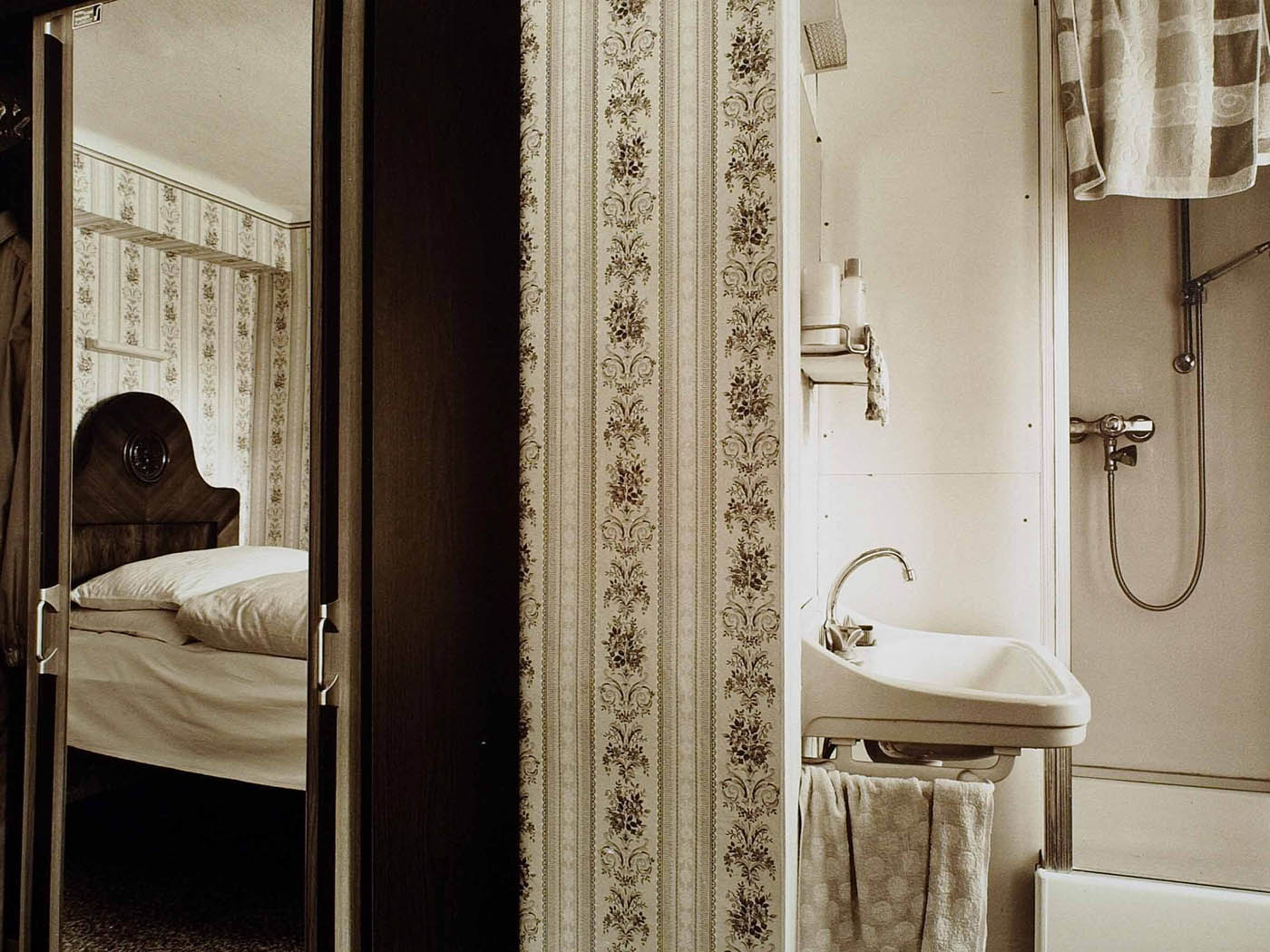
Elfriede Mejchar (Austrian, 1924-2020) From the series 'Hotel (Fremdenzimmer)', 1970-1986 (Hotel (Guest Room), 1970-1986)


Elfriede Mejchar (Austrian, 1924-2020)
From the series Hotel (Fremdenzimmer), 1970-1986 (Hotel (Guest Room), 1970-1986)
Silver gelatin print on baryta paper, brown tones
Federal Photography Collection at the Museum der Moderne Salzburg


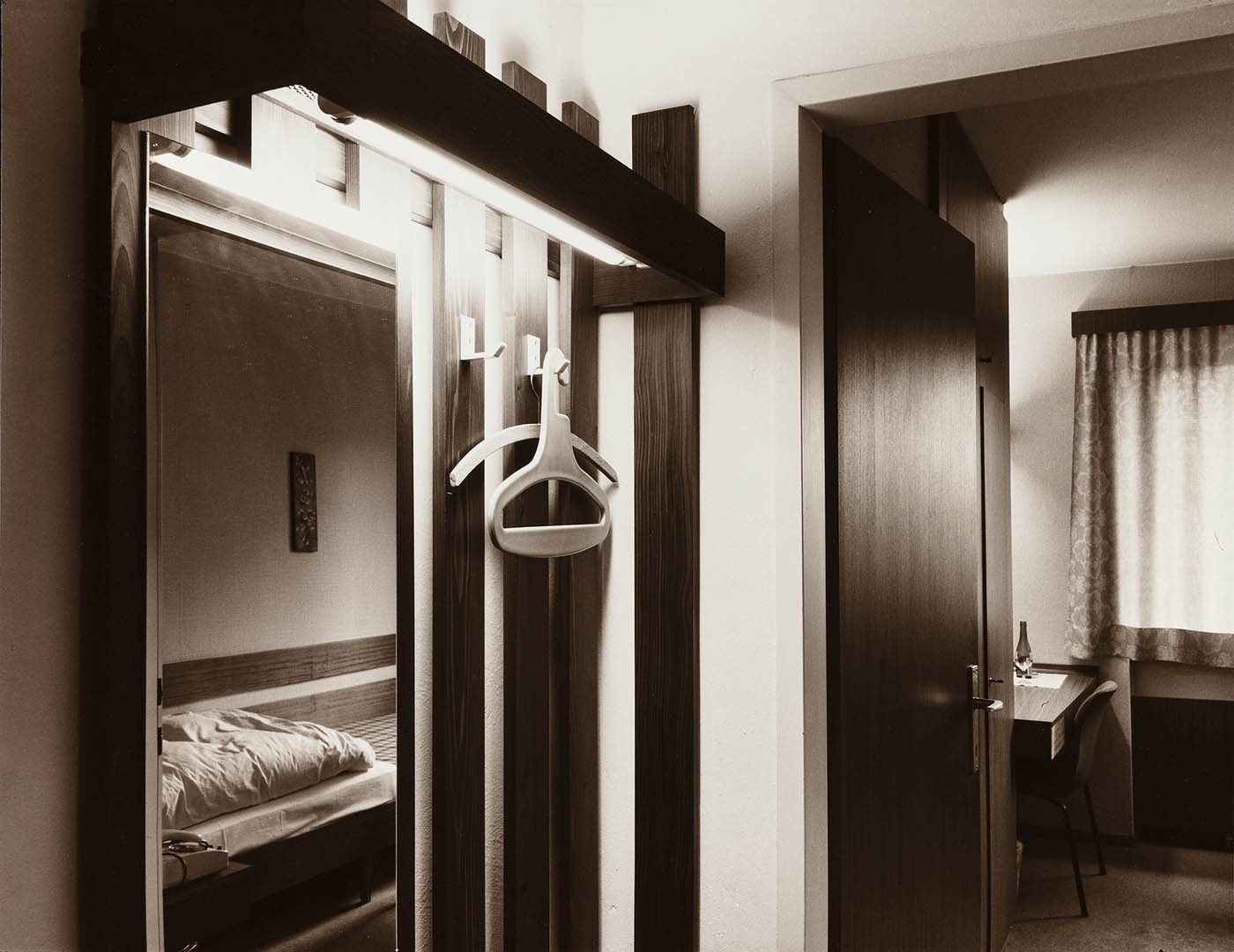
Elfriede Mejchar (Austrian, 1924-2020) From the series 'Hotel (Fremdenzimmer)', 1970-1986 (Hotel (Guest Room), 1970-1986)


Elfriede Mejchar (Austrian, 1924-2020)
From the series Hotel (Fremdenzimmer), 1970-1986 (Hotel (Guest Room), 1970-1986)
Silver gelatin print on baryta paper, brown tones
Federal Photography Collection at the Museum der Moderne Salzburg
© Bildrecht, Vienna, 2024
Photo: Andrew Phelps


Elfriede Mejchar (Austrian, 1924-2020) 'Flachsspinnerei in Stadl-Paura' (Flax spinning mill in Stadl-Paura) 1986


Elfriede Mejchar (Austrian, 1924-2020)
Flachsspinnerei in Stadl-Paura (Flax spinning mill in Stadl-Paura)
1986
© Elfriede Mejchar/Landessammlungen NÖ


Installation view of the exhibition 'The Poetry of the Everyday. Photographs by Elfriede Mejchar', Museum der Moderne Salzburg 2024 showing work from Mejchar's series 'Die Monatssesseln, 1986-1988' (The Armchairs of the Month, 1986-1988)

Installation view of the exhibition 'The Poetry of the Everyday. Photographs by Elfriede Mejchar', Museum der Moderne Salzburg 2024 showing work from Mejchar's series 'Die Monatssesseln, 1986-1988' (The Armchairs of the Month, 1986-1988)


Installation view of the exhibition The Poetry of the Everyday. Photographs by Elfriede Mejchar, Museum der Moderne Salzburg 2024 showing work from Mejchar’s series Die Monatssesseln, 1986-1988 (The Armchairs of the Month, 1986-1988) (below)
© Museum der Moderne Salzburg, photo: wildbild/Günter Freund


Elfriede Mejchar (Austrian, 1924-2020) From the series 'Die Monatssesseln, 1986-1988' (The Armchairs of the Month, 1986-1988)


Elfriede Mejchar (Austrian, 1924-2020)
From the series Die Monatssesseln, 1986-1988 (The Armchairs of the Month, 1986-1988)
Federal Photography Collection at the Museum der Moderne Salzburg


Elfriede Mejchar (Austrian, 1924-2020) From the series 'Die Monatssesseln, 1986-1988' (The Armchairs of the Month, 1986-1988)


Elfriede Mejchar (Austrian, 1924-2020)
From the series Die Monatssesseln, 1986-1988 (The Armchairs of the Month, 1986-1988)
Federal Photography Collection at the Museum der Moderne Salzburg


Elfriede Mejchar (Austrian, 1924-2020) From the series 'Oscillation (Salzburger Landesatelier)' (Oscillation (Salzburg State Studio)) 1988


Elfriede Mejchar (Austrian, 1924-2020)
From the series Oscillation (Salzburger Landesatelier) (Oscillation (Salzburg State Studio))
1988
Silver gelatin print on baryta paper
Federal Photography Collection at the Museum der Moderne Salzburg


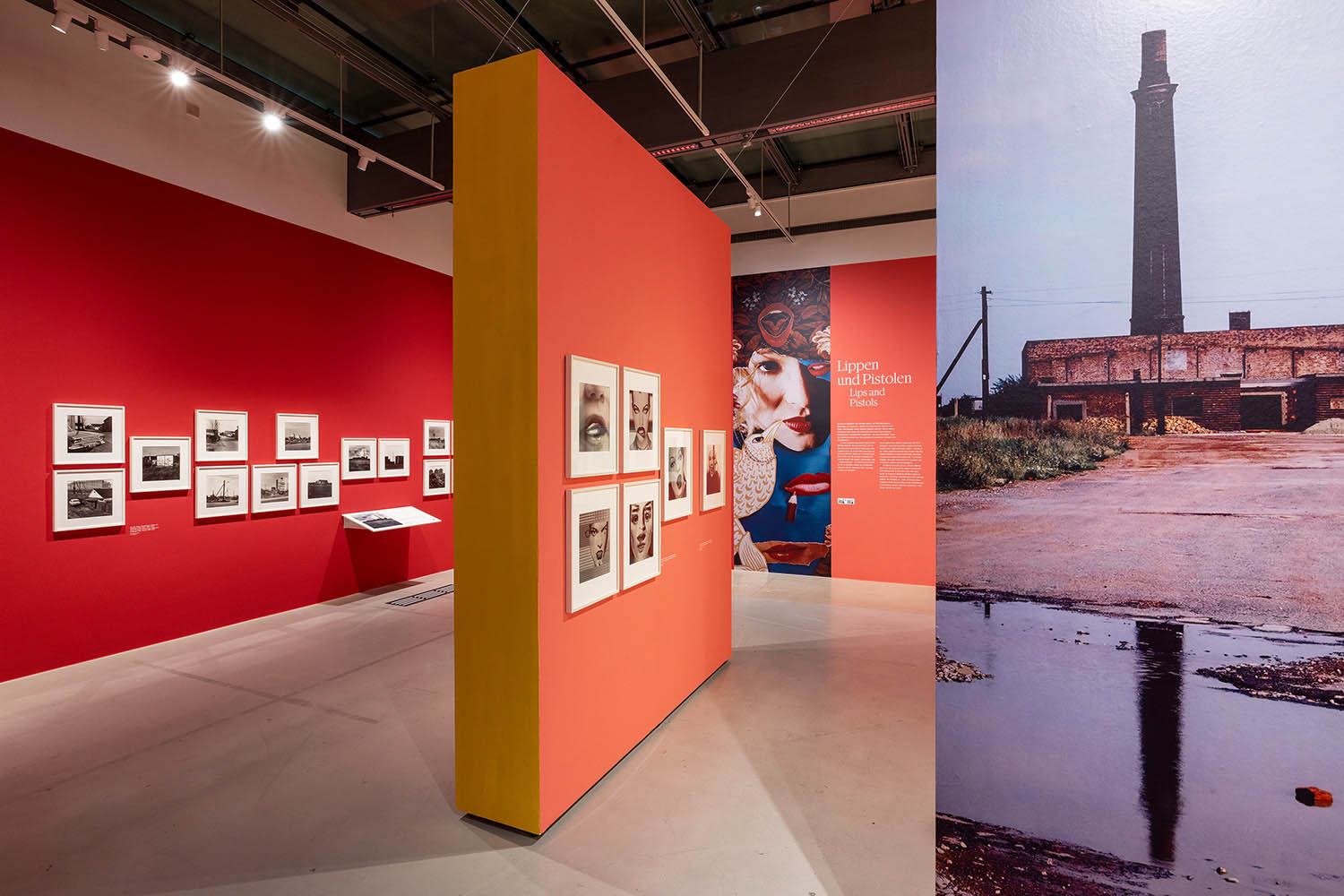
Installation view of the exhibition 'The Poetry of the Everyday. Photographs by Elfriede Mejchar', Museum der Moderne Salzburg 2024 showing work from the Mejchar's series 'Eine Kostümierung der geliehenen Identität' (A Masquerade of Borrowed Identity)


Installation view of the exhibition The Poetry of the Everyday. Photographs by Elfriede Mejchar, Museum der Moderne Salzburg 2024 showing work from the Mejchar’s series Eine Kostümierung der geliehenen Identität (A Masquerade of Borrowed Identity) (below)
© Museum der Moderne Salzburg, photo: wildbild/Günter Freund


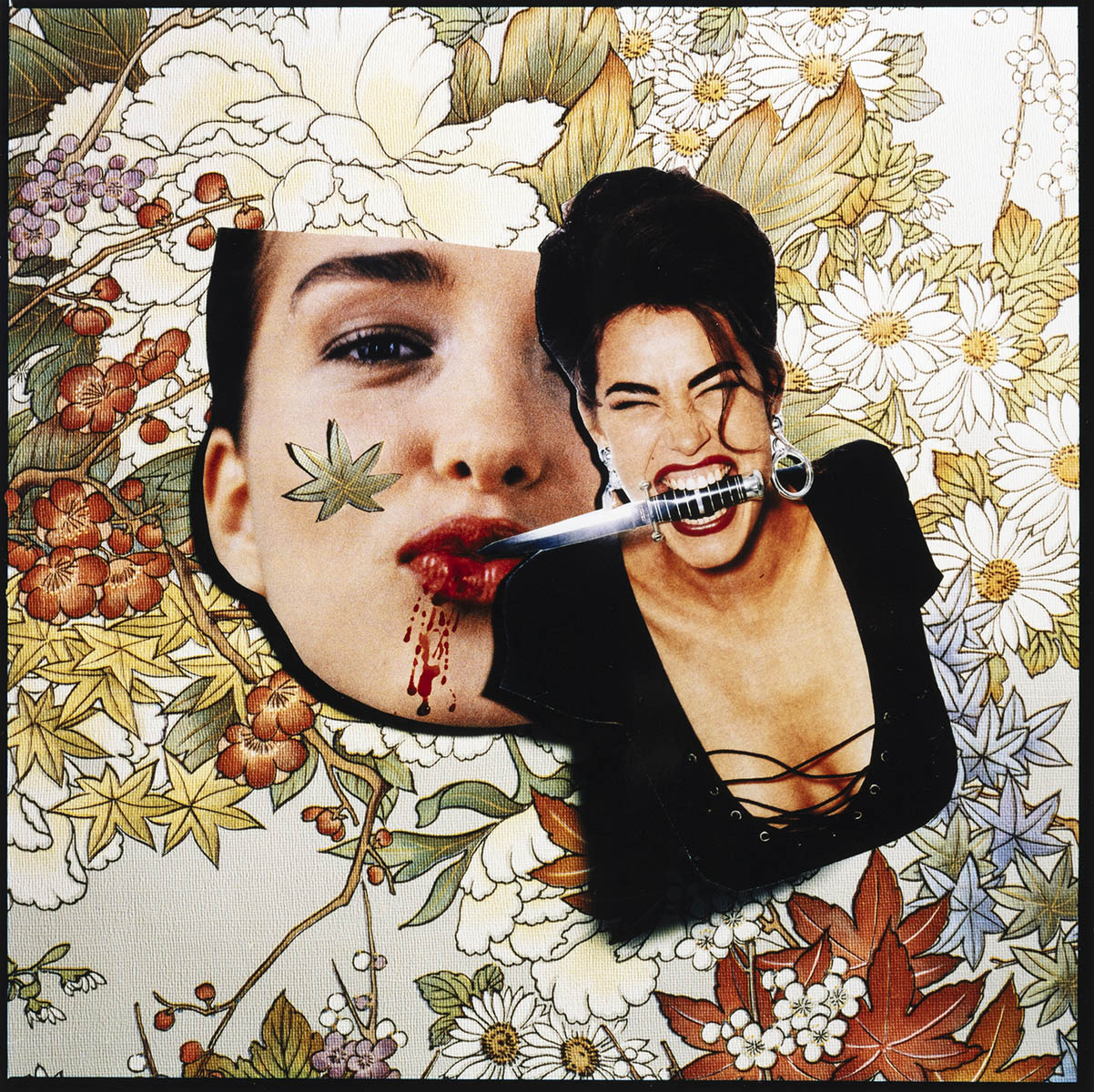
Elfriede Mejchar (Austrian, 1924-2020) From the series 'Eine Kostümierung der geliehenen Identität' (A Masquerade of Borrowed Identity) 1989


Elfriede Mejchar (Austrian, 1924-2020)
From the series Eine Kostümierung der geliehenen Identität (A Masquerade of Borrowed Identity)
1989
Gelatin silver print on baryta paper
Museum der Moderne Salzburg
© Bildrecht, Vienna, 2024
Photo: Andrew Phelps


Introduction

Elfriede Mejchar (1924-2020 Vienna, AT), the grande dame of Austrian photography, was in the employ of the Federal Monuments Office for almost forty years. Meanwhile, she also began her groundbreaking work on the outskirts of Vienna. Harnessing the photographic series as a documentary and investigative medium, she limned an imposing portrait of the urban landscape. Her work, which had a lasting influence on the evolution of photography in Austria, now also stands as an important documentary record of the country in the postwar period.

As a professional photographer, Mejchar traveled to various regions throughout Austria, including in Lower and Upper Austria and Styria, to capture buildings and cultural assets of art-historical significance in photographs. Yet she also used her official trips and her scant free time to pursue her own photographic interests, which focused on the small and seemingly trivial and the traces of civilisation that humans leave in nature or along the edges of the urban fabric and that receive little if any attention. It may seem that the documentary dimension is less important in the resulting works, that it is eclipsed by the narrative element. In fact, Mejchar fuses both, scrutinising her motifs with an attentive eye that picks up on the singular or peculiar and registers it without manipulation.

Elfriede Mejchar was not interested in the so-called “pivotal moment” and did not care for the conventional photojournalistic style of her time. Her work began when people had left, and she approached her themes from a very conceptual angle. Both the documentary series she created under the open sky and the object photographs, still lifes, and collages she made in her studio reflect this approach. She photographed the “evanescent before it evanesces”, in urban and rural landscapes and everyday scenes, capturing the changes that affected the particular scenery and its distinctive atmosphere.

The Creative Element in Documentation

Produced between 1967 and 1976, the photographic series “Simmeringer Heide and Erdberger Mais” is Mejchar’s first long-term cycle, for which she takes hundreds of pictures over the years. The series uses the photographic medium to explore the Viennese periphery. Simmeringer Heide and Erdberger Mais are areas on the southeastern outskirts of Vienna that were altered by humans and gradually taken over by commercial operations which transformed them into an industrial landscape. Mejchar first discovers them at a time when unused parcels of land (locally known as “Gstätten”), derelict market gardens, and scattered industrial structures are still defining features of the scenery. What sets the series apart is the choice of subject and the matter-of-factly manner in which the photographer treats it, compiling a kind of anecdotal inventory – empty lots, paths and roads, utility poles and a select few close-ups. The shots demonstrate that Mejchar’s objective in her art – as in the documentary photography that is her day-to-day work – is to render exactly what the objective and precise eye of a topographer sees. In framing an area in the urban periphery as a landscape, she trains this eye and her lens on a subject that has been largely absent from Austrian photography.

The use of a sulfur-based solution to tone the photographs – which is the cause of the brownish tinge – reflects a recurring concern in Mejchar’s photographs: existence in time and impermanence. In this instance, the technique’s purpose is not to alter the colour, but rather to make it more durable.


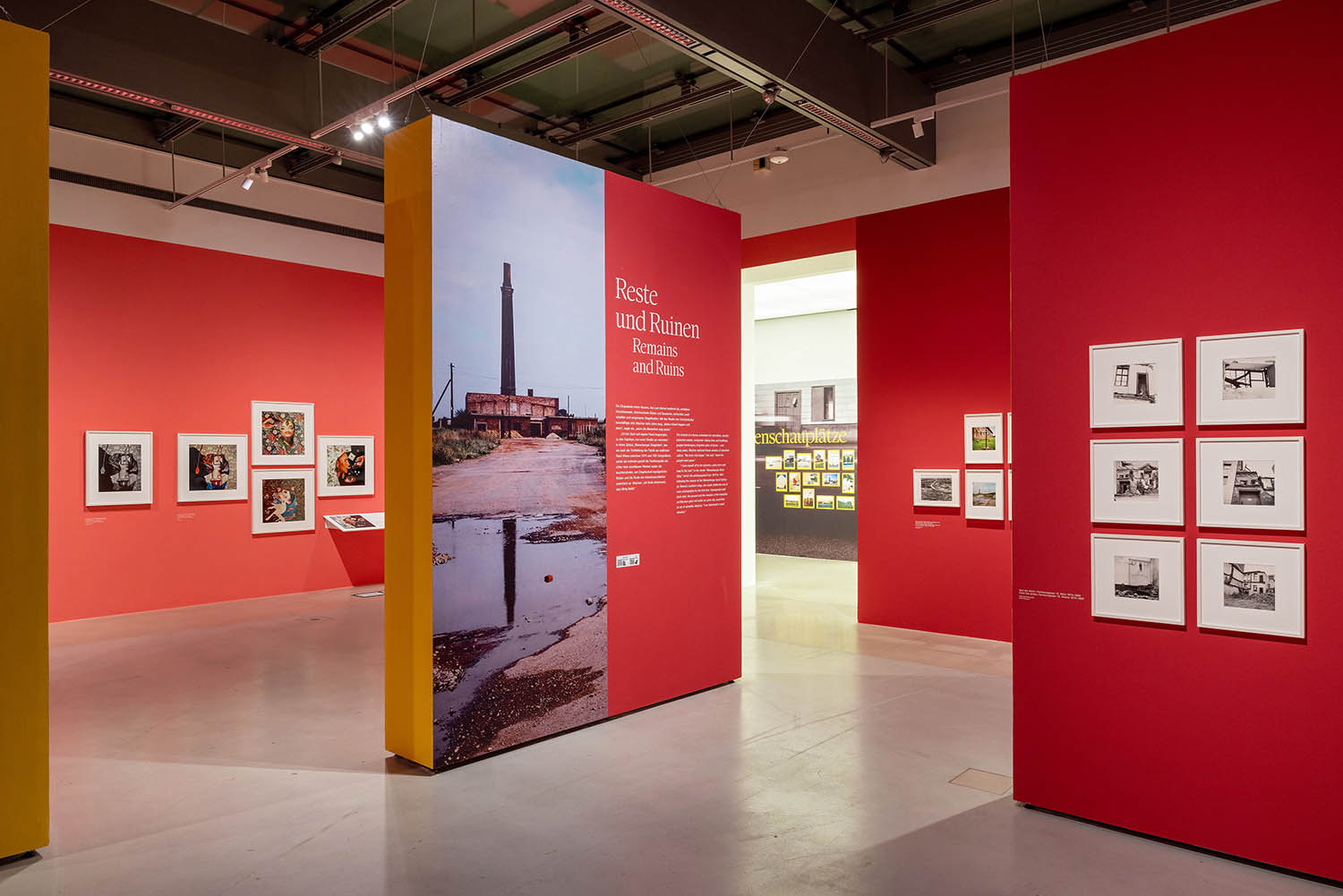
Installation view of the exhibition 'The Poetry of the Everyday. Photographs by Elfriede Mejchar', Museum der Moderne Salzburg 2024 showing at left, work from Mejchar's series 'Künstler bei der Arbeit, 1954-1961' (Artists at work, 1954-1961); and at right, the wall text 'The Artist as Chronicler'


Installation view of the exhibition The Poetry of the Everyday. Photographs by Elfriede Mejchar, Museum der Moderne Salzburg 2024 showing at left, work from Mejchar’s series Künstler bei der Arbeit, 1954-1961 (Artists at work, 1954-1961); and at right, the wall text ‘The Artist as Chronicler’
© Museum der Moderne Salzburg, photo: wildbild/Günter Freund


The Artist as Chronicler

Portraiture plays a role early on in Elfriede Mejchar’s work; she receives her professional training in a portrait studio. She subsequently makes a conscious choice to avoid the genre, but then, in the 1950s, returns to it.

“Künstler bei der Arbeit”, 1954-1961 (Artists at Work)

The series “Künstler bei der Arbeit” (Artists at Work) is her first major cycle of portraits, comprising over 340 gelatin silver prints. Mejchar is often brought in to capture exhibitions in installation shots, especially at the Vienna Secession, where she is introduced to many young artists waiting to make a name for themselves as well as some of their older colleagues who have been active since before 1945. The incomprehension with which the visitors gaze at abstract art that does not represent anything with any accuracy prompts the young photographer to record the intensity and seriousness with which the artists dedicate themselves to their craft, often braving considerable hardship. The series accordingly focuses on visualising the real studio and workplace settings of thirty-six artists, including Christa Hauer, Friedensreich Hundertwasser, Josef Mikl, and Arnulf Rainer.

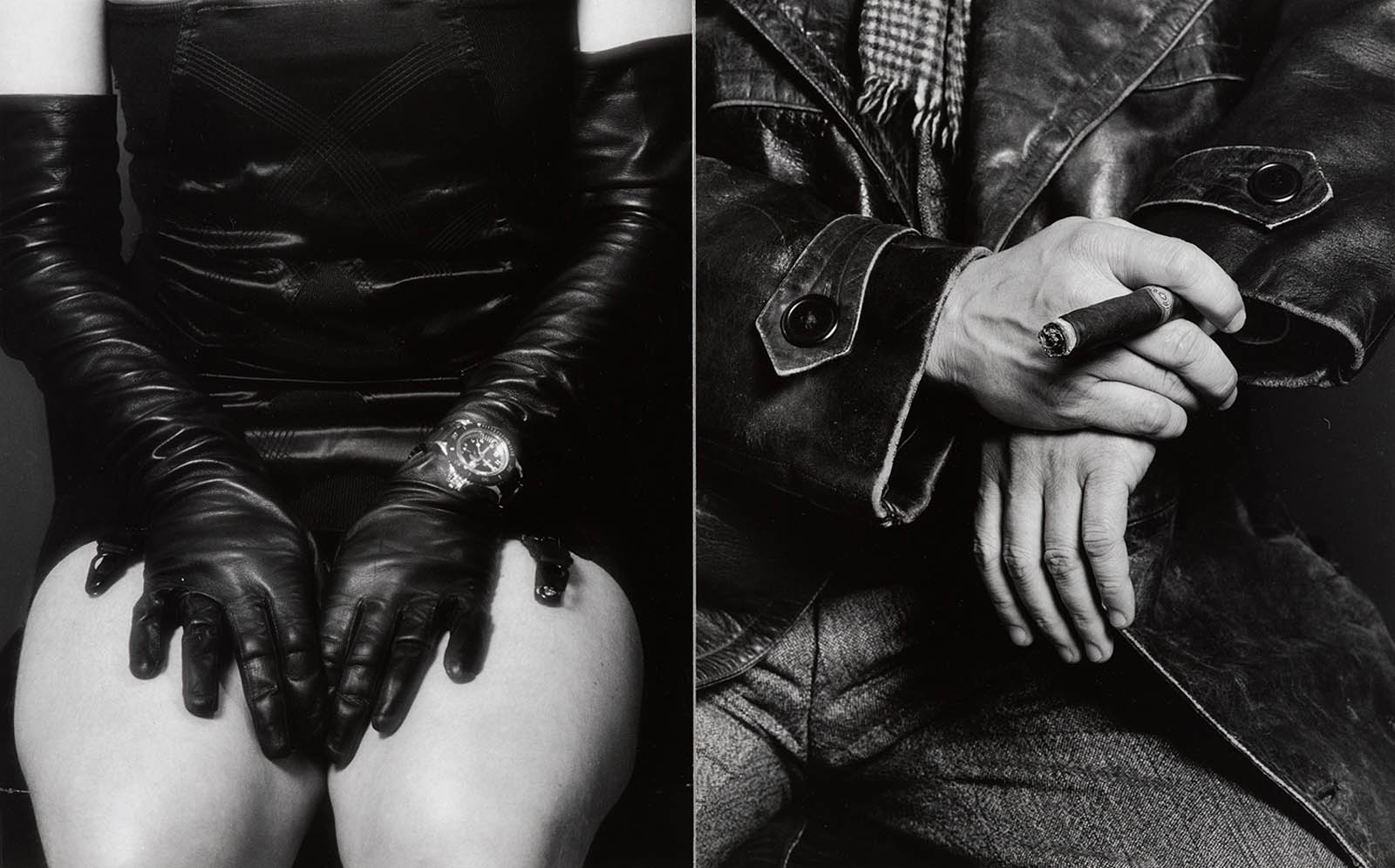
“Porträts von Künstler-Photographen und Kunstvermittlern”, 1988-1994 (Portraits of Artist Photographers and Art Educators)

In the body of work “Porträts von Künstler-Photographen und Kunstvermittlern” (Portraits of Artist Photographers and Art Educators), by contrast, Mejchar undertakes to depict everyone involved in fine art photography in Austria in the late twentieth century. Over the years, the series grows to comprise eighty double portraits, each composed, in accordance with a rigorous conception, of an en face portrait side by with a three-quarter view. The works have a distinctly staged quality, underscored by the unvarying austere setting and the emphasis on the hands, among other aspects. In this respect they recall Mejchar’s final examination, in which she had to realise a portrait both in profile and en face to demonstrate her command of photographic lighting designing and the handling of human sitters.

With these two projects, Mejchar becomes an important chronicler of the Austrian arts scene.


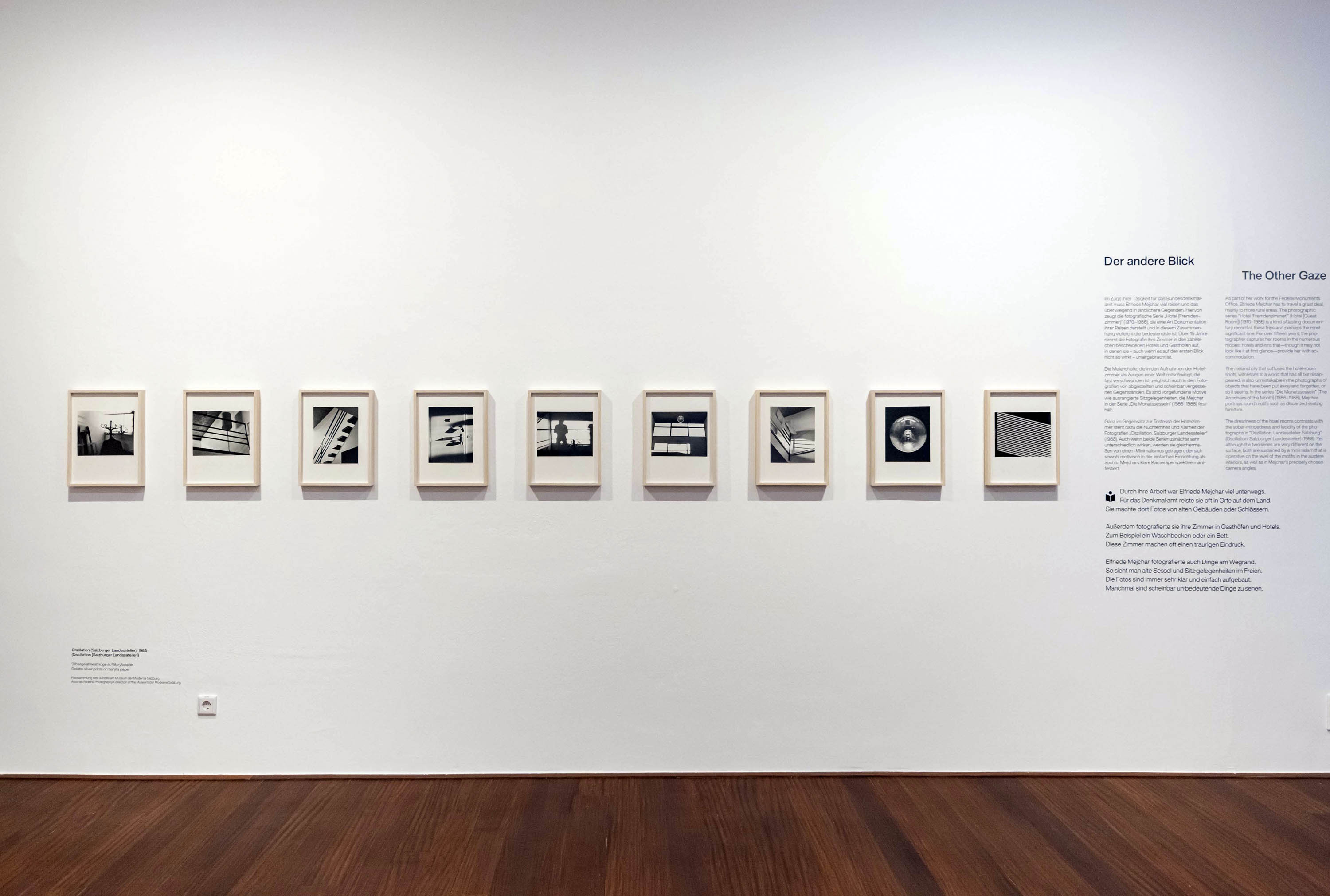
Installation view of the exhibition 'The Poetry of the Everyday. Photographs by Elfriede Mejchar', Museum der Moderne Salzburg 2024 showing at left, work from Mejchar's series 'Oscillation (Salzburger Landesatelier)' (Oscillation (Salzburg State Studio)) (above); and at right, the wall text 'The Other Gaze' (below)


Installation view of the exhibition The Poetry of the Everyday. Photographs by Elfriede Mejchar, Museum der Moderne Salzburg 2024 showing at left, work from Mejchar’s series Oscillation (Salzburger Landesatelier) (Oscillation (Salzburg State Studio)) (above); and at right, the wall text ‘The Other Gaze’ (below)
© Museum der Moderne Salzburg, photo: wildbild/Günter Freund


The Other Gaze

“Hotel (Fremdenzimmer)”, 1970-1986 (Hotel (Guest Room))

As part of her work for the Federal Monuments Office, Elfriede Mejchar has to travel a great deal, mainly to more rural areas. The photographic series “Hotel (Fremdenzimmer)” (Hotel (Guest Room)) is a kind of lasting documentary record of these trips and perhaps the most significant one. Bed, table, chair, mirror, wardrobe, patterned wallpaper, and sometimes a washbasin: for over fifteen years, the photographer captures her rooms with their often spartan furnishings in the numerous modest hotels and inns that – though it may not look like it at first glance – provide her with accommodation. Here and there one does espy a toothbrush, a pair of shoes, a ruffled bedcover, all traces that reveal the ostensibly absent photographer’s presence. A certain melancholy suffuses these shots of hotel rooms as witnesses to a world that has all but disappeared

“Die Monatssesseln”, 1986-1988 (The Armchairs of the Month)

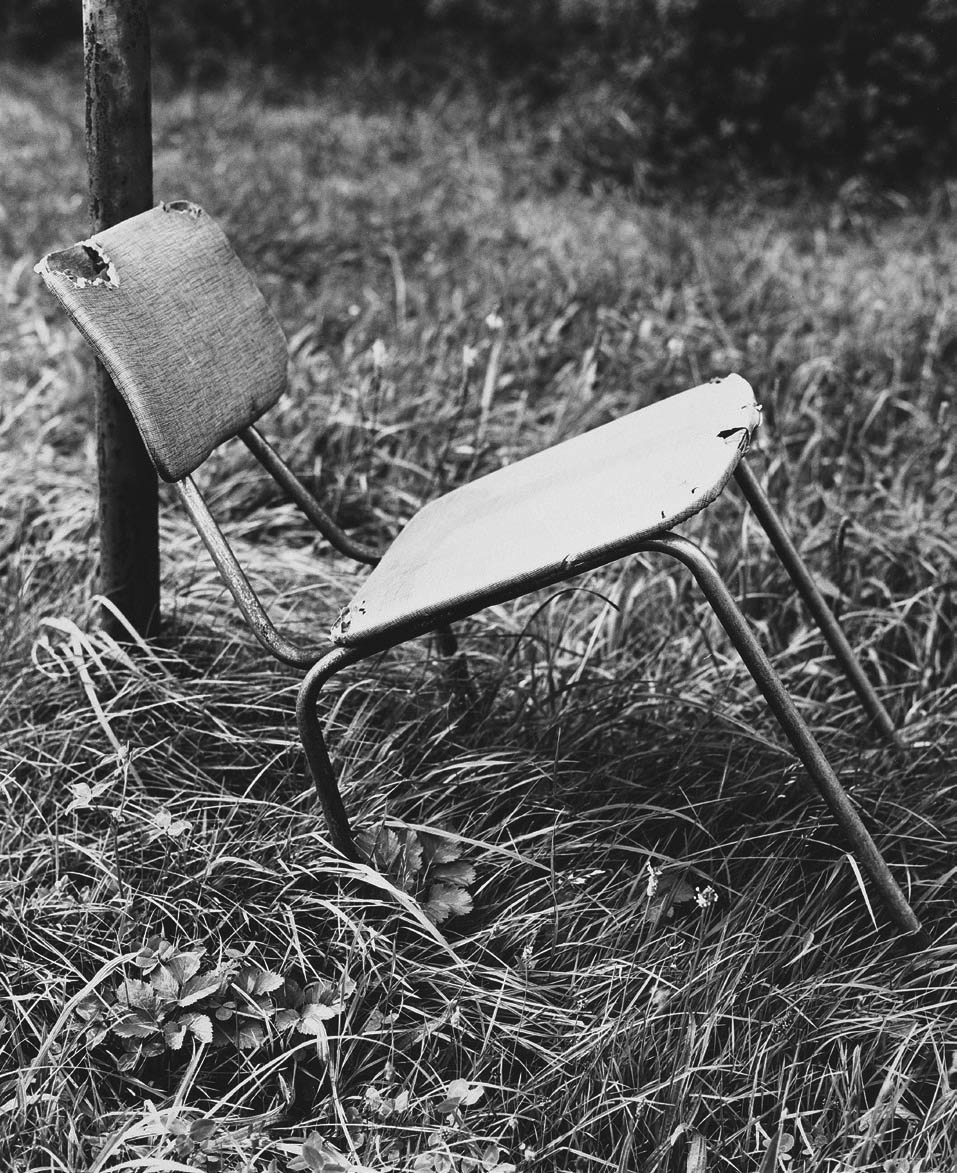
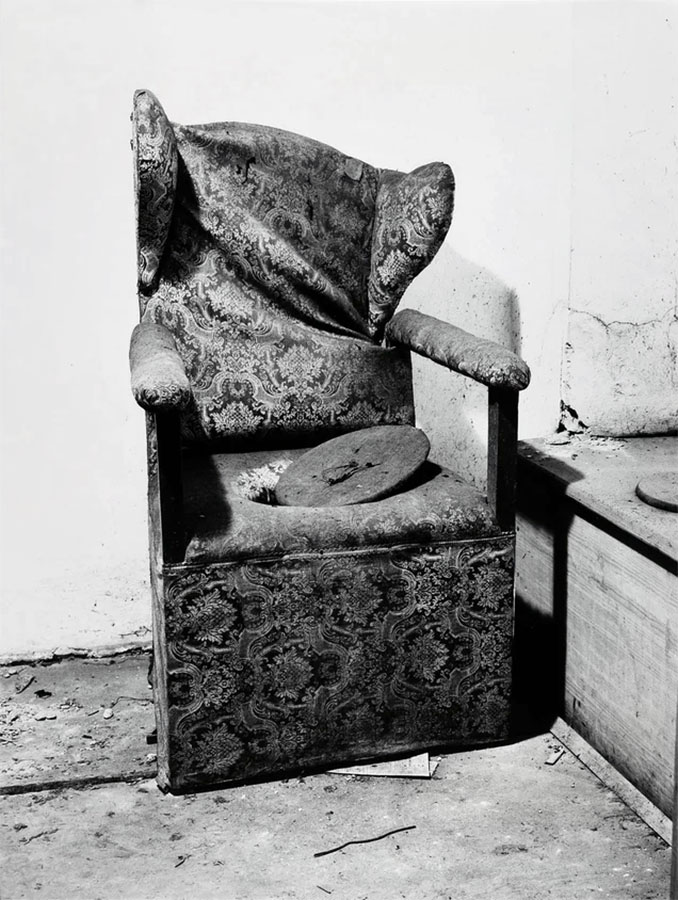
The same melancholy is also unmistakable in the photographs of objects that have outlived their usefulness and been discarded and, it seems, forgotten. In the series “Die Monatssesseln” (The Armchairs of the Month) Mejchar portrays found motifs such as discarded seating furniture. The series shows a wide variety of such items, from kitchen chairs to living-room armchairs and even car seats, that have become part of the natural or other scene where they were dumped. No less diverse than the pieces of furniture and their environments are the feelings they elicit; as Mejchar puts it, “a mess can be beautiful in its own way.”

“Oszillation (Salzburger Landesatelier)”, 1988

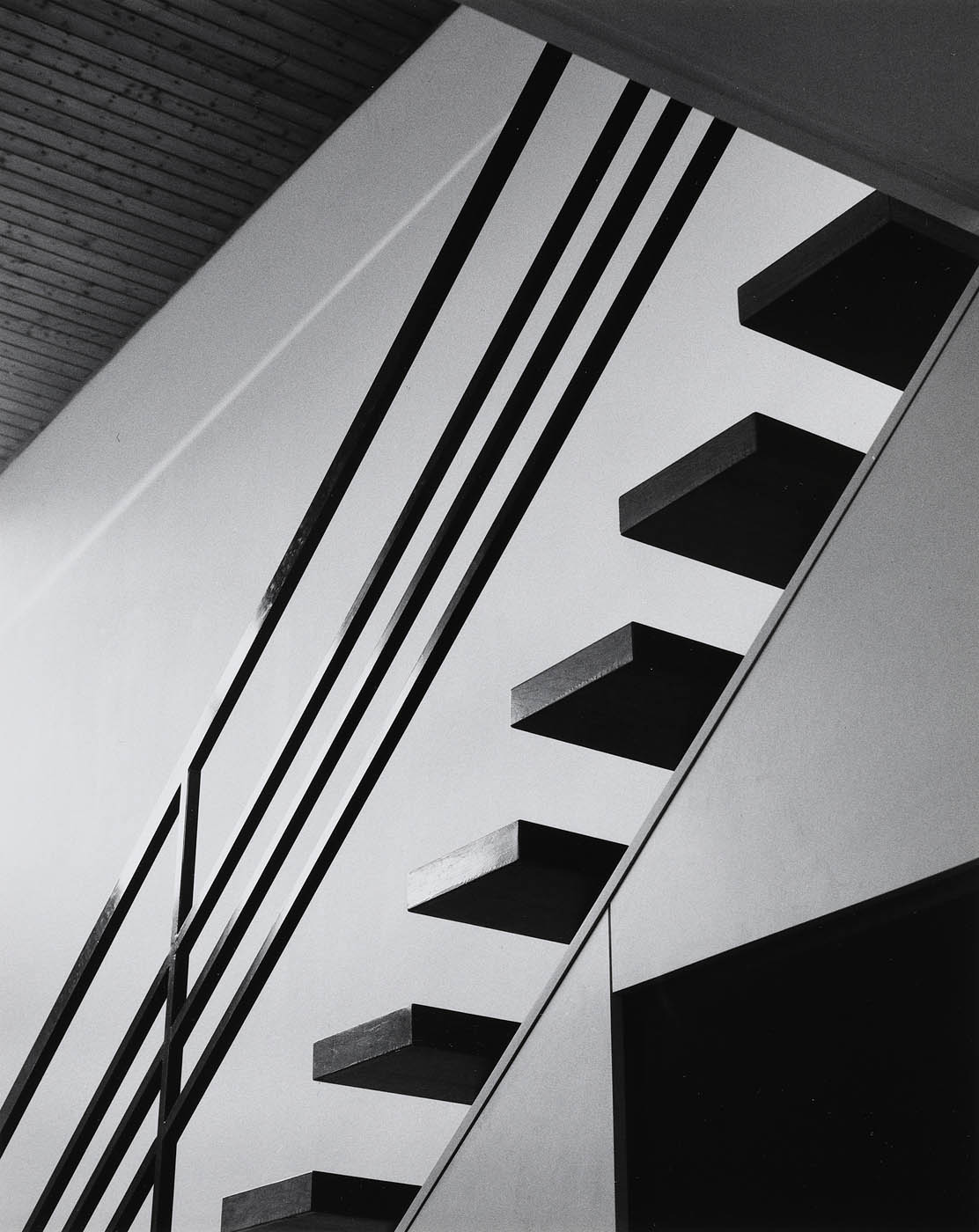
The dreariness of the hotel rooms contrasts with the sober-mindedness and lucidity of the photographs in “Oszillation (Salzburger Landesatelier)” (Oscillation (Salzburger Landesatelier)). Yet although the two series are very different on the surface, both are sustained by a minimalism that is operative on the level of the motifs, in the austere interiors, as well as in Mejchar’s precisely chosen camera angles. These photographs capture the rooms of the State of Salzburg’s studio residence for visiting artists, located, like the Salzburger Kunstverein, in the historic Künstlerhaus. Mejchar herself lives there for a while in 1988, a change of working environment that is reflected in her output from the period.

Nobody Is Perfect

In the late 1980s, Elfriede Mejchar branches out in a fresh creative direction. She has been retired for some years and feels free to take on new challenges. Setting aside the flaneur-like practice underlying her earlier bodies of work, she starts photographing in the studio.

Tapetenbild. Triptychon, 1988 (Wallcover Picture. Tryptic) “Eine Kostümierung der geliehenen Identität”, 1989 (A Costume for the borrowed Identity) “Tagebuch Jänner 1988”, 1988 (Diary January 1988) “Nobody Is Perfect”, 1996

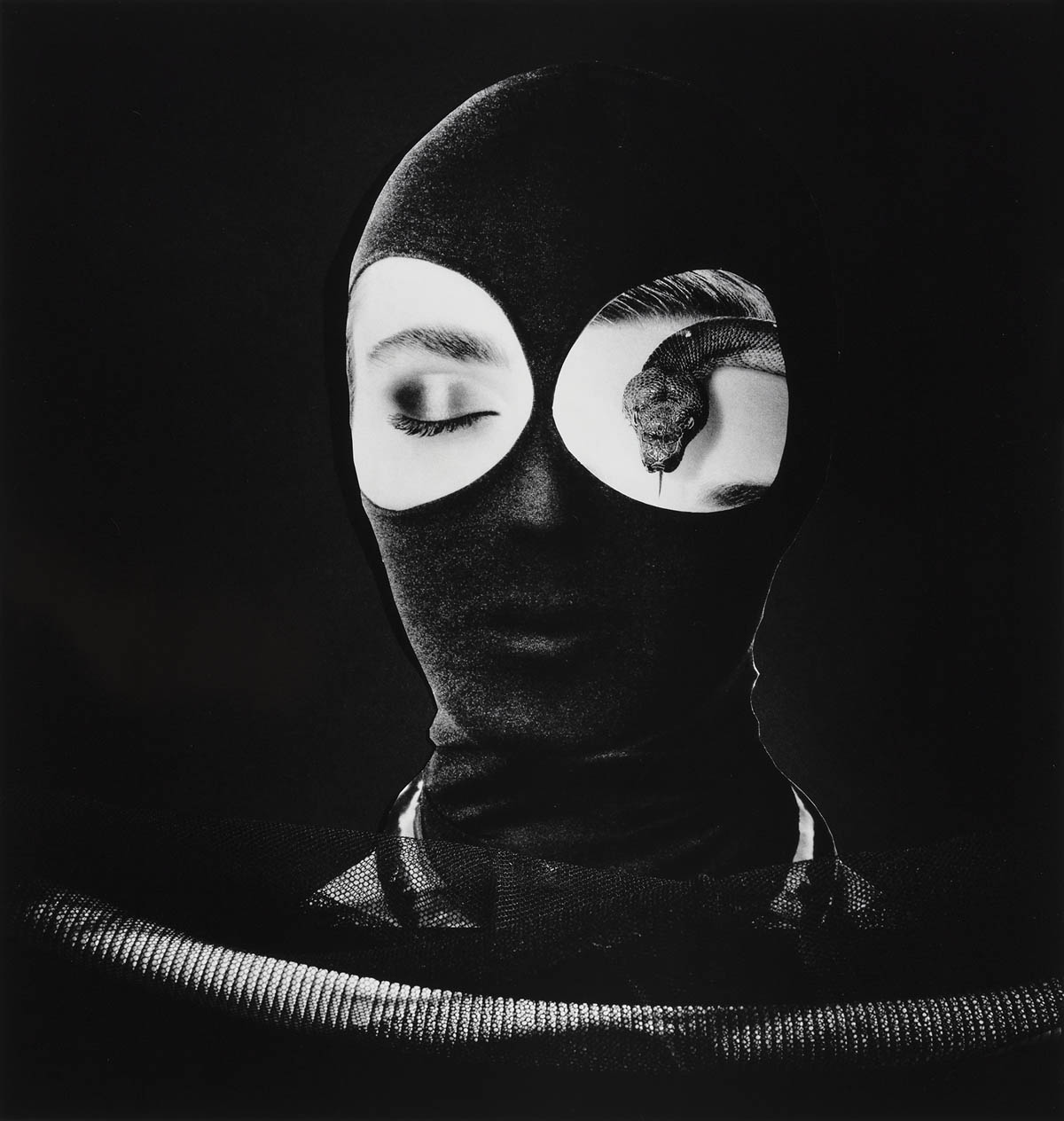
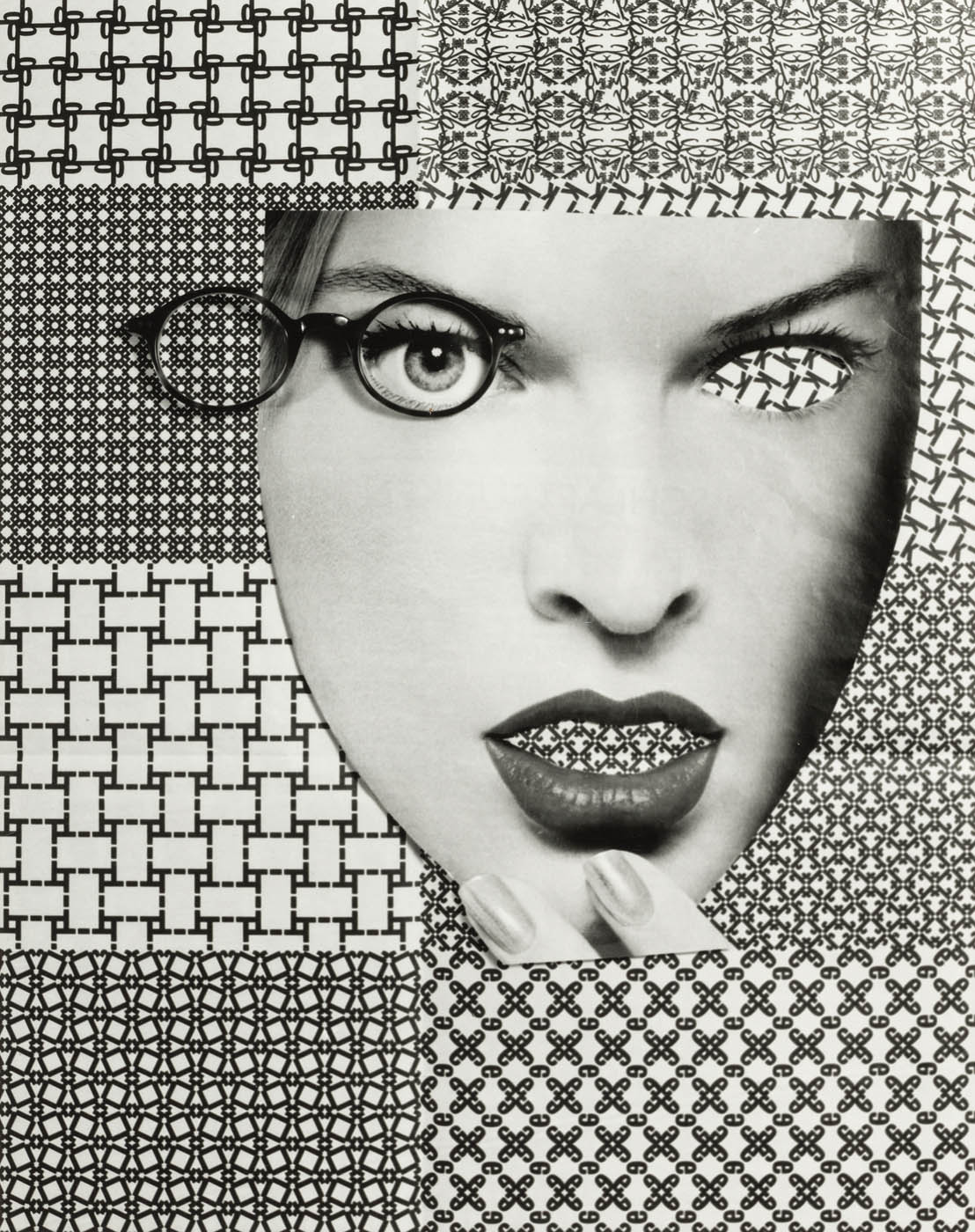
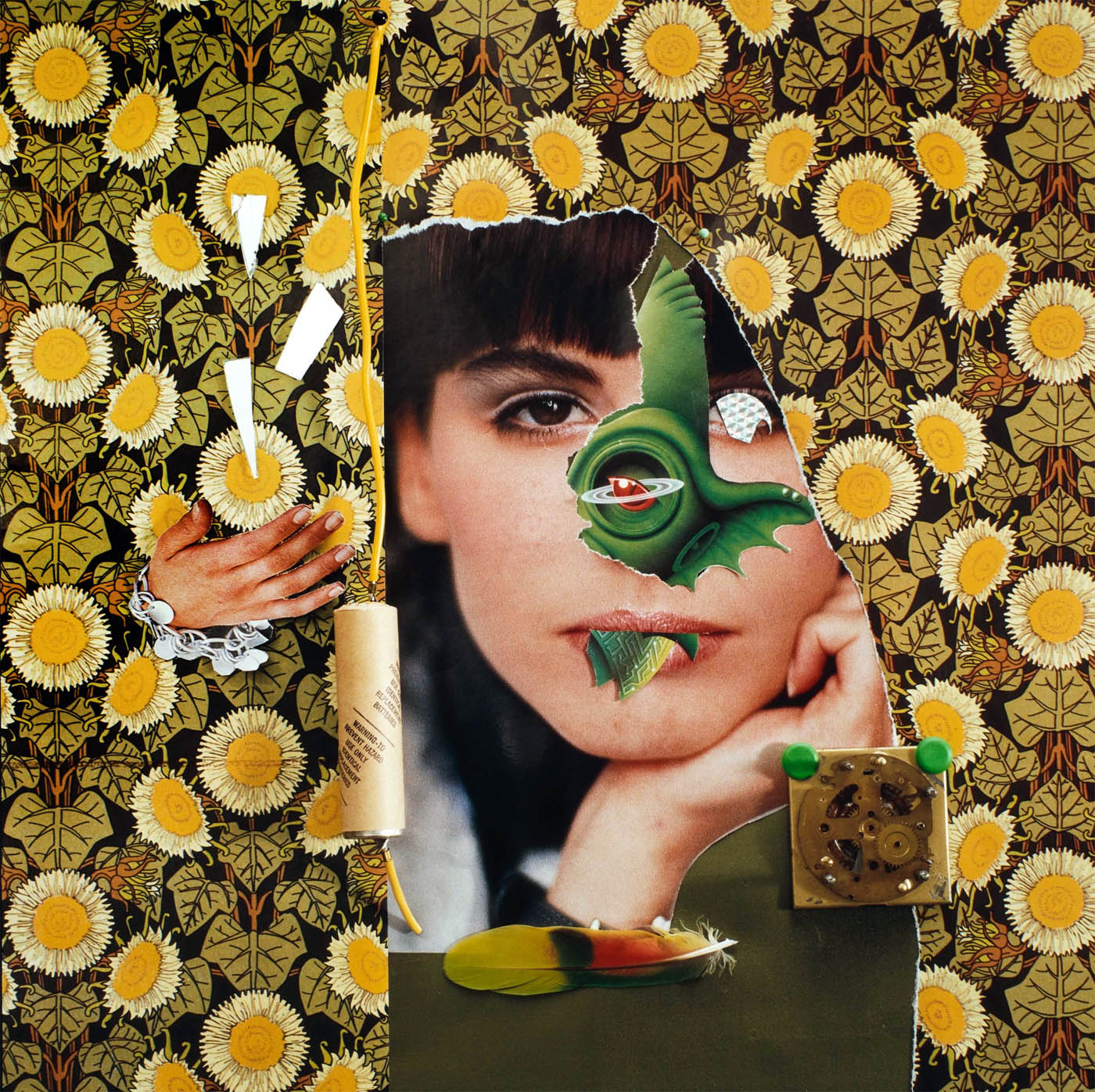
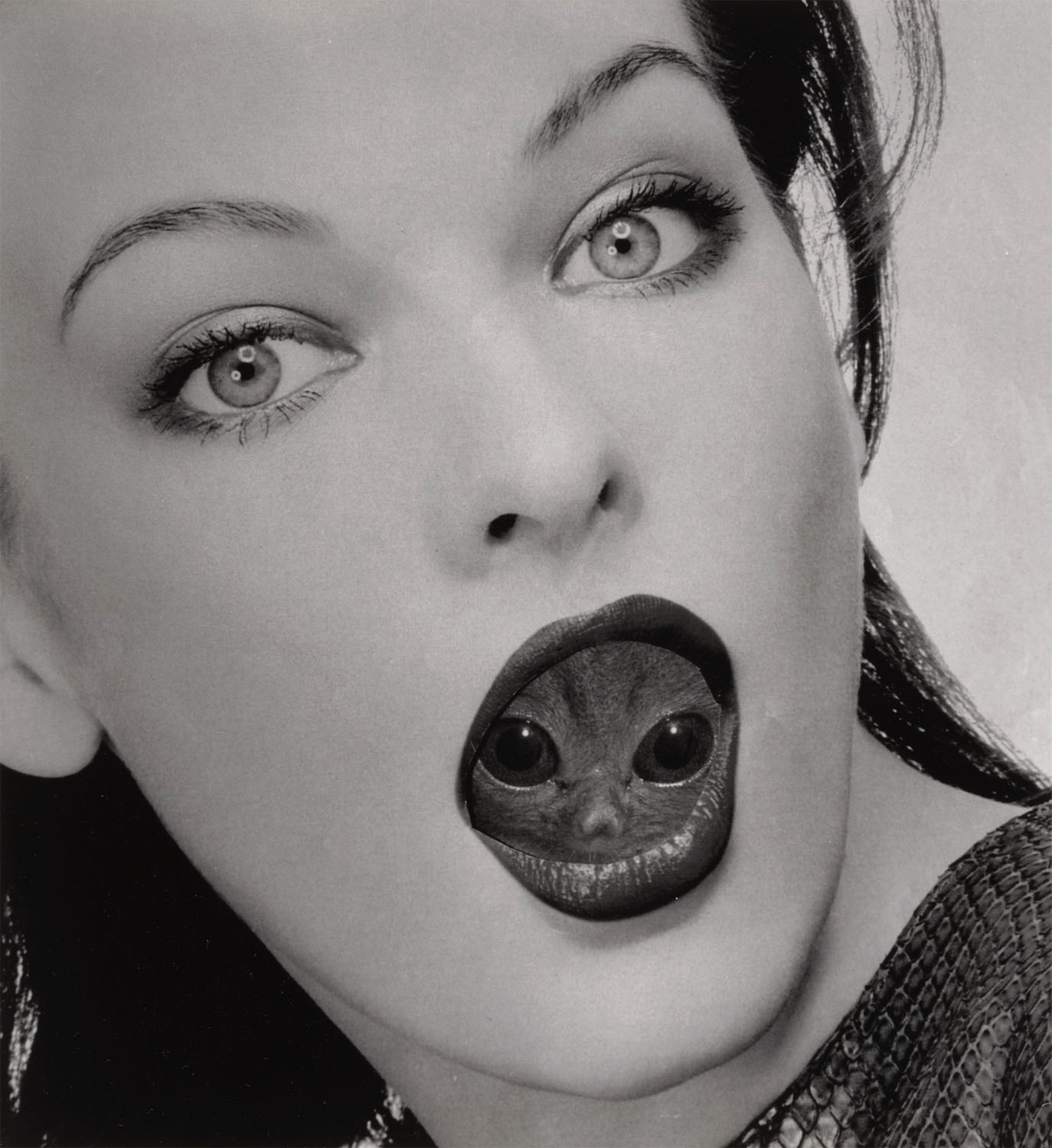
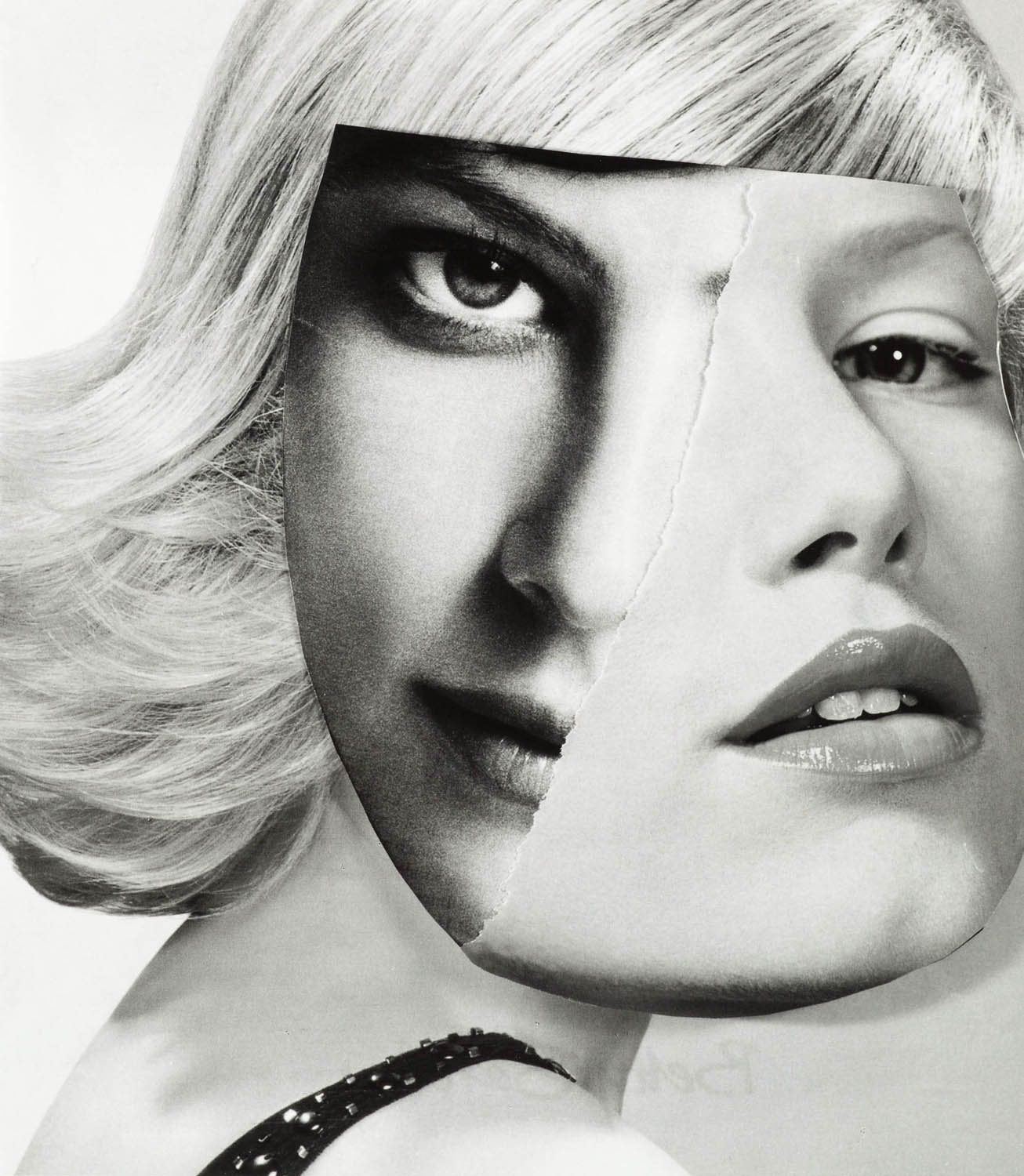
Faces change shapes, snakes coil around heads, open and closed eyes alternate. For the collages in “Tagebücher Jänner 1988,” Mejchar reuses her own photographs; in other series, by contrast, she works with found images such as shots of female models from print advertisements or fuses figural representations with fabric and wallpaper patterns. The works are rapidly composed out of visual fragments that she often only loosely places side by side or in overlapping arrangements, dispelling their aura of perfection. “I build pictures for myself on the wall, from materials that are at hand in the public sphere, that are on public display, but I strip away the ideal of flawless beauty that is constantly rubbed in our faces by dismembering it or covering it up.” It is the temporary and easily mutable that fascinates Mejchar, qualities that had had no place in her professional work.

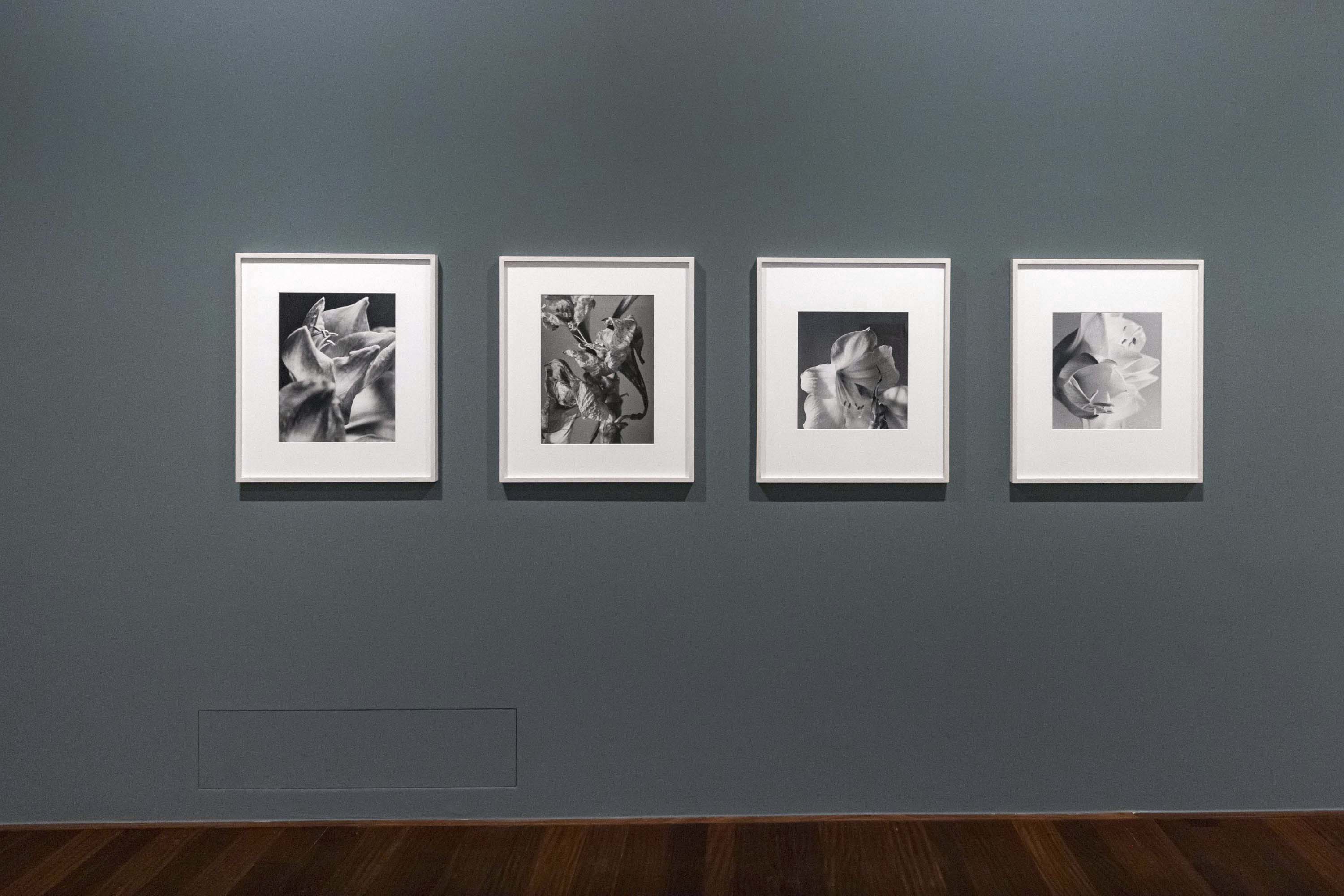
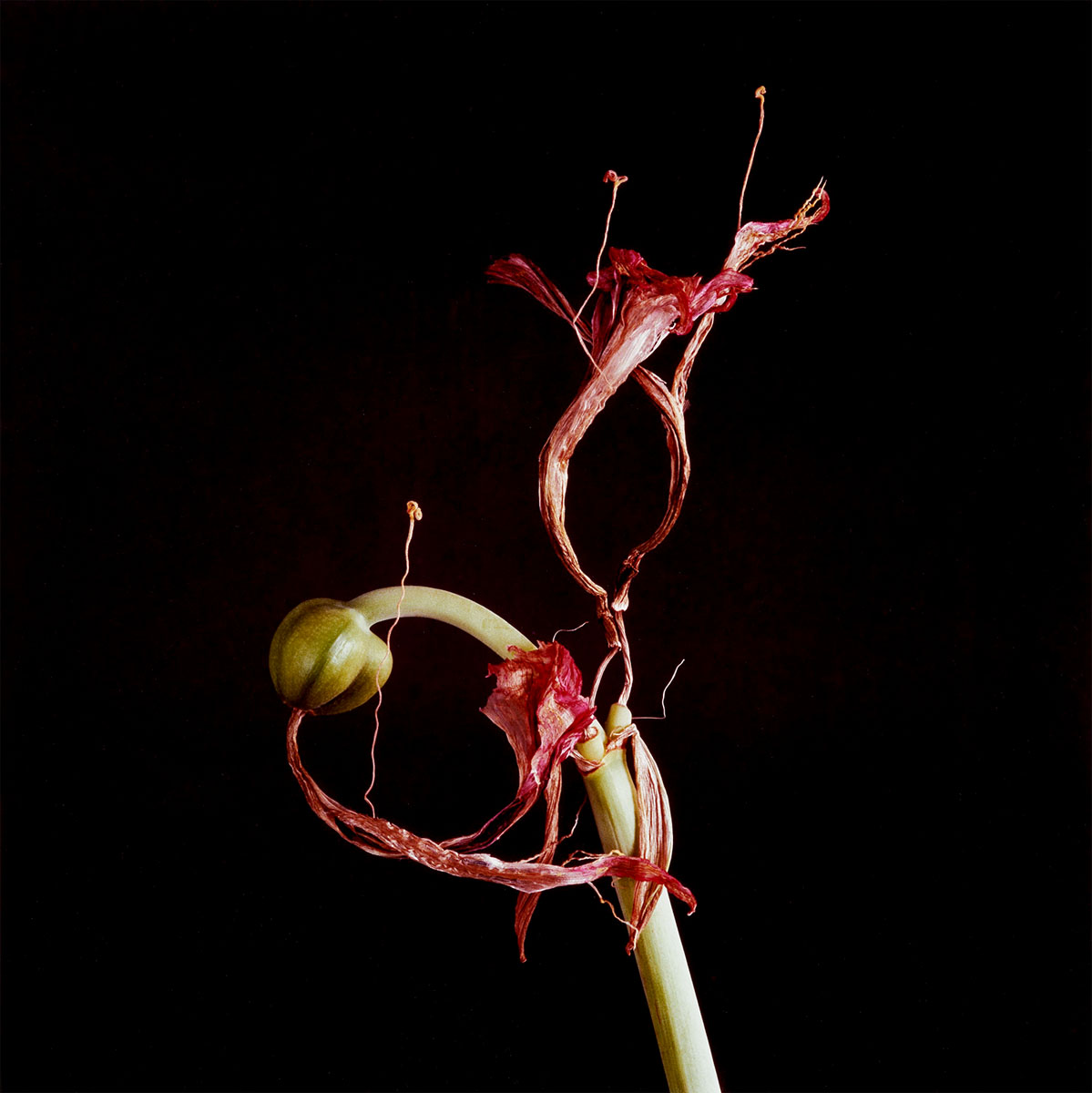
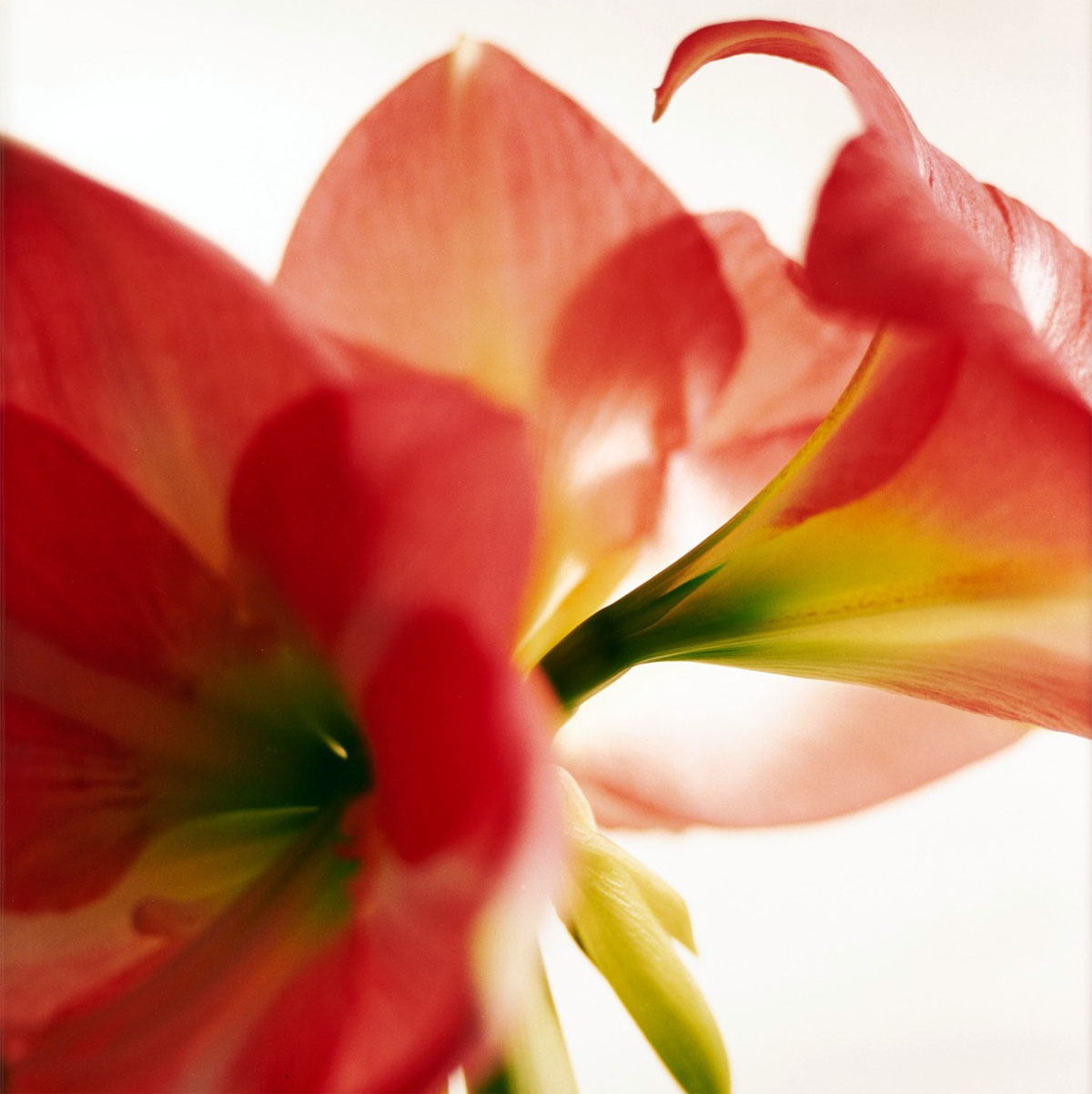
“Amaryllis”, 1994-1997

Pictures of flowers in fine art, whether painted or photographed, inevitably have a clichéd dimension. Mejchar photographs only a special selection of flowers such as amaryllises, lilies, and tulips that she grows in her own garden. In the studio, rather than recording the flowers with a romantic gesture, she captures their gradual transformations – full blossoms, some full of delicate life, some already wilting and recognisably perishable. Showing them between florescence and decay, in a kind of liminal instant, she revisits a theme that surfaces throughout her oeuvre: the capturing of a state of affairs at a defined point in time.


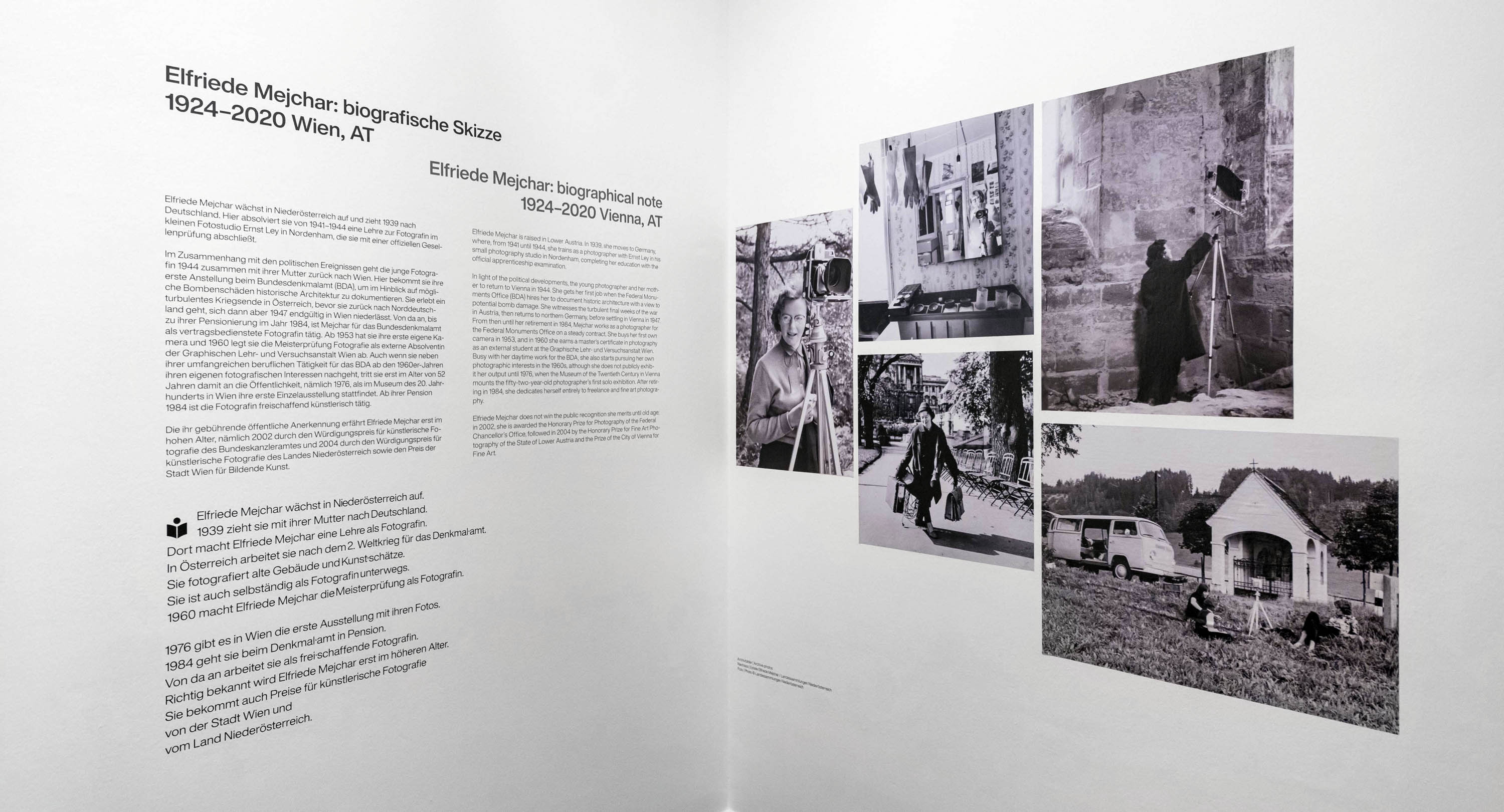
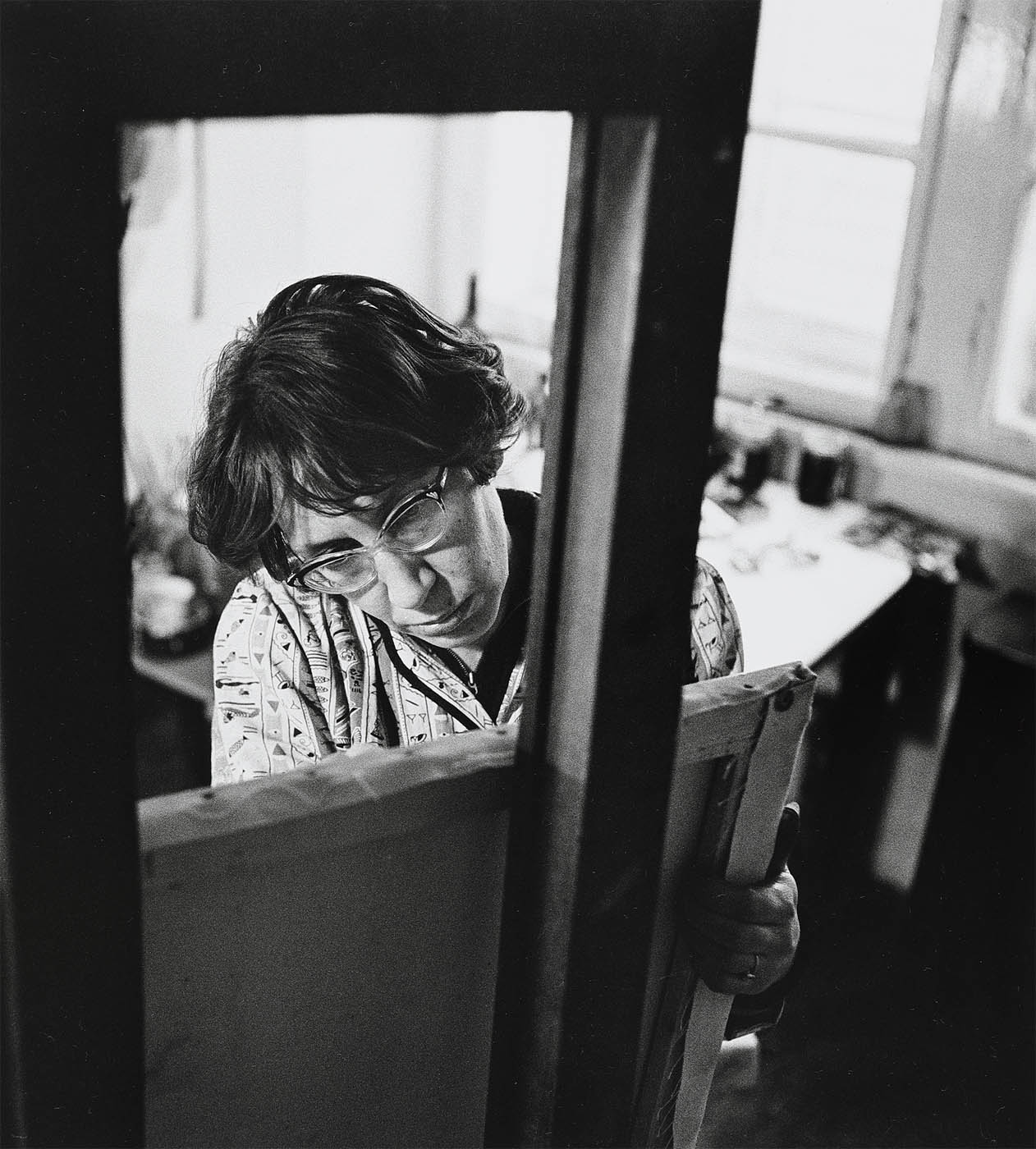
Installation view of the exhibition 'The Poetry of the Everyday. Photographs by Elfriede Mejchar', Museum der Moderne Salzburg 2024 showing the wall text 'Elfriede Mejchar: biographical note 1924-2020 Vienna, AT'; and some photographs of Elfriede Mejchar working


Installation view of the exhibition The Poetry of the Everyday. Photographs by Elfriede Mejchar, Museum der Moderne Salzburg 2024 showing the wall text Elfriede Mejchar: biographical note 1924-2020 Vienna, AT; and some photographs of Elfriede Mejchar working
© Museum der Moderne Salzburg, photo: wildbild/Günter Freund


Elfriede Mejchar: biographical note 1924-2020 Vienna, AT

Elfriede Mejchar is raised in Lower Austria. In 1939, she moves to Germany, where, from 1941 until 1944, she trains as a photographer with Ernst Ley in his small photography studio in Nordenham, completing her education with the official apprenticeship examination.

In light of the political developments, the young photographer and her mother to return to Vienna in 1944. She gets her first job when the Federal Monuments Office (BDA) hires her to document historic architecture with a view to potential bomb damage. She witnesses the turbulent final weeks of the war in Austria, then returns to northern Germany, before settling in Vienna in 1947. From then until her retirement in 1984, Mejchar works as a photographer for the Federal Monuments Office on a steady contract. She buys her first own camera in 1953, and in 1960 she earns a master’s certificate in photography as an external student at the Graphische Lehr- und Versuchsanstalt Wien. Busy with her daytime work for the BDA, she also starts pursuing her own photographic interests in the 1960s, although she does not publicly exhibit her output until 1976, when the Museum of the Twentieth Century in Vienna mounts the fifty-two-year-old photographer’s first solo exhibition. After retiring in 1984, she dedicates herself entirely to freelance and fine art photography.

Elfriede Mejchar does not win the public recognition she merits until old age; in 2002, she is awarded the Honorary Prize for Photography of the Federal Chancellor’s Office, followed in 2004 by the Honorary Prize for Fine Art Photography of the State of Lower Austria and the Prize of the City of Vienna for Fine Art.

Text from the exhibition


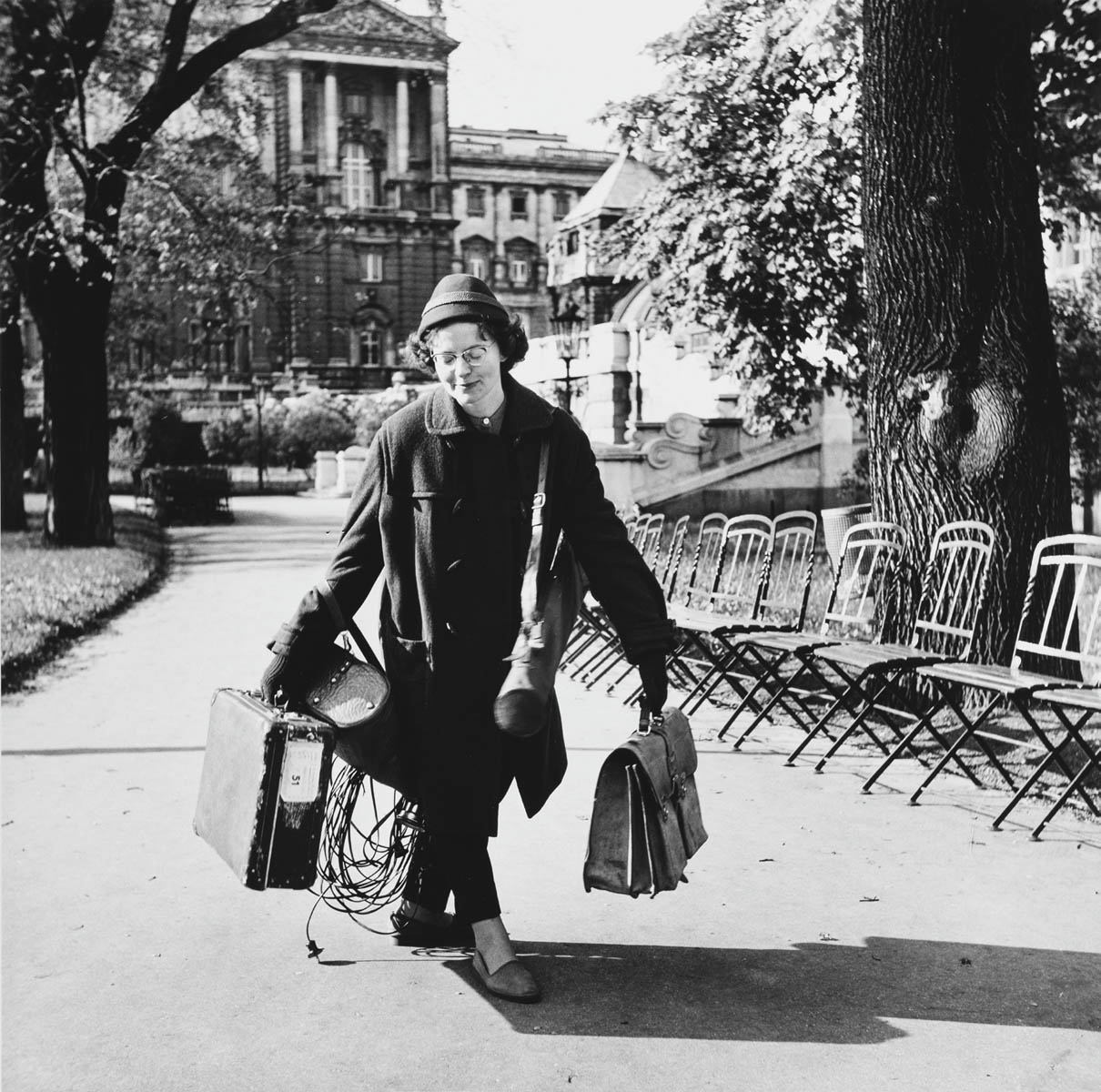
Anonymous photographer. 'Elfriede Mejchar' Nd


Anonymous photographer
Elfriede Mejchar
Nd
Gelatin silver print


Installation view of the exhibition 'The Poetry of the Everyday. Photographs by Elfriede Mejchar', Museum der Moderne Salzburg 2024 showing photographs of Mejchar's flower series


Installation view of the exhibition The Poetry of the Everyday. Photographs by Elfriede Mejchar, Museum der Moderne Salzburg 2024 showing photographs of Mejchar’s flower series


Elfriede Mejchar (Austrian, 1924-2020) 'Amaryllis' 1997


Elfriede Mejchar (Austrian, 1924-2020)
Amaryllis
1997
© Elfriede Mejchar/Landessammlungen NÖ


Elfriede Mejchar (Austrian, 1924-2020) From the series 'Nobody is perfect' 1996


Elfriede Mejchar (Austrian, 1924-2020)
From the series Nobody is perfect
1996
Chromogenic print
Federal Photography Collection at the Museum der Moderne Salzburg
© Bildrecht, Vienna, 2024
Photo: Andrew Phelps


Elfriede Mejchar (Austrian, 1924-2020) From the series 'Nobody is perfect' 1996


Elfriede Mejchar (Austrian, 1924-2020)
From the series Nobody is perfect
1996
Chromogenic print
Federal Photography Collection at the Museum der Moderne Salzburg
© Bildrecht, Vienna, 2024
Photo: Andrew Phelps


Elfriede Mejchar (Austrian, 1924-2020) From the series 'Nobody is perfect' 2003


Elfriede Mejchar (Austrian, 1924-2020)
From the series Nobody is perfect
2003
© Elfriede Mejchar/Landessammlungen NÖ


Museum der Moderne Salzburg
Altstadt (Rupertinum)

Wiener-Philharmoniker-Gasse 9
5020 Salzburg
Austria

Opening hours:
Daily 10am – 6pm

Museum der Moderne Salzburg website

LIKE ART BLART ON FACEBOOK

Back to top

Exhibition: ‘On Her Own. The photographer Elfriede Mejchar’ at Wien Museum MUSA, Vienna

Exhibition dates: 18th April – 1st September, 2024

Curators: Anton Holzer, Frauke Kreutler


Elfriede Mejchar (Austrian, 1924-2020) 'Light and Shade' 1958 from the exhibition 'On Her Own. The photographer Elfriede Mejchar' at Wien Museum MUSA, Vienna, April - Sept 2024


Elfriede Mejchar (Austrian, 1924-2020)
Light and Shade
1958
Wien Museum
© Bildrecht, Vienna 2023


Comment on this magnificent Austrian photographer unknown to me until now will be forthcoming in the future posting on the simultaneous exhibition The Poetry of the Everyday. Photographs by Elfriede Mejchar at Museum der Moderne Salzburg.

Marcus


Many thankx to the Wien Museum for allowing me to publish the photographs in the posting. Please click on the photographs for a larger version of the image.


“I am not an artist, I am a photographer.”


Elfriede Mejchar


Installation view of the exhibition 'On Her Own. The photographer Elfriede Mejchar' at Wien Museum musa, Vienna

Installation view of the exhibition 'On Her Own. The photographer Elfriede Mejchar' at Wien Museum musa, Vienna

Installation view of the exhibition 'On Her Own. The photographer Elfriede Mejchar' at Wien Museum musa, Vienna

Installation view of the exhibition 'On Her Own. The photographer Elfriede Mejchar' at Wien Museum musa, Vienna

Installation view of the exhibition 'On Her Own. The photographer Elfriede Mejchar' at Wien Museum musa, Vienna

Installation view of the exhibition 'On Her Own. The photographer Elfriede Mejchar' at Wien Museum musa, Vienna

Installation view of the exhibition 'On Her Own. The photographer Elfriede Mejchar' at Wien Museum musa, Vienna


Installation views of the exhibition On Her Own. The photographer Elfriede Mejchar at Wien Museum musa, Vienna


Elfriede Mejchar (1924-2020) was a major photographic artist, whose richly-varied oeuvre spans more than five decades, from the late 1940s well into the 21st century. The Viennese photographer, who only achieved recognition as an artist towards the end of her career, is now regarded as one of the most important representatives of the Austrian and the international photography scenes. May 10, 2024 marks the hundredth anniversary of her birth.

The exhibition at the Wien Museum presents a broad cross-section of the work of this artistic outsider, and demonstrates how the renewal of postwar Austrian photography was almost “all her own work.” Elfriede Mejchar consciously broke away from the photographic mainstream and the reportage style that was popular at the time. Rather than searching for the so-called “decisive moment,” she approached her subjects in a strongly conceptual and serial manner. She focused not on the extraordinary but on the unspectacular and the commonplace, the everyday and the banal, repeatedly addressing these in new ways in her photographic series.

In an Austria-wide cooperation between the Wien Museum, the State Gallery of Lower Austria, and the Museum der Moderne Salzburg, Elfriede Mejchar’s extensive oeuvre is being presented in 2024 for the first time, simultaneously, in three locations across the country. The exhibitions in Vienna, Krems, and Salzburg approach the work of Mejchar from different perspectives. And the three presentations are accompanied by a jointly conceived catalog published by Hirmer Verlag.

A cooperation between the State Gallery of Lower Austria, the Wien Museum and the Museum der Moderne Salzburg.

Text from the Wien Museum website


Elfriede Mejchar (Austrian, 1924-2020) 'Light and Shade' 1958 from the exhibition 'On Her Own. The photographer Elfriede Mejchar' at Wien Museum MUSA, Vienna, April - Sept 2024


Elfriede Mejchar (Austrian, 1924-2020)
Light and Shade
1958
Wien Museum
© Bildrecht, Vienna 2023


Elfriede Mejchar (Austrian, 1924-2020) 'Untitled' 1950-1960  From the series 'Light and Shade' from the exhibition 'On Her Own. The photographer Elfriede Mejchar' at Wien Museum MUSA, Vienna, April - Sept 2024


Elfriede Mejchar (Austrian, 1924-2020)
Untitled
1950-1960
From the series Light and Shade
Wien Museum
© Bildrecht, Vienna 2023


Elfriede Mejchar (Austrian, 1924-2020) 'Untitled (Waiting for the Tram)' 1950-1960


Elfriede Mejchar (Austrian, 1924-2020)
Untitled (Waiting for the Tram)
1950-1960
From the series Light and Shade
Wien Museum
© Bildrecht, Vienna 2023


Elfriede Mejchar (Austrian, 1924-2020) 'Vienna 10, Hasengasse 53' 1950-1960


Elfriede Mejchar (Austrian, 1924-2020)
Vienna 10, Hasengasse 53
1950-1960
Wien Museum
© Bildrecht, Vienna 2023


Installation view of the exhibition 'On Her Own. The photographer Elfriede Mejchar' at Wien Museum musa, Vienna Installation view of the exhibition On Her Own. The photographer Elfriede Mejchar at Wien Museum musa, Vienna showing photographs from Mejchar's series 'Simmering Heide and Erdberg Mais' (1967-1976)


Installation view of the exhibition On Her Own. The photographer Elfriede Mejchar at Wien Museum musa, Vienna showing photographs from Mejchar’s series Simmering Heide and Erdberg Mais (1967-1976, below)


Elfriede Mejchar (Austrian, 1924-2020) 'Simmering Heide and Erdberg Mais' 1967-1976


Elfriede Mejchar (Austrian, 1924-2020)
Simmering Heide and Erdberg Mais
1967-1976
Wien Museum
© Bildrecht, Vienna 2023


Elfriede Mejchar (Austrian, 1924-2020) 'Simmering Heide and Erdberg Mais' 1967-1976


Elfriede Mejchar (Austrian, 1924-2020)
Simmeringer Heide and Erdberger Mais
1967-1976
Wien Museum
© Bildrecht, Vienna 2023


Elfriede Mejchar (Austrian, 1924-2020) 'At the Hotel' Around 1980


Elfriede Mejchar (Austrian, 1924-2020)
At the Hotel
Around 1980
Wien Museum
© Bildrecht, Vienna 2023


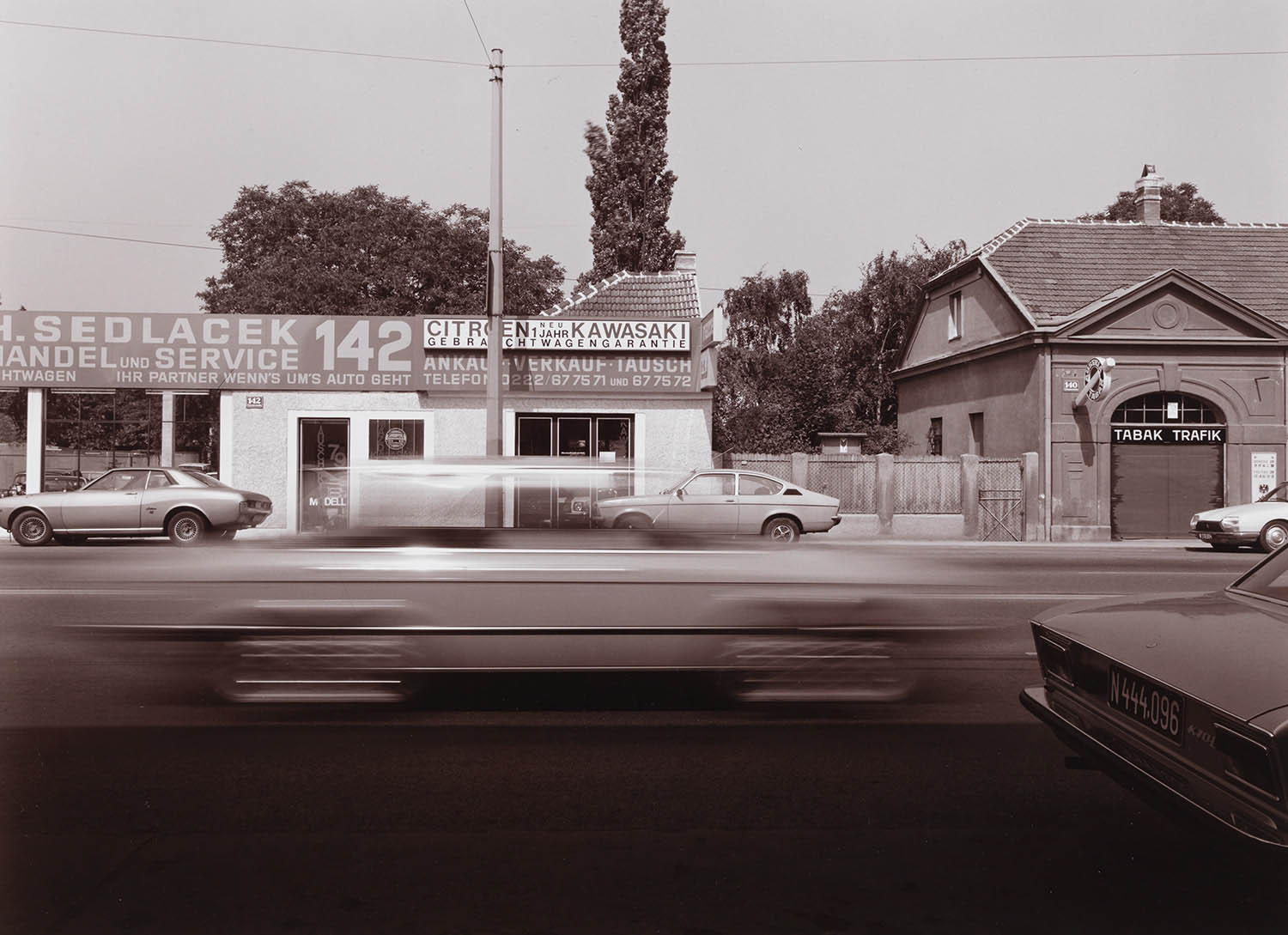
Elfriede Mejchar (Austrian, 1924-2020) 'Triester Strasse' 1982-1983


Elfriede Mejchar (Austrian, 1924-2020)
Triester Strasse
1982-1983
Wien Museum
© Bildrecht, Vienna 2023


Elfriede Mejchar (1924-2020) was a major photographic artist, whose richly-varied oeuvre spans more than five decades, from the late 1940s well into the 21st century. The Viennese photographer, who only achieved recognition as an artist towards the end of her career, is now regarded as one of the most important representatives of the Austrian and the international photography scenes. May 10, 2024 marks the hundredth anniversary of her birth.

The exhibition in musa presents a broad cross-section of the work of this artistic outsider, and demonstrates how the renewal of postwar Austrian photography was almost “all her own work.” Elfriede Mejchar consciously broke away from the photographic mainstream and the reportage style that was popular at the time. Rather than searching for the so-called “decisive moment,” she approached her subjects in a strongly conceptual and serial manner. She focused not on the extraordinary but on the unspectacular and the commonplace, the everyday and the banal, repeatedly addressing these in new ways in her photographic series.

Elfriede Mejchar revealed her hometown Vienna from the periphery and had little interest in its iconic center, which was already the subject of countless thousands of photographs. As a photographer, she was at home where the city became rural, at the meeting point between urban development zones, derelict sites, green spaces, and post-industrial decay. In her long-term studies she documented the architectural and social textures of Vienna’s suburbs in a way that was both attentive and sober: new buildings advancing ever further onto green land, the monotony of endless arterial roads, derelict industrial complexes, market gardens and ageing gasometers, run-down housing and forgotten areas of landfill and decay. For Mejchar, however, the image of the urban periphery is not grey and the wasteland and its dereliction are repeatedly brightened by moments of unsuspected beauty.

Even if the urban and architectural photography of Vienna plays a major role in Elfriede Mejchar’s oeuvre, the range of subjects addressed in her work is far broader. Just as the photographer sheds a new photographic light on forgotten landscapes and buildings, she also approaches people and plants, places and things, in unexpected and surprising ways. In her incomparable series “Hotels,” she studies the interiors and typologies of Austrian accommodation in great detail, producing fascinating and often brightly coloured still lifes of plants and flowers as a means of aesthetically investigating the intermediate stages between blooming and withering. And in her bold collages and montages, a complex of work that continued to occupy her into her latter years, she created clever fantasy worlds, whose social criticism is only matched by their humour.

In an Austria-wide cooperation between the Wien Museum, the State Gallery of Lower Austria, and the Museum der Moderne Salzburg, Elfriede Mejchar’s extensive oeuvre is being presented in 2024 for the first time, simultaneously, in three locations across the country. The exhibitions in Vienna, Krems, and Salzburg approach the work of Mejchar from different perspectives:

Landesgalerie Niederösterreich. Elfriede Mejchar. Pushing the Boundaries of Photography April 13, 2024 to February 16, 2025 Tuesday – Sunday, 10am-6pm

musa. On her own. The photographer Elfriede Mejchar April 18 to September 1, 2024 Tuesday – Sunday, 10am-6pm

Museum der Moderne Salzburg. The Poetry of Everyday. Photographs by Elfriede Mejchar April 26 to September 15, 2024 Tuesday – Sunday, 10am-6pm

Biography of Elfriede Mejchar

Elfriede Mejchar (1924-2020) is undisputedly one of the most important personalities in Austrian photography. It was only at an advanced age that she received the public recognition she deserved, and in 2002 she was awarded the Federal Chancellery Prize for Artistic Photography and in 2004 the Lower Austrian Prize for Artistic Photography and the City of Vienna Prize for Fine Arts. In 2013, Elfriede Mejchar donated her entire oeuvre to the Province of Lower Austria. The Provincial Collections of Lower Austria have taken on the task of safeguarding this unique oeuvre for future generations and gradually making it accessible to the public. Her work is also prominently represented in the art collection of the Wien Museum, in the Federal Photography Collection and in the SpallArt Collection.

Press release from Wien Museum, Vienna


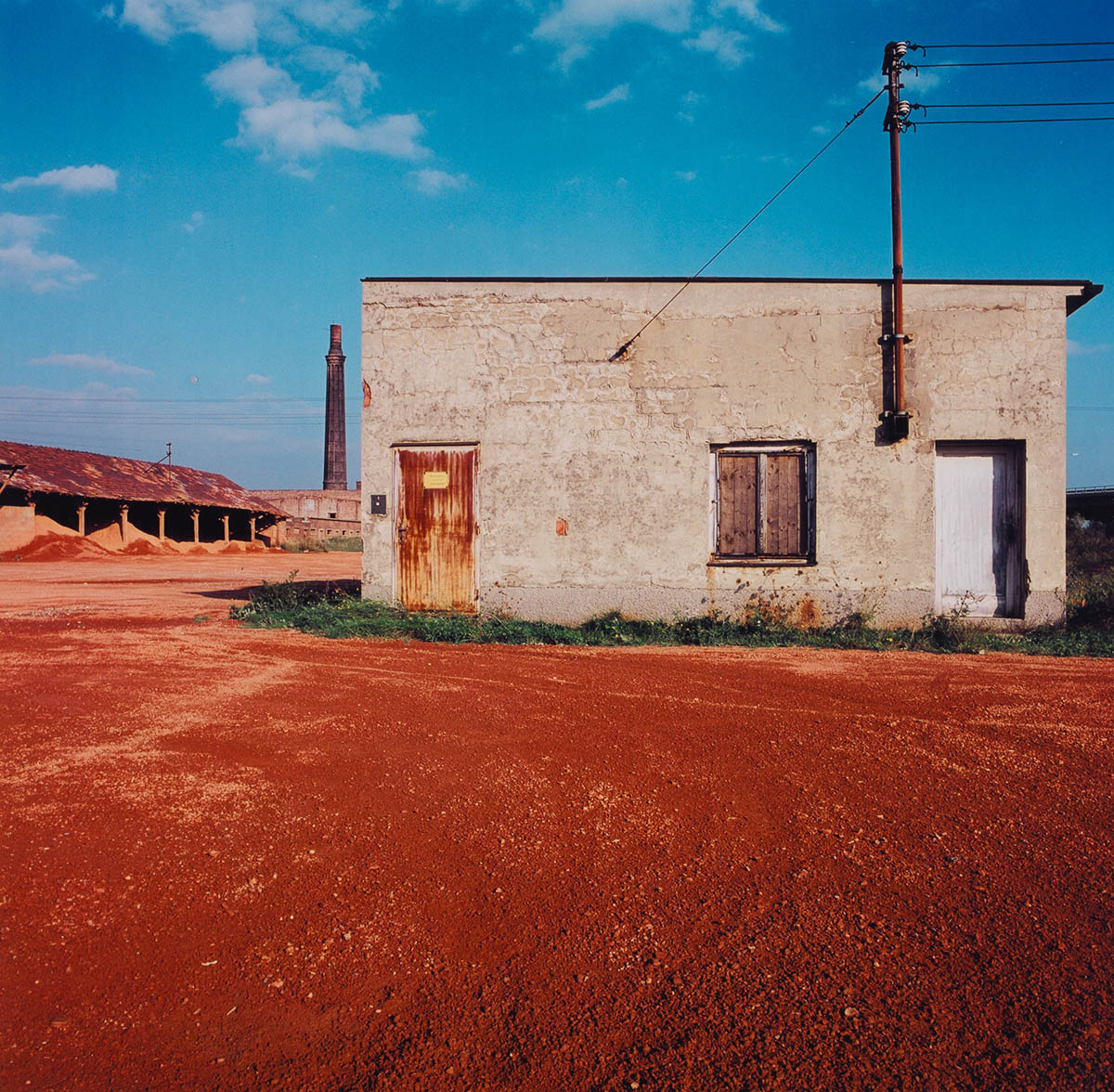
Elfriede Mejchar (Austrian, 1924-2020) 'Wienerberger Brick Kilns and Housing Estates' 1979-1981


Elfriede Mejchar (Austrian, 1924-2020)
Wienerberger Brick Kilns and Housing Estates
1979-1981
Wien Museum
© Bildrecht, Vienna 2023


Elfriede Mejchar (Austrian, 1924-2020) 'Wienerberger Brick Kilns and Housing Estates' 1979-1981


Elfriede Mejchar (Austrian, 1924-2020)
Wienerberger Brick Kilns and Housing Estates
1979-1981
Wien Museum
© Bildrecht, Vienna 2023


Installation view of the exhibition 'On Her Own. The photographer Elfriede Mejchar' at Wien Museum musa, Vienna showing text and photographs from the section 'Allure of the Everyday'


Installation view of the exhibition On Her Own. The photographer Elfriede Mejchar at Wien Museum musa, Vienna showing text and photographs from the section ‘Allure of the Everyday’


Exhibition texts

“I always marvelled at the wallpaper” (Prologue)

Elfriede Mejchar had two faces as a photographer: one in her day job, and one as an artist. Working for the Federal Monuments Office, she spent many years touring Austria, extensively documenting buildings and artworks in the provinces. On the side, she was a freelance photographic artist. When “at work,” she was bound by the strict criteria of art documentation. As an artist, she forged her own, very different paths.

While in her day job she photographed “great art,” in her free time she focused on the banality of everyday life, for example by taking interior shots of her accommodation over the years. The expenses covered by “the office,” she explained, “were not very generous, and I was always looking for lower-end lodgings. They could be very odd, anything was possible. In particular, I always marvelled at the wallpaper.”

1. Allure of the Everyday

A backlit trash can or advertising column, people waiting on the street, youths in the Bohemian Prater, the geometry of washing lines – even in her early series dating from the 1950s and 1960s, Mejchar’s fascination with scenes from everyday life is clear. She used her camera to record what she saw in the city in a matter-of-fact style, without judgment: the buildings and streets, cars and advertisements, traffic lights and posters. Only occasionally do people feature in her images. Often they seem a little lost. In contrast to many other photographers of her era, Mejchar was not looking for a quick snapshot or the “decisive moment.” “Speed doesn’t suit me,” she once said. Frequently she worked in series, often created over several years. Her focus was not on the extraordinary but on the unspectacular and the commonplace.

Working in Series

“I don’t like single photos very much,” said Elfriede Mejchar, thus describing one of the fundamental features of her photography. For almost 30 years, she explored Vienna’s peripheral zones on the southeast edge of the city. Again and again she returned to these uninviting places on the outskirts, where few people spent much time. In the main she photographed the landscapes, roads, and neighbourhoods in series, usually in parallel, but sometimes as a chronological sequence. For Mejchar as a photographer, the single image could not capture the complexity of this desolate and yet, in her eyes, beautiful landscape. It was the series that allowed her to show the different facets of a subject from ever new perspectives. Through her artistic and conceptual practice, Mejchar forged a completely new path in Austrian photography.

2. Evil Blooms

Throughout her working life, Mejchar photographed art, in other words, things created to last. Her images of flowers were a late counter-project. In these plant studies, some shot in luminous colour, the photographer brought transience and decay into focus, drawing out the fascinating transitions between blooming and withering. “I am not afraid of pathos, nor of kitsch,” Mejchar once said.

Elfriede Mejchar paid no heed to photographic conventions in her freelance work. Unabashed, she took delight in arranging and staging the plants and objects for her photographs in ways that opened up a range of associations. Some of her objects seem almost to come to life under her lens, while others wither away. Yet others invoke images of sexuality and desire.

Putting in a New Light

As a photographic subject, flowers are often dismissed as being romantic, kitsch, or unserious. Mejchar was not afraid of kitsch, but neither was she ever interested in the sweetness of the tulips or amaryllis she photographed. For her, flowers were like sculptures that needed to be shown in a proper light. Mejchar’s “merciless” gaze extended beneath the surface. It drilled into the very substance of the petals, laying bare the skeleton that emerged as the flower withered and capturing the bizarre forms of the dying plant. Yet the artist could not break free entirely of the strong metaphorical imagery of flowers. Sometimes, her shots of them in full bloom or with their inner parts exposed carried a sensual or sexual charge.

3. Measuring the Periphery

New builds encroaching ever further on the countryside, abandoned factories, fields of vegetables, ageing gasometers, the monotony of interminable highways, makeshift housing, wastelands – as a photographer, Elfriede Mejchar was especially keen on these forgotten landscapes on the margins of the Viennese metropolis. “It was the changes that I was concerned with.”

Starting in the 1960s, Mejchar roamed the city’s peripheral zones with her camera. “These were the sites that interested me the most. Where countryside and city collide.” Her long-term series “Simmeringer Heide and Erdberger Mais,” begun in the 1960s and first shown in 1976 in a solo exhibition at the Museum of the 20th Century, established Mejchar’s reputation as leading photo artist.

Constructing Space

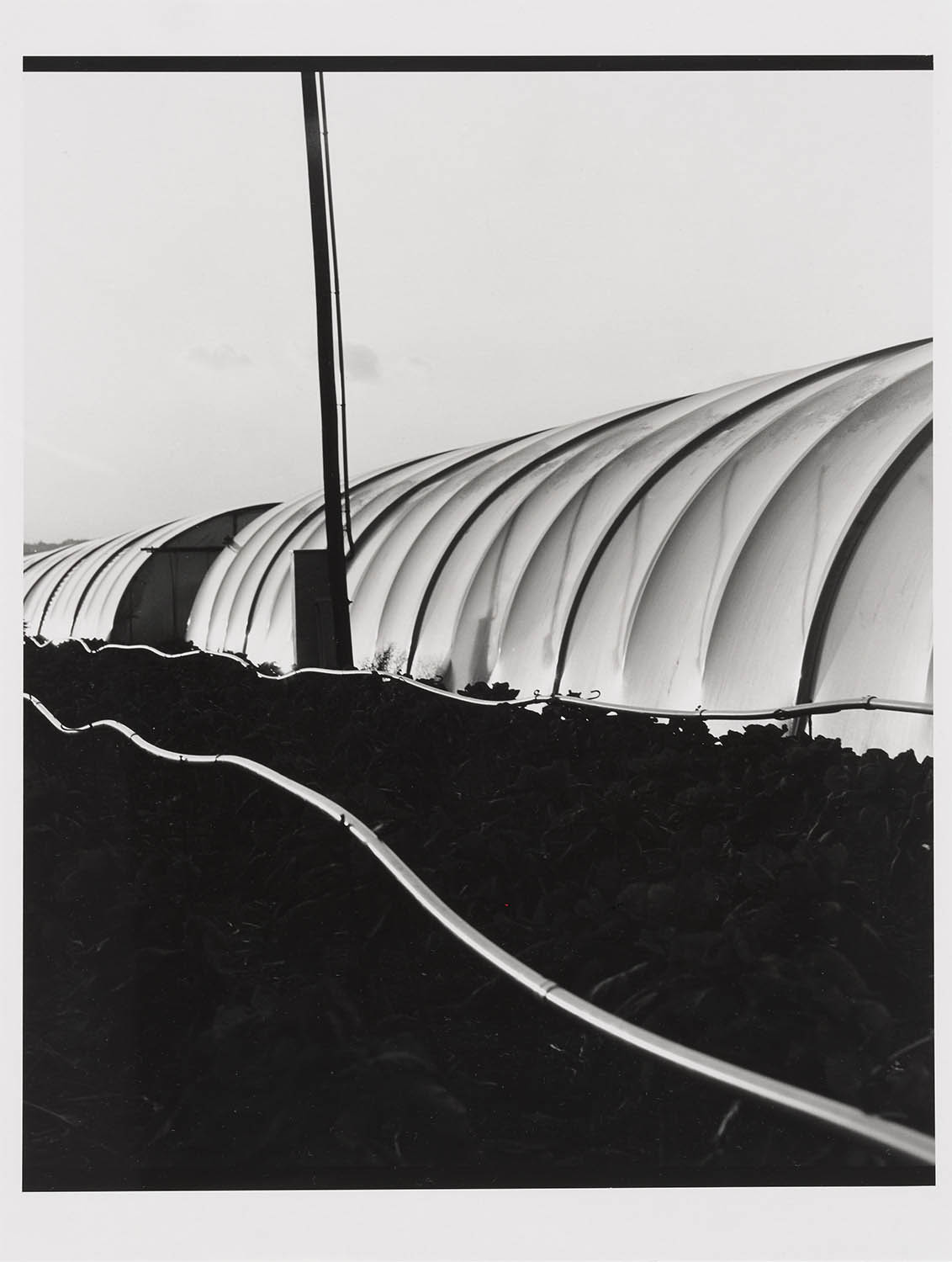
Row upon row of plants, damp soil blanketed by the early morning mist, distant greenhouses, lettuces covering the ground, interspaced with sprinklers – Elfriede Mejchar documented every facet of Vienna’s market gardens at the edge of the city, from detached general views to shots that capture the smallest detail. Her images use a deep depth of field, making it seem almost as if the viewer could reach out and touch the clumps of soil or individual leaves in the foreground. But she also regularly translated landscapes, buildings, and spaces into abstract forms by setting up contrasting oppositions between individual motifs, or by reducing an image to monochrome surfaces.

4. Lips and Pistols

Faces ripped from fashion magazines and floral wallpaper, cogs and cigarettes, spools and dressmaking pins, small chains and cables – starting in the 1980s, Mejchar jumbled these found, everyday objects together to create small-scale, theatrical arrangements laced with acerbic wit. “I construct images,” the artist once said of her sarcastic and subversive collages and assemblages. In these composite scenes, Elfriede Mejchar gave free rein to an anarchic desire to assemble and disassemble. At the same time, she used humour and irony to lampoon society’s ideals of perfection, “adorning” beautiful faces with everyday objects, for example, or – with a knowing wink – targeting James Bond’s pistol on the eroticised lips of the beauty industry. Mejchar’s summary: “I like things colourful and crazy.”

Arranging Objects

After retiring from paid employment, Mejchar increasingly concentrated on her work in the studio, which now became a stage for herself and her camera. Here she created ironic, acerbic, and frequently bizarre object combinations, often as an exploration of gender stereotypes. In her collages, she dismantled and critiqued the fashion industry’s preformed ideals of beauty with zest and humour. She took pleasure in experimenting with a whole range of props, rearranging them into new scenes again and again. Fragmented faces from fashion magazines were combined with torn and cut wallpaper, then garnished with cogs, feathers, and cables. She literally nailed the beauty industry to the wall.

5. Remains and Ruins

The innards of a house scheduled for demolition, derelict industrial estates, overgrown railway lines and buildings, gouged landscapes, forgotten piles of bricks – over many years, Mejchar explored these remains of industrial culture. “My work only began,” she said, “when the people were gone.”

“I took myself off to the factories, going from one road to the next.” In her series “Wienerberger Brick Kilns,” which she photographed from 1979 to 1981 following the closure of the Wienerberger brick factory on Vienna’s southern edge, she made deliberate use of colour photography for the first time. Impregnated with brick dust, the ground and the remains of the industrial architecture glow red under an azure sky, assuming an air of unreality. Mejchar: “I am interested in what remains.”

Seeing in Color

During the first decades of her career as a photographer, Elfriede Mejchar worked in black and white because colour photography was too expensive. All the more astonishing, therefore, is the confidence and precision with which she employed colour as an aesthetic element in the photo series “Wienerberger Brick Kilns” in the late 1970s and early 1980s. Similar to the New Color Photography movement in the USA, Mejchar’s photographic explorations focused primarily on the borders between urban and rural spaces. Her main interest was in landscapes subjected to human interventions. She documented these run-down locations using vivid lighting and brilliant colours, producing unsentimental photographs of high aesthetic quality. In doing so, she opened up an entirely new approach to documentary photography in Austria.


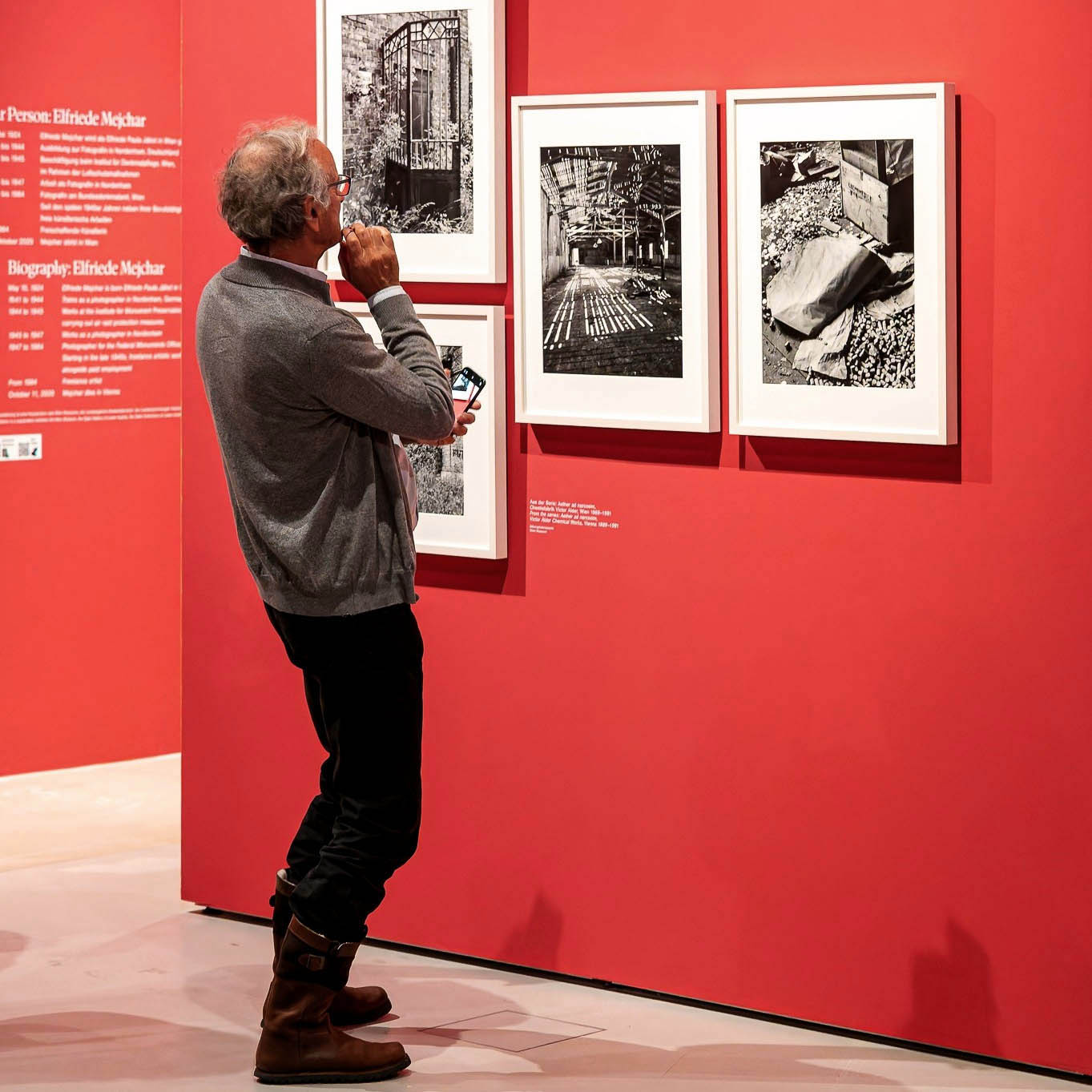
Installation view of the exhibition 'On Her Own. The photographer Elfriede Mejchar' at Wien Museum musa, Vienna showing at second right, Mejchar's 'Aether and narcosim' (1989-1991)


Installation view of the exhibition On Her Own. The photographer Elfriede Mejchar at Wien Museum musa, Vienna showing at second right, Mejchar’s Aether and narcosim (1989-1991, below)


Elfriede Mejchar (Austrian, 1924-2020) 'Aether and narcosim' 1989-1991


Elfriede Mejchar (Austrian, 1924-2020)
Aether and narcosim
1989-1991
Wien Museum
© Bildrecht, Vienna 2023


Elfriede Mejchar (Austrian, 1924-2020) 'Vegetable Tunnels. Simmering Market Gardens' 1990-1994


Elfriede Mejchar (Austrian, 1924-2020)
Vegetable Tunnels. Simmering Market Gardens
1990-1994
Wien Museum
© Bildrecht, Vienna 2023


Elfriede Mejchar (Austrian, 1924-2020) 'Vegetable Tunnels. Simmering Market Gardens' 1990-1994


Elfriede Mejchar (Austrian, 1924-2020)
Vegetable Tunnels. Simmering Market Gardens
1990-1994
Wien Museum
© Bildrecht, Vienna 2023


Elfriede Mejchar (Austrian, 1924-2020) 'A Costume of Borrowed Identity' 1990-1991


Elfriede Mejchar (Austrian, 1924-2020)
A Costume of Borrowed Identity
1990-1991
Wien Museum
© Bildrecht, Vienna 2023


Elfriede Mejchar (Austrian, 1924-2020) 'A Costume of Borrowed Identity' 1990-1991


Elfriede Mejchar (Austrian, 1924-2020)
A Costume of Borrowed Identity
1990-1991
Wien Museum
© Bildrecht, Vienna 2023


Elfriede Mejchar (Austrian, 1924-2020) 'Amaryllis' 1996


Elfriede Mejchar (Austrian, 1924-2020)
Amaryllis
1996
Wien Museum
© Bildrecht, Vienna 2023


Elfriede Mejchar (Austrian, 1924-2020) 'Amaryllis' 2001


Elfriede Mejchar (Austrian, 1924-2020)
Amaryllis
2001
Wien Museum
© Bildrecht, Vienna 2023


Elfriede Mejchar (Austrian, 1924-2020) 'Hands in Lap' 2002


Elfriede Mejchar (Austrian, 1924-2020)
Hands in Lap
2002
Wien Museum
© Bildrecht, Vienna 2023


Elfriede Mejchar (Austrian, 1924-2020) From the series 'Nobody is Perfect' 1989-2007


Elfriede Mejchar (Austrian, 1924-2020)
From the series Nobody is Perfect
1989-2007
© Bildrecht, Vienna 2024


Elfriede Mejchar (Austrian, 1924-2020) From the series 'Nobody is Perfect' 1989-2007


Elfriede Mejchar (Austrian, 1924-2020)
From the series Nobody is Perfect
1989-2007
© Bildrecht, Vienna 2024


Unknown photographer. 'Elfriede Mejchar with Linhof camera and tripod in the Federal Monuments Office' Late 1970s


Unknown photographer
Elfriede Mejchar with Linhof camera and tripod in the Federal Monuments Office
Late 1970s
State Collections of Lower Austria


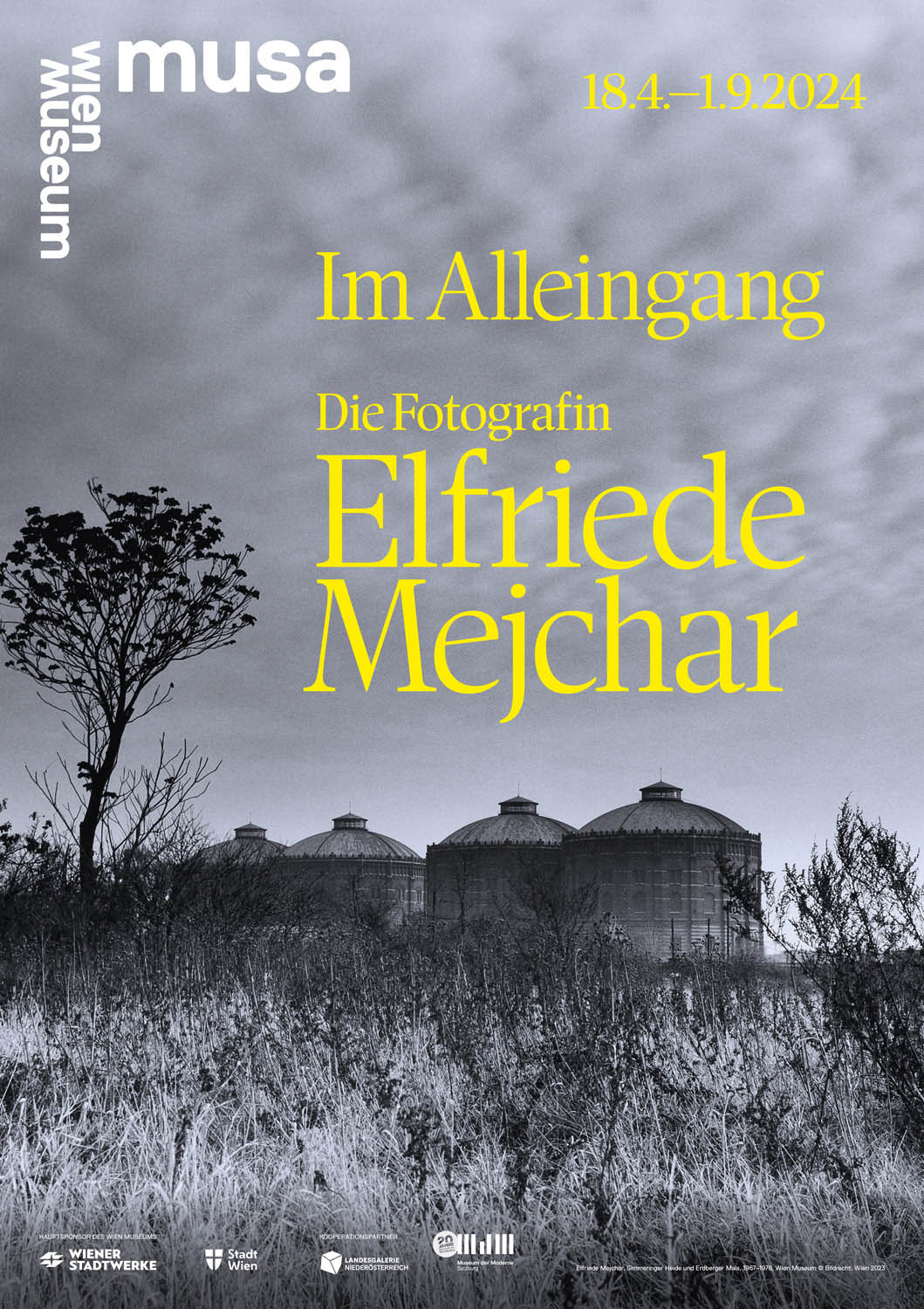
Poster for the exhibition 'On Her Own. The Photographer Elfriede Mejchar'


Poster for the exhibition On Her Own. The Photographer Elfriede Mejchar
Graphic: Studio Kehrer


Wien Museum MUSA
1010 Vienna, Felderstraße 6-8

Opening hours:
Tuesday to Sunday 10am – 6pm

Wien Museum website

LIKE ART BLART ON FACEBOOK

Back to top

Exhibition: ‘Instantly! Vienna Street Photography’ at the Wien Museum, Vienna

Exhibition dates: 19th May – 23rd October, 2022


Michael Frankenstein & Comp. 'Währinger Straße' 1880's from the exhibition 'Instantly! Vienna Street Photography' at the Wien Museum, Vienna, May - Oct, 2022


Michael Frankenstein & Comp. (Austrian, 1843-1918)
Währinger Straße
1880’s
Wien Museum Collection


It is so good to post a diverse range of photography exhibitions on Art Blart. Here we have some interesting early street photographs of Vienna, images that I have never seen before.

No bibliographic information was included with the media press kit, not even the nationality of the photographers, so I have added as much information as I could find online about the artists.

Dr Marcus Bunyan


Many thankx to the Wien Museum for allowing me to publish the photographs in the posting. Please click on the photographs for a larger version of the image.


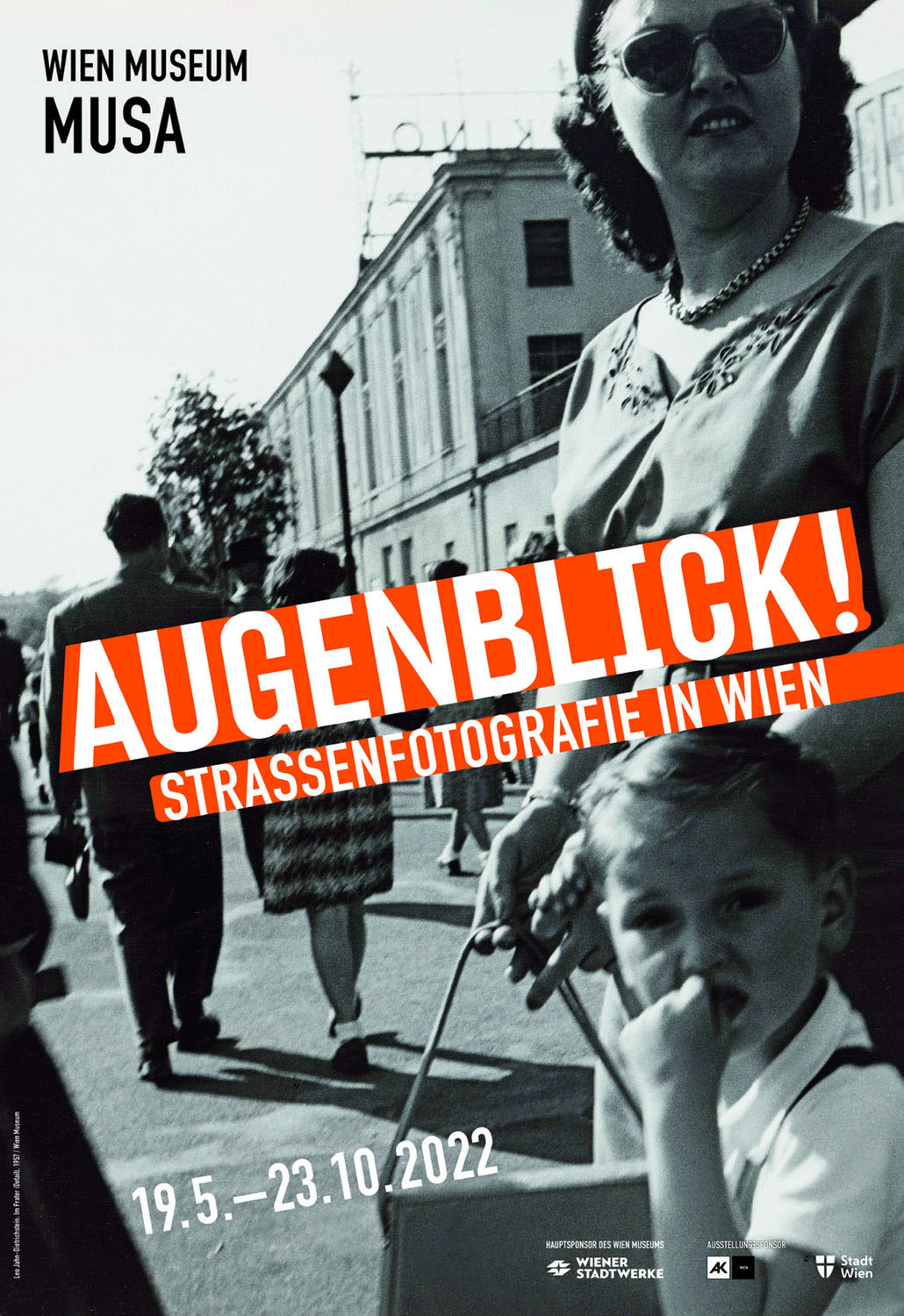
Instantly! Vienna Street Photography, exhibition poster


Instantly! Vienna Street Photography, exhibition poster
Graphics: Schienerl D/AD


'Instantly! Vienna Street Photography', exhibition view, 2022, Wien Museum MUSA


Instantly! Vienna Street Photography, exhibition view, 2022, Wien Museum MUSA
Photo: timtom


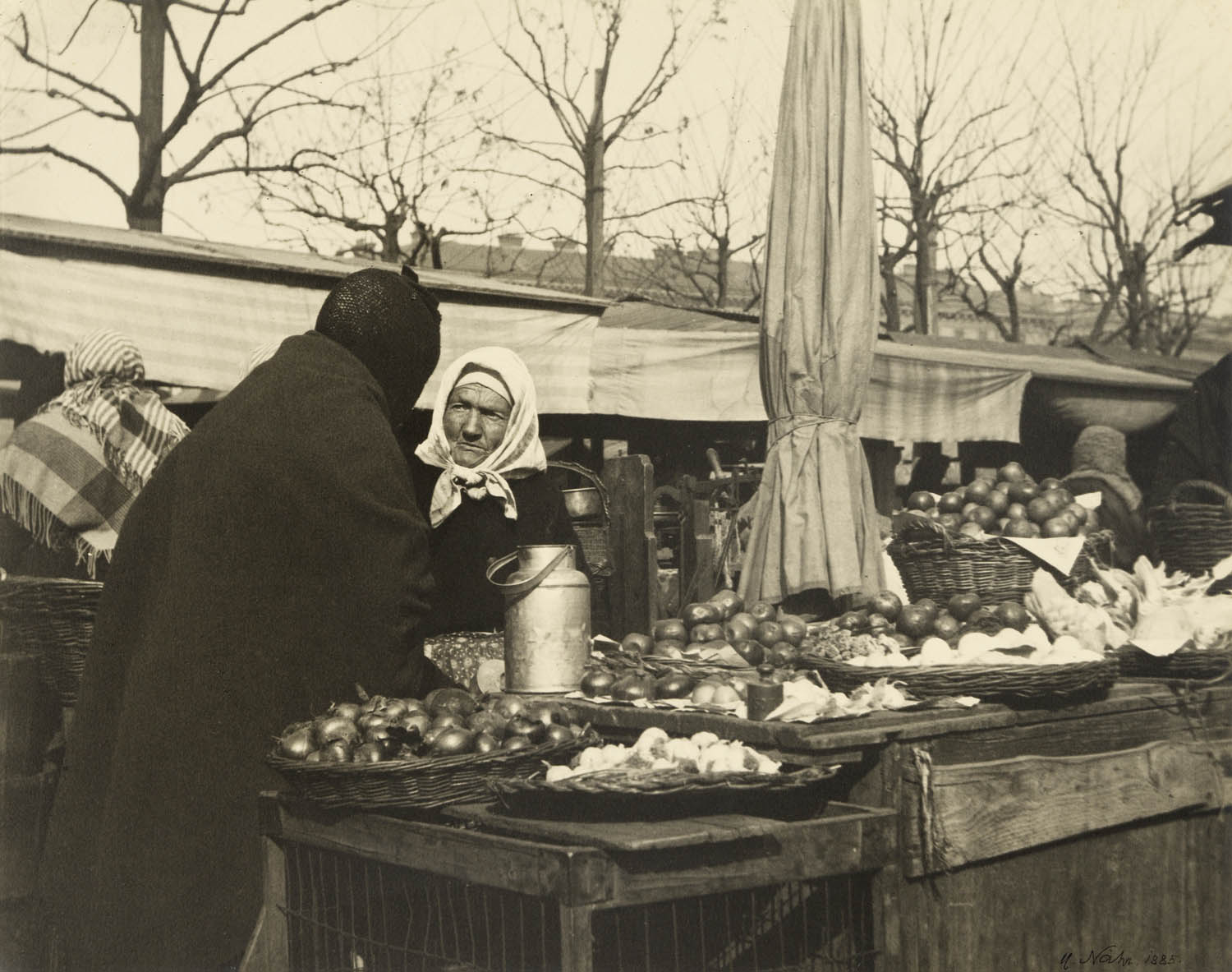
Moriz Nähr (Austrian, 1859-1945) 'At the old Naschmarkt, Vienna' 1885 from the exhibition 'Instantly! Vienna Street Photography' at the Wien Museum, Vienna, May - Oct, 2022


Moriz Nähr (Austrian, 1859-1945)
At the old Naschmarkt, Vienna
1885
Wien Museum Collection


Moriz Nähr (Austrian, 1859-1945)

Moriz Nähr was an Austrian photographer. Nähr was a friend of the members of the Vienna Secession art group. He is best known for his portraits of Gustav Klimt, Gustav Mahler, and Ludwig Wittgenstein.

Moriz Nähr (1859-1945) is one of the most important innovators of photography in “Vienna around 1900”. His photographic oeuvre is mentioned today in the same breath as that of the famous Parisian photographer Eugène Atget. Nähr enjoyed a life-long artist’s friendship with Gustav Klimt and was connected with the artist through a special network of eminent personalities from the arts, culture and philosophy. Numerous portrait photographs of Klimt emphatically document the two artists’ bond. Klimt was also inspired by Nähr’s photographic motifs, as illustrated by the conformities in the photographer’s pictures and Klimt’s painting Beech Forest I created in 1902. The legends surrounding Moriz Nähr are based on the one hand on his close ties with Gustav Klimt and the Vienna Secession and on the other hand on his connections with the family of Ludwig Wittgenstein and the imperial Habsburg family, especially with the heir to the throne Archduke Franz Ferdinand, who appointed him court photographer in 1908. Owing to his work as a freelance photographer as well as to his various commissions, he has left behind a multi-faceted oeuvre comprising not only landscape-, architecture-, and portrait photography but also street photography (Scenes from the Naschmarkt, 1918) as well as photographs documenting exhibitions (Vienna Secession).

Anonymous. “Moriz Nähr: Photographer of Viennese Modernism,” on the Leopold Museum website 2018 [Online] Cited 16/10/2022


'Instantly! Vienna Street Photography', exhibition view, 2022, Wien Museum MUSA


Instantly! Vienna Street Photography, exhibition view, 2022, Wien Museum MUSA
Photo: timtom


August Stauda (Austrian, 1861-1928) 'Kaserngasse (today Otto-Bauer-Gasse), Vienna' c. 1902 from the exhibition 'Instantly! Vienna Street Photography' at the Wien Museum, Vienna, May - Oct, 2022


August Stauda (Austrian, 1861-1928)
Kaserngasse (today Otto-Bauer-Gasse), Vienna
c. 1902
Wien Museum Collection


August Stauda (Austrian, 1861-1928)

August Stauda (b. July 19, 1861 in Schurz , Bohemia ; d. July 8, 1928 in Vienna) was one of the leading Viennese architectural photographers who made a name for himself as a city photographer and documentarist of “old Vienna”.

Stauda first completed an apprenticeship as a clerk in Trautenau, worked as such in Pilsen and came to Vienna in 1882 to do military service. Here he learned the craft of photography from his uncle, the city and portrait photographer Johann Evangelista Stauda and opened his own studio in 1885 at Schleifmühlgasse 5 in the 4th district of Vienna, Wieden (at the current address of the Kargl Gallery). From 1913 he was a sworn expert. During the First World War he had to file for bankruptcy. Stauda was married but had no children.

In addition to landscape shots, he captured the “old Vienna” in more than 3,000 photographs – inspired by the commission of the monument and homeland protector Count Karl Lanckoronski-Brzezie. He was particularly interested in those parts of the city that underwent significant urban planning changes around the turn of the century, especially parts of the 2nd, 3rd and 9th districts. While the appearance of the city centre at that time is still recognisable today, the contemporary pictures of Mariahilfer Strasse or Neulerchenfelder Strasse show how the passage of time has also changed the city.

Almost three thousand negatives and prints of his pictures of Vienna are now in the Austrian National Library in Vienna. The collection of prints in the possession of the Wien Museum is almost as large.

Other large holdings of Stauda are in the graphic collection of the Albertina, in the archive of the Federal Police Headquarters in Vienna and in the Historical Museum of the City of Kraków.

Text from the German Wikipedia website translated by Google Translate


August Stauda (Austrian, 1861-1928) '9., Nußdorfer Straße 24 / Alserbachstraße 1' 1899


August Stauda (Austrian, 1861-1928)
9., Nußdorfer Straße 24 / Alserbachstraße 1
1899
Albumen print
Image: 22.4 × 27.6cm
© Wien Museum


August Stauda (Austrian, 1861-1928) '4., Margaretenstraße 45 / Große Neugasse 37' 1899


August Stauda (Austrian, 1861-1928)
4., Margaretenstraße 45 / Große Neugasse 37
1899
Albumen print
© Wien Museum


'Instantly! Vienna Street Photography', exhibition view, 2022, Wien Museum MUSA


Instantly! Vienna Street Photography, exhibition view, 2022, Wien Museum MUSA
Photo: timtom


Vienna’s street life in fascinating, never-before-seen photos: The exhibition traverses the city’s pictorial history from the 1860s until today. Most of the works come from the photo collection of the Wien Museum, which show-cases its vast holdings like never before.

The focus of the exhibit is the developing gaze on big city life, from the 1860s to the present. In addition to iconic images of Vienna that capture decisive moments in urban life, the show presents numerous never-before exhibited or published photographs that bring the city’s everyday life as well as the lives of
its inhabitants to the fore: impressive street scenes, intimate snapshots, and fleeting glimpses of urban life.

Iconic images by prominent photographers like Franz Hubmann, August Stauda, Elfriede Mejchar, Robert Haas, Erich Lessing, Edith Suschitzky, Ernst Haas, Harry Weber, and Barbara Pflaum are presented alongside countless new discoveries and previously unpublished works. They capture everyday life in Vienna in enduring snapshots.

The exhibit paints a new portrait of the metropolis on the Danube, inviting visitors on an exciting pictorial journey from early urban photography to the Instagram aesthetics of the present.

Text from the Wien Museum website


Emil Mayer (Austrian, 1871-1938) 'On the way with the tram' 1905-1912


Emil Mayer (Austrian, 1871-1938)
On the way with the tram
1905-1912
Wien Museum Collection

Digitally cleaned and balanced by Marcus Bunyan


Emil Mayer (Austrian, 1871-1938)

Dr. Emil Mayer FRPS (October 3, 1871 – June 8, 1938) was an Austrian photographer, lawyer, inventor, and businessperson.

After Mayer completed his studies at the University of Vienna, he established a law practice at Salvatorgasse 10 in Vienna.

Mayer’s first experience in photography was as an amateur and he was a member of several Viennese photographer associations that focused on artistic photography. His artistic photos include documentary images of Wienerstraße.

Mayer was an honorary member of many domestic and foreign photographers’ clubs. He also authored a textbook and was awarded several patents for photographic devices.

Finally, Mayer left his law firm and founded a photographic technology company DREM-Zentrale with Nikolaus Benedik. The company’s name was an abbreviation of DR. E. Mayer. International branches of the company included, DREM Products Corporation in New York and DREM Products Ltd. in London, England.

On June 6, 1903, he married Elisabeth Deutsch (March 18, 1882 – June 8, 1938).

To escape persecution from the Nazi regime after the annexation of Austria in March 1938, Mayer and his wife died by suicide in their home (BöcklinStraße 12) in Vienna on June 8, 1938.

Text from the Wikipedia website

See more photographs by Emil Mayer on the Vintage Everyday website


Emil Mayer was a Viennese photographer who did most of his work with a hand-camera on the streets of Vienna around the 1910s. Although he was a lawyer by profession, his greatest passion was for photography: he was the long-time president of one of Vienna’s most prominent camera clubs, and by the time of his death was internationally known for his work in photography.

Mayer’s photographs document a short-lived period of stability and prosperity in Austria’s history. The Viennese writer Stefan Zweig recalled this time in his autobiography: “Everything had its norm, its definite measure and weight. … Every family had its fixed budget, and knew how much could be spent for rent and food, for vacations and entertainment… In this vast empire everything stood firmly and immovably in its appointed place, and at its head was the aged emperor; and were he to die, one knew (or believed) another would come to take his place, and nothing would change in the well-regulated order.”

Mayer died in June, 1938 – he committed suicide along with his wife, soon after the Nazi occupation of Vienna – and we know that the Gestapo entered his apartment soon afterwards, with the result that his entire personal collection of photographs was almost certainly destroyed.

Anonymous. “Extraordinary Candid Vintage Photographs That Capture Street Scenes of Vienna, Austria From the 1900s and 1910s,” on the Vintage Everyday website January 18th 2016 [Online] Cited 16/10/2022


Unknown photographer. 'At the Ferdinandsbrücke, Vienna' c. 1911


Unknown photographer
At the Ferdinandsbrücke, Vienna
c. 1911
Wien Museum Collection


'Instantly! Vienna Street Photography', exhibition view, 2022, Wien Museum MUSA


Instantly! Vienna Street Photography, exhibition view, 2022, Wien Museum MUSA
Photo: timtom


Franz Holluber. 'In the Schottengasse' 1931


Franz Holluber
In the Schottengasse
1931
Wien Museum Collection


Martin Gerlach jun. (Austrian, 1879-1944) 'Tiefer Graben 36' c. 1935


Martin Gerlach jun. (Austrian, 1879-1944)
Tiefer Graben 36
c. 1935
Wien Museum Collection


Martin Gerlach junior (Austrian, 1879-1944)

Martin Gerlach junior (April 2, 1879 in Vienna – July 18, 1944 in Vienna) was an Austrian photographer.

Martin Gerlach, son of Martin Gerlach senior, first learned the photography trade from his father, attended the Imperial and Royal Graphic Teaching and Research Institute from 1896-1899 and later perfected his knowledge with Josef Löwy and Hermann Clemens Kosel.

In 1906 he founded his own photo studio and after the First World War became the house photographer for the collector Camillo Castiglioni. After the death of Albert Wiedling, he continued to run the Gerlach & Wiedling publishing house from 1923 together with his son Walter Wiedling.

Martin Gerlach junior became famous through his architectural photographs of the interwar period (municipal buildings of the First Republic, construction of the Wiener Höhenstraße, etc.) as well as through his work on the RAVAG program magazine and through publications in collaboration with the artists Josef Hoffmann and Adolf Loos.

His photo archive of Viennese architecture, industry and the interwar period, which his son continued and supplemented with images from the period after 1945, came into the possession of the City of Vienna in 1989 and is now managed by the photo archive of the Austrian National Library.

On March 1, 1940, Gerlach applied for membership in the NSDAP and was accepted on April 1 (membership number 9,017,291). After his death, his widow, Anna (née Mohl), continued the studio, which was then taken over by his son Kurt Gerlach (1919-2003) in 1947. His son donated the famous Loos archive with 200 glass negatives to the Albertina collections in the 1990s .

Alongside Bruno Reiffenstein (1868-1951), Martin Gerlach is today regarded as one of the most important photographers of the Austrian monarchy.

Text from the German Wikipedia website translated by Google Translate
 

Franz Hubmann (Austrian, 1914-2007) 'Unusual Plant Transport, Wien' 1954


Franz Hubmann (Austrian, 1914-2007)
Unusual Plant Transport, Wien
1954
Wien Museum Collection
© Franz Hubmann / Imagno / picturedesk.com


Franz Hubmann (Austrian, 1914-2007)

Franz Hubmann (born October 2, 1914 in Ebreichsdorf, Lower Austria; died June 9, 2007 in Vienna) was an Austrian photographer and photojournalist.

Hubmann initially embarked on a career as a textile technician, from 1936 to 1938 he ran a hat factory. It was only after the Second World War that he decided to turn his hobby into a career. In 1946, as a 32-year-old father, Hubmann began a three-year apprenticeship at the Graphic Teaching and Research Institute in Vienna.

In 1951, when he was the head of the Austrian tourism advertising agency, he met Karl Pawek , who was the publisher of the Austria International magazine at the time – a long-term collaboration began. In 1954 they founded magnum together – the magazine for modern life. The aim of the magazine was to gently guide people into the new world of modernity. Hubmann’s photo series, such as those about the Café Hawelka, were his breakthrough as a photographer and photojournalist. He was the lead photographer until the magazine closed in 1964.

Over the decades he has published around 80 illustrated books, in particular on contemporary, historical and folklore themes. In addition, he produced 17 television films for ORF in the 1960s and early 1970s, including the 5-part series Die Hohe Schule der Fotografie (The high school of photography).

In professional circles, Hubmann was considered the doyen of Austrian photography, the “Austrian Cartier-Bresson”. He was a photographer who captured what was specifically Austrian and especially Viennese in photographic stories and narratives like no other.

Text from the German Wikipedia website translated by Google Translate
 

Heinrich Steinfest. 'Spectators at horse race' 1956


Heinrich Steinfest
Spectators at horse race
1956
Gelatin silver print


Leo Jahn-Dietrichstein (Austrian, 1911-1984) 'In the Prater' 1957


Leo Jahn-Dietrichstein (Austrian, 1911-1984)
In the Prater
1957
Wien Museum Collection
© Leo Jahn-Dietrichstein, Wien Museum


Leopold Jahn (Austrian, 1911-1984)

Leopold Jahn, stage name Leo Jahn-Dietrichstein (born March 30, 1911 in Vienna ; † November 1, 1984 in Vienna) was an Austrian artist (photography, painting and graphic artist).

He attended the teacher training college with a focus on mathematics, physics, chemistry and art education. In 1939 he was drafted into the Wehrmacht and assigned to Russia. In the Crimea he was wounded and sent back home. Photos from this period can be found in the Military History Museum in Vienna. After the end of the war he walked from his posting in Yugoslavia to East Tyrol, where his family had been relocated during the war. His sons were born in 1942 (Klaus Leopold) and 1946 (Kurt Georg).

He worked as a photographer, painter (classic modern) and graphic artist and published a photo book about East Tyrol, took part in various exhibitions and also had several solo exhibitions. In 1951 he returned to Vienna with his family. He was reinstated in the teaching profession, but continued to work as a photographer. He photographed post-war Vienna. From this time there are, among other things, spectacular photos of the renovation of St. Stephen’s Cathedral. A selection of these photos is owned by the Vienna Museum and the Vienna Office for the Protection of Monuments.

As an artist, he also photographed his artist friends, such as the New York fashion photographer Roland Pleterski, the sculptor Wander Bertoni, and the painter and sculptor Leherb. A selection of these photos are owned by the Vienna Museum. He also made photo reports on the Balkans and Italy.

In 1957 he published a book on Portugal. He worked for the Österreich Illustrierte, the Oberösterreichische Nachrichten, the Österreichischer Verlag, Radio Österreich, for the Magnum agency and for the Süddeutscher Verlag. In 1973 he published a book about Ludwig Boltzmann in the publishing house Jugend und Volk.

Until his retirement he remained in the school service of the city of Vienna. After that he mainly dealt with macro photography. He was particularly interested in the crystal formation of chemical substances. In this context, he worked with large industrial companies such as Schoeller-Bleckmann and Waagner Biro.

Text from the German Wikipedia website translated from the German by Google Translate


'Instantly! Vienna Street Photography', exhibition view, 2022, Wien Museum MUSA


Instantly! Vienna Street Photography, exhibition view, 2022, Wien Museum MUSA
Photo: timtom


Leo Jahn-Dietrichstein (Austrian, 1911-1984) 'In the Kärntner Straße' 1950-1965


Leo Jahn-Dietrichstein (Austrian, 1911-1984)
In the Kärntner Straße
1950-1965
Wien Museum Collection
© Leo Jahn-Dietrichstein, Wien Museum


Vienna’s street life in fascinating, never-before-seen photos: The exhibition “Instantly! Vienna Street Photography” traverses the city’s pictorial history. Most of the works come from the photo collection of the Wien Museum, which showcases its vast holdings like never before.

The focus of the exhibit is the developing gaze on big city life, from the 1860s to the present. In addition to iconic images of Vienna that capture decisive moments in urban life, the show presents numerous never-before-exhibited or published photographs that bring the city’s everyday life as well as the lives of its inhabitants to the fore: impressive street scenes, intimate snapshots, and fleeting glimpses of urban life.

The exhibit shows how the medium of photography functioned in the creation and dissemination of new urban vistas. In this way, the images also tell the story of a rapidly changing metropolis. They capture the hustle and bustle on streets, squares, and markets, uncover unexpected encounters, and document moments of indolence and pleasure. All in all, the exhibition paints a new portrait of the metropolis on the Danube, inviting visitors on an exciting pictorial journey from early urban photography to the Instagram aesthetics of the present.­

Text from the Wien Museum website


'Instantly! Vienna Street Photography', exhibition view, 2022, Wien Museum MUSA


Instantly! Vienna Street Photography, exhibition view, 2022, Wien Museum MUSA
Photo: timtom


The photographs show Vienna to be a slower, sleepier, and until recently greyer city in contrast to larger metropolises like New York, Paris, and London. In the earliest photographs taken in the latter half of the nineteenth and early decades of the twentieth centuries, the dynamism of modern forms of transportation like the tram and the automobile contrast starkly with the leisurely pace at which people move about the urban landscape.

Not only unhurried in the sense of movement, Vienna is presented as a city which has changed at a slower pace both architecturally and in terms of the manner in which people use it. The photographs capture views and angles down streets or across squares that are largely recognizable and assimilable to the contemporary viewer. Institutions like the Naschmarkt, meanwhile, remain important hubs of commerce just as they were over 100 years ago, as a photograph by Moriz Nähr taken of an elderly fruits and vegetables seller in 1885 shows all too clearly.

Nightlife and Vienna after dark are unimportant subjects in Viennese street photography. It is not that Vienna had or has no nightlife – the theater, the cabaret, and so on – but rather that nightlife was not seen by photographers as important to the city’s understanding of itself. Vienna is not a city of sin but a city of leisure. Photographers turn their lens on the coffeehouse, where patrons read the newspaper, play chess, or hold court. The Viennese are captured swimming in the Danube, sunbathing, playing cards, or going to the funfair. These street photographs perpetuate the idea of a certain Viennese Gemütlichkeit, a feeling of warmth, friendless, and good cheer.

Liam Hoare. “Instantly!” on The Vienna Briefing website Jun 1, 2022 [Online] Cited 08/10/2022


Elfriede Mejchar (Austrian, 1924-2020) From the series 'Simmeringer Haide, Erdberger Mais' 1967-1976


Elfriede Mejchar (Austrian, 1924-2020)
From the series Simmeringer Haide, Erdberger Mais
1967-1976
Wien Museum Collection
© Elfriede Mejchar


Elfriede Mejchar (Austrian, 1924-2020)

Elfriede Mejchar (May 10, 1924 in Vienna – October 11, 2020) was an Austrian photographer.

Elfriede Mejchar grew up in Lower Austria. From 1939 she attended school in Germany, where she then began an apprenticeship as a photographer. When the war ended in 1945, Mejchar lived in Lower Austria again. In 1961 Mejchar passed the master’s examination at the Graphic Teaching and Research Institute in Vienna. From 1952 to 1984, Mejchar worked as a photographer at the Federal Monuments Office in Vienna and then as a freelancer. She was buried at the Vienna Central Cemetery.

Text from the German Wikipedia website translated by Google Translate
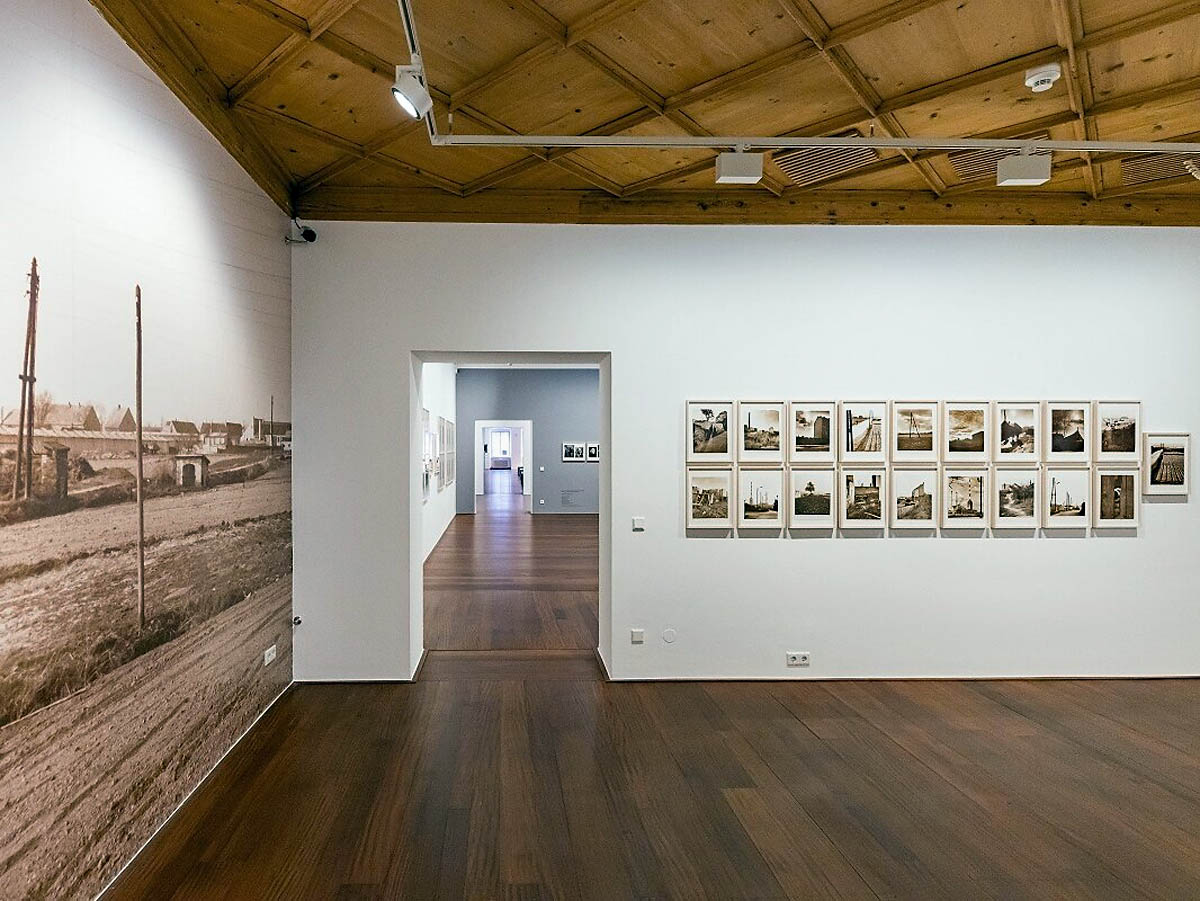
 

Andreas Baumann (Austrian, b. 1968) From the series 'Wiener Autofahrer unterwegs' (Viennese motorists on the road) 1998


Andreas Baumann (Austrian, b. 1968)
From the series Wiener Autofahrer unterwegs (Viennese motorists on the road)
1998
Wien Museum Collection
© Andreas Baumann


'Instantly! Vienna Street Photography', exhibition view, 2022, Wien Museum MUSA


Instantly! Vienna Street Photography, exhibition view, 2022, Wien Museum MUSA showing at right, photographs from Andreas Baumann’s series Wiener Autofahrer unterwegs (Viennese motorists on the road)
Photo: timtom


Reinhard Mandl (Austrian, b. 1960) 'At Franz-Josefs-Kai' 2000


Reinhard Mandl (Austrian, b. 1960)
At Franz-Josefs-Kai
2000
Wien Museum Collection
© Reinhard Mandl


Didi Sattmann (Austrian, b. 1951) 'Seestadt Aspern' 2014


Didi Sattmann (Austrian, b. 1951)
Seestadt Aspern
2014
Wien Museum Collection
© Didi Sattmann

Young people illegally bathing in the lake


'Instantly! Vienna Street Photography', exhibition view, 2022, Wien Museum MUSA


Instantly! Vienna Street Photography, exhibition view, 2022, Wien Museum MUSA
Photo: timtom


Wien Museum
1040 Vienna, Karlsplatz 8
Phone: +43 (0)1 505 87 47 0

Opening hours:
Tuesday – Sunday and public holidays 10am – 6pm

Wien Museum website

LIKE ART BLART ON FACEBOOK

Back to top

Exhibition: ‘Photo. Book. Art: Transition and Reorientation in Book Design. Austria 1840-1940’ at the Albertina, Vienna

Exhibition dates: 28th June – 22nd September, 2019


Martin Gerlach (Austro-German, 1846-1918). 'Mikroskopische Aufnahmen' 1902-1904 from the exhibition 'Photo. Book. Art: Transition and Reorientation in Book Design. Austria 1840-1940' at the Albertina, Vienna, June - Sept, 2025


Martin Gerlach (Austro-German, 1846-1918)
Mikroskopische Aufnahmen, Aus: Formenwelt aus dem Naturreiche (Die Quelle, Bd. V)
Microscopic Images, From: Form world from the natural kingdom (Die Quelle, Vol. V)
1902-1904
Vienna: Gerlach u. Wiedling
Albertina Vienna, on permanent loan from the Federal Department of Education and Research
Fotografien von Hugo Hinterberger


A fascinating posting on early photo books, photographic book printing, luxury volumes and advertising brochures.

Dr Marcus Bunyan


Many thankx to the Albertina for allowing me to publish the photographs in the posting. Please click on the photographs for a larger version of the image.


It is now such a given for photography to be the dominant medium of illustration in all types of publications that the beginnings of its involvement have faded into oblivion. But the process by which photography came to books was lengthy and accompanied by myriad technical difficulties. While impressive volumes with mounted originals featuring motifs such as butterfly wings magnified 1,000 times, Emperor Maximilian’s ceremonial armour, military exercises, and aristocratic theatrical performances reached enthusiastic audiences as early as 1860, few people could afford to purchase such publications.

Only when it became possible to reproduce photographs in print, which permitted book editions of practically unlimited copies, did photography grow into a mass medium that would go on to visually dominate the 20th century. But even so, the combination of convincing photography, refined book design, and artisanal perfectionism did produce a broad spectrum of those earliest photo volumes in Austria – of which this is the first-ever public exhibition.

Text from the Albertina website


Installation views of the exhibition 'Photo. Book. Art' at the Albertina, Vienna

Installation views of the exhibition 'Photo. Book. Art' at the Albertina, Vienna

Installation views of the exhibition 'Photo. Book. Art' at the Albertina, Vienna

Installation views of the exhibition 'Photo. Book. Art' at the Albertina, Vienna

Installation views of the exhibition 'Photo. Book. Art' at the Albertina, Vienna

Installation views of the exhibition 'Photo. Book. Art' at the Albertina, Vienna


Installation views of the exhibition Photo. Book. Art at the Albertina, Vienna
Fotos: © Georg Molterer


While photography now dominates nearly every type of publishing genre, the origins of its interplay with publishing have increasingly been forgotten – but the path by which photography entered books was long and littered with numerous technical hurdles, a fact that makes the various creative solutions fielded by pioneers in this area all the more intriguing. Original photographs, test prints, and book maquettes (original book designs) from the collections of the Albertina Museum open up a new perspective on a previously overlooked aspect of Austrian cultural history, which is characterised by diverse interrelationships between scientific curiosity, industrial interests, artistic experimentation, and an educational policy beholden to the Enlightenment.

This exhibition, which includes around 300 items from between 1840 and 1940, sheds light on an extraordinary panorama of innovative achievements manifested as luxury volumes and advertising brochures, travelogues and scientific atlases, artists’ designs and industrial documentation. And a broad spectrum of early photo books from Austria – of which this is the first-ever exhibition – presents fascinating combinations of convincing photography, refined book design, and artisanal perfection. The publication produced for this exhibition traces photography’s path to books in even more depth: on over 200 pages, comprehensive texts and full-scale facsimiles reveal fascinating historical relationships between text, image, and book object.

The advent of photography in 1839 inspired even its earliest commentators to express promising visions of the future, visions that associated this medium with that of books from the very beginning. They compared the innovation of photography with that of book printing long before it became possible to duplicate photographs in large numbers. Photography’s revolutionary potential was recognised not only in its ability to depict details authentically without human intervention but also in its mechanical reproducibility – the development of which, however, was still in its nascence.

Even so, photographic depiction’s aura of authenticity and infallibility was so strong that this new medium quickly came to be considered indispensable in printed books. So at first, publishers made do with illustrations after photographs – realised as lithographs or wood engravings. 1857 saw the appearance of books with photographs glued in to illustrate the text. The demand for such productions was to be found above all in innovative areas of scientific research and in that era’s expanding industry, but there were also volumes produced privately as luxurious mementos. The print runs involved here were to remain far smaller than those that had been made possible by the revolutionary invention of the printing press, which had first facilitated the widespread dissemination of written works.

There followed decades of institutionally led attempts to render photography printable, with such a technology being viewed as something of an “Egg of Columbus” (Ludwig Schrank, 1864). This phase witnessed the development of refined printing techniques that made possible high-quality image reproduction, thus satisfying a universal desire among scientists to publish comprehensive pictorial atlases with detailed photographic depictions that could serve as authentic comparative material suitable for use in research.

The definitive “professionalisation” of photographic printing in Austria occurred at the Graphische Lehr- und Versuchsanstalt (photographic and graphic art school) under its director Josef Maria Eder, and the present exhibition’s main focus is devoted to this institution. Photographic images were then quick to find their way into the sophisticatedly designed books of the Viennese art nouveau.

1914 witnessed the International Exhibition of the Book Industry and Graphic Arts in Leipzig, an event for which Josef Hoffmann designed an Austrian pavilion as a contemporary setting in which to celebrate the significance of the Austrian Empire’s book industry. While the outbreak of World War I – which brought this event to a premature conclusion – did produce its own genre of illustrated volumes, it simultaneously marked the end of the era of luxury editions.

The interwar period brought with it further improvements in methods of printing photographs that finally allowed the production of inexpensive illustrated volumes. And for the first time, colourful book jackets were designed with photographic motifs – thus ringing in a whole new era on the book market. In the process, photography was liberated from its functions of illustrating text and storing “authentic” factual information. It indeed took on an entirely new character in avant-garde “photo books”: such books contained photographic images printed in deliberate sequences or juxtaposed, and it is as part of a clear interplay between images and text that the photos in books such as the the Wiener Werkstätte’s jubilee volume of 1929 or Stefan Kruckenhauser’s Snow Canvas (1937) appear in a quality that had never been seen before.

Press release from the Albertina website [Online] Cited 02/08/2019


Ernst Heeger (Austrian, 1783-1866). 'Album of microscopic-photographic representations from the field of zoology' 1860 from the exhibition 'Photo. Book. Art: Transition and Reorientation in Book Design. Austria 1840-1940' at the Albertina, Vienna, June - Sept, 2025


Ernst Heeger (Austrian, 1783-1866)
Album microscopisch-photographischer Darstellungen aus dem Gebiete der Zoologie
Album of microscopic-photographic representations from the field of zoology
1860
Wien: Carl Gerold’s Sohn, 4, 1860 Fotograf: k. k. Hof- und Staatsdruckerei


Martin Gerlach (Austro-German, 1846-1918). 'Mikroskopische Aufnahmen' 1902-1904 from the exhibition 'Photo. Book. Art: Transition and Reorientation in Book Design. Austria 1840-1940' at the Albertina, Vienna, June - Sept, 2025


Martin Gerlach (Austro-German, 1846-1918)
Mikroskopische Aufnahmen, Aus: Formenwelt aus dem Naturreiche (Die Quelle, Bd. V)
Microscopic Images, From: Form world from the natural kingdom (Die Quelle, Vol. V)
1902-1904
Vienna: Gerlach u. Wiedling
Albertina Vienna, on permanent loan from the Federal Department of Education and Research
Fotografien von Hugo Hinterberger


Austrian State Printing House. "The Polar Bear" and "The Chimpanzee", From: 'The New Ark. Thirty animal pictures after photographs of nature' 1923


Österreichische Staatsdruckerei
“Der Eisbär” und “Der Schimpanse”, Aus: Die neue Arche. Dreißig Tierbilder nach photographischen Naturaufnahmen
Austrian State Printing House
“The Polar Bear” and “The Chimpanzee”, From: The New Ark. Thirty animal pictures after photographs of nature
1923
Vienna: Austrian State Printing House
Photoinstitut Bonartes


'Die Wiener Werkstätte 1903-1928: Modernes Kunstgewerbe und sein Weg. Festschrift zu 25jährigen Bestehen der Wiener Werkstätte' 1929


Die Wiener Werkstätte 1903-1928: Modernes Kunstgewerbe und sein Weg. Festschrift zu 25jährigen Bestehen der Wiener Werkstätte
The Wiener Werkstätte 1903-1928: Modern arts and crafts and its way. Commemoration on the 25th anniversary of the Wiener Werkstätte
1929
Vienna: Krystall-Verlag
Photoinstitut BONARTES


Bucheinband zu 'Roger Ginsburger: Frankreich. Die Entwicklung der neuen Ideen nach Konstruktion und Form' 1930


Bucheinband zu Roger Ginsburger: Frankreich. Die Entwicklung der neuen Ideen nach Konstruktion und Form
Book cover to Roger Ginsburger: France. The development of new ideas according to design and form
1930
Vienna: Anton Schroll & Co
Cover design el Lissitzky
Private collection


Umschlag von C. Angerer & Göschl Wien. 'Sechzig Jahre' 1932


Umschlag von C. Angerer & Göschl Wien
Sechzig Jahre
Cover by C. Angerer & Göschl Vienna
Sixty years
1932
Fotograf: Angerer & Göschl


Wall texts

Photo. Book. Art 1840-1940

The production of systematic knowledge and its dissemination were the key driving forces behind nineteenth-century enlightenment, with a flourishing book industry serving as mediator. From the moment it became known in 1839, photography, a guarantor of images true to detail made without human intervention, seemed to be cut out for not only supporting but speeding up this project.

The ambition to reproduce technically generated pictures unlimited in number like texts would only be fulfilled several decades later thanks to the invention of inexpensive printing techniques. This exhibition is dedicated to the period spanning from the first “vision” of such a feat with its aspiring scientific experiments to manually produced splendid volumes, to the high print-runs of popular illustrated books of the 1930s.

The definitive professionalisation of photo printing in Austria took place at Vienna’s Graphische Lehr- und Versuchsanstalt, whose historical library, preserved as a permanent loan at the Albertina, has provided the starting point for this presentation thanks to its cataloguing supported by Photoinstitut Bonartes.

“A fortunate thought …”: Photo Publications 1850-1870

Almost twenty years after the invention of the new medium, a few enthusiasts began to illustrate mainly scientific works with original photographs, which were glued in. Although their publications were hailed by the critics, it soon became apparent that high costs and long production times curbed the number of printed copies. As documented by surviving subscriber lists, books illustrated with photographs were expensive prestige objects. Nonetheless, the suggestion of the photographic image as being authentic and infallible had such a strong impact that one did not want to completely do without the new medium: prints after photographs served as substitutes ensuring credibility. “

“Gradually delivering the whole world in pictures”: The Imperial and Royal Court and Government Printing Office

When Alois Auer was appointed director of the Imperial and Royal Court and Government Printing Office in 1841, he found himself faced with a run-down enterprise whose business consisted in printing legal texts and official forms. Being able to rely on almost unlimited funds from the responsible ministry, he succeeded in turning this printing office into a media company in the modern sense committed to a variety of fields. Auer was the first man in the history of (analog) media to regard writing and images of every kind as a potential unit for the reproduction and distribution of human knowledge.

Pursuing ideas that were far ahead of his time, Auer foundered on the huge scope of his plans: he intended to use photography and nature printing to compile material collections of encyclopaedic dimensions in laboratories or on expeditions that would not only provide reliable information but were also affordable.

A State-Run Educational Institution for Photography and Reproduction Techniques

The first pivotal invention on photography’s way into books was that of the collotype method in 1868 (a planographic printing process like lithography), which made the first printed photo books possible. Heliogravure (an elaborate intaglio technique in the manner of etching, which achieved particularly brilliant results) followed in 1878, the pioneering autotype method as a relief printing process (woodblock printing being a much simpler form) in 1883. It was no coincidence that these inventions were directly followed by the founding phase of the state-run “Lehr- und Versuchsanstalt für Photographie und Reproduktionsverfahren” (Educational and Experimental Institute for Photography and Reproduction Techniques) in Vienna, which from 1895 onward also included departments for book design and production. It was this institution that, under the direction of Josef Maria Eder, a photochemist, made all these new processes usable for the printing trade and industry: it not only trained the relevant specialists but also initiated or supported innovative photography and book projects.

From Luxury Volumes to Small-Format Books

World War I ushered in a radical transformation in book production. Whereas a few large volumes of plates adhering to the style of the prewar period were published, the now-common cheaper production of small-format books also brought about a change in the presentation of traditional themes. This shift manifested itself in illustrated books on foreign cultures, among others, which had already been popular in the nineteenth century. The result was a separation between scientific and popular books, of which, like in the case of Hugo Bernatzik, as many as 250,000 copies were printed.

Industry and Architecture

Since the sporadic pioneering feats of the 1860s, the brand management of big industrial companies in the form of photographic documentations and illustrated publications had increased considerably. Jubilee works and advertising brochures of all kinds offered a not to be underestimated new market for the professionalized and thus cheaper producing reproduction and printing industries. Among the most innovative users of photography were architects who – a rare case in Austria – were also open to new types of book design in the vein of the Bauhaus.

Specialised Publishers and Their Subjects

The improvement of printing techniques allowed some publishers to specialise in publications illustrated with photographs. Extensive compilations of pictures in a wide variety of fields, from ophthalmology to the holdings of museums and contemporary architecture, testify to the widespread desire to make visual information available in encyclopaedic form.

On the other hand, it was necessary to cater to new, only recently developed subject areas that emerged directly from the possibilities of technical image production. Elaborately designed and manufactured in small editions, these works ranged from volumes of wealthy amateur photographers flaunting their craftsmanship to promotionally effective illustrated books of the municipality of Vienna, which were intended to introduce the achievements of Mayor Karl Lueger to a broad public.


'Alexander Niklitschek: Advice for amateur photographers' 1934


Bucheinband zu Alexander Niklitschek: Ratschläge für Amateurphotographen
Book cover to Alexander Niklitschek: Advice for amateur photographers
1934
Leipzig, Vienna, Berlin: Steyrermühl
Albertina Wien, Dauerleihgabe der Höheren Graphischen Bundes-Lehr- und Versuchsanstalt
Albertina Vienna, on permanent loan from the Federal Department of Education and Research


Harald Lechenper. 'Das Rätsel Indien' [The Indian Puzzle] 1935


Harald Lechenper
Das Rätsel Indien [The Indian Puzzle]
1935
Verlag Ullstein
Autotypie auf Karton nach Fotografie von Harald Lechenperg
Autotype on cardboard with photography by Harald Lechenperg


Stefan Kruckenhauser. 'In großen Linien zeichnet der Schnee, Aus: Du schöner Winter in Tirol. Ski- und Hochgebirgs-Erlebnisse mit der Leica' 1937


Stefan Kruckenhauser (Austro-German, 1904-1988)
In großen Linien zeichnet der Schnee, Aus: Du schöner Winter in Tirol. Ski- und Hochgebirgs-Erlebnisse mit der Leica
In big lines the snow draws, From: You beautiful winter in Tyrol. Ski and high mountain experiences with the Leica
1937
Berlin: Photokino-Verlag, Otto Elsner
The Albertina Museum, Vienna


'Otto Croy: Es liegt auf der Hand, Aus: Fotomontage. Der Weg zu den Grenzen der Fotografie' 1937


Otto Croy: Es liegt auf der Hand, Aus: Fotomontage. Der Weg zu den Grenzen der Fotografie
Otto Croy: It is obvious, From: photomontage. The Road to the Limits of Photography
1937
Halle (Saale): Wilhelm Knapp
The Albertina, Vienna


Stefan Kruckenhauser. 'Das Meisterwerk von Kefermarkt, Salzburg' 1941


Stefan Kruckenhauser (Austro-German, 1904-1988)
Das Meisterwerk von Kefermarkt, Salzburg
The masterpiece of Kefermarkt, Salzburg
1941
Leipzig: Otto Müller
Fotograf: Stefan Kruckenhauser


Albertina
Albertinaplatz 1
1010 Vienna, Austria
Phone: +43 (0)1 534 83-0

Opening hours:
Daily 10am – 6pm
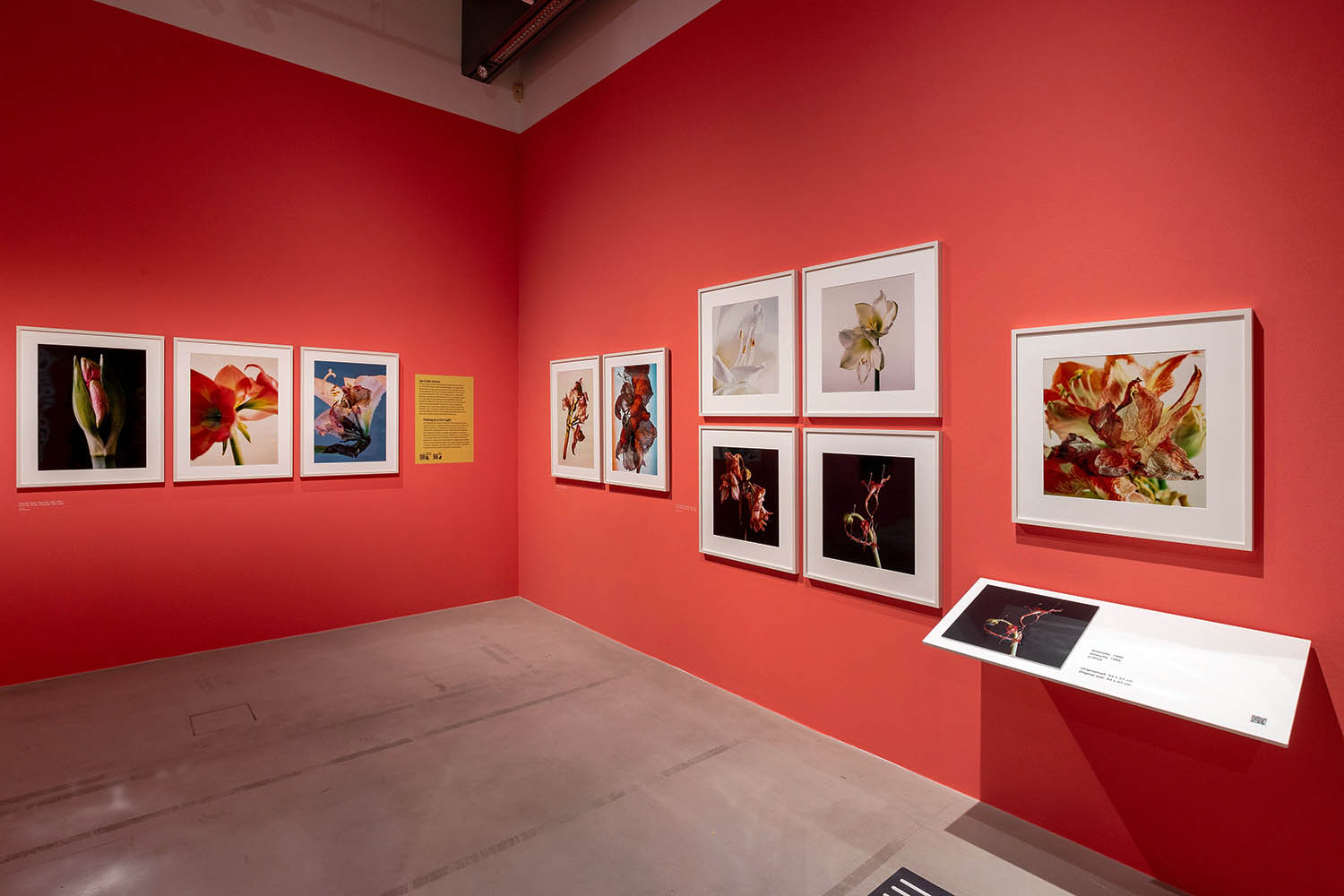
Wednesday and Fridays 10am – 9pm

Albertina website

LIKE ART BLART ON FACEBOOK

Back to top

Exhibition: ‘Acting for the Camera’ at the Albertina, Vienna

Exhibition dates: 10th March – 5th June, 2017

Featured artists (selection): Ottomar Anschütz | Bill Brandt | Brassaï | Günter Brus | John Coplans | Hugo Erfurth | Trude Fleischmann | Seiichi Furuya | Eikoh Hosoe | Martin Imboden | Dora Kallmus | Rudolf Koppitz | Johann Victor Krämer | Heinrich Kühn | Helmar Lerski | O. Winston Link | Will McBride | Arnulf Rainer | Henry Peach Robinson | Otto Schmidt | Rudolf Schwarzkogler | Franz Xaver Setzer | Anton Josef Trčka | Erwin Wurm


Anonymous photographer. 'The Sculptor Hans Gasser and Workshop Assistants at Work' 1855-1857 from the exhibition 'Acting for the Camera' at the Albertina, Vienna, March - June, 2017


Anonymous photographer
The Sculptor Hans Gasser and Workshop Assistants at Work
1855-1857
Daguerreotype
Albertina, permanent loan of the Höhere Graphische Bundes-Lehr-und Versuchsanstalt, Vienna


I made this posting way before my operation, but have been unable to post until now because of my ongoing recuperation.

While the exhibition may have finished, I am so enamoured of the theme of the exhibition, the people and artists, that I think it’s valuable to have the posting, images and the additional research I did online. I especially like the striking work of Helmar Lerski and the “Aktionen” of Rudolf Schwarzkogler which reflect on the hurtfulness of the world, but remind me of the yet to come political art of the first wave of HIV/AIDS. What a beautiful installation as well…

Dr Marcus Bunyan


Many thankx to the Albertina for allowing me to publish the photographs in the posting. Please click on the photographs for a larger version of the image.


Ottomar Anschütz (German, 1846-1907)
Elektrischer Schnellseher
1886


Anton Josef Trčka (Czech, 1893-1940) 'Egon Schiele' 1914 from the exhibition 'Acting for the Camera' at the Albertina, Vienna, March - June, 2017


Anton Josef Trčka (Czech, 1893-1940)
Egon Schiele
1914
Gelatin silver print
Albertina, Vienna


Josef Anton Trčka, Antios (7. September 1893 Vienna – 16. March 1940), was a Czech photographer , painter, sculptor, draftsman, designer of tapestries and silver jewellery, collector of folk art Moravian, occasional antiquarian, poet and philosopher. He was a representative of Viennese Modernism, Art Movement, which influenced European culture of the 20th century…

Around 1910 the Trčka decided to study at the professional school of photography Lehr- Graphische und Versuchsanstalt in Vienna, one of the best in Europe. Coincidentally, at the school was Professor Karel Novák, in his time one of the most important personalities of the beginnings of art photography. In 1914 he got the opportunity to portray several leading personalities of Viennese Modernism. Among them was Gustav Klimt, Peter Alternberg and the 50 year old Josef Svatopluk Machar. However, the highlight for Trčka prewar contracts were the photographic series of portraits of Egon Schiele, which focused on facial expressions and hand gestures.


Franz Xaver Setzer (Austrian, 1886-1939) 'Conrad Veidt' 1919


Franz Xaver Setzer (Austrian, 1886-1939)
Conrad Veidt
1919
Gelatin Silver Print
Albertina, Vienna


Franz Xaver Setzer, actually Franz Anton Adolf (6 August 1886 in Vienna – 10 January 1939) was an Austrian photographer.

Hans Walter Conrad Veidt (22 January 1893 – 3 April 1943) was a German actor best remembered for his roles in films such as The Cabinet of Dr. Caligari (1920), The Man Who Laughs (1928), and, after being forced to migrate to Britain by the rise of Nazism in Germany, his English-speaking roles in The Thief of Bagdad (1940), and, in Hollywood, Casablanca (1942). After a successful career in German silent film, where he was one of the best-paid stars of Ufa, he left Germany in 1933 with his new Jewish wife after the Nazis came to power. They settled in Britain, where he participated in a number of films before emigrating to the United States around 1941…

He starred in a few films, such as George Cukor’s A Woman’s Face (1941) where he received billing just under Joan Crawford’s and Nazi Agent (1942), in which he had a dual role as both an aristocratic German Nazi spy and as the man’s twin brother, an anti-Nazi American. His best-known Hollywood role was as the sinister Major Heinrich Strasser in Casablanca (1942), a film which was written and began pre-production before the United States entered the war.

In 1943, at the age of fifty, he died of a massive heart attack while playing golf at the Riviera Country Club in Los Angeles. In 1998, his ashes were placed in a niche of the columbarium at the Golders Green Crematorium in north London.

Text from the Wikipedia website


Dora Kallmus (Madame d'Ora) (Austrian, 1881-1963), Arthur Benda (German, 1885-1969) 'Anita Berber and Sebastian Droste in their dance Märtyrer [Martyrs]' 1922


Dora Kallmus (Madame d’Ora) (Austrian, 1881-1963), Arthur Benda (German, 1885-1969)
Anita Berber and Sebastian Droste in their dance Märtyrer [Martyrs]
1922
Gelatin silver print
Albertina, Vienna


Dora Philippine Kallmus (20 March 1881 – 28 October 1963), also known as Madame D’Ora or Madame d’Ora, was an Austrian fashion and portrait photographer.

In 1907, she established her own studio with Arthur Benda in Vienna called the Atelier d’Ora or Madame D’Ora-Benda. The name was based on the pseudonym “Madame d’Ora”, which she used professionally. D’ora and Benda operated a summer studio from 1921 to 1926 in Karlsbad, Germany, and opened another gallery in Paris in 1925. She was represented by Schostal Photo Agency (Agentur Schostal) and it was her intervention that saved the agency’s owner after his arrest by the Nazis, enabling him to flee to Paris from Vienna.

Her subjects included Josephine Baker, Coco Chanel, Tamara de Lempicka, Alban Berg, Maurice Chevalier, Colette, and other dancers, actors, painters, and writers.

Text from the Wikipedia website


Arthur Benda (23 March 1885, in Berlin – 7 September 1969, in Vienna) was a German photographer. From 1907 to 1938 he worked in the photo studio d’Ora in Vienna, from 1921 as a partner of Dora Kallmus and from 1927 under the name d’Ora-Benda as the sole owner. …

In 1906, Arthur Benda met photographer Dora Kallmus, who also trained with Perscheid. When she opened the Atelier d’Ora on Wipplingerstrasse in Vienna in 1907, Benda became her assistant. The Atelier d’Ora specialised in portrait and fashion photography. Kallmus and Benda quickly made a name for themselves and soon supplied the most important magazines. The peak of renown was reached when Madame d’Ora photographed the present nobility in 1916 on the occasion of the coronation of Emperor Charles I as King of Hungary.

In 1921, Arthur Benda became a partner in Atelier d’Ora, which also ran a branch in Karlovy Vary during the season. In 1927 Arthur Benda took over the studio of Dora Kallmus, who had run a second studio in Paris since 1925, and continued it under the name d’Ora-Benda together with his wife Hanny Mittler. In addition to portraits, he mainly photographed nudes that made the new company name known in men’s magazines worldwide. A major order from the King of Albania Zogu I, who had himself and his family photographed in 1937 for three weeks by Arthur Benda in Tirana secured Arthur Benda financially. In 1938 he opened a new studio at the Kärntnerring in Vienna, which he continued to operate under his own name after the Second World War.

Text from the Wikipedia website


Anita Berber (10 June 1899 – 10 November 1928) was a German dancer, actress, and writer who was the subject of an Otto Dix painting. She lived during the time of the Weimar Republic. …

Her hair was cut fashionably into a short bob and was frequently bright red, as in 1925 when the German painter Otto Dix painted a portrait of her, titled “The Dancer Anita Berber”. Her dancer friend and sometime lover Sebastian Droste, who performed in the film Algol (1920), was skinny and had black hair with gelled up curls much like sideburns. Neither of them wore much more than low slung loincloths and Anita occasionally a corsage worn well below her small breasts.

Her performances broke boundaries with their androgyny and total nudity, but it was her public appearances that really challenged taboos. Berber’s overt drug addiction and bisexuality were matters of public chatter. In addition to her addiction to cocaine, opium and morphine, one of Berber’s favourites was chloroform and ether mixed in a bowl. This would be stirred with a white rose, the petals of which she would then eat.

Aside from her addiction to narcotic drugs, she was also a heavy alcoholic. In 1928, at the age of 29, she suddenly gave up alcohol completely, but died later the same year. She was said to be surrounded by empty morphine syringes.

Text from the Wikipedia website


Rudolf Koppitz (Austrian, 1884-1936) 'In the Arms of Nature' 1923


Rudolf Koppitz (Austrian, 1884-1936)
In the Arms of Nature [self-portrait]
1923
Multicolour gum bichromate print
Albertina, permanent loan of the Höhere Graphische Bundes-Lehr-und Versuchsanstalt, Vienna


Rudolf Koppitz (4 January 1884 – 8 July 1936), often credited as Viennese or Austrian, was a Photo-Secessionist whose work includes straight photography and modernist images. He was one of the leading representatives of art photography in Vienna between the world wars. Koppitz is best known for his works of the human figure including his iconic Bewegungsstudie, “Motion Study” and his use of the nude in natural settings. …

After the [First World] war, Koppitz returned to the Institute to teach photography where in 1923 he took the nude self-portrait, In the Bosom of Nature [above], in which he framed himself by tree trunks, rocks, snowy mountains, and is posed to convey a dreamlike harmony reminiscent of a symbolist painting and graphic art. In c. 1925 Koppitz created his masterpiece, Bewegungsstudie, “Motion Study” in which he photographed dancers from the Vienna State Opera; the nude dancer, credited to be the Russian Claudia Issatschenko but is more likely, her daughter, ballet dancer and choreographer, Tatyana Issatschenko Gsovsky, with her head thrown dramatically back and flanked by three dark-robed women, lends Bewegungsstudie to the highly decorative and symbolist tradition of the Viennese Jugendstil.

Text from the Wikipedia website


Rudolf Koppitz (Austrian, 1884-1936) 'Movement Study' 1925


Rudolf Koppitz (Austrian, 1884-1936)
Bewegungsstudie (Motion Study)
1926
Multicolor gum bichromate print
Albertina, permanent loan of the Höhere Graphische Bundes-Lehr-und Versuchsanstalt, Vienna


Rudolf Koppitz (4 January 1884 – 8 July 1936), often credited as Viennese or Austrian, was a Photo-Secessionist whose work includes straight photography and modernist images. He was one of the leading representatives of art photography in Vienna between the world wars. Koppitz is best known for his works of the human figure including his iconic Bewegungsstudie, “Motion Study” and his use of the nude in natural settings….

Koppitz’s work is marked by a pronounced awareness of form, line, and the surface play of light and shadow. Early in his career, Koppitz was known for staging groups of subjects in the style of the Vienna Secession, the most well known example of this being his Bewegungsstudie, “Motion Study”.

Bewegungsstudie (Motion Study) is surely the most widely published and best known image in Austrian photography from the early decades of the last century. This is for good reason, as no photograph better captures the cultural strands that characterized the Austrian avant-garde at that time. Here one can see a graphic strength and compositional clarity that reflects the modernist ambitions initiated in the fine as in the applied arts by the Secession and by the Wiener Werkstätte. But what gives the image its power is the aura of mystery, of symbolist sensuality that resonates through this enigmatic grouping of the three uniformly coiffed and draped figures and the one single naked figure.” ~ Christies

Bewegungsstudie’s languid nude, elaborately robed women and undeniable sensuality, in the context of its rigorous and artistic composition, bring to mind the sexual morbidity of Viennese artists like Gustav Klimt and Alphonse Mucha, as well as the Swiss symbolist painter Ferdinand Hodler and has made it as unforgettable then as it is today. It has become the Koppitz’s signature image, and was also his best-seller. Prints of the image were purchased by, among others, the Toledo Museum of Art; the New York Camera Club notable Joseph Bing, head of that club’s print committee; and the Englishman Stephen Tyng, who published it in a small portfolio of works from his collection.

His earliest works show evidence of influence by Gustav Klimt, Japanese art, Art Nouveau and Constructivism. During the First World War, Koppitz’s photographs took on a documentary quality when his photographs became more simple and direct in their subject matter and composition. Koppitz’s work came of age during the inter-war period when most of Austria’s photographers were supporters of art photography. Photographs from that time are full of symbolic meanings often capturing nude and clothed dancers as well as liberal use of both male and female, many of which were of Koppitz himself and female nudes placed in elements of nature and posed to give the impression of a Greek or Roman statue…

Although he did not possess a consistent style, Koppitz was a virtuoso of the dark room, seemingly determined to make the photograph as much of an art object as possible. His beautifully grainy, subtly tinted images align him with American Pictorialists like Edward Steichen and Clarence Smith. Koppitz’s work, much of it using the gum bichromate process, reflected his links with modern artists such as Gustav Klimt and Egon Schiele, and their involvement with the ‘life reform’ movement including; nudism, sun culture, and expressive dance popular in Central Europe from the early 1900s as well as agrarian romanticism. Koppitz’s extraordinary mastery of pictorial processes – pigment, carbon, gum, and bromoil process of transfer printing – gained the respect of his colleagues throughout the world and garnered mention in the Encyclopædia Britannica of 1929.

Text from the Wikipedia website


Trude Fleischmann (American born Austria, 1895-1990) 'Actress and Dancer Lucy Kieselhausen' c. 1925


Trude Fleischmann (American born Austria, 1895-1990)
Actress and Dancer Lucy Kieselhausen
c. 1925
Gelatin silver print
Albertina, Vienna


Trude Fleischmann (22 December 1895 – 21 January 1990) was an Austrian-born American photographer. After becoming a notable society photographer in Vienna in the 1920s, she re-established her business in New York in 1940. …

In 1920, at the age of 25, Fleischmann opened her own studio close to Vienna’s city hall. Her glass plates benefitted from her careful use of diffuse artificial light. Photographing music and theatre celebrities, her work was published in journals such as Die Bühne, Moderne Welt, ‘Welt und Mode and Uhu. She was represented by Schostal Photo Agency (Agentur Schostal). In addition to portraits of Karl Kraus and Adolf Loos, in 1925 she took a nude series of the dancer Claire Bauroff which the police confiscated when the images were displayed at a Berlin theatre, bringing her international fame. Fleischmann also did much to encourage other women to become professional photographers.

With the Anschluss in 1938, Fleischmann was forced to leave the country. She moved first to Paris, then to London and finally, together with her former student and companion Helen Post, in April 1939 to New York. In 1940, she opened a studio on West 56th Street next to Carnegie Hall which she ran with Frank Elmer who had also emigrated from Vienna. In addition to scenes of New York City, she photographed celebrities and notable immigrants including Albert Einstein, Eleanor Roosevelt, Oskar Kokoschka, Lotte Lehmann, Otto von Habsburg, Count Richard von Coudenhove-Kalergi and Arturo Toscanini. She also worked as a fashion photographer, contributing to magazines such as Vogue. She established a close friendship with the photographer Lisette Model.

Text from the Wikipedia website


Lucy Kieselhausen was born in 1897 in Vienna, Austria. She was an actress, known for Tausend und eine Frau. Aus dem Tagebuch eines Junggesellen (1918), Erdgeist (1923) and Die siebente Großmacht (1919). She was a student of Grete Wiesenthal and was celebrated as a successful dancer at the beginning of the 20th century who had great successes on German stages. Besides her dancing activity she also wrote the dance drama “Salambo”, which was set to music by Heinz Tiessen. She died in December 1926 in Berlin, Germany.

“Around 1915 another Viennese, Lucy Kieselhausen (1897-1927), began specializing in performing waltzes. She, too, had evolved out of ballet culture, but her embodiment of the waltz was virtually opposite that of Wiesenthal. She favoured luxuriously decorative hothouse costumes and the utmost refinement of movement. For her the waltz was not a lyrical expansion of space into the freedom of nature but an almost perfumed distillation of the stirrings within an opulent boudoir, with its scenography of exquisite privileges and voluptuous secrets. An adroit sense of irony shaded her movements with a abruptly “bizarre and jerky” rhythms; “her joyfully flashing temperament did not hover on a smooth surface but over a shadowy abyss from which issued her fool’s dance with its slumbering, half-animal rapture.” Her curious appropriation of the waltz ended suddenly when she died in a benzine explosion.”

Karl Eric Toepfer. Empire of Ecstasy: Nudity and Movement in German Body Culture, 1910-1935. University of California Press, 1997, pp. 161-162.


Hugo Erfurth (German, 1874-1948) 'Clotilde von Derp-Sacharoff' c. 1928


Hugo Erfurth (German, 1874-1948)
Clotilde von Derp-Sacharoff
c. 1928
Gelatin silver print
Albertina, Vienna – permanent loan of the Austrian Ludwig Foundation for Art and Science


Hugo Erfurth (14 October 1874 – 14 February 1948) was a German photographer known for his portraits of celebrities and cultural figures of the early twentieth century. …

During the next ten years [after 1896] he ran the Schröder studio, then established his own studio, art gallery, and home in the Palais Lüttichau. He became a member of the German Werkbund and was appointed an honorary member of the London’s Royal Photographic Society and of Munich’s Süddeutsche Photographen-Verein. He married Helene Reuther in 1898 and fathered three children over the next 6 years. He photographed for the Royal Playhouse in Dresden from 1913-1919.

During this time, Dresden was home to a cultural elite that included Otto Dix, Erich Heckel, Paul Klee, and Oskar Kokoschka. These artists and writers, who considered Erfurth their creative equal, frequented his studio to have their portraits taken. He also photographed opera and dance performers, did work in industrial photography, and experimented with photograms and photomontage.

In 1922, Erfurth opened a gallery under the name “Graphisches Kabinett Hugo Erfurth” with an exhibition of works by Oskar Kokoschka. In 1925, works by Emil Nolde were shown and the exhibition “7 Bauhaus Masters” was organised, with works by Paul Klee and Wassily Kandinsky, among others. The gallery also supported young Dresden artists such as Hans Grundig, Wilhelm Lachnit, and Kurt Schütze.

By the late 1920s, Erfurth had established himself as one of Germany’s leading portraitists and was known for a broad range of work around photography…

Text from the Wikipedia website


Clotilde von Derp, stage name of Clotilde Margarete Anna Edle von der Planitz (5 November 1892 – 11 January 1974), was a German expressionist dancer, an early exponent of modern dance. Her career was spent essentially dancing together with her husband Alexander Sakharoff with whom she enjoyed a long-lasting relationship…

Among her admirers were artists such as Rainer Maria Rilke and Yvan Goll. For his Swiss dance presentations, Alexej von Jawlensky gave her make-up resembling his abstract portraits. From 1913, Clotilde appeared with the Russian dancer Alexander Sacharoff with whom she moved to Switzerland during the First World War. Both Sacharoff and Clotilde were known for their transvestite costumes. Clotilde’s femininity was said to be accentuated by the male attire. Her costumes took on an ancient Greek look which she used in Danseuse de Delphes in 1916. Her style was said to be elegant and more modern than that achieved by Isadora Duncan. Their outrageous costumes included wigs made from silver and gold coloured metal, with hats and outfits decorated with flowers and wax fruit.

They married in 1919 and. with the financial support of Edith Rockefeller, appeared at the Metropolitan Opera in New York but without any great success. They lived in Paris until the Second World War. Using the name “Les Sakharoff”. Their 1921 poster by George Barbier to advertise their work was seen as showing a “mutually complementary androgynous couple” “united in dance” joined together in an act of “artistic creation.”

They toured widely visiting China and Japan which was so successful that they returned again in 1934. They and their extravagant costumes visited both North and South America. They found themselves in Spain when France was invaded by Germany. They returned to South America making a new base in Buenos Aires until 1949. They toured Italy the following year and they took up an invitation to teach in Rome by Guido Chigi Saracini. They taught at the Accademia Musicale Chigiana in Siena for Saracini and they also opened their own dance school in Rome. She and Sakharoff stopped dancing together in 1956. They both continued to live in Rome until their deaths. Clotilde gave and sold many of their writings and costumes, that still remained, to museums and auctions. She eventually sold the iconic 1909 painting of her husband by Alexander Jawlensky. In 1997 the German Dance Archive Cologne purchased many remaining items and they have 65 costumes, hundreds of set and costume designs and 500 photographs.

Text from the Wikipedia website


Martin Imboden (Swiss, 1893-1935) 'The Dancer Gertrud Kraus' c. 1929


Martin Imboden (Swiss, 1893-1935)
The Dancer Gertrud Kraus
c. 1929
Gelatin silver print
Albertina, Vienna


Martin Imboden (born November 10, 1893 in Stans, Nidwalden; died August 19, 1935 in Zurich ) was a Swiss photographer. …

Born into a Swiss working-class family, Imboden first trained as a cabinetmaker 1909-1912 and worked as a carpenter in Switzerland and in France 1913-1917 then in Basel and Zurich 1918-1929. It was only in 1923 that he began to take photographs.

In 1929 Imboden moved to Vienna, where he began to work as a freelance architectural photographer, at the same time undertaking courses at the Urania (opened in 1910 by Franz Joseph I of Austria as an educational facility with a public observatory and named after the Muse Urania who represents Astronomy) and at the Photosezession which had inspired Steiglitz’s 1902 American version.

Imboden had arrived in the city during the peak of Red Vienna (1918 to 1934) when the Socialist Workers’ Party of German Austria repeatedly won absolute majorities in the elections to parliament and local council. The Socialists undertook extensive multi-storey social housing projects on the back of a fiscal policy that brought bold reforms in the social, health and education policies. He photographed many of these municipal buildings.

At this time he encountered Gertrud Kraus and her New School of Arts which she had opened in 1927 in Vienna. It was a private school for rhythmic gymnastics and artistic dance. In this rare group of images he documents Kraus’s own energetic and expressionist performances.

Interest in modern, or ‘free’, dance was not uncommon, especially in the German area, but also worldwide, in the first half of the 20th century given the popularity of physical culture Körperkultur, the hygiene and care of one’s own body.

Kraus devised training particularly to improve the physical health of women. Through her program many young women, including Jula Isenburger and Mia Slavenska, ventured into and found success in a career in dance and movement. Imboden’s photography pays tribute to their strength of personality and physical presence through this series of portraits.

His approach is clearly experimental, though it is Photo-Secessionist rather than Modernist in spirit. The lighting is appropriately theatrical, intensifying the performative nature of these portraits in which the self-contained concentration of each young woman is paramount. He used bromoil and carbon printing, favourite printing techniques of the Pictorialist photographers, which enable adjustment of lights and intensification of darks through the application of a brush during development, with a painterly quality and warmth, often on hand-laid papers. There is no sense that these women are posing for a male gaze (the gaze of only one meets the lens) and in fact it is hard to find full-length photographs of these individuals by Imboden…

James McArdle. “November 10: Dance,” on the On This Date In Photography website 10/11/2016 [Online] Cited 19/12/2021


Gertrud Kraus (Hebrew: גרטרוד קראוס‎; 5 May 1901 – 13 November 1977) was an Israeli pioneer of modern dance in Israel. …

In the 1920s, Gertrud Kraus’s style was known as expressionistic dance, or German dance. In 1929 Gertrud Kraus, together with Gisa Geert, was chief assistant to Rudolf von Laban, director of a trade union parade during the “Vienna Festival” in Vienna.

In 1930, an impresario invited her to perform in Mandate Palestine. Her tour was a great success and she was invited back the following season. In 1933, her company performed her work Die Stadt wartet (“The City Waits”), presenting the modern metropolis as a fascinating but dangerous place. It was based on a short story by Maxim Gorki. On the night that Adolf Hitler was elected chancellor of Germany, Kraus’s company performed this piece on the open-air stage in the Burg-garden next to the Hofburg.

In 1933, while she was in Prague performing for the Zionist Congress, leaders of a Czech communist cell contacted her and tried to recruit her for their purposes. The next day, she went to the Palestine Office in Prague, and applied for immigration. Kraus moved to Tel Aviv in 1935, first living with friends and then renting a basement that became her studio. She formed a modern dance company affiliated with the Tel Aviv Folk Opera, which was probably the only one of its kind in the world. In 1949, she won a scholarship to travel to the United States to learn the newest trends in modern dance.

In 1950-1951, she founded the Israel Ballet Theatre, and became its artistic director. The company folded after a year due to financial difficulties. Until her death in 1977, Kraus devoted herself to teaching dance, as well as painting and sculpture.

Text from the Wikipedia website


Installation view of the exhibition 'Acting for the Camera' at the Albertina, Vienna, March - June 2017

Installation view of the exhibition 'Acting for the Camera' at the Albertina, Vienna, March - June 2017 showing at left, Rudolph Koppitz's 'Bewegungsstudie (Motion Study)' 1926

In the above image at left, Rudolph Koppitz’s Bewegungsstudie (Motion Study) 1926
Installation view of the exhibition 'Acting for the Camera' at the Albertina, Vienna, March - June 2017 showing at centre, Rudolph Koppitz's 'In the Arms of Nature [self-portrait]' 1923

In the above image at centre, Rudolph Koppitz’s In the Arms of Nature [self-portrait] 1923
Installation view of the exhibition 'Acting for the Camera' at the Albertina, Vienna, March - June 2017 showing at left and centre, the work of Jan Coplans

In the above image at left and centre, the work of Jan Coplans
Installation view of the exhibition 'Acting for the Camera' at the Albertina, Vienna, March - June 2017 showing at right, Erwin Wurm's 'One Minute Sculptures'

In the above image, Erwin Wurm’s One Minute Sculptures at right
Installation view of the exhibition 'Acting for the Camera' at the Albertina, Vienna, March - June 2017


Installation views of the exhibition Acting for the Camera at the Albertina, Vienna, March – June 2017


With circa 120 works from the Albertina’s Photographic Collection, the exhibition Acting for the Camera examines the diverse ways in which models are staged or stage themselves before the camera. The featured photographic works, created between the 1850s and the present, represent a cross-section of photographic history as well as the diversity of the Albertina’s own holdings. The present selection is divided between six thematic emphases: motion studies, models for artists, dance, picture stories, portraits of actresses and actors, and Viennese Actionist stagings of the body.

All of these photographs arose from diverse and multi-layered forms of collaboration between the model before and the photographer behind the camera lens. Some of the models are staged according to their photographers’ instructions, while other shots originated via a creative process in which model and photographer collaborated on an equal footing. And in some cases, the pictures were even taken according to highly specific instructions given by the model.

Beginnings

It was photographic studies done in the interest of scientific research that made it possible for the first time to visually analyse the processes of human locomotion in high detail. Anonymous models, such as in the photographs taken by Ottomar Anschütz beginning around 1890, made themselves available in order to render understandable processes such as spear-throwing. The individuals seen in such works act according to the exact instructions of the photographer. Series of this type were used to compare the motion patterns of “healthy” and “unhealthy” bodies as well as undergird medical theories with visual evidence.

While such motion studies occasionally doubled as working studies for artworks by other artists, there was also a category of works created specifically for this purpose such as Johann Victor Krämer’s staged studio photographs as well as Otto Schmidt’s nudes, and some of these were also sold “under the table” as pornography.

Expressive Gestures

A strong and likewise mutually influential relationship arose between photography and dance. At the beginning of the 20th century, modern expressionist dance was an avant-garde art form, and dancers would work together closely with photographers in order to document and disseminate their performances. Such partnerships made possible expressive stagings that helped define the styles of that era. The expressive gestures often seen therein were also taken up by Anton Josef Trčka, who had Egon Schiele pose with a hand position reminiscent of something one might see in dance.

Portraits of well-known actors such as a laughing Romy Schneider, along with role-portraits for film productions, were created in Viennese studios by photographers such as Trude Fleischmann and Madame d’Ora, and these iconic pictures represent yet another emphasis in this presentation.

Bodies as Photographic Material

Much like the way in which classic portraits convey the personalities of those being portrayed, photography can also stage the body in the opposite way, as something purely material. Helmar Lerski, for example, treated the human face as a landscape that could be modelled by light and shadow. John Coplans, on the other hand, explored his own naked body centimetre by centimetre, portraying himself without his head and thus questioning stagings of masculinity and social norms.

In Viennese Actionism, the artists likewise placed themselves front and centre as pictorial subjects. Rudolf Schwarzkogler, who wrapped himself like a mummy in muslin bandages during the late 1960s, as well as his Actionist colleague Günter Brus, staged performances specifically for the photographic camera. And the newest works in Acting for the Camera are as recent as Erwin Wurm’s One Minute Sculptures, for which the artist had models assume ridiculous poses with everyday objects.

Following Black & White (2015) and Landscapes & People (2016), this is the third large-scale presentation of the Albertina’s Photographic Collection. The Albertina, as a treasure trove of visual knowledge, began collecting photographs all the way back in the mid-19th century – but it was only upon the establishment of the Photographic Collection in 1999 that these fascinating works were rediscovered.

Press release from the Albertina


Helmar Lerski (Swiss, 1871-1956) 'Metamorphosis 601' (Metamorphose 601) 1936


Helmar Lerski (Swiss, 1871-1956)
Metamorphosis through Light #601 (Metamorphose 601)
1936
Gelatin silver print


Helmar Lerski (Swiss, 1871-1956) 'Metamorphosis through Light #587' 1935-1936


Helmar Lerski (Swiss, 1871-1956)
Metamorphosis through Light #587
1935-36
Gelatin silver print


Helmar Lerski: Metamorphosis

… In 1915 Lerski returned to Europe and started a career in cinematography. For over ten years, he worked as a cameraman, lighting technician and expert on special effects for numerous expressionistic silent films in Berlin, among others Fritz Lang’s “Metropolis” (1925/26). At the end of the 1920s, he turned his attention once again to portrait photography and took part in the avant-garde movement that was trying to effect radical changes in the language of the photographic image. At the legendary Werkbund exhibition “Film und Foto” (1929), at which the New Photography made its greatest appearance at first in Stuttgart and subsequently in Zurich, Lerski – who had in the meantime become the best-known portrait photographer of his time – was well represented with 15 photographs.

But Lerski’s pictures were only partly in line with the maxims of the New Photography, and they questioned the validity of pure objectivity. The distinguishing characteristics of his portraits included a theatrical-expressionistic, sometimes dramatic use of lighting inspired by the silent film. Although his close-up photographs captured the essential features of a face – eyes, nose and mouth –, his primary concern was not individual appearance or superficial likeness but the deeper inner potential: he emphasised the changeability, the different faces of an individual. Lerski, who sympathised with the political left wing, thereby infiltrated the photography of types that was practised (and not infrequently misused for racist purposes) by many of Lerski’s contemporaries.

In his book “Köpfe des Alltags” (1931), a milestone in the history of photographic books, Lerski clearly expressed his convictions: he showed portraits of anonymous people from the underclass of the Berlin society, presenting them as theatrical figures so that professional titles such as “chamber maid”, “beggar” or “textile worker” appeared as arbitrarily applied roles. Thus his photographs may be interpreted as an important opposite standpoint to the work of August Sander, who was at the same time working on his project “Menschen des 20. Jahrhunderts” – that large-scale attempt at a social localisation of various representatives of the Weimar society.

But Helmar Lerski’s attitude was at its most radical in his work entitled “Metamorphosis”. This was completed within a few months at the beginning of 1936 in Palestine, to where Lerski and his second wife Anneliese had immigrated in 1932. In “Verwandlungen durch Licht” (this is the second title for this work), Lerski carried his theatrical talent to extremes. With the help of up to 16 mirrors and filters, he directed the natural light of the sun in constant new variations and refractions onto his model, the Bernese-born, at the time out-of-work structural draughtsman and light athlete Leo Uschatz. Thus he achieved, in a series of over 140 close-ups “hundreds of different faces, including that of a hero, a prophet, a peasant, a dying soldier, an old woman and a monk from one single original face” (Siegfried Kracauer). According to Lerski, these pictures were intended to provide proof “that the lens does not have to be objective, that the photographer can, with the help of light, work freely, characterise freely, according to his inner face.” Contrary to the conventional idea of the portrait as an expression of human identity, Lerski used the human face as a projection surface for the figures of his imagination. We are only just becoming aware of the modernity of this provocative series of photographs.

Peter Pfrunder. “Helmar Lerski: Metamorphosis,” on the Fotostiftung Schweiz 2005 [Online] Cited 17/12/2021. No longer available online


Wall texts

Motion Studies

Photographs taken in the context of scientific experimental arrangements visualise the different phases of human and animal locomotion sequences. Several cameras are mounted one after another, their shutters release at short intervals while the model is moving. Shortly after Eadweard Muybridge, who makes a name for himself with motion studies of racehorses in 1877, achieves his first successes, the physician Étienne-Jules Marey and the photographers Ottomar Anschütz and Albert Londe also dedicate themselves to capturing movement sequences photographically. Londe works with Jean-Martin Charcot, a neurologist at the Pitié-Salpêtrière psychiatric hospital in Paris. Anonymous models have to perform certain movements defined by the scientists. The photographs are used to compare the movement patterns of “healthy” and”unhealthy” people and to provide visual evidence for medical theories. Artists interested in the anatomically correct representation of movements use the photographs as models.

Models for Artists

Photographs are used as a workaround in the fine arts quite early on; special collections are compiled. Photographs of models in motion, for example, come to replace preparatory drawings after nature. The expanding demand for photographic material creates a new market for professional studios. The Viennese photographer and publisher Otto Schmidt produces body and facial expression studies as well as nudes (so-called academies). Since these photographs, thanks to their erotic pictorial repertoire, enjoy great popularity not only with artists, Schmidt’s circle of customers keeps growing.

The reduction in price and the easier handling of the photographic material increases the number of artists that take up a camera themselves. The painter Johann Victor Krämer has his models pose in front of half-finished paintings to check or complete their posture and gestures. Grids drawn on the photographs sometimes help to transfer subjects to the canvas.

Dance

Germany’s and Austria’s cultural scenes of the early twentieth century see the triumphant progress of modern expressionist dance. Many dancers develop choreographies and movement vocabularies of their own. They visit photographic studios, commissioning presentation and promotion materials. The artists present themselves in the costumes of the performances they currently star in on the stage.

Photographers resort to various possibilities for their dance studies. Hugo Erfurth relies on sequences to convey the flow of movements. The emphasis is on the dancer’s pose in these photographs from the early days of modern dance. Shadows are eliminated by massive retouches, since the pictures were to be reproduced in the book Der Künstlerische Tanz unserer Zeit (The Artistic Dance of Our Time, 1928), published by Langewiesche. Martin Imboden, on the other hand, focuses on the expression of the artistic performance in his static suggestive photographs.

Picture Stories

Restaging paintings and other works of art is a favourite pastime of the upper middle classes and the aristocracy in the nineteenth century. Costumed amateur actors adopting rigid poses for a few moments present the “living pictures” at certain events. The emergence of photography makes it possible to reenact these fleeting performances in the studio and to preserve them for the long term. The theatrical group photos are sold as editions on the art market or used as models to emulate.

Henry Peach Robinson is one of those who devote themselves to staging photographs in a way that lean on the tradition of tableaux vivants. Brassaï’s and Bill Brandt’s photo reportages, which seem to document nocturnal scenes the photographers chanced upon, are actually staged for the occasion. Brandt, for example, has members of his family embody precisely conceived parts in his mysteriously toned series A Night in London. The American O. Winston Link, who shows a penchant for steam engines, plans his pictures in every detail. Relying on an elaborate flash technique and the use of spotlights, his photographs, taken in the open and by night, exhibit a filmic aesthetic.

Portraits of Actresses and Actors

In Vienna, Madame d’Ora, Franz Xaver Setzer, and Trude Fleischmann specialise in portraits of performing artists from the 1910s to the 1930s. They not only catered to the public’s great demand; focusing on the cultural scene’s clientele also ties in with the personal interest of the studios’ owners. The models collaborate with the photographers to realise the desired notions regarding their appearance and the interpretation of their look. Stars from the theatre world choose the costume, make-up, and pose they prefer for their photographic portraits. Some of the character portraits and scenic representations show sweepingly theatrical gestures. Film actresses and actors are only rarely captured in traditional character portraits in the early days of the medium. Setzer’s portrait of Conrad Veidt, who stars in The Cabinet of Dr. Caligari in 1919, is an exception. The lighting and styling as well as his facial expression and the expressive gesture of his hand mirror the film’s Expressionism.

Actionist Stagings of the Body

The Actionist art gaining momentum from the 1960s on shows itself inseparably bound up with photography. Next to film, photography is the only way to provide live documentations of performances. Some actions are specifically staged for the photo camera. From about the mid-1960s on, the Viennese Actionist artists Günter Brus and Rudolf Schwarzkogler realise constellations of bodies and objects for photographs that are intended as visual works of art.

Arnulf Rainer, whose grimaces, like the Vienna Actionists’s works, are aimed at criticising the socially standardised body, also poses for a photographer. The photographer was not supposed to pursue an artistic approach of his own but to neutrally capture the given representations of the body. After the pictures were taken, Rainer defines the final image area and overpaints the photos by relying on gestural techniques that emphasise physical and emotional moments of expression.

John Coplans combines observations on the representation of the body with reflections on the nature of media. Using a straightforward and precise exposure technique and keen on obtaining sharp pictures, he confronts the viewer with defamiliarised views of his body transforming it into sculptural fragments. The humorous and absurd poses in which models present themselves for Erwin Wurm’s One Minute Sculptures with the help of everyday objects are often based on drawn studies and are captured in factual photographs lending the ephemeral performances durability.


Will McBride (American, 1931-2015) 'Romy Schneider in Paris' 1964, printed 2001


Will McBride (American, 1931-2015)
Romy Schneider in Paris
1964, printed 2001
Gelatin Silver Print
Albertina, Vienna
© Will McBride Estate/Berlin


Rudolf Schwarzkogler (Austrian, 1940-1969) '2nd Action' 1965


Rudolf Schwarzkogler (Austrian, 1940-1969)
2nd Action
1965
Gelatin Silver Print


Rudolf Schwarzkogler (Austrian, 1940-1969) '3rd Action' 1965


Rudolf Schwarzkogler (Austrian, 1940-1969)
3rd Action
1965
Gelatin Silver Print


Rudolf Schwarzkogler (Austrian, 1940-1969) '4th Action' 1965


Rudolf Schwarzkogler (Austrian, 1940-1969)
4th Action
1965
Gelatin Silver Print


Rudolf Schwarzkogler (13 November 1940, Vienna – 20 June 1969, Vienna) was an Austrian performance artist closely associated with the Viennese Actionism group that included artists Günter Brus, Otto Mühl, and Hermann Nitsch.

He is best known today for photographs depicting his series of closely controlled “Aktionen” featuring such iconography as a dead fish, a dead chicken, bare light bulbs, coloured liquids, bound objects, and a man wrapped in gauze. The enduring themes of Schwarzkogler’s works involved experience of pain and mutilation, often in an incongruous clinical context, such as 3rd Aktion (1965) in which a patient’s head swathed in bandages is being pierced by what appears to be a corkscrew, producing a bloodstain under the bandages. They reflect a message of despair at the disappointments and hurtfulness of the world.

Schwarzkogler devoted himself entirely to free art from 1965 and quit his job. He started out with horse betting and was interested in winning systems. In 1968 he took part in film projects. In 1969, he died after falling from the window of his apartment. He was buried at the Vienna Central Cemetery.

Text from the Wikipedia website


Seiichi Furuya (Japanese, b. 1950) 'Christine Furuya Gössler' 1983; printed 1988


Seiichi Furuya (Japanese, b. 1950)
Christine Furuya Gössler
1983; printed 1988
Gelatin silver print
Albertina, Vienna


Seiichi Furuya (古屋 誠一, Furuya Seiichi, born 1950) in Izu, Shizuoka is a Japanese photographer.

As a student Furuya studied architecture and then spent two years at Tokyo College of Photography. In 1973 he left his studies and his native Japan and traveled, ending up, according to Arthur Ollman in his book, The Model Wife, “a man in exile. He wears alienation like an obligation.” In Austria where he lived since 1982 he met and married Christine Gössler. From 1984 to 1987 he lived in East Berlin and worked as translator. Christine was to become the primary subject of his photography until her suicide in 1985. His last pictures of her are of her shoes, neatly placed by the window she had just jumped out of, and her body, shot from the same window, on the ground, nine stories below.

Text from the Wikipedia website


“The other person is absent as a point of reference but present as an addressee. This strangely warped situation causes an unbearable presence: You are gone (which I lament); you are here (because I am turning to you).”

~ Roland Barthes, A Lover’s Discourse

“If you consider the taking of photographs to be in a sense a matter of fixing time and space, then this work – the documenting of the life of one human being – is exceptionally thrilling… in facing her, in photographing her, and looking at her in photographs, I also see and discover “myself.””

~ Seiichi Furuya, 1979

Seiichi Furuya and Christine Gössler would soon marry, and they would later have a child, Komyo. Throughout their seven years together, Christine would plunge in and out of depressions and psychiatric institutions. And one Sunday in October of 1985, she would jump to her death from the 9th floor of their apartment building in East Berlin. Furuya photographed her throughout, to the very end. And this faithful and macabre portrait making would become his artistic and philosophical project.

Stacey Platt. “The Art of Losing Love, pt.2: Seiichi Furuya and Christine Gössler,” on the space in between website October 28, 2004 [Online] Cited 17/12/2021. No longer available online


Erwin Wurm (Austrian, b. 1954) 'One Minute Sculpture' 1997


Erwin Wurm (Austrian, b. 1954)
One Minute Sculpture
1997
Silver dye bleach print
Albertina, Vienna


Erwin Wurm (born 1954) is an Austrian artist born in Bruck an der Mur, Styria, Austria. He lives and works in Vienna and Limberg, Austria. …

Since the late 1980s, he has developed an ongoing series of One Minute Sculptures, in which he poses himself or his models in unexpected relationships with everyday objects close at hand, prompting the viewer to question the very definition of sculpture. He seeks to use the “shortest path” in creating a sculpture – a clear and fast, sometimes humorous, form of expression. As the sculptures are fleeting and meant to be spontaneous and temporary, the images are only captured in photos or on film.

To make a One Minute Sculpture, the viewer has to part with his habits. Wurm’s instructions for his audience are written by hand in a cartoon-like style. Either Wurm himself or a volunteer follow the instructions for the sculpture, which is meant to put the body in an absurd and ridiculous-looking relationship with everyday objects. Whoever chooses to do one of Wurm’s One Minute Sculptures holds the pose for a minute, or the time it takes to capture the scene photographically. These positions are often difficult to hold; although a minute is very short, a minute for a One Minute Sculpture can feel like an eternity.

Text from the Wikipedia website


Erwin Wurm (Austrian, b. 1954) 'One Minute Sculpture' 1997


Erwin Wurm (Austrian, b. 1954)
One Minute Sculpture
1997
Silver dye bleach print
Albertina, Vienna


Albertina
Albertinaplatz 1
1010 Vienna, Austria
Phone: +43 (0)1 534 83-0

Opening hours:
Daily 10am – 6pm
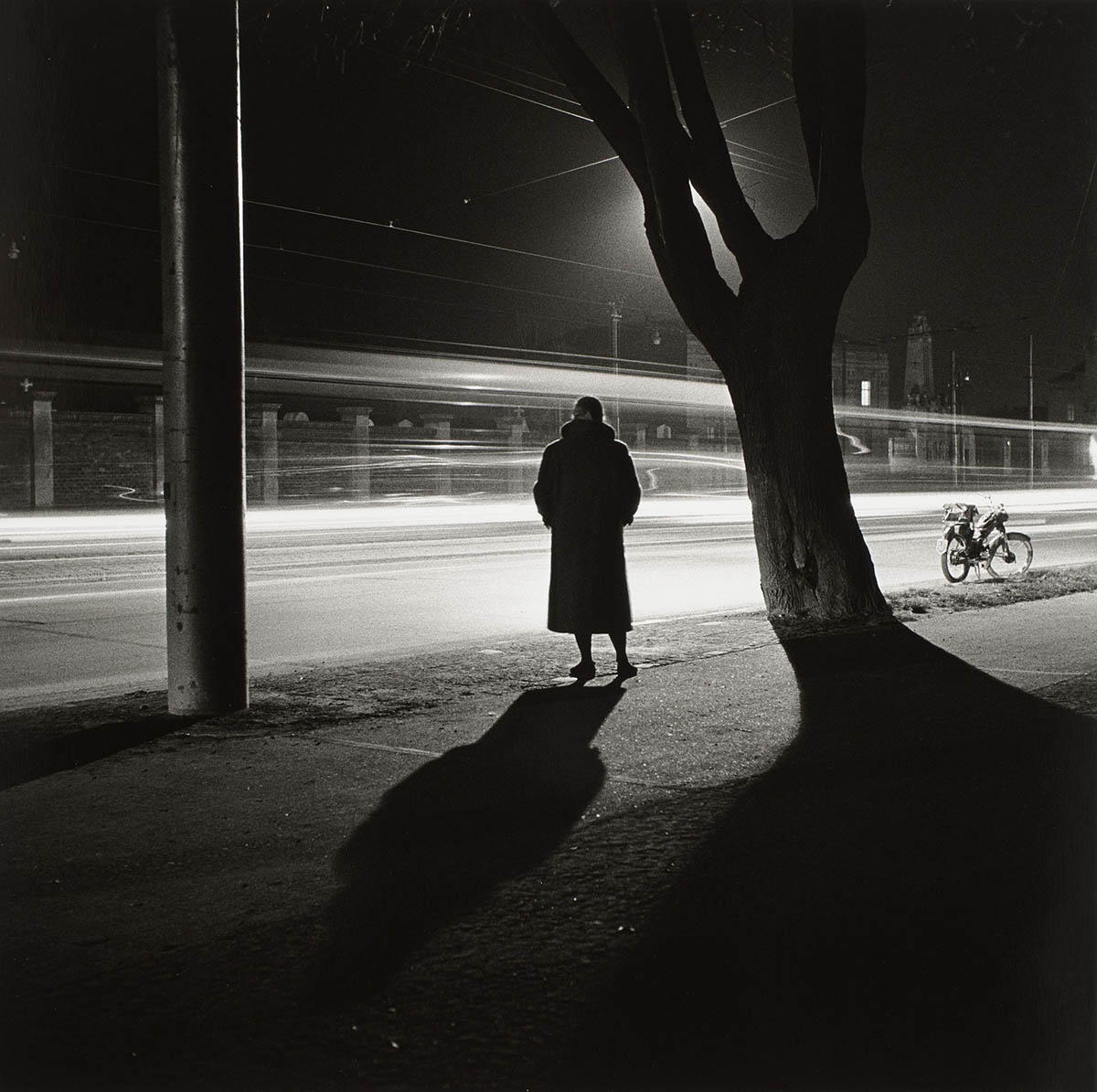
Wednesday 10am – 9pm

Albertina website

LIKE ART BLART ON FACEBOOK

Back to top

Exhibition: ‘See the Light – Photography, Perception, Cognition: The Marjorie and Leonard Vernon Collection’ at The Los Angeles County Museum of Art (LACMA)

Exhibition dates: 27th October 2013 – 23rd March 2014


William Henry Fox Talbot (England, 1800-1877) 'Articles of China' c. 1844


William Henry Fox Talbot (English, 1800-1877)
Articles of China
c. 1844
Calotype
5 3/8 x 7 1/8 in. (13.65 x 18.1cm)
The Marjorie and Leonard Vernon Collection, gift of The Annenberg Foundation, acquired from Carol Vernon and Robert Turbin


It is a real joy to bring these beautiful images to you!

Frederick H. Evans A Sea Of Steps – Wells Cathedral (England, 1903, below) is one of my favourite photographs of all time, up there in my top 20 or so. But you wouldn’t knock back any of these for your collection, especially Imogen Cunningham’s Magnolia Blossom (1925, below) and Edward Steichen’s Three Pears & An Apple (1921, below).

Marcus


Many thankx to The Los Angeles County Museum of Art for allowing me to publish the photographs in the posting. Please click on the photographs for a larger version of the image.


Linnaeus Tripe (England, 1822-1902) 'The Elliot Marbles, Central Museum, Madras' India, 1858


Linnaeus Tripe (English, 1822-1902)
The Elliot Marbles, Central Museum, Madras
India, 1858
Albumen photograph
10 1/2 × 13 in. (26.67 × 33.02cm)
The Marjorie and Leonard Vernon Collection, gift of The Annenberg Foundation, acquired from Carol Vernon and Robert Turbin


Carl Christian Heinrich Kühn (Germany, active Austria, 1866-1944) 'Still Life' c. 1905


Carl Christian Heinrich Kühn (Germany, active Austria, 1866-1944)
Still Life
c. 1905
Bromoil print
8 1/4 × 11 1/2 in. (20.96 × 29.21cm)
The Marjorie and Leonard Vernon Collection, gift of The Annenberg Foundation, acquired from Carol Vernon and Robert Turbin
© Estate of Heinrich Kühn


Imogen Cunningham (United States, 1883-1976) 'Magnolia Blossom' 1925


Imogen Cunningham (United States, 1883-1976)
Magnolia Blossom
1925
Gelatin silver print
The Marjorie and Leonard Vernon Collection, gift of The Annenberg Foundation, acquired from Carol Vernon and Robert Turbin
© 1925, 2013 Imogen Cunningham Trust


Charles Harbutt (United States, New Jersey, Camden, born 1935) 'Triptych' 1978, printed 1978


Charles Harbutt (United States, New Jersey, Camden, born 1935)
Triptych
1978, printed 1978
Gelatin silver prints
8 x 12″
The Marjorie and Leonard Vernon Collection, gift of The Annenberg Foundation, acquired from Carol Vernon and Robert Turbin
© Charles Harbutt. All rights reserved, Courtesy Peter Fetterman Gallery


The Los Angeles County Museum of Art (LACMA) presents See the Light – Photography, Perception, Cognition: The Marjorie and Leonard Vernon Collection, an exhibition celebrating an extraordinary collection and exploring parallels between photography and the science of vision. Since the invention of photography in the late 1830s, the medium has evolved in relation to theories about vision, perception, and cognition. The exhibition takes a historical perspective, identifying correlations between photography and the science of vision during four chronological periods. See the Light is comprised of 220 works by more than 150 artists, including Ansel Adams, Julia Margaret Cameron, Imogen Cunningham, William Henry Fox Talbot, Edward Steichen, Edward Weston, Minor White, and many more.

The exhibition draws entirely from the Marjorie and Leonard Vernon Collection, a key collection within LACMA’s Wallis Annenberg Photography Department. Acquired in 2008, the collection represents the diversity of photographic processes from the medium’s invention in 1839 to the 21st century. See the Light is accompanied by a free mobile-phone multimedia tour featured on mobile.lacma.org with commentary by the Vernons’ daughter, Carol Vernon; curator Britt Salvesen; artist James Welling; expert in computational vision Pietro Perona; and others. A 208-page catalogue, published by LACMA and DelMonico Books / Prestel, includes an essay by Britt Salvesen with contributions from Todd Cronan, Antonio Damasio, Alan Gilchrist, Pietro Perona, Barbara Maria Stafford, and James Welling. A new web page features excerpts from LACMA’s Vernon Oral History Project, an ongoing series of interviews with prominent artists, curators, dealers, and scholars who worked closely with the Vernons.

“Photography is often approached from either the artistic or the technological point of view, but these two aspects of the medium have been intertwined since its invention,” said Britt Salvesen, Department Head and Curator of the Wallis Annenberg Photography Department. “As a scientific instrument, the camera operates as an infallible eye, augmenting physiological vision, and as an artist’s tool, it channels the imagination, recording creative vision. The Marjorie and Leonard Vernon Collection offers unparalleled scope to the spirit of both science and art.”

The Marjorie and Leonard Vernon Collection

Through a groundbreaking gift from Wallis Annenberg and the Annenberg Foundation, and with the support of Carol Vernon and Robert Turbin, LACMA acquired the Marjorie and Leonard Vernon Collection in 2008. Comprising of more than 3,600 prints by almost 700 artists, the Marjorie and Leonard Vernon Collection at LACMA constitutes one of the finest collections of photography spanning the 19th and 20th centuries. LACMA’s acquisition of this collection makes it possible for the museum to represent photography’s breadth in the context of its encyclopaedic collections.

Marjorie and Leonard Vernon were avid collectors in the Los Angeles and Southern California communities. The Vernons built their collection beginning around 1975, cultivating a group of works with global significance, with a special emphasis on West Coast photography of the early and mid-20th century. The collection grew over the years to include works by international photographers, with the earliest photographs dating from the 1840s and the latest to 2001.

Exhibition organisation

See the Light is organised thematically and traces the trajectory of advanced research on cognition and perception in relation to the art of photography. Four approaches within photography are identified: descriptive naturalism, subjective naturalism, experimental modernism, and romantic modernism.

Descriptive naturalism: Early advocates of photography (from the 1840s through around 1880) were eager to recruit the authority of science without sacrificing the romance of art. The notion that the camera could make a pure transcription of nature, undistorted by human error, took hold at precisely the moment with research in physiological optics revealed the complexities of the human visual system. The depiction of far-off landscapes was one of photography’s key functions in its descriptive naturalist phase, as in Carleton Watkins’s commanding views of the American West, which recorded the natural splendour of the landscape and its settlement.

Subjective naturalism: In the late 19th century, experimental psychology, a newly defined scientific discipline, addressed the progression of sensation into interpretation. At the same time, champions of artistic photography introduced the possibilities of expression, ambiguous form, and abstraction into a medium previously valued for its descriptive functions. Heinrich Kühn’s mastery of painterly techniques, for example, led to the creation of photographs on par with paintings or charcoal drawings. Ultimately Kühn’s photographs depict dreams or memories as much as physical reality.

Experimental Modernism: After World War I, photography became a key tool for avant-garde artists determined to deploy technology in a positive rather than destructive manner, thus restoring balance within the individual psyche and within society at large. The abstract works of György Kepes, influenced by Gestalt psychology, represent a European version of this tendency, which he and other emigrés brought to the United States. A later heir to this tradition is Barbara Kasten, who uses photography to explore key interests including transparency, colour, light, and structure.

Romantic Modernism: Inspired by nature, romantic modernism isolated moments of direct personal contact with the world, and explored the specific capabilities of photography. Despite an apparent divergence of art and science following World War II, photography was a site of connection. Ansel Adams believed in the artist’s unique vision, while also advocating technical precision to realise it. Concurrently, scientists were focusing on contrast perception, the neurological mechanisms by which we distinguish objects and make sense of spatial arrangements. Scientists and photographers alike had to understand the visual system and its responses to black and white.”

Press release from the LACMA website


Edward Steichen (Luxembourg, active United States, 1879-1973) 'Three Pears & An Apple' 1921, printed 1921


Edward Steichen (Luxembourg, active United States, 1879-1973)
Three Pears & An Apple
1921, printed 1921
Gelatin silver print
9 5/8 × 7 1/2 in. (24.45 × 19.05cm)
The Marjorie and Leonard Vernon Collection, gift of The Annenberg Foundation and promised gift of Carol Vernon and Robert Turbin
© The Estate of Edward Steichen


William Henry Fox Talbot (England, 1800-1877) 'Lace' 1841


William Henry Fox Talbot (England, 1800-1877)
Lace
1841
Calotype
7 1/2 × 9 1/4 in. (19.05 × 23.5cm)
The Marjorie and Leonard Vernon Collection, gift of The Annenberg Foundation and promised gift of Carol Vernon and Robert Turbin


Andrew Young (England, active 1870-1879) 'Plane at Aberdour, in Old Avenue' Scotland, late 1870s


Andrew Young (English, active 1870-1879)
Plane at Aberdour, in Old Avenue
Scotland, late 1870s
Woodbury type
9 1/8 × 7 3/8 in. (23.18 × 18.73cm)
The Marjorie and Leonard Vernon Collection, gift of The Annenberg Foundation, acquired from Carol Vernon and Robert Turbin


Frederick H. Evans (England, 1853-1943) 'A Sea Of Steps - Wells Cathedral' England, 1903


Frederick H. Evans (English, 1853-1943)
A Sea Of Steps – Wells Cathedral
England, 1903
Platinum print
9 x 7 1/4 in. (22.86 x 18.44cm)
The Marjorie and Leonard Vernon Collection, gift of The Annenberg Foundation and Carol Vernon and Robert Turbin
© Frederick H. Evans, courtesy Janet B. Stenner


Jaroslav Rössler (Bohemia, Havlíčkův Brod, 1902-1990) 'Still Life with Small Bowl' Czechoslovakia (now Czech Republic), 1923


Jaroslav Rössler (Bohemia, Havlíčkův Brod, 1902-1990)
Still Life with Small Bowl
Czechoslovakia (now Czech Republic), 1923
Gelatin silver print
8 7/8 × 9 3/8 in. (22.54 × 23.81cm)
The Marjorie and Leonard Vernon Collection, gift of The Annenberg Foundation and promised gift of Carol Vernon and Robert Turbin


György Kepes (Hungary, active United States, 1906-2001) 'Balance' 1942, printed 1942


György Kepes (Hungary, active United States, 1906-2001)
Balance
1942, printed 1942
Gelatin Silver Print
The Marjorie and Leonard Vernon Collection, gift of The Annenberg Foundation, acquired from Carol Vernon and Robert Turbin
© The György Kepes Estate


Los Angeles County Museum of Art (LACMA)
5905 Wilshire Boulevard (at Fairfax Avenue)
Los Angeles, CA, 90036
Phone: 323 857-6000

Opening Hours:
Monday – Tuesday, Thursday 11am – 6pm
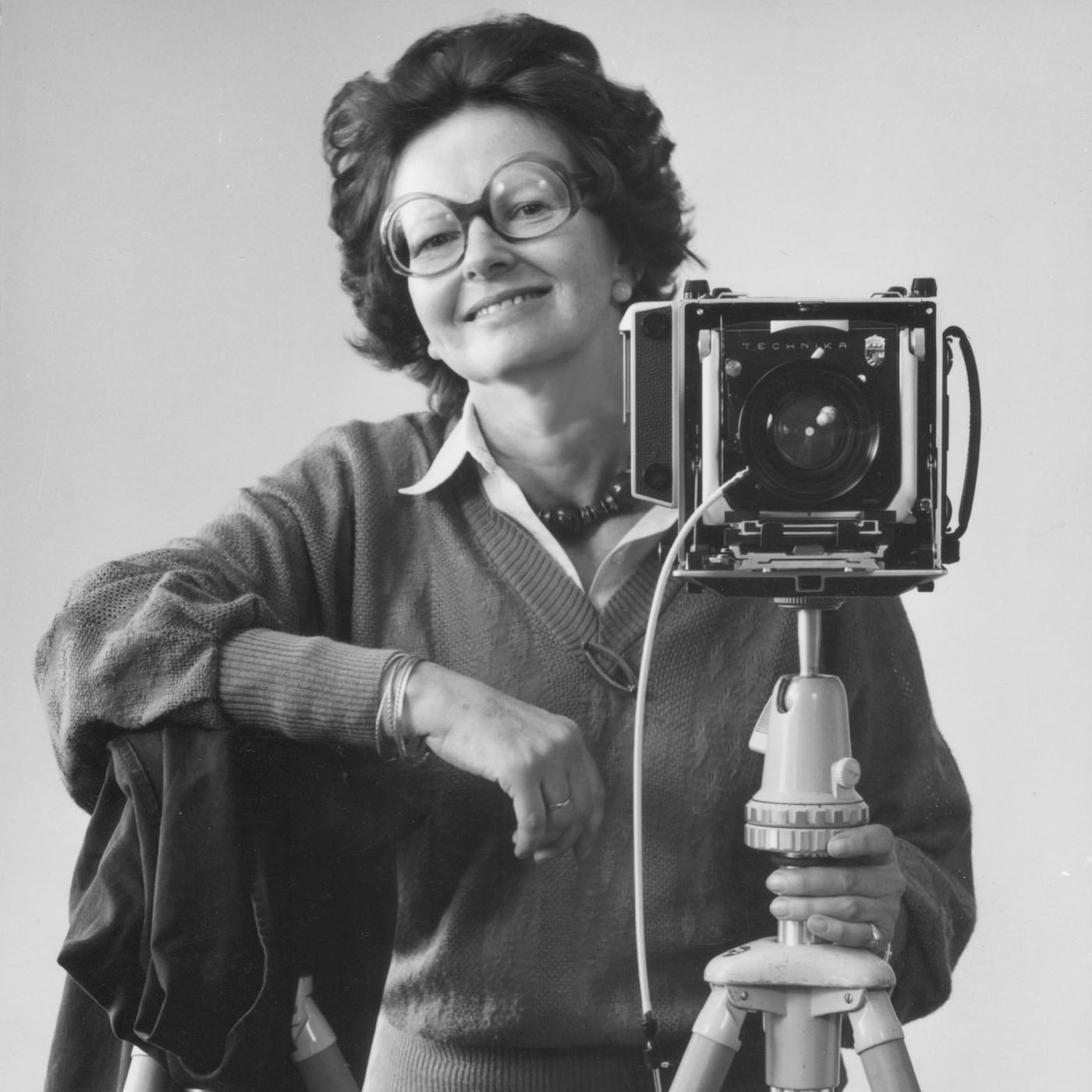
Friday 11am – 8pm
Saturday – Sunday 10am – 7pm
Closed Wednesday

LACMA website

LIKE ART BLART ON FACEBOOK

Back to top