Exhibition: ‘Edward Burtynsky: Australian Minescapes’ at the Australian Centre for Photography, Sydney

Exhibition dates: 17th July – 22nd August, 2009
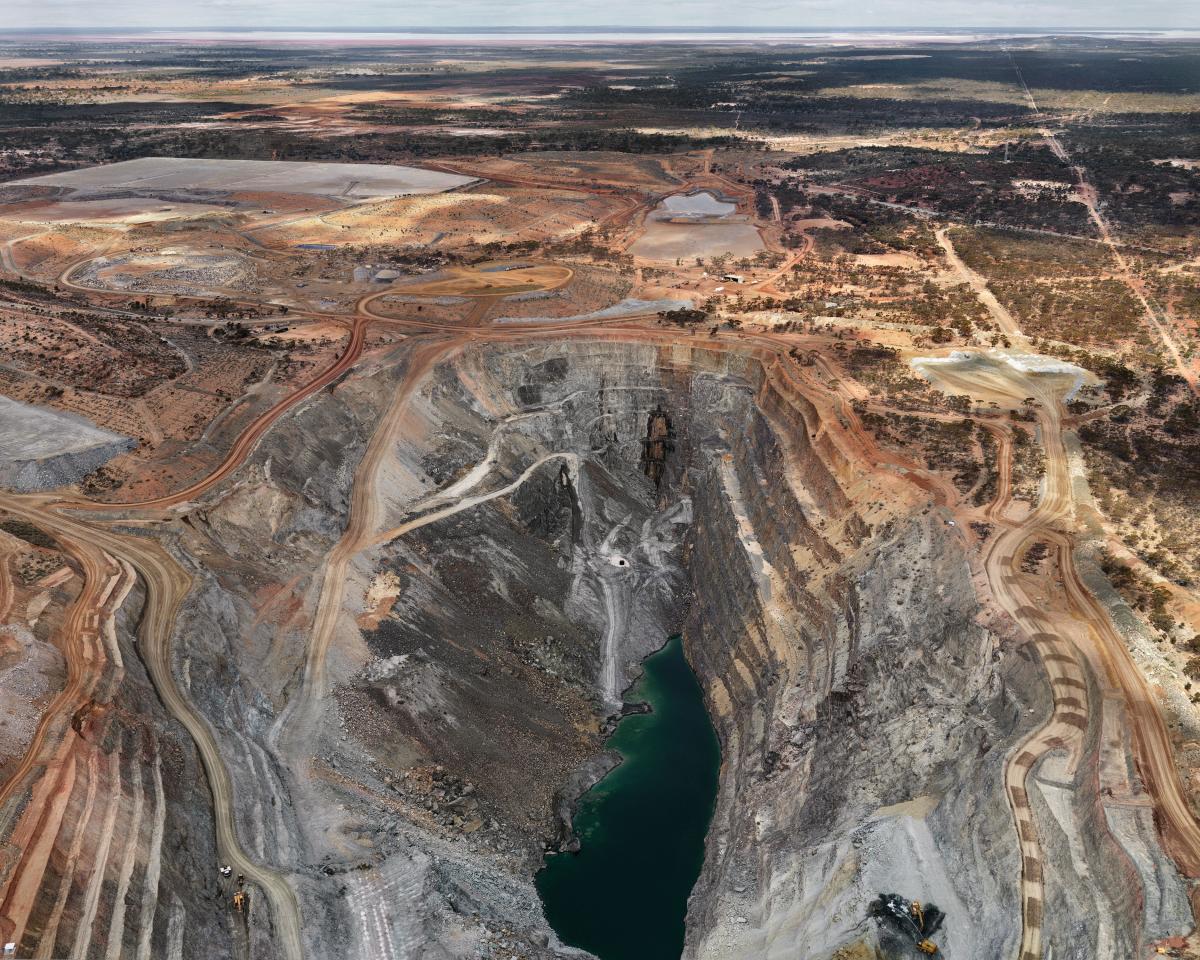
 

Edward Burtynsky (Canadian, b. 1955) 'Jubilee Operations #1, Kalgoorlie, Western Australia' 2007 from the exhibition Exhibition: 'Edward Burtynsky: Australian Minescapes' at the Australian Centre for Photography, Sydney, July - August, 2009


Edward Burtynsky (Canadian, b. 1955)
Jubilee Operations #1, Kalgoorlie, Western Australia
2007
Digital chromogenic colour photographic print
1560mm x 1260mm
Western Australian Museum


All of these incredible, environmental aerial photographs – beauty, texture, pattern, fabric, scars, desecration, destruction, de / construction – are works in the exhibition. The effects of the Anthropocene era in full swing. I will be glad when I am not here to see the fateful outcome of all of this: the death of most of the animals, and the sickness of the planet.

A travelling exhibition from the Western Australian Museum.

Dr Marcus Bunyan


Many thankx to the Australian Centre for Photography for allowing me to publish the photographs in the posting. Please click on the photographs for a larger version of the image.
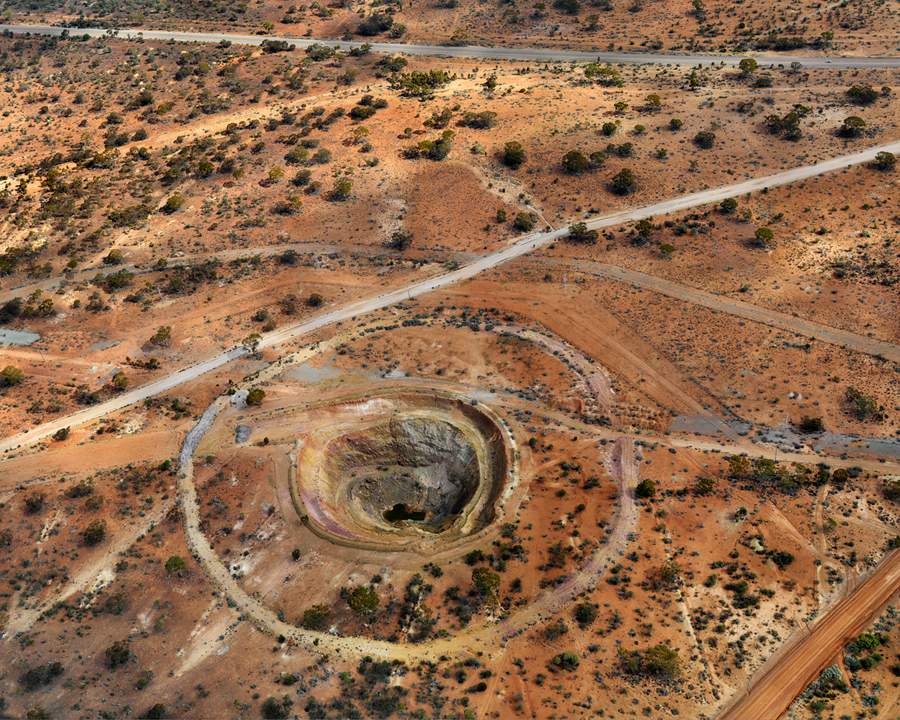


Edward Burtynsky (Canadian, b. 1955) 'Otter Juan Coronet Mine #1 Kalgoorlie, Western Australia' 2007 from the exhibition Exhibition: 'Edward Burtynsky: Australian Minescapes' at the Australian Centre for Photography, Sydney, July - August, 2009


Edward Burtynsky (Canadian, b. 1955)
Otter Juan Coronet Mine #1, Kalgoorlie, Western Australia
2007
Digital chromogenic colour photographic print
1560mm x 1260mm
Western Australian Museum


Edward Burtynsky (Canadian, b. 1955) 'Silver Lake Operations #1, Lake Lefroy, Western Australia' 2007 from the exhibition Exhibition: 'Edward Burtynsky: Australian Minescapes' at the Australian Centre for Photography, Sydney, July - August, 2009


Edward Burtynsky (Canadian, b. 1955)
Silver Lake Operations #1, Lake Lefroy, Western Australia
2007
Digital chromogenic colour photographic print
1560mm x 1260mm
Western Australian Museum
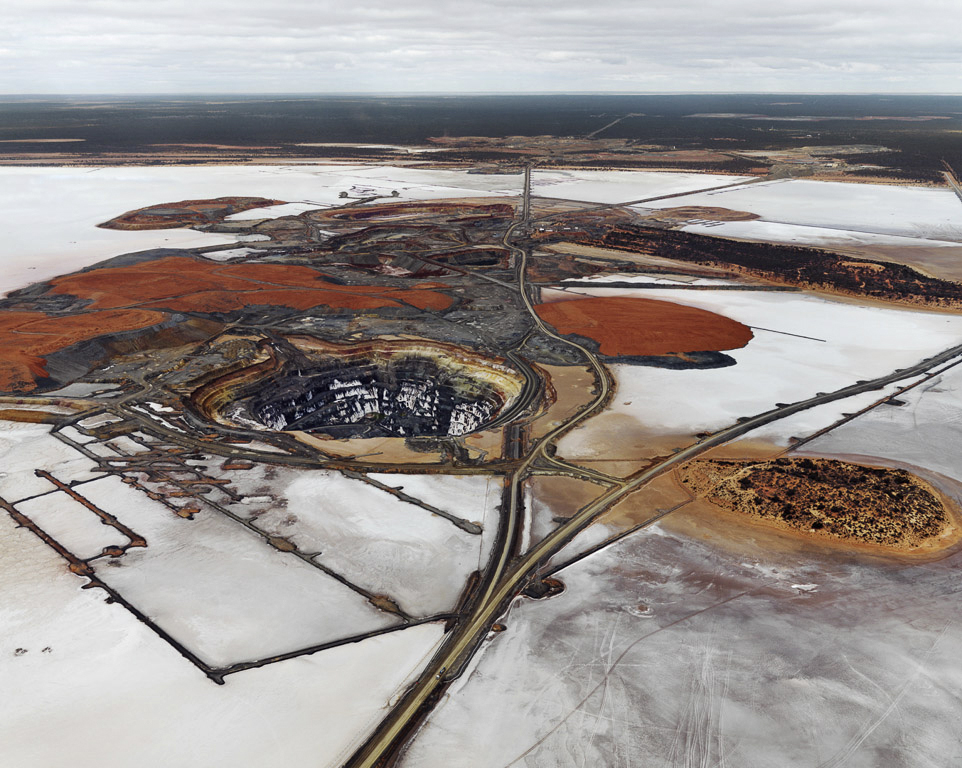
 

Edward Burtynsky (Canadian, b. 1955) 'Silver Lake Operations #2, Lake Lefroy, Western Australia' 2007


Edward Burtynsky (Canadian, b. 1955)
Silver Lake Operations #2, Lake Lefroy, Western Australia
2007
Digital chromogenic colour photographic print
1560mm x 1260mm
Western Australian Museum
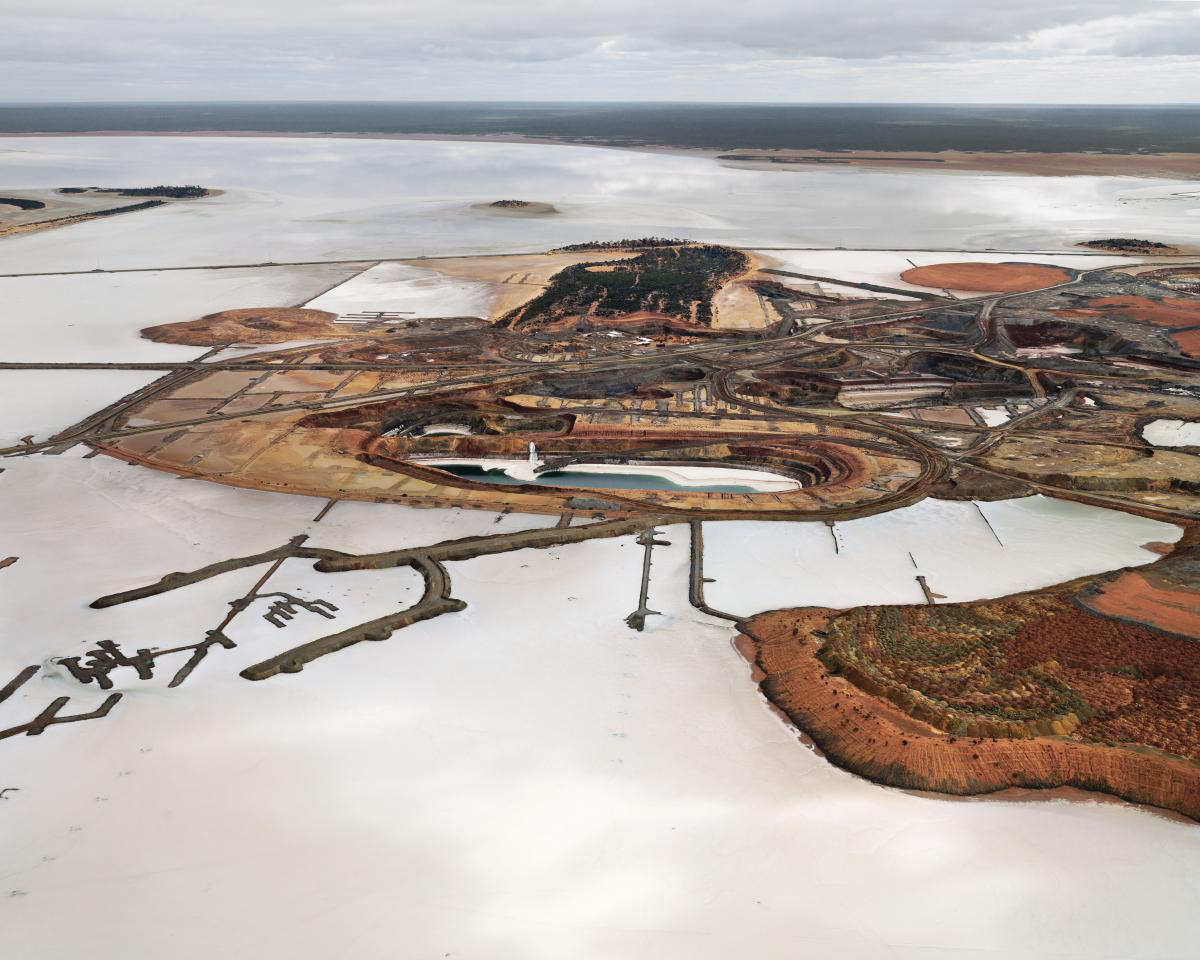
 

Edward Burtynsky (Canadian, b. 1955) 'Silver Lake Operations #3, Lake Lefroy, Western Australia' 2007


Edward Burtynsky (Canadian, b. 1955)
Silver Lake Operations #3, Lake Lefroy, Western Australia
2007
Digital chromogenic colour photographic print
1560mm x 1260mm
Western Australian Museum


Edward Burtynsky (Canadian, b. 1955) 'Silver Lake Operations #5, Lake Lefroy, Western Australia' 2007


Edward Burtynsky (Canadian, b. 1955)
Silver Lake Operations #5, Lake Lefroy, Western Australia
2007
Digital chromogenic colour photographic print
1560mm x 1260mm
Western Australian Museum


Edward Burtynsky (Canadian, b. 1955) 'Silver Lake Operations #11, Lake Lefroy, Western Australia' 2007


Edward Burtynsky (Canadian, b. 1955)
Silver Lake Operations #11, Lake Lefroy, Western Australia
2007
Digital chromogenic colour photographic print
1560mm x 1260mm
Western Australian Museum


Edward Burtynsky (Canadian, b. 1955) 'Silver Lake Operations #12, Lake Lefroy, Western Australia' 2007


Edward Burtynsky (Canadian, b. 1955)
Silver Lake Operations #12, Lake Lefroy, Western Australia
2007
Digital chromogenic colour photographic print
1560mm x 1260mm
Western Australian Museum
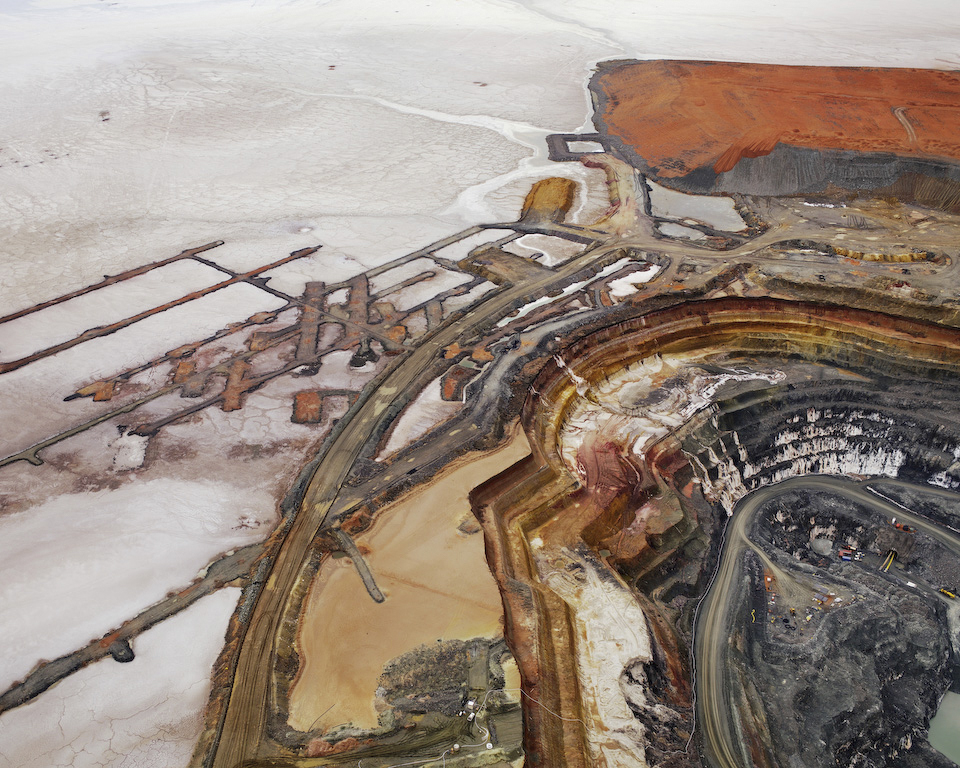
 

Edward Burtynsky (Canadian, b. 1955) 'Silver Lake Operations #14, Lake Lefroy, Western Australia' 2007


Edward Burtynsky (Canadian, b. 1955)
Silver Lake Operations #14, Lake Lefroy, Western Australia
2007
Digital chromogenic colour photographic print
1560mm x 1260mm
Western Australian Museum
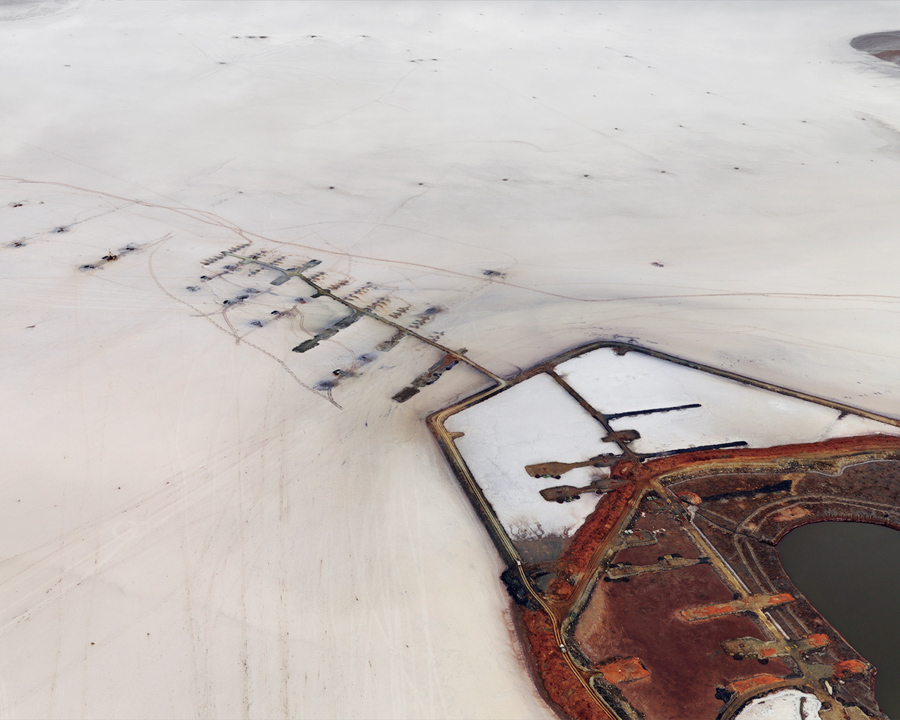
 

Edward Burtynsky (Canadian, b. 1955) 'Silver Lake Operations #15 Lake Lefroy, Western Australia' 2007


Edward Burtynsky (Canadian, b. 1955)
Silver Lake Operations #15, Lake Lefroy, Western Australia
2007
Digital chromogenic colour photographic print
1560mm x 1260mm
Western Australian Museum


Edward Burtynsky (Canadian, b. 1955) 'Silver Lake Operations #16, Lake Lefroy, Western Australia' 2007


Edward Burtynsky (Canadian, b. 1955)
Silver Lake Operations #16, Lake Lefroy, Western Australia
2007
Digital chromogenic colour photographic print
1560mm x 1260mm
Western Australian Museum


Edward Burtynsky is one of the world’s leading contemporary landscape photographers. His ‘manufactured landscapes’ have included stark images of recycling yards, mine tailings, quarries and refineries. This series of images, taken in the eastern goldfields and the Pilbara of Western Australia, continues Edward Burtynsky’s examination of natural landscapes modified by mankind in the pursuit of the raw materials required for our modern society.

“Our dependence on nature to provide the materials for our consumption and our concern for the health of our planet sets us into an uneasy contradiction. For me, these images function as reflecting pools of our times.” ~ Edward Burtynsky

Australian Minescapes is a new body of work by Burtynsky, commissioned for the FotoFreo 2008 Festival. For this exhibition a selection of images from his Shipyard images from China and Ship Breaking images from Bangladesh will be presented alongside his Australian Minescapes images.

Text from the Australian Centre for Photography website [Online] Cited 01/08/2009. No longer available online
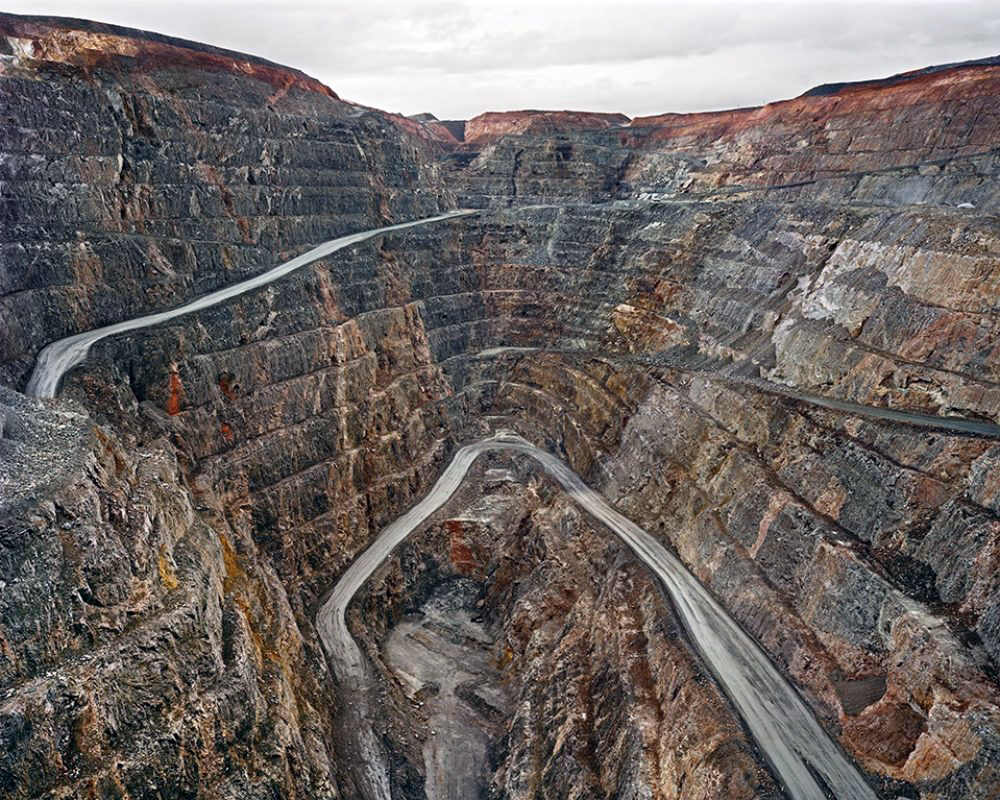
 

Edward Burtynsky (Canadian, b. 1955) 'Super Pit #1, Kalgoorlie, Western Australia' 2007


Edward Burtynsky (Canadian, b. 1955)
Super Pit #1, Kalgoorlie, Western Australia
2007
Digital chromogenic colour photographic print
1560mm x 1260mm
Western Australian Museum


Edward Burtynsky (Canadian, b. 1955) 'Super Pit #4 Kalgoorlie, Western Australia' 2007


Edward Burtynsky (Canadian, b. 1955)
Super Pit #4, Kalgoorlie, Western Australia
2007
Digital chromogenic colour photographic print
1560mm x 1260mm
Western Australian Museum


Edward Burtynsky (Canadian, b. 1955) 'Tailings #1 Kalgoorlie, Western Australia' 2007


Edward Burtynsky (Canadian, b. 1955)
Tailings #1 Kalgoorlie, Western Australia
2007
Digital chromogenic colour photographic print
1560mm x 1260mm
Western Australian Museum


Australian Centre for Photography

This gallery has now closed.

Edward Burtynsky website

LIKE ART BLART ON FACEBOOK

Back to top

Exhibition: ‘Inheritance’ at the Australian Centre for Photography, Sydney

Exhibition dates: 1st May – 6th June, 2009

Artists: Bindi Cole, Tamara Dean, Lee Grant, June Indrefjord, Bronek Kozka, Ka-Yin Kwok, Tracey Moffatt, Fiona Morris, Aaron Seeto, Martin Smith and Toni Wilkinson

Installation photographs of the exhibition can be found on the Lee Grant – Photography blog website


Many thankx to the ACP for allowing me to publish the photographs in the posting. Please click on some of the photographs for a larger version of the image.


June Indrefjord. 'Piano' from the series 'Landaas' 2005


June Indrefjord
Piano
2005
From the series Landaas


Aaron Seeto (Australian) 'Oblivion' 2006


Aaron Seeto (Australian)
Oblivion
2006
From the series Oblivion
Daguerreotype


Aaron Seeto makes alternate historical positions and experiences visible through an exploration of archives, family photo albums and photographic records. In recent bodies of work Fortress and Oblivion, Seeto has utilised the daguerreotype, one of the earliest and most primitive photographic techniques, to highlight the malleability of narratives within archive records. Not only is the chemical process itself highly toxic and temperamental but the daguerreotype’s mirrored surface means the image appears as both positive and negative, depending on the angle of view. For Seeto, this mutability captures the essence of our experience of history and memory, reflecting how images degrade, how stories are formed and privileged, how knowledge and history are written. …

For his ongoing series Oblivion Seeto sourced details from images of the Cronulla riots – beachside riots around race and territory – of 2005 found on the internet. In reproducing these as daguerrotypes he seeks less to represent the incident than to look at how it was reported, understood and remembered. The instability of the virtual information found online is echoed in the photographic process.

Text from the Stills Gallery website [Online] Cited 14/02/2019


Tracey Moffatt (Australian, b. 1960) 'Useless 1974' 1994 from the exhibition 'Inheritance' at the Australian Centre for Photography, Sydney, May - June, 2009


Tracey Moffatt (Australian, b. 1960)
Useless 1974
1994
From the series Scarred for Life


Useless, 1974 is a photo-lithograph by the Australian artist Tracey Moffatt. The work shows a girl stooping down to wash a car, with one hand wiping a headlight with a sponge and the other resting on the bonnet. She looks towards the camera rather than at the car, her face bearing a serious and potentially hurt or angry expression. The caption accompanying the photograph explains that ‘Her father’s nickname for her was “useless”‘. Despite this, it seems that in this picture she is being put to use, and perhaps the car she washes is her father’s. The caption, her expression and the direction of her gaze may suggest that the viewer occupies the position of the girl’s father looking down on and supervising his daughter while she carries out her chore. …

The work’s title is a reference to the cruel nickname given to the girl in the photograph, and the date in the title, 1974, suggests the year according to which the photograph has been styled by Moffatt, who employs actors and constructed scenes to create her photographs. Curator Filippo Maggia has compared Moffatt’s photographic method to that of a film director, stating that she ‘often does not take the photographs herself but directs a sort of bona fide movie set that she organises and controls after having pictured it in her mind again and again, meticulously decomposing and recomposing it’ (Maggia 2006, p.12). As the artist has stated, ‘I often use technicians when I make my pictures. I more or less direct them. I stand back and call the shots.’ (Quoted in Maggia 2006, p.12.)

Moffatt’s photographic series often deal with themes such as race, gender and the politics of identity. Drawing on memories from the artist’s childhood, the Scarred for Life series mimics photo spreads from the American magazine Life, with their explanatory captions and focus on the family environment. The captions’ terse descriptions hint at the traumatic stories behind the images. Moffatt has commented: ‘a person can make a passing comment to you when you are young and this can change you forever. You can be “scarred for life” but it isn’t necessarily a bad thing. The photographs can be read as both tragic and comic – there is a thin line between both.’ (Quoted in display caption, Tracey Moffatt, Birth Certificate 1994, Tate P78101, accessed 28 August 2015.) Furthermore, Maggia has argued that the Scarred for Life series ‘gives us life as it is, the harshness and aridity of human relations, adolescence with its fears of not being accepted’ (Maggia 2006, p.13).

Louise Hughes
August 2015

Filippo Maggia, Tracey Moffatt: Between Dreams and Reality, exhibition catalogue, Spazio Oberdan, Milan 2006, p. 13, reproduced p. 117.

Extract from Louise Hughes. “Useless, 1974,” on the Tate website [Online] Cited 14/02/2019


Lee Grant (Korean-Australian, b. 1973) 'The Day Meg Wore a Dress '2007 from the exhibition 'Inheritance' at the Australian Centre for Photography, Sydney, May - June, 2009


Lee Grant (Korean-Australian, b. 1973)
The Day Meg Wore a Dress from the series Brothers and Sisters
2007


“You can choose your friends, but you can’t choose your family.”

From the tight nuclear unit to the multi-generational extended family, from refuges for the homeless to middle class suburbia, Inheritance examines the way our families shape the person we become; for better or for worse.

Taking Tracey Moffatt’s acclaimed series Scarred for Life as a starting point, the exhibition includes the work of eleven Australian artists who explore the modern family through a range of photographic disciplines, including documentary, portraiture and video. Sometimes serious and sometimes satirical, Inheritance is a family album that celebrates the skeletons and the psychodramas alongside the newborns and the nuptials.

Text from the Australian Centre for Photography website [Online] Cited 20/05/2009. No longer available online


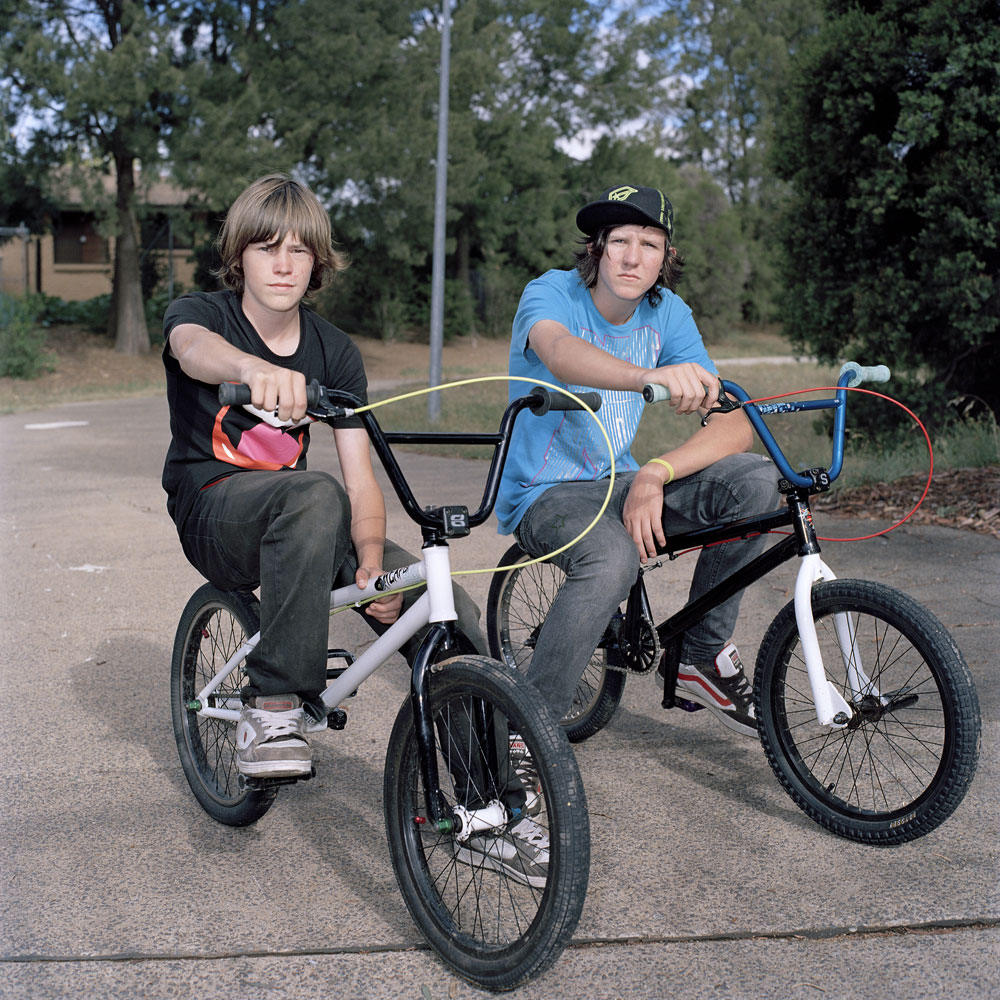
Lee Grant (Australian, b. 1973) 'Nathan & Mac, BMX bros' 2009


Lee Grant (Australian, b. 1973)
Nathan & Mac, BMX bros
2009
Archival pigment print
60 x 60cm
Edition of 8 + 2 AP


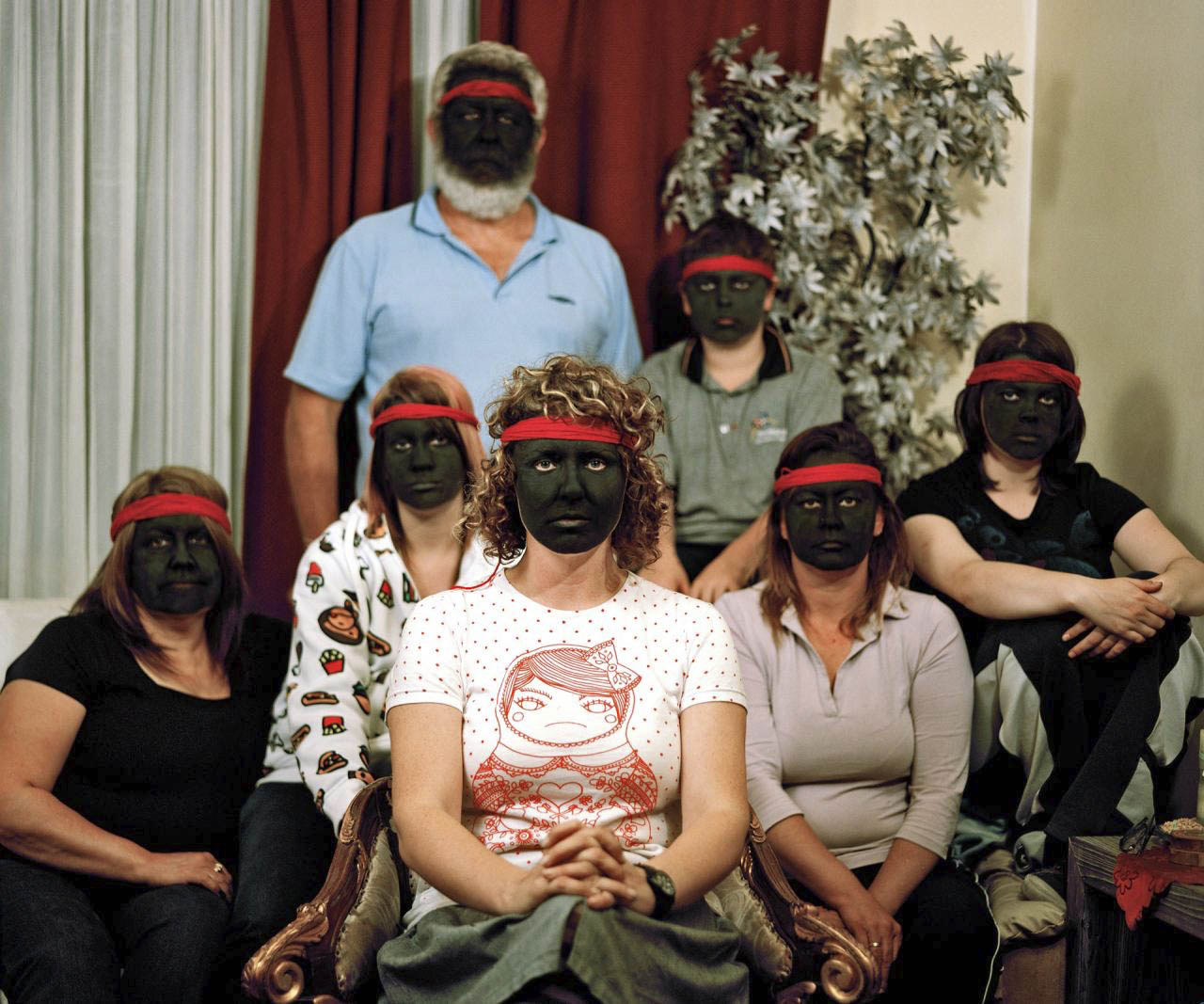
Bindi Cole Chocka (Australian / Wathaurung, b. 1975) 'Wathaurung Mob' 2008


Bindi Cole Chocka (Australian / Wathaurung, b. 1975)
Wathaurung Mob
2008
From the series Not really Aboriginal
Pigment print on rag paper
1035 x 1235cm


Our Past Is Our Strength – Culture and Identity

I’ve always been told that l was Aboriginal. I never questioned it because of the colour of my skin or where I lived. My Nan, one of the Stolen Generation, was staunchly proud and strong. She made me feel the same way. My traditional land takes in Ballarat, Geelong and Werribee and extends west past Cressy to Derrinallum. I’m from Victoria and I’ve always known this. All the descendants of traditional Victorian Aboriginal people are now of mixed heritage. I’m not black. I’m not from a remote community. Does that mean I’m not really Aboriginal? Or do Aboriginal people come in all shapes, sizes and colours and live in all areas of Australia, remote and urban?

Bindi Cole Chocka, Wathaurung text from the Culture Victoria website [Online] Cited 14/02/2019


Wathaurung Mob is a group portrait depicting members of Cole’s family sitting in their lounge room, their faces blackened with minstrel paint, and wearing red headbands traditionally worn by indigenous elders. The controversial practice of “blackfacing” refers to the populist minstrel shows of the 19th and 20th centuries in which a white actor put on blackface, then performed a racist caricature.

As we stand before the work, Alessi says he finds it confronting and uncomfortable. “Wathaurung Mob is quite powerful because what stands out are the eyes of each sitter; they look directly at the viewer, so you can’t help but feel challenged by that,” he says.

“There is also something quite uncomfortable about the work because, in some ways, you are being implicated in Andrew Bolt’s view, as white Australians having to own up to the broader history of the relationship between white and indigenous Australia.

“And more broadly it is about coming to grips with what is still a major issue in Australia around reconciliation and the way that we treat indigenous people. In one single frame this photograph captures 200 years of history, and I think it is an area that people like Bindi Cole are really courageous to navigate through because they have been open to criticism by people like Andrew Bolt, which is completely unfounded.”

Extract from Bronwyn Watson. “Facing up to the stereotypes,” on The Australian website November 16, 2013 [Online] Cited 14/02/2019


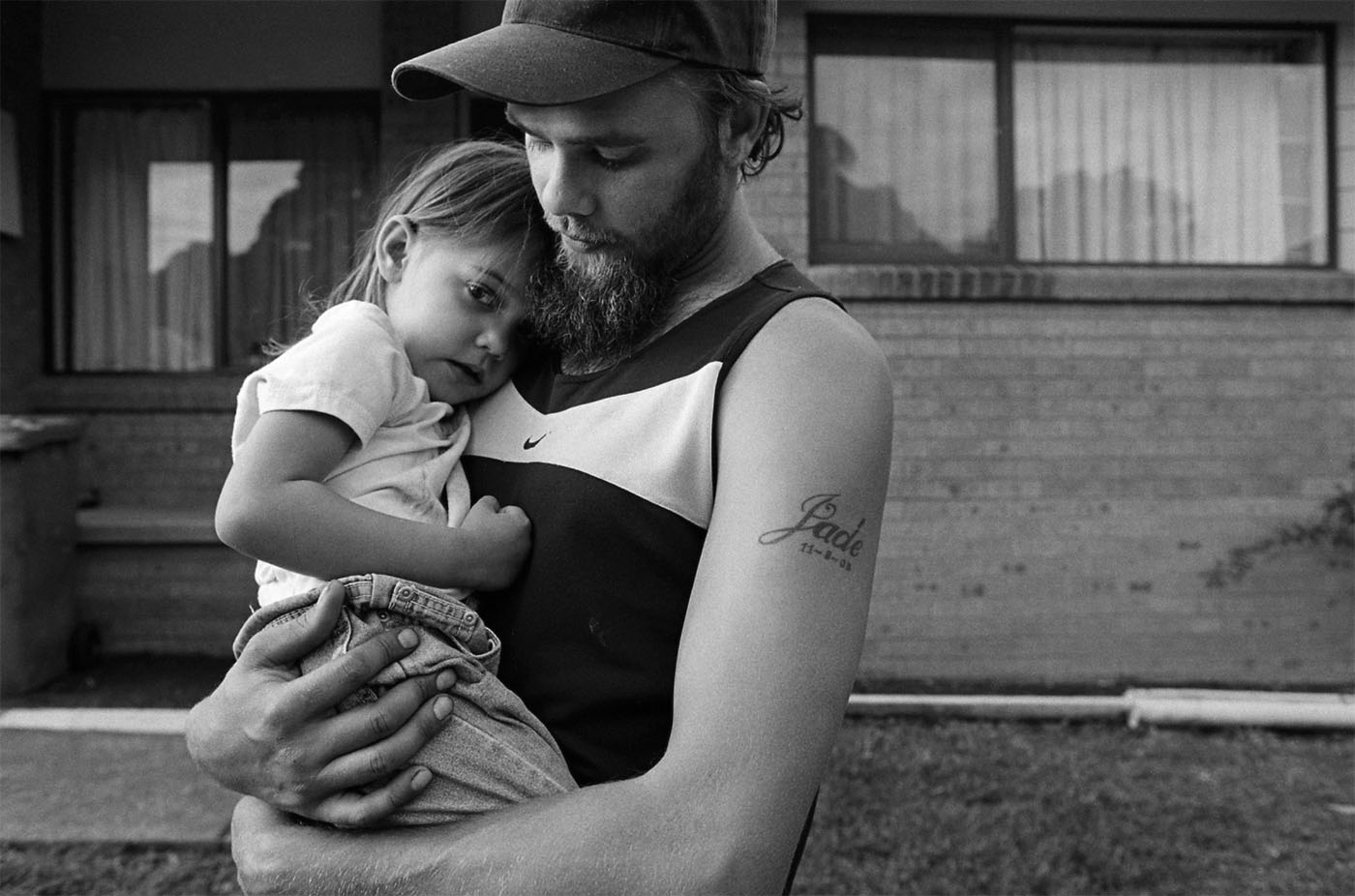
Fiona Morris. 'Sean and Jade, Wesley Mission' 2006


Fiona Morris (Australian)
Sean and Jade, Wesley Mission
2006


Sean with his daughter Jade outside their tempoary accomodation provided by Wesley Mission. They can only stay their for a maximum of two months. Leah and Sean became homeless with their children after increasing rent rises in Sydney and the cost of living.


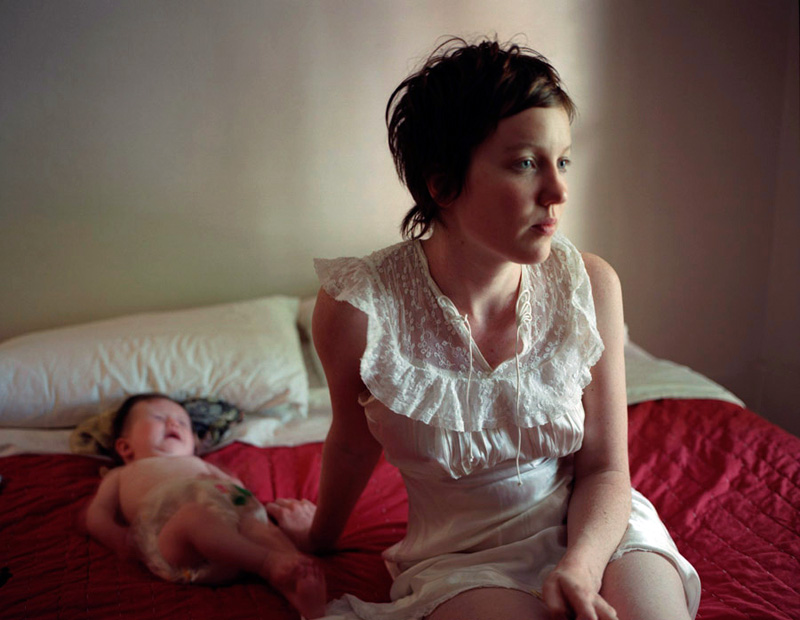
Tamara Dean (Australian, b. 1976) 'Alex and Maeve' 2006


Tamara Dean (Australian, b. 1976)
Alex and Maeve
2006


Australian Centre for Photography

This gallery has now closed.

Lee Grant website

Tracey Moffatt on the Rosyln Oxley9 Gallery website

LIKE ART BLART ON FACEBOOK

Back to top

Exhibition: ‘Hyper’ by Denis Darzacq at Australian Centre for Photography (ACP), Sydney

Exhibition dates: 13th March – 12th April, 2009


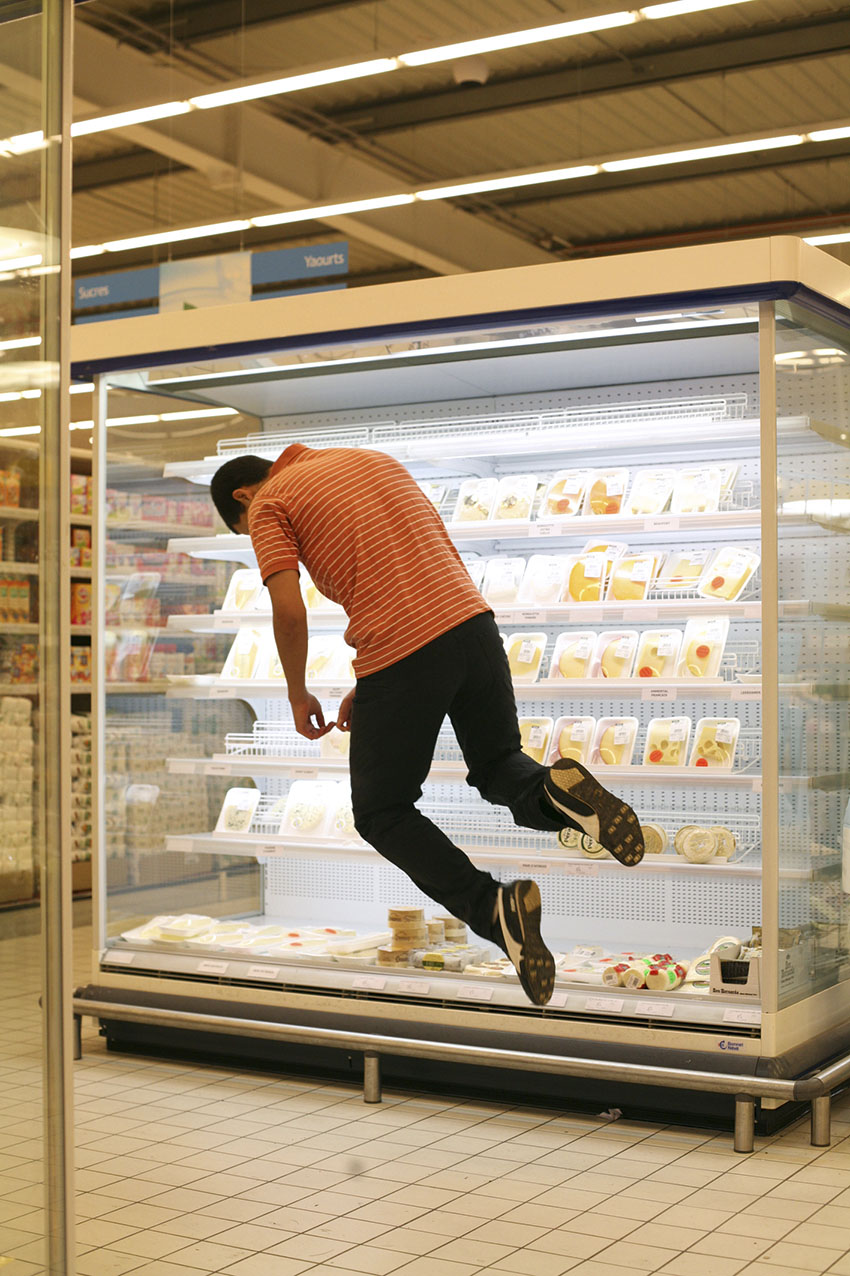
Denis Darzacq (French, b. 1961) 'Hyper #4' 2007 from the exhibition 'Hyper' by Denis Darzacq at Australian Centre for Photography (ACP), Sydney, March - April, 2009


Denis Darzacq (French, b. 1961)
Hyper #4
2007


These images form an interesting body of work: levitating bodies suspended between heaven and earth, neither here nor there, form a hyper-real image grounded in the context of the fluorescent isles of French supermarkets. The mainly anonymous humans look like mannequins in their inertness, frozen at the moment of throwing themselves/being thrown into the consumer environment. After his brilliant series La Chute (The Fall) Darzacq has taken people gathered in a casting call from around the town of Rouen and made their frozen bodies complicit in the mass production of the supermarket and the mass consumption of the image as tableaux vivant: the mise en scène directed by the photographer to limited effect. There is something unsettling about these images but ultimately they are unrewarding, as surface as the environment the bodies are suspended in, and perhaps this is the point.

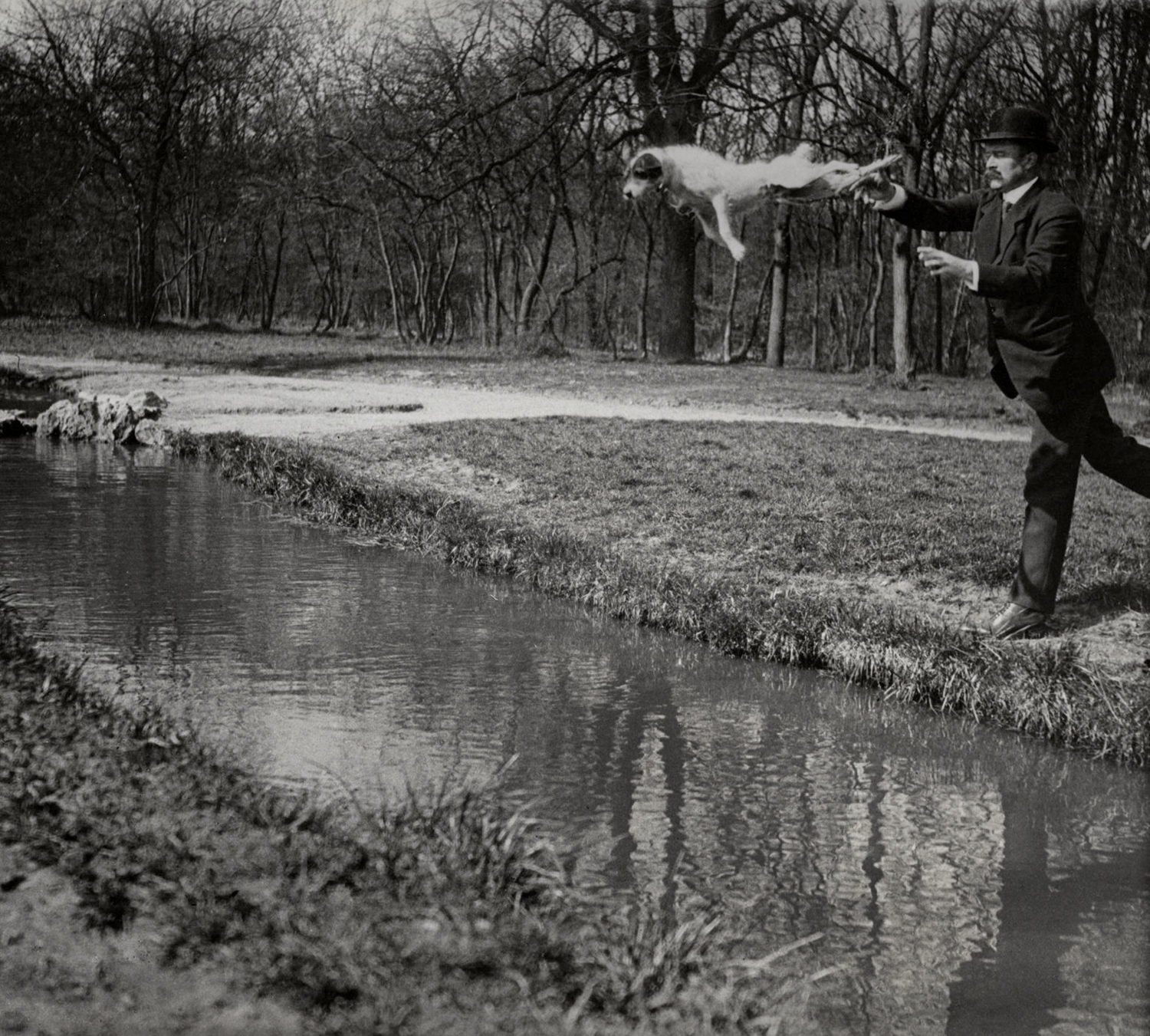
Suspension of bodies is not a new idea in photography. Jacques Henri Lartigue used the freeze frame to good effect long before Henri Cartier-Bresson came up with his ‘decisive moment’: playing with the effect of speed and gravity in an era of Futurism, Lartigue used the arrested movement of instant photography then afforded by smaller cameras and faster film to capture the spirit of liberation in the ‘Belle Epoque’ period before the First World War.

“All the jumping and flying in Lartigue’s photographs, it looks like the whole world at the turn of the century is on springs or something. There’s a kind of spirit of liberation that’s happening at the time and Lartigue matches that up with what stop action photography can do at the time, so you get these really dynamic pictures. And for Lartigue part of the joke, most of the time, is that these people look elegant but they are doing these crazy stunts.”1


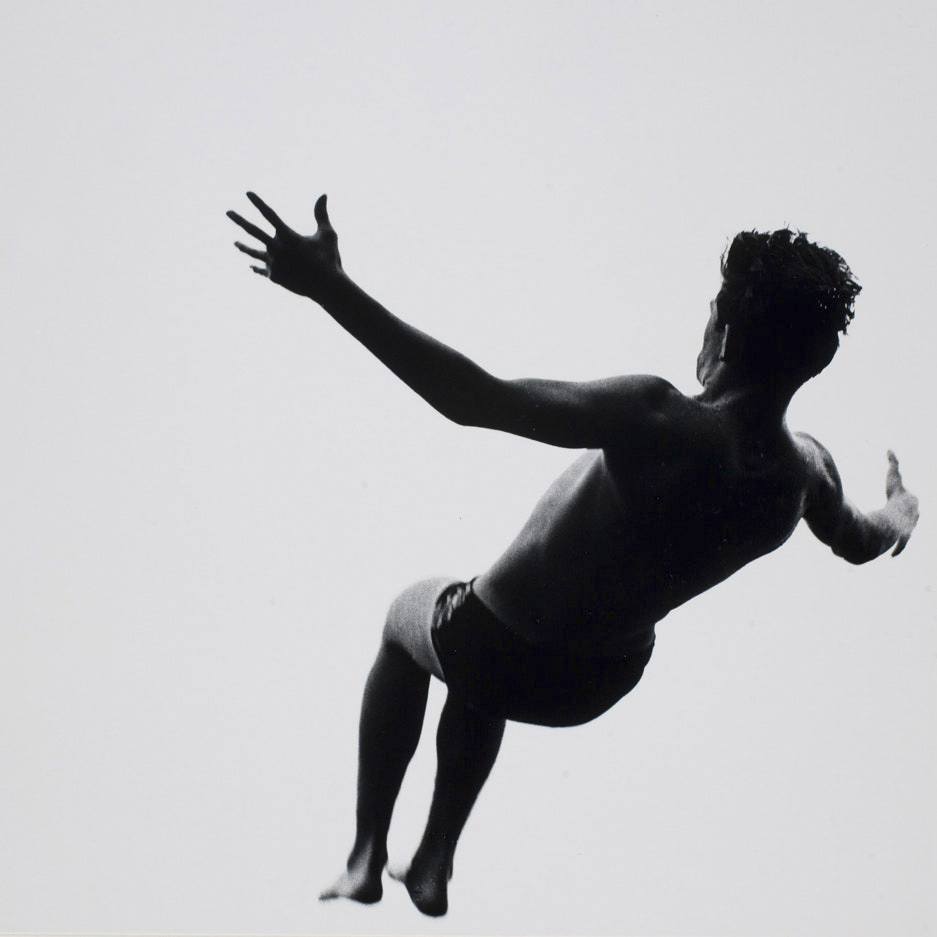
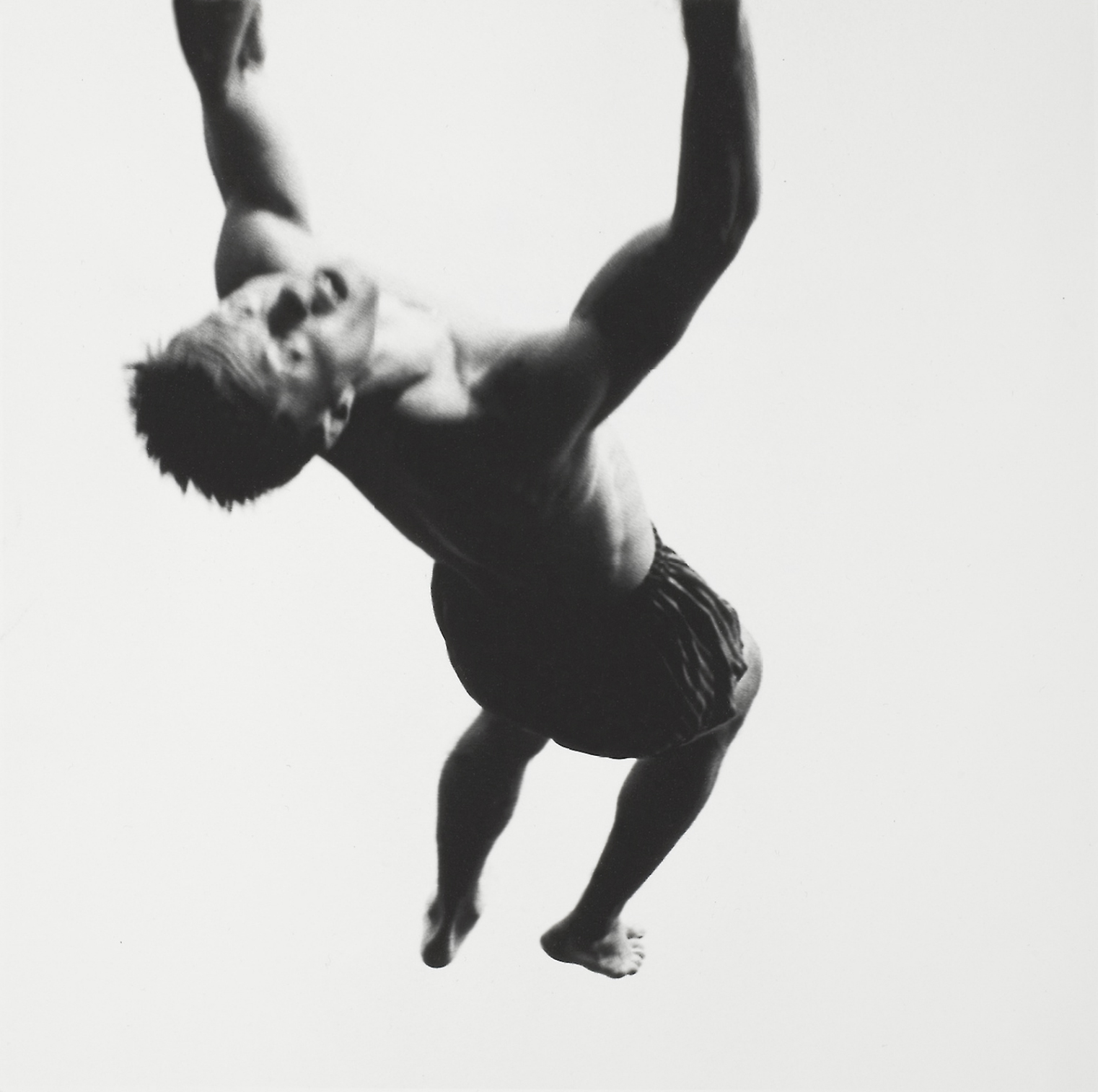
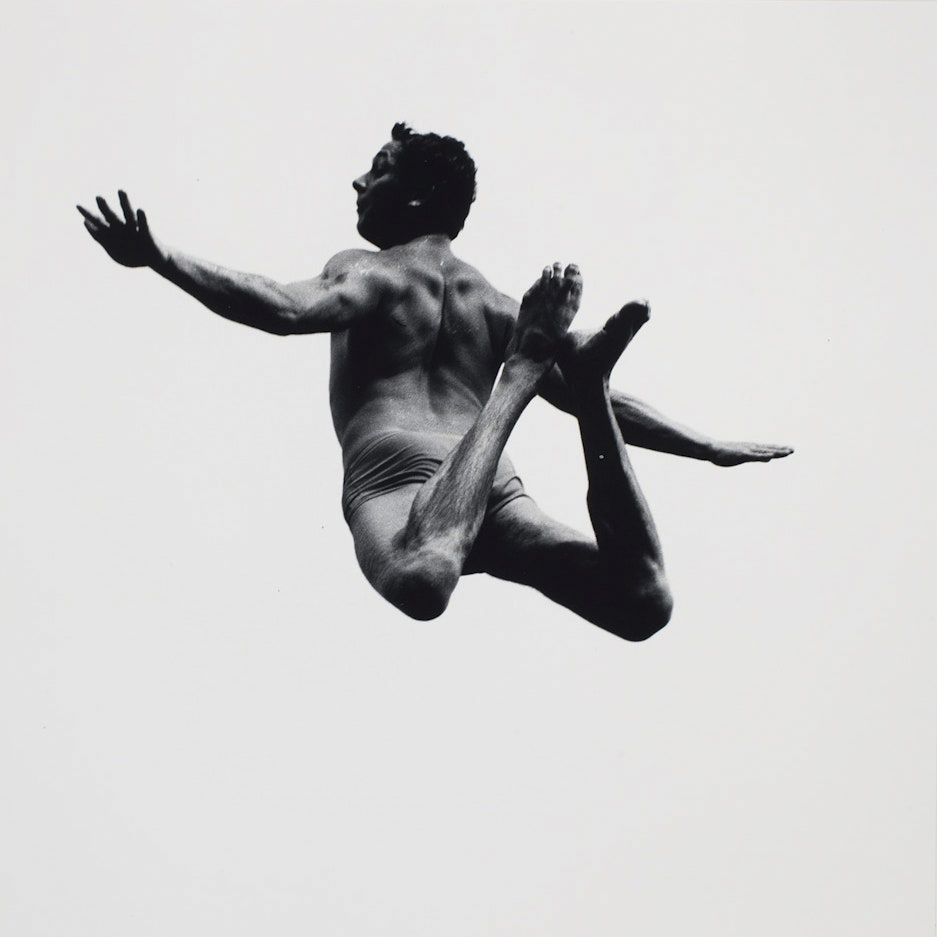
One of the greatest, if not the greatest ever, series of photographs of levitating bodies is that by American photographer Aaron Siskind. Called Pleasures and Terrors of Levitation (sometimes reversed as Terrors and Pleasures of Levitation as on the George Eastman House website) the images feature divers suspended in mid-air with the sky as their blank, background canvas. The images formal construction makes the viewer concentrate on the state of the body, its positioning in the air, and the look on the face of some of the divers caught between joy and fear.

“Highly formal, yet concerned with their subject as well as the idea they communicate, the ‘Pleasures and Terrors of Levitation’ photographs depict the dark shapes of divers suspended mid-leap against a blank white sky. Shot with a hand-held twin-lens reflex camera at the edge of Lake Michigan in Chicago, the balance and conflict suggested by the series’ title is evident in the divers’ sublime contortions.”2


Perhaps because of their air of balance and conflict we can return to these vibrant images again and again and they never loose their freshness, intensity and wonder. The same cannot be said of Denis Darzacq’s Hyper photographs. Slick and surface like the consumer society on which they comment the somnambulistic bodies are more like floating helium balloons, perhaps even tortured souls leaving the earth. Reminiscent of the magicians trick where the girl is suspended and a hoop passed around her body to prove the suspension is real these photographs really are more smoke and mirrors than any comment on the binary between being and having as some commentators (such as Amy Barrett-Lennard, Director Perth Institute of Contemporary Arts) have suggested. There is no spirit of liberation here, no sublime revelation as the seemingly lifeless bodies are trapped between the supermarket shelves, as oblivious to and as anonymous as the products that surround them. The well shot images perhaps possess a sense of fun, if I am being generous, as Darzacq plays with our understanding of reality… but are they more than that or is the Emperor just wearing very thin consumer clothing?

Dr Marcus Bunyan


1/ Kevin Moore (Lartigue biographer) quoted in “Genius of Photography,” on the BBC website [Online] Cited 15/03/2009

2/ Text from the Museum of Contemporary Photography website [Online] Cited 15/03/2009 (no longer available)


Many thankx to the Australian Centre for Photography for allowing me to publish the Darzacq photographs in the posting. Please click on the photographs for a larger version of the image. All other images are used under “fair use” for the purpose of education, research and critical discourse.


    Denis Darzacq (French, b. 1961) 'Hyper #8' 2007 from the exhibition 'Hyper' by Denis Darzacq at Australian Centre for Photography (ACP), Sydney, March - April, 2009


    Denis Darzacq (French, b. 1961)
    Hyper #8
    2007


    “The astonishing photographs that make up Hyper involve no digital manipulation, just close collaboration between young dancers and sportspeople as they jump for the camera to form strange, exaggerated poses and body gestures. Denis Darzacq was drawn to the trashy, consumerist nature of the French Hypermarkets (the equivalent of our supermarkets) and the hyper coloured backgrounds they provided. These supermarkets offered a sharp juxtaposition to the sublime, almost-spiritual bodies that appear to float in their aisles.

    Hyper is the latest series of works by French photographer Denis Darzacq, who continues to explore the place of the individual in society, a theme which has been crucial to his work in the last few years.”

    Text from the ACP website [Online] Cited 15/03/2009. No longer available online


    Jacques Henri Lartigue (French, 1894-1986) 'L'envol de Bichonnade' 1905


    Jacques Henri Lartigue (French, 1894-1986)
    Bichonnade, 40, Rue Cortambert, Paris
    1905
    Gelatin silver print


    Jacques Henri Lartigue (French, 1894-1986) 'Mr Folletete (Plitt) et Tupy, Paris, March 1912' 1912


    Jacques Henri Lartigue (French, 1894-1986)
    Mr Folletete (Plitt) et Tupy, Paris, March 1912
    1912
    Gelatin silver print


    Jacques Henri Lartigue (French, 1894-1986) 'Fuborg' 1929


    Jacques Henri Lartigue (French, 1894-1986)
    Fuborg
    1929
    Gelatin silver print


    Herni Cartier-Bresson (French, 1908-2004) 'Behind Saint Lazare Station, Paris, France' 1932


    Herni Cartier-Bresson (French, 1908-2004)
    Behind Saint Lazare Station, Paris, France
    1932
    Gelatin silver print


    Aaron Siskind (American, 1903-1991) 'Pleasures and Terrors of Levitation #37' 1954


    Aaron Siskind (American, 1903-1991)
    Pleasures and Terrors of Levitation #37
    1956
    Gelatin silver print


    Aaron Siskind (American, 1903-1991) 'Pleasures and Terrors of Levitation #47' 1954


    Aaron Siskind (American, 1903-1991)
    Pleasures and Terrors of Levitation #47
    1954
    Gelatin silver print


    Aaron Siskind (American, 1903-1991) 'Pleasures and Terrors of Levitation #93' 1961


    Aaron Siskind (American, 1903-1991)
    Pleasures and Terrors of Levitation #93
    1961
    Gelatin silver print


    Aaron Siskind (American, 1903-1991) 'Pleasures and Terrors of Levitation #99' 1953


    Aaron Siskind (American, 1903-1991)
    Pleasures and Terrors of Levitation #99
    1956
    Gelatin silver print


    Aaron Siskind (American, 1903-1991) 'Pleasures and Terrors of Levitation #491' 1954


    Aaron Siskind (American, 1903-1991)
    Pleasures and Terrors of Levitation #491
    1956
    Gelatin silver print


    Denis Darzacq (French, b. 1961) 'Hyper #3' 2007


    Denis Darzacq (French, b. 1961)
    Hyper #3
    2007


    Hyper picks up on La Chute while explicitly focusing the artist’s message on the consumerism which hovered in the background of several previous series. In Casques de Thouars Darzacq explored the connecting power and the limits of a consumer product; here the critique is more biting. Hyper opposes bodies in movement and the saturated, standardised space of mass distribution outlets. In this totally commercial setting, the body’s leap expresses the freedom and unhampered choice of its movement. It is a clear challenge to the marketing strategies which seek to control our behaviour. Some of the figures, glowing with an aura, impose glory and give off a sense of spirituality in total contrast with the temples of consumption in which they are found.

    “Hyper 1, 2007-2010,” on the Denis Darzacq website Nd [Online] Cited 13/06/2022


    Denis Darzacq (French, b. 1961) 'Hyper #14' 2007


    Denis Darzacq (French, b. 1961)
    Hyper #14
    2007


    Australian Centre for Photography

    This gallery has now closed

    Denis Darzacq website

    Denis Darzacq Hyper images

    LIKE ART BLART ON FACEBOOK

    Back to top