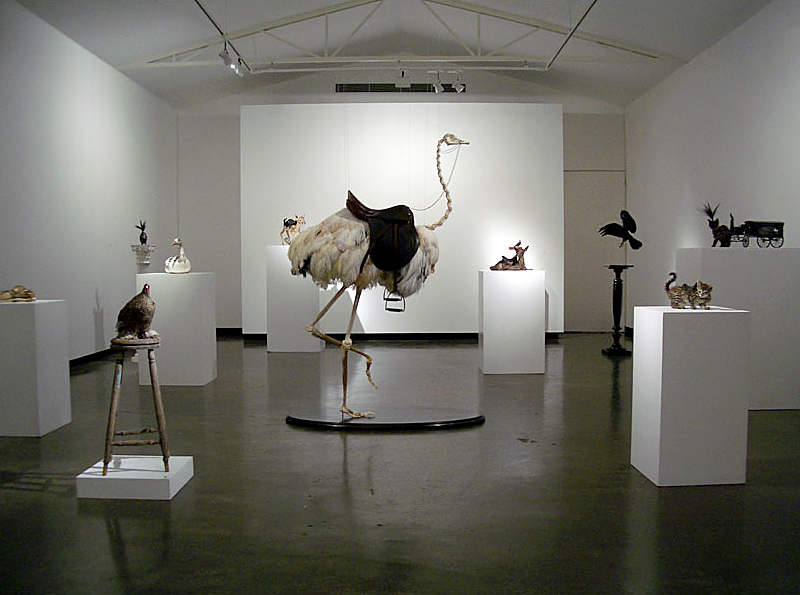
Installation view of Night’s Plutonian Shore by Julia deVille at Sophie Gannon Gallery, Richmond Photo: Marcus Bunyan
This is an excellent exhibition by Julia deVille at Sophie Gannon Gallery in Richmond. Compared to last year’s ‘shock and paw’ exhibition Cineraria reviewed on this blog, this exhibition shows a commendable sense of restraint, a beautiful rise and fall in the work as you walk around the gallery space with the exhibits displayed on different types and heights of stand and a greater thematic development of the conceptual ideas within the work. There are some exquisite pieces.
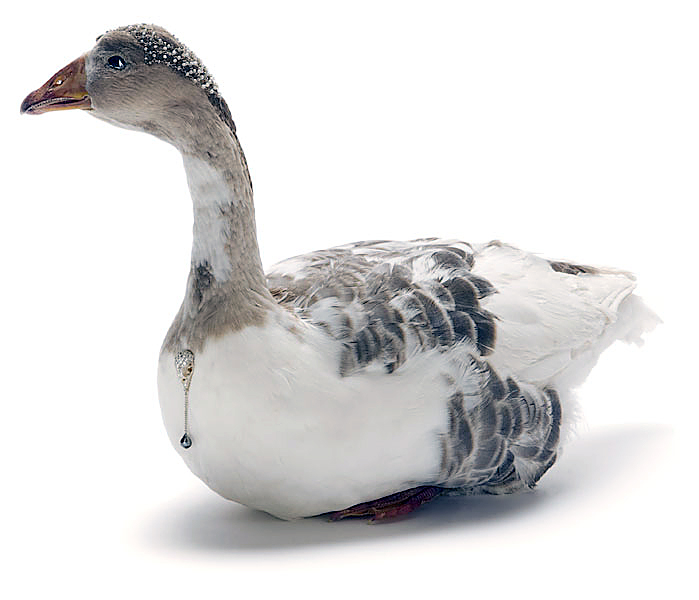
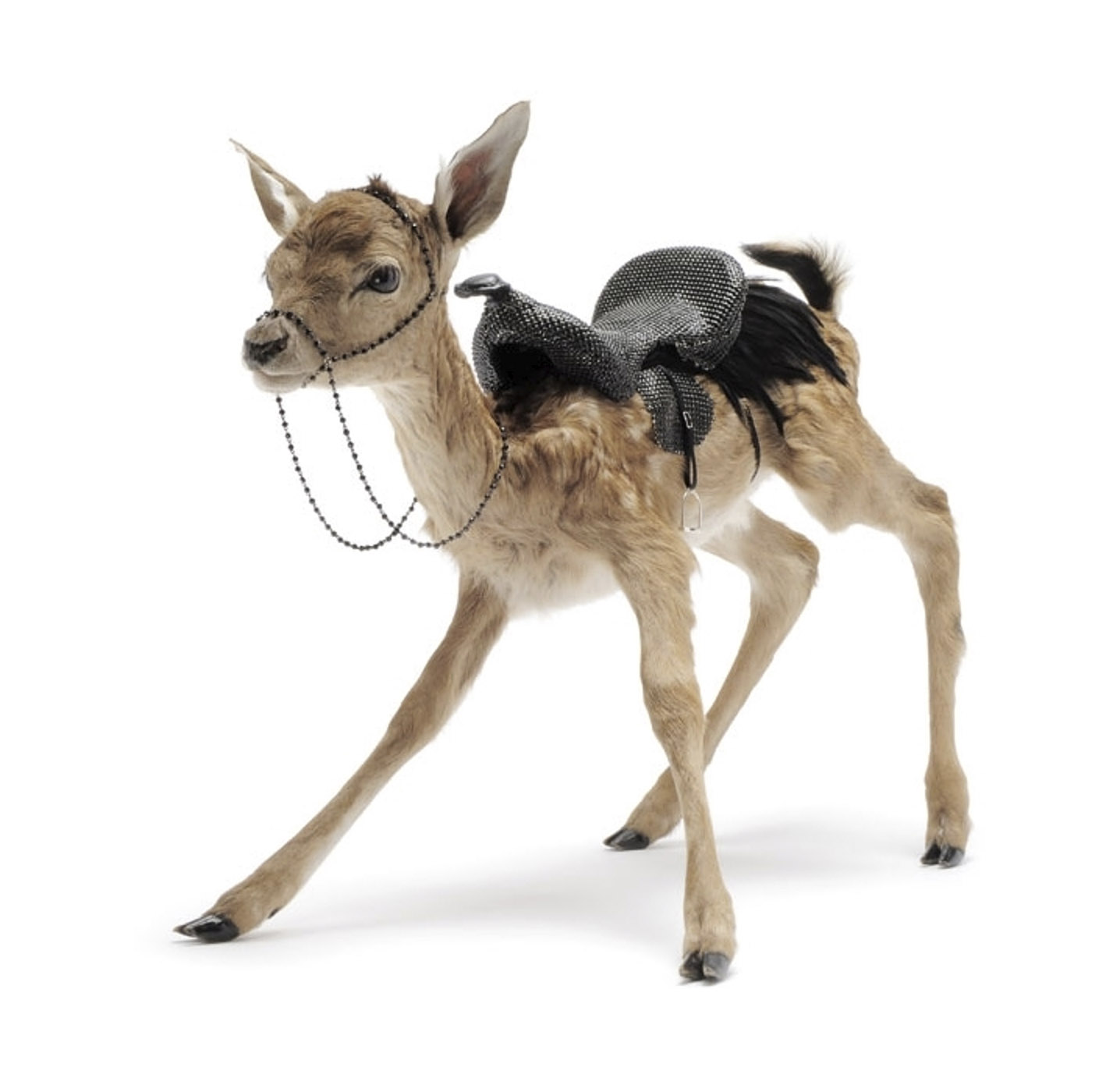
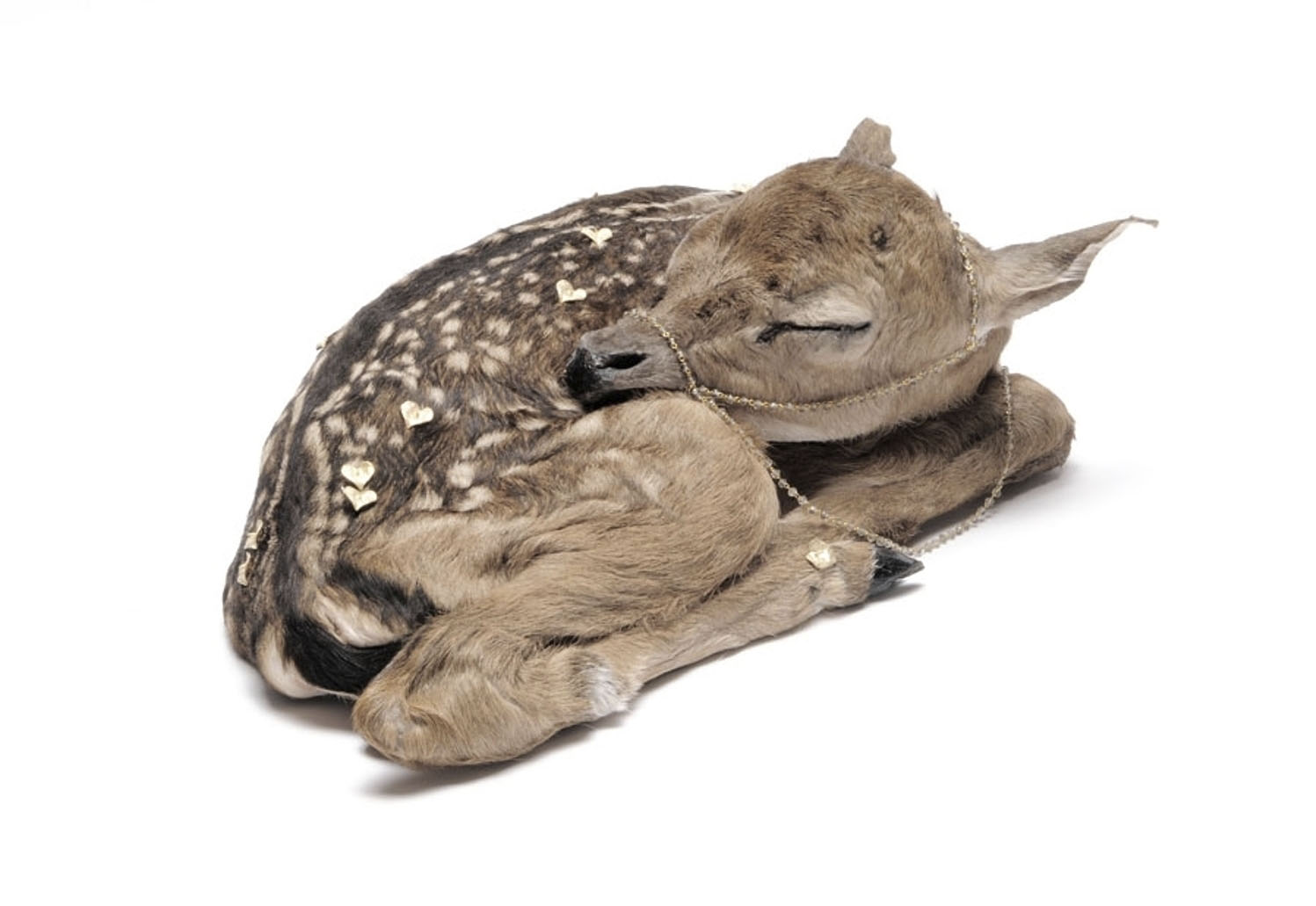
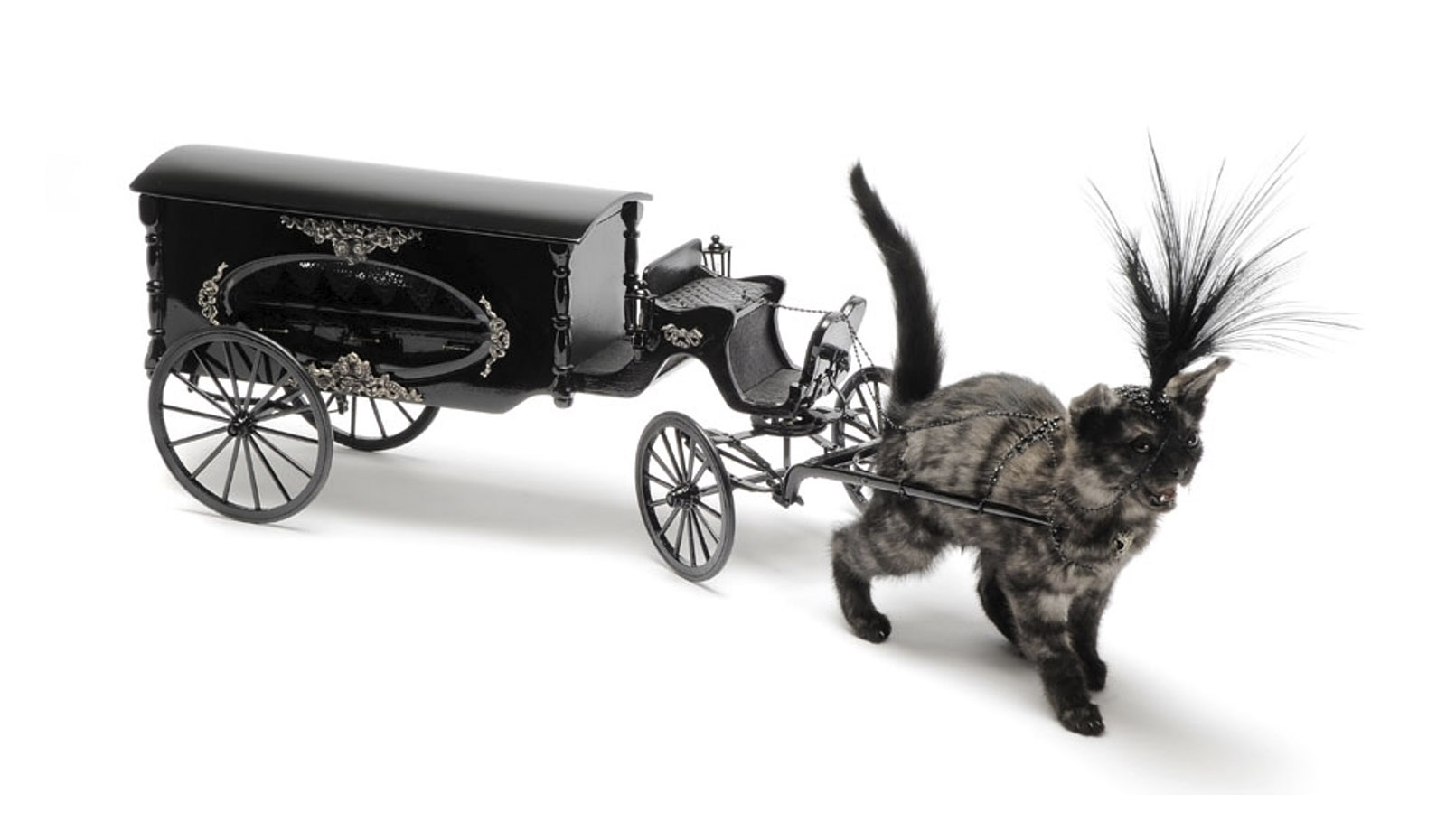
From the bejewelled Golden Gosling (2010), the goose that wears the gold not lays it to the cute stillborn fawn Lenore (2010), named after Edgar Allan Poe’s poem of the same name that discusses “the proper decorum in the wake of the death of a young woman, described as “the queenliest dead that ever died so young”,” (Wikipedia text) there is a delicacy to these sculptures that seemed absent in the last exhibition. The sleeping fawn wears a little golden bridle and is covered in golden hearts, the harness bringing in the element of control (of life, of death, of the body, of identity) into the pieces not seen in the earlier work. This sense of control is reinforced in other pieces in the exhibition including the three pieces Charon (2010), Nevermore (2010) and Kitten drawn hearse (2010, see photographs below).
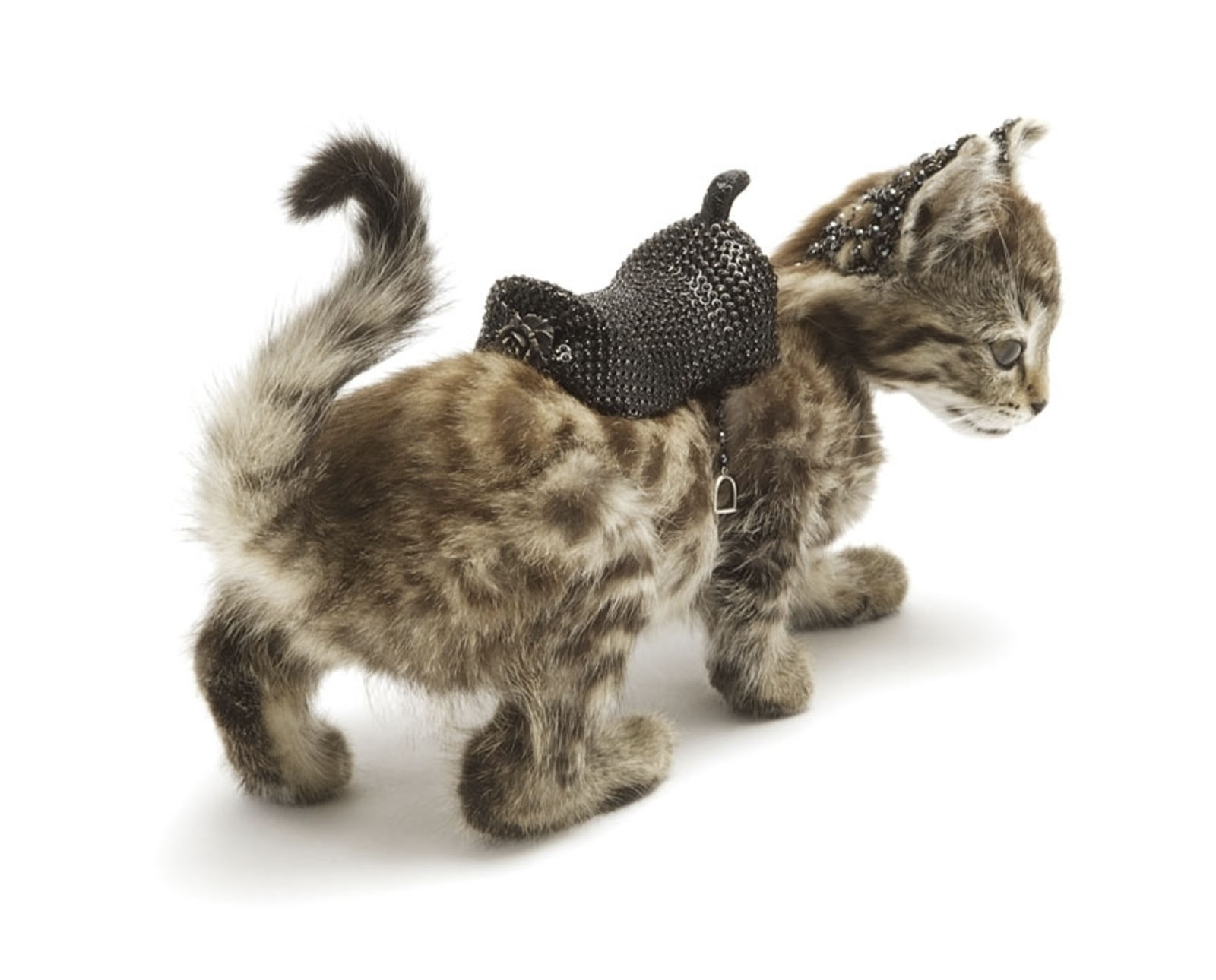
In Charon the kitten has an amazing beaded saddle and stirrups to allow the occupant to control the dead stead because in Greek mythology Charon is the ferryman who carries the souls of the newly deceased across the river Styx. Nevermore also features the saddle and bridle whilst the standout piece of the whole exhibition, Kitten drawn hearse just wows you with it’s delicacy and showmanship – the plume atop the harnessed kitten’s head faithfully replicating the dressage of a Victorian horse drawn funeral cortege.
In these pieces there is a simplification of the noise of the earlier works and in this simplification a conversant intensification of the layering of the conceptual ideas. Playful and witty the layers can be peeled back to reveal the poetry of de Sade, the stories of Greek mythology and the amplification of life force that is at the heart of these works.
Good stuff.
Dr Marcus Bunyan
Many thankx to Edwin and Sophie Gannon Gallery for allowing me publish the photographs in the posting. Please click on the photographs for a larger version of the image.
Another well considered response to the exhibition can be found on Karen Thompson’s Melbourne Jeweller blog.
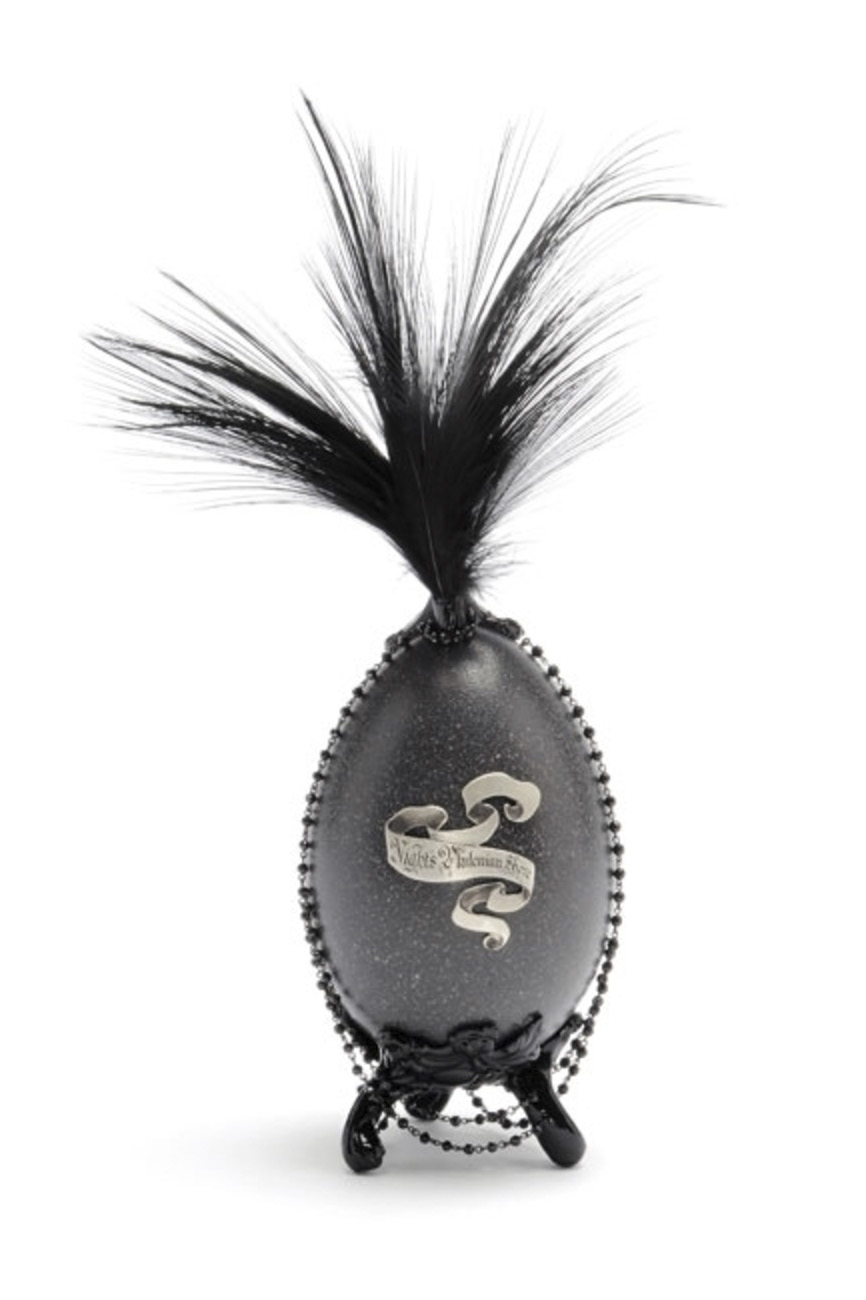
Julia deVille (Australian, b. 1982) Nameless here for evermore 2010 Emu egg, black garnet beads, sterling silver, bronze, enamel paint, egret feathers 31 x 16 x 16cm Courtesy Sophie Gannon Gallery
Julia deVille (Australian, b. 1982) Golden Gosling 2010
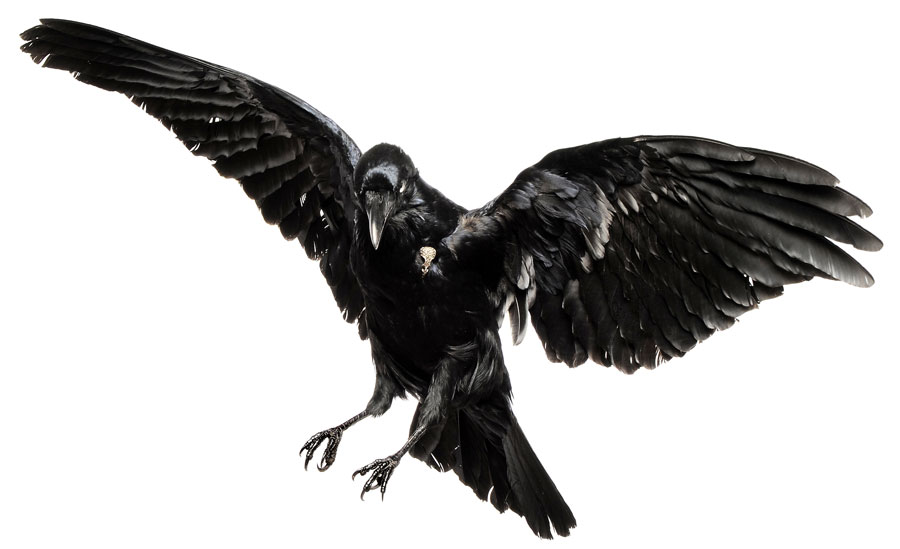
Julia deVille (Australian, b. 1982) Ghastly grim and ancient raven 2010
Julia deVille (Australian, b. 1982) Nevermore 2010 Still-born fawn, black garnet beads, sterling silver, coque feathers, chain mail, glass 27 x 41 x 59cm Courtesy Sophie Gannon Gallery
Julia deVille (Australian, b. 1982) Charon 2010 Kitten, hematite beads, mystic spinel beads, sterling silver, chain mail, glass 30 x 12 x 19cm Courtesy Sophie Gannon Gallery
Julia deVille (Australian, b. 1982) Lenore 2010 Stillborn fawn, black garnet beads, sterling silver, gold plate, glass 35 x 17 x 12cm Courtesy Sophie Gannon Gallery
Julia deVille (Australian, b. 1982) Kitten drawn hearse 2010 Kitten, black garnet beads, sterling silver, egret feathers, wood, glass 83 x 30 x 15cm Courtesy Sophie Gannon Gallery
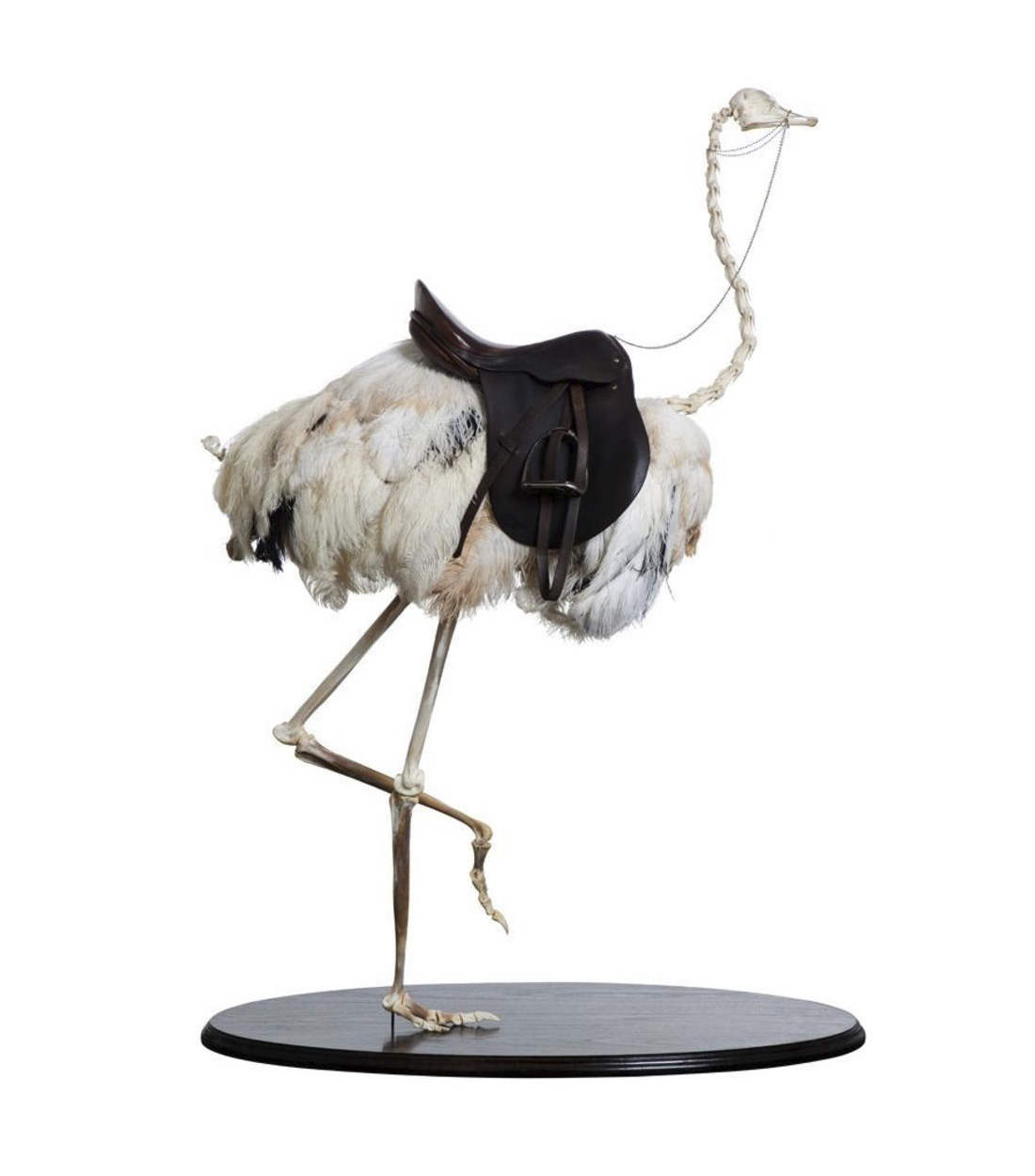
Julia deVille (Australian, b. 1982) Bird or beast 2010 Ostrich skeleton, ostrich feathers, smoky quartz, sterling silver, leather and wood Courtesy Sophie Gannon Gallery
Sophie Gannon Gallery 2, Albert Street, Richmond, Melbourne
Many thankx to David Edghill and the National Portrait Gallery for allowing me to publish the photographs in the posting. Please click on the photographs for a larger version of the image.
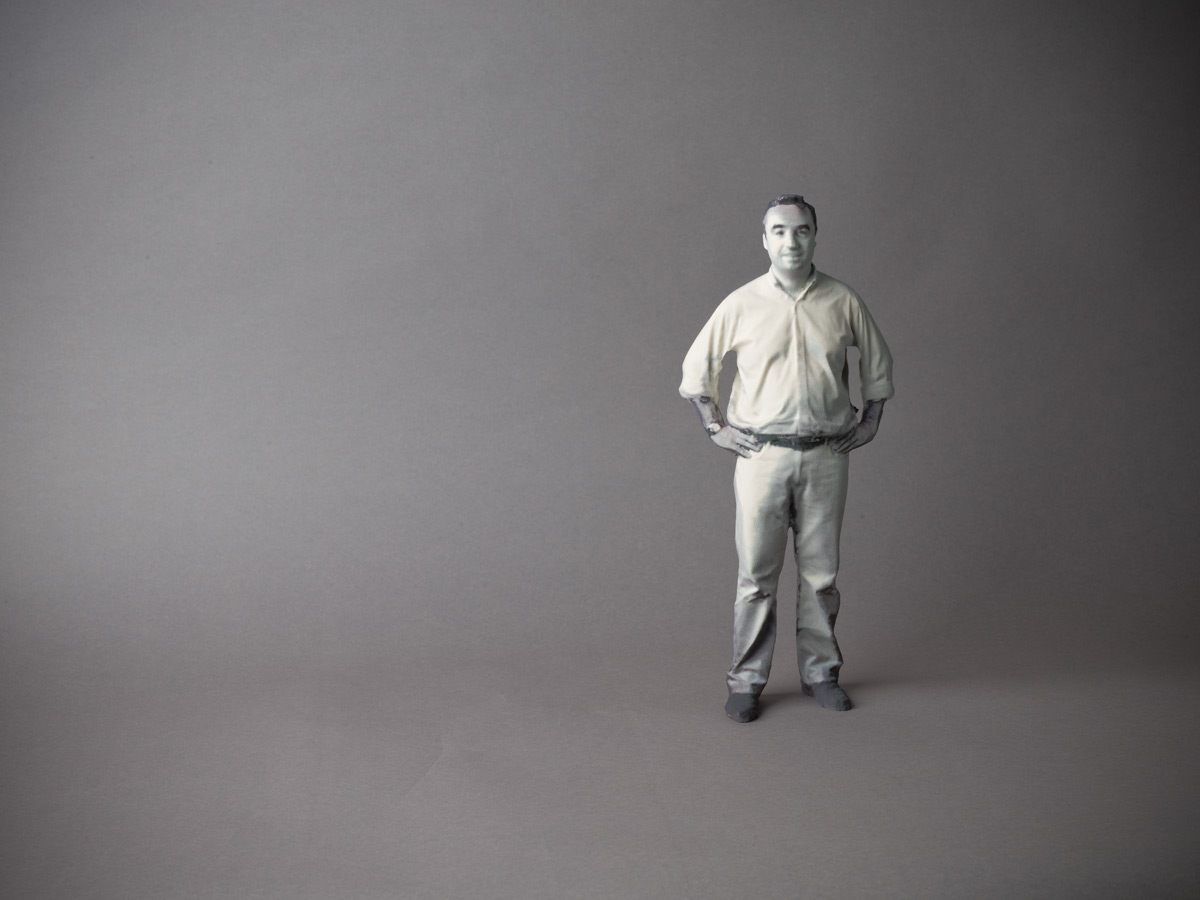
Karen Sander (German, b. 1957) Herve Blechy 1:5 2008 3D Bodyscans of the living person (3D coordinates and colour texture), MPT (Miniaturised Projection Technology), rapid prototyping, 3D Inkjet printer, plaster material, pigment Courtesy of the artist, Berlin, and Galerie Nachst St. Stephan, Vienna, and Galerie Helga de Alvear, Madrid
Karen Sander (German, b. 1957) Herve Blechy 1:5 2008 3D Bodyscans of the living person (3D coordinates and colour texture), MPT (Miniaturised Projection Technology), rapid prototyping, 3D Inkjet printer, plaster material, pigment Courtesy of the artist, Berlin, and Galerie Nachst St. Stephan, Vienna, and Galerie Helga de Alvear, Madrid.
A good way of looking at the show as a whole is that it is about the interaction of new technologies with the traditional methods of portraiture – painting, sculpture and photography – which already have their own pre-established ‘grammars’… This show foregrounds the fundamental image-making actions which have now become proper to contemporary portraiture. No longer just the snap the of camera’s shutter or the incremental description of the painter’s brush, but now also the trundling progress of the flatbed scanner and the circular pan of the 3D scanner…
In the end this is a humanist show, about ghosts more than shells. It argues that despite all of the cold digital technology in the world portraits are still about the promise of finding the warm interior of a person via their exterior. The show’s inclusion of some three-dimensional ultrasound images of foetuses in the womb could have easily been over-the-top and obvious in its point about our intimate adoption of new imaging technologies. Until we see one intrauterine image of twins in which one foetus is caught sticking its toe into the eye of its sibling. A rivalry which, we think to ourselves, will no doubt continue for the rest of their lives.
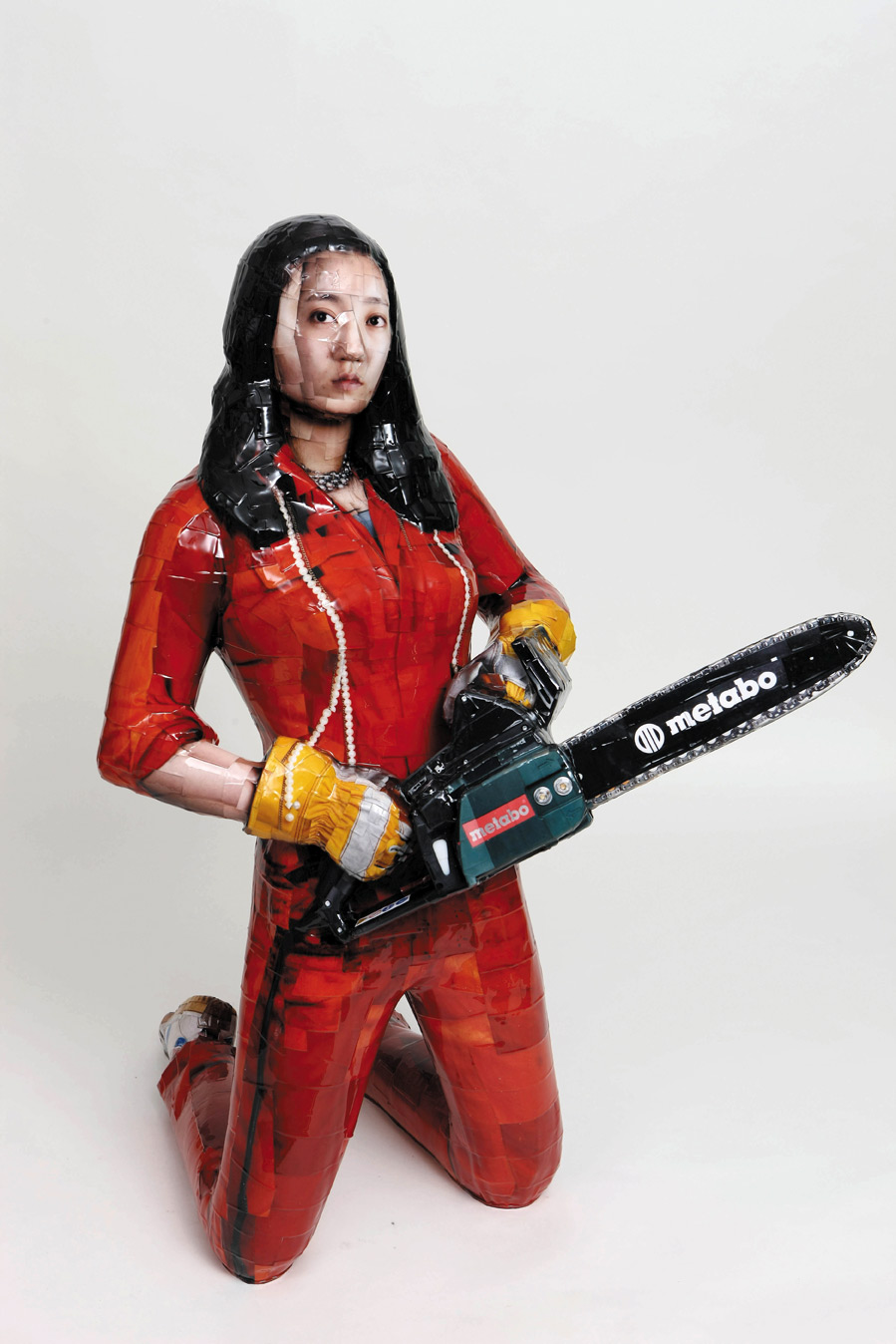
Osang Gwon (Korean, b. 1974) Metabo 2009 C-prints, mixed media 130.0 x 80.0 x 105.0cm Courtesy of the artist and Arario Gallery, Seoul
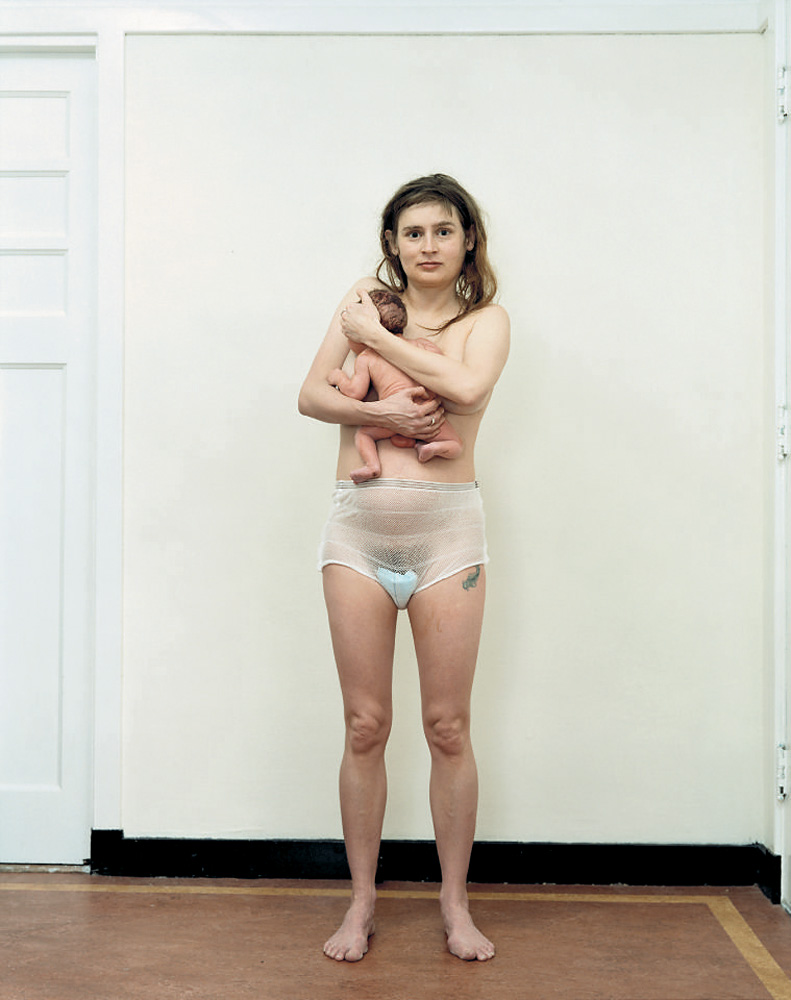
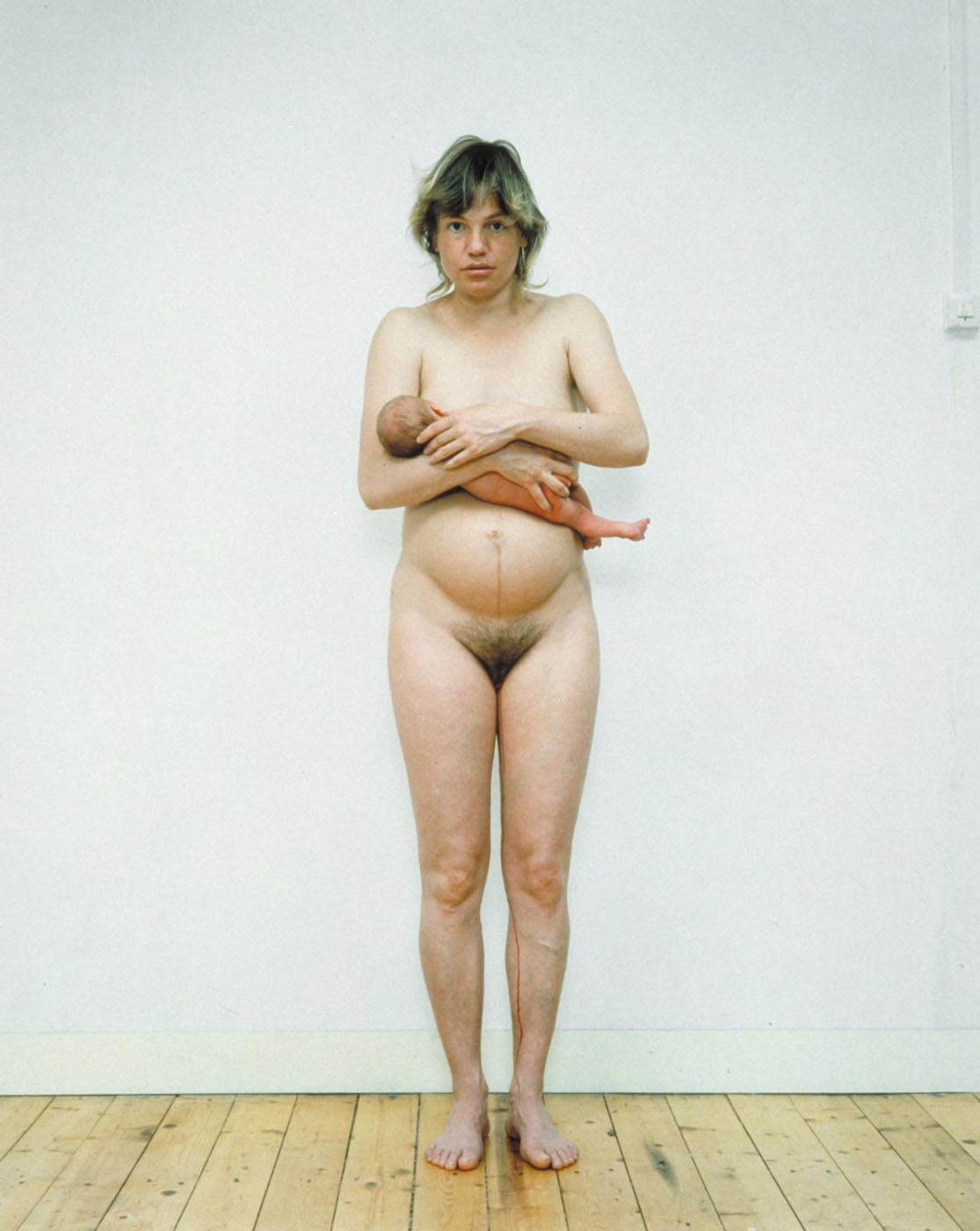
Rineke Dijkstra (Dutch, b. 1959) Julie, Den Hagg, The Netherlands, February 29, 1994 1994 Courtesy of Marian Goodman Gallery and the artist
The masterful Dutch photographer Rineke Dijkstra provides the emotional centre of gravity for the show. Her simple nude photographs of startled young mothers clutching their newborn babies like bags of shopping about to burst remind us again of the power of the straight photo. But her stunning two-gun video installation, The Buzzclub, LiverpoolUK / Mysteryworld, Zaandam NL, also from the mid-nineties, confirms the pre-eminence of the video portrait. Dijkstra has, presumably, momentarily pulled young off-their-faces clubbers straight from the dance floors of the two clubs and put them in front of her video camera in a bare white space off to the side. But the laser lightshows and the duff duff are obviously still going on inside their skulls. As they continue to work their jaws and jig robotically we get full voyeuristic access to them and, even though their interior individualities have temporarily gone AWOL, we nonetheless feel an extraordinary tenderness welling up for them.
Rineke Dijkstra (Dutch, b. 1959) Tecla, Amsterdam, Netherlands, May 16 1994 1994 C-print on paper, mounted on aluminium
Dijkstra decided to make these portraits after witnessing the birth of a friend’s baby. She photographed three women, one hour (Julie), one day (Tecla) and one week (Saskia) after giving birth. The raw immediacy of these images captures something of the contradictions inherent in this common and yet most singular of human experiences. The women appear at once vulnerable and invincible, traumatised and self-composed.
Tate Gallery label, May 2010
Tecla, Amsterdam, Netherlands, May 16, 1994 (1994, above) Julie, Den Haag, Netherlands, February 29 1994 (1994, above) and Saskia, Harderwijk, Netherlands, March 16 1994 (Tate P78099) are three portraits of women made shortly after they had given birth. All the women were known to the artist – one was a personal friend and the other two were friends of friends. Dijkstra photographed the women in their homes because in Holland it is more common for women to give birth at home than in a hospital. While bearing signs of their recent ordeal – the medical pants and sanitary towel which Julie wears, a trickle of blood down the inside of Tecla’s left leg, the caesarean scar on Saskia’s belly – the women appear proud and happy. They hold their new babies turned away from the camera, protectively pressed against their bodies. Dijkstra has developed a way of combining natural light with flash which results in particular quality of soft, clear light. Julie’s left hand covers her baby’s eyes to protect them from the flash.
Dijkstra was inspired to make these portraits after watching the birth of a friend’s baby. She is interested in photographing people at a time when they do not have everything under control. She uses the device of the formally posed, full-length portrait to try to reveal something of what people carry inside them – the emotional intensity concealed behind the mask of the face and the body’s pose. The photographic portrait, titled with the date and place, records a specific moment in time in which the subject was undergoing a particular experience. Dijkstra has commented:
As a photographer you enlarge or emphasise a certain moment, making it another reality. For instance the portraits I made of women after giving birth: the reality of this experience is about the whole atmosphere, which is very emotional. In the photograph, you can scrutinise all the details, which makes it a bit harsh: you can see things you normally would not pay so much attention to. (Quoted in Douglas, p. 79.)
In the same year that Dijkstra photographed the new mothers, she photographed matadors in Portugal, just after they had come out of the ring. Like the new mothers, the bull-fighters had been in emotionally charged, potentially life-threatening situations. Both mothers and matadors are captured in a state of physical and emotional catharsis which contributes to the intensity of their engagement with the camera. Dijikstra uses 4 x 5 inch film to make her portraits, demanding time and concentration on the part of both artist and subject. She is sensitive to the vulnerability which her subjects give her access to and is careful not to abuse their trust. She has explained of the new mothers:
‘It’s amazing how they trust me, and I think that afterwards they understand that these photos are about something universal and that it’s not particularly about them …the first show I had in Amsterdam with these photos a lot of women came to me and said, you know it’s really great that you make these photographs because it’s really the way it is but nobody ever shows it, and I can recognise myself in it. And the men were all like, you can’t show a woman like that.’ (Quoted in unpublished interview with Tate Modern Curator Jane Burton, on the occasion of the exhibition Cruel and Tender,in 2003.)
The portrait is an art of surface predicated on a paradox – that the rendering of someone’s features will somehow ultimately reveal more than just their outward appearance. It reminds me of the twist at the core of Tarkovsky’s film Solaris, (one of the greatest films about identity and representation) where the sceptical psychologist is finally forced to conclude, despite his rationalism, that ‘we need secrets to preserve simple human truths’. But how can the secretive preserve the truthful? It’s a question that Dijkstra, in her portraits, attempts to answer, albeit enigmatically and allusively. A withholding of information and obsession with surface makes her portraits feel recognisably human. They’re so riddled with secrets they practically breathe.
Perhaps it’s to do with the scale of the images, which are large and impossible to overlook, and her palette, which is almost as subtle and perfect as her 17th- and 18th-century precursors. If the Dutch and Flemish portrait painters looked at the world with eyes that anticipated photography, it could be said that Dijkstra continues the cycle by looking at photography through the lens of historical painting. …
Dijkstra’s portraits of three young mothers (Julia, Saskia and Tecla, all 1994) holding their new born babies to their chests with absolute, exhausted tenderness, exemplifies the restraint and deceptive simplicity of her approach towards representing people whose lives have been touched by commonplace but monumental change. Replace the sand with a floor and the sky with a hospital wall and the only thing that separates these images from the beach series is the nature of the transition that these people are experiencing. Our culture’s puritanical fear of the body, so beautifully reflected for hundreds of years in scores of paintings of bloodless, saintly motherhood, is countered in these truthful, unflinching images. One mother stands in her underwear, her sanitary pad bulgingly visible. The other two women stand naked, swollen, scarred and bloody. They all, as well they might, look faintly triumphant.
I can’t remember a show where the audience stood for so long in front of a series of images of ordinary people. The same can be said of Dijkstra’s video in which she isolated teenagers against a white background in two night-clubs (The Buzz Club in Liverpool, England and Mystery World in Zaandam, Netherlands) and videoed them dancing, mainly alone, to the camera. Each of them, of course, responded differently to the absence of those clubbing staples, dim lights and crowds – they danced self-consciously and smoked defiantly. Some flirted with the camera, others looked almost annoyed. Most of them, despite trying very hard not to be, looked very young, rather forlorn, sweet even. The audience watched, riveted. The film was long and repetitive, but mysteriously and compulsively viewable.
Video of Rineke Dijkstra “The Buzzclub, Liverpool, UK / Mysteryworld, Zaandam, NL”, 1996-1997. Presented in exhibition at Mücsarnok, Budapest, “Coolhunters. Youth cultures between media and the market”, 23 March 2006 – 28 May 2006.
The video was recorded pulling people out of the dance floor of a nightclub and inserting it in a white cube. The behaviour on the dance floor as part of the group, here so isolated as a rare person, an indigenous moved to the museum space.
Robert Lazzarini (American, b. 1965) Skull 2000 Resin, bone, pigment 35.0 x 8.0 x 20.0cm Courtesy of the artist and Deitch Projects
Present Tense: An Imagined Grammar of Portraiture in the New Media Age is the principal exhibition in the National Portrait Gallery’s 2010 exhibition calendar. It will be displayed from 22 May to 22 August 2010. We are entering an exceptional time for portraiture and visual culture in general as the art world embraces the digital age. Traditional portraiture is responding to the application of new technologies and this imaging process is reshaping our interpretation and reading of the face.
Present Tense considers the alliance between portraiture and technology, showing how different ways of imaging in this contemporary, digital world reflect the way an individual is perceived and the various mechanisms of imaging that are used to manipulate that perception. The exhibition is comprised of works by Australian and international artists’ and includes examples of the informal and immediate images made on mobile phones, images recorded with sonograms that reveal faces that cannot be seen by the unaided eye, 2D and 3D portraits generated exclusively from binary code, as well as the more expected streaming digital works and manipulated photographs.
‘Some of the images in Present Tense are confronting and some are positively endearing’, said exhibition Curator Michael Desmond. ‘The exhibition surveys the possibilities of portraiture today, with the premise that the inhabitants’ of our digital society are pictured in a technological mirror’.
The use of digital technologies by artists is increasing, providing affordable alternatives to traditional media and offering a new tool set and the possibility of a new aesthetic. This is not to suggest that older media has been abandoned, or is associated only with conservative practice, rather that artists’ have greater choice in the materials that they use and the style that they wish to engage with. Chuck Close is one of artists’ in the exhibition who ignores the rising tide of digital imaging processes to favour old technology, creating powerful images with the archaic daguerreotype technique. Other artists’ in Present Tense include: Loretta Lux, Patrick Pound, Stelarc, Jonathon Nichols, Petrina Hicks, Ghostpatrol, Patricia Piccinini and more.
‘At one time, oil on canvas or bronze was the medium for portraits. The medium now is technology. In an inversion of one of Modernism’s classic aphorisms, digital technology allows function to follow form; the function of the portrait – to illustrate an individual’s character and physiognomy – is established by the stamp of the technology that created it’, said Michael Desmond.
Chuck Close (American, 1940-2021) Self portrait daguerreotype 2000 16.5 x 21.6cm each Courtesy of Pace/MacGill Gallery, New York
Patricia Piccinini (Australian, b. 1965) Psychogeography 1996 From the series Psycho Type C colour photograph 120.0 x 247.0cm Courtesy of the Parliament House Art Collection, Department of Parliamentary Services, Canberra
Stelarc (Australian born Cyprus, b. 1946) Stretched skin 2009 type C photograph 120.0 x 180.0cm Courtesy of the artist and Scott Livesey Galleries
Jonathan Nichols (Australian, b. 1956) Lucy 2001 Courtesy of James and Jacqui Erskine, Sydney
Petrina Hicks (Australian, b. 1972) Ghost in the Shell 2008 From the series The Descendents Courtesy of the artist and Stills Gallery, Sydney
There can be no doubt that we are entering an exceptional time for portraiture as the art world embraces the digital age. Traditional portraiture is responding to the application of new technologies and this imaging process is reshaping our interpretation and reading of the face.
The use of the computer and the internet at the most basic level to source or digitalise images is pervasive. Artists are using digital technologies as alternatives to traditional media and offering the possibility of a new aesthetic. The ease of manipulating an image is a prime aspect of portraiture in the digital age and equally important is the ease of distribution. Artists seek out images on the internet and send out or ‘post’ their own, setting up their own virtual galleries using social media such as Flickr, Facebook, YouTube, Twitter and Tumblr.
The National Portrait Gallery exhibition Present Tense: An imagined grammar of portraiture in the digital age considers the alliance between portraiture and technology and investigates how different ways of imaging reflect how the individual is perceived as well as how the various mechanisms of imaging that are used to manipulate that perception.
Present Tense includes examples of the informal and immediate digital snapshots made with mobile phones; images recorded with sonograms that reveal faces that cannot be seen by the unaided eye; 2d and 3d portraits generated exclusively from binary code; and the more expected videos and manipulated photographs. A number of artists in the exhibition ignore the rising tide of digital imaging processes to favour old technology and create powerful images with the archaic daguerreotype technique or cruder still, old-fashioned stencil.
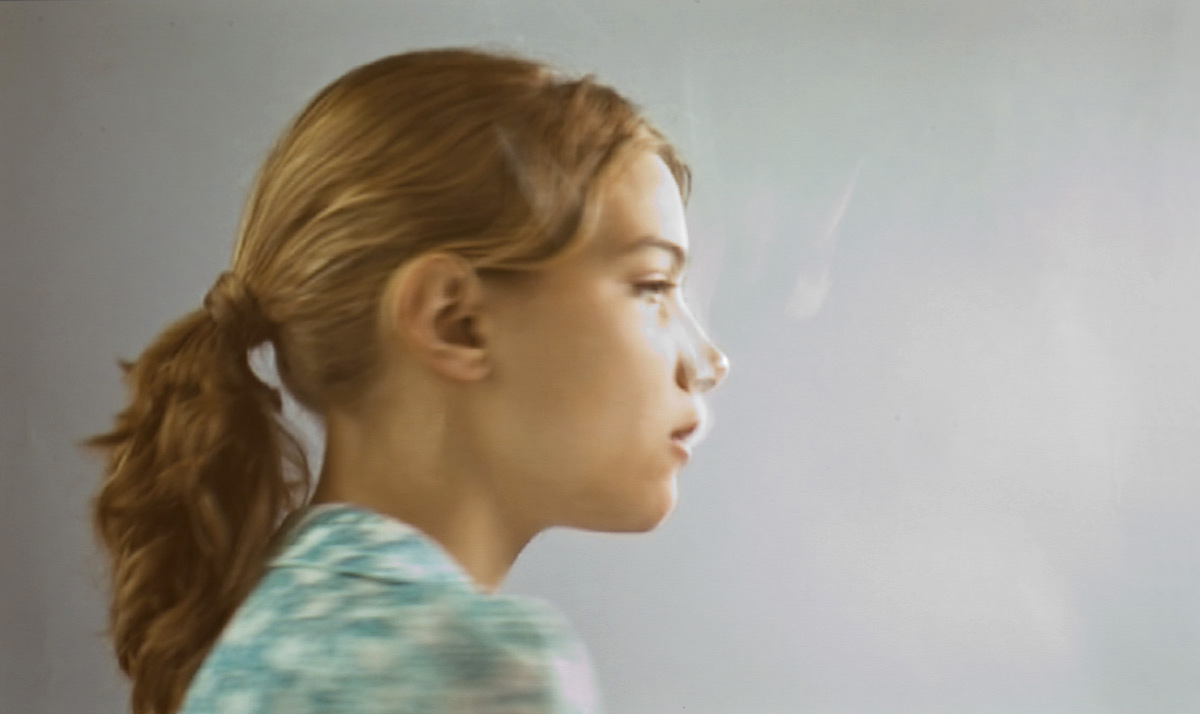
Video is still the dominant filmic medium. It is a difficult medium for portraiture as the narrative is the signifying factor of this temporal medium. Artist Petrina Hicks tackles this directly in her video portraits. In Ghost in the shell 2008 there are no props to convey identity in a conventional sense; the video is a slow pan of objectivity across the visage of a girl, unimpeded by good manners or fear. The camera records every detail, as her head pivots though 360 degrees and we are able to study and scrutinise the face and enjoy the sheer beauty of youth. The scanning view and the model’s perfect features conjure up the notion of a computer-aided design program that displays the object created by a 3d graphic application. Exhaled smoke emerges from the girl’s mouth in Art Nouveau curls and undulating arabesques. The combination of stilled, unemotional beauty makes the mobile, insubstantial smoke a metaphor for the soul. This is the ghost of the title but also a portrait of the inner self that inhabits all of us. Hicks makes a poetic contrast between the mapped surface and the unseen interior.
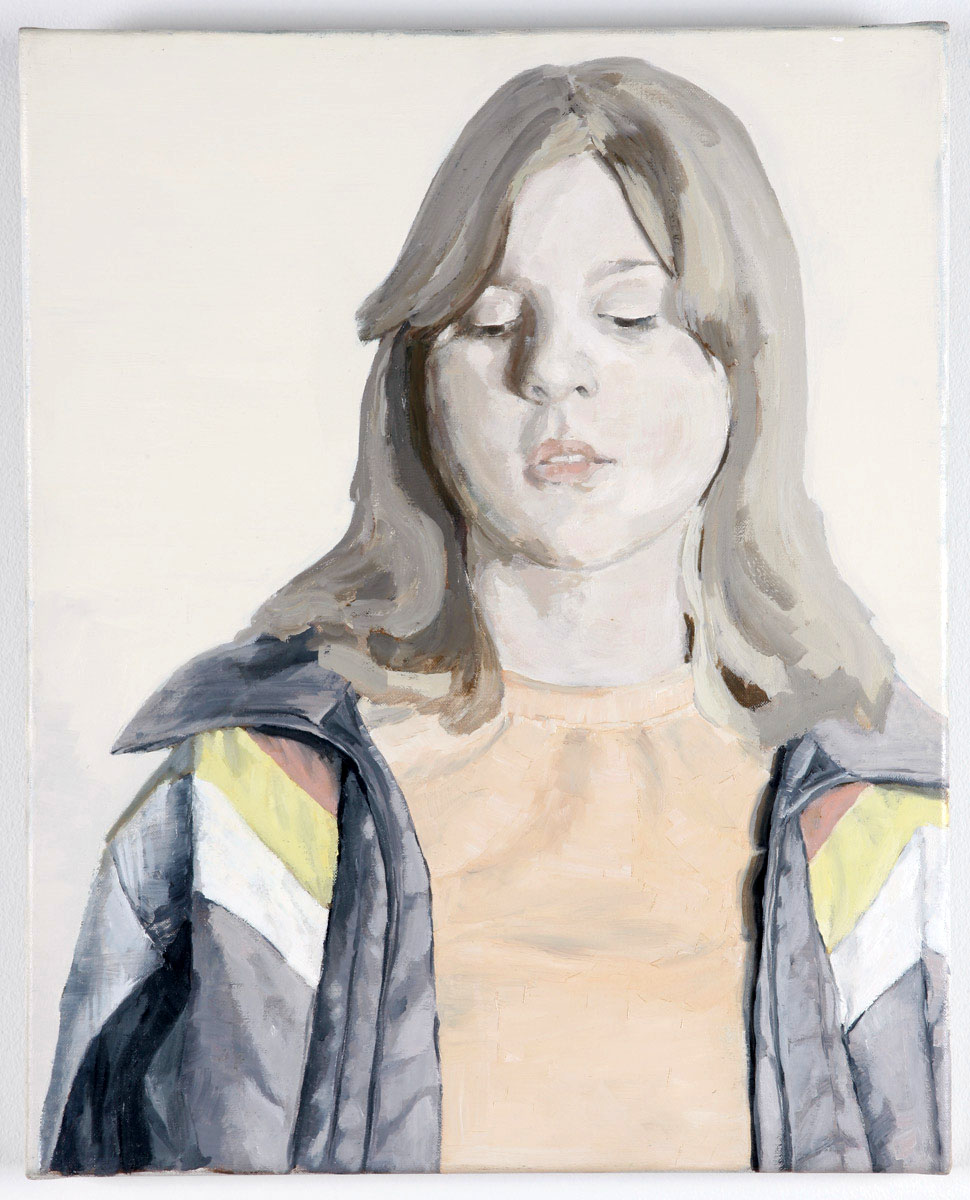
Zombies, vampires and plagues that decimate humankind to a few survivors haunt the movie and television screens of this decade. They represent the uncomfortable intimacy and connectedness of contemporary society – the six degrees of separation. While Jonathan Nichols’ portraits Lucy 2001, Nina 2002, and Smiling 2003 are hardly ghoulish the aura of uneasiness that surrounds them derives from the sense of being connected. Using social networks we can connect with fame and celebrity and we are also able to broadcast ourselves. The biggest and most varied galleries of portraits today are websites such as Facebook. These portrait galleries are more likely to display the girl next door rather than the glamorous magazine cover girls. Exhibitionism and voyeurism are implicit in posting portraits online. The aesthetic is bland and gives away little. They are image of self that are safe to broadcast. Nichols uses images taken from the internet to test the ‘look’ of such portraits. There is the hint of smiles to break the passport photo impassiveness, neutrality with a touch of erotic potential, enough personality to separate these anonymous faces from the crowd, and perhaps the comfort of looking at a face and knowing we all are connected.
Ghostpatrol & Miso are street artists who work together creating an extended portrait of a place, the inner Melbourne suburb of Fitzroy. Their portrait layers the views and experiences of inner city living as a sensual rather than documentary composite. Fitzroy 2010 is an homage to the streets of Fitzroy that Ghostpatrol & Miso have explored, stencilled, pasted and postered. Fitzroy is their platform for communication and the multiple images in this work are a response to the streets and the urban network of windows, houses and streets. Fitzroy is a self portrait, illustrating the artists’ perspective and their story in the city.
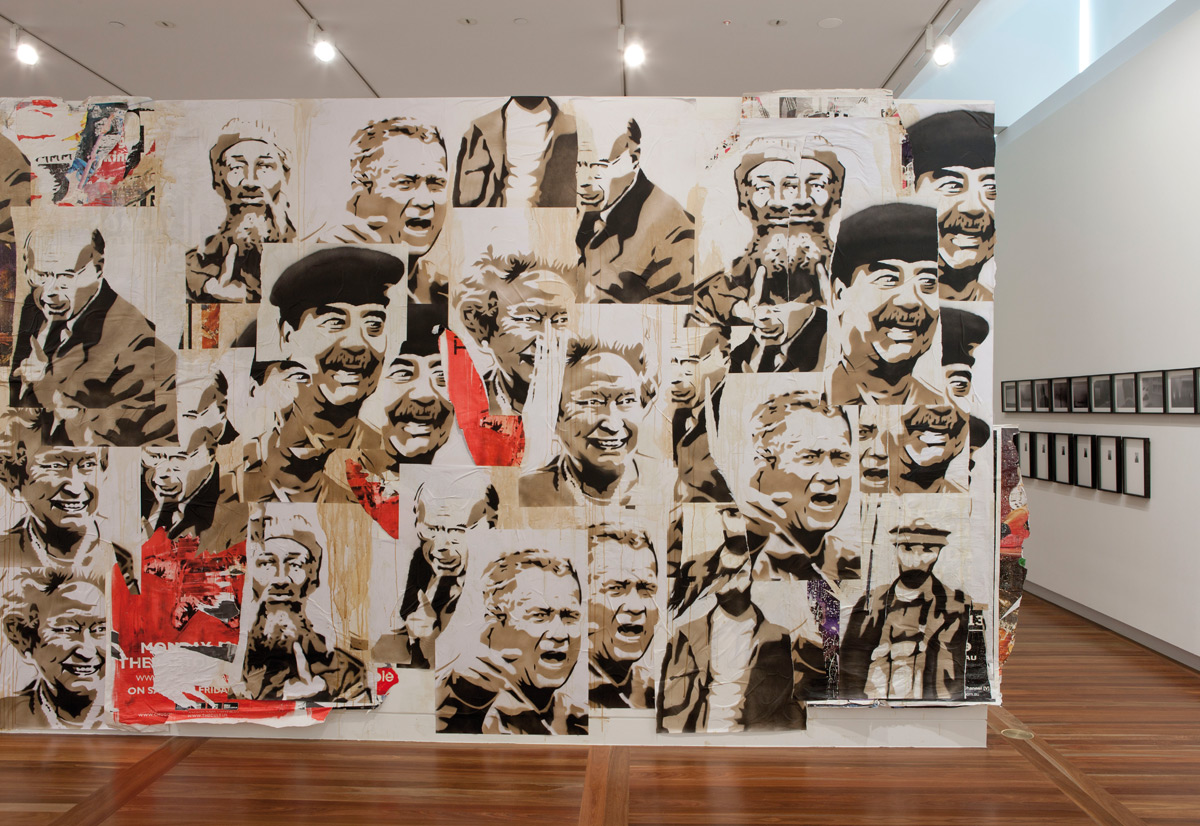
James Dodd, like Ghostpatrol & Miso, makes the streets his gallery. His posters from Occupied territory 2003 return to an established way of broadcasting and connecting, not by phone or internet, but by placing his portrait posters in the natural nodes and pathways where people travel and congregate. His faces in the streets – George W Bush, Saddam Hussein, Elizabeth II, Osama Bin Laden, John Howard – are powerful individuals who literally occupy the territory as they do the media. Advertisement, wanted poster or propaganda, Dodd employs the hand-made look of stencil to equalise differences between world leaders and as a means to counter the ubiquitous urbane and subjective portraits presented by mainstream new media with a fresh alternative.
The idea of creating accurate three dimensional portraits has always fascinated humanity. Here are portraits that are inseparable from the technology that created it. Robert Lazzarini sculpts forms with the computer. In making Skull 2000 he had little or no contact with traditional art materials. Lazzarini uses materials as close as possible to the original – in this case the skull is bone, though reconstituted with a resin binder. Anamorphic forms like this are measured against an ideal or archetype. The distorted form plays on our ability to recognise common forms such as a face or death’s head and reconstruct them in the mind.
So, having considered Lazzarini’s computer created sculpture, is it Karin Sander or the machine that created Hervé Blechy 1:5 2008? The artist herself didn’t touch any art materials or intervene in the process which involves the subject being photographed from all angles by multiple cameras; the images sent to a computer application that creates 3d models from photos and the resultant model is then sent to a rapid prototyping machine which generates the model in white plastic. This, in turn, is painted by an assistant. In 1967 Sol LeWitt declared that ‘The idea becomes a machine that makes the art.’ Sander’s mini-monuments, which she refers to as ‘assisted self portraits’ are classic examples of conceptual art, but with the neat twist that if an idea is as ephemeral as data, then here, data takes on materiality.
Portraiture with its strict focus on the recognisable image of the individual face is resistant to change despite the many movements and styles in the twentieth century and adoption of new digital technologies in the last decade. And although more choices of media available to the artist who is now able to make portraits using digital photography, digital video or installation the effect of the digital age is probably less on form and more on society. The use of digital media is near ubiquitous in part of the portrait process today. Photography, once considered an objective record of a sitter, as digital photography has gained the persuasive power of painting to subtly alter features and flatter beyond candid or objective description. There is greater spread and distribution with the increasing emphasis on the photographic but this may be only temporary as other forms and hybrids come online with 2d and 3d computer applications.
There is an increasing separation from old materials that slop, mess, spill in favour of keyboards and mice and the artist’s studio is starting to look like an executive’s work space. Research is done online and sketches are made on the camera rather than drawn from life and art is accordingly mediated from the start. Medium is less important than media, and in fact the term ‘medium’ is already starting to be an art historical term. Today, technology is not merely the means of transmission, it is the medium of so much contemporary art. While technology changes, the human face is a constant, mediated by fashion, politics and technological change. It is rewarding to look at portraits in terms of the technology that made it.
Michael Desmond. “Technical Terminology,” on the National Portrait Gallery website, 1 June 2010 [Online] Cited 10/07/2022
Present Tense: An imagined grammar of portraiture in the digital age
Senior Curator Michael Desmond talks about the exhibition Present Tense held at the National Portrait Gallery, Canberra from 22 May – 22 August 2010.
James Dodd (Australian, b. 1977) Posters from Occupied Territory (installation view) 2010 Courtesy of the artist, Adelaide
GhostPatrol & Miso (David Booth and Stanislava Pinchuck) (Australian) Fitzroy (installation view) 2010 Courtesy of the artists, Melbourne
Aaron Seeto Oblivion 2006 From the series Oblivion Daguerreotype
Aaron Seeto makes alternate historical positions and experiences visible through an exploration of archives, family photo albums and photographic records. In recent bodies of work Fortress and Oblivion, Seeto has utilised the daguerreotype, one of the earliest and most primitive photographic techniques, to highlight the malleability of narratives within archive records. Not only is the chemical process itself highly toxic and temperamental but the daguerreotype’s mirrored surface means the image appears as both positive and negative, depending on the angle of view. For Seeto, this mutability captures the essence of our experience of history and memory, reflecting how images degrade, how stories are formed and privileged, how knowledge and history are written. …
For his ongoing series Oblivion Seeto sourced details from images of the Cronulla riots – beachside riots around race and territory – of 2005 found on the internet. In reproducing these as daguerrotypes he seeks less to represent the incident than to look at how it was reported, understood and remembered. The instability of the virtual information found online is echoed in the photographic process.
Text from the Stills Gallery website [Online] Cited 14/02/2019
National Portrait Gallery King Edward Terrace Parkes, Canberra
Unknown photographer ‘Lifespan’ by Frederick White 2010
“And do you know what “the world” is to me? Shall I show it to you in my mirror? This world: a monster of energy, without beginning, without end; a firm, iron magnitude of force that does not grow bigger or smaller, that does not expend itself but only transforms itself; as a whole, of unalterable size, a household without expenses or losses, but likewise without increase or income; enclosed by “nothingness” as by a boundary; not something blurry or wasted, not something endlessly extended, but set in a definite space as a definite force, and not a space that might be “empty” here or there, but rather a force throughout, as a play of forces and waves of forces, at the same time one and many, increasing here and at the same time decreasing there …”
Frederick Nietzsche, The Will to Power
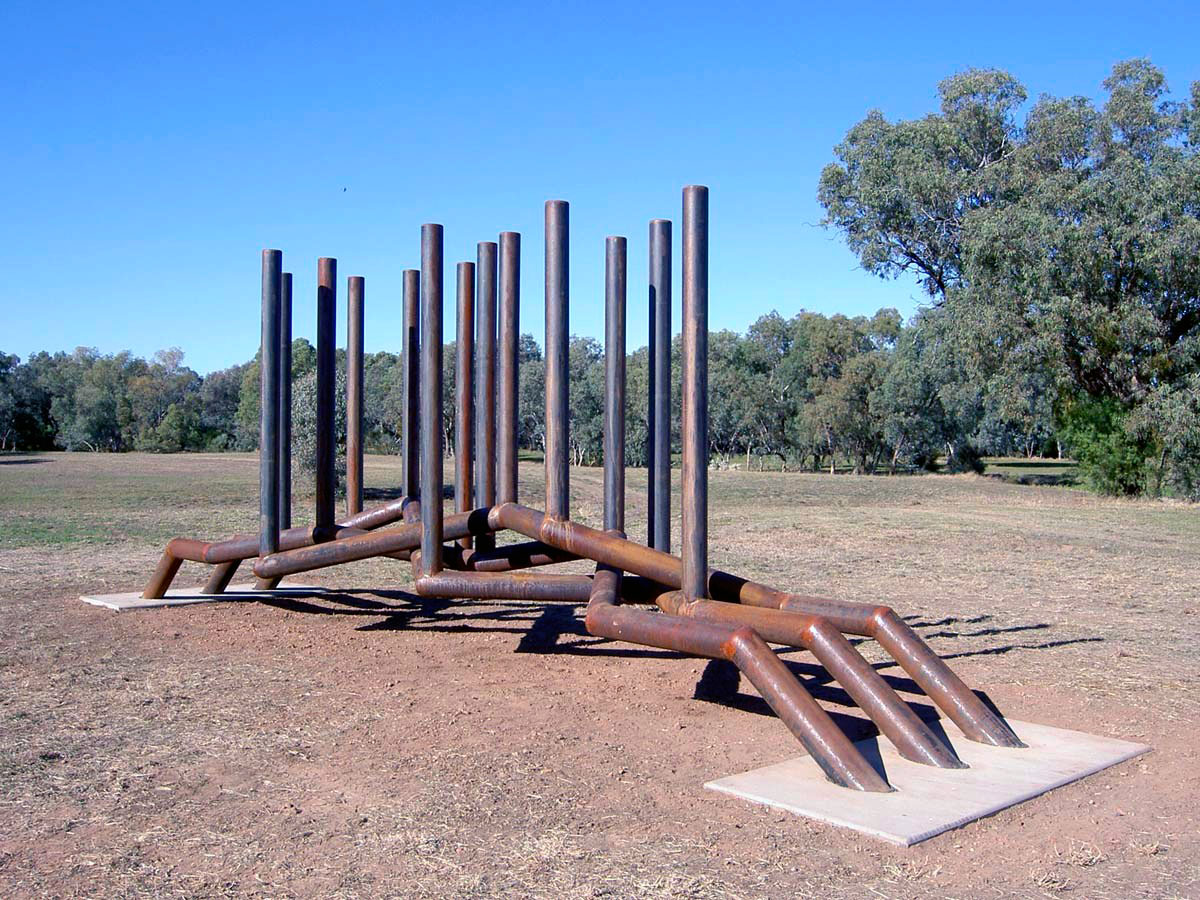
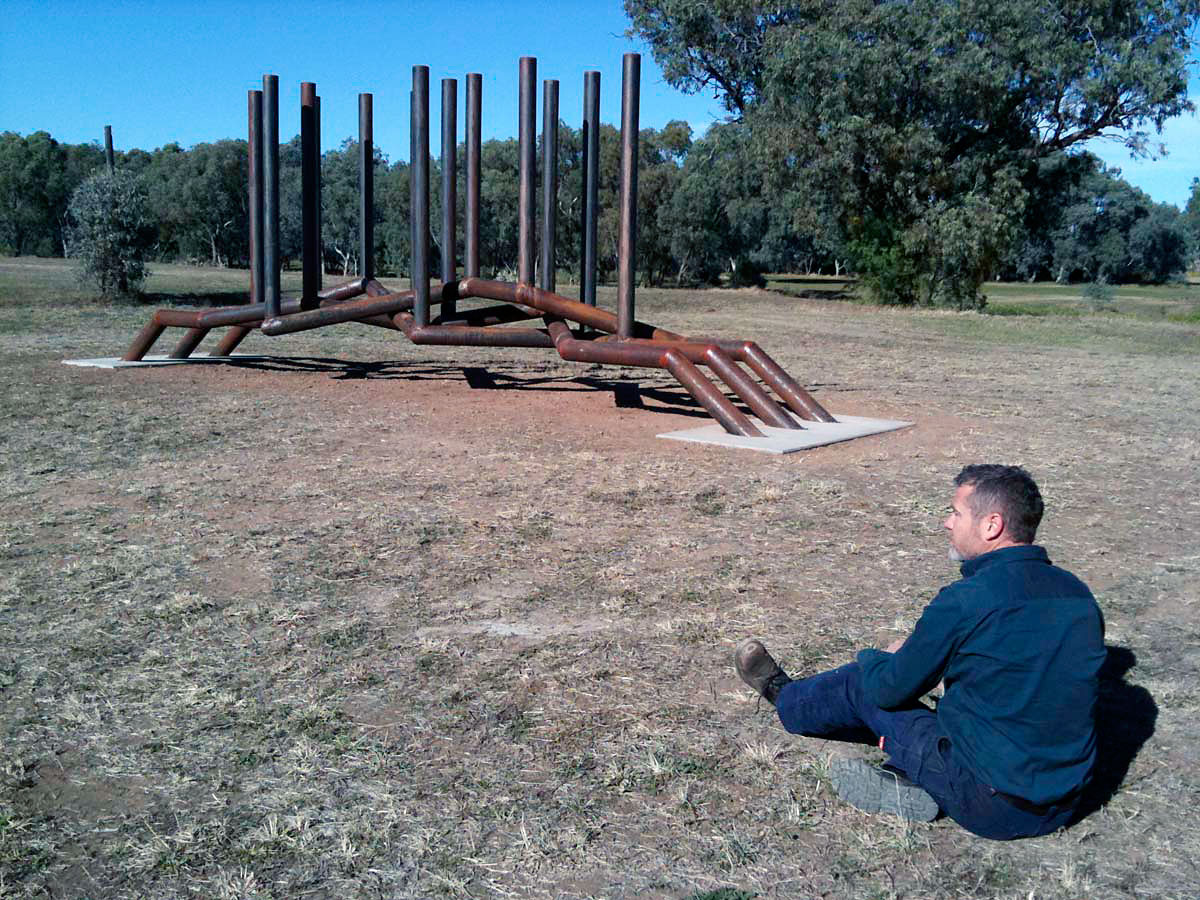
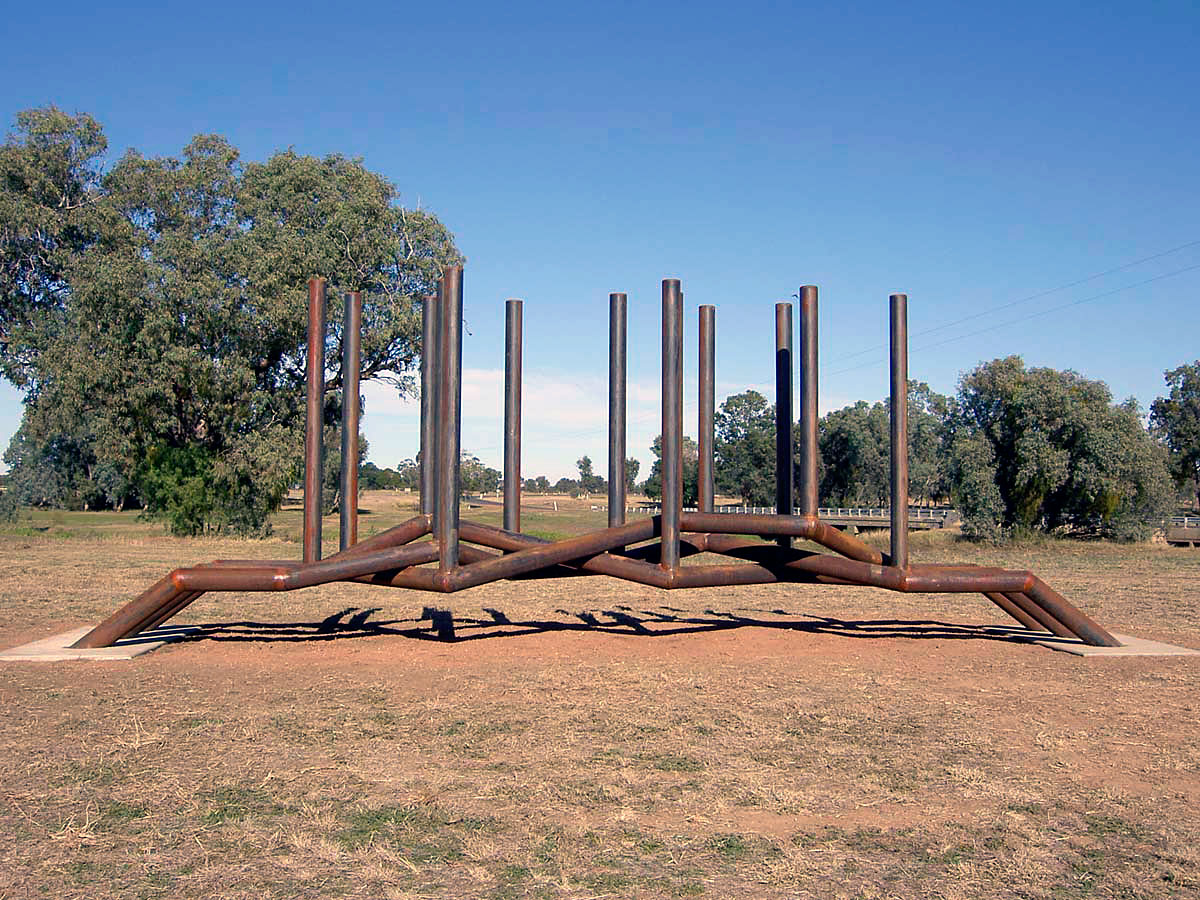
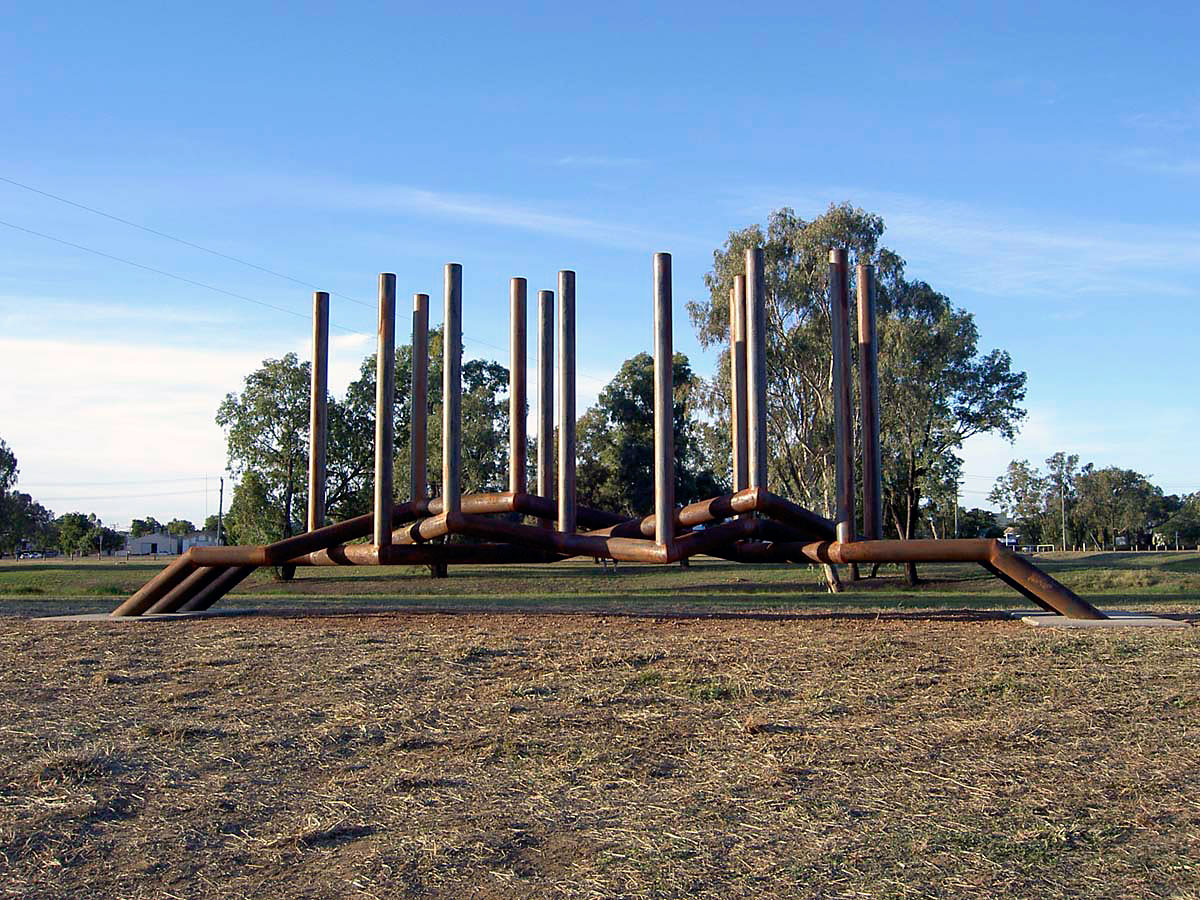
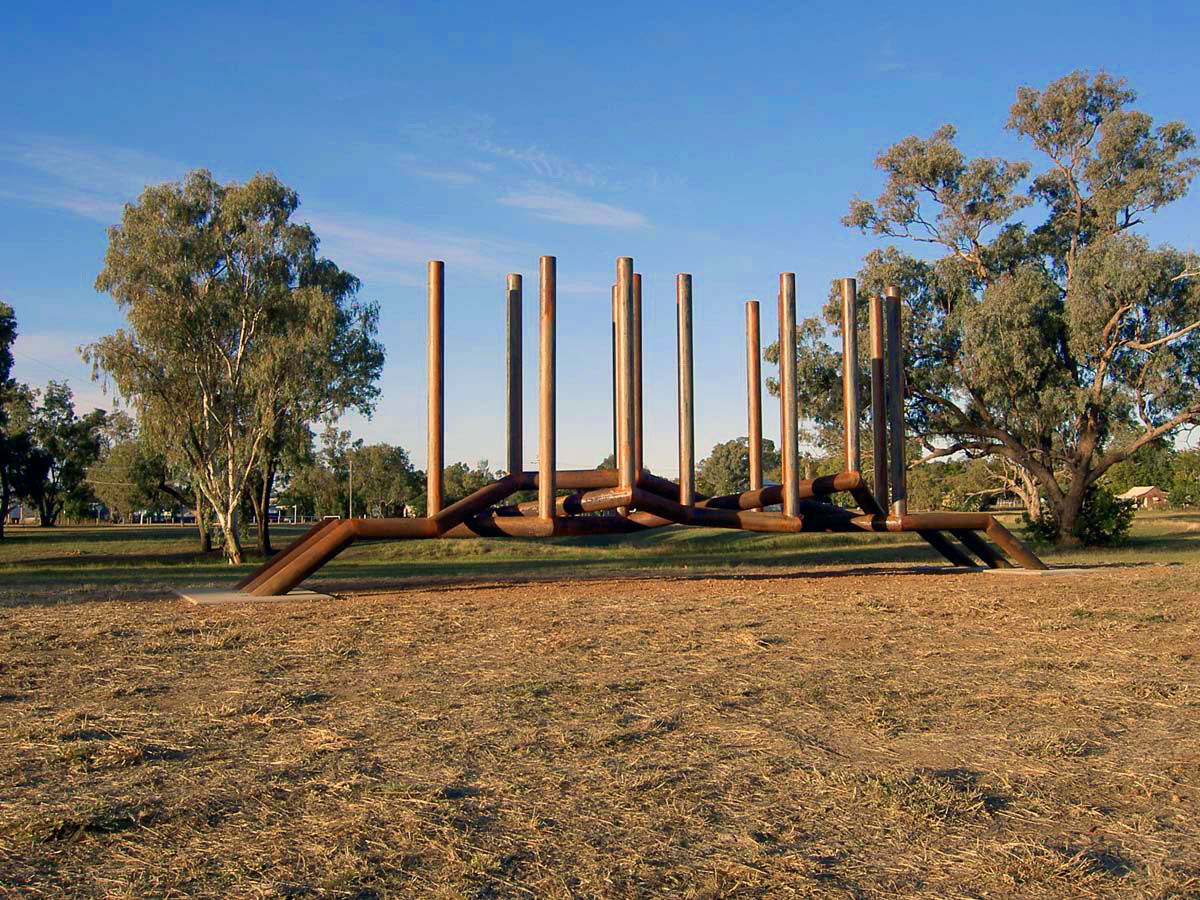
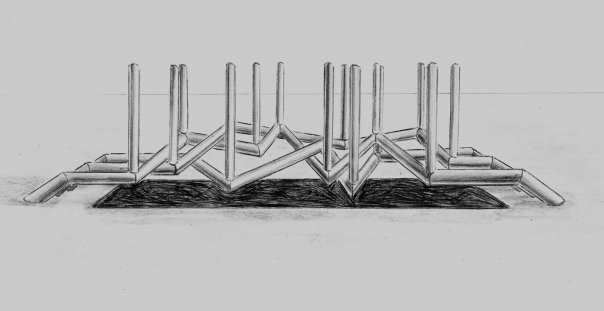
This is sculptor Fredrick White’s second public commission in Queensland. The sculpture Lifespan (2010) is located at Blackall in Western Queensland (see Google map). The work is 8 metres long. Blackall already contains public sculptures by William Eicholtz (Towners Call – Edgar Towner V.C. Memorial (2009)) and Robert Bridgewater (Wool, Water and Wood (2008)).
Fredrick White’s sculpture has always been about flows and extrusions – the movement of energy both visible and invisible, above and below ground, inside and outside the body – an exploration of some giant vascular system of which we are all part. Sculptures sprout from manhole covers (Manwhole 1999), welling up from the hidden system of pipes and passageways that run under the earth; coffin-like boxes hover in suspended animation over the ground, anchored by pipes that disappear into the earth (Universal Attachment 2000); ectoplasmic, ethereal substances emit in Time Being No’s 1, 2 and 3 (2002). In recent work From Life To Life (2007), Drawing Water (2010) and Lifespan (2010) these connections are even more intimately linked to the life cycle and the essential place of water in the scheme of things:
“I am interested in the stuff that holds us together, the dominant paradigms of human life, our reliance on the Earth and each other. There is no separation between anything – birth / death, above/below, past / future – all are part of the life cycle of living things. The life cycle is the main motif of my practice and is a manifestation of my Piscean nature.”
White’s hyper-textural work flows from one link to another, from one connection to another. His text is a body without organs, always moving between the visible and the invisible webs that connect us. As so a rhizome, so the work of White: there is no hierarchical trunk, no beginning and no end, for White’s work is multiple, lateral, circular.
Using the language of Deleuze and Guattari (A Thousand Plateaus, 1980), White’s assemblages (for that is what they are), “are the processes by which various configurations of linked components function in an intersection with each other …” In these assemblages the process of territorialization intensifies and the assemblages, “can be thought of as constituted by an intensification of these processes around a particular site through a multiplicity of intersections of such territorializations.”1
In White’s assemblages there is no language of itself. The rhizomic nature of their being produces an unconscious connection to all things: his work fosters connections, offers multiple entryways, detaches and modifies new cultural forms. Above all White’s work offers a new map for us to cultivate the soil of living, the site of his intersections extruding form in a vibrant intensification of energy.
Dr Marcus Bunyan
1/ Wood, Aylish. “Fresh Kill: Information technologies as sites of resistance,” in Munt, Sally (ed.,). Technospaces: Inside the New Media. London: Continuum, 2001, p. 166.
Please click on the photographs for a larger version of the image.
Unknown photographer ‘Lifespan’ by Frederick White 2010
Sculptor Fredrick White sitting in front of his sculpture Lifespan (2010)
Unknown photographer ‘Lifespan’ by Frederick White 2010
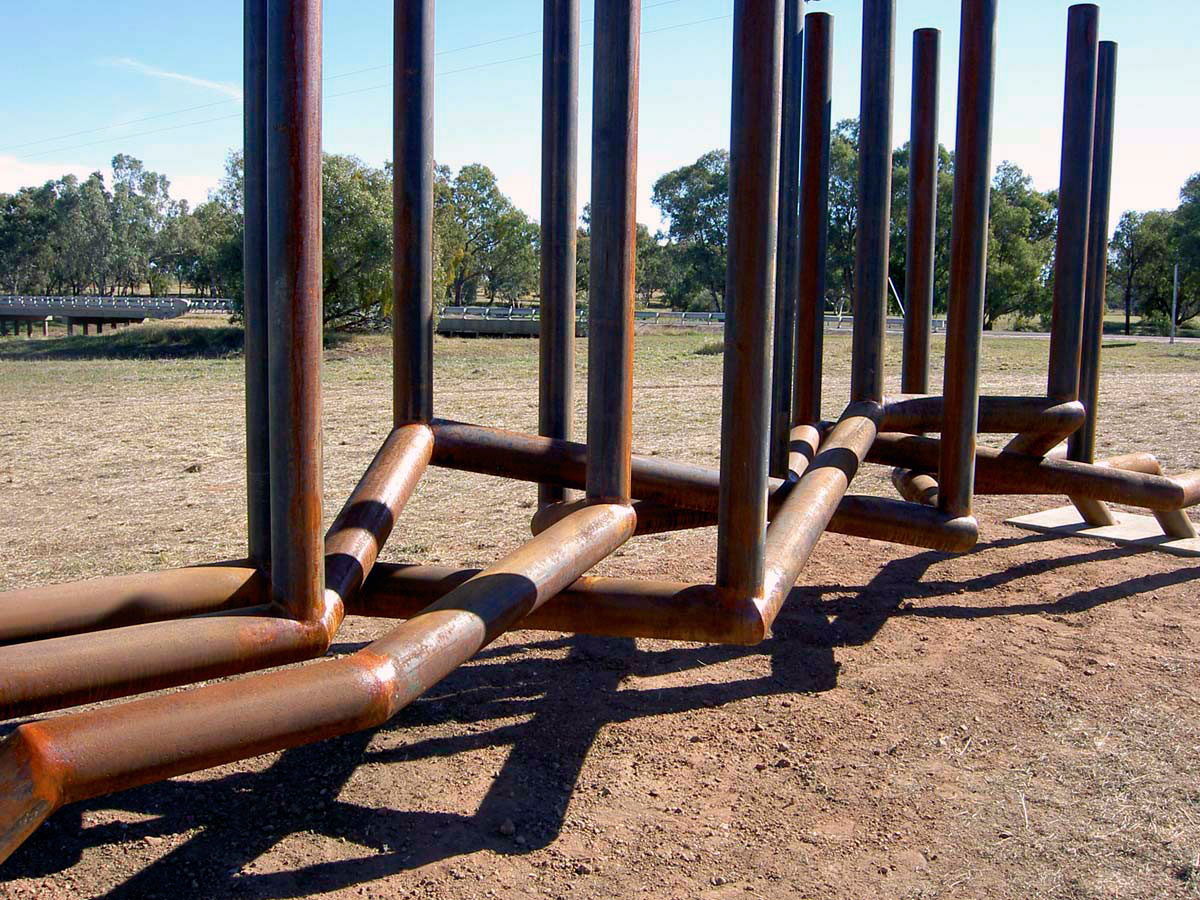
Lifespan is made predominantly from recycled bore casing, a material chosen to suggest the language of plumbing as a conduit for dialogue on the theme of water.
The end sections of the work, like a hydro-electric scheme, rise from the ground and start crossing over. This form whilst inspired by the braided channels of Western Queensland is also about life in general; paths that converge or momentarily cross over, then towards the end of life, like the beginning, level out to a new time for experiencing.
The vertical pipes reference the artesian bore system that provides the main reliable source of water here. In this scenario, the top of the pipes are the surface of the Earth and the pipes bore into the ground to tap into the aquifers deep below in the Great Artesian Basin.
We are here because of the Earth and water is the primal substance that is the source of all life, in fact the artesian water of Australia is in places as old as humanity itself; the perfect symbol of the past, present and future.
Fredrick White 2010
Unknown photographer ‘Lifespan’ by Frederick White 2010
Unknown photographer ‘Lifespan’ by Frederick White 2010
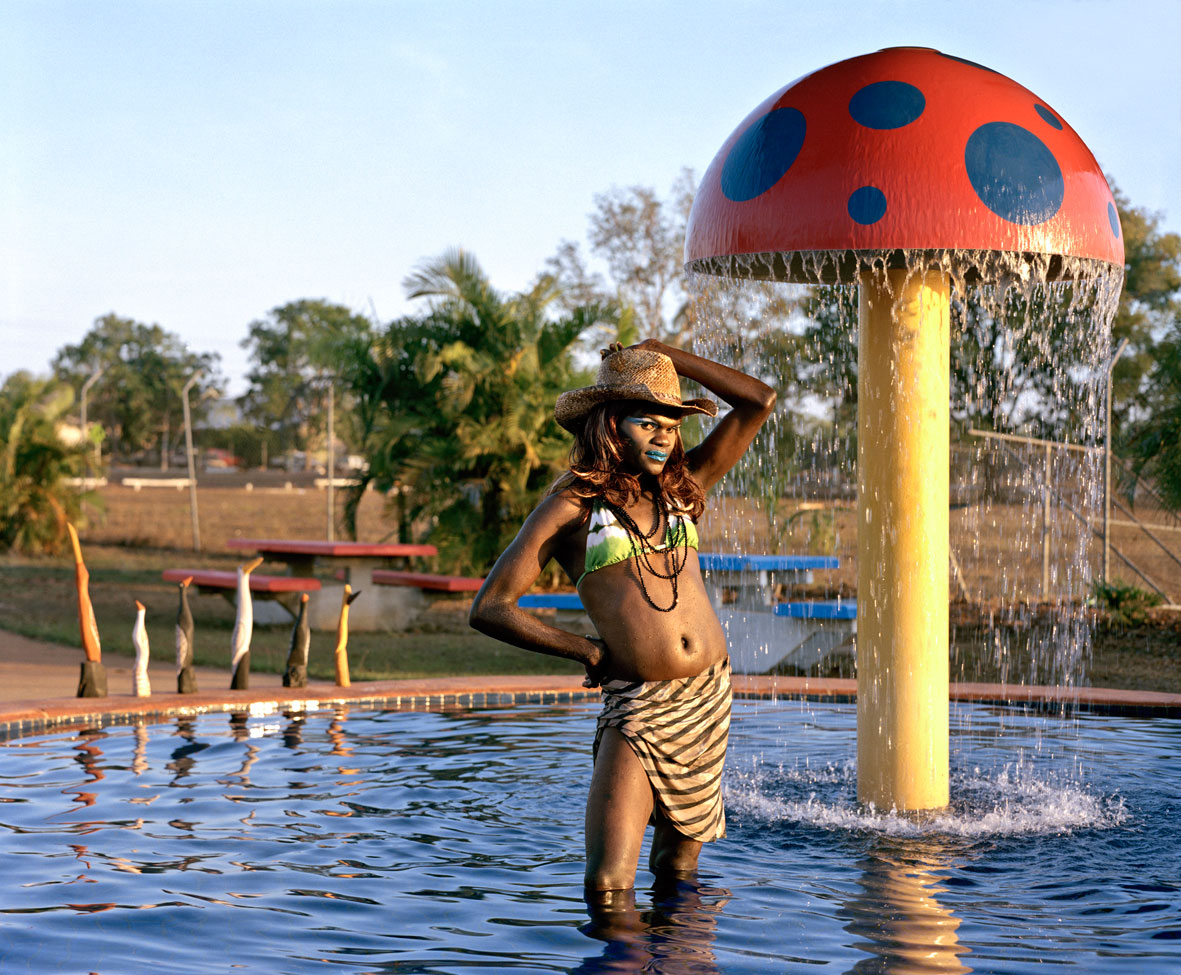
Bindi Cole Chocka (Australian, b. 1975) Bimbo 2009
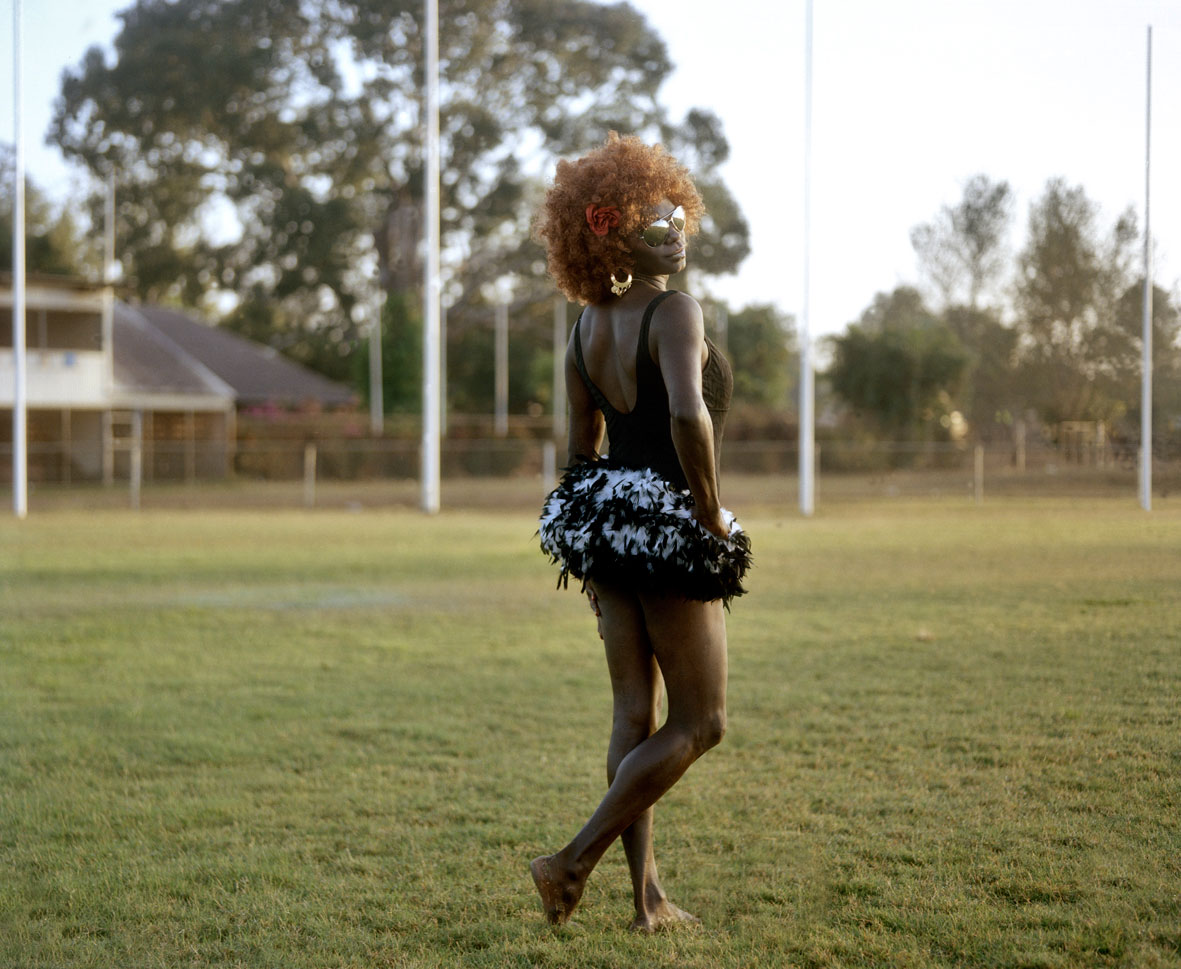
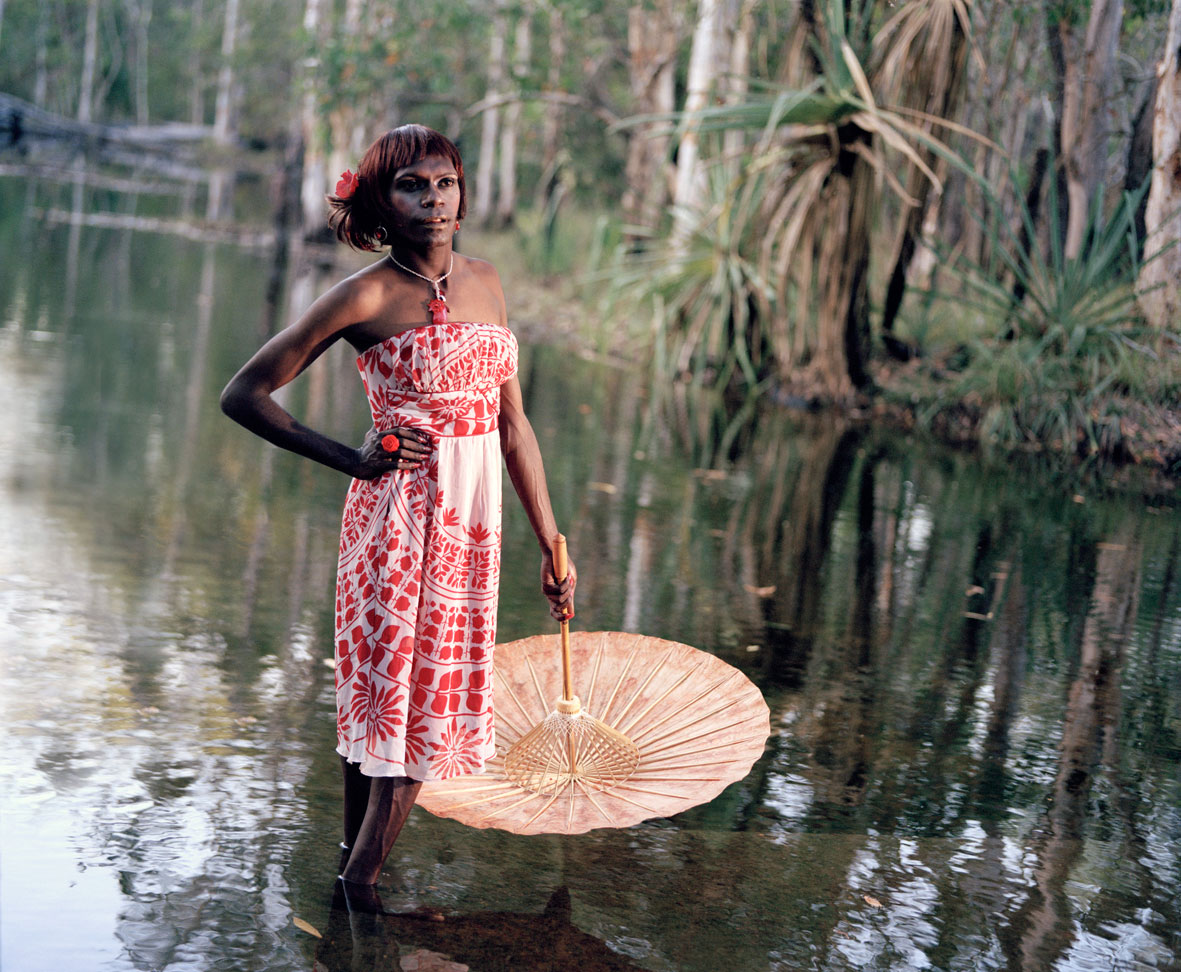
The exhibition Sistagirls by Bind Cole at Nellie Castan Gallery contains some beautiful photographs and others that are less successful. The successful portraits the ones that depict the Sistagirls in a more natural, less stylised way – they are the more interesting photographs. The subjects seem to speak for themselves without restriction, to be not so beholden to the pose that photographer wishes them to assume and/or the pose they wish to impose on themselves.
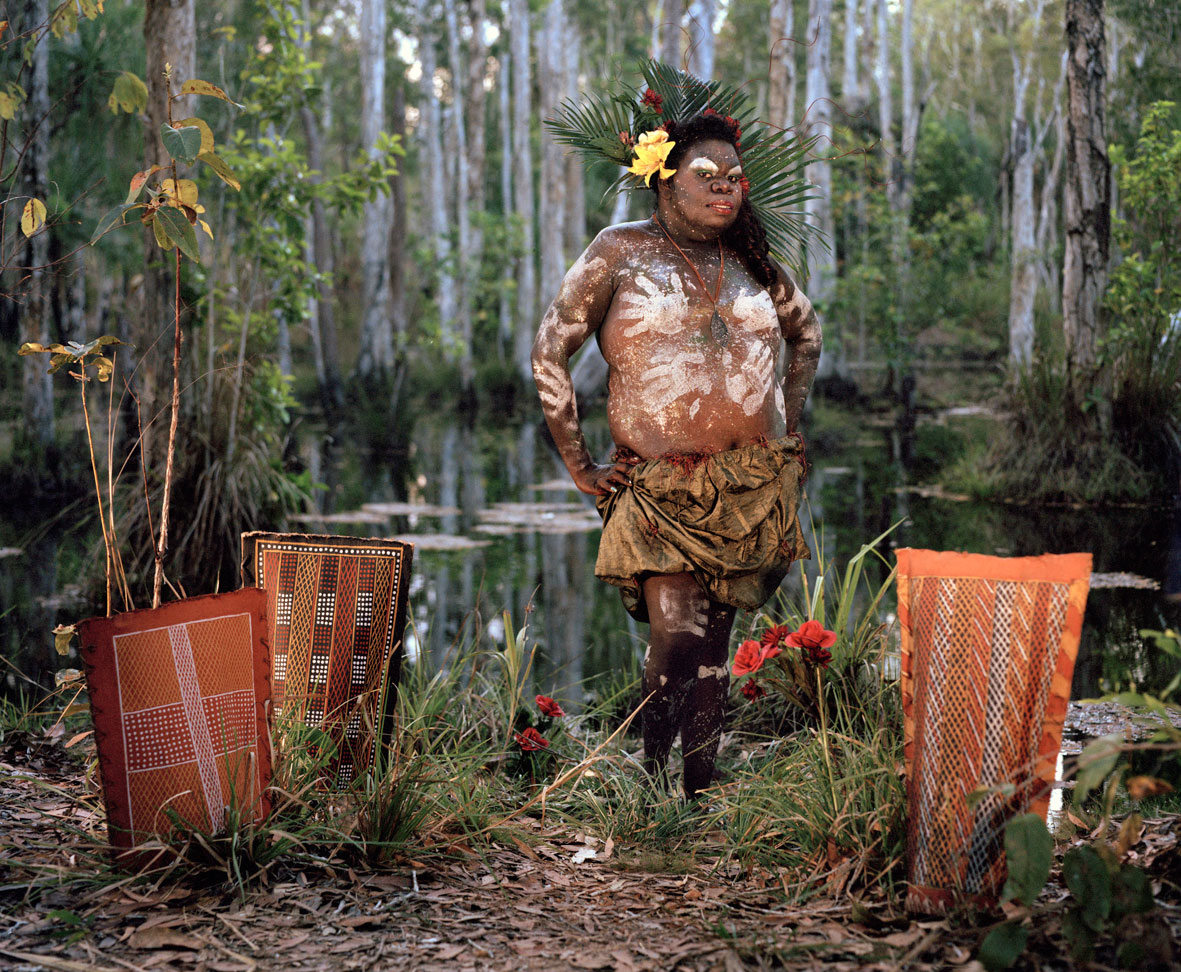
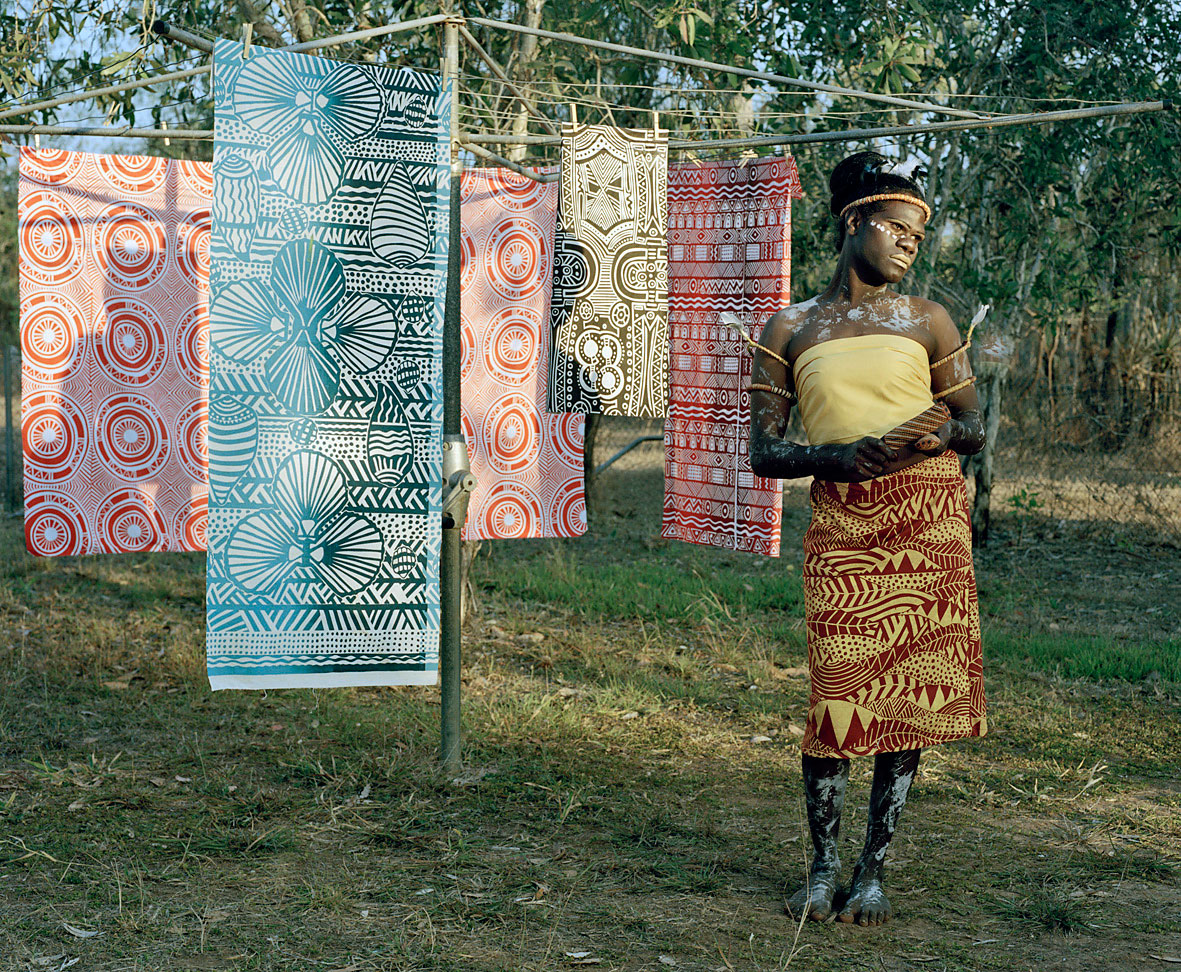
For example, the photograph of Jemima (see below) is just stunning in it’s naturalness and beauty. The two photographs of Crystal and Patricia, where the transgendered person asked to be photographed in traditional body paint with traditional objects, are highly successful in their form, composition and in the ability of the photographs to challenge stereotypical notions of Aboriginal culture.
Other portraits are anachronistic and a little try hard, with the misplacing of persons and objects in regard to each other. The portrait of Bimbo (very top photograph) did not need the two objects placed on the beach next to the person to make it a successful photograph; the portrait of Frederina (below) had enough going on in the photograph without the seemingly gratuitous placement of traditional objects in the background. We get the point and there was really no need to labour it.
One of the problems, of course, of a ‘stylised’ portrait (Bind Cole’s word in her artist statement) is that the portrait can become a double forgery, that of the pose of the person and that of the photographer imposing the style …
” … in a sense, the posed photograph is a kind of forgery, an imposition of an artificial composition before the recording instrument. On the other hand, the photo of a posing subject captures the authenticity of the practice of posing. A version of a person’s image is still an image of that person …
We are confronted with the pose, the conscious composition of the image to be photographed, the inherent constructedness of the posed photograph. Our heretofore implicit faith in the photograph as an evidentiary document is shaken. This is not to imply an outright rejection of photography … the effect is more properly an inducement to engage the document directly, personally, and on its own terms.”1
As noted at the end of the quotation, we, the viewer, must cut through this com-pose-ition to address the document directly. We must cut away the appendages of style and view the person and the photograph on its own terms. This is why the simpler portraits in the exhibition have so much more power than the overly constructed ones – they reach for an intangible essence that Cole is seeking by dropping away style and surrendering to the ineffable, a recognition of the lightness and joy in just being.
Dr Marcus Bunyan
1/ Feiereisen, Florence and Pope, Daniel. “True Fiction and Fictional Truths: The Enigmatic in Sebald’s Use of Images in The Emigrants,” in Patt, Lise (ed.,). Searching for Sebald: Photography after W.G. Sebald. Los Angeles: The Institute of Cultural Inquiry, 2007, p. 175.
Bindi Cole Chocka (Australian, b. 1975) Buffy 2009
Bindi Cole Chocka (Australian, b. 1975) Crystal 2009
Bindi Cole Chocka (Australian, b. 1975) Frederina 2009
The term ‘Sistagirl’ is used to describe a transgender person in Tiwi Island culture. Traditionally, the term was ‘Yimpininni’. The very existence of the word provides some indication of the inclusive attitudes historically extended towards Aboriginal sexual minorities. Colonisation not only wiped out many indigenous people, it also had an impact on Aboriginal culture and understanding of sexual and gender expression. As Catholicism took hold and many traditions were lost, this term became a thing of the past. Yimpininni were once held in high regard as the nurturers within the family unit and tribe much like the Faafafine from Samoa. As the usage of the term vanished, tribes’ attitudes toward queer indigenous people began to resemble that of the western world and religious right. Even today many Sistergirls are excluded from their own tribes and suffer at the hands of others.
Within a population of around 2500, there are approximately 50 ‘Sistagirls’ living on the Tiwi Islands. This community contains a complex range of dynamics including a hierarchy (a queen Sistergirl), politics, and a significant history of pride and shame. The Sistagirls are isolated yet thriving, unexplored territory with a beauty, strength and diversity to inspire and challenge.
During August and September of 2009, I was fortunate enough to have the opportunity to spend a month living with the ‘Sistagirls’ on the Tiwi Islands creating a series of highly stylised portraits of them. I loaded a barge with a four wheel drive, lights, a generator, cameras and enough film to fill a suitcase. Each day brought an emotional roller coaster from moments of elation around what was being achieved with the images to complete anxiety from the many dramas that occurred. This time has affected me in a profound way. The ‘Sistagirls’ have touched my heart. I only hope that in some way I have captured the essence of who they are and the spirit of their community. I know that they will always be a part of me and that I will be a regular visitor to Tiwi to visit the ‘Sistagirl’ community for the rest of my life.
Artist statement from the Nellie Castan website [Online] Cited 22/07/2010 no longer available online
Bindi Cole Chocka (Australian, b. 1975) Jemima 2009
Bindi Cole Chocka (Australian, b. 1975) Patricia 2009
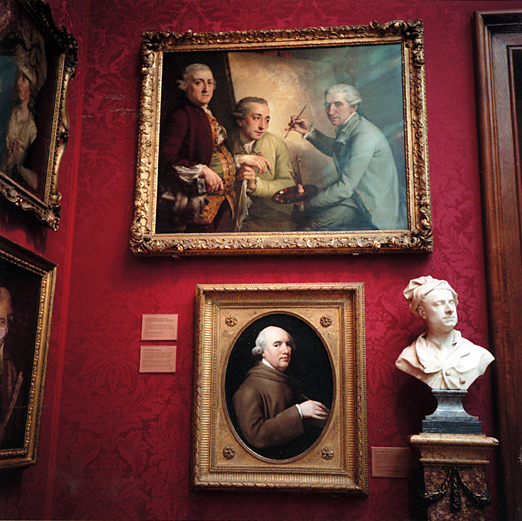
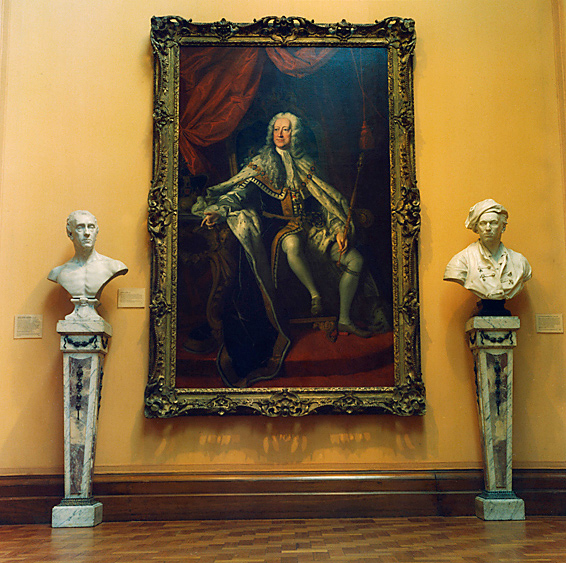
Anne Zahalka (Australian, b. 1957) National Portrait Gallery #1 1992/2010
A patchy exhibition by Anne Zahalka at Arc One Gallery, Melbourne. I can’t help feeling that we have seen this before, and done better, in the work of Candida Hofer and Thomas Struth.
Although the square photographs are taken by a medium format film camera (a Hasselblad I suspect) and printed as C-type prints (hence the lush colours) because the camera was handheld this means that, in some of the photographs, little is actually in focus. While this may add to the immediacy of the images, like a quick snapshot as Zahalka prowls the galleries, it detracts from the clarity of the previsualisation of the artist whilst also detracting from the visual depth of field that the subject matter needed.
On the positive side there are some lovely spatial relationships between the figures in the paintings and the busts on the pedestals: in one particular photograph (National Portrait Gallery #2, 2010) there is an almost symbiotic relationship between the man in the painting at left, the bust of the man on the pedestal and the man at the very left in the right hand painting. This arrangement is like a triple portrait of the same person. A similar understanding of the spatial relationships within the image frame can be seen in National Portrait Gallery #1 (see photograph above), one of the more successful photographs in the series, with it’s wonderful red flocked wallpaper and gilt frames.
On the right hand side of the gallery there are numerous vertical colour photographs taken on a 35mm camera that feature the back of people looking at a work of art (see National Gallery of Australia, Masters of Paris #5, 2010). These are basic photographs that seek to conceptualise the act of looking at art as a tourist industry to no great affect or insight into the condition being examined.
Dr Marcus Bunyan
Many thankx to Angela Connor and Arc One Gallery for allowing me to publish the photographs in the posting. Please click on the photograph for a larger version of the image.
Anne Zahalka (Australian, b. 1957) National Portrait Gallery #5 2010
Anne Zahalka (Australian, b. 1957) National Portrait Gallery #3 1992/2010
Anne Zahalka (Australian, b. 1957) Prado Museum, Madrid 1992/2010
Arc One Gallery 45 Flinders Lane Melbourne, 3000 Phone: +61 3 9650 0589
A huge gallery crawl on Wednesday last saw me take in exhibitions at Nellie Castan Gallery (Malleus Melficarum: strong sculptural work by James and Eleanor Avery; Broken Canon: vibrant mixed media collages by Marc Freeman); Anita Traverso Gallery (Peristereonas: sculptures, photographs and mixed media by Barry Thompson); John Buckley Gallery (Perpetua by Emma can Leest, beautiful cut paper works; rather mundane paintings by Christian Lock); Karen Woodbury Gallery (Every breath you take: wonderful galaxy-like paintings, perhaps as seen by the Hubble telescope, with a geometric / cellular base by Lara Merrett); The Centre for Contemporary Photography (Event horizon: a group exhibition that “engages the horizon as a means to establish a physical locality with relation to the Earth’s surface and more broadly to the universe of which it is a miniscule component.” An exhibition that left me rather cold); and ACCA (Towards an elegant solution by Peter Cripps, again a singularly unemotional engagement with the precise, contained work: interesting for how the work explores spatial environments but in an abstract, intellectual way).
The stand out work from this mammoth day was Jill Orr: Vision at Jenny Port Gallery. Simply put, it was the strongest, most direct, most emotionally powerful work that I saw all day.
Dr Marcus Bunyan
Many thankx to Amelia Douglas and Jenny Port Gallery for allowing me to publish the photographs in this posting.
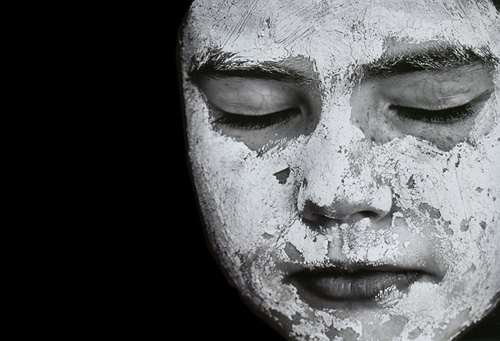
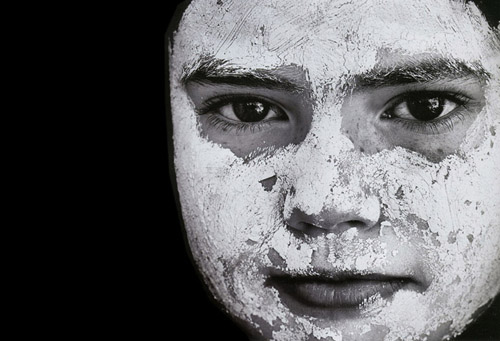
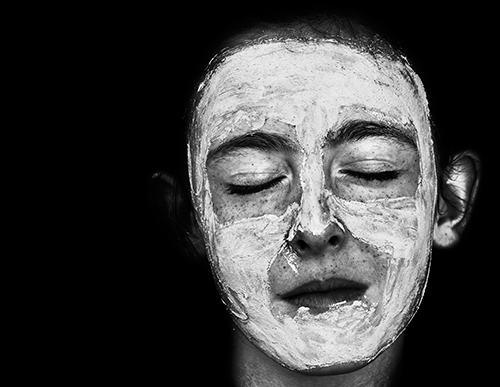
Jill Orr (Australian, b. 1952) Megan 2009
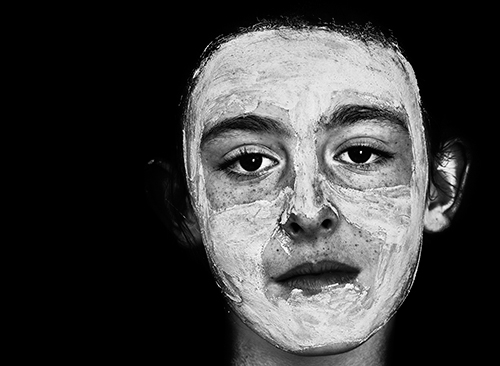
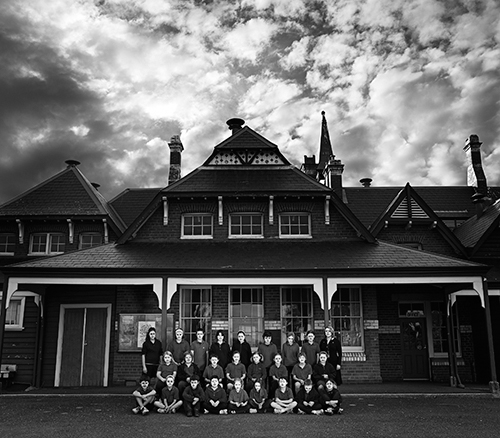
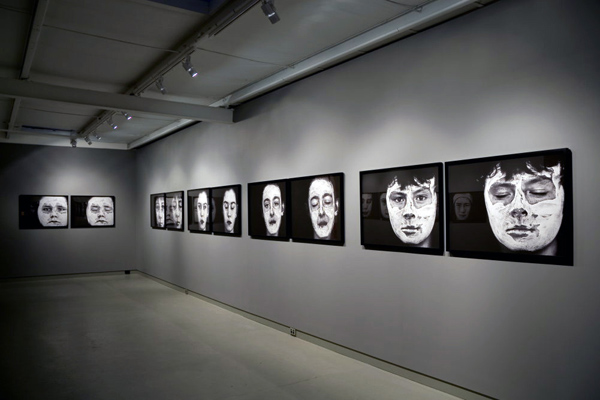
Jill Orr’s new participatory performances are photographs of children from Avoca Primary School painted with white clay from the area, displayed in pairs. The children are photographed once with eyes open, once with eyes closed. Orr asked the children to imagine their future life when they had their eyes closed. The key to the work is a group photograph of the ghostly children outside the primary school where everyone is isolated from each other (see photograph below).
“White faces loom up out of a dark ground, described by Orr as a void. On the surface these portraits are finely crafted, the skin of masked face becomes one with the digital file to create a facial landscape. The materiality of the face and the photographic file are exposed for the viewer. Titling the series ‘vision’ Orr ventures into a ‘haptic visuality’ where “vision itself can be tactile, as though one were touching a film with one’s eyes.”
From the catalogue essay by Professor Anne Marsh, Monash University
In the performance, the ritual of being photographed, Orr instructs the children who are placed under the surveillance of the camera. “We are confronted with the pose, the conscious composition of the image to be photographed, the inherent constructedness of the posed photograph.”1 The child assumes the pose by which they wish to be memorialised. The gaze (of the camera, of the viewer) is returned / or not in this spectacle.
Something happens when we look at these photographs. The text of the photographs becomes intertextual, producing as Barthes understands a “plurality of meanings and signifying / interpretive gestures that escape the reduction of knowledge to fixed, monological re-presentations, or presences.”2 This is because, as Foucault observes, texts “are caught up in a system of references to … other texts, other sentences: it is a node within a network … Its unity is variable and relative.”3
The photographs invite us to share not only the mapping of the surface of the skin and the mapping of place (the history of white people living on the land in country Australia) and identity but the sharing of inner light, the light of the imaginary as well – and in this observation the images become unstable, open to reinterpretation. The distance between viewer and subject is transcended through an innate understanding of inner and outer light. The photographs seduce, meaning, literally, to be led astray.
As American photographer Minor White, who photographed in meditation hoping for a revelation in spirit though connection between person > subject > camera > negative > print, observes in one of his Three Canons
When the image mirrors the man And the man mirrors the subject Something might take over 4
Here the power of the photographer acting in isolation, the modernist tenet of authorship, is overthrown. In it’s place, “White supposes a relationship with subject that is a two way street: by granting the world some role in its own representation we create a photograph that is not so much a product solely of individual actions as it is the result of a negotiation in which the world and all its subjects might participate.”5 The autobiography of a soul born in the age of mechanical reproduction. This is the power of these photographs for something intangible within the viewer does take over. I found myself looking at the photographs again and again for small nuances, the detail of hairs on the head, the imagining of what the person was thinking about with their eyes closed: their future, their fears, their hopes, the ‘active imagination as a means to visualise sustainable futures’ (Orr, 2010).
These photographs seem to lengthen or protract time through this haptic touching of inner light. As Pablo Helguera observes in his excellent essay How To Understand the Light on a Landscape that examines different types of light (including experiental light, somber light, home light, ghost light, the light of the deathbed, protective light, artificial light, working light, Sunday light, used light, narrated light, the last light of day, hotel light, transparent light, after light, the light of the truly blind and the light of adolescence but not, strangely, inner light)
“Experience is triggered by light, but not exclusively by the visible light of the electro-magnetic spectrum. What the human eye is incapable to perceive is absorbed by other sensory parts of the body, which contribute to the perception that light causes an effect that goes beyond the merely visual …
There is the LIGHT OF ADOLESCENCE, a blinding light that is similar to the one we feel when we are asleep facing the sun and we feel its warmth but don’t see it directly. Sometimes it marks the unplace, perhaps the commonality of all places or perhaps, for those who are pessimists, the unplaceness of every location …
We may choose to openly embrace the darkness of light, and thus let ourselves through the great gates of placehood, where we can finally accept the unexplainable concreteness of our moments for what they are.”6
In the imagination of the darkness that lies behind these children’s closed eyes is the commonality of all places, a shared humanity of memory, of dreams. These photographs testify to our presence and ask us to decide how we feel about our life, our place and the relation to that (un)placeness where we must all, eventually, return.
Dr Marcus Bunyan
1/ Feiereisen, Florence and Pope, Daniel. “True Fiction and Fictional Truths: The Enigmatic in Sebald’s Use of Images in The Emigrants” in Patt, Lise (ed.,). Searching for Sebald: Photography after W.G. Sebald. Los Angeles: The Institute of Cultural Inquiry, 2007, p. 175.
2/ Barthes, Roland. “From Work to Text” in Image, Music, Text. trans. S. Heath. New York: Hill and Wang, 1977 quoted in Thumlert, Kurt. Intervisuality, Visual Culture, and Education. [Online] Cited 10/08/2006. www.forkbeds.com/visual-pedagogy.htm (link no longer active)
3/ Foucault, Michel. The Order of Things: An Archeology of the Human Sciences. New York: Vintage, 1973 quoted in Thumlert, Kurt. Intervisuality, Visual Culture, and Education. [Online] Cited 10/08/2006. www.forkbeds.com/visual-pedagogy.htm (link no longer active)
4/ White, Minor. Mirrors, Messages and Manifestations. Aperture, 1969
5/ Leo, Vince. Review of Mirrors, Messages and Manifestations on the Amazon website [Online] Cited 26/06/2010
6/ Helguera, Pablo. “How to Understand the Light on a Landscape,” in Patt, Lise (ed.,). Searching for Sebald: Photography after W.G. Sebald. Los Angeles: The Institute of Cultural Inquiry, 2007, pp. 110-119
Jill Orr (Australian, b. 1952) Jacinta 2009
Jill Orr (Australian, b. 1952) Avoca Primary School 2009
Jill Orr’s work centres on issues of the psycho-social and environmental where she draws on land and identities. Grappling with the balance and discord that exists between the human spirit, art and nature, Orr has, since the 1970s, delighted, shocked and moved audiences through her performance installations.
This current body of work involved children from the Avoca Primary School as active participants in Orr’s performance for the camera. The result is a series of high contrast black and white photographic portraits, which are shown as diptychs portraying the different states of seeing both outwardly and inwardly. One of each pair frames the child looking directly at the camera. The gaze meets the viewer. Who is looking at whom? The second captures the child whose eyes are closed. An inner world is intimated, but not accessible to the viewer.
In terms of the ‘gaze’, these works turn to the child as conveyer of the imaginary engaging both within and without. “I have found that creative acts require the visionary sensibilities of both the inner and outer world to operate simultaneously, consciously and unconsciously as dual aspects of the one action. In this instance the action is that of active imagination as a means to visualise sustainable futures.” (Jill Orr, 2010). The portraits also reflect the present relationship to place that is etched into the faces of youth as already kissed by the harsh Australian sun.
Avoca is one of many townships that has been socially, economically and environmentally affected by drought and climate change. The portraits are created against this background.
Text from the Jenny Port Gallery website [Online] Cited 26/06/2010 no longer available online
Jill Orr (Australian, b. 1952) Vision installation photographs at Jenny Port Gallery June 2010 Photos: Marcus Bunyan
Unknown photographer Drawing Water by Frederick White 2010
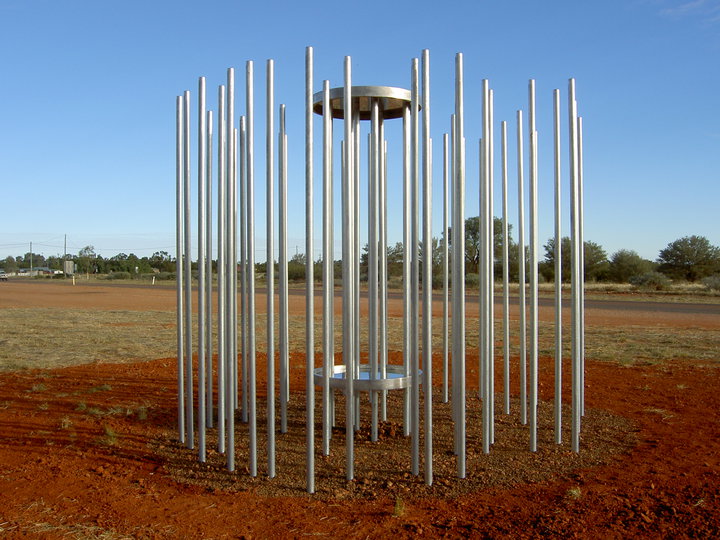
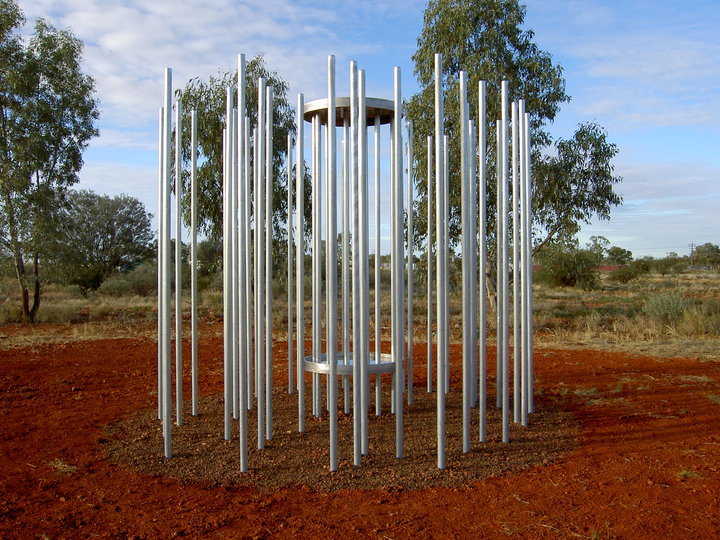
Australian sculptor Fredrick White, has been commissioned to create two public sculptures in Western Queensland. The first has been completed at Thargomindah (see Google map), a town located 1014 km west of Brisbane and was commissioned by artplusplace and Thargomindah Regional Council. In a small town of 250 people this is the town’s first public sculpture.
“The town’s one claim to fame is its artesian bore. The bore, which lies 2 km out of town on the Noccundra road, was drilled in 1891 and by 1893, having drilled to a depth of 795 metres, the water came to the surface. It was then that the town successfully attempted a unique experiment. The pressure of the bore water was used drive a generator which supplied the town’s electricity. Enthusiasts have described this as Australia’s first hydro-electricity scheme. The system operated until 1951. Today the bore still provides the town’s water supply. The water reaches the surface at 84°C.”1
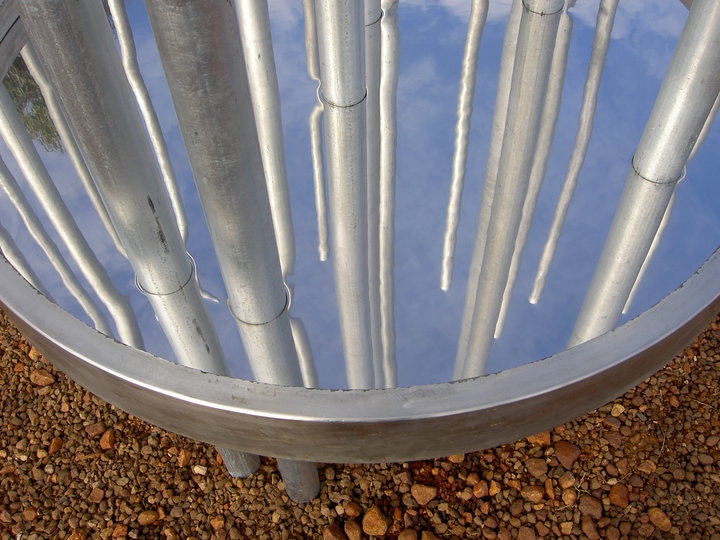
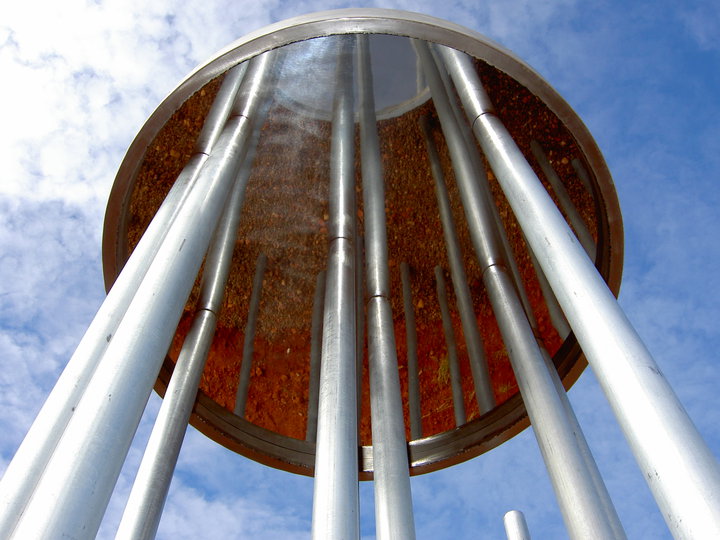
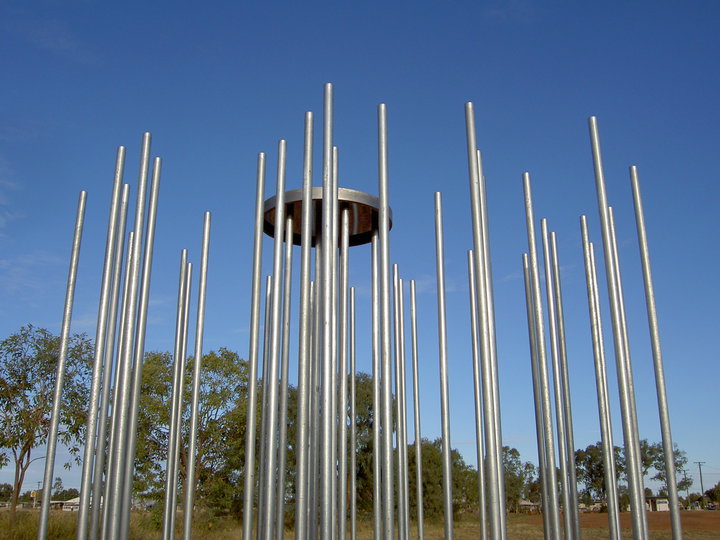
The work Drawing Water (2010) addresses the need for water in such an arid location and the numerous bores that are sunk around the town to draw water to the surface. The earth is reflected in the sky and the sky in the earth in the central polished stainless steel disks (as friend Perry observes, like a tunnel connecting earth and heaven). A forest of bore pipes surround the central platform. Of the work Fred says:
“Drawing Water speaks of our connection to the Earth, specifically the Great Artesian Basin and the bores that provide the only continuous source of water throughout much of inland Australia. The 52 galvanised poles symbolise not only our year round need for water but are also as a reminder of how extensively taped the artesian water is.”
The next commission is at Blackall in Western Queensland (see Google map). A drawing of the work Lifespan (2010), which is 8 metres long, is at the bottom of the posting. Blackall already contains public sculptures by William Eicholtz (Towners Call – Edgar Towner V.C. Memorial (2009)) and Robert Bridgewater (Wool, Water and Wood (2008)).
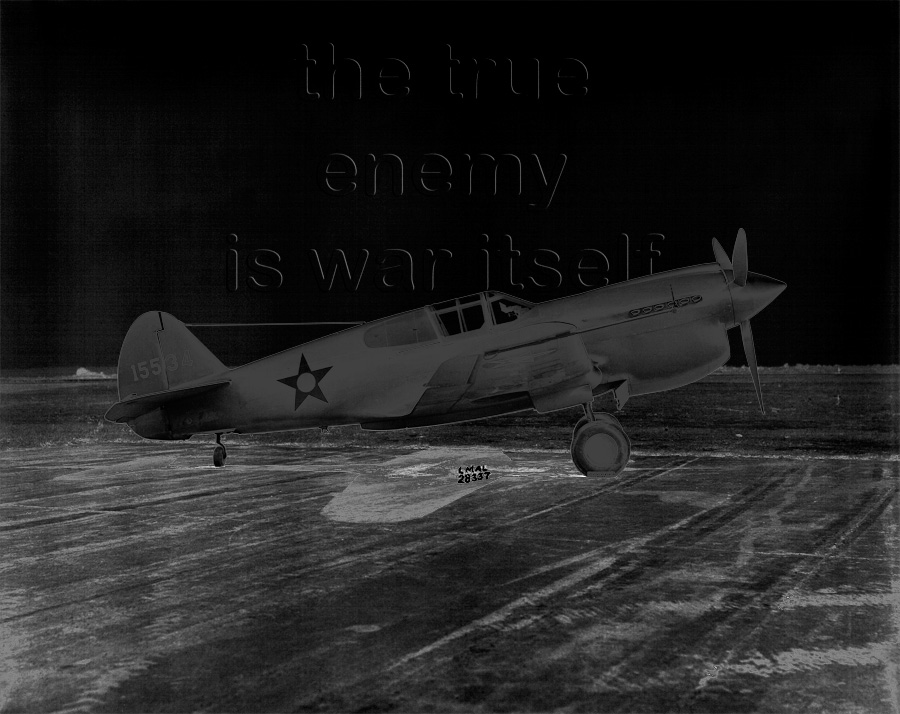
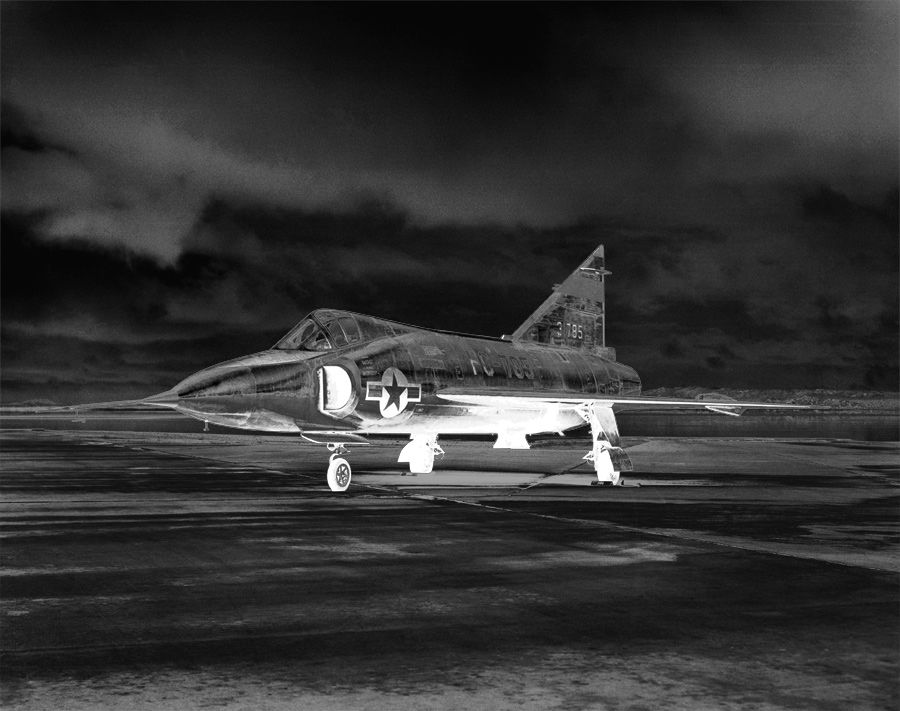
Marcus Bunyan (Australian, b. 1958) Missing in Action (dark kenosis) No.16 2010 Digital photograph
Missing in Action (dark kenosis)
Several people have asked me for some text to help describe the themes that my work investigates.
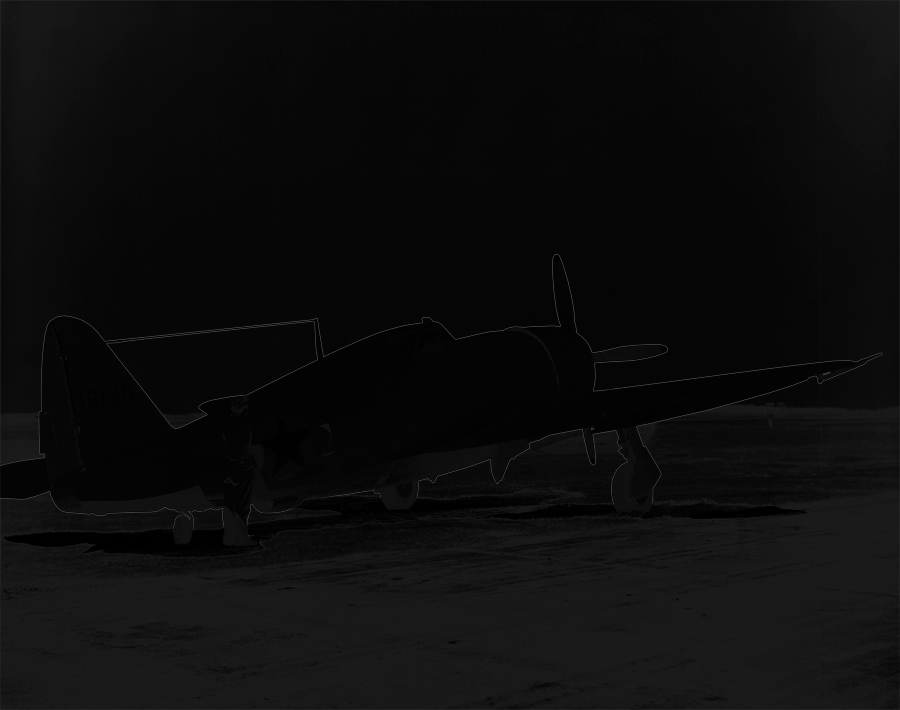
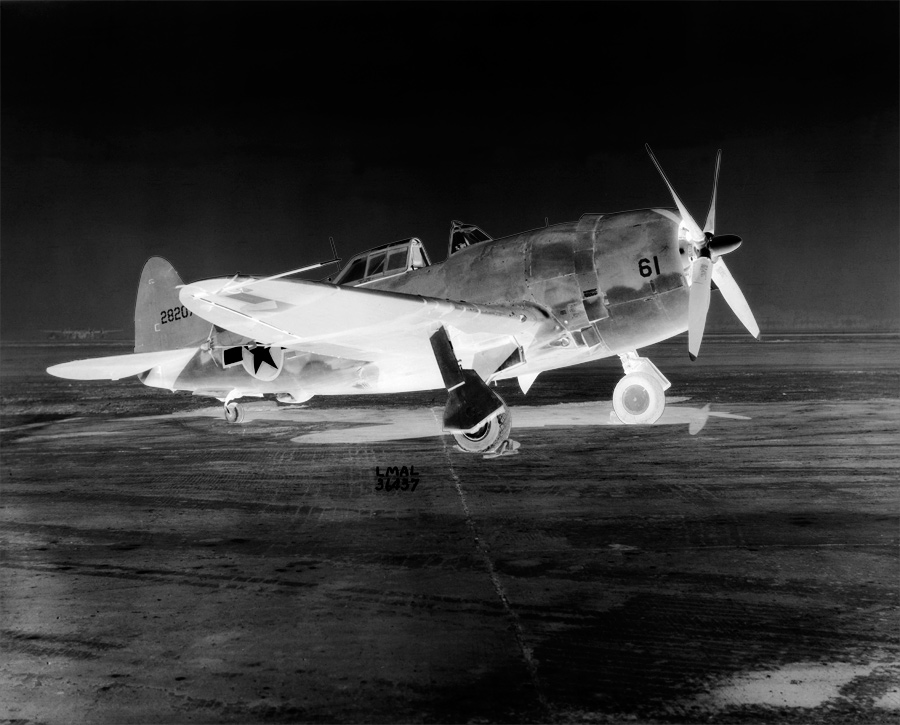
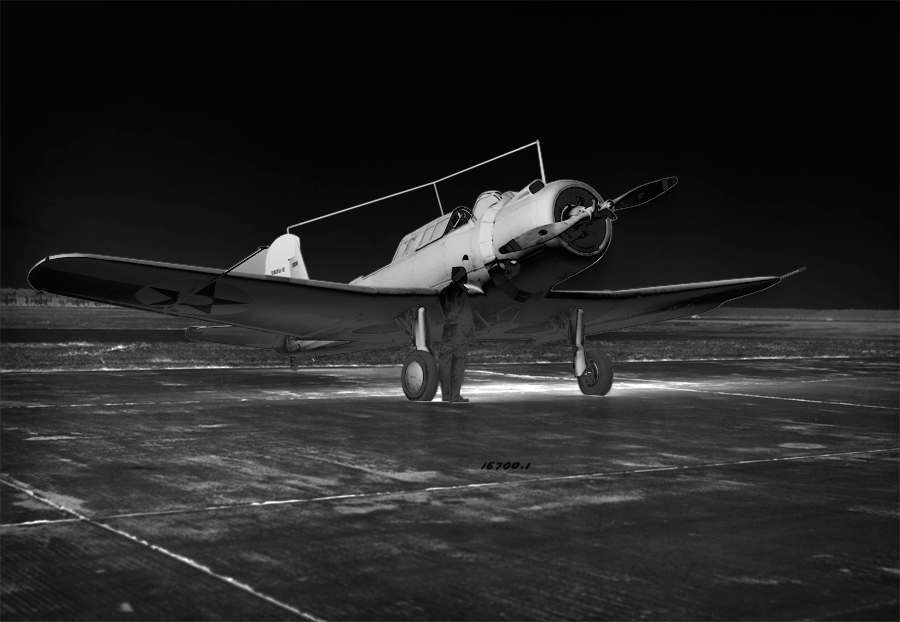
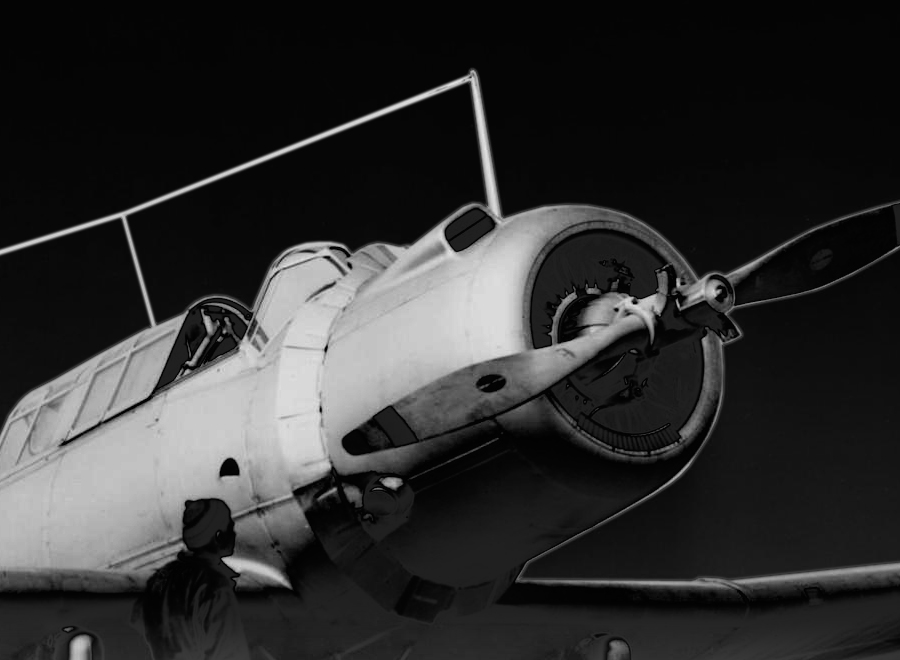
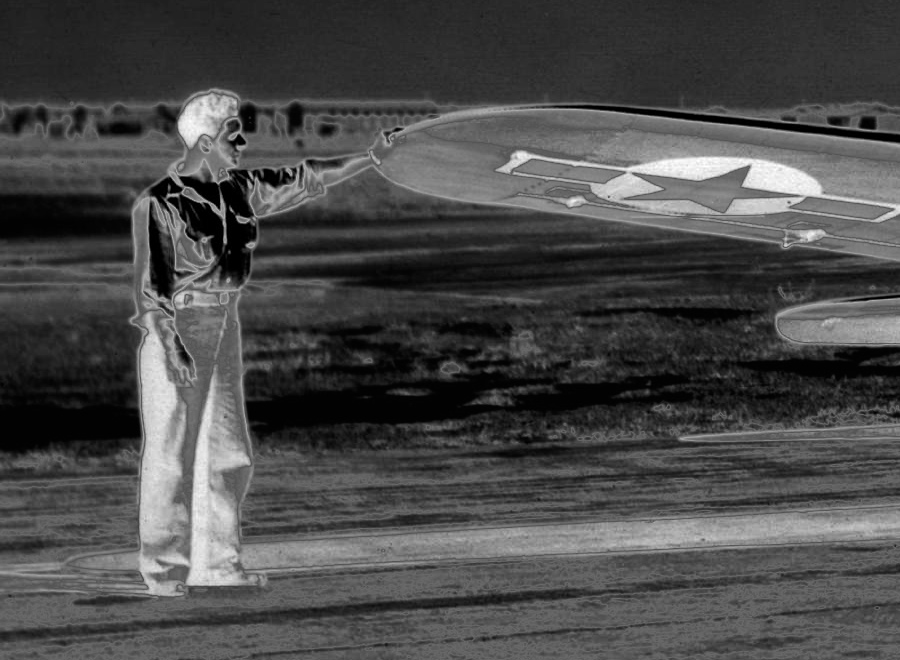
My work has always investigated the spaces and environments that people inhabit. Over the last few years the work has come to focus on fighter aircraft and the people (usually men) who fly them – the reason to fly such war machines, to fight for freedom, democracy, to bomb, to kill – the moral and ethical choices that human beings make, to undertake one action over another.
I have returned to childhood influences: I remember as a kid making toy models by Airfix and Tamiya of tanks and fighter planes and flying the planes from my bedroom ceiling. The work is strongly anti-war. Most of the work features shifts in texture, of light and dark and the occasional use of text to illuminate personal feelings. Text that is hidden among this particular body of work includes:
~ “The true enemy is war itself” from the anti-war movie Crimson Tide (1995) ~ “The destiny of man is in his own soul” Herodotus (484-420BC) ~ “We are all of us children of earth” Franklin D. Roosevelt: Flag Day Address June 13, 1942
Conceptually the work is based upon an investigation into Foucault’s ‘technologies of the self’ and the paradoxes of such (self) determination:
“Technologies of the self (also called care of the self or practices of the self) are what Michel Foucault calls the methods and techniques (“tools”) through which human beings constitute themselves. Foucault argued that we as subjects are perpetually engaged in processes whereby we define and produce our own ethical self-understanding. According to Foucault, technologies of the self are the forms of knowledge and strategies that “permit individuals to effect by their own means or with the help of others a certain number of operations on their own bodies and souls, thoughts, conduct, and way of being, so as to transform themselves in order to attain a certain state of happiness, purity, wisdom, perfection, or immortality.””1
The next series are the same planes with a red colour (red kenosis) and after that I have some silhouette aircraft recognition cards – just the black shapes of the jet fighters – with colours behind, should be a good series!
Dr Marcus Bunyan
1/ Foucault, M. (1988) “Technologies of the self,” in L. H. Martin, H. Gutman and P. H. Hutton (eds.,). Technologies of the self. Amherst: University of Massachusetts Press, page 18 quoted on Wikipedia.“Technologies of the Self.” [Online] Cited 23/06/2010.
Photographs are available from this series for purchase. As a guide, a digital colour 16″ x 20″ costs $1000 plus tracked and insured shipping. For more information please see my Store web page.
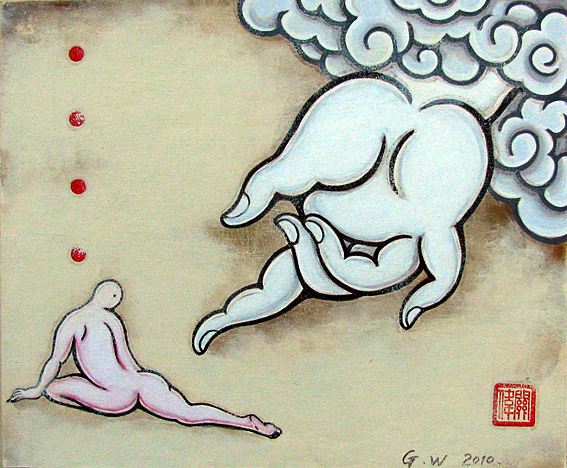
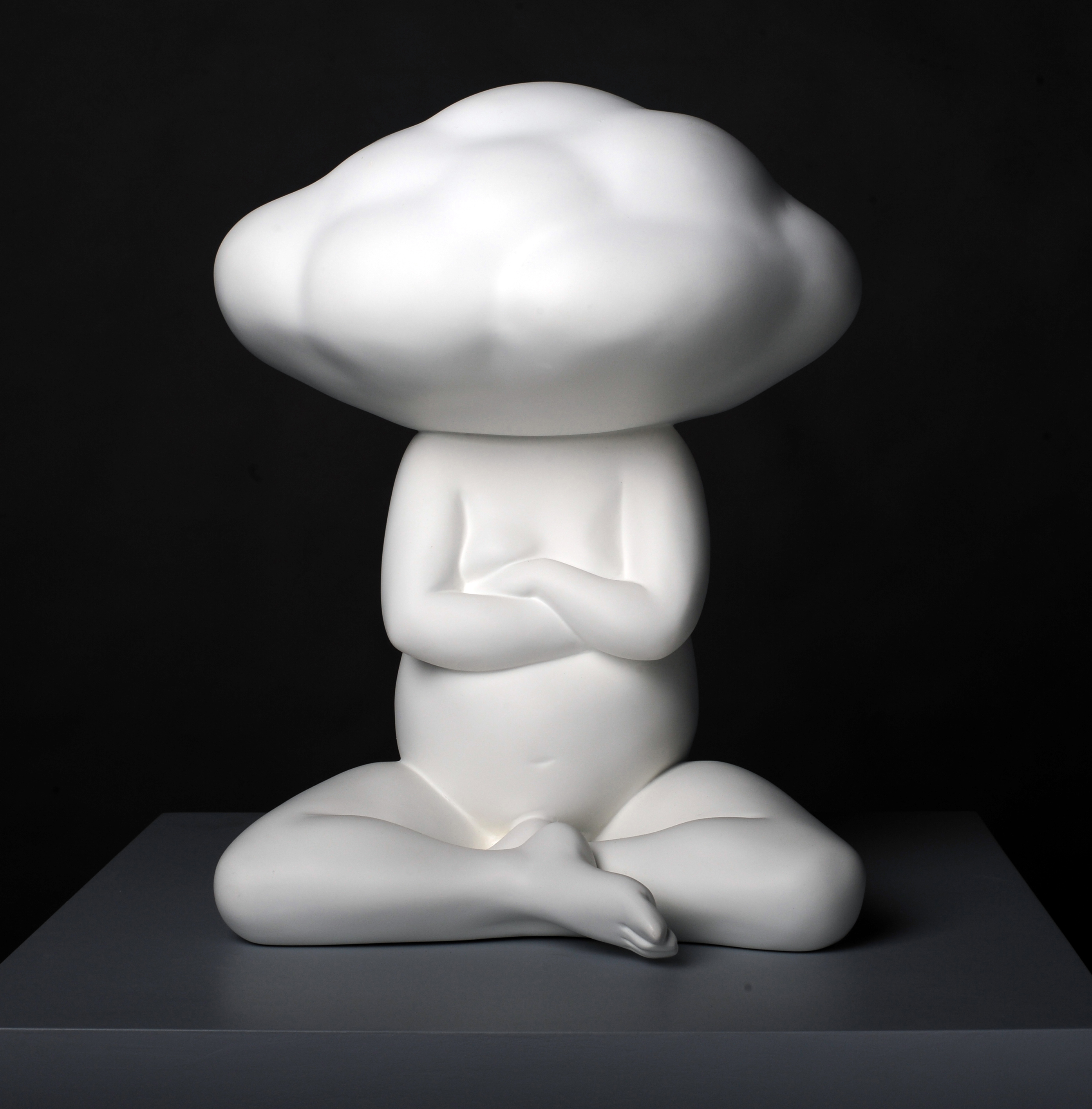
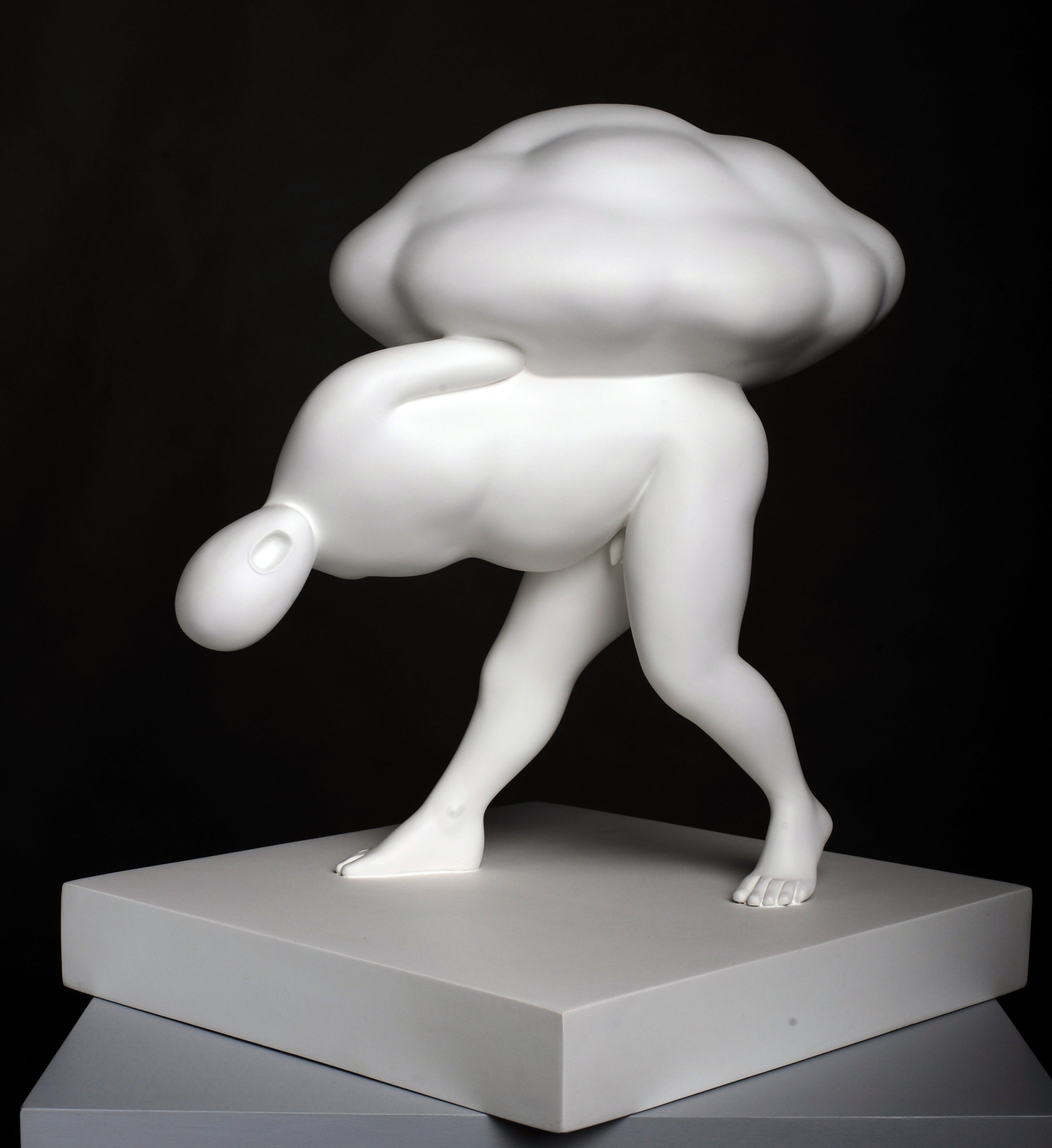
The exhibition Cloud by Australian artist Guan Wei at Arc One Gallery in Melbourne contains two bodies of work that are outstanding: the series of paintings on paper titled Buddha’s Hand and the series of five figurative sculptures titled Cloud. Each body of work compliments and informs the other.
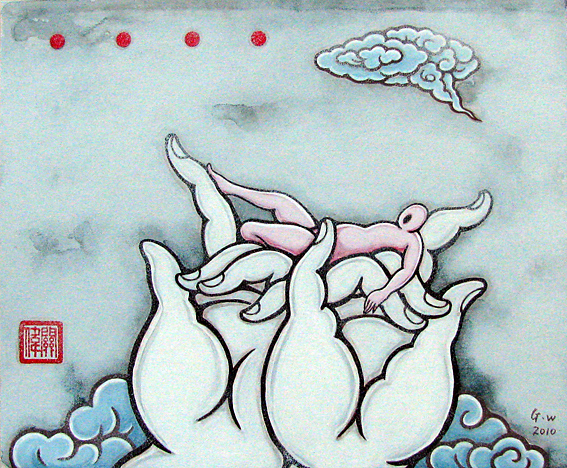
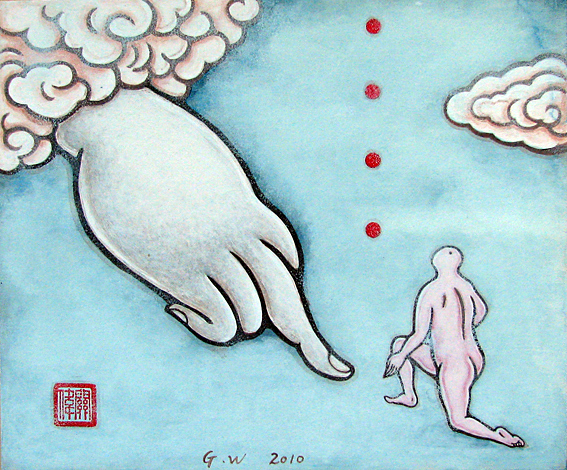
The small Buddha’s Hand paintings (see below) are the most delicate of creatures – sensual, poetic almost fetishistic in their composition and utterly beguiling in their beauty. Referencing the history of cave paintings of the Buddha, Wei updates the ancient allegories expressing his message of harmony and leisure, identity and place through visual symbolic representation. These works are profoundly moving, the figurative compositions balanced masterfully through colour, shape and form, studded with the punctum of red bindi-like energy centres arising from the faceless yogic figures.
Sitting on white pedestals and positioned close to the Buddha’s Hand paintings in the gallery are the series of five Cloud figures (see below). Made of bronze that has been spray painted white these are wonderful sculptures, full of delicious humour and vibrancy. There is a sensuality and delicacy about the figures that is emphasised by their snowy whiteness, a whiteness that subverts the tactility, colour and weight that one usually associates with the metal bronze. Here the figure has, variously, it’s head in the clouds while pensively crossing arms; bearing the weight of the world on the back while the vacant mouth is open; preparing to throw the cloud as Zeus would a thunderbolt; reclining while balancing the cloud on one foot and with one foot stuck in the earth that is cloud. The cloud becomes a metaphor for thought and action in the world, acting on the world. In these sculptures there is no creed nor race, no ideology or nation and I believe that Wei attains his stated aim to redefine our relationship with one another and nature by transcending both. I am not alone in liking these sculptures – they have proved very popular and all five sculptures in editions of five have already sold out!
Other work in the exhibition is more prosaic – a multi-panelled screen, the On Cloud and Zodiac series never seem to breathe the same rarefied air as the above two bodies of work. They are disappointments that only serve to illuminate how brilliant holding the Buddha’s hand and living your life with your head in the clouds can be.
Dr Marcus Bunyan
Many thankx to Angela Connor and Arc One Gallery for allowing me to reproduce the photographs in the posting. Please click on the photographs for a larger version of the image.
Guan Wei (China, b. 1957) Buddha’s hand 2010
Guan Wei (China, b. 1957) Buddha’s hand 2010
“I hope that we will be able to transcend the restrictions imposed on us by such notions as nation, ethnicity, ideology, cultural and history, and redefine our relationship with one another and nature.”
Guan Wei
Guan Wei is an adept storyteller who masterfully engages his audiences. Retaining the humour, wisdom and cross-cultural knowledge that have become characteristics of his ongoing oeuvre, his work breathes an awareness of our current social and environmental dilemmas exploring ideas of immigration, colonisation, identity politics and cultural tolerance.
Flirtatious and aesthetically whimsical, Guan Wei’s works are instantly recognisable. In this latest exhibition, Cloud, Guan Wei fuses sculpture, drawings and paintings to form what is part of his most beguiling trademark – ‘the art of idleness’. For the first time since returning to China, he will present new sculptures that employ his ongoing preoccupation with the figure and the figure in relation to the natural form. These sculptures are Guan Wei’s personal visual symbols of harmony and leisure. They form the thread for the four series of works in this exhibition.
During the past fifteen years, Guan Wei has help change the identity of Australian Art. He draws on his own experience as a Chinese national who migrated to Australia from China in the period following the Tiananmen Square massacre (1989). Guan Wei has spent twenty years living and working as an artist raising the awareness of Australia being a multicultural country. He has had over 40 solo exhibitions, been the recipient of numerous awards and included in every major collection. In 2009, Guan Wei was selected for the prestigious Clemenger Contemporary Art Award at the National Gallery of Victoria.
Press release from the Arc One Gallery website [Online] Cited 10/06/2010 no longer available online
Guan Wei (China, b. 1957) Cloud No.4 2009 Bronze statue edition of 5 39 x 30 x 25cm
Guan Wei (China, b. 1957) Cloud No.5 2009 Bronze statue edition of 5 47 x 35 x 35cm
Arc One Gallery 45 Flinders Lane Melbourne, 3000 Phone: +61 3 9650 0589
Marcus Bunyan (Australian, b. 1958) Missing in Action (dark kenosis) No.11 2010 Digital photograph
Missing in action (dark kenosis)
A new body of work Missing in Action (dark kenosis) 2010 is now online on my website.
There are eighty-two images in the series which are like a series of variations in music with small shifts in tone and colour. Below are a selection of images from the series. Please click on the photographs for a larger version of the image.
Many thankx to the people who have emailed me saying how much they like the new series of work.
Dr Marcus Bunyan
Photographs are available from this series for purchase. As a guide, a digital colour 16″ x 20″ costs $1000 plus tracked and insured shipping. For more information please see my Store web page.
Kenosis
“In Christian theology, Kenosis is the concept of the ‘self-emptying’ of one’s own will and becoming entirely receptive to God and his perfect will.”
Marcus Bunyan (Australian, b. 1958) Missing in Action (dark kenosis) No.19 2010 Digital photograph
Marcus Bunyan (Australian, b. 1958) Missing in Action (dark kenosis) No.35 2010 Digital photograph
Marcus Bunyan (Australian, b. 1958) Missing in Action (dark kenosis) No.46 2010 Digital photograph
Marcus Bunyan (Australian, b. 1958) Missing in Action (dark kenosis) No.49 2010 Digital photograph
Marcus Bunyan (Australian, b. 1958) Missing in Action (dark kenosis) No.67 2010 Digital photograph
Marcus Bunyan (Australian, b. 1958) Missing in Action (dark kenosis) No.71 2010 Digital photograph
Marcus Bunyan (Australian, b. 1958) Missing in Action (dark kenosis) No.76 2010 Digital photograph














 Art Blart _ art and cultural memory archive
You must be logged in to post a comment.