Exhibition: ‘VALIE EXPORT – The Photographs’ at the Fotomuseum Winterthur, Zurich, Switzerland

Exhibition dates: 25th February – 29th May, 2023

Curator: Walter Moser
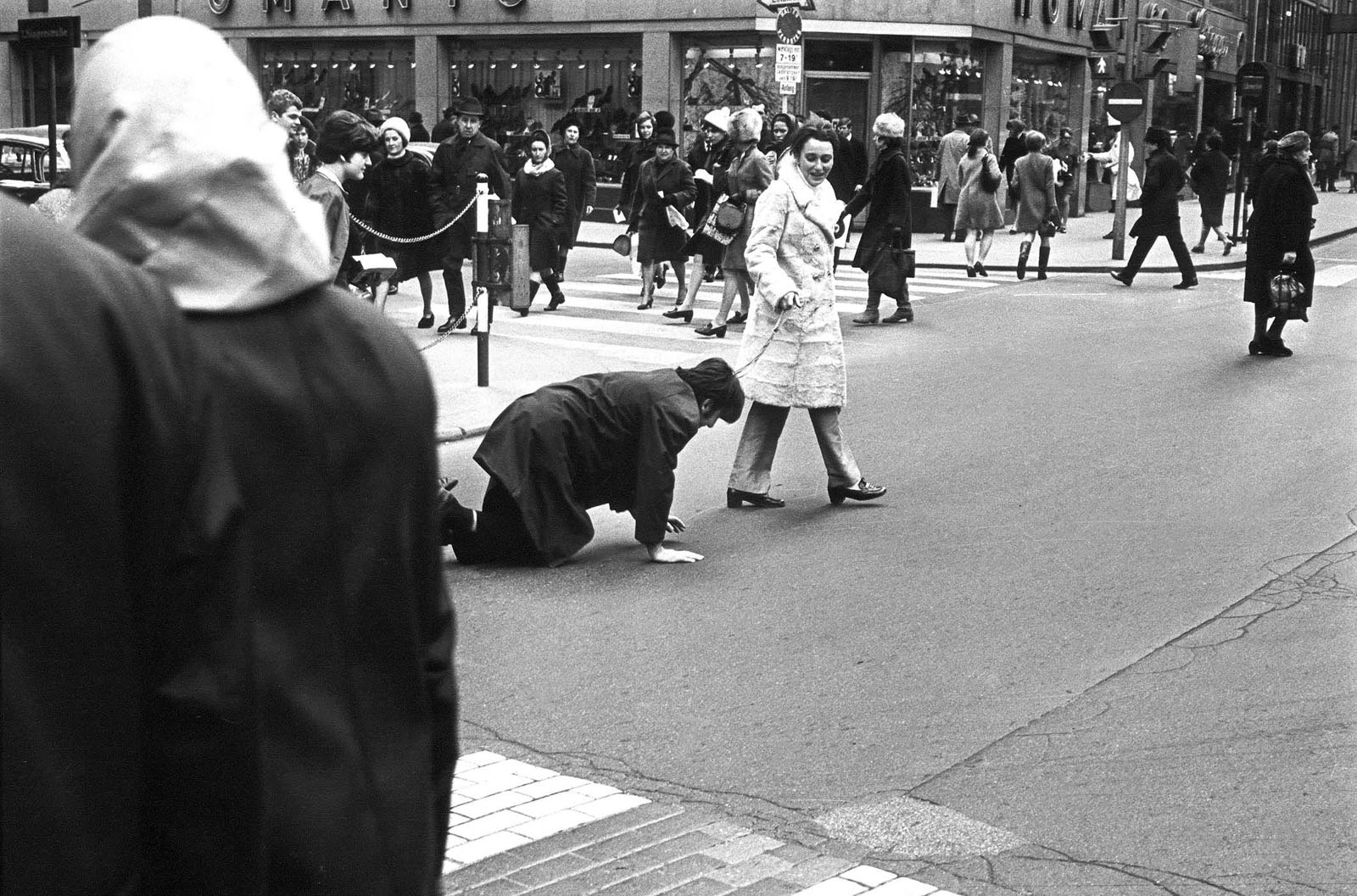
 

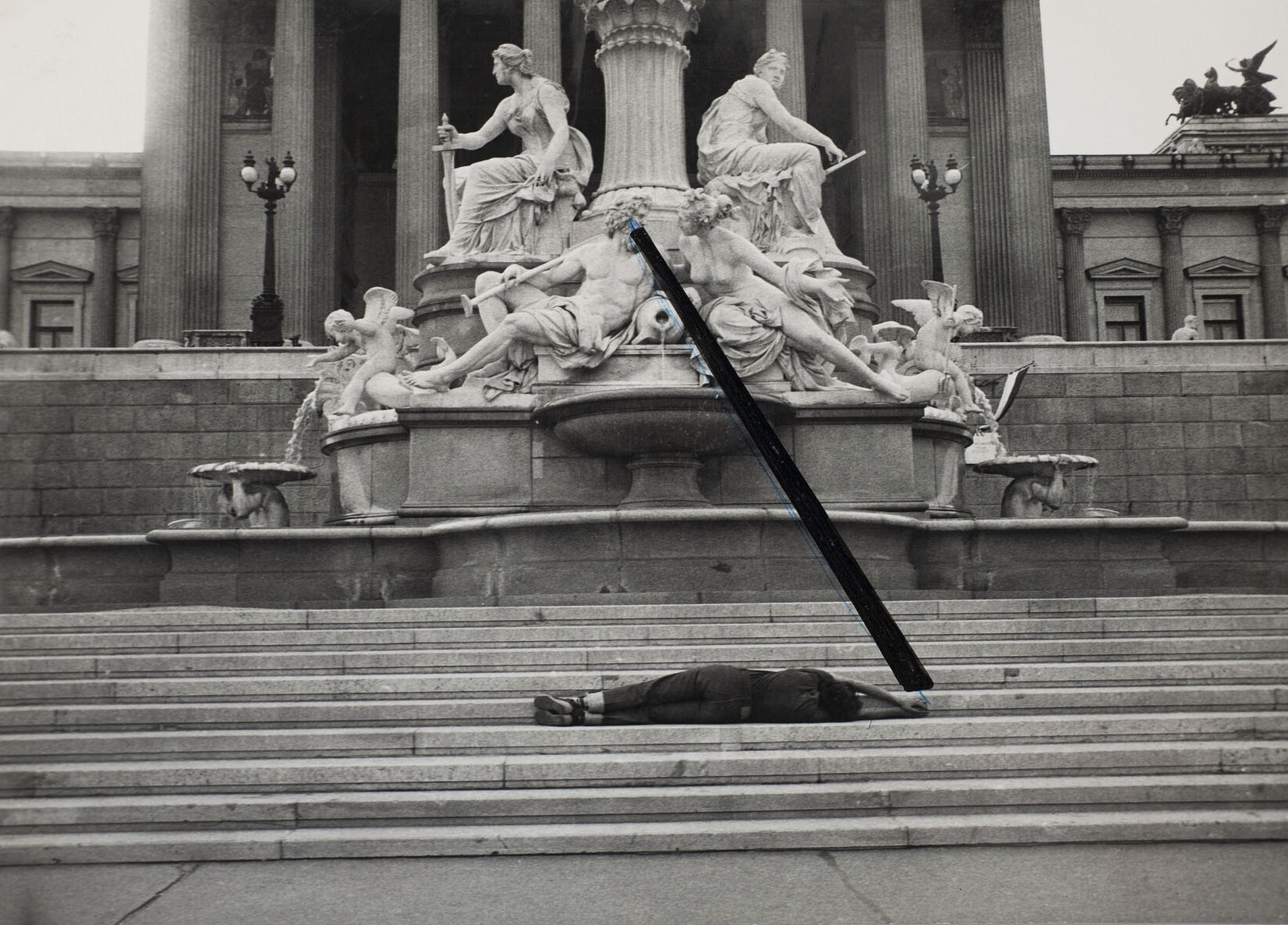
VALIE EXPORT (Austrian, b. 1940) 'Portfolio of Doggedness' (VALIE EXPORT, own words, conversation with Elisabeth Lebovici), in cooperation with Peter Weibel 1968 from the exhibition 'VALIE EXPORT – The Photographs' at the Fotomuseum Winterthur, Zurich, Switzerland, February - May, 2023


VALIE EXPORT (Austrian, b. 1940)
Portfolio of Doggedness (VALIE EXPORT, own words, conversation with Elisabeth Lebovici), in cooperation with Peter Weibel
1968
Courtesy Galerie Thaddaeus Ropac and the artist
© VALIE EXPORT, 2022, ProLitteris, Zurich
Photo: Joseph Tandl


I would really like to meet this artist.

Recent postings have hit a rich vein with exhibitions on artists and concepts which challenge the patriarchal, hegemonic status quo… through an exploration of diversity and the enunciation of different points of view. Postings have included exhibitions on the femme fatale, queer lives and Ukranian modernist painting and artists such as Samuel Fosso, Jimmy DeSana, and Andy Warhol.

Upcoming postings continue the theme with exhibitions by Ming Smith, Ernest Cole, Hannah Villiger, Dawoud Bey and Carrie Mae Weems, and Lucinda Devlin.

Dr Marcus Bunyan


Many thankx to the Fotomuseum Winterthur for allowing me to publish the photographs in the posting. Please click on the photographs for a larger version of the image.


VALIE EXPORT – The Photographs is the first exhibition to focus on the photographic oeuvre of the artist VALIE EXPORT (b. 1940), whose at times provocative performances and experimental installations have been a source of controversy. The show examines EXPORT’s use of photography as a critical exploration of processes of depiction and representation. At the interface of film, video art, drawing and body art the photographs offer a new perspective on her creative oeuvre.
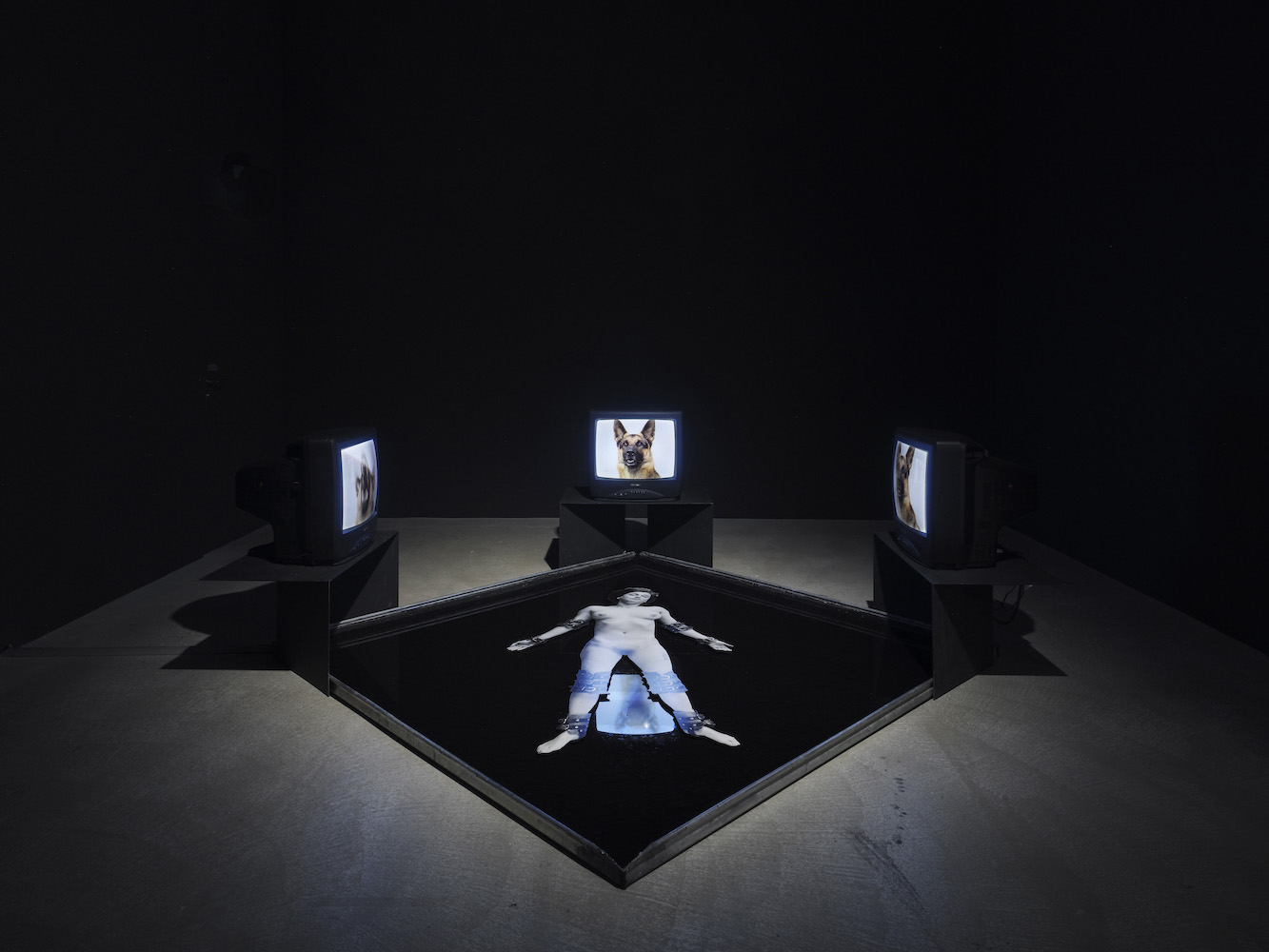
 

Installation view 'VALIE EXPORT – The Photographs', Fotomuseum Winterthur


Installation view VALIE EXPORT – The Photographs, Fotomuseum Winterthur
© Fotomuseum Winterthur / Conradin Frei


VALIE EXPORT (Austrian, b. 1940) 'TAPP und TASTKINO' (TAP and TOUCH CINEMA) 1968 from the exhibition 'VALIE EXPORT – The Photographs' at the Fotomuseum Winterthur, Zurich, Switzerland, February - May, 2023


VALIE EXPORT (Austrian, b. 1940)
TAPP und TASTKINO (TAP and TOUCH CINEMA) 
1968
Albertina, Wien – The ESSL Collection
© VALIE EXPORT, 2022, ProLitteris, Zurich, photo: Werner Schulz


“As usual, the film is ‘shown’ in the dark. But the cinema has shrunk somewhat – only two hands fit inside it. To see (i.e. feel, touch) the film, the viewer (user) has to stretch his hands through the entrance to the cinema. At last, the curtain which formerly rose only for the eyes now rises for both hands. The tactile reception is the opposite of the deceit of voyeurism. For as long as the citizen is satisfied with the reproduced copy of sexual freedom, the state is spared the sexual revolution. Tap and Touch Cinema is an example of how re-interpretation can activate the public.”

~ Valie Export


At age twenty-eight, Waltraud Hollinger changed her name to VALIE EXPORT, in all uppercase letters, to announce her presence in the Viennese art scene. Eager to counter the male – dominated group of artists known as the Vienna Actionists – including Günter Brus, Otto Mühl, Hermann Nitsch, and Rudolf Schwarzkogler – she sought a new identity that was not bound by her father’s name (Lehner) or her former husband’s name (Hollinger). Export was the name of a popular cigarette brand. This act of provocation would characterise her future performances, especially TAPP und TASTKINO (TOUCH and TAP Cinema) and Aktionhose: Genitalpanik (Action Pants: Genital Panic). Challenging the public to engage with a real woman instead of with images on a screen, in these works she illustrated her notion of “expanded cinema,” in which film is produced without celluloid; instead the artist’s body activates the live context of watching. Born of the 1968 revolt against modern consumer and technical society, her defiant feminist action was memorialised in a picture taken the following year by the photographer Peter Hassmann in Vienna. VALIE EXPORT had the image screen printed in a large edition and fly-posted it in public spaces.

Gallery label from Transmissions: Art in Eastern Europe and Latin America, 1960-1980, September 5, 2015 – January 3, 2016 from the MoMA website Nd [Online] Cited 05/05/2023


VALIE EXPORT’s multimedia work eludes any simplistic categorisation or definition. As a pioneer of performance art, installation art and video art, EXPORT has consistently broken through the boundaries separating media genres, while using her own body as an artistic medium. Photography has always played a key role in her practice – be it for documentary or experimental purposes, as an element in multimedia installations or as art in its own right. EXPORT has had a constant awareness of the importance of visually recording her performances. Back in 1968 two of her best-known performances, “TAPP und TASTKINO” and the action “Aus der Mappe der Hundigkeit”, were attended by photographers and filmmakers. For the performance “TAPP und TASTKINO”, a request was put out by megaphone asking spectators and passers-by to touch EXPORT’s breasts, which were covered by a box inspired by a cinema auditorium with a curtain that the artist wore like a garment. Participants had to maintain eye contact with EXPORT for a defined period of time while touching her, with the artist thereby reversing the voyeuristic male gaze, a typical feature of cinema. For “Aus der Mappe der Hundigkeit”, EXPORT took artist Peter Weibel through the centre of Vienna on a lead, with him crawling on all fours, provocatively drawing attention to the prevailing gender relations and power dynamics by reversing them. Photography was not merely used to make a complete document of EXPORT’s work. Rather, action and photography entered into a dialogue, creating a mutual dependency between them: on the one hand, actions were recorded (and ultimately communicated too) by means of photography; on the other, by virtue of their production, publication and reception – especially of key moments such as the interaction between artist and participants in “TAPP und TASTKINO” and their switch of perspective – EXPORT’s action photos acquired a status that was independent of the performances. EXPORT’s focus on the critical examination of mechanisms of representation dates right back to the start of her career, when she began dealing with the different characteristics of the photographic image and imaging media, questioning the way they worked and subjecting photography to conceptual analysis by lifting the lid on the conditions governing the technical processes of image-making. Deconstructing the photographic gaze and its implicit power structures were of key importance here.

Dimitris Lempesis. “VALIE EXPORT – The Photographs,” on the Dream Idea Machine website Nd [Online] Cited 04/05/2023
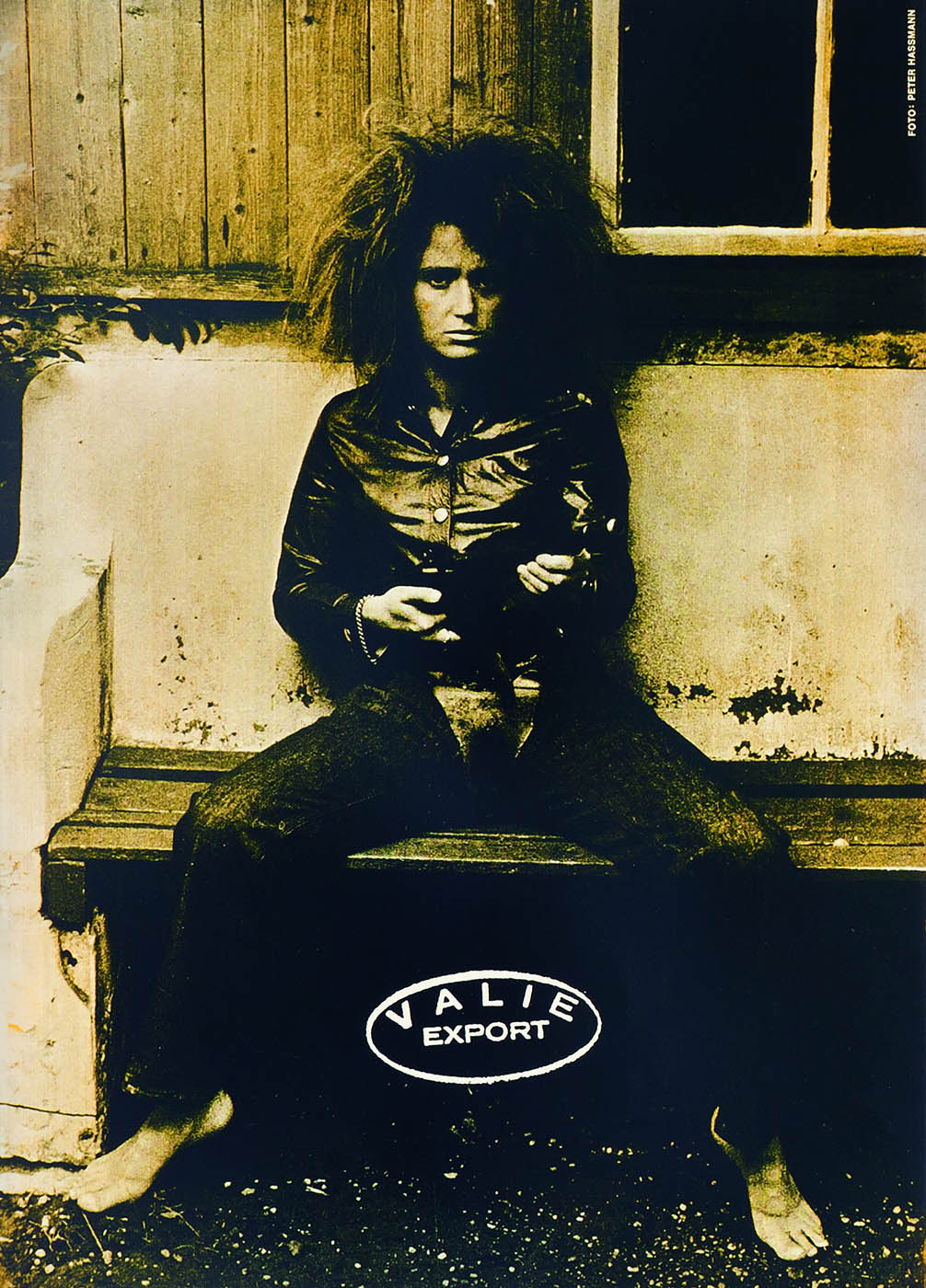
 

VALIE EXPORT (Austrian, b. 1940) 'Action Pants: Genital Panic' 1969 from the exhibition 'VALIE EXPORT – The Photographs' at the Fotomuseum Winterthur, Zurich, Switzerland, February - May, 2023


VALIE EXPORT (Austrian, b. 1940)
Action Pants: Genital Panic
1969
Courtesy Galerie Thaddaeus Ropac and the artist
© VALIE EXPORT, 2022, ProLitteris, Zurich
Photo: Peter Hassmann
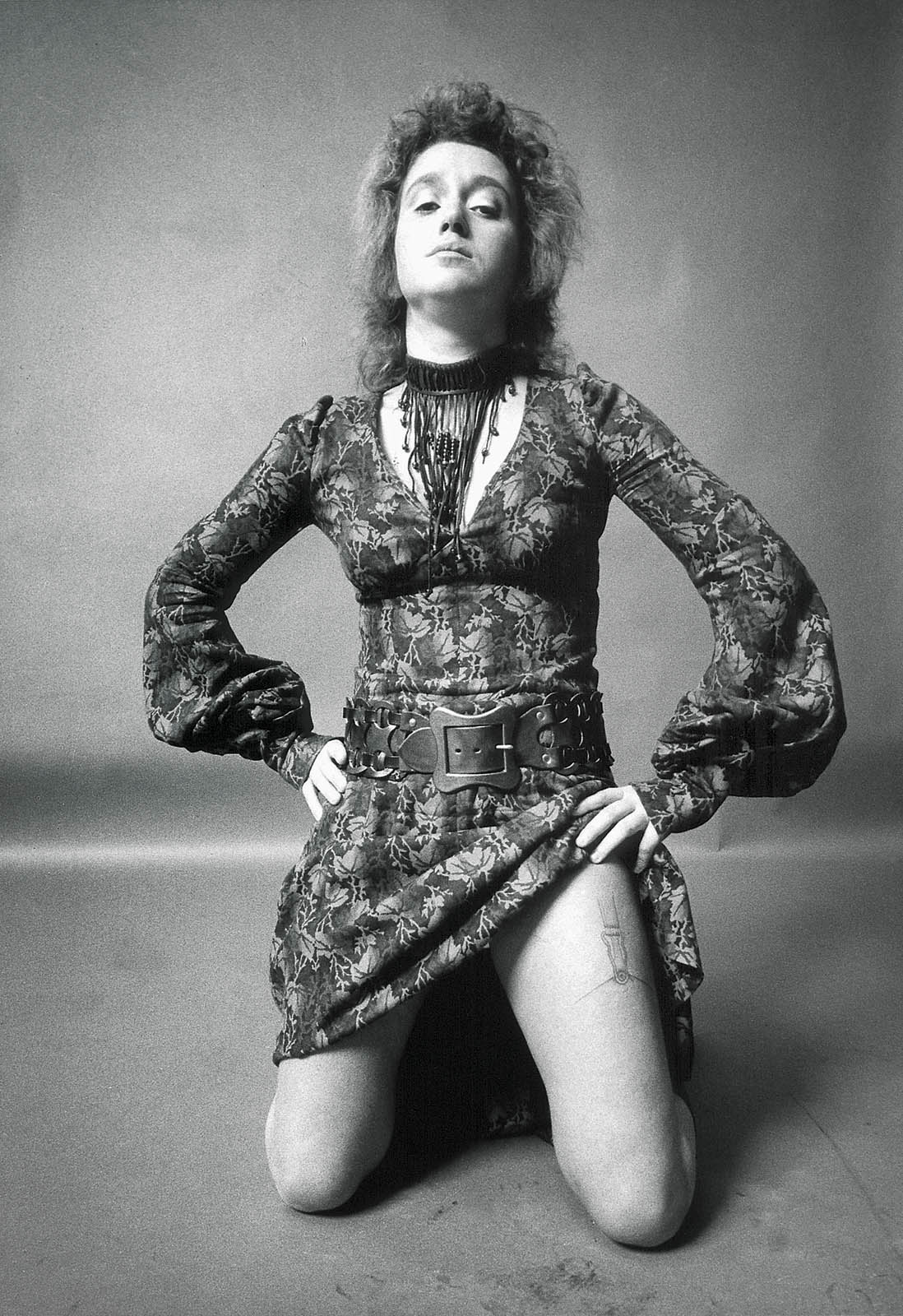
 

VALIE EXPORT (Austrian, b. 1940) 'BODY SIGN B' 1970 from the exhibition 'VALIE EXPORT – The Photographs' at the Fotomuseum Winterthur, Zurich, Switzerland, February - May, 2023


VALIE EXPORT (Austrian, b. 1940)
BODY SIGN B
1970
Albertina, Wien – The ESSL Collection
© VALIE EXPORT, 2022, ProLitteris, Zurich
Photo: Gertraud Wolfschwenger


VALIE EXPORT (Austrian, b. 1940) 'VALIE EXPORT – SMART EXPORT, self-portrait' 1970


VALIE EXPORT (Austrian, b. 1940)
VALIE EXPORT – SMART EXPORT, self-portrait
1970
Albertina, Wien – The ESSL Collection
© VALIE EXPORT, 2022, ProLitteris, Zurich
Photo: Gertraud Wolfschwenger


VALIE EXPORT – The Photographs is the first exhibition to focus on the photographic oeuvre of the artist VALIE EXPORT (b. 1940), whose at times provocative performances and experimental installations have been a source of controversy. The show examines EXPORT’s use of photography as a critical exploration of processes of depiction and representation. At the interface of film, video art, drawing and body art the photographs offer a new perspective on her creative oeuvre. VALIE EXPORT’s multimedia work eludes any simplistic categorisation or definition. As a pioneer of performance art, installation art and video art, EXPORT has consistently broken through the boundaries separating media genres, while using her own body as an artistic medium. Photography has always played a key role in her practice – be it for documentary or experimental purposes, as an element in multimedia installations or as art in its own right.

EXPORT has had a constant awareness of the importance of visually recording her performances. Back in 1968 two of her best-known performances, TAPP und TASTKINO and the action Aus der Mappe der Hundigkeit, were attended by photographers (and filmmakers). For the performance TAPP und TASTKINO, a request was put out by megaphone asking spectators and passers-by to touch EXPORT’s breasts, which were covered by a box inspired by a cinema auditorium with a curtain that the artist wore like a garment. Participants had to maintain eye contact with EXPORT for a defined period of time while touching her, with the artist thereby reversing the voyeuristic male gaze, a typical feature of cinema. For Aus der Mappe der Hundigkeit, EXPORT took artist Peter Weibel through the centre of Vienna on a lead, with him crawling on all fours, provocatively drawing attention to the prevailing gender relations and power dynamics by reversing them.

Photography was not merely used to make a complete document of EXPORT’s work. Rather, action and photography entered into a dialogue, creating a mutual dependency between them: on the one hand, actions were recorded (and ultimately communicated too) by means of photography; on the other, by virtue of their production, publication and reception – especially of key moments such as the interaction between artist and participants in TAPP und TASTKINO and their switch of perspective – EXPORT’s action photos acquired a status that was independent of the performances.

EXPORT’s focus on the critical examination of mechanisms of representation dates right back to the start of her career, when she began dealing with the different characteristics of the photographic image and imaging media, questioning the way they worked and subjecting photography to conceptual analysis by lifting the lid on the conditions governing the technical processes of image-making. Deconstructing the photographic gaze and its implicit power structures were of key importance here.

For EXPORT, the critical analysis of systems of representation invariably went hand in hand, in the context of both media and society, with a questioning of the male gaze directed at a body viewed as female. Making reference to her own body, she repeatedly probed the role of the woman, the artist and the subject in patriarchal sociopolitical structures. In 1970, for example, EXPORT had a garter tattooed on her thigh for Body Sign Action to give visible expression to the woman’s status as a sexual object and projection surface for male fantasies. Besides capturing the act of being tattooed, EXPORT also took photographs of the tattoo itself. The work expresses the pain involved – quite literally – in having patriarchal norms inscribed on a body that is seen as female. With her series Body Configurations (1972–1982), EXPORT investigates the relationships between the subject and power-political structures through body postures too. She explicitly couches her critique of the processes of depiction and representation in feminist terms: her work centres on the relationship between subject and space, body and gaze, femaleness and representation.

The exhibition VALIE EXPORT – The Photographs, which was devised in close collaboration with the artist, focuses on the impact that photography has had on her creative output. However, following the logic of EXPORT’s work, the exhibition not only presents photographs but also juxtaposes different media and works created between 1968 and 2007.

About VALIE EXPORT

VALIE EXPORT was born in 1940 in Linz, Austria, and now lives and works in Vienna. She is one of the pioneers of performance art and conceptual art. In 1967, in what was a radical gesture at the time, she gave up her father’s and her ex-husband’s names and laid claim to a new identity, VALIE EXPORT. Her works have been shown worldwide as part of numerous solo and group exhibitions. EXPORT has taught at various international institutions and was a professor for performance and multimedia at the Academy of Media Arts Cologne from 1995 to 2005. The VALIE EXPORT Center Linz was established through the acquisition of the artist’s estate in 2015, thus laying the foundations for an international research centre to foster artistic and academic engagement with media art and performance art.

Press release from Fotomuseum Winterthur
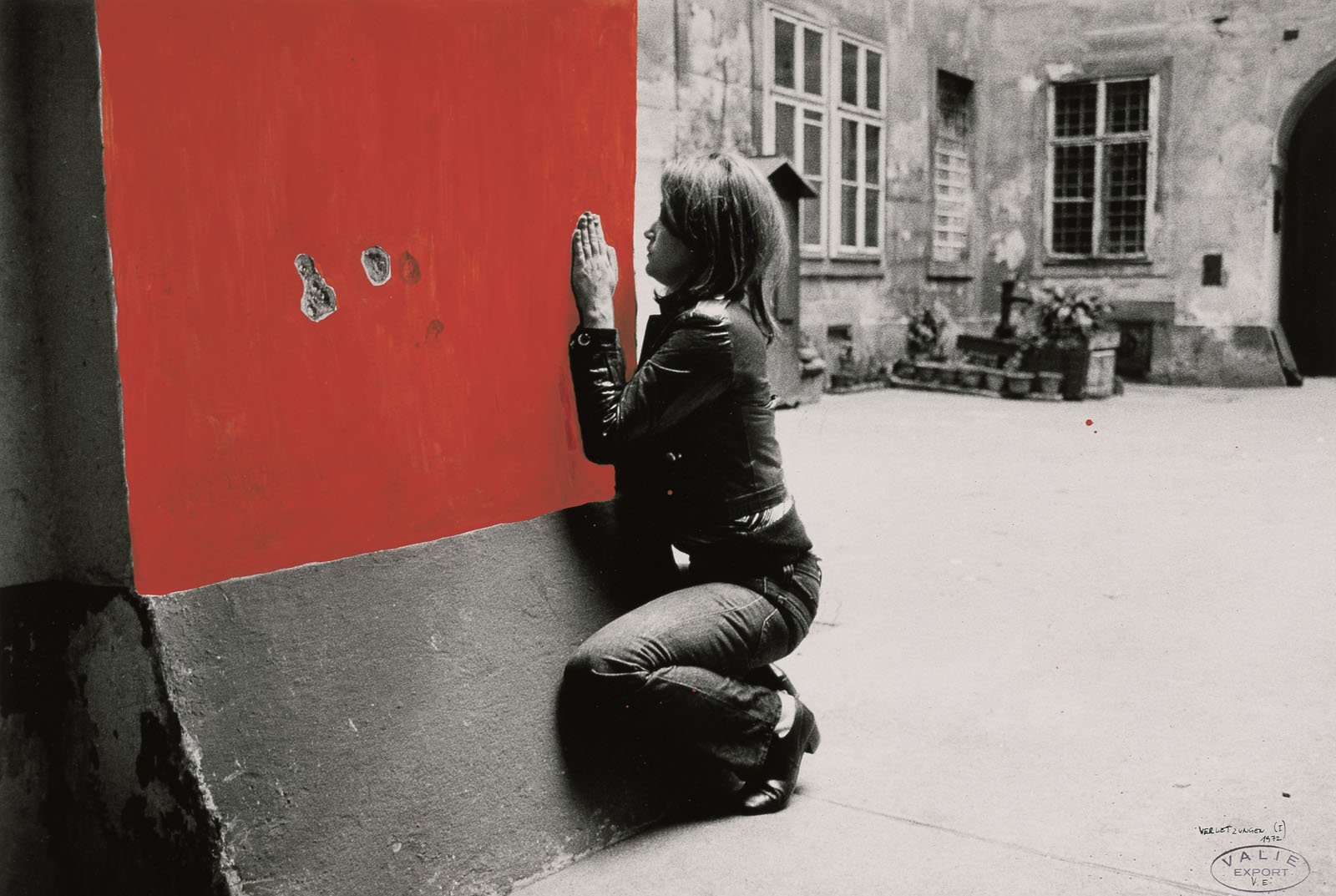
 

VALIE EXPORT (Austrian, b. 1940) 'Verletzungen I' (Injuries I) 1972


VALIE EXPORT (Austrian, b. 1940)
Verletzungen I (Injuries I)
1972
Wien – The ESSL Collection
© VALIE EXPORT, 2022, ProLitteris, Zurich
Photo: Hermann Hendrich
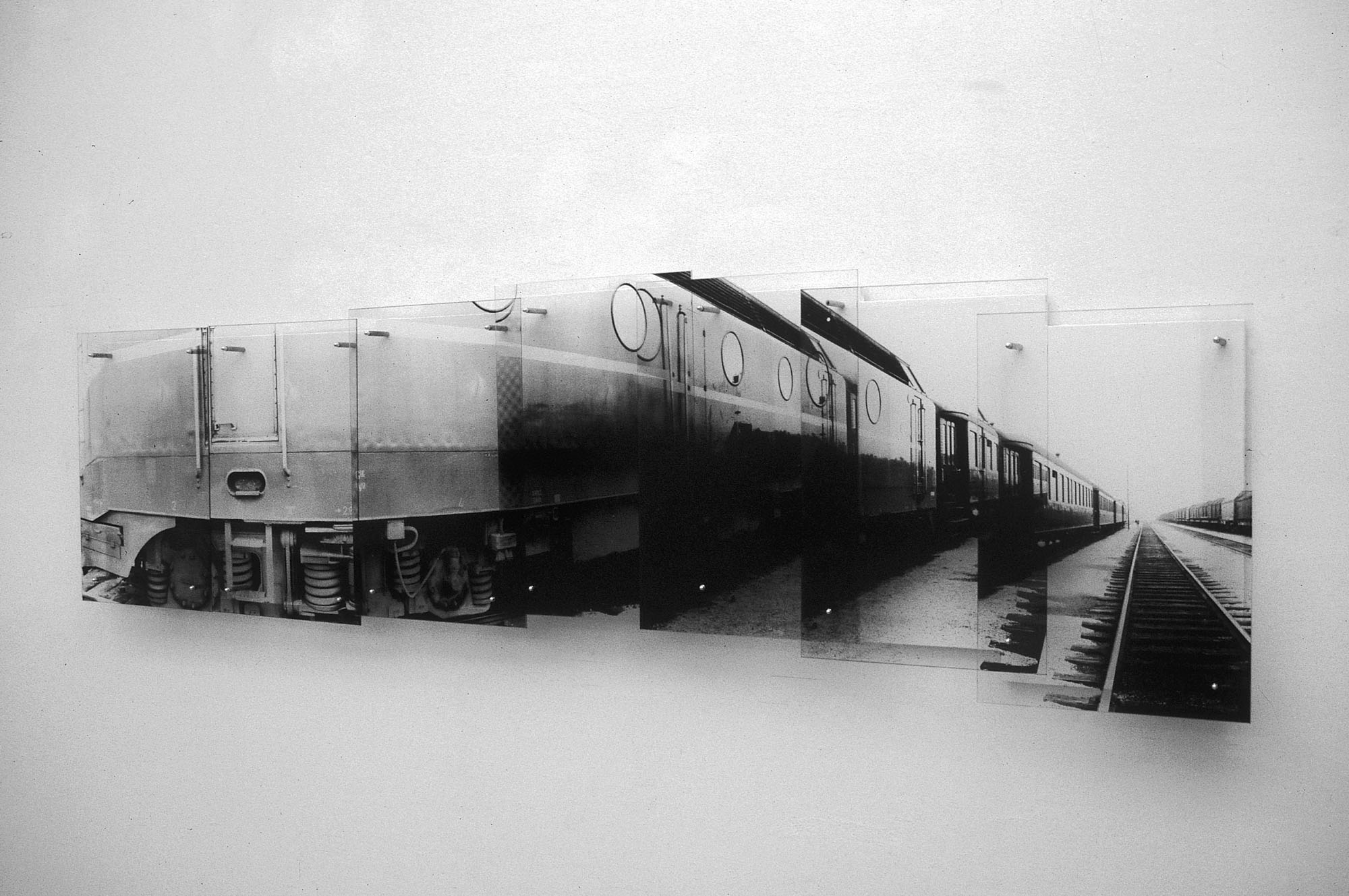
 

VALIE EXPORT (Austrian, b. 1940) 'Train II' 1972


VALIE EXPORT (Austrian, b. 1940)
Train II
1972
Courtesy Galerie Thaddaeus Ropac and the artist
© VALIE EXPORT, 2022, ProLitteris, Zurich
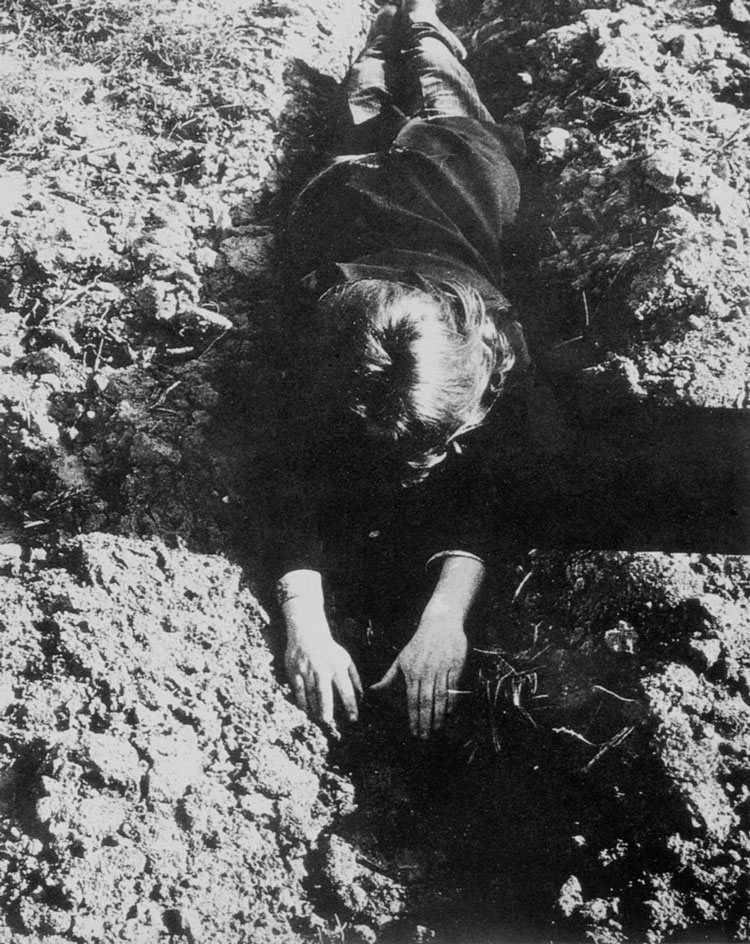
 

VALIE EXPORT (Austrian, b. 1940) 'Verkreuzung' (Crossing) 1972, printed 1980


VALIE EXPORT (Austrian, b. 1940)
Verkreuzung (Crossing)
1972, printed 1980
Black and white silver gelatin print on baryta paper laid on chip board
Each board 165 x 200cm (64.96 x 78.74 in)
Courtesy Galerie Thaddaeus Ropac and the artist
© VALIE EXPORT, 2022, ProLitteris, Zurich


VALIE EXPORT (Austrian, b. 1940) 'ASEMIE – The Inability to Express Oneself Through Facial Expression' 1973


VALIE EXPORT (Austrian, b. 1940)
ASEMIE – The Inability to Express Oneself Through Facial Expression
1973
Courtesy Galerie Thaddaeus Ropac and the artist
© VALIE EXPORT, 2022, ProLitteris, Zurich
Photo: Alfred Damm

die unfähigeit = the inability
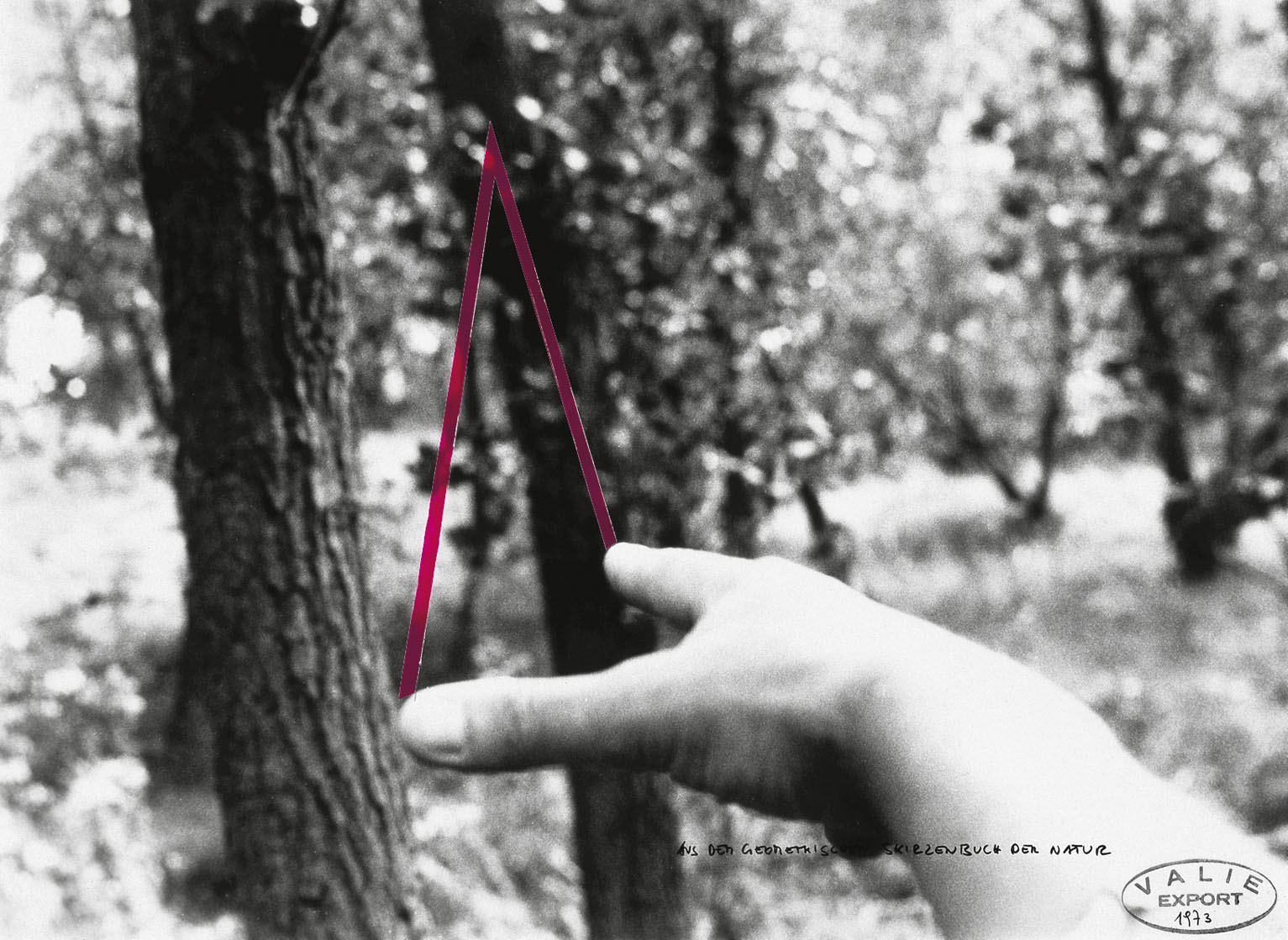
 

VALIE EXPORT (Austrian, b. 1940) 'From the Geometric Sketchbook of Nature, Tree Triangle' 1973


VALIE EXPORT (Austrian, b. 1941)
From the Geometric Sketchbook of Nature, Tree Triangle
1973
Courtesy Galerie Thaddaeus Ropac and the artist
© VALIE EXPORT, 2022, ProLitteris, Zurich


VALIE EXPORT (Austrian, b. 1940) 'Nachfügung' (Supplement) 1974


VALIE EXPORT (Austrian, b. 1941)
Nachfügung (Supplement)
1974
Courtesy Galerie Thaddaeus Ropac and the artist
© VALIE EXPORT, 2022, ProLitteris, Zurich
Photo: Eric Timmermann
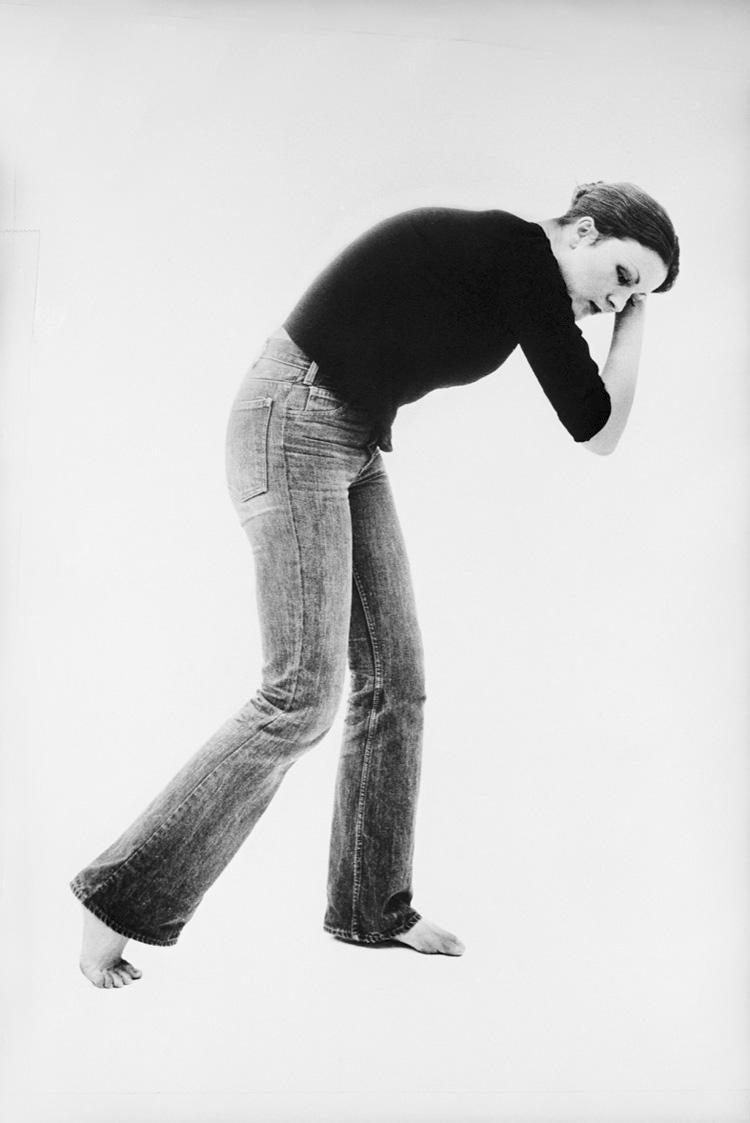
 

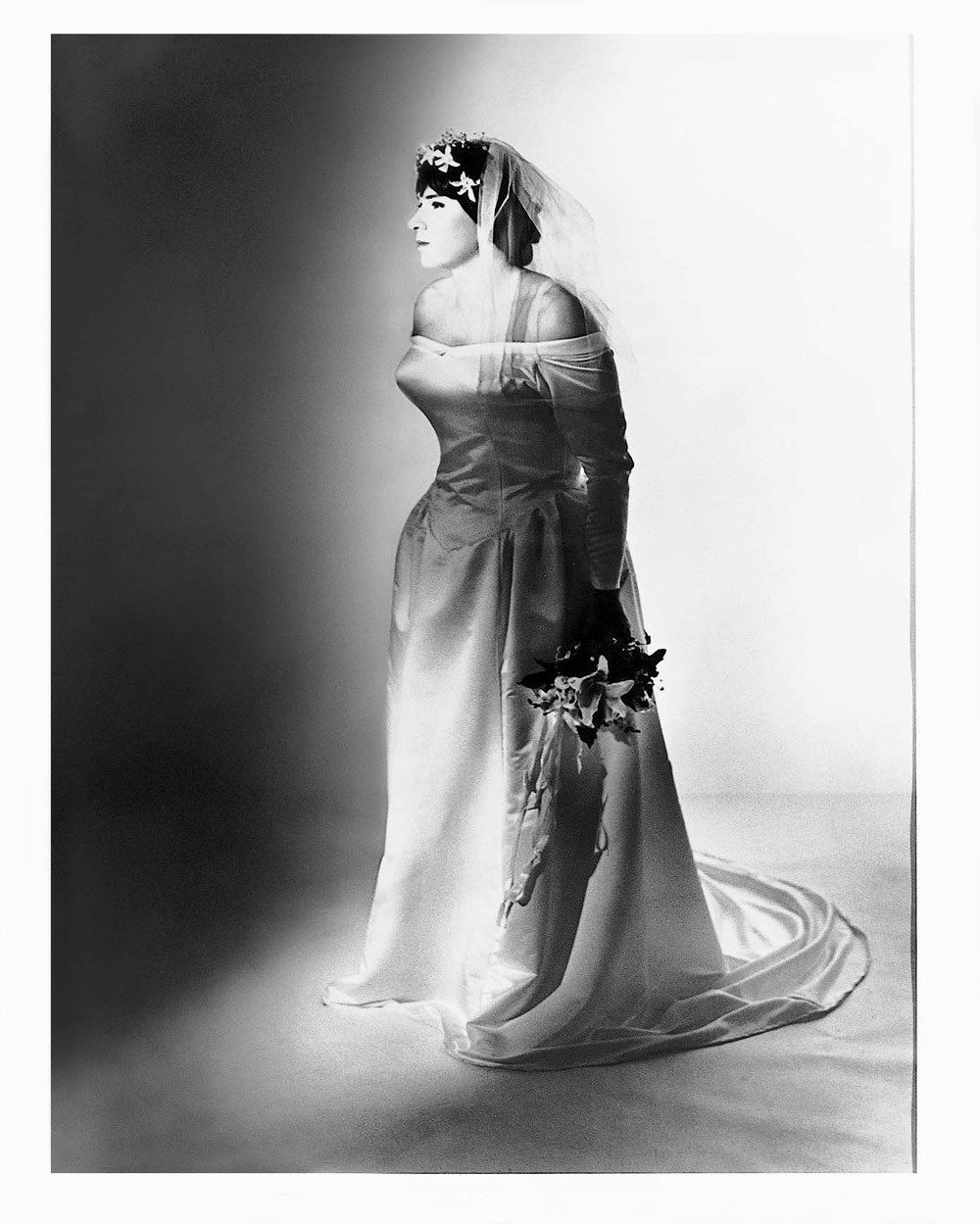
VALIE EXPORT (Austrian, b. 1940) 'Petri / fikation' (after: William Blake, Naomi Entreating Ruth and Orpah to Return to the Land of Moab, 1795) 1976, printed 1980


VALIE EXPORT (Austrian, b. 1940)
Petri / fikation (after: William Blake, Naomi Entreating Ruth and Orpah to Return to the Land of Moab, 1795)
1976, printed 1980
Black and white silver gelatin print on baryta paper laid on chip board
139.5 x 99.5cm
Courtesy Galerie Thaddaeus Ropac and the artist
© VALIE EXPORT, 2022, ProLitteris, Zurich


VALIE EXPORT (Austrian, b. 1940) 'Petri / fikation' (after: William Blake, Naomi Entreating Ruth and Orpah to Return to the Land of Moab, 1795) 1976, printed 1980


VALIE EXPORT (Austrian, b. 1940)
Petri / fikation (after: William Blake, Naomi Entreating Ruth and Orpah to Return to the Land of Moab, 1795)
1976, printed 1980
Black and white silver gelatin print on baryta paper laid on chip board
140 x 100cm
Courtesy Galerie Thaddaeus Ropac and the artist
© VALIE EXPORT, 2022, ProLitteris, Zurich


VALIE EXPORT (Austrian, b. 1940) 'Die Geburtenmadonna' 1976, printed 1980


VALIE EXPORT (Austrian, b. 1940)
Die Geburtenmadonna
1976, printed 1980
Black and white silver gelatin print on baryta paper laid on chip board
Courtesy Galerie Thaddaeus Ropac and the artist
© VALIE EXPORT, 2022, ProLitteris, Zurich
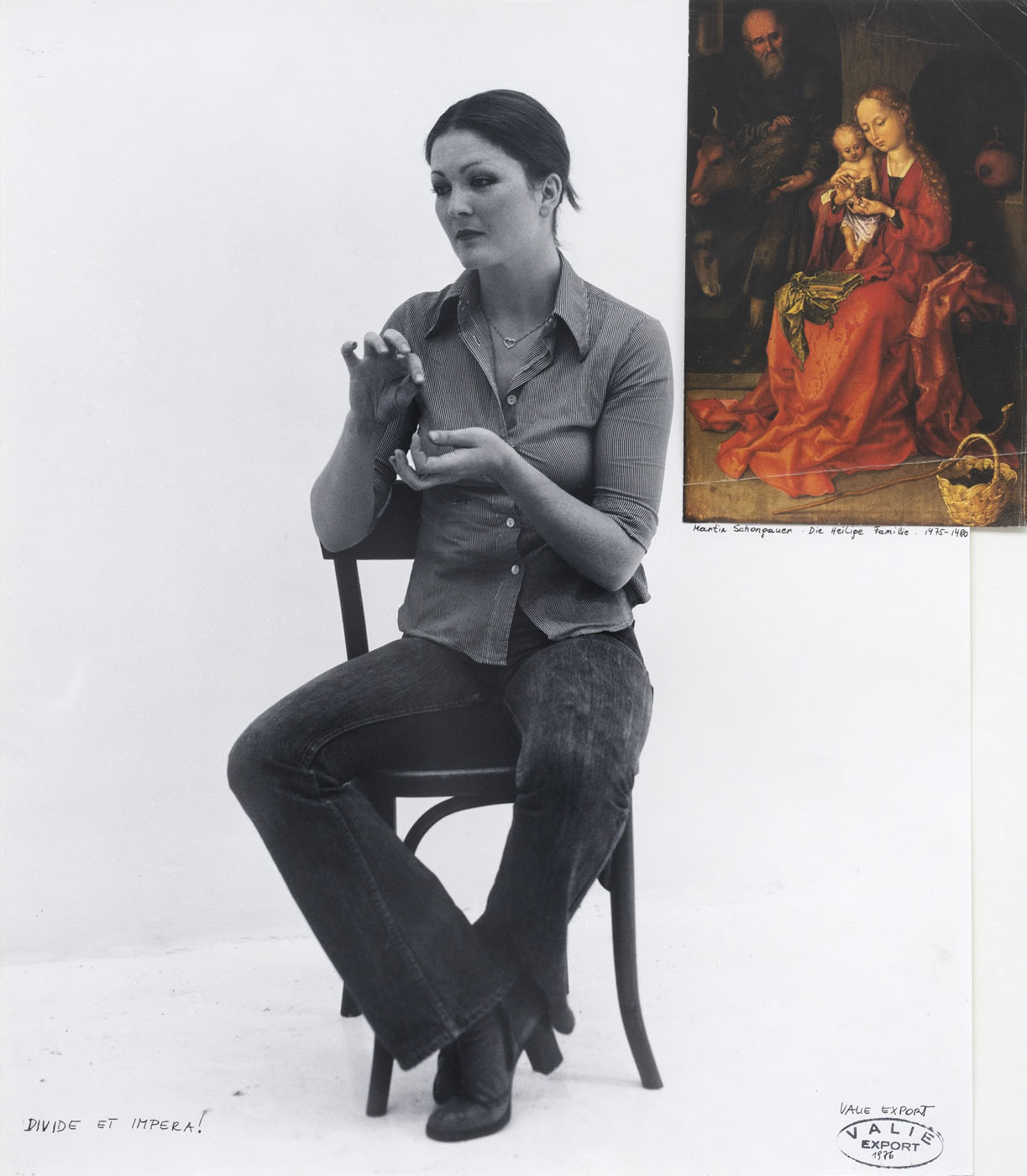
 

VALIE EXPORT (Austrian, b. 1940) 'DIVIDE ET IMPERA! after: Martin Schongauer, The Holy Family, 1475-1480' 1976


VALIE EXPORT (Austrian, b. 1941)
DIVIDE ET IMPERA! after: Martin Schongauer, The Holy Family, 1475-1480
1976
Courtesy Galerie Thaddaeus Ropac and the artist
© VALIE EXPORT, 2022, ProLitteris, Zurich

Divide et impera! = divide and rule!
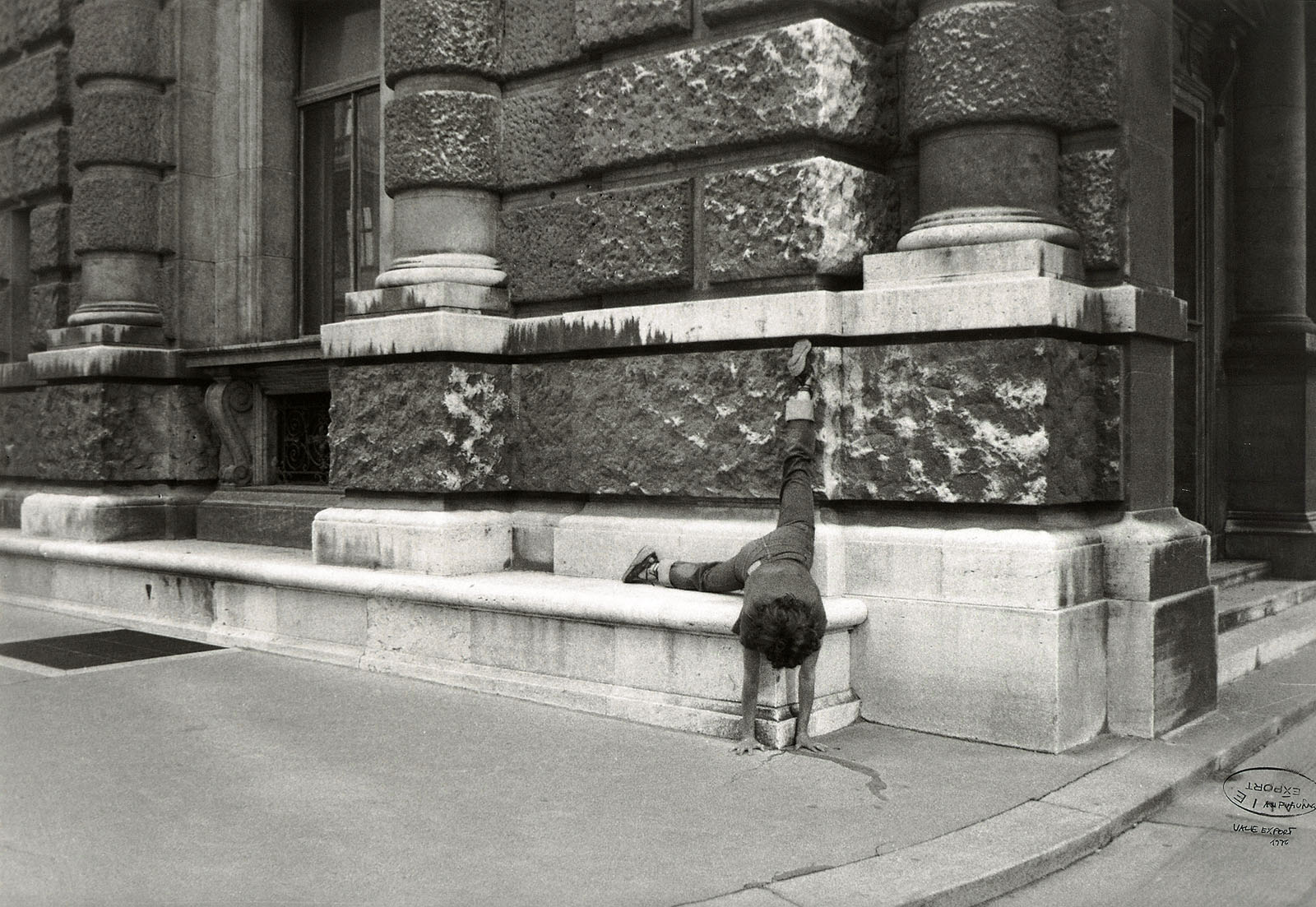
 

VALIE EXPORT (Austrian, b. 1940) 'Anfügung' (Attachment) 1976


VALIE EXPORT (Austrian, b. 1940)
Anfügung (Attachment)
1976
Albertina, Wien – Familiensammlung Haselsteiner
© VALIE EXPORT, 2022, ProLitteris, Zurich
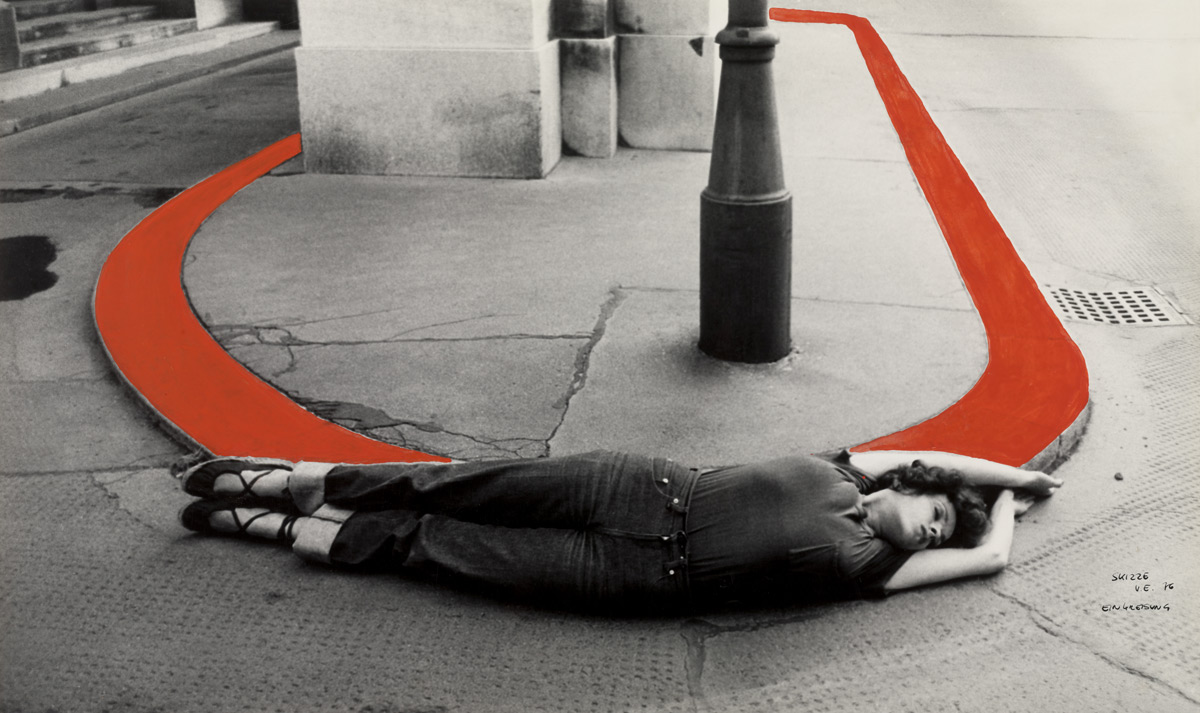
 

VALIE EXPORT (Austrian, b. 1940) 'Einkreisung' (Encirclement) 1976


VALIE EXPORT (Austrian, b. 1940)
Einkreisung (Encirclement)
1976
From the series Körperkonfigurationen (Body Configurations)
Gelatin silver print with red ink
14 x 23 7/16″ (35.5 x 59.6cm)
The Museum of Modern Art, New York
Carl Jacobs Fund
© 2012 VALIE EXPORT / Artists Rights Society (ARS), New York / VBK, Austria


In her series Body Configurations, the artist had herself or female colleagues photographed in local streets, stairwells, and alleyways, contorting their bodies to mimic the harsh geometries of the city. Influenced not only by the Actionists but also by the human sculpture of Robert Morris, Export complicates the coolly inhuman systems of Minimalism by reintroducing the human body into abstraction, an intimate yet public gesture that effortlessly transmutes the personal into the political.
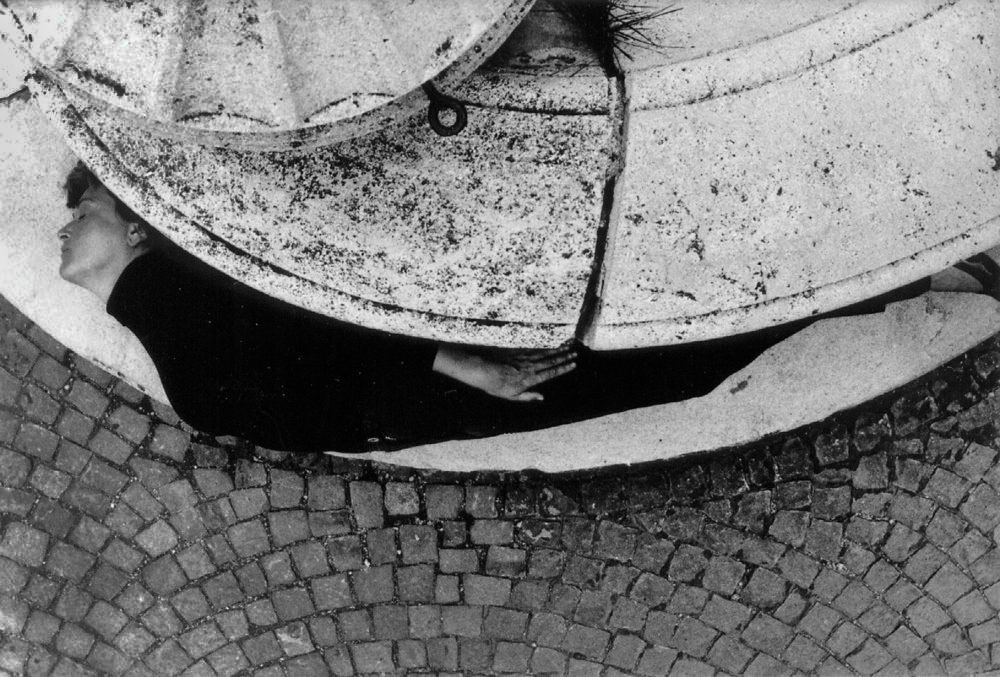
 

VALIE EXPORT (Austrian, b. 1940) From the series 'Körperkonfigurationen' (Body Configurations) 1972-1976


VALIE EXPORT (Austrian, b. 1940)
From the series Körperkonfigurationen (Body Configurations)
1972-1976
Gelatin silver print
Courtesy Galerie Thaddaeus Ropac and the artist
© VALIE EXPORT, 2022, ProLitteris, Zurich
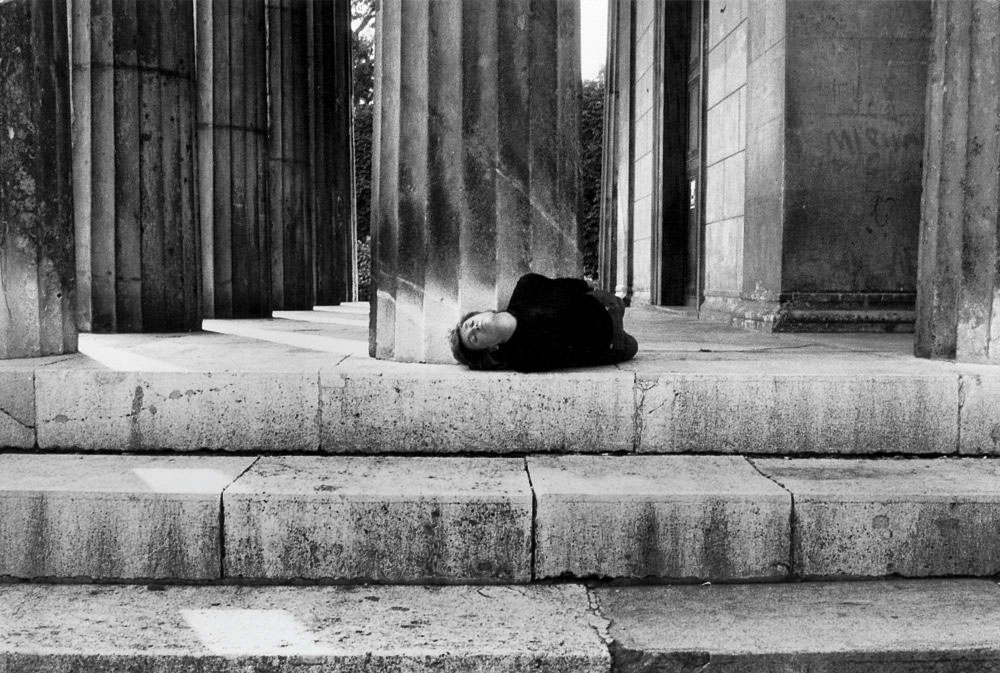
 

VALIE EXPORT (Austrian, b. 1940) from the series 'Körperkonfigurationen' (Body Configurations) 1972-1976


VALIE EXPORT (Austrian, b. 1940)
From the series Körperkonfigurationen (Body Configurations)
1972-1976
Gelatin silver print
Courtesy Galerie Thaddaeus Ropac and the artist
© VALIE EXPORT, 2022, ProLitteris, Zurich
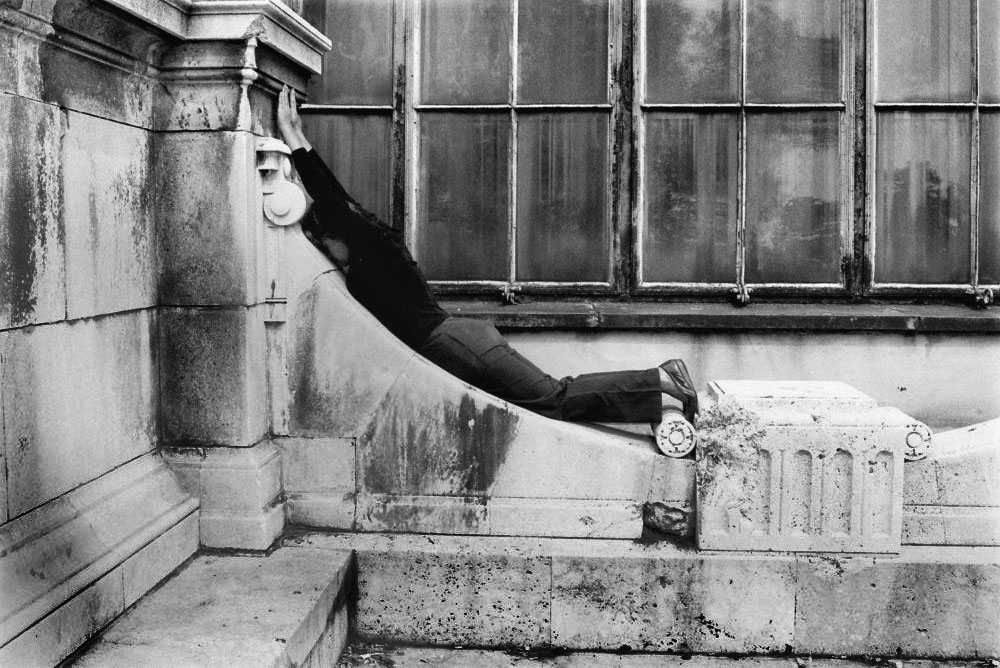
 

VALIE EXPORT (Austrian, b. 1940) from the series 'Körperkonfigurationen' (Body Configurations) 1972-1976


VALIE EXPORT (Austrian, b. 1940)
From the series Körperkonfigurationen (Body Configurations)
1972-1976
Gelatin silver print
Courtesy Galerie Thaddaeus Ropac and the artist
© VALIE EXPORT, 2022, ProLitteris, Zurich


VALIE EXPORT (Austrian, b. 1940) 'Abrundung I' (Rounding I) 1976, printed 1980


VALIE EXPORT (Austrian, b. 1940)
Abrundung I (Rounding I)
1976, printed 1980
Black and white silver gelatin print on baryta paper laid on chip board
80 x 130.5cm
Courtesy Galerie Thaddaeus Ropac and the artist
© VALIE EXPORT, 2022, ProLitteris, Zurich
 

VALIE EXPORT (Austrian, b. 1940) 'Elongation' 1976, printed 1980


VALIE EXPORT (Austrian, b. 1940)
Elongation
1976, printed 1980
Black and white silver gelatin print on baryta paper laid on chip board
80 x 130.5cm
Courtesy Galerie Thaddaeus Ropac and the artist
© VALIE EXPORT, 2022, ProLitteris, Zurich


Fotomuseum Winterthur
Grüzenstrasse 44 + 45
CH-8400
Winterthur (Zürich)

Opening hours:
Tuesday to Sunday 11am – 6pm
Wednesday 11am – 8pm
Closed on Mondays

Fotomuseum Winterthur website

LIKE ART BLART ON FACEBOOK

Back to top

Exhibition: ‘Staging Action: Performance in Photography Since 1960’ at The Museum of Modern Art (MoMA), New York

Exhibition dates: 26th January – 9th May 2011

Curators: Roxana Marcoci, Curator, and Eva Respini, Associate Curator, Department of Photography, The Museum of Modern Art


Many thank to The Museum of Modern Art, New York for allowing me to publish the photographs in the posting. Please click on the photographs for a larger version of the image.


William Wegman (American, b. 1943) 'Foamy Aftershave (L-Foamy; R-Aftershave)' 1982


William Wegman (American, b. 1943)
Foamy Aftershave (L-Foamy; R-Aftershave)
1982
28 1/2 x 22″ (72.4 x 55.9cm) each
The Museum of Modern Art, New York
Gift of Robert and Gayle Greenhill
© 2010 William Wegman


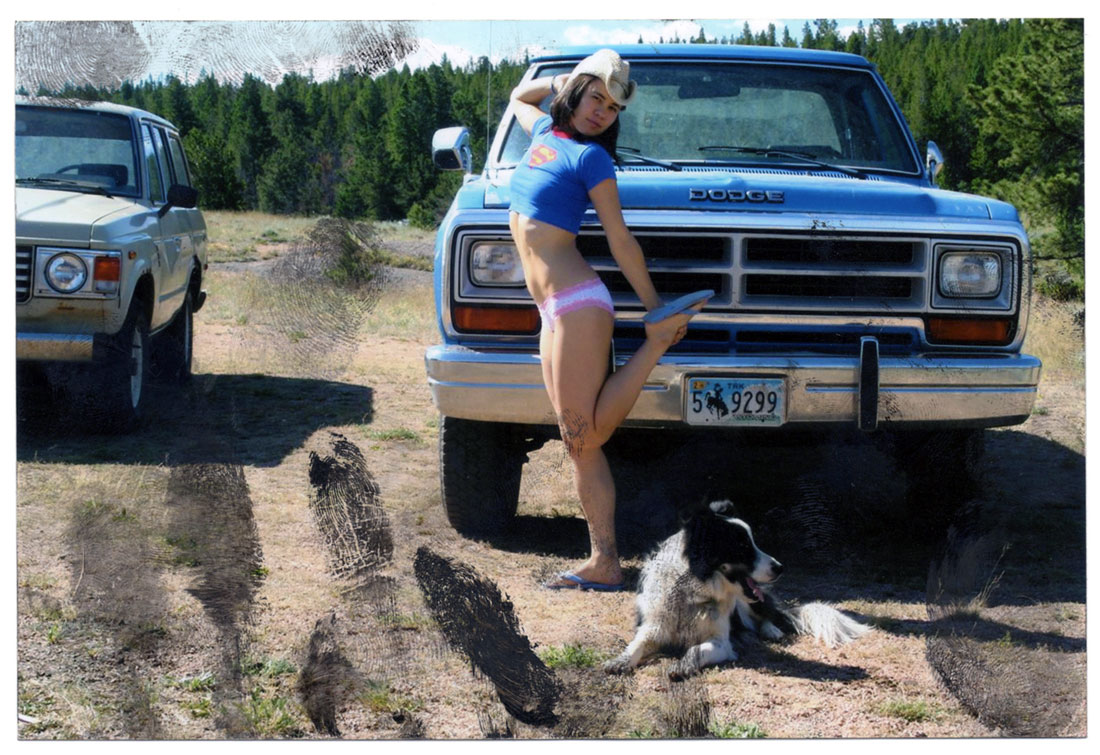
Laurel Nakadate (American, b. 1975) 'Lucky Tiger #151' 2009


Laurel Nakadate (American, b. 1975)
Lucky Tiger #151
2009
Chromogenic colour print with ink fingerprints
4 x 6″ (10.2 x 15.2cm)
The Museum of Modern Art, New York
Acquired through the generosity of the Peter Norton Family Foundation
© 2010 Laurel Nakadate


Laurel Nakadate (American, b. 1975) 'Lucky Tiger #181' 2009


Laurel Nakadate (American, b. 1975)
Lucky Tiger #181
2009
Chromogenic colour print with ink fingerprints
4 x 6″ (10.2 x 15.2cm)
The Museum of Modern Art, New York
Acquired through the generosity of the Peter Norton Family Foundation
© 2010 Laurel Nakadate


Gilbert & George (British) 'The Red Sculpture' 1975


Gilbert & George (British)
The Red Sculpture
1975
Chromogenic colour print with text
9 1/8 x 13 7/8″ (23.2 x 35.2cm)
The Museum of Modern Art, New York
Art & Project/Depot VBVR Gift
© 2010 Gilbert & George


Matthew Barney (American, b. 1967) 'Drawing Restraint 9: Shimenawa' 2005


Matthew Barney (American, b. 1967)
Drawing Restraint 9: Shimenawa
2005
Chromogenic colour print in self-lubricating plastic frame
The Museum of Modern Art, New York
Gift of Barbara Gladstone
© 2010 Matthew Barney


Installation view of the exhibition 'Staging Action: Performance in Photography Since 1960' at The Museum of Modern Art (MoMA)


Installation view of the exhibition Staging Action: Performance in Photography Since 1960 at The Museum of Modern Art (MoMA), New York showing at right, George Maciunas Performing for Self-Exposing Camera, New York 1966


George Maciunas (American, born Lithuania, 1931-1978) 'George Maciunas Performing for Self-Exposing Camera, New York' 1966


George Maciunas (American born Lithuania, 1931-1978)
George Maciunas Performing for Self-Exposing Camera, New York
1966
Gelatin silver print


Focusing on a wide range of images of performances that were expressly made for the artist’s camera, Staging Action: Performance in Photography Since 1960 draws together approximately 50 works from the Museum’s collection, and is on view from January 28 to May 9, 2011. Though performances are often intended to be experienced live, in real time, with photography playing an ancillary function in recording them, these works function as independent, expressive pictures, often staged in the absence of a public audience. At the center of these pictures is a performer (often the artist), posing or enacting an action conceived for the photographic lens. Among the works on view, approximately half are recent acquisitions by MoMA, including pieces by Laurel Nakadate, Rong Rong, Ai Weiwei, Huang Yan, and La Monte Young. Staging Action is organised by Roxana Marcoci, Curator, and Eva Respini, Associate Curator, Department of Photography, The Museum of Modern Art.

Beginning with Fluxus artists in the 1960s, Staging Action includes the work of George Maciunas, an artist who engaged the production of the self as positional rather than fixed and often played with transvestism. According to personal reminiscences of the American poet Emmett Williams, a friend, Maciunas’s closets were full of prom dresses that he scavenged from the Salvation Army. In his 1966 cross-dressing striptease, George Maciunas Performing for Self-Exposing Camera, New York, he reinforced the active construction of identity through gender indeterminacy. The participation of the camera as accomplice to the artist’s actions was also a constant theme in Vito Acconci’s work of the early 1970s. In Conversions I: Light, Reflections, Self-Control (1970-1971), Acconci tried to feminize his male body by plucking hair from his chest and navel area, pushing his pectorals together to mimic breasts, and hiding his genitals between his legs. Performances that explored gender play were soon embraced by other artists. A few years later, Richard Prince and Cindy Sherman collaborated on a photo shoot in which they sported identical suits and red-haired wigs, each playing androgynous double to the other.

Staging Action continues with artists who experimented with the camera to test the physical and psychological limits of the body. Reacting against the post-World War II repressive sexual and political atmosphere of Austrian society, the group known as the Vienna Actionists – including Günter Brus, Otto Muehl, Herman Nitsch, and Rudolf Schwarzkogler – staged highly provocative actions that were mostly ritualistic, incorporating elements such as wine and animal blood from Dionysian rites and Christian ceremonies in an attempt to free human instincts that had been repressed by society. In the early 1990s, numerous artists living in Beijing’s East Village artist community actively engaged in endurance-based performances. On view is East Village, Beijing No. 22 (1994) by Rong Rong, an iconic picture of the now seminal performance known as 12 Square Meters, which takes its title from the size of the public urinal where the action took place. The artist Zhang Huan covered himself in fish guts and honey and sat motionless for an hour in the heat of a summer day as flies gathered on his body, while the photographer Rong Rong captured the gritty performance.

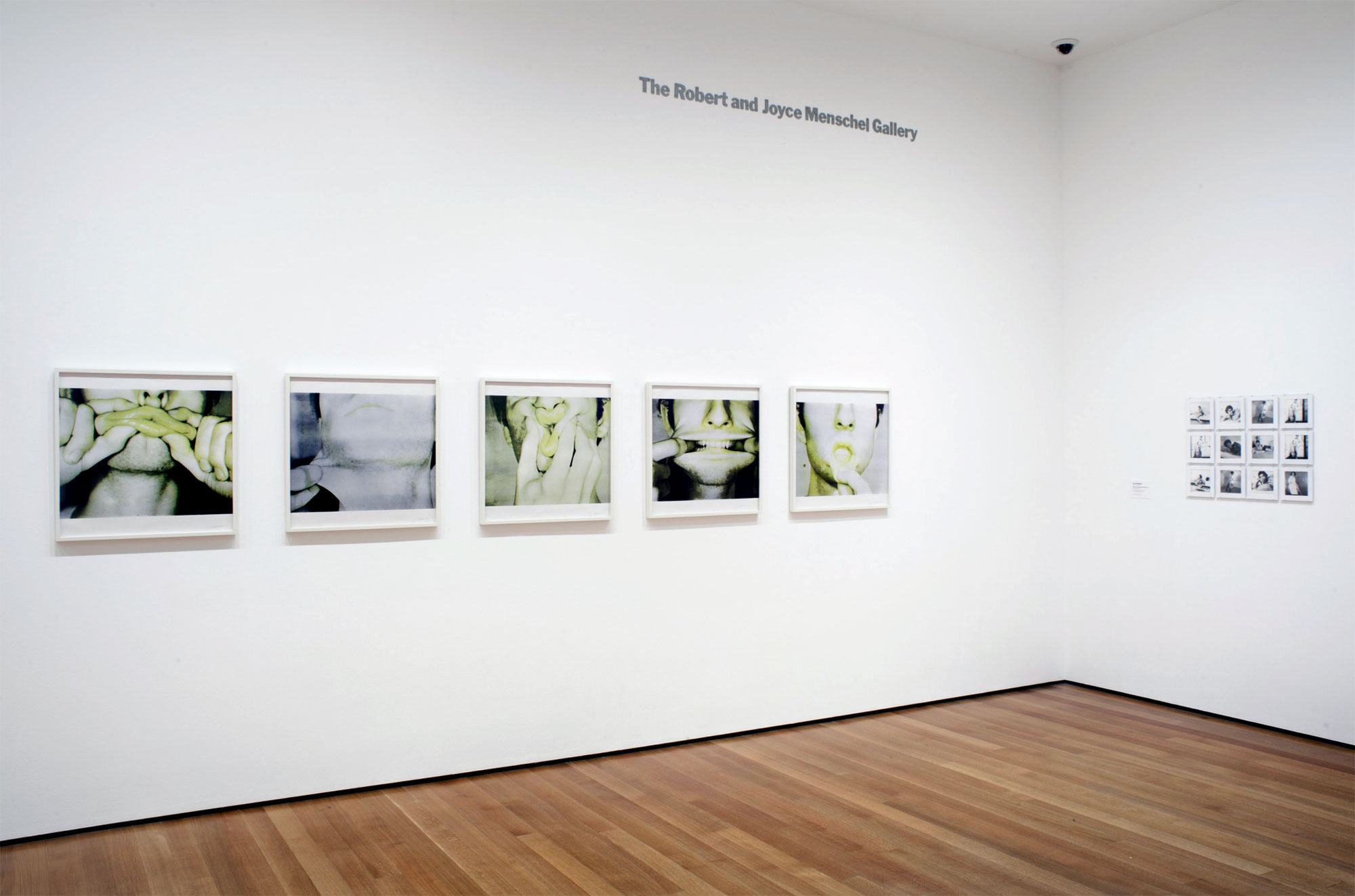
The face as a site for alteration and extreme expression is of particular interest to several artists in the exhibition. In his five-part work, Studies for Holograms (1970), Bruce Nauman poked, pulled, pinched, and kneaded his mouth, neck, and cheeks in extreme and cartoonish ways. For her 1972 work (Untitled) Facial Cosmetic Variations, Ana Mendieta used tape and make-up to mould and manipulate her face to create, at turns, disturbing and humorous results that reference the cosmetic changes women inflict upon themselves in the name of beauty. Lucas Samaras’s transformations in a series of self-portrait Polaroids from 1969-1971 suggest the plasticity or mutability of identity itself. For these works, the artist utilised an array of wigs, pancake make-up, and props to transform himself into grotesque characters for the camera.

Other performances required a sustained, emotional engagement on the part of the artist. Bas Jan Ader’s particular brand of existential-based Conceptualism is crystallised in I’m too sad to tell you (1970), in which the artist cried in front of the camera. In 1971, Adrian Piper performed a time-lapse piece titled Food for Spirit. Inspired by an assignment to write a text on Immanuel Kant’s Critique of Pure Reason, Piper began fasting in order to isolate herself into a state of self-transcendence, and took pictures of herself in front of a mirror to insure reconnaissance of her own body. The ability of the camera to both freeze and extend a moment in time was also instrumental to the Japanese artist Mieko Shiomi. In Disappearing Music for Face (1966), Shiomi sequenced a series of film stills focusing on the mouth of Yoko Ono as her smile intermittently faded into a neutral facial expression. In Laurel Nakadate’s pictures from the Lucky Tiger series that she conceived of in 2009 during a road trip through the American West, the artist is seen riding a horse in a cropped T-shirt, doing a backbend in cowboy boots by the Grand Canyon, and striking a Playboy pose in her “lucky tiger” bikinis, rehashing photographic conventions inspired by 1950s-style “cheesecake” and camera-club pictures. Lorna Simpson’s multi-part work, May, June, July, August ’57 / ’09 (2009) also responds to the photographic conventions of posing for the camera. Simpson turned to the photographic archive as source material, combining found photographs of a young African-American woman who posed for hundreds of pin-up pictures in 1957 in Los Angeles with her own performative self-portraits, in which she replicates every outfit, pose, and setting of the original photographs. Through juxtaposition, repetition, and de-contextualization, a historical fiction arises, whereby the two women, despite the many differences that separate them, seem to be joined through a shared identity.

The exhibition includes both off-the-cuff and staged performative gestures of political dissent. Ai Weiwei’s photographic series Study of Perspective (1995-2003) reveals a spirited irreverence toward national monuments. Traveling to various landmarks – from the Eiffel Tower to Tiananmen Square to the White House – the artist photographed his own arm extended in front of the camera’s lens as he gave each marker the middle finger. Robin Rhode’s pictures, presented sequentially in storyboard format, record situations in which the artist interacts with a set of objects that he has drawn, erased and redrawn in black charcoal on dilapidated walls. Untitled, (Dream House) (2005) comprises a sequence of 28 colour photographs in which Rhode mimics the act of struggling to catch a television set, a chair, and a car that appear to have been thrown at him from above. In reality, these items are drawn in cartoonish lines on an exterior wall. Referencing the South African New Year custom of tossing out old objects, the artist identifies society’s two opposing poles: consumerism and dispossession. Rhode’s pictures, like those of the other artists in Staging Action, attest to the myriad ways in which photography constitutes – not just documents – performance as a conceptual exercise.

Press release from the MoMA website


Installation view of the exhibition 'Staging Action: Performance in Photography Since 1960' at The Museum of Modern Art (MoMA)


Installation view of the exhibition Staging Action: Performance in Photography Since 1960 at The Museum of Modern Art (MoMA), New York showing at right, Rong Rong’s East Village, Beijing, No. 81 1994


Rong Rong (Chinese, b. 1968) 'East Village, Beijing, No. 81' 1994


Rong Rong (Chinese, b. 1968)
East Village, Beijing, No. 81
1994
Gelatin silver print
The Museum of Modern Art, New York
Acquired through the generosity of Peter and Susan MacGill
© 2010 Rong Rong


Rong Rong (Chinese, b. 1968) 'East Village, Beijing, No. 22' 1994


Rong Rong (Chinese, b. 1968)
East Village, Beijing, No. 22
1994
Gelatin silver print
21 7/16 x 14 5/8″ (54.5 x 37.2cm)
The Museum of Modern Art, New York
The Family of Man Fund
© 2010 Rong Rong


Robert Gober (American, b. 1954) 'Untitled' 1992-1993


Robert Gober (American, b. 1954)
Untitled
1992-1993
Gelatin silver print
16 3/4 x 12 5/8″ (42.5 x 32.1cm)
The Museum of Modern Art, New York
Gift of Werner and Elaine Dannheisser
© 2010 Robert Gober


Günter Brus (Austrian, 1938-2024) 'Self-Painting 1' 1964


Günter Brus (Austrian, 1938-2024)
Self-Painting 1
1964
Gelatin silver print
15 7/8 x 11 15/16″ (40.4 x 30.4cm)
The Museum of Modern Art
Gift of Steven Johnson and Walter Sudol
© 2010 Günter Brus


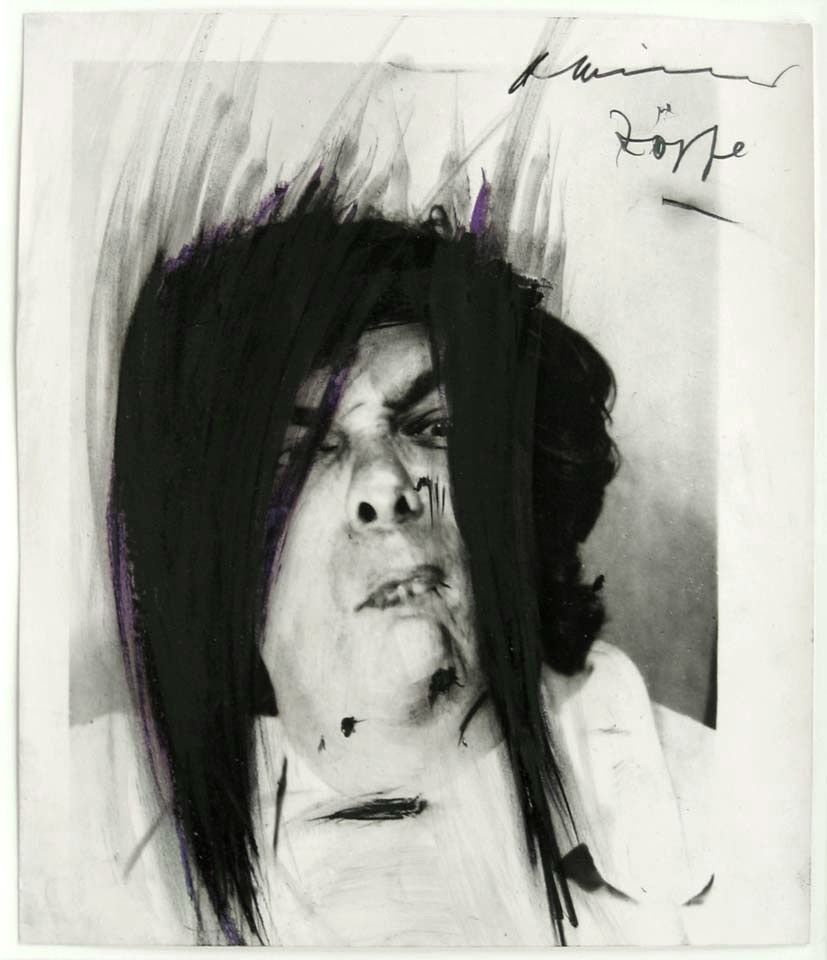
Arnulf Rainer (Austrian, b. 1929) 'Braids' 1966


Arnulf Rainer (Austrian, b. 1929)
Braids
1966
Photograph, oil stick, crayon, and pencil on paper
11 1/2 x 10″ (29.2 x 25.1cm)
Gift of The Cosmopolitan Arts Foundation
© 2010 Arnulf Rainer


Installation view of the exhibition 'Staging Action: Performance in Photography Since 1960' at The Museum of Modern Art (MoMA)


Installation view of the exhibition Staging Action: Performance in Photography Since 1960 at The Museum of Modern Art (MoMA), New York showing at left, Ana Mendieta’s Facial Cosmetic Variations 1972; at centre, the work of Rudolf Schwarzkogler; and at right, VALIE EXPORT with Peter Hassmann’s Action Pants: Genital Panic (1969, below)


VALIE EXPORT (Austrian, b. 1941) with Peter Hassmann (photographer) 'Action Pants: Genital Panic' 1969 (detail)


VALIE EXPORT (Austrian, b. 1941) with Peter Hassmann (photographer)
Action Pants: Genital Panic (detail)
1969
Screenprints
Each 26 3/8 × 19 5/8″ (67 × 49.8cm)
Museum of Modern Art, New York
The Modern Women’s Fund
© 2025 VALIE EXPORT / Artists Rights Society (ARS), New York / VBK, Austria


This series of screenprints relates to a performance in which EXPORT reportedly walked into an experimental art-film house in Munich wearing crotchless trousers and a tight leather jacket, with her hair teased wildly, and roamed through the rows of seated spectators, her exposed genitalia level with their faces. Challenging the public to engage with a “real woman” instead of with images on a screen, she illustrated her notion of “expanded cinema,” in which the artist’s body activates the live context of watching. EXPORT’s defiant feminist action was memorialised in a picture taken the following year by the photographer Peter Hassmann in Vienna. EXPORT had the image, in which she holds a machine gun, screenprinted in a large edition and fly-posted it in public squares and on the street.

Gallery label from From the Collection: 1960-69, March 26, 2016 – March 12, 2017

Text from the MoMA website


Ana Mendieta (American born Cuba, 1948-1985) 'Untitled (Facial Cosmetic Variations)' January-February, 1972


Ana Mendieta (American born Cuba, 1948-1985)
Untitled (Facial Cosmetic Variations) (detail)
January – February, 1972
Four chromogenic color prints, printed 1997
Each 19 1/4 x 12 3/4″ (48.9 x 32.4cm)
Acquired through the generosity of The Contemporary Arts
Council of The Museum of Modern Art, in honour of Barbara Foshay
© The Estate of Ana Mendieta Collection Courtesy Galerie Lelong, New York


Bas Jan Ader (Dutch, 1942-1975) 'I'm Too Sad to Tell You' 1970


Bas Jan Ader (Dutch, 1942-1975)
I’m Too Sad to Tell You
1970
Gelatin silver print
Art & Project/Depot VBVR Gift
© 2019 The Estate of Bas Jan Ader


Lee Friedlander (American, b. 1934) 'California' 1997


Lee Friedlander (American, b. 1934)
California
1997
Gelatin silver print
14 15/16 x 14 13/16″ (37.7 x 37.2cm)
The Museum of Modern Art, New York
Robert and Joyce Menschel Fund
© 2010 Lee Friedlander


Installation view of the exhibition 'Staging Action: Performance in Photography Since 1960' at The Museum of Modern Art (MoMA), New York showing at left, Bruce Nauman's 'Studies for Holograms' (1970); and at right, Lorna Simpson's 'May, June, July, August '57/'09 #8' (2009)


Installation view of the exhibition Staging Action: Performance in Photography Since 1960 at The Museum of Modern Art (MoMA), New York showing at left, Bruce Nauman’s Studies for Holograms (1970); and at right, Lorna Simpson’s May, June, July, August ’57/’09 #8 (2009, below)


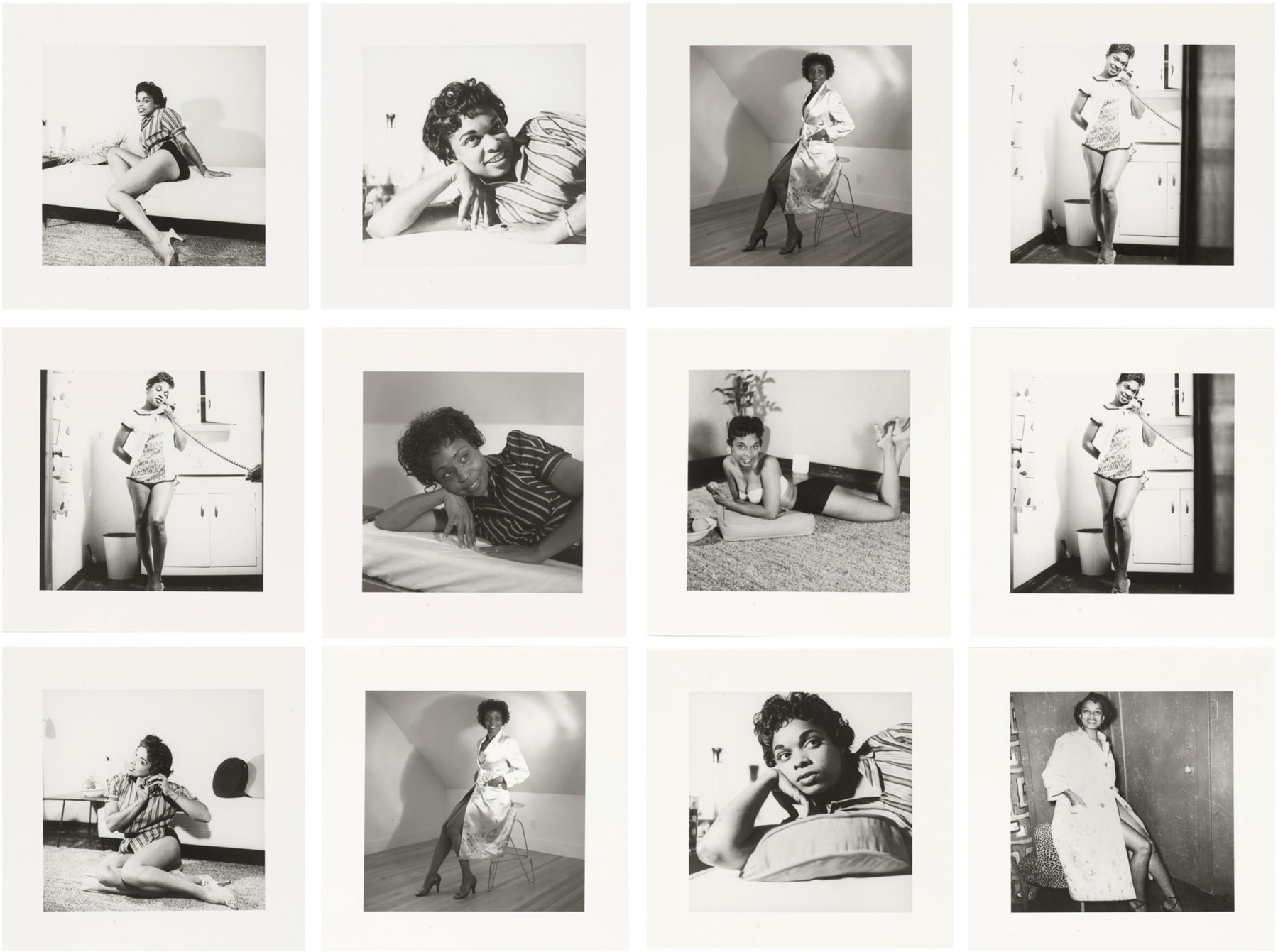
Lorna Simpson (American, b. 1960)
'May, June, July, August '57/'09 #8'
2009


Lorna Simpson (American, b. 1960)
May, June, July, August ’57/’09 #8
2009
Twelve gelatin silver prints
Each 5 × 5″ (12.7 × 12.7cm)
Museum of Modern Art, New York
Acquired through the generosity of The Contemporary Arts Council of The Museum of Modern Art
© 2025 Lorna Simpson


Lorna Simpson describes 1957-2009 as “a project that happened kind of by accident.” Since she often works with vintage photographs, advertisements, and magazines, she was on eBay in search of material, when she came across a couple of black-and-white photographs of a young black woman posing alluringly. As it turned out, these were part of a much larger album of photographs, featuring this woman, and, occasionally, a young black man, in attractively staged poses. The sellers offered the entire album to Simpson. Struck by the images, though not yet sure what to do with them, she bought it.

When the album arrived, she hung the photographs in her studio, where they remained for months. Taken in 1957, in modest domestic and outdoor settings, most of them appeared to be inspired by the pin-up, mass-produced images of seductively posed actresses and models, widely circulated in the 1940s and 50s. But the identities of the photographer, the woman, and the man were unknown. Ultimately, Simpson decided to restage these images. Using herself as her model, she mimicked the settings, clothing, hairstyles, and poses of both the woman and the man and photographed herself using black-and-white film. She then paired her own photographs with the originals (for a total of 307 individually framed images) and has displayed them together in various arrangements.

As with much of her work, it is up to viewers to draw their own conclusions about the identities of the subjects of 1957-2009. A feminist and an African American woman, Simpson has been concerned with black female identity since the beginning of her career. By providing little or no information about the people who appear in her images, she poses challenging questions about how we perceive and make assumptions about others based upon their appearance – and upon stereotypes associated with aspects of identity like skin colour, hair, gender, and clothing.

Text from the MoMA website


The Museum of Modern Art
11 West 53rd Street
New York, NY 10019
(212) 708-9400

Opening hours:
Sun – Fri 10.30am – 5.30pm
Sat 10.30am – 7.00pm

The Museum of Modern Art website

LIKE ART BLART ON FACEBOOK

Back to top