Exhibition: ‘Hill & Adamson | Fashion & Textiles 1843-1848’ at the National Galleries of Scotland, Edinburgh

Exhibition dates: 15th February – 8th June, 2025


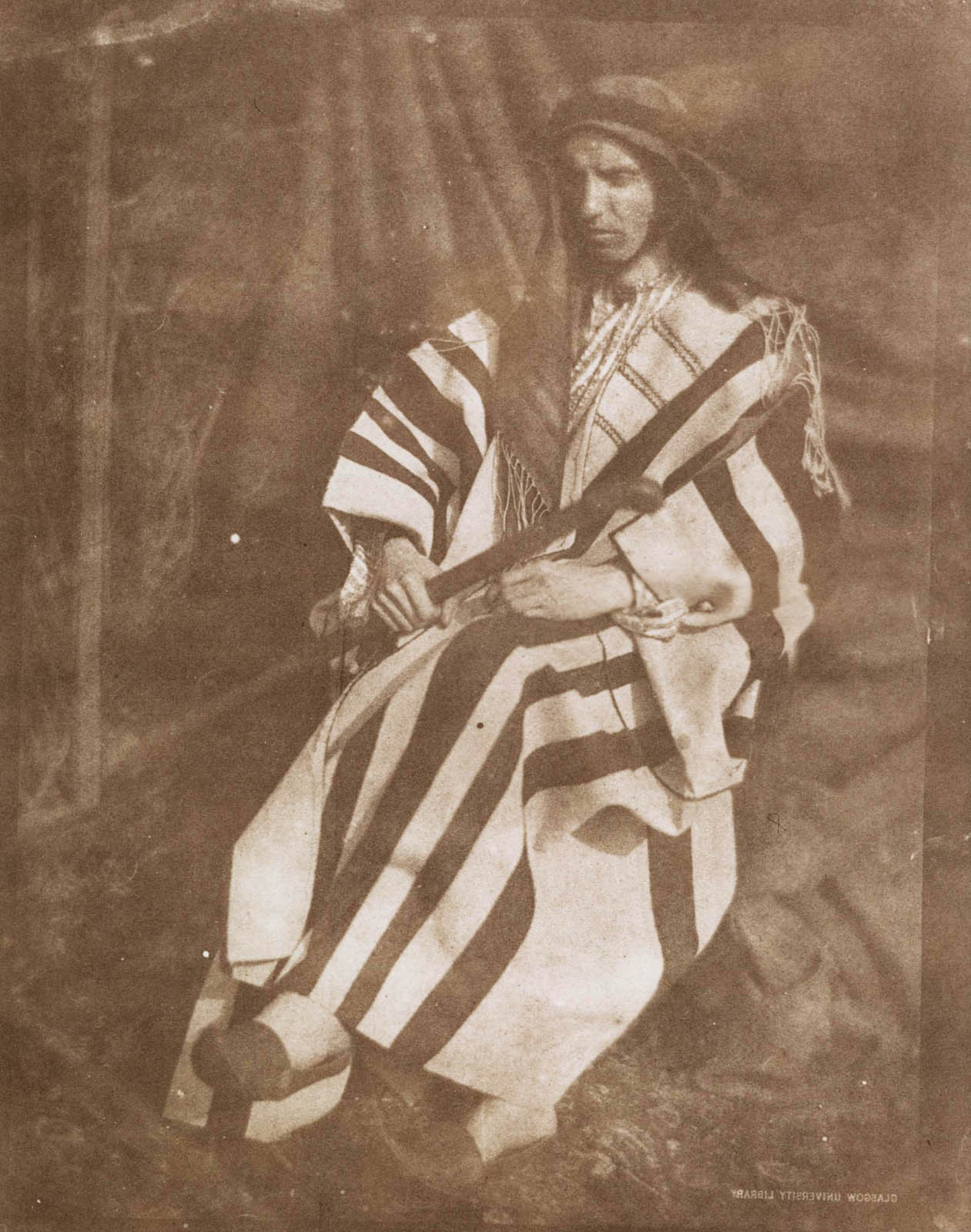
David Octavius Hill & Robert Adamson. 'Mr Finlay, deerstalker in the employ of Campbell of Islay [b]' 1843-1847


David Octavius Hill & Robert Adamson
David Octavius Hill (Scottish, 1802-1870)
Robert Adamson (Scottish, 1821-1848)
Mr Finlay, deerstalker in the employ of Campbell of Islay [b]
1843-1847
Salted paper print
20.1 x 13.6cm
Scottish National Gallery


This photograph shows Mr Finlay in Highland dress, possibly chosen by his employer. Although there is a rich history of tartan appearing in earlier portrait painting, Hill and Adamson were among the first to photograph this iconic Scottish fabric. The calotype process does not show colour, but it offered a means to capture the detail of the different styles of woven fabric. The differences in weave density and pattern between two tartans is clearly visible.


I have supplemented the meagre seven media images with other photographs from the Scottish National Gallery collection (public domain) which I have selected to further illustrate the fashion & textile theme of the exhibition.

Beautiful textiles, intricate fashion, beguiling portraits.

Taken within the first few years of the invention of photography, Hill & Adamson had a profound understanding of how the spirit of a person could be captured by the camera, clothed in working class attire, the robes of respectable society, or fantastical creations of their imagination.

Dr Marcus Bunyan


Many thankx to the National Galleries of Scotland for allowing me to publish the photographs in the posting. Please click on the photographs for a larger version of the image.


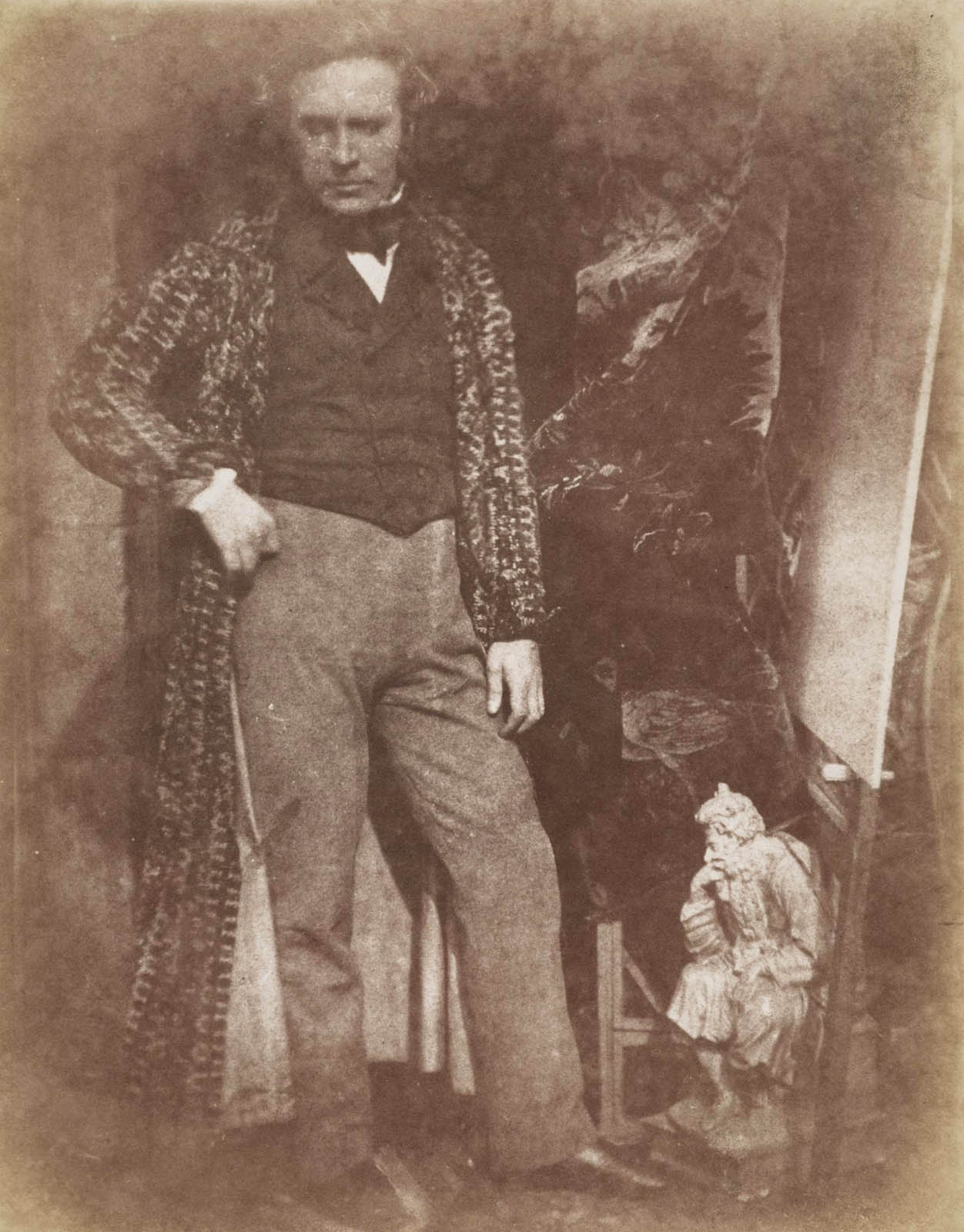
David Octavius Hill & Robert Adamson. 'Sir George Harvey' 1806-1876


David Octavius Hill & Robert Adamson
David Octavius Hill (Scottish, 1802-1870)
Robert Adamson (Scottish, 1821-1848)
Sir George Harvey, 1806 – 1876. Artist [a]
1843-1847
Salted paper print
20 x 16cm
Scottish National Gallery
Elliot Collection, bequeathed 1950


George Harvey’s boldly patterned coat was likely selected to make this portrait of an artist appear exotic. In the final print this flamboyant garment draws our eye to the sitter, in contrast with the softly draping fabric background and the hard stone of the statue in the corner.


This small display highlights the remarkable skill of pioneering photographers Hill and Adamson in using this very new technology to showcase the fashions of the 1840s.

David Octavius Hill and Robert Adamson were working in Edinburgh when photography was in its infancy. They used the calotype process, where a paper negative prepared with a salt solution is used to print a positive photograph. It created a much softer image than later photographs made with glass negatives, making it harder to capture detail.

Hill and Adamson depicted many Edinburgh residents during their partnership, from working men to society ladies. They often focused on people’s clothing to demonstrate what was unique about their lives and posed their sitters to highlight particularly interesting details. They embraced the technical challenge of photographing the varied textiles and fashions of the day. Still experimenting with the calotype process, they successfully show us the delicate pattern on a pair of lace gloves, the rough wool of tartans and tweeds and the sheen of silk.

Text from the National Galleries of Scotland website


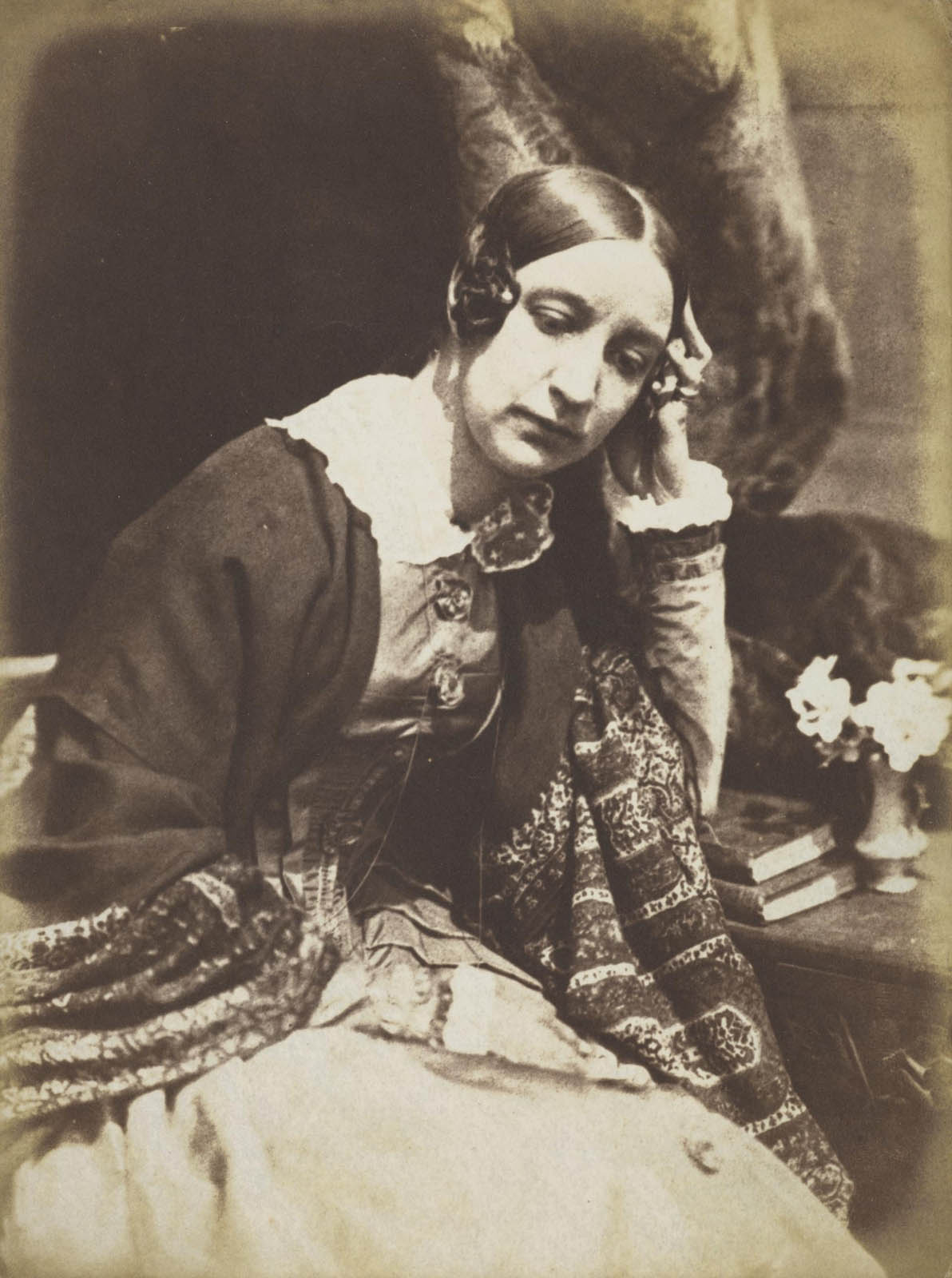
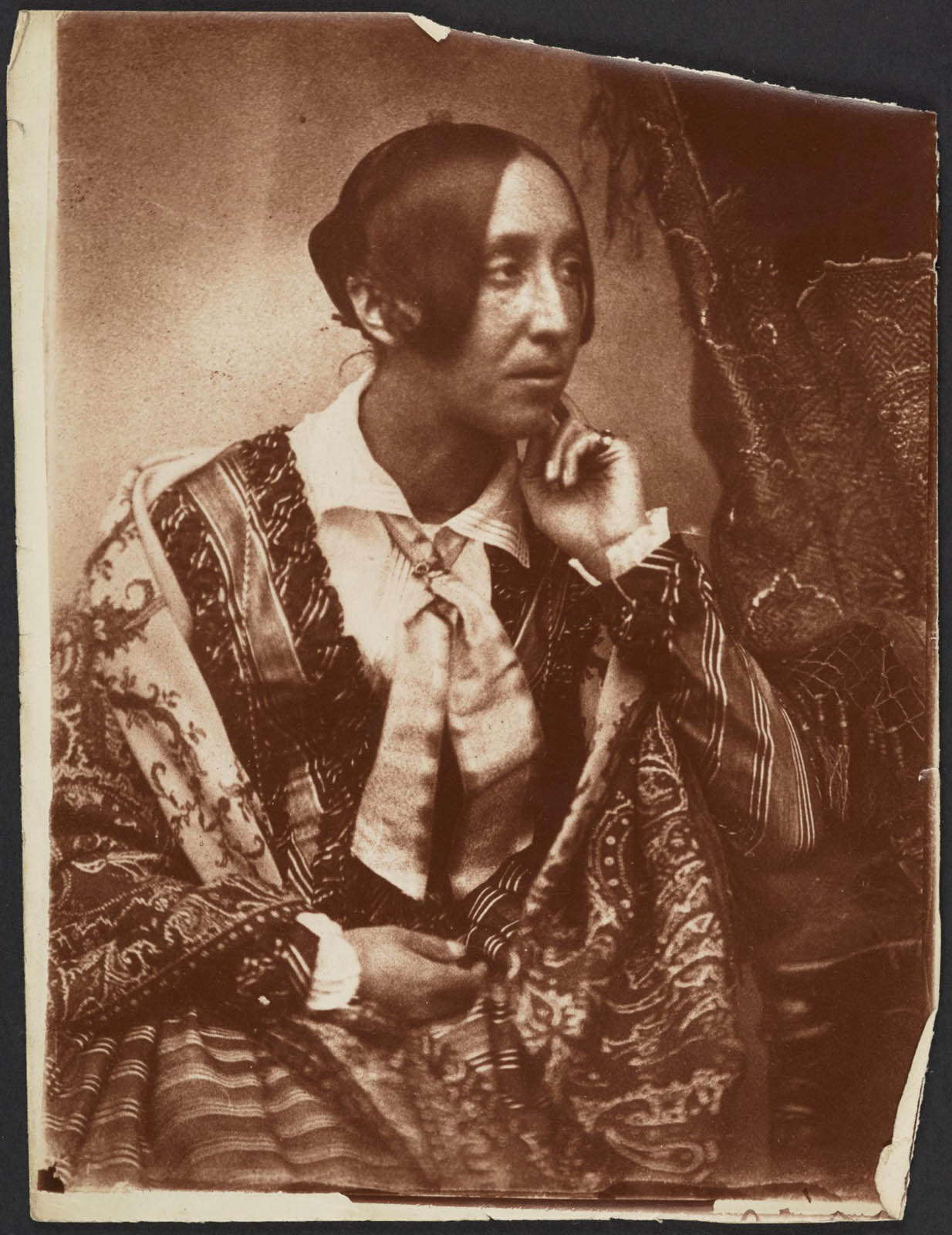
David Octavius Hill & Robert Adamson. 'Lady Mary Hamilton (Campbell) Ruthven, 1789 - 1885. Wife of James, Lord Ruthven [a]' 1843-1847


David Octavius Hill & Robert Adamson
David Octavius Hill (Scottish, 1802-1870)
Robert Adamson (Scottish, 1821-1848)
Lady Mary Hamilton (Campbell) Ruthven, 1789 – 1885. Wife of James, Lord Ruthven [a]
1843-1847
Salted paper print
19.8 x 15.3cm
Scottish National Gallery
Gift of Mrs. Riddell in memory of Peter Fletcher Riddell, 1985


The subject of this photograph is Lady Ruthven but the focus is on her clothing. The pose, with her body angled diagonally away from the camera, allowed Hill and Adamson to capture how light fell on the different textures in her outfit. In both the negative and the final print, the intricate lace of her shawl is almost translucent draped over the delicate pattern of the dress below. This is one of the most technically accomplished photographs made by Hill and Adamson during their partnership.


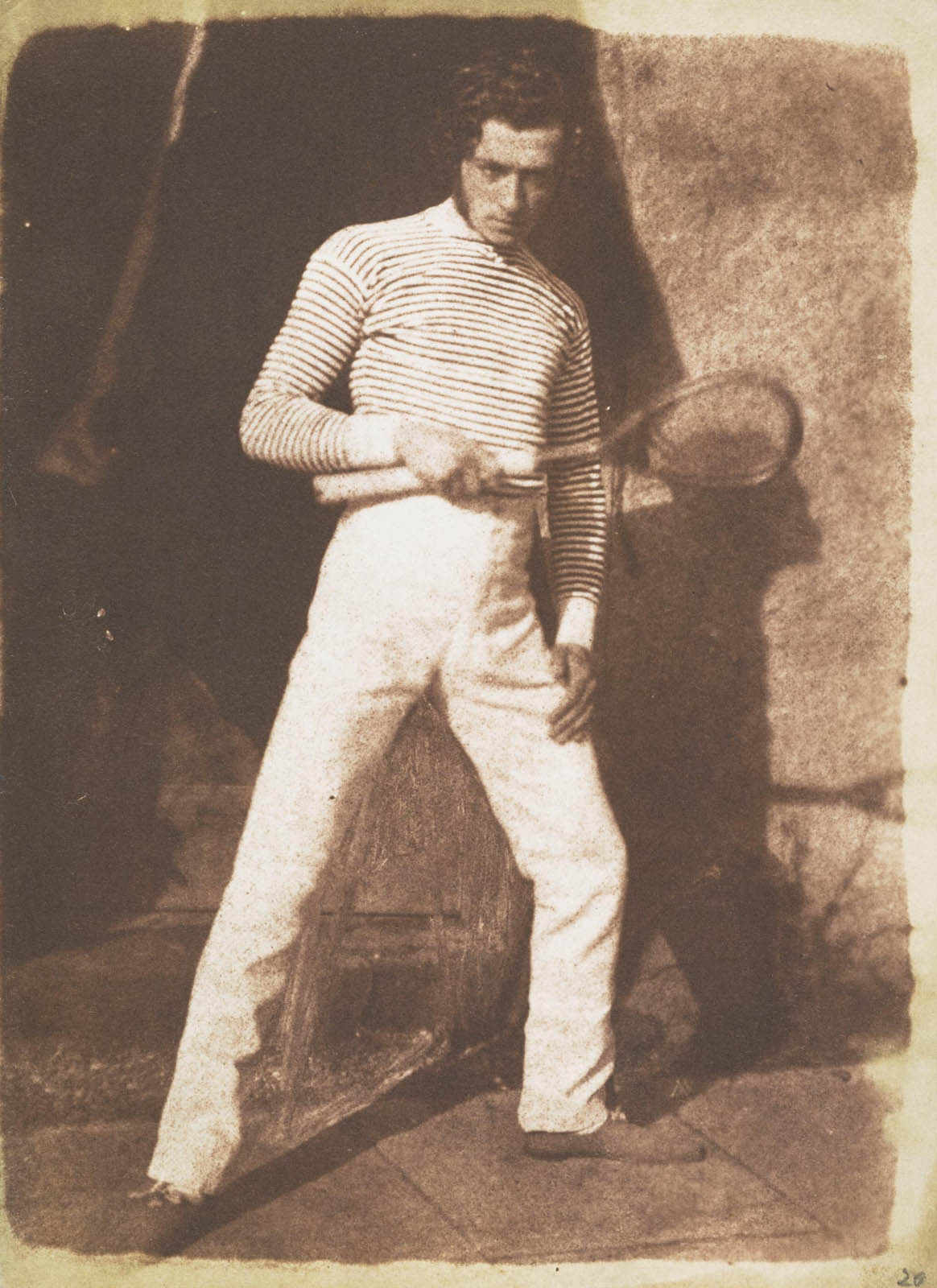
David Octavius Hill & Robert Adamson. 'Mr Laing or Laine' 1843


David Octavius Hill & Robert Adamson
David Octavius Hill (Scottish, 1802-1870)
Robert Adamson (Scottish, 1821-1848)
Mr Laing or Laine
1843
Salted paper print
19.6 x 14.3cm
Scottish National Gallery


The identity of the smartly dressed tennis player in this staged scene is uncertain and yet this calotype has become a popular picture postcard. Hill and Adamson are best remembered for the subtlety and perceptiveness of their photographic portraits but at times they showed a keenness for the representation of movement. Here movement is easy to detect in the blur of the racket and the man’s forearm. The player’s intense gaze furthermore suggests that a tennis ball just just gone out of the picture frame.


David Octavius Hill & Robert Adamson. 'Misses Binney' 1843-1847


David Octavius Hill & Robert Adamson
David Octavius Hill (Scottish, 1802-1870)
Robert Adamson (Scottish, 1821-1848)
Misses Binney
1843-1847
Salted paper print
20.4 x 14.6cm
Scottish National Gallery
Given by Miss Janet Notman


These photographs of the aristocratic Misses Binney have been carefully staged to highlight the rich and varied textiles in their outfits. The positioning in this photograph of Miss Binney’s lace-gloved hand on the dark fabric of her sister’s shawl enhances the contrast between the delicate pattern and her pale skin. This image demonstrates Hill and Adamson’s skill in capturing the unique qualities of lace, silk and satin.


David Octavius Hill & Robert Adamson. 'Jimmy Miller. Son of Professor James Miller [c]' 1843-1847


David Octavius Hill & Robert Adamson
David Octavius Hill (Scottish, 1802-1870)
Robert Adamson (Scottish, 1821-1848)
Jimmy Miller. Son of Professor James Miller [c]
1843-1847
Salted paper print
20.5 x 14.3cm
Scottish National Gallery
Given by Miss Janet Notman


Jimmy Miller was the son of James Miller, a professor of surgery at the University of Edinburgh from 1842, and an advocate of the temperance movement. The family were supporters of and had taken part in the disruption of 1843 , where a group of 450 ministers broke away from the Church of Scotland to establish the Free Church of Scotland. Jimmy was one of the few children to appear in Hill’s painting commemorating the event. Hill referred to him as ‘The Young Savage’.


David Octavius Hill & Robert Adamson. 'Mr Lane [called John Lane, Dr Lane and Edward William Lane] [a]' 1843-1847


David Octavius Hill & Robert Adamson
David Octavius Hill (Scottish, 1802-1870)
Robert Adamson (Scottish, 1821-1848)
Mr Lane [called John Lane, Dr Lane and Edward William Lane] [a]
1843-1847
Materials: Salted paper print
19.8 x 14.5cm
Scottish National Gallery
Elliot Collection, bequeathed 1950


Although this sitter is named as Mr Lane, his identity and connection to India are uncertain. During their partnership, Hill and Adamson made a small number of portraits of sitters in South Asian national dress. Mr Lane has been posed to show the layering of different patterns and textures. His position also allows us to see the shape of his headdress, and the way the beads around his neck interact with the ornate fabric of his robe and the pale undershirt below.


More Hill & Adamson photographs showing fashion not in the display


David Octavius Hill & Robert Adamson. 'Mrs Anne (Palgrave) Rigby 1777 - 1872 [f]' 1843-1847


David Octavius Hill & Robert Adamson
David Octavius Hill (Scottish, 1802-1870)
Robert Adamson (Scottish, 1821-1848)
Mrs Anne (Palgrave) Rigby 1777 – 1872 [f]
1843-1847
Salted paper print
19 x 14.4cm
Scottish National Gallery
Elliot Collection, bequeathed 1950


Anne Rigby was the widowed wife of a doctor and had fourteen children. While living in Edinburgh in the 1840s, she and her daughters were photographed on a number of occasions by Hill and Adamson. This photograph bears a striking resemblance to Whistler’s famous portrait of his mother, which is not at all surprising given that the two ladies were friends. Mrs Whistler may have owned a copy of this calotype of Mrs Rigby.


David Octavius Hill & Robert Adamson. 'Mrs Kinloch. Of Park; nee Napier [b]' 1843-1846


David Octavius Hill & Robert Adamson
David Octavius Hill (Scottish, 1802-1870)
Robert Adamson (Scottish, 1821-1848)
Mrs Kinloch. Of Park; nee Napier [b]
1843-1846
Salted paper print
20.9 x 15.4cm
Scottish National Gallery


David Octavius Hill & Robert Adamson. 'Lady Elizabeth (Rigby) Eastlake, 1809-1893. Writer' 1843-1847


David Octavius Hill & Robert Adamson
David Octavius Hill (Scottish, 1802-1870)
Robert Adamson (Scottish, 1821-1848)
Lady Elizabeth (Rigby) Eastlake, 1809 – 1893. Writer [m]
1843-1847
Salted paper print
20.8 x 15.7cm
Scottish National Gallery
Gift of Mrs. Riddell in memory of Peter Fletcher Riddell, 1985


David Octavius Hill & Robert Adamson. 'Mrs Elizabeth (Johnstone) Hall [Newhaven]' 1843-1847


David Octavius Hill & Robert Adamson
David Octavius Hill (Scottish, 1802-1870)
Robert Adamson (Scottish, 1821-1848)
Mrs Elizabeth (Johnstone) Hall [Newhaven]
1843 – 1847
Carbon print
19.80x 14.6cm
Scottish National Gallery
Edinburgh Photographic Society Collection, gifted 1987


David Octavius Hill & Robert Adamson. 'Miss Ellen and Miss Agnes Milne [Group 194]' 1843-1847


David Octavius Hill & Robert Adamson
David Octavius Hill (Scottish, 1802-1870)
Robert Adamson (Scottish, 1821-1848)
Miss Ellen and Miss Agnes Milne [Group 194]
1843-1847
Salted paper print
18.6 x 14cm
Scottish National Gallery
Edinburgh Photographic Society Collection, gifted 1987


David Octavius Hill & Robert Adamson. 'Rev. John Wilson' 1804-1875. Vice-Chancellor of the University of Bombay' 1843-1847; printed later


David Octavius Hill & Robert Adamson
David Octavius Hill (Scottish, 1802-1870)
Robert Adamson (Scottish, 1821-1848)
Rev. John Wilson, 1804 – 1875. Vice-Chancellor of the University of Bombay
1843-1847; printed later
Salted paper print
22.8 x 16.1cm
Scottish National Gallery
The MacKinnon Collection. Acquired jointly with the National Library of Scotland with assistance from The National Lottery Heritage Fund, Scottish Government and Art Fund


David Octavius Hill & Robert Adamson. 'Willie Liston, 'Redding [cleaning or preparing] the line'; Newhaven fisherman [Newhaven 3]' 1843-1847


David Octavius Hill & Robert Adamson
David Octavius Hill (Scottish, 1802-1870)
Robert Adamson (Scottish, 1821-1848)
Willie Liston, ‘Redding [cleaning or preparing] the line’; Newhaven fisherman [Newhaven 3]
1843-1847
Salted paper print
20 x 14.1cm
Scottish National Gallery
Gift of Mrs. Riddell in memory of Peter Fletcher Riddell, 1985


David Octavius Hill & Robert Adamson. 'Dr George Bell. Founder of 'Ragged Schools' [c]' 1843-1847


David Octavius Hill & Robert Adamson
David Octavius Hill (Scottish, 1802-1870)
Robert Adamson (Scottish, 1821-1848)
Dr George Bell. Founder of ‘Ragged Schools’ [c]
1843-1847
Carbon print
21.3 x 16cm
Scottish National Gallery
Elliot Collection, bequeathed 1950


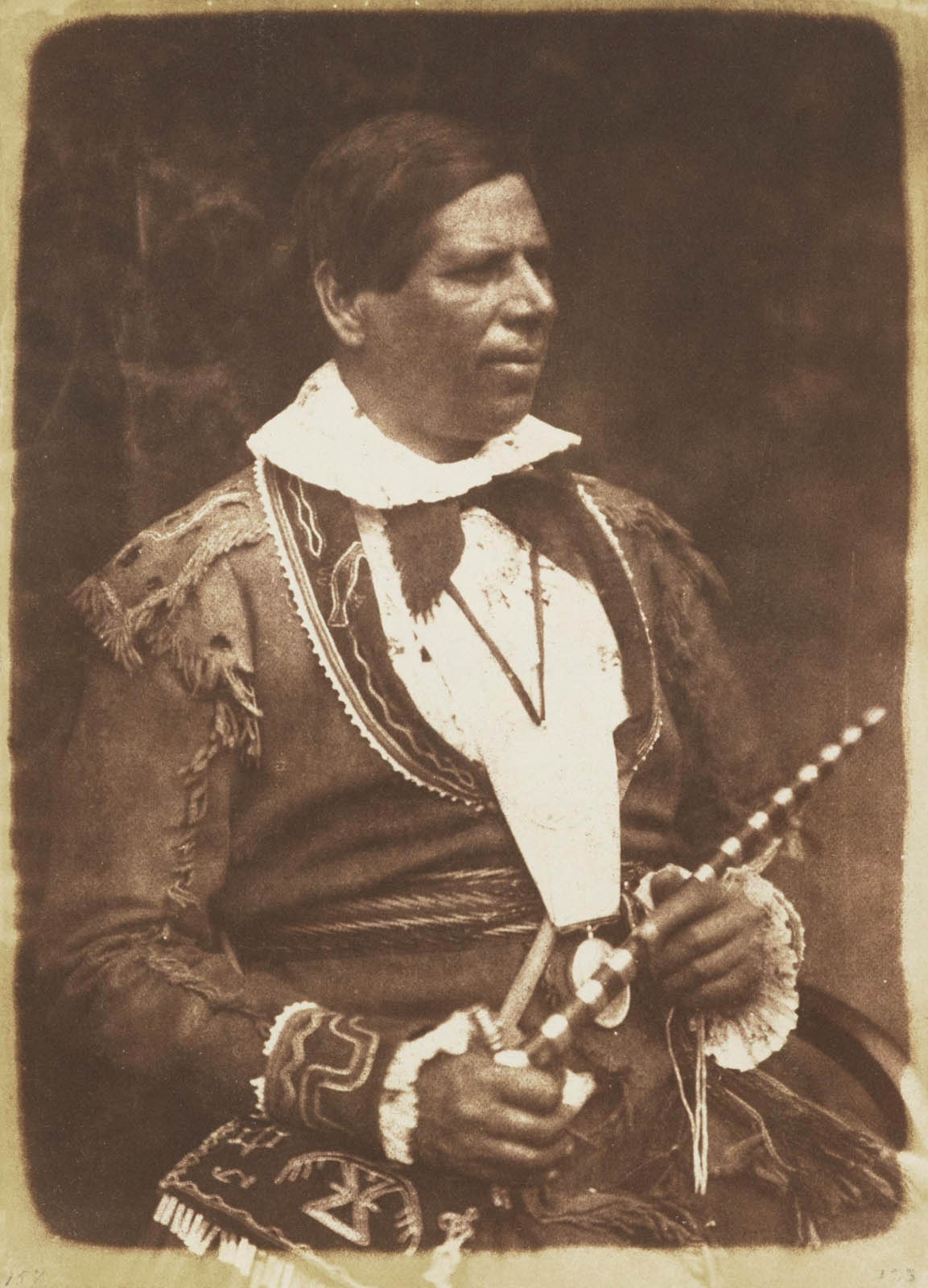
David Octavius Hill & Robert Adamson. 'Rev. Peter Jones or Kahkewaquonaby' 1802-1856. Indian chief and missionary in Canada


David Octavius Hill & Robert Adamson
David Octavius Hill (Scottish, 1802-1870)
Robert Adamson (Scottish, 1821-1848)
Rev. Peter Jones or Kahkewaquonaby, 1802 – 1856. Indian chief and missionary in Canada [c]
1843-1847
Salted paper print
20.2 x 14.6cm
Scottish National Gallery
Purchased from the estate of Sophia Finlay (Charles Finlay’s Trust), 1937


Born in Canada, Peter Jones’ father was a Welsh-born, American immigrant and his mother was of Ojibwa Indian ancestry. He grew up as a Native-American Indian with the name ‘Kahkewāquonāby’, meaning sacred waving feathers. Following his father’s wishes he was baptised by the Methodist church which led to his role as an Indian missionary. To fundraise he toured the United States and the United Kingdom, giving speeches and sermons to captivated audiences. He arrived in Edinburgh in July 1845 and this calotype is one of a series showing Jones in both Indian attire and western clothes. These are some of the oldest surviving photographs of a North American Indian.


David Octavius Hill & Robert Adamson. 'Lady Abercromby (or Hon Mrs Abercromby)' 1843-1847


David Octavius Hill & Robert Adamson
David Octavius Hill (Scottish, 1802-1870)
Robert Adamson (Scottish, 1821-1848)
Lady Abercromby (or Hon Mrs Abercromby)
1843-1847
Carbon print
20.2 x 15.7cm (trimmed)
Scottish National Gallery
Elliot Collection, bequeathed 1950


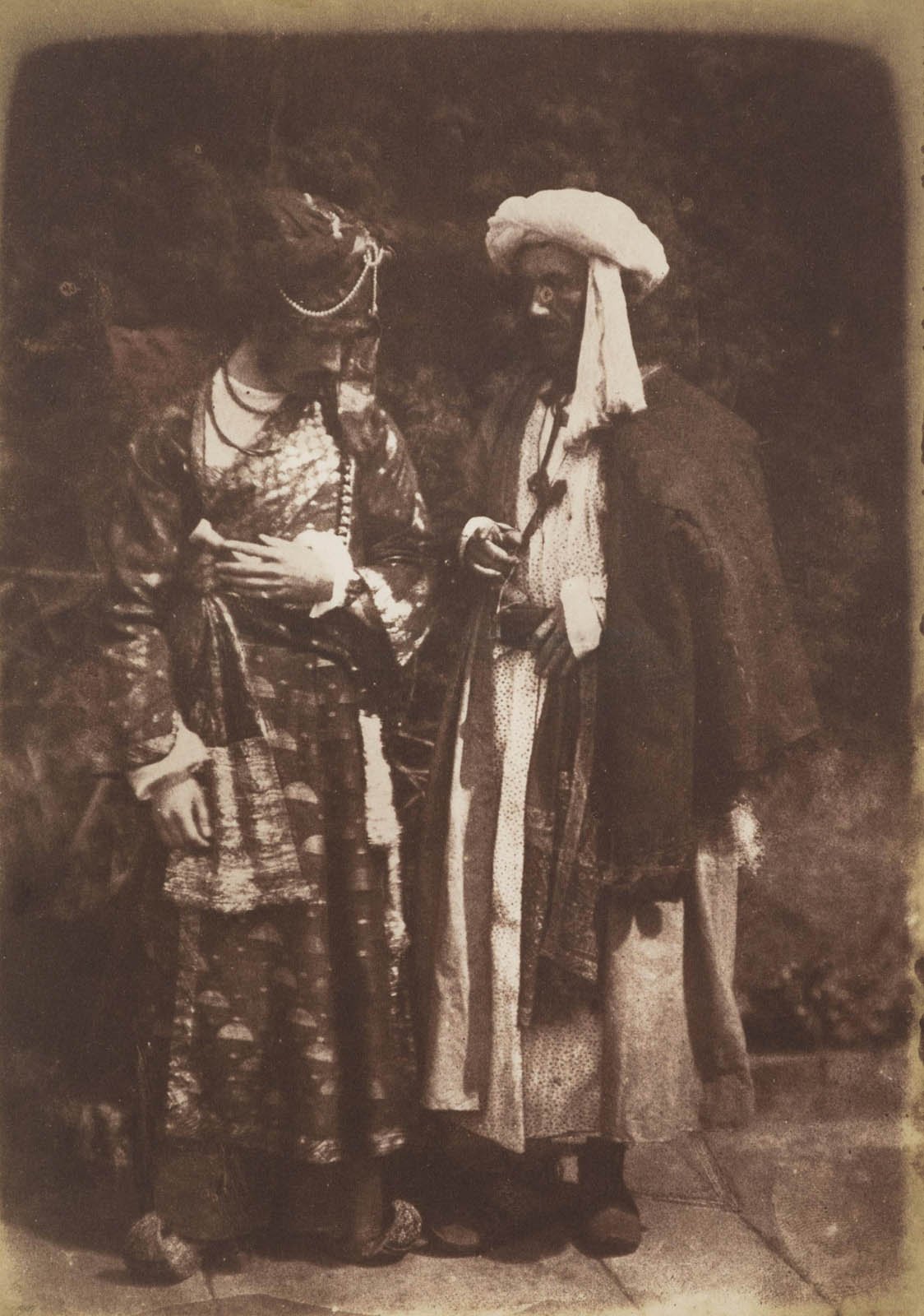
David Octavius Hill & Robert Adamson. 'Lane and Lewis in oriental dress' 1843-1847


David Octavius Hill & Robert Adamson
David Octavius Hill (Scottish, 1802-1870)
Robert Adamson (Scottish, 1821-1848)
Lane and Lewis in oriental dress
1843-1847
Salted paper print
20 x 14.2cm
Scottish National Gallery


David Octavius Hill & Robert Adamson. 'James Drummond, 1816 - 1877. History painter; curator of the National Gallery of Scotland [b]' 1843-1847


David Octavius Hill & Robert Adamson
David Octavius Hill (Scottish, 1802-1870)
Robert Adamson (Scottish, 1821-1848)
James Drummond, 1816 – 1877. History painter; curator of the National Gallery of Scotland [b]
1843-1847
Salted paper print
19.3 x 14.7cm


James Drummond was an accomplished artist and antiquarian, who specialised in history paintings. He studied at the Trustees’ Academy in Edinburgh and was elected to the Royal Scottish Academy in 1852. Between 1848 and 1859 Drummond produced a series of pencil and wash drawings of closes, streets and buildings in Edinburgh. They were later published as lithographs in a folio volume entitled ‘Old Edinburgh’. In 1868 Drummond became curator of the Scottish National Gallery, a position he held until his death in 1877. An admirer of the new medium of photography, he was a member of the Photographic Society of Scotland and owned two albums of Hill and Adamson’s calotypes.


National Galleries of Scotland
The Mound, Edinburgh, EH2 2EL

Opening hours:
Daily, 10am – 5pm

National Galleries of Scotland website

LIKE ART BLART ON FACEBOOK

Back to top


Vale George Tice (1938-2025)

April 2025


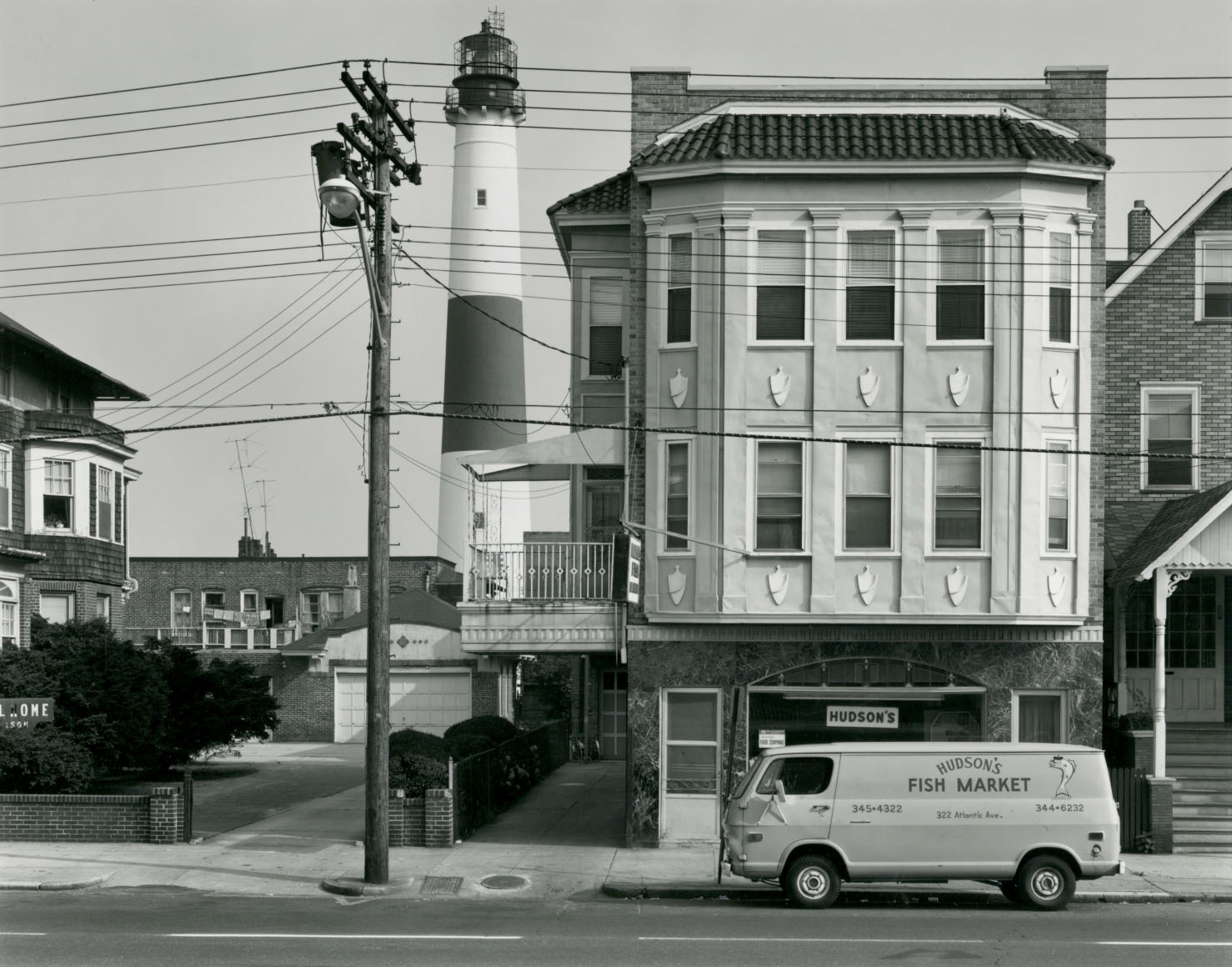
George Tice (American, b. 1938) 'Hudson's Fish Market, Atlantic City, New Jersey' 1973


George Tice (American, 1938-2025)
Hudson’s Fish Market, Atlantic City, New Jersey
1973
Gelatin silver print
Joseph Bellows Gallery


Seeing beyond the moment

In the last posting on the work of Peter Hujar I was speaking of photographers that I have a particular affinity for. Another such artist is the now departed American photographer George Tice (1938-2025) with his large format black and white photographs of the urban landscape, mainly taken around the city of New Jersey where he lived for most of his life.

I have written twice before on the work of this magnificent photographer when he was alive: “An American iconography” on the exhibition George Tice: Urban Landscapes at the Joseph Bellows Gallery, September – October 2016; and text on the exhibition George Tice Lifework: A Tribute, Photographs 1953-2013 at Joseph Bellows Gallery, June – July 2022.

Précising these texts, I would say that Tice’s ongoing epic visual poem is at its strongest in his early period, from 1973-1974.

Tice, like Atget, had an innate ability to place the camera in such as position a to reveal subject matter in a new light. More intuitive, more sensitive to other ways of seeing, these great photographers look at the world from a different point of view. Tice’s recognition of subject matter that mere mortals pass by is translated into beautiful, serene, tonal and dare I say, sensual images, that belie the complexity of their previsualisation. As Sanford Schwartz in The New York Times, on December 3, 1972 noted: “Tice’s pictures… show a remarkable blend of intimacy, affection and clear-sightedness.”

Tice’s consumate control of the construction of the image plane never gets in the way of the elemental, eternal, and magical aspects of the photograph. As he observed, “The great difficulty of what I attempt is seeing beyond the moment; the everydayness of life gets in the way of the eternal.”

It is to his great credit that Tice saw beyond the moment. He felt that magical something when you have a connection to your subject and take a special photograph, revealed in the negative and then the print. He embedded that feeling in photographs that radiate his own signature.

For his are not only photographs of the phenomenal but also the noumenal, that feeling of something ineffable that we cannot put our finger on, something in this world that is close to the ineffable mysteries of the soul – a feeling, an emotional energy of connection to earth, body, spirit and soul – for the photograph has the ability to go beyond the symbolic, to approach the impossible, the real.

Through his photographs Tice reached beyond the everyday. What more does one need to say?

Travel well on your great journey my friend.

Dr Marcus Bunyan


Many thankx to the Joseph Bellows Gallery for allowing me to publish the photographs in the posting. Please click on the photographs for a larger version of the image


George Tice (American, b. 1938) 'Rooftops, 21st and King Street, Paterson, New Jersey' 1969


George Tice (American, 1938-2025)
Rooftops, 21st and King Street, Paterson, New Jersey
1969
Gelatin silver print
Joseph Bellows Gallery


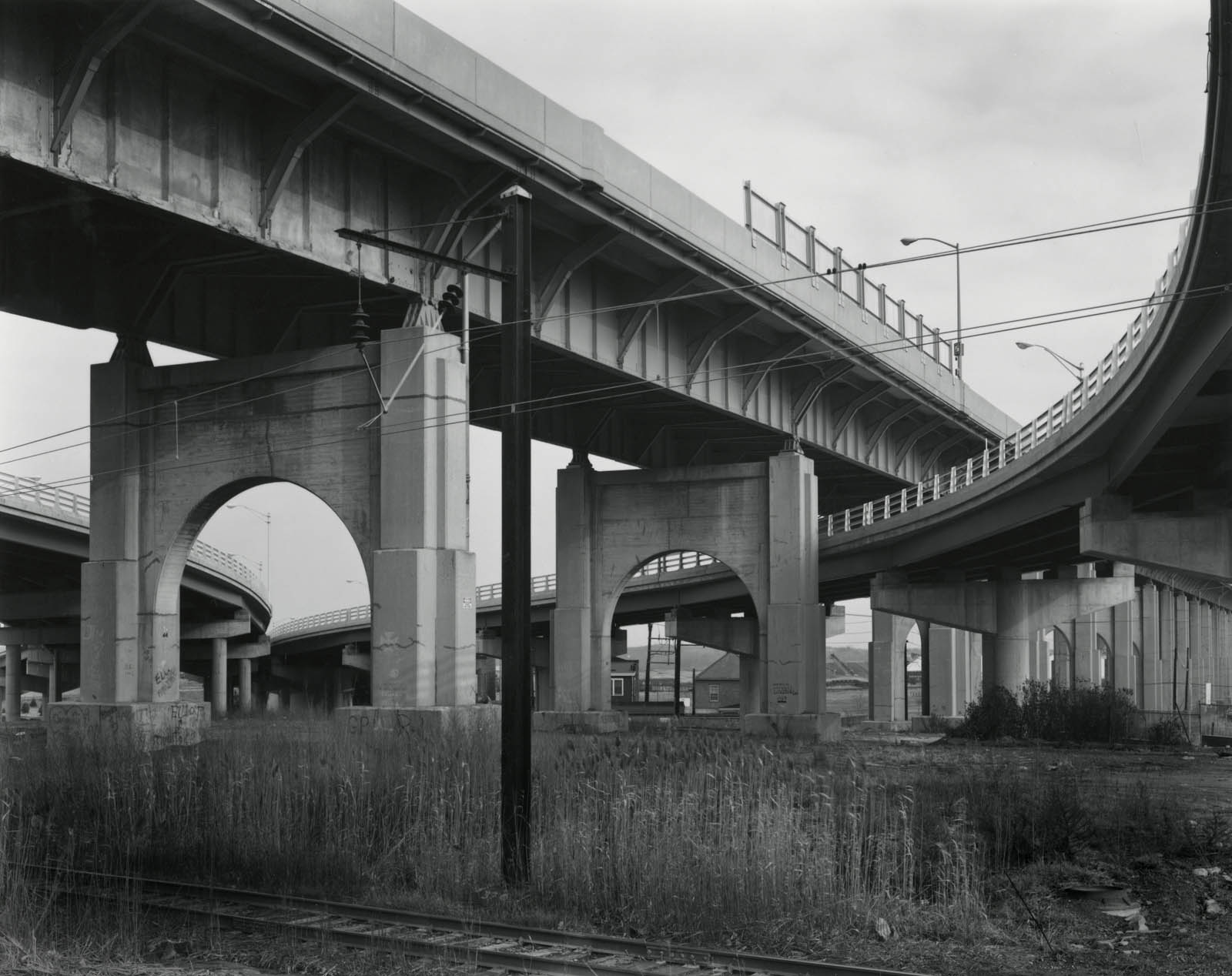
George Tice (American, 1938-2025) 'Route #440 Overpass, Perth Amboy, 1973' 1973


George Tice (American, 1938-2025)
Route #440 Overpass, Perth Amboy, 1973
1973
Gelatin silver print
Joseph Bellows Gallery


George Tice (American, b. 1938) 'Tenement Rooftops, Hoboken, New Jersey' 1974


George Tice (American, 1938-2025)
Tenement Rooftops, Hoboken, New Jersey
1974
Gelatin silver print
Joseph Bellows Gallery


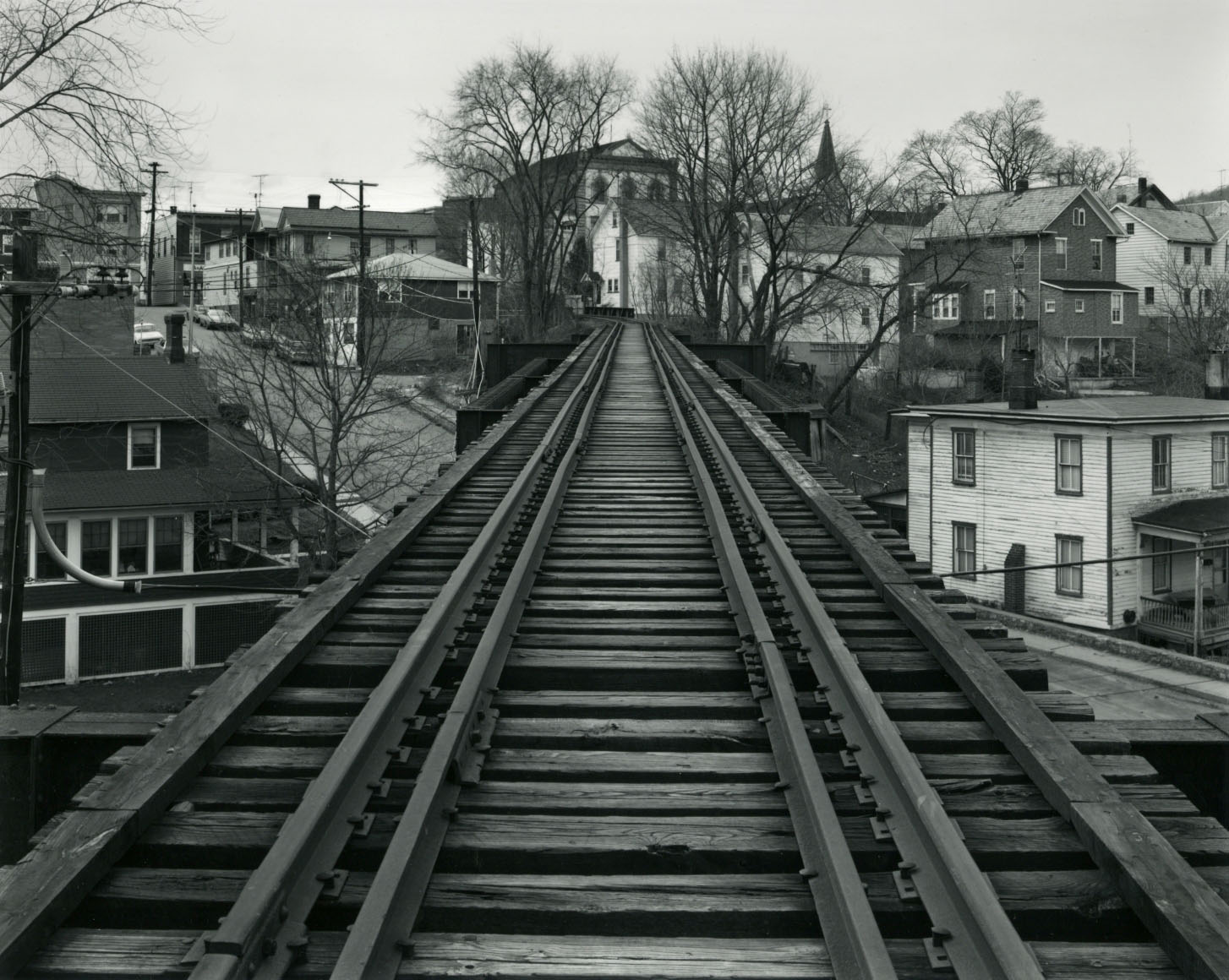
George Tice (American, b. 1938) 'Railroad Bridge, High Bridge, New Jersey' 1974


George Tice (American, 1938-2025)
Railroad Bridge, High Bridge, New Jersey, 1974
1974
Gelatin silver print
Joseph Bellows Gallery


George Tice (American, b. 1938) 'Pulaski Skyway, Jersey City, New Jersey' 1974


George Tice (American, 1938-2025)
Pulaski Skyway, Jersey City, New Jersey, 1974
1974
Gelatin silver print
Joseph Bellows Gallery


George Tice (American, b. 1938) 'Petit's Mobil Station, Cherry Hill, New Jersey' 1974


George Tice (American, 1938-2025)
Petit’s Mobil Station, Cherry Hill, New Jersey
1974
Gelatin silver print
Joseph Bellows Gallery


George Tice (American, b. 1938) 'Industrial Landscape, Kearny, New Jersey' 1973


George Tice (American, 1938-2025)
Industrial Landscape, Kearny, New Jersey
1973
Gelatin silver print
Joseph Bellows Gallery


Alfred Stieglitz (American, 1864-1946) 'The Hand of Man' 1902


Alfred Stieglitz (American, 1864-1946)
The Hand of Man
1902
Photogravure


George Tice (American, b. 1938) 'Drawbridge, Morgan, New Jersey' 1973


George Tice (American, 1938-2025)
Drawbridge, Morgan, New Jersey, 1973
1973
Gelatin silver print
Joseph Bellows Gallery


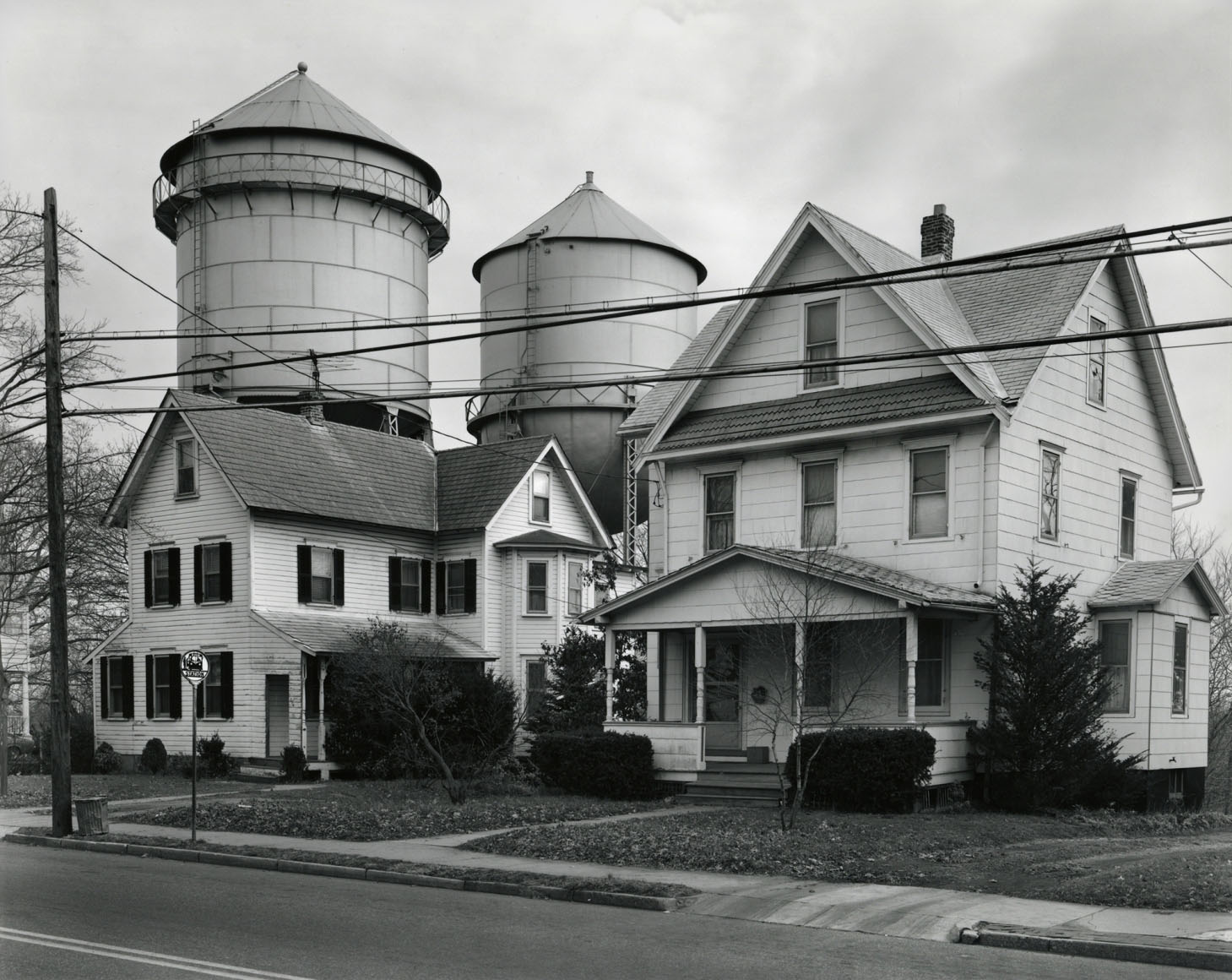
George Tice (American, b. 1938) 'Houses and Water Towers, Moorestown, New Jersey' 1973


George Tice (American, 1938-2025)
Houses and Water Towers, Moorestown, New Jersey, 1973
1973
Gelatin silver print
Joseph Bellows Gallery


George Tice (American, b. 1938) 'Goldy Pharmacy, Mount Holly, New Jersey' 1974


George Tice (American, 1938-2025)
Goldy Pharmacy, Mount Holly, New Jersey, 1974
1974
Gelatin silver print
Joseph Bellows Gallery


George Tice (American, 1938-2025) 'Steve's Diner, Route 130, North Brunswick, 1974' 1974


George Tice (American, 1938-2025)
Steve’s Diner, Route 130, North Brunswick, 1974
1974
Gelatin silver print
Joseph Bellows Gallery


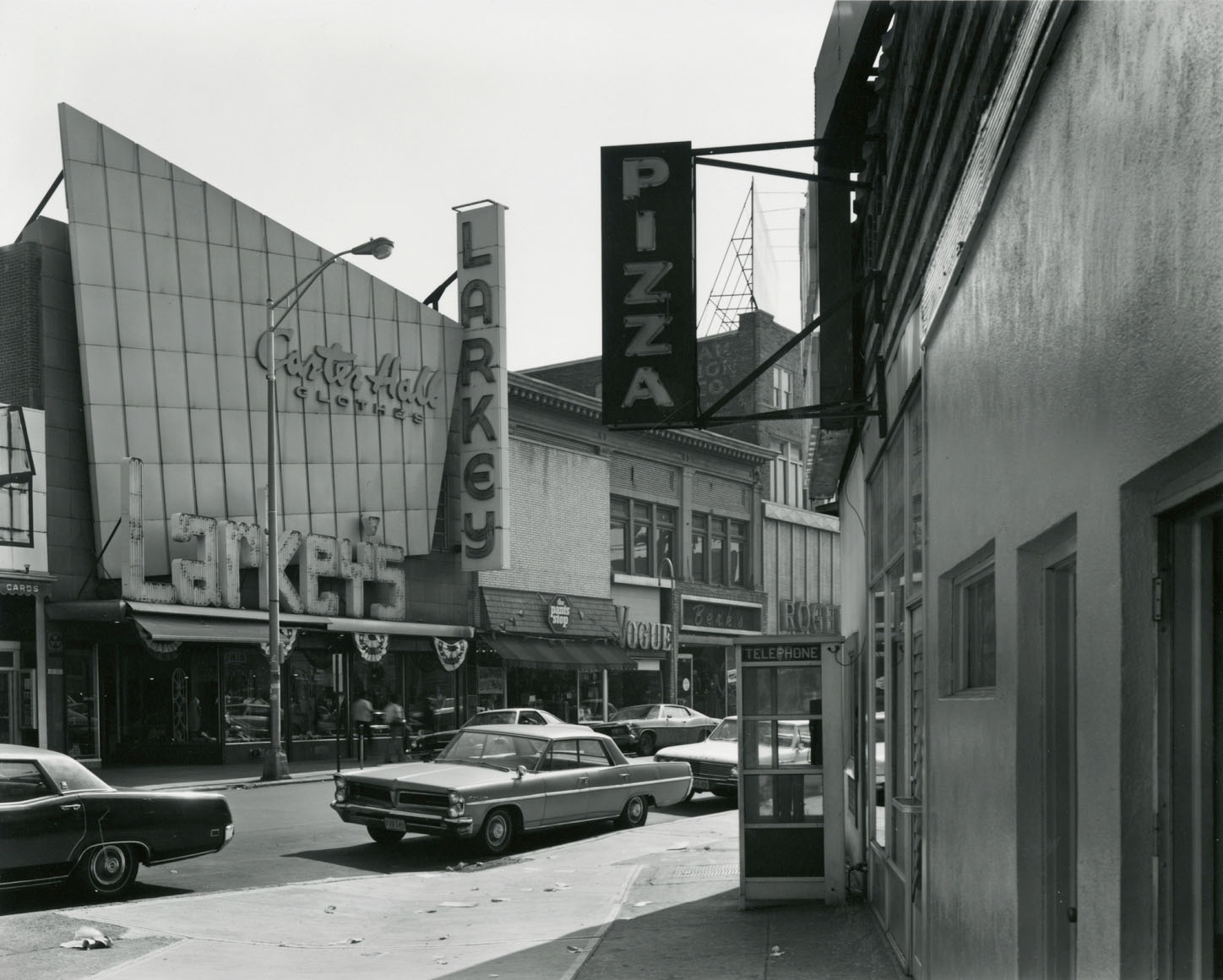
George Tice (American, b. 1938) 'Lexington Avenue, Passaic, New Jersey' 1973


George Tice (American, 1938-2025)
Lexington Avenue, Passaic, New Jersey, 1973
1973
Gelatin silver print
Joseph Bellows Gallery


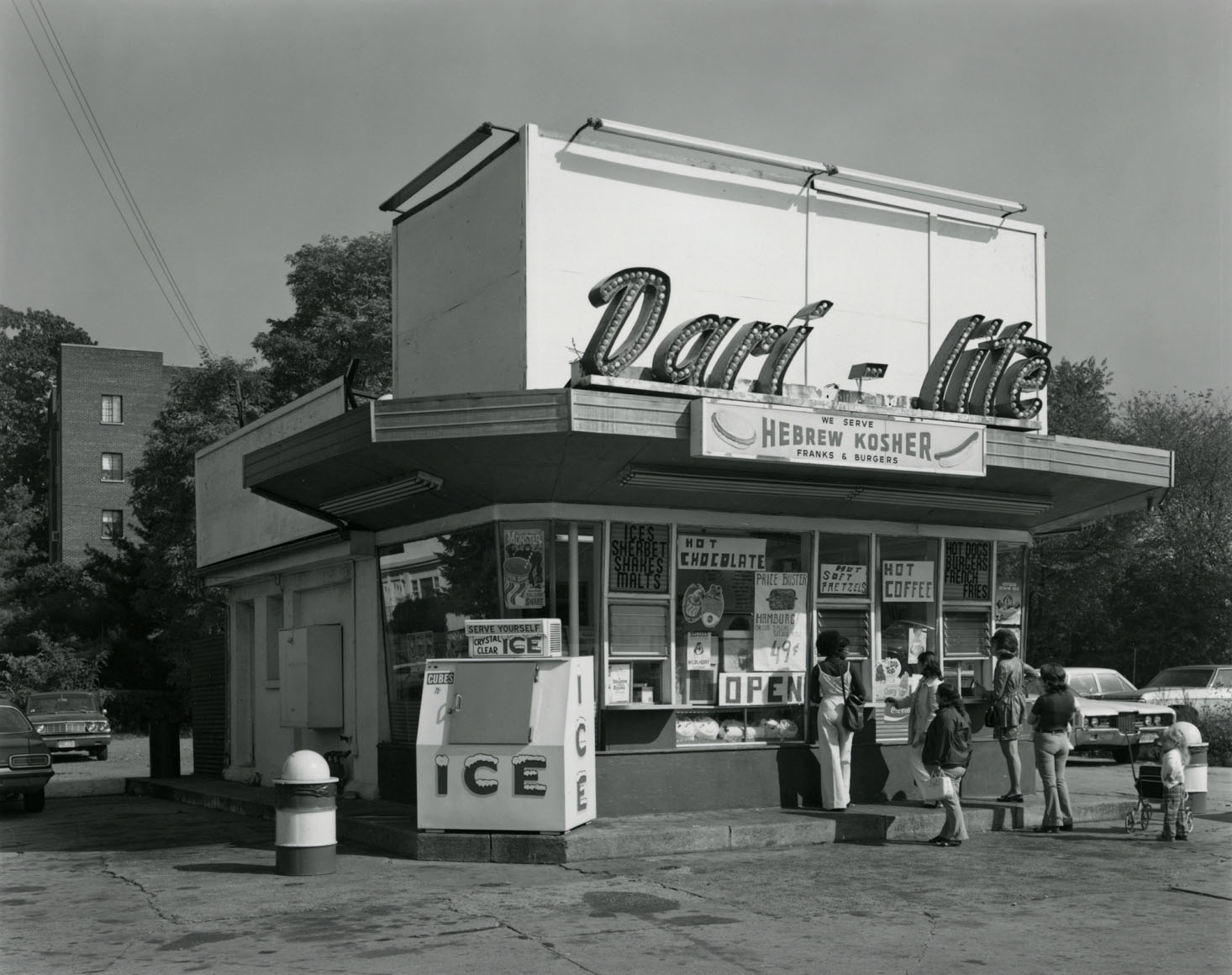
George Tice (American, b. 1938) 'Dari O' Lite, Wood Avenue, Linden, New Jersey' 1973


George Tice (American, 1938-2025)
Dari O’ Lite, Wood Avenue, Linden, New Jersey, 1973
1973
Gelatin silver print
Joseph Bellows Gallery


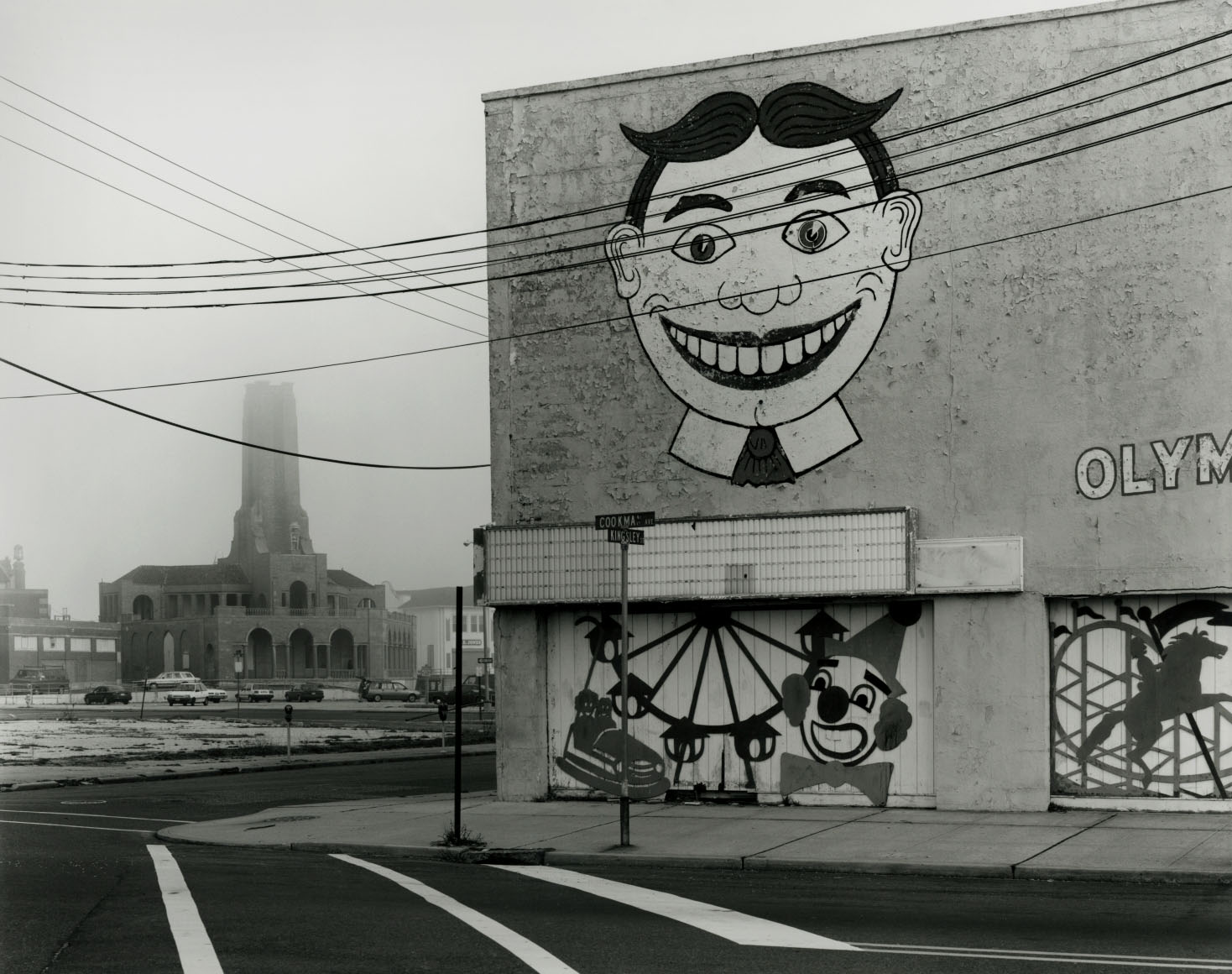
George Tice (American, b. 1938) 'Palace Funhouse, Ashbury Park, New Jersey' 1995


George Tice (American, 1938-2025)
Palace Funhouse, Ashbury Park, New Jersey, 1995
1995
Gelatin silver print
Joseph Bellows Gallery


George Tice (American, 1938-2025) 'Car For Sale, Paterson, New Jersey, 1969' 1969


George Tice (American, 1938-2025)
Car For Sale, Paterson, New Jersey, 1969
1969
Gelatin silver print
Joseph Bellows Gallery


George Tice (American, 1938-2025) 'Jahos Brothers Clothing Store, Trenton, NJ, 1973' 1973


George Tice (American, 1938-2025)
Jahos Brothers Clothing Store, Trenton, NJ, 1973
1973
Gelatin silver print
Joseph Bellows Gallery


George Tice (American, 1938-2025) 'Esso Station and Tenement House, Hoboken, NJ, 1972' 1972


George Tice (American, 1938-2025)
Esso Station and Tenement House, Hoboken, NJ, 1972
1972
Gelatin silver print
Joseph Bellows Gallery


George Tice. 'Minnie's Go-Go, Route 130, Merchantville, 1975' 1975


George Tice (American, 1938-2025)
Minnie’s Go-Go, Route 130, Merchantville, 1975
1975
Gelatin silver print
Joseph Bellows Gallery


George Tice (American, 1938-2025) 'Telephone Booth, 3 am, Railway, NJ, 1974' 1974


George Tice (American, 1938-2025)
Telephone Booth, 3 am, Railway, NJ, 1974
1974
Gelatin silver print
Joseph Bellows Gallery


Joseph Bellows Gallery
7661 Girrard Avenue
La Jolla, California
Phone: 858 456 5620

Opening hours:
Tuesday – Saturday 11am – 5pm and by appointment

Joseph Bellows Gallery website

LIKE ART BLART ON FACEBOOK

Back to top

Exhibition: ‘Daido Moriyama: Encounters’ at the Print Sales Gallery at The Photographers’ Gallery, London

Exhibition dates: 7th February – 13th April, 2025


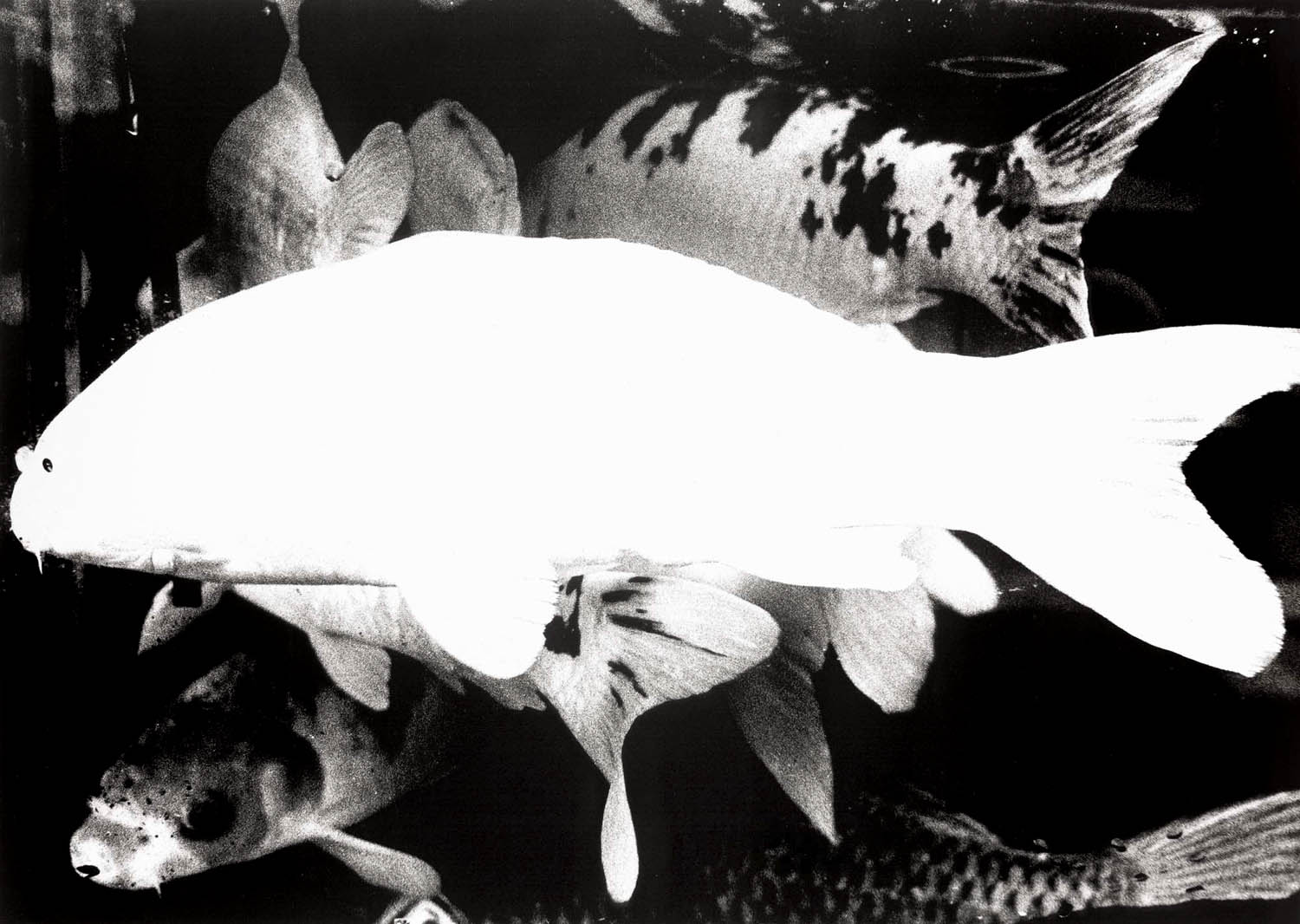
Daido Moriyama (Japanese, b. 1938)
'Ebina, Kanagawa'
1969 From 'A Hunter'


Daido Moriyama (Japanese, b. 1938)
Ebina, Kanagawa
1969
From A Hunter
Gelatin silver print
23 x 35″
Courtesy of the Daido Moriyama Photo Foundation and The Photographers’ Gallery


I have so many exhibitions lined up in the next few weeks that there will be some mid-week postings!

It is a great privilege and pleasure to be able to publish these photographs by master Japanese photographer Daido Moriyama (Japanese, b. 1938), many of which were unknown to me. Thank you to The Photographers’ Gallery for allowing me to do so…

Moriyama’s photographic style is unmistakable. “Renowned for his bold are, bure, boke aesthetic – grainy, blurry and out-of-focus images that defy photographic convention”, Moriyama’s contrasty, slightly high key, sometimes flash photographs of unusual perspectives and intimate glances capture “something that’s mysterious and unknown in everyday life.”

This buying exhibition highlights the quieter, more reflective moments of Moriyama’s work. I know only too well what sensitivity and envisioning it takes to picture these intimacies of everyday life … almost inconsequential until they are bought into the photographer’s consciousness in a resolved manner (previsualisation), then through negative and print and eye into the consciousness of the viewer.

The images are memorable and unforgettable. Buy one!

Dr Marcus Bunyan


Many thankx to The Photographers’ Gallery for allowing me to publish the photographs in the posting. Please click on the photographs for a larger version of the image.


“It may look like I’m just pointing the camera at what’s in front of me. But I’m trying to photograph what people see, but don’t notice – something that’s mysterious and unknown in everyday life.”


Daido Moriyama


Daido Moriyama (Japanese, b. 1938) 'Untitled' 1968 From 'Japan: A Photo Theater'


Daido Moriyama (Japanese, b. 1938)
Untitled
1968
From Japan: A Photo Theater
Gelatin silver print
14 x 17″
Courtesy of the Daido Moriyama Photo Foundation and The Photographers’ Gallery


Daido Moriyama (Japanese, b. 1938) 'Camera Mainichi, Hiroshima' 1974


Daido Moriyama (Japanese, b. 1938)
Camera Mainichi, Hiroshima
1974
Gelatin silver print
11 x 14″
Courtesy of the Daido Moriyama Photo Foundation and The Photographers’ Gallery


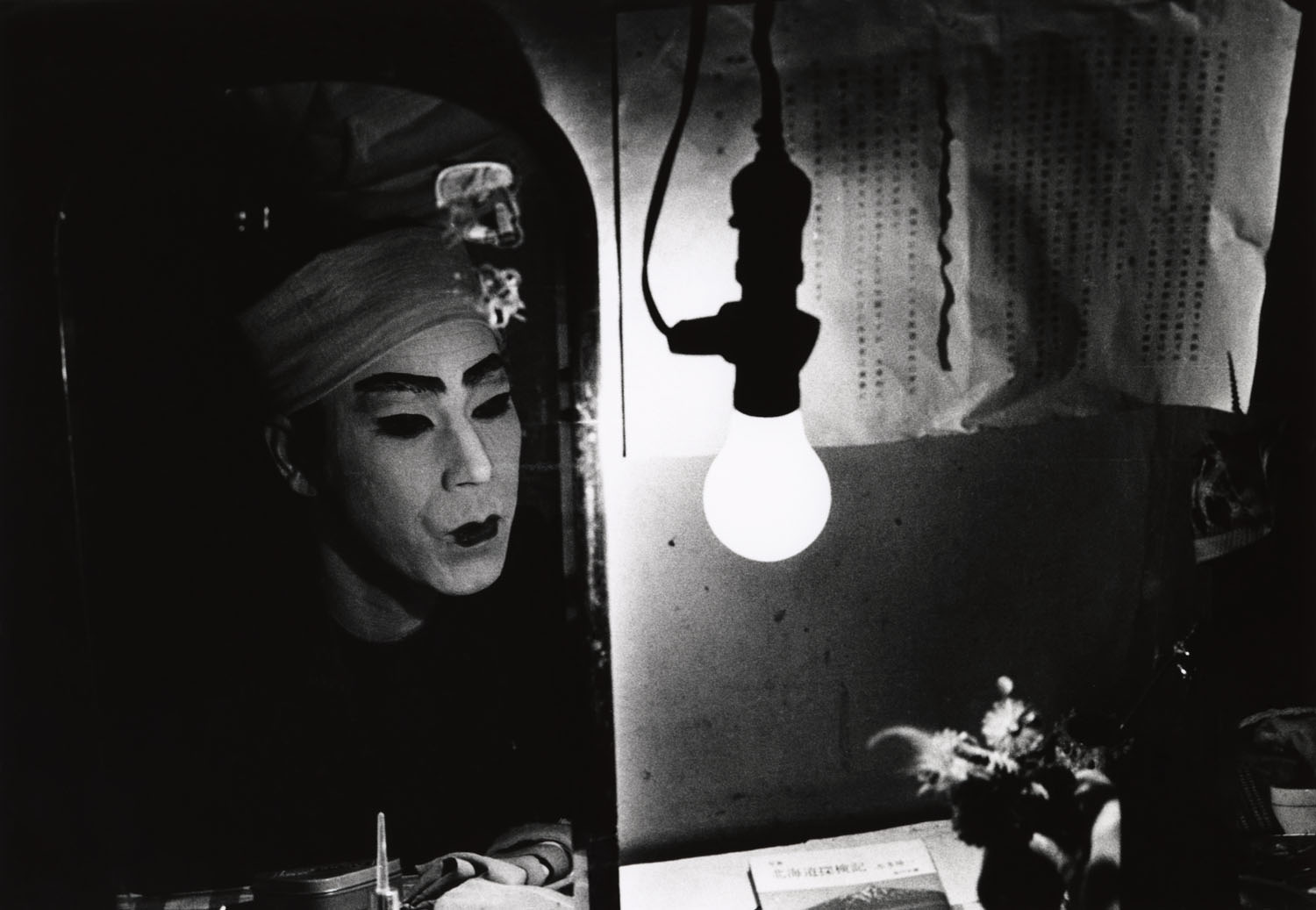
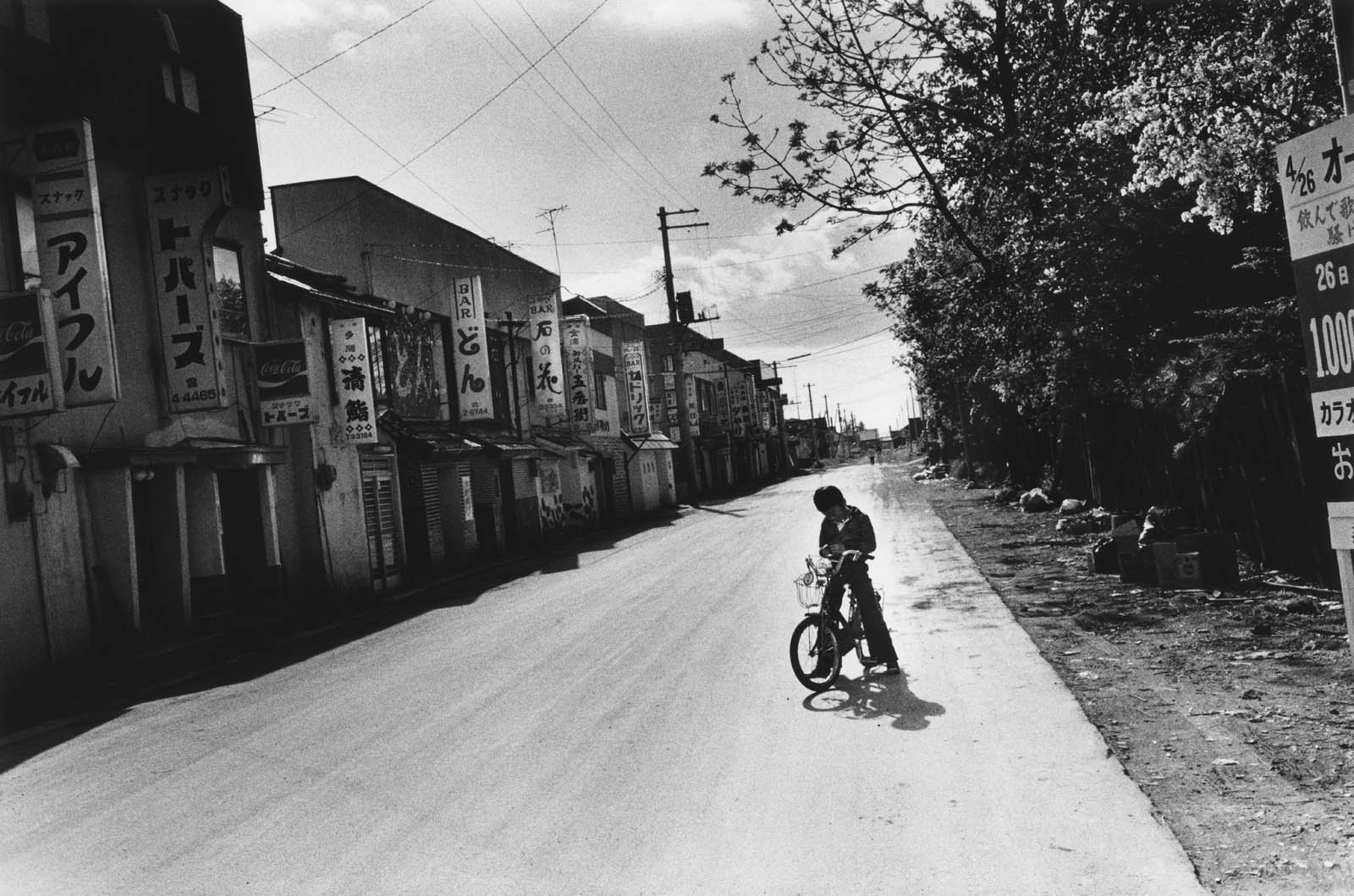
Daido Moriyama (Japanese, b. 1938) 'Hokkaido' 1978


Daido Moriyama (Japanese, b. 1938)
Hokkaido
1978
Gelatin silver print
10 x 12″
Courtesy of the Daido Moriyama Photo Foundation and The Photographers’ Gallery


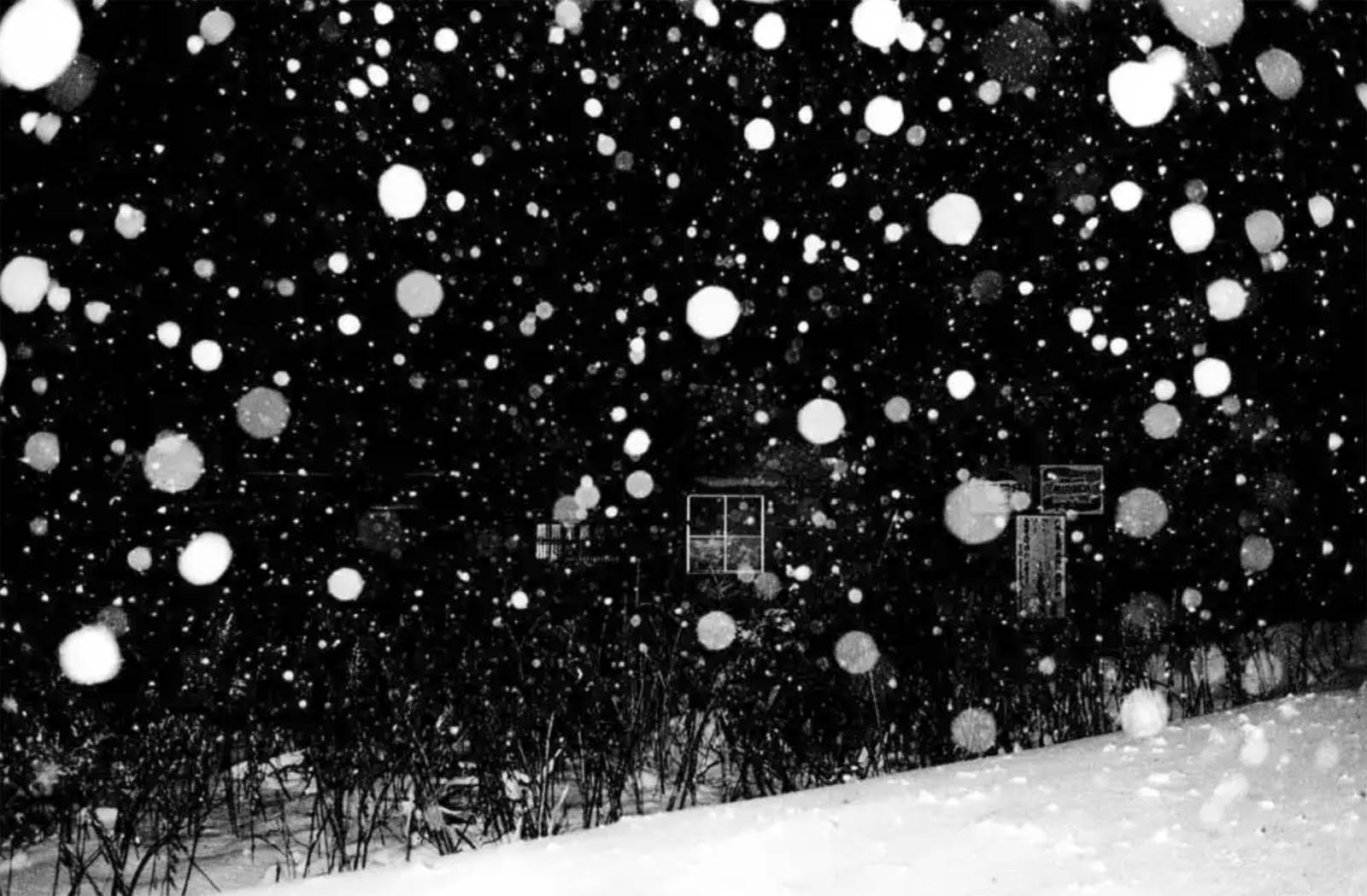
Daido Moriyama (Japanese, b. 1938) 'Hokkaido' 1978


Daido Moriyama (Japanese, b. 1938)
Hokkaido
1978
Gelatin silver print
11 x 14″
Courtesy of the Daido Moriyama Photo Foundation and The Photographers’ Gallery


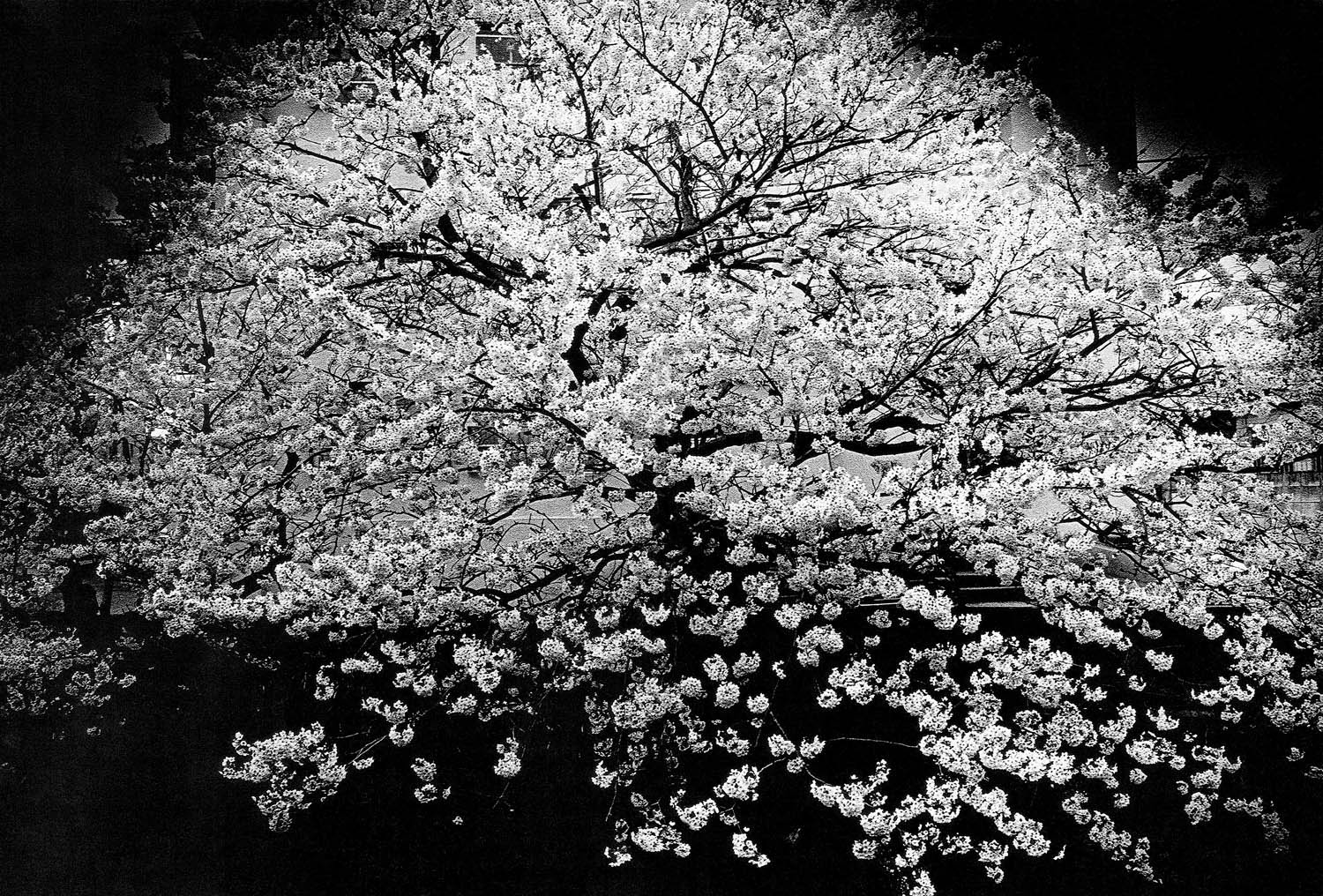
Daido Moriyama (Japanese, b. 1938)
'Cherry Blossom, Zushi, Kanagawa' 1982


Daido Moriyama (Japanese, b. 1938)
Cherry Blossom, Zushi, Kanagawa
1982
Gelatin silver print
18 x 22″
Courtesy of the Daido Moriyama Photo Foundation and The Photographers’ Gallery


Daido Moriyama (Japanese, b. 1938) 'How to Make Beautiful Photos' 1987
Screenshot


Daido Moriyama (Japanese, b. 1938)
How to Make Beautiful Photos
1987
Gelatin silver print
11 x 14″
Courtesy of the Daido Moriyama Photo Foundation and The Photographers’ Gallery


Born in Osaka, Japan, in 1938, Daido Moriyama’s celebrated career has been shaped by constant reinvention and experimentation. Over six decades, he has become renowned for his bold are, bure, boke aesthetic – grainy, blurry and out-of-focus images that defy photographic convention. A pivotal figure in the radical Provoke movement of the late 1960s, Moriyama redefined photography, unbound by traditional constraints, capturing fragments of reality that “cannot be expressed in language as it is.”

Moriyama is best known for recording the freneticism and anonymity of life in the city, Encounters reveals his lesser-explored ability to show beauty and stillness in the everyday. Softly lit city streets, rendered in grainy textures, evoke a surreal and poetic visual language that embraces imperfection. Fleeting moments of calm and intimacy are paired with whimsical glimpses of animals and delicate vignettes of nature – blossoms, snowflakes and quiet, weathered corners of urban sprawl – revealing an unexpected tenderness amongst his raw and gritty aesthetic.

In recent years, Moriyama has described his work as a visual diary, shooting pictures daily to document the ever-changing landscape of urban life. His enduring question- “What is photography?”-remains an open one which continues to probe the medium’s position between the objective and the subjective, the illusory and the real.

Text from The Photographers’ Gallery website


Daido Moriyama (Japanese, b. 1938) 'Japan Photo Theater' 1968


Daido Moriyama (Japanese, b. 1938)
Japan Photo Theater
1968
Gelatin silver print
11 x 14″
Courtesy of the Daido Moriyama Photo Foundation and The Photographers’ Gallery


Daido Moriyama (Japanese, b. 1938) 'Asahi Journal' 1969


Daido Moriyama (Japanese, b. 1938)
Asahi Journal
1969
Gelatin silver print
11 x 14″
Courtesy of the Daido Moriyama Photo Foundation and The Photographers’ Gallery


Daido Moriyama (Japanese, b. 1938) 'A Hunter' 1972


Daido Moriyama (Japanese, b. 1938)
A Hunter
1972
Gelatin silver print
11 x 14″
Courtesy of the Daido Moriyama Photo Foundation and The Photographers’ Gallery


Daido Moriyama (Japanese, b. 1938) 'Shinjuku' 2002


Daido Moriyama (Japanese, b. 1938)
Shinjuku
2002
Gelatin silver print
10 x 12″
Courtesy of the Daido Moriyama Photo Foundation and The Photographers’ Gallery


The Print Sales Gallery at The Photographers’ Gallery will be showing a gentler side of the iconic Japanese photographer Daido Moriyama’s work this Spring. Following 2023’s major retrospective at The Photographers’ Gallery, which offered an in-depth exploration into his groundbreaking career, Daido Moriyama: Encounters takes a more intimate approach. Focusing on a smaller selection of photographs, this selling exhibition highlights the quieter, more reflective moments of Moriyama’s work. “It may look like I’m just pointing the camera at what’s in front of me. But I’m trying to photograph what people see, but don’t notice – something that’s mysterious and unknown in everyday life.”

Born in Osaka, Japan, in 1938, Daido Moriyama’s celebrated career has been shaped by constant reinvention and experimentation. Over six decades, he has become renowned for his bold are, bure, boke aesthetic – grainy, blurry and out-of-focus images that defy photographic convention. A pivotal figure in the radical Provoke movement of the late 1960s, Moriyama redefined photography, unbound by traditional constraints, capturing fragments of reality that “cannot be expressed in language as it is.”

Moriyama is best known for recording the freneticism and anonymity of life in the city, Encounters reveals his lesser-explored ability to show beauty and stillness in the everyday. Softly lit city streets rendered in grainy texture evoke a surreal and poetic visual language that embraces imperfection. Fleeting moments of calm and intimacy paired with whimsical glimpses of animals and delicate vignettes of nature – blossoms, snowflakes and quiet, weathered corners of urban sprawl – reveal an unexpected tenderness amongst his usual raw and gritty aesthetic.

This selling exhibition marks the Print Sales Gallery’s new representation of Daido Moriyama. All prints on show and from Moriyama’s archive are available to buy, in a range of sizes. Prices start at £1,200 + VAT. All profits from Print Sales support The Photographers’ Gallery’s public programme.

Print Sales at The Photographers’ Gallery

Print Sales at The Photographers’ Gallery is a dedicated space for discovering and buying fine-art photographic prints, with all proceeds supporting The Photographers’ Gallery public programme. Representing a roster of international photographers – from established names to emerging talent – a curated series of selling exhibitions each year brings you the best of both sought-after classics and brand-new contemporary work.

Press release from The Photographers’ Gallery


Daido Moriyama (Japanese, b. 1938) 'Untitled', from 'Record No. 14' 2010


Daido Moriyama (Japanese, b. 1938)
Untitled, from Record No. 14
2010
Gelatin silver print
18 x 22″
Courtesy of the Daido Moriyama Photo Foundation and The Photographers’ Gallery


Daido Moriyama (Japanese, b. 1938) 'Untitled', from 'Record No. 18' 2011


Daido Moriyama (Japanese, b. 1938)
Untitled, from Record No. 18
2011
Gelatin silver print
14 x 17″
Courtesy of the Daido Moriyama Photo Foundation and The Photographers’ Gallery


Daido Moriyama (Japanese, b. 1938) 'Untitled', from 'Record No. 22' 2012


Daido Moriyama (Japanese, b. 1938)
Untitled, from Record No. 22
2012
Gelatin silver print
Courtesy of the Daido Moriyama Photo Foundation and The Photographers’ Gallery


Daido Moriyama (Japanese, b. 1938) 'Untitled' 2017


Daido Moriyama (Japanese, b. 1938)
Untitled, from K
2017
Gelatin silver print
14 x 17″
Courtesy of the Daido Moriyama Photo Foundation and The Photographers’ Gallery


Daido Moriyama (Japanese, b. 1938) 'Untitled', from 'K' 2017


Daido Moriyama (Japanese, b. 1938)
Untitled, from K
2017
Gelatin silver print
10 x 12″
Courtesy of the Daido Moriyama Photo Foundation and The Photographers’ Gallery


Daido Moriyama (Japanese, b. 1938) 'Untitled', from 'Record No. 35' 2017


Daido Moriyama (Japanese, b. 1938)
Untitled, from Record No. 35
2017
Gelatin silver print
10 x 12″
Courtesy of the Daido Moriyama Photo Foundation and The Photographers’ Gallery


Daido Moriyama (Japanese, b. 1938) 'Untitled', from 'Ango' 2017


Daido Moriyama (Japanese, b. 1938)
Untitled, from Ango
2017
Gelatin silver print
23 x 35″
Courtesy of the Daido Moriyama Photo Foundation and The Photographers’ Gallery


The Photographers’ Gallery
16-18 Ramillies Street
London
W1F 7LW

Opening hours:
Mon – Wed: 10.00 – 18.00
Thursday – Friday: 10.00 – 20.00
Saturday: 10.00 – 18.00
Sunday: 11.00 – 18.00

The Photographers’ Gallery website

LIKE ART BLART ON FACEBOOK

Back to top


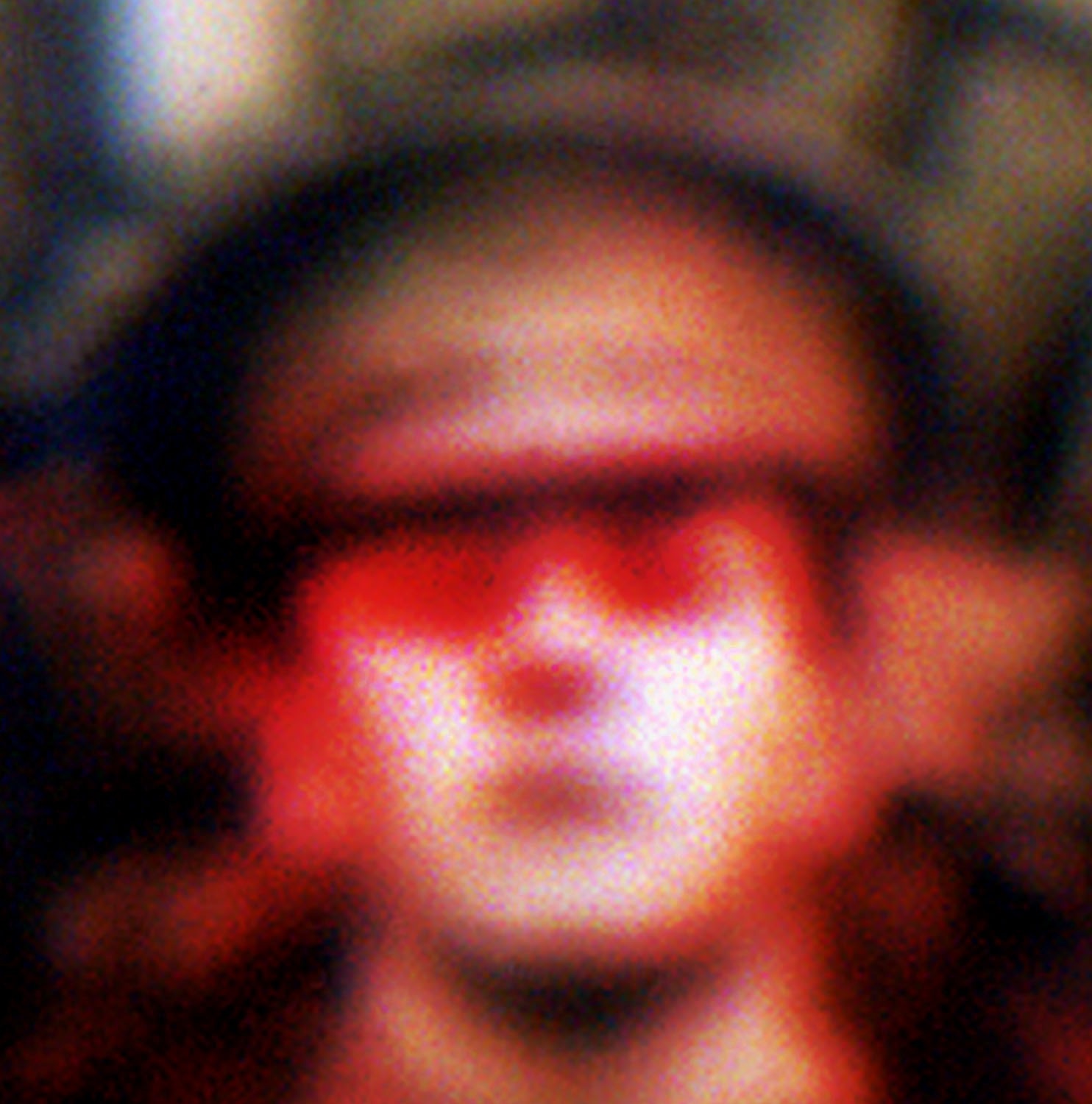
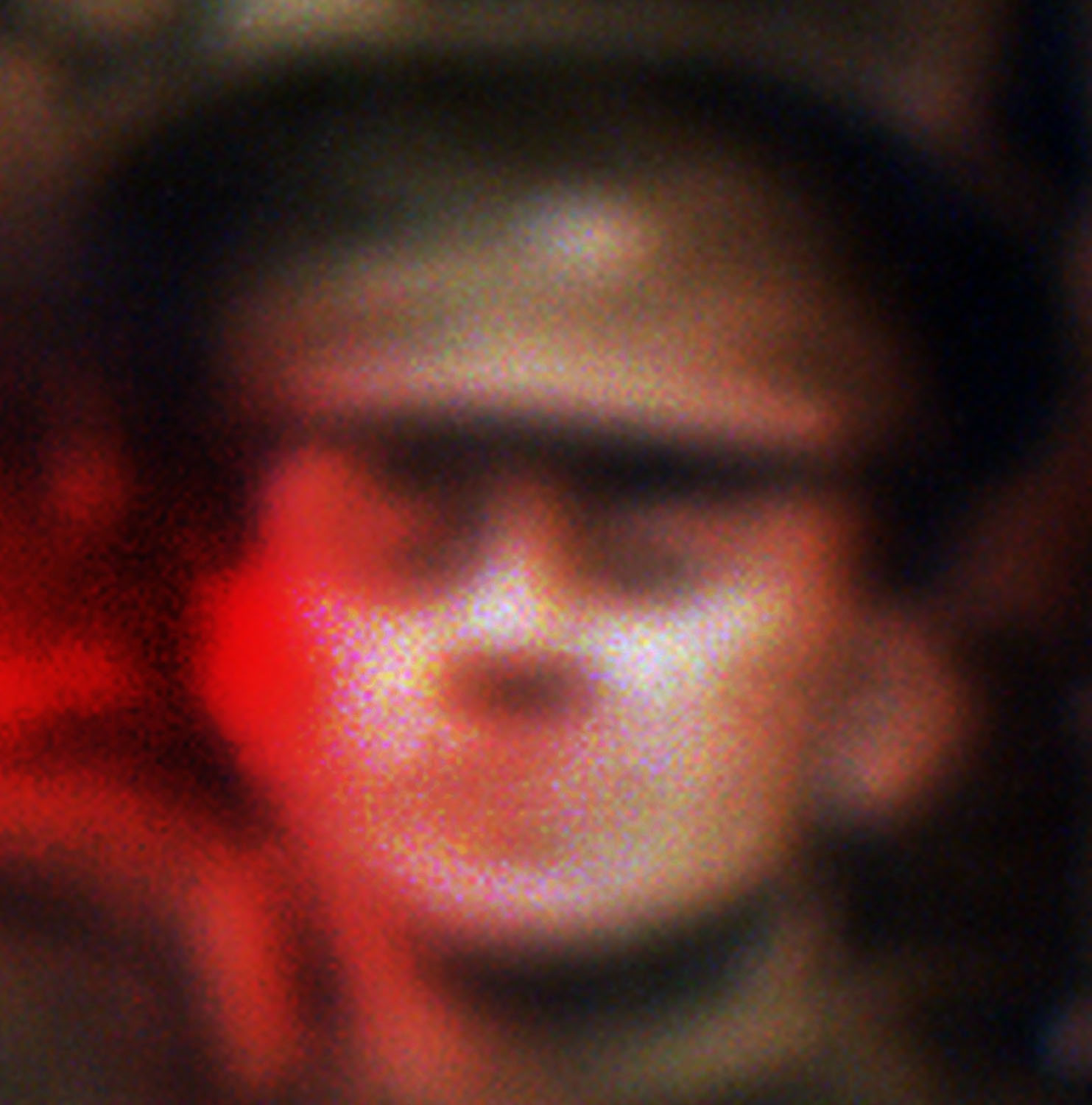
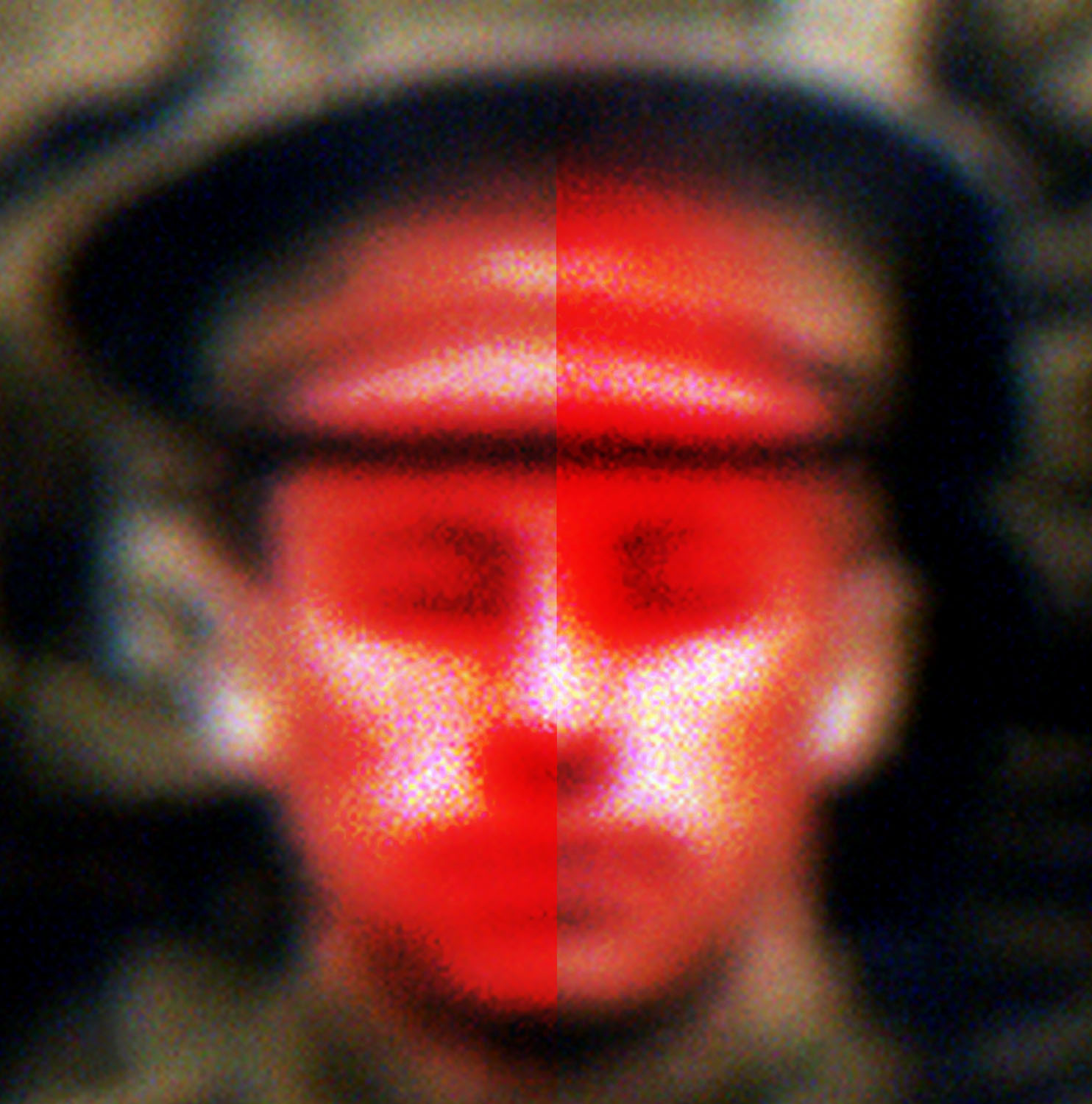
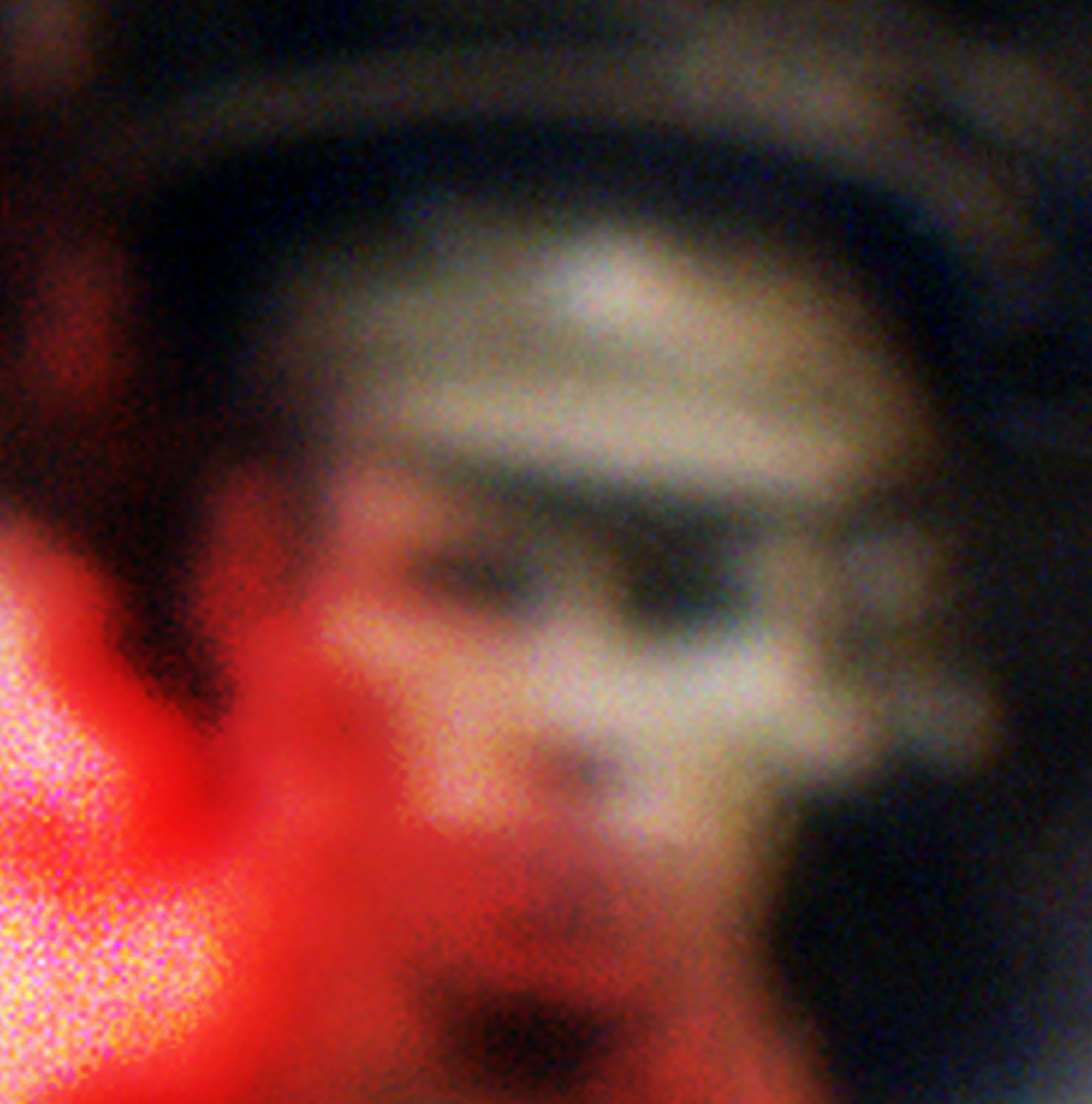
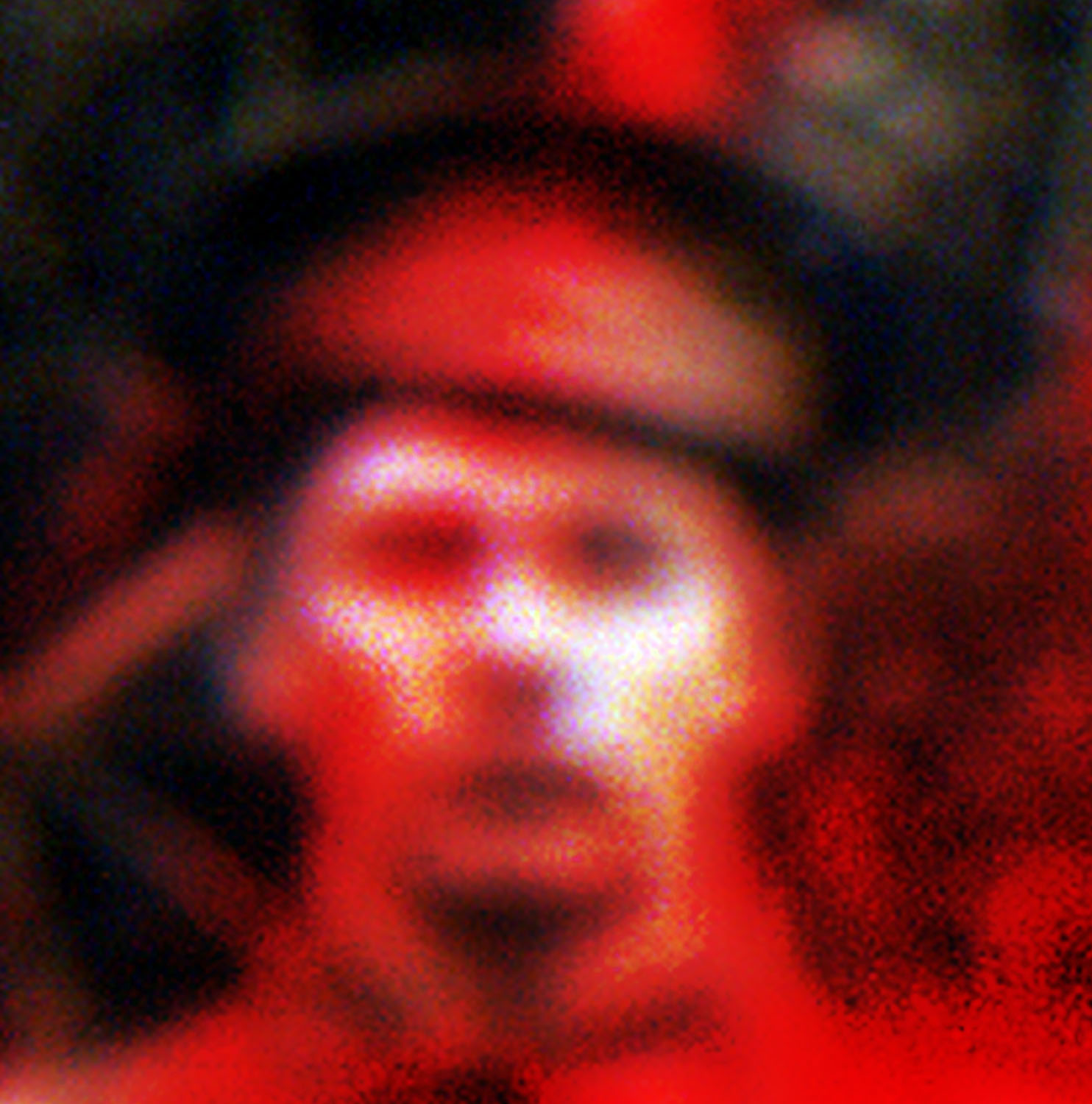
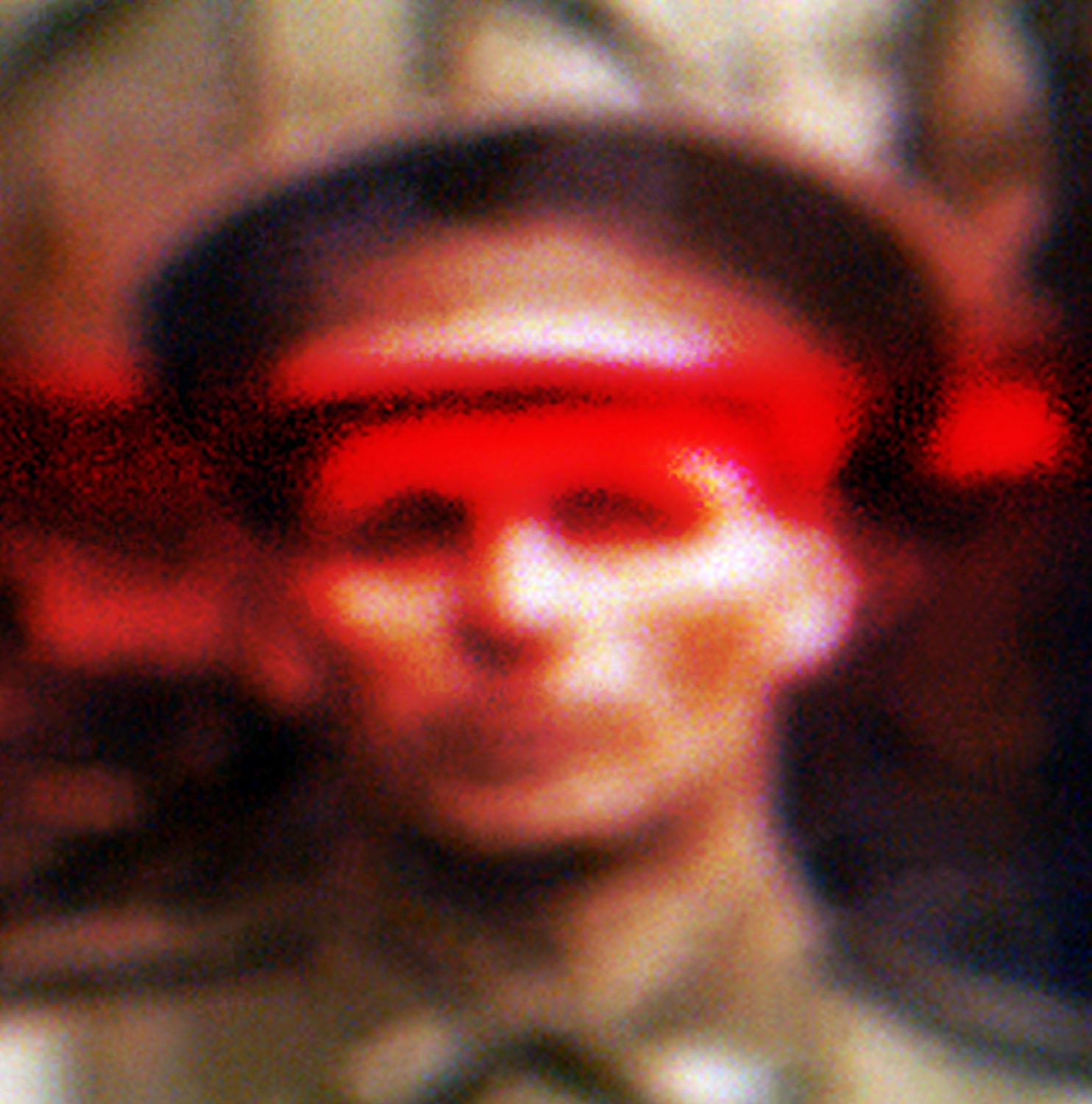
Photographic series: Marcus Bunyan. ‘The shadow takes another form’ 2024-2025

February 2025


  • Marcus Bunyan (Australian, b. 1958) 'Untitled' from the series 'The shadow takes another form' 2024-2025
  • Marcus Bunyan (Australian, b. 1958) 'Untitled' from the series 'The shadow takes another form' 2024-2025
  • Marcus Bunyan (Australian, b. 1958) 'Untitled' from the series 'The shadow takes another form' 2024-2025
  • Marcus Bunyan (Australian, b. 1958) 'Untitled' from the series 'The shadow takes another form' 2024-2025
  • Marcus Bunyan (Australian, b. 1958) 'Untitled' from the series 'The shadow takes another form' 2024-2025
  • Marcus Bunyan (Australian, b. 1958) 'Untitled' from the series 'The shadow takes another form' 2024-2025
  • Marcus Bunyan (Australian, b. 1958) 'Untitled' from the series 'The shadow takes another form' 2024-2025
  • Marcus Bunyan (Australian, b. 1958) 'Untitled' from the series 'The shadow takes another form' 2024-2025
  • Marcus Bunyan (Australian, b. 1958) 'Untitled' from the series 'The shadow takes another form' 2024-2025
  • Marcus Bunyan (Australian, b. 1958) 'Untitled' from the series 'The shadow takes another form' 2024-2025
  • Marcus Bunyan (Australian, b. 1958) 'Untitled' from the series 'The shadow takes another form' 2024-2025
  • Marcus Bunyan (Australian, b. 1958) 'Untitled' from the series 'The shadow takes another form' 2024-2025
  • Marcus Bunyan (Australian, b. 1958) 'Untitled' from the series 'The shadow takes another form' 2024-2025
  • Marcus Bunyan (Australian, b. 1958) 'Untitled' from the series 'The shadow takes another form' 2024-2025
  • Marcus Bunyan (Australian, b. 1958) 'Untitled' from the series 'The shadow takes another form' 2024-2025
  • Marcus Bunyan (Australian, b. 1958) 'Untitled' from the series 'The shadow takes another form' 2024-2025
  • Marcus Bunyan (Australian, b. 1958) 'Untitled' from the series 'The shadow takes another form' 2024-2025
  • Marcus Bunyan (Australian, b. 1958) 'Untitled' from the series 'The shadow takes another form' 2024-2025
  • Marcus Bunyan (Australian, b. 1958) 'Untitled' from the series 'The shadow takes another form' 2024-2025
  • Marcus Bunyan (Australian, b. 1958) 'Untitled' from the series 'The shadow takes another form' 2024-2025
  • Marcus Bunyan (Australian, b. 1958) 'Untitled' from the series 'The shadow takes another form' 2024-2025
  • Marcus Bunyan (Australian, b. 1958) 'Untitled' from the series 'The shadow takes another form' 2024-2025
  • Marcus Bunyan (Australian, b. 1958) 'Untitled' from the series 'The shadow takes another form' 2024-2025
  • Marcus Bunyan (Australian, b. 1958) 'Untitled' from the series 'The shadow takes another form' 2024-2025
  • Marcus Bunyan (Australian, b. 1958) 'Untitled' from the series 'The shadow takes another form' 2024-2025
  • Marcus Bunyan (Australian, b. 1958) 'Untitled' from the series 'The shadow takes another form' 2024-2025
  • Marcus Bunyan (Australian, b. 1958) 'Untitled' from the series 'The shadow takes another form' 2024-2025
  • Marcus Bunyan (Australian, b. 1958) 'Untitled' from the series 'The shadow takes another form' 2024-2025
  • Marcus Bunyan (Australian, b. 1958) 'Untitled' from the series 'The shadow takes another form' 2024-2025
  • Marcus Bunyan (Australian, b. 1958) 'Untitled' from the series 'The shadow takes another form' 2024-2025
  • Marcus Bunyan (Australian, b. 1958) 'Untitled' from the series 'The shadow takes another form' 2024-2025
  • Marcus Bunyan (Australian, b. 1958) 'Untitled' from the series 'The shadow takes another form' 2024-2025
  • Marcus Bunyan (Australian, b. 1958) 'Untitled' from the series 'The shadow takes another form' 2024-2025
  • Marcus Bunyan (Australian, b. 1958) 'Untitled' from the series 'The shadow takes another form' 2024-2025
  • Marcus Bunyan (Australian, b. 1958) 'Untitled' from the series 'The shadow takes another form' 2024-2025
  • Marcus Bunyan (Australian, b. 1958) 'Untitled' from the series 'The shadow takes another form' 2024-2025


“The fate of man is man”

~ Bertolt Brecht


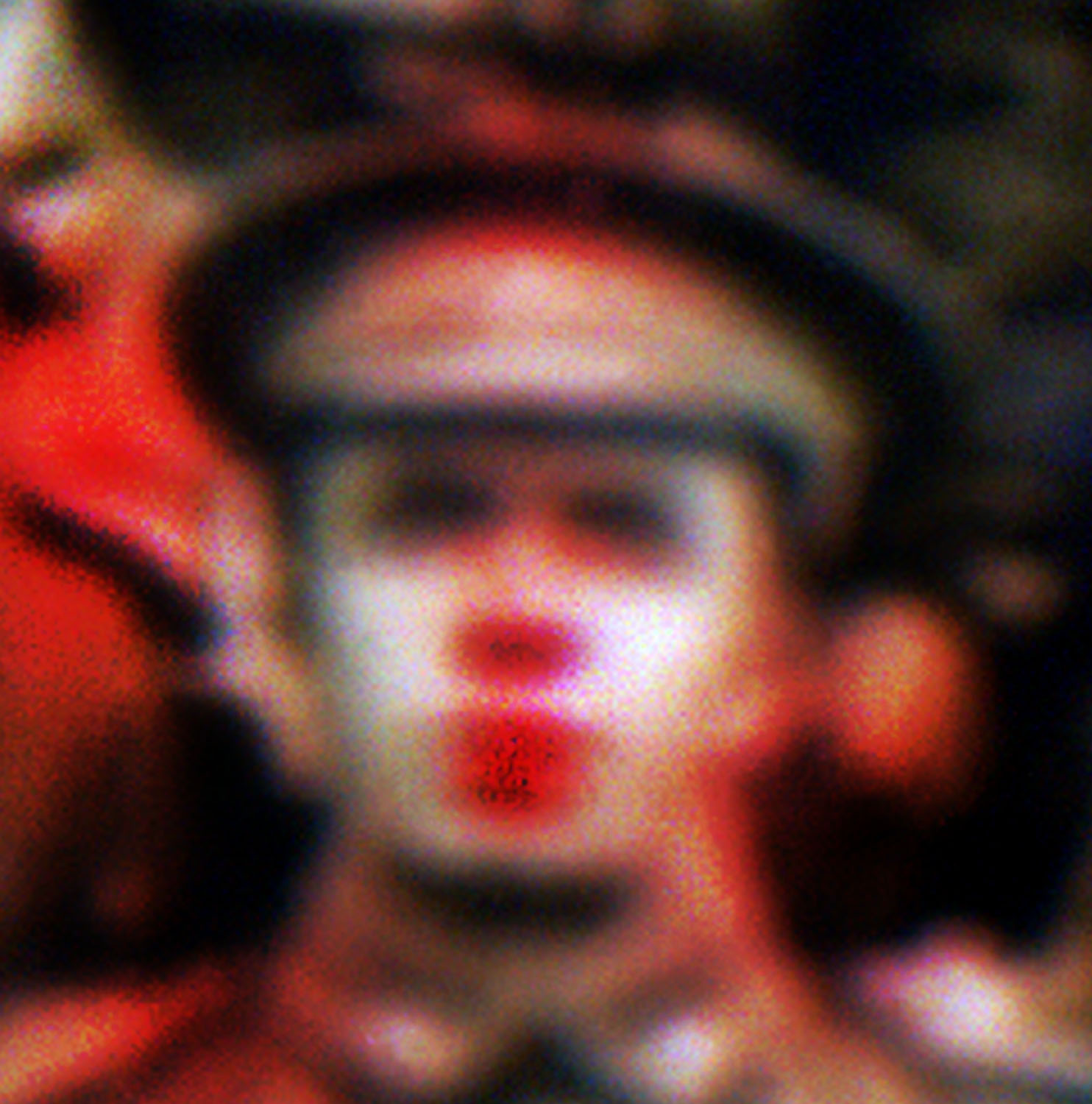
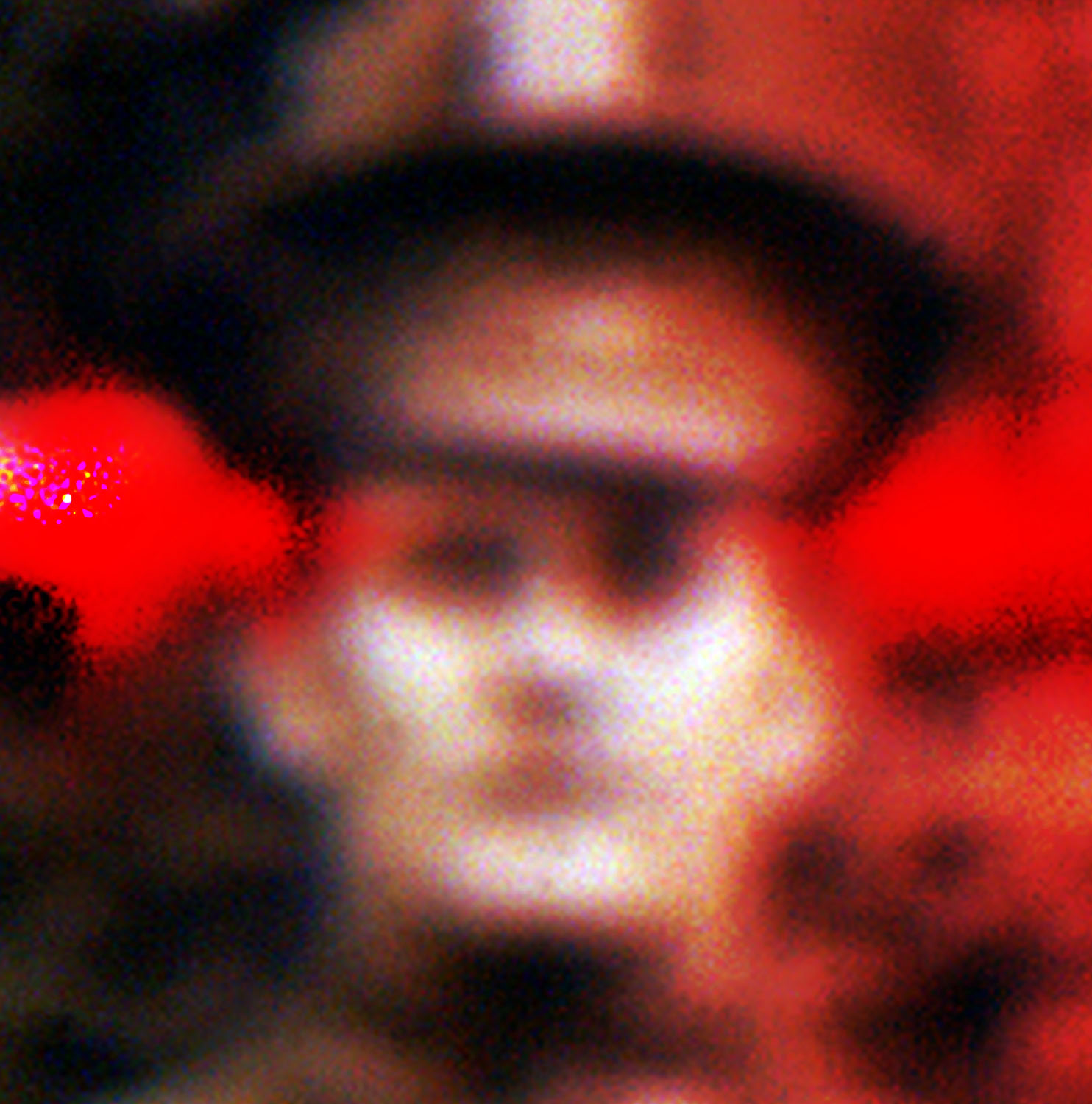
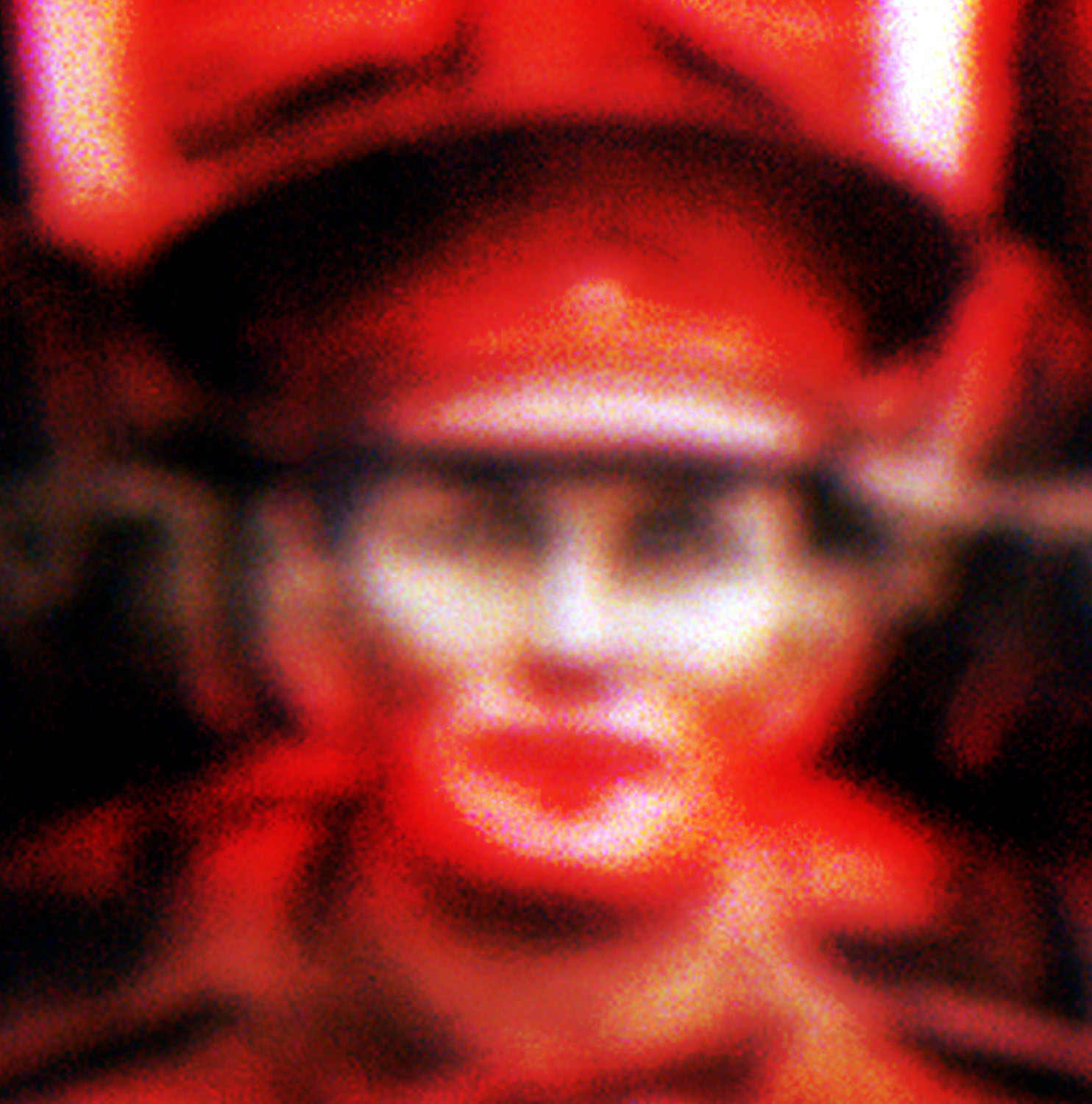
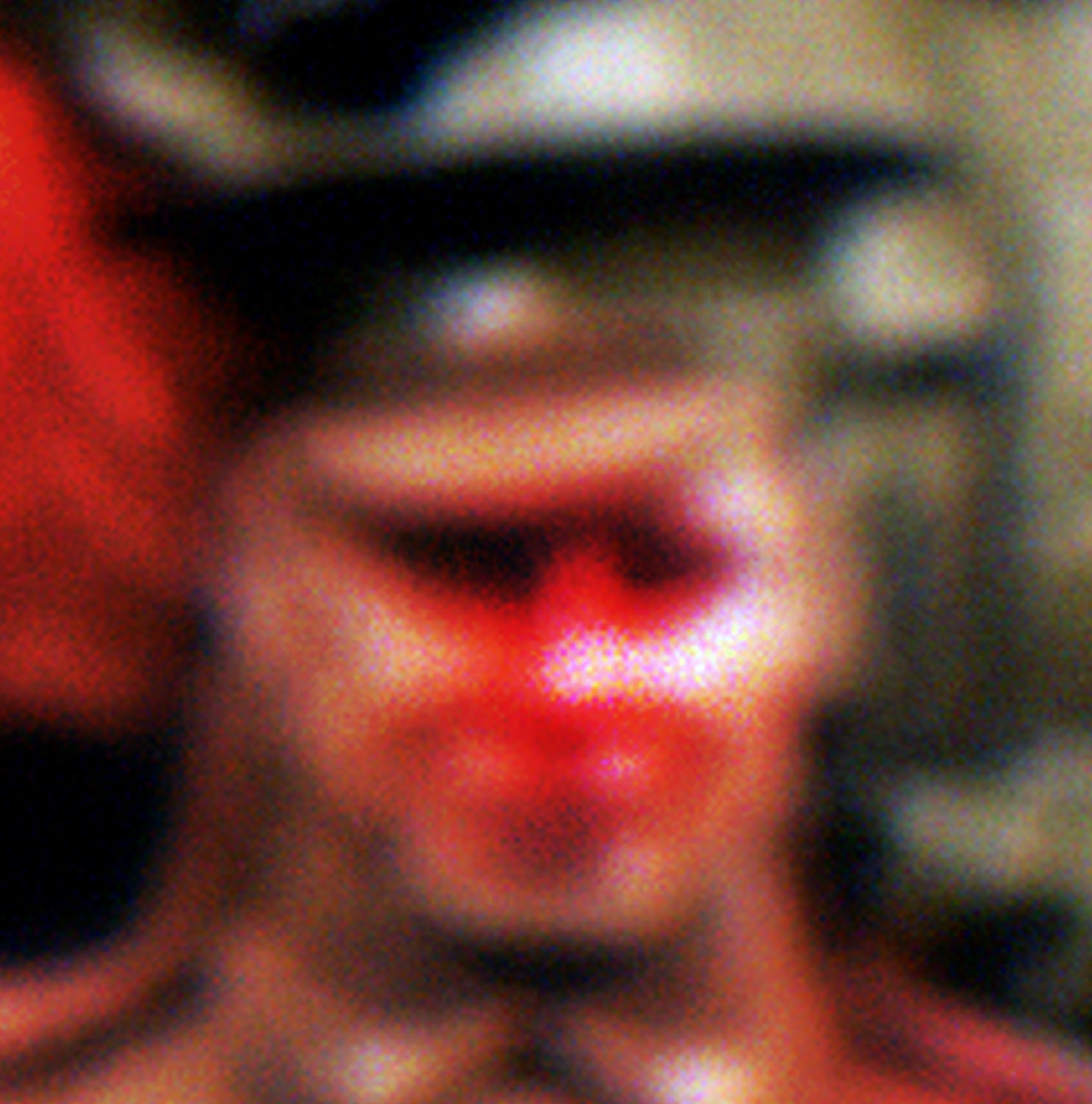
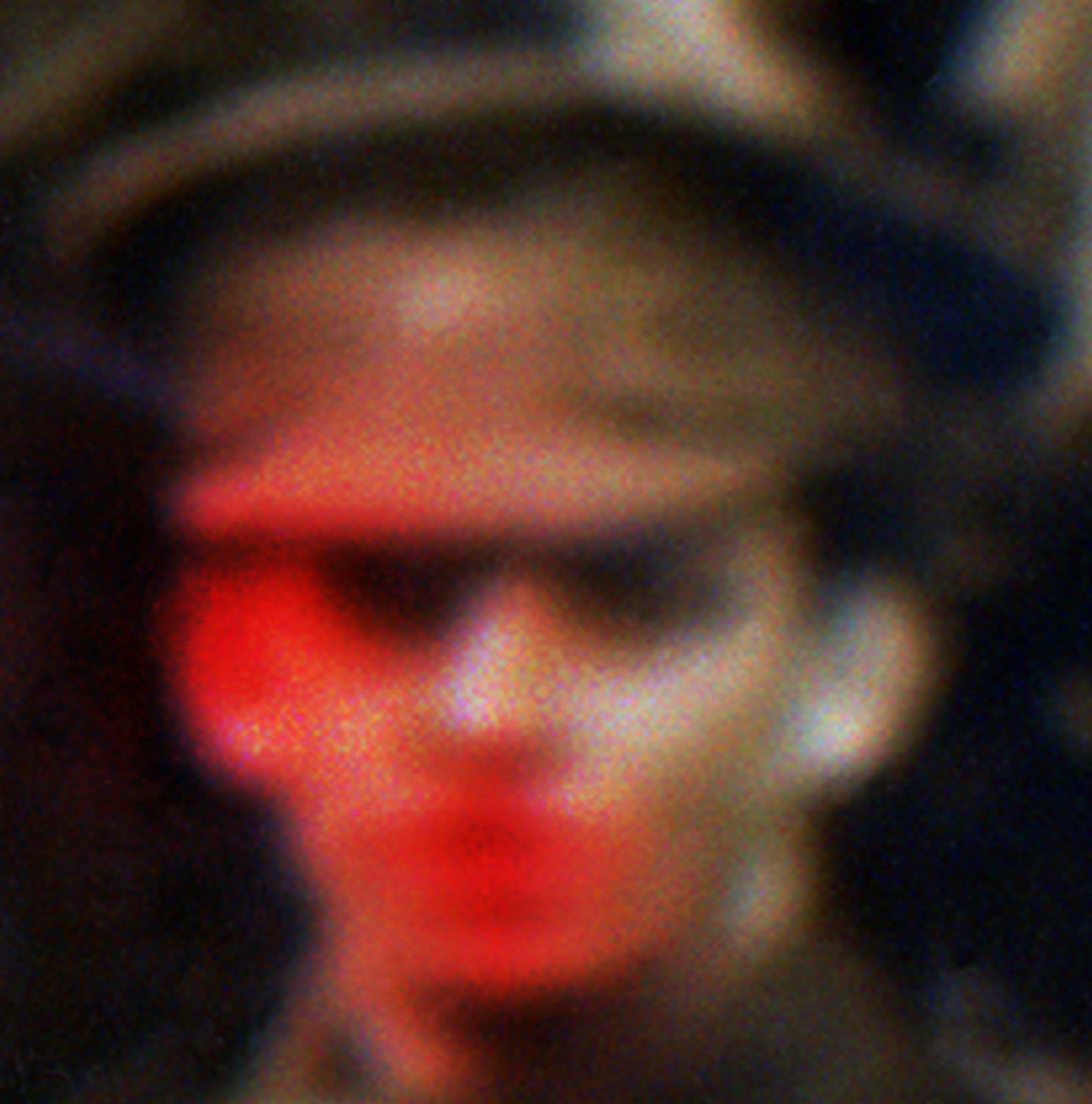
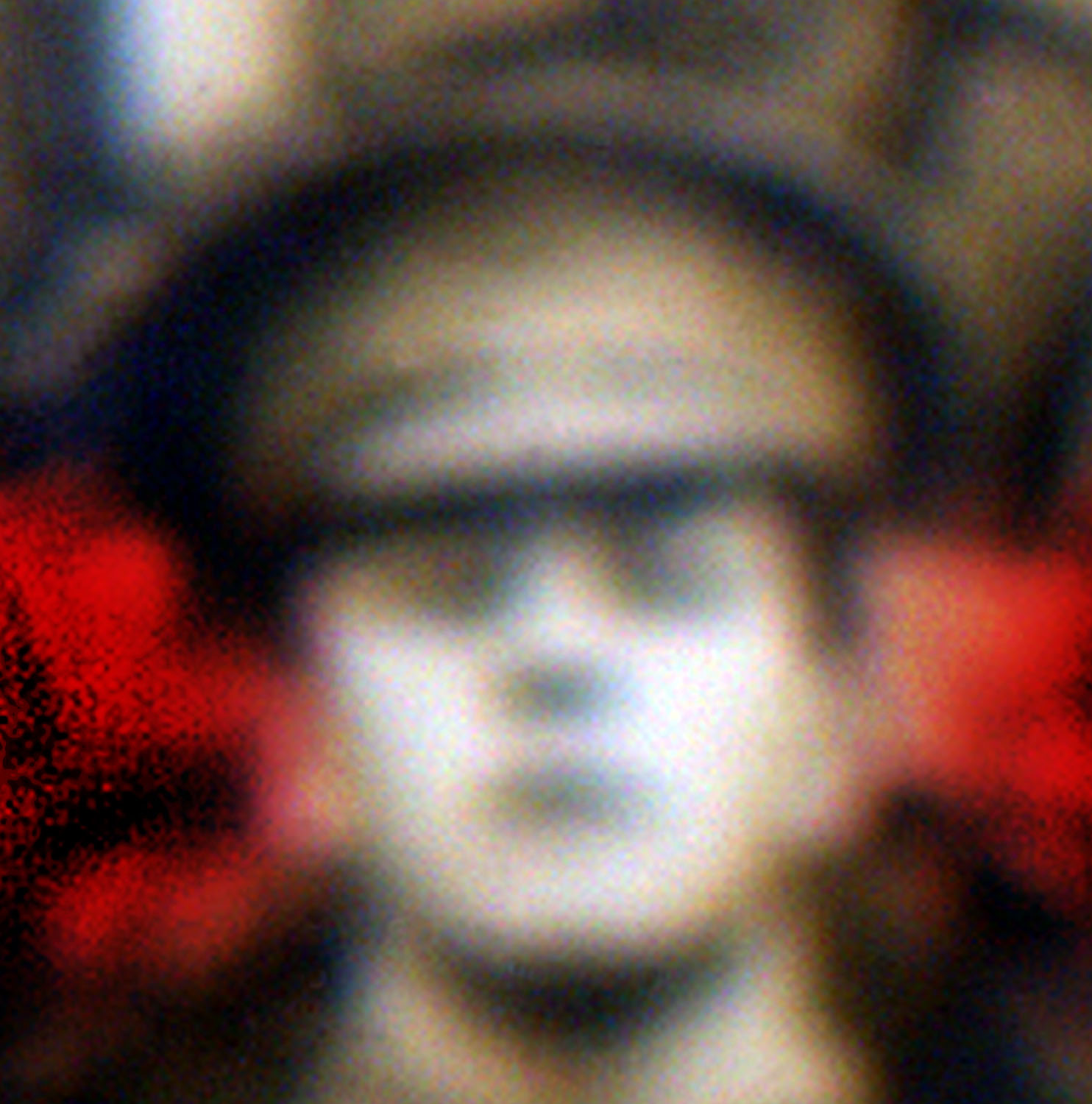
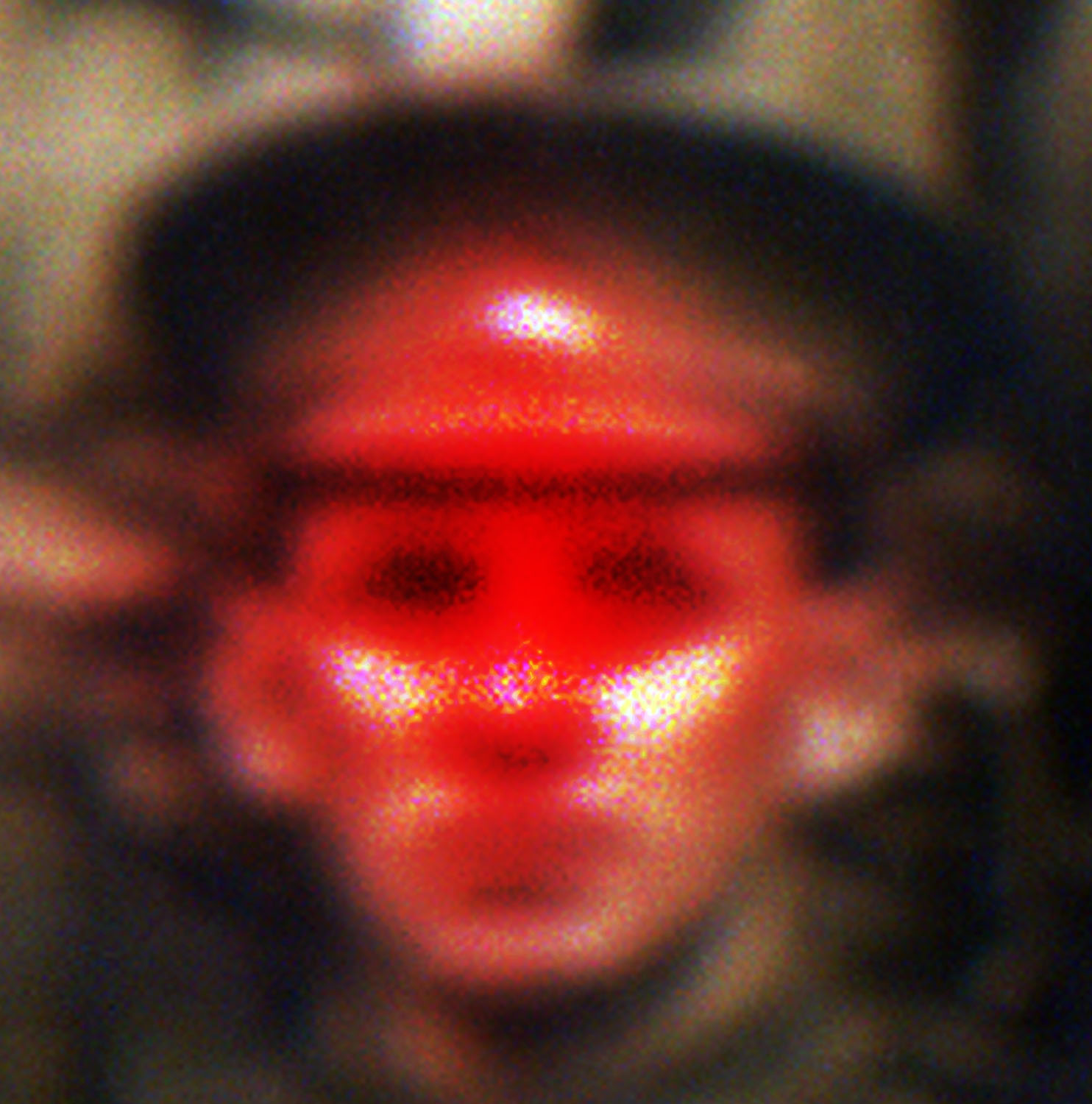
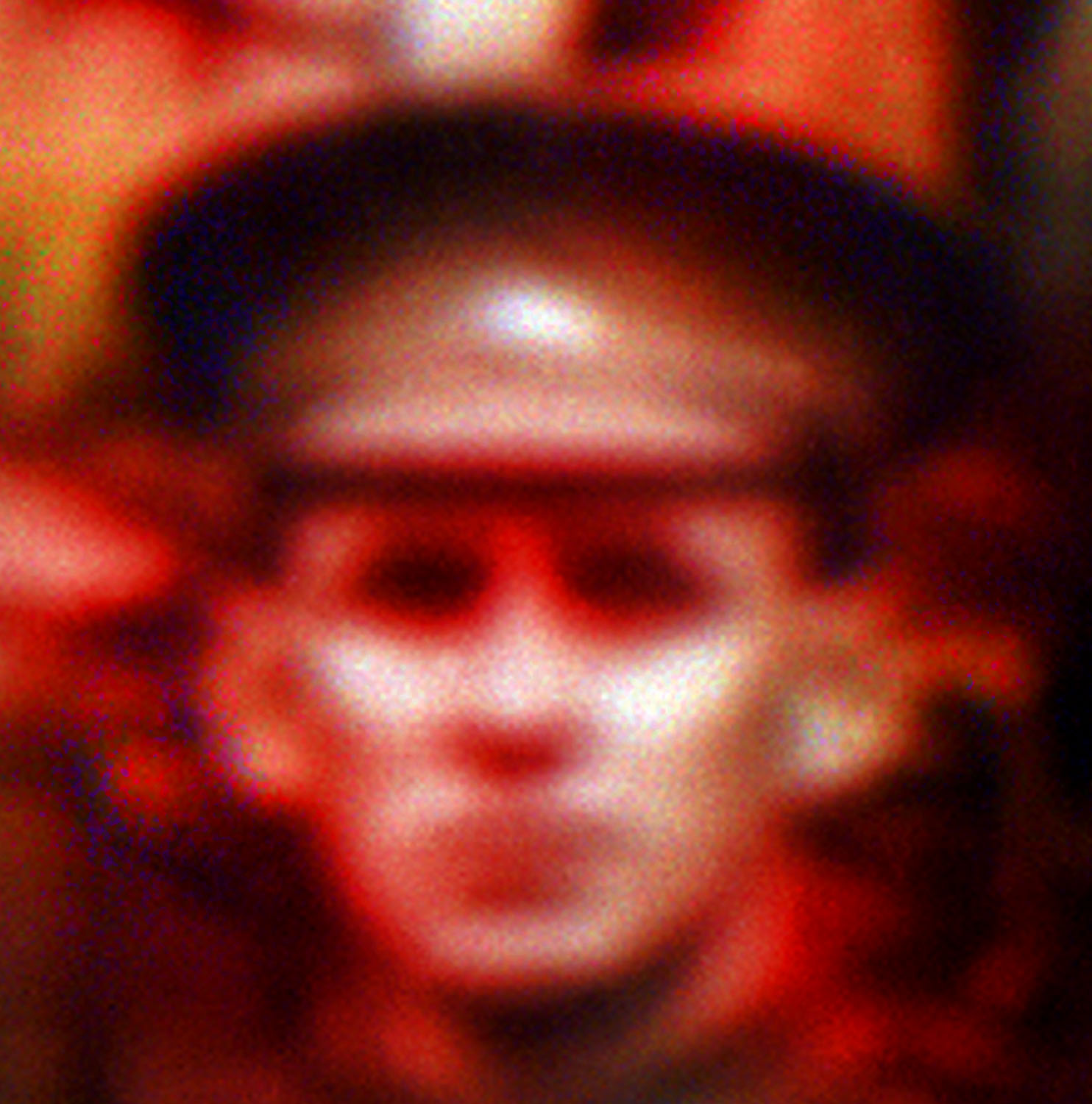
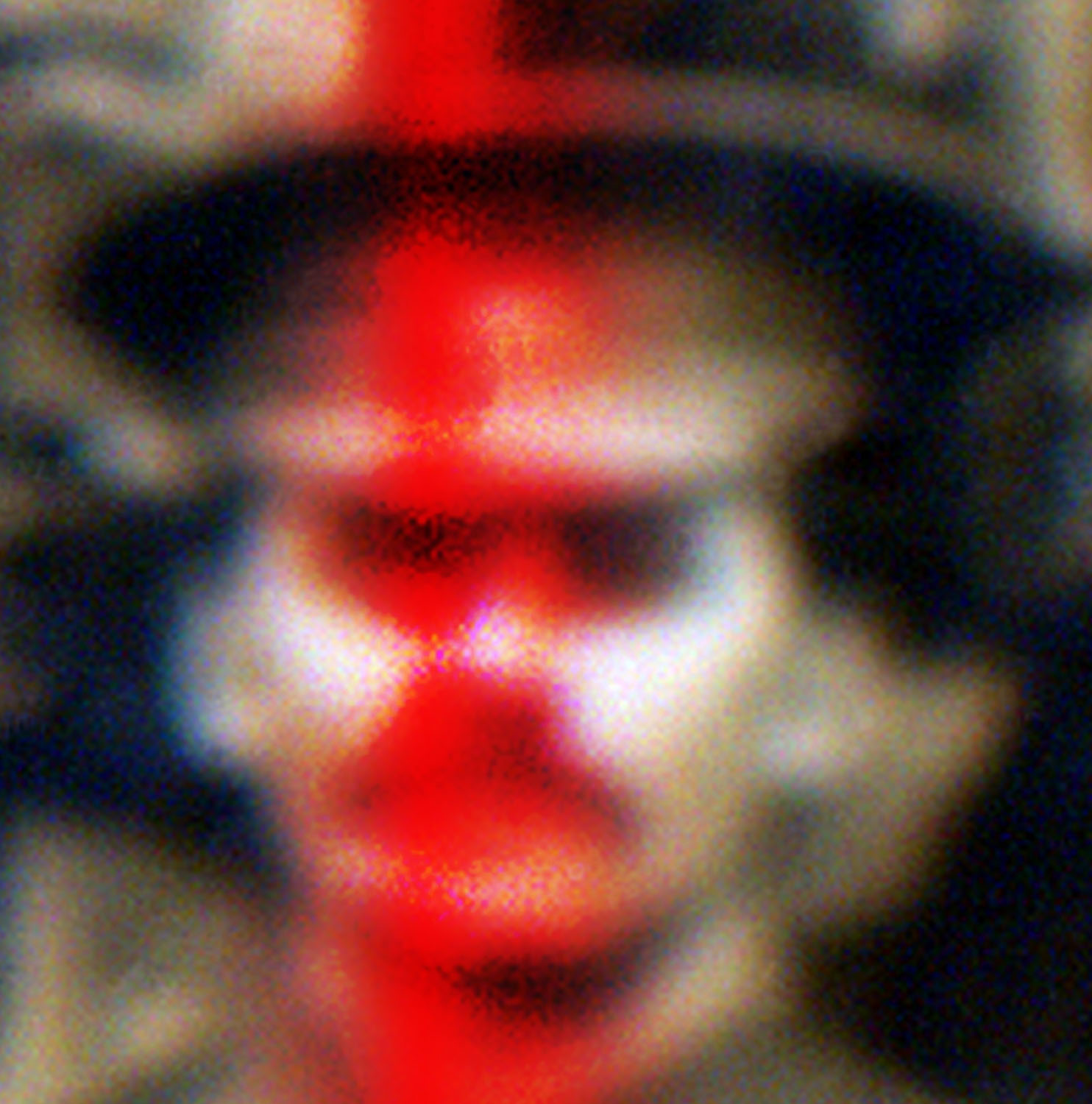
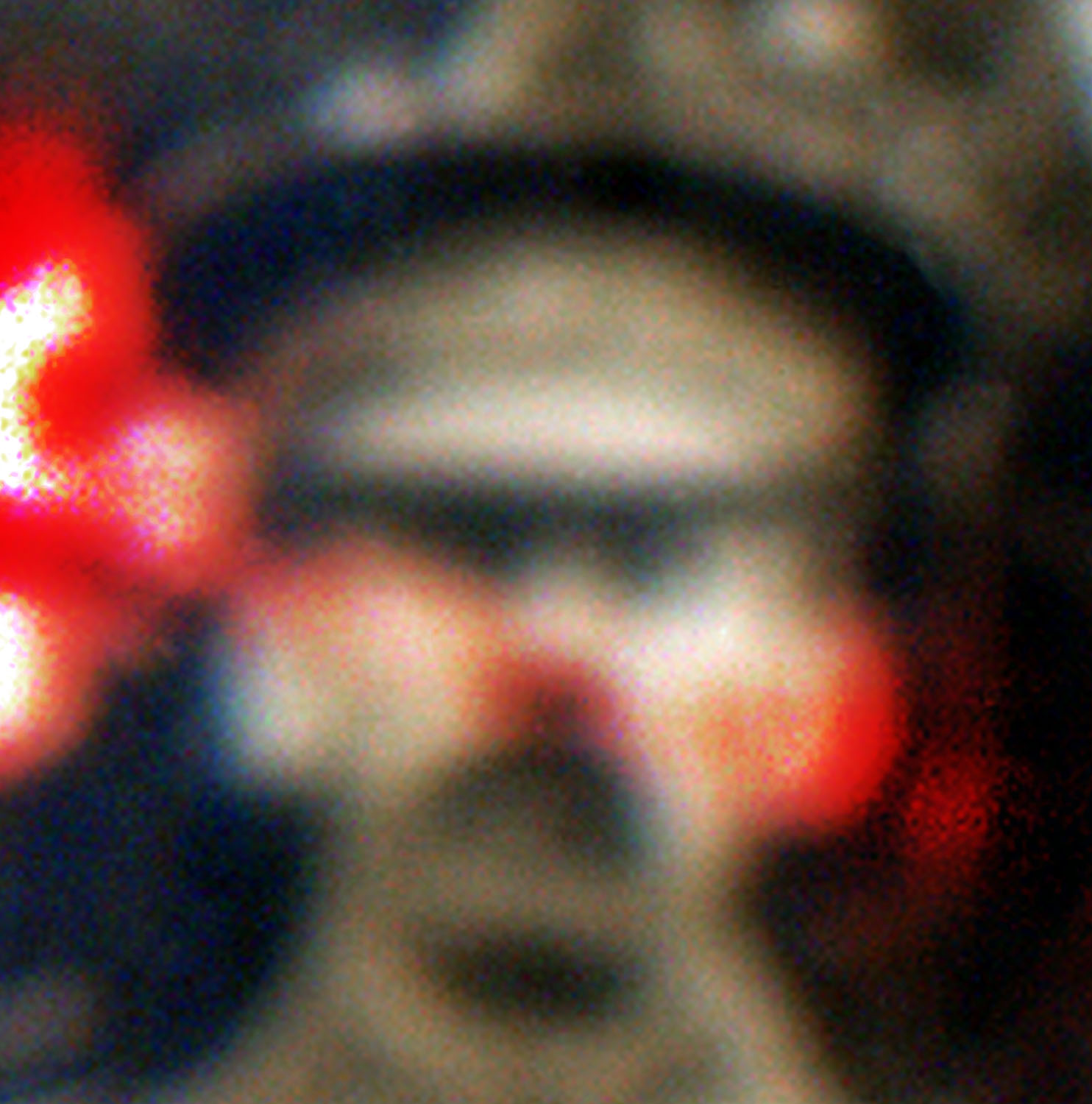
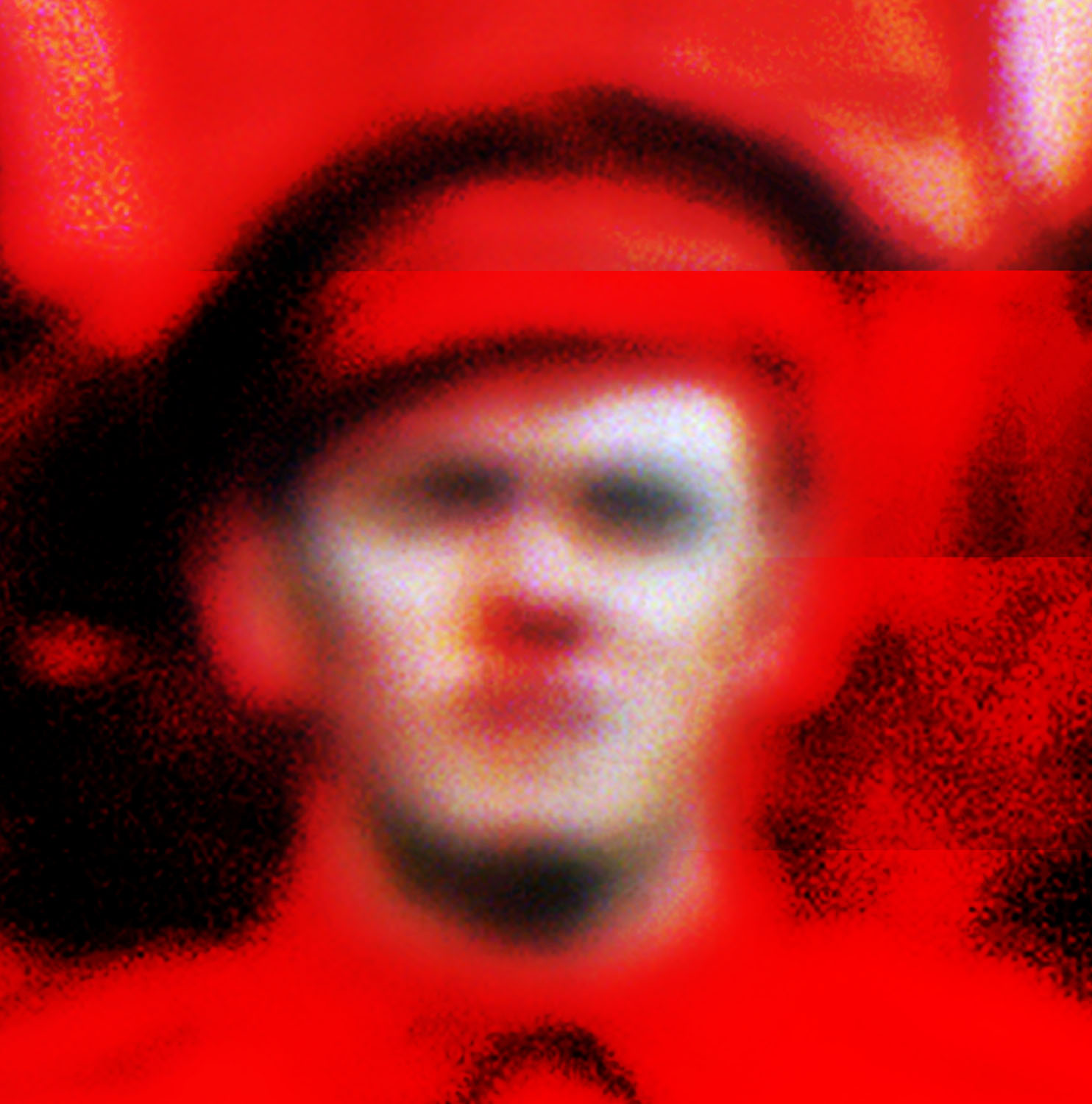
The faces in this series were selected from a group photograph of Australian soldiers taken in 1916 in Melbourne before the volunteer soldiers departed for Flanders and the Battle of Passchendaele.

I do not know how many men returned from the war.

The photograph was behind glass and placed directly on the scanner. The distance between the image and the scanner interface produced the blurred images. Red was added through feeling and intuition. The images were sequenced (as in the slideshow above) as in a piece of music.

The series is meant to be disturbing. You are not meant to like these images. They are anti-war.

36 images in the series
© Marcus Bunyan


Photographs are available from this series for purchase. As a guide, a digital colour 16″ x 20″ print costs $1,000 plus tracked and insured shipping. For more information please see the Store web page.


Marcus Bunyan (Australian, b. 1958)
The Shadow Takes Another Form
2024-2025
Digital photographs

Note: Animation of still image sequence


Marcus Bunyan (Australian, b. 1958) 'Untitled' from the series 'The shadow takes another form' 2024-2025


Marcus Bunyan website

LIKE ART BLART ON FACEBOOK

Back to top

Exhibition: ‘A Memorial Exhibition in Tom Garver’s Memory of O. Winston Link’s Photographs’ at the Jane Lutnick Fine Arts Center, Haverford College, Haverford, PA

Exhibition Dates: 3rd June – 7th December, 2024


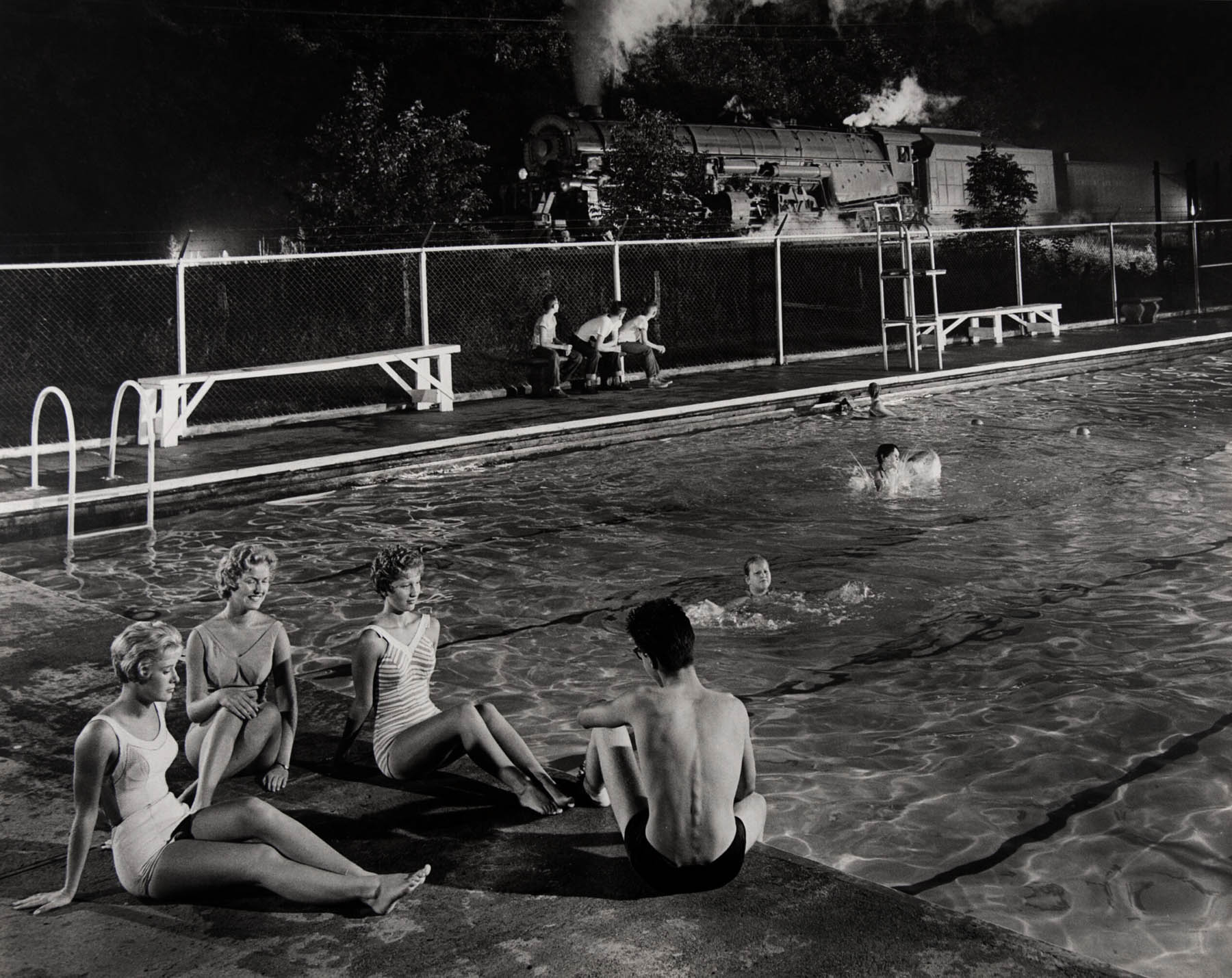
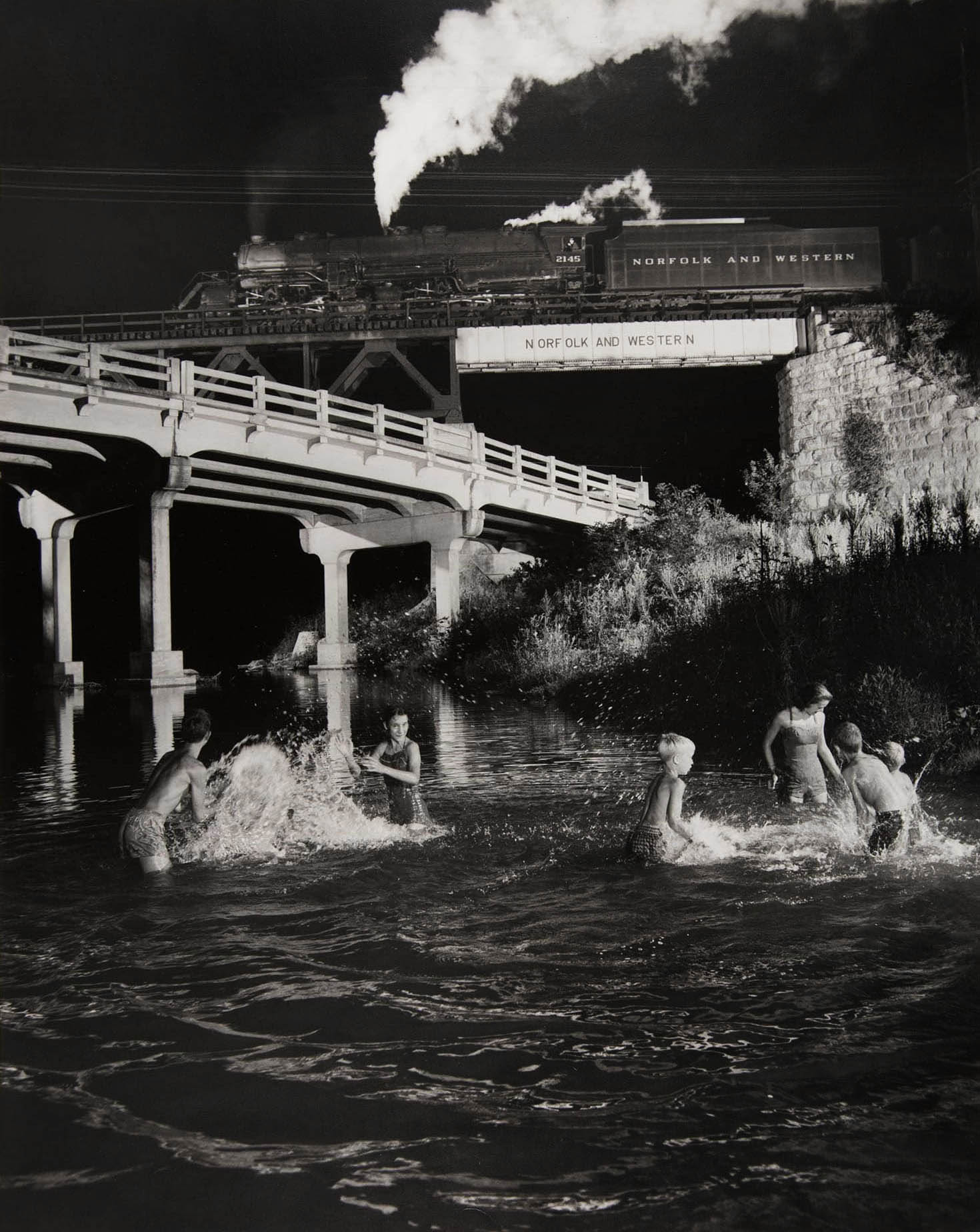
O. Winston Link (American, 1914-2001) 'Swimming pool, Welch, West Virginia' 1958, printed c. 1987 from the exhibition 'A Memorial Exhibition in Tom Garver's Memory of O. Winston Link's Photographs' at the Jane Lutnick Fine Arts Center


O. Winston Link (American, 1914-2001)
Swimming pool, Welch, West Virginia
1958, printed c. 1987
Gelatin silver print


What a pleasure it is to present the work of the renowned American photographer O. Winston Link (1914-2001) on this archive. I’ve only ever posted on one exhibition of his work before, way back in 2009.

I’ve always loved steam trains ever since I was denied a Hornby train set as a kid. I love their scale, design, colour, noise, smell … and their muscularity. As a machine emerging from the early days of the Industrial Revolution there is something so essential and raw about them.

Link’s elaborately staged, choreographed even, large format photographs in which he employs large banks of synchronised flash lights to capture the locomotives in action, mainly at night – have a visceral effect on me, stirring up deep passions for this primordial machine.

Link’s previsualisation was strong. As Tom Garver observes, “Winston Link innately possessed what has been called photographic vision, the ability to visualise photographs before they are created and to recognise in the process that what one sees, no matter how interesting, does not necessarily translate into an interesting photograph.”

It was Link’s ability to capture the spirit and essence of the tableaux vivants, the “living picture”, that brings these static scenes alive. You can almost reach out and touch these Jurassic trains, these workhorses trundling through small American communities. Again, Tom Garver insightfully notes that “there was this great intense spirit to really document and record this, to capture it. I think what I didn’t realise is how much we were capturing a whole way of life that was disappearing. Not only steam locomotives versus diesel locomotives but this isolated small town individualised kind of America that was vanishing.”

The spirit of the thing itself.

As Minor White says in one of his ‘Three Canons’:

Be still with yourself
Until the object of your attention
Affirms your presence


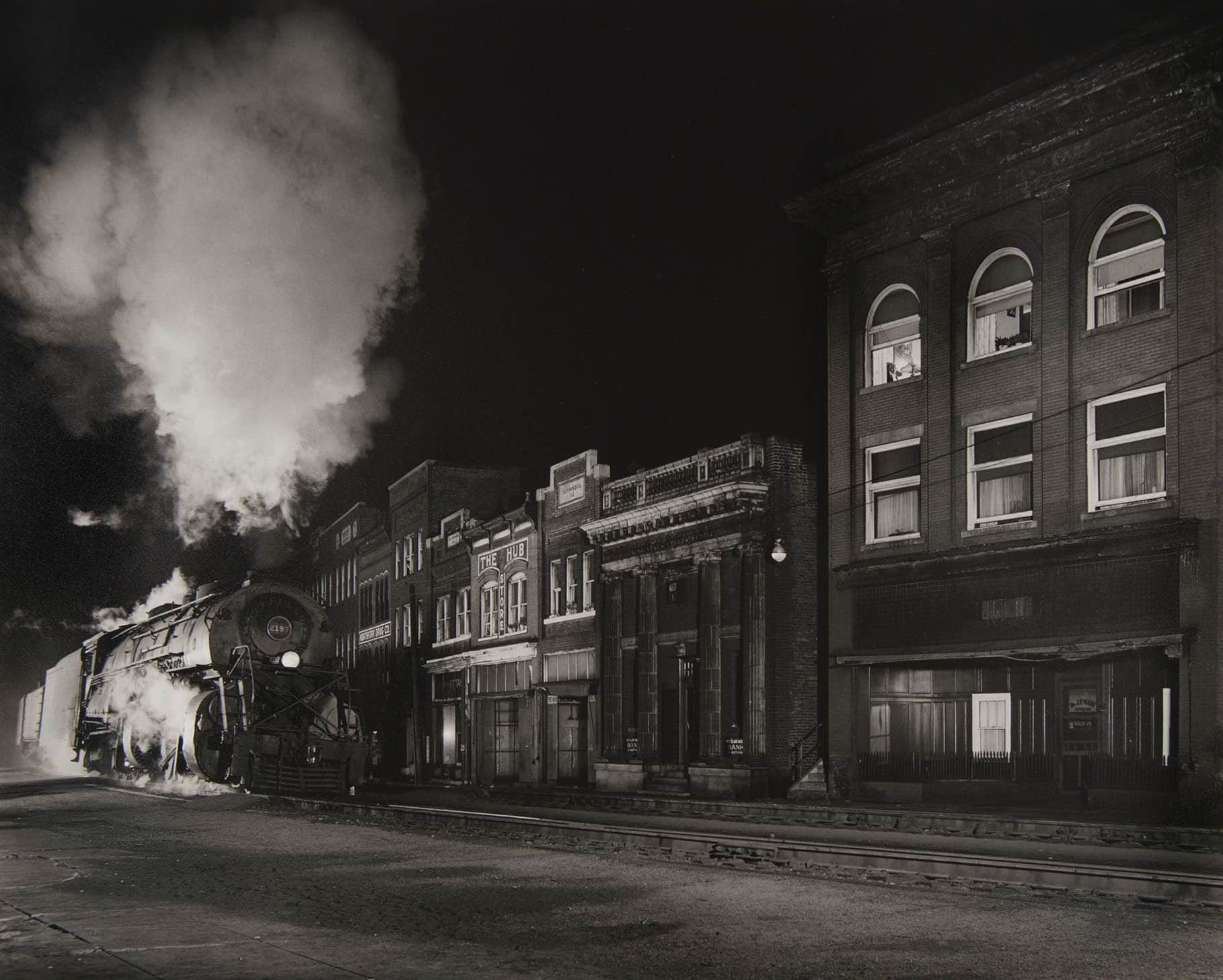
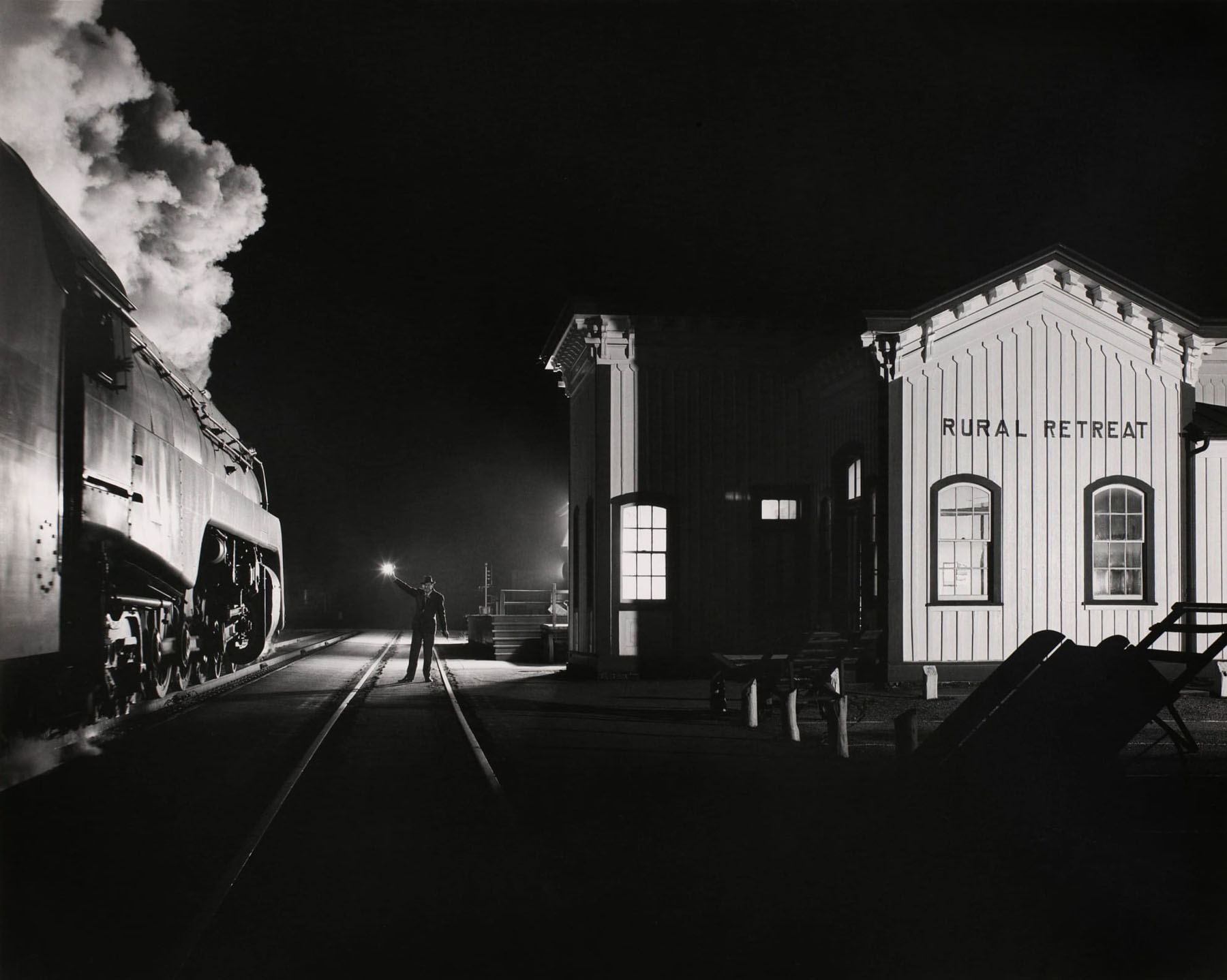
Then you look at magnificent photographs such as Locomotive Driving Wheels (1955, printed 1993?, below) with its low perspective of the enormous wheels and the light falling on the metal; the dark, disturbing creatures in Coaling Locomotives, (Puff of Steam) Shaffers Crossing Yards, Roanoke, Virginia (1955, below) like fire breathing dragons; or the incongruous sight of the train as big as the buildings and running right next to them in Main Line on Main Street, North Fork, West Virginia, August 29, 1958 (1958, printed 1997, below) – and you go… YES!

This artist gets it. He gets he gets it he gets it. And he has the skill and this really great intense spirit and the dedication to apply that skill and spirit… in order to capture the presence of these vanishing machines and worlds.

O. Winston Link … thank you.

Dr Marcus Bunyan


Many thankx to the Jane Lutnick Fine Arts Center, Haverford College for allowing me to publish the photographs in the posting. Please click on the photographs for a larger version of the image.


“I can’t move the sun – and it’s always in the wrong place – and I can’t even move the tracks, so I had to create my own environment through lighting.”


O. Winston Link


“Winston’s spirit so imbued the project that it was never really work. It was such a pleasure, there was also that kind of tingle that this was high adventure. You know, you had to get it. There were times when we would be absolutely exhausted, I remember once, we arrived at a place to tape record in this case, we got there at six and discovered that the train had left at five, we got there the next day at five and discovered it had left at four, we got there at four and that time it didn’t come until midnight. So, we sat there and waited and talked about what we were doing and about life and how it was changing and the many varieties of architecture and construction and the quality of things, how they were disappearing. So, there was this great intense spirit to really document and record this, to capture it. I think what I didn’t realise is how much we were capturing a whole way of life that was disappearing. Not only steam locomotives versus diesel locomotives but this isolated small town individualised kind of America that was vanishing.”


Tom Garver, Curator and Museum Director, a former assistant for Link’s photo projects.


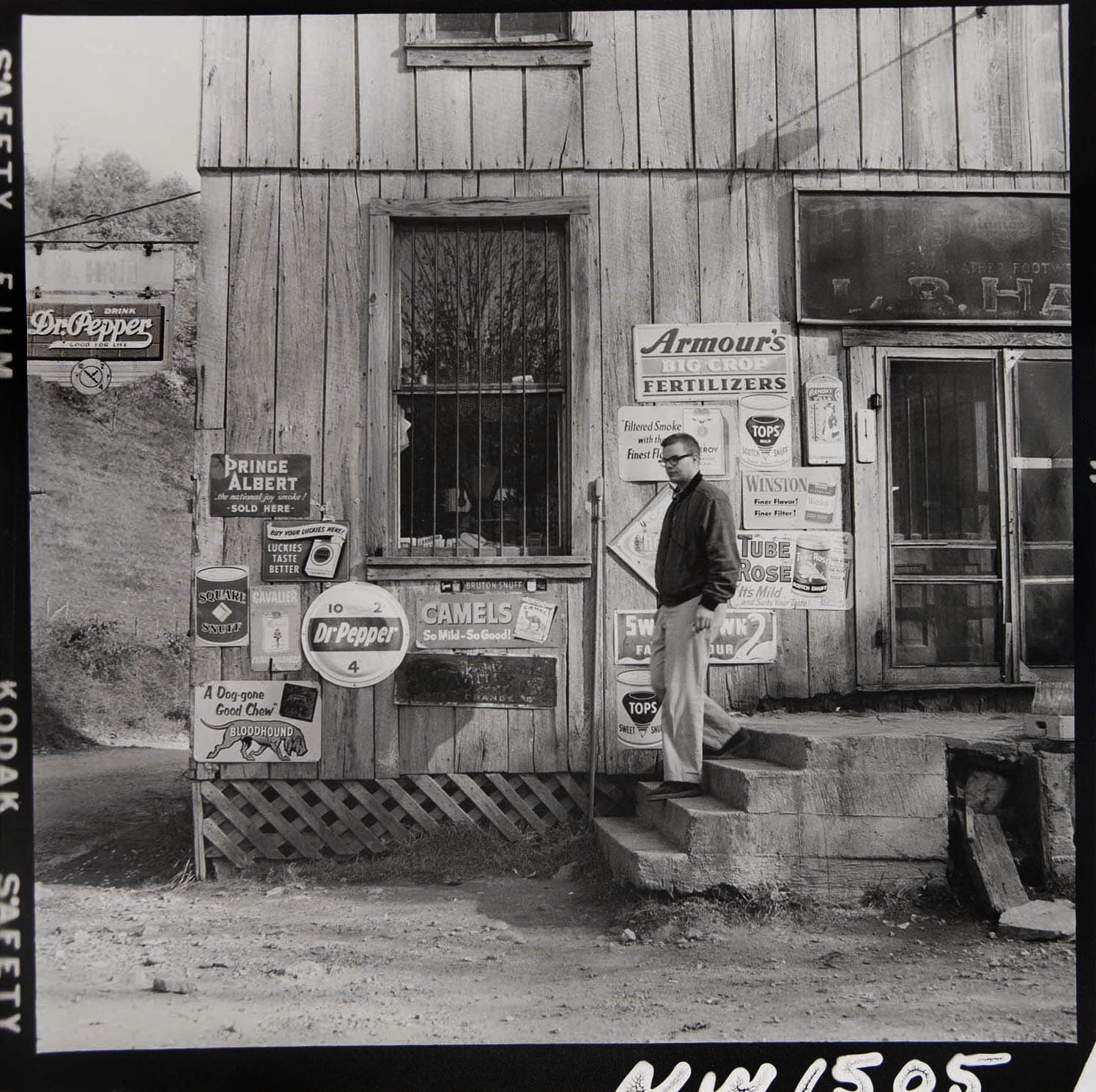
O. Winston Link (American, 1914-2001) 'Tom Garver at the General Store, Husk (Nella), North Carolina, 1957' 1957


O. Winston Link (American, 1914-2001)
Tom Garver at the General Store, Husk (Nella), North Carolina, 1957
1957
Gelatin silver print


O. Winston Link (American, 1914-2001) 'Haverford Chemistry Lecture' 1952


O. Winston Link (American, 1914-2001)
Haverford Chemistry Lecture
1952
Gelatin silver print


O. Winston Link (American, 1914-2001) 'Locomotive Driving Wheels' 1955, printed 1993? from the exhibition 'A Memorial Exhibition in Tom Garver's Memory of O. Winston Link's Photographs' at the Jane Lutnick Fine Arts Center


O. Winston Link (American, 1914-2001)
Locomotive Driving Wheels
1955, printed 1993?
Gelatin silver print


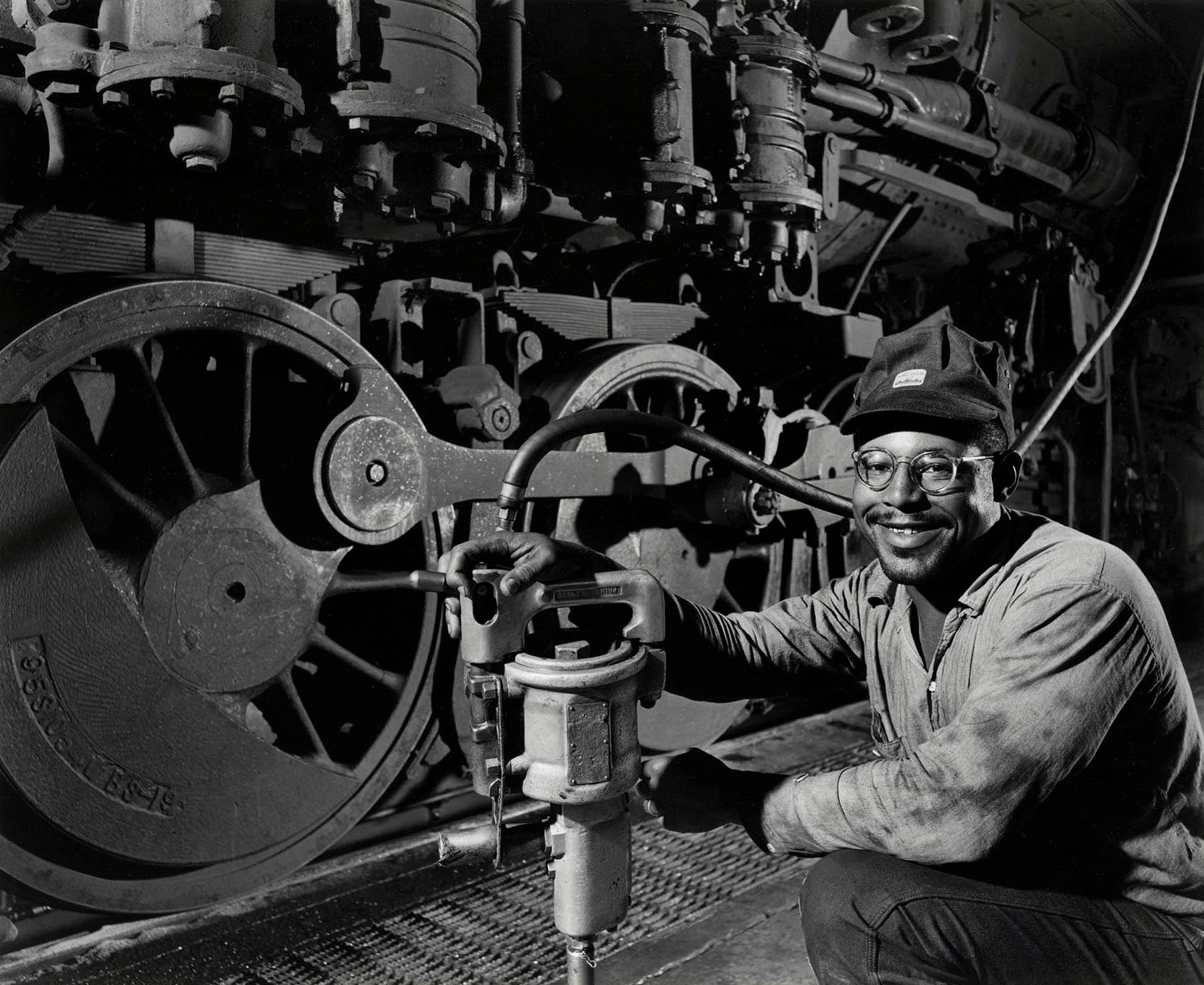
O. Winston Link (American, 1914-2001) 'J. O. Hayden with His Grease Gun, Bluefield Lubritorium' 1955 from the exhibition 'A Memorial Exhibition in Tom Garver's Memory of O. Winston Link's Photographs' at the Jane Lutnick Fine Arts Center


O. Winston Link (American, 1914-2001)
J. O. Hayden with His Grease Gun, Bluefield Lubritorium
1955
Gelatin silver print


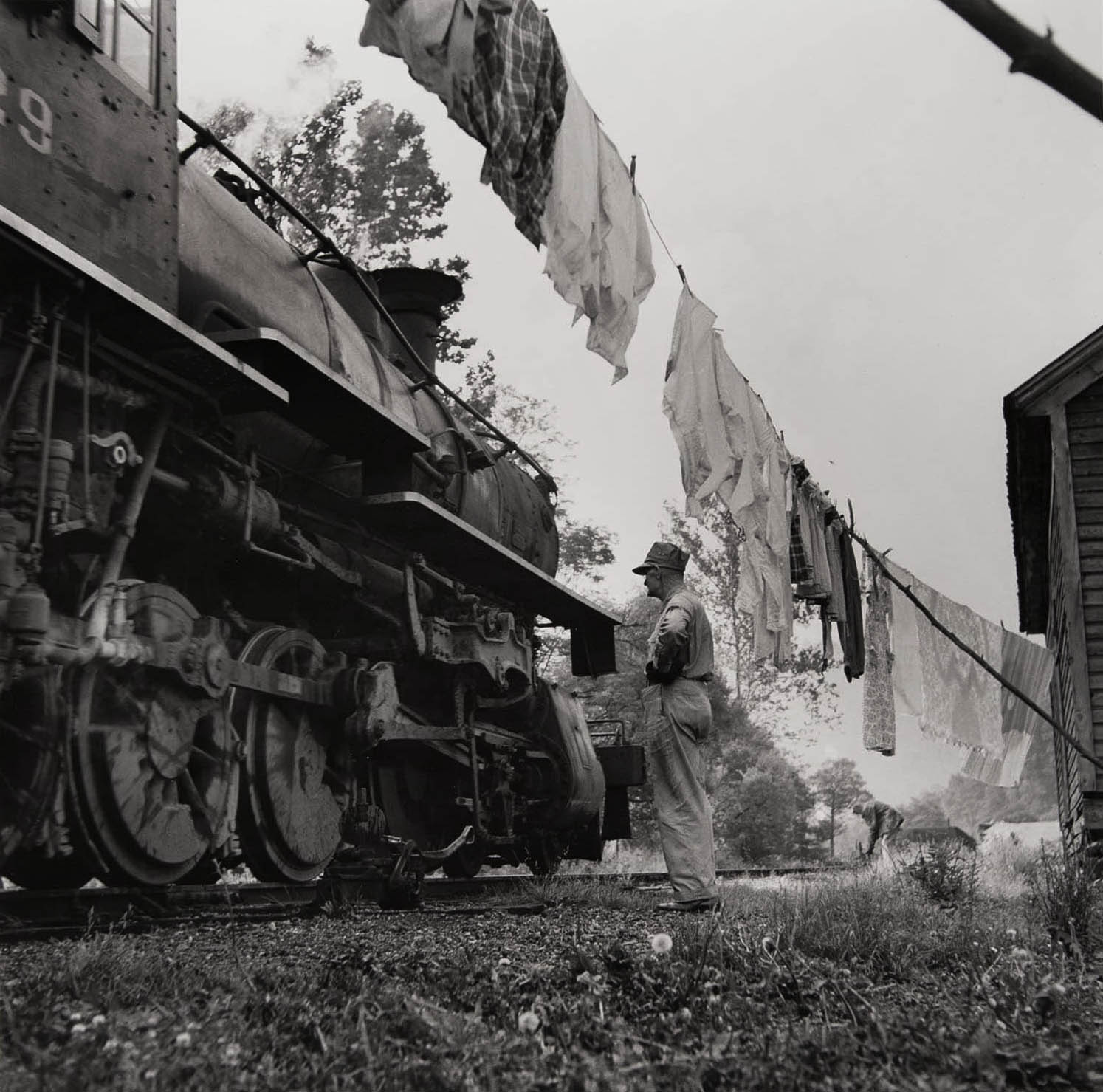
O. Winston Link (American, 1914-2001) 'Ralph White, Abingdon Branch Train Conductor, and Laundry on the Line, Damascus' 1955


O. Winston Link (American, 1914-2001)
Ralph White, Abingdon Branch Train Conductor, and Laundry on the Line, Damascus
1955
Gelatin silver print


O. Winston Link (American, 1914-2001) 'Coaling Locomotives, (Puff of Steam) Shaffers Crossing Yards, Roanoke, Virginia' 1955


O. Winston Link (American, 1914-2001)
Coaling Locomotives, (Puff of Steam) Shaffers Crossing Yards, Roanoke, Virginia
1955
Gelatin silver print


The exhibition consists of photographs by O. Winston Link (1914-2001) of steam locomotion on the Norfolk and Western Railroad from 1955 to 1960 and photographs taken by Link in 1952 of Haverford College for publicity purposes. Thomas “Tom” Haskell Garver (1934-2023) Haverford class of 1956 first met Link in 1952. Garver recalled that first meeting like this. “Link, a New York photographer, created admissions brochure photos at Haverford in 1952. After graduation, I was studying in New York City and worked part time for him for about a year. This included three trips with Winston to work on his documentation of the last years of steam powered railroading.”

Garver, an accomplished museum administrator and curator, stepped in when Link needed a friend and supporter. Forty years after Garver first met Link his life was marred by tragedy. Conchita Mendoza Link, his second wife, who also was her husband’s agent, fabricated a story that Link suffered from Alzheimer’s Disease in an attempt to steal from Link payments for his work. Mrs. Link was also found to have stolen many of Link’s negatives and prints from which she pocketed the money from their sale. Mrs. Link was criminally charged, found guilty, and sentenced to prison in 1996. Garver began to assist again Link by becoming his business agent. After Link’s death Garver became the organising curator of the O. Winston Link Museum in Roanoke, Virginia. The Last Steam Railroad in North America, published in 1995 by Harry N. Abrams, Inc. and authored by Garver is the definitive publication on Link and his photography.

Garver wrote in the book: “These photographs are, in every way, works of art,” … “Winston Link innately possessed what has been called photographic vision, the ability to visualise photographs before they are created and to recognise in the process that what one sees, no matter how interesting, does not necessarily translate into an interesting photograph. The thing photographed and a photograph of it are coequal neither in interest, nor in appearance.” Garver’s efforts were instrumental on so many levels in gaining recognition for Link’s photographs as they are now recognised as some of the greatest photographs of the 20th century.

Tom Garver was a great supporter of Haverford College in all manner of ways. As an active member of the class of 1956 with each reunion cycle he compiled Class of 1956 Collective Biography. Furthermore, in his case, that also meant contributing hundreds of art photographs to the Fine Art Photography Collection. Manuscripts including letters from Paul Strand and George Segal and documentary photographs of American scenes by Charles Currier, who was the subject of Garver’s Master’s thesis to further support Special Collections at Haverford. Among this bounty of collections of photographs are a choice selection of O. Winston Link’s black and white, and colour photographs. This exhibition is a fitting memorial to a loyal and generous alumnus.

Text from the Jane Lutnick Fine Arts Center, Haverford College website


O. Winston Link (American, 1914-2001) 'Hotshot Eastbound, Iaeger, West Virginia, 1956' 1956, printed 2001 from the exhibition 'A Memorial Exhibition in Tom Garver's Memory of O. Winston Link's Photographs' at the Jane Lutnick Fine Arts Center


O. Winston Link (American, 1914-2001)
Hotshot Eastbound, Iaeger, West Virginia, 1956
1956, printed 2001
Gelatin silver print


O. Winston Link (American, 1914-2001) 'Archie Stover, Crossing Watchman' 1956


O. Winston Link (American, 1914-2001)
Archie Stover, Crossing Watchman
1956
Gelatin silver print


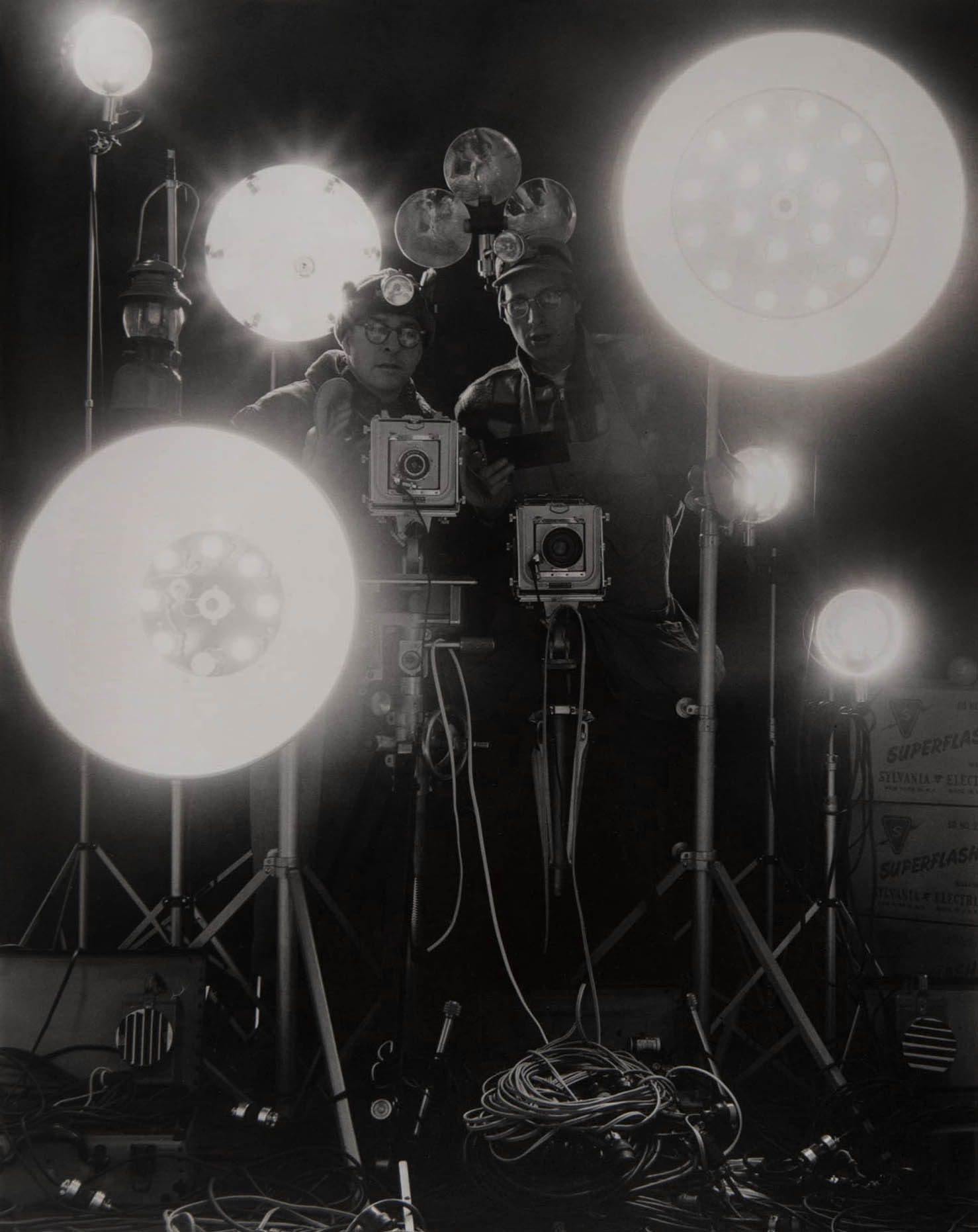
O. Winston Link (American, 1914-2001) 'Winston Link, George Thom and Night Flash Equipment: All Flashbulbs Firing' 1956


O. Winston Link (American, 1914-2001)
Winston Link, George Thom and Night Flash Equipment: All Flashbulbs Firing
1956
Gelatin silver print


Preserving the Golden Age of Railroads

In the 1950s, O. Winston Link, a photographer with an astute affinity for technical photography and a fond fascination with trains, set out to record the last steam locomotives operating in the country. After contacting the Norfolk and Western Railway and gaining access to the company’s premises, Link would begin recording the last surviving fleet of locomotives against the night sky, preserving the golden age of railroads and the remaining vestiges of American 20th-century industry. …

Staunton, Virginia

In 1955, O. Winston Link would begin exploring a series of photographs that would have a lasting impact on the medium’s history. After accepting a job that would take him to Staunton, Virginia, Link noticed the Norfolk and Western Railway, the last major steam railroad in the country. The company was ceasing operations as an industry-wide change from steam to diesel was in effect. Link was further impressed by the human connection to the railroad, a thread of sparsely spread communities that lived near the tracks. The photographer noticed not only the facilities and locomotives but the trackside communities that were profoundly immersed with the steam locomotives and rail transportation.

From 1955 to 1960, Winston Link returned to Virginia around 20 times. He photographed the clouds of steam and massive steel bodies of the locomotives passing through the Virginian and Appalachian communities, documenting some of the last days of the steam engine. In this unique quest, Link traveled by night covering a large swath of area, from Virginia and North Carolina to Maryland. With his preference for capturing the locomotives at night and prior experience with highly technical photographs for corporate clients, Link had the aptitude to develop a unique flash photography system. His unique system rigged flashbulbs, sometimes up to 80 of them, to fire simultaneously and allow the camera to capture the high-speed trains moving past his frame at night. As to why he chose to take his pictures at night, the photographer notedly said:

“I can’t move the sun – and it’s always in the wrong place – and I can’t even move the tracks, so I had to create my own environment through lighting.” ~ O. Winston Link


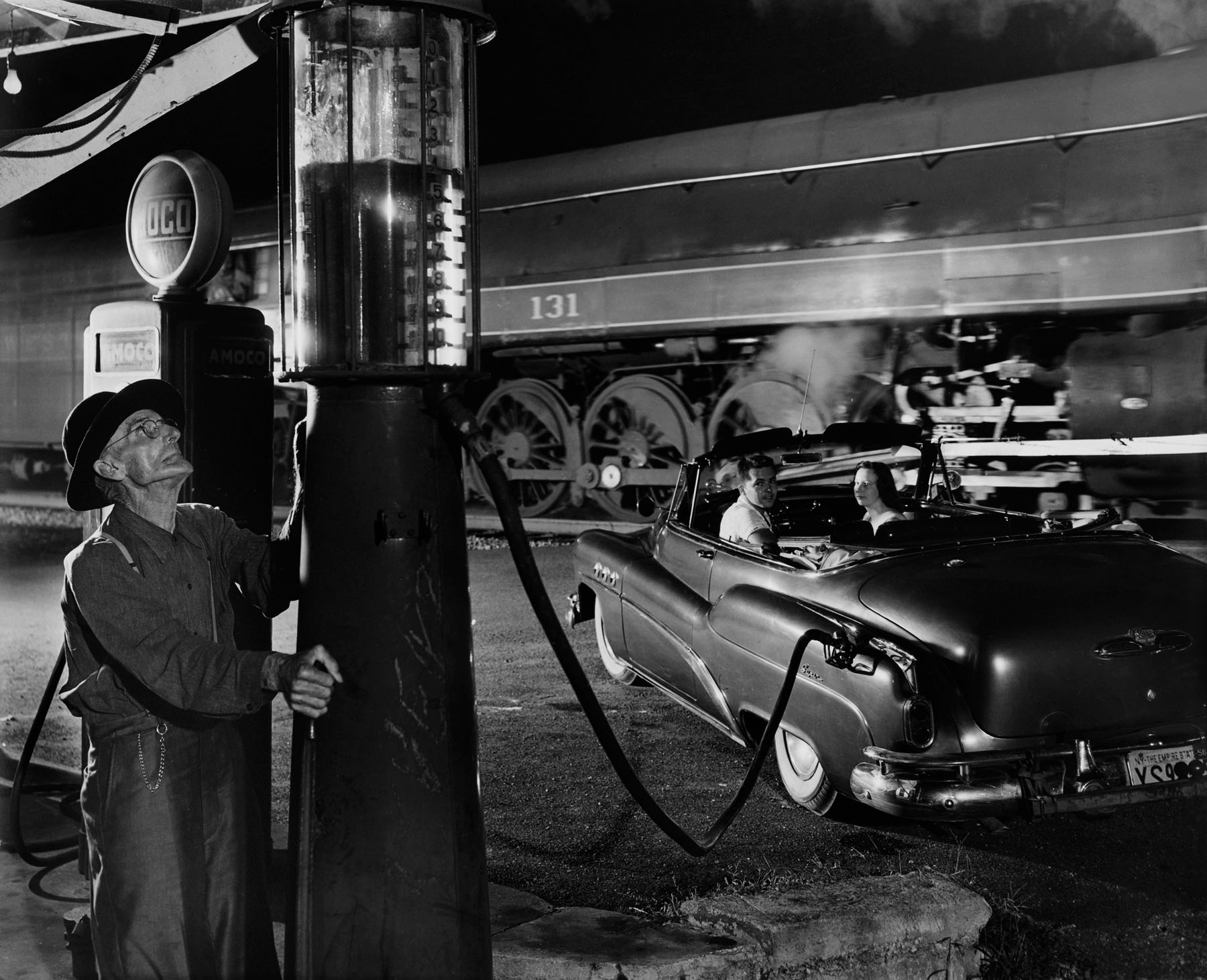
O. Winston Link’s perseverance in recording the nightly locomotives that passed Appalachia made him a pioneer not only for his subject matter but also as a trailblazer in night photography. Most likely inspired by his legendary predecessor, the Hungarian-French photographer Brassai, who captured the underbelly of Paris by night, Winston Link’s contributions to the preservation of American history helped chronicle these once, one-of-a-kind towns. Whether at the drive-in, splashing in the river below a railway bridge, pumping gas trackside by a passing locomotive, or directing a train through the quiet night of the rural countryside, Link’s pictures conserve small towns, whose lives revolved around the coming and going of steam engines. Through the rising pillars of steam, the sounds of bells and whistles announcing the arrival of the steam engines, and the camaraderie of community members in his pictures, Winston Link preserves a romantic, golden age of American railroads. When asked what about steam engines he found so appealing, Link said:

“I guess it’s because of the places they go. They’re always going through some mountains, through the valleys, and through the rivers, and forests, it’s always country. And I’ve lived in New York City, in Manhattan and Brooklyn, where you didn’t have anything like that. So, it’s always great to get on a train and take a long trip. I suppose that’s part of it. And the sounds that it makes, the smells that it has. It has a bell in it, it has air pumps, and it has valves that are releasing shots of steam every now and then. It has a turbo, which has a whine to it. It has a beautiful whistle, the old steam engines had different whistles, all had different characteristics and different sounds. And they had smells from hot grease and oil, the smell of coal smoked, the soft coal, has a nice smell to it as long as you don’t get it blasted in the face, as long as you’re far away from it, its Ok. It’s things like that. The sound of the wheels, the sound of the drivers, you can tell exactly what’s happening to the engine, and how fast its going, if the rods are lose, it makes different sounds. So, it has all these characteristics. The diesel engine is great, it’s very efficient, there’s nothing like them but, it’ll never replace a steam engine.” ~ O. Winston Link, 1980s


Holden Luntz. “O. Winston Link’s Birmingham Special, Rural Retreat, Virginia,” on the Holden Luntz Gallery website October 12, 2012 [Online] Cited 11/10/2024


O. Winston Link (American, 1914-2001) 'Main Line on Main Street, North Fork, West Virginia, August 29, 1958' 1958, printed 1997


O. Winston Link (American, 1914-2001)
Main Line on Main Street, North Fork, West Virginia, August 29, 1958
1958, printed 1997
Gelatin silver print


O. Winston Link (American, 1914-2001) 'Hawksbill Creek Swimming Hole, Luray, Virginia, 1956' 1956


O. Winston Link (American, 1914-2001)
Hawksbill Creek Swimming Hole, Luray, Virginia, 1956
1956
Gelatin silver print


Further O. Winston Link photographs from the Norfolk and Western Railroad


O. Winston Link (American, 1914-2001) 'Y-6 Locomotive on the Turntable, Shaffers Crossing Yards, Roanoke, Virginia' 1955, printed 1994


O. Winston Link (American, 1914-2001)
Y-6 Locomotive on the Turntable, Shaffers Crossing Yards, Roanoke, Virginia
1955, printed 1994
Gelatin silver print


O. Winston Link (American, 1914-2001) 'Norfolk and Western Railway' 1955


O. Winston Link (American, 1914-2001)
Norfolk and Western Railway
1955
Gelatin silver print


O. Winston Link (American, 1914-2001) 'Locomotive 261' 1955


O. Winston Link (American, 1914-2001)
Locomotive 261
1955
Gelatin silver print


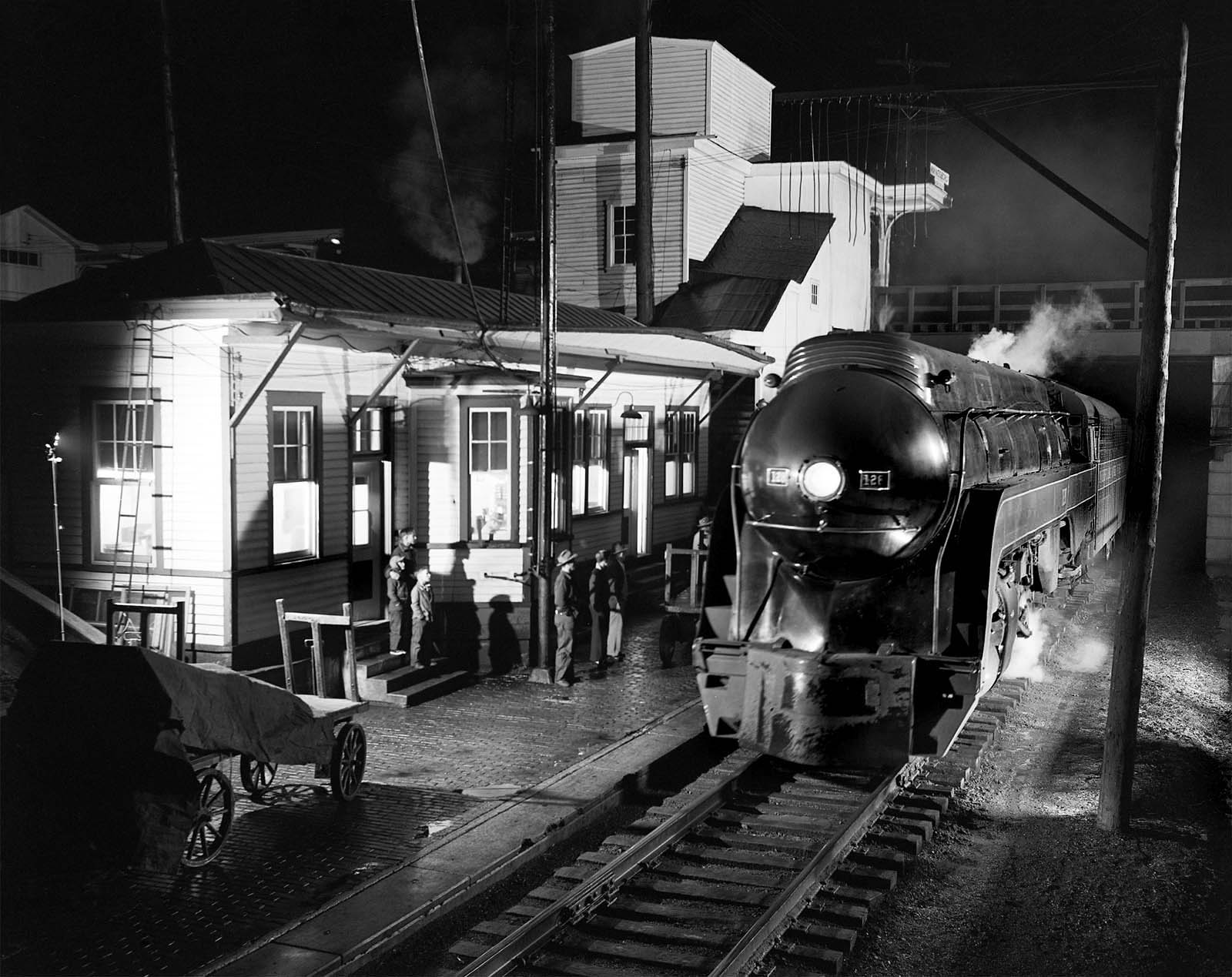
O. Winston Link (American, 1914-2001) 'Train #2 arrives at the Waynesboro Station, Waynesboro, Virgnia, April 14, 1955' 1955, printed 1996


O. Winston Link (American, 1914-2001)
Train #2 arrives at the Waynesboro Station, Waynesboro, Virgnia, April 14, 1955
1955, printed 1996
Gelatin silver print


O. Winston Link (American, 1914-2001) 'Sometimes the Electricity Fails, Vesuvius, Virginia, 1956' 1956, printed 1988


O. Winston Link (American, 1914-2001)
Sometimes the Electricity Fails, Vesuvius, Virginia, 1956
1956, printed 1988
Gelatin silver print


O. Winston Link (American, 1914-2001) 'Maud Bows to the Virginia Creeper' 1956


O. Winston Link (American, 1914-2001)
Maud Bows to the Virginia Creeper
1956
Gelatin silver print


O. Winston Link (American, 1914-2001) 'Birmingham Special, Rural Retreat, Virginia, 1957' 1957, printed 1986


O. Winston Link (American, 1914-2001)
Birmingham Special, Rural Retreat, Virginia, 1957
1957, printed 1986
Gelatin silver print


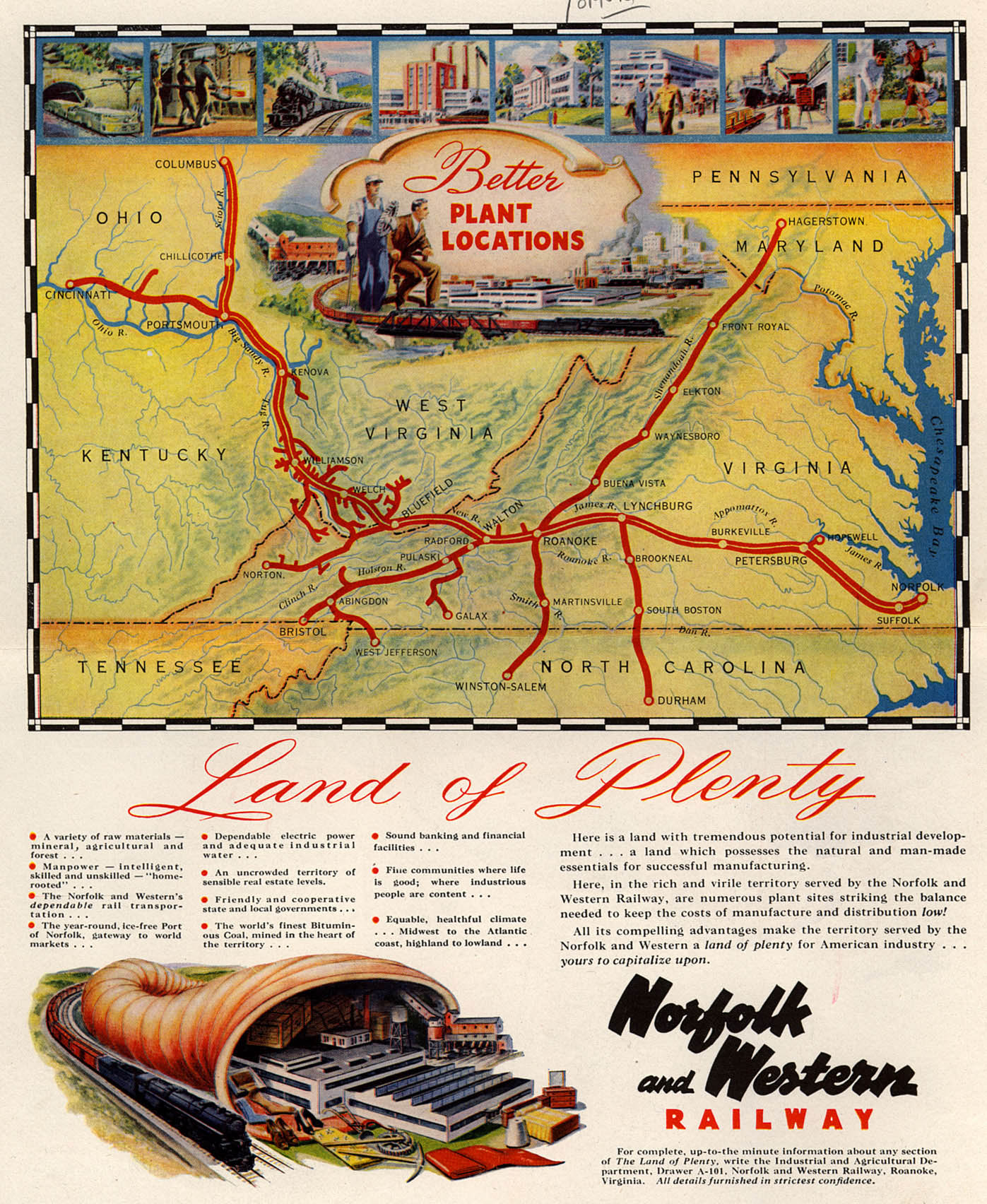
'1948 Norfolk and Western Railway - Land of Plenty Norfolk and Western magazine ad with system map' 1948


1948 Norfolk and Western Railway – Land of Plenty
Norfolk and Western magazine ad with system map
1948
Duke University Libraries
Public domain


Haverford College
370 Lancaster Avenue, Haverford, PA 19041

Monday – Friday, 9am – 5pm
Weekends, Noon – 5pm

Haverford College website

LIKE ART BLART ON FACEBOOK

Back to top

Exhibition: ‘Power & Light: Russell Lee’s Coal Survey’ at the National Archives Museum, Washington

Exhibition dates: 16th March, 2024 – 6th July, 2025


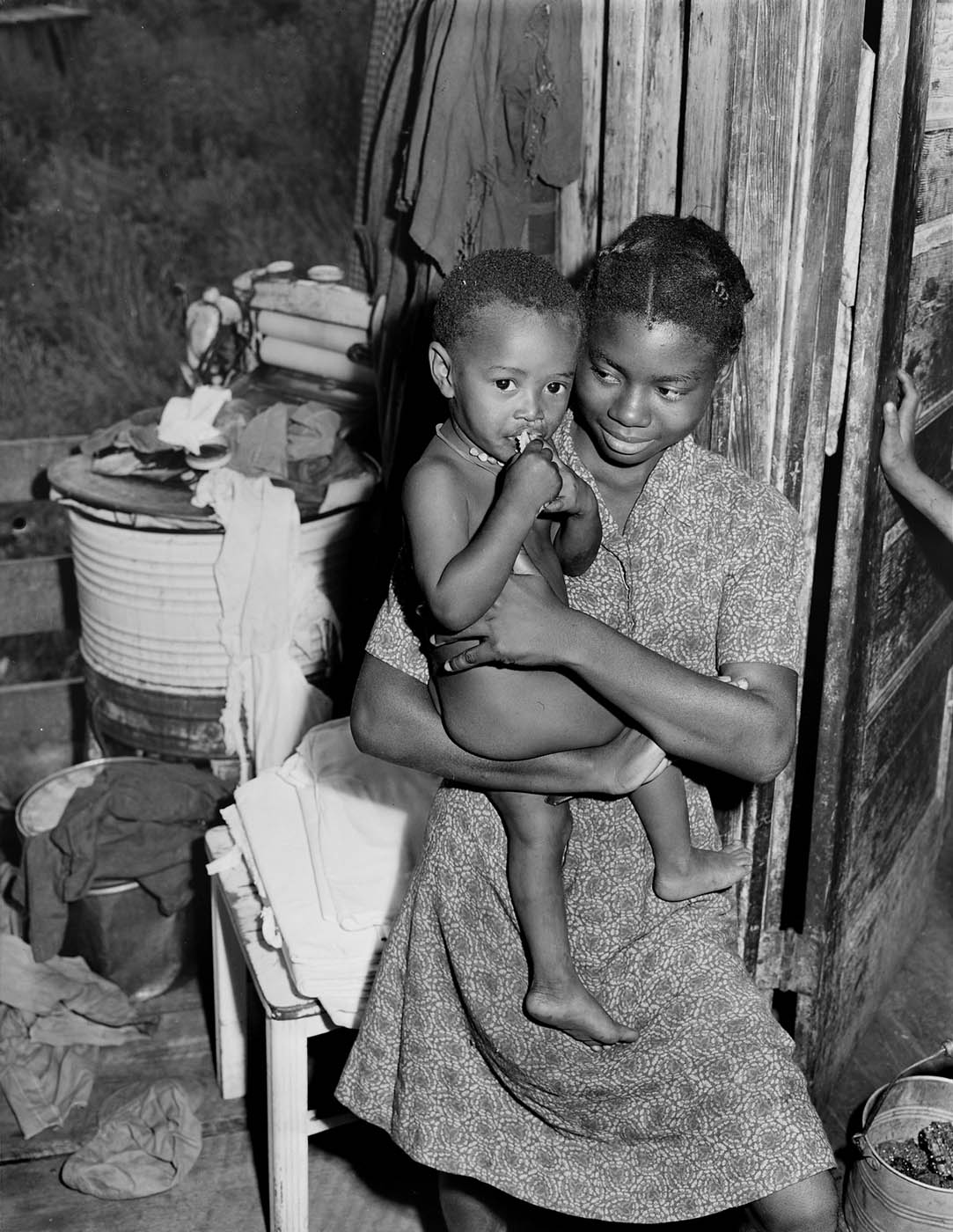
Russell Lee (American, 1903-1986) 'Mrs. Manuel Alcala and son in corner of their kitchen. The family lives in company housing project for miners. National Fuel Company, Monarch Mine, Broomfield, Boulder County, Colorado' July 2, 1946 from the exhibition 'Power & Light: Russell Lee's Coal Survey' at the National Archives Museum, Washington


Russell Lee (American, 1903-1986)
Mrs. Manuel Alcala and son in corner of their kitchen. The family lives in company housing project for miners. National Fuel Company, Monarch Mine, Broomfield, Boulder County, Colorado
July 2, 1946
National Archives
Public domain


The history of today and every day

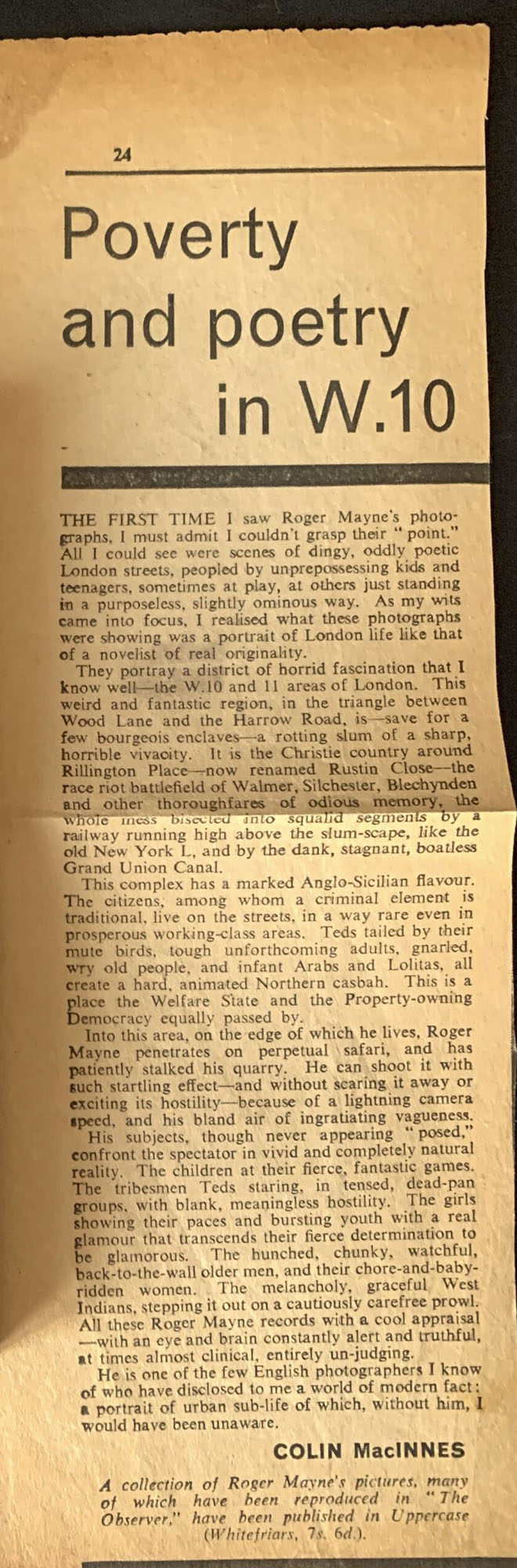
Continuing Art Blart’s support of photographers with a social conscience, this latest posting complements recent postings on the exhibitions Miners’ Strike 1984-85, and Roger Mayne: Youth. In America this type of attuned social documentary photography has a long history, both prior to and after Russell Lee’s photographs were taken.

From Danish-American social reformer Jacob Riis’ who used his “photographic and journalistic talents to help the impoverished in New York City” to the famous American sociologist and photographer Lewis Hine whose images “were instrumental in bringing about the passage of the first child labor laws in the United States”, onward to the work of the photographers employed by the Farm Security Administration / Office of War Information (FSA / OWI) between 1935-1944,* (notably Dorothea Lange, Walker Evans, Jack Delano, Russell Lee, Marion Post Wolcott) which “form an extensive pictorial record of American life” … and thus to these photographs taken by Russell Lee just after the end of the Second World War. Lee’s photographs were then followed by Gordon Parks‘ photographs of racial intolerance, Marion Palfi‘s photographs of American injustice, Milton Rogovin‘s photographs of “the forgotten ones” and, more recently, James Nachtwey‘s photographs of drug use in America. Of course, there are many other photographers who could be mentioned.


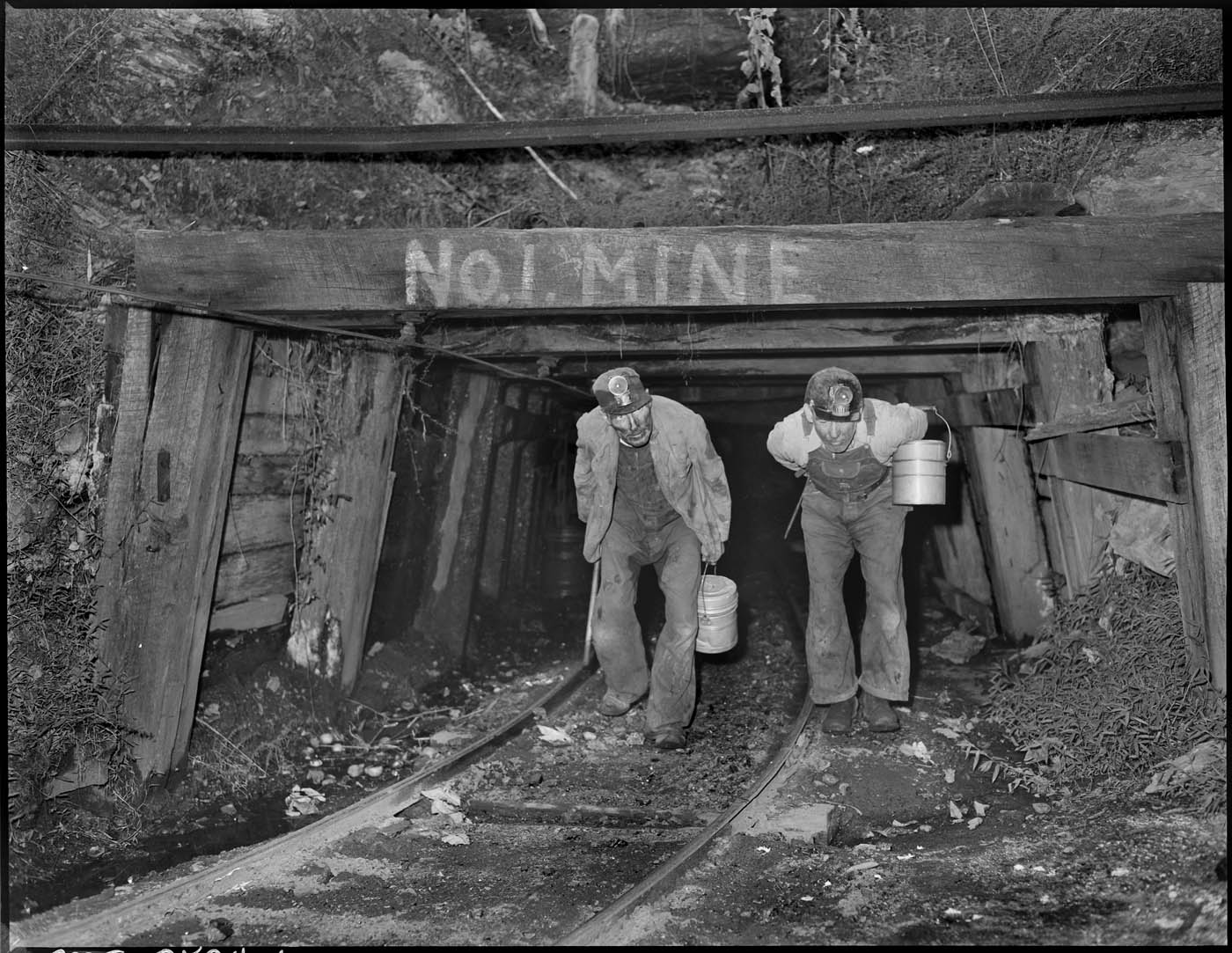
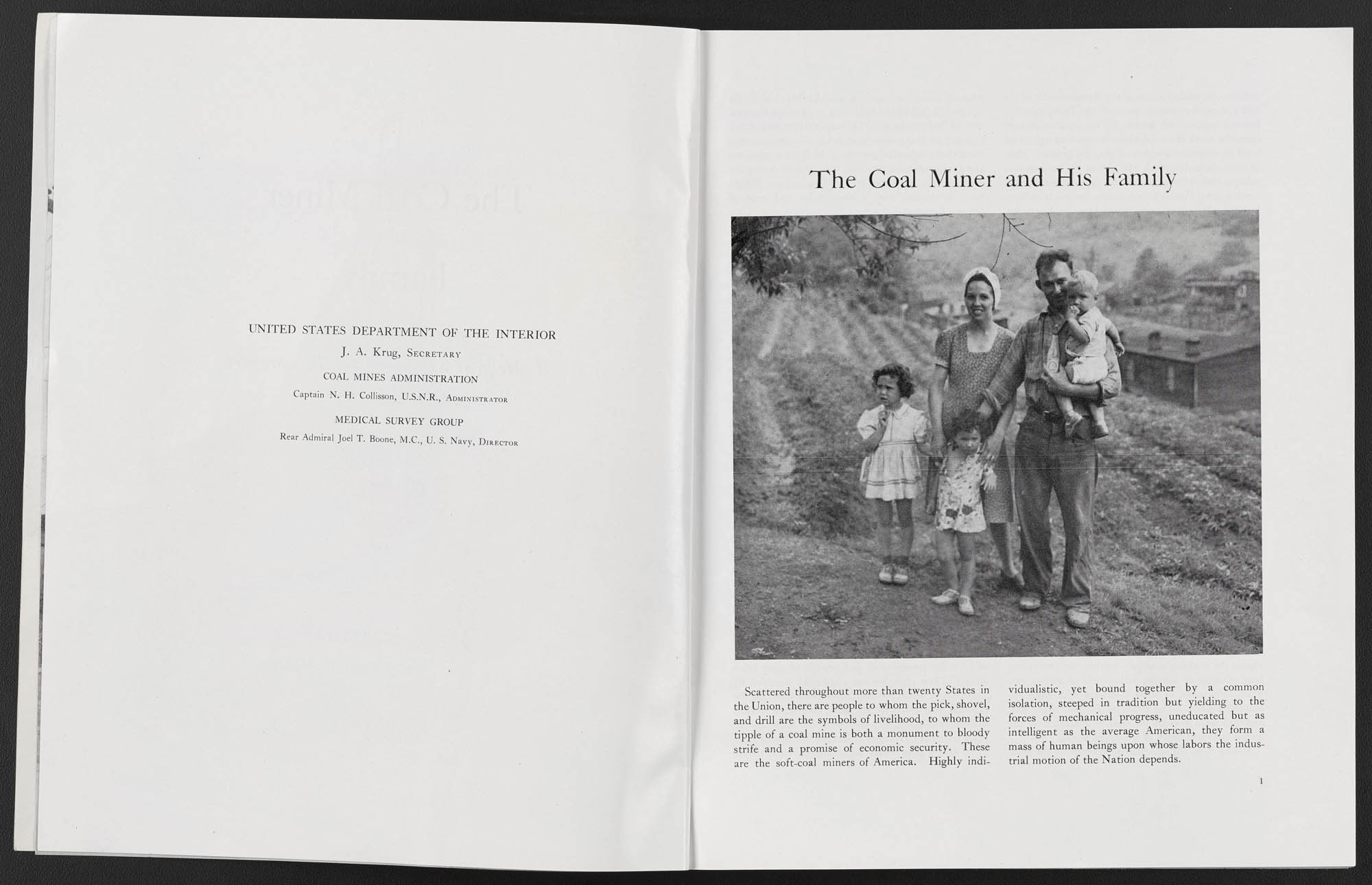
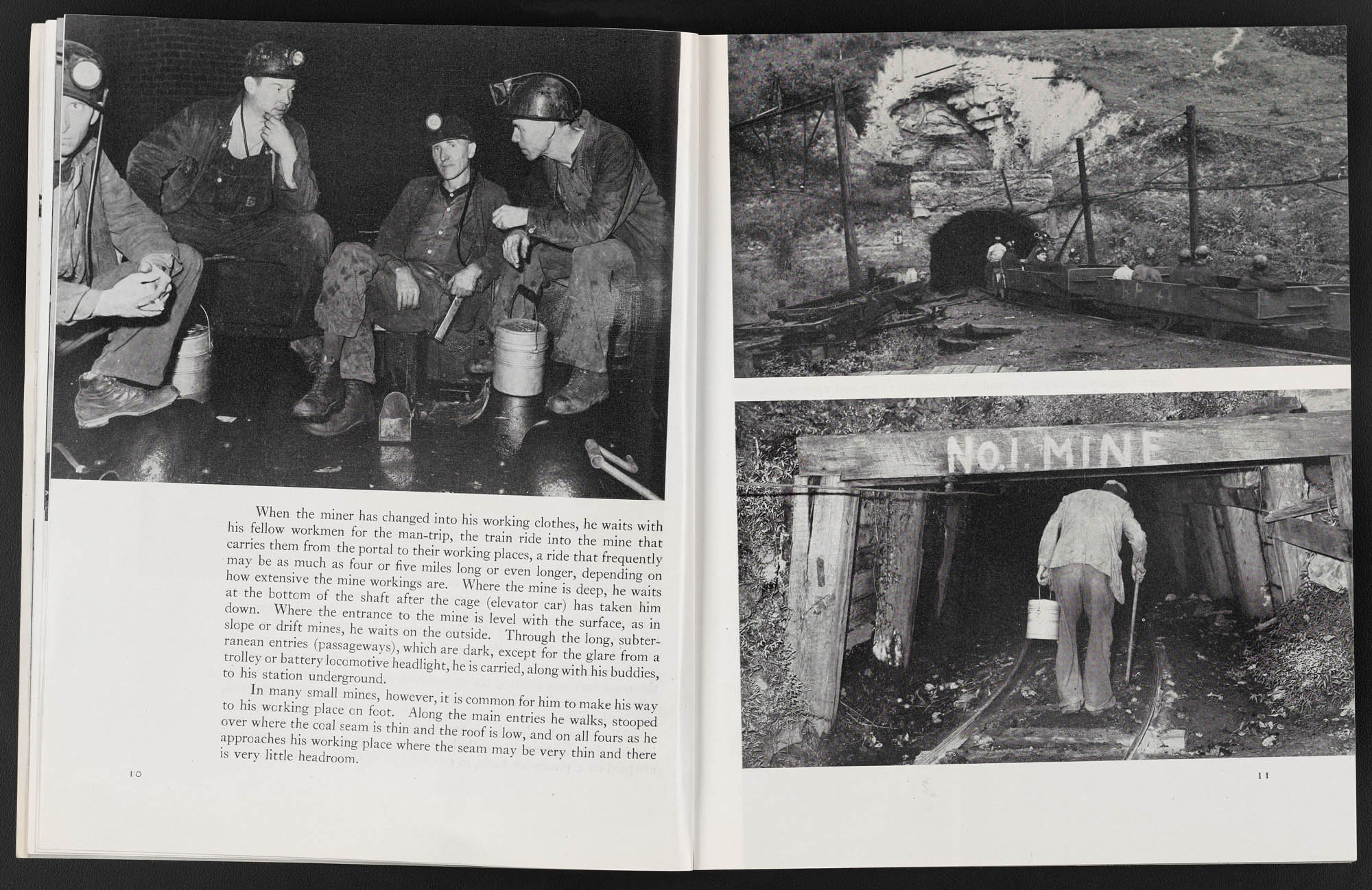
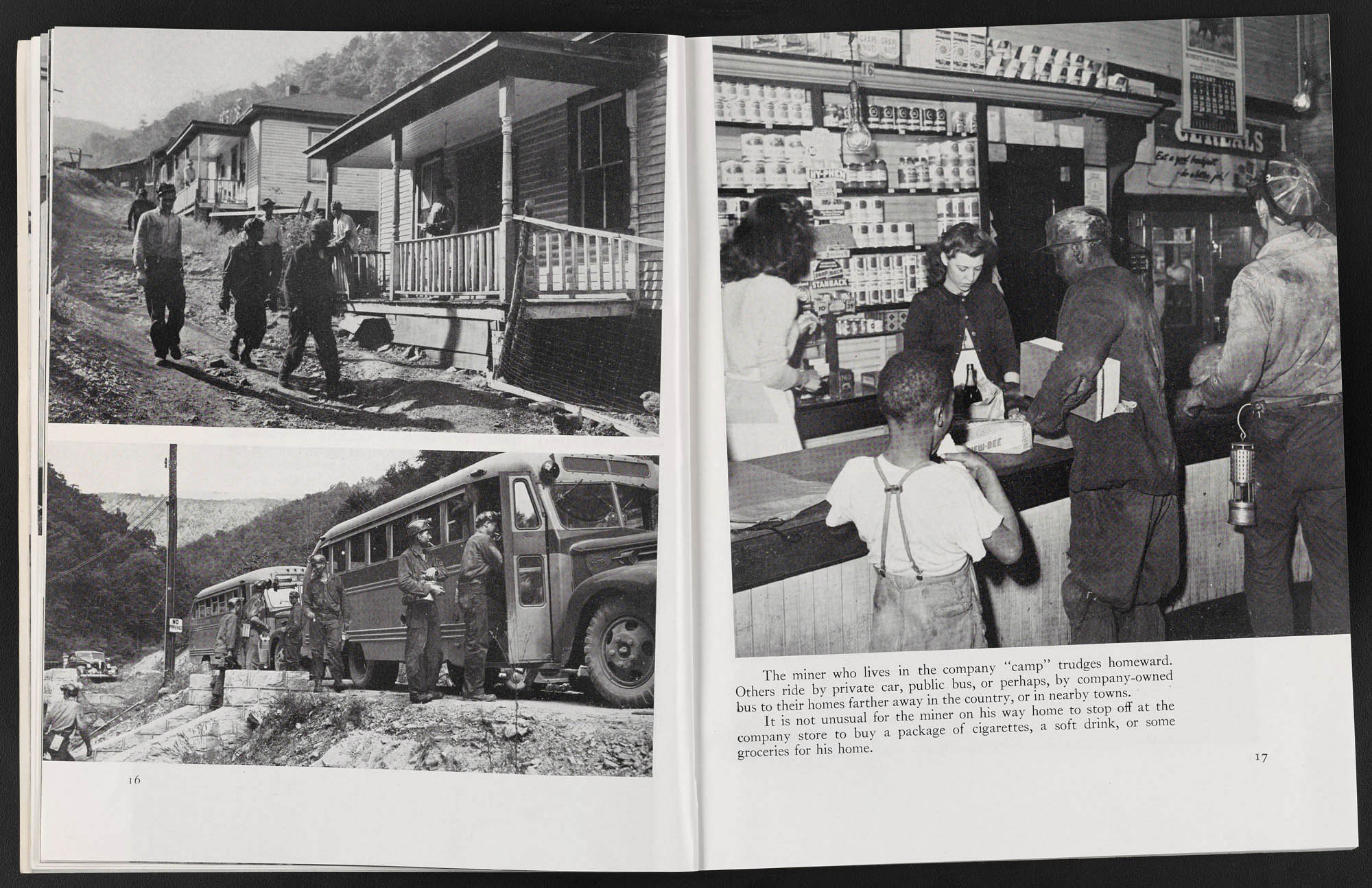
It has been a fascinating journey to engage with over 1000 of Russell Lee’s Coal Survey photographs that are available in the National Archives Catalog to try to fully understand the vision of this artist during the 1946 project picturing miners in their homes, mines, and communities. “Lee provided the photographs for the study which included 90 communities in 22 states… Over the course of the survey, Lee took over 4000 photographs, more than 200 of which are included in the exhibit.”

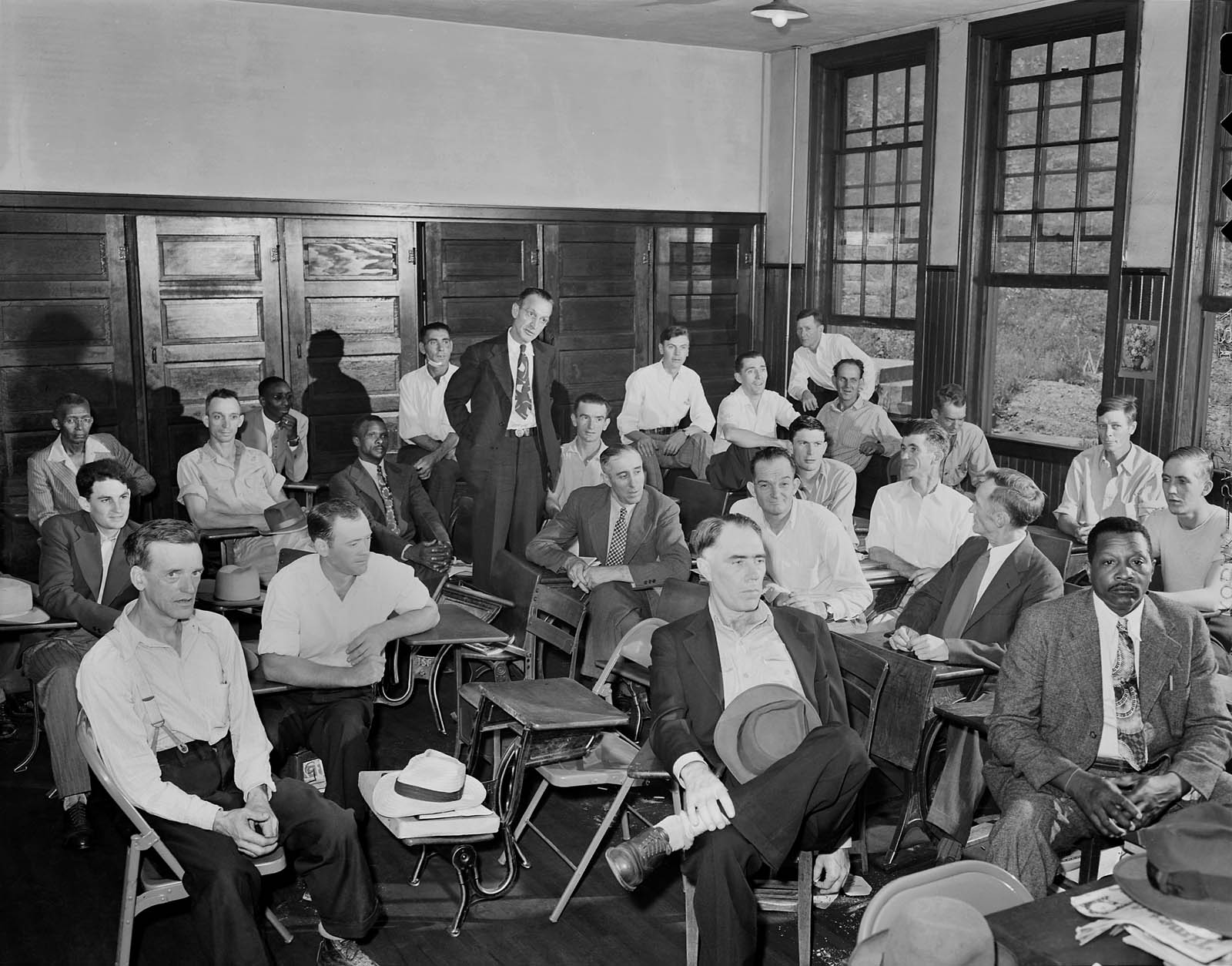
As with any large of body of work the quality of the photographs varies incredibly – some poor, others prosaic, some insightful, others powerful portraits, some dynamic, others occasionally revelatory. This is only to be expected. In the selection in this posting I have chosen what I think are the best photographs from the 1000 photographs available online. Please note, these photographs are not necessarily in the exhibition.

In looking through the body of work I feel what is envisioned by the photographer in his images is a wonderful empathy for the miners and their families in the situation of their becoming. What Lee pictures are communities that support each other but which are under stress.

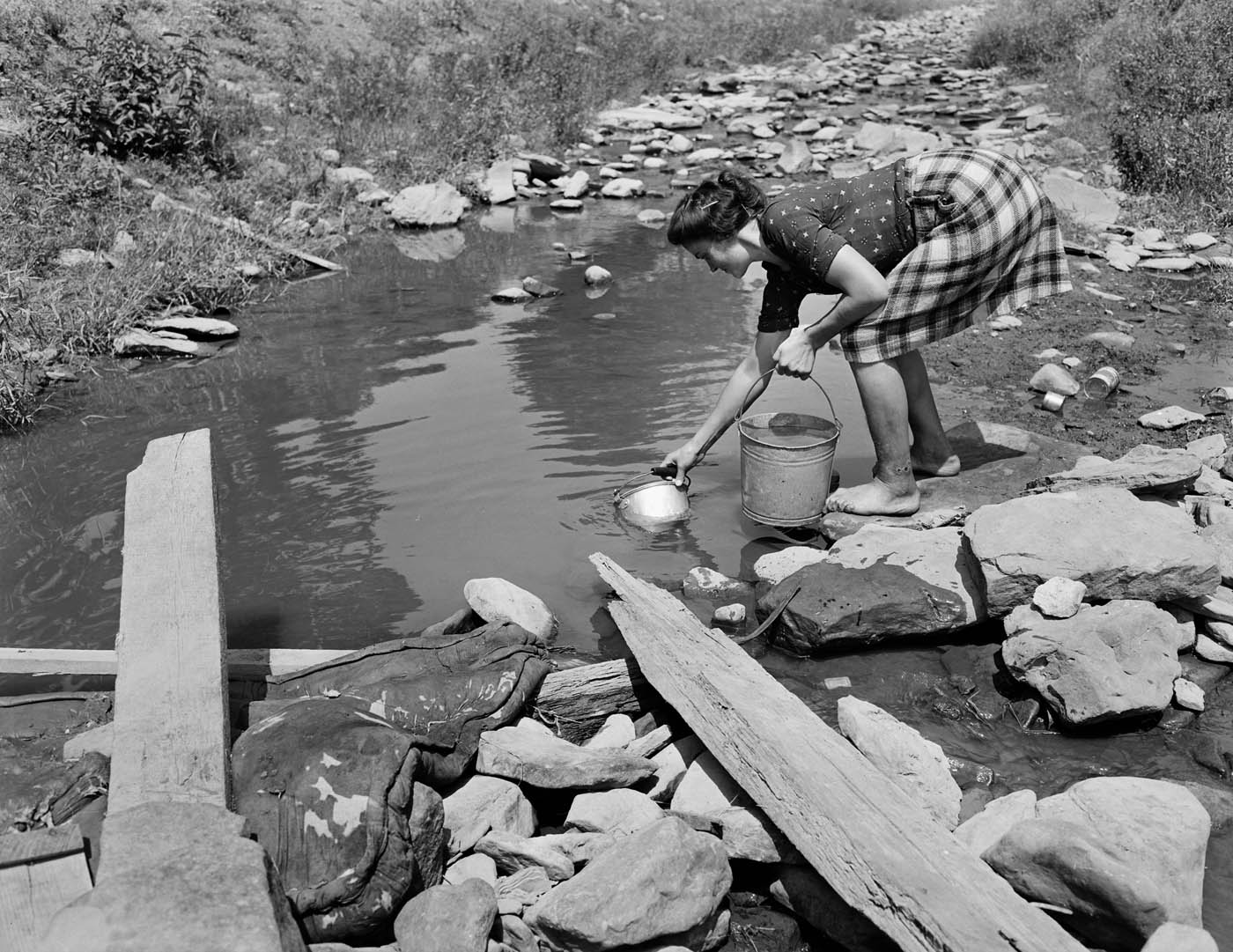
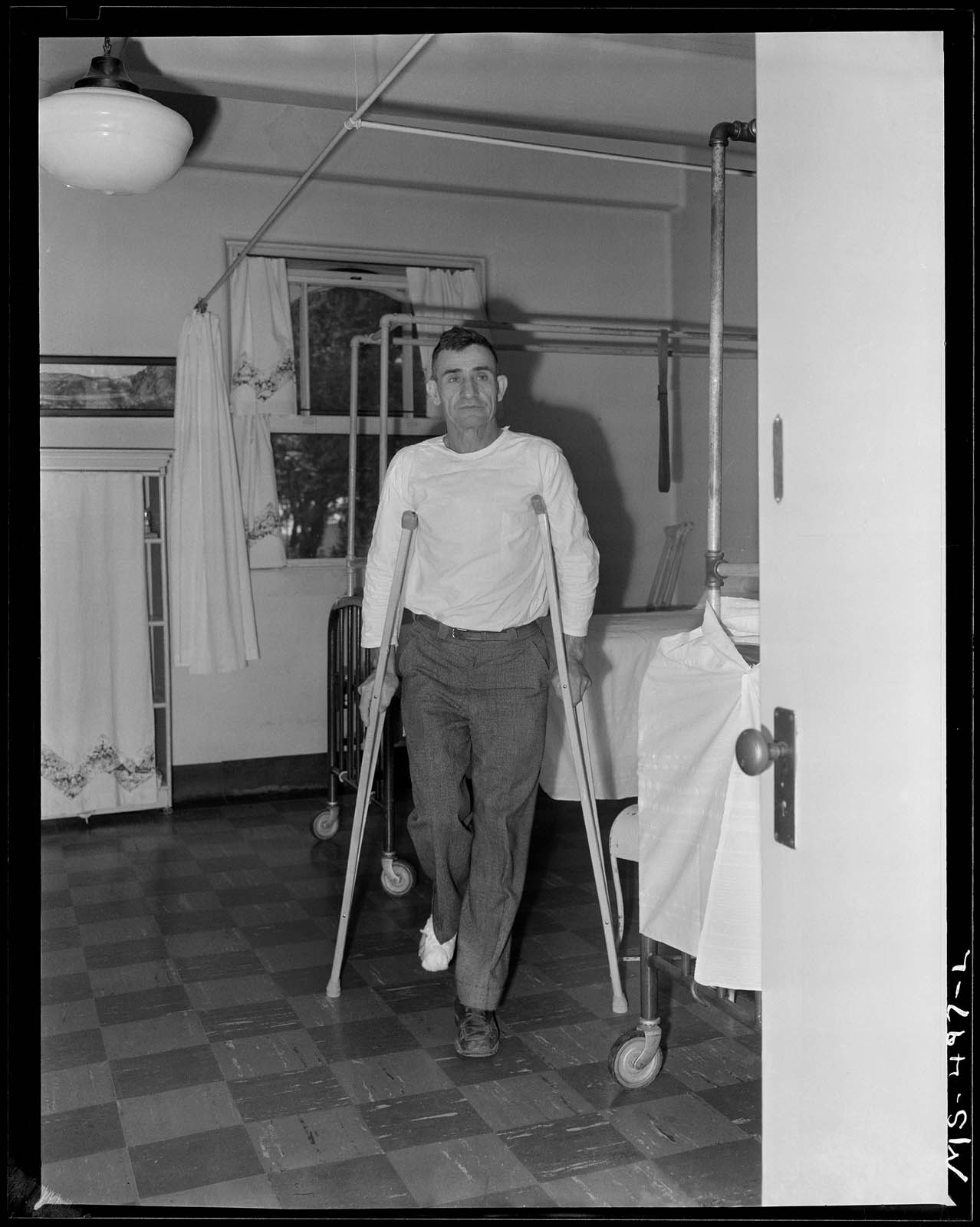
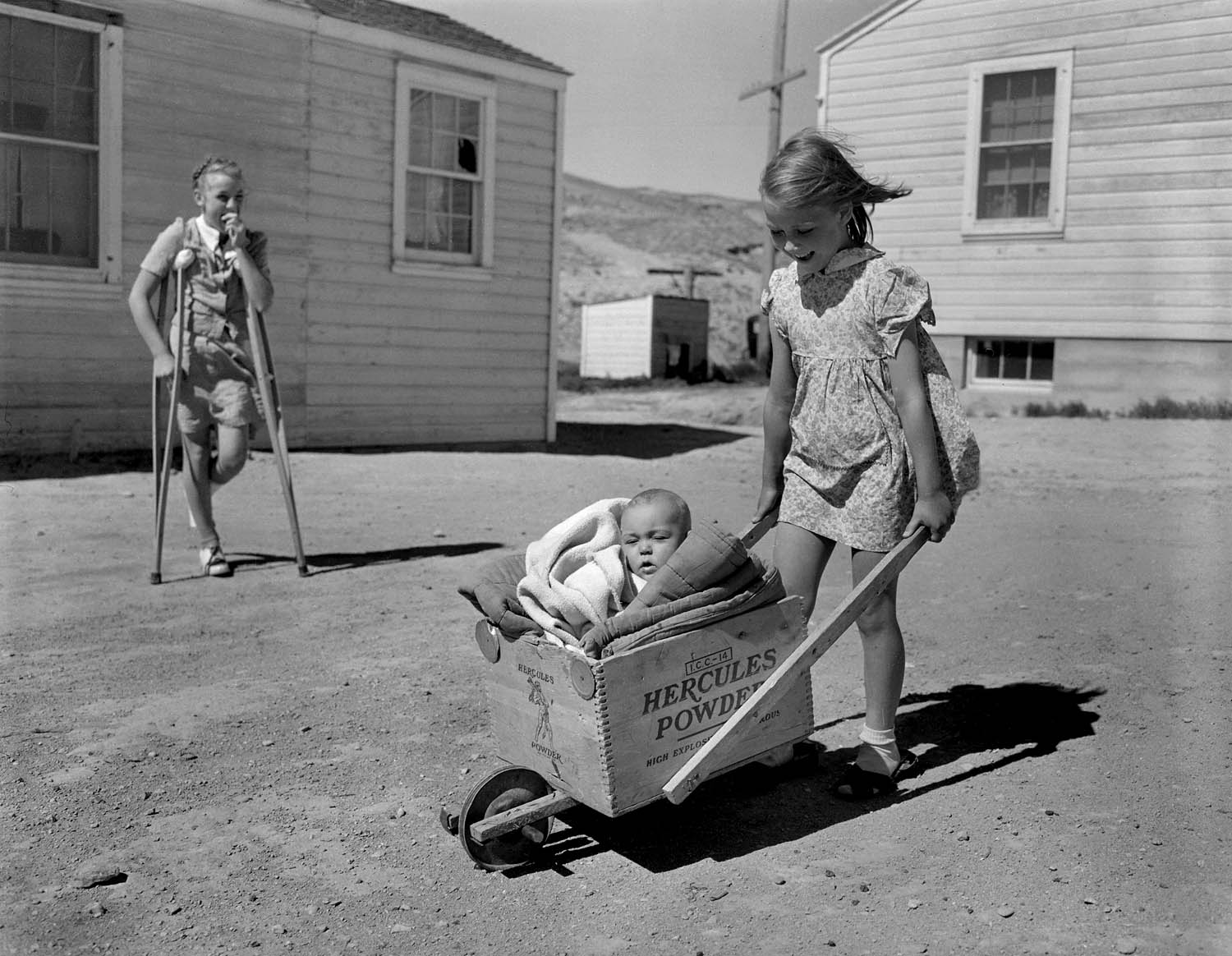
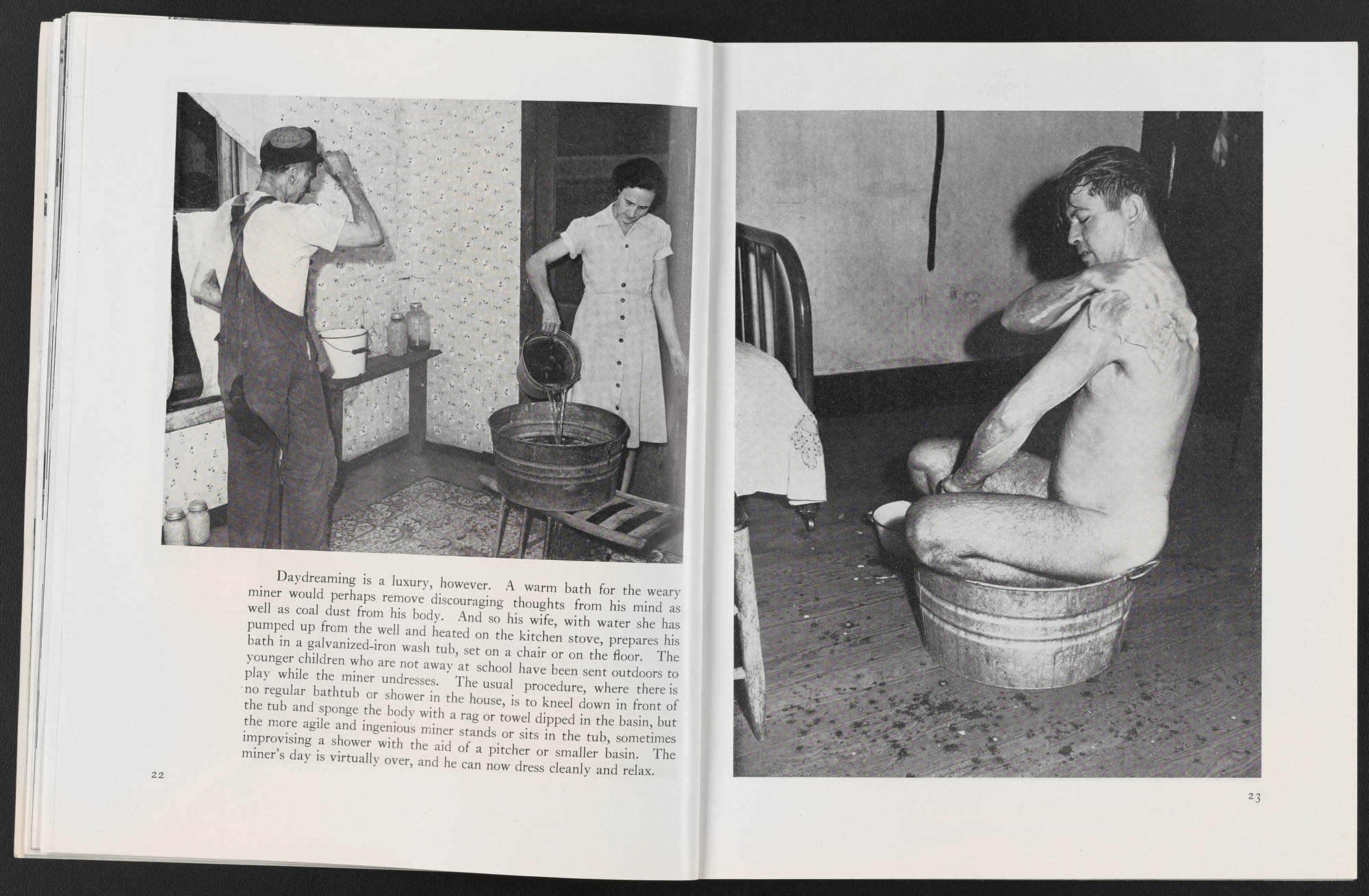
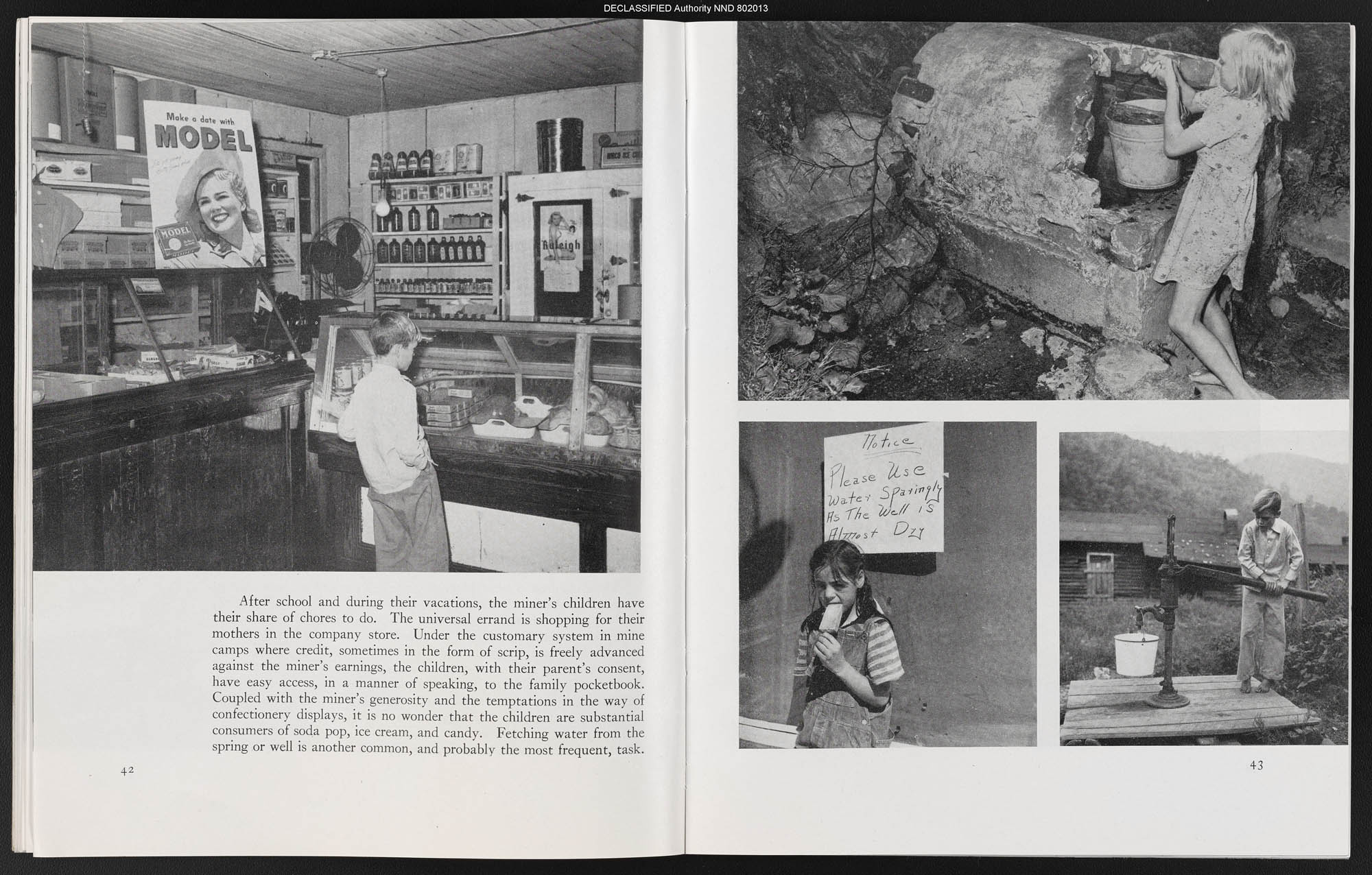
Having worked through the Second World War to aid the American war effort, men and women were hard at work in a dangerous job, the families were living in run down houses owned by the coal mining companies, were buying food at the company store, were borrowing money on their earnings from the company to survive and living a subsistence life – having the minimal resources necessary for survival, having just enough food or money to stay alive. Rickety wooden houses with no running water [The only houses with running water inside in this camp are those in which their tennants [sic] have made the installations at no expense to the company], dead animals in streams where water is gathered, roofs lined with newspaper, children with no shoes, men holding serpents praying to an unseen god.

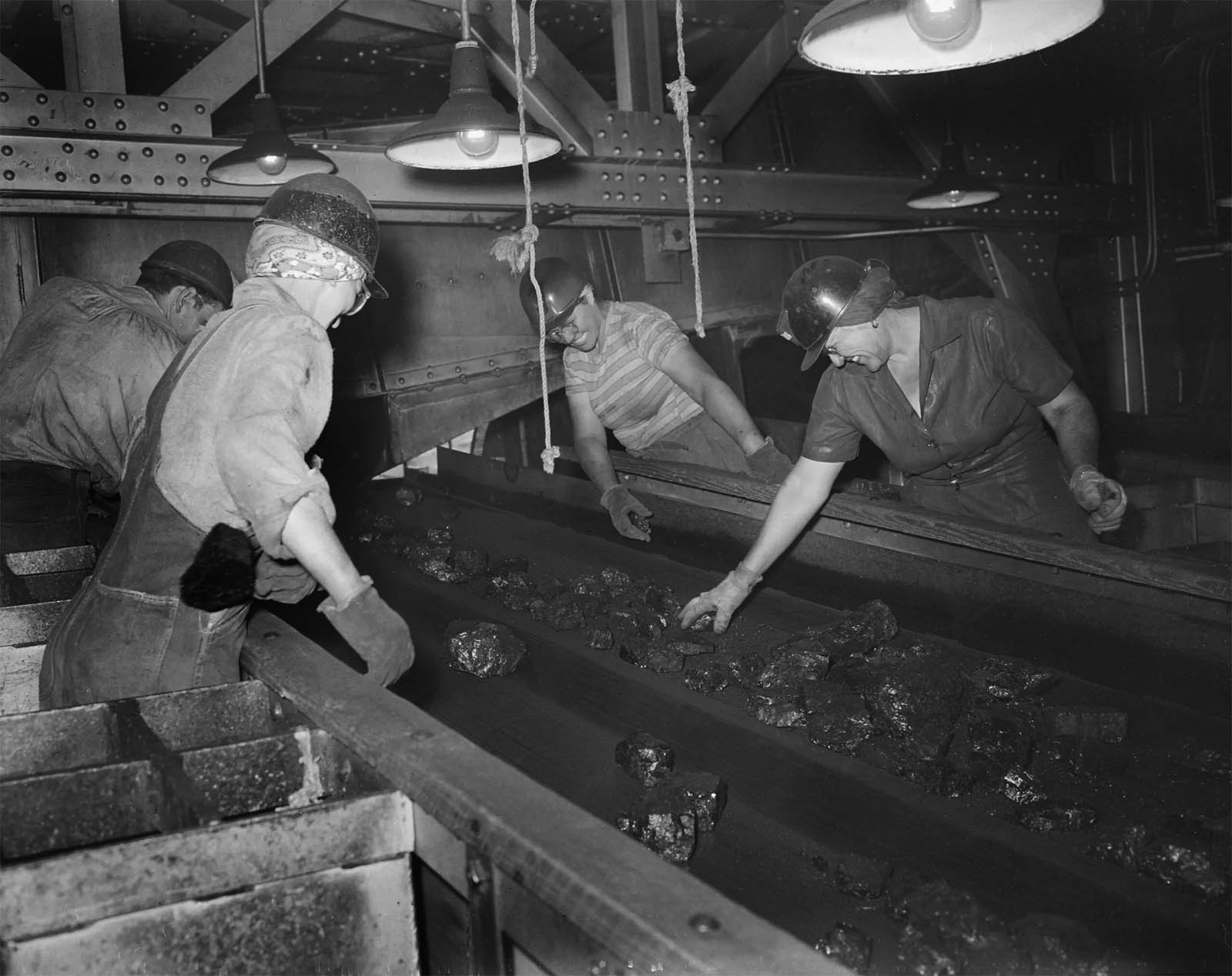
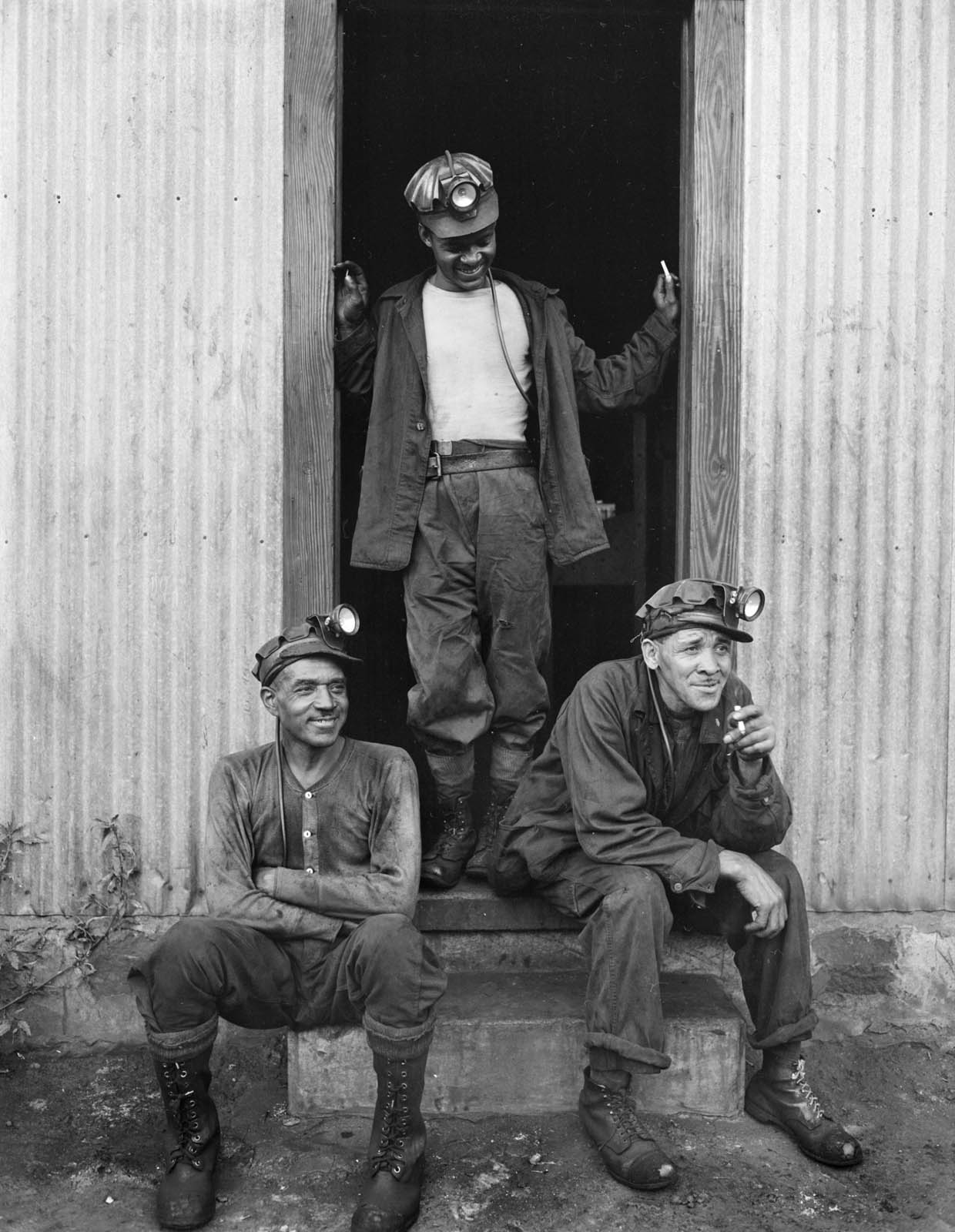
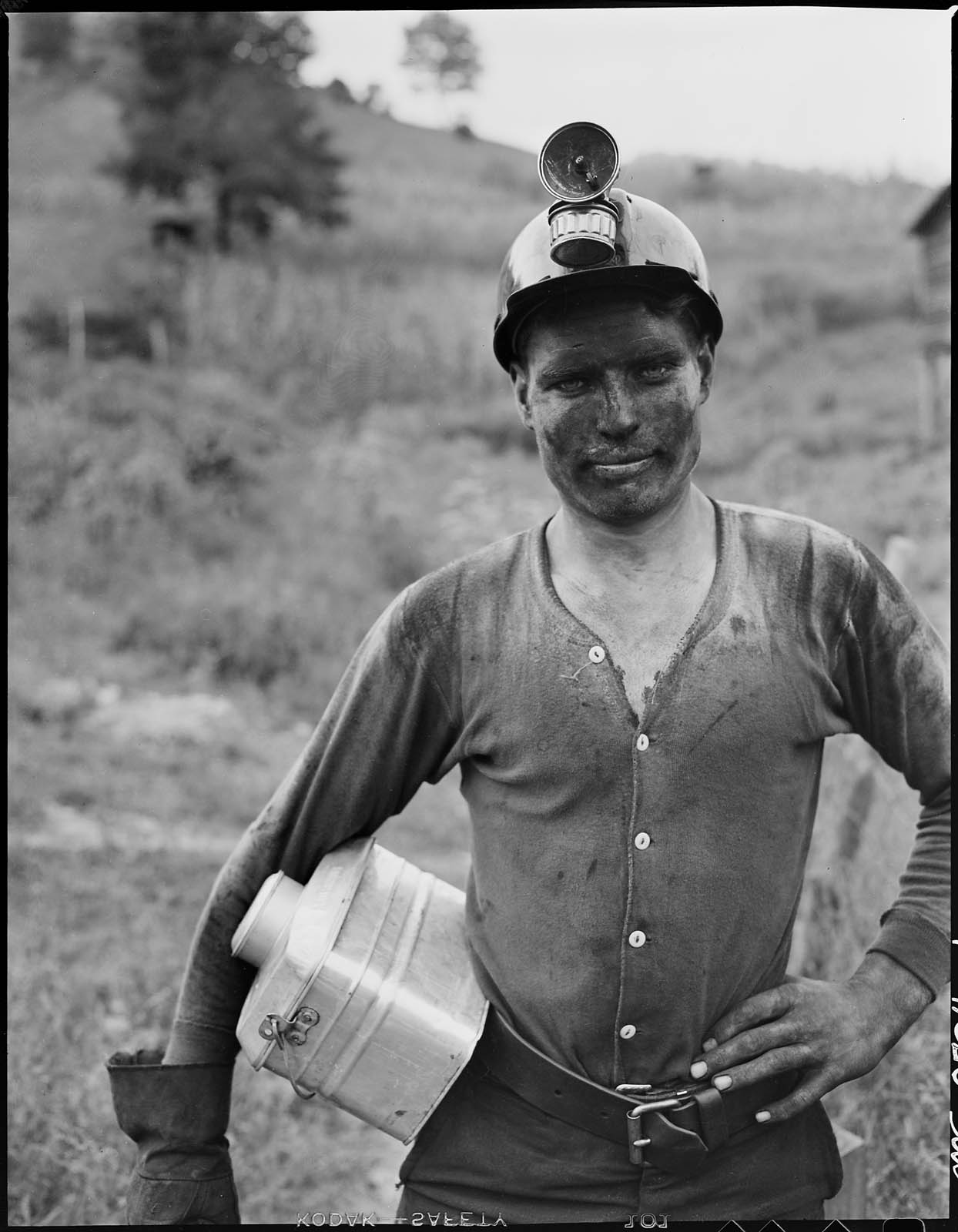
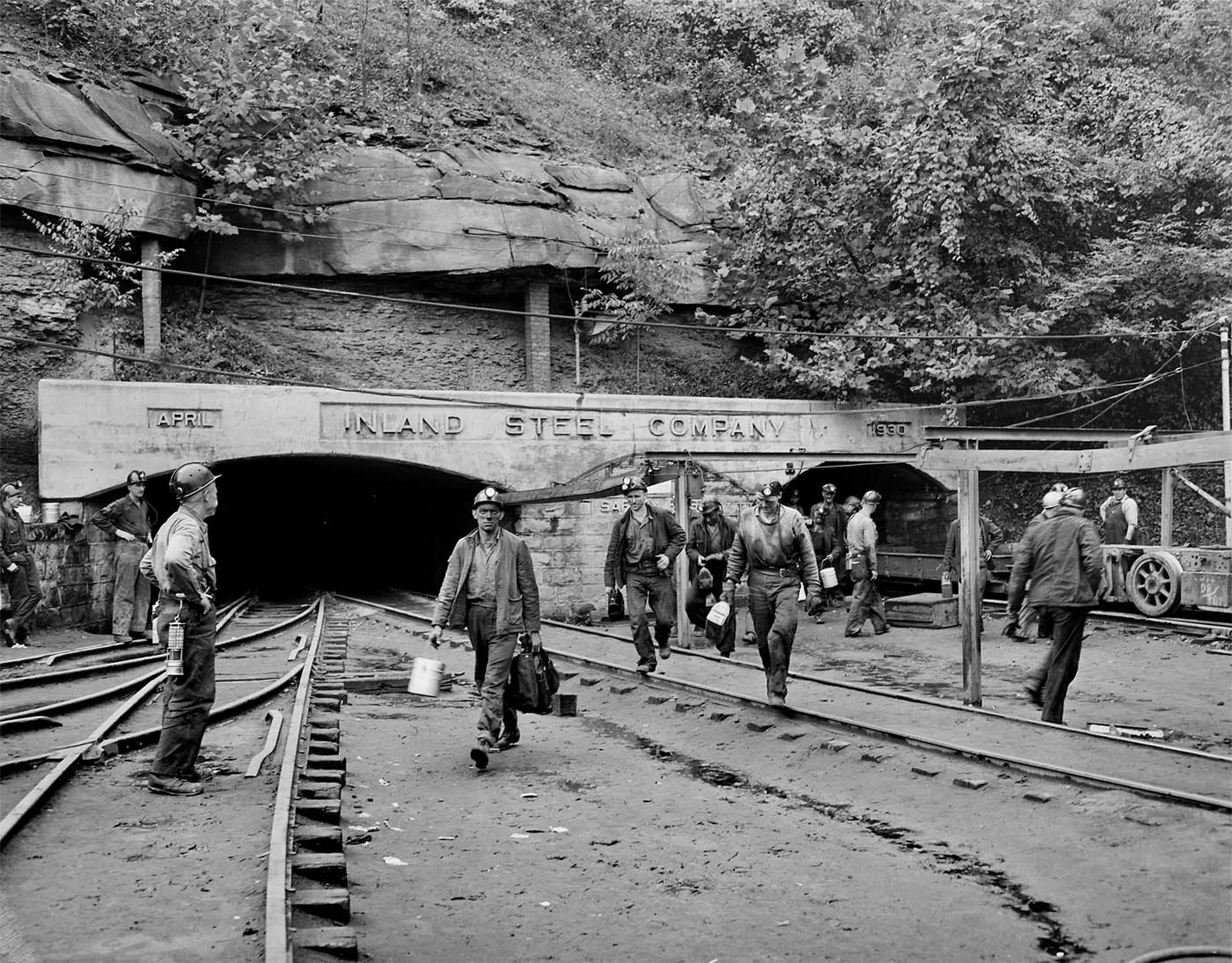
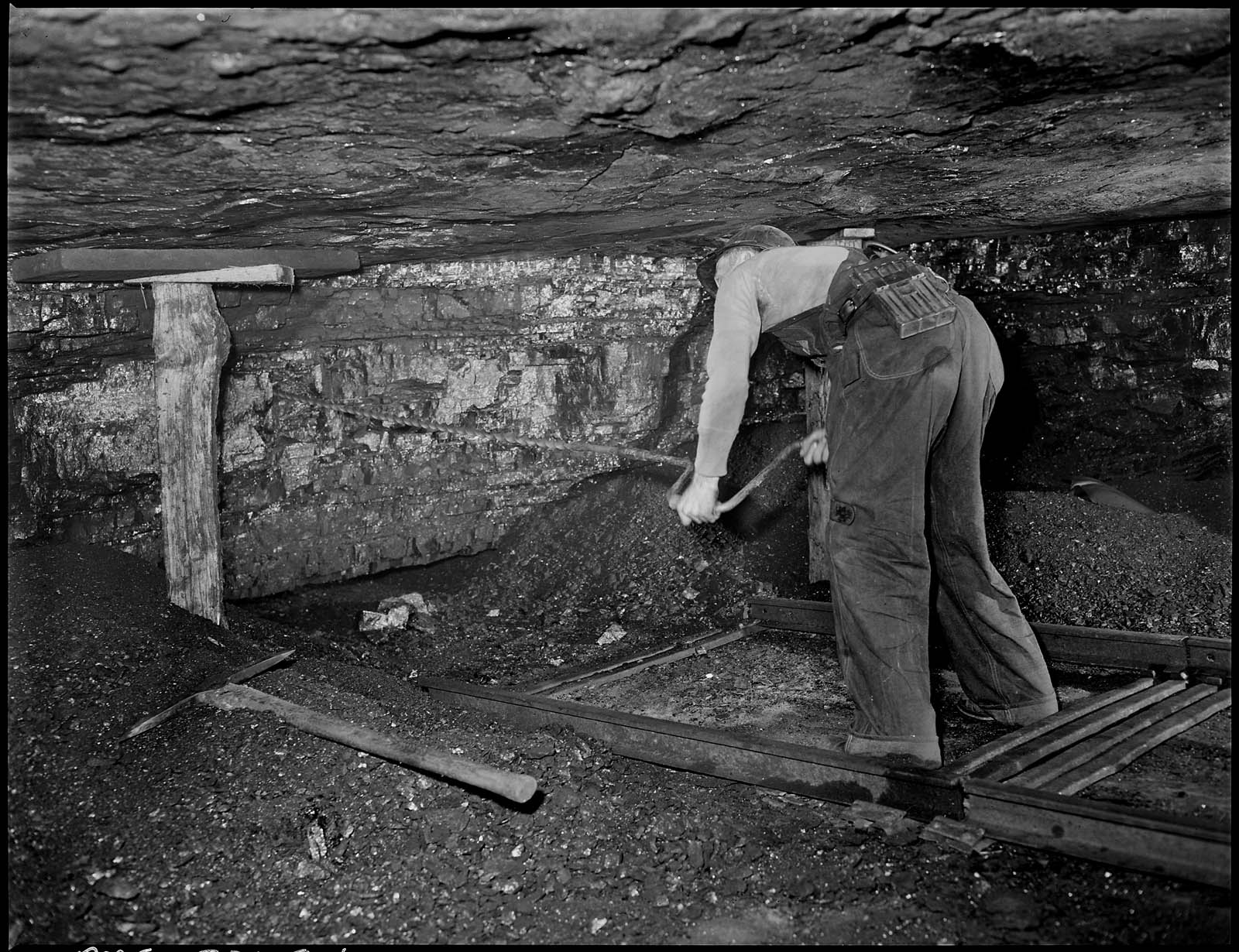
I believe that Lee’s most powerful photographs in the project are the images of the miners at work. There is an intimate directness to these photographs of working men and women. Nothing extraneous, nothing superfluous, just an honest directness picturing their everyday lives, in tiredness, laughter, and desperation.

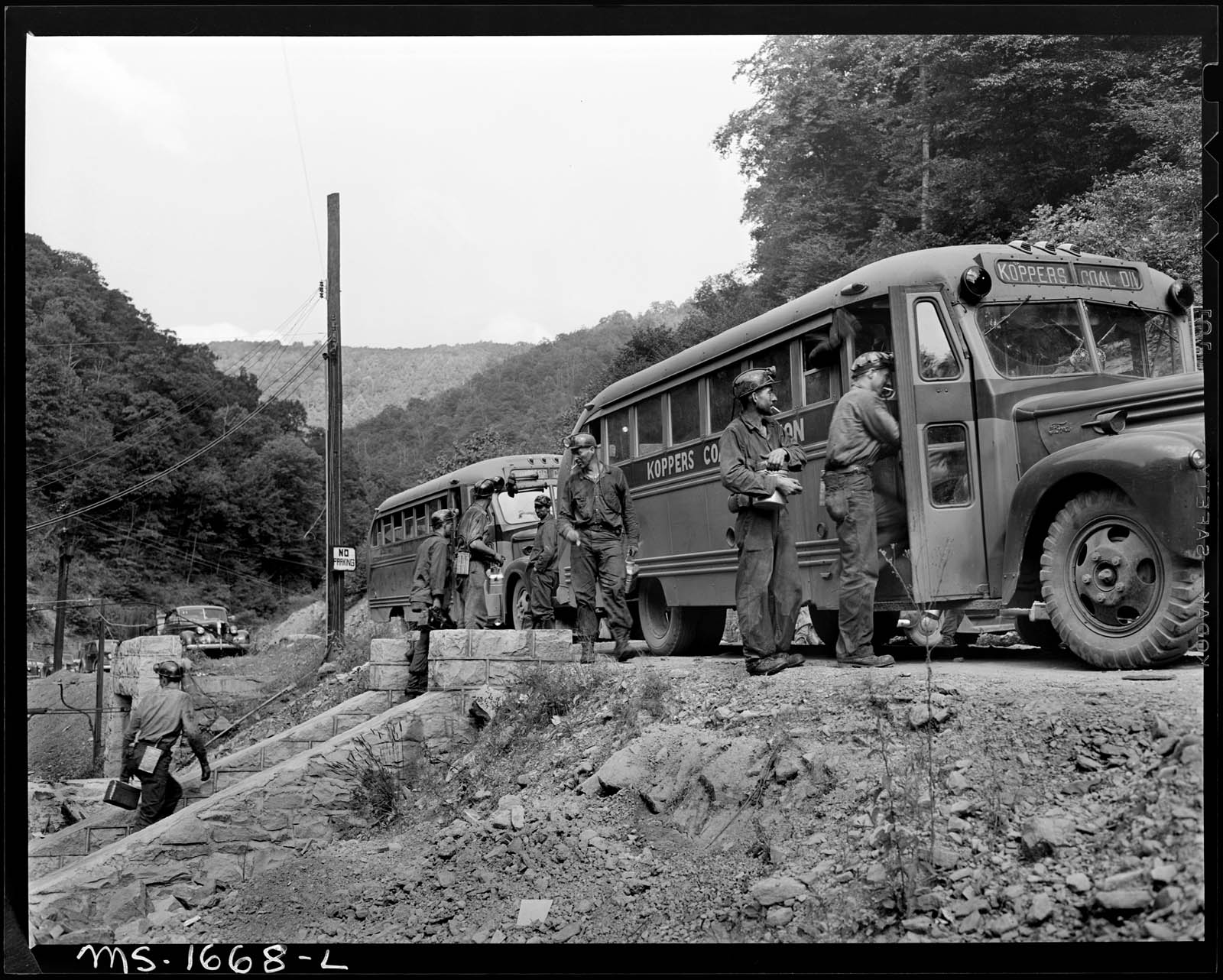
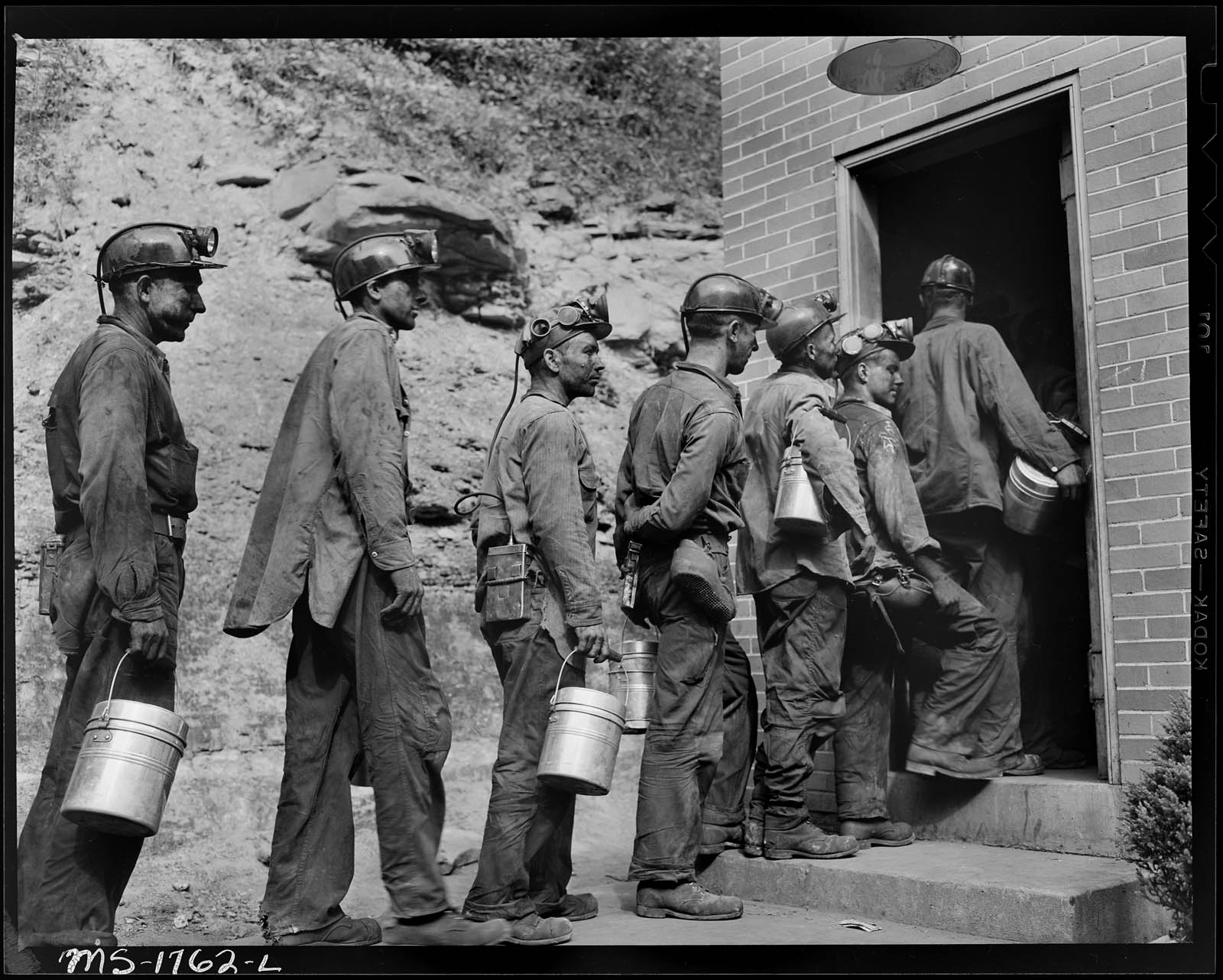
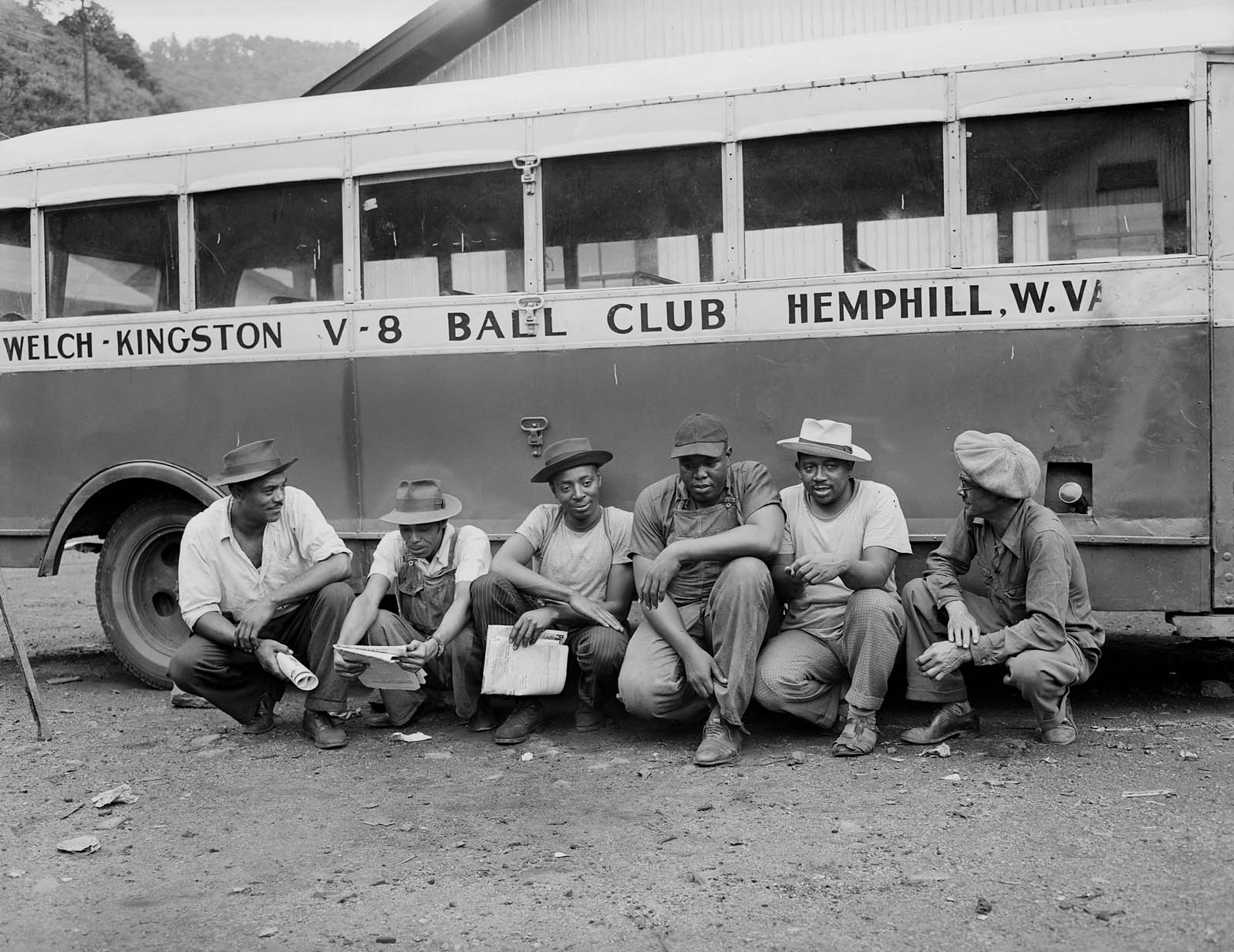
In these photographs of miners we can see that Lee loved his diagonals, horizontals and verticals in the construction of the image plane. Right to left diagonals in J. M. Hawkins (left) former pharmacists mate in the U.S. Navy and Wm. Smith, former Marine, read notice on the bulletin board at the mine (July 9, 1946, below) and Women pick foreign matter out of coal (July 9, 1946, below); left to right diagonals in Miners boarding buses which will take them to washhouse from lamp house where they have checked out (August 20, 1946, below) and Miners checking in at the lamp house at completion of morning shift (August 22, 1946, below); and verticals in James Robert Howard has gotten his safety lamp at lamp house (August 13, 1946, below).

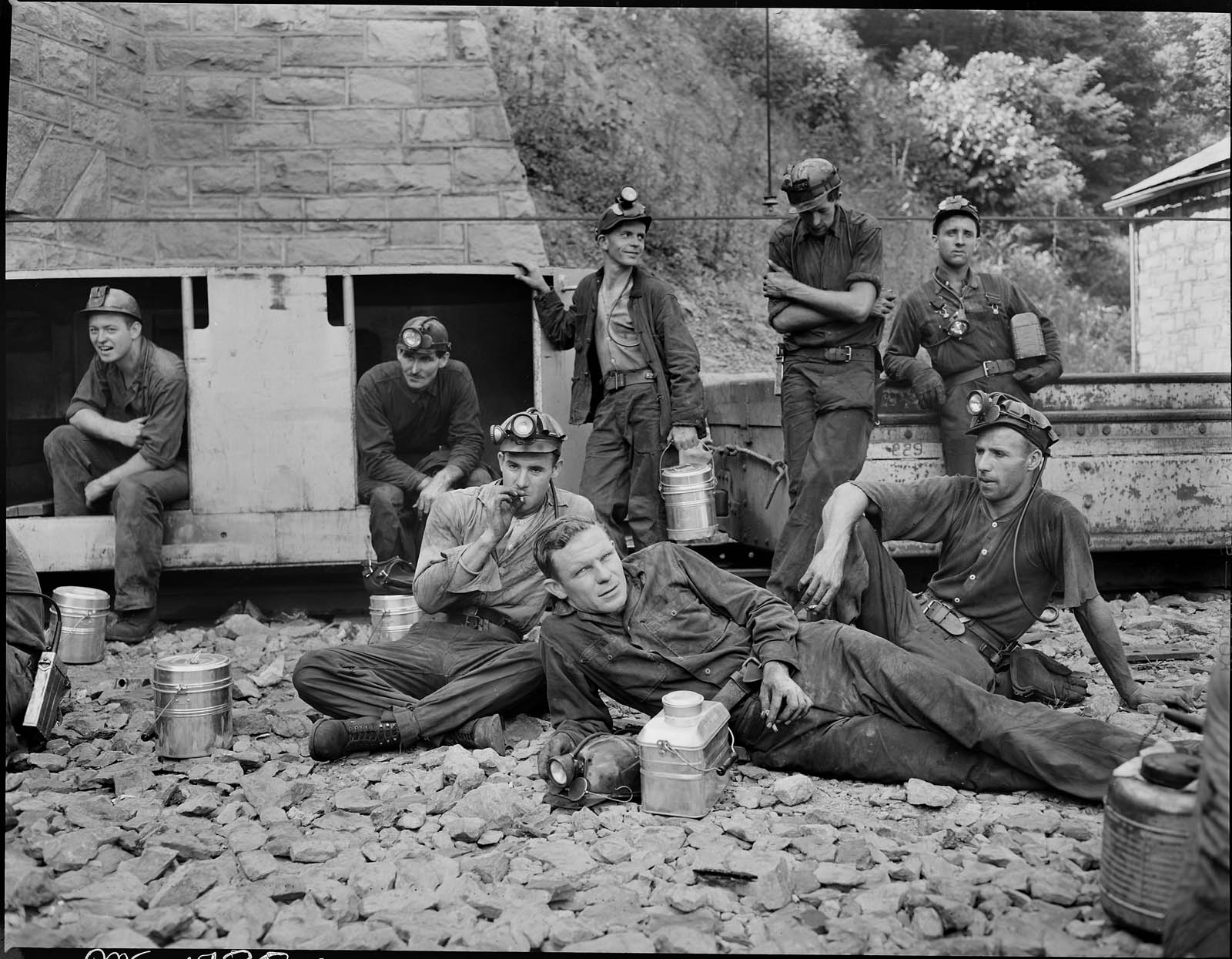
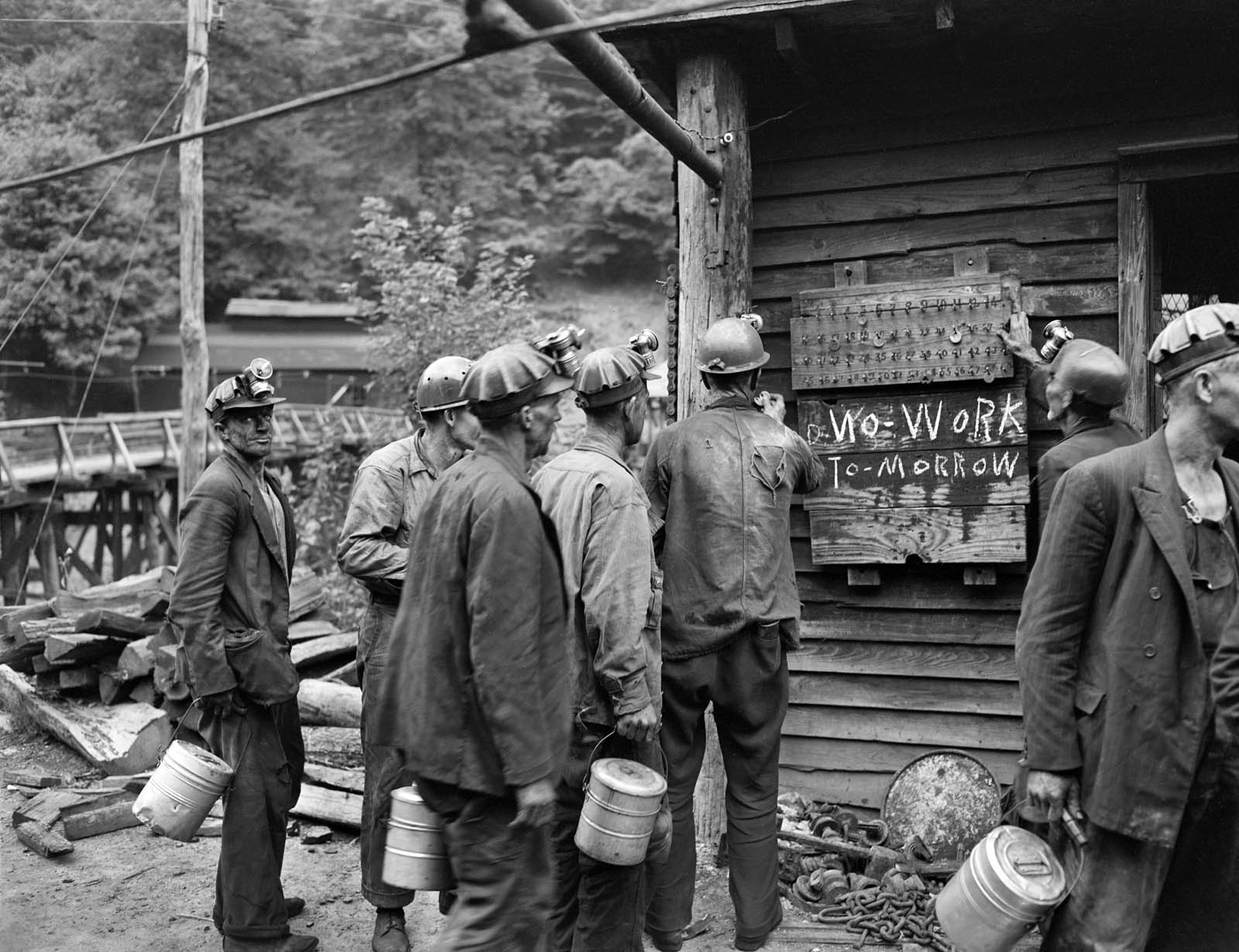
My two favourite photographs in the posting are both crackers. Firstly, Miners waiting at drift mouth for the afternoon man trip. Koppers Coal Divison, Kopperston Mines, Kopperston, Wyoming County, West Virginia (August 22, 1946, below) in which the languid easiness of the men’s postures are perfectly assimilated within the structure of the buildings and rocks to form an almost Renaissance tableaux of figures. And secondly, Miners bring in their checks and see the sign that there is no Saturday work. P V & K Coal Company, Clover Gap Mine, Lejunior, Harlan County, Kentucky (September 13, 1946, below) in which the languorous flow of bodies moves as in the stillness of a quietly flowing river, revealing a reversed “N” and misspelt “to-morrow” as if the morrow will bring more heartache.

What clarity of vision, what panache in the execution of that vision. You could only wish to be such an accomplished artist taking pictures of the history of yesterday that still have relevance today and every day.

Dr Marcus Bunyan


View Russell Lee’s Coal Survey photographs on the National Archives website.

* FSA photographers: Arthur Rothstein (1935), Theodor Jung (1935), Ben Shahn (1935), Walker Evans (1935), Dorothea Lange (1935), Carl Mydans (1935), Russell Lee (1936), Marion Post Wolcott (1936), John Vachon (1936, photo assignments began in 1938), Jack Delano (1940), John Collier (1941), Marjory Collins (1941), Louise Rosskam (1941), Gordon Parks (1942) and Esther Bubley (1942)
* OWI photographers: David Bransby (1942), John Collier (1943), Marjory Collins (1943), Jack Delano (1942-1943), Howard Hollem (1941-1943), Fenno Jacobs (1942), Alfred Palmer (1941-1943), William M. Rittase (1942), John Rous (1941), Mark Sherwood (1942), Arthur Siegel (1942), John Vachon (1942-1943), Miscellaneous photographers (Jack Downey, Andreas Feininger, unidentified)


Many thankx to the National Archives for allowing me to publish the photographs in the posting. Please click on the photographs for a larger version of the image. All photographs have been digitally cleaned and balanced by Marcus Bunyan. Please note the photographs in this posting are not necessarily in the exhibition.


“I’m taking pictures of the history of today.”


Russell Lee


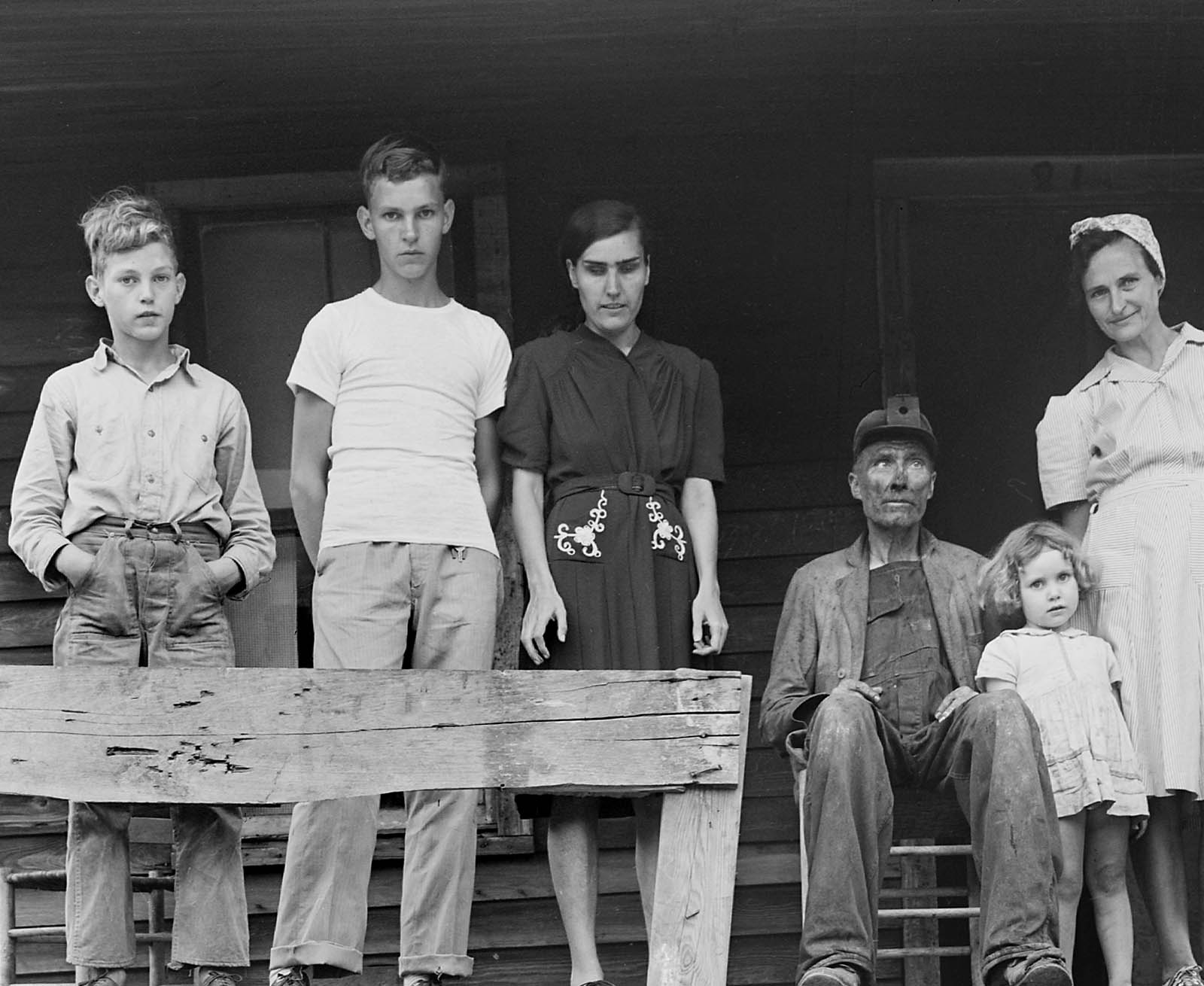
Russell Lee (American, 1903-1986) 'The Sergent Family on their front porch. Reading from L. to R., Franklin D., Louis, Lucy, Mr. Blaine Sergent, Bobbie Jean, Mrs. Sergent, Wanda Lee and Donald. Mr. and Mrs. Sergent have two married sons living nearby, Rufus, who lives next door and is a coal cutter in the same mine and Junior who lives and works at Verda Mine several miles away. P V & K Coal Company, Clover Gap Mine, Lejunior, Harlan County, Kentucky' September 15, 1946


Russell Lee (American, 1903-1986)
The Sergent Family on their front porch. Reading from L. to R., Franklin D., Louis, Lucy, Mr. Blaine Sergent, Bobbie Jean, Mrs. Sergent, Wanda Lee and Donald. Mr. and Mrs. Sergent have two married sons living nearby, Rufus, who lives next door and is a coal cutter in the same mine and Junior who lives and works at Verda Mine several miles away. P V & K Coal Company, Clover Gap Mine, Lejunior, Harlan County, Kentucky
September 15, 1946
National Archives
Public domain


Russell Lee (American, 1903-1986) 'The Sergent Family on their front porch. Reading from L. to R., Franklin D., Louis, Lucy, Mr. Blaine Sergent, Bobbie Jean, Mrs. Sergent, Wanda Lee and Donald. Mr. and Mrs. Sergent have two married sons living nearby, Rufus, who lives next door and is a coal cutter in the same mine and Junior who lives and works at Verda Mine several miles away. P V & K Coal Company, Clover Gap Mine, Lejunior, Harlan County, Kentucky' September 15, 1946 (detail)


Russell Lee (American, 1903-1986)
The Sergent Family on their front porch. Reading from L. to R., Franklin D., Louis, Lucy, Mr. Blaine Sergent, Bobbie Jean, Mrs. Sergent, Wanda Lee and Donald. Mr. and Mrs. Sergent have two married sons living nearby, Rufus, who lives next door and is a coal cutter in the same mine and Junior who lives and works at Verda Mine several miles away. P V & K Coal Company, Clover Gap Mine, Lejunior, Harlan County, Kentucky (detail)
September 15, 1946
National Archives
Public domain


Russell Lee (American, 1903-1986) 'The Blaine Sergent family's house. P V & K Coal Company, Clover Gap Mine, Lejunior, Harlan County, Kentucky' September 15, 1946


Russell Lee (American, 1903-1986)
The Blaine Sergent family’s house. P V & K Coal Company, Clover Gap Mine, Lejunior, Harlan County, Kentucky
September 15, 1946
National Archives
Public domain


Power & Light: Russell Lee’s Coal Survey is an exhibition of photographs of coal communities by American documentary photographer Russell Lee. These images tell the story of labourers who helped build the nation, of a moment when the government took stock of their health and safety, and of a photographer who recognised their humanity.

About the Exhibit

Power & Light is free and open to the public. The exhibition features more than 200 of Russell Lee’s photographs of coal miners and their families in the form of large-scale prints, projections, and digital interactives from a nationwide survey of housing and medical and community facilities of bituminous coal mining communities. The survey was conducted by Navy personnel in 1946 as part of a strike-ending agreement negotiated between the Department of the Interior and the United Mine Workers of America. The full series of photographs, which numbers in the thousands, can only be found in the holdings of the National Archives. These images document inhumane living and working conditions but also depict the joy, strength, and resilience of the miners’ families and communities.

Note: All photograph captions are original, as provided by the photographer. Unless otherwise noted, the images are in the holdings of the National Archives, Records of the Solid Fuels Administration for War.

Power & Light features Russell Lee’s 1946 coal survey photographs of miners in their homes, mines, and communities.

About Russell Lee

Russell Werner Lee (1903-1986) was born in Ottawa, Illinois. Originally trained as an engineer, he was methodical in his work, but approached his subjects with warmth and respect. The quiet Midwesterner put people at ease, enabling him to capture scenes of surprising intimacy. Many of his photographs reveal worlds through small details – keepsakes on the mantel, lined and calloused hands. What may be most distinctive about these images is their reflection of the photographer’s compassion for his subjects. Despite their plight, it is their strength, dignity, and humanity that strike the viewer.

If you recognise Lee’s photos – but not his name – you’re not alone.

Although the coal survey photos represent some of Lee’s finest work, his best-known photographs are from an earlier project. Lee was one of several photographers hired by the federal government in the 1930s to document the toll of the Great Depression and drought on rural Americans. While he worked alongside famous colleagues including Walker Evans and Dorothea Lange, Lee eschewed celebrity. His aim was to inspire social change, believing visual evidence of struggle and hardship could generate support for reforms.

Text from the National Archives Museum website


Russell Lee (American, 1903-1986) 'Miners' wives and children on the front porch of a typical, fifty year old house. Kentucky Straight Creek Coal Company, Belva Mine, abandoned after explosion [in] Dec. 1945, Four Mile, Bell County, Kentucky' (Original Caption) September 4, 1946


Russell Lee (American, 1903-1986)
Miners’ wives and children on the front porch of a typical, fifty year old house. Kentucky Straight Creek Coal Company, Belva Mine, abandoned after explosion [in] Dec. 1945, Four Mile, Bell County, Kentucky (Original Caption)
September 4, 1946
National Archives
Public domain


Russell Lee: Home

Lee’s photographs of miners at home reflect his respect for their individuality and resourcefulness, his fascination with families, and his meticulous attention to the details of everyday life.


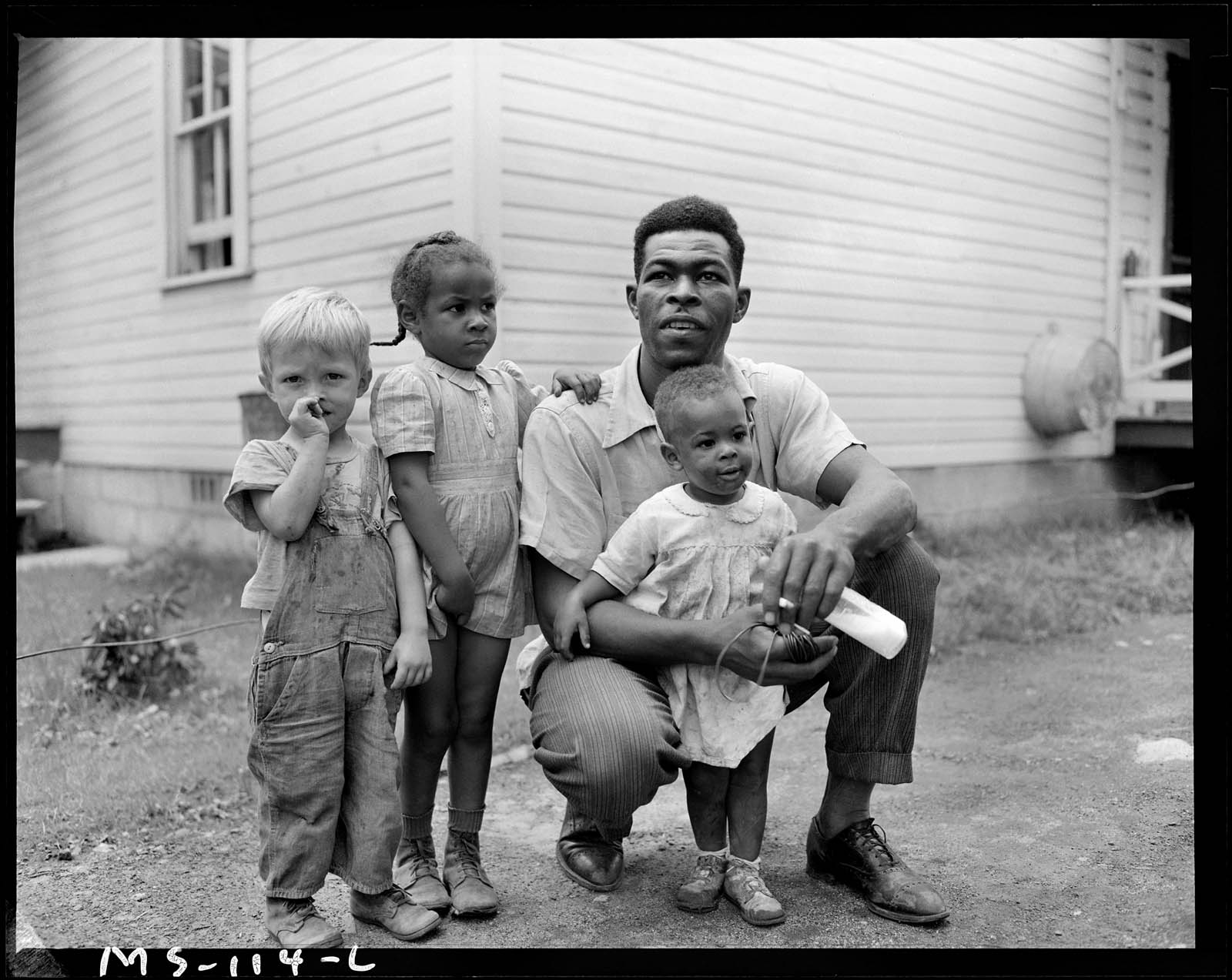
Russell Lee (American, 1903-1986) 'Gonzalla Sullivan, miner, with his two children and another child who lives in the neighborhood. Koppers Coal Division, Federal #1 Mine, Grant Town, Marion County, West Virginia' June 13, 1946 from the exhibition 'Power & Light: Russell Lee's Coal Survey' at the National Archives Museum, Washington


Russell Lee (American, 1903-1986)
Gonzalla Sullivan, miner, with his two children and another child who lives in the neighborhood. Koppers Coal Division, Federal #1 Mine, Grant Town, Marion County, West Virginia
June 13, 1946
National Archives
Public domain


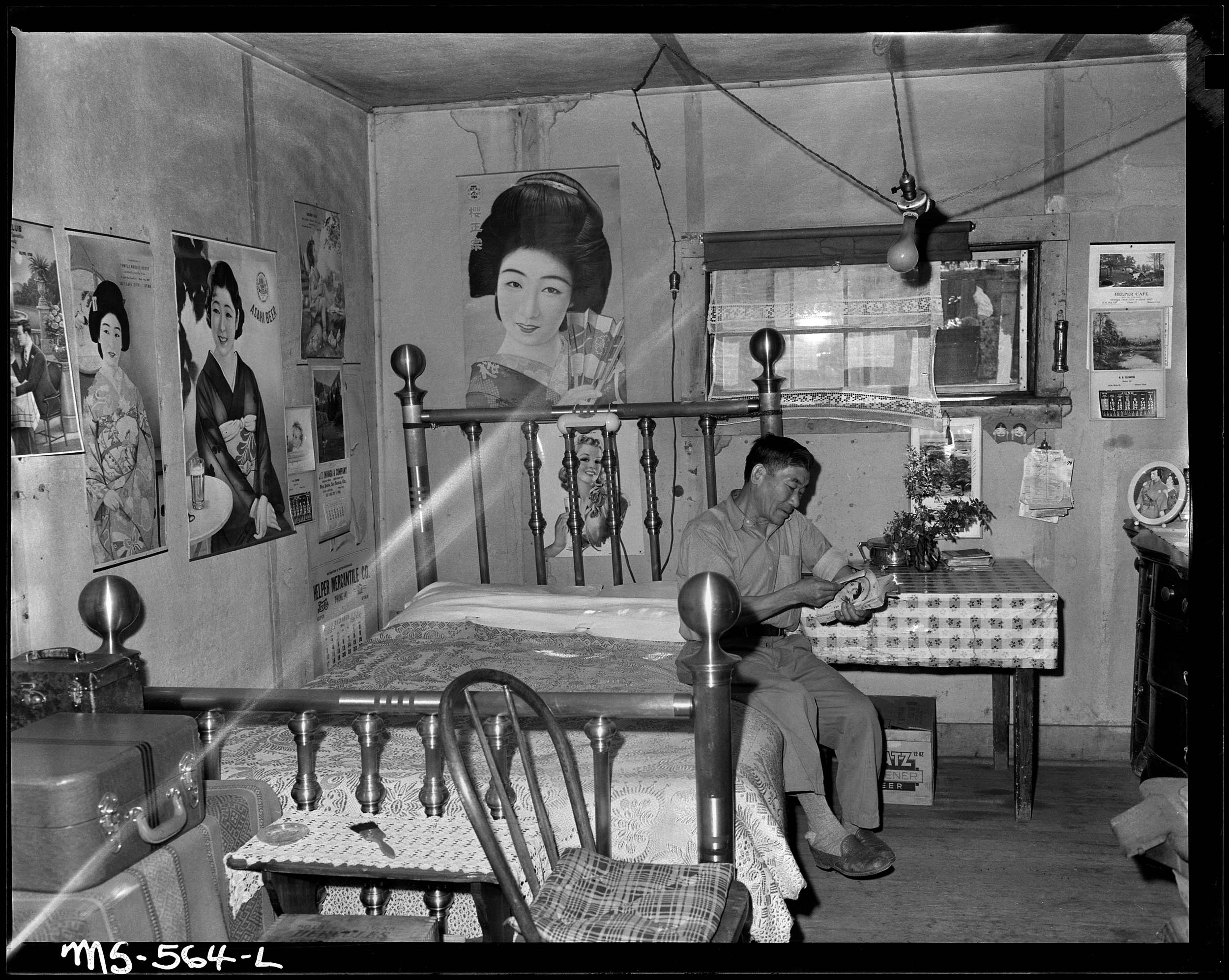
Russell Lee (American, 1903-1986) 'Quarters of Japanese miner who lives in company housing project. Hudson Coal Company, Hudson Mine, Sweet Mine, Carbon County, Utah' July 4, 1946 from the exhibition 'Power & Light: Russell Lee's Coal Survey' at the National Archives Museum, Washington


Russell Lee (American, 1903-1986)
Quarters of Japanese miner who lives in company housing project. Hudson Coal Company, Hudson Mine, Sweet Mine, Carbon County, Utah
July 4, 1946
National Archives
Public domain


Russell Lee (American, 1903-1986) 'The only houses with running water inside in this camp are those in which their tennants [sic] have made the installations at no expense to the company. Gilliam Coal and Coke Company, Gilliam Mine, Gilliam, McDowell County, West Virginia' (Original Caption) August 13, 1946


Russell Lee (American, 1903-1986)
The only houses with running water inside in this camp are those in which their tennants [sic] have made the installations at no expense to the company. Gilliam Coal and Coke Company, Gilliam Mine, Gilliam, McDowell County, West Virginia (Original Caption)
August 13, 1946
National Archives
Public domain


Russell Lee (American, 1903-1986) 'There are ten children in the Lawson Mayo family, the older taking care of the youngest ones. Three of the daughters are now attending high school in Mullens and have part time jobs during summer months. Mullens Smokeless Coal Company, Mullens Mine, Harmco, Wyoming County, West Virginia' (Original Caption) August 23, 1946


Russell Lee (American, 1903-1986)
There are ten children in the Lawson Mayo family, the older taking care of the youngest ones. Three of the daughters are now attending high school in Mullens and have part time jobs during summer months. Mullens Smokeless Coal Company, Mullens Mine, Harmco, Wyoming County, West Virginia (Original Caption)
August 23, 1946
National Archives
Public domain


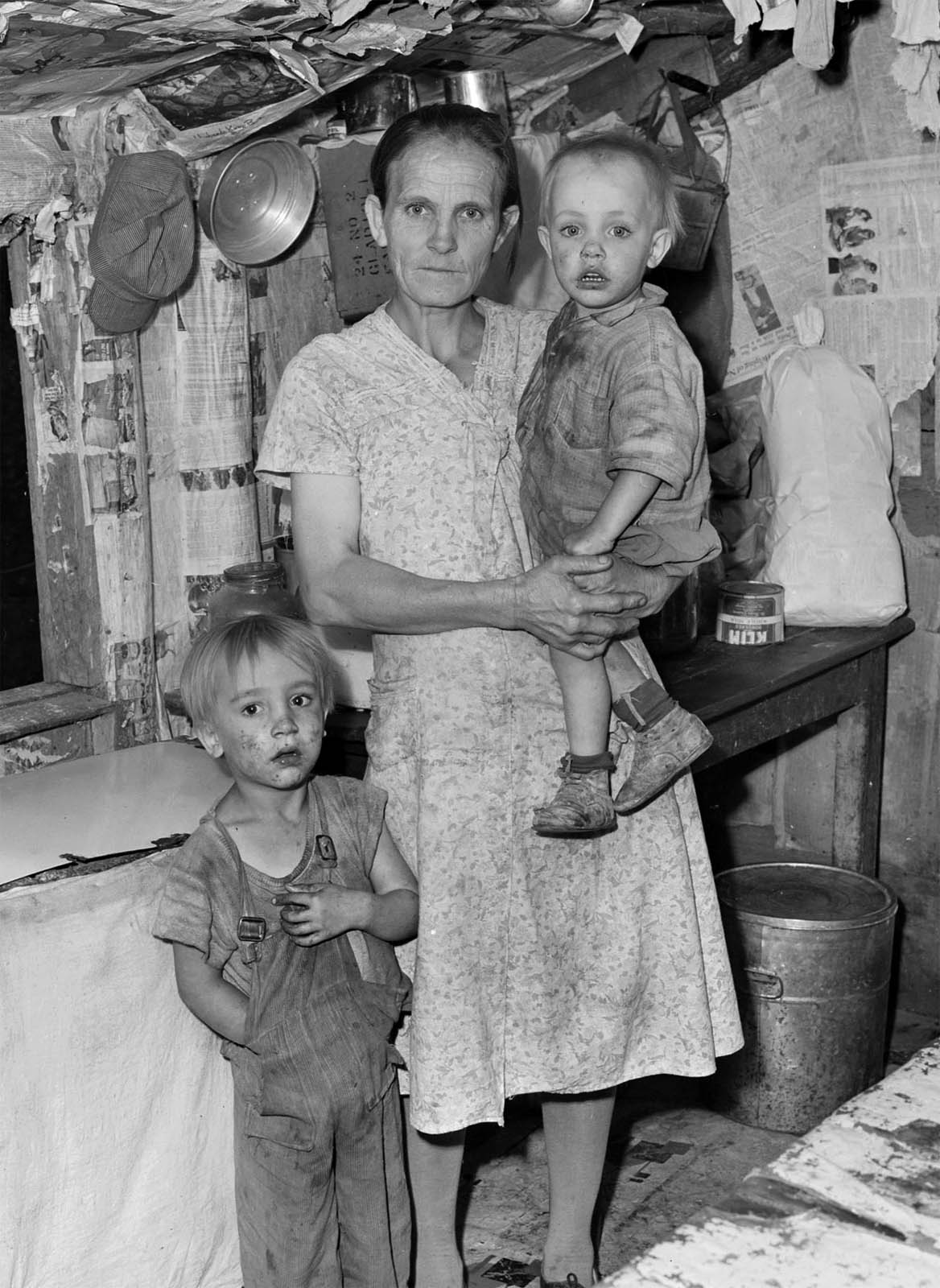
Russell Lee (American, 1903-1986) 'Mrs. John Whitehead, wife of miner, and two of her children (or grandchildren) in the kitchen of her three room house. Mr. and Mrs. John Whitehead, their six children and six grandchildren live here. This house, built on company owned land was built by Mr. Whitehead's half brother at no expense for materials or labor to the company; the builder (half brother) was to receive the use of the house rent-free for three years and at the end of this period the ownership of the house would revert to the company. The brother moved away at the end of one year, receiving no cash settlement from the company. The house now rents for $6 monthly. It has no running water, no electricity, access is over a mountain trail; there are three rooms. Coleman Fuel Company, Red Bird Mine, Field, Bell County, Kentucky' (Original Caption) August 31, 1946


Russell Lee (American, 1903-1986)
Mrs. John Whitehead, wife of miner, and two of her children (or grandchildren) in the kitchen of her three room house. Mr. and Mrs. John Whitehead, their six children and six grandchildren live here. This house, built on company owned land was built by Mr. Whitehead’s half brother at no expense for materials or labor to the company; the builder (half brother) was to receive the use of the house rent-free for three years and at the end of this period the ownership of the house would revert to the company. The brother moved away at the end of one year, receiving no cash settlement from the company. The house now rents for $6 monthly. It has no running water, no electricity, access is over a mountain trail; there are three rooms. Coleman Fuel Company, Red Bird Mine, Field, Bell County, Kentucky (Original Caption)
August 31, 1946
National Archives
Public domain


Russell Lee (American, 1903-1986) 'Mrs. John Whitehead, wife of miner, and two of her children (or grandchildren) in the kitchen of her three room house. Mr. and Mrs. John Whitehead, their six children and six grandchildren live here. This house, built on company owned land was built by Mr. Whitehead's half brother at no expense for materials or labor to the company; the builder (half brother) was to receive the use of the house rent-free for three years and at the end of this period the ownership of the house would revert to the company. The brother moved away at the end of one year, receiving no cash settlement from the company. The house now rents for $6 monthly. It has no running water, no electricity, access is over a mountain trail; there are three rooms. Coleman Fuel Company, Red Bird Mine, Field, Bell County, Kentucky' (Original Caption) August 31, 1946 (detail)


Russell Lee (American, 1903-1986)
Mrs. John Whitehead, wife of miner, and two of her children (or grandchildren) in the kitchen of her three room house. Mr. and Mrs. John Whitehead, their six children and six grandchildren live here. This house, built on company owned land was built by Mr. Whitehead’s half brother at no expense for materials or labor to the company; the builder (half brother) was to receive the use of the house rent-free for three years and at the end of this period the ownership of the house would revert to the company. The brother moved away at the end of one year, receiving no cash settlement from the company. The house now rents for $6 monthly. It has no running water, no electricity, access is over a mountain trail; there are three rooms. Coleman Fuel Company, Red Bird Mine, Field, Bell County, Kentucky (Original Caption) (detail)
August 31, 1946
National Archives
Public domain


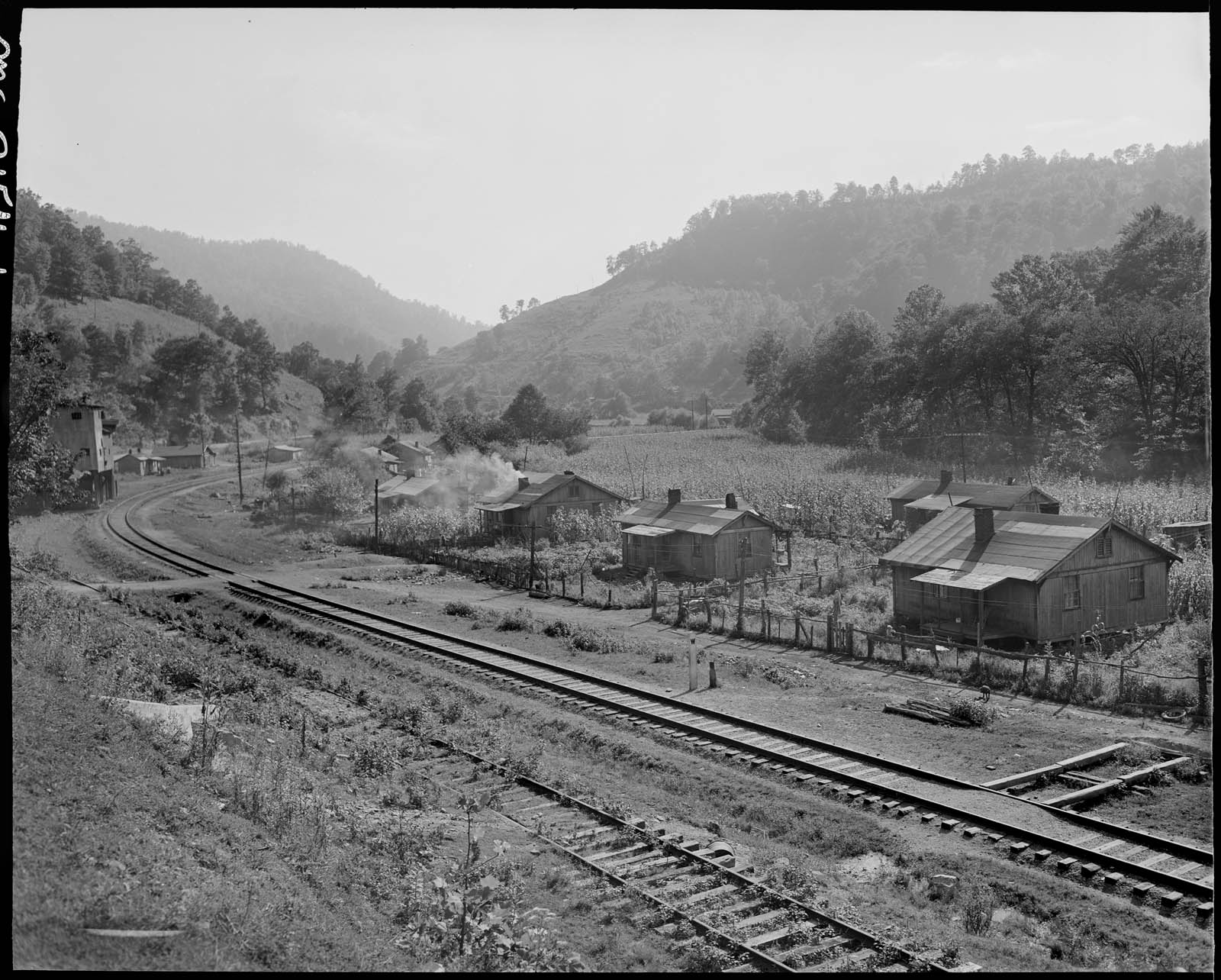
Russell Lee (American, 1903-1986) 'Houses along the railroad tracks. Fox Ridge Mining Company, Inc., Hanby Mine, Arjay, Bell County, Kentucky' August 31, 1946 from the exhibition 'Power & Light: Russell Lee's Coal Survey' at the National Archives Museum, Washington


Russell Lee (American, 1903-1986)
Houses along the railroad tracks. Fox Ridge Mining Company, Inc., Hanby Mine, Arjay, Bell County, Kentucky
August 31, 1946
National Archives
Public domain


Russell Lee (American, 1903-1986) 'Mrs. Edna Lingar getting wash water from dirty stream; stock wade this stream, privies drain into it, garbage decay in it, a dead animal was in the stream about fifteen feet above where she was getting water. Kentucky Straight Creek Coal Company, Belva, Mine, abandoned after explosion, Four Mile, Bell County, Kentucky' (Original Caption) September 4, 1946


Russell Lee (American, 1903-1986)
Mrs. Edna Lingar getting wash water from dirty stream; stock wade this stream, privies drain into it, garbage decay in it, a dead animal was in the stream about fifteen feet above where she was getting water. Kentucky Straight Creek Coal Company, Belva, Mine, abandoned after explosion, Four Mile, Bell County, Kentucky (Original Caption)
September 4, 1946
National Archives
Public domain


Russell Lee: Mines

Russell Lee was attentive to miners’ issues, documenting deductions to their pay, lost work days, perilous conditions, and the union meetings where they fought for a better deal.


Russell Lee (American, 1903-1986) 'Telesfro Deluna, miner, walking on crutches. He is recovering from a foot injury in mine a accident. He has received medical care at this company owned hospital. Colorado Fuel & Iron Company, Pueblo, Colorado' July 1, 1946


Russell Lee (American, 1903-1986)
Telesfro Deluna, miner, walking on crutches. He is recovering from a foot injury in mine a accident. He has received medical care at this company owned hospital. Colorado Fuel & Iron Company, Pueblo, Colorado
July 1, 1946
National Archives
Public domain


Russell Lee (American, 1903-1986) 'J. M. Hawkins (left) former pharmacists mate in the U.S. Navy and Wm. Smith, former Marine, read notice on the bulletin board at the mine. Union Pacific Coal Company, Reliance Mine, Reliance, Sweetwater County, Wyoming' July 9, 1946


Russell Lee (American, 1903-1986)
J. M. Hawkins (left) former pharmacists mate in the U.S. Navy and Wm. Smith, former Marine, read notice on the bulletin board at the mine. Union Pacific Coal Company, Reliance Mine, Reliance, Sweetwater County, Wyoming
July 9, 1946
National Archives
Public domain


Russell Lee (American, 1903-1986) 'Women pick foreign matter out of coal as it is carried on conveyor thru tipple. Union Pacific Coal Company, Stansbury Mine, Rock Springs, Sweetwater County, Wyoming' (Original Caption) July 10, 1946


Russell Lee (American, 1903-1986)
Women pick foreign matter out of coal as it is carried on conveyor thru tipple. Union Pacific Coal Company, Stansbury Mine, Rock Springs, Sweetwater County, Wyoming (Original Caption)
July 10, 1946
National Archives
Public domain


Russell Lee (American, 1903-1986) 'James Robert Howard has gotten his safety lamp at lamp house. Of the 232 employees at this mine, 60% are Negroes. Gilliam Coal and Coke Company, Gilliam Mine, Gilliam, McDowell County, West Virginia' (Original Caption) August 13, 1946


Russell Lee (American, 1903-1986)
James Robert Howard has gotten his safety lamp at lamp house. Of the 232 employees at this mine, 60% are Negroes. Gilliam Coal and Coke Company, Gilliam Mine, Gilliam, McDowell County, West Virginia (Original Caption)
August 13, 1946
National Archives
Public domain


Russell Lee (American, 1903-1986) 'Miners boarding buses which will take them to washhouse from lamp house where they have checked out. Koppers Coal Divison, Kopperston Mine, Kopperston, Wyoming County, West Virginia' August 20, 1946


Russell Lee (American, 1903-1986)
Miners boarding buses which will take them to washhouse from lamp house where they have checked out. Koppers Coal Divison, Kopperston Mine, Kopperston, Wyoming County, West Virginia
August 20, 1946
National Archives
Public domain


Russell Lee (American, 1903-1986) 'Miners waiting at drift mouth for the afternoon man trip. Koppers Coal Divison, Kopperston Mines, Kopperston, Wyoming County, West Virginia' August 22, 1946


Russell Lee (American, 1903-1986)
Miners waiting at drift mouth for the afternoon man trip. Koppers Coal Divison, Kopperston Mines, Kopperston, Wyoming County, West Virginia
August 22, 1946
National Archives
Public domain


Russell Lee (American, 1903-1986) 'Miners checking in at the lamp house at completion of morning shift. Koppers Coal Division, Kopperston Mines, Kopperston, Wyoming County, West Virginia' August 22, 1946


Russell Lee (American, 1903-1986)
Miners checking in at the lamp house at completion of morning shift. Koppers Coal Division, Kopperston Mines, Kopperston, Wyoming County, West Virginia
August 22, 1946
National Archives
Public domain


Russell Lee (American, 1903-1986) 'Furman Currington and his son, miners. Black Mountain Corporation, 30-31 Mines, Kenvir, Harlan County, Kentucky' September 6, 1946


Russell Lee (American, 1903-1986)
Furman Currington and his son, miners. Black Mountain Corporation, 30-31 Mines, Kenvir, Harlan County, Kentucky
September 6, 1946
National Archives
Public domain


Russell Lee (American, 1903-1986) 'Miners bring in their checks and see the sign that there is no Saturday work. P V & K Coal Company, Clover Gap Mine, Lejunior, Harlan County, Kentucky' (Original Caption) September 13, 1946


Russell Lee (American, 1903-1986)
Miners bring in their checks and see the sign that there is no Saturday work. P V & K Coal Company, Clover Gap Mine, Lejunior, Harlan County, Kentucky (Original Caption)
September 13, 1946
National Archives
Public domain


Russell Lee (American, 1903-1986) 'Blaine Sergent, left, comes out of the mine at the end of the day's work. P V & K Coal Company, Clover Gap Mine, Lejunior, Harlan County, Kentucky' September 13, 1946


Russell Lee (American, 1903-1986)
Blaine Sergent, left, comes out of the mine at the end of the day’s work. P V & K Coal Company, Clover Gap Mine, Lejunior, Harlan County, Kentucky
September 13, 1946
National Archives
Public domain


Russell Lee (American, 1903-1986) 'Rufus Sergent, married son, who is now coal cutter and general all around miner. Rufus did not like school and quit before finishing grade school. He went to work in the mines ten years ago when he was thirteen years old. P V & K Coal Company, Clover Gap Mine, Lejunior, Harlan County, Kentucky' September 15, 1946


Russell Lee (American, 1903-1986)
Rufus Sergent, married son, who is now coal cutter and general all around miner. Rufus did not like school and quit before finishing grade school. He went to work in the mines ten years ago when he was thirteen years old. P V & K Coal Company, Clover Gap Mine, Lejunior, Harlan County, Kentucky
September 15, 1946
National Archives
Public domain


Russell Lee (American, 1903-1986) 'Changing shifts at the mine portal in the afternoon. Inland Steel Company, Wheelwright #1 & 2 Mines, Wheelwright, Floyd County, Kentucky' (Original Caption) September 23, 1946


Russell Lee (American, 1903-1986)
Changing shifts at the mine portal in the afternoon. Inland Steel Company, Wheelwright #1 & 2 Mines, Wheelwright, Floyd County, Kentucky (Original Caption)
September 23, 1946
National Archives
Public domain


Russell Lee (American, 1903-1986) 'Harry Fain, coal loader. Inland Steel Company, Wheelwright #1 & 2 Mines, Wheelwright, Floyd County, Kentucky' September 23, 1946


Russell Lee (American, 1903-1986)
Harry Fain, coal loader. Inland Steel Company, Wheelwright #1 & 2 Mines, Wheelwright, Floyd County, Kentucky
September 23, 1946
National Archives
Public domain


Russell Lee (American, 1903-1986) 'Harry Fain, coal loader, drills coal with hand auger. Powder charges are then placed and ignited. Inland Steel Company, Wheelwright #1 & 2 Mines, Wheelwright, Floyd County, Kentucky' September 24, 1946


Russell Lee (American, 1903-1986)
Harry Fain, coal loader, drills coal with hand auger. Powder charges are then placed and ignited. Inland Steel Company, Wheelwright #1 & 2 Mines, Wheelwright, Floyd County, Kentucky
September 24, 1946
National Archives
Public domain


Mining the Catalog – Exploring records from the Exhibit Power & Light

In March, a new exhibit opened at the National Archives building in Washington, D.C. titled “Power & Light: Russell Lee’s Coal Survey.” The exhibit features over 200 photographs of miners and mining communities in the 1940’s from Record Group 245: Records of the Solid Fuels Administration for War.

Russell Lee began his work for the federal government during the Great Depression when he was one of the photographers hired by the Farm Security Administration to document rural poverty. He later photographed the forced relocation of Japanese Americans to detention camps.

The photographs that are the subject of our exhibit come from Lee’s final project for the federal government. In 1946, he was sent to document the lives of coal miners and their communities by the Truman administration. The United Mine Workers’ 400,000 members had gone on strike demanding safer working conditions, improved health benefits, and better pay. As part of the agreement that ended the strike, the federal government agreed to survey the miners’ living conditions.

The photographs, which are part of the series “Photographs of the Medical Survey of the Bituminous Coal Industry,” show homes with backyard outhouses that were often owned by the mining companies themselves and rented to the miners. We also see miners and their families going about their everyday tasks, having fun in recreation halls, and playing outside.

Lee provided the photographs for the study which included 90 communities in 22 states. The program led to improvements in the mining communities, including the building of 13 new hospitals. Over the course of the survey, Lee took over 4000 photographs, more than 200 of which are included in the exhibit. Over 1000 of the photographs are available in the Catalog. Lee focused on three major themes for the project: home, mines, and community, capturing a moment of mid-century American life. His photographs show not just miners but their families, their homes, and their churches.

Text from the National Archives Catalog email


Russell Lee: Community

To fulfil the mandate of the survey, Lee photographed sanitary, medical, and recreational facilities and services. But he also captured moments of joy and connection that characterised the strong community bonds forged by the miners.


Russell Lee (American, 1903-1986) 'Some of the members of the baseball team of Exeter-Warwick Mines. Kingston Pocahontas Coal Company, Exeter Mine, Welch, McDowell County, West Virginia' (Original Caption) August 10, 1946


Russell Lee (American, 1903-1986)
Some of the members of the baseball team of Exeter-Warwick Mines. Kingston Pocahontas Coal Company, Exeter Mine, Welch, McDowell County, West Virginia (Original Caption)
August 10, 1946
National Archives
Public domain


Russell Lee (American, 1903-1986) 'Children of miner living in company housing project. Note the homemade baby buggy made of a powder box. Union Pacific Coal Company, Reliance Mine, Reliance, Sweetwater County, Wyoming' (Original Caption) August 10, 1946


Russell Lee (American, 1903-1986)
Children of miner living in company housing project. Note the homemade baby buggy made of a powder box. Union Pacific Coal Company, Reliance Mine, Reliance, Sweetwater County, Wyoming (Original Caption)
August 10, 1946
National Archives
Public domain


Russell Lee (American, 1903-1986) 'Children of miners on the fence in front of the Howard house. Gilliam Coal and Coke Company, Gilliam Mine, Gilliam, McDowell County, West Virginia' (Original Caption) August 13, 1946


Russell Lee (American, 1903-1986)
Children of miners on the fence in front of the Howard house. Gilliam Coal and Coke Company, Gilliam Mine, Gilliam, McDowell County, West Virginia (Original Caption)
August 13, 1946
National Archives
Public domain


Russell Lee (American, 1903-1986) 'The meat and vegetable and fruit department in the company store. Raven Red Ash Coal Company, No. 2 Mine, Raven, Tazewell County, Virginia' August 29, 1946


Russell Lee (American, 1903-1986)
The meat and vegetable and fruit department in the company store. Raven Red Ash Coal Company, No. 2 Mine, Raven, Tazewell County, Virginia
August 29, 1946
National Archives
Public domain


Russell Lee (American, 1903-1986) 'Handling serpents at the Pentecostal Church of God. Company funds have not been used in this church and it is not on company property. Most of the members are coal miners and their families. Lejunior, Harlan County, Kentucky' September 15, 1946


Russell Lee (American, 1903-1986)
Handling serpents at the Pentecostal Church of God. Company funds have not been used in this church and it is not on company property. Most of the members are coal miners and their families. Lejunior, Harlan County, Kentucky
September 15, 1946
National Archives
Public domain


Russell Lee (American, 1903-1986) 'Local UMWA union meeting is held on Sunday morning in schoolhouse. Inland Steel Company, Wheelwright #1 & 2 Mines, Wheelwright, Floyd County, Kentucky' (Original Caption) September 22, 1946


Russell Lee (American, 1903-1986)
Local UMWA union meeting is held on Sunday morning in schoolhouse. Inland Steel Company, Wheelwright #1 & 2 Mines, Wheelwright, Floyd County, Kentucky (Original Caption)
September 22, 1946
National Archives
Public domain


Lee’s next big project, and the topic of the National Archives Power & Light exhibit, came after the war. It was Lee’s last, large federally funded photo documentation project. In 1946 the Truman administration made a promise to striking coal miners that if they resumed work, the federal government would sponsor a nationwide survey of health and labor conditions in mining camps. Lee became an instrumental member of the survey.

Lee’s survey photos give an unprecedented accounting of medical, health, and housing conditions in coal-mining communities. Located in remote areas, these communities were not normally accessible to outsiders. Lee’s photographs demonstrate the difficult circumstances in which miners and their families lived but also show us the strength and resilience of these mining communities.

The National Archives has the complete series of more than 4,000 images, the bulk of which were taken by Russell Lee. They feature mining communities in several states, including Utah, West Virginia, Colorado, Kentucky, Pennsylvania, and Wyoming.

His photographs cover a complete range of activities in mining communities including: interior and exterior shots of both company-owned and private dispensaries; miners at work; mining grounds, equipment, and wash houses; women in the home; children at play; recreation facilities, churches, schools, and clubs; scenes of mining townspeople in and around company stores and town streets; family portraits; members of the medical survey group inspecting grounds and speaking to mine company administrators; and local mine operators and union officials.

The images are great primary sources, particularly because of the way Lee documented his photographs. In his extensive cataloging, he recorded the elements and details of home, workplace, and community, giving us an even greater glimpse into the daily life of miners and their families.

The Department of the Interior used many of Lee’s photographs when it published the final report in 1947, “A Medical Survey of the Bituminous Coal Industry,” and its supplemental report titled “The Coal Miner and His Family.”

Jessie Kratz. “Russell Lee’s Coal Survey Exhibit,” on the National Archives ‘Piece of History’ website March 18, 2024 [Online] Cited 20/03/2024


Unknown photographer (American) 'Russell W. Lee (with camera in hand)' c. 1942-1945


Unknown photographer (American)
Russell W. Lee (with camera in hand)
c. 1942-1945
Image courtesy of The Wittliff Collections / Texas State University


'The Coal Miner & His Family' Washington 1947

'The Coal Miner & His Family' Washington 1947

'The Coal Miner & His Family' Washington 1947

'The Coal Miner & His Family' Washington 1947

'The Coal Miner & His Family' Washington 1947

'The Coal Miner & His Family' Washington 1947


The Coal Miner and His Family
Washington 1947
A Supplement To A Medical Survey of the Bituminous-Coal Industry
Report of the Coal Mines Administration


National Archives Museum
701 Constitution Avenue, NW
[between 7th & 9th Streets]
Washington, DC 20408

Opening hours:
Daily 10am – 5.30pm

National Archives Museum website

LIKE ART BLART ON FACEBOOK

Back to top

Exhibition: ‘Stephen Shore: Vehicular & Vernacular’ at the Fondation Henri-Cartier Bresson, Paris

Exhibition dates: 1st June – 15th September, 2024

Curator: Clément Chéroux Director, Fondation Henri Cartier-Bresson


Stephen Shore (American, b. 1947) 'Beverly Boulevard and La Brea Avenue, Los Angeles, California, June 21, 1975' From the series 'Uncommon Places', 1973-1986


Stephen Shore (American, b. 1947)
Beverly Boulevard and La Brea Avenue, Los Angeles, California, June 21, 1975
From the series Uncommon Places, 1973-1986
© Stephen Shore. Courtesy 303 Gallery, New York and Sprüth Magers


The art of seeing

Since Art Blart started in November 2008 there has been only one posting on the glorious and groundbreaking work of American photographer Stephen Shore, way back in 2018 at MoMA. Shore’s photographs picture “the threadbare banality of the American scene, the jerry-rigged down-at-heels seediness of our rural landscapes and the spatial looseness of our towns.”1

I was so happy that I was going to be able to do another posting on this artist’s work only to be totally let down by the 10 media images provided by the Fondation Henri Cartier-Bresson. The installation photographs of the exhibition are great but the actual images only provide a meagre insight into the singular style and pictorial depth of the photographer.

When I saw two of his original photographs, probably the only time I have ever seen originals in the flesh, at the exhibition American Dreams: 20th century photography from George Eastman House at Bendigo Art Gallery in 2011, I commented:

“Two Stephen Shore chromogenic colour prints from 1976 where the colours are still true and have not faded. This was incredible – seeing vintage prints from one of the early masters of colour photography; noticing that they are not full of contrast like a lot of today’s colour photographs – more like a subtle Panavision or Technicolor film from the early 1960s. Rich, subtle, beautiful hues with the photograph having this amazing presence, projected through the construction of the image and the physicality of the print.”

I said in my comment on the MoMA exhibition in 2018, “Shore was showing the world in a different light… and he was using an aesthetic based on the straight forward use of colour. Colour is just there, part of the form of the image. Of course there are insightful subjective judgements about what to photograph in American surburbia, but this subjectivity and the use of colour within it is subsumed into the song that Shore was composing. It all comes back to music. Here’s a Mozart tune, this is his aesthetic, for eternity.”

Dr Marcus Bunyan


1/ See Stephen Shore, Modern Instances: The Craft of Photography (London: Mack Books, 2022), 172. These lines from Venturi are cited on the back cover of Uncommon Places quoted in Hugh Campbell. “The poorest details of the world resurfaced,” on the Places Journal website, August 2023 [Online] Cited 26/08/2024


Many thankx to the Fondation Henri-Cartier Bresson for allowing me to publish the photographs in the posting. Please click on the photographs for a larger version of the image.


Stephen Shore’s photographs of the American vernacular have influenced not only generations of photographers but the medium at large. Shore was among the first artists to take color beyond the domain of advertising and fashion photography, and his large-format color work on the American landscape stands at the root of what has become a vital photographic tradition over the past forty years.


Text from the Aperture Instagram web page


“[F]or attention is of the essence of our powers; it is that which draws other things toward us, it is that which, if we have lived with it, brings the experiences of our lives ready to our hand. If things but make impression enough on you, you will not forget them; and thus, as you go through life, your store of experiences becomes greater, richer, more and more available. But to this end you must cultivate attention – the art of seeing, the art of listening …. To pay attention is to live, and to live is to pay attention.”


Louis Sullivan. Kindergarten Chats (1918) from the epigraph of Stephen Shore’s Uncommon Places (1973-1986)


With over a hundred images shot between 1969 and 2021 across the United States, Vehicular & Vernacular is the first retrospective of Stephen Shore’s work in Paris in nineteen years. On view at the Fondation Henri Cartier-Bresson until September 15, the exhibition shows the photographer’s renowned series – Uncommon Places and American Surfaces – alongside lesser-known projects never shown in France.


Installation view of the exhibition 'Stephen Shore: Vehicular & Vernacular' at the Fondation Henri-Cartier Bresson, Paris

Installation view of the exhibition 'Stephen Shore: Vehicular & Vernacular' at the Fondation Henri-Cartier Bresson, Paris

Installation view of the exhibition 'Stephen Shore: Vehicular & Vernacular' at the Fondation Henri-Cartier Bresson, Paris

Installation view of the exhibition 'Stephen Shore: Vehicular & Vernacular' at the Fondation Henri-Cartier Bresson, Paris

Installation view of the exhibition 'Stephen Shore: Vehicular & Vernacular' at the Fondation Henri-Cartier Bresson, Paris

Installation view of the exhibition 'Stephen Shore: Vehicular & Vernacular' at the Fondation Henri-Cartier Bresson, Paris

Installation view of the exhibition 'Stephen Shore: Vehicular & Vernacular' at the Fondation Henri-Cartier Bresson, Paris

Installation view of the exhibition 'Stephen Shore: Vehicular & Vernacular' at the Fondation Henri-Cartier Bresson, Paris

Installation view of the exhibition 'Stephen Shore: Vehicular & Vernacular' at the Fondation Henri-Cartier Bresson, Paris

Installation view of the exhibition 'Stephen Shore: Vehicular & Vernacular' at the Fondation Henri-Cartier Bresson, Paris

Installation view of the exhibition 'Stephen Shore: Vehicular & Vernacular' at the Fondation Henri-Cartier Bresson, Paris

Installation view of the exhibition 'Stephen Shore: Vehicular & Vernacular' at the Fondation Henri-Cartier Bresson, Paris


Installation views of the exhibition Stephen Shore: Vehicular & Vernacular at the Fondation Henri-Cartier Bresson, Paris


Since the 1960’s, mobility has been central to Stephen Shore’s practice. In 1969, while on a trip to Los Angeles with his father, he took photographs from the car window. During the 1970s and 1980s, he went on several road trips across the United States, resulting in his two most famous series: American Surfaces and Uncommon Places. As the new millennium began, he resumed photographing from different means of transportation: from car windows, trains and planes. For his most recent project, which began in 2020, he used a camera-equipped drone to photograph changes in the American landscape. For over half a century, he developed a form of “vehicular photography”.

The vernacular has been an ever-present interest in North American photography: the culture of the useful, the local and the popular, so typical of the United States. Shore’s work is permeated by multiple aesthetic and cultural issues. The vernacular is one of them. Shore’s mobility allows him to multiply perspectives and encounters with this “Americanness”. In the works selected for this exhibition, the vehicular is, in fact, placed at the service of the vernacular.

Exhibition

With over a hundred images shot between 1969 and 2021 across the United States, Vehicular & Vernacular is the first retrospective of Stephen Shore’s work in Paris in nineteen years. On view at the Fondation Henri Cartier-Bresson until September 15, the exhibition shows the photographer’s renowned series – Uncommon Places and American Surfaces – alongside lesser-known projects never shown in France. A fragment of the Signs of Life exhibition in which Shore participated in 1976 is exceptionally recreated for the occasion. Finally, the photographer’s most recent series, shot using drones, is exhibited for the first time in Europe.

Biography

Born in New York in 1947, Stephen Shore began photographing at the age of nine. At the age of fourteen, Edward Steichen bought him three photographs for the MoMA collections. In 1971, he became the first living photographer to have his work exhibited at the Metropolitan Museum. Shore was one of eight photographers included in the legendary 1975 New Topographics exhibition at Rochester’s George Eastman House, which redefined the American approach to landscape. He is part of the generation that led to the recognition of colour photography as an art form. Rich, diverse and complex, his work transforms everyday scenes into opportunities for meditation.

Press release from the Fondation Henri-Cartier Bresson


Stephen Shore (American, b. 1947) 'Los Angeles, California, February 4, 1969' From the series 'Los Angeles', 1969


Stephen Shore (American, b. 1947)
Los Angeles, California, February 4, 1969
From the series Los Angeles, 1969
© Stephen Shore. Courtesy 303 Gallery, New York and Sprüth Magers


Stephen Shore (American, b. 1947) 'Los Angeles, California, February 4, 1969' From the series 'Los Angeles', 1969


Stephen Shore (American, b. 1947)
Los Angeles, California, February 4, 1969
From the series Los Angeles, 1969
© Stephen Shore. Courtesy 303 Gallery, New York and Sprüth Magers


Stephen Shore (American, b. 1947) 'Polk Street' 1971 From the series 'Greetings from Amarillo, "Tall in Texas",' 1971


Stephen Shore (American, b. 1947)
Polk Street
1971
From the series Greetings from Amarillo, “Tall in Texas”, 1971
Postcard
© Stephen Shore. Courtesy 303 Gallery, New York and Sprüth Magers


Stephen Shore (American, b. 1947) 'U.S 89, Arizona, June 1972' From the series 'American Surfaces' 1972-1973


Stephen Shore (American, b. 1947)
U.S 89, Arizona, June 1972
From the series American Surfaces, 1972-1973
© Stephen Shore. Courtesy 303 Gallery, New York and Sprüth Magers


Stephen Shore (American, b. 1947) 'Amarillo, Texas, July 1972' From the series 'American Surfaces', 1972-1973


Stephen Shore (American, b. 1947)
Amarillo, Texas, July 1972
From the series American Surfaces, 1972-1973
© Stephen Shore. Courtesy 303 Gallery, New York and Sprüth Magers


Stephen Shore (American, b. 1947) 'Second Street, Ashland, Wisconsin, July 9, 1973' From the series 'Uncommon Places', 1973-1986


Stephen Shore (American, b. 1947)
Second Street, Ashland, Wisconsin, July 9, 1973
From the series Uncommon Places, 1973-1986
© Stephen Shore. Courtesy 303 Gallery, New York and Sprüth Magers


For the epigraph of Uncommon Places, Shore used lines from Louis Sullivan’s Kindergarten Chats (1918):

“[F]or attention is of the essence of our powers; it is that which draws other things toward us, it is that which, if we have lived with it, brings the experiences of our lives ready to our hand. If things but make impression enough on you, you will not forget them; and thus, as you go through life, your store of experiences becomes greater, richer, more and more available. But to this end you must cultivate attention – the art of seeing, the art of listening …. To pay attention is to live, and to live is to pay attention.” 10

The surfeit of seeing the Uncommon Places images offer means that, even as they seem to make available to view every detail of a highly particularised location, they achieve an archetypal or universal character; they are arguments not so much for the value of specific places as for a more general attentiveness to inhabited environments. In a conversation with Lynne Tillman, Shore discusses the “inherent architecture” of his scenes – the formal and spatial relationships produced through his deliberate technique. He notes how the view camera’s descriptive power “allowed [him] to move back farther and take pictures that were more packed with information, more layered.” This layered distance “allows for lots of different points of interest to exist in the same picture.”11 …

Shore has always been attracted to such scenes of visual coherence won out of incoherence, be it social, economic, or architectural. Back in the 1970s, when Robert Venturi and Denise Scott Brown commissioned him to make photographs for a number of exhibitions (notably Signs of Life: Symbols in the American City, mounted at the Smithsonian in 1976), the architects were interested in how to capture “the threadbare banality of the American scene, the jerry-rigged down-at-heels seediness of our rural landscapes and the spatial looseness of our towns.”14

Hugh Campbell. “The poorest details of the world resurfaced,” on the Places Journal website, August 2023 [Online] Cited 26/08/2024

10/ Sullivan’s autobiography, The Autobiography of an Idea (1924), notes key episodes of “paying attention” – to a tree, a building, etc. – and the resulting “ideas” as formative in his intellectual and spiritual development.
11/ Shore, Uncommon Places, 182.
14/ See Stephen Shore, Modern Instances: The Craft of Photography (London: Mack Books, 2022), 172. These lines from Venturi are cited on the back cover of Uncommon Places.


Stephen Shore (American, b. 1947) 'South of Klamath Falls, U.S. 97, Oregon, July 21, 1973' From the series 'Uncommon Places', 1973-1986


Stephen Shore (American, b. 1947)
South of Klamath Falls, U.S. 97, Oregon, July 21, 1973
From the series Uncommon Places, 1973-1986
© Stephen Shore. Courtesy 303 Gallery, New York and Sprüth Magers


Stephen Shore (American, b. 1947) 'Ravena, New York, May 1, 2021 42°29.4804217N 73°49.3777683W' From the series 'Topographies', 2020-2021


Stephen Shore (American, b. 1947)
Ravena, New York, May 1, 2021 42°29.4804217N 73°49.3777683W
From the series Topographies, 2020-2021
© Stephen Shore. Courtesy 303 Gallery, New York and Sprüth Magers


Stephen Shore (American, b. 1947) 'Meagher County, Montana, July 26, 2020 46°11.409946N 110°44.018901W' From the series 'Topographies', 2020-2021


Stephen Shore (American, b. 1947)
Meagher County, Montana, July 26, 2020 46°11.409946N 110°44.018901W
From the series Topographies, 2020-2021
© Stephen Shore. Courtesy 303 Gallery, New York and Sprüth Magers


Fondation Henri Cartier-Bresson
79 rue des Archives
75003 Paris

Opening hours:
Tuesday – Sunday 11am – 7pm
Closed on Mondays

Fondation Henri Cartier-Bresson website

LIKE ART BLART ON FACEBOOK

Back to top

Exhibition: ‘Gregory Crewdson. Retrospective’ at the Albertina Museum, Vienna

Exhibition dates: 29th May – 8th September 2024

Curators: Walter Moser and Astrid Mahler


Gregory Crewdson (American, b. 1962) 'Untitled' From the series 'Early Work' 1986-1988 from the exhibition 'Gregory Crewdson. Retrospective' at the Albertina Museum, Vienna, May - Sept 2024


Gregory Crewdson (American, b. 1962)
Untitled
From the series Early Work, 1986-1988
Digital pigment print
39 x 58cm
The Albertina Museum, Vienna
Permanent loan, Private Collection
© Gregory Crewdson


I have so many exhibitions to post within the next few weeks that you get two postings this weekend and next weekend!

It’s always a pleasure to see the work of Gregory Crewdson – stylish, stylised, hyperreal, dead pan, cinematic, panoramic large-scale transcendent photographs.

For an analysis of Crewdson’s work please see my text Downfall of a dream: (n)framing the enigma in Gregory Crewdson’s Beneath the Roses (2012)

Dr Marcus Bunyan


Many thankx to the Albertina Museum for allowing me to publish the photographs for the posting. Please click on the photographs for a larger version of the image.


Gregory Crewdson. Retrospective

Gregory Crewdson (American, b. 1962) is one of the world’s most renowned photographers. Since the mid-1980s, Crewdson has been using the backdrop of small American towns and film sets to create, like a director, technically brilliant and colourfully seductive photographs that focus on human isolation and the abysses of society. The enigmatic scenes self-reflexively raise questions about the boundary between fact and fiction but can also be related to socio-political developments.

Watch this emotional video of the artist in the middle of his exhibition at the Albertina Museum.


Gregory Crewdson. Retrospektive | Mit Kurator Walter Moser

Curator Walter Moser on Cregory Grewdson’s unique work


Gregory Crewdson | Mit Co-Kuratorin Astrid Mahler

“Gregory Crewdson’s latest series is set in the fictional small town of ‘Eveningside’. It is the last part of a trilogy in which Crewdson addresses the socio-political conditions of his country and the failure of the American Dream,” says co-curator Astrid Mahler about the last part of our major retrospective of the world-famous photographer Gregory Crewdson.


What I am interested in is that moment of transcendence, where one is transported into another place, into a perfect, still world.


Gregory Crewdson


Gregory Crewdson (American, b. 1962) is one of the world’s most renowned photographers. Since the mid-1980s, Crewdson has been using the backdrop of small American towns and film sets to create, like a director, technically brilliant and colourfully seductive photographs that focus on human isolation and the abysses of society. The enigmatic scenes self-reflexively raise questions about the boundary between fact and fiction but can also be related to socio-political developments.

The retrospective at the Albertina comprises a total of nine groups of works, created over the last three and a half decades and conceived serially. Starting with his Early Work (1986-1988), the exhibition includes Crewdson’s best-known series such as Twilight (1998-2002), which depicts scenes shaped by cinematic language, with people being confronted by unexplainable phenomena in their everyday lives. The impressive, mysterious large-scale scenes from the Beneath the Roses series (2003‒2008) deal with people’s isolation and alienation from their environment. The most recently completed group of works Eveningside (2021-2022) portrays an unheroic image of a fictional small town of the same name in atmospheric black and white. Following Cathedral of the Pines (2013-2014) and An Eclipse of Moths (2018-2019), Eveningside represents the final part of a trilogy through which the artist examines the social decline of society far removed from the American dream.

Crewdson’s large-scale pictures are preceded by months of planning; they are created with the participation of hundreds of people from casting, wardrobe and art departments, plus technical specialists. Production photographs taken in parallel illustrate the highly elaborate process of design, culminating in an extensive post-production process in which the final photographs are assembled from multiple shots.

As a generous gesture, the exhibition is accompanied by a significant donation to the Albertina’s photo collection. This extensive assimilation of works strengthens the focus of the collection on contemporary photography.

Text from the Albertina Museum website


Gregory Crewdson (American, b. 1962) 'Untitled' From the series 'Natural Wonder' 1991-1997 from the exhibition 'Gregory Crewdson. Retrospective' at the Albertina Museum, Vienna, May - Sept 2024


Gregory Crewdson (American, b. 1962)
Untitled
From the series Natural Wonder, 1991-1997
Digital pigment print
30 x 39 7/8 in.
The Albertina Museum, Vienna
Permanent loan, Private Collection

© Gregory Crewdson


Gregory Crewdson (American, b. 1962) 'Untitled' From the series 'Hover' 1996-1997 from the exhibition 'Gregory Crewdson. Retrospective' at the Albertina Museum, Vienna, May - Sept 2024


Gregory Crewdson (American, b. 1962)
Untitled
From the series Hover, 1996-1997
Digital pigment print
51 x 61cm
The Albertina Museum, Vienna
Permanent loan, Private Collection
© Gregory Crewdson


Gregory Crewdson (American, b. 1962) 'Untitled' From the series 'Twilight' 1998-2002


Gregory Crewdson (American, b. 1962)
Untitled
From the series Twilight, 1998-2002
Digital pigment print
122 x 152cm
The Albertina Museum, Vienna
Permanent loan, Private Collection
© Gregory Crewdson


Gregory Crewdson (American, b. 1962) 'Untitled' From the series 'Twilight' 1998-2002


Gregory Crewdson (American, b. 1962)
Untitled
From the series Twilight, 1998-2002
Digital pigment print
The Albertina Museum, Vienna
Permanent loan, Private Collection
© Gregory Crewdson


Gregory Crewdson (American, b. 1962)'Untitled' From the series 'Beneath the Roses' 2003-2008


Gregory Crewdson (American, b. 1962)
Untitled
From the series Beneath the Roses, 2003-2008
Digital pigment print
144 x 223cm
The Albertina Museum, Vienna
Permanent loan, Private Collection
© Gregory Crewdson


Gregory Crewdson (American, b. 1962) 'Untitled' From the series 'Beneath the Roses' 2003-2008


Gregory Crewdson (American, b. 1962)
Untitled
From the series Beneath the Roses, 2003-2008
Digital pigment print
144 x 123cm
The Albertina Museum, Vienna
Permanent loan, Private Collection
© Gregory Crewdson


Gregory Crewdson (American, b. 1962) 'Untitled' From the series 'Beneath the Roses' 2003-2008


Gregory Crewdson (American, b. 1962)
Untitled
From the series Beneath the Roses, 2003-2008
Digital pigment print
144 x 123cm
The Albertina Museum, Vienna
Permanent loan, Private Collection
© Gregory Crewdson


Gregory Crewdson (American, b. 1962) 'Untitled' From the series 'Beneath the Roses' 2003-2008


Gregory Crewdson (American, b. 1962)
Untitled
From the series Beneath the Roses, 2003-2008
Digital pigment print
144 x 223cm
The Albertina Museum, Vienna
Permanent loan, Private Collection
© Gregory Crewdson


Exhibition Texts

Early Work, 1986-1988

Early Work was created as Crewdson’s final project at Yale University’s School of Art. Among other places, Gregory Crewdson photographed the series in the US state of Massachusetts, mostly in the small town of Lee, which is very close to the family’s summer home. Due to his personal connection to this region, the artist still realises almost all of his photographic projects in the Massachusetts area. In the photographs, Crewdson arranged the town’s residents in the context of their domestic settings. Using relatively modest technical devices at the time, he transformed the real places into mysterious, uncanny scenes with the help of artificial lighting. Introverted protagonists rendered in tightly cropped views present typically American suburbs as places of human isolation and oppression. David Lynch’s surreal masterpiece Blue Velvet, in which the main character encounters human abysses behind the idyllic façade of a small town, served as a major model. The film, which came out in 1986, turned out to be stylistic inspiration for Crewdson and also became an important source of reference for his subsequent series. Crewdson also dealt with more documentary positions, such as those of Stephen Shore and William Eggleston. On their journeys across the United States, they enhanced everyday motifs with symbolic meaning through close-up views and vibrant colours. Especially Eggleston employed these means to allude to disconcerting aspects in society.

Natural Wonder, 1991-1997

Inspired by the dioramas in natural history museums, for Natural Wonder Gregory Crewdson built three-dimensional models in his studio, which he then photographed. The pictures show enigmatic rituals and cruel incidents happening in nature, which take place against the backdrop of the suburbs without people realising. For example, birds sit around a mysterious circle of eggs, or nature takes possession of a decaying animal carcass. As a metaphor for suppressed anxieties and traumas, the depicted landscape functions as a mirror of the unconscious and the human psyche. In Crewdson’s series, autobiographic elements – his father was a psychoanalyst – and overriding social themes characteristically coincide. The symbolism of Natural Wonder has essentially been inspired by cinematography: in Alfred Hitchcock’s film The Birds (1963), the eponymous animals, suddenly infesting an idyllic world, symbolise dysfunctional relationships and human fears. In Blue Velvet (1986), David Lynch eliminates the line between reality and illusion, between the familiar and the eerie, between idyll and violence through the motif of a prepared robin or of a severed human ear covered with ants, which is found in a meadow.

Hover, 1996/1997

In Hover, his third series, Gregory Crewdson abandons the aesthetic achievements of earlier works: he takes pictures in black and white from a bird’s-eye view with the help of a crane. The strategy characteristic of Crewdson’s work to merely adumbrate a narrative while abstaining from resolving it and keeping it in mysterious suspense reaches an early climax in Hover. With a distanced, objectifying gaze he shows familiar occurrences in a small town as they tip over into the unusual. The recurring motif of the circle refers not only to popular science fiction movies and works of land art, but also quotes Alfred Hitchcock’s film Vertigo (1958), in which the circle is considered a metaphor for romantic obsession.

Gregory Crewdson now began to plan his sessions in advance and in great detail. As were other series, Hover was shot in the real place of Lee with the aid of residents performing as protagonists. Occasionally, Crewdson still resorted to improvisation; for example, he called the police for the purpose of integrating the police car into the photograph.

Twilight, 1998-2002

Twilight is one of Gregory Crewdson’s most well-known works. It is informed by cinema even more than earlier series. In its scenes, which are mostly set at dusk, Crewdson resorts to the fantastic as the principal theme. Inexplicable phenomena intrude into everyday life. Familiar objects are repurposed, and people give the impression of being exposed and unprotected because of their nudity.

Similar to a film production, a crew of about sixty took part in Twilight. In this series, Crewdson arrived at his characteristic repertoire of motifs, such as open cars, windows, and mirrors, which he varied and put together like vocabulary and would also use for subsequent works. Crewdson began to fully concentrate on the mise-en-scène, leaving the technical implementation of the shots to Richard Sands for the first time – a practice continued to this day. This high-profile director of photography from the world of cinema has worked with Steven Spielberg and Francis Ford Coppola, among others.

The photographs, which Crewdson refers to as “single-frame movies,” contain multiple references to classical painting and popular culture, a telling example of the latter being Steven Spielberg’s science fiction film Close Encounters of the Third Kind (1977). Gregory Crewdson’s postmodern approach becomes manifest in these images: starting out from the idea that reality is no longer “authentic” but merely experienced through the media, the recognisable references reveal the staging they are based on.

Beneath the Roses, 2003-2008

In Beneath the Roses, the surreal, uncanny atmosphere of earlier series gives way to an essentially melancholic and psychologising key tone. The protagonists, captured in desolate surroundings, are shown frozen and motionless. Lonely, isolated, and without interacting, they appear totally alienated. Especially for his interior shots, Gregory Crewdson borrows from Edward Hopper’s painting. Situations of human introspection in anonymous, everyday architectural settings that both suggest intimacy and accommodate a voyeuristic gaze are unmistakable parallels.

Beneath the Roses is the most elaborate series in Gregory Crewdson’s oeuvre, which he originally developed as an idea for a film and to which more than one hundred specialists from casting, costume design, technical, and art departments contributed over the extensive period during which the series was realised. As in Twilight, he staged the interior shots in studios, whereas outdoor shots were taken in real places he had profoundly transformed according to his ideas. The artist meticulously prepared the shoot with architectural models, storyboards, scene scripts, and location shots. The focus was particularly on the choice of props, which appear both quintessentially American and timeless. Using different aperture settings, Crewdson took multiple photographs of each scene. In postproduction, which lasted over several months, he combined forty to fifty negatives, so that the constant depth of field in the final picture gives a hyperrealist impression.

Sanctuary, 2009

Sanctuary was created after the monumental large-scale project Beneath the Roses (2003-2008). The series marks a period of transition during which Gregory Crewdson put new artistic approaches to the test. When staying in Rome in 2009, he visited the Italian city of cinematography Cinecittà, where, in its film sets, his first group of works was realised outside the United States. He completed the project within two months with a small team and little technical and financial input. In Sanctuary, Crewdson heightened the tension between reality and fiction known from earlier series by making the sets as such the actual subject. The black-and-white photography accentuates the morbid appeal of the sets as ruins. In contrast to Crewdson’s usual practice of conveying loneliness and isolation with the aid of performers, in Sanctuary he creates an essentially melancholic atmosphere through the complete absence of people. In particular, the artist makes palpable the discrepancy between the hustle and bustle of past film shoots and the now ghostly desolation.

Cathedral of the Pines, 2013/2014

Cathedral of the Pines was created after a period of personal and artistic crisis. In the midst of the mighty pine forests near the city of Becket in Massachusetts, where Gregory Crewdson has lived since 2010, he discovered the eponymous path that became the starting point for this series. Cathedral of the Pines is one of the artist’s most personal groups of work. For the first time, he engaged persons from his family and circle of friends as performers. Moreover, he staged his interiors in real houses, working with a comparatively small team and a minimum of artificial light.

Cathedral of the Pines examines the subject of the human condition through the relationship between human beings and landscape. The nocturnal atmosphere of earlier series gives way to cool daylight and cold colours: completely in the nude or only partially covered and staring absent-mindedly, his performers seem frozen and withdrawn into their own emotional worlds. By placing windows prominently, Crewdson contrasts the relationship between interior and exterior space, as well as interior and exterior light. With its references to the Romanticism of the early nineteenth century – such as compositions by Caspar David Friedrich – or seventeenth-century Dutch painting – such as the art of Jan Vermeer – the motif of the window is also in the tradition of a symbol of contemplation and unfulfilled yearning.

An Eclipse of Moths, 2018/2019

Gregory Crewdson photographed An Eclipse of Moths during Donald Trump’s presidency, thus formulating his analysis of society as sociopolitical criticism. In the city where the series was shot, Pittsfield in Massachusetts, the majority of the population had worked for the local General Electric plant and many lost their jobs after the firm had closed down. In addition to high unemployment, the company left behind a devastated environment. Crewdson describes the situation of neglected postindustrial places through the contrast between light atmospheres rendered in vibrant colours and desolate motifs of everyday life. Potholed streets or dilapidated houses symbolise the fragility and frailty of a society that has lost its footing.

Different from Cathedral of the Pines (2013/2014), his previous series, in An Eclipse of Moths Crewdson returned to the cinematographic widescreen format. The artist depicted his protagonists as small figures in proportion to their surroundings and at a distance from one another. He frequently arranged his seemingly disoriented protagonists around street lamps, comparable to the eponymous moths circling around the light in the darkness. Apart from a multitude of props, he also used smoke and artificially sprinkled streets for this series so as to masterfully stage his light effects.

Eveningside, 2021/2022

Gregory Crewdson’s most recent series is set in a fictitious small town called Eveningside. Its imaginary geography is made up of various places in western Massachusetts the artist had used as scenes for earlier works. After Cathedral of the Pines (2013/2014) and An Eclipse of Moths (2018/2019), this atmospheric work in black and white constitutes the final part of Crewdson’s trilogy, which deals with the sociopolitical dark sides of a society removed from the American dream. In Eveningside, the artist often depicts people going about their work. Frozen in absolute standstill, they seem caught in their respective social contexts.

Crewdson’s arrangements ingeniously position the protagonists in space through lighting influenced by film noir and motifs like shopwindow and mirror. The artist shows their faces in reflections from irritating and slightly shifted perspectives with the aid of montage. Windows frame the protagonists as pictures within the picture und underscore the act of image-making as a self-reflexive practice.

Text from The Albertina Museum press release


Gregory Crewdson (American, b. 1962) 'Untitled' From the series 'Sanctuary' 2009


Gregory Crewdson (American, b. 1962)
Untitled
From the series Sanctuary, 2009
Digital pigment print
72 x 90cm
The Albertina Museum, Vienna
Permanent loan, Private Collection
© Gregory Crewdson


Gregory Crewdson (American, b. 1962) 'The Mattress' From the series 'Cathedral of the Pines' 2013-2014


Gregory Crewdson (American, b. 1962)
The Mattress
From the series Cathedral of the Pines, 2013-2014
Digital pigment print
94 x 127cm
The Albertina Museum, Vienna
Permanent loan, Private Collection
© Gregory Crewdson


Gregory Crewdson (American, b. 1962) 'The Basement' From the series 'Cathedral of the Pines' 2013-2014


Gregory Crewdson (American, b. 1962)
The Basement
From the series Cathedral of the Pines, 2013-2014
Digital pigment print
94 x 127cm
The Albertina Museum, Vienna
Permanent loan, Private Collection
© Gregory Crewdson


Gregory Crewdson (American, b. 1962) 'Redemption Center' From the series 'An Eclipse of Moths' 2018-2019


Gregory Crewdson (American, b. 1962)
Redemption Center
From the series An Eclipse of Moths, 2018-2019
Digital pigment print
127 x 225cm
The Albertina Museum, Vienna
Permanent loan, Private Collection
© Gregory Crewdson


Gregory Crewdson (American, b. 1962) 'Starkfield Lane' From the series 'An Eclipse of Moths' 2018-2019


Gregory Crewdson (American, b. 1962)
Starkfield Lane
From the series An Eclipse of Moths, 2018-2019
Digital pigment print
127 x 225cm
The Albertina Museum, Vienna
Permanent loan, Private Collection
© Gregory Crewdson


Gregory Crewdson (American, b. 1962) 'Madeline's Beauty Salon' From the series 'Eveningside' 2021-2022


Gregory Crewdson (American, b. 1962)
Madeline’s Beauty Salon
From the series Eveningside, 2021-2022
Digital pigment print
88 x 117cm
The Albertina Museum, Vienna
Permanent loan, Private Collection
© Gregory Crewdson


The Albertina Museum
Albertinaplatz 1
1010 Vienna
Phone: +43 (0)1 534 83 0

Daily 10am – 6pm
Except Wednesday and Friday 10am – 9pm

The Albertina Museum website

LIKE ART BLART ON FACEBOOK

Back to top

Exhibition: ‘Roger Mayne: Youth’ at the Courtauld Gallery, London

Exhibition dates: 14th June – 1st September, 2024

Denise Coates Exhibition Galleries


Roger Mayne (British, 1929-2014) 'Southam Street Group, North Kensington, London' 1956


Roger Mayne (British, 1929-2014)
Southam Street Group, North Kensington, London
1956
Vintage gelatin silver print
55.5 x 80.4cm
Courtesy Victoria & Albert Museum


In vivid and completely natural un/reality

As readers of Art Blart over the years will know, I love a committed social documentary photographer, an artist with a heart and an informed social consciousness, one who is aware of the right or wrong actions (conscience).

Roger Mayne is one such photographer. Others in the pantheon include Helen Levitt, Chris Killip, Don McCullin, Edith Tudor-Hart, Bill Brandt, Tony Ray-Jones, Syd Shelton, Neil Kenlock, Lewis Hine, Jacob Riis, Daniel Meadows, Gordon Parks, Milton Rogovin, Teenie Harris, and Dave Heath to name just a few.

Mayne’s portrait of the working class areas of London life, his gritty black and white images of a “crumbling post-war Britain” and the “modernisation of working class neighbourhoods after the war” picture  – as Colin MacInnes author of the “cult 1959 novel Absolute Beginners, a lively account of the emergence of teen culture and attitude in the late 1950s” (wall text) states – “a rotting slum of a sharp, horrible vivacity.”1

What a turn of phrase!

But what MacInnes forgets is that there was community in those very slums, that there was a culture of supporting each other through the tough times, especially after the deprivations of the Second World War and the ongoing rationing which lasted until mid-1954 in the United Kingdom. I vividly remember as a child visiting my grandmother in a small town in suburban Hertfordshire in the 1960s and recall the drabness of the identical houses cheek by jowl, the washing hung in the backyard and the outdoor loo, and the dampness, darkness of the house. And the cold and the rain. But then there were the children playing in the streets, the smiles and the joy of freedom despite the poverty.

Mayne’s photographs push further than mere documentary reportage on these communities. As he himself says, photography becomes art through a “particular mixture of reality and unreality” and the photographers power to select what they are photographing. They become art through the photographers consciousness.

Here I believe that the mixture of reality and unreality and previsualisation (selection of what to photograph and how to frame the image) in Mayne’s photographs can be seen as a form of “magic realism” which is “a style or genre of fiction and art that presents a realistic view of the world while incorporating magical elements, often blurring the lines between fantasy and reality.”2 Matthew Strecher (1999) defines it as “what happens when a highly detailed, realistic setting is invaded by something too strange to believe.”3

Indeed, if we look at Mayne’s photograph Southam Street Group, North Kensington, London (1956, above) there is something so magical and strange about the atmosphere of this image – the out of focus girl in the foreground, boy with his hand to his neck, self absorbed girl on the steps looking out, peeling paint of the building, young children watching the man holding the bicycle and a second, orphaned larger wheel (what is it doing there?), the small child being propped on the too large bicycle, bulky pram lurking, hunkering at the side of the image – it is as though the image was part of a fable, a story about mythical characters and streetscapes that can never happen again.

This magic realism is repeated again and again in Mayne’s images: that sense of the extra/ordinary, of the super/natural – the spacing of the figures in Southam Street Corner, North Kensington, London (1957, below); the zoomorphic characteristics of the figures in Girls doing a Handstand, Southam Street (1956, below); the contrast between the stiff-legged boy and arms folded screaming girl in Screaming Child, Southam St. (North Kensington) (1956, below); and the lean of the whole photograph … the women, reaching out to touch the man child in Nottingham, St Ann’s (1969, below). And on we could go, each image taking us out of ourselves into strange new (old) worlds.

Roger Mayne was truly a magnificent, poetic artist. His subjects, though never appearing “posed,” confront the spectator in vivid and completely natural un/reality.4 Spirits who still inhabit London’s deliquescent urban spaces.

Dr Marcus Bunyan


1/ Colin MacInnes (British, 1914-1976) Poverty and poetry in W.10 c. 1961

2/“Magic realism,” on the Wikipedia website

3/ Strecher, Matthew C. 1999. “Magical Realism and the Search for Identity in the Fiction of Murakami Haruki.” Journal of Japanese Studies 25(2): 263–98. p. 267 quoted in “Magic realism,” on the Wikipedia website

4/ Adapted from Colin MacInnes Op. cit.,


Many thankx to the Courtauld Gallery for allowing me to publish the photographs in the posting. Please click on the photographs for a larger version of the image.


Colin MacInnes 'Poverty and poetry in W.10' c. 1961


Colin MacInnes (British, 1914-1976)
Poverty and poetry in W.10
c. 1961

Used under fair use for the purposes of education and research


“Photography involves two main distortions – the simplification into black and white and the seizing of an instant in time. It is this mixture of reality and unreality, and the photographer’s power to select, that makes it possible for photography to be an art.”


Roger Mayne


“[Mayne] understood how to compose images in the camera to create what he described to Peace News in 1960 as a “particular mixture of reality and unreality.”

“The photographer’s power to select…makes it possible for photography to be an art,” Mayne continued. “Whether it is good art depends on the power and truth of the artist’s statement.””


Miss Rosen. “Joyful photos of London youth culture in the 50s and 60s,” on the Huck Magazine website Monday 13 February, 2023 [Online] Cited 23/07/2024


Installation view of the exhibition 'Roger Mayne: Youth' at the Courtauld Gallery, London 

Installation view of the exhibition 'Roger Mayne: Youth' at the Courtauld Gallery, London 


Installation views of the exhibition Roger Mayne: Youth at the Courtauld Gallery, London


Acclaimed British photographer Roger Mayne (1929-2014) was famous for his evocative documentary images of young people growing-up in Britain in the mid-1950s and ’60s.

This exhibition, of around 60 almost exclusively vintage photographs, includes many of his iconic street images of children and teenagers, alongside an almost entirely unknown selection of intimate and moving later images of his own family at home in Dorset, as well as those taken on his honeymoon in Spain in 1962.

Self-taught and influential in the acceptance of photography as an art form, Mayne was passionate about photographing human life as he found it. This is the first exhibition of his work since 2017.

Text from the Courtauld website


Playing in the Street


Installation view of the exhibition 'Roger Mayne: Youth' at the Courtauld Gallery, London showing at left, Mayne's 'Goalie, Brindley Road, Paddington, London' (1956); at second left, 'Southam Street Group, North Kensington, London' (1956); at centre, 'Girl on the steps, St. Stephen's Gardens' (1957); and at second from right, 'Southam Street Corner, North Kensington, London' (1957)


Installation view of the exhibition Roger Mayne: Youth at the Courtauld Gallery, London showing at left, Mayne’s Goalie, Brindley Road, Paddington, London (1956, below); at second left, Southam Street Group, North Kensington, London (1956, above); at centre, Girl on the steps, St. Stephen’s Gardens (1957, below); and at second from right, Southam Street Corner, North Kensington, London (1957, below)


Roger Mayne (British, 1929-2014) 'Southam Street Corner, North Kensington, London' 1957


Roger Mayne (British, 1929-2014)
Southam Street Corner, North Kensington, London
1957
Vintage gelatin silver print mounted on board
43 x 58cm
Courtesy Victoria & Albert Museum


Roger Mayne (British, 1929-2014) 'Children in a Bombed Building, Bermondsey, London' 1954


Roger Mayne (British, 1929-2014)
Children in a Bombed Building, Bermondsey, London
1954
Vintage gelatin silver print
28 x 19.5cm
Courtesy the Roger Mayne Archive


Don McCullin (British, b. 1935) 'The Guv'nors, Finsbury Park, London' 1958


Don McCullin (British, b. 1935)
The Guv’nors, Finsbury Park, London
1958
Gelatin silver print
Used under fair use for the purposes of education and research

This photograph is not in the exhibition


Roger Mayne (British, 1929-2014) 'Girls doing a Handstand, Southam Street' 1956


Roger Mayne (British, 1929-2014)
Girls doing a Handstand, Southam Street
1956
Modern print (printed in 1987)
30 x 23cm
Courtesy the Roger Mayne Archive


Roger Mayne (British, 1929-2014) 'Goalie, Brindley Road, Paddington, London' 1956


Roger Mayne (British, 1929-2014)
Goalie, Brindley Road, Paddington, London
1956
Modern print (printed in 2002)
38 x 30cm
Courtesy the Roger Mayne Archive


Roger Mayne (British, 1929-2014) 'Girl on the steps, St. Stephen's Gardens' 1957


Roger Mayne (British, 1929-2014)
Girl on the steps, St. Stephen’s Gardens
1957
Vintage gelatin silver print mounted on board
49.3 x 34.5cm
Courtesy Victoria & Albert Museum


In the case:


Roger Mayne (British, 1929-2014) 'Screaming Child, Southam St. (North Kensington)' 1956


Roger Mayne (British, 1929-2014)
Screaming Child, Southam St. (North Kensington)
1956
From the ‘Southam Street’ Album 1956-1961, 5 May 1956
Vintage gelatin silver print mounted in an album
36.4 x 54.8cm
Courtesy Victoria & Albert Museum


Dave Heath, (Canadian born United States, 1931-2016) 'Vengeful Sister, Chicago' 1956


Dave Heath (Canadian born United States, 1931-2016)
Vengeful Sister, Chicago
1956
Gelatin silver print
7 3/16 x 8 7/8 inches
The Nelson-Atkins Museum of Art, Kansas City, Missouri
Gift of the Hall Family Foundation
Used under fair use for the purposes of education and research

This photograph is not in the exhibition


The summer season at The Courtauld Gallery in London has opened with a major exhibition of photographs by the acclaimed post-war photographer, Roger Mayne.

The first-ever photography exhibition at The Courtauld, Roger Mayne: Youth (14 June – 1 September 2024) reassesses the importance of Roger Mayne (1929-2014), through the lens of his evocative black and white images of young people. The exhibition brings together the works of the 1950s and early 1960s for which he is famous, alongside lesser-known images of his own children. The exhibition and accompanying catalogue positions Mayne as crucially important in the emergence of documentary photography as an art form in Britain in the years after the war.

A self-taught photographer, having discovered the medium while studying chemistry at Balliol College, Oxford, Mayne moved to London in 1953. Inspired by the work of the artist Nigel Henderson, among others, he became passionate about photographing human life as he found it. He quickly achieved widespread recognition for his powerful images of communities struggling with poverty against a backdrop of dereliction in London and across the UK. Renowned for his sustained portrayal of Southam Street, now long gone but then located on the northern fringes of Notting Hill, Mayne’s dedication to photographing this one locale over a six-year period – from 1956 to 1961 – was, and still is, extraordinary in the history of photography.

Mayne’s photography in the 1950s and early ’60s captured an exuberance and an uneasiness that embodied both the scars and hopes of post-war Britain. In documenting the lives of young people growing up in Britain, his images highlight the significance of children’s play and the identity formation of the teenager in the post-war years, revealing the tectonic shifts in society at that time. Highlights include Children in a Bombed Building, Bermondsey, London (1954) and one of his most famous images, A Girl Jiving in Southam Street (Eileen Sheekey), London (1957).

In 1962 a new chapter opened in Roger Mayne’s personal life, when he married Ann Jellicoe, a pioneering and well-established playwright. Their honeymoon in Spain left Mayne feeling creatively nourished by the vitality of the people he encountered there. With children and young people still at the forefront of this fresh strand of image-making, he judged the photographs from this trip to be ‘the best series of photographs I have yet done.’ Following the birth of his own children and a move to the Dorset countryside in the mid-1960s, family life and the local bucolic landscape became a new backdrop for Mayne’s lens. The imagery of the street was replaced by that of a growing and adored family.

This exhibition, curated by Jane Alison in close collaboration with Mayne’s daughter, Katkin Tremayne, features over 60 vintage photographs, some never exhibited before. While the two bodies of work, street and family, have a different tenor, they are united by Mayne’s radical empathy with his youthful subjects and his desire to create photographic images that enjoy a lasting impact, produced with great sensitivity and artistic integrity. With Mayne’s post-war subjects now in their more senior years, and today’s younger generation facing a myriad crises, Mayne’s deliberations on growing up, childhood, adolescence and family feel especially poignant and timely.

Press release from the Courtauld


Society at Large


Roger Mayne (British, 1929-2014) 'Nottingham, St Ann's' 1969


Roger Mayne (British, 1929-2014)
Nottingham, St Ann’s
1969
Modern print
16 x 23cm
Courtesy the Roger Mayne Archive


In the case

Nine Pelican and Penguin paperback books including:


'Adolescent Boys of East London', by Peter Willmott, Pelican, 1969


Adolescent Boys of East London, by Peter Willmott, Pelican, 1969 with Roger Mayne’s Street football, Southam St., North Kensington, 1958 (detail) on the cover


'Relative Deprivation and Social Justice: A study of attitudes to social inequality in twentieth-century England', W. G. Runciman, Pelican, 1972 book cover


Relative Deprivation and Social Justice: A study of attitudes to social inequality in twentieth-century England, W. G. Runciman, Pelican, 1972 book cover


'Poverty: The Forgotten Englishman', Ken Coates and Richard Silburn, Pelican, 1970


Poverty: The Forgotten Englishman, Ken Coates and Richard Silburn, Pelican, 1970 book cover


The Spanish Honeymoon


Installation view of the exhibition 'Roger Mayne: Youth' at the Courtauld Gallery, London showing at left, Mayne's 'Costa del Sol' (1962); at centre, 'Girl in a Market, Almunecar, Costa del Sol' (1962, below); at top right, 'Footballer Jumping, Almuneca, Costa del Sol' (1962); and at bottom right, 'Girls by a Fountain, Almunecar, Costa del Sol' (1962)


Installation view of the exhibition Roger Mayne: Youth at the Courtauld Gallery, London showing at left, Mayne’s Costa del Sol (1962); at centre, Girl in a Market, Almunecar, Costa del Sol (1962, below); at top right, Footballer Jumping, Almuneca, Costa del Sol (1962); and at bottom right, Girls by a Fountain, Almunecar, Costa del Sol (1962)


Roger Mayne (British, 1929-2014) 'Girl in a Market, Almunecar, Costa del Sol' 1962


Roger Mayne (British, 1929-2014)
Girl in a Market, Almunecar, Costa del Sol
1962
Vintage gelatin silver print mounted on board
59.5 x 91.5cm
Gelatin silver print


Teenage Takeover


Installation view of the exhibition 'Roger Mayne: Youth' at the Courtauld Gallery, London showing at left, Mayne's 'Teenagers, Soho Fair, London' (17 July 1958); at centre, 'Teenage Couple, Absolute Beginners photo-shoot' (26 April 1959); and at right, 'Men and boys, Southam Street, London' (1959)


Installation view of the exhibition Roger Mayne: Youth at the Courtauld Gallery, London showing at left, Mayne’s Teenagers, Soho Fair, London (17 July 1958, below); at centre, Teenage Couple, Absolute Beginners photo-shoot (26 April 1959, below); and at right, Men and boys, Southam Street, London (1959, below)


Installation view of the exhibition 'Roger Mayne: Youth' at the Courtauld Gallery, London showing at left, Mayne's 'Teenage Couple, Absolute Beginners photo-shoot' (26 April 1959); at centre, 'Men and boys, Southam Street, London' (1959); and at right, 'Teddy Girls, Battersea Funfair' (1956)


Installation view of the exhibition Roger Mayne: Youth at the Courtauld Gallery, London showing at left, Mayne’s Teenage Couple, Absolute Beginners photo-shoot (26 April 1959, below); at centre, Men and boys, Southam Street, London (1959, below); and at right, Teddy Girls, Battersea Funfair (1956, below)


Roger Mayne (British, 1929-2014) 'Teenagers, Soho Fair, London' 17 July 1958


Roger Mayne (British, 1929-2014)
Teenagers, Soho Fair, London
17 July 1958
Vintage gelatin silver print
24 x 36cm
Courtesy Wilson Centre for Photography


Roger Mayne (British, 1929-2014) 'Men and boys, Southam Street, London' 1959


Roger Mayne (British, 1929-2014)
Men and boys, Southam Street, London
1959
Vintage gelatin silver print
18.5 x 27cm
Courtesy the Roger Mayne Archive


Roger Mayne (British, 1929-2014) 'Beaulieu Jazz Festival' 1961


Roger Mayne (British, 1929-2014)
Beaulieu Jazz Festival
1961
Vintage gelatin silver print
18 x 27cm
Courtesy the Roger Mayne Archive


Roger Mayne (British, 1929-2014) 'A Girl Jiving in Southam Street (Eileen Sheekey)' London, 1957


Roger Mayne (British, 1929-2014)
A Girl Jiving in Southam Street (Eileen Sheekey)
London, 1957
Vintage gelatin silver print
36.5 x 25.2cm
Courtesy Victoria & Albert Museum


The moving girl may have been living her best life, but this wasn’t peak prosperity for her. The street she lived on was the most densely populated street in London (according to a 1961 survey), a place where children played in the streets because there were no green spaces available….

Roger Mayne didn’t foreground this poverty. He photographed Southam Street in a way that was in some ways nostalgic. He wrote, “Empty, the streets have their own kind of beauty, a kind of decaying always great atmosphere… My reason for photographing the love on them, and the life on them. … [I]t may be warm and friendly on a sunny spring weekend when the street is swarming with children playing.”

At the same time, he doesn’t avoid the signs of poverty, the indicators of decay, and not does he romanticism them. When brickwork crumbles, you know it is a sing of neglect and not some kind of shabby working-class chic. His pictures also show the changes these communities are going through. Stephen Brooke wrote that the immediacy of Mayne’s images helped him “capture the dynamism of working-class life and chronicle new actors on the urban stage such as teenagers and African and West Indian immigrants.” …

It’s a world that is nostalgic in some ways, but is also a reminder of what we have lost. The public sites Mayne photographed, the spaces of the street, have been taken over by cars or commodified and securitized. And when we wonder at the nostalgia of it all, it might be a nostalgia tinged with mourning, not at what we have lost in our striving for affluence but at what has been taken from us.”

Colin Pantall. “West London’s Working-Class,” on the Blind Magazine website February 27, 2023 [Online] Cited 23/07/2024


Roger Mayne (British, 1929-2014) 'Teddy Girls, Battersea Funfair' 1956


Roger Mayne (British, 1929-2014)
Teddy Girls, Battersea Funfair
1956
Vintage gelatin silver print
58.3 x 43.8cm
Courtesy Victoria & Albert Museum


Roger Mayne (British, 1929-2014) 'Teenage Couple, Absolute Beginners photo-shoot' 26 April 1959


Roger Mayne (British, 1929-2014)
Teenage Couple, Absolute Beginners photo-shoot
26 April 1959
Vintage gelatin silver print
25.6 x 18.2cm
Courtesy Victoria & Albert Museum


Absolute beginners

26 April 1959

Mayne was commissioned to photograph the cover image for Colin MacInnes cult 1959 novel Absolute Beginners, a lively account of the emergence of teen culture and attitude in the late 1950s. The young Mod couple that Mayne photographed for the book cover effectively announced the birth of “cool” in the UK. One of over 80 images that Mayne took on the day of the shoot, we know that this image was preferred by Mayne to the one on the cover, most likely due to the fact that he thought it looked less staged, which was something that he vehemently disliked.

Victoria and Albert Museum, London

Wall text from the exhibition


In the case


Colin MacInnes's 'Absolute Beginners' 1959 book cover


Colin MacInnes’s Absolute Beginners 1959 book cover


Soho, Notting Hill… a world of smoky jazz clubs, coffee bars and hip hang-outs in the center of London’s emerging youth culture. The young and restless – the Absolute Beginners – were creating a world as different as they dared from the traditional image of England’s green and pleasant land. Follow our young photographer as he records the moments of a young teenager’s life in the capital – sex, drugs and rock ‘n’ roll, the era of the first race riots and the lead-up to the swinging sixties.

A twentieth-century cult classic, Absolute Beginners remains the style bible for anyone interested in Mod culture and paints a vivid picture of a changing society with insight and sensitivity.

Text from the Goodreads website


Introduction

The novel is written from the first-person perspective of a teenage freelance photographer, who lives in a rundown yet vibrant part of West London he calls Napoli. The area is home to a large number of Caribbean immigrants, as well as English people on the margins of society, such as homosexuals and drug addicts.

The themes of the novel are the narrator’s opinions on the newly formed youth culture and its fixation on clothes and jazz music, his love for his ex-girlfriend Crêpe Suzette, the illness of his father, and simmering racial tensions in the summer of the Notting Hill race riots.

Plot summary

The novel is divided into four sections. Each details a particular day in the four months that spanned the summer of 1958.

In June takes up half of the book and shows the narrator meeting up with various teenaged friends and some adults in various parts of London and discussing his outlook on life and the new concept of being a teenager. He also learns that his ex-girlfriend, Suzette, is to enter a marriage of convenience with her boss, a middle-aged gay fashion designer called Henley.

In July has the narrator taking photographs by the river Thames, seeing the musical operetta H.M.S. Pinafore with his father, has a violent encounter with Ed the Ted and watches Hoplite’s appearance on Call-Me-Cobber’s TV show.

In August has the narrator and his father take a cruise along the Thames towards Windsor Castle. His father is taken ill on the trip and has to be taken to a doctor. The narrator also finds Suzette at her husband’s cottage in Cookham.

In September is set on the narrator’s 19th birthday. He sees this, symbolically, as the beginning of his last year as a teenager. He witnesses several incidents of racial violence, which disgust him. His father also dies, leaving him four envelopes stuffed with money. Suzette has separated from Henley, but still seems uncertain as to whether she should resume her relationship with the narrator. The narrator decides to leave the country and find a place where racism doesn’t exist. At the airport, he sees Africans arriving and gives them a warm welcome.

Text from the Wikipedia website


Roger Mayne (British, 1929-2014) 'Girls Dancing at Richmond Jazz Festival' 1962


Roger Mayne (British, 1929-2014)
Girls Dancing at Richmond Jazz Festival
1962
Vintage gelatin silver print mounted on board
61 x 91.5cm


Installation view of the exhibition 'Roger Mayne: Youth' at the Courtauld Gallery, London


Installation view of the exhibition Roger Mayne: Youth at the Courtauld Gallery, London showing in the background at left, Girls Dancing at Richmond Jazz Festival (1962, above); and in the case the texts below


The Family Albums

The arrival of Roger Mayne’s own children, Katkin and Tom, prompted an ambitious documentary project entitled ‘Daughter and Son’, 1966-1974, for which he planned a comprehensive book of images accompanied by detailed behavioural observations. An earlier devotion to the youth of Southam Street was here replaced by an adoration of his own family. The images that Mayne took, along with later ones of his grandchildren, are collected in more than a dozen albums, four of which are featured here. A further album, made as a keepsake for the children’s great uncle, juxtaposed photographs with drawings by both children. These are prefigured by a much earlier album, which includes images of families.

Mayne sought to bring an unwavering gaze to the nature of human’s experiences. The act of giving birth and the emergence of new life presented itself to Mayne as an opportunity to bring sensitivity and authenticity as well as compositional flair and originality to these unique moments. As such, the group of images that Mayne took of his wife Ann giving birth to Katkin are unlike other childbirth photographs, which are typically taken from behind the mother’s head and without such a direct view of the emerging baby.

Cabinet display text from the exhibition

Early Work Album Vol II

This album of the photographer’s most important early images was brought together by Mayne and presented tot he Victoria and Albert Museum. The left-hand image of a family friend is marked by a wry humour that came to characterise much of Mayne’s mature work, whereas the image on the right-hand side, with the riot of closely, cropped and tangled bodies, foreshadows some of his best photographs of children in unruly abandon in London’s Southam Street. The right-hand image was taken on a trip to Victoria Park Lido with the artist Nigel Henderson’s family and friends.

Cabinet display text from the exhibition


Roger Mayne (British, 1929-2014) 'Three children at Nigel Henderson's: Drusilla (Jo) and Justin Henderson, with a friend, Bethnal Green' 1953


Roger Mayne (British, 1929-2014)
Three children at Nigel Henderson’s: Drusilla (Jo) and Justin Henderson, with a friend, Bethnal Green
1953
Vintage gelatin silver print
21 x 20cm
Courtesy the Roger Mayne Archive


Roger Mayne (British, 1929-2014) 'Tom, Trafalgar Square' 1970


Roger Mayne (British, 1929-2014)
Tom, Trafalgar Square
1970
Vintage gelatin silver print
27 x 17cm
Courtesy the Roger Mayne Archive


The Courtauld Gallery
Somerset House, Strand,
London WC2R 0RN

Opening hours:
Monday to Sunday 10.00 – 18.00

The Courtauld Gallery website

LIKE ART BLART ON FACEBOOK

Back to top

Exhibition: ‘David Goldblatt: No Ulterior Motive’ at Fundación MAPFRE, Madrid

Exhibition dates: 30th May – 25th August 2024

Curators: Judy Ditner, Leslie M. Wilson and Matthew S. Witkovsky


David Goldblatt (South African, 1930-2018) 'Yaksha Modi, the daughter of Chagan Modi, in her father's shop before its destruction under the Group Areas Act, 17th Street, Fietas, Johannesburg' 1976


David Goldblatt (South African, 1930-2018)
Yaksha Modi, the daughter of Chagan Modi, in her father’s shop before its destruction under the Group Areas Act, 17th Street, Fietas, Johannesburg
1976
From the series Fietas
Gelatin silver print
The Art Institute of Chicago, promised donation of Cecily Cameron and Derek Schrier
© The David Goldblatt Legacy Trust


David Goldblatt writing history

To keep this archive relevant I am constantly refreshing the postings to make sure all the links work, all the videos are still available, and all the bibliographic information about the photographers is up to date.

With the switch to the new template I am having to refresh every page that I have published since 2008 which is a mammoth task. Every time I search the Internet for an artist and their dates I say a little “thank you” when I find an artist is still living… for their creativity and energy is still present in the world. Unfortunately what I have found is that so many photographers have passed away since I started Art Blart in 2008, many within the last 8-10 years.

This is not surprising, people die! But we seem to be loosing that generation of photographers who were born in the 1920s-1940s who actually made a difference to the world and how we live in it. How they viewed the world in their own unique way and used photography to advocate for a fairer world free from war, discrimination and injustice. Photographs making a difference. As Lewis Hine observed, “Photography can light up darkness and expose ignorance.”

I find it very sad that every time a creative person dies you can no longer have a conservation with that person about their passion, their vision, their understanding of the world around them and how they photographed it. All we have left are their photographs, their lived consciousness if you like, as to what was important for them to photograph during their lifetime: family, friends, people, environment, spirit, protest, war, whatever … and what values they held fast to in order to picture the “improvised realities of everyday life.”

We are loosing a generation of photographers.

We are loosing a generation of photographers that captured an image of human existence as a reflection of reality, a truth lived in the world (rather than postmodern fragmentation, posthuman or AI).

At a time when the last fighter pilot who fought in the Battle of Britain in 1940 just turned 105 in July 2024 (Group Captain John Allman Hemingway, DFC, AE – one of the few that saved Britain), a large proportion of the artists listed below were born before or in the shadow of the cultural and ideological conflict that was the global conflagration of the Second World War. The grew up suffering the vicissitudes of war, bombing, death, rationing, deprivations, genocide and mass migration. They grew up knowing of the threat to their freedom and survival. They grew up with a heightened sense of the value of human life and the need to record that humanity. As my friend and photographer Joyce Evans (Australian, 1929-2019) eloquently said:

“We believed we had an obligation, neither social nor political, to make a difference. We were brought up as children to believe that we had an obligation to make that difference.

If we can find out what we are… that is the artist. This goes to the core element of your being, and the core element of your enquiry remains the same.

If the core part of your life is the search for the truth then that becomes a core part of your identity for the rest of your life. It becomes embedded in your soul.”1


I suggest that David Goldblatt was one such artist who was brought up to believe that he had a obligation to make a difference. And it was through the truth of his photographs that he made that difference.

Goldblatt was “the grandson of Lithuanian-Jewish migrants, who left Europe for South Africa in the 1890s to escape religious persecution. Goldblatt was born in the small gold-mining town of Randfontein in 1930 and later lived and worked in Johannesburg.”2

“In 1910 Chinese indentured labourers were repatriated and replaced by migrant black labour, many recruited from neighbouring territories. In 1921-1922 The Rand Rebellion/ Revolt saw white mine workers protest the industry’s attempt to replace semi-skilled white men with cheap black labour leaving about 200 people dead, more than 1,000 injured, 15,000 men out of work and a slump in gold production. The government came under pressure to protect skilled white workers in mining and three Acts were passed that gave employment opportunities to whites and introduced a plan for African segregation. In 1948 apartheid was legislated.”3

During the Second World War, “South Africa made significant contributions to the Allied war effort. Some 135,000 white South Africans fought in the East and North African and Italian campaigns, and 70,000 Blacks and Coloureds served as labourers and transport drivers… The war proved to be an economic stimulant for South Africa, although wartime inflation and lagging wages contributed to social protests and strikes after the end of the war. Driven by reduced imports, the manufacturing and service industries expanded rapidly, and the flow of Blacks to the towns became a flood. By the war’s end, more Blacks than whites lived in the towns. They set up vast squatter camps on the outskirts of the cities and improvised shelters from whatever materials they could find. They also began to flex their political muscles. Blacks boycotted a Witwatersrand bus company that tried to raise fares, they formed trade unions, and in 1946 more than 60,000 Black gold miners went on strike for higher wages and improved living conditions.”4

Goldblatt was a first generation migrant who grew up surrounded by the oppression of blacks in a small gold-mining town. He lived through the Second World War and as a human being and a Jew would know of the atrocities of the concentration camps. He started taking photographs when he was a teenager in the late 1940s after the war ended and just after the beginning of apartheid. All of these events – black oppression, Jewish genocide, and apartheid – would have affected his outlook on life and his values. He is quoted as saying, “Apartheid became very much the central area of my work, but my real preoccupation was with our values … how did we get to be the way we are?”5

How does any human being believe that their values are “right” and more valuable than those of another culture? that then leads them into conflict with other people who have different values? or to a belief that they are superior to another race? Such is the case with white supremacy and apartheid, a word used to describe a racist program of tightened segregation and discrimination.

Early in his career, to get subjects for his photographs, David Goldblatt posted “classified advertisements in local newspapers requesting sitters for his portraits. Goldblatt’s ads for his personal work often included a note of reassurance, one of which gave [this] exhibition its title: “I would like to photograph people in their homes in Johannesburg, Randburg and Sandton. There will be no charge and one free print will be supplied. Further copies at cost price. There is no catch and no ulterior motive.””6

The phrase “no ulterior motive” is part misnomer.

Leslie Wilson and Yechen Zhao have observed that while “Goldblatt’s use of “no ulterior motive” was supposed to allay concerns that he was trying to take advantage of his sitters,” Goldblatt was also fully aware of the use he wanted to put his photographs. “Even as he positioned himself as a photographer without an ulterior motive, Goldblatt certainly had an intention for the resulting photographs: to use them in service of understanding and representing South African social relations.”7

Goldblatt was fully aware, fully attentive and informed about the history his country – “the history of South Africa’s mining industry, white middle class, forced segregation of black and Asian communities into townships under the Group Areas Act” – and he used his photographs to objectively document social conditions in South Africa, photographs which were then published in magazines and books for wider distribution.

Unlike the more overtly activist photographs of the legendary Ernest Cole (which led to Cole fleeing South Africa after the publication of his book House of Bondage in 1967), Goldblatt’s photographs are quieter and more insidious in their criticism of the structures of the apartheid system. Through the quietness of everyday photographs, through the dignity of his subjects and through the elision of violence, Goldblatt subtly chisels away at the foundations of oppression and injustice in South African society. As Susan Aurinko observes, “One might argue that in his own silent way, he was an activist, using his camera to expose things that should never have been allowed to happen.”8

With the waning of a generation of social documentary photographers around the world who wrote history through their photographs, we leave ourselves open and vulnerable to the duplicity and misinformation of current media trends (including the viral promulgation of images).9 Photographs of truth and substance can still make a difference. I repeat the quote from Lewis Hine earlier in this text: “Photography can light up darkness and expose ignorance.”

With the rise of the far right around the contemporary world, the forces of darkness must be opposed; truth and justice must, can and will be upheld. Ignorance is not strength.

Dr Marcus Bunyan


Here are some of the artists that I have had to update their details:

Abbas (Iranian, 1944-2018)
John Baldessari (American, 1931-2020)
Hilla Becher (German, 1934-2015)
Richard Benson (American, 1943-2017)
James Bidgood (American, 1933-2022)
Geta Brâtescu (Romanian, 1926-2018)
Anna Blume (German, 1937-2020)
Jimmy Caruso (Canadian, 1926-2021)
Christo
 (Bulgaria, 1935-2020)
John Cohen (American, 1932-2019)
Joan Colom (Spanish, 1921-2017)
Marie Cosindas (American, 1923-2017)
Barbara Crane (American, 1928-2019)
Bill Cunningham (American, 1929-2016)
Destiny Deacon (Australian, Kuku/Erub/Mer, 1957-2024)
Maggie Diaz (American Australian, 1925-2016)
Elliott Erwitt (American, 1928-2023)
Joyce Evans (Australian, 1929-2019)
Larry Fink (American, 1941-2023)
Robert Frank 
(Swiss, 1924-2019)
Vittorio Garatti (Italian, 1927-2023)
David Goldblatt (South African, 1930-2018)
Arlene Gottfried (American, 1950-2017)
F. C. Gundlach (German, 1926-2021)
Károly Halász (Hungarian, 1946-2016)
Dave Heath (American, 1931-2016)
Fred Herzog (Canadian born Germany, 1930-2019)
Ken Heyman (American, 1930-2019)
Thomas Hoepker (German, 1936-2024)
Frank Horvat (Italian, 1928-2020)
Hillert Ibbeken (German, 1935-2021)
Vo Anh Khanh (Vietnamese, 1936-2023)
Jean Mohr (Swiss, 1925-2018)
Sigrid Neubert (German, 1927-2018)
Floris Neusüss (German, 1937-2020)
Ranjith Kally (South African, 1925-2017)
Sy Kattelson (American, 1923-2018)
Chris Killip (British, 1946-2020)
William Klein (French born America, 1926-2022)
Karl Lagerfeld (German, 1933-2019)
Rosemary Laing (Australian, 1959-2024)
Ian Lobb (Australian, 1948-2023)
Ulrich Mack (German, 1934-2024)
Mary Ellen Mark (American, 1940-2015)
Elfriede Mejchar (Austrian, 1924-2020)
Sonia Handelman Meyer (American, 1920-2022)
Santu Mofokeng (South African, 1956-2020)
Floris Neusüss (German, 1937-2020)
Marvin E. Newman (American, 1927-2023)
Terry O’Neill (British, 1938-2019)
Polixeni Papapetrou (Australian, 1960-2018)
Marlo Pascual (American, 1972-2020)
Peter Peryer (New Zealand, 1941-2018)
Marc Riboud (French, 1923-2016)
Robert Rooney (Australian, 1937-2017)
Lucas Samaras (American born Greece, 1936-2024)
Jurgen Schadeberg (South African born Germany, 1931-2020)
Michael Schmidt (German, 1945-2014)
Malick Sidibé (Malian, 1935-2016)
Michael Snow (Canadian, 1928-2023)
Frank Stella (American, 1936-2024)
Louis Stettner (American, 1922-2016)
Charles H. “Chuck” Stewart (American, 1927-2017)
Jerry N. Uelsmann (American, 1934-2022)
Bill Viola (American, 1951-2024)
John F Williams (Australian, 1933-2016)
Michael Wolf (German, 1954-2019)
Ida Wyman (American, 1926-2019)
George S. Zimbel (American-Canadian, 1929-2023)

Footnotes

1/ Joyce Evans in conversation with Marcus Bunyan 2019

2/ Anonymous. “David Goldblatt,” on the MCA website October 2018 [Online] Cited 06/08/2024

3/ Anonymous. “Brief History of Gold Mining in South Africa,” on the Mining for Schools website 2022 [Online] Cited 06/08/2024

4/ Alan S. Mabin and Julian R.D. Cobbing. “World War II in South Africa,” on the Britannica website last updated Aug 5, 2024 [Online] Cited 06/08/2024

5/ David Goldblatt quoted in Anonymous. “David Goldblatt,” on the MCA website October 2018 [Online] Cited 06/08/2024

6/ Leslie Wilson and Yechen Zhao. “In the Room with David Goldblatt,” on the Art Institute of Chicago website December 19, 2023 [Online] Cited 11/07/2024

7/ Ibid.,

8/ Susan Aurinko. “Painful Truths: A Review of David Goldblatt at the Art Institute of Chicago,” on the New City Art website December 22, 2023 [Online] Cited 07/07/2024

9/ “… the French philosopher and critic, Paul Virilio, speaking of contemporary images, described them as ‘viral’. He suggests that they communicate by contamination, by infection. In our ‘media’ or ‘information’ society we now have a ‘pure seeing’; a seeing without knowing.”

Paul Virilio. “The Work of Art in the Electronic Age,” in Block No. 14, Autumn, 1988, pp. 4-7 quoted in Roberta McGrath. “Medical Police”,  in Ten.8 No. 14, 1984 quoted in Simon Watney and Sunil Gupta. “The Rhetoric of AIDS,” in Tessa Boffin and Sunil Gupta (eds.,). Ecstatic Antibodies: Resisting the AIDS Mythology. London: Rivers Osram Press, 1990, p. 143.


Many thankx to Fundación MAPFRE for allowing me to publish the photographs in the posting. Please click on the photographs for a larger version of the image.


“… the kind of photography that I am interested in is much closer to writing than to painting. Because making a photograph is rather like writing a paragraph or a short piece, and putting together a whole string of photographs is like producing a piece of writing in many ways. There is the possibility of making coherent statements in an interesting, subtle, complex way.”


David Goldblatt


“Apartheid became very much the central area of my work, but my real preoccupation was with our values … how did we get to be the way we are?”


David Goldblatt


“While Goldblatt’s style and method vary from one series to the next, the constant impartiality and benevolence of his gaze are perhaps what best describe his unique approach to social documentary photography at the crossroads with fine art. He never judges his subjects, but seeks to expose the most insidious dynamics of discrimination in the everyday – that is, in the simple ways people and their surroundings present themselves before his eyes. His work is all the more subtle in that it doesn’t always engage head-on with politics, or at least at first glance.”


Violaine Boutet de Monvel. “David Goldblatt and the Legacy of Apartheid,” on the Aperture website March 2018 [Online] Cited 30/04/2024


One of Goldblatt’s early methods for accessing such intimate spaces, in addition to word of mouth and fortuitous encounters, was to post classified advertisements in local newspapers requesting sitters for his portraits. Goldblatt’s ads for his personal work often included a note of reassurance, one of which gave our exhibition its title: “I would like to photograph people in their homes in Johannesburg, Randburg and Sandton. There will be no charge and one free print will be supplied. Further copies at cost price. There is no catch and no ulterior motive.”

In the most practical sense, Goldblatt’s use of “no ulterior motive” was supposed to allay concerns that he was trying to take advantage of his sitters. But this message also conveys the promise of a transparent and straightforward photographic encounter, a working method that cuts across his body of work. …

Even as he positioned himself as a photographer without an ulterior motive, Goldblatt certainly had an intention for the resulting photographs: to use them in service of understanding and representing South African social relations. He applied his analysis, captions, and sequencing to the pictures and presented them to a broad public audience. At first, much of Goldblatt’s work appeared in magazines and journals, but he labored to publish his photographs in books, finding them the ideal format to crystallize his perspective on South African people, history, and land.


Leslie Wilson and Yechen Zhao. “In the Room with David Goldblatt,” on the Art Institute of Chicago website December 19, 2023 [Online] Cited 11/07/2024


The renowned South African photographer David Goldblatt (Randfontein, Union of South Africa, British Empire 1930 – Johannesburg, 2018, South Africa) dedicated his life to documenting his country and its people. His photography focused on capturing issues related to South African society and politics, subjects that are essential today for a visual understanding of one of history’s most painful processes: apartheid.

David Goldblatt: No Ulterior Motive, organised in collaboration with the Art Institute of Chicago and the Yale University Art Gallery, is the first exhibition to delve into the connections and dialogues Goldblatt established with other photographers from different geographical and generational backgrounds who, like him, focused on representing the social and environmental changes taking place in their respective countries. Moreover, this ambitious project abounds in rare, old or unpublished material, and is exceptional in that it presents some series in their entirety. For all these reasons, the exhibition is intended as a fitting tribute to David Goldblatt, as well as the beginning of a new chapter in the study of his work.

Exhibition co-organised by The Art Institute of Chicago and the Yale University Art Gallery, New Haven, in collaboration with Fundación MAPFRE, Madrid.

Text from the Fundación MAPFRE
 

Installation view of the exhibition 'David Goldblatt: No Ulterior Motive' at Fundación MAPFRE, Madrid 

Installation view of the exhibition 'David Goldblatt: No Ulterior Motive' at Fundación MAPFRE, Madrid 


Installation views of the exhibition David Goldblatt: No Ulterior Motive at Fundación MAPFRE, Madrid
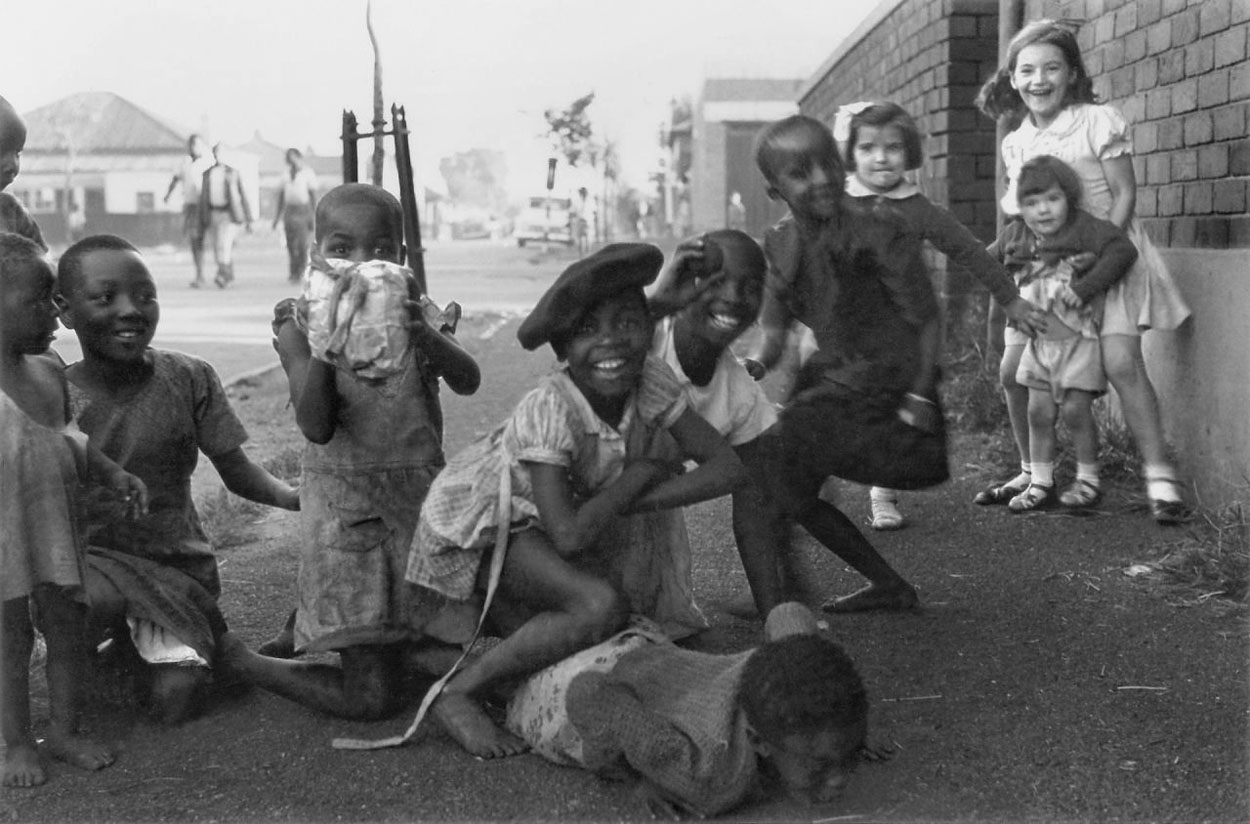
 

David Goldblatt (South African, 1930-2018) 'Children on the border between Fietas and Mayfair, Johannesburg' 1949, printed later


David Goldblatt (South African, 1930-2018)
Children on the border between Fietas and Mayfair, Johannesburg
1949, printed later
Gelatin silver print
Yale University Art Gallery, New haven, Connecticut, purchased with a gift from Jane P. Watkins, M.P.H. 1979; with the Leonard C. Hanna, Jr., Class of 1913, Fund; and with support from the Reinecke Rare Book and Manuscript Library
© The David Goldblatt Legacy Trust


Goldblatt caught this raucous scene during his initial foray into photography just after high school. The spontaneous interaction of children of different races on a city street clashed with the country’s emerging politics at mid-century. The year before Goldblatt made this image, a white nationalist movement fomented by Afrikaners – an ethnic group descended predominantly from Dutch settlers – had come to political power as the National Party. In 1949 the government passed legislation to authorise new racial classifications and urban racial segregation. They subsequently allocated the neighbourhoods of Fietas (known officially as Pageview) and Mayfair as areas for white residents only, enforcing segregation by fines and compulsory resettlement.

Wall text from the exhibition
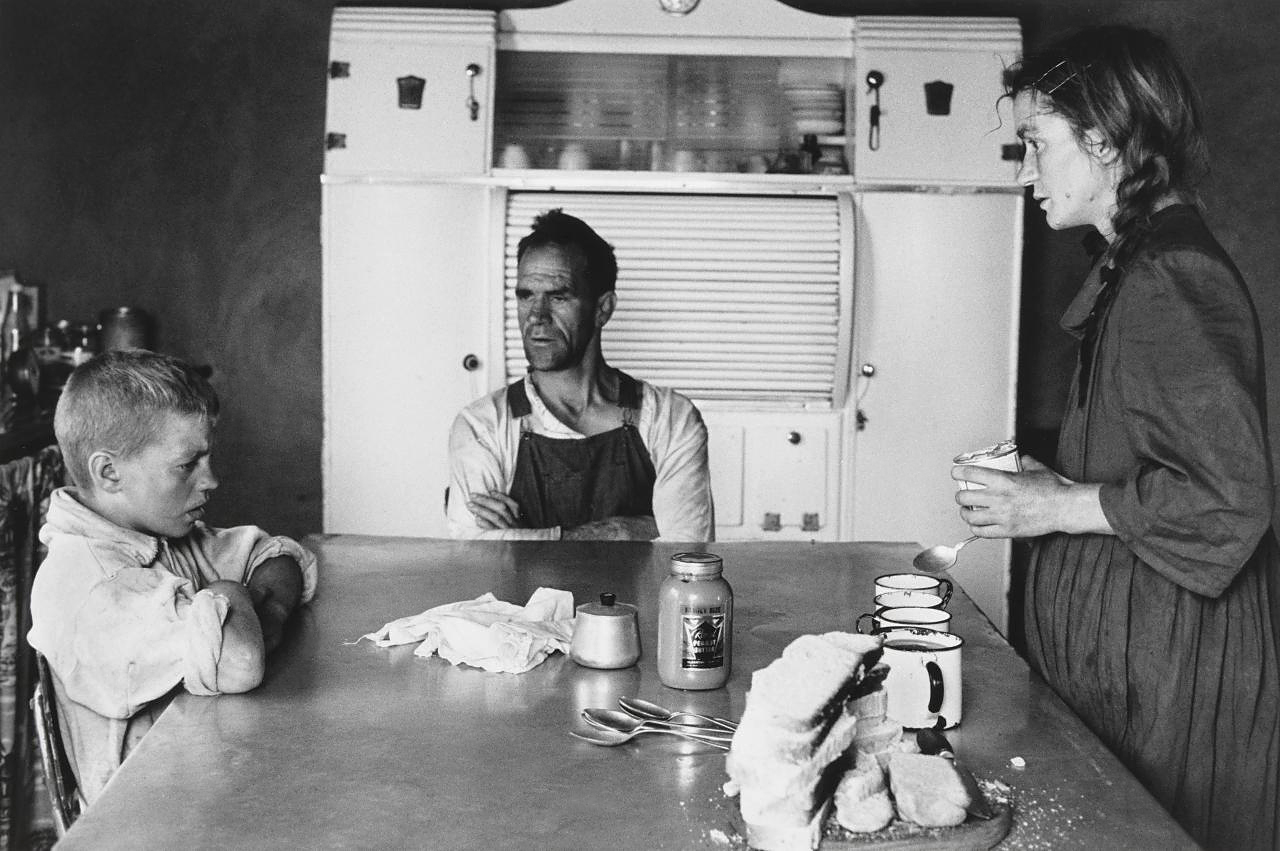
 

David Goldblatt (South African, 1930-2018) 'A plot-holder, his wife, and their eldest son at lunch, Wheatlands, Randfontein' 1962, printed later


David Goldblatt (South African, 1930-2018)
A plot-holder, his wife, and their eldest son at lunch, Wheatlands, Randfontein
1962, printed later
Gelatin silver print
Yale University Art Gallery, New haven, Connecticut, purchased with a gift from Jane P. Watkins, M.P.H. 1979; with the Leonard C. Hanna, Jr., Class of 1913, Fund; and with support from the Reinecke Rare Book and Manuscript Library
© The David Goldblatt Legacy Trust


The artistic career of South African artist David Goldblatt (1930, Randfontein – 2018, Johannesburg) embraced both a wide geographical spread of his country and a wide variety of human situations portraying the day-to-day life of his fellow citizens during and after apartheid. From his beginnings in 1950, his work – which he has progressively reflected in numerous books – has gone hand in hand with the historical, political, social and economic evolution of South Africa. From 1999 onwards, Goldblatt adopted colour for his work, which focused on the harsh living conditions of the post-apartheid period.

Goldblatt photographed with great objectivity the “watchmen”, dissidents, settlers and victims of that regime, the cities they lived in, their buildings, the inside of their homes… His images provide an extensive and touching visual record of the racist apartheid regime, a record that never explicitly shows its violence but clearly reveals all that it represented, as he himself pointed out: […] I avoid violence. And I wouldn’t know how to handle it as a photographer if I found myself caught up in a violent scene […] But then I’ve long since realised – it took me a few years to realise – that events in themselves are not so interesting to me as the conditions that led to the events. These conditions are often quite commonplace, and yet full of what is imminent. Immanent and imminent.

David Goldblatt. No ulterior motive gathers together nearly 150 works that show the continuity and strength of his work and also offers, for the first time, connections to other South African photographers from one to three generations later who acknowledge their debt to Goldblatt as a mentor who believed deeply in the value of exchange and debate, as well as in the importance of expressing one’s own opinions.

Text from the Fundación MAPFRE website


David Goldblatt (South African, 1930-2018) 'A plot holder with the daughter of his servant, Wheatlands, Randfontein' 1962


David Goldblatt (South African, 1930-2018)
A plot holder with the daughter of his servant, Wheatlands, Randfontein
1962
Gelatin silver print
The Art Institute of Chicago, promised donation of Cecily Cameron and Derek Schrier
© The David Goldblatt Legacy Trust
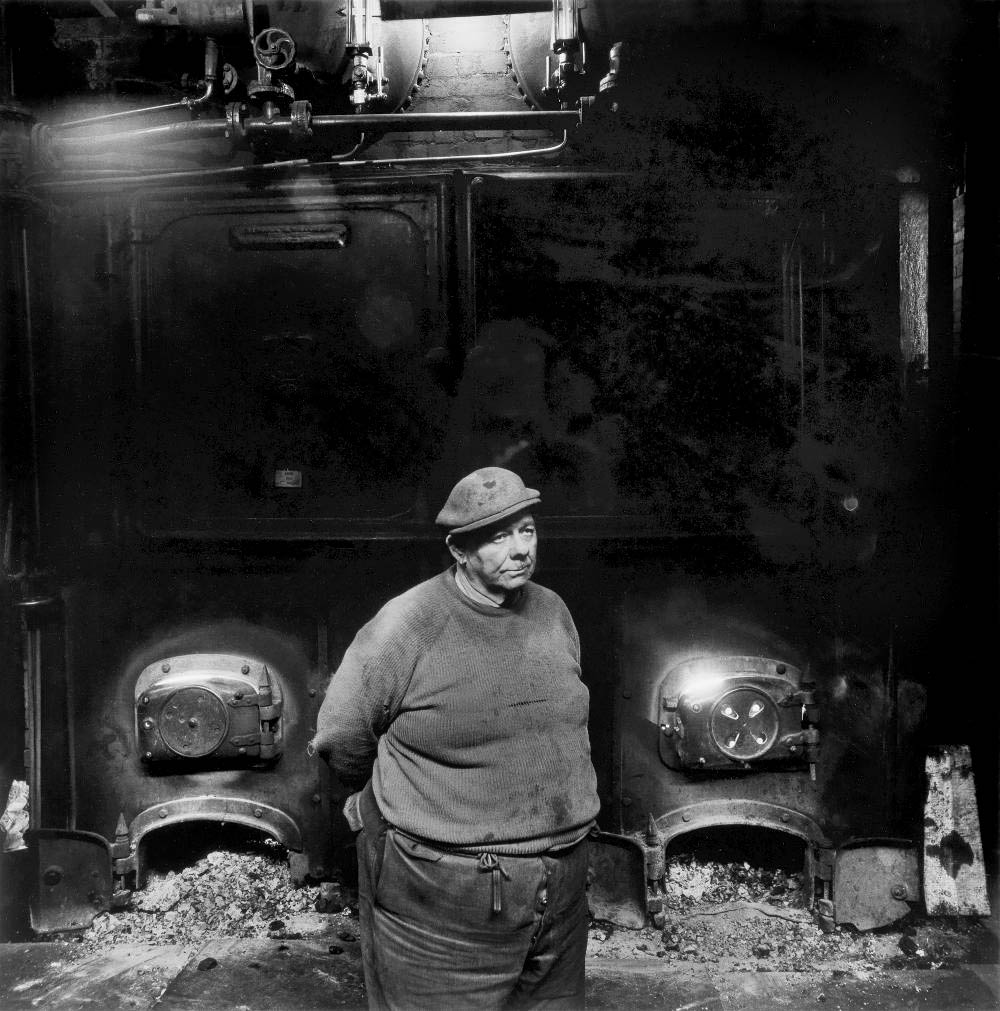
 

David Goldblatt (South African, 1930-2018) 'The son of an ostrich farmer waits with a labourer for the day's work to begin, near Oudtshoorn, Cape Province (Western Cape)' [El hijo de un criador de avestruces espera junto a un jornalero a que comience la jornada de trabajo, cerca de Oudtshoorn, Provincia del Cabo Occidental] 1966


David Goldblatt (South African, 1930-2018)
The son of an ostrich farmer waits with a labourer for the day’s work to begin, near Oudtshoorn, Cape Province (Western Cape) [El hijo de un criador de avestruces espera junto a un jornalero a que comience la jornada de trabajo, cerca de Oudtshoorn, Provincia del Cabo Occidental]
1966
Gelatin silver print
The Art Institute of Chicago, promised donation of Cecily Cameron and Derek Schrier
© The David Goldblatt Legacy Trust


David Goldblatt (South African, 1930-2018) 'Joe Maloney, boiler-hose attendant, City Deep Gold Mine' 1966


David Goldblatt (South African, 1930-2018)
Joe Maloney, boiler-hose attendant, City Deep Gold Mine
1966
Gelatin silver print
The Art Institute of Chicago, promised donation of Cecily Cameron and Derek Schrier
© The David Goldblatt Legacy Trust


David Goldblatt (South African, 1930-2018) '"Boss Boy" detail, Battery Reef, Randfontein Estates Gold Mine' 1966, printed later


David Goldblatt (South African, 1930-2018)
“Boss Boy” detail, Battery Reef, Randfontein Estates Gold Mine
1966, printed later
Platinum print
Yale University Art Gallery, New haven, Connecticut, purchased with a gift from Jane P. Watkins, M.P.H. 1979; with the Leonard C. Hanna, Jr., Class of 1913, Fund; and with support from the Reinecke Rare Book and Manuscript Library
© The David Goldblatt Legacy Trust


European settlement began at the Cape in 1652. The oldest modern structure still in existence is, appropriately, the Castle in Cape Town erected between 1666 and 1679 as a fortress to consolidate that settlement against growing opposition by indigenous people. The core of the history of this land in the 333 years since 1666 is its domination by white people, the subjection to them by force and institutionalised economic dependence of black people, and of sporadic and latterly of massively growing opposition by blacks and disaffected whites to the system of domination.

White hegemony approached its ultimate expression in the past thirty-nine years with the emergence of Afrikaner nationalism as the overwhelmingly ascendant social force in this society. The apotheosis of that force is the ideology of apartheid. There is hardly any part of life in this country that has not been profoundly affected by the quest for power, the determination to hold onto it, and the expression of that power through apartheid of the Afrikaner Nationalists and of their supporters and fellow travellers of other origins.

Innumerable structures of every imaginable kind and not a few ruins bear witness to the huge thrust of these movements across our land.

Now, Afrikaner nationalism, though by no means spent, is in decline. Change, probably convulsive, to something as yet unclear has begun. The first structures based in countervailing forces and ideology have made their tentative appearance.

David Goldblatt from the book “Structures,” 1987, p. 42


The fabric of this society permeates everything I do. I don’t know if this is the case with other photographers. I would dearly love to be a lyrical photographer. Every so often I try to branch out and rid myself of these concerns, but it rarely happens. You take your first breath of fresh air and you have compromised.

Recently I became very aware of the people thrown into detention. There is the elementary fact that is lost sight of in this country, that they are put in detention without trial, without recourse to the courts. Has become necessary here to remind ourselves of this fact. I have catalogued the faces fo some fo the people who have been in detention with something of their life and what happened to them in detention. I have also me with some who have been abused in detention. The photographs might in some small way, through their publication, act as a deterrent to further abuse or even to detention without trial itself. As the struggle for the survival of the apartheid system becomes more acute, so the system becomes more restrictive, especially with regard to the flow of information. We are going into a period of long darkness when the restrictions with become more severe. I am aware of photographing things that are disappearing and need to be documented, but in another sense I have a private mission to document what is happening in this country to form a record. There are many other photographers engaged in this. I regard this aspect of our work as very important, so that in the future, when the time comes, people will know what happened here, what transpired.

David Goldblatt from the book “Structures,” 1987, p. 68


David Goldblatt (South African, 1930-2018) 'Gang on surface work, Rustenberg Platinum Mine, Rustenburg, North-West Province' [Cuadrilla en trabajos de superficie, mina de platino de Rustenberg, Provincia del Noroeste] 1971


David Goldblatt (South African, 1930-2018)
Gang on surface work, Rustenberg Platinum Mine, Rustenburg, North-West Province [Cuadrilla en trabajos de superficie, mina de platino de Rustenberg, Provincia del Noroeste]
1971
Carbon ink print
Yale University Art Gallery, New haven, Connecticut, purchased with a gift from Jane P. Watkins, M.P.H. 1979; with the Leonard C. Hanna, Jr., Class of 1913, Fund; and with support from the Reinecke Rare Book and Manuscript Library
© The David Goldblatt Legacy Trust
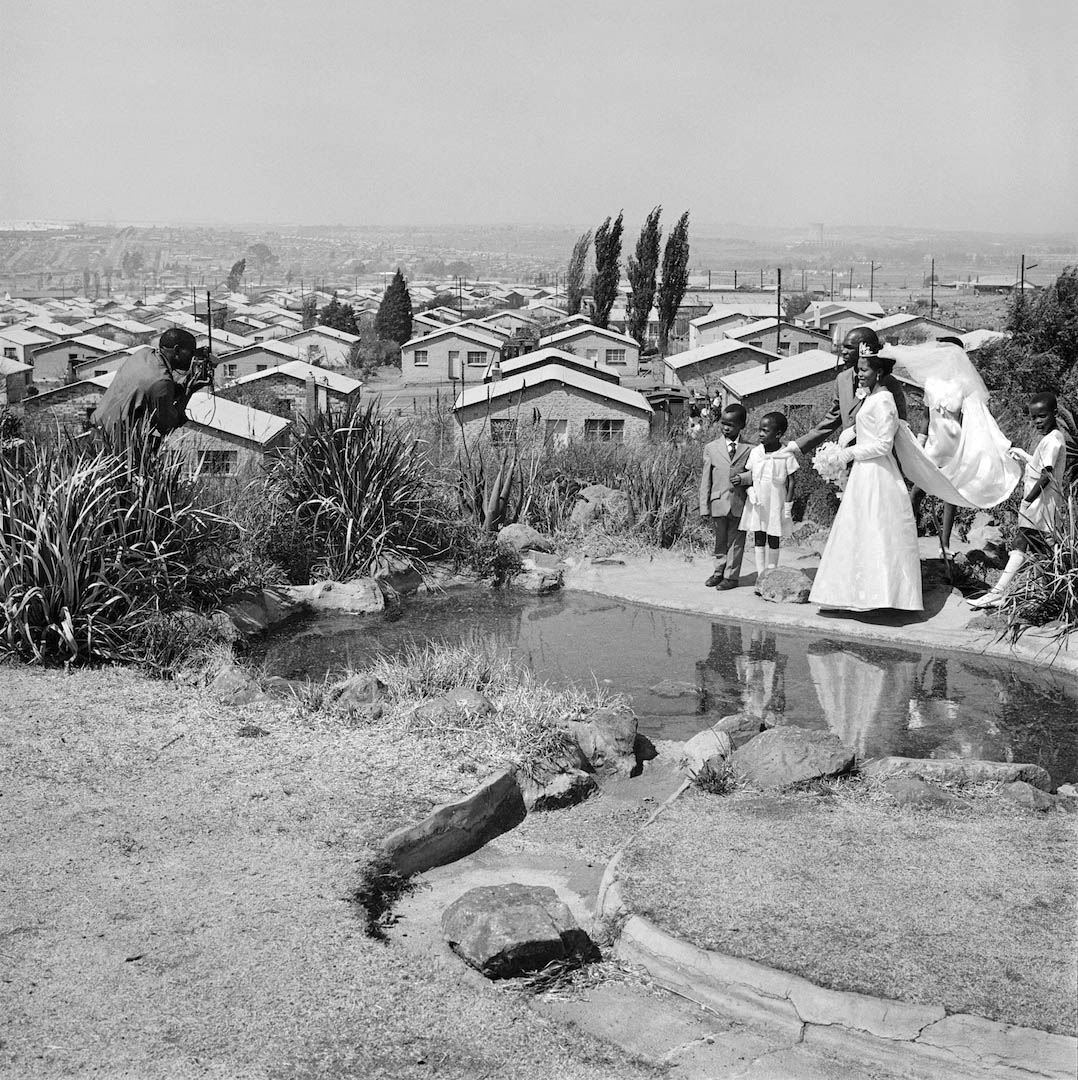
 

David Goldblatt (South African, 1930-2018) 'Young men with dompas (an identity document that every African had to carry), White City, Jabavu, Soweto' 1972


David Goldblatt (South African, 1930-2018)
Young men with dompas (an identity document that every African had to carry), White City, Jabavu, Soweto
1972
Gelatin silver print
Yale University Art Gallery, New haven, Connecticut, purchased with a gift from Jane P. Watkins, M.P.H. 1979; with the Leonard C. Hanna, Jr., Class of 1913, Fund; and with support from the Reinecke Rare Book and Manuscript Library
© The David Goldblatt Legacy Trust


Two men lean against one another tenderly as one holds up an identification document called a passbook. under the Pass Laws Act of 1952, all Black South Africans over the age of 16 were required to carry such identification at all times. Passbooks were also known as dompas, a term deriving from the phrase “dumb pass,” used to openly mock this hated tool for enforcing apartheid. Anyone stopped by police without a passbook or official permission to be in a given area could be penalised with arrest or fines. Policies that restricted the movement of Black people throughout the country have a long history in South Africa and were a key target of resistance movements.

Wall text from the exhibition


David Goldblatt (South African, 1930-2018) 'In the office of the funeral parlour, Orlando West, Soweto' [En la oficina de la funeraria, Orlando West, Soweto] 1972


David Goldblatt (South African, 1930-2018)
In the office of the funeral parlour, Orlando West, Soweto [En la oficina de la funeraria, Orlando West, Soweto]
1972
Gelatin silver print
The Art Institute of Chicago, promised donation of Cecily Cameron and Derek Schrier
© The David Goldblatt Legacy Trust


In his photographs of office and office workers, Goldblatt often teased out the continuities between professional and private identities. The two women in this photograph are dressed for winter on Earth, but the art on the walls hearkens to a journey to outer space. At this moment in 1972, apartheid was so firmly in place that, for many, change was almost unthinkable – perhaps akin to landing on the moon. The artwork brings the prospect of liberty and the sheer thrill of adventure into an otherwise ordinary setting. Of course, the art might not have been their choice at all, but the photograph holds open the possibility that these women have a stake in missions long thought impossible.

Wall text from the exhibition


David Goldblatt (South African, 1930-2018) 'Lulu Gebashe and Solomon Mlutshana, who both worked in a record shop in the city, Mofolo Park' [Lulu Gebashe y Solomon Mlutshana, que trabajaban en una tienda de discos de la ciudad, Mofolo Park] 1972


David Goldblatt (South African, 1930-2018)
Lulu Gebashe and Solomon Mlutshana, who both worked in a record shop in the city, Mofolo Park [Lulu Gebashe y Solomon Mlutshana, que trabajaban en una tienda de discos de la ciudad, Mofolo Park]
1972
Carbon ink print
Yale University Art Gallery, New haven, Connecticut, purchased with a gift from Jane P. Watkins, M.P.H. 1979; with the Leonard C. Hanna, Jr., Class of 1913, Fund; and with support from the Reinecke Rare Book and Manuscript Library
© The David Goldblatt Legacy Trust


David Goldblatt (South African, 1930-2018) 'Miriam Diale, 5357 Orlando East, Soweto, 18 October 1972' [Miriam Diale, Orlando East n.º 5357, Soweto, 18 de octubre de 1972] 1972


David Goldblatt (South African, 1930-2018)
Miriam Diale, 5357 Orlando East, Soweto, 18 October 1972 [Miriam Diale, Orlando East n.º 5357, Soweto, 18 de octubre de 1972]
1972
Carbon ink print
Yale University Art Gallery, New haven, Connecticut, purchased with a gift from Jane P. Watkins, M.P.H. 1979; with the Leonard C. Hanna, Jr., Class of 1913, Fund; and with support from the Reinecke Rare Book and Manuscript Library
© The David Goldblatt Legacy Trust


David Goldblatt (South African, 1930-2018) 'Wedding photography at the Oppenheimer Memorial, Jabavu, Soweto' 1972, printed later


David Goldblatt (South African, 1930-2018)
Wedding photography at the Oppenheimer Memorial, Jabavu, Soweto
1972, printed later
Carbon ink print
Yale University Art Gallery, New haven, Connecticut, purchased with a gift from Jane P. Watkins, M.P.H. 1979; with the Leonard C. Hanna, Jr., Class of 1913, Fund; and with support from the Reinecke Rare Book and Manuscript Library
© The David Goldblatt Legacy Trust


The grandson of Lithuanian refugees, David Goldblatt was born in Randfontein in 1930 and spent most of his life in Johannesburg. From a very young age he showed an interest in photography and took his first images when he was only eighteen. After the death of his father, in 1963 he decided to become a professional photographer.

David Goldblatt scrupulously examined the history and politics of South Africa, where he witnessed the rise of apartheid, its brutal segregationist policies and its eventual disappearance. His sensitive photographs offer a vision of daily life under this regime and in the complex period that followed, when he moved from black and white to colour in his work.

Employing great objectivity, Goldblatt photographed dissidents, settlers and victims of apartheid, the cities where they lived, their buildings, the interior of their homes, etc. His images configure a wide-ranging and moving visual record of this racist regime, a record which, while never explicitly showing its violence, clearly reveals everything it represented, as the artist himself pointed out: “I avoid violence. And I wouldn’t know how to handle it as a photographer if I found myself caught up in a violent scene […] But then I’ve long since realised – it took me a few years to realise – that events in themselves are not so interesting to me as the conditions that led to the events. These conditions are often quite commonplace, and yet full of what is imminent. Immanent and imminent.

In 1998 David Goldblatt was the first South African to be the subject of a solo exhibition at the Museum of Modern Art (MoMA) in New York. His work has been recognised with the Hasselblad (2006) and Henri Cartier-Bresson (2009) prizes and the International Center of Photography award (2013). In 2016 he was made a knight of the Order of Arts and Letters by the French government. He died in Johannesburg in 2018 at the age of eighty-eight.

David Goldblatt: No Ulterior Motive brings together around 150 works from several of the artist’s series with the aim of revealing the continuity of his work while also and for the first time establishing a dialogue with the work of other South African photographers of between one and three generations subsequent to Goldblatt, such as Lebohang Kganye, Ruth Seopedi Motau and Jo Ractliffe. Also on display are three mock-ups of books by Goldblatt, an aspect of his work to which he gave great importance.

The works on display are from the collections of The Art Institute of Chicago and Yale University Art Gallery and include important recent acquisitions of photographs by Goldblatt. Having been shown at The Art Institute of Chicago between December 2023 and March 2024, Fundación MAPFRE is now presenting the exhibition at its venue on Paseo de Recoletos, Madrid, until August this year. It will then be seen next year at Yale University Art Gallery, New Haven (Connecticut).

David Goldblatt: No Ulterior Motive is curated by Judy Ditner (Yale University Art Gallery, New Haven), Leslie M. Wilson and Matthew S. Witkovsky (The Art Institute of Chicago).


Key themes in the exhibition

Apparent tranquility

Throughout his career Goldblatt avoided the most difficult and shocking incidents that were a daily reality under apartheid. Rather, he considered that depicting everyday life, “the quiet and commonplace where nothing ‘happened'”, allowed the viewer to draw their own conclusions. The content was implicit in the apparent tranquility and in the very precise captions that accompany these images, which show ongoing, daily expressions of racism and the economic, social and political exploitation of the Black population under white rule.

Goldblatt, No Ulterior Motive

Goldblatt’s status as a white man allowed him greater freedom of movement and he took advantage of that privilege to document life in South Africa in the most honest and direct way possible. In the early 1970s he published a classified ad which read: “I would like to photograph people in their homes […]. No ulterior motive.” Nonetheless, this impartiality concealed a critical perspective towards his country’s people, history and geography.

Apartheid

In 1948 the National Party, one of the most visible entities representing Afrikaners (a European, colonising ethnic group mainly comprising descendants of the Dutch, North Germans and French), came to power in South Africa. This minority of European origin then proceeded to institute apartheid as a State policy while promoting the ideology that people of different racial origins could not live together in equality and harmony. Successive governments reinforced the legacy of racist oppression against non-white peoples (indigenous Africans, people of Asian origin and those of mixed race), who made up more than 80% of the population. In 1990 segregation laws began to be eliminated, the activity of the African National Congress was legalised and its most important leader, Nelson Mandela, who was elected president of South Africa in 1993, was released from prison.

Press release from Fundación MAPFRE


David Goldblatt (South African, 1930-2018) ;Sylvia Gibbert in her apartment, Melrose, Johannesburg; [Sylvia Gibbert en su apartamento, Melrose, Johannesburgo] 1974


David Goldblatt (South African, 1930-2018)
Sylvia Gibbert in her apartment, Melrose, Johannesburg [Sylvia Gibbert en su apartamento, Melrose, Johannesburgo]
1974
Gelatin silver print
The Art Institute of Chicago, promised donation of Cecily Cameron and Derek Schrier
© The David Goldblatt Legacy Trust


David Goldblatt (South African, 1930-2018) 'Ozzie Docrat with his daughter Nassima in his shop before its destruction under the Group Areas Act, Fietas, Johannesburg' [Ozzie Docrat con su hija Nassima en su tienda antes de ser destruida en virtud de la Ley de Agrupación por Áreas, Fietas, Johannesburgo] 1977


David Goldblatt (South African, 1930-2018)
Ozzie Docrat with his daughter Nassima in his shop before its destruction under the Group Areas Act, Fietas, Johannesburg [Ozzie Docrat con su hija Nassima en su tienda antes de ser destruida en virtud de la Ley de Agrupación por Áreas, Fietas, Johannesburgo]
1977
From the series Fietas
Carbon ink print
Yale University Art Gallery, New haven, Connecticut, purchased with a gift from Jane P. Watkins, M.P.H. 1979; with the Leonard C. Hanna, Jr., Class of 1913, Fund; and with support from the Reinecke Rare Book and Manuscript Library
© The David Goldblatt Legacy Trust


“I feel as though my teeth are being pulled out one by one. I run by tongue over the spaces and I try to remember the shape of what was there.” These words, spoken to Goldblatt by shop owner Ozzie Docrat, express what many residents must have experienced during their forced removal from the Johannesburg suburb of Fietas in the 1970s. Throughout the mid-20th century, Fietas was exceptional for the endurance of it multiracial, interfaith community of working- and middle-class people in the face of encroaching segregationist housing policies. In 1977, however, the government forced out Indian families like the Docrats, along with other people of color, to make this area exclusive to whites.

Wall text from the exhibition


David Goldblatt (South African, 1930-2018) 'Sunday morning: A not-White family living illegally in the "White" group area of Hillbrow, Johannesburg' [Domingo por la mañana: una familia no blanca viviendo ilegalmente en la zona "blanca" de Hillbrow, Johannesburgo] 1978


David Goldblatt (South African, 1930-2018)
Sunday morning: A not-White family living illegally in the “White” group area of Hillbrow, Johannesburg [Domingo por la mañana: una familia no blanca viviendo ilegalmente en la zona “blanca” de Hillbrow, Johannesburgo]
1978
Pigmented inkjet print
Yale University Art Gallery, New haven, Connecticut, purchased with a gift from Jane P. Watkins, M.P.H. 1979; with the Leonard C. Hanna, Jr., Class of 1913, Fund; and with support from the Reinecke Rare Book and Manuscript Library
© The David Goldblatt Legacy Trust


“Over the course of a career that spanned more than six decades, Goldblatt went looking for scenes like this one – quiet and tender, while also deeply revealing of the structures and values that constituted South African society. Though the family appears to be right at home, Goldblatt’s title shares that they were living illegally in the Johannesburg neighborhood of Hillbrow, violating laws that, under the system of segregation known as apartheid, dictated where different racial groups were permitted to reside. The cozy scene is therefore profoundly fragile because the family faced the persistent threat of removal.

This image powerfully presents the tensions that were central to what Goldblatt pursued through photography: soft furnishings and brutal laws, proximity and distance, access and exclusion, and informality and formality.”

Leslie Wilson and Yechen Zhao. “In the Room with David Goldblatt,” on the Art Institute of Chicago website December 19, 2023 [Online] Cited 11/07/2024
 

David Goldblatt (South African, 1930-2018) 'Methodists meet to find ways of reducing the racial, cultural, and class barriers that divide them, 3 July 1980' 1980, printed later


David Goldblatt (South African, 1930-2018)
Methodists meet to find ways of reducing the racial, cultural, and class barriers that divide them, 3 July 1980
1980, printed later
Gelatin silver print
Yale University Art Gallery, New haven, Connecticut, purchased with a gift from Jane P. Watkins, M.P.H. 1979; with the Leonard C. Hanna, Jr., Class of 1913, Fund; and with support from the Reinecke Rare Book and Manuscript Library
© The David Goldblatt Legacy Trust
 

Throughout South Africa and even across the continent, religion bears a complicated history embroiled in legacies of colonisation, oppression, and apartheid. Religion holds power. It was through the cross and the bullet that the continent was dissected by European powers. It was through the pages of the Bible that apartheid was theologically justified, and it was through the Dutch Reformed Church of white Afrikaners that “the races” were declared separate as mandated by God. Yet, it was also through the World Alliance of Reformed Churches that apartheid was acknowledged as heresy. It was through the Christian ethos and through ubuntu that Archbishop Desmond Tutu guided the post-apartheid Truth and Reconciliation Commission through ways of healing in a society bifurcated into “European” and “Non-White;” “have” and “have-not;” “believer” and “unbeliever.” Religion has the power to both destroy and heal a nation.

In a discussion about life under apartheid, my South African friend designated as “Coloured” – a category in between “White” and “Black African” – revealed that his parents were once denied communion on Sunday morning due to their sin of attending a “white church” while being of color. Whiteness meant purity and closeness with God; anything less than was deemed as “separate,” “other,” “unworthy” – “impure.” The sharing of bread and wine in the Christian tradition is meant to signify connection between people and between the divine. The denial of such connection, of saying that one was unworthy to drink from the same chalice because of one’s race or ethnicity, is an ultimate denial of humanity. It is an affront to the very word “communion” and an insult to fellowship. Religion was co-opted to subjugate and enforce a system of racial hierarchy. Sunday morning saw no race-mixing amongst God’s children.

Trevor O’Connor. “Religion in South Africa: The Power to Destroy and Heal a Nation,” on the Berkley Center for Religion, Peace & World Affairs website November 16, 2018 [Online] Cited 11/07/2024


David Goldblatt (South African, 1930-2018) 'Saturday morning at the hypermarket: Semifinal of the Miss Lovely Legs Competition, 28 June 1980' [Sábado por la mañana en el hipermercado: semifinal del concurso Miss Piernas Bonitas, 28 de junio de 1980] 1980


David Goldblatt (South African, 1930-2018)
Saturday morning at the hypermarket: Semifinal of the Miss Lovely Legs Competition, 28 June 1980 [Sábado por la mañana en el hipermercado: semifinal del concurso Miss Piernas Bonitas, 28 de junio de 1980]
1980
Carbon ink print
Yale University Art Gallery, New haven, Connecticut, purchased with a gift from Jane P. Watkins, M.P.H. 1979; with the Leonard C. Hanna, Jr., Class of 1913, Fund; and with support from the Reinecke Rare Book and Manuscript Library
© The David Goldblatt Legacy Trust


David Goldblatt (South African, 1930-2018) 'Apostolic Faith Mission (AGS), Birchleigh, Kempton Park, 28 December 1983' [Misión de la Fe Apostólica (AGS, en afrikáans), Birchleigh, Kempton Park, 28 de diciembre de 1983] 1983


David Goldblatt (South African, 1930-2018)
Apostolic Faith Mission (AGS), Birchleigh, Kempton Park, 28 December 1983 [Misión de la Fe Apostólica (AGS, en afrikáans), Birchleigh, Kempton Park, 28 de diciembre de 1983]
1983
Gelatin silver print
The Art Institute of Chicago, promised donation of Cecily Cameron and Derek Schrier
© The David Goldblatt Legacy Trust


Goldblatt’s photographs of churches were so beautiful. They were wonderful architectural images, but they were deep with meaning capturing the issues of a missionary religion in a nonnative land. They symbolise the conflicts within the country which mirrored issues throughout other parts of the world. When I thought about South Africa it was about apartheid and relationships between blacks and whites, I had not considered the impact of western religion on the indigenous population (I should have because it is an issue still in our country today), nor did I know about the issues with the Muslim population in the country. In researching the issue of religion further, it appears the conflicts and violence in South Africa related to it appear to be ongoing to this day.

William Carl Valentine. “David Goldblatt: No Ulterior Motive,” on the William Carl Valentine website June 15, 2024 [Online] Cited 06/07/2024


David Goldblatt (South African, 1930-2018) 'Thirteen kilometres of this coastline were a White Group Area, Bloubergstrand, Cape Town, 9 January 1986' [Trece kilómetros de esta costa eran una zona reservada para blancos, Bloubergstrand, Ciudad del Cabo, 9 de enero de 1986] 1986


David Goldblatt (South African, 1930-2018)
Thirteen kilometres of this coastline were a White Group Area, Bloubergstrand, Cape Town, 9 January 1986 [Trece kilómetros de esta costa eran una zona reservada para blancos, Bloubergstrand, Ciudad del Cabo, 9 de enero de 1986]
1986
Carbon ink print
Yale University Art Gallery, New haven, Connecticut, purchased with a gift from Jane P. Watkins, M.P.H. 1979; with the Leonard C. Hanna, Jr., Class of 1913, Fund; and with support from the Reinecke Rare Book and Manuscript Library
© The David Goldblatt Legacy Trust


David Goldblatt (South African, 1930-2018) 'Assegais, shield, and 23-metre-high cross of the Nederduitse Gereformeerde Kerk in Afrika, (Dutch Reformed Mission Church to Africans), which stands above Dingane's destroyed capital, uMgungundlovu. The church was burnt down in 1985; Dinganestad, Natal' 1989, printed later


David Goldblatt (South African, 1930-2018)
Assegais, shield, and 23-metre-high cross of the Nederduitse Gereformeerde Kerk in Afrika, (Dutch Reformed Mission Church to Africans), which stands above Dingane’s destroyed capital, uMgungundlovu. The church was burnt down in 1985; Dinganestad, Natal
1989, printed later
Carbon ink print
Yale University Art Gallery, New haven, Connecticut, purchased with a gift from Jane P. Watkins, M.P.H. 1979; with the Leonard C. Hanna, Jr., Class of 1913, Fund; and with support from the Reinecke Rare Book and Manuscript Library
© The David Goldblatt Legacy Trust


David Goldblatt (1930-2018) scrupulously examined the history and politics of South Africa, where he witnessed the rise of apartheid, its divisive and brutal policies, and its eventual demise. His sensitive photographs offer a view of daily life under the apartheid system and its complex aftermath. Goldblatt was drawn, in his own words, “to the quiet and commonplace where nothing ‘happened’ and yet all was contained and immanent.” Accompanied by precise captions, his images expose everyday manifestations of racism and point to Black dispossession – economic, social, and political – under white rule.

The grandson of Lithuanian Jews who had fled Europe in the 1890s, Goldblatt spent most of his life in Johannesburg. Although not part of the ascendant Dutch Protestant community, his position as a white man allowed him greater freedom of movement and he leveraged this privilege to document life in South Africa as honestly and straightforwardly as possible. In the early 1970s, he placed a classified ad: “I would like to photograph people in their homes […]. No ulterior motive.” Yet this professed impartiality masked a critical perspective toward South Africa’s people, history, and geography.

Goldblatt first took up the camera in 1948, the year the apartheid system was introduced, and over the next seven decades he assiduously photographed South Africa’s people, landscape, and built environment. Recognising the layered connections in his oeuvre, this exhibition proceeds thematically rather than chronologically: here, black-and-white photographs taken during the period of institutionalised segregation are interwoven with his work in colour from the 1990s on. Six thematic sections explore Goldblatt’s engagement with apartheid, its contradictions, and its multifaceted legacy.
 

Installation view of the exhibition 'David Goldblatt: No Ulterior Motive' at Fundación MAPFRE, Madrid showing at left, wall text from the section 'Informality'


Installation view of the exhibition David Goldblatt: No Ulterior Motive at Fundación MAPFRE, Madrid showing at left, wall text from the section ‘Informality’ (see below)


1/ Informality

Goldblatt’s photographs, especially his portraits, ask us to consider the informal and often idiosyncratic ways people resist oppression. Attuned to how his status and relative freedom as a white man influenced all social encounters, Goldblatt gained access to intimate moments of South Africans’ everyday lives by thoughtfully avoiding behaviour that might suggest an exercise of authority. Instead, he observed how frequently people segregated by law engaged in unsanctioned social and economic exchanges. Whether photographing descendants of Dutch colonists farming in the rural Cape in the early 1960s for the series Some Afrikaners Photographed, or a young Black couple in Johannesburg, Goldblatt emphasised the improvised realities of everyday life. This interest shifted in later years to the housing and mercantile arrangements dubbed South Africa’s “informal economy,” as well as to unofficial monuments to historical figures and events.

2/ Working people

Even as the architects of apartheid sought to separate South Africans, the system functioned through an economic structure that placed people into tense proximity on a daily basis. White families hired Black workers to raise their children and clean their homes; mines owned and managed by whites depended on people of color to perform the most dangerous labor. Government-dictated racial categories profoundly shaped the jobs that people could hold, creating strict hierarchies in workplaces. Goldblatt highlighted these inequalities with pictures like one of a domestic worker rushing to meet her employer. At the same time, he attended to how people retained a sense of self and dignity in their labor, as in his portraits of mineworkers who chose to pose for his camera in their traditional clothing.

3/ Extraction

Born in the mining town of Randfontein, Goldblatt began his career by looking at the extractive economy built by colonial ventures to exploit its natural resources. Goldblatt created his earliest series, On the Mines (1964–73), while working as a photographer for the country’s biggest mining corporations. The series showed how a predominantly Black migrant labor force performed the most dangerous work in gold and platinum mines, work that primarily enriched their white bosses. Decades later, the photographer found similar manifestations of inequality while recording the toxic legacy of asbestos mining and its disproportionate impact on Black communities.

4/ Near/Far

The white supremacist National Party, led by Afrikaners (descendants of predominantly Dutch settlers) and English-speaking whites, attempted to impose distance between people of different racial categories in South Africa. Goldblatt looked at how the National Party government pulled people from their homes to realise its vision of racial segregation, dispossessing and dispersing Black and Indian residents to make room for new white neighbourhoods.

However, the exclusive urban centres the party sought to create could not function without a daily influx of labourers and domestic workers from the country’s diverse population. Goldblatt was interested in the ways closeness continued to manifest even when distance was dictated by law, a status quo that also affected his relationship with the people he photographed. These images wryly register the constant collision of segregated groups in public and private spaces throughout the country.

5/ Disbelief

The illogic of apartheid led to widespread skepticism and practices of self-delusion among those who actively perpetuated the system. The photographs in this section capture the sense of disbelief with the labyrinthine, endlessly rewritten laws intended to legitimise a morally bankrupt system of abuse and oppression. Goldblatt rendered this state of affairs in brilliant deadpan, giving visual form to the incredulity that all but the most cynical and opportunistic beneficiaries of apartheid must have felt. Fortress-like churches of the Dutch Reformed Protestant faith mix with absurd scenes of suburban leisure in whites-only areas, while stony or stoic gazes meet moments of sudden demolition. Even after the official end of apartheid, Goldblatt continued to photograph sites that inspired feelings of disbelief as seen in his photographs of incomplete housing developments.

6/ Assembly

How do people come together in a country divided by segregation? In everything, from the bench they could sit on to where they could live, South Africans were physically separated by race. In the 1950s, protests against these new policies were common, but in the decades that followed, the government introduced increasingly brutal tactics to repress dissent and severely curtailed the right to assemble.

Goldblatt avoided straightforward depictions of open rebellion, seeing his country’s political struggles as clearly in the routine occasions that brought people together by choice or necessity. In later decades, he engaged more with overtly political subjects, turning his camera to newly elected lawmakers and young South Africans openly protesting colonial legacies in their post-apartheid society.

7/ Connections

Beyond his own work, Goldblatt was committed to aiding future generations of South African photographers. He helped found the Market Photo Workshop in 1989 to offer instruction and support to emerging, socially engaged photographers, hoping the school would be “a small counter to the ethnic surgery that had so successfully separated South Africans under apartheid.” Today, it remains a centre of education and community for photography in Johannesburg. Lebohang Kganye, Sabelo Mlangeni, Ruth Seopedi Motau, and Zanele Muholi are alumni with close ties to Goldblatt, who was a friend and mentor. All have explored themes of belonging, loss, memory, migration, and representation while uncovering original, often deeply personal ways to examine South Africa’s people, places, and policies.

Like Goldblatt, the artists in this gallery – Ernest Cole, Santu Mofokeng, and Jo Ractliffe – use the camera to reflect critically on their country’s society and politics. Cole used his camera to confront sweeping social, political, and environmental change from the 1950s to the 1980s. Mofokeng was a member of the Afrapix collective of South African documentary photographers throughout the 1980s. A former student of Goldblatt, he received his first long-term position in photography in part through Goldblatt’s recommendation. Ractliffe’s landscape photographs address issues of displacement and conflict, capturing the traces of often violent histories. She knew Goldblatt as a friend and colleague and has taught at the Market Photo Workshop, a vitally important school for photography in Johannesburg whose alumni are featured in gallery 3.

Text from the exhibition


David Goldblatt (South African, 1930-2018) 'Victoria Cobokana, housekeeper, in her employer's dining room with her son Sifiso and daughter Onica, Johannesburg, June 1999. Victoria died of AIDS on 13 December 1999, Sifiso dies of AIDS on 12 January 2000, Onica died of AIDS in May 2000, June 1999' 1999


David Goldblatt (South African, 1930-2018)
Victoria Cobokana, housekeeper, in her employer’s dining room with her son Sifiso and daughter Onica, Johannesburg, June 1999. Victoria died of AIDS on 13 December 1999, Sifiso dies of AIDS on 12 January 2000, Onica died of AIDS in May 2000, June 1999
1999
Pigmented inkjet print
The Art Institute of Chicago, Promised gift of Cecily Cameron and Derek Schrier
© The David Goldblatt Legacy Trust
 

One might argue that in his own silent way, he was an activist, using his camera to expose things that should never have been allowed to happen. A single color image seems to define the show – in it, a housekeeper sits in her employer’s dining room with her two children on her lap. Behind her a round window forms a halo around her wrapped head, Madonna-like. The didactic tells us that all three of them died of AIDS within months. Such is the inequity of South Africa, quietly portrayed by David Goldblatt over seven decades.

Susan Aurinko. “Painful Truths: A Review of David Goldblatt at the Art Institute of Chicago,” on the New City Art website December 22, 2023 [Online] Cited 07/07/2024


David Goldblatt (South African, 1930-2018) 'Swerwers, nomadic sheep shearers and farmworkers descended from the San hunter-gatherers and Khoi pastoralists. Without work for four months they lived in the gang, the corridor between farms, fences and roads, hunting, fishing when they could, and eating roadkill, near Nuwe Rooiberg, Northern Cape, 18 September 2002' [Swerwers, esquiladores de ovejas y trabajadores agrícolas nómadas, descendientes de los cazadores-recolectores san y de los pastores khoi. Sin trabajo durante cuatro meses, vivían en el paso, el corredor que hay entre las vallas de las granjas y las carreteras, cazando, pescando cuando podían y comiendo animales atropellados, cerca de Nuwe Rooiberg, Cabo Septentrional, 18 de septiembre de 2002] 2002, printed 2005


David Goldblatt (South African, 1930-2018)
Swerwers, nomadic sheep shearers and farmworkers descended from the San hunter-gatherers and Khoi pastoralists. Without work for four months they lived in the gang, the corridor between farms, fences and roads, hunting, fishing when they could, and eating roadkill, near Nuwe Rooiberg, Northern Cape, 18 September 2002 [Swerwers, esquiladores de ovejas y trabajadores agrícolas nómadas, descendientes de los cazadores-recolectores san y de los pastores khoi. Sin trabajo durante cuatro meses, vivían en el paso, el corredor que hay entre las vallas de las granjas y las carreteras, cazando, pescando cuando podían y comiendo animales atropellados, cerca de Nuwe Rooiberg, Cabo Septentrional, 18 de septiembre de 2002]
2002, printed 2005
Pigmented inkjet print
The Art Institute of Chicago, Promised gift of Cecily Cameron and Derek Schrier
© The David Goldblatt Legacy Trust


David Goldblatt (South African, 1930-2018) 'Highly carcinogenic blue asbestos waste on the Owendale Asbestos Mine tailings dump, near Postmasburg, Northern Cape. The prevailing wind was in the direction of the mine officials' houses at right. 21 December, 2002' 2002, printed 2005


David Goldblatt (South African, 1930-2018)
Highly carcinogenic blue asbestos waste on the Owendale Asbestos Mine tailings dump, near Postmasburg, Northern Cape. The prevailing wind was in the direction of the mine officials’ houses at right. 21 December, 2002
2002, printed 2005
Pigmented inkjet print
© The David Goldblatt Legacy Trust
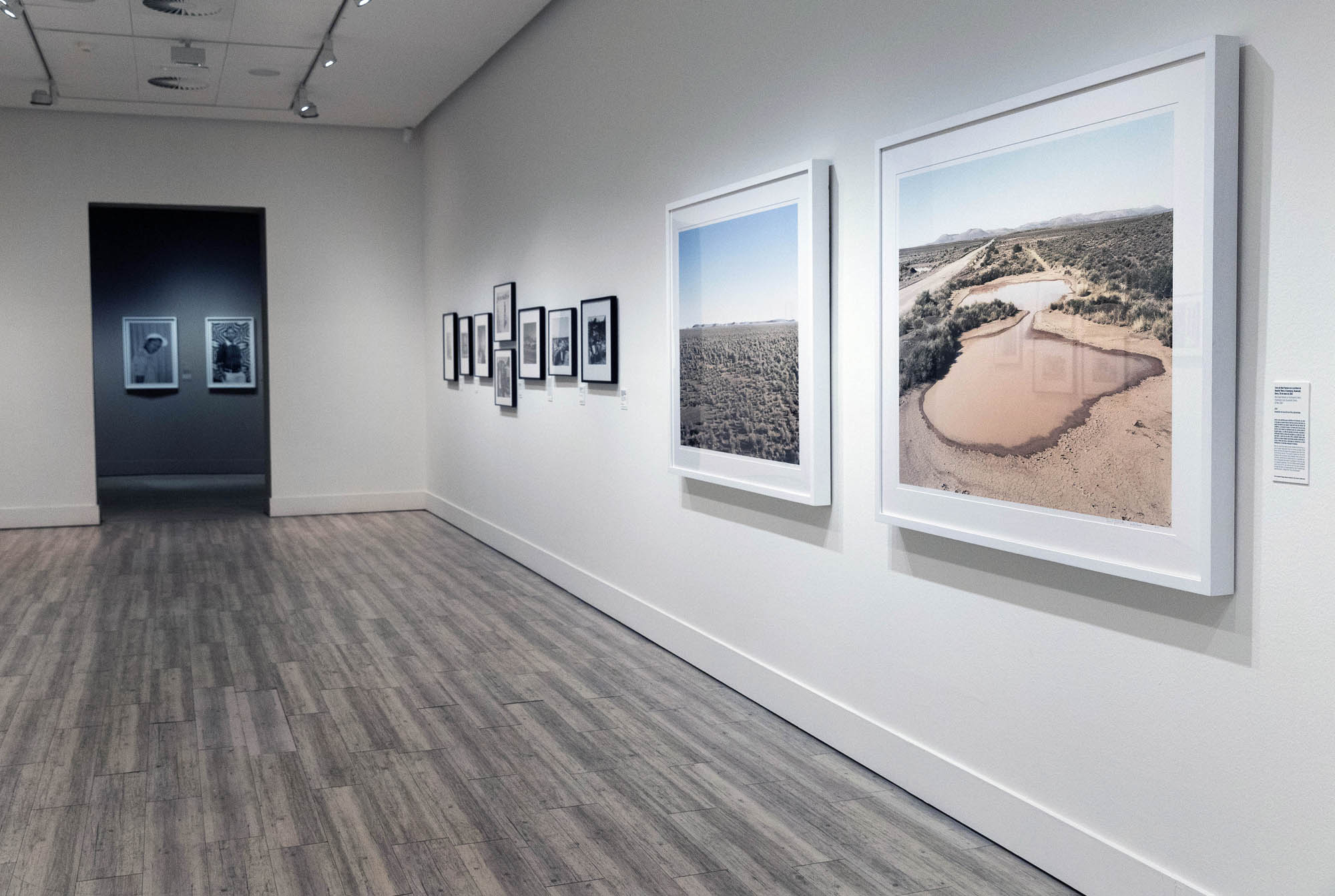
 

Installation view of the exhibition David Goldblatt: No Ulterior Motive at Fundación MAPFRE, Madrid showing at right, Goldblatt's 'Near Brak Pannen on the Beaufort West-Fraserburg road, Nuweveld, Karoo, 30 May 2004'


Installation view of the exhibition David Goldblatt: No Ulterior Motive at Fundación MAPFRE, Madrid showing at right, Goldblatt’s Near Brak Pannen on the Beaufort West-Fraserburg road, Nuweveld, Karoo, 30 May 2004 (2004, below)
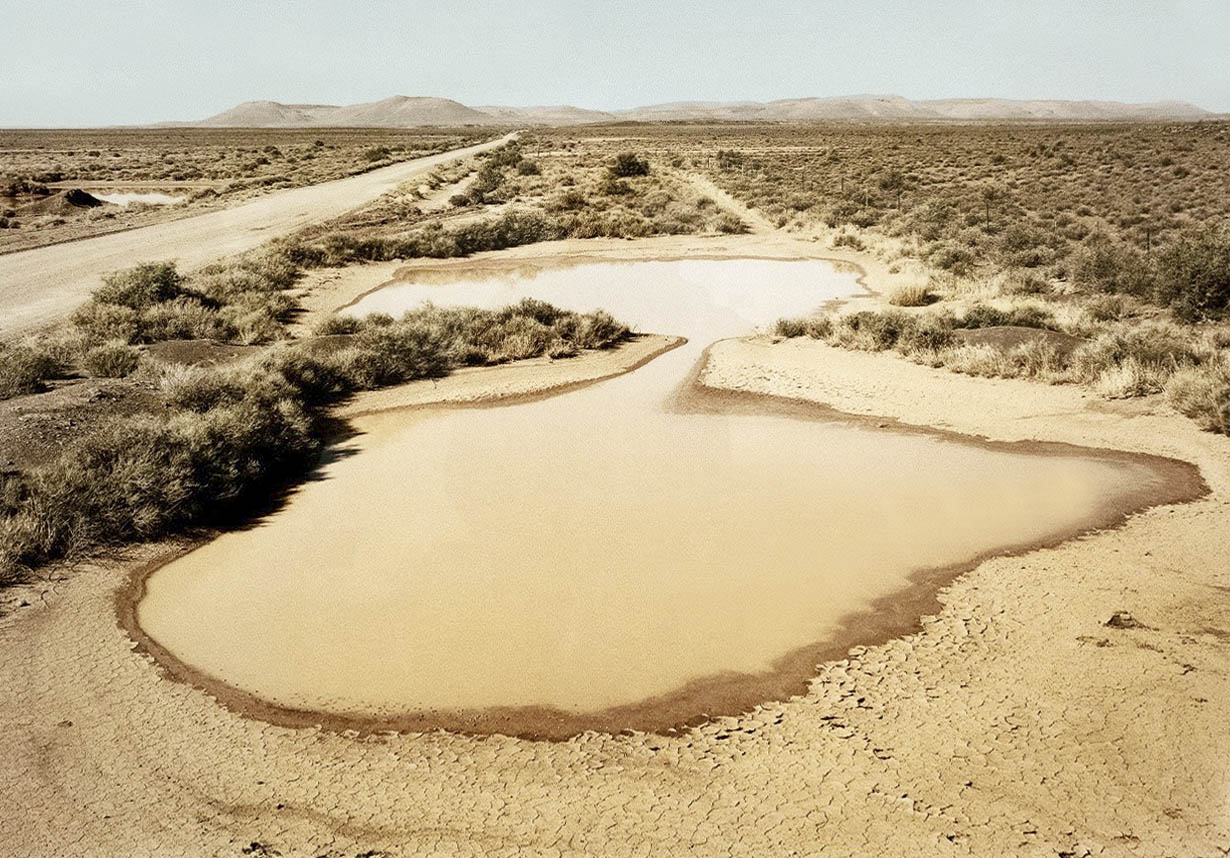
 

David Goldblatt (South African, 1930-2018) 'Near Brak Pannen on the Beaufort West-Fraserburg road, Nuweveld, Karoo, 30 May 2004' 2004


David Goldblatt (South African, 1930-2018)
Near Brak Pannen on the Beaufort West-Fraserburg road, Nuweveld, Karoo, 30 May 2004
2004
Pigmented inkjet print
The Art Institute of Chicago, promised gift of Cecily Cameron and Derek Schrier


Next to a road that shoots arrow-straight to the horizon, a pool of water evaporates from the intense sunlight of the Karoo, the semi-arid region that separates Cape Town from South Africa’s interior. The scarcity of water and the harsh climate in this enormous area impeded white settlers from centuries, an the lack of grand natural or manmade features confounded their desire to assimilate it into their idea of a beautiful landscape. From the 2000s onward Goldblatt made much of his new work by driving great distances through the Karoo. He appreciated the way it resisted easy aestheticisation, calling it the “fuck-all landscape.”

Wall text from the exhibition


David Goldblatt (South African, 1930-2018) 'Incomplete houses, part of a stalled municipal development of 1,000 houses. The funding allocation was made in 1998, building started in 2003. Officials and a politician gave various reasons for the stalling of the scheme: Shortage of water, theft of materials, problems with sewage disposal, problems caused by the high clay content of the soil, and shortage of funds. By August 2006, 420 houses had been completed, Lady Grey, Eastern Cape, 5 August 2006' [Casas sin terminar, parte de una promoción municipal de 1.000 viviendas paralizada. La financiación se consignó en 1998 y la construcción empezó en 2003. Los funcionarios y un político dieron varias razones para la paralización del proyecto: escasez de agua, robo de materiales, problemas con la evacuación de aguas residuales, problemas causados por el alto contenido de arcilla del suelo y escasez de fondos. En agosto de 2006 se habían terminado 420 viviendas, Lady Grey, Cabo Oriental, 5 de agosto de 2006] 2006


David Goldblatt (South African, 1930-2018)
Incomplete houses, part of a stalled municipal development of 1,000 houses. The funding allocation was made in 1998, building started in 2003. Officials and a politician gave various reasons for the stalling of the scheme: Shortage of water, theft of materials, problems with sewage disposal, problems caused by the high clay content of the soil, and shortage of funds. By August 2006, 420 houses had been completed, Lady Grey, Eastern Cape, 5 August 2006 [Casas sin terminar, parte de una promoción municipal de 1.000 viviendas paralizada. La financiación se consignó en 1998 y la construcción empezó en 2003. Los funcionarios y un político dieron varias razones para la paralización del proyecto: escasez de agua, robo de materiales, problemas con la evacuación de aguas residuales, problemas causados por el alto contenido de arcilla del suelo y escasez de fondos. En agosto de 2006 se habían terminado 420 viviendas, Lady Grey, Cabo Oriental, 5 de agosto de 2006]
2006
Pigmented inkjet print
Yale University Art Gallery, New haven, Connecticut, purchased with a gift from Jane P. Watkins, M.P.H. 1979; with the Leonard C. Hanna, Jr., Class of 1913, Fund; and with support from the Reinecke Rare Book and Manuscript Library
© The David Goldblatt Legacy Trust
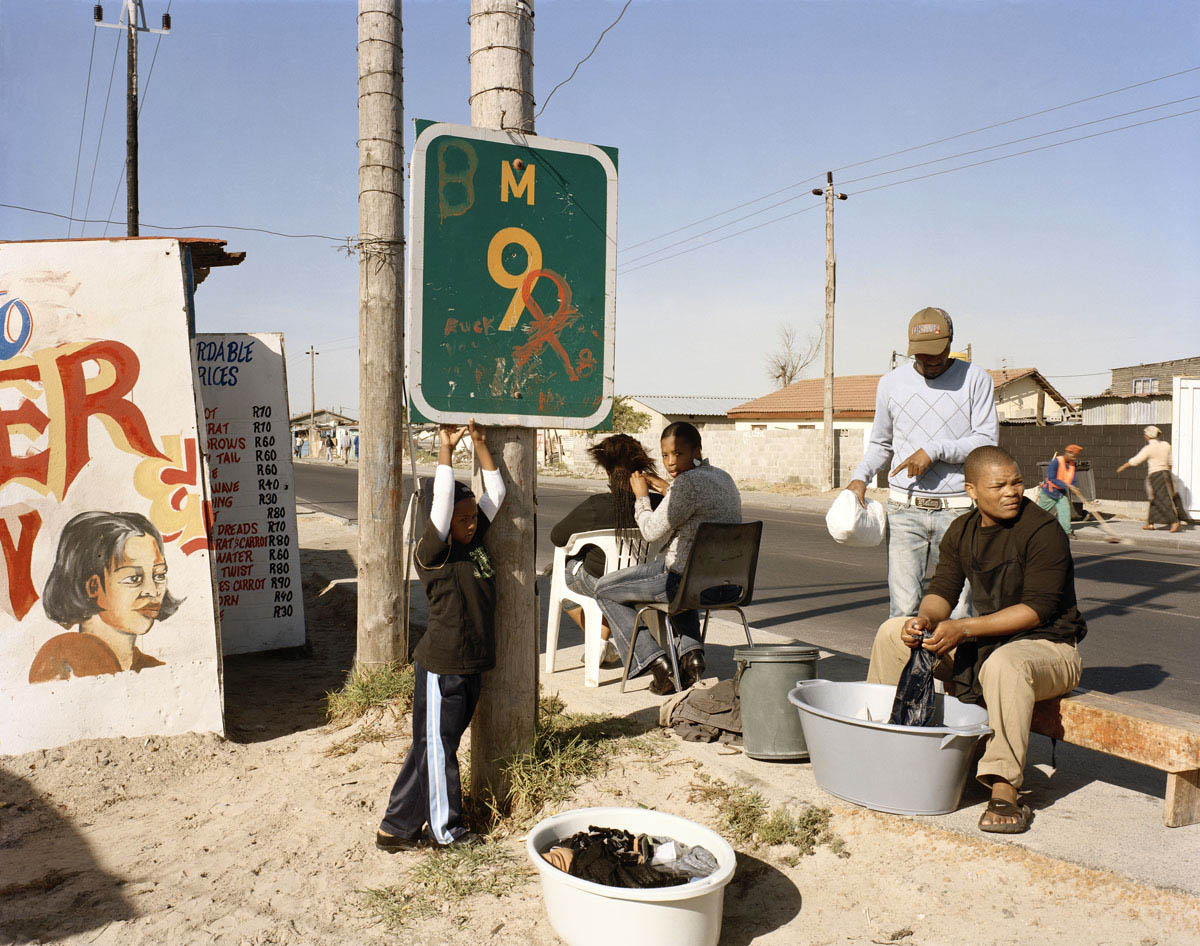
 

David Goldblatt (South African, 1930-2018) 'At Kewin Kwaneles Takwaito Barber, Landsdowne Road, Cape Town in the time of AIDS, 16 May 2007' 2007
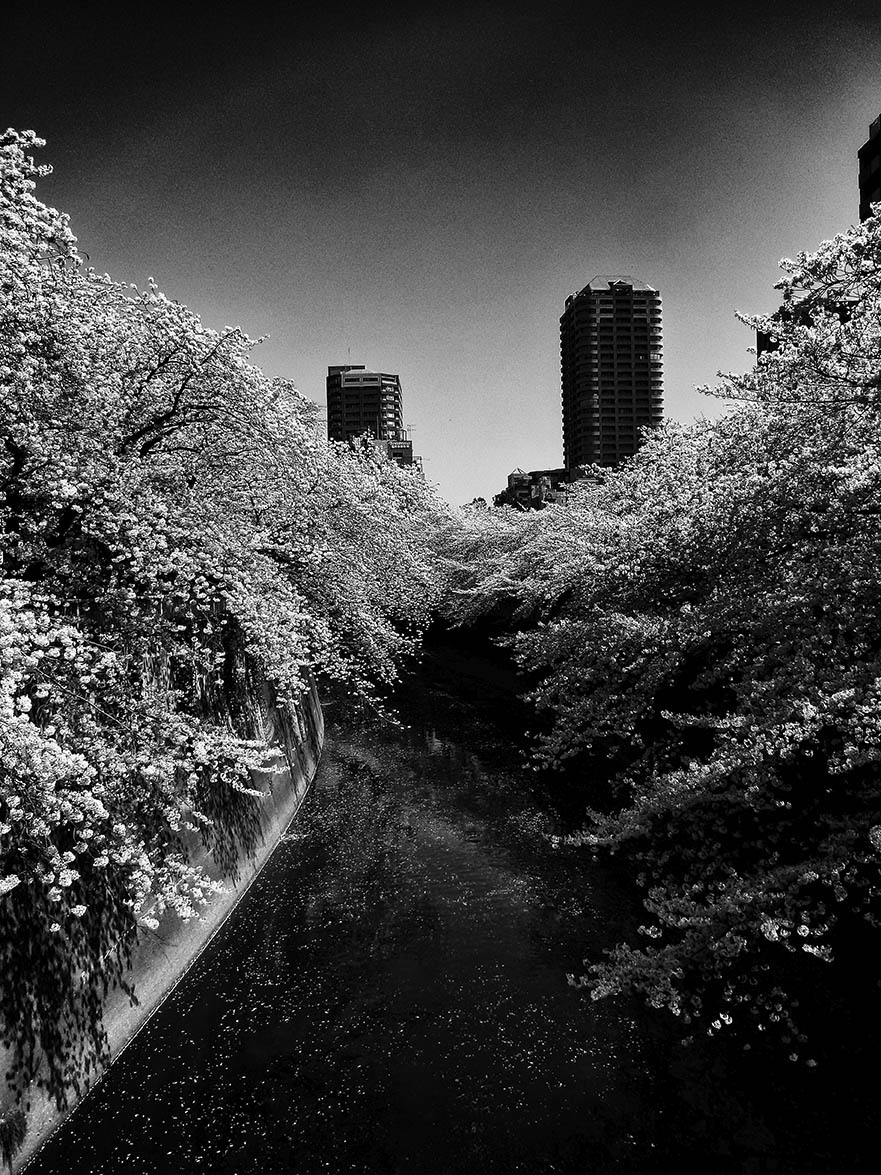
 

David Goldblatt (South African, 1930-2018)
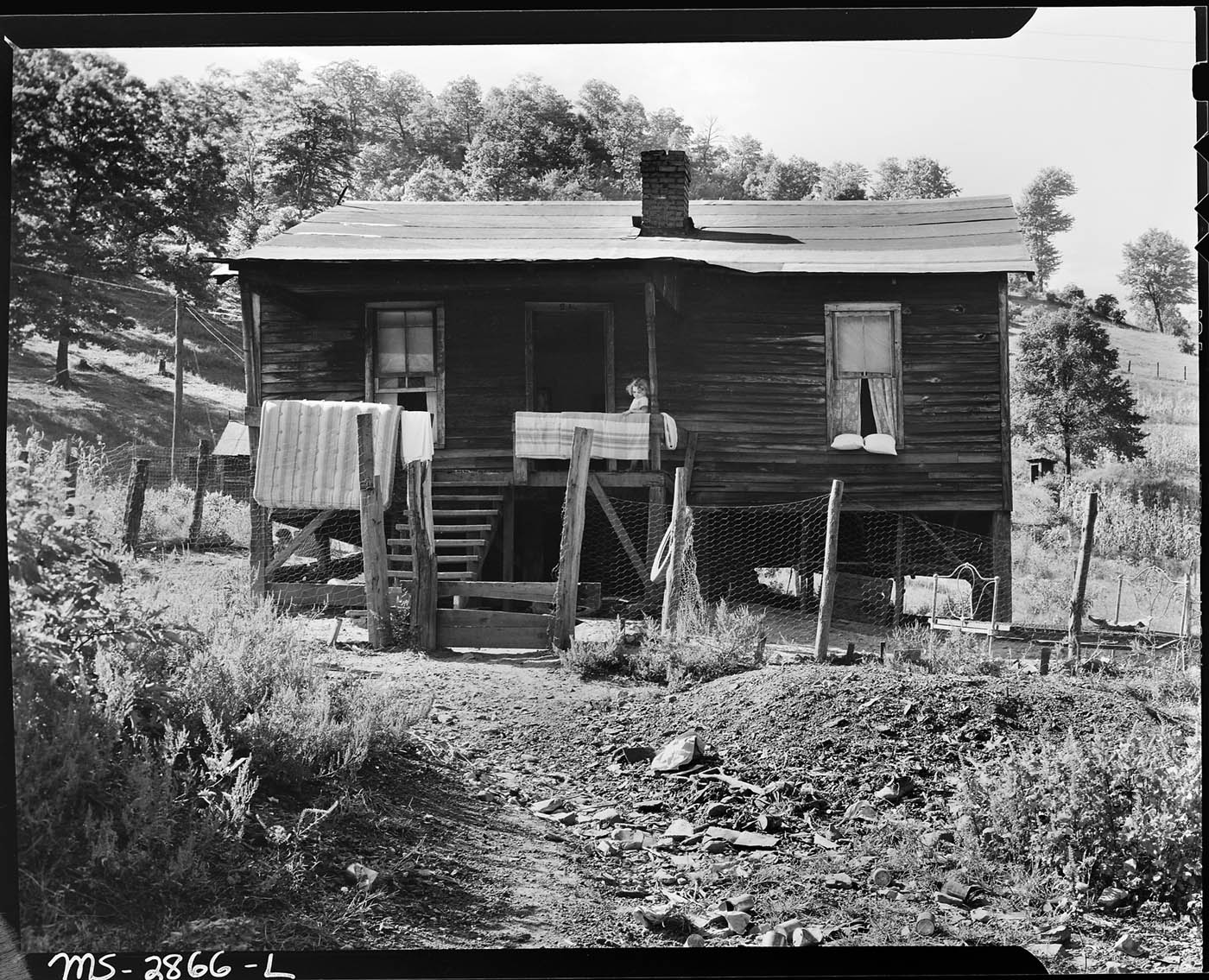
At Kewin Kwaneles Takwaito Barber, Landsdowne Road, Cape Town in the time of AIDS, 16 May 2007
2007
Pigmented inkjet print
The Art Institute of Chicago, promised gift of Cecily Cameron and Derek Schrier


David Goldblatt (South African, 1930-2018) 'The dethroning of Cecil John Rhodes, after the throwing of human feces on the statue and the agreement of the university to the demands of students for its removal, the University of Cape Town, 9 April 2015' [El derrocamiento de Cecil John Rhodes después de arrojar heces humanas contra la estatua y de que la universidad accediera a las demandas de los estudiantes para su retirada, Universidad de Ciudad del Cabo, 9 de abril de 2015] 2015


David Goldblatt (South African, 1930-2018)
The dethroning of Cecil John Rhodes, after the throwing of human feces on the statue and the agreement of the university to the demands of students for its removal, the University of Cape Town, 9 April 2015 [El derrocamiento de Cecil John Rhodes después de arrojar heces humanas contra la estatua y de que la universidad accediera a las demandas de los estudiantes para su retirada, Universidad de Ciudad del Cabo, 9 de abril de 2015]
2015
Carbon ink print
Yale University Art Gallery, New haven, Connecticut, purchased with a gift from Jane P. Watkins, M.P.H. 1979; with the Leonard C. Hanna, Jr., Class of 1913, Fund; and with support from the Reinecke Rare Book and Manuscript Library
© The David Goldblatt Legacy Trust


Here, Goldblatt joined a mass of onlookers recording the removal of the statue of 19th-century British mining magnate Cecil John Rhodes at the University of Cape Town (UCT). Rhodes vastly expanded European colonial rule on the African continent and exploited local labour to amass immense wealth. Disgusted by what they viewed as a symbol of white supremacy, student activists successfully campaigned to take down the statue honouring Rhodes.

UCT responded to this and related student protests by forming a committee to evaluate art on campus, intending to remove or hide problematic works from view. While Goldblatt had promised his archive to the university, he became concerned that this committee might censor art ad free speech. He ultimately withdrew his offer in 2017, bequeathing his archive to Yale University instead. In response to this decision, scholar Njabulo S. Ndebele has asked. “Was Goldblatt worried that the photographs would not survive the tests of freedom, even after they had survived those of oppression?”

Wall text from the exhibition


Fundación MAPFRE
Recoletos Exhibition Hall
Paseo Recoletos 23, 28004 Madrid

Opening hours:
Mondays (except holidays): 2pm – 8pm
Tuesday to Saturday: 11am – 8pm
Sunday and holidays: 11am – 7pm

Fundación MAPFRE website

LIKE ART BLART ON FACEBOOK

Back to top