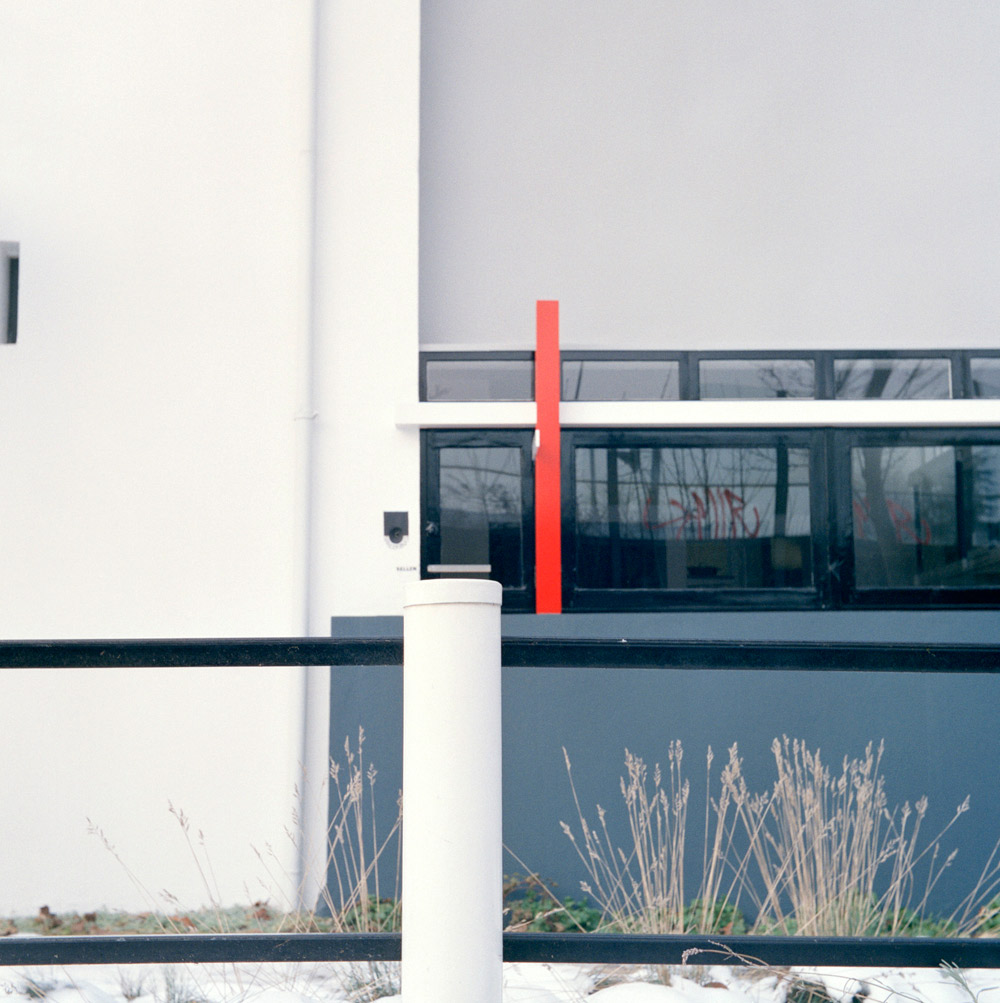
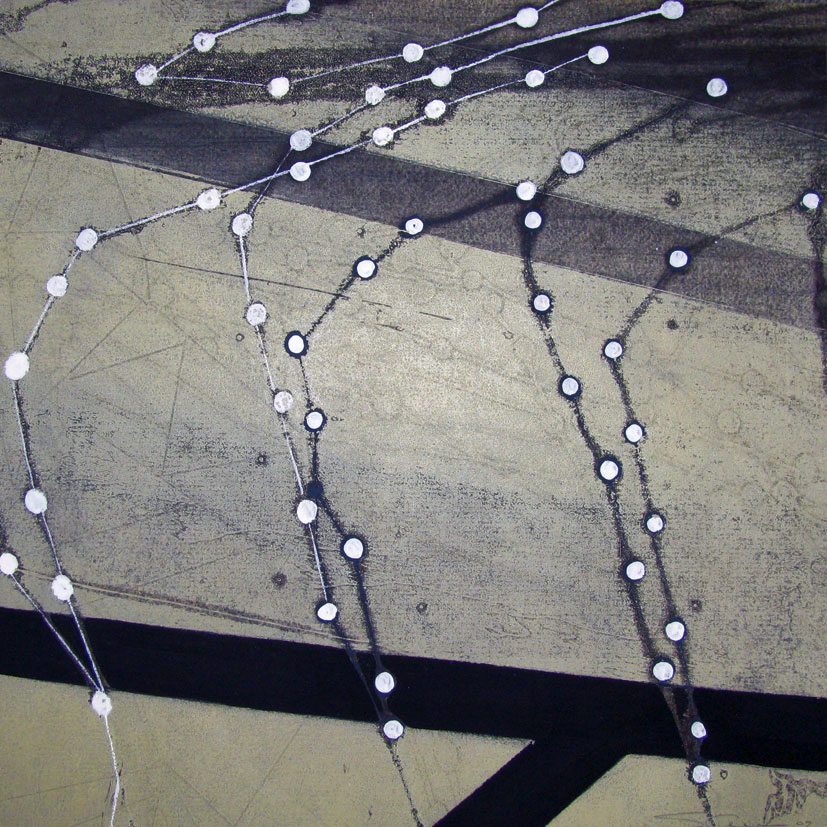
Vanila Netto (Brazil, b. 1963) Pole Relief 2011 50 x 50cm Archival pigment ink on cotton rag paper
“There’s an odd diaristic quality to Vanila Netto’s photographic, still life, video and neon works. What at first might seem like a hotchpotch of gestures, assemblages and moments reveals a lateral narrative – still points on a fluid map.”
Dan Rule in The Age newspaper
Netto’s work moves from one place to another, Navigating Widely. Some elements are more successful than others. The grainy colour field photographs of extruded objects (foam packing, the detritus of cardboard) fail to impress lacking the fidelity that the subject matter requires and the ability to integrate successfully into the lateral narrative. The Super 8 film transferred to digital video It is time to bridge (2011) is excellent, evoking as it does the utopian ideals of industrialisation, planes and rockets becoming “permanent and sedentary residents” of an abandoned dream park. The diptych neon installation Elation, Deflation (Inner Tubes) (2011) is also effective in evoking the interface between human and machine.
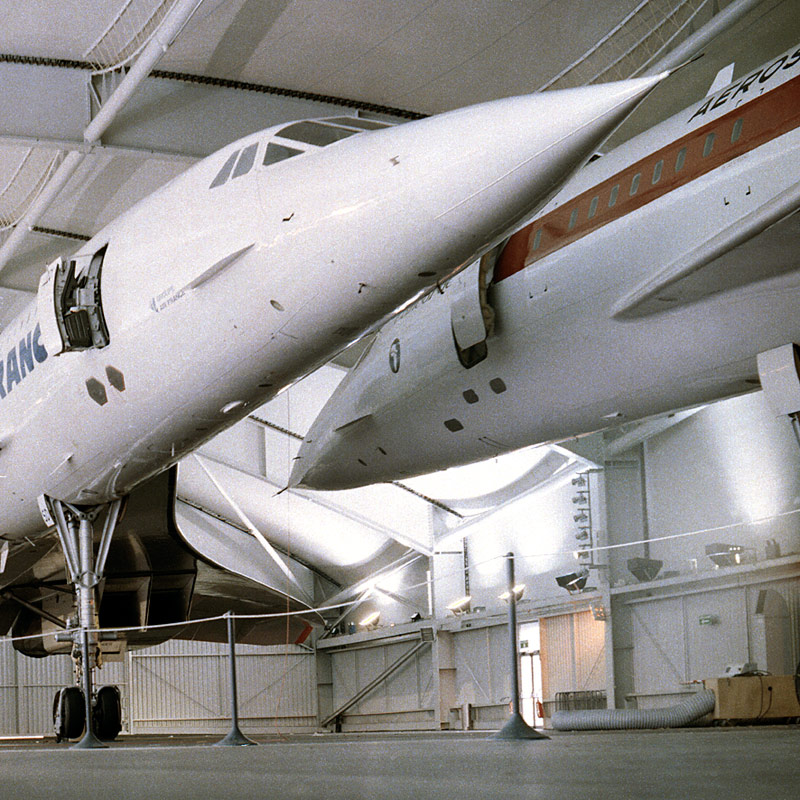
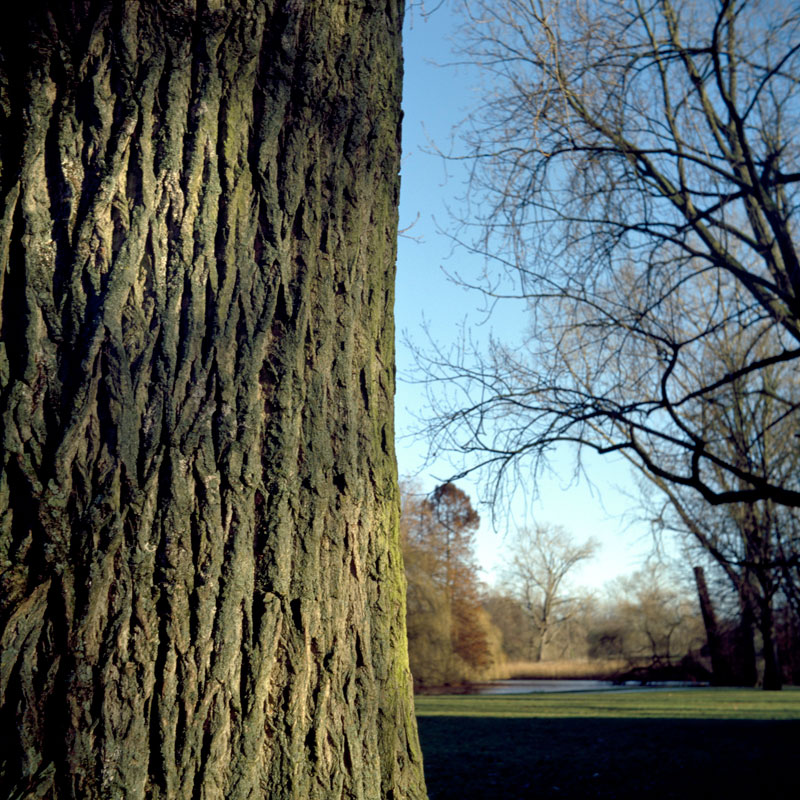
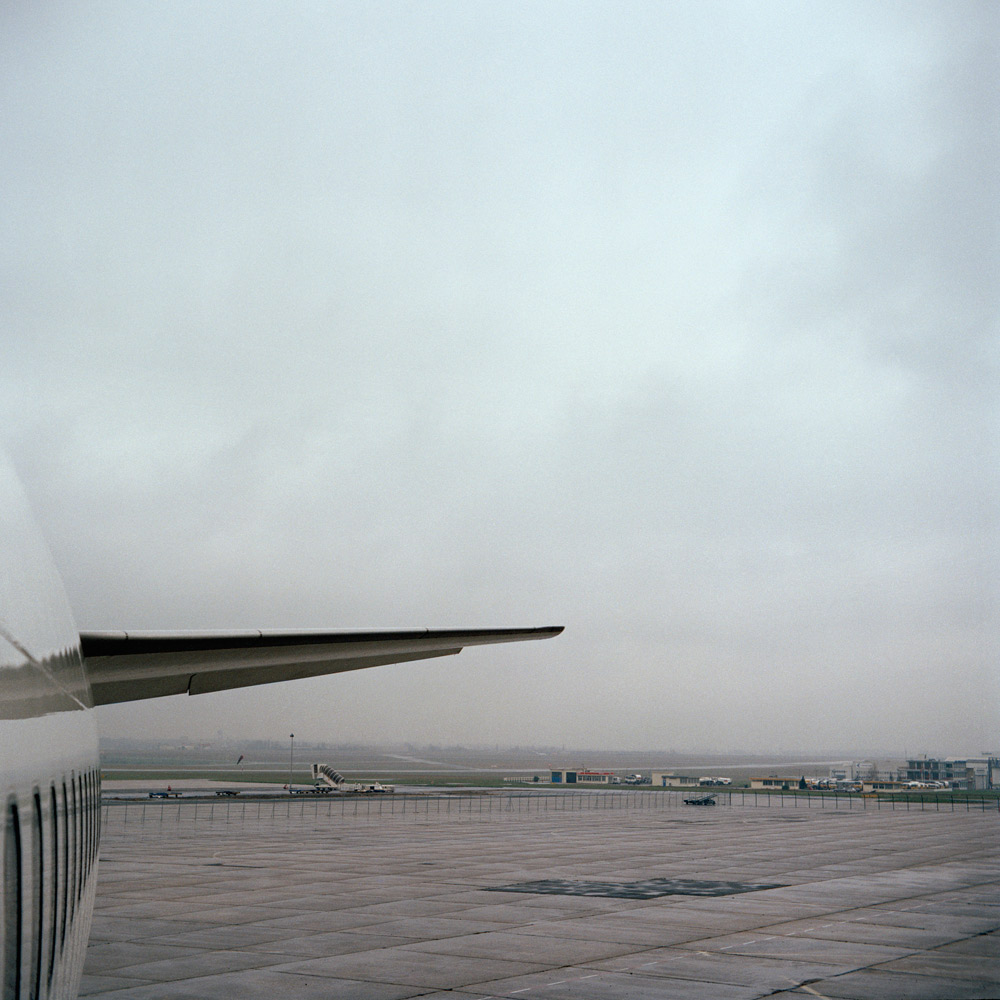
The best work in the exhibition is the series of small square format, analogue colour photographs that have been printed digitally (see photographs below). There is a lovely spatial resistance in these photographs – hints of colour, slices, markings on walls, the collision of opposites – that elevates them above the rest of the exhibition. In these photographs, the punctum pricks our consciousness but is it enough? Although these are interesting photographs, are they photographs that you would remember in a week, a month or a year? More was needed to hang your hat on, perhaps an ambiguous sense of Time that stretched the frame of reference.
Overall, the hotchpotch of gestures, assemblages and moments needed a more substantial grounding and, for me, became points on a confused map: a collection of complexities, both global and personal, that needed a focusing of rationale and conceptualisation. Less is more! Drawing what are some good ideas and threads together in a simplified form would add to the strength of the work for there is talent here. Perhaps concentrating on one idea and exploring it more fully would be a step along the path. I look forward to the next literation.
Dr Marcus Bunyan
Many thanxk to Angela Connor for her help and to Arc One Gallery for allowing me to publish the photographs in the posting. Please click on the photograph for a larger version of the image.
Vanila Netto (Brazil, b. 1963) Colossus 2011 100 x 100cm Archival pigment ink on cotton rag paper
Vanila Netto (Brazil, b. 1963) Mir 2011 50 x 50cm Archival pigment ink on cotton rag paper
Vanila Netto (Brazil, b. 1963) Wheeling Consorts 2011 50 x 50cm Archival pigment ink on cotton rag paper
Vanila Netto (Brazil, b. 1963) Solaris 2011 50 x 50cm Archival pigment ink on cotton rag paper
Vanila Netto (Brazil, b. 1963) Air Buzzing 2011 50 x 50cm Archival pigment ink on cotton rag paper
Arc One Gallery 45 Flinders Lane Melbourne, 3000 Phone: (03) 9650 0589
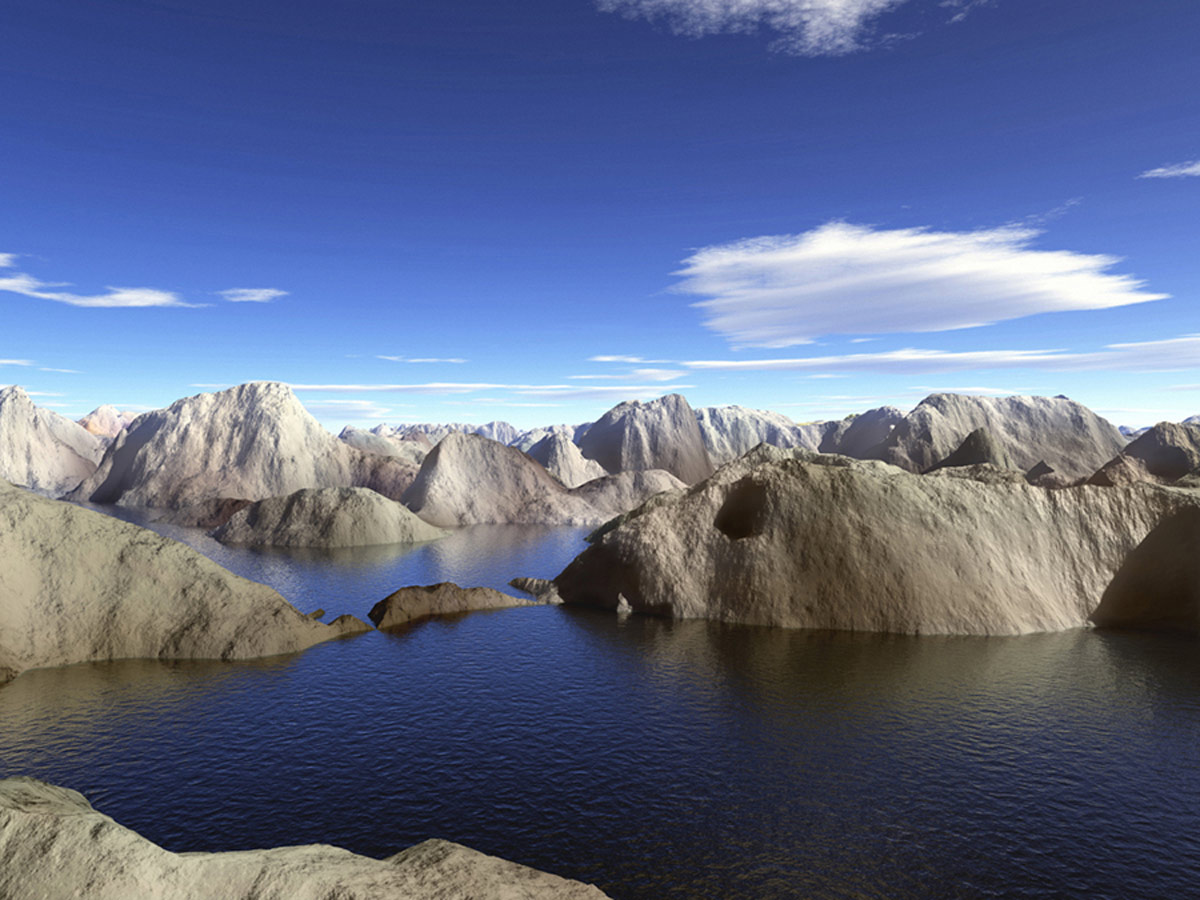
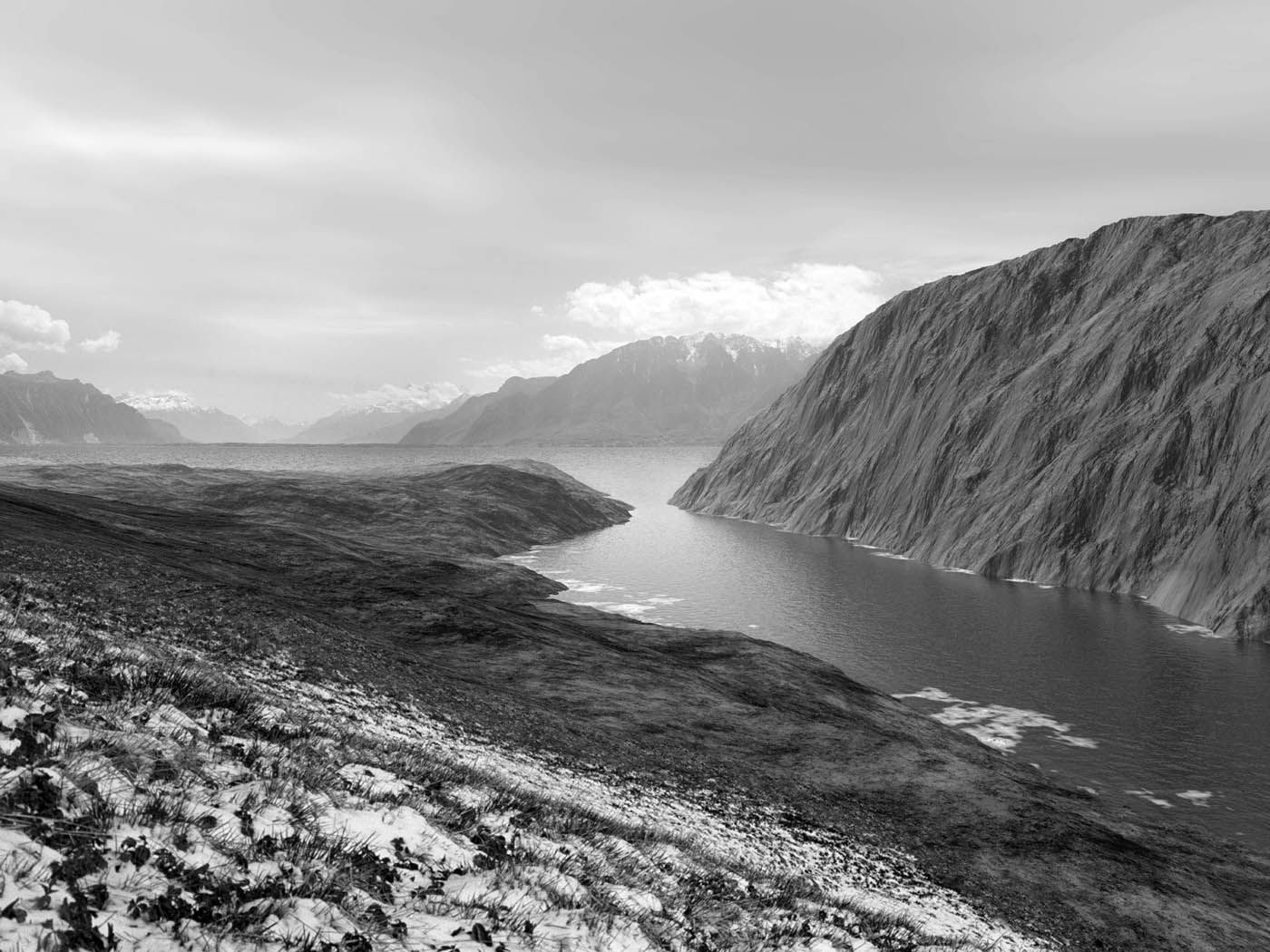
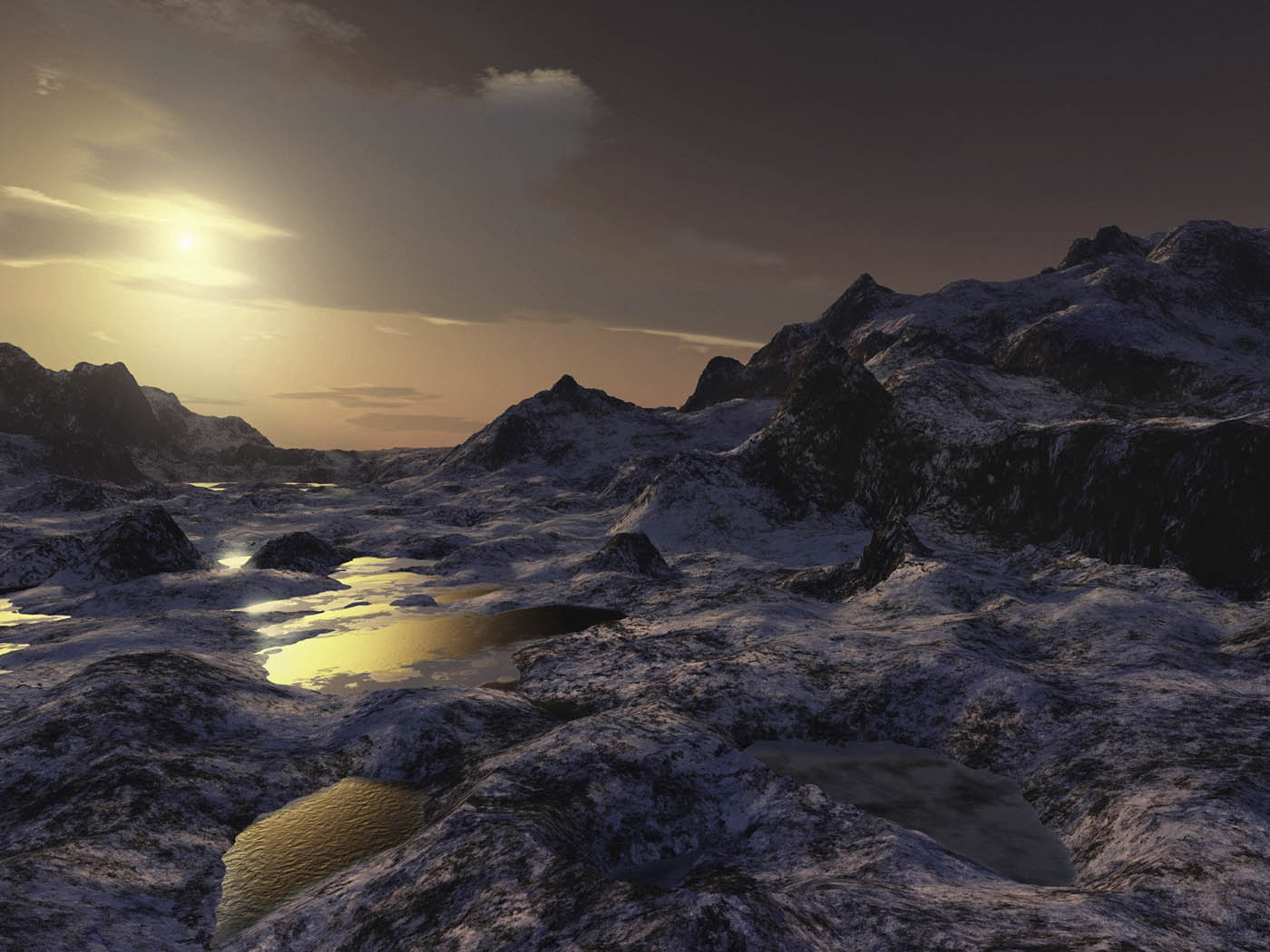
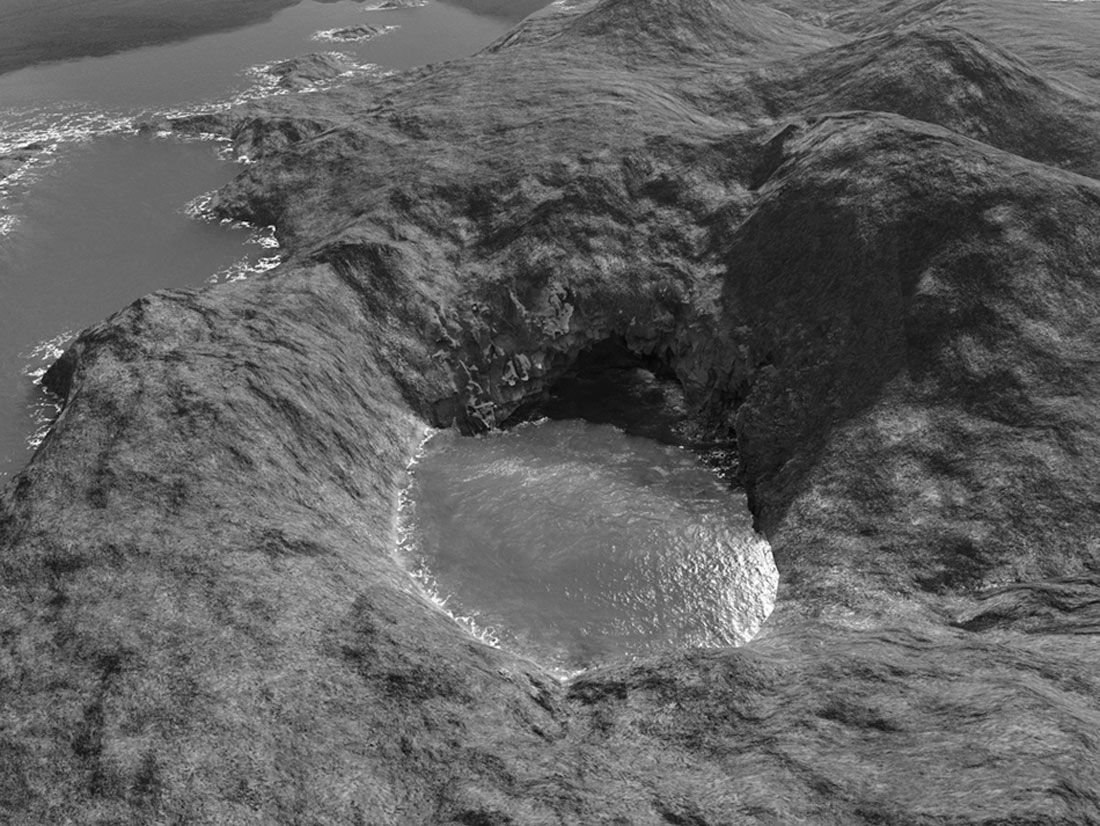
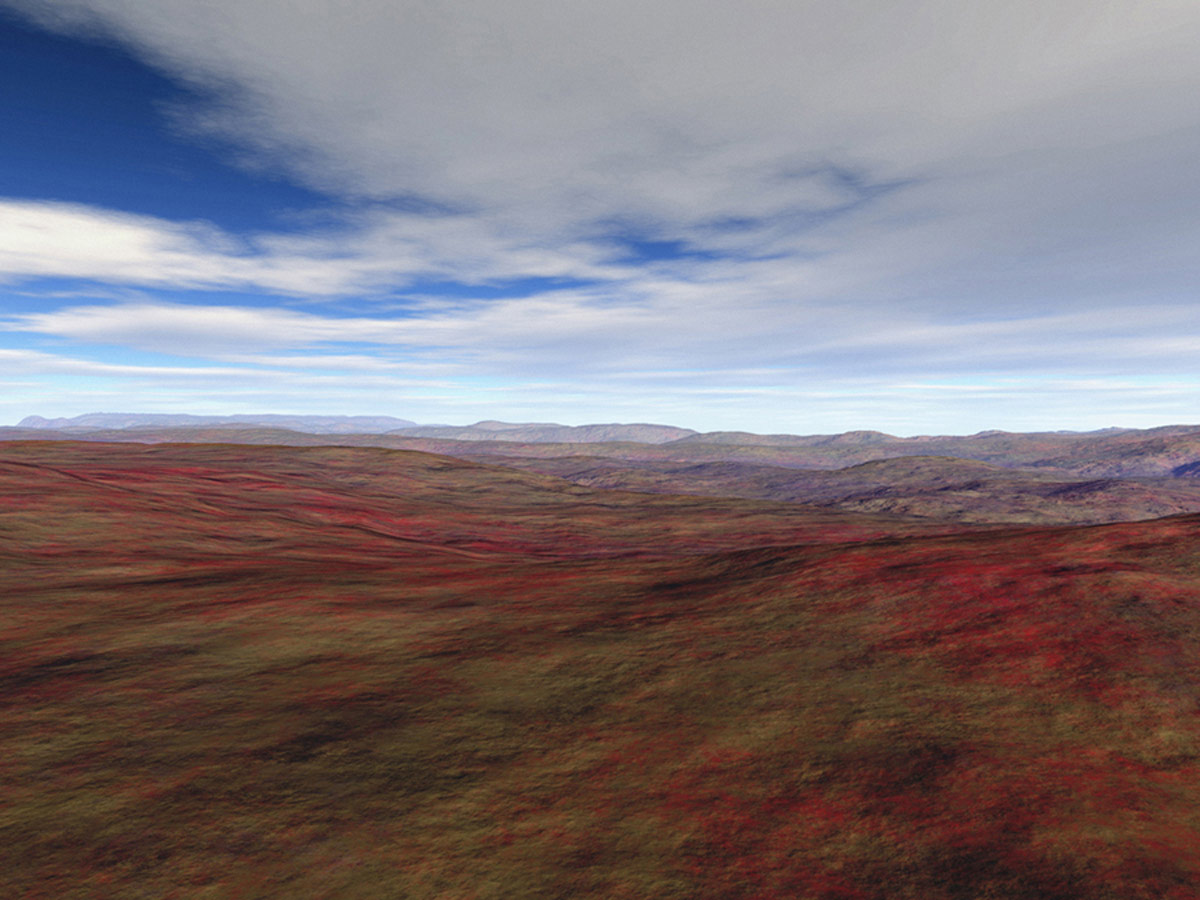
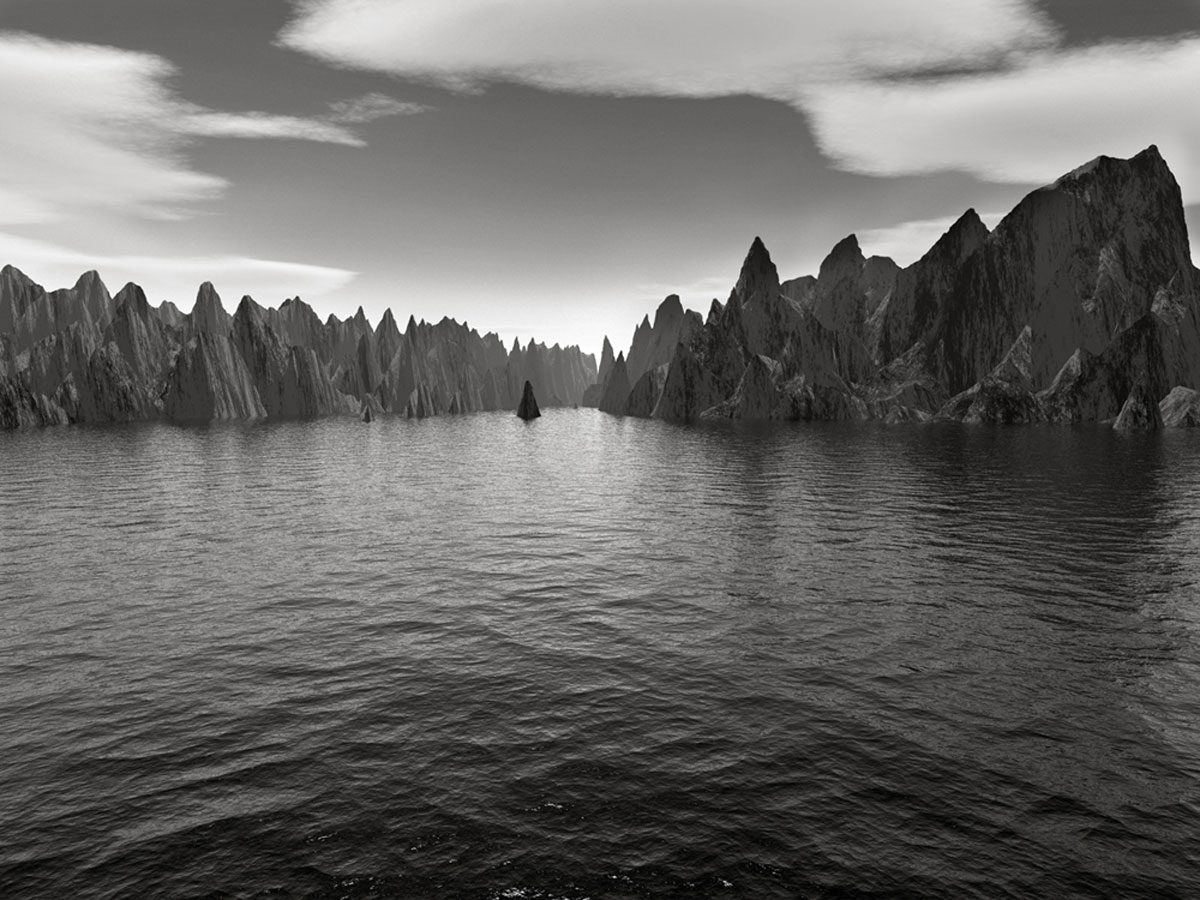
It might be useful to know the meaning and application of the word ‘orogenesis’ in relation to the work of Fontcuberta.
“Orogeny refers to forces and events leading to a severe structural deformation of the Earth’s crust due to the engagement of tectonic plates. Response to such engagement results in the formation of long tracts of highly deformed rock called orogens or orogenic belts. The word “orogeny” comes from the Greek (oros for “mountain” plus genesis for “creation” or “origin”), and it is the primary mechanism by which mountains are built on continents. Orogens develop while a continental plate is crumpled and thickened to form mountain ranges, and involve a great range of geological processes collectively called orogenesis …
An orogenic event may be studied as (a) a tectonic structural event, (b) as a geographical event, and (c) a chronological event. Orogenic events (a) cause distinctive structural phenomena related to tectonic activity, (b) affect rocks and crust in particular regions, and (c) happen within a specific period of time.” (Wikipedia)
In his post-landscape, post-memory worlds constructed by computer technologies there are mediated memories present – of the original paintings, shifting and reinterpreted by the computer and of place interpreted by the original artist – that form a simulated memory of double amnesia. Orogensis is a perfect title for these works as they map such a double memory over time in an future anterior (the death of the past (this has been) and the present (this will have be), pace Barthes); the word and the works also closely align to the word erogenous for these images stimulate the senses and heighten our appreciation and personal memory of the constructed environment. And how beautiful they are!
Dr Marcus Bunyan
Many thankx to the Foam Fotografiemuseum for allowing me to publish the photographs in the posting. Please click on the photographs for a larger version of the image.
For the project Landscapes without Memory Catalan artist Joan Fontcuberta (b. 1955, Barcelona) used software developed by the US Air Force. It translates two-dimensional cartographic data into a simulated three-dimensional image. Instead of feeding maps into the software, in Landscapes without Memory Fontcuberta inserts painted landscapes: from Gauguin to Van Gogh, from Cezanne to Turner and Constable. The software translates them into new, virtual landscapes that Fontcuberta calls ‘post-landscapes’. They form a no-man’s land between the virtual and the real, between truth and illusion.
Ever since the medium was first invented, photography’s relationship with the real world has been as perplexing as it is fascinating. Far more than a medium such as paint, photography was supposed to have a certain level of truth. In recent decades in particular the idea has taken root that truth and reality are ambiguous concepts in photography. The unprecedented digital revolution has brought the potential for manipulation into focus. How much more reliable is the photographic image of the real world? Who and what can we still believe? This juxtaposition of illusion and reality lies at the heart of Spanish artist Joan Fontcuberta’s oeuvre. At the same time, he also refers to the connection between science and truth. Like photography (itself a product of science), we see science as a way of expanding our knowledge of the real world using rational, objective, verifiable methods. Science has a certain authority: what science proves is true. Fontcuberta turns the myth of scientific authority around and manages to persuade the public in many of his projects of the veracity of a purely fictitious narrative – simply by expressing himself in the language of science.
In recent years, Fontcuberta has been especially fascinated by the influence of the digital revolution on the way we communicate and on our use of image. Landscapes without Memory is one such project. He begins here by subjectively interpreting and portraying a landscape, and then using software to interpret and translate the artificial object. The result is a new reality which Foncuberta calls ‘technologically-defined contemporary hallucinations’.
This exhibition is part of the Life Like platform, a project launched by Foam, EYE Film Institute of the Netherlands and Van Gogh Museum to draw attention to the realist art movement. The three museums join forces from 8 October 2010 to 16 January 2011 to throw light on the different aspects of this multi-disciplinary movement.
Ewen Ross (Australian, b. 1957) Plain of Mars 2010 from the Warrina Portraits series
There is little more to say about this exhibition of works by Ewen Ross than the erudite catalogue essay by Geraldine Barlow enunciates (see essay below), except to say that the ‘presence’ of these works is extremely moving. It is difficult when viewing photographs of the work to explain the physical impact of actually standing in front of these works, absorbing their energy, examining their surfaces, their depths.
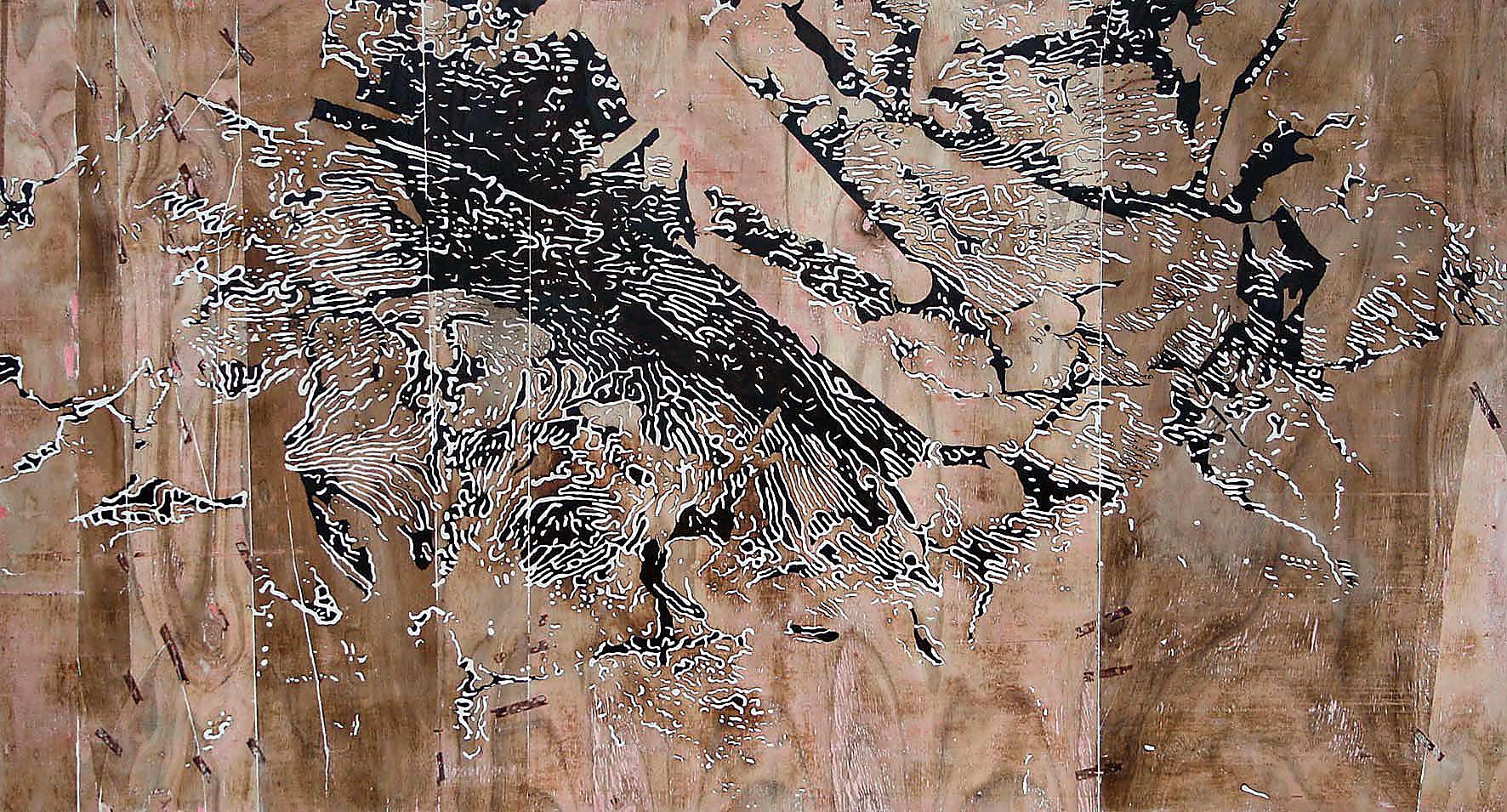
The larger photograph of Thenar Eminence (2010, below) is the closest one can get in the virtual world to appreciating the elemental quality of the work – the fire, the fragmentation and the soil, the contour-like mapping of the earth – as the work resembles a memory of earth, of place, re(as)sembles a signification, a meaning wholly of its own in the mind of the viewer. In the spectator the act of looking may turn into contemplation and this work does seem to have that effect = the context of looking at the work invites a contemplation on place and connection to earth.
Barlow asks. “Is this matter, or its coded representation? Ross sets up a liquid movement between such possibilities.”
Ross does indeed set up a liquid movement between matter and representation. But here I would offer a counter argument to the idea that matter and coded representation are binary opposites. As noted by Judith Butler in the excellent quotation below, matter is already meaningful, already coded and materialised. It always has a history and narrativisation embedded within it. Butler suggests the body is never a valueless matter on which inscription takes place because this hides the inscription already there.
Continuing this idea, Ross brings matter back into the fold, into the peeled away surfaces of his work. His process of materialisation offers these liquid movements not through an oppositional relationship between matter and coded representation but because a) his works are no longer anchored in an unquestionable reality and b) they have moved beyond coded representation. Ross reconceptualises both space and matter in his objects of place and invites us, the viewer, to contemplate these (e)motional environments.
Dr Marcus Bunyan
Many thankx to Anita from Anita Traverso Gallery for allowing me to publish the photographs in the posting and to Geraldine Barlow for allowing me to publish the catalogue essay, all very much appreciated. Please click on the photographs for a larger version of the image.
Body and Text
“Judith Butler has done much to interrogate and upset the assumes inside / outside binary of culture and nature, and has shown that what is called matter, and therefore presumed to be extra-discursive, is already meaningful. In her book entitled Bodies That Matter (1993) she argues that matter is already materialized, that is, it always has a history, is always narrativized. Any reference to matter will always be a particular formation of materiality that has been discursively set. Matter, nature or the body is never an absolute outside but is rather a constitutive outside that generates the significance of an interiority, culture or law. It is an outside that gives the inside its meaning and is, therefore, already textualized and incorporated within the oppositional space in which signification takes place. For Butler, the suggestion that the body is the valueless matter on which inscription takes place hides the inscription already there … Bringing matter back into the fold of inscription increases the manoeuvrability of political activism as it is no longer anchored by an unquestionable reality, the fixity of which is only secured by continual iteration of the norms attributed to it. ‘I would propose’, Butler argues, ‘a return to the notion of matter as a process of materialization that stabilizes over time to produce effects of boundary, fixity, and surface we call matter’ (Butler 1993: 9).
A useful analogy for this lack of fixity might be the reconceptualization of both space and matter within the new sciences, especially quantum mechanics, where matter, even that which we perceive as rigid or solid, is shown to be permanently in motion, and where the space which gives form to seemingly individual and autonomous objects is now understood to be a less dense area of matter itself.”
Curtis, Neal. “The Body as Outlaw: Lyotard, Kafka, and the Visible Human Project,” in Featherstone, Mike (ed.,). Body Modification. London: Sage, 2000, p. 258.
Ewen Ross (Australian, b. 1957) Thenar Eminence 2010 from the Warrina Portraits series
Warrina Portraits
This body of work presents as a suite of portraits, and continues my ambition to track the truth through creative practice. Metaphorically the palm of my left hand symbolises the natural patterns and rhythms of line found in the landscape along the Glenelg River in the Southern Wimmera, with particular reference to the property where I lived (Warrina).
This work presents as part of a portrait series derived solely from my left hand. It continues the story of my search for the truth of my genesis in reference to the property (Warrina) where I was raised. The notion of touching the landscape with an open hand in order to investigate the relationship between landscape and portraiture underpins this image.
The concept of looking down and across this country continues to drive the format of my work as does the idea of using fire to peel back the surface of the plywood which often reveals new and mysterious information to work with. Fire is part of the natural ecosystem and a valuable means of cleansing and regenerating new life and truth into this landscape. This premise remains integral to my practice.
The linear information gleaned from the palmar in theory creates a conduit for bridging the concept of portraiture and landscape. The notion of inlaying the narrative of my palm into the surface to construct an image of landscape underpins this body of work.
The significance of the left hand is relevant to the principle. It is controlled by the right brain (pattern recognition, relationship understanding), reflects the inner person, the natural self, the anima, and the ability to think laterally. It could even be considered to be part of a person’s spiritual and personal development.
It is also said the left hand is the one we are born with, the one the gods give you; the right is what we do it with.
Ironically, of the four descriptors allied with hands, earth, air, fire, and water, my hands are relative to fire.
Ewen Ross July 2010
Ewen Ross (Australian, b. 1957) Palmar Quartet 2010 from the Warrina Portraits series
Catalogue essay by Geraldine Barlow
Our palms and fingers each bear unique imprints. The intricate and entwined lines and loops of each palmscape have been generated from within the very core of what makes us individual, our encoded DNA.
“DNA molecules themselves, as physical entities, are like dewdrops. Under the right conditions they come into existence at a great rate, but no one of them has existed for long, and all will be destroyed within a few months. They are not durable like rocks. But the patterns they bear in their sequences are as durable as the hardest rocks.”1.
How should we read the patterned lines of a palm? The art of palmistry promised to decode the connections between this intimate landscape and our life to come. Palmistry is now dismissed as a quaint pseudoscience, yet the palm holds a special resonance, a very special part of the body from which the future might be foretold. Via the fingerprint, and now DNA traces, contemporary technology has developed seeking absolute recognition of each individual. Through our palms and fingers we hold and grip the world, we wield tools and touch those we care for. These interior sensate surfaces of the hand are at the centre of our embodied being in the world.
In his latest body of work Warrina Portraits, Ewen Ross has taken his own palm print as the starting point for a highly personal exploration of the relation between self and place. The furrowed banks of lines and shadows etched into ply sheets do not relay the literal five-fingered imprint of a hand, more a topography of interlaced systems, networks of lines which are at once familiar and strange to us.
In bringing these works into being, Ross has evolved a deliberate and multilayered process of making. He relays a detail of his palm print onto plywood, then channels the resulting lines into the layered timber surface. The finished surface of the ply sheet is then removed, to reveal an entirely new layer, with it’s own character and markings. Filler is applied, dries and the surface is sanded back, many times over. Sometimes further layers of stain or fine in-painting are added. This process involves a constant relay between layers of information, impression and counter-impression. At each stage there is the potential for slippage, opportunities for translation, room for the materials and the process of making to assert themselves. When Ross removes the finished surface of the plywood he welcomes chance into the artistic process, allowing for the planned and entirely unexpected to collide.
In Palmar Trilogy 2010 the mapped tracery of white lines and dark hollows sprawls over a surface of many parts. Various separate pieces of timber have been joined on this layer of the sheet; we can still see the remnants of the glue where the pieces were taped. Two systems of information are in conversation here, jostling against each other. Sometimes the incongruities suggest meaning; at other times they raise a series of questions. Looking at this work, I am reminded of a contour map superimposed onto a satellite image, or a geological survey. I see the echo of a tree branch in the patterns on a sheet of timber, overlaid with something more like an x-ray or a brain scan.
Is this matter, or its coded representation? Ross sets up a liquid movement between such possibilities.
In these works, palm print and wood grain take us into an intimate landscape. For Ross this is a place of memory. Warrina is the name of the Wimmera property where he grew up, where he ploughed the fields as a young man. Like Ross’ previous bodies of work Such is Dry Land, Red Gum Country and The Green Pick, these works speak of an intimate and formative connection with the Wimmera landscape. The artist works into and over ground that is familiar in the measure of his own life, as well as in the lives of previous generations.
Ross is sensitive to the connections of the many past generations associated with this land, stretching back beyond his own family’s history in this country. He works with the surface, but also looks behind it, tearing back the first skin, so that what was embedded in the substrate is now called into dialogue with other marks and textures, highlights and shadows.
In these works the artist’s hand is the model for a series of shimmering, chimera-like patterned imprints, echoes, reflections, templates and coursing sequences of code – allowing us to measure one life against many generations, the transitory against the eternal, our intimate landscape against the widest horizons.”
Geraldine Barlow Senior Curator/Collection Manager Monash University Museum of Art / MUMAMelbourne, May 2010
1/ Richard Dawkins, The Blind Watchmaker, Penguin, London, 2006, p. 127
Ewen Ross (Australian, b. 1957) Palmar Trilogy 2010 from the Warrina Portraits series
Anita Traverso Gallery PO Box 7001, Hawthorn North 3122 Phone: 0408 534 034
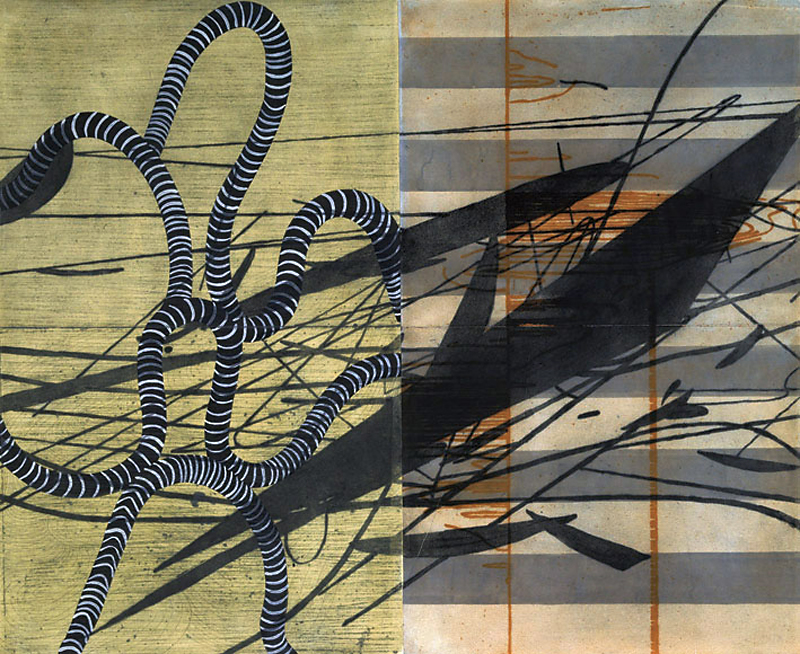
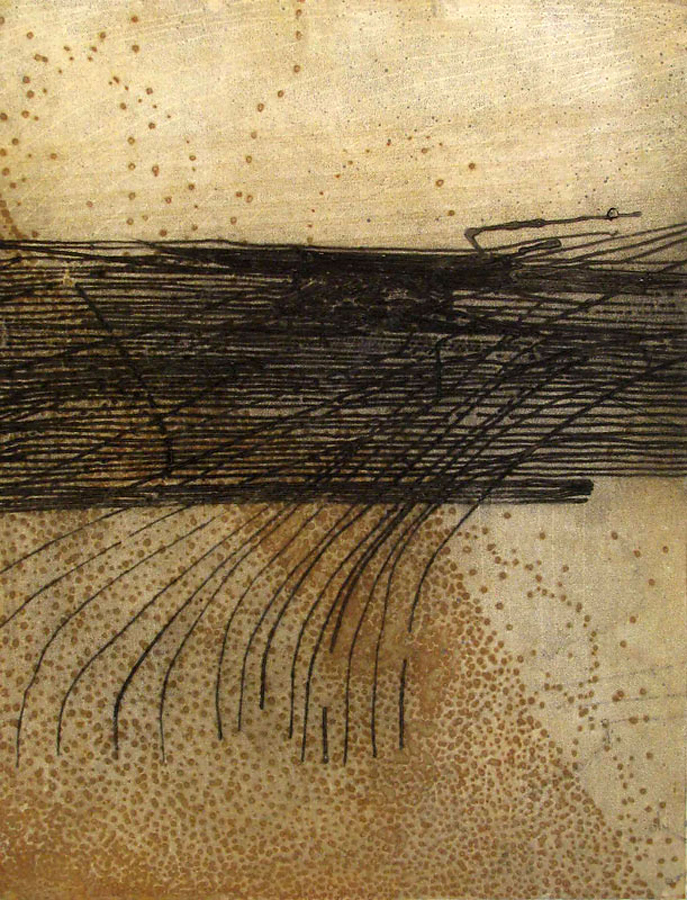
Sarah Amos (Australian, b. 1965) Red Walk 2009 Collagraph and Monoprint
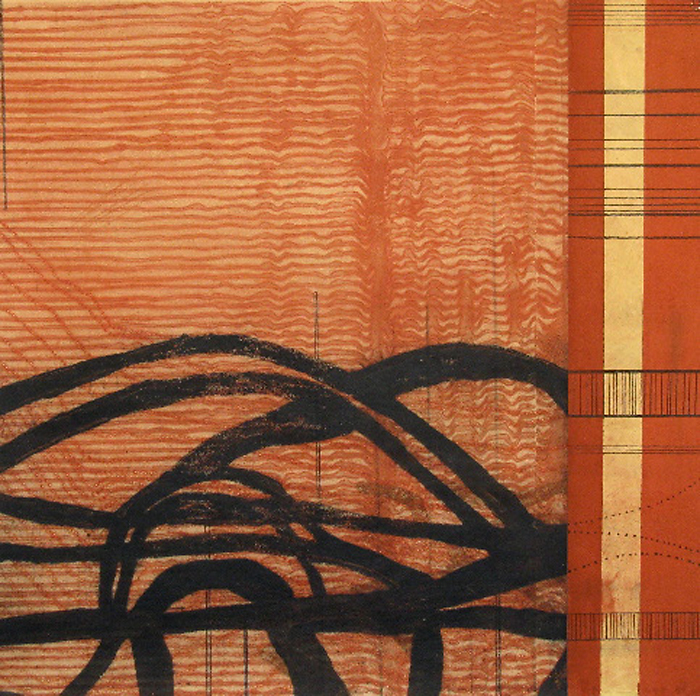
An interesting exhibition of Collagraphs (a type of collage printmaking)1 and etchings is presented by Sarah Amos at Gallery 101, Melbourne, work that is full of delicate coloured layering, topographical mapping and nodal, rhizomic and Spirogyra-type structures.
The ‘flux’ of the work, it’s musical cadence if you like, is the fusion of palimpsestic markings as viewed from the air – the dotted contours, the ploughed fields, the beautiful spatial layering that has an almost Kandinsky-like effect – with the aesthetics of Japanese paper, matt black colour (that subtly glistens on close inspection) and the tactility of the surface of the work. These intersections produce images that have some outstanding resonances: vibrations of energy that ebb and flow around the gallery space. These works are captivating!
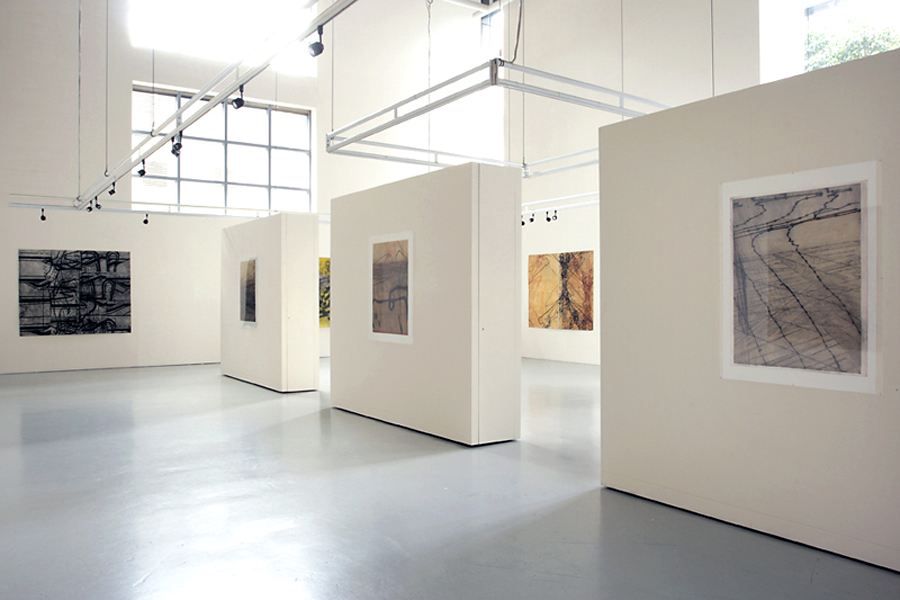
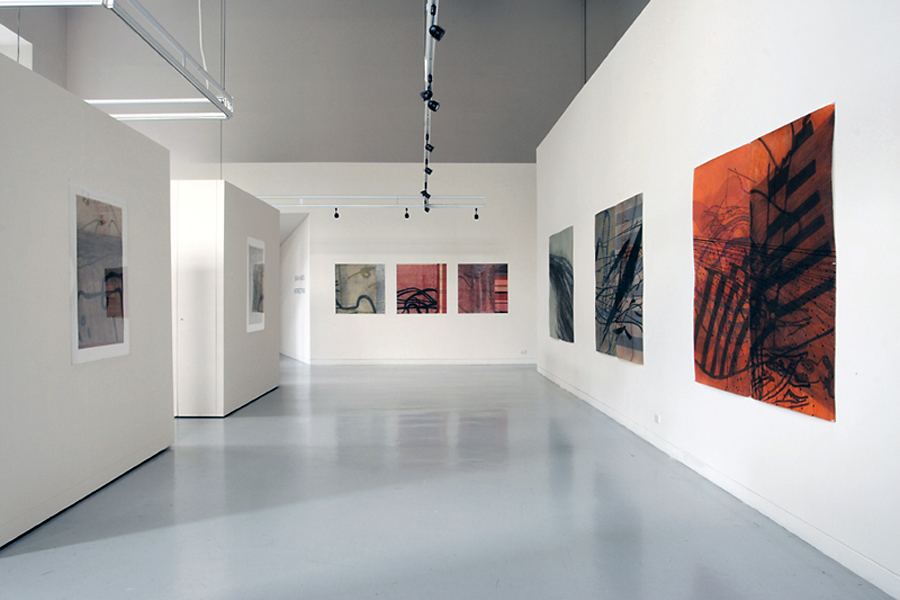
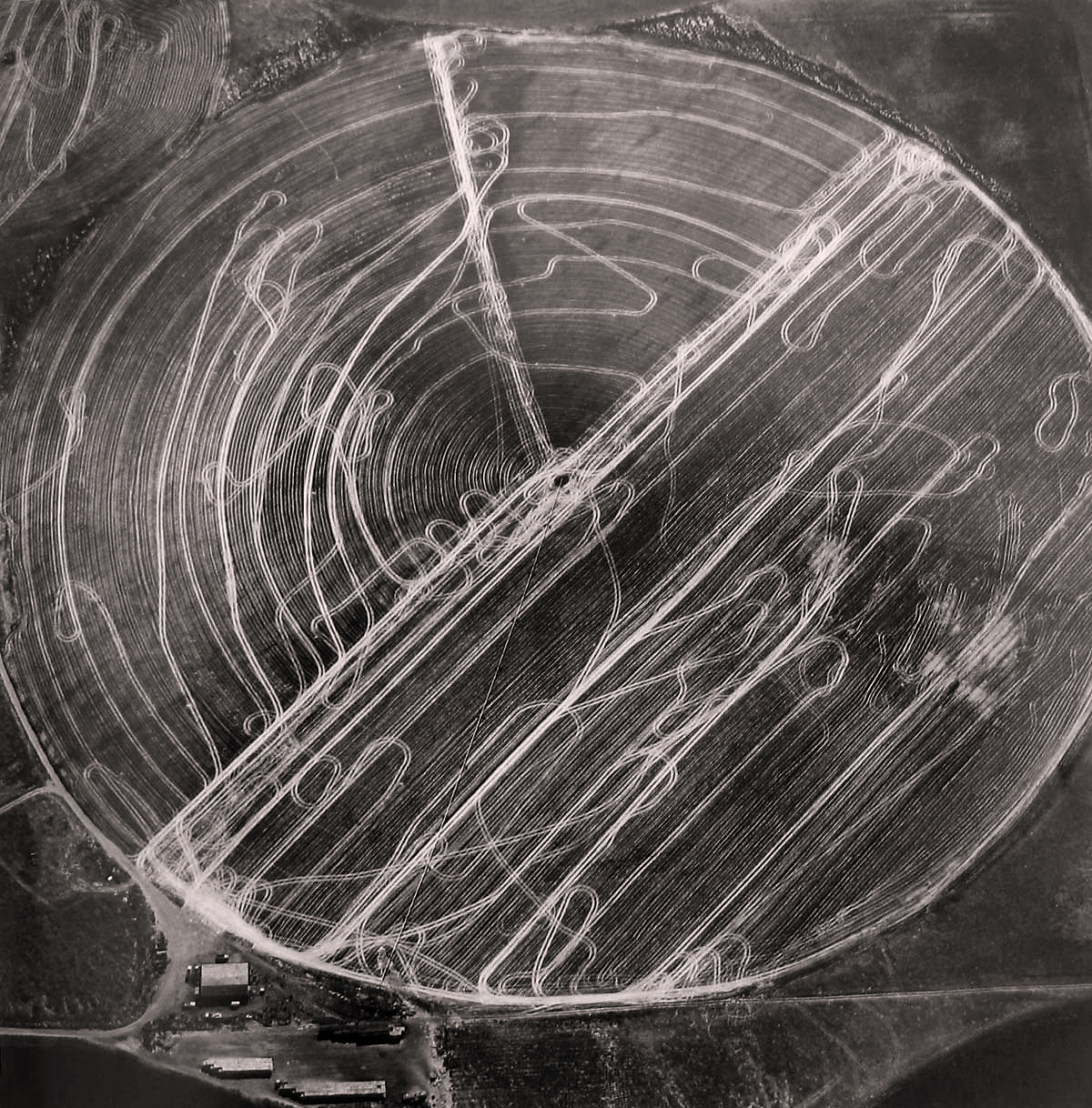
For me the simpler images were the more successful especially the series named Intersections with their muted tonalities, shifting colours and topographical structure. They also reminded me of the black and white aerial landscape photography of Emmet Gowin (see below).
While I am unsure of the validity of the ‘landscape’/’urban lens’ ‘urban temperature’ references (which I found unnecessary and slightly irrelevant) these works and their synaptic interfaces must be experienced. For the viewer they hold a strange attraction as you stand before them drawn, inexorably, into their penumbral spaces. Recommended.
Dr Marcus Bunyan
Many thankx to gallery 101 for allowing me to publish the art work in the posting. Please click on the photographs for a larger version of the image.
1/ “A Collagraph print is a collage printmaking technique and is a form of Intaglio printing. The collagraph plate is printed in the same way as etchings, but also include the basic principle of relief printing and can be printed either as intaglio or relief.
The term collagraph refer to a collage board where the materials are assembled on a flat base or plate (matrix) to form a relief block with different surface levels and textures.
Collagraph plates are created by sticking and gluing materials like textured paper or fabric onto the plate and then coat it with varnish or acrylic medium afterwards to protect the materials.
Anonymous. “Printmaking: Collagraphs/Collage Blocks,” on the ArtistTerms.com website [Online] Cited 03/08/2009. No longer available online
Sarah Amos (Australian, b. 1965) Storm Loading 2009 Etching and hand drawing on Shiramine Japanese paper
Installation views of Intersections by Sarah Amos at Gallery 101, Melbourne Photos: Marcus Bunyan
Emmet Gowin (American, b. 1941) Harvest traffic over agricultural pivot near Hermiston, Orgeon, 1991 1991 Gelatin silver print
Sarah Amos (Australian, b. 1965) Intersections 8 2009 Collagraph with gouache
“(Flux) – where a total electric or magnetic field passes through a surface.”
My work is a fusion of both land and cityscape. I am interested in interpreting spatially dynamic, real and half forgotten landscapes through an urban lens. New to this body of work is my interest in the visual graphics of scientific diagrams in which dynamic and informative landscapes are drafted into linear minimal lines. I have absorbed this distilled language, translating it into an architectural and organic landscape where the intersections of line, volume and space are constantly in flux. This obscure knowledge is pared down, simplified and ordered into a clean analysis ready for instant translation.
The Australian landscape is central to my work and influences my use of colour, idiosyncratic marks and open space. These works are personalised maps of accumulated information, like printed histories, that record the duelling intersections where the weathers of the landscape and the urban temperature have begun to take on new and vital immediacy.”
Sarah Amos, 2009
Text from the Gallery 101 website [Online] Cited 01/08/2009. No longer available online
Sarah Amos (Australian, b. 1965) Lute 2009 Collagraph
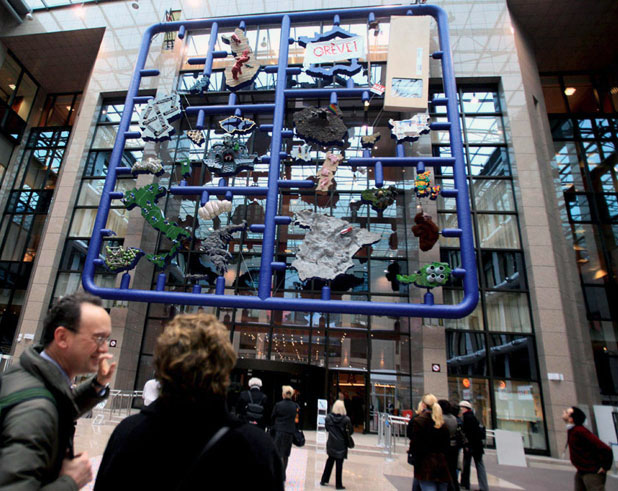
The idea was simple but good. So effective that he convinced the presidency of the European Council, which this semester is headed by the Czech Republic, to give its blessing and the 500,000 Euros needed to finance it. Czech artist David Cerný promised the following: a collaboration between 27 artists from the European Community who would put forth their vision from their own countries. France was portrayed as a labor strike, Spain as a slab of concrete and Italy into a soccer field … Belgium appears as a chocolate box, Denmark constructed with Lego and the map of Sweden below a box that looks like the ones Ikea uses.
The only problem is that behind this work of art, which has caused great controversy reducing Greece to a huge fire, Romania into a Dracula castle, there is only one creative mind, that of David Cerný. Cerný, who also invented 26 false names of European artists that had supposedly collaborated with him, recognises that he knew the truth would come out and says that economic restrictions and lack of time motivated him to do the whole work by himself.
Czech Deputy Prime Minister, Alexandr Vondra, has confessed feeling “surprisingly sorry” after discovering that the only author of Entropa is Cerný and not 27 artists, as had been stipulated in the contract with the artist.
“David Cerný is the only person responsible for not fulfilling his commitment”, said Vondra, who added that the Czech presidency is analysing what to do with the installation, which has already been placed at the Justus Lipsius building of the EU Council building and which was supposed to be inaugurated on Thursday.
Meanwhile, Cerný, known for his sculptures such as Freud hanging in the middle of the streets in Prague or for painting a rose on a Soviet tank, has laughed all along and said that he wanted to prove “that Europe could laugh at itself”.
Cerný, who also invented 26 false names of European artists that had supposedly collaborated with him, recognises that he knew the truth would come out and says that economic restrictions and lack of time motivated him to do the whole work by himself.
Text from the ArtDaily.org website
The installation consists of a giant jigsaw map – or a kind of plastic frame which keeps the elements of a miniature model in place – with a “cliché and stereotype” of each one of the EU’s 27 member states. Each country was announced to be sculptured by a different national artist.
You you can see Polish priests lifting the flag of the gay movement, a clear reference to the iconic image of the American soldiers planting the Stars and Stripes on Iwo Jima. France is pointedly represented by a map of France covered with the inscription “Strike!” The Netherlands have sunk beneath the sea with only minarets of mosques appearing above the surface…
When the EU officials saw the work and felt offended, Czech Deputy Prime Minister Vonda firstly defended the project as a way of confronting prejudice and “a space for the free expression of artists from 27 countries.” At least, this was his reaction before they found out it is all one big hoax of Czech art David Czerny, who made the sculpture entirely on his own.”
Text from the Servaas in Shanghai blog [Online] Cited 15/01/2009
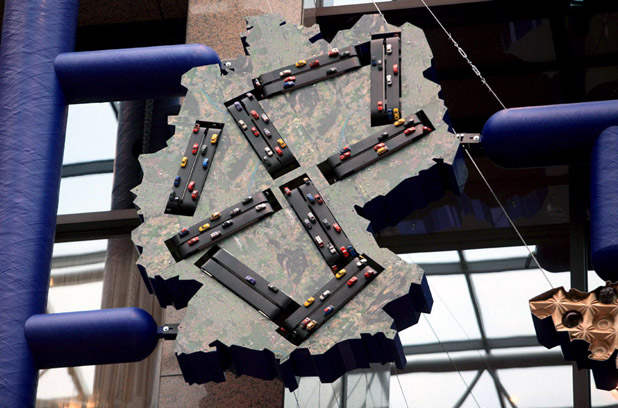
David Cerný (Czech, b. 1967) Entropa (detail) 2009
Europe is unified by its history, culture and, in recent years, also by a jointly created political structure. More or less diverse countries are intertwined by a network of multi-dimensional relationships that, in effect, results in an intricate whole. From within, we tend to focus on the differences between the individual European countries. These differences include thousands of important and unimportant things ranging from geographical situation to gastronomy and everyday habits.
The EU puzzle is both a metaphor and a celebration of this diversity. It comprises the building blocks oft he political, economic and cultural relationships with which we ‘toy’ but which will be passed on to our children. The task of today is to create building blocks with the best possible characteristics.
Self-reflection, critical thinking and the capacity to perceive oneself as well as the outside world with a sense of immunity are the hallmarks of European thinking. This art project that originated on the occasion of Czech Presidency of the Council of the European Union attempts to present Europe as a whole from the perspectives of 27 artists from the individual EU Member States. Their projects share the playful analysis of national stereotypes as well as original characteristics of the individual cultural identities.
That much is stated in an official booklet of the Czech Ministry of Foreign Affairs. However Entropa is not a real pan-European work by artists-provocateurs, but a mystification. At first glance, it looks like a project to decorate official space, which has degenerated to an unhindered display of national traumas and complexes. Individual states in the European Union puzzle are presented by non-existent artists. They have their names, artificially created identities, and some have their own Web sites. Each of them is the author of a text explaining their motivation to take part in the common project. That all was created by David Cerny, Kristof Kintera and Tomas Pospiszyl, with the help of a large team of colleagues from the Czech Republic and abroad.
The original intention was indeed to ask 27 European artists for participation. But it became apparent that this plan cannot be realised, due to time, production, and financial constraints. The team therefore, without the knowledge of the Ministry of Foreign Affairs, decided to create fictitious artists who would represent various European national and artistic stereotypes. We apologise to Prime Minister Mirek Topolanek, Deputy Prime Minister Alexandr Vondra, Minister Karel Schwarzenberg and their departments that we did not inform them of the true state of affairs and thus misguided them. We did not want them to bear the responsibility for this kind of politically incorrect satire. We knew the truth would come out. But before that we wanted to find out if Europe is able to laugh at itself.
At the beginning stood the question: What do we really know about Europe? We have information about some states, we only know various tourist clichés about others. We know basically nothing about several of them. The art works, by artificially constructed artists from the 27 EU countries, show how difficult and fragmented Europe as a whole can seem from the perspective of the Czech Republic. We do not want to insult anybody, just point at the difficulty of communication without having the ability of being ironic.
Grotesque hyperbole and mystification belongs among the trademarks of Czech culture and creating false identities is one of the strategies of contemporary art. The images of individual parts of Entropa use artistic techniques often characterised by provocation. The piece thus also lampoons the socially activist art that balances on the verge between would-be controversial attacks on national character and undisturbing decoration of an official space. We believe that the environment of Brussels is capable of ironic self-reflection, we believe in the sense of humour of European nations and their representatives.
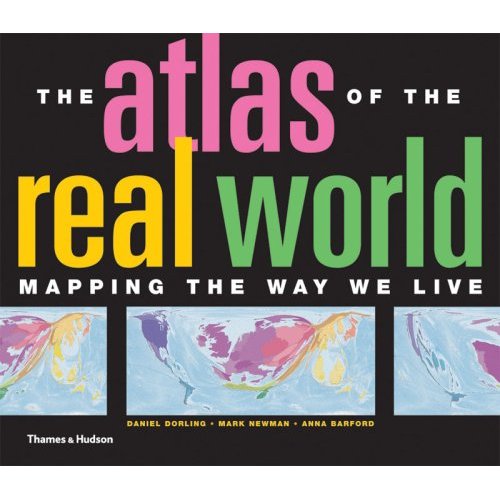
In Atlas of the Real World, global inequities in the third millennium are made strikingly visible. The book uses a clever mapping formula, massive amounts of data and a whole lot of computer power to produce 366 maps that stretch, twist and shrink the boundaries of nations according to how much they have of whatever is being mapped: money, disease, doctors, televisions, endangered animals …
The atlas (which builds on the free maps available at the website worldmapper.org) uses the simplest means to get across the most profound facts. Each country is brightly colour-coded and the maps are overlaid on a natural-looking ocean bed. The effect is a little like looking into a funfair mirror – you know what you’re seeing, but it takes a moment to work out what’s happened to it …
In the most extreme cases, the map no longer looks like the planet Earth: the map of people killed by volcanoes (302) shows two large round islands – Colombia and North Africa – and a small atoll of shrunken Asian nations …
They’re not really maps in the old-fashioned sense, but visual renderings of complex and sometimes frightening realities, perfectly suited to our supposedly post-literate age … As a wake up call, it’s not quite on the level of the first photograph of the Earth from space – the “blue marble” that inspired a generation of environmentalists. But it’s a reminder that everything we do, from fighting wars (map 318) to selling toys (129, 130), we do on the planet.
In visual form, statistics that seem like abstract numbers are transformed into a reality that can be as ugly as an Africa swollen with HIV cases (269), as hopeful as strong worldwide growth in education (226), or as simple as the fact America, and the rest of the West, could stand to go on a diet.
Jenny Sinclair1
1/ Sinclair, Jenny. “Inequality unfolds in warped world,” in A2, The Age newspaper, Melbourne. Saturday November 29th 2008.







 Art Blart _ art and cultural memory archive
You must be logged in to post a comment.