Penelope Davis (Australian, b. 1963) Smack installation 2011 Silicone, nylon thread Dimensions variable
A beautiful, hypnotic installation; one outstanding photograph (out of four); and a distance between elements, installation and photographs that, in the gallery space, seemed almost insurmountable.
The installation is intoxicating, taking the viewer into a world outside of reality – inverted, convoluted creatures “after the things of nature” (me ta physika) – in this case mobile phones, camera lenses and electrical plugs and leads, the skin of these objects flayed, extruded and made in silicone. These filamentary ‘jellies’ are wondrous. As Susan Fereday observes they are like detached skin, which “can become a kind of negative, a reversed memory, a perverse relic of its previously animated form … Detached, distraught, dangling. But there is also something slippery in these forms, something visceral, uterine, umbilical …”. The installation reminded me of the chthonian nature of the womb, our birth and that first gasp of breath – do you remember? was it all that you ever needed?
Water, blood, the detritus of birth and the emergence of life into light. Floating, gliding to the surface.
Only one photograph, Fluther (2011, below), approaches this detachment. A beauty it is too. The other three photographs felt more like addendum than adding anything further to the work and failed to achieve a ‘presence’ when compared to the installation. I suspect one of the problems was the scale of the three photographs and the fact that they are so tightly framed. Evidence of this can be seen in the installation shot below, the photograph of the blue ‘jellie’ so tightly prescribed and enclosed so as to not allow any interaction between installation and photograph. Perhaps making the photographs slightly larger and face mounting them behind PlexiGlass would have softened the edges of the photographs allowing a malleable (meta)physical air to breathe across the gallery space.
The highlight is the installation. Go and see, it is well worth the visit.
Penelope Davis (Australian, b. 1963) Smack installation 2011 Silicone, nylon thread Dimensions variable
Stretched Skin
“Where my inside meets the outside, where my body’s surfaces curve or stretch, dimple or fold, they create sensory cavities that are designed to respond to the outside world, at least to some degree. More difficult to resolve is the place that’s made when my inside turns out and there and no pickets to hide the private things – things I don’t want to look at myself, things too fleshy for the world to see, too soft, raw and pink to be exposed. Bringing the inside out, I am turned outside in and where does that leave me? In the edgeless space of the everyday saturated by grief.
Penelope Davis’ ‘jellies’ make me think about how a person’s skin can record their body’s history through marks – scars, distentions, swellings, bruises and wrinkles – just as a photograph can record a body’s outward appearance through light. We could say that skin is an index to its experiences, but it is not iconic. Skin does not reproduce the body’s image the way a photograph does, unless the skin is lifted to make a new shape. Then, just as hot wind can suck the life out of a fallen leaf and turn its veins into a street map, or sun and sea can batter a plastic bottle into a miraculous Marian figurine, detached skin can become a kind of negative, a reversed memory, a perverse relic of its previously animated form.
That’s what the ‘jellies’ look like: skin, turned inside out, photographic skin turned outside in. Detached, distraught, dangling. But there is also something slippery in these forms, something visceral, uterine, umbilical …”
Except from pamphlet text by artist and writer Susan Fereday, March 2011
Penelope Davis (Australian, b. 1963) Fluther 2011 Type C photograph 120 x 100cm
In Smack, Penelope Davis’ latest body of work, jellyfish-like forms have been assembled from a collage of components. These elements include the detritus of contemporary technologies. Among these are cameras, computer parts, mobile phones, wiring and electrical parts. Organic source materials such as leaves and seaweed (many sourced from the community garden plots surrounding Davis’ studio) are cast and intermixed with these forms. After being cast in silicone, the works are sewn together to create forms that resemble jellyfish. The resulting swarm – or smack, as the collective noun is properly known – is displayed as an installation of semi transparent, suspended forms.
A selection of these ‘jellies’ have also been placed in the digital scanner and ‘photographed’. Some digital post-production work is also employed to create large scale photographic images.
The materials and techniques used allow Penelope Davis to play with some of the procedures and assumptions central to photographic practice. The central motif of the jellyfish is a vehicle to examine critical contemporary issues of consumption and environmental degradation.
Text from the Nellie Castan website [Online] Cited 28/05/2011 no longer available online
Installation view of the exhibition Penelope Davis: Smack at Nellie Castan Gallery, Melbourne showing at right the photograph Bloom (2011, below)
Penelope Davis (Australian, b. 1963) Bloom 2011 Type C photograph 120 x 100cm
Penelope Davis (Australian, b. 1963) Smack installation (detail) 2011 Silicone, nylon thread Dimensions variable
Installation photograph of one of the galleries in the exhibition NETWORKS (cells & silos) at the newly opened Monash University Museum of Art (MUMA) with Nick Mangan’s Colony (2005) in the foreground Photo: Marcus Bunyan
This is a vibrant and eclectic exhibition at MUMA, one of the best this year in Melbourne. The curator Geraldine Barlow has gathered together some impressive, engaging works that are set off to good effect in the new gallery spaces. I spent a long and happy time wandering around the exhibition and came away visually satiated and intellectually stimulated.
The exhibition “explores the connections between artistic representation of networks; patterns and structures found in nature; and the rapidly evolving field of network science, communications and human relations.” (text from MUMA)
Networks connect – they describe (abstract) connections between people and things. Networks map simple or complex systems and can be real or an abstract representation of those systems. Networks form a nexus, “a sort of concentrated nodal point among a series of chains of markers” that reveals the centralising structure of networks (such as Facebook and Google). Robert Nelson in his review of this exhibition in The Age notes, “Geert Lovink and Ned Rossiter [in their catalogue essay] describe the way networks paradoxically disorganise you, creating a disempowering messy grid of protocols that colonise your headspace … It’s commonplace to celebrate networks because they stimulate excitement about belonging, about extending your reach and joining in. These hopes are as pervasive as the networks themselves. But in structural terms, networks are also insidiously colonising and hierarchical, built on the principle of the rich becoming richer and the poor becoming more dependent.”1
I believe that networks can also be altruistic and non-heirarchical, offering a horizontal consciousness rather than a vertical one: points of view and perspectives on the world that open up these (virtual) spaces to fluidity, mutation, transgression and subversion. Catherine Lumby observes that,
“The contradictory, constantly shifting nature of contemporary information and image flows tends to erode the moral authority of any social order, patriarchal or otherwise. It is this very collapse which has arguably fuelled social revolutions such as feminism and gay and lesbian rights, but which equally disrupts attempts by some to ground them in identity politics.”2
Critical to understanding the construction of these constantly shifting networks in contemporary society are the concepts of weaving and intertexuality. Intertextuality is the concept that texts do not live in isolation, “caught up as they are in a system of references to other books, other texts, other sentences: it is a node within a network… Its unity is variable and relative (Foucault, 1973)“3. In other words the network is decentred and multiple allowing the possibility of transgressive texts or the construction of a work of art through the techniques of assemblage (Deleuze and Guattari) – a form of fluid, associative networking that is now the general condition of art production.4
Infection of the network (by viruses for example) disrupts the pattern/randomness binary and may lead to mutations, ‘differance’ in Derrida’s terminology, spaces that are both fluid and fixed at one and the same time;neither here nor there.
On to (some of) the work.
Masato Takasaka’s series of fibre-tipped pen and pencil on paper, Information Superhighway (2006-07), are wonderful, kaleidoscopic works – inventive and fun, full of rhizomic, multi-layered dimensionality. Nick Mangan’s mixed media sculpture Colony (2005, see photograph below) is a spiky, totemic, figurative creature made of axe, shovel and hammer handles and riddled with holes like driftwood that looks like a bizarre, Medieval torture instrument.
Bryan Spiers paintings Shadowmath and New descending (both 2010, see photograph below) are excellent, puzzle-like reinterpretations of delicate, Futuristic movements. As he describes them, “I think of my paintings as puzzles or visual toys. They are images to be manipulated by the viewer; reconfigured, recomposed, expanded upon. Trajectories of change are implied by repeated shapes and graded colour transitions. They describe a continuum to be followed to its logical conclusion outside of the picture plane. This leads to the dissolution of the image, proposing new images yet to be made.”
Heath Bunting’s 3 panel work from The Status project (all 2010) features interrelated data sets that reach a “level of absurdity in attempting to relate radically different but inter-related information.” This mind mapping schematic of connections (coloured connections with labels, markers and legends) based around Bristol, England has some unbelievable entries if you look really closely:
~ A1072 Able to provide natural person date of birth 2010 ~ A1073 Able to access the Internet ~ A1003 A terrorist ~ A1047 Providing instruction or training in the use of imaginary firearms such as sticks ~ A1088 Providing training in leopard crawling
Aaron Koblin’s beautiful video Flight patterns (2010) offers a mapping of thousands of plane journeys across the USA over time (based on East Coast time) so that the explosion of their frequency becomes like a fireworks display. Andrew McQualter’s fantastic acrylic paint wall drawings Three propositions, one example (2010-11), painted directly onto the gallery wall show various people, isolated from each other and from the viewer, talking and listening to their iPhones. As Robert Nelson comments, “They’re isolated individuals, all on their own plane, presumably doing social networking or communicating. If you walked past them, they wouldn’t respond because, with heads bowed, they’re absorbed in another reality. Their hands and minds are busy with a reality elsewhere.”
Present but not present, (not) here and there at the same time. This is a critical debate in contemporary culture: do these type of networks lessen our ability to build friendships and connections in the real world or are they just another element in our rhizomic network of associations that help with our interconnectivity: utopian or dystopian or equal measure of both? Does it really matter?
From the UK Kit Wise’s large digital print on aluminium series (including KTM SEA MOW RUH 2010, see below) are effective, offering solarised, negative, brightly coloured collages of seemingly atomised cities (the titles refer to the cities airport abbreviation codes). Mass Ornament (2009) by American artist Natalie Bookchin is one of my favourite works in the exhibition. In a horizontal panel of wall mounted screens play videos of people dancing in their bedroom. Bookchin has gleaned these gems from uploaded personal videos on YouTube – there are handstands, contortions, tap dancing, all manner of performances (some then deleted by the performer) – then collated by the artist and set to a Broadway-type music number. Mesmeric and amazing!
Koji Ryui’s spatial constructions Extended network towards the happy end of the universe (2007-2011, see photograph below) are made of bendy, plastic drinking straws of different colours, encased and moulded into cellular shapes (reminding me of the white of the Melbourne Recital Centre exterior). Trailing off these structures in different colours are airborne-like filaments similar to the plant Old Man’s Beard. “Ryui repeats and arranges these objects in space to create peculiar environments and accidental narratives. In his installations, relationships or spaces between objects are equally as important as the objects themselves.” Wonderful.
Last but not least my favourite work in the exhibition: heart of the air you can hear by Sandra Selig (2011, see photographs below). The photographs do not do the work justice. Made simply from spun polyester, nails and paint this Spirograph-like construction is beautiful in its resonance and colour, captivating in its complexity. Built into a corner of the gallery the work floats at eye level, twists and turns and changes intensity of colour when viewed from different angles. From the front it looks like a spaceship out of Star Wars woven by light!
There are many other excellent works in the exhibition that I have not mentioned. Some of the work disrupts the continual reiteration of norms by weaving a lack of fixity into the network’s existence. Other work visually makes comment on and reinforces the structure of such networks. Whichever it is this is a truly engaging exhibition that no single body, let alone a networked one, should miss.
Dr Marcus Bunyan
1/ Nelson, Robert. “Networks, Cells and Silos” review in The Age newspaper. Melbourne: Fairfax Media, 23/02/2011 [Online] Cited 23/03/2011
2/ Lumby, Catharine. “Nothing Personal: Sex, Gender and Identity in The Media Age,” in Matthews, Jill (ed.,). Sex in Public: Australian Sexual Cultures. St. Leonards: Allen and Unwin, 1997, pp. 14-15
3/ Foucault, Michel cited in Thumlert, Kurt. Intervisuality, Visual Culture, and Education. [Online] Cited 01/04/2011 no longer available online
4/ “To understand the production of art at the end of tradition, which in our lifetime means art at the end of modernism, requires, as the postmodern debate has shown, a careful consideration of the idea of history and the notion of ending. Rather than just thinking ending as the arrival of the finality of a fixed chronological moment, it can also be thought as a slow and indecisive process of internal decomposition that leaves in place numerous deposits of us, in us and with us – all with a considerable and complex afterlife. In this context all figuration is prefigured. This is to say that the design element of the production of a work of art, the compositional, now exists prior to the management of form of, and on, the picture plane. Techniques of assemblage, like montage and collage – which not only juxtaposed different aesthetics but also different historical moments, were the precursors of what is now the general condition of production.” Fry, Tony. “Art Byting the Dust,” in Hayward, Phillip. Culture, Technology and Creativity in the Late Twentieth Century. London: John Libbey and Company, 1990, pp. 169-170
Many thankx to Monash University Museum of Art for allowing me to publish the text and photographs in the posting. Please click on the photographs for a larger version of the image.
Kerrie Poliness (Australian, b. 1962) Blue Wall Drawing #1 2007-2011 Photo: Marcus Bunyan
Hilarie Mais (British/Australian, b. 1952) The waiting – anon 1986 Photo: Marcus Bunyan
An interview with the curator: Geraldine Barlow
Where did your interest in networks come from?
I’ve long been fascinated by network maps of human relationships – the graphical representation of something seemingly so complex and multi-layered. The structure of the brain and how this relates to theories of mind is also an area of personal interest. Our society, bodies and relationships are all made up of different kinds of networks, and artists have long been interested in mapping out these structures. I realised some time ago that the visual representation of networks might make for an interesting exhibition, from this point on I collected and ‘tested’ different ideas of what the exhibition might include.
How is this explored in the exhibition?
Human relationships feature in some of the works in the exhibition, but not all. I hope the exhibition offers a wide variety of links between people’s familiar world and daily experiences on the one hand, and more abstract ideas on the other.
There are a number of works from the Monash University Collection included in the exhibition. Can you tell us about these and why you selected them?
The Monash University Collection is a great source of inspiration, it is a wonderful collection, but also, I think any artwork considered closely and over time opens up in surprising ways and offers unexpected insights, working with the works in the collection over a period of years allows me to think about them in a long and slow way.
Dorothy Braund’s work Christ with the disciples listening 1966 was given to the University in 1974. It is a very beautiful formal painting of a series of shaded circles and ellipses. At first glance it is simple and seems to represent a ring of figures, their heads and bodies gathered together. On closer examination it is not so clear where one figure ends and another begins, as a whole the clustered forms seem to operate more like a cell. Historically this cell of men and the ideas attributed to them has had a profound impact, in their day they might have been seen as a kind of terrorist cell.
Through the sensitive composition and balance of abstract form, the artist has created a complex representation of the relationships between people: the ways in which we are both connected to each other, and yet might also circulate ideas in a tight ‘Chinese whispers’ type circle. This work was painted in 1966, long before our current awareness of social and telecommunications networks, but it can still offer us insights in our contemporary world and the way we relate to each other.
How did the new gallery space affect the installation of the exhibition?
The exhibition was slowly forming in my mind, even as Kerstin Thompson’s wonderful gallery space was being designed and built. The gallery has offered a wonderful armature and character for the exhibition to work with, hopefully in the manner of a conversation. Kerstin was been very interested in understand and reflecting the essential structure of the building, not building over what was pre-existing. The exhibition like-wise has an interest in structural models, geometries and patterns – in finding a balance between the regular and the slightly warped. In the central corridor which runs down the spine of the gallery, Thompson has chosen to leave the mechanical services exposed, to allow the essential structure of the building to be a form of ornament. Many of the artists in the exhibition also have an interest in the relationship between structure and ornament.
Sandra Selig (Australian, b. 1972) heart of the air you can hear 2011 Photo: Marcus Bunyan
Sandra Selig (Australian, b. 1972) heart of the air you can hear (detail) 2011 Photo: Marcus Bunyan
Koji Ryui (Australian/Japanese, b. 1976) Extended network towards the happy end of the universe 2007-2011 Photo: Marcus Bunyan
The connections between artistic representations of networks and the rapidly evolving field of network science are the subject of the latest exhibition at the Monash University Museum of Art (MUMA).
Presenting the work of Australian and international artists, NETWORKS (cells & silos) reflects the organising principles and dynamics of our increasingly networked society, and related patterns found in organic, social and engineered forms.
MUMA’s Senior Curator, Geraldine Barlow conceived and developed the exhibition as a way of continuing the dialogue about the role and effect of different networks in society.
“Art and aesthetics are often treated as very separate enclaves from science, physics and mathematics,” Barlow says. “But art offers us a way to re- contextualise our associations and interactions with the networks around us and look at the effect they have on us. I hope the exhibition will prompt people to think about the networks in their lives and how they mould and shape us.”
A key inspiration for the exhibition was Annamaria Tallas’ documentary, How Kevin Bacon Cured Cancer, which features the work of network scientist Albert-László Barabási.
“The documentary explores the thesis that all networks – both natural and man-made – conform to a similar mathematical formula, with the same patterns emerging over and again,” Barlow said.
The artworks featured in NETWORKS (cells & silos) explore networks as diverse as those found in urban planning and cities, biology, organisations, travel and of course social networks, as well as the dual qualities of hyper-connectedness and isolation that technology has heightened in modern life.
Extending the dialogue about the possibilities of networks is of great interest to MUMA Director, Max Delany, particularly in the university context.
“Within a university we have a vast array of specialist disciplines – science, technology, humanities – all having conversations about how the world is and where we want to be heading,” Delany says. “Often these conversations are held in isolation from each other, but considered together, and from the standpoint of artists, the possibilities of collaborative networks become very exciting.”
This collaboration can be seen in Kerrie Poliness’ work Blue Wall Drawing #1 (2007/2011). Students from Monash University have created the piece, following the formal and conceptual guidelines set out by the artist. Each version of Poliness’ work creates unique patterns and networks as the collaborative team choose how to implement the drawing rules which are structured to allow a different outcome in each space where they are applied.
The exhibition’s accompanying publication contains essays from curator Geraldine Barlow, network and social theorists Geert Lovink and Ned Rossiter, and science documentary filmmaker Annamaria Tallas, all exploring the exhibition’s theme. Digital and hard copies are available on request.
Press release from the Monash University Museum of Art
Bryan Spier (Australian) Shadowmath and New descending (installation view) both 2010 Photo: Marcus Bunyan
Kit Wise (Australian born England, b. 1975) KTM SEA MOW RUH 2010 Digital photograph
Monash University Museum of Art (MUMA) Ground Floor, Building F. Monash University Caulfield campus 900 Dandenong Road Caulfield East, VIC 3145 Phone: +61 3 9905 4217
Rosemary Laing (Australian, b. 1959) Jim 2010 From the series Leak C Type photograph Large image size 110 x 238cm Framed size 127 x 255cm Edition of 8
You have just got to love these!
A wonderful suite of five panoramic photographs, framed in white, inhabit the beautiful space of Tolarno Galleries, Melbourne. The photographs, different angles of the same bleached bone inverted skeleton of a house that was constructed by five builders in the Australian landscape around Cooma, New South Wales (no Photoshop tricks here!) have a subdued colour palette of misty greys and greens – all except one that has a vibrant blue sky with clouds, a man with his sheep dogs and a flock of sheep. Two of the photographs are framed upside down, one photograph a closer study from the same angle.
The house on the hill is surrounded by wondrous light gently highlighting the wooden bones of the building embedded into the landscape in a context that is soon to become another suburban housing estate. The skeleton rises up (and falls into the sky) like a foundering ship amongst mysterious gum trees, surrounded by broken stumps and littered branches. The best photograph (top, below) has the effect of the bones being lit up like a giant puzzle.
Examining ‘the encroachment of suburban development and the socio-economic and environmental pressures on the Australian landscape’ these photographs, named after the characters from Patrick White’s novel The Twyborn Affair, are ecologically aware and politically astute, as well as being fine photographs. The title of the exhibition, leak, perfectly sums up the osmotic nature of the encroachment of human habitation upon the ‘natural’ environment, which is already a mediated landscape due to European farming techniques and clearance of the landscape. But this is not a one way discourse; what do we call the ‘new’ Australian bush? What if the humpy invaded suburbia and pushed back the tide?
I would love to see different types of houses in different contexts. I want to see more these are so good!
Rosemary Laing (Australian, b. 1959) Prowse 2010 From the series Leak C Type photograph Large image size 110 x 247cm Framed size 127 x 264cm Edition of 8
Rosemary Laing (Australian, b. 1959) Aristide 2010 From the series Leak C Type photograph 60 x 122cm Edition of 8
Rosemary Laing (Australian, b. 1959) Eddie 2010 From the series Leak Type C photograph Framed 127.0 x 274.6cm Edition of 8
Tolarno Galleries Level 4 104 Exhibition Street Melbourne VIC 3000 Australia Phone: 61 3 9654 6000
Exhibition dates: 26th November 2010 – 27th February, 2011
A Queensland Art Gallery Touring Exhibition
Ava Seymour (New Zealand, b. 1967) State Highway I 1997 From Health, happiness and housing series Colour photograph of a photomontage
Ava Seymour (New Zealand b. 1967) Day Care Walkabouts 1997 From Health, happiness and housing series Photomontage on colour photograph
New Zealand art adrift in a myriad of stories and symbols – not a brave ‘new world’
This is an underwhelming group exhibition of over 100 works drawn from the Queensland Art Gallery collection, a show to wander around on a lazy weekend afternoon and not get too excited about. The large number of works in the exhibition make it impossible to review each work individually (although I critique some works below) but one does get an overall sense of the investigation by New Zealand artists into their history, place, culture and identity. While there are a few good works in the exhibition there are also some very mediocre works as well and, other than a few splashes of self-deprecating humour (such as the wonderful The Horn of Africa (2006) by Michael Parekowhai, below) it all seems importantly earnest: an exhibition for serious people (apologies to Oscar Wilde).
On the evidence of this exhibition the country of New Zealand must be a very unnerving place to live, mainly because their artists can’t seem to keep their hand off it – cultural history that is.
Throughout this exhibition we have psychological unease, physical unease, a little humour, parody, poetry, symbology, allegory, mythology, colonialism, post-colonialism, nationalism, commercialisation, representation, anthropology, travel, landscape, topography, advertising, first contact, sacred spaces, indigenous politics, Māori culture, Pacific Islander culture, pakeha (non-indigenous) culture, tools, guns, rabbits, seals, pianos, traditional tattoos, tourist sites and museums, surfing, suburbia, personal journeys, family albums, androgyny, identity, public housing, ambiguous states, hyperreality, surreality, dislocation, disenfranchisement, alienation, bodies, portraits, subjects, past, present, future (and more!)
Ronnie van Hout exhibits three atmospheric, eerie, dark photographs of constructed model landscapes: of a Nazi doodlebug and the words ABDUCT and HYBRID. The wall text tries, unsuccessfully, to link the images to the obscure and haunted landscapes of New Zealand – a very long bow to draw indeed. Bill Cuthbert’s “nice” photographs offer generalised statements of light and place but really don’t take you anywhere and in fact could have been taken anywhere. The wall text offers that the photographs are a “self-conscious, critical response” to the dismantling of colonial ideas of empire and nation … this is art speak gobbledygook at its worst trying to justify basic photography.
Mark Adams panoramic photograph of one of the sites of first contact – an important historical moment of encounter between Māori and pakeha (non-Māori people of European descent) – are a beautiful photograph of a sound and mountains that has then been dissected, fragmented and individually framed and then mounted unevenly on the gallery wall – just to make sure we get the point about the ‘nature’ of the scenery and its cultural implications. Lonnie Hutchinson’s cut wall work Cinco “offers an interplay between paper and space and explores the ‘va’ or space between – a relation between the Samoan people and the landscape saturated with the dialogue of our ancestors … being adrift in a sea of memories caused by feelings related to cultural loss and uncertainty.” I know how they feel: adrift, underwhelmed by the art and overwhelmed by the text.
Other than the striking photograph of the Dandy (2007, below) Lisa Reihana’s series Digital Marae (2001- ) also fails to inspire. The marae is a highly structure space where Māori families come together – an outdoor, cleared area, a communal or sacred place which serves religious and social purposes in Polynesian societies. Here can be found male sculptures called poupou featuring diverse forms of masculinity, Māori gods and goddesses. The elder Mahuika, while sometimes described as male, is deliberately depicted in her female state in this series. In Reihanna’s digital interpretation of the marae her gods and goddesses become slick, media-inspired glossy magazine type images printed large, mounted on aluminium and lit for maximum theatrical effect. The unstructured spaces behind the figures have no context, no placement and give lie to the inspiration for the series (a highly structured space) and, as such, they land with a commercial thud onto the cleared earth.
The lowest point in the exhibition must be reserved for the 80 photographs of the series ‘The homely’ (1997-2000) by Gavin Hipkins. Usually when reviewing I refrain from saying anything bad about works of art. Robert Nelson in The Age describes the series as “visually and conceptually incoherent.” Taken over 4 years and supposedly “examining notions of nationhood that are unstable and fractured” Hipkins describes it as “a post-colonial gothic novel.” !!
The series features flat, one-dimensional images of symbols: sculptures, closed doors, open doors, flags, people, repeating circles and vertical elements – where the aggregate of all the images is supposed to MEAN SOMETHING. These are the most simple, most basic of year 12 images formed into a sequence that is conceptually irrelevant in terms of its symbolism and iconography vis a vis the purported critical examination it seeks to undertake. This artist needs to look at the sequences of Minor White to see how a master artist puts photographs together – not just in terms of narrative but the meaning in the spaces between the images, their spiritual resonance – or if wanting to be more literal, study that seminal book The Americans by Robert Frank to see how to really make a sequence.
On to better things. For me the absolute gem of this exhibition were the photomontages of Ava Seymour from her ‘Health, happiness and housing’ series (see photographs above). These are just fantastic! Featuring as a backdrop photographs of state houses built in the 1950s and 60s Seymour assembles her cast of characters – composite figures of found limbs, bodies and faces taken from old medical text books – and creates stark, psychological sites of engagement. The can be seen as family portraits, social documents of unseen alienation and dis-enfranchisement with communities and also a comment on the conduct of the welfare system and state housing, but in their ironic, self-deprecating humour they become so much more. Even though they use old photographs the artist recasts them ingenuously to become something new, a new space that the viewer can step into, unlike most of the work in this exhibition.
Most artists in this exhibition seem intent on a form of cultural excavation to make their work, digging and rooting around in cultural history and memory to find “meaning”, to make new forms from old that actually lead nowhere. They excavate symbols and signs and reform them hoping for what, exactly? All that appears is work that is stunted and fragmented, chopped up dislocations that offer nothing new in terms of a way forward for the culture from which these histories and memories emerge. There is no holistic, healing vision here, only a series of mined observations that fragment, distort and polarise, descending into the decorative, illustrative or the commercial. The same can be said of some Australian art (including the exhibition Stormy Weather: Contemporary Landscape Photography at NGV Federation Square that I will review next). As Robert Nelson succinctly observed in his review of this exhibition in The Age (Wednesday, December 29th, 2010), this exhibition “reveals a weakness that also exists in our scene: fertile tricks and noble intentions, but patchy skill or poetic imagination for connecting them.” Well said.
“”When the soul wants to experience something she throws out an image in front of her and then steps into it.” (Meister Eckhart) It is an evocation of the image as a threshold leading to new dimensions of meaning. Symbolic images are more than data; they are vital seeds, living carriers of possibility.”1
New dimensions of meaning, vital seeds, living carriers of possibility. Everyone of us is a living, breathing embodiment of cultural history and memory. We know that intimately in our bones, as human beings. What artists need to do is observe this legacy but offer a way forward, not constantly excavating the past and hoping this is enough when creating work. These are not new spaces to step into! The cohabitation of indigenous and ethnically mixed non-indigenous cultures in both Australia and New Zealand requires this holistic forward looking vision. It is a redemptive vision that is not mired in the symbols and archetypes of the past but, as Australia writer David Malouf envisages it, ‘a dream history, a myth history, a history of experience in the imagination’.2 It is a vision of the future that all post-colonial countries can embrace, where a people can come to know their sense of place more fully.
Rather than an escapist return to the past perhaps a redemptive vision of New Zealand’s cultural future, a history of experience in the imagination, would be less insular and more open to the capacity to wonder.
Dr Marcus Bunyan
1/ Ronnberg, Ami (ed.,). “Preface,” in The Book of Symbols. Cologne: Taschen, 2010, p. 6
2/ Footnote 6. Daniel, Helen. “Interview with David Malouf,” in Australian Book Review (September , 1996), p. 13 quoted in Ennis, Helen. “The Presence of the Past,” in Photography and Australia. London: Reaktion Books, 2007, p. 141
Many thankx to Jemma Altmeier for her help and to the National Gallery of Victoria for allowing me to publish the photographs in the posting. Please click on the photographs for a larger version of the image.
The National Gallery of Victoria today opened a major exhibition celebrating the extraordinary work of 26 contemporary New Zealand artists in Unnerved: The New Zealand Project.
Unnerved explores a particularly rich, dark vein found in contemporary New Zealand art. The psychological or physical unease underlying many works in the exhibition is addressed with humour, parody and poetic subtlety by artists across generations and mediums. Bringing together more than 100 works ranging from intimate works on paper to large scale installations by both established and emerging artists, Unnerved engages with New Zealand’s changing social, political and cultural landscape as the country navigates its indigenous settler and migrant histories. These works explore a changing sense of place, the continued importance of contemporary Maori art, biculturalism, a complex colonial past, the creative reworking of memory, and the often interconnected mediums of performance, photography and video. If the vision is unsettling, it is also compelling and Unnerved: The New Zealand Project offers us new ways of seeing one of our closest neighbours.
This fascinating exhibition explores a rich and dark vein found in contemporary art in New Zealand, drawing on the disquieting aspects of New Zealand’s history and culture reflected through more than 100 works of art.
Jane Devery, Coordinating Curator, NGV said: “The works presented in Unnerved reveal a darkness and distinctive edginess that characterises this particular trend in New Zealand contemporary art. The psychological or physical unease underlying many works in the exhibitions is addressed with humour, parody and poetic subtlety.
The exhibition reflects the strength and vitality of contemporary art in New Zealand with works created by both established and emerging artists, across a range of mediums including painting, photography, sculpture, installation, drawing, film and video.
Unnerved engages with New Zealand’s changing social, political and cultural landscape, exploring a shifting sense of place, complex colonial past, the relationships between contemporary Māori, Pacific Islander and pakeha (non-indigenous) culture, and the interplay between performance, video and photography,” said Ms Devery.
A highlight of the exhibition is a group of sculptural works by Michael Parekowhai including his giant inflatable rabbit, Cosmo McMurtry, which will greet visitors to the exhibition, and a spectacular life-size seal balancing a grand piano on its nose titled The Horn of Africa. Also on display are a series of haunting photographs by Yvonne Todd, whose portrait photography often refers to B-grade films and pulp fiction novels.
Gerard Vaughan, Director, NGV said this exhibition demonstrates the NGV’s strong commitment to interesting and challenging contemporary art secured from around the world; he noted that the NGV has made a special commitment to exhibition the contemporary art of our region.
“Unnerved will introduce visitors to the rich contemporary arts scene of one of our closest neighbours, fascinating audiences with works ranging from the life size installations by Parekowhai through to the spectacular 30 metre photographic essay by Gavin Hipkins. This truly is a must see show this summer!” said Dr Vaughan.
Unnerved will also offer a strong and engaging collection of contemporary sculpture, installations, drawings, paintings, photography, film and video art by artists including Lisa Reihana, John Pule, Gavin Hipkins, Anne Noble, Ronnie van Hout, Shane Cotton, Julian Hooper and many others.
Press release from the National Gallery of Victoria website
Anselm Kiefer (German, b. 1945) Margarette 1981 Oil and straw on canvas 280 cm x 380cm
Anselm Kiefer (German, b. 1945) Man under a Pyramid 1996 Emulsion, acrylic, shellac and ash on burlap 2810 x 5020 x 50 mm ARTIST ROOMS: Tate and National Galleries of Scotland. Acquired jointly through The d’Offay Donation with assistance from the National Heritage Memorial Fund and the Art Fund 2008
Anselm Kiefer (German, b. 1945) Palm Sunday 2006 Mixed media installation Overall display dimensions variable ARTIST ROOMS: Tate and National Galleries of Scotland. Acquired jointly through The d’Offay Donation with assistance from the National Heritage Memorial Fund and the Art Fund 2008
Installation view of the exhibition Anselm Kiefer at the BALTIC Centre for Contemporary Art, Gateshead showing at left, Keifer’s work Palette (1981, below)
Anselm Kiefer (German, b. 1945) Palette 1981 Oil, shellac and emulsion on canvas 2917 x 4000 x 35 mm ARTIST ROOMS: Tate and National Galleries of Scotland. Acquired jointly through The d’Offay Donation with assistance from the National Heritage Memorial Fund and the Art Fund 2008
BALTIC Centre for Contemporary Art proudly announces a major exhibition of the work of Anselm Kiefer, one of the foremost figures of European post-war painting. The exhibition includes a diverse body of work, offering a selection that spans four decades and ranges from early paintings to monumental installations. Presented over two floors of BALTIC’s galleries, the exhibition is Kiefer’s largest in the UK for many years and has been made possible by ARTIST ROOMS On Tour with the Art Fund.
Following the success of 2009, 21 museums and galleries across the UK in 2010 will be showing 25 ARTIST ROOMS exhibitions and displays from the collection created by the curator and collector, Anthony d’Offay, and acquired by the nation in February 2008. ARTIST ROOMS On Tour with the Art Fund has been devised to enable this collection held by Tate and the National Galleries of Scotland, to reach and inspire new audiences across the country, particularly young people.
Anselm Kiefer at BALTIC includes painting, sculpture and installation, some of which has been rarely seen before. The starting point for Kiefer’s work is his fascination with myth, history, theology, philosophy and literature. For many years his painting was a vehicle to come to terms with his country’s past, and subsequently became ever concerned with religious traditions and the symbolism of different cultures. Kiefer’s weighty subject matters are reflected in the monumental scale of many of his works, while his keen exploration and visceral layering of materials such as lead, ash, rope and human hair bring an emotional potency.
Among the paintings to be included in the exhibition are three works from the artist’s early Parsifal series (1973), drawn from Richard Wagner’s last opera and its 13th century source, a romance by Wolfram von Eschenbach based upon the legend of the Holy Grail. With Palette 1981, Kiefer revealed the problematic legacy inherited by artists in post-war Germany: the artist’s palette hangs from a single burning thread evoking shame, loss and the apparent impossibility of artistic creation. The expansive Man under a Pyramid 1996, which measures more than five meters long, continues the artist’s interest in meditation and the linking of body and mind.
Also included is Palmsonntag 2006 which comprises a vast sequence of 36 paintings arranged around a full-size palm tree. While avoiding explicit religious statement, the work draws upon the Christian narrative of Palm Sunday to explore death and resurrection, decay, re-creation and rejuvenation; human themes that are central to Kiefer’s practice and that will be identified throughout this presentation.
Anselm Kiefer biography
Anselm Kiefer was born 1945 in Donauschingen, Germany, at the close of World War II. He studied art formally under Joseph Beuys at the Düsseldorf Academy in the early 1970s where history and myth became central themes in his work.
In 1971 Kiefer produced his first large-scale landscape paintings and from 1973 he began to experiment with wooden interiors on a monumental scale. His preoccupation with recent German history is seen throughout his work and his use of recurring motifs, such as an artist’s palette symbolises his emotional journey relating to this period. Kiefer has made increasing use of materials such as sand, straw, wood, dirt and photographs, as well as sewn materials and lead model soldiers. By adding found materials to the painted surface Kiefer invented a compelling third space between painting and sculpture. Recent work has broadened his range yet further: in 2006 he showed a series of paintings based around the little-known work of the modernist Russian poet Velimir Chlebnikov (1885-1922).
Kiefer has had extensive exhibitions internationally including the Museum of Modern Art, New York (1987), Neue Nationalgalerie, Berlin (1991), The Metropolitan Museum, New York (1998), Royal Academy, London (2001), Fort Worth Museum of Art, Fort Worth (2005) and the San Francisco Museum of Modern Art (2006).
Press release from the BALTIC Centre for Contemporary Art website
Anselm Kiefer (German, b. 1945) Urd Werdande Skuld (The Norns) 1983 Oil, shellac, emulsion and fibre on canvas 4205 x 2805 x 60 mm ARTIST ROOMS: Tate and National Galleries of Scotland. Acquired jointly through The d’Offay Donation with assistance from the National Heritage Memorial Fund and the Art Fund 2008
Installation view of the exhibition Anselm Kiefer at the BALTIC Centre for Contemporary Art, Gateshead showing from left to right, Parsifal I (1973, below); Parsifal II (1973, below); and Parsifal III (1973, below)
Anselm Kiefer (German, b. 1945) Parsifal I 1973 Oil on paper laid on canvas 3247 x 2198 mm
Anselm Kiefer (German, b. 1945) Parsifal II 1973 Oil and blood on paper laid on canvas 3247 x 2188 mm
Anselm Kiefer (German, b. 1945) Parsifal III 1973 Oil and blood on paper on canvas 3007 x 4345 mm
BALTIC Centre for Contemporary Art Gateshead Quays, South Shore Road, Gateshead NE8 3BA, UK Phone: +44 (0) 191 478 1810
Here’s my pick of the eleven best exhibitions in Melbourne for 2010 that featured on the Art Blart: art and cultural memory archive (in no particular order). Enjoy!
Marcus
1/ Jenny Holzer at The Australian Centre for Contemporary Art (ACCA)
Jenny Holzer (American, b. 1950) Right Hand (Palm Rolled) 2007 Oil on linen 80 x 62 in (203.2 x 157.5cm) Text: U.S. government document
The reason that you must visit this exhibition is the last body of work. Working with declassified documents that relate to the wars in Iraq and Afghanistan Holzer’s Redaction paintings address the elemental force that is man’s (in)humanity to man (in the study of literature, redaction is a form of editing in which multiple source texts are combined (redacted) and subjected to minor alteration to make them into a single work) … I left the exhibition feeling shell-shocked after experiencing intimacy with an evil that leaves few traces. In the consciences of the perpetrators? In the hearts of the living! Oh, how I wish to see the day when the human race will truly evolve beyond. We live in hope and the work of Jenny Holzer reminds us to be vigilant, to speak out, to have courage in the face of the unconscionable.
2/ ‘Pondlurking’ by Tom Moore at Helen Gory Galerie, Prahran
This exhibition produced in me an elation, a sense of exalted happiness, a smile on my dial that was with me the rest of the day. The installation features elegantly naive cardboard cityscape dioramas teeming with wondrous, whimsical mythological animals that traverse pond and undulating road. This bestiary of animals, minerals and vegetables (bestiaries were made popular in the Middle Ages in illustrated volumes that described various animals, birds and even rocks) is totally delightful … What really stands out is the presence of these objects, their joyousness. The technical and conceptual never get in the way of good art. The Surrealist imagining of a new world order (the destruction of traditional taxonomies) takes place while balanced on one foot. The morphogenesis of these creatures, as they build one upon another, turns the world upside down … Through their metamorphosed presence in a carnivalesque world that is both weird and the wonderful, Moore’s creatures invite us to look at ourselves and our landscape more kindly, more openly and with a greater generosity of spirit.
Tom Moore (Australian, b. 1971) Birdboat with passenger with a vengeance (left) and Robot Island (right) 2010 and 2009
3/ ‘Safety Zone’ by John Young at Anna Schwartz Gallery
What can one say about work that is so confronting, poignant and beautiful – except to say that it is almost unbearable to look at this work without being emotionally charged, to wonder at the vicissitudes of human life, of events beyond one’s control.
The exhibition tells the story of the massacre of 300,000 people in the city of Nanjing in Jiangsu, China by Japanese troops in December, 1937 in what was to become known as the Nanjing Massacre. It also tells the story of a group of foreigners led by German businessman John Rabe and American missionary Minnie Vautrin who set up a “safety zone” to protect the lives of at least 250,000 Chinese citizens. The work is conceptually and aesthetically well resolved, the layering within the work creating a holistic narrative that engulfs and enfolds the viewer – holding them in the shock of brutality, the poignancy of poetry and the (non)sublimation of the human spirit to the will of others.
Simply, this is the best exhibition that I have seen in Melbourne so far this year.
John Young (Australian, b. 1956) Flower Market (Nanjing 1936) #1 2010 digital print and oil on Belgian linen 240 x 331cm image courtesy of the artist and Anna Schwartz Gallery
John Young (Australian, b. 1956) Safety Zone 2010 60 works, digital prints on photographic paper and chalk on blackboard-painted archival cotton paper Installation shot, Anna Schwartz Gallery, Melbourne Image courtesy of the artist and Anna Schwartz Gallery
Kiko Gianocca (Swiss, b. 1974) Man & dog Found image, resin, silver 2009
A beautiful exhibition of objects by Swiss/Italian artist Kiko Gianocca at Gallery Funaki, Melbourne, one full of delicate resonances and remembrances.
Glass vessels with internal funnels filled with the gold detritus of disassembled objects, found pendants: Horse, Anchor, Four leaf clover, Swan, Hammer & sickle … Brooches of gloss and matt black resin plates. On the reverse images exposed like a photographic plate, found images solidified in resin.
The front: the depths of the universe, navigating the dazzling darkness The back: memories, forgotten, then remade, worn like a secret against the beating chest. Only the wearer knows!
As Kiki Gianocca asks, “I am not sure if I grasp the memories that sometimes come to mind. I start to think they hold me instead of me holding them.”
The photographs invite us to share not only the mapping of the surface of the skin and the mapping of place and identity but the sharing of inner light, the light of the imaginary as well – and in this observation the images become unstable, open to reinterpretation. The distance between viewer and subject is transcended through an innate understanding of inner and outer light. The photographs seduce, meaning, literally, to be led astray … I found myself looking at the photographs again and again for small nuances, the detail of hairs on the head, the imagining of what the person was thinking about with their eyes closed: their future, their fears, their hopes, the ‘active imagination as a means to visualise sustainable futures’ (Orr, 2010) …
In the imagination of the darkness that lies behind these children’s closed eyes is the commonality of all places, a shared humanity of memory, of dreams. These photographs testify to our presence and ask us to decide how we feel about our life, our place and the relation to that (un)placeness where we must all, eventually, return.
Jill Orr (Australian, b. 1952) Jacinta 2009
6/ ‘AND THEN…’ by Ian Burns at Anna Schwartz Gallery
These are such fun assemblages, the created mis en scenes so magical and hilarious, guffaw inducing even, that they are entirely delightful.
There is so much to like here – the inventiveness, the freshness of the work, the insight into the use of images in contemporary culture. Still photographs of this work do not do it justice. I came away from the gallery uplifted, smiling, happy – and that is a wonderful thing to happen.
Ian Burns (Australian, b. 1964) 15 hours v.4 2010 Found object kinetic sculpture, live video and audio Image courtesy the artist and Anna Schwartz Gallery
Julia deVille (Australian, b. 1982) Nevermore 2010
This is an excellent exhibition by Julia deVille at Sophie Gannon Gallery in Richmond … This exhibition shows a commendable sense of restraint, a beautiful rise and fall in the work as you walk around the gallery space with the exhibits displayed on different types and heights of stand and a greater thematic development of the conceptual ideas within the work. There are some exquisite pieces.
In these pieces there is a simplification of the noise of the earlier works and in this simplification a conversant intensification of the layering of the conceptual ideas. Playful and witty the layers can be peeled back to reveal the poetry of de Sade, the stories of Greek mythology and the amplification of life force that is at the heart of these works. Good stuff.
Quiet, precise works. Forms of insect-like legs and proboscises. They balance, seeming to almost teeter on the edge – but the objects are incredibly grounded at the same time. As you walk into the darkened gallery and observe these creatures you feel this pull – lightness and weight. Fantastic!
And so it came to pass in silence, for these works are still, quiet and have a quality of the presence of the inexpressible. Funaki achieves these incredible silences through being true to her self and her style through an expression of her endearing will. While Mari may no longer be amongst us as expressions of her will the silences of these objects will be forever with us.
When looking at art, one of the best experiences for me is gaining the sense that something is open before you, that wasn’t open before. I don’t mean accessible, I mean open like making a clearing in the jungle, or being able to see further up a road, or just further on. And also like an open marketplace – where there were always good trades. There is the feeling that if you put in a certain amount of honesty, then you would get something back that made some room for you in front – some room that would allow you to look forward, and maybe even walk into that space. Seeing Jerrems work gives you that feeling.
This is a superlative survey exhibition of the work of John Davis at NGV Australia, Melbourne.
In the mature work you can comment on the fish as ‘travellers’ or ‘nomads’, “a metaphor for people and the way we move around the world.” You can observe the caging, wrapping and bandaging of these fish as a metaphor for the hurt we humans impose on ourselves and the world around us. You can admire the craftsmanship and delicacy of the constructions, the use of found objects, thread, twigs, driftwood and calico and note the ironic use of bituminous paint in relation to the environment, “a sticky tar-like form of petroleum that is so thick and heavy,” of dark and brooding colour.
This is all well and true. But I have a feeling when looking at this work that here was a wise and old spirit, one who possessed knowledge and learning … a human being who attained a state of grace in his life and in his work.
11/ ‘Mortality’ at The Australian Centre for Contemporary Art (ACCA)
Fiona Tan (Indonesian, b. 1966) Tilt 2002 DVD courtesy of the artist, Frith Street Gallery London
I never usually review group exhibitions but this is an exception to the rule. I have seen this exhibition three times and every time it has grown on me, every time I have found new things to explore, to contemplate, to enjoy. It is a fabulous exhibition, sometimes uplifting, sometimes deeply moving but never less than engaging – challenging our perception of life. The exhibition proceeds chronologically from birth to death. I comment on a few of my favourite works below but the whole is really the sum of the parts: go, see and take your time to inhale these works – the effort is well rewarded. The space becomes like a dark, fetishistic sauna with it’s nooks and crannies of videos and artwork. Make sure you investigate them all!
Installation dates: 8th October – 23rd October 2010
Bill Viola (American, 1951-2024) Fire Woman (still) 2005 Video/sound installation Performer: Robin Bonaccorsi Photos: Kira Perov Courtesy Bill Viola Studio and Kaldor Public Art Projects
Anybody who reads this archive regularly will know my love of the work of Bill Viola. This installation of two immersive video and sound works at St. Carthage’s church in Parkville is no exception. What an experience. I came out of the church after an aural and visual bombardment and moments of reflection so excited by the visceral experience that I phoned a friend a babbled for a few minutes about the works and how I felt. They made me feel so exhilarated and alive!
After watching the videos through first time around I made the notes below the second time of viewing – a kind of mental sketch of what I seeing and feeling. Go see!
Stone
cold
man pure white
rumble, subterranean underwater sounds
small drops – float upwards
water flowing backwards, heavier, hovering like a sword of Damocles, heavier, heavier
Torrent, elemental, body arches, thrown around – TEMPEST! SOUND!
White light, raging waters, body levitating and ascending, Christ-like …. disappears
Water slows, stops to quietness, sound on a corrugated roof
empty stone, reflection
drips
splashes
drops of ascending water like stars twinkling in the night sky
……………………o
….o……………………………….o
……………………..o
…………..o………………o
….o……………………o
………..o……….o……………..0
………………………o
………..o
………………………….o
Fire [ROAR]
dark angel, walks forward, camera changes angles
WALL of fire ||||||||||||||||
hell, the sun, conflagration of the apocalypse
Opens arms, falls backwards into a pool of water —— CRASH – SHOCK – SOUND ASSAULTS YOU!
Disappears
Ripples of water/fire: camera closes in, distorting fire
Sounds becomes muffled
Yellow reflections……………….. almost nuclear, atomic, abstract (like a wonderful Richter!)
————————–
gurgling sound of water, slow ripples reflecting fire and oil, fire dying out
intense blue/black, like tadpoles in a stream or the embers of darkness
Beauty
Contemplation
feeling: of life, of place in the world, of mortality … of the ineffable.
Dr Marcus Bunyan
Many thankx to the Melbourne International Arts Festival for allowing me to publish the photographs in the posting. Please click on the photographs for a larger version of the image.
Bill Viola (American, 1951-2024) Tristan’s Ascension (The Sound of a Mountain Under a Waterfall), 2005 (excerpt)
Bill Viola (American, 1951-2024) Tristan’s Ascension (The Sound of a Mountain Under a Waterfall) (stills) 2005 Video/sound installation Performer: John Hay Photos: Kira Perov Courtesy Bill Viola Studio and Kaldor Public Art Projects
Pioneering American artist Bill Viola has been instrumental in the establishment of video as a vital form of contemporary art. For over 35 years he has created videotapes, architectural video installations, sound environments, electronic music performances, flat panel video pieces and works for television broadcast. His video installations – total environments that envelop the viewer in image and sound – employ state-of-the-art technologies and are distinguished by their precision and direct simplicity. His next major commission is the creation of two permanent altar pieces for St. Paul’s Cathedral in London.
For the 2010 Melbourne Festival, in partnership with Kaldor Public Art Projects, St Carthage’s Catholic Church in Parkville is turned into a video art shrine complete with the latest technology, surround sound and enveloping operatic narrative. Shown in a continuous loop, the two works, Fire Woman and Tristan’s Ascension, combine for a 20 minute visual and aural experience that extends Viola’s lifelong engagement with the human condition into ancient themes of life, love and death.
These two immersive installations are derived from Viola’s creation for Richard Wagner’s Tristan and Isolde directed by Peter Sellars. Now separated from the opera, the stunning installations feature mythical and mystical apparitions set to their own new soundtrack, and can be experienced in all their glory in the sacred surrounds of St Carthage’s.
Bill Viola (1951-2024) is internationally recognised as one of today’s leading artists. He has been instrumental in the establishment of video as a vital form of contemporary art, and in so doing has helped to greatly expand its scope in terms of technology, content, and historical reach. For over 35 years he has created videotapes, architectural video installations, sound environments, electronic music performances, flat panel video pieces, and works for television broadcast. Viola’s video installations – total environments that envelop the viewer in image and sound – employ state-of-the-art technologies and are distinguished by their precision and direct simplicity. They are shown in museums and galleries worldwide and are found in many distinguished collections. His single channel videotapes have been widely broadcast and presented cinematically, while his writings have been extensively published, and translated for international readers. Viola uses video to explore the phenomena of sense perception as an avenue to self-knowledge. His works focus on universal human experiences – birth, death, the unfolding of consciousness – and have roots in both Eastern and Western art as well as spiritual traditions, including Zen Buddhism, Islamic Sufism, and Christian mysticism. Using the inner language of subjective thoughts and collective memories, his videos communicate to a wide audience, allowing viewers to experience the work directly, and in their own personal way.
Text from the Melbourne International Arts Festival website
Bill Viola (American, 1951-2024) – Fire Woman (2005)
Bill Viola is without doubt the most celebrated exponent of video art. For the first time, the Grand Palais will present a wide-ranging group of his works, including moving paintings and monumental installations from 1977 to today. Focusing on both intimate and universal experiences, the artist expresses his emotional and spiritual journey through great metaphysical themes – life, death and transfiguration…
Bill Viola (American, 1951-2024) Fire Woman, 2005 Video/sound installation
Bill Viola (American, 1951-2024) Fire Woman (stills) 2005 Video/sound installation Performer: Robin Bonaccorsi Photos: Kira Perov Courtesy Bill Viola Studio and Kaldor Public Art Projects
St Carthages, Parkville 123 Royal Parade Parkville 3052
Exhibition dates: 26th March – 6th September, 2010
Looks like a great exhibition – wish I was there to see it!
Many thankx to Claire Laporte and the Solomon R. Guggenheim Museum for allowing me to publish the photographs in the posting. Please click on the photographs for a larger version of the image.
Adam Helms (American, b. 1974) Untitled Portrait (Santa Fe Trail) 2007 Double-sided screenprint on paper vellum edition 2/2 101.3 x 65.7cm Solomon R. Guggenheim Museum, New York, Purchased with funds contributed by the Photography Committee 2007.131
Idris Khan (British, b. 1978) Homage to Bernd Becher 2007 Bromide print edition 1/6 49.8 x 39.7cm Solomon R. Guggenheim Museum, New York, Purchased with funds contributed by the Photography Committee
Bernd Becher (German, 1931-2007) and Hilla Becher (German, 1934-2015) Water Towers 1980 Nine gelatin silver prints 155.6 x 125.1cm Solomon R. Guggenheim Museum, New York, Purchased with funds contributed by Mr. and Mrs. Donald Jonas
Andy Warhol (American, 1928-1987) Orange Disaster #5 1963 Acrylic and silkscreen enamel on canvas 269.2 x 207cm Solomon R. Guggenheim Museum, New York, Gift, Harry N. Abrams Family Collection 74.2118
Joan Jonas (American, b. 1936) Mirror Piece I 1969 Chromogenic print 101 x 55.6cm Solomon R. Guggenheim Museum, New York, Purchased with funds contributed by the Photography Committee
Zhang Huan (Chinese, b. 1965) 12 Square Meters 1994 Chromogenic print A.P. 3/5, edition of 15 149.9 x 99.7cm Solomon R. Guggenheim Museum, New York, Purchased with funds contributed by Manuel de Santaren and Jennifer and David Stockman
Much of contemporary photography and video seems haunted by the past, by the history of art, by apparitions that are reanimated in reproductive mediums, live performance, and the virtual world. By using dated, passé, or quasi-extinct stylistic devices, subject matter, and technologies, such art embodies a longing for an otherwise unrecuperable past.
From March 26 to September 6, 2010, the Solomon R. Guggenheim Museum presents Haunted: Contemporary Photography / Video / Performance, an exhibition that documents this obsession, examining myriad ways photographic imagery is incorporated into recent practice. Drawn largely from the Guggenheim’s extensive photography and video collections, Haunted features some 100 works by nearly 60 artists, including many recent acquisitions that will be on view at the museum for the first time. The exhibition is installed throughout the rotunda and its spiralling ramps, with two additional galleries on view from June 4 to September 1, featuring works by two pairs of artists to complete Haunted’s presentation.
The works in Haunted: Contemporary Photography / Video / Performance range from individual photographs and photographic series to sculptures and paintings that incorporate photographic elements; projected videos; films; performances; and site-specific installations, including a new sound work created by Susan Philips for the museum’s rotunda. While the show traces the extensive incorporation of photography into contemporary art since the 1960s, a significant part of the exhibition will be dedicated to work created since 2001 by younger artists.
Haunted is organised around a series of formal and conceptual threads that weave themselves through the artworks on view:
Appropriation and the Archive
In the early 1960s, Robert Rauschenberg and Andy Warhol began to incorporate photographic images into their paintings, establishing a new mode of visual production that relied not on the then-dominant tradition of gestural abstraction but rather on mechanical processes such as screenprinting. In so doing, they challenged the notion of art as the expression of a singular, heroic author, recasting their works as repositories for autobiographical, cultural, and historical information. This archival impulse revolutionised art production over the ensuing decades, paving the way for a conceptually driven use of photography as a means of absorbing the world at large into a new aesthetic realm. Since then, a number of artists, including Bernd and Hilla Becher, Sarah Charlesworth, Douglas Gordon, Luis Jacob, Sherrie Levine, Richard Prince, Cindy Sherman, and Sara VanDerBeek, have pursued this archival impulse, amassing fragments of reality either by creating new photographs or by appropriating existing ones.
Cindy Sherman (American, b. 1954) Untitled Film Still #58 1980 Gelatin silver print 20.3 x 25.4cm Solomon R. Guggenheim Museum, Gift, Ginny Williams
“I’ve always played with make-up to transform myself, but everything, including the lighting, was self taught. I just learned things as I needed to use them. I absorbed my ideas for the women in these photos from every cultural source that I’ve ever had access to, including film, TV, advertisements, magazines, as well as any adult role models from my youth.”1
Cindy Sherman (b. 1954, Glen Ridge, N.J.) emerged onto the New York art scene in the early 1980s as part of a new generation of artists concerned with the codes of representation in a media-saturated era. Along with many artists working in the 1980s, Sherman explored photography as a way to reveal and examine the cultural constructions we designate as truth. Confronting the belief that photographs are truthful documents, Sherman’s fictional narratives suggested that photographs, like all forms of representation, are ideologically motivated. She is aware that the camera is not a neutral device but rather a tool that frames a particular viewpoint.
Sherman’s reputation was established early on with her Untitled Film Stills, a series of 69 black-and-white photographs that she began making in 1977, when she was twenty-three. In this series, the artist depicted herself dressed in the various melodramatic guises of clichéd B-movie heroines presented in 8 x 10 publicity stills from the 1950s and 1960s. In photograph after photograph, Sherman both acts in and documents her own productions. Although Sherman is both model and photographer, these images are not autobiographical. Rather, they memorialise absence and leave us searching for a narrative and clues to what may exist beyond the frame of the camera.
By the time Sherman made the Untitled Film Stills, black-and-white photography was already recognised as belonging to the past, and the styles she replicated were taken not from her own generation but from that of her mother’s. Sherman used wigs and makeup as well as vintage clothing to create a range of female characters. She sets her photos in a variety of locations, including rural landscapes, cities, and her own apartment. Although many of the pictures are taken by Sherman herself using an extended shutter release, for others she required help, sometimes enlisting friends and family. The characters she created include an ingénue finding her way in the big city, a party girl, a housewife, a woman in distress, a dancer, and an actress. In 1980 she completed the series and has said that she stopped when she ran out of clichés to depict. Unlike the media images they refer to, Sherman’s stills have a deliberate artifice that is heightened by the often-visible camera cord, slightly eccentric props, unusual camera angles, and by the fact that each image includes the artist rather than a recognisable actress or model. Sherman remains an important figure, with works in major collections around the globe, and continues to create striking, imaginative art.
Text from the Teacher’s Guide to the exhibition
1/ Cindy Sherman, quoted in Monique Beudert and Sean Rainbird, eds., Contemporary Art: The Janet Wolfson de Botton Gift, p. 99.
Landscape, Architecture, and the Passage of Time
Historically, one of photography’s primary functions has been to document sites where significant, often traumatic events have taken place. During the Civil War, which erupted not long after the medium was invented, a new generation of reporters sought to photograph battles, but due to the long exposure times required by early cameras, they could only capture the aftermath of the conflicts. These landscapes, strewn with the dead, now seem doubly arresting, for they capture past spaces where something has already occurred. Their state of anteriority, witnessed at such an early stage in the medium’s development, speaks to the very nature of a photograph, which possesses physical and chemical bonds to a past that disappears as soon as it is taken. As viewers, we are left with only traces from which we hope to reconstruct the absent occurrences in the fields, forests, homes, and offices depicted in the works in the exhibition. With this condition in mind, many artists, among them James Casebere, Spencer Finch, Ori Gersht, Roni Horn, Luisa Lambri, An-My Lê, Sally Mann, and Hiroshi Sugimoto, have turned to empty spaces in landscape and architecture, creating poetic reflections on time’s inexorable passing and insisting on the importance of remembrance and memorialisation.
“A good work of art can never be read in one way. My work is full of contradictions. An artwork is open – it is the spectators looking at the work who make the piece, using their own background. A lamp in my work might make you think of a police interrogation, but it’s also religious, like a candle. At the same time it alludes to a precious painting, with a single light shining on it. There are many way of looking at the work. It has to be ‘unfocused’ somehow so that everyone can recognize something of their own self when viewing it.”1
The power of photography to recall the past has inspired many contemporary artists to use photographs to revisit the experience of historical events. In so doing, artists reconsider the photograph itself as an object imbued with history. They became aware that using the medium of photography would lend the elements of specificity and truth to their work.
Since the late 1960s, Christian Boltanski (b. 1944, Paris) has worked with photographs collected from ordinary and often ephemeral sources, endowing the commonplace with significance. Rather than taking original photographs to use in his installations, he often finds and rephotographs everyday documents – passport photographs, school portraits, newspaper pictures, and family albums – to memorialise everyday people. Boltanski seeks to create an art that is indistinguishable from life and has said, “The fascinating moment for me is when the spectator hasn’t registered the art connection, and the longer I can delay this association the better.”2 By appropriating mementos of other people’s lives and placing them in an art context, Boltanski explores the power of photography to transcend individual identity and to function instead as a witness to collective rituals and shared cultural memories.
In Boltanski’s 1986-1987 work Autel de Lycée Chases (which means “Altar to the Chases High School”) enlarged photographs of children are hung over a platform constructed from stacked tin biscuit boxes, which are rusted as if they have been ravaged by time. The black-and-white photographs look like artefacts from another era. An electric light illuminates each face while at the same time obscuring it. The arrangement gives no way to identify or connect the unnamed individuals.
The photos used in Autel de Lycée Chases were taken from a real-world source, the school photograph of the graduating class of 1931 from a Viennese high school for Jewish students. These students were coming of age in a world dominated by war and persecution, and it is likely that many perished over the next decade.
At once personal and universal in reference, Boltanski’s work serves as a monument to the dead, hinting at the Holocaust without naming it. Within this haunting environment, Boltanski intermingles emotion and history, sentimentality and profundity.
Text from the Teacher’s Guide to the exhibition
1/ Christian Boltanski, “Tamar Garb in conversation with Christian Boltanski,” in Christian Boltanski (London: Phaidon Press, 1997), p. 24. 2/ “Christian Boltanski: Lessons of Darkness”
Documentation and Reiteration
Since at least the early 1970s, photographic documentation, including film and video, has served as an important complement to the art of live performance, often setting the conditions by which performances are staged and sometimes obviating the need for a live audience altogether. Through an ironic reversal, artworks that revolved around singular moments in time have often come to rely on the permanence of images to transmit their meaning and sometimes even the very fact of their existence. For many artists, these documents take on the function of relics-objects whose meaning is deeply bound to an experience that is always already lost in the past. Works by artists such as Marina Abramović, Christian Boltanski, Sophie Calle, Tacita Dean, Joan Jonas, Christian Marclay, Robert Mapplethorpe, Ana Mendieta, and Gina Pane examine various aesthetic approaches inspired by the reiterative power of the photograph. Using photography not only to restage their own (and others’) performances but to revisit the bodily experience of past events, these artists have reconsidered the document itself as an object embedded in time, closely attending to its material specificity in their works.
James Casebere (American, b. 1953) Garage 2003 Chromogenic print, face-mounted to acrylic 181.6 x 223.5cm Solomon R. Guggenheim Museum, New York Anonymous gift
“Black and white had more to do with memory and the past. Color was too much about the present, I associated it with color TV, which was not a part of my past. I wanted the images to be related to a sense of history, let’s say, whether personal or social. And I think black and white adds a certain level of abstraction.”1
Since the mid-1970s James Casebere (b. 1953, Lansing, Michigan) has been carefully constructing architectural models and photographing them, yielding images somewhere between realism and obvious fabrication. His photographs are stripped of color and detail to evoke a sense of emotional place rather than the physicality of a place’s forms. Casebere is interested in the memories and feelings that are brought to mind by the architectural spaces he represents. The resulting works are dramatic, surreal, and remarkably true to life, embracing qualities of photography, architecture, and sculpture.
His tabletop models imitate the appearance of architectural institutions (home, school, library, prison) or common sites (tunnel, corridor, archway), representing the structures that occupy our everyday world. These models, made from such featureless materials as Foamcore, museum board, plaster, and Styrofoam, remain empty of detail and human figures. It is only when Casebere casts light on their bland surfaces and spartan interiors that the models are transformed. By eliminating the details, and taking advantage of dramatic lighting effects and the camera’s ability to flatten space, Casebere is able to transform familiar domestic spaces to find the extraordinary in the everyday. He asks viewers to rely on their memory to fill in the gaps and to create a context in which to understand his images.
Casebere stages his photographs to construct realities inspired by contemporary American visual culture that blur the line between fiction and fact. In this way, his images suggest psychologically charged spaces and have an otherworldly quality. The notion that these may be actual places seems plausible, but the lack of human presence leads us to wonder what has happened here. The viewer may imagine a human story within the abandoned spaces. Without people or colour, the photographs are about our own associations with these spaces and what they may represent.
When Andy Warhol created his silkscreen paintings of Marilyn Monroe in the wake of her death, he touched on the darker side of a burgeoning media culture that, during the Vietnam War, became an integral part of everyday life. Today, with vastly expanded channels for the propagation of images, events as varied as the terrorist attack on the World Trade Center and the deaths of celebrities such as Princess Diana and Michael Jackson have the ability to become traumatic on a global scale. Many artists, including Adam Helms, Nate Lowman, Adam McEwen, Cady Noland, and Anri Sala, have reexamined the strategy of image appropriation Warhol pioneered, attending closely to the ways political conflict can take on global significance. At the same time, photography has altered, or as some theorists argue, completely reconfigured our sense of personal memory. From birth to death, all aspects of our lives are reconstituted as images alongside our own experience of them. This repetition, which is mirrored in the very technology of the photographic medium, effectively produces an alternate reality in representation that, especially when coping with traumatic events, can take on the force of the uncanny. Artists such as Stan Douglas, Anthony Goicolea, Sarah Anne Johnson, Jeff Wall, and Gillian Wearing exploit this effect, constructing fictional scenarios in which the pains and pleasures of personal experience return with eerie and foreboding qualities.
Press release from the Solomon R. Guggenheim Museum website [Online] Cited 22/08/2010 no longer available online
Gillian Wearing (British, b. 1963) Self-Portrait at Three Years Old 2004 Chromogenic print 182 x 122cm Solomon R. Guggenheim Museum, New York Purchased with funds contributed by the International Directors Council and Executive Committee Members: Ruth Baum, Edythe Broad, Elaine Terner Cooper, Dimitris Daskalopoulos, Harry David, Gail May Engelberg, Shirley Fiterman, Nicki Harris, Dakis Joannou, Rachel Lehmann, Linda Macklowe, Peter Norton, Tonino Perna, Elizabeth Richebourg Rea, Mortim
“I taught myself to use a camera – it’s not very difficult to use a camera, but I never bothered looking at any textbooks on how to make a picture. I had a much more casual relation to it. For me at the time it was much more about the process rather than the results.”1
Photography has not only profoundly impacted our understanding of historical events, it has also changed the way we remember our personal histories. Beginning at birth, all aspects of our lives are recorded as images alongside our own experiences of them. These parallel recording devices, the camera and personal memory, produce alternate realities that may sometimes be synchronised but at other times are askew.
Gillian Wearing (b. 1963, Birmingham, England) uses masks as a central theme in her videos and photographs. The masks, which range from literal disguises to voice dubbing, conceal the identities of her subjects and free them to reveal intimate secrets. For her 2003 series of photographs Album, Wearing used this strategy to create an autobiographical work. Donning silicon prosthetics, she carefully reconstructed old family snapshots, transforming herself into her mother, father, uncle, and brother as young adults or adolescents. In one of the works, Wearing recreated her own self-portrait as a teenager – and in fact the artist considers all the photographs in this series as self-portraits. She explains: “I was interested in the idea of being genetically connected to someone but being very different. There is something of me, literally, in all those people – we are connected, but we are each very different.”2
To make the Album series, Wearing collaborated with a talented team (some of whom have worked for Madame Tussaud’s wax works) who sculpted, cast, painted, and applied hair to create the masks, wigs, and body suits used in these photographs. The elaborate disguises the artist wears, when combined with the snapshot “realism” of the original images on which they are based, create an eerie fascination that serves to reveal aspects of her identity rather than conceal it.
Self-Portrait at Three Years Old (2004) carries this role-playing further back in time. Confronting the viewer with her adult gaze through the eyeholes of the toddler’s mask, Wearing plays on the rift between interior and exterior and raises a multitude of provocative questions about identity, memory, and the truthfulness of the photographic medium. Wearing says, “What I love about photographs is that they give you a lot and also they withhold a lot.”3
Text from the Teacher’s Guide to the exhibition
1/ “Gillian Wearing,” interview by Leo Edelstein, Journal of Contemporary Art 2/ Quoted in Jennifer Bayles, “Acquisitions: Gillian Wearing,” Albright-Knox Art Gallery, Buffalo, NY (accessed January 25, 2010) 3/ Sebastian Smee, “Gillian Wearing: The art of the matter,” The Independent (London), October 18, 2003
Sophie Calle (French, b. 1953) Father Mother (The Graves, #17) 1990 Two gelatin silver prints in artist’s frames edition 2/2 181.0 x 111.1cm each Solomon R. Guggenheim Museum, New York, Gift, The Bohen Foundation
Ana Mendieta (Cuban American, 1948-1985) Untitled (Silueta series) 1978 Gelatin silver print 20.3 x 25.4cm Solomon R. Guggenheim Museum, New York, Purchased with funds contributed by the Photography Committee
Anne Collier (American, b. 1970) Crying 2005 Chromogenic print edition 1/5 99.1 x 134 x 0.6cm Solomon R. Guggenheim Museum, New York, Purchased with funds contributed by Mr. and Mrs. Aaron M. Tighe
Miranda Lichtenstein (American, b. 1969) Floater 2004 Chromogenic print edition 5/5 104.1 x 127cm Solomon R. Guggenheim Museum, New York, Purchased with funds contributed by the Photography Committee
Sarah Anne Johnson (Canadian, b. 1976) Morning Meeting (from Tree Planting) 2003 Chromogenic print edition 73.7 x 79.7cm Solomon R. Guggenheim Museum, New York, Purchased with funds contributed by Pamela and Arthur Sanders; the Harriett Ames Charitable Trust; Henry Buhl; the Heather and Tony Podesta Collection; Ann and Mel Schaffer; Shelley Harrison; and the Photography Committee
Sally Mann (American, b. 1951) Virginia from the Mother Land series 1992 Gelatin silver print 76.2 x 96.5cm Solomon R. Guggenheim Museum, New York, Gift, The Bohen Foundation
Solomon R. Guggenheim Museum 1071 5th Avenue (at 89th Street) New York
Ian Burns (Australian, b. 1964) AND THEN… 2010 Installation view at Anna Schwartz Gallery, Melbourne
Two words: JUST GO!
Yes the work can be analysed as in the text (below) from the Anna Schwartz Gallery website but this is not necessary to enjoy the work. These are such fun assemblages, the created mis en scenes so magical and hilarious, guffaw inducing even, that they are entirely playful.
I delighted in how they were constructed, almost thrown together from found objects that relate to the theme of each work; in the miniature cameras and environments – the Jumbo jet flying through the ‘sky’ of clouds created by a boiling water heater; in every particle of light as the words AND THEN… were created through aligned lens prisms (A Moment Implied 2010); and I was in wonder at the shimmering, setting sun in Venus (2010).
There is so much to like here – the inventiveness, the freshness of the work, the insight into the use of images in contemporary culture. Still photographs of this work do not do it justice. I came away from the gallery uplifted, smiling, happy – and that is a wonderful thing to happen.
As I said at the beginning: JUST GO!
Dr Marcus Bunyan
Many thankx to Ash Kilmartin and the Anna Schwartz Gallery for the photographs in the posting. Please click on the images for a larger version of the image. All images are courtesy the artist and Anna Schwartz Gallery.
Ian Burns (Australian, b. 1964) 15 hours v.4 2010 Found object kinetic sculpture, live video and audio Image courtesy the artist and Anna Schwartz Gallery
For his first solo exhibition in Melbourne, and his first exhibition at Anna Schwartz Gallery, Ian Burns presents a number of sculptures that continue to explore the manufactured screen image. Referring in title to the simplistic and little-nuanced plots of pulp fiction, AND THEN… provides a space in which we might become more conscious of the images we consume on a daily basis. Incorporating and sometimes generating sound and image, Burns’ ‘meta-cinematic’ monuments invoke popular moving imagery and by extension the culture which produces them. Burns builds these audio-visual-sculptural forms in order to reveal the clichés of contemporary screen culture. Without ignoring the context of his own production, Burns’ critique of mindless images also extends to those contemporary art practices that similarly play upon the objects familiar to daily life. Comprised of found objects, each sculpture contains within it a unique narrative. For example, the coincidence of discovering a clam-shaped, children’s swimming pool, along with some discarded mannequins, led the artist to Botticelli’s Birth of Venus. What ensues is a unique extension of the metaphor, as Venus – through Burns – gives birth to video. This brings us to the underlying essence of Burns’ work: while critically bringing to light complex theories about popular culture and the entertainment industry, these works contain a necessary dose of humour – making them utterly compelling.
Many thankx to Michaela Hille and Museum fur Kunst und Gewerbe Hamburg for allowing me to publish the photographs in the posting. Please click on the photographs for a larger version of the image.
Haus-Rucker-Co (Laurids Ortner, Gunter Zamp Kelp, Klaus Pinter) Flyhead (Environment Transformer) Vienna, 1968 Helmet consisting of two transparent green, symmetrical, hemispherical plastic fragments partially covered with foil. Inside the helmet, with the aid of a metal construction, audio-visual filters are arranged by means of which the normality of the surroundings is acoustically distorted and visually faceted. Photo: Ben Rose, New York
In view of the advancing climate change, the exhibition Climate Capsules: Means of Surviving Disaster at the Museum fur Kunst und Gewerbe Hamburg poses the question: “How do we want to live in the future?” and draws attention to the socio-political consequences of coexistence under new climatic conditions. In view of the fact that the politicians are hesitant to enforce strict measures for climate protection and the citizens very sluggish about changing their habits, the change appears inevitable. The world community is accordingly confronted with the challenge of investigating various possible means of adapting to the climate change. This exhibition is the first to bring together historical and current climate-related models, concepts, strategies, experiments and utopias from the areas of design, art, architecture and urban development – pursuing not the aim of stopping the climate change, but envisioning means of surviving after disaster has struck. More than twenty-five mobile, temporary and urban capsules intended to make human life possible independently of the surrounding climatic conditions will be on view – from floating cities and body capsules to concepts for fertilising sea water or injecting the stratosphere with sulphur. A symposium, film programme, readings, performances and workshops will revolve around the interplay between design processes and political factors such as migration, border politics and resource conflicts, and investigate the consequences for social and cultural partitioning and exclusion.
The public discussion on the climate change concentrates primarily on preventing change by reducing climate damaging emissions. This reduction is to be achieved through new means of obtaining energy as well as the optimisation of energy consumption. The consumption-oriented lifestyle of the industrial nations is also to become more “environmentally friendly”; the citizens are called upon to change their habits. Emerging nations are admonished to avoid the mistakes made by the West from the start. There is not the slightest guarantee, however, that enough nations and enough people around the world will participate in such reductions, and that a “low-carbon culture” will become the globally predominant lifestyle. Nor does anyone know for sure whether the reduction goals presently being discussed will suffice to delay or stop the climate change, which is already measurable today. In the search for alternative solutions, there is a category discussed substantially less often in public: adaptation. Here strategies are developed which aim not to slow or stop the climate change but to adapt to its expected consequences. They include protective measures against flooding and overheating as well as geo-engineering, i.e. large-scale interventions in the global climate.
These technologies are usually subjected only to critical discussion with regard to their technical feasibility. Until now, their possible socio-political effects have for the most part been ignored. Their impact on the structure of the global society, however, can hardly be overestimated: in the endeavour to make life possible independently of outward climatic conditions, these strategies encourage spatial, social and political isolation. Ostensibly motivated by climate-related considerations, they could well lead to inclusion and exclusion on all levels of life, from the interpersonal to the global. They create the conditions for social segregation and global polarisation.
The exhibition Climate Capsules: Means of Surviving Disaster will focus primarily on application-oriented projects for climatological capsules from the areas of design, art, architecture, urban development and geoengineering. The show will reflect on the (political, cultural, socio-spatial) impact of these current adaptation strategies on society by means of contemporary artistic approaches and avant-garde concepts of the twentieth century. Historical projects in the context of the climate change will thus assume new meaning. The current artistic projects question the positivist perspective of their counterparts of the past, and offer the exhibition visitor a further level of sensory experience. The exhibition objects can be divided into five types: body capsules, living capsules, urban capsules, nature capsules and atmosphere capsules.
Body capsules
The exhibition begins with the interactive installation La Parole by Pablo Reinoso. Two visitors at a time can poke their heads into the inflatable textile construction and share the air they breathe as well as a common visual and audio space. The experience of this work raises the question as to how people can protect their bodies from contaminated air, pollutants, storms and aggressive solar radiation. Again and again in the course of the show, the visitor encounters “body capsules” addressing the topic of clothing as bodily protection from climatic conditions.
Living capsules
The objects belonging to this group extend the encapsulated space from the body encasement to the immediate living space. Utopian designs for mobile capsules of the 1960s such as the Walking City by Ron Herron (Archigram) still figured in the discussion emphasising temporary and mobile structures as experimental free spaces after ideas introduced by such architects as Constant or Yona Friedman. Today mobility is no longer just a question of freedom – the counterpart to voluntary mobility is flight, the spatial equivalent the temporary camp. The visitor thus stumbles across Michael Rokowitz’s paraSITE, for example, an inflatable tent which the artist developed in collaboration with the homeless person Bill Stone. Like the other tents in the series, it is designed for use in an exhaust air shaft. It can dock onto a building as a temporary parasite. In this context of precarious modi vivendi – brought about not least of all by global inequality (which is further aggravated by the climate change) and the resulting mass migration – what were once visionary temporary living concepts appear in a new light. They are not spaces of liberation, but of isolation.
Urban capsules
Cities are the largest energy consumers, and urbanisation continues to increase worldwide. Zero waste, zero emission, zero energy are the creeds of the present. Already in the 1950s, Richard Buckminster Fuller and Shoji Sadao sketched the utopia of a climatically self-sufficient reorganisation of the city with their Dome over Manhattan. In this vision, a huge dome covers a large proportion of the island. Today, these encapsulations from the outside are already being realised in conjunction with the design of internal climate worlds, whether on the scale of large building complexes or energy-self-sufficient cities such as Masdar by Norman Foster. Other concepts show that, against the background of imminent climate disasters, the urban system is conceived of increasingly as an autarchic unit, sealed from the outside world, and confronted with the need for the self-contained management of its ecological resources. This debate is carried to the furthest extreme by Vincent Callebaut’s conception for a floating city – Lilypad – intended as a haven for climate refugees.
Nature capsules
Just as the city is to be protected from the climatologically changing environment, nature is also to be elevated into a sphere of safe artificiality and preserved in nature capsules. Ecosystems are replicated by human hand on the micro level and sealed off from the outside. A concept which initially presents itself as a protective mechanism robs the flora and fauna assembled within it of their connection to the macrolevel ecosystem: Earth. The question arises: can that which is being protected inside such a capsule still be thought of as nature? Or is it a deceptively genuine human artefact? These considerations are made very vivid in Ilkka Halso’s photo series Museum of Nature, consisting of digital montages which insert forests, lakes and rivers into imaginary museum buildings.
Atmosphere capsules
The maximum scale of adaptive design strategies is reached with geo-engineering. With chemical or physical interventions, attempts are made to control climatological, geochemical and biochemical systems actively on the global level, and thus to moderate the climate. The historical forerunners of this development are psychoanalyst Wilhelm Reich’s para-scientific Cloudbusters and the U.S. Army’s Project Cirrus, both of which sought to influence the weather technically by different means. Today, various well-known scientists and research institutes are working on large-scale interventions aiming to protect the global climate from negative influences. Utopian proposals are juxtaposed with feasible projects such as endeavours to reduce global warming through the use of reflective white paint on roofs and streets. To date it is impossible to calculate the consequences of such far-reaching interventions, and they are nowhere near realisation. Yet the fact that they are discussed seriously indicates how close climatological developments have already come to the point where emission-reduction strategies become obsolete.
Participating artists, designers and architects: Anderson Anderson Architecture (US), Ant Farm (US), Richard Buckminster Fuller (US), Vincent Callebaut (B), Juan Downey (US), David Greene (GB), Tue Greenfort (DK), Ilkka Halso (FI), Haus-Rucker-Co (AT), Ron Herron (GB), Kouji Hikawa (JP), Christoph Keller (D), Lawrence Malstaf (B), Gustav Metzger (D), N55 (DK), Lucy Orta (GB), Michael Rakowitz (US), Pablo Reinoso (ARG/F), Shoji Sadao (US), Tomás Saraceno (planet earth), Werner Sobek (D), Jan-Peter E.R. Sonntag (D), Matti Suuronen (FI), Ingo Vetter (D).
Press release from the Museum fur Kunst und Gewerbe website [Online] Cited 17/08/2010 no longer available online
Lucy Orta (English, b. 1966) Refuge Wear – Habitent 1992 Polyamide encased in aluminium, polar fleece, aluminium tent poles, whistle, lantern, compass 125 x 125 x 125cm Galleria Continua Photo: Galerie Anne de Villepoix, Courtesy Galleria Continua, San Gimignano / Beijing / Le Moulin



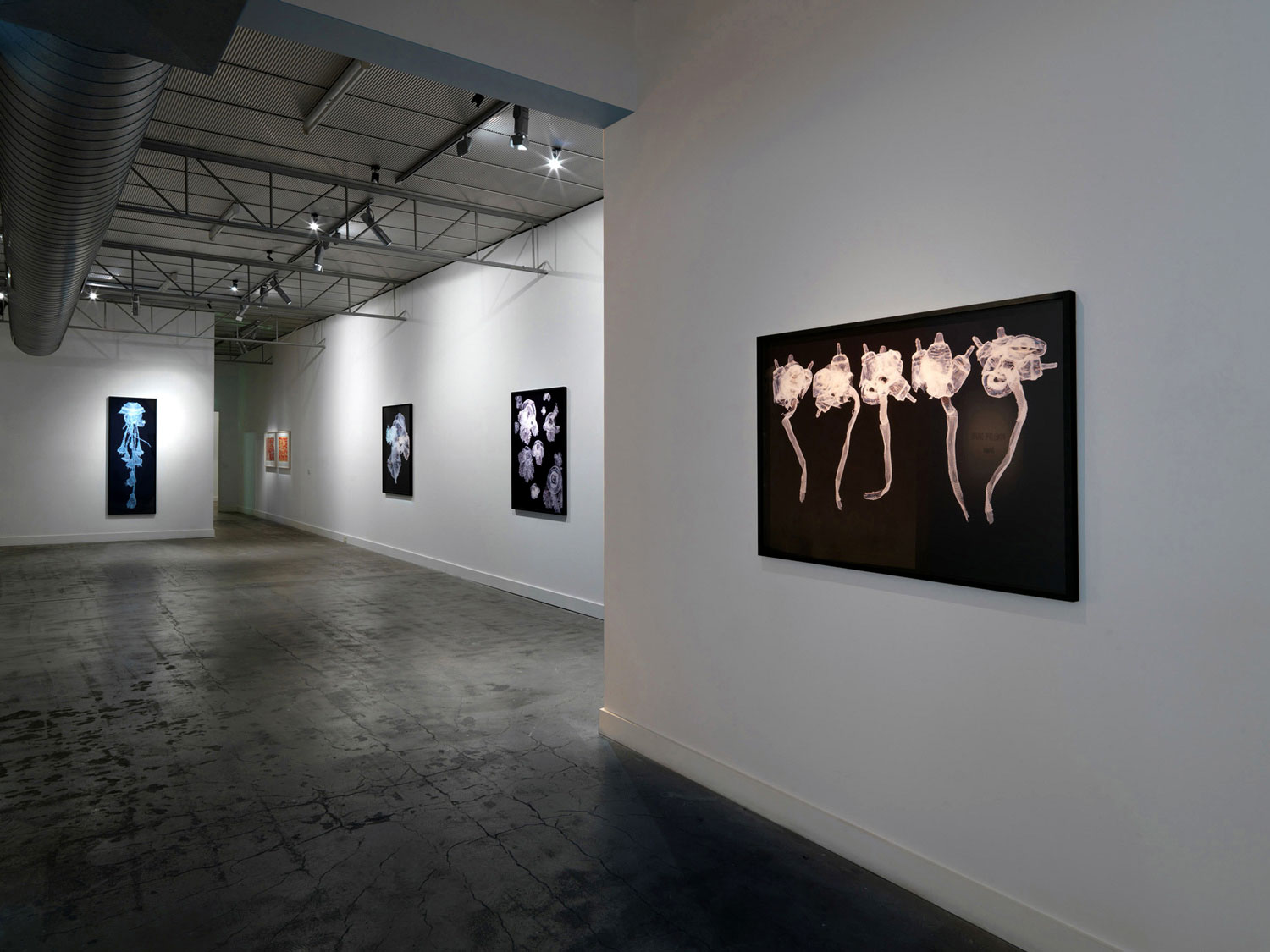
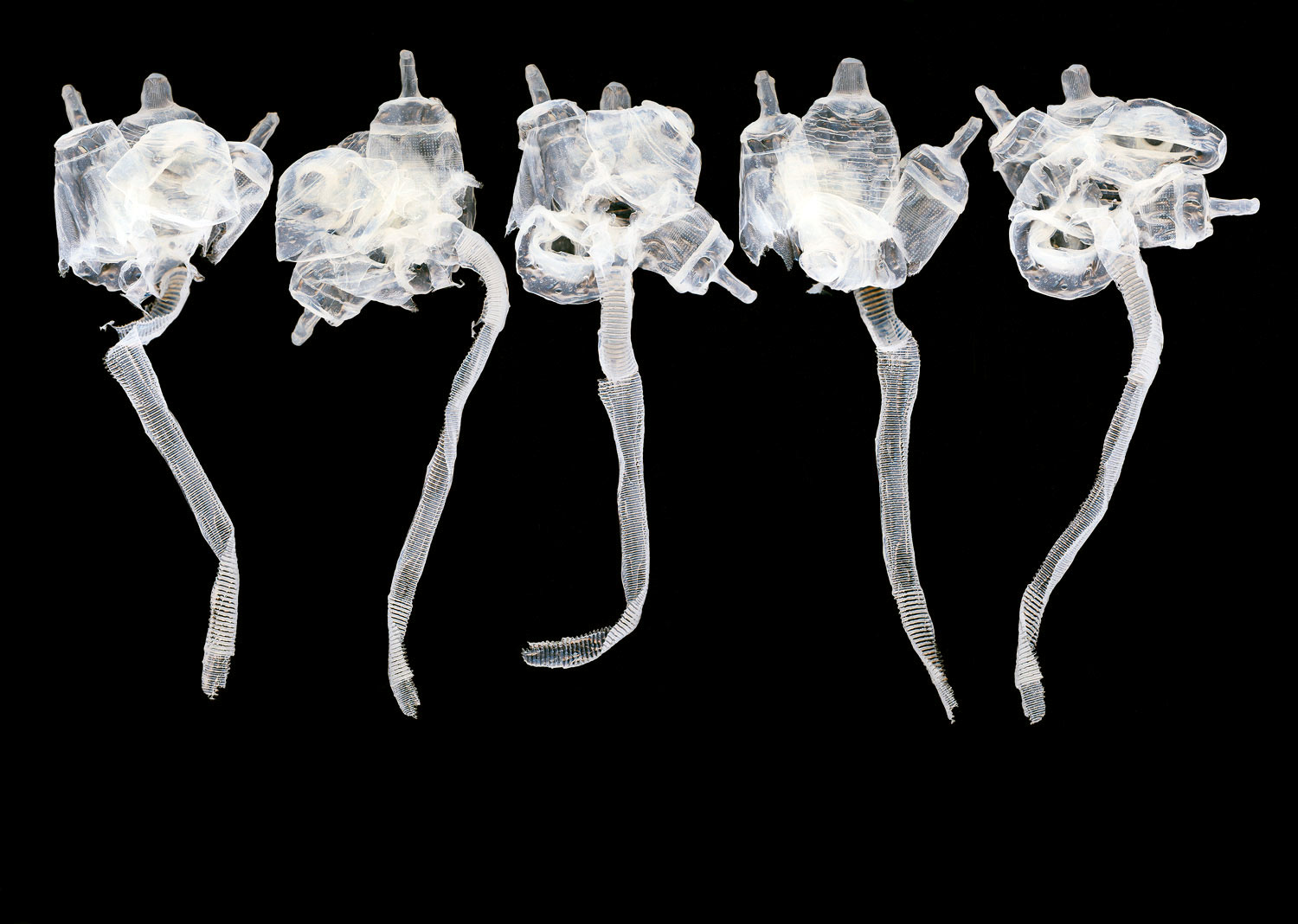
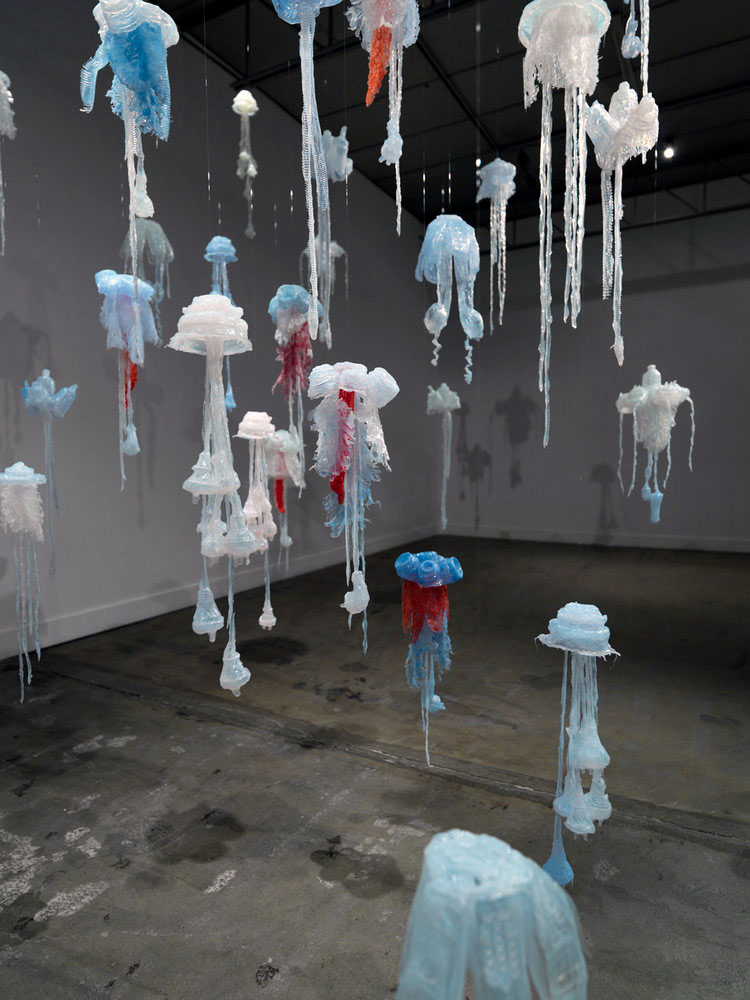


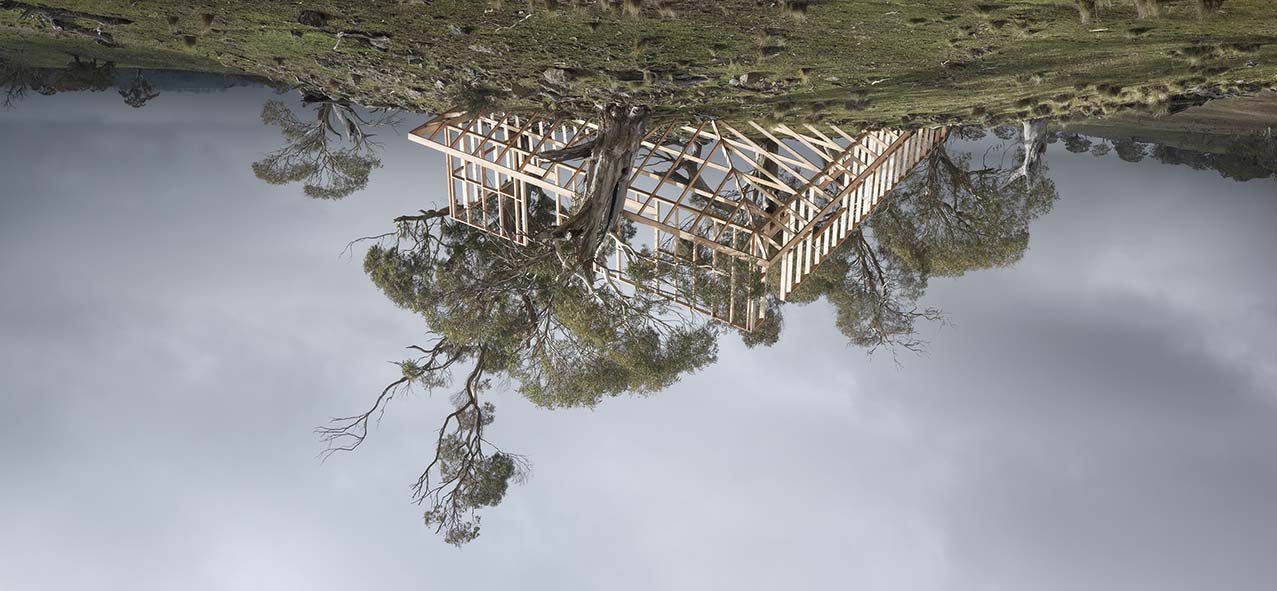
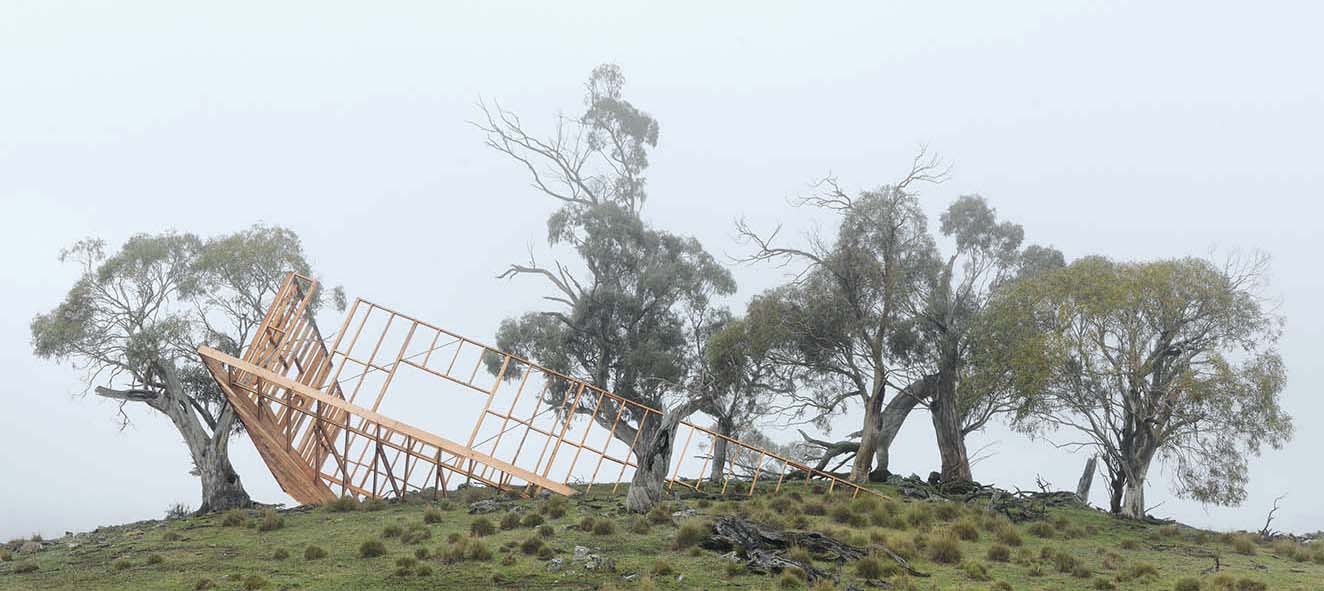
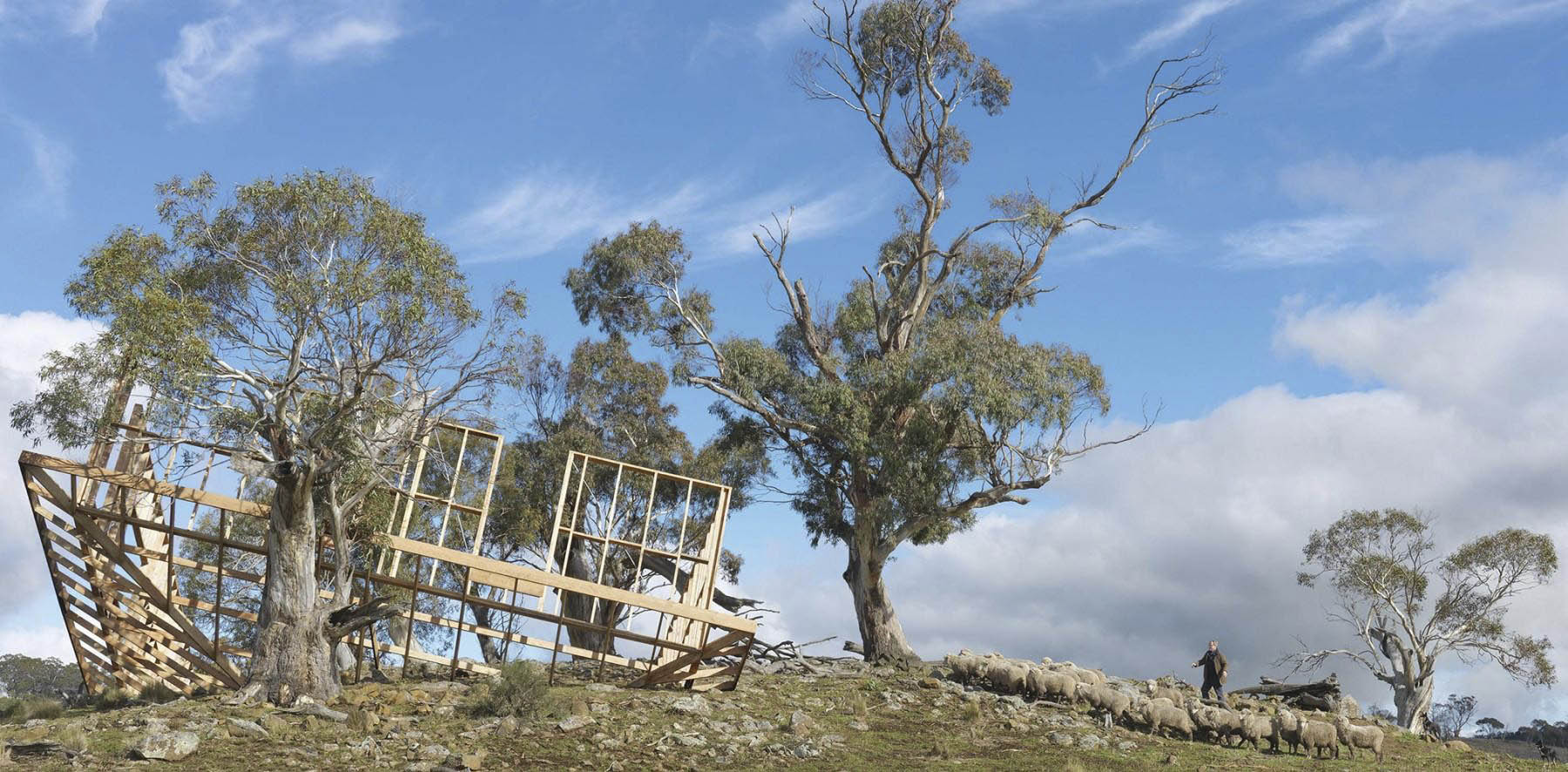

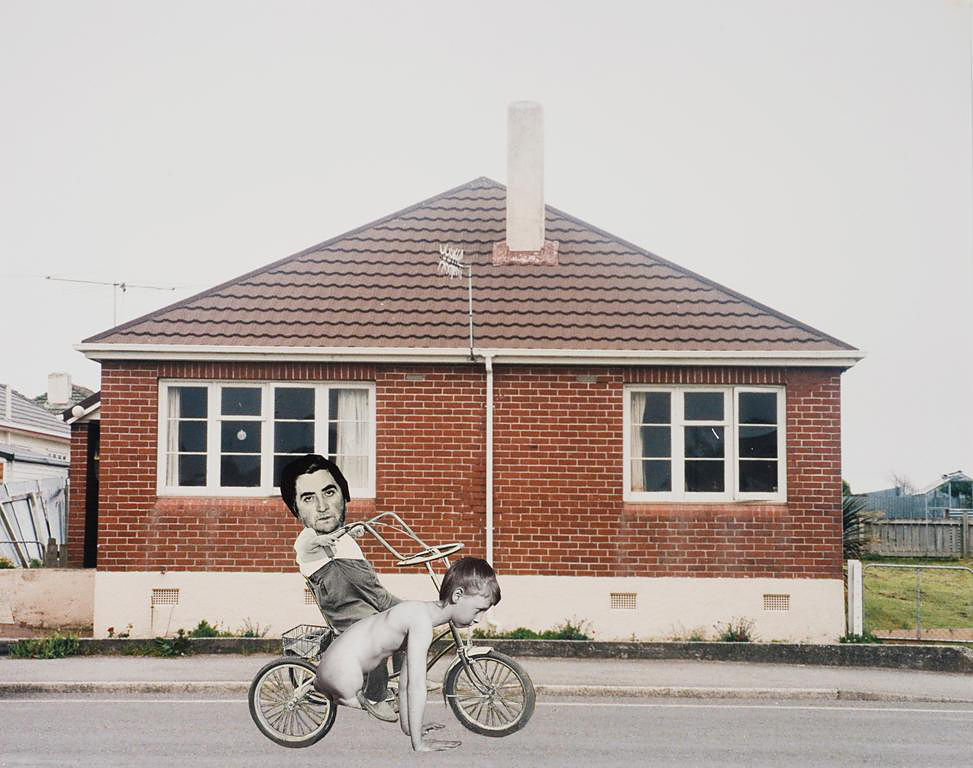
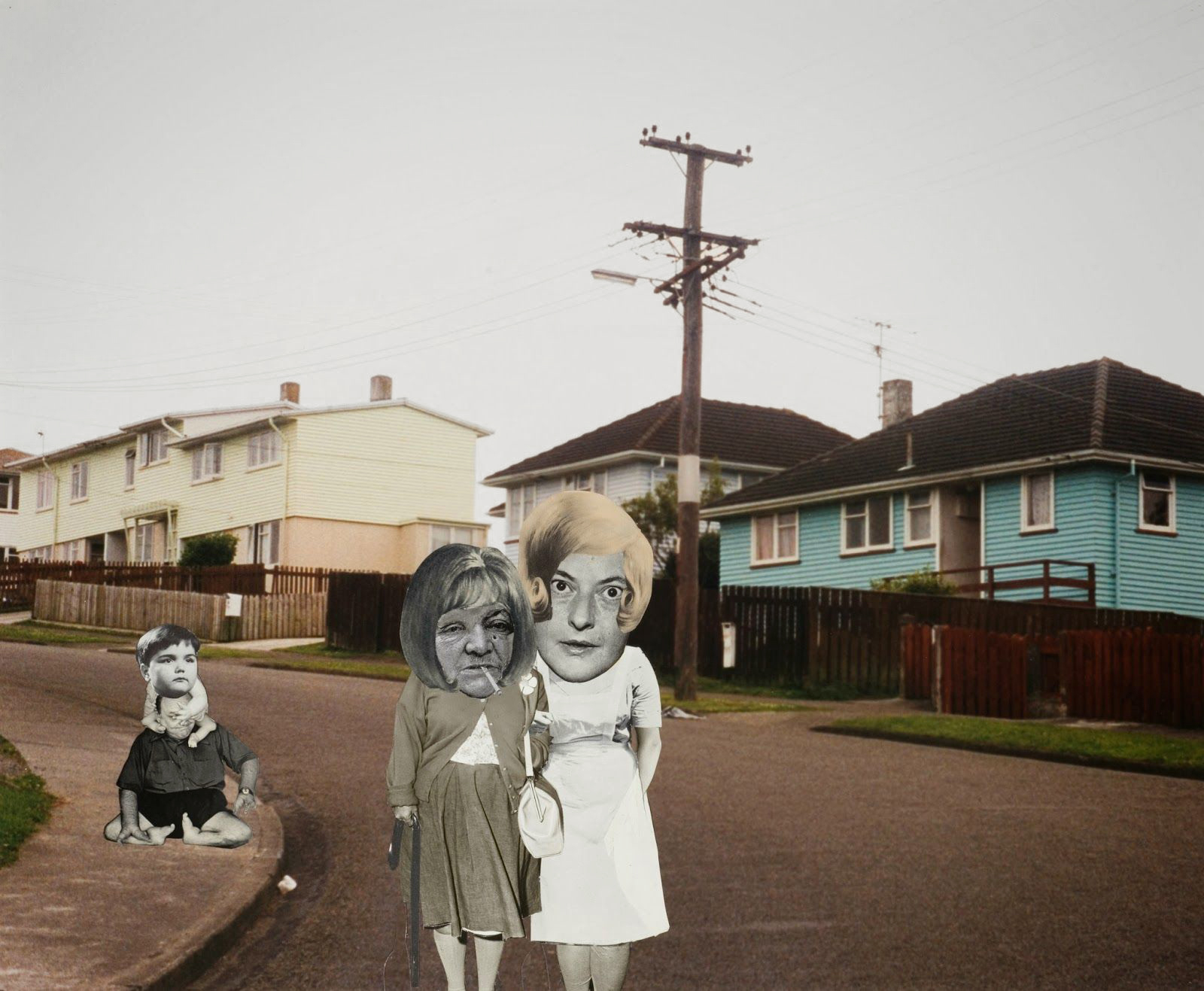
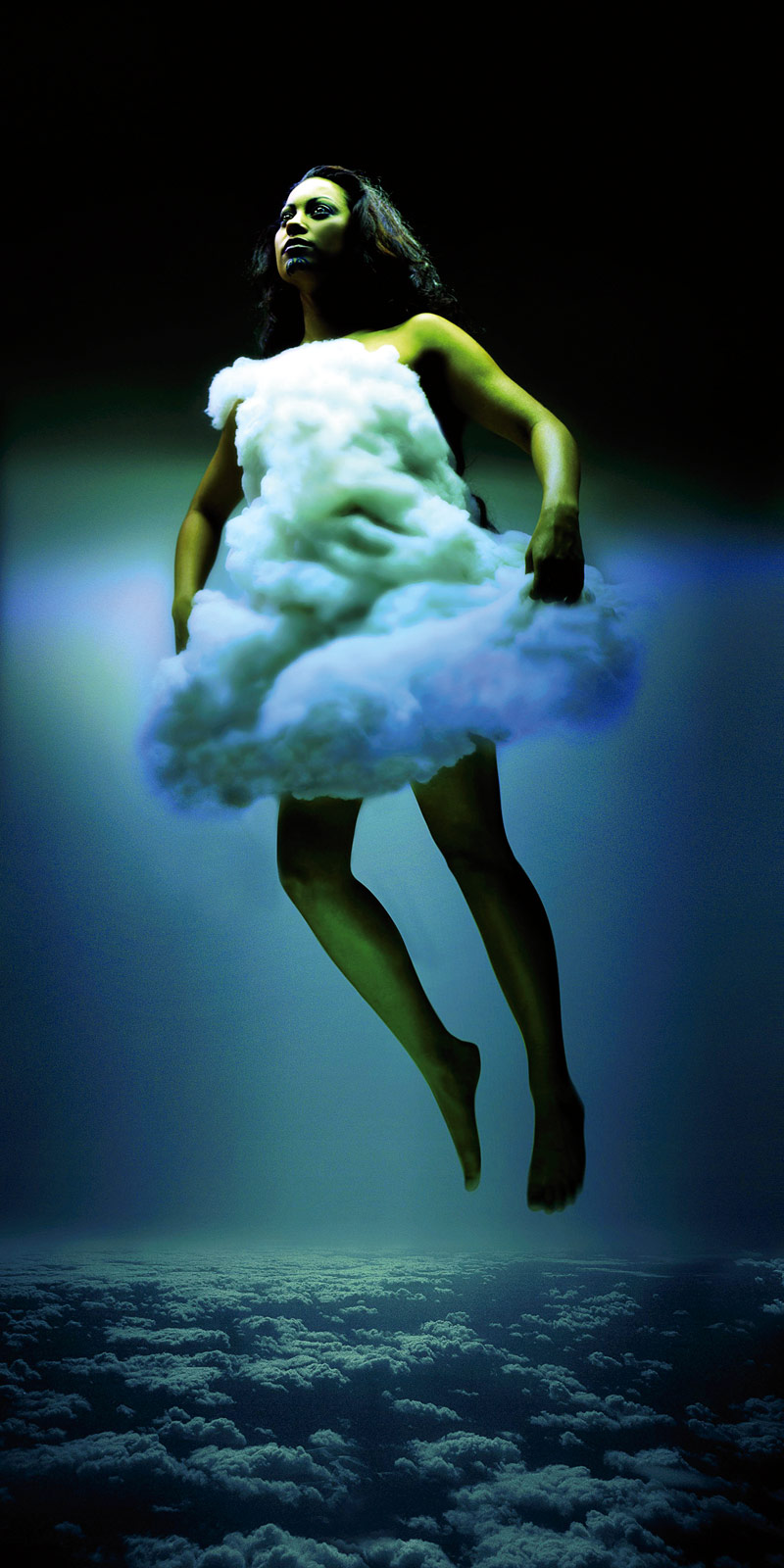
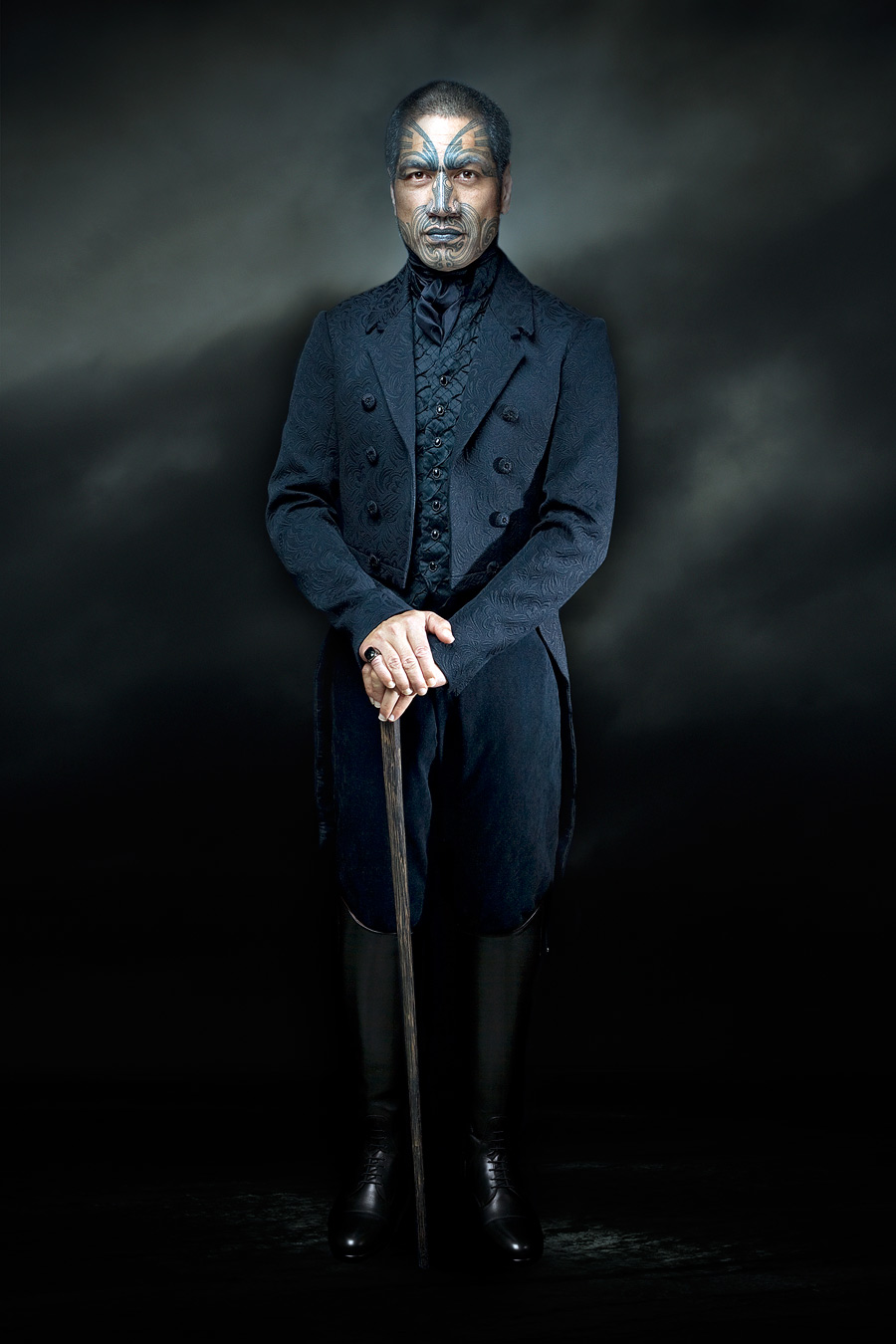
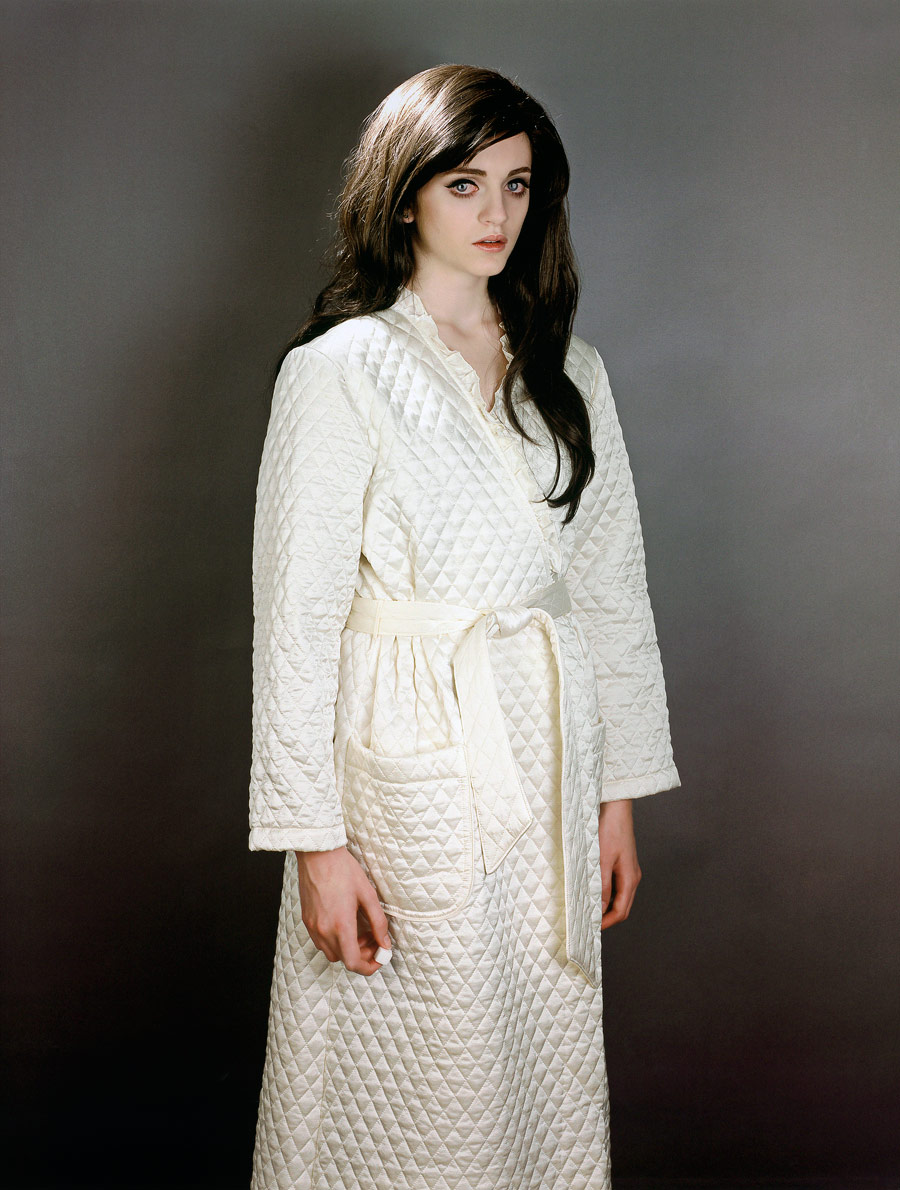
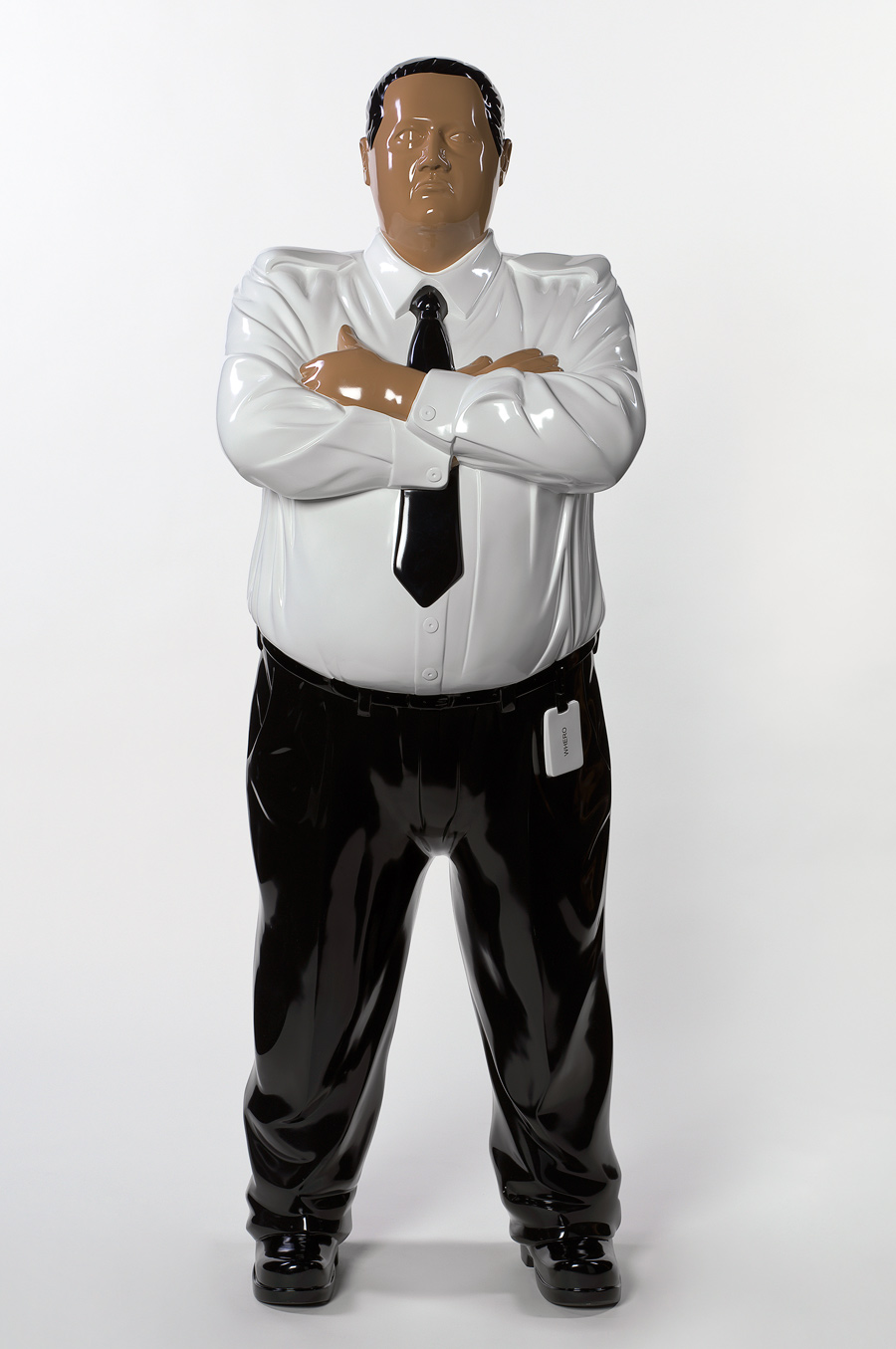
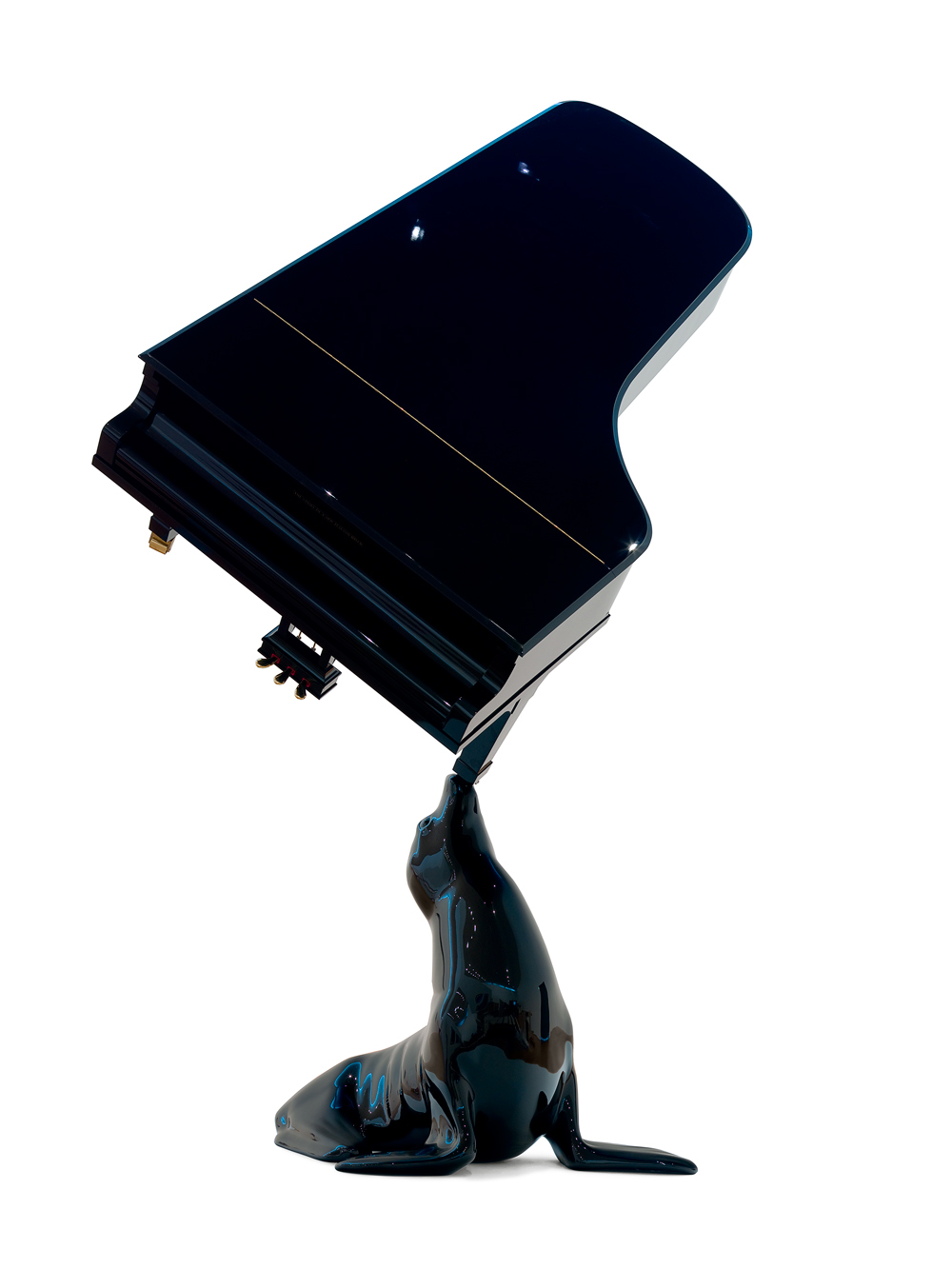
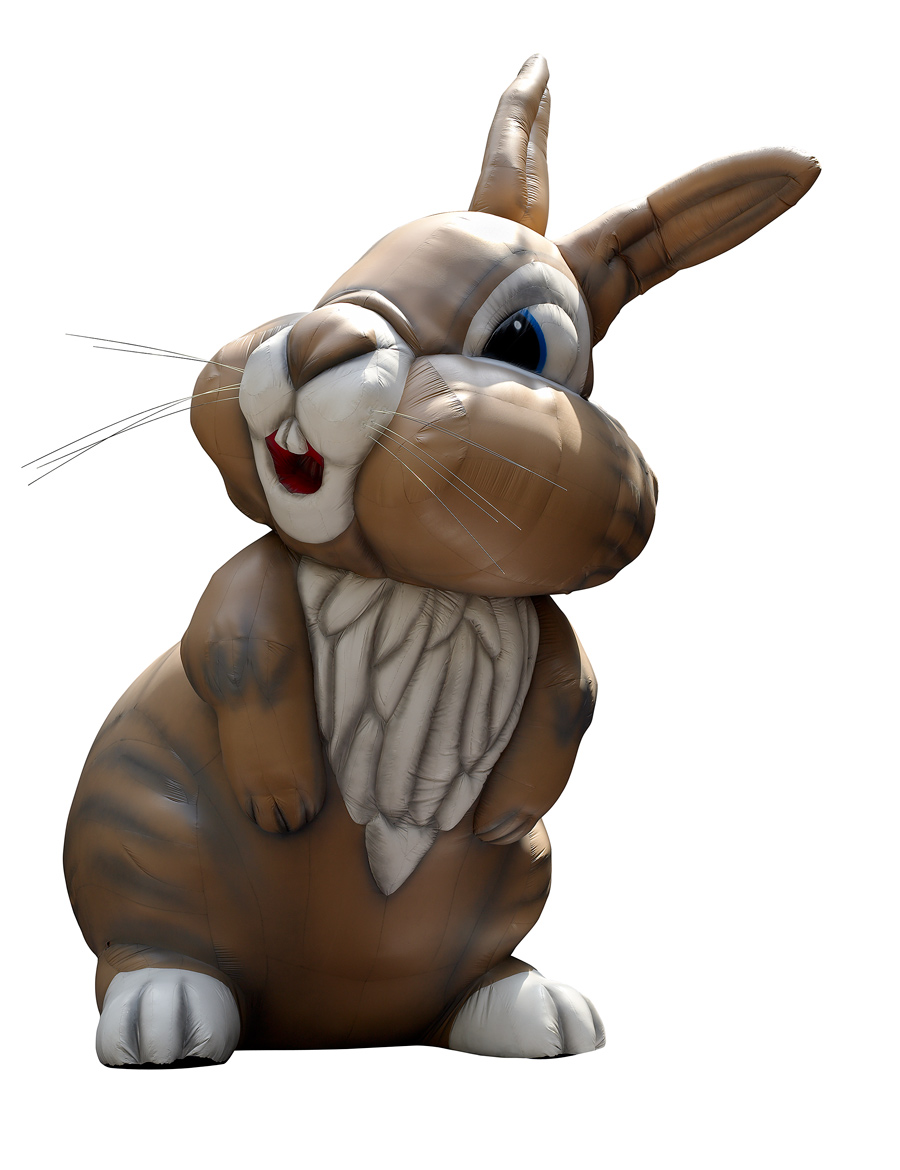
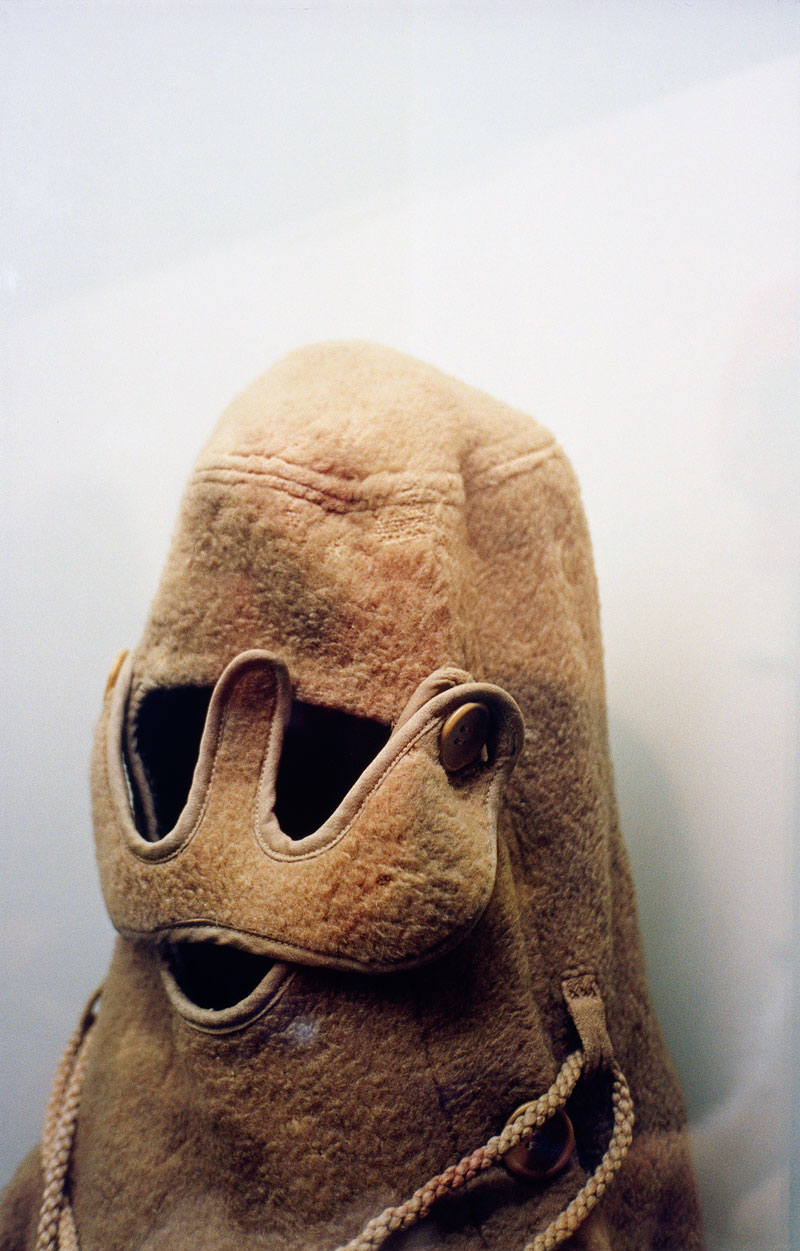
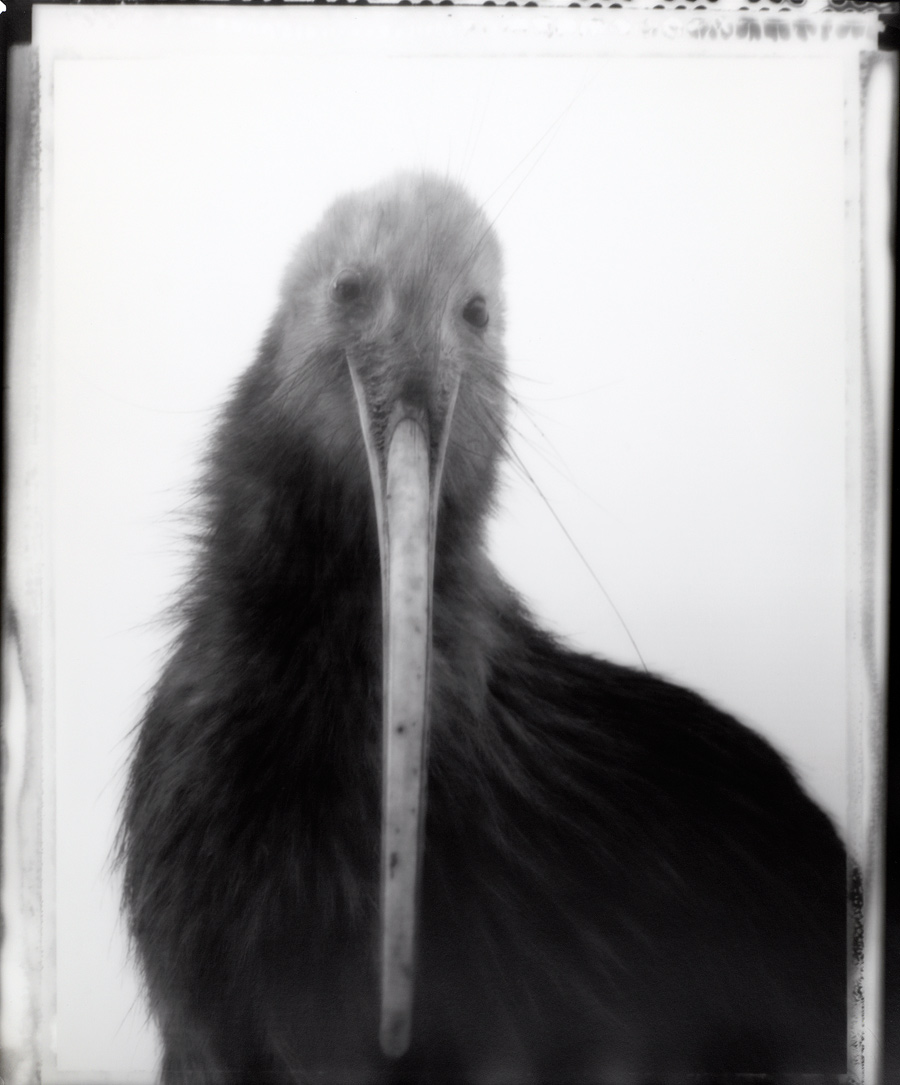
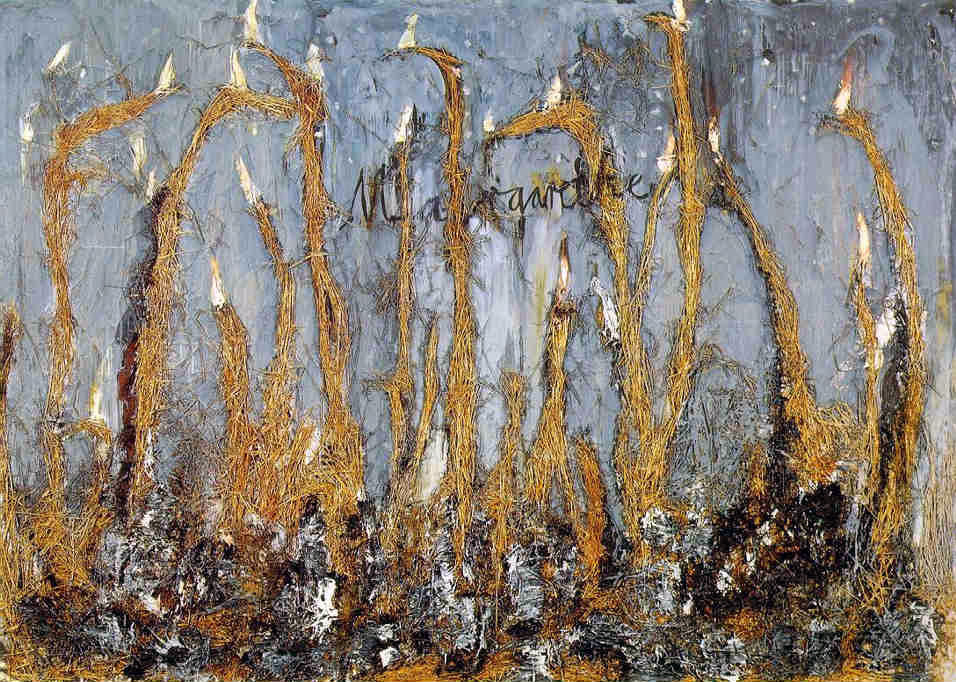

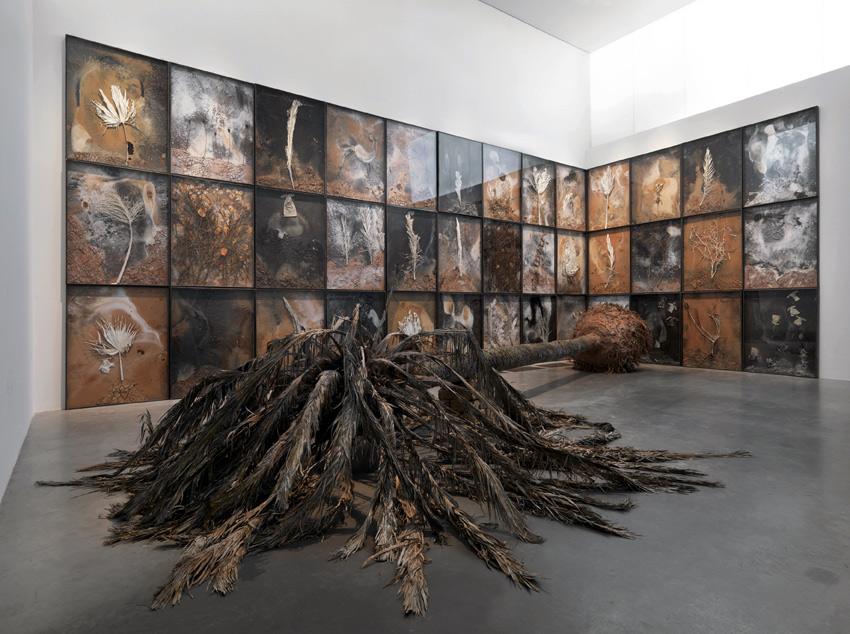

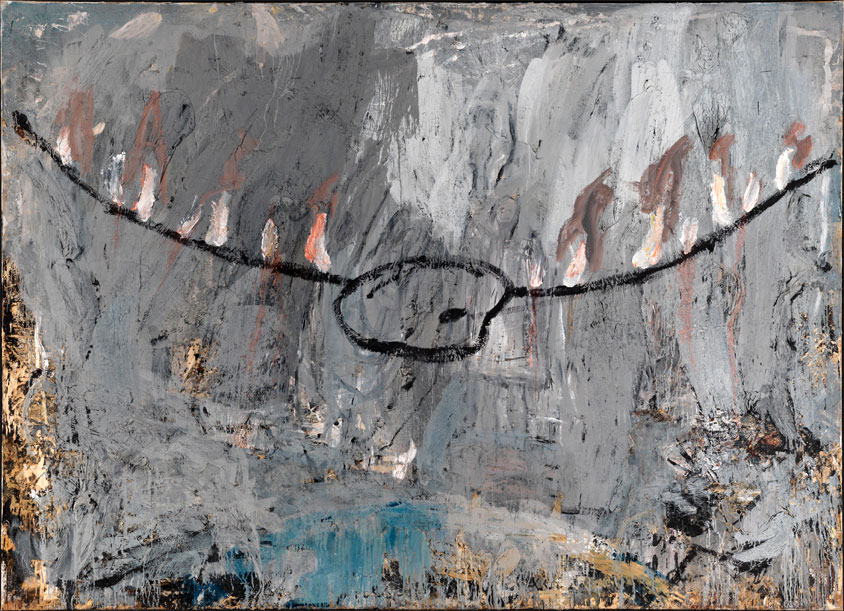


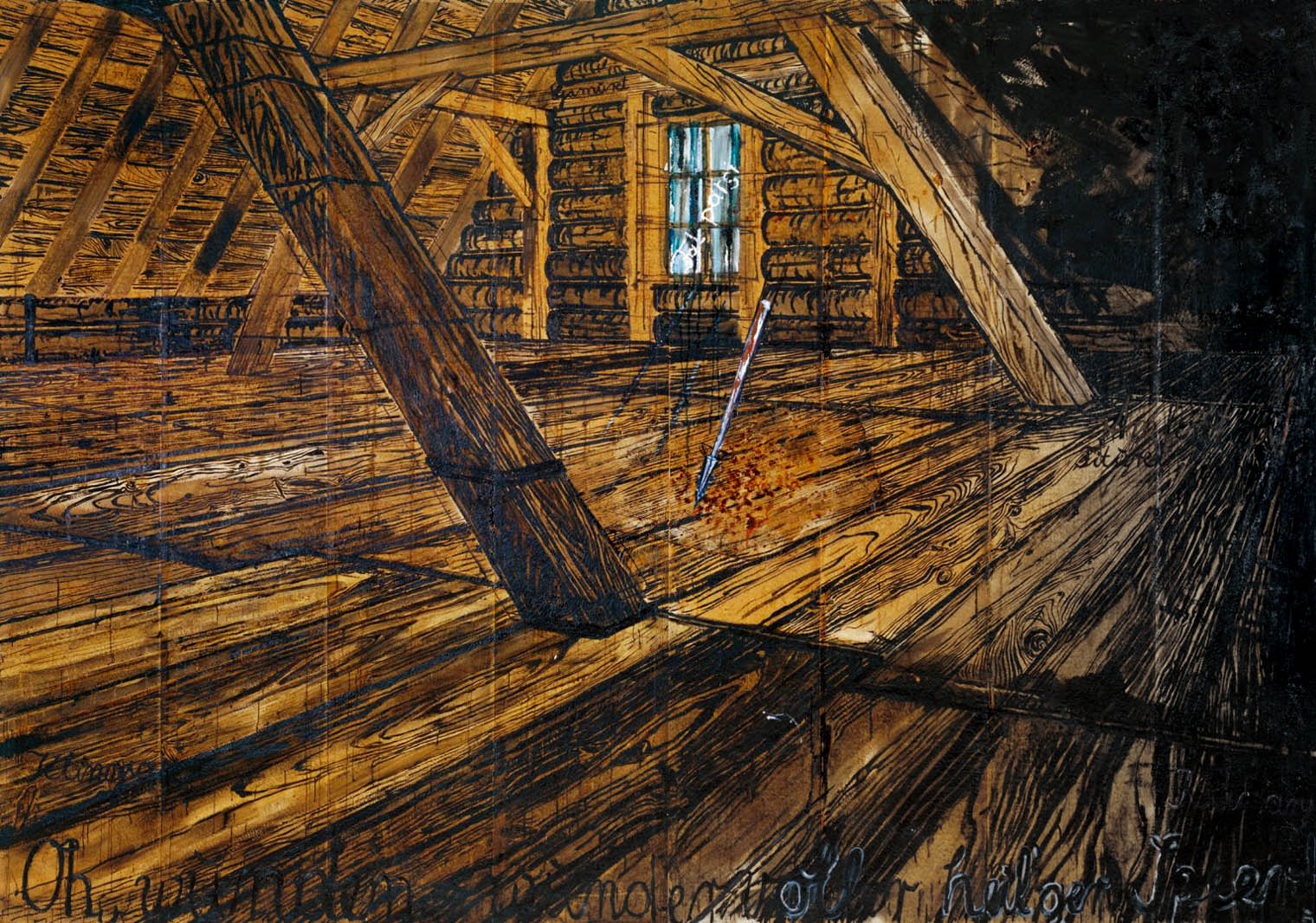


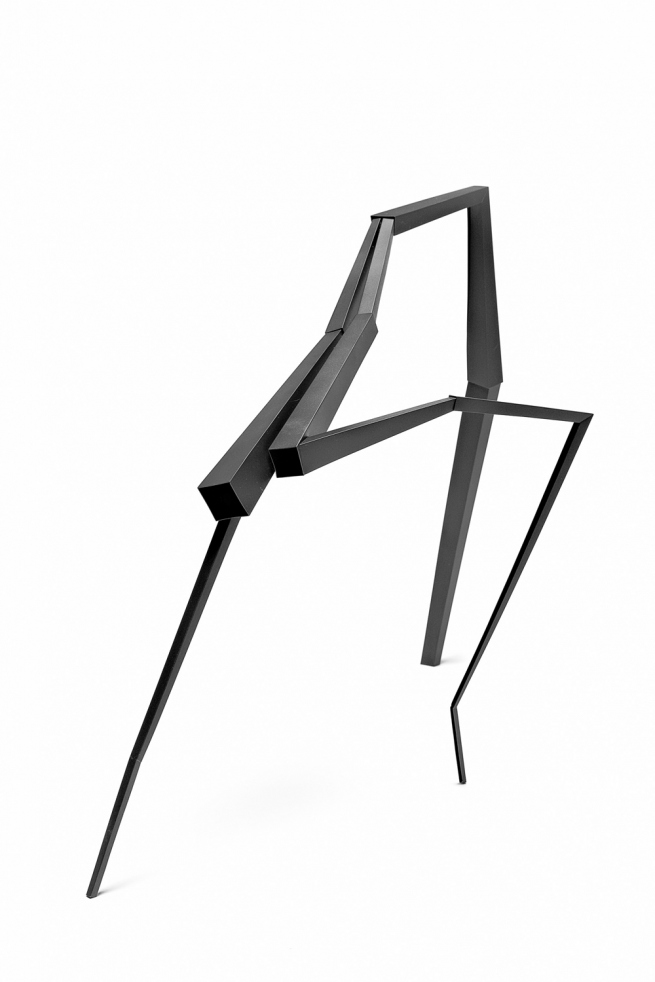

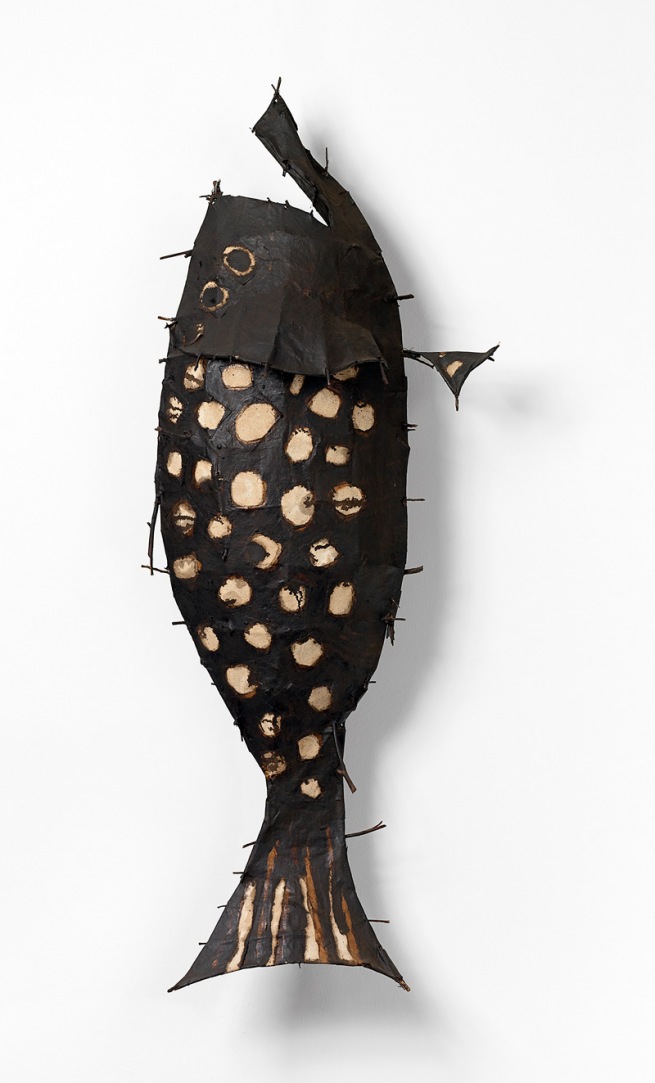

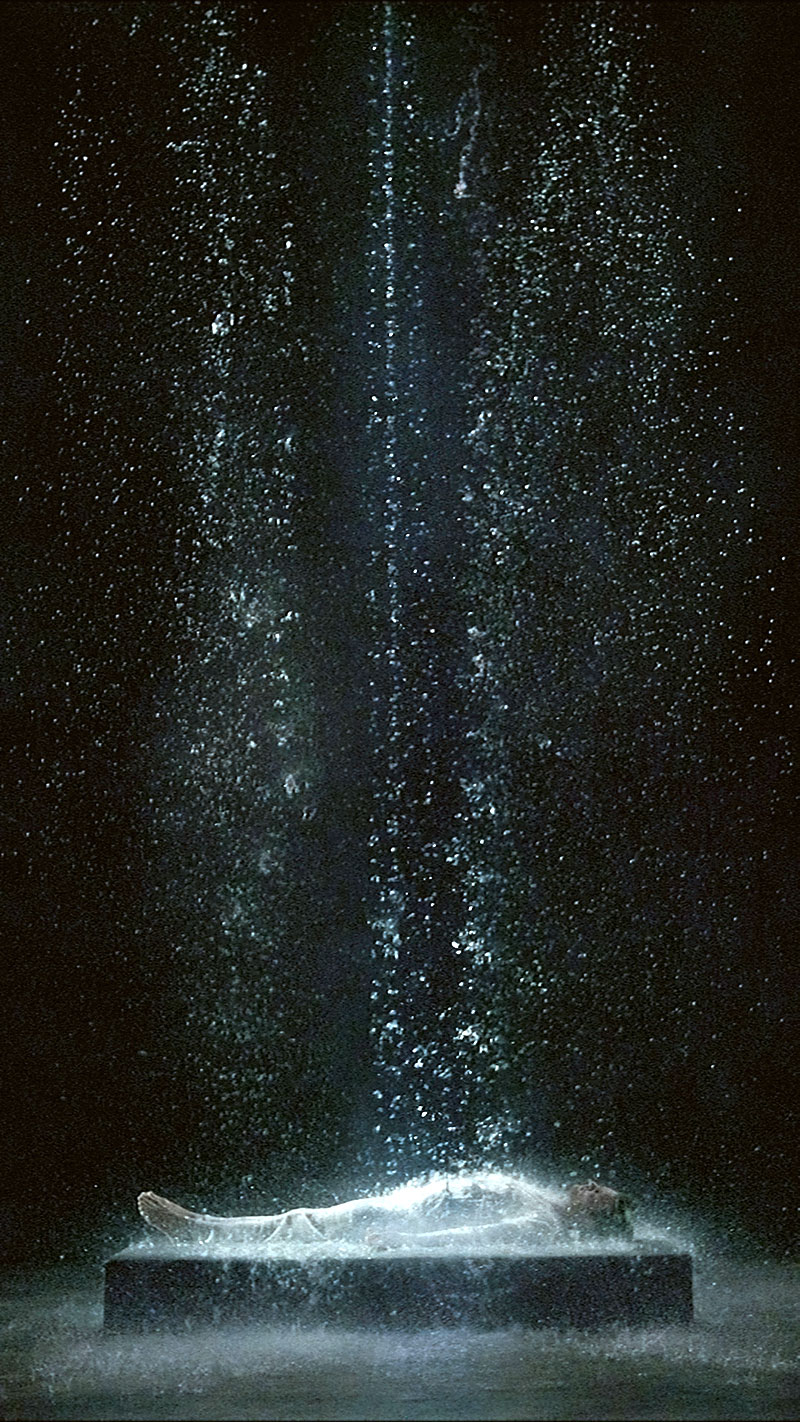
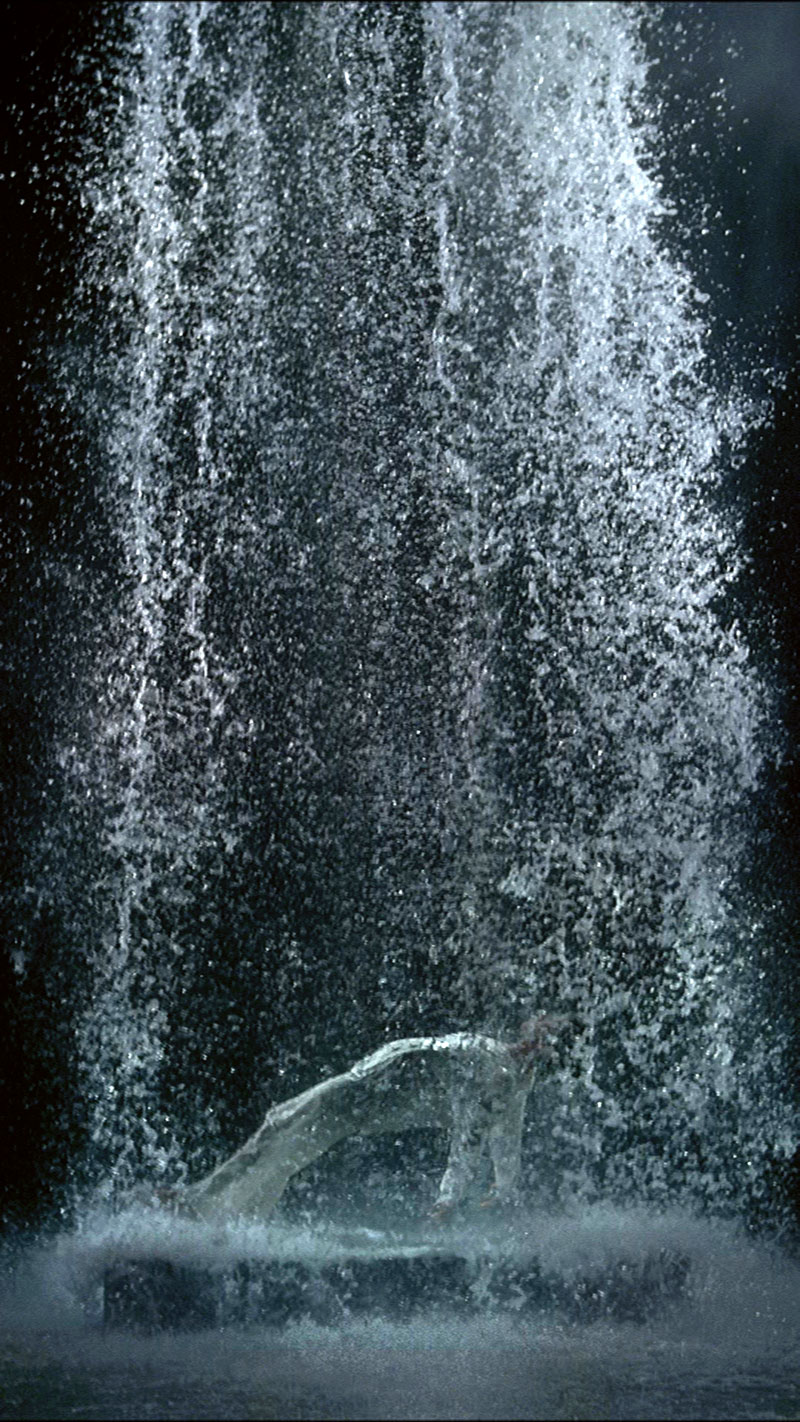


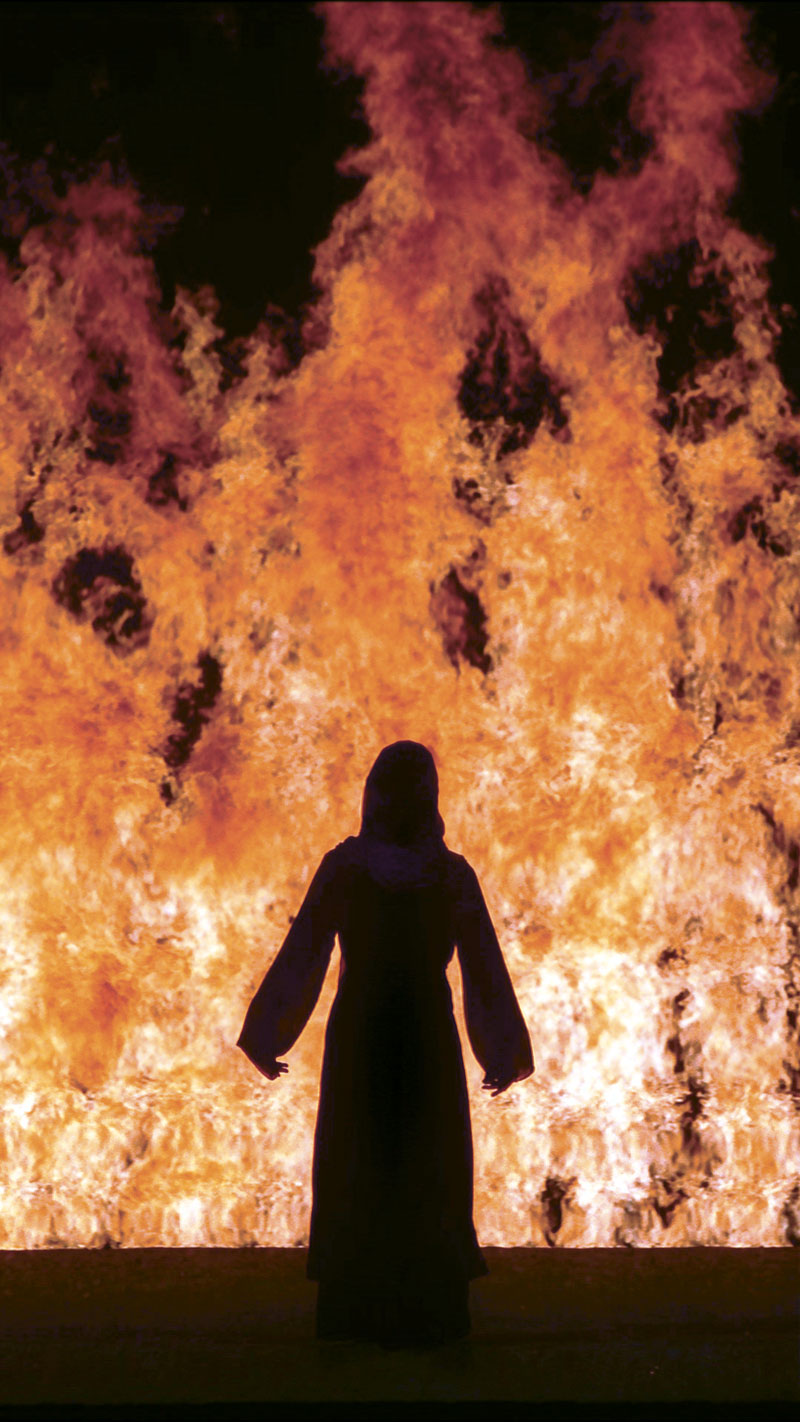
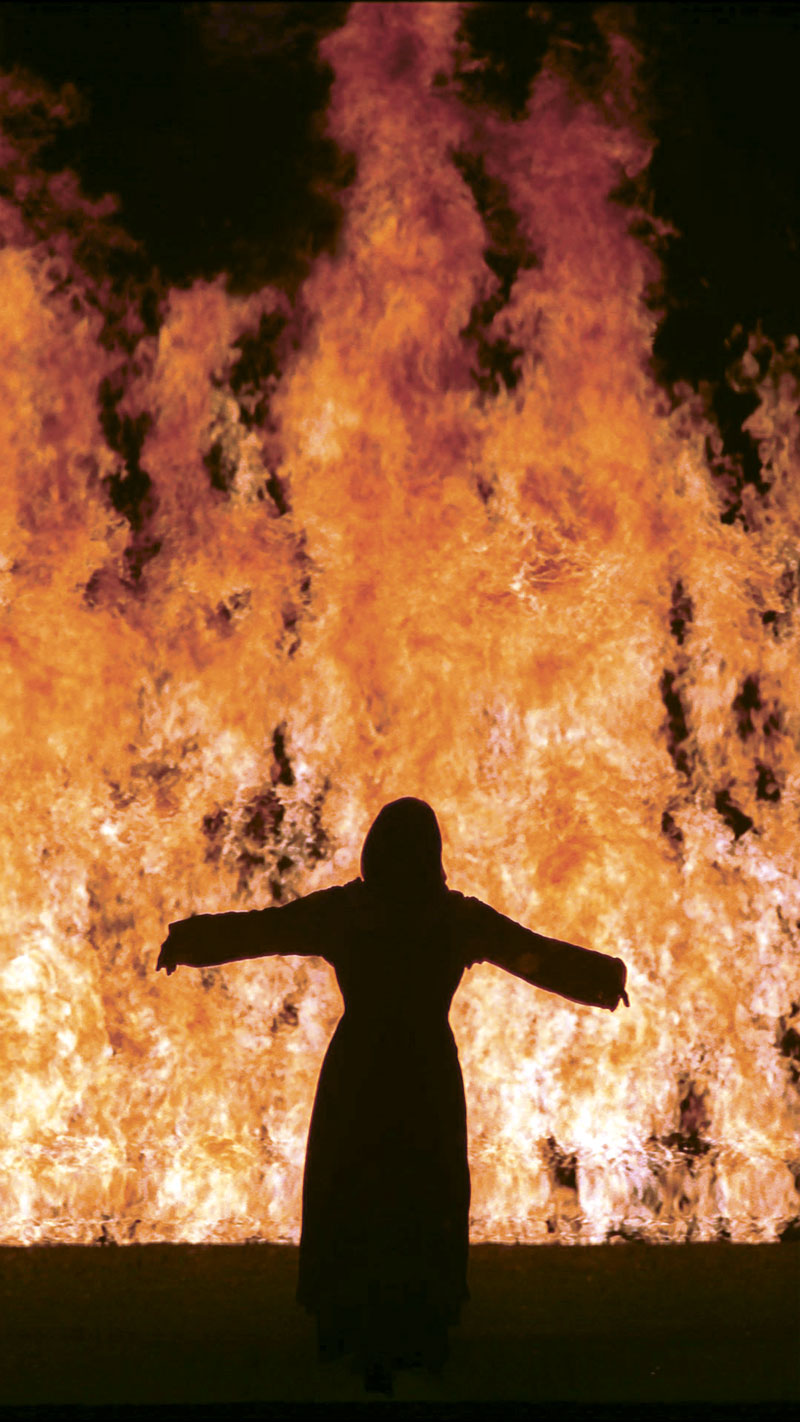
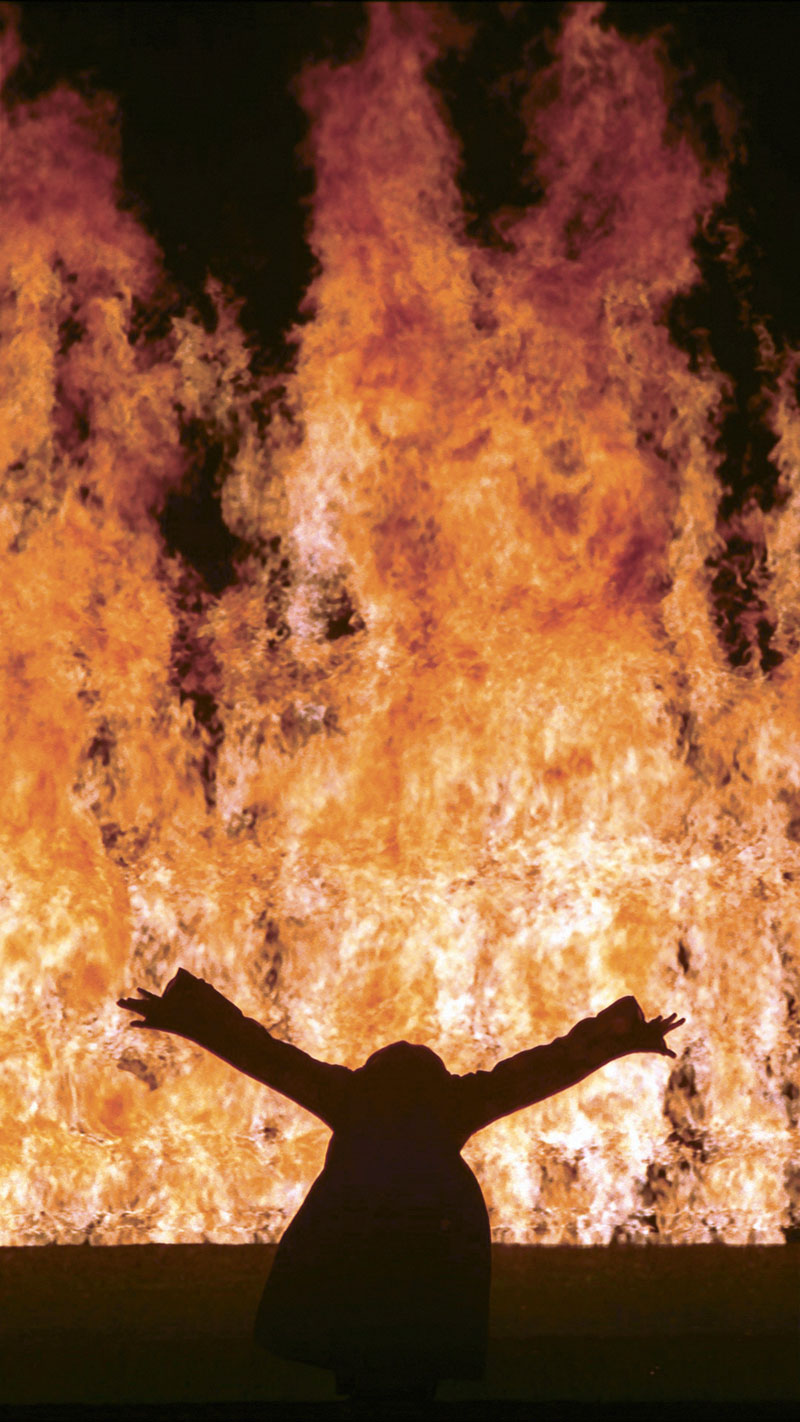

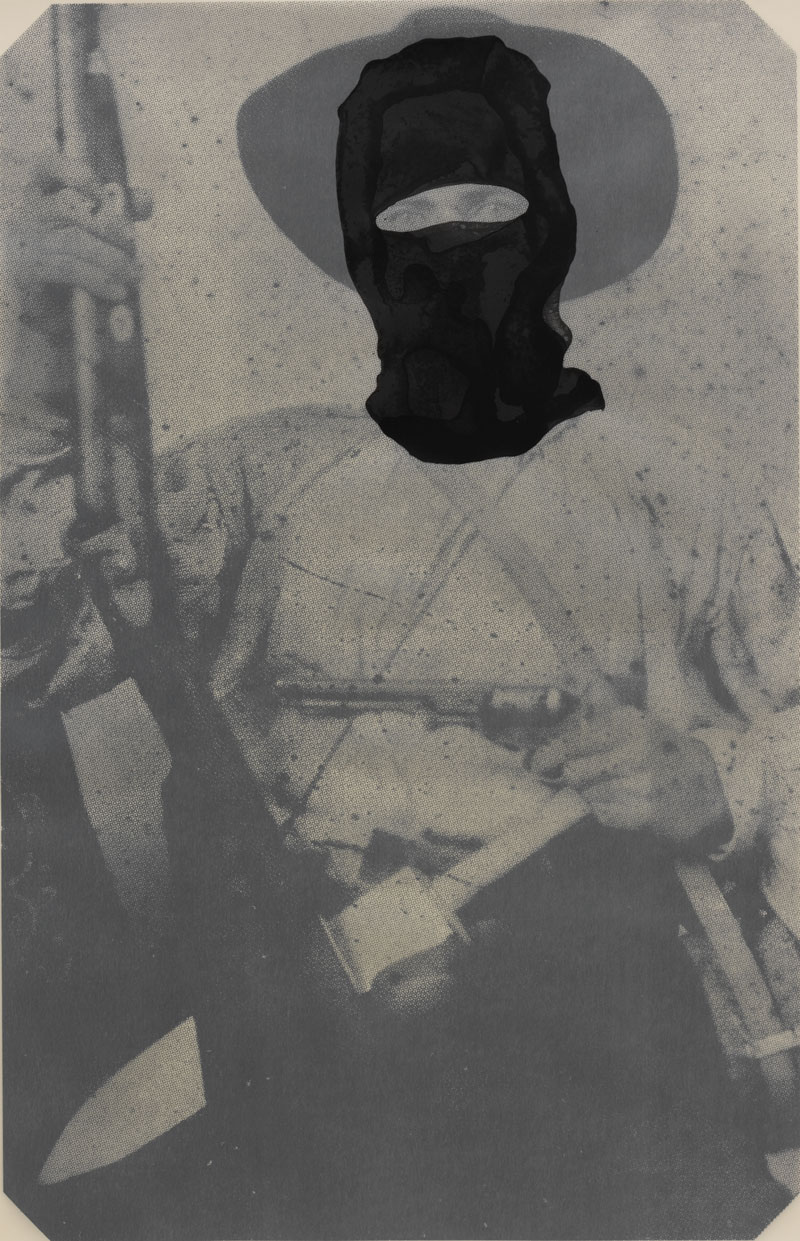


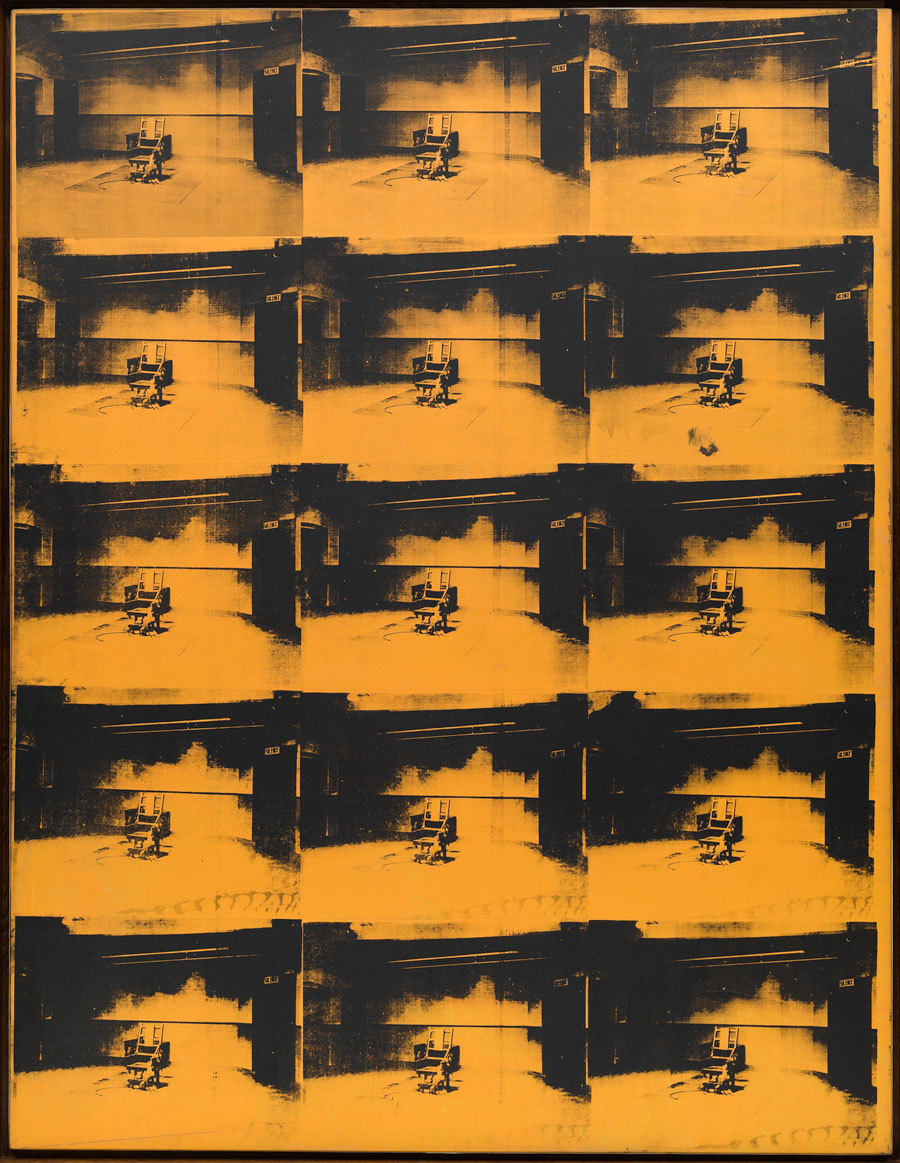
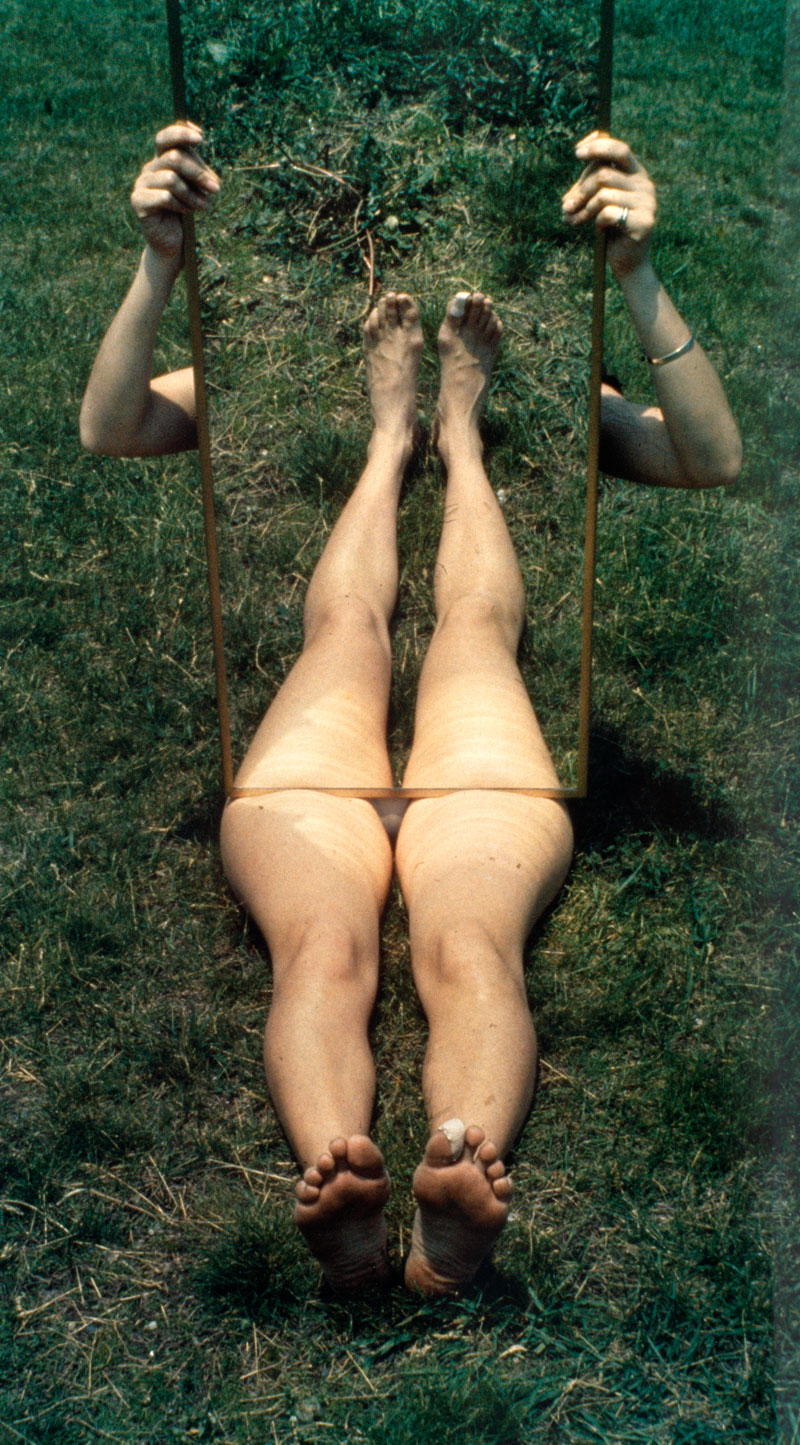
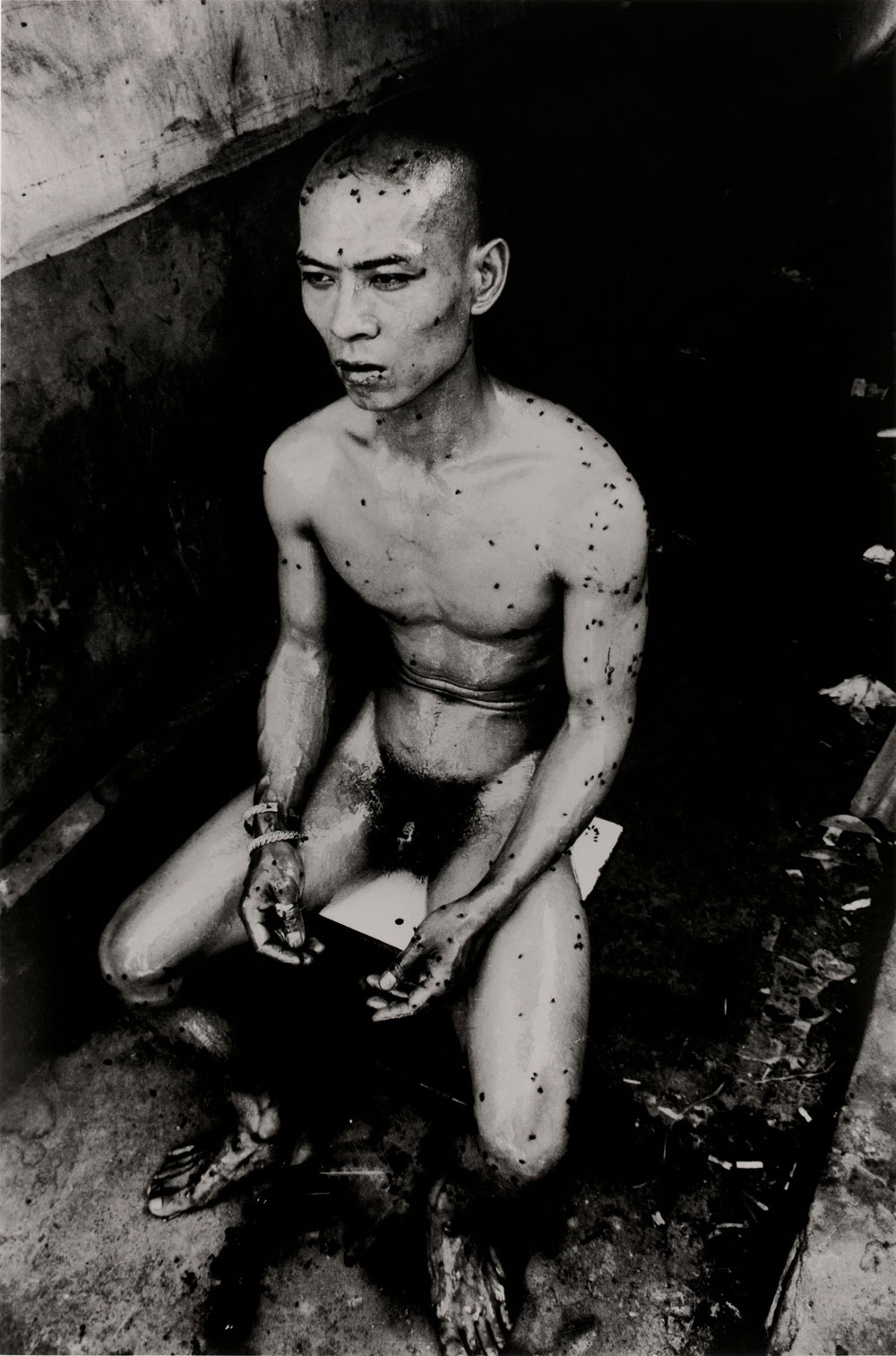
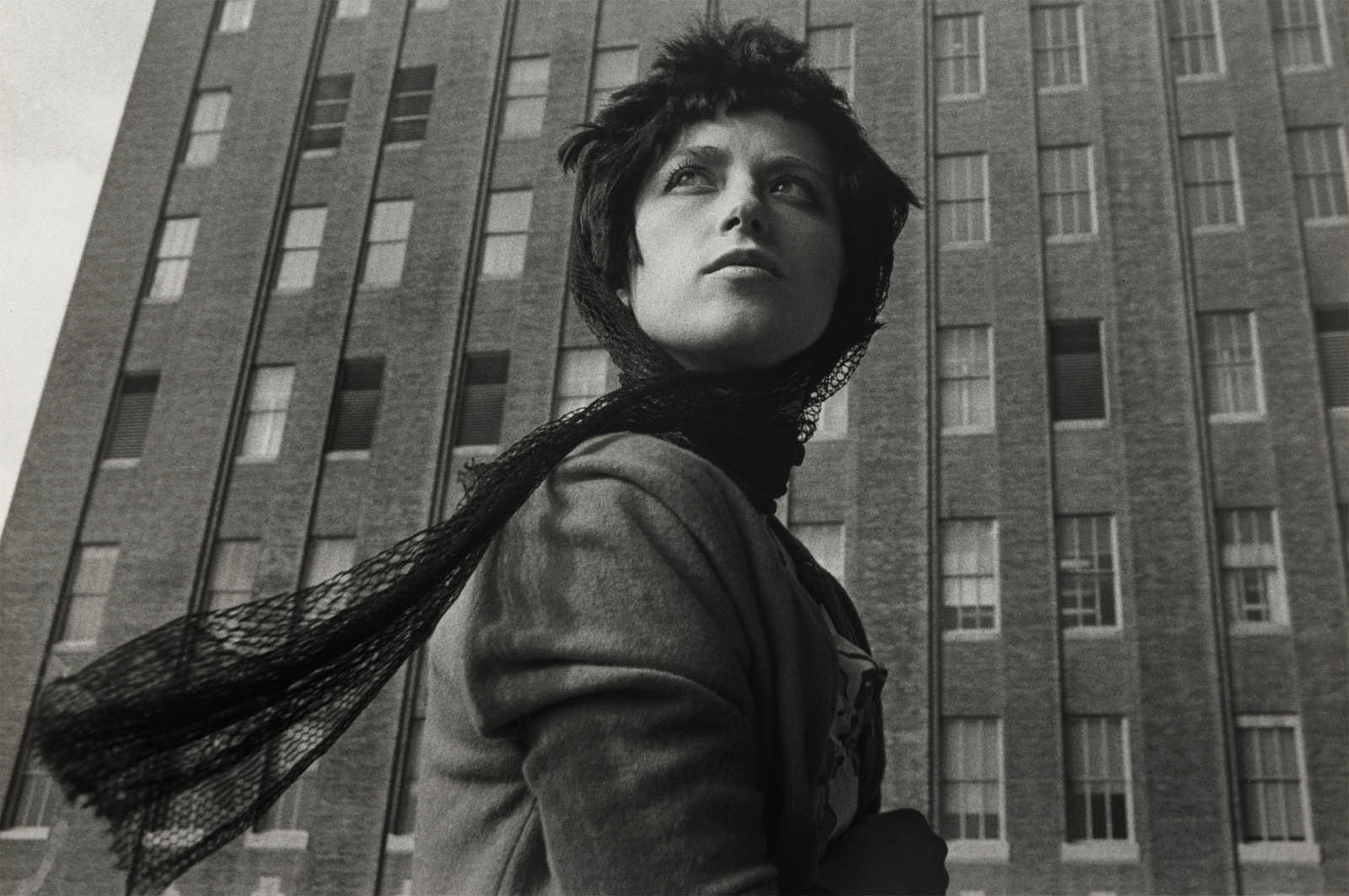
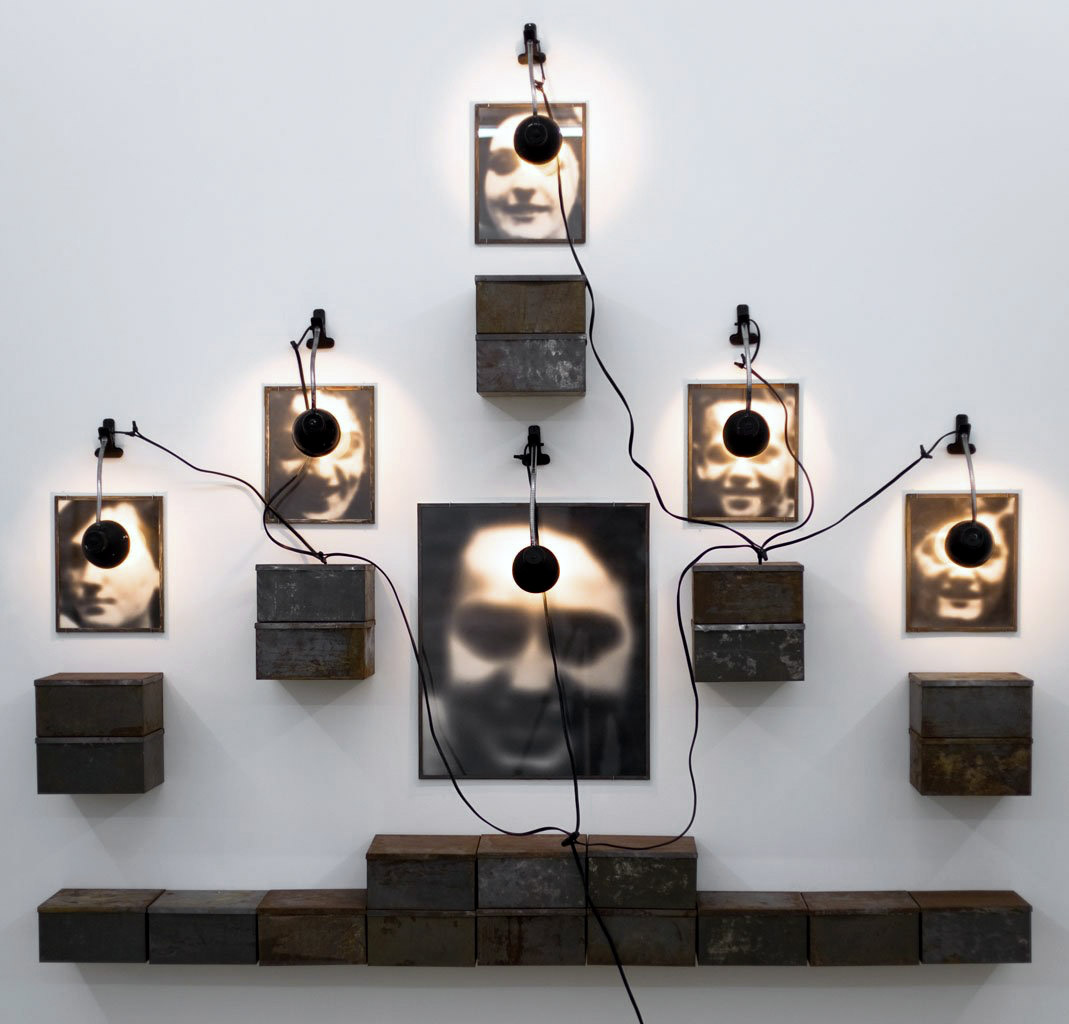
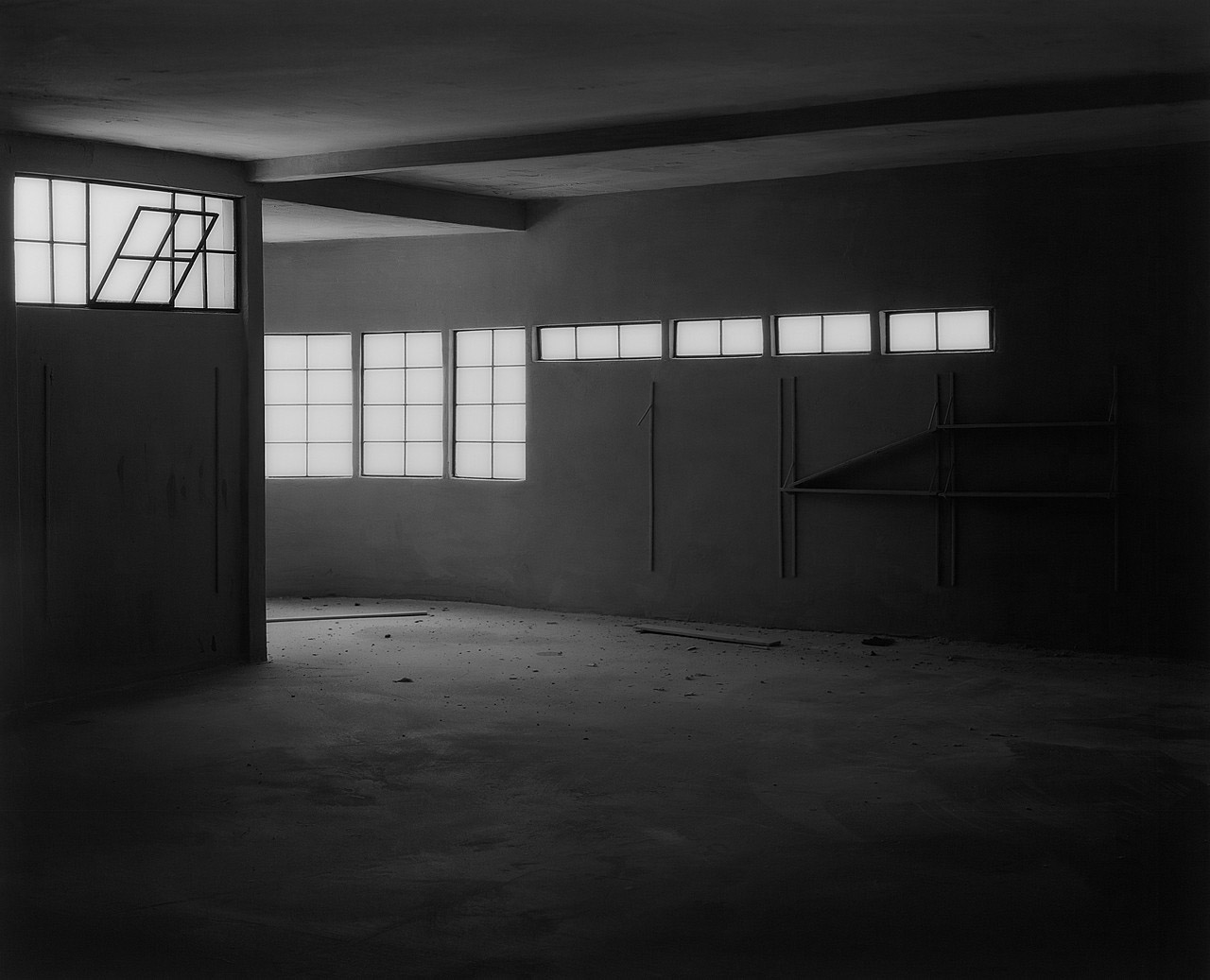
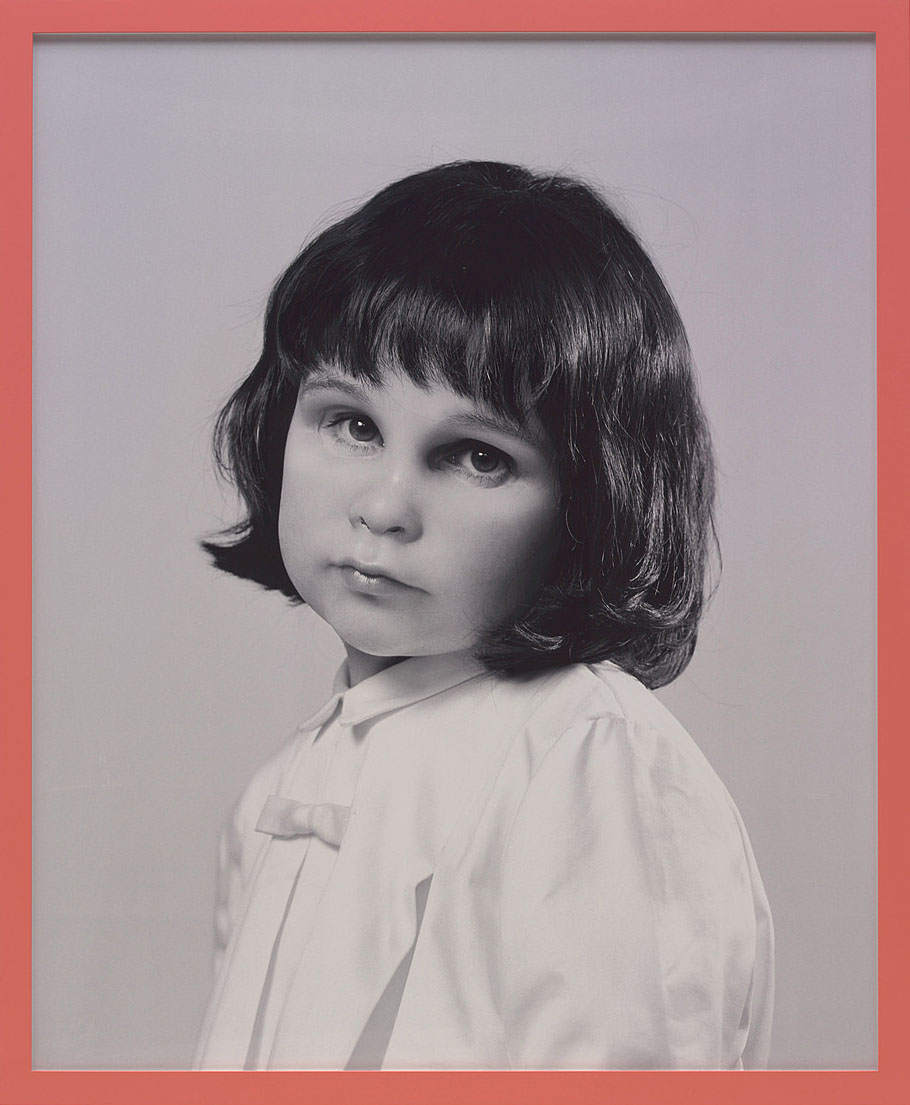
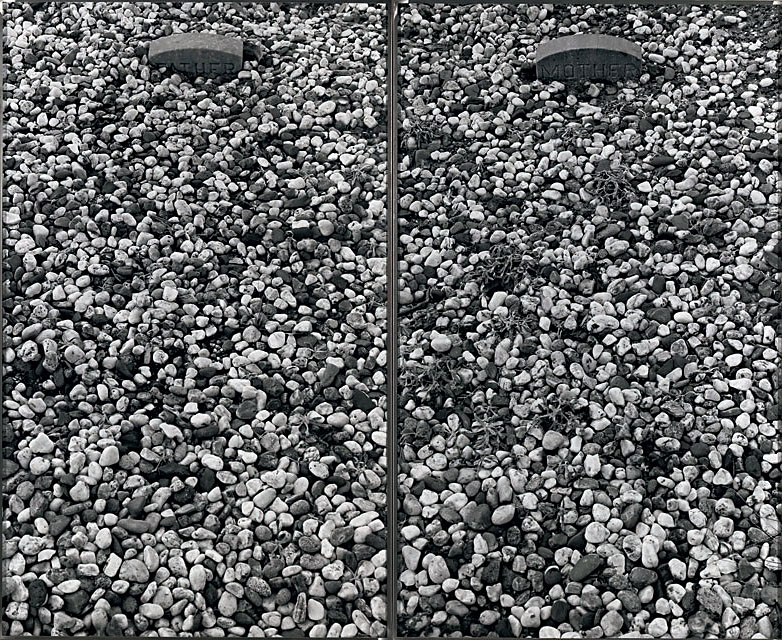

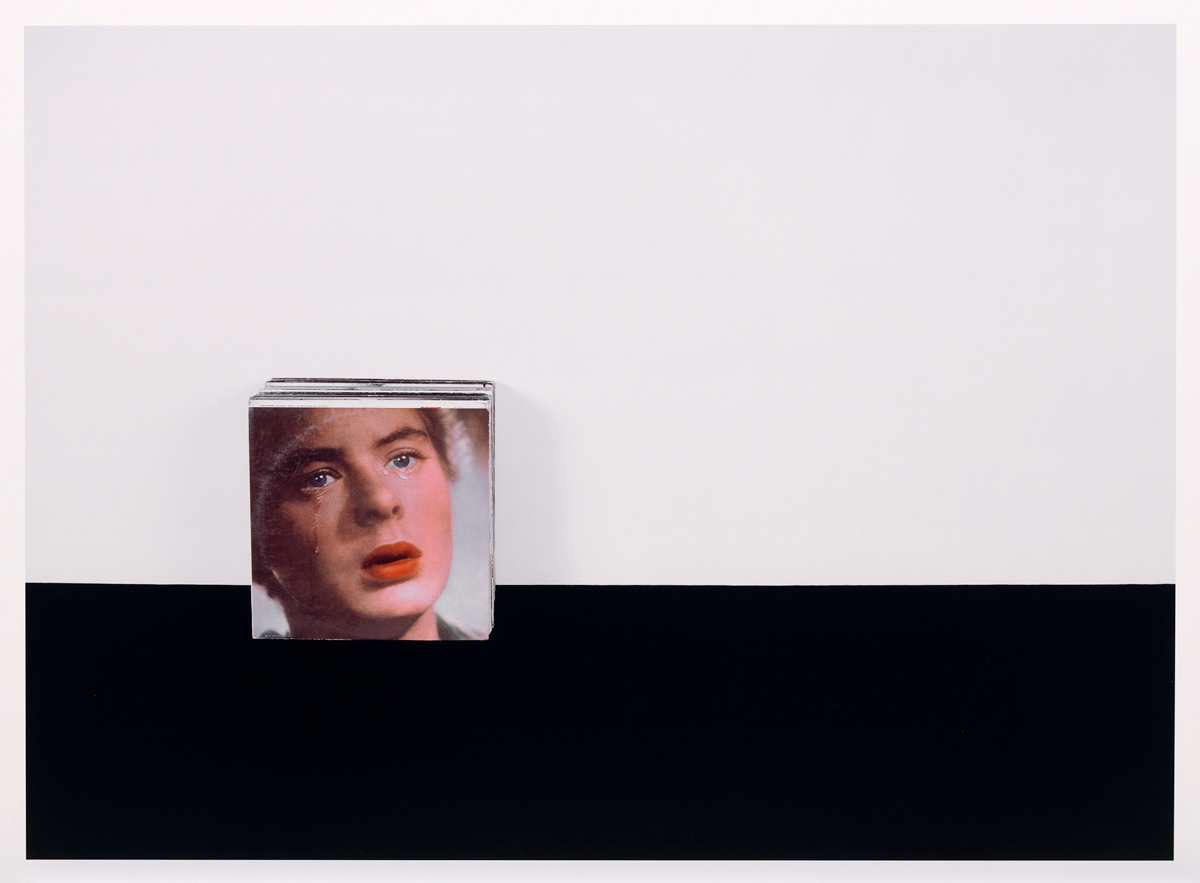
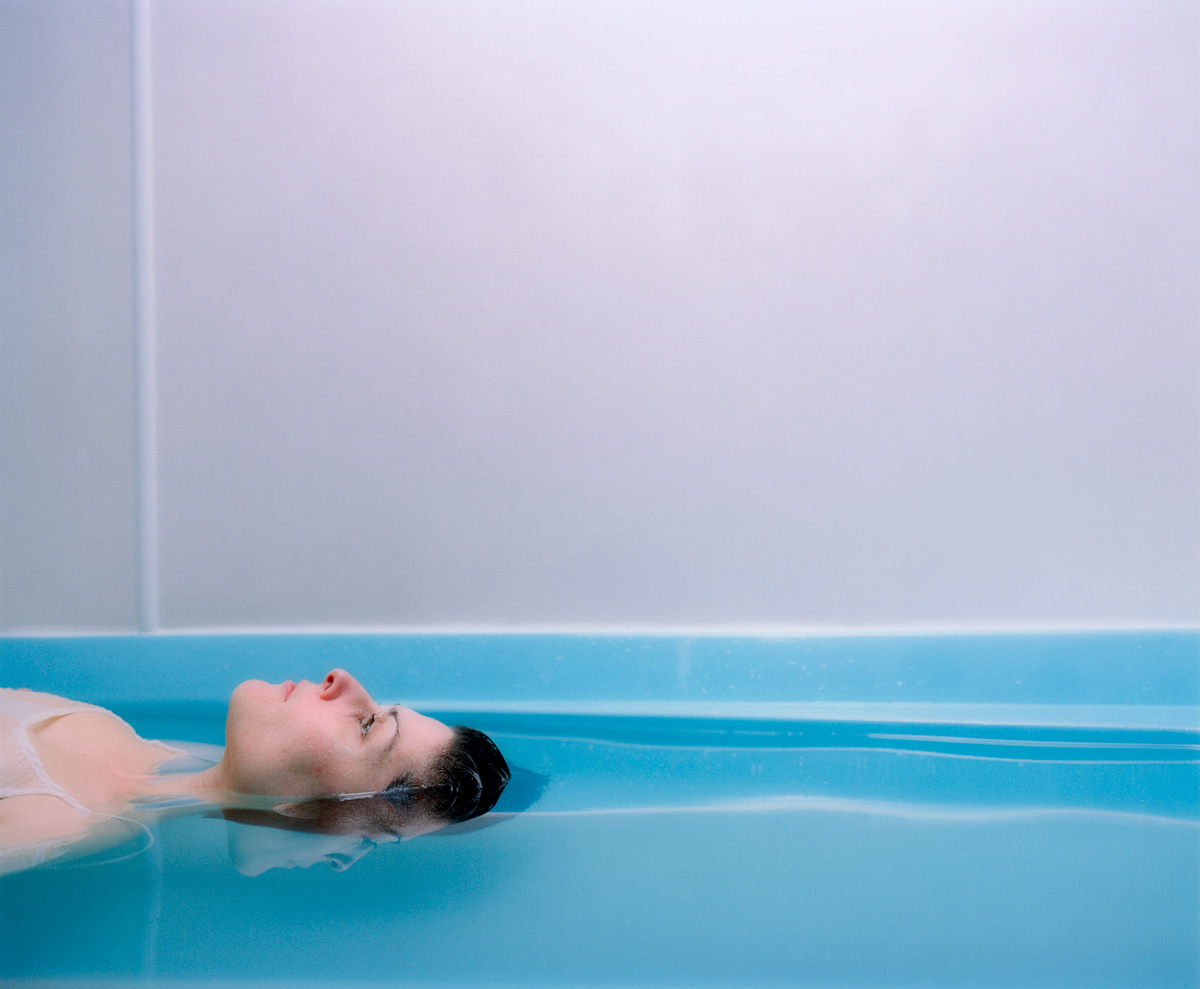


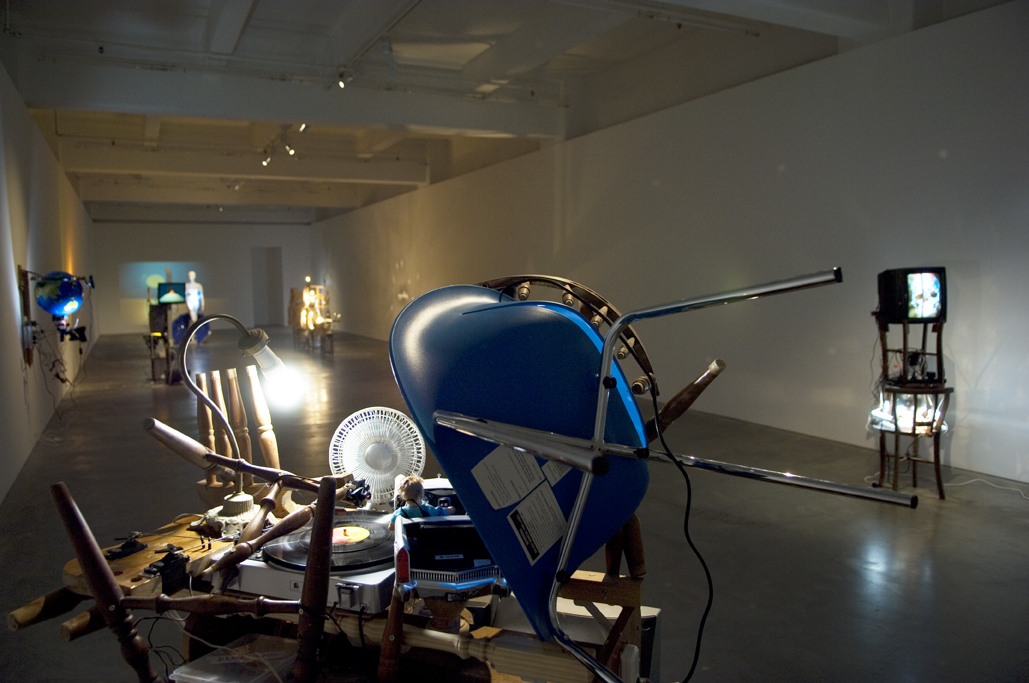
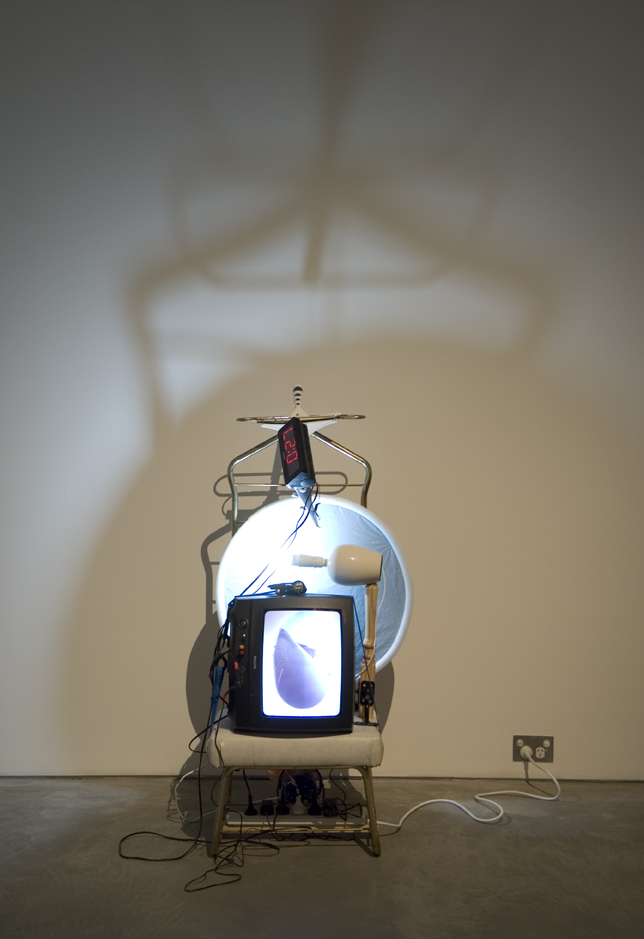
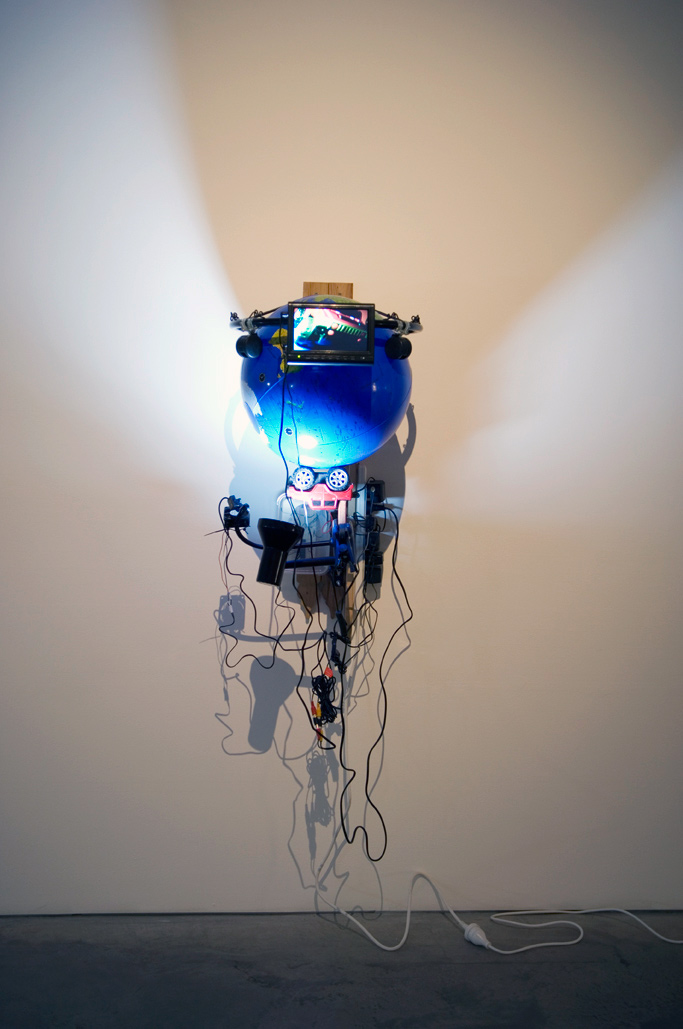
 Art Blart _ art and cultural memory archive
You must be logged in to post a comment.