The Museum of Old and New Art (MONA), Hobart

August 2011


MONA exterior, Hobart


MONA exterior, Hobart
Image Courtesy of MONA Museum of Old and New Art


“Lyotard writes,”We must not begin with transgression, we must immediately go to the very end of cruelty, construct the anatomy of polymorphous perversion, unfold the immense membrane of the libidinal ‘body,’ which is quite the inverse of a system of parts.” Lyotard sees this “membrane” as composed of the most heterogeneous items: human bone and writing paper, steel and glass, syntax and the skin on the inside of the thigh. In the libidinal economy, writes Lyotard: “All of these zones are butted end to end … on a Moebius strip … a moebian skin [an] interminable band of variable geometry (a concavity is necessarily a convexity at the next turn) [with but] a single face, and therefore neither exterior nor interior.”


Jean-François Lyotard quoted in Victor Burgin. In/Different Spaces 1


“Taking a walk is also an extremely immediate form of experience. Serge Daney describes the act of perception while taking a walk: ‘Because I am not particularly fond of bravura pieces, I always need a transition from one thing to the next. And I am glad that I can find it through by body and experience of walking…’
The visual memory of the walker / viewer determines the sequence of the pictures. Since the 1960s Marcel Broodthaers has defined the exhibition as a cinematic sequence of pictures and objects, thereby subverting the fixity of the single object through recontextualisation.”


Serge Daney quoted in Hans Obrist. “In the Midst of Things, At the Centre of Nothing.”2


Libidinal, Moebic MONA

My analogy: you are standing in the half-dark, your chest open, squeezing the beating heart with blood coursing between your fingers while the other hand is up your backside playing with your prostrate gland. I think ringmeister David Walsh would approve.

My best friends analogy: a cross between a car park, night club, sex sauna and art gallery.

Weeks later I am still thinking about the wonderful immersive, sensory experience that is MONA. Peter Timms in an insightful article in Meanjin calls it a post-Google Wunderkammer, or wonder chest.3 It can be seen as a mirabilia – a non-historic installation designed primarily to delight, surprise and in this case shock. The body, sex, death and mortality are hot topics in the cultural arena4 and Walsh’s collection covers all bases. The collection and its display are variously hedonistic, voyeuristic, narcissistic, fetishistic pieces of theatre subsumed within the body of the spectacular museum architecture.

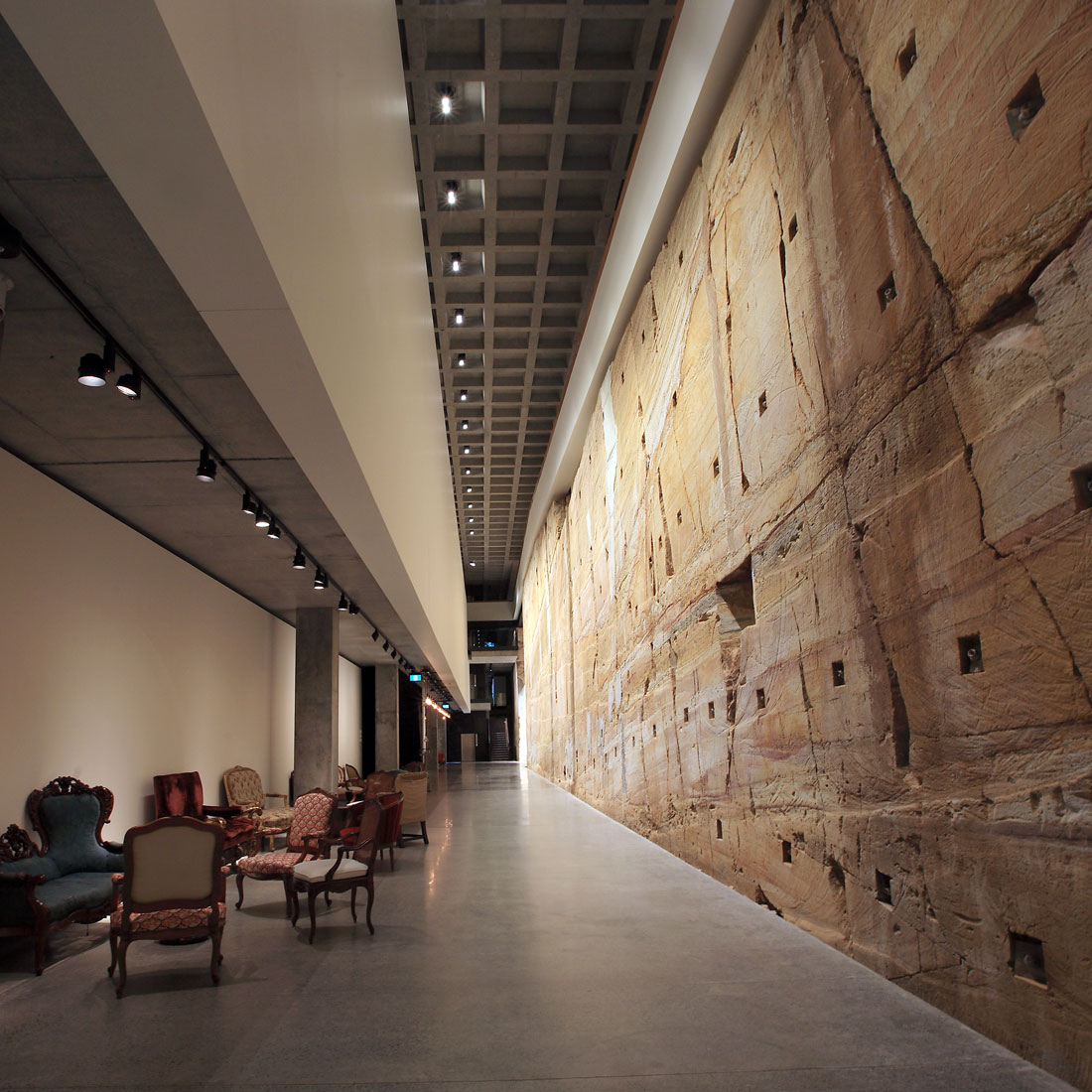
The experience starts with the ferry ride from the wharf in Hobart to the museum – the only way to arrive. During the 20 minutes of the journey mental baggage seems to drop away as you look over the water to the industrial zinc works, pass under bridges and then the museum comes into view. Perched on a promontory of land the museum rises like a rusted ancient temple. After disembarking you climb a colossal staircase to the entrance of the museum, all angles and mirrored surfaces. You enter one of two Roy Grounds listed modernist buildings built in the 1950s – beautiful, crisp white spaces that house the shop and a cafe, cloakroom and inquiry desk where you collect your ‘O’, an iPhone-like device that tracks all the artworks that you look at. The are no didactic text panels in the museum freeing the viewer to just experience, all data such as artists names and educational information and the tit-bit Gonzo text being accessed through the ‘O’. Into the large enclosed forecourt space a spiral staircase with a circular lift in the centre descends into the abyss (an inspired piece of design) and your journey proper has begun. Three levels deep into the ground you travel, the space carved out of solid rock. Impressive.

The museum is the body and the artworks are the organs, fragments of the whole exhibition (that of the actual museum). The experience is very kinaesthetic as the body gets lost within the space of the gallery. We wandered like flâneur among the darkened, cinema-like spaces, almost floating from one area to the next, discovering, feeling disorientated, following underground passages, tunnels and stairs, emerging into light and then descending into the abyss again. Hours passed. Like a Moebius strip there seemed to be no interior/exterior to the body. As Lyotard notes the membrane of the libidinal ‘body’ is composed of the most heterogeneous items: here was rock, steel, shit, bestiality, intestines, brain, touch, burial etc… the curating of the collection within the space “creating a safe space for the appreciation and consideration of seemingly extreme and subversive practices.”5

Into this space of controlled transgression, the carnivalesque mise-en-scène allow the artists to delve into the deeper and darker areas of the human condition: “as Anthony Everitt once said of Damien Hirst [to] ‘open up paths for the viewer into areas of experience which are not anti-moral or amoral but extra-moral… a world where bad taste is driven to the point of elegance and disgust is filtered into delight’.”6

While some of the works were spotlit in the darkened galleries, “this dramatic lighting working to decontextualise the art objects, evoking a crepuscular and “timeless” sense of space, out of which the individual pieces emerged,”7 there also seemed to be an affinity between the building itself and the artworks (relating to the concept of affinity in museum curation). The diversity of installation techniques made an acknowledgement of the institutionalising processes part of the viewer’s experience of the show, disrupting a unified, totalising presentation of these objects and their cultures as “exhibition.”8 The intertextual tableaux mixed a Damien Hirst spin painting with Egyptian sculpture, ancient artefacts with Fat Cars. The context of the objects and their relationship to each other and the architecture is how the works are “framed.” This device emphasises the aesthetic rather than information and encourages the viewer to think about the relationship between the artefacts, objects and contemporary works. These inventive arrangements create a meta-narrative that offers the possibility of multiple interpretations to the viewer, multiple truths. All of this undertaken as the body moves through the spaces of the gallery and gets “lost”. As Norman Bryson has observed, “Architecture is sensed primarily through the eye and through bodily movement, and these sensations also play a key role in the way in which the contents of museums make their impact.”9

While the items are not explicitly related in terms of subject, medium or style through unexpected confrontation the works spring to dissonant life. Most of the time. When this process doesn’t work the viewer is left a little flat feeling, and…. so? wandering from piece to piece becoming slightly disenchanted. Little of the work at MONA took me to new spaces; in fact some of it was pretty mediocre, including the very dated Sir Sidney Nolan Snake (1970 to 1972, see below) that is permanent ‘wallpaper’ and takes up a whole, beautiful gallery wall. The tri-screen video by Russian collective AES+F, the works by Anselm Kiefer and the ancient artefacts (most of all) were notable exceptions. The museum is not a place for prolonged concentration and contemplation. This is not really the point of the place. The whole museum is a sensory, immersive surprising experience that cannot be broken down to its parts. David Walsh’s collection does tick all the fashionable boxes: here a Juan Davila, there a Del Kathyrn Barton, now a Howard Arkeley as though his buyers have advised him on just what to buy, but it is his personal vision, his collection. You can’t argue with that.

On of the problems of lumping all of these works together is obvious: “Ancient objects whose meaning is lost to us, medieval utensils, Christian religious images, and art objects made by modern masters were reduced to one meaning – stylistic resemblances providing evidence of the essential nature of humanity.”10 In other words a return to the globalising view of humanity evidenced by Edward Steichen’s MoMA world touring photographic exhibition of the 1950s The Family of Man. Conversely, when this strategy works well it promotes for the viewer different modes and levels of ‘interpretation’ through subtle juxtaposition of ‘experience’. As Emma Barker has observed, “we still need a curator to stimulate readings of the collection and to establish those ‘climatic zones’ which can enrich our appreciation and understanding of art… Our aim must be to generate a condition in which visitors can experience a sense of discovery in looking at particular paintings, sculptures or installations in a particular room at a particular moment, rather than find themselves standing on the conveyer belt of history.”11 Within this plastic space experience is paramount, allowing the viewer to develop their own reading without relying on the curatorial interpretation of history, setting new parameters for the relationship between viewer and object. As Barker notes such juxtapositions are a more natural strategy for a private collector than for a museum curator, with exhibitions and displays according to this dialectical principle happening with more frequency.12 The museum looses its fundamental didactic, educational purpose.

Other problems may also become evident. In a museum whose spectacular architecture was specifically designed for David Walsh’s collection it will be interesting to see how outside, touring exhibitions (such as the recently installed Experimenta Utopia Now exhibition) display in the space, especially given the psychosexual nature of his collection and its relationship to the building. If the quality of the temporary exhibitions is overwhelmed by the architecture, if the labyrinthine, enigmatic and layered nature of the space (all those floating bridges and the huge Void that can be seen in the photographs below) engulfs lesser works then it may well fall very flat.

At the end of the day we emerged into the afternoon light, expelled from the museum in a tidal wave of humanity, exhausted, satiated. Where else in Australia could you spend all day at a museum and not have seen enough? On flying home you can log into the MONA website to retrieve your ‘O’ tour, to see what art you liked and what you didn’t; what pieces you saw and all those that somehow you missed! The physical and its remembrance transported into the virtual.


Since Laura Mulvey’s essay of 1974 “Visual Pleasure and Narrative Cinema,” we have been aware of the voyeuristic and fetishistic character of our psychosexual relation to cinema. Engulfed in the dark cube, that psychosexual panorama, the cinematic labyrinth that is MONA has the viewer absenting themselves in front of the art in favour of the Eye and the Spectator.13 Spectatorship and their attendant erotics has MONA as a form of fetishistic cinema. It is as if what Barthes calls “the eroticism of place” were a modern equivalent of the eighteenth century genius loci, the “genius of the place.”

The place is spectacular, the private collection writ large as public institution, the symbolic power of the institution masked through its edifice. The art become autonomous, cut free from its cultural associations, transnational, globalised, experienced through kinaesthetic means; the viewer meandering through the galleries, the anti-museum, as an international flaneur. Go. Experience!

Dr Marcus Bunyan


Footnotes

1/ Lyotard, Jean-François. Économie Libidinale. Paris: Éditions de Minuit, 1974, pp. 10-11 quoted in Burgin, Victor. In/Different Spaces: Place and Memory in Visual Culture. Berkeley: University of California Press, 1995, p. 150

2/ Obrist, Hans Ulrich. “In the Midst of Things at the Center of Nothing,” in Harding, Anna (ed.,). Curating: The Contemporary Museum and Beyond, (Art & Design Magazine Profile No. 52), London: A.D., 1997, p. 88

3/ Timms, Peter. “A Post-google Wunderkammer: Hobart’s Museum of Old and New Art Redefines the Genre,” in Meanjin, Vol. 70, No. 2, Winter 2011. pp. 31-39

4/ Keidan, Lois. “Showtime: Curating Live Art  in the 90s,” in Harding, Anna (ed.,). Curating: The Contemporary Museum and Beyond, (Art & Design Magazine Profile No. 52), London: A.D., 1997, p. 41

5/ Ibid., p. 41

6/ Ibid., p. 41

7/ Staniszewski, Mary Anne. The power of display: a history of exhibition installations at the Museum of Modern Art. Cambridge, Mass.: MIT Press, 1998, p. 84

8/ Ibid., p. 97

9/ Bryson, Norman. “A Walk for a Walk’s Sake,” in De Zegher, Catherine (ed.,). The Stage of Drawing: Gesture and Act. London: Tate, 2003, pp. 149-58.

10/ Staniszewski, op. cit. p. 129

11/ Barker, Emma. “Exhibiting the Canon: The Blockbuster Show,” in Barker, Emma (ed.,). Contemporary Cultures of Display. New Haven and London: Yale University Press, 1999, p. 55

12/ Ibid., p. 45

13/ O’Neill, Paul. “The Curatorial Turn: From Practice to Discourse,” in Rugg, Judith and Sedgwick, Michèle (eds.,). Issues in Curating Contemporary Art and Performance. Bristol: Intellect, 2007, pp. 13-28


Many thankx to Delia Nicholls for all her help and to MONA for allowing me to publish most of the photographs in the posting (all except the top two and the one of us inside Babylonia that were taken by Fredrick White). Please click on the photographs for a larger version of the image.
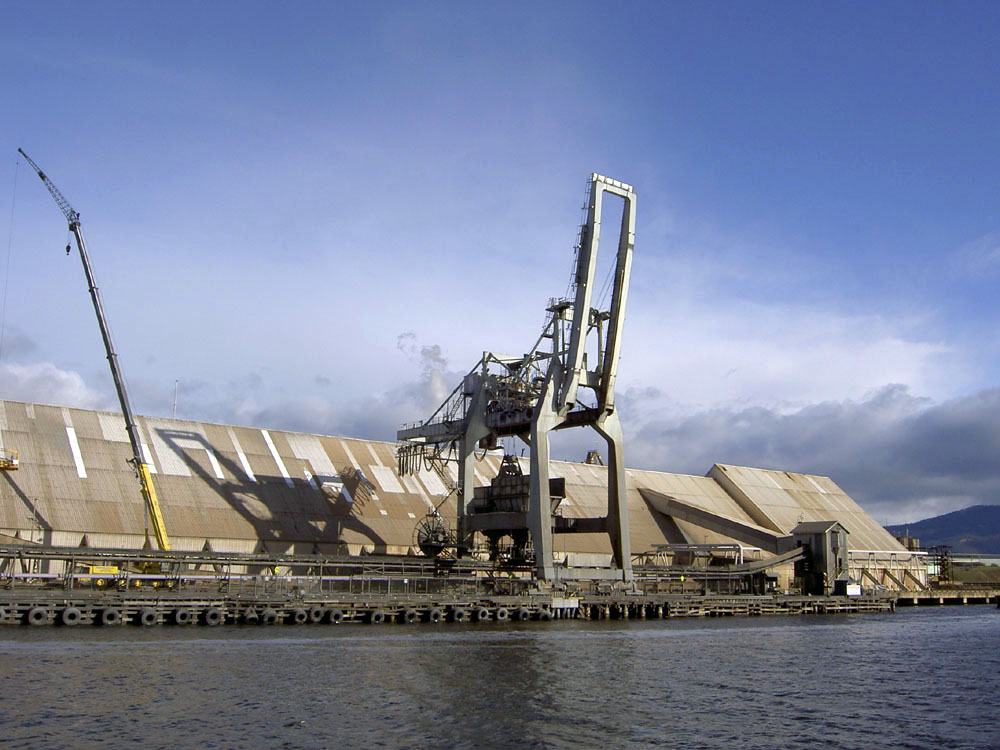
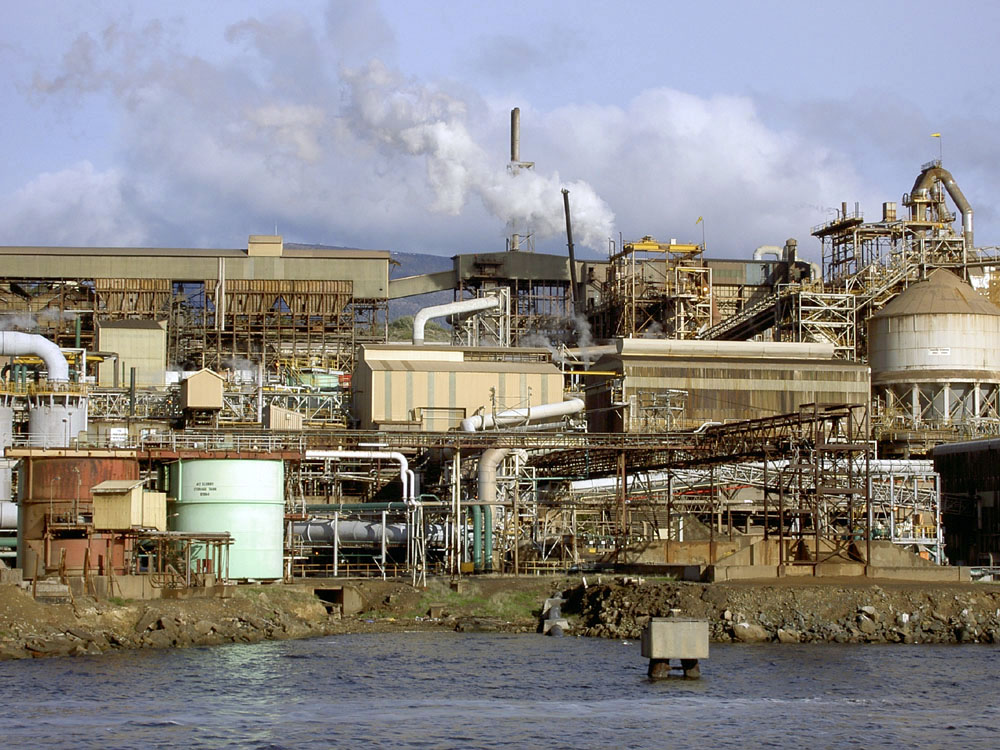


Zinc works from the ferry on the way to MONA

Zinc works from the ferry on the way to MONA


Zinc works from the ferry on the way to MONA
Photos: Marcus Bunyan


3d schematic from the O, showing the levels and nodes indicating art works visited, MONA
 

3d schematic from the O, showing the levels and nodes indicating art works visited, MONA


MONA The Void February 2011


The Void
February 2011
Museum of Old and New Art – interior
Photo credit: MONA/Leigh Carmichael
Image Courtesy of MONA Museum of Old and New Art
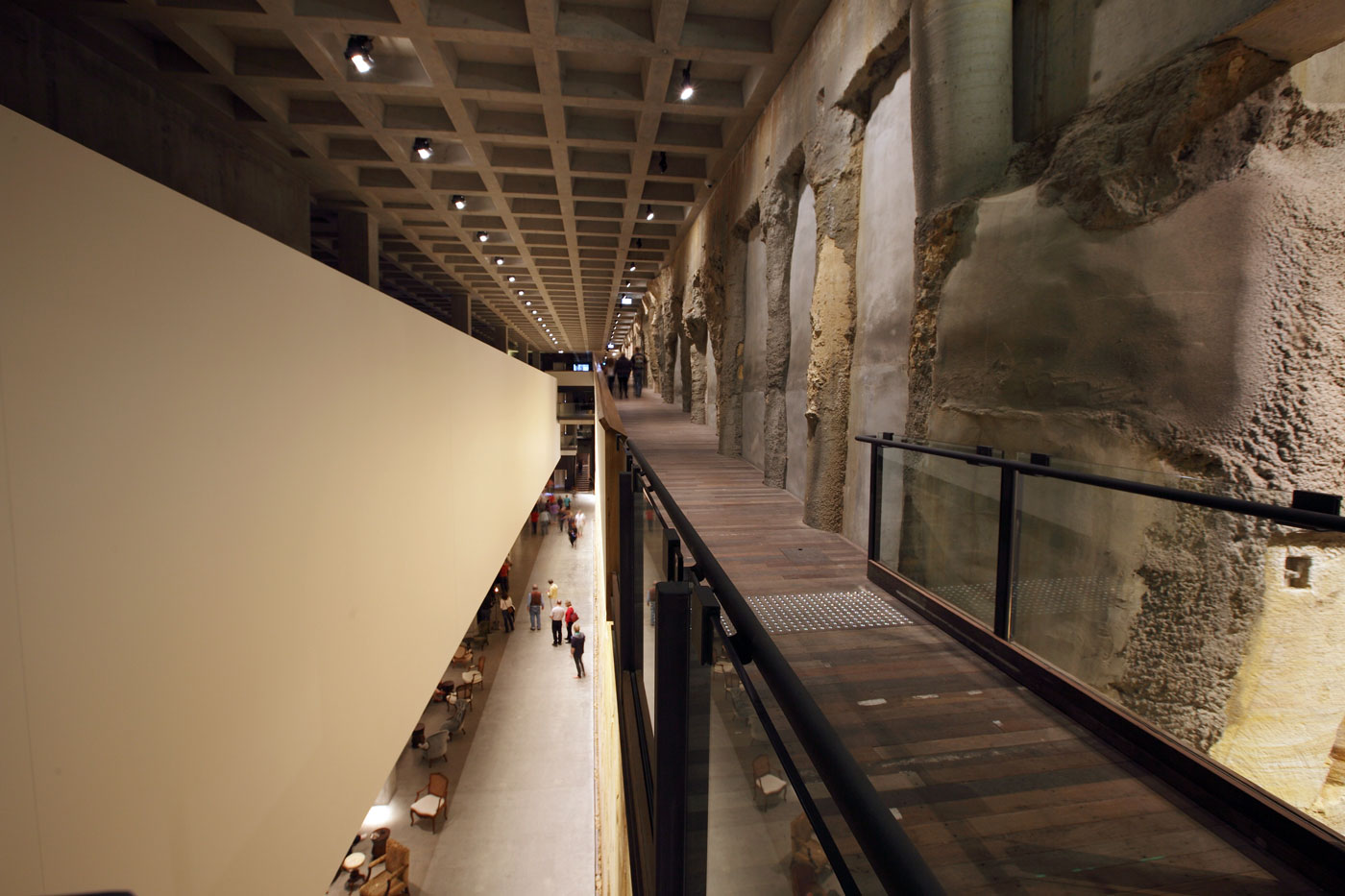
 

MONA B1 walkway overlooking The Void February 2011


B1 walkway overlooking The Void
February 2011
Museum of Old and New Art – interior
Photo credit: MONA/Leigh Carmichael
Image Courtesy of MONA Museum of Old and New Art
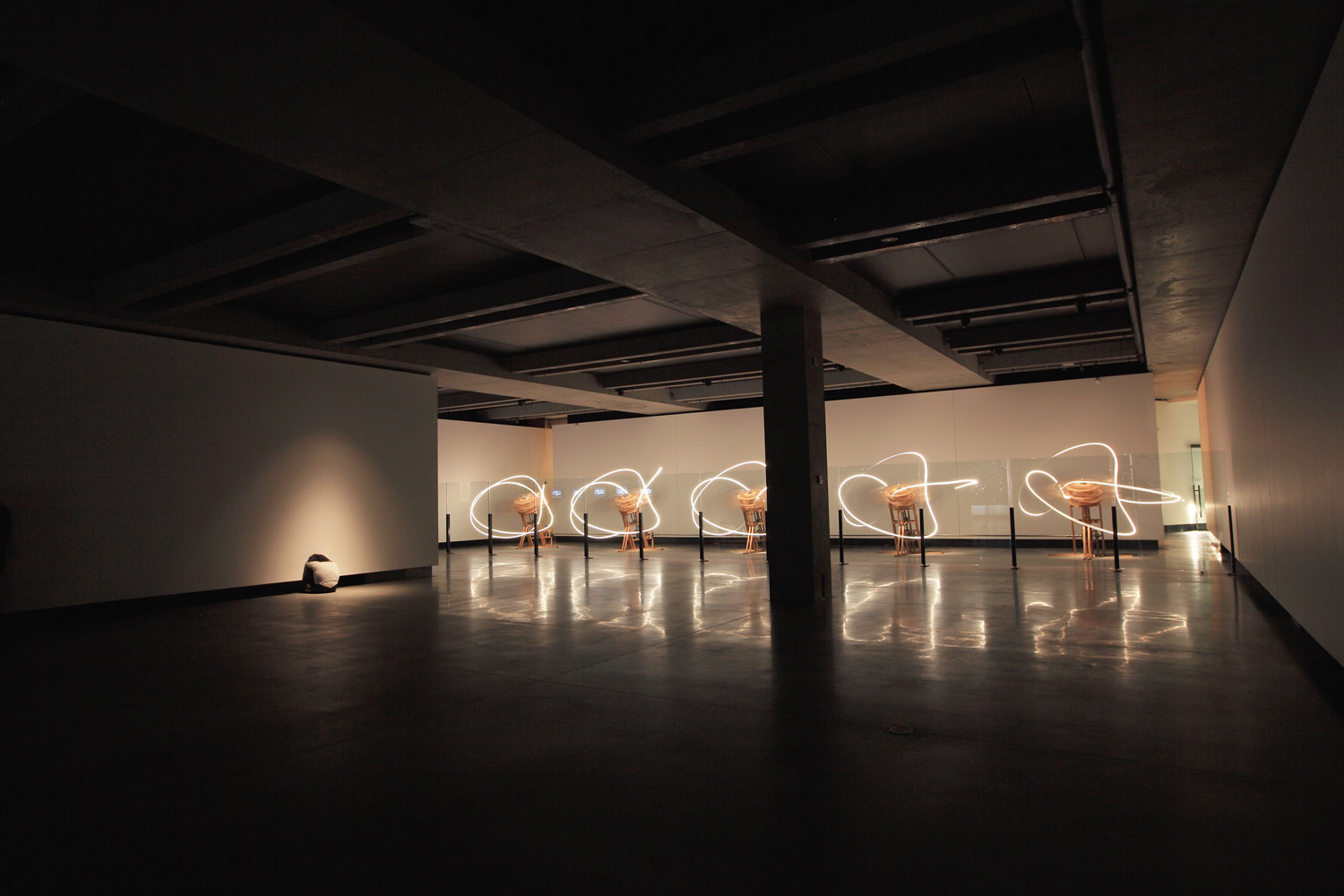
 

MONA Loop System Quintet/Untitled (stool for guard)


Loop System Quintet/Untitled (stool for guard)

Left:
Taiyo Kimura (Japanese, b. 1970)
Untitled (stool for guard)
2007
Mixed media, clothes, cd player, speaker

Right:
Conrad Shawcross (English, b. 1977)
Loop System Quintet

2005
Waxed machined oak, five light bulbs, electric motor and gearbox, drive shafts, cogs, universal joints, flange units, screws, bolts, nuts, washers

Photo credit: MONA/Leigh Carmichael
Image Courtesy of MONA Museum of Old and New Art
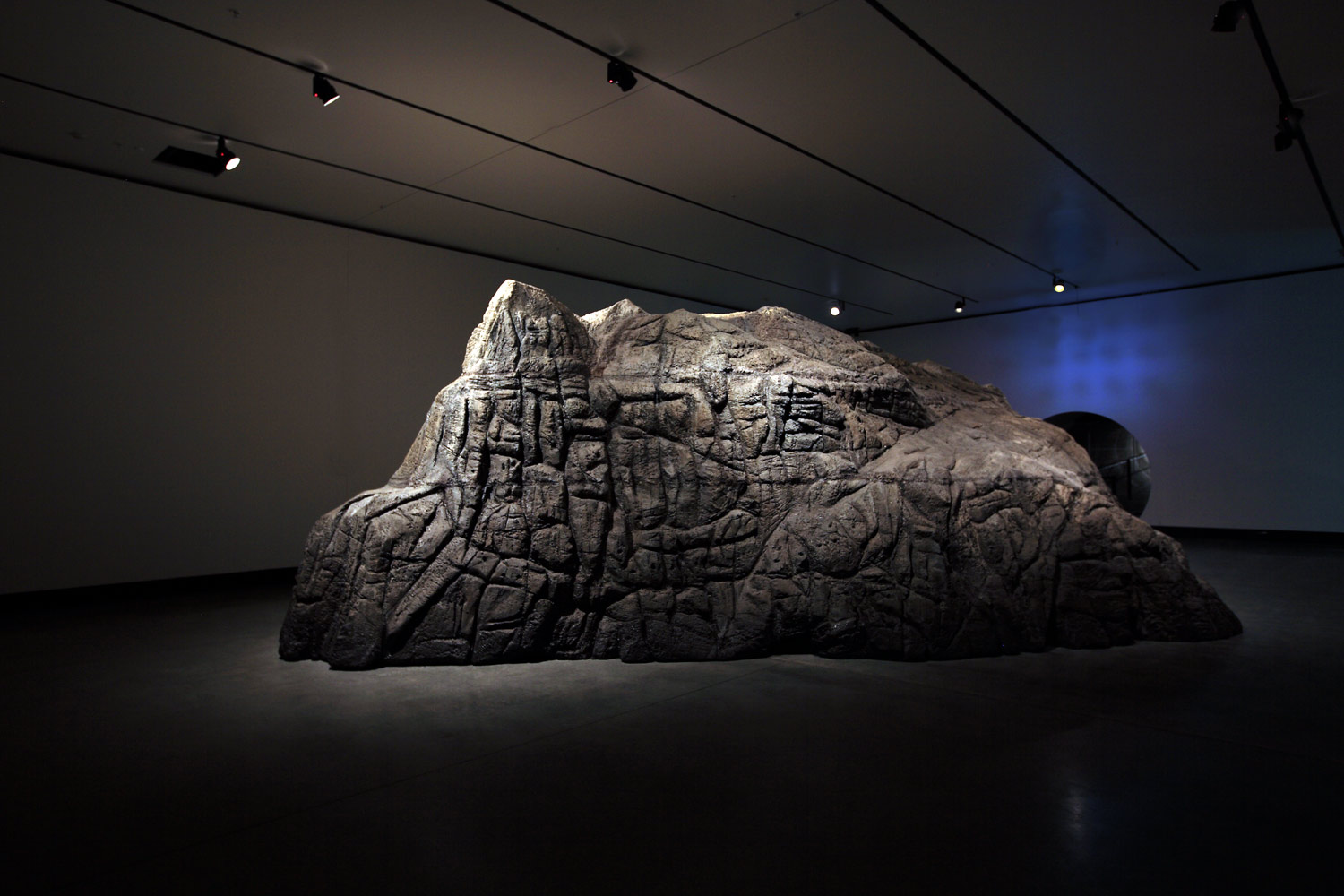
 

Callum Morton (Australian born Canada, b. 1965) 'Babylonia' 2005


Callum Morton (Australian born Canada, b. 1965)
Babylonia
2005
Wood, polystyrene, epoxy resin, acrylic paint, light, carpet, mirror and sound
Photo credit: MONA/Leigh Carmichael
Image Courtesy of MONA Museum of Old and New Art


Sculptor Fredrick White and Marcus Bunyan inside Callum Morton's 'Babylonia' wearing the 'O'


Sculptor Fredrick White and Marcus Bunyan inside Callum Morton’s Babylonia wearing the ‘O’
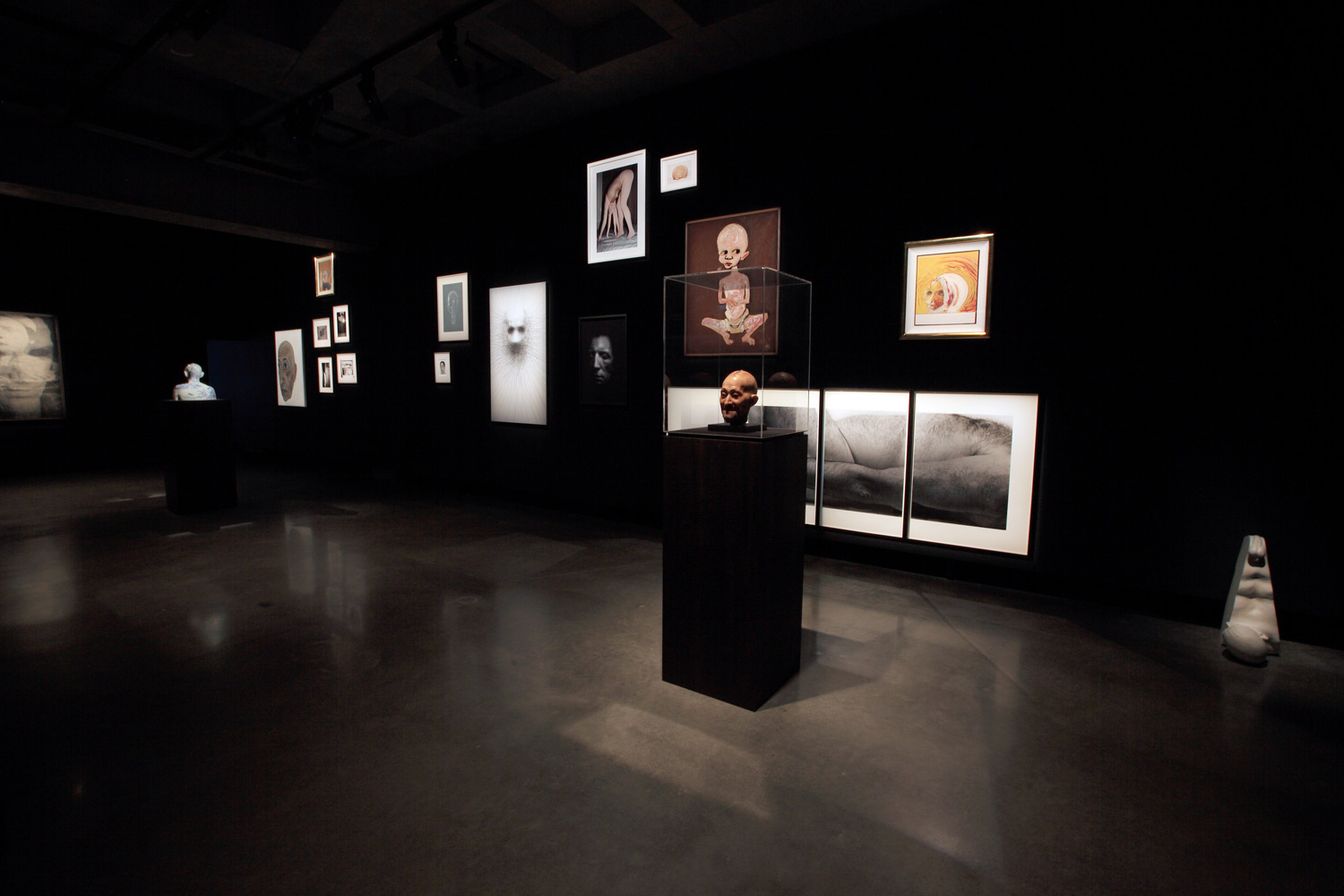
 

Portrait gallery. Various artworks by various artists. Museum of Old and New Art - interior


Portrait gallery
Various artworks by various artists
Museum of Old and New Art – interior
Photo credit: MONA/Leigh Carmichael
Image Courtesy of MONA Museum of Old and New Art


Masturbation. It is a source of endless irony to me that when I was young, and desperately in need of endless fucking, no one was interested in helping me out, whereas now, older and slower, I could fill even my desired adolescent quota. What saved me then was my right hand, even though I call myself left-handed. Surely the hand that you wank with (I guess John Holmes was ambidextrous) defines you just as much as the hand you write with? Anyway, who writes anymore? It’s so much easier to type. Mental masturbation allows me to pretend I’m a mental John Holmes, takes both hands. But no brains.

Art. I’m not at all sure that conceptual art and traditional art are the same thing. One can come from muscle memory, from pragma; at its best it’s not at all conscious. The former, though, is so self-aware it’s often targeting its own self-awareness. Check out the Hirst and the Pylypchuk at the other end of the gallery.


David Walsh 2011


MONA Corten Stairwell February 2011


Corten Stairwell
February 2011
Museum of Old and New Art – interior
Photo credit: MONA/Leigh Carmichael
Image Courtesy of MONA Museum of Old and New Art
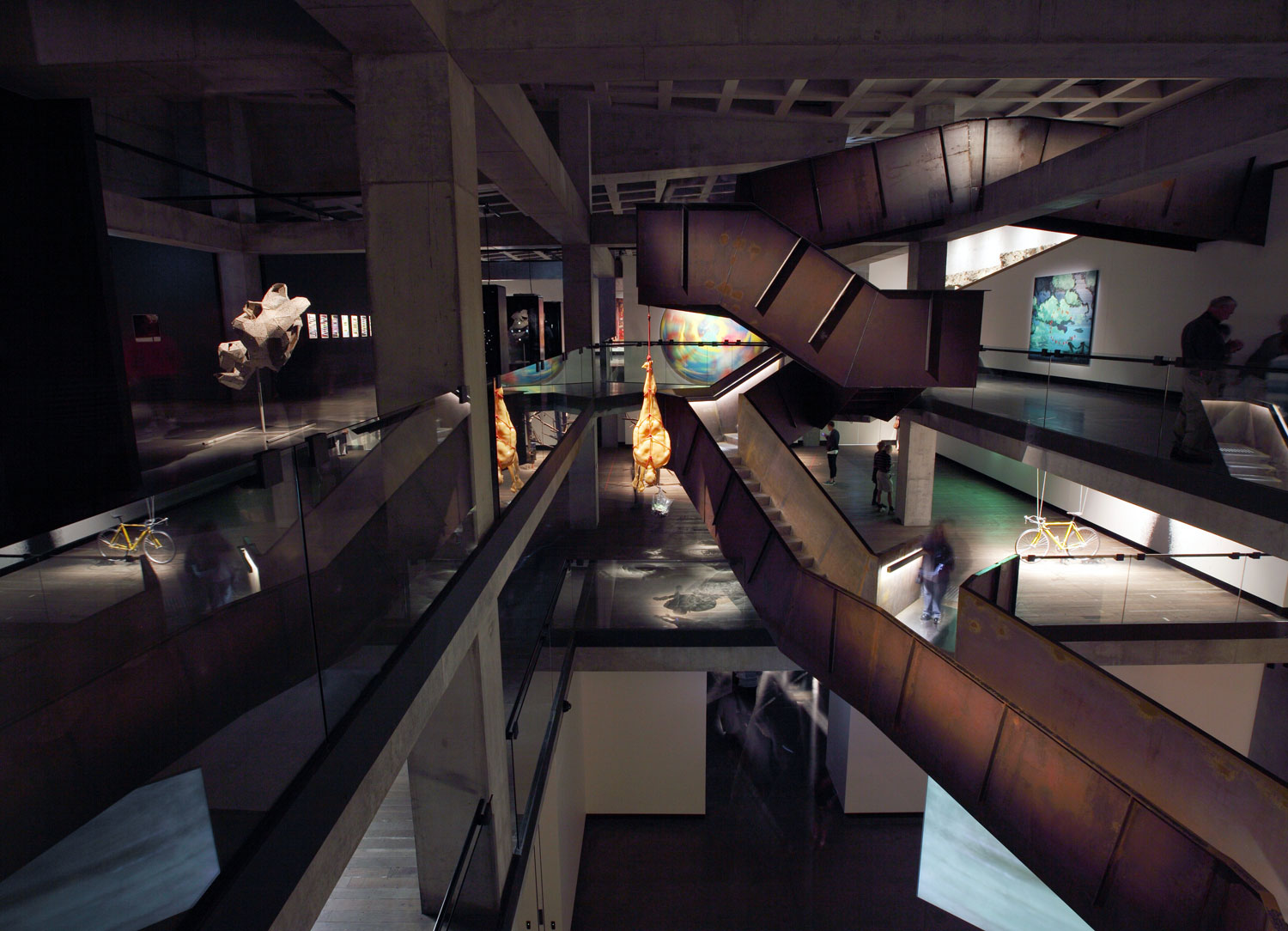
 

MONA Corten Stairwell & Surrounding Artworks February 2011


Corten Stairwell & Surrounding Artworks
February 2011
Museum of Old and New Art – interior
Photo credit: MONA/Leigh Carmichael
Image Courtesy of MONA Museum of Old and New Art
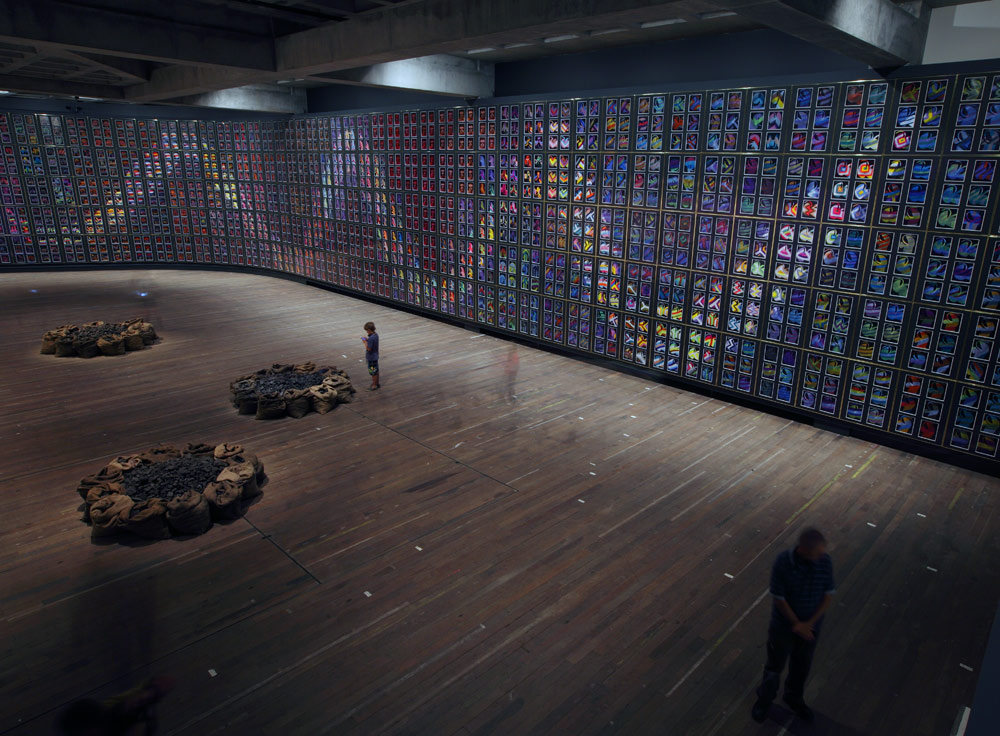
 

MONA The Nolan Gallery February 2011


The Nolan Gallery

Sir Sidney Nolan (Australian, 1917-1992)
Snake
1970 to 1972
Mixed media on paper, 1620 sheets

Jannis Kounellis (Greece, 1936-2017)
Untitled

2002
Jute coffee bags, coal; three parts

Photo credit: MONA/Leigh Carmichael
Image Courtesy of MONA Museum of Old and New Art
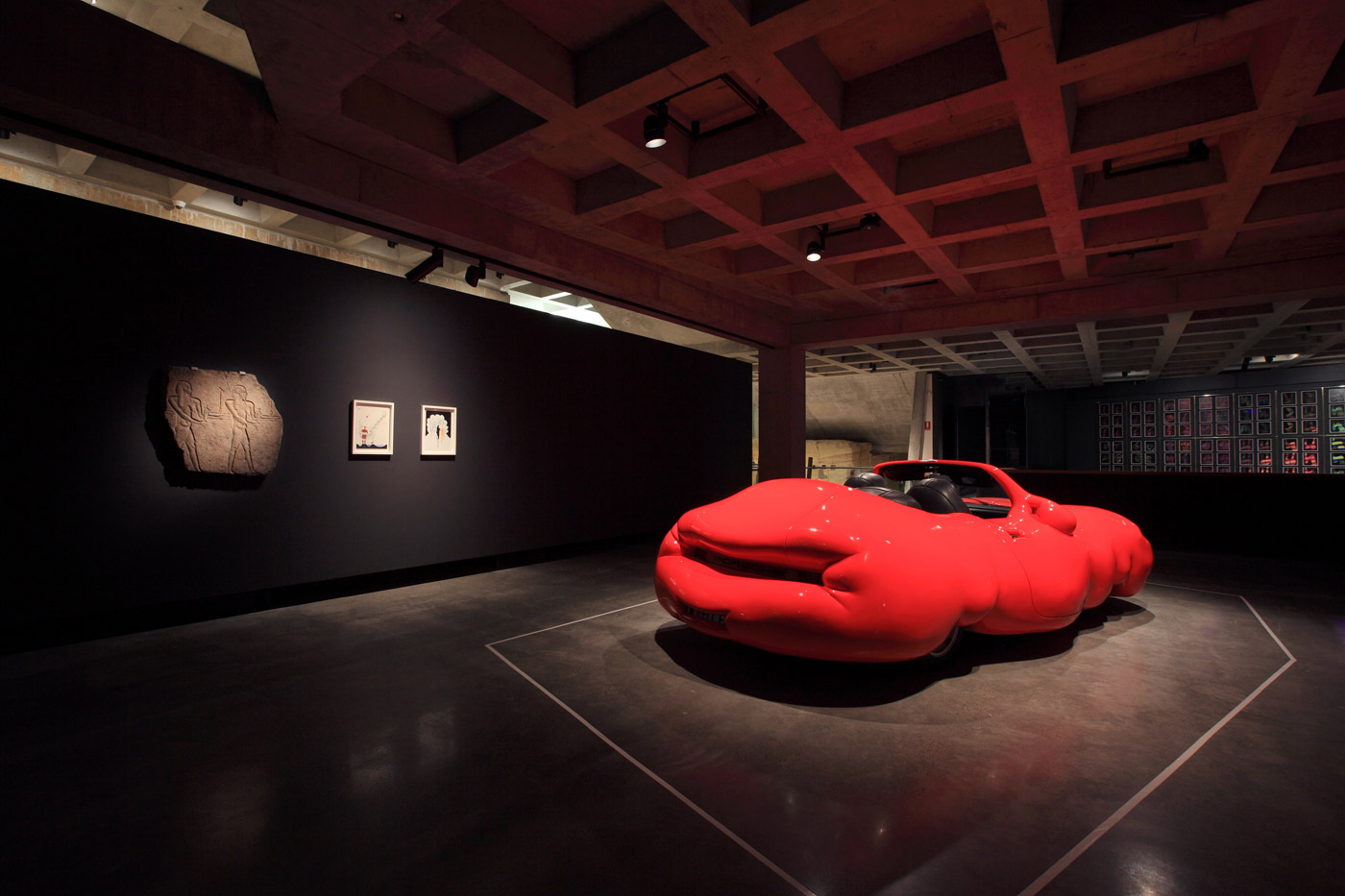
 

Erwin Wurm (Austrian, b. 1954) 'Fat Car' 2006
 at MONA


Erwin Wurm (Austrian, b. 1954)
Fat Car
2006
Steel chassis and body; leather interior, with polystyrene and fibreglass
Photo credit: MONA/Leigh Carmichael
Image Courtesy of MONA Museum of Old and New Art


Museum of Old and New Art
655 Main Road Berriedale
Hobart Tasmania 7011, Australia

Opening hours:
Fridays – Mondays, 10am – 5pm
MONA website

LIKE ART BLART ON FACEBOOK

Back to top

Opening: ‘John Bodin: Rite of Passage’ at Anita Traverso Gallery, Richmond

Exhibition dates: 11th August – 3rd September, 2011


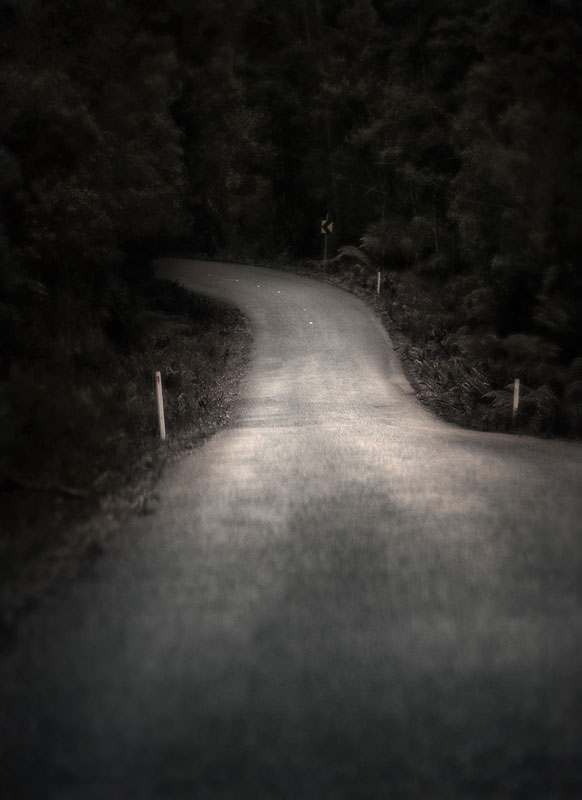
John Bodin (Australian) 'I Was Far Away From Home' 2009


John Bodin (Australian)
I Was Far Away From Home
2009
Type C print on metallic paper
80 x 110cm


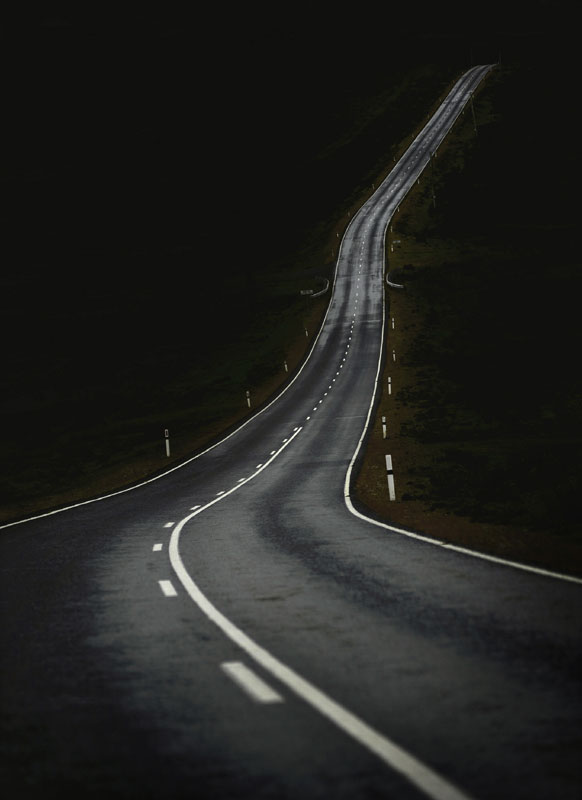
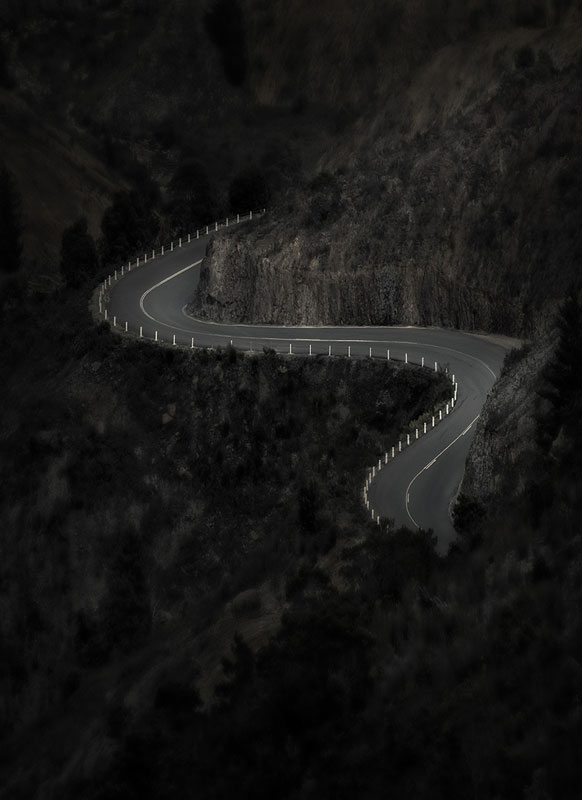
Reprinted below is the speech I gave at the opening. Beautiful work (shot mostly in Tasmania from the passenger seat of a moving car). Many thanx to Anita and John for asking me to speak at the opening – it was fun!

Opening night speech

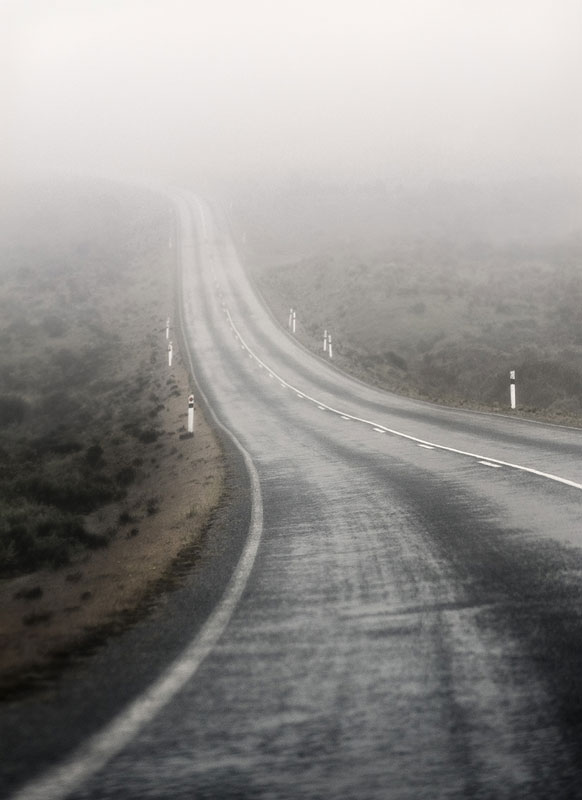
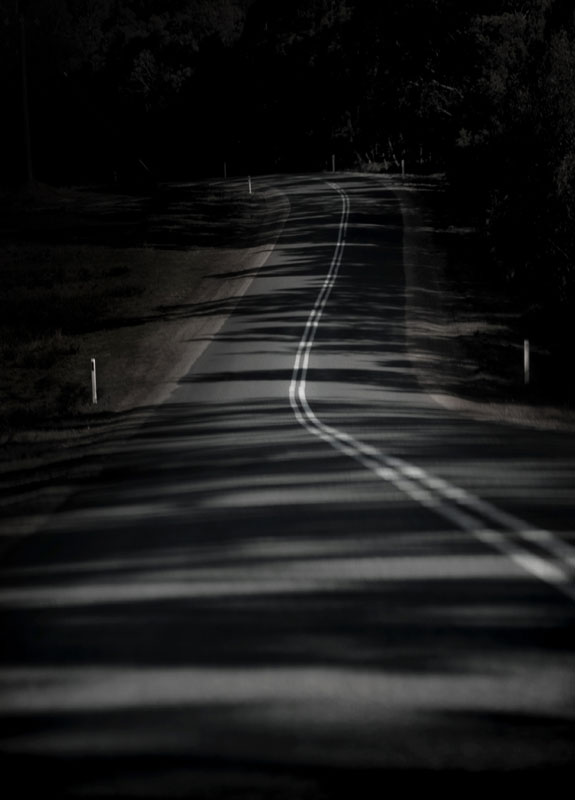
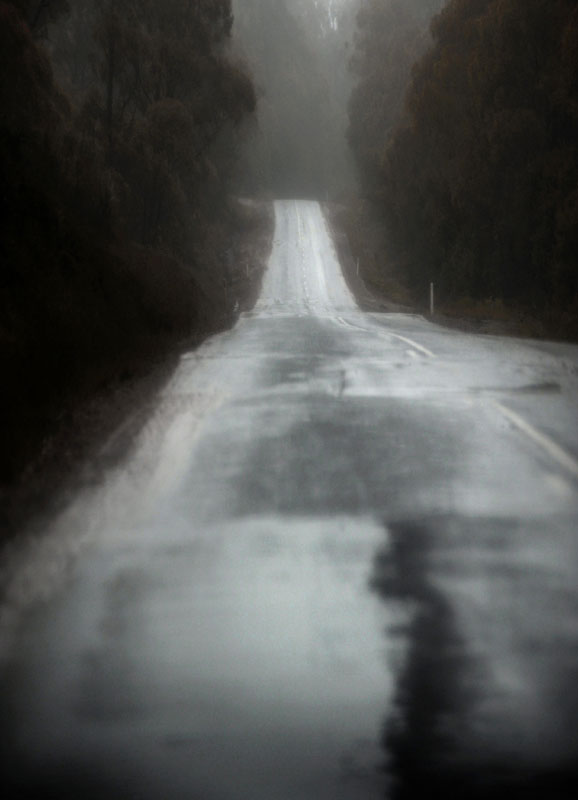
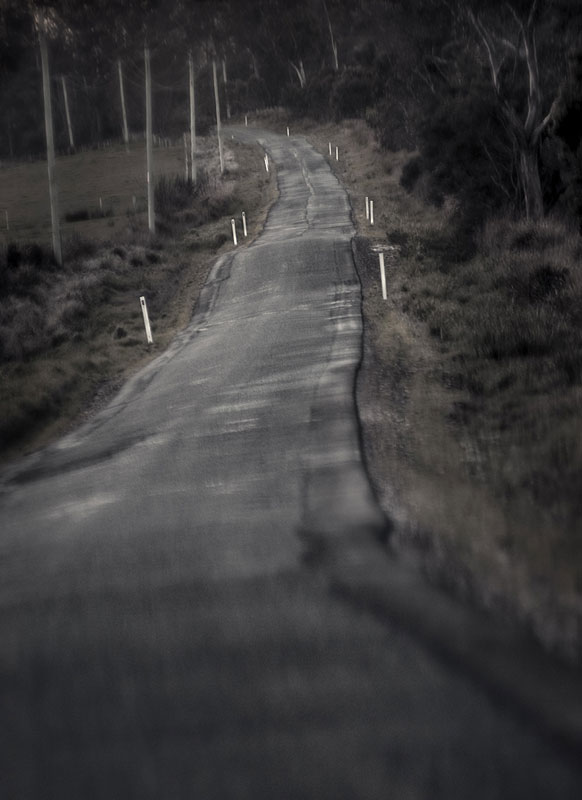
I want to preface what I am about to say by noting that I am interested in how these photographs, as physical objects, might speak to what is not physical, what is intangible and ineffable about the spaces they display.

I saw a fantastic documentary about the pianist Artur Rubenstein recently on SBS. When he was playing in concert he believed that he recognised in the audience a person that was more attuned to the nuances of his phrasing and performance than others and he played for them – he wanted to show them something new, insightful and challenging. This made him play better, taking more risks for greater reward, for himself and for the audience. These moments have the possibility of becoming moments in eternity (or to introduce the analogy of the road, milestones). For us it is the recognition of these moments in eternity (or to keep the analogy going, a journey), the unenclosed and apparently insignificant. The material world’s strange mixture of familiarity and otherness, ‘humanness’ and non-humanness.

Where these ideas share a quality with the photographs by John is a recognition of the fluid energy flowing through these spaces, like infinite ribbons of consciousness. For me this is not an escapement nor contentment but a point of stillness within self – an awareness and balance at that moment, at that point in time, in that line of sight when the photograph was taken. A stillness within self that acknowledges the journey taken and the journey to be taken – something that is beyond language and goes to the most intimate place of our being.

The photographs become the surface of the body, stitched together with lines, markers pointing the way – they are encounters with the things that we see before us but also the things that we carry inside of us. It is the interchange between these two things, how one modulates and informs the other. It is this engagement that holds our attention: the dappled light, ambiguity, unevenness, the winding path that floats and bobs before our eyes looking back at us, as we observe and are observed by the body of these landscapes.

One of the fundamental qualities of the photographs is that they escape our attempts to rationalise them and make them part of our understanding of the world, to quantify our existence in terms of materiality. I have an intimate feeling with regard to these sites of engagement. They are both once familiar and unfamiliar to us; they possess a sense of nowhereness. A sense of groundlessness and groundedness. A collapsing of near and far, looking down, looking along, a collapsing of the constructed world.

Why here? Why this particular angle? This section of the visible, this turn in the road. Not quite knowing where we are, we are neither here nor there, within nor without. It is an experience of being between the two – a potential space, a “between” that is formed only in the simultaneous presence of the two. As Donald Winnicott has observed in the book In/different Spaces by Victor Burgin, it is “the potential space between the subjective object and the object objectively perceived” that becomes the location of cultural experience.

“Those things of which I can perceive the beginnings and the end are not my self.” Grimm says. Like the road in these photographs there is no self just an infinite time that has no beginning and no end. The time before my birth, the time after my death. We are just in the world, just being somewhere. Life is just a temporary structure on the road from order to disorder. “The road is life,” writes Jack Kerouac in On the Road.

John’s skill as a photographer is to make visible the not really seen, potential spaces that we could have not have imagined otherwise. And for that, John, I am grateful.

Dr Marcus Bunyan


John Bodin (Australian) 'Into the Mystic' 2009


John Bodin (Australian)
Into the Mystic
2009
Type C print on metallic paper
80 x 110cm


John Bodin (Australian) 'Into Timeless Shadows' 2009


John Bodin (Australian)
Into Timeless Shadows
2009
Type C print on metallic paper
80 x 110 cm


John Bodin (Australian) 'Remembrance of Some Lost Bliss' 2009


John Bodin (Australian)
Remembrance of Some Lost Bliss
2009
Type C print on metallic paper
80 x 110 cm


John Bodin (Australian) 'So Ghostly Easy' 2009


John Bodin
So Ghostly Easy
2009
Type C print on metallic paper
80 x 110 cm


John Bodin (Australian) 'Somewhere Along the Line the Pearl would be Handed to Me' 2009


John Bodin (Australian)
Somewhere Along the Line the Pearl would be Handed to Me
2009
Type C print on metallic paper
80 x 110 cm


John Bodin (Australian) 'The One Distinct Moment of My Life' 2009


John Bodin (Australian)
The One Distinct Moment of My Life
2009
Type C print on metallic paper
80 x 110 cm


Anita Traverso Gallery
PO Box 7001, Hawthorn North 3122
Phone: 0408 534 034

Anita Traverso Gallery website

LIKE ART BLART ON FACEBOOK

Back to top

Review: ‘Ricky Maynard: Portrait of a Distant Land’ at The Ian Potter Museum of Art, Melbourne

Exhibition dates: 25th May – 14th August 2011


Ricky Maynard (Australian, b. 1953) 'The Healing Garden, Wybalenna, Flinders Island, Tasmania' 2005 from the series 'Portrait of a Distant Land'


Ricky Maynard (Australian, b. 1953)
The Healing Garden, Wybalenna, Flinders Island, Tasmania
2005
From the series Portrait of a Distant Land
Gelatin silver resin-coated print
Museum of Contemporary Art, purchased with funds provided by the Coe and Mordant families, 2010
© Courtesy the artist


Having posted about this exhibition when it was presented at the Museum of Contemporary Art, Sydney I was looking forward to seeing it ‘in the flesh’ at The Ian Potter Museum of Art. I have seen the exhibition three times now and each time I have left feeling underwhelmed.

While it is encouraging to see the development of an Aboriginal photographic art practice and the documentary depiction from inside this culture as a form of visual oral history, there is something leaden about this story telling. Other than a few incisive images I had no feeling for these photographs; the photographs don’t really take me anywhere. The best of them give access to the spaces they depict (usually the landscapes of distant islands or mountains that evoke “a sense of absence that exist within these landscapes,” a sense of displacement and departure) but most of the work seems to be blocked at the surface of the image: there just seems to be no way in to the emotional and psychological aspects of the photographs. The viewer is hardly ever drawn into the pictures force field. Occasionally they come alive but even when photographing scenes of friends and happiness there is a deadness about the work – a portrait of an emotionally distant and constrained land that is understandable (due to the “existence of the struggle beneath the surface”) but does not make for very compelling art. Even in the printing the highlights are occluded and grey as though a miasma hovers over their production. Commenting in The Age newspaper, Dan Rule observes that series such as Maynard’s mid-80s The Moonbird People that describes the Aboriginal community of his native Flinders Island during the annual mutton bird season, “are at once formally sparse and richly layered in the textural and historical narrative of the land.” Poetic and bearing an incredible weight of history. Personally I didn’t buy into the poetry of the storytelling and I found the photographs heavy going as though that incredible weight of history was inexorably weighing them down. If you want to see real poetry in the art of photography look at the work of William Clift.

I am asked by the curator Keith Munro “Do not forget these faces” but there is nothing truly memorable about them unlike, for example, some of the photographs of Sue Ford or Carol Jerrems. A perfect example are the photographs of Wik elders from the series Returning to places That Name Us (2000, see three photographs below). The viewer is caught at the surface of these images, observing the minutiae of detail, the faces closely cropped at the forehead and neck against a contextless white background. These are confronting images of presence at the large size they are produced in the exhibition but what else are they? At a smaller scale one might have related to the scars, creases and furrows of the Elders like the bark of the tree weathering the storm, an intimacy with a fellow human being and their life journey – but not here. My favourite photograph was an untitled landscape from the series In the Footsteps of Others. In this beautiful image a mountain hovers in the distance while in the foreground dark grasses and trees are shot through with raked sunlight. A mysterious, haunting evocation of space and place that left me wanting more precisely because of its ambiguity and longing.

While the photographs capture individuals and their relationship to place it is a journey they do not take me on. This is the crux of the matter for a photographer – allowing the viewer to see things that are not immediately visible, to construct their own narrative and take that leap of faith invested in the equivalency of the image. For me this never happened with this exhibition.

Dr Marcus Bunyan


Many thankx to Katrina Raymond for her help and to The Ian Potter Museum of Art for allowing me to publish the text and photographs in the posting. Please click on the photographs for a larger version of the image.


“For me, photographs have always been personal and I hope to convey the intimacy of a diary. Photography has the ability to tell stories about the world and how the photograph has power to frame a culture.”


Ricky Maynard


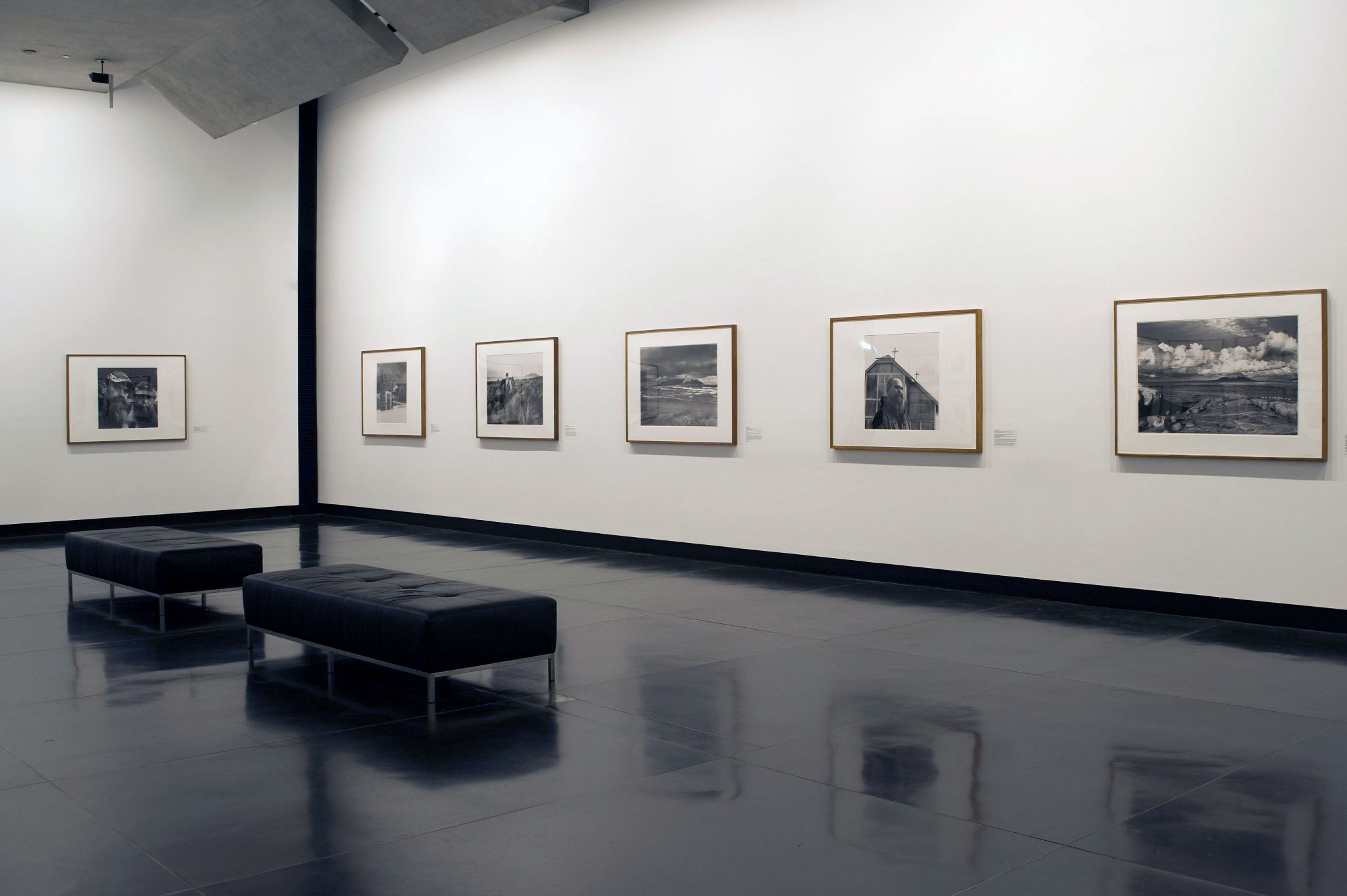
Installation view of the exhibition 'Ricky Maynard: Portrait of a Distant Land' at The Ian Potter Museum of Art, Melbourne showing at left, 'Custodians' (2005); at third left, 'Coming Home' (2005); at second right, 'Mission'
(2005); and at right, 'Vansittart Island' (2007)


Installation view of the exhibition Ricky Maynard: Portrait of a Distant Land at The Ian Potter Museum of Art, Melbourne showing at left, Custodians (2005, below); at third left, Coming Home (2005, below); at second right, Mission
(2005, below); and at right, Vansittart Island (2007, below)


Ricky Maynard (Australian, b. 1953) 'Custodians' 2005 From the series ‘Portrait of a distant land’


Ricky Maynard (Australian, b. 1953)
Custodians
2005
From the series Portrait of a distant land
Gelatin silver resin-coated print
Museum of Contemporary Art, purchased with funds provided by the Coe and Mordant families, 2010
© Courtesy the artist


Ricky Maynard (Australian, b. 1953; Trawlwoolway) 'Coming Home' 2005 From the series 'Portrait of a distant land'


Ricky Maynard (Australian, b. 1953)
Coming Home
2005
From the series Portrait of a Distant Land
Gelatin silver photograph, selenium toned
37.4 × 54.1cm
© Ricky Maynard


Ricky Maynard (Australian, b. 1953) ‘Mission’ 2005 from the series ‘Portrait of a distant land’


Ricky Maynard (Australian, b. 1953)
Mission
2005
From the series Portrait of a distant land
Gelatin silver resin-coated print
70 x 100cm
Museum of Contemporary Art, purchased with funds provided by the Coe and Mordant families, 2010
© Courtesy the artist


Ricky Maynard (Australian, b. 1953) 'Vansittart Island' 2007 From the series 'Portrait of a Distant Land'


Ricky Maynard (Australian, b. 1953)
Vansittart Island
2007
From the series Portrait of a Distant Land
Gelatin silver photograph, selenium toned
33.9 x 52.1cm
© Ricky Maynard


Ricky Maynard (Australian, b. 1953) 'Broken Heart' 2005 From the series 'Portrait of a Distant Land'


Ricky Maynard (Australian, b. 1953)
Broken Heart
2005
From the series Portrait of a Distant Land
Gelatin silver resin-coated print
Museum of Contemporary Art, purchased with funds provided by the Coe and Mordant families, 2010
© Courtesy the artist


Portrait of a Distant Land is an exhibition of 60 works by leading indigenous photographer Ricky Maynard, spanning two decades of his practice. Through his photographs Ricky Maynard offers a journey of alternative perspectives and cultural insights. His passion and meticulous attention to detail encapsulates an honest and deeply felt interpretation of his people and the land they inhabit.

Drawing on six bodies of work, this remarkable exhibition was first shown as part of the inaugural Photoquai Biennale organised by Musée du Quai Branly in Paris.

Maynard is based on Flinders Island in Bass Strait and has been recording the lives of his people since the mid 1980s. Several of Maynard’s renowned photographs trace songlines, massacre sites, key historical events, important meeting places, sacred cultural sites and practices of Tasmanian Aboriginal people.

The artist works closely with the communities he photographs and his approach to social documentary represents a major development in the representation of Aboriginal and Torres Strait Islander people in Australia.

In Urban Diary (1997) Maynard focuses on the experiences of Aboriginal people in Melbourne’s beachside suburb, St Kilda, while his portraits of Wik elders in Returning to Places that Name Us (2000) are inspired by the landmark High Court of Australia’s ruling which recognised the existence of the traditional lands of the Wik people located on Cape York in northern Queensland. Also on view are images from the series The Moonbird People (1985-88) which depicts a Tasmanian Aboriginal community during the annual muttonbird season, and No More Than What You See (1993), a confrontational and emotionally-charged portrait of Indigenous people incarcerated in the South Australian prison system.

Maynard’s personal pilgrimage and spiritual journey as a member of the Ben Lomond and Big River people of Tasmania comes full circle with his images of important cultural sites, ochre trails and scarred trees represented in the series In the Footsteps of Others (2003).

Press release from The Ian Potter Museum of Art


Ricky Maynard (Australian, b. 1953) ‘Untitled’ 1997 From the series ‘Urban diary’


Ricky Maynard (Australian, b. 1953)
Untitled
1997
From  the series Urban diary
Gelatin silver fibre print
Museum of Contemporary Art, purchased with funds provided by the Coe and Mordant families, 2010
© Courtesy the artist


Ricky Maynard (Australian, b. 1953) ‘Untitled’ 1997 From the series ‘Urban diary’


Ricky Maynard (Australian, b. 1953)
Untitled
1997
From the series Urban diary
Gelatin silver fibre print
Museum of Contemporary Art, purchased with funds provided by the Coe and Mordant families, 2010
© Courtesy the artist


Portrait of a Distant Land

DO NOT FORGET THESE FACES – THEY HOLD SOMETHING YOU WOULD NOT BELIEVE 1

Through his photographs Ricky Maynard offers a journey of alternative perspectives and cultural insights. His passion and meticulous attention to detail encapsulates an honest and deeply felt interpretation of his people and the land they inhabit.

Maynard, of Tasmanian Aboriginal descent, is a documentary photographer who lives on Flinders Island in the Bass Strait between Tasmania and the southeast Australian mainland. This exhibition presents his latest developing body of work Portrait of a Distant Land, which he began in 2005, as well as a selection of images from five earlier series including The Moonbird People (1985-88), No More Than What You See (1993), Urban Diary (1997), Returning to Places that Name Us (2000) and In The Footsteps of Others (2003), tracing key aspects of Maynard’s practice to the present day.

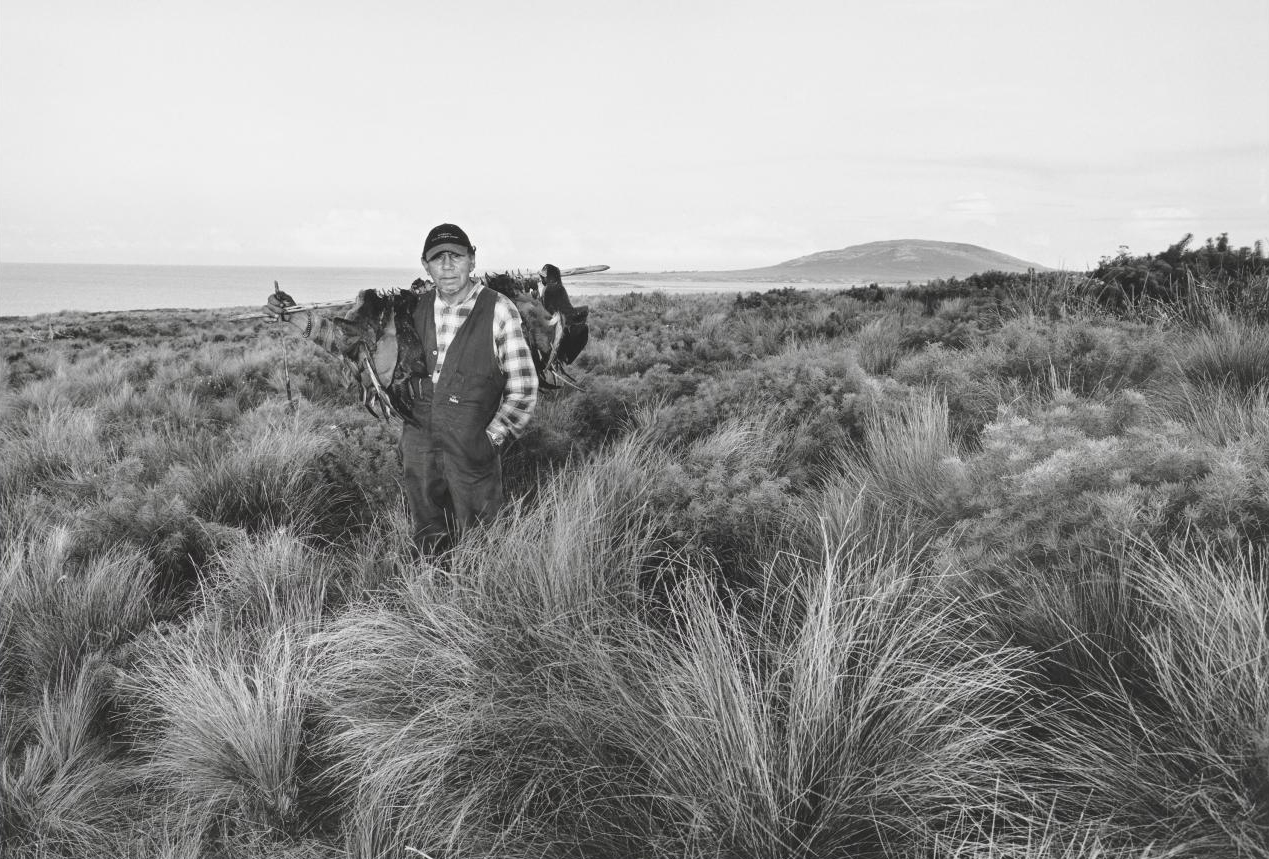
The ten works from the Portrait of a Distant Land series trace song lines, key historical events, massacre sites, petroglyphs and midden2, important meeting places, sacred cultural sites and practices of Tasmanian Aboriginal people. Presented alongside insightful and poignant quotations by community members who have maintained their local cultural heritage, these powerful images reaffirm a cultural dynamic forged by a strong belief in the importance of upholding cultural integrity both in and through picture making. Importantly, they provide the viewer with a greater understanding of both individual and  collective histories from outside a dominant gaze. Wybalenna on Flinders Island as depicted in Death in Exile and The Healing Garden for instance, is one of numerous historically-scarred sites; and for Maynard Vansittart Island encapsulates the crude and culturally insensitive research and documentation by dominant societies that continues to this day. Some photographs such as Mission, Broken Heart and A Free Country capture moments of reflection while others, like Traitor and The Spit are powerfully loaded references to either specific historical acts of oppression that contributed greatly to the devastation of Aboriginal people of Tasmania or recall childhood memories of people and place. Alongside these works, Coming Home is an example of cultural assertion: it depicts the ongoing significance of muttonbird hunting to Maynard’s people.

The annual muttonbirding season is the subject of Maynard’s powerful and innovative black and white series The Moonbird People, a deeply personal story relating the importance of this tradition to the people on the islands in Bass Strait3. The series was commissioned for the book After 200 Years: Photographic Essays on Aboriginal and Islander Australia Today, produced as part of Australia’s bicentennial celebrations in 1988 4. These images record a cultural practice that significantly predates European colonisation and continues today.

Urban Diary focuses on the experiences of Aboriginal people in Melbourne’s beachside suburb, St Kilda. This body of work captures the interactions between members of the community whilst also depicting some of the challenges Aboriginal people face in urban environments. Through his ability to connect with his subjects, Maynard reveals and honours the humility of this group of individuals who have invited him into their lives.

In the early 1990s, Maynard was given special access by the South Australian Correctional Service to document the life of Aboriginal inmates held in South Australian prisons. No More Than What You See goes beyond mere documentation. The photographs not only reveal the regimented and sanitised environment that inmates are forced to inhabit, they emphasise the dehumanising aspects that have had an indelible impact upon their lives – suggesting personal experiences that may have led to imprisonment and demonstrating the effects of prison life upon them. The fact that the photographs were taken in 1993 during the International Year of the Indigenous People, makes the series more poignant.

Contributing to the provocative nature of this diverse range of images of male and female inmates are the piercing eyes that confront us and expressions of individuality: the family snapshots pinned to the walls of their cells that express the desire to make even the most hostile spaces appear homely. Maynard’s portrayal stands in stark contrast to the impersonal and statistical report of the Royal Commission into Aboriginal Deaths in Custody (1987-1990)5 and to the common presumption that young Aboriginal and Torres Strait Islander detainees will become adult offenders.

There is a change of direction in Returning to Places that Name Us. This series of exclusive large-scale portraits was inspired by the landmark High Court of Australia’s Wik ruling which recognised the existence of the traditional lands of the Wik people located on Cape York in northern Queensland.6 Maynard’s visit to Aurukun to photograph Wik elders became complicated because the Federal Government responded to the High Court ruling on Native Title with the introduction of an amended Wik ‘Ten Point Plan’. In his portraits of Wik elders, Maynard’s aim was to:

IDENTIFY IN THESE PICTURES THE EXISTENCE OF STRUGGLE BELOW THE SURFACE, TO SEE THINGS THAT ARE NOT IMMEDIATELY VISIBLE AND TO RECOGNISE THAT WHAT THINGS MEAN HAS MORE TO DO WITH THE OBSERVER.7

As Maynard has stated: ‘… I seek a balance between craftsmanship and social relevance. Photography has the ability to tell stories about the world and… the photograph has the power to frame a culture.’8

Important cultural sites found in the artist’s ‘country’ are the focus of the series In The Footsteps of Others including ochre trails, petroglyphs, stonework sites and scarred trees. Points of travel, contact and interaction, departure and displacement are also referenced. What you begin to sense in these landscapes is a strange absence, an echo of which occurs in his current body of work Portrait of a Distant Land. There is also a strong sense of presence within this absence – of markings, events and cultural practice that have been in existence for thousands of years.

In all of his photographs, Ricky Maynard’s emphasis is on the broader social and cultural context: he is determined not to present Aboriginal people as victims. Rather, he challenges the assumptions of many non-Indigenous Australians and proposes social change by questioning popular notions of historical events and shared histories. He addresses elements of historical amnesia or highlights social issues that affect Aboriginal people.

While this form of documentary photography is not something new, what becomes an interesting development is the formation of an Aboriginal photographic practice, documenting a cultural framework that sees Maynard acknowledge the importance of co-authorship between image maker and subject. This is significant from a wider Aboriginal viewpoint and certainly from the local perspective he represents in his latest body of work.

Focusing on Aboriginal people who historically were ignored and continually denied their cultural heritage, Ricky Maynard considers landscape photography to be a process of rediscovery, a ‘revaluation of where we find ourselves’… ‘a continuing journey’, a way ‘to address issues of identity, site, place and nation’.9 His personal pilgrimage and spiritual journey as a member of the Ben Lomond and Big River people of Tasmania back to the country where he produced his very first body of work The Moonbird People becomes then, much more than just a portrait of a distant land.

Keith Munro
Curator, Aboriginal and Torres Strait Islander Programs
Museum of Contemporary Art, Sydney


Footnotes

1/ Quote accompanying Custodians 2005, from the series Portrait of a Distant Land.

2/ Petroglyphs, pictures carved into stone, are one of the oldest forms of human expression. A midden (or kitchen midden) is an archaeological term used worldwide to describe any kind of feature containing waste products such as animal bones, shells and other refuse that indicate a site of human settlement. Shell middens, some nearly 40,000 years old, have been found in Australian coastal regions.

3/ Muttonbirding is the seasonal harvest of petrel chicks, especially the shearwater species, for food, oil and feathers. It usually refers to the more sustainable and regulated harvesting of chicks in the southern regions of Australia and New Zealand for five weeks every autumn. For the Bass Strait Islanders it is short-tailed shearwater, or ‘yolla’; and in Aotearoa/New Zealand it is the sooty shearwater or ‘titi’.

4/ Penny Taylor (ed), After 200 Years: Photographic Essays of Aboriginal and Islander Australia Today, Australian Institute of Aboriginal Studies, Aboriginal Studies Press, Canberra, 1988.

5/ The Royal Commission into Aboriginal Deaths in Custody led to fundamental changes to the way the criminal justice system deals with Indigenous people in Australia. The Commission (October 1987 and November 1990) investigated the deaths of 99 Aboriginal persons in police and prison custody between 1983-1987. The disproportionate rate at which Aboriginal people were arrested and imprisoned in Australia was identified as the principal and immediate explanation for deaths in custody. Although more than 300 of the Commission’s recommendations were adopted, little has changed and there is still widespread suspicion in the Aboriginal community about a spate of deaths in custody.

6/ Following the 1992 Mabo Decision that established that native title is recognised under Australian law, The High Court of Australia’s 1996 Wik Decision further investigated land ownership of pastoral leases. The Wik Decision recognised native title rights for land that was owned on behalf of the Australian public by government; issuing co-existence to Indigenous peoples and pastoral owners. The Native Title Amendment Act (commonly referred to as the ‘Ten Point Plan’), passed by the government in 1998 in response to the Wik Decision, counteracted the coexistence and authorised the absolute governing of land rights issues to the newly established Native Title Tribunal.

7/ Artist statement, Returning to Places that Name Us 2000.

8/ Artist statement, In Response to Place, exhibition catalogue, City Gallery, Melbourne Town Hall, Melbourne, 2007.

9/ Ibid.,


Ricky Maynard (Australian, b. 1953) ‘Bruce, Wik elder’ 2000


Ricky Maynard (Australian, b. 1953)
Bruce, Wik elder
2000
From the series Returning to places that name us
Gelatin silver fibre print
Museum of Contemporary Art, purchased with funds provided by the Coe and Mordant families, 2010
© Courtesy the artist


Ricky Maynard (Australian, b. 1953) ‘Arthur, Wik elder’ 2000


Ricky Maynard (Australian, b. 1953)
Arthur, Wik elder
2000
From the series Returning to places that name us
Gelatin silver fibre print
Museum of Contemporary Art, purchased with funds provided by the Coe and Mordant families, 2010
© Courtesy the artist


Ricky Maynard (Australian, b. 1953) ‘Gladys, Wik elder’ 2000


Ricky Maynard (Australian, b. 1953)
Gladys, Wik elder
2000
From the series Returning to places that name us
Gelatin silver fibre print
Museum of Contemporary Art, purchased with funds provided by the Coe and Mordant families, 2010
© Courtesy the artist


The Ian Potter Museum of Art
The University of Melbourne,
Corner Swanston Street and Masson Road
Parkville, Victoria 3010

Opening hours: Tuesday – Saturday 11am – 5pm

The Ian Potter Museum of Art website

LIKE ART BLART ON FACEBOOK

Back to top

Review: ‘Paradise’ by Brook Andrew at Tolarno Galleries, Melbourne

Exhibition dates: 18th June – 30th July 2011


Brook Andrew 'Paradise' installation at Tolarno Galleries, Melbourne


Brook Andrew Paradise installation at Tolarno Galleries, Melbourne


This is a strong, refined photo-ethnographic exhibition by Brook Andrew at Tolarno Galleries in Melbourne, one that holds the viewers attention, an exhibition that is witty and inventive if sometimes veering too closely to the simplistic and didactic in some works.

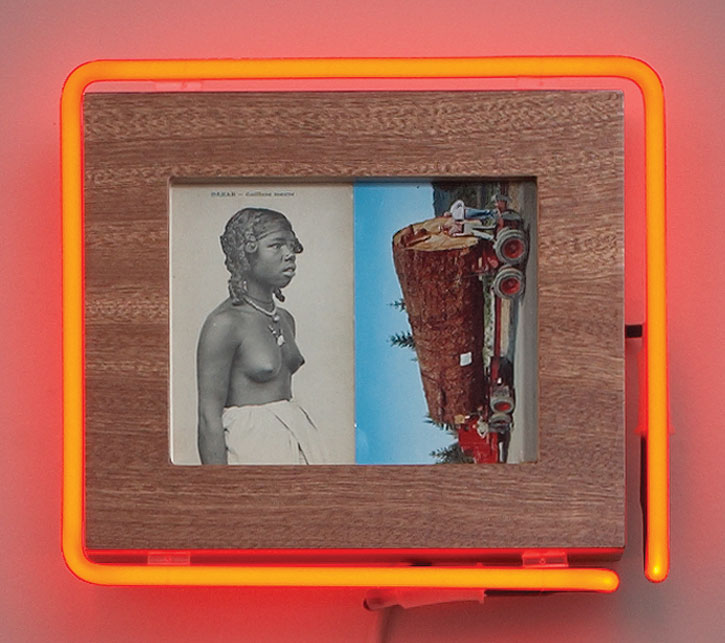
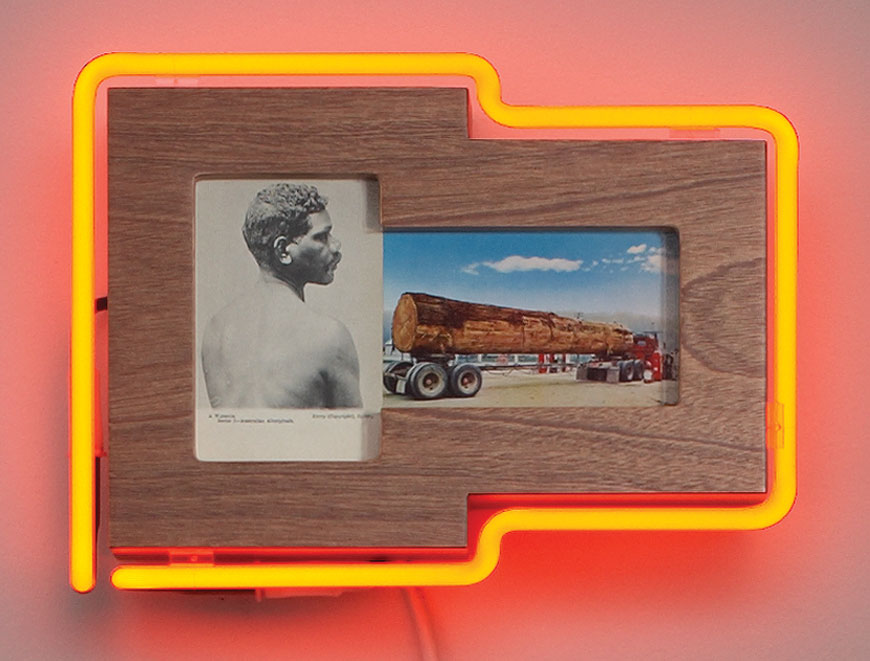
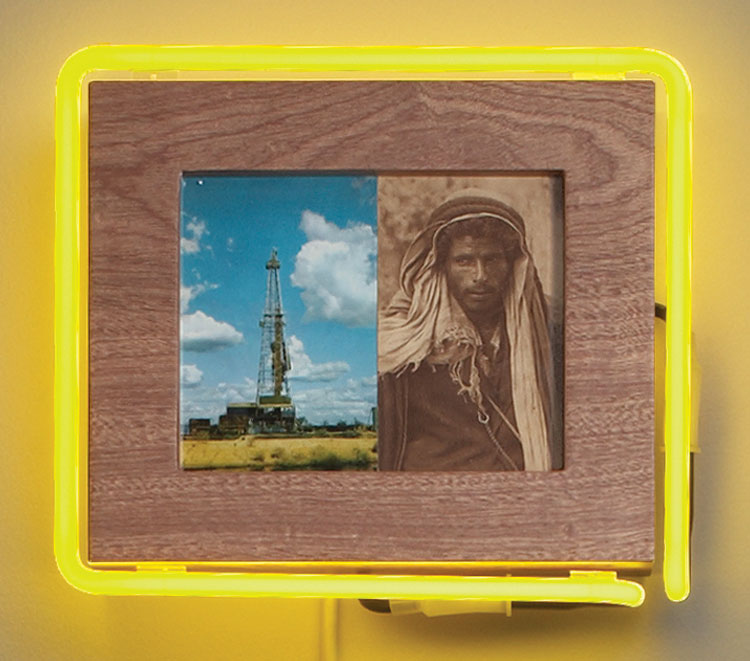
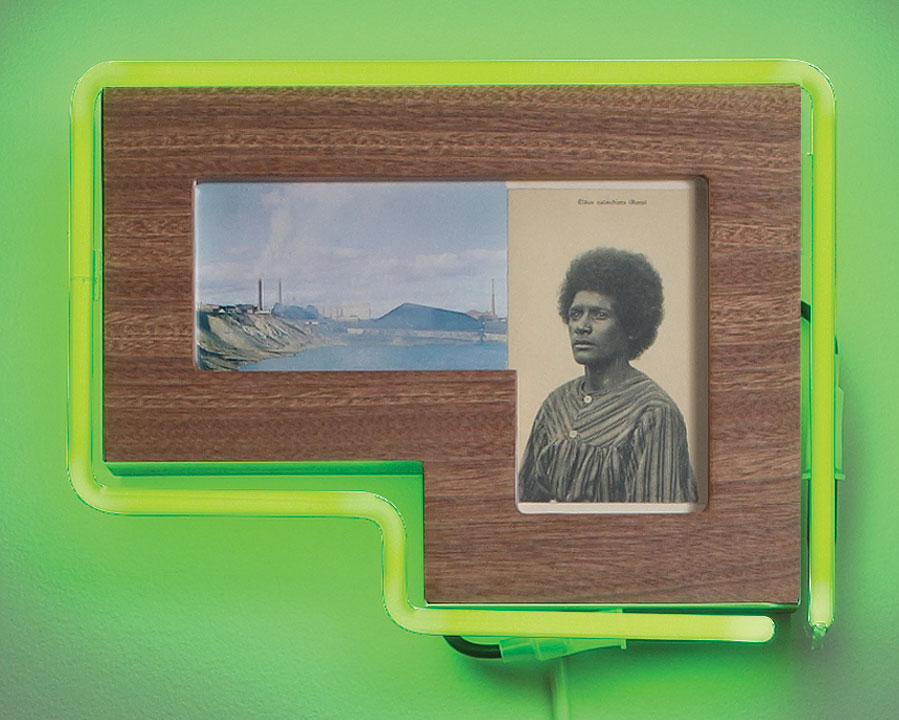
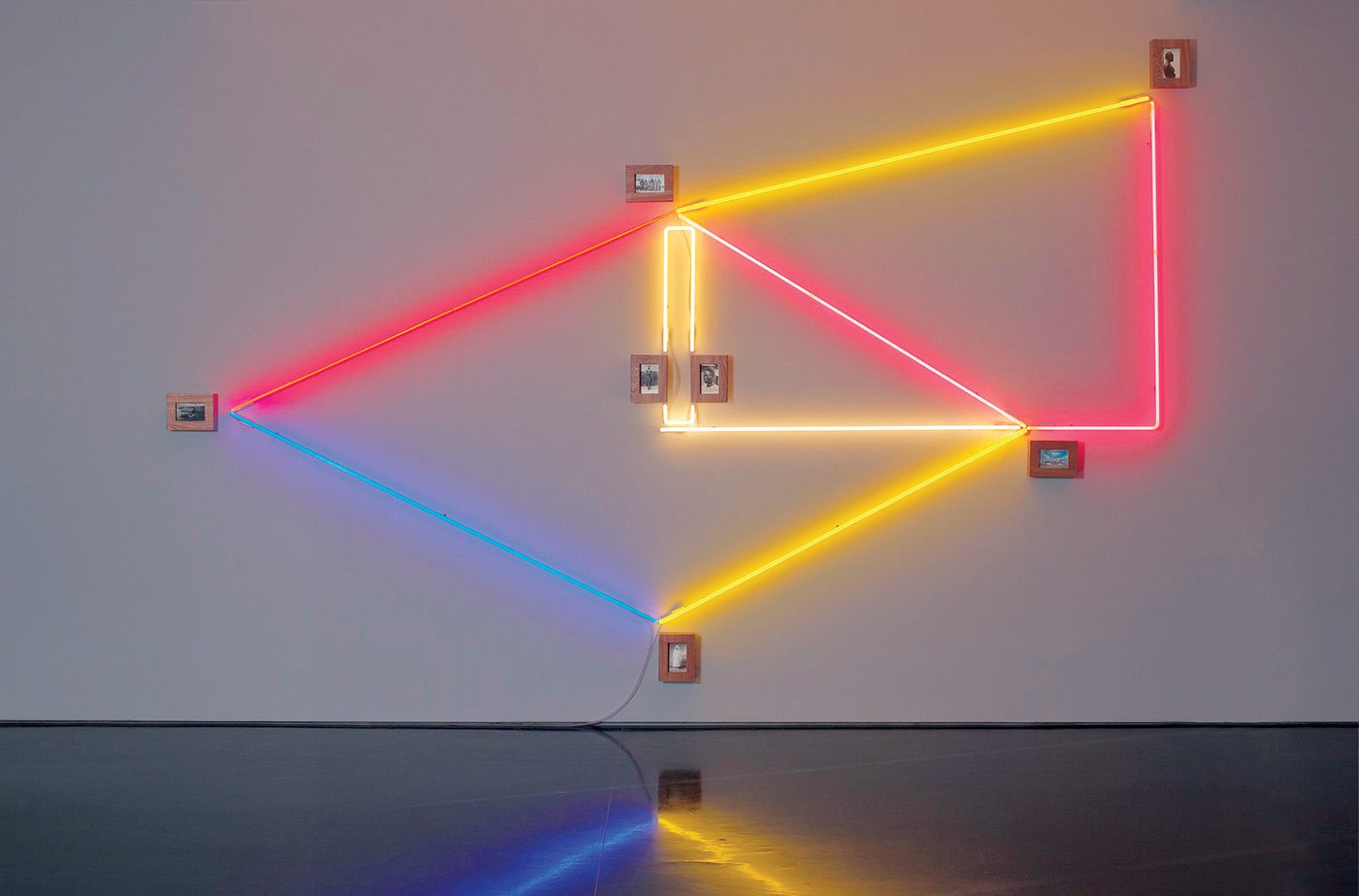
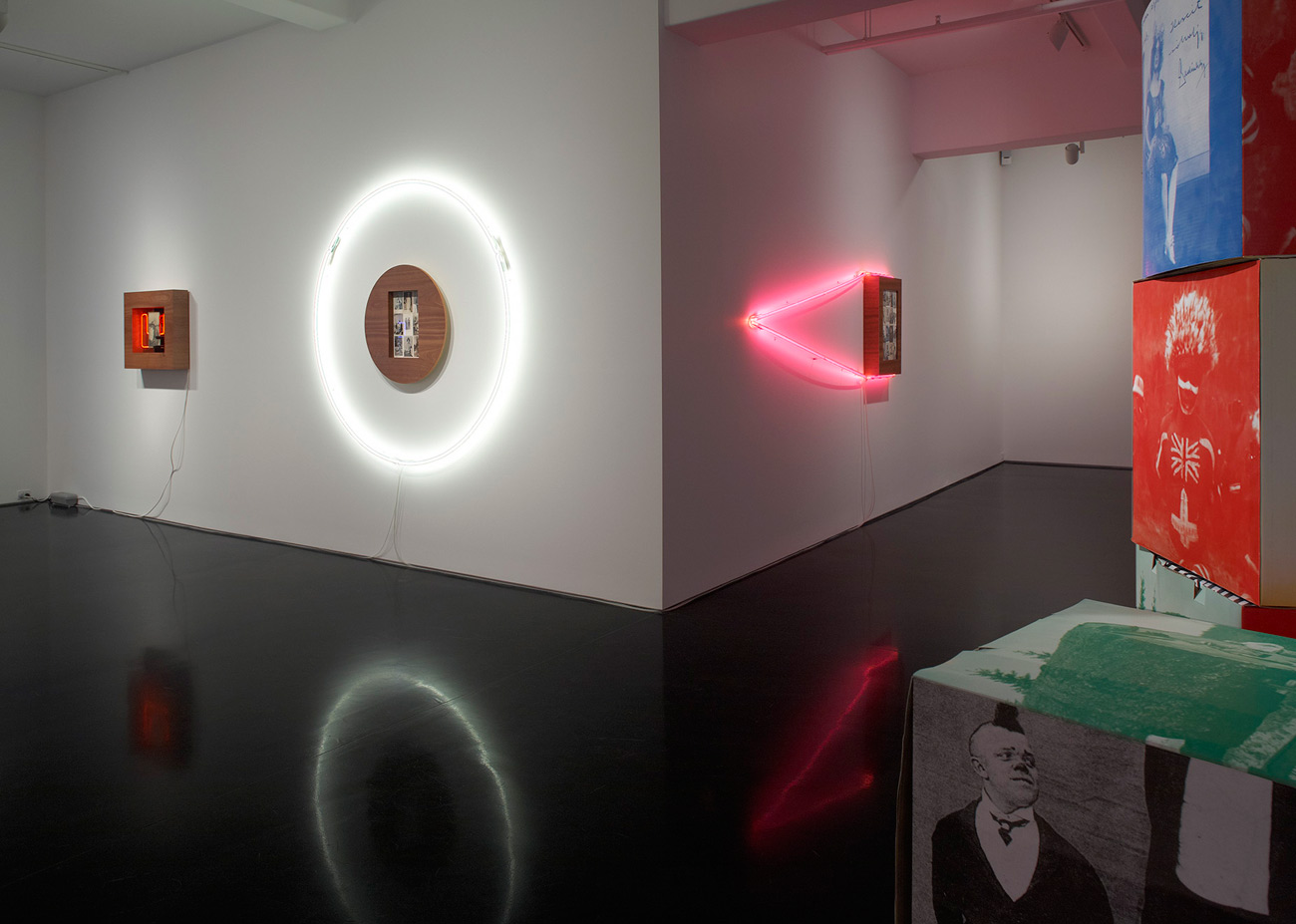
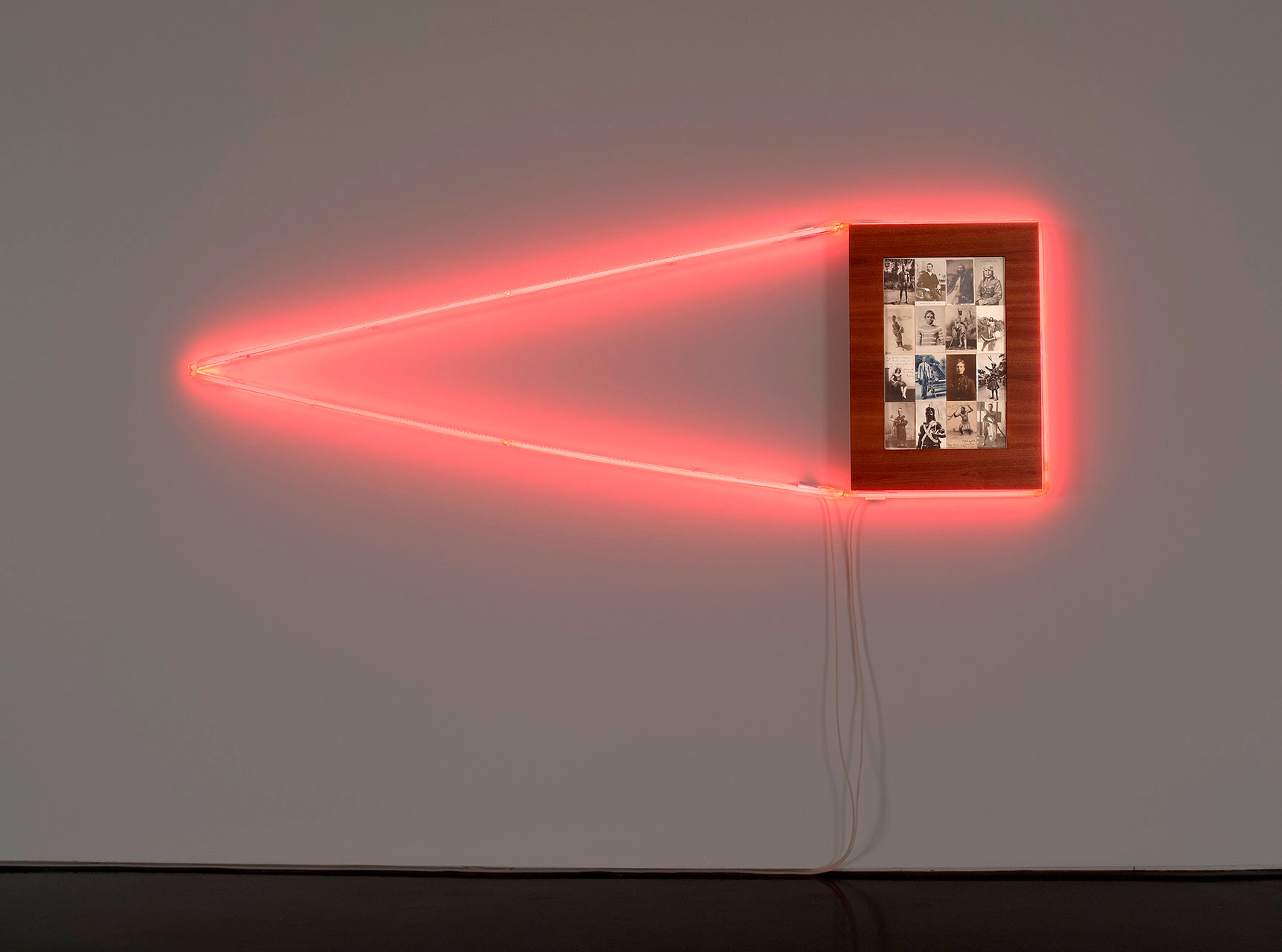
Rare postcards of Indigenous peoples and their colonising masters and surrounded by thick polished wood frames (the naturalness of the wood made smooth and perfect) and coloured neon lights that map out the captured identities, almost like a highlighting texta and forms of urban graffiti. This device is especially effective in works such as Men and Women (both 2011, below) with their male and female neon forms, and Flow Chart (2011, below) that references an anthropological map.

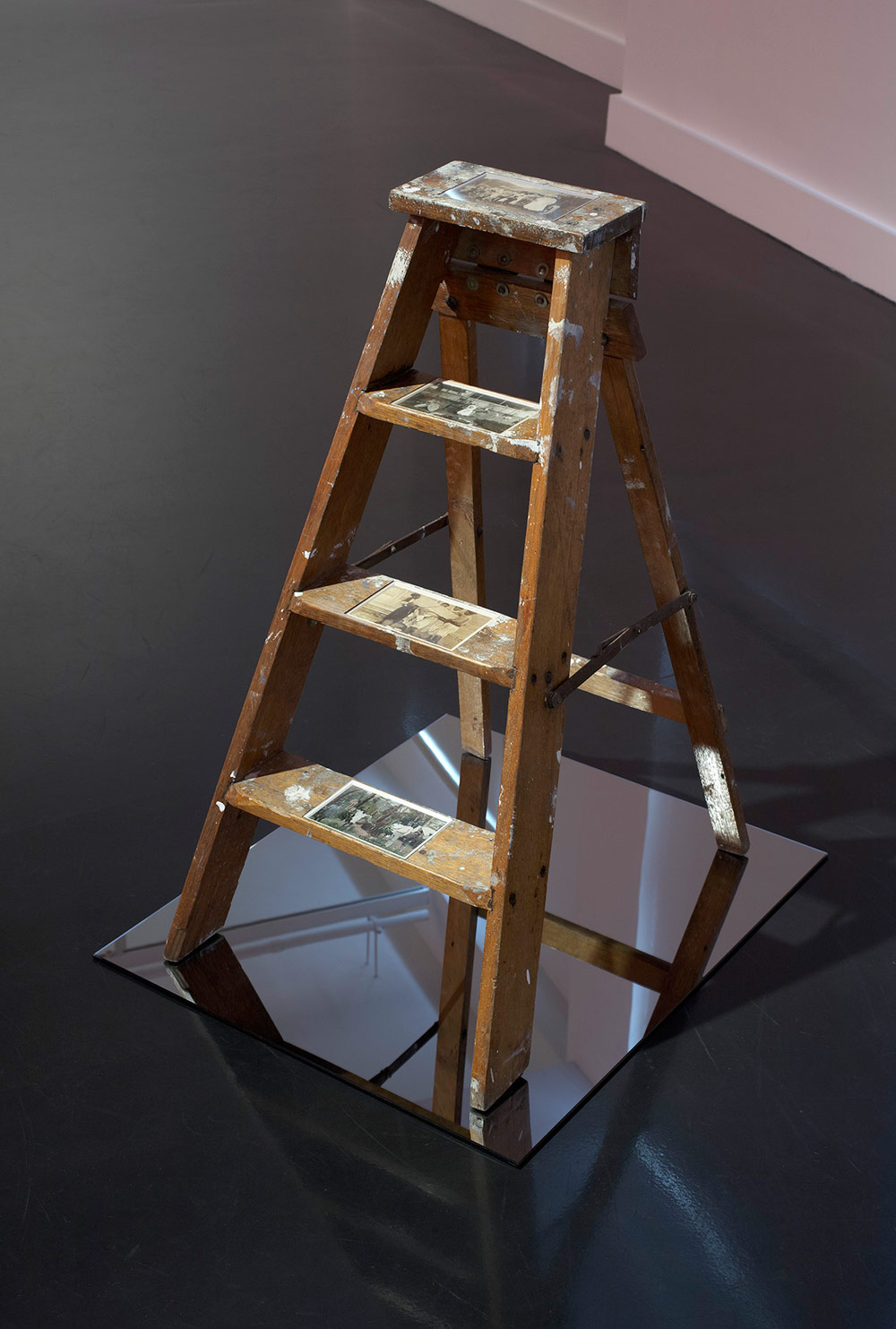
Other works such as Monument 1 (2011, below) lay the postcards into the rungs of a small step ladder covered in white paint that has echoes of the colonisers renovation of suburban homes and becomes a metaphor for the Indigenous peoples being stepped on, oppressed and downtrodden. In a particularly effective piece, Monument 2 (2011, below) the viewer stares down into a black box with multiple layers of neon that spell out the words ‘I see you’ in the Wiradjuri language: we can relate this work to Lacan’s story of the sardine can, where the point of view of the text makes us, the viewer, seem rather out of place in the picture, an alien in the landscape. The text has us in its sights making us uncomfortable in our position.

The work Paradise (2011, six parts, above) can certainly be seen as paradise lost but the pairing of black / white / colour postcards is the most reductive of the whole exhibition vis a vis Indigenous peoples and the complex discourse involved in terms of oppression, exploitation, empowerment, identity, mining rights and land ownership. The two quotations below can be seen to be at opposite ends of the same axis in this discourse. My apologies for the long second quotation but it is important to understand the context of what Akiko Ono is talking about with regard to the production of Indigenous postcards.


White… has the strange property of directing our attention to color while in the very same movement it exnominates itself as a color. For evidence of this we need look no further than to the expression “people of color,” for we know very well that this means “not White.” We know equally well that the color white is the higher power to which all colors of the spectrum are subsumed when equally combined: white is the sum totality of light, while black is the total absence of light. In this way elementary optical physics is recruited to the psychotic metaphysics of racism, in which White is “all” to Black’s “nothing”…”


Victor Burgin 1


“In his study of Aboriginal photography, Peterson also looks at the dynamics of colonial power relations in which both European and Aboriginal subjects are constituted in and by their relations to each other. Peterson in the main writes about two different contexts of the usage of photography of Aboriginal people

1. popular usage of photographs, especially in the form of postcards in the early twentieth century (Peterson 1985, 2005)

2. anthropologists’ ethnographic involvement with photography (Peterson 2003, 2006).

Regarding the first, Peterson depicts how the discourses of atypical (that is, disorganised) family structures and destitution among Aboriginal people were produced and interacted with the prevalent moral discourses of the time. He makes an important remark about the interactive dimensions that existed between the photographer and the Aboriginal subject. Hand-printed postcards in the same period showed much more positive images of Aboriginal people (Peterson 2005: 18-22). These were ‘real’ photographs taken by the photographers who had daily interactions with Aboriginal people…

Peterson gives greater attention to photographs taken by anthropologists for scientific purposes, and in this second context provides a more detailed treatment of his insight regarding the discrepancies between the colonisers’ discourse and the actual visual knowledge that photography offers…

These two contexts are not, of course, mutually exclusive. By dealing with image ethics and the changing photographic contract, Peterson (2003) shows the interlocking formations of popular image, anthropological knowledge and Aboriginal self-representation. In particular, it is important to remember that Aboriginal people have not always rejected collaboration with and appropriation of the idioms of the coloniser. Aboriginal people were not bothered by posing for photographers to produce images such as ‘naked’ Aboriginal men and women in formal pose, accompanied by an ‘unlikely combination’ of weapons (Peterson 2005); and at times complex negotiations occurred between the photographer and the photographed – resulting in both consent and refusal (Peterson 2003: 123-31).

These anecdotes suggest the necessity of unravelling the ‘lived’ dimensions of colonial and / or racial subjugation and resistance to that subjugation from the site of their occurrence …

Rather than scrutinising the authenticity of Aboriginality or taking it for granted that ethnographic photography is doomed to reproduce a colonial or anthropological power structure, it is more important to attend to the ‘instances in which colonized subjects undertake to represent themselves in ways that engage with the colonizer’s own terms’, as Pratt (1992: 7, emphasis in the original) suggests. She proposes the term ‘autoethnography’ to refer to these instances: ‘If ethnographic texts are a means by which Europeans represent to themselves their (usually subjugated) others, autoethnographic texts are those the others construct in response to or in dialogue with those metropolitan representations’ (Pratt 1992).


Akiko Ono 2


The work Paradise buys into the first quotation in a big way, playing as it does with the idioms of black / white / colour. It can also be seen as a form of autoethnographic text that uses rare postcards to critique historical relations between peoples and cultures. What it does not do, I feel, is delve deeper to try to understand the “interlocking formations of popular image, anthropological knowledge and Aboriginal self-representation” and resistance to that subjugation from the site of their occurrence. As the quotation observes “Aboriginal people have not always rejected collaboration with and appropriation of the idioms of the coloniser” and it is important to understand how the disciplinary systems of the coloniser (the ethnographic documenting through photography) were turned on their head to empower Indigenous people who undertake to represent themselves in ways that engage with the coloniser’s own terms. Nothing is ever just black and white. It is the interstitial spaces between that are always the most interesting.

In conclusion this an elegant exhibition of old and new, an autoethnographic text that seeks to address critical issues that look back at us and say – ‘I see you’.

Dr Marcus Bunyan


1/ Burgin, Victor. In/Different Spaces: Place and Memory in Visual Culture. Berkeley: University of California Press, 1995, p. 131

2/ Ono, Akiko. “Who Owns the ‘De-Aboriginalised’ Past? Ethnography meets photography: a case study of Bundjalung Pentecostalism,” in Musharbash, Yasmine and Barber, Marcus (eds.,). Ethnography & the Production of Anthropological Knowledge: Essays in honour of Nicolas Peterson. The Australian National University E Press [Online] Cited 16/07/2011 (no longer available online)

~ Peterson, N. 1998. “Welfare colonialism and citizenship: politics, economics and agency,” in N. Peterson and W. Sanders (eds.,). Citizenship and Indigenous Australians: Changing Conceptions and Possibilities. Cambridge: Cambridge University Press, pp. 101-17.
~ Peterson, N. 1999. “Hunter-gatherers in first world nation states: bringing anthropology home,” in Bulletin of the National Museum of Ethnology 23 (4), pp. 847-61.
~ Peterson, N. 2003. “The changing photographic contract: Aborigines and image ethics,” in C. Pinney and N. Peterson (eds.,). Photography’s Other Histories. Durham, NC: Duke University Press, pp. 119-45.
~ Peterson, N. 2005. “Early 20th century photography of Australian Aboriginal families: illustration or evidence?” in Visual Anthropology Review 21 (1-2), pp. 11-26.
~ Peterson, N. 2006. “Visual knowledge: Spencer and Gillen’s use of photography in The Native Tribes of Central Australia,” in Australian Aboriginal Studies (1), pp. 12-22
~ Pratt, M. L. 1992. Imperial Eyes: Travel Writings and Transculturation. London: Routledge


Footnote 1. Peterson has built up a collection of process-printed (that is, mass-produced) postcard images and hand-printed images dating from 1900 to 1920 (that is, real photographic postcards), over 20 years, during which time he obtained a copy every time he saw a new image. He feels confident that he has seen two-thirds of the process-printed picture postcards from the period although it is harder to estimate how many hand-printed images were circulating (Peterson 2005: 25n.3). He had a collection of 528 process-printed postcards (Peterson 2005: 25) and 272 hand-printed photographs (p. 18) by 2005.


Many thankx to Olivia Radonich for her help and to Tolarno Galleries for allowing me to publish the text and photographs in the posting. Please click on the photographs for a larger version of the image. Images courtesy the artist and Tolarno Galleries, Melbourne. Photos by Christian Capurro.


Brook Andrew 'Paradise' installation at Tolarno Galleries, Melbourne


Brook Andrew Paradise installation at Tolarno Galleries, Melbourne


Brook Andrew (Australian, b. 1970) 'Paradise 1 (red)' 2011


Brook Andrew (Australian, b. 1970)
Paradise 1 (red)
2011
Rare postcards, sapele, and neon
24.5 x 28.5 x 8cm


Brook Andrew (Australian, b. 1970) 'Paradise 2 (orange)' 2011


Brook Andrew (Australian, b. 1970)
Paradise 2 (orange)
2011
Rare postcards, sapele, and neon
24.5 x 34 x 8cm


Brook Andrew (Australian, b. 1970) 'Paradise 3 (yellow)' 2011


Brook Andrew (Australian, b. 1970)
Paradise 3 (yellow)
2011
Rare postcards, sapele, and neon
24.5 x 28.5 x 8cm


Brook Andrew (Australian, b. 1970) 'Paradise 4 (green)' 2011


Brook Andrew (Australian, b. 1970)
Paradise 4 (green)
2011
Rare postcards, sapele, and neon
25 x 33.5 x 8cm


Brook Andrew (Australian, b. 1970) 'Paradise 5 (magenta)' 2011


Brook Andrew (Australian, b. 1970)
Paradise 5 (magenta)
2011
Rare postcards, sapele, and neon
24.5 x 28 x 8cm


Brook Andrew (Australian, b. 1970) 'Flow Chart' 2011


Brook Andrew (Australian, b. 1970)
Flow Chart
2011
Rare postcards, sapele and neon
283 x 449.5 x 8.5cm


Brook Andrew 'Paradise' installation at Tolarno Galleries, Melbourne


Brook Andrew Paradise installation at Tolarno Galleries, Melbourne


Brook Andrew (Australian, b. 1970) 'Men' 2011


Brook Andrew (Australian, b. 1970)
Men
2011
Rare postcards, sapele, and neon
82 x 264 x 12.5cm


Brook Andrew (Australian, b. 1970) 'Women' 2011


Brook Andrew (Australian, b. 1970)
Women
2011
Rare postcards, sapele, and neon
179 x 179 x 6cm


Brook Andrew (Australian, b. 1970) 'Women' 2011 (detail)


Brook Andrew (Australian, b. 1970)
Women (detail)
2011
Rare postcards, sapele, and neon
179 x 179 x 6cm


Tolarno Galleries is pleased to present Paradise, a major solo exhibition by Brook Andrew. Widely regarded as a multi-disciplinary artist, Brook Andrew’s Jumping Castle War Memorial was a highlight of the 17th Biennale of Sydney. Recently his major installation, Ancestral Worship 2010, was included in 21st Century: Art in the First Decade at Gallery of Modern Art, Brisbane. His powerful new installation – Marks and Witness: A Lined crossing in Tribute to William Barak 2011 – was commissioned by the National Gallery of Victoria and is currently on display at Federation Square, Melbourne.

Paradise expands Brook Andrew’s interest in forgotten histories. His new works ask us to think about what has disappeared from our worlds, literally, and also from our consciousness. The exhibition features a number of assemblages made in neon and wood and incorporating rare postcards and photographs collected over many years. Men 2011 includes the original postcard that became the source for Sexy and Dangerous, Andrew’s iconic work of 1995.

Brook Andrew’s continuing search for curious portrait images from the 19th and early 20th century represents his fascination with the way the camera has documented a particular ‘colonial’ gaze and an interest in the exotic. Outlining or highlighting these images in glorious coloured neon emphasises this point.

However bright the neon, Brook Andrew’s works are characterised by a formal beauty and simplicity that explores conceptually complex ideas and themes. Nowhere is this more apparent than in Monument 4, a ‘boomerang bar’ or Monument 2, a black lacquer box of neon containing the words ‘I see you’ in Wiradjuri. Gazing into this ‘well of words’ is like looking into infinity.

Brook Andrew’s work is held in every major collection in Australia. An important survey of his work: Brook Andrew Eye to Eye was presented by Monash University Museum of Art in 2007. In 2008 his work was showcased in Theme Park at AAMU Museum of Contemporary Aboriginal Art in The Netherlands. Major publications accompanied both of these solo exhibitions.”

Press release from Tolarno Galleries


Brook Andrew (Australian, b. 1970) 'Monument 2' 2011


Brook Andrew (Australian, b. 1970)
Monument 2
2011
Black lacquer, wood, perspex, neon, mirror and wire
38 x 99 x 87cm


Brook Andrew (Australian, b. 1970) 'Monument 2' 2011 (detail)


Brook Andrew (Australian, b. 1970)
Monument 2 (detail)
2011
Black lacquer, wood, perspex, neon, mirror and wire
38 x 99 x 87cm


Brook Andrew (Australian, b. 1970) '18 lives in Paradise' Single box detail


Brook Andrew (Australian, b. 1970)
18 lives in Paradise
Single box detail
2011


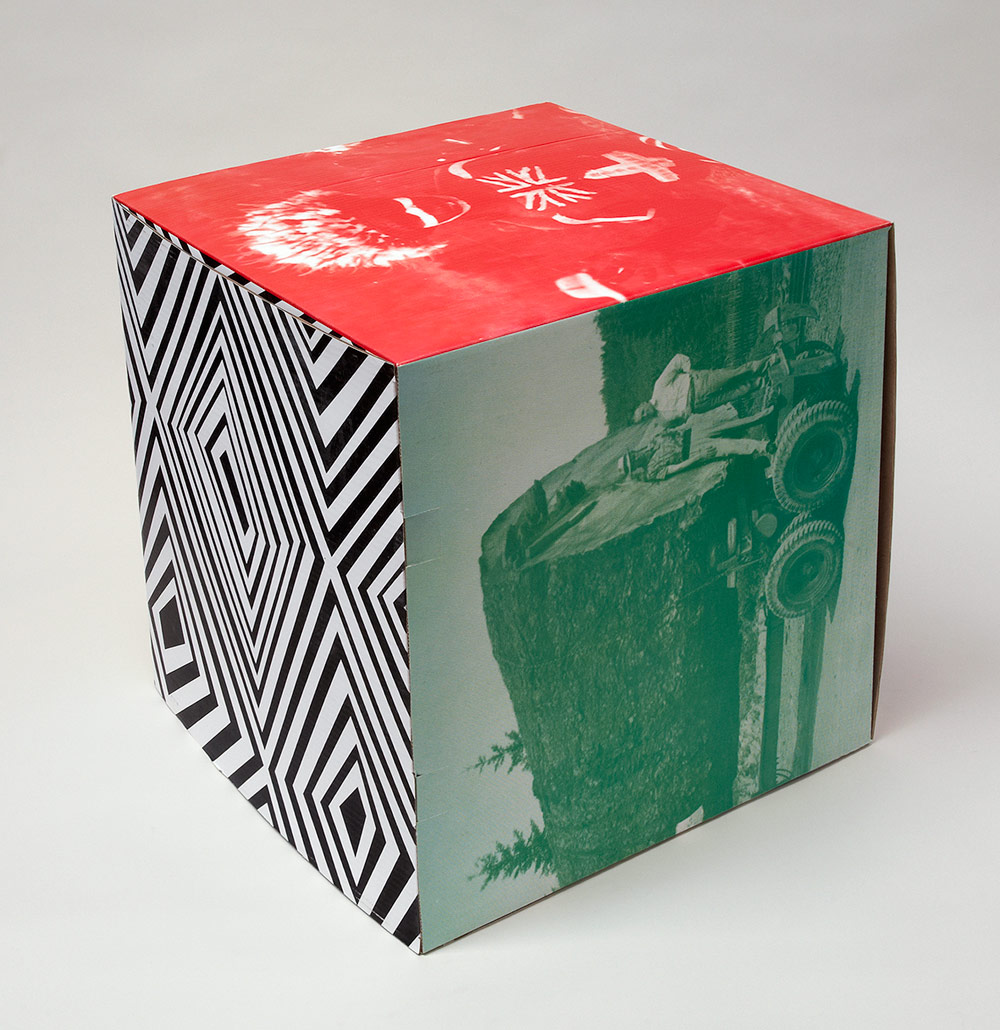
The basic unit used in 18 Lives in Paradise is a cardboard printed box 50 x 50 x 50 cm. The boxes are the building blocks for a sculpture, wall or any other structure. The box is also a parody of the courier box – those containers daily transported around the globe in the vast movement of lives and identities today. What was thought of as fixed may not be so.

The images are sourced from postcards. The postcards range from the early to mid-twentieth century and form part of a worldwide curiosity in indigenous people, circus acts and personalities, environment and resources … The images come together as an assemblage of ‘freaks’ and represent the collision paths of indigenous and non-indigenous cultures; those being documented out of curiosity and those belonging to dominant cultures who have used the land and its people for entertainment and wealth.

18 Lives in Paradise can form a column or wall. It can be a barrier, a beacon or epitaph. En masse, the boxes are a symbol of many lives whose identities are sometimes twisted for the gaze of the curious world.

Brook Andrew 2011


Brook Andrew (Australian, b. 1970) 'Monument 1' 2011


Brook Andrew (Australian, b. 1970)
Monument 1
2011
Black lacquer, are postcards, wood, mirror and metal
104.5 x 69.5 x 58cm


Tolarno Galleries
Level 4, 104 Exhibition Street
Melbourne VIC 3000 Australia
Phone: +61 3 9654 6000

Opening hours:
Tues – Fri 10am – 5pm
Sat 1pm – 4pm

Tolarno Galleries website

LIKE ART BLART ON FACEBOOK

Back to top

Marcus Bunyan black and white archive: ‘At Newport’ series 1991

July 2011


I am scanning my negatives made during the years 1991-1997 to preserve them in the form of an online archive as a process of active memory, so that the images are not lost forever. These photographs were images of my life and imagination at the time of their making, the ideas I was thinking about and the people and things that surrounded me.

All images © Marcus Bunyan. Please click the photographs for a larger version of the image; remember these are just straight scans of the negatives !

Photographs are available from this series for purchase. As a guide, a vintage 8″ x 10″ silver gelatin print costs $700 plus tracked and insured shipping. For more information please see my store web page.


1991

At Newport series

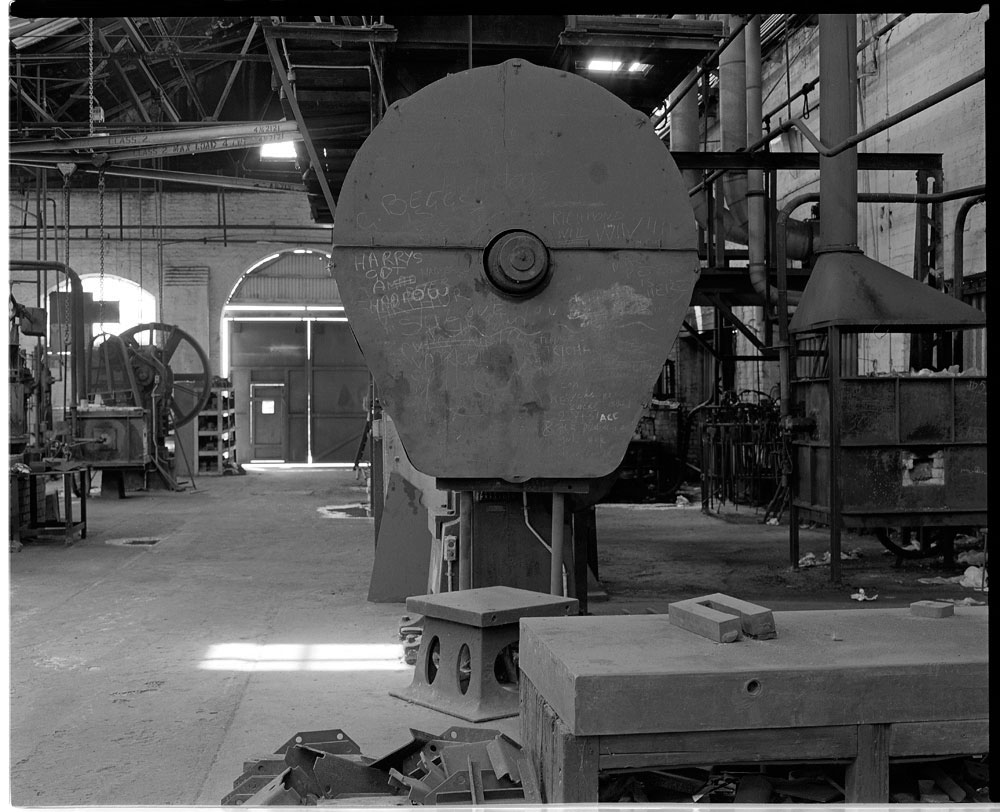
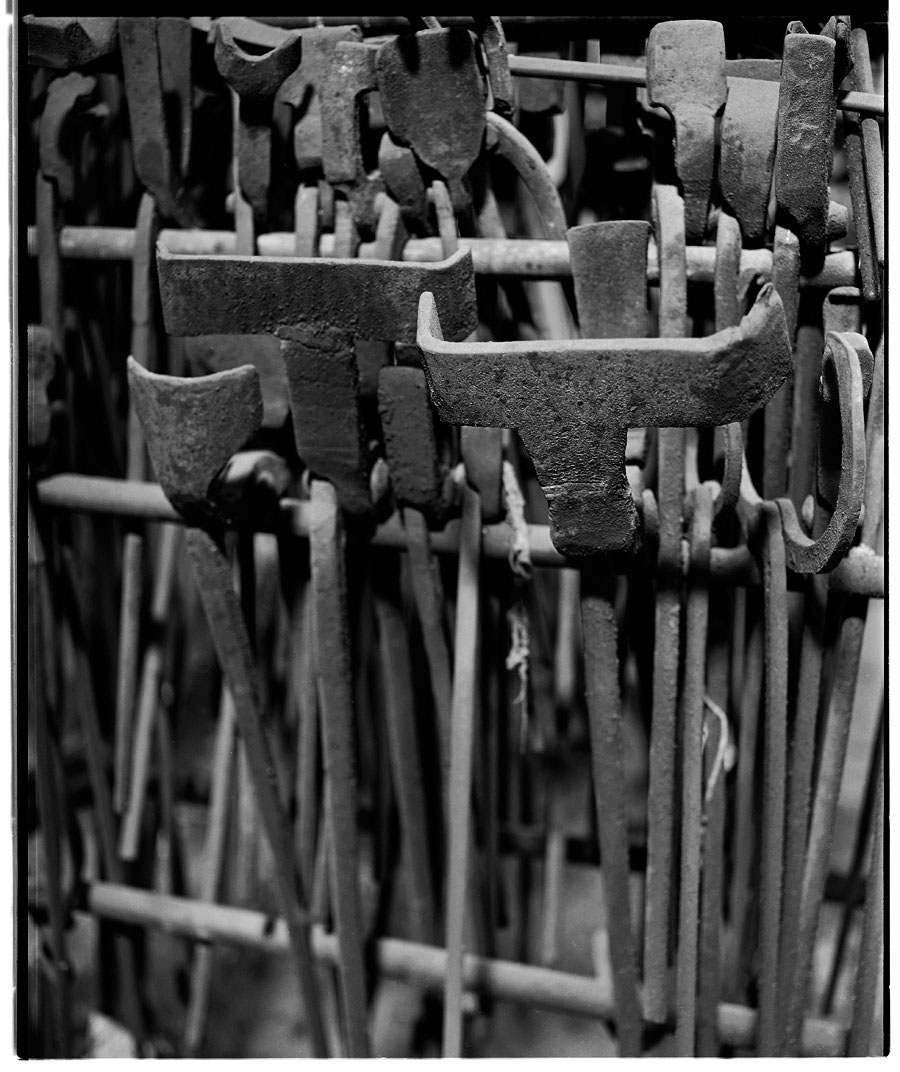
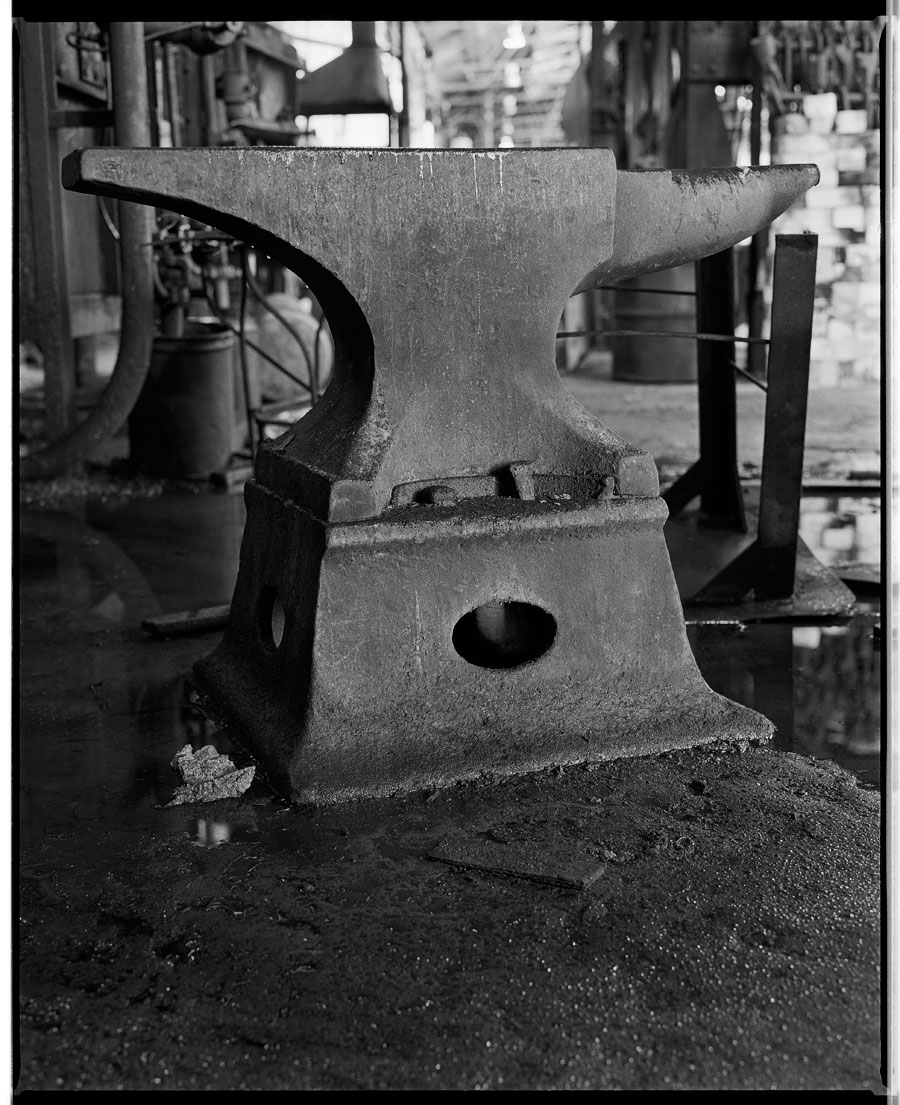
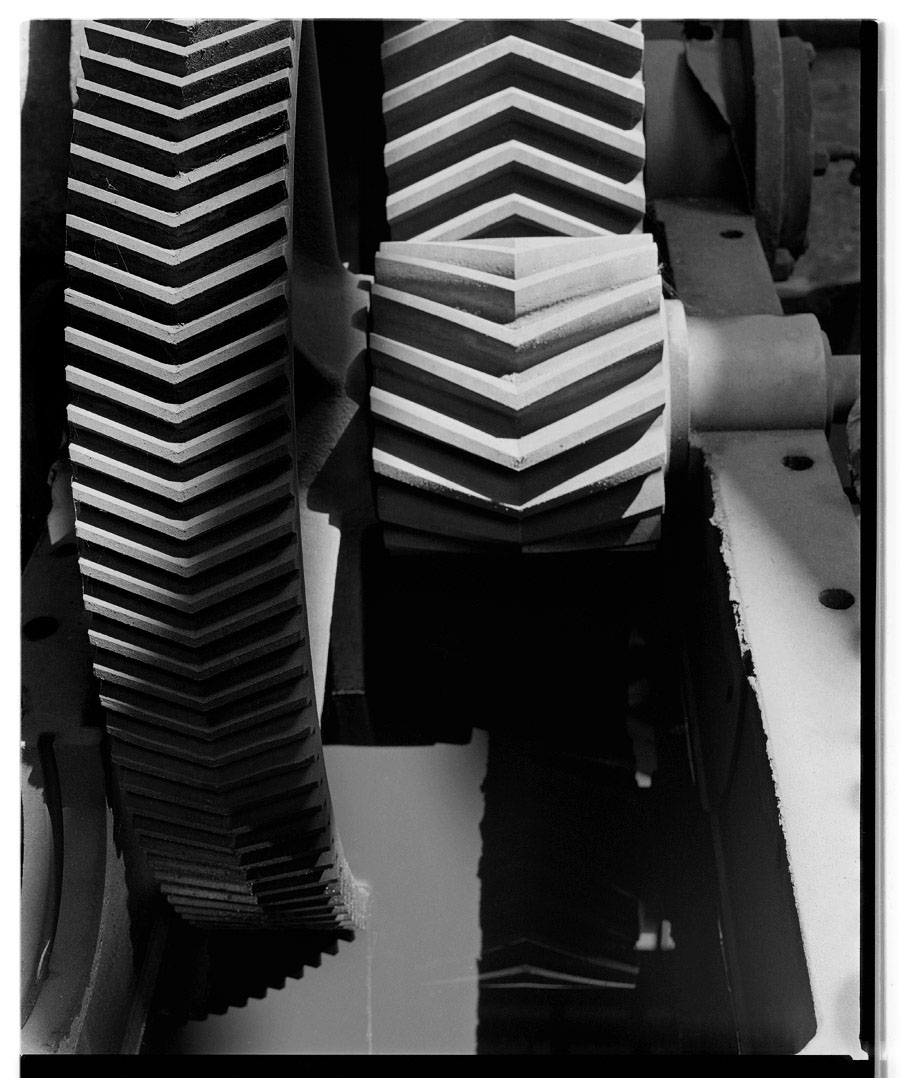
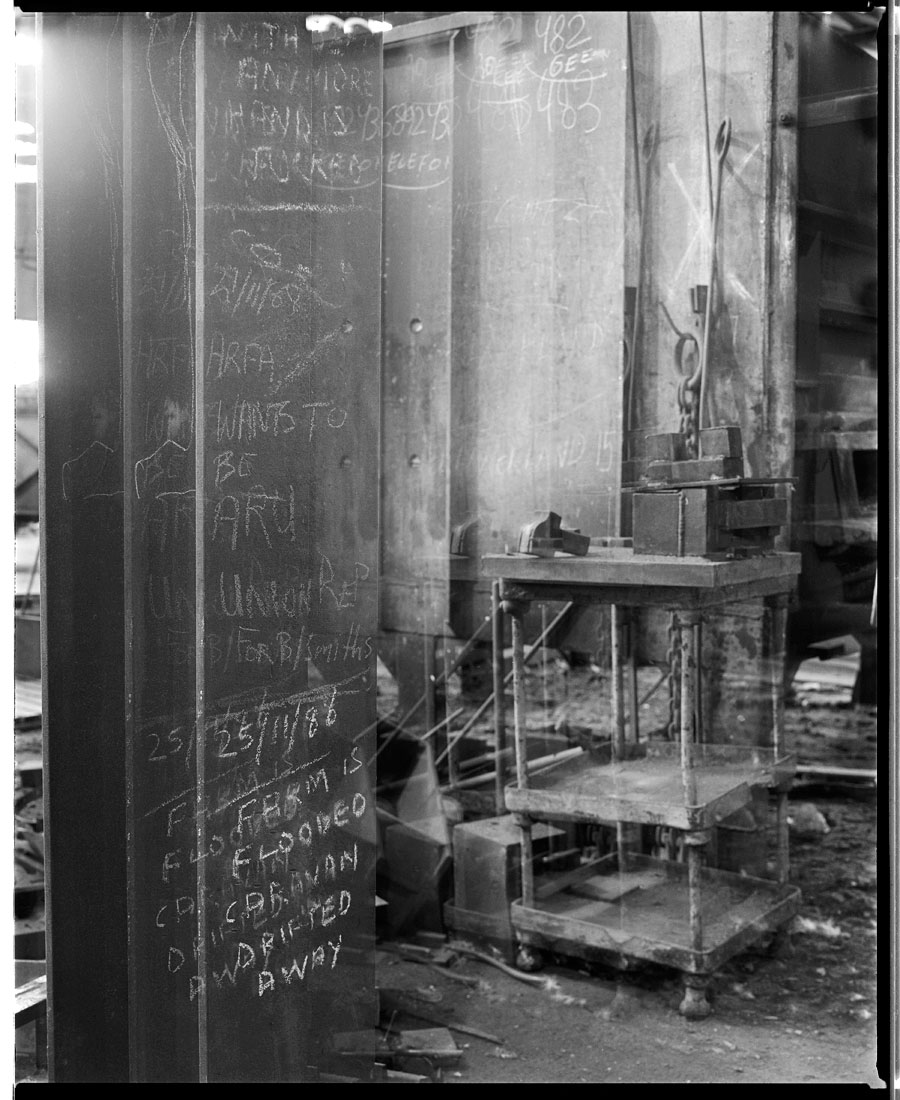
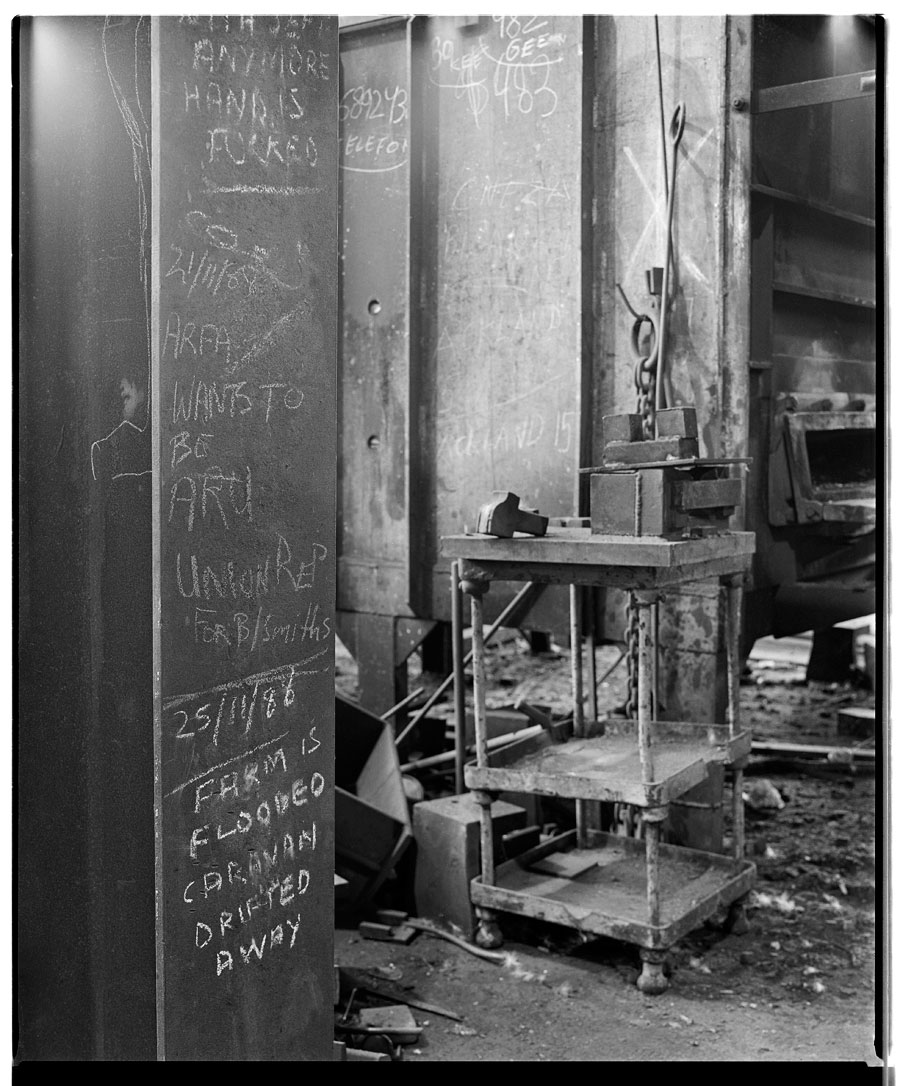
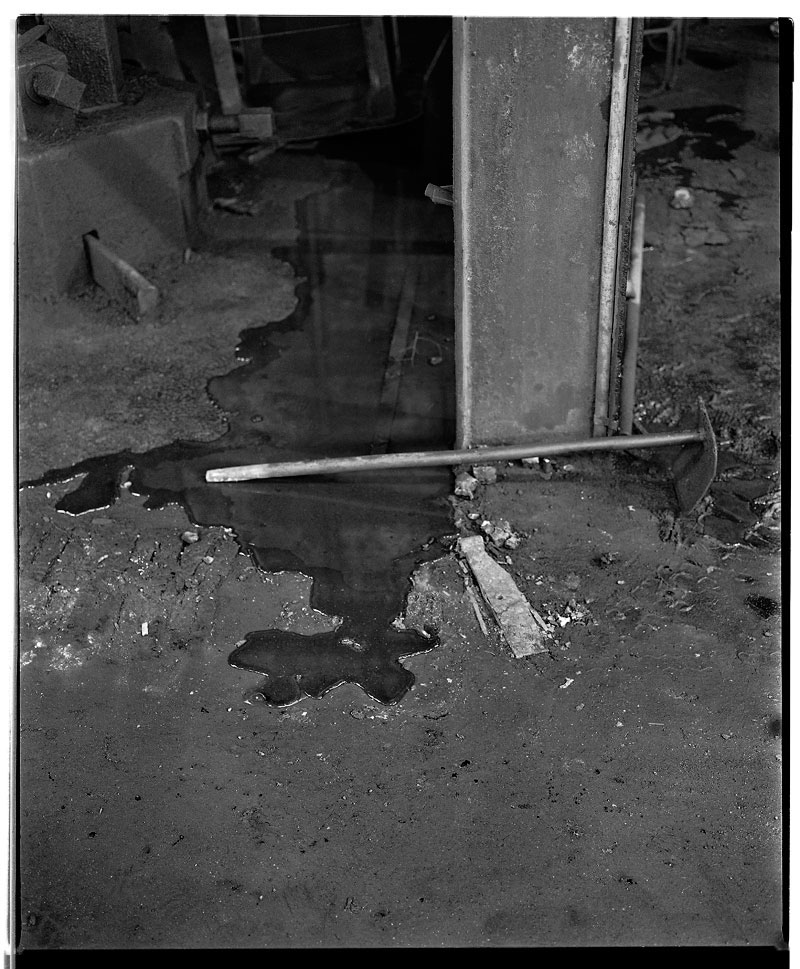
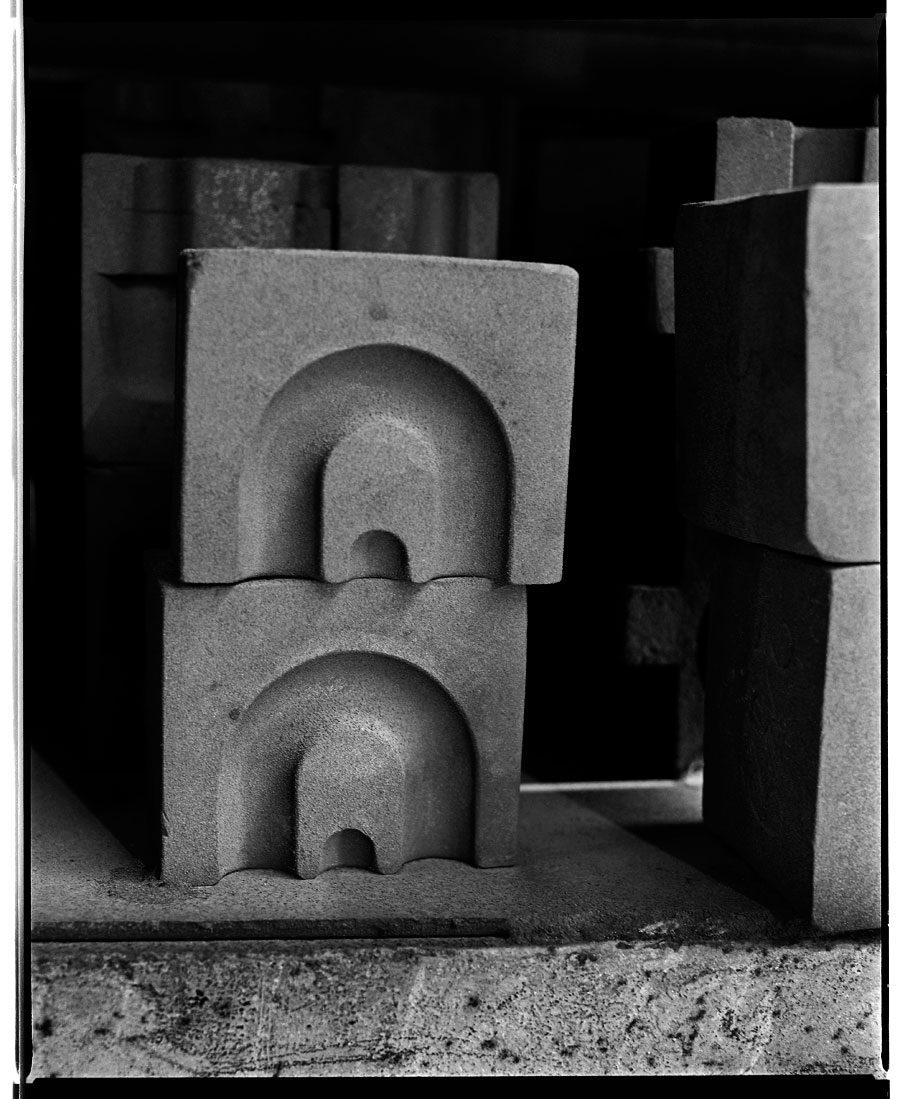
This series of photographs was taken in Melbourne at the old Victorian Railway’s Newport Workshops and formed the second part of my first solo exhibition, Of Magic, Music and Myth held in 1991 at a hairdressing salon in High Street, Prahran, Melbourne. Some of the titles e.g. Fords are a Joke, GMH are shit (1991, below) are taken from the graffiti scrawled on various surfaces. All are silver gelatin photographs on fibre-based paper.


Marcus Bunyan (Australian, b. 1958) 'Fords are a Joke, GMH are shit' from the 'At Newport' series, 1991


Marcus Bunyan (Australian, b. 1958)
Fords are a Joke, GMH are shit
1991
From the At Newport series
Gelatin silver print


Marcus Bunyan (Australian, b. 1958) 'Harrys got a...' from the 'At Newport' series, 1991


Marcus Bunyan (Australian, b. 1958)
Harrys got a…
1991
From the At Newport series
Gelatin silver print


Marcus Bunyan (Australian, b. 1958) 'Screened figure' from the 'At Newport' series, 1991


Marcus Bunyan (Australian, b. 1958)
Screened figure
1991
From the At Newport series
Gelatin silver print


Marcus Bunyan (Australian, b. 1958) 'Heavy springs' from the 'At Newport' series 1991


Marcus Bunyan (Australian, b. 1958)
Heavy springs
1991
From the At Newport series
Gelatin silver print


Marcus Bunyan (Australian, b. 1958) 'Untitled (Torro)' from the 'At Newport' series, 1991


Marcus Bunyan (Australian, b. 1958)
Untitled (Torro)
1991
From the At Newport series
Gelatin silver print


Marcus Bunyan (Australian, b. 1958) 'I, Robot' from the 'At Newport' series, 1991


Marcus Bunyan (Australian, b. 1958)
I, Robot
1991
From the At Newport series
Gelatin silver print


Marcus Bunyan (Australian, b. 1958) 'Large Anvil' from the 'At Newport' series, 1991


Marcus Bunyan (Australian, b. 1958)
Large Anvil
1991
From the At Newport series
Gelatin silver print


Marcus Bunyan (Australian, b. 1958) 'Spring, Turrets, Keep and Ladder' from the 'At Newport' series, 1991


Marcus Bunyan (Australian, b. 1958)
Spring, Turrets, Keep and Ladder
1991
From the At Newport series
Gelatin silver print


Marcus Bunyan (Australian, b. 1958) 'Big Cogs' from the 'At Newport' series, 1991


Marcus Bunyan (Australian, b. 1958)
Big Cogs
1991
From the At Newport series
Gelatin silver print


Marcus Bunyan (Australian, b. 1958) 'Coronation' from the 'At Newport' series, 1991


Marcus Bunyan (Australian, b. 1958)
Coronation
1991
From the At Newport series
Gelatin silver print


Marcus Bunyan (Australian, b. 1958) 'Frank's Apron' from the 'At Newport' series, 1991


Marcus Bunyan (Australian, b. 1958)
Frank’s Apron
1991
From the At Newport series
Gelatin silver print


Marcus Bunyan (Australian, b. 1958) 'Hand is fucked, Farm is flooded, Caravan drifted away I' from the 'At Newport' series, 1991


Marcus Bunyan (Australian, b. 1958)
Hand is fucked, Farm is flooded, Caravan drifted away I
1991
From the At Newport series
Gelatin silver print


Marcus Bunyan (Australian, b. 1958) 'Hand is fucked, Farm is flooded, Caravan drifted away II' from the 'At Newport' series, 1991


Marcus Bunyan (Australian, b. 1958)
Hand is fucked, Farm is flooded, Caravan drifted away II
1991
From the At Newport series
Gelatin silver print


Marcus Bunyan (Australian, b. 1958) 'Untitled' from the 'At Newport' series, 1991


Marcus Bunyan (Australian, b. 1958)
Untitled
1991
From the At Newport series
Gelatin silver print


Marcus Bunyan (Australian, b. 1958) 'Hoe with Surging Rainwater' from the 'At Newport' series, 1991


Marcus Bunyan (Australian, b. 1958)
Hoe with Surging Rainwater
1991
From the At Newport series
Gelatin silver print


Marcus Bunyan (Australian, b. 1958) 'Forms I' from the 'At Newport' series, 1991


Marcus Bunyan (Australian, b. 1958)
Forms I
1991
From the At Newport series
Gelatin silver print


Marcus Bunyan (Australian, b. 1958) 'Forms II' from the 'At Newport' series, 1991


Marcus Bunyan (Australian, b. 1958)
Forms II
1991
From the At Newport series
Gelatin silver print


Marcus Bunyan (Australian, b. 1958) 'Forms III' from the 'At Newport' series, 1991


Marcus Bunyan (Australian, b. 1958)
Forms III
1991
From the At Newport series
Gelatin silver print


Marcus Bunyan (Australian, b. 1958) 'Forms IV' from the 'At Newport' series, 1991


Marcus Bunyan (Australian, b. 1958)
Forms IV
1991
From the At Newport series
Gelatin silver print


Marcus Bunyan black and white archive page

LIKE ART BLART ON FACEBOOK

Back to top

Exhibition: ‘NGV 150th Felton Bequest Gift – Living Water: Contemporary Art of the Far Western Desert’ at NGV Australia, Melbourne

Exhibition dates: 24th May 2011 – 28th May 2012


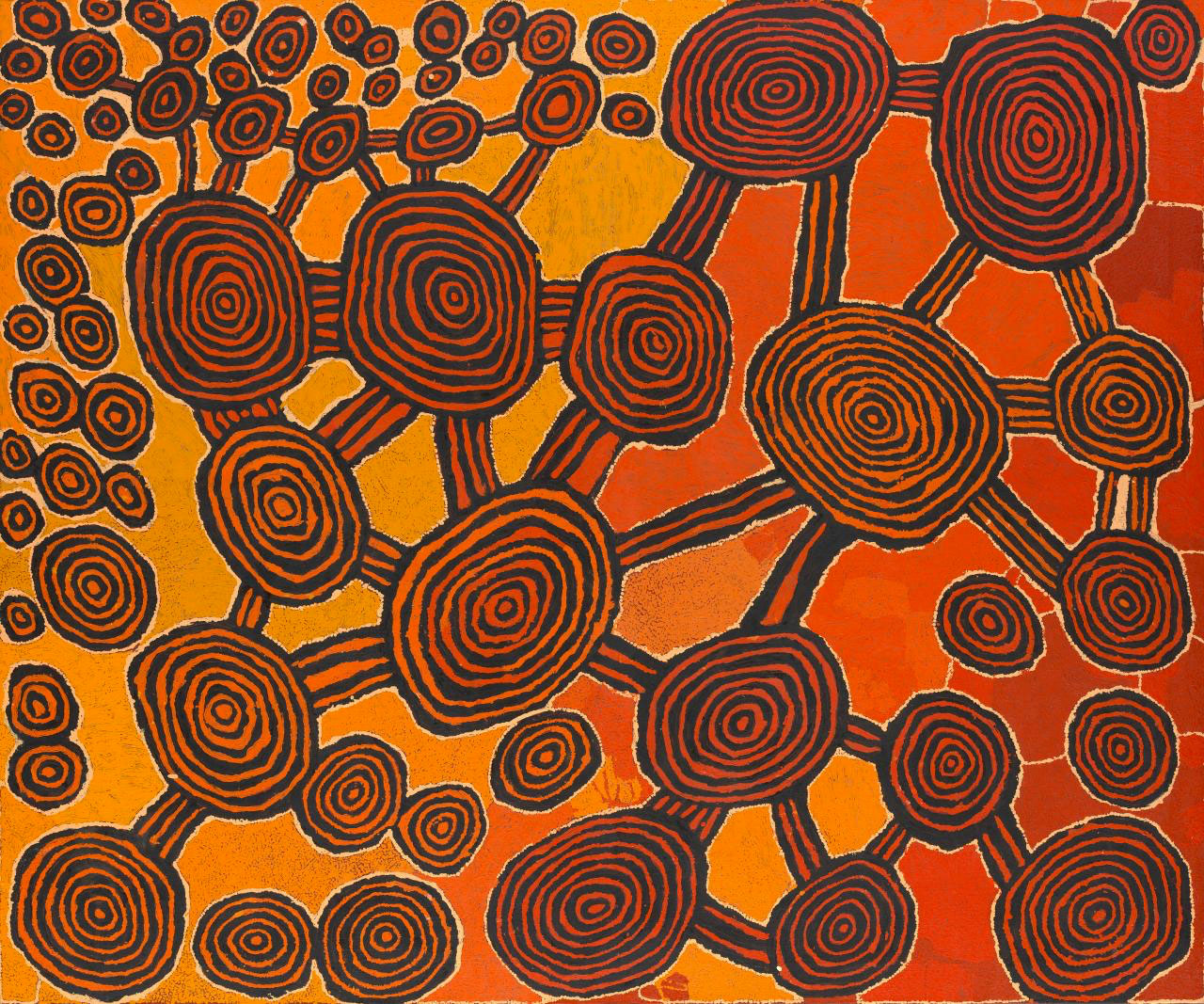
Tommy Mitchell (Australian / Ngaanyatjarra, c. 1943-2013) 'Kurlilypurru' 2009


Tommy Mitchell (Australian / Ngaanyatjarra, c. 1943-2013)
Kurlilypurru
2009
Synthetic polymer paint on canvas
152 x 212cm
Felton Bequest, 2011
© Tommy Mitchell, courtesy Warakurna Artists Aboriginal Corporation


“This is me: this is mine. The whole lot is me. I been walking all around, I know him proper way, he is always with me…”


Weaver Jack


Someone keyed my car the other day and it sent me into a bit of a downward spiral. Who knows why people do these things – stupidity, boredom, sheer bloody mindedness. This exhibition brought me back from that space to a rejoicing in human creativity and connection. It helped me leave my troubles behind. The stories in these paintings ground you, bring you back to earth through the experience and feeling of colour, movement and stillness.

I, we, cannot understand this ancient culture for it is foreign to us. We are not of it. But we can feel the stories in our own way. While we can’t understand every nuance of symbology and traditional narrative that the paintings contain they can speak to us all as human; we all come from this earth and must return to it. I felt the place from which they emanate, an intimacy with earth, self and soul.

I might not know much about anything, about understanding the vagaries of human beings, but I do know what is honest and truthful, has feeling for the piquancy of life. These paintings let my troubles and vicissitudes drop away and uplifted my spirit. Surrounded by love, by colour, by belonging to earth, sky, water, spirit. A wonderful gift to any human being and a wonderful gift from the Felton Bequest to the National Gallery of Victoria and to all the people of Australia. Go and experience their embrace.

Dr Marcus Bunyan


Many thankx to the National Gallery of Victoria for allowing me to publish the photographs in the posting. Please click on the photographs for a larger version of the image.


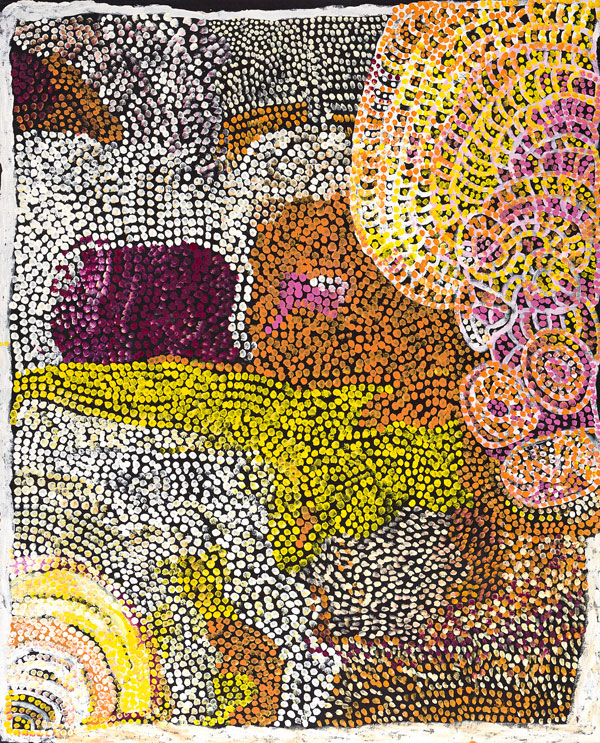
Various artists. 'Ngayarta Kujarra' 2009


Yikartu Bumba (Australian / Manyjilyjarra, b. 1940s)
Jakayu Biljabu (Australian / Manyjilyjarra, 1937-2022)
Nyanjilpayi Nancy Chapman (Australian / Manyjilyjarra, born c. 1941)
May Chapman (Australian / Manyjilyjarra, b. 1940s)
Doreen Chapman (Australian / Manyjilyjarra, b. 1970s)
Linda James (Australian / Manyjilyjarra, b. 1984)
Mulyatingki Marney (Australian / Manyjilyjarra, b. 1941)
Reena Roger (Australian / Manyjilyjarra, b. 1950s)
Beatrice Simpson (Australian / Manyjilyjarra, born c. 1966)
Ronelle Simpson (Australian / Manyjilyjarra, b. 1988)
Muntararr Rosie Williams (Australian / Manyjilyjarra, born c. 1943)
Ngayarta Kujarra
2009
Synthetic polymer paint on canvas
300 x 500cm
Felton Bequest, 2011


Ngayartu Kujarra

The artists who collaborated on this work (above) live at Punmu community, on the shore of a vast salt lake, (Lake Dora), which is surrounded by a scattered array of water sources.

The artists from this region are profoundly affectionate and respectful towards the salt lake and the fresh waters hat have sustained htem and their families for as long as memory can stretch.

The women have reproduced the feeling of the salt lake viscerally: their work conveys its immense scale, fine texture, extreme whiteness and shimmering light.


Ronnie Tjampitjinpa (Australian / Pintupi, b. 1943) 'Water Dreaming at Malparingya' 2006


Ronnie Tjampitjinpa (Australian / Pintupi, b. 1943)
Water Dreaming at Malparingya
2006
Synthetic polymer paint on canvas
152.2 x 182.5cm
National Gallery of Victoria
Felton bequest


Nyumitja Laidlaw (Ngaanyatjarra born c. 1938) 'Kuriella' 2009


Nyumitja Laidlaw (Australian / Ngaanyatjarra, born c. 1938)
Kuriella
2009
Synthetic polymer paint on canvas
142.3 x 175cm
Felton Bequest, 2011
© Nyumitja Laidlaw/Licensed by VISCOPY, Australia


Johnny Yungut Tjupurrula (Australian / Tjangimanta, 1930-2016) 'Tingarri Dreaming at Wanaritjarra' 2009


Johnny Yungut Tjupurrula (Australian / Tjangimanta, 1930-2016)
Tingarri Dreaming at Wanaritjarra
2009
Synthetic polymer paint on canvas
152.3 × 182.5cm
National Gallery of Victoria, Melbourne
Felton Bequest, 2011
© Johnny Yungut Tjupurrula, courtesy Aboriginal Artists Agency, Sydney


Kalaju Alma Webou (Yulparija c. 1920-2009) 'Pinkalarta' 2006


Kalaju Alma Webou (Australian / Yulparija, c. 1920-2009)
Pinkalarta
2006
Synthetic polymer paint on canvas
152 x 152cm
Felton Bequest, 2011
© Kalaju Alma Webou, courtesy Short Street Gallery/Yulparija Artists from Bidyadanga


Today, 24 May 2011, the National Gallery of Victoria celebrates its 150th birthday.

To honour this tremendous milestone, the NGV today unveiled an exceptional gift of 173 important Indigenous works of art including three by contemporary artists Vernon Ah Kee, Brook Andrew and Jonathan Jones who were commissioned to create works that pay homage to the highly celebrated Wurundjeri artist, William Barak. These pieces have been gifted by the Felton Bequest, established in 1904 by the NGV’s greatest benefactor, Alfred Felton.

The Honourable Alex Chernov, AO, QC, Governor of Victoria and Mrs Elizabeth Chernov were present at the NGV’s unveiling ceremony.

Dr Gerard Vaughan, Director, NGV said: “This is the most significant gift of Indigenous art to the NGV since the Gallery opened its doors for the first time on this date 150 years ago in country of the Kulin nation. It is appropriate on this date both to honour the memory of Alfred Felton and also celebrate the Indigenous art of our country, the world’s oldest continuous visual tradition.”

The gift of 173 works encompasses two exceptional collections: the first comprises 63 nineteenth and early twentieth century shields on display as part of the Australian Art collection, and the second 107 twenty-first century paintings from the Far Western Desert, forming the new exhibition Living Water.

Dr Vaughan said: “This outstanding gift adds tremendous strength to the NGV’s collection of Indigenous Art. Since the NGV first collected Indigenous art, the collection has grown to hold over 3,000 works representing cultures across Australia.

These exciting and dynamic acquisitions will enable the NGV to continue to educate visitors of all ages about the visual art of Indigenous Australians. This gift is a highlight of the NGV’s 150th anniversary year, reminding us of the crucial and continuing role the NGV has played in collecting and displaying the finest art works that can be acquired.

The Barak Commissions pay tribute to one of the most important figures of nineteenth century Australian Indigenous art, acknowledging Barak’s central place in the history of Victoria and the NGV,” said Dr Vaughan.

William Barak was born in country of the Wurundjeri people and became a leading Indigenous artist and figure in Melbourne during the 19th century. He is said to have witnessed John Batman ‘purchase’ Melbourne in 1835.

The multi-media installation by Vernon Ah Kee presents conversations between prominent Indigenous people as they reflect on how Barak has inspired them. Brook Andrew, renowned for his multi-disciplinary works, has created a powerful installation which adorns the entrance atrium at The Ian Potter Centre: NGV Australia. Jonathan Jones, who works with fluid and dancing light as a metaphor of living culture, has created five light boxes that map important cultural designs belonging to Barak as a way of honouring Barak’s life.

The collection of 63 rare and stunningly beautiful 19th and early 20th century shields is largely contemporary with Barak’s life. The shields serve to remind us of the time when the plains of Southeast Australia contained carved trees bearing elegant inscriptions, with people dressed in possum-skin cloaks and carrying elaborate shields living extraordinary living in harmony with country and ancient beliefs.

The Living Water exhibition unveils the Felton Bequest gift paintings: 107 adventurous works by male and female artists from newly established art centres in the Far Western Desert, an area stretching across far flung parts of Western Australia and South Australia.

This exhibition of 21st century art highlights today’s momentous art movement which originated at Papunya in 1971 when senior men decoded their archival narratives and laws, forging a new form shared by many Indigenous peoples across the Western Desert.

Press release from the National Gallery of Victoria website


Roy Underwood (Pitjantjatjara born c. 1937) 'Mulaya' 2008


Roy Underwood (Australian / Pitjantjatjara born c. 1937-2018)
Mulaya
2008
Synthetic polymer paint on canvas
197 x 135cm
Felton Bequest, 2011
© Roy Underwood, courtesy Spinifex Arts Project


Simon Hogan (Pitjantjatjara born c. 1930) 'Ilkurlka' 2004


Simon Hogan (Australian / Pitjantjatjara, born c. 1930)
Ilkurlka
2004
Synthetic polymer paint on canvas
134.5 x 176.6cm
Felton Bequest, 2011
© Simon Hogan, courtesy Spinifex Arts Project


Spinifex People

The country of the Spinifex people, who speak a southern dialect of Pitjantjatjara language, consists of vast plains of deep red sand, salt lakes and Spinifex.

In 1998 the community produced a series of ten large paintings that were bequeathed to the people of Western Australia in a symbolic reciprocal exchange of paintings for land. Most Spinifex works, subsequently produced on infrequent painting trips back to country operate as complex maps as well as religious landscapes that detail sources of spiritual power in country belonging to individual artists.


Milatjari Pumani (Yankunytjatjara, 1928-2014) 'Ngura Walytja, Antara' 2010


Milatjari Pumani (Australian / Yankunytjatjara, 1928-2014)
Ngura Walytja, Antara
2010
Synthetic polymer paint on canvas
168.6 x 137.4cm
Felton Bequest, 2011
© Milatjari Pumani, courtesy Mimili Maku Arts & Crafts


Living Water: Exhibition Background Information

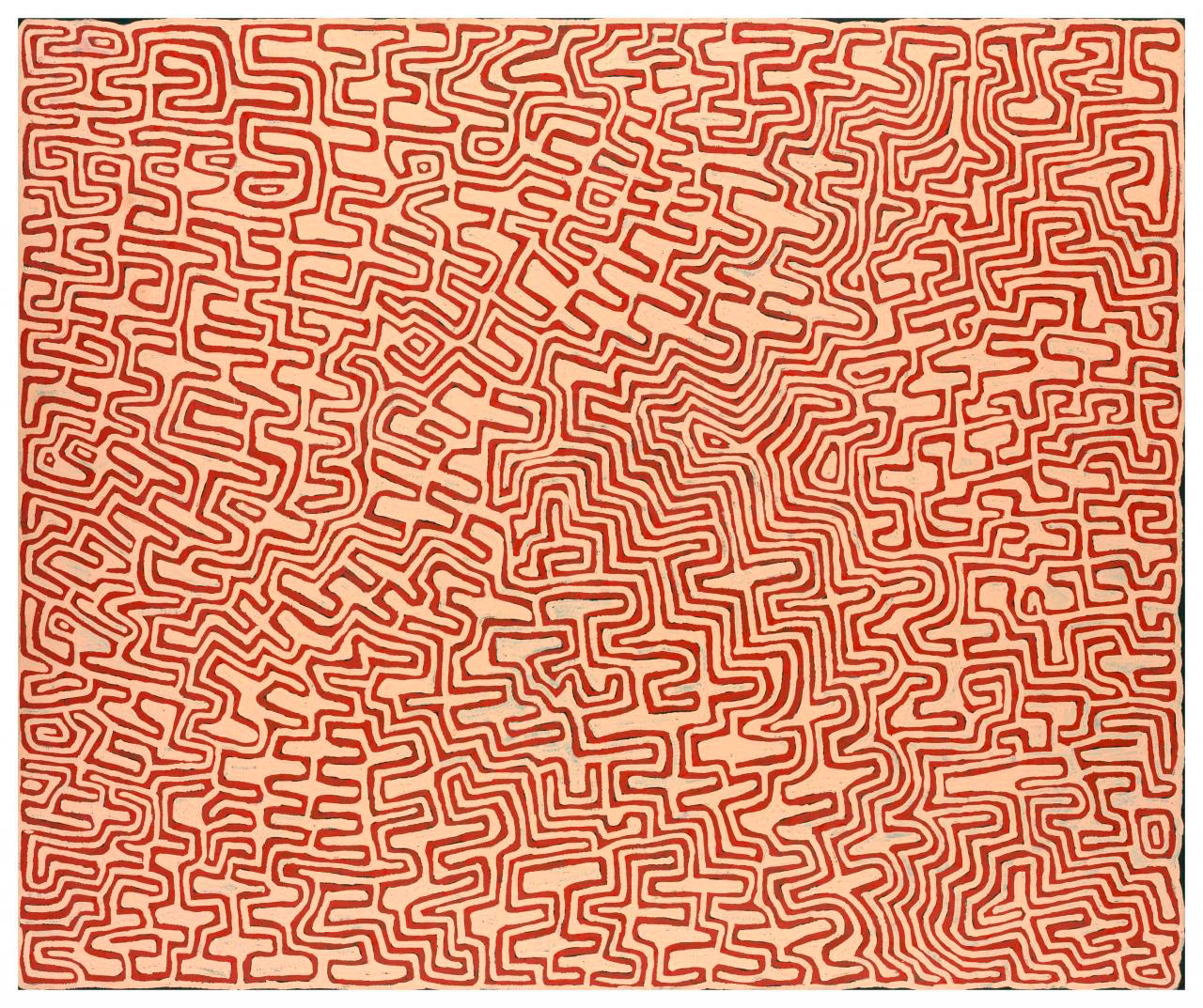
Living Water, an exhibition showcasing 107 contemporary Indigenous paintings by 94 artists from the Felton Bequest Gift, displays works by male and female artists from the Far Western Desert, an area stretching across parts of Western Australia, South Australia and the Northern Territory.

A modern art movement originated at Papunya in 1971, which has since transformed the way we see the land and the history of art in Australia. Almost forty years after the genesis of the Western Desert art movement, its epicentre has dramatically shifted from Papunya in the Northern Territory to the Pintupi homelands of Kintore and Kiwirrkura in the Gibson Desert, and to communities that lie hundreds of kilometres to the south and west in far-flung reaches of South Australia and Western Australia (the Far Western Desert).

During the first decade of the 21st century, Pintupi, Spinifex, Anangu, Yulparija and Martu artists have developed a dynamic and fresh expression of Western Desert Art. The male and female artists not only share close kinship, social, linguistic and ritual interconnections and lived experience of desert country built up during pujiman (nomadic, bush) days but also have parallel experiences of making art with introduced materials for the commercial market. Their paintings – bearers of sanctity – resonate with the shock of the ancient made new and tell tjukurrpa (stories) associated with special places in their ngurra (country).This dramatic new wave of acrylic painting is the focus of Living Water, comprising the NGV’s 150th anniversary gift from the Felton Bequest of 107 paintings.

Aboriginal people from across the Western Desert use the term ‘living water’ to describe water sources, including rock holes and soakage waters that are fed by underground springs. The path of these springs was created by the ancestral beings of the Tjukurrpa (Dreaming) as they themselves journeyed underground, their entry into the earth often marking the site of current day water sources. ‘Living water’ is revered also because it does not seem to be affected by the harsh conditions above the ground that the people themselves have to endure.

This exhibition has been curated by Judith Ryan, Indigenous Art Curator, NGV. The following groups of people are represented in this spectacular exhibition.

Pintupi people

Pintupi is the name of a Western Desert language spoken by Aboriginal people who belong to a large stretch of country in the Gibson Desert of Western Australia and the western edge of the Northern Territory. When the Pintupi arrived in the government settlements east of their traditional lands between the 1930s and the 1950s, they adopted the term ‘Pintupi’ to distinguish themselves amongst the surrounding Aboriginal inhabitants as the ‘people from the west’.

The Pintupi’s complex relationship to the land of their ancestors is expressed through stories, songs and ritual practice that are also depicted in the acrylic paintings of the artists from the Pintupi communities of Walungurru and Kiwirrkura.

Ngaanyatjarra, Pitjantjatjara and Yankunytjara People

The Ngaanyatjarra, Pitjantjatjara and Yankunytjara people of the tri-state region of the Western Desert constantly interact and are related by kinship, language and genealogy.

Here they specialised in making walka (drawings), batik, punu (wood carvings) and tjanpi weavings, avoiding painting on canvas for the art market until the 21st century because of their suspicion of earlier forms of Western Desert art and their reluctance to disclose sacred elements of men’s and women’s law.

Yulparija People

The Yulparija people originally come from the Great Sandy Desert of Western Australia, which runs from Telfer in the south to Walungurru in the east and close to Fitzroy Crossing in the north.

Their work contains deep threads of cultural memory and is daring in its vigour of application and iridescent palette. The Yulparija have forged a painting style that combines their cultural memory of desert birth country with the rich blues and greens of saltwater terrain.

Martu People

Martu means ‘one of us’, or ‘person’ and is the word chosen to represent a number of different language groups from country across the Great Sandy, Little Sandy and Gibson Deserts of the Pilbara region of Western Australia.

Martu are interconnected to other surrounding peoples from the Great Sandy Desert through their shared country of birth and associated Dreaming stories.

Text from the National Gallery of Victoria website


Dadda Samson (Kartujarra, 1933-2020) 'Puntuwarri' 2009


Dadda Samson (Australian / Kartujarra, 1933-2020)
Puntuwarri
2009
Synthetic polymer paint on canvas
124.5 x 293.4cm
Felton Bequest, 2011
© Dadda Samson, courtesy Martumili Artists


Lawrence Pennington (Pitjantjatjara born c. 1940) 'Kurparu (Magpie)' 2005


Lawrence Pennington (Australian / Pitjantjatjara, born c. 1940)
Kurparu (Magpie)
2005
Synthetic polymer paint on canvas
138.6 x 92.7cm
Felton Bequest, 2011
© Lawrence Pennington, courtesy Spinifex Arts Project


Wingu Tingima (Pitjantjatjara c. 1917–2010) 'Kungkarakalpa (Seven Sisters)' 2007-2009


Wingu Tingima (Australian / Pitjantjatjara, c. 1917-2010)
Kungkarakalpa (Seven Sisters)
2007-2009
Synthetic polymer paint on canvas
140 x 210cm
Felton Bequest, 2011
© Wingu Tingima, courtesy Tjungu Palya


The Ian Potter Centre: NGV Australia
Federation Square
Corner of Russell and 
Flinders Streets, Melbourne

Opening hours:
Daily 10am – 5pm

National Gallery of Victoria website

LIKE ART BLART ON FACEBOOK

Back to top

Exhibition: ‘HIJACKED 2: Australia/Germany’ at the Anne & Gordon Samstag Museum of Art, Adelaide

Exhibition dates: 13th May – 1st July 2011


Many thankx to the Anne & Gordon Samstag Museum of Art for allowing me to publish the photographs in the posting. Please click on the photographs for a larger version of the image.


Olaf Unverzart (German, b. 1972) 'Untitled' (from the Series ‘Fallen Kann Ich Auch Alleine’) 1999


Olaf Unverzart (German, b. 1972)
Untitled (from the series Fallen Kann Ich Auch Alleine)
1999
Pigment print
56 x 38cm/125 x 85cm
Courtesy of Oechsner Galerie


Ingvar Kenne (Australian born Sweden, b. 1965) 'Nick Cave' 2001


Ingvar Kenne (Australian born Sweden, b. 1965)
Nick Cave
2001
From the series Citizen 1997-2012
C-type print
100 x 100cm
Courtesy of the artist


Narelle Autio (Australian, b. 1969) 'Untitled 8' (from the series 'Not of This Earth') 2001


Narelle Autio (Australian, b. 1969)
Untitled 8 (from the series Not of This Earth)
2001
Courtesy of the artist


Jörg Brüggemann (German, b. 1979) 'Nam Song River, Vang Vieng, Laos, December 2007' 2007


Jörg Brüggemann (German, b. 1979)
Nam Song River, Vang Vieng, Laos, December 2007
2007
C-type print
69 x 57cm
Courtesy of the artist and Ostkreuz


Johanna Ahlert (German, b. 1980) 'Truck and Trailer Castle, Berlin' 2008


Johanna Ahlert (German, b. 1980)
Truck and Trailer Castle, Berlin
2008
From the series CONVOI 2008
C-type print
100 x 127cm
Courtesy of the artist


Polixeni Papapetrou (Australian, 1960-2018) 'The loners' 2009


Polixeni Papapetrou (Australian, 1960-2018)
The loners
2009
From the series Between worlds
Pigment ink-jet print
105 x 105cm


Ingvar Kenne (Australian born Sweden, b. 1965) 'Mona Chuguna, Author, Broome, Australia' 2009


Ingvar Kenne (Australian born Sweden, b. 1965)
Mona Chuguna, Author, Broome, Australia
2009
From the series Citizen 1997-2012
C-type print
100 x 100cm
Courtesy of the artist


Hijacked 2: Australia/Germany builds on the very considerable success of the inaugural exhibition, Hijacked 1 – Australia and America, and its internationally celebrated and hugely successful book. This new exhibition effectively considers two socially disparate nations, Germany and Australia, through an expansive photographic anthology of fascinating works, juxtaposed to suggest connections.

Hijacked 2 has been curated by Mark McPherson and Ute Noll and showcases the diverse talents and perspectives of thirty contemporary German and Australian photographers. With a focus on the depiction of the young, the boundary-riding, and the fringe-dwelling, Hijacked 2 is evocative, confronting, dreamlike and rousing.

Featured artists from Australia are: Narelle Autio, James Brickwood, Michael Corridore, Andrew Cowen, Tamara Dean, Suzie Fox, Lee Grant, Derek Henderson, Rebecca Ann Hobbs, Ingvar Kenne, Bronek Kózka, Georgia Metaxas, Polixeni Papapetrou and Louis Porter.

From Germany the artists are: Johanna Ahlert, Natalie Bothur, Jörg Brüggemann, Thekla Ehling, Albrecht Fuchs, Jan von Holleben, Karsten Kronas, Anne Lass, Jens Liebchen, Myriam Lutz, Julian Röder, Josef Schulz, Oliver Sieber, Ivonne Thein, Olaf Unverzart and Sascha Weidner.

Hijacked 2: Australia/Germany is toured by the Australian Centre for Photography. A substantial 412-page publication accompanies the exhibition with texts by Uta Daur, Bec Dean, Alasdair Foster, Bill Kouwenhoven, Katja Melzer, Daniel Palmer and Katrina Schwarz.

Text from the Anne & Gordon Samstag Museum of Art website


Ivon Thein (German, b. 1979) 'Untitled 07' (from the series ‘Thirty-Two Kilos') 2006


Ivon Thein (German, b. 1979)
Untitled 07 (from the series Thirty-Two Kilos)
2006
C-type print
55 x 80cm
Courtesy of Galerie Voss


Oliver Sieber (German, b. 1966) 'Reita, Köln' 2007


Oliver Sieber (German, b. 1966)
Reita, Köln, 2007
2007
Pigment print
34 x 27cm
Courtesy Galerie Priska Pasquer, Germany


David Henderson (New Zealand, b. 1963) 'Dave Omeka Kidwell and Feather, Ātiamuri' 2008


David Henderson (New Zealand, b. 1963)
Dave Omeka Kidwell and Feather, Ātiamuri
2008
From the series Mercy Mercer


Thekla Ehling (German, b. 1968) 'Untitled' 2011


Thekla Ehling (German, b. 1968)
Untitled
2011
From the series Vergiszmeinnicht (forget-me-not)


Anne & Gordon Samstag Museum of Art
Hawke Building, City West campus
University of South Australia
55 North Terrace, Adelaide
Phone: (08) 8302 0870

Opening hours:
Tuesday – Saturday 10am – 5pm
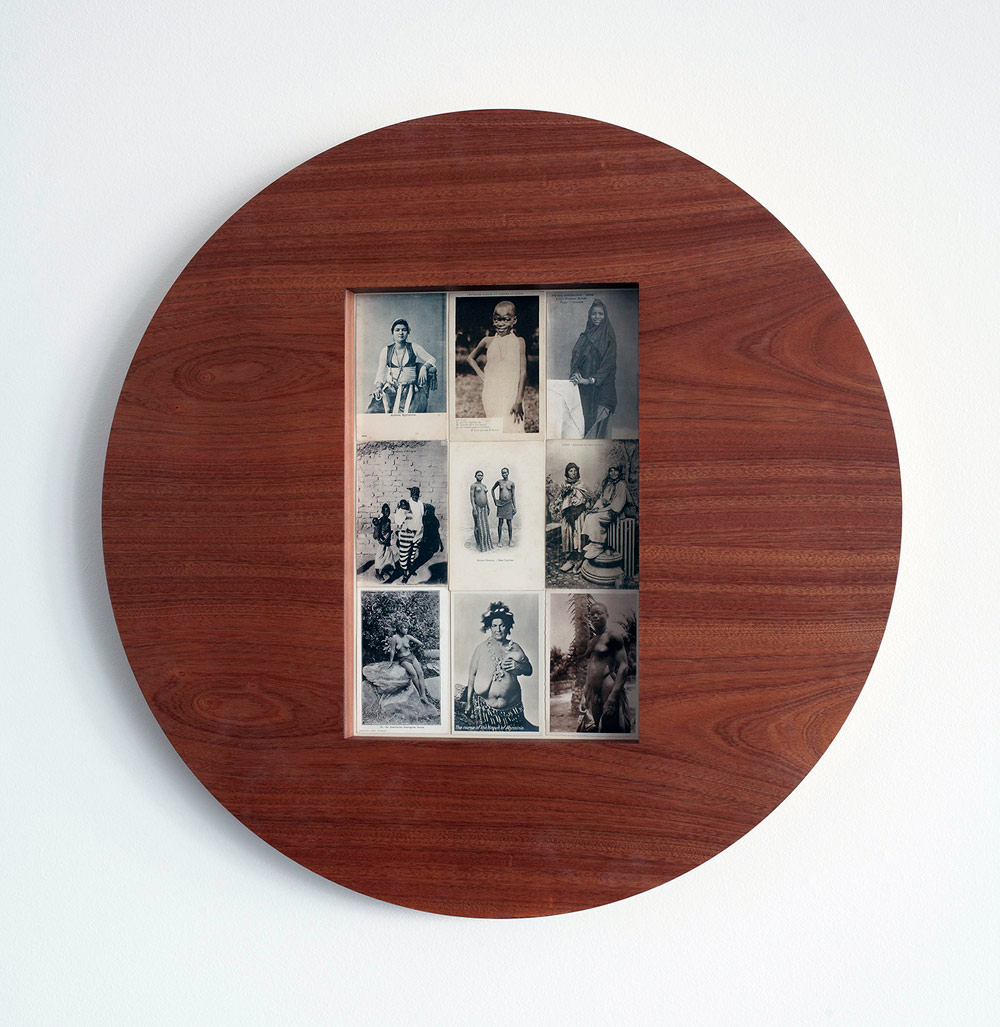
Anne & Gordon Samstag Museum of Art website

LIKE ART BLART ON FACEBOOK

Back to top

Exhibition: ‘Robyn Stacey: Tall Tales and True’ at Stills Gallery, Paddington, Sydney

Exhibition dates: 18th May – 25th June 2011


Robyn Stacey (Australian, b. 1952) 'Come unto me' 2011


Robyn Stacey (Australian, b. 1952)
Come unto me
2011
84 x 120cm
Type C print
Edition of 5 + 2/3 AP


Ozymandias

I met a traveller from an antique land

Who said: Two vast and trunkless legs of stone

Stand in the desert. Near them, on the sand,

Half sunk, a shattered visage lies, whose frown

And wrinkled lip, and sneer of cold command

Tell that its sculptor well those passions read

Which yet survive, stamped on these lifeless things,

The hand that mocked them and the heart that fed.

And on the pedestal these words appear:

“My name is Ozymandias, king of kings:

Look on my works, ye Mighty, and despair!”

Nothing beside remains. Round the decay

Of that colossal wreck, boundless and bare

The lone and level sands stretch far away.


Percy Bysshe Shelley 1818


Many thankx to Jessica Howard for her help and to Stills Gallery and Peter Timms for allowing me to publish the text and the photographs in the posting. Please click on the photographs for a larger version of the image.


Robyn Stacey (Australian, b. 1952) 'Help yourself' 2011


Robyn Stacey (Australian, b. 1952)
Help yourself
2011
90 x 120cm
Type C print
Edition of 5 + 2/3 AP


Working extensively with historic collections since 2000, Robyn Stacey’s early projects dealt with Australian flora and fauna, exploring the Herbarium at the Royal Botanic Gardens Sydney and the Macleay collection at the University of Sydney. Over the last three years she has worked closely the NSW Historic Houses Trust to produce a series of artworks and a book focusing on three of their properties, Elizabeth Bay House, Vaucluse House, and Rouse Hill estate as well as the Caroline Simpson Research Collection and Library. In these works Stacey reveals her fascination with the still life tradition but also speaks about the Australian notion of home and what it means to our national psyche.

Stacey’s transformation of these historic spaces and objects allows us not only to glance into earlier worlds but also to consider hierarchies of taste, culture and knowledge. By using the still life to re-work and re-view the Trust’s collection she aims to deconstruct the traditional museum display. The objects are returned to an approximate albeit fictional reality, creating a sense that the settings have been left only momentarily and that people are never far away.

In this latest exhibition Stacey looks at the traces of inhabitation. Chatelaine for example, features a sumptuous collection of objects including Wisteria spilling out of an ornate vase on top of a beautifully carved side table. The objects are from the collection of Vaucluse House having belonged to its inhabitant Sarah Wentworth. Her convict past prevented easy entry into high society at the time. In this accumulation of tasteful things we see evidence of Sarah Wentworth’s attempts to assert her social position within a society that spurned her. In other works, which draw from the collection at Rouse Hill estate we bear witness to the varying fortunes of the Rouse family.

As well as being a reflection upon the nature and minutiae of nineteenth century domesticity these still lives also reflect our colonial history; the desire for betterment and the need to re-create what has been left behind through the transport of taste and knowledge systems.

Text from the Stills Gallery website


Robyn Stacey (Australian, b. 1952) 'Presentation (Apple)' 2011


Robyn Stacey (Australian, b. 1952)
Presentation (Apple)
2011
90 x 74cm
Type C print
Edition of 5 + 2/3 AP


Robyn Stacey (Australian, b. 1952) 'Presentation (Pear)' 2011


Robyn Stacey (Australian, b. 1952)
Presentation (Pear)
2011
90 x 74cm
Type C print
Edition of 5 + 2/3 AP


Playing a double game

We all have a penchant for hidden essences. They spur our desires. Sometimes, of course, a thing is just a thing: a cup merely a convenient way of getting coffee to our mouths; a car no more than a machine to get around in. Often, however, (surprisingly often in fact) we choose to invest such apparently lifeless objects with little souls, or what the psychologist Paul Bloom calls ‘realities that are not present to the senses’. Almost everything, it seems, is capable of leading a double life.

And where better to seek out these double lives than in the historic house museum? Here the Regency candlesticks, the ormolu clocks, even the gardening tools and saucepans, come already imbued with a special significance, for here the domestic has been raised to the level of theatre.

The choices Robyn Stacey has made from the wealth of objects at Elizabeth Bay House, Vaucluse House and Rouse Hill Estate are by no means the obvious ones. They are not necessarily things of high status or great beauty. She is equally attracted to the rusted sickle, the well-thumbed book, the peeling painting and the old postcard: everyday things that bear the traces of long usage. Through judicious juxtaposition, dramatic lighting, and the addition of her own evocative flourishes, she dramatises these humble items, teasing out their souls and revealing their double lives.

What Robyn is doing is transforming inanimate objects into surrogate people. In the absence of their corporeal selves, those who made their lives in these houses are reborn through what they owned, loved, used and made. And, in the process, their stories are expanded into the realm of cultural history.

Chatelaine, for example, enlists flowers, a silk shawl, a richly decorated Staffordshire jar and the titular chatelaine itself (a sort of female version of the Swiss army knife) to reconstruct nineteenth-century ideals of femininity. Only when we discover that it is intended, in part, as a homage to Sarah Wentworth, the mistress of Vaucluse House, does its gentle irony morph into poignant masquerade. For, despite being married to one of early Sydney’s richest and most powerful men, Sarah’s impoverished and morally compromised background led to her rejection by polite society. So these outwardly vivacious mementos also serve as emblems of one woman’s tragedy and, by extension, the tragedy of many women’s lives at the time.

What could be more richly evocative than the cornucopia of flowers, fruits, grains and agricultural implements assembled for Rouse and the Cumberland Plain? What, indeed, could be more shamelessly calculated to provoke astonishment? This virtuosic picture is at once a homage to and a respectful parody of the European still-life tradition. Ostensibly it sets out, in almost forensic detail, what was once grown in the gardens and fields around Rouse Hill House, every leaf and petal historically accurate as to species and type. In that sense, it can be appreciated as an authentic record of nineteenth-century colonial gardening and agriculture. But of course it is much more than that.

We don’t have to be au fait with seventeenth-century Dutch iconography to be able to tease out the allusions in those overturned baskets, those pomegranates spilling their seeds, those provocative little asparagus spears, the decaying timber and the butterflies, nor to be touched by the pathos of that hand-made house-brick in the foreground, impressed with a heart. These symbolic clues qualify and complicate our initial response of unguarded optimism. Here and there, melancholy and loss begin to intrude. And the longer we look, the more enveloped we become by a stifling air of artificiality, as if everything has been stilled and embalmed. Initial delight slowly morphs into an eerie silence. It is in their delicate balance of abundance and ruin that all these photographs find their moral core. They are awe-inspiring, in the eighteenth-century meaning of the term.

This is true even of apparently simple works such as, for example, Presentation (Pear). While its reticence seems a world away from the fecundity of Rouse and the Cumberland Plain or Chatelaine, the underlying themes correspond. In fact, Presentation (Pear) is a composition of such elegant straightforwardness that we might suspect a trap. And indeed we might be right.

On a substantial marble pedestal sits, somewhat incongruously, a ripe pear with a fly on it. A butterfly has come to rest nearby. There are just these four individual components, each with its own tale to tell. Combined, however, into a Joseph-Cornell-like assemblage, they assume an almost mythical dimension. The massive plinth, its pomposity worthy of an Ozymandias, can be seen as representing the vanity of human ambition. The pear has long been a symbol of birth and fecundity, the fly represents decay, and the butterfly the brevity of life. Yet such pat interpretations will probably strike a modern sensibility as overdetermined or too reductive. These days we are not inclined to take this sort of thing too seriously, and the very transparency of the symbolism in Presentation (Pear) is perhaps a warning that we should not. There is a good deal of self-referentiality here. The symbols keep turning in on themselves.

What these photographs are, in fact, inviting us to do is to momentarily assume a double life, to surrender to the romantic perceptions of past generations without abandoning our modern scepticism, to experience a pre-scientific world through a post-scientific consciousness so as to understand not just the material world of past generations but also to enter into their way of thinking. As in the cinema (and these photographs are nothing if not cinematic) we are being invited to suspend our disbelief and imagine ourselves in another time, not for nostalgia’s sake, but for the opposite – to strip away sentiment and to see ourselves more clearly.

Thus, beneath their apparent sumptuousness, Robyn’s artfully contrived tableaux are playing a crafty double game of de-familiarisation.

Peter Timms


Robyn Stacey (Australian, b. 1952) 'Early Morning Rouse' 2010


Robyn Stacey (Australian, b. 1952)
Early morning Rouse
2010
110 x 75.6cm
Type C print
Edition of 5 + 2/3 AP


Robyn Stacey (Australian, b. 1952) 'Chatelaine' 2010


Robyn Stacey (Australian, b. 1952)
Chatelaine
2010
110 x 82.5cm
Type C print
Edition of 5 + 2/3 AP


Robyn Stacey (Australian, b. 1952) 'The Royal Guard' 2011


Robyn Stacey (Australian, b. 1952)
The Royal Guard
2011
90 x 76cm
Type C print
Edition of 5 + 2/3 AP


Robyn Stacey (Australian, b. 1952) 'Venetian Beauty' 2011


Robyn Stacey (Australian, b. 1952)
Venetian Beauty
2011
120 x 107.7cm
Type C print
Edition of 5 + 2/3 AP


Stills Gallery

This gallery has now closed.

Stills Gallery website

LIKE ART BLART ON FACEBOOK

Back to top

Review: ‘Trace’ by Murray Fredericks at Arc One Gallery, Melbourne

Exhibition dates: 24th May – 18th June 2011


Murray Fredericks (Australian, b. 1970) 'Salt 271' 2011


Murray Fredericks (Australian, b. 1970)
Salt 271
2011
150 x 120cm
Pigment print on cotton rag


“Photographers tell me what I already know. The recognition of the beautiful, bizarre, or boring (the three photographic B’s) is not the problem. You would have to be a refrigerator not to be moved by the beauty of Yosemite. The problem is to deal with one’s total experience, emotionally as well as visually. Photographers should tell me what I don’t know.”


Duane Michals Real Dreams1


“While we cannot describe its appearance (the equivalent), we can define its function. When a photograph functions as an Equivalent we can say that at that moment, and for that person the photograph acts as a symbol or plays the role of a metaphor for something that is beyond the subject photographed.”


Minor White


Fredericks new infrared panoramic works show the strength of nature at it’s finest (9 out of 10 to nature especially when see through this type of filtration), excellent technical skills and good printing but somehow any revelation of spirit in the sublime has been lost in these photographs.

The photographer does not take me anywhere, there is no new space to step into, another view of the world that I want to spend time with. The relationship between the two series is also nebulous, the critical ice / fire space between the works adding little frisson to the exhibition.

I ask: Is it sufficient to use a digital scientific infrared back, if for no other reason that it is there? Is it sufficient to know that these climatic conditions take place in the same area each day, at the same time, place the camera down and just capture the scene? Is there really a non-decisive moment in these photographs, a poetic insight, or is this just what was, literally, hanging around so to speak?

The answer to all three questions I leave up to the reader.

Personally, I need photography to push the boundaries of elusiveness through an understanding in revelation, not just through an understanding of space and form, light and colour. I believe that conventional patterns of perception are there to be broken in ways that disrupt the technologies of the self – the self-regulating of our senses, the conventions of cultural capital – but too what do we open ourselves up to?

As Minor White says: ‘The sound of one hand clapping’.

While the photographs have the weight of serious equipment and professional acumen behind them after the initial awe on viewing they fall to earth, like the rainstorms they portray. As with my earlier review of Salt they seem to be more about the photographer than any revelation of the thing being photographed.

Duane Michals observes that, “The best artists give themselves in their work” but this giving is ego-less, the dropping away of the bells and whistles to let an’other’ emerge: in this sense I do not feel the total experience, emotionally as well as visually.

Paul Strand said that it took him 10 years to start to become an artist, to let go of ego in his work; paradoxically after this the work became more his own.

For me, these photographs never become a metaphor for something that is beyond the subject being photographed.

Dr Marcus Bunyan


1/ Michals, Duane. Real Dreams 1976 [Online] Cited 08/06/2011, on longer available online.


Many thankx to Angela Connor for her help and to Arc One Gallery for allowing me to publish the photographs in the posting. Please click on the photographs for a larger version of the image.


Murray Fredericks (Australian, b. 1970) 'Salt 272' 2010


Murray Fredericks (Australian, b. 1970)
Salt 272
2010
Pigment print on cotton rag
150 x 120cm


Murray Fredericks (Australian, b. 1970) 'Salt 273' 2011


Murray Fredericks (Australian, b. 1970)
Salt 273
2011
Pigment print on cotton rag
150 x 120cm


Salt began in 2003 and is a series of photographs of vast empty landscapes. Each image in the series is connected by the placement of the horizon running across the lower third of the frame. The horizon is the only referential form, breaking the void and providing the viewer with an element that paradoxically ‘defines’ the space. These new works add another dimension to Salt, with the water from last year’s rains now creating scenes diametrically opposed to the work occupying the adjacent walls as Hector.

Hector draws its title from an affectionately name atmospheric phenomenon that produces some of the world’s biggest thunderstorms. These new black and white works employ Murray’s methodical consistency of composition with distinctly different outcomes to the Zen-like vistas of Salt. In these works the expanse of the storm is consciously contained and forced into a barometric battle with the invisible air at its limits for the place of subject within the photograph…

By juxtaposing these series, each viewer is at once placed outside the containers which harbour these landscapes of remote territories – one calm and one facing the eye of the storm – and at the same time place in the centre of Murray’s minimal, ethereal representations of these places. In this way we can trace his exploration into these subjects – capturing the moment is our witness to a reverence to land and country.

Text from Arc One Gallery


Joseph Mallord William Turner (English, 1775-1851) 'Valley of Aosta: Snowstorm, Avalanche, and Thunderstorm' 1836/37


Joseph Mallord William Turner (English, 1775-1851)
Valley of Aosta: Snowstorm, Avalanche, and Thunderstorm
1836/37
Oil on canvas
36 1/4 x 48 in. (92.2 x 123cm)
The Art Institute of Chicago: Frederick T. Haskell Collection


Murray Fredericks (Australian, b. 1970) 'Hector 10' 2011


Murray Fredericks (Australian, b. 1970)
Hector 10
2011
220 x 120cm
Pigment print on cotton rag


Murray Fredericks (Australian, b. 1970) 'Hector 11' 2011


Murray Fredericks (Australian, b. 1970)
Hector 11
2011
204 x 120cm
Pigment print on cotton rag


Arc One Gallery
45 Flinders Lane
Melbourne, 3000
Phone: (03) 9650 0589

Opening hours:
Wed – Sat 11am – 5pm
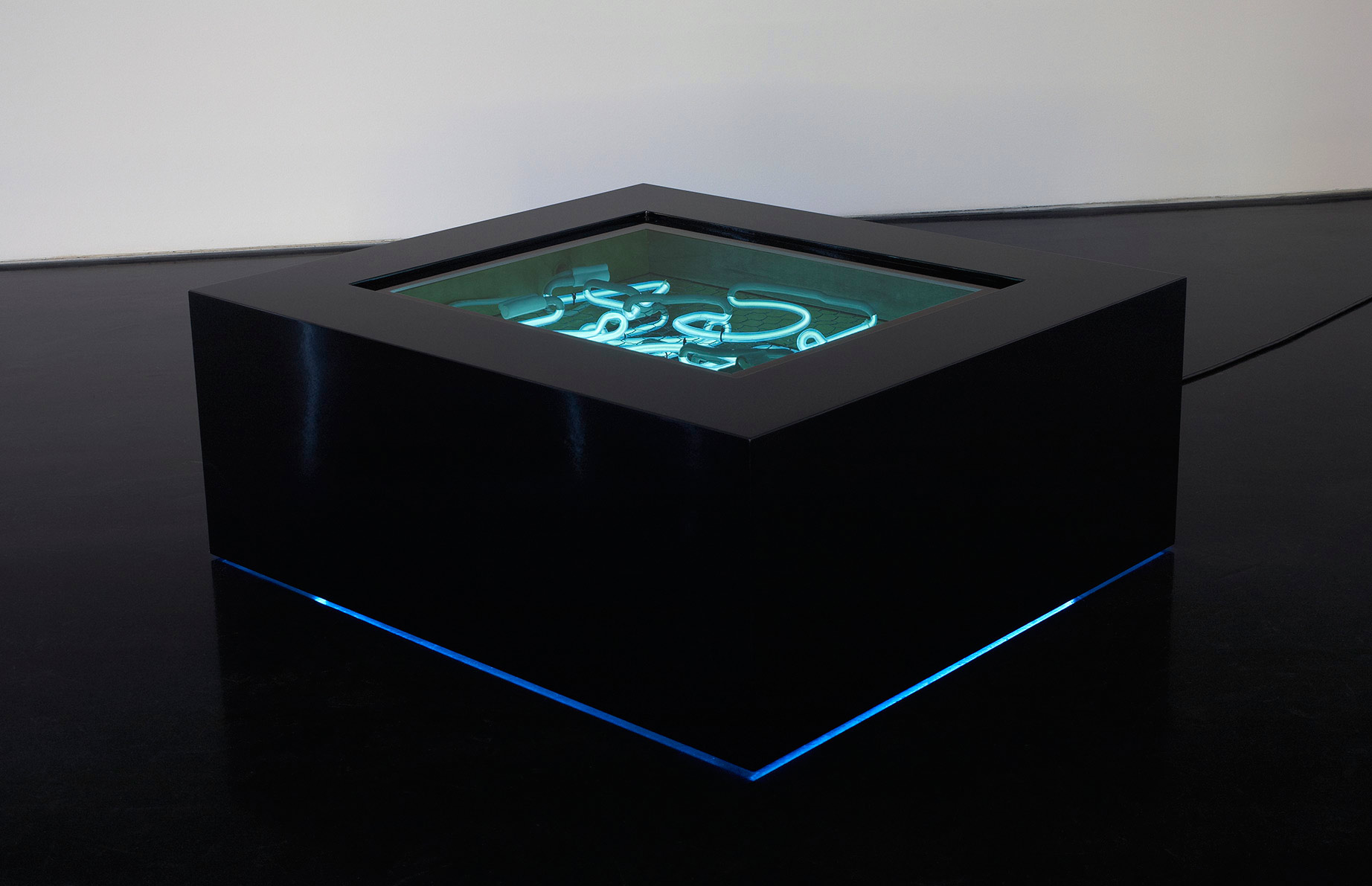
Arc One Gallery website

LIKE ART BLART ON FACEBOOK

Back to top

Review: ‘Time Machine: Sue Ford’ at Monash Gallery of Art, Wheelers Hill, Victoria

Exhibition dates: 7th April – 19th June 2011


Sue Ford (1943-2009) 'Self-portrait' 1968


Sue Ford (Australian, 1943-2009)
Self-portrait 1968
1968, printed 2011
From the series Self-portrait with camera (1960-2006)
Selenium toned gelatin silver
22.8 x 24 cm
Courtesy Sue Ford Archive


“Choosing to photograph oneself, one’s life and one’s time exemplified the now well-worn slogan ‘the person is political’. Ford’s self-examination across the decades is unflinching and exacting. As Janine Burke wrote in 1980, her ‘psychological history [is] etched in her face for everyone to see’. Burke concluded that Ford’s self-portraits are ‘as honest as one can ever be about oneself’.”


Helen Ennis. Faces are Maps: Sue Ford and Portraiture.1


“The search for the self is a journey into a mental labyrinth that takes random courses and ultimately ends at impasses. The memory fragments recovered along the way cannot provide us with a basis for interpreting the overall meaning of the journey. The meanings that we derive from our memories are only partial truths, and their value is ephemeral. For Foucault, the psyche is not an archive but only a mirror. To search the psyche for the truth about ourselves is a futile task because the psyche can only reflect the images we have conjured up to describe ourselves. Looking into the psyche, therefore, is like looking into the mirror image of a mirror. One sees oneself reflected in an image of infinite regress. Our gaze is led not toward the substance of our beginnings but rather into the meaninglessness of previously discarded images of the self.”


Patrick Hutton. Foucault, Freud,
and the Technologies of the Self.2


This is a solid exhibition of the work of beloved Australian photographer Sue Ford, essential looking for anyone wanting to have an overview of Australian photography.

The beautifully hung exhibition flows like music, interweaving up and down, the photographs framed in thin, black wood frames. It features examples of Ford’s black and white fashion and street photography; a selection of work from the famous black and white Time series (being bought for their collection by the Art Gallery of New South Wales) – small, snapshot size double portraits, the first portraits taken during the 1960’s, the second around 1974, formalist portraits in which the sitter is closely cropped around head and shoulders with the photographer using the camera as objectively as possible, the double portrait used to display changes in identity over time; a selection of Photographs of Women – modern prints from the Sue Ford archive that are wonderfully composed photographs with deep blacks that portray strong, independent, vulnerable, joyous women (see last four photographs below); and the most interesting work in the exhibition, the posthumous new series Self-portrait with camera (1960-2006) that evidence, through a 47 part investigation using colour prints from Polaroids, silver gelatin prints printed by the artist, prints made from original negatives and prints from scanned images where there was no negative available, a self-portrait of the artist in the process of ageing (see the two photographs above and below this review).

One of my favourite photographs in the exhibition was Margaret with Emma, Redcliffs, Queensland, 1971. The black and white photograph features a grandmother with her granddaughter, close to each other, both wearing floral dresses of different pattern, both staring intently out of the image at what is possibly a television with a weatherboard backdrop. A dark form hovers at the upper left of the photograph adding a disturbing note to the image but it is the look on the grandmother’s face – a look of shock, enthralment, blankness with eyes wide, that is matched by the intensity on the granddaughter’s face as she stares intently – that transcends the distance between photograph and viewer, between grandmother and granddaughter across time and space. The process of looking and ageing captured by the ‘time machine’, the camera, in one single image. The viewer understands this photograph for we all experience the evidence of our bodies, our mortality. We relate intimately to how the photograph reanimates in the present this moment from the past, the momenti mori of the photograph, the little death becoming our future death.

This notion is particularly poignant in the series Self-portrait with camera (1960-2006), a work that Sue Ford was actively engaged with before her death. Smaller colour prints from negatives and Polaroids are here interspersed with black and white photographs up to about 8″ x 10″ in size: the series contains 12 chromogenic photographs, 7 silver gelatin photographs, 6 dye fusion photographs and 22 selenium-toned photographs (printed 2011). In dark, contrasty prints the artist has photographed herself looking down into the camera shooting into a mirror, looking directly into the mirror with camera, with the camera on a timer, with the camera in/visible, being shot by other people with the camera pointed directly at her, with the camera perpendicular to the artist shot by someone else, with Ford behind a movie camera, with multiple refractions in mirrors. Sometimes Ford even becomes the camera (as in the 1986 self-portrait below: I am the camera, the camera is me).

Ford becomes the “one who looks” knowingly at herself, sometimes the author of that observation, sometimes oblivious to it (until later when she has collected these images). As Burke and Ennis note, these photographs of self-examination across the decades are as honest as one can ever be about oneself. This a deeply political but also deeply psychoanalytical investigation: not to “take care of yourself” as a form of knowing as in Greco-Roman antiquity but “knowing yourself” as the fundamental principle of understanding yourself: a procedure of objectification and subjection in which the photograph ‘marks’ our status and the passage of time, that makes us who we are – photographs as vital techniques in the constitution of the self as subject.3

The mirror is frequently used in these photographs to portray the self. While it is true that these are strong, intimate, unflinching and exacting images, in the use of the mirror the im(pose)tures of life are singled / doubled / tripled – a reflection of the psyche that lead to discarded images of the self that are of little use in understanding the substance of our beginnings … or the overall interpretation of the journey. What they do offer is cumulative evidence of a deep, personal conviction into the inquiry: who am I?

Rembrandt famously painted, drew and etched himself hundreds of times in the process of ageing; Ford has likewise done the same. If, as Victor Burgin observes, “An identity implies not only a location but a duration, a history,”4 then the nature of photography (including Ford’s self-reflexive project), concerned as it is with space and time, becomes the mirror in a search for identity. Photography as a mirror on the world constantly repeats moments of illumination in a re/vision of eternal recurrence, a performance that is a hybrid site: both a homogenous (the same “I”) and heterogenous (a different “I”) site of self-representation, different every time we look. To that end I would like you to look at the self-portrait from 1976 (below). The artist is completely absent, her silhouette, her dark shadow swallowed whole by the blank photographic plate on the left hand side of the image as though Ford, the camera and an image of infinite regress have become one, eternally engulfed by space-time but open to re/view at any time.

Whether looking down, looking toward or looking inward these fantastic photographs show a strong, independent women with a vital mind, an élan vital, a critical self-organisation and an understanding of the morphogenesis of things that will engage us for years to come. Essential looking.

Dr Marcus Bunyan


1/ Burke, Janine. Self-portrait/self-image 1980-1981. Melbourne: Australian Directors’ Council, 1981. p. 4 quoted in Ennis, Helen. “Faces are Maps: Sue Ford and Portraiture,” in Lakin, Shaune (ed.,). Sue Ford: Self-portrait with camera (1960-2006). Melbourne: Monash Gallery of Art, 2011, np.

2/ Hutton, Patrick. “Foucault, Freud, and the Technologies of the Self,” in Martin, Luther and Gutman, Huck and Hutton, Patrick (eds.,). Technologies of the Self: A Seminar with Michel Foucault. London: Tavistock Publications, 1988, p. 139

3/ Foucault, Michel. Discipline and Punish, quoted in Gutman, Huck. “Rousseau’s Confessions: A Technology of the Self,” in Martin, Luther and Gutman, Huck and Hutton, Patrick (eds.,). Technologies of the Self: A Seminar with Michel Foucault. London: Tavistock Publications, 1988, p. 99

4/ Burgin, Victor. In/Different Spaces: Place and Memory in Visual Culture. Berkeley: University of California Press, 1995, p. 36


Many thankx to Mark Hislop for his help and the Monash Gallery of Art for allowing me to publish the photographs in the posting. Please click on the photographs for a larger version of the image.


Sue Ford (Australian, 1943-2009) 'Self-portrait 1986' 1986


Sue Ford (Australian, 1943-2009)
Self-portrait 1986
1986
From the series Self-portrait with camera (1960-2006)
Gelatin silver print, printed 2011
8.4 x 6.5cm
Courtesy Sue Ford Archive


Sue Ford (Australian, 1943-2009) 'Self-portrait 1976' 1976


Sue Ford (Australian, 1943-2009)
Self-portrait 1976
1976, printed 2011
From the series Self-portrait with camera (1960-2006)
Selenium toned gelatin silver print
24 x 18cm
Courtesy Sue Ford Archive


Sue Ford (1943–2009) 'Self-portrait 1974' 1974


Sue Ford (Australian, 1943-2009)
Self-portrait 1974
1974, printed 2011
From the series Self-portrait with camera (1960-2006)
Selenium toned gelatin silver print
19.9 x 18cm
Courtesy Sue Ford Archive


On 16 April 2011, the first major exhibition of the work of the late Sue Ford for two decades will open at Monash Gallery of Art.

Sue Ford (1943-2010) was one of Australia’s most important photographers and filmmakers. Ford studied photography at RMIT and in 1974 was the first Australian photographer to be given a solo exhibition at the National Gallery of Victoria.

Ford passed away in 2009. Before her death, she was working with Monash Gallery of Art on an exhibition of her work which would feature her final major project Self-portrait with camera (1960-2006). This series of 47 photographs has never been shown before, and presents a compelling self-portrait of an artist. It underscores the central role the camera played in Ford’s life. Self-portrait with camera will be shown alongside a survey of Ford’s black-and-white photographs from the 1960s and 70s and examples of her most iconic work, Time series (1960s-1970s).

The exhibition describes a period when photography was charged with political and personal meaning. As photographic historian and contributor to the publication accompanying the exhibition Helen Ennis states: “Ford’s approach to art making has always been straightforward … She does not cultivate a mysterious artistic persona [since] … her art practice is purposeful; it is the outcome of her view of art as a political activity that is democratic, liberating and relevant to contemporary society.”

As MGA Director and curator of the exhibition Shaune Lakin states: “This exhibition provides a great opportunity for Australian audiences to reassess the work of this important photographer, whose work was always at once political, beautiful and elegiac. In an era when the photograph has become a highly disposable thing, it is important to acknowledge its role as an agent of change and memory.”

Press release from the Monash Gallery of Art


Sue Ford (Australian, 1943-2009)
Helen, 1962; Helen, 1974
1974
From the series Time series
Gelatin silver prints
11.0 x 8.0cm; 11.5 x 8.3cm
Museum of Australian Photography, City of Monash Collection
Acquired with assistance from the Robert Salzer Foundation and the Friends of MGA Inc 2020


Sue Ford (1943-2009) was one of Australia’s most important twentieth-century photographers, and Time series is her most iconic body of work, widely recognised as a key moment in the history of Australian photography. First exhibited at the NGV and Brummels Gallery of Photography in 1974, the series highlights Ford’s interest in the camera’s ability to record the effects of time and history. To create this series, Ford made portraits of her friends and acquaintances during the early to mid-1960s then rephotographed the sitters around a decade later, showing the second portraits beside the first. In some cases Ford later added third and fourth portraits to create Time series II, which she made for exhibition at the 1982 Sydney Biennale. Ford described the camera as a ‘time machine’ and the works in these series bracket periods in the lives of her subjects. With a tender pathos, they evoke the inevitability of time’s passing along with the processes of human ageing and constant change.

Text from the Museum of Australian Photography website 2021


Sue Ford (Australian, 1943-2009) 'Annette 1962; Annette 1974' 1974


Sue Ford (Australian, 1943-2009)
Annette 1962; Annette 1974
1974
From the Time series
Gelatin silver prints
11.1 x 20.1cm
National Gallery of Victoria, Melbourne
Purchased with the assistance of the Visual Arts Board and the KODAK (Australasia) Pty Ltd Fund, 1974


Sue Ford (Australian, 1943-2009) 'Jim, 1964; Jim, 1969; Jim, 1974; Jim, 1979' 1982


Sue Ford (Australian, 1943-2009)
Jim, 1964; Jim, 1969; Jim, 1974; Jim, 1979
1982
From the series Time series
Gelatin silver prints
11.0 x 7.6cm (each)
Museum of Australian Photography, City of Monash Collection
donated by the Sue Ford Archive 2020


Sue Ford (1943-2009) 'Lynne and Carol' 1962


Sue Ford (Australian, 1943-2009)
Lynne and Carol
1962, printed 2011
Selenium toned gelatin silver print
38.0 x 38.0cm
Courtesy Sue Ford Archive


Sue Ford (1943-2009) 'Carol, Little Collins St studio' 1962


Sue Ford (Australian, 1943-2009)
Carol, Little Collins St studio
1962, printed 2011
Selenium toned gelatin silver print
37.9 x 38.1cm
Courtesy Sue Ford Archive


Sue Ford (1943-2009) 'St Kilda' 1963


Sue Ford (Australian, 1943-2009)
St Kilda
1963, printed 2011
Selenium toned gelatin silver print
38.0 x 38.0cm
Courtesy Sue Ford Archive


Sue Ford (1943-2009) 'Untitled [Bliss at Yellow House, King's Cross, Sydney]' c. 1972–1973


Sue Ford (Australian, 1943-2009)
Untitled [Bliss at Yellow House, King’s Cross, Sydney]
c. 1972-3, printed 2011
Selenium toned gelatin silver print
47.9 x 34.2cm
Courtesy Sue Ford Archive


Monash Gallery of Art
860 Ferntree Gully Road, Wheelers Hill
Victoria 3150 Australia
phone: + 61 3 8544 0500

Opening hours:
Tue – Fri 10am – 5pm
Sat – Sun 10pm – 4pm
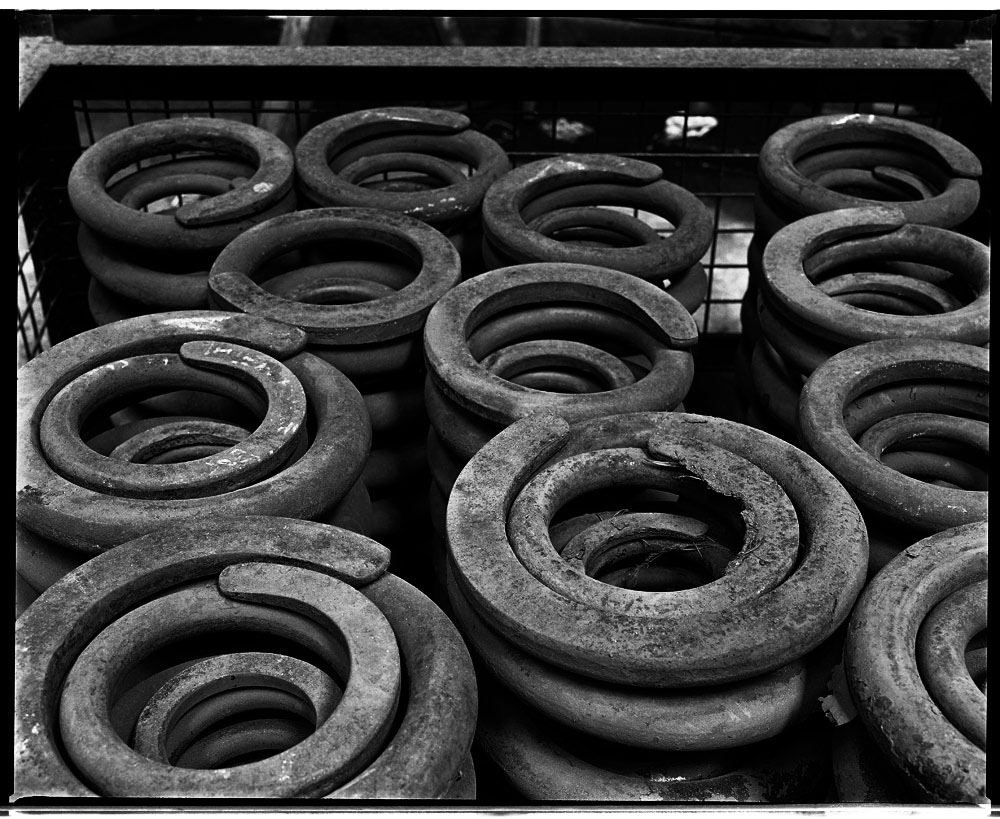
Mon/public holidays closed

Monash Gallery of Art website

LIKE ART BLART ON FACEBOOK

Back to top