Curator: Taous Dahmani, art historian and writer. The exhibition was developed in collaboration with Autofoto (Rafael Hortala Vallve and Corinne Quin) and features archival material from Raynal Pellicer
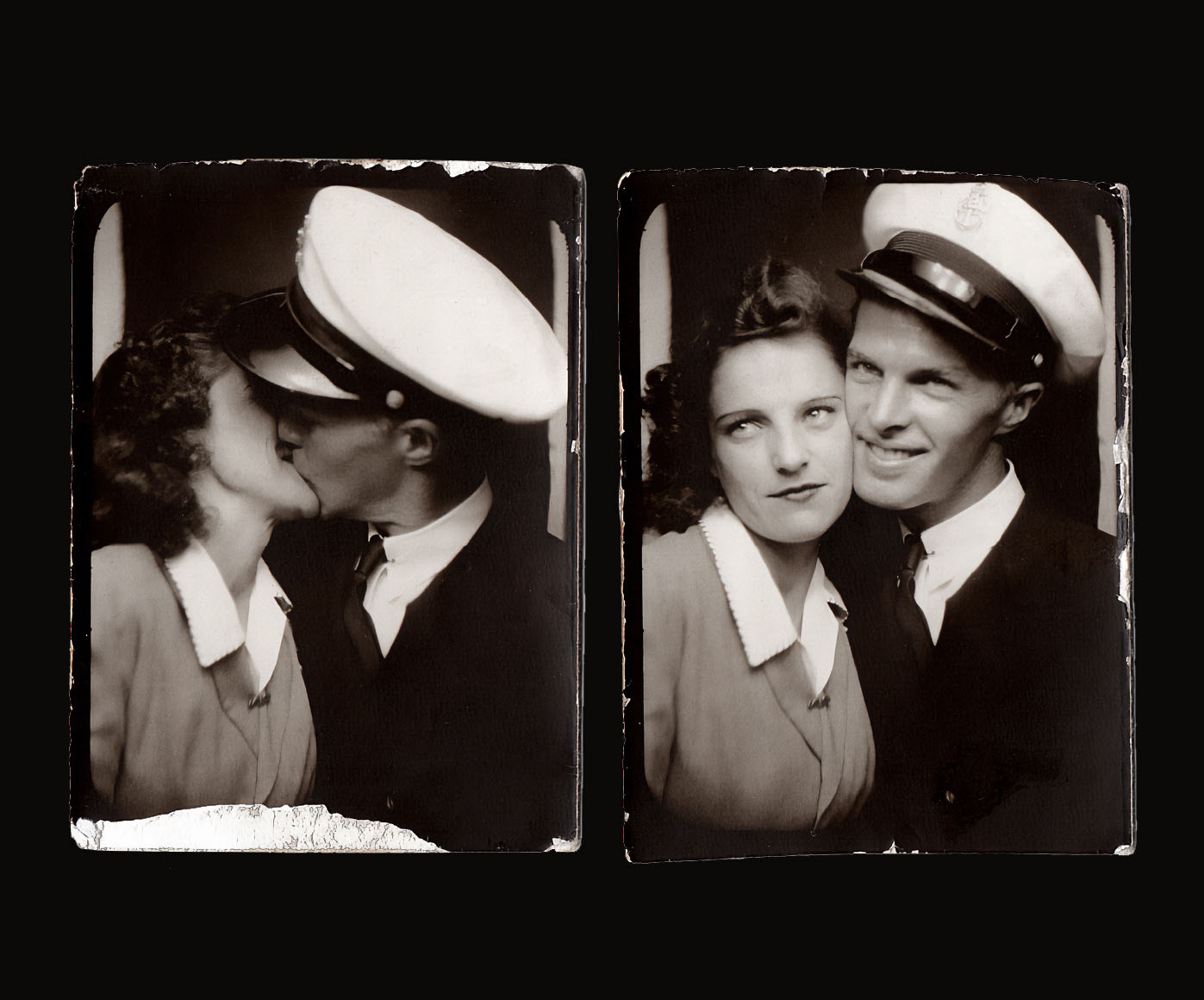
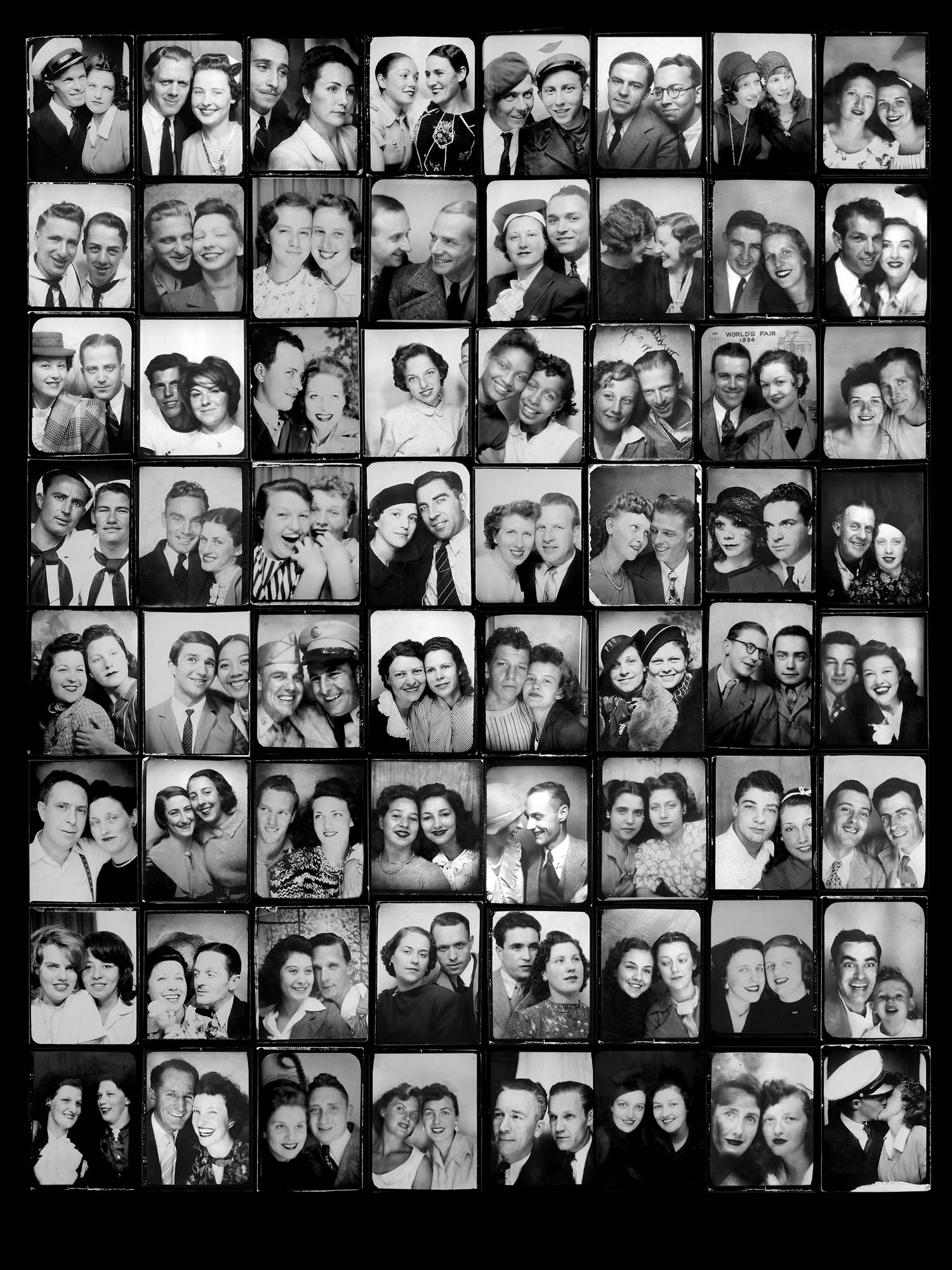
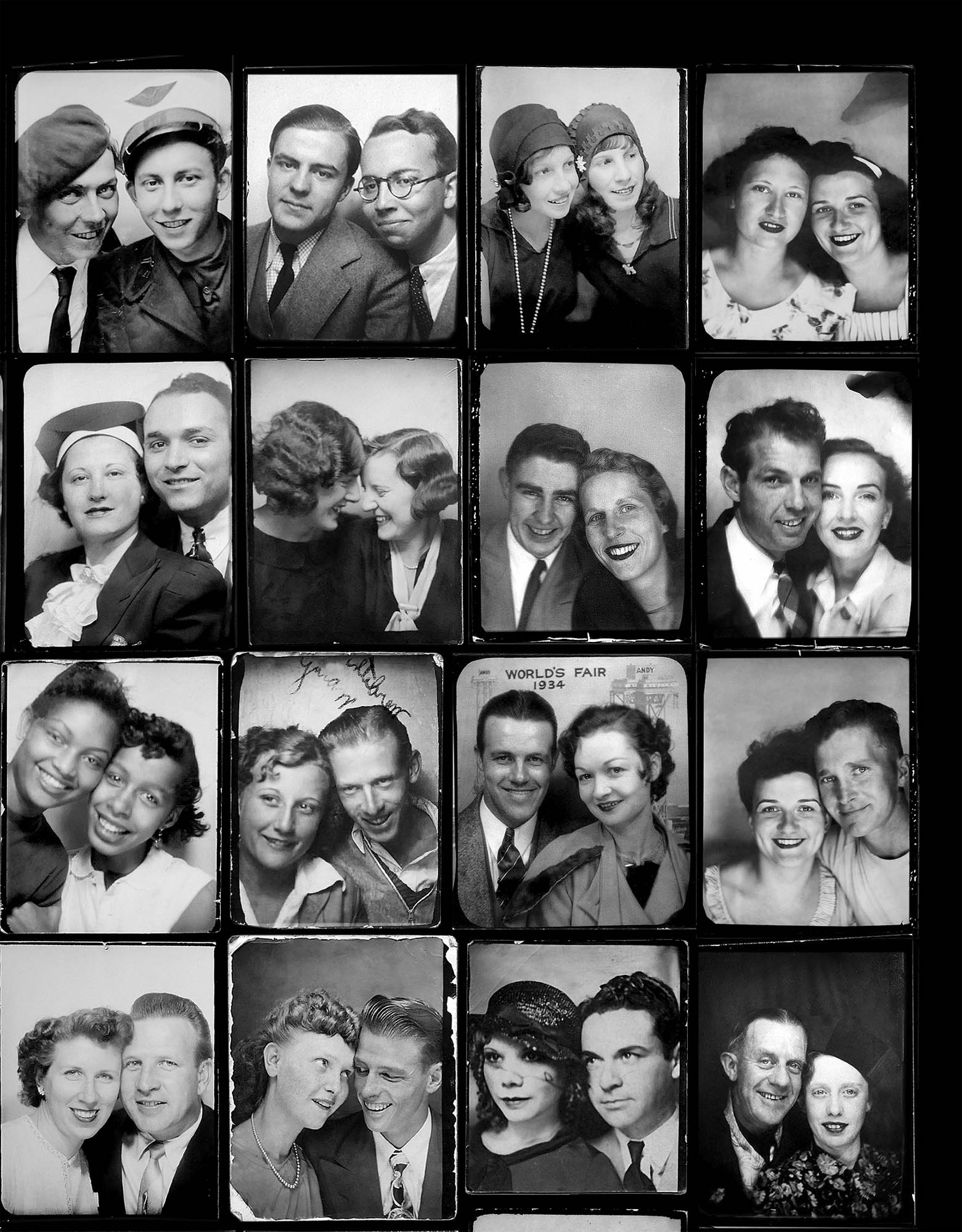
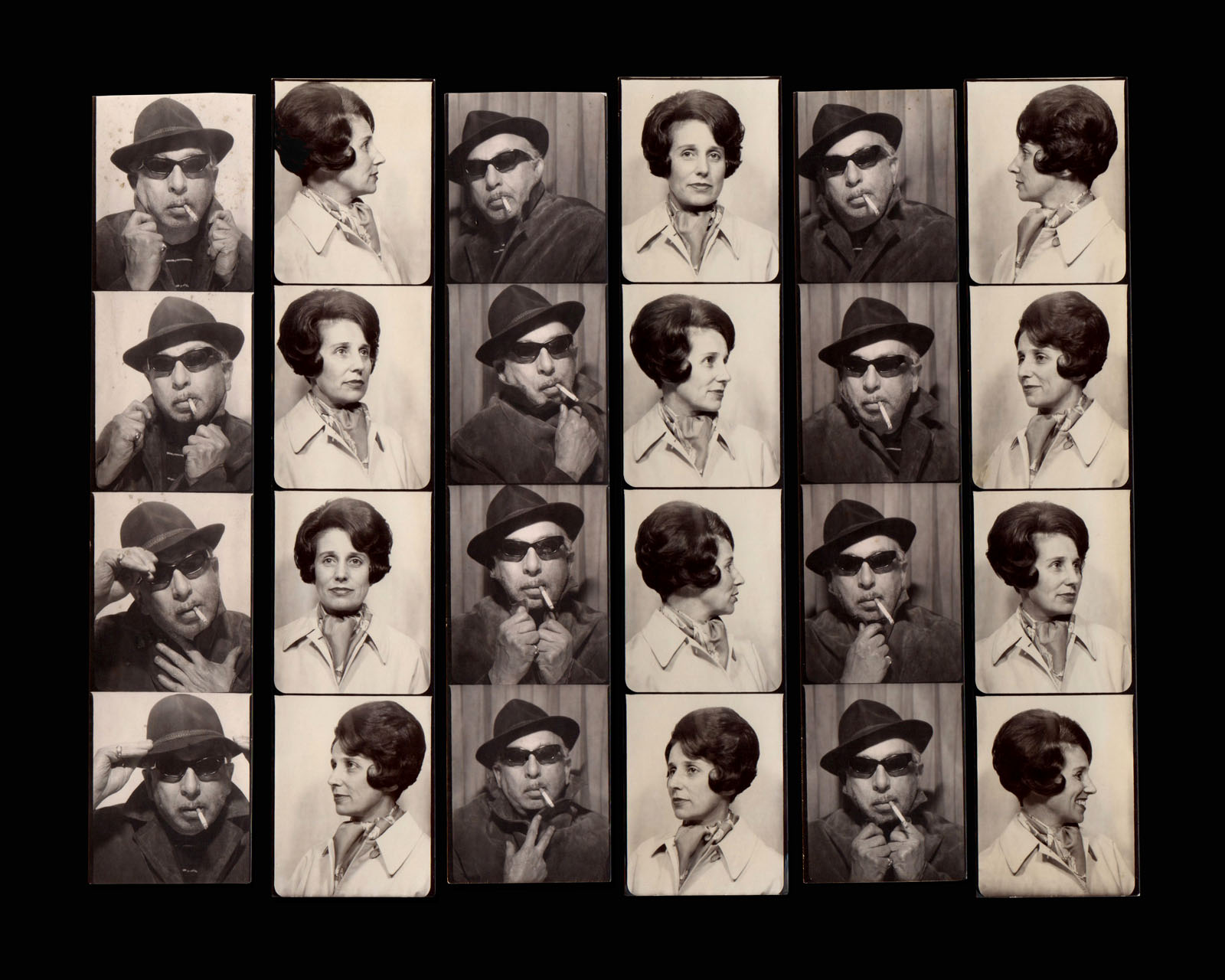
Untitled [Women Photobooth Portraits] c. 1940s-1950s
This “small archival display celebrating 100 years of the much-loved photobooth” (which occurred in 2025) – no installation photographs available – seems not a patch on one of the best photography exhibitions on Art Blart in 2025: Auto-Photo: A Life in Portraits at RMIT Gallery, Melbourne, June – August 2025 which introduced us to “Alan Adler (2932-2024), who while little known, was the oldest and longest serving photobooth technician in the world… For over 50 years, Adler maintained a fleet of photobooths across Melbourne / Narrm, most notably the site at Flinders Street Station.”
There are still some delightful, happy, joyful snapshots in this posting however.
Pay the money, cross the threshold of the booth, draw the curtain, adjust the seat, comport yourself into whatever “pose” you choose, then perform for each flash of the Time Machine.
Captured in a space of privacy and experimentation these portraits of the self (your essential being at that moment in time), eventually, minutes later, reveal you to yourself.
Some conforming, some rebelling, some crossing the taboo of self-revealing.
Dr Marcus Bunyan
Many thankx to The Photographers’ Gallery for allowing me to publish the photographs in the posting. Please click on the photographs for a larger version of the image.
“Practical at first – cheap, quick and accessible identity photos – the booth quickly became something else: a private stage. Behind the curtain, anyone could perform beyond the gaze of a photographer. Sitters experimented alone or packed in with friends, kissing, laughing, trying on disguises or staring back with deadpan seriousness. The Photomaton promised autonomy: pull the curtain, face the lens, decide how to appear. Some likened the ritual to a slot machine: drop a coin, wait for the surprise. Josepho’s invention, in hindsight, feels like the ancestor of the selfie: it put image-making directly into the hands of its subjects, a century before smartphones did the same. …
In our digital world, we’re used to photographs that are instant, endless and easily stored or deleted. By contrast, the analogue photobooth resists perfection. Control is never total: the flashes are blinding, the stool wobbles, the timing is merciless. Each strip bears the marks of chance – a blink, a smirk, a blur, a half-formed gesture. That unpredictability is its charm, giving the images a peculiar energy that no app filter can replicate.
Their resurgence taps into the wider appetite or the tactile and the ‘vintage’: objects that feel authentic precisely because they escape the seamlessness of the digital. The photobooth doesn’t have a photographer mediating or directing the sitter. It’s a space of agency and play, where friends cram together or someone experiments alone, producing an image that can be private or shared, that can be spontaneous or completely staged.
In contemporary culture, where self-presentation is curated and optimised online, the photobooth is a refreshing counterpoint. The strips are imperfect, uneditable and physical – small paper relics that capture a moment in time with all its messiness intact. That’s why they resonate now: they remind us that identity is not just polished images, but also the accidents, surprises and fleeting gestures that make us human.”
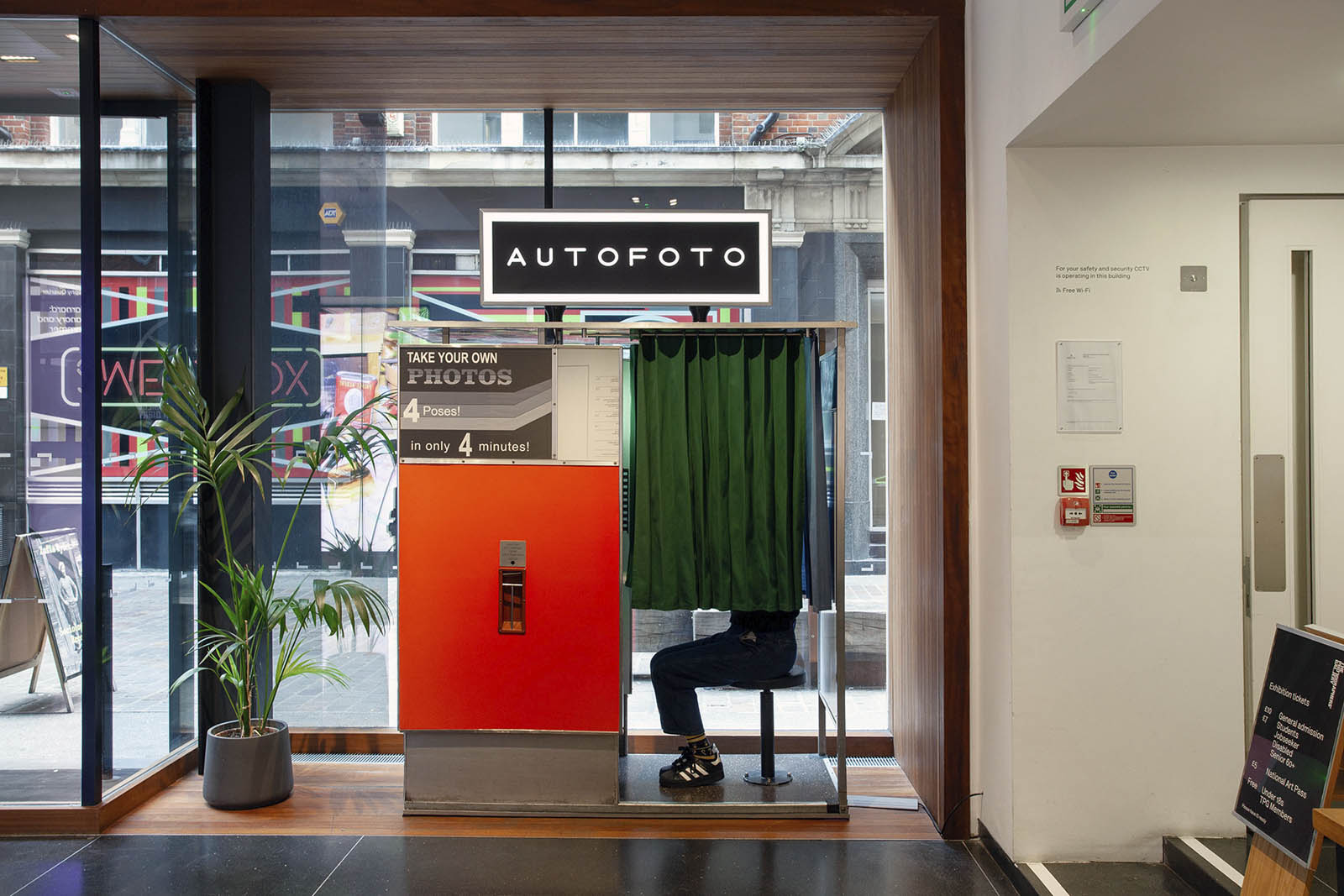
Installation view of the AUTOFOTO photobooth at the exhibition Strike a Pose! 100 Years of the Photobooth at The Photographers’ Gallery, London
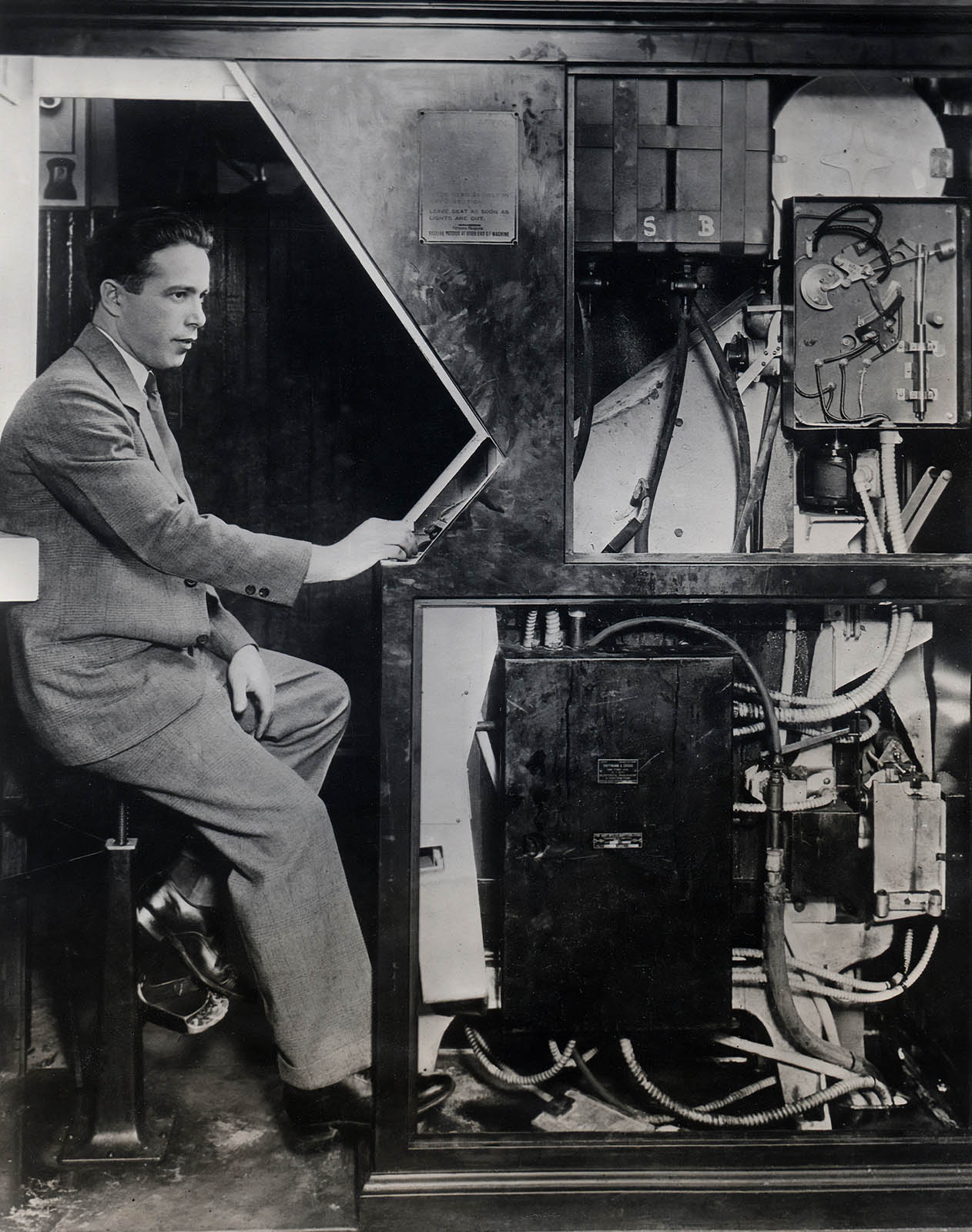
Anonymous photographer Portrait of Anatol Josepho in his Photomaton United States of America, 1927 Courtesy Raynal Pellicer
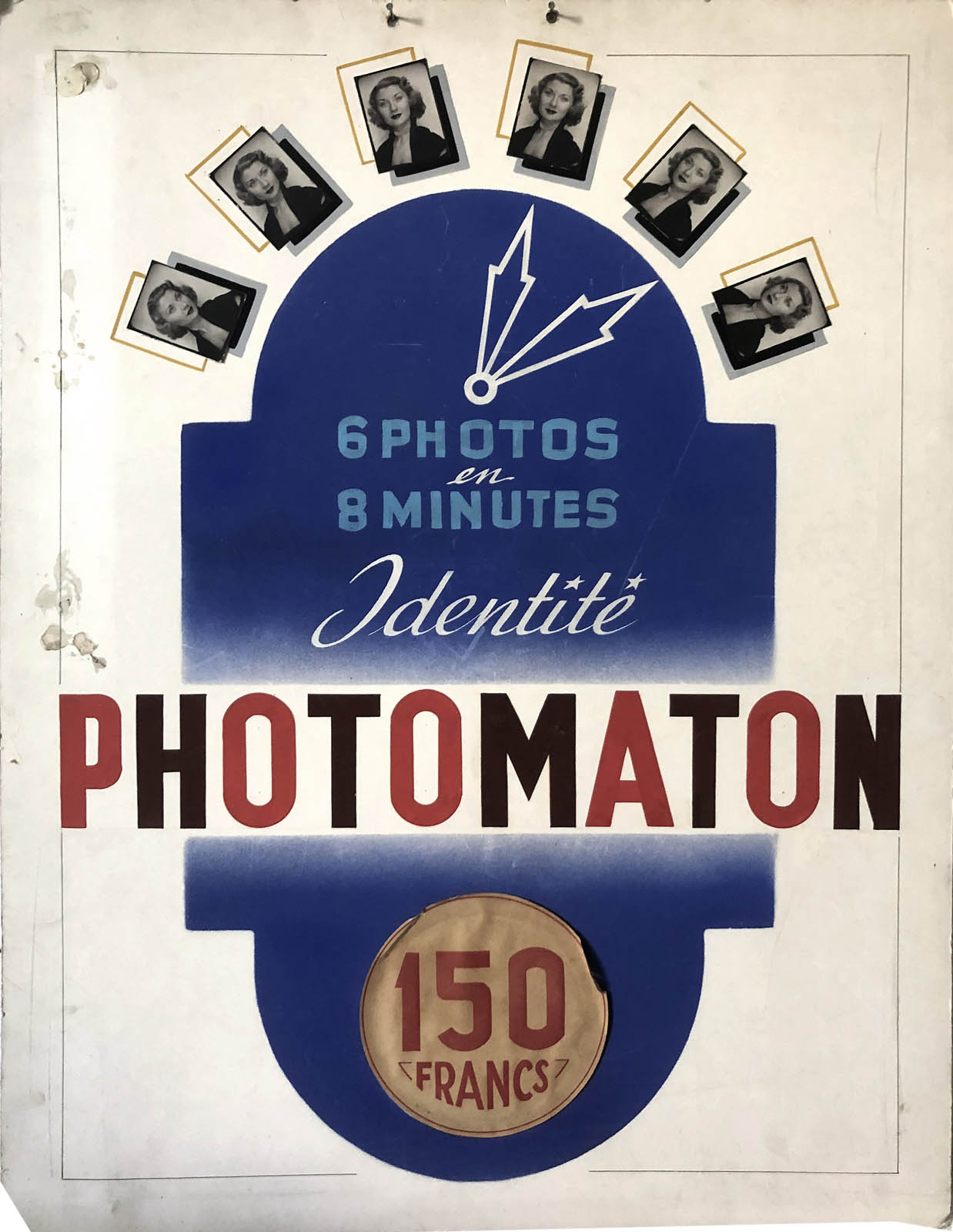
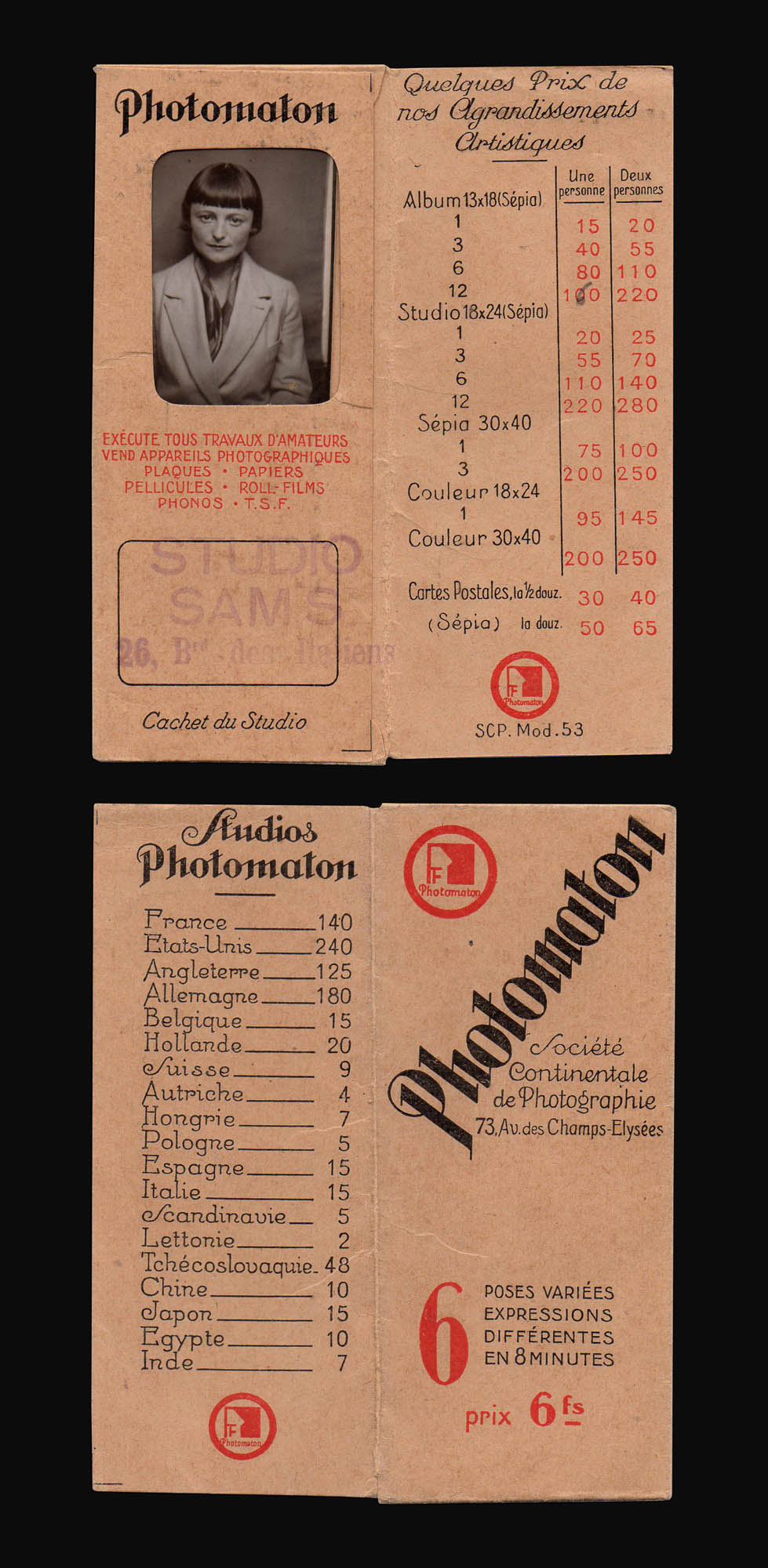
French Photomaton Advertising “6 photos in 8 minutes. Identity” 1927 Courtesy Raynal Pellicer
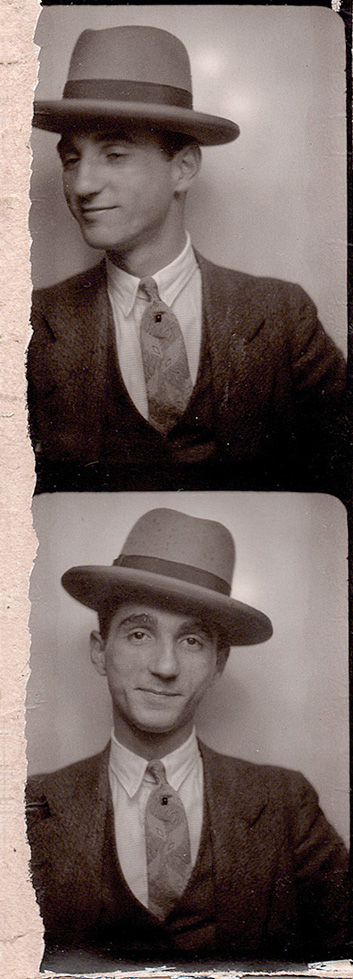
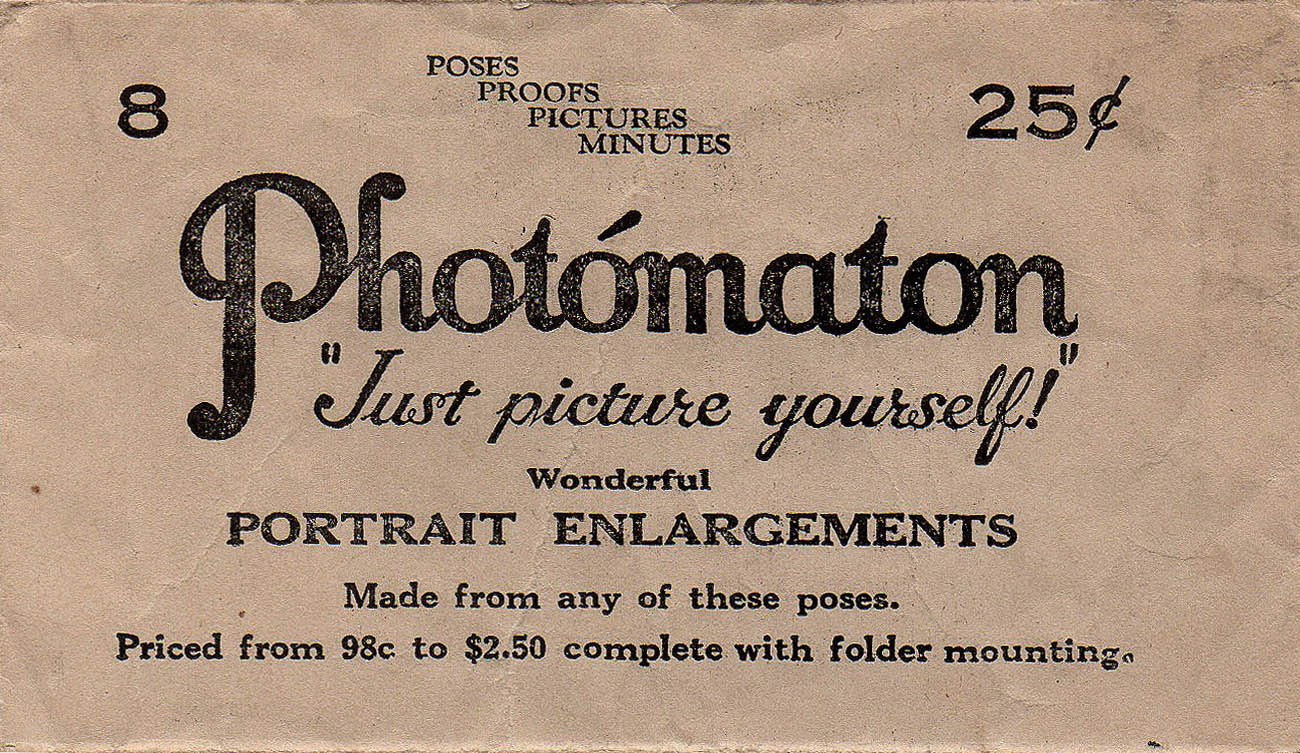
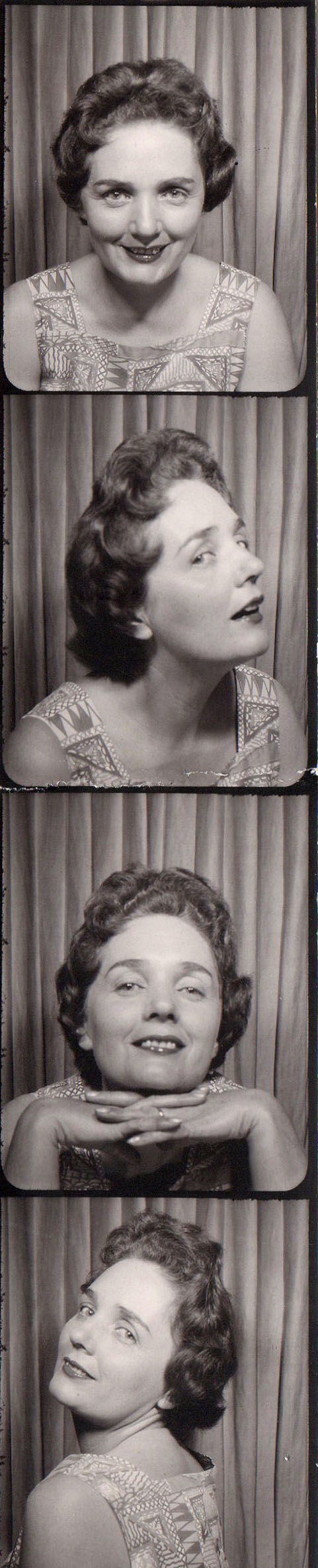
8 Poses Strip USA, 1927 Courtesy Raynal Pellicer
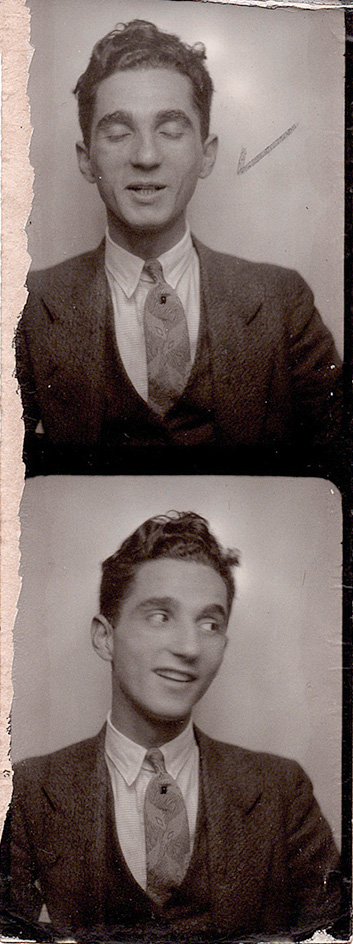
8 Poses Strip (details) USA, 1927 Courtesy Raynal Pellicer
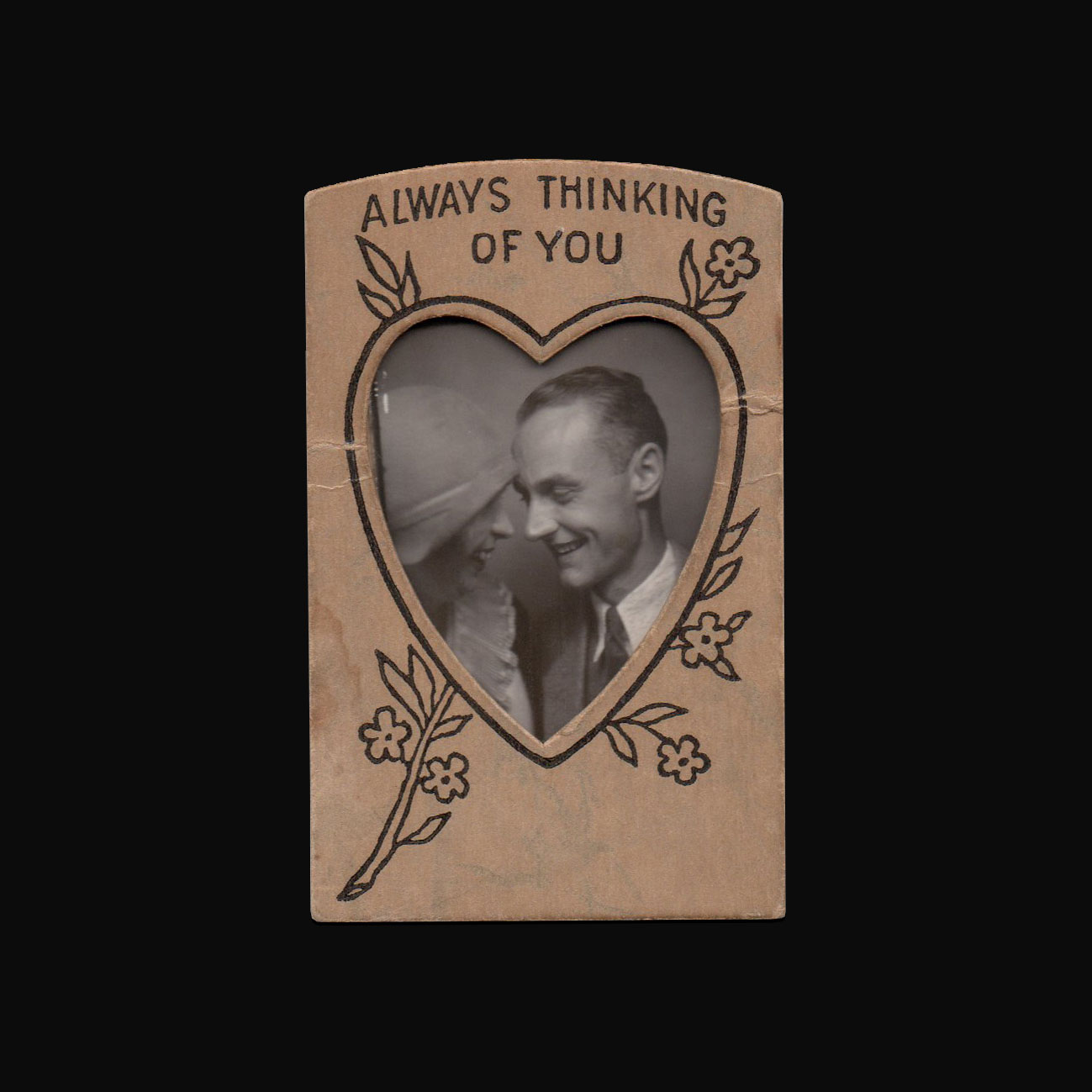
“Always thinking of you” United States of America, 1930s Courtesy Raynal Pellicer
A special, small archival display celebrating 100 years of the much-loved photobooth.
2025 marks 100 years since the invention of the photobooth in New York. A game-changer for the world of photography, photobooths became an everyday sight in cities around the world.
In the 1950s and 1960s, photobooths were a common feature at fairs, shopping centres and train stations. With no technical knowledge needed and no operator, anyone could step behind the curtain, alone or crammed in with friends, put their money in the slot and strike a pose. The booths were loved by everyone, from John Lennon and Yoko Ono, to John and Jacqueline Kennedy, and used by artist Andy Warhol for his famous series of self-portraits.
These popular coin-operated booths began to disappear with the rise of digital photography in the 1990s. Now, restored by dedicated experts, analogue booths are reappearing in cities across the world and enjoying a resurgence of interest and delight with modern-day fans.
This autumn we’re celebrating the centenary by telling the story of the much-loved photobooth. Through a small archival display, Strike a Pose! 100 Years of the Photobooth will explore the history, imperfections and quirks of the booth. There’s also a 1960s analogue booth at the Gallery for everyone to create their own selfie souvenir and a live feed to see the unique mechanics of the booth in action.
Strike a Pose! 100 Years of the Photobooth features work from the collection of Raynal Pellicer and is part of a year-long programme of centenary celebrations, in partnership with AUTOFOTO.
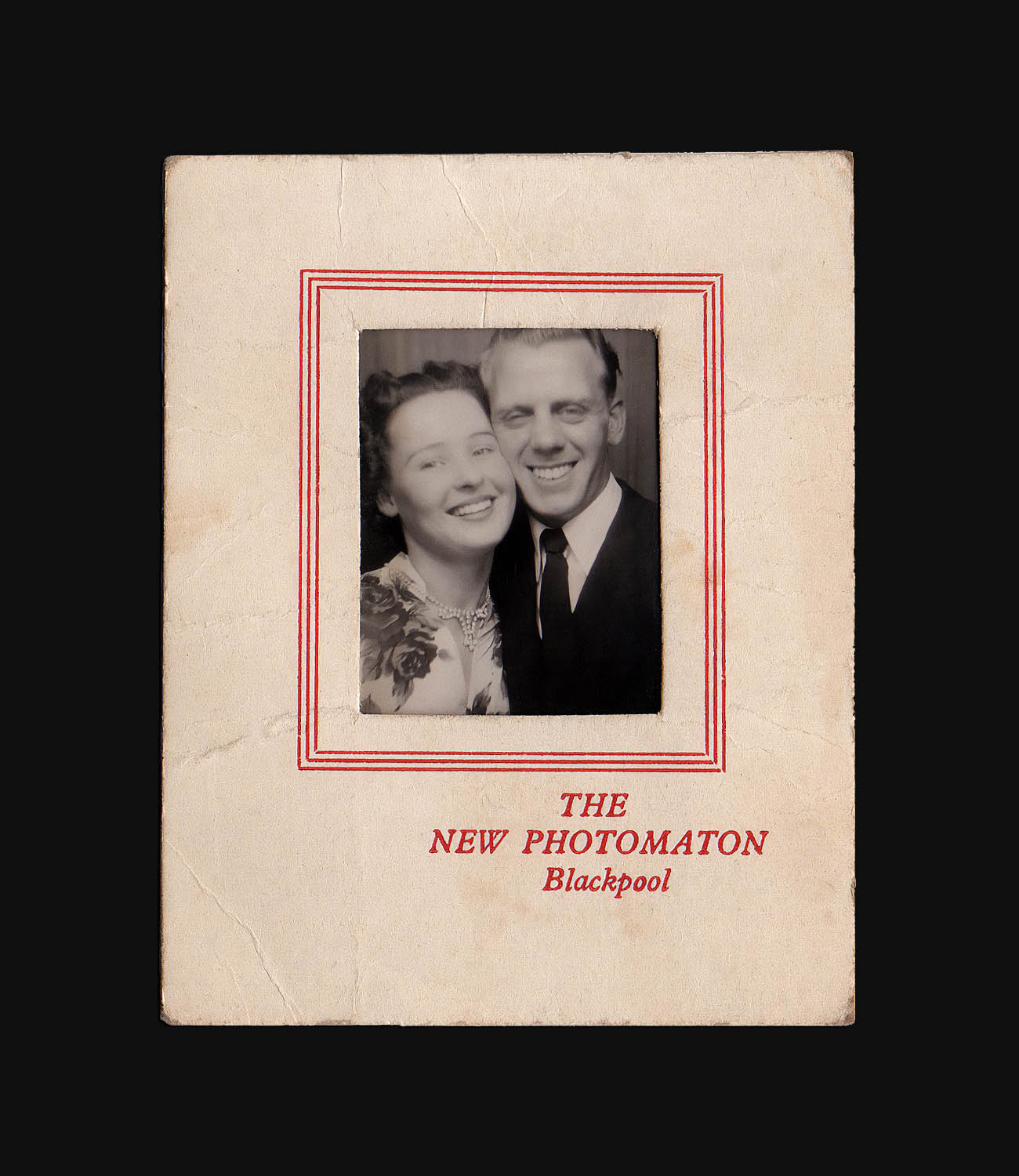
Photomaton Pochette France, c. 1930s-1950s Courtesy Raynal Pellicer
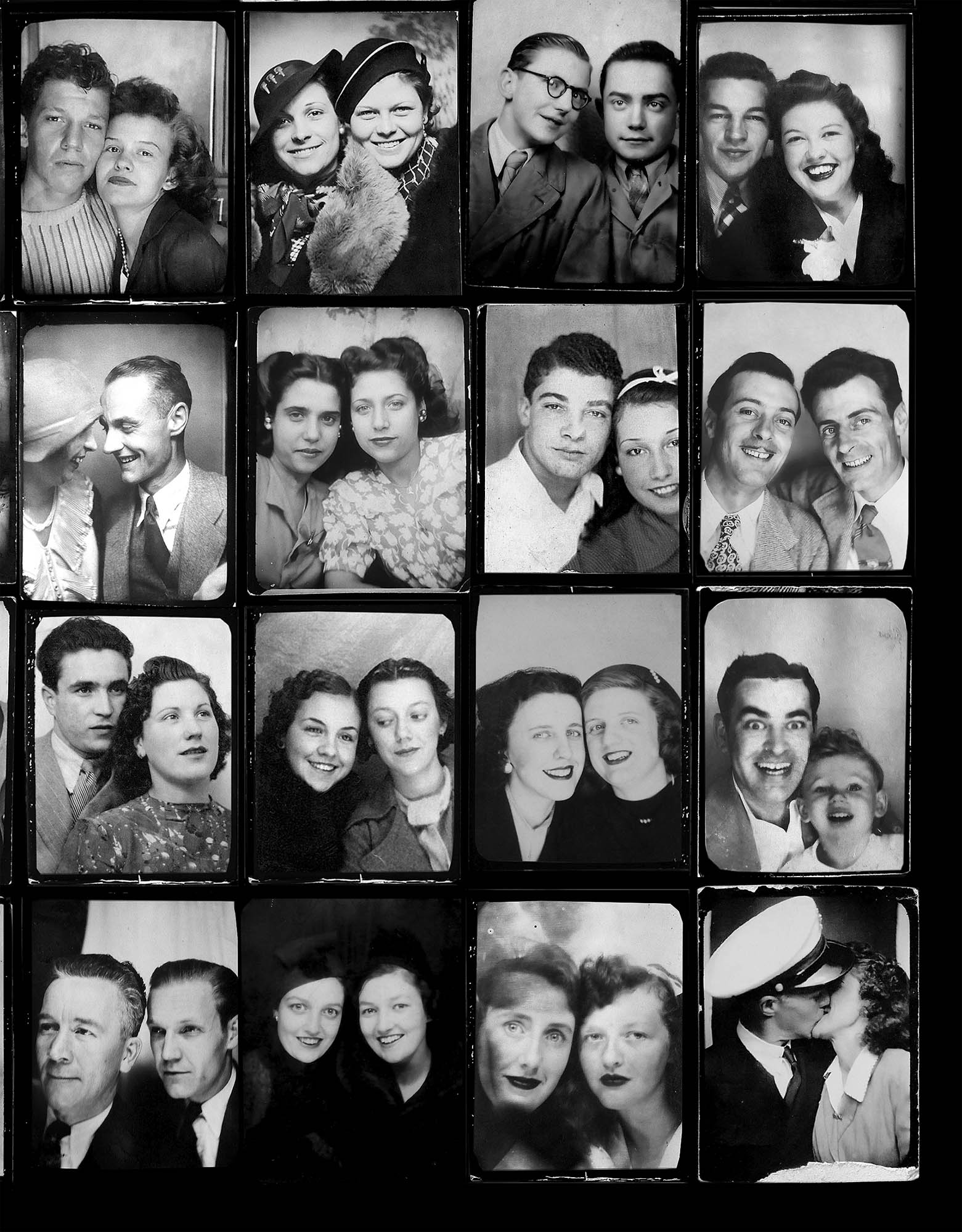
Couple c. 1930s-1950s Courtesy Raynal Pellicer
Couples c. 1930s-1950s Courtesy Raynal Pellicer
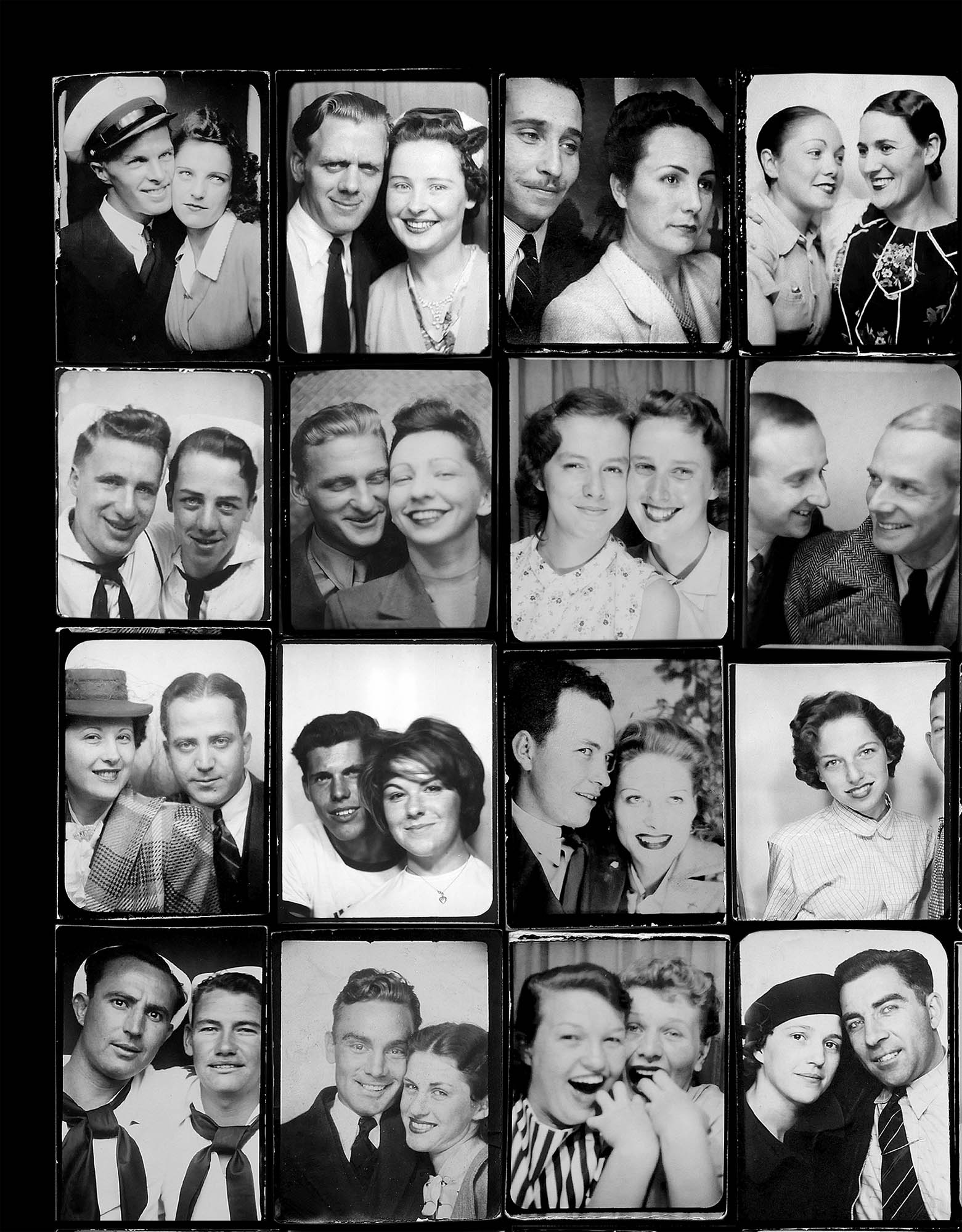
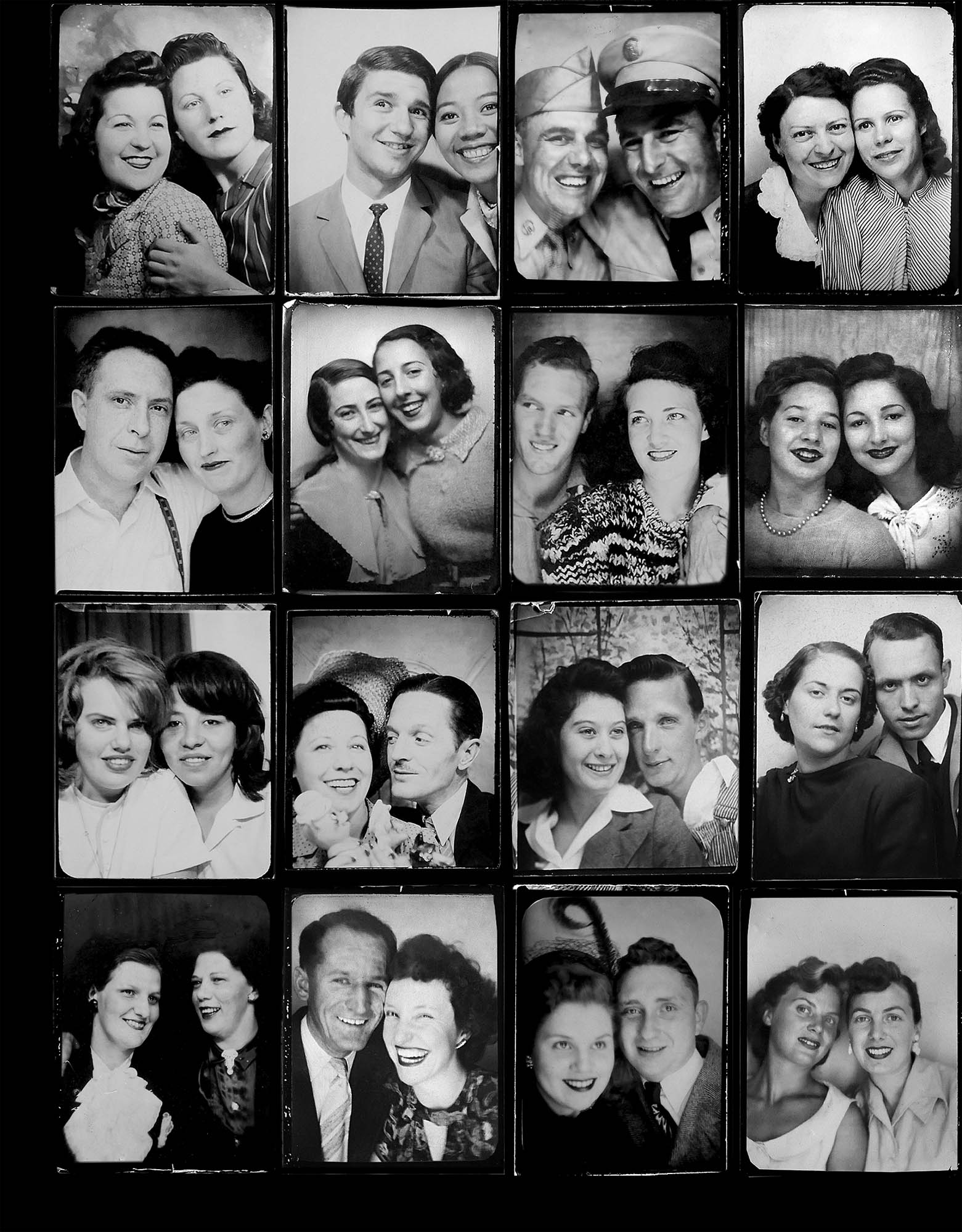
Couples (details) c. 1930s-1950s Courtesy Raynal Pellicer
This autumn The Photographers’ Gallery celebrates 100 years of the much-loved photobooth.
Through a special archival display, Strike a Pose! 100 Years of the Photobooth looks back on the history of the photobooth and explores its intimate charms, imperfections and quirks.
2025 marks the year-long celebration of the 100th anniversary of the invention of the analogue photobooth by Anatol Josepho. His first Photomaton appeared on Broadway in New York in 1925. The photobooth was a game-changer for the world of photography and quickly became an everyday sight in cities around the world.
A combined studio and photography lab in one place, booths offered the first affordable access to photography. With no technical knowledge needed and no operator, anyone could step behind the curtain, put their money in the slot and strike a pose.
After the success of the first booth, when over 7,500 New Yorkers used the booth in its first 5 days, global success quickly followed. The first photobooth launched in the UK in Selfridges, London, in 1928 and was an immediate hit.
In the 1950s and 1960s, photobooths were a common feature at fairs, shopping centres and train stations. These intimate inexpensive spaces gave everyone the freedom to control their own images. Behind the curtain, whether alone or crammed in with friends, the photobooth was a playground, beyond the gaze of a photographer. The booths were loved by everyone, from John Lennon and Yoko Ono, to John and Jacqueline Kennedy, and used by artist Andy Warhol for his famous series of self-portraits.
The coin-operated booths, once ever-present on high streets and stations, disappeared with the rise of digital photography in the 1990s. Now, restored by dedicated experts, analogue booths are reappearing in cities across the world and enjoying a resurgence of interest and delight with modern-day fans. Alongside the display of archive prints, vintage strips and materials, there’ll also be a booth at the Gallery for everyone to create their own selfie souvenir and a live feed to see the unique mechanics of the booth in action.
Strike a Pose! 100 Years of the Photobooth features work from the collection of Raynal Pellicer and is part of a year-long programme of centenary celebrations, in partnership with AUTOFOTO.
AUTOFOTO are analogue photobooth experts who have been rescuing and restoring original auto-photography machines for over a decade. Their restored machines can be found in locations across London and Barcelona. Through careful restoration and servicing, AUTOFOTO’s mission is to ensure the survival of these beautiful machines and photobooth photography for future generations.
Press release from The Photographers’ Gallery, London
Untitled [Color Photobooth Portraits] c. 1940s-1950s Courtesy Raynal Pellicer
Untitled [Color Photobooth Portraits] (details) c. 1940s-1950s Courtesy Raynal Pellicer
Strip United States of America, 1950s Courtesy Raynal Pellicer
This is one of those unheralded exhibitions on a photographer that you may never have heard of that Art Blart likes to promote.
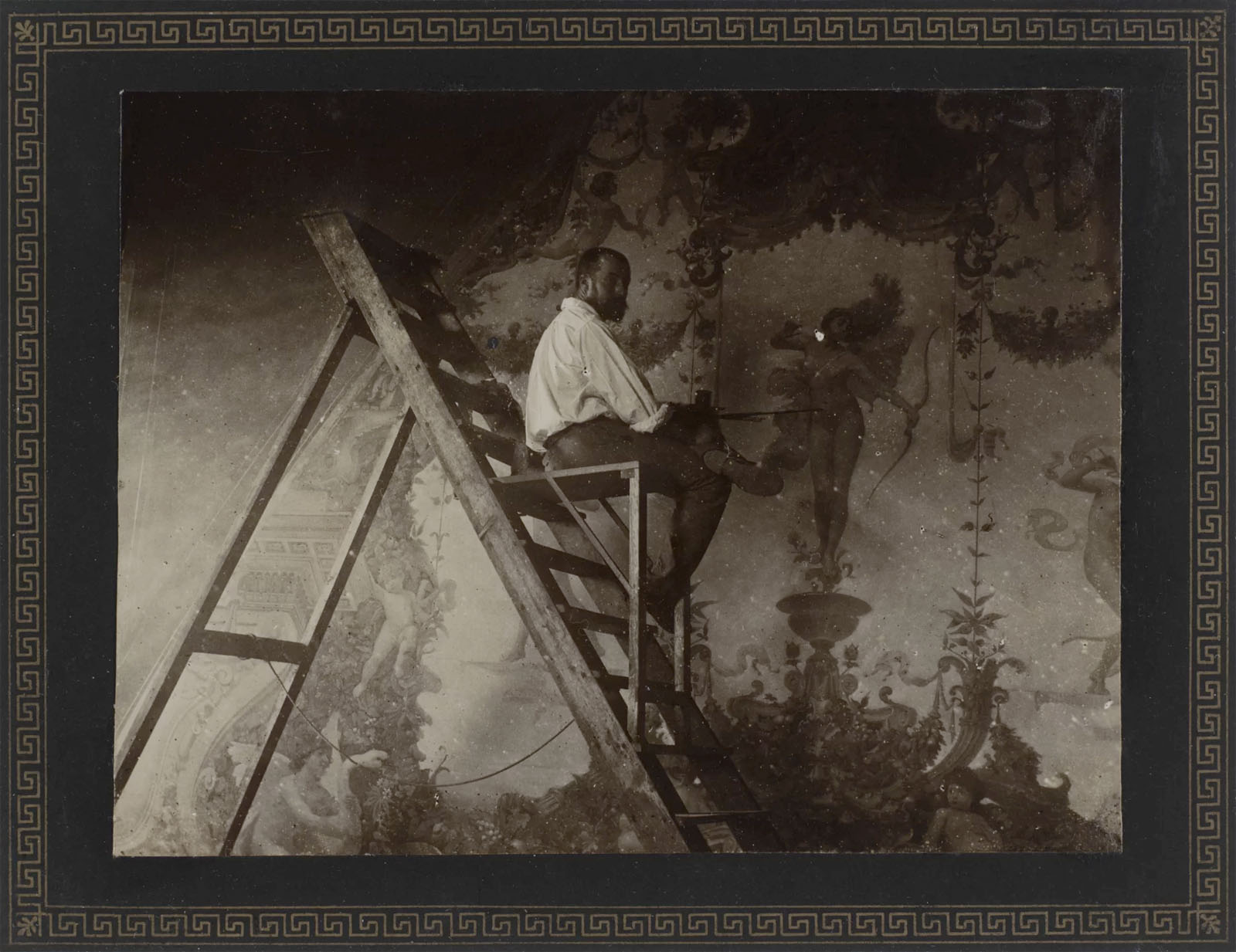
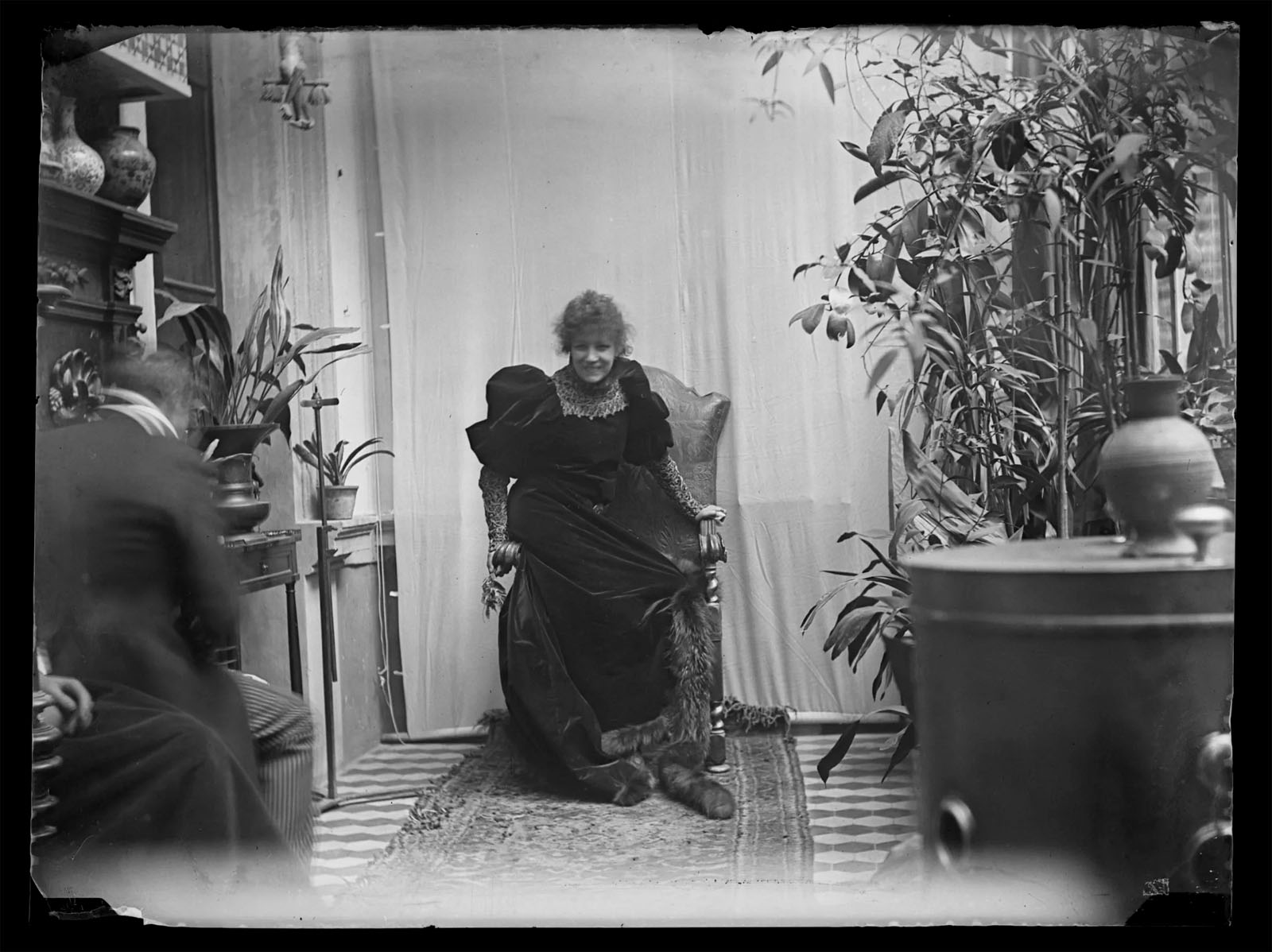
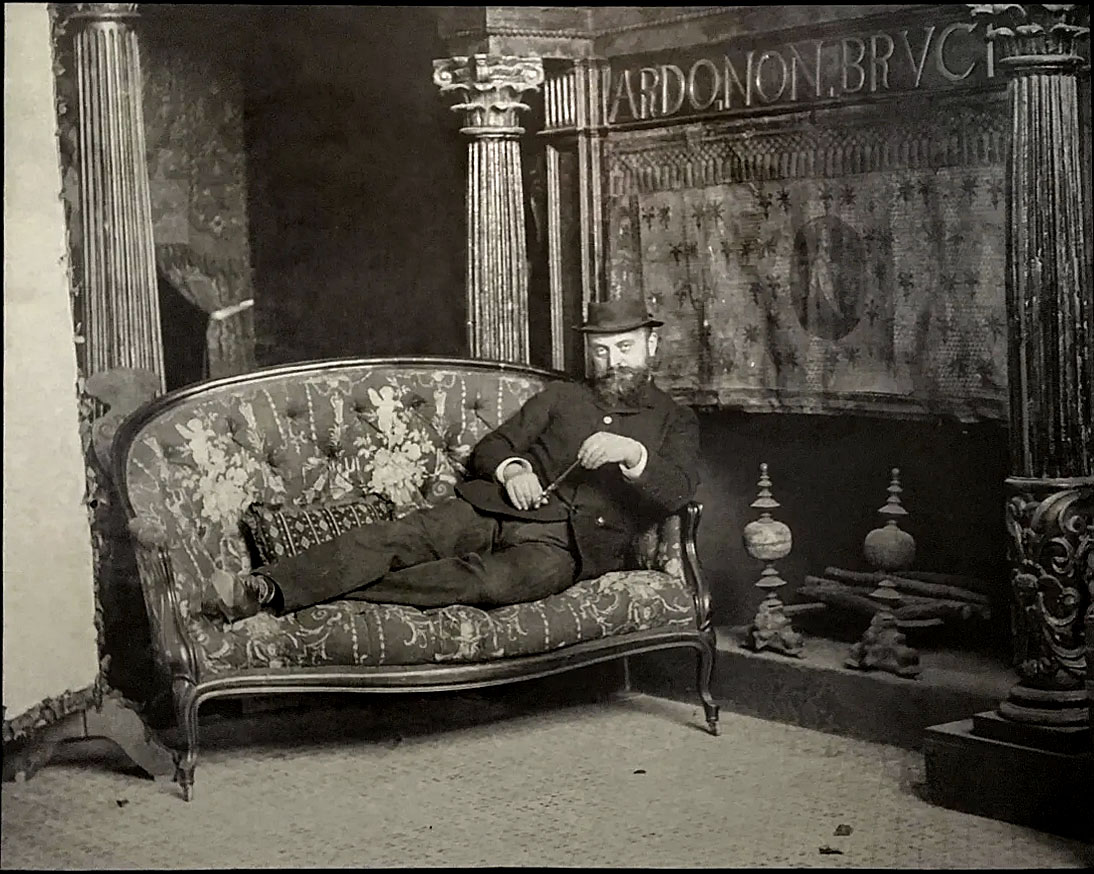
Gabrielle Hébert as she became, married the painter Ernest Hébert in 1880. She was 28, he was 63. From 1888 until his death in 1908 at the age of 91, she documented her husband painting, their surroundings and their affluent, upper class social milieux. And then she stopped, she gave up photography, she lost the amour fou, that incredible passion that had driven her for so many years to take photographs.
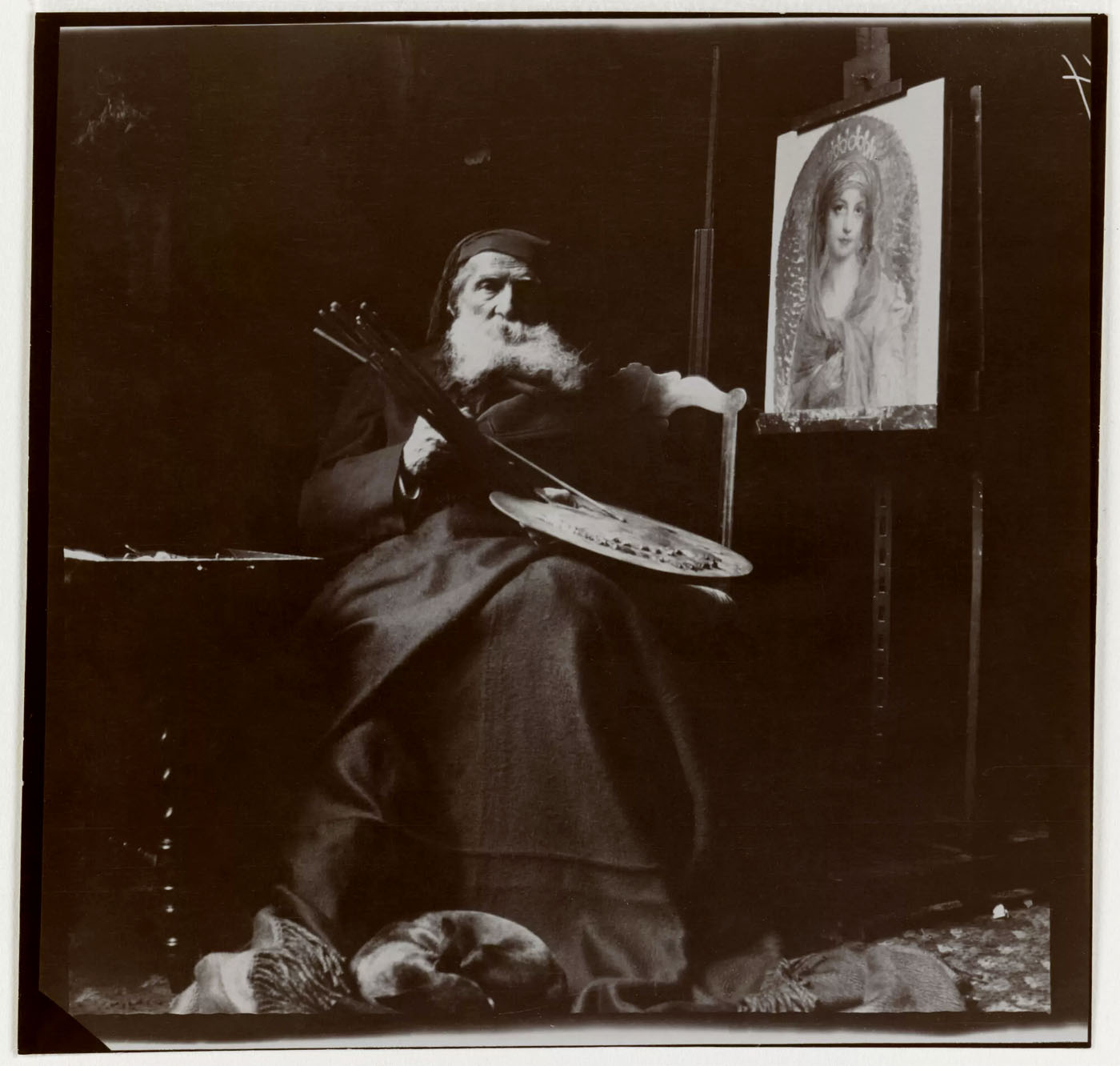
While “her photographs provide an intimate look into the artistic life of the time, portraying artists, models, and domestic scenes” they also do something more – they represent the viewpoint of a female artist which challenges the masculine conventions of the day. “Overturning gender stereotypes, she watched him obsessively and was never tired of capturing him on film… Thanks to her images, which she shared and exchanged with her friends and family, she became recognised as an auteur and gained social status in a milieu where artistic creation was the preserve of men.” (Text from the Musée d’Orsay website)
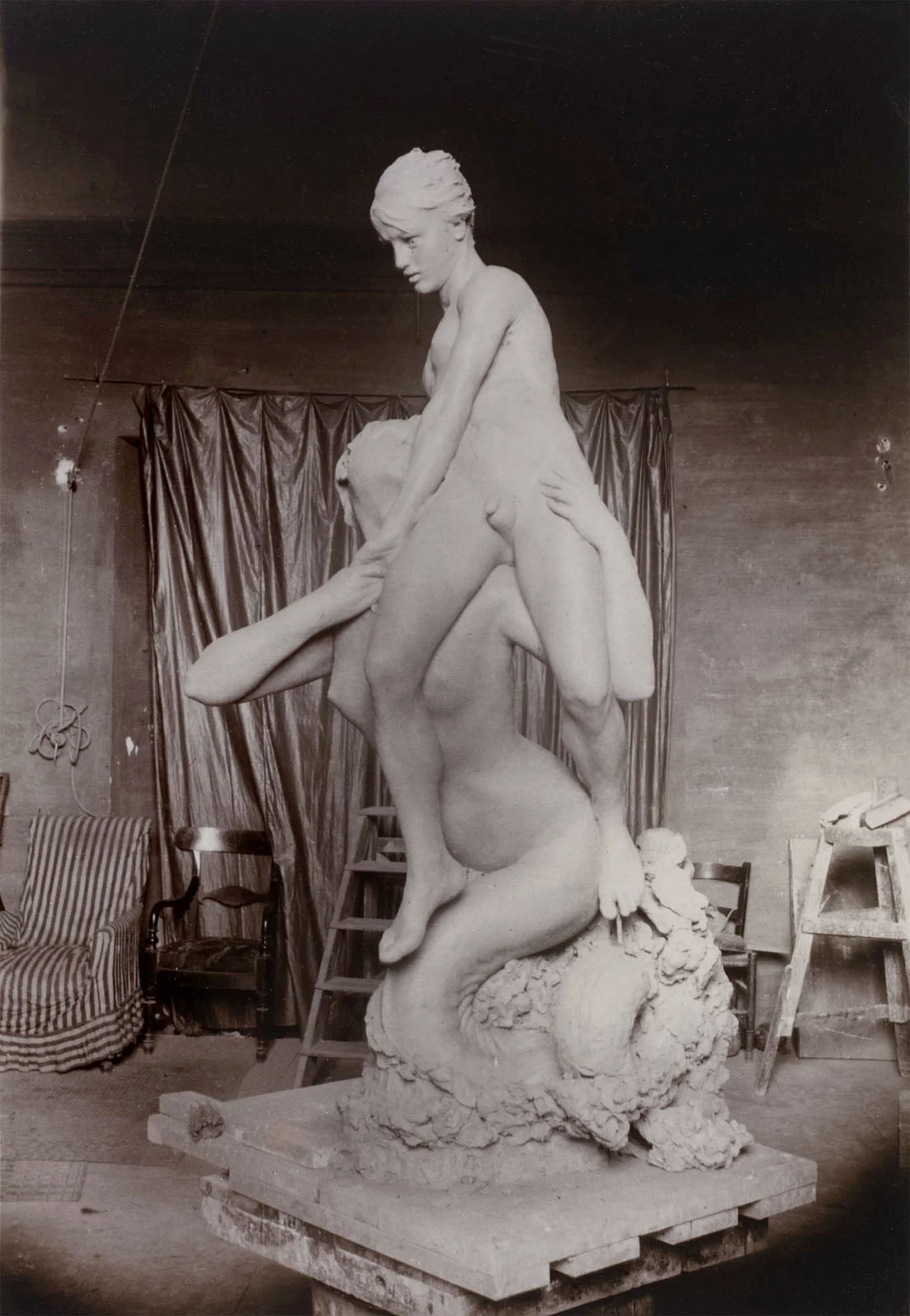
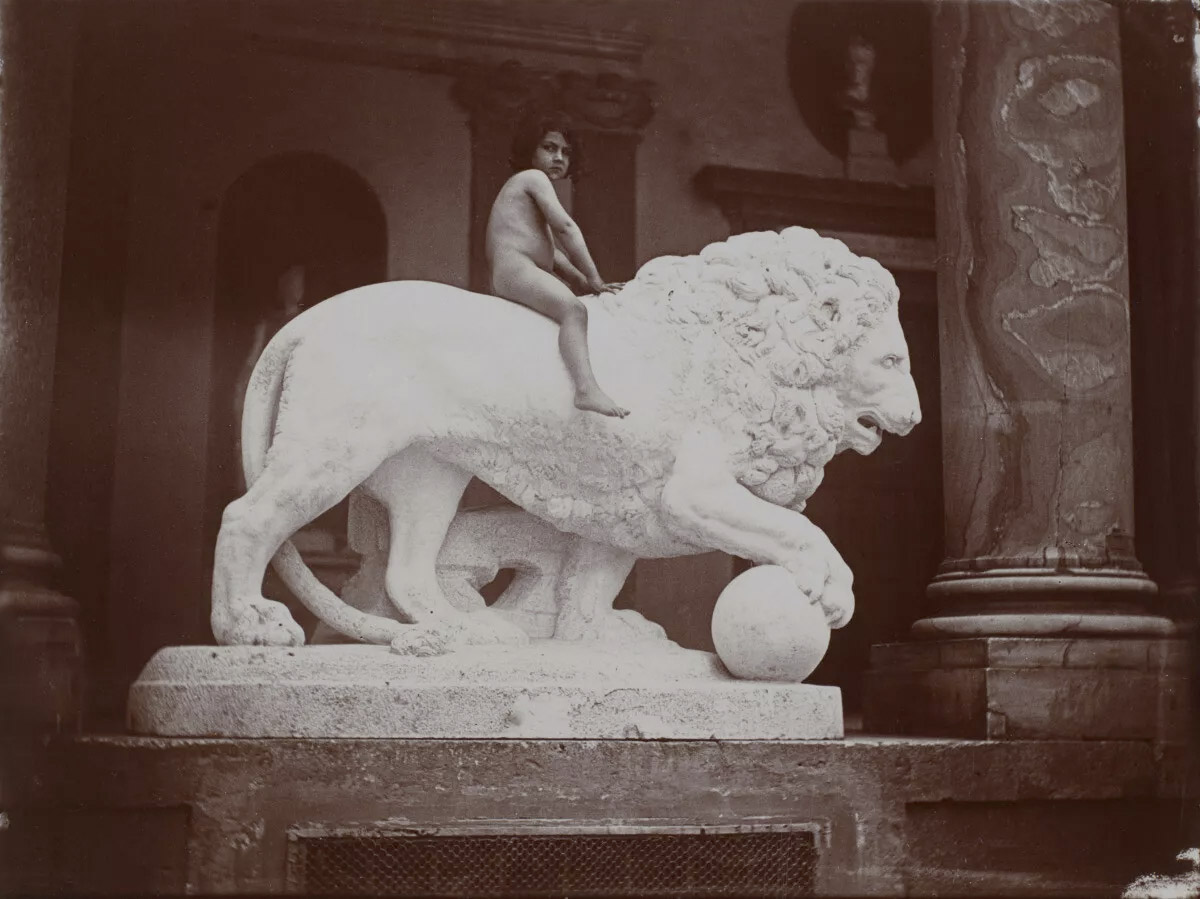
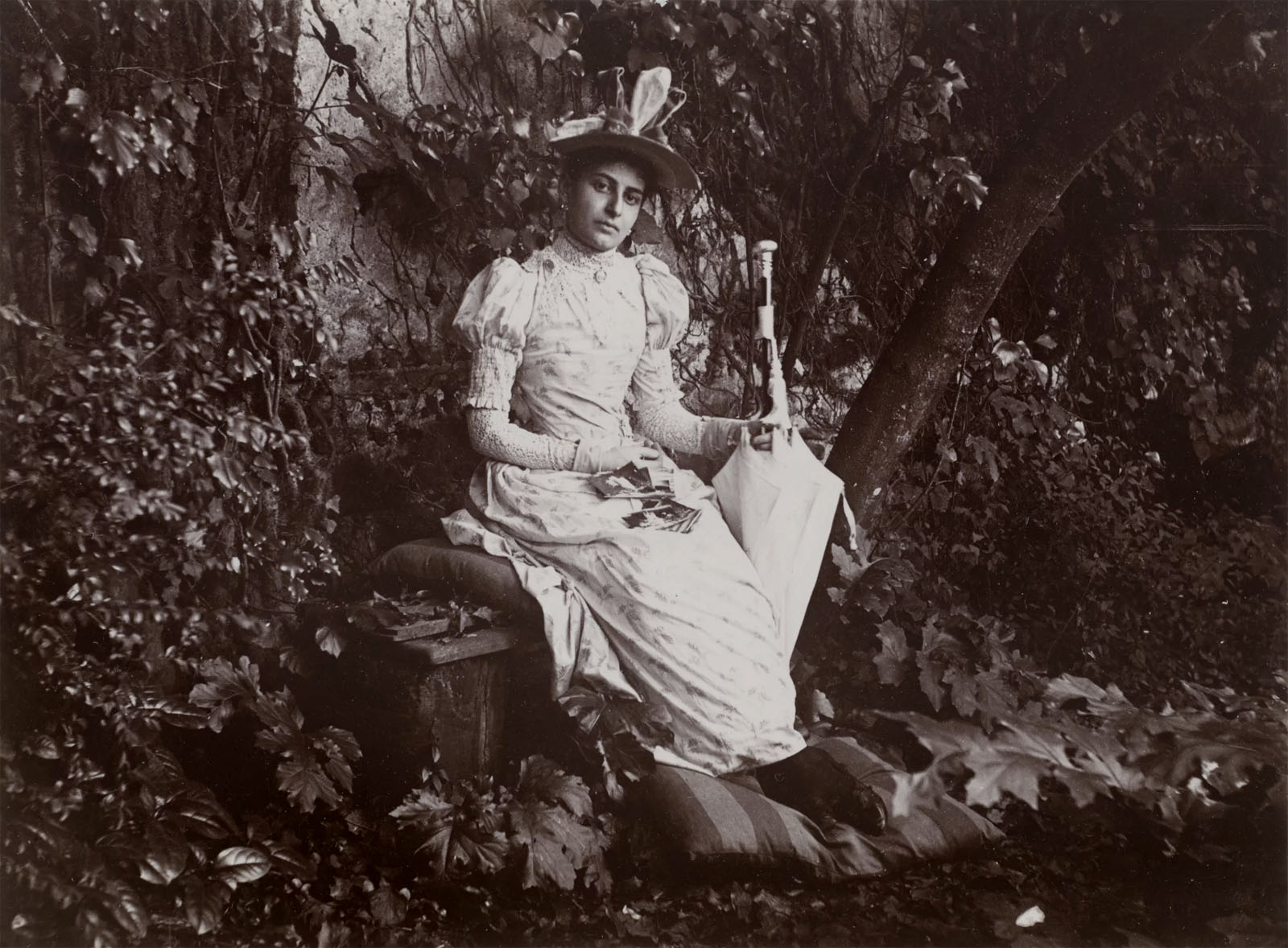
Further, from my point of view, Gabrielle Hébert was not an amateur photographer taking snapshots for her “visual diary” but an artist fully conversant with current trends in photography. While there are the standard documentary photographs of sculptures and Ernest Hébert and friends painting … there is so much more!
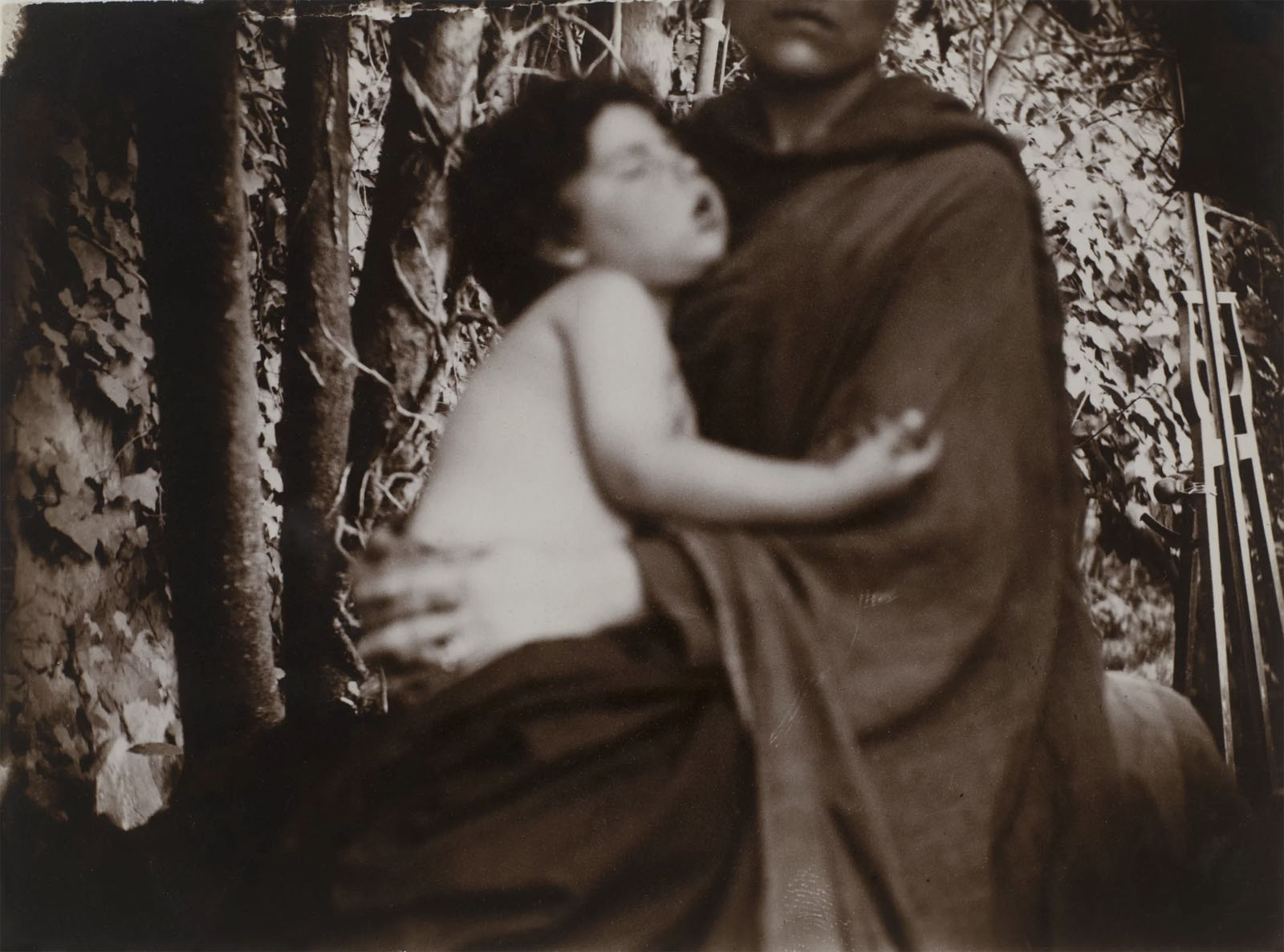
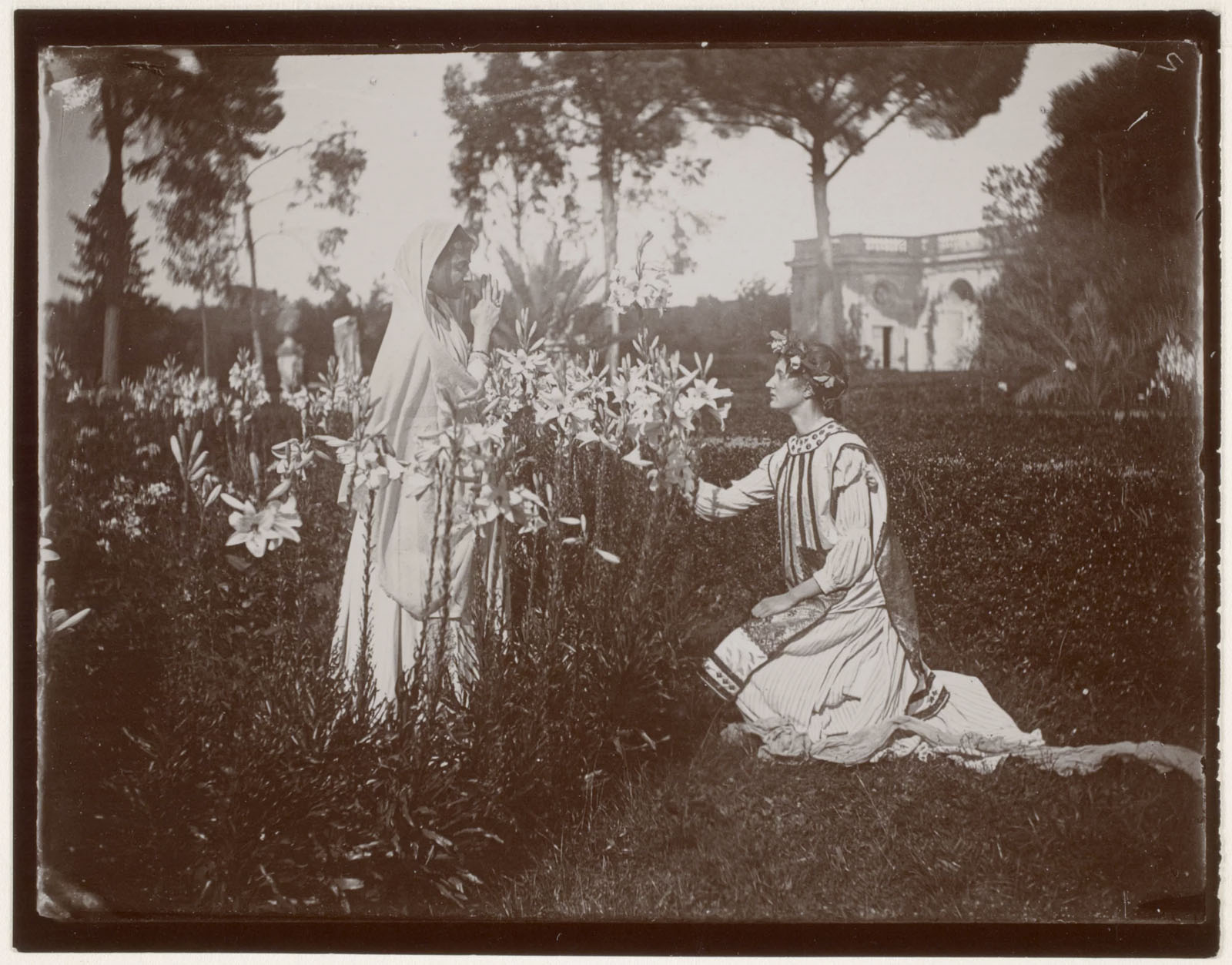
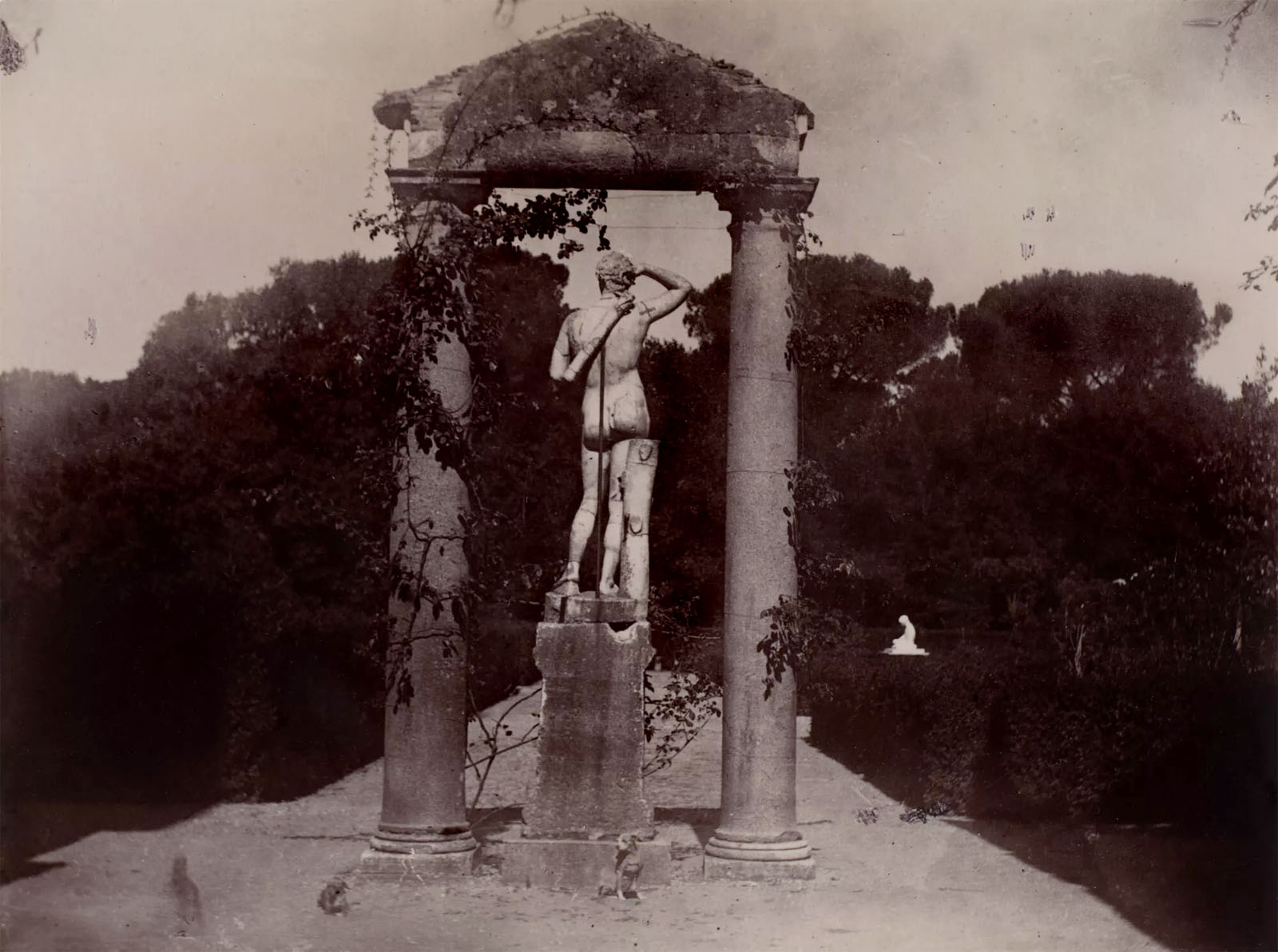
Photographs such as the allegorical Peppino Scossa endormi dans les bras de sa mère, 11 août 1888 (Peppino Scossa asleep in his mother’s arms, August 11, 1888) (1888, above) and La duchesse de Mondragone et l’une de ses bellessoeurs posent pour une Annonciation, juin 1890(The Duchess of Mondragone and one of her sisters-in-law pose for an Annunciation, June 1890) (1890, below) are redolent of the photographer Julia Margaret Cameron (British born India, 1815-1879).
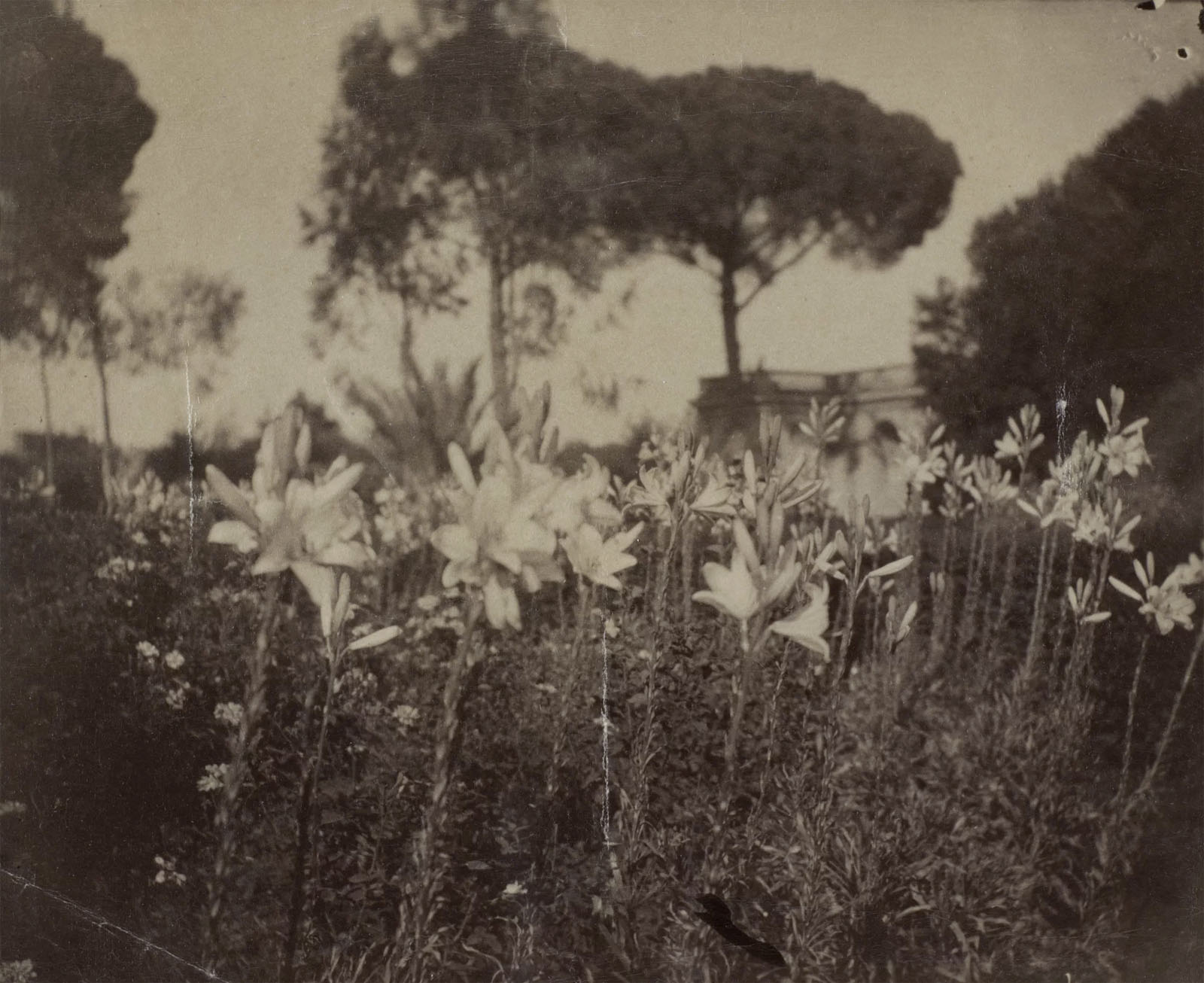
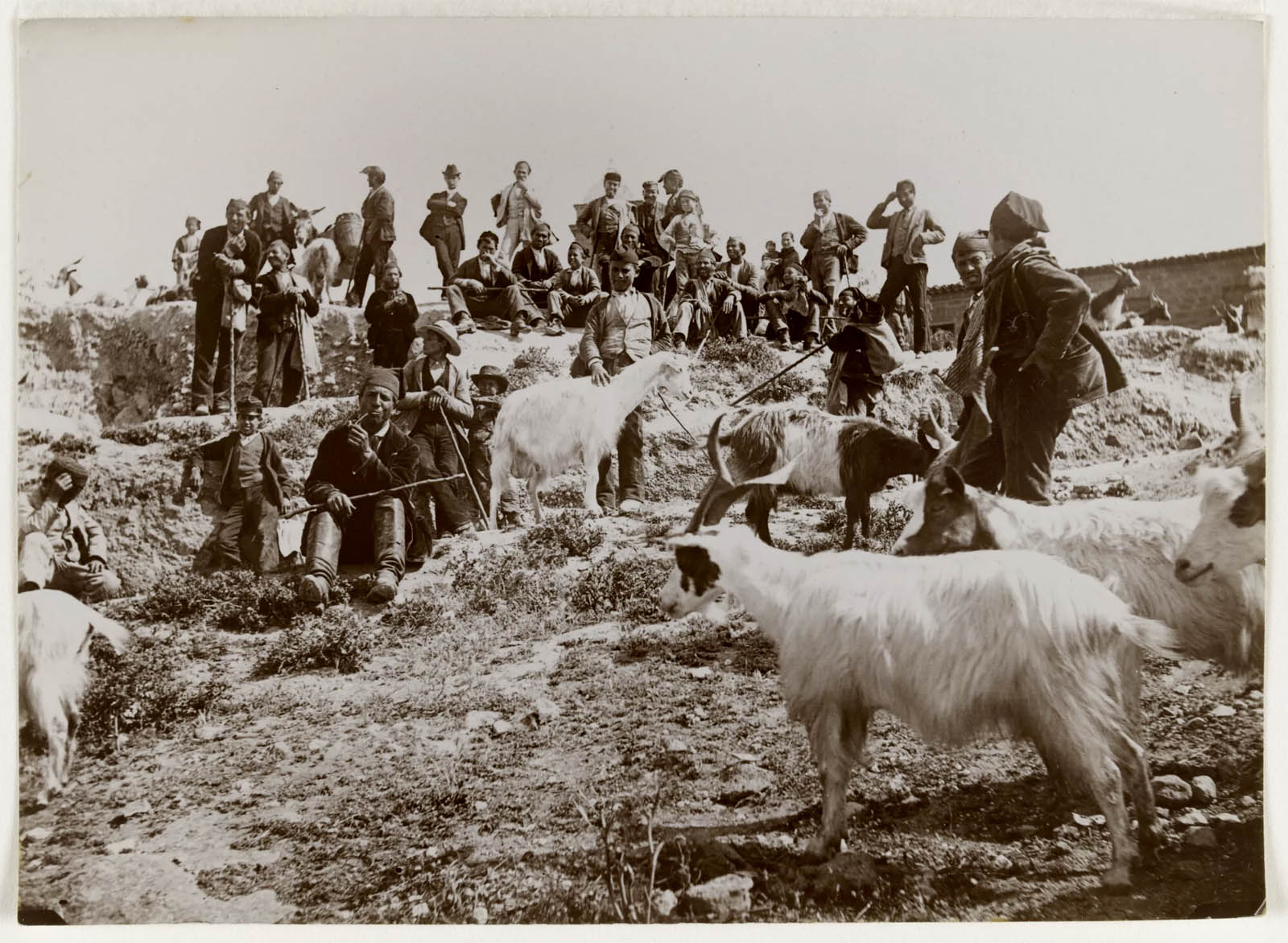
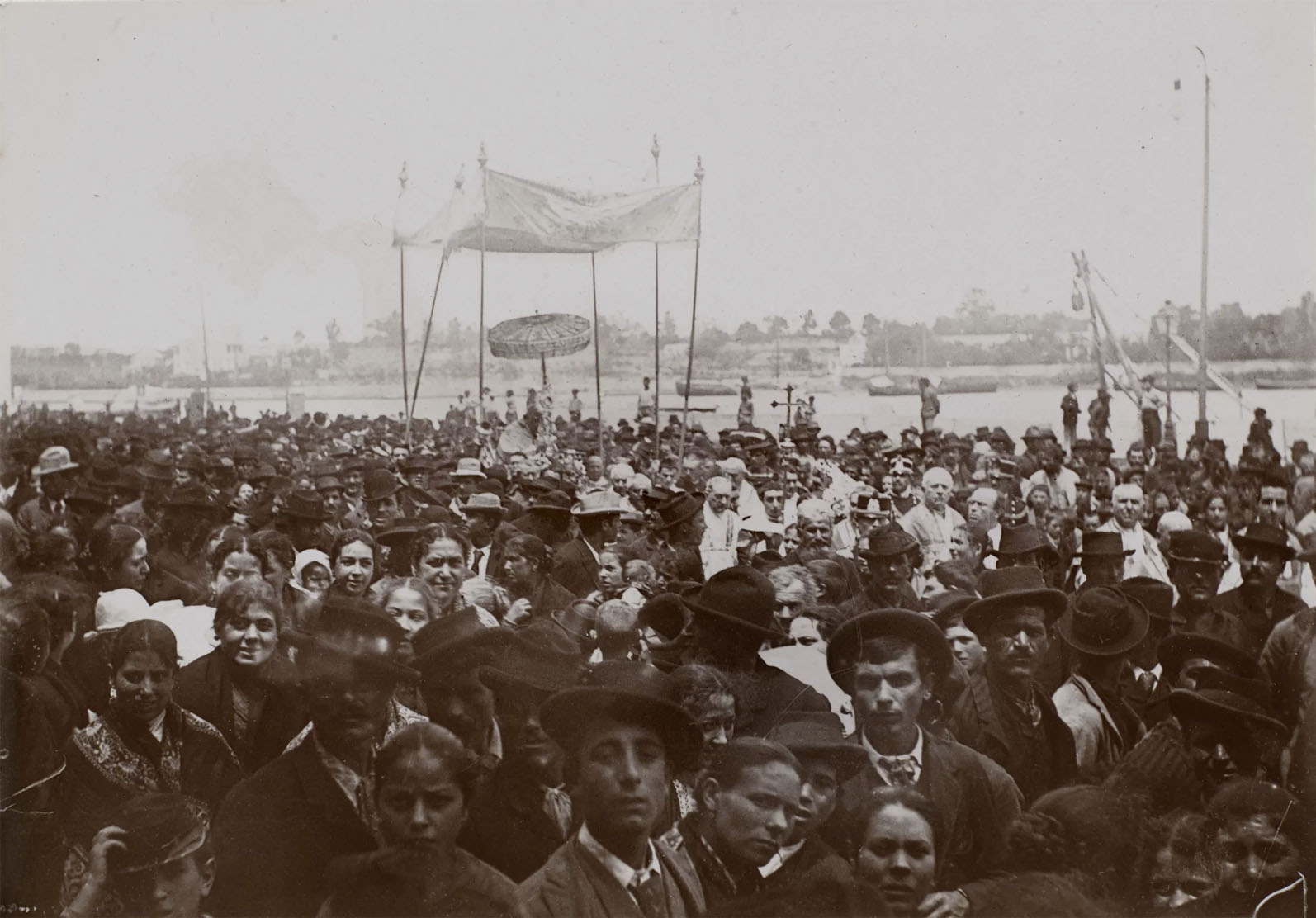
Other photographs such as Lys des parterres, juin 1890 (Flowerbed lilies, June 1890) (1890, below) evidence her consummate skill at capturing the perfume of a place whilst images such as Procession sur le port de Brindisi (Pouilles) (Procession in the port of Brindisi (Apulia)) (1893, below) show her ability to picture the informality of large groups of people and the atmosphere of the scene.
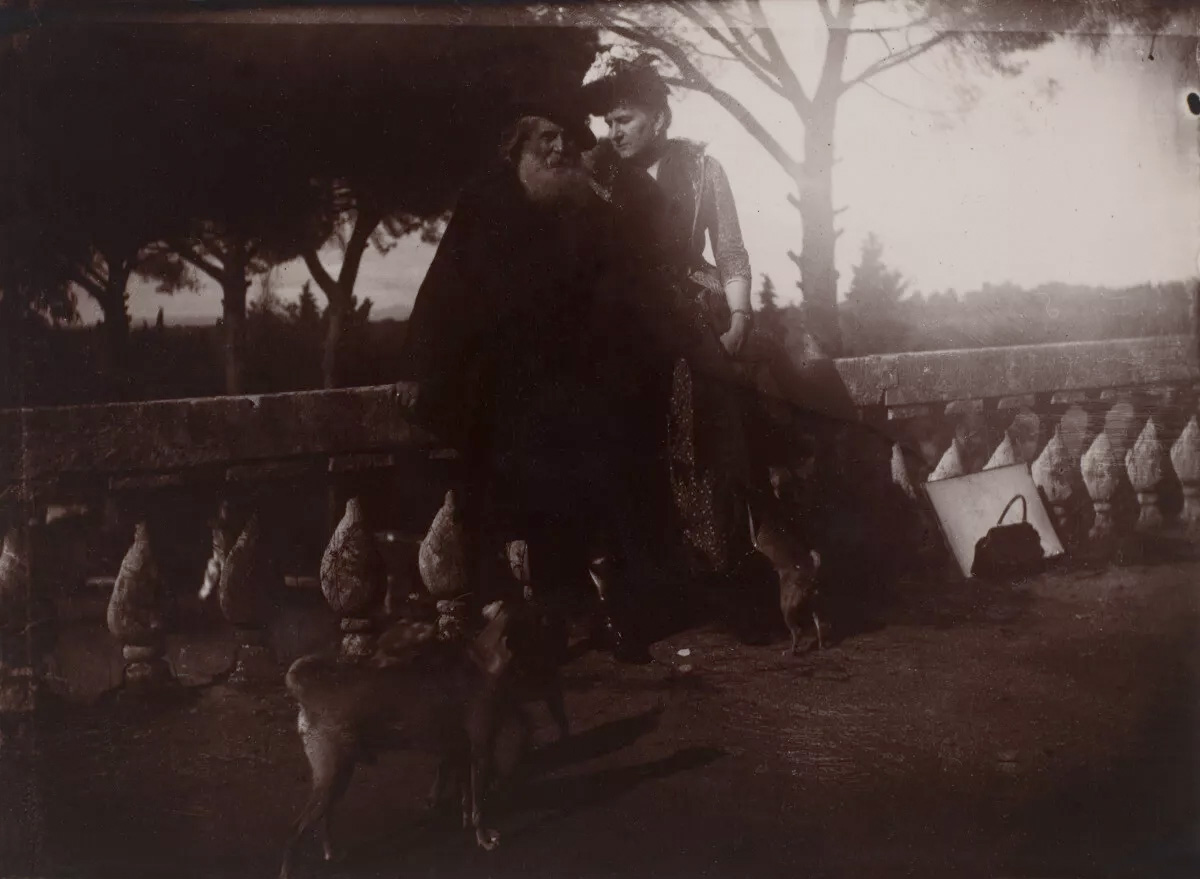
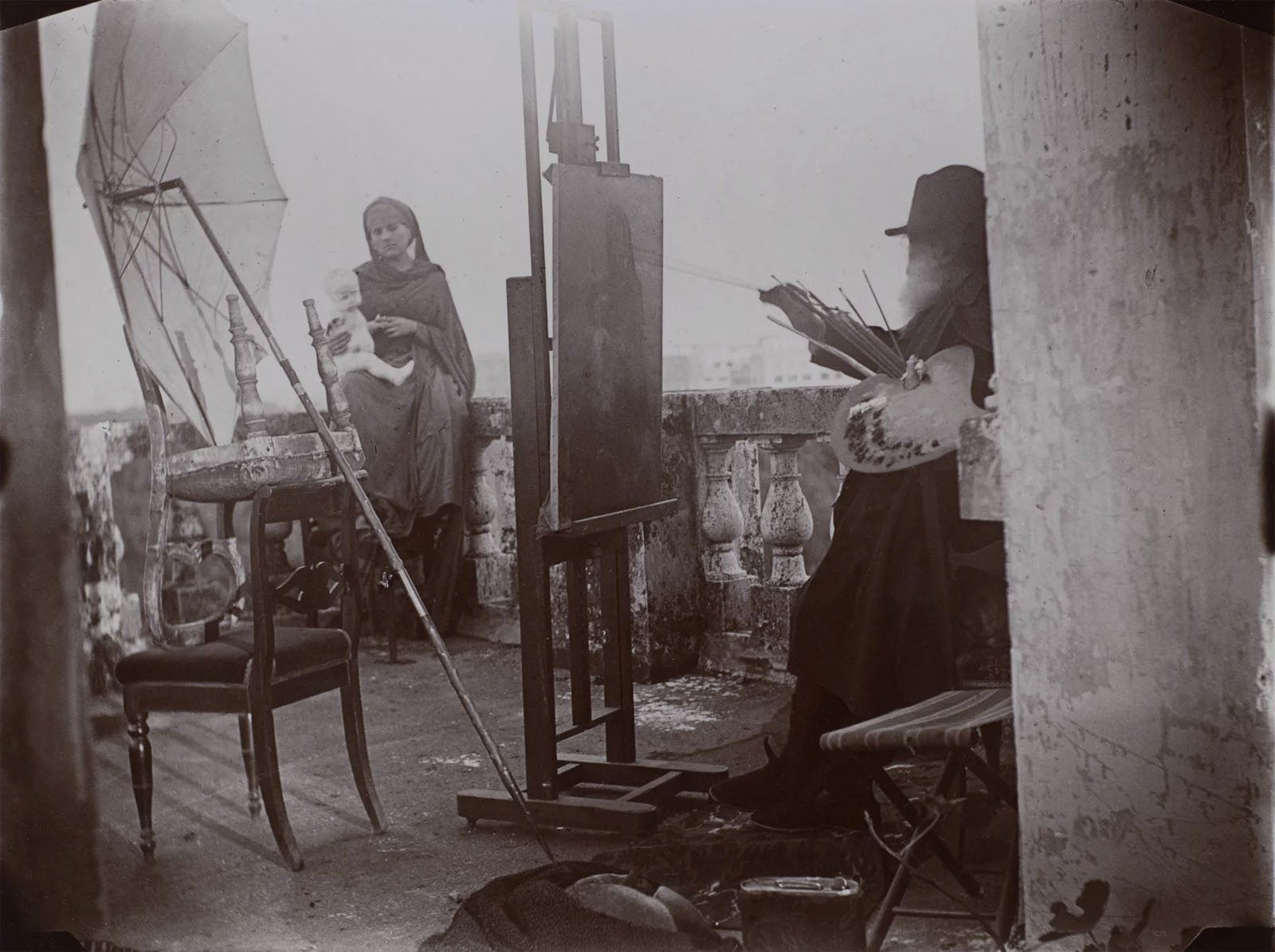
Then there are the joyous highs of a modern woman looking at the world with perceptive eyes. In the photograph Amalia Scossa et Ernest Hébert à sa peinture La Vierge au chardonneret sur la terrasse du campanile (around 1891, below), Gabrielle Hébert was not afraid to dissect the pictorial plane with strong verticals, horizontal and diagonal lines, providing the viewer with the feeling of an almost voyeuristic in-sight into the creative scene, each section of the photograph holding out attention – two chairs, one upturned on the other, supporting the umbrella shielding the painter from the sun; the Virgin and her child filling the distant space; the painting on the easel leading our eye down and then back up into the cloaked, wizened figure of the artist holding his easel; folding stool for him to rest and other accoutrements earthing the foreground; and the massive pillars slightly askew enclosing our furtive view. Magnificent!
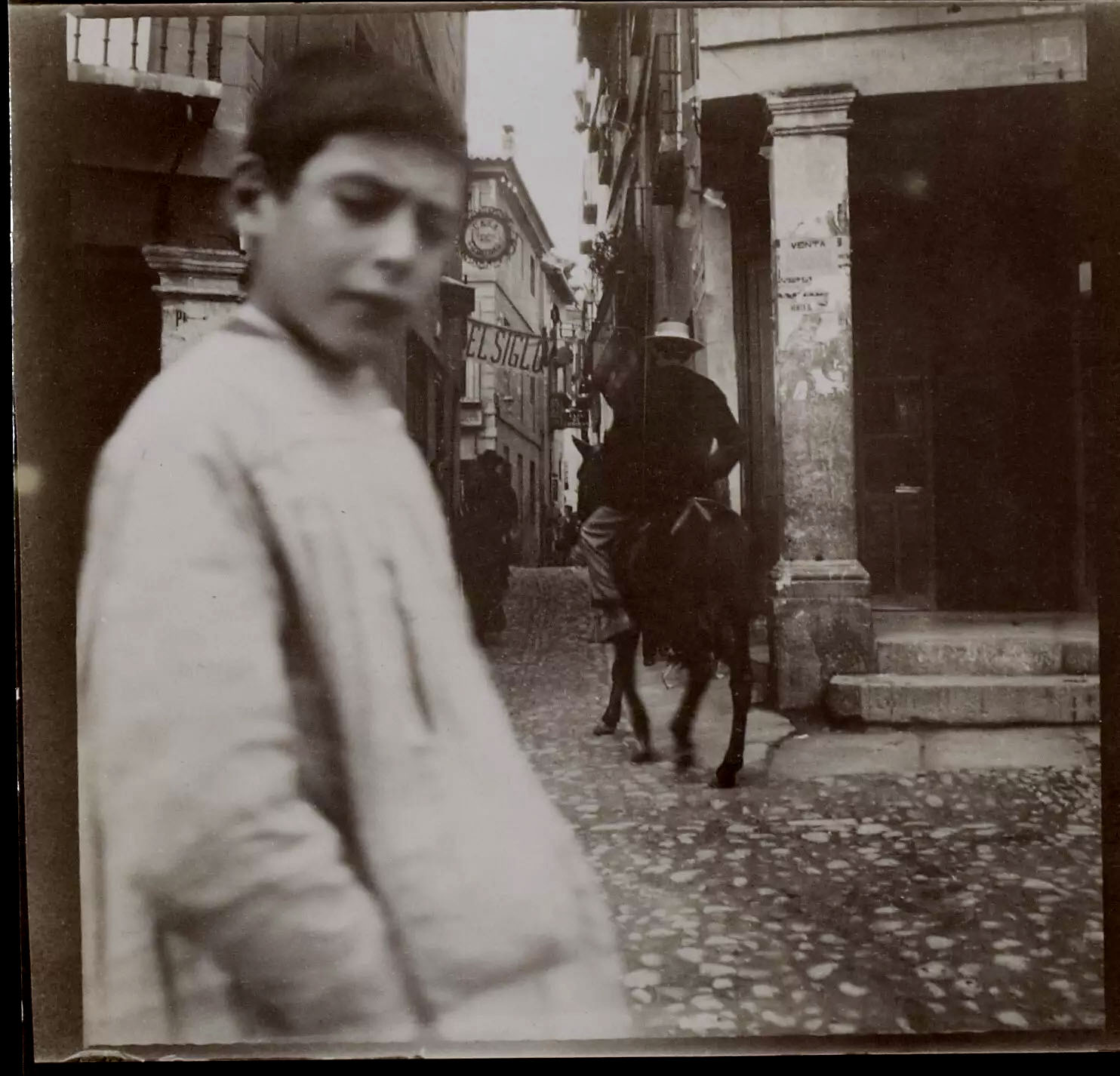
My favourite photograph in the posting is Garçon au coin de la place Zocodover, Tolède, 31 octobre 1898 (Boy on the corner of Zocodover Square, Toledo, October 31, 1898) (1898, below), taken when Hébert had abandoned her large format camera for a more portable Kodak. A wonderful use of depth of field, movement, vanishing point, light, architecture and the ghostly presence of a boy, forever peering at us through eons of time, lend the image an enigmatic, allegorical mystery … as to the passage of time, the journey of life.
How I wish we could have seen more of these later photographs where Hébert proposed “daring viewpoints – notably from a speeding train – a camera in motion, glances towards the camera, the operator’s shadow cast on the ground, motion blur of people and things (smoke, clouds, and waves), truncated figures, and close-ups.” (Marie Robert)
And then there is the crux of the matter. As the text on the Musée d’Orsay website insightfully observes, “… above all, photography revealed her to herself: through capturing a particularly remarkable geography and era, she effectively invented her own mythology.”
Through love and life, through devotion to husband, through devotion to photography, and through devotion to herself, she revealed her to herself and to the world. What crazy, mad love!
Dr Marcus Bunyan
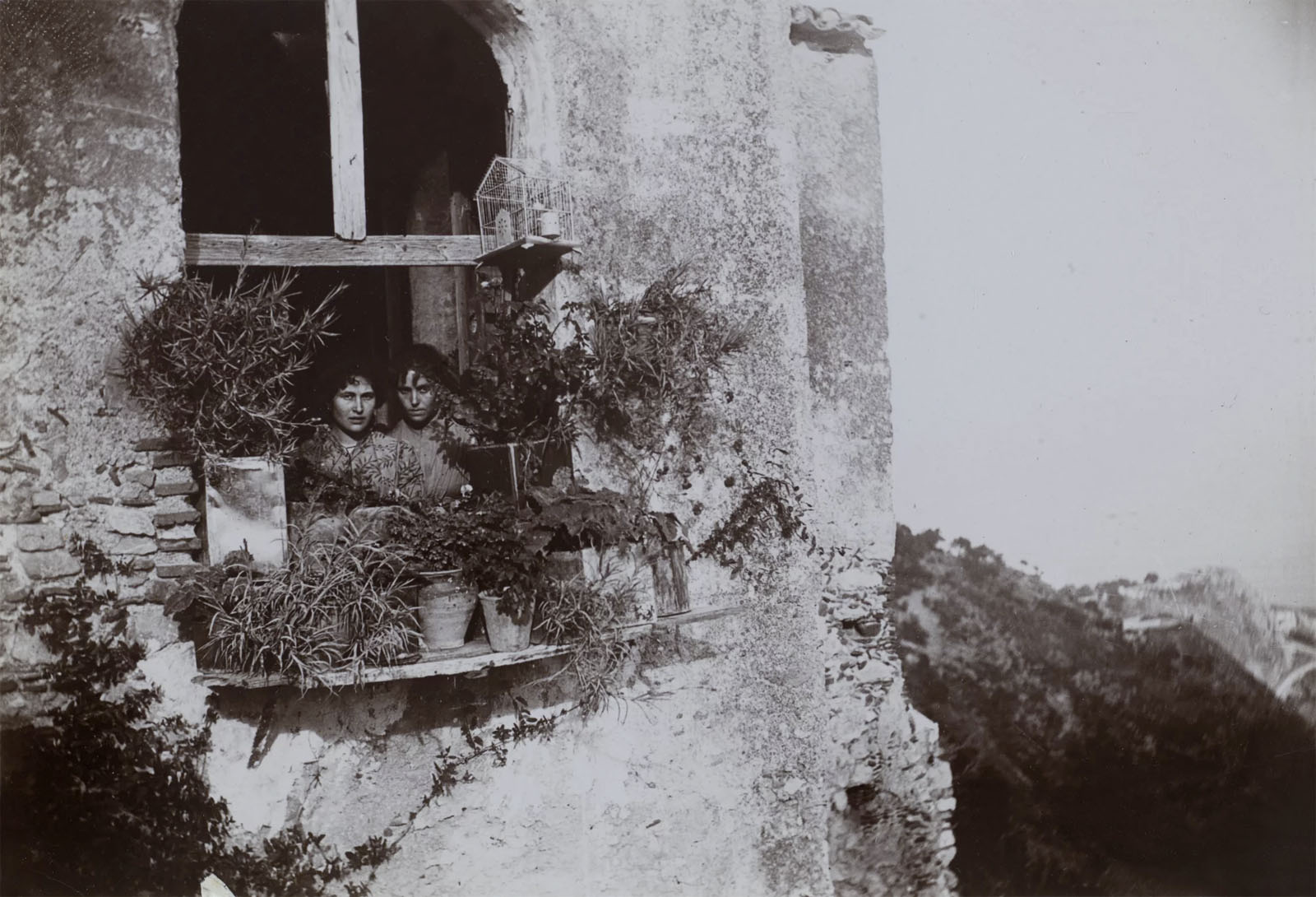
PS. With photographs like Femmes à la fenêtre, Taormine (Sicile), mai 1893 (Women at the window, Taormina (Sicily), May 1893) (1893, below) it is likely Gabrielle Hébert would have met Baron Wilhelm von Gloeden (German, 1856-1931) who lived and worked there between 1878-1931.
Many thankx to the Musée d’Orsay, Paris for allowing me to publish the photographs in the posting. Please click on the photographs for a larger version of the image.
Active between 1888 and 1908, Gabrielle documented daily life at Villa Medici in Rome, where her husband served as director of the French Academy. Her photographs provide an intimate look into the artistic life of the time, portraying artists, models, and domestic scenes. The exhibition features original prints, albums, diaries, glass plate negatives, and her cameras, alongside works by Ernest Hébert and personal items that tell their love story. With over 3.500 prints, Gabrielle Hébert is considered a pioneer of female photography, having sensitively and precisely documented an artistic environment predominantly male.
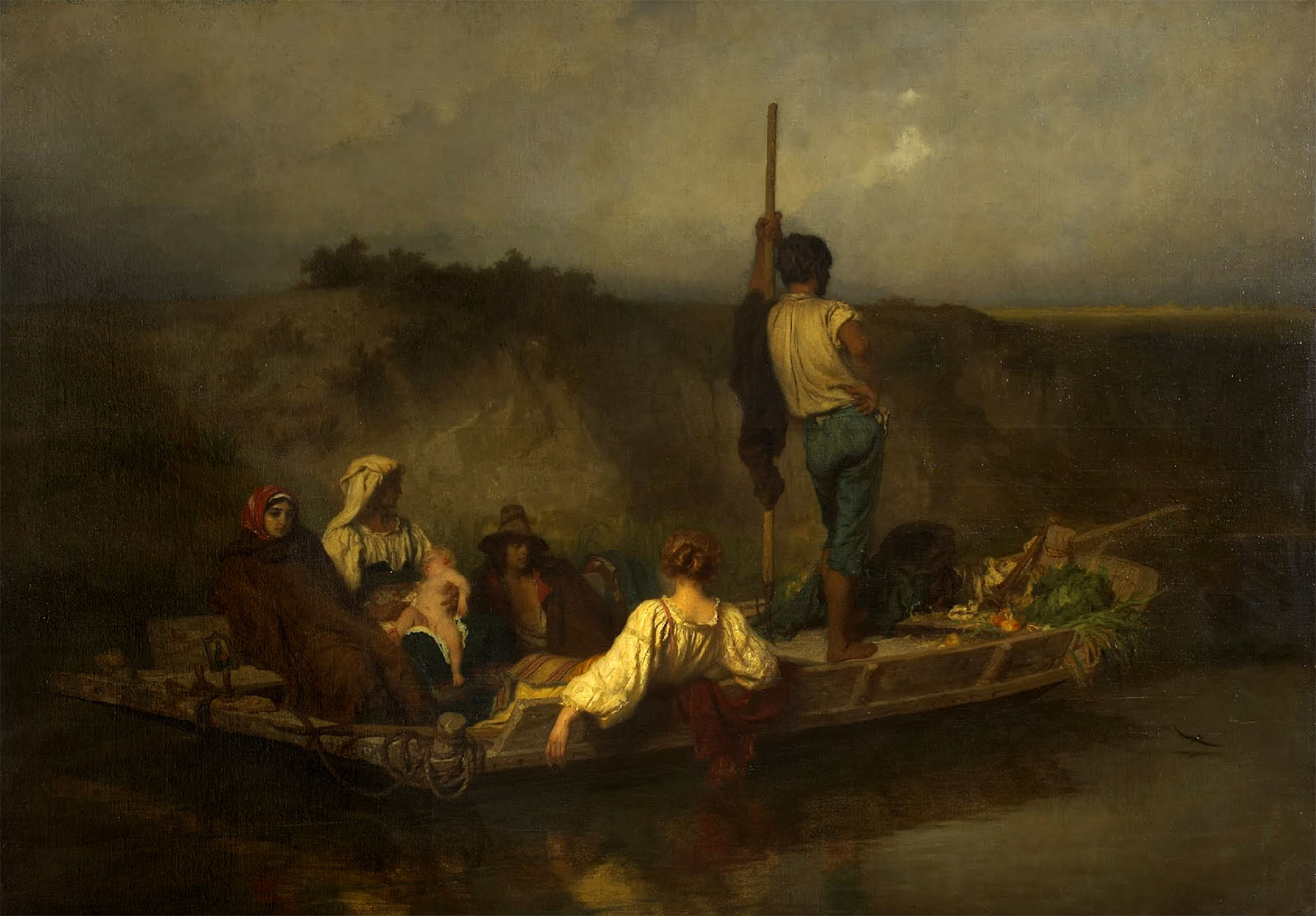
When Gabriele von Uckermann and a friend discovered Ernest Hébert’s painting, La Mal’aria [below], at the Munich International Exhibition of Fine Arts in 1869, the two young women sent a telegram to the artist expressing their admiration. A few months later, the painter agreed to receive Gabriele in his Parisian studio, and their marriage in 1880 sealed their whirlwind romance. He was 63, she was 28. Five years later, Ernest Hébert’s reappointment as director of the French Academy in Rome allowed the young woman to have her own studio. Gabrielle Hébert, who had Gallicized her first name, dates her photographic debut to July 8, 1888. From that day forward, she never stopped photographing her husband. She also dedicated herself to visually documenting their stay at the Villa Medici, as well as their travels in Italy, Sicily, and Spain. …
The exhibition’s subtitle, “Mad Love at the Villa Medici,” while certainly catchy, is somewhat misleading, as the section strictly devoted to photographs related to her stay at the French Academy in Rome represents only a third of the exhibition. However, each period of this prolific output is contextualised using a variety of documents: diary entries, correspondence, camera footage, albums, contact sheets, and more.
Christine Coste. “Gabrielle Hébert, un itinéraire photographique singulier,” on the Le Journal des Arts website, 17th December, 2025 [Online] Cited 02/01/2026. Translated from the French by Google Translate. Used under fair use conditions for the purposes of education and research
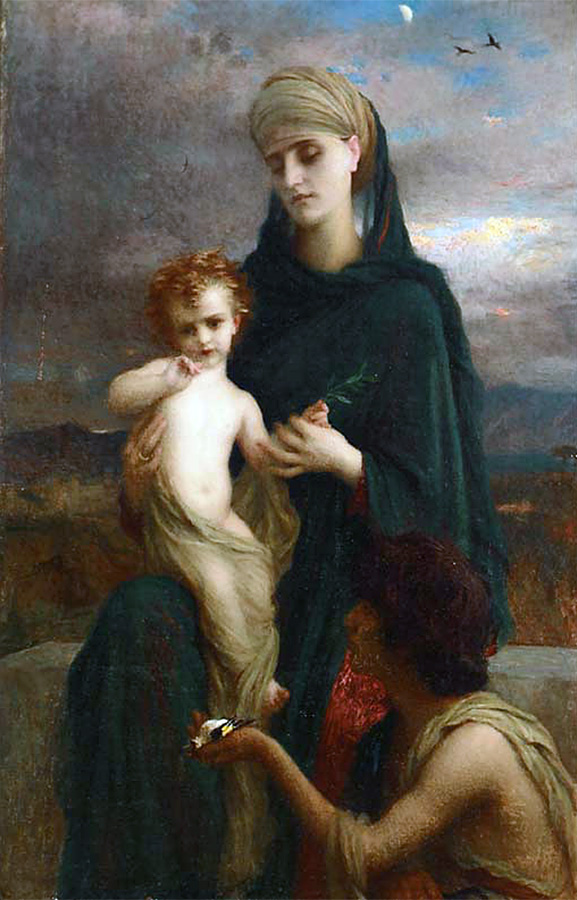
Ernest Hébert (French, 1817-1908) The Mal’aria 1848-1849 Oil on canvas 1930 x 1350cm Musée d’Orsay, dist. RMN / Patrice Schmidt Bought 1851
Used under fair use conditions for the purposes of education and research
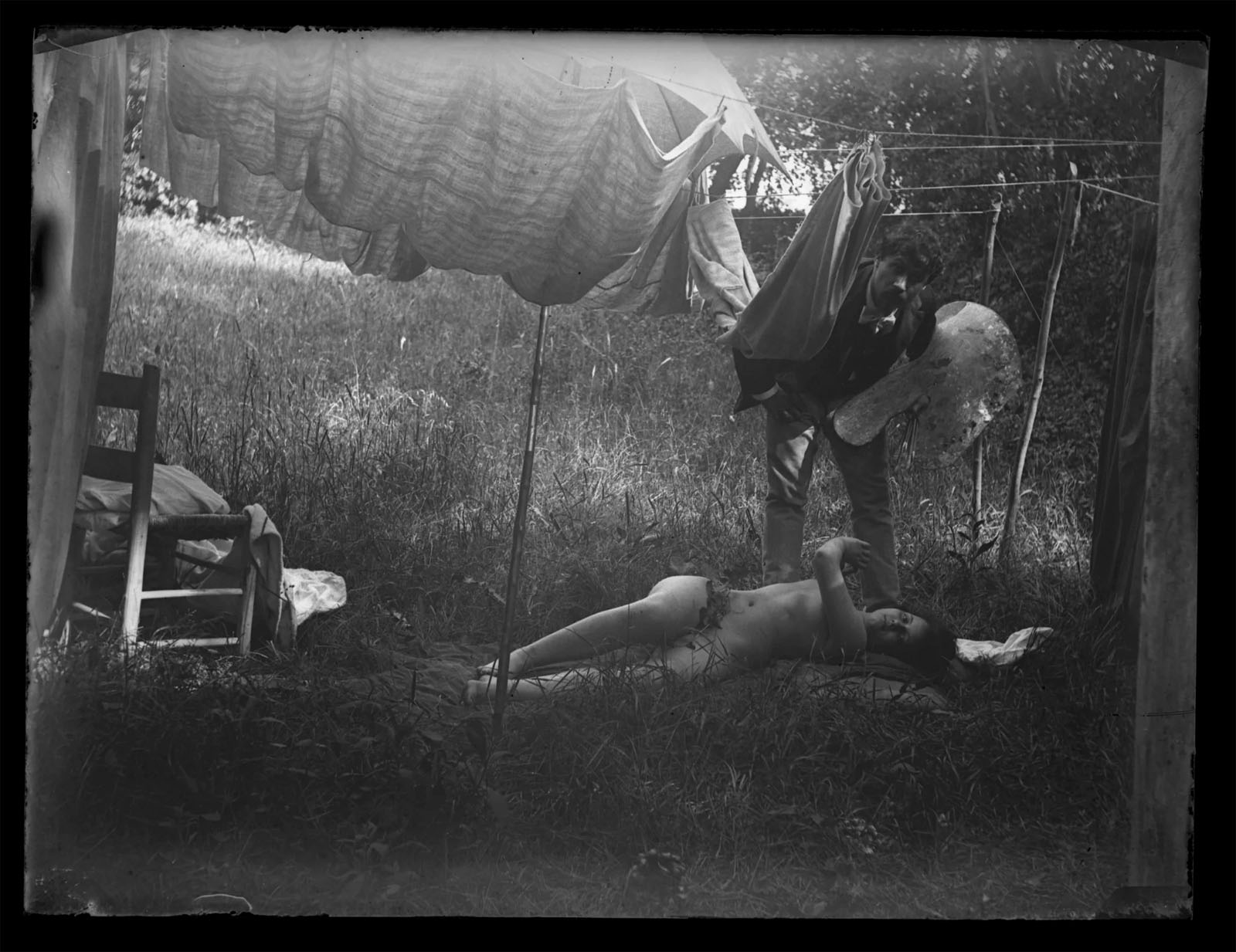
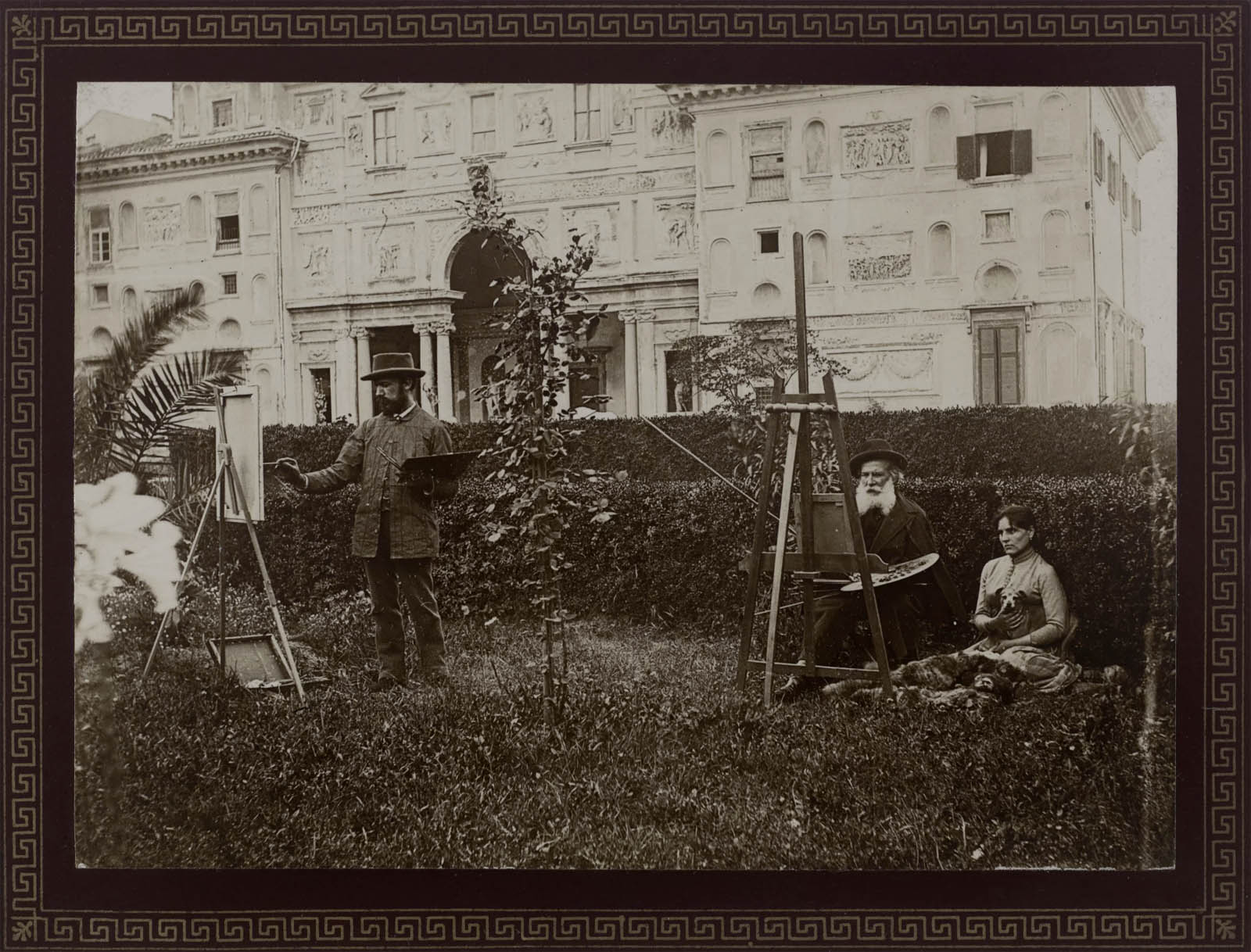
The photograph above shows a nude woman posing for the artist Alexis Axilette for his painting Summertime (c. 1891, below)
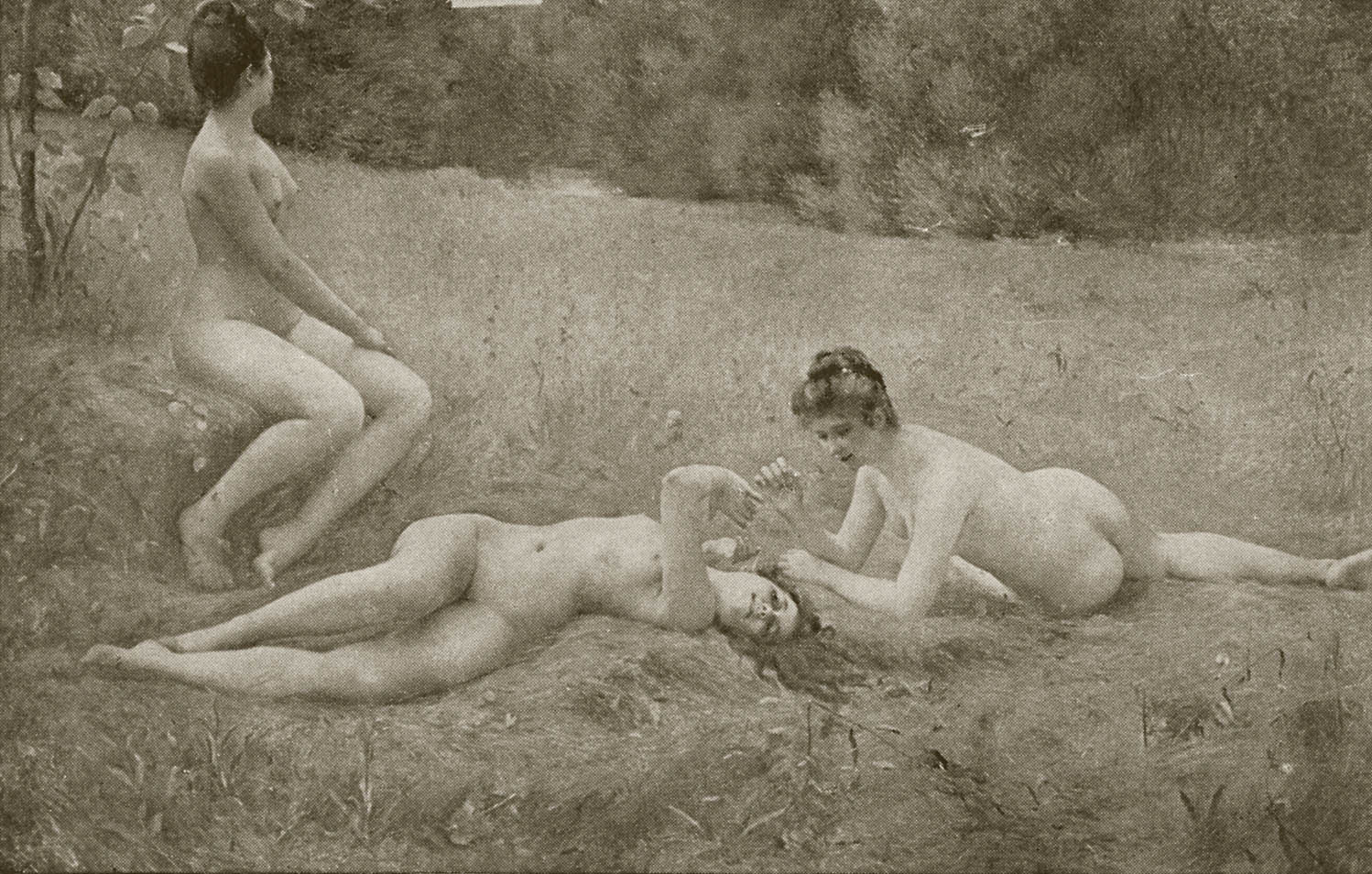
Alexis Axilette (French, 1860-1931) Summertime c. 1891
Only a black and white reproduction is available of this work
At the Salon exhibition of 1891, a picture which attracted a marked amount of attention was a vividly painted midsummer landscape, with the figures of three wood-nymphs, basking in the flood of golden sunshine. It was entitled “Summertime.” The painter was A. Axilette, a Parisian artist whose studio was already well known to collectors. The success of “Summertime” in Europe was enormous. It was successively exhibited at various continental exhibitions, and everywhere repeated the hit it had made in France. It was, in fact, one of those works of which it is said that they “make” their authors, and in the sense that it completely established the painter’s reputation, “Summertime” realised this figure of speech.
Mary S. Van Deusen. “Alexis Axilette,” on the Master Paintings of the World website 2007 [Online] Cited 02/01/2026. Used under fair use conditions for the purposes of education and research
Alexis Axilette (French, 1860-1931)
Alexis Axilette was born in 1860 in Durtal, a small town in Maine-et-Loire. From a modest background – his father was a merchant – his future seemed predetermined, far removed from the world of art. His parents, who dreamed of a career as a notary’s clerk for him, were nonetheless surprised to discover his talent for drawing. After encouraging him to prove his abilities, they supported his choice to become an artist, a vocation he embraced with passion and determination. This ambition led him to become one of the most remarkable painters of his time.
A Promising Start
At the age of 16, Alexis Axilette began working as an apprentice in a photography studio, retouching photographs by hand, a modern activity for the time. At the same time, he attended evening classes at the Angers Municipal School of Fine Arts, where he distinguished himself with his talent and won several prizes. Supported by his teachers, he obtained a scholarship to attend the École des Beaux-Arts in Paris. Between 1878 and 1880, he learned Neoclassical principles there under the influence of the renowned painter Jean-Léon Gérôme, teachings that would profoundly shape his artistic approach.
The Rise to Recognition
At 24, Alexis Axilette reached a major turning point in his career by winning the prestigious Premier Grand Prix de Rome with his painting Themistocles Taking Refuge with Admetus (1885), a masterfully executed historical scene. This success, achieved at such a young age only by Fragonard, propelled his career, marked by gold medals, honorary distinctions, and the Legion of Honor. From that moment on, he became a central figure in the artistic and literary life of the Third Republic, frequenting high society and financial circles. An accomplished artist, he traveled throughout Europe and forged an international reputation, becoming a sought-after portraitist with prestigious commissions, notably from the Imperial Court of Russia.
In 1898, he received a major state commission: the creation of a monumental triptych for the ceiling of the Social Museum, entitled Humanity, Fatherland, and Muse. This work, both moral and balanced, perfectly embodies the republican ideals of the time.
Historical and Artistic Context
Under the Third Republic, the arts were seen as a privileged means of promoting national cohesion. Axilette’s academic style, rooted in moral and patriotic values, perfectly aligned with this objective. However, the late 19th and early 20th centuries saw the emergence of new artistic movements such as Impressionism, Symbolism, and Expressionism. Axilette’s attachment to classicism and a rigorous aesthetic set him apart from the avant-garde movements that favored experimentation and creative freedom. Thus, although he perfectly embodied his era, his art gradually came to be perceived as outdated and obsolete.
A Transition to Pastels
In the 1910s, as artistic tastes evolved, Alexis Axilette turned to the use of pastels. This more subtle and delicate medium allowed him to explore a new sensibility while remaining true to his academic style. His works from this period, primarily portraits and landscapes, testify to his desire to renew his approach while remaining rooted in classical tradition. These pastels reveal an undiminished technical mastery and a willingness to adapt to new artistic trends, although his style seems to have been less appreciated at this time.
Posthumous Oblivion
Like many academic artists, Alexis Axilette suffered from the evolution of tastes in the 20th century. Classical art, once revered, lost ground to the avant-garde, relegating its works to museum storage. Furthermore, his image as a society artist, associated with the establishment of the Third Republic, did not help his legacy. While artists like Gauguin symbolized rebellion and innovation, Axilette remains perceived as a representative of a bygone academicism.
A body of work to be rediscovered
Alexis Axilette died on July 3, 1931, in Durtal, his birthplace. Today, his legacy lives on through his works held in private and public collections: academic drawings, nude sketches, portrait studies, landscapes, and historical paintings. These paintings bear witness to his exceptional talent and his dedication to his art. Although he was a major figure of his time, he remains relatively unknown today. He embodies the fate of many artists: celebrated in their lifetime, but gradually forgotten by history.
Anonymous. “Alexis Axilette,” on the French Wikipedia website, translated by Google Translate
Designed in partnership with the Musée Départemental Ernest Hébert in La Tronche (Isère), where it will be hosted in spring 2026, the exhibition will also be presented at the French Academy in Rome – Villa Medici in autumn 2026, where the exhibition’s curator Marie Robert spent a year in the context of a Villa Medici/ Musée d’Orsay cross-residency.
The exhibition Who’s Afraid of Women Photographers? (1839-1945) presented at the Musée d’Orsay and the Musée de l’Orangerie in 2015 was a milestone for recognition of women artists in France. One of the many photographers featured was Gabrielle Hébert (1853, Dresden, Germany – 1934, La Tronche, France). Born Gabrielle von Uckermann, she was an amateur painter before marrying Ernest Hébert in 1880, an academic artist twice appointed Director of the French Academy in Rome. She went on to develop an intensive, extremely prolific photography practice, begun at Villa Medici in 1888 and ending twenty years later in La Tronche (near Grenoble) following the death of the man she had idolised, her elder by almost forty years, and whose place in history she largely ensured by supporting the creation of two monographic museums.
In the late 19th century, between France and Italy, like many artists and writers (including Henri Rivière, Pierre Bonnard, Maurice Denis and Émile Zola) who equipped themselves with a camera to record their and their families’ daily lives, Gabrielle Hébert pursued a private, sentimental photography practice, helped along by the technical and aesthetic revolution brought about by the invention of snapshot photography. At Villa Medici, as the wife of its director, she organised receptions and received elite visitors. She was not long in escaping her assigned duties, however, and acquired a camera. She took a few lessons with a Roman professional and, along with a resident of her own age, set up a darkroom to develop and print her negatives and retouch the results. It was the beginning of an extremely voluminous output of photos, which she consigned to her diaries. Hardly a day passed without her taking a snapshot, interspersing them with remarks that tell us how she set about taking pictures: “Je photo…. Je photographie…”.
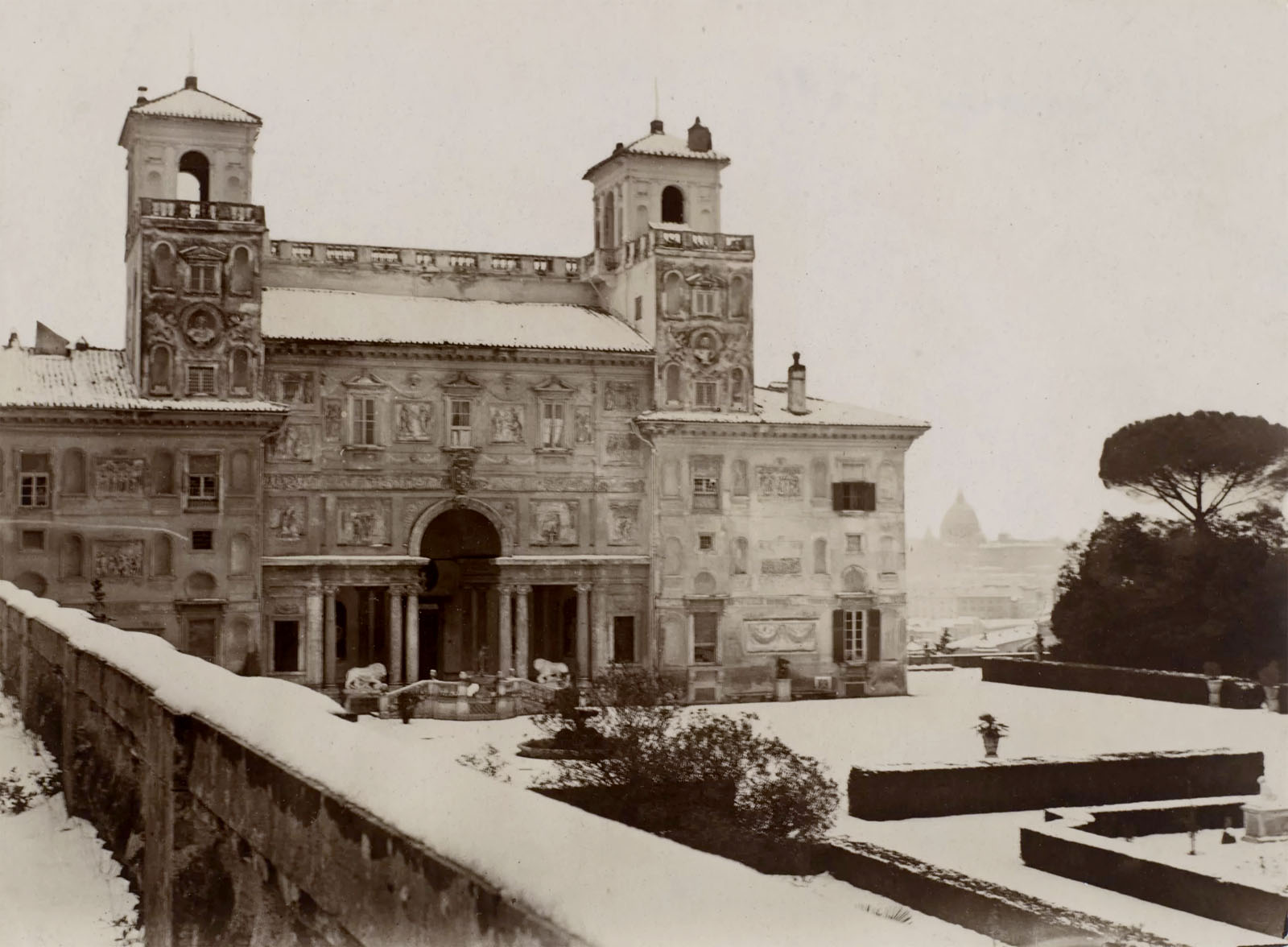
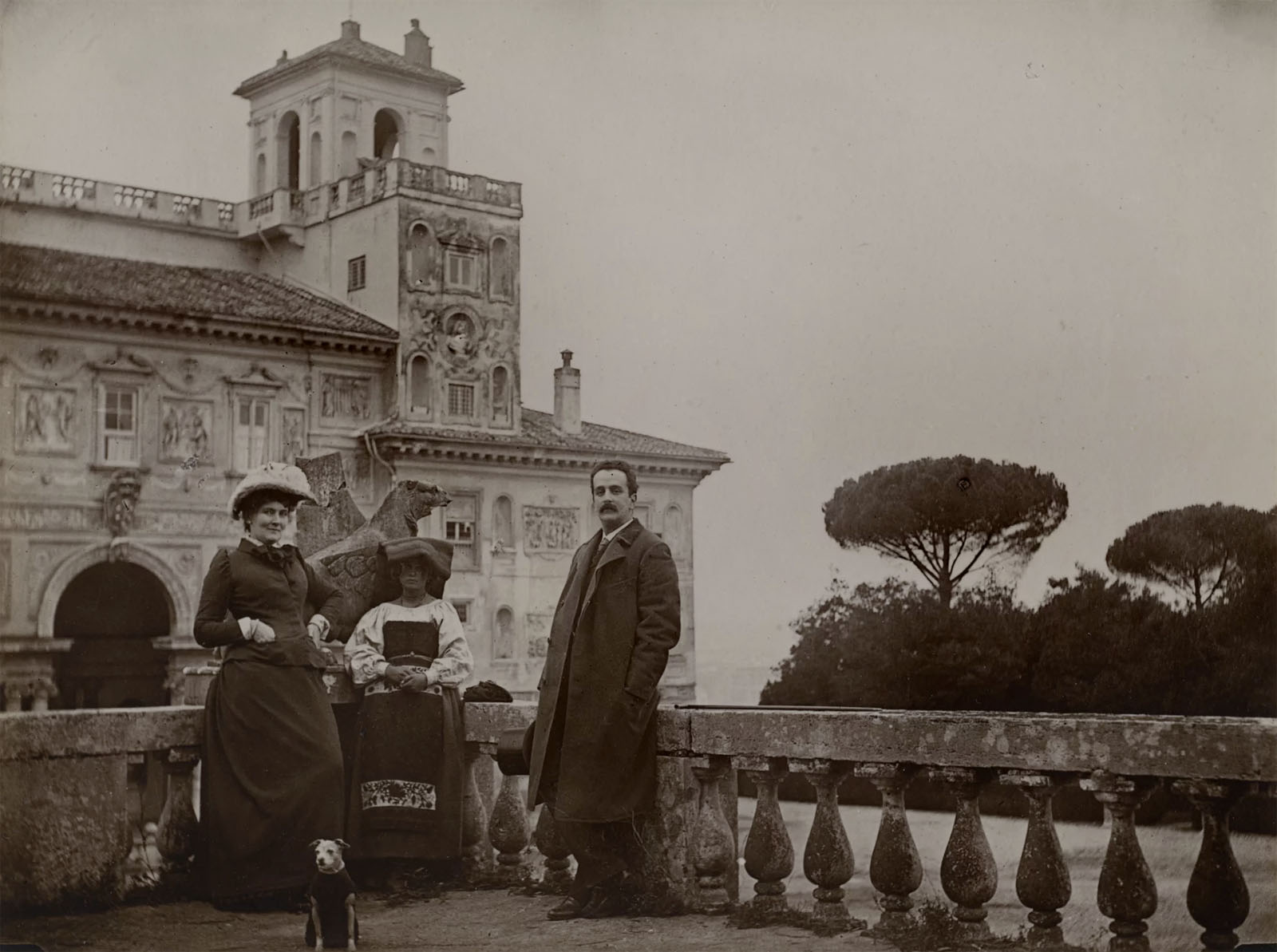
Although Gabrielle Hébert shared her taste for society portraits and tableaux vivants with Luigi and Giuseppe Primoli, Princess Mathilde Bonaparte’s nephews and pioneers of snapshot photography in Italy, she explored all photographic genres on her own at Villa Medici, including nudes, reproductions of artworks, landscapes, still lifes and “photographic recreations” … Providing us with the viewpoint of a permanent resident who is dazzled by the palace, the site and its inhabitants (artists in residence, employees, models, dogs and cats) as seen from the inside and in all seasons, her output reveals a completely unknown aspect of life in that artistic phalanstery. Her “diary in images” is the first photo-report on daily life in the institution, a centre for residencies, training and creation by winners of the Grand Prix de Rome (many of whose works are now conserved by the Musée d’Orsay) as well as a laboratory for the new political relationship between France and Italy, which had just been “unified” (1861) and of which Rome became the capital in 1871. It also constitutes a unique testimony on one of the first couples of creators at Villa Medici. Although Gabrielle assisted Ernest with his activities as an artist, posing for him, preparing his canvases, retouching his paintings and even copying them, it was Ernest himself who was the photographer’s real focus. Overturning gender stereotypes, she watched him obsessively and was never tired of capturing him on film. Posing sessions with sitters, progress made in his paintings, moments of conviviality with visitors and interactions with residents, along with walks in the Roman countryside, bathing in the sea and alone in his office: all these aspects of artist, director and husband Ernest Hébert’s life were scrutinised and documented. When she returned permanently to France with him, Gabrielle stopped cultivating her passion for photography, a passion born in Italy and in exile, but nevertheless continued to photograph Hébert until the very end of his life, determined to immortalise him through images. Before that, though, in 1898, she escaped the closed quarters formed by the Renaissance Palace and its eccentric occupants and performed her photographic swansong during a trip to Spain, which she photographed with a resolutely modern eye influenced by the early days of cinema.
This chrono-thematic exhibition, from Gabrielle Hébert’s photographic beginnings (1888) to her last images (1908), will seek to present what she made of photography and what photography made of her. Thanks to her images, which she shared and exchanged with her friends and family, she became recognised as an auteur and gained social status in a milieu where artistic creation was the preserve of men. But above all, photography revealed her to herself: through capturing a particularly remarkable geography and era, she effectively invented her own mythology. By doing so, she was Villa Medici’s first photographic chronicler and made a place for herself in the medium’s history.
Most of the works on exhibition are original prints (in 9 x 12 cm format), along with photograph albums created by Gabrielle Hébert, her diaries, boxes of glass plates and cameras she used. Enlargements created from negatives she never printed will add further life to the presentation. The itinerary will be rounded out by drawings and paintings by Ernest Hébert, as well as sentimental relics (palette, medallion and letters), testimony to a story of love for a man and a country.
“Ciociaria” refers to a historic, rustic region southeast of Rome in Italy, and “ciociara” (singular) or “ciociare” (plural/feminine) describes people, especially women, from that area, known for their traditional leather sandals (ciocie), embodying a simple, rural Italian identity, famously portrayed in the film La Ciociara (Two Women). The term evokes a strong connection to the land, traditional life, and the unique culture of this central Italian territory.
Adaptation of the texts from the exhibition in large print
Introduction
An amateur painter and wife of the artist Ernest Hébert, director of the French Academy in Rome, Gabrielle Hébert began photography intensively and passionately at the Villa Medici in 1888. She abruptly stopped twenty years later in La Tronche (near Grenoble), upon the death of the man she idolised and who was forty years her senior. She will ensure her legacy through the creation of two monographic museums.
Like Henri Rivière, Maurice Denis, or Émile Zola, who at the end of the 19th century seized upon a camera to record family life, Gabrielle developed a private and sentimental practice, fostered by the technical and aesthetic revolution of the snapshot. As the entries “I take photos” or “I photograph” in her diary show, not a day went by without her taking pictures. Securing her place as an author through these images in a milieu where artistic creation was reserved for men, she discovered herself.
Through the chronicle of her chosen land and happy days, she creates a work of memory and inscribes herself in History.
A Woman Under the Influence
On July 21, 1888, Gabrielle “went out to buy things necessary for photography.” This marked the beginning of an obsessive production of two thousand photographs, mostly taken at the Villa Medici where, as First Lady of a prestigious cultural institution, she organised receptions and received visiting high society. Gabrielle quickly escaped the constraints of her duties: she acquired a camera, took lessons from Cesare Vasari, a Roman professional, and, together with fellow resident Alexis Axilette, set up a darkroom to develop her negatives, print, and retouch her photographs.
She already had an eye for it thanks to her artistic background and her practice of painting and drawing. But it was with the Franco-Italian counts Giuseppe and Luigi Primoli that Gabrielle explored the potential of the instantaneous, becoming the subject of a creative and existential experience: photography.
An art of joy
Gabrielle chronicles the Villa Medici, at once an architectural masterpiece overlooking the Eternal City, a residence for the winners of the Grand Prix de Rome, and a laboratory for a new relationship between France and Italy, newly unified. She focuses her gaze on its inhabitants: artists and models, foreign visitors on holiday, Italian employees at work, flowers, and animals. She enjoys working alongside the “button-pushers” in her circle, as amateurs equipped with handheld cameras are known.
She also observes professionals capturing perspectives of the palace with their imposing camera. “Magnificent weather. I’m photographing the residents”: Gabrielle often associates the day’s weather with an urgent need to act. Present in the world, joyful in her being, she then presses the shutter. Taking the picture is an epiphany. “I photograph, therefore I exist,” she seems to be saying.
Mein Alles (My Everything)
Gabrielle focuses her attention on her husband, around whom she circles and whose activities she seems to observe when he is painting or showing guests around the premises. The tender and sensitive portrait she paints of him is that of a director, an artist entirely devoted to his work at his workplaces, or sketching en plein air on excursions. She also captures him in his nakedness, as an elderly man bathing in the sea. She is concerned about his state of health; she notes how he slept or the time he got up.
The couple’s asymmetry, commonplace at that time and in that social circle, is also expressed in their writings: while he uses the informal “tu” with her, she uses the formal “vous” and addresses him with the superlative phrase “Mein Alles”: My Everything.
Travels in Italy
During their eleven-year stay in Italy, Ernest and Gabrielle travelled all over the country.
The artist enjoys returning to favorite places painted during her youth. They take with them a boarder or student, Amelia Scossa, Ernest’s beloved model, or a few friends; the dogs are always present. In 1893, they travel to Sicily, to the Duke of Aumale’s estate, and then explore the ancient sites of Selinunte and Agrigento, and the Greek theaters of Syracuse and Taormina. By escaping the confines of the Villa Medici and its eccentric inhabitants, Gabrielle literally leaves her social milieu.
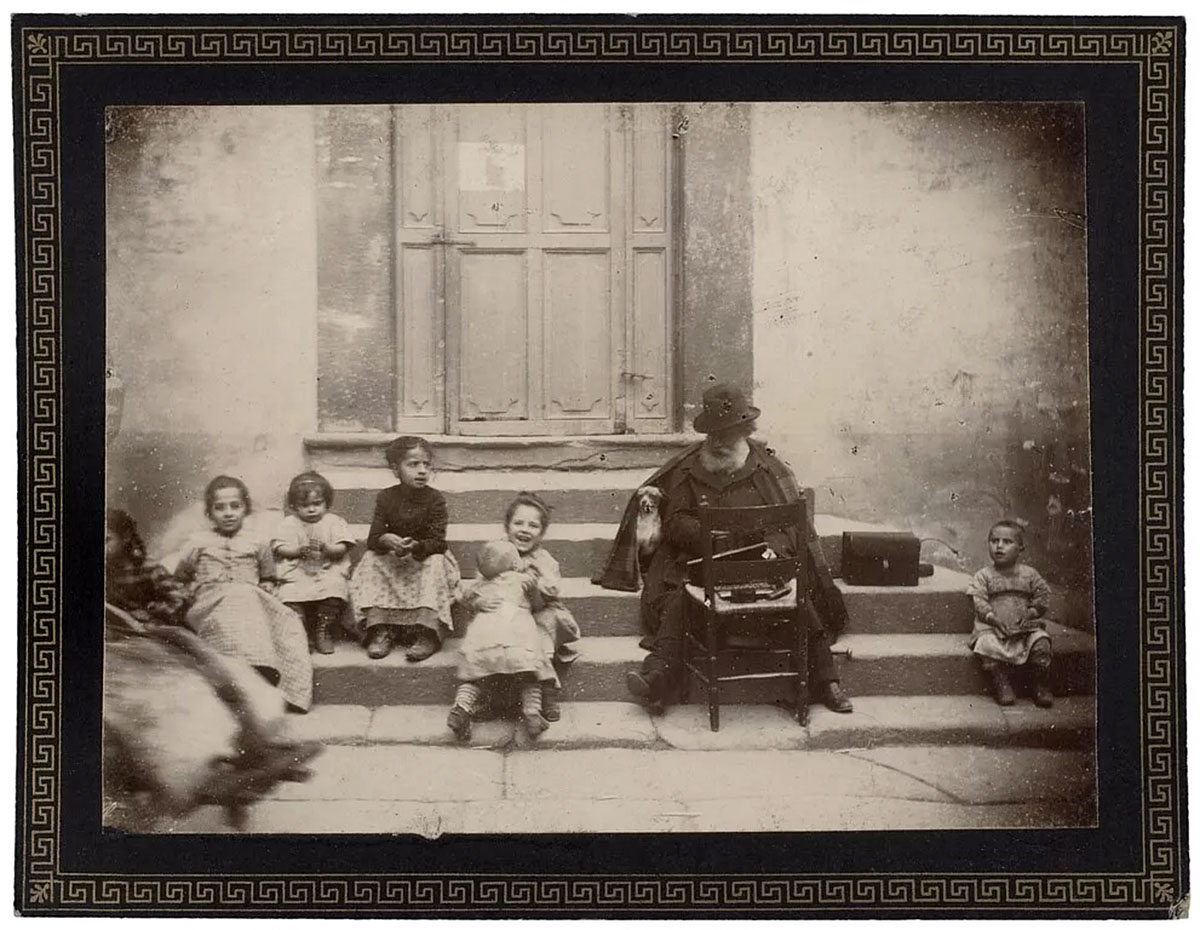
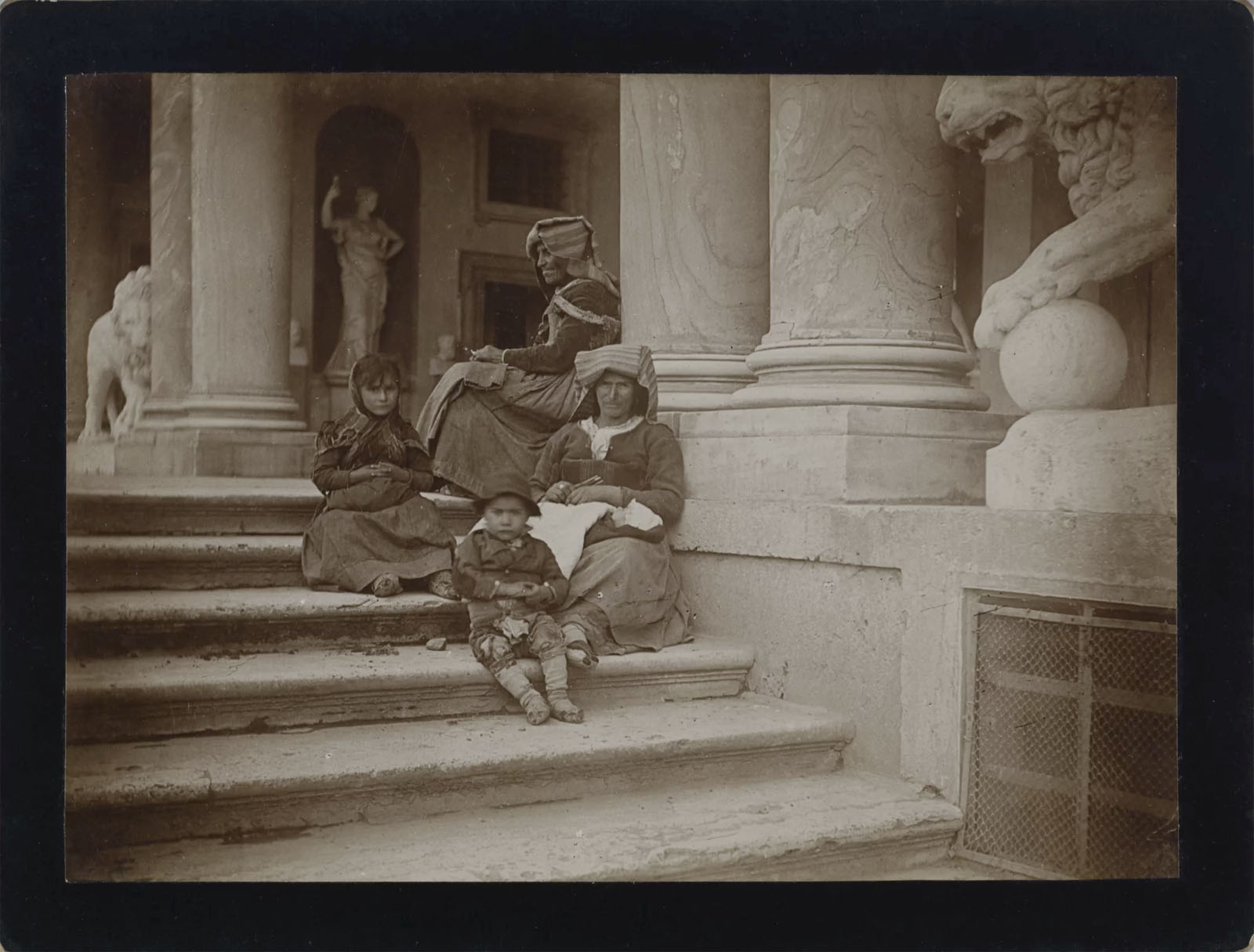
With an attention full of empathy for popular and regional culture, she manages to get groups of strangers, women and men, to pose in front of her lens, no doubt placed on a tripod, whom she brings together in an amusing jumble around a fountain or on the steps of a building, arousing in return a certain curiosity.
In Spain, a cinematic perspective
In 1896, the couple left Italy with great regret and sorrow, returning to Paris and La Tronche where they continued to lead an intense social life. Two years later, Gabrielle completed her photographic swan song during a final journey, this time to Spain, which took them both from Burgos to Granada via Madrid, El Escorial, Toledo, Granada, and Seville.
Abandoning her large-format camera for a Kodak, she amplified in nearly three hundred photographs what she had already experimented with: daring viewpoints – notably from a speeding train – a camera in motion, glances towards the camera, the operator’s shadow cast on the ground, motion blur of people and things (smoke, clouds, and waves), truncated figures, and close-ups.
The nascent cinematograph had passed by. She no longer poses her subjects; she captures them on the fly. She seizes fleeting gestures, radiant moments, the stroll of passersby, the burst of laughter. This journey is an enchanted interlude that allows the couple to get back on their feet, one last time.
The tomb of an artist
Upon returning from Spain, Gabrielle ceased to cultivate her passion, born under the Italian sky. Her output diminished significantly, ceasing altogether in 1908, with Ernest’s death.
During his final months, she recorded his last visits and outings in the sun, his walks, and setting up his easel outdoors. She portrayed him as a draftsman and painter to the very end, then staged his posthumous portrait, for eternity. Containing the seeds of anticipation of the end, the photographs of moments lived, places visited, and people met, were in reality intended to be viewed by others besides their sole author.
With her thousands of images, Gabrielle composed a tomb, in the poetic sense of the word, erected in memory of her husband and their love. In the museum she created in Isère, in La Tronche, in honour of Ernest, it would take until the beginning of the 21st century for her photographic work to be discovered by a happy accident.
Marie Robert, Chief Curator, Photography and Cinema at the Musée d’Orsay, Paris, translated from the French by Google Translate
Prince Semyon Semyonovich Abamelek-Lazarev (also Abamelik-Lazaryan; Russian: Семён Семёнович Абамелек-Лазарев; 24 November 1857 in Moscow – 2 October 1916 in Kislovodsk) was a Russian millionaire of Armenian ethnicity noted for his contributions to archaeology and geology.
Count Giuseppe Napoleone Primoli (in French, Joseph Napoléon Primoli; 2 May 1851 in Rome – 13 June 1927 in Rome) was an Italian nobleman, collector and photographer. …
Giuseppe Primoli lived in Paris from 1853 to 1870. He befriended writers and artists both in Italy and France, and was host to Guy de Maupassant, Paul Bourget, Alexandre Dumas fils, Sarah Bernhardt and others in Palazzo Primoli in Rome. In 1901 he became the sole owner of the palazzo, which he enlarged and modernised between 1904 and 1911.
Primoli was a bibliophile and collector, who assembled a large collection of books and prints. He amassed a collection of books by Stendhal as well as many from the writer’s library.
During the last decades of the nineteenth century, Primoli, an avid photographer, produced over 10,000 photographs.
With photographs like the one above, taken at Taormina, it is likely Gabrielle Hébert would have met Baron Wilhelm von Gloeden (German, 1856-1931) who lived and worked there between 1878-1931.
Curators: Simon Baker & Laurie Hurwitz, MEP and Polly Fleury & Hope Kingsley, Wilson Centre for Photography
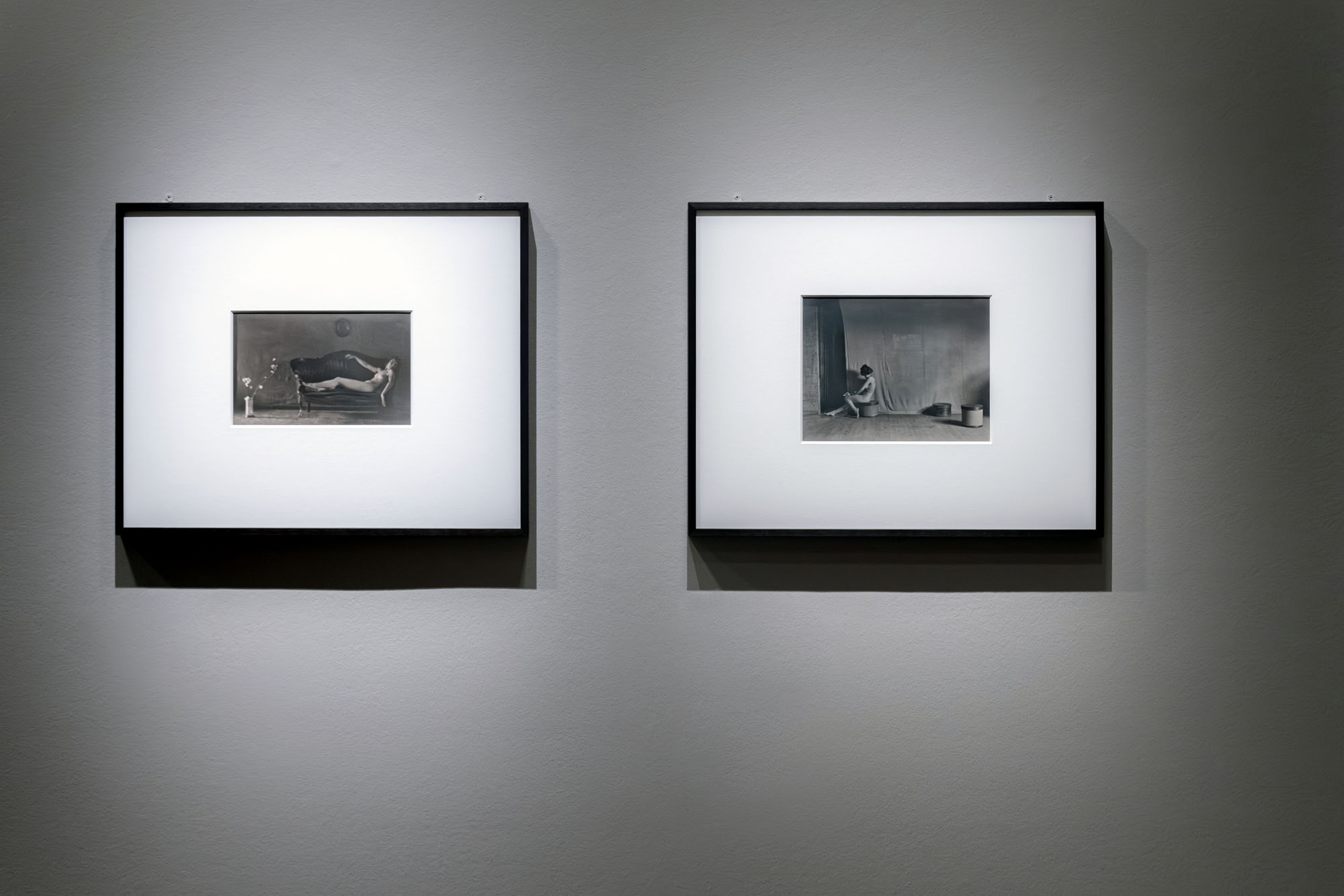
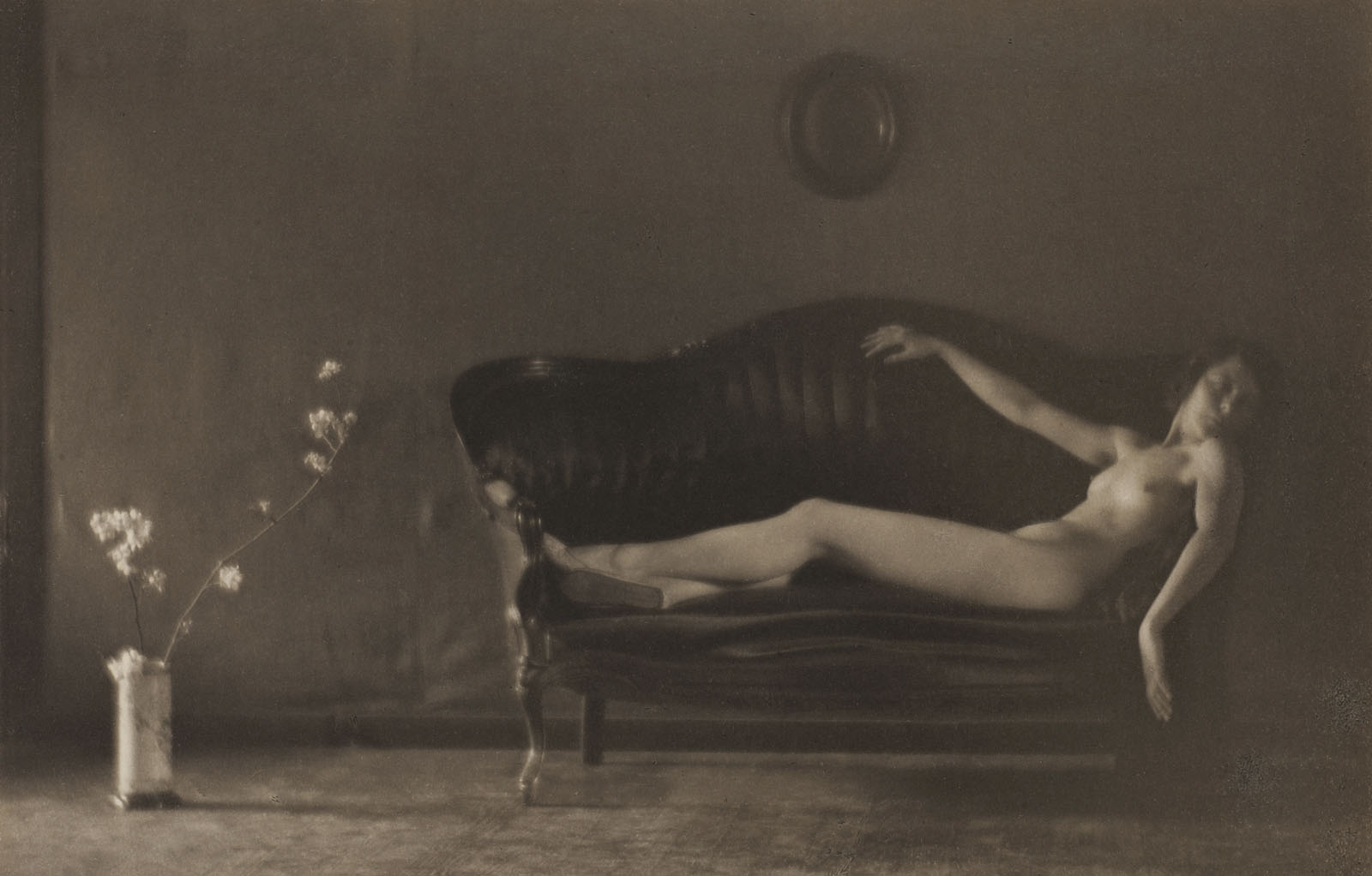
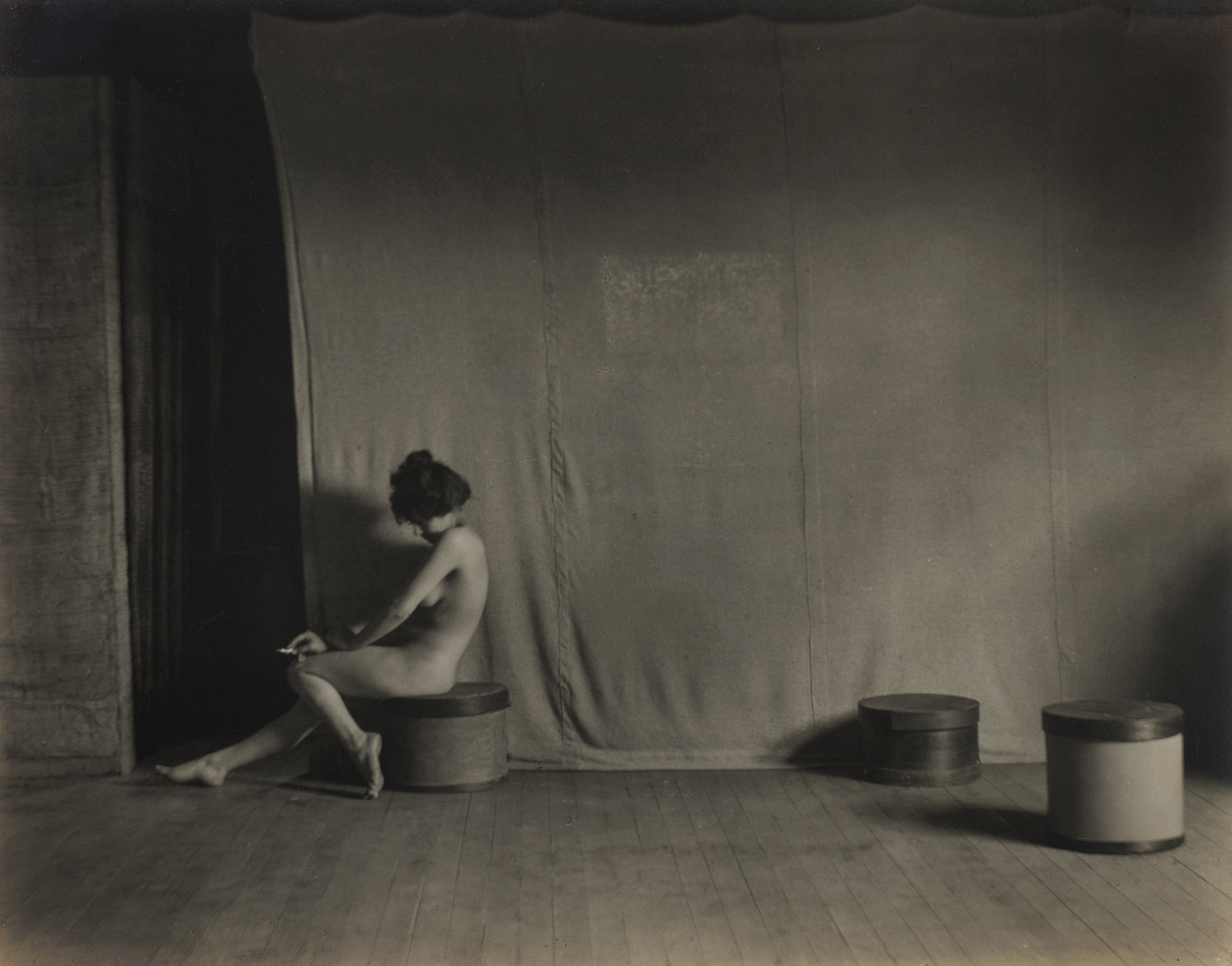
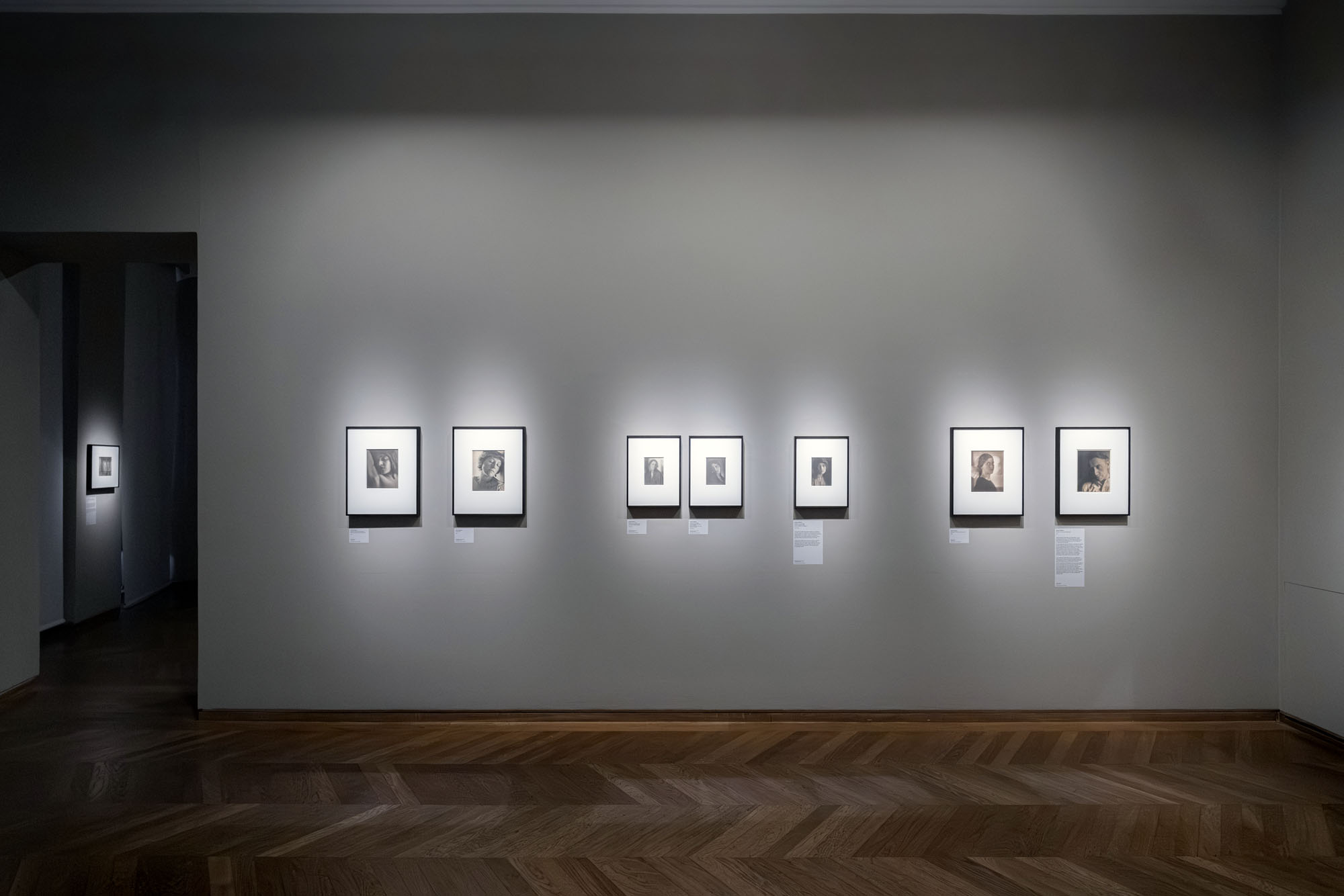
Installation view of the exhibition Edward Weston: Becoming Modern at Maison Européenne de la Photographie (MEP), Paris, 15th October, 2015 – 25th January, 2026 showing at left, Edward Weston’s ‘M’ on the Black Horsehair Sofa, 1921 (below); and at right, Tina Modotti (Nude in Studio), 1922 (below)
Shadow man
You can always learn from the great artists now matter how many times you have seen their work, especially when the photographs are simply, effectively hung ‘on the line’ in a beautiful space.
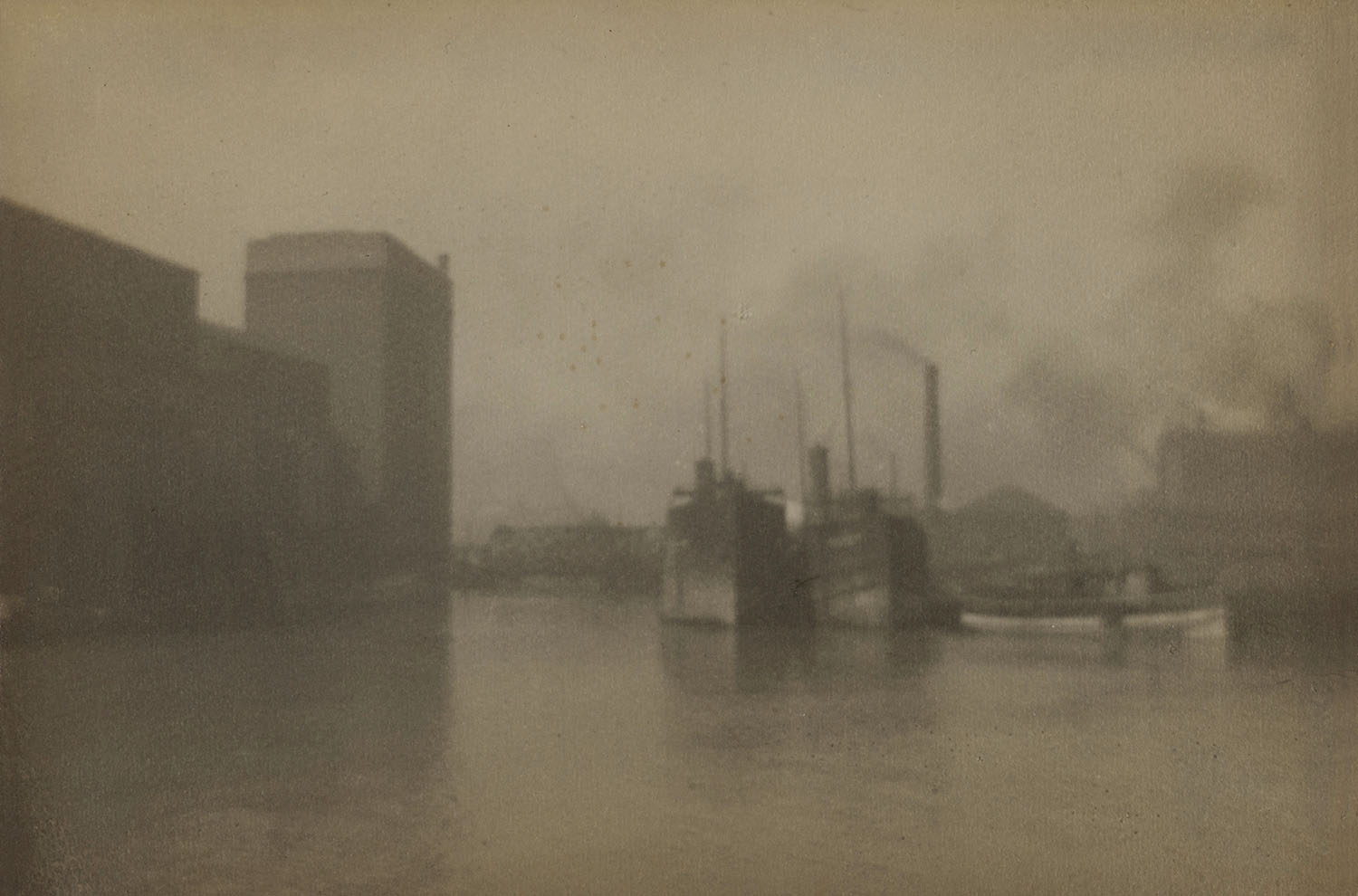
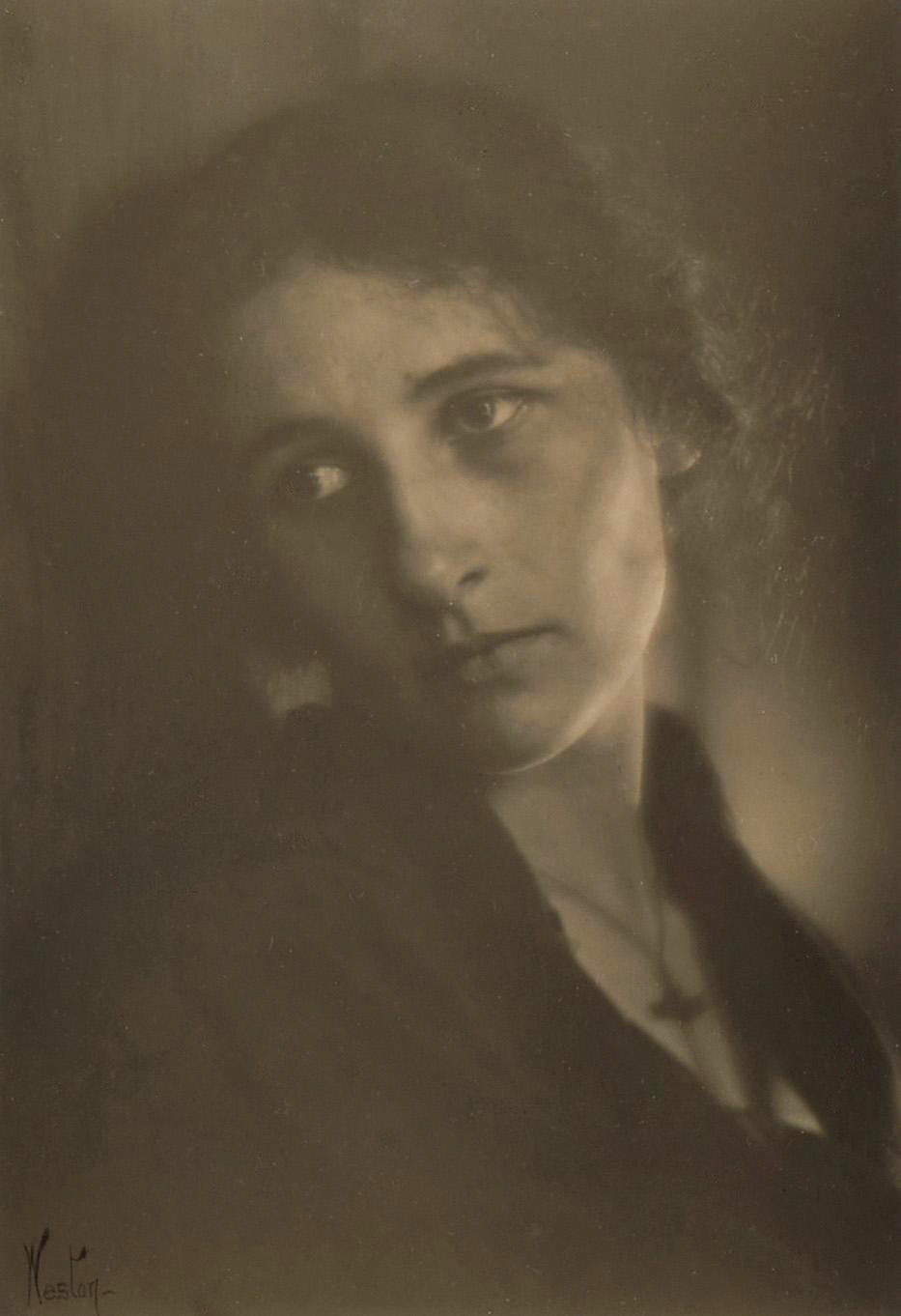
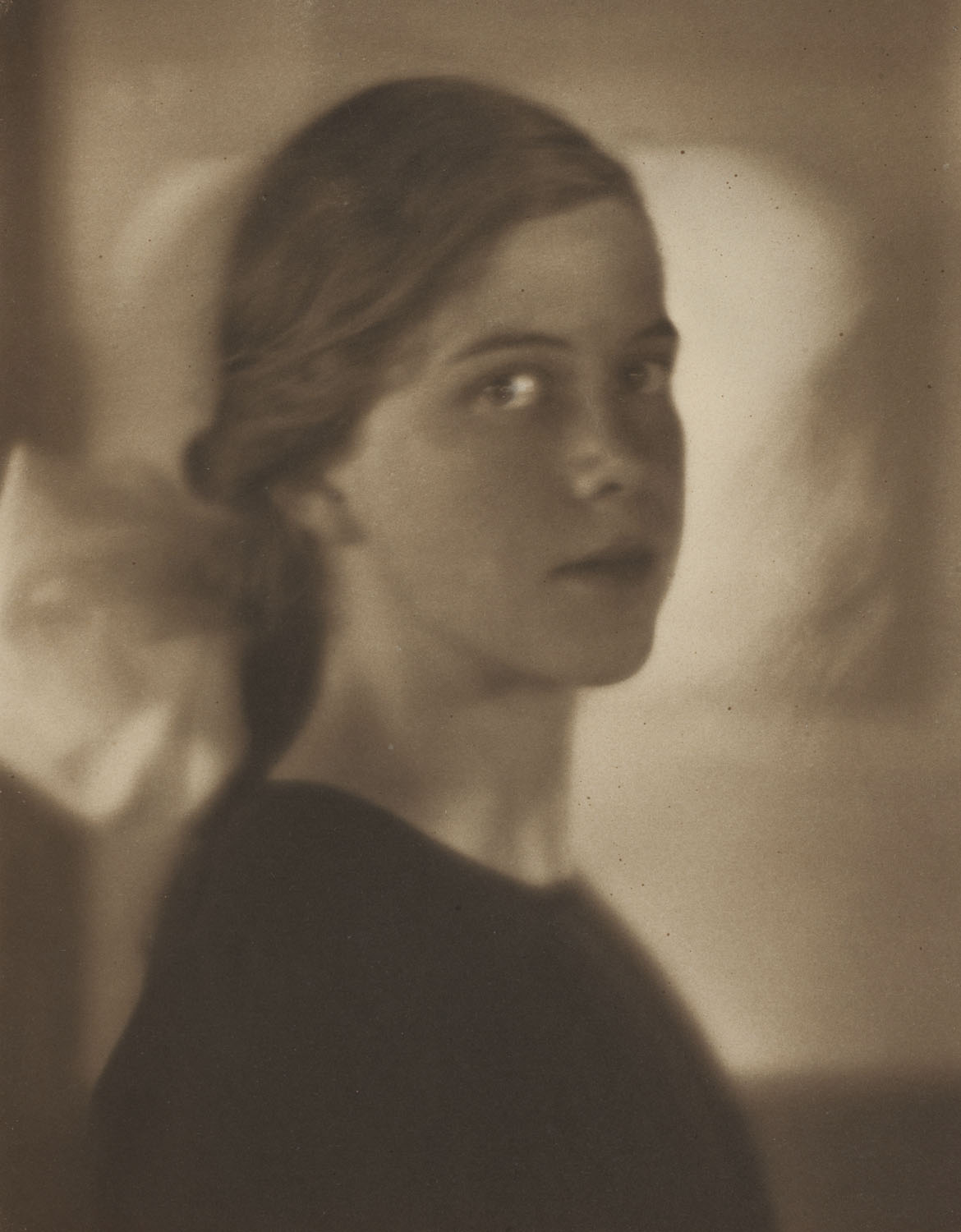
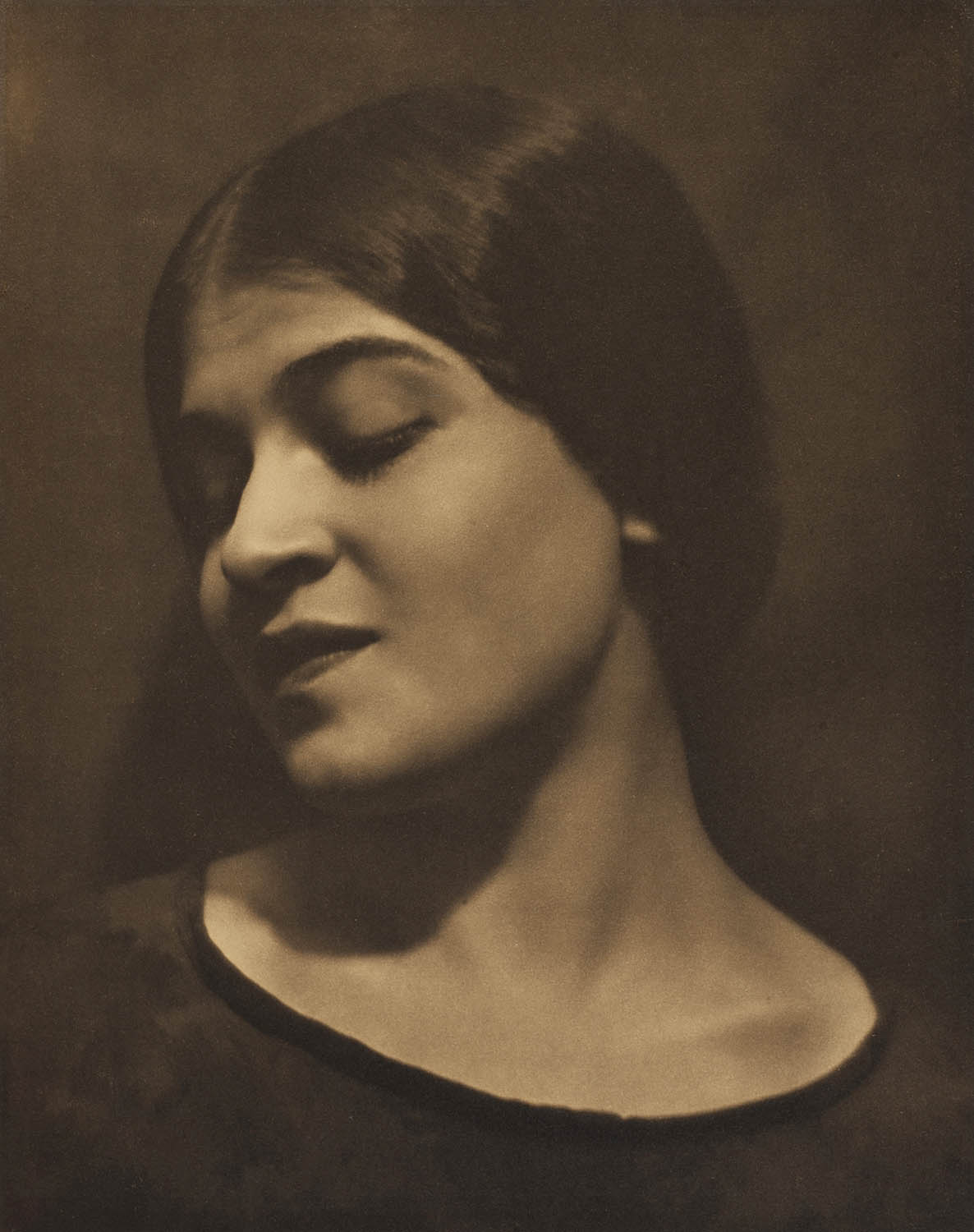
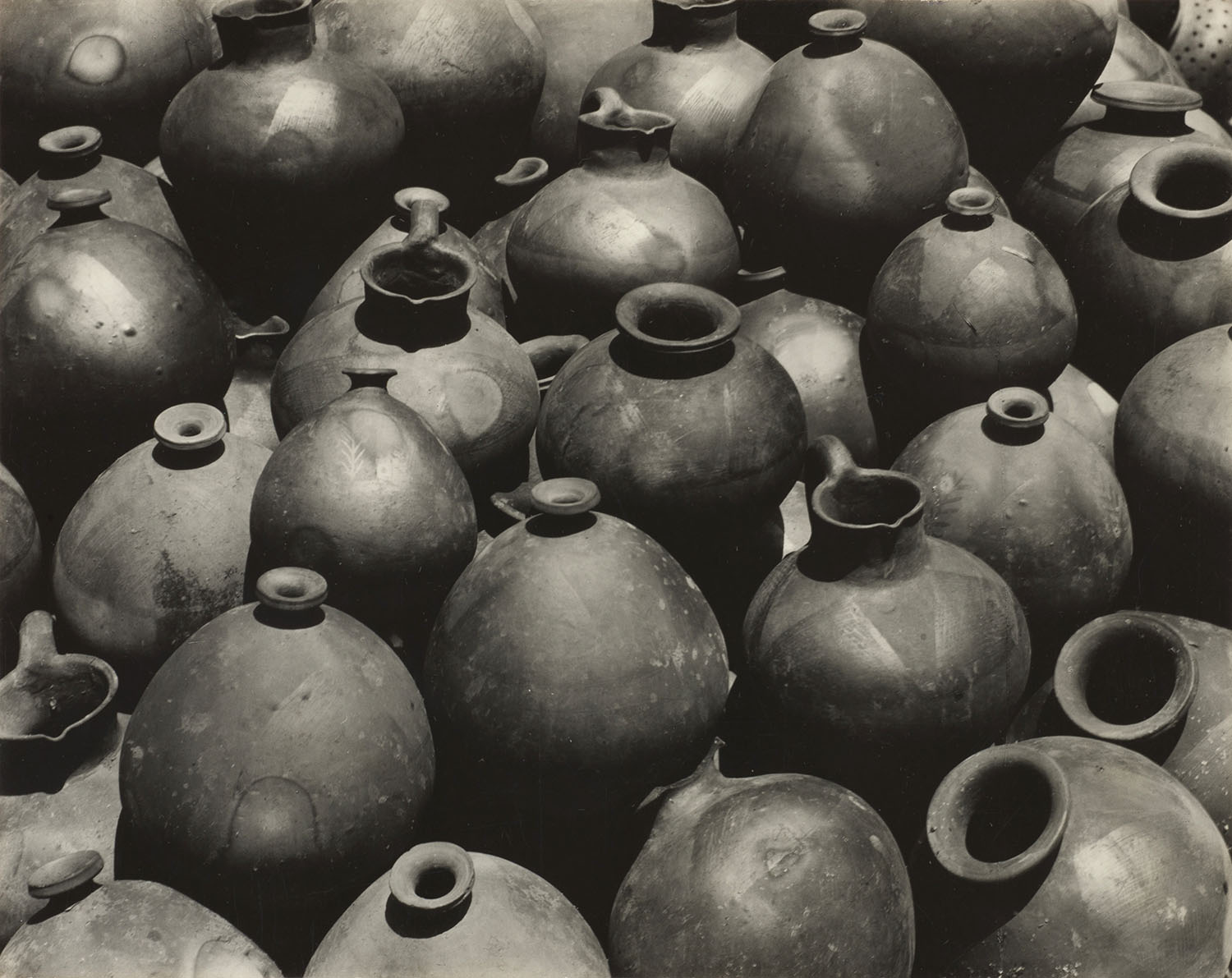
Here are photographs by Edward Weston I have never seen before: Pictorialist photographs of suffused and intimate beauty. An exhibition of Weston’s Pictorialist work would be magnificent to behold.
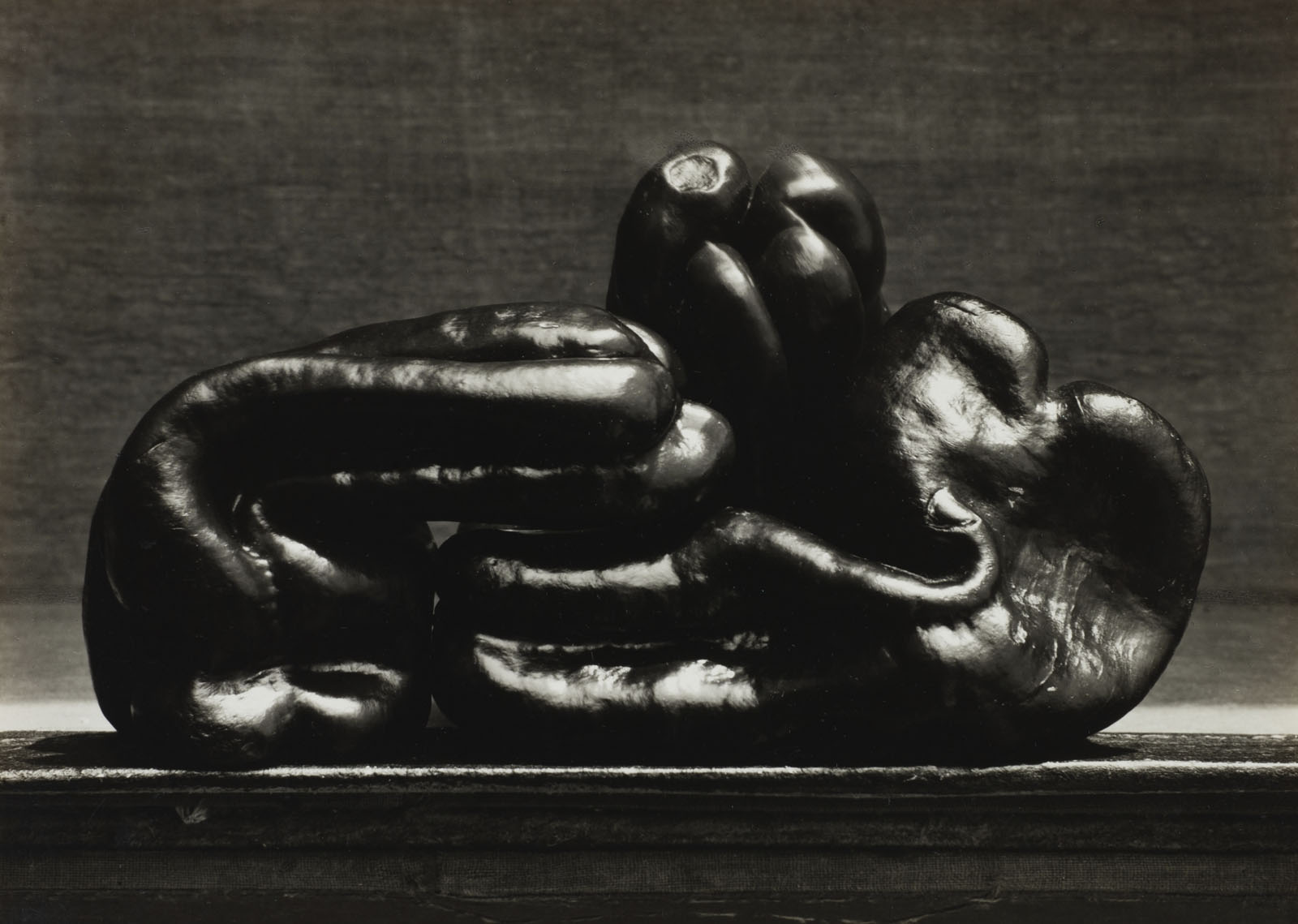
And then Weston’s Peppers (1929, below).
I don’t know why I have never seen this photograph before, why his Pepper (1930, below) is more famous, for this is a monstrous image of dark, writhing, semi-abstract figurative forms, just as valid an artistic statement (in a completely different way) than the more famous image.
Can you imagine holding a vintage print of this photograph in your hands!
Gloria virtutem tanquam umbra sequitur
Dr Marcus Bunyan
Many thankx to Maison Européenne de la Photographie (MEP) for allowing me to publish the photographs in the posting. Please click on the photographs for a larger version of the image.
“Only rhythm, form and perfect detail to consider – first conceptions coming straight through unadulterated.”
“What I seek now is simplicity – the form reduced to its essence.”
Edward Weston. Daybooks II: California (1930-1945). Aperture, 1961
“The camera should be used for a recording of life, for rendering the very substance and quintessence of the thing itself.”
“To see the Thing Itself is essential: the Quintessence revealed direct without the fog of impressionism.”
Edward Weston. The Daybooks of Edward Weston, from Edward Weston: The Flame of Recognition. Aperture, 1965
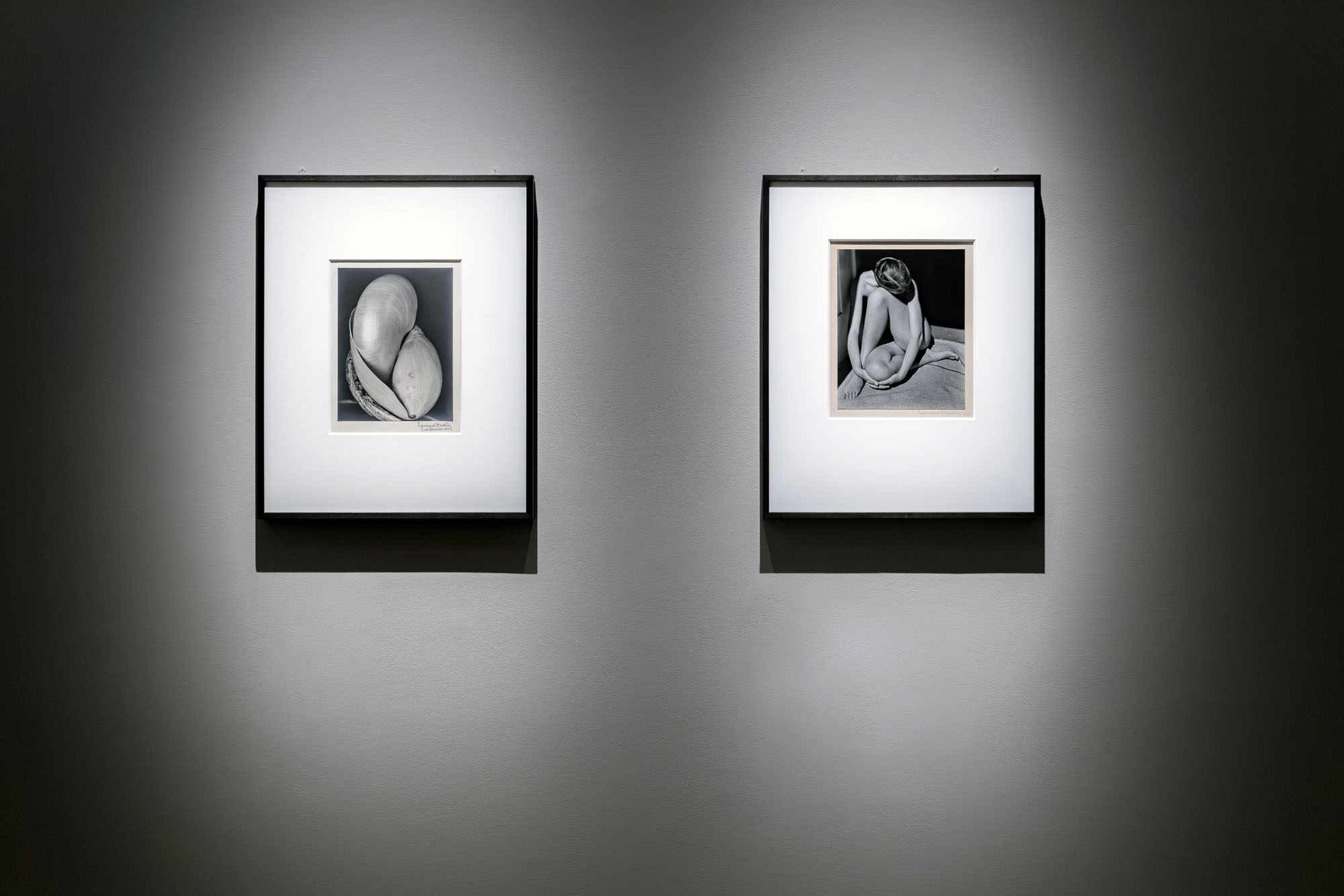
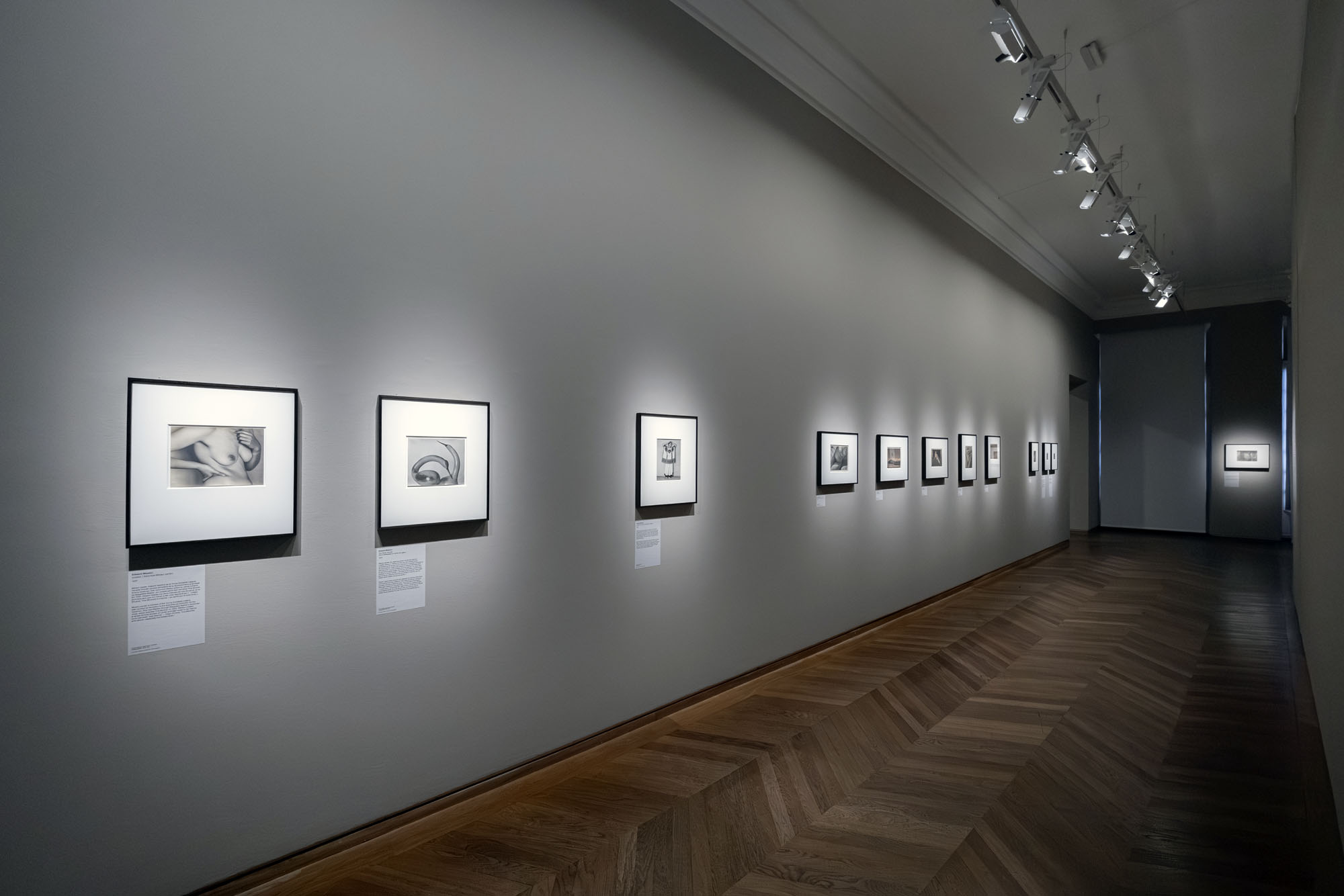
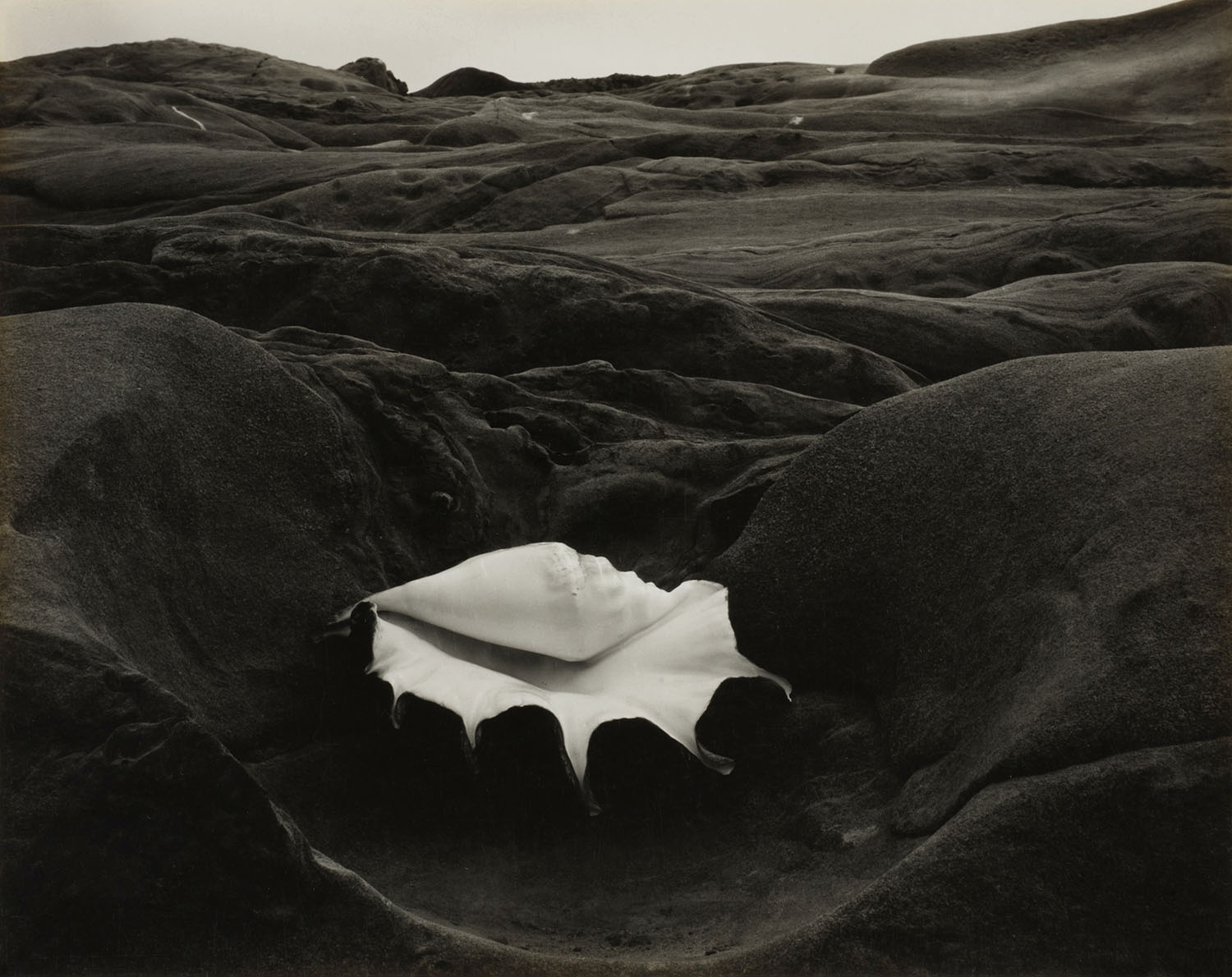
Installation view of the exhibition Edward Weston: Becoming Modern at Maison Européenne de la Photographie (MEP), Paris, 15th October, 2015 – 25th January, 2026 showing at left, Edward Weston’s Shell 1927 (below); and right, Santa Monica (Nude in Doorway) 1936 (below)
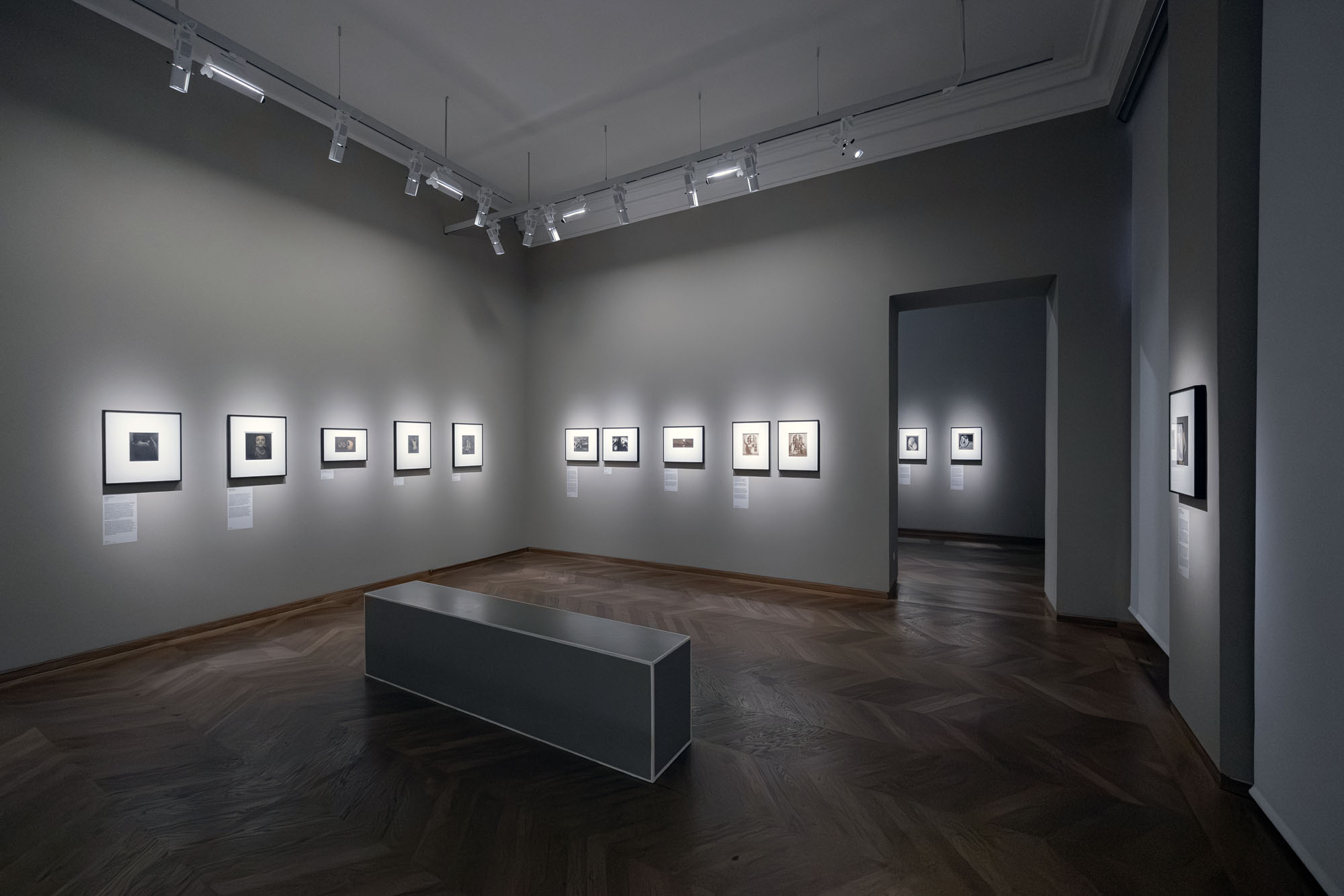
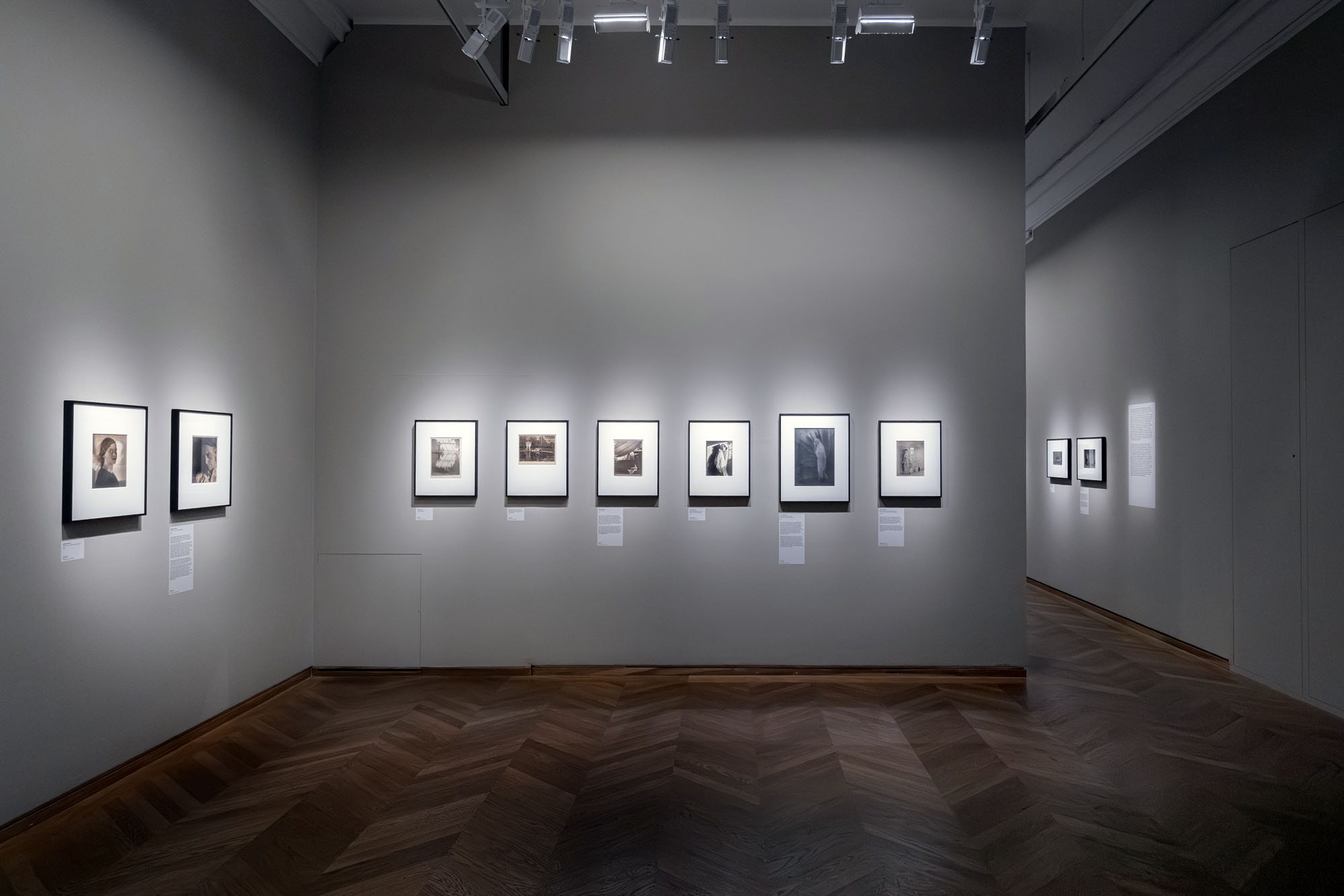
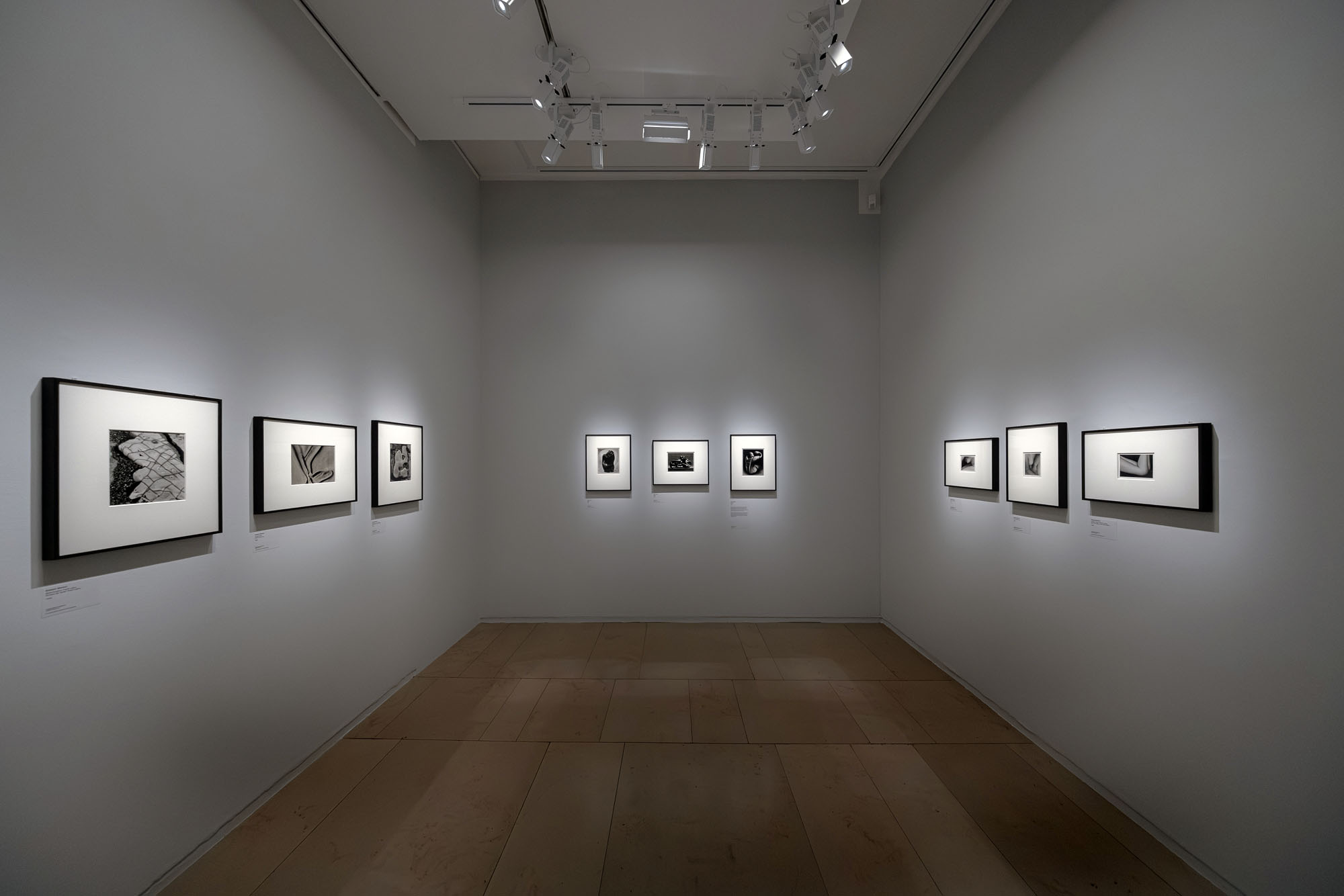
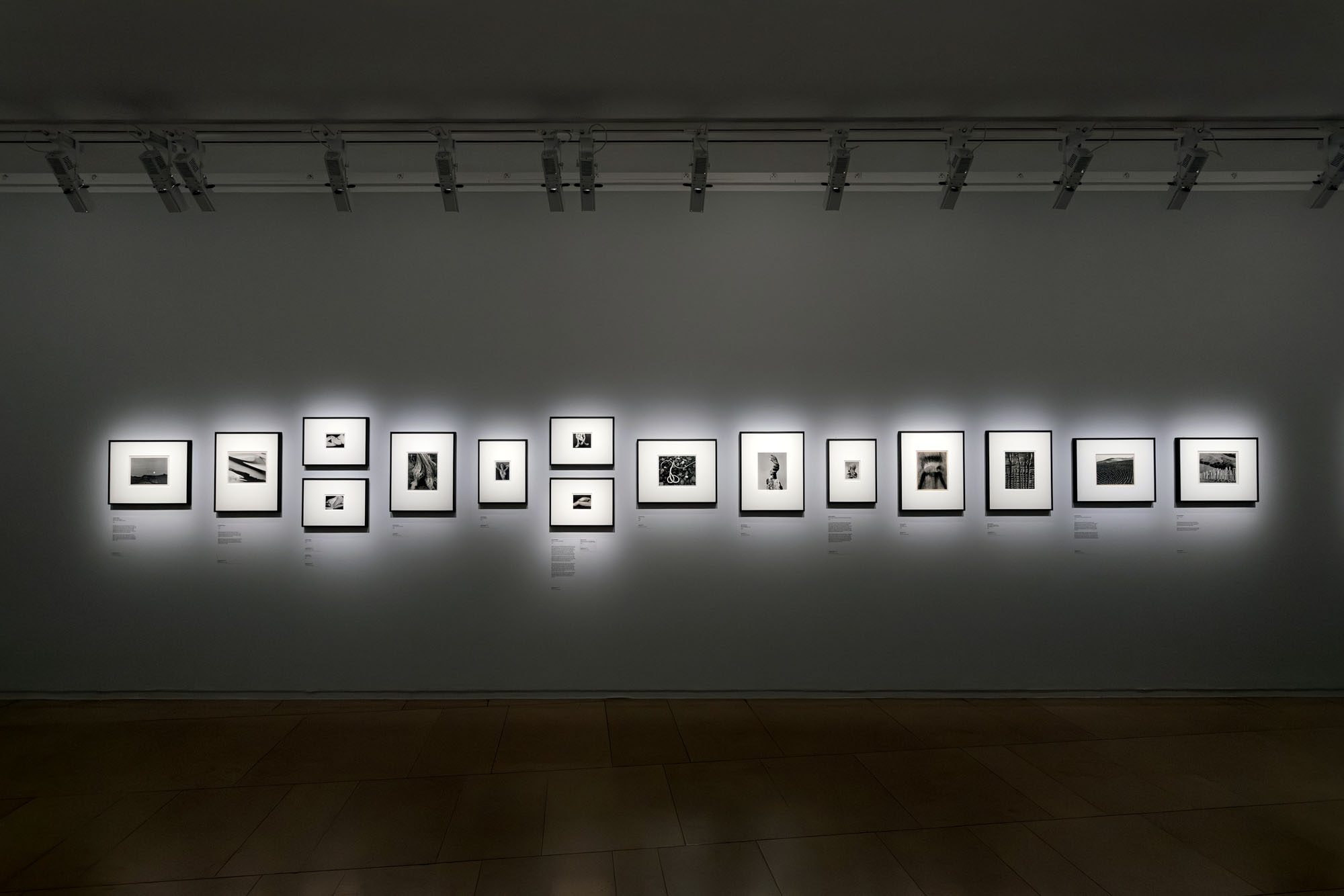
Installation views of the exhibition Edward Weston: Becoming Modern at Maison Européenne de la Photographie (MEP), Paris, 15th October, 2015 – 25th January, 2026
The exhibition
The MEP presents Edward Weston: Becoming Modern, the most significant exhibition dedicated to Edward Weston in Paris in nearly thirty years. A pioneering figure of photographic modernism, Weston helped forge a new visual language – marked by clarity, formal rigour, and a profound engagement with the essential qualities of the photographic medium.
Originating from an idea by Michael Wilson – founder of the Wilson Centre for Photography in London and one of the world’s foremost collectors – Becoming Modern brings together a rare selection of vintage prints from his collection, many of which have never been exhibited in France. These works offer an exceptional insight into Weston’s evolving practice and the emergence of a distinctly photographic modernism.
Spanning more than three decades, from 1908 to 1945, the exhibition traces Weston’s artistic trajectory. His early pictorialist photographs, created in California during the 1910s and early 1920s, draw upon 19th-century artistic traditions, employing soft focus, carefully staged settings, and symbolic imagery. Over time, his vision transformed: his images became sharper, compositions more austere, with an increasing emphasis on form, surface, and structure. By the 1920s, many of his photographs approached geometric abstraction – though Weston was never confined to a single style. This transformation unfolded gradually, as motifs intertwined and techniques evolved in a subtle, ongoing dialogue, revealing an artist continuously refining and deepening his vision.
Highlights include works from Weston’s time in Mexico, where, in close collaboration with Tina Modotti – an artist, political activist, and his lover – he created portraits and nudes imbued with a newfound freedom and radicalism These are complemented by evocative landscapes of the dramatic California coastline near Point Lobos and Carmel. At the heart of the exhibition are his most iconic series: sensuous close-up studies of natural forms – peppers, shells, fruits, and vegetables – captured with an almost obsessive intensity; dune and rock landscapes from Point Lobos and Death Valley; and luminous nudes of his muse, Charis Wilson. Throughout, Weston reveals the universal beauty of everyday subjects, transforming them into pure, sculptural forms. Recurring themes – portraiture, the nude, still life, and nature – are placed in dialogue, uncovering deeper connections across his oeuvre. His work displays remarkable strength and variety, with many natural forms taking on subtle anthropomorphic qualities.
Becoming Modern invites audiences to rediscover a bold innovator whose visionary approach helped shape the course of photographic history. The exhibition also includes a selection of rare works by leading Pictorialist photographers, offering a broader context for Weston’s early influences and the artistic milieu from which his modernism emerged.
Edward Weston biography
Widely regarded as one of the masters of 20th-century photography, Edward Henry Weston (March 24, 1886 – January 1, 1958) reshaped the medium through a vision rooted in clarity, form, and a profound sensitivity to the physical world. Over a career spanning more than forty years, he forged a style that was both radically modern and deeply grounded in the landscapes and materials of the American West.
Born in Highland Park, Illinois, Weston spent his early years in the Chicago area, where his fascination with photography first took hold. By 1903, as a teenager, he was already exhibiting his early works. At sixteen, he received his first camera – a gift from his father that marked the beginning of a lifelong creative journey. He studied at the Illinois College of Photography from 1908 to 1911 before relocating to California, where, at age 25, he opened a portrait studio in Tropico, operating from 1911 to 1922. In his early career, Weston worked within the Pictorialist tradition – a popular style of the early 20th century characterised by soft focus and romantic, painterly effects. His portraits from this period brought him recognition from the art community. Yet by the early 1920s, he began to move away from this approach, embracing a sharper, more precise, and abstract visual language that emphasised form and detail.
A turning point in Weston’s artistic journey occurred in 1922 on a trip to New York, where he met influential modernist photographers such as Alfred Stieglitz, Paul Strand, and Charles Sheeler. They recognised the originality of his work and encouraged him to fully embrace this new direction, which soon included close studies of fruits, vegetables, shells, and stones, rendered with astonishing clarity and sculptural intensity. Through close observation and meticulous composition, he revealed the inherent beauty of form, transforming the ordinary into the iconic.
In the mid-1920s, Weston travelled to Mexico with the photographer and political activist Tina Modotti, with whom he shared a studio and a deep creative partnership. Immersed in the vibrant cultural life of Mexico City, he engaged with a dynamic community of artists and thinkers whose ideas further catalysed his break from tradition.
Returning to California in 1928, Weston found new inspiration in the rugged coastal terrain of Point Lobos. The region’s intricate rock formations, windswept trees, and tide pools became a central focus of his work, offering endless opportunities for visual exploration and formal innovation. In 1932, Weston co-founded Group f/64 – a collective of West Coast photographers dedicated to “straight” photography, emphasising sharp focus, rich tonality, and the use of large-format cameras. The group championed an unmanipulated approach to the medium. Weston’s contributions during this period, especially his landscapes, remain among the most enduring images in American photography.
Becoming Modern traces Edward Weston’s evolution from the soft pictorialism of his early years to the clarity and precision that came to define modern photography. Spanning nearly three decades, the exhibition presents more than 100 rare vintage prints from the Wilson Centre for Photography. It invites viewers to rediscover one of photography’s most visionary pioneers through an extraordinary body of work.
The exhibition opens with two emblematic photographs that frame its central theme, reflecting a curatorial concept developed by Michael Wilson to highlight Weston’s extraordinary range and experimentation. On one side hangs M on the Black Horsehair Sofa (1921, above), a quintessential example of the Pictorialist style: a languid pose, softly diffused light, and a painterly atmosphere enriched by symbolic elements – a floral bouquet, a circular mirror. Opposite it, Tina Modotti (Nude in Studio) (1922, above) marks a striking departure. The figure sits upright, smoking, in a bare studio – captured with crisp focus and a stark, modern sensibility. Though created just a year apart, these works embody the transformative arc at the heart of Weston’s career: a restless search for new ways of seeing. From these beginnings, Weston’s exploratory approach soon dissolved strict categories, embracing a practice defined by an ongoing dialogue between subjects and forms.
From here, the exhibition situates Weston’s early work within the broader context of the Pictorialist movement. His prints are shown alongside key images by photographers who shaped or anticipated his early style – Edward Steichen, George Seeley, Anne Brigman, Dorothea Lange, Margrethe Mather, and Alfred Stieglitz. A tireless advocate for photography as a fine art, Stieglitz helped define the medium’s possibilities through his publications Camera Work and 291, and through his influential New York gallery of the same name. Weston’s own early prints – including a striking self-portrait – are exhibited alongside these historic works. These are placed in conversation with later photographs that capture Weston and his creative circle in 1920s California, evoking a distinct artistic atmosphere. Rooted in the landscape and rhythms of the West Coast, Weston’s early vision subtly diverged from that of his East Coast contemporaries.
The exhibition then turns to the pivotal decade of the 1920s, a period of remarkable transformation and experimentation in Weston’s practice. Rather than unfolding in a linear progression, this section reveals how Weston moved fluidly between subjects and styles – returning repeatedly to certain motifs while continually refining his formal vocabulary.
This section opens with works from Weston’s extended stays in Mexico from 1923 to 1926 with photographer and political activist Tina Modotti – his muse, lover, and collaborator – where he encountered a vibrant avant-garde community. Immersed in the artistic and political ferment of 1920s Mexico, Weston developed a bold new visual language focused on form, contrast, and a sense of immediate presence. A striking portrait of Modotti, presented in both gelatin silver and palladium prints, showcases Weston’s ongoing technical experimentation alongside his deepening sensitivity to tonal nuance. Modotti encouraged Weston toward an even more radical vision, challenging him to see the world anew through his camera.
His Mexican experience deepened Weston’s experimental impulse, introducing sharper contrasts and new formal rigor that reverberated through his portraits and nudes. His obsession with natural forms intensified. He photographed them repeatedly, seeking the perfect composition and meticulously refining his prints to reveal the interplay of light, shadow, and volume.
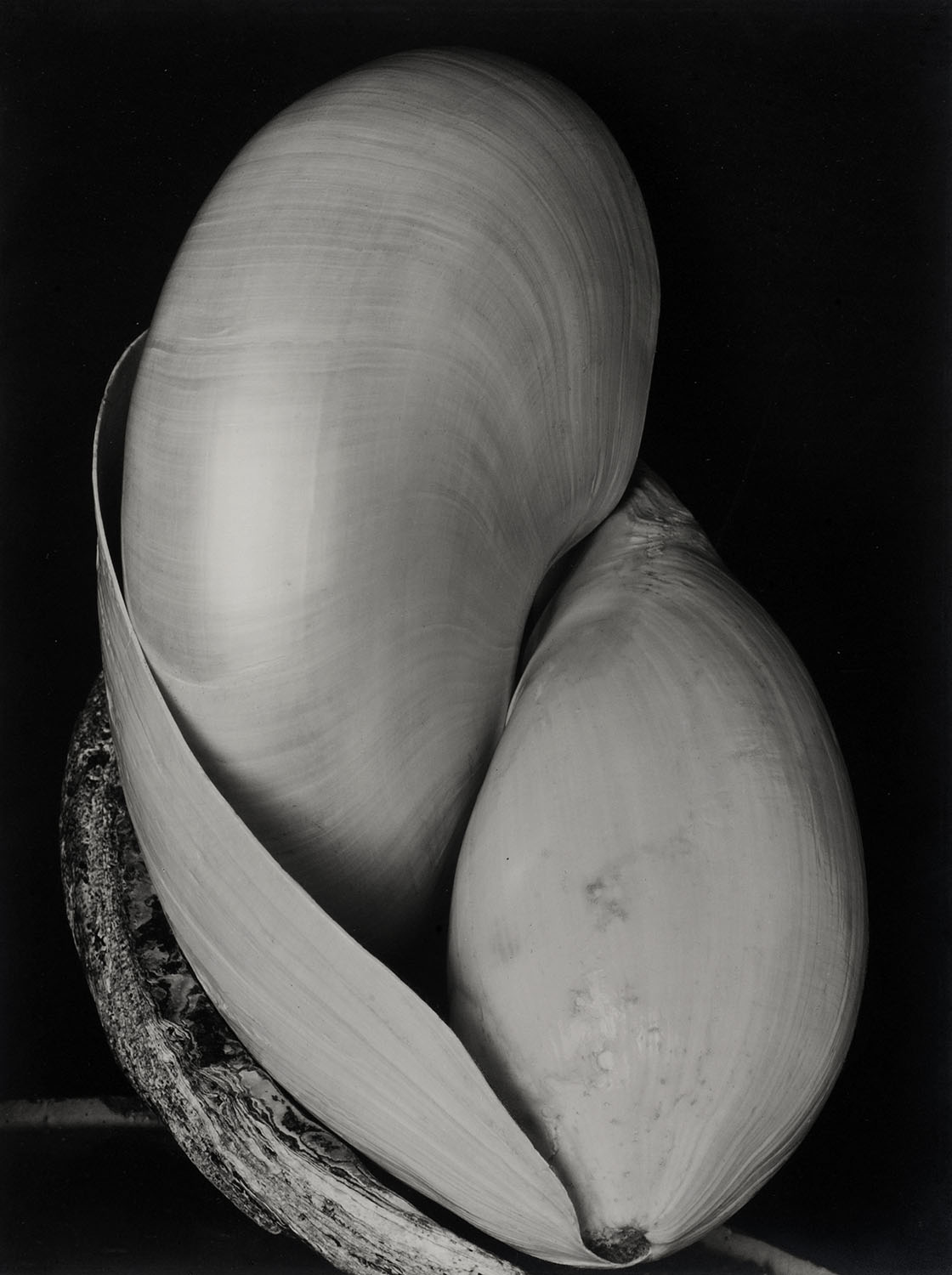
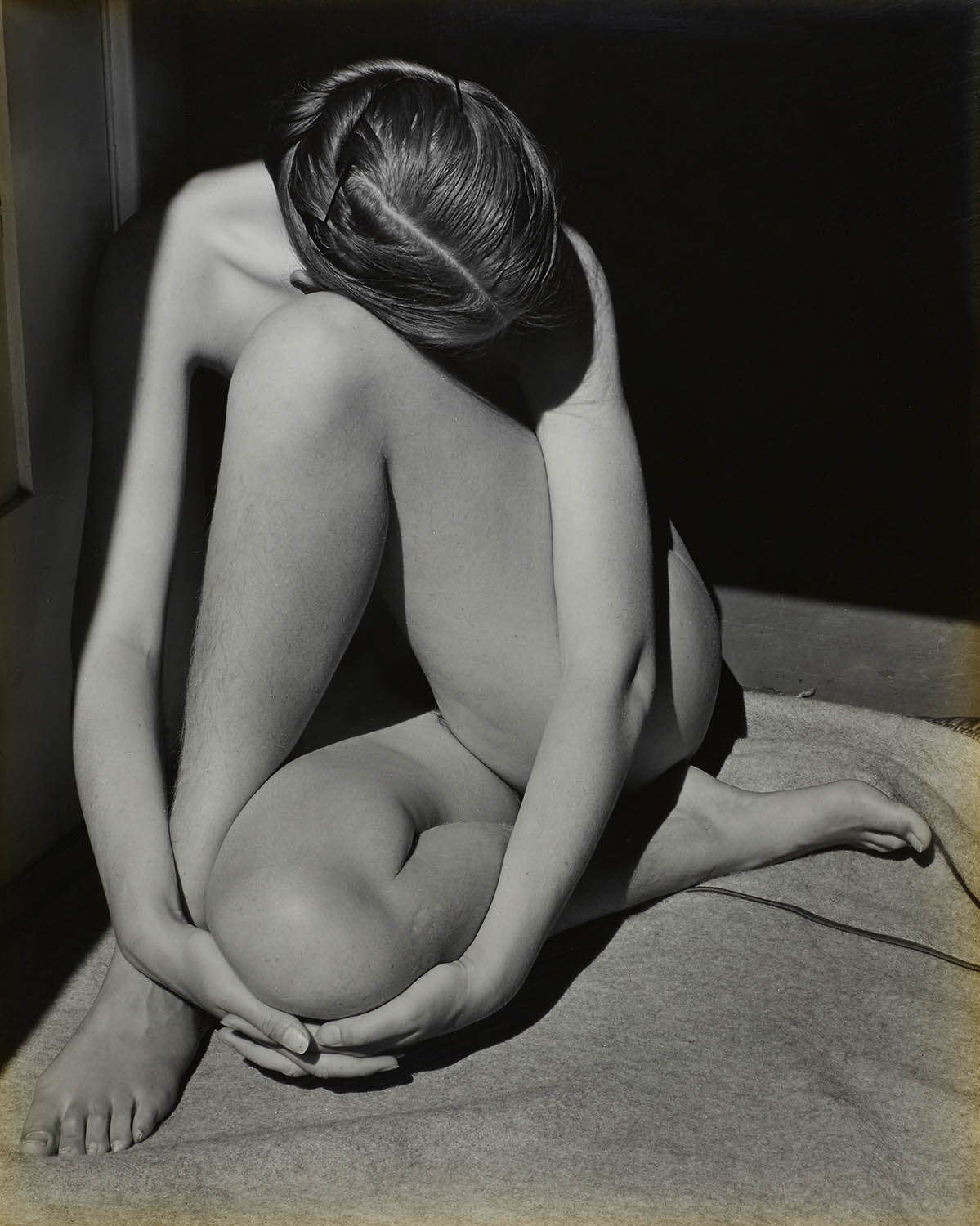
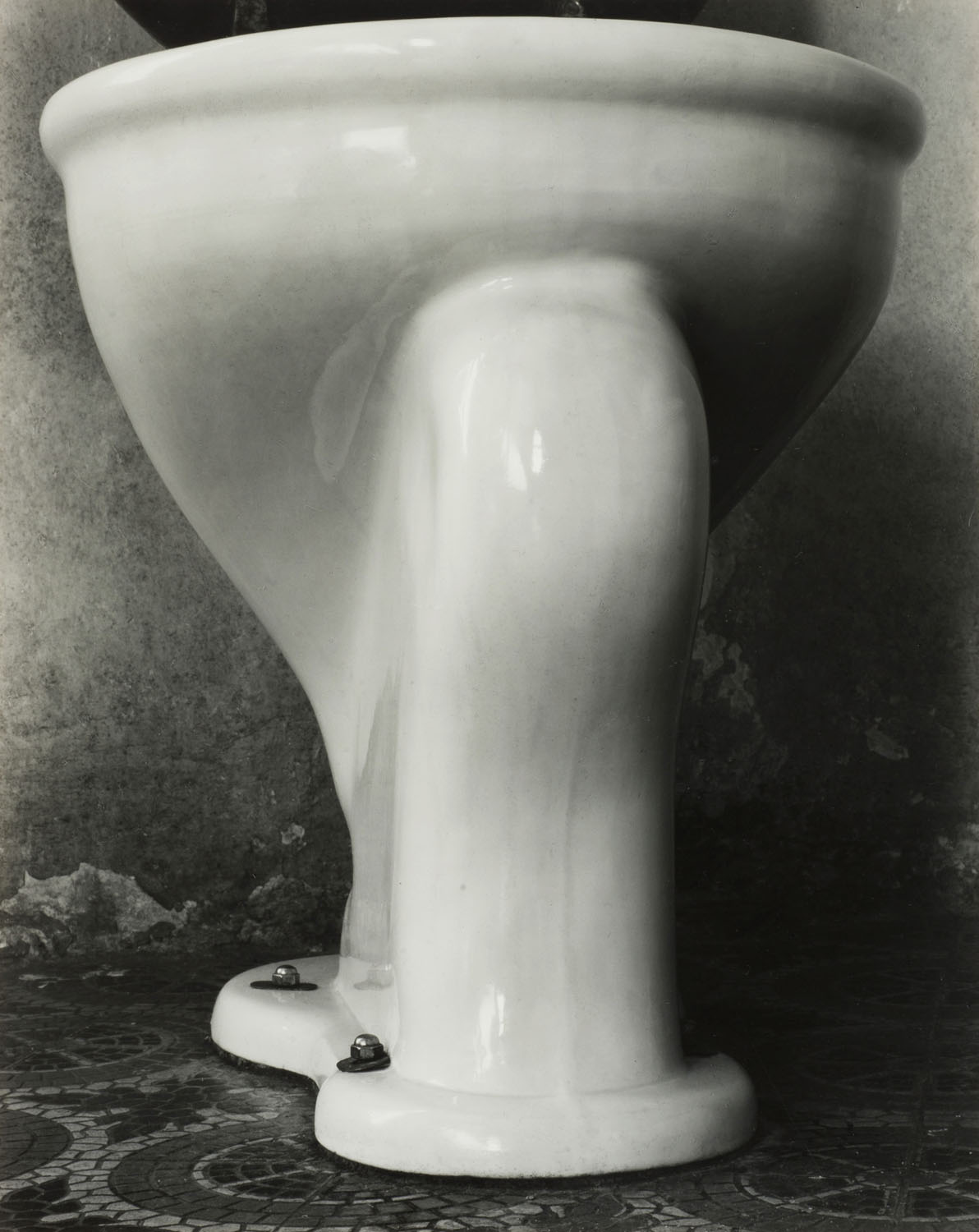
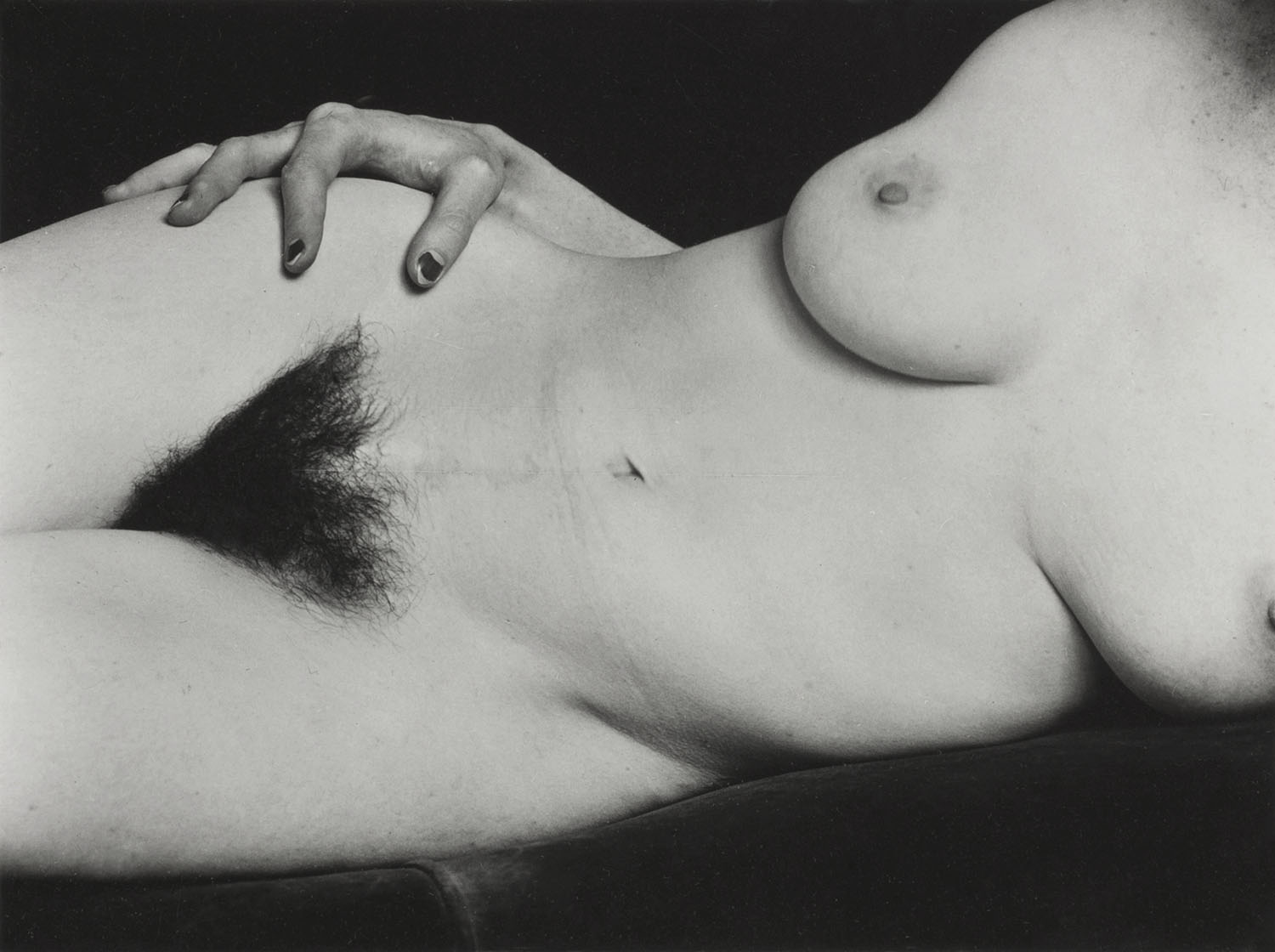
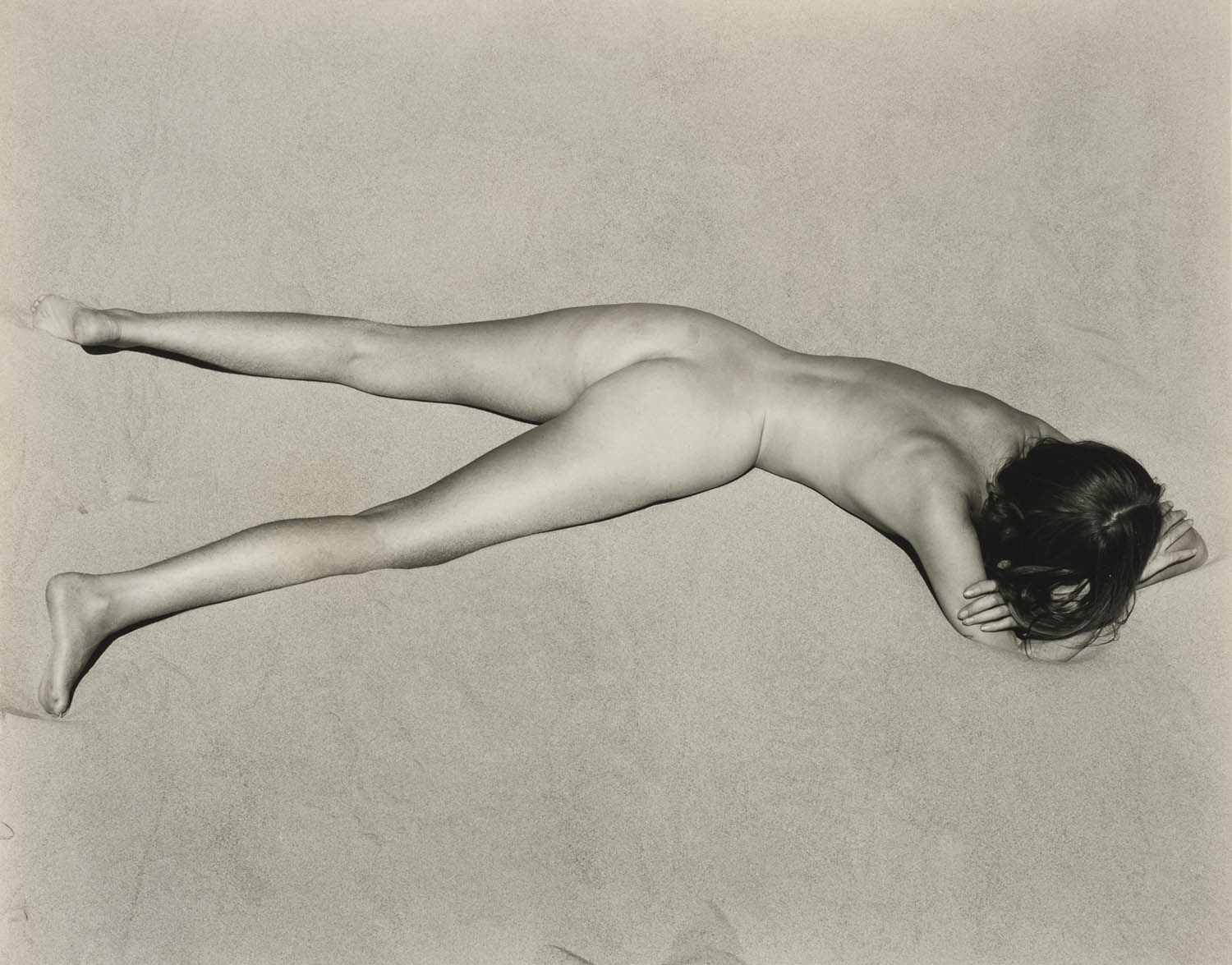
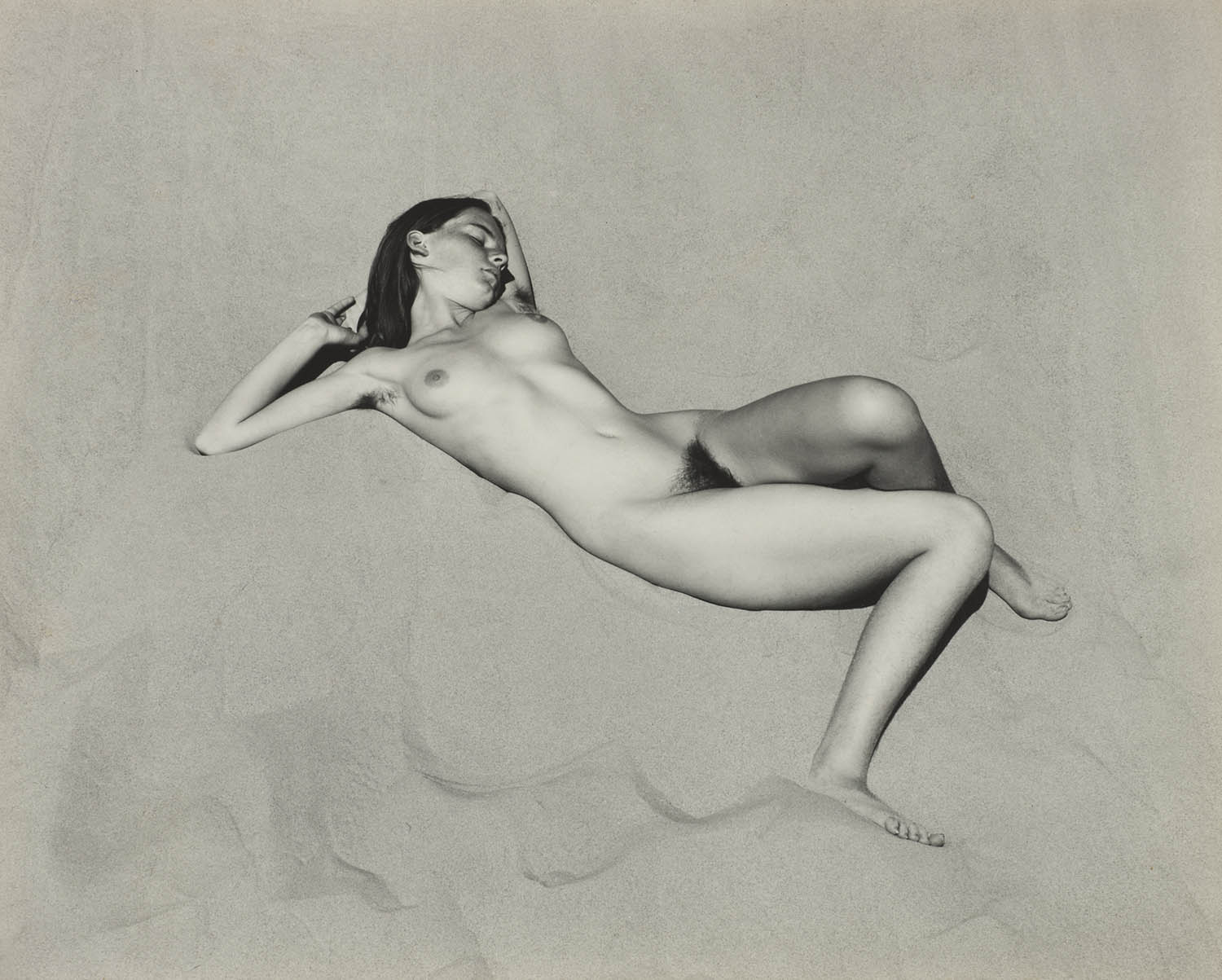
These subjects interact and reflect one another through Weston’s lens. The sinuous curves of a shell echo the lines of a nude; the gleaming porcelain of Excusado (Toilet) (1926) takes on the quiet sensuality of the human body. Shell (1927, above), one of Weston’s most iconic images, exemplifies his singular ability to elevate everyday objects into studies of luminous purity, rendering form, texture, and light with a precision so distilled that they verge on abstraction – not simply photographs of things, but meditations on form itself. During this period, his treatment of the nude also evolved dramatically: the body becomes fragmented and abstracted, its anatomy transformed into sculptural rhythm. This exploration reaches its pinnacle in Charis, Santa Monica (Nude in Doorway) (1936, above), one of Weston’s most celebrated images.
At the heart of the exhibition are many of Weston’s most exceptional works from the late 1920s and 1930s, in which he famously transformed the ordinary into something sensuous and unexpected. In his iconic studies of vegetables – particularly peppers – their curves and folds evoke the flesh and contours of the human torso, recalling both modernist sculpture and the body. Using the camera to express, in his words, “the very substance and the quintessence of the thing itself,” Weston also photographed in close-up what he saw around him: an egg-slicer, the plank from a barley sifter, a gnarled tree.
His portraits from this period grew sharper in focus and more daring in composition, echoing the dynamic perspectives emerging in European Modernist photography. By the late 1920s, after returning to California, his work had begun to appear in major exhibitions linked to the New Objectivity movement, which championed photographic clarity and rejected painterly effects. This evolution is also evident in his treatment of the nude: the body is fragmented and abstracted, its forms studied as sculptural elements.
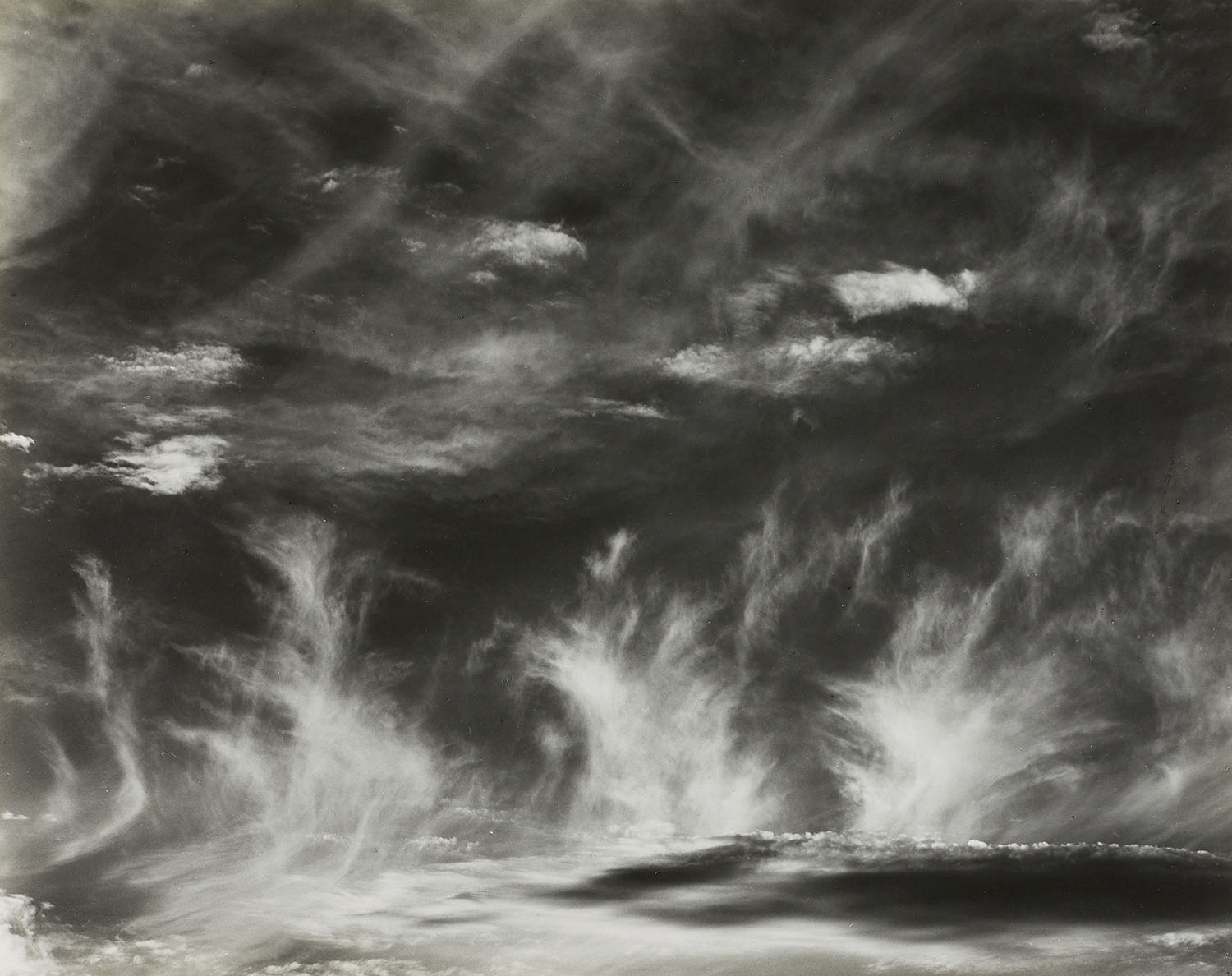
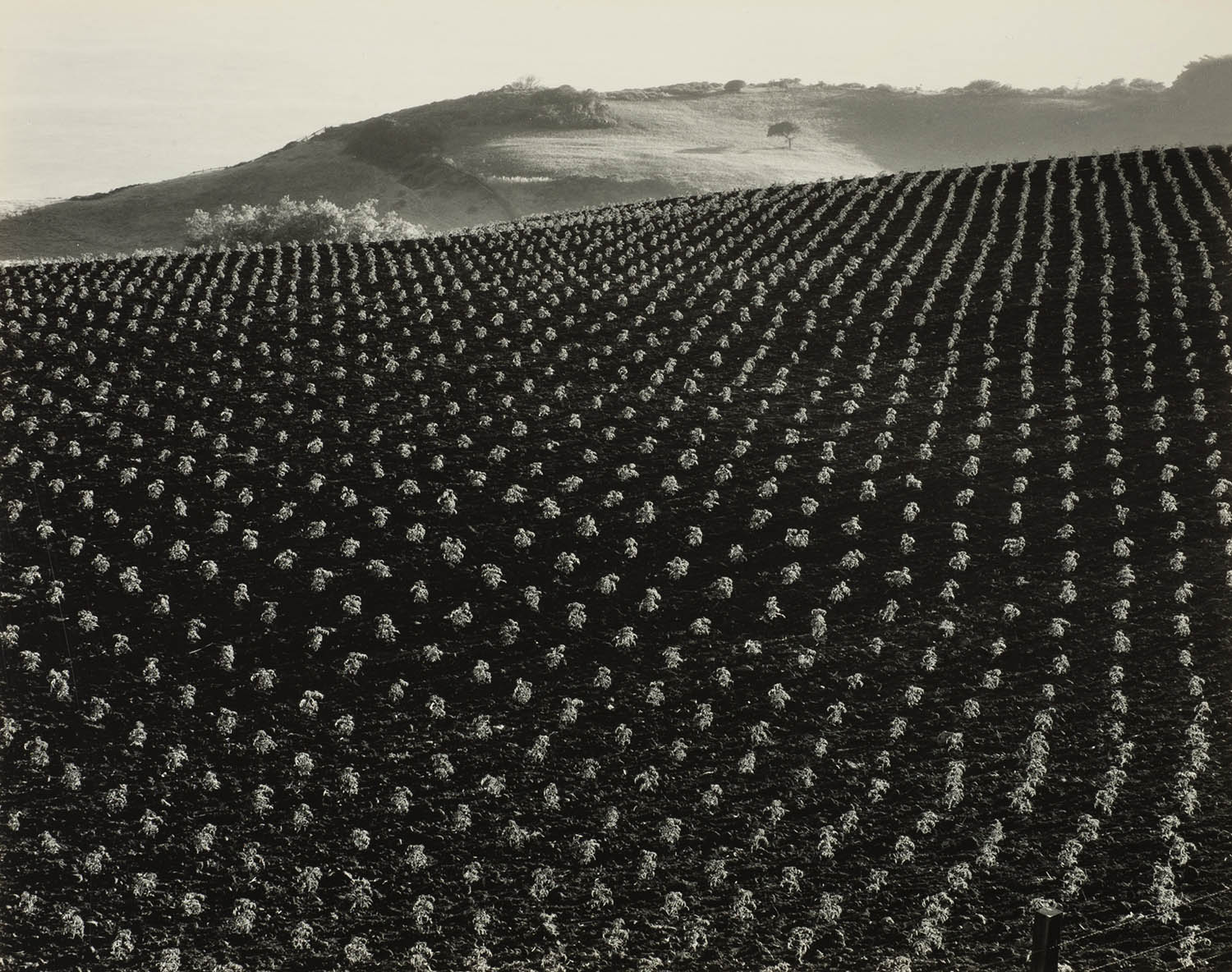
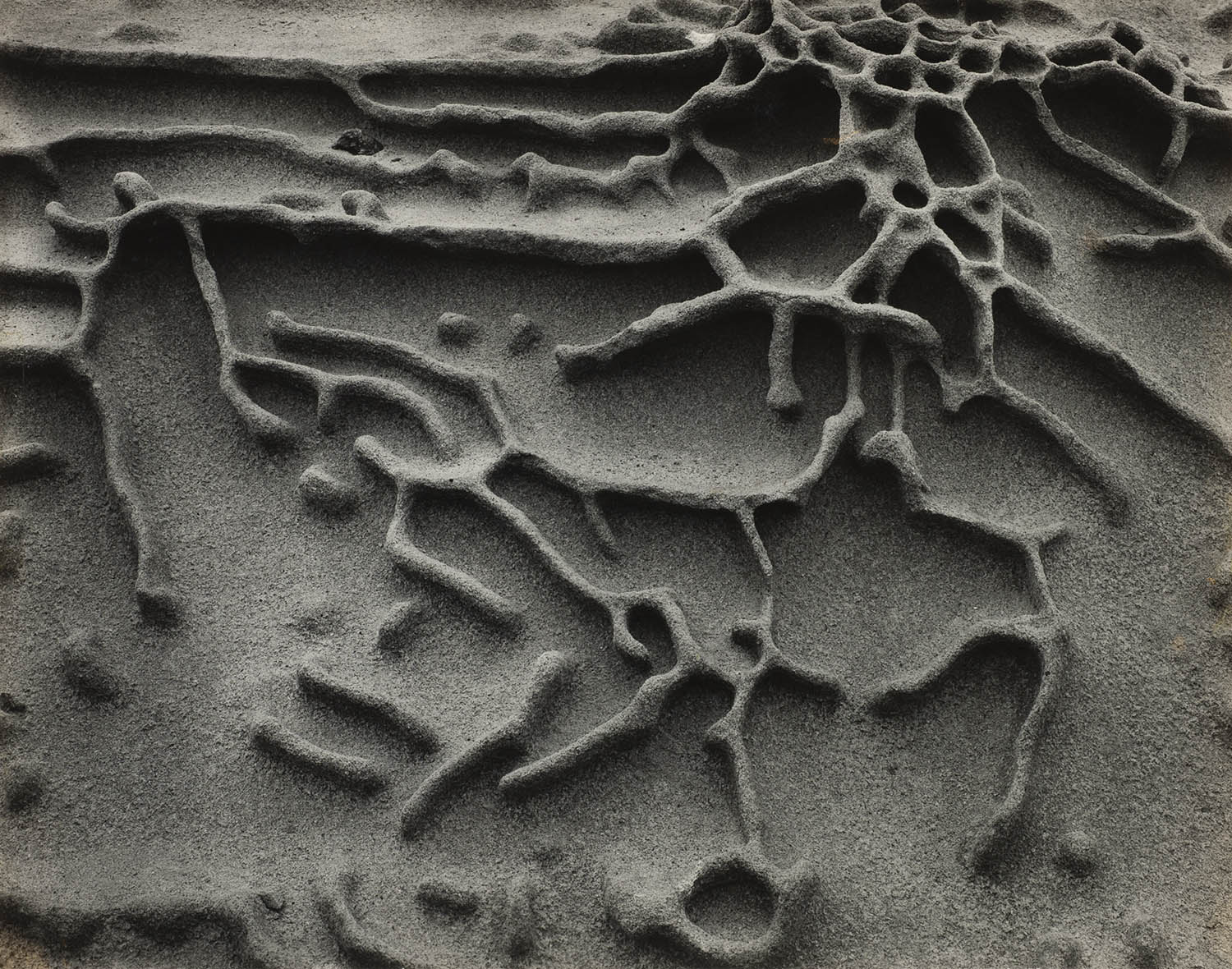
Weston’s practice moved fluidly between subjects, embracing both the human body and the natural world, constantly refining his vision through intense study and formal innovation. Close-up studies of nature – sand patterns, rocks, and wood – verge on abstraction, including Rock Erosion and Sandstone Erosion (Point Lobos) – photographs made along the dramatic California coastline that Weston returned to repeatedly. Jagged rock formations, knotted seaweed, wind-twisted cypress trees, and bleached driftwood became recurring motifs, offering endless opportunities for formal exploration. These works also include a group of powerful portraits, from images of his future wife, Charis Wilson, and her brother Leon, to Weston’s son Brett and daughter-in-law Elinore Stone.
In my humble opinion Diane Arbus is the best portrait photographer of the 20th century.
As can be seen in the quotation from a 1939 high-school essay on Plato when Arbus was just 19 years old (below), latent inside her was an appreciation of difference, uniqueness, and the importance of life – all awaiting an out, an emanation of her spirit later manifested in her photographs through the picturing of her subjects.
Arbus found her mature voice as an artist, her métier if you like, when in 1962 she switched from a 35mm camera to a 2 1/4 inch twin-lens reflex (TLR) Rolleiflex (later a Mamiyaflex), a square format which became her iconic signature.
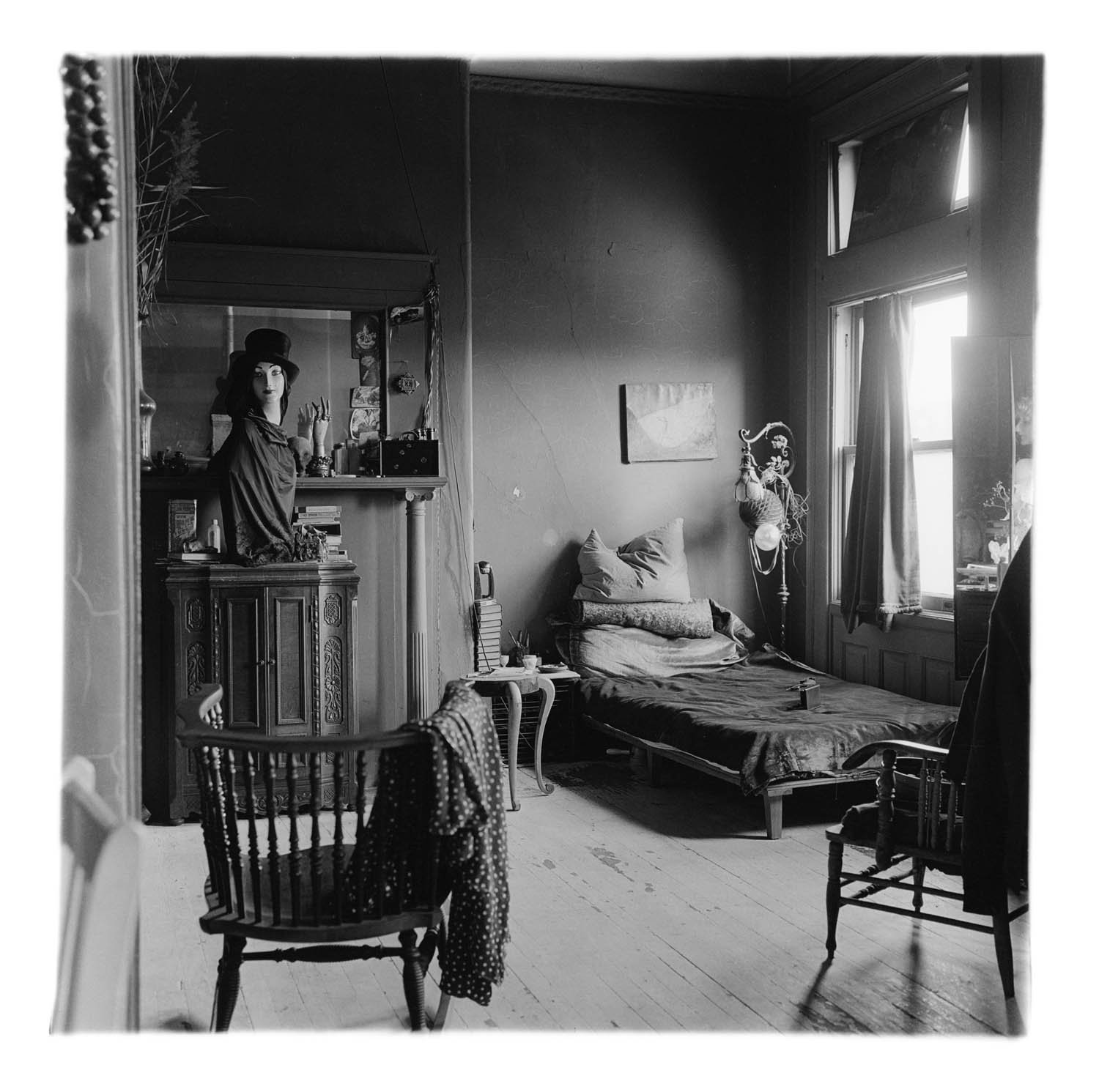
In the photograph Nancy Bellamy’s bedroom, N.Y.C. 1961 (1961, below) we therefore have evidence of the early results of the use of this new camera. In this photograph I believe you can feel how Arbus is still getting used to his new way of seeing the world, for you have to approach your visualisation of the world in a completely different way when constructing the image plane in a square format. Here she is still unsure as to where to place the camera. The light is fantastic coming in through the window and flooding the room but the out of focus left wall is weak and simply does not work with the image.
Fast forward to 1963-1965 and we see Arbus in complete control of her physical and emotional environment. In photographs from this period, whether medium distance portraits showing subjects in situ or tightly cropped portraits with minimal backgrounds, we see her undoubted mastery of natural light, flash, construction and tensioning of the image plane but, above all, in control of the feeling that emanates from the photographs that flows to the viewer.
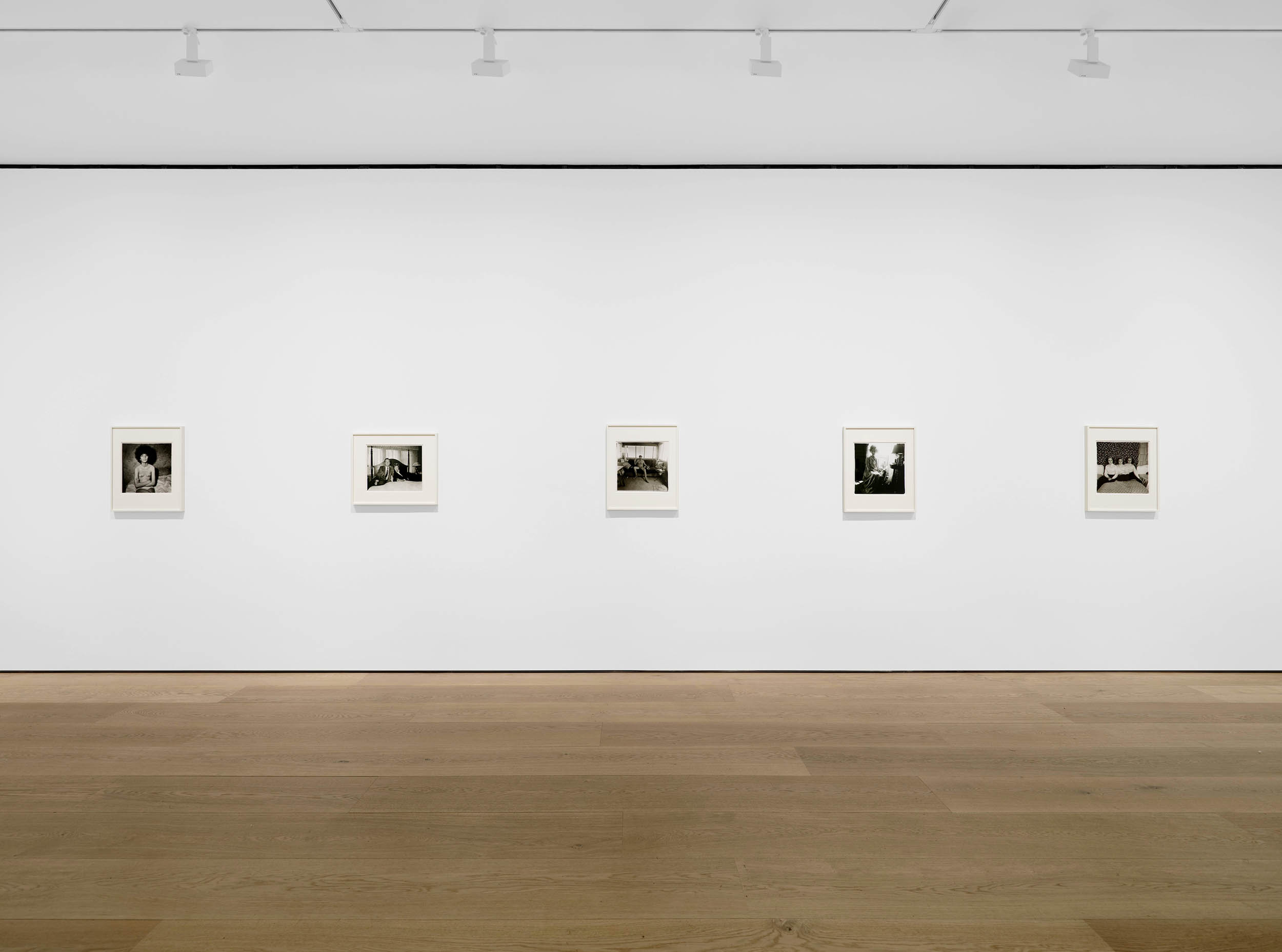
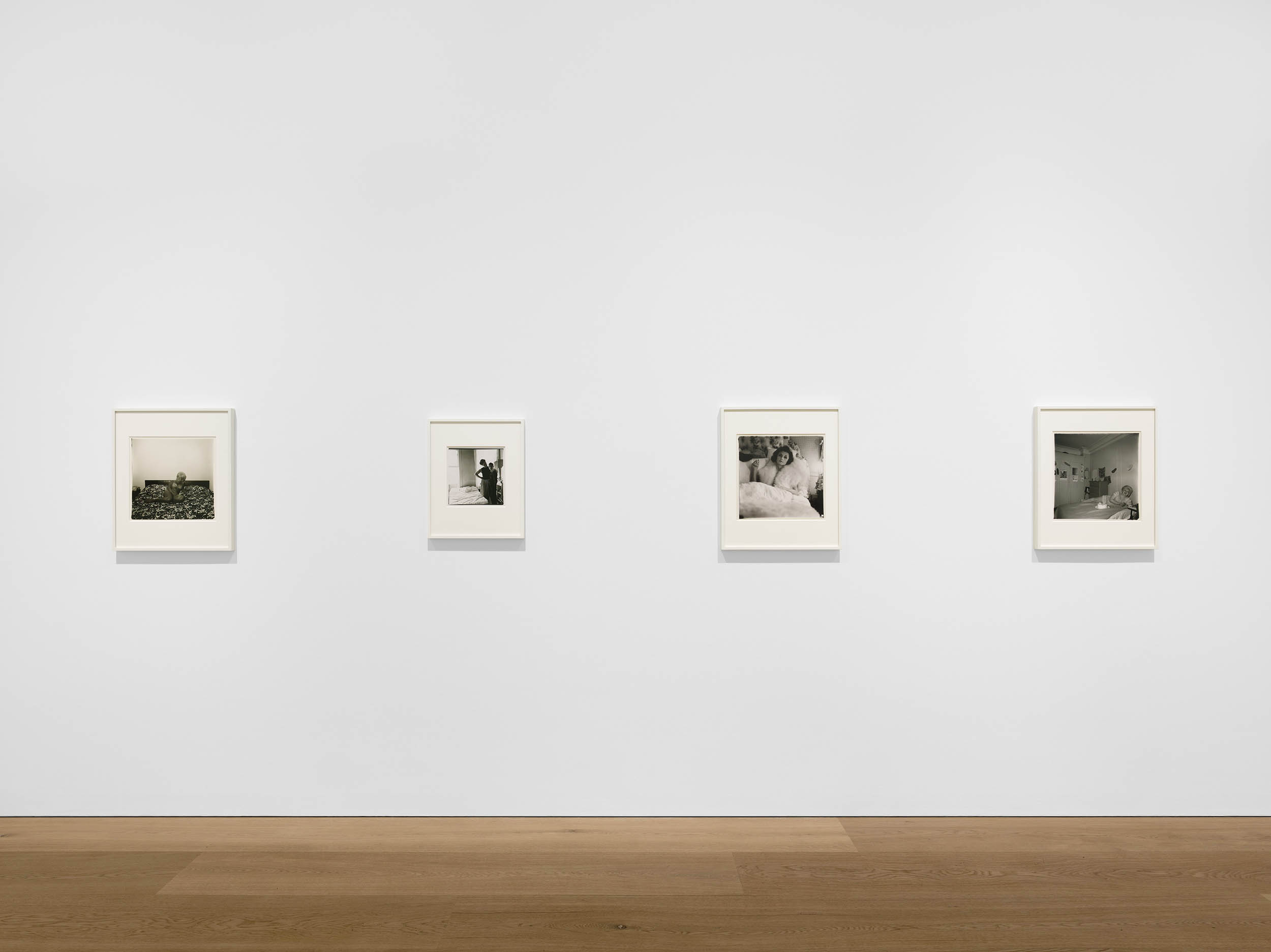
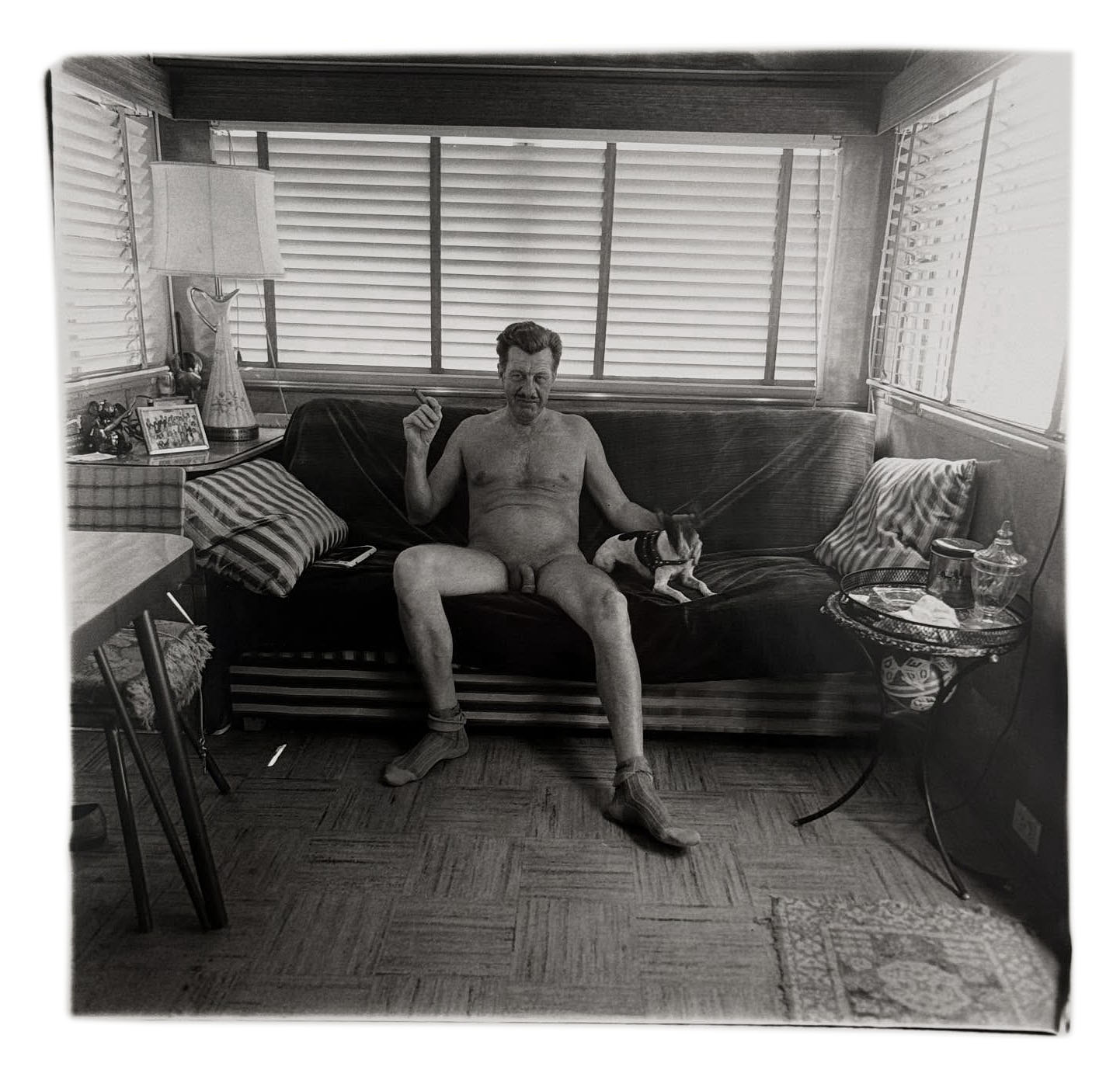
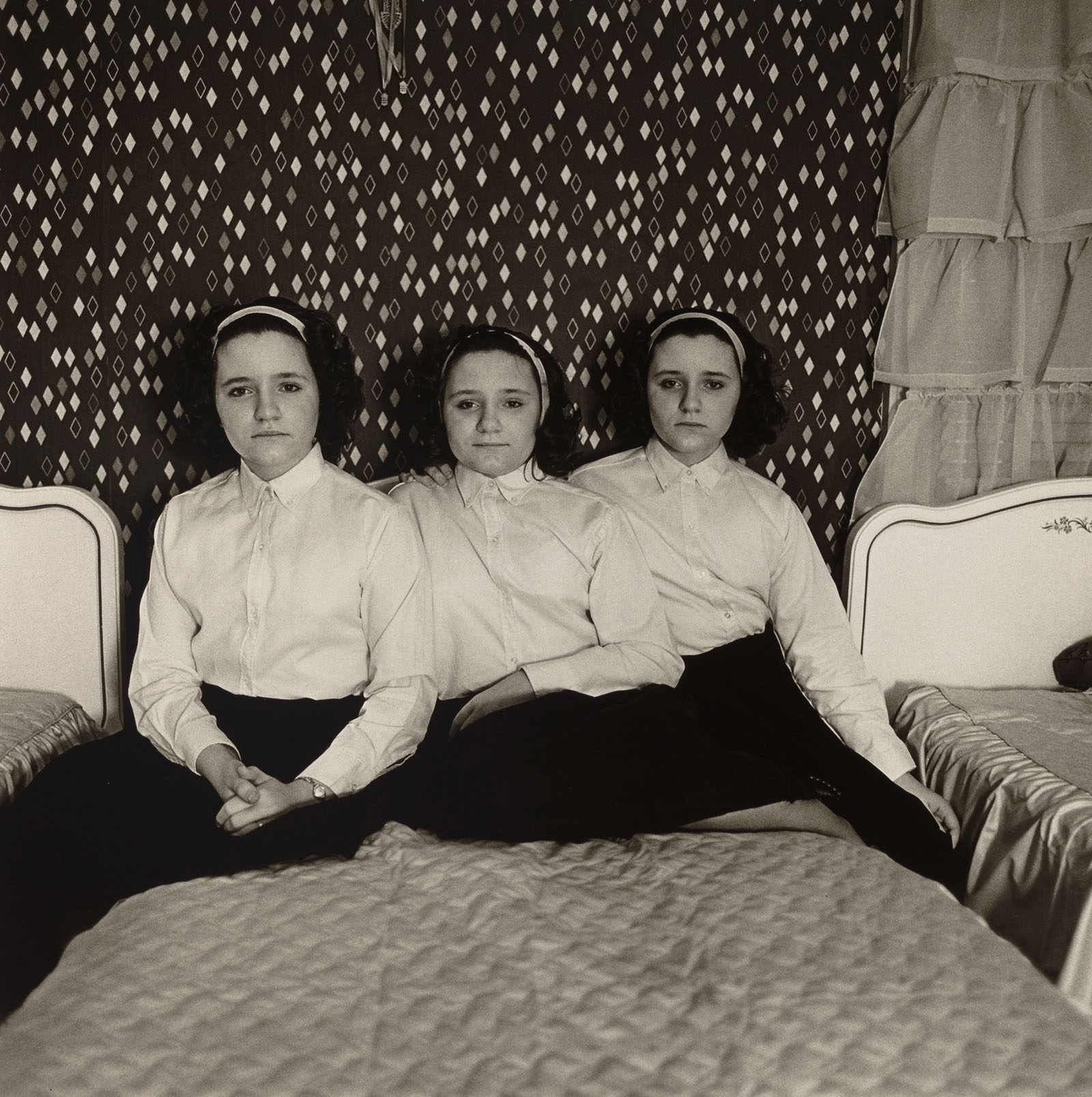
Whether direct / acceptance / this is who I am (Interior decorator at the nudist camp in his trailer, New Jersey, 1963, 1963 below) to contained / introspective (Lucas Samaras, N.Y.C. 1966, 1966 below) – but never the dreaded “dead pan” – and on to the inscrutable / open / closed looks on each of the three faces in the photograph Triplets in their Bedroom, N.J., 1963 (1963, below), Arbus is the master at conjuring, no what is the word I’m looking for … Arbus is the master at materialising the energy of a person or place before our very eyes.
As the press release so eloquently states, “Through her singular combination of intelligence, charisma, intuition, and courage, Diane Arbus was frequently invited into homes and other private realms seldom seen by strangers. Though made in intimate settings, her photographs evidence no sense of intrusion or trespass. Instead, they reveal an unspoken exchange between photographer and subject, a moment of recognition in which confidences emerge freely and without judgment.”
An unspoken exchange between photographer and subject. A moment of revelation, or revelatio, where the curtain is pulled back to reveal our innermost secrets. Visualised by Arbus without judgement.
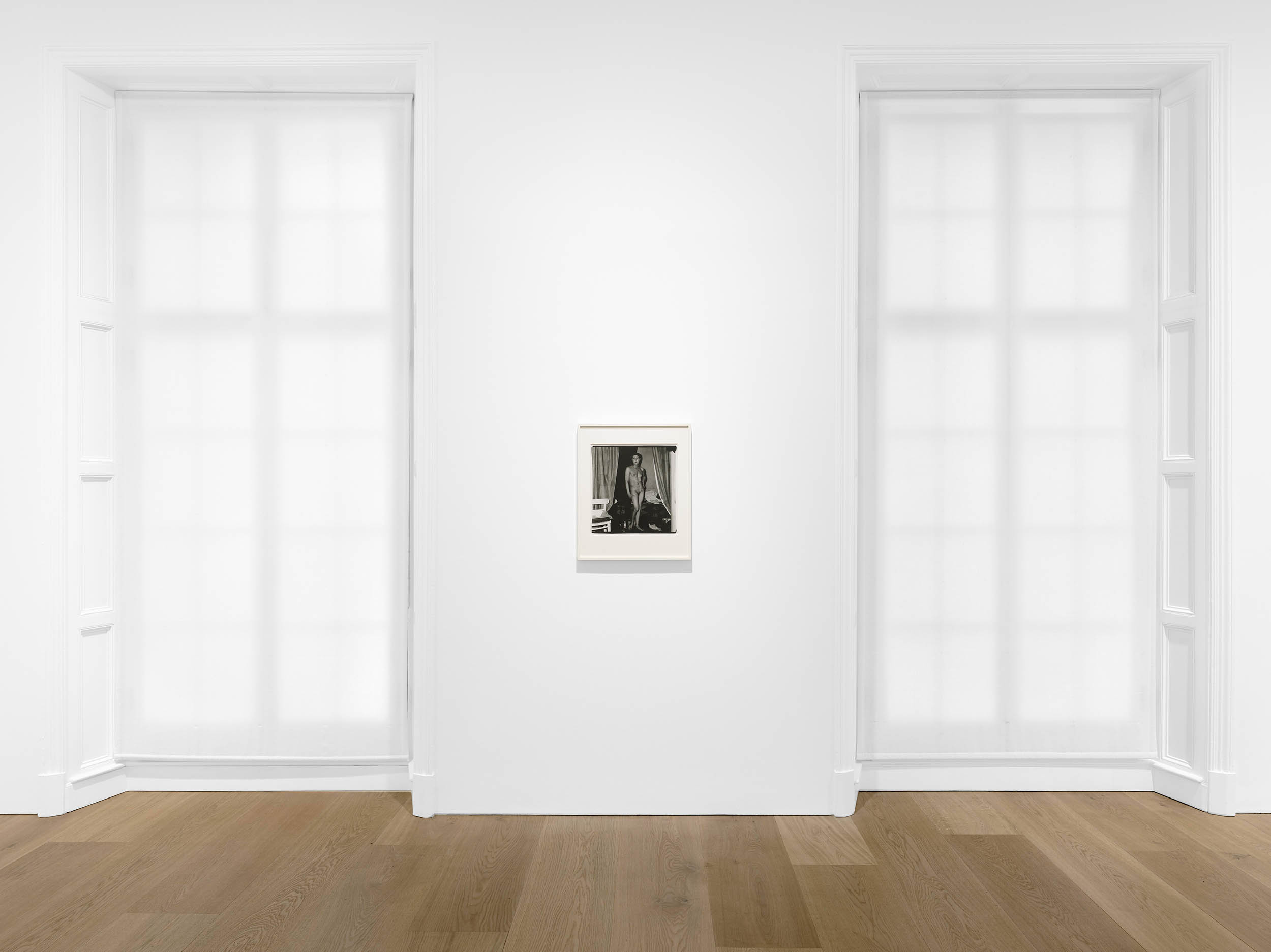
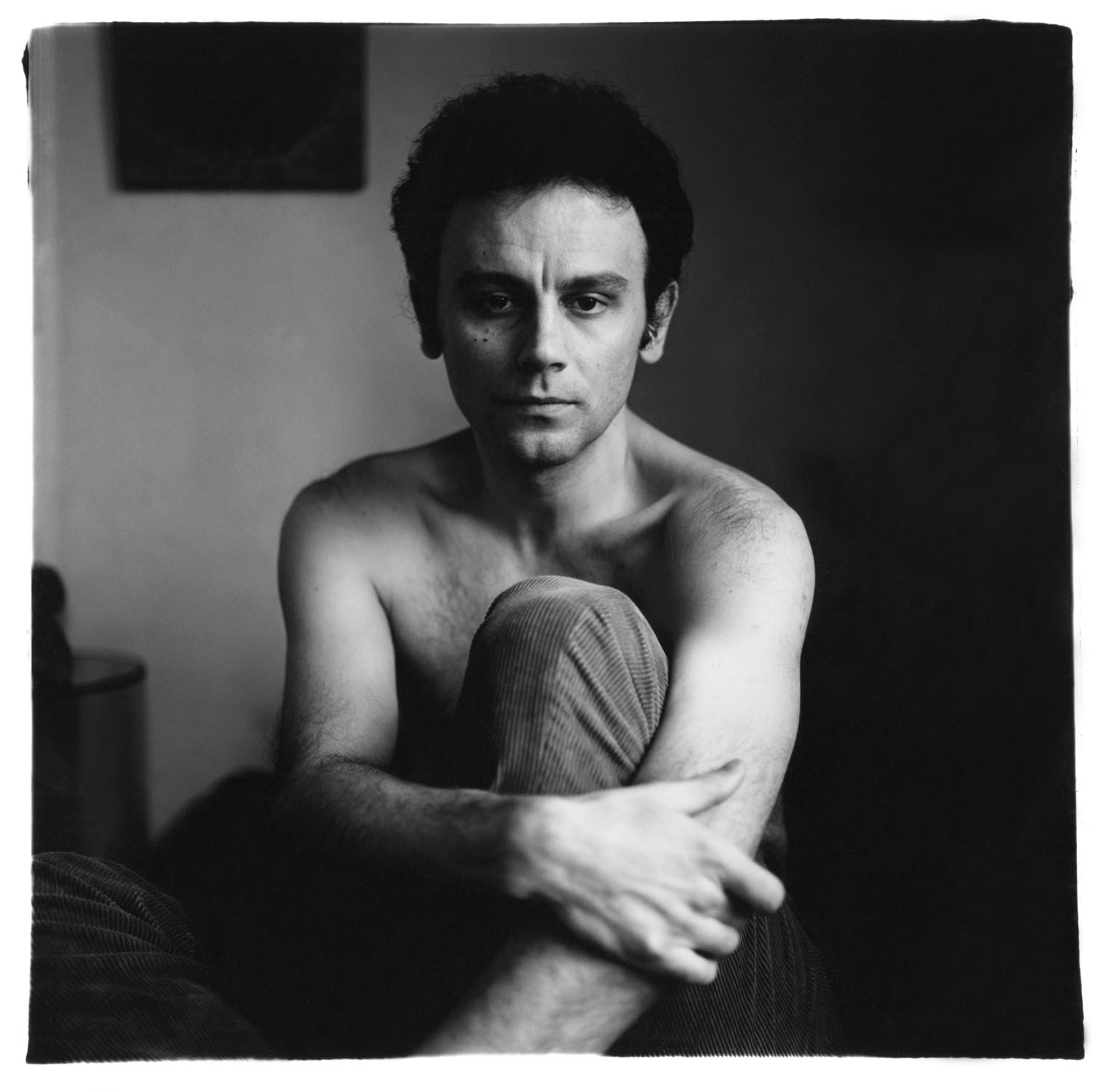
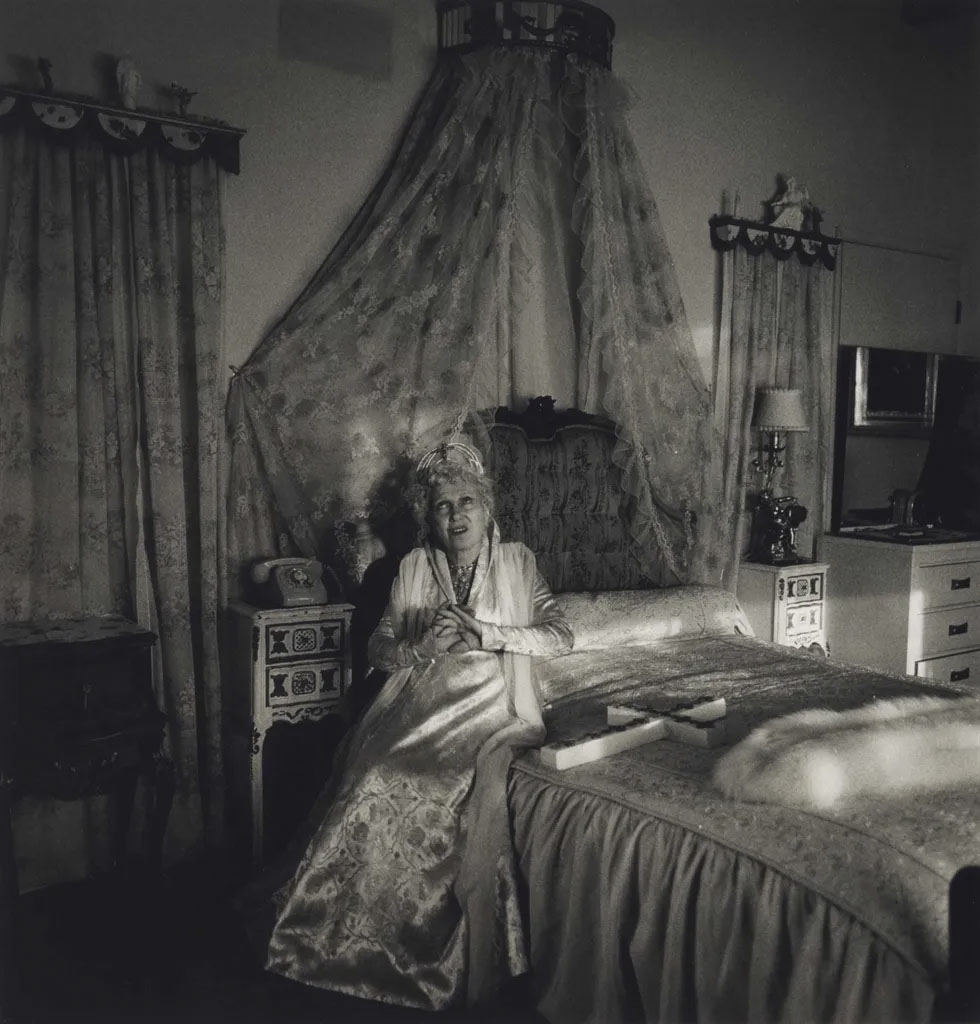
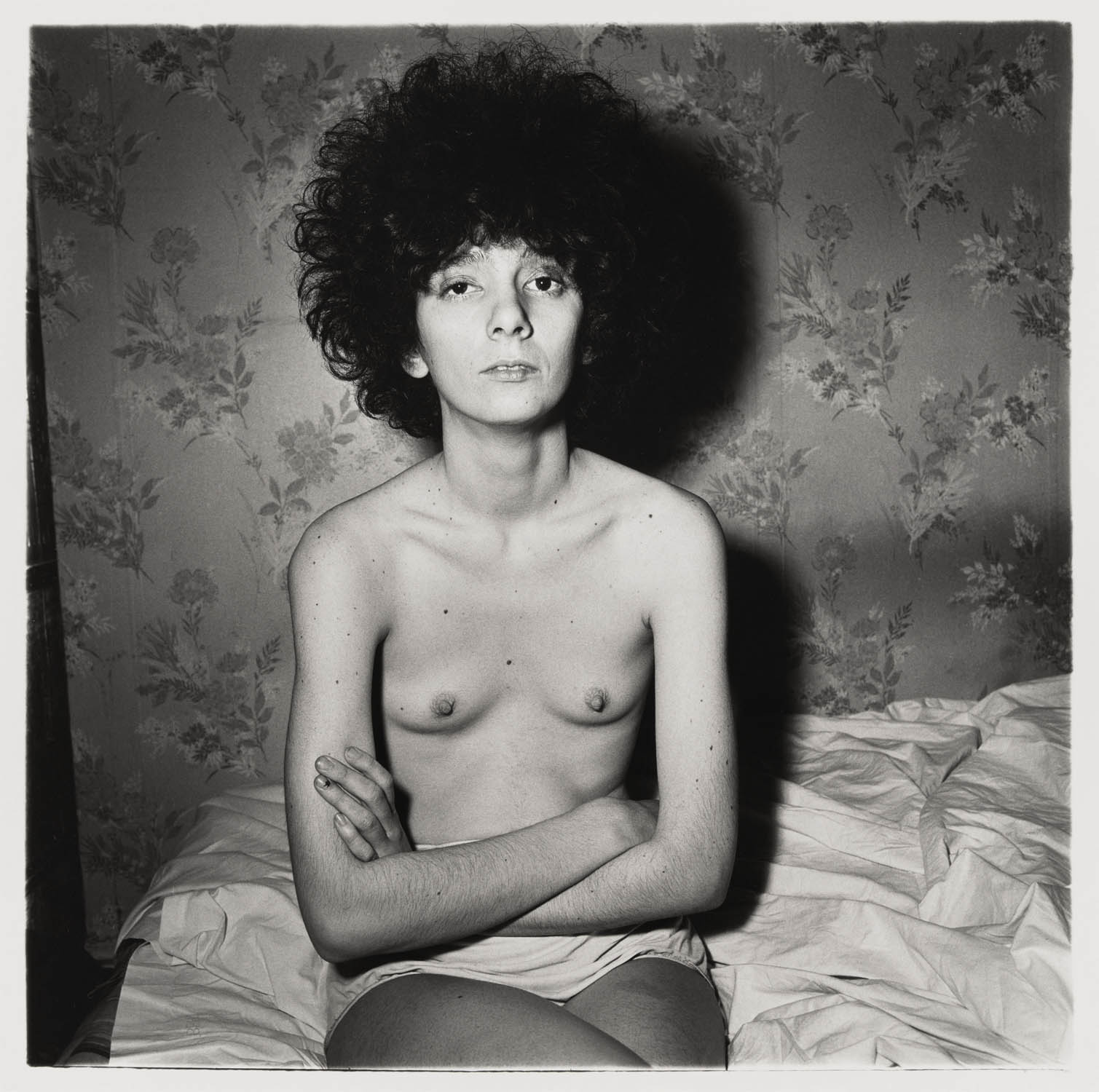
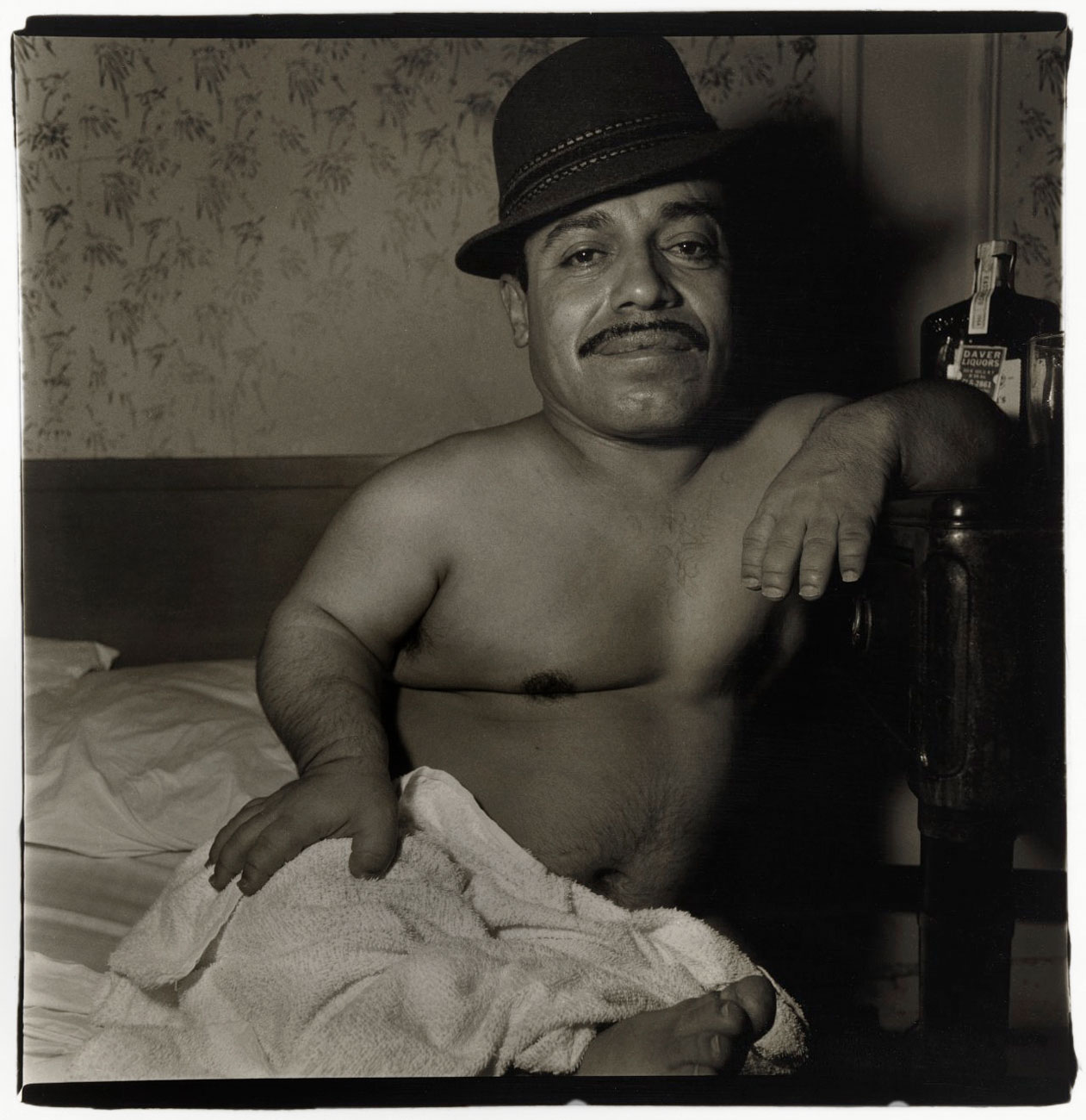
As the years progress towards 1968-1970 Arbus becomes bolder still. In photographs such as A naked man being a woman, N.Y.C., 1968 (1968, below), Girl sitting on her bed with her shirt off, N.Y.C., 1968 (1968, below) and Mexican Dwarf in his hotel room, N.YC., 1970 (1970, below) we see and feel such an intimate bond between the photographer and the subject – all crap cut out, all extraneous noise gone, just the baring of the soul of the sitter looking directly into the camera. As Minor White used to say, a communication / communion between the photographer and the subject, back through the lens of the camera and onto the film, forming a Zenian circle of energy, hoping for a revelation of spirit in the negative and subsequent print – whether that be from a rock, a landscape or a portrait.
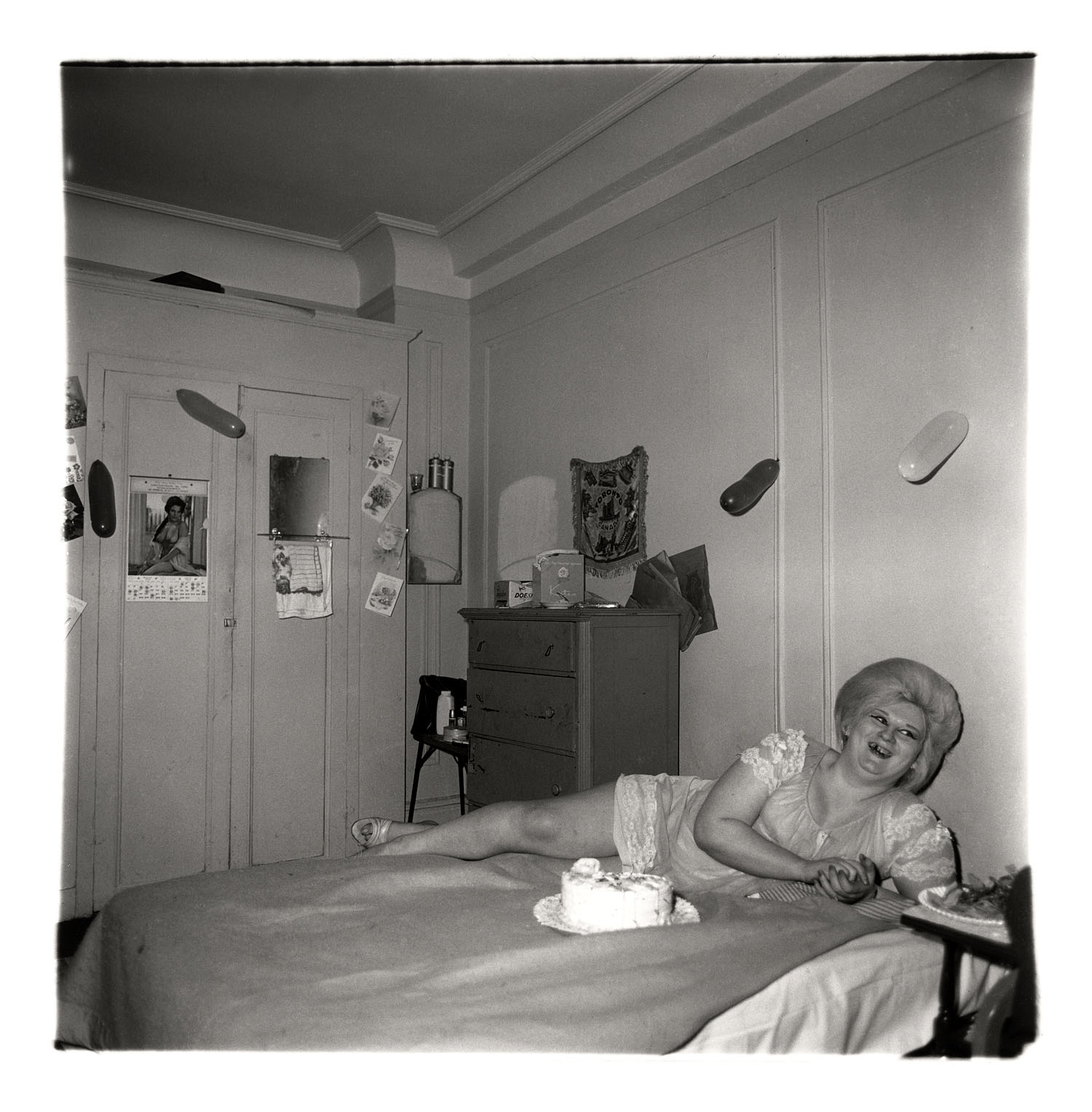
And in two photographs from the same sitting, we can begin to understand how Arbus achieved her aim. In the photograph Transvestite at the birthday party, N.Y.C. 1969 (1969, below) we have the subject in situ, in context, laughing, happy, enjoying her birthday party surrounded by her things. Then things change. In Transvestite with her birthday cake, N.Y.C. 1969 (1969, below) Arbus closes in on this wonderful human being on her bed with her birthday cake. Isolating her from the background through the use of flash, there she is, fag in hand, staring directly into the camera in all her strength and vulnerability. Arbus evinces what it is to be this human being, she has empathy for the subject in these intimate settings.
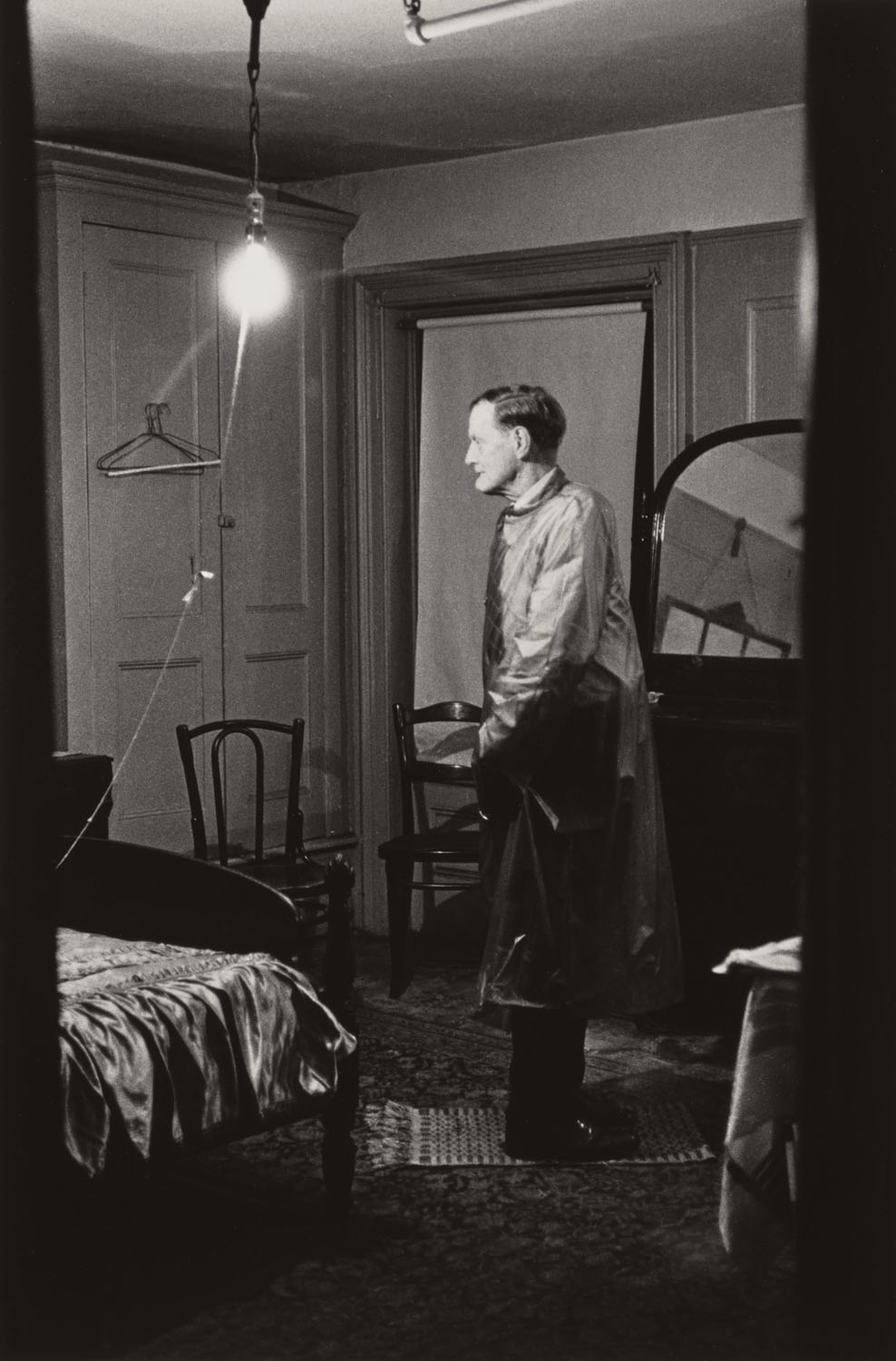
I believe that Arbus’ empathy for her subjects was greatly enhanced by the waist level engagement with her sitters when using her medium format camera. Instead of bringing the camera up to the eye, Arbus looks down into the viewfinder to locate and ground the energy of her subjects, and the camera is nestled at solar plexus / belly button, with all the connection to mother, blood, energy and water (Amniotic Fluid) from which we all come. When singing and in yoga practice, breathing comes from the stomach and the energy flows in an out of the navel, the Manipura (solar plexus) in yoga, linked to personal power, emotional balance, and metabolism, acting as a hub for energy distribution.1 Having used an old Mamiya twin-lens C220 medium format camera myself I can totally appreciate the unique perspective and energy such a camera position brings to picturing the world.
“These archetypal images have become deeply embedded in the collective conscience where conscience is pre-eminently the organ of sentiments and representations. The snap, snap, snap of the shutter evinces the flaws of human nature, reveals the presence of a quality or feeling to which we can all relate. As Arbus states, the subject of the picture is always more important than the picture. And more complicated. That is why these photographs always capture our attention – because we become, we inhabit, we are the subject.”2
Dr Marcus Bunyan
1/ The (navel) is seen as a powerful energy centre in many traditions (Yoga, Ayurveda, TCM) and science, representing our origin, core strength, digestion (Agni/digestive fire), self-esteem, and life force (prana).
2/ Marcus Bunyan commenting on the exhibition Diane Arbus at Jeu de Paume, Paris, October 2011 – February 2012
Many thankx to David Zwirner for allowing me to publish the 5 images and installation photographs in the posting. All other photographs are used under fair use conditions for the purposes of eduction and research. Please click on the photographs for a larger version of the image.
“For me the subject of the picture is always more important than the picture. And more complicated.”
Diane Arbus
“There are and have been and will be an infinite number of things on earth: individuals all different, all wanting different things, all knowing different things, all loving different things, all looking different. Everything that has been on earth has been different from any other thing. That is what I love: the differentness, the uniqueness of all things and the importance of life…. I see something that seems wonderful; I see the divineness in ordinary things.”
Used under fair use conditions for the purposes of education and research
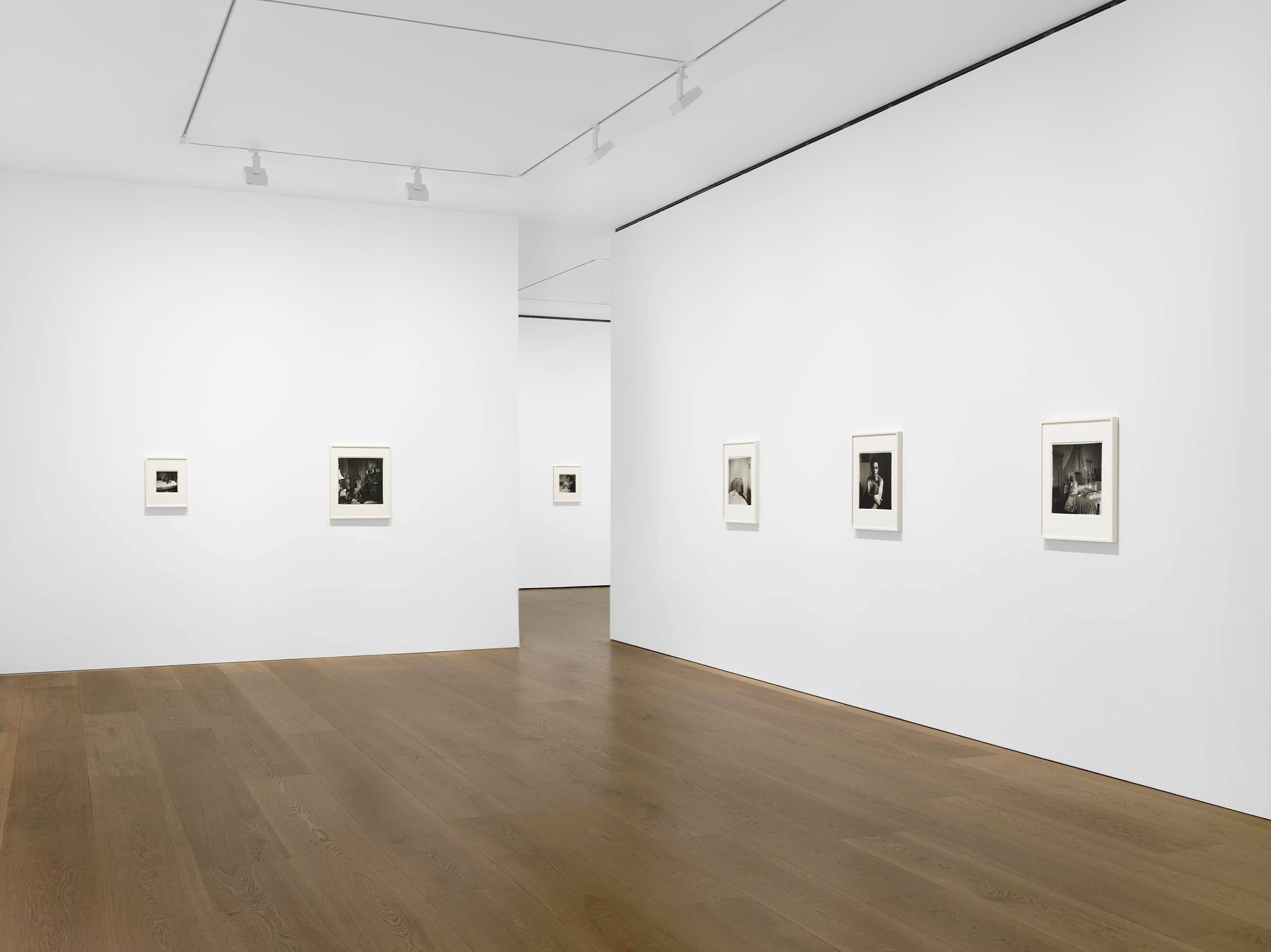
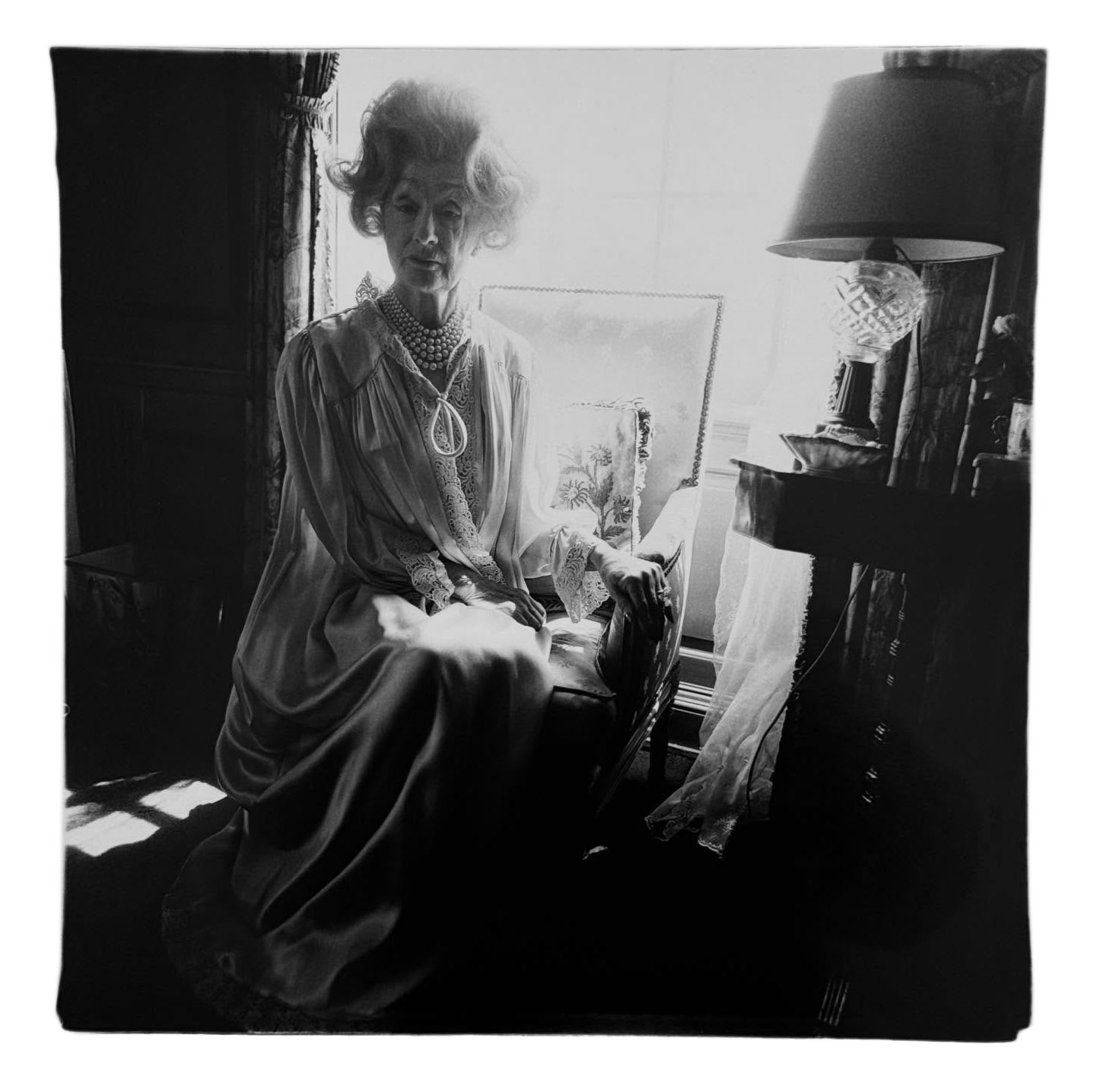
Installation view of the exhibition Diane Arbus: Sanctum Sanctorum at David Zwirner, London showing at left, Arbus’ Girl sitting on her bed with her shirt off, N.Y.C., 1968; at centre, Interior decorator at the nudist camp in his trailer, New Jersey 1963; at second right, Mrs. T. Charlton Henry in a negligee, Philadelphia, Pa. 1965; and at right, Triplets in their Bedroom, N.J., 1963
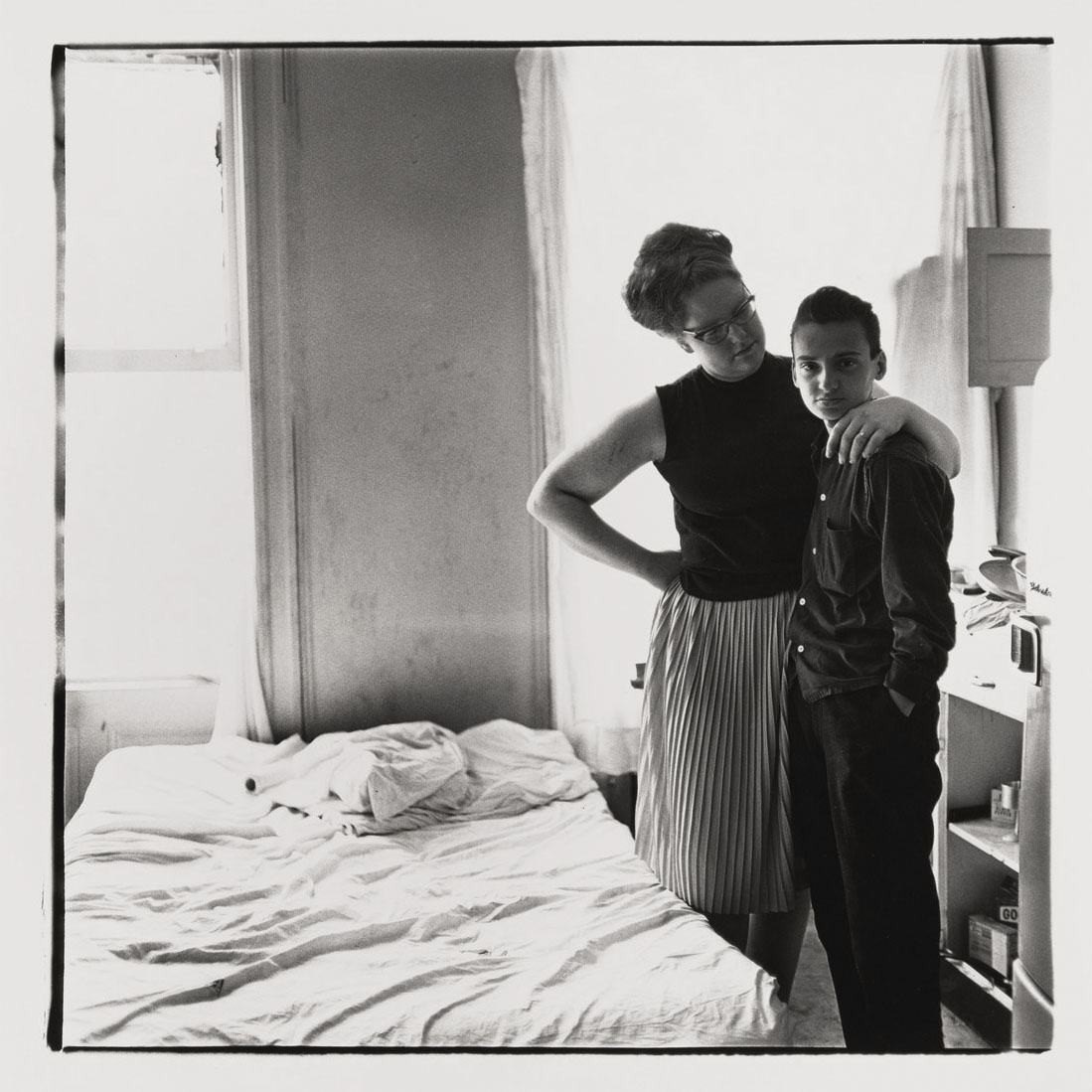
Installation view of the exhibition Diane Arbus: Sanctum Sanctorum at David Zwirner, London showing at second left, Arbus’ Two friends at home, N.Y.C., 1965; at second right, Brenda Diana Duff Frazier, 1938 Debutante of the Year, at home, Boston, Mass. 1966; and at right, Transvestite at her birthday party, N.Y.C., 1968
Installation view of the exhibition Diane Arbus: Sanctum Sanctorum at David Zwirner, London showing Arbus’ photograph A naked man being a woman, N.Y.C. 1968
Installation view of the exhibition Diane Arbus: Sanctum Sanctorum at David Zwirner, London showing in the centre distance, Arbus’ Mexican dwarf in his hotel room, N.Y.C. 1970; at second right, Lucas Samaras, N.Y.C. 1966; and at right, Bishop on her bed, Santa Barbara, Cal., 1964
Lucas Samaras (Greek: Λουκάς Σαμαράς; September 14, 1936 – March 7, 2024) was a Greek-born American photographer, sculptor, and painter. …
His “Auto-Interviews” were a series of text works that were “self-investigatory” interviews. The primary subject of his photographic work is his own self-image, generally distorted and mutilated. He worked with multi-media collages, and by manipulating the wet dyes in Polaroid photographic film to create what he calls “Photo-Transformations”.
~ Sanctum Sanctorum: a sacred room or inner chamber; a place of inviolable privacy
Diane Arbus: Sanctum Sanctorum, an exhibition of forty-five photographs made in private places across New York, New Jersey, California, and London between 1961 and 1971, is on view at David Zwirner, London, from 6 November to 17 January 2025, and travels to Fraenkel Gallery, San Francisco in spring 2026. The exhibition will be accompanied by a comprehensive monograph reproducing all works in the exhibition, jointly published by both galleries.
Through her singular combination of intelligence, charisma, intuition, and courage, Diane Arbus was frequently invited into homes and other private realms seldom seen by strangers. Though made in intimate settings, her photographs evidence no sense of intrusion or trespass. Instead, they reveal an unspoken exchange between photographer and subject, a moment of recognition in which confidences emerge freely and without judgment.
Arbus’s desire to know people embraced a vast spectrum of humanity. Her subjects in Sanctum Sanctorum include debutantes, nudists, celebrities, aspiring celebrities, socialites, transvestites, babies, widows, circus performers, lovers, female impersonators, and a blind couple in their bedroom.
The exhibition brings together little-known works, such as Girl sitting in bed with her boyfriend, N.Y.C. 1966; Ozzie and Harriet Nelson on their bed, Los Angeles1970; and Interior decorator at the nudist camp in his trailer, New Jersey 1963, alongside celebrated images like Mexican dwarf in his hotel room, N.Y.C. 1970 and A naked man being a woman, N.Y.C. 1968.
While many of Arbus’s photographs have become part of the public’s collective consciousness since her landmark retrospective at The Museum of Modern Art, New York, in 1972, seen in this context, viewers may discover aspects of even familiar works that have previously gone unnoticed.
Sanctum Sanctorum follows two recent major exhibitions of the artist’s work: Cataclysm: The 1972 Diane Arbus Retrospective Revisited at David Zwirner New York (2022) and Los Angeles (2025), and Diane Arbus: Constellation at LUMA, Arles (2023–2024) and the Park Avenue Armory, New York (2025).
Exhibition Catalogue
This new title ‘Sanctum Sanctorum’ illuminates Diane Arbus’s singular ability to enter private worlds.
Used under fair use conditions for the purposes of education and research.
One of Arbus’s lesser known pictures, this photograph is of the bedroom of Nancy Bellamy, the wife of Richard Bellamy, a leading gallerist in 1960s New York who influentially championed Pop Art and Minimalism. Before she began her personal projects, Arbus worked in fashion photography with her husband, Allan, and she first met Nancy when she modelled for the Arbuses on a fashion shoot. As well as modelling, Bellamy also worked as a dancer, painter and costume designer, and had a keen interest in spiritualism. Like ‘Xmas Tree in a Living Room in Levittown 1963’, Arbus uses an empty room to create a portrait of the person – the dressmaker’s dummy, the canvas on the wall, the photographs by the mirror and the simple, yet elegant furnishings together create an impression of Arbus’s friend’s personality.
Used under fair use conditions for the purposes of education and research.
The bishop in Diane Arbus’s photograph “Bishop on her bed, Santa Barbara, Cal.” (1964, above) was Bishop Ethel Predonzan, a unique figure who believed she was in Santa Barbara to await the Second Coming of Christ and wore elaborate robes, described by Arbus as a “small lady in damask robes with hair of phosphorescent pink”.
Predonzan was a key subject in Arbus’s exploration of individuals on the fringes, showcasing the artist’s ability to find deep personal connection and reveal inner strangeness.
Used under fair use conditions for the purposes of education and research.
Mrs T. Charlton Henry was a Philadelphia socialite, a philanthropist, and a fashion icon – often top of the ‘best-dressed’ lists. She was the kind of wealthy upper-class woman that Arbus’s father would have hoped to see in his Fifth Avenue department store buying the latest furs.
“Mrs. Henry, born Julia Rush Biddle of Philadelphia’s Main Line, weighs approximately 88 pounds. She will be 82 years old this month. She has been on the best-dressed list so often that she is now a member of fashion’s Hall of Fame. She still lives in Philadelphia, but commutes to New York for luncheon, shopping, theater. She sits, with the posture of another era, on a bound-to-be-seen banquette at La Caravelle restaurant and delves into a curry (“I’ll have jellied soup for dinner tonight”). Her silver and gold “57 varieties” hair is meticulously coifed; the fingernails that blow delicate little kisses of greeting to friends are tinted a deep pink. Her brown and white gingham Mainbocher is perked up with her favorite day jewels. There are marble-size pearls around the neck and one wrist, and massive yellow sapphires at the other wrist, the ears, and flashing away on a ring and a brooch.”

!['Untitled [Women Photobooth Portraits]' c. 1940s-1950s from the exhibition 'Strike a Pose! 100 Years of the Photobooth' at The Photographers' Gallery, London, October 2025 - February 2026](https://artblart.com/wp-content/uploads/2026/01/women-photobooth-portraits.jpg "'Untitled [Women Photobooth Portraits]' c. 1940s-1950s from the exhibition 'Strike a Pose! 100 Years of the Photobooth' at The Photographers' Gallery, London, October 2025 - February 2026")

!['Untitled [Color Photobooth Portraits]' c. 1940s-1950s](https://artblart.com/wp-content/uploads/2026/01/untitled-color-photobooth-portraits.jpg "'Untitled [Color Photobooth Portraits]' c. 1940s-1950s")
!['Untitled [Color Photobooth Portraits]' c. 1940s-1950s (detail)](https://artblart.com/wp-content/uploads/2026/01/untitled-color-photobooth-portraits-a.jpg "'Untitled [Color Photobooth Portraits]' c. 1940s-1950s (detail)")
!['Untitled [Color Photobooth Portraits]' c. 1940s-1950s (detail)](https://artblart.com/wp-content/uploads/2026/01/untitled-color-photobooth-portraits-b.jpg "'Untitled [Color Photobooth Portraits]' c. 1940s-1950s (detail)")



![Dennis McGuire (American) 'Untitled [Diane Arbus using her medium format Mamiya camera]' Nd](https://artblart.com/wp-content/uploads/2026/01/dennis-mcguire-diane-arbus.jpg "Dennis McGuire (American) 'Untitled [Diane Arbus using her medium format Mamiya camera]' Nd")



 Art Blart _ art and cultural memory archive
You must be logged in to post a comment.