Exhibition: ‘Nicholas Nixon: Forty Years of The Brown Sisters’ at the Museum of Modern Art (MoMA), New York

Exhibition dates: 22nd November, 2014 – 4th January, 2015

Curator: Sarah Hermanson Meister, Curator, Department of Photography
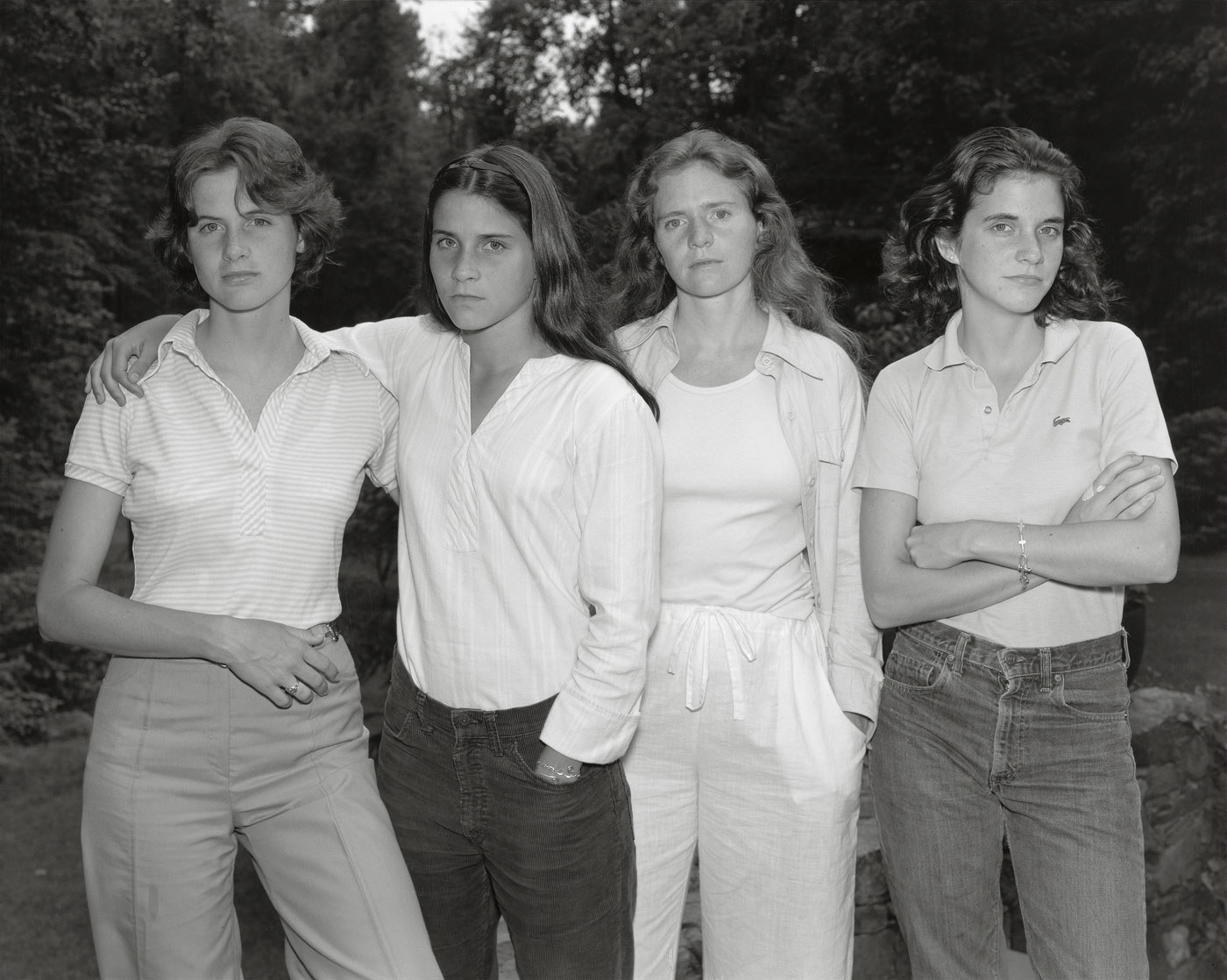
 

Nicholas Nixon (American, b. 1947) 'The Brown Sisters, New Canaan, Connecticut' 1975 from the exhibition 'Nicholas Nixon: Forty Years of The Brown Sisters' at the Museum of Modern Art (MoMA), New York, November 2014 - January 2015


Nicholas Nixon (American, b. 1947)
The Brown Sisters, New Canaan, Connecticut
1975
The Museum of Modern Art, New York. John Parkinson III Fund
© 2014 Nicholas Nixon


This is the most successful, long running group portrait series in the history of photography. I have always liked the images because of their stunning clarity, delicate tonality and wonderful arrangement of the figures. Much as they shield their privacy, as a viewer I feel like I have grown up with these women, the sisters I never had. Some images are more successful than others, but as a body of work that focuses on the “face” we present to the world, they are without peer.

Just imagine being these women (and being the photographer), taking on this project and not knowing where it would lead, still not knowing where it will lead. There is a fascinating period in the photographs between 1986 and 1990, as we see the flush of youth waning, transitioning towards the beginning of middle age. As they grow older and closer I feel that I know their characters. I look for that inflection and nuance of presentation that make them more than just faces, more than just photographic representation. The lines on their faces are the handwriting of their travails and I love them all for that.

In each photograph they are as beautiful as the next, not in a Western sense, but in the sense of archetypal beauty, the Platonic form of all beauty – the beauty of women separated from the individuality of the object and considered by itself. In each of these images you can contemplate that form through the faces of these women – they are transcendent and pure. It is as if they live beyond space and time, that the photographs capture this sense of the sublime. Usually the sublime is regarded as beyond time… but not here.

A simply magnificent series.

Dr Marcus Bunyan

PS. Let’s hope that there are more images from the series that we can eventually see and that there are some platinum prints being produced. The images deserve such a printing.


Many thankx to MoMA for allowing me to publish the photographs in the posting. Please click on the photographs for a larger version of the image.


“Throughout this series, we watch these women age, undergoing life’s most humbling experience. While many of us can, when pressed, name things we are grateful to Time for bestowing upon us, the lines bracketing our mouths and the loosening of our skin are not among them. So while a part of the spirit sinks at the slow appearance of these women’s jowls, another part is lifted: They are not undone by it. We detect more sorrow, perhaps, in the eyes, more weight in the once-fresh brows. But the more we study the images, the more we see that ageing does not define these women. Even as the images tell us, in no uncertain terms, that this is what it looks like to grow old, this is the irrefutable truth, we also learn: This is what endurance looks like. …

These subjects are not after attention, a rare quality in this age when everyone is not only a photographer but often his own favourite subject. In this, Nixon has pulled off a paradox: The creation of photographs in which privacy is also the subject. The sisters’ privacy has remained of utmost concern to the artist, and it shows in the work. Year after year, up to the last stunning shot with its triumphant shadowy mood, their faces and stances say, Yes, we will give you our image, but nothing else.”


Susan Minot. “Forty Portraits in Forty Years: Photographs by Nicholas Nixon,” on the ‘New York Times’ website, October 2014 [Online] Cited 01/01/2015. No longer available online. Used under fair use conditions for the purposes of education and research


Nicholas Nixon (American, b. 1947) 'The Brown Sisters, Harwich Port, Massachusetts' 1978 from the exhibition 'Nicholas Nixon: Forty Years of The Brown Sisters' at the Museum of Modern Art (MoMA), New York, November 2014 - January 2015


Nicholas Nixon (American, b. 1947)
The Brown Sisters, Harwich Port, Massachusetts
1978
The Museum of Modern Art, New York. John Parkinson III Fund
© 2014 Nicholas Nixon


Nicholas Nixon (American, b. 1947) 'The Brown Sisters, East Greenwich, R.I.' 1980


Nicholas Nixon (American, b. 1947)
The Brown Sisters, East Greenwich, R.I.
1980
The Museum of Modern Art, New York. John Parkinson III Fund
© 2014 Nicholas Nixon
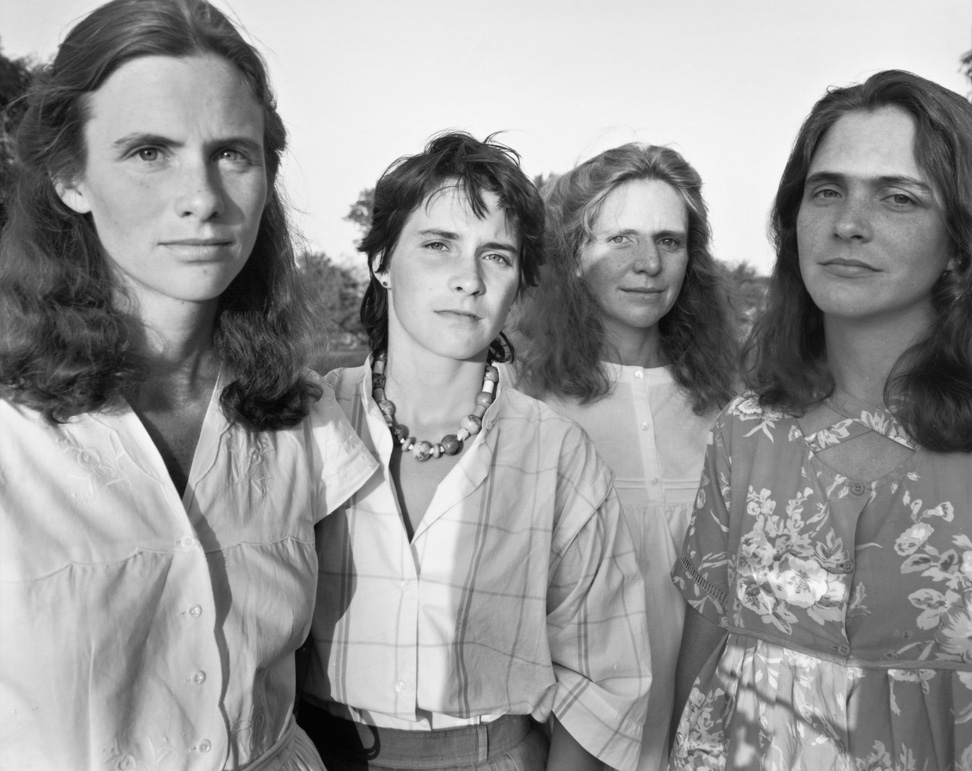
 

Nicholas Nixon (American, b. 1947) 'The Brown Sisters, Allston, Mass' 1983


Nicholas Nixon (American, b. 1947)
The Brown Sisters, Allston, Mass.
1983
The Museum of Modern Art, New York. John Parkinson III Fund
© 2014 Nicholas Nixon


Nicholas Nixon (American, b. 1947) 'The Brown Sisters, Cambridge, Mass.' 1986


Nicholas Nixon (American, b. 1947)
The Brown Sisters, Cambridge, Mass.
1986
The Museum of Modern Art, New York. John Parkinson III Fund
© 2014 Nicholas Nixon
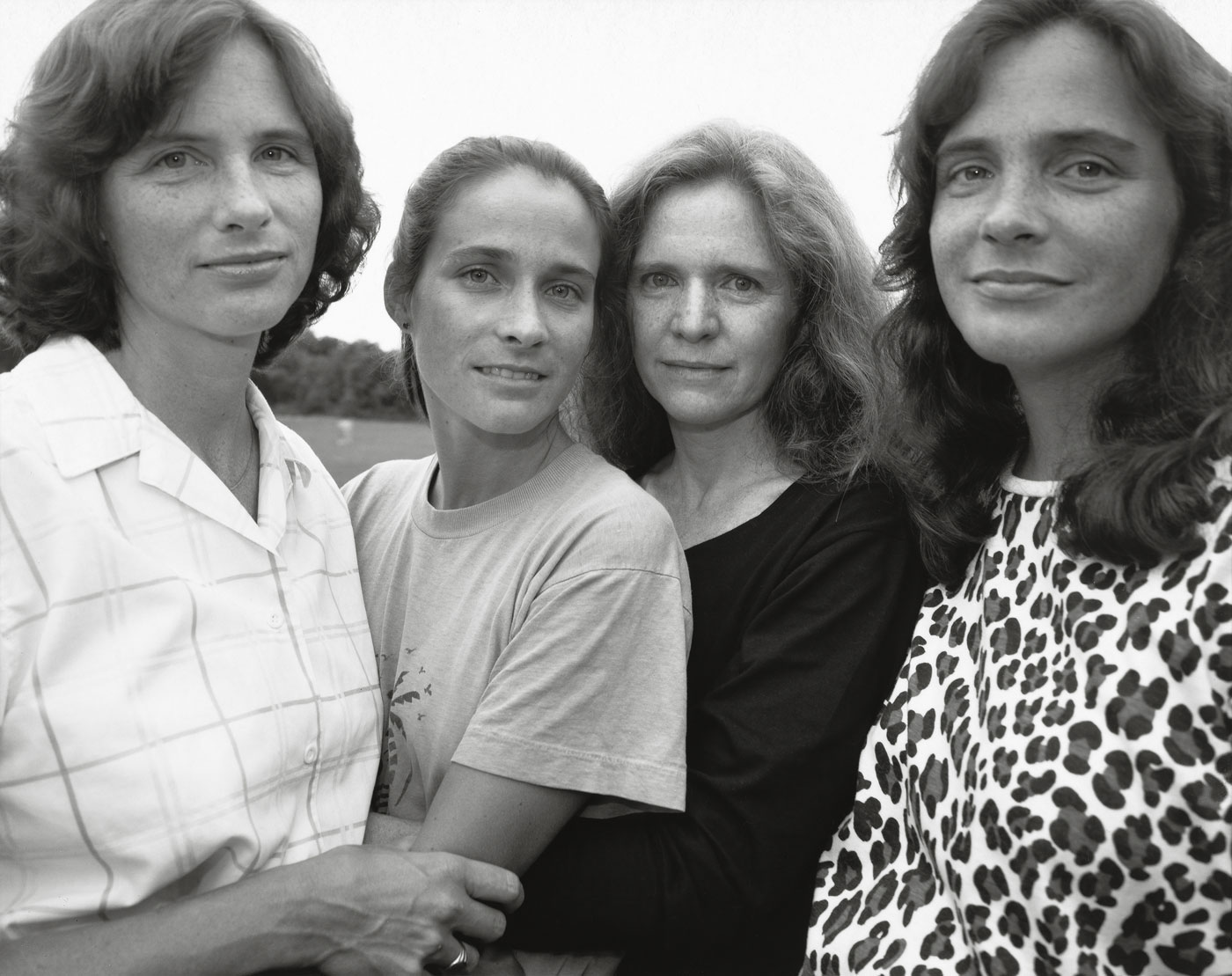
 

Nicholas Nixon (American, b. 1947) 'The Brown Sisters, Wellesley, Massachusetts.' 1988


Nicholas Nixon (American, b. 1947)
The Brown Sisters, Wellesley, Massachusetts
1988
The Museum of Modern Art, New York. John Parkinson III Fund
© 2014 Nicholas Nixon
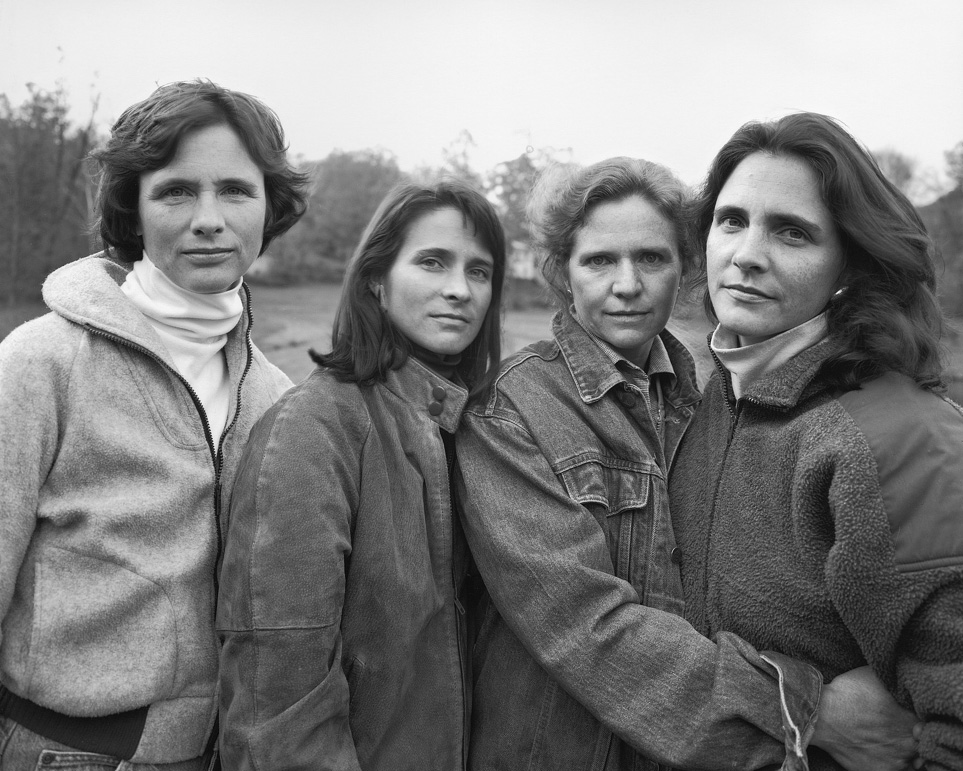
 

Nicholas Nixon (American, b. 1947) 'The Brown Sisters, Woodstock, Vt.' 1990


Nicholas Nixon (American, b. 1947)
The Brown Sisters, Woodstock, Vt.
1990
The Museum of Modern Art, New York. John Parkinson III Fund
© 2014 Nicholas Nixon


Nicholas Nixon (American, b. 1947) 'The Brown Sisters, Grantham, N.H.' 1994


Nicholas Nixon (American, b. 1947)
The Brown Sisters, Grantham, N.H.
1994
The Museum of Modern Art, New York. John Parkinson III Fund
© 2014 Nicholas Nixon


In August 1974, Nicholas Nixon made a photograph of his wife, Bebe, and her three sisters. He wasn’t pleased with the result and discarded the negative. In July 1975 he made one that seemed promising enough to keep. At the time, the Brown sisters were 15 (Mimi), 21 (Laurie), 23 (Heather), and 25 (Bebe). The following June, Laurie Brown graduated from college, and Nick made another picture of the four sisters. It was after this second successful picture that the group agreed to gather annually for a portrait, and settled on the series’ two constants: the sisters would always appear in the same order – from left to right, Heather, Mimi, Bebe, and Laurie – and they would jointly agree on a single image to represent a given year. Also significant, and unchanging, is the fact that each portrait is made with an 8 x 10″ view camera on a tripod and is captured on a black-and-white film negative.

The Museum has exhibited and collected the Brown Sisters from the beginning; since 2006, acquiring the series both as lusciously tactile contact prints and as striking 20 x 24″ enlargements (a new scale for Nixon). This installation – featuring all 40 images – marks the first time the Museum has displayed these larger prints.

In his first published statement about photography, written the year he made the first of the Brown Sisters portraits, Nixon remarked, “The world is infinitely more interesting than any of my opinions about it.” If he was modest about his opinions, though, his photographs clearly show how the camera can capture that infinitely interesting world. And to the attentive viewer, these silent records, with their countless shades of visual and emotional grey, can promote a new appreciation of an intangible part of it: the world of time and age, of commitment and love.

Text from the MoMA website


Nicholas Nixon (American, b. 1947) 'The Brown Sisters, Marblehead, Mass.' 1995


Nicholas Nixon (American, b. 1947)
The Brown Sisters, Marblehead, Mass.
1995
The Museum of Modern Art, New York. John Parkinson III Fund
© 2014 Nicholas Nixon


Nicholas Nixon (American, b. 1947) 'The Brown Sisters, Brookline, Massachusetts' 1999


Nicholas Nixon (American, b. 1947)
The Brown Sisters, Brookline, Massachusetts
1999
The Museum of Modern Art, New York. John Parkinson III Fund
© 2014 Nicholas Nixon
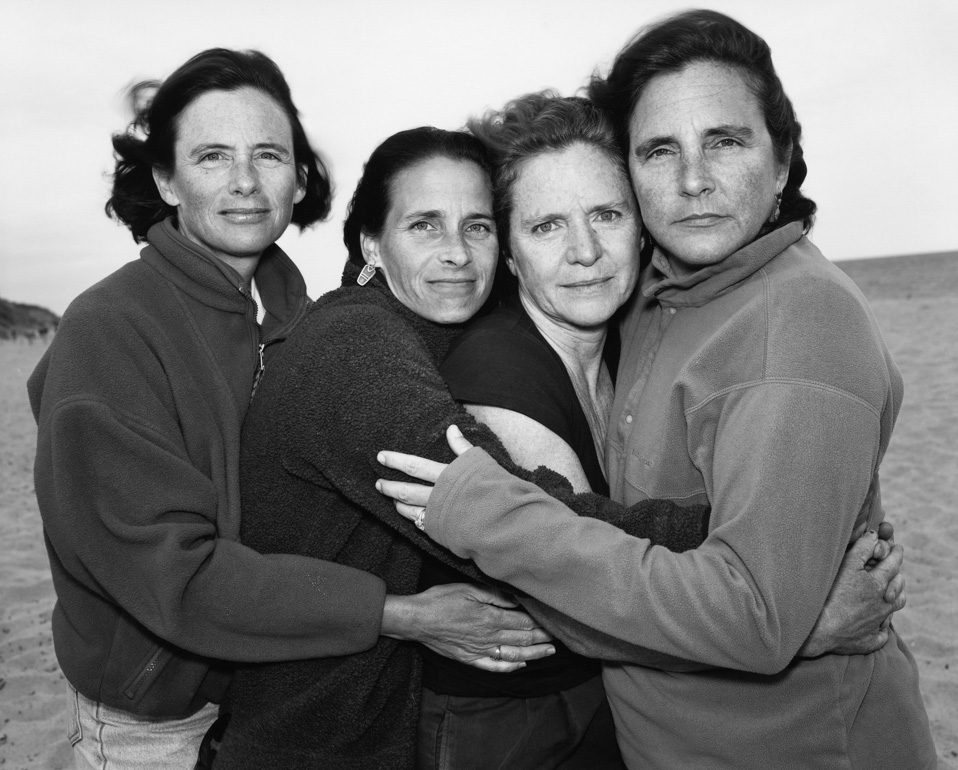
 

Nicholas Nixon (American, b. 1947) 'The Brown Sisters, Eastham, Mass.' 2000


Nicholas Nixon (American, b. 1947)
The Brown Sisters, Eastham, Mass.
2000
The Museum of Modern Art, New York. John Parkinson III Fund
© 2014 Nicholas Nixon


Nicholas Nixon (American, b. 1947) 'The Brown Sisters, Cataumet, Mass.' 2004


Nicholas Nixon (American, b. 1947)
The Brown Sisters, Cataumet, Mass.
2004
The Museum of Modern Art, New York. John Parkinson III Fund
© 2014 Nicholas Nixon


Nicholas Nixon (American, b. 1947) 'The Brown Sisters, Dallas' 2008


Nicholas Nixon (American, b. 1947)
The Brown Sisters, Dallas
2008
The Museum of Modern Art, New York. John Parkinson III Fund
© 2014 Nicholas Nixon
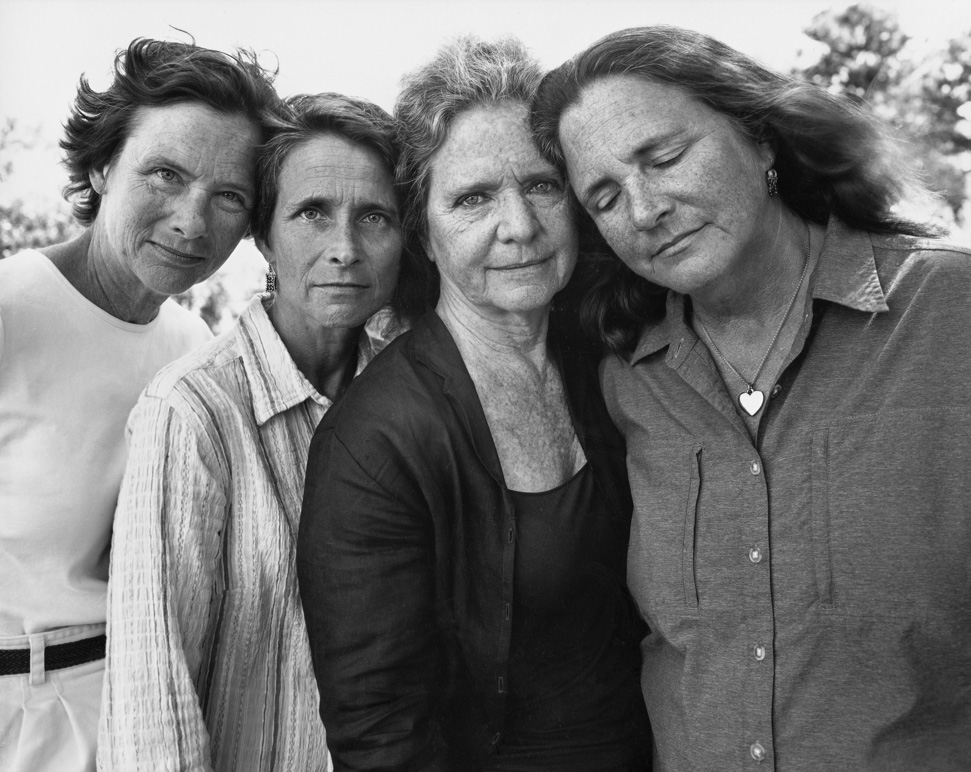
 

Nicholas Nixon (American, b. 1947) 'The Brown Sisters, Truro, Mass.' 2010


Nicholas Nixon (American, b. 1947)
The Brown Sisters, Truro, Mass.
2010
The Museum of Modern Art, New York. John Parkinson III Fund
© 2014 Nicholas Nixon
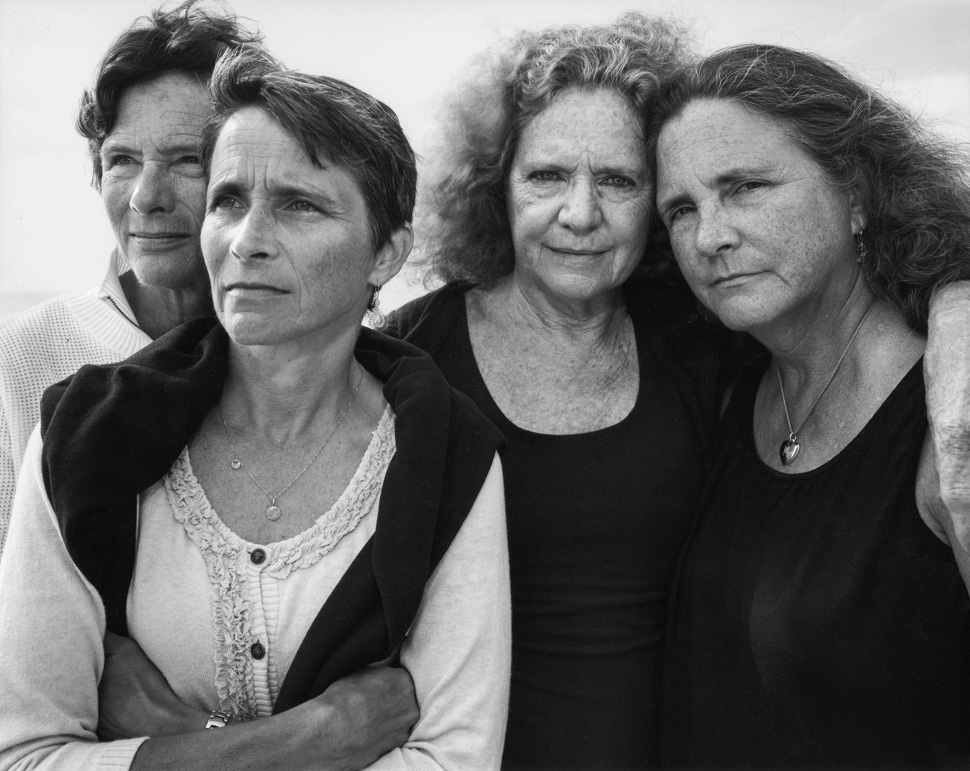
 

Nicholas Nixon (American, b. 1947) 'The Brown Sisters, Truro, Mass.' 2011


Nicholas Nixon (American, b. 1947)
The Brown Sisters, Truro, Mass.
2011
The Museum of Modern Art, New York. John Parkinson III Fund
© 2014 Nicholas Nixon


Nicholas Nixon (American, b. 1947) 'The Brown Sisters, Boston' 2012


Nicholas Nixon (American, b. 1947)
The Brown Sisters, Boston
2012
The Museum of Modern Art, New York. John Parkinson III Fund
© 2014 Nicholas Nixon


Nicholas Nixon (American, b. 1947) 'The Brown Sisters, Wellfleet, Massachusetts' 2014


Nicholas Nixon (American, b. 1947)
The Brown Sisters, Wellfleet, Massachusetts
2014
The Museum of Modern Art, New York. John Parkinson III Fund
© 2014 Nicholas Nixon


The Museum of Modern Art
11 West 53 Street
New York, NY 10019
Phone: (212) 708-9400

Opening hours:
10.30am – 5.30pm
Open seven days a week

MoMA website

LIKE ART BLART ON FACEBOOK

Back to top

Exhibition: ‘Robert Frank in America’ at the Cantor Arts Center, Stanford University Part 2

Exhibition dates: 10th September, 2014 – 5th January, 2015

Curator: Peter Galassi


Robert Frank (American born Switzerland, 1924-2019) 'New York' City 1951 from the exhibition 'Robert Frank in America' at the Cantor Arts Center, Stanford University, September 2014 - January 2015


Robert Frank (American born Switzerland, 1924-2019)
New York City
1951
Gelatin silver print Cantor Arts Center Collection, Gift of Raymond B. Gary


The lunatic sublime of America

See Part 1 for comment on this exhibition.

Dr Marcus Bunyan


Many thankx to the Cantor Arts Center for allowing me to publish the photographs in the posting. Please click on the photographs for a larger version of the image.


“This desire of Frank’s to hold the shape of his feelings in what he made is an ambition found in all Romantic art, one that his style brilliantly encompasses and describes. There is a wonderful illusion of speed trapped in his photographs, a sense of rapidity usually created not by the movement of Frank’s subjects, but by the gesture that he made as he framed his pictures. To photographers who have followed Frank, this autographic gesture incorporates a mystery, one that is distorted, and certainly not explained, by saying that he “shot on the run” or “from the hip.” For the beauty of this gesture is that, caught by such speed, his subjects remain clear, fully recognised, as if the photographer had only glanced at what he wanted to show, but was able to seize it at the moment it unhesitantly revealed itself.”


Tod Papageorge. “Walker Evans And Robert Frank: An Essay On Influence.”


Robert Frank (American born Switzerland, 1924-2019) 'Detroit' 1955 from the exhibition 'Robert Frank in America' at the Cantor Arts Center, Stanford University, September 2014 - January 2015


Robert Frank (American born Switzerland, 1924-2019)
Detroit
1955
Gelatin silver print
Cantor Arts Center Collection, Gift of Bowen H. McCoy


Robert Frank (American born Switzerland, 1924-2019) 'Miami' 1955


Robert Frank (American born Switzerland, 1924-2019)
Miami
1955
Gelatin silver print
Cantor Arts Center Collection, Gift of Raymond B. Gary


Robert Frank (American born Switzerland, 1924-2019) 'New York City' 1950-1951


Robert Frank (American born Switzerland, 1924-2019)
New York City
1950-1951
Gelatin silver print
Cantor Arts Center Collection, Gift of Raymond B. Gary


Robert Frank (American born Switzerland, 1924-2019) 'Hollywood' 1958


Robert Frank (American born Switzerland, 1924-2019)
Hollywood
1958
Gelatin silver print
Cantor Arts Center Collection, Gift of Bowen H. McCoy


“Frank’s photos highlight everything from prosperity to poverty, multitudes to desolation, new life to finality of death, and happiness to sorrow which all occur during our lifetimes making his photos easy for the viewers to understand and relate…

Furthermore, Frank was able to emphasise some of the issues of his era, especially segregation, patriotism, and generational gaps. For example, the New Orleans photo on the cover shows a trolley car obviously segregated with white riders in the front and black riders in the back. However, Frank also shows blacks and whites working side by side in an assembly line photo taken in Detroit as well as a black nurse holding a white baby in Charleston, South Carolina with undertones of hope for equality further highlighted by the photo taken in Detroit bar of Presidents Lincoln and Washington bookending an American flag…

American patriotism seems to be a universal theme throughout Frank’s photos as well. Many of the photos in the book contain an American flag which shows the high level of patriotism felt by Americans in the era after defeating Germany and Japan in the Second World War and at the beginning of the Cold War with the rising Soviet Union as a communist superpower. Flags are hung on an apartment building during a parade in Hoboken, on the wall in a Navy Recruiting Station in Butte, Montana, hanging outdoors during a Fourth of July celebration in Jay, New York, on the wall in the Detroit bar, hanging from the building in a political rally in Chicago, and there are star lights in the background of a club car headed to Washington DC.

The most important theme within Frank’s photos is that of “Americans.” Frank photographed people from different cultures, including blacks, Hispanics, Jews, and whites; celebrating different religious and civil ceremonies from funerals to weddings. He included biker groups, prostitutes, celebrities, high-class socialites, rural farmlands, cowboys, soldiers, teenagers, politicians, families, senior citizens, children, gamblers, and travellers among others within the photos. This variety of people from different backgrounds living and socialising in different settings is truly American in that it is a blend of all different types of people living together as one nation.”

Cindy Coffey. “The Americans: An Analysis of the Photography of Robert Frank,” on the History thru Hollywood blog Saturday, May 11, 2013 [Online] No longer available online. Used under fair use conditions for the purposes of education and research


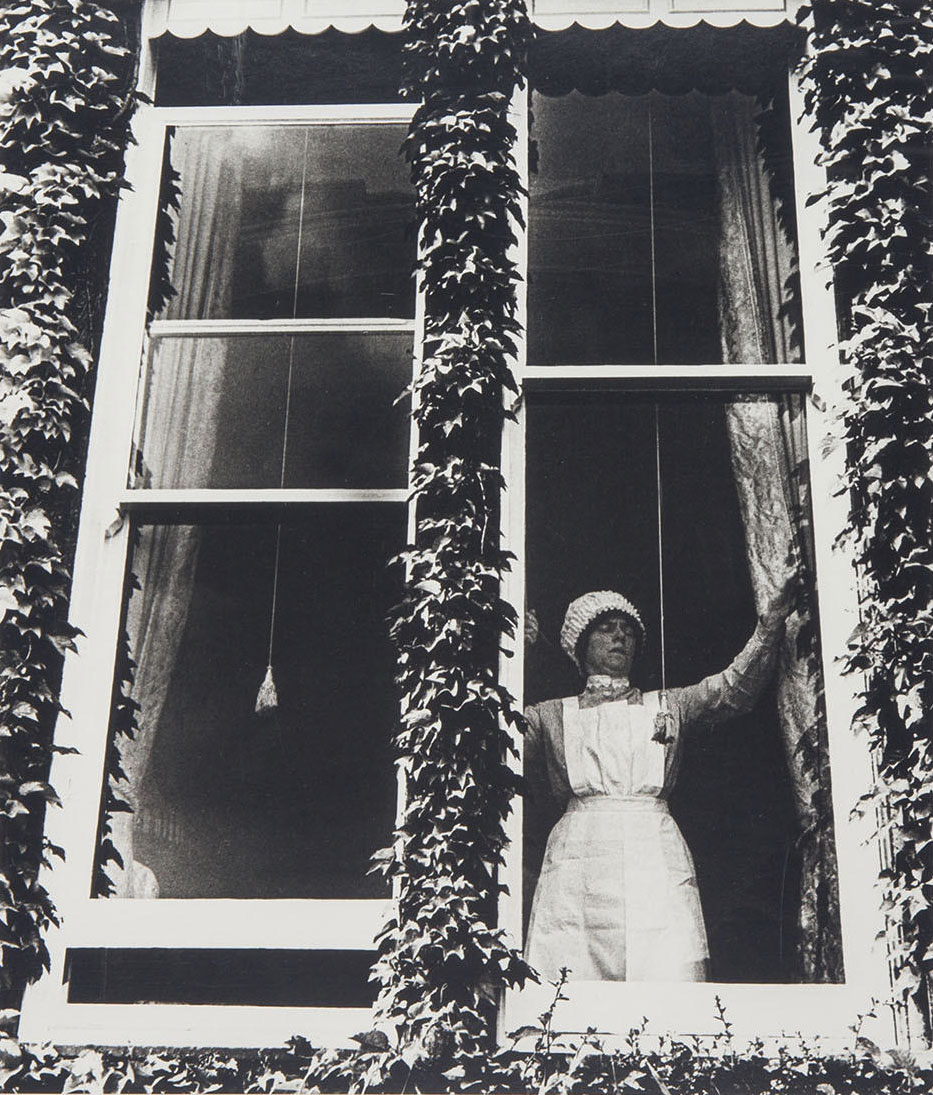
Bill Brandt (British, 1904-1983) 'Parlourmaid at the Window in Kensington' 1935


Bill Brandt (British, 1904-1983)
Parlourmaid at the Window, Kensington
1935 (printed later)
Silver gelatin print


“The first critics of The Americans condemned its content; recent critics have attacked it by attempting to describe Frank’s photographic style. Possibly reacting to the variations in cropping that appear in the later editions of the book, or, more probably, looking for the “snapshot aesthetic” under any available stone, they have assumed this style to be haphazard and contemptuously casual. One writer, for example, has said that Frank “produced pictures that look as if a kid had taken them while eating a Popsicle and then had them developed and printed at the corner drugstore.”

The things in Frank’s pictures which have bothered these critics – occasional blur, obvious grain, the use of available light, the cutting off of objects by the frame – are all, however, characteristic of picture journalism, and, arguably, of the entire history of hand-camera photography: Erich Salomon’s work, for example, done for the most part in the twenties, could be discussed in similar terms. The form of Frank’s work, then, is not radical in the true sense of the word: it does not strike to the root of the tradition it serves. The stylistic exaggerations which occur in his pictures serve only to retain that sense of resident wildness we recognise in great lyric poetry – they are present to call attention not to themselves, but to the emotional world of Frank’s subjects, and to his response to those subjects. When, in the statement he wrote shortly before The Americans was published, Frank said: “It is important to see what is invisible to others. Perhaps the look of hope or the look of sadness. Also it is always the instantaneous reaction to oneself that produces a photograph,” he was expressing his belief that both his perceptions (it is significant that he does not mention an intervening camera in these sentences) and the photographs which result from them are essentially unmediated and true.

This desire of Frank’s to hold the shape of his feelings in what he made is an ambition found in all Romantic art, one that his style brilliantly encompasses and describes. There is a wonderful illusion of speed trapped in his photographs, a sense of rapidity usually created not by the movement of Frank’s subjects, but by the gesture that he made as he framed his pictures. To photographers who have followed Frank, this autographic gesture incorporates a mystery, one that is distorted, and certainly not explained, by saying that he “shot on the run” or “from the hip.” For the beauty of this gesture is that, caught by such speed, his subjects remain clear, fully recognised, as if the photographer had only glanced at what he wanted to show, but was able to seize it at the moment it unhesitantly revealed itself.

Despite the grace of this notational style (or perhaps because of it), Frank seems to have felt that movement within the frames of his photographs would only disturb their sense, and, with a few exceptions, ignored the use of dramatic gesture and motion in The Americans (a fact which again suggests his feeling about Cartier-Bresson’s work). In two of his pictures of convention delegates, and in one of a woman in a gambling casino, he shows emphatic hand gestures. In another photograph, he looks down onto a man striding forward under a neon arrow, and, in yet another, describes two girls skipping away from his camera. Otherwise, his subjects move, if at all, toward, and, in a single memorable case, by him – studies in physiognomy, rather than disclosures of a gathering beauty.

The characteristic gestures in his pictures are the slight, telling motions of the head and upper body: a glance, a stare, a hand brought to the face, an arched neck, pursed lips. They suggest that Frank, like Evans, believed significance in a photograph might be consonant with the repose of the things it described. His pictures, of course, are not acts of contemplation – they virtually catalogue the guises of anxiety – but they are stilled, and their meanings found not in broad rhythms of gesture and form, but in the constellations traced by the figures or objects they show, and the short, charged distances between them.

One of the unacknowledged achievements of The Americans is the series of group portraits – odd assemblages of heads, usually seen in profile, that gather in quick, serried cadences and push at the cutting edges of their frames. In the soft muted light that illuminates them, these heads are drawn with the sculptural brevity of those found on worn coins. But, even in this diminishment, as they cluster and fill the shallow space of Frank’s pictures, they assume the unfurling, cursive shapes of great Romantic art.

As this book shows, these photographs beautifully elaborate Evans’ hand-camera pictures, pictures which are not as judgmental as Frank’s, but also not as formally complex and moving. Although Frank’s most literal recastings of American Photographs occur when he is remembering Evans’ view camera pictures – for example, a gas station, a parked car, a statue – these extravagant translations of the older photographer’s bluntest work eloquently reveal one aspect of Frank’s extraordinary gifts as a photographer.”

Tod Papageorge. “Walker Evans And Robert Frank: An Essay On Influence.”

Download the complete essay (100kb pdf)


Cantor Arts Center at Stanford University
328 Lomita Drive at Museum Way
Stanford, CA 94305-5060
Phone: 650-723-4177

Opening hours:
Wednesday – Sunday 11am – 5pm
Closed Monday and Tuesday

Cantor Arts Center at Stanford University website

LIKE ART BLART ON FACEBOOK

Back to top