Exhibition: ‘Carelton Watkins: The Stanford Albums’ at the Cantor Arts Center at Stanford University

Who are the interesting photographers anywhere who are alive now?

And my answer would be: there are very few who are alive now that are interesting.

Exhibition dates: 23rd April – 17th August 2014


Carleton Watkins (American, 1829-1916) 'Sugar Loaf Islands and Seal Rocks, Farallons' 1868-1869


Carleton Watkins (American, 1829-1916)
Sugar Loaf Islands and Seal Rocks, Farallons
1868-1869
From the album Photographs of the Pacific Coast
Albumen print
Lent by Department of Special Collections, Stanford University Libraries.


Who would you put in your top eleven photographers of all time?

(in no particular order)

  • Minor White
  • Eugene Atget
  • Frederick Sommer
  • Carelton Watkins
  • Julia Margaret Cameron
  • Walker Evans
  • Edward Weston
  • Lee Friedlander
  • Manuel Alvarez Bravo
  • Diane Arbus
  • Paul Strand

and then it gets a bit more difficult…

Is it a Josef Sudek, Robert Adams, Aaron Siskind, Man Ray, Berenice Abbott, Helen Levitt, Emmet Gowin, William Clift, Ernest Cole, William Eggleston, Lee Friedlander, Cindy Sherman, Charles Marville, Vivian Maier, Saul Leiter and suggestions from others – André Kertész, Josef Koudelka, Dorothea Lange, Henri Cartier-Bresson, Edouard Boubat, Paul Caponigro, etc …


What is more interesting is to ask:

Who are the interesting photographers anywhere who are alive now?

And my answer would be: there are very few who are alive now that are interesting.

That is – by looking at the ideas that are present in poetry, music, philosophy or even politics – who is there that is truly taking these ideas forward (or ideas that are as interesting).

Or who is arranging images with the elegance of a Sommer or an Atget or the dynamics of Arbus

= few if any.

In other words whose acts am I hanging upon, so that I am waiting with great anticipation to see what they are going to do next.

Only a few is my answer.

Which living photographers would I walk a mile to see their work?

= some (eg Lee Friedlander, Wolfgang Tillmans)


Which living Australian photographers would I walk an hour in the hot January sun to see?

= possibly two (Bill Henson, Rosemary Laing)

Dr Marcus Bunyan


PS. Just look at Cape Horn, near Celilo (1867, below). You are not likely to see a more magnificent landscape photograph than this.

Many thankx to the Cantor Arts Center for allowing me to publish the photographs in the posting. Please click on the photographs for a larger version of the image.
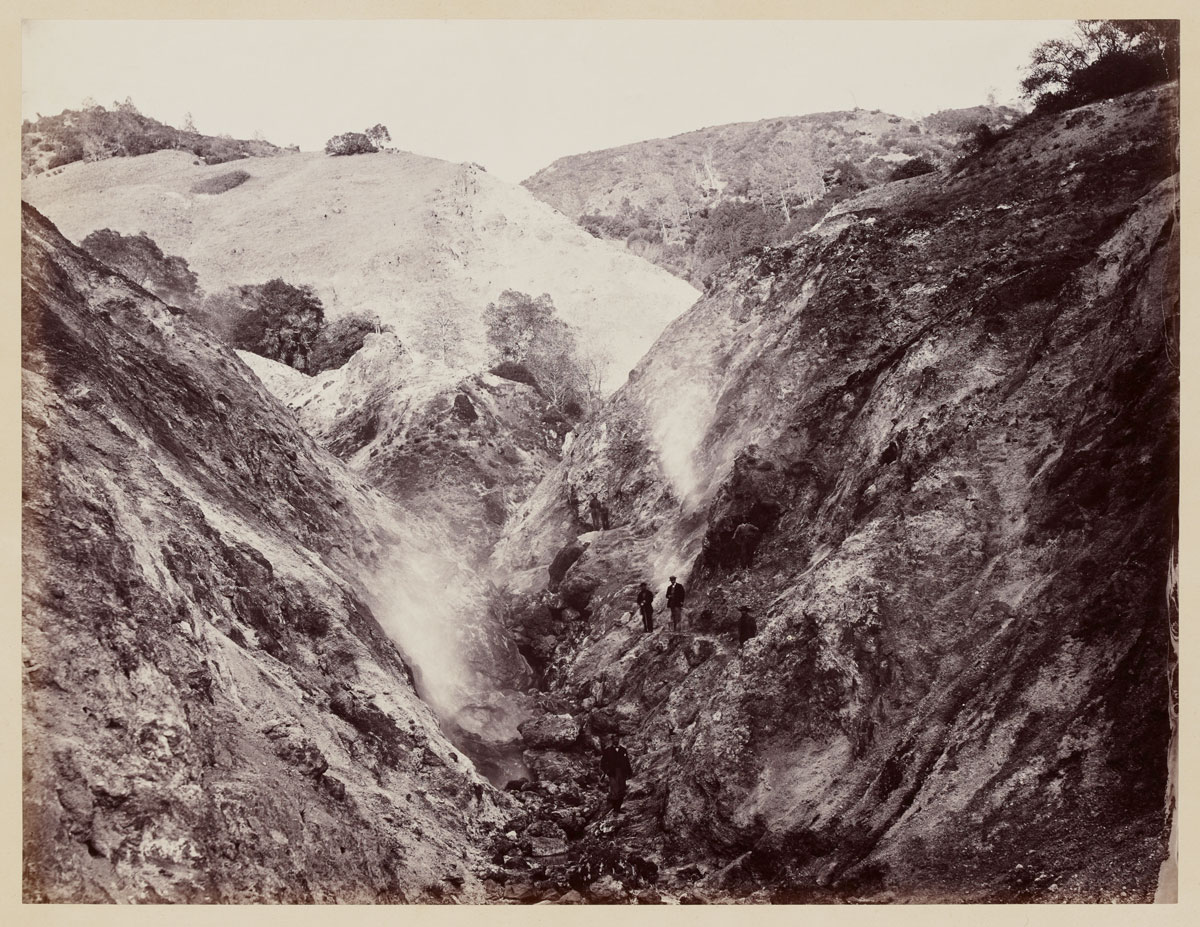


Carleton Watkins (American, 1829-1916) 'Devils' Cañon Geysers, Looking Up' c. 1867


Carleton Watkins (American, 1829-1916)
Devils’ Cañon Geysers, Looking Up
c. 1867
From the album Photographs of the Pacific Coast
Albumen print
Lent by Department of Special Collections, Stanford University Libraries
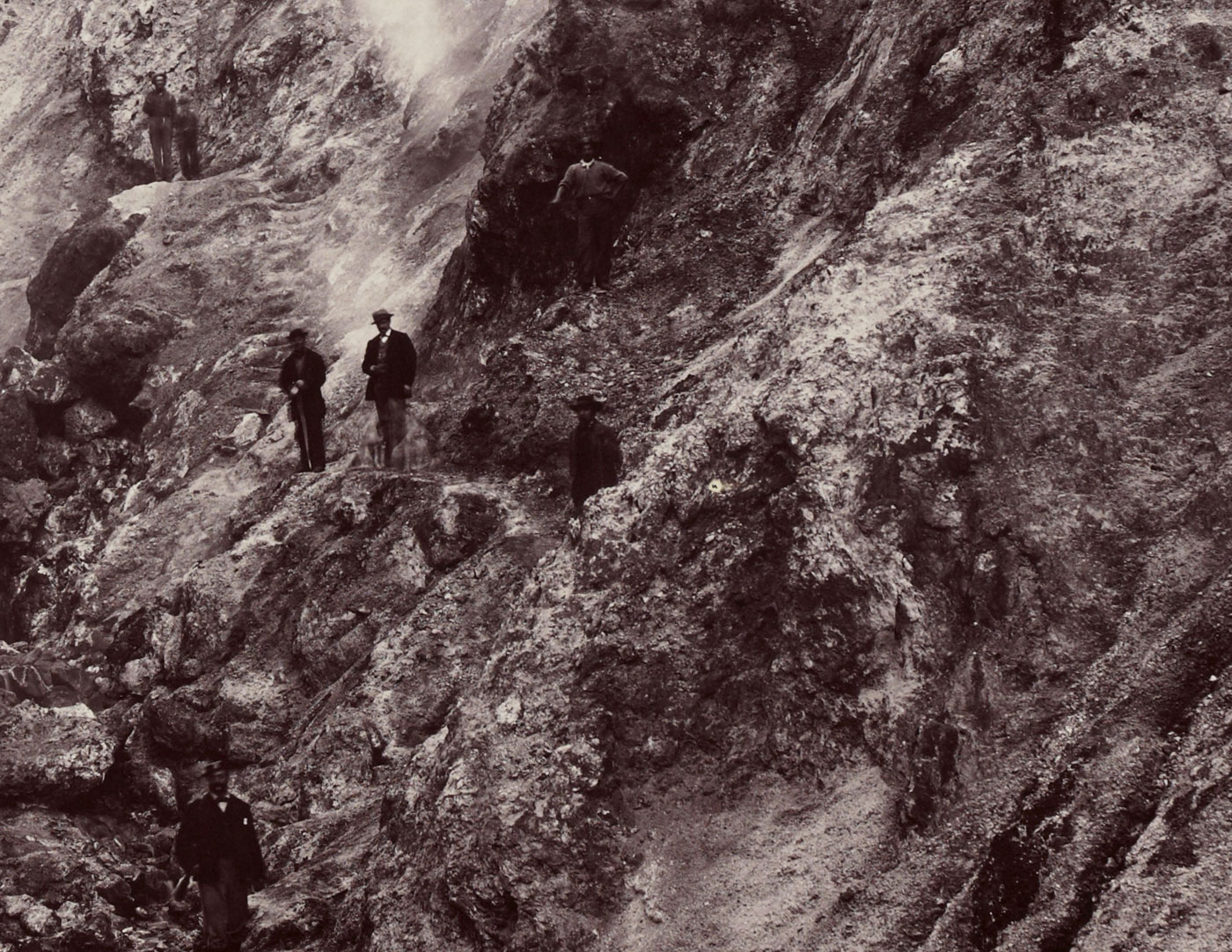
 

Carleton Watkins (American, 1829-1916) 'Devils' Cañon Geysers, Looking Up' (detail) c. 1867


Carleton Watkins (American, 1829-1916)
Devils’ Cañon Geysers, Looking Up (detail)
c. 1867
From the album Photographs of the Pacific Coast
Albumen print
Lent by Department of Special Collections, Stanford University Libraries


Carleton Watkins (American, 1829-1916) 'Alcatraz from North Point' 1862-1863


Carleton Watkins (American, 1829-1916)
Alcatraz from North Point
1862–1863
From the album Photographs of the Pacific Coast
Albumen print
Lent by Department of Special Collections, Stanford University Libraries
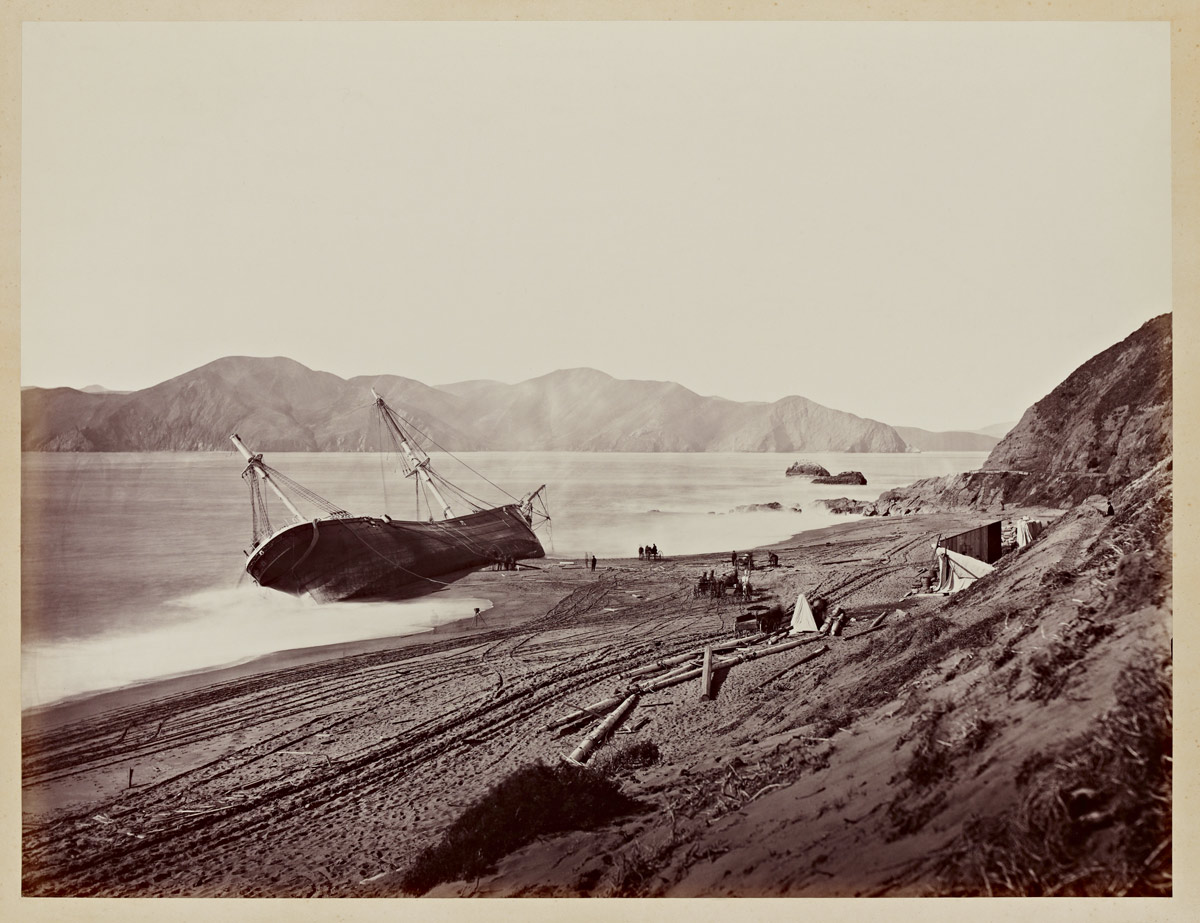
 

Carleton Watkins (American, 1829-1916) 'The Wreck of the Viscata' March 1868


Carleton Watkins (American, 1829-1916)
The Wreck of the Viscata
March 1868
From the album Photographs of the Pacific Coast
Albumen print
Lent by Department of Special Collections, Stanford University Libraries
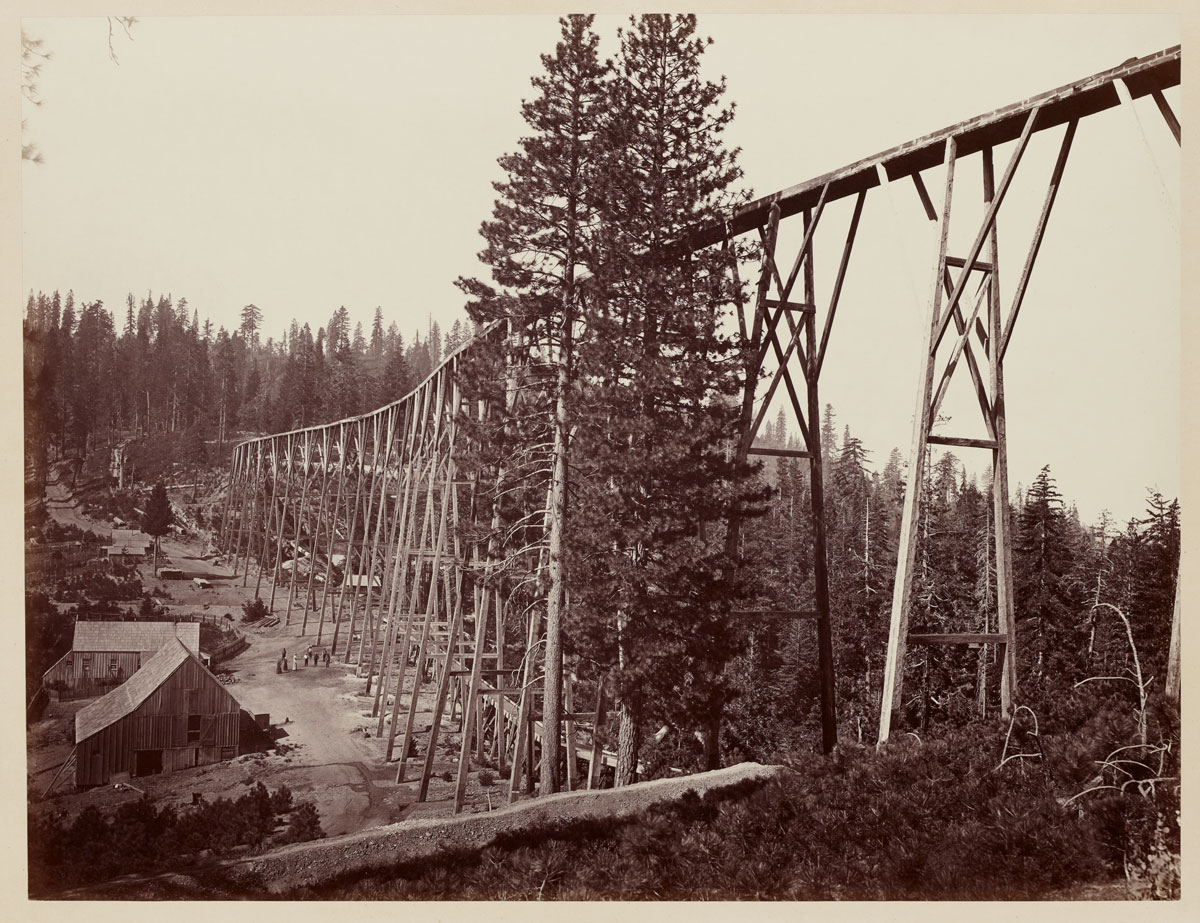
 

Carleton Watkins (American, 1829-1916) 'Magenta Flume Nevada Co. Cal.' c. 1871


Carleton Watkins (American, 1829-1916)
Magenta Flume Nevada Co. Cal.
c. 1871
From the album Photographs of the Pacific Coast
Albumen print
Lent by Department of Special Collections, Stanford University Libraries
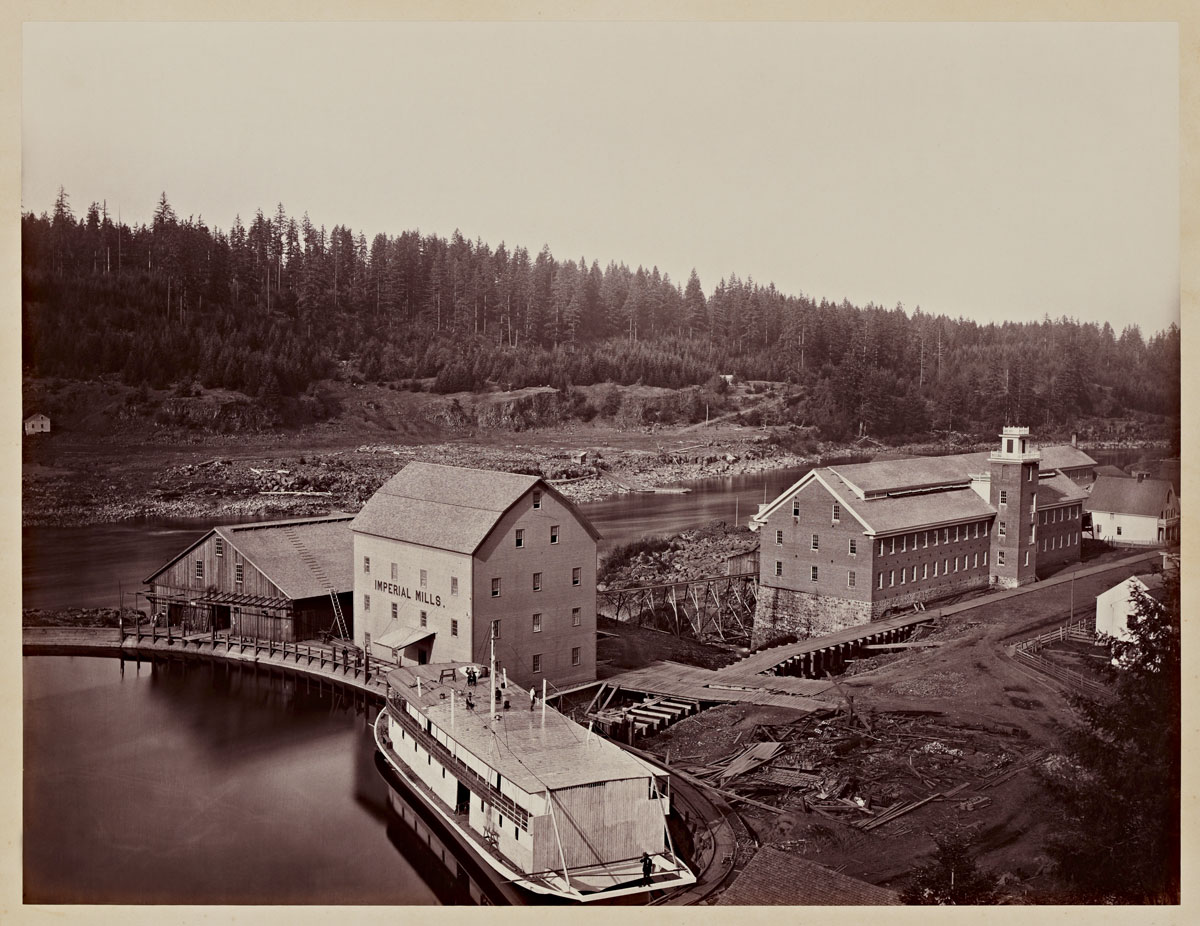
 

Carleton Watkins (American, 1829-1916) 'Flour and Woolen Mills, Oregon City' 1867


Carleton Watkins (American, 1829-1916)
Flour and Woolen Mills, Oregon City
1867
From the album Photographs of the Columbia River and Oregon
Albumen print. Lent by Department of Special Collections, Stanford University Libraries


Carleton Watkins (American, 1829-1916) 'Cape Horn, Columbia River' 1867


Carleton Watkins (American, 1829-1916)
Cape Horn, Columbia River
1867
From the album Photographs of the Columbia River and Oregon
Albumen print
Lent by Department of Special Collections, Stanford University Libraries
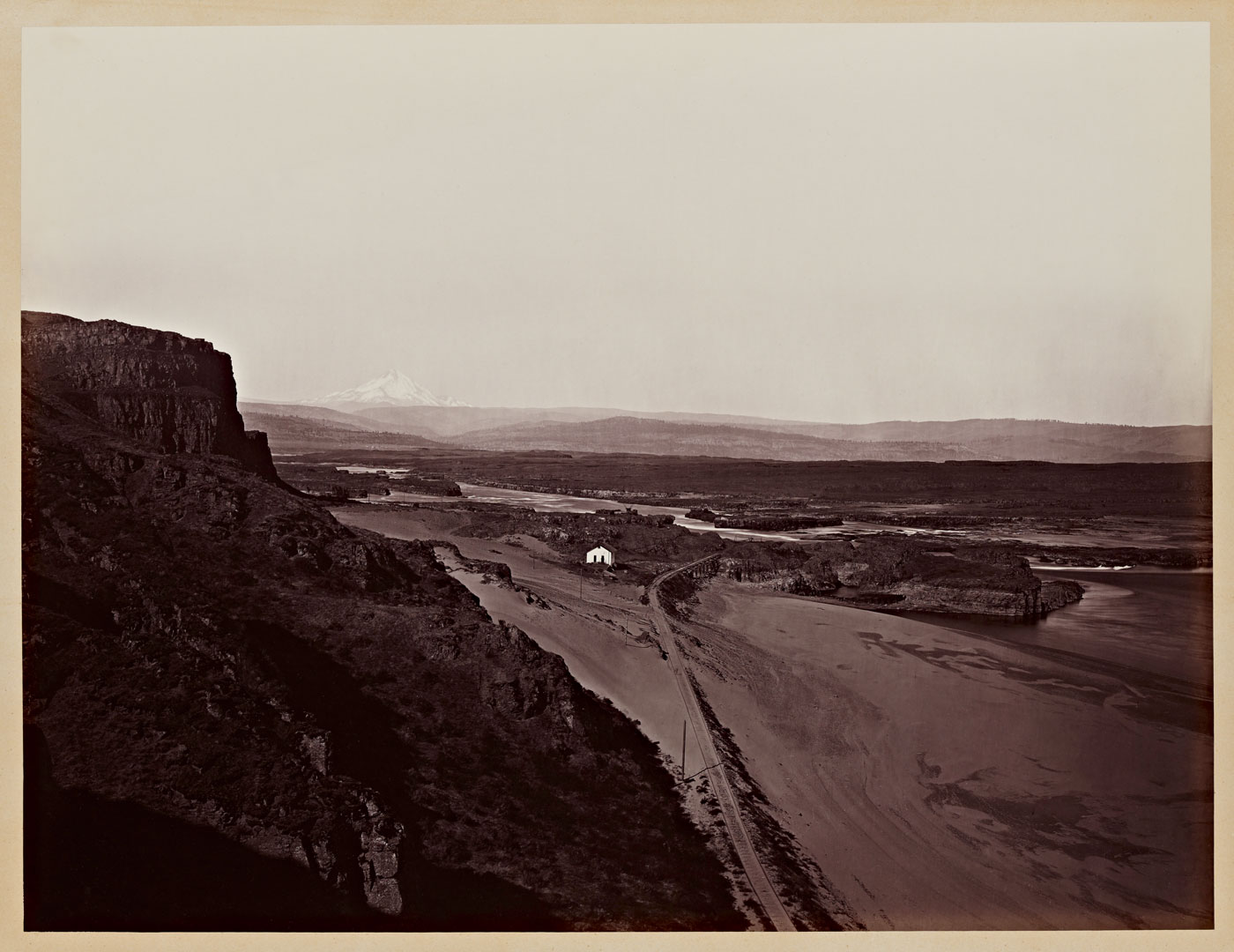
 

Carleton Watkins (American, 1829-1916) 'Mt. Hood and the Dalles, Columbia River' 1867


Carleton Watkins (American, 1829-1916)
Mt. Hood and the Dalles, Columbia River
1867
From the album Photographs of the Columbia River and Oregon
Albumen print
Lent by Department of Special Collections, Stanford University Libraries
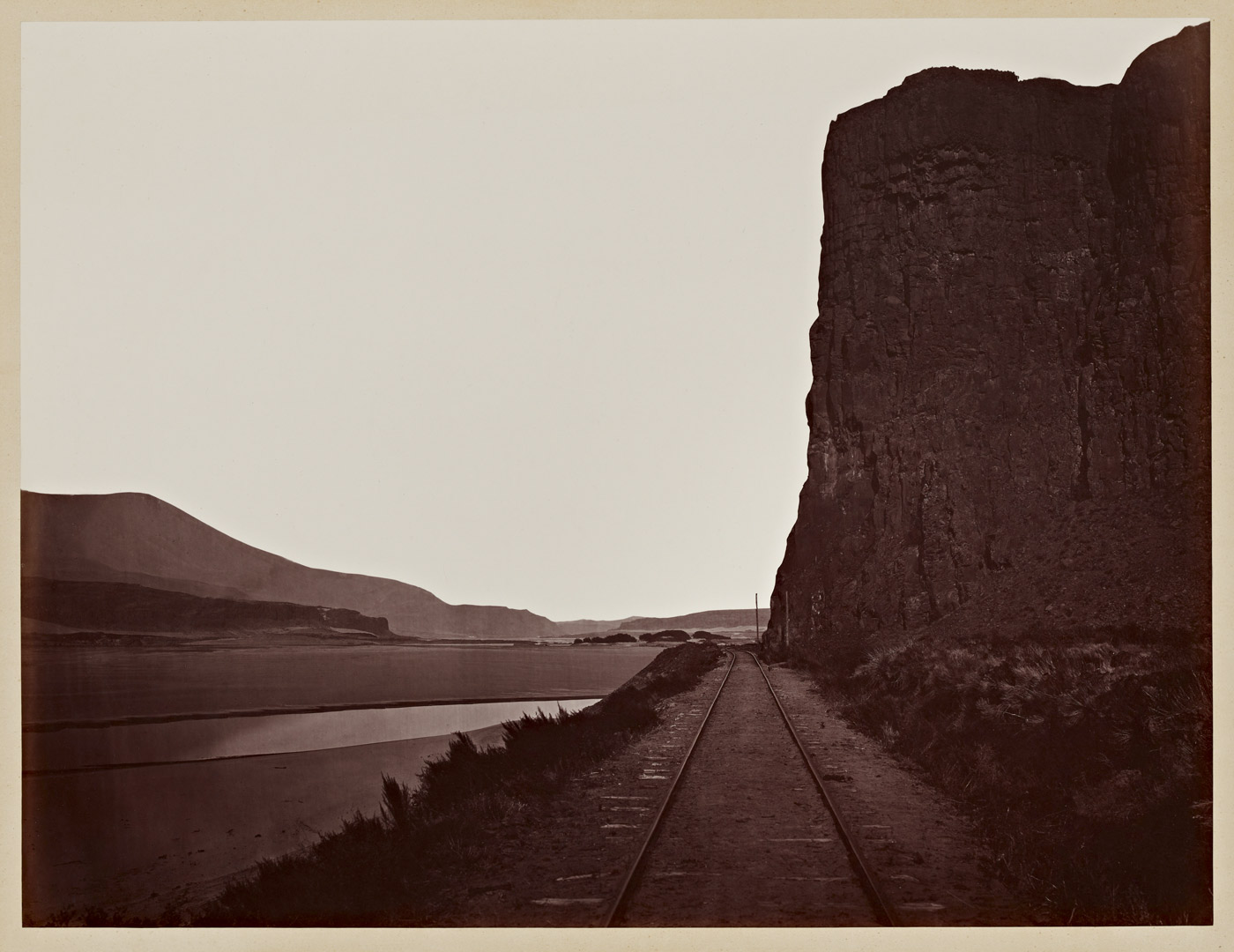
 

Carleton Watkins (American, 1829-1916) 'Cape Horn, near Celilo' 1867


Carleton Watkins (American, 1829-1916)
Cape Horn, near Celilo
1867
From the album Photographs of the Columbia River and Oregon
Albumen print
Lent by Department of Special Collections, Stanford University Libraries


Carleton Watkins (American, 1829-1916) 'The Yosemite Valley from the "Best General View"' 1866


Carleton Watkins (American, 1829-1916)
The Yosemite Valley from the “Best General View”
1866
From the album Photographs of the Yosemite Valley
Albumen print
Lent by Department of Special Collections, Stanford University Libraries
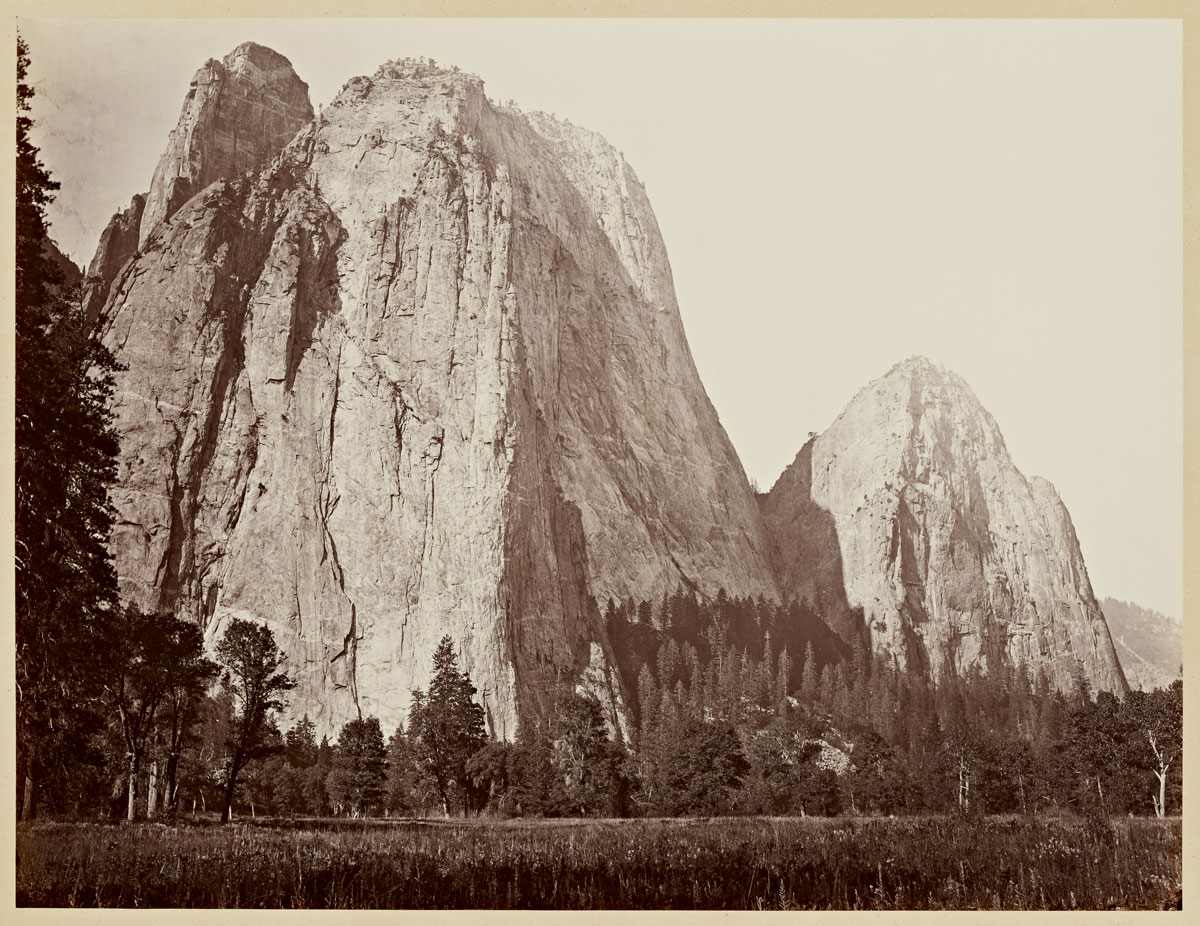
 

Carleton Watkins (American, 1829-1916) 'Cathedral Rocks, 2630 ft., Yosemite' 1865-1866


Carleton Watkins (American, 1829-1916)
Cathedral Rocks, 2630 ft., Yosemite
1865-1866
From the album Photographs of the Yosemite Valley
Albumen print
Lent by Department of Special Collections, Stanford University Libraries
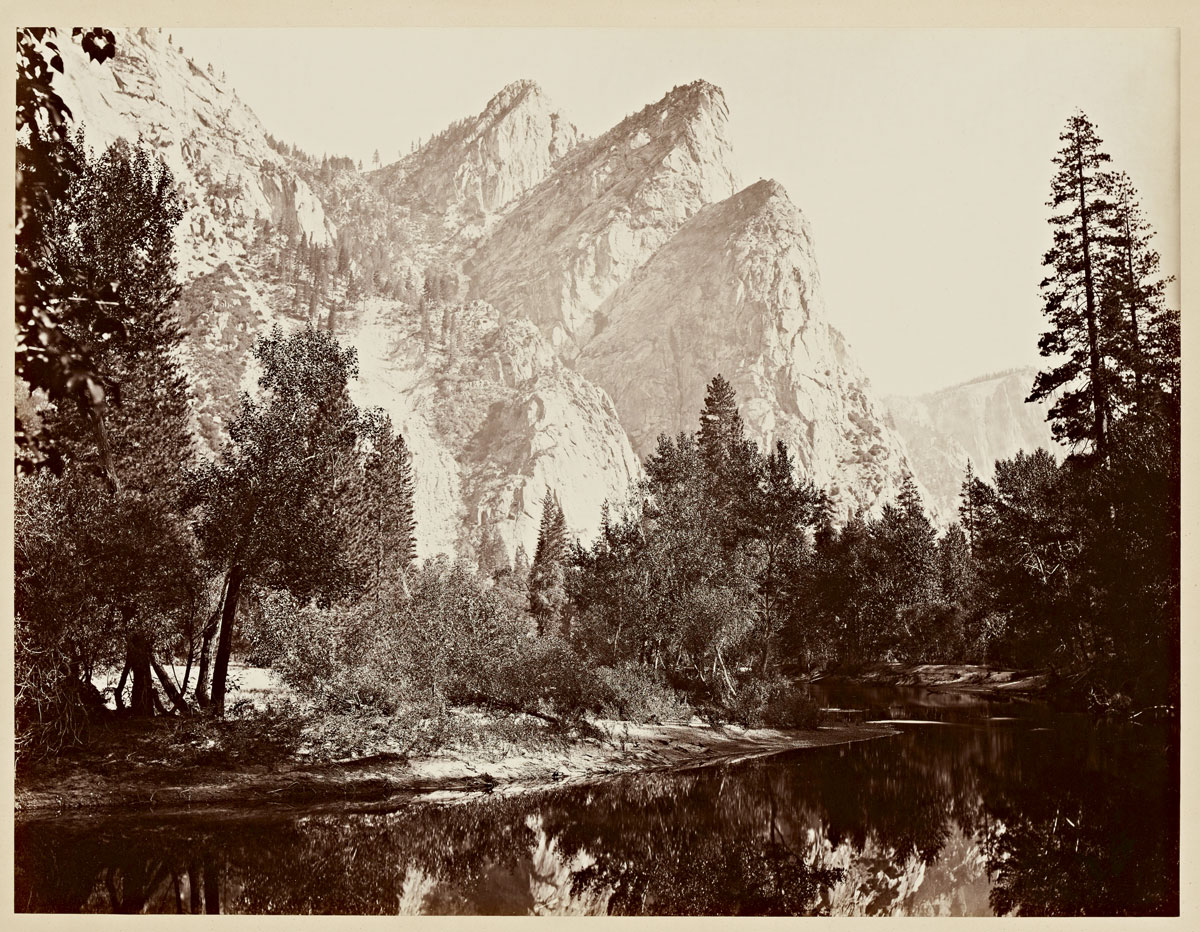
 

Carleton Watkins (American, 1829-1916) 'Pompompasos, the Three Brothers, Yosemite 4480 ft.' 1865-1866


Carleton Watkins (American, 1829-1916)
Pompompasos, the Three Brothers, Yosemite 4480 ft.
1865-1866
From the album Photographs of the Yosemite Valley
Albumen print
Lent by Department of Special Collections, Stanford University Libraries


Carleton Watkins (American, 1829-1916) 'Mirror View of the North Dome, Yosemite' 1865-1866


Carleton Watkins (American, 1829-1916)
Mirror View of the North Dome, Yosemite
1865-1866
From the album Photographs of the Yosemite Valley
Albumen print
Lent by Department of Special Collections, Stanford University Libraries


Born in upstate New York, Carleton Watkins (1829-1916) ventured west in 1849 to strike it rich. But instead of prospecting for gold, Watkins developed a talent for photography – a medium invented only 22 years before. He documented the remote Pacific Coast in the 1860s and 1870s, capturing its vast scale and spirit with a custom-built camera that created “mammoth” 18 x 22-inch glass-plate negatives. In June 1864, his stunning photographs of Yosemite’s valley, waterfalls and peaks proved instrumental in convincing President Abraham Lincoln and the 38th U.S. Congress to pass the Yosemite Valley Grant Act, legislation that preserved the land for public use and set a precedent for America’s National Park System.

As the nation celebrates the 150th Anniversary of the Yosemite Grant, the Cantor Arts Center at Stanford University presents Carleton Watkins: The Stanford Albums, an exhibition featuring more than 80 original mammoth prints from three unique albums of Watkins’s work: Photographs of the Yosemite Valley (1861 and 1865-66), Photographs of the Pacific Coast (1862-76), and Photographs of the Columbia River and Oregon (1867 and 1870). The exhibition will be on view April 23 through August 17, 2014. Also featured will be cartographic visualisations developed in collaboration with Stanford’s Center for Spatial and Textual Analysis and the Bill Lane Center for the American West, which provide dynamic context for the geography and natural history of Watkins’s photographs. A fully illustrated publication will accompany the exhibition.

“The Cantor is thrilled to be leading such an innovative, interdisciplinary effort to look at Watkins’s work anew,” says Connie Wolf, the Cantor’s John & Jill Freidenrich Director. “These extraordinary albums from Stanford University Libraries’ singular collection provide us with an unparalleled opportunity to examine Watkins’s place in the history of photography, and to more fully understand the critical role photography played in the preservation, promotion, and development of the West. It is fascinating to note that Watkins and Leland Stanford were contemporaries. Watkins even photographed Stanford’s family, making this university a proud and apt home for these albums.”

The Albums

Photographs of the Yosemite Valley (1861 and 1865-1866)

In 1861, Watkins loaded up a team of mules with nearly a ton of photographic equipment including a mobile darkroom tent, a dangerous assortment of flammable chemicals, and an enormous custom-built camera that produced “mammoth” 18 x 22-inch glass-plate negatives. He headed 75 miles into the rugged and remote Yosemite Valley on a sometimes perilous journey to capture the natural wonders of the Sierra Nevada. The technical challenges of creating wet-plate negatives in the field were immense. Dust and grit could easily ruin the work as the plates were coated, exposed for up to an hour, and developed. Water had to be carried great distances. The sun warped and shrank camera parts. But the resulting suite of photographs became an international sensation – not only because they provided virtual access to one of America’s grandest wilderness areas but also for their extraordinary beauty. The New York Times declared in 1862 that “as specimens of the photographic art they are unequaled.”

Watkins’s album Photographs of the Yosemite Valley is sequenced to replicate the experience of entering the Mariposa Grove trail and traveling into the valley. From Cathedral Rocks to Half Dome, Watkins captures the quiet majesty of Yosemite’s natural monuments. The album contains images from both his initial expedition in 1861 and a subsequent visit as an ad hoc member of the California State Geological Survey team in 1865-66. Throughout his career, Watkins maintained close relationships with geologists as well as botanists who were deeply interested in his documentation of native tree species.

In Yosemite, Watkins found a spectacular natural laboratory for testing and refining his approach to landscape photography. His compositional choices were unique. In The Yosemite Valley from the “Best General View” (1866), for instance, Watkins cropped off the top of the lone tree in the foreground instead of framing it, lending a painterly quality to the image. By manipulating focus and perspective, Watkins also achieved an unusual balance of crispness against softer tonalities.

Watkins’s technical achievements under adverse conditions were unmatched and astonished his peers. The resolution of his photographs still rivals that of the high-end digital cameras of today. After 1861, capitalising on the success of his Yosemite pictures and his reputation as a landscape photographer, Watkins renamed his studio at 425 Montgomery Street in San Francisco the “Yo-Semite Gallery.” The exhibition features more than 30 photographs from the album Photographs of the Yosemite Valley including various views of Yosemite Valley; mountains and rock formations such as Cathedral Rocks, Half Dome, and El Capitan; waterfalls and water views such as Mirror Lake and Yosemite Falls; and photographs of Yosemite’s majestic trees.

Photographs of the Pacific Coast (1862-1876)

Watkins made his living mostly as a field photographer for hire, accepting commissions from logging companies and mining operations up and down the coast. Early in his career, Watkins’s photographs were often used to attract investors or as documentation in court evidence for land disputes. In the fast-developing West, photography was a means of establishing ‘truth claims’ to property and resource rights. And in a region where vast swaths of territory were rarely traveled by city dwellers, photography filled in the gaps.

Watkins added images from these underwritten trips to an album he called Photographs of the Pacific Coast. Along with his commercial photographs of smelting works at the New Almaden Mine in Santa Clara County and the hydraulic North Bloomfield mine in Nevada County, the album contains remarkable vistas of San Francisco including a dramatic photograph of the shipwreck Viscata on Ocean Beach, also images of the Devil’s Canyon geysers in Sonoma County and the Farallon Islands.

The album also includes images commissioned by California’s sixth governor, Milton Slocum Latham, of Latham’s mansion on San Francisco’s Rincon Hill. It was, in fact, Latham’s wife, Mollie, who commissioned the three albums now at Stanford. One of the original bindings is on display so visitors can appreciate its massive size and ornate details. With the Civil War raging in the eastern part of the country until 1865, Watkins’s images of the pristine Pacific Coast must have provided Americans a welcome alternative to the images of carnage issuing from the battlefield.

In the exhibition, there are more than 20 California photographs from the album Photographs of the Pacific Coast including scenes of San Francisco neighbourhoods, homes, and natural sites including the Farallon Islands; commissioned images of mining operations; and views of Mt. Shasta, Mendocino County, and Sonoma County.

Photographs of the Columbia River and Oregon (1867 and 1870)

While Watkins’s name is most closely associated with Yosemite, photographers often cite Watkins’s album Photographs of the Columbia River and Oregon as his crowning artistic achievement. No longer a novice, Watkins demonstrates mastery of his craft and a keen eye for composition in these images. A friend at the Oregon Steam Navigation Company arranged for Watkins to travel by rail up and down the Columbia River to photograph the company’s rail portages and scenic beauty to document the company’s progress. Watkins was the first to photograph this area and traveled for four months to do so.

In the resulting views of Portland, Oregon City, rail portages, river industry, and scenery, Watkins made art of the river landscapes and the railroad laid alongside it. Cape Horn, Near Celilo (1867), taken at the final point of his journey where the tracks ended, shows a stark horizon, suggesting both the far edge of the world and the determination of early industrial pioneers. In Mt. Hood and the Dalles, Columbia River (1867), a spectacular view of Mt. Hood and of the meandering river at the base of basalt cliffs is disrupted by the object of greatest focus – a tiny white outbuilding for the railroad.

The exhibition features more than 15 photographs from the album Photographs of the Columbia River and Oregon including views along the Columbia River of Cape Horn, Castle Rock and Mt. Hood; and images of Portland, Oregon City, and smaller towns and industries along the railroad.

Exploring Watkins’s Photographs with Digital Technology

Stanford’s Center for Spatial and Textual Analysis, the Bill Lane Center for the American West, the Branner Earth Sciences Library, and the Cantor worked together to create an innovative cartographic digital accompaniment for each album.

For Photographs of Yosemite Valley, the team – including select students – generated “viewsheds” of several of Watkins’s photographs that enable visitors to see where each was likely taken and what topographical elements are either illuminated or obscured in them. With Photographs of the Pacific Coast, fascinating before-and-after visualisations illustrate the incredible changes in the landscape of San Francisco over the last century and a half. Lastly, a cartographic accompaniment to Photographs of the Columbia River and Oregon details the early railroad routes Watkins traveled to take his photographs.

Carleton Eugene Watkins (1829-1916)

Born in upstate New York in 1829, Watkins ventured west to look for opportunities and settled in the Bay Area in 1852. While working for a photography studio, he was asked to step in for a photographer who had unexpectedly quit. Watkins quickly learned the daguerreotype process and within two years he was making ambrotypes and wet-plate collodion photographs.

Throughout his career, Watkins documented the remote American West, generating more than 7,000 photographs of its most majestic wilderness sites as well as the dramatic transformation of isolated territories caused by logging and mining industries. His photographs won awards throughout the United States and abroad. With his early success, he established a gallery in San Francisco on prestigious Montgomery Street in 1861.

But Watkins’s fortunes took a turn with the 1874 failure of the Bank of California and the resulting economic panic. Heavily in debt at the time, Watkins had to declare bankruptcy and lost both the gallery and the majority of his negatives to a competitor. Watkins rebuilt his inventory, continuing to travel and work into the 1890s, but never recovered financially. At one point he and his family lived in a rail car in Oakland. Watkins’s health also declined, and by 1903 he was nearly blind. Watkins died tragically. The 1906 earthquake and fire destroyed his studio and his life’s work, and he never got over the shock. His family eventually had him committed to Napa State Hospital. He died there in 1916.

Press release from the Cantor Arts Center website
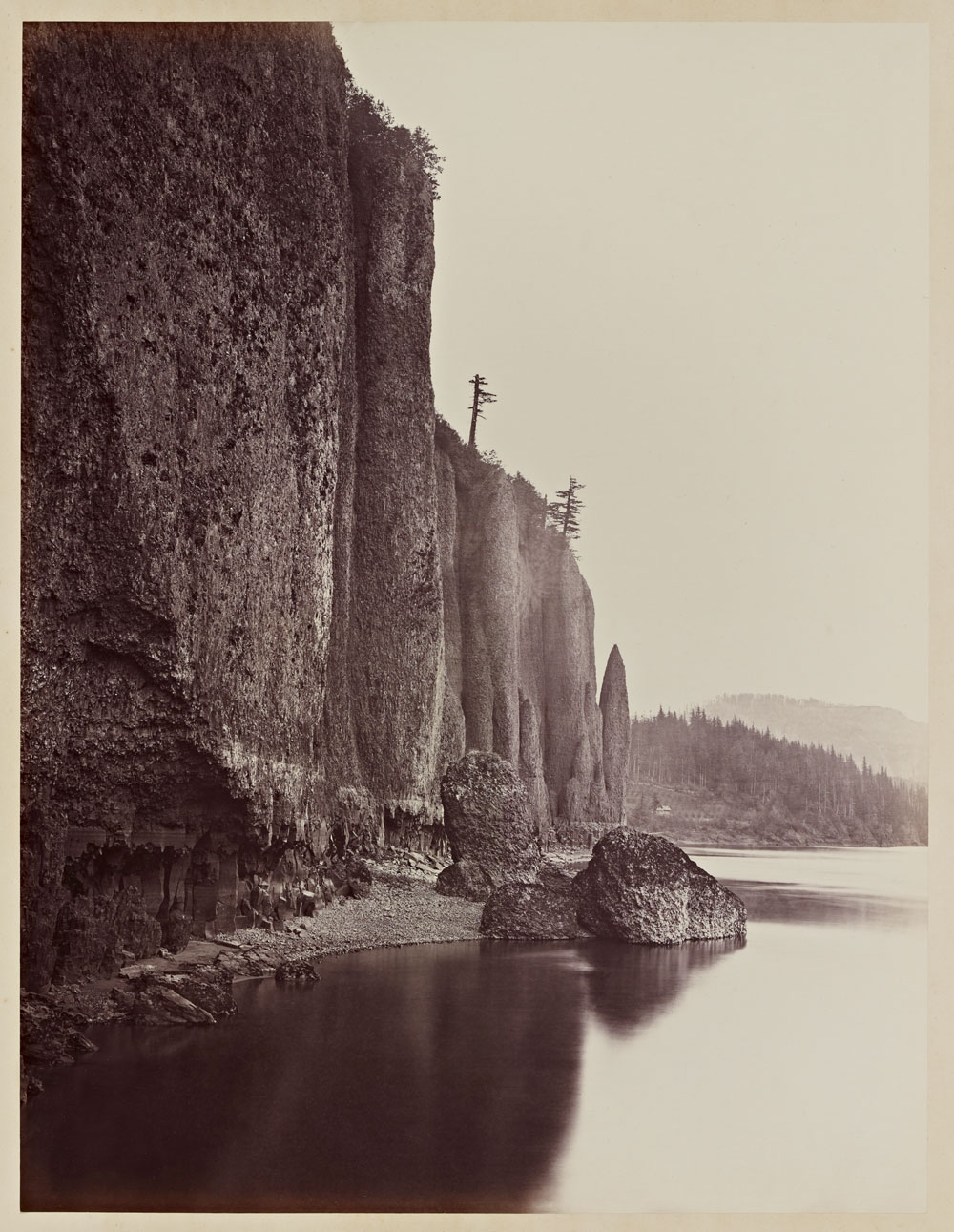
 

Carleton Watkins (American, 1829-1916) 'Cape Horn, Columbia River' 1867


Carleton Watkins (American, 1829-1916)
Cape Horn, Columbia River
1867
From the album Photographs of the Columbia River and Oregon
Albumen print
Lent by Department of Special Collections, Stanford University Libraries
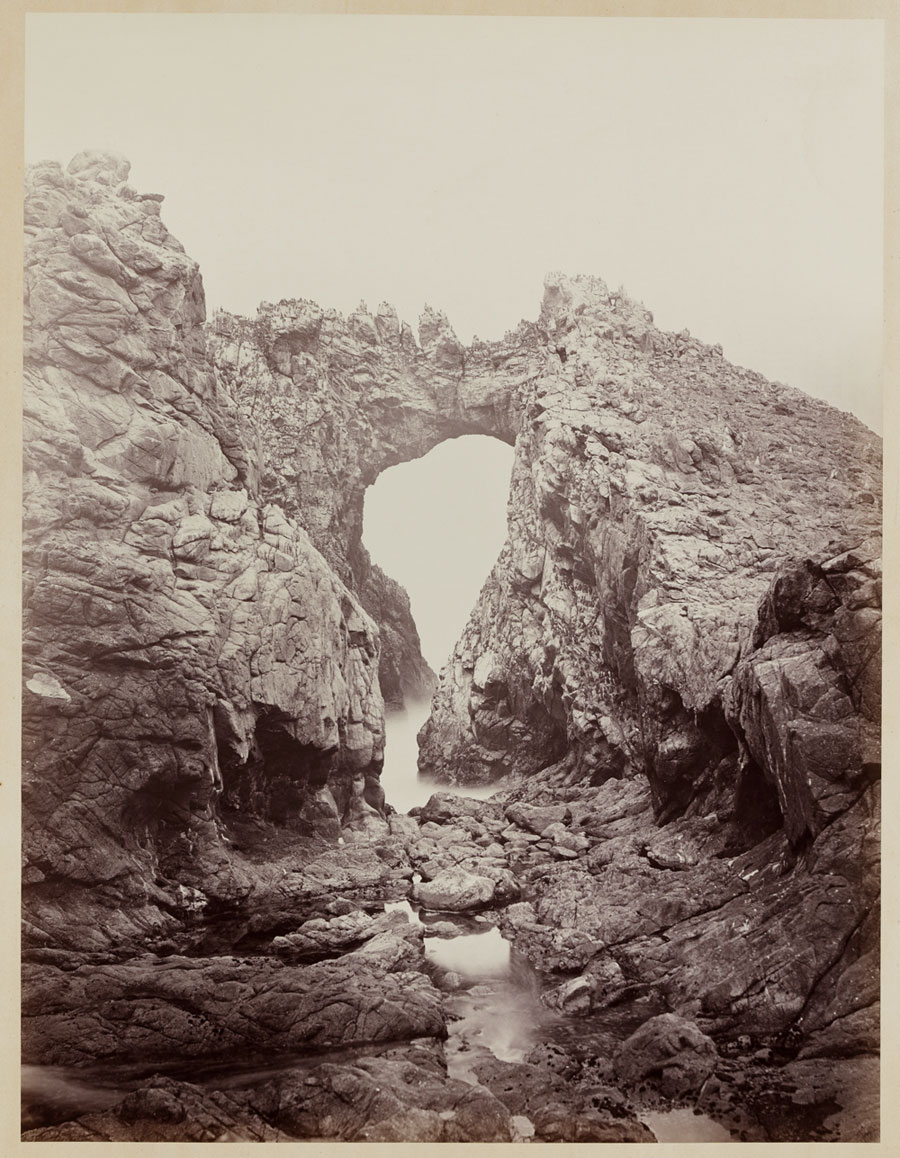
 

Carleton Watkins (American, 1829-1916) 'Arch at the West End, Farallones' 1868-1869


Carleton Watkins (American, 1829-1916)
Arch at the West End, Farallones
1868-1869
From the album Photographs of the Pacific Coast
Albumen print
Lent by Department of Special Collections, Stanford University Libraries
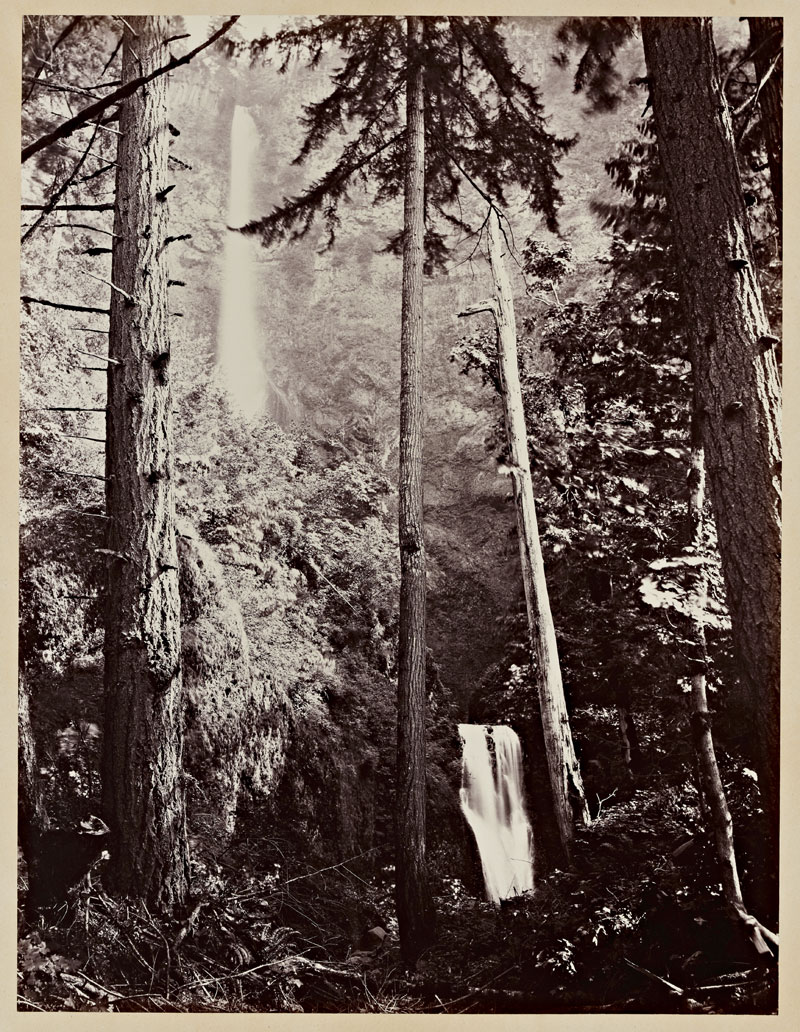
 

Carleton Watkins (American, 1829-1916) 'Multnomah Falls, Columbia River, Oregon' 1867


Carleton Watkins (American, 1829-1916)
Multnomah Falls, Columbia River, Oregon
1867
From the album Photographs of the Columbia River and Oregon
Albumen print
Lent by Department of Special Collections, Stanford University Libraries
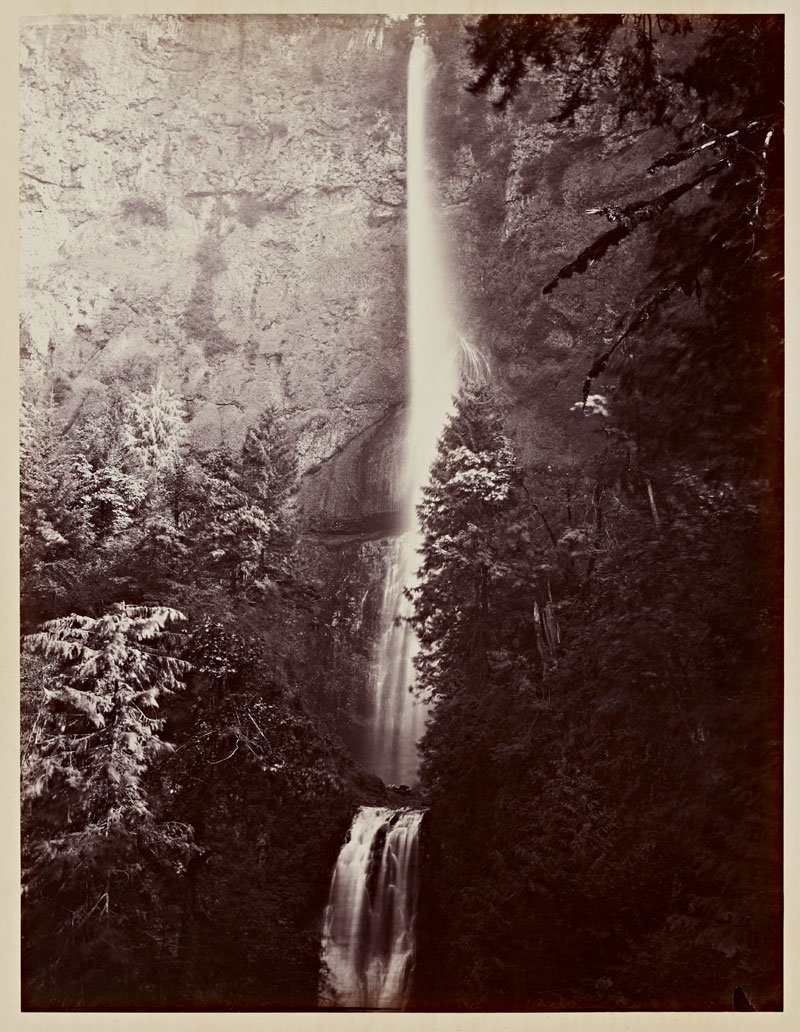
 

Carleton Watkins (American, 1829-1916) 'Multnomah Falls, Cascades, Columbia River' 1867


Carleton Watkins (American, 1829-1916)
Multnomah Falls, Cascades, Columbia River
1867
From the album Photographs of the Columbia River and Oregon
Albumen print
Lent by Department of Special Collections, Stanford University Libraries
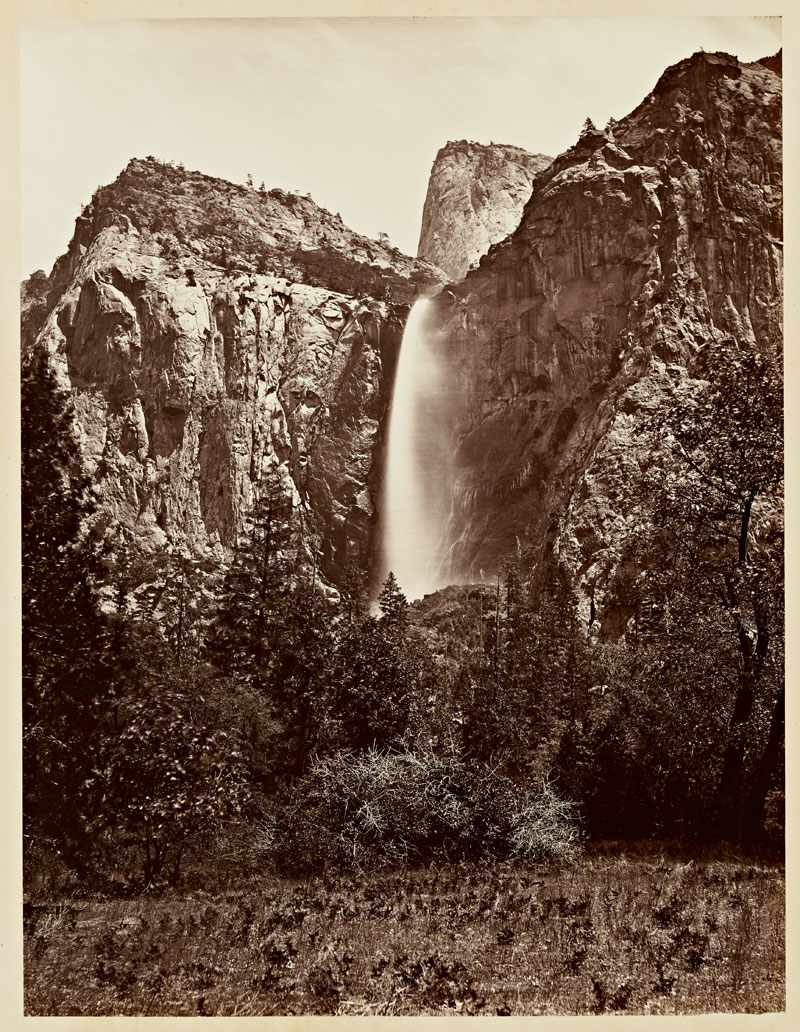
 

Carleton Watkins (American, 1829-1916) 'Pohono, the Bridal Veil, Yosemite 900 ft.' 1865-1866


Carleton Watkins (American, 1829-1916)
Pohono, the Bridal Veil, Yosemite 900 ft.
1865-1866
From the album Photographs of the Yosemite Valley
Albumen print
Lent by Department of Special Collections, Stanford University Libraries


Carleton Watkins (American, 1829-1916) 'The Lower Yosemite Fall, Yosemite' 1865-1866


Carleton Watkins (American, 1829-1916)
The Lower Yosemite Fall, Yosemite
1865-1866
From the album Photographs of the Yosemite Valley
Albumen print
Lent by Department of Special Collections, Stanford University Libraries


Carleton Watkins (American, 1829-1916) 'The Yosemite Falls, 2634 ft.' 1865-1866


Carleton Watkins (American, 1829-1916)
The Yosemite Falls, 2634 ft.
1865-1866
From the album Photographs of the Yosemite Valley
Albumen print. Lent by Department of Special Collections, Stanford University Libraries


Carleton Watkins (American, 1829-1916) 'Mirror View of El Capitan, Yosemite' 1865-1866


Carleton Watkins (American, 1829-1916)
Mirror View of El Capitan, Yosemite
1865-1866
From the album Photographs of the Yosemite Valley
Albumen print
Lent by Department of Special Collections, Stanford University Libraries
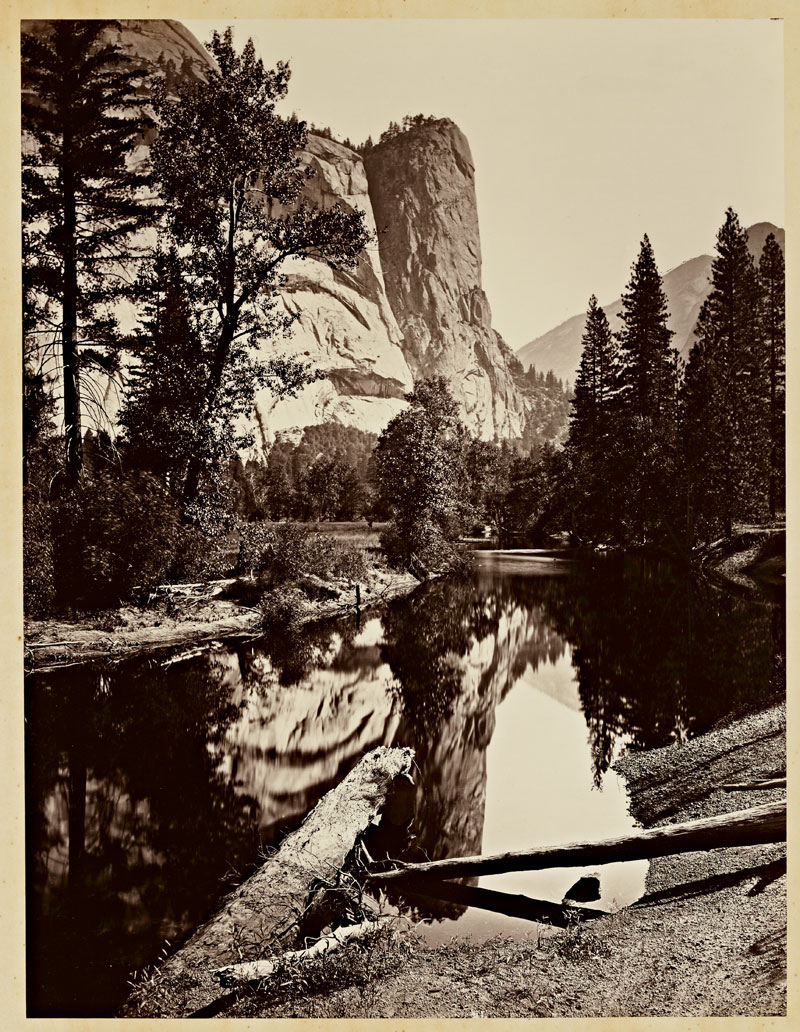
 

Carleton Watkins (American, 1829-1916) 'Washington Column, 2082 ft., Yosemite' 1865-1866


Carleton Watkins (American, 1829-1916)
Washington Column, 2082 ft., Yosemite
1865-1866
From the album Photographs of the Yosemite Valley
Albumen print
Lent by Department of Special Collections, Stanford University Libraries


Carleton Watkins (American, 1829-1916) 'The Ponderosa, Yosemite' 1866


Carleton Watkins (American, 1829-1916)
The Ponderosa, Yosemite
1866
From the album Photographs of the Yosemite Valley
Albumen print
Lent by Department of Special Collections, Stanford University Libraries
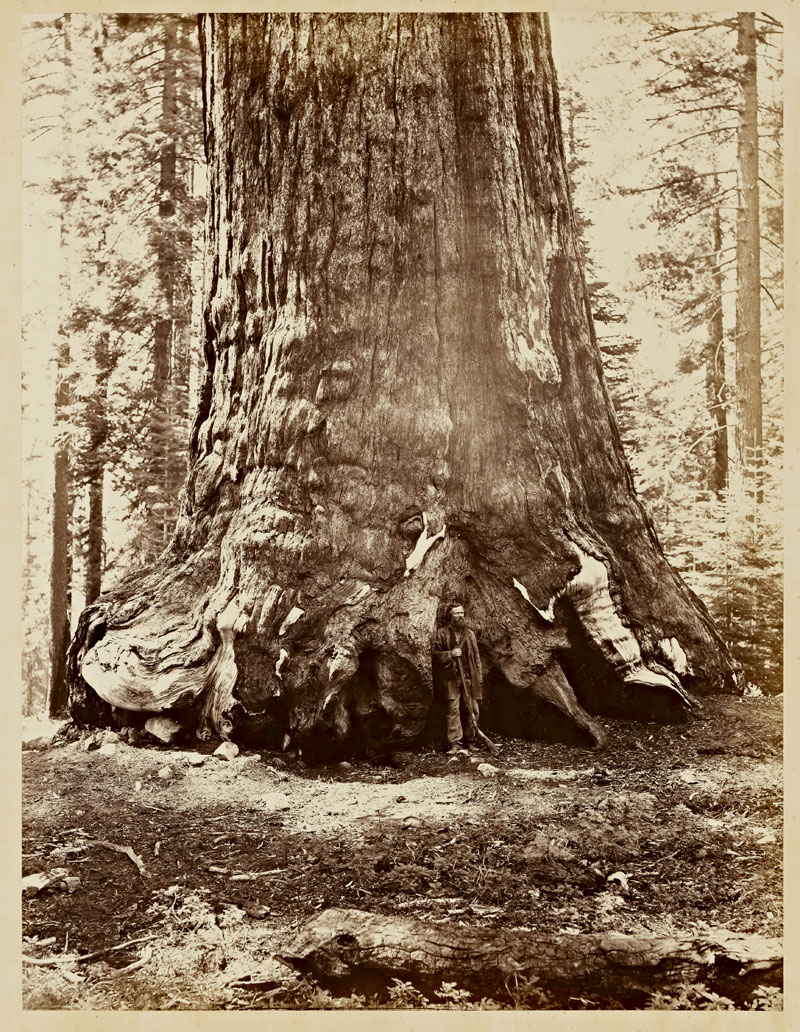
 

Carleton Watkins (American, 1829-1916) 'Section of the Grizzly Giant, 33 ft. diameter' 1865-1866


Carleton Watkins (American, 1829-1916)
Section of the Grizzly Giant, 33 ft. diameter
1865-1866
From the album Photographs of the Yosemite Valley
Albumen print. Lent by Department of Special Collections, Stanford University Libraries


Cantor Arts Center at Stanford University
328 Lomita Drive at Museum Way
Stanford, CA 94305-5060
Phone: 650-723-4177

Opening hours:
Wednesday – Sunday 11am – 5pm
Closed Monday and Tuesday

Cantor Arts Center at Stanford University website

LIKE ART BLART ON FACEBOOK

Back to top

Exhibition: ‘Blow-Up: Antonioni’s Film Classic and Photography’ at the Albertina, Vienna

Exhibition dates: 30th April – 17th August 2014


Arthur Evans (British, 1908-1994) 'David Hemmings in "Blow Up" (directed by Michelangelo Antonioni)' 1966


Arthur Evans (British, 1908-1994)
David Hemmings in “Blow Up” (directed by Michelangelo Antonioni)
1966
Film still
Courtesy Philippe Garner
© Neue Visionen Filmverleih GmbH/Turner Entertainment Co. – A Warner Bros Entertainment Company. All rights reserved.


The act of looking and the gaze through the eye of a photographer’s camera are the central motifs of Blow-Up.

“Don McCullin created the iconographic photographs that in the film are blown up by Thomas to discover something about the alleged crime. However, the blow-ups only offer ambivalent proof as they become more and more blurred and abstract by the continuous enlarging. Even photography that supposedly represents reality like no other form of media cannot help in shedding any light on the mysterious events in the park. Pictorial reality – thus Antonioni’s conclusion – is only ever constructed by the medium itself.” (Press release)

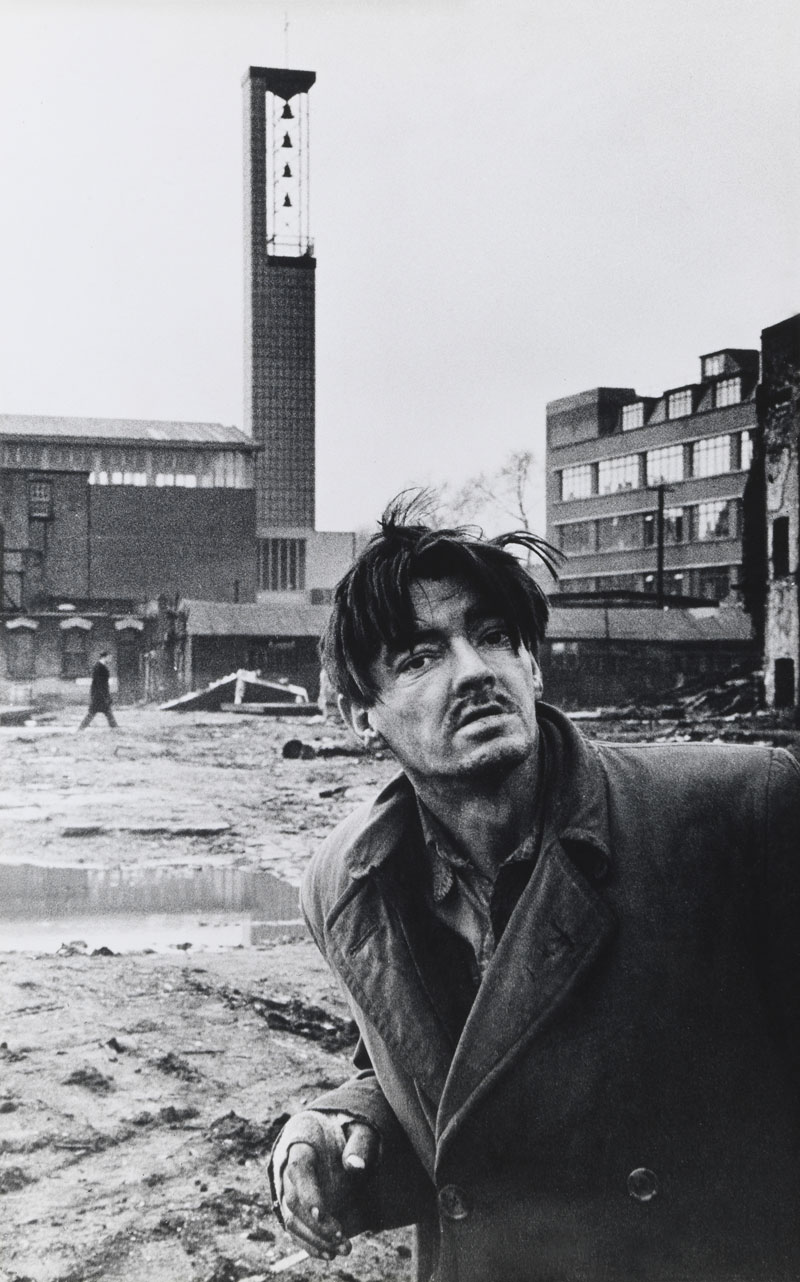
Then, look at Don Mcullin’s photograph British Butcher, East London (c. 1965, below). The Union Jack hat, the knife being sharpened and the contrast of the image. Savage. Not home grown but “Home killed”. Pictorial reality constructed by the medium but not just by the medium – but also by the aesthetic choices and the imagination of the photographer.

Dr Marcus Bunyan


Many thankx to the Albertina for allowing me to publish the photographs in the posting. Please click on the photographs for a larger version of the image.


Arthur Evans (British, 1908-1994) 'David Hemmings in "Blow Up" (directed by Michelangelo Antonioni)' 1966


Arthur Evans (British, 1908-1994)
David Hemmings in “Blow Up” (directed by Michelangelo Antonioni)
1966
Film still
Private collection Vienna
Courtesy: New Visions Film Distribution GmbH


Arthur Evans (British, 1908-1994) 'David Hemmings in "Blow Up" (directed by Michelangelo Antonioni)' 1966


Arthur Evans (British, 1908-1994)
David Hemmings in “Blow Up” (directed by Michelangelo Antonioni)
1966
Film still
Private collection Vienna
Courtesy: New Visions Film Distribution GmbH


Arthur Evans (British, 1908-1994) 'David Hemmings in "Blow Up" (directed by Michelangelo Antonioni)' 1966


Arthur Evans (British, 1908-1994)
David Hemmings in “Blow Up” (directed by Michelangelo Antonioni)
1966
Film still
Private collection Vienna
Courtesy: New Visions Film Distribution GmbH


Anonymous. 'Promotional image for "Blow-Up"' 1966


Anonymous
Promotional image for “Blow-Up”
1966
Courtesy Philippe Garner
© New Visions Film Distribution GmbH / Turner Entertainment Co. – A Warner Bros. Entertainment Company. All rights reserved.


The cult film Blow-Up by Michelangelo Antonioni (1966) occupies a central position in the history of film as well as that of art and photography. No other film has shown and sounded out the diverse areas of photography in such a differentiated way. Shot in London, this film, which tells the story of a fashion photographer who happens to photograph a murder in a park, has become a classic. Its relevance and the unabated fascination it evokes are partially due to the remarkable range of themes it deals with. While Antonioni’s description of the social and artistic environment of his protagonist in 1960’s London can be understood as a visual document of the Swinging Sixties, the eponymous photographic blow-ups meticulously examined by the photographer to find something out about an alleged crime prompted a theoretical discourse on the representation and ambiguity of pictures from the first showing of the film. Both themes, the historical outline as well as the media reflexions, concern the main focus of the film: photography.

For the first time the exhibition in the Albertina presents in several chapters the diverse and differentiated connections between film and photography, thus allowing a trenchant profile of the photographic trends of the 1960s.

Photography in Blow-Up

The photographic range of Blow-Up is highly diversified and ranges from fashion photography and social reportage to abstract photography. Film stills are shown next to works that can actually be seen in Blow-Up, as well as pictures that illuminate the cultural and artistic frame of the film production, London in the Swinging Sixties.

The meaning of photography for the film Blow-Up is most apparent when Antonioni uses it to characterise his main character Thomas. Played by David Hemmings, the protagonist is not only a fashion photographer, but is also working on an illustrated book with photographs of social reportage. In order to depict both the main figure and its two areas of work in an authentic way, Antonioni is guided by real photographers of the time; before starting to shoot the film he meticulously researched the work as well as environment of the British fashion (photography) scene.

In the course of his preparations Antonioni sent out questionnaires to fashion photographers and visited them in their studios. Thus the main character is modelled after various photographers like David Bailey, John Cowan and Don McCullin; some of them Antonioni asked to cooperate on his film. He also integrated their works, for example Don McCullin’s reportage photographs that the protagonist browses through in the film, or fashion photographs by John Cowan that in the film can be seen in the protagonist’s studio.

In addition Don McCullin created the iconographic photographs that in the film are blown up by Thomas to discover something about the alleged crime. However, the blow-ups only offer ambivalent proof as they become more and more blurred and abstract by the continuous enlarging. Even photography that supposedly represents reality like no other form of media cannot help in shedding any light on the mysterious events in the park. Pictorial reality – thus Antonioni’s conclusion – is only ever constructed by the medium itself.

Antonioni used the photographs seen in the film for media-theoretical reflections and thus set stills and moving pictures in a differentiated context. This complex connection between film and photography is made very clear by the film stills that were created for Blow-Up. These still photographs are based on an elaborate process whereby the photographer has certain scenes re-enacted for the photo camera thus transforming the film from moving images into something static. The manifold references of Blow-Up are once more condensed into photographs in the film stills, as the pictures reflect the real context of fashion photography in 1960’s London through the depiction of the photographer, of well-known fashion models and the use of clothes to match.

Artistic references

The photographic references in Blow-Up are also set in relation to other art forms. This contextualisation is essential for Antonioni’s understanding of photography. Antonioni was, unlike most other film directors, committed to the applied arts which he showed already in 1964 with his film Deserto Rosso, its abstract compositions based on Mark Rothko’s paintings. In Blow-Up an artistic reference of this nature becomes apparent in the character of the protagonist’s neighbour, an abstract painter named Bill, who is modelled on British artist Ian Stephenson. Also the oil paintings in the film were created by Ian Stephenson. They show abstract motifs that in the film are compared with the stylistically related ‘blow-ups’.

The Swinging Sixties

Michelangelo Antonioni filmed Blow-Up at the height of the Swinging Sixties, the social and artistic trends of which are rendered in the film. The agitation of youth culture so characteristic of this time í and not least of all initiated by the Beatles í is shown as well as its trendsetting figures. Thus a concert by the British band The Yardbirds, with Jimmy Page, the subsequent founder of Led Zeppelin, served as a filming location. The scene of the infamous Pot-Party in the film was shot in the apartment of the art and antique dealer Christopher Gibbs, who shaped the fashion look of the Swinging Sixties.

British art of the 1960s was also essential for Antonioni as it anticipated many of those abstract tendencies that set the tone for Blow-Up. There was, for instance, the pop art artist Richard Hamilton who created blow-ups from ordinary postcards, thus reducing motifs to dots. Or Nigel Henderson, a member of the Independent Group, who had already produced photos in the 1950s, in which he pointed out their material qualities by creasing them and using special procedures for the negatives.

As much as Antonioni’s work is rooted in the 1960s, it is nevertheless a timeless classic that is still relevant for today’s art. This becomes apparent in the exhibition by means of selectively chosen contemporary works that refer to Blow-Up. Particularly the filmic outline on the representation of images and their ambiguity serves as the artistic basis for the creations of various contemporary photographers. Blow-Up has lost none of its relevance for art since its creation in 1966.

Press release from the Albertina website


Don McCullin (British, b. 1935) 'Thomas' blow-ups from the Park' 1966


Don McCullin (British, b. 1935)
Thomas’ blow-ups from the Park
1966
Courtesy Philippe Garner
© New Visions Film Distribution GmbH / Turner Entertainment Co. – A Warner Bros. Entertainment Company. All rights reserved.


Don McCullin (British, b. 1935) 'Thomas' blow-ups from the Park' 1966


Don McCullin (British, b. 1935)
Thomas’ blow-ups from the Park
1966
Courtesy Philippe Garner
© New Visions Film Distribution GmbH / Turner Entertainment Co. – A Warner Bros. Entertainment Company. All rights reserved.


Patrick Hunt. 'David Bailey on the set of G.G. Passion' 1966


Patrick Hunt
David Bailey on the set of G.G. Passion
1966
Courtesy Philippe Garner


Arthur Evans (British, 1908-1994) 'Veruschka von Lehndorff with David Hemmings in "Blow Up" (directed by Michelangelo Antonioni)' 1966


Arthur Evans (British, 1908-1994)
Veruschka von Lehndorff with David Hemmings in “Blow Up” (directed by Michelangelo Antonioni)
1966
Film still
Private collection Vienna
Courtesy: New Visions Film Distribution GmbH


David Bailey (British, b. 1938) 'Brian Epstein (Box of Pin-Ups)' 1965


David Bailey (British, b. 1938)
Brian Epstein (Box of Pin-Ups)
1965
V & A Images / Victoria and Albert Museum
© David Bailey


Shezad Dawood (British, b. 1974) 'Make it big (Blow-Up)' 2002/2003


Shezad Dawood (British, b. 1974)
Make it big (Blow-Up)
2002/2003
Film still
Courtesy of the artist and Paradise Row, London


Richard Hamilton (British, 1922-2011) 'Swinging London III' 1972


Richard Hamilton (British, 1922-2011)
Swinging London III
1972
Kunstmuseum Winterthur
© Swiss Institute for Art Research, Zurich, Jean-Pierre Kuhn purchase in 1997


Exhibition texts

Shot in London in 1966, Michelangelo Antonioni’s masterpiece Blow-Up confronts its audience with the manifold genres of photography and their different social references with a precision like no other feature film. The director involved some of the most interesting photographers of the day in the production of the film. The photojournalist Don McCullin was on set as were the fashion photographers John Cowan and David Montgomery as well as the paparazzo Tazio Secchiaroli. They served as models for Antonioni’s protagonist, took photographs for Blow-Up, and, not least, made their work available to the filmmaker.

Set against the social and artistic backdrop of London’s Swinging Sixties, Blow-Up tells us about a fashion photographer by the name of Thomas (David Hemmings) who secretly photographs two lovers in a park. He later enlarges these pictures and believes that he has coincidentally documented a murder. The blow-ups reveal a man lurking in the trees with a gun and, as Thomas supposes, a corpse. Fashion shootings and Thomas’s work on a book with reportage photographs featuring homeless people in London provide two further strands of reference in the film.

Presenting these contexts in five thematic sections, the exhibition in the Albertina offers a pointed cross-section of tendencies in the photography of the 1960s. The show not only explores the photo-historical circumstances under which Blow-Up was made but also presents real works of art Antonioni integrated into his film, as well as photographs he commissioned for the story. The visual translation of the film into stills constitutes another important field thematised in the exhibition. A selection of more recent works of art highlights the timelessness of Antonioni’s film.

Making film stills

Making film stills involves a complex production process in the course of which scenes of a film are specially reenacted in front of the still photographer’s camera. The difficulties the photographer is faced with result from the difference between film and photography as media. He has to transform the contents of a medium that renders movements and sequences of events in time into a photograph that freezes them in a single static moment.

Arthur Evans’s stills for Blow-Up go far beyond the genre’s traditional function of promoting a film. Evans created series of pictures which allow us to reconstruct certain sequences of movement and depict scenes not shown in the film. Hence his stills for Blow-Up are meta-pictures that shed light on the film from another perspective.

Voyeurism

The act of looking and the gaze through the eye of a photographer’s camera are the central motifs of Blow-Up, which becomes particularly evident in the famous scene in the park. This part of the film depicts the dynamics resulting from a camera focusing on persons and capturing them in a picture. Antonioni presents his protagonist as a paparazzo and voyeur secretly photographing people in the tradition of Alfred Hitchcock’s Rear Window (1954). Hidden behind shrubs, trees, and a fence, he watches a pair of lovers. The camera serves as an instrument for peeping through the keyhole, as it were. The dialogic dimension between photographer and model is revealed when the woman (Vanessa Redgrave) spots the photographer. She defends herself against Thomas’s invasive gaze, bites his hand, and runs away. The aesthetic of Thomas’s photographs shot in the park corresponds to the situation of their taking. The pictures are imbued with the instantaneousness and spontaneity deriving from the photographers wish to wrest a single picture from a dynamic context in a fraction of a second.

It is no coincidence that the photographer Tazio Secchiaroli was present on set in the very hours this scene was shot. Secchiaroli was an Italian paparazzo who had been after the suspects in a still unresolved murder case, the Montesi scandal, with his camera. Made against the background of this political scandal, Federico Fellini’s film La dolce vita (1960) features pushy photo reporters modelled after Secchiaroli.

Blow-Ups

The blow-ups of Thomas’s photographs shot in the park are the most famous pictures featured in Antonioni’s film. The filmmaker entrusted the renowned photojournalist Don McCullin with taking them. Following Antonioni’s instructions, McCullin had to position himself in the same places as Thomas in the film to reproduce his perspectives. He also used the same Nikon F camera the protagonist works with in Blow-Up. In order to ensure that the process of taking the pictures we see in the film corresponds with the photographer’s results, McCullin advised the actor David Hemmings on how to proceed. The actor learned how to handle the 35-mm camera correctly and was instructed about the body language connected with using it.

Fashion photography

The metropolis of London was the center of a new kind of fashion photography in the 1960s – a renown inseparably bound up with three names to this day: David Bailey, Terence Donovan, and Brian Duffy, also known as Black Trinity. Relying on 35-mm cameras, which had hitherto mainly been used for reportage photographs and ensured a supposedly spontaneous and dynamic pictorial language, these three photographers staged their models in unusual places outside their studios.

In preparing his film, Antonioni had meticulously researched the photographer’s living and working conditions by means of a several-page questionnaire in which he even inquired into their love relationships and eating habits. It was David Bailey who served as a model for the protagonist of Blow-Up. For his dynamic body language in the fashion shootings, for instance, Thomas took the cue from him. The style of clothes Thomas wears is indebted to that of the British fashion photographer John Cowan. Cowan made his studio available to Antonioni for the studio shots and acted as the filmmaker’s adviser. The photographs seen on the studio wall in Blow-Up are fashion photographs by Cowan which Antonioni chose for the film.

David Montgomery

David Montgomery is a US-American fashion photographer living in London. Before shooting his film, Antonioni visited him in his studio to watch him working with Veruschka, Jill Kennington, and Peggy Moffitt – the models he would subsequently cast for Blow-Up. David Montgomery has a cameo appearance in the beginning of the film: we see him taking pictures of the model Donyale Luna on Hoxton Market in London’s East End. When this scene was shot, he actually made the fashion photographs featuring Luna which he pretends to take in the film. Since Montgomery was no actor by his own account, he had to really take pictures in order to be able to play the scene in a convincing manner.

Arthur Evan’s fashion photographs

Arthur Evans, the still photographer, depicted the models appearing in Blow-Up in groups and in individual portraits. These pictures taken on set are very unusual for a still photographer, because they do not show scenes of the film, but are independently staged fashion photographs. The models’ costumes were designed by Jocelyn Rickards, the hats were made by James Wedge. Evans translated the linear patterns characteristic of both designers into graphic compositions in his photos.

Social reportage

Michelangelo Antonioni characterises his film’s protagonist also as a social reportage photographer who, for a book project on London he is working on, secretly takes pictures in a homeless shelter. A scene of the film has Thomas showing his publisher a dummy of the volume. The portraits in it were made by the photojournalist Don McCullin; their originals are presented in the exhibition for the very first time.

The pictures were taken in London’s East End in the early 1960s, when the area was notorious for its residents’ poverty, miserable housing conditions, and racial unrest. The photographer provides a cross-section of its inhabitants whom he mainly characterises through their occupation. The two-fold orientation of the film’s protagonist as fashion and reportage photographer is based on fact, as illustrated by both David Bailey and David Montgomery. The stylistic boundaries between the two genres blur in their works. The strategy of picturing models in urban surroundings with a 35-mm camera, for example, is clearly rooted in reportage photography.

Swinging London: Art and Life

Michelangelo Antonioni filmed Blow-Up in the heyday of London’s Swinging Sixties whose social and artistic trends are depicted in the film. He captured the youth culture and its agitation so characteristic of these years – which was not least triggered by the Beatles – as well as the protagonists of the scene. One location he chose was a concert of the Yardbirds, a British band counting Jimmy Page, who would found Led Zeppelin, among its players. The famous pot-party in Blow-Up was shot in the art and antique dealer Christopher Gibbs’ flat, who determined the fashion look of the Swinging Sixties to a remarkable degree.

The British art of the 1960s was also very important to Antonioni, as it already anticipated many of the abstract tendencies informing Blow-Up. The Pop artist Richard Hamilton, for example, used to enlarge everyday picture postcards, reducing their motifs to an abstract dot matrix. Nigel Henderson, a member of the Independent Group, had already emphasised the material qualities of his photos in the 1950s by folding his prints and employing negative techniques. Antonioni integrated works by British artists: for example a picture by Peter Sedgley, a representative of Op art, and oil paintings by Ian Stephenson into his film.

Ian Stephenson

Antonioni’s understanding of photography was informed by painting í an influence that becomes manifest in the character of the protagonist’s neighbour, in Blow-Up a painter named Bill. Antonioni compares the neighbour’s abstract paintings with the photographer’s blow-ups. When Thomas and his neighbour talk about the paintings, Bill maintains that he does not see much in them while painting them and only finds meaning in them later on. This form of reception tallies with Thomas’s attempt to determine the meaning of his similarly abstract enlargements.

The character of the painter is based on the British artist Ian Stephenson. Antonioni visited the artist in his studio before he started shooting Blow-Up. He watched the painter at work and selected the paintings he wanted to use in the film.

Blow-Up

The photographs central to Antonioniés film are the blow-ups of the pictures which the protagonist has taken in the park and which he examines meticulously. The enlargements reveal a man with a pistol lurking in the trees and a mass in the grass, which Thomas interprets as a lifeless body. To make the presumed corpse more visible Thomas enlarges the photograph again and again until it shows nothing but its grain and materiality, despite the photographs inherent relation to reality.

Antonioni uses the blow-ups to question the representation of reality by media and their specific modes of perception. He interlinks these considerations with the film. The final scene of Blow-Up shows Thomas coming upon a group of mimes playing an imaginary game of tennis. When the (invisible) ball lands behind the fence, Thomas joins in the mimes’ game, picks up the ball from the lawn and throws it back to the players. A camera pan traces the trajectory of the invisible ball. In evoking the ball without showing it, Antonioni confronts us with the most radical abstraction: the motif is not rendered as an abstract or blurry form like in the enlargements, but is altogether absent. The media-theoretical implications of Blow-Up are still the subject of conceptual photographs today. Like Antonioni, the Italian Ugo Mulas and the American Allan McCollum, for example, question photography’s relation to reality in their blow-ups.

Le montagne incantate

The nucleus for the blow-ups in the film is to be found in a series of artworks titled Le montagne incantate (The Enchanted Mountains), which Antonioni started working on in the mid-1950s. The filmmaker photographically enlarged his small-format abstract watercolours, making the material qualities of the paper and the application of the paint visible. Consequentially, Antonioni recommended the use of a magnifying glass – as used by the protagonist in Blow-Up – as the ideal instrument for viewing these pictures.

Text from the Albertina website


Brian Duffy (English, 1933-2010) 'Jane Birkin' 1960s


Brian Duffy (English, 1933-2010)
Jane Birkin
1960s
© Brian Duffy Archive


Eric Swayne (British, 1932-2007) 'Grace and Telma, Italian Vogue, 1966' 1966


Eric Swayne (British, 1932-2007)
Grace and Telma, Italian Vogue, 1966
1966
Courtesy Tom Swayne
© Eric Swayne


Terence Donovan (English, 1936-1996) 'The Secrets of an Agent' 1961


Terence Donovan (English, 1936-1996)
The Secrets of an Agent
1961
© Terence Donovan Archive


Ian Stephenson (English, 1934-2000) 'Still Life Abstraction D1' 1957


Ian Stephenson (English, 1934-2000)
Still Life Abstraction D1
1957
© Kate Stephenson, widow of Ian Stephenson


Jill Kennington (British, b. 1943) "Blow-Up" 1966


Jill Kennington (British, b. 1943)
“Blow-Up”
1966
© New Visions Film Distribution GmbH / Turner Entertainment Co. – A Warner Bros. Entertainment Company. All rights reserved.


Don McCullin (British, b. 1935) 'Down-and-out begging for help, Aldgate, 1963' 1963


Don McCullin (British, b. 1935)
Down-and-out begging for help, Aldgate, 1963
1963
© Don McCullin, courtesy Hamiltons Gallery, London


Don McCullin (British, b. 1935) 'British Butcher, East London' c. 1965


Don McCullin (British, b. 1935)
British Butcher, East London
c. 1965
© Don McCullin Courtesy Hamiltons Gallery, London


Terry O'Neill (British, 1938-2019) 'David Bailey photographing Moyra Swan' 1965


Terry O’Neill (British, 1938-2019)
David Bailey photographing Moyra Swan
1965
© Terry O’Neill – Courtesy Philippe Garner


Tazio Secchiaroli (Italian, 1925-1998) 'David Hemmings and Veruschka von Lehndorff in "Blow-Up" (directed by Michelangelo Antonioni)' 1966


Tazio Secchiaroli (Italian, 1925-1998)
David Hemmings and Veruschka von Lehndorff in “Blow-Up” (directed by Michelangelo Antonioni)
1966
Filmstill
Source: BFI stills
© New Visions Film Distribution GmbH / Turner Entertainment Co. – A Warner Bros. Entertainment Company. All rights reserved.


David Montgomery (American, b. 1937) 'Donyale Luna on the set of "Blow-Up"' 1966


David Montgomery (American, b. 1937)
Donyale Luna on the set of “Blow-Up”
1966
© David Montgomery


Albertina
Albertinaplatz 1
1010 Vienna, Austria
Phone: +43 (0)1 534 83-0

Opening hours:
Daily 10am – 6pm
Wednesday and Friday 10am – 9pm

Albertina website

LIKE ART BLART ON FACEBOOK

Back to top

Exhibition: ‘Art and Alchemy. The Mystery of Transformation’ at the Stiftung Museum Kunstpalast (SMKP), Düsseldorf, Germany

Exhibition dates: 5th April – 10th August 2014


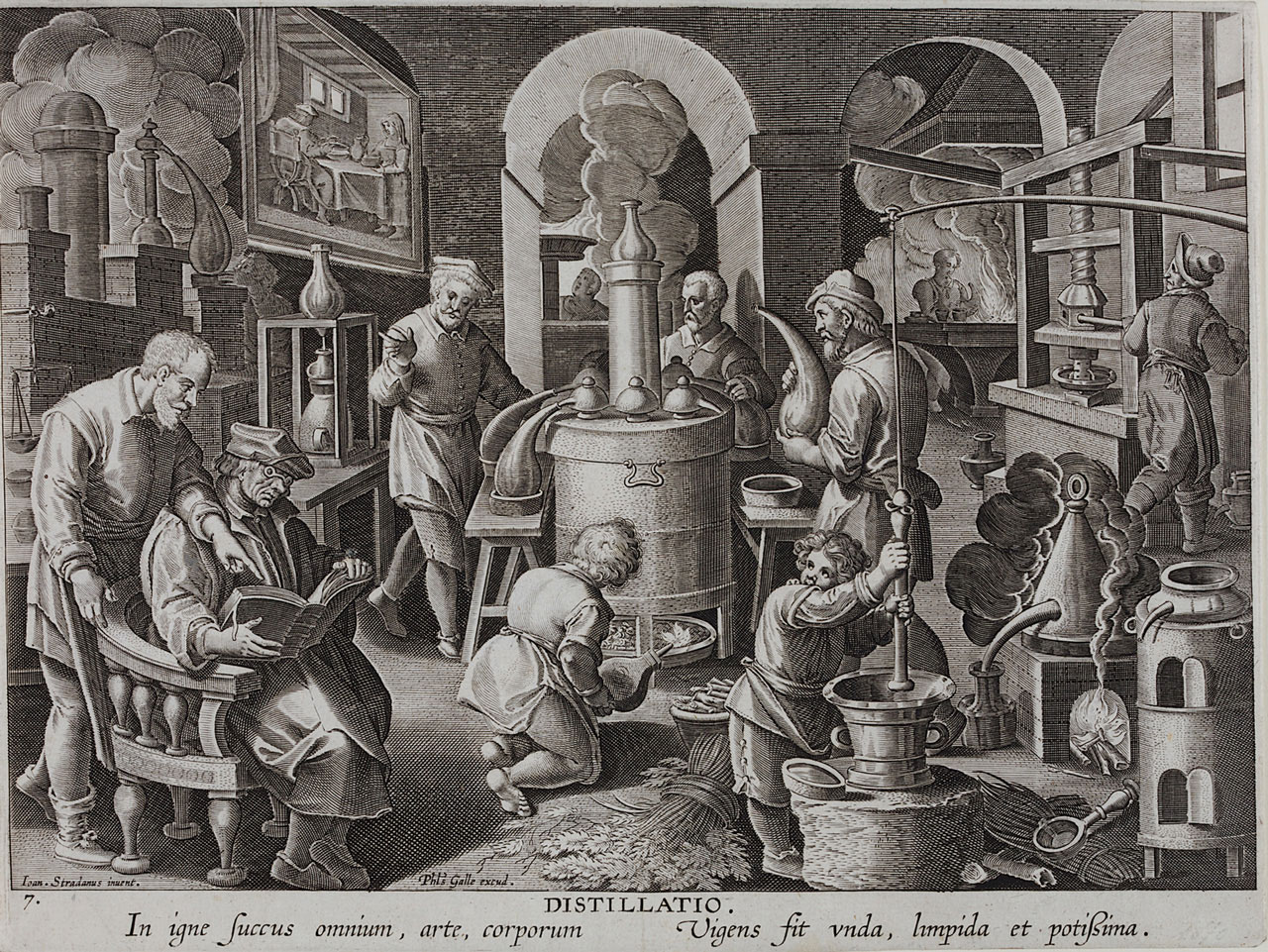
Theodor Galle nach Jan van der Straet (Stradanus) (Belgium, 1523-1605) 'Destillierlabor' (from the series "Nova reperta") c. 1589 - c. 1593


Theodor Galle nach Jan van der Straet (Stradanus) (Belgium, 1523-1605)
Destillierlabor
c. 1589 – c. 1593
From the series Nova reperta
Stiftung Museum Kunstpalast, Düsseldorf
Photo: Horst Kolberg, Neuss


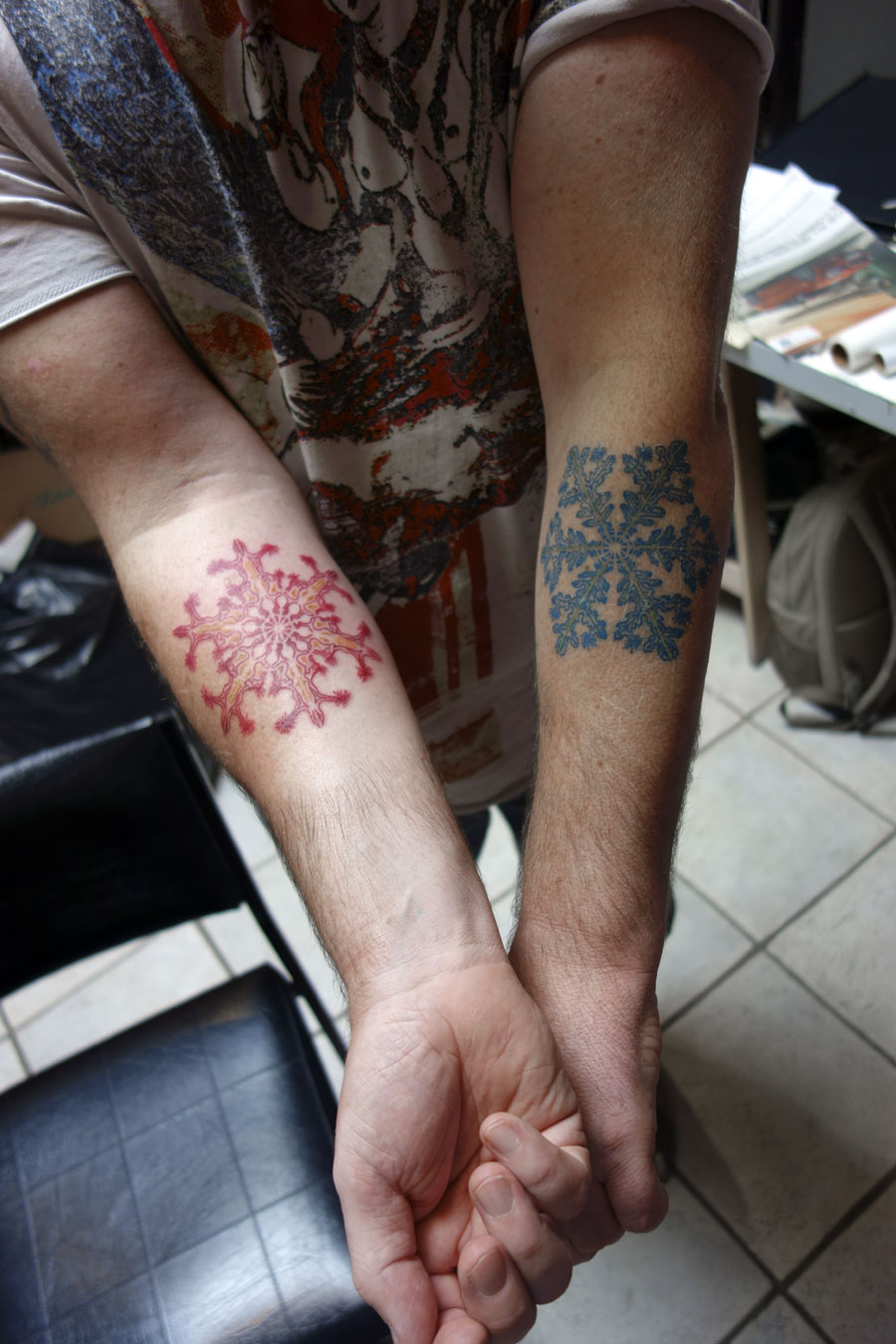
Since I have 7 alchemy symbols tattooed on my right bicep in a vertical line to represent the 7 chakras, I thought this was a suitable exhibition for a posting. I love anything alchemical, magical, spiritual – in art and in life. I have just had a couple of snowflakes tattooed on my forearms, one blue / green and the red / orange for an ice / fire combination. Each snowflake is unique and ephemeral, here and gone in the blink of an eye, just like we are. That is their, and our, magic.

The photographer Minor White said it is not just the images that matter, but the space between them that causes an ice / fire frisson. When looking at an exhibition I note how images play off of each other – in pairs, sequences and across the gallery space. It is a relatively simple thing for a photographer to take one good image, more difficult to put a pair of images together that actually says something, but when you get to a sequence of images (as in MW) or a body of work, this is were a lot of artists wane. The intertextual narrative, one woven from the imagination of the artist, does not resolve itself into a satisfying, stimulating whole. How many exhibitions do I see that have some good images but do not access the magic of the music.

Further, we must also remember that in Psychology and Alchemy, Volume 12 in The Collected Works of C. G. Jung, alchemy is central to Jung’s hypothesis of the collective unconscious. “Jung reminds us of the dual nature of alchemy, comprising both the chemical process and a parallel mystical component. He also discusses the seemingly deliberate mystification of the alchemists. Finally, in using the alchemical process to provide insights into individuation, Jung emphasises the importance of alchemy in relating to us the transcendent nature of the psyche.” (Wikipedia)

Jung sees alchemy as an early form of psychoanalysis. The melting of base metal in a crucible and its reforming into gold can be seen as a form of individuation – the dissolution of the ego and its integration into the whole self. Basically the recasting or reforming of identity into a new Self. As the instructive text on Wikipedia notes,

“For the alchemist trying to understand matter and develop base metals into their purest form, gold, substances are grouped as being alike based on their perceived value. Jung documents as these alchemists collectively come to understand that they themselves must embody the change they hope to effect within their materials: for instance, if they hope to achieve the philosopher’s stone that can redeem ‘base’ or ‘vulgar’ metals, then the alchemist too must become a redeemer figure. It became apparent to the alchemists that they were trying to redeem nature as Christ had redeemed man, hence the identification of the Lapis Philosophorum with Christ the Redeemer. The Opus (work) of alchemy, viewed through this interpretation, becomes a symbolic account of the fundamental process the human psyche undergoes as it re-orients its value system and creates meaning out of chaos. The opus beginning with the nigredo (blackening, akin to depression or nihilistic loss of value) in order to descend back into the manipulable prima materia and proceeding through a process of spiritual purification that must unite seemingly irreconcilable opposites (the coniunctio) to achieve new levels of consciousness.”


Much of my early black and white work was based on an understanding of the magical nature of the (art)work. This is a fascinating area of enquiry for all artists because this is what they do – they see the world differently, reform it through their art and present it as a pathway for the future.

Dr Marcus Bunyan

PS The catalogue to this exhibition is excellent with lots of interesting essays.


Many thankx to the Stiftung Museum Kunstpalast for allowing me to publish the art work in the posting. Please click on the photographs for a larger version of the image.


Marcus new tattoos February 2014


Marcus new tattoos February 2014


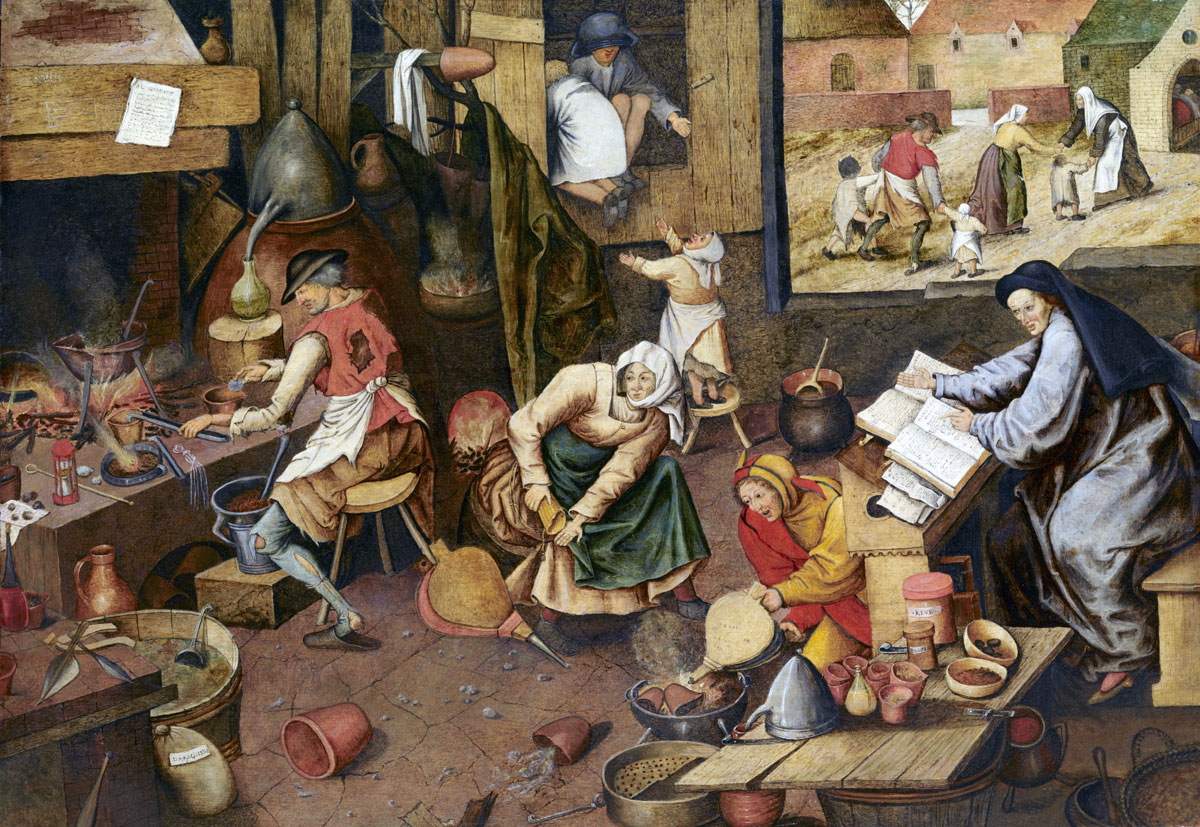
Pieter Brueghel the Younger (Belgium, 1564-1636) (after Pieter Brueghel the Elder) 'The Alchemist' c. 1600


Pieter Brueghel the Younger (Belgium, 1564-1636)
after Pieter Brueghel the Elder
The Alchemist
c. 1600
Oil on wood
68.8 x 96cm
Private collection


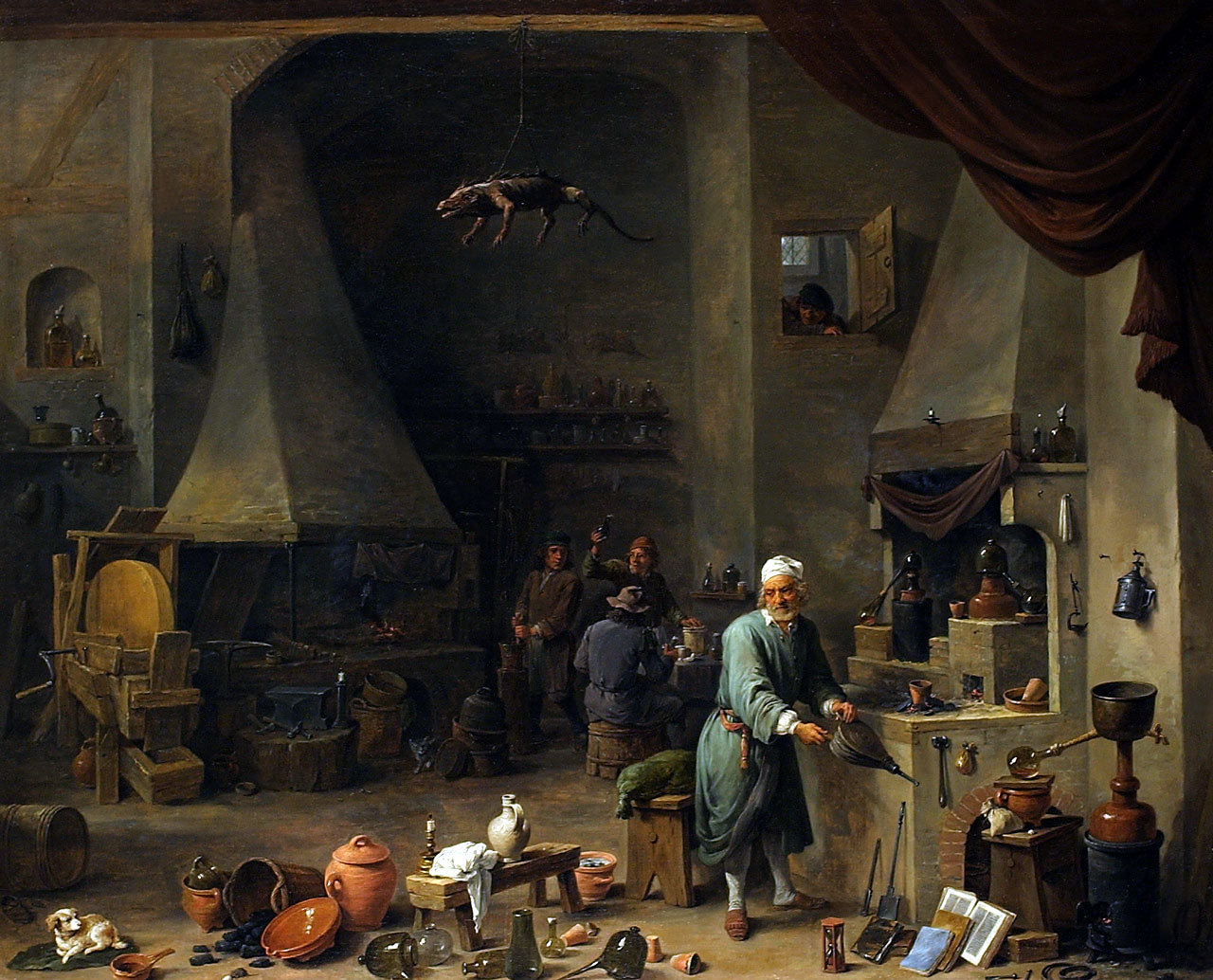
David Teniers d.J. (Flemish, 1610-1690) 'Alchemist in his Workshop' c. 1650


David Teniers d.J. (Flemish, 1610-1690)
Alchemist in his Workshop
c. 1650
Courtesy of Roy Eddleman, Chemical Heritage Foundation Collections
Photo: Will Brown


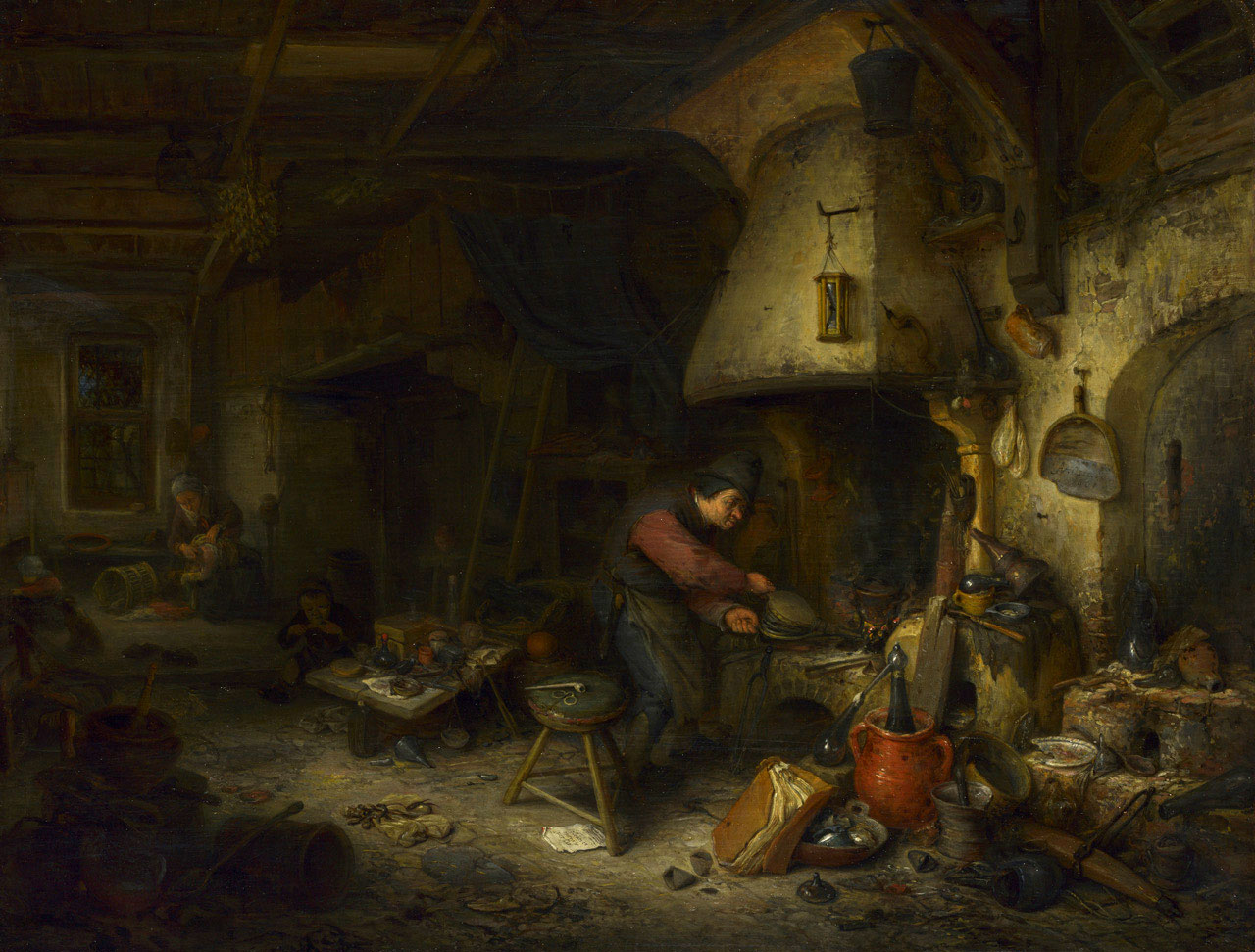
Adriaen van Ostade (Dutch, 1610-1685) 'The Alchemist' 1661


Adriaen van Ostade (Dutch, 1610-1685)
The Alchemist
1661
The National Gallery, London, Bought 1871
© The National Gallery, London, 2013


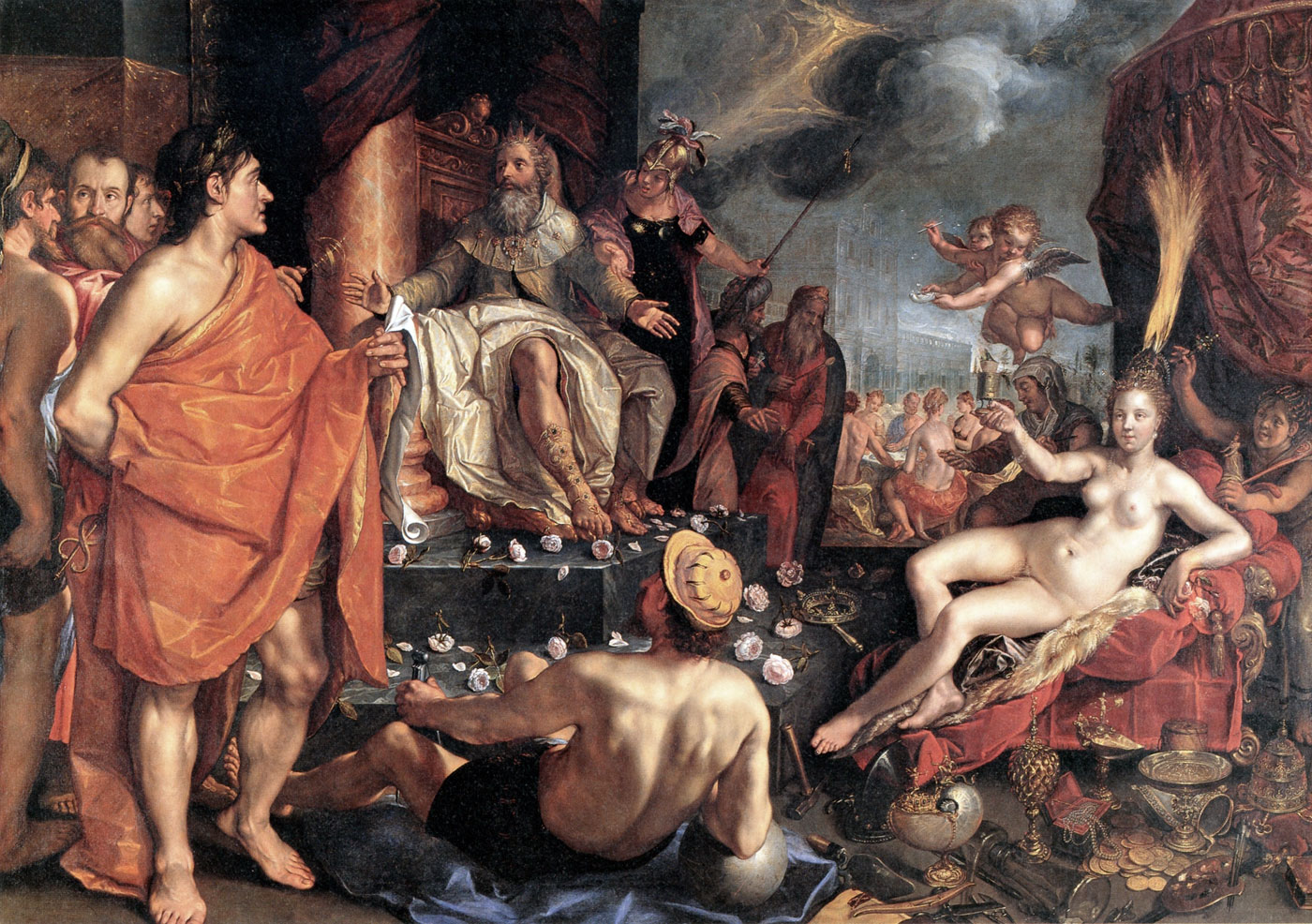
Hendrick Goltzius (Dutch, born Germany 1558-1617) 'Allegory of the Arts' 1611


Hendrick Goltzius (Dutch, born Germany 1558-1617)
Allegory of the Arts
1611
Oil on canvas
181 x 256.6cm
Kunstmuseum Basel
© Kunstmuseum Basel
Photo: Martin P. Bühler


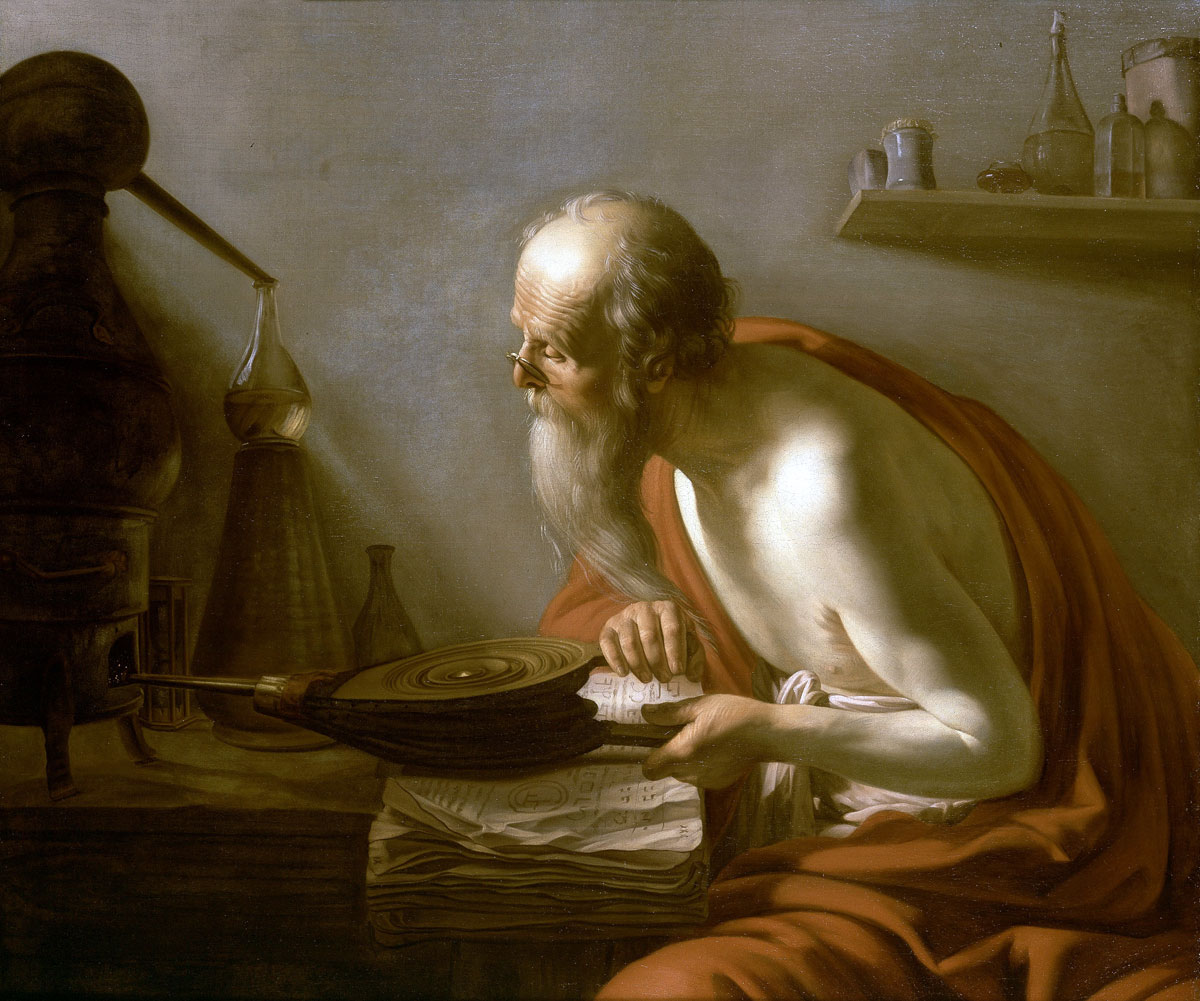
Johan Moreelse (Dutch, 1603-1634) 'The Alchemist' 1630


Johan Moreelse (Dutch, 1603-1634)
The Alchemist
1630
Oil on canvas
90.5 x 107.5cm
Robilant + Voena, London und Mailand


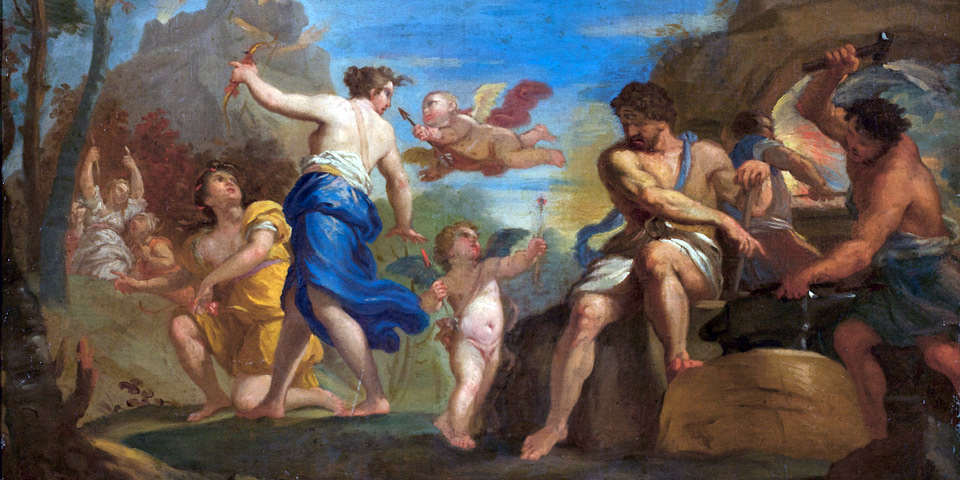
Giovanni Antonio Grecolini (Italian, 1675-1725) 'The Education of Cupid by Venus and Vulcan' 1719


Giovanni Antonio Grecolini (Italian, 1675-1725)
The Education of Cupid by Venus and Vulcan
1719
Oil on canvas
48.9 × 64cm
Museum Kunstpalast
Photo: Horst Kolberg


Neo Rauch (German, b. 1960) 'Goldgrube' [Goldmine] 2007


Neo Rauch (German, b. 1960)
Goldgrube [Goldmine]
2007
Oil on canvas
80 x 160cm
Private collection
© Courtesy Galerie EIGEN + ART Leipzig/Berlin / VG Bild-Kunst, Bonn 2014
Photo: Uwe Walter, Berlin


For the first time in Germany, an exhibition spanning all epochs and genres will be introducing the exciting link between art and alchemy in past and present times. 250 works from antiquity to the present, encompassing Baroque art, Surrealism, through to contemporary art from collections and museums in the USA, Great Britain, France, Mexico and Israel reveal the fascination which alchemy exerted for many visual artists. Artists featured in the exhibition, such as Joseph Beuys, Jan Brueghel the Elder, Lucas Cranach the Elder, Max Ernst, Hendrick Goltzius, Rebecca Horn, Anish Kapoor, Yves Klein, Sigmar Polke, Rembrandt van Rijn, Peter Paul Rubens and David Teniers the Younger invite visitors to explore the mystery of transformation.

Alchemy was invariably practised in secret, but was by no means a rare occurrence until well into the 18th century: Eminent personalities, including Paracelsus, Isaac Newton and Johann Wolfgang von Goethe, were alchemists, too. It was not until the Age of the Enlightenment that alchemy was ousted and became intermingled with occultism, sorcery and superstition. In connection with 19th and early 20th-century psychoanalysis alchemy was brought to new life.

The exhibition is divided into two major periods: pre-Enlightenment art, in particular works from the 16th and 17th centuries and the art of the 20th and 21st centuries.

In the pre-Enlightenment era both artists and alchemists laid claim to the ability to not only imitate nature but to even perfect it. This ambition is illustrated in the exhibition by casts from nature made by Bernard Palissy and Wenzel Jamnitzer. Their lizards and other creatures are extraordinarily life-like and yet have been immortalised in precious metal or ceramic as if petrified. The circumstance that artists and alchemists were ultimately rivals is exemplified by the Dutch artist Adriaen van Ostade with his painting depicting an alchemist in his laboratory, having failed to produce gold.

By contrast, the exhibition also includes works by artists presenting alchemy in a favourable light, such as portraits by Rubens and David Teniers the Younger, allegorical paintings by Jan Brueghel the Elder and Hendrick Goltzius, as well as three copies of the “Splendor Solis”, the most richly illuminated manuscript in the history of alchemy. Furthermore, an original manuscript by physicist Isaac Newton, contributed by the Chemical Heritage Foundation in Philadelphia, will be presented here for the first time in Europe.

The modern section of the show begins with Surrealism. Max Ernst, for instance, repeatedly took up the theme of the “Chymical Wedding” in his work. A particular highlight is the painting “The Creation of the Birds”, a key work by the Surrealist artist Remedios Varo. The Androgyne is an important theme, for instance, in the exhibits by Rebecca Horn. Joseph Beuys will be represented by a number of sculptures, drawings and collages, as well as a film and photo documentation of his action at the 1982 documenta. Moreover, the exhibition includes works by Anish Kapoor displaying his characteristic use of intensely coloured pigments. Further exhibits include selected works by representatives of contemporary art, such as Anselm Kiefer, Yves Klein, Alicja Kwade, Sigmar Polke, Neo Rauch and Gerda Steiner and Jörg Lenzlinger.

The exhibition was conceived by Museum Kunstpalast in cooperation with the research group “Art and Knowledge in Pre-Modern Europe” at the Max Planck Institute for the History of Science in Berlin, as well as a group of experts at the Chemical Heritage Foundation in Philadelphia, which also provided many pieces on loan. A Wunderkammer of curious and exotic treasures from flora and fauna is offered for visitors to explore. In an extensive accompanying programme the subject of art and alchemy will be expanded upon by means of lectures, talks and guided tours.

Press release from the SMKP website


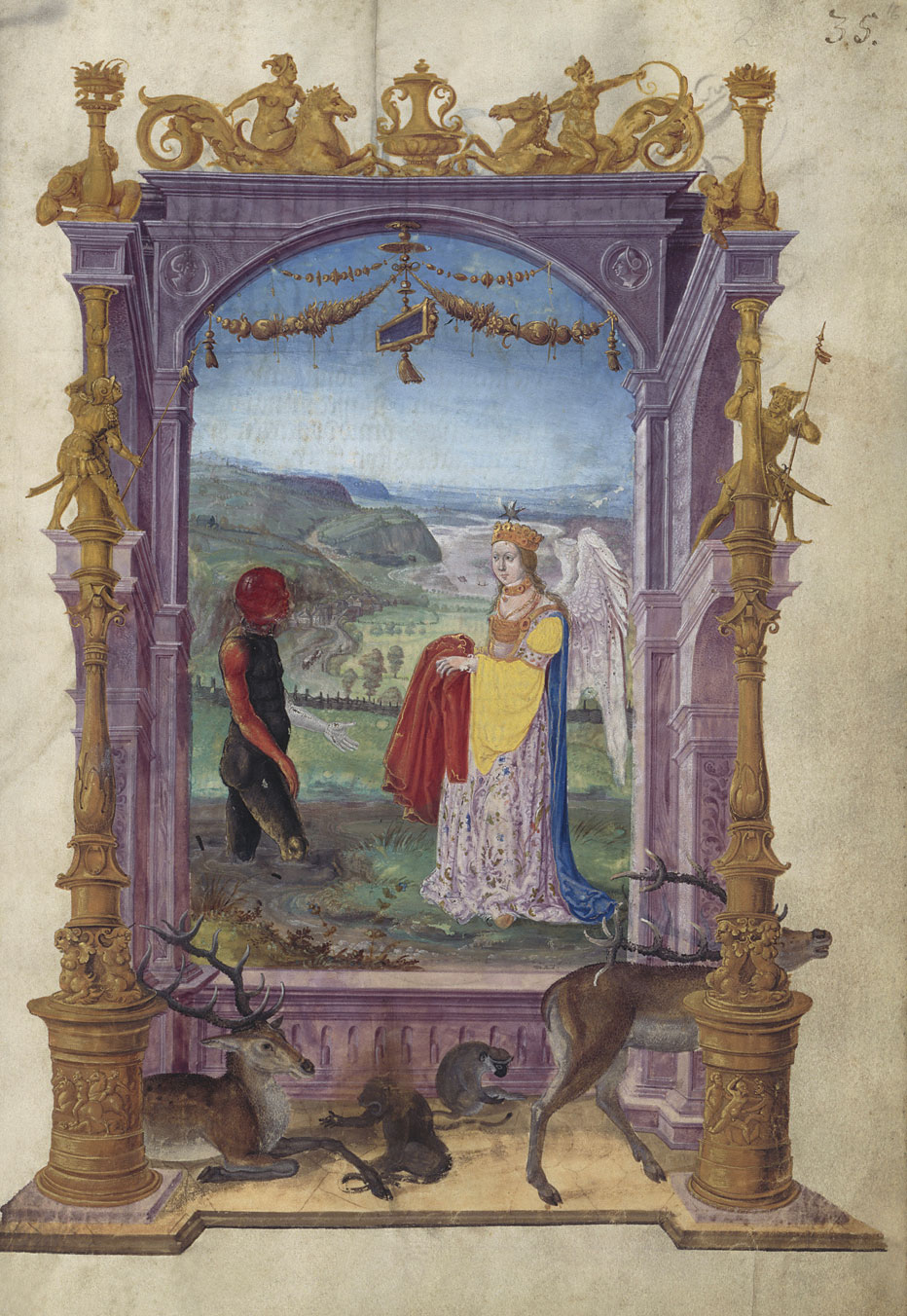
Jörg Breu the Elder (German, 1475-1537) (attributed) (attributed) 'Splendor Solis' (Splendor of the Sun) 1531/1532


Jörg Breu the Elder (German, 1475-1537) (attributed)
Splendor Solis (Splendor of the Sun)
1531-1532
Manuscript; parchment, miniatures in opaque color; calfskin cover
33.1 × 22.8cm
Staatliche Museen zu Berlin – Preussischer Kulturbesitz, Kupferstichkabinett
© bpk – Bildagentur für Kunst, Kultur und Geschichte / Staatliche Museen zu Berlin – Kupferstichkabinett
Photo: Jörg P. Anders


Rembrandt Harmenszoon van Rijn (Dutch, 1606-1669) 'Sogenannter Faust' [Allegedly Faust] c. 1651‑1653


Rembrandt Harmenszoon van Rijn (Dutch, 1606-1669)
Sogenannter Faust [Allegedly Faust]
c. 1651‑1653
Drypoint
21.1 × 16.2cm
Stiftung Museum Kunstpalast, Düsseldorf, Sammlung der Kunstakademie (NRW)
Photo: Horst Kolberg, Neuss


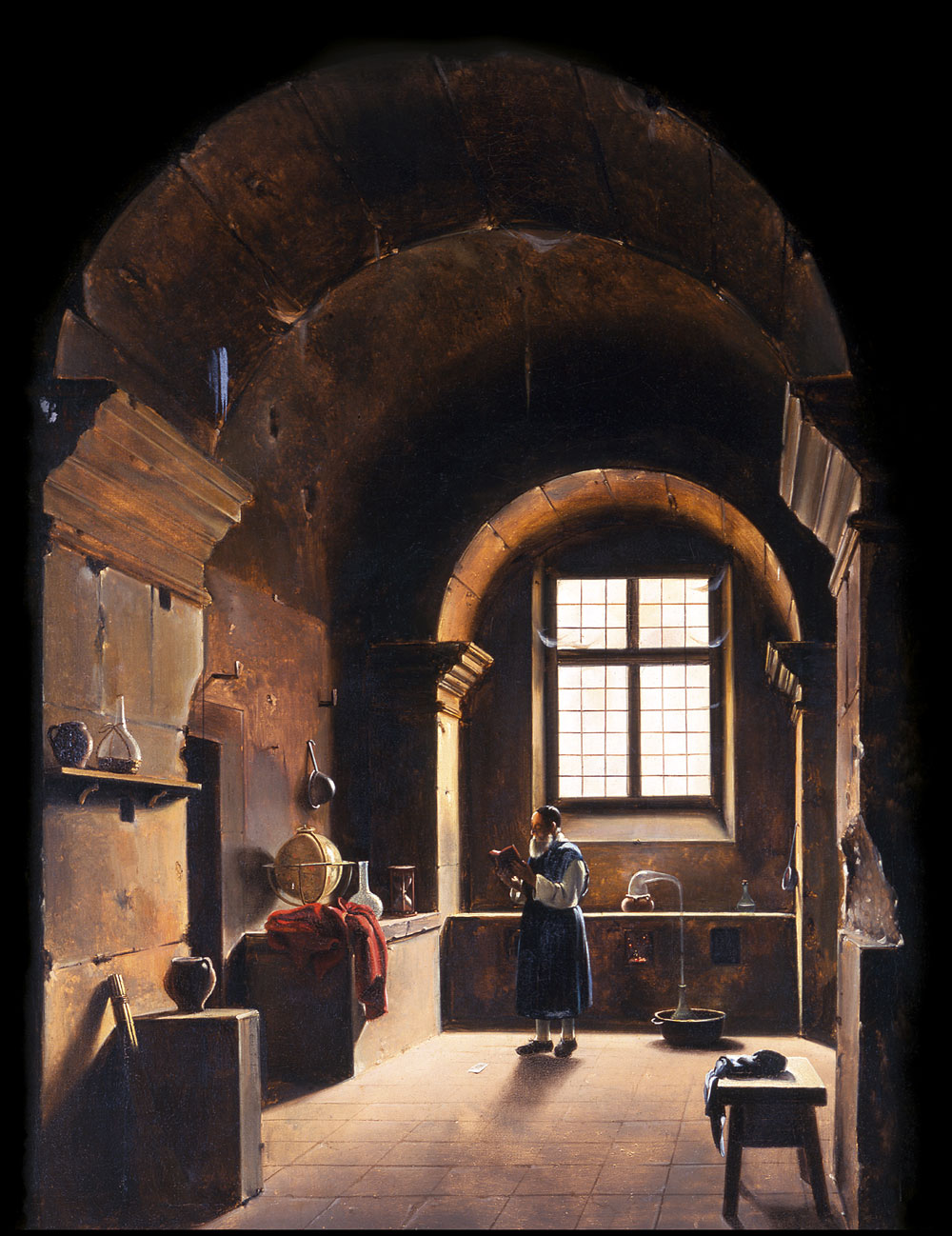
Francois-Marius Granet (French, 1775-1849) 'The Alchemist' 1st half of the 19th century


Francois-Marius Granet (French, 1775-1849)
The Alchemist
1st half of the 19th century
Oil on canvas
61 x 48.3cm
Gift of Roy Eddleman Chemical Heritage Foundation Collections, Philadelphia
Photo: Will Brown


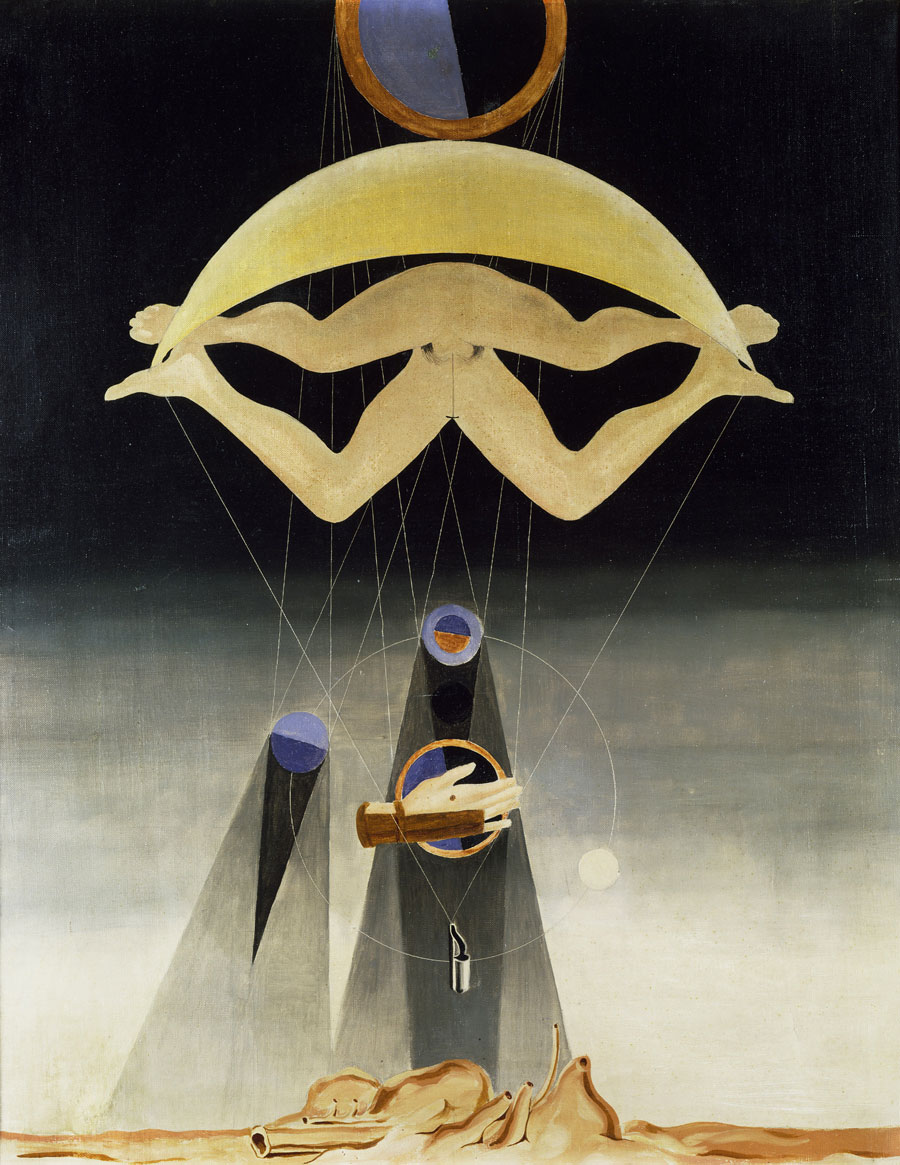
Max Ernst (German, 1891-1976) 'Men Shall Know Nothing of This' 1923


Max Ernst (German, 1891-1976)
Men Shall Know Nothing of This
1923
Oil on canvas
80.3 x 63.8cm
Tate, London
Photo: © Tate, London 2013, VG Bild-Kunst, Bonn 2014


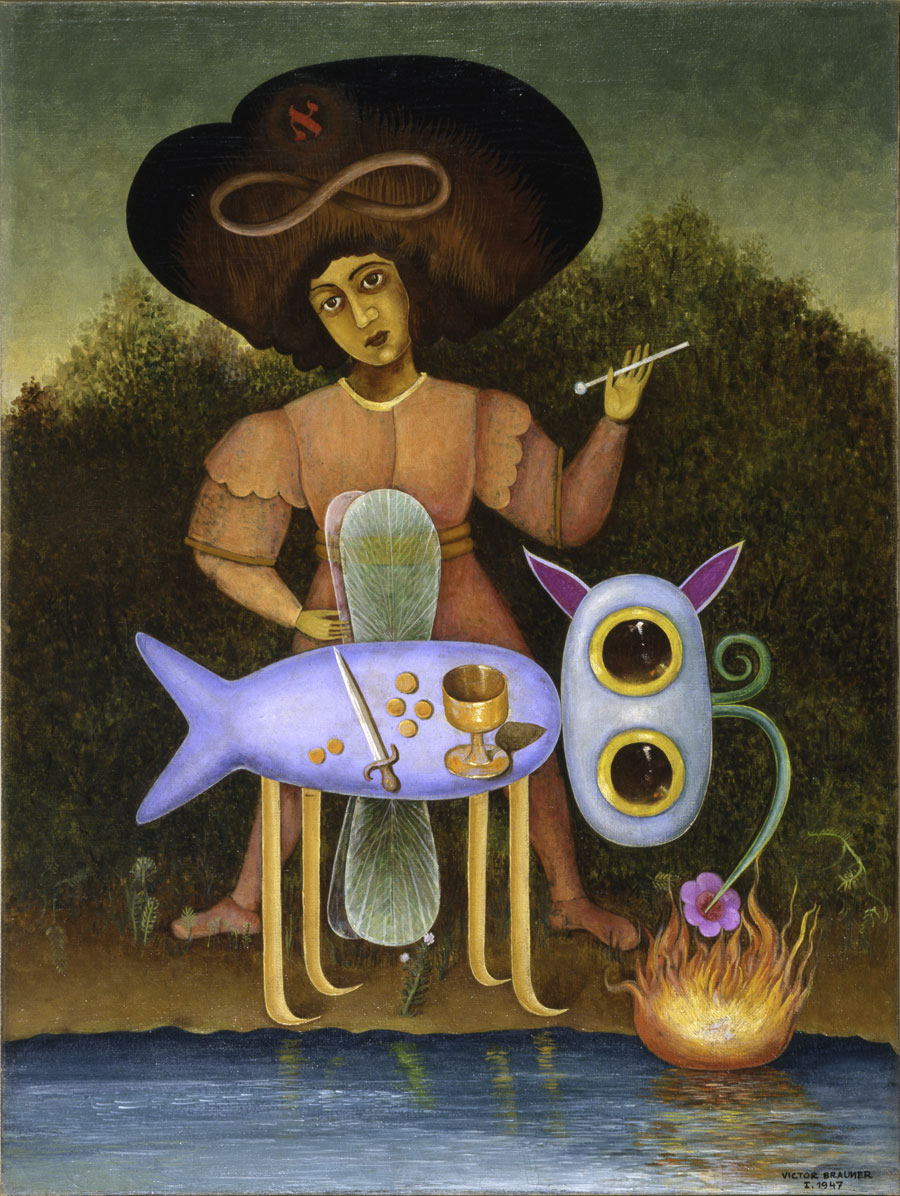
Victor Brauner (Romanian, 1903-1966) 'Le Surréaliste' (“The Surrealist”) 1947


Victor Brauner (Romanian, 1903-1966)
Le Surréaliste (“The Surrealist”)
1947
Oil on canvas
60 x 45cm
Peggy Guggenheim Collection, Venice (Solomon R. Guggenheim Foundation, NY)
© Peggy Guggenheim Collection, Venice (Solomon R. Guggenheim Foundation, NY) / VG Bild-Kunst, Bonn 2014


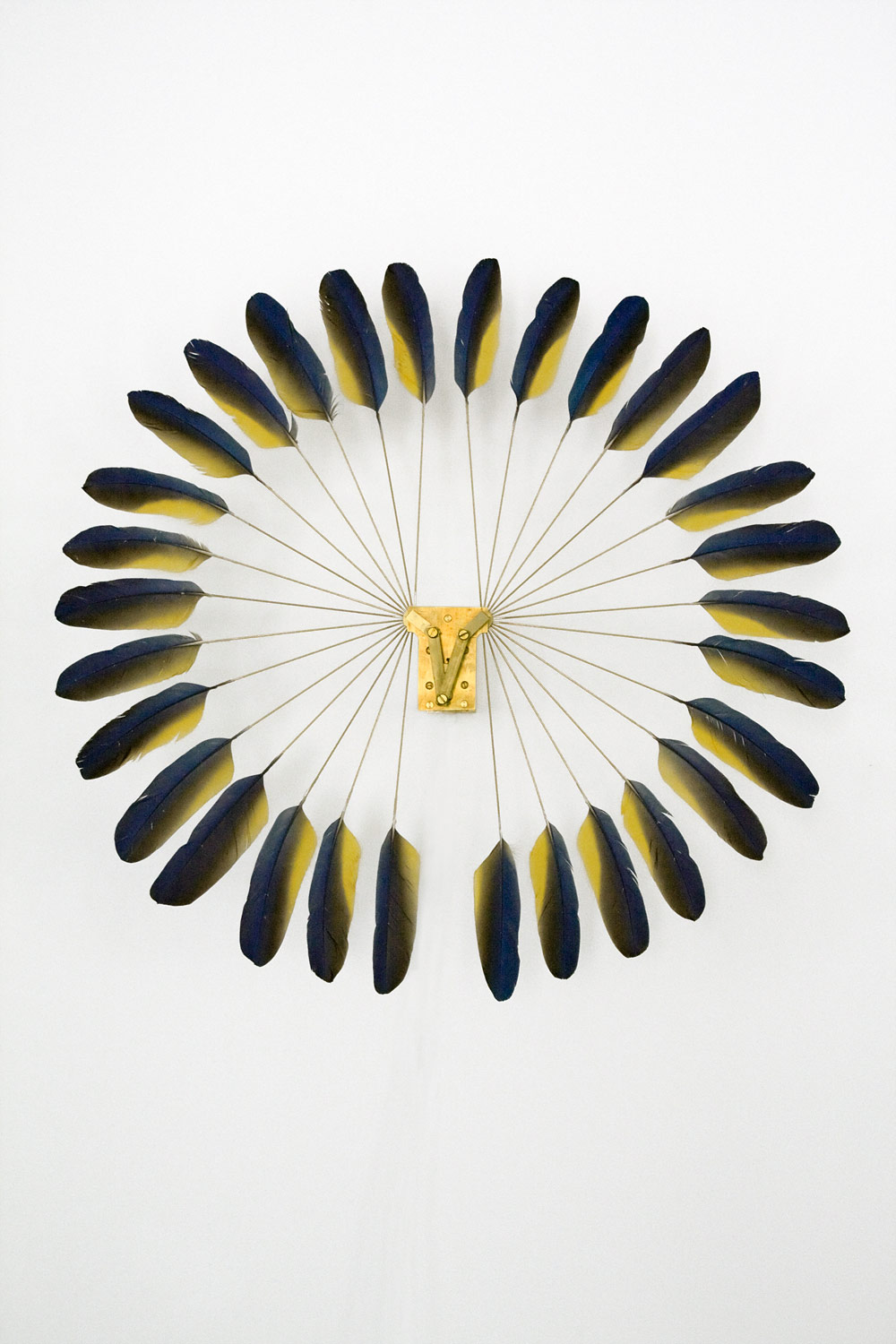
Rebecca Horn (German, b. 1944) 'Zen of Ara' 2011


Rebecca Horn (German, b. 1944)
Zen of Ara
2011
Springs, motor, brass, electrical
D: 73cm
Private collection Rebecca Horn
Photo: Karin Weyrich
© VG Bild-Kunst, Bonn 2014


Yves Klein (French, 1928-1962) 'Relief éponge bleu (RE 18)' (blue sponge relief [re 18]) 1960


Yves Klein (French, 1928-1962)
Relief éponge bleu (RE 18) (blue sponge relief [re 18])
1960
Wood, sponges, pigment dissolved in acetone
230 × 154cm
Museum Kunstpalast, Düsseldorf, Modern Art
© Stiftung Museum Kunstpalast, Düsseldorf / ARTOTHEK / Photo: Horst Kolberg, Neuss / VG Bild-Kunst, Bonn 2014


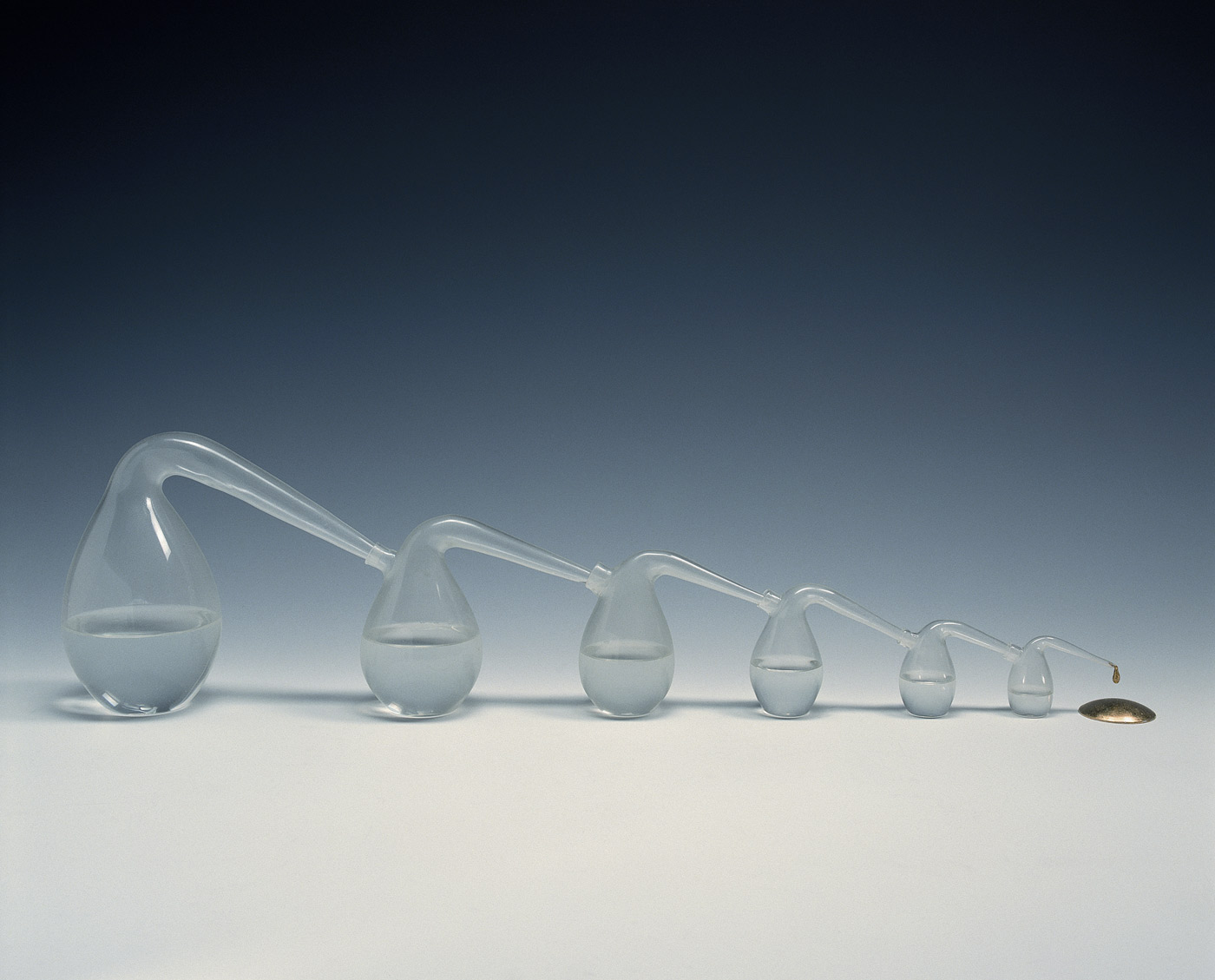
Richard Meitner (Dutch born America, b. 1949) 'Reductio ad Absurdum' 1977


Richard Meitner (Dutch born America, b. 1949)
Reductio ad Absurdum
1977
Glass and gold
25 x 80cm
Privatsammlung
Photo: Ron Zijlstra
© Richard Meitner


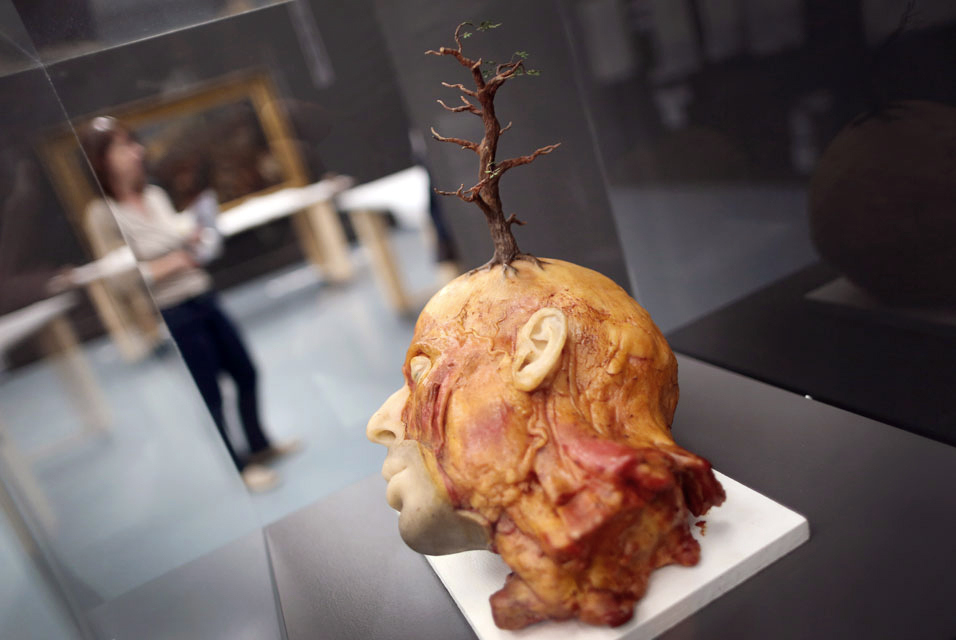
John Isaacs (British, b. 1968) 'Thinking about it' 2002


John Isaacs (British, b. 1968)
Thinking about it
2002
Wax, wire, plaster of paris
15 1/2 x 12 x 13 inches (30 x 30 x 50cm)
Olbricht collection, Germany


Stiftung Museum KunstPalast
Ehrenhof 4-5, 40479
Düsseldorf, Germany
+49 211 56642100

Opening hours:
Tuesday – Sunday 11am – 6pm
Thursday 11am – 9pm
Closed on Monday

Stiftung Museum Kunstpalast website

LIKE ART BLART ON FACEBOOK

Back to top

Exhibition: ‘Chris Round / Inversion’ at Edmund Pearce Gallery, Melbourne

Exhibition dates: 22nd – 26th July 2014


Chris Round (Australian born England) 'Inversion #5' 2014


Chris Round (Australian born England)
Inversion #5
2014
Archival pigment print on cotton rag
64 x 84cm
Edition of 7
© Chris Round


My apologies to Chris Round that I did not get this posting up during the short run of the exhibition. It was a bit of a crowded time with the exhibition Out of the closets and Nite Art on.

The work, shown in the small black gallery at Edmund Pearce, had great presence and beauty. The backgrounds had a luminous pastel affect, much more so than in the reproductions shown here. The objects seemed to float off the paper. This is experimental work for Round (vis a vis his landscape practice) but the influences for the work can be seen in the two landscape photographs that I have included here.

I really enjoyed the beauty, serenity and context of these metaphorical landscapes.

Dr Marcus Bunyan


Many thankx to Edmund Pearce Gallery for allowing me to publish the photographs in the posting. Please click on the photographs for a larger version of the image.


Chris Round (Australian born England) 'Inversion #4' 2014


Chris Round (Australian born England)
Inversion #4
2014
Archival pigment print on cotton rag
64 x 84cm
Edition of 7
© Chris Round


Chris Round (Australian born England) 'Nowra, NSW' 2013


Chris Round (Australian born England)
Nowra, NSW
2013
Archival inkjet print
© Chris Round


Chris Round (Australian born England) 'Inversion #2' 2014


Chris Round (Australian born England)
Inversion #2
2014
Archival pigment print on cotton rag
64 x 84cm
Edition of 7
© Chris Round


Chris Round (Australian born England) 'Inversion #1' 2014


Chris Round (Australian born England)
Inversion #3
2014
Archival pigment print on cotton rag
64 x 84cm
Edition of 7
© Chris Round


Chris Round (Australian born England) 'Ulladulla harbour, NSW' 2012


Chris Round (Australian born England)
Ulladulla harbour, NSW
2012
Archival inkjet print
© Chris Round


Chris Round (Australian born England) 'Inversion #1' 2014


Chris Round (Australian born England)
Inversion #1
2014
Archival pigment print on cotton rag
64 x 84cm
Edition of 7
© Chris Round


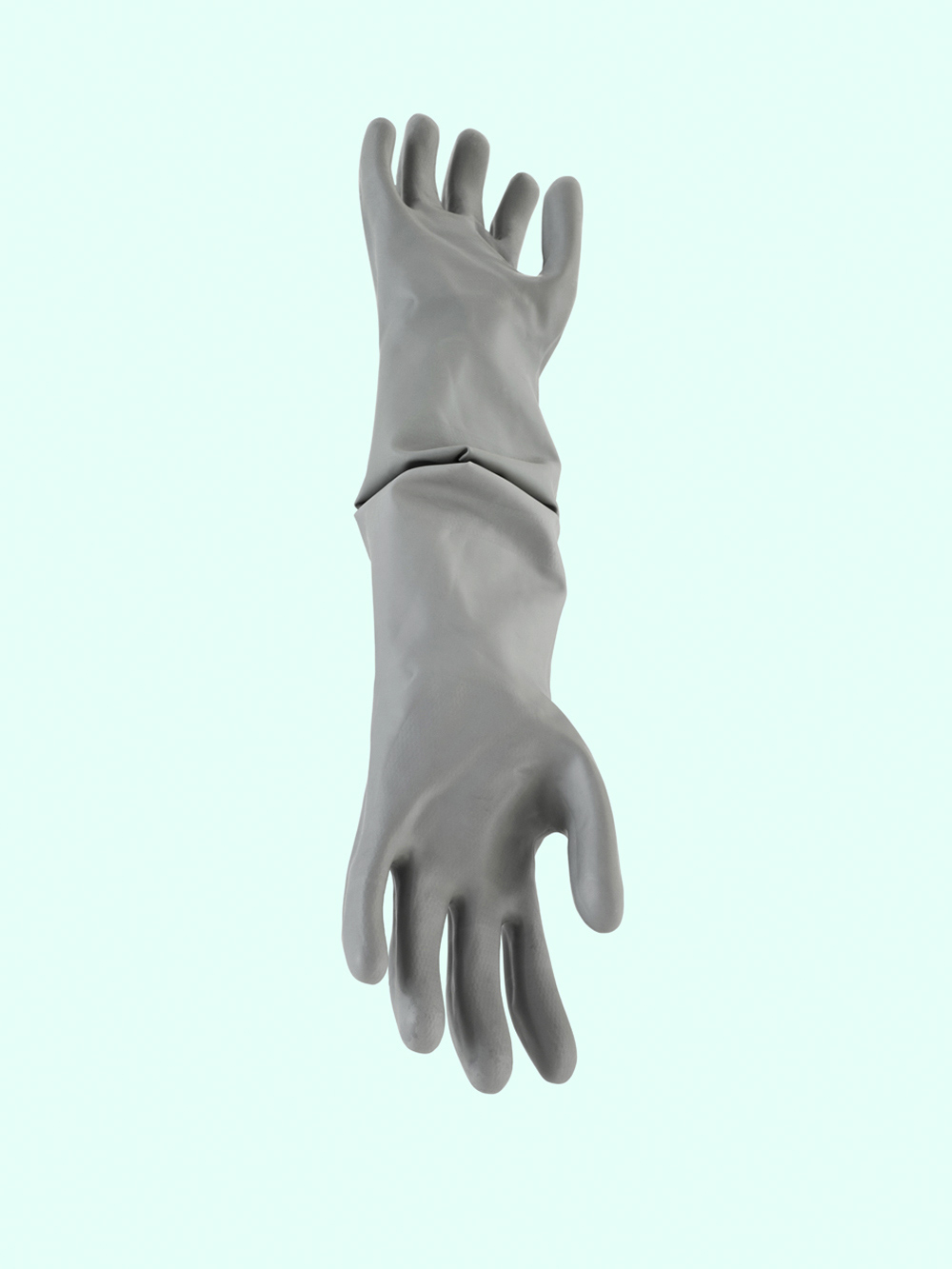
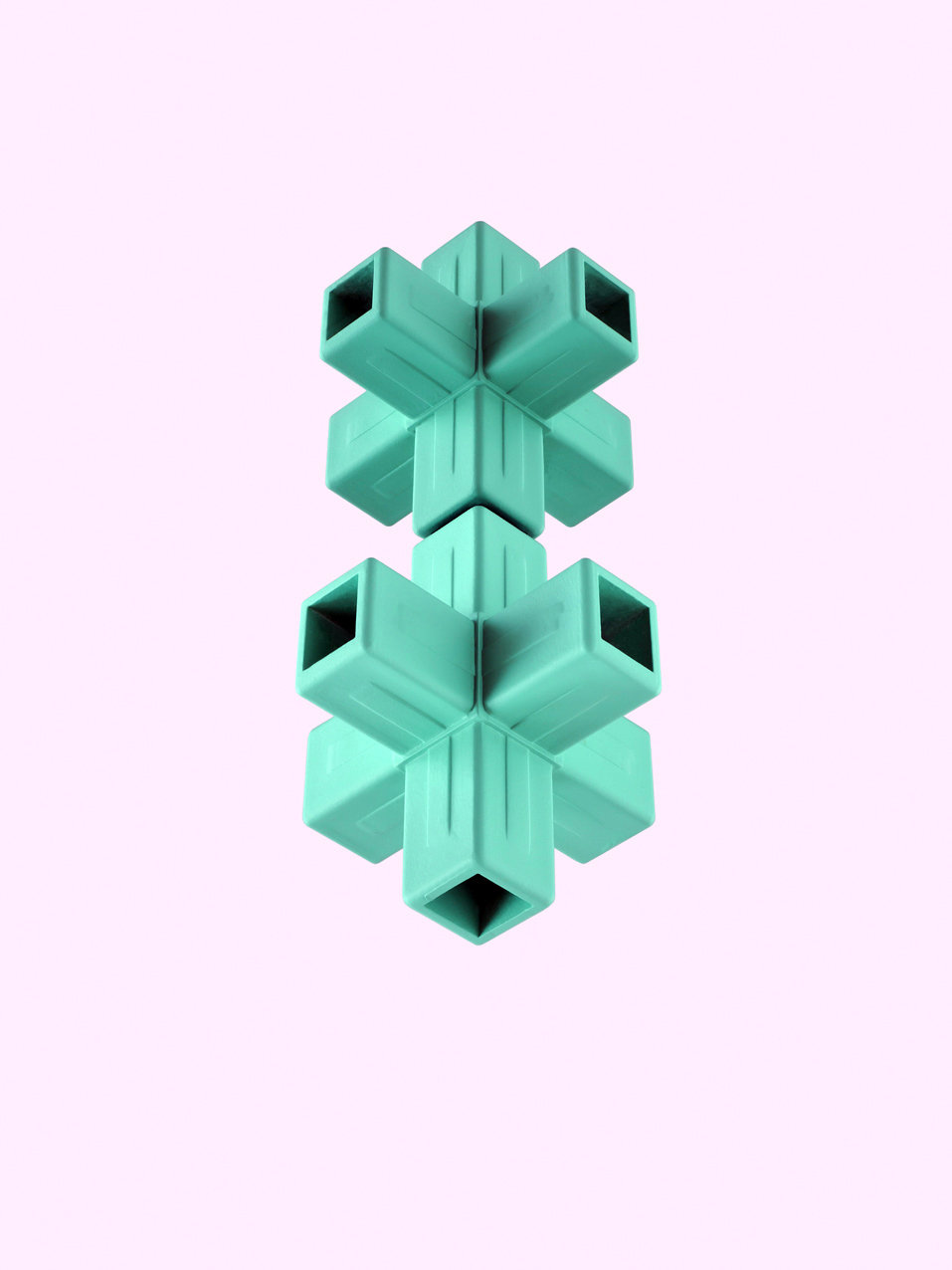
Inversion marks a departure from my normal landscape based work and in to experimental still life. This series is an investigation into form and visual illusion using functional, mass-produced objects. By removing context – using a reflective surface that’s not immediately apparent and at times changing colours – I’m interrogating the duality of the real and the imagined, the prosaic and the beautiful. I’m also exploring the physicality of depth and space, re-evaluating both utilitarian aesthetic and function simultaneously.

Text by the artist on the Edmund Pearce website


Chris Round (Australian born England) 'Inversion #6' 2014


Chris Round (Australian born England)
Inversion #6
2014
Archival pigment print on cotton rag
84 x 64cm
Edition of 7
© Chris Round


Chris Round (Australian born England) 'Inversion #7' 2014


Chris Round (Australian born England)
Inversion #7
2014
Archival pigment print on cotton rag
84 x 64cm
Edition of 7
© Chris Round


Chris Round (Australian born England) 'Inversion #8' 2014


Chris Round (Australian born England)
Inversion #8
2014
Archival pigment print on cotton rag
84 x 64cm
Edition of 7
© Chris Round


Edmund Pearce Gallery

This gallery has now closed.

LIKE ART BLART ON FACEBOOK

Back to top

Catalogue essay: ‘Aspects of the Self (Revealed)’ by Dr Marcus Bunyan for the exhibition ‘Hidden Talents’ at the Faculty of the Victorian College of the Arts (VCA) and Melbourne Conservatorium of Music (MCM), The University of Melbourne, Australia

Exhibition dates: August 2014


Marcus Bunyan (Australian, b. 1958) 'Zen' 1984


Marcus Bunyan (Australian, b. 1958)
Zen
1984
From the series First experiments
Silver gelatin print
© Marcus Bunyan


This is the catalogue essay for the exhibition Hidden Talents, an exhibition of the hidden talents of professional staff at the Faculty of the VCA & MCM, The University of Melbourne, Australia. The exhibition has been postponed until a later date but I did not want the catalogue essay to metaphorically sit under the bed with no one reading it.

The essay was written without seeing any of the art work for the exhibition (which is going to consist of knitting, performance, video, sculpture, painting, etc…). I have used my imagination to write about the subject matter, asking why it is important to reveal hidden aspects of the self.

Curator Tracey Claire observes, “Practicing artists are as likely to be found behind a desk as in front of a class at the VCA & MCM… Be it dancing, cycling, sailing, knitting, painting, writing, film making or performing, all the individuals in this exhibition are creative artists thriving in a melting hot pot of creativity… Professional staff tend to go about their business quietly, excelling in the dark arts of spreadsheet wizardry and effortless administration but in their private lives, conjuring mysterious creations. Toiling endlessly in the hours beyond their professional lives, yet inspired and nurtured by precisely this environment, they distill these experiences and produce magic.

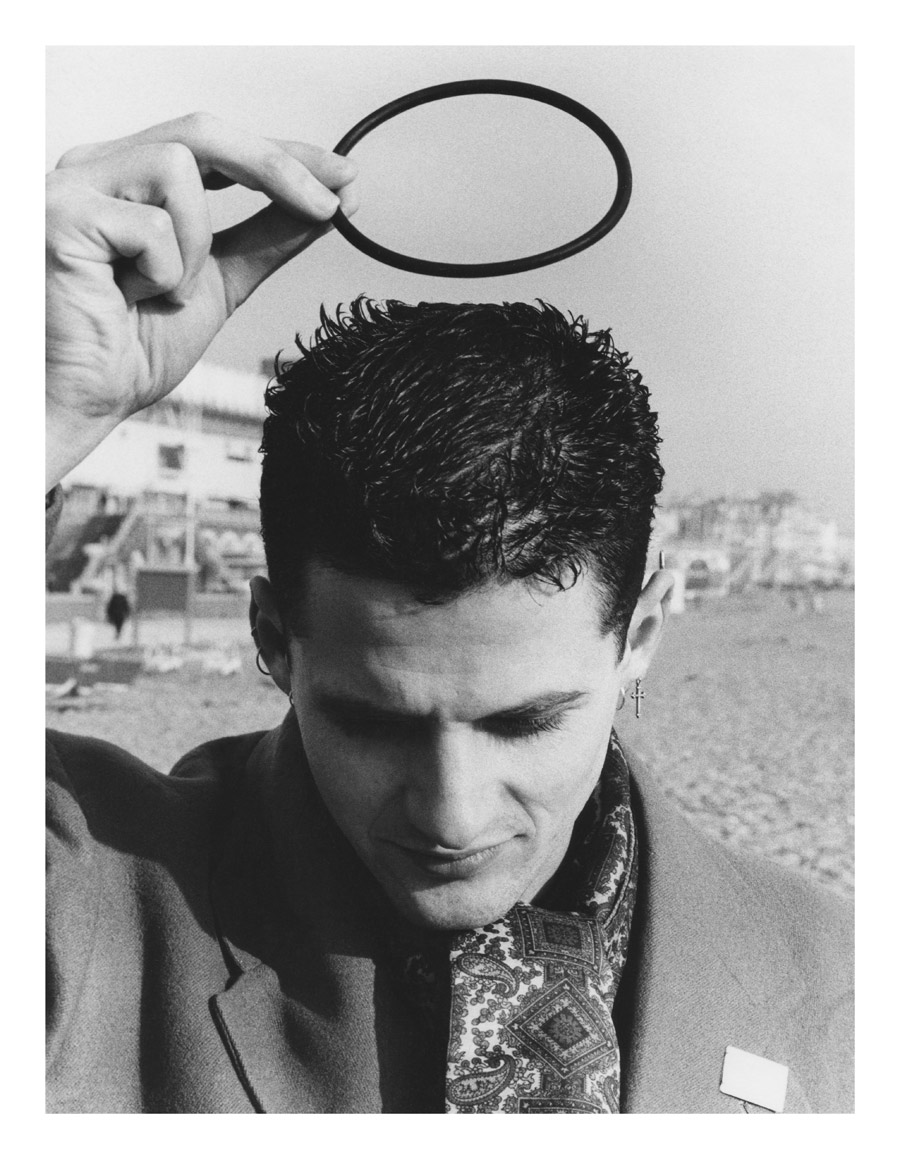
This catalogue essay examines the significance of these activities and is accompanied by 5 of the very first black and white images that I ever took, long before I ever started studying photography in 1989.

Dr Marcus Bunyan


Keywords

Hidden Talents, The Self, Aspects of the Self, self-expression, image man, essence man, actual self, networked society, perfomative self, citational self, cosmopolitanism, hybridity, visibility, bricolage, Goethe, hybrid identities, identity formation, self actualisation, social transparency, The University of Melbourne, Australia, Victorian College of the Arts, Melbourne Conservatorium of Music, VCA.

Download the Aspects of the Self (Revealed) catalogue essay (2.6Mb pdf). Please click on the photographs for a larger version of the image.


Marcus Bunyan (Australian, b. 1958) 'Brighton Pier (horizontal)' 1984


Marcus Bunyan (Australian, b. 1958)
Brighton Pier (horizontal)
1984
From the series First experiments
Silver gelatin print
© Marcus Bunyan


Aspects of the Self (Revealed)

Dr Marcus Bunyan


“In our era of internet ubiquity, the line that separates our selves from the media with which we self-express has dissolved, and the distinction between medium and maker is confused. As we publicise our private stories, and perpetually alter, rebrand, and repaint ourselves to the world, performances of self are status quo and everyone is an artist.”


Josephine Skinner 1


We are all performance artists. And this text is a performance piece, an aspect of myself as I choose to express it in this place and time. An aspect – appearance, look, character, view, interpretation, phase, countenance2 – which, like the word itself, is both stable and fluid, and will change at any time: perhaps even now; or in the future.

Having noted the amorphous nature of the wor(l)d, what I will do in this performance is examine the truths and separate them from the platitudes of Josephine Skinner’s quotation (above) in order to understand not only that the private be made public but also why the hidden should be revealed. Of course, our sense of self changes when the private becomes open, public and possibly universal. I will ask why this is important and how it affects our sense of connection to other human beings. To do this I will examine my own private story, not to rebrand or repaint myself to the world, far from it, but because every life path has important lessons for us all.

In the beginning, I grew up on a farm. My parents were impoverished. It was subsistence living and we were the working poor. We had no running hot water and my mother used to have to boil water on a stove and fill a bathtub on the kitchen floor so that we could be cleaned. I used to explore the remote reaches of the land, out behind the pond at the front of the farmhouse and up the cart path into the forests, creating fantasy worlds to escape what was going on at home. There, fantasies became a form of escapism, for my imagination, for action,3 a place where I could create new worlds of magic, light and freedom.

My mother was a piano teacher and my father was a part-time singer. I started to study piano at the age of 5 years old under my mother’s tutelage. I had a natural gift and became a child prodigy, the youngest person at that time to attain a distinction in Associated Board Grade 8 examination, at age 11. I was sent to boarding school on a music scholarship at the age of 12, leaving all my school friends behind. There, in that upper class boarding school, I was ostracised because they found out I was gay (just as I was discovering it myself), and because I was a music scholar. My parent’s adage to life was what I would come to call Protestant work ethic: ‘you never work hard enough, you’ll never be good enough, you’ll never make anything of yourself.” This damnation has stuck with me and I have struggled against its prophecy, working hard to make something of myself, something I can be proud of. Even now my mother (I don’t see my father) still fails to recognise my achievements, my life path.

At boarding school I developed what I was told was depression but which was actually bipolar disorder, undiagnosed until I was in my forties. At the age of 16, I was one of the youngest people to go to the Royal Academy of Music and at 17 I went to the Royal College of Music full time. I moved away from home, which was a blessing, and started living on my own. It was a tough initiation into adult life but I was determined not to be dependent on anyone else. My parents finally divorced when I was 17 and, at the same age, the stress of my hidden sexuality leading me to have a nervous breakdown. After nearly a year recovering I came out as a gay man. I graduated with my degree at 21 and gave up being a concert pianist the same year. The time to start living my own life had begun.

I worked in pubs around London for years. I hated classical music (a rejection of the past) and was really into the funk scene. I was a dilettante, a person without real commitment or knowledge. Not once did I ever think of myself as intelligent or creative, it just wasn’t in my vocabulary. I enjoyed partying, holidays, friends and motor racing and started taking a few photographs. That was it until I was about 28 when I returned to Year 12 and university to study, study, study, to read Carlos Castaneda, Robert Johnson and Joseph Campbell, to devour Borges, Jung and Foucault – not the usual university curriculum for an artist, but I was searching for a spiritual way in life. These authors offered wisdom and learning, and a network to other authors and artists investigating similar subject matter. The start of a path had been found and an inquiring mind slowly emerged. I tell you all of this simply as a statement of fact – this was my beginning, this is what I went through, and this journey and learning informs my being and relation to other people and to the world.

Today, we need to understand our own paradigm of sharing, what we are prepared to reveal of ourselves now that we live in a networked society. In a networked society the private and the public self are no longer two endpoints of a linear dichotomy for the boundaries have well and truly been breached: mobile technologies, computers and social media bring the outside world into our home and we willingly promote our point of view to others. Our interior thoughts are advertised through our exterior relations and appearance – on videos, on mobile phones, through millions of images and informational flows that surround us everyday. Our performative self, our citational self constantly performs and citationally quotes our relations of our self to others through different nodal points, or contexts of connection. But our interiority is still different from our exteriority, even as we perform the self.

Yet, while it is correct that in our era of internet ubiquity, the line that separates our selves from the media with which we self-express has dissolved – we are still not yet fully immersed in this system. Critically, we still have a choice about what we reveal of ourselves to others. My degree as a concert pianist may appear at the bottom of my CV, and I may not tell many people about it, but how I imagine my art, how I write my words and my worlds, is inherently related to the line and ‘magic’ of music. How I relate to other people is based on my core values (strong moral code, loyalty, love of helping people) developed during childhood, core values that have remained stable but whose context may have changed over the journey from youth to adulthood. And because of our class (our position in the world and our contexts), we inhabit the privilege of that disclosure. In this moment, we can still prioritise what other people know of us. What we should not do is divest this choice from our whole selves, partitioning ourselves off in different contexts. We cannot act within our core values in one situation and not in another – unless we want to deceive ourselves and those around us – AND YET WE DO!

While our fundamental values remain consistent (the actual self) what is rapidly changing is the environment in which our social self operates.4 As Sally Shaw notes, “We are experiencing an important cultural moment: the next generation will not be able to recall a time without smartphones, the internet or other enhanced means of communication.”5 Globalised mass media, technological advances in communications, future generations’ normalising of the constant barrage of information and the endless pursuit of “stuff”6 (materialism gone mad) means that “image man” takes precedence over “essence man.”7 But all is not lost if we are prepared to be open to possibilities, to be brave in our choice of engagement with others, and be accepting in our attitude and perspective on life. As the artist Bill Henson observes, “Of course, we live with each other and get along using “civilisational logic” – go at a green light, stop at a red light. But there is a deeper logic – no less exacting or emphatic.”8

This deeper logic, a logic that opens up spaces of inquiry, has links to creative, moderate cosmopolitanism,9 hybridity,10 bricolage and visibility. It is how creativity is changing how our talents are recognised by our friendship networks, our work colleagues or students, without having to justify or hide their existence. It is how the networked personality extends along a horizontal consciousness (not a vertical hierarchy), in which interior / exterior, self / other, is re/formed. Through respect, authenticity (and not anxiety about it!) and openness, we can embed the self into naturalised flows of increasingly open (media) systems. We have a new freedom to construct social relations across time and space for the horizon of social relationship – my body, the social body, the actual self – can become open constellations. Here there is fluidity in identity representation in which stable dimensions, persistent appearances and secure meanings are disavowed. This is coupled, however, with a paradoxical insecurity of those in power, evidenced by the proliferation of borders, walls, security cameras and protected areas.11

This new process of self actualisation enables a creative context, the context for understanding creativity, intelligence, self and what you bring to an encounter, what you are prepared to reveal of your self during that encounter – whether it be baking cakes, knitting scarves, making a video, documenting the self or creating, as I did in my childhood and still do in my art, imaginative worlds to express inner self. Through the lived practice of social transformation we, as social actors, have to rethink our hybrid identities and the function of our imagination as a world-making process.12 This process is about the exposure of the hidden; it is about social transparency; and it is about the emergence of something new.13

Finally, we can say it is neither about the roles we play nor the destination that many seek, but it is about the journey that we take and about rejoicing in that journey. It’s about the moment before ecstasy, the anticipation: of company, of environment, of friends, places, being human, that joy of being human. It’s an inquiring instability that leads, as in Beethoven, to the resolution of stability, a love of the human being and our existence. It’s about understanding the personality and possibility of being.

Instead of the byte sized tweet (in which we understand everything, in an instant), we understand our hybrid being only by moving mentally and physically through heterogenous spaces via flows, nodes and lexias, accessing different perspectives and viewpoints. If we are attentive and aware of these viewpoints, we can open up lines of inquiry and access spaces of plurality which may allow us to be better informed as to the value of self and others. Through an understanding of difference. Through an understanding of the obligation of all human beings to each other.

This challenge to established rhythms, institutions and boundaries – the polity of the state, the indifference of the masses, and the speed of informational flows – can be accomplished by both stepping back and contemplating but also by moving forward and engaging in acts of informed choice, thinking, believing, and relating to other people. This is where I disagree with Josephine Skinner’s quote at the beginning of this aspect of myself: performances of self should never become just so, status quo – for we must not be afraid to reveal aspects of our self and expose the hidden to light. In the day-to-day world, the roles we play and the masks we wear must never come to define who we really are. As Lou Benson observes, “If people begin to see their roles as their true selves and deny thoughts and feelings that are really present, they become estranged from themselves.”14

By not being secret but secreting wisdom and seeking creation we may ultimately find better paths through life. This journey is about being extra/ordinary, however that may be. It is about the ‘making present’ of our imagination in the moment we are in, being consciously aware of that moment, being happy in that moment without ego. It’s about what you do and who you are, not cowering behind the bulkheads.


“O God, how the world and heaven shrink together when our heart cowers in its barriers.”


Johann Wolfgang von Goethe


© Dr Marcus Bunyan
August 2014

Word count: 2,164


Marcus Bunyan (Australian, b. 1958) 'Craig in his Docs' 1984


Marcus Bunyan (Australian, b. 1958)
Craig in his Docs
1984
From the series First experiments
Silver gelatin print
© Marcus Bunyan


Endnotes

1/ Skinner, Josephine. “Totally Looks Like.” Exhibition catalogue. Stills Gallery, Sydney, June 2014.

2/ as·pect [as-pekt]
noun

~ Appearance to the eye or mind; look: the physical aspect of the country.
~
Nature; quality; character: the superficial aspect of the situation.
~ A way in which a thing may be viewed or regarded; interpretation; view: both aspects of a decision.
~ Part; feature; phase: That is the aspect of the problem that interests me most.
~ Facial expression; countenance: He wore an aspect of gloom. Hers was an aspect of happy optimism.

Aspect as defined on the Dictionary.com website [Online] Cited 22/06/2014 http://dictionary.reference.com/browse/aspect

3/ “The ubiquity of images and the constant enhancement of the modes for public participation have not only disrupted the conventional division between the agency of the artist and collective authorship but also underscore the necessity to rethink the function of the imagination as world-making process. Arjun Appadurai stated it most succinctly: ‘the imagination is today a staging ground for action, and not only escape’.”

Appadurai, Arjun. Modernity at Large. Minneapolis: University of Minnesota Press, 1996, p. 7 quoted in Papastergiadis, Nikos. Cosmopolitanism and Culture. Cambridge: Polity Press, 2012, p. 95.

4/ “A natural extension of social comparison theory is the development of the self-concept. Self-concept is a person’s perceptions and perceptual organization of his/her own characteristics, roles, abilities and appearance. One’s self-concept is based in part on how one compares to other individuals with regards to traits, opinions and abilities … Self concept can have a number of dimensions which evolve from social comparisons and evaluations. The self-concept consists of:

~ the actual self (how a person perceives him/herself),
~ the ideal self (how a person would like to perceive him/herself), and
~ the social self (how a person presents him/herself to others).

Sproles, George and Burns, Leslie Davis. Changing Appearances: Understanding Dress in Contemporary Society. New York: Fairchild Publications, 1994, pp. 208-209.

5/ Shaw, Sally quoted in Beesley, Ruby. “Challenging Normality,” in Aesthetica, Issue 59, June/July 2014, p. 52.

6/ Ibid.,

7/ “Essence man approaches life from the standpoint of being who he is without concern for the way he is perceived by others. Image man, on the other hand, focuses on what he wishes to appear to be. In reality, Buber admits, we are all a combination of both. But the tendency is to develop a life-style that is dominated by one pole of this duality.”

Benson, Lou. Images, Heroes and Self-Perceptions. New Jersey: Prentice-Hall, 1974, pp. 26-29.

8/ Henson, Bill. “Unfinished Symphony,” in the Weekend Australian Review, June 14-15, 2014, p. 5.

9/ “The more moderate [cosmopolitan] alternative “is to say that, in addition one to one’s relationships and affiliations with particular individuals and groups, one also stands in an ethically significant relation to other human beings in general” … This second approach starts with rights rather than obligations, and holds that wherever people are joined in significant social relations they have a collective right to share in control of these.”

Calhoun, Craig. “‘Belonging’ in the cosmopolitan imaginary,” in Ethnicities, 3 (4), 2003, pp. 531-553.

10/ “At the first level, hybridity refers to the visible effects of difference within identity as a consequence of the incorporation of foreign elements… Recognition of the second level refers to the process by which cultural differences are either naturalized or neutralized within the body of the host culture… The third level of hybridity is linked to aesthetic processes and can be thematized through the early modernist techniques of juxtaposition, collage, montage and bricolage.”

Papastergiadis, Op. cit., p. 117.

11/ For these ideas I am indebted to the “Introduction: The Uncanny Home,” in McQuire, Scott. The Media City: Media, Architecture and Urban Space. London: Sage Publications, 2008, pp. 22-24.

12/ Papastergiadis, Op. cit., p. 95.

13/ “Hybridity refers not only to the ambivalent consequences of mixture but also to the shift in the mode of consciousness. By mixing thing that were previously kept apart there is both a stimulus for the emergence of something new and a shift in position that can offer a perspective for seeing newness as it emerges.”

Papastergiadis, Op. cit., p. 131.

14/ “This is not to say that it is possible or even desirable to try to live in the day-to-day world without playing certain roles and wearing certain masks. Societies function through the role play of their inhabitants. But if people begin to see their roles as their true selves and deny thoughts and feelings that are really present, they become estranged from themselves.”

Benson, Lou. Images, Heroes and Self-Perceptions. New Jersey: Prentice-Hall, 1974, pp. 26-29.


Marcus Bunyan (Australian, b. 1958) 'Craig with halo' 1984


Marcus Bunyan (Australian, b. 1958)
Craig with halo
1984
From the series First experiments
Silver gelatin print
© Marcus Bunyan


Marcus Bunyan (Australian, b. 1958) 'Brighton Pier (vertical)' 1984


Marcus Bunyan (Australian, b. 1958)
Brighton Pier (vertical)
1984
From the series First experiments
Silver gelatin print
© Marcus Bunyan


Hidden Talents website

LIKE ART BLART ON FACEBOOK

Back to top