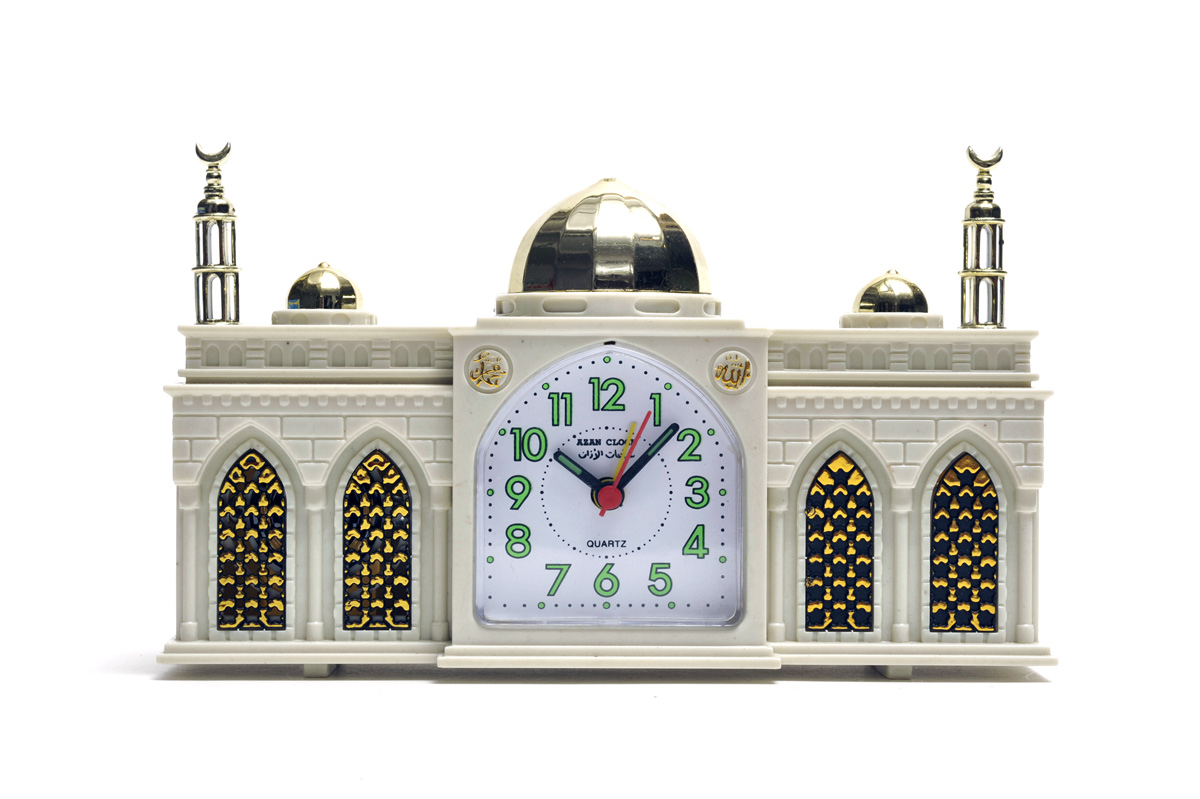
Mosque alarm clock in shape
Nd
Devotionalienkitsch, fishing Seng
Collection Werkbundarchiv – Museum der Dinge, Berlin, acquired 2009 Photo: Armin Herrmann
I just love the categories that this museum has classified these objects into:
~ Devotional kitsch
~ Construction and artists dummies jokes
~ Whimsical material
~ Relief transpositions
~ Material surrogates
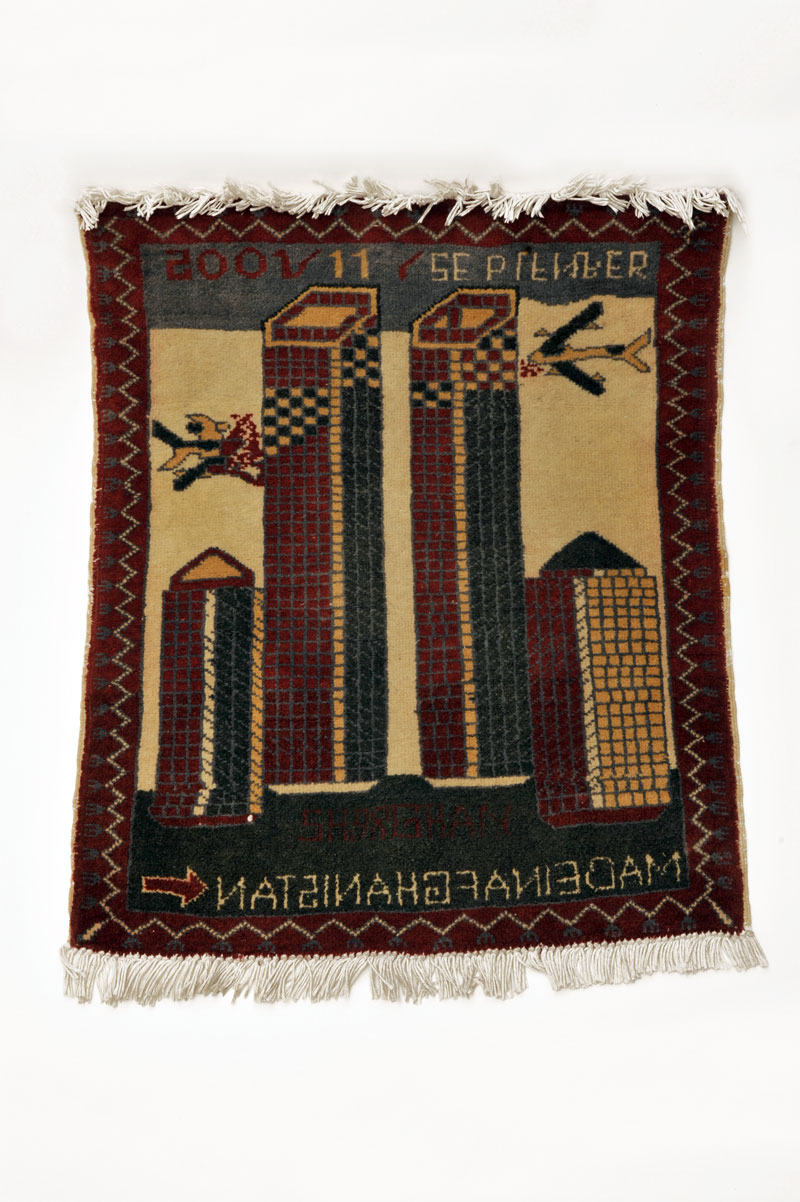
~ Inappropriate jewellery designs (for a rug depicting planes flying into the World Trade Centre towers!)
~ Inconveniences
~ Relief transpositions
~ Hunter kitsch
~ Jewellery and ornamental waste
~ Hooray kitsch
~ Construction dummy or far-fetched fantasy design
~ Tourist souvenir kitsch
~ Racist design
~ Bad or rotten material
There is a whole series of exhibitions that could be mounted, like stuffed animals, on any number of these categories. I particularly like “Material surrogates” which has endless possibilities and paradoxical connotations, as though, surrogates always have to be material and cannot be immaterial, of the spirit.
Dr Marcus Bunyan
Many thankx for the Museum für Kunst und Gewerbe Hamburg for allowing me to publish the art work in the posting. Please click on the images for a larger version of the art.
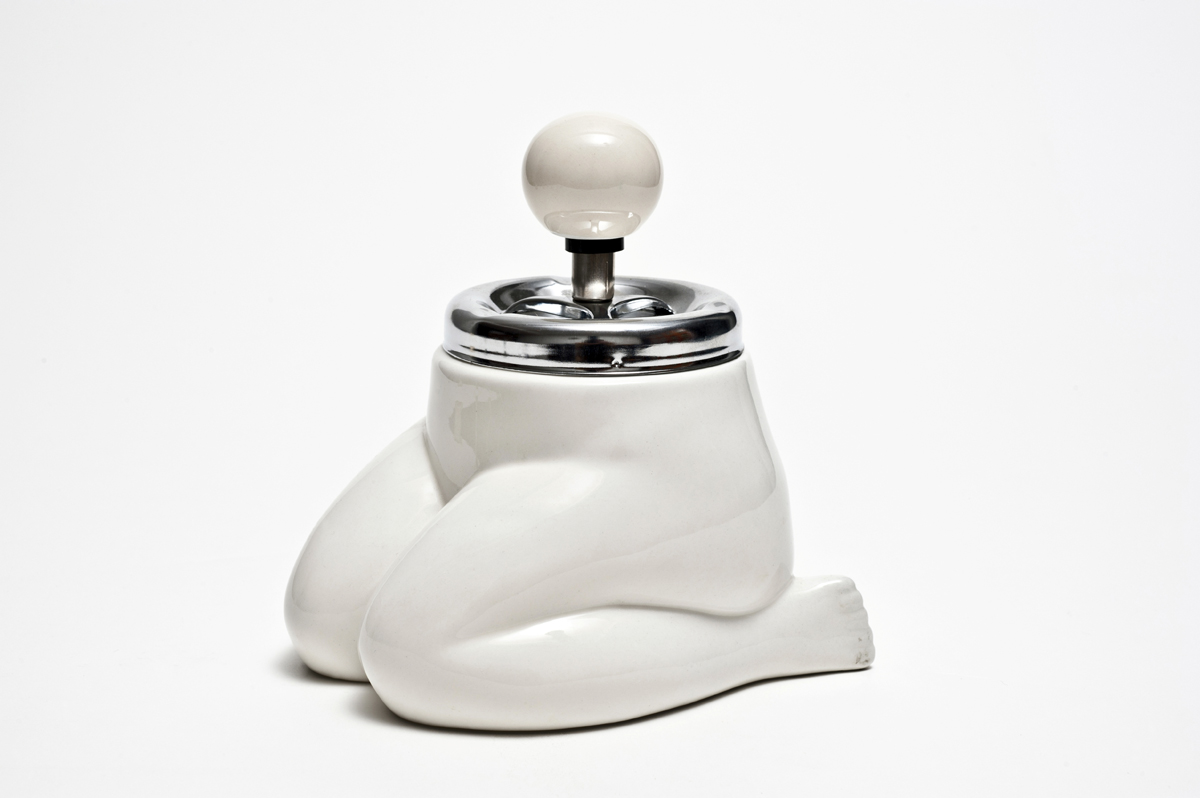
Abdominal ashtray
2009
Construction and artists dummies jokes
Collection Werkbundarchiv – Museum der Dinge, Berlin Photo: Armin Herrmann
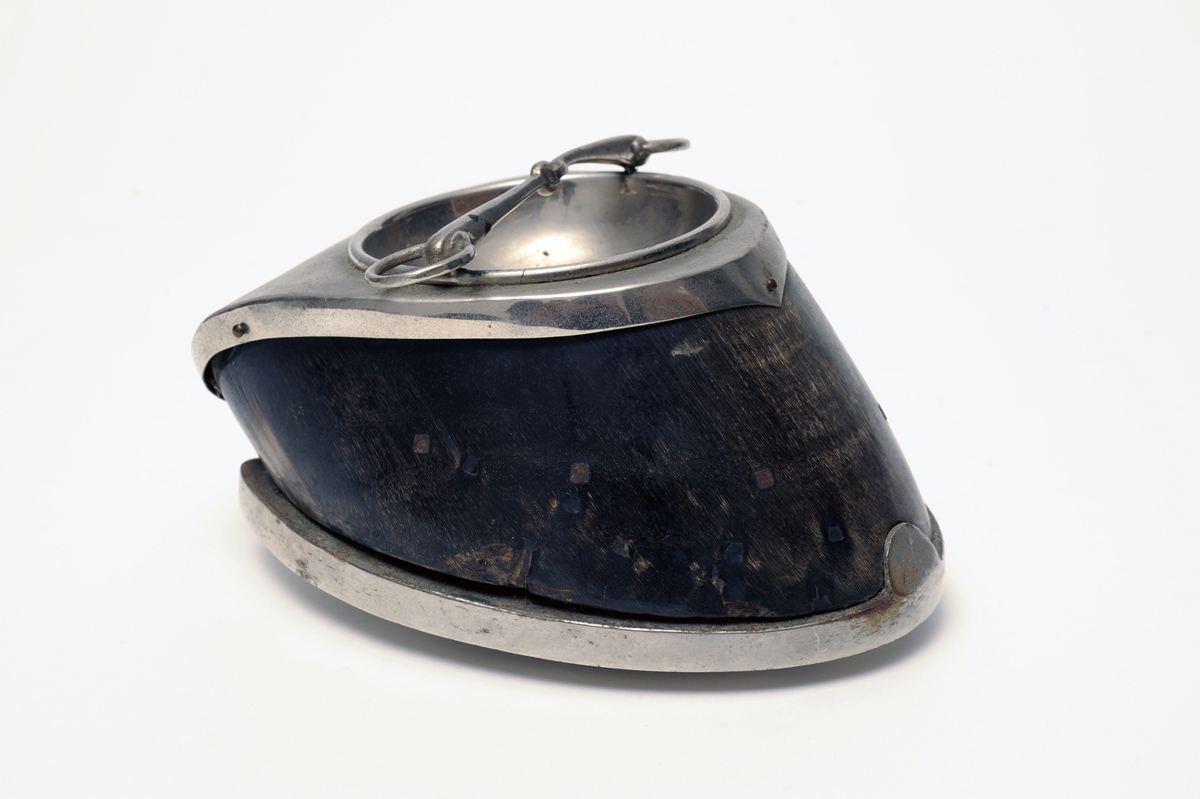
Ashtray horse’s hoof Nd Origin unknown
Whimsical material
Collection Werkbundarchiv – Museum der Dinge, Berlin Photo: Armin Herrmann
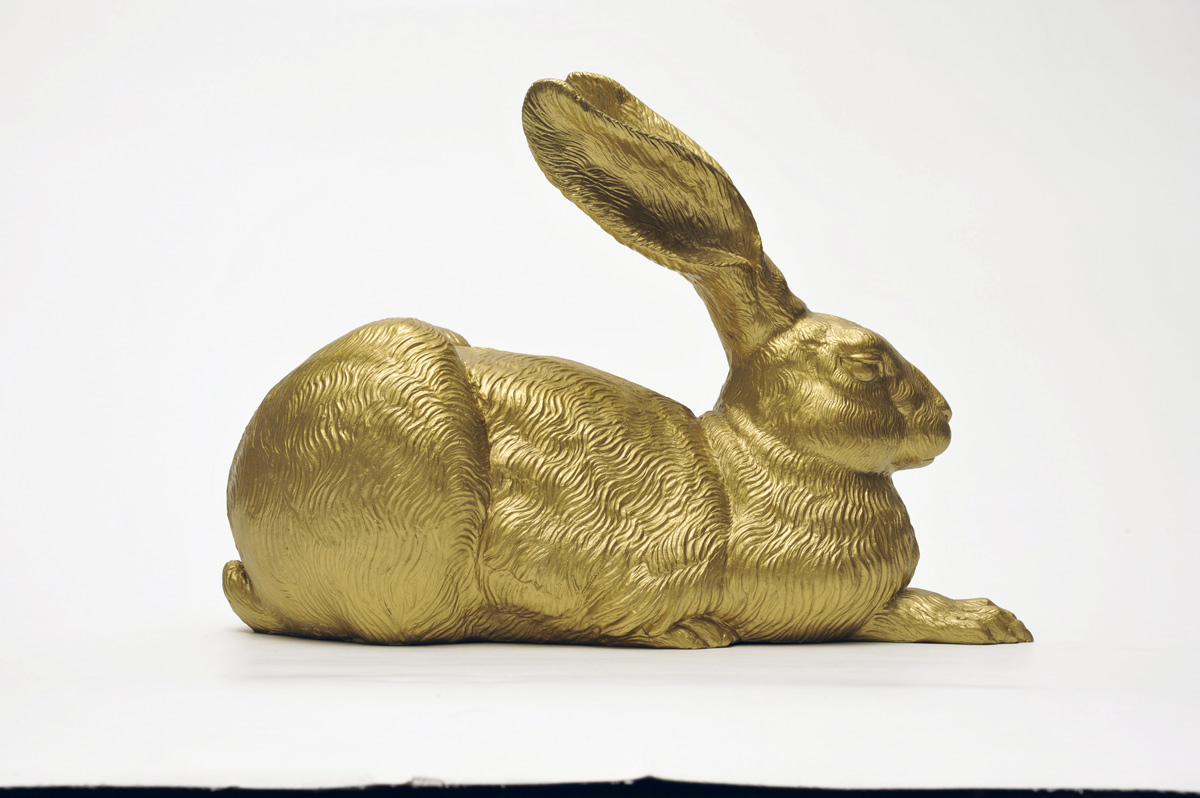
Ottmar Hoerl (German, b. 1950) The Big Piece of Hare 2003 Relief transpositions
Motive after a watercolour by Albrecht Dürer
Collection Werkbundarchiv – Museum der Dinge, Berlin Photo: Armin Herrmann
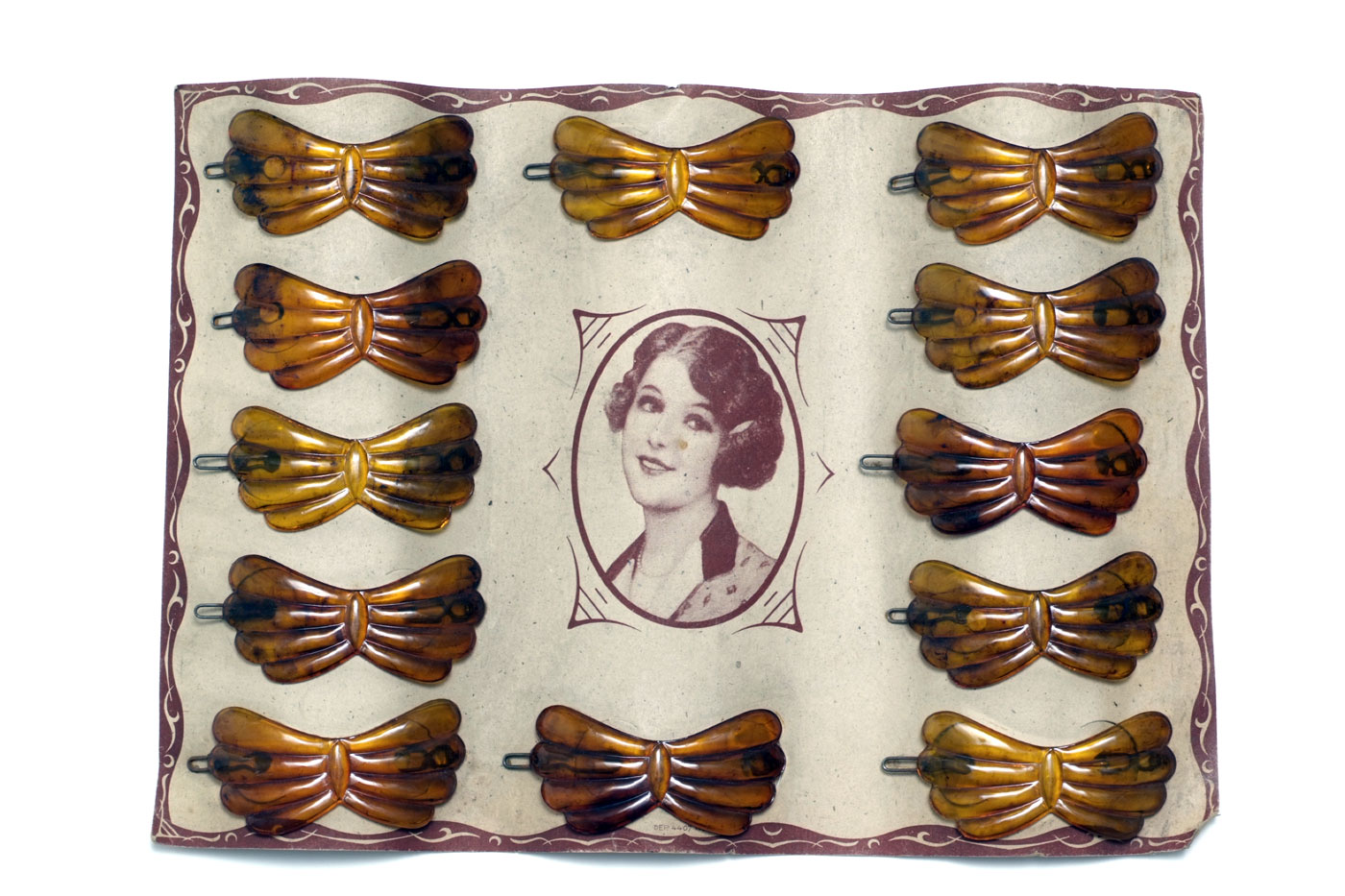
Celluloid hair clips, mimic the natural material horn
1920
Germany
Material surrogates
Collection Werkbundarchiv – Museum der Dinge, Berlin Photo: Armin Herrmann
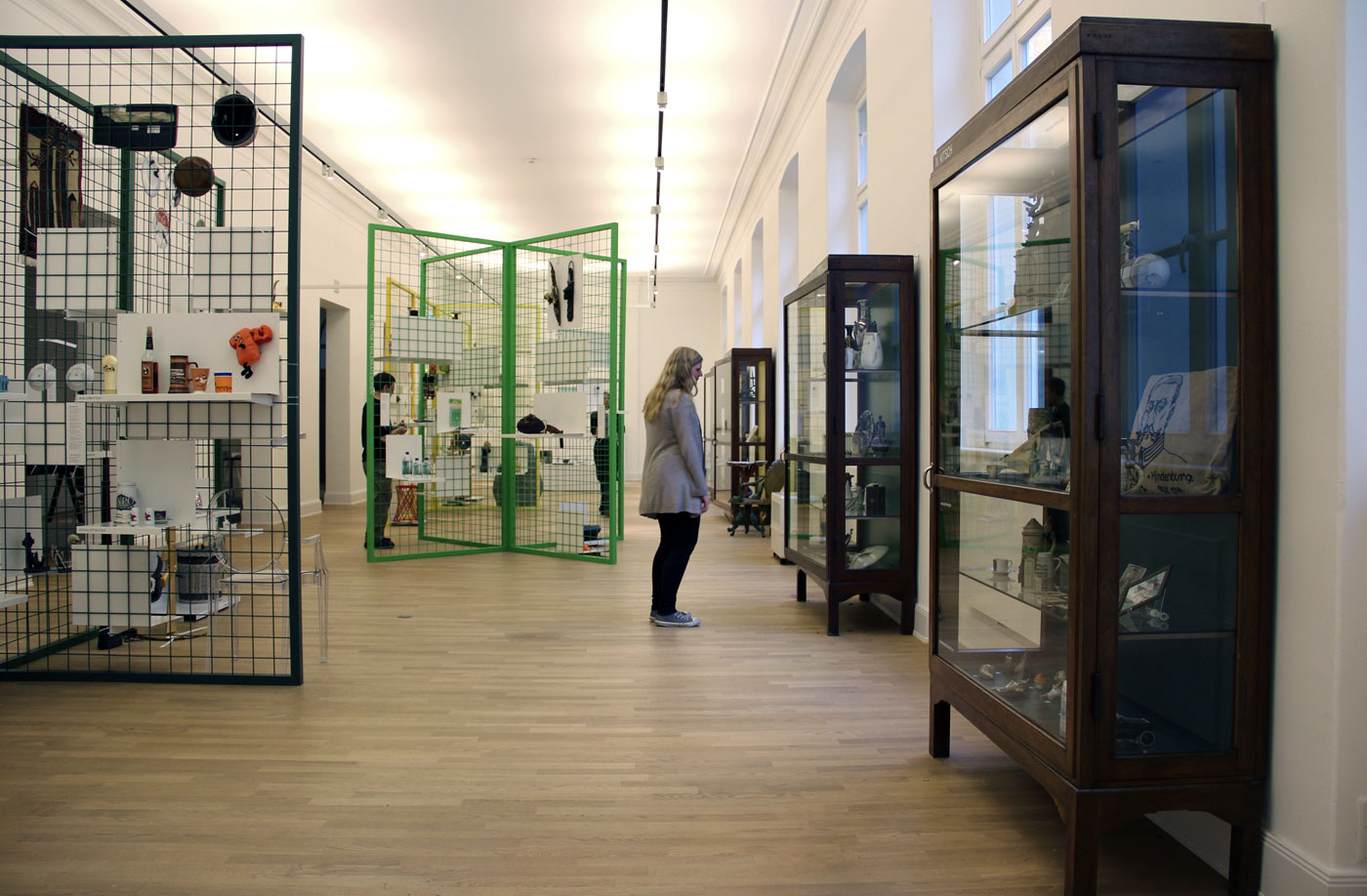
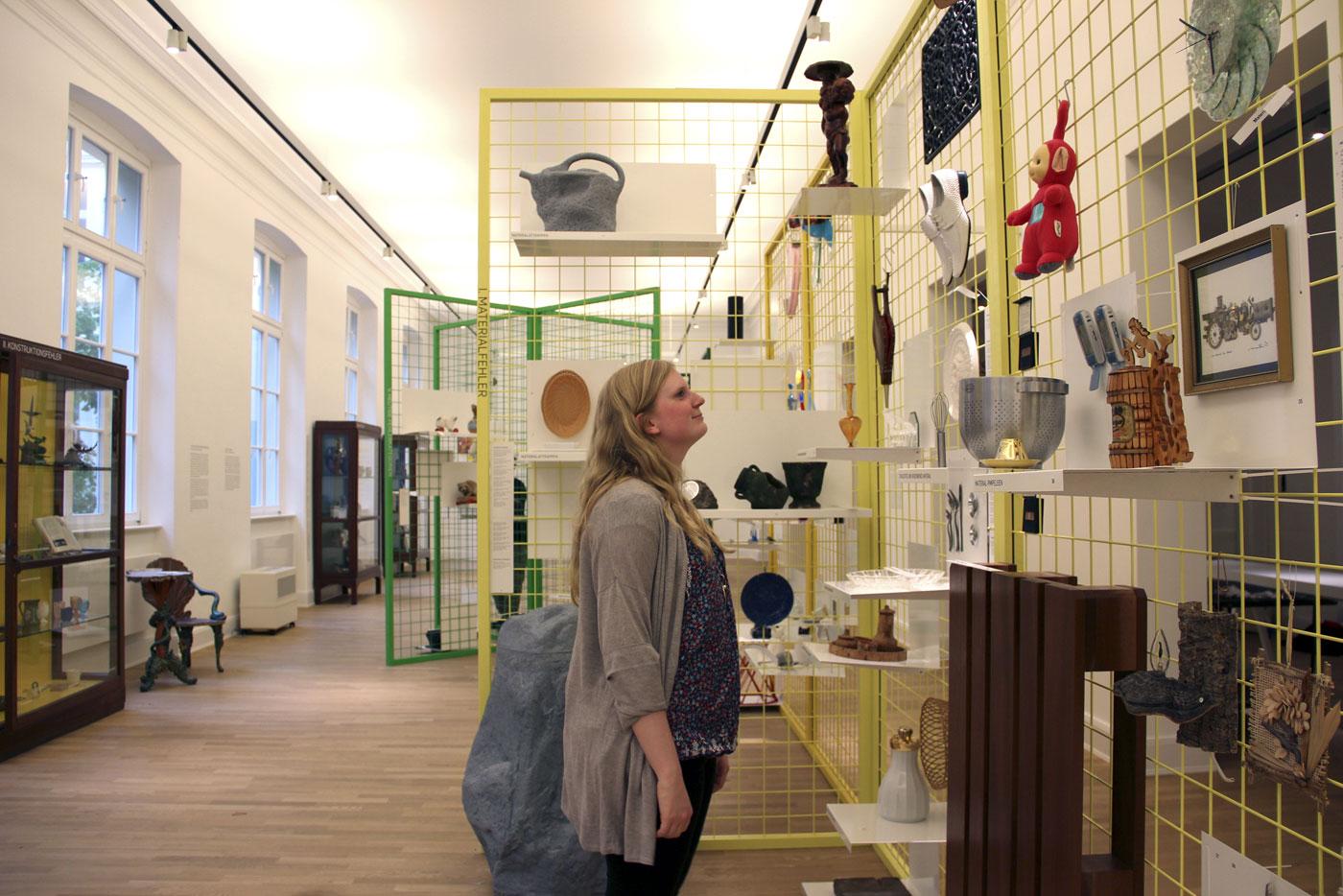
Exhibition views Photos: Michaela Hille
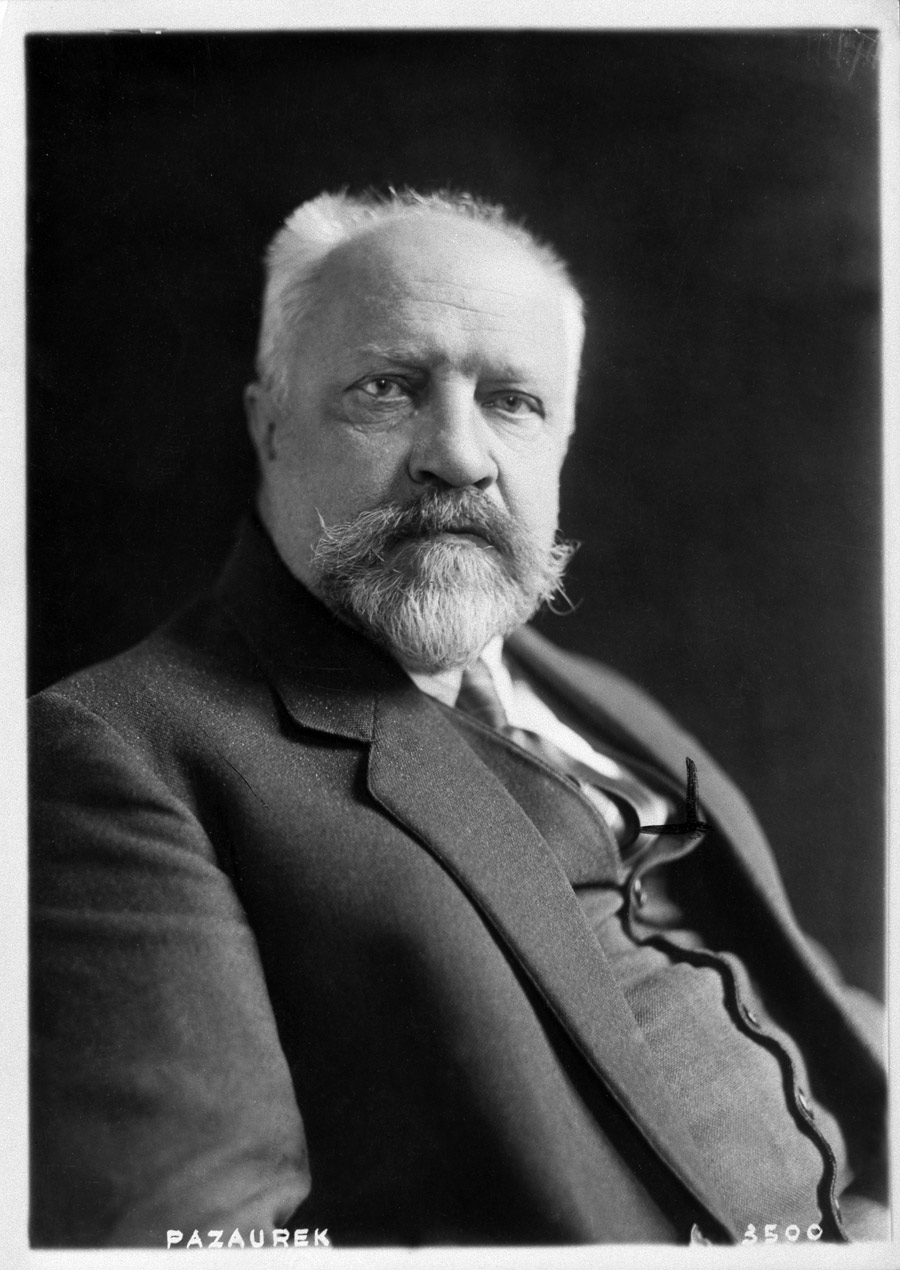
What is taste? Who decides what is good or bad, beautiful or ugly? Corporations spend billions trying to find out which product will catch the spirit of the times. Scientists devote themselves to researching which regions of the brain are responsible for forming taste. And what do we do? We argue about taste, although, as is well known, there is no accounting for taste. The Museum für Kunst und Gewerbe Hamburg (MKG) is throwing itself into the argument about “good” and “bad” taste by showing the exhibition Evil Things: an Encylopaedia of Bad Taste developed by the Werkbundarchiv – Museum der Dinge, Berlin, which juxtaposes historical and contemporary approaches. On top of this, we invite visitors to take an active part in the debate on taste by setting up an exchange where they can swap items. The idea of the exhibition Evil Things was based on the pamphlet “Good and Bad Taste in the Arts and Crafts” published by the art historian Gustav E. Pazaurek in 1912. In it, he sets up a complex catalogue of criteria which also underlies his “Department of Lapses in Taste” in the Landesmuseum in Stuttgart. Pazaurek was a member of the Deutscher Werkbund, founded in 1907, which set off the debate on “good form” in design which still shows no sign of abating even today. The exhibition Evil Things presents some 60 objects from Pazaurek’s former “Chamber of Horrors” and confronts these with items of contemporary design. This provides an opportunity to review Pazaurek’s systematic canon and decide if it is still valid today. At the same time it postulates new categories which might be able to classify things as “good” or “bad” from the perspective of today’s world. In parallel to this, the MKG is showing a project by the Muthesius-Kunsthochschule Kiel entitled Name That Thing. Students focussed here on kitsch and produced projections, installations, objects, photography and texts on the theme, whereby they also had the Museum as an authority for forming taste squarely in their sights.”
Press release from the Museum für Kunst und Gewerbe Hamburg website
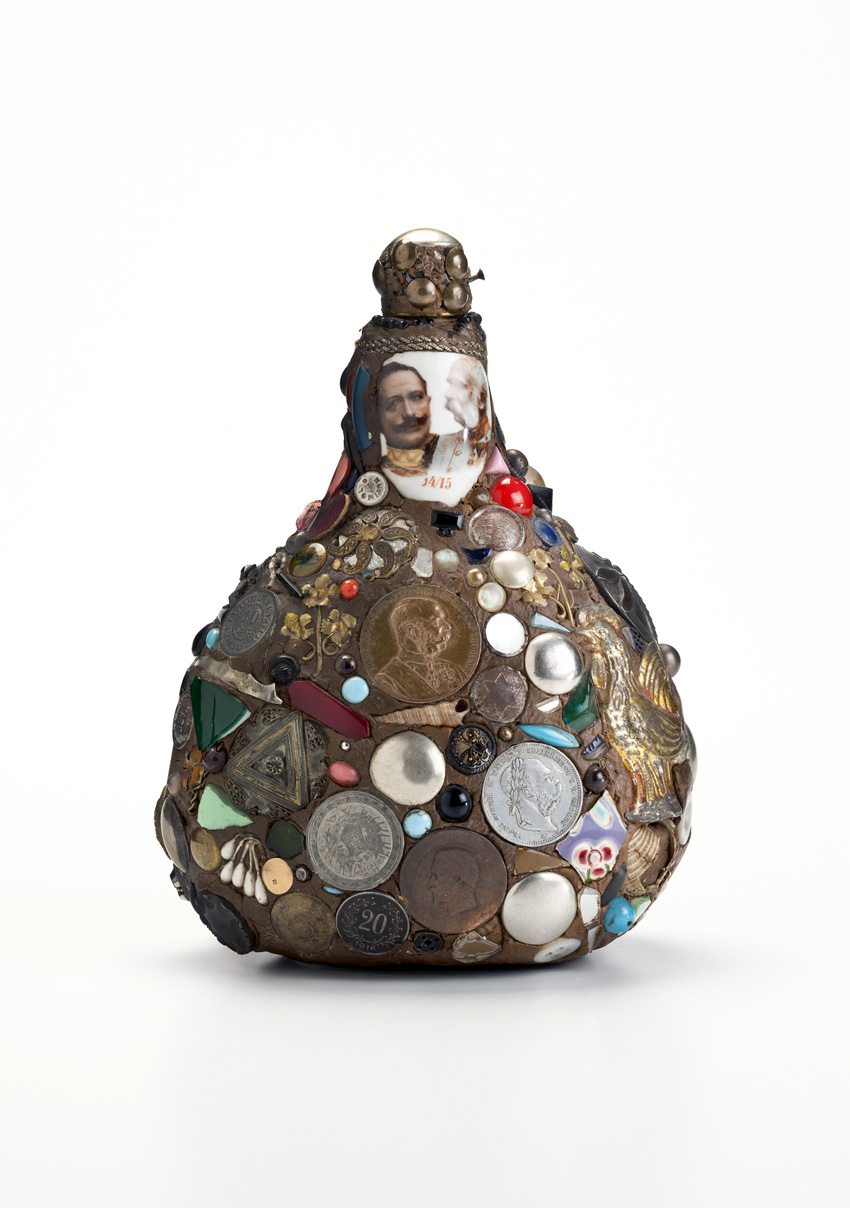
Bocksbeutel bottle, covered with patriotic motifs and coins
c. 1915
Probably Austrian
Materialpimpeleien
Pazaurek Collection, Landesmuseum Württemberg, Stuttgart, Photo: Hendrik Zwietasch, Landesmuseum fillies
Hand-knotted rug with motif for 9/11
Nd
Inappropriate jewellery designs
Afghanistan
Donated by Achille Mauri, Milan
Collection Werkbundarchiv – Museum der Dinge, Berlin Photo: Armin Herrmann
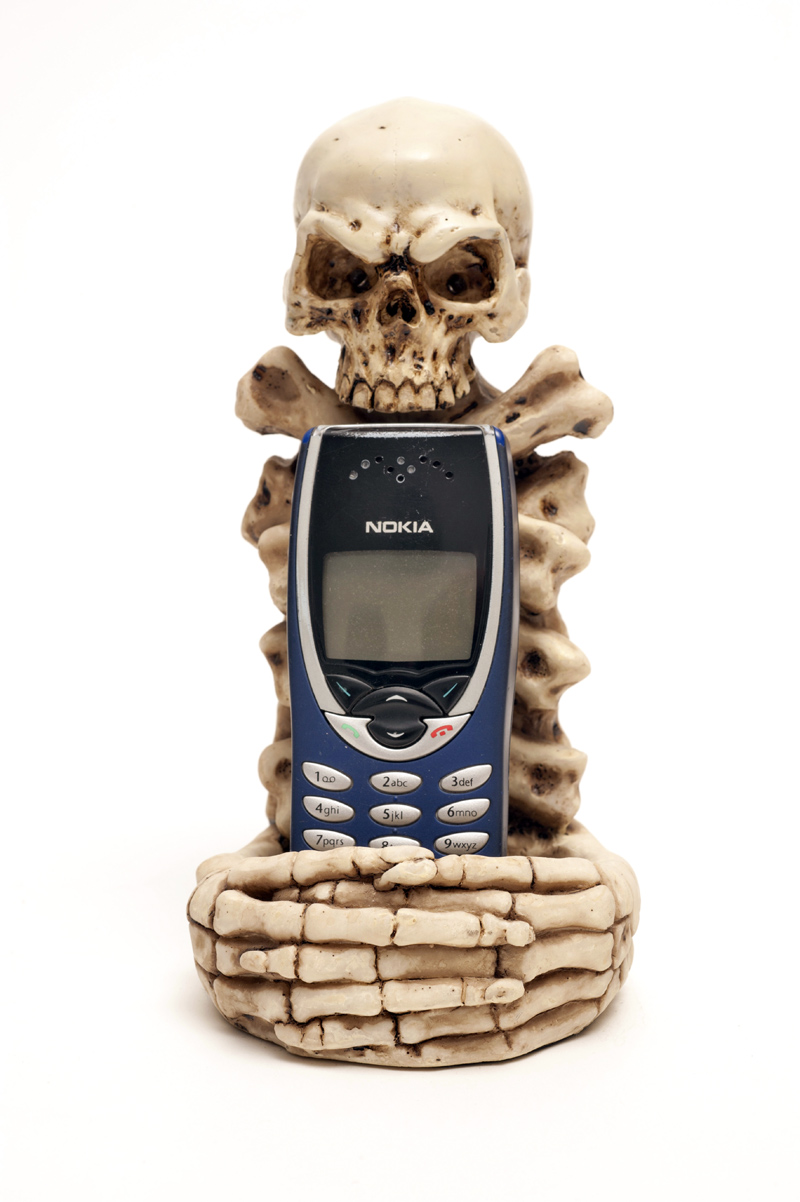
Mobile Phone Holder
2009
Agora Gift House AB, Sweden
Inappropriate jewellery motifs
Collection Werkbundarchiv – Museum der Dinge, Berlin Photo: Armin Herrmann
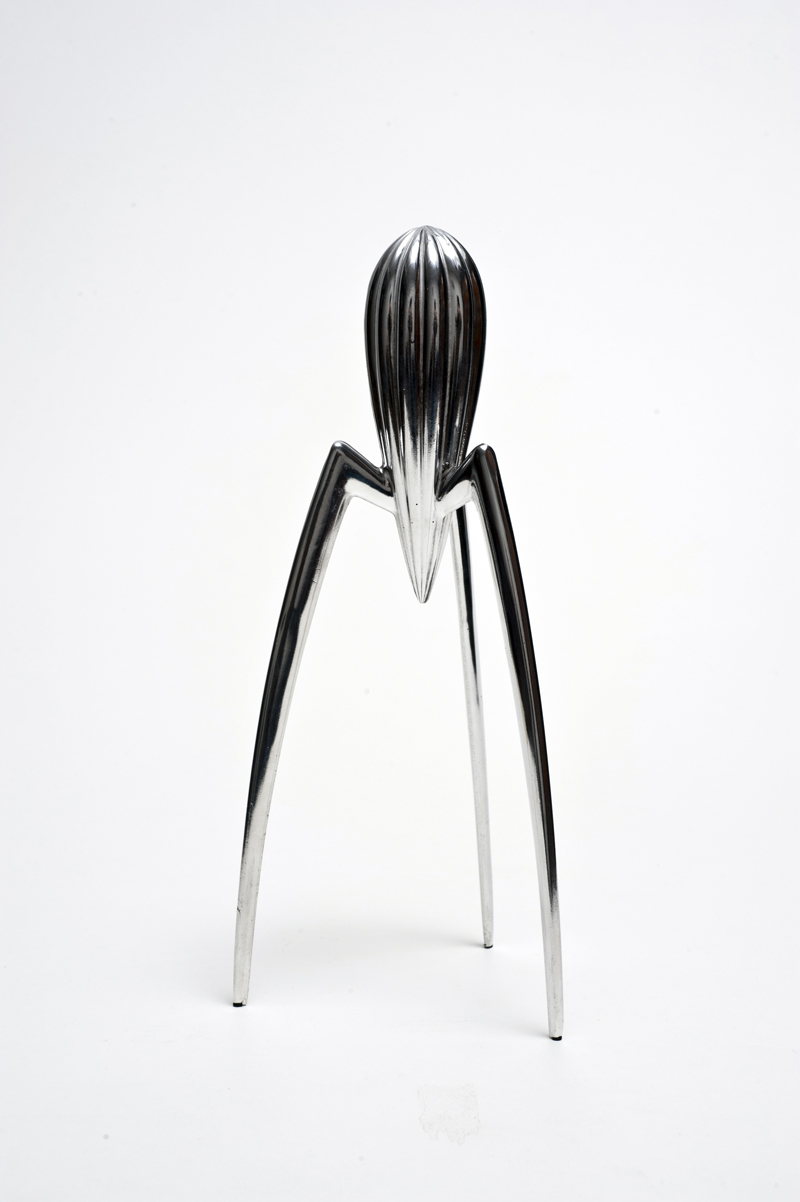
Philippe Starck (French, b. 1949) Juicy Salif lemon squeezer
1990
Designed by Philippe Starck in 1990, Alessi, Italy
Inconveniences
Collection Werkbundarchiv – Museum der Dinge, Berlin Photo: Armin Herrmann
Evil Things. An Encyclopaedia of Bad Taste
In 1909, Gustav E. Pazaurek opened a “Department of Lapses in Taste” in the Landesmuseum in Stuttgart with the goal of educating people in “good taste”. The exhibits on show there were without exception examples of art and craftwork intended to induce repugnance and to expose the “bad taste” of the objects. Pazaurek developed a comprehensive canon to classify things in his pamphlet “Good and Bad Taste in the Arts and Crafts”. In this, he invented drastic terminology such as “decorative brutality”, “violation of the material” or “functional lies”. But what is “evil” about an object? For Pazaurek, it lies first and foremost in its external appearance, materiality and construction. In his opinion, things have a strong influence on human beings, and are capable of altering the essence of their being. Pazaurek follows the notions of the Deutscher Werkbund here, according to which an appropriate domestic environment should aim not only at improving living standards, but also “improving” people and educating them to be responsible and thoughtful members of the community. The idea of educating people to have taste at the beginning of the 20th century, which also had proponents in the Bauhaus and in the Reform Movement, set itself up in opposition to the ostentatious pomposity and rabid inflation of decorative excrescences of the Wilhelminian period, which were perceived as being dishonest and superficial. Pazaurek’s “Bible of Taste” can also be seen in this context as an “anti-product catalogue”. The guidelines of the Deutscher Werkbund, to which architects, designers and academics subscribed, continued to exert an influence until well into the 1960s. The application of the historical criteria to contemporary products provides a wealth of material for discussion. On the one hand, it would probably be argued that such canons make no sense today while on the other, if we were asked to formulate criteria, we would consider quite different ones to be relevant – for instance, sustainability, fair trade, wildlife conservation etc.
Press release from the Museum für Kunst und Gewerbe Hamburg website
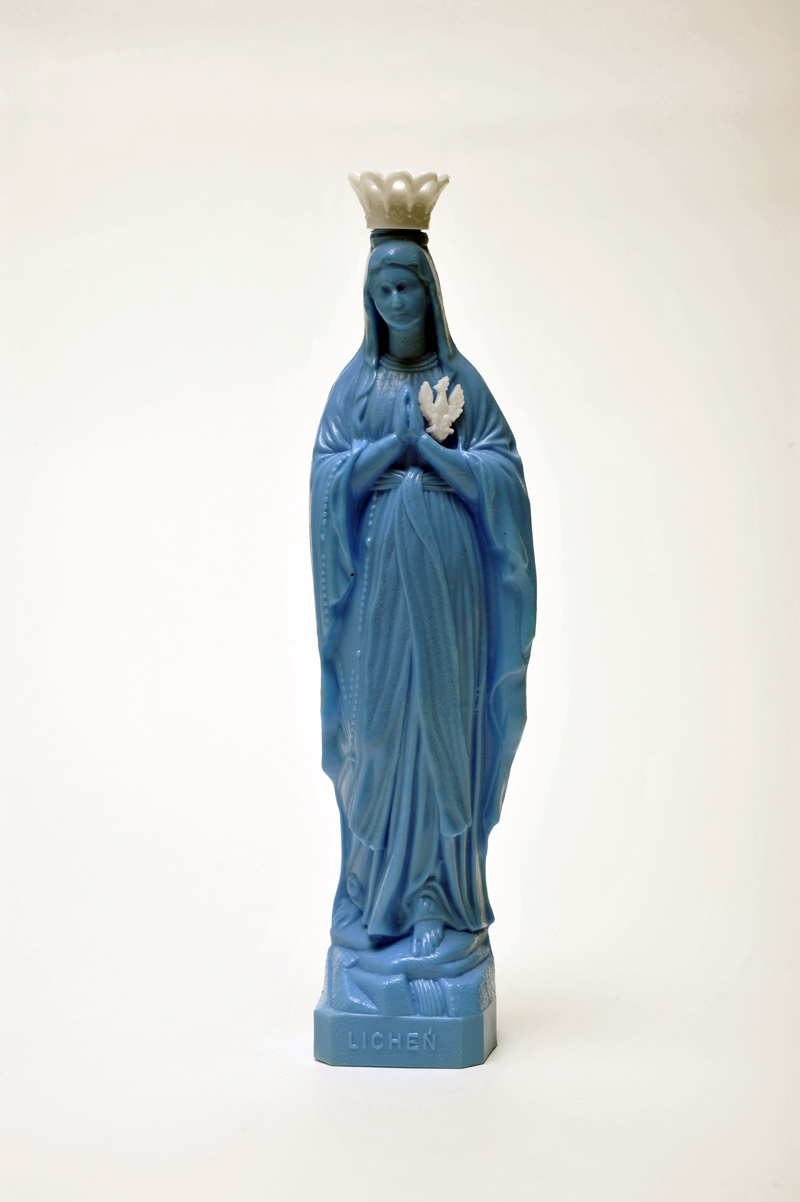
Mineral water bottle in the form of Madonna
Nd
Devotionalienkitsch, “lichen”
Collection Werkbundarchiv – Museum der Dinge, Berlin Photo: Armin Herrmann
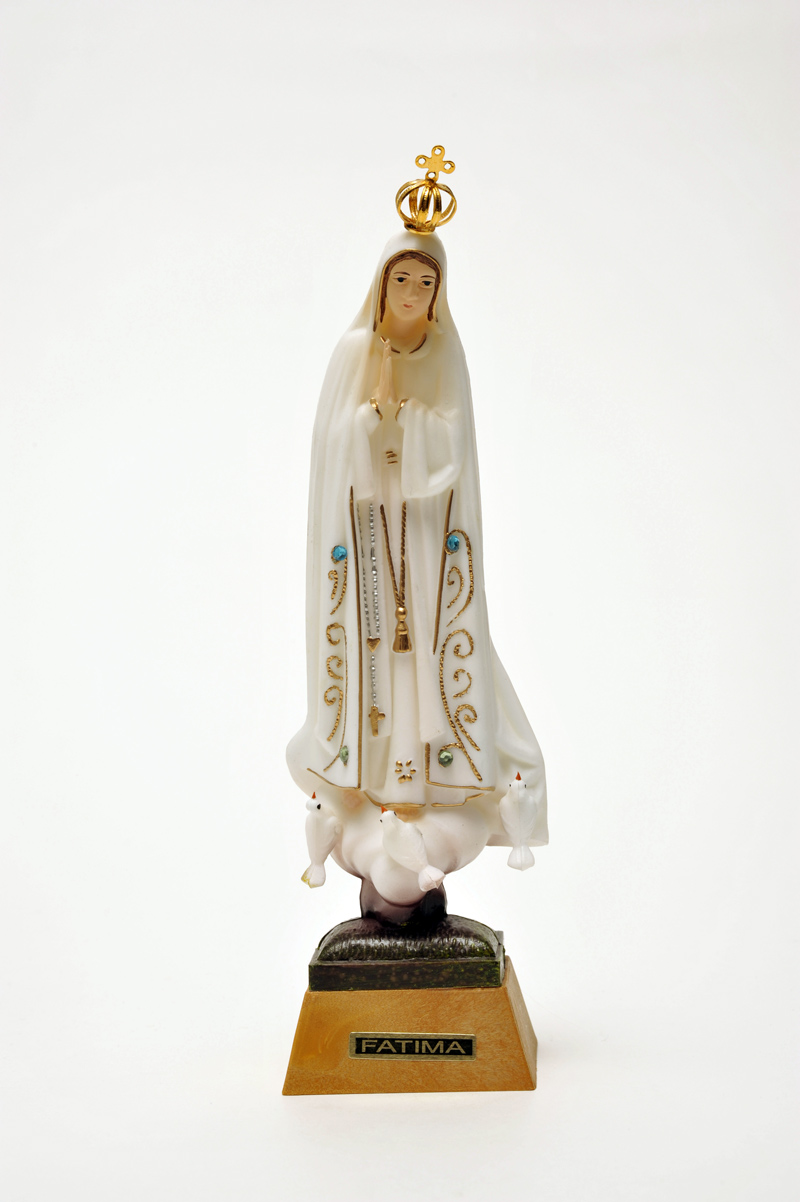
Madonna figure “Fatima”
Nd
Devotionalienkitsch, Portugal
collection Werkbundarchiv – Museum der Dinge, Berlin Photo: Armin Herrmann
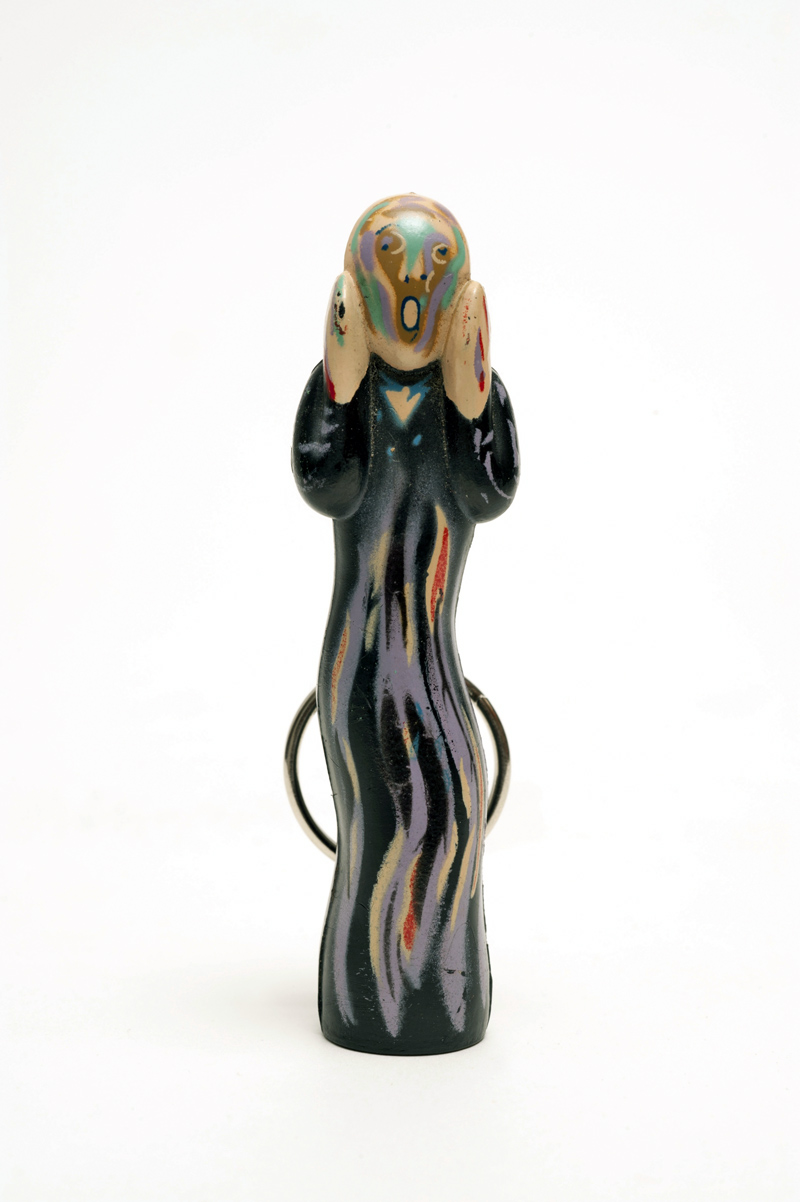
“The Scream” as a key chain, according to Edvard Munch’s “The Scream”
1991
Relief transpositions
Robert Fishbone, On The Wall Productions, Inc. USA, 1991
Collection Werkbundarchiv – Museum der Dinge, Berlin Photo: Armin Herrmann
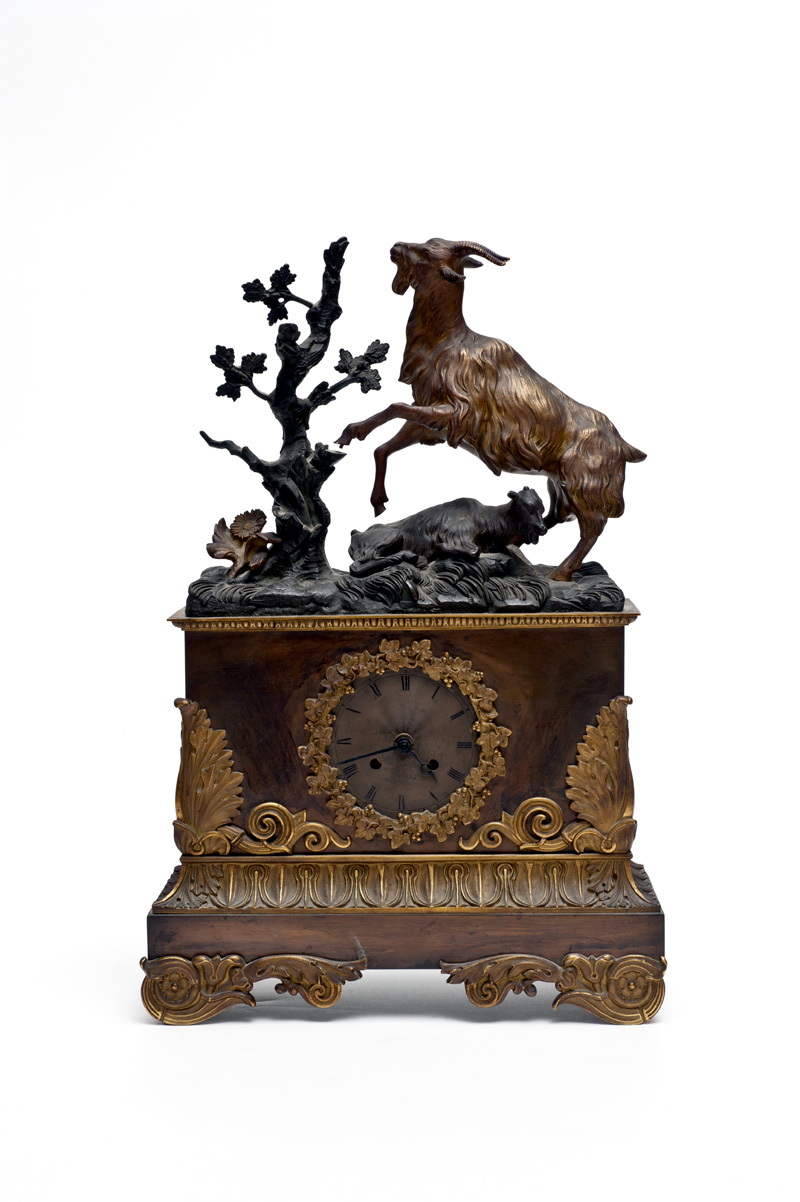
Historicist clock
Second half of the 19th Century
Hunter kitsch
Collection Werkbundarchiv – Museum der Dinge, Berlin Photo: Armin Herrmann
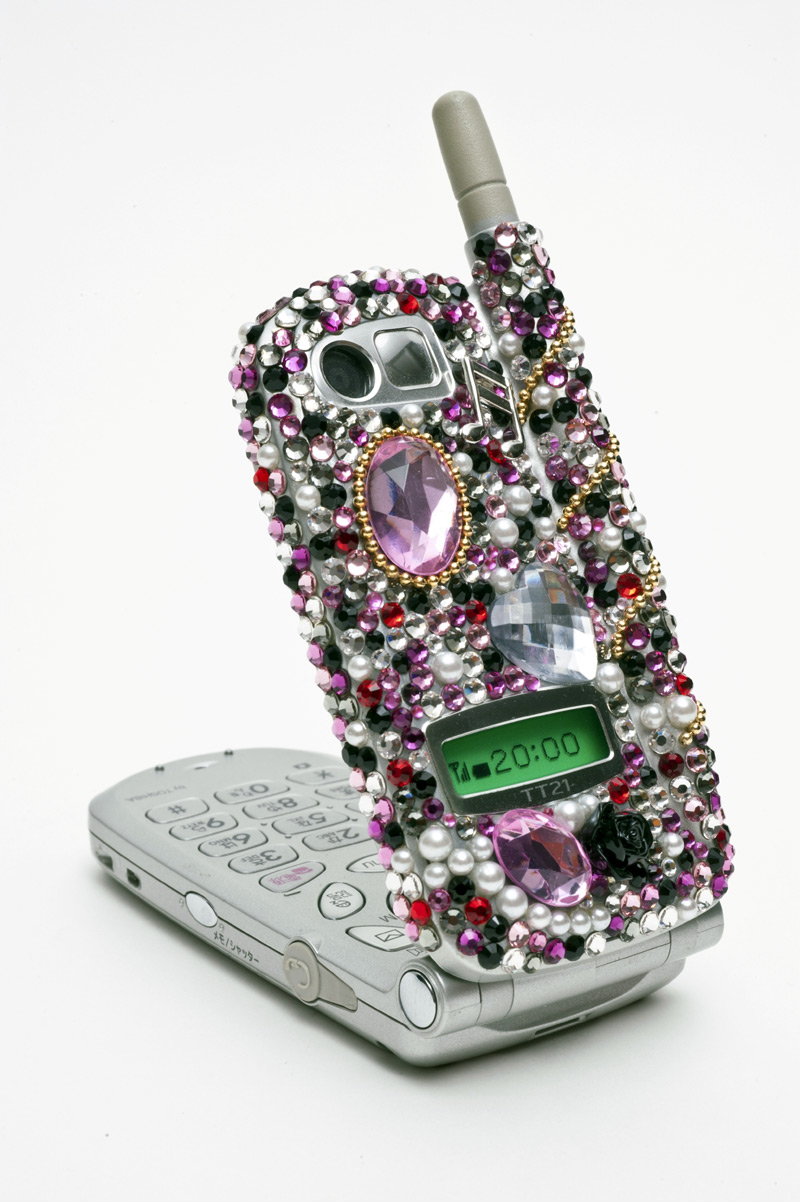
Moeko Ishida Studded with Stones cell phone
2009
Deco Loco
Jewellery and ornamental waste
Collection Werkbundarchiv – Museum der Dinge, Berlin Photo: Armin Herrmann
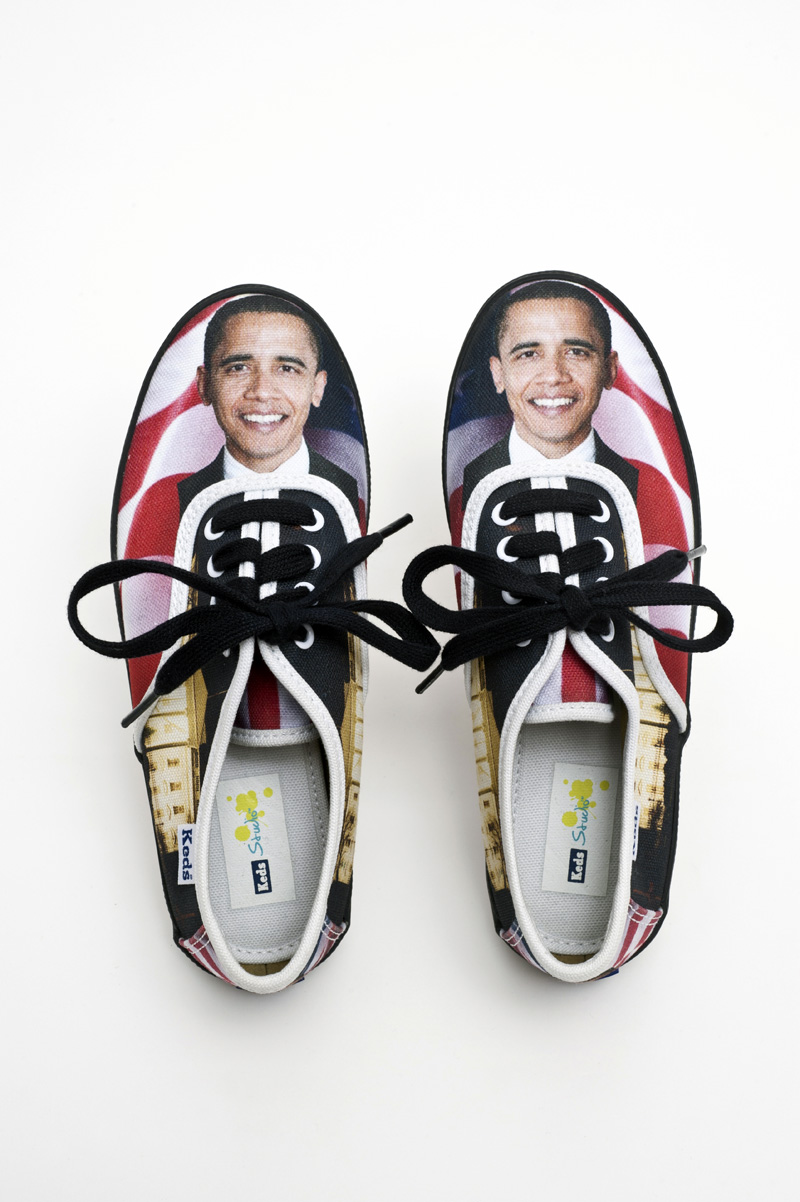
Obama children’s sneakers
2008
Draft, Keds, USA 2009
Hooray kitsch
Collection Werkbundarchiv – Museum der Dinge, Berlin Photo: Armin Herrmann
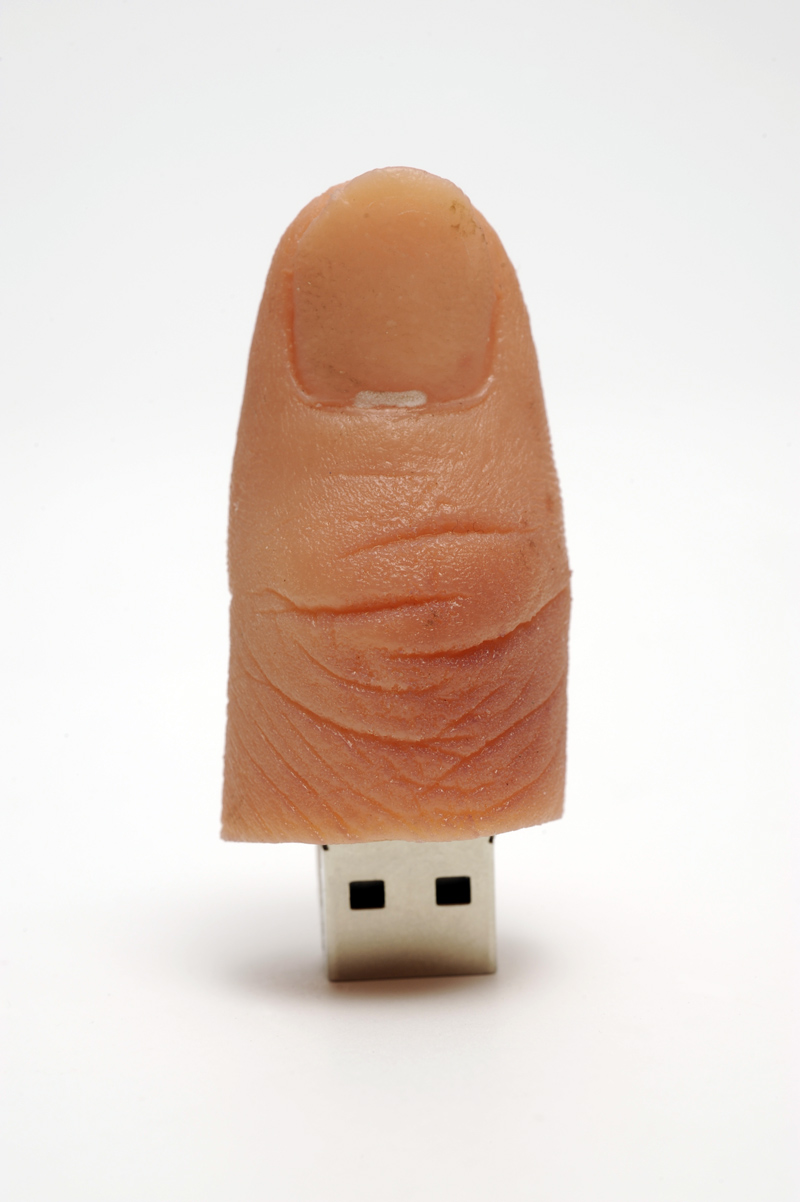
USB stick in the shape of a finger
2009
China
Construction dummy or far-fetched fantasy design
Collection Werkbundarchiv – Museum der Dinge, Berlin Photo: Armin Herrmann
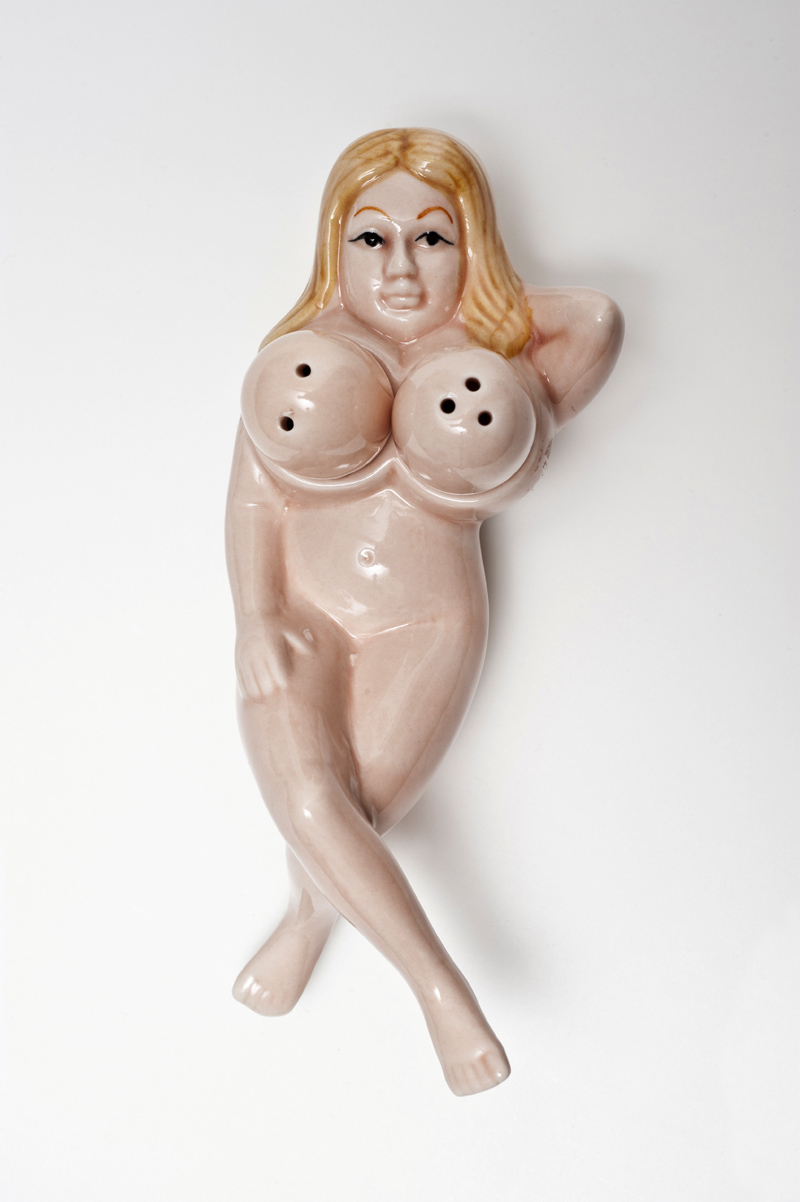
Salt and pepper shakers in the shape of a woman
2009
Construction dummy or far-fetched fantasy design
Collection Werkbundarchiv – Museum der Dinge, Berlin
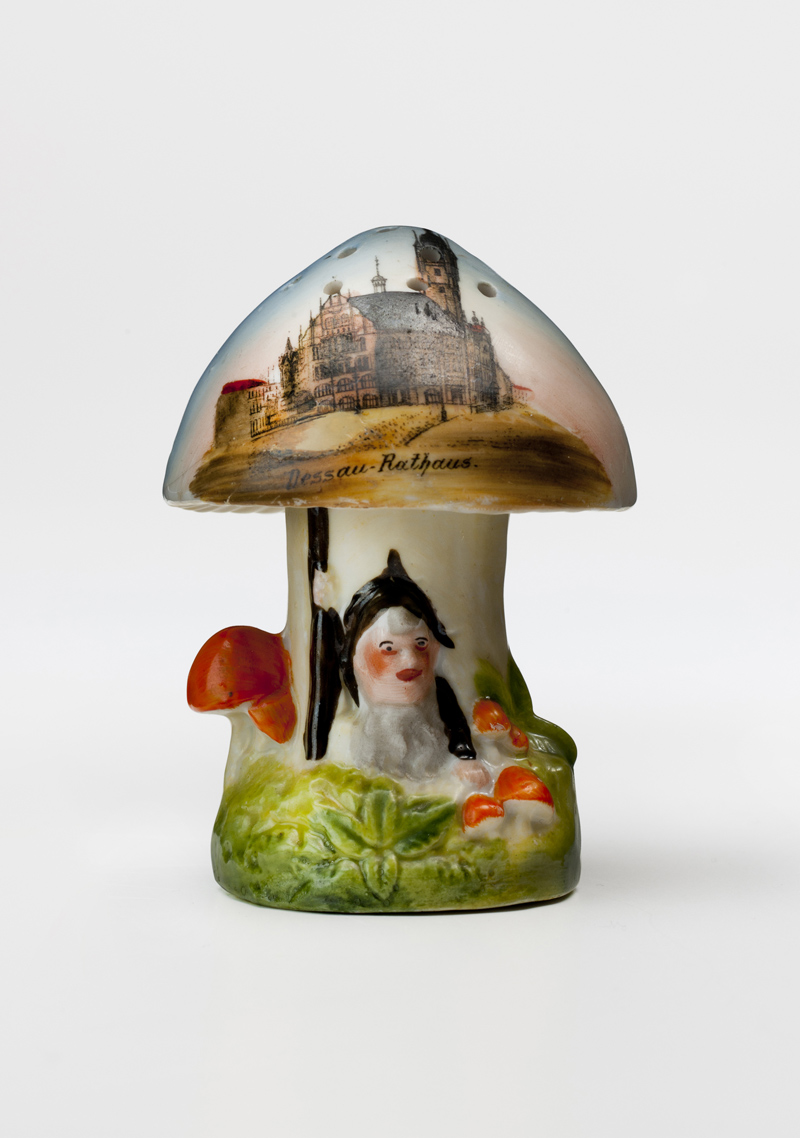
Souvenir from Dessau in the form of acting as a salt shaker with view of the Dessau city hall
first quarter 20th Century
Tourist souvenir kitsch
Pazaurek Collection, Landesmuseum Württemberg, Stuttgart
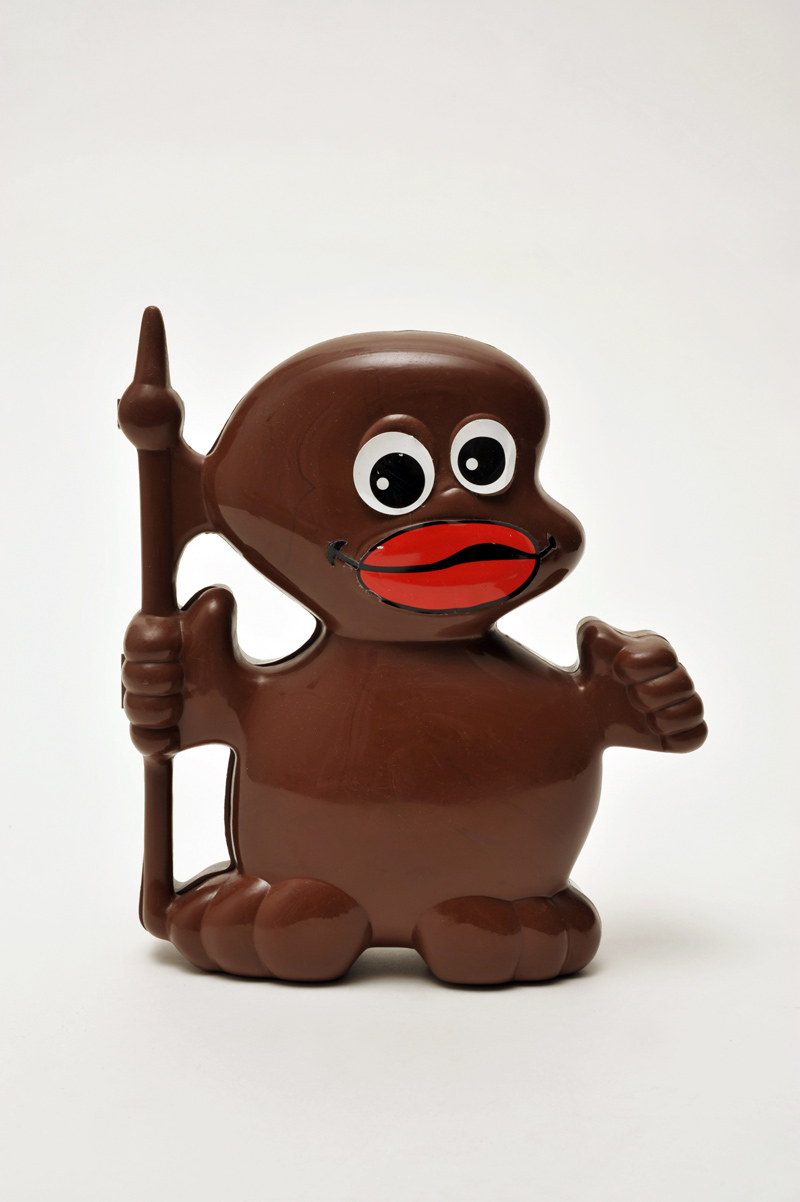
Jewellery packaging Conguitos 1998
Conguitos – LACASA. SA, Zaragoza, Spain, 1998
Racist design
Collection Werkbundarchiv – Museum der Dinge, Berlin Photo: Armin Herrmann
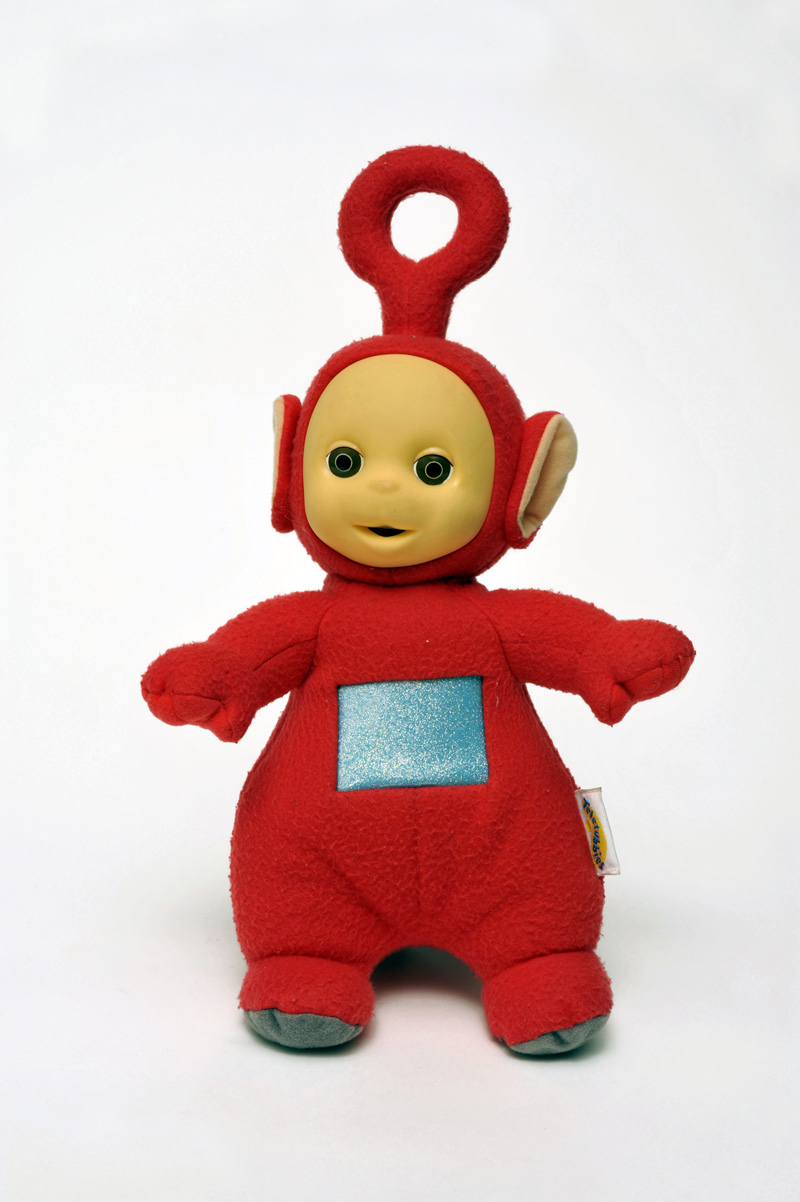
Withdrawn from the market Teletubbies character that contains toxic plasticisers
1998
Hasbro, Inc., 1998
Bad or rotten material
Collection Werkbundarchiv – Museum der Dinge, Berlin Photo: Armin Herrmann
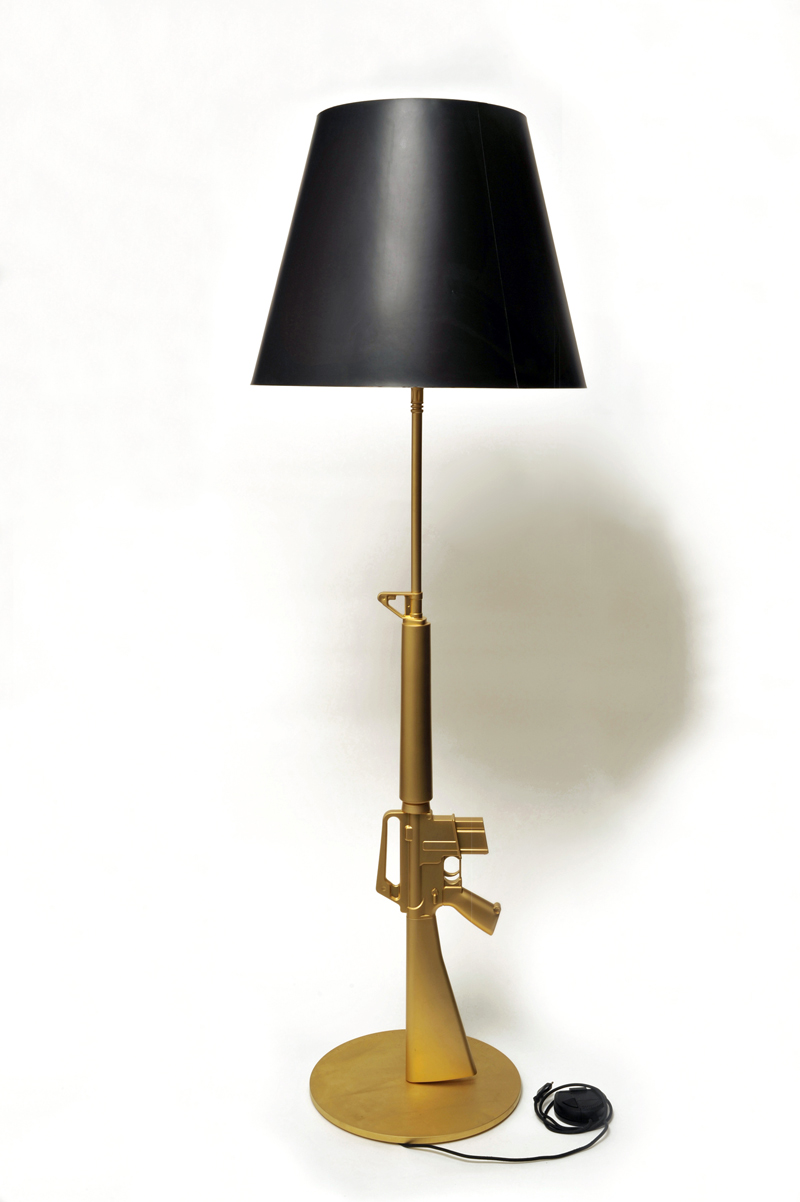
Philippe Starck (French, b. 1949)
Floor lamp Guns – Lounge Gun
2005
Inappropriate jewellery designs
Flos, Italy, 2009
Collection Werkbundarchiv – Museum der Dinge, Berlin Photo: Armin Herrmann
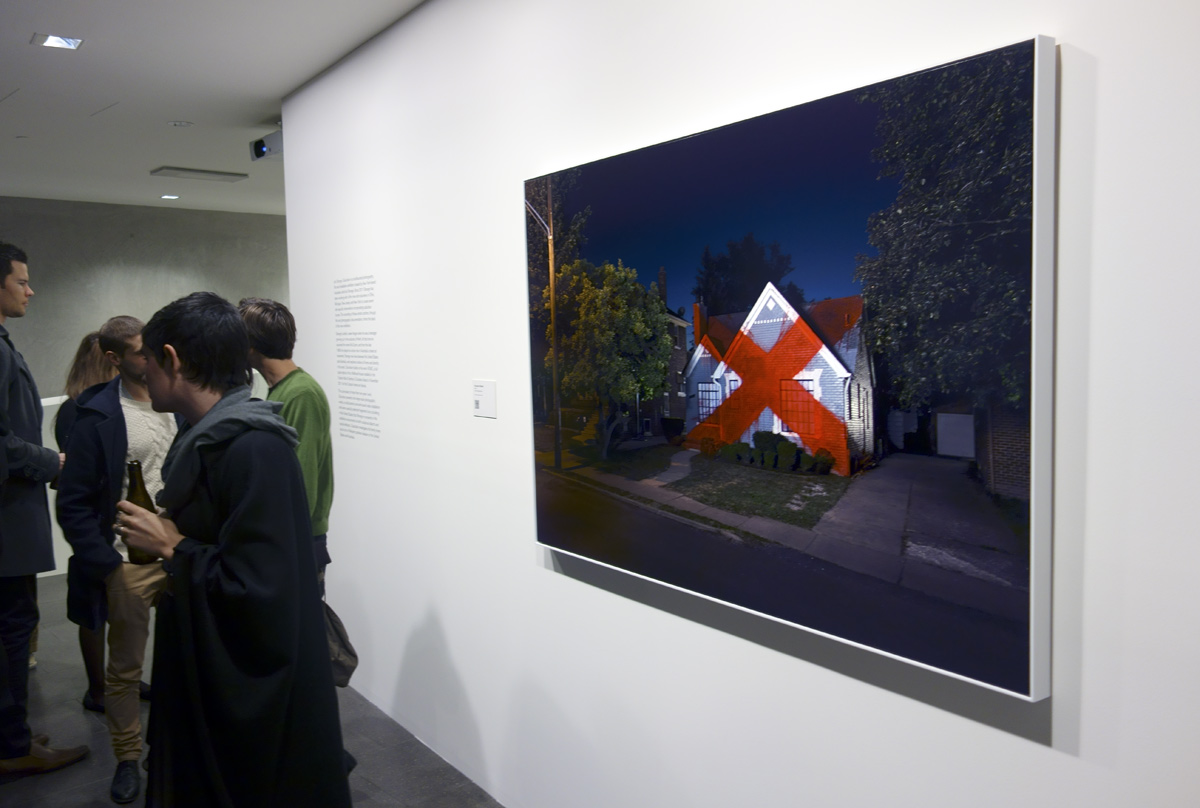
It is disappointing when you invite friends from Melbourne and interstate to an opening and one of them turns to you and says, “Well, what was all the fuss about?” The trick is to go with no expectation and you will never be disappointed and may even be pleasantly surprised. Unfortunately, not in this case.
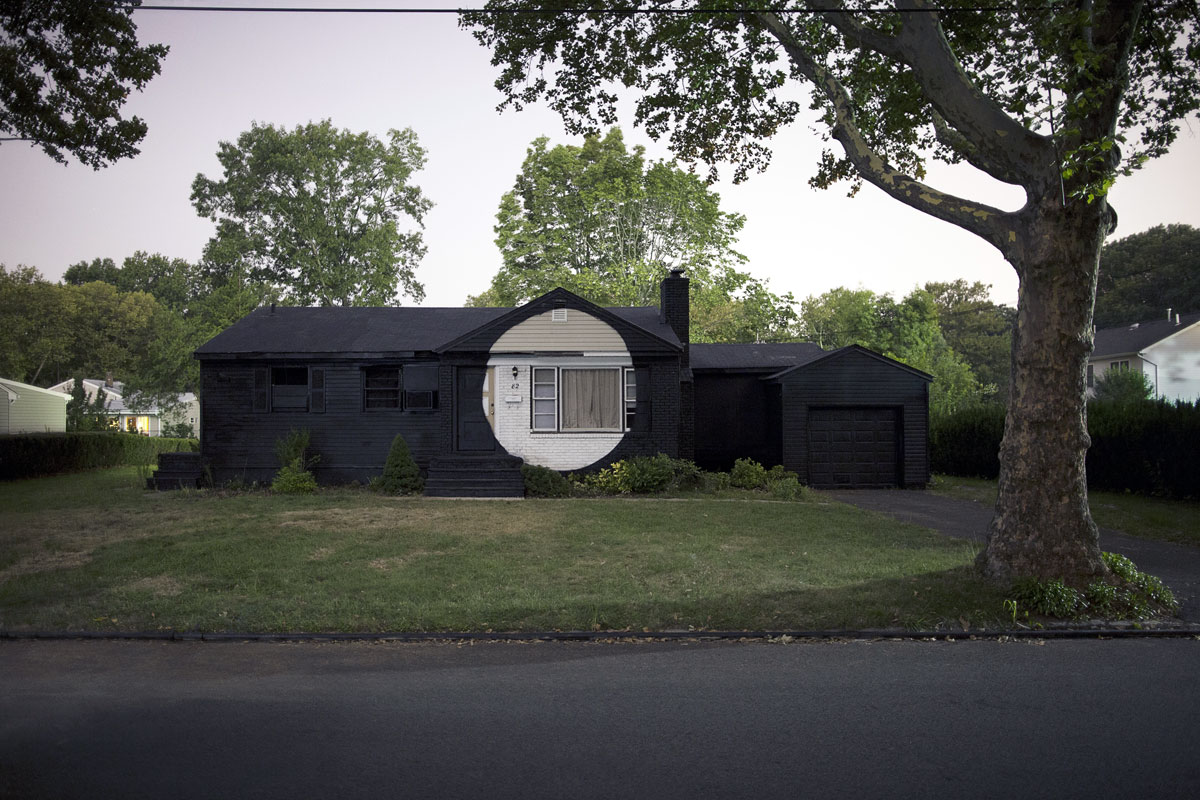
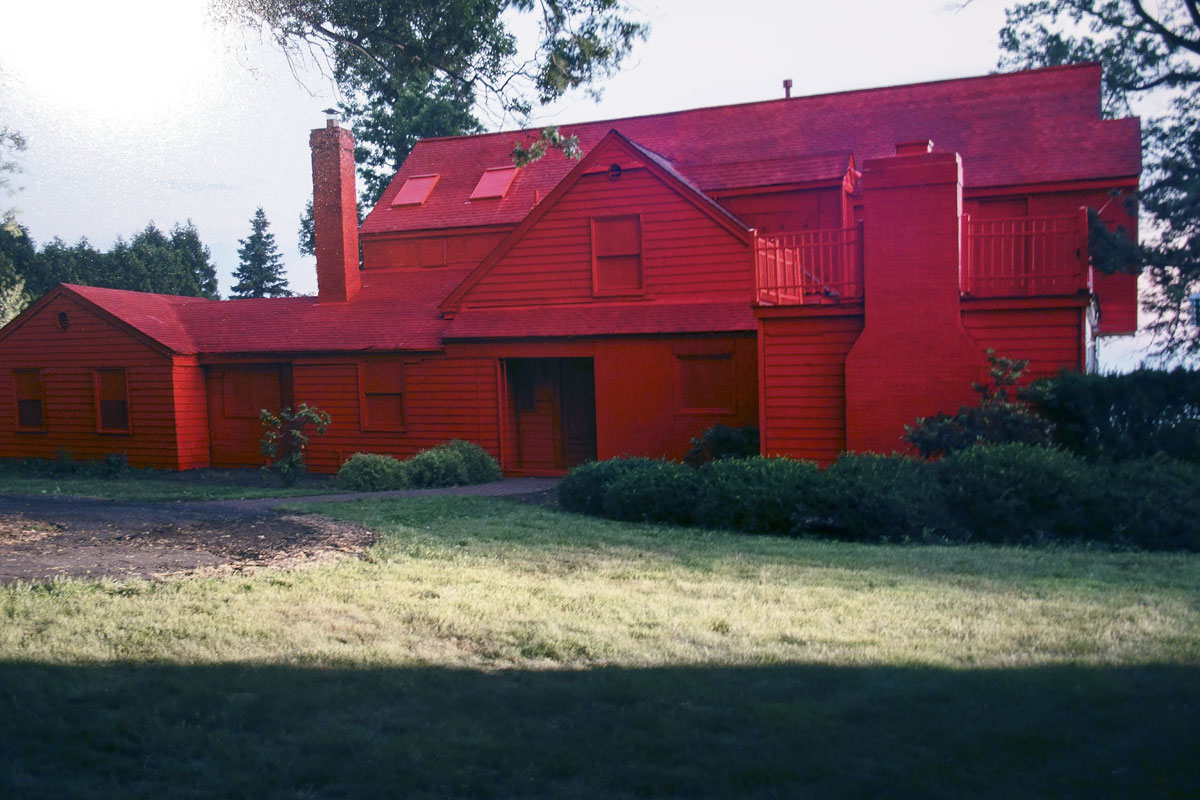
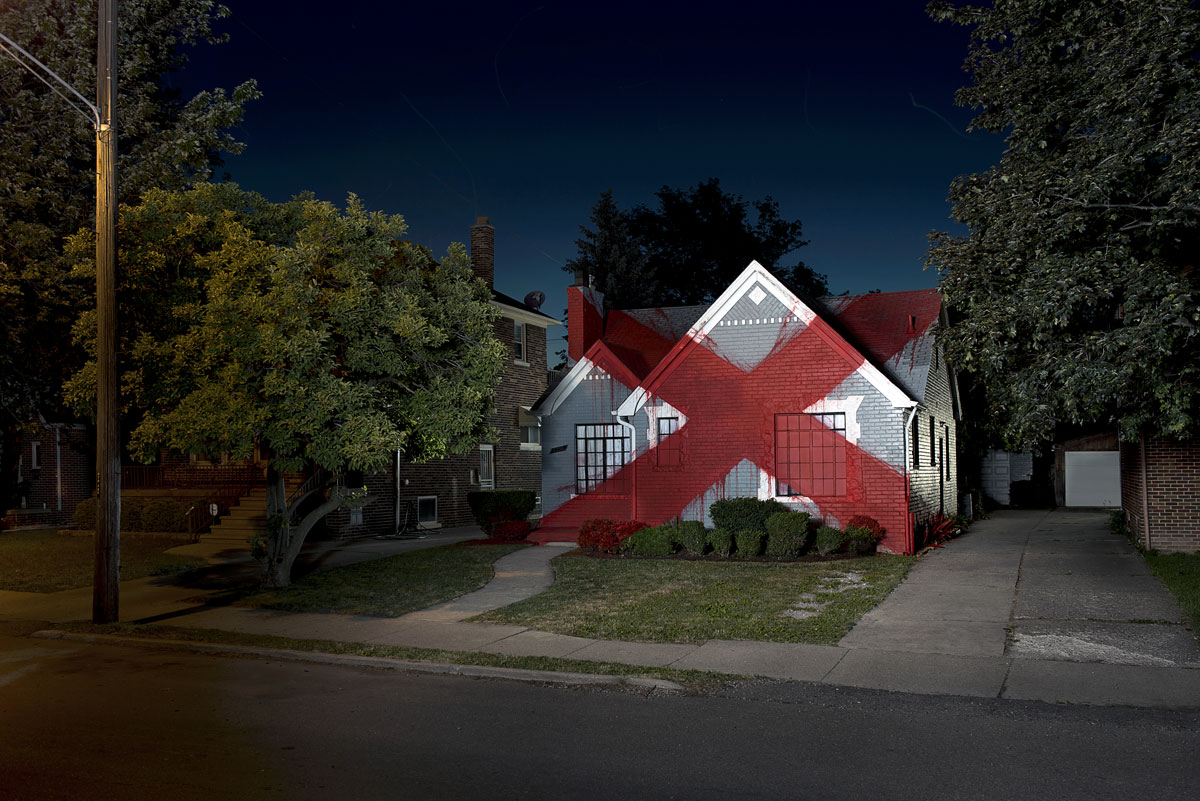
Despite all the years, not to mention money, that have gone into the Crewdson-esque production of this small body of work, what emerges in my mind at least are three interesting and beautiful images (a ying / yang black circle / white circle and a red painted house) and not much else. The three images are outstanding in their psychological excoriation of suburban belonging. Through use of colour and form the images interrogate a sense of home, place, identity and ‘fitting in’ that suburbia promotes, though under the surface there bubbles away the heart of the malcontent (the film American Beauty is a perfect example of this paradigm). In their Zen-like intensity these are incisive, insightful images.
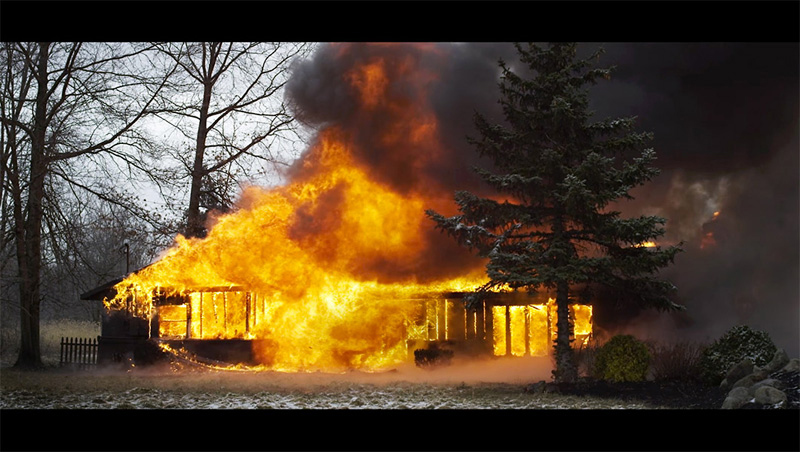
And that’s it. The rest of the exhibition is stocking-filled with a couple more images that don’t really work, a series of stills of a house being set on fire from a film of the same thing. The photos and film of the house being set on fire mean nothing, take me nowhere.* In a word this exhibition is ‘THIN’ to say the least.
While the NGV is to be congratulated for promoting contemporary art, including street art, there has to be at least some basis of depth to an artist’s work, not just the fact that they are”now a noted contemporary artist with a developing international standing.” This is not enough. When you really look at this work it is obvious it needs more matter, more substance. Like a house of cards its foundation is built on shifting sands, foundations that need time to develop and solidify, thoughts that needed greater time to be delineated and teased out. There is no rush with this kind of investigation and that’s what it feels like here – an interesting idea, painted over, over produced and not fully developed to the point where it becomes unmissable, unmistakable.
Dr Marcus Bunyan
* Look no further than Gregory Crewdson’s Untitled (House Fire)from the series Beneath the Roses (2004), for the use of a burning building to create an interesting narrative about hope and despair in suburbia.
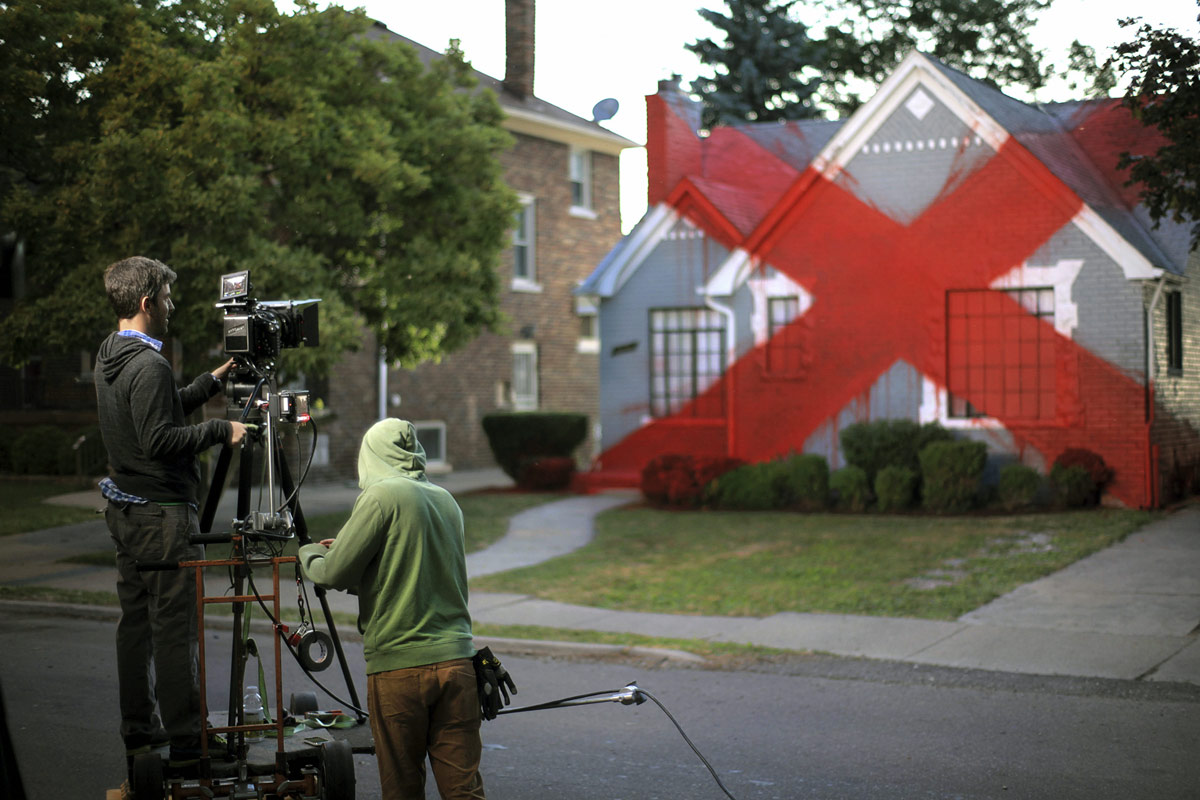
The remarkable work of New York-based Australian artist Ian Strange will take centre stage at NGV Studio from 27 July. Suburban is the culmination of Strange travelling for two and a half years through neighbourhoods in the US. Working on a massive scale across key cities, Strange painted directly on to the surfaces and facades of suburban homes, and in some cases burnt them to the ground, to create a moving statement around Western ideas of home.
These unique interventions staged across the cities of Ohio, Detroit, Alabama, New Jersey, New York and New Hampshire were documented with a film crew and volunteers and will be shared at NGV Studio as part of Strange’s multifaceted photographic, film and installation work.
Cinematic in both tone and scale, Suburban investigates the iconography surrounding the family home and its place in the current economic climate. Through the work, Strange articulates his own conflicted relationship with suburbia he experienced growing up in the Australian suburbs, juxtaposed with living in New York City and the United States. Strange’s exploration of suburban experience articulates a distinctively Australian sensibility to a global audience.
David Hurlston, Curator of Australian Art, NGV, said that Strange was fast becoming recognised, both locally and internationally, for his distinctive practice and, in particular, for this new and unique body of work.
“We are excited to be able to present this ground-breaking exhibition of work by Ian Strange. From his early work as a street artist in Australia he is now a noted contemporary artist with a developing international standing. Strange is one of the most exciting young artists to have emerged from the street art genre in recent times,” Mr Hurlston said.
Suburban considers the status of the family home in the United States and Australia through nine large-scale photographic works and a dramatic multi-channel, surround sound video installation. Carefully selected fragments of the original houses will also be on display in the exhibition as both sculptural objects and social artefacts. Exhibiting artist Ian Strange said that Suburban was a culmination of more than two years’ work.
“This project has been all consuming for the past two and a half years of my life. I wanted to create a body of work that reacted to the icon of the suburban home and to the suburbs as a whole. The suburbs have played an important role in shaping who I am as a person and an artist. The suburbs have always been home, but I have always found suburbia isolating. Suburban is my reaction to that,” Mr Strange said.
Strange’s early artistic career evolved as a teenager growing up in the suburbs of Perth. Here he took on the name Kid-Zoom and from the late 1990s played an active role in Australia’s street art movement. After relocating to New York in 2010 under the mentorship of Ron English, he participated in the now legendary underground exhibition The Underbelly Project, before his first solo exhibition and pop-up show in the Meatpacking district, This City Will Eat Me Alive, which generated critical acclaim and attention from the art world. Now an internationally recognised artist living between the United States and Australia, Strange has more recently been exploring the notion of home and identity and exhibited in the inaugural Outpost Street Art Festival on Sydney Harbour’s Cockatoo Island with his work Home, a full-scale replication of his childhood house installed in the Turbine Hall.
Press release from the National Gallery of Victoria
On location in Detroit, July 2012 Photo: Jedda Andrews
Graffiti crosses the picket line
Dan Rule
Indeed, the works that populate the exhibition hardly fit the stylised representational or textual archetypes that have come to typify graffiti and street art. In this series, average suburban homes are immersed in monochrome-painted gestures and motifs or, in one case, flames. But while they bear a resemblance to impulse vandalism, their effect is allegorical rather than literal. In one work, a home in a Detroit street bears a bold, blood-red “X”, which could be read as a metaphor for the wave of loan foreclosures and socio-economic turmoil that has supplanted the city’s suburban dream. Another residence is coated in black paint but for an unpainted circular vacuum, a window into the psychological and emotional underpinnings behind the ideal of the weatherboard home on the spacious block.
And that’s precisely the level on which Strange sees the work operating. “There are some very strong political implications for this work … and I definitely acknowledge that,” he says. “But I was really careful not to make works that were just about these broken-down suburbs and this ‘ruin porn’ thing. I know that in Detroit they’re really sensitive about that kind of thing, and we were really aware of keeping this project focused on the idea of being a reaction to the icon of the house in the suburbs, rather than a reaction to some of those socio-economic factors.”
Curator: Dr Julie Decker, Chief Curator at the Anchorage Museum
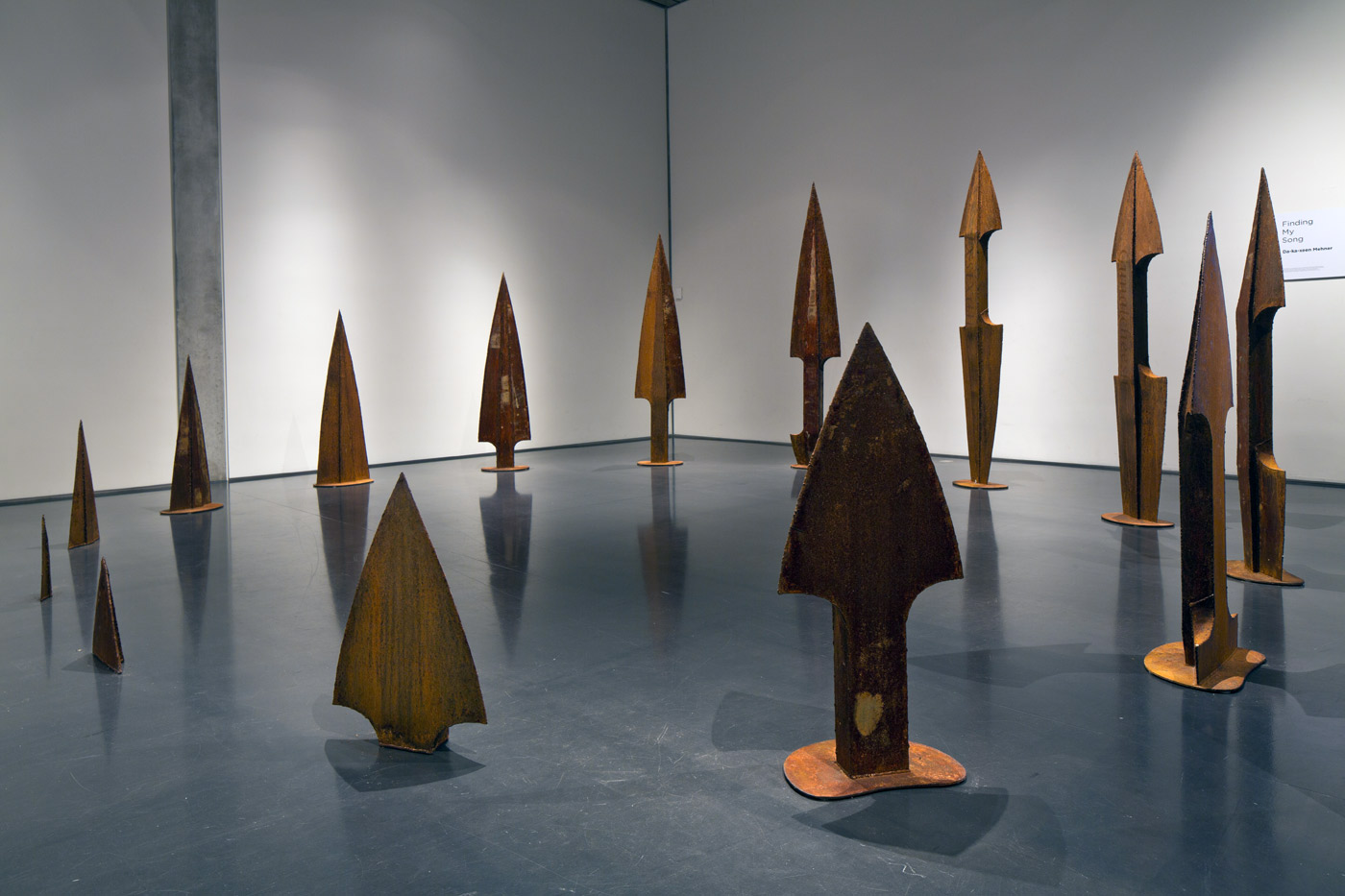
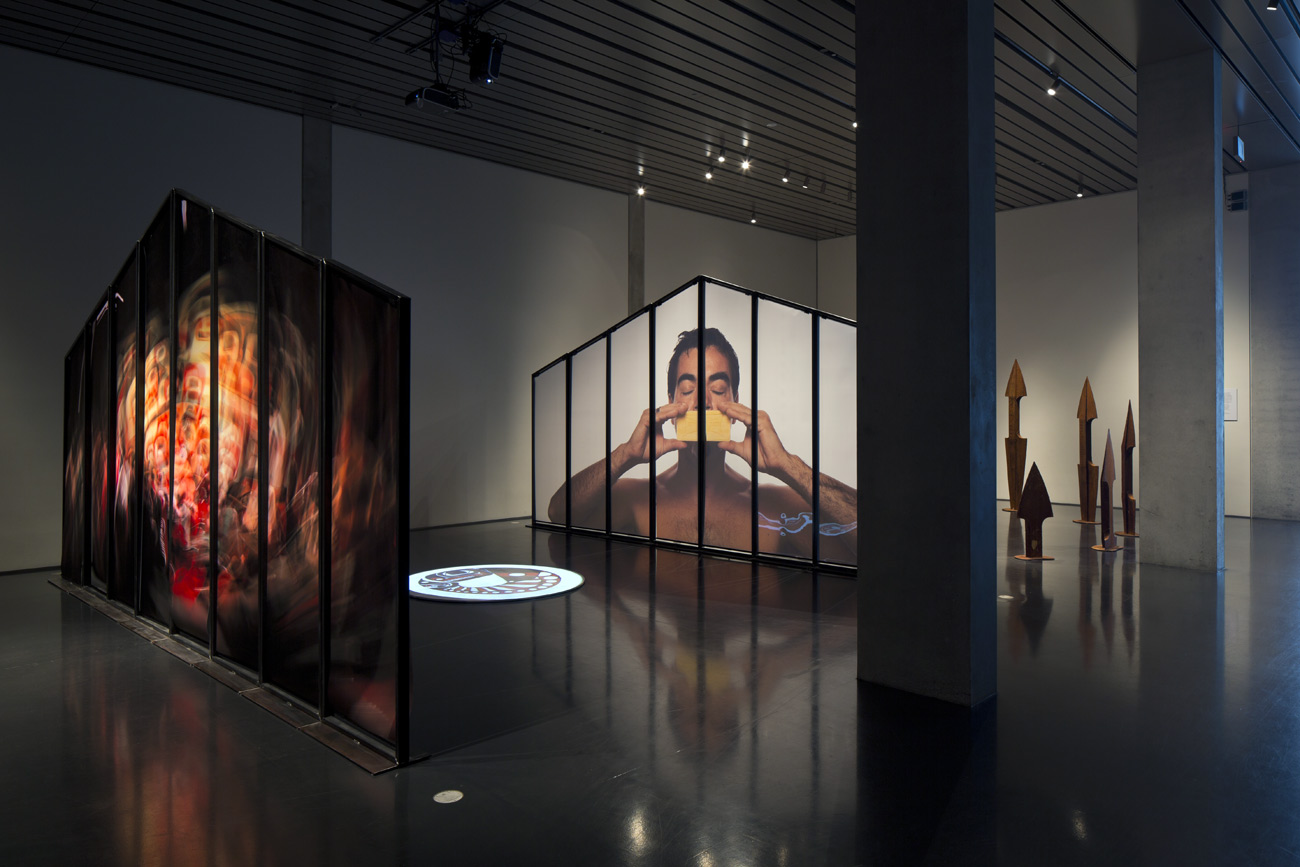
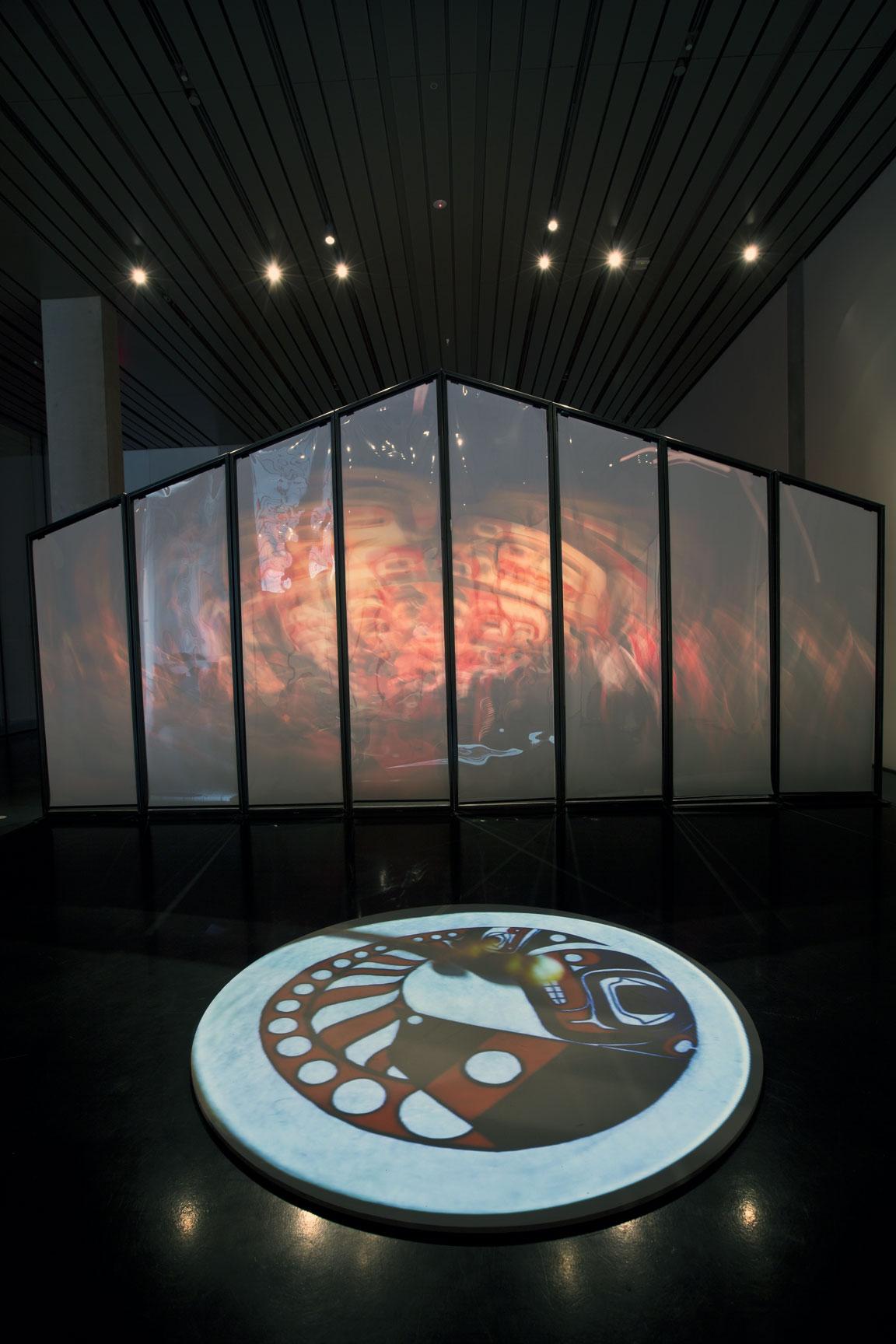
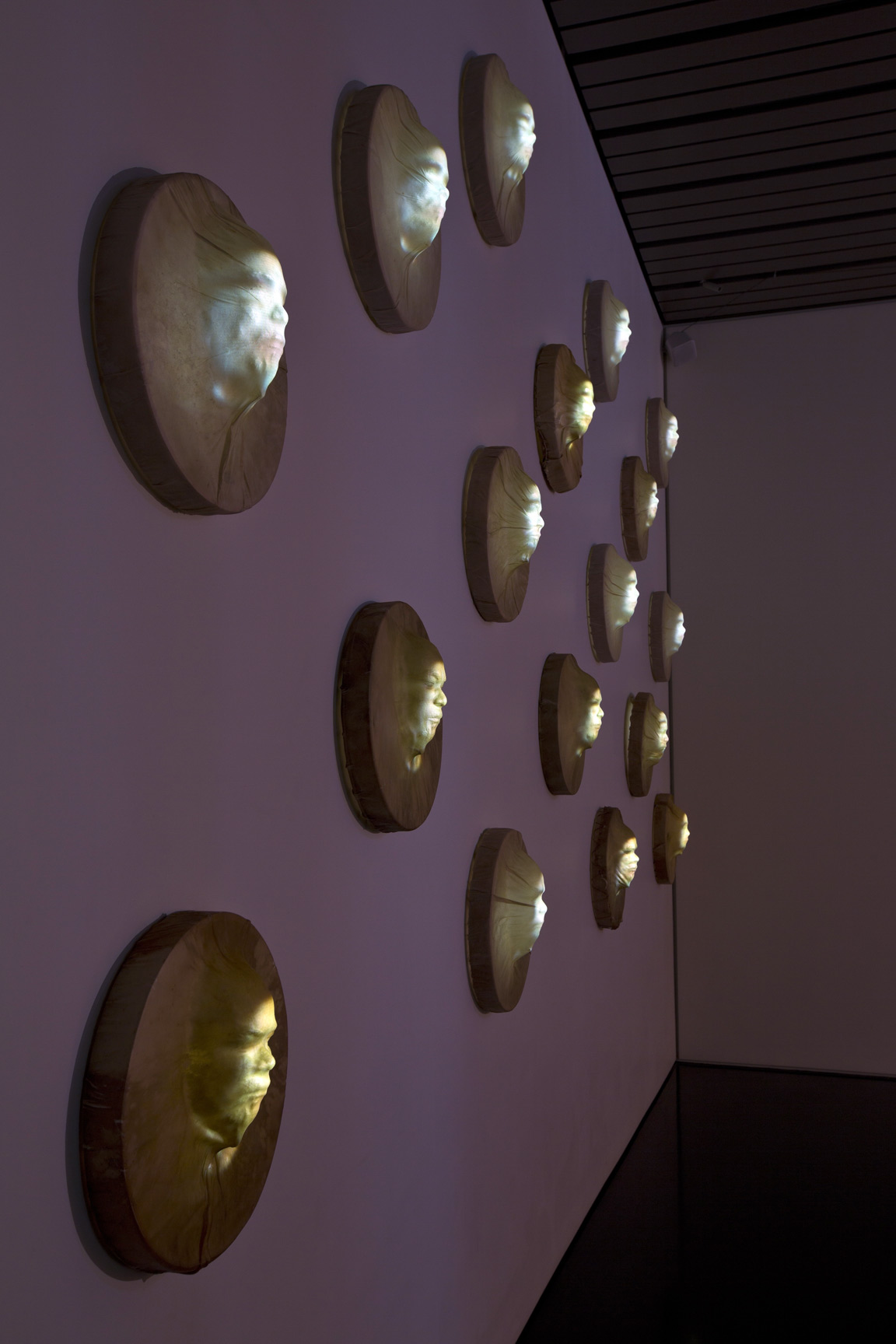
Da-ka-xeen Mehner (Tlingit/N’ishga – American) Finding My Song Weapons
2012
Another interesting exhibition that this archive likes promoting, this time about mixed-race identity.
Dr Marcus Bunyan
Many thankx to The Craft & Folk Art Museum for allowing me to publish the art work in the posting. Please click on the images for a larger version of the art.
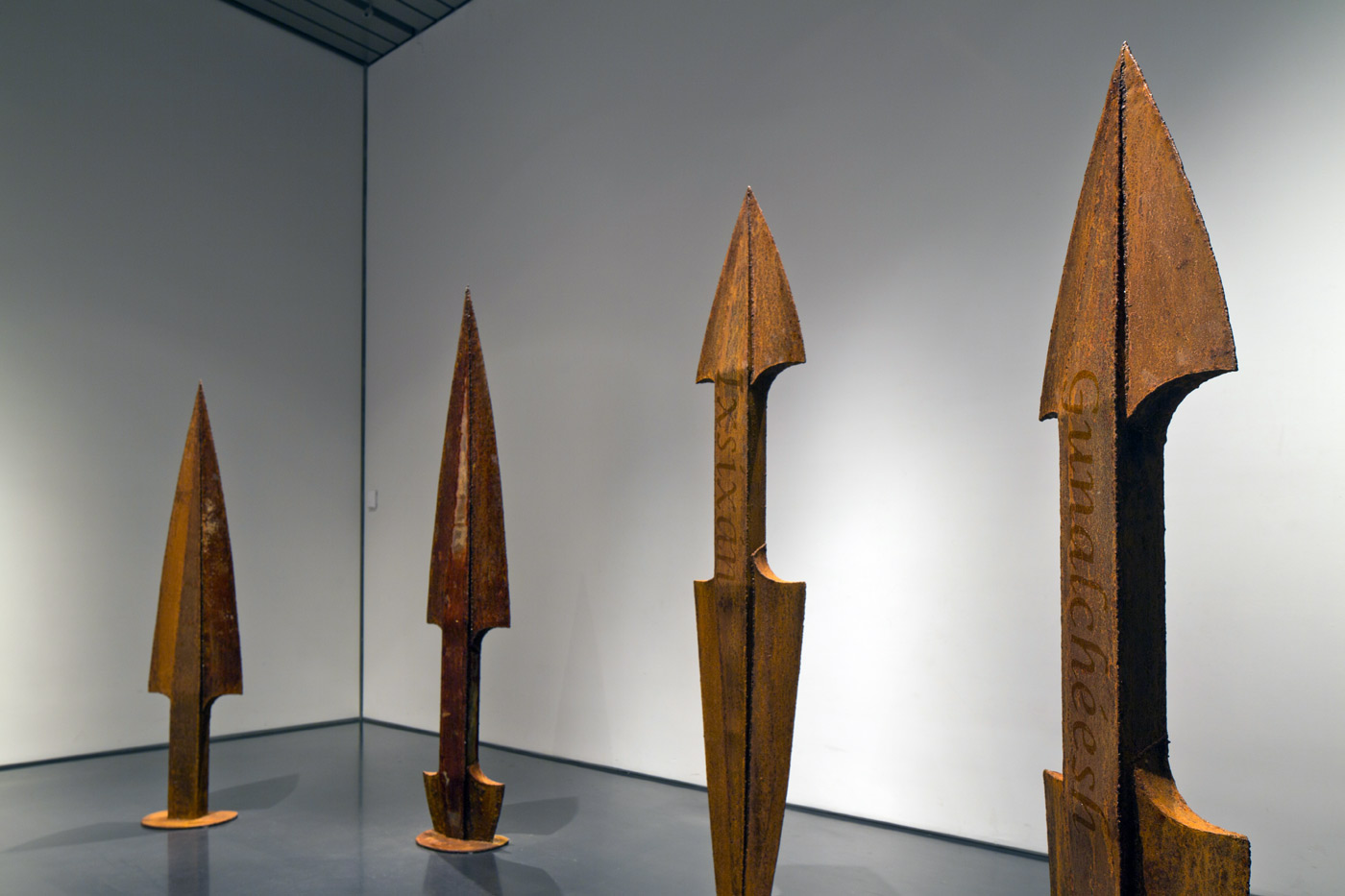
Da-ka-xeen Mehner (Tlingit/N’ishga – American) Finding My Song Weapons (detail)
2012
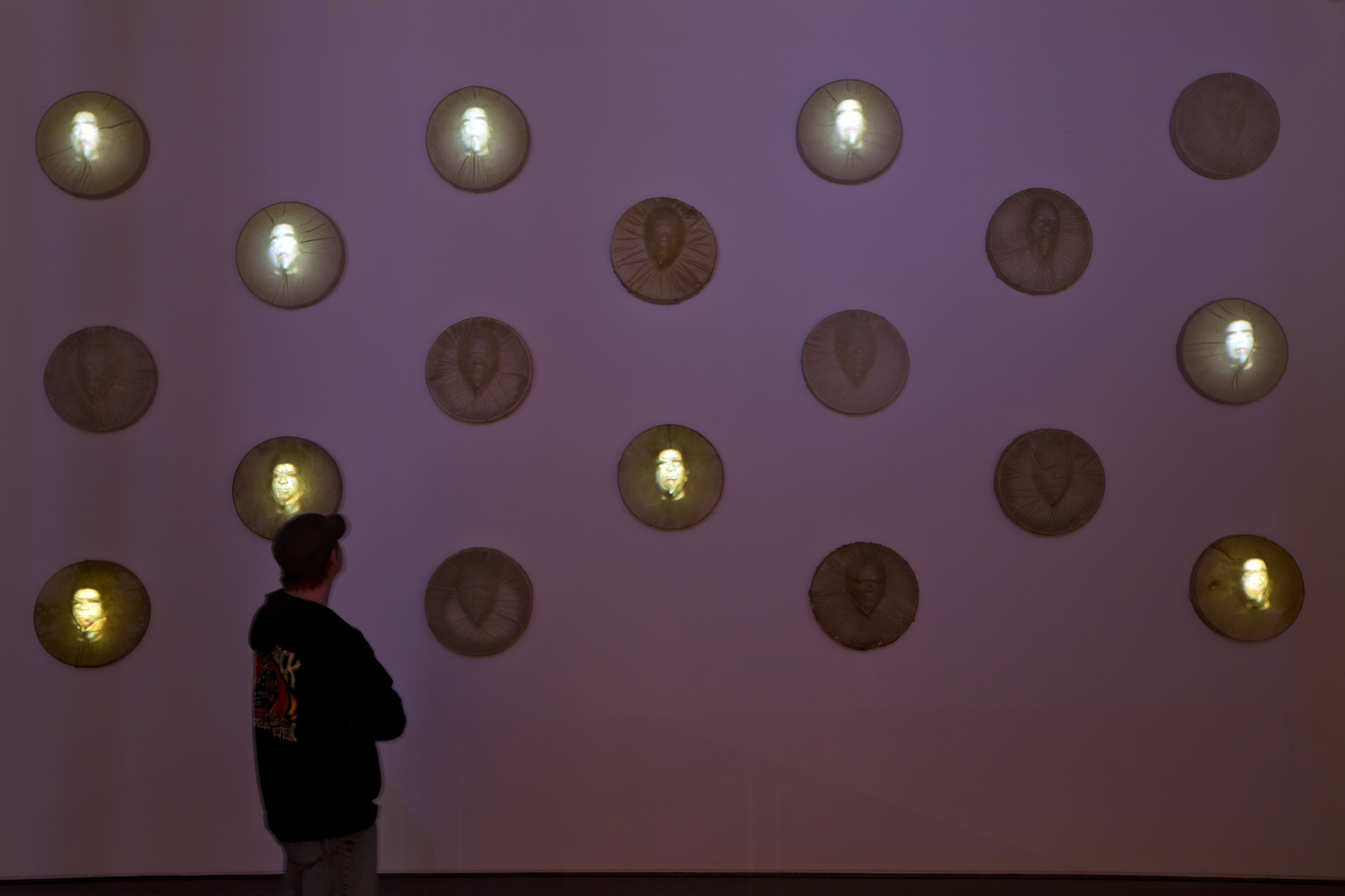
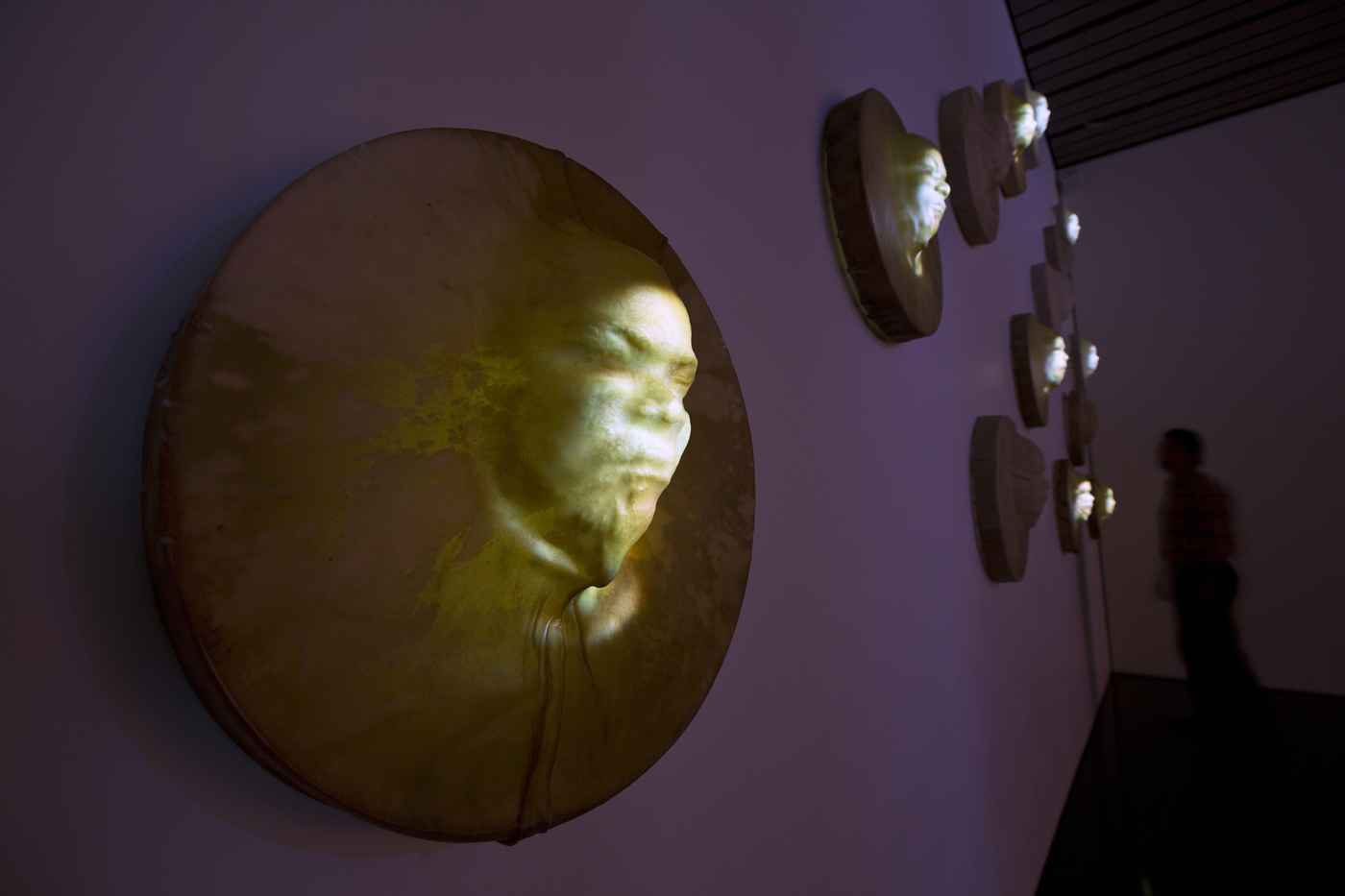
Da-ka-xeen Mehner (Tlingit/N’ishga – American) Finding My Song
2012
Da-ka-xeen Mehner (Tlingit/N’ishga – American) Finding My Song
2012
Da-ka-xeen Mehner (Tlingit/N’ishga – American) Finding My Song
2012
Projections on rawhide
Courtesy of the Anchorage Museum
Da-ka-xeen Mehner (Tlingit/N’ishga – American) Finding My Song
2012
Projections on rawhide
Courtesy of the Anchorage Museum
Da-ka-xeen Mehner (Tlingit/N’ishga – American) Finding My Song
2012
Projections on rawhide
Courtesy of the Anchorage Museum
Nicholas Galanin (Tlingit/Aleut – American, b. 1979) There is No “I” in Indian
Nd
Digital photograph
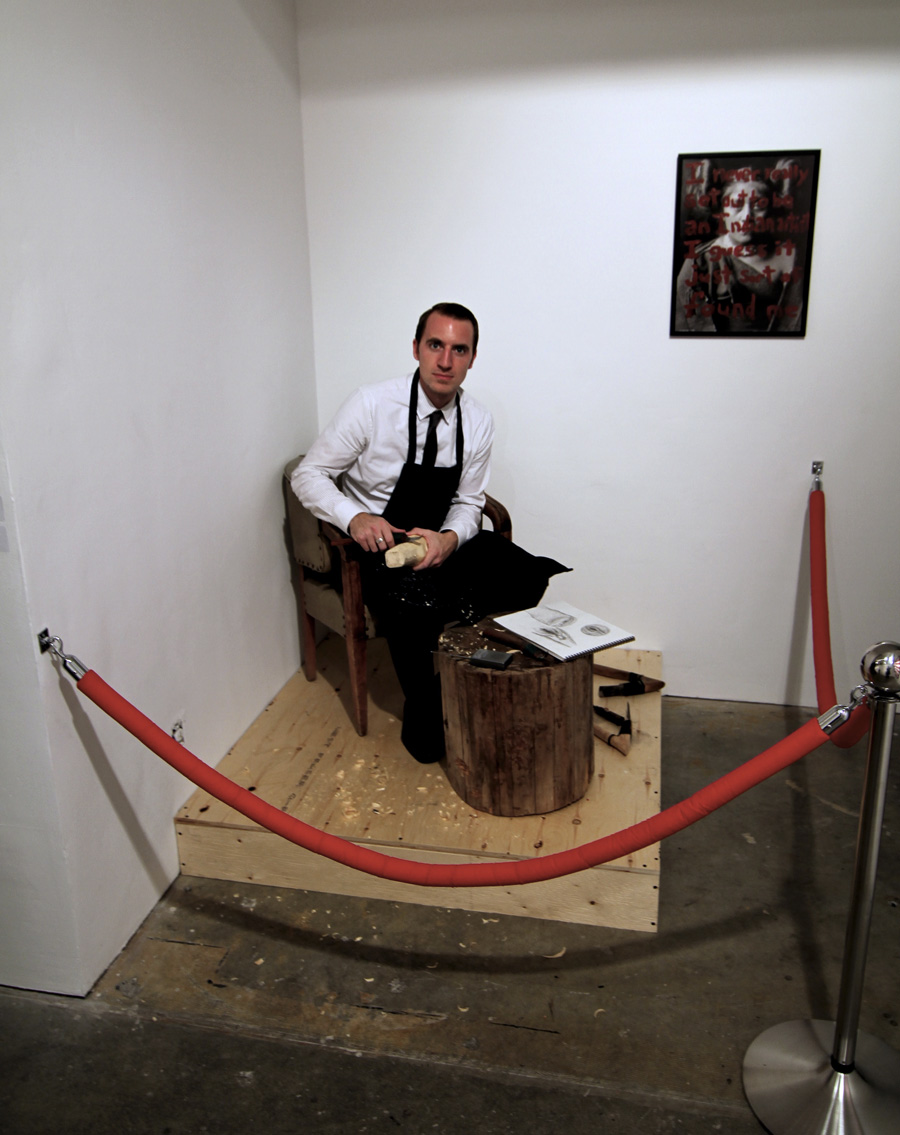
Nicholas Galanin (Tlingit/Aleut – American, b. 1979) White Carver
Nd
Performance and installation
Nicholas Galanin (Tlingit/Aleut – American, b. 1979) Indian Land
2012
Digital photograph
Courtesy of the artist
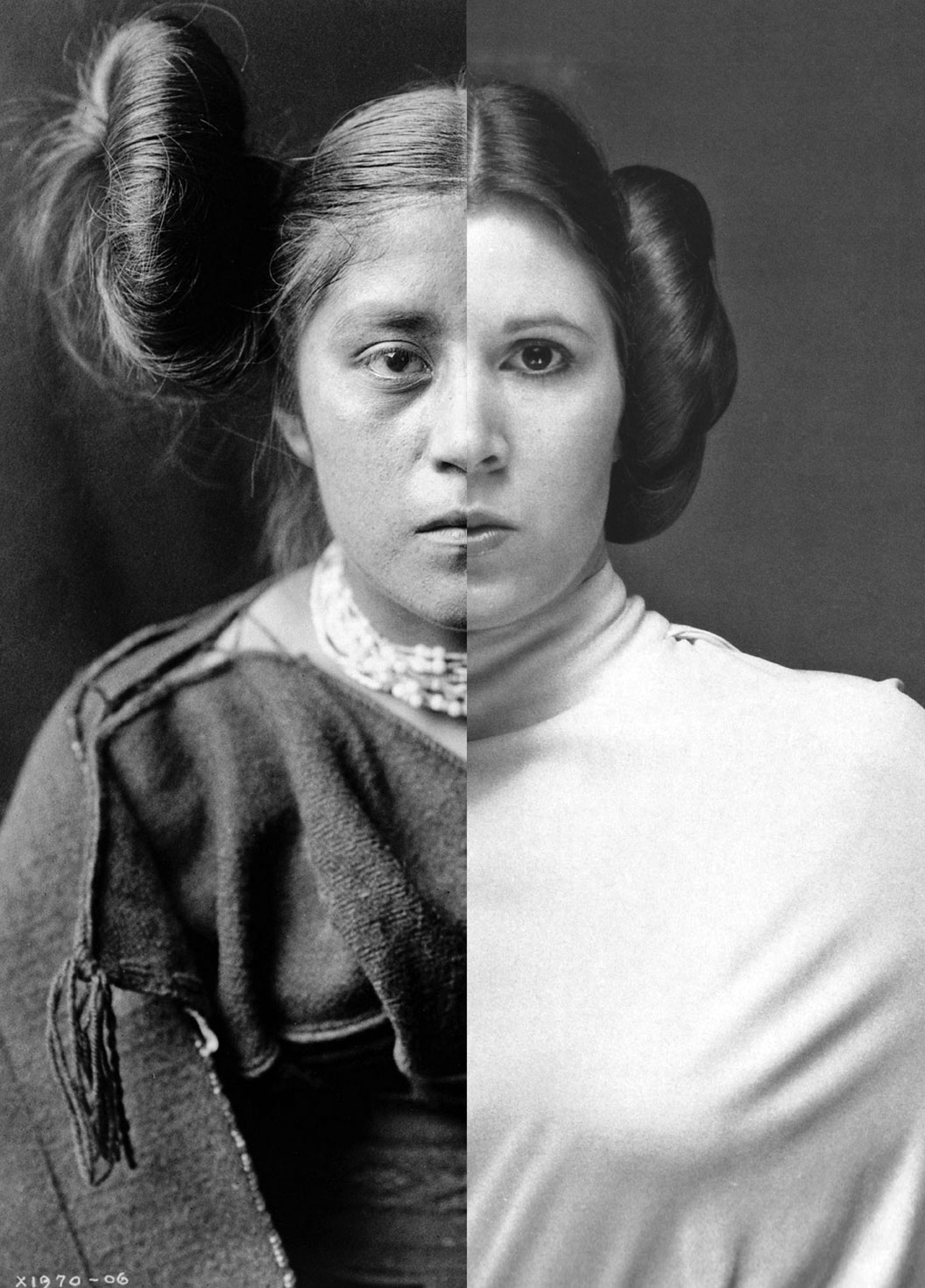
Nicholas Galanin (Tlingit/Aleut – American, b. 1979) Things Are Looking Native, Native’s Looking Whiter
2012
Digital photograph
Courtesy of the artist
The Craft & Folk Art Museum (CAFAM) in collaboration with the Anchorage Museum presents This Is Not A Silent Movie: Four Contemporary Alaska Native Artists, an exhibition centred around four acclaimed Alaska Native artists whose groundbreaking contemporary works question institutional methods of identifying Native heritage, examine their own mixed-race identities, and challenge perceptions and stereotypes about indigenous peoples. It will be on view from Sunday, May 26 through Sunday, September 8, 2013.
Through the language of contemporary visual art, Sonya Kelliher-Combs, Susie Silook, Da-ka-xeen Mehner, and Nicholas Galanin seek new and distinct ways to speak of tradition and mediate the serious and sometimes ironic conditions of art, identity, and history in the late 20th and early 21st century. Though each artist’s work is rooted in a lifelong immersion in their respective Alaska Native craft traditions, their multi-media installations dissolve the boundaries between contemporary and traditional arts.
Sonya Kelliher-Combs (Iñupiaq/Athabascan) utilises media such as polyurethane, Beluga intestine, and walrus stomach into her paintings, sculptures, and labor-intensive installations. These works often simulate skin, which is a point of investigation into her struggle for self-definition and identity. Nicholas Galanin’s (Tlingit/Aleut) video and photography installations object to the cultural appropriation and categorisation of indigenous peoples by popular culture. In Things are Looking Native, Native’s Looking Whiter, Galanin creates a split image that is a composite of one of photographer Edward Curtis’ Native American models with actress Carrie Fisher as Princess Leia in Star Wars. The image references the cross-pollination of the traditional butterfly whorl hairstyle that was worn by unmarried Hopi girls and the popular culture image. In 2013, Galanin received a major award from United States Artists.
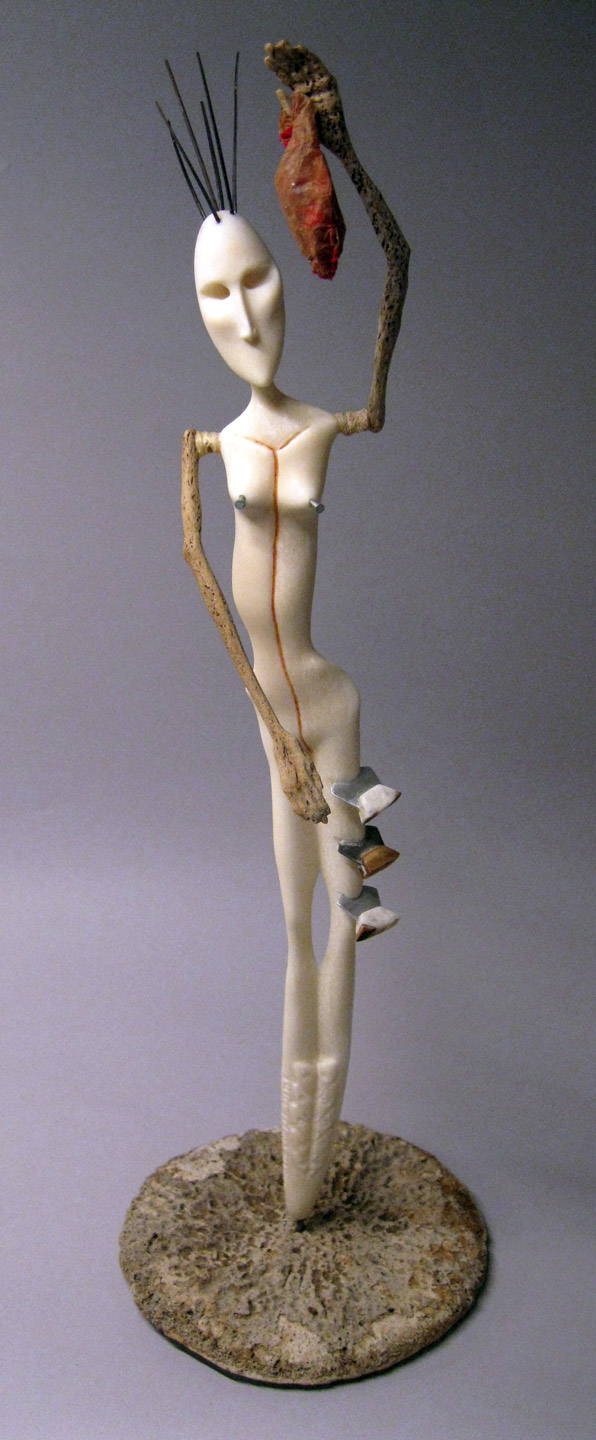
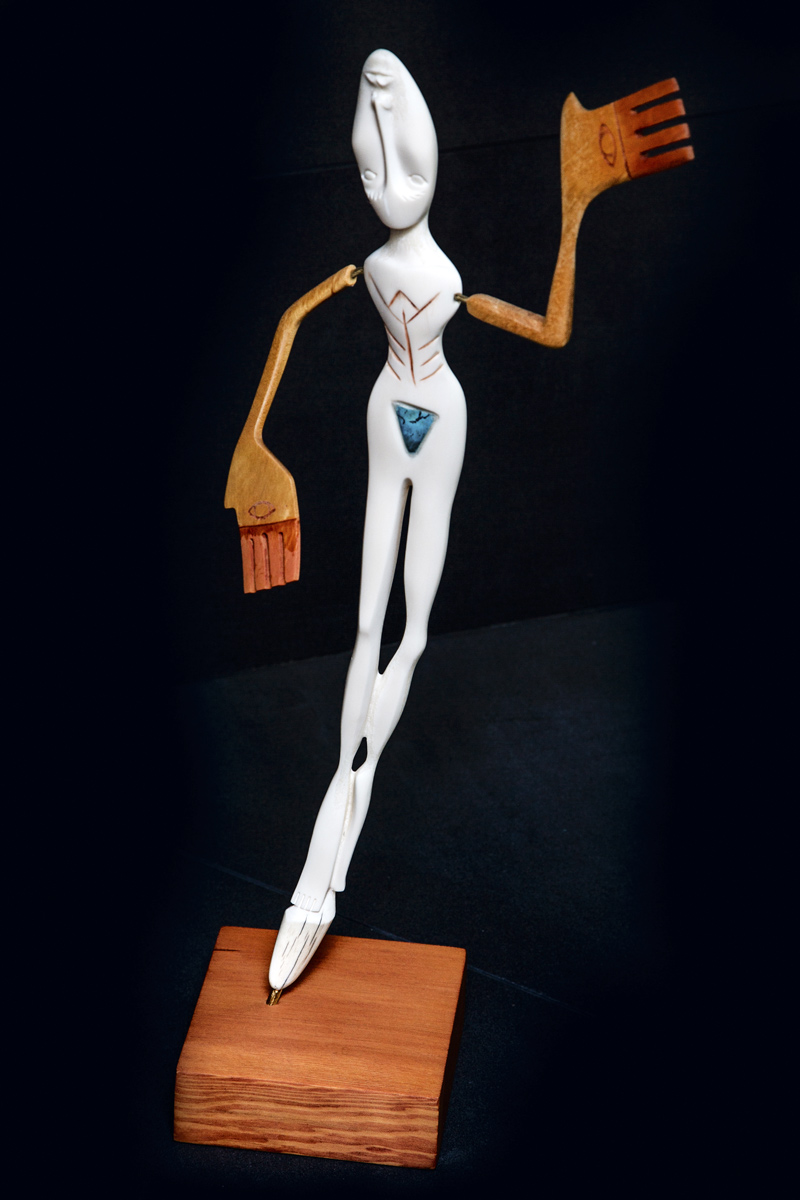
Carver Susie Silook (Yupik/Iñupiaq) is a writer and sculptor. The ancestral ivory dolls of Saint Lawrence, traditionally carved by men, are the basis of her work. Silook also departs from tradition by depicting women in her carvings rather than the animals most commonly rendered by men. Her walrus tusk carvings add a distinctly feminist perspective to an otherwise male-dominated art form as they address the widespread incidence of sexual abuse and violence perpetrated against Native women. Silook received a United States Artists Fellowship in 2007. Da-ka-xeen Mehner’s installation Finding My Song (Tlingit/N’ishga) draws upon his family’s stories to take a personal look at the retention and reclamation of language. The installation is inspired partially by his grandmother, whose mouth was washed out with soap whenever she spoke her Tlingit language in school in order to “encourage” her to speak English. Mehner’s work examines his own multicultural heritage – and the social expectations and definitions that accompany each aspect of it.
The title This is Not A Silent Movie comes from a quote by Native American writer and filmmaker Sherman Alexie, who works to move audiences away from narrow and stereotypical views of Native people – a view that Native people had very little influence in shaping. The exhibition has been curated by Julie Decker, Ph.D., Chief Curator at the Anchorage Museum.
Press release from The Craft & Folk Art Museum website
Susie Silook (Yupik/Iñupiaq – American, b. 1960) Keeping My Heart
2008
Courtesy of Anchorage Museum Collection
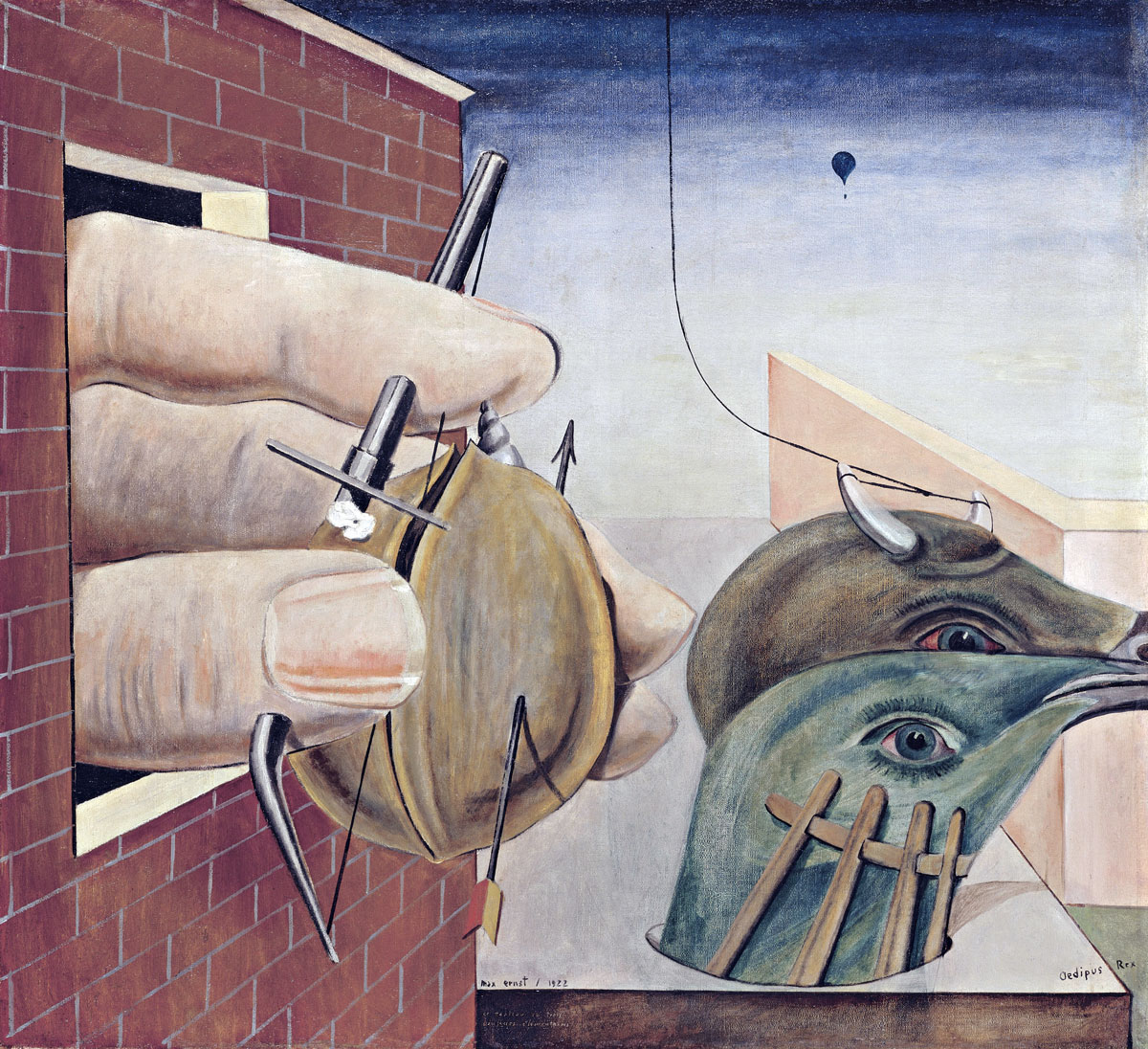
This work is innately Freudian just in name, let alone in content. The Oedipus complex is one of the most well recognised components of Freudian theory and it is seen in this work names after it in many ways. The first is through the process of condensation. This can be seen as the bird headed man, which shows up in many of Ernst’s images: the association in this image between the man and the bird is the desire of man to be free from the inhibitions imposed upon him by society, and despite the fact that these two still retain their separate identities, they are consistent with Freud’s ideas. In the case of this work, the head is removed from the body, showing a detachment from true feeling and true understanding of life. Another Freudian idea is the use of the joke, which is seen in the treatment of several of the objects in this work. Such as the contrast and juxtaposition of the wall, the over-sized fingers, upside down eyes on the birds, and the balloon in the aft of the painted collage. Several other associations relating this work to Freud can be drawn as well.
This work has intense sexual undercurrents. The nut represents the female and the crack in the nut is a symbol for the vulva. The cracking of the nut by the hands of a male is a metaphor for sexual intercourse and also gender roles in traditional patriarchal cultures. The idea of the treatment of woman and of her place within society is also visible in another piece by Ernst, The Tottering Woman. In this piece, he addresses the constraints in which woman are held in the world and the patriarchy that she must deal with on a daily basis. It also touches upon the objectification of woman as well. Hoffman also theorises that the squeezing of the nut has implications of sadomasochistic roles as the nut is being dominated and crushed, the spike is punishing the hand equally and finally, once forced open, the “nut” could always snap back shut, injuring the index finger and thereby is a signifier of neurotic sexual attachment. The bird head towards the back of the picture plane is tethered by some sort of rope, which could be seen as societal restrictions on deviant sexuality and possibly is a reaction to the taboo associated with incest. Additionally, the arrow as it pierces the shell of the nut could be seen as a phallic signifier or also as a representation for the idea of love and then a refutation of the existence of love within the constraints of sexual desire and sexuality. The imagery in this piece by Ernst is intensely psychosexual in nature and content and can be seen mostly in those terms.
In defence of picking Oedipus Rex to write about in the context of collage, it is true that it is an oil painting, but its imagery was taken from print sources and then was transposed into the work by the act of painting them. The nut squeezing image was taken from an article entitled “Experience sur l’elasticite, faite avec une noix,” from the popular 19th century French Magazine La Nature.
Anonymous. “Ernst: Chance, Collage and the Study of Freud,” on the Center for Biological Computing, Indiana State University Department of Life Sciences website [Online] Cited 12/12/2020. No longer available online
This is one of the rare pictures by Max Ernst which refer directly to a political incident. He commented on this: “The Fireside Angel is a picture I painted after the defeat of the Republicans in Spain. This is, of course, an ironical title for a kind of clumsy oaf which destroys everything that gets in the way. That was my impression in those days of the things that might happen in the world. And I was right.” The Fireside Angel is depicted as an avenging character from the Bible. Its destructive potential is stressed by its aggressive colouring. In the figure of the angel, blind traumatising force is expressed, against which mankind is defenceless. Since there is no hope for negotiations with an inhuman force, the blind aggressor seems even more frightening.
With the exhibition of over 160 of his works at the Fondation Beyeler in cooperation with the Albertina, Vienna, the “artist of the century” Max Ernst (1891-1976) will be given the first comprehensive retrospective in Switzerland since his death as well as the first held in a German-speaking country since 1999.
Max Ernst is one of Modernism’s most versatile artists. After his beginnings as a rebellious Dadaist in Cologne, he moved to Paris in 1922, where he soon became one of the pioneers of Surrealism. He was interned twice as an enemy alien during the Second World but was released thanks to the intervention of the poet Paul Éluard, who was his friend. In 1941 Max Ernst fled to the USA, where he found new stimuli for his work as well as providing new impulses for the generation of young American artists. A decade later he returned to a Europe that had been devastated by the war and where the once highly esteemed Max Ernst seemed to have been forgotten, only to be rediscovered as one of the 20th century’s most multifaceted artists. In 1958, having renounced his German nationality in 1948 in order to take US citizenship, Max Ernst eventually became a French citizen.
Ernst was indeed one of the “artists of the century” – not only because of the high quality and wide range of his oeuvre but also because of the length of his creative career, which lasted around 60 years from 1915 to 1975. Active at a time of tremendous artistic, social, political and technical upheaval, he knew how to integrate these changes into his oeuvre, which therefore reflects key characteristics of the 20th century. The pleasure Max Ernst took in experimenting with different techniques made him a pioneer of multimedia expression. With no apparent effort, he combined in his work the themes, styles and techniques that were important to successive generations. His ceaseless quest for new forms of expression, questions and subjects is emblematic of modern man. Max Ernst appears to us as the artist who never wanted to find himself, as he once said: “A painter is lost when he finds himself”.
With his early Dadaist experience, his key position among the Surrealists and his prelude to action painting, Max Ernst travelled between worlds and cultures, moving to Paris from Cologne and from New York back to France. At a time of political unrest, he maintained his critical, creative gaze, seeking refuge in a country, the USA, which he scarcely knew but to which he nonetheless responded with curiosity and which provided him with important impulses for his late work. With exhibitions in New York, projects in Arizona and Touraine, participation in the Venice Biennale and Documenta, Max Ernst was an early 20th century example of the kind of “cultural and artistic nomad” who only later became a customary figure.
Collage
As early as 1919, Max Ernst started working with the technique of collage, which he used to design or simulate new pictorial realities. He created his collages from illustrations taken from various novels, textbook catalogues, natural science journals and 19th century sales catalogues. He excised the fragments from wood engravings, using a scalpel in order to achieve cut edges that were perfectly exact and smooth. In around 1929 / 1930 Max Ernst created his most famous collage novels La femme 100 têtes(Hundred-Headed Woman / Headless Woman) and Rêve d’une petite fille qui voulut entrer au Carmel (A little Girl dreams of taking the Veil), which are among Surrealism’s most fascinating, enigmatic works.
Frottage
In around 1925, Max Ernst began his Natural History series, in which he used the technique of frottage for the first time (the French word frotter means “to rub”) as a semi-automatic procedure. He placed objets trouvés he found outdoors, such as leaves and wood, under a sheet of paper and rubbed over them with a pencil. Then he took the structures that emerged and transformed them into fantastic pictures. In his frottages, Ernst breathes new life into lifeless objects, giving them another, to some extent uncustomary, significance. Max Ernst developed frottage while he was staying in Brittany. In his essay Beyond Painting he describes a kind of visionary revelation that caused him to use the wooden floor and other objects in his guest-house room as objects for his frottages.
Grattage
Grattage is an artistic technique used by Max Ernst in painting that he developed in around 1927 as an extension of frottage. In a first phase, he applied several superimposed layers of paint to a canvas. Underneath the painting ground that he prepared in that way, he placed objects such as metal grids, wooden boards and string, the relief of which could be seen through the canvas. In order to transfer those structures to the picture, he scratched away the top layers of paint (gratter is the French word for “to scratch”). In a subsequent phase, he reworked the patterns that had become visible, transforming them into forests, shellflowers, birds and petrified cities.
Decalcomania
Decalcomania is a transfer technique in which the damp pigment on a piece of glass or a sheet of paper is pressed against a canvas, leaving behind fine streaks, bubbles or marbled traces of paint when they are removed. In a subsequent phase, the artist reworks the complex surface structure. This artistic technique had already been developed in the 18th century and was used by other Surrealist artists too. Max Ernst adopted the technique in the late 1930s, using it to represent mysterious landscapes peopled by eery faces, figures and animals hiding in the thickets of nature.
Oscillation
In around 1942, while an exile in the USA, Max Ernst started developing the technique of oscillation. He let paint drip out of a tin perforated with a number of holes, which he attached to a long string and swung to and fro over the canvas. This largely uncontrollable and, once again, semi-automatic procedure created reticulated compositions of circles, lines and points on the surface that were reminiscent of planets’ orbits. Oscillation was an innovative technique that not only extended the range of Surrealism’s artistic repertoire but also heralded Jackson Pollock’s Drip Painting.
At the First Limpid Word is one such puzzle. A monumental work, it formed part of the decoration of the house that Max Ernst shared with Paul Éluard and his wife Gala (who later became Dalí’s muse). It was only in the 1960s that the wall painting, which had been painted over, was rediscovered. This painting, “an allegory of seduction,” is such a simple composition but is filled with symbolism in colour and subject.
Like many of Ernst’s paintings during his Paris period (1922-1941), Ubu Imperator resembles a collage in painted form. The artist’s knowledge of Freudian theories, familiarity with myth and extreme wit are reflected in this early painting, which is now considered proto-Surrealist due to its strange juxtapositions.
In Ubu Imperator (1923), an anthropomorphic top dances in a vast, empty landscape. Such works captured early on the surrealist notion of estrangement and commitment to the subconscious, but also they seem surprisingly contemporary. The red Ubu Imperator marked the entry of Ernst in the articulated stage of surrealism by his use of a literary narrative that was sometimes personal, sometimes political. In this seminal work a spinning top, a red carcass with iron reinforcement, and human hands express an astonishing image of the Ubu Father, a grotesque symbol of authority invented by Alfred Jarry. Other paintings suggest Ernst’s impressions of ancient Buddhist temples (à la Angkor Wat) as inspired from his trip to Asia following the breakup of his famous ménage à trois with Gala and Paul Eluard. This structure and thickly overgrown plants appear in many of his engravings and grattage [Grattage is a surrealist painting technique that involves laying a canvas prepared with a layer of oil paint over a textured object and then scraping the paint off to create an interesting and unexpected surface (Tate)] oil paintings, such as The Entire City (1935-1936) and The Petrified City (1935).
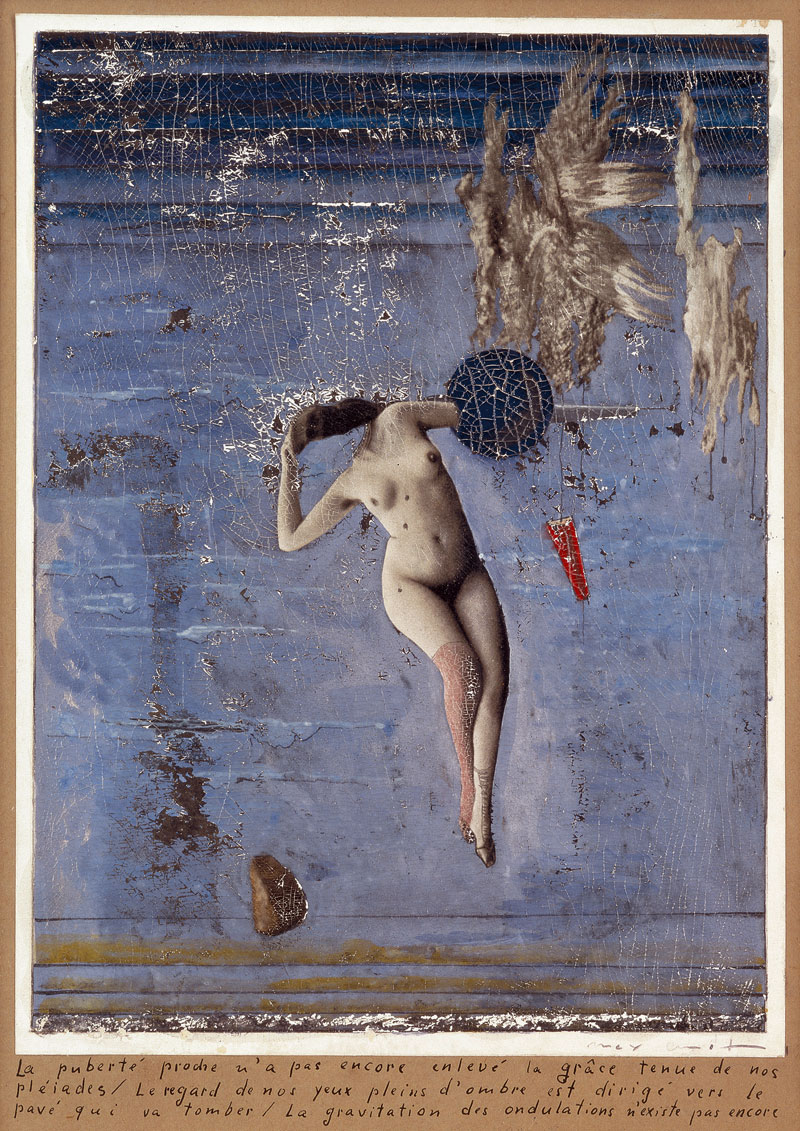
The Pleiades, companions of Artemis, were the seven daughters of the titan Atlas and the sea-nymph Pleione born on Mount Cyllene. They are the sisters of Calypso, Hyas, the Hyades, and the Hesperides. The Pleiades were nymphs in the train of Artemis, and together with the seven Hyades were called the Atlantides, Dodonides, or Nysiades, nursemaids and teachers to the infant Bacchus. There is some debate as to the origin of the name Pleiades. Previously, it was accepted the name is derived from the name of their mother, Pleione. However, the name Pleiades may derive from πλεῖν(to sail) because of their importance in delimiting the sailing season in the Mediterranean Sea. (Wikipedia)
For Ernst eroticism was another way of entering the unconscious, of escaping from convention, and possibly of tweaking bourgeois taste. But he was aware that adult sexuality had its limits, as is apparent in the exquisite Approaching Puberty… (1921). A photograph of a nude, faceless girl floats in a blue space stratified by horizontal lines, suggesting water or the sky. A few strangely disparate forms surround the girl, and the short text at the bottom ends, “The gravitation of the undulations does not yet exist.” The title, this line, and the fact that the girl floats in space rather than standing on the ground – as most of Ernst’s figures do – suggests that he sees in pubescence a kind of weightless freedom. In a related but nonsexual image, an Untitled c. 1921 collage, four schoolboys peer out of their classroom (from which a wall is missing) at a vast blue sky in which a hot-air balloon floats. A schoolmaster stands alone and ignored at his desk; next to him one of the boys balances a giant pencil on a pointer. What’s learned in school, Ernst seems to say, is far less important than visions of the sky.
In Max Ernst’s painting Napoleon in the Wilderness (1941), a strange whimsical trumpet appears in the hand of a female figure that seems to have sprung from the sinister rock and coral formations of a world in ruin. This painting formed part of suite of decalcomania [A transfer technique, developed in the 18th century, in which ink, paint, or another medium is spread onto a surface and, while still wet, covered with material such as paper, glass, or aluminium foil, which, when removed, transfers a pattern that may be further embellished upon. The technique was adopted by the Surrealists to create imagery by chance rather than through conscious control (MoMA)] works, in which Carrington’s semi-naked figure haunts a series of eerie landscapes, richly textured and abundant with mythological hybrid forms. Between periods of internment during the war, Ernst had managed to continue painting, producing haunting images of his abandoned lover in works that evoke his own sense of loss and grief in macabre scenes that promise both decay and renewal.
Text from Natalya Lusty, Surrealism, Feminism, Psychoanalysis. Ashgate Publishing, 2007.
The exhibition is a chronological presentation of all the major creative phases and groups of themes in Max Ernst’s work, opening with Capricorn, his most important sculpture. Max Ernst, who was born on 2 April 1891 in Brühl (Germany), first learnt about painting from his father. He had a conservative, middle-class upbringing, against which he soon rebelled. Starting in 1910, he studied art history as well as psychology, Romance languages and philosophy. Initially influenced by Expressionism and Futurism, he soon came in contact with other artists and art movements.
His early work City with Animals demonstrates this unique combination of different styles, displaying both Cubist and Futurist features. His encounter with Hans Arp (also represented in the Beyeler Collection along with the Surrealists Dalí, Giacometti and Miró) came at a time full of turmoil. Dada is born; the years after the First World War are a time of radical change, protest and experimentation.
Dada brings Max Ernst into contact with Surrealist artists. He ceases to be just a German artist and becomes a leading figure in the Surrealist art movement in Paris. There his works begin to acquire enigmatic qualities, for the unconscious and dreams are important elements of Surrealism, which it took over from psychoanalysis. Max Ernst remains an innovator, experimenting with frottage from the mid-1920s onwards. Hybrid creatures are created from different natural species; his interest in the natural sciences finds expression in his works.
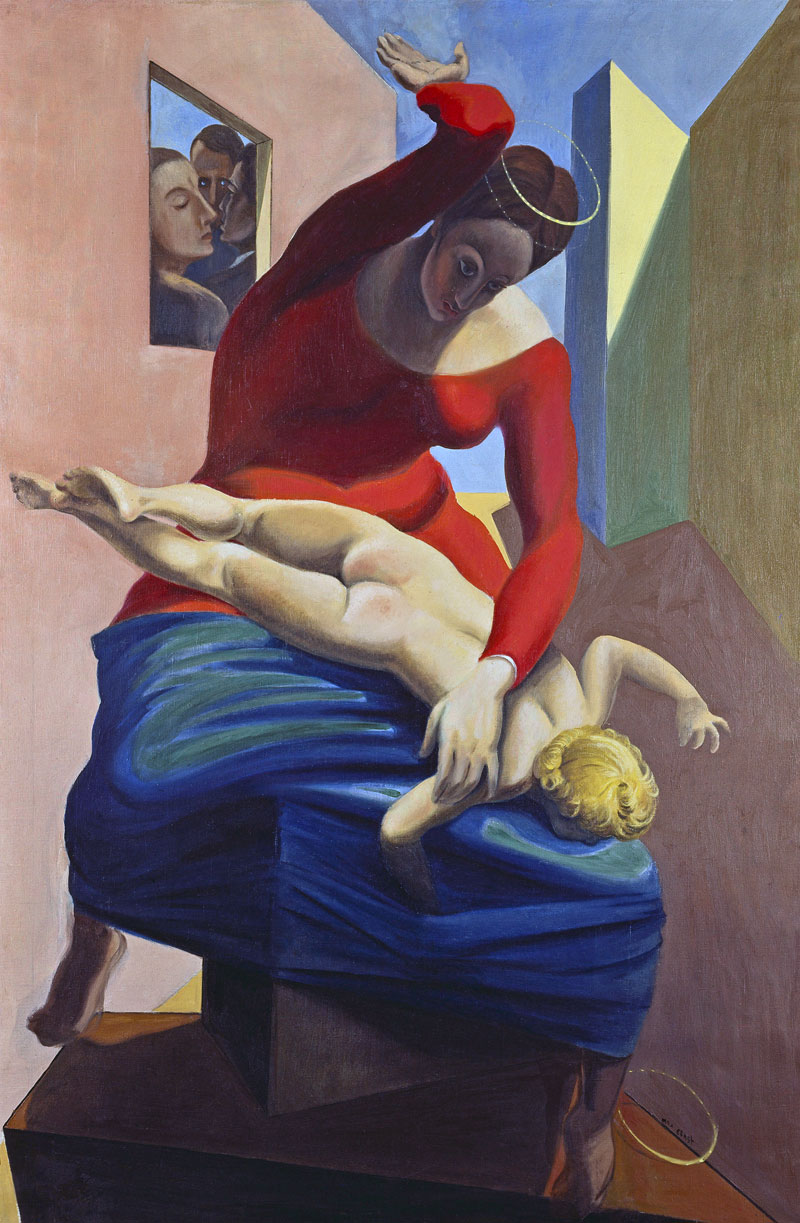
At the First Limpid Word is one such puzzle. A monumental work, it formed part of the decoration of the house that Max Ernst shared with Paul Éluard and his wife Gala (who later became Dalí’s muse). It was only in the 1960s that the wall painting, which had been painted over, was rediscovered. The Blessed Virgin Chastising the Infant Jesus is an equally spectacular work, a scandal-provoking painting with blasphemous elements that deconstructs the traditional sacred image of the Madonna, representing a radical liberation from Ernst’s middle class roots. One whole room in the exhibition is developed to the theme of the forest, with a number of masterpieces from that series. Considerable importance is also attached to the series of Horde paintings from the late 1920s; the metamorphosed figures convey the theme of transformation. With the Flowers and Cities series (which focus on the antitheses of nature and culture), other important groups of themes are also presented.
Room 11 will contain a number of key works with the jungle paintings from the second half of the 1930s including Nature at Dawn with its dark, sinister character. Different traditions are echoed here, ranging from borrowings from Henri Rousseau to the Romanticism of a painter like Caspar David Friedrich. With The Robing of the Bride there is not only an obvious reference to Renaissance art but also a more differentiated context. The transformation of a woman into an animal and vice versa is an erotic motif that the painting conveys through a number of details. The Fireside Angel, on the other hand, thematises the Spanish Civil War of the late 1930s, with which many artists and intellectuals concerned themselves. With the brightly coloured, mask-like, terrifying dimension of its figure, which seems to fly towards the viewer as an unstoppable whirlwind between aggression and mockery, Max Ernst prefigures the political catastrophe that was to befall Europe.
Ernst’s late work displays thematic caesura – on the one hand, a poetical and sensuous contemplation using over-painting in the refined, technically innovative work The Garden of France and, on the other, Birth of a Galaxy, a splendid late work in which air, water, earth and light all rise into a starry firmament. As a free spirit – ironical, elegant and rebellious – and a man of many different facets, Max Ernst today remains an artist whose work is both accessible and complex. His works speak to us, evoking uncharted depths and hidden mysteries, as well as prompting reflection. Like mercury – which continuously changes shape in a fascinating way, hence being impossible to grasp – Max Ernst is still an exceptional artist almost forty years after his death, exemplary in his artistic independence and possessing an urge for freedom and a bold readiness for innovation in his work and life that preserve his oeuvre from stylistic opportunism and conventionality.
Max Ernst’s creativity in handling sources of imagery and inspiration, the breaks between his many phases and types of subject matter, are still capable of astonishing viewers today. Like a revolutionary of vision, he rearranged images and elements, and as a Surrealist established links between pictures and the viewer’s unconscious mind. What remained a constant was the persistence of Ernst’s rebellion. Like his life, he once said, his work was “not harmonious in the sense of classical composers.” A master of metamorphosis, Ernst was a searcher and discoverer, an honorary doctor of philosophy who increasingly expanded his range of investigation to include astronomy, ethnology, ornithology, mathematics and psychoanalysis, following up his love of the natural sciences and creative chance.
The Robing of the Bride (1939-1941; Venice, Guggenheim) employs Renaissance perspective devices and Cranach-like figures to represent a pagan marriage.
Dorothea Margaret Tanning (August 25, 1910 – January 31, 2012) was an American painter, printmaker, sculptor and writer. She created ballet sets and costumes for George Balanchine’s Night Shadow, at the Metropolitan Opera House and others. She also appeared in Hans Richter’s avant-garde films. As an artist she was influenced by Dada and Surrealism and married fellow Surrealist Max Ernst.
As she recounts in her memoirs, Birthday and Between Lives, when Ernst visited her studio in 1942, they played chess, fell in love, and embarked on a life together that soon took them to Sedona, Arizona, and later to France. They met at a party in 1942 and after he would drop by Dorothea’s studio where she painted for a Surrealist movement exhibition of art by women for Peggy Guggenheim’s Art of This Century. In that exhibition, Tanning’s work showed along with the work of Louise Nevelson and Gypsy Rose Lee. Soon after this encounter Ernst moved in with her.
They married in 1946, in a double wedding with Man Ray and Juliet Browner in Hollywood, after Ernst’s divorce from Peggy Guggenheim. They remained married for 30 years until his death. In 1949, Tanning and Ernst moved to France, where they divided their time between Paris, Touraine and later Provence. They would often host guest such as Balanchine, Henri Cartier-Bresson, Marcel Duchamp, Pavel Tchelitchew and Dylan Thomas. In 1957 Tanning and Ernst moved to France again because Max Ernst was denied citizenship as a German during the McCarthy era. When speaking on her relationship with Ernst in an interview, Tanning said: “I was a loner, am a loner, good Lord, it’s the only way I can imagine working. And then when I hooked up with Max Ernst, he was clearly the only person I needed and, I assure you, we never, never talked art. Never.”
After Max Ernst died in 1979 Dorothea Tanning returned to the United States.
Text from the Wikipedia website
Max Ernst with rocking horse, Paris 1938
2013, ProLitteris, Zurich Photo: Max Ernst Museum Brühl des LVR, Stiftung Max Ernst
Fondation Beyeler
Beyeler Museum AG
Baselstrasse 77, CH-4125
Riehen, Switzerland
Opening hours:
10 am – 6 pm daily, Wednesdays until 8 pm
















 Art Blart _ art and cultural memory archive
You must be logged in to post a comment.