Exhibition: ‘Downstream: Colorado River Photographs of Karen Halverson’ at The Huntington Library, San Marino, California

Exhibition dates: 30th May – 28th September, 2009
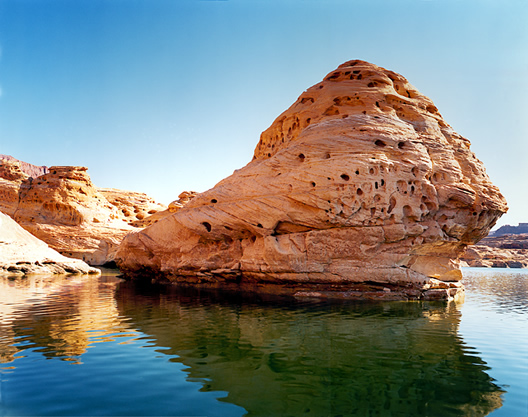
 

Karen Halverson (American, b. 1941) 'Hite Crossing, Lake Powell, Utah' from the 'Downstream' series 1994-1995 from the exhibition 'Downstream: Colorado River Photographs of Karen Halverson' at The Huntington Library, San Marino, California, May - Sept, 2009


Karen Halverson (American, b. 1941)
Hite Crossing, Lake Powell, Utah from the Downstream series
1994-1995


As clear as a bell!

Marcus


Many thankx to the Huntington Library for allowing me to publish the photographs in the posting. Please click on the photographs for a larger version of the image.


Karen Halverson (American, b. 1941) 'Lodore Canyon, Dinosaur National Monument' 1994-1995 from the 'Downstream' series 1994-1995 from the exhibition 'Downstream: Colorado River Photographs of Karen Halverson' at The Huntington Library, San Marino, California, May - Sept, 2009


Karen Halverson (American, b. 1941)
Lodore Canyon, Dinosaur National Monument from the Downstream series
1994-1995
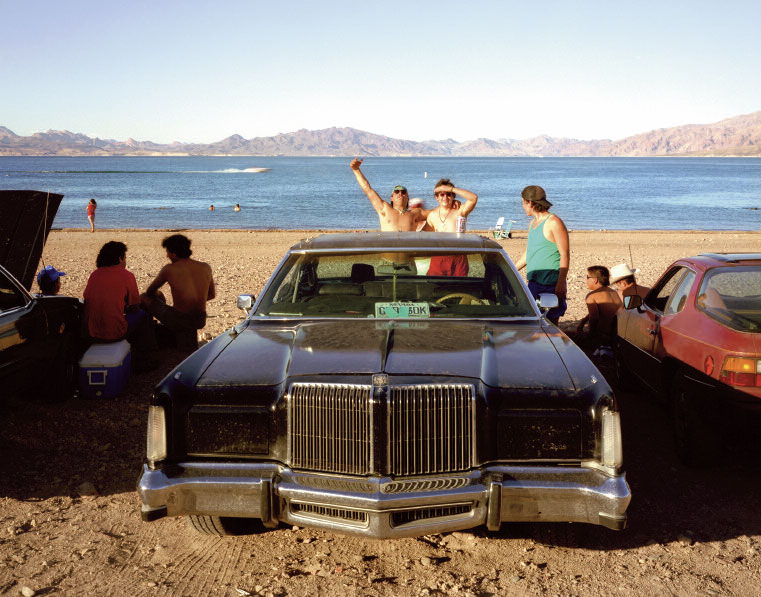
 

Karen Halverson (American, b. 1941) 'Boulder Beach, Lake Mead, Nevada' from the 'Downstream' series 1994-1995


Karen Halverson (American, b. 1941)
Boulder Beach, Lake Mead, Nevada from the Downstream series
1994-1995
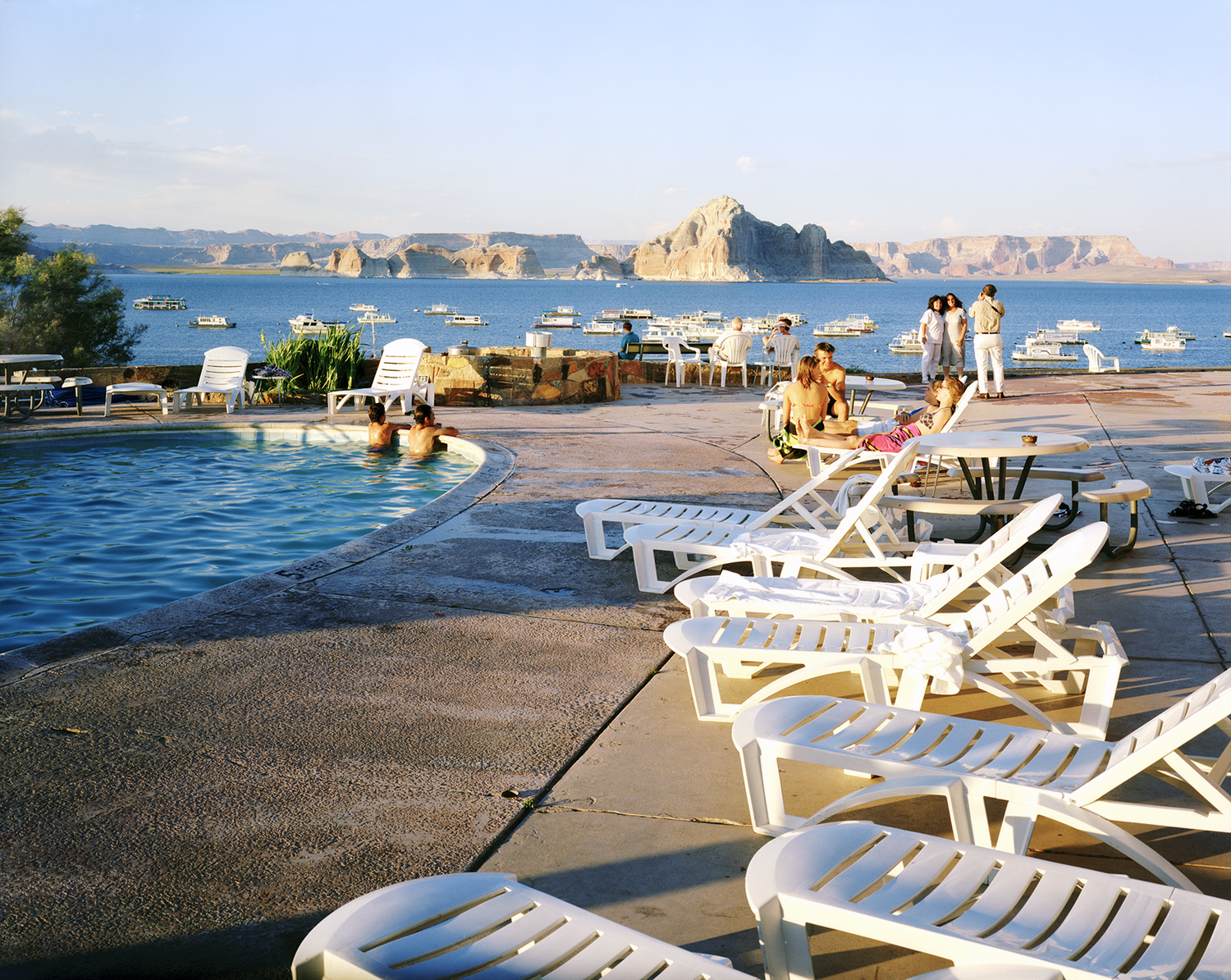
 

Karen Halverson (American, b. 1941) 'Wahweap Pool, Lake Powell, Arizona' 1994-1995


Karen Halverson (American, b. 1941)
Wahweap Pool, Lake Powell, Arizona from the Downstream series
1994-1995


To celebrate the expansion and reinstallation of the Virginia Steele Scott Galleries of American Art, The Huntington Library, Art Collections, and Botanical Gardens presents an exhibition of works from American photographer Karen Halverson’s Colorado River series, on view May 30 through Sept. 28, 2009. Downstream: Colorado River Photographs of Karen Halverson will be on display in the Scott Galleries’ Susan and Stephen Chandler Wing, inaugurating a new changing exhibition space that will highlight photography and works on paper that, because of the fragile nature of the medium, cannot be placed on permanent display.

The exhibition will feature 26 works from Halverson’s Downstream series as well as a sampling of images from The Huntington’s historic holdings related to the Colorado River region, including photographs from John Wesley Powell’s pioneering expedition down the Colorado in 1871 and a snapshot album compiled in 1940 by Mildred Baker, one of the first women to successfully navigate the river from Green River, Wyo., to Boulder (now Hoover) Dam.

Halverson (b. 1941) says she woke one wintry morning in 1994 convinced that she needed to photograph the Colorado River. An accomplished landscape photographer who had already spent 20 years exploring the American West, she embarked on a two-year encounter with the vast terrain along the river’s serpentine route.

The desire to explain, understand, and experience the 1,700-mile river – which originates in Wyoming and Colorado before converging in Utah toward its terminus in Mexico – has exerted a powerful influence on a long line of explorers, scientists, thrill seekers, writers, artists, and photographers. Once largely wild, the modern river has been tamed by dams built to slake the American West’s thirst for water and power. Today the river’s reservoirs supply 30 million people.

“In her resonant imagery, Halverson speaks both to this immutable, rugged past while confronting the river’s complicated and often contested present,” says Jennifer Watts, curator of photographs at The Huntington.

Lush green riverbanks frame a seemingly remote Colorado River in Shafer Trail, Near Moab, Utah – a dramatic departure from the river-turned-lake in Wahweap Marina, Lake Powell, Arizona, in which the setting sun illuminates a satellite dish, a trio of passersby, and a jumble of houseboats set against distant rock outcroppings. Davis Gulch, Lake Powell, Utah captures Halverson’s voice especially succinctly: the power of nature in the form of a gigantic sandstone wall dwarfing a tiny group of plastic lawn chairs, lined up along the river bank, with not a soul in sight.

“In my travels along the Colorado,” says Halverson, “sometimes I find beauty, sometimes desecration, often a perplexing and absurd combination.”

Halverson’s large-format colour photography references the 19th-century era of exploration when the United States, still reeling from the Civil War, saw photographers fan across the West to make pictures for scientific and commercial ends. Many of these iconic views by William H. Bell, John K. Hillers, Timothy O’Sullivan and others form the core of The Huntington’s superlative photography collection. Halverson consulted these works in preparation for her own trips.

The two years Halverson spent hiking, driving, and rafting along the Colorado brought her to a more profound understanding of the river and her relationship to it. During her travels, Halverson wrote, “I feel my place, small and finite in relation to space and time: I feel my self, expansive and trusting.”

Text from The Huntington Library website [Online] Cited 12/06/2009. No longer available online
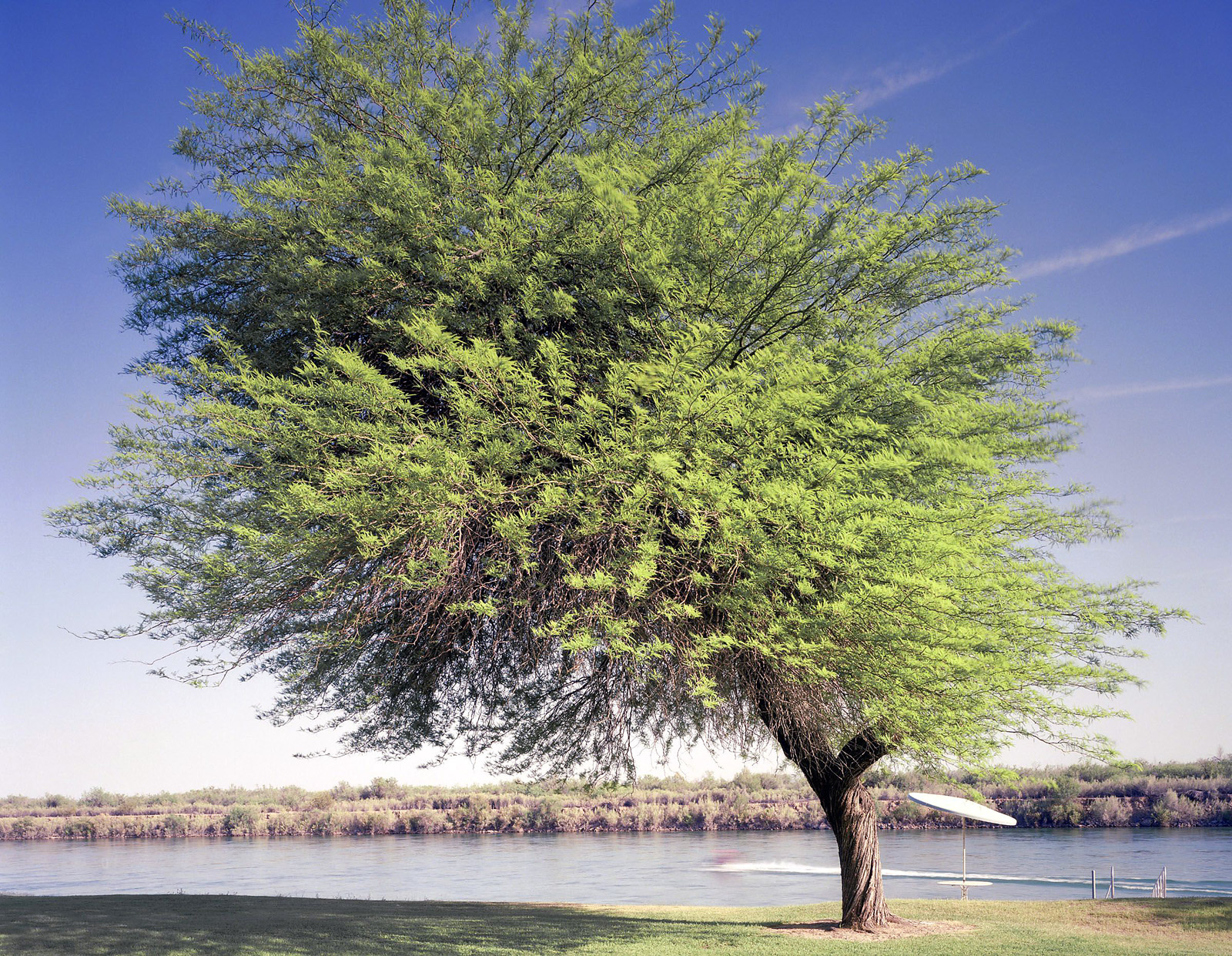
 

Karen Halverson (American, b. 1941) 'Big River, California' 1994-1995


Karen Halverson (American, b. 1941)
Big River, California from the Downstream series
1994-1995
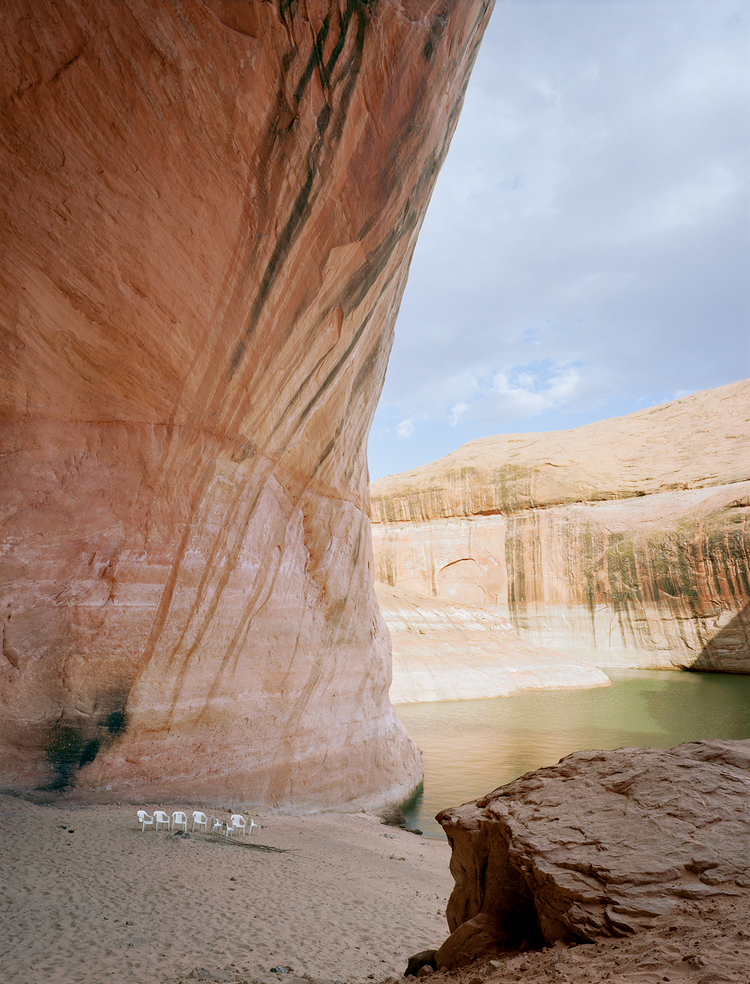
 

Karen Halverson (American, b. 1941) 'Davis Gulch, Lake Powell' 1994-1995


Karen Halverson (American, b. 1941)
Davis Gulch, Lake Powell from the Downstream series
1994-1995


“In my travels along the Colorado, sometimes I find beauty, sometimes desecration, often a perplexing and absurd combination.”


Karen Halverson


One wintry morning in1994, Karen Halverson (b. 1941) awoke convinced she needed to photograph the Colorado River. An accomplished artist who had already spent 20 years exploring the American West, she set off on a two-year encounter with the vast, breathtaking terrain along the river’s serpentine route. “The impulse to photograph the Colorado River came to me out of the blue,” she writes, “but I acted on it as if it were my destiny.” Personal destiny and the Colorado River have long been linked in the lives of the explorers, scientists, writers, artists, and thrill seekers who have sought to understand and experience this remarkable river.

“Nature appears to have been partial to this stream,” noted “Captain” Samuel Adams, who described the river in 1869. The Colorado and its major tributary, the Green River, run 1,700 miles from headwaters in the Rocky Mountains and Wyoming’s Wind River Range to a terminus in Mexico. Sheer size helps explain the river’s enduring allure; the Colorado’s gargantuan watershed covers a quarter of a million miles and runs through seven states. The Colorado is the riparian centre and symbol of the American West. Once wild, the river has been tamed by dams built to slake the arid West’s demand for water and power; 30 million people are dependent on it today.

Halverson’s large-format colour photography alludes to a 19th-century era of exploration when photographers fanned out across the West to make pictures for scientific and commercial ends. Iconic views by William H. Bell (1830-1910), John K. Hillers (1843-1925), Timothy O’Sullivan (c. 1840-1882), and others captured timeless landscapes of fierce, often forbidding, beauty. Halverson looked at these works in preparation for her trips, viewing them as documentary and visual points of departure for her own image making. Beyond the debt she owes these photographic pioneers, Halverson is firmly rooted in a late 20th-century aesthetic that comments on humanity’s use, and misuse, of the environment.

Beginning in the 1970s, a group of photographers, almost all of them men – who are now sometimes called the “New Topographers” – used their cameras to criticise the effects of rampant urban and suburban growth on western lands. Sprawling cities like Los Angeles, Phoenix, and Las Vegas owe their existence almost entirely to the importation of water from the Colorado River. As Halverson rightly claims, today the river is a “water delivery system,” with its dozens of reservoirs, dams, and diversions ensuring the allocation of virtually every drop for human needs.

Yet Downstream is no visual jeremiad railing against environmental abuse. Nor is it a dispassionate travelogue of the two years Halverson spent hiking, driving, and rafting along the Colorado. The wild terrain that flabbergasted early explorers is still here in the Paleozoic strata of gigantic rock outcroppings, the ancient calm of ghostly canyons, the dizzying heights overlooking a ribbon of water far below. And the colours – ochre, cerulean blue, deep red, electric green – are all intensified against the palette of a dammed river running colder and deeper than if it flowed freely. A modern-day beauty even finds itself inscribed in steel and concrete, whether in the sleek form of a pipeline or the still surface of an irrigation canal.

But it is in the bizarre, sometimes humorous, intersections of past and present that Downstream gains its potency. Cheap plastic lawn chairs, sitting vacant, look puny and ridiculous against a looming canyon wall. Weekend revellers pump fists skyward on the shores of Lake Mead, a giant reservoir held in place by Hoover Dam. A garden hose waters a scrawny palm tree in a desert oasis populated by rows of RVs.

What is gained and what is lost by controlling the Colorado River? And what are the river’s limits? Halverson’s Downstream series asks the viewer to contemplate these questions in a time when the arid West’s thirsty population threatens to overwhelm technological as well as natural resources, and when our well-watered urban lives remain utterly disconnected from riparian realities. Through her resonant imagery, Halverson speaks to the immutability of the river’s past while confronting its complex, contested present and future.

Jennifer A. Watts, Curator of Photographs from “Colorado River Photographs of Karen Halverson,” The Huntington Library Halverson Gallery guide [Online] Cited 28/02/2019. No longer available online
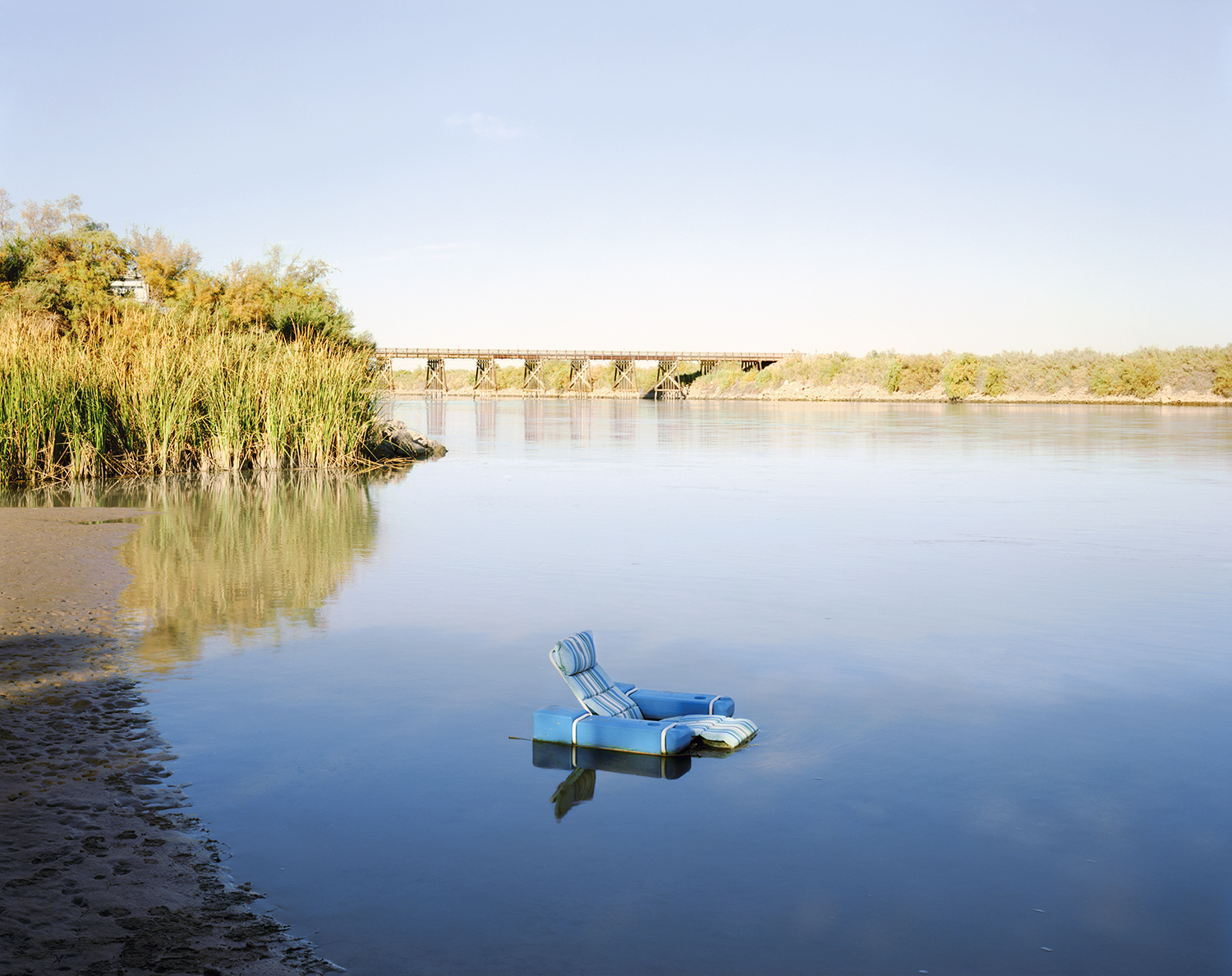
 

Karen Halverson (American, b. 1941) 'Near Palo Verde, California' 1994-1995


Karen Halverson (American, b. 1941)
Near Palo Verde, California from the Downstream series
1994-1995
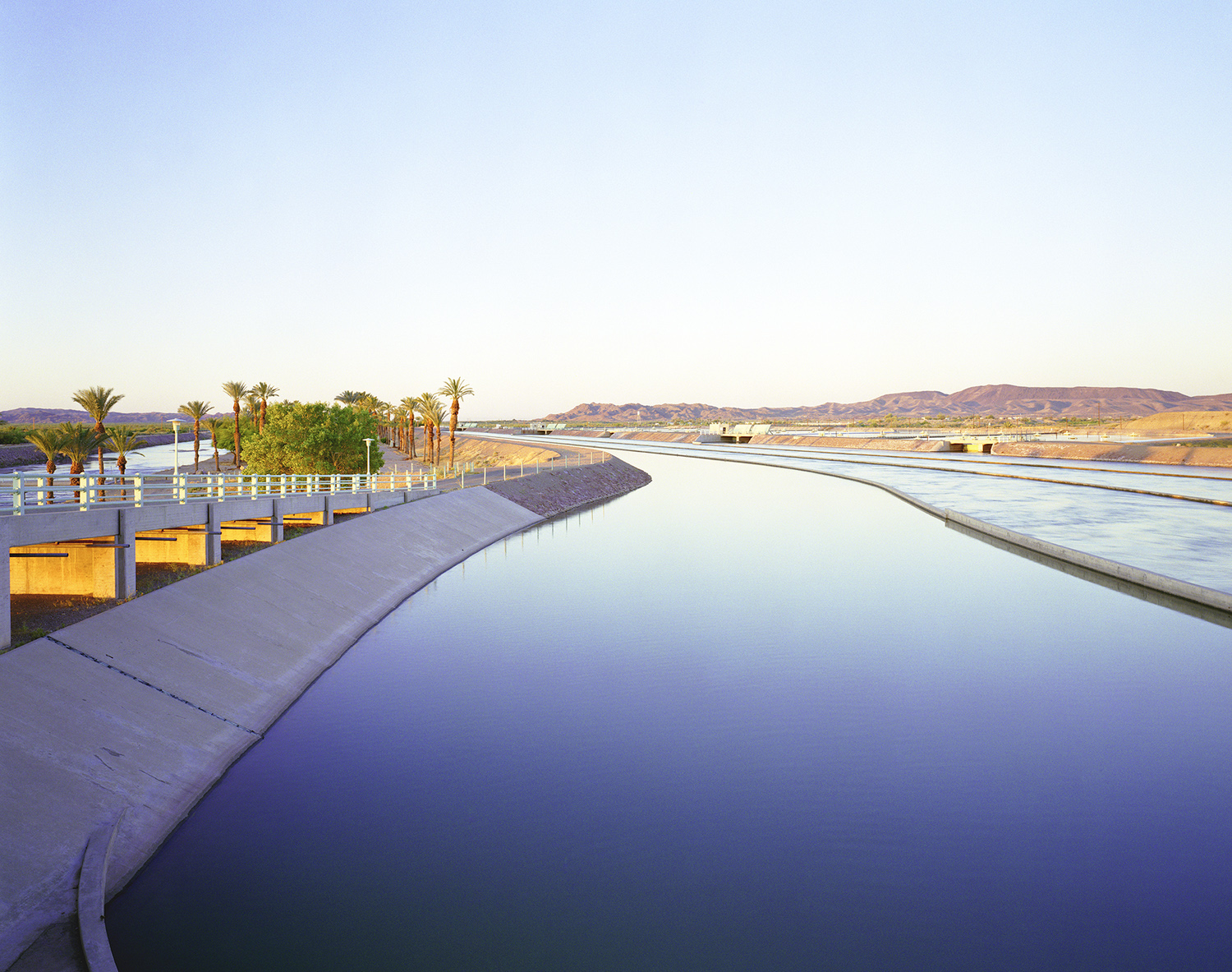
 

Karen Halverson (American, b. 1941) 'Imperial Dam, near Yuma, Arizona' 1994-1995


Karen Halverson (American, b. 1941)
Imperial Dam, near Yuma, Arizona from the Downstream series
1994-1995
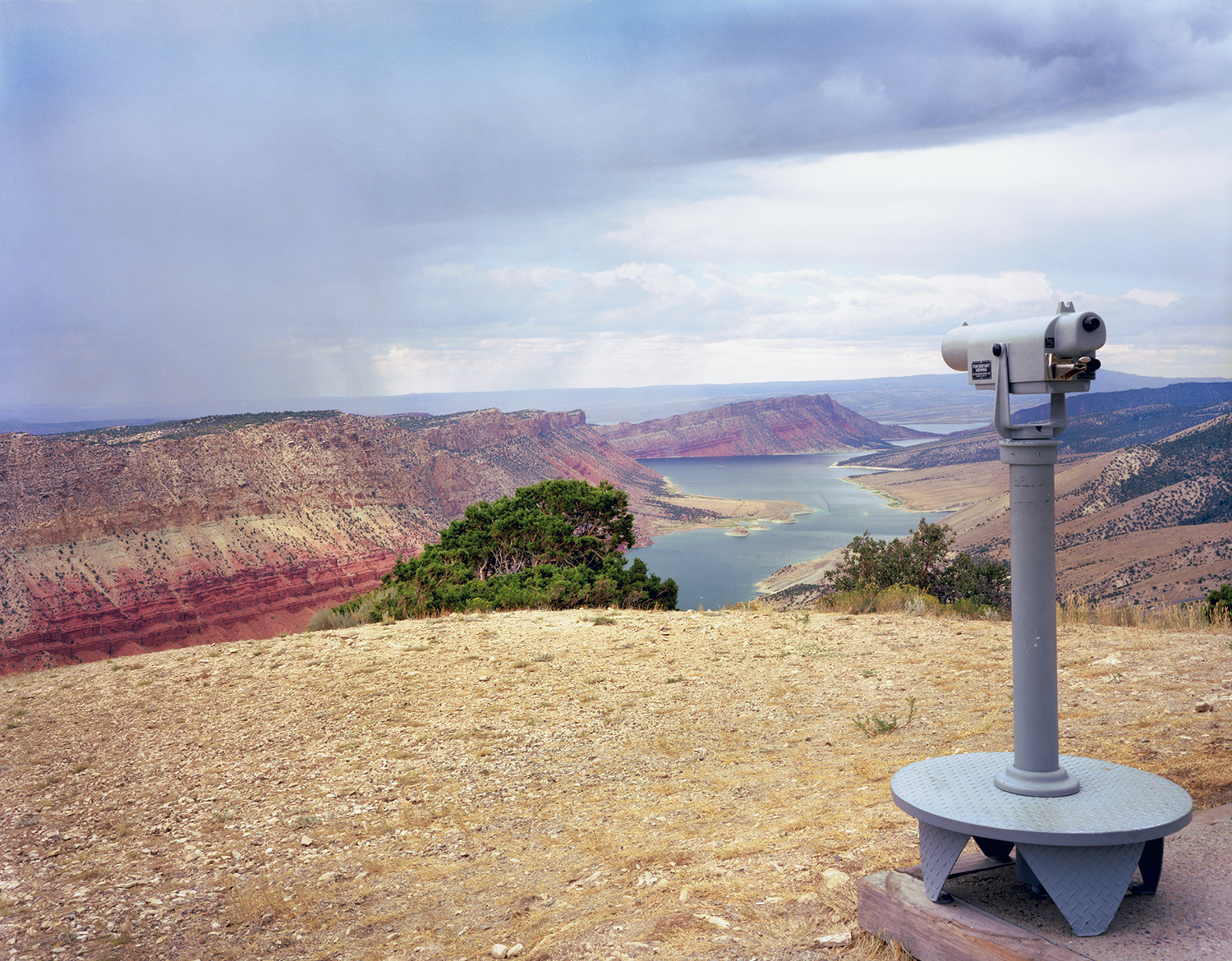
 

Karen Halverson (American, b. 1941) 'Flaming Gorge Reservoir, Wyoming' 1994-1995


Karen Halverson (American, b. 1941)
Flaming Gorge Reservoir, Wyoming from the Downstream series
1994-1995
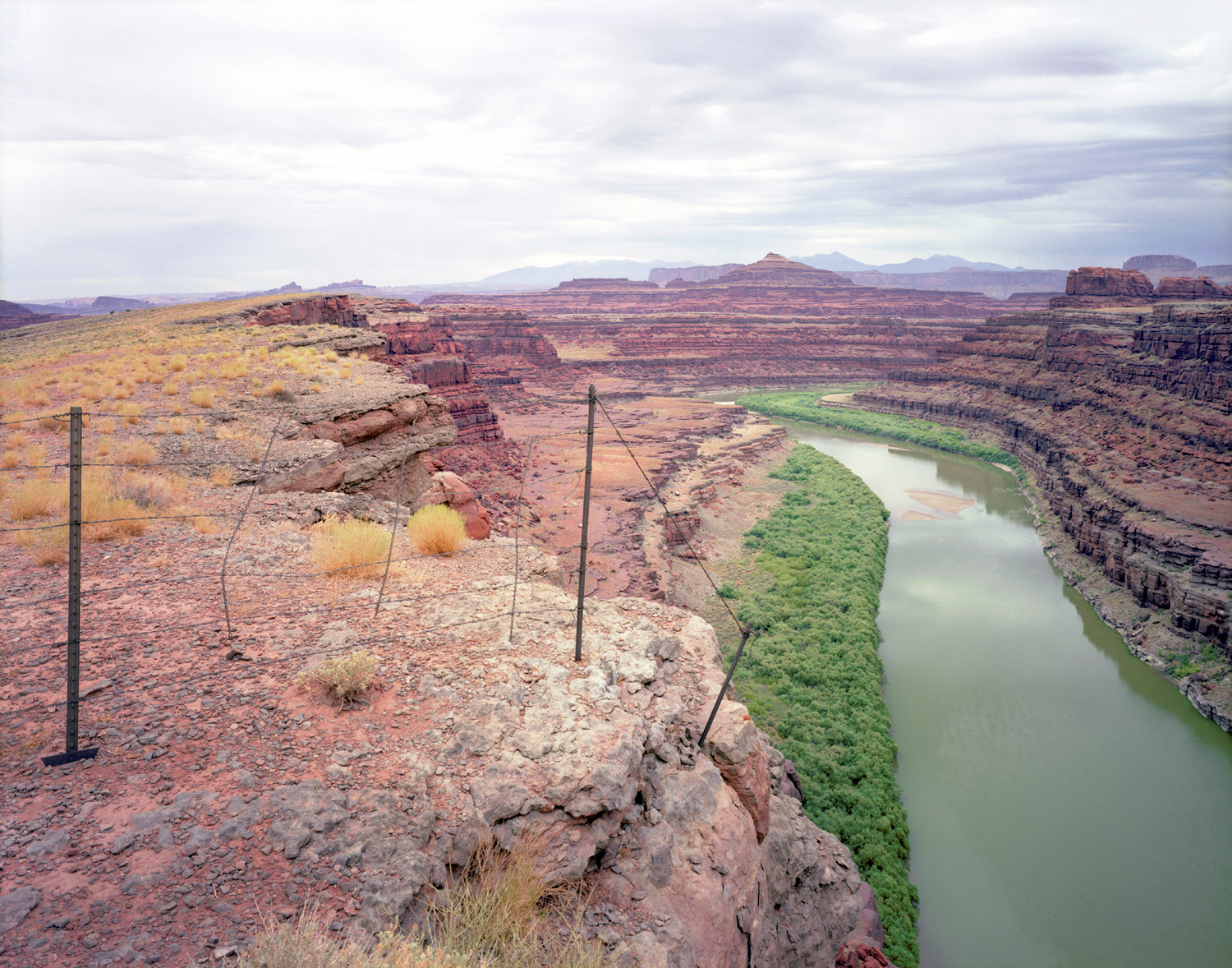
 

Karen Halverson (American, b. 1941) 'Shafer Trail, Near Moab, Utah' 1994-1995


Karen Halverson (American, b. 1941)
Shafer Trail, Near Moab, Utah from the Downstream series
1994-1995


The Huntington Library
The Huntington Library, Art Collections, and Botanical Gardens
1151 Oxford Road
San Marino, CA  91108

Opening hours:
Wednesday – Sunday 10am – 5pm
Closed Tuesdays

The Huntington Library website
Karen Halverson Photographs website

LIKE ART BLART ON FACEBOOK

Back to top

Review: ‘The Water Hole’ exhibition by Gerda Steiner and Jorg Lenzlinger at ACCA (Australian Centre for Contemporary Art), Melbourne

Exhibition dates: 23rd December, 2008 – 1st March, 2009


“Warning. Watch your step while gazing at distant view.”

Sign at entrance to the exhibition


Gerda Steiner and Jorg Lenzlinger. Entrance to 'The Waterhole' exhibition at ACCA, Melbourne, 2009


Gerda Steiner (Swiss, b. 1967) and Jorg Lenzlinger (Swiss, b. 1964)
Entrance to The Water Hole exhibition at ACCA, Melbourne
2009
Photo: Marcus Bunyan


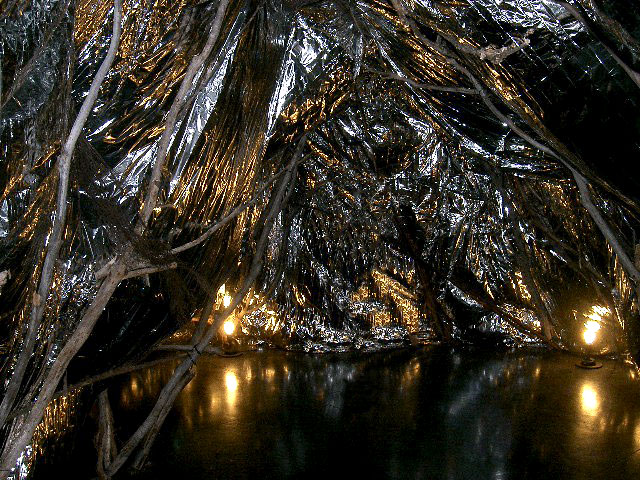
A cave like entrance presents itself to the visitor as they enter the exhibition leading to a long winding tunnel that is lined with silver insulation foil and tree branches, lit by floor mounted electric light bulbs. The foil moves with the natural movement of air causing not a rustling of leaves but of artificial surfaces.

At the end of the tunnel the viewer enters a large installation space, confronted with a effusive pop art Garden of Eden, a Magic Forest.

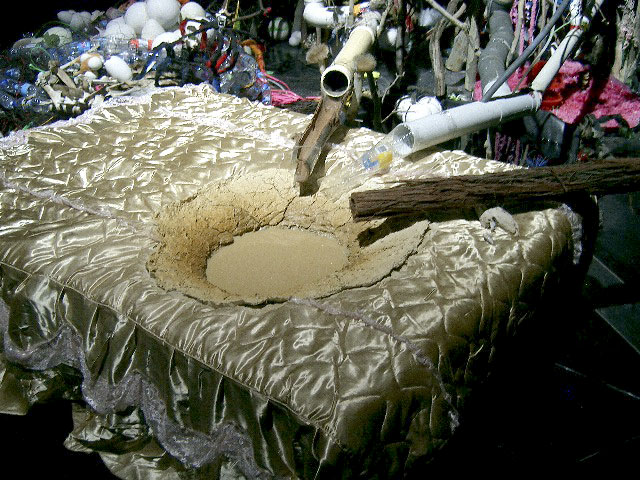
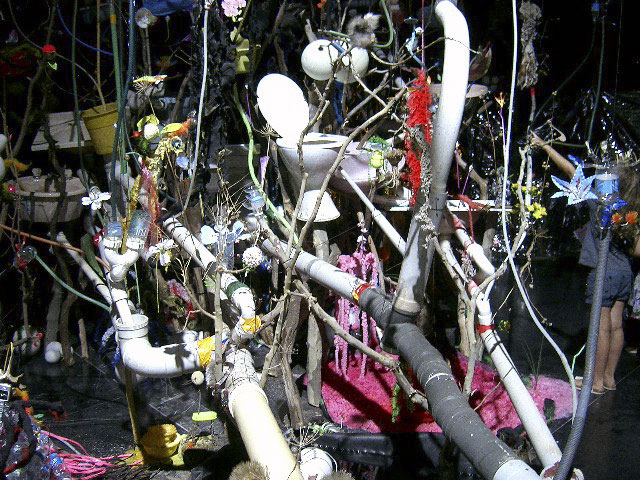
It takes a while to work out what is going on, there are so many elements to the sculptural piece. The main elements are buckets, toilets, basins and drainage pipes, plumbing fittings that all lead to a bed with a drying dam in the centre of a satin bedspread: the ‘waterhole’ of the exhibition title. The waterhole is fed by water dripping from a medical bag suspended high in the air above the dam, a nice touch. The rest of the forest and pipes are dry. The installation comments on our water supplies and the ‘technologies of production’ (Foucault) that permit us to produce, transform or manipulate things. We might install rainwater tanks to catch water but if there is no water to catch in the first place then we are in trouble: we make our bed and have to lie in it, the empty basins like our catchment areas, dry and bleak.

Other elements of the forest have an environmental theme, the installation developed by the artists in response to the extensive drought most of Australia (and it particular Melbourne) is experiencing. Here are spiders with hairy legs and mobile phones for bodies infesting the installation, plumbing fittings with natural seeds sprouting from their ends, brightly coloured crystal forms fed each day with water by gallery staff so that they grow. An upside down umbrella with Polar bear images printed on it’s material has imaginary water draining down a bamboo pipe into a bucket; empty water bottles form a large nest with broken eggs inside; artificial plants, bones, crabs, seaweed and flying stuffed owls are form some of the other elements in the installation.

Climbing a few steps we enter a ‘bird’ watching gallery replete with binoculars to observe the humans in the forest as much as the forest itself. A water cooler sits incongruously in this watching space, silent and somehow complicit in its ironical presence.

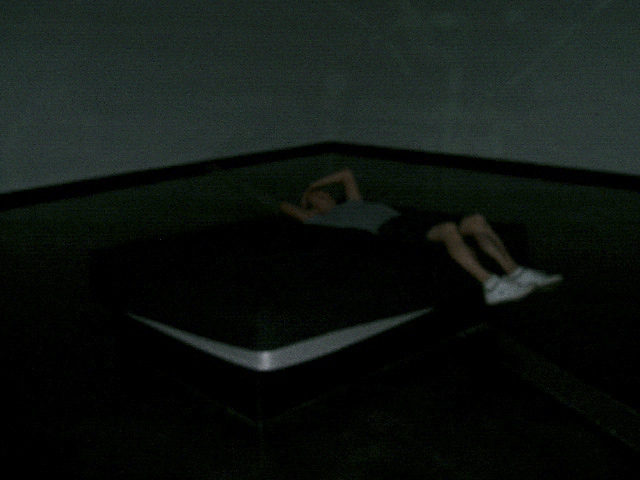
The viewer then moves to another room. 4 video projectors display another water themed installation on the gallery walls, the videos meeting in the middle of the walls and reflecting each other. Ambient music accompanies images of rain!, spurting water, owls and plastic pipes, plastic flowers and plastic horses as the viewer relaxes on a waterbed in the middle of the space. The effect of the music and images is quite meditative when combined with the gentle rocking of the waterbed, the projections of the video forming kaleidoscopic ‘Northern lights’ on the ceiling of the gallery. This room is an extension of the themes of the large installation.

Moving forward the viewer enters another room – the meditation room. This room is most effective in encouraging contemplation of the different planes of our existence and our orientation in (environmental) space. Three beds are present, one suspended from the ceiling by four metal rods. Climbing onto this bed the movement from side to side caused by your weight makes you feel seasick and slightly disorientated. Above the second table is a wonderful mobile made of twigs, branches, dried leaves, plastic flowers, beads, plastic bags, baby dummies and jewellery moving gently in the breeze. Lying on the table with the mobile about a foot above your head things drift in and out of view as you change the focus of your eyes – close, mid, far and then onto the moving shadows on the ceiling.

The most effective bed has a small meteorite suspended in a net bag above it. The viewer slides underneath the ‘rock’ placing the meteorite about a foot or so above your face. The meteorite is brown, dark and heavy, swinging slightly above your ‘third eye’. You feel its weight pressing down on your energy, on your life force and you feel how old this object is, how far it has traveled, how fragile and mortal you are. It is a sobering and enlightening experience but what an experience it is!

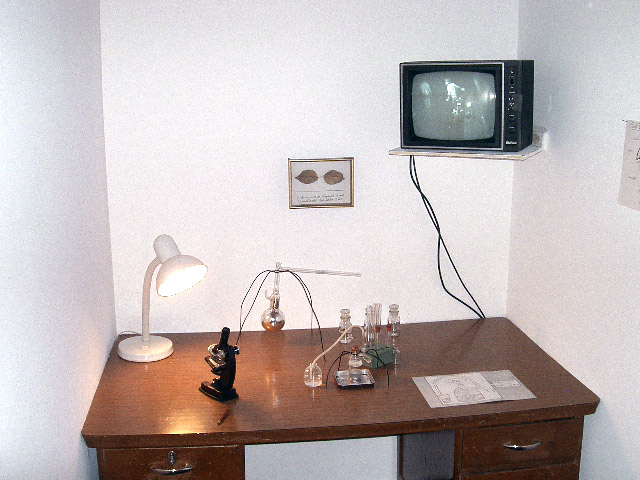
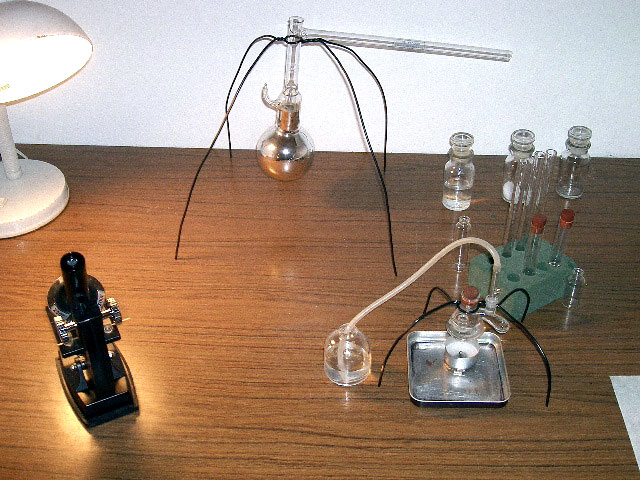
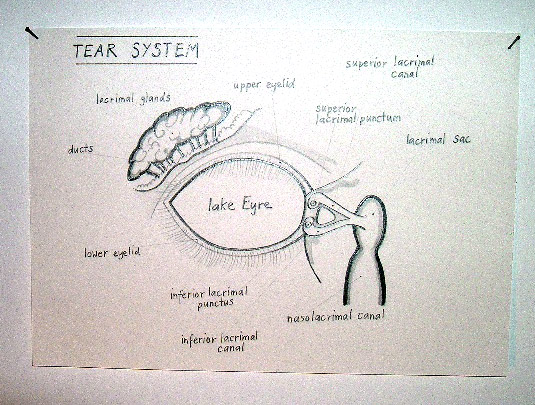
Entering the final room small colour photos of people being hugged from behind and lifted into the air, laughing, line the gallery walls. These are the weakest elements of the exhibition and seem to bear no relation to all that has passed before. Running off of this gallery is an alcove that is a dead end, a full stop to the exhibition with an installation Desalination plant for tears. A cheap Formica desk sits at the end of the space. Perched above the desk is a tv showing live black and white images of the earlier bird watching gallery – the watcher now the watched. On the desk itself is a microscope (with slide of human tears), pencil, a candle for heat under a glass flask of water (looking like a spider from the large installation!) and various glass test tubes and vials. A diagram explains the working of a Desalination plant for tears, an analogous reference to the desalination plant earmarked for Wonthaggi, south-east of Melbourne. Irony is present (again) in the 2 leaves grown at Singapore Airport by desalinated water (2008), two framed, brown dead leaves, and in the Tear system diagram where glands have turned into forests and the eye into a lake (see below).

This is a magical and poignant exhibition that is a joy for children and adults alike. Children love it running around exploring the environments. Adults love it for it’s magical, witty and intelligent response to the problems facing our planet and our lives. Go and enjoy this interplanetary collision. Highly recommended!

Dr Marcus Bunyan


Many thankx to the Australian Centre for Contemporary Art for allowing me to publish the photographs and text in the posting. All photographs © Marcus Bunyan


Gerda Steiner (Swiss, b. 1967) and Jorg Lenzlinger (Swiss, b. 1964) 'The Waterhole' 2009 (detail)


Gerda Steiner (Swiss, b. 1967) and Jorg Lenzlinger (Swiss, b. 1964)
The Water Hole (detail)
2009
Photo: Marcus Bunyan


Gerda Steiner (Swiss, b. 1967) and Jorg Lenzlinger (Swiss, b. 1964) 'The Waterhole' 2009 (detail)


Gerda Steiner (Swiss, b. 1967) and Jorg Lenzlinger (Swiss, b. 1964)
The Water Hole (detail)
2009
Photo: Marcus Bunyan


Gerda Steiner (Swiss, b. 1967) and Jorg Lenzlinger (Swiss, b. 1964) 'The Waterhole' 2009 (detail)


Gerda Steiner (Swiss, b. 1967) and Jorg Lenzlinger (Swiss, b. 1964)
The Water Hole (detail)
2009
Photo: Marcus Bunyan


Gerda Steiner and Jorg Lenzlinger. Installation view of waterbed at 'The Waterhole' exhibition at ACCA, 2009


Gerda Steiner (Swiss, b. 1967) and Jorg Lenzlinger (Swiss, b. 1964)
Installation view of waterbed at The Water Hole exhibition at ACCA, Melbourne
2009
Photo: Marcus Bunyan


Gerda Steiner and Jorg Lenzlinger. Installation view of 'Desalination plant for tears' (detail) from 'The Water Hole' exhibition at ACCA, Melbourne, 2009

Gerda Steiner and Jorg Lenzlinger. Installation view of 'Desalination plant for tears' (detail) from 'The Water Hole' exhibition at ACCA, Melbourne, 2009


Gerda Steiner (Swiss, b. 1967) and Jorg Lenzlinger (Swiss, b. 1964)
Installation view details of Desalination plant for tears from The Water Hole exhibition at ACCA, Melbourne
2009
Photos: Marcus Bunyan


The end of 2008 saw the launch of The Water Hole, a major installation by renowned Swiss artists Steiner and Lenzlinger. The artists created a fantasia of ecology in ACCA’s large hall. In the side galleries a flow out of projects including meteors suspended over beds, a crystal room and a desalination laboratory. The Water Hole, devised specifically for ACCA, referenced Australia’s acute climate challenges as well as the pressure of global waste. The project created a story of place, a fable if you like. And in the tradition of the fable, the artists employed animals, plants and inanimate objects to tell a story that has a moral and ethical dimensions. 

The Water Hole was a big story – filled with pleasurable things but also with the message of peril.  The artists created environments that enabled the visitor to consider and sense our place in history, and our attention to striking a balance between our consumptive desiring and nature.

Text from the ACCA website


Gerda Steiner (Swiss, b. 1967) and Jorg Lenzlinger (Swiss, b. 1964) Diagram from 'Desalination plant for tears' (detail) from the exhibition 'The Water Hole' at ACCA, Melbourne, 2009


Gerda Steiner (Swiss, b. 1967) and Jorg Lenzlinger (Swiss, b. 1964)
Diagram from Desalination plant for tears from the exhibition The Water Hole at ACCA, Melbourne
2009
Photo: Marcus Bunyan


Australian Centre for Contemporary Art (ACCA)
111 Sturt Street
Southbank
Victoria 3006
Australia

Opening hours:
Tuesday to Friday 10am – 5pm
Weekends and Public Holidays 11am – 5pm
Monday by appointment
Open all public holidays except Christmas Day and Good Friday

ACCA website

Gerda Steiner and Jorg Lenzlinger website

LIKE ART BLART ON FACEBOOK

Back to top