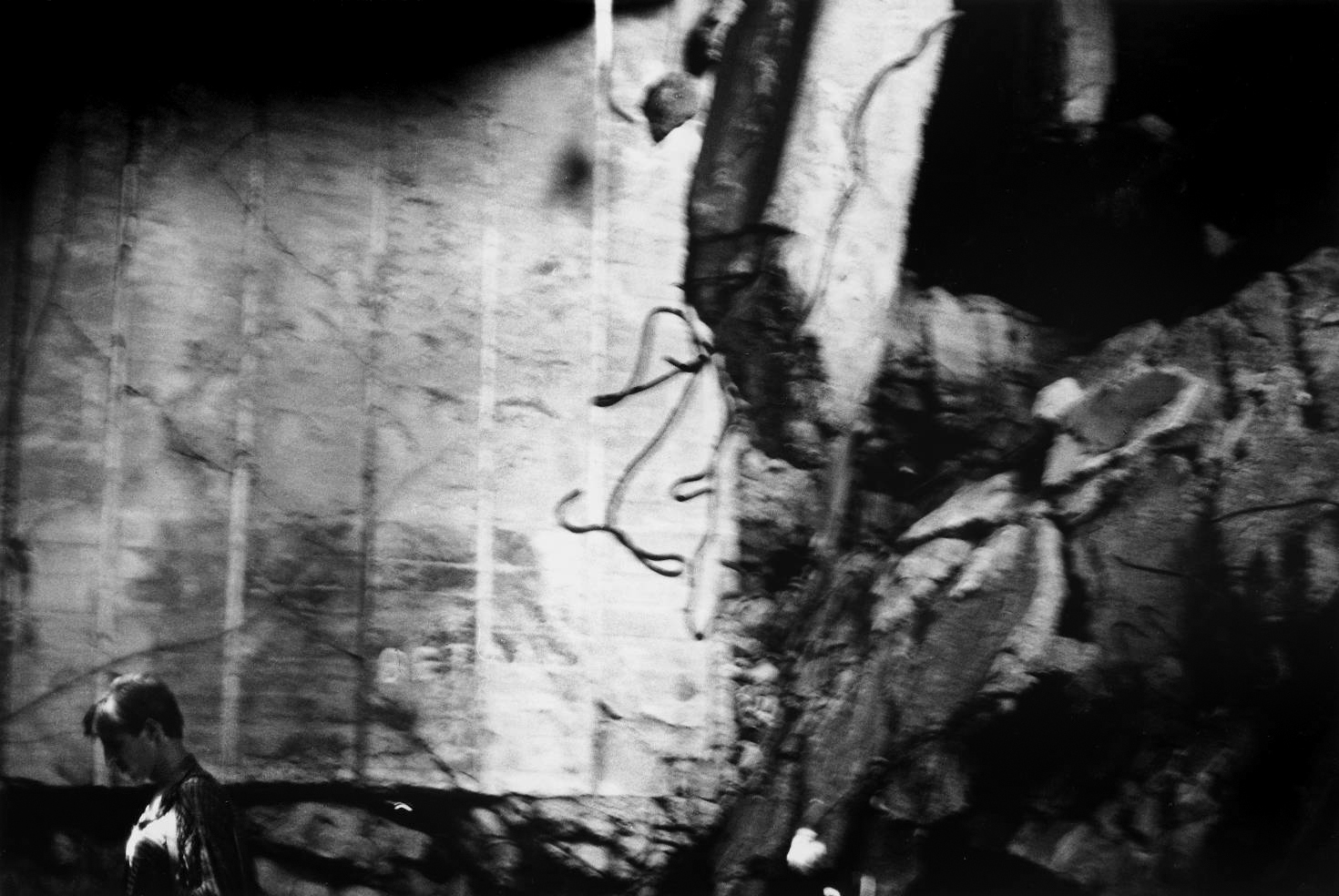
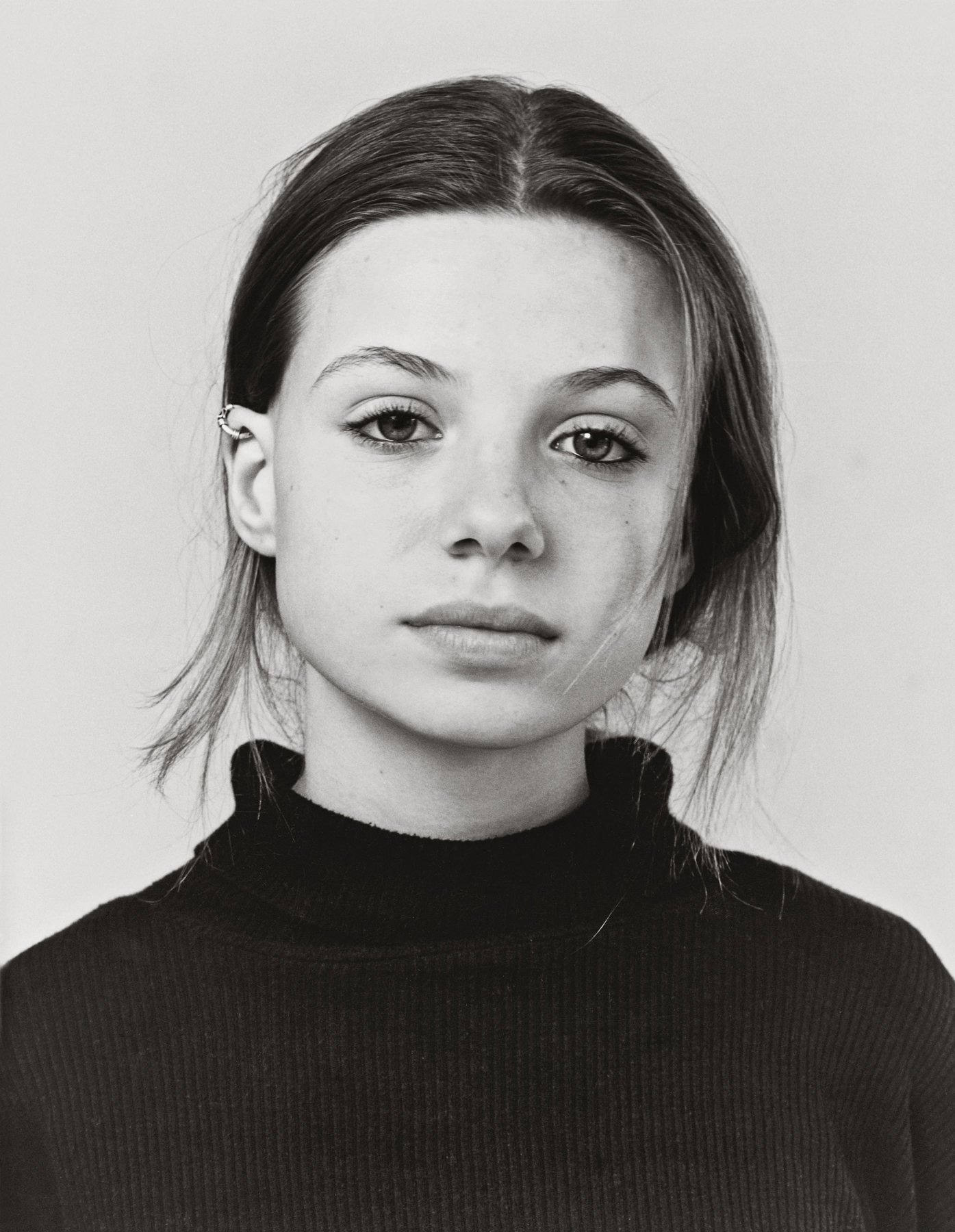
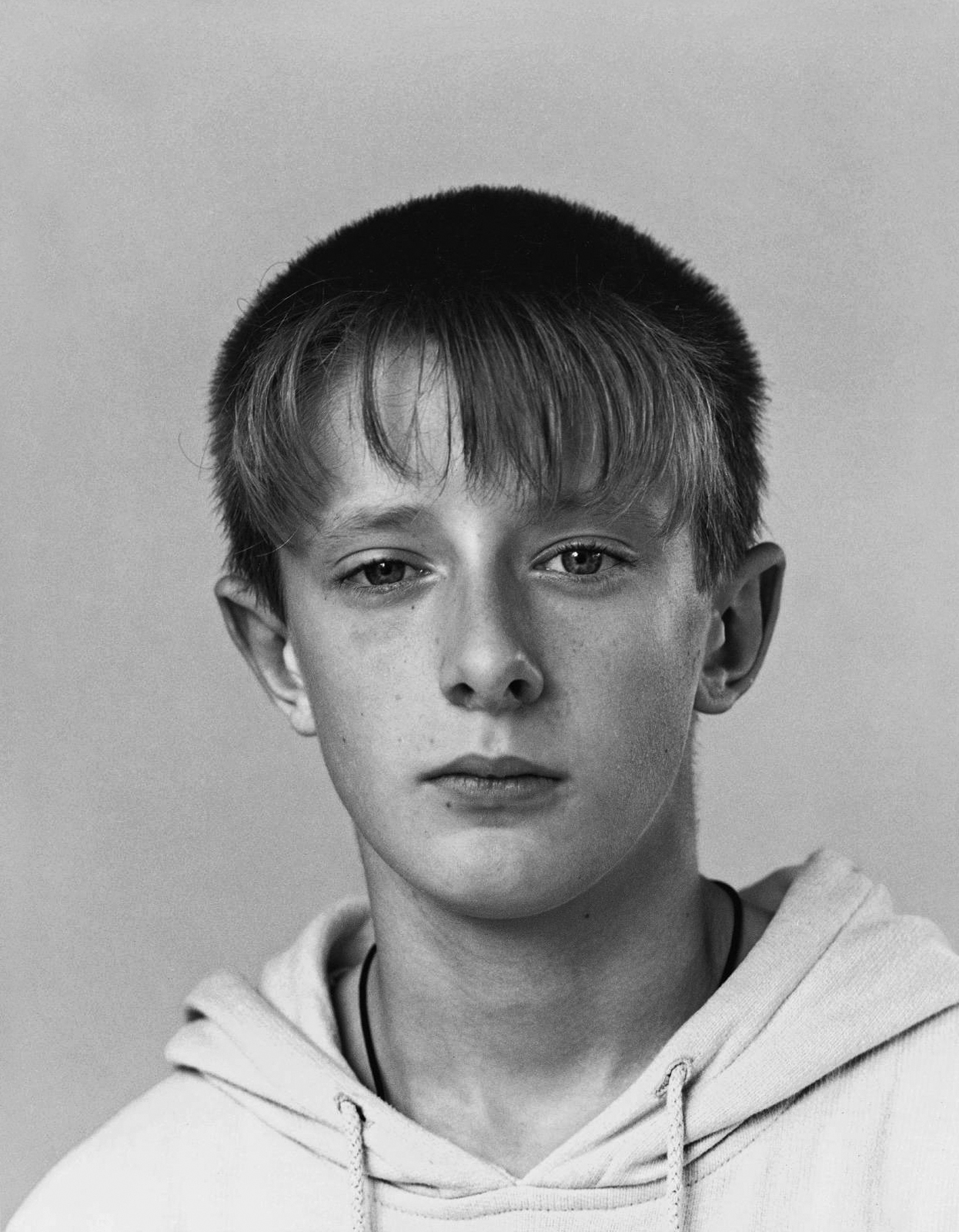
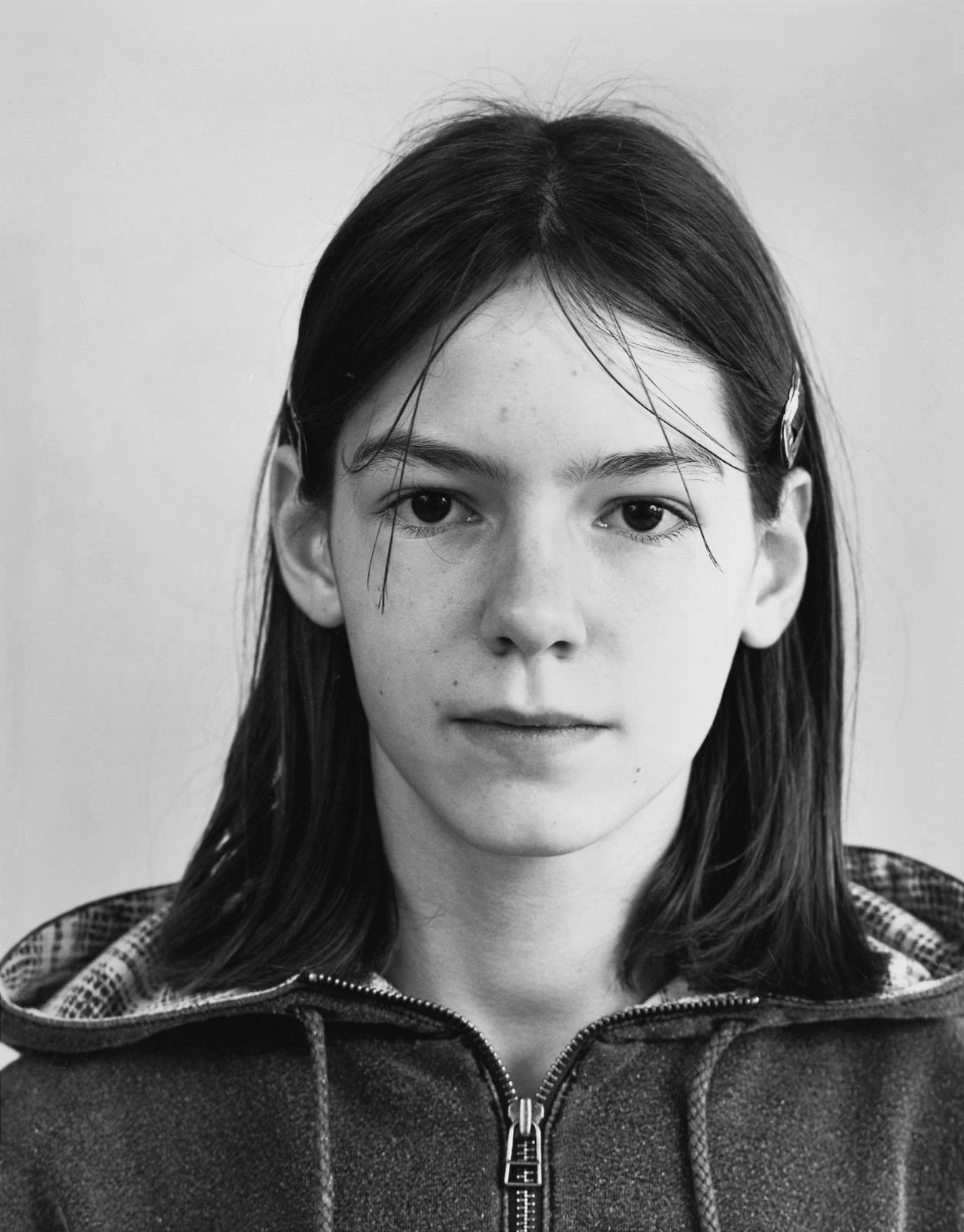
Exhibition: ‘Barbara Klemm. ­Light and Dark. Photographs from Germany’ at the Galerie für Zeitgenössische Kunst, Leipzig from ifa – Institut für Auslandsbeziehungen

Exhibition dates: 30th November, 2024 – 23rd March, 2025


Barbara Klemm (German, b. 1939) 'Offenbach' 1968


Barbara Klemm (German, b. 1939)
Offenbach
1968
Black and white photograph on baryta paper
300 × 400 mm
© Barbara Klemm, Institut für Auslandsbeziehungen e. V.


Apparently, “the exhibition presents photography by one of Germany’s most important artists.”

Until recently I had never heard of this artist and I have been studying photography for over 35 years.

Allegedly, “many of Klemm’s photographs have become “icons of contemporary history” and have shaped the cultural memory of several generations.”

What does that even mean – “icons of contemporary history” – it’s just art speak that means absolutely nothing!

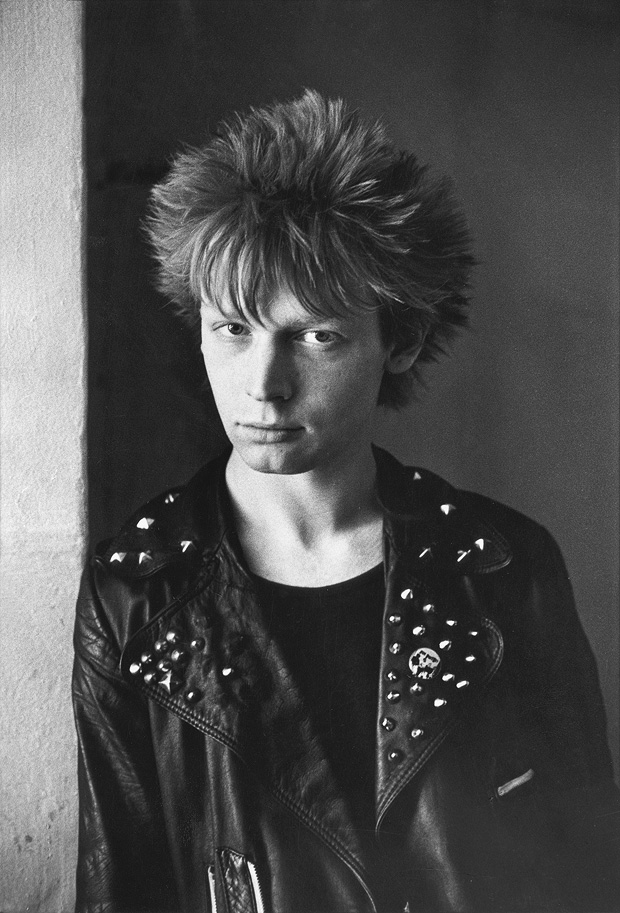
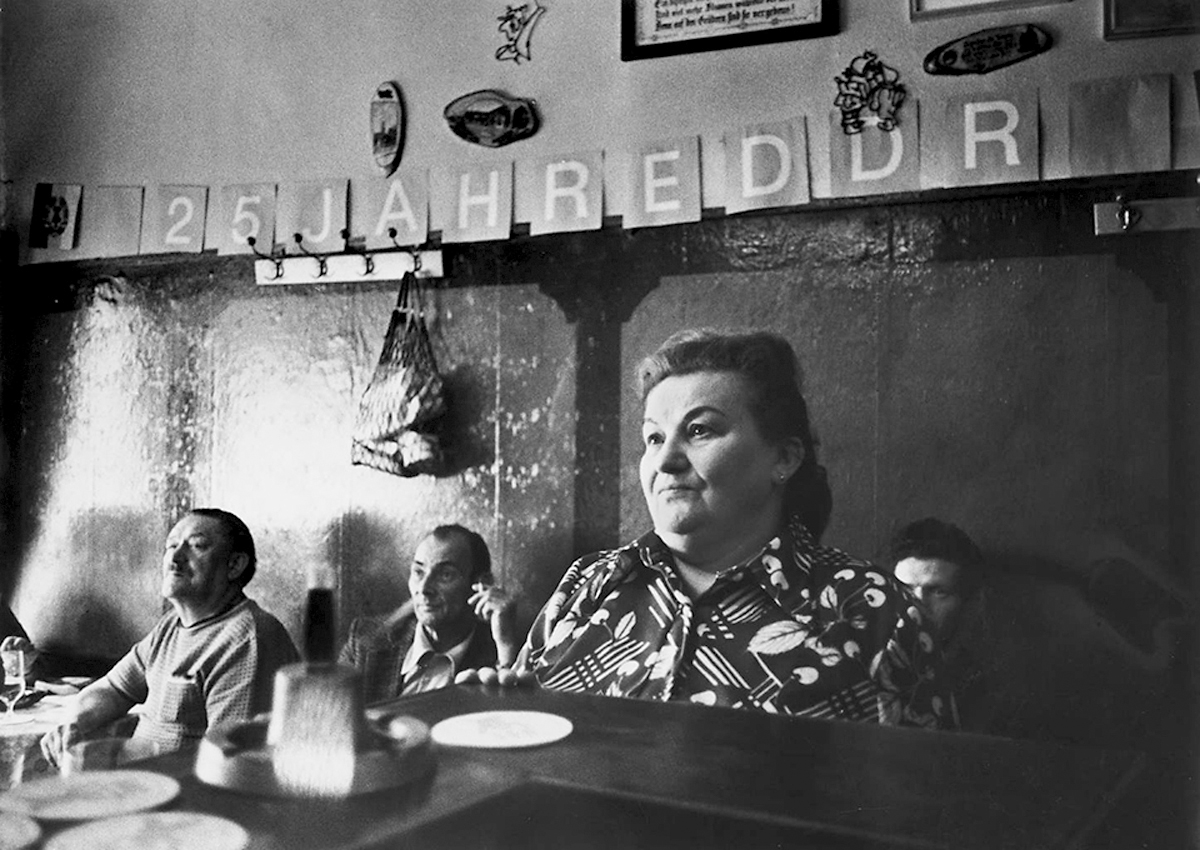
If we actually look at the work there are some really strong photographs here that form a cohesive body of work which interrogates the reality of a country that was divided for decades, which examine the postwar formation of German culture and identity.

“[The exhibition] includes pictures from every sphere of society: from politics, culture and the economy, photos that capture unique and often tense moments as well as plain everyday life, photos of demonstrations, protests, and of immigrants, of cultural events, mass gatherings, and urban spaces.” (Text from ifa website)

While Klemm’s photographs combine the documentary and the artistic in German press photography, her artistic voice is not a lone voice in the wilderness documenting Germany before and after reunification. Variously (but not exclusively) we have from the 1930s onwards and reaching its social reality apotheosis in the 1970s-1980s artists such as Friedrich Seidenstücker, Benjamin Katz, Chargesheimer, Michael Schmidt, Helga Paris, Günter Zint, Wendelin Bottländer, Andreas Horlitz, Christa Mayer, Sibylle Bergemann, Tata Ronkholz, Thomas Struth, Wilhelm Schürmann, Volker Döhne, Elfriede Mejchar, Hildegard Heise, and Timm Rautert.

At their best Klemm’s photographs are essential – (in the sense ‘in the highest degree’): from late Latin essentialis, from Latin essentia (see essence) – which is, the intrinsic nature or indispensable quality of something … which determines its character. That is what Klemm so vibrantly and insightfully captures, the true essence of an event which is then marked down in history. “Her sure sense of the true essence of an event allows her to capture moments that tell stories far beyond what the pictures seem to show at first glance.” In the highest degree, Klemm’s photographs “offer an insight into the most significant aspects of social life in both the Federal Republic of Germany and the GDR”

But she is not alone in this endeavour and to argue that her photographs are “icons of history” and that she is one of Germany’s most important artists is pure hokum. Why curators and/or media people continue to write this stuff is beyond me…

Just let the artist tell her stories and the photographs will speak for themselves.

Strength, insight, essence.

Dr Marcus Bunyan


Many thankx to the Galerie für Zeitgenössische Kunst for allowing me to publish the photographs in the posting. Please click on the photographs for a larger version of the image.
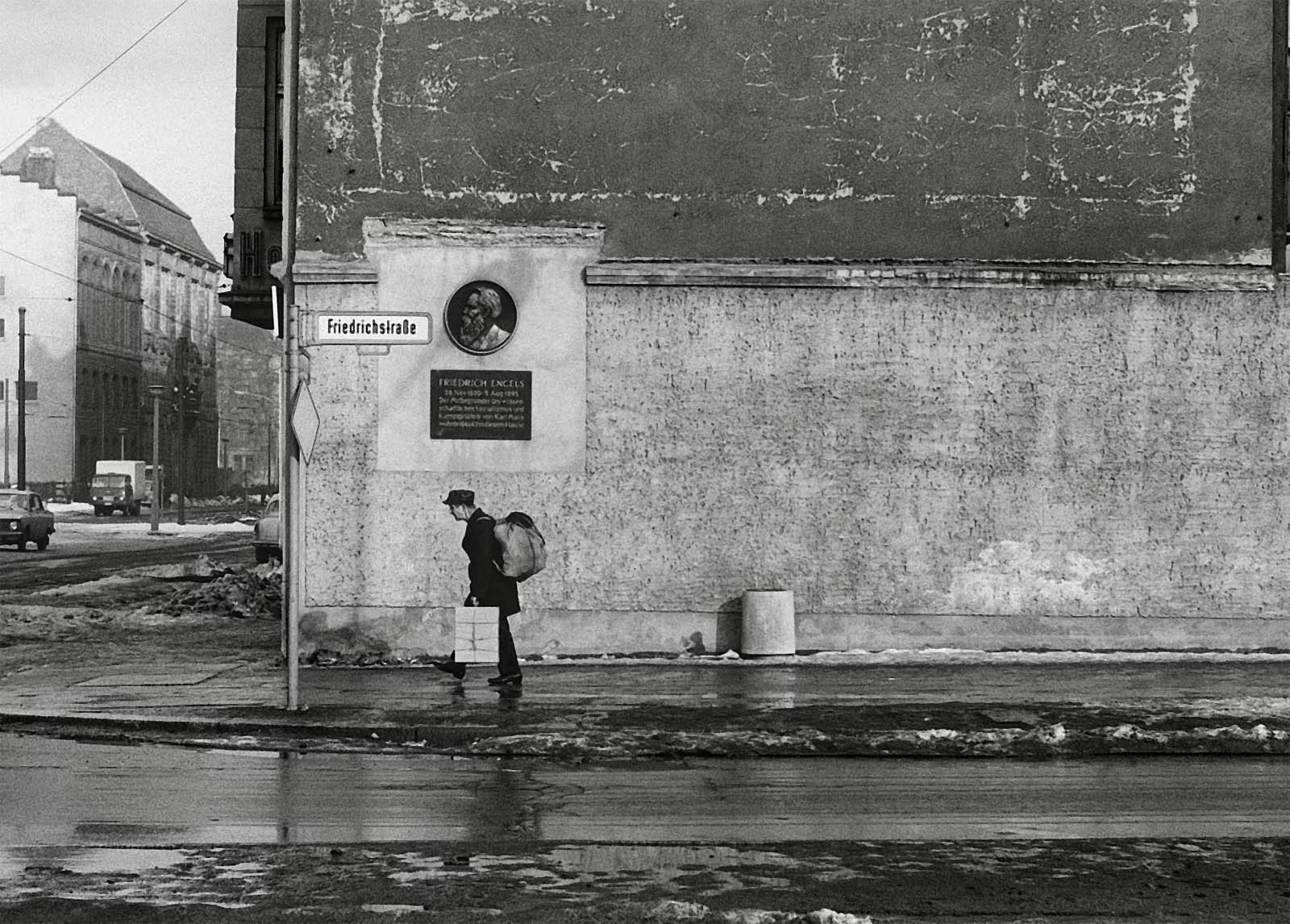


Barbara Klemm (German, b. 1939) 'Friedrichstrasse, East Berlin' 1970


Barbara Klemm (German, b. 1939)
Friedrichstrasse, East Berlin
1970
Black and white photograph on baryta paper
300 × 400 mm
© Barbara Klemm, Institut für Auslandsbeziehungen e. V.


The exhibition presents photography by one of Germany’s most important artists. Barbara Klemm’s work, spanning forty years, bears witness to the historical development and present-day reality of a country that was divided for decades. Many of her pictures have become icons of contemporary history, shaping the cultural memory of several generations.

An exhibition by ifa – Institut für Auslandsbeziehungen e. V. ifa is funded by the German Federal Foreign Office, the state of Baden-Württemberg, and the city of Stuttgart.


Barbara Klemm (German, b. 1939) 'Leipzig' 1970


Barbara Klemm (German, b. 1939)
Leipzig
1970
Black and white photograph on baryta paper
300 × 400 mm
© Barbara Klemm, Institut für Auslandsbeziehungen e. V.
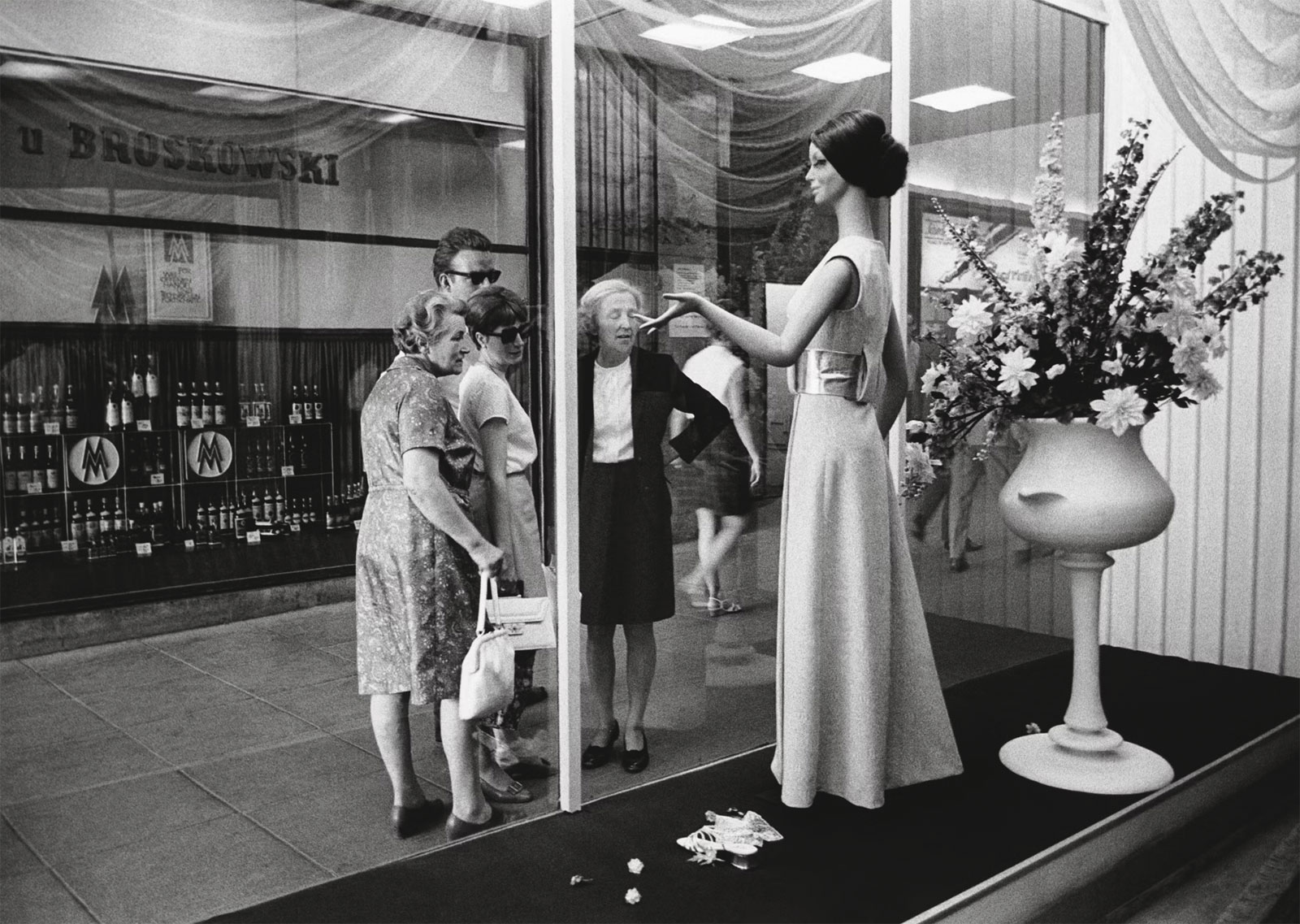
 

Barbara Klemm (German, b. 1939) 'Leipzig' 1970


Barbara Klemm (German, b. 1939)
Leipzig
1970
Black and white photograph on baryta paper
300 × 400 mm
© Barbara Klemm, Institut für Auslandsbeziehungen e. V.
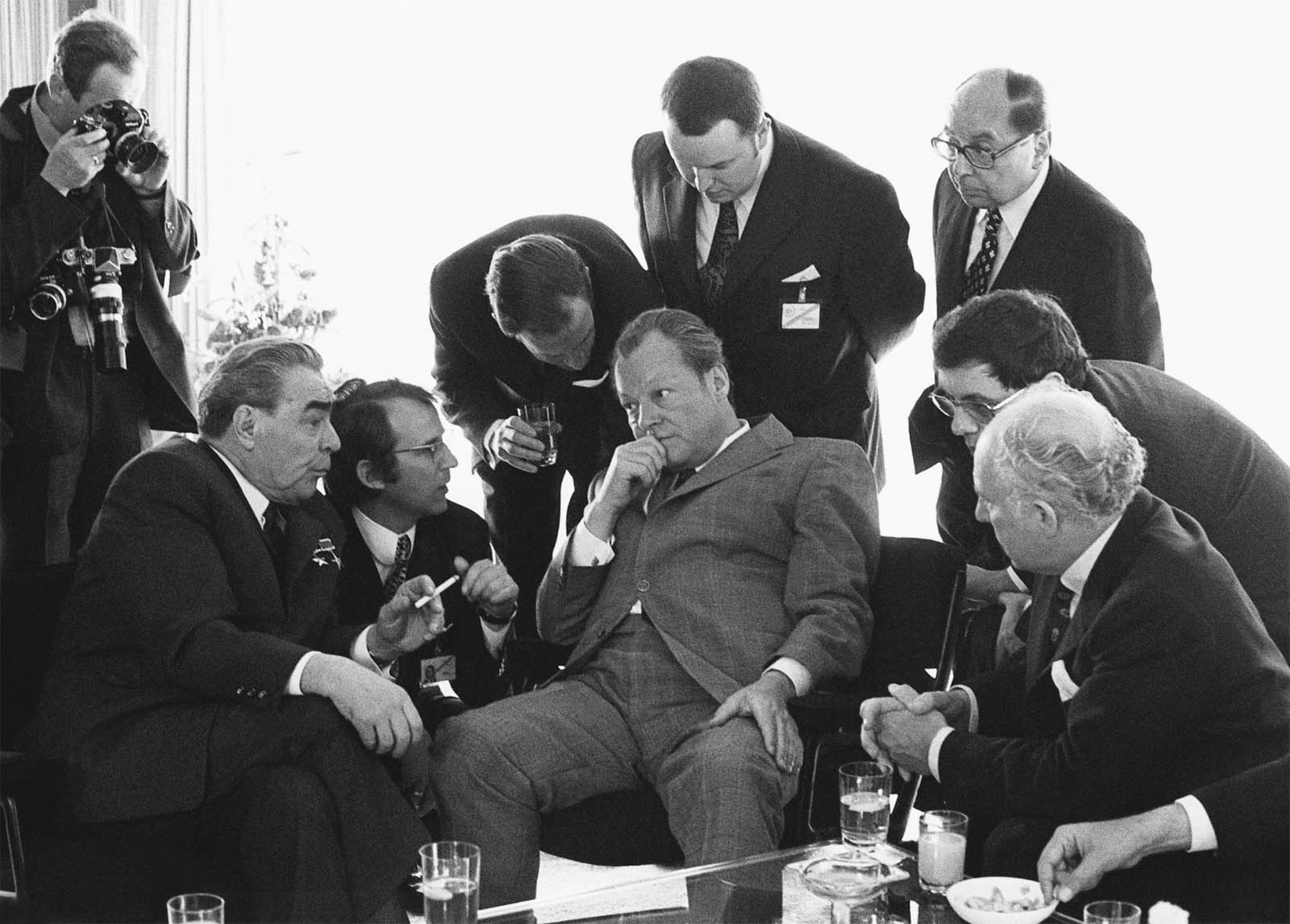
 

Barbara Klemm (German, b. 1939) 'Leonid Brezhnev, Willy Brandt, Bonn' 1973


Barbara Klemm (German, b. 1939)
Leonid Brezhnev, Willy Brandt, Bonn
1973
Gelatin Silver Print
© Barbara Klemm, Institut für Auslandsbeziehungen e. V.


Barbara Klemm (German, b. 1939) 'Psychiatric Clinic, Bethel' 1973


Barbara Klemm (German, b. 1939)
Psychiatric Clinic, Bethel
1973
Gelatin Silver Print
© Barbara Klemm, Institut für Auslandsbeziehungen e. V.


Barbara Klemm (German, b. 1939) 'Rostock' 1974


Barbara Klemm (German, b. 1939)
Rostock
1974
Gelatin Silver Print
© Barbara Klemm, Institut für Auslandsbeziehungen e. V.
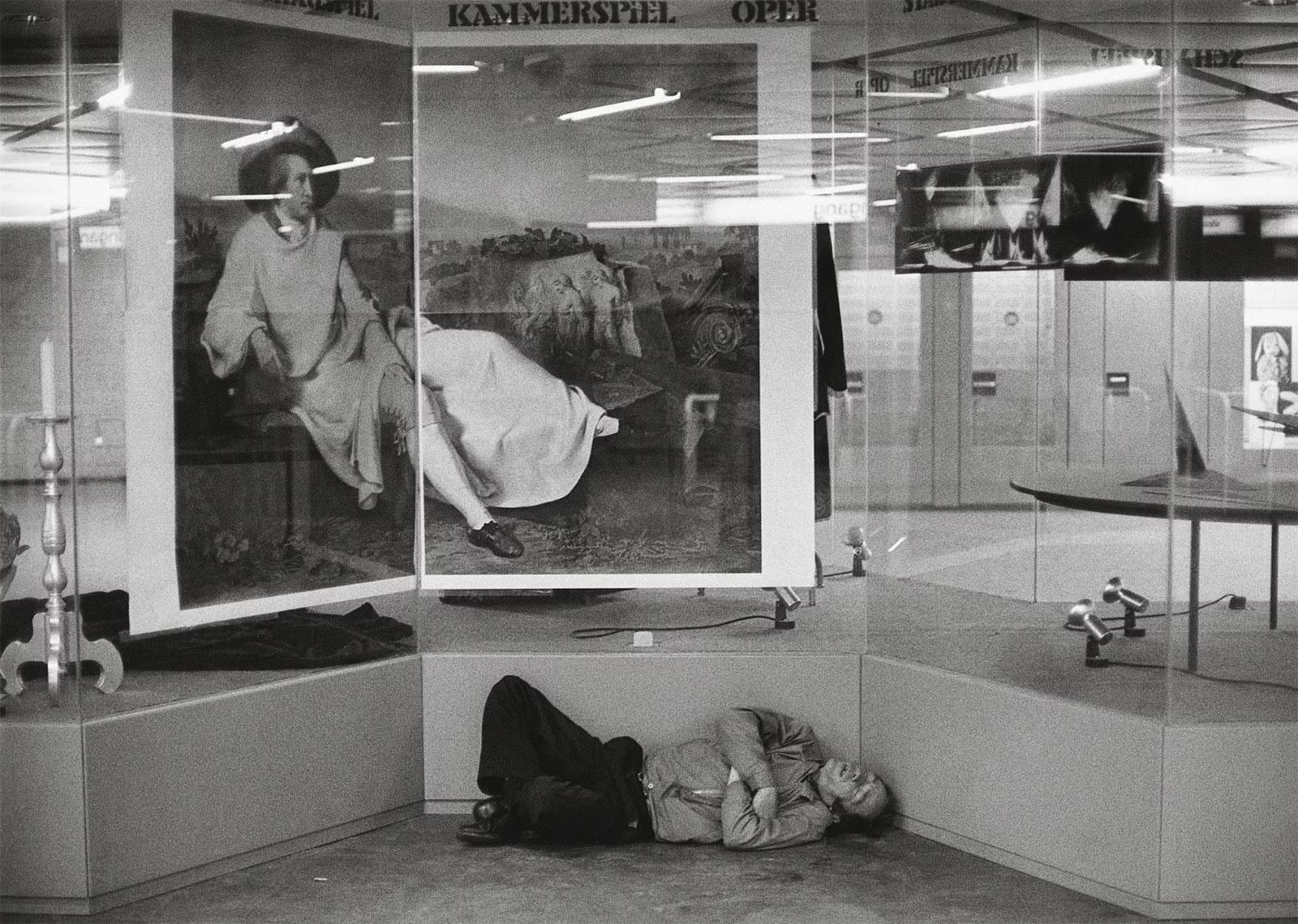
 

Barbara Klemm (German, b. 1939) 'Frankfurt am Main' 1974


Barbara Klemm (German, b. 1939)
Frankfurt am Main
1974
Black and white photograph on baryta paper
300 × 400 mm
© Barbara Klemm, Institut für Auslandsbeziehungen e. V.


Barbara Klemm (German, b. 1939) 'Frauendemonstration gegen § 218' / Women Demonstration against Abortion Laws, Frankfurt am Main 1974


Barbara Klemm (German, b. 1939)
Frauendemonstration gegen § 218 / Women Demonstration against Abortion Laws, Frankfurt am Main
1974
Black and white photograph on baryta paper
400 x 300 mm
© Barbara Klemm, Institut für Auslandsbeziehungen e. V.


Barbara Klemm’s works bear witness to the historical development and present-day reality of a country that was divided for decades. Many of her pictures have become icons of contemporary history, shaping the cultural memory of several generations. It is a body of photographic work that blends documentation and artistic inspiration in a way that is rarely encountered in the German press.

With the exhibition Barbara Klemm: Light and Dark. Photographs from Germany, the ifa – Institut für Auslandsbeziehungen presents photographs by one of Germany’s leading photographers. At GfZK, they will be shown in Germany for the first time in 15 years

Most of the photographs shown in the exhibition were taken for the Frankfurter Allgemeine Zeitung. Starting in 1959, Barbara Klemm began her career at this newspaper working as a laboratory assistant and in plate production. From 1970, she became an editorial photographer focusing primarily on political and feature photography. However, her photographs are far more than coverage photos taken for the moment. They offer an insight into the most significant aspects of social life in both the Federal Republic of Germany and the GDR. A central focus of the exhibition is on photographs taken in East and West Germany before and after reunification. These images portray diverse aspects of social life, including politics, culture, and business. They depict a wide range of social realities – precarious and everyday situations, demonstrations, protests, migrant life, as well as cultural events, mass gatherings and urban space.

With an unerring instinct for the essence of a situation, the photographer captures moments that reveal far more than what is portrayed on the surface. Her photographs, as Barbara Klemm herself describes, reveal the “distillation of an action” – and, in doing so, the distillation of history itself.

 Text from the GfZK website
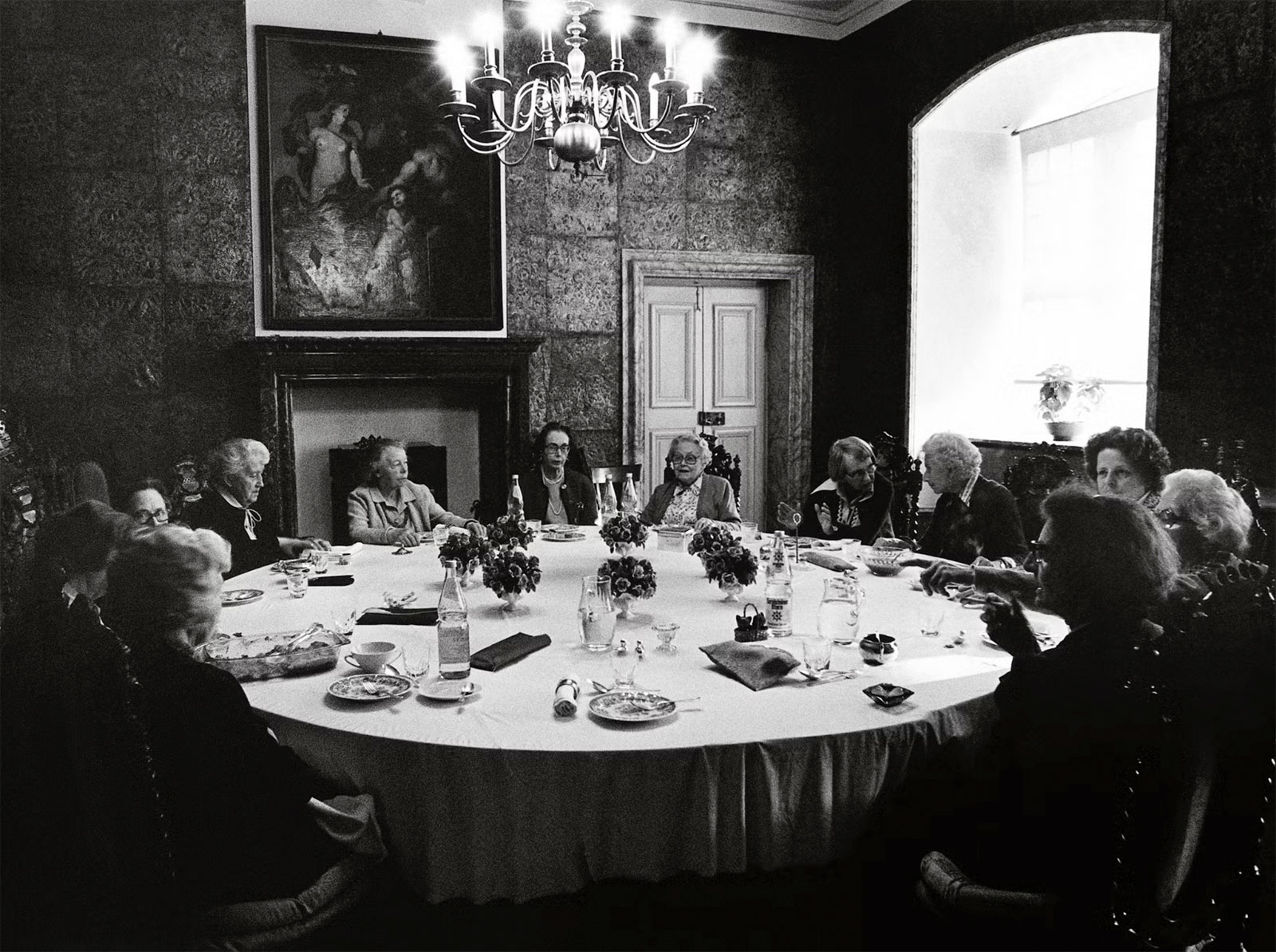
 

Barbara Klemm (German, b. 1939) 'Stift Ehreshoven, Loope' 1977


Barbara Klemm (German, b. 1939)
Stift Ehreshoven, Loope
1977
Black and white photograph on baryta paper
300 × 400 mm
© Barbara Klemm, Institut für Auslandsbeziehungen e. V.
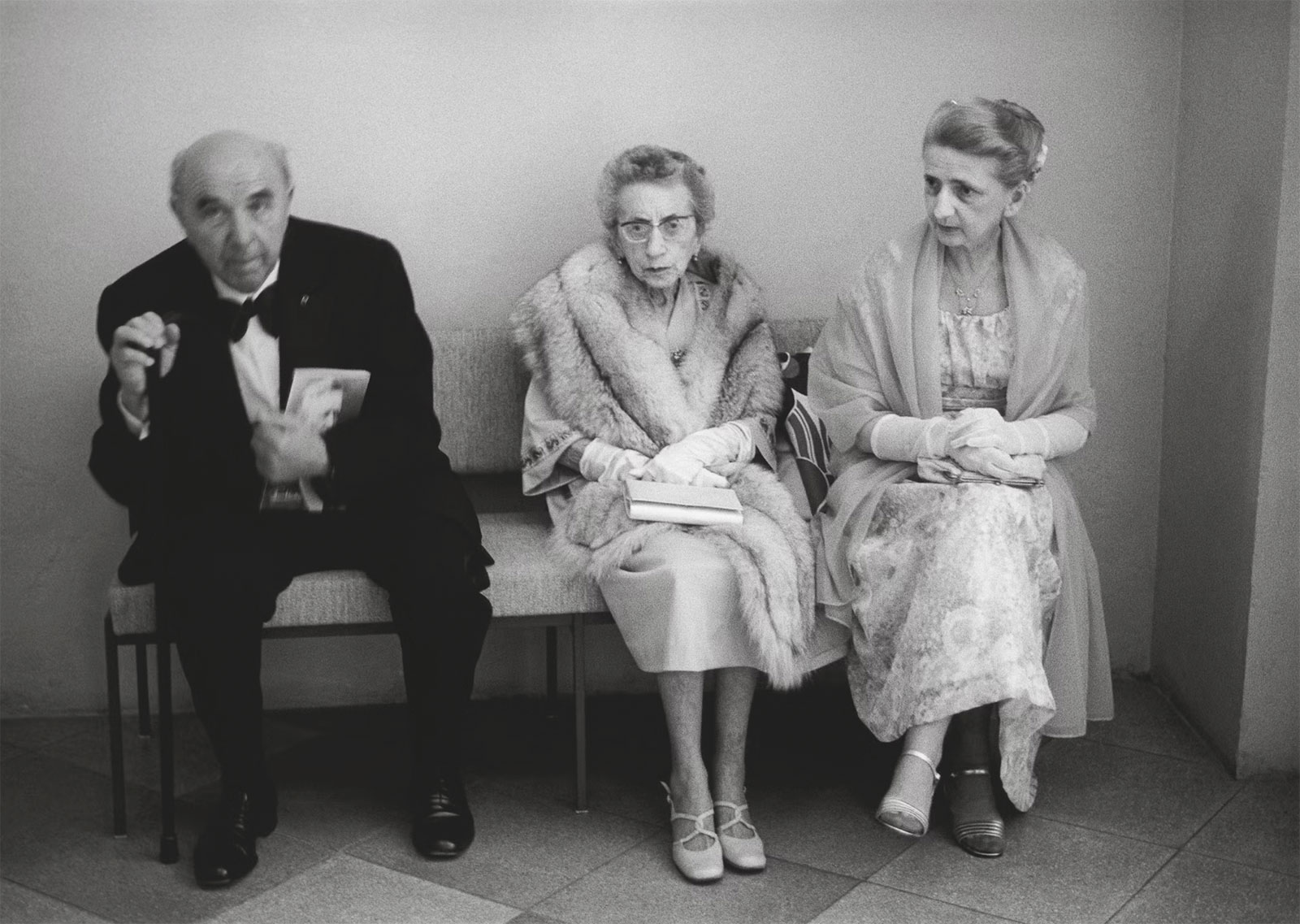
 

Barbara Klemm (German, b. 1939) 'Bayreuth' 1977


Barbara Klemm (German, b. 1939)
Bayreuth
1977
Black and white photograph on baryta paper
300 × 400 mm
© Barbara Klemm, Institut für Auslandsbeziehungen e. V.
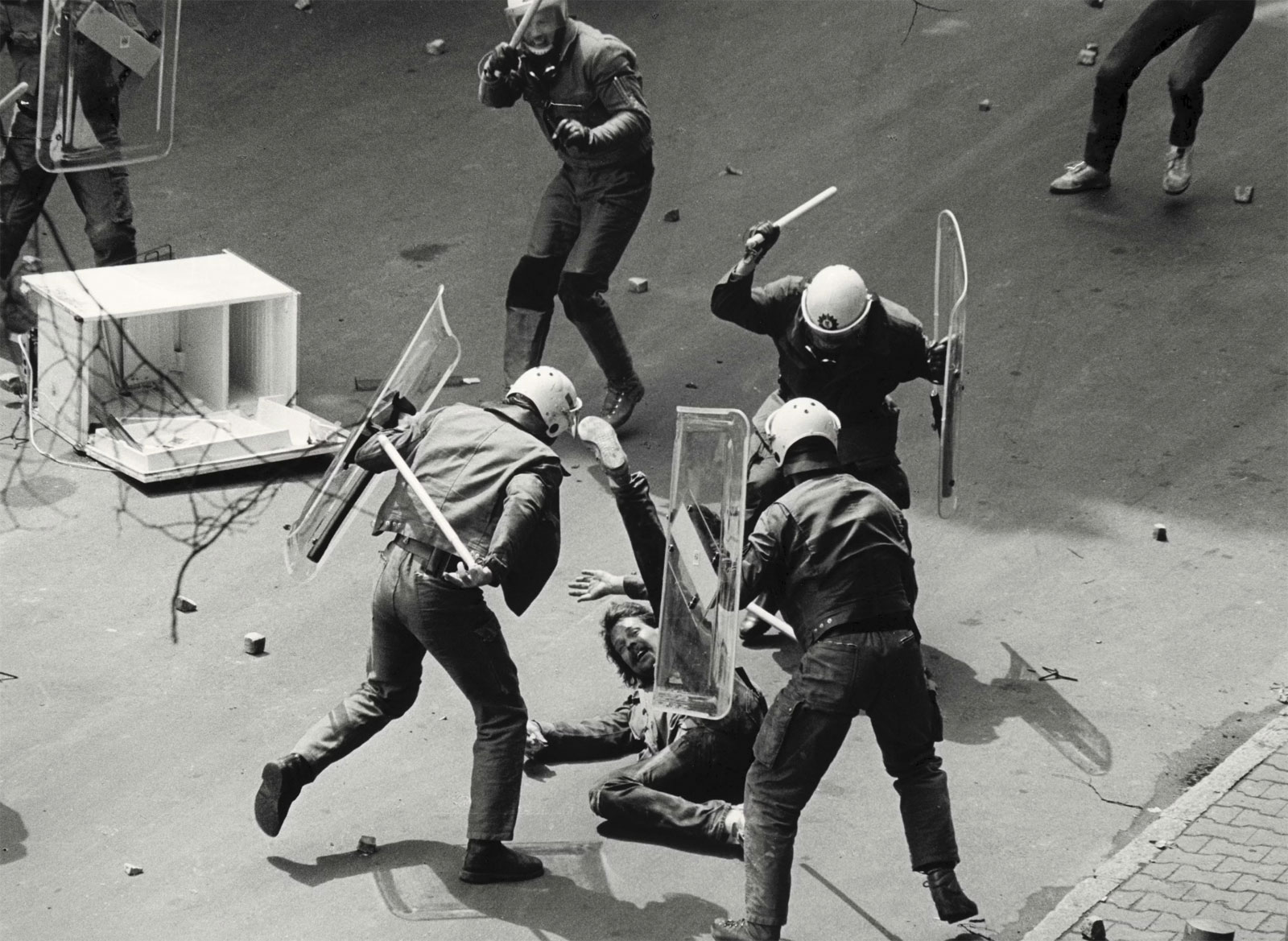
 

Barbara Klemm (German, b. 1939) 'Ronald Reagan Visits, West Berlin' 1982


Barbara Klemm (German, b. 1939)
Ronald Reagan Visits, West Berlin
1982
Black and white photograph on baryta paper
300 × 400 mm
© Barbara Klemm, Institut für Auslandsbeziehungen e. V.
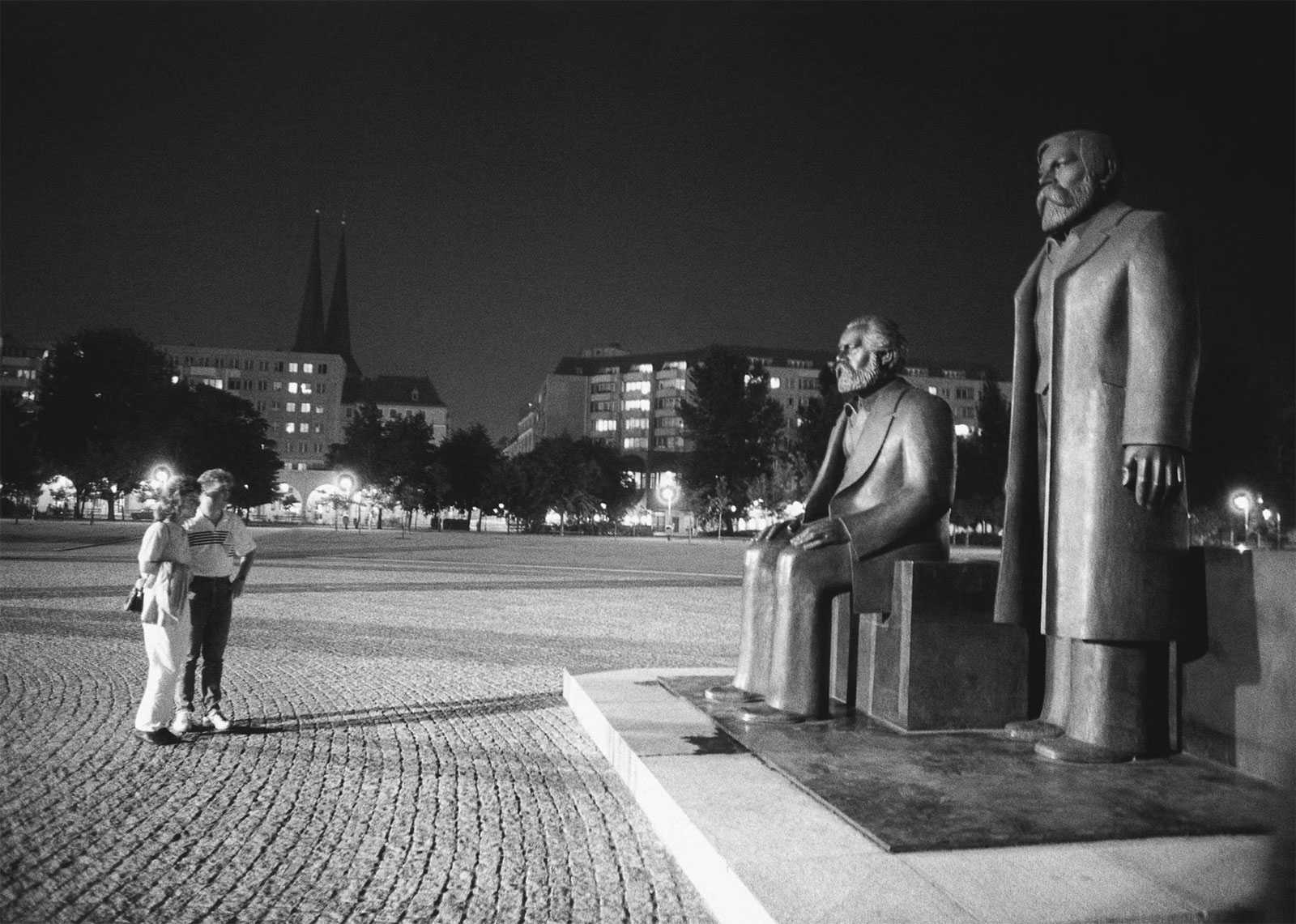
 

Barbara Klemm (German, b. 1939) 'Monument to Marx and Engels, East Berlin' 1987


Barbara Klemm (German, b. 1939)
Monument to Marx and Engels, East Berlin
1987
Black and white photograph on baryta paper
300 × 400 mm
© Barbara Klemm, Institut für Auslandsbeziehungen e. V.


Barbara Klemm (German, b. 1939) 'At the Reichstag, West Berlin' 1987


Barbara Klemm (German, b. 1939)
At the Reichstag, West Berlin
1987
Gelatin Silver Print
© Barbara Klemm, Institut für Auslandsbeziehungen e. V
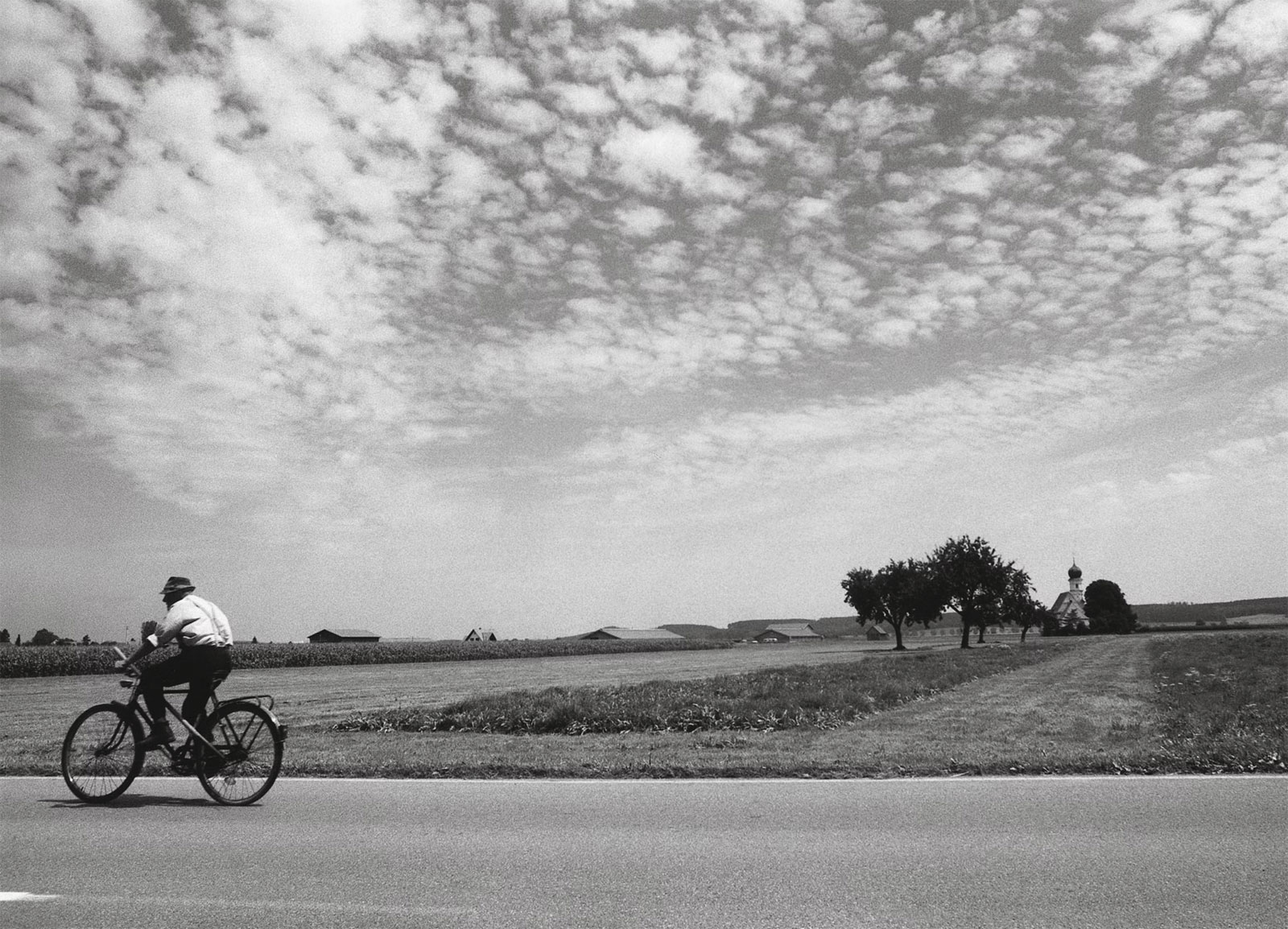
 

Barbara Klemm (German, b. 1939) 'Hawangen' 1988


Barbara Klemm (German, b. 1939)
Hawangen
1988
Black and white photograph on baryta paper
300 × 400 mm
© Barbara Klemm, Institut für Auslandsbeziehungen e. V.
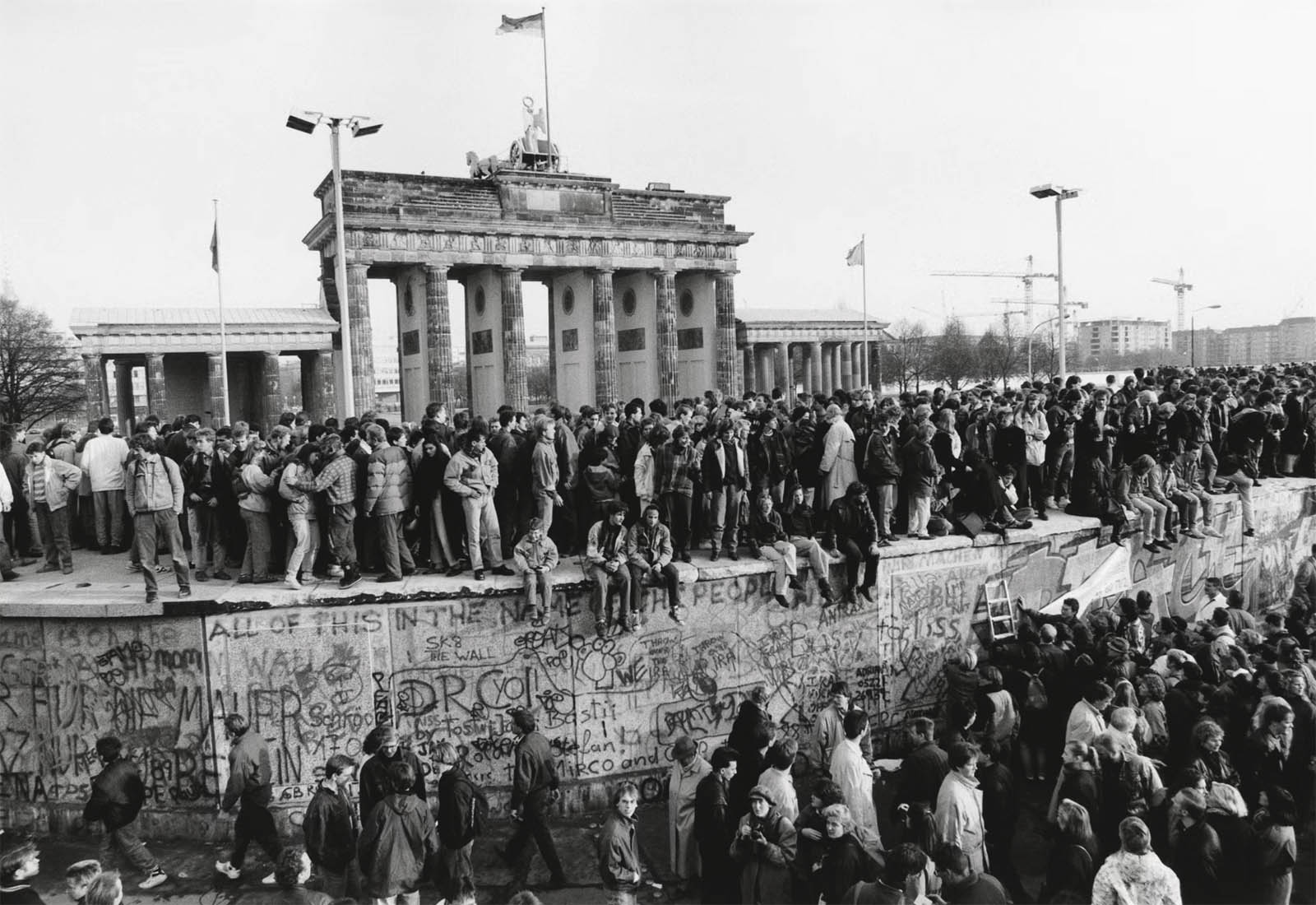
 

Barbara Klemm (German, b. 1939) 'The Fall of the Wall, Berlin, 10 November 1989' 1989


Barbara Klemm (German, b. 1939)
The Fall of the Wall, Berlin, 10 November 1989
1989
Gelatin Silver Print
© Barbara Klemm, Institut für Auslandsbeziehungen e. V


Photography as documentation and artistic inspiration

Many of Klemm’s photographs have become “icons of contemporary history” and have shaped the cultural memory of several generations. It is a photographic work that combines documentation and artistic inspiration in a way rarely found in the German press. Barbara Klemm adds her own perspective to the supposedly objective documentary and follows the design rules of art in her image compositions.

Although these photographs were mostly commissioned by the Frankfurter Allgemeine Zeitung – for which Barbara Klemm worked from 1959 as a laboratory assistant and in cliché production, and from 1970 as an editorial photographer specialising in politics and the arts section – they are far more than reportage images made for the day.

Social insights from East and West Germany before and after reunification

The images show the most important areas of social life in the Federal Republic of Germany and the GDR. A clear focus of the exhibition is on photographs taken in East and West Germany before and after reunification. There are pictures from all areas of social life – from politics, culture and the economy – of precarious and everyday situations of social reality, of demonstrations, protests and the lives of immigrants as well as of cultural events, mass events and urban spaces.

About the exhibition

Many of her pictures have become “icons of contemporary history”, shaping the cultural memory of several generations. She has created a body of photographs which combine the documentary and the artistic in a manner seldom encountered in German press photography. She adds her own perspective to the documentary genre, following artistic principles of composition. Although the majority of these photos were commissioned for the daily newspaper Frankfurter Allgemeine Zeitung they represent far more than coverage of the day’s events. Barbara Klemm first joined the newspaper in 1959, working in the photo lab and producing photographic plates, before becoming a photographer on the editorial board for art, culture and politics in 1970. Her commissioned work for the newspaper took her to many of the most important events and places in the Federal Republic of Germany, the German Democratic Republic and in numerous other countries. Photos of East and West Germany before and after unification are clearly the focus of this exhibition. It includes pictures from every sphere of society: from politics, culture and the economy, photos that capture unique and often tense moments as well as plain everyday life, photos of demonstrations, protests, and of immigrants, of cultural events, mass gatherings, and urban spaces. And again and again, Barbara Klemm portrays people in those rare moments of being that make life so special.

Barbara Klemm’s photographs stand for concrete social reality. Her sure sense of the true essence of an event allows her to capture moments that tell stories far beyond what the pictures seem to show at first glance. These photos are “action in condensed form”, as Klemm puts it, and thus also a condensed image of history. Her photos of the fall of the Berlin Wall are a dramatic climax to her own narrative of history, and in retrospect, her earlier photos from both sides of the Wall seem to be tracing the two Germanies on their path towards reunification, while her later photos closely observe the consequences of the new order.

Text from ifa – Institut für Auslandsbeziehungen website


Barbara Klemm (German, b. 1939) 'Braunkohleabbau bei Leipzig' / Lignite Mining near Leipzig 1990


Barbara Klemm (German, b. 1939)
Braunkohleabbau bei Leipzig / Lignite Mining near Leipzig
1990
Black and white photograph on baryta paper
300 × 400 mm
© Barbara Klemm, Institut für Auslandsbeziehungen e. V.
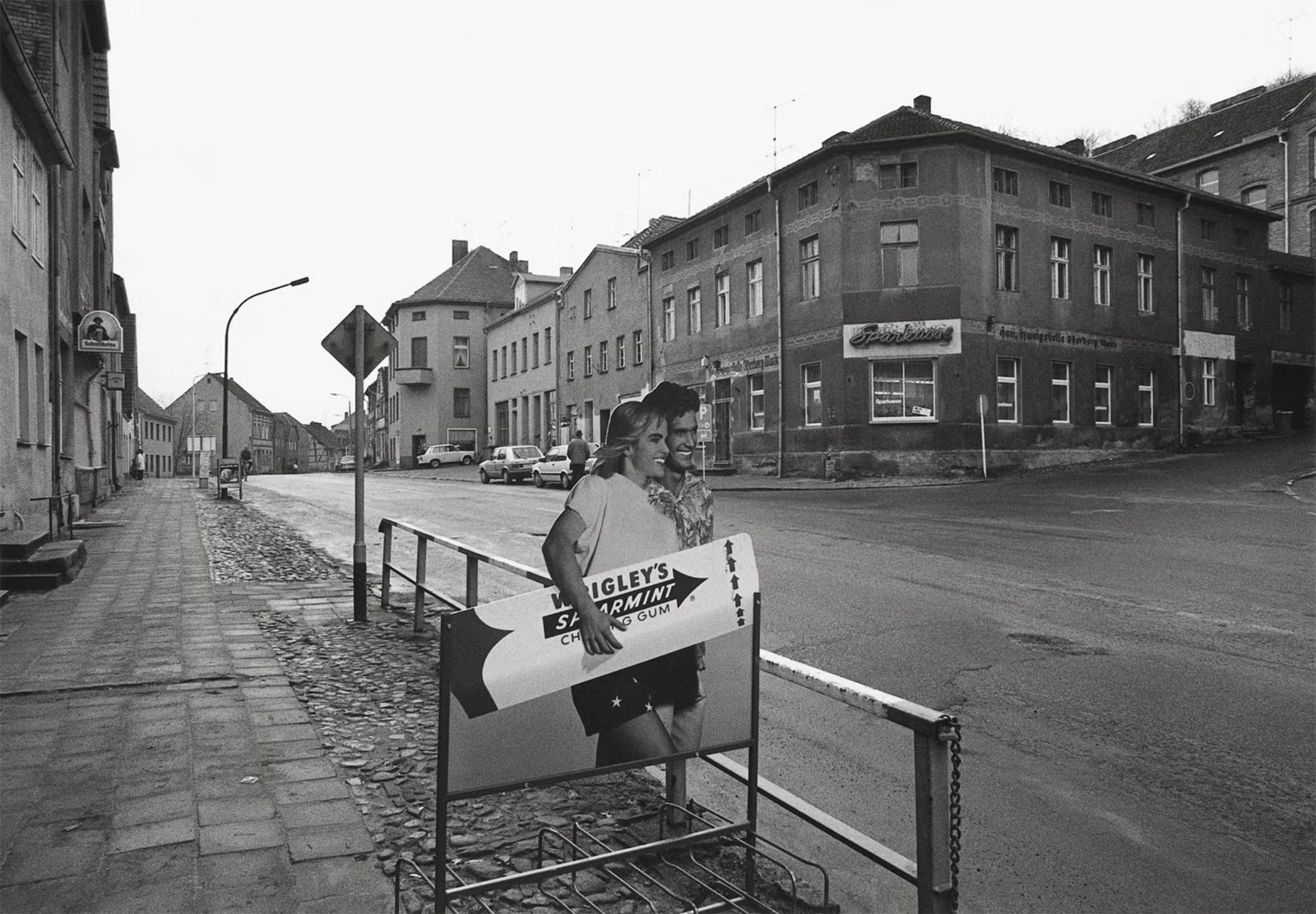
 

Barbara Klemm (German, b. 1939) 'Oderberg, Oderbruch' 1990


Barbara Klemm (German, b. 1939)
Oderberg, Oderbruch
1990
Black and white photograph on baryta paper
300 × 400 mm
© Barbara Klemm, Institut für Auslandsbeziehungen e. V.


Barbara Klemm (German, b. 1939) 'Remnants of the Wall near Lübars, Berlin' 1990


Barbara Klemm (German, b. 1939)
Remnants of the Wall near Lübars, Berlin
1990
Black and white photograph on baryta paper
300 × 400 mm
© Barbara Klemm, Institut für Auslandsbeziehungen e. V.
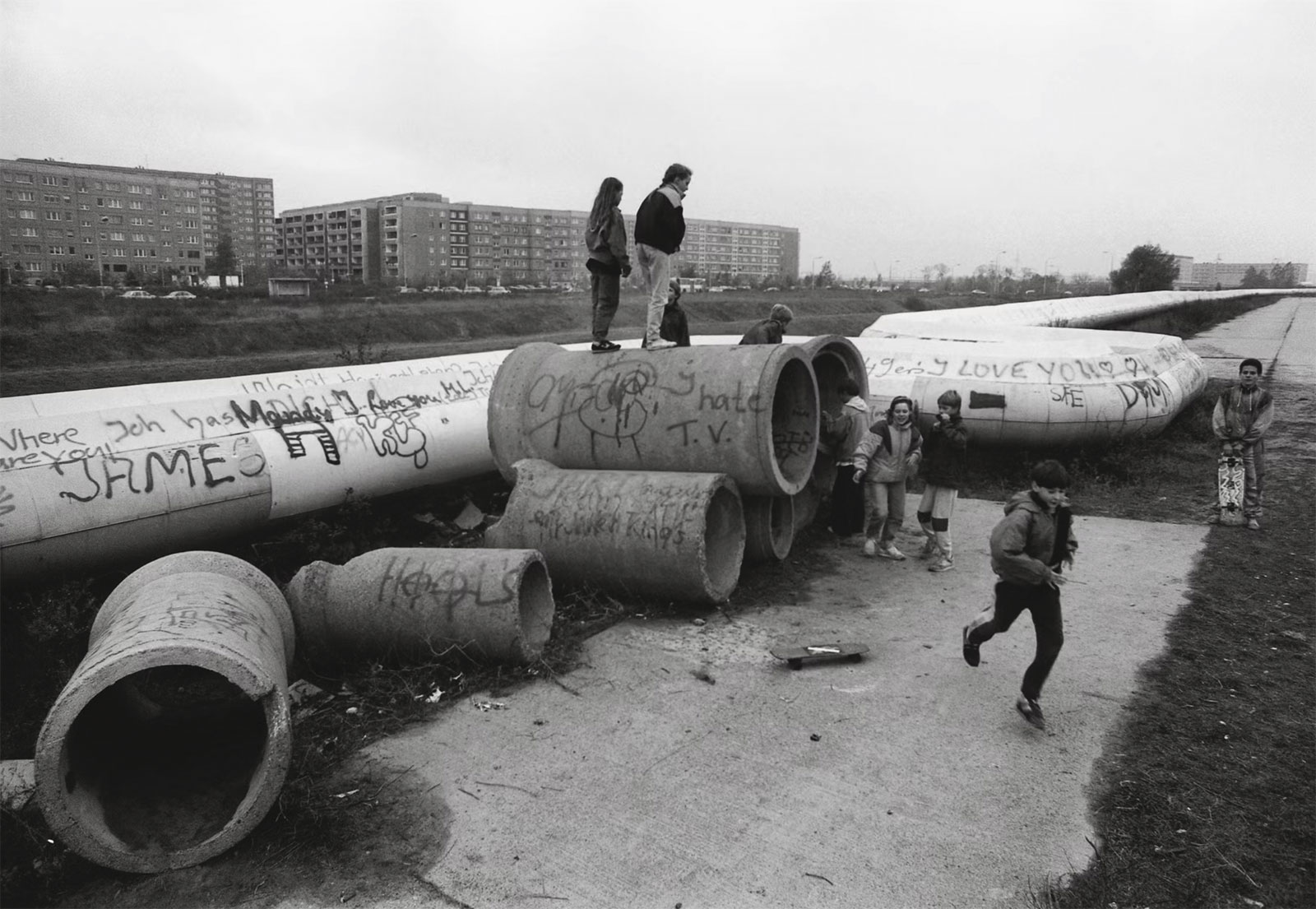
 

Barbara Klemm (German, b. 1939) 'Berlin-Marzahn' 1991


Barbara Klemm (German, b. 1939)
Berlin-Marzahn
1991
Black and white photograph on baryta paper
300 × 400 mm
© Barbara Klemm, Institut für Auslandsbeziehungen e. V.


Barbara Klemm (German, b. 1939) 'Frankfurt am Main' 1993


Barbara Klemm (German, b. 1939)
Frankfurt am Main
1993
Black and white photograph on baryta paper
300 × 400 mm
© Barbara Klemm, Institut für Auslandsbeziehungen e. V.
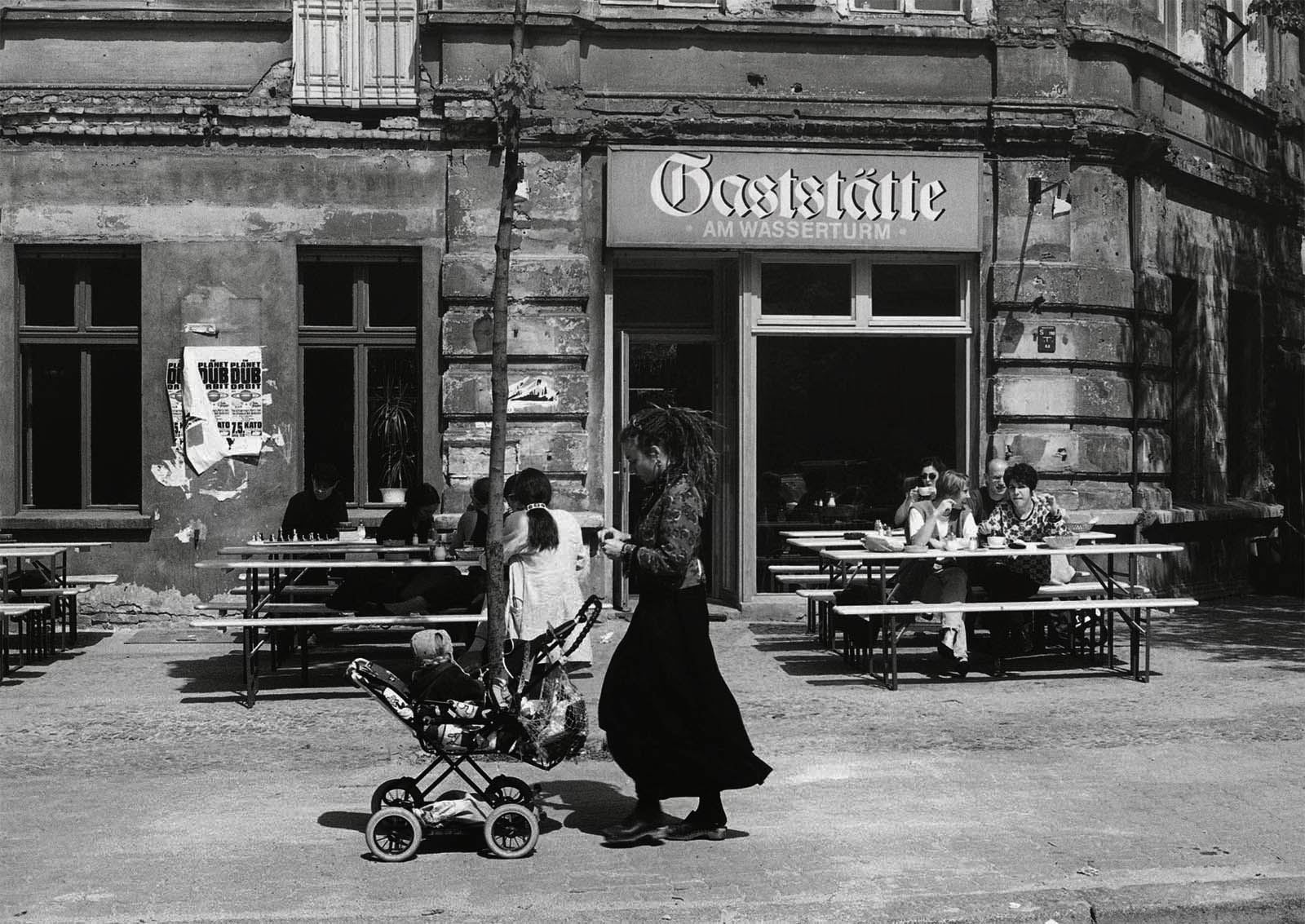
 

Barbara Klemm (German, b. 1939) 'Prenzlauer Berg, Berlin' 1994


Barbara Klemm (German, b. 1939)
Prenzlauer Berg, Berlin
1994
Black and white photograph on baryta paper
300 × 400 mm
© Barbara Klemm, Institut für Auslandsbeziehungen e. V.
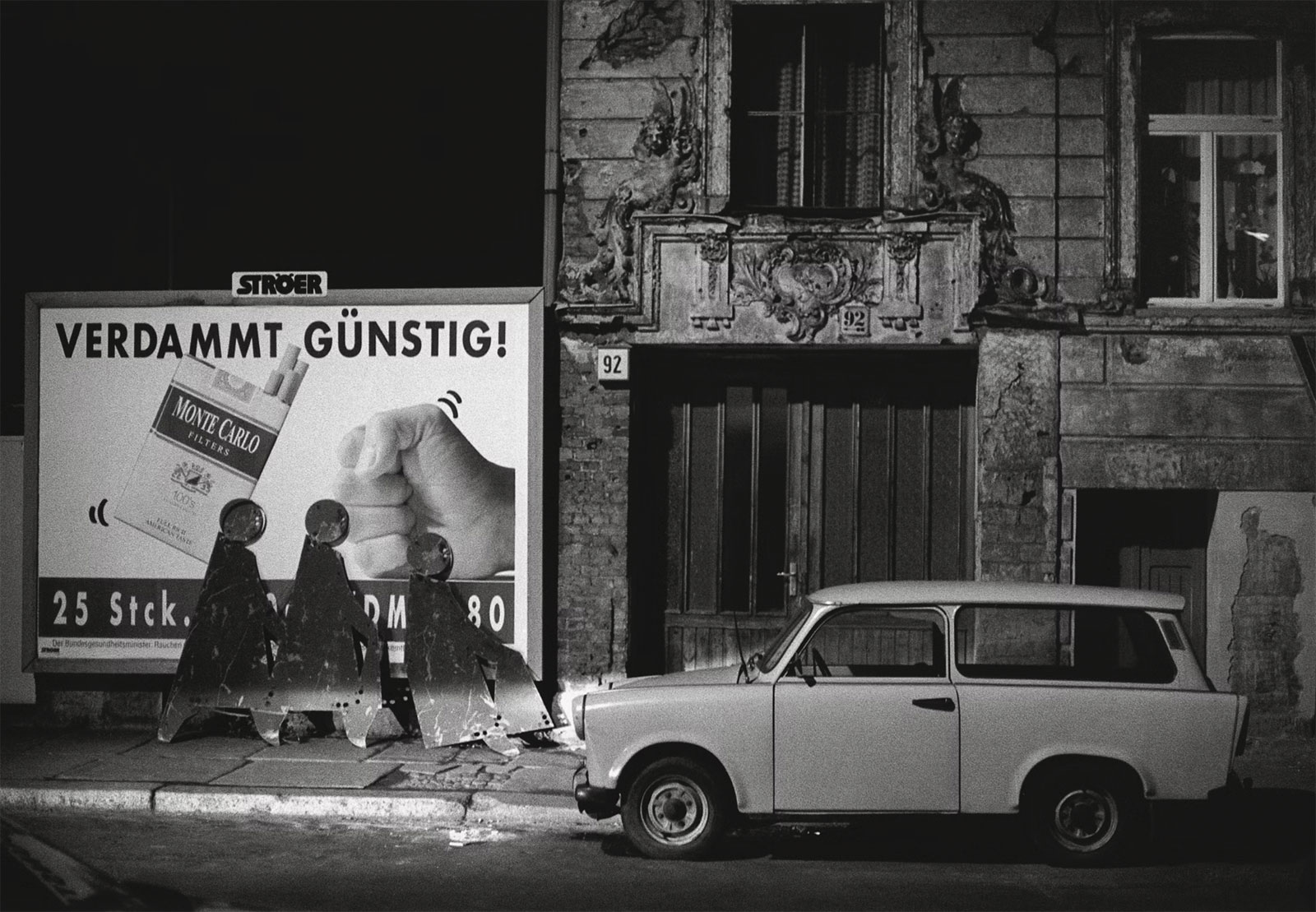
 

Barbara Klemm (German, b. 1939) 'Oranienburger Straße, Berlin' 1994


Barbara Klemm (German, b. 1939)
Oranienburger Straße, Berlin
1994
Black and white photograph on baryta paper
300 × 400 mm
© Barbara Klemm, Institut für Auslandsbeziehungen e. V.
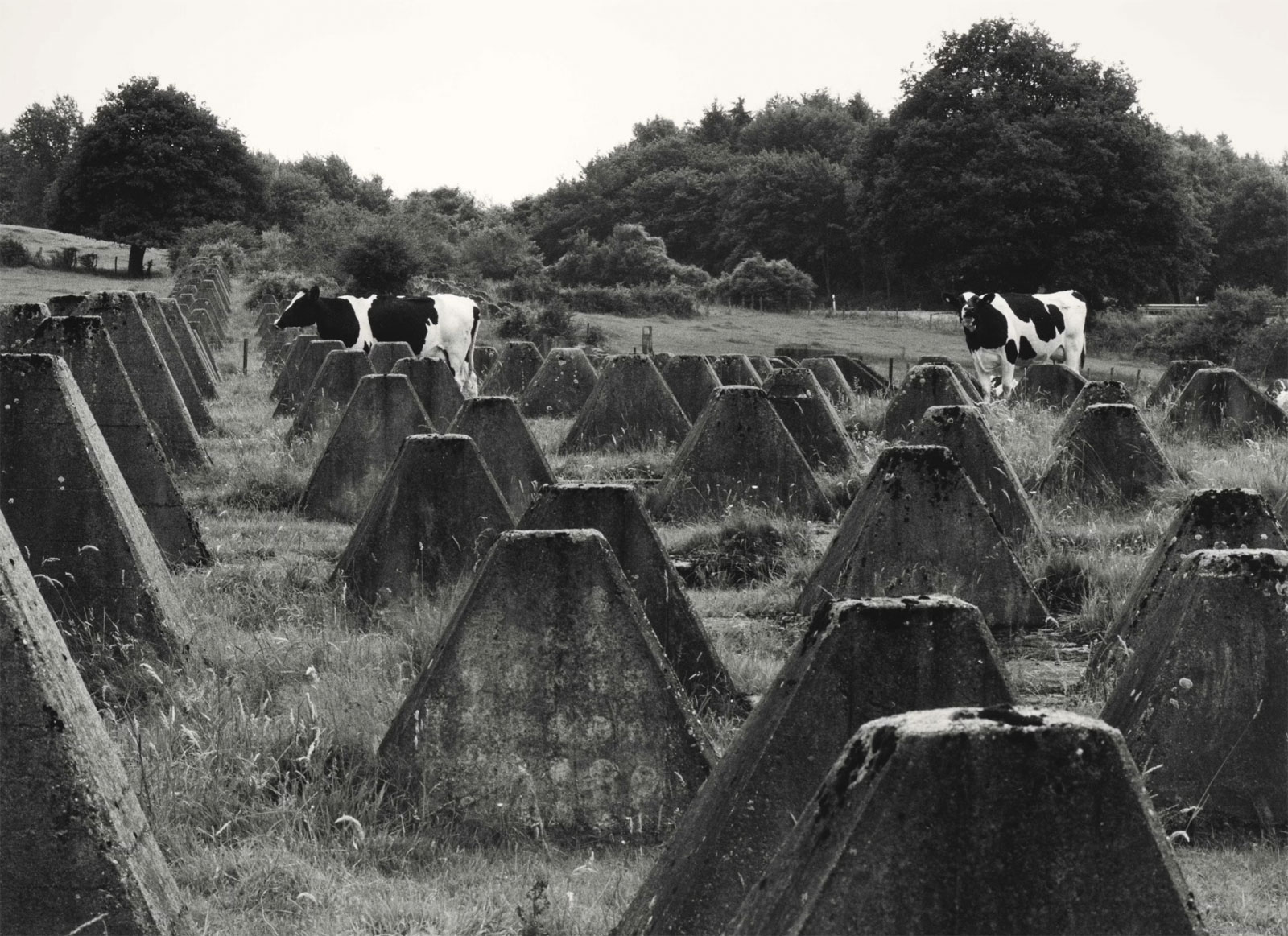
 

Barbara Klemm (German, b. 1939) 'West Wall, near Aachen' 1998


Barbara Klemm (German, b. 1939)
West Wall, near Aachen
1998
Black and white photograph on baryta paper
300 × 400 mm
© Barbara Klemm, Institut für Auslandsbeziehungen e. V.
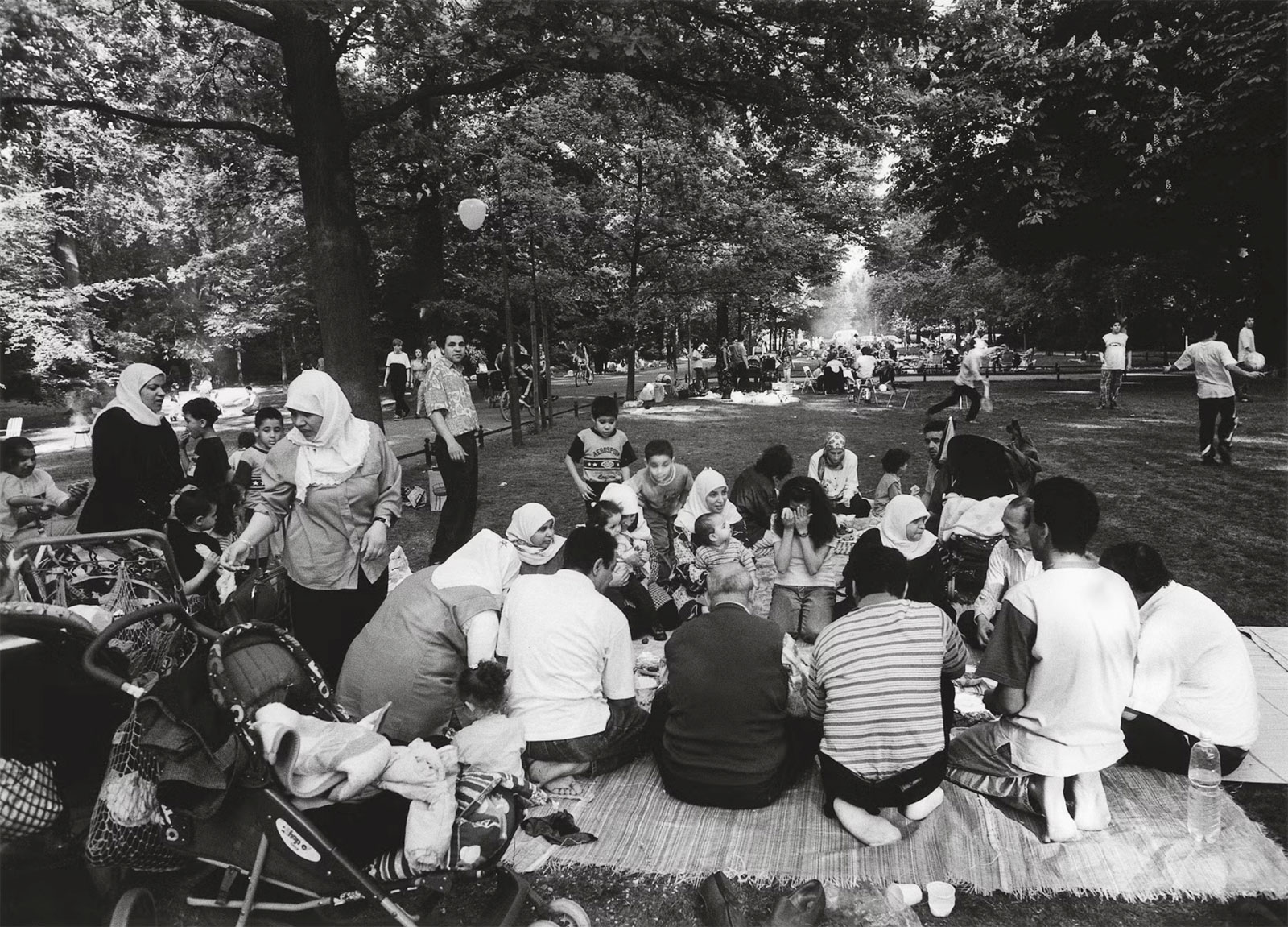
 

Barbara Klemm (German, b. 1939) 'Berlin' 1998


Barbara Klemm (German, b. 1939)939)
Berlin
1998
Black and white photograph on baryta paper
300 × 400 mm
© Barbara Klemm, Institut für Auslandsbeziehungen e. V.


GfZK-Villa
Karl-Tauchnitz-Str. 11
04107 Leipzig

Opening hours:
Tue - Fri: 2pm – 7pm
Sat - Sun: 12am – 6pm

GfZK-Villa website

Arc One Gallery website

LIKE ART BLART ON FACEBOOK

Exhibition: ‘Helga Paris, Photographer’ at the Akademie der Künste, Berlin

Exhibition dates: 8th November, 2019 – 12th January, 2020

Curator: Inka Schube


Helga Paris (German born Poland, b. 1938) 'Prerow' 1960s from the exhibition 'Helga Paris, Photographer' at the Akademie der Künste, Berlin, Nov 2019 - Jan 2020


Helga Paris (German born Poland, b. 1938)
Prerow
1960s
Gelatin silver print
Photo: © Helga Paris
Source: ifa (Institut für Auslandsbeziehungen)


A couple of years ago I was in Paris, searching for French peasant work clothes of the 1950s in the trendy secondhand shops of the Marais. It took me forever but I eventually found one blue shirt that fitted me… only one. Battered, patched up, but still present after all these years – hard wearing, practical, and tough. But also soft and pliable like a second skin, with its own look and feel, its own distinctive aesthetic. I knew what I wanted, I found it… or it found me. A treasure.

The same could be said of the photographs of Helga Paris. Her photographs picture the tough, hard existence of life in postwar East Germany but there is a fond affection for subject matter in the cameras engagement. Paris approaches her subjects, whether city or people, with directness but it is also a dialogue between the artist and her subjects which “give the viewer an insight into a moment of the everyday lives of an East German resident.”

“Paris opened herself to the worker’s world she found in Prenzlauer Berg, and often took photographs in the immediate surroundings – of friends and neighbours, the area’s old and run-down streets, and the melancholic vitality of the regulars in Berlin’s bars and cafés. The people in her photographs look deeply rooted, as if they had moved to the area with the intention of never going away.”

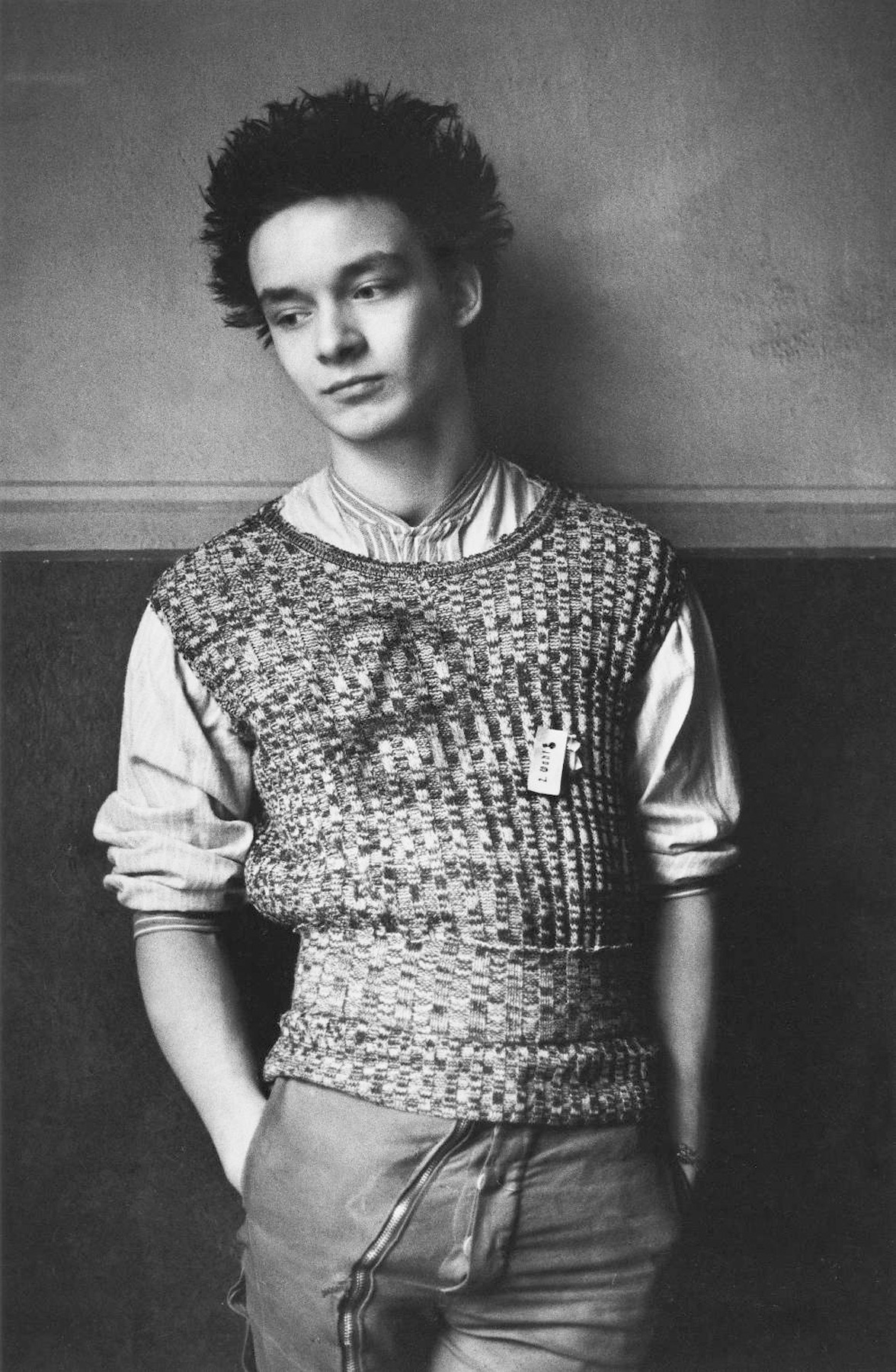
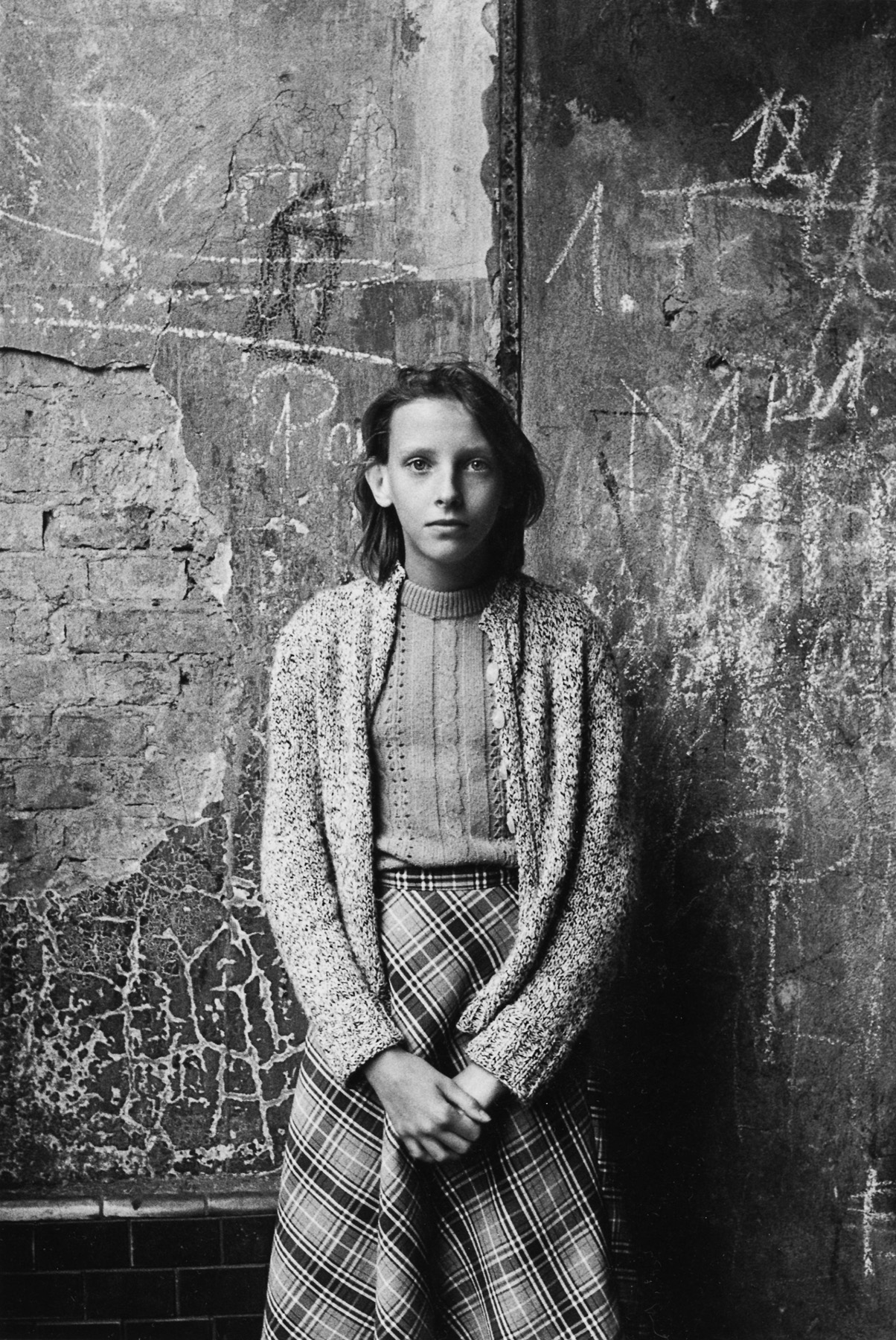
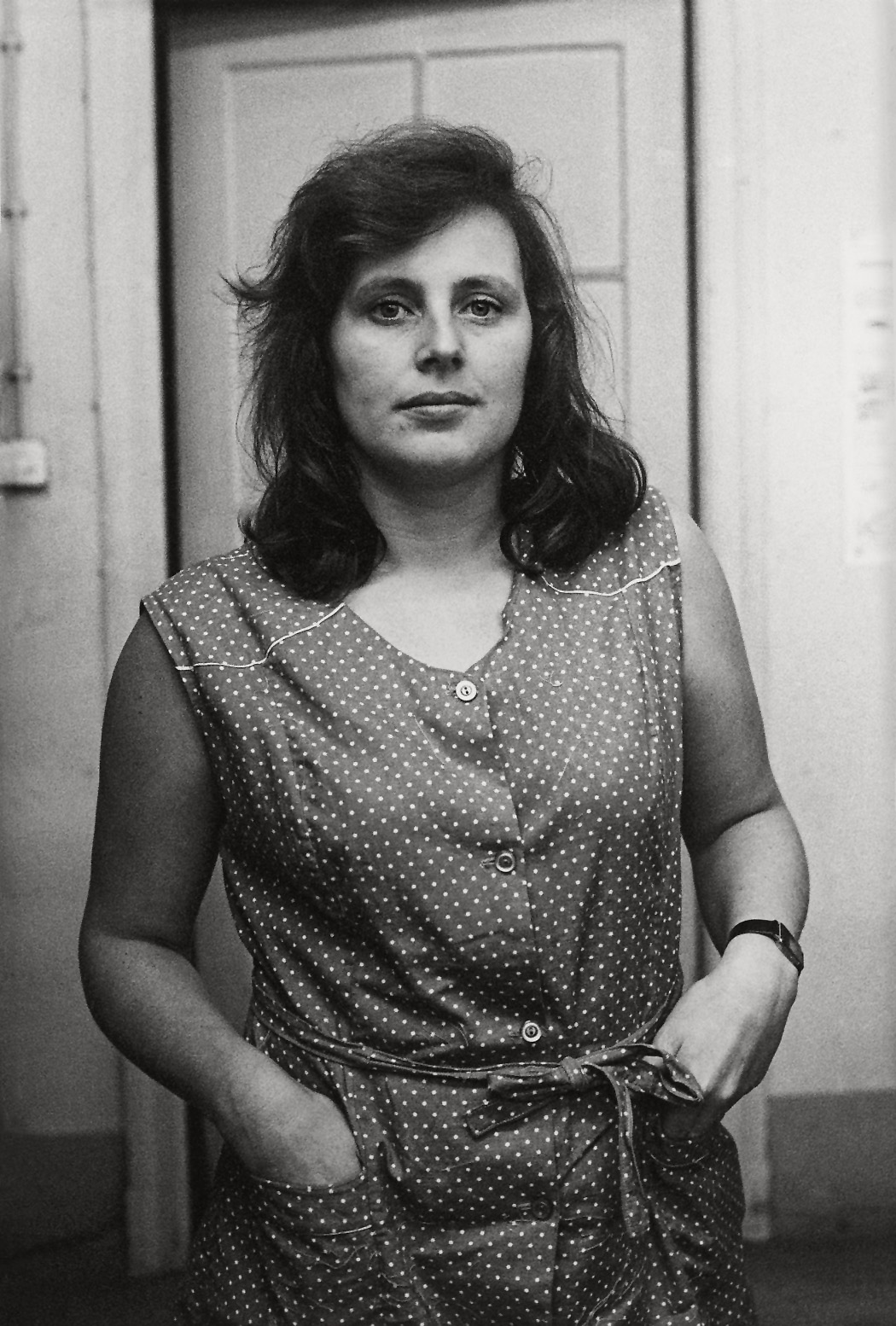
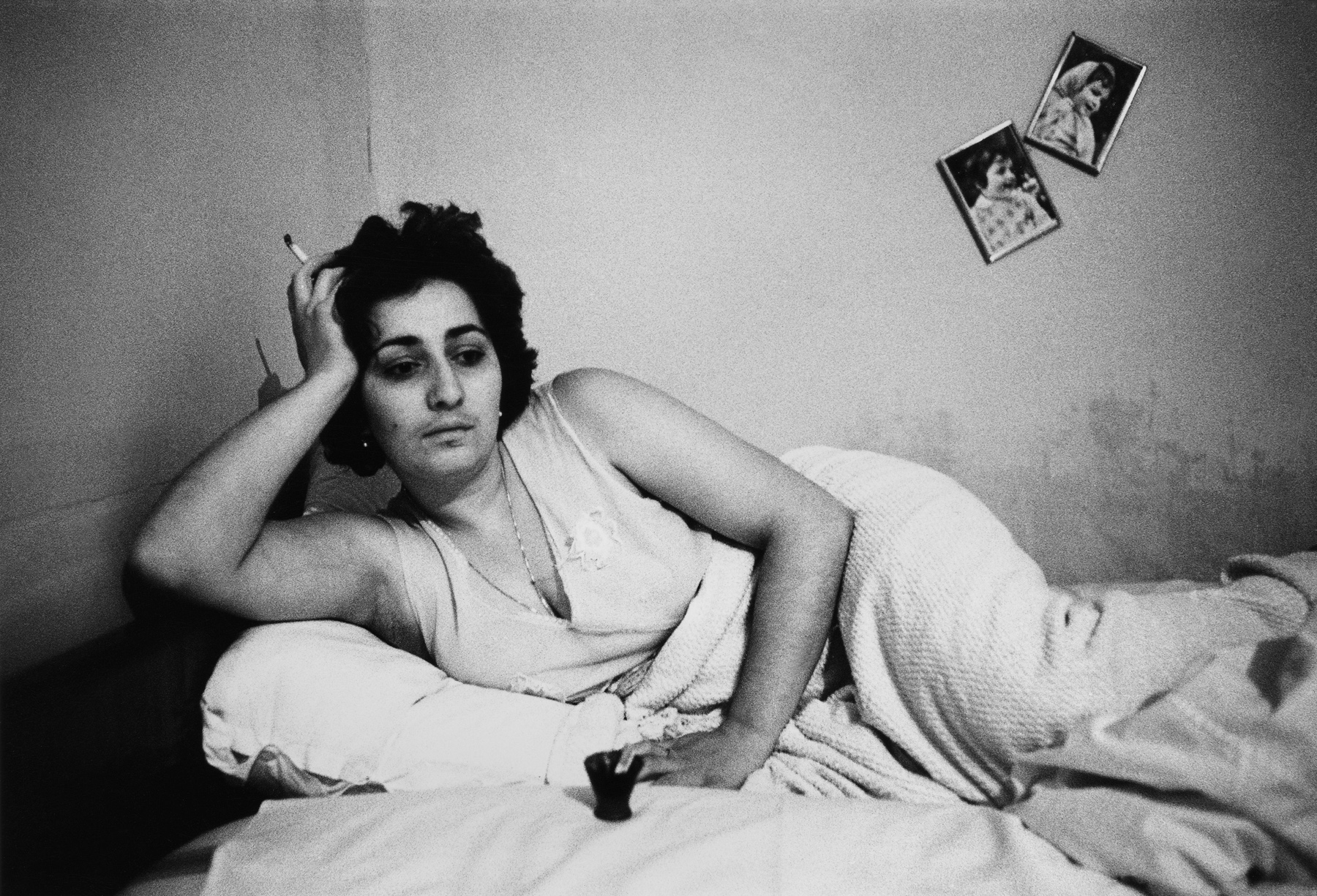
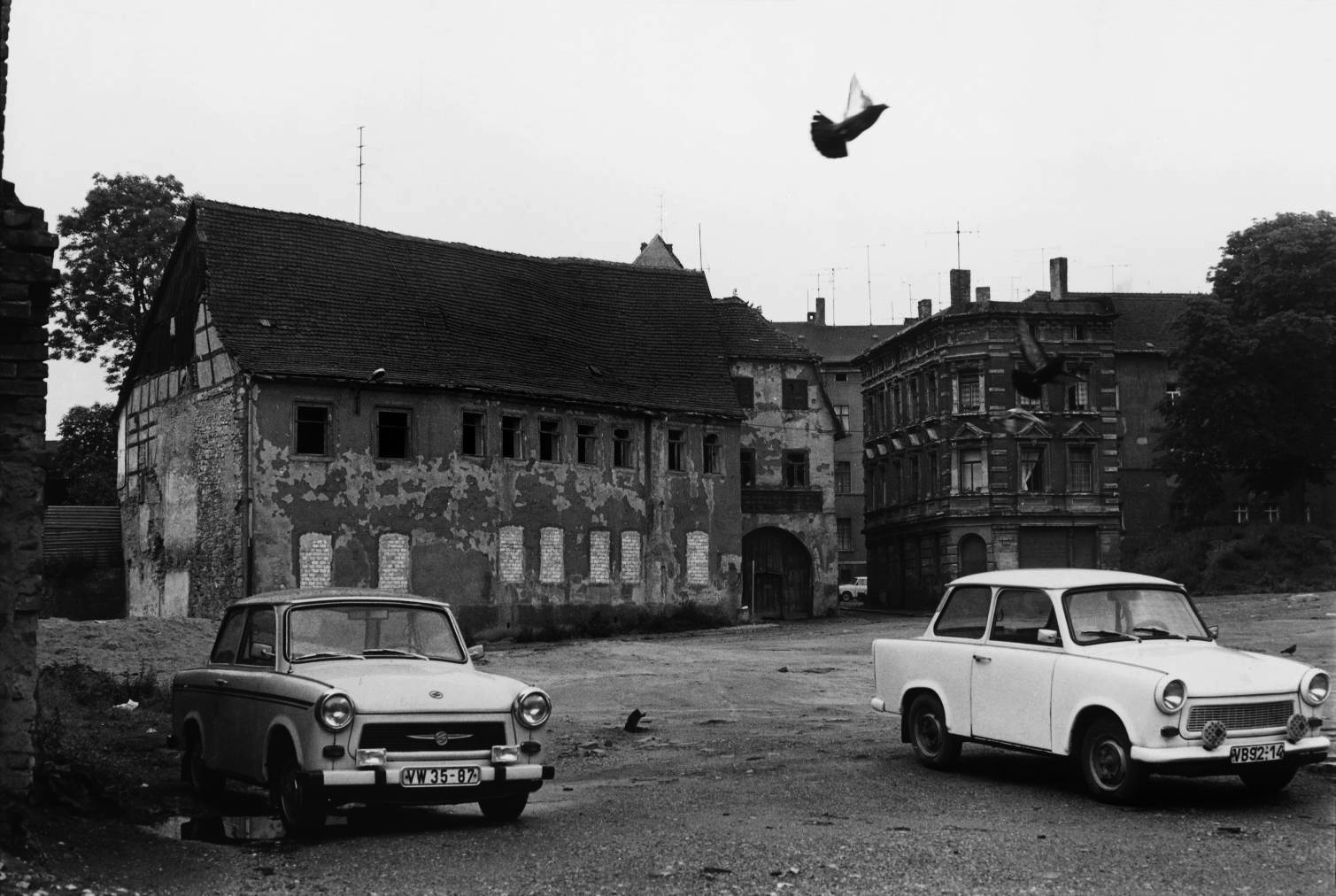
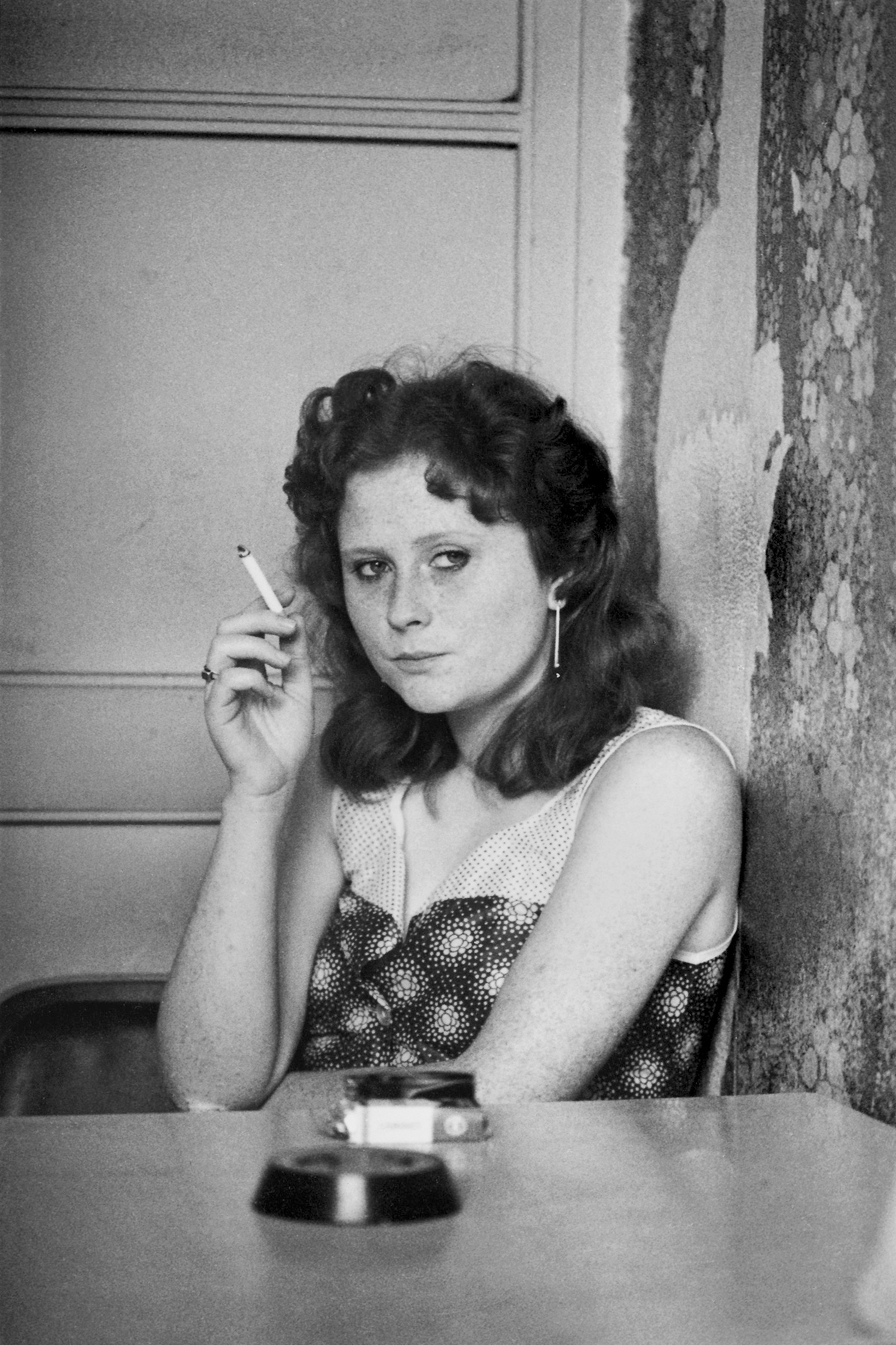
Misty cobbled corners, people in bars, in clubs, at work, on the street. Much as Ara Güler did for Istanbul (in a more romantic way), Paris captures the essence of an ecosystem, the culture and survival that was the living, behind the Iron Curtain. There is melancholy aplenty, the brooding streets with swooping pigeons and ubiquitous Trabant, all dark in their small sulkiness. There are beautiful boys with Anarchy stencilled on their jumper desiring liberated life, and reflective women deep in their own thoughts. Naira! Naira! Smoking a fag, with drunk-eyed pictures of a child on dirty wall, behind. Oh Naira, of what were you thinking! What brought you to this place?

There is sullenness, compassion, bohemians, students and countercultural intellectuals all pictured with her probing mind. If you could say that a subject finds an artist then this is that aphorism in full technicolor. Engaged and engaging, these essential images stand the test of time – as relevant now in an era of neo-liberal fascism as they ever were in the past.

Dr Marcus Bunyan


Many thankx to the Akademie der Künste for allowing me to publish the photographs in the posting. Please click on the photographs for a larger version of the image.


Helga Paris (German born Poland, b. 1938) 'No title' 1974 From the series 'Müllfahrer' (Garbage Drivers) from the exhibition 'Helga Paris, Photographer' at the Akademie der Künste, Berlin, Nov 2019 - Jan 2020


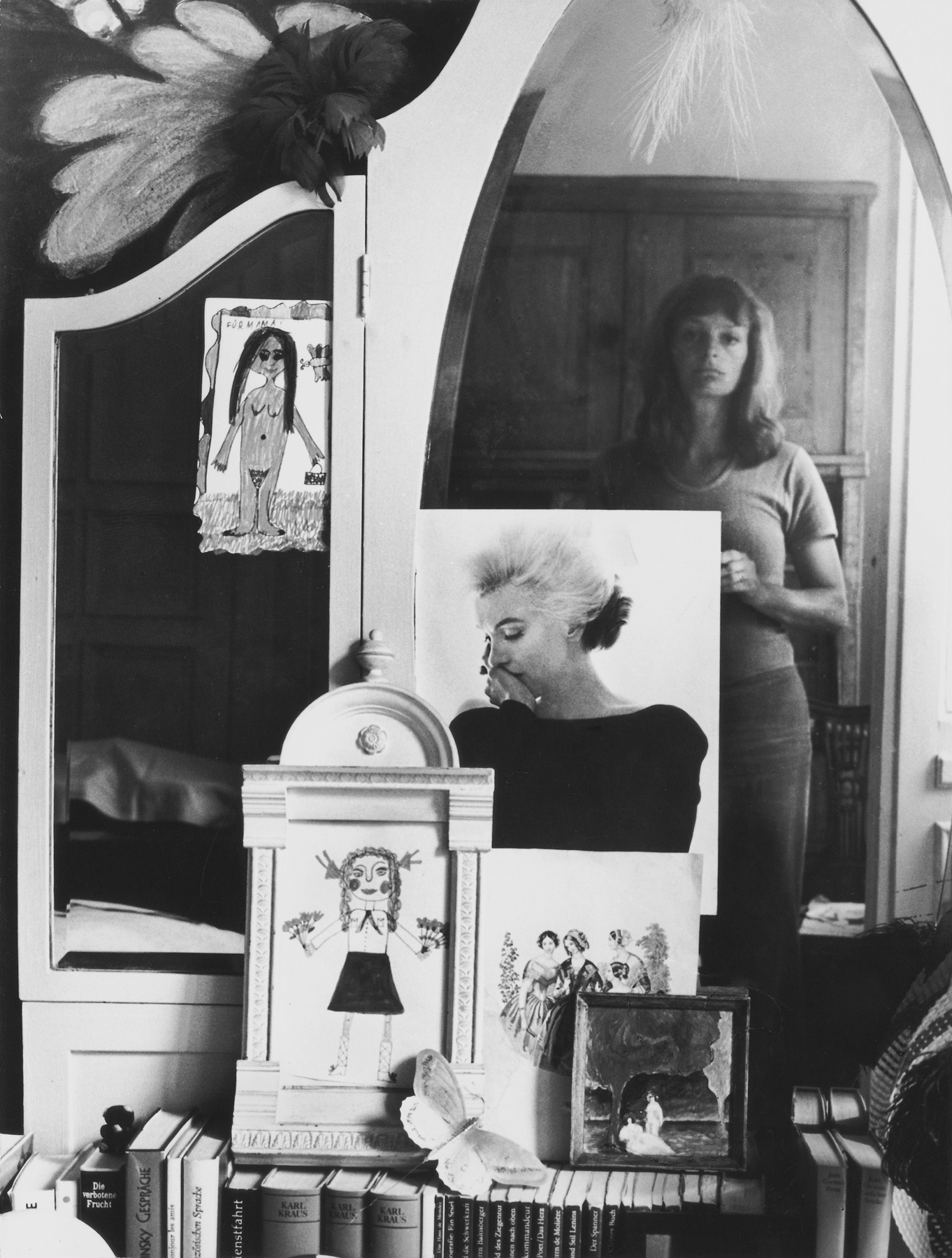
Helga Paris (German born Poland, b. 1938)
No title
1974
From the series Müllfahrer (Garbage Drivers)
Gelatin silver print
Photo: © Helga Paris
Source: ifa (Institut für Auslandsbeziehungen)


Helga Paris (German born Poland, b. 1938) 'Selbst im Spiegel' (Self-Portrait in the Mirror) 1971 from the exhibition 'Helga Paris, Photographer' at the Akademie der Künste, Berlin, Nov 2019 - Jan 2020


Helga Paris (German born Poland, b. 1938)
Selbst im Spiegel (Self-Portrait in the Mirror)
1971
Gelatin silver print
Photo: © Helga Paris
Source: ifa (Institut für Auslandsbeziehungen)


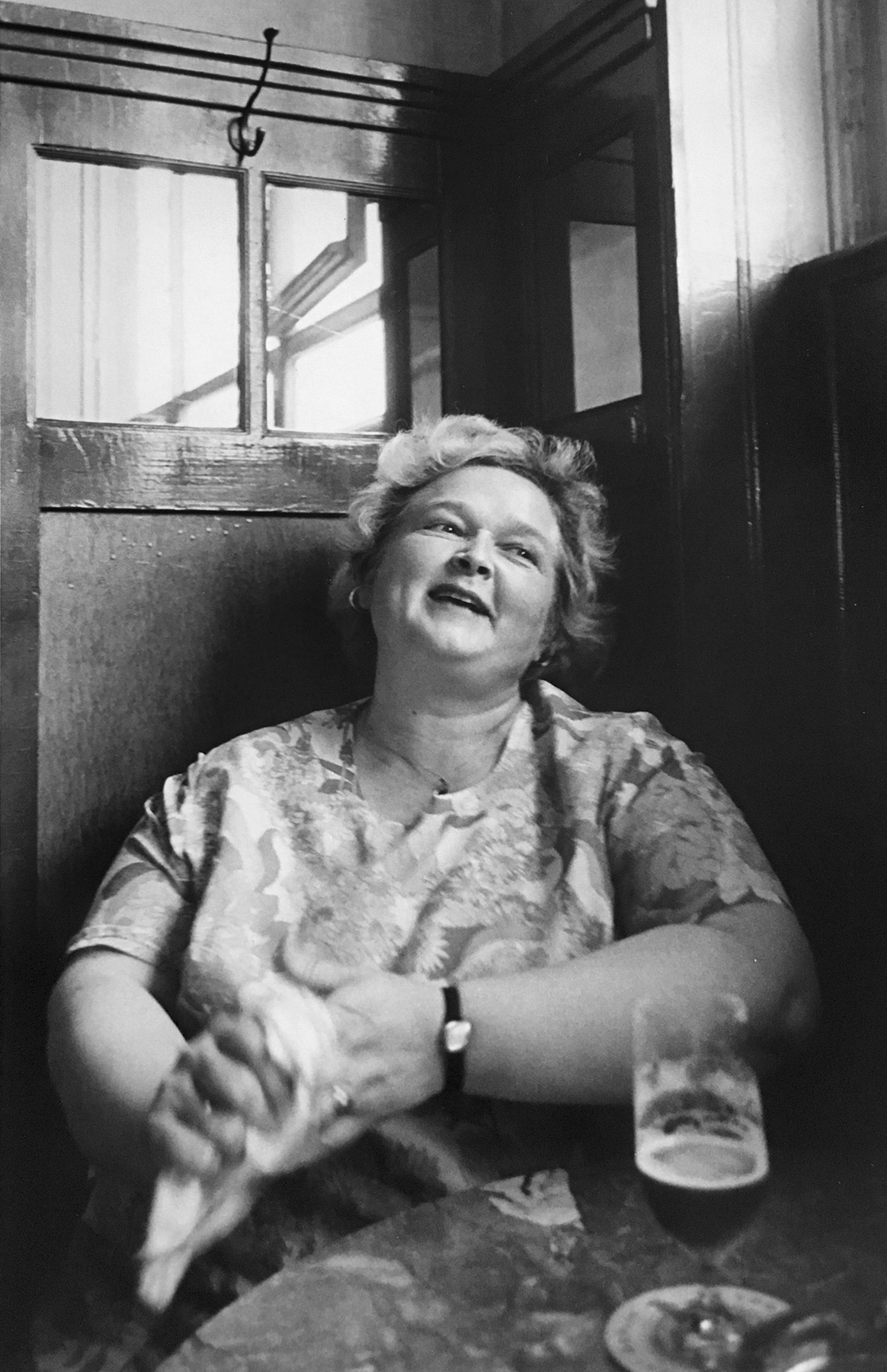
Helga Paris (German born Poland, b. 1938) 'No title' 1975 From the series 'Berliner Kneipen' (Berlin Pubs)


Helga Paris (German born Poland, b. 1938)
No title
1975
From the series Berliner Kneipen (Berlin Pubs)
Gelatin silver print
Photo: © Helga Paris
Source: ifa (Institut für Auslandsbeziehungen)


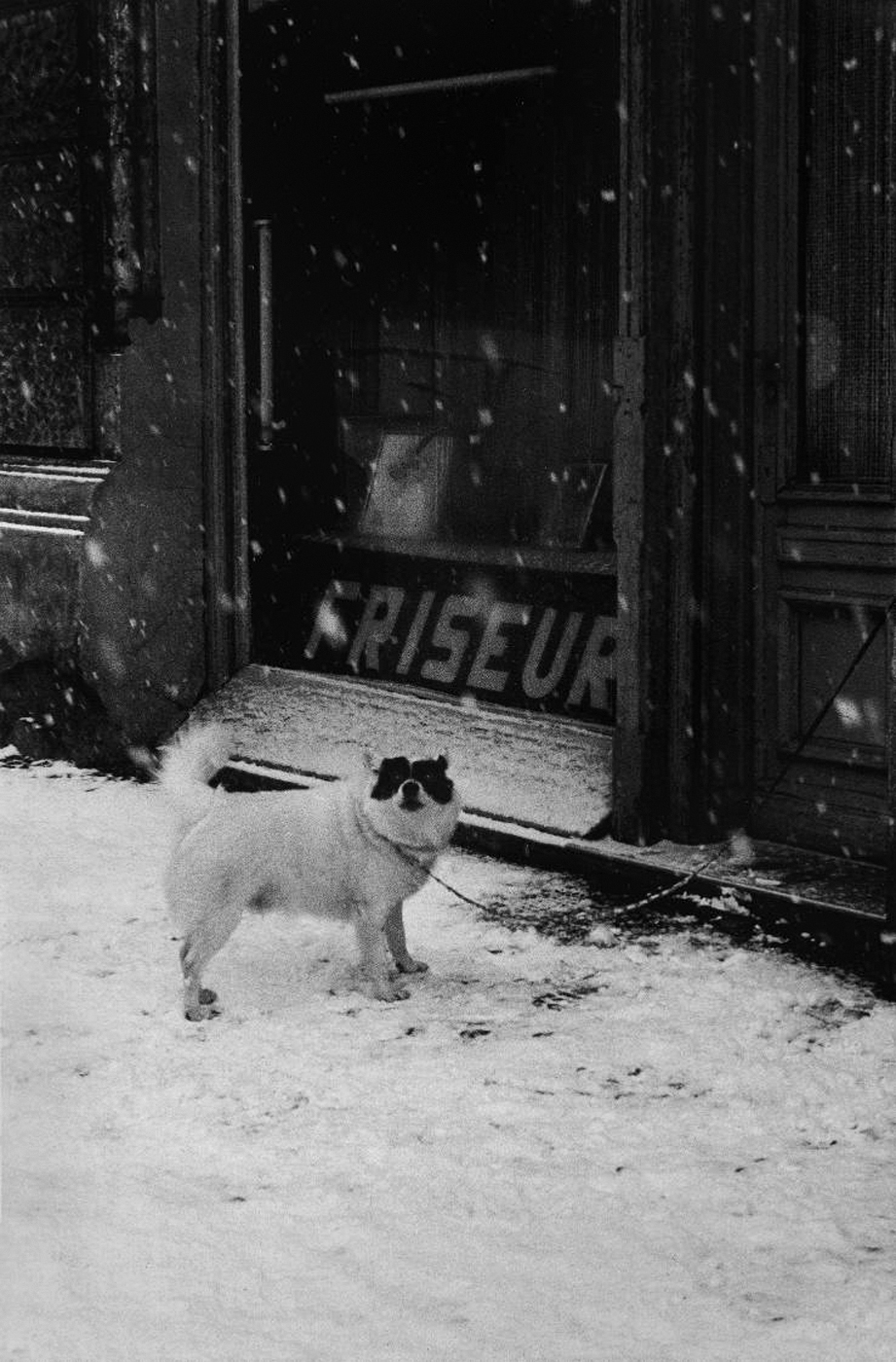
Helga Paris (German born Poland, b. 1938) 'Hund, Immanuelkirchstr 1970s' (Berlin 1974-1982)


Helga Paris (German born Poland, b. 1938)
Hund, Immanuelkirchstr. (Dog, Immanuelkirchstrasse)
1970s
From Berlin 1974-1982
Gelatin silver print
Photo: © Helga Paris
Source: ifa (Institut für Auslandsbeziehungen)


Helga Paris (German born Poland, b. 1938) 'Winsstraße mit Taube' (Winsstrasse with Pigeon) 1970s


Helga Paris (German born Poland, b. 1938)
Winsstraße mit Taube (Winsstrasse with Pigeon)
1970s
From Berlin 1974-1982
Gelatin silver print
Photo: © Helga Paris
Source: ifa (Institut für Auslandsbeziehungen)


Helga Paris (German born Poland, b. 1938) 'Marienburger Strasse' 1970s (Berlin 1974-1982)


Helga Paris (German born Poland, b. 1938)
Marienburger Strasse
1970s
From Berlin 1974-1982
Gelatin silver print
Photo: © Helga Paris
Source: ifa (Institut für Auslandsbeziehungen)


Helga Paris (German born Poland, b. 1938) 'Jugendweihe René Köstner' (Berlin 1974-1982)


Helga Paris (German born Poland, b. 1938)
Jugendweihe René Köstner
1970s
From Berlin 1974-1982
Gelatin silver print
Photo: © Helga Paris
Source: ifa (Institut für Auslandsbeziehungen)


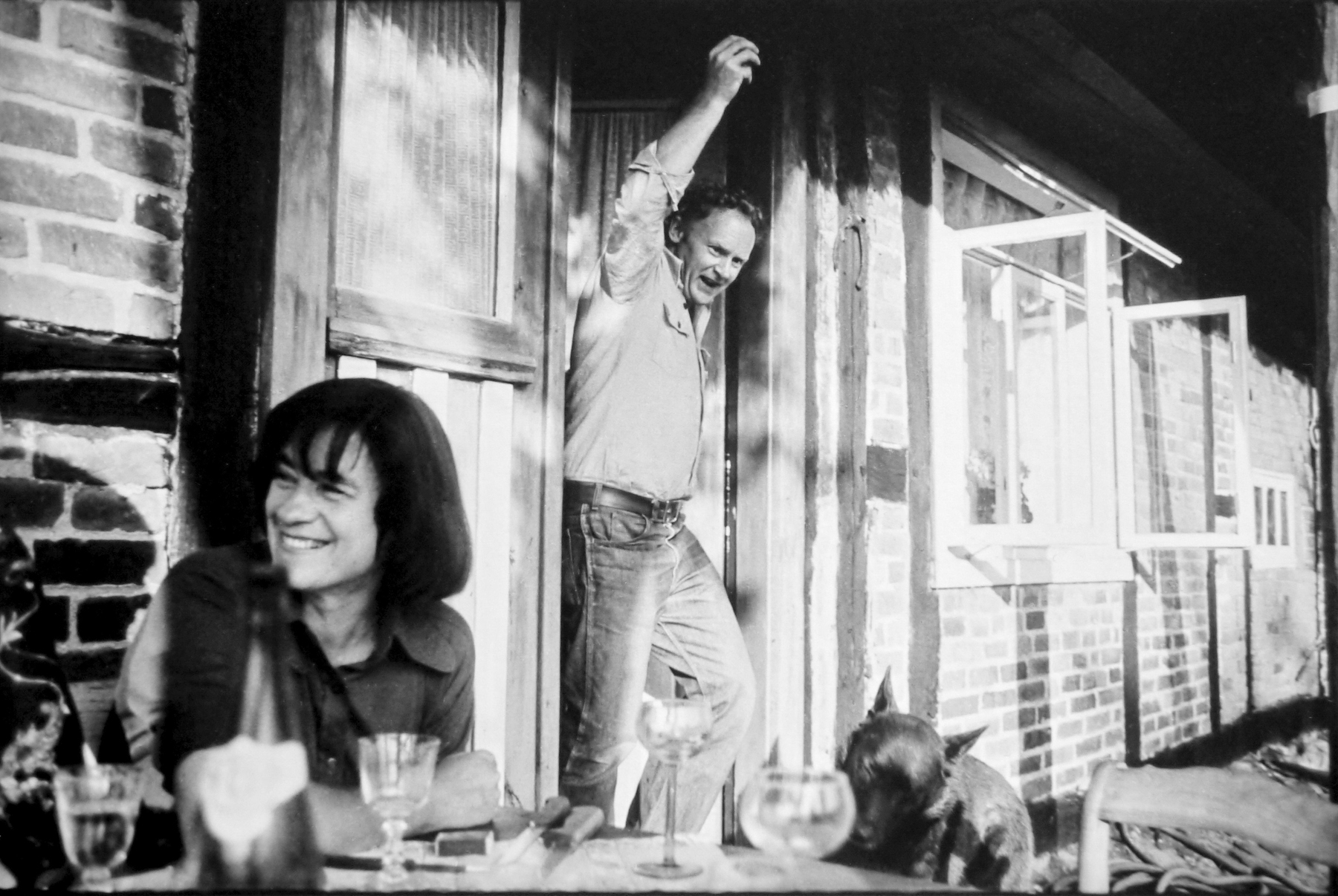
Helga Paris (German born Poland, b. 1938) 'Meteln (Christa and Gerhard Wolf)' 1977


Helga Paris (German born Poland, b. 1938)
Meteln (Christa and Gerhard Wolf)
1977
Gelatin silver print
Photo: © Helga Paris
Source: ifa (Institut für Auslandsbeziehungen)


Helga Paris (born in 1938 in Goleniów, Poland) occupies an outstanding position in German photography. Her oeuvre exhibits the poetry of a Henri Cartier-Bresson as well as the austerity of an August Sander or Renger-Patzsch. Paris, who has lived in Prenzlauer Berg in Berlin since 1966, has chronicled the long history of postwar East Germany. For more than three decades she has directed her gentle yet precise gaze toward the people who live it. Her photographs tell of the melancholy vitality of East Berlin corner pubs and the poetic tristesse of the old streetcars of the seventies. We encounter garbage truck drivers, stubbornly furious or calm teenagers, and proud female textile mill workers. We travel through Georgia and Siebenbürgen, and meander through the central German industrial city of Halle, a “diva in gray.” But these photographs also tell of the end of the postwar era, of the search for images of childhood and their retrieval.

Text from the catalogue to the exhibition


Helga Paris: Fotografie from arts-news on Vimeo


Fotografie is a retrospective look at the work of German photographer, Helga Paris. Exhibiting a collection of photos taken in East Germany in the postwar period, Paris’s work is considered to be one of the most revealing and compassionate bodies of work reflecting life in Germany at that time. Going beyond a simple ‘social study’, Paris’s technique was simply to engage with her subjects, rather than take on the role of the distant street photographer. In making this connection, the result has been a collection of photos that give the viewer an insight into a moment of the everyday lives of an East German resident.

Starting in the 60s, Helga Paris took an interest in photography and began teaching herself the basics. Paris came from a fashion and art background, but it was her interest in the everyday lives of the East Berlin people, during the postwar period that made her want to capture that on film.

Text from the Vimeo website


Helga Paris (German, born Poland, 1938) 'Club' 1981


Helga Paris (German born Poland, b. 1938)
Club
1981
Gelatin silver print
Photo: © Helga Paris
Source: ifa (Institut für Auslandsbeziehungen)


Helga Paris (German born Poland, b. 1938) 'Berliner Kneipen' From the series 'Berlin' 1974-1982


Helga Paris (German born Poland, b. 1938)
Berliner Kneipen (Berlin pubs)
From the series Berlin 1974-1982
Gelatin silver print
Photo: © Helga Paris
Source: ifa (Institut für Auslandsbeziehungen)


Since 1966 Helga Paris has lived in Berlin’s Prenzlauer Berg, a traditionally working class district that in the DDR days had become a refuge for bohemians, students and countercultural intellectuals, condoned by the authorities. Here she became a chronicler of post-war East Germany. Paris opened herself to the worker’s world she found in Prenzlauer Berg, and often took photographs in the immediate surroundings – of friends and neighbours, the area’s old and run-down streets, and the melancholic vitality of the regulars in Berlin’s bars and cafés. The people in her photographs look deeply rooted, as if they had moved to the area with the intention of never going away. Their faces express both their exhaustion and their lust for life.


Helga Paris (German born Poland, b. 1938) 'Sven' 1981-82 From the series 'Berliner Jugendliche' (Berlin Youth)


Helga Paris (German born Poland, b. 1938)
Sven
1981-1982
From the series Berliner Jugendliche (Berlin Youth)
Gelatin silver print
Photo: © Helga Paris
Source: ifa (Institut für Auslandsbeziehungen)


Helga Paris (German born Poland, b. 1938) 'Pauer' From the series 'Berlin Youth'


Helga Paris (German born Poland, b. 1938)
Pauer
From the series Berlin Youth
1981-1982
Gelatin silver print
Photo: © Helga Paris
Source: ifa (Institut für Auslandsbeziehungen)


Helga Paris (German born Poland, b. 1938) 'Ramona' 1982


Helga Paris (German born Poland, b. 1938)
Ramona
1982
Gelatin silver print
Photo: © Helga Paris
Source: ifa (Institut für Auslandsbeziehungen)


Helga Paris (German born Poland, b. 1938) 'Ramona, Kollwitzstrasse' 1982


Helga Paris (German born Poland, b. 1938)
Ramona, Kollwitzstrasse
1982
Gelatin silver print
Photo: © Helga Paris
Source: ifa (Institut für Auslandsbeziehungen)


Helga Paris (German born Poland, B. 1938) 'Naira' 1982 From the series 'Georgien' (Georgia)


Helga Paris (German born Poland, b. 1938)
Naira
1982
From the series Georgien (Georgia)
Gelatin silver print
Photo: © Helga Paris
Source: ifa (Institut für Auslandsbeziehungen)


Helga Paris (German born Poland, b. 1938) 'No title' 1983-1985 From the series 'Houses and Faces, Halle' 1983-1985


Helga Paris (German born Poland, b. 1938)
No title
1983-1985
From the series Häuser und Gesichter, Halle / Houses and Faces, Halle 1983-1985
Gelatin silver print
Photo: © Helga Paris
Source: ifa (Institut für Auslandsbeziehungen)


Helga Paris (German born Poland, b. 1938) 'Grosse Klausstrasse Flutgasse' (Häuser und Gesichter Halle 1983-1985)


Helga Paris (German born Poland, b. 1938)
Grosse Klausstrasse Flutgasse
1983-1985
From the series Häuser und Gesichter, Halle / Houses and Faces, Halle 1983-1985
Gelatin silver print
Photo: © Helga Paris
Source: ifa (Institut für Auslandsbeziehungen)


Helga Paris (German born Poland, b. 1938) 'Zwei Frauen' (Häuser und Gesichter Halle 1983-1985)


Helga Paris (German born Poland, b. 1938)
Zwei Frauen (Two Women)
1983-1985
From the series Häuser und Gesichter, Halle / Houses and Faces, Halle 1983-1985
Gelatin silver print
Photo: © Helga Paris
Source: ifa (Institut für Auslandsbeziehungen)


Helga Paris (German born Poland, b. 1938) 'No title' 1983-1985 From the series 'Houses and Faces, Halle'


Helga Paris (German born Poland, b. 1938)
No title
1983-1985
From the series Houses and Faces, Halle 1983-1985
Gelatin silver print
Photo: © Helga Paris
Source: ifa (Institut für Auslandsbeziehungen)


From 8 November 2019 to 12 January 2020 at its exhibition halls at Pariser Platz, the Akademie der Künste will present the photographic work of Helga Paris from 1968 to 2011. Featuring 275 works, including many individual images and series that are to be shown for the first time, this will be her most comprehensive exhibition to date and the first retrospective of the artist in her home city of Berlin in 25 years. Excerpts from the extensive Leipzig, Hauptbahnhof (1981), Moskau (1991/1992) and Mein Alex (2011) series will be seen for the first time, among others.

In addition to the photographer’s special ability to make ever-changing compressed contemporary history tangible in her images and series over the course of decades, it is her tender, graceful and heavily nuanced black-and-white modulations expressing social empathy that make her work unmistakable.

Helga Paris was born in 1938 in Gollnow, Pomerania (today Polish town of Goleniów), and grew up in Zossen near Berlin. She began her work as a self-taught photographer in the 1960s. She became one of the key chroniclers of life in East Berlin with images of her neighbourhood in the Berlin district of Prenzlauer Berg, pictures of pub-goers, sanitation workers, the women from the VEB Treffmodelle clothing factory, artists, punks, children from Hellersdorf and passers-by from Alexanderplatz. Helga Paris also took photographs in Transylvania (1980), Georgia (1982) and the city of Halle (1983-1985), where she produced her Diva in Grau series that was banned from being shown until 1989/1990, as well as in Volgograd (1990), New York (1995) and Poland (1996/1997), among others. Helga Paris has been a member of the Film and Media Art Section of the Akademie der Künste since 1996.

The curator of the exhibition is art historian Inka Schube, who has worked with Helga Paris on numerous occasions. Filmmaker Helke Misselwitz will present an installation involving interviews with Helga Paris on the topics of origin, the changing city and her work as a photographer in East Germany and up into the early 21st century.

On the occasion of the exhibition, the Spector Books publishing house, Leipzig has released the photography book Helga Paris. Leipzig Hauptbahnhof, 1981.

An exhibition by the Akademie der Künste in cooperation with the ifa (Institut für Auslandsbeziehungen), with the kind support of the Alfried Krupp von Bohlen und Halbach-Stiftung that allowed the living legacy to be indexed and new prints of three previously unpublished series to be made, as well as the DEFA-Foundation.

Press release from the Akademie der Künste website [Online] Cited 11/11/2019


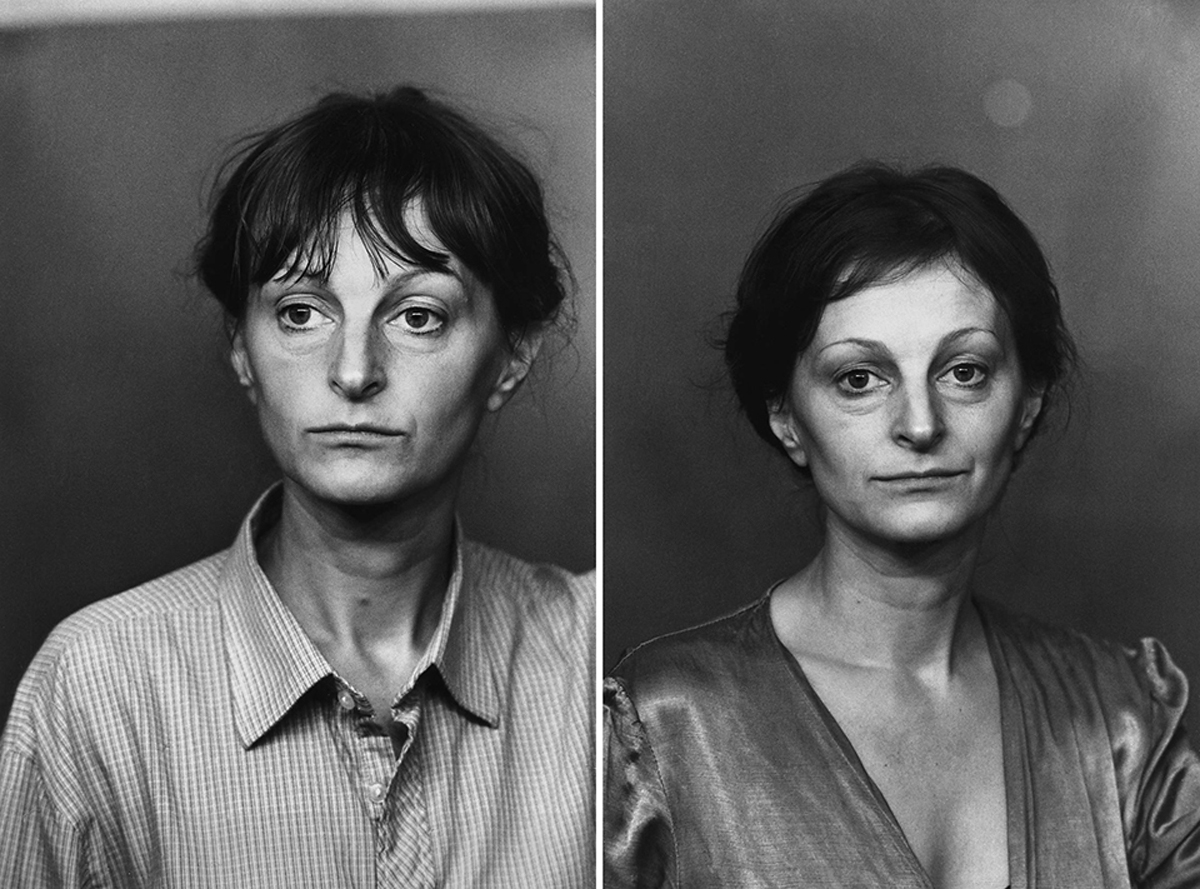
Helga Paris (German born Poland, b. 1938) 'Self-portraits' 1981-1989


Helga Paris (German born Poland, b. 1938)
Self-portraits
1981-1989
Gelatin silver print
Photo: © Helga Paris
Source: ifa (Institut für Auslandsbeziehungen)


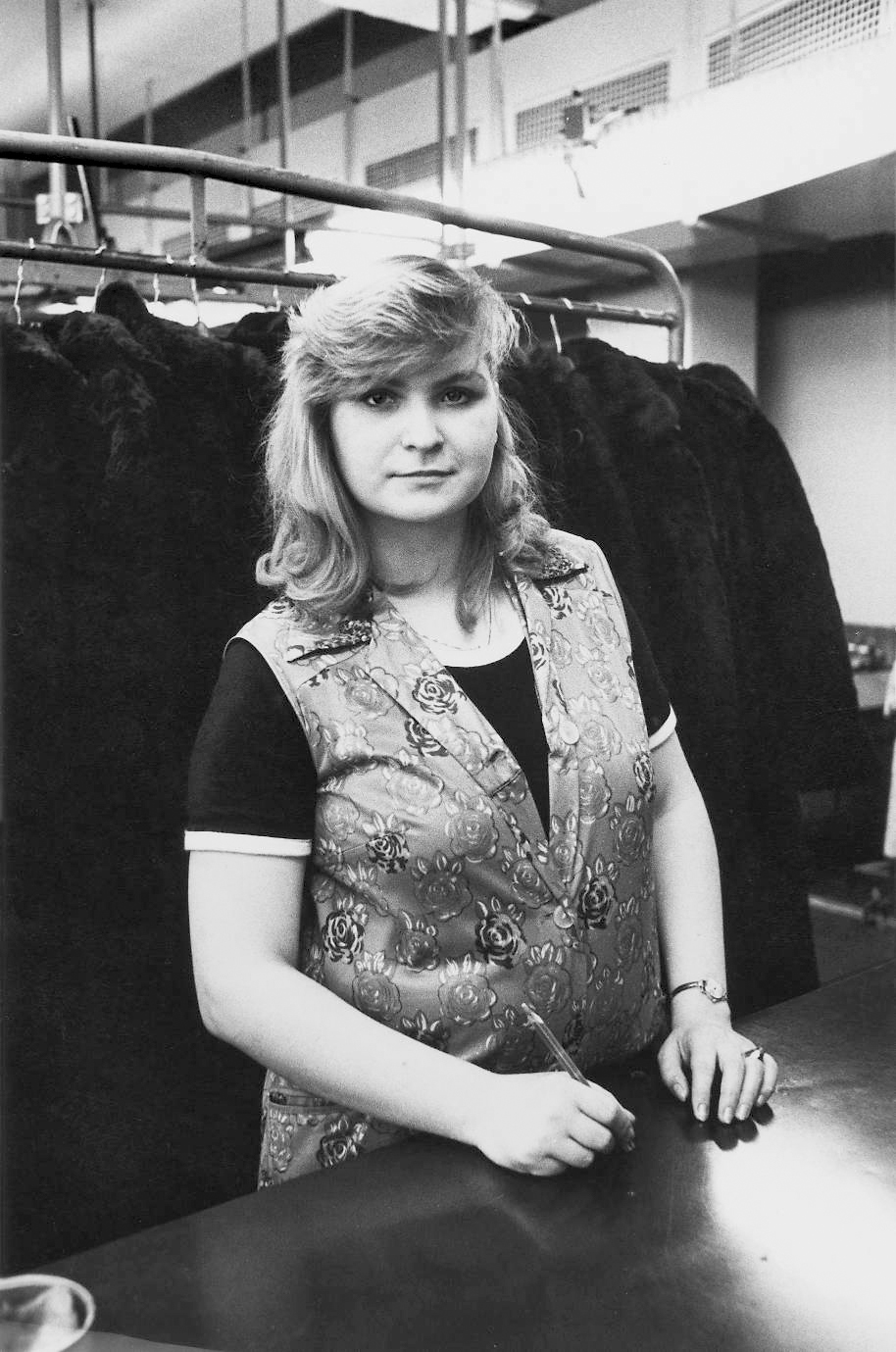
Helga Paris (German born Poland, b. 1938) 'Frauen im Bekleidungswerk Treff-Modelle' 1984


Helga Paris (German born Poland, b. 1938)
Frauen im Bekleidungswerk Treff-Modelle
1984
Gelatin silver print
Photo: © Helga Paris
Source: ifa (Institut für Auslandsbeziehungen)


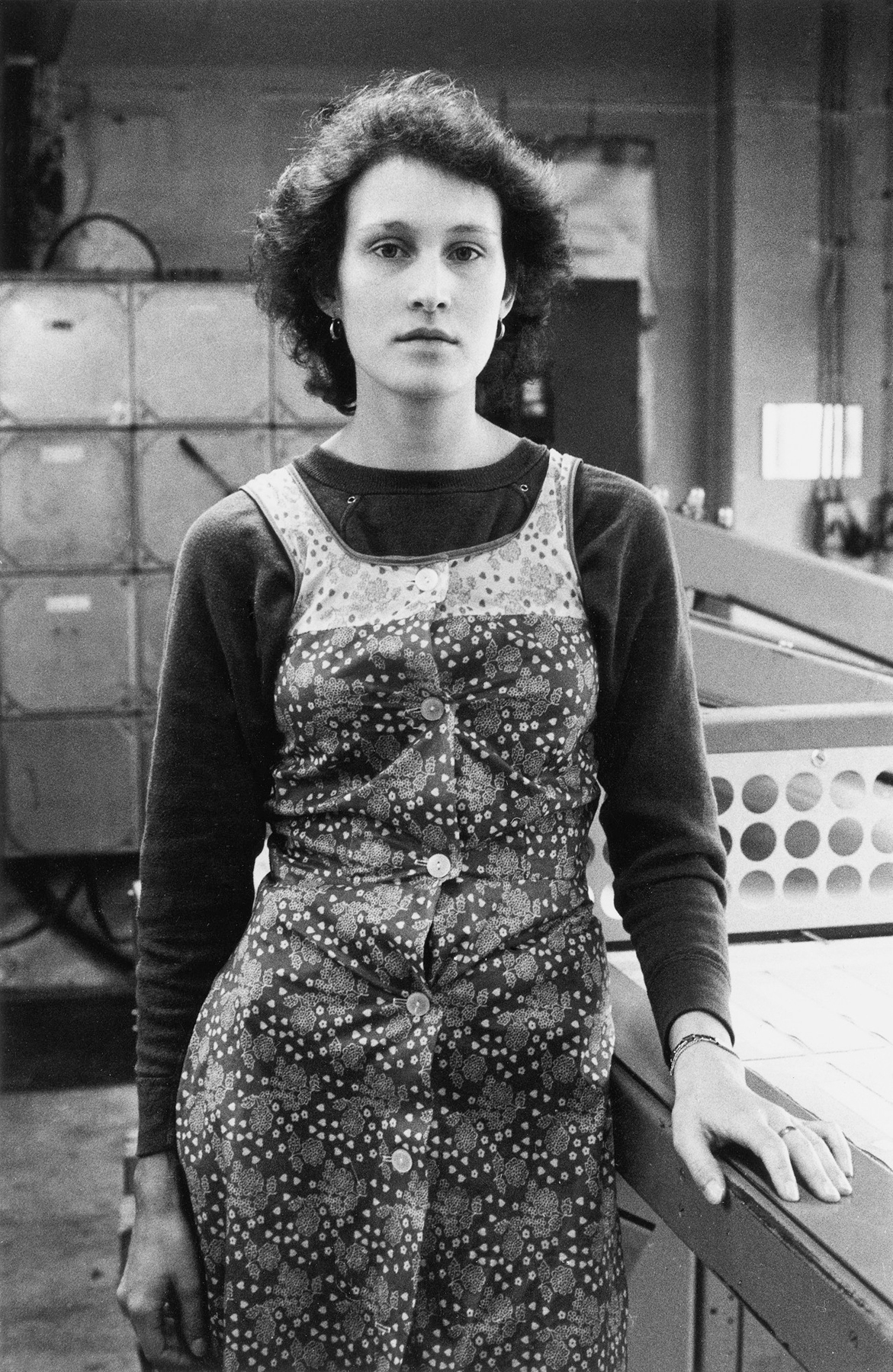
Helga Paris (German born Poland, b. 1938) 'Frauen im Bekleidungswerk Treff-Modelle' 1984


Helga Paris (German born Poland, b. 1938)
Frauen im Bekleidungswerk Treff-Modelle
1984
Gelatin silver print
Photo: © Helga Paris
Source: ifa (Institut für Auslandsbeziehungen)


In the early 1980s the DDR’s Gesellschaft für Fotografie im Kulturbund gave professional photographers commissions that allowed them to work on projects of their own choosing. These commissions not only gave photographers financial security, but also opened doors to places where, under normal circumstances, only media loyal to the regime had been allowed to work. Helga Paris chose to photograph a clothing factory, Treff-Modelle VEB in Berlin, where she herself had had some work experience during her fashion design studies. There she portrayed the factory’s female workers, eliciting a wide variety of subtle reactions from them: from self-confident and open to confrontational and defensive.


Helga Paris (German born Poland, b. 1938) 'Frauen im Bekleidungswerk Treff-Modelle' 1984


Helga Paris (German born Poland, b. 1938)
No title
1984
Gelatin silver print
From the series Frauen im Bekleidungswerk VEB Treffmodelle Berlin (Women at the Clothing factory VEB Treffmodelle Berlin)
Photo: © Helga Paris
Source: ifa (Institut für Auslandsbeziehungen)


With around 275 photographs from the period of 1968 till 2011 – including numerous single frames and series shown for the first time – the exhibition of Helga Paris at the Akademie der Künste on Pariser Platz is the photographer’s most comprehensive to date. It is the first retrospective of Paris’ work in her home city of Berlin in 25 years.

Having lived in Berlin’s Prenzlauer Berg district since 1966, Helga Paris (born 1938) began taking photos of people in her neighbourhood in the early 1970s. She found her photographic motifs in flats, pubs, break rooms and factory halls, or on the streets and in train stations. With a background in modernist painting, theatre and poetry as well as early Soviet, Italian and French cinema, the autodidact photographer has spent the last four and a half decades developing an extensive oeuvre of delicate, nuanced black-and-white photography.

But she is not only a chronicler of Prenzlauer Berg. Helga Paris also has taken photos in Halle, Leipzig, Transylvania, Georgia, Moscow, Volgograd and New York. There, as in her local neighbourhood, she constantly explores how it feels “to be in history”, and how the respective circumstances are reflected at the most private level. Helga Paris’s imagery has a particular poetic approachability, in part because it forgoes all ideological interpretations; her gaze suggests profound solidarity.

For the exhibition, the director Helke Misselwitz has designed a documentary film triptych, in which she makes it possible to experience how the life and work of Helga Paris are both interwoven and interdependent. Misselwitz traces a wide arc from the photographer’s childhood to the present; from Prenzlauer Berg to sites around the world; and from Paris’ close-ups to her farsighted vision.

Text from the Akademie der Künste website [Online] Cited 11/11/2019


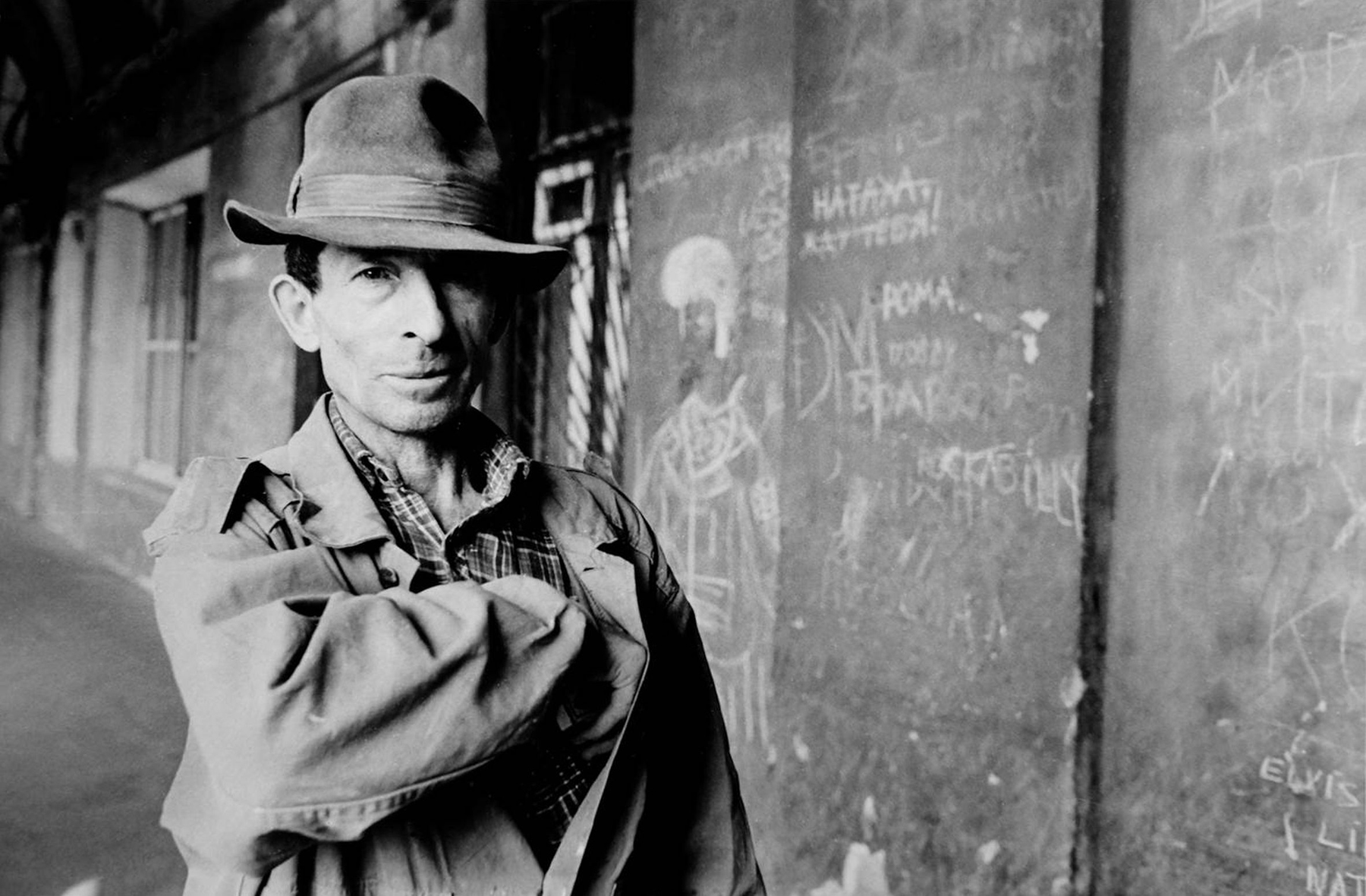
Helga Paris (German born Poland, b. 1938) 'Sohn des Architekten Melnikow' 1991/92


Helga Paris (German born Poland, b. 1938)
Sohn des Architekten Melnikow (Son of the architect Melnikov)
1991-1992
From the series Moskau 1991-1992
Gelatin silver print
Photo: © Helga Paris
Source: ifa (Institut für Auslandsbeziehungen)


Helga Paris (German born Poland, b. 1938) 'No title' 1991/92 From the series 'Moscow' 1991-92


Helga Paris (German born Poland, b. 1938)
No title
1991-1992
From the series Moscow 1991-1992
Gelatin silver print
Photo: © Helga Paris
Source: ifa (Institut für Auslandsbeziehungen)


As a result of the Cold War, the remarkable oeuvre of the German photographer Helga Paris (1938) was long almost unknown west of the Iron Curtain. While Paris enjoyed widespread popularity in East Germany, her photographs rarely reached a public in the West. Although her work, with its quite intimate glimpses of daily life in East Germany, is strongly linked to the course of her own life, its expressiveness is universal. The empathy of her gaze makes it easy for us to imagine ourselves in the people and places she photographed.

Resilience

On one hand Helga Paris’ photographs are about life in the German Democratic Republic (DDR), where the Second World War and the country’s communist regime brought restriction, loss, destruction and decline in their wake. On the other they show the gaze of a photographer who had been born in Pommeren (now in Poland), who grew up close to postwar Berlin, and who faced the world with resilience, curiosity and compassion. In 1966 Paris moved for good to Prenzlauer Berg in East Berlin, a traditionally working-class district that had become a refuge for bohemians, students and countercultural intellectuals, closely watched but condoned by the authorities. Here she became a chronicler of postwar East Germany. She often worked in the immediate surroundings – taking photographs of friends and neighbours, on the street, and in bars and cafés.

Hidden tensions

Although in the 1970s and 1980s Helga Paris also photographed in Romania, Poland and Georgia, the accent in the Huis Marseille exhibition is on East Germany before and after the Wende (1989-1990). She created the series Berliner Jugendliche (Berlin Youth) in 1980-1981, when her own children were teenagers, portraying youngsters who believed in an alternative way of life and who went to the concerts given by independent bands – a sort of East German variant of the Western punk scene. Their anarchic lifestyle did not go unnoticed by the regime, and many of those she portrayed also spent some time in prison. Paris subtly but revealingly captures the hidden tensions of the time in the teenagers’ postures, gestures, and facial expressions. She elicited a similar scale of reactions in the workers she photographed for the series Frauen im Bekleidungswerk VEB Treffmodelle Berlin (Women at the textile factory VEB Models, 1984): from self-confident and open to confrontational and defensive.

Run-down

In the same period Helga Paris documented the decline of the old city centre of Halle, interspersing photos of the city’s long-neglected buildings and streets with portraits of its residents – who only allowed themselves to be photographed if they had a say in how their portraits were taken. The impoverishment of Halle was only partly the result of the faltering East German economy; the government was also deliberately allowing the historic centre of Halle and other East German cities to become rundown in order to compel their populations to move into modern flats on urban peripheries. The exhibition Häuser und Gesichter: Halle 1983-85 was banned by the regime in 1987; it was 1990 before the people of Halle could see the photographs for themselves.


Helga Paris was born Helga Steffens in 1938 in Gollnow, Pommeren, now known as Goleniów in Poland. At the end of the war she fled with her family to Zossen, her father’s native city. She first came into contact with photography through an aunt who worked in a photographic laboratory. Between 1956 and 1960 she studied fashion design at the Fachschule für Bekleidung in Berlin. There she met the artist Ronald Paris, to whom she was married between 1961 and 1974, and with whom she had two children.

Via the Arbeiter- und Studententheater in Berlin, for which she made costumes, Paris came into contact with the later documentary maker Peter Voigt, who encouraged her to take more photographs. To improve her techniques, from 1967 to 1968 she worked in the Deutsche Werbeund Anzeigengesellschaft DEWAG photographic laboratory. She took many photographs in the theatre, such as productions of the Volksbühne, as her husband was also its set designer. In later years she would say that this experience had given her a solid foundation for her attitude to space as a street photographer.

Paris’s work was first exhibited in 1978, in the Hochschule für Bildende Künste in Dresden. In 1996 she became a member of the Akademie der Künste in Berlin. Her self-portraits were a great success at the Kunst in der DDR exhibition in the Neue Nationalgalerie in Berlin (2003), and in 2004 Helga Paris was awarded the prestigious Hannah-Höch-Preis for a lifetime of achievement in the arts.

Press release from Huis Marseille for the exhibition Helga Paris / East Germany 1974-1998 Cited 26/11/2019


Helga Paris (German born Poland, b. 1938) 'Erinnerung an Z' (Memory of Z) 1994


Helga Paris (German born Poland, b. 1938)
Erinnerung an Z (Memory of Z)
1994
Gelatin silver print
Photo: © Helga Paris
Source: ifa (Institut für Auslandsbeziehungen)


Helga Paris (German born Poland, b. 1938) 'No title' 1998 From the series 'Hellersdorf'


Helga Paris (German born Poland, b. 1938)
No title
1998
Gelatin silver print
From the series Hellersdorf
Photo: © Helga Paris
Source: ifa (Institut für Auslandsbeziehungen)


Helga Paris (German born Poland, b. 1938) 'Hellersdorf #2' 1998


Helga Paris (German born Poland, b. 1938)
Hellersdorf #2
1998
Gelatin silver print
From the series Hellersdorf
Photo: © Helga Paris
Source: ifa (Institut für Auslandsbeziehungen)


Helga Paris (German born Poland, b. 1938) 'Hellersdorf #7' 1998


Helga Paris (German born Poland, b. 1938)
Hellersdorf #7
1998
Gelatin silver print
From the series Hellersdorf
Photo: © Helga Paris
Source: ifa (Institut für Auslandsbeziehungen)


Helga Paris (German born Poland, b. 1938) 'Hellersdorf #8' 1998


Helga Paris (German born Poland, b. 1938)
Hellersdorf #8
1998
Gelatin silver print
From the series Hellersdorf
Photo: © Helga Paris
Source: ifa (Institut für Auslandsbeziehungen)


Akademie der Künste
Pariser Platz 4
10117 Berlin
Phone: +49 (0)30 200 57-1000

Opening hours:
Tuesday – Sunday 11am – 7pm

Akademie der Künste website

LIKE ART BLART ON FACEBOOK

Back to top