Review: ‘Visions of India: from the colonial to the contemporary’ at the Monash Gallery of Art, Wheelers Hill, Melbourne

Exhibition dates: 17th December, 2021 – 20th March, 2022

Curator: Nathaniel Gaskell

Artists: Darogah Abbas Ali, Indu Antony, Felice Beato, Mitter Bedi, Jyoti Bhatt, Bourne & Shepherd, Samuel Bourne, Michael Bühler-Rose, Henri Cartier-Bresson, Chunni Lall & Co., Lala Deen Dayal, Francis Frith & Co., Gauri Gill, Khubiram Gopilal, Hamilton Studios Ltd, Johnston and Hoffmann, Willoughby Wallace Hooper, William Johnson, John William Kaye and John Forbes Watson, Karen Knorr, Annu Palakunnathu Matthew, Steve McCurry, Saché & Murray Studios, Pushpamala N with Clare ARNI, Nicolas & Company (attributed), Norman Parkinson, Anoli Perera, Suresh Punjabi, Marc Riboud, John Edward Saché, Charles Scott, Sawai Ram Singh II, Maharaja of Jaipur, Edward Taurines (attributed), Waswo X Waswo, Wiele and Klein Studio, Wilson Studios Bombay
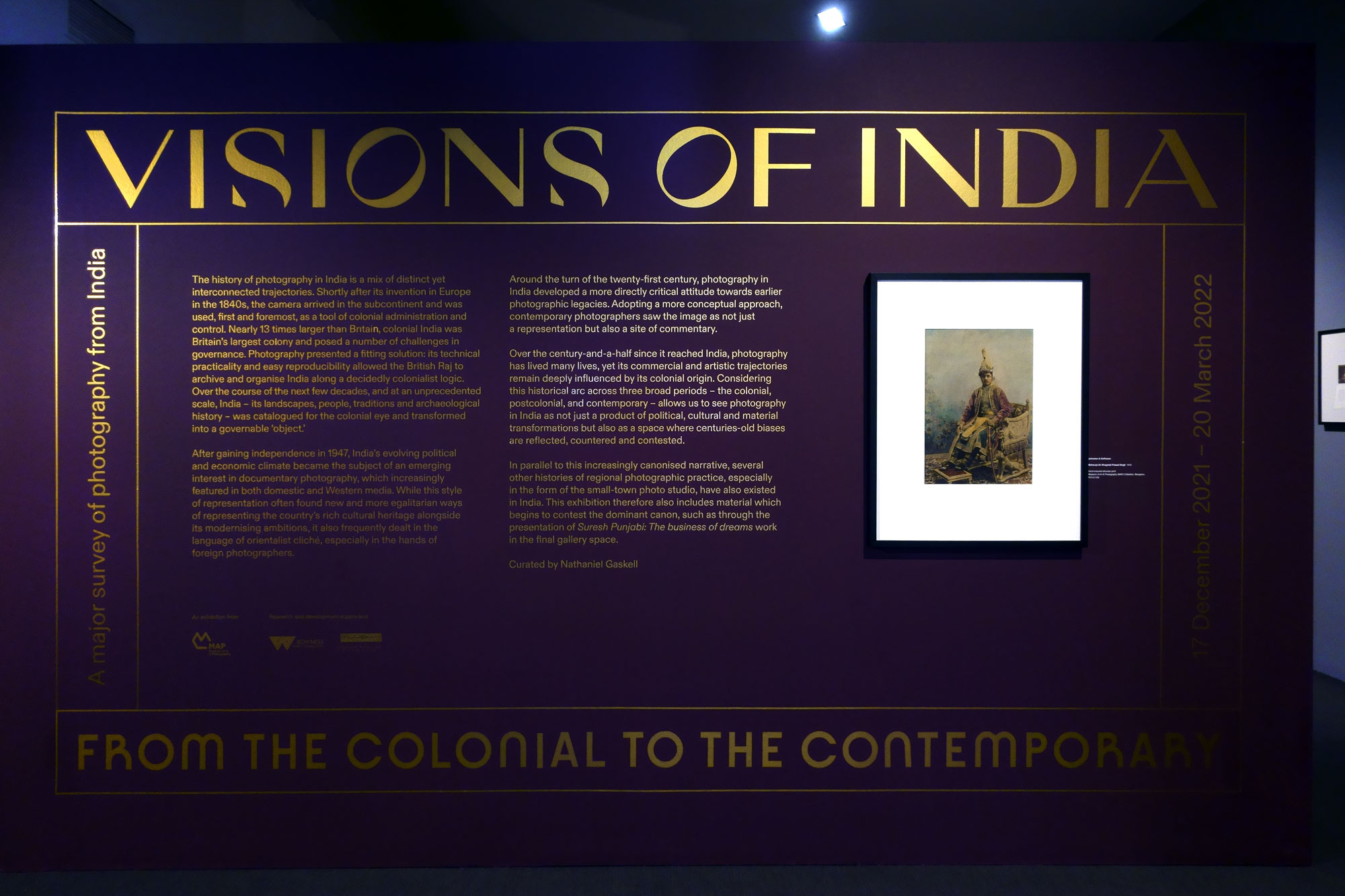
 

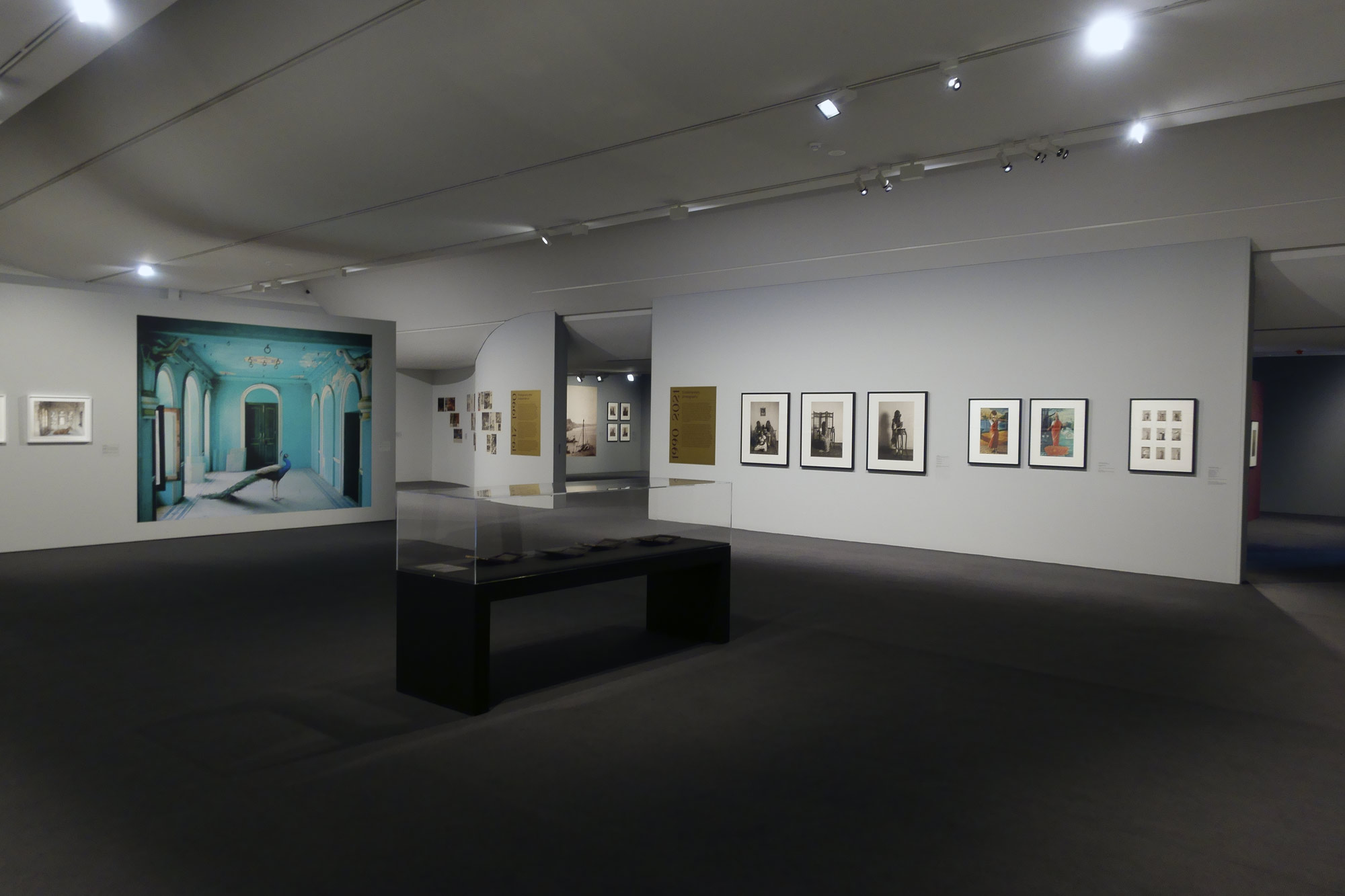
Installation view of the opening of the exhibition 'Visions of India: from the colonial to the contemporary' at the Monash Gallery of Art


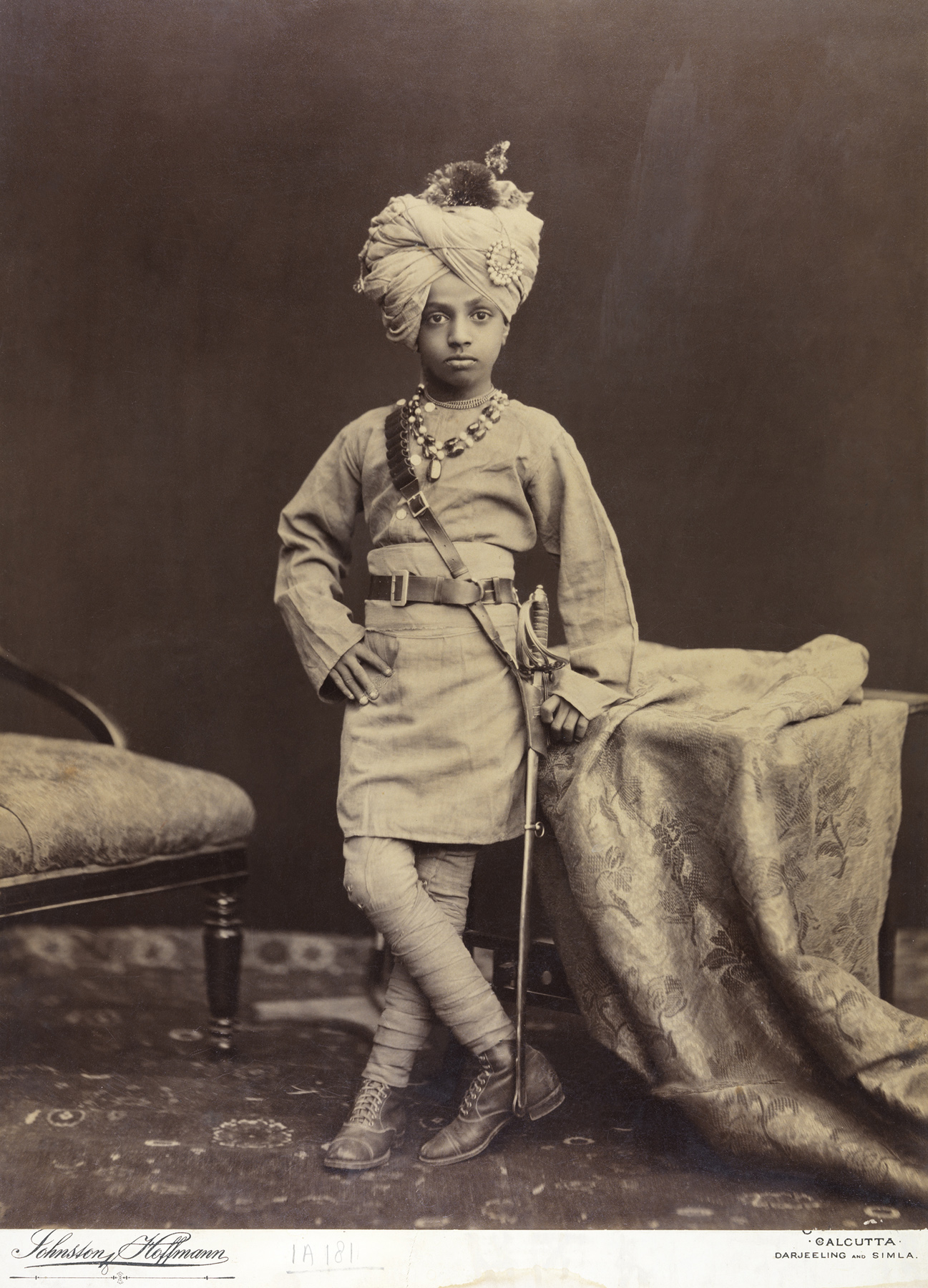
Installation view of the opening of the exhibition Visions of India: from the colonial to the contemporary at the Monash Gallery of Art showing the Johnston & Hoffman photograph Maharaja Sir Bhagwati Prasad Singh (1915, below)
Photo: Marcus Bunyan


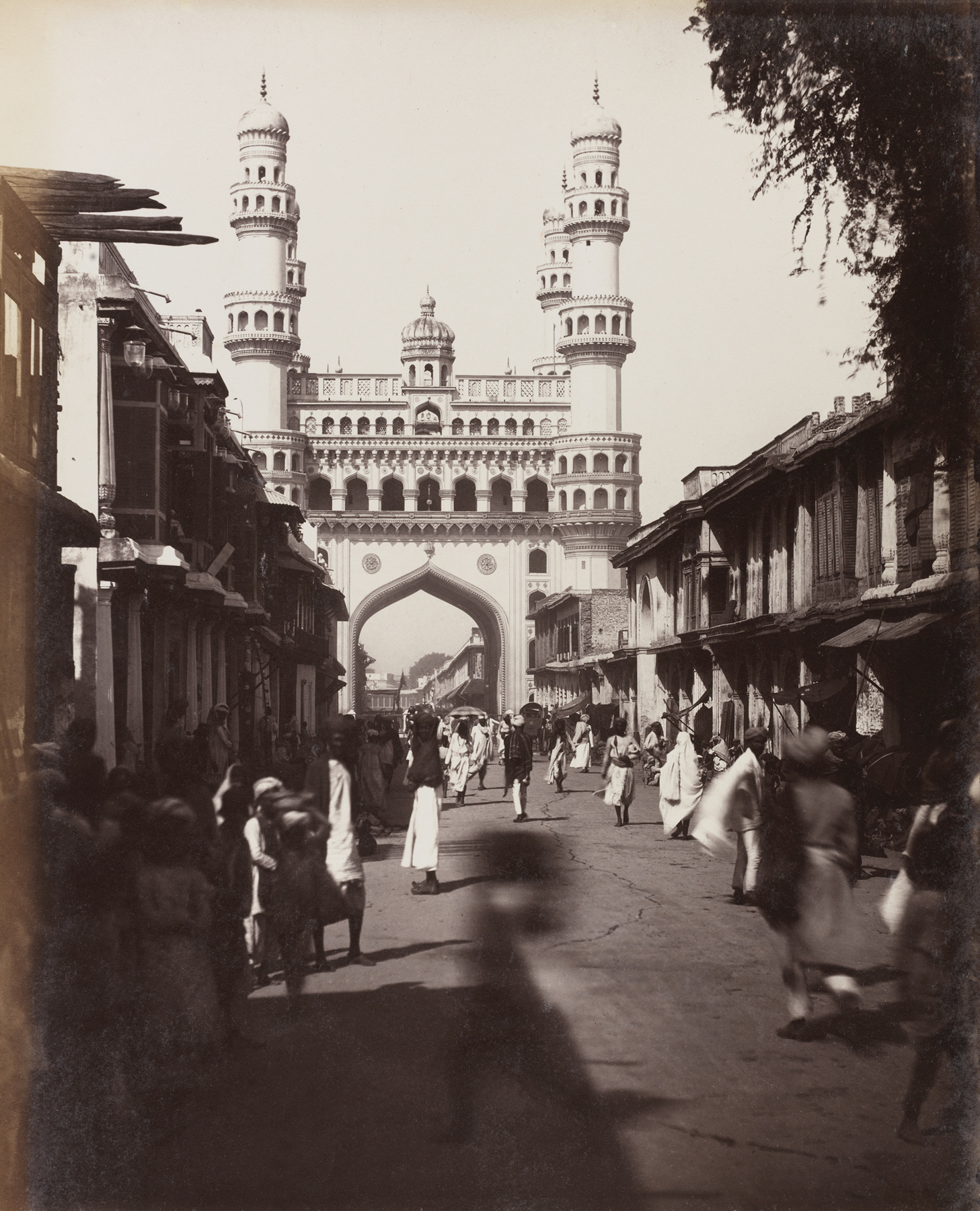
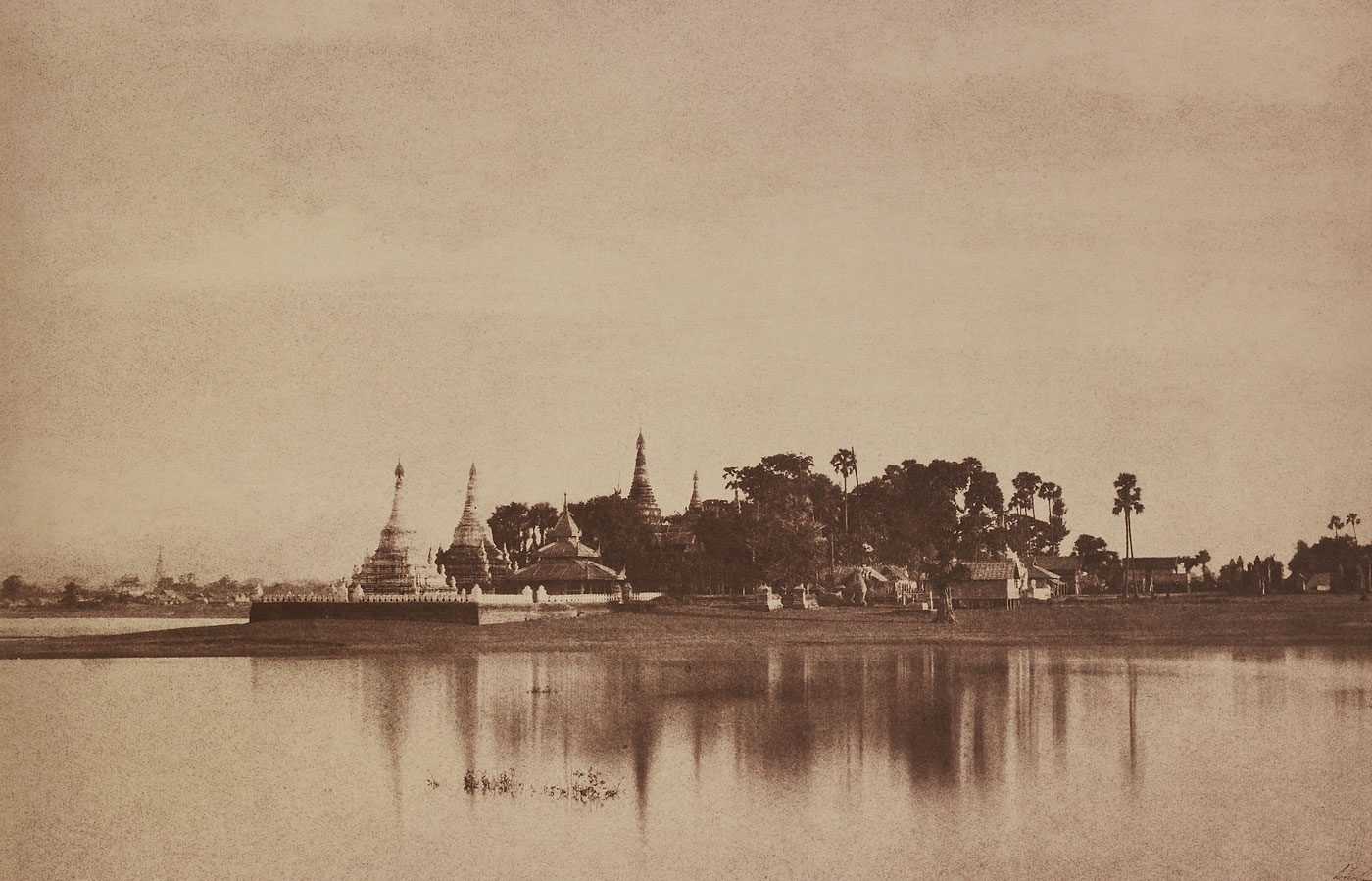
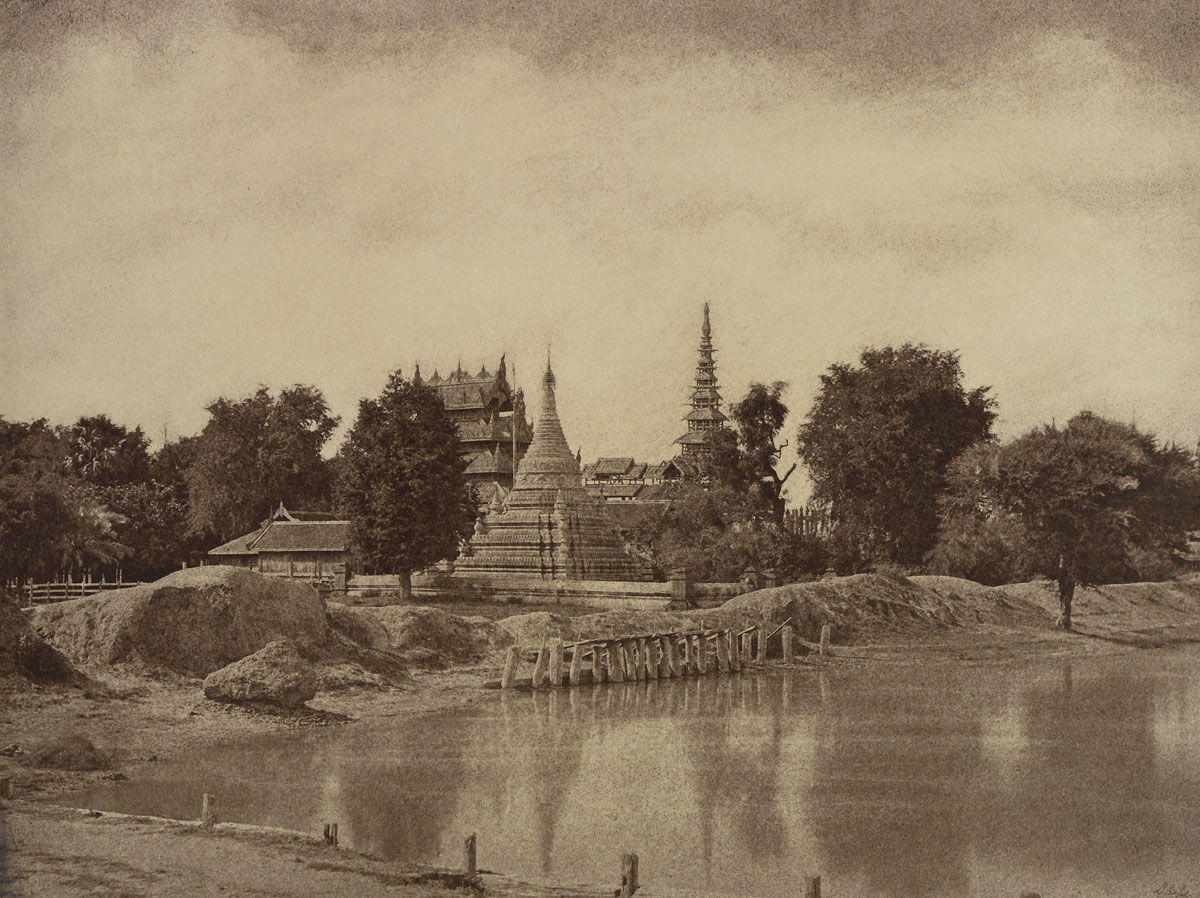
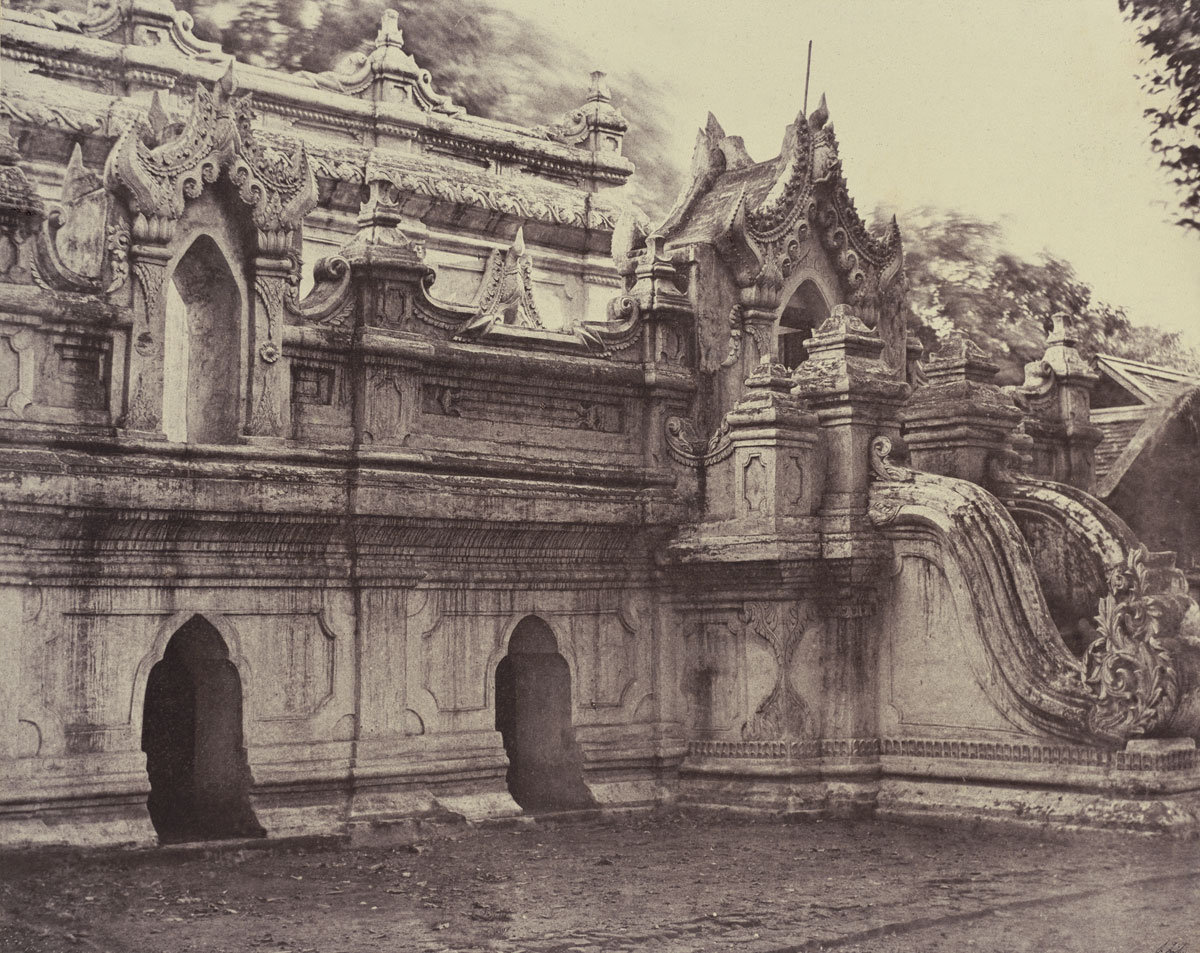
The exhibition Visions of India: from the colonial to the contemporary at the Monash Gallery of Art, Melbourne is at one and the same time, a fascinating, stimulating, frustrating, uplifting – and a little sad – overview of the history of the photography of India. I won’t say the history of Indian photography because most of the historical photographs are taken by European studios in India, and even an equal amount of the mid-twentieth century and contemporary photographs are taken by non-Indian born photographers residing in India or elsewhere. The title Visions of India is, therefore, undeniably apt – the exhibition being as much about how foreigners view the Indian continent, culture and people as how Indians picture themselves.

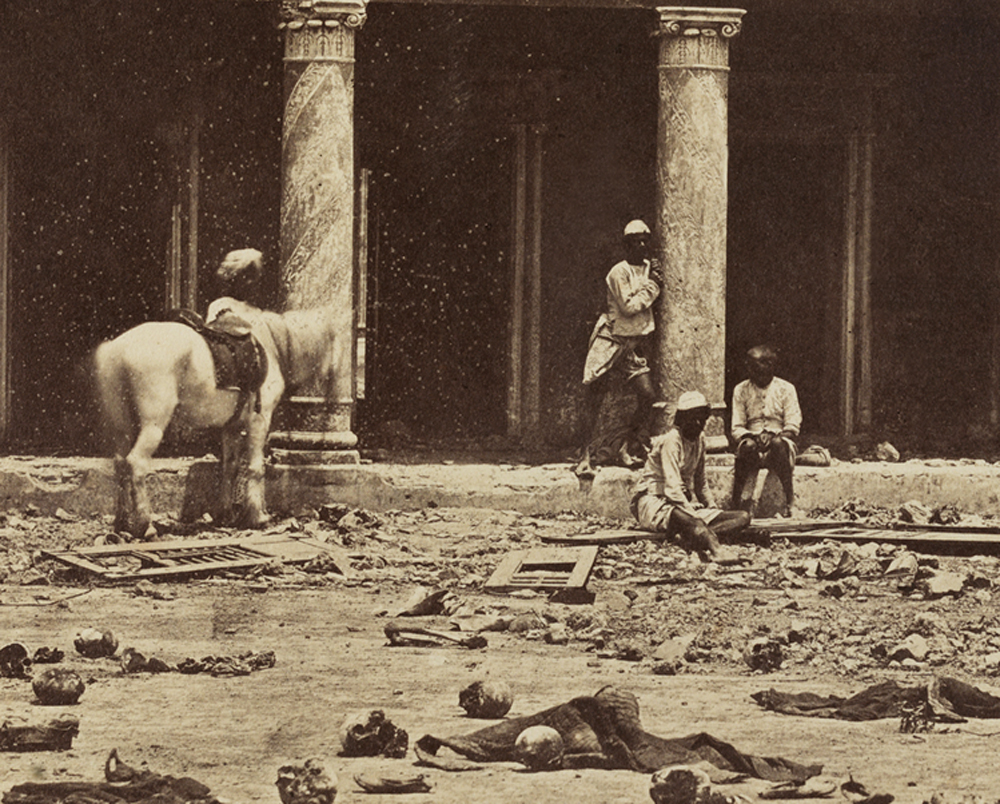
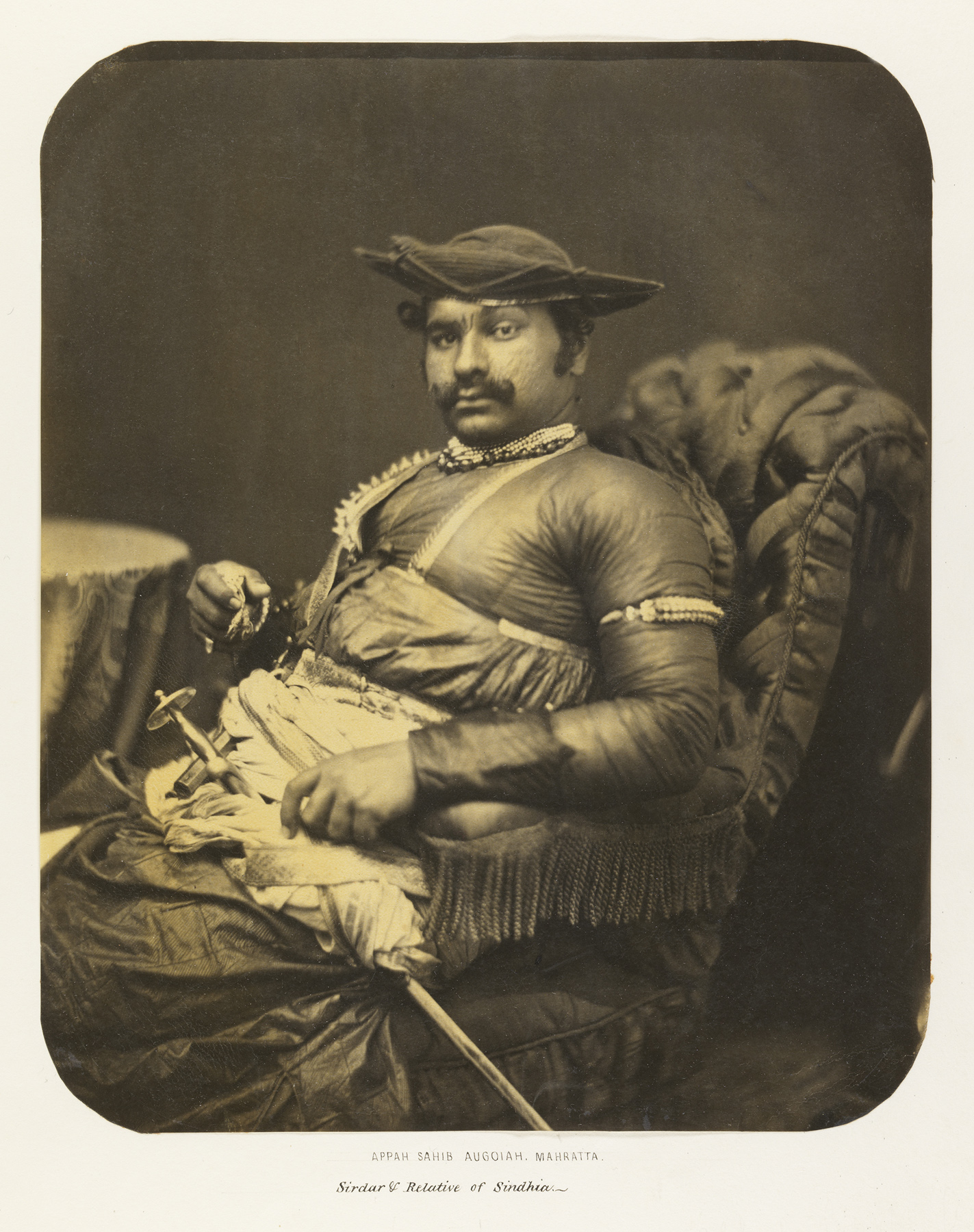
The fascinating, stimulating and sad elements of the exhibition are the “presence” of the historical photographs. These photographs range from the European architectural documentation of Indian temples through European colonial-ethnographic images which document Indian ethnic “types” – in the case of William Johnson montaging ethnic group portraits taken in the studio with appropriate views of actual buildings and scenes to picture oriental races and tribes – to European and Indigenous Indian photographers and ruling Indian princes’ photographs of themselves and their courtesans … taken in the European manner.

John Falconer in his book 2018 book Under Indian Skies: 19th-Century Photographs from a Private Collection observes, “A number of India’s princes became deeply interested in photography and both practiced and collected it, several also retaining state photographers… The portraiture of Indian royalty also proved a popular genre. Portraits posed in the setting of the European studio, but celebrating an oriental luxury of costume, jewellery and other accoutrements, were commissioned not only by rulers themselves but were also collected by Western customers, as the contents of many collections attest.”1

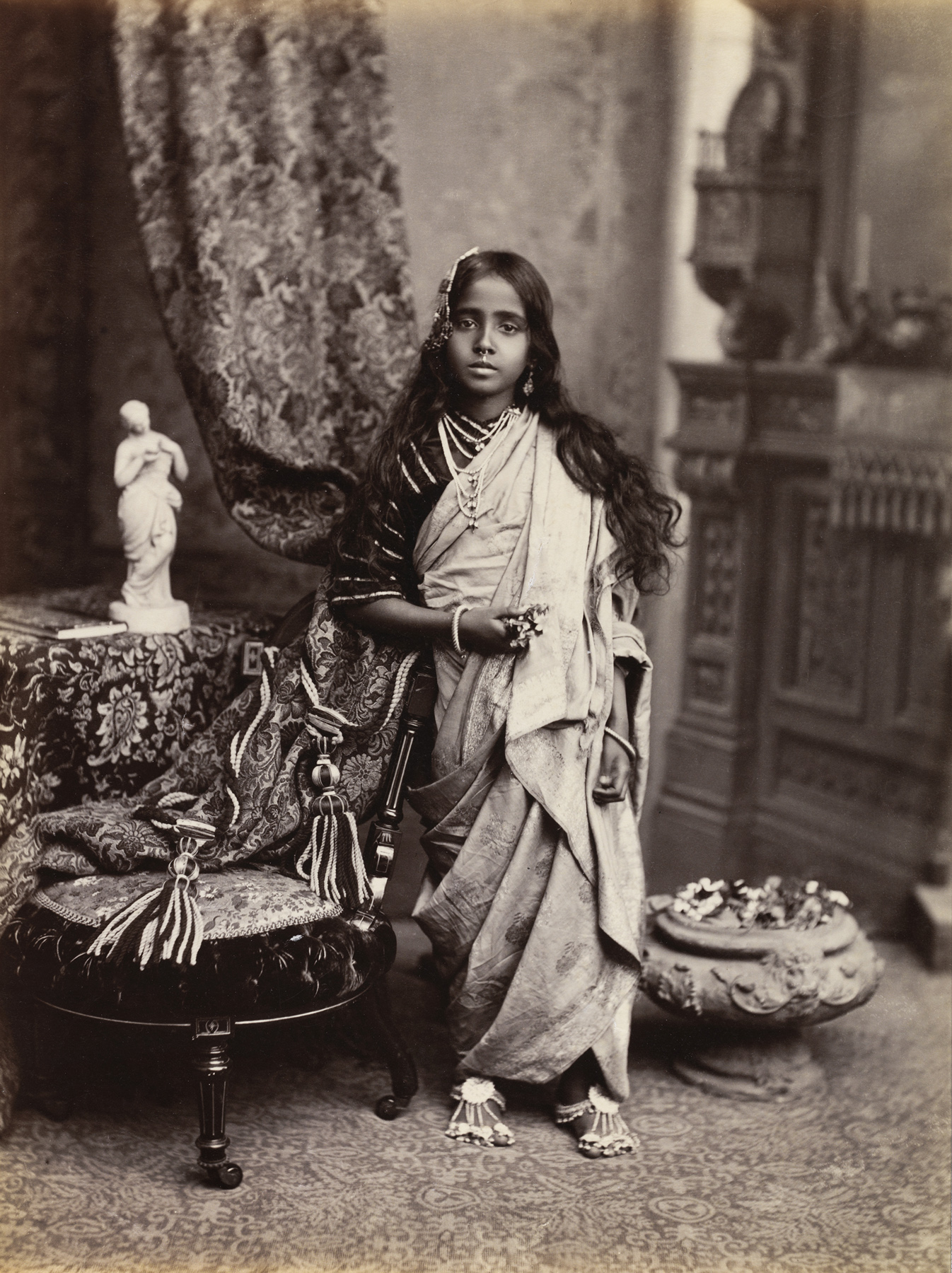
But by whoever they were taken – European photographer, Indian photographer or royal prince – these photographs are always taken from a position of power and authority by a male, either to reinforce through the male gaze their own splendour or to document their personal chattels, the tangible goods that they owned. For example, while texts by Mrinalini Venkateswaran (below) and Aparna Andhare argue that the photographs of Sawai Ram Singh II, Maharaja of Jaipur are adept at revealing himself through his self-portraits “as a thoughtful person who intuitively understood the power of iconography and images,”2 and that he was adept at capturing the personalities of the heavily veiled inner circle of the zenana of the royal household, “that he was able to connect with, and portray, his sitters as individuals rather than ‘types'”2 (at a time when the women lived almost entirely out of public view) … these observations belie the fact that it was he, the ruler, that found them “fit” subjects to be sitters.

And this is what I find particularly sad about these particular photographs – I don’t feel their personalities but I feel their pain. I look at their body language, the demurely clasped hands, the “dead” eyes as they stare at the camera (except one older women who stares defiantly), and the timidity of the body posture… some almost seem to cringe from the camera’s gaze, others look so alone and sad, as though they would wish to be anywhere but subject to (t)his intimidatory gaze – of the camera and the man. It’s disturbing, this feeling of vulnerability and betrayal, when compared to the majesty of Lala Deen Dayal’s photographs, his portrayal of male royal opulence and self-importance.

Pertaining to the Indigenous Indian uptake of photography John Falconer observes that, “[Samuel] Bourne may have viewed the western technology of the camera as yet another symbol of the dominance of European culture, but Indians had lost no time in embracing the new medium. Bourne himself had noted that Indian studios were not uncommon in the Calcutta of the early 1860s. But documentary evidence relating to the growth of an Indigenous photographic culture in India is at present frustratingly limited and has not been investigated with the same rigour as more easily accessible Western records. Even so, it is clear that photography was quickly taken up be sections of the Indian population, in general those who were in a position to associate with European society. …

The only Indian studio whose work has received similar attention and acclamation to that given to European contemporaries is that of Lala Deen Dayal. The success of the Dayal studio is comparable to that achieved by his English counterpart Bourne and Shepherd… The attention paid to Deen Dayal in recent years and his status as an Indian icon stands in marked contrast to the dearth of information available on the work of equally interesting contemporaries.”3

It is unclear in the essay in the book Under Indian Skies: 19th-Century Photographs from a Private Collection from where this information and research has been gathered, as few Indian sources are quoted in the footnotes. While I am no expert on Indigenous Indian photography, it would seem logical that non-European research has been undertaken into historical, home grown photographic studios and published in the Indian, and not English, language. Perhaps the observations can be seen as another example of the ongoing Western-centric view of historical photographs of India.


We then move onto the frustrating element of the exhibition, the contemporary photographs. As many of you may know I am not a great fan of contemporary photography but there is some focused, too focused, work on view. The frustrating element of the contemporary smorgasbord is the constant devolution of subject matter, the constant deconstruction of the (historical) minutiae of India – the small, precise, or trivial details of something – in which we never get a feeling for the personality of the Indian country or its people. The contemporary photographs are all about snippets, fragments, and traces of then and now, as though contemporary India is only ever constructed in order to be deconstructed out of its past. This constant prodding and poking at the multiple strings of history and its inequity is tiring and tiresome to say the least but contemporary Indian photography is not alone in this: Australian contemporary photography suffers from the same dis/ease.

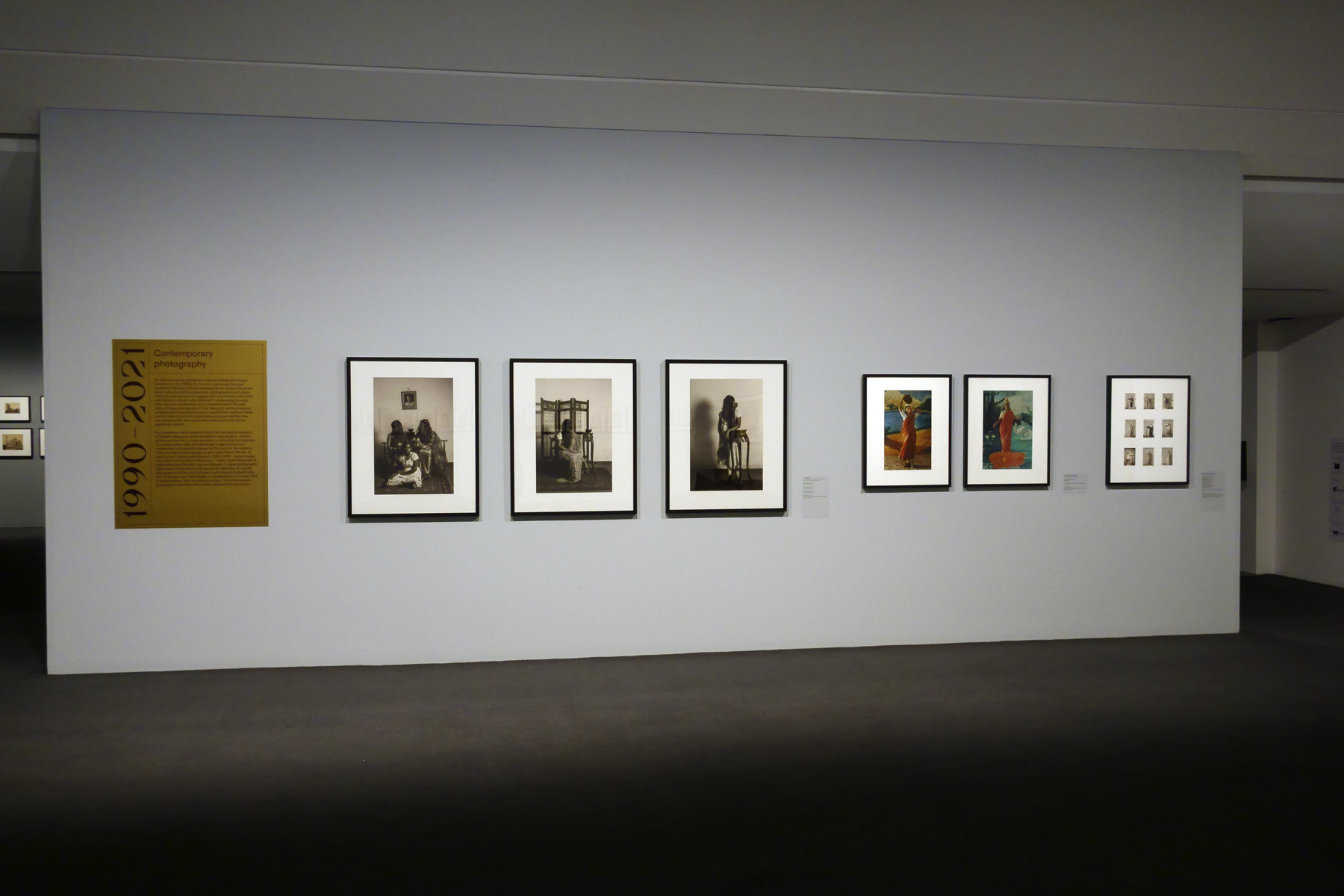
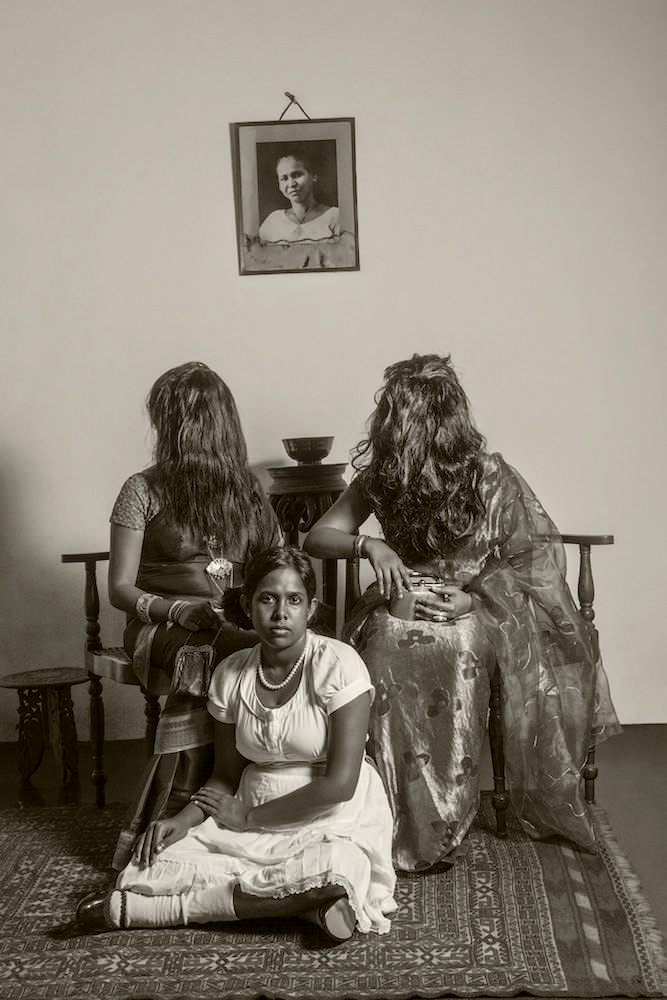
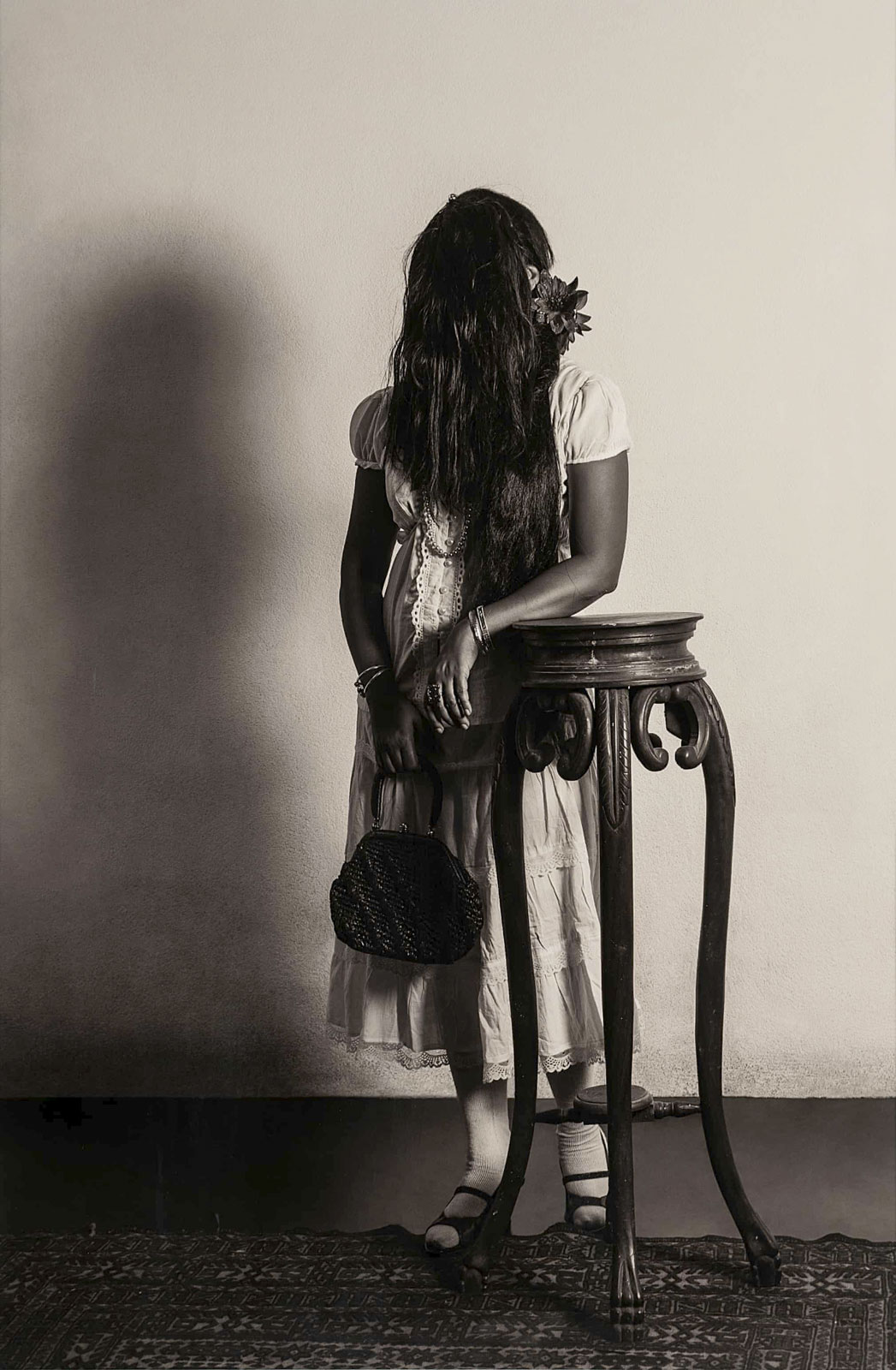
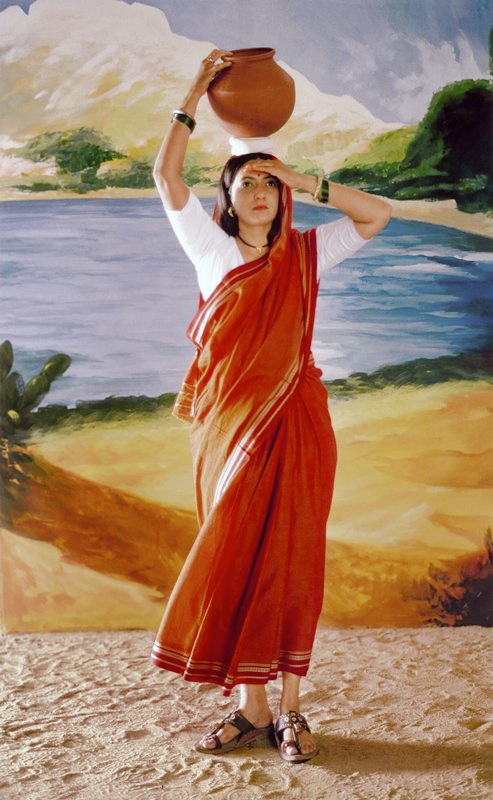
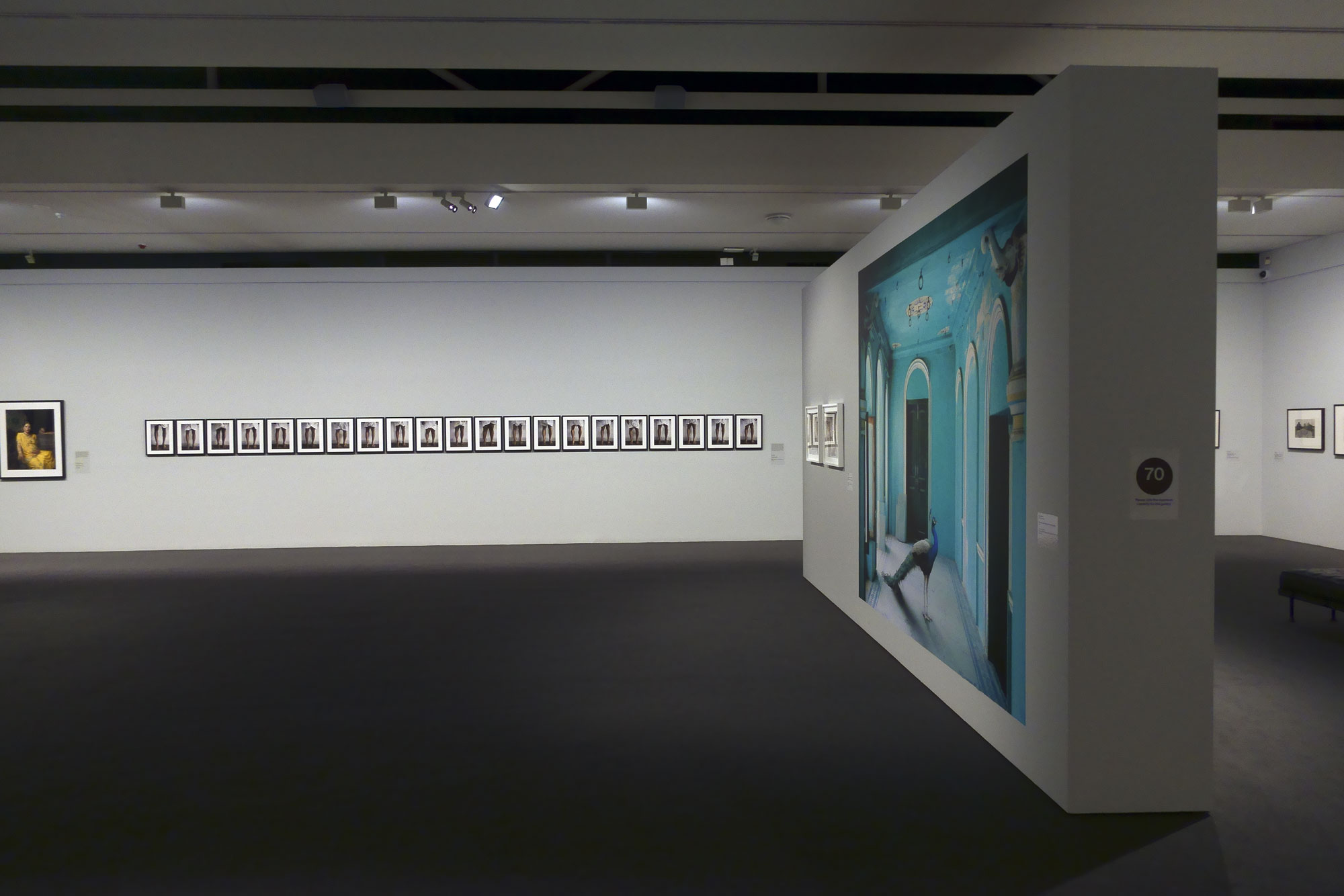
The cacophony of “noise” which emanates from the contemporary photographs (and here I will use a section of text which mirrors the form) – – – from grids of hairy male legs seen from a child’s perspective (childhood memories / male figure / Indian family / perspectives of a child) to incarnations of mythological figures that examine “the genres of both the ethnographic photograph-as-document that is linked to the colonial era, as well as the fantasy-inspired make-believe that emanated from traditional Indian portrait studios in the late 19th and early 20th centuries” to conventions of colonial-era ethnographic portrait photographs of women dictated by male notions of femininity disrupted by deliberately dishevelled hair as a symbol of defiance against the notion of out-of-place hair seen as “hysterical” or “uncontrollable”, paradoxically making legible faces into ill/legible citizens, disturbed and defiant “others” (BIG BREATH!) – – – belies my lack of feeling for ANY of the photographs displayed.

After writing on photography since the year 2008 I keep coming up short / banging on the same drum about contemporary photography: I feel almost nothing for any of these photographs even as I appreciate their historical re-“visions”, their self-awareness and self-reflexivity (as much about the photographer as the subject), their intellectual rigour and conceptual contortions. They leave me feeling like I have been playing Twister with too many hands and feet, my mind tied up in an infinite library of thoughts and ideas while ruminating on less than stimulating images.


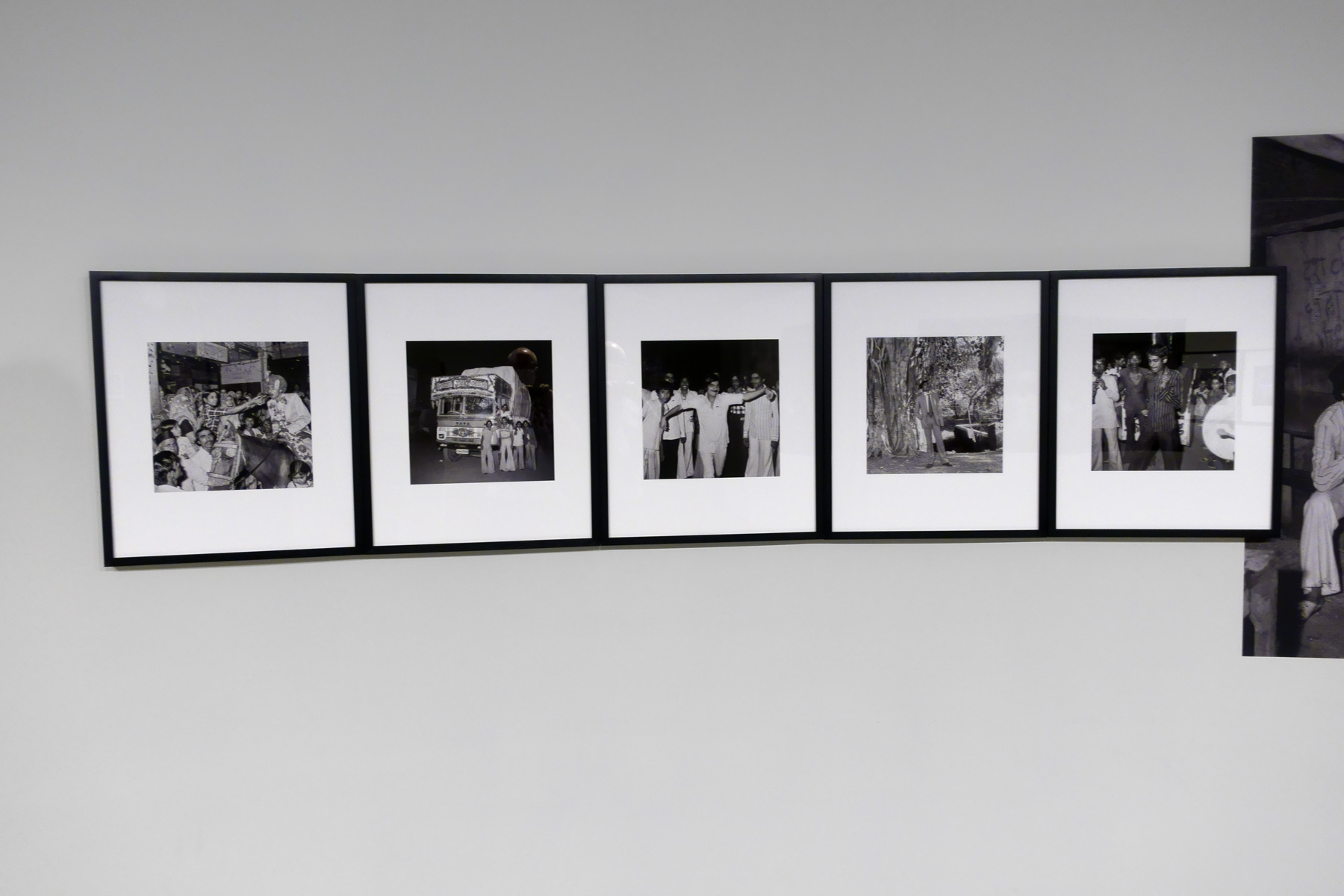
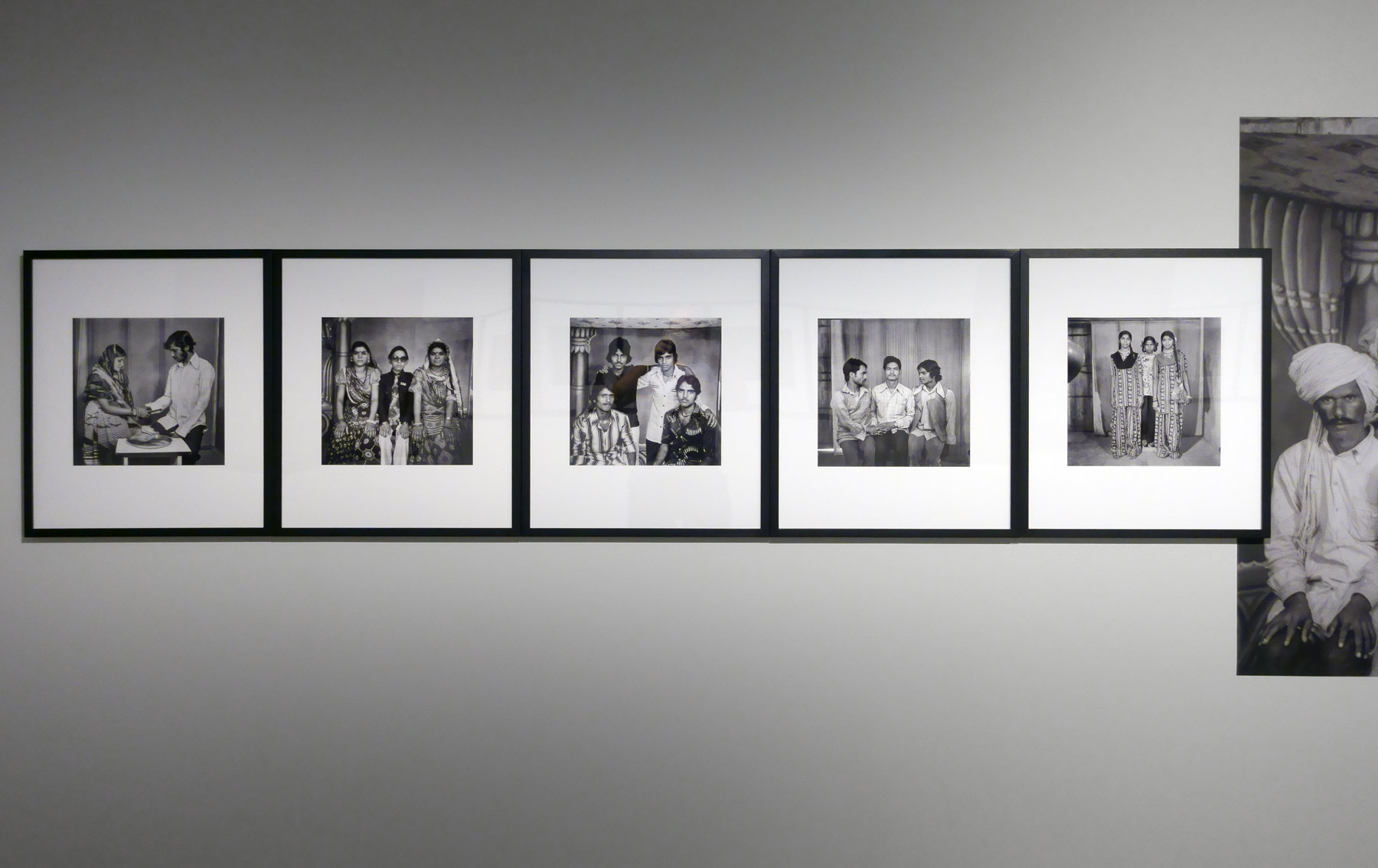
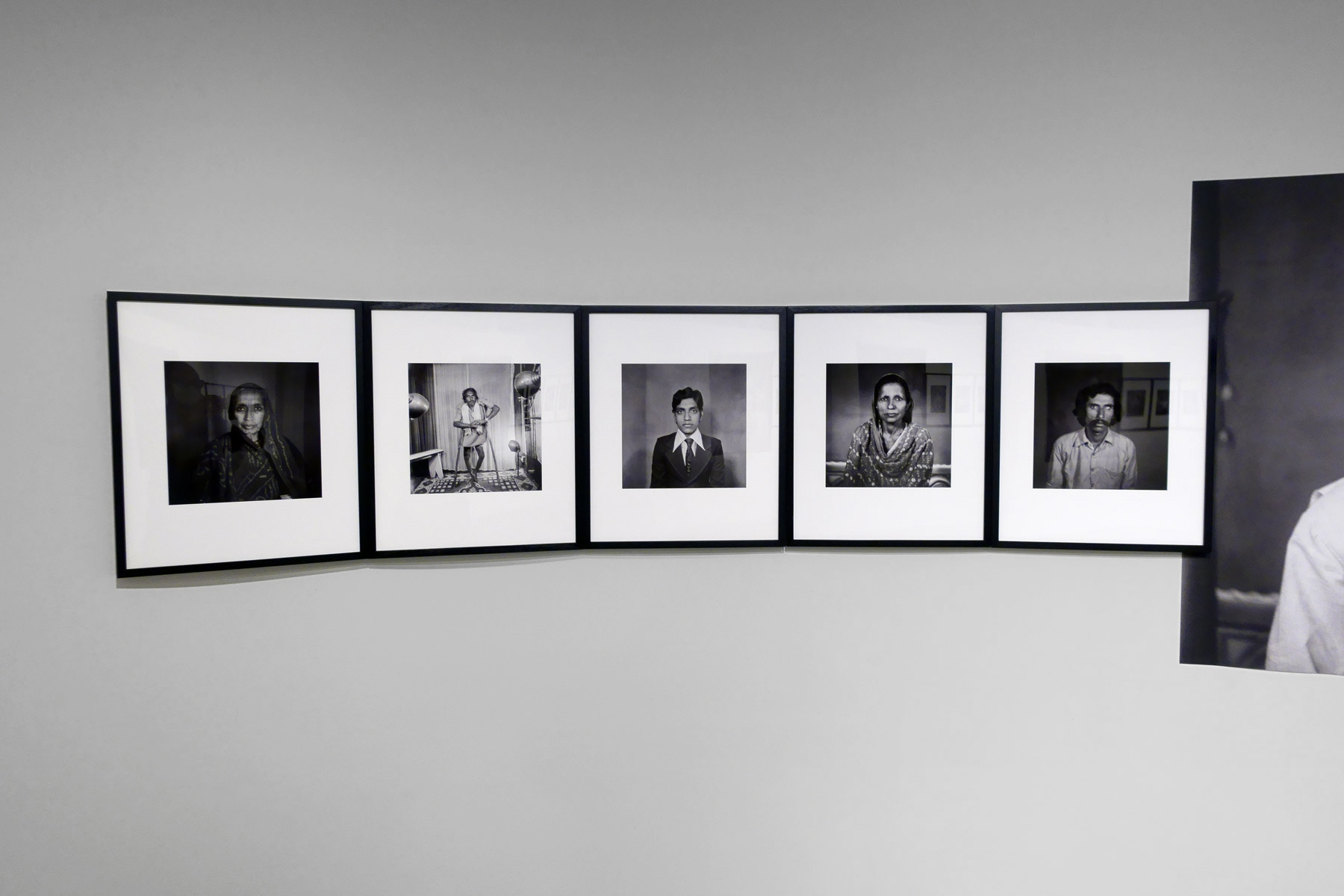
And so to the glorious, uplifting denouement of the exhibition which are the dynamic photographs of Suresh Punjabi’s Suhag Studio in Nagda, Madhya Pradesh. I am in love with them.

Reminiscent of the photographs of Africans by Malike Sidibé (Malian, 1935-2016), Seydou Keïta (Malian, 1921-2001) and Sanlé Sory (West African, b. 1943), Punjabi’s visions of Indian life possess a vital energy unlike anything else in this exhibition, and get as close to capturing the spirit of the Indian people as anything I have ever seen from the continent. This is because, at the time, Punjabi’s photographs (like the photographs of Atget) were not considered art but were documents taken for a broad set of purposes: from wedding and family albums to passport photos, from administrative photos to personal souvenirs, from family groups to playful contexts. Through their lack of pretension (ah, there is the key!) “Punjabi’s photographs chronicle daily life in small-town India, a context that many photographic histories from the subcontinent often miss… These portraits are the result of a deeply personal and unique relationship between Punjabi and his clients…”4

Punjabi’s clients were like family to him, and he wanted to photograph them in the best way possible, to picture them how they wanted to see themselves. Deceptively simple and formal in their pictorial construction, Punjabi’s photographs allow us to touch the aspirations of everyday Indians – with their hopes and dreams, their communion with family and friends, lost in the moment of dance or conversation, or crowded together in a small 10 x 20 feet studio with painted backdrop. “You can sense the presence of a humane vision behind the mechanical eye of the camera.” Simply put, these “playfully intimate” and grounded photographs are a refreshing counterpoint to so many conceptual contemporary photographs which lead nowhere, for they have an immediacy and intimacy which touches us (through their palpable aura) as only the best photographs can. “He doesn’t really take pictures of people and things (or, God forbid, grind out endless examples of his own cleverness). He photographs feelings and relationships.” (U.S. Camera ’62)

Dr Marcus Bunyan


1/ John Falconer. Under Indian Skies: 19th-Century Photographs from a Private Collection. Narayana Press, 2018, p. 35

2/ Aparna Andhare, Curator of Maharaja Sawai Man Singh II Museum quoted in “King’s Circle – Ram Singh & the Art of Intimate Portraiture,” on the Sarmaya website January 16, 2021 [Online] Cited 10/03/2022

3/ Falconer, op. cit., pp. 34-35

4/ John Falconer. Under Indian Skies: 19th-Century Photographs from a Private Collection. Narayana Press, 2018, pp. 34-35.


Many thankx to Monash Gallery of Art for allowing me to publish the photographs in the posting. All installation photographs © Marcus Bunyan and the Monash Gallery of Art. Please click on the photographs for a larger version of the image.
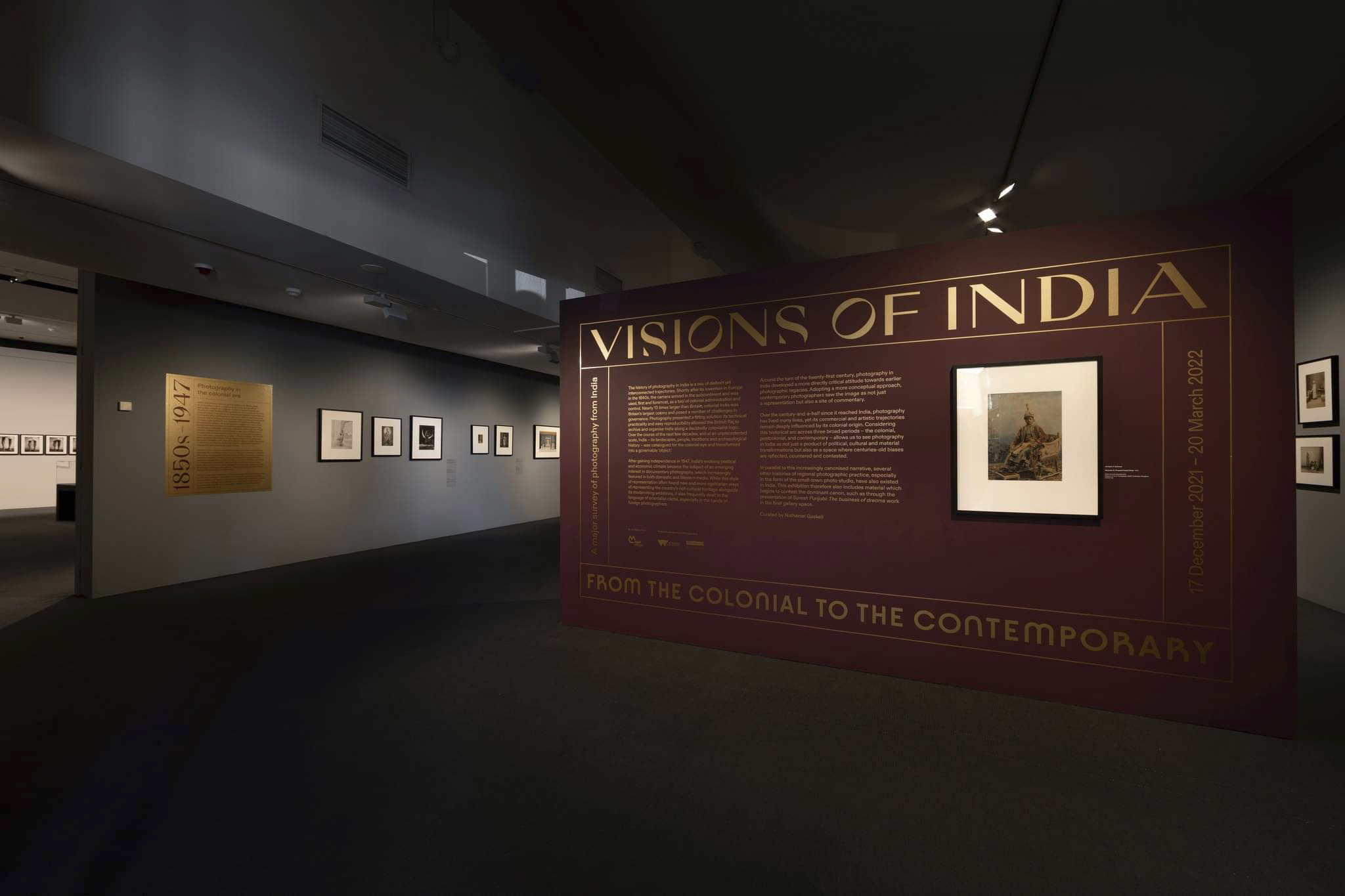


Installation view of the exhibition 'Visions of India: from the colonial to the contemporary' at the Monash Gallery of Art


Installation view of the opening of the exhibition Visions of India: from the colonial to the contemporary at the Monash Gallery of Art showing the Johnston & Hoffman photograph Maharaja Sir Bhagwati Prasad Singh (1915, below)
Photo: Monash Gallery of Art
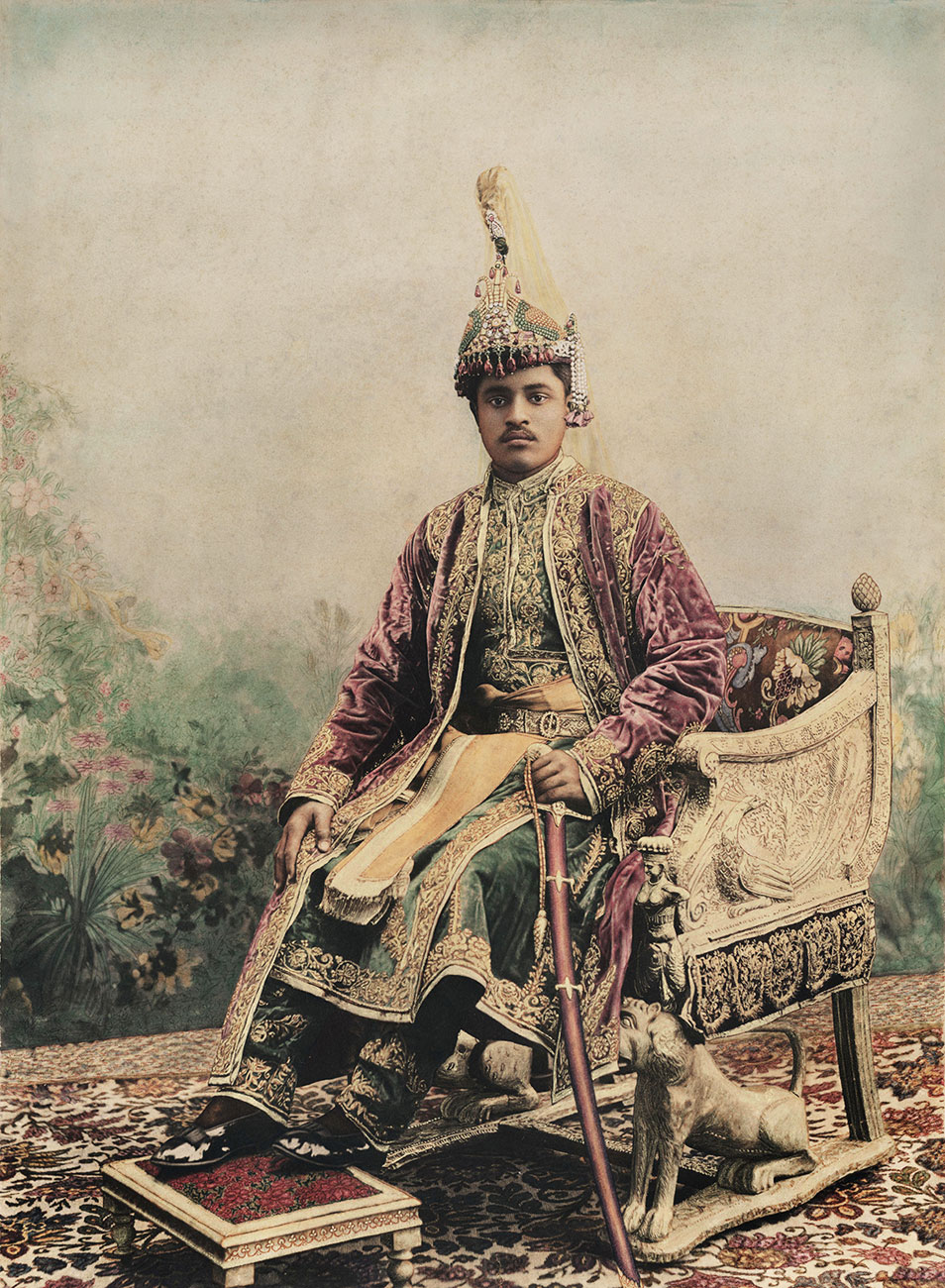
 

Johnston & Hoffman (founded 1882, dissolved 1950s) 'Maharaja Sir Bhagwati Prasad Singh' 1915


Johnston & Hoffman (founded 1882, dissolved 1950s)
Maharaja Sir Bhagwati Prasad Singh
1915
Hand-coloured albumen print
46.0 x 33.0cm
Courtesy of the Museum of Art & Photography (MAP) (Bengaluru)


The leading photography studio of Johnston & Hoffman was established at 22 Chowringhee Road, Calcutta around 1882 by Theodore Julius Hoffman and Peter Arthur Johnston. A branch was opened in Darjeeling in 1890 and Simla in the mid 1890s. There was also a Burma branch at 70 Phayre Street, Rangoon for a short period between 1889-1890. Hoffmann took over the business on the death of Johnston – which was around 1886 and soon after the Calcutta business commenced. Theodore Hoffman died in Calcutta, India in December 1921. It was possibly the second largest commercial photographers in India after the studios of Bourne and Shepherd and were one of the first to publish postcards in Calcutta from at least 1898 onwards.

Anonymous text from the Families In British India Society (FIBIS) website Nd [Online] Cited 03/03/2022


Wall text from the exhibition 'Visions of India: from the colonial to the contemporary' at the Monash Gallery of Art


Wall text from the exhibition


1850s-1947 Photography in the colonial era wall text from the exhibition 'Visions of India: from the colonial to the contemporary' at the Monash Gallery of Art


1850s-1947 Photography in the colonial era wall text from the exhibition


Installation view of the exhibition 'Visions of India: from the colonial to the contemporary' at the Monash Gallery of Art showing the photographs of Sawai Ram Singh II, Maharaja of Jaipur (c. 1860)


Installation view of the exhibition Visions of India: from the colonial to the contemporary at the Monash Gallery of Art showing the photographs of Sawai Ram Singh II, Maharaja of Jaipur (c. 1860, below)
Photo: Monash Gallery of Art


Installation view of Sawai Ram Singh II, Maharaja of Jaipur showing his self-portrait (c. 1860, centre) and portraits of courtesans (c. 1860)


Installation view of Sawai Ram Singh II, Maharaja of Jaipur showing his self-portrait (c. 1860, centre, see below) and portraits of courtesans (c. 1860, below)
Photo: Marcus Bunyan


Informally called the ‘photographer prince of India,’ Maharaja Sawai Ram Singh II was an avid photographer, creating over six thousand individual photographs and nearly two thousand glass plate negatives throughout his life. He is renowned for having photographed women residing in the zenana of the royal household – at a time when the women lived almost entirely out of public view – using modes of representation similar to traditional Victorian portraiture.
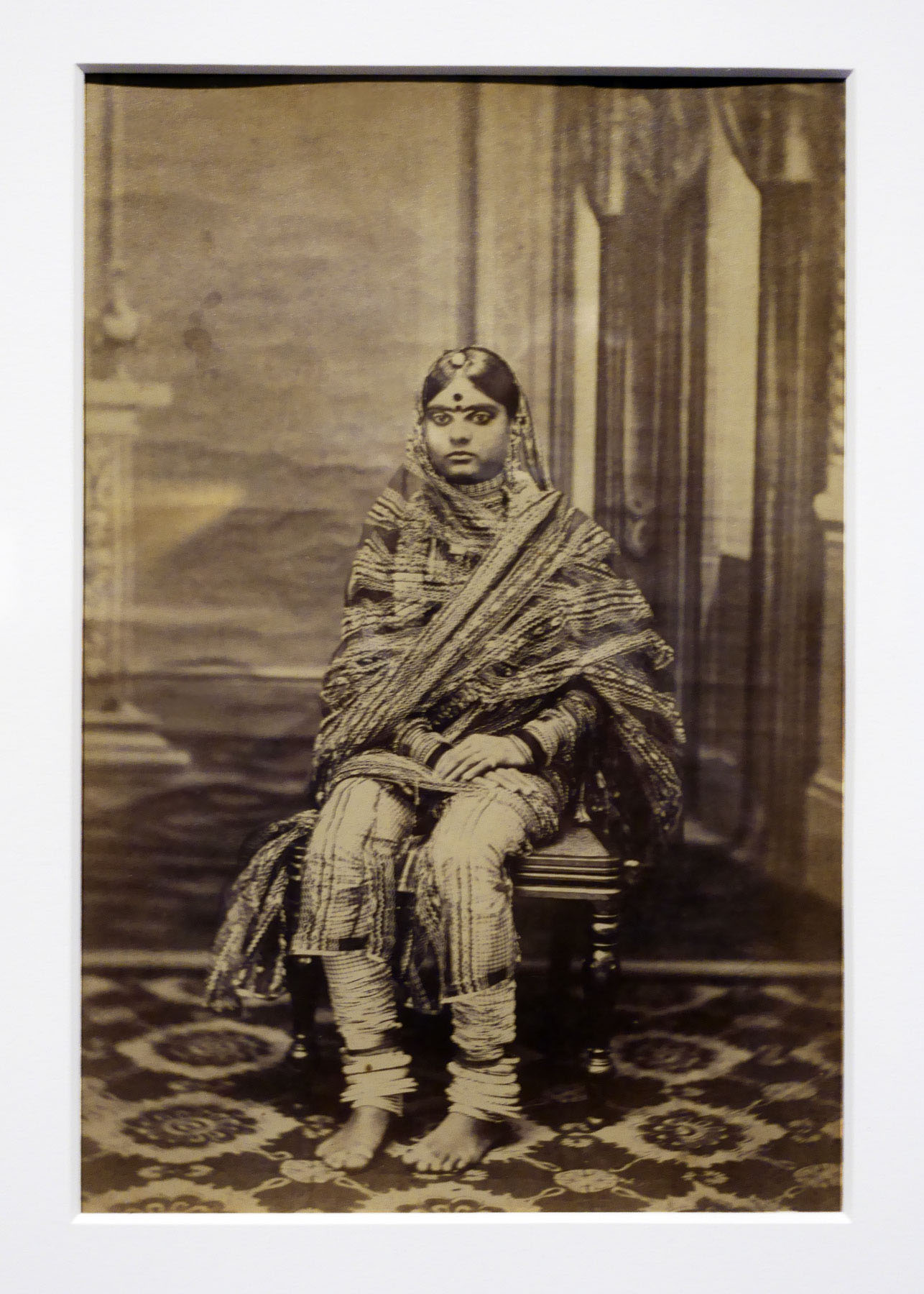
 

Sawai Ram Singh II, Maharaja of Jaipur (Indian, 1833-1880) 'Portrait of a courtesan' c. 1860 (installation view)


Sawai Ram Singh II, Maharaja of Jaipur (Indian, 1833-1880)
Portrait of a courtesan (installation view)
c. 1860
Albumen print
Courtesy of the Museum of Art & Photography (MAP) (Bengaluru)
Photo: Marcus Bunyan


Sawai Ram Singh II, Maharaja of Jaipur (Indian, 1833-1880) 'Portrait of a courtesan' c. 1860


Sawai Ram Singh II, Maharaja of Jaipur (Indian, 1833-1880)
Portrait of a courtesan
c. 1860
Albumen print
Courtesy of the Museum of Art & Photography (MAP) (Bengaluru)


The ‘zenana’ portraits [zenana: the part of a house for the seclusion of women], as they are often called, are among the most remarkable of these negatives. They show many individual South Asian women: some look away, others dress up and pose, and several stare down the photographer (and today’s viewer), challenging both to uncover their personalities and stories. That Sawai Ram Singh was able to achieve at least the former – that he was able to connect with, and portray, his sitters as individuals rather than ‘types’ – is one of the special qualities of his images. He seems not to have photographed any of his wives, but that he photographed so many women; that he found them ‘fit’ subjects to be sitters, is unusual for this period. Nothing comparable has emerged from any other contemporary Indian court. Unfortunately, we cannot be sure who all these women are – history is poor at remembering their names – but many were women at his court. Perhaps they were performers; some may have been paaswaans.

Mrinalini Venkateswaran. “How a 19th Century Jaipur Ruler Mastered Photography,” on the Museum of Art and Photography (MAP) website Nd [Online] Cited 10/03/2022
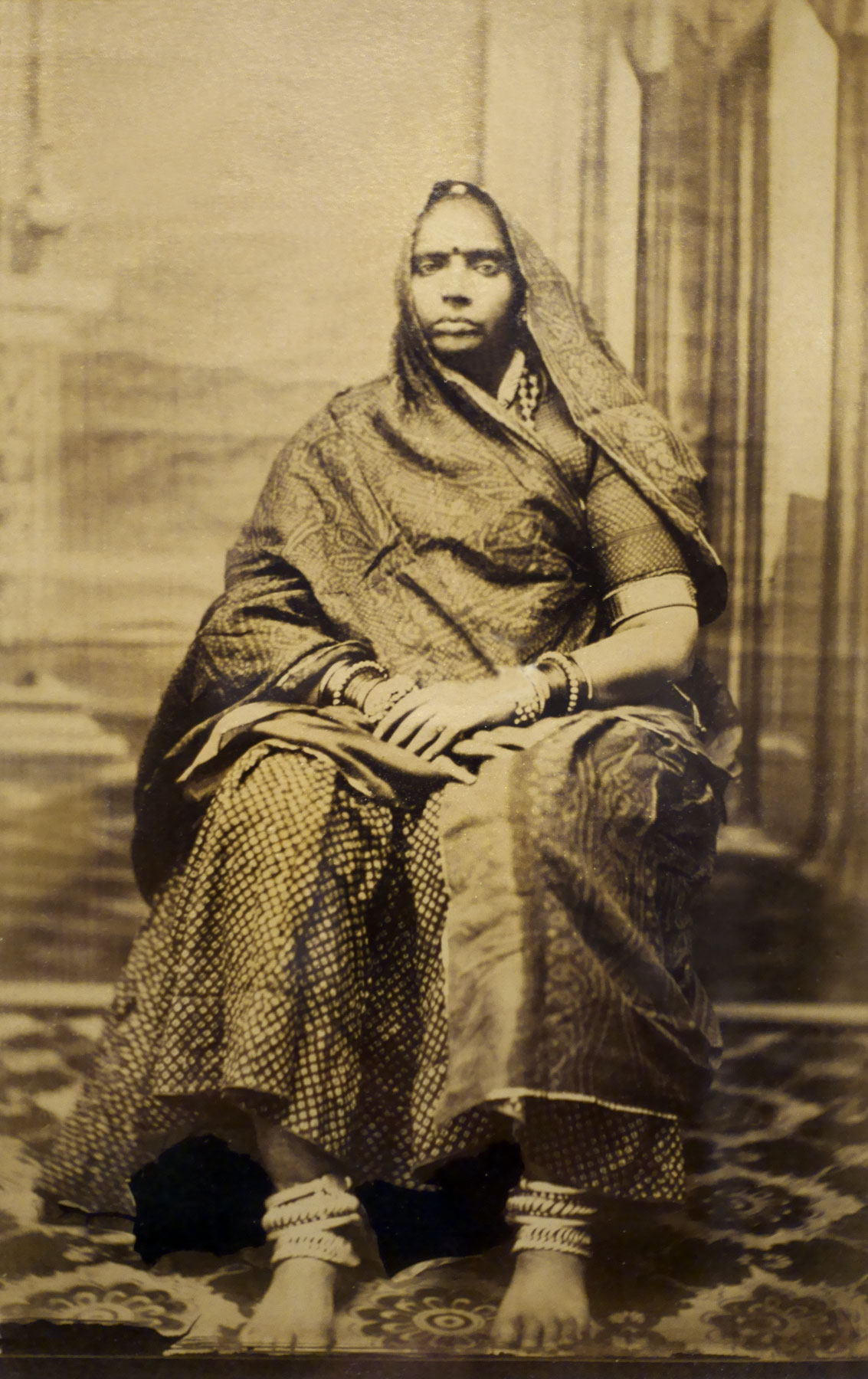
 

Sawai Ram Singh II, Maharaja of Jaipur (Indian, 1833-1880) 'Portrait of a courtesan' c. 1860 (installation view)


Sawai Ram Singh II, Maharaja of Jaipur (Indian, 1833-1880)
Portrait of a courtesan (installation view)
c. 1860
Albumen print
Courtesy of the Museum of Art & Photography (MAP) (Bengaluru)
Photo: Marcus Bunyan


Ram Singh was passionate about art and photography; he captured (and developed) numerous photographs of women, junior functionaries (like tailors) and nobles of his court. It is believed that Ram Singh was introduced to a camera in 1864 when photographer T. Murray visited Jaipur. After learning how to photograph, he used to carry his camera on all his trips. When western visitors came to his court, he used to learn photography from them.

Many of the photographs taken by him were of elite women who so-far lived an entirely secluded private life in the zenanas of his palace; captured in an western artificial setting, consisting of elegant backdrops, Victorian furniture and Persian carpets. It has been since considered as a pioneer effort at portraying Rajput women behind the purdah. Prior to Ram Singh’s photographs, portraits of specific Rajput women were nearly unknown and artists mass-produced idealised representations of women based on a single model, to serve a variety of occasions, for centuries. Interestingly, the names of the photographed women were not mentioned and whether the Maharanis allowed themselves to be photographed is unknown.

Laura Weinstein, an acclaimed art curator argues that the photographs served as an important tool to engage in the widespread discourse about Indian women behind the purdah [the practice in certain Muslim and Hindu societies of screening women from men or strangers, especially by means of a curtain] and they stood out as a rare group of photographs that did not mirror oriental conceptions of Indian domestic life. By appropriating the very European model of portrait photography – which emphasised the dignity and propriety of women, he infused dignity into the life of his photograph-figures unlike other concurrent attempts and refuted the colonial notion of the zenana-inhabitants being idle, unhygienic, superstitious, sexually deviant and oppressed. Rather than reforming the purdah system or associated woman issues, his photographs were modern tools that staunchly defended the tradition, much more than it breached, by portraying an apparent normalcy.

Ram Singh had also commissioned numerous self-portraits in a variety of poses ranging from a Hindu holy man to a Rajput warrior to a Western gentleman. Vikramaditya Prakash, an art-historian had described them as “self-consciously hybridised representations [which] straddle and contest the separating boundary – between coloniser and colonised, English and native – the preservation and reaffirmation of which was crucial for colonial discourse.”

The glass negatives that produced the portraits, the albumen print photograph collection and his own self-portraits are now displayed at the Maharaja Sawai Man Singh II Museum in Jaipur. He was also a life-time member of Bengal Photographic Society.

Text from the Wikipedia website
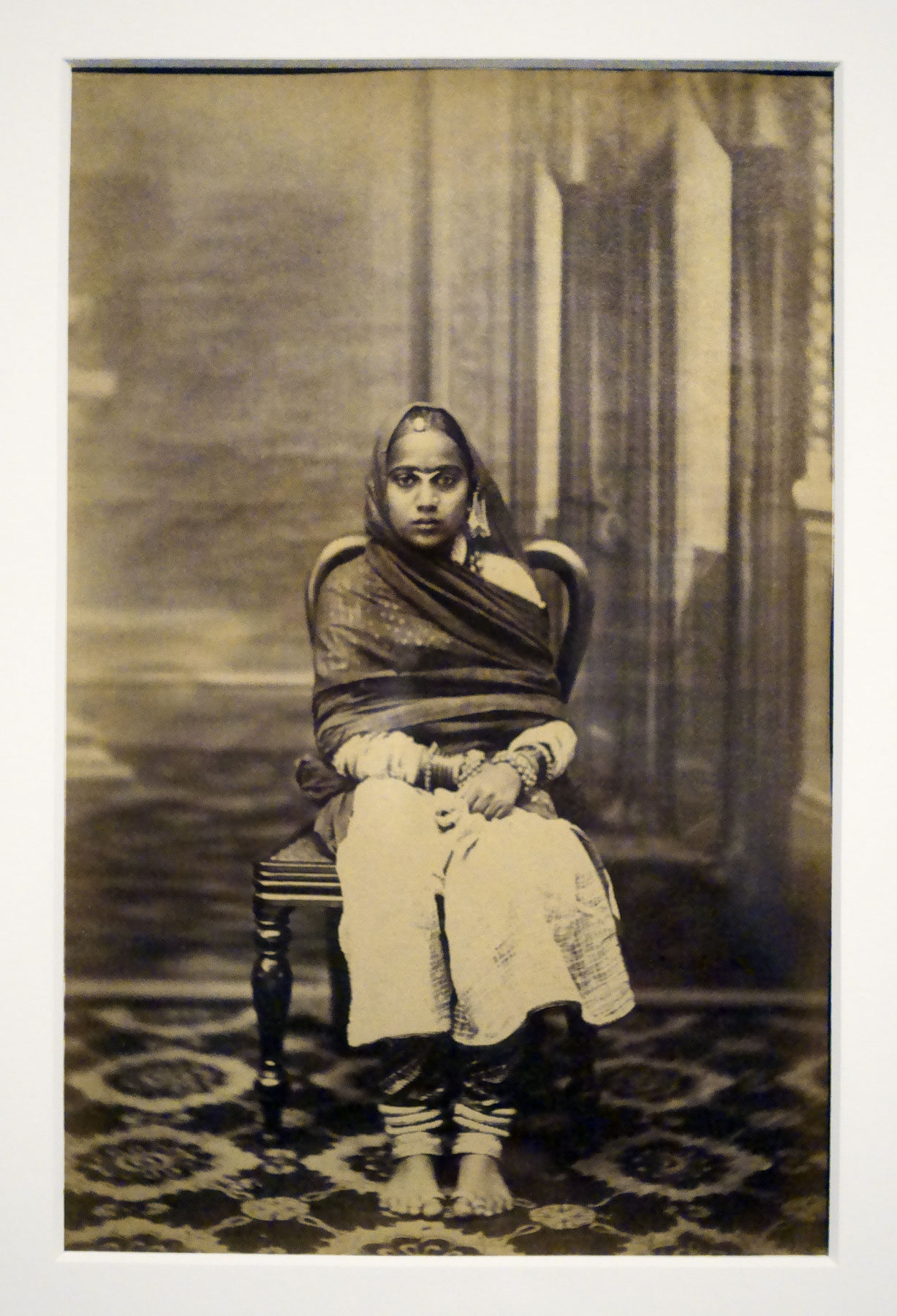
 

Sawai Ram Singh II, Maharaja of Jaipur (Indian, 1833-1880) 'Portrait of a courtesan' c. 1860 (installation view)


Sawai Ram Singh II, Maharaja of Jaipur (Indian, 1833-1880)
Portrait of a courtesan (installation view)
c. 1860
Albumen print
Courtesy of the Museum of Art & Photography (MAP) (Bengaluru)
Photo: Marcus Bunyan
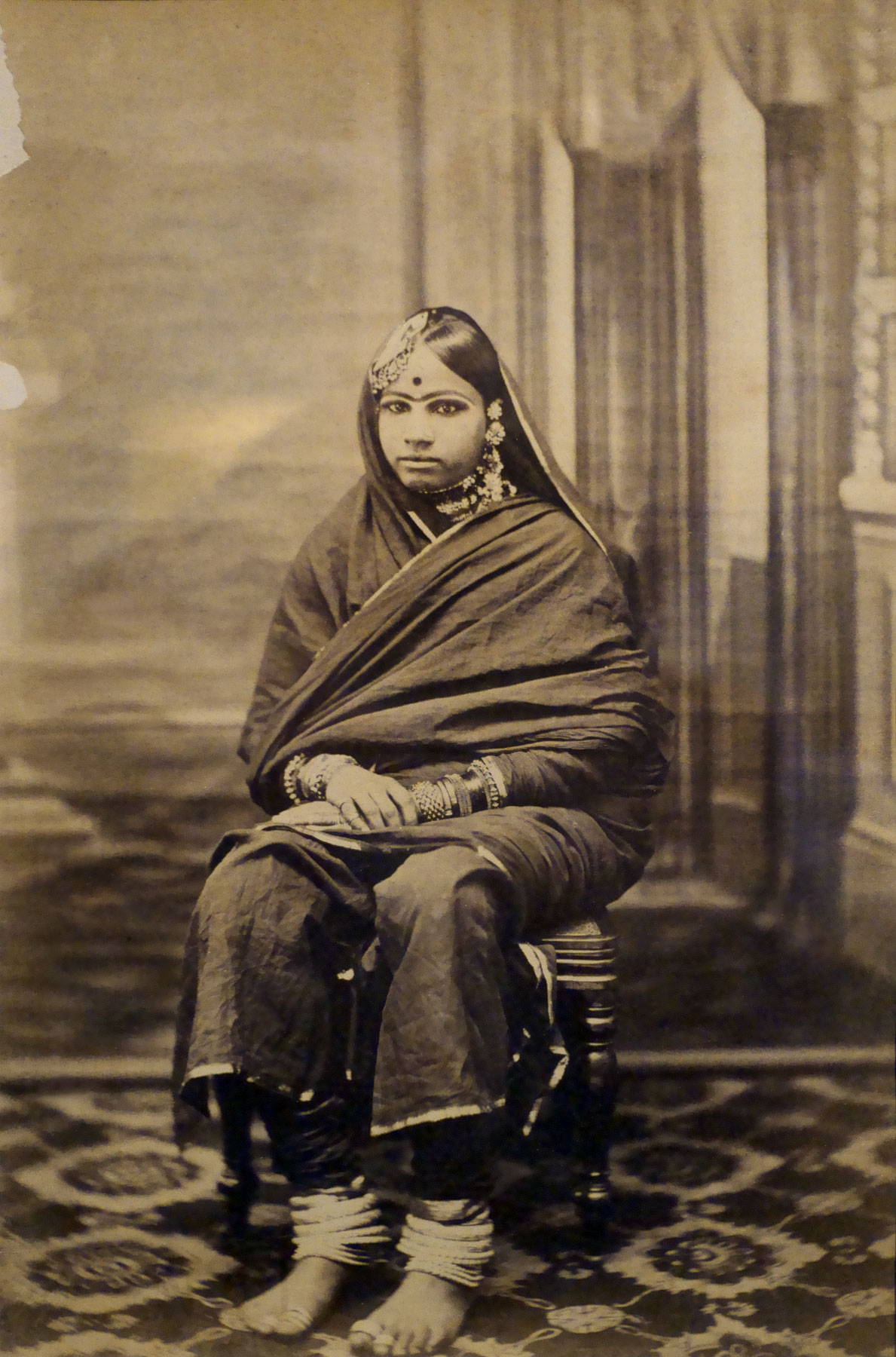
 

Sawai Ram Singh II, Maharaja of Jaipur (Indian, 1833-1880) 'Portrait of a courtesan' c. 1860 (installation view)


Sawai Ram Singh II, Maharaja of Jaipur (Indian, 1833-1880)
Portrait of a courtesan (installation view)
c. 1860
Albumen print
Courtesy of the Museum of Art & Photography (MAP) (Bengaluru)
Photo: Marcus Bunyan


Sawai Ram Singh II, Maharaja of Jaipur (Indian, 1833-1880) 'Portrait of a courtesan' c. 1860 (installation view)


Sawai Ram Singh II, Maharaja of Jaipur (Indian, 1833-1880)
Portrait of a courtesan (installation view)
c. 1860
Albumen print
Courtesy of the Museum of Art & Photography (MAP) (Bengaluru)
Photo: Marcus Bunyan
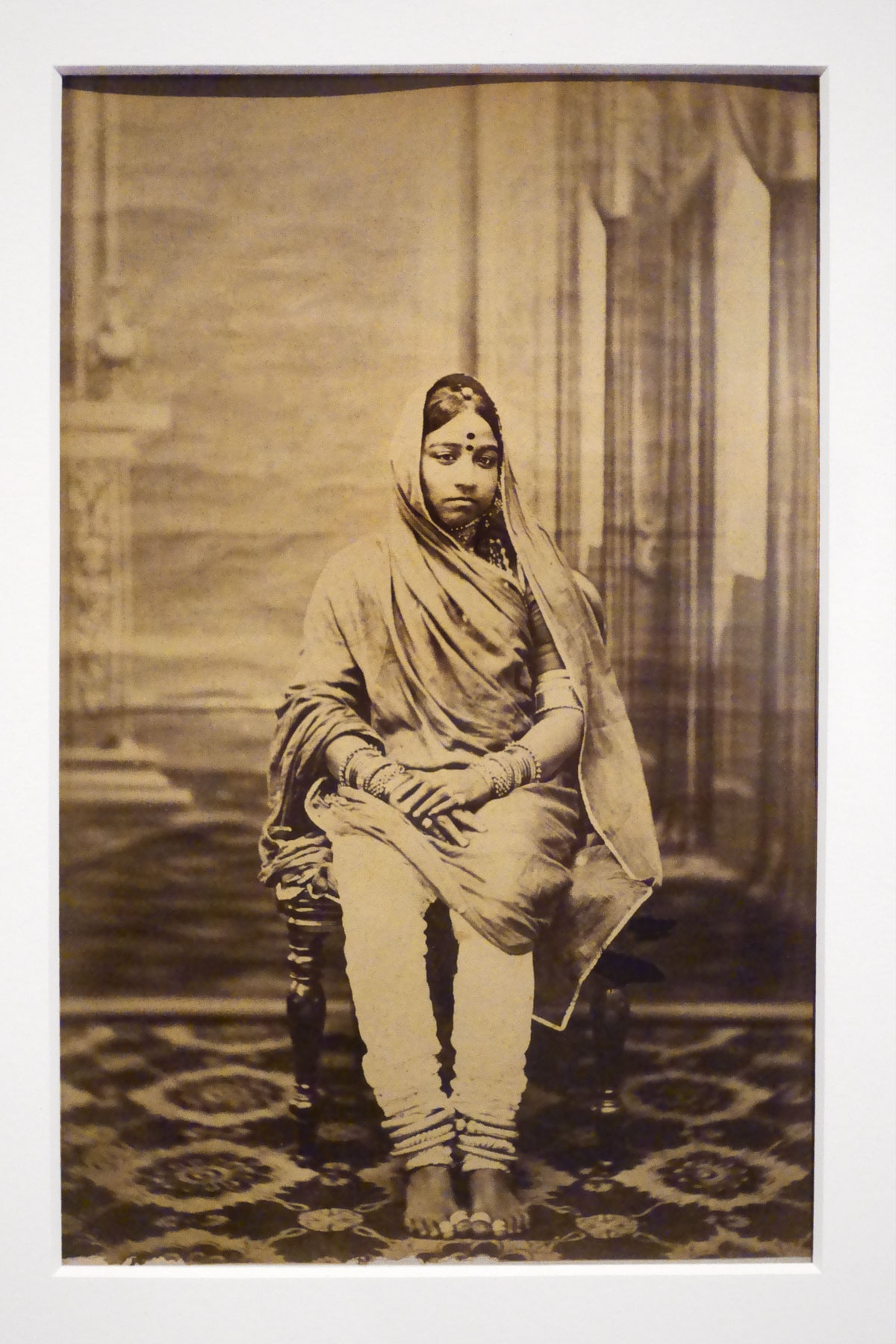
 

Sawai Ram Singh II, Maharaja of Jaipur (Indian, 1833-1880) 'Portrait of a courtesan' c. 1860 (installation view)


Sawai Ram Singh II, Maharaja of Jaipur (Indian, 1833-1880)
Portrait of a courtesan (installation view)
c. 1860
Albumen print
Courtesy of the Museum of Art & Photography (MAP) (Bengaluru)
Photo: Marcus Bunyan
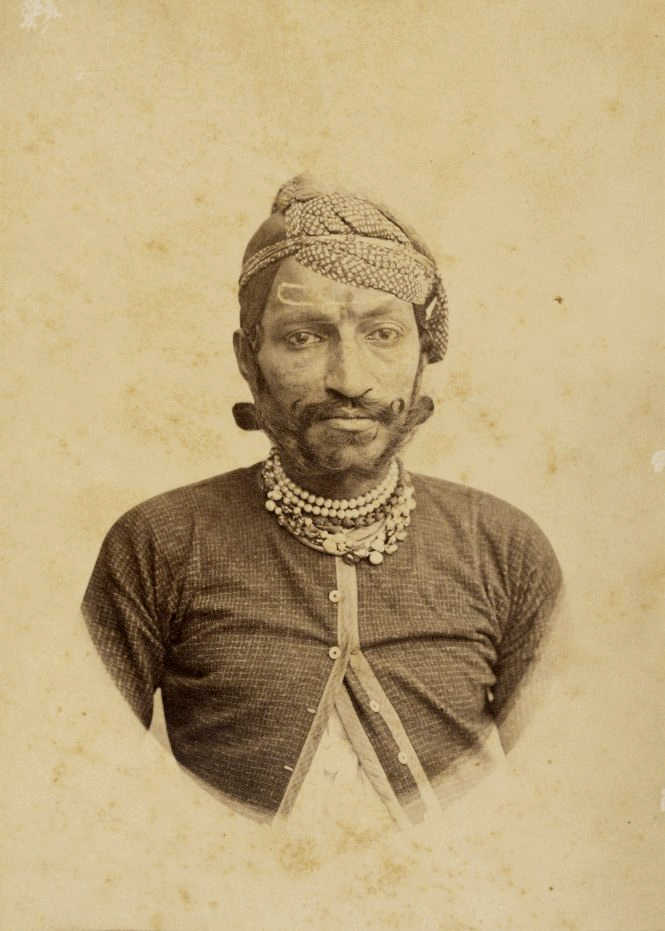
 

Sawai Ram Singh II, Maharaja of Jaipur (Indian, 1833-1880) 'Self-portrait' c. 1860


Sawai Ram Singh II, Maharaja of Jaipur (Indian, 1833-1880)
Self-portrait
c. 1860
Albumen print
Courtesy of the Museum of Art & Photography (MAP) (Bengaluru)
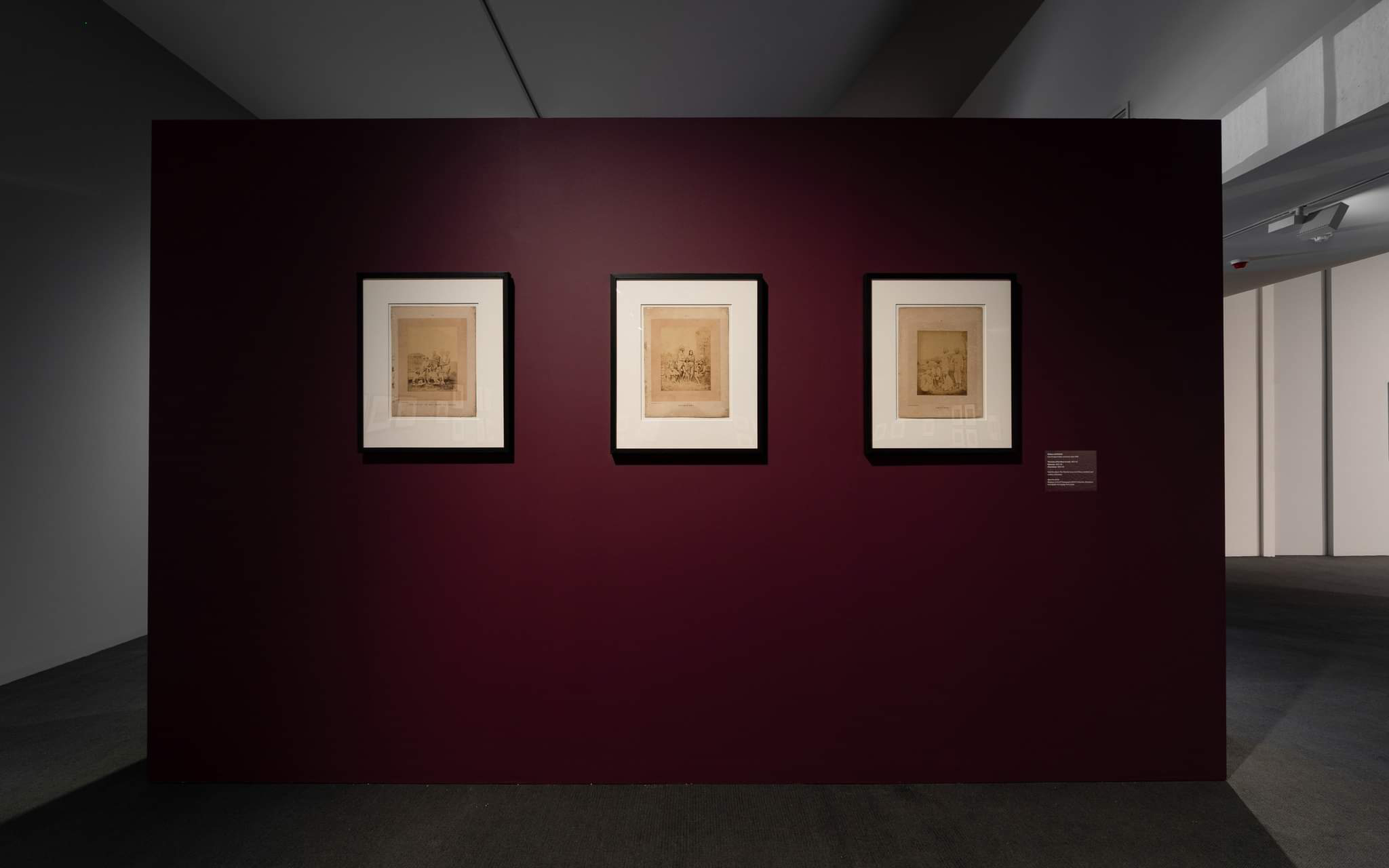
 

Installation view of the exhibition 'Visions of India: from the colonial to the contemporary' at the Monash Gallery of Art showing the photographs of William Johnson (English, date born unknown - 1886) from the album 'The Oriental races and tribes, residents and visitors of Bombay' with at left, The Kulis of the West of India (1852-1855); at centre, 'Chambhars' (1852-1855); and at right, 'Kharavas' (1852-1855)


Installation view of the exhibition Visions of India: from the colonial to the contemporary at the Monash Gallery of Art showing the photographs of William Johnson (English, date born unknown – 1886) from the album The Oriental races and tribes, residents and visitors of Bombay with at left, The Kulis of the West of India (1852-1855, below); at centre, Chambhars (1852-1855, below); and at right, Kharavas (1852-1855, below)
Photo: Monash Gallery of Art


Installation view of the exhibition 'Visions of India: from the colonial to the contemporary' at the Monash Gallery of Art showing the photographs of William Johnson (English, date born unknown - 1886) from the album 'The Oriental races and tribes, residents and visitors of Bombay' with at left, 'The Kulis of the West of India' (1852-1855); at centre, 'Chambhars' (1852-1855); and at right, 'Kharavas' (1852-1855)


Installation view of the exhibition Visions of India: from the colonial to the contemporary at the Monash Gallery of Art showing the photographs of William Johnson (English, date born unknown – 1886) from the album The Oriental races and tribes, residents and visitors of Bombay with at left, The Kulis of the West of India (1852-1855, below); at centre, Chambhars (1852-1855, below); and at right, Kharavas (1852-1855, below)
Photo: Marcus Bunyan
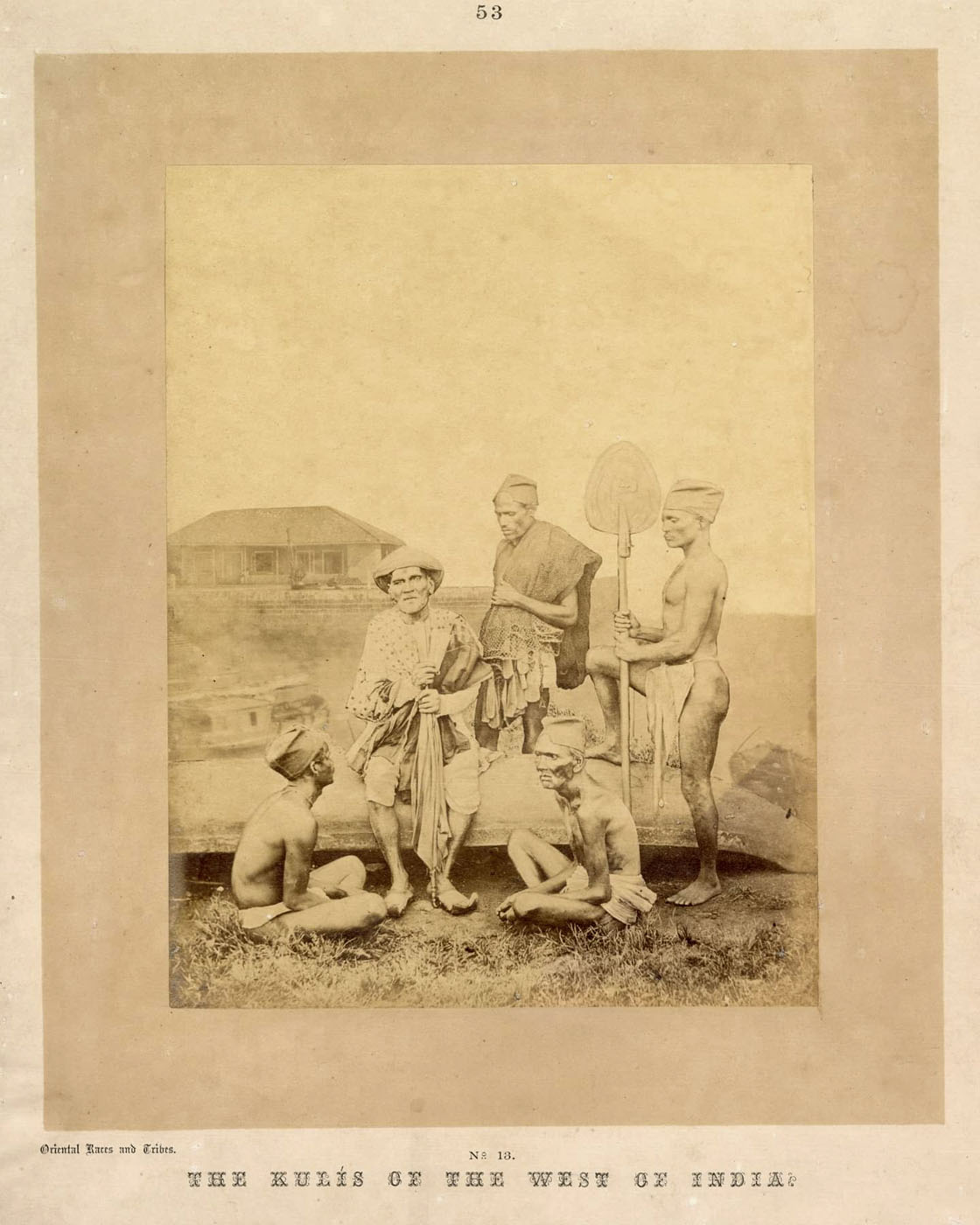
 

William Johnson (English, date born unknown - 1886) 'The Kulis of the West of India' 1852-1855


William Johnson (English, date born unknown – 1886)
The Kulis of the West of India
1852-1855
From the album The Oriental races and tribes, residents and visitors of Bombay
Albumen print
23.0 x 17.7cm
Courtesy of the Museum of Art & Photography (MAP) (Bengaluru)
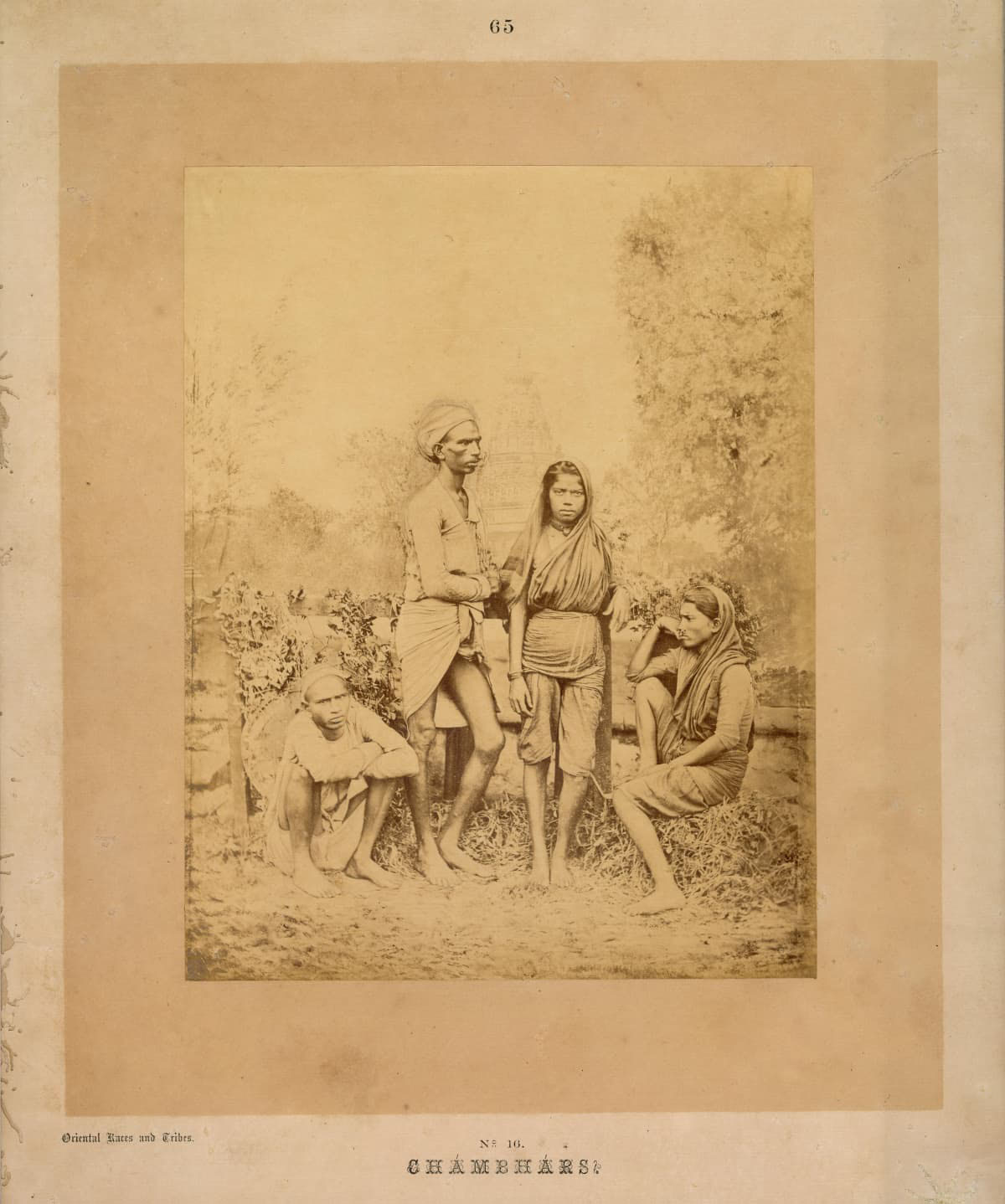
 

William Johnson (English, date born unknown - 1886) 'Chambhars' 1852-1855


William Johnson (English, date born unknown – 1886)
Chambhars
1852-1855
From the album The Oriental races and tribes, residents and visitors of Bombay
Albumen print
23.0 x 17.7cm
Courtesy of the Museum of Art & Photography (MAP) (Bengaluru)


Four members of the Chambhar community, historically associated with leather work, pose for an outdoor portrait by William Johnson, co-author and photographer of two-volume collection of albumen prints The Oriental Races and Tribes, Residents and Visitors of Bombay. The photographs with letter-press description are largely considered to be the first published ethnographic study of Indian people to use photos as well as written descriptions.
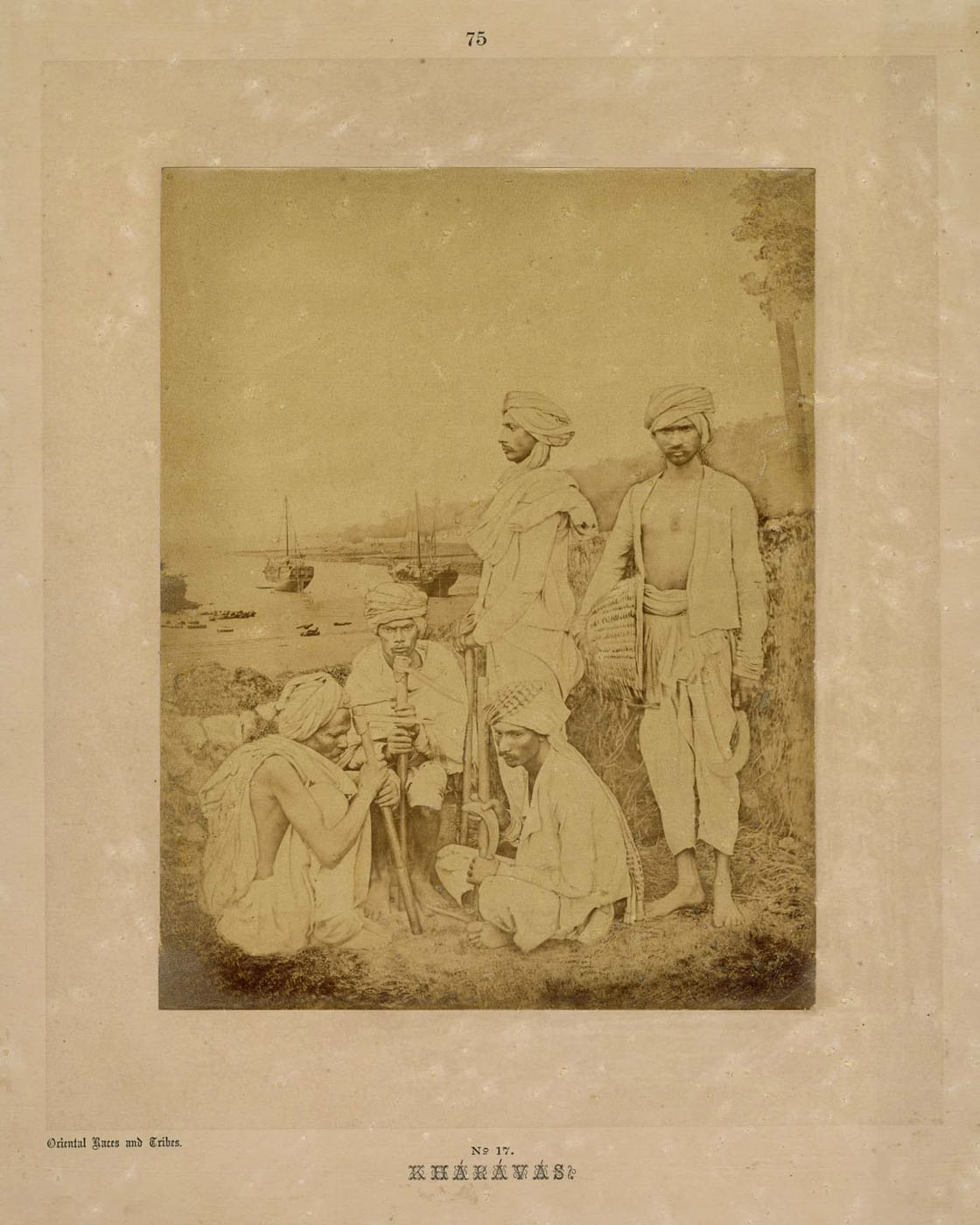
 

William Johnson (English, date born unknown - 1886) 'Kharavas' 1852-1855


William Johnson (English, date born unknown – 1886)
Kharavas
1852-1855
From the album The Oriental races and tribes, residents and visitors of Bombay
Albumen print
23.0 x 17.7cm
Courtesy of the Museum of Art & Photography (MAP) (Bengaluru)
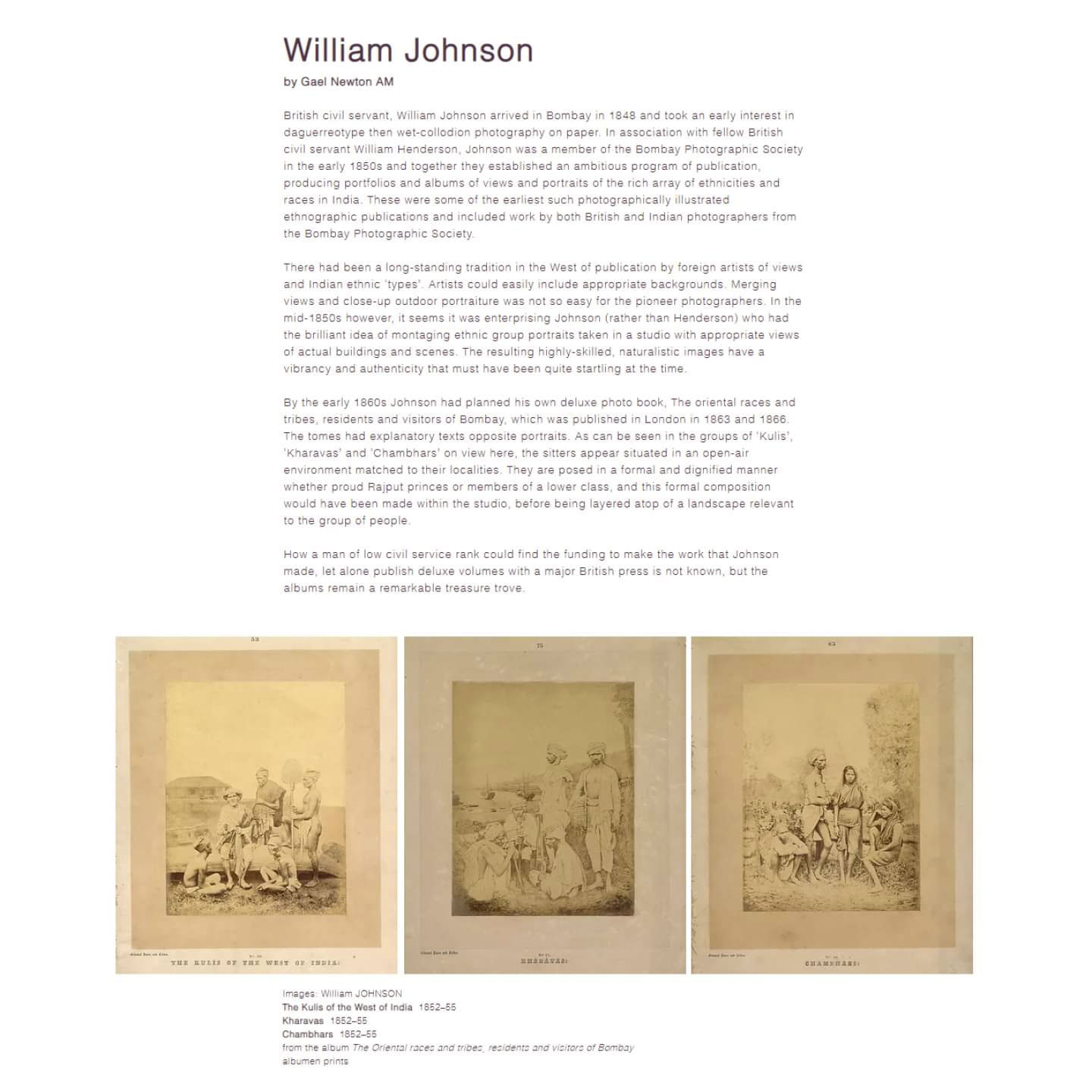
 

William Johnson wall text from the exhibition 'Visions of India: from the colonial to the contemporary' at the Monash Gallery of Art showing the photographs of Sawai Ram Singh II, Maharaja of Jaipur (c. 1860)
 

William Johnson wall text from the exhibition
 

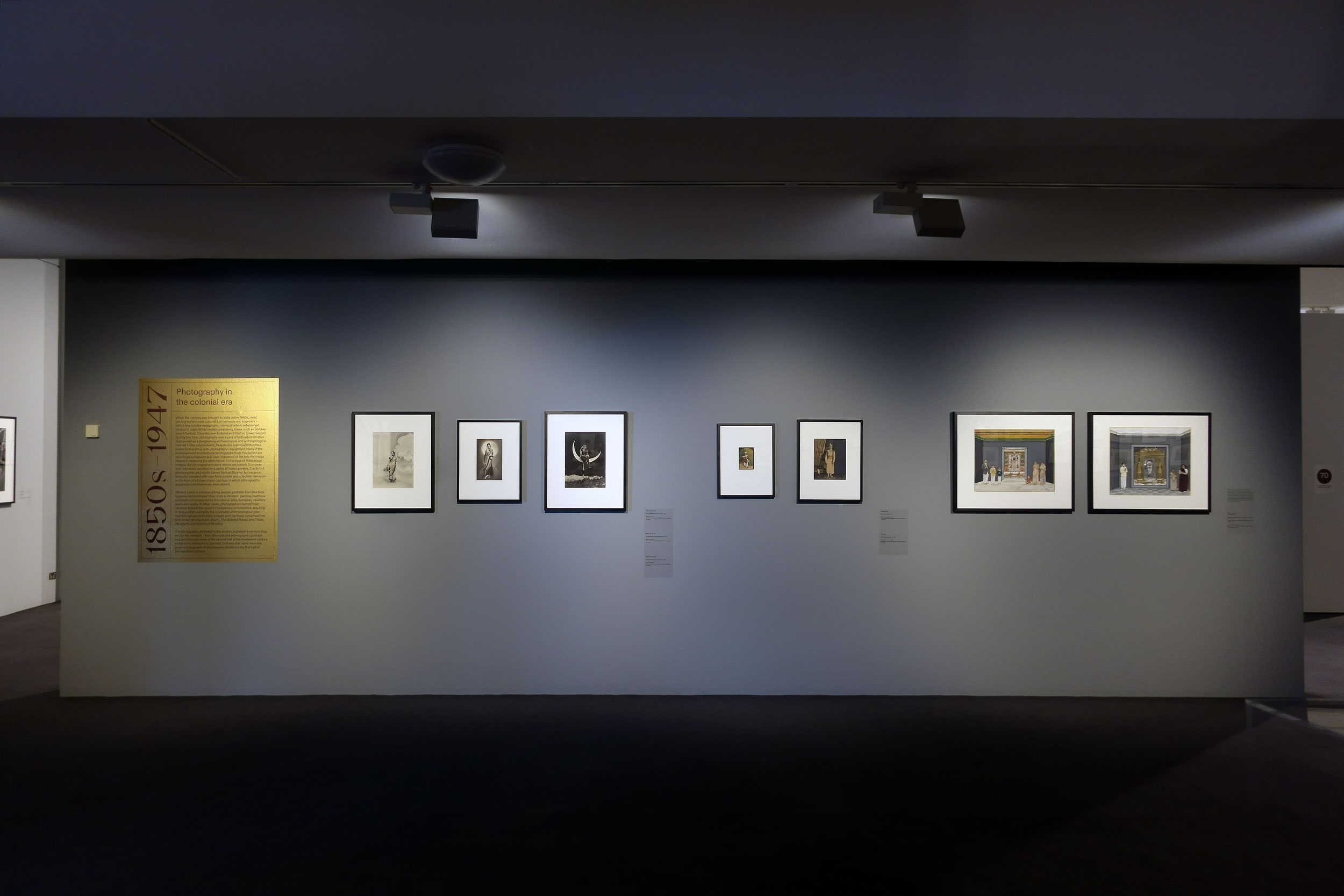
Installation view of the exhibition 'Visions of India: from the colonial to the contemporary' at the Monash Gallery of Art

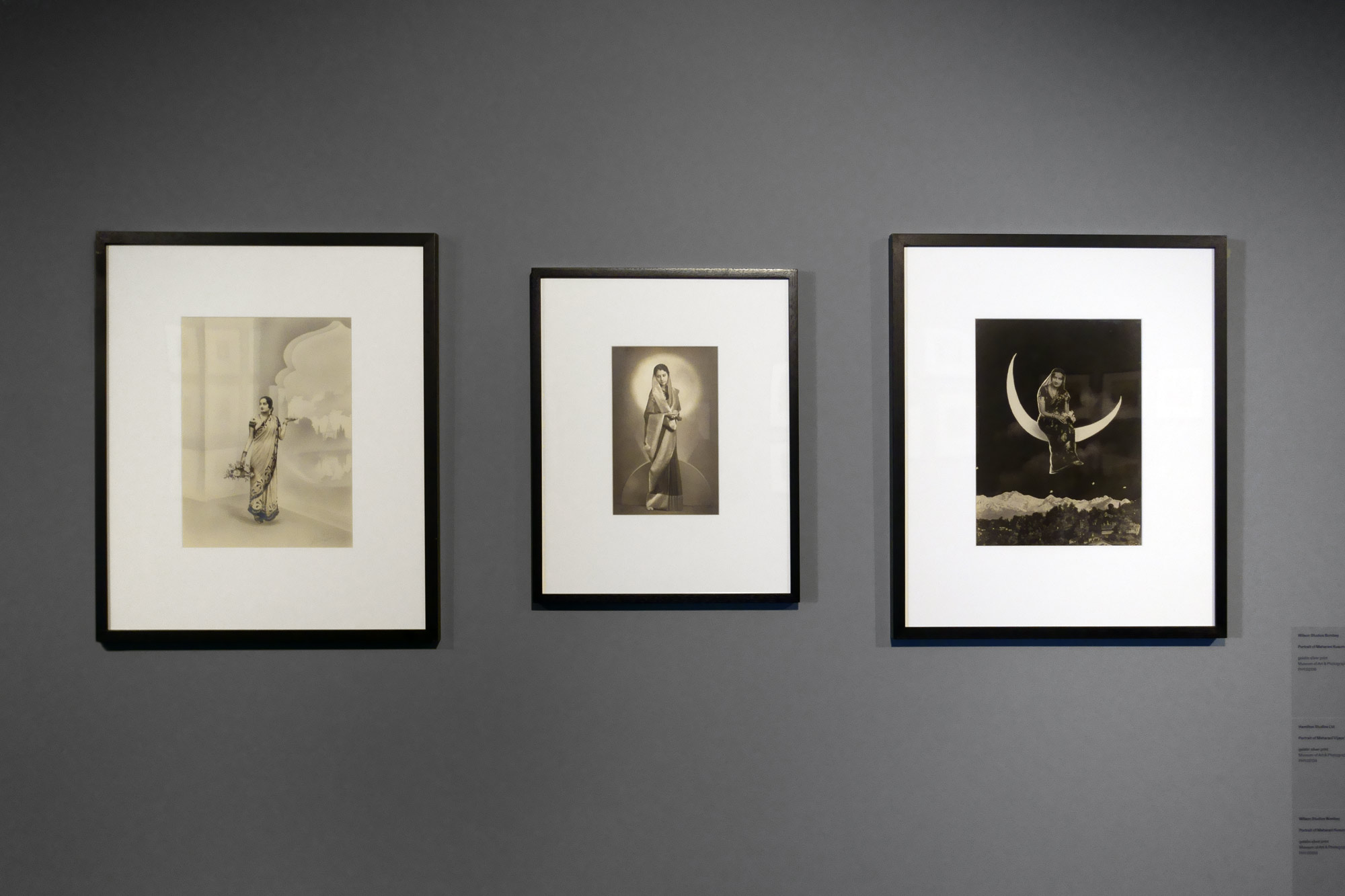
Installation view of the exhibition 'Visions of India: from the colonial to the contemporary' at the Monash Gallery of Art showing at left and right, Wilson Brothers Bombay 'Portrait of Maharani Kusum Kunwarba' (both c. 1930); and at centre Hamilton Studios Ltd 'Portrait of Maharani Vijaya Raje Scindia' (c. 1940)


Installation views of the exhibition Visions of India: from the colonial to the contemporary at the Monash Gallery of Art showing in the bottom image at left and right, Wilson Brothers Bombay Portrait of Maharani Kusum Kunwarba (both c. 1930, below); and at centre Hamilton Studios Ltd Portrait of Maharani Vijaya Raje Scindia (c. 1940, below)
Photos: Marcus Bunyan
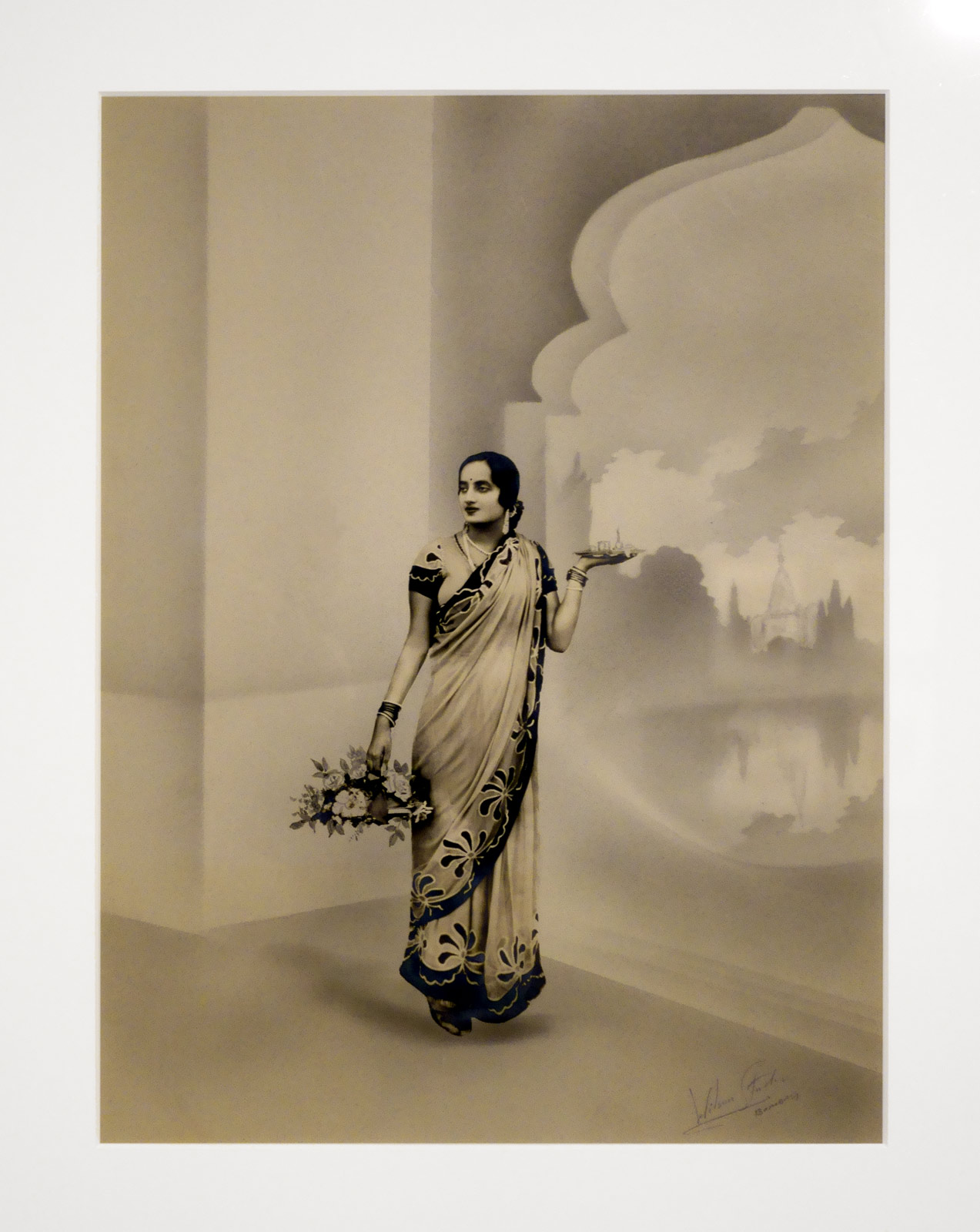
 

Wilson Studios Bombay. ‘Portrait of Maharani Kusum Kunwarbae’ c. 1930 (installation view)


Wilson Studios Bombay
Portrait of Maharani Kusum Kunwarba (installation view)
c. 1930
Gelatin silver print
Courtesy of the Museum of Art & Photography (MAP) (Bengaluru)
Photo: Marcus Bunyan
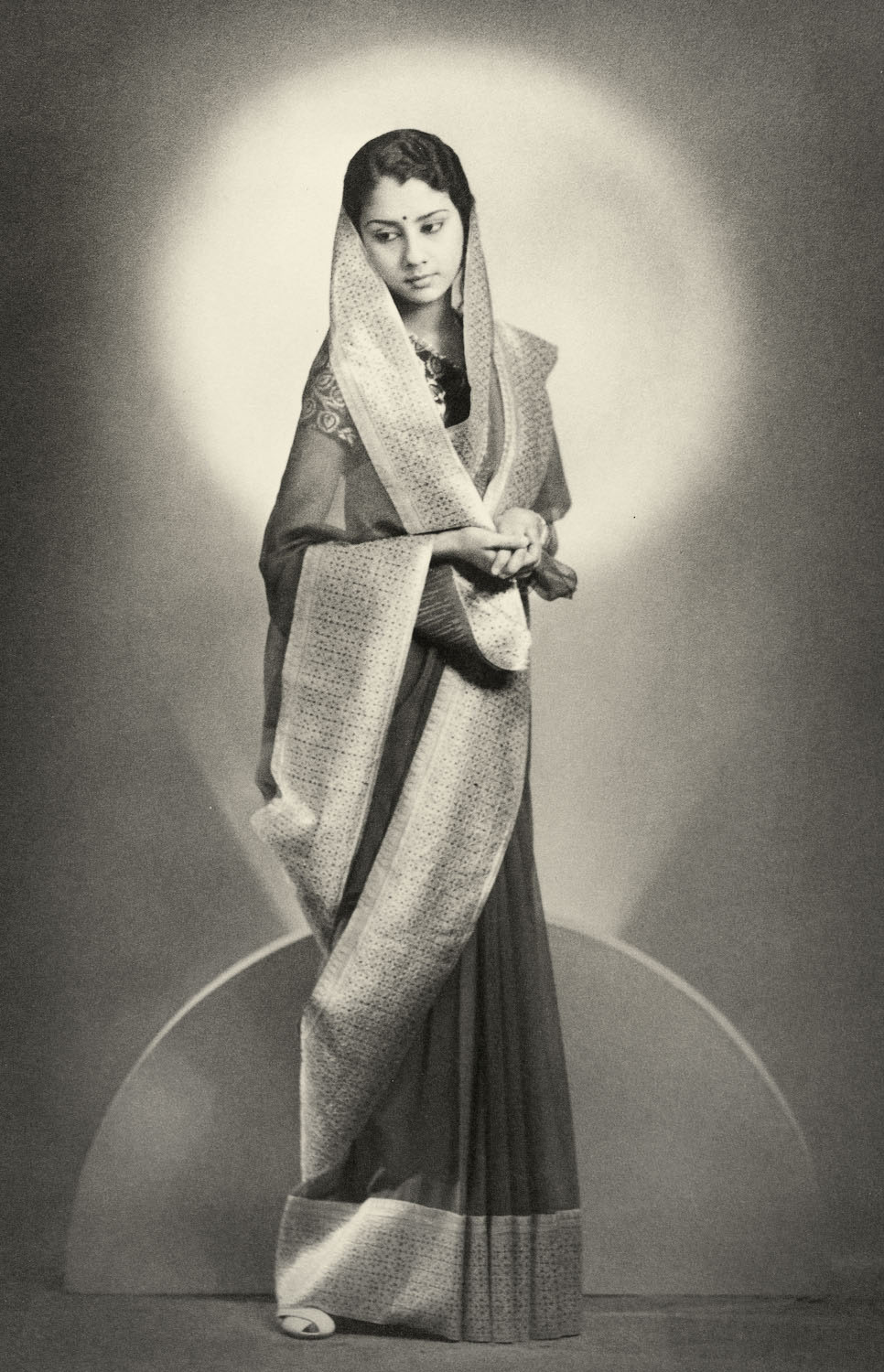
 

Hamilton Studios Ltd. 'Portrait of Maharini Vijaya Raje Scindia' c. 1940


Hamilton Studios Ltd
Portrait of Maharini Vijaya Raje Scindia
c. 1940
Gelatin silver print
Courtesy of the Museum of Art & Photography (MAP) (Bengaluru)


Wilson Studios Bombay. 'Portrait of Maharani Kusum Kunwarba' c. 1930


Wilson Studios Bombay
Portrait of Maharani Kusum Kunwarba
c. 1930
Gelatin silver print
Courtesy of the Museum of Art & Photography (MAP) (Bengaluru)


Installation view of the exhibition 'Visions of India: from the colonial to the contemporary' at the Monash Gallery of Art showing at left, Chunni Lall & Co 'Portrait of a man' (1860-1880, below); and at right, Unknown photographer 'Portrait of a royal figure' (1860-1880, below)


Installation view of the exhibition Visions of India: from the colonial to the contemporary at the Monash Gallery of Art showing at left, Chunni Lall & Co Portrait of a man (1860-1880, below); and at right, Unknown photographer Portrait of a royal figure (1860-1880, below)
Photo: Marcus Bunyan


Chunni Lall & Co ‘Portrait of a man’ 1860-1880 (installation view)


Chunni Lall & Co
Portrait of a man (installation view)
1860-1880
Hand-coloured albumen print
Courtesy of the Museum of Art & Photography (MAP) (Bengaluru)
Photo: Marcus Bunyan
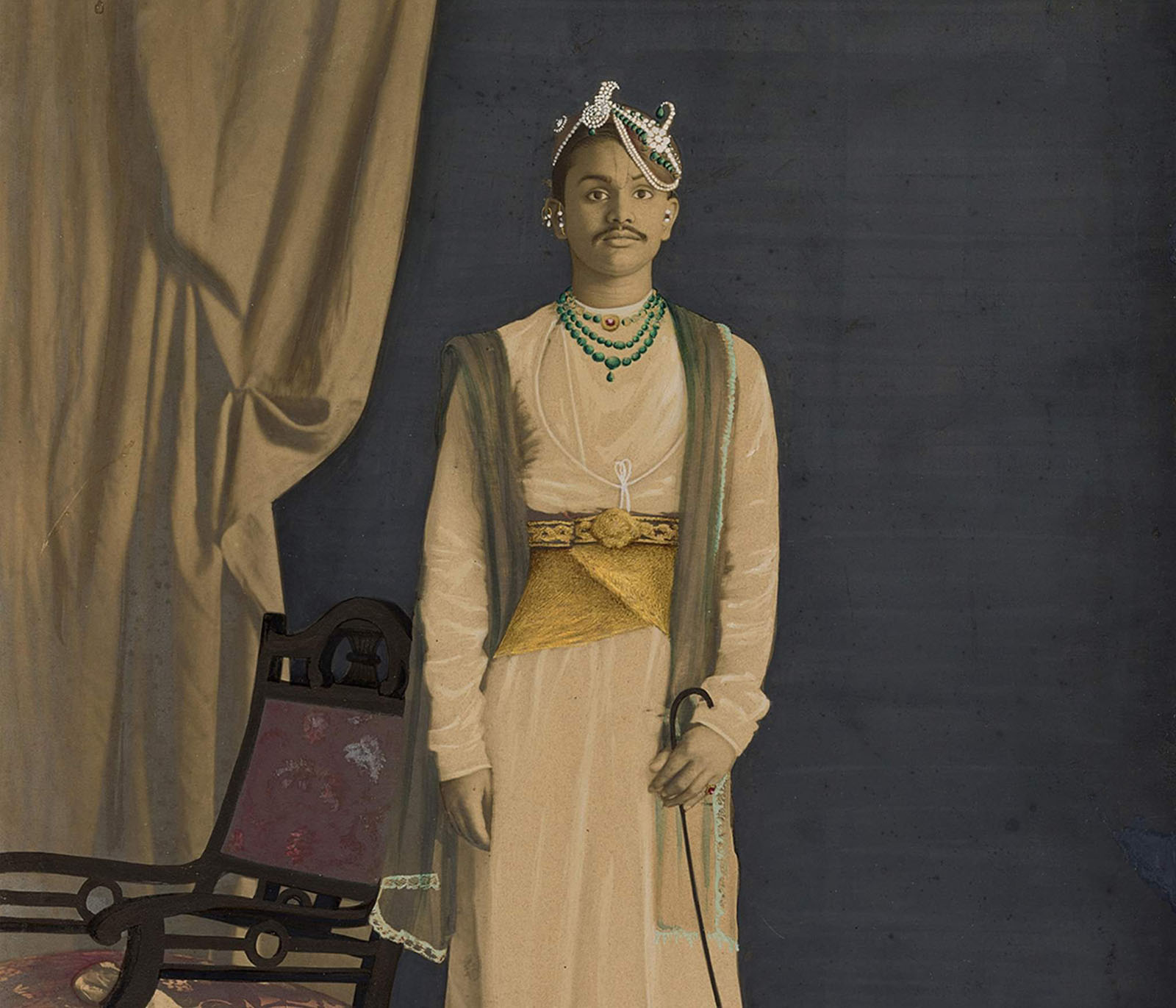
 

Unknown photographer. 'Portrait of a royal figure' 1860-1980 (detail)


Unknown photographer
Portrait of a royal figure (detail)
1860-1980
Hand-coloured albumen print
26.6 x 21.5cm
Courtesy of the Museum of Art & Photography (MAP) (Bengaluru)
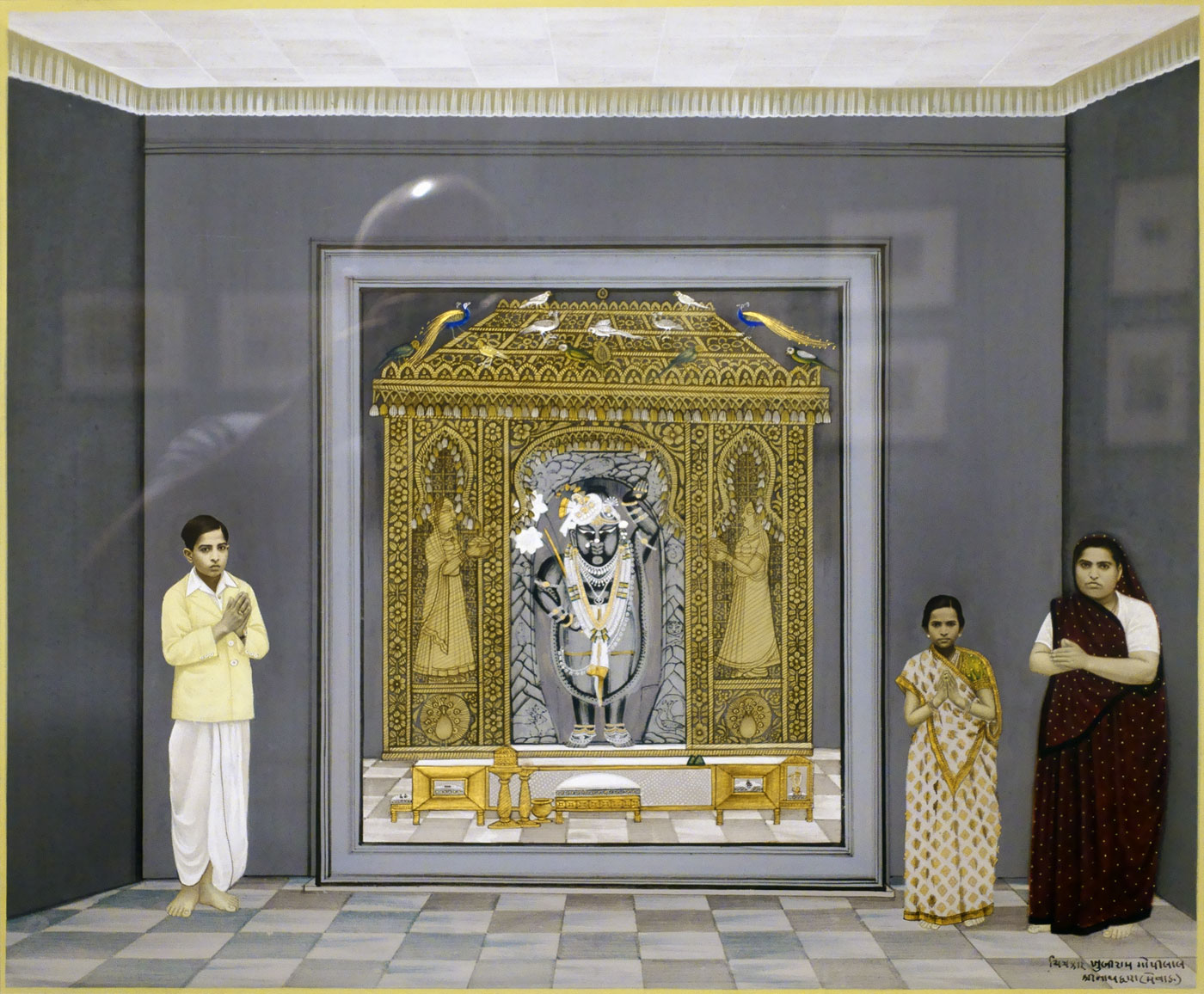
 

Khubiram Gopilal (Indian, 1891-1970) ‘A family worshipping deity Shrinathji during the festival of Nanda’ c. 1940 (installation view)


Khubiram Gopilal (Indian, 1891-1970)
A family worshipping deity Shrinathji during the festival of Nanda (installation view)
c. 1940
Gouache, gelatin silver prints
Courtesy of the Museum of Art & Photography (MAP) (Bengaluru)
Photo: Marcus Bunyan


A family of pilgrims visiting the Shrinathji temple in Nathdwara, Rajasthan, are depicted as a part of a Manorath painting, over which their photographed faces are cut and pasted. The artist used a combination of painting and photography to produce artistic and personalised souvenirs for his clients.


Khubiram Gopilal (Indian, 1891-1970) 'A family worshipping deity Shrinathji during the festival of Nanda' c. 1940


Khubiram Gopilal (Indian, 1891-1970)
A family worshipping deity Shrinathji during the festival of Nanda
c. 1940
Gouache, gelatin silver prints
Courtesy of the Museum of Art & Photography (MAP) (Bengaluru)


Khubiram Gopilal was a painter, studio photographer and collagist who specialised in a style of portrait called Manorath paintings, made for pilgrims visiting the Shrinarhji temple in the town of Nathdwara in Rajasthan (in northern India). To make these pictures, he photographed his subjects, carefully cut out their faces and hands and then pasted them into painted templates, using a brush and paint to mask the difference between the two mediums, making the final result appear like a detailed painting.

Wall text from the exhibition
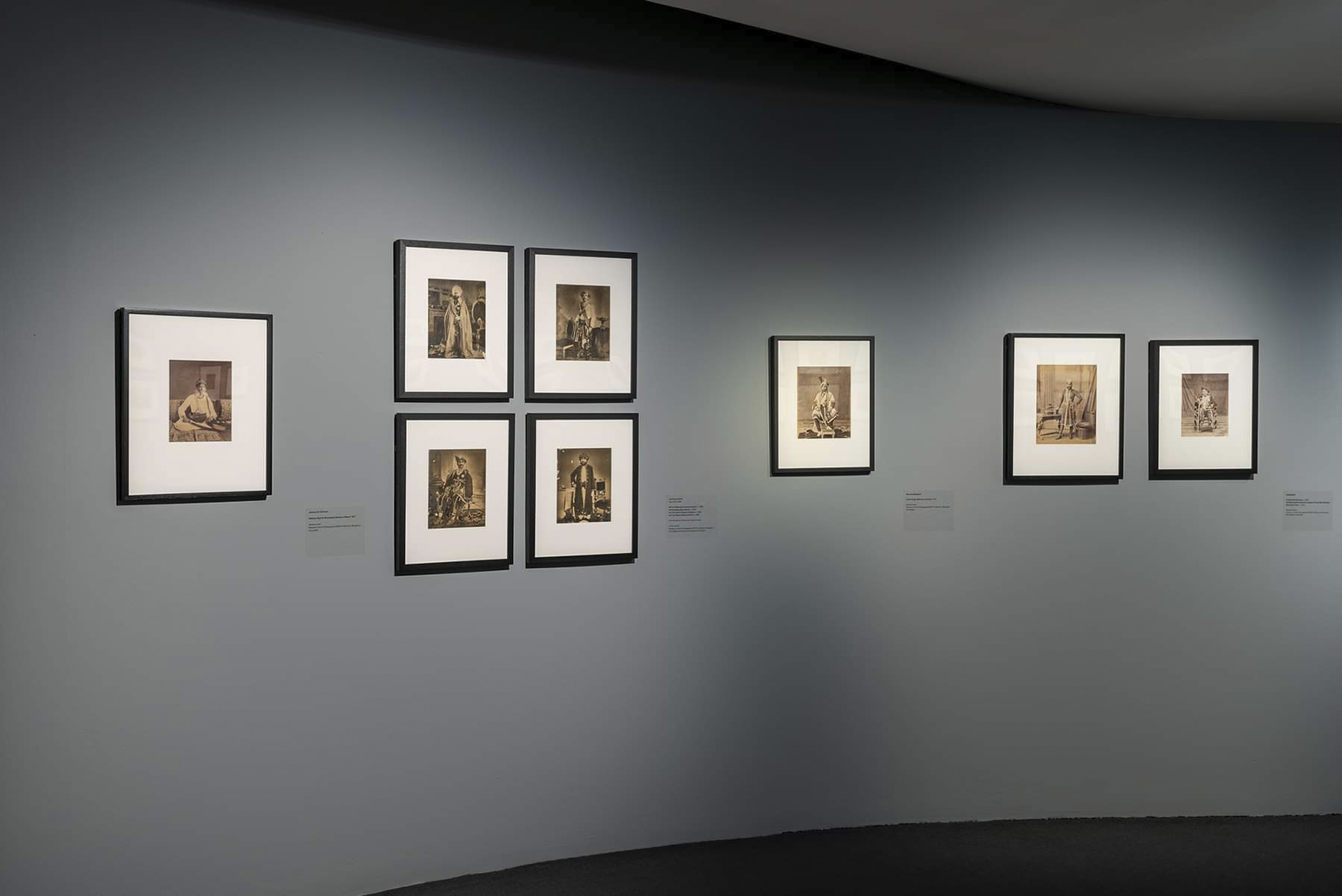
 

Installation view of the exhibition Visions of India: from the colonial to the contemporary at the Monash Gallery of Art showing artworks (left to right) by Johnson & Hoffman, Lala Deen Dayal and Bourne & Shepherd


Installation view of the exhibition Visions of India: from the colonial to the contemporary at the Monash Gallery of Art showing artworks (left to right) by Johnson & Hoffman, Lala Deen Dayal and Bourne & Shepherd (see below)
Photo: Monash Gallery of Art


Installation view of the exhibition 'Visions of India: from the colonial to the contemporary' at the Monash Gallery of Art showing at left, Johnston & Hoffmann's 'Maharao Raja Sir Ramsinghji, Bahadur of Bondi' (1887): and at right, four images by Layla Deen Dayal (c. 1880) from the album 'Princes and Chiefs of India'


Installation view of the exhibition Visions of India: from the colonial to the contemporary at the Monash Gallery of Art showing at left, Johnston & Hoffmann’s Maharao Raja Sir Ramsinghji, Bahadur of Bondi (1887, below): and at right, four images by Layla Deen Dayal (c. 1880) from the album Princes and Chiefs of India
Photo: Marcus Bunyan


Lala Deen Dayal (Indian, 1844-1905) 'HH The Maha Rao of Kutch' c. 1880


Lala Deen Dayal (Indian, 1844-1905)
HH The Maha Rao of Kutch
c. 1880
From the album Princes and Chiefs of India
Carbon prints
25.1 x 19.5cm (each)
Courtesy of the Museum of Art & Photography (MAP) (Bengaluru)


Lala Deen Dayal (Indian, 1844-1905)

Raja Lala Deen Dayal (Hindi: लाला दीन दयाल; 1844-1905; also written as ‘Din Dyal’ and ‘Diyal’ in his early years), famously known as Raja Deen Dayal) was an Indian photographer. His career began in the mid-1870s as a commissioned photographer; eventually he set up studios in Indore, Mumbai and Hyderabad. He became the court photographer to the sixth Nizam of Hyderabad, Mahbub Ali Khan, Asif Jah VI, who awarded him the title Raja Bahadur Musavvir Jung Bahadur, and he was appointed as the photographer to the Viceroy of India in 1885.

He received the Royal Warrant from Queen Victoria in 1897.

Career

In 1866, Deen Dayal entered government service as head estimator and draughtsman in the Department of Works Secretariat Office in Indore. Meanwhile, he took up photography. His first patron in Indore was Maharaja Tukoji Rao II of Indore state, who in turn introduced him to Sir Henry Daly, agent to the Governor General for Central India (1871-1881) and the founder of Daly College, who encouraged his work, along with the Maharaja himself who encouraged him to set up his studio in Indore. Soon he was getting commissions from Maharajas and the British Raj. The following year he was commissioned to photograph the governor general’s tour of Central India. In 1868, Deen Dayal founded his studio – Lala Deen Dayal & Sons – and was subsequently commissioned to photograph temples and palaces of India. He established studios in Indore (Mid 1870s), Secunderabad (1886) and Bombay (1896).

In 1875-1876, Deen Dayal photographed the Royal Tour of the Prince and Princess of Wales. In the early 1880s he travelled with Sir Lepel Griffin through Bundelkhand, photographing the ancient architecture of the region. Griffin commissioned him to do archaeological photographs: The result was a portfolio of 86 photographs, known as “Famous Monuments of Central India”.

The next year he retired from government service and concentrated on his career as a professional photographer. Deen Dayal became the court photographer to the sixth Nizam of Hyderabad in 1885. Soon afterward he moved from Indore to Hyderabad. In the same year he was appointed as the photographer to the Viceroy of India. In time, the Nizam of Hyderabad conferred the honorary title of Raja upon him. It was at this time that Dayal created the firm Raja Deen Dayal & Sons in Hyderabad.

Deen Dayal was appointed photographer to Queen Victoria in 1897. In 1905–1906, Raja Deen Dayal accompanied the Royal Tour of the Prince and Princess of Wales.

Text from the Wikipedia website
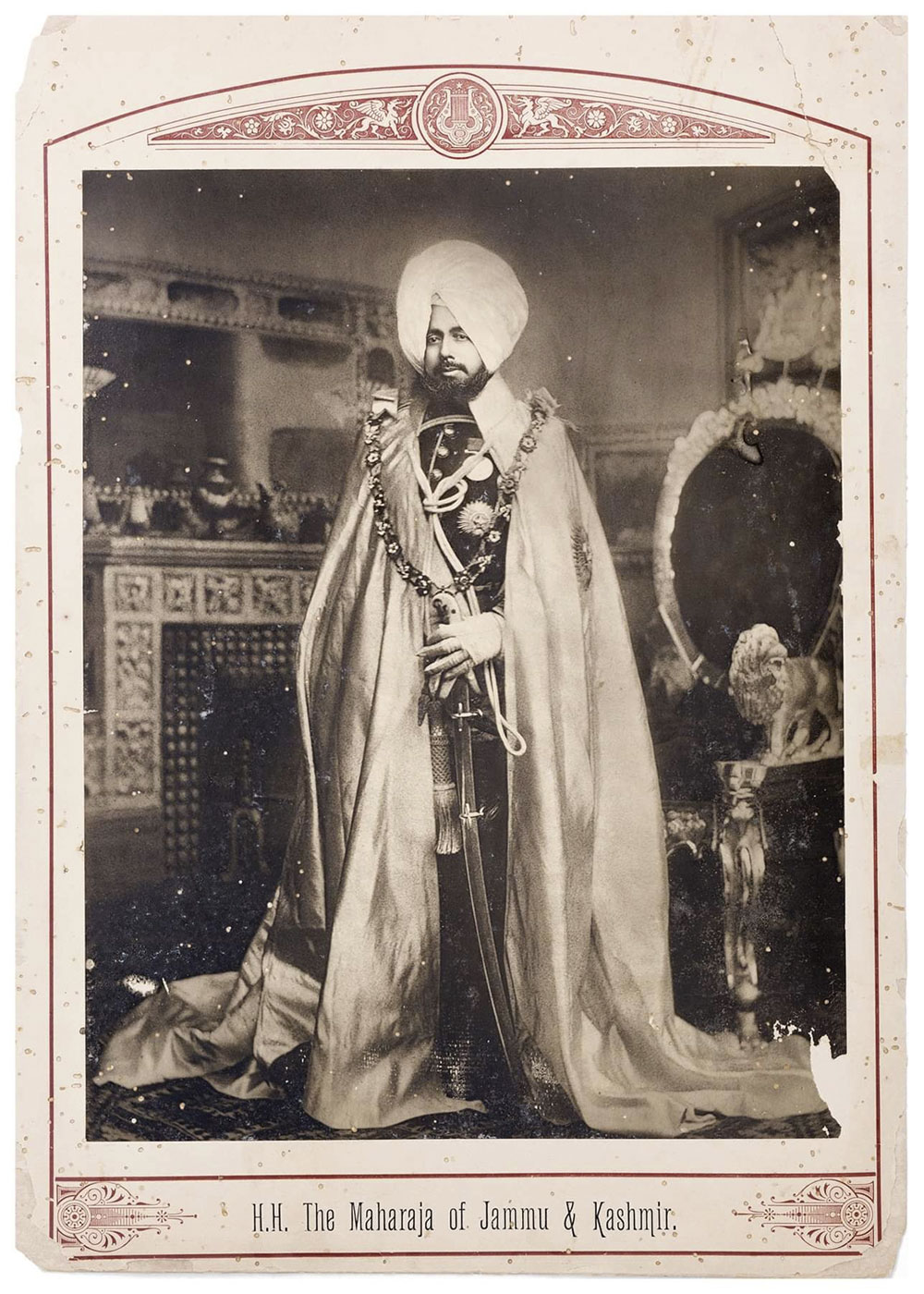
 

Lala Deen Dayal (Indian, 1844-1905) 'HH The Maharaja of Jammu & Kashmir' c. 1880


Lala Deen Dayal (Indian, 1844-1905)
HH The Maharaja of Jammu & Kashmir
c. 1880
From the album Princes and Chiefs of India
Carbon prints
25.1 x 19.5cm (each)
Courtesy of the Museum of Art & Photography (MAP) (Bengaluru)
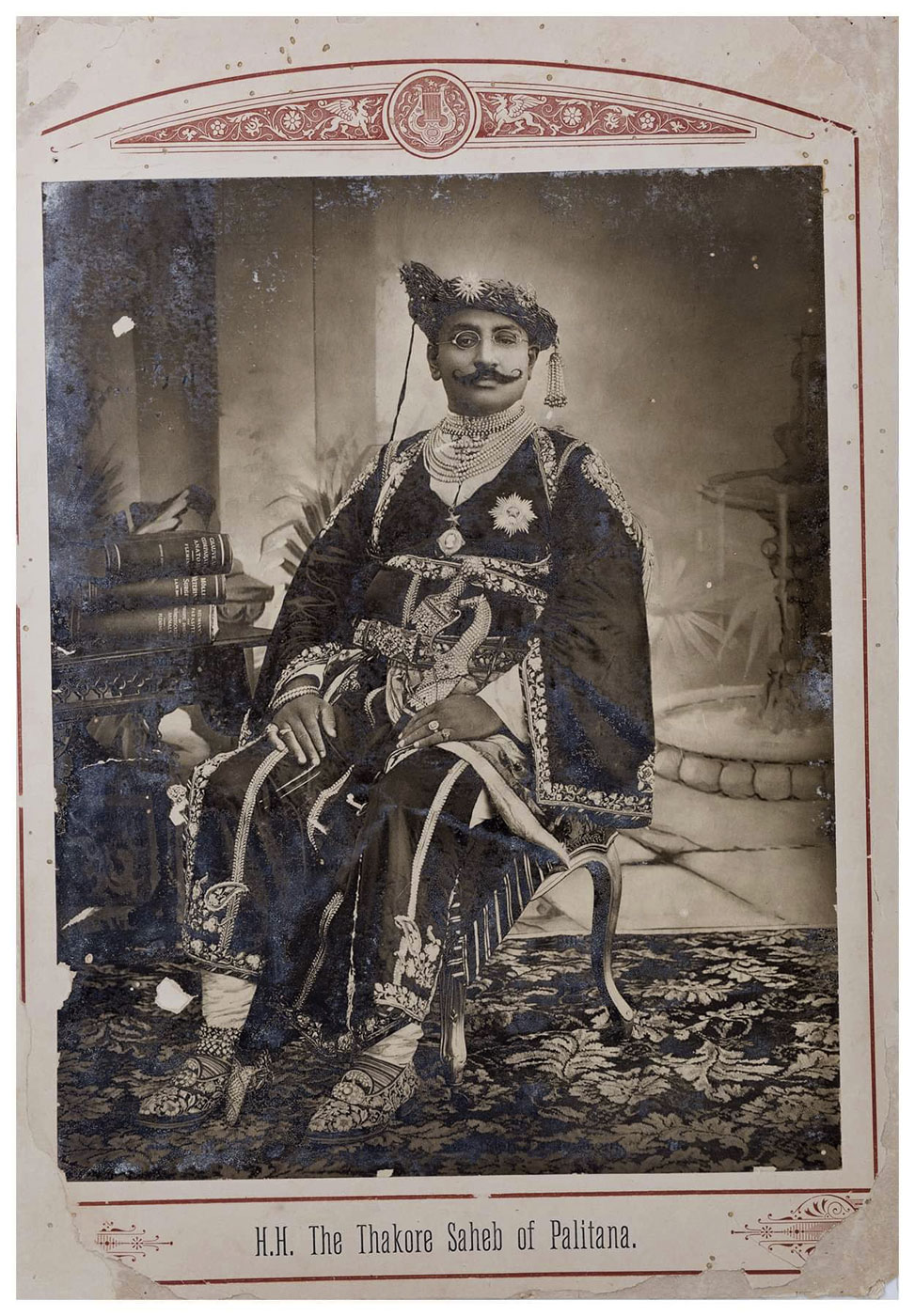
 

Lala Deen Dayal (Indian, 1844-1905) 'HH The Thakore Saheb of Palitana' c. 1880


Lala Deen Dayal (Indian, 1844-1905)
HH The Thakore Saheb of Palitana
c. 1880
From the album Princes and Chiefs of India
Carbon prints
25.1 x 19.5cm (each)
Courtesy of the Museum of Art & Photography (MAP) (Bengaluru)


Lala Deen Dayal (Indian, 1844-1905) 'HH The Thakore Saheb of Dhrol' c. 1880


Lala Deen Dayal (Indian, 1844-1905)
HH The Thakore Saheb of Dhrol
c. 1880
From the album Princes and Chiefs of India
Carbon prints
25.1 x 19.5cm (each)
Courtesy of the Museum of Art & Photography (MAP) (Bengaluru)
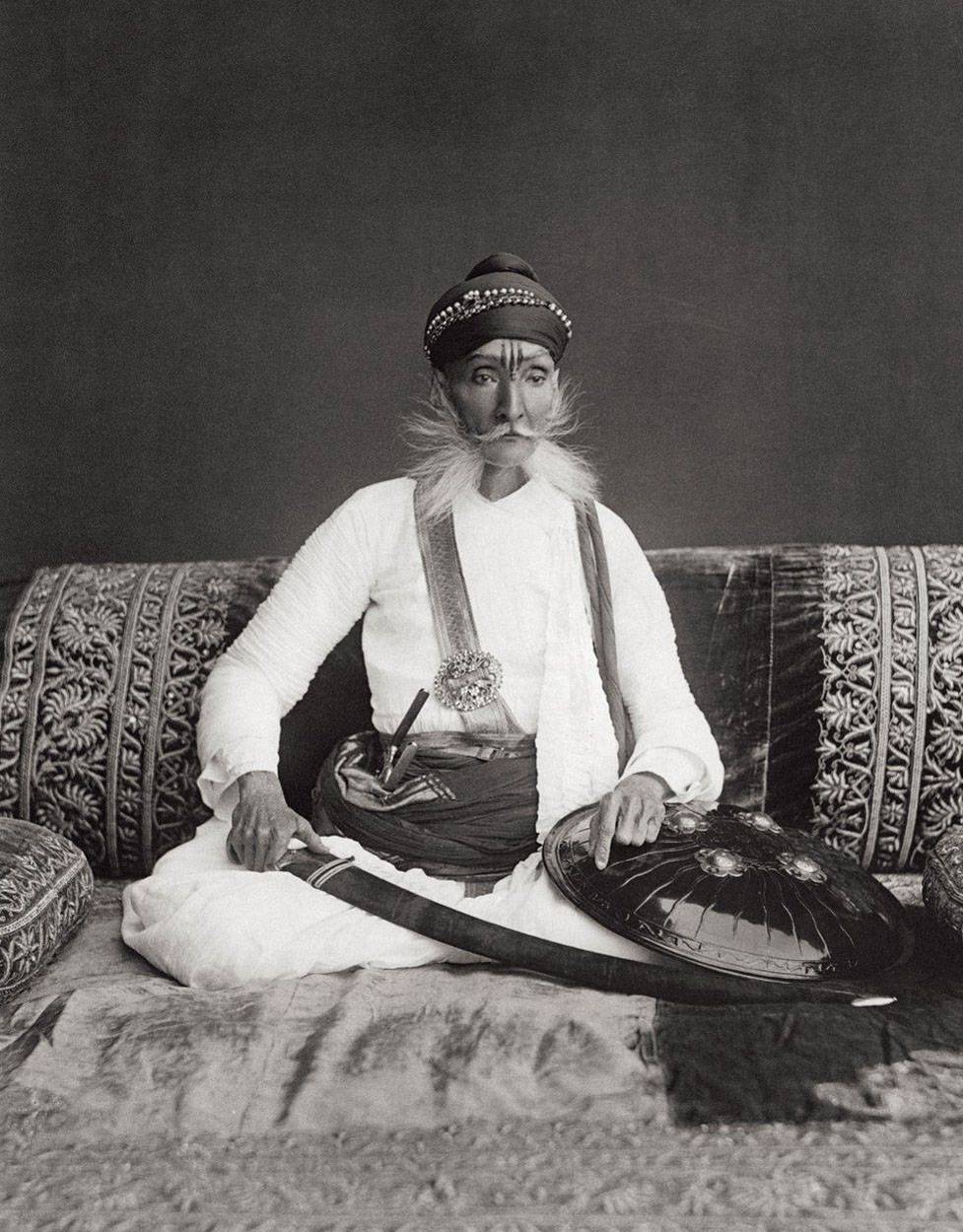
 

Johnston & Hoffmann. 'Maharao Raja Sir Ramsinghji, Bahadur of Bondi' 1887


Johnston & Hoffmann
Maharao Raja Sir Ramsinghji, Bahadur of Bondi
1887
Albumen print
Courtesy of the Museum of Art & Photography (MAP) (Bengaluru)


A note with this striking portrait of Maharao Raja Ram Singh Sahib Bahadur, of Bundi, describes him as a “wild fellow”. This image was taken from a four-volume album of photogravure prints, the only other copy belonging to Queen Victoria.


Installation view of the exhibition 'Visions of India: from the colonial to the contemporary' at the Monash Gallery of Art showing at left, Bourne and Shepherd. 'Ranbir Singh Maharaja of Kashmir' (1875); at centre right, Unknown photographer. 'Unidentified Maharaja' (c. 1880); and at right, Unknown photographer. 'HH Maharaja Shrimant Sir Anandrao III Puar Sahib Bahadur, Maharaja of Dhar' (c. 1870)


Installation view of the exhibition Visions of India: from the colonial to the contemporary at the Monash Gallery of Art showing at left, Bourne and Shepherd. Ranbir Singh Maharaja of Kashmir (1875, below); at centre right, Unknown photographer. Unidentified Maharaja (c. 1880, below); and at right, Unknown photographer. HH Maharaja Shrimant Sir Anandrao III Puar Sahib Bahadur, Maharaja of Dhar (c. 1870, below)
Photo: Marcus Bunyan
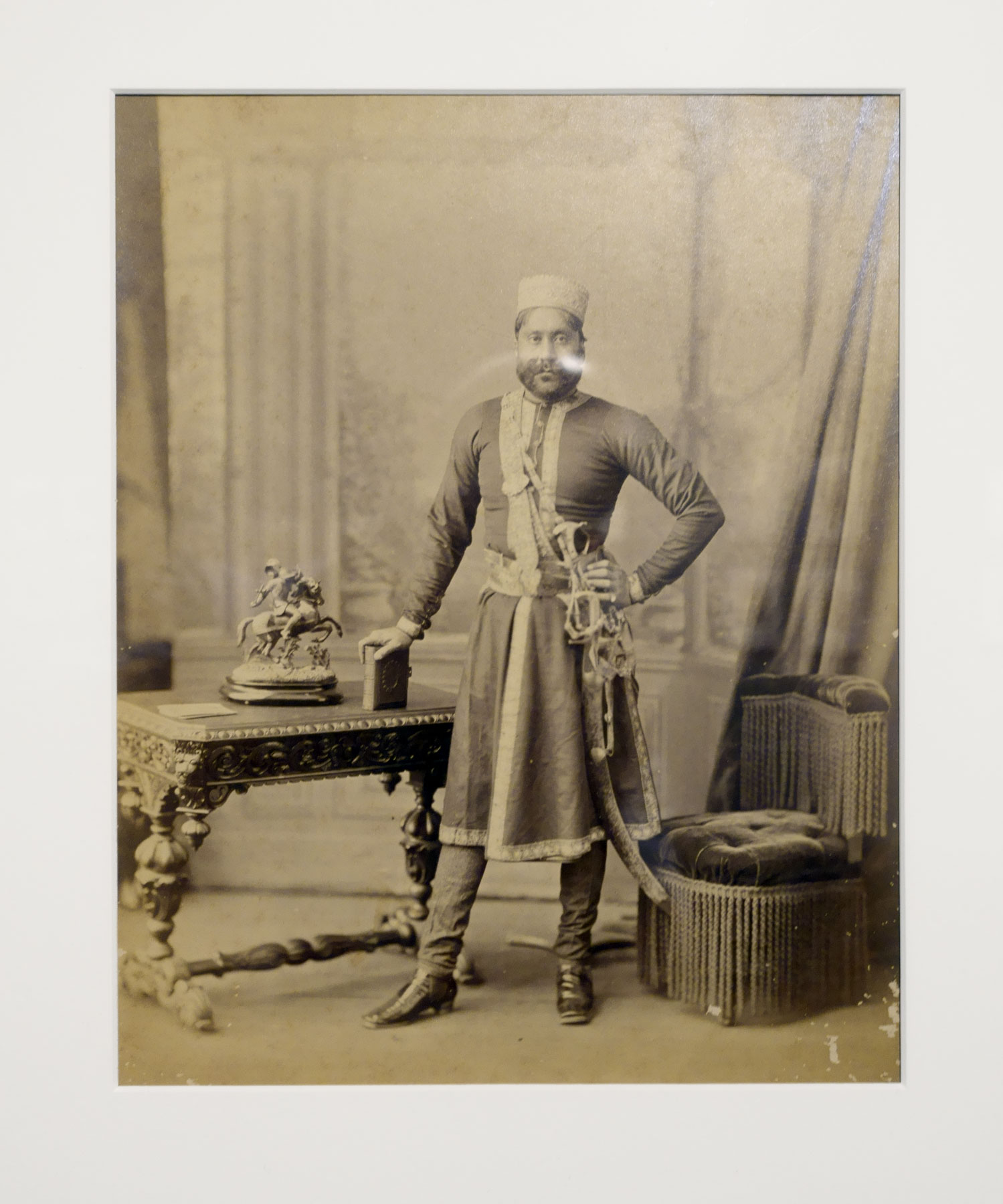
 

Unknown photographer. 'Unidentified Maharaja' c. 1880 (installation view)


Unknown photographer
Unidentified Maharaja (installation view)
c. 1880
Albumen print
Courtesy of the Museum of Art & Photography (MAP) (Bengaluru)
Photo: Marcus Bunyan


Unknown photographer. 'HH Maharaja Shrimant Sir Anandrao III Puar Sahib Bahadur, Maharaja of Dhar' c. 1870 (installation view)


Unknown photographer
HH Maharaja Shrimant Sir Anandrao III Puar Sahib Bahadur, Maharaja of Dhar (installation view)
c. 1870
Albumen print
Courtesy of the Museum of Art & Photography (MAP) (Bengaluru)
Photo: Marcus Bunyan
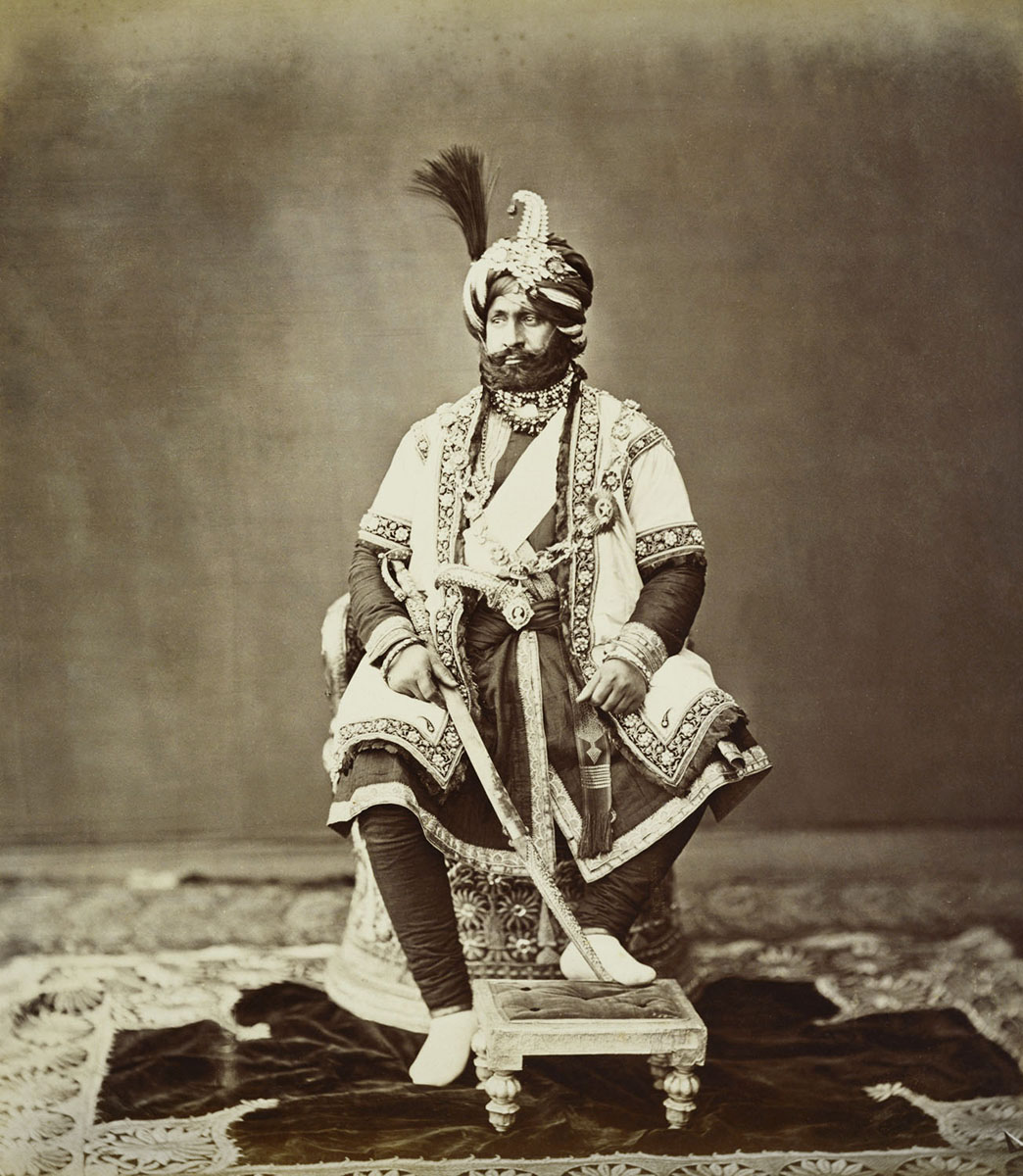
 

Bourne and Shepherd (active 1864-1900s) 'Ranbir Singh, Maharaja of Kashmir' 1875


Bourne and Shepherd (active 1864-1900s)
Ranbir Singh, Maharaja of Kashmir
1875
Albumen print
Courtesy of the Museum of Art & Photography (MAP) (Bengaluru)
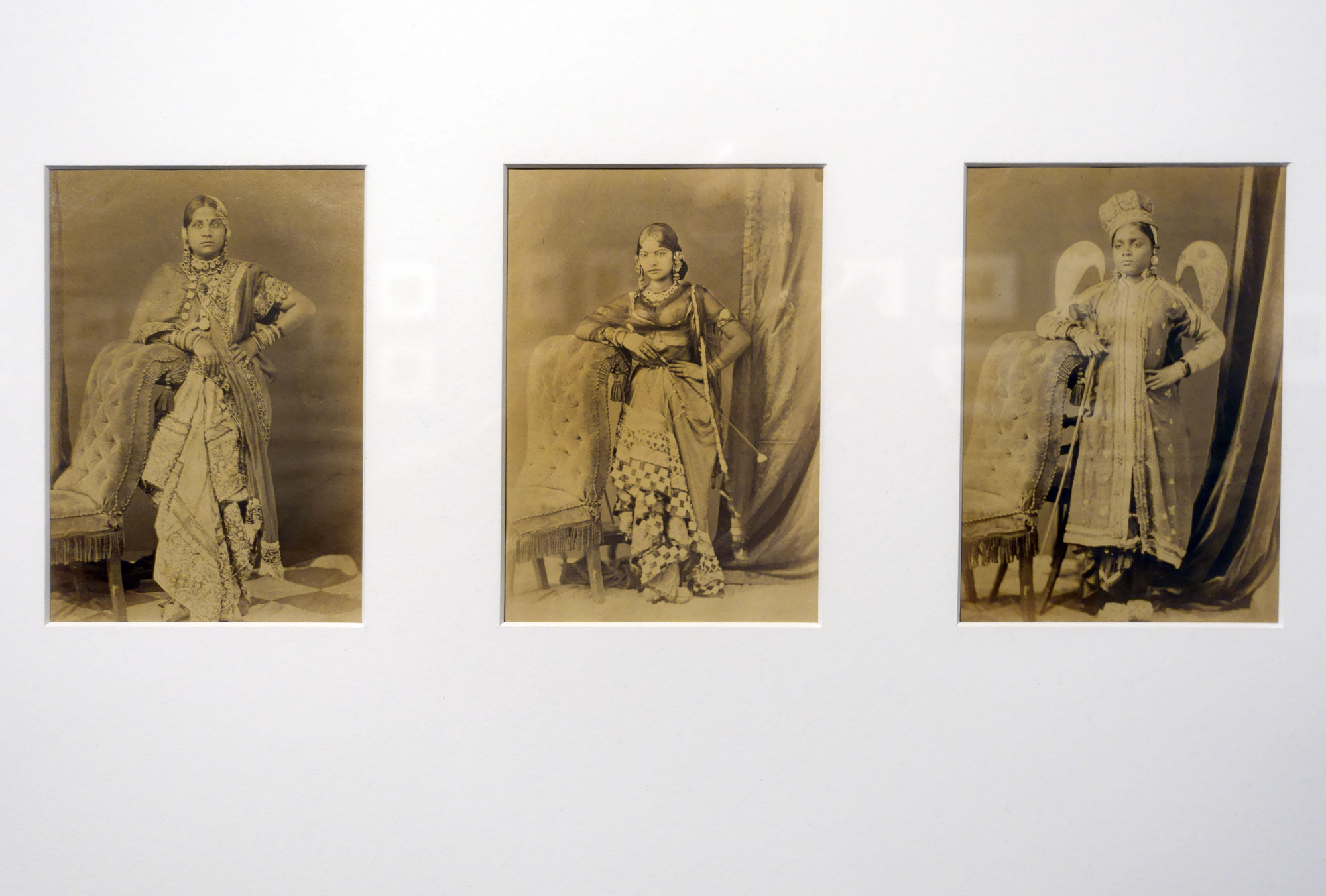
 

Installation view of the exhibition 'Visions of India: from the colonial to the contemporary' at the Monash Gallery of Art showing three portraits of a courtesan (all 1874) by Darogah Abbas Ali (Indian, dates unknown)


Installation view of the exhibition Visions of India: from the colonial to the contemporary at the Monash Gallery of Art showing three portraits of a courtesan (all 1874) by Darogah Abbas Ali (Indian, dates unknown)
Photo: Marcus Bunyan


Darogah Abbas Ali (Indian, dates unknown) 'Portrait of a courtesan' 1874


Darogah Abbas Ali (Indian, dates unknown)
Portrait of a courtesan
1874
Albumen print
Courtesy of the Museum of Art & Photography (MAP) (Bengaluru)


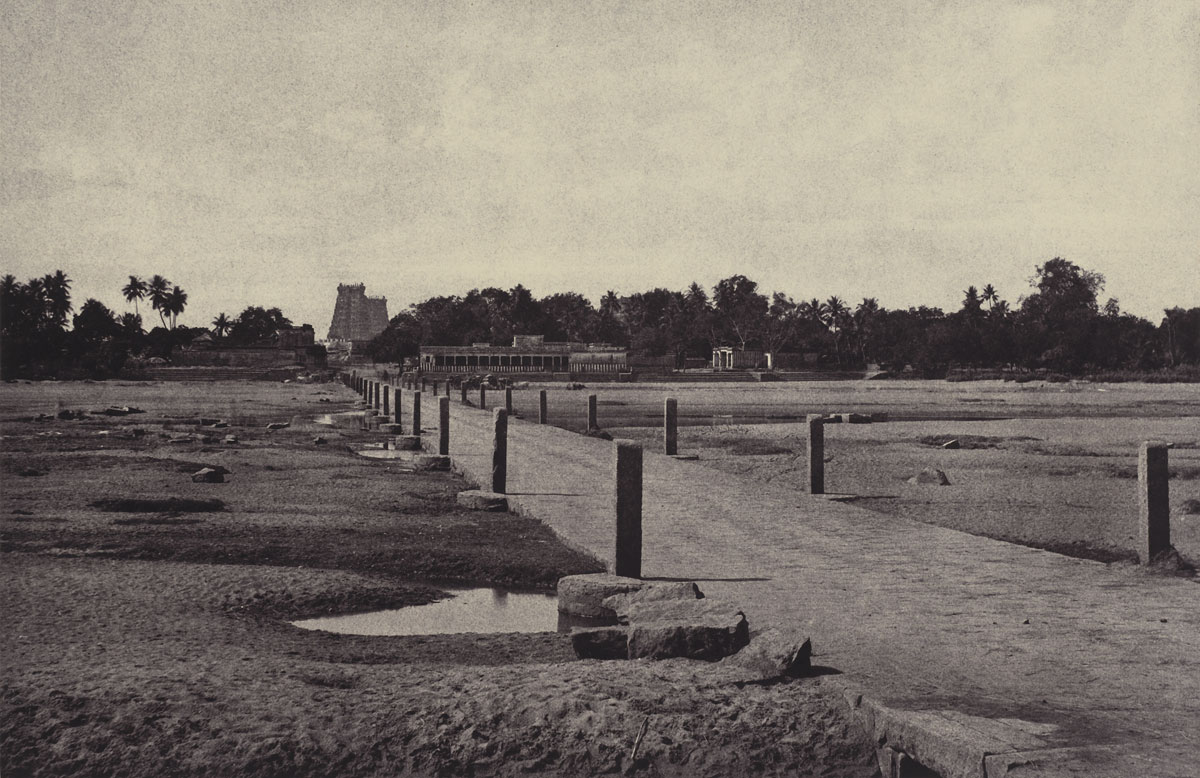
Installation view of the exhibition 'Visions of India: from the colonial to the contemporary' at the Monash Gallery of Art showing showing at top left, Nicholas & Company (attributed). 'Meenakshi Temple, Madurai' (c. 1880, below); at top right, Nicholas & Company (attributed). 'Sacred tank' (c. 1860); at bottom left, Nicholas & Company (attributed). 'Temple, Madurai' (c. 1880); and at bottom right, Wiele and Klein Studio. 'The Southern Gopura, Meenakshi Temple, Madurai' (1895)


Installation view of the exhibition Visions of India: from the colonial to the contemporary at the Monash Gallery of Art showing showing at top left, Nicholas & Company (attributed) Meenakshi Temple, Madurai (c. 1880, below); at top right, Nicholas & Company (attributed) Sacred tank (c. 1860); at bottom left, Nicholas & Company (attributed) Temple, Madurai (c. 1880); and at bottom right, Wiele and Klein Studio The Southern Gopura, Meenakshi Temple, Madurai (1895)
Photo: Marcus Bunyan
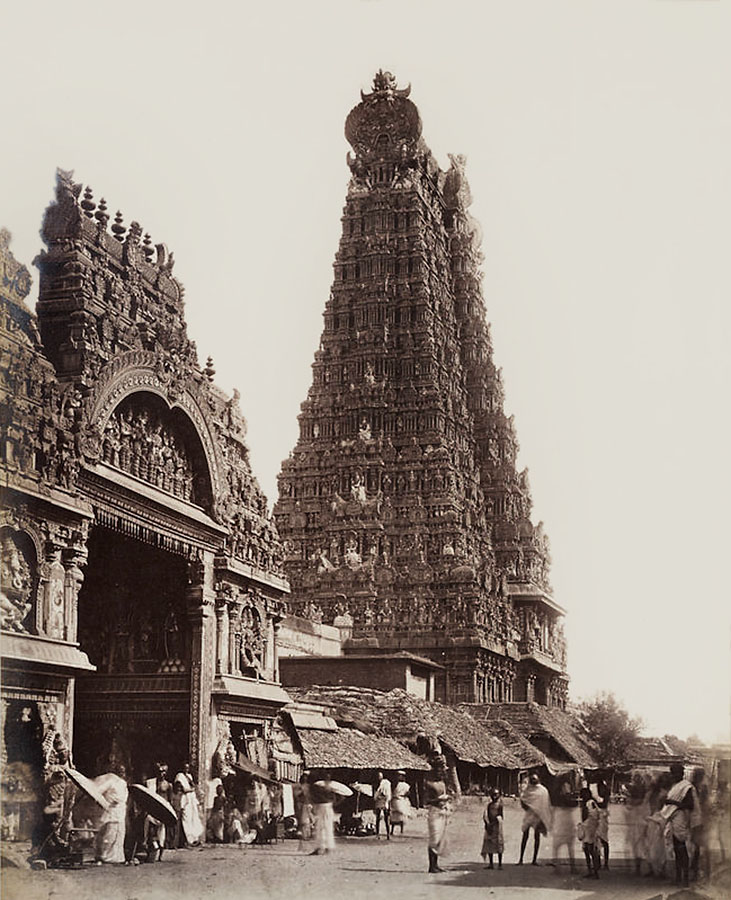
 

Nicholas & Company (attributed) 'Meenakshi Temple, Madurai' c. 1880


Nicholas & Company (attributed)
Meenakshi Temple, Madurai
c. 1880
Albumen print
Courtesy of the Museum of Art & Photography (MAP) (Bengaluru)
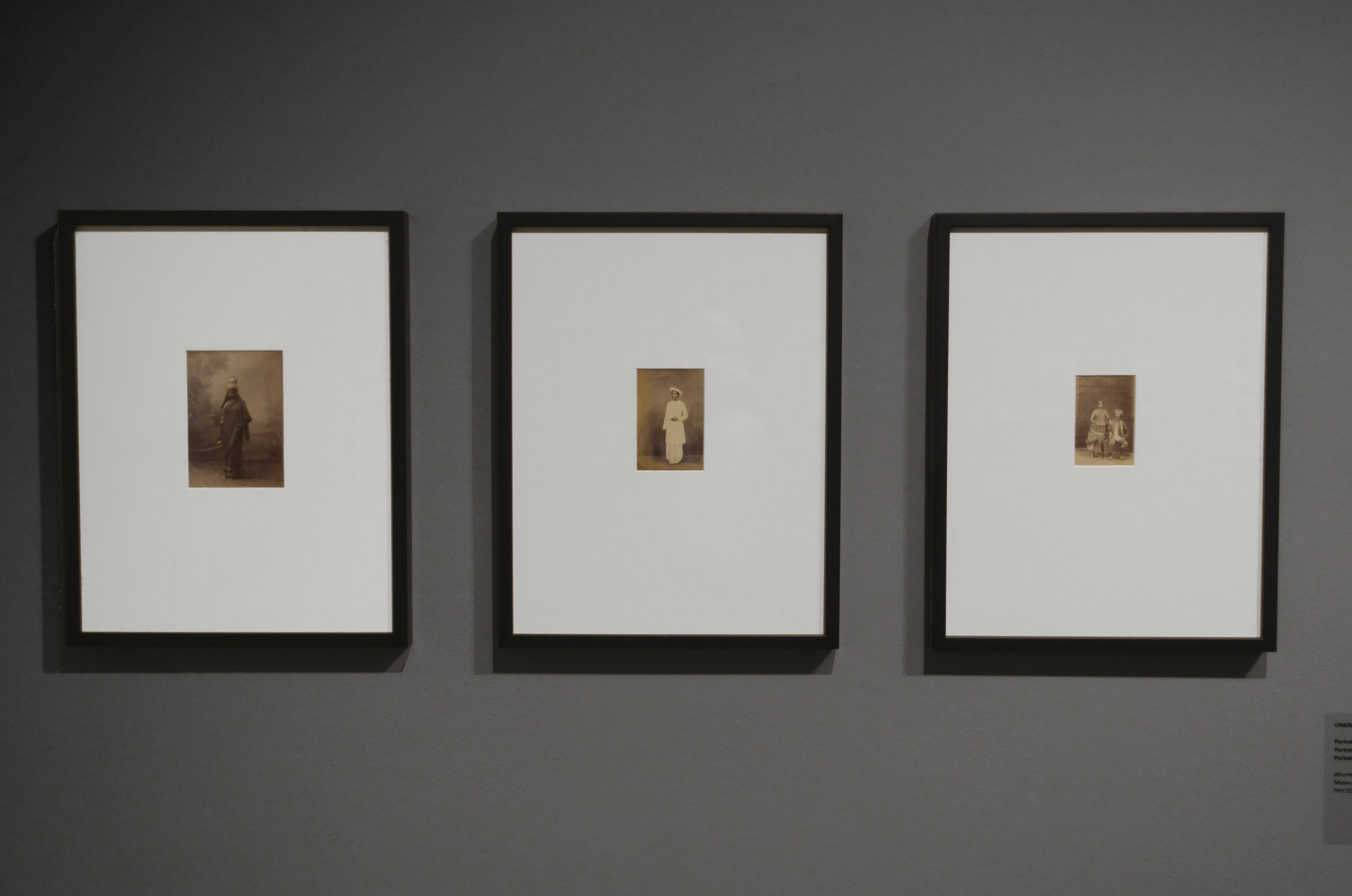
 

Installation view of the exhibition 'Visions of India: from the colonial to the contemporary' at the Monash Gallery of Art showing showing at left, Unknown photographer. 'Portrait of a woman carrying pots' c. 1870; at centre, Unknown photographer. 'Portrait of a man' c. 1860-1880; and at right, Unknown photographer. 'Portrait of a couple' c. 1860-1880


Installation view of the exhibition Visions of India: from the colonial to the contemporary at the Monash Gallery of Art showing showing at left, Unknown photographer. Portrait of a woman carrying pots c. 1870; at centre, Unknown photographer. Portrait of a man c. 1860-1880; and at right, Unknown photographer. Portrait of a couple c. 1860-1880
Photo: Marcus Bunyan


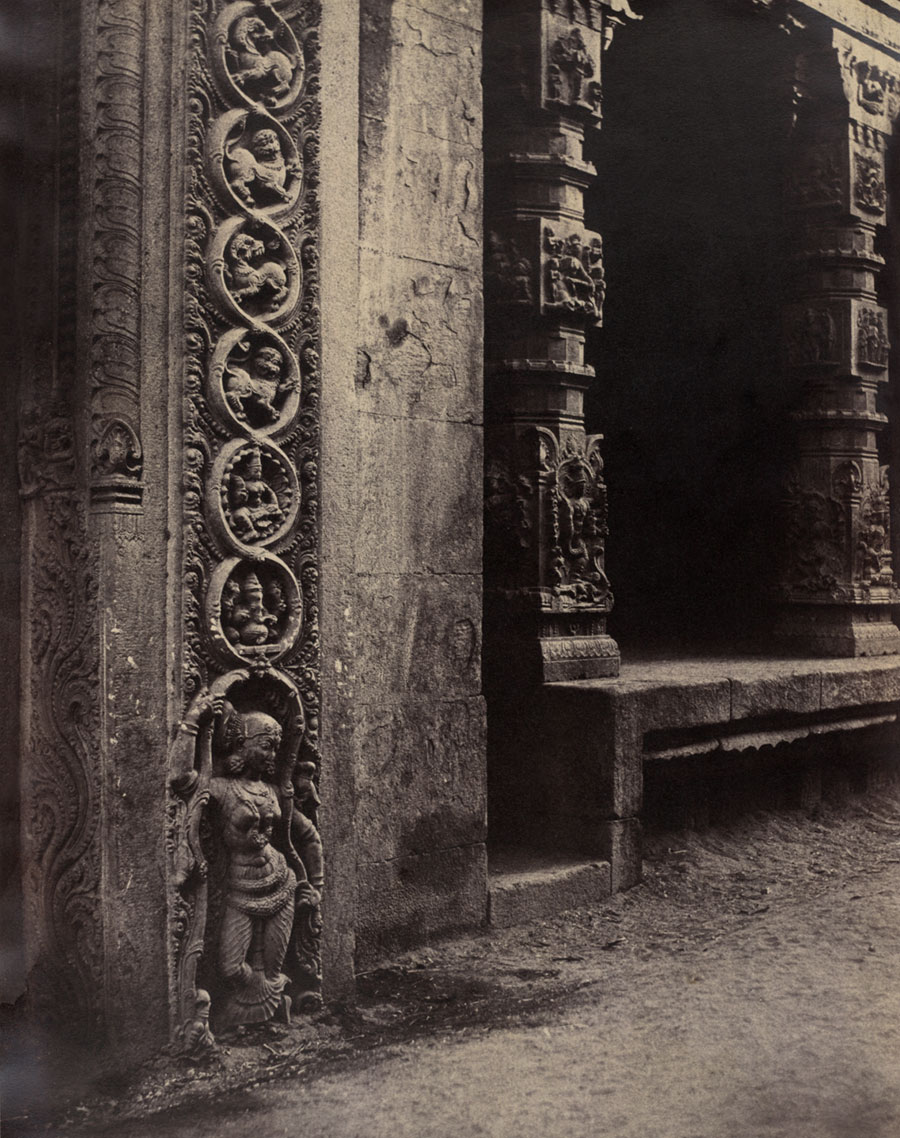
Installation view of the exhibition 'Visions of India: from the colonial to the contemporary' at the Monash Gallery of Art showing at left, Willoughby Wallace Hooper (England, 1837-1912). 'The game brought into camp' (c. 1880); and at right, Francis Frith & Co. 'Carved horses in the Sheshagirirayar Mandapa at the Ranganatha Temple of Srirangam' (c. 1880)


Installation view of the exhibition Visions of India: from the colonial to the contemporary at the Monash Gallery of Art showing at left, Willoughby Wallace Hooper (England, 1837-1912) The game brought into camp (c. 1880); and at right, Francis Frith & Co. Carved horses in the Sheshagirirayar Mandapa at the Ranganatha Temple of Srirangam (c. 1880, below)
Photo: Marcus Bunyan
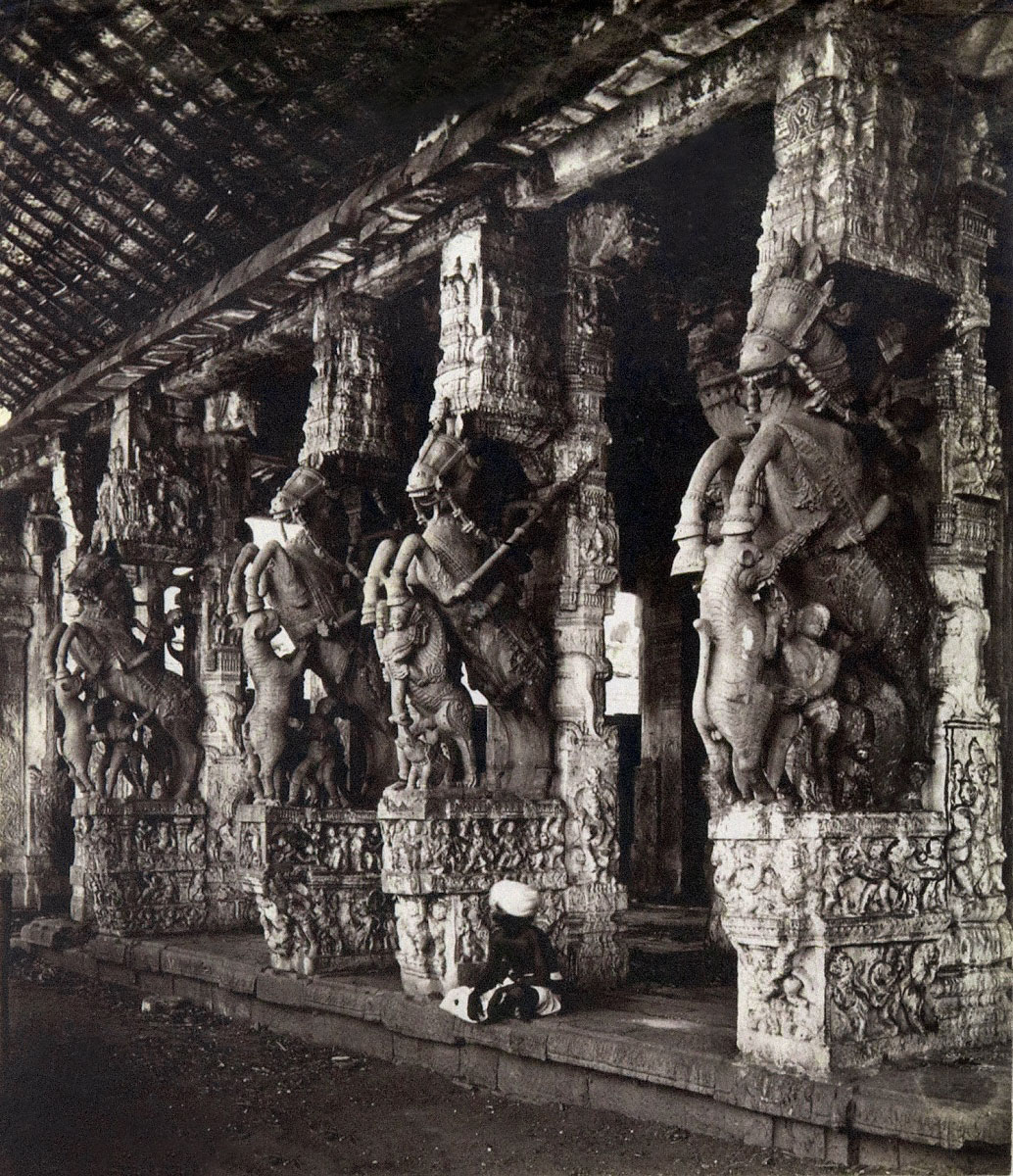
 

Francis Frith & Co. 'Carved horses in the Sheshagirirayar Mandapa at the Ranganatha Temple of Srirangam' c. 1880


Francis Frith & Co.
Carved horses in the Sheshagirirayar Mandapa at the Ranganatha Temple of Srirangam
c. 1880
Albumen print
Courtesy of the Museum of Art & Photography (MAP) (Bengaluru)
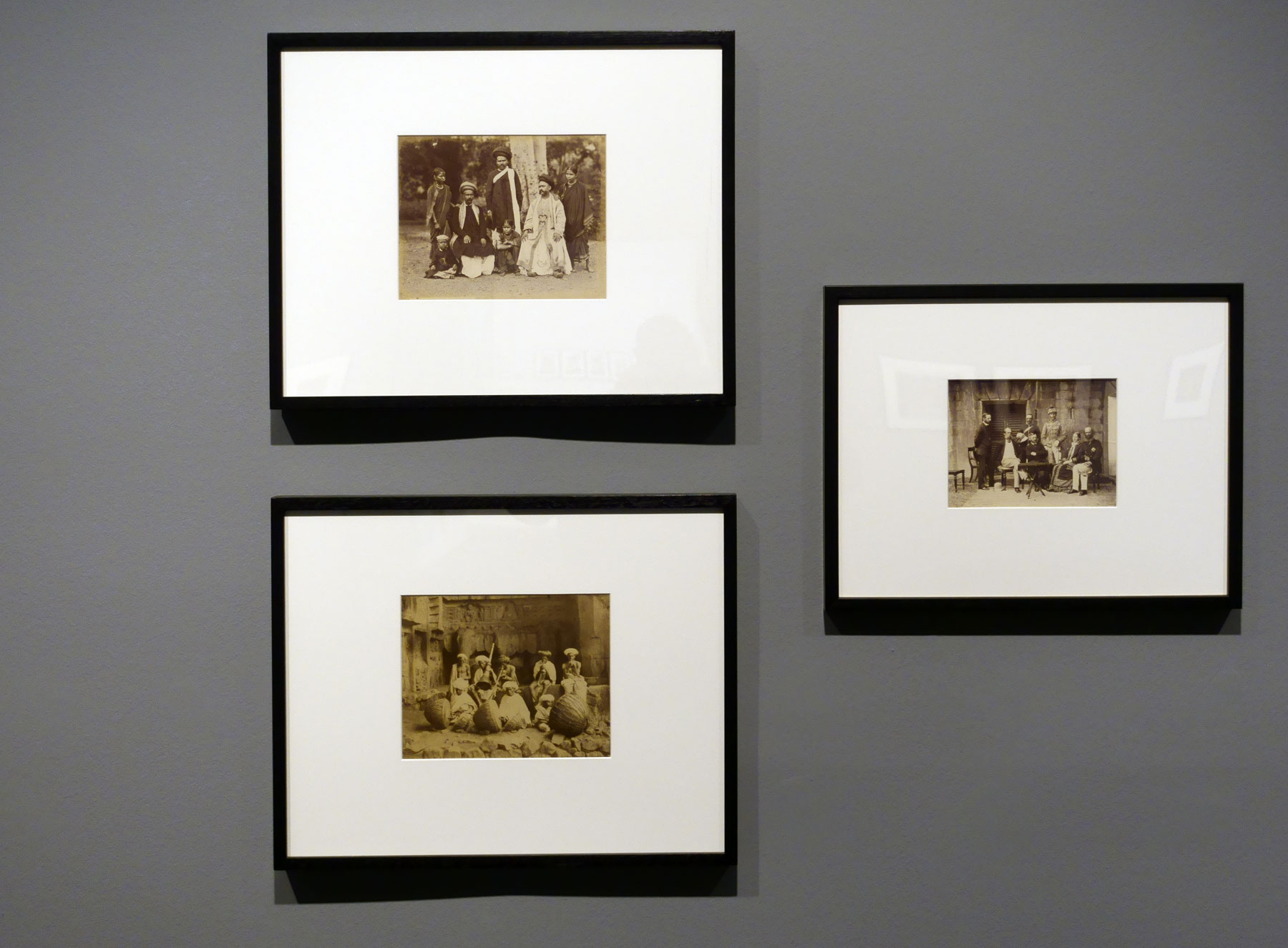
 

Installation view of the exhibition 'Visions of India: from the colonial to the contemporary' at the Monash Gallery of Art showing at top left, Edward Taurines (attributed, dates unknown). Brahmins of Bombay (c. 1880); at bottom left, Charles Scott (attributed, dates unknown). Caves of Karlie – seven attendant musicians (c. 1855-1862) from the album Photographs of Western India; and at right, Unknown photographer. A group portrait of British officials (c. 1880)


Installation view of the exhibition Visions of India: from the colonial to the contemporary at the Monash Gallery of Art showing at top left, Edward Taurines (attributed, dates unknown). Brahmins of Bombay (c. 1880, below); at bottom left, Charles Scott (attributed, dates unknown). Caves of Karlie – seven attendant musicians (c. 1855-1862) from the album Photographs of Western India; and at right, Unknown photographer. A group portrait of British officials (c. 1880)
Photo: Marcus Bunyan


Edward Taurines (attributed, dates unknown) 'Brahmins of Bombay' c. 1880


Edward Taurines (attributed, dates unknown)
Brahmins of Bombay
c. 1880
Albumen print
Courtesy of the Museum of Art & Photography (MAP) (Bengaluru)
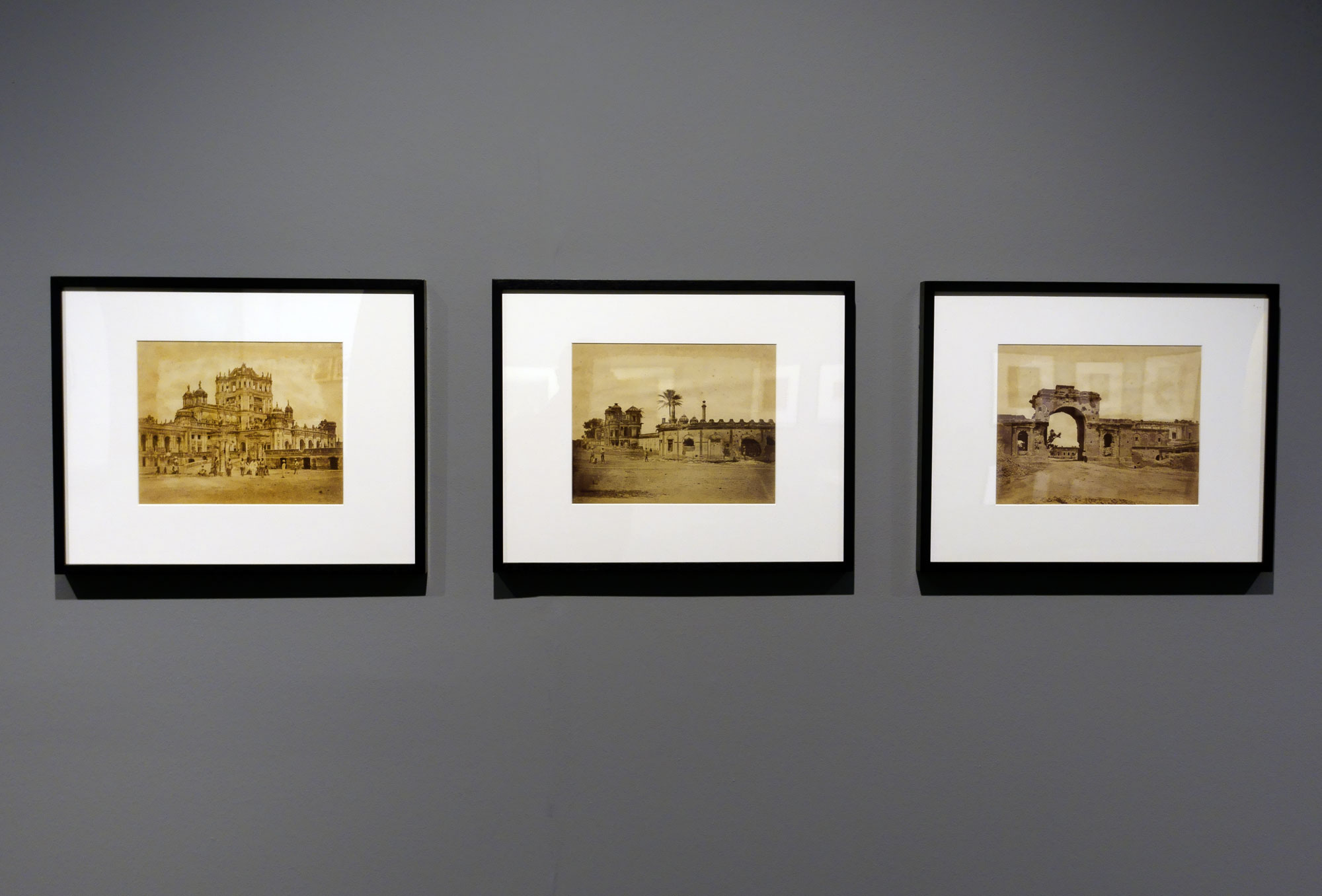
 

Installation view of the exhibition 'Visions of India: from the colonial to the contemporary' at the Monash Gallery of Art showing photographs by Felice Beato (Italian, 1832-1909) with at left, 'Kaiser Bagh' (1857); at centre, 'The Secundra Bagh', showing the breach and gateway, first attack of Sir Colin Campbell in November (1858); and at right, 'Gateway leading into the residency held by Captain Atkinson, 13th Native Infantry, commonly called the Bailee Guard Gate' (1858)


Installation view of the exhibition Visions of India: from the colonial to the contemporary at the Monash Gallery of Art showing photographs by Felice Beato (Italian, 1832-1909) with at left, Kaiser Bagh (1857); at centre, The Secundra Bagh, showing the breach and gateway, first attack of Sir Colin Campbell in November (1858, below); and at right, Gateway leading into the residency held by Captain Atkinson, 13th Native Infantry, commonly called the Bailee Guard Gate (1858)
Photo: Marcus Bunyan


A pioneer of war photography who worked extensively in the Mediterranean, Middle East and South and East Asia, Felice Beato’s photographs reveal the brutality and aftermath of the conflicts he photographed. His reportage on the Crimean War (1853-1856), for instance, contrasted from that of his predecessor, the early British war photographer Roger Fenton, who was more restrained in depicting the lasting impressions of violence. In 1858, Beato travelled to India, after hearing about the rebellion that had broken out the previous year, and applied a similar approach. With the help of military personnel, he traversed the north of the country, documenting its aftermath in cities like Delhi, Agra, Lucknow and Kanpur, where his photographs often depicted bullet-ridden facades and desecrated battlefields.

Wall text from the exhibition
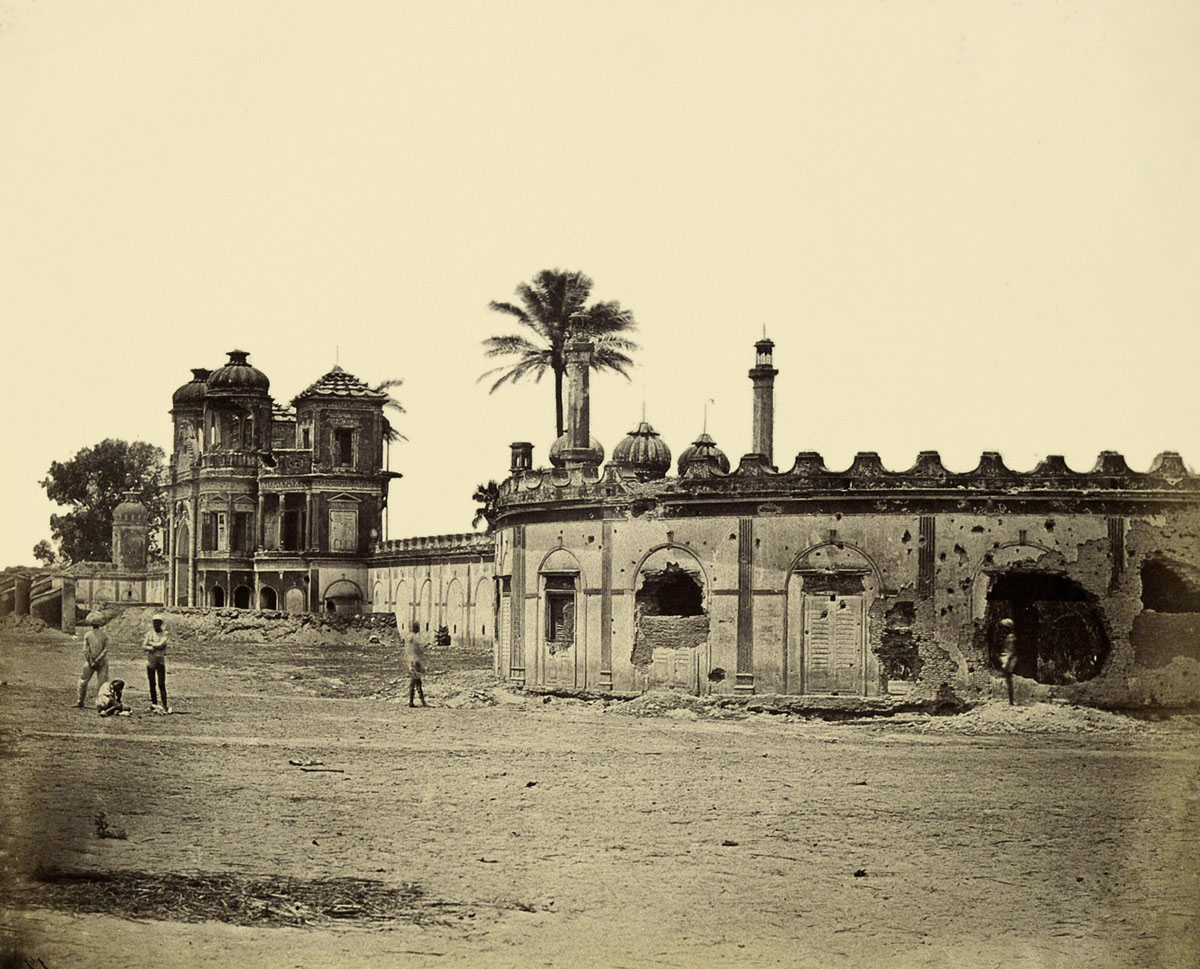
 

Felice Beato (Italian, 1832-1909) 'The Secundra Bagh, showing the breach and gateway, first attack of Sir Colin Campbell in November' 1858


Felice Beato (Italian, 1832-1909)
The Secundra Bagh, showing the breach and gateway, first attack of Sir Colin Campbell in November
1858
Albumen print
Courtesy of the Museum of Art & Photography (MAP) (Bengaluru)
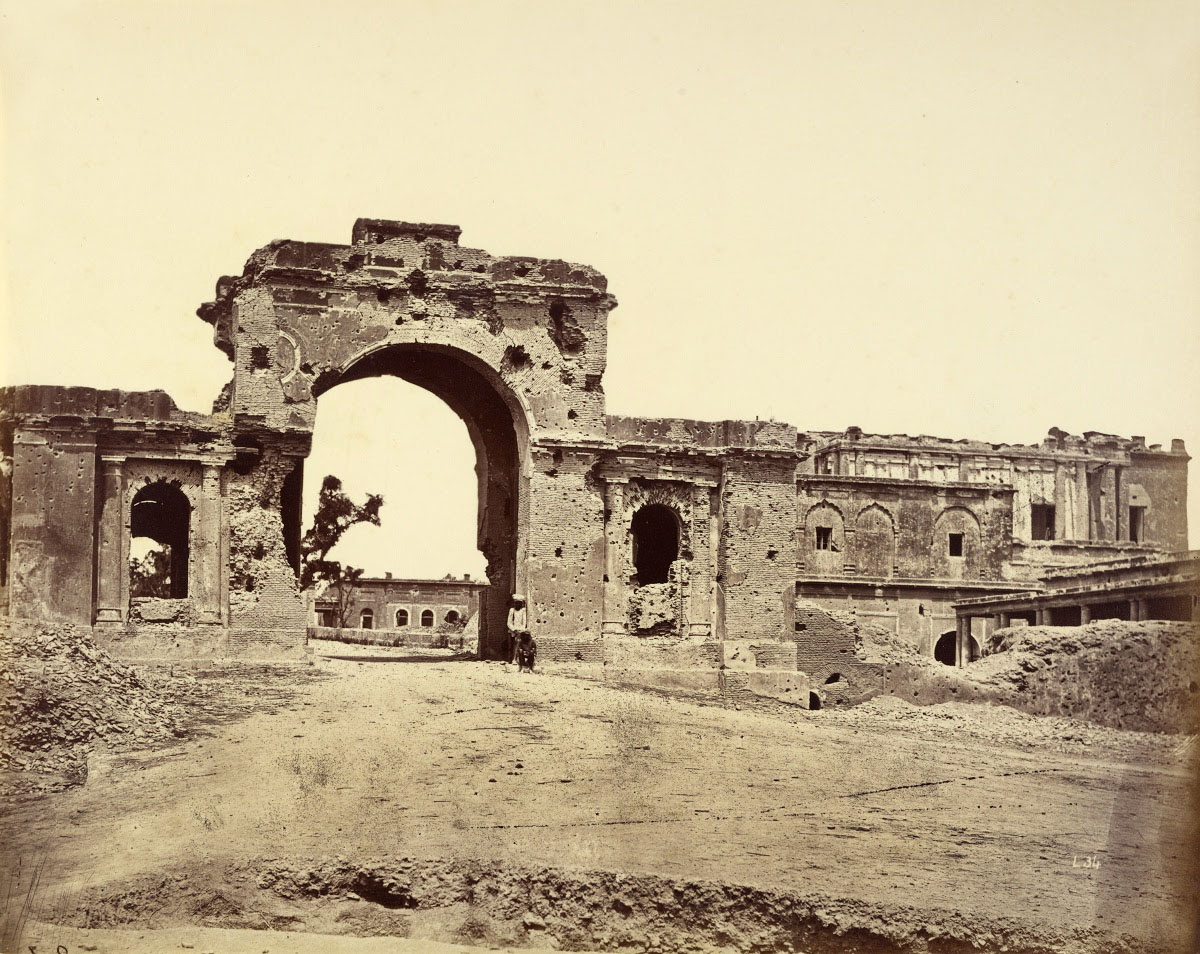
 

Felice Beato (Italian, 1832-1909) 'Gateway leading into the residency held by Captain Atkinson, 13th Native Infantry, commonly called the Bailee Guard Gate' 1858


Felice Beato (Italian, 1832-1909)
Gateway leading into the residency held by Captain Atkinson, 13th Native Infantry, commonly called the Bailee Guard Gate
1858
Albumen print
Courtesy of the Museum of Art & Photography (MAP) (Bengaluru)
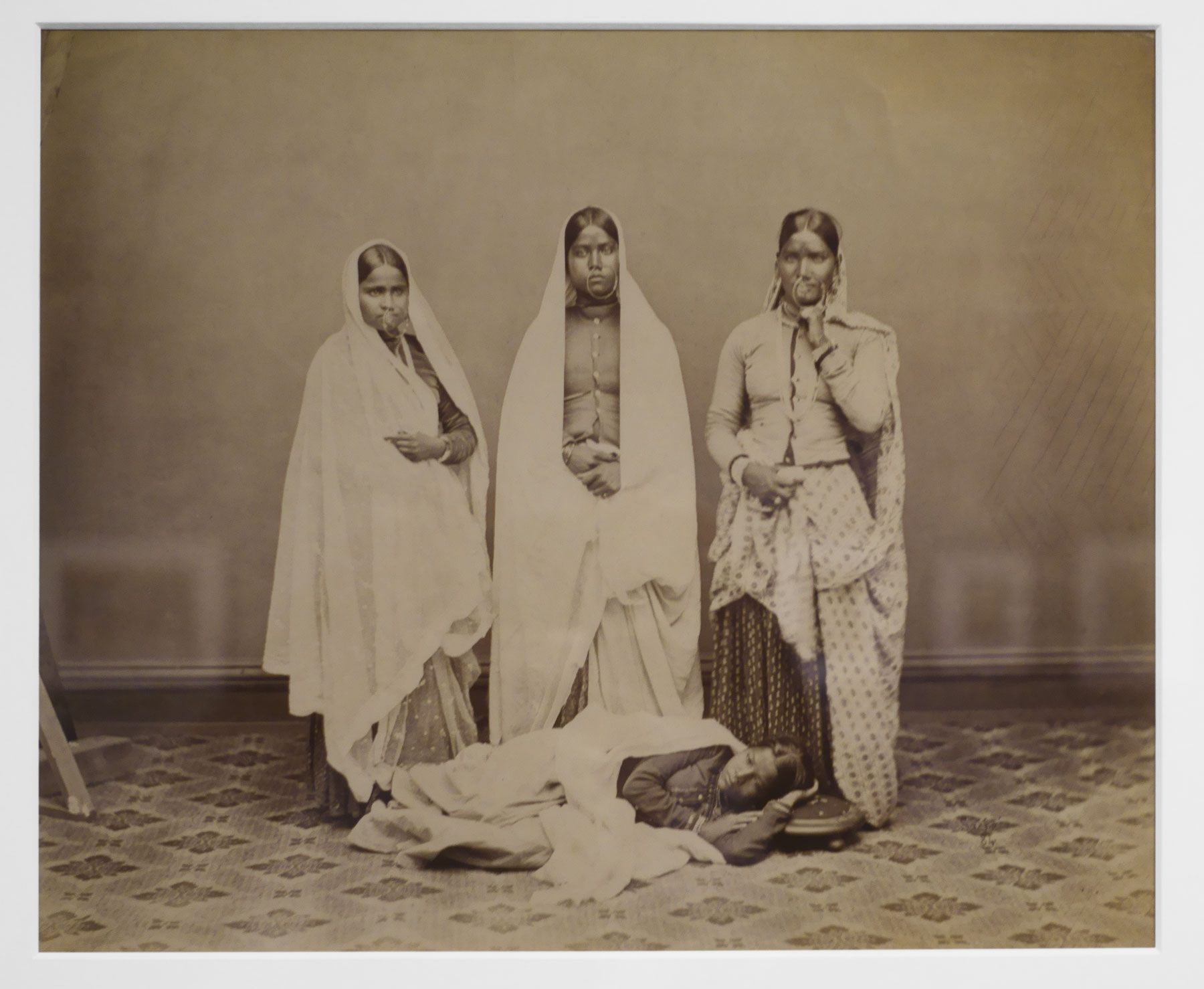
 

John Edward Saché (Germany, b. 1824; America (dates unknown); India (dates unknown); died India 1882) 'Four ayahs from Naintal Region' 1865 (installation view)


John Edward Saché (Germany, b. 1824; America (dates unknown); India (dates unknown); died India 1882)
Four ayahs from Naintal Region (installation view)
1865
Albumen print
Courtesy of the Museum of Art & Photography (MAP) (Bengaluru)
Photo: Marcus Bunyan
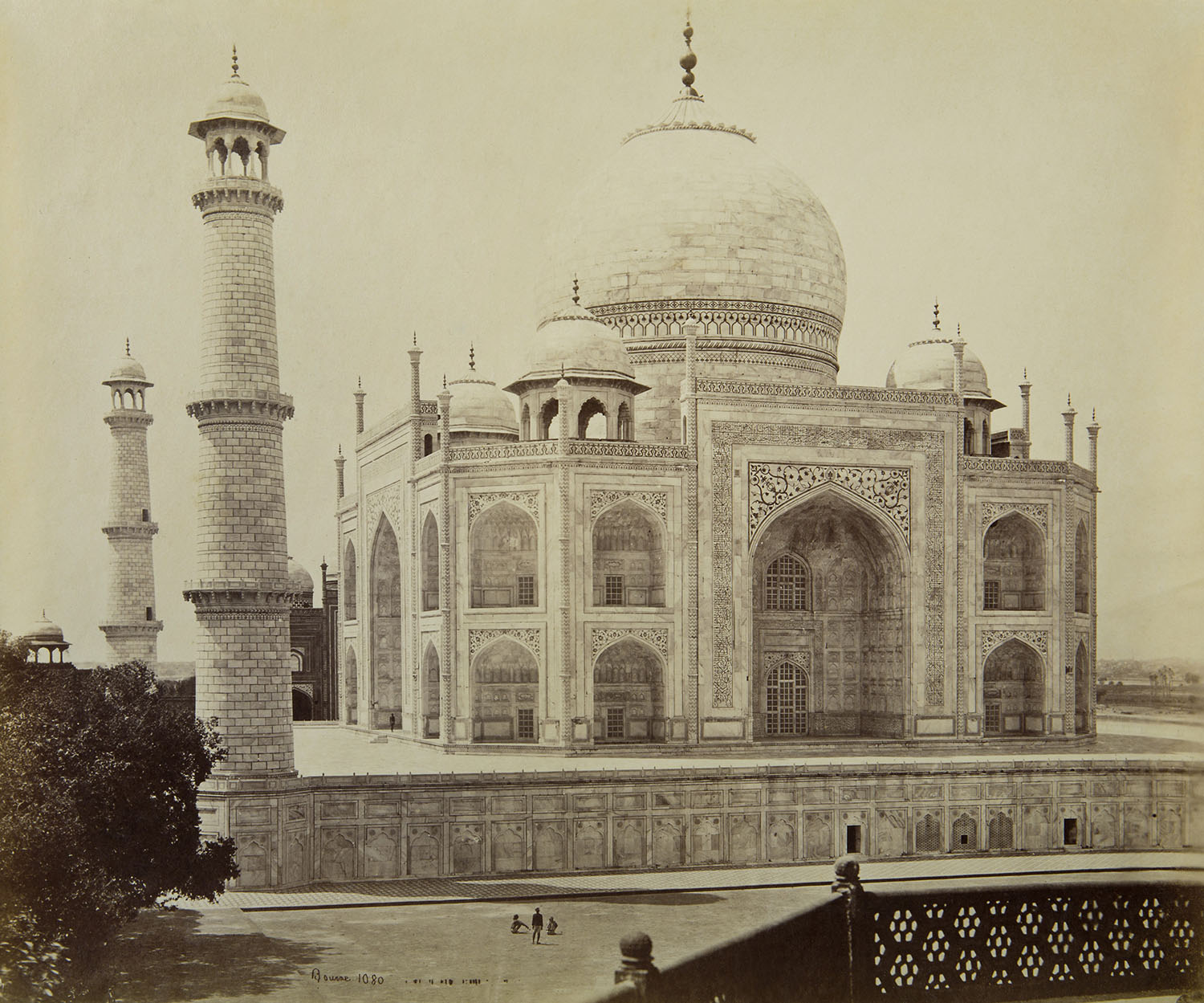
 

Samuel Bourne (British, 1834-1912) 'Taj Mahal, Agra' c. 1860


Samuel Bourne (British, 1834-1912)
Taj Mahal, Agra
c. 1860
Albumen print
16.0 x 20.6cm
Courtesy of the Museum of Art & Photography (MAP) (Bengaluru)


Samuel Bourne (British, 1834-1912)

Samuel Bourne (30 October 1834 – 24 April 1912) was a British photographer known for his prolific seven years’ work in India, from 1863 to 1870. Together with Charles Shepherd, he set up Bourne & Shepherd first in Shimla in 1863 and later in Kolkata (Calcutta); the company closed in June 2016. …

Work in India

He initially set up in partnership with an already established Calcutta photographer, William Howard. They moved up to Simla, where they established a new studio ‘Howard & Bourne’, to be joined in 1864 by Charles Shepherd, to form ‘Howard, Bourne & Shepherd’. By 1866, after the departure of Howard, it became ‘Bourne & Shepherd’, which became the premier photographic studio in India, and until it closed in June 2016 was perhaps the world’s oldest photographic business. Charles Shepherd evidently remained in Simla, to carry out the commercial and portrait studio work, and to supervise the printing and marketing of Bourne’s landscape and architectural studies, whilst Bourne was away travelling around the sub-continent.

Bourne spent six extremely productive years in India, and by the time he returned to England in January 1871, he had made approximately 2,200 fine images of the landscape and architecture of India and the Himalayas. Working primarily with a 10 x 12 inch plate camera, and using the complicated and laborious Wet Plate Collodion process, the impressive body of work he produced was always of superb technical quality and often of artistic brilliance. His ability to create superb photographs whilst travelling in the remotest areas of the Himalayas and working under the most exacting physical conditions, places him firmly amongst the very finest of nineteenth century travel photographers.

Text from the Wikipedia website


Wall text from the exhibition 'Visions of India: from the colonial to the contemporary' at the Monash Gallery of Art
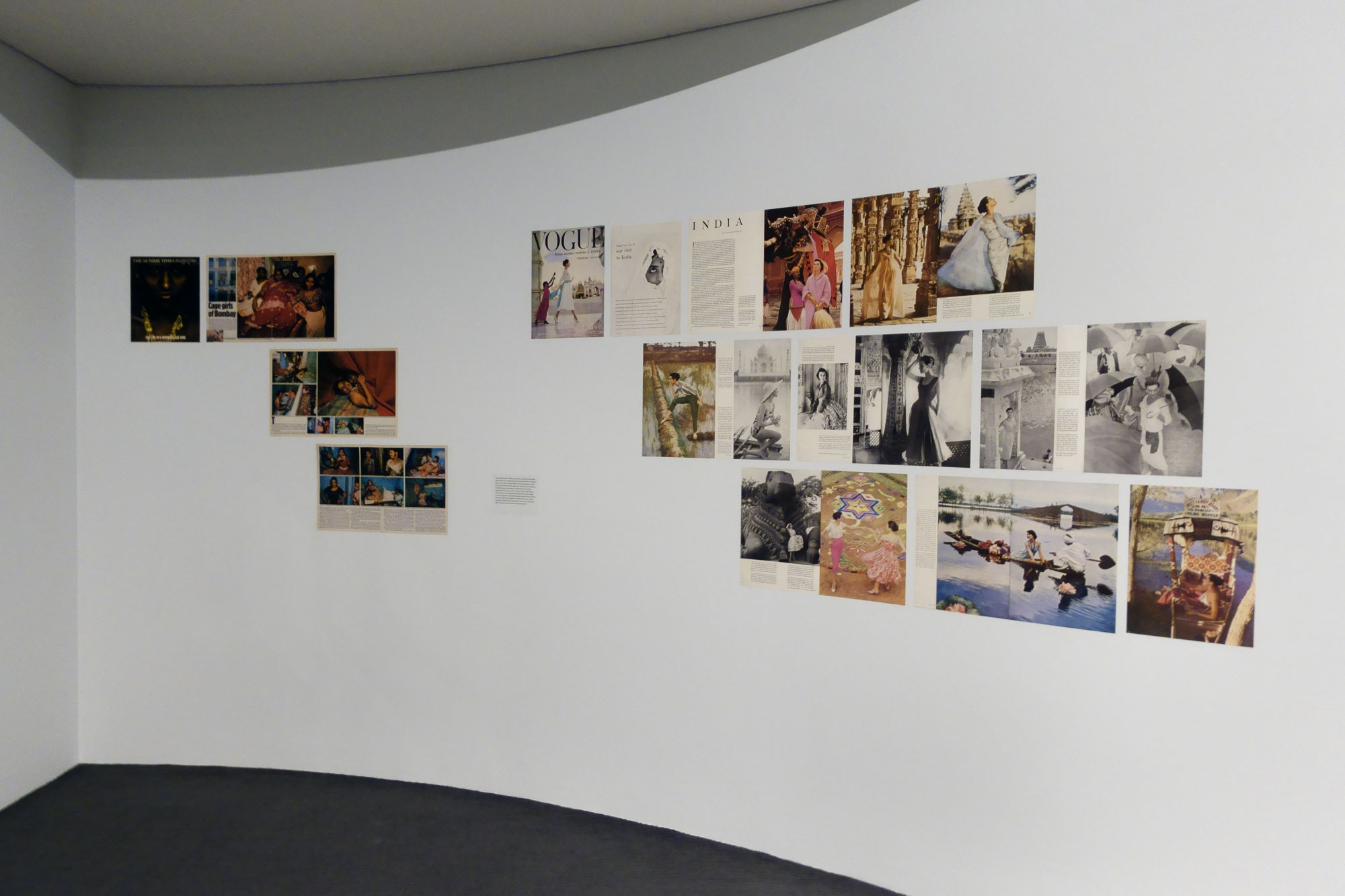
 

Wall text from the exhibition


Installation view of the exhibition 'Visions of India: from the colonial to the contemporary' at the Monash Gallery of Art

Installation view of the exhibition 'Visions of India: from the colonial to the contemporary' at the Monash Gallery of Art

Installation view of the exhibition 'Visions of India: from the colonial to the contemporary' at the Monash Gallery of Art showing at centre, a group of work by Jyoti Bhatt (Indian, b. 1934)


Installation view of the exhibition Visions of India: from the colonial to the contemporary at the Monash Gallery of Art showing at centre, a group of work by Jyoti Bhatt (Indian, b. 1934)
Photo: Marcus Bunyan


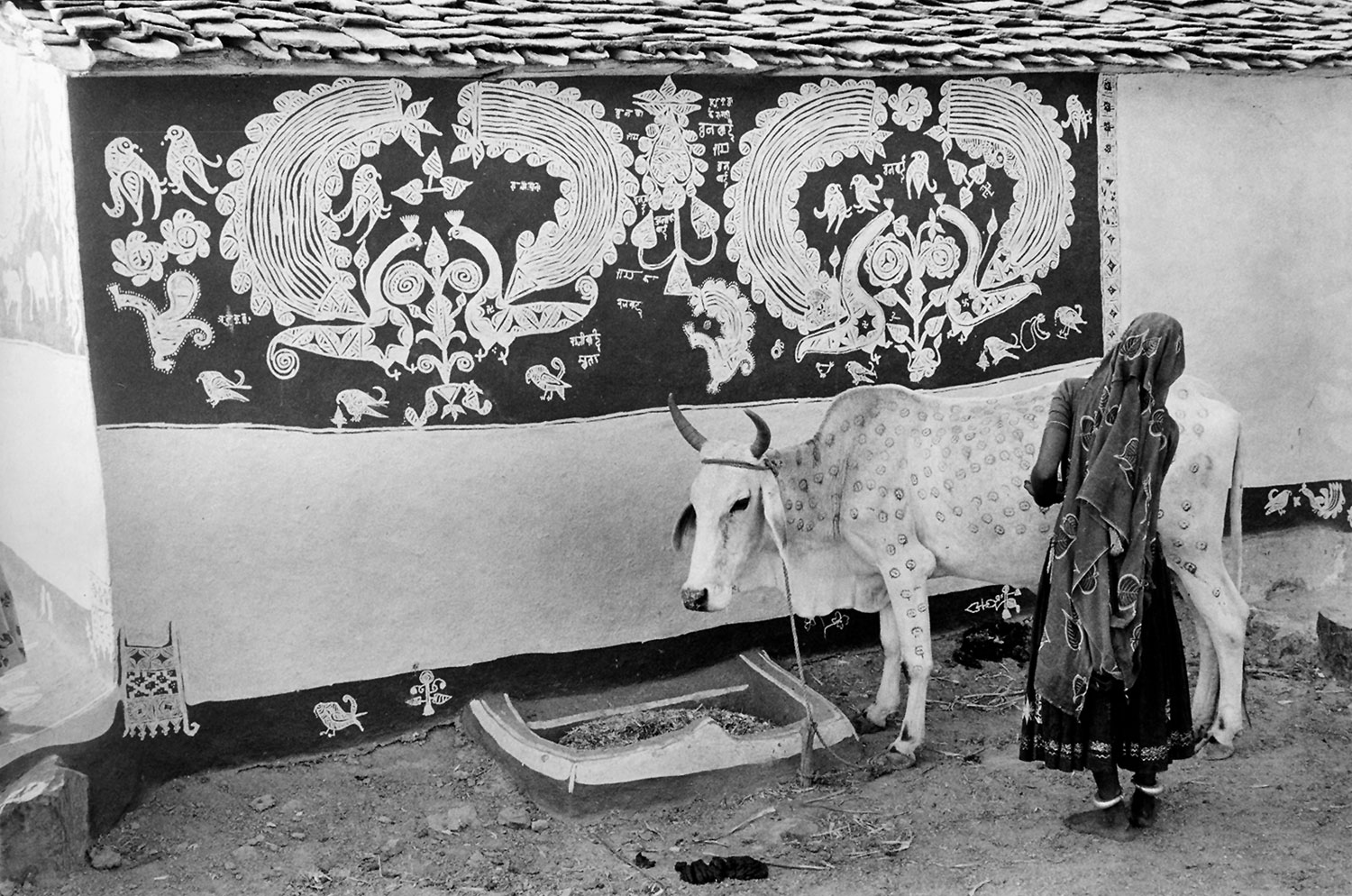
Jyoti Bhatt (Indian, b. 1934) 'An old woman making/drawing a mandana (Rangoli) design, Rajasthan' 1972


Jyoti Bhatt (Indian, b. 1934)
An old woman making/drawing a mandana (Rangoli) design, Rajasthan
1972
Pigment ink-jet print
45.6 x 30.4cm
Courtesy of the artist and the Museum of Art & Photography (MAP) (Bengaluru)


Jyoti Bhatt (Indian, b. 1934)

Jyotindra Manshankar Bhatt (12 March 1934), better known as Jyoti Bhatt, is an Indian artist best known for his modernist work in painting and printmaking and also his photographic documentation of rural Indian culture. He studied painting under N. S. Bendre and K.G. Subramanyan at the Faculty of Fine Arts, Maharaja Sayajirao University (M.S.U.), Baroda. Later he studied fresco and mural painting at Banasthali Vidyapith in Rajasthan, and in the early 1960s went on to study at the Academia di Belle Arti in Naples, Italy, as well the Pratt Institute in New York. He was awarded the Padma Shri in 2019.

Biography

Bhatt moved from a cubist influence in his early work to a lighthearted and colourful Pop art that often drew its imagery from traditional Indian folk designs. Though Bhatt worked in a variety of mediums, including watercolours and oils, it is his printmaking that ultimately garnered him the most attention. In 1966 Bhatt returned to M.S.U. Baroda with a thorough knowledge of the intaglio process that he had gained at the Pratt Institute at Brooklyn in New York. It was partially Bhatt’s enthusiasm for intaglio that caused other artists such as Jeram Patel, Bhupen Khakhar and Gulammohammed Sheikh, to take up the same process. Bhatt, and his compatriots at the Faculty of Fine Arts in Baroda, soon came to be known as “The Baroda School” of Indian art.

Late in the 1960s, Bhatt was asked to take photographs of Gujarati folk art. Initially, this work was done for a seminar, but it soon became one of the artist’s passions to document traditional Indian craft and design work. The disappearing arts of rural Gujarat became a focus. Though Bhatt’s investigations into a village and tribal designs certainly influenced the motifs he used in his printmaking, Bhatt considers his documentary photographs to be an art form in themselves. His direct and simply composed photographs have become valued on their own merit.

Throughout Bhatt’s long career as a teacher at the M.S.U. Faculty of Fine Arts, he has photographed the evolution of the university, the artistic activities of its faculty and students, and the architecturally significant buildings of Baroda. This huge body of work is perhaps the best assembled photographic documentation that pertains to “The Baroda School” of Indian art.

Text from the Wikipedia website


Jyoti Bhatt (Indian, b. 1934) 'A Rajasthani (Meena community) woman decorating a bullock for Gordhan Pooja festival' 1989


Jyoti Bhatt (Indian, b. 1934)
A Rajasthani (Meena community) woman decorating a bullock for Gordhan Pooja festival
1989
Gelatin silver print
34.5 x 51.0cm
Courtesy of the artist and the Museum of Art & Photography (MAP) (Bengaluru)


Installation view of the exhibition 'Visions of India: from the colonial to the contemporary' at the Monash Gallery of Art

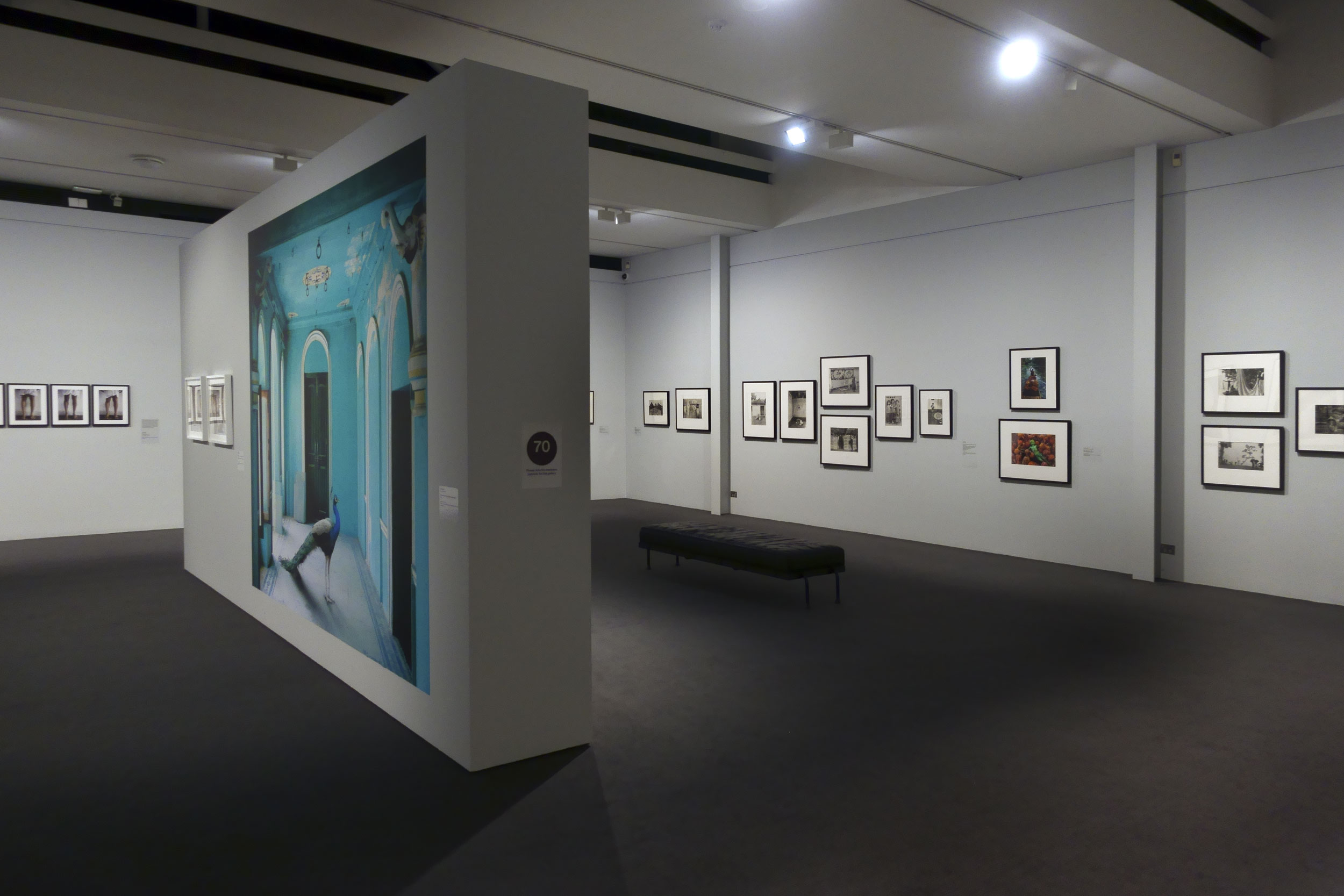
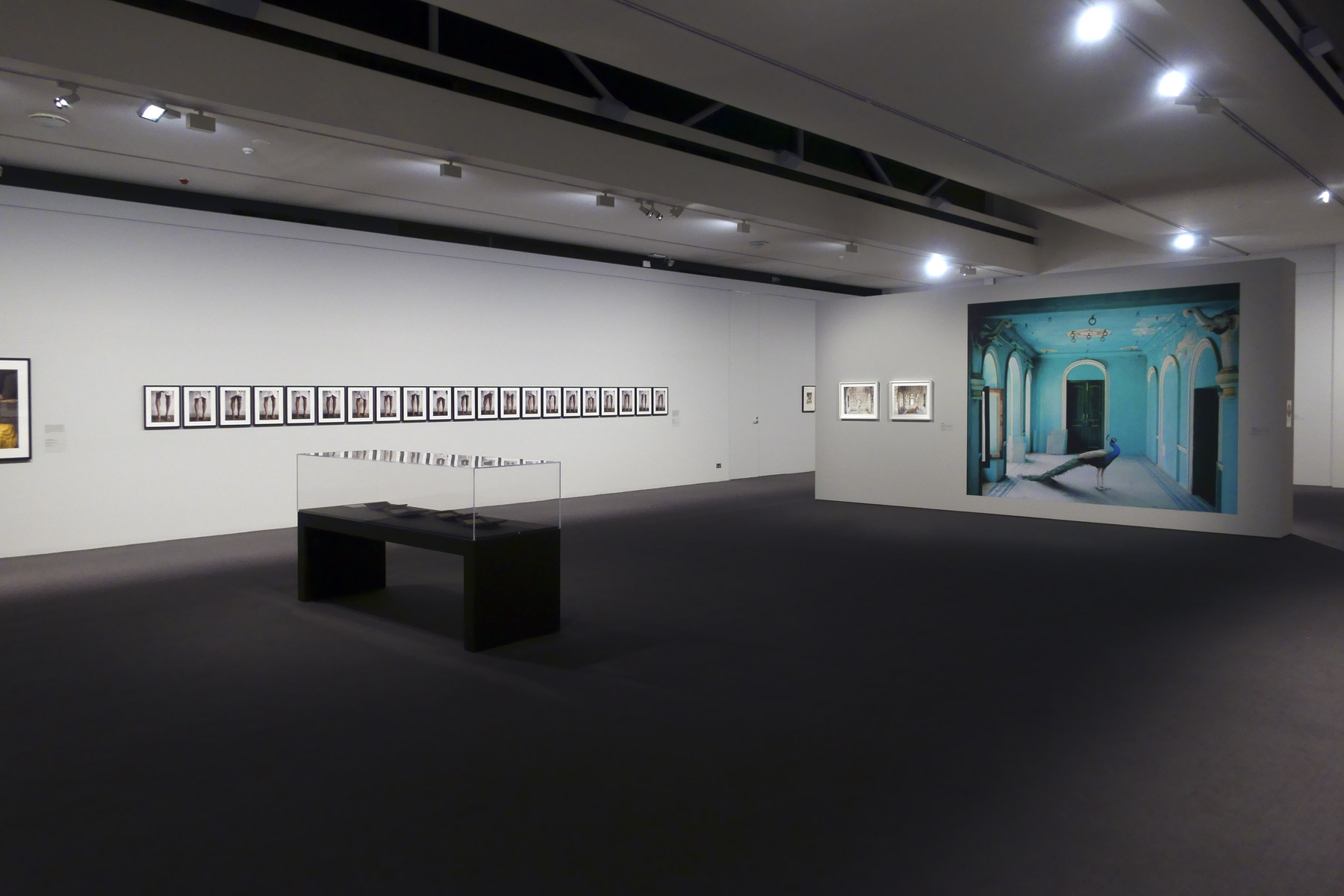
Installation view of the exhibition 'Visions of India: from the colonial to the contemporary' at the Monash Gallery of Art showing at right, Karen Knorr's The Queen's room, Zanana, Udaipur City Palace, Udaipur (2010, below)


Installation views of the exhibition Visions of India: from the colonial to the contemporary at the Monash Gallery of Art showing at right in the bottom image, Karen Knorr’s The Queen’s room, Zanana, Udaipur City Palace, Udaipur (2010, below)
Photos: Marcus Bunyan


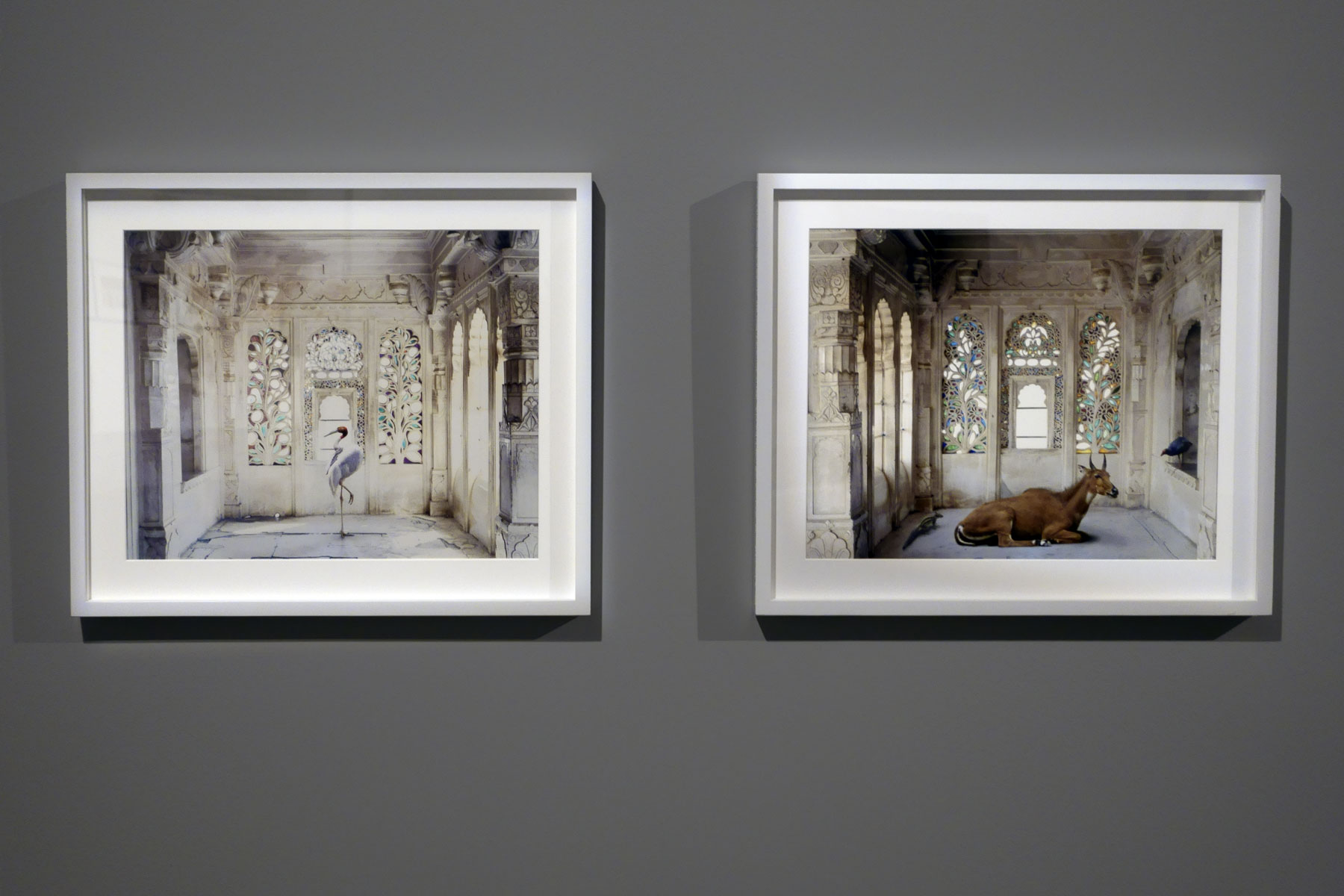
Installation view of the exhibition 'Visions of India: from the colonial to the contemporary' at the Monash Gallery of Art showing at left, Karen Knorr's 'The Queen's room, Zanana, Udaipur City Palace, Udaipur' (2010); and at right, 'A Place Like Amravati 2, Udaipur City Palace, Udaipur' (2011)


Installation view of the exhibition Visions of India: from the colonial to the contemporary at the Monash Gallery of Art showing at left, Karen Knorr’s The Queen’s room, Zanana, Udaipur City Palace, Udaipur (2010, below); and at right, A Place Like Amravati 2, Udaipur City Palace, Udaipur (2011)
Photo: Marcus Bunyan


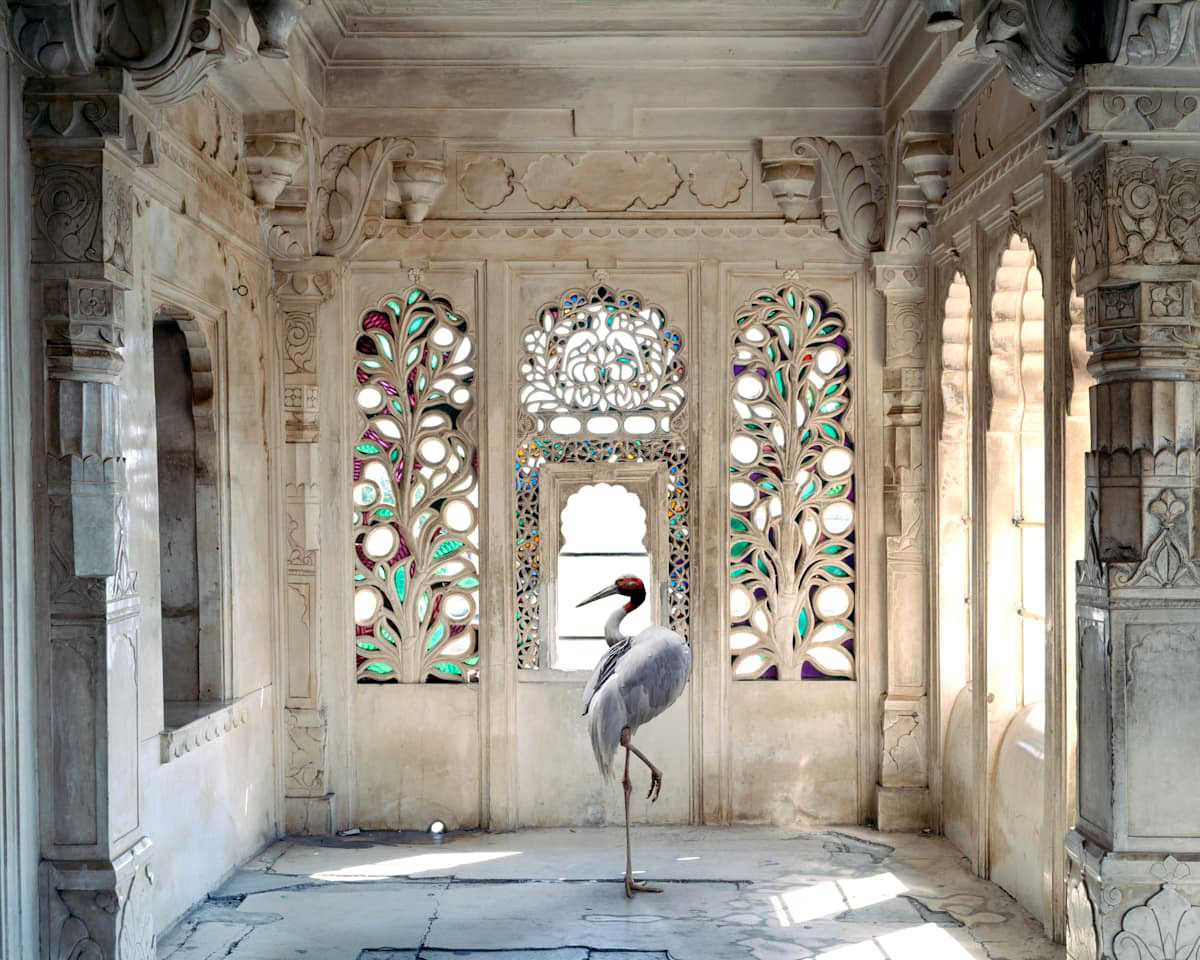
Karen Knorr (American born Germany, b. 1954) 'The Queen's room, Zanana, Udaipur City Palace, Udaipur' 2010


Karen Knorr (American born Germany, b. 1954)
The Queen’s room, Zanana, Udaipur City Palace, Udaipur
2010
Pigment ink-jet print
Courtesy of the artist and the Museum of Art & Photography (MAP) (Bengaluru)


Karen Knorr (American born Germany, b. 1954)

Karen Knorr HonFRPS is a German-born American photographer who lives in London.

Knorr was born in Frankfurt and raised in the 1960s in San Juan, Puerto Rico. In the 1970s, she moved to Great Britain where she has lived ever since. Knorr is a graduate of the Polytechnic of Central London (now the University of Westminster), and has an MA from the University of Derby. She is Professor of Photography at the University for the Creative Arts.

Knorr’s work explores Western cultural traditions, mainly British society, with widely ranging topics, from lifestyle to animals. She is interested in conceptual art, visual culture, feminism, and animal studies, and her art maintains connections with these topics.

Between 1979 and 1981 Knorr produced Belgravia, a series of black and white photographs each accompanied by a short text, typically critical to the British class system of the time. Subsequently, she produced Gentlemen (1981-1983), a series consisting of photographs of gentlemen’s members clubs and texts taken from parliamentary speeches and news reports. In these series, Knorr investigated values of the English upper middle classes, comparing them with aristocratic values. In 1986, the series Connoisseurs was made in colour. The series incorporates staged events into English architectural interiors. Between 1994 and 2004, Knorr photographed fine art academies throughout Europe, which resulted in the series Academies.

In 2008, she traveled to Rajasthan and took a large series of photographs, predominantly showing Indian interiors, often with animals from Indian folklore inside. She subsequently became a frequent traveller to India, visiting the country 15 times between 2008 and 2014. She mentioned that most of the buildings in India were never photographed, and they are not less interesting than common tourist attractions.

From 2014 to 2015, one room of Tate Britain hosted an exhibition of her photographs of “posh west Londoners in domestic settings and portraits of members at a gentlemen’s club” (Belgravia series).

Text from the Wikipedia website


Karen Knorr (American born Germany, b. 1954) 'The Queen's room, Zanana, Udaipur City Palace, Udaipur' 2010


Karen Knorr (American born Germany, b. 1954)
The Queen’s room, Zanana, Udaipur City Palace, Udaipur
2010
Pigment ink-jet print
Courtesy of the artist and the Museum of Art & Photography (MAP) (Bengaluru)


The photographer uses digital image manipulation to create scenes that critique upper caste Rajput culture and examine marginalisation, mythology and power.


Installation view of the exhibition 'Visions of India: from the colonial to the contemporary' at the Monash Gallery of Art

Installation view of the exhibition 'Visions of India: from the colonial to the contemporary' at the Monash Gallery of Art

Installation view of the exhibition 'Visions of India: from the colonial to the contemporary' at the Monash Gallery of Art showing at centre, two photographs by Gauri Gill (see below)


Installation views of the exhibition Visions of India: from the colonial to the contemporary at the Monash Gallery of Art showing in the bottom image at centre, two photographs by Gauri Gill (see below)
Photo: Marcus Bunyan


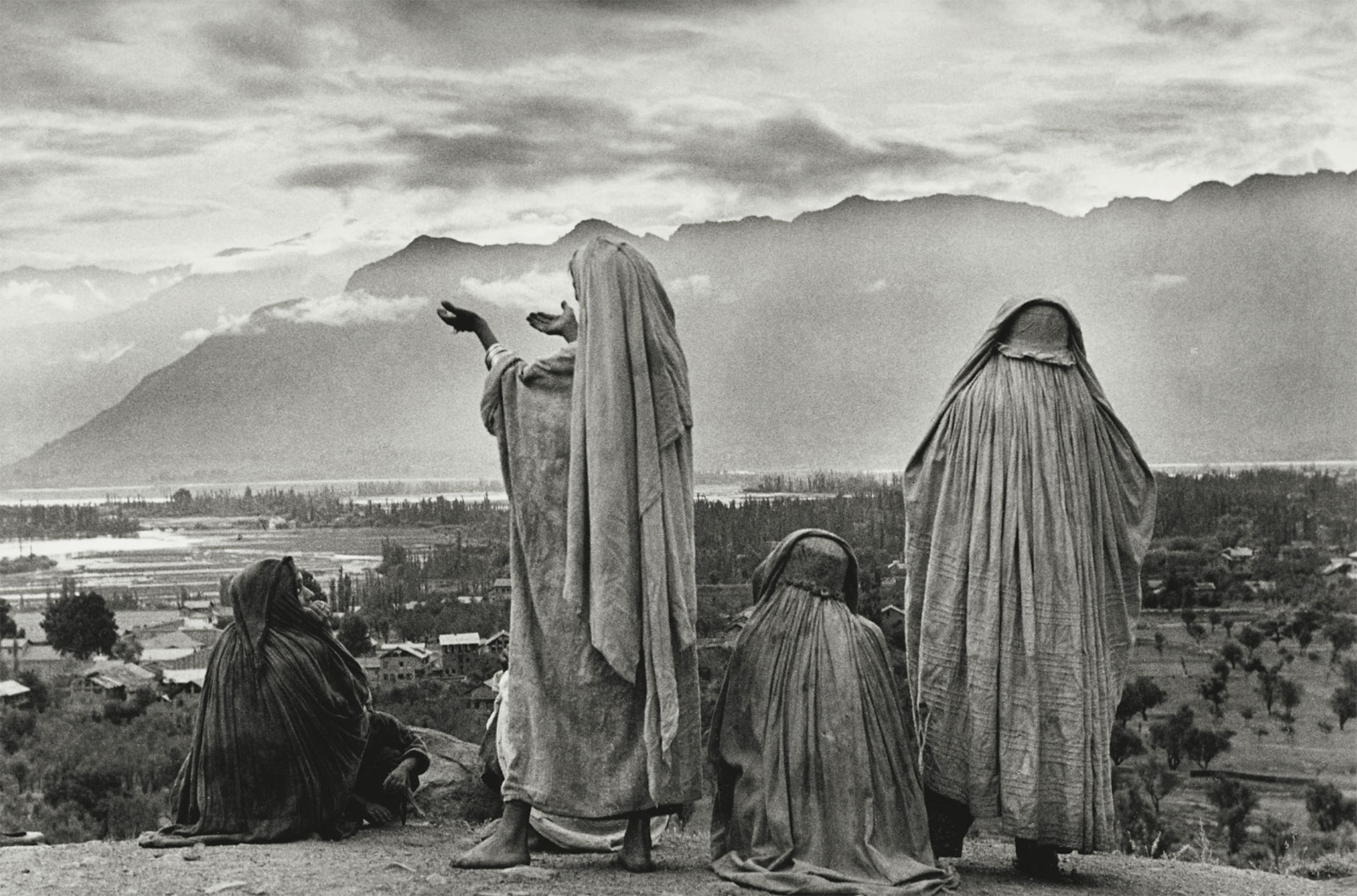
Henri Cartier-Bresson (French, 1908-2004) 'Muslim women praying at dawn in Srinagar' 1948


Henri Cartier-Bresson (French, 1908-2004)
Muslim women praying at dawn in Srinagar
1948
Gelatin silver print
Courtesy of the Museum of Art & Photography (MAP) (Bengaluru)


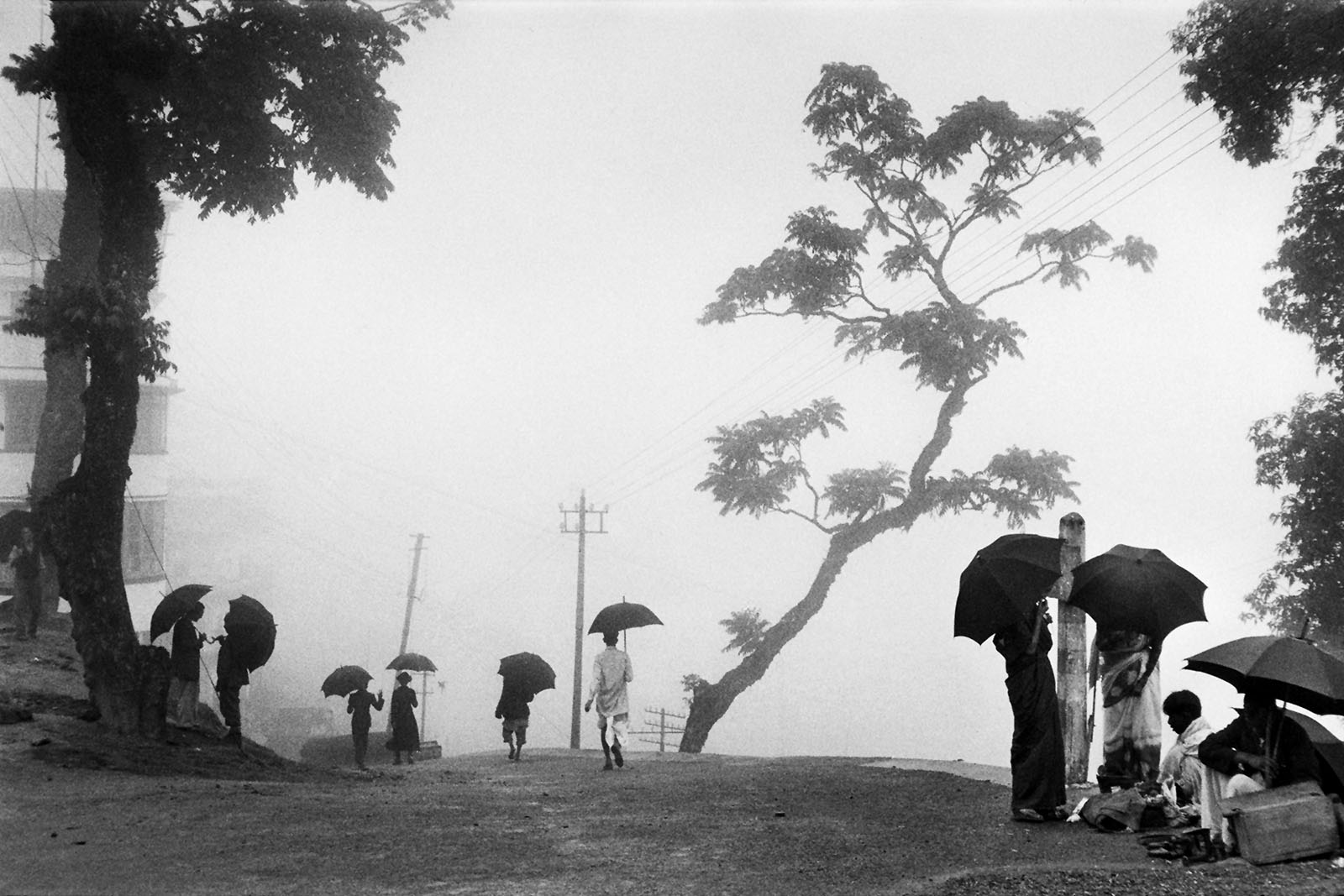
Marc Riboud (French, 1923-2015) 'Darjeeling, India' 1956


Marc Riboud (French, 1923-2015)
Darjeeling, India
1956
Gelatin silver print
24.0 x 36.5cm
Courtesy of the Museum of Art & Photography (MAP) (Bengaluru)


Marc Riboud (French, 1923-2015) 'Benares, India' 1956


Marc Riboud (French, 1923-2015)
Benares, India
1956
Gelatin silver print
23.5 x 36cm
Courtesy of the Museum of Art & Photography (MAP) (Bengaluru)


Monash Gallery of Art (MGA) announce the upcoming exhibition Visions of India: from the colonial to the contemporary featuring works from the Museum of Art & Photography (MAP), Bengaluru. Since its invention in Europe in the 1840s, the genre of photography has played an integral role in the course of Indian art history. Although it is often quoted that India is the most photographed country in the world, the history of its representation is more complicated, and more political than initially meets the eye. Within just a few months of its invention, the camera arrived in the subcontinent at the height of British colonial rule. Photographs from the time typically served the colonial purpose of administration and control, and thus, often reflected colonial views. Over the subsequent few decades, and at an unprecedented scale, India – its landscapes, people, traditions and archaeological history – was catalogued for the colonial eye and transformed into a governable ‘object.’

Visions of India: from the colonial to the contemporary will be the first major survey of Indian photography in Australia, and all artworks showcased will be from the collection of Museum of Art & Photography (MAP), Bengaluru, which is one of the most celebrated photographic collections in India. The exhibition will be on view at MGA until 20 March 2022.

‘While this exhibition takes the context of colonialism as an entry point – both chronologically and conceptually – the historical arc of photography in India extends far beyond this initial point of contact, encompassing a range of shifts in artistic, cultural and political attitudes, and other voices who exist outside the traditional canon. With this exhibition, we will uncover not only the primary history of the genre, but also the multiple parallel and lesser-known photographic practices in the subcontinent that re-emphasise the diverse and socially significant story of Indian photography.’ ~ Nathaniel Gaskell, curator


One such narrative will be highlighted through a section looking at the work of Suresh Punjabi, the photographer and owner of the Studio Suhag in Nagda, Madhya Pradesh, established in 1979. Punjabi made portraits for a broad set of purposes, from wedding and family albums to passport photos to personal souvenirs. Working at the time in a small 10 x 20 feet studio. His photographs chronicle the human drama of life in a small-town in the heart of India; a history told through faces and attest to the existence of vast and distinct photographic histories that extend beyond formal archives and institutions.

Visions of India: from the colonial to the contemporary offers a journey through one of the most complex and photographed countries in the world. This ground-breaking exhibition is curated by Nathaniel Gaskell from MAP’s unique photographic collection specifically for MGA. For many of our audience members, this may be their first encounter with these artists, their works and even with the history of India, while others may recognise places or feel resonance with their Indian cultural heritage. The exhibition draws together an array of unique and fascinating works from the earliest days of colonial India through to some of the nation’s most remarkable contemporary photographers, in the first survey of its kind in Australia.’ ~ Anouska Phizacklea, MGA Gallery Director


The exhibition will begin its journey from 1860 onwards, displaying portraits of India’s ruling elite by pioneering photographers and studios of the time, such as Samuel Bourne, Francis Frith & Co., Felicé Beato, Willoughby Wallace Hooper, Lala Deen Dayal and Khubiram Gopilal, as well as looking at some more creative, non-commercial studios, such as that of Maharaja Ram Singh II, ‘The photographer Prince’ who had established a studio at his palace in Jaipur.

Entering the decades following India’s independence in 1947, the exhibition will showcase works by well-known mid-century European photographers such as Henri Cartier-Bresson to reveal how photography remained entrenched in orientalist ways of seeing, for the benefit of Western media. However, a number of Indian photographers, such as Mitter Bedi and Jyoti Bhatt, were also using photography to represent tradition, inequity and modernity in a changing world, responding to the industrialisation and the economic progress of the country.

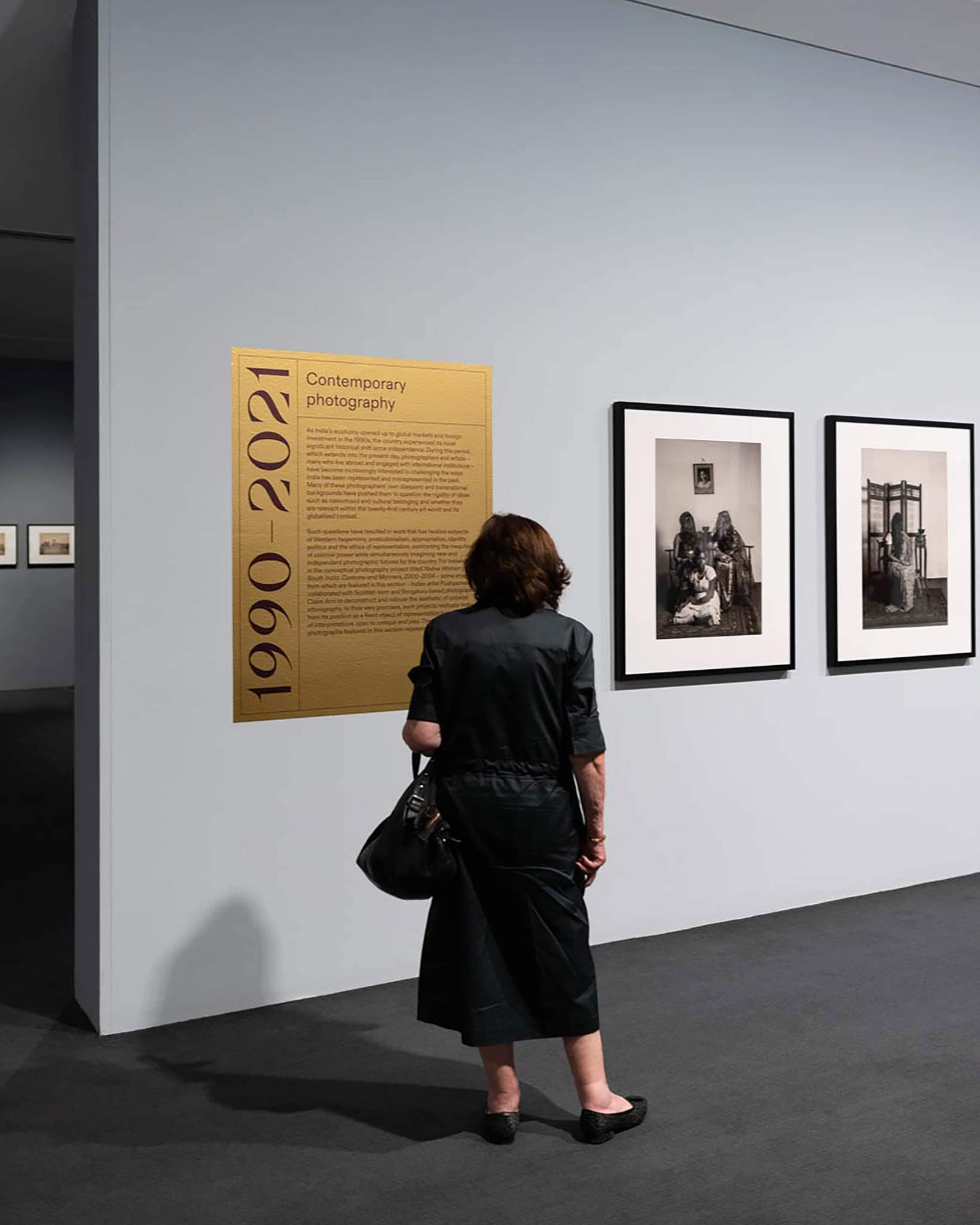
The third section, featuring photographic practices from the 1990s onwards, will highlight themes of Western hegemony, postcolonialism, identity politics and the ethics of representation through the works of celebrated contemporary photographers, Pushpamala N and her collaborator Clare Arni, Annu Palakunnathu Matthew, Anoli Perera, and Michael Bühler-Rose, an American ordained Hindu priest who pledges spiritual allegiance to India whilst working from his studios in both Mysore and New York.

Press release from the Monash Gallery of Art website


Installation view of the exhibition 'Visions of India: from the colonial to the contemporary' at the Monash Gallery of Art showing the work of Mitter Bedi (Indian, 1926-1985) with at left, 'Hindustan lever pipeline to success' (1961)


Installation view of the exhibition Visions of India: from the colonial to the contemporary at the Monash Gallery of Art showing the work of Mitter Bedi (Indian, 1926-1985) with at left, Hindustan lever pipeline to success (1961, below)
Photo: Marcus Bunyan


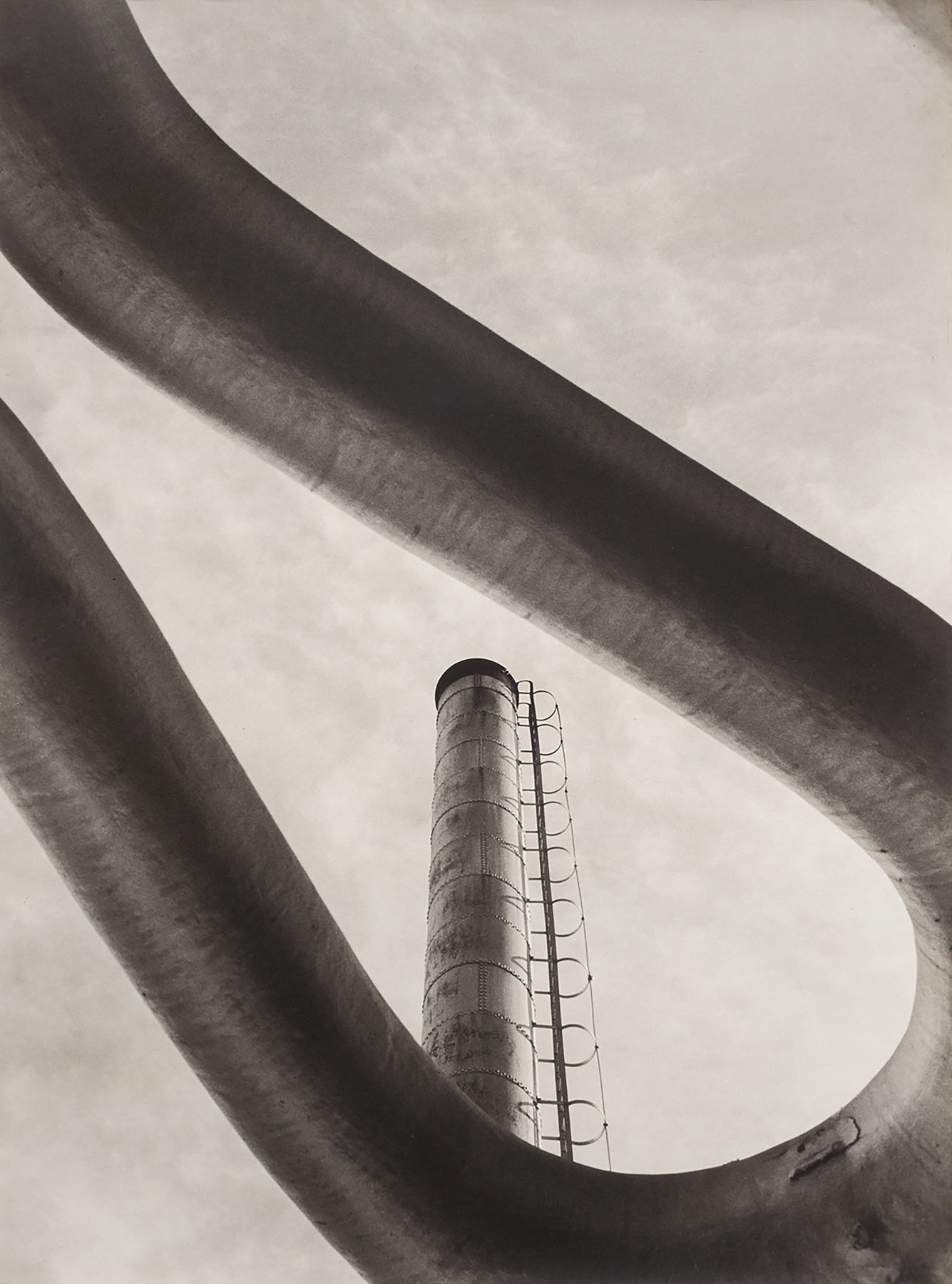
Mitter Bedi (Indian, 1926-1985) 'Hindustan lever pipeline to success' 1961


Mitter Bedi (Indian, 1926-1985)
Hindustan lever pipeline to success
1961
Gelatin silver print
100.0 x 75.0cm
Courtesy of the Museum of Art & Photography (MAP) (Bengaluru)


The photographer’s shots of industrial subjects from a newly independent India aimed to represent the ideals of an economically self-reliant and rapidly mechanised country, in line with the vision of its first prime minister Jawaharlal Nehru.


Mitter Bedi (Indian, 1926-1985)

Mitter Bedi (26 January 1926 – 11 March 1985) was an Indian photographer, specialising in industrial photography, and a teacher. Prior to his interest in the field there was little photographic use in advertising and his images have become classic icons. He was a recipient of several awards and he had his own photographic agency in Bombay (now Mumbai), which became well known in Asia. …

Career

Bedi started his career by working for a printing press and the publicity department of a commercial firm and then took up a job in the film industry in 1947, the year of the partitioning of India and Pakistan into independent nations. At the start of his career in the early 1950s, his photographic assignments covered small events, mostly related to weddings and birthday celebrations or serving as the third or fourth assistant to a Bollywood film director. He frequented the airport to photograph passengers departing and arriving, which prompted his father-in-law B.N. Goenka, an industrialist, to suggest that Bedi change professions or travel abroad. However Bedi was firm in his resolve to continue in his chosen profession and said: “I am never going to leave the profession but bring it to the heights it deserves”. In 1959 his photographic assignments saw a drastic change when he met Arthur D’Arzian, who had specialised in photography of the steel and oil industry, during a social function of the Standard Oil Company in Bombay. Bedi then pursued engagements of Industrial photography, a new field just taking off in the country.

Bedi’s assignments covered public sector corporations and private enterprises. From 1960 to 1985, he traversed the industrial regions of India taking pictures. He took more than 2,000 photo shoots during the span of his career and covered projects from industries such as steel and oil, hospitality, mines, sugar, pharmaceuticals and many more. To propagate black-and-white photography as a profession in the country he wrote many articles and also established an academy in Bombay which is still operational under the direction of his family members. His photographs depicted a nation in which the factory and reactor dominated over the Indian people. He also worked as visiting professor in: K.C. College of Journalism, Bombay during 1974-1975; National Institute of Design, Ahmedabad in 1976; in Rajednra Prasad Institute of Communication, Bombay in 1978; and in SNDT Women’s University, Bombay, 1978. His academy in Bombay was a prominent institution in photography which enrolled national and international students and teachers.

Bedi’s images have become classic icons of the industrialisation which was carried out in India under Nehru. In spite of the limiting aspects of photographs taken primarily for advertising, Bedi introduced shape, design and geometric planes to create artistic rather than simply functional images. His visual expressions and artistry were used by both the state and industrialists to drive national development. An oeuvre of his black-and-white photographs taken during the period 1960s to 1970s, was held at the Piramal Centre for Photography representing an Art Form in Mumbai.

Text from the Wikipedia website


Wall text from the exhibition 'Visions of India: from the colonial to the contemporary' at the Monash Gallery of Art
 

Wall text from the exhibition


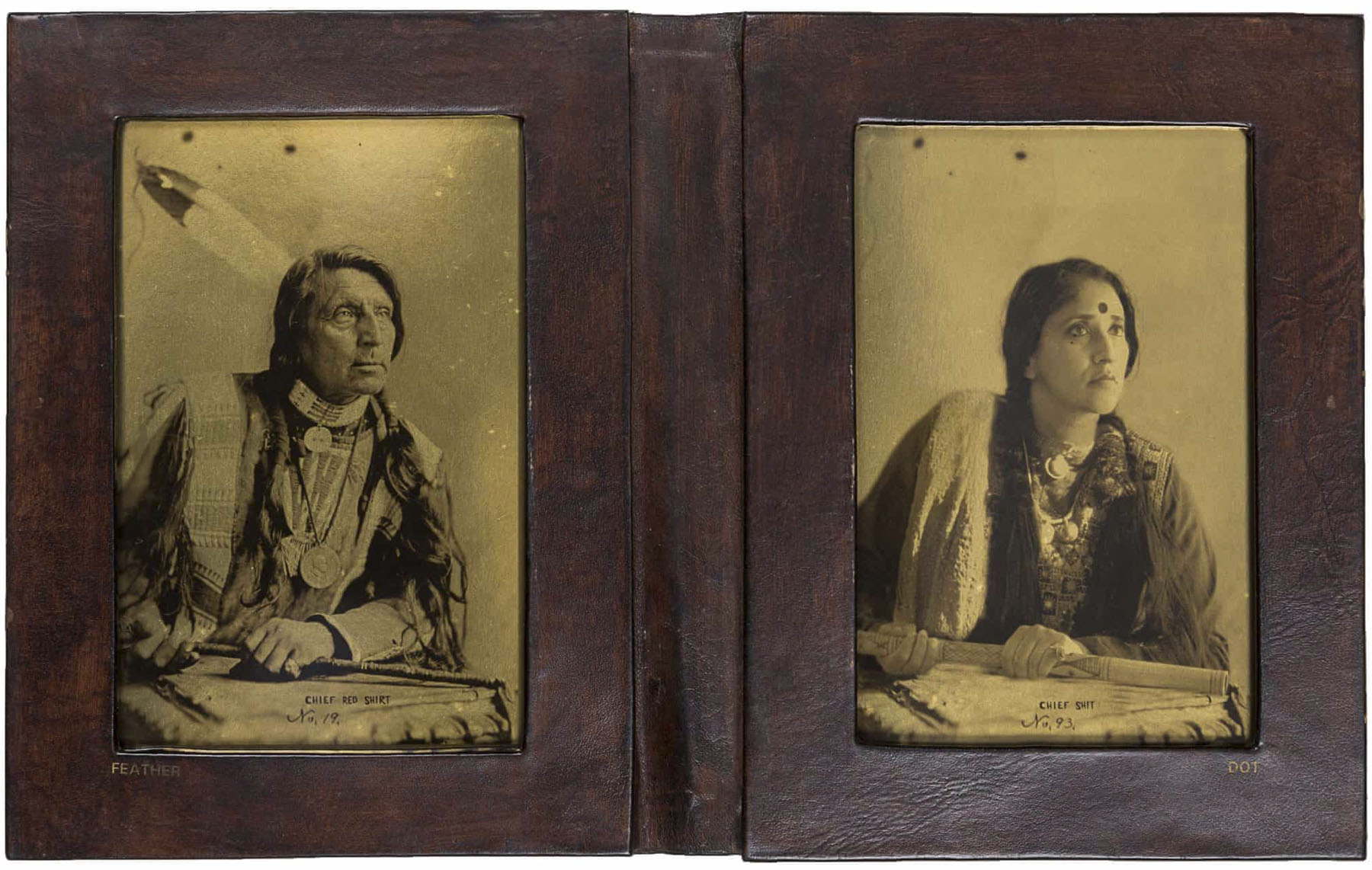
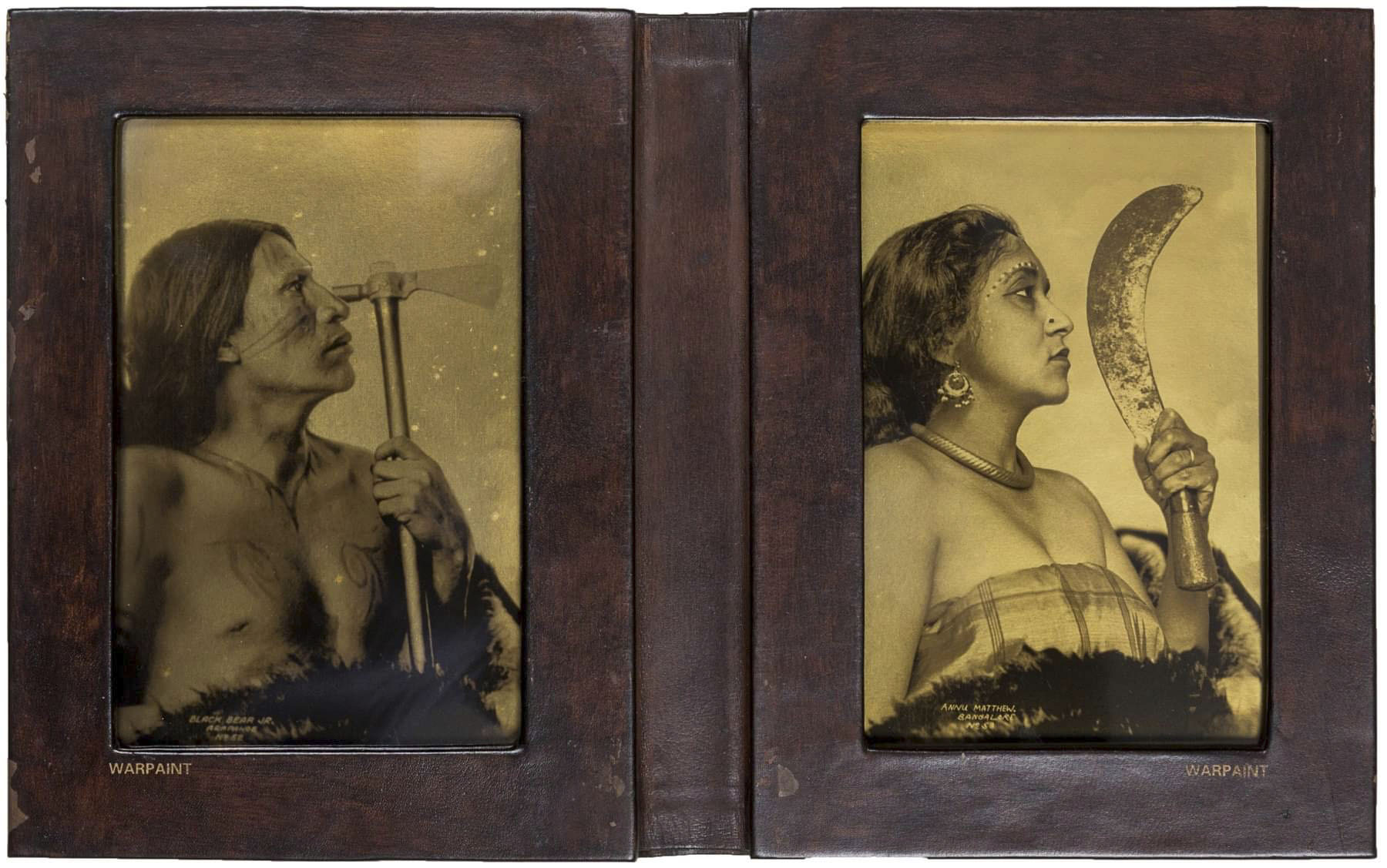
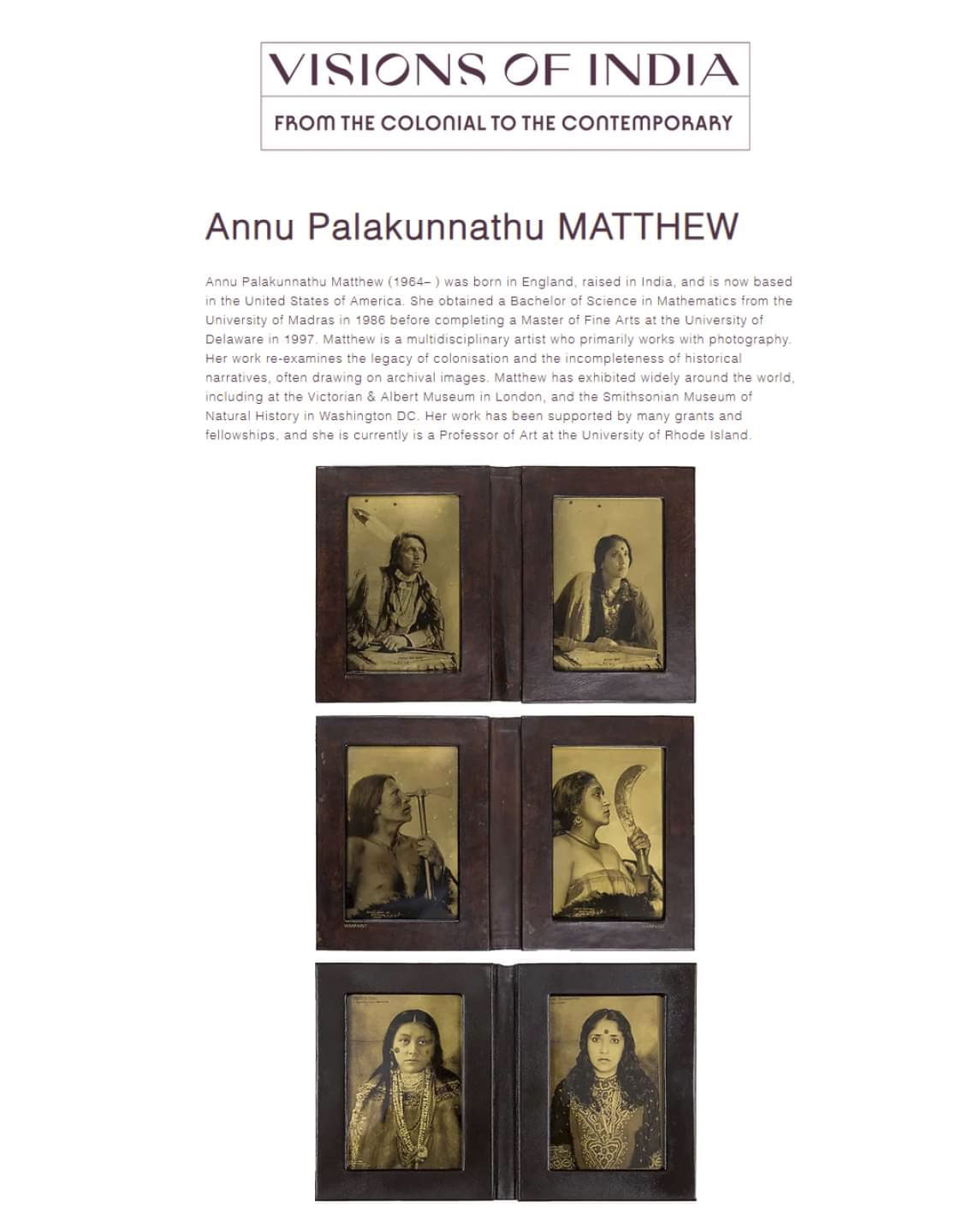
Annu Palakunnathu Matthew (British, b. 1964) 'Feather Indian/Dot Indian' 2008-2009


Annu Palakunnathu Matthew (British, b. 1964)
Feather Indian/Dot Indian
2008-2009
From the series An Indian from India
Ink-jet prints on transparencies, metallic gold cards, leather case
14.5 x 9.4cm (each image)
Courtesy of the artist and Museum of Art & Photography (MAP) (Bengaluru)
 

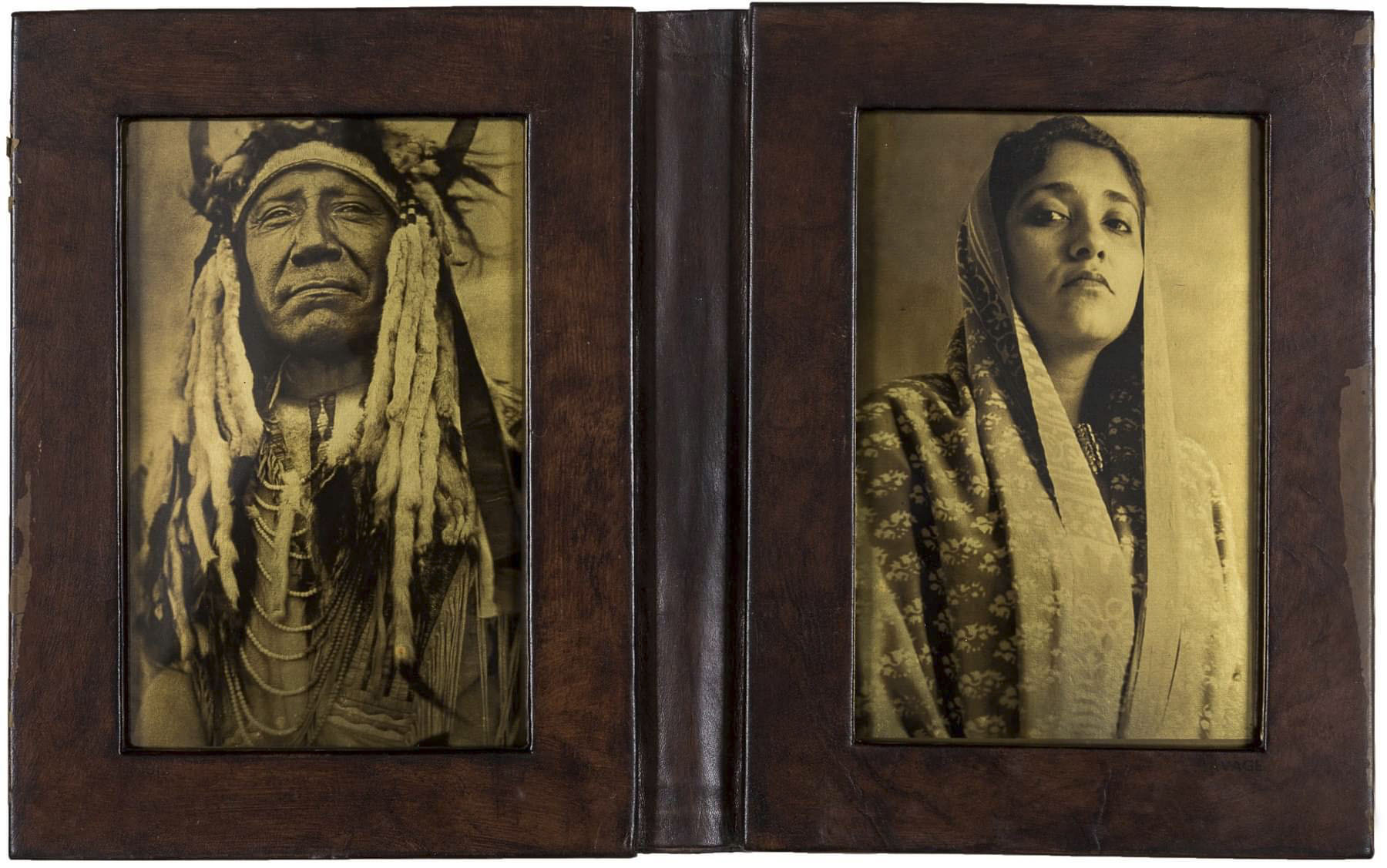
Near-identical photographs place two “Indians” side by side. A double portrait framed in a leather case, made to appear as a traditional orotone. Matthew’s series An Indian from India addresses the historical identities of Indians and Native Americans, who – owing to Christopher Columbus’s erroneous identification on arriving in the Antilles in the late 15th century – have long been misidentified, and questions the nature of assimilation within and beyond the US.


Annu Palakunnathu Matthew (British, b. 1964) 'Noble savage/savage noble' 2007-2009


Annu Palakunnathu Matthew (British, b. 1964)
Noble savage/savage noble
2007-2009
from the series An Indian from India
Ink-jet prints on transparencies, metallic gold cards, leather case
14.5 x 9.4 cm (each image)


Annu Palakunnathu Matthew (British, b. 1964) 'American Indian with war paint/Indian with war paint' 2007-2009


Annu Palakunnathu Matthew (British, b. 1964)
American Indian with war paint/Indian with war paint
2007-2009
from the series An Indian from India
Ink-jet prints on transparencies, metallic gold cards, leather case
14.5 x 9.4 cm (each image)


Annu Palakunnathu Matthew wall text from the exhibition


Annu Palakunnathu Matthew wall text from the exhibition


Installation view of the exhibition 'Visions of India: from the colonial to the contemporary' at the Monash Gallery of Art showing the work of Anoli Perera


Installation view of the exhibition Visions of India: from the colonial to the contemporary at the Monash Gallery of Art showing the work of Anoli Perera
Photo: Monash Gallery of Art


Installation view of the exhibition 'Visions of India: from the colonial to the contemporary' at the Monash Gallery of Art

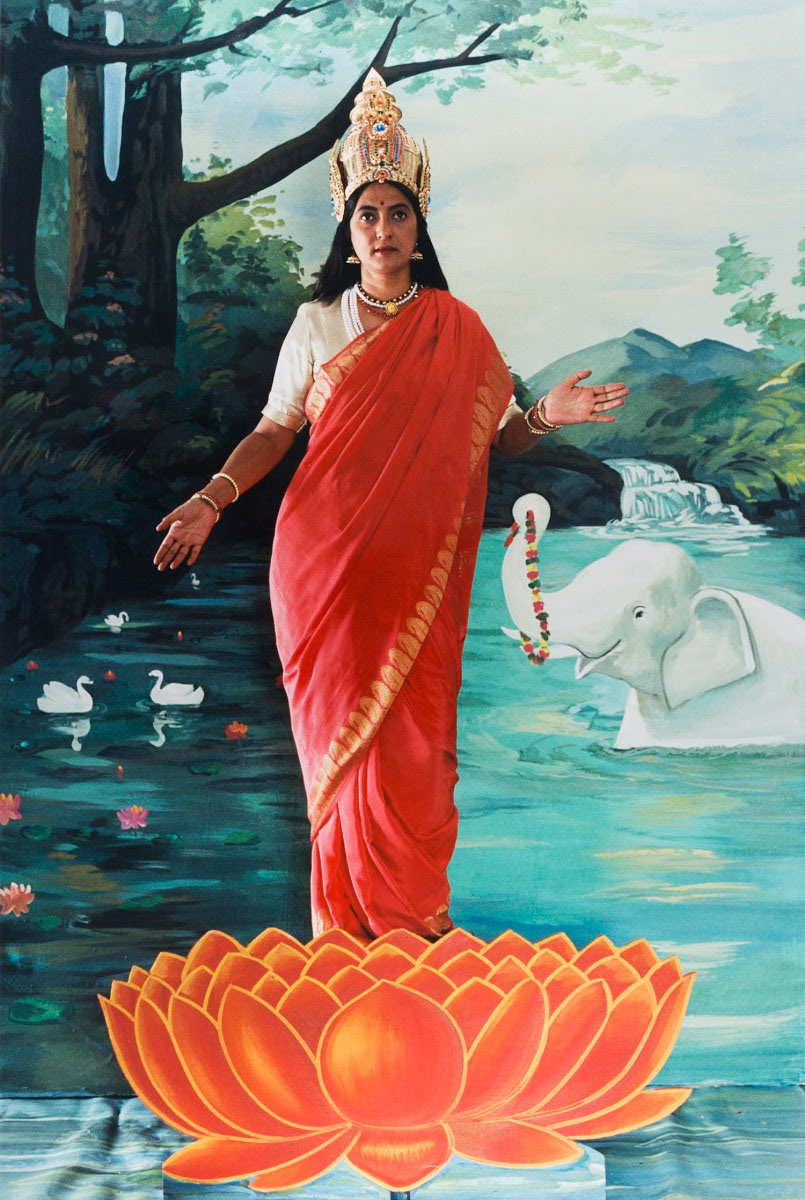
Installation views of the exhibition 'Visions of India: from the colonial to the contemporary' at the Monash Gallery of Art with in the bottom image, showing at left, three works by Anoli Perera; at centre right, two photographs by Pushpamala N with Clare Arni. 'Returning from the tank' (2001) and 'Lakshmi' (2001); and at right, work by Pushpamala N with Clare Arni from the series 'Native women of South India (manners and customs)'


Installation views of the exhibition Visions of India: from the colonial to the contemporary at the Monash Gallery of Art with in the bottom image, showing at left, three works by Anoli Perera (see below); at centre right, two photographs by Pushpamala N with Clare Arni. Returning from the tank (2001, below) and Lakshmi (2001, below); and at right, work by Pushpamala N with Clare Arni from the series Native women of South India (manners and customs) (see below)
Photos: Marcus Bunyan


Anoli Perera (Sri Lankan, b. 1962; America 1988-1992; Sri Lanka 1992-2016; arrived India 2016) 'I let my hair loose' 2010-2011


Anoli Perera (Sri Lankan, b. 1962; America 1988-1992; Sri Lanka 1992-2016; arrived India 2016)
I let my hair loose
2010-2011
From the Protest series I
Pigment ink-jet prints
Courtesy of the Museum of Art & Photography (MAP) (Bengaluru)
 

Young women in 2010-2011 pose according to the conventions of colonial-era portrait photography with deliberately dishevelled hair as a symbol of defiance against the notion of out-of-place hair seen as “hysterical” or “uncontrollable.”


Anoli Perera (Sri Lankan, b. 1962; America 1988-1992; Sri Lanka 1992-2016; arrived India 2016) 'I let my hair loose' 2010-2011


Anoli Perera (Sri Lankan, b. 1962; America 1988-1992; Sri Lanka 1992-2016; arrived India 2016)
I let my hair loose
2010-2011
From the Protest series IV
Pigment ink-jet prints
Courtesy of the Museum of Art & Photography (MAP) (Bengaluru)
 

Hair covers the face of a young woman who poses according to the conventions of colonial-era portrait photography. The Sri Lankan-born, Delhi-based artist is inspired not only by colonial-ethnographic images but also by portraits of women she saw as a child, often dictated by male notions of femininity. ‘Hair in its proper place is seen as a mark of beauty,’ she says. ‘Hair out of place is seen as significations of hysterical, uncontrollable, uncertain and unpredictable behaviour’.


Pushpamala N (Indian, b. 1956) with Clare Arni (Scottish, b. 1962) 'Returning from the tank' 2001


Pushpamala N (Indian, b. 1956) with Clare Arni (Scottish, b. 1962)
Returning from the tank
2001
From the series Native women of South India (manners and customs)
Chromogenic prints
Courtesy of the Museum of Art & Photography (MAP) (Bengaluru)


Pushpamala N (Indian, b. 1956) with Clare Arni (Scottish, b. 1962) 'Lakshmi' 2001


Pushpamala N (Indian, b. 1956) with Clare Arni (Scottish, b. 1962)
Lakshmi
2001
From the series Native women of South India (manners and customs)
Chromogenic prints
Courtesy of the Museum of Art & Photography (MAP) (Bengaluru)
 

Pushpamala N with Clare Arni (Scottish, b. 1962) 'Cracking the whip D-4' 2000-2004


Pushpamala N (Indian, b. 1956) with Clare Arni (Scottish, b. 1962)
Cracking the whip D-4
2000-2004
From the series Native women of South India (manners and customs)
Sepia-toned gelatin silver print
13.1 x 8.8cm
Courtesy of the Museum of Art & Photography (MAP) (Bengaluru)
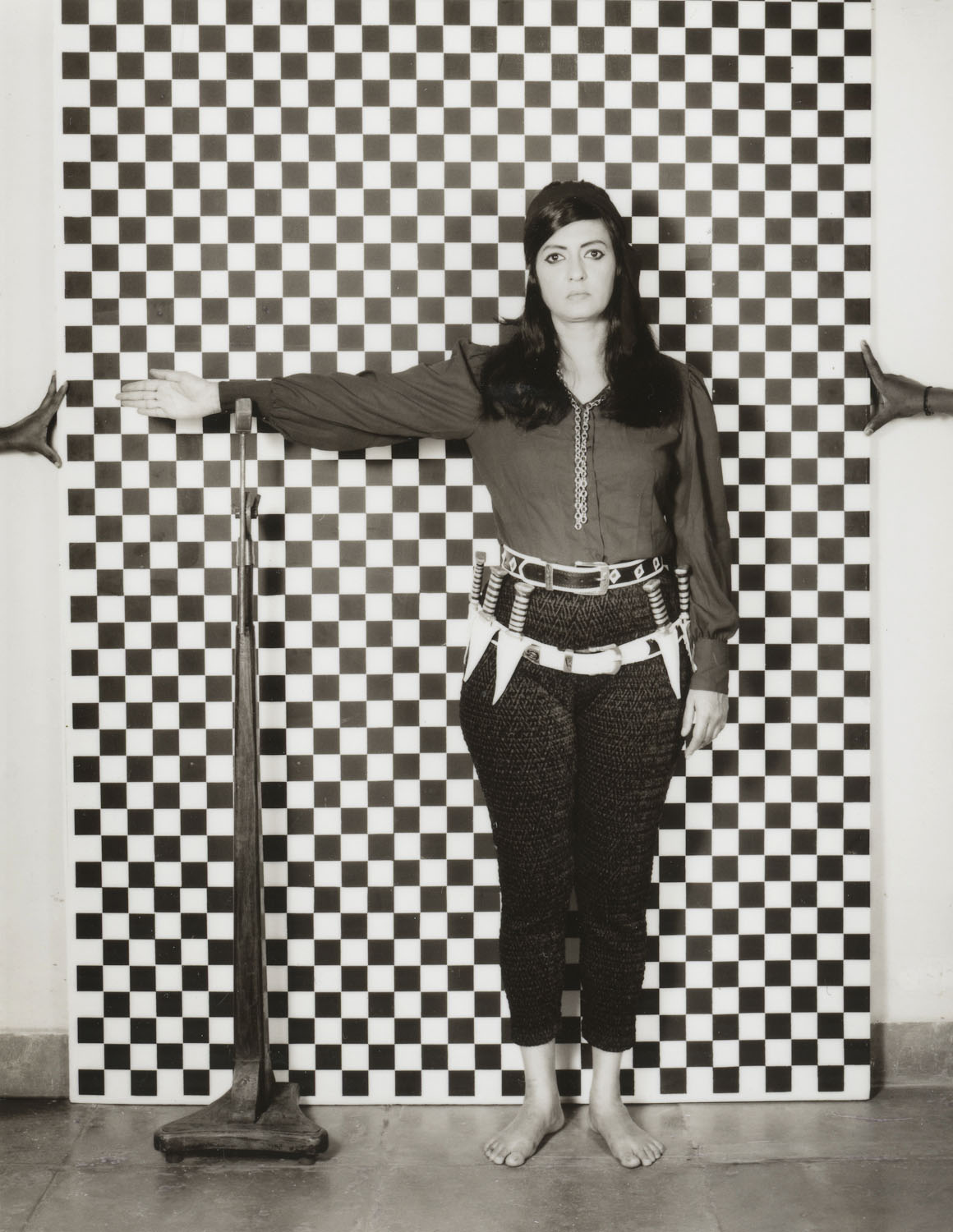
 

“In which the original Native Types characters perform as ethnographic objects”

Pushpamala N. (born 1956) is a photo and visual artist based in Bangalore, India. Born in Bangalore, Pushpamala formally trained as a sculptor and eventually shifted to photography to explore her interest in narrative figuration. Pushpamala has been referred to as “the most entertaining artist-iconoclast of contemporary Indian art”. Her work has been described as performance photography, as she frequently uses herself as a model in her own work. “She is known for her strongly feminist work and for her rejection of authenticity and embracing of multiple realities. As one of the pioneers of conceptual art in India and a leading figure in the feminist experiments in subject, material and language, her inventive work in sculpture, conceptual photography, video and performance have had a deep influence on art practice in India.”

Text from the Wikipedia website


Clare Arni is a photographer whose work encompasses social documentary and cultural heritage. Clare’s body of work has been exhibited extensively, both in private galleries and cultural institutions. Her solo exhibitions document the lives of marginalised communities in some of the most remote regions of India and the disappearing trades of urban India.
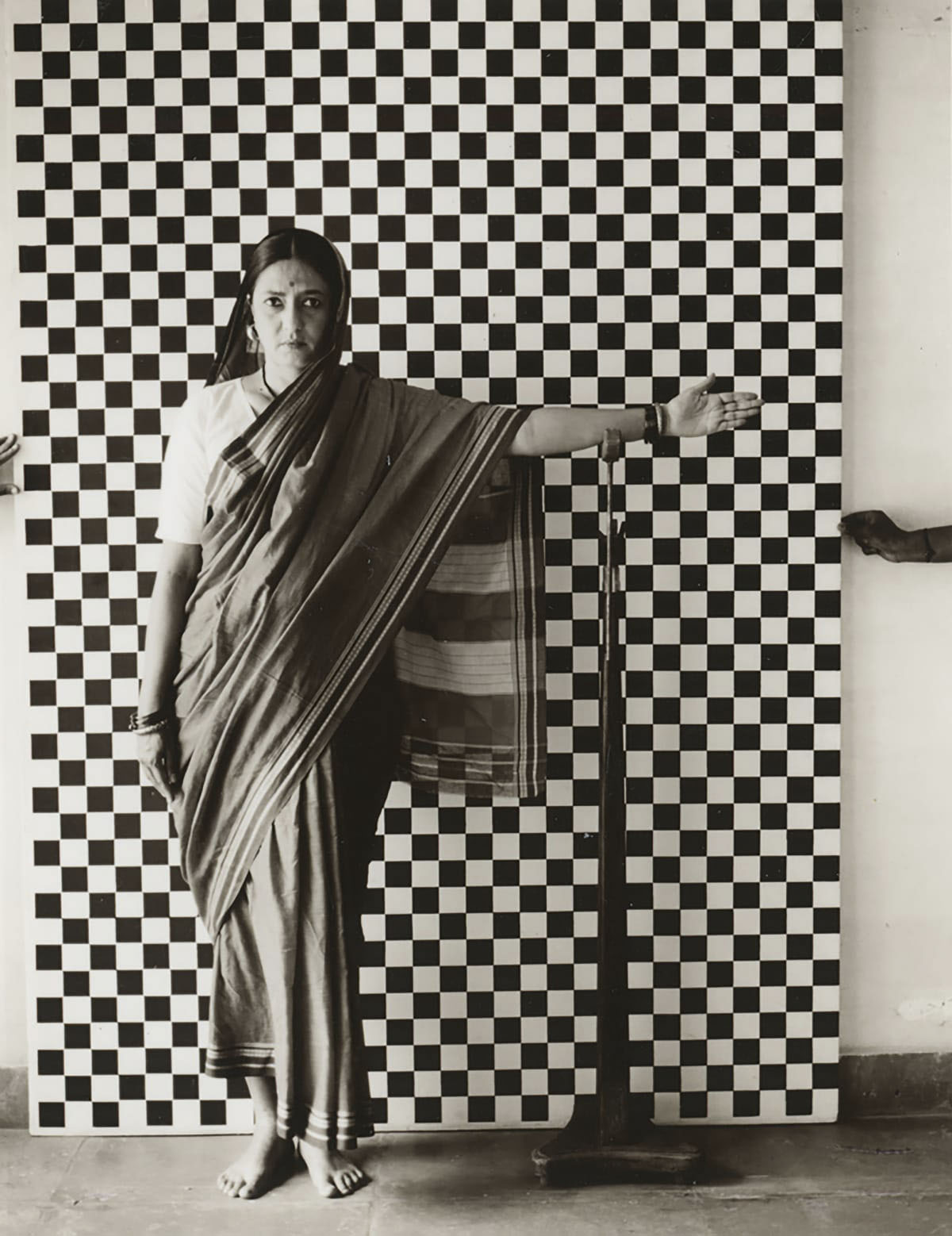
 

Pushpamala N (Indian, b. 1956) with Clare Arni (Scottish, b. 1962) 'Returning from the tank 1' 2000-2004


Pushpamala N (Indian, b. 1956) with Clare Arni (Scottish, b. 1962)
Returning from the tank 1
2000-2004
From the series Native women of South India (manners and customs)
Sepia-toned gelatin silver print
13.1 x 8.8cm
Courtesy of the Museum of Art & Photography (MAP) (Bengaluru)


Artist Pushpamala measures herself in front of a Lamprey grid, a dehumanising ethnographic tool deployed to standardise the photography of people during and after the late 19th century. By satirically re-enacting this form of subjugation, Pushpamala, in collaboration with fellow artist Arni, questions the colonial gaze and critiques its obsession with classification.


Pushpamala N (Indian, b. 1956) with Clare Arni (Scottish, b. 1962) 'Velankani F6-A' 2000-2004


Pushpamala N (Indian, b. 1956) with Clare Arni (Scottish, b. 1962)
Velankani F6-A
2000-2004
From the series Native women of South India (manners and customs)
Sepia-toned gelatin silver print
13.1 x 8.8cm
Courtesy of the Museum of Art & Photography (MAP) (Bengaluru)
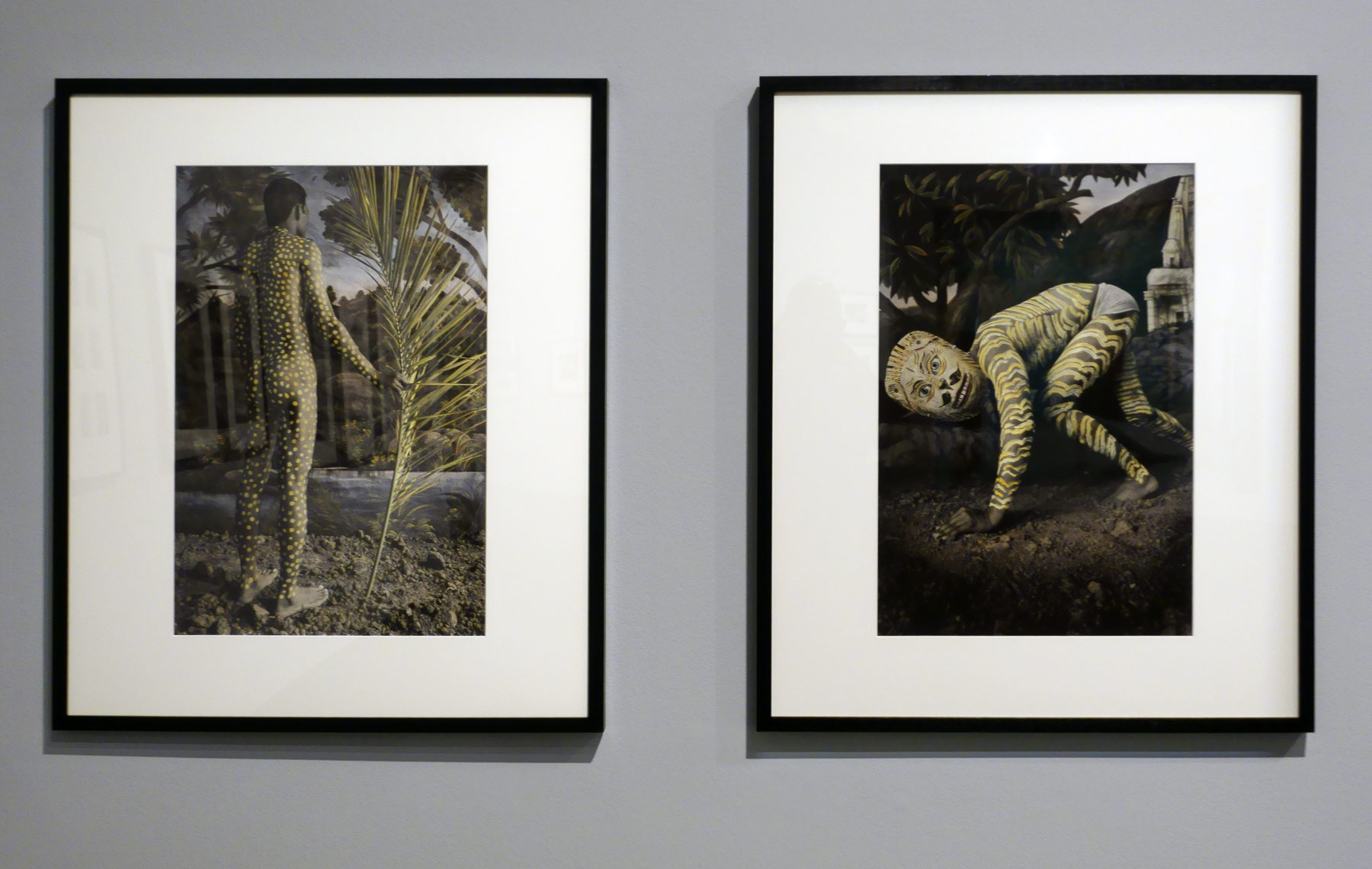
 

Installation view of the exhibition 'Visions of India: from the colonial to the contemporary' at the Monash Gallery of Art showing the work of Waswo X Waswo (American, b. 1953; arrived India 2001) with at left, 'Tribal dreams' (2008); and at right, 'Night prowl' (2008)


Installation view of the exhibition Visions of India: from the colonial to the contemporary at the Monash Gallery of Art showing the work of Waswo X Waswo (American, b. 1953; arrived India 2001) with at left, Tribal dreams (2008, below); and at right, Night prowl (2008, below)
Photo: Marcus Bunyan
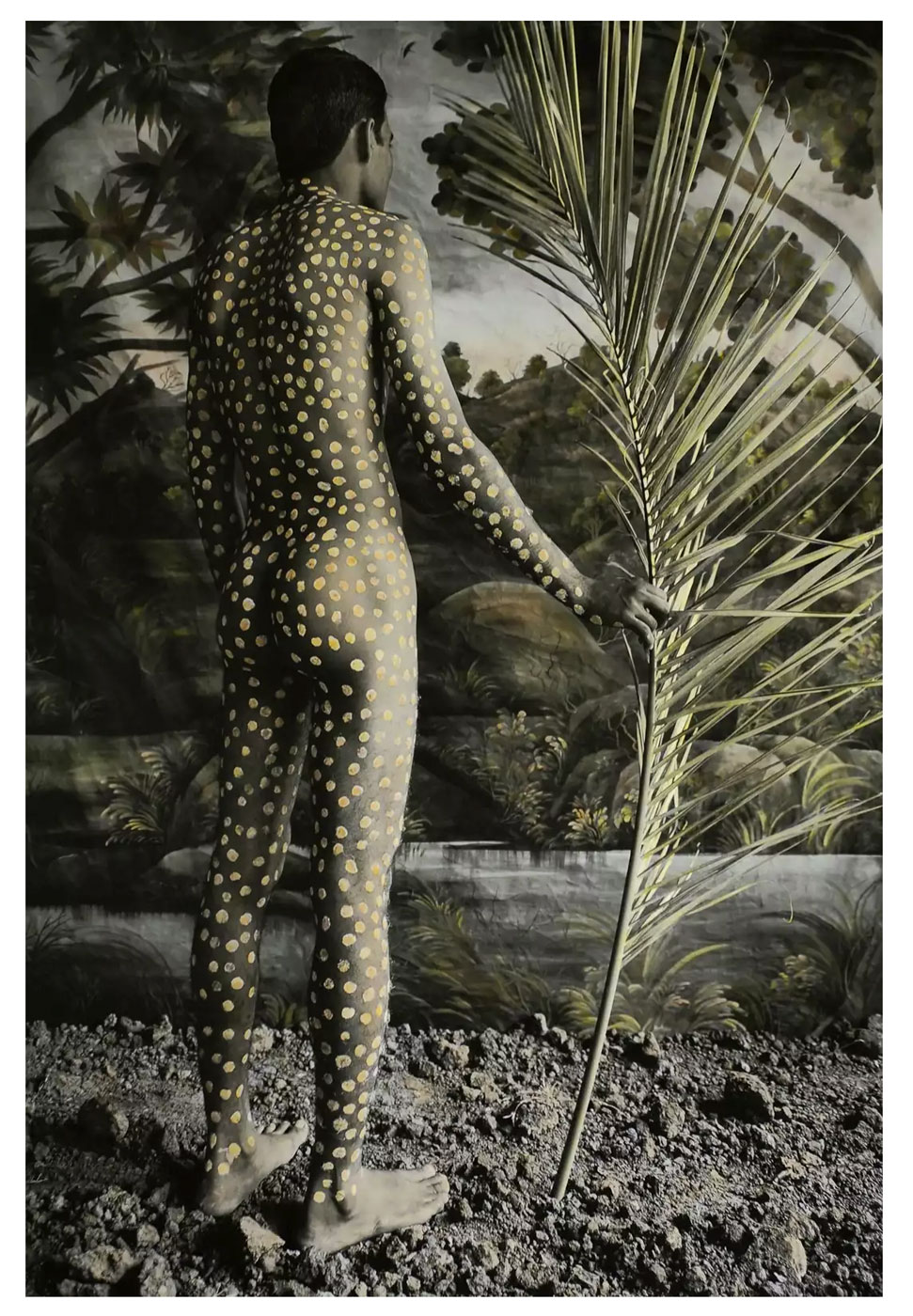
 

Waswo X Waswo (American, b. 1953; arrived India 2001) 'Tribal dreams' 2008


Waswo X Waswo (American, b. 1953; arrived India 2001)
Tribal dreams
2008
Pigment ink-jet prints
Courtesy of the Museum of Art & Photography (MAP) (Bengaluru)


Waswo X. Waswo first visited India in 1993; after several trips in the intervening years, he finally moved to India, renting a home and building a studio in Udaipur in 2006. This series is a comprises of Waswo’s hand-coloured work through a wide selection of photographs produced in his studio.

Playfully examining the genres of both the ethnographic photograph-as-document that is linked to the colonial era, as well as the fantasy-inspired make-believe that emanated from traditional Indian portrait studios in the late 19th and early 20th centuries, Waswo creates a unique brand of contemporary photography that is an inspired mix of homage and critique. Ranging from shots of single figures to theatrically arranged tableaux, these photographs feature everyone from Gauri dancers to flower sellers, the incarnations of mythological figures, farmers and school children. In the tradition of pictorialism, Waswo’s carefully crafted images with their pastoral backdrops and hand-tinted processing resonate with a romantic sensibility, while yet remaining humorously self-aware and self-reflexive.

Anonymous text from the TARQ website Nd [Online] Cited 10/03/2022
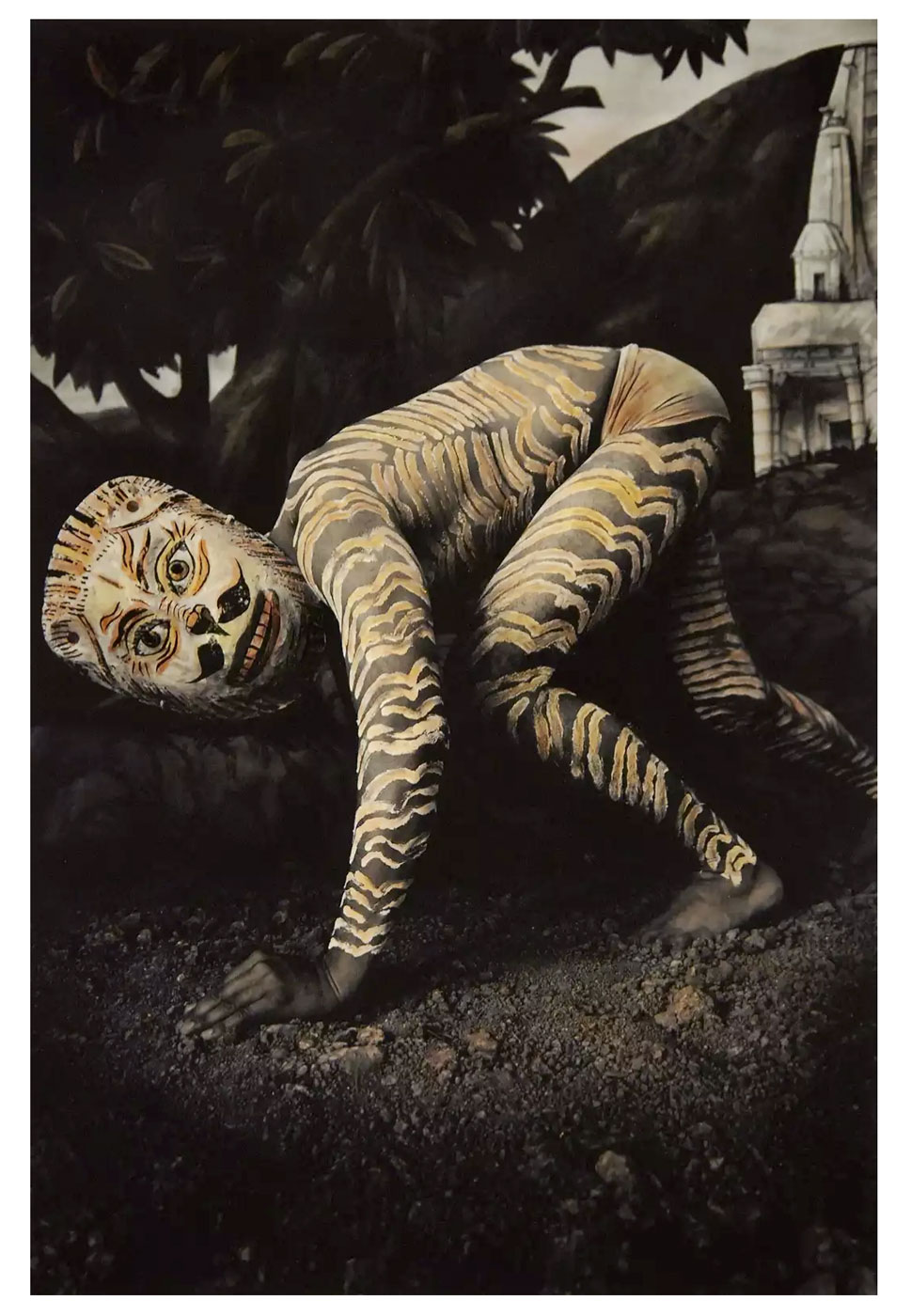
 

Waswo X Waswo (American, b. 1953; arrived India 2001) 'Night prowl' 2008


Waswo X Waswo (American, b. 1953; arrived India 2001)
Night prowl
2008
Pigment ink-jet prints
Courtesy of the Museum of Art & Photography (MAP) (Bengaluru)
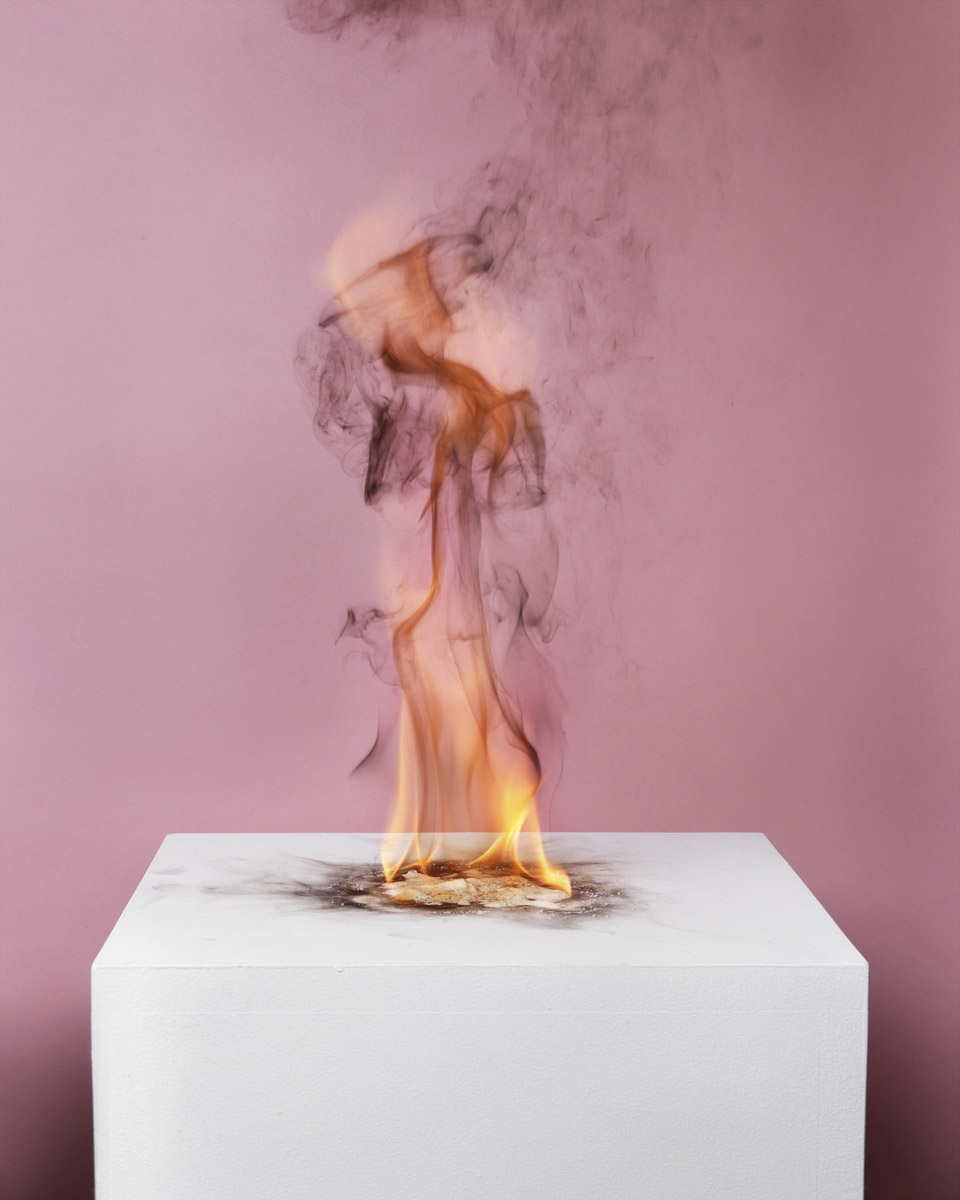
 

Michael Bühler-Rose (American, b. 1980) 'Camphor flame on pedestal' 2010


Michael Bühler-Rose (American, b. 1980)
Camphor flame on pedestal
2010
Pigment ink-jet print
Courtesy of the Museum of Art & Photography (MAP) (Bengaluru)
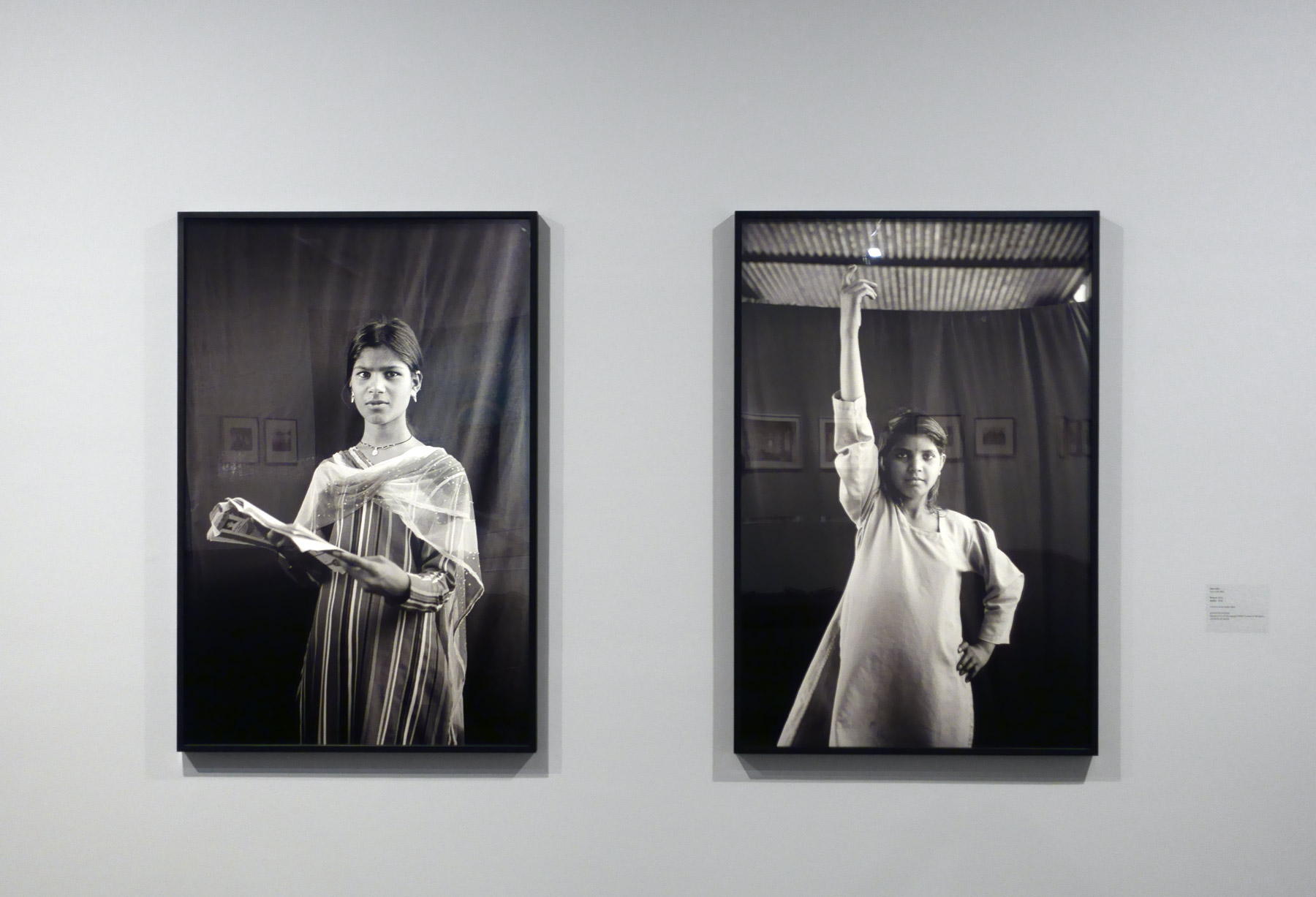
 

Installation view of the exhibition 'Visions of India: from the colonial to the contemporary' at the Monash Gallery of Art showing the work of Gauri Gill (Indian, b. 1970) with at left, 'Madhu' (2003); and at right, 'Revanti' (2003)


Installation view of the exhibition Visions of India: from the colonial to the contemporary at the Monash Gallery of Art showing the work of Gauri Gill (Indian, b. 1970) with at left, Madhu (2003, below); and at right, Revanti (2003, below)
Photo: Marcus Bunyan
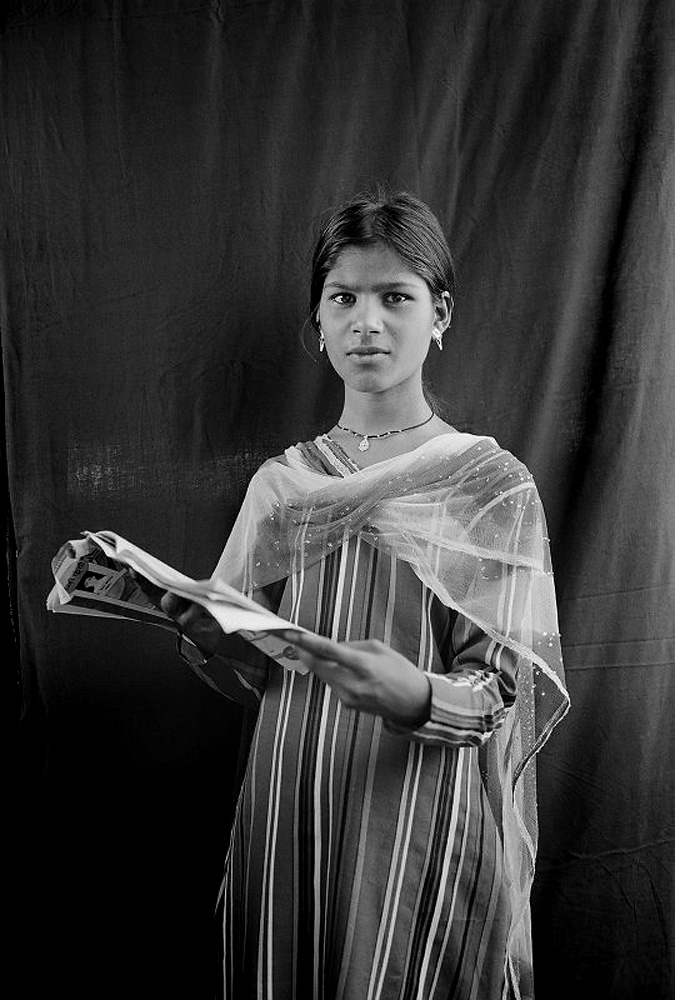
 

Gauri Gill (Indian, b. 1970) 'Madhu' 2003


Gauri Gill (Indian, b. 1970)
Madhu
2003
From the series Balika Mela
Pigment ink-jet print
161.2 x 106.6cm
Courtesy of the Museum of Art & Photography (MAP) (Bengaluru)


In 2003 the non profit organisation Urmul Setu Sansthan organised a Balika Mela – or fair for girls, in Lunkaransar town, attended by almost fifteen hundred adolescent girls from seventy surrounding villages. The Mela had various stalls, food, performances, a Ferris wheel, magicians, puppet shows, games and competitions, similar to any other small town fair. Urmul Setu invited the photographer to “do something with photography” at the Mela.

“I created a photo-stall for anyone to come in and have their portrait taken, and later buy the silver gelatin print at a subsidised rate if they wished. I had a few basic props and backdrops, whatever we could get from the local town studio and cloth shop on a very limited budget, but it was fairly minimal, and since it can get windy out in the desert everything would keep getting blown around, or periodically struck down. The light was the broad, even light of a desert sky, filtered through the cloth roof of our tent. Many of the more striking props – like the peacock and the paper hats – were brought in by the girls themselves. Girls came in, and decided how and with whom they would like to be photographed – best friends, new friends, sisters, the odd younger brother who had tagged along, girls with their teachers, the whole class, the local girl scouts. Some of those who posed for the pictures went on to learn photography in the workshops that we started in May of that year, and two years later they photographed the fair themselves.”

Gauri Gill, 2009

Text from the Nature Morte website [Online] Cited 08/03/2022
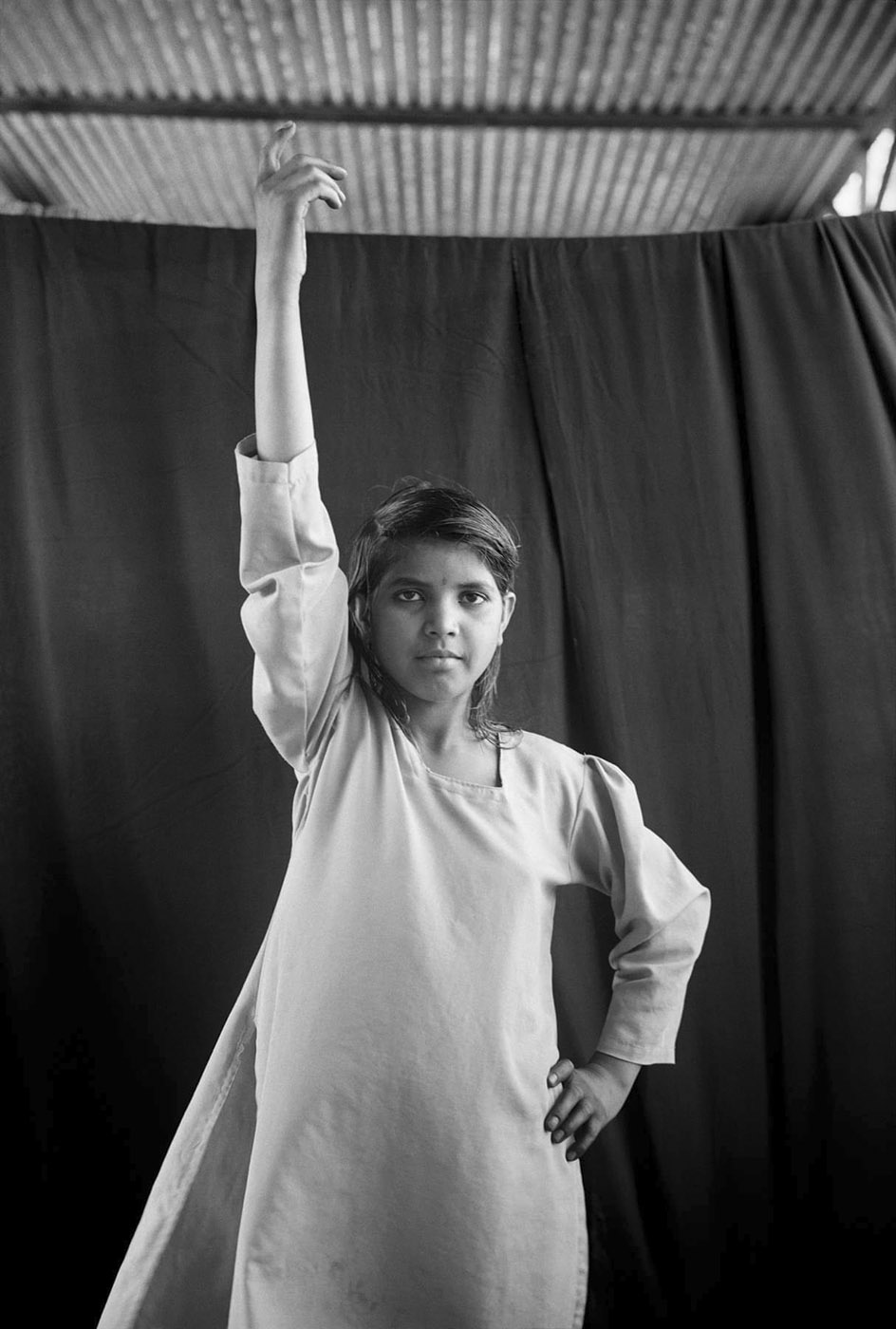
 

Gauri Gill (Indian, b. 1970) 'Revanti' 2003


Gauri Gill (Indian, b. 1970)
Revanti
2003
From the series Balika Mela
Pigment ink-jet print
161.2 x 106.6cm
Courtesy of the Museum of Art & Photography (MAP) (Bengaluru)


Indu Antony (Indian, b. 1982) 'Uncle Had Hairy Legs' 2017


Indu Antony (Indian, b. 1982)
Uncle Had Hairy Legs
2017
From the series Vincent Uncle
Courtesy of the Museum of Art & Photography (MAP) (Bengaluru)


A set of 21 similarly composed photographs depict the legs of men wearing mundus. In her 2017 series Vincent Uncle, Antony investigates childhood memories and comments on the male figure within the Indian family by portraying her subjects from the perspective of a child.
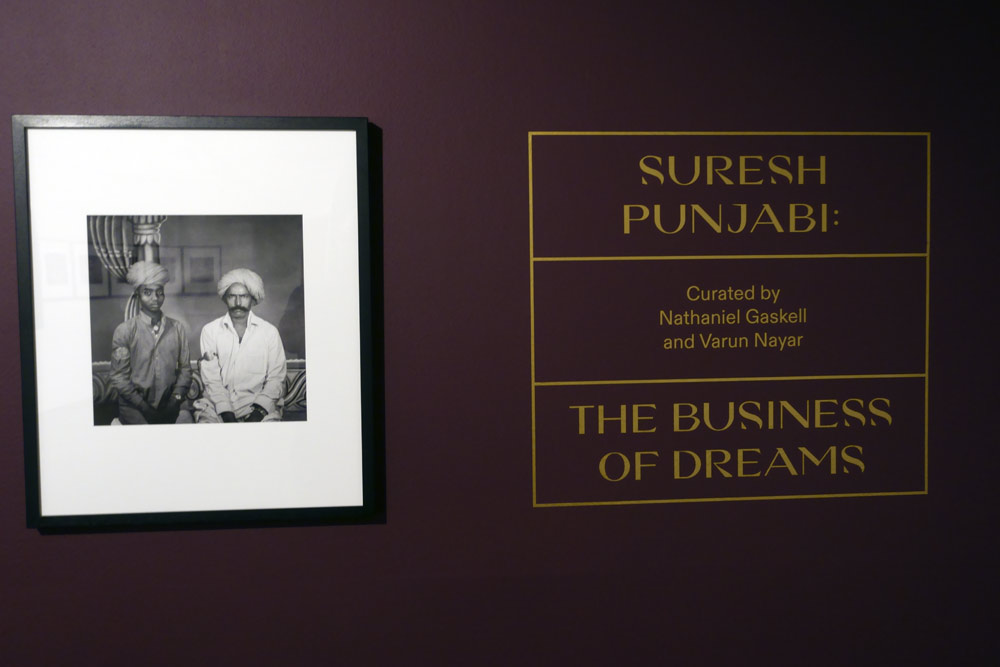
 

Installation view of the opening of the exhibition 'Visions of India: from the colonial to the contemporary' at the Monash Gallery of Art showing at left, Suresh Punjabi's 'Untitled (Two train porters, Behru Singh and his son Laxman)' (Nd)


Installation view of the opening of the exhibition Visions of India: from the colonial to the contemporary at the Monash Gallery of Art showing at left, Suresh Punjabi’s Untitled (Two train porters, Behru Singh and his son Laxman) (Nd, below)
Photo: Marcus Bunyan


“I was never lonely. Through these mute photographs, this town slowly started to become my family. We were having a conversation that needed no words.”


Suresh Punjabi
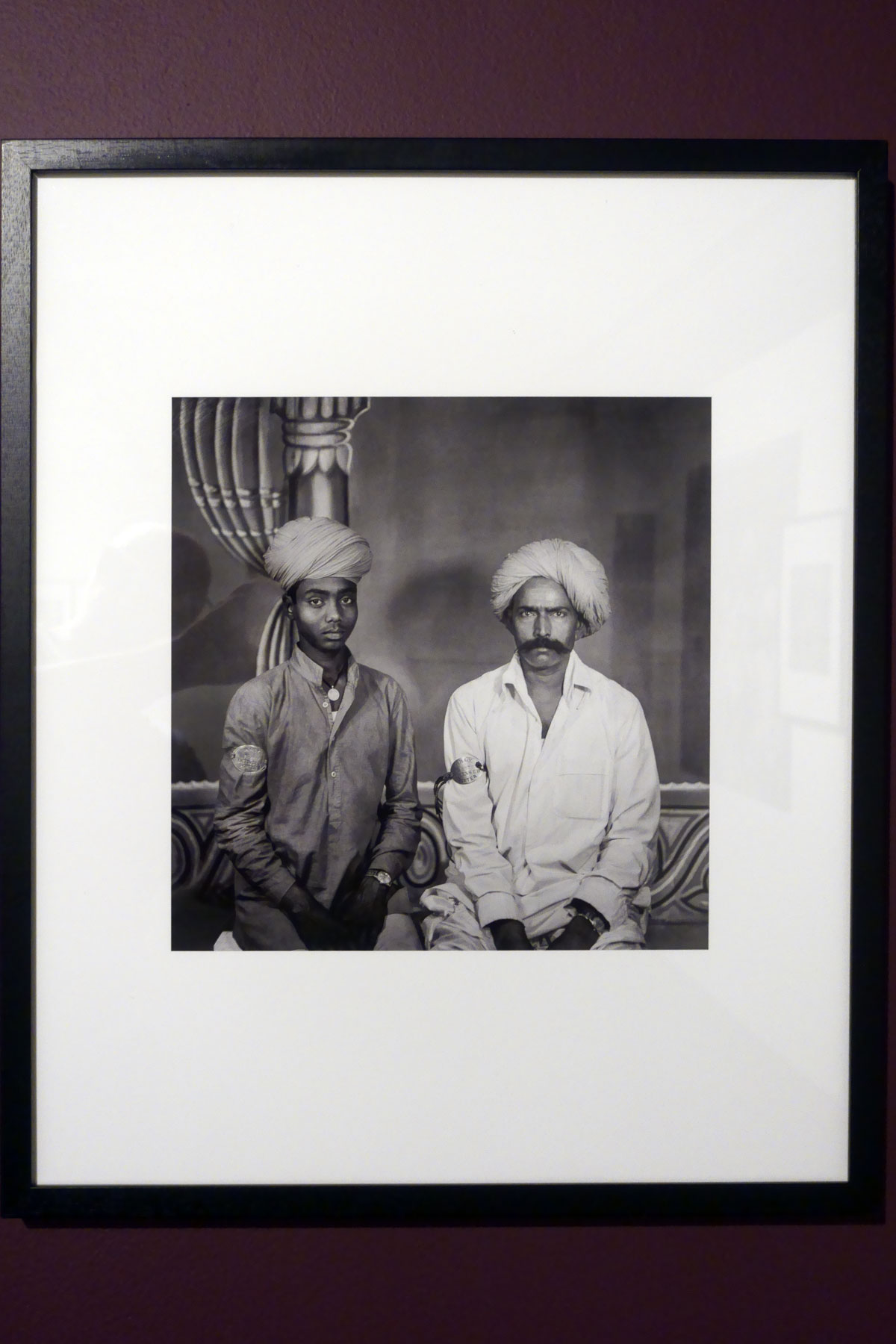


Suresh Punjabi (Indian, b. 1957) 'Untitled (Two train porters, Behru Singh and his son Laxman)' Nd (installation view)


Suresh Punjabi (Indian, b. 1957)
Untitled (Two train porters, Behru Singh and his son Laxman)
1983
Pigment ink-jet print
33.0 x 33.0cm
Courtesy of the artist and the Museum of Art & Photography (MAP) (Bengaluru)
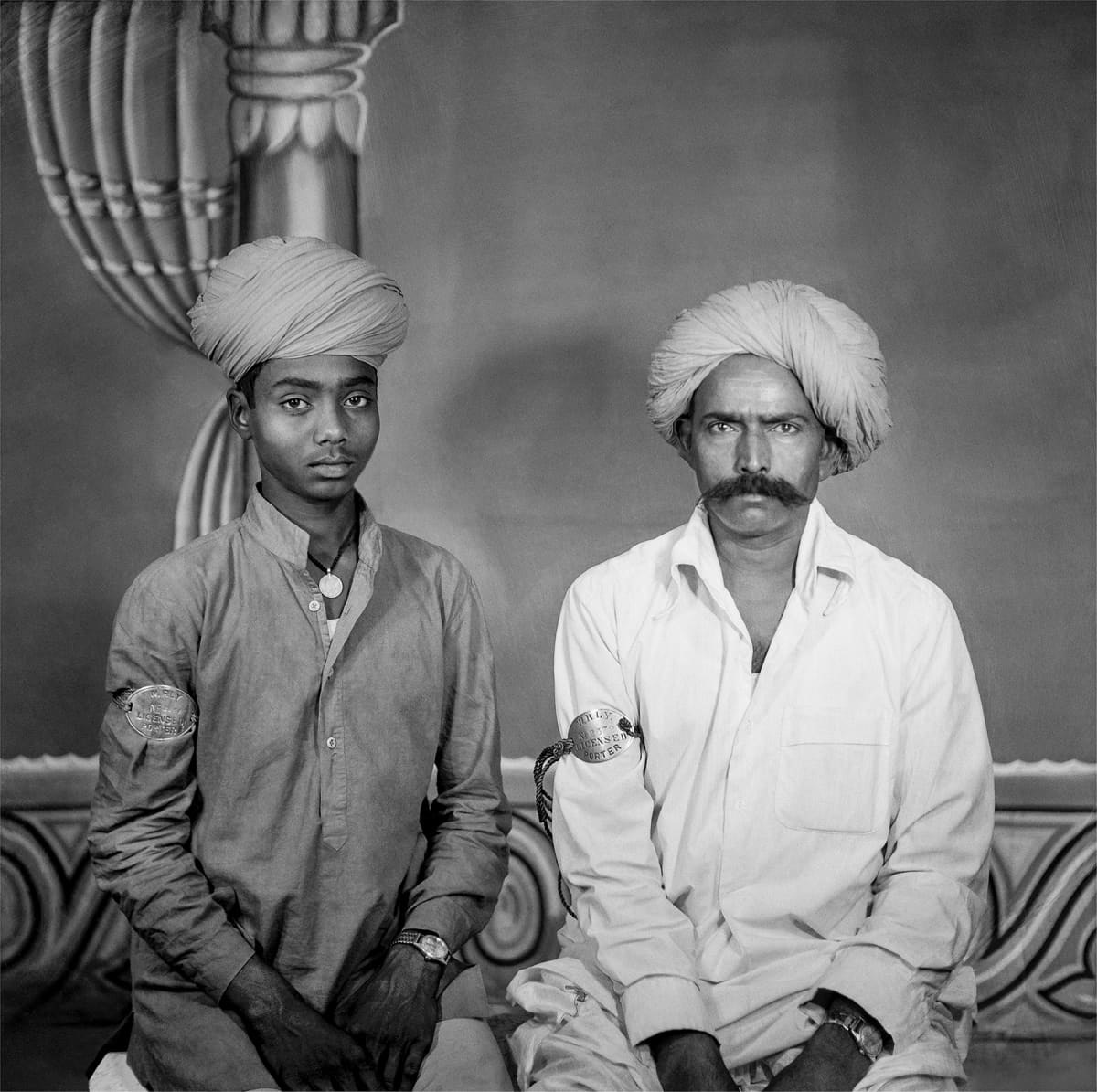
 

Suresh Punjabi (Indian, b. 1957) 'Untitled (Two train porters, Behru Singh and his son Laxman)' 1983


Suresh Punjabi (Indian, b. 1957)
Untitled (Two train porters, Behru Singh and his son Laxman)
1983
Pigment ink-jet print
33.0 x 33.0cm
Courtesy of the artist and the Museum of Art & Photography (MAP) (Bengaluru)


Two train porters, Behru Singh and his son Laxman by Suresh Punjabi. The owner and photographer of Suhag Studio in Nagda, Madhya Pradesh – one of thousands of photographers who opened studios in small towns after the 1950s – foregrounds the copper armbands synonymous with the sitters’ professions. These carried cultural and social capital, as evidenced by Amitabh Bachchan’s portrayal of the porter as a working-class hero in the 1983 Bollywood movie Coolie.


Wall text from the exhibition 'Visions of India: from the colonial to the contemporary' at the Monash Gallery of Art
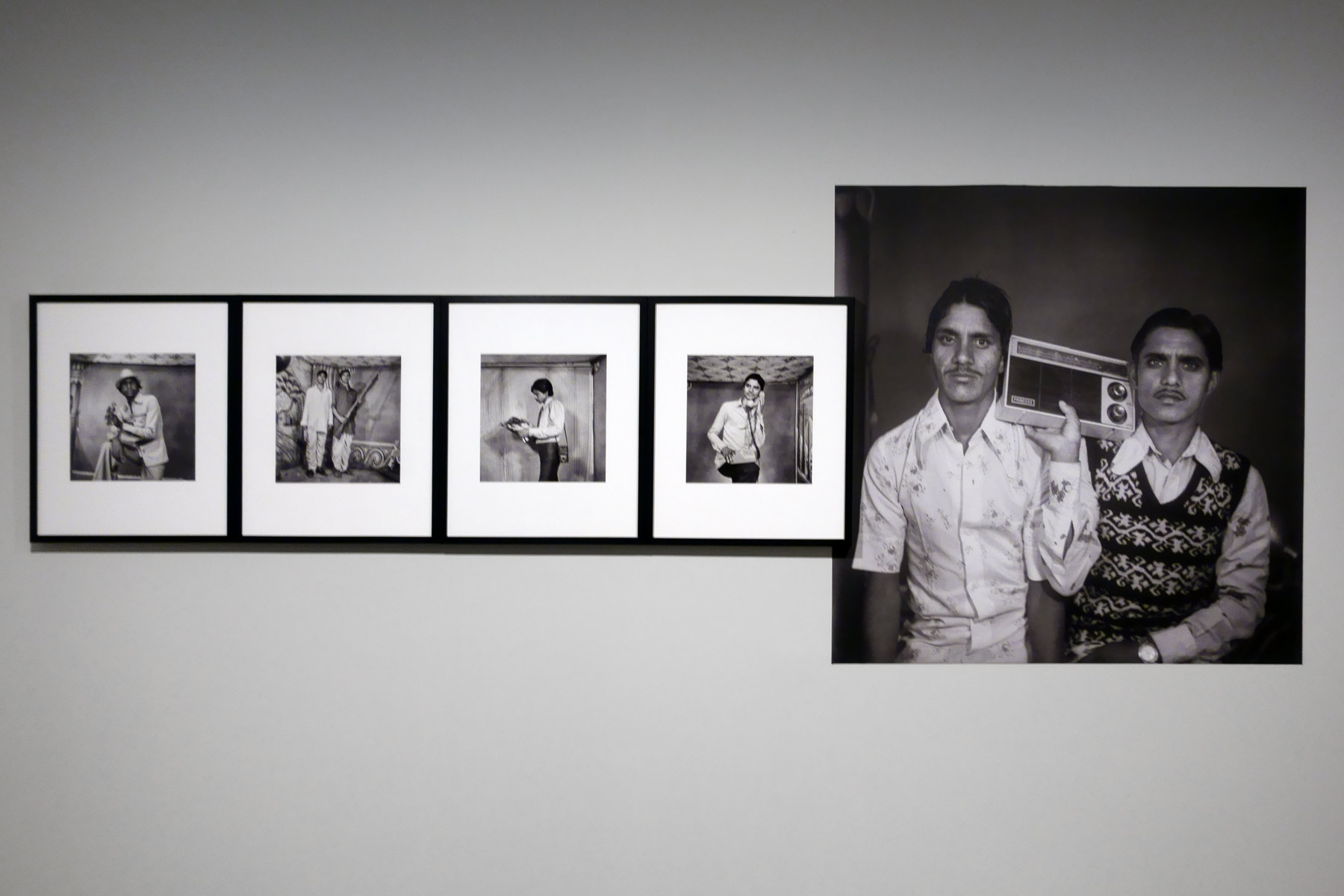
 

Wall text from the exhibition


Installation view of the exhibition 'Visions of India: from the colonial to the contemporary' at the Monash Gallery of Art showing the work of Suresh Punjabi (Indian, b. 1957)

Installation view of the exhibition 'Visions of India: from the colonial to the contemporary' at the Monash Gallery of Art showing the work of Suresh Punjabi (Indian, b. 1957)

Installation view of the exhibition 'Visions of India: from the colonial to the contemporary' at the Monash Gallery of Art showing the work of Suresh Punjabi (Indian, b. 1957)

Installation view of the exhibition 'Visions of India: from the colonial to the contemporary' at the Monash Gallery of Art showing the work of Suresh Punjabi (Indian, b. 1957)

Installation view of the exhibition 'Visions of India: from the colonial to the contemporary' at the Monash Gallery of Art showing the work of Suresh Punjabi (Indian, b. 1957)


Installation views of the exhibition Visions of India: from the colonial to the contemporary at the Monash Gallery of Art showing the work of Suresh Punjabi (Indian, b. 1957)
Photos: Marcus Bunyan
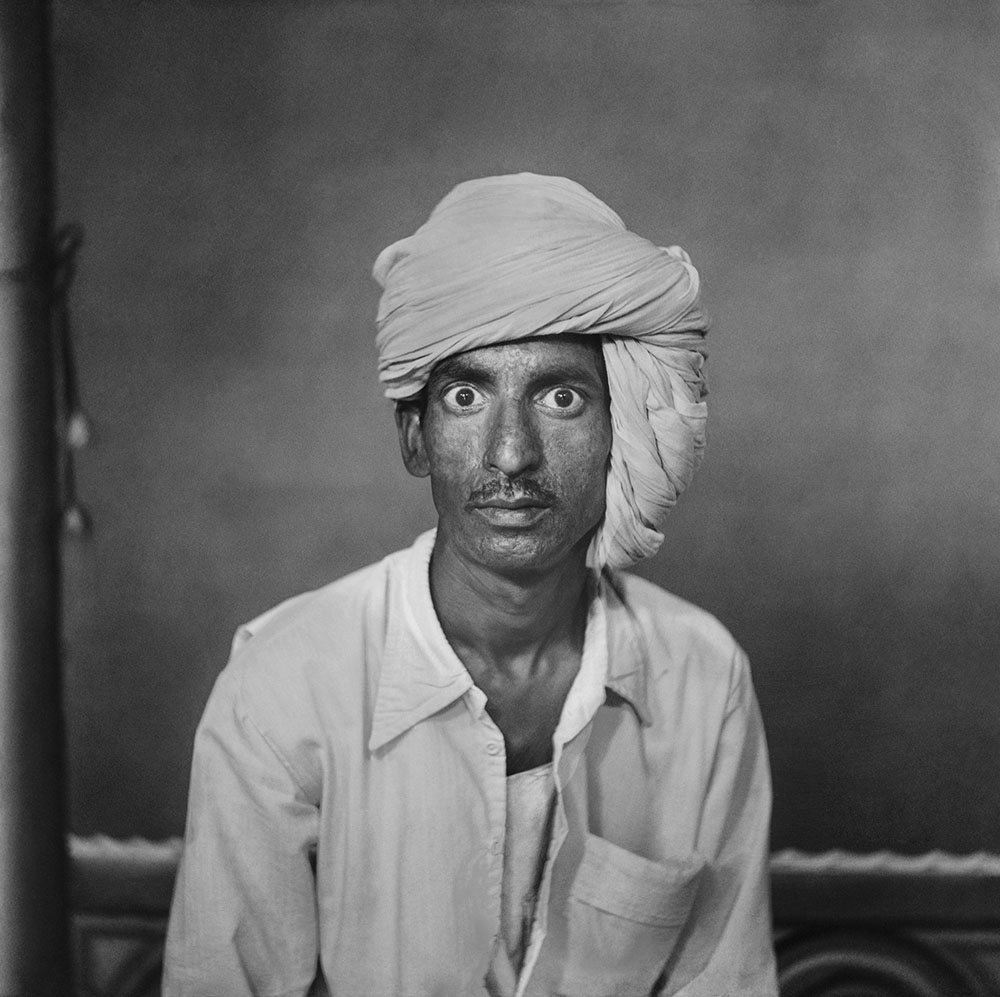
 

Suresh Punjabi (Indian, b. 1957) 'Untitled (Administrative portrait) Suhag Studio, Nagda, Madhya Pradesh' 1983-1984


Suresh Punjabi (Indian, b. 1957)
Untitled (Administrative portrait) Suhag Studio, Nagda, Madhya Pradesh
1983-1984
Pigment ink-jet print
33.0 x 33.0cm
Courtesy of the artist and the Museum of Art & Photography (MAP) (Bengaluru)


A farmer from near Nagda visits Punjabi’s studio to have his portrait made for the first time. While the purpose of the photo is unclear, the man’s wide-eyed stare suggests that the camera either caught him by surprise or that he was overly exerting himself in an attempt to pose appropriately. His all-white attire, turban and Punjabi’s use of a shallow depth of field add to the portrait’s intrigue.

Text from the Museum of Art and Photography (MAP) website [Online] Cited 09/03/2022
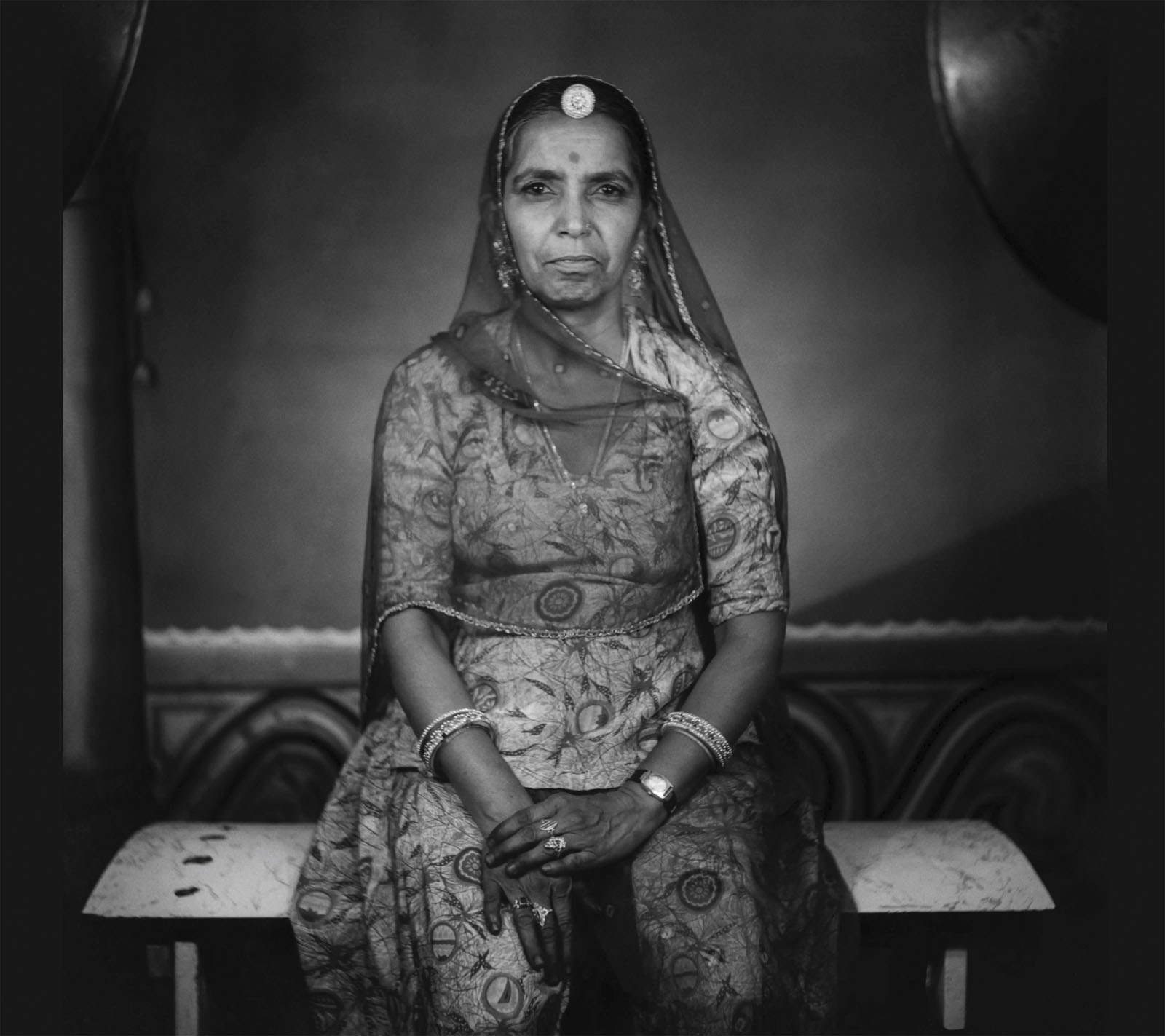
 

Suresh Punjabi (Indian, b. 1957) 'Untitled (Administrative portrait) Suhag Studio, Nagda, Madhya Pradesh' 1979


Suresh Punjabi (Indian, b. 1957)
Untitled (Administrative portrait) Suhag Studio, Nagda, Madhya Pradesh
1979
Pigment ink-jet print
33.0 x 33.0cm
Courtesy of the artist and the Museum of Art & Photography (MAP) (Bengaluru)


Some of the earliest and perhaps most obvious drivers of Suhag Studio’s business were administrative portraits, which Punjabi’s clients requested frequently and for a number of reasons, from paperwork for school admissions to procuring disability benefits. When juxtaposed, these images highlight the sheer diversity of Punjabi’s clientele, who appear to us as a mosaic of faces, registering the Indian bureaucracy’s efforts to account for them as formal and formally documented citizens.

Wall text from the exhibition


An older woman poses for a formal portrait at Suhag Studio. Like many of the other women photographed by Punjabi for this reason, this sitter too has a chunni (thin scarf) draped over her head, a convention that has since changed as the production of administrative photographs such as these has become increasingly standardised.
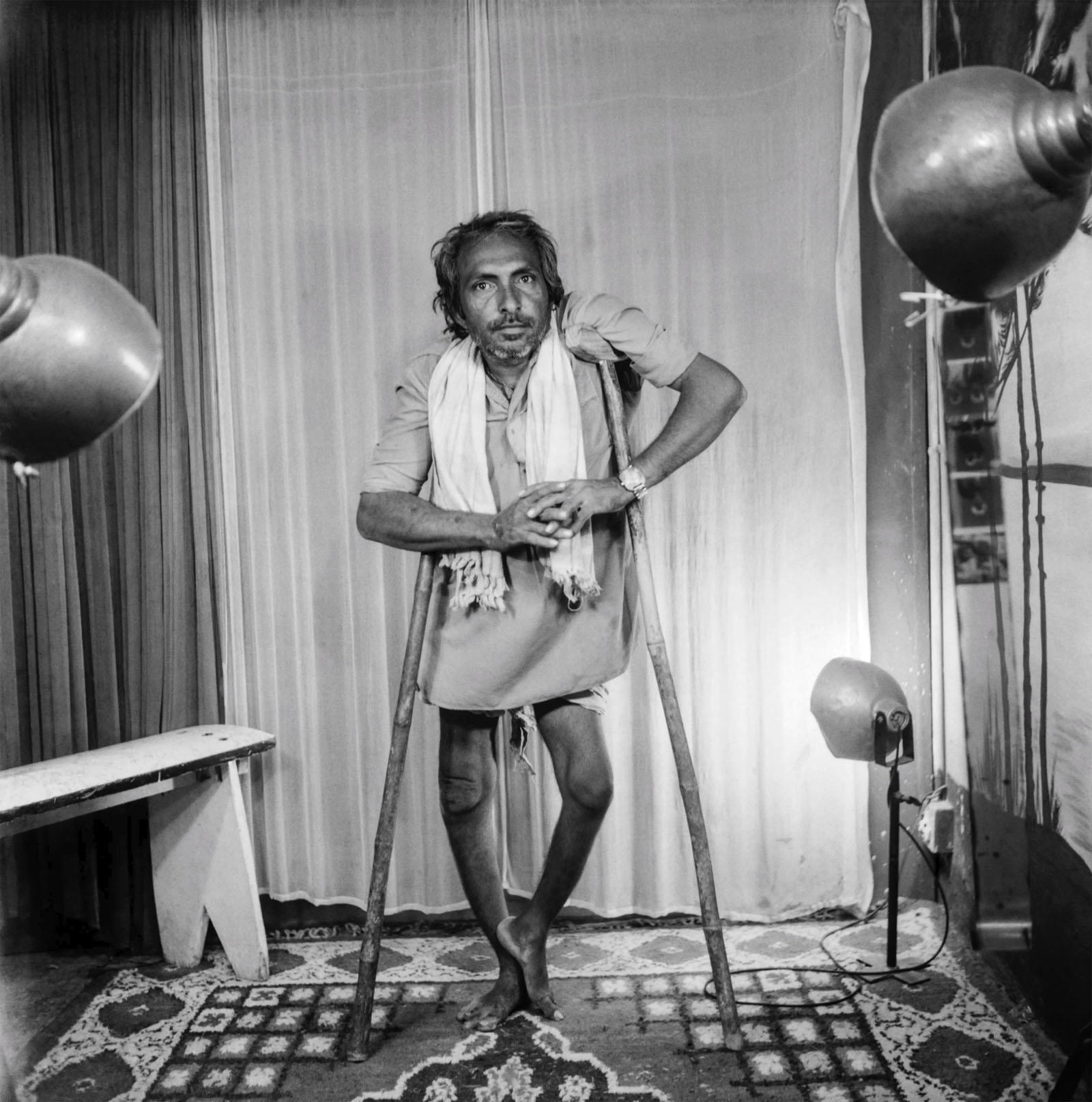
 

Suresh Punjabi (Indian, b. 1957) 'Untitled (Administrative portrait) Suhag Studio, Nagda, Madhya Pradesh' 1979


Suresh Punjabi (Indian, b. 1957)
Untitled (Administrative portrait) Suhag Studio, Nagda, Madhya Pradesh
1979
Pigment ink-jet print
33.0 x 33.0cm
Courtesy of the artist and the Museum of Art & Photography (MAP) (Bengaluru)


Unlike the other administrative images in Punjabi’s archive, this is a full-length portrait because the older man in it asked to be photographed on his crutches, so he could claim disability entitlements from the government. The evidentiary quality of the photograph meant it was an important tool for India’s expanding identification and welfare system. With three studio lights focused directly on the standing subject, the portrait highlights both the man and his condition, making Punjabi an important middleman in the way he is able to be ‘seen’ by the state.


Identification & Records

By the late 1970s, identity documents had embedded themselves deeply into Indian civic life. Standardised photographs became necessary for many administrative activities, from accessing food subsidies to completing job applications. Punjabi’s studio provided an essential administrative service – and for Nagda’s poor and working classes, it became one of the few ways in which the presence of India’s creaking bureaucracy was felt.

Most people interpreted these photographic services through their own needs. One man insisted on a full-length portrait showing his crutches in order to qualify for disability entitlements; another arrived in a crisp white shirt for a passport photograph. When juxtaposed, these images highlight the sheer diversity of Punjabi’s clients, who collectively appear as a mosaic of faces, registering the state’s efforts to make them ‘legible’ citizens.

Text from the Museum of Art and Photography (MAP) website [Online] Cited 09/03/2022


Suresh Punjabi (Indian, b. 1957) 'Untitled (Administrative portrait) Suhag Studio, Nagda, Madhya Pradesh' 1985


Suresh Punjabi (Indian, b. 1957)
Untitled (Administrative portrait) Suhag Studio, Nagda, Madhya Pradesh
1985
Pigment ink-jet print
33.0 x 33.0cm
Courtesy of the artist and the Museum of Art & Photography (MAP) (Bengaluru)
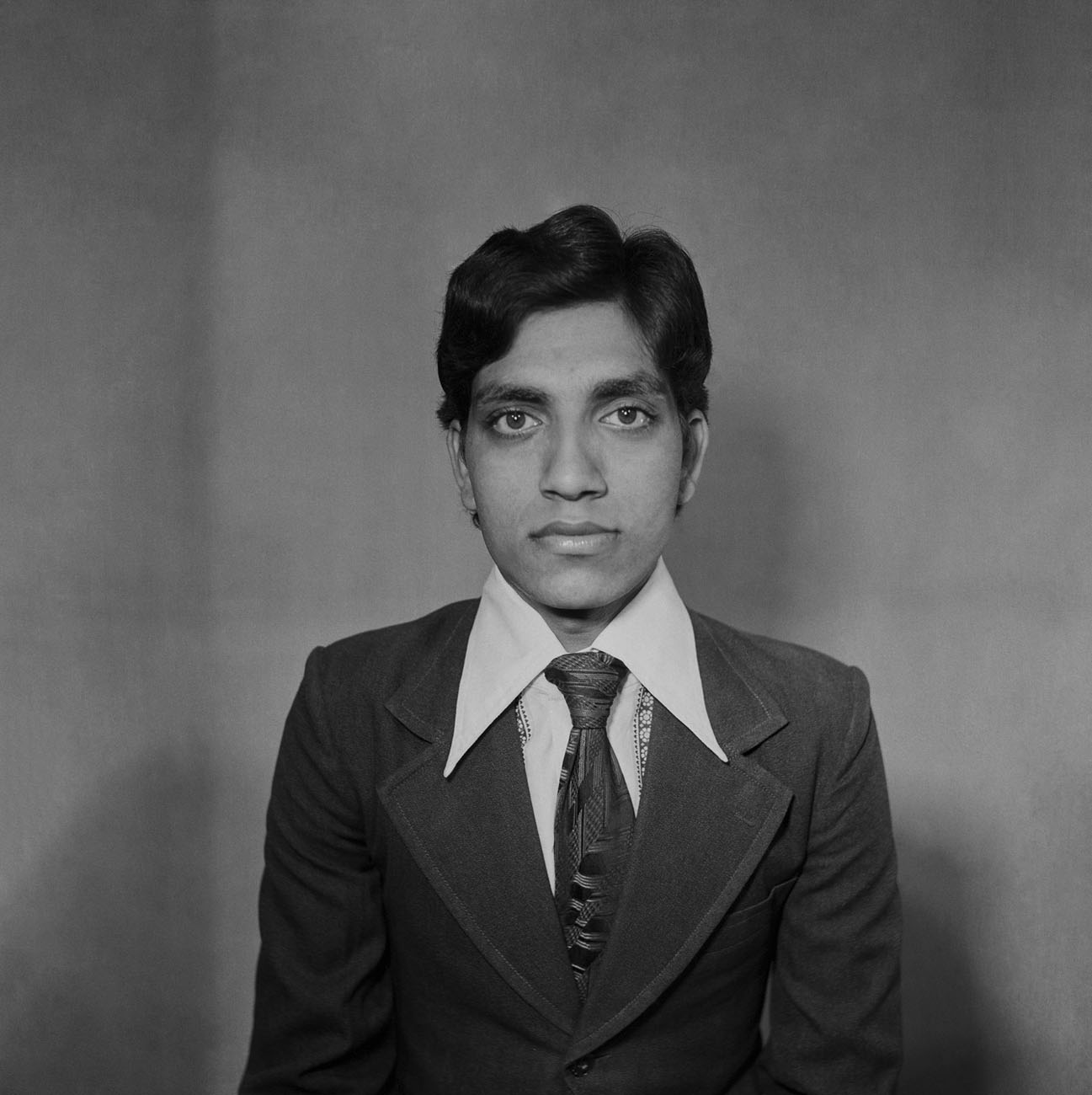
 

Suresh Punjabi (Indian, b. 1957) 'Untitled (Administrative portrait) Suhag Studio, Nagda, Madhya Pradesh' 1987


Suresh Punjabi (Indian, b. 1957)
Untitled (Administrative portrait) Suhag Studio, Nagda, Madhya Pradesh
1987
Pigment ink-jet print
33.0 x 33.0cm
Courtesy of the artist and the Museum of Art & Photography (MAP) (Bengaluru)
Photo: Marcus Bunyan


“Rooted to the hallowed tradition of studio photography that began in 19th-century India with pioneers like Samuel Bourne and Lala Deen Dayal, Punjabi was also a visionary entrepreneur-artist. When he stood before his sitters, the film of familiarity lifted from their faces, exposing their fondest dreams and desires. In a sense, Punjabi donned the mantle of a dream merchant, as the archivist of the Great Indian Dream. And to such dreams, he himself had also been susceptible. …

In the 1970s, the family business had started to dwindle, forcing Punjabi to move to Nagda, a small town, some 100 km away from Indore. There, he opened Suhag Studio – the name was meant to drawn in clients interested in taking matrimonial photographs – to help his family. It proved to be a lifelong move, indeed an obsession.

Punjabi’s archives, as Gaskell and Nayar indicate in their curation, could be divided into several segments, first of which is his administrative photographs, which cover almost 30% of his archives. These images are mostly mug shots of individuals, taken for the purpose of identification papers and bureaucratic documents. But even in these fairly generic images, the drama of the human face is dimly palpable. You can sense the presence of a humane vision behind the mechanical eye of the camera. Punjabi seems to avoid the vapid blandness of documentary studio photography, where the subject is usually leached of all character and presented sans expression for the unfeeling scrutiny of the state.

A man in crutches is photographed in full profile by Punjabi on his request, with the camera lights included in the frame. The image is meant to be evidentiary record of his disability. Another man in a turban stares back at the camera, his pupils dilated, like the proverbial rabbit caught in the headlights of the Indian state. The incongruity of the carpeted studio floor, the sophisticated props (by the standard of those days) and the intensely ordinary attire of these people are starkly noticeable.

A woman dangles a bunch of grapes before her mouth, recreating the cliché of a lovestruck / lascivious heroine from the annals of Indian cinema. A man poses stiffly in tie and a pair of bell-bottoms, his hair neatly combed. Another one, in a vest, presents a study in contrasts, his hair stylishly long, a kerchief tied to his neck, a cigarette hanging from his lips. He rocks the archetypal mawali look to a T. You can sense the shadow of a slightly crumpled angry young man about his persona, modelled perhaps after Amitabh Bachchan, who was still the reigning hero in the galaxy of Bollywood cinema in the 1980s, when these photographs were taken.

If the influence of cinema shines through these compositions, more intriguing insinuations are made by some of the group photographs. In one, for instance, three men are seated close to one another, two of them locking fingers. The one in the middle stares at the camera, while the other two look in different directions.

These “playfully intimate” photographs, as Nayar calls them, are mementos of different kinds of bonds – filial, friendly, romantic – that were enacted inside the realms of the studio. Thus, Punjabi’s Suhag Studio opened up a space, where much more than plain documentation could be wagered. …

While each of these images stands boldly on its own – carrying its individual aura of distinction and enveloped by its unspoken narratorial arc – they also exist within an ecosystem of emotions that coursed through a nation during a certain phase of its development. With their thoughtful curation and textual notes, Gaskell and Nayar draw our attention to details that would otherwise have escaped our untrained eyes. They also make crucial connections between Punjabi’s work and those of Malike Sidibé’s (1935-2016) from Mali and Hashem El Madani’s (1928-2017) from Lebanon, among others. These photographers, legends in their own rights, also documented the seen and unseen faces of their nations with skill, complexity and exquisite artistry.

Extract from Somak Ghoshal. “Suresh Punjabi: The man who captured the Great Indian Dream,” on the Mint Lounge website 24/01/2021 [Online] Cited 03/03/2022
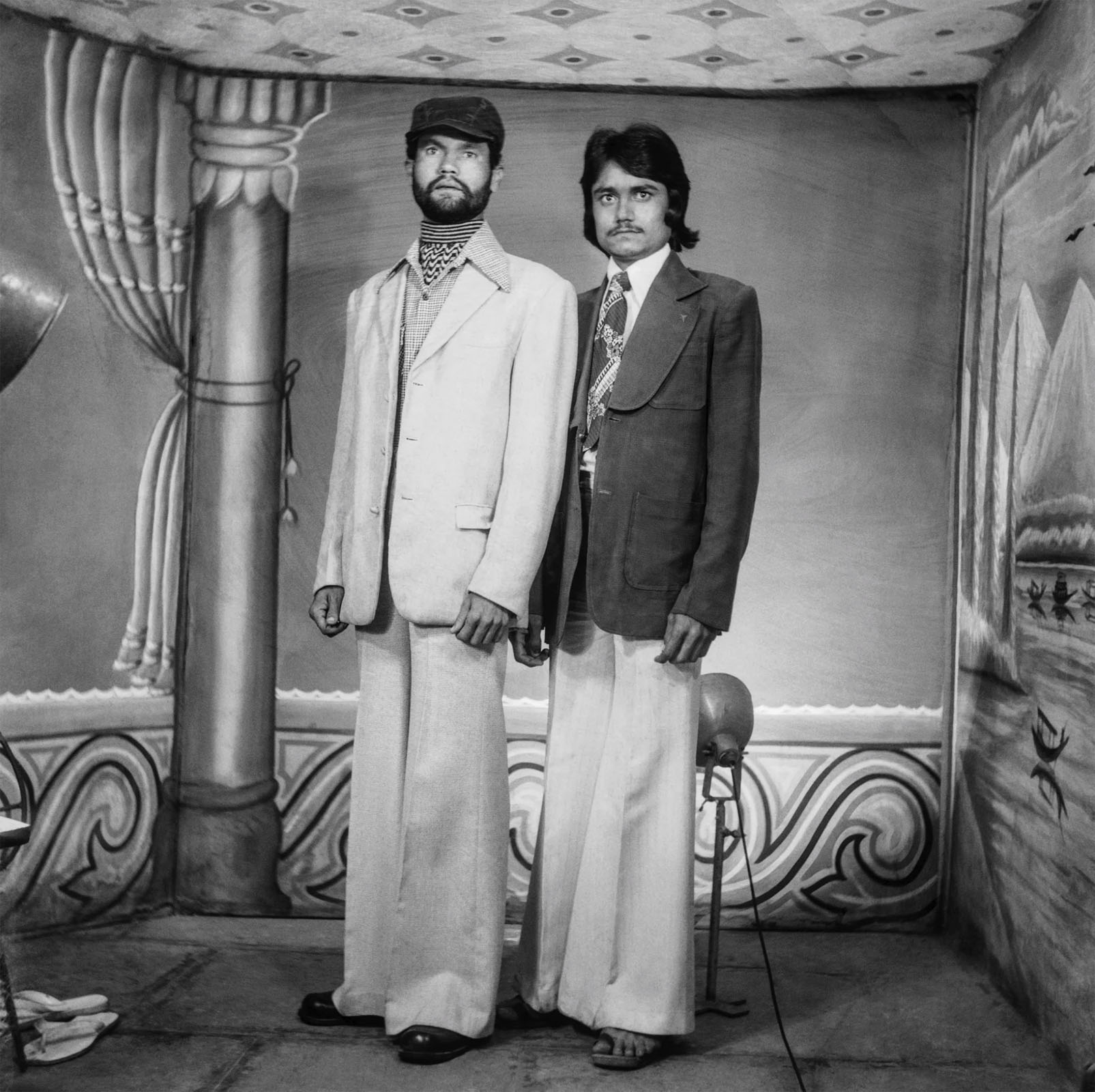
 

Suresh Punjabi (Indian, b. 1957) 'Untitled (Full-length portrait of two men) Suhag Studio, Nagda, Madhya Pradesh' 1985-1986


Suresh Punjabi (Indian, b. 1957)
Untitled (Full-length portrait of two men) Suhag Studio, Nagda, Madhya Pradesh
1985-1986
Pigment ink-jet print
33.0 x 33.0cm
Courtesy of the artist and the Museum of Art & Photography (MAP) (Bengaluru)


Two friends, dressed rather stylishly, stand in a slight three-quarter profile while looking directly into the camera. Punjabi often offered props such as sunglasses and hats to his sitters, however the origin of the pieces of clothing featured here – including the flared trousers and blazers – remains unclear. One interesting clue, likely intended to be cropped, is the pair of slippers near the bottom left of the frame. Only one of the men is wearing shoes, suggesting that the shoes are props and the slippers belong to him.

Text from the Museum of Art and Photography (MAP) website [Online] Cited 09/03/2022
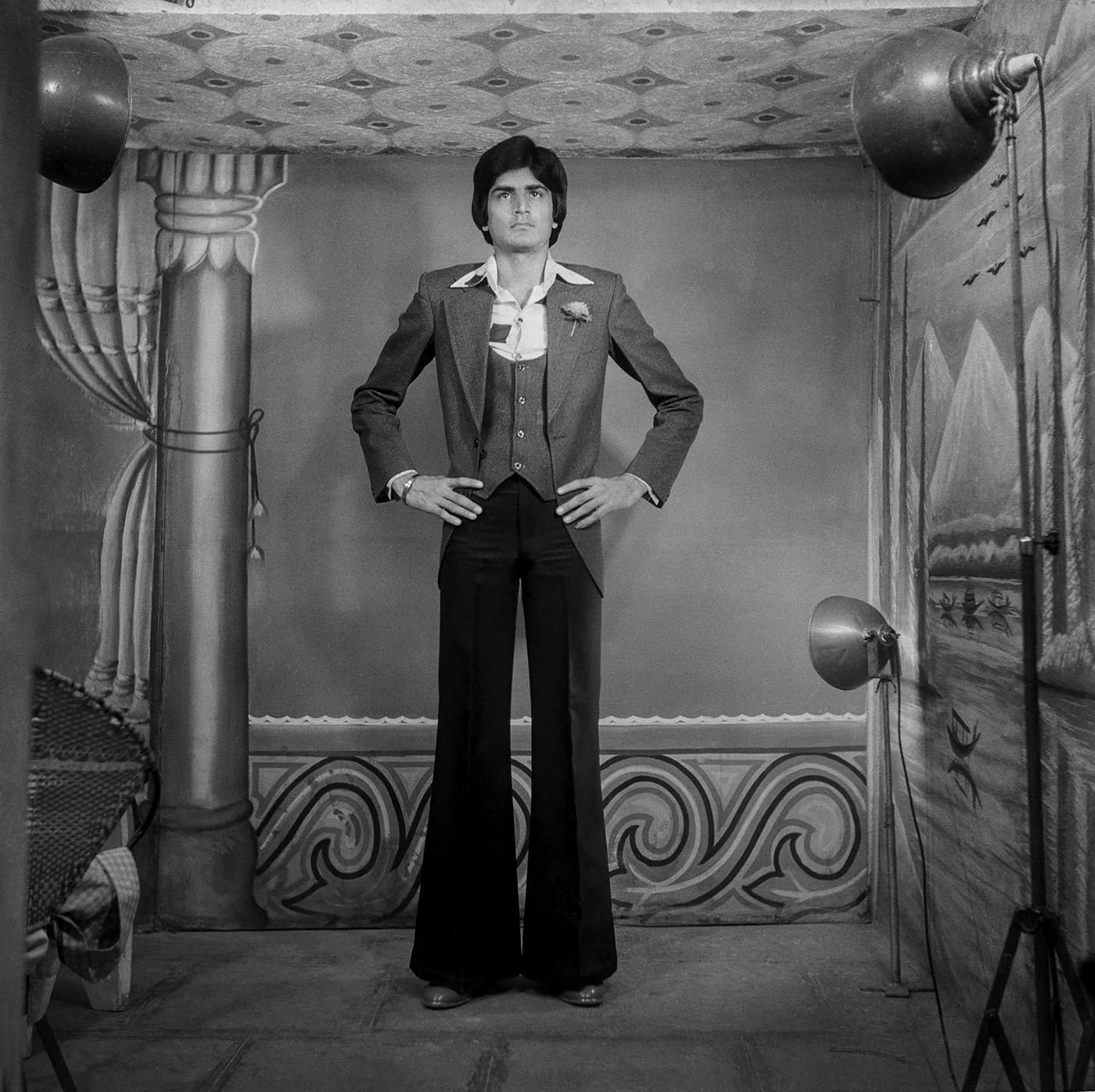
 

Suresh Punjabi (Indian, b. 1957) 'Untitled (Full-length portrait of a man), Suhag Studio, Nagda, Madhya Pradesh' 1985


Suresh Punjabi (Indian, b. 1957)
Untitled (Full-length portrait of a man), Suhag Studio, Nagda, Madhya Pradesh
1985
Pigment ink-jet print
33.0 x 33.0cm
Courtesy of the artist and the Museum of Art & Photography (MAP) (Bengaluru)


Punjabi’s childhood coincided with the waning years of the Golden Era of Hindi cinema, which he regularly drew inspiration from when developing his own visual style. Each of these images are largely inspired by the cultural lexicon of the times – outward expressions of heroism, villainy, aspiration, camaraderie, romance, and above all, personal style – and expresses a distinct style of playful formality, seemingly both rehearsed and improvised.

Wall text from the exhibition


On first meeting the man photographed here, Punjabi remarked how much he resembled the actor Amitabh Bachchan. In this portrait, the man’s long legs – much like Bachchan’s – appear even longer in his flared pants. The man’s distant stare, and the peeking studio lights on either edge of the frame, add further credibility to the fiction that this man is perhaps a body double preparing himself for an actual film scene. Being one of the most recognisable of Punjabi’s individual portraits, this image also appears on the cover of scholar Christopher Pinney’s book Artisan Camera: Studio Photography from Central India (2013).

Text from the Museum of Art and Photography (MAP) website [Online] Cited 09/03/2022


Suresh Punjabi (Indian, b. 1957) 'Untitled (Group portrait of a family), Suhag Studio, Nagda, Madhya Pradesh' 1986-1987


Suresh Punjabi (Indian, b. 1957)
Untitled (Group portrait of a family), Suhag Studio, Nagda, Madhya Pradesh
1986-1987
Pigment ink-jet print
33.0 x 33.0cm
Courtesy of the artist and the Museum of Art & Photography (MAP) (Bengaluru)


Life in Nagda, like in many towns in India, moved along a network of overlapping social relationships – friends, lovers, community members, coworkers. As photography opened up new opportunities for self-representation, these relationships seeped into the studio as well. Punjabi worked to represent his sitters against the social contexts, resulting in images that show us packed families, impassive coworkers, bashful lovers, playful friends and various expressions of cultural and religious celebration; connections, seen and unseen, caught mid-pose.

Wall text from the exhibition


In one of Punjabi’s most crowded compositions, a family of eight gathers into a tight frame for a group portrait. During this period, it was not uncommon for Punjabi to leave his studio (and sometimes Nagda as well) to photograph large families, often in front of their ancestral homes. In this case however, the family just about manages to squeeze into the indoor space. Accommodating all eight members also brings the studio’s ceiling into view, highlighting the limited, 10 x 20 feet space in which he worked during those years.

Text from the Museum of Art and Photography (MAP) website [Online] Cited 09/03/2022
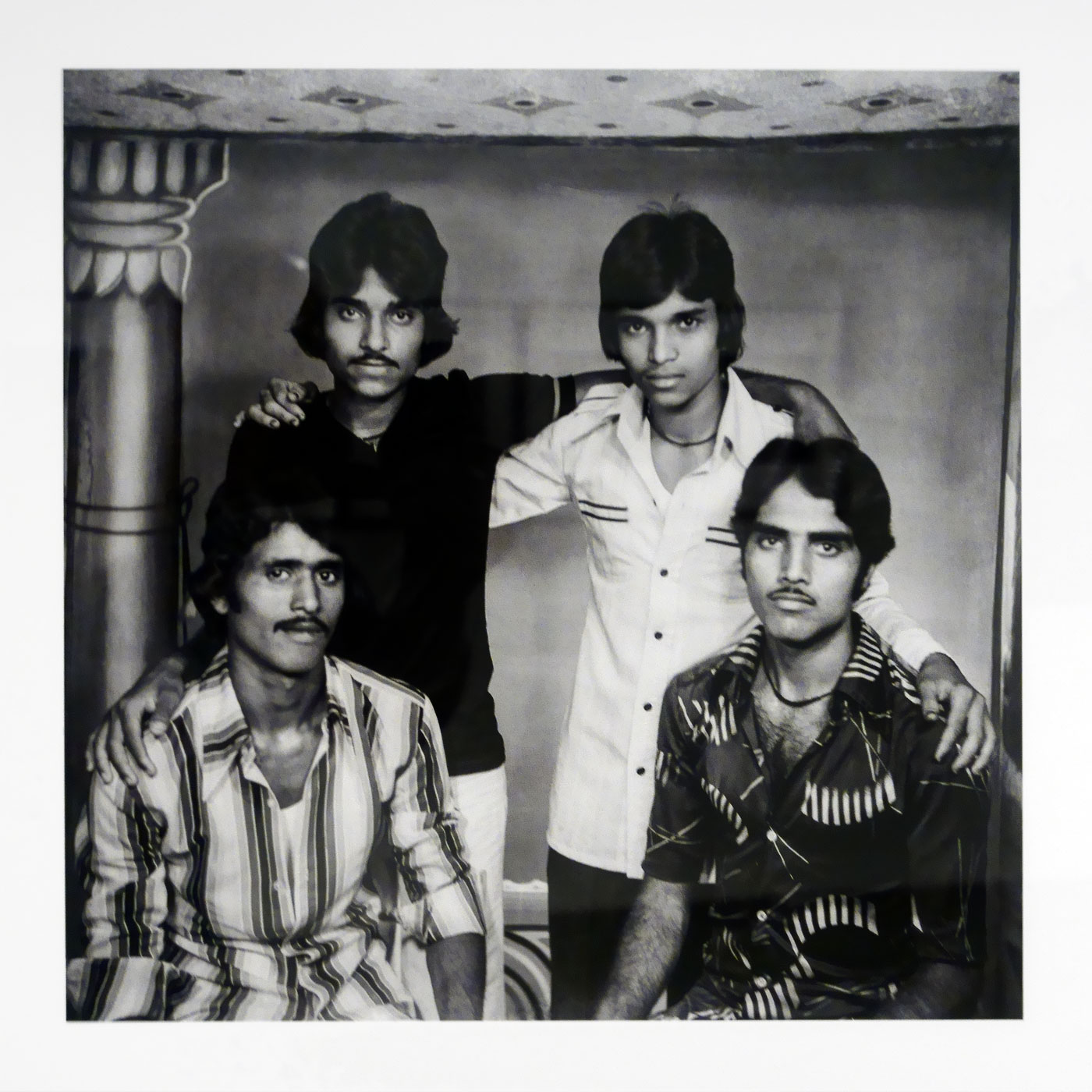
 

Suresh Punjabi (Indian, b. 1957) 'Untitled (Group portrait of four friends), Suhag Studio, Nagda, Madhya Pradesh' 1985 (installation view)


Suresh Punjabi (Indian, b. 1957)
Untitled (Group portrait of four friends), Suhag Studio, Nagda, Madhya Pradesh (installation view)
1985
Pigment ink-jet print
33.0 x 33.0cm
Courtesy of the artist and the Museum of Art & Photography (MAP) (Bengaluru)
Photo: Marcus Bunyan


Suresh Punjabi (Indian, b. 1957) 'Untitled (Full length portrait of three girls), Suhag Studio, Nagda, Madhya Pradesh' 1979 (installation view)


Suresh Punjabi (Indian, b. 1957)
Untitled (Full length portrait of three girls), Suhag Studio, Nagda, Madhya Pradesh (installation view)
1979
Pigment ink-jet print
33.0 x 33.0cm
Courtesy of the artist and the Museum of Art & Photography (MAP) (Bengaluru)
Photo: Marcus Bunyan


Although it’s difficult to say with certainty, the three young girls in this portrait are likely sisters who planned to have their photograph made on this day. Lending further credence to this assumption is the fact that two of the three girls are wearing identical patterns. At this time, especially in small and mid-sized towns in India, it wasn’t uncommon for households to have matching clothes stitched from the same piece of fabric, especially for siblings to wear. Another interesting aspect of this portrait, although not obvious at first glance, is that the girls on either side are far taller than the one in the middle, who must stand on a small stool – partly concealed by the other girls’ patterned clothing – to help retain a sense of continuity across the faces in the portrait.

Text from the Museum of Art and Photography (MAP) website [Online] Cited 09/03/2022
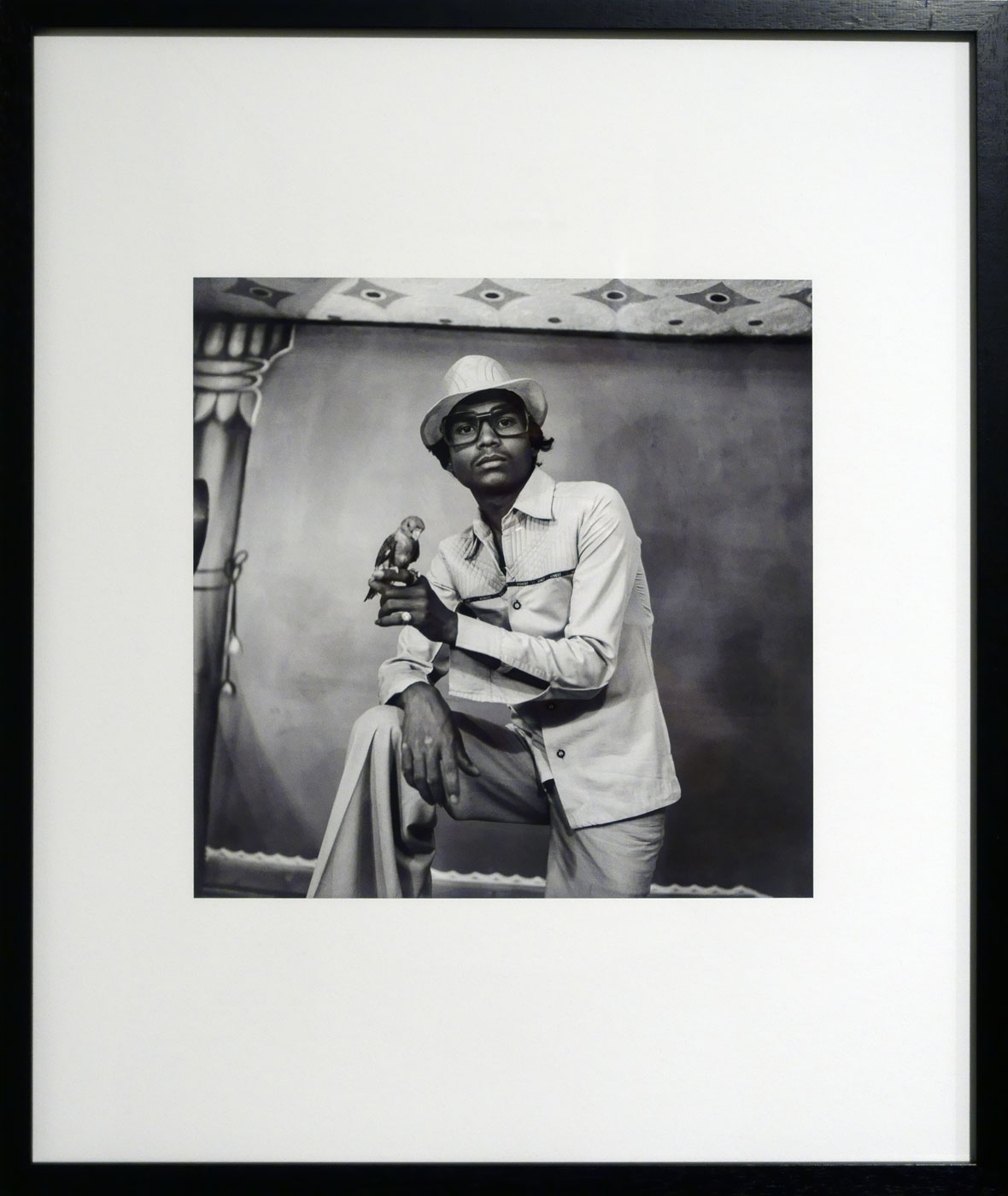
 

Suresh Punjabi (Indian, b. 1957) 'Untitled (Portrait of a man holding a bird), Suhag Studio, Nagda, Madhya Pradesh' 1987 (installation view)


Suresh Punjabi (Indian, b. 1957)
Untitled (Portrait of a man holding a bird), Suhag Studio, Nagda, Madhya Pradesh (installation view)
1987
Pigment ink-jet print
33.0 x 33.0cm
Courtesy of the artist and the Museum of Art & Photography (MAP) (Bengaluru)
Photo: Marcus Bunyan
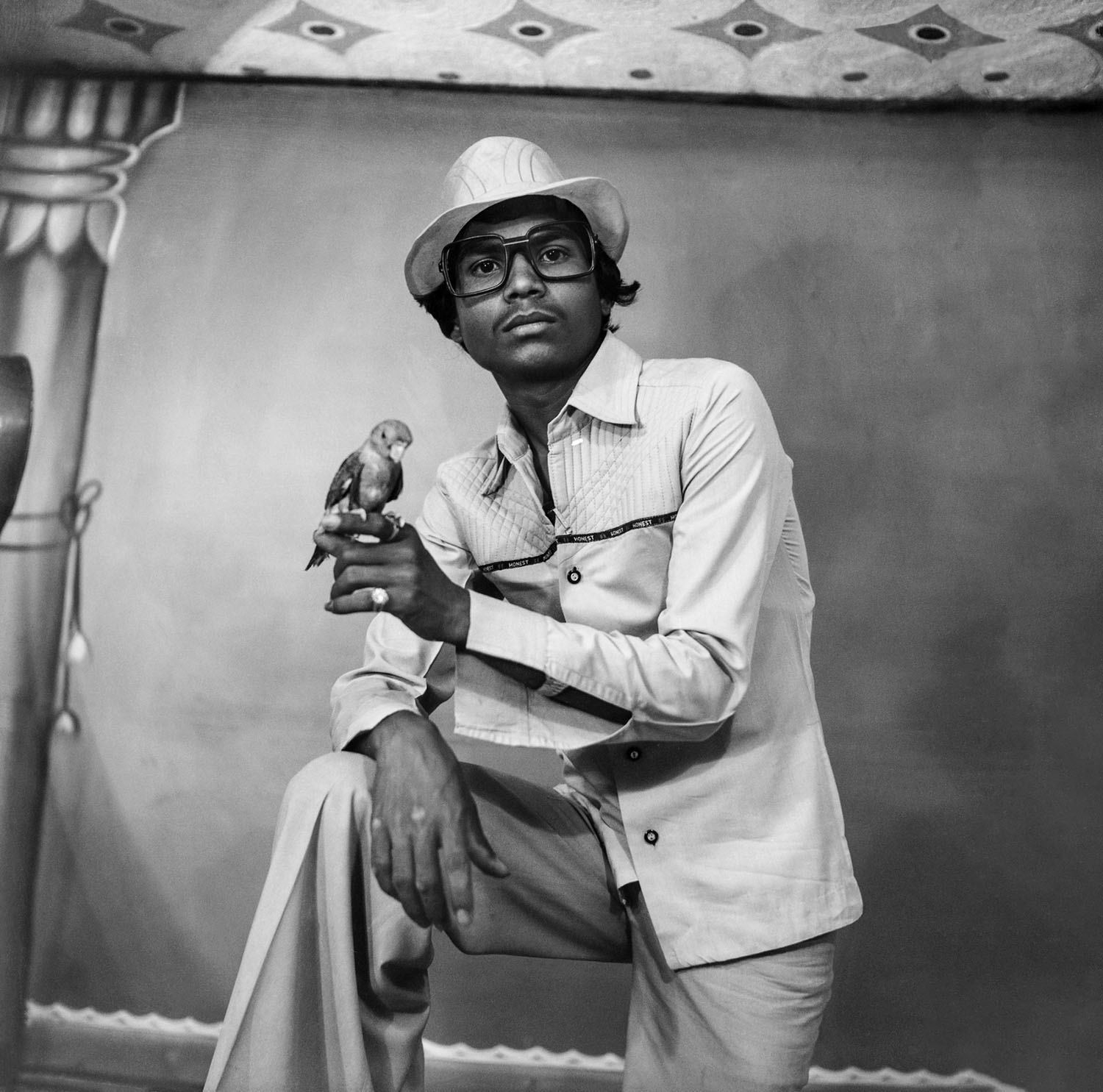
 

Suresh Punjabi (Indian, b. 1957) 'Untitled (Portrait of a man holding a bird), Suhag Studio, Nagda, Madhya Pradesh' 1987


Suresh Punjabi (Indian, b. 1957)
Untitled (Portrait of a man holding a bird), Suhag Studio, Nagda, Madhya Pradesh
1987
Pigment ink-jet print
33.0 x 33.0cm
Courtesy of the artist and the Museum of Art & Photography (MAP) (Bengaluru)


On entering Suhag Studio, the man in this portrait had one simple request for Punjabi: to be photographed with his beloved pet bird. In the resulting image, the man appears in flared trousers, thick-rimmed glasses and a rounded hat, leaning on a stool as his bird sits on his left index finger. In a bid to further accentuate the man’s lean, Punjabi tilts his camera to his right when taking the image, causing the painted background to appear slanted.

Text from the Museum of Art and Photography (MAP) website [Online] Cited 09/03/2022
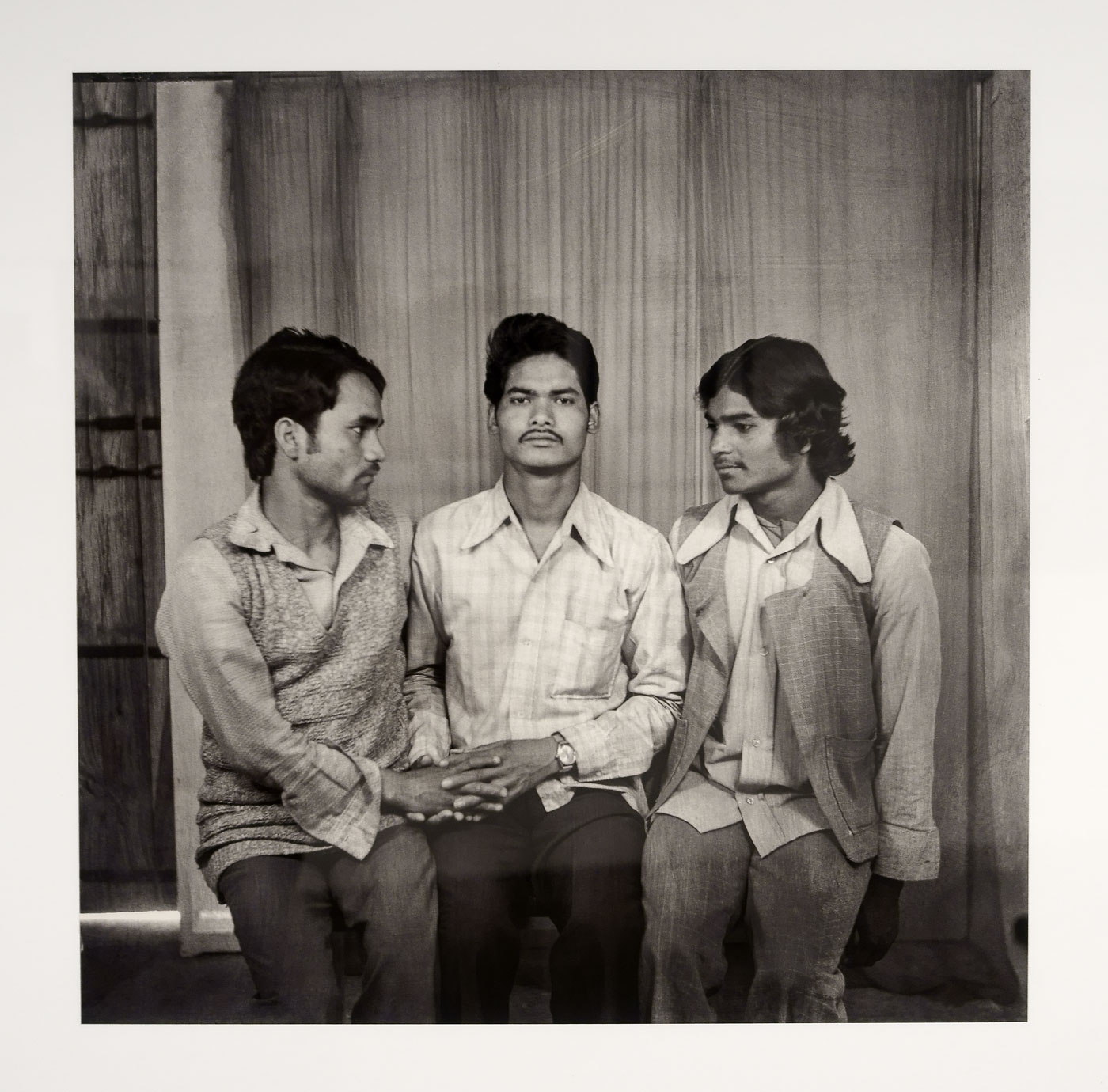
 

Suresh Punjabi (Indian, b. 1957) Untitled (Seated portrait of three friends) Suhag Studio, Nagda, Madhya Pradesh 1979 (installation view)


Suresh Punjabi (Indian, b. 1957)
Untitled (Seated portrait of three friends) Suhag Studio, Nagda, Madhya Pradesh (installation view)
1979
Pigment ink-jet print
33.0 x 33.0cm
Courtesy of the artist and the Museum of Art & Photography (MAP) (Bengaluru)
Photo: Marcus Bunyan
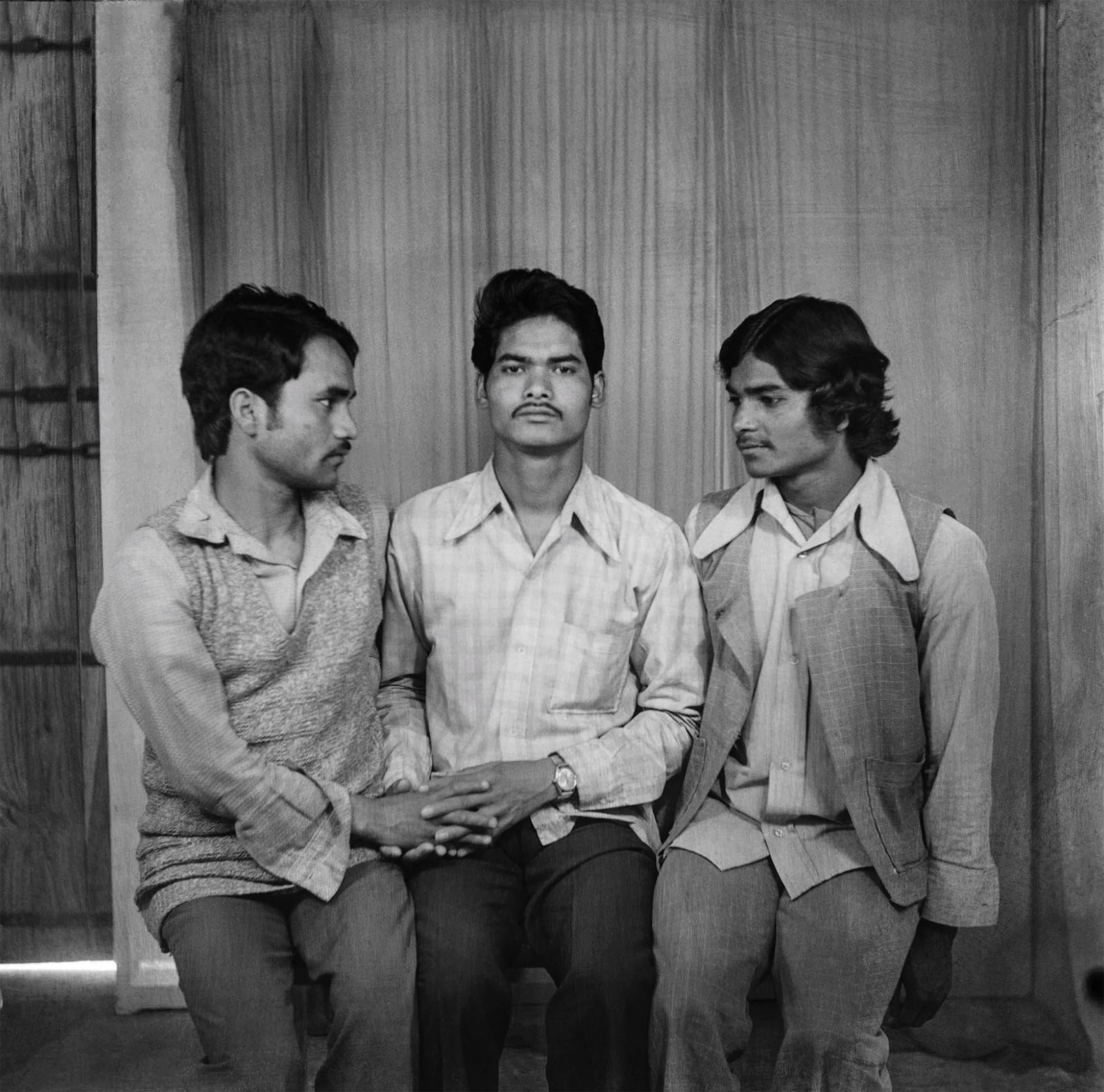
 

Suresh Punjabi (Indian, b. 1957) 'Untitled (Seated portrait of three friends) Suhag Studio, Nagda, Madhya Pradesh' 1979


Suresh Punjabi (Indian, b. 1957)
Untitled (Seated portrait of three friends) Suhag Studio, Nagda, Madhya Pradesh
1979
Pigment ink-jet print
33.0 x 33.0cm
Courtesy of the artist and the Museum of Art & Photography (MAP) (Bengaluru)


In this informal group portrait, the relationship between three male friends finds an intriguing physical manifestation. The man in the centre stares directly into the lens, deadpan, while holding the hand of the man to his right who, in turn, gazes at the third man on the very left, whose focus is caught by something beyond the frame. The language of eyes and hands gains an almost filmic intensity through Punjabi’s treatment, which highlights his enduring interest in capturing unseen and understated gestures in his portraits.

Text from the Museum of Art and Photography (MAP) website [Online] Cited 09/03/2022
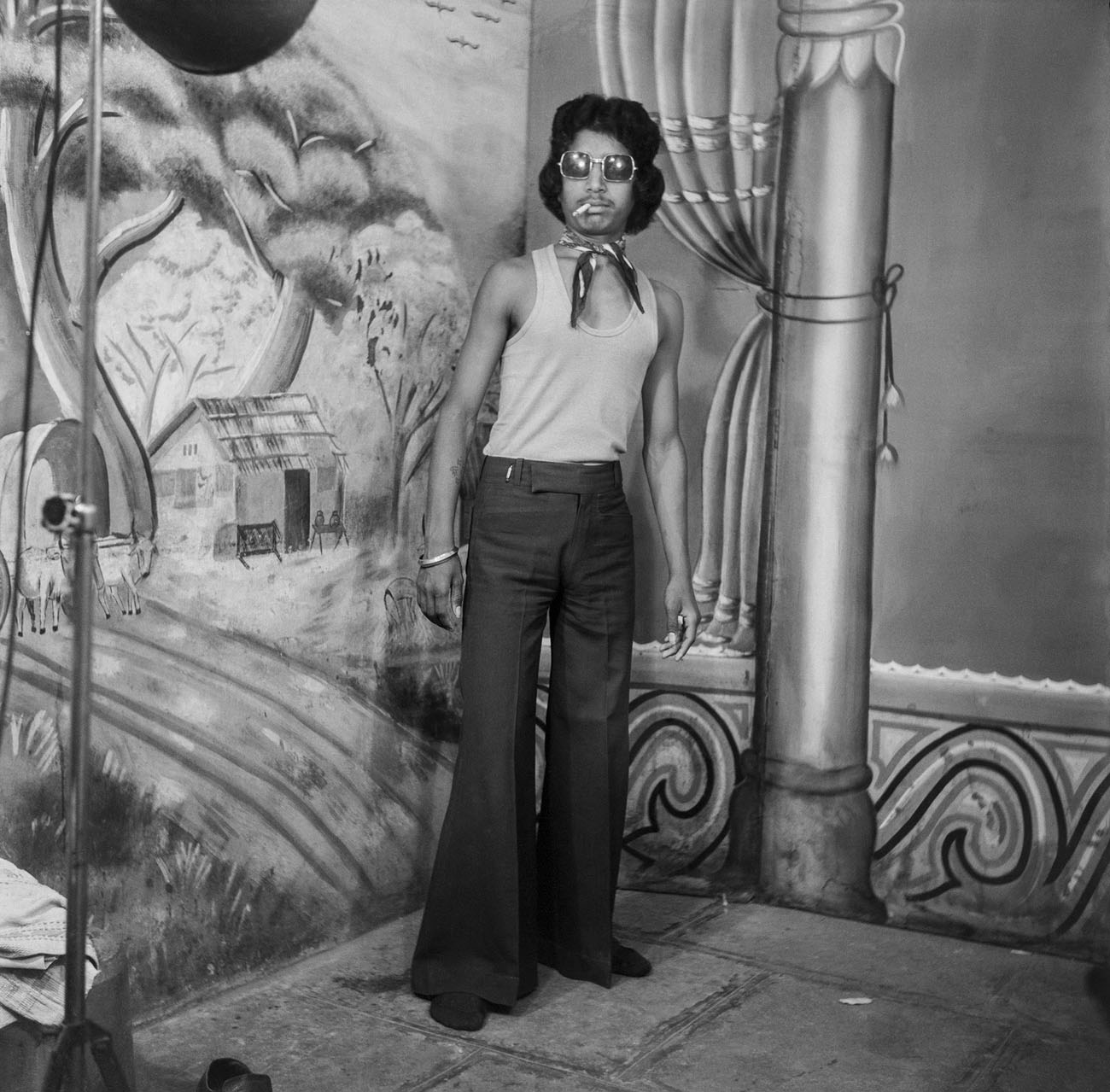
 

Suresh Punjabi (Indian, b. 1957) 'Untitled (Portrait of a young tea seller) Suhag Studio, Nagda, Madhya Pradesh' 1987


Suresh Punjabi (Indian, b. 1957)
Untitled (Portrait of a young tea seller) Suhag Studio, Nagda, Madhya Pradesh
1987
Pigment ink-jet print
33.0 x 33.0cm
Courtesy of the artist and the Museum of Art & Photography (MAP) (Bengaluru)


While many came to Punjabi with the hope of enacting the role of a film hero, others brought in a different set of influences. Working outside Suhag Studio selling tea, this boy was photographed by Punjabi in a highly stylised way, mimicking the temperament of a cinematic villain. The sunglasses, scarf and unlit cigarette – likely all props – contribute to this overall effect and lend a certain swagger to the thin boy’s leaning posture.

Text from the Museum of Art and Photography (MAP) website [Online] Cited 09/03/2022


Suresh Punjabi’s Suhag Studio: The Business of Dreams

This film tells the remarkable story of a photography studio in central India, established by Suresh Punjabi in the 1970s. Punjabi took tens of thousands of photographs over nearly half a century, documenting the lives and people of Nagda. The film forms part of an online exhibition of the same name, curated by Nathaniel Gaskell and Varun Nayar, for the Museum of Art & Photography (MAP) in Bangalore and has been directed by Naveed Mulki / Faraway Originals. Special thanks to Pratik and Suresh Punjabi and family, and to the people of Nagda who appear in the film.
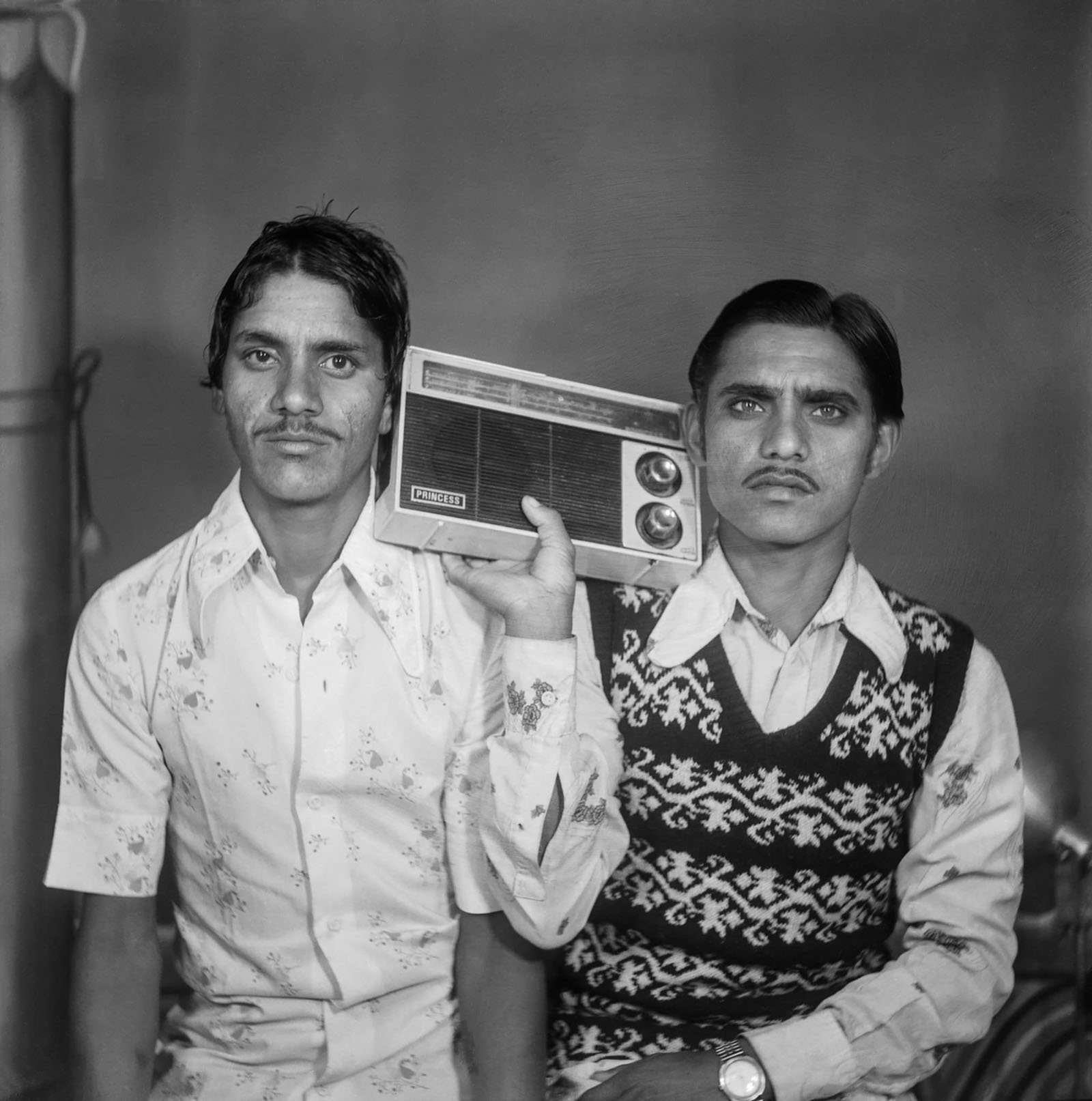
 

Suresh Punjabi (Indian, b. 1957) 'Untitled (Two men with a transistor radio), Suhag Studio, Nagda, Madhya Pradesh' 1983


Suresh Punjabi (Indian, b. 1957)
Untitled (Two men with a transistor radio), Suhag Studio, Nagda, Madhya Pradesh
1983
Pigment ink-jet print
33.0 x 33.0cm
Courtesy of the artist and the Museum of Art & Photography (MAP) (Bengaluru)


Punjabi’s sitters, two unnamed men, pose holding a smaller transistor radio – the first in Nagda – up to their ears.
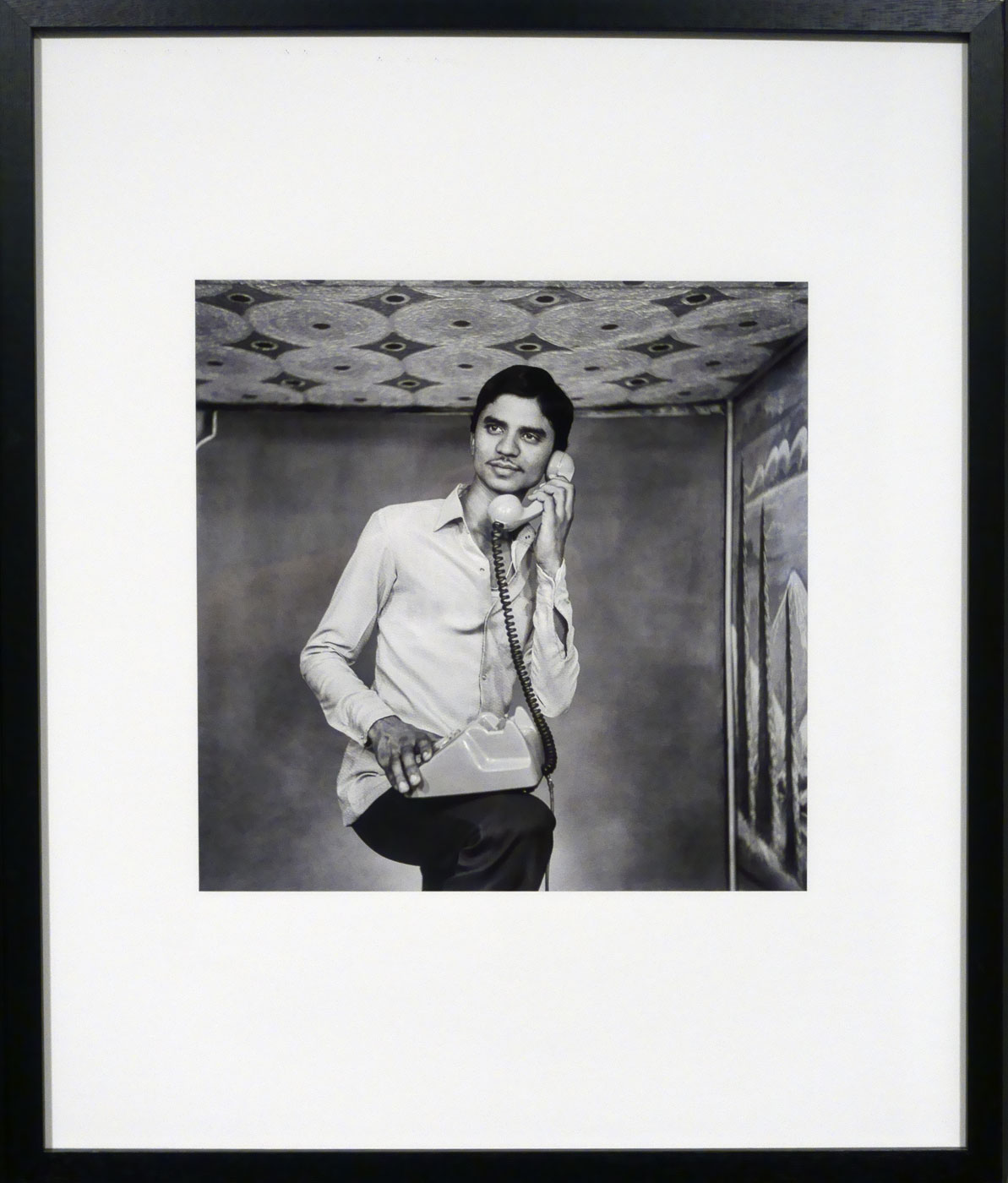
 

Suresh Punjabi (Indian, b. 1957) Untitled (Portrait of a man posing with a telephone) Suhag Studio, Nagda, Madhya Pradesh' 1985 (installation view)


Suresh Punjabi (Indian, b. 1957)
Untitled (Portrait of a man posing with a telephone) Suhag Studio, Nagda, Madhya Pradesh (installation view)
1985
Pigment ink-jet print
33.0 x 33.0cm
Courtesy of the artist and the Museum of Art & Photography (MAP) (Bengaluru)
Photo: Marcus Bunyan


While the language of Hindi cinema had a significant impact on Punjabi, it was part of a larger constellation of influences. His work also captured how people from Nagda – a fast-industrialising town that sat outside but was never delinked from India’s urban centres – articulated their evolving ambitions and self-conceptions; a context in which a particular posture or prop could reveal a host of personal preferences and worldviews.

Wall text from the exhibition
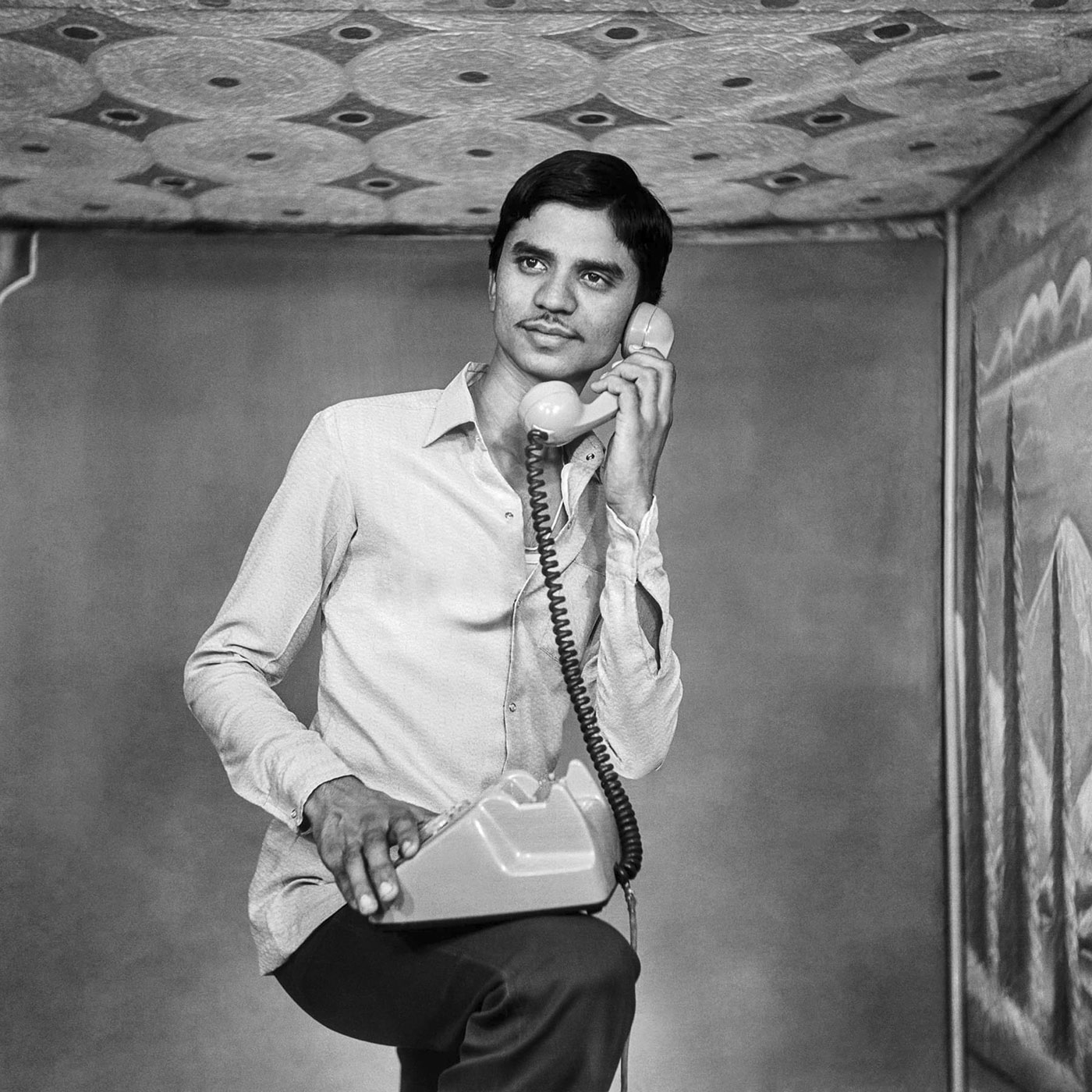
 

Suresh Punjabi (Indian, b. 1957) 'Untitled (Portrait of a man posing with a telephone) Suhag Studio, Nagda, Madhya Pradesh' 1985


Suresh Punjabi (Indian, b. 1957)
Untitled (Portrait of a man posing with a telephone) Suhag Studio, Nagda, Madhya Pradesh
1985
Pigment ink-jet print
33.0 x 33.0cm
Courtesy of the artist and the Museum of Art & Photography (MAP) (Bengaluru)


A landline telephone makes an appearance in this individual portrait that features a slender young man pretending to be preoccupied for the camera. Apparent in the photograph is the sitter’s desire to associate himself with the sense of modernity and connectivity that the telephone – regardless of who is on the other side – symbolises.

Text from the Museum of Art and Photography (MAP) website [Online] Cited 09/03/2022
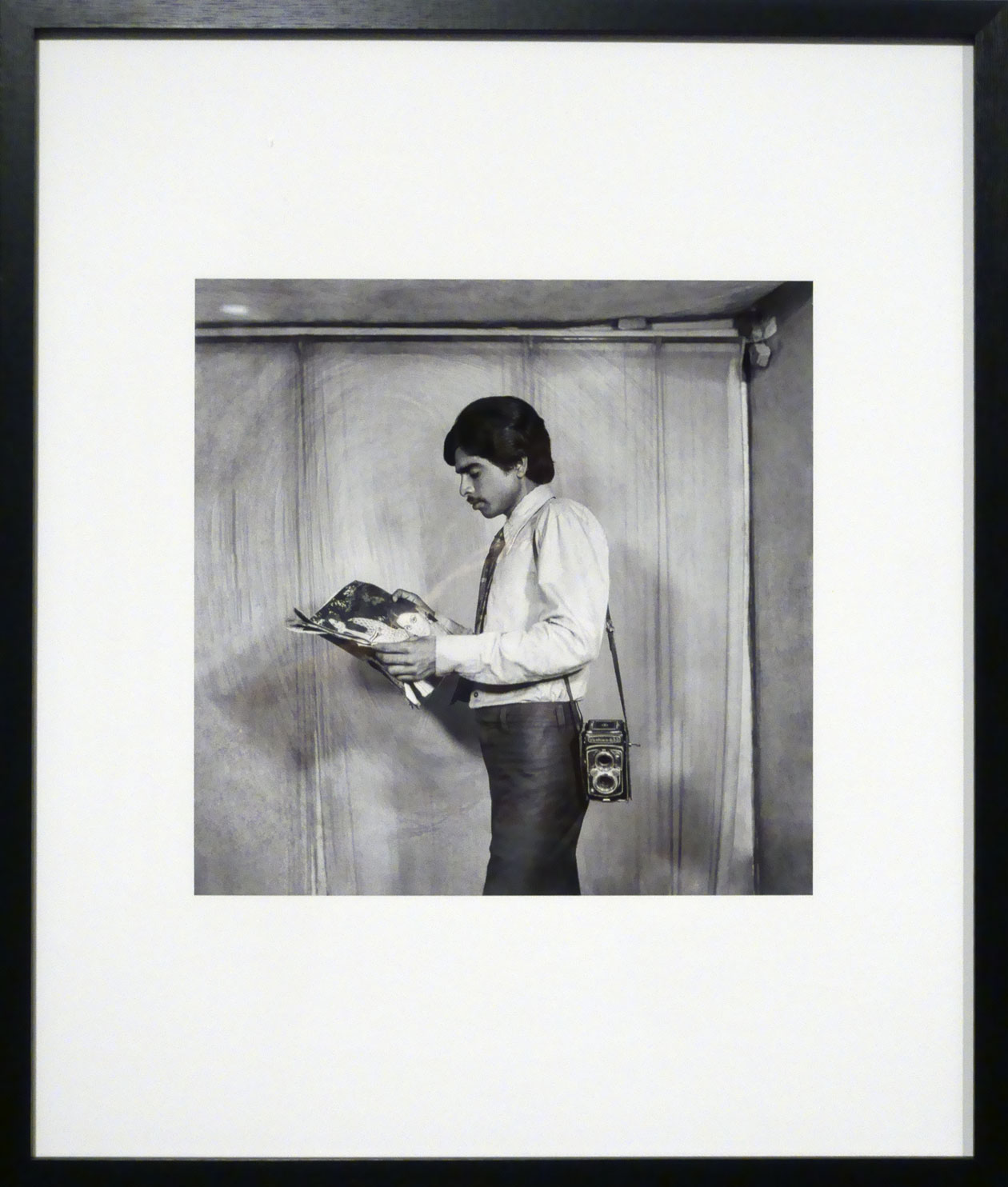
 

Suresh Punjabi (Indian, b. 1957) Untitled (Man with a camera) Suhag Studio, Nagda, Madhya Pradesh' 1985 (installation view)


Suresh Punjabi (Indian, b. 1957)
Untitled (Man with a camera) Suhag Studio, Nagda, Madhya Pradesh (installation view)
1985
Pigment ink-jet print
33.0 x 33.0cm
Courtesy of the artist and the Museum of Art & Photography (MAP) (Bengaluru)
Photo: Marcus Bunyan
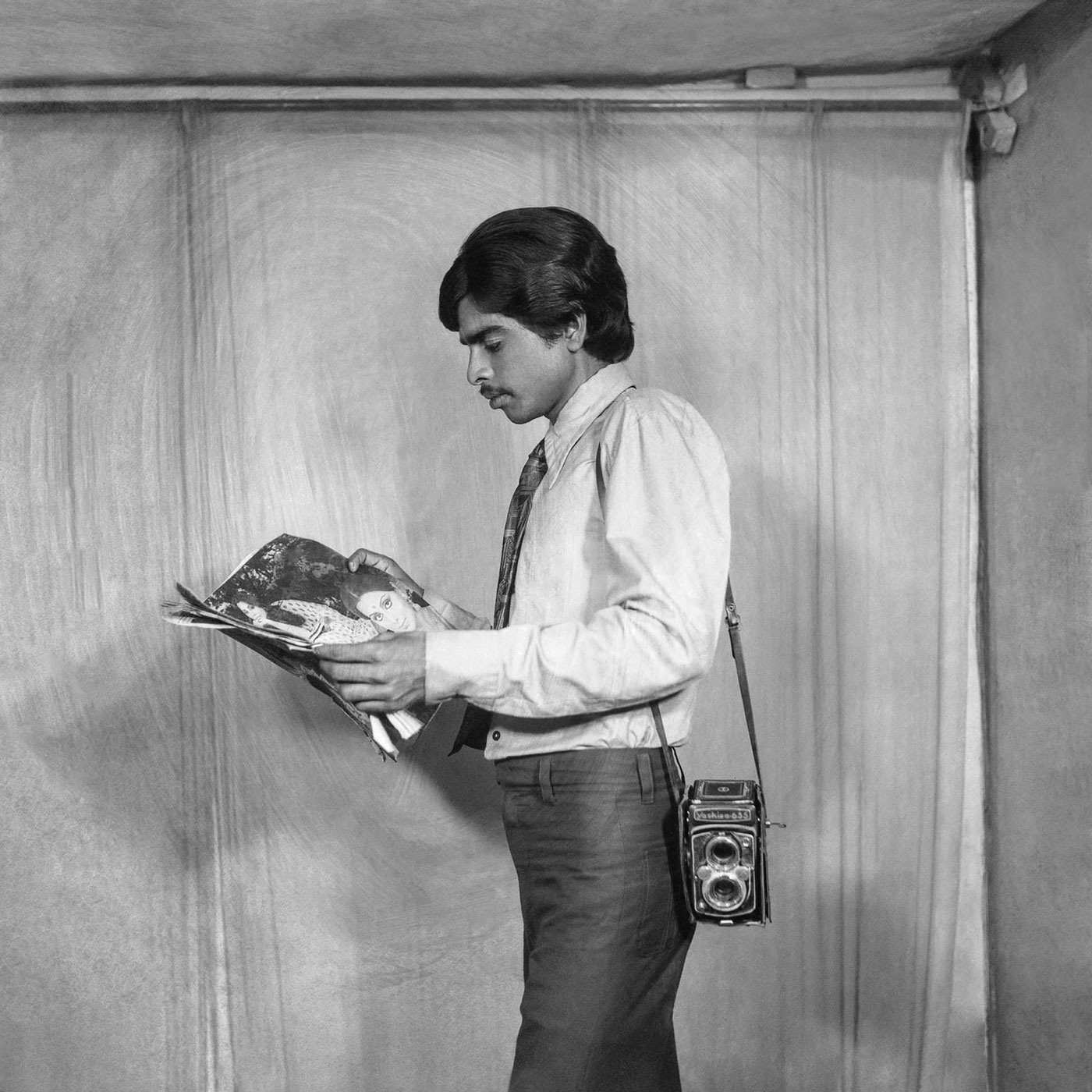
 

Suresh Punjabi (Indian, b. 1957) 'Untitled (Man with a camera) Suhag Studio, Nagda, Madhya Pradesh' 1985


Suresh Punjabi (Indian, b. 1957)
Untitled (Man with a camera) Suhag Studio, Nagda, Madhya Pradesh
1985
Pigment ink-jet print
33.0 x 33.0cm
Courtesy of the artist and the Museum of Art & Photography (MAP) (Bengaluru)


Punjabi recalls this young man asking for a portrait that would make him look like a “smart, gentleman photographer.” The magazine, camera and tie featured in this image are all props, demonstrating Punjabi’s effort to meet his client’s expectations.

Magazines appear frequently in many of Punjabi’s portraits, where they express a certain urbane and sophisticated form of indulgence that was an important cultural signifier for India’s emerging middle class. Typically, this prop magazine was just whatever was lying around in the studio – often an issue of an entertainment magazine such as Bombay Screen or Mayapuri, from which Punjabi also drew visual inspiration.

The Japanese Yashica – presumably Punjabi’s – slung on this man’s shoulder was a pricey piece of equipment that didn’t typically circulate beyond urban markets. Its existence in this portrait speaks to the sitter’s desire for ‘smartness,’ expressing a degree of professional acuity as well as socioeconomic mobility and access.

Text from the Museum of Art and Photography (MAP) website [Online] Cited 09/03/2022


Suresh Punjabi (Indian, b. 1957) 'Untitled (Four men standing in front of a truck) Suhag Studio, Nagda, Madhya Pradesh' 1985


Suresh Punjabi (Indian, b. 1957)
Untitled (Four men standing in front of a truck) Suhag Studio, Nagda, Madhya Pradesh
1985
Pigment ink-jet print
33.0 x 33.0cm
Courtesy of the artist and the Museum of Art & Photography (MAP) (Bengaluru)


There were times when Punjabi ventured out of his studio and into both nearby streets and remote villages, into temples and bars and through wedding processions and funerals. Having started out working weddings, Punjabi had become a keen-eyed and quick-footed photographer, rarely without a camera when the moment demanded it. These outdoor images provide a crucial bridge between the regulated and consciously arranged dream-world of his studio and the teeming human drama of everyday life just outside its doors.

Wall text from the exhibition


In one of many images Punjabi made outside his studio, a group of five men pose near a truck in Nagda, which is decorated with lights and flowers to commemorate Diwali. One of the men is hanging off the passenger side of the vehicle, though it is unclear whether he is its owner. Punjabi often ventured out into town with his camera and took photographs of everything from upturned vehicles for insurance claims to mass processions for funerals of important local figures.

Text from the Museum of Art and Photography (MAP) website [Online] Cited 09/03/2022
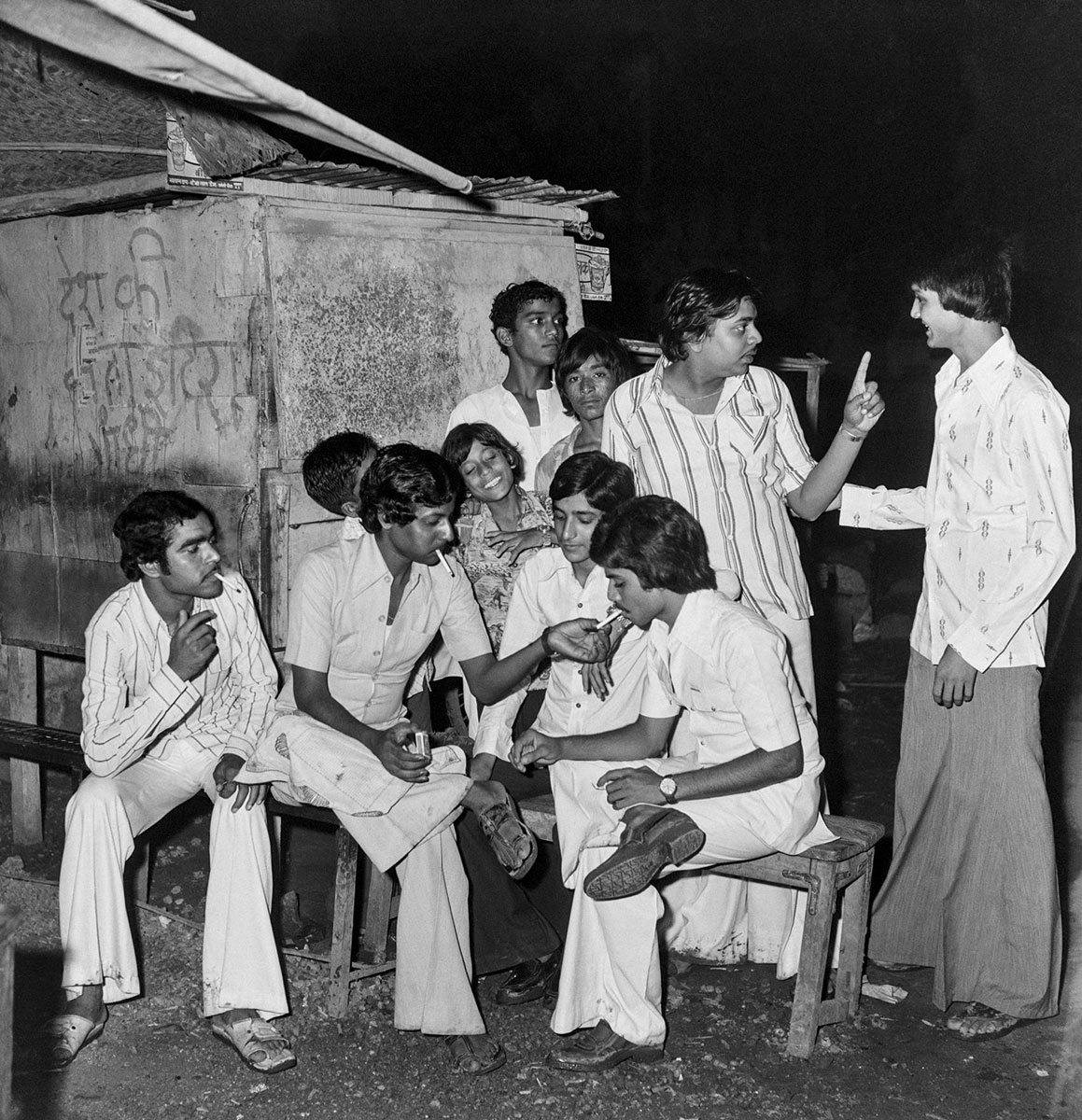
 

Suresh Punjabi (Indian, b. 1957) 'Untitled (Group portrait of men with cigarettes) Suhag Studio, Nagda, Madhya Pradesh' 1979


Suresh Punjabi (Indian, b. 1957)
Untitled (Group portrait of men with cigarettes) Suhag Studio, Nagda, Madhya Pradesh
1979
Pigment ink-jet print
33.0 x 33.0cm
Courtesy of the artist and the Museum of Art & Photography (MAP) (Bengaluru)


In one of Punjabi’s more crowded outdoor photographs, made at a local wedding, a number of men huddle around a bench at night, exchanging cigarettes, gestures and conversation. Nearly all of them are dressed in white, leading one to believe that they may have all been at the same event prior to – or even during – the point at which this image was made. In the background of the image, written in large Hindi letters on the back of a small wooden shack are the words: “The country’s leader, Indira Gandhi.” The 1970s and early 80s were a tumultuous time for the nation, primarily due to Gandhi’s imposition of a state of emergency from 1975-1977. This image was made after the state of emergency and before Gandhi’s assassination in 1984.

Text from the Museum of Art and Photography (MAP) website [Online] Cited 09/03/2022
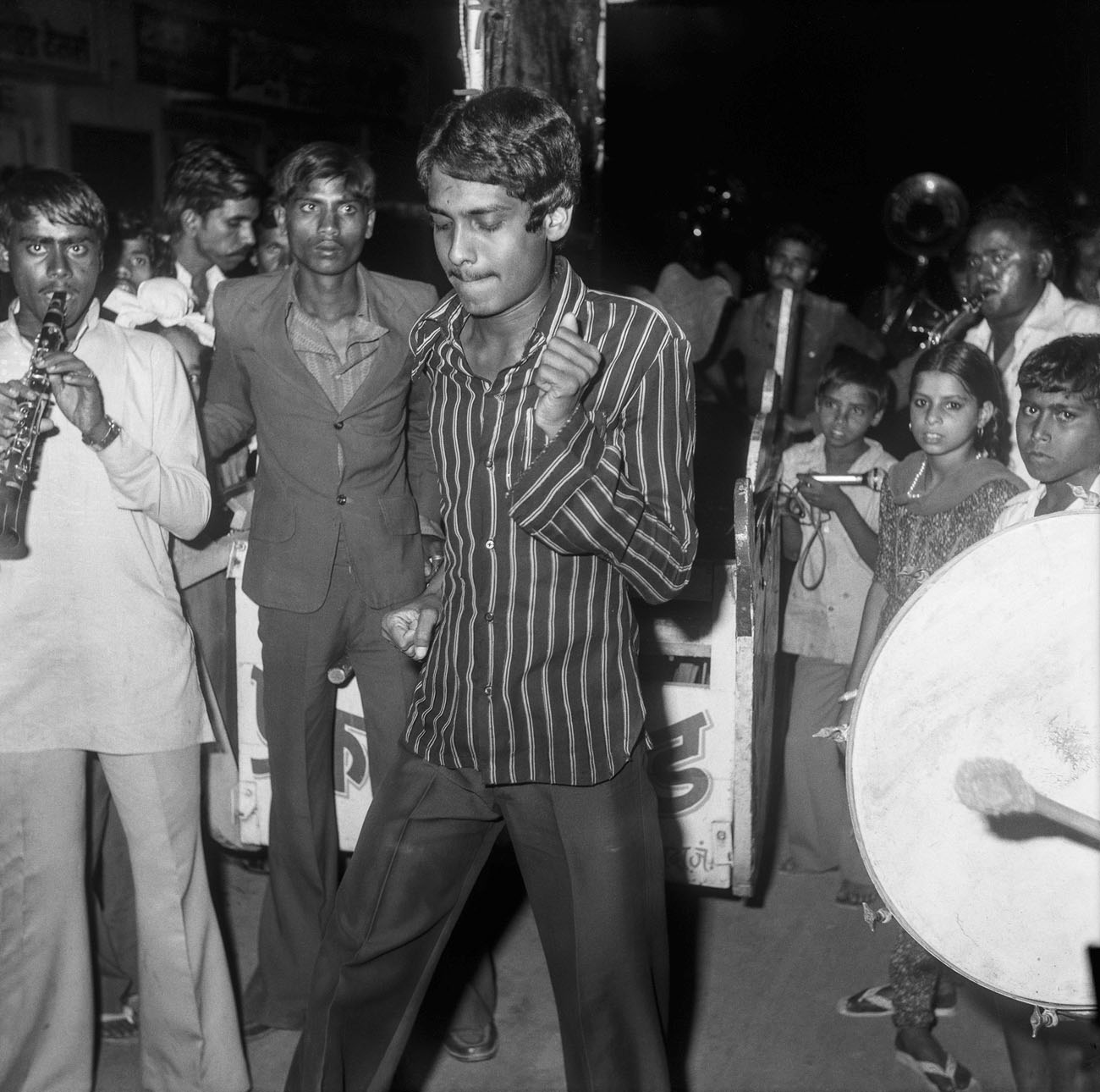
 

Suresh Punjabi (Indian, b. 1957) 'Untitled (A man dancing during a wedding) Suhag Studio, Nagda, Madhya Pradesh' 1980


Suresh Punjabi (Indian, b. 1957)
Untitled (A man dancing during a wedding) Suhag Studio, Nagda, Madhya Pradesh
1980
Pigment ink-jet print
33.0 x 33.0cm
Courtesy of the artist and the Museum of Art & Photography (MAP) (Bengaluru)


The subject does not see the bright flash of Punjabi’s camera as he dances energetically alongside the wedding band and many guests at his friend’s wedding. A good wedding photographer must be invisible. Punjabi’s knack for framing an image inconspicuously and at the right moment reflects in a number of his outdoor photographs, especially of ceremonial events.

Text from the Museum of Art and Photography (MAP) website [Online] Cited 09/03/2022


Suresh Punjabi’s Suhag Studio: The Business of Dreams – The Business of Dreams Chapter 1, 1970s

The history of Studio Suhag in Nagda, Madhya Pradesh


Suresh Punjabi’s Suhag Studio: The Business of Dreams Chapter 2, 1980s

The history of Studio Suhag in Nagda, Madhya Pradesh


Monash Gallery of Art
860 Ferntree Gully Road, Wheelers Hill
Victoria 3150 Australia
Phone: + 61 3 8544 0500

Opening hours:
Tue – Fri: 10am – 5pm
Sat – Sun: 12pm – 5pm
Mon/public holidays: closed

Monash Gallery of Art website

LIKE ART BLART ON FACEBOOK

Back to top

Exhibition: ‘Under Indian Skies – 19th-Century Photographs from a Private Collection’ at The David Collection, Copenhagen, Denmark

Exhibition dates: 23rd November, 2018 – 28th April, 2019

Curators: Joachim Meyer and Peter Wandel


Unknown photographer. 'The Taj Mahal, Agra, from the north' 1870s from the exhibition 'Under Indian Skies – 19th-Century Photographs from a Private Collection' at The David Collection, Copenhagen, Denmark, Nov 2018 - April 2019


Unknown photographer
The Taj Mahal, Agra, from the north
1870s
Albumen silver print
© The David Collection


There are some beautiful photographs in this posting, mainly by British photographers evidencing the colonial gaze.

This is how the British saw their subjects “Under Indian Skies” not how the Indians would have seen themselves. The only Indian photographer in this posting is Lala Deen Dayal (Indian, 1844-1905). His photograph The Char Minar, Hyderabad (1880s, below) is a much more fluid, street photography representation of Indian life (long time exposure, blurred figures) than the other grandiose representations of Indian palaces and architecture.

The portraits are also instructive, aping as they do the classical aspirations of contemporary European carte de visite and cabinet cards. Even though the photograph Portrait of a young Indian woman by an unknown photographer (1870s, below) portrays her in Indian dress, she is accompanied to the left by a reproduction of a classical Greek statue. Of course, the aspersion is that while she may be beautiful and different, the Orient is always reliant on Europe and Greece as the birthplace of civilisation, for its existence.

I have included extra information about locations and photographers were possible.

Dr Marcus Bunyan


Many thankx to The David Collection for allowing me to publish the photographs in the posting. Please click on the photograph for a larger version of the image.


The invention of photography in 1839 revolutionised the way in which the world was documented and interpreted, not only in Europe, but also in Asia. As early as the beginning of the 1850s, the British authorities in India launched an impressive photographic survey of architecture. Enthusiastic amateur photographers soon followed suit with atmospheric images of life in the period, including that of maharajas, snake charmers, and elephants bathing in the Ganges.

Through a selection of pictures from a private British collection, this photo exhibition focuses on some of the challenges and subjects that preoccupied the earliest European and Indian photographers. It also displays the distinctive beauty of vintage photos created with difficult to handle apparatuses, big glass negatives, long exposure times, and complex chemical processes.

The exhibition consists of over 80 photographs and photo albums from around 1850 to the beginning of the 20th century. The catalogue was written by the British photo historian John Falconer, who for many years was responsible for the photograph collections in the British Library’s Indian and Oriental departments. The catalogue costs DKK 200 and can be purchased in the museum shop, which also sells the lovely exhibition poster for DKK 40.

Text from The David Collection website [Online] Cited 24/03/2019


Donald Horne Macfarlane (Scottish, 1830-1904) 'Elephants bathing' 1862 from the exhibition 'Under Indian Skies – 19th-Century Photographs from a Private Collection' at The David Collection, Copenhagen, Denmark, Nov 2018 - April 2019


Donald Horne Macfarlane (Scottish, 1830-1904)
Elephants bathing
1862
Albumen silver print
© The David Collection


Sir Donald Horne Macfarlane (July 1830 – 2 June 1904) was a Scottish merchant who entered politics and became a Member of Parliament (MP), firstly as a Home Rule League MP in Ireland and then as Liberal and Crofters Party MP in Scotland. Macfarlane was born in Scotland, the youngest son of Allan Macfarlane, J.P., of Caithness and his wife Margaret Horne. He became an East Indies merchant as a tea trader and indigo plantation owner. While in India he was a passionate amateur photographer. He experimented freely and produced semi-abstract images

Text from the Wikipedia website


Donald Horne Macfarlane (Scottish, 1830-1904) 'Elephants bathing' 1862 (detail)


Donald Horne Macfarlane (Scottish, 1830-1904)
Elephants bathing (detail)
1862
Albumen silver print
© The David Collection


Felice Beato (Italian-British, 1832-1909) 'The Chattar Manzil Palace and the King of Oudh’s boat in the shape of a fish, Lucknow' 1858


Felice Beato (Italian-British, 1832-1909)
The Chattar Manzil Palace and the King of Oudh’s boat in the shape of a fish, Lucknow
1858
Albumen silver print
24.8 × 30cm (9 3/4 × 11 13/16 in.)
© The David Collection


Felice Beato (Italian-British, 1832-1909) 'The Chattar Manzil Palace and the King of Oudh’s boat in the shape of a fish, Lucknow' 1858 (detail)


Felice Beato (Italian-British, 1832-1909)
The Chattar Manzil Palace and the King of Oudh’s boat in the shape of a fish, Lucknow (detail)
1858
Albumen silver print
24.8 × 30cm (9 3/4 × 11 13/16 in.)
© The David Collection


View of one of the Chattar Manzil [Umbrella Palaces] showing the King’s boat called The Royal Boat of Oude on the Gomti River, Lucknow, India.

The Chattar Manzil (Urdu: چھتر منزل‎, Hindi: छतर मंज़िल), or Umbrella Palace is a building in Lucknow in Uttar Pradesh which served as a palace for the rulers of Awadh and their wives. It was constructed by order of NawabGhazi Uddin Haider and completed after his death by his successor, Nawab Nasir Uddin Haider.

The Chattar Manzil stand on the banks of the River Gomti. The Chattar Manzil consisted of a Bari (larger) Chattar Manzil and Chhoti (smaller) Chattar Manzil, however only the larger one still exists. These two buildings were examples of the Indo-European-Nawabi architectural style, even though the Bari Chattar Manzil has been altered over the years. The palaces were named after the chattris (umbrella-shaped domes) on the octagonal pavilions, which crown the buildings. The imposing building has large underground rooms and a dome surmounted by a gilt umbrella.

Text from the Wikipedia website


Felice Beato (Italian-British, 1832-1909) 'Courtyard of the Sikandarbagh' 1858


Felice Beato (Italian-British, 1832-1909)
Courtyard of the Sikandarbagh
1858
Albumen silver print
© The David Collection


Felice Beato (1832 – 29 January 1909), also known as Felix Beato, was an Italian-British photographer. He was one of the first people to take photographs in East Asia and one of the first war photographers. He is noted for his genre works, portraits, and views and panoramas of the architecture and landscapes of Asia and the Mediterranean region. Beato’s travels gave him the opportunity to create images of countries, people, and events that were unfamiliar and remote to most people in Europe and North America. His work provides images of such events as the Indian Rebellion of 1857 and the Second Opium War, and represents the first substantial body of photojournalism. He influenced other photographers, and his influence in Japan, where he taught and worked with numerous other photographers and artists, was particularly deep and lasting. …

In February 1858 Beato arrived in Calcutta and began travelling throughout Northern India to document the aftermath of the Indian Rebellion of 1857. During this time he produced possibly the first-ever photographic images of corpses. It is believed that for at least one of his photographs taken at the palace of Sikandar Bagh in Lucknow he had the skeletal remains of Indian rebels disinterred or rearranged to heighten the photograph’s dramatic impact17. He was also in the cities of Delhi, Cawnpore, Meerut, Benares, Amritsar, Agra, Simla, and Lahore. Beato was joined in July 1858 by his brother Antonio, who later left India, probably for health reasons, in December 1859. Antonio ended up in Egypt in 1860, setting up a photographic studio in Thebes in 1862.

Text from the Wikipedia website

17. Gartlan, Luke. “Felix Beato,” in Encyclopedia of Nineteenth-Century Photography 2, p. 128.


Felice Beato (Italian-British, 1832-1909) 'Courtyard of the Sikandarbagh' 1858 (detail)


Felice Beato (Italian-British, 1832-1909)
Courtyard of the Sikandarbagh (detail)
1858
Albumen silver print
© The David Collection


Interior of the Secundra Bagh after the Slaughter of 2,000 Rebels by the 93rd Highlanders and 4th Punjab Regiment. First Attack of Sir Colin Campbell in November 1857, Lucknow. Albumen silver print, by Felice Beato, 1858. Located on the outskirts of Lucknow, it was the scene of intense fighting in November, 1857. Following the action, the British dead were buried in a deep trench but the Indian corpses were left to rot. Later, the city had to be evacuated and was not recaptured until March 1858 and it was shortly afterwards that Beato probably took this photograph. As one contemporary commentator described it: “A few of their [rebel] bones and skulls are to be seen in front of the picture, but when I saw them every one was being regularly buried, so I presume the dogs dug them up.” A British officer, Sir George Campbell, noted in his memoirs Beato’s presence in Lucknow and stated that he probably had the bones uncovered to be photographed. However, William Howard Russell of The Times recorded seeing many skeletons still lying around in April 1858. Photographic views of Lucknow taken after the Indian Mutiny, Albumen silver print 26.2 x 29.8 cm. The image was taken by Felice Beato, a Corfiote by birth, who visited India during the period of the Indian Mutiny or First War of Indian Independence; possibly on a commissioned by the War Office in London he made documentary photographs showing the damage to the buildings in Lucknow following the two sieges. It is known that he was in Lucknow in March and April of 1858 within a few weeks of the capture of that city by British forces under Sir Colin Campbell. His equipment was a large box camera using 10″ x 12″ plates which needed a long exposure, and he made over 60 photographs of places in the city connected with the military events. Beato also visited Delhi, Cawnpore and other ‘Mutiny’ sites where he took photographs.

Text from the Wikipedia website


Felice Beato (Italian-British, 1832-1909) 'A mosque in the Red Fort, Dehli' 1858


Felice Beato (Italian-British, 1832-1909)
A mosque in the Red Fort, Dehli
1858
Albumen silver print
© The David Collection


Felice Beato (Italian-British, 1832-1909) 'A mosque in the Red Fort, Dehli' 1858 (detail)


Felice Beato (Italian-British, 1832-1909)
A mosque in the Red Fort, Dehli (detail)
1858
Albumen silver print
© The David Collection


Samuel Bourne (English, 1834-1912) 'Alai Darwaza at the Qutb, Delhi' c. 1864


Samuel Bourne (English, 1834-1912)
Alai Darwaza at the Qutb, Delhi [Ala-ood-deen’s Gateway]
c. 1864
Albumen silver print
23.7 × 29.8cm (9 5/16 × 11 3/4 in.)
© The David Collection


View of the front facade of the Alai Darwaza gatehouse at the Qutb complex in Delhi. The building is almost entirely covered with intricately carved geometric and floral patterns, which also adorn the pierced latticework screens that cover the arched windows flanking the archway over the entrance.

This photograph shows a gateway into the extended Quwwat-ul-Islam mosque. Known as the Alai Darwaza, it was built in 1311 by the Afgan ruler Alauddin Khalji. He had grand plans to extend the original mosque. Most of them were abandoned after his death in 1315, but this gateway is the most notable addition he made. It is 17.2 metres square.

The mosque and gateway are made out of rubble. It is the first of many Indian Islamic monuments to use a combination of white marble and red sandstone for the façade. Its distinctive features are the use of symmetry and the finely carved calligraphic and arabesque decoration on the southern façade of the gateway. This is also the first monument in which a true arch, using the radiating voussoirs shown here, is fully integrated into the design. The design is influenced by the architectural traditions of the empire of the Saljugs from western Asia.

The British photographer Samuel Bourne lived and worked in India between 1862 and 1869. During this time he toured the Himalayas and travelled through the subcontinent, photographing its landscape, architecture and historical sites. He set up a studio in Simla with Charles Shepherd and sold his prints sold to an eager public both in India and Britain.

Text from the V&A website


The Qutb complex are monuments and buildings from the Delhi Sultanate at Mehrauli in Delhi in India. The Qutub Minar in the complex, named after Qutbuddin Bakhtiar Kaki, was built by Qutb-ud-din Aibak, who later became the first Sultan of Delhi of the Mamluk dynasty. The Minar was added upon by his successor Iltutmish (a.k.a. Altamash), and much later by Firoz Shah Tughlaq, a Sultan of Delhi from the Tughlaq dynasty in 1368 AD. The Qubbat-ul-Islam Mosque (Dome of Islam), later corrupted into Quwwat-ul Islam, stands next to the Qutb Minar.

Many subsequent rulers, including the Tughlaqs, Alauddin Khalji and the British added structures to the complex. Apart from the Qutb Minar and the Quwwat ul-Islam Mosque, other structures in the complex include the Alai Gate, the Alai Minar, the Iron pillar, the ruins of several earlier Jain temples, and the tombs of Iltutmish, Alauddin Khalji and Imam Zamin.

Text from the Wikipedia website


Unknown photographer. 'View from the entrance gateway of Akbar's Tomb, Sikandra' 1870s


Unknown photographer
View from the entrance gateway of Akbar’s Tomb, Sikandra
1870s
Albumen silver print
© The David Collection


Akbar’s tomb is the tomb of the Mughal emperor, Akbar and an important Mughal architectural masterpiece. It was built in 1604-1613 and is situated in 119 acres of grounds in Sikandra, a sub of Agra, Uttar Pradesh, India.


The first photographs from India

The David Collection’s new special exhibition provides a hitherto unknown first-hand impression of 19th-century India, primarily – but not exclusively – seen with the eyes of western photographers. Through original vintage photographs, the viewer is taken back to photography’s birth and earliest childhood and up to around 1900.

Photography had made a breakthrough in British-dominated India in the early 1850s. With its magnificent architecture, exotic landscapes, and many different peoples and cultures, India offered fantastic motifs: splendid Islamic palaces, mosques, and sepulchral monuments. Princes, maharajas, ministers, and warriors in all their glory. But also an abundance of life among the common people, with everyone from stonemasons to snake charmers as well as elephants bathing in the Ganges.

Motifs of a completely different type that can be seen in the exhibition are those of the shattered palaces and dead warriors that spoke admonishingly of the rebellion against British rule in 1857-1858. The rebellion broke out after Muslim and Hindu soldiers had been forced by the British to use cartridges supposedly greased with fat from pigs and cows. These are some of history’s earliest war photographs, which in Europe served as the basis for newspaper illustrations.

The photographs were often taken under difficult working conditions. The heavy photo equipment had to be transported to distant regions along impassible roads, and its chemicals dried out in the tropical heat. The exposure time could be very long, and processing the negatives and the positives was often arduous.

Experiments were made with the new media by both visiting and local photo pioneers. The exhibition bears witness to the exchanges and competition between amateurs and the professional photographers whose studios popped up in innumerable places in India in the years up to 1900. The photographs also show how the new medium developed in the tension field between documentation and creative art form.

The over 80 works in the exhibition comprise photographs and photo albums, all of which were lent by the same private collection. The exhibition catalogue was written by the British photo historian John Falconer, who for many years was responsible for the photograph collections in the British Library’s Indian and Oriental departments. The author is one of the world’s leading specialists in this field and his catalogue provides a detailed and lively account of the photographers’ India in the 19th century and their photographic techniques.

Book

Under Indian Skies is the book behind the forthcoming exhibition of the same name, which opens at The David Collection on 23 November 2018. The book – and the exhibition – offer a previously unknown, first-hand impression of 19th-century India, as seen through the eyes of primarily Western photographers. At the beginning of the 1850s photography made its breakthrough in colonial India. With its impressive architecture, exotic landscapes and many different ethnic groups and cultures, the country offered fantastic motifs. The Indian architecture with its magnificent Islamic palaces and mausolea. Princes, maharajas, ministers and soldiers in all of their splendour. But also ordinary people and daily life: stone-cutters and woodcarvers, carpenters and dyers, daily life with the elephants that bathe in the Ganges, cotton harvesters and gardeners, acrobats, snake charmers, dancers, musicians and religious processions.

In the book we are led all the way back to the conception and early years of photography, just before 1850, and right up until around 1900, when the medium was long established. What is more, the book includes what may well be the first examples of war photography – the ruins and corpses left behind after a large, bloody uprising in the end of the 1850s, triggered when the British forced local Hindu and Muslim troops to use cartridges greased with the fat of cows and pigs.

The photographers travelling to India to undertake ‘reportage’ photography were akin to explorers and their journeys were difficult expeditions, during which with great effort – and an army of helpers – they surveyed the remotest regions. The photographs of the first decades were composed in much the same way as paintings from the same period. The technical challenges were immense and exposure times, for instance, were extremely long, so everything had to be planned to the smallest detail.

Under Indian Skies presents a riveting, kaleidoscopic picture of an India that for the most part has disappeared today. Some monuments are still standing and one might still see similar scenes there, but the present infrastructure and political circumstances are completely different to that time.

In addition to the presentation of eighty-three selected photographs, the book contains two essays, on the history of photography in India and early photographic processes respectively.

About the Author

John Falconer is a British historian of photography, who for many years was responsible for the photography collection at the British Library’s Indian and Oriental departments. He has written many books on early Indian photography and is one of the world’s leading specialists in this area.

Press release from The David Collection website [Online] Cited 24/03/2019


Installation view of the exhibition 'Under Indian Skies - 19th-Century Photographs from a Private Collection' at The David Collection, Copenhagen, Denmark


Installation view of the exhibition Under Indian Skies – 19th-Century Photographs from a Private Collection at The David Collection, Copenhagen, Denmark


Robert (1818-1872) and Harriet (1827-1907) Tytler. 'View at the Taj Mahal, Agra' 1858


Robert Tytler (British, 1818-1872) and Harriet Tytler (British, 1827-1907)
View at the Taj Mahal, Agra
1858
Calotype negative
510 x 400 mm
© The David Collection


Although Robert Tytler and his wife Harriet only took up photography after the Uprising of 1857-58, they managed to produce over 500 photographs of the sites of conflict in less than six months. Their use of very large paper negatives such as this, with the associated technical difficulties, was an ambitious choice for photographers new to the medium. The production of negatives of this size needed extremely large and unwieldy cameras, with consequently long exposures: a note on the back of this negative states that it required an exposure of twenty-five minutes. This decision probably owed much to the tuition the Tytlers received from the established photographer John Murray, who used a similar-sized camera and whose processing procedures they also adopted. This view (laterally reversed in the negative), is taken from outside the Taj Mahal complex from a position in front of the west gate (Fatehpuri Darwaza), looking north along the outer western wall towards the tomb of Fatehpuri Begum in the distance.

Text from the book Under Indian Skies


Harriet Christina Tytler (née Earle; 3 October 1828 – 24 November 1907) was a British artist, writer, and a pioneer photographer. With her husband Robert Christopher Tytler, she created over 300 photographs. She is well known for the documentation of monuments and Siege of Delhi from mughals. …


Photography and artwork

Harriet’s photographic work is mixed with those of her husband. Some pictures bear the “S.C.T.” which have been identified as standing for her son Stanley. Many of her photographs are included in the collection of the National Gallery of Canada and the Harrison D. Horblit Collection of Early Photography. Although never having painted before she began work on a large canvas of 6×18 feet, to depict from memory the palace of the Emperor of Delhi as a cyclorama. She completed this work in 1872, following the death of Robert.Harriet kept a diary and her memoirs were published in 1986 as An Englishwoman in India. Her son Stanley grew up in Australia and became an artist of repute. He moved to British Columbia where he was a founding member of the B.C. Society of Fine Arts in 1909.

Text from the Wikipedia website


Lala Deen Dayal (Indian, 1844-1905) 'The Char Minar, Hyderabad' 1880s


Lala Deen Dayal (Indian, 1844-1905)
The Char Minar, Hyderabad
1880s
Albumen silver print
© The David Collection


Lala Deen Dayal was trained as an engineer but took up photography around 1864. He entered government service in 1866, founded the firm “Lala Deen Dayal & Sons” in 1868, and was commissioned to photograph temples and palaces of India. In 1886, Dayal retired from government service and became a professional photographer, moving to Hyderabad, India to work for the Nizam of Hyderabad, who conferred the honorary title of “raja” upon him.

Text from the J. Paul Getty Museum website


The Charminar (“Four Minarets”), constructed in 1591, is a monument and mosque located in Hyderabad, Telangana, India. The landmark has become a global icon of Hyderabad, listed among the most recognised structures of India. Charminar has been a historical place with Mosque on the top floor for over 400 years and also known for its surrounding markets. It is one of the tourist attractions in Hyderabad. It is where many famous festivals are celebrated, such as Eid-ul-adha and Eid-ul-fitr.

Text from the Wikipedia website


Meadows Taylor (1808-76) and James Fergusson (1808-1886) 'Architecture at Beejapoor, London' 1866


Meadows Taylor (British, 1808-76) and James Fergusson (British, 1808-1886)
Architecture at Beejapoor, London
1866
Album


Architecture at Beejapoor, an ancient Mahometan capital in the Bombay Presidency / photographed from drawings by Capt. P.D. Hart … ; with an historical and descriptive memoir by Captain Meadows Taylor ; and … notes by James Fergusson. 1866.


Meadows Taylor (British, 1808-76) and James Fergusson (British, 1808-1886) 'Architecture at Beejapoor, London' 1866 (detail)


Meadows Taylor (British, 1808-76) and James Fergusson (British, 1808-1886)
“Malik-I-Mydan” – “The Master of the Plain.”
Architecture at Beejapoor, London (detail)
1866
Album


This gun was brought back from Ahmadnagar in the 17th century as a trophy of war and is thought to be the largest medieval cannon in the world.


Unknown photographer. 'Appah Sahib Augriah, Mahratta, Sirdar and relative of Scindia' c. 1859


Unknown photographer
Appah Sahib Augriah, Mahratta, Sirdar and relative of Scindia
c. 1859
Albumen silver print
20.0 x 16.6cm
© The David Collection


The title of Sirdar (or Sardar), from the Persian for a commander, could apply to a wide variety of senior positions, either military or administrative. The precise role of this figure in the Maharajah of Gwalior’s administration has not been established: the term was also often used by the British in a more general sense in the nineteenth century to denote a nobleman.

Text from the book Under Indian Skies


Unknown photographer. 'Appah Sahib Augriah, Mahratta, Sirdar and relative of Scindia' c. 1859 (detail)


Unknown photographer
Appah Sahib Augriah, Mahratta, Sirdar and relative of Scindia (detail)
c. 1859
Albumen silver print
20.0 x 16.6cm
© The David Collection


Unknown photographer. 'Portrait of a Rajput prince in armour' 1866


Unknown photographer
Portrait of a Rajput prince in armour
1866
Hand-coloured photograph (probably an albumen print)
21.4 x 13.8cm
© The David Collection


This delicately hand-coloured image depicts a Rajput ruler wearing an elaborate eighteenth-century armour known as Chahelta Hazah (Coat of a Thousand Nails). The inscription (in a Rajasthani form of Hindi, written in Devanagari script) identifies the sitter as Maharaj Shri Savan (or Sovan) Singhji. While the photographer is not named, it states that ‘Shivlal the painter coloured it’ and supplies a date of late September 1866.

Text from the book Under Indian Skies


Unknown photographer. 'Portrait of a young Indian woman' 1870s


Unknown photographer
Portrait of a young Indian woman
1870s
Albumen silver print
© The David Collection


Unknown photographer. 'Portrait of a young Indian woman' 1870s (detail)


Unknown photographer
Portrait of a young Indian woman (detail)
1870s
Albumen silver print
© The David Collection


Johnston and Hoffmann (Calcutta, 1882-1950s) P. Johnston (Great Britain, died 1891) Theodore Hoffmann (Germany? 1883 /1887 - India? 1921) 'Portrait of a young prince' c. 1900


Johnston and Hoffmann (Calcutta, 1882-1950s)
P. Johnston (Great Britain, died 1891)
Theodore Hoffmann (Germany? 1883 /1887 – India? 1921)
Portrait of a young prince
c. 1900
Albumen silver print
© The David Collection


R.K. Brothers. 'Ruling group, probably from Bikaner' c. 1900


R.K. Brothers
Ruling group, probably from Bikaner
c. 1900
Albumen silver print
© The David Collection


Bikaner is a city in the north Indian state of Rajasthan, east of the border with Pakistan. It’s surrounded by the Thar Desert. The city is known for the 16th-century Junagarh Fort, a huge complex of ornate buildings and halls. Within the fort, the Prachina Museum displays traditional textiles and royal portraits. Nearby, the Karni Mata Temple is home to many rats considered sacred by Hindu devotees.


R.K. Brothers. 'Ruling group, probably from Bikaner' c. 1900 (detail)


R.K. Brothers
Ruling group, probably from Bikaner (detail)
c. 1900
Albumen silver print
© The David Collection


The David Collection
Kronprinsessegade 30
1306 Copenhagen K
Denmark
Phone: +45 33 73 49 49

Opening hours
Tuesday – Sunday 10am – 17pm
Wednesday until 21.00pm
Monday closed
Also closed December 23, 24, 25, and 31

The David Collection website

LIKE ART BLART ON FACEBOOK

Back to top

Exhibition: ‘Witness at a Crossroads: Photographer Marc Riboud in Asia’ at The Rubin Museum of Art, New York

Exhibition dates: 16th October 2014 – 23rd March 2015


Marc Riboud (French, 1923-2016) 'Road to Khyber Pass' Afghanistan, 1956


Marc Riboud (French, 1923-2016)
Road to Khyber Pass
Afghanistan, 1956
60 x 94cm


I am not convinced by these. There are a couple of brilliant images in the posting, such as Forbidden City (Beijing, 1957) and Photography Fair 150 Kilometers from Tokyo (Japan, 1958) but the rest vary between plain (Between Konark and Puri, Orissa, India, 1956), kitsch or is it cheesy (Road to Khyber Pass, Afghanistan, 1956) to downright obvious (Cave Dwelling, between Urgup and Uchisar, Cappadocia, Turkey, 1955).

Dr Marcus Bunyan


Many thankx to The Rubin Museum of Art for allowing me to publish the photographs in the posting. Please click on the photographs for a larger version of the image.


Marc Riboud (French, 1923-2016) 'Photography Fair 150 Kilometers from Tokyo' Japan, 1958


Marc Riboud (French, 1923-2016)
Photography Fair 150 Kilometers from Tokyo
Japan, 1958
40 x 50cm


Marc Riboud (French, 1923-2016) 'Darjeeling' Darjeeling, India, 1956


Marc Riboud (French, 1923-2016)
Darjeeling
Darjeeling, India, 1956
30 x 40cm


Marc Riboud (French, 1923-2016) 'Forbidden City' Beijing, 1957


Marc Riboud (French, 1923-2016)
Forbidden City
Beijing, 1957
40 x 50cm


Marc Riboud (French, 1923-2016) 'Between Konark and Puri' Orissa, India, 1956


Marc Riboud (French, 1923-2016)
Between Konark and Puri
Orissa, India, 1956
Vintage print
18 x 27.2cm


Marc Riboud (French, 1923-2016) 'Camel Market' Nagaur, Rajasthan, India, 1956


Marc Riboud (French, 1923-2016)
Camel Market
Nagaur, Rajasthan, India, 1956
Vintage print
33.5 x 49.5cm


Marc Riboud’s first New York exhibition in over 25 Years chronicles the artist’s expeditions across Asia

Photography exhibition at Rubin Museum of Art offers rare glimpse into life at critical time in trans-regional Asian history

This October, the Rubin Museum of Art will open Witness at a Crossroads: Photographer Marc Riboud in Asia, a photography exhibition that chronicles the French artist’s journeys across Asia, with particular focus on his travels from 1955 through 1958. The first New York museum exhibition of Riboud’s work in over 25 years, Witness at a Crossroads will illustrate the artist’s perspective on the confluence of tradition and modern culture in mid-century Asia. On view from October 16, 2014 through March 23, 2015, Witness at a Crossroads will feature approximately 100 black-and-white photographs from the mid-to-late 1950s, as well as images from Riboud’s pioneering visit to China in the 1960s. The exhibition will also present ephemeral objects including press cards, contact sheets, and international magazines where photographs of Riboud’s travels were published.

Organized in thematic clusters – regionally and chronologically – the exhibition will examine Riboud’s travels across Turkey, Iran, Afghanistan, Pakistan, India, Nepal, China, and Japan. Riboud’s photographs provide an honest and accessible window into the daily lives of the diverse people of the region and illuminate the tension created by cultural shifts during this period. These early images provide important context for Riboud’s later works and illuminate the influence of his experience in Asia on his career.

“Marc Riboud captured a period of significant cultural transformation and postwar modernisation through the lives of everyday individuals, creating an important living document. The exhibition provides a broad lens through which to look at trans-regional Asian dynamics and history in these critical years,” said Beth Citron, Assistant Curator at the Rubin Museum of Art. “Witness at a Crossroads is the latest exhibition at the Rubin Museum of Art to illuminate the profound impact of cultures across Asia on the work of modern and contemporary artists from across the globe. Our latest exhibition affirms the institution’s commitment to providing a comprehensive view of artistic activity coming out of – and impacted by – these diverse cultures.”

Riboud left for Asia shortly after beginning his career at the photo agency Magnum. The photographer’s explorations were shaped in part by his correspondence with his mentor Henri Cartier-Bresson, the father of photojournalism, who provided insight to his protégé on engaging with new cultures. The exhibition highlights common themes in Riboud’s work and underscores the artist’s use of photography to investigate culture and his ability to capture intimate glimpses of everyday life. One of the first foreign photographers allowed into China after the country’s Cultural Revolution of 1949, Riboud was a pioneer in documenting the region, as demonstrated in images such as Forbidden City (1957), where a silhouette of a figure is framed by the angular rooftops, fences, and walls. A strong sense of composition is also apparent in images like On the Backs of Ganges (1956), where bathers relaxing after a swim are divided by a draping sheet in the centre of the photograph. Works like Darjeeling (1956), a look at the Indian city on a rainy day, demonstrate Riboud’s ability to create poetic and atmospheric images of the countries he explored.

About Marc Riboud

Before beginning his career as a photographer, Marc Riboud worked as a factory engineer until 1951. After a week on holiday, during which he covered the cultural festival of Lyon, Riboud dropped his engineering job for photography and moved to Paris in 1952. He was invited by Henri Cartier-Bresson and Robert Capa to join Magnum as an associate that same year.

In 1957, Riboud made his first trip to China. He returned multiple times, including a 1965 trio with writer K.S. Karol. In 1968, 1972, and 1976, Riboud made several reportages on North Vietnam in addition to continuing his travels all over the world, mostly in Asia, Africa, the U.S., and Japan. He is best known for his extensive reports on the East: The Three Banners of China (1966), Face of North Vietnam (1970), Visions of China (1981) and In China (1966). He has received many awards including two by the Overseas Press Clun, the Time-Life Achievement, the Lucie Award and the ICP Infinity Award.

Press release from The Rubin Museum of Art website


Marc Riboud (French, 1923-2016) 'Cave Dwelling, between Urgup and Uchisar' Cappadocia, Turkey, 1955


Marc Riboud (French, 1923-2016)
Cave Dwelling, between Urgup and Uchisar
Cappadocia, Turkey, 1955
24 x 30cm


Marc Riboud (French, 1923-2016) 'Istanbul' Istanbul, Turkey, 1955


Marc Riboud (French, 1923-2016)
Istanbul
Istanbul, Turkey, 1955
30 x 40cm


Marc Riboud (French, 1923-2016) 'Jaipur' Jaipur, India, 1956


Marc Riboud (French, 1923-2016)
Jaipur
Jaipur, India, 1956
23.2 x 33cm


Marc Riboud (French, 1923-2016) 'On a Train from Hong Kong to Guangzhou' China, January 1, 1957


Marc Riboud (French, 1923-2016)
On a Train from Hong Kong to Guangzhou
China, January 1, 1957
20.2 x 30cm


Marc Riboud (French, 1923-2016) 'Preparing Kites on a Sunday Morning' Ankara, Turkey, 1955


Marc Riboud (French, 1923-2016)
Preparing Kites on a Sunday Morning
Ankara, Turkey, 1955
Vintage print
17 x 25.3cm


Marc Riboud (French, 1923-2016) 'Untitled' Afghanistan, 1955


Marc Riboud (French, 1923-2016)
Untitled
Afghanistan, 1955
Vintage print
16.2 x 23.7cm


Marc Riboud (French, 1923-2016) 'Street Show' Beijing, China, 1957


Marc Riboud (French, 1923-2016)
Street Show
Beijing, China, 1957
Vintage print
20.4 x 29.9cm


The Rubin Museum of Art
150 West 17th Street
New York City

Opening hours:
Thursday 11.00am – 5.00pm
Friday 11.00am – 10.00pm
Saturday – Sunday 11.00am – 5.00pm
Closed Mondays – Wednesdays
The museum is closed on Christmas, Thanksgiving, and New Year’s Day

The Rubin Museum of Art website

LIKE ART BLART ON FACEBOOK

Back to top

Exhibition: ‘Captain Linnaeus Tripe: Photographer of India and Burma, 1852-1860’ at the National Gallery of Art, Washington Part 2

Exhibition dates: 21st September 2014 – 4th January 2015


Linnaeus Tripe (British, 1822-1902) 'Royacottah: View from the Top of the Hill, Looking North-Northwest and by North, December 1857 - January 1858'


Linnaeus Tripe (British, 1822-1902)
Royacottah: View from the Top of the Hill, Looking North-Northwest and by North, December 1857 – January 1858
c. 1857-1858
26 x 35.6cm (10 1/4 x 14 in.)
Collection of Charles Isaacs and Carol Nigro


Part two of this wonderful posting, including Tripe’s most famous photograph: Elephant Rock, End View, January – February 1858 (below).

Marcus


Many thankx to the National Gallery of Art for allowing me to publish the photographs in the posting. Please click on the photographs for a larger version of the image. Most of the text underneath the images is from the British Library website.


Captain Linnaeus Tripe (1822-1902)

From an upper-middle-class family in Devonport, England, Tripe joined the British East India Company in 1839 and was assigned to the 12th Madras Native Infantry. After several years of deployment in India, he returned to England in 1851 and began to explore an interest in photography. In 1853 he joined the Photographic Society of London.

Reflecting his military training as an officer in the British army, Tripe had great technical success in India and Burma, even though the tropical heat and humidity affected photographic chemistry. Yet Tripe’s destiny as a photographer was linked to the fate of the British Empire in India. Despite his professional achievements and technical innovations, rebellions in the late 1850s prompted a new era of oversight and regulations for the recently nationalized East India Company, and the British government took over the administration and rule of India, making it a crown colony. Tripe was forced to close his studio in 1860 because of cost-cutting measures, and he almost completely abandoned photography as a result.


Linnaeus Tripe (British, 1822-1902) 'Amerapoora: Corner of Mygabhoodee-tee Kyoung, September 1 - October 21, 1855' 1855


Linnaeus Tripe (British, 1822-1902)
Amerapoora: Corner of Mygabhoodee-tee Kyoung, September 1 – October 21, 1855
1855
27.3 × 34.4cm (10 3/4 × 13 1/2 in.)
Lent by The Metropolitan Museum of Art
Purchase, The Buddy Taub Foundation, Dennis A. Roach and Jill Roach, Directors, and Alfred Stieglitz Society Gifts, 2012
© The Metropolitan Museum of Art


Photograph by Linnaeus Tripe, from a portfolio of 120 prints, with a close view of the wood-carving at the corner of a kyaung (monastery) near where the British delegation was housed at Amarapura in Burma (Myanmar). Tripe wrote of this kyaung, ‘This small monastery, near the Residency, attracted much attention from the richness of its carving and the beauty of its situation’. The Burmese are highly skilled at wood-carving, creating designs of great beauty, intricacy and fluidity.
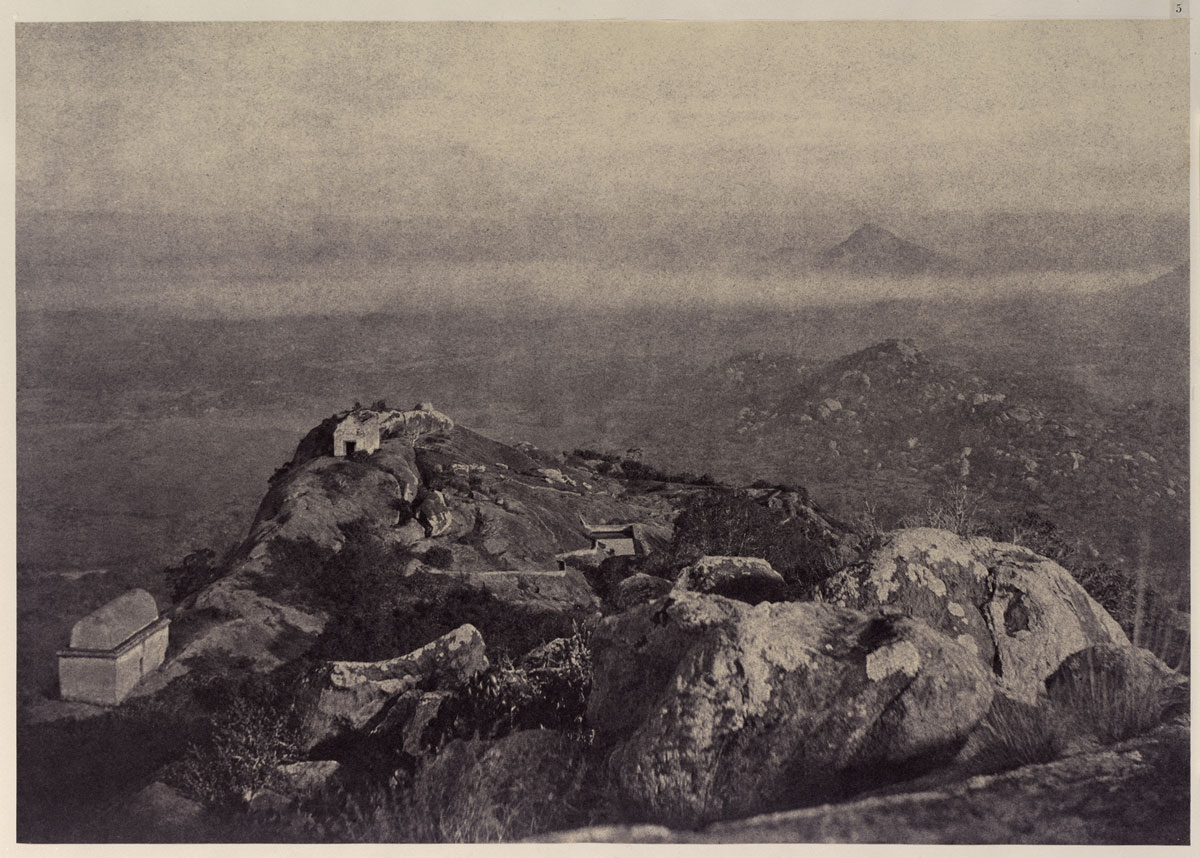
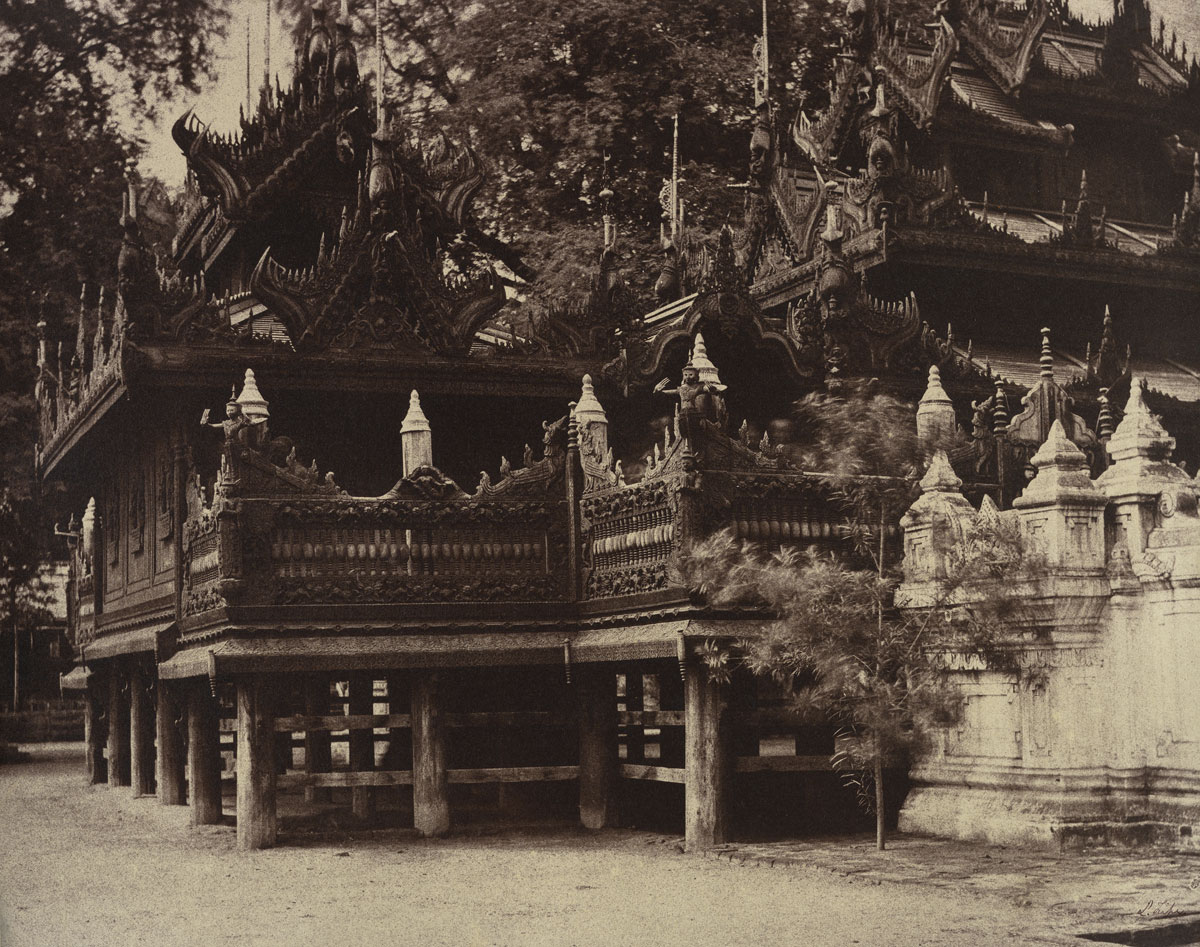
 

Linnaeus Tripe (British, 1822-1902) 'Amerapoora: Part of Balcony on the South Side of Maha-oung-meeay-liy-mhan Kyoung, September 1-October 21, 1855' 1855


Linnaeus Tripe (British, 1822-1902)
Amerapoora: Part of Balcony on the South Side of Maha-oung-meeay-liy-mhan Kyoung, September 1 – October 21, 1855
1855
26.9 × 34.7cm (10 5/8 × 13 5/8 in.)
Lent by The Metropolitan Museum of Art
Purchase, The Buddy Taub Foundation, Dennis A. Roach and Jill Roach, Directors, and Alfred Stieglitz Society Gifts, 2012
© The Metropolitan Museum of Art


Photograph by Linnaeus Tripe, from a portfolio of 120 prints, with a close-up detail of the wood-carved balcony of a kyaung (monastery) at Amarapura in Burma (Myanmar). Wood-carving is a living tradition in Burma, its artisans are supremely skilled in carving a rich repertoire of motifs from myths and legends and floral patterns into different types of woods. Tripe wrote of this scene, ‘This is open scroll-work, and very beautiful’.


Linnaeus Tripe (British, 1822-1902) 'Rangoon: Near View of the Shwe Dagon Pagoda, November 1855' 1855


Linnaeus Tripe (British, 1822-1902)
Rangoon: Near View of the Shwe Dagon Pagoda, November 1855
1855
34.5 × 27.2cm (13 5/8 × 10 3/4 in.)
National Gallery of Art, Washington, Edward J. Lenkin Fund


The Shwedagon Pagoda, officially named Shwedagon Zedi Daw and also known in English as the Great Dagon Pagoda and the Golden Pagoda, is a gilded pagoda and stupa 99 metres (325 ft) in height[citation needed] that is located in Yangon, Burma. The pagoda lies to the west of Kandawgyi Lake, on Singuttara Hill, thus dominating the skyline of the city. It is the most sacred Buddhist pagoda for the Burmese people. According to legend, the Shwedagon Pagoda has existed for more than 2,600 years, making it the oldest historical pagoda in Burma and the world. According to some historians and archaeologists, however, the pagoda was built by the Mon people between the 6th and 10th centuries AD.


Linnaeus Tripe (British, 1822-1902) 'Rangoon: Henzas on the East Side of the Shwe Dagon Pagoda, November 1855' 1855


Linnaeus Tripe (British, 1822-1902)
Rangoon: Henzas on the East Side of the Shwe Dagon Pagoda, November 1855
1855
26.1 × 34.3cm (10 1/4 × 13 1/2 in.)
Lent by The Metropolitan Museum of Art
Purchase, The Buddy Taub Foundation, Dennis A. Roach and Jill Roach, Directors, and Alfred Stieglitz Society Gifts, 2012
© The Metropolitan Museum of Art


Photograph by Linnaeus Tripe, from a portfolio of 120 prints, with a view of the hinthas or hamsas (mythical birds) atop sacred flagstaffs or dagun-daings of the Shwe Dagon Pagoda at Rangoon (Yangon) in Burma (Myanmar). Linnaeus Tripe wrote, ‘These, painted in bright colours diapered with gold and silver (traces of which still remain) must have had a very gay appearance. Henza [hintha] staves are attached to all pagodas’. The hintha bird (or hamsa in Sanskrit) features in many Jataka tales: the stories which narrate details of the Buddha’s previous lives.


Linnaeus Tripe (British, 1822-1902) 'Rangoon: Signal Pagoda, November 1855' 1855


Linnaeus Tripe (British, 1822-1902)
Rangoon: Signal Pagoda, November 1855
1855
26 × 34.6cm (10 1/4 × 13 5/8 in.)
Private Collection, Courtesy Hans P. Kraus Jr.


Photograph by Linnaeus Tripe, from a portfolio of 120 prints, showing the Signal Pagoda at Rangoon (Yangon) in Burma (Myanmar). In this view of the pagoda the chinthes or leogryphs (Burmese temple guardian figures) can be glimpsed facing the roadway at the entrance. The circular object hanging from a yard at the top of the pagoda is presumably a time ball. Tripe wrote, ‘From this a very extended view of the town and river can be had. It is used as a signal station because of the distance at which a ship coming up the river can be descried. It is also known as Sale’s Pagoda’. The Sale referred to is Sir Robert Henry Sale, who was stationed on the site with a picket during the First Anglo-Burmese War (1824-1826). Sale (1782-1845) was an army officer who had served in India, and then played an active role in the capture of Rangoon as commander of the 13th. At the time of the mission’s visit the administration of the rapidly growing port was not well-developed. The pilot system did not work well, there was no pilot service and pilotage was left to private initiative, there were rival bands of pilots with their own pilot-brigs. They later combined to form the Pilot Club and this club fixed the rate of pilotage by agreement with the owners and captains of the vessels. The signalling station was at the Sale Barracks where the pagoda known as Sale’s Pagoda was used for the purpose and thenceforth began to be called the Signal Pagoda of Rangoon.


Linnaeus Tripe (British, 1822-1902) 'Beekinpully: Permaul's Swing at Mariammah Covil, December 1857 - January 1858'


Linnaeus Tripe (British, 1822-1902)
Beekinpully: Permaul’s Swing at Mariammah Covil, December 1857 – January 1858
c. 1857-1858
26 × 35.6cm (10 1/4 × 14 in.)
Collection of Charles Isaacs and Carol Nigro


Linnaeus Tripe (British, 1822-1902) 'Between Chittumputty and Teramboor: Elephant Rock, End View, January-February 1858' 1858


Linnaeus Tripe (British, 1822-1902)
Between Chittumputty and Teramboor: Elephant Rock, End View, January – February 1858
1858
23.8 × 36.8cm (9 3/8 × 14 1/2 in.)
The British Library, London


This photograph of the Elephant Rock near Madurai in Tamilnadu, is part of a collection entitled Photographic Views in Madurai (Madras, 1858) and was taken by Linnaeus Tripe in 1858. It shows a general view of ‘an enormous mass of granite or sienite situated to the north of the town of Madura, altogether isolated from the neighbouring hills, and when viewed from the S.E. or S.W. bearing a strong resemblance to a couchant elephant, with its trunk extended in front… The rock is about 11/4 miles long; and 250 feet high, measuring to the top of the elephant’s head.’


Linnaeus Tripe (British, 1822-1902) 'Madura: The Vygay River, with Causeway, across to Madura, January – February 1858' 1858


Linnaeus Tripe (British, 1822-1902)
Madura: The Vygay River, with Causeway, across to Madura, January – February 1858
1858
23.1 x 35.4cm (9 1/8 x 14 in.)
National Gallery of Art, Washington
The Carolyn Brody Fund and Horace W. Goldsmith Foundation through Robert and Joyce Menschel


Linnaeus Tripe (British, 1822-1902) 'Madura: Pillars in the Recessed Portico in the Raya Gopurum, with the Base of One of the Four Sculpted Monoliths, January - February 1858' 1858


Linnaeus Tripe (British, 1822-1902)
Madura: Pillars in the Recessed Portico in the Raya Gopurum, with the Base of One of the Four Sculpted Monoliths, January – February 1858
1858
35.6 × 28.1cm (14 × 11 in.)
The British Library, London


This photograph of an architectural detail from the Meenakshi Sundareshvara temple, Madurai, Tamilnadu, is part of a collection entitled ‘Photographic Views in Madurai’ (Madras, 1858) and was taken by Linnaeus Tripe in 1858. The Meenakshi Sundareshvara Temple is dedicated to Shiva and his consort Meenakshi, an ancient local divinity. The construction of this imposing temple-town was made possible by the magnificence of Tirumala Nayak (1623-1659). The rectangular precinct covers 6 hectares and has 11 huge towers and 4 entrance gopurams. Inside this enclosure there are columned mandapas, tanks, shrines and the two temples of Shiva and Meenakshi. East of the temple Tirumala Nayak began the construction of a new gopuram which was never completed. The most remarkable feature are 4 monolithic pillars. This view shows the base of one of the monoliths together with the elaborately carved pillars in the recessed north portico of the Raja Gopuram.


Linnaeus Tripe (British, 1822-1902) 'Madura: The Blackburn Testimonial, January - February 1858' 1858


Linnaeus Tripe (British, 1822-1902)
Madura: The Blackburn Testimonial, January – February 1858
1858
25.3 × 35.1cm (10 × 13 7/8 in.)
The British Library, London


Linnaeus Tripe (British, 1822-1902) 'Madura: The Great Pagoda Jewels, January - February 1858' 1858


Linnaeus Tripe (British, 1822-1902)
Madura: The Great Pagoda Jewels, January – February 1858
1858
21.9 × 30.1cm (8 5/8 × 11 7/8 in.)
Lent by The Metropolitan Museum of Art, Gilman Collection
Purchase, Cynthia Hazen Polsky Gift, 2005
© The Metropolitan Museum of Art


This photograph of the temple jewels of the Meenakshi Sundareshvara temple, Madurai, Tamilnadu, is part of a collection entitled Photographic Views in Madurai (Madras, 1858) and was taken by Linnaeus Tripe in 1858. The Meenakshi Sundareshvara Temple is dedicated to Shiva and his consort Meenakshi, the fish-eyed goddess Parvati. The construction of this imposing temple-town was made possible by the magnificence of Tirumala Nayak (1623-1659). The rectangular precinct covers 6 hectares and has 11 huge towers and 4 entrance gopurams. Inside this enclosure there are columned mandapas, tanks, shrines and the two temples of Shiva and Meenakshi. This is a collection of jewels and ornaments for use on festival occasions, including crowns, necklaces, gold and pearl pieces and naga images.


Linnaeus Tripe (British, 1822-1902) 'Tanjore: Wrought-Iron Gun on a Cavalier in the Fort, March - April 1858' 1858


Linnaeus Tripe (British, 1822-1902)
Tanjore: Wrought-Iron Gun on a Cavalier in the Fort, March – April 1858
1858
26.1 × 36.1 cm (10 1/4 × 14 1/4 in.)
The British Library, London


The term Cavalier has been adopted from the French as a term in fortification for a work of great height constructed in the interior of a fort, bastion or other defence, so as to fire over the main parapet without interfering with the fire of the latter. A greater volume of fire can thus be obtained, but the great height of the cavalier makes it an easy target for a besieger’s guns.


Linnaeus Tripe (British, 1822-1902) 'Central Museum Madras: Group 27, May - June 1858' 1858


Linnaeus Tripe (British, 1822-1902)
Central Museum Madras: Group 27, May – June 1858
1858
23.4 × 29.9cm (9 1/4 × 11 3/4 in.)
Lent by The Metropolitan Museum of Art
Purchase, Cynthia Hazen Polsky Gift and The Horace W. Goldsmith Foundation Gift, through Joyce and Robert Menschel, 1991
© The Metropolitan Museum of Art


Linnaeus Tripe (British, 1822-1902) 'Elliot Marbles and Other Sculpture from the Central Museum Madras: Group 26, May - June 1858' 1858


Linnaeus Tripe (British, 1822-1902)
Elliot Marbles and Other Sculpture from the Central Museum Madras: Group 26, May – June 1858
1858
25.8 × 23.2cm (10 1/8 × 9 1/8 in.)
Lent by The Metropolitan Museum of Art, The Rubel Collection
Purchase, Lila Acheson Wallace and Richard and Ronay Menschel Gifts, 1997
© The Metropolitan Museum of Art


Amaravati Marbles

The Amaravati Sculptures, Amaravati Marbles or the Elliot Marbles are a series of monumental sculptures and inscriptions that once furnished the religious mound known as the Great Stupa at Amaravati. While some artefacts remain in situ, many are scattered in various museums across the world, with the two principal collections held at the Government Museum in Chennai and the British Museum in London.

The figurative sculptures are nearly all in relief, with many of the most crowded scenes illustrating some of the Jataka tales, a large body of literature with complicated and fanciful accounts of the previous lives of the Buddha. The collection in the museum in Chennai (formerly Madras) has a large number of sculptures in relief, which they have classified by four periods of activity starting in the second century BC and stretching to the second century AD. The first period covers the 100 years between 200 and 100 BC, the second period covers 200 years from 100 BC to AD 100, the third covers AD 100 to 150, and the fourth covers 150 to 200. Early interest in the stupa and its sculptures was in part because it was wrongly thought to contain early evidence of Christianity in India.

In 1845, Sir Walter Elliot of the Madras Civil Service explored the area around the stupa and excavated near the west gate of the railing, removing many sculptures to Madras (now Chennai). They were kept outside the local college before being transported to the Madras Museum. At this time India was run by the East India Company and it was to that company that the curator of the museum appealed. The curator Dr Edward Balfour was concerned that the artefacts were deteriorating so in 1853 he started to raise a case for them to be moved. By 1855 he had arranged for both photographs and drawings to be made of the artefacts now called the Elliot Marbles. 75 photographs taken by Captain Linnaeus Tripe are now in the British Library.

Text from the Wikipedia website


The photographs are of variable quality, and the volume contains a short preface explaining the reasons for this: ‘These photographs were taken by Captain tripe in the months of May and June, after a wearying tour through the Trichinopoly, Madura, and Tanjore Districts, during the preceding four months and a half. Many of the subjects being heavy masses, and therefore not easily to be transported into the open air, were taken as they were lying, in the rooms of the Museum. To enable him to attempt them at all he was obliged to use a dry collodion process, with which he had only recently made acquaintance. He would point to both these circumstances to account for the unsatisfactory pictures he has made of some of the Sculptures. In printing from the above mentioned negatives, their density, though apparently in their favor, increased the liability to yellowness in the lights, so much complained of in toning a print on albumenised paper with gold…'”

Linnaeus Tripe, Photographs of the Elliot Marbles; and other subjects; in the Central Museum Madras (Madras, 1858-59)


National Gallery of Art
National Mall between 3rd and 7th Streets
Constitution Avenue NW, Washington

Opening hours:
Daily 10.00am – 5.00pm

National Gallery of Art website

LIKE ART BLART ON FACEBOOK

Back to top

Exhibition: ‘Captain Linnaeus Tripe: Photographer of India and Burma, 1852-1860’ at the National Gallery of Art, Washington Part 1

Exhibition dates: 21 September 2014 – 4th January 2015


Linnaeus Tripe (British, 1822-1902) 'Gun Wharf – Devonport' 1852-1854


Linnaeus Tripe (British, 1822-1902)
Gun Wharf – Devonport
1852-1854
23.1 × 33cm (9 1/8 × 13 in.)
Wilson Centre for Photography, London


To my mind, Captain Linnaeus Tripe is one of the best of the Victorian photographers.

So early on in the history of photography, for such a short period of time (much like Julia Margaret Cameron in this regard), Tripe’s photographs are so much more than just his foresight in recognising that photography could be an effective tool for conveying information about unknown cultures and regions. As noted, “Tripe’s schooling as a surveyor, where the choice of viewpoint and careful attention to visual details were essential, gave his photographs their distinctive aesthetic rigour.” But it is more than just tools and trade. There is that indefinable magic of a master artist.

You only have to feel the impressive space of the open deck of Quarterdeck of HMS “Impregnable” (1852-1854, below) with that pendulous cross-beam pressing down from on high or understand the light in Pugahm Myo: Distant View of Gauda-palen Pagoda, August 20-24, 1855 (below) – how gorgeous is that image – and observe the subtleties of composition in seemingly unprepossessing vistas like Tsagain Myo: View near the Irrawadi River, August 29-30, 1855 and Tsagain Myo: A Roadway, August 29-30, 1855 (below) to understand what inspiration and insight this man had.

I could look at these images every day of my life and never get bored with them.

Dr Marcus Bunyan


Many thankx to the National Gallery of Art for allowing me to publish the photographs in the posting. Please click on the photographs for a larger version of the image. Most of the text underneath the images is from the British Library website


“The dynamic vision Tripe brought to these large, technically complex photographs and the lavish attention he paid to their execution indicate that his aims were artistic as well.”


Linnaeus Tripe (British, 1822-1902) 'Quarterdeck of HMS "Impregnable",' 1852-1854


Linnaeus Tripe (British, 1822-1902)
Quarterdeck of HMS “Impregnable”
1852-1854
27 x 34.8cm (10 5/8 x 13 3/4 in.)
National Gallery of Art, Washington
The Sarah and William L Walton Fund, Diana and Mallory Walker Fund, and The Horace W. Goldsmith Foundation through Robert and Joyce Menschel


Linnaeus Tripe (British, 1822-1902) 'Ye-nan-gyoung: Tamarind Tree, August 14-16, 1855' 1855


Linnaeus Tripe (British, 1822-1902)
Ye-nan-gyoung: Tamarind Tree, August 14-16, 1855
1855
26.3 × 34.7cm (10 3/8 × 13 5/8 in.)
Courtesy Robert Hershkowitz, Charles Isaacs, Hans P. Kraus Jr.


Photograph by Linnaeus Tripe of a tamarind tree, with a pagoda on the hillside in the background, at Yenangyaung in Burma (Myanmar), from a portfolio of 120 prints. Tripe was the official photographer attached to a British diplomatic mission to King Mindon Min of Burma in 1855. This followed the British annexation of Pegu after the Second Anglo-Burmese War in 1852. Aside from official duties, the mission was instructed to gather information regarding the country and its people. Tripe’s architectural and topographical views are of great documentary importance as they are among the earliest surviving photographs of Burma. Yenangyaung was a town in west-central Myanmar on the Ayeyarwady (Irrawaddy), the centre of the most productive oil-fields in the country. Tamarind is commonly used in Burmese cuisine and the tamarind tree is widespread in Burma. It is also used as raw material in joss-stick production.


Linnaeus Tripe (British, 1822-1902) 'Pugahm Myo: Distant View of Gauda-palen Pagoda, August 20-24, 1855' 1855


Linnaeus Tripe (British, 1822-1902)
Pugahm Myo: Distant View of Gauda-palen Pagoda, August 20-24, 1855
1855
25.3 × 34.1cm (10 × 13 3/8 in.)
Lent by The Metropolitan Museum of Art
Purchase, The Buddy Taub Foundation, Dennis A. Roach and Jill Roach, Directors, and Alfred Stieglitz Society Gifts, 2012
© The Metropolitan Museum of Art


Photograph by Linnaeus Tripe with a distant view of the Gawdawpalin temple in the Pagan (Bagan) region of Burma (Myanmar), from a portfolio of 120 prints. With this portfolio of architectural and topographical views, Tripe, an officer from the Madras Infantry, created an early photographic record of Burma. The 1855 British Mission to Burma was instructed to persuade the Burmese king Mindon Min to accept the annexation of Pegu (Lower Burma) following the Anglo-Burmese War of 1852. ICapital of the first kingdom of Burma from the 11th to the 14th century, Pagan is one of the most important archaeological sites in South East Asia, with the remains of over 2000 stupas, temples and monasteries scattered over a 30 km radius. One of the most beautiful and graceful of Pagan’s temples, the Late Period Gawdawpalin or Throne of Obeisance was begun in the reign of Narapatisithu (1174-1211) and completed by Nadaungmya (ruled 1211-1234). Tripe wrote, “Taken from the top of Thapinyu. [That-byin-nu]. The ruins of all shapes and sizes seen in this view, give an idea of the manner in which they are scattered for about eight miles along the river [the Irrawaddy], to a depth of sometimes three miles.”


Linnaeus Tripe (British, 1822-1902) 'Pugahm Myo: Thapinyu Pagoda, August 20-24, 1855' 1855


Linnaeus Tripe (British, 1822-1902)
Pugahm Myo: Thapinyu Pagoda, August 20-24, 1855
1855
25.1 × 34.5cm (9 7/8 × 13 5/8 in.)
Lent by The Metropolitan Museum of Art
Purchase, The Buddy Taub Foundation, Dennis A. Roach and Jill Roach, Directors, and Alfred Stieglitz Society Gifts, 2012
© The Metropolitan Museum of Art


Photograph by Linnaeus Tripe of the That-byin-nu temple in the Pagan (Bagan) region of Burma (Myanmar), from a portfolio of 120 prints. With this portfolio of architectural and topographical views, Tripe, an officer from the Madras Infantry, created an early photographic record of Burma. The 1855 British Mission to Burma was instructed to persuade the Burmese king Mindon Min to accept the annexation of Pegu (Lower Burma) following the Anglo-Burmese War of 1852. It was also the intention of the British to collect information about the country. They travelled in Burma from August to early November 1855, stopping at various places to allow Linnaeus Tripe, the official photographer, and the mission’s artist, Colesworthy Grant, to perform their duties. Capital of the first kingdom of Burma from the 11th to the 14th century, Pagan is one of the most important archaeological sites in South East Asia, with the remains of over 2000 stupas, temples and monasteries scattered over a 30 km radius. Tripe wrote of the That-byin-nu, “Or ‘the Omniscient’. It is about 230 feet square, and 200 feet high; divided into two stages, each stage into two stories. An arched corridor passes round each stage, with arched doorways opening outwards; opposite those on the ground story are sitting figures of Gautama. In the centre of each side of the lower stage, is a projecting wing with a lofty doorway, opening into a vestibule: this forms a centre porch to the corridor, a colossal seated figure of Gautama facing it. The centre of the building is a solid mass of masonry terminated by a bulging pyramidal spire crowned by a tee. Its date is about 1100 A.D.” The temple is the tallest construction in Pagan, towering to 61 ms. Built by King Alaungsitthu in the middle of the 12th century, its square plan is the most elaborate of the middle period of building in Pagan (c.1120-1170).


Linnaeus Tripe (British, 1822-1902) 'Tsagain Myo: View near the Irrawadi River, August 29-30, 1855' 1855


Linnaeus Tripe (British, 1822-1902)
Tsagain Myo: View near the Irrawadi River, August 29-30, 1855
1855
26.2 × 34.2cm (10 1/4 × 13 1/2 in.)
National Gallery of Art, Washington, Stephen G. Stein Fund


Photograph by Linnaeus Tripe of a view at Sagaing in Burma (Myanmar), from a portfolio of 120 prints. The view is on the bank of the Irrawaddy (Ayeyarwady), looking towards a building raised on piles over the water. Tripe wrote in the accompanying letterpress, “The Irrawadi at the time of the freshes, inundates the country from some distance from its banks; the necessity therefore of building on piles, as above seen is very evident.”


Linnaeus Tripe (British, 1822-1902) 'Tsagain Myo: Ruined Tazoung, August 29-30, 1855' 1855


Linnaeus Tripe (British, 1822-1902)
Tsagain Myo: Ruined Tazoung, August 29-30, 1855
1855
27 × 34.2cm (10 5/8 × 13 1/2 in.)
National Gallery of Art, Washington, Stephen G. Stein Fund


Innovative British photographer Captain Linnaeus Tripe (1822-1902) captured some of the earliest photographs of India and Burma (now Myanmar). In the first major traveling exhibition of his work, Captain Linnaeus Tripe: Photographer of India and Burma, 1852-1860 – on view at the National Gallery of Art, Washington, from September 21, 2014, through January 4, 2015 – approximately 60 photographs taken between 1854 and 1860 document the dramatic landscapes and the architecture of celebrated religious and secular sites in India and Burma, several of which are now destroyed.

“Tripe occupies a special place in the history of 19th-century photography for his foresight in recognising that photography could be an effective tool for conveying information about unknown cultures and regions,” said Earl A. Powell III, director, National Gallery of Art. “We are delighted to premiere this exhibition for visitors interested in photography, architecture, and history, and we hope that these captivating images provide inspiration to all.”

The exhibition is organised by the National Gallery of Art and The Metropolitan Museum of Art in association with the Victoria and Albert Museum. After Washington, the exhibition will be on view at The Metropolitan Museum of Art, New York, from February 24 through May 25, 2015, and the Victoria and Albert Museum, London, from June 24 through October 11, 2015.

Exhibition highlights

Arranged chronologically, the exhibition traces Tripe’s work from his earliest photographs made in England (1852-1854) during an extended leave from his first deployment in India, to those created on expeditions to the south Indian kingdom of Mysore (1854), to Burma (1855), and again to south India (1857-1858). His primary subjects range from archaeological sites and monuments, ancient and contemporary religious and secular buildings, to geological formations and landscape vistas.

Tripe first took photographs of English dockyards, ships undergoing repairs, and breakwaters – subjects of importance to the military. Photographs such as Quarterdeck of HMS “Impregnable” (1852-1854) distinguish his work from fellow amateurs, who preferred picturesque landscapes and genre scenes.

Tripe returned to India to work for the East India Company during a transitional time in the history of Great Britain, India, and Burma. By 1854 the company was the world’s largest and most powerful commercial enterprise as well as the virtual ruler of India and Burma. Administration of this vast area generated a need for collecting data, maps, surveys, drawings, and eventually photographs. Inspired by his employer’s interests, Tripe made a privately funded expedition to Mysore in south India, where he used his newly mastered photographic skills to document ancient sites and produced such images as Hullabede: Suli Munduppum from the Northeast (1854).

“Tripe’s training as a surveyor, where the choice of viewpoint and careful attention to visual details were essential, was key to the artistic success of his photographs,” said Sarah Greenough, senior curator and head, department of photographs, National Gallery of Art.

In 1855, Tripe and a topographic watercolour artist traveled along with a mission to Burma that sought to secure a peace treaty. During the expedition to Upper Burma, Tripe made more than 200 negatives, which he selected, retouched, printed, and compiled into portfolios, each with 120 original photographs, including Ye-nan-gyoung: Tamarind Tree (1855) and Pugahm Myo: Distant View of Gauda-palen Pagoda (1855).

The mission’s ultimate destination was the royal Burmese city of Amerapoora, where Tripe made nearly 100 negatives. For the presentation portfolio of this expedition, he arranged his photographs as if giving a tour of the city: from the residency compound, past a monumental Gautama – the most popular Burmese representation of the historical Buddha – to the western suburbs. Twenty-six original photographs from his Burma expedition will be on view.

Tripe was appointed photographer to the Madras Presidency in 1856, a British administrative subdivision covering much of southern India. He considered this a great honour and proposed that his work should be the “first attempt at illustrating in a complete and systematic manner the state of a country by means of photography.”

This project secured his status as the first to photograph extensively in south India – documenting the country’s holiest temples to the Hindu gods Shiva and Vishnu as well as efforts at modernisation by the British and the widespread influence of the East India Company. His work in south India generated more than 290 large-format negatives, which he made into nine portfolios, a total of 17,745 prints, 30 of which will be on display.

The exhibition will also showcase Tripe’s 19-foot-long panorama, Tanjore: Great Pagoda, Inscriptions around Bimanum (1858) – the first of its kind in photography – recording the ancient Tamil inscriptions that run around the base of the Brihadishvara Temple at Tanjore in south India. To accomplish this technical marvel, Tripe circled the temple taking 21 separate exposures, which he joined and retouched to create the final composition.

To help visitors appreciate Tripe’s technical achievements, the installation features a final gallery with photographs by a number of Tripe’s contemporaries, explaining the photographic printing and retouching practices that distinguish his work.

Captain Linnaeus Tripe (1822-1902)

From an upper-middle-class family in Devonport, England, Tripe joined the British East India Company in 1839 and was assigned to the 12th Madras Native Infantry. After several years of deployment in India, he returned to England in 1851 and began to explore an interest in photography. In 1853 he joined the Photographic Society of London.

Reflecting his military training as an officer in the British army, Tripe had great technical success in India and Burma, even though the tropical heat and humidity affected photographic chemistry. Yet Tripe’s destiny as a photographer was linked to the fate of the British Empire in India. Despite his professional achievements and technical innovations, rebellions in the late 1850s prompted a new era of oversight and regulations for the recently nationalised East India Company, and the British government took over the administration and rule of India, making it a crown colony. Tripe was forced to close his studio in 1860 because of cost-cutting measures, and he almost completely abandoned photography as a result.

Curators

The exhibition curators are Sarah Greenough, senior curator and head, department of photographs, National Gallery of Art; Malcolm Daniel, curator in charge, department of photography, Museum of Fine Arts, Houston; and Roger Taylor, professor emeritus of photographic history, De Montfort University, Leicester.

Press release from the National Gallery of Art


Linnaeus Tripe (British, 1822-1902) 'Pugahm Myo: Carved Doorway in Courtyard of Shwe Zeegong Pagoda, August 20-24 or October 23, 1855' 1855


Linnaeus Tripe (British, 1822-1902)
Pugahm Myo: Carved Doorway in Courtyard of Shwe Zeegong Pagoda, August 20-24 or October 23, 1855
1855
32.5 × 26.9cm (12 3/4 × 10 5/8 in.)
National Gallery of Art, Washington, Diana and Mallory Walker Fund


Photograph by Linnaeus Tripe of a carved doorway of the Shwezigon temple in the Pagan (Bagan) region of Burma (Myanmar), from a portfolio of 120 prints. Capital of the first kingdom of Burma from the 11th to the 14th century, Pagan is one of the most important archaeological sites in South East Asia, with the remains of over 2000 stupas, temples and monasteries scattered over a 30 km radius. An important place of pilgrimage in Pagan, the Shwezigon’s lower terraces were apparently built by Anawrahta (ruled 1044-1077) and the rest of the edifice was built by Kyanzittha (ruled 1084-1113). Tripe wrote of this picture, “This is in the Court of Shwe Zeegong. It is ruinous and out of the perpendicular, but very interesting, and, being one of many in the same court and all differing, shows how fertile in design the Burmese are.”


Linnaeus Tripe (British, 1822-1902) 'Tsagain Myo: A Roadway, August 29-30, 1855' 1855


Linnaeus Tripe (British, 1822-1902)
Tsagain Myo: A Roadway, August 29-30, 1855
1855
24.5 × 34.1cm (9 5/8 × 13 3/8 in.)
Lent by The Metropolitan Museum of Art
Purchase, The Buddy Taub Foundation, Dennis A. Roach and Jill Roach, Directors, and Alfred Stieglitz Society Gifts, 2012
© The Metropolitan Museum of Art


Photograph by Linnaeus Tripe of a road at Sagaing in Burma (Myanmar), from a portfolio of 120 prints. Tripe, an officer from the Madras Infantry, was the official photographer attached to a British diplomatic mission to King Mindon Min of Burma in 1855. This followed the British annexation of Pegu after the Second Anglo-Burmese War in 1852. Mandalay in central Burma was the capital of the last Burmese kingdom. Clustered around it on the banks of the Irrawaddy (Ayeyarwady) river are other earlier capitals, such as Ava (Inwa), Amarapura and Sagaing. The latter, 21 kms south-west of Mandalay, is on the opposite bank of the river from Ava and has long been revered as the religious centre of Burma. People come from all over the country to meditate at Sagaing, popularly described as ‘Little Pagan’ since there are hundreds of stupas and monasteries at this site. Founded in 1315 by a Shan chieftain, it was capital for only a few decades before the kings shifted to Ava.


Linnaeus Tripe (British, 1822-1902) 'Amerapoora: Wooden Bridge, September 1–October 21, 1855' 1855


Linnaeus Tripe (British, 1822-1902)
Amerapoora: Wooden Bridge, September 1 – October 21, 1855
1855
22.3 × 32.4cm (8 3/4 × 12 3/4 in.)
Lent by The Metropolitan Museum of Art
Purchase, The Buddy Taub Foundation, Dennis A. Roach and Jill Roach, Directors, and Alfred Stieglitz Society Gifts, 2012
© The Metropolitan Museum of Art


Photograph by Linnaeus Tripe, from a portfolio of 120 prints, showing a view of the wooden bridge at Amarapura in Burma (Myanmar). The bridge spans the seasonal Taungthaman Lake to the south of Amarapura and is 1.5 kms long. Built by a mayor, U Bein, in 1784, it was constructed from teak posts salvaged from the ruined former capital city of Ava (Inwa). Tripe wrote of this view, “Carried over the west limb of the Lake on piles about 7 feet apart with some openings (bridged with loose planks) for the passage through of large boats.”


Linnaeus Tripe (British, 1822-1902) 'Amerapoora: Colossal Statue of Gautama Close to the North End of the Wooden Bridge, September 1 - October 21, 1855' 1855


Linnaeus Tripe (British, 1822-1902)
Amerapoora: Colossal Statue of Gautama Close to the North End of the Wooden Bridge, September 1 – October 21, 1855
1855
24.7 x 33.3cm (9 3/4 x 13 1/8 in.)
Collection of Charles Isaacs and Carol Nigro


Photograph by Linnaeus Tripe of a statue of the seated Buddha, near the U Bein bridge at Amarapura in Burma (Myanmar). Amarapura was the site of the first British Embassy to Burma in 1795, and played host again to Tripe’s Mission. Tripe wrote of this Buddha surrounded by small pagodas, ‘Its height is about 37 and a half feet above the throne’.


Linnaeus Tripe (British, 1822-1902) 'Amerapoora: View on the Lake, September 1 - October 21, 1855' 1855


Linnaeus Tripe (British, 1822-1902)
Amerapoora: View on the Lake, September 1 – October 21, 1855
1855
22.4 × 34.8cm (8 7/8 × 13 3/4 in.)
Courtesy Robert Hershkowitz, Charles Isaacs, Hans P. Kraus Jr.


Photograph by Linnaeus Tripe with a general view looking across Taungthaman Lake to the city of Amarapura in Burma (Myanmar). Amarapura was designed upon a square mandala, or diagram illustrating cosmological ideas. Each of the twelve city gates, three along each wall, was surmounted by a Burmese style pavilion known as a pyat-that. The city was encircled by a moat, inside which the streets were built upon a grid pattern. The photographer wrote of this view, “Taken from the causeway crossing the Toung-deman lake at its eastern extremity. A glimpse of the city is caught on the left.”


Linnaeus Tripe (British, 1822-1902) 'Amerapoora: Shwe-doung-dyk Pagoda, September 1-October 21, 1855' 1855


Linnaeus Tripe (British, 1822-1902)
Amerapoora: Shwe-doung-dyk Pagoda, September 1 – October 21, 1855
1855
25.8 × 34.6cm (10 1/8 × 13 5/8 in.)
Lent by The Metropolitan Museum of Art
Purchase, The Buddy Taub Foundation, Dennis A. Roach and Jill Roach, Directors, and Alfred Stieglitz Society Gifts, 2012
© The Metropolitan Museum of Art


Linnaeus Tripe (British, 1822-1902) 'Amerapoora: Toung-lay-lou-tiy Kyoung, September 1-October 21, 1855' 1855


Linnaeus Tripe (British, 1822-1902)
Amerapoora: Toung-lay-lou-tiy Kyoung, September 1 – October 21, 1855
1855
26.6 × 33.5cm (10 1/2 × 13 1/4 in.)
National Gallery of Art, Washington, Stephen G. Stein Fund


Photograph by Linnaeus Tripe of a kyaung (monastery) at Amarapura in Burma (Myanmar). This view shows close-up detail of carved stonework at the entrance to the kyaung. Tripe wrote, “Monasteries are usually built of wood, this is of brick, its style too is uncommon in many of its details.”


National Gallery of Art
National Mall between 3rd and 7th Streets
Constitution Avenue NW, Washington

Opening hours:
Open daily 10.00am – 5.00pm

National Gallery of Art website

LIKE ART BLART ON FACEBOOK

Back to top