Vale Andrew Follows: A life in focus. ‘Elements Of Focus’ exhibition at Magnet Gallery, Docklands, Melbourne

Exhibition dates: 7th – 21st December, 2019


Andrew Follows (Australian, d. 2019) 'Elements of Focus' 2019


Andrew Follows (Australian, d. 2019)
Elements of Focus
2019
Photos used: 12


Vale Andrew Follows: A life in focus

It is with great sadness that I found out today that artist Andrew Follows passed away yesterday, December 11th, 2019.

If anybody could say that he lived and breathed photography it was Andrew. It was his passion, his reason for being. And he was good at it, very good at it.

With his Retinitis Pigmentosa (RP) – a condition which rendered one eye completely blind with ever diminishing tunnel vision in the other – he saw the world like nobody else could. Not because of this, but because he was Andrew, he was just born to be the great enabler. There was no dis/abled with Andrew. He got on with life. He got on with being an artist, being the best he could possibly be with a passion and enthusiasm which I was totally in awe of.

I still remember our trips together to photograph for his solo exhibition Density at Anita Traverso Gallery in 2013 with his beloved guide dog Eamon sitting in the footwell of my car. I mentored Andrew for a year before the exhibition and believe me, he knew what he wanted and how to get the shot. I drove him to the locations we had chosen and helped him set up the camera and tripod. He opened the lens and looked at the screen on the back of the digital camera… and saw the world! He saw things that were only blurs to him before on the screen of that digital camera. That line of light that hovers above the judges chair in the courtroom at Beechworth, where Ned Kelly was sentenced to death, lingers long in the memory. Only Andrew could get permission to photograph, at night, in the old Beechworth Courthouse.

As I have written in an earlier piece, “His is not the vision of im(pair)ment as the rest of us see the world, through two eyes, but the holistic vision of a monocular eye that becomes the root of his photography. The lens of the camera becomes an extension of Self, the shutter his very existence and the digital screen on the back of the camera his tabula rasa, a “blank slate” upon which he writes his experience and perception, his knowledge of the world. His experience of vision and the evidence of his photographs become both the beginning and the end of the work, a place in which his fundamental nature resides.”

Andrew speaks truth to photography, for that was his nature. In so doing he speaks truth to life itself.

He had such a passion for photography. Two postings I did for him earlier, Andrew Follows: Carmania (February 2016) and Andrew Follows: Carmania 2 (June 2016) express what I most loved about Andrew as a person and as a photographer… how he just got so much out of life, and how he saw the world with crystal clear focus and clarity – in these two postings combining his two great passions, cars and photography. I still think these are some of the best art car photographs I have ever seen. There is an immediacy and directness to them, a time and space of great perception. Again, in his new exhibition we feel his love in seeing the world through the camera, offering his unique and fragmented perspective to the viewer, which comes together in the final, holistic image.

Above all Andrew brought people together to enable his projects through his charisma, cheekiness and charm, his get up and go for what he was doing and what he wanted to achieve. He brought everyone along for the ride. Andrew Andrew Andrew what a spirit young man… what energy, love, passion, commitment and talent. We had some fabulous times together. I loved how you taught me as much as I taught you. About life, about photography, and looking and seeing the world. I’m so glad I got to see you at the opening on Saturday and give you a kiss and a hug.

Andrew speaks truth to photography, for that was his nature. In so doing he speaks truth to life itself.

With thanks to Dishan Marikar, Magnet Galleries Melbourne, Fiona Cook and everyone who helped with the exhibition and book. Condolences to all family and friends.

Dr Marcus Bunyan xx


Many thankx to Andrew Follows, Magnet Galleries Melbourne and Dishan Marikar for allowing me to publish the photographs in the posting. Please click on the photographs for a larger version of the image. The book from the exhibition is available to buy from the gallery as are prints, and funds raised from this show will benefit artists with disability in the future with a biennial prize to be awarded from the Andrew Follows Trust. For more information about the book please see the Magnet Galleries Melbourne website.


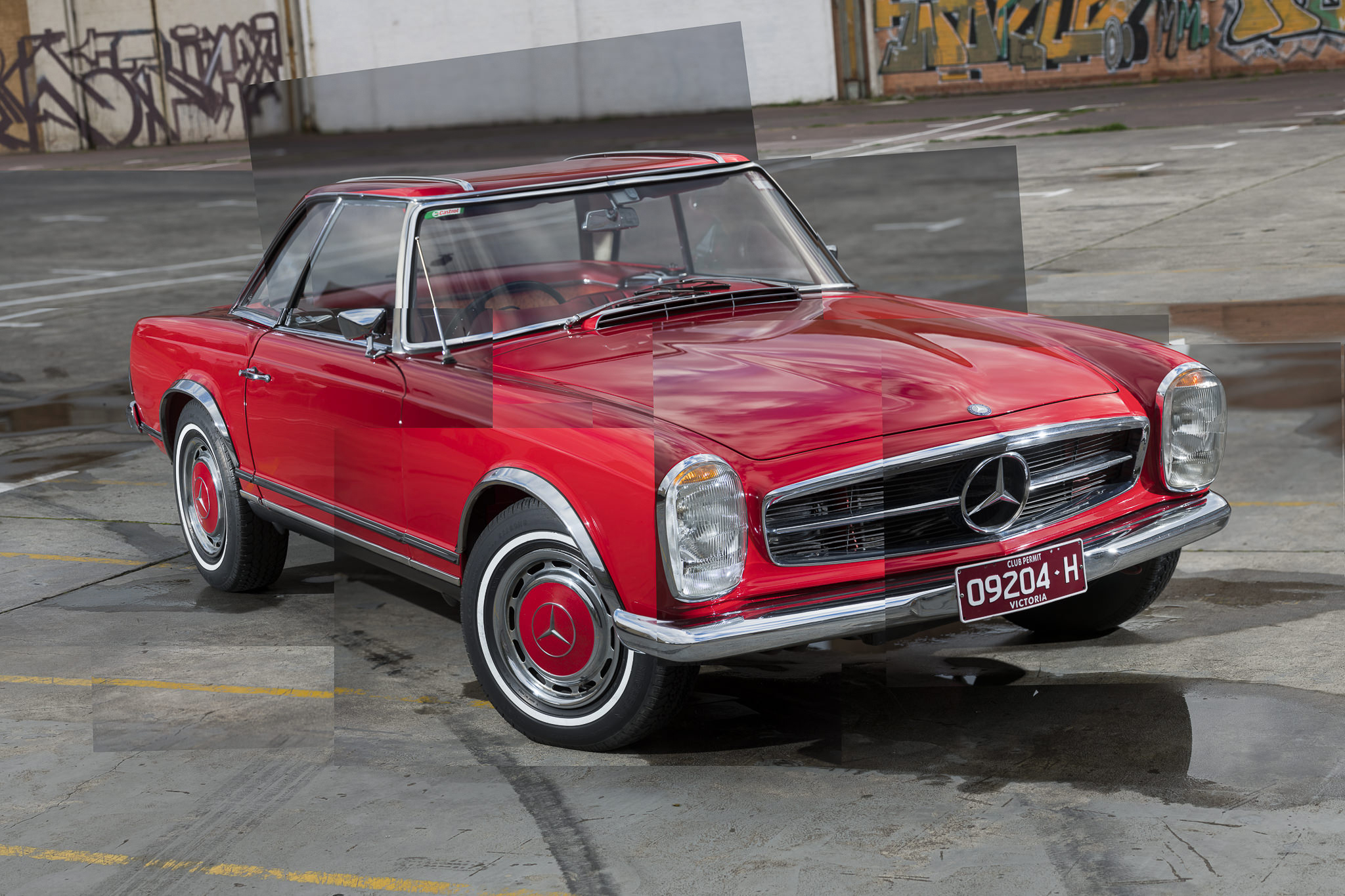
Andrew Follows (Australian, d. 2019) 'Mercedes-Benz 230SL' 2019


Andrew Follows (Australian, d. 2019)
Mercedes-Benz 230SL
2019
Photos used: 11
Year of manufacture: 1964


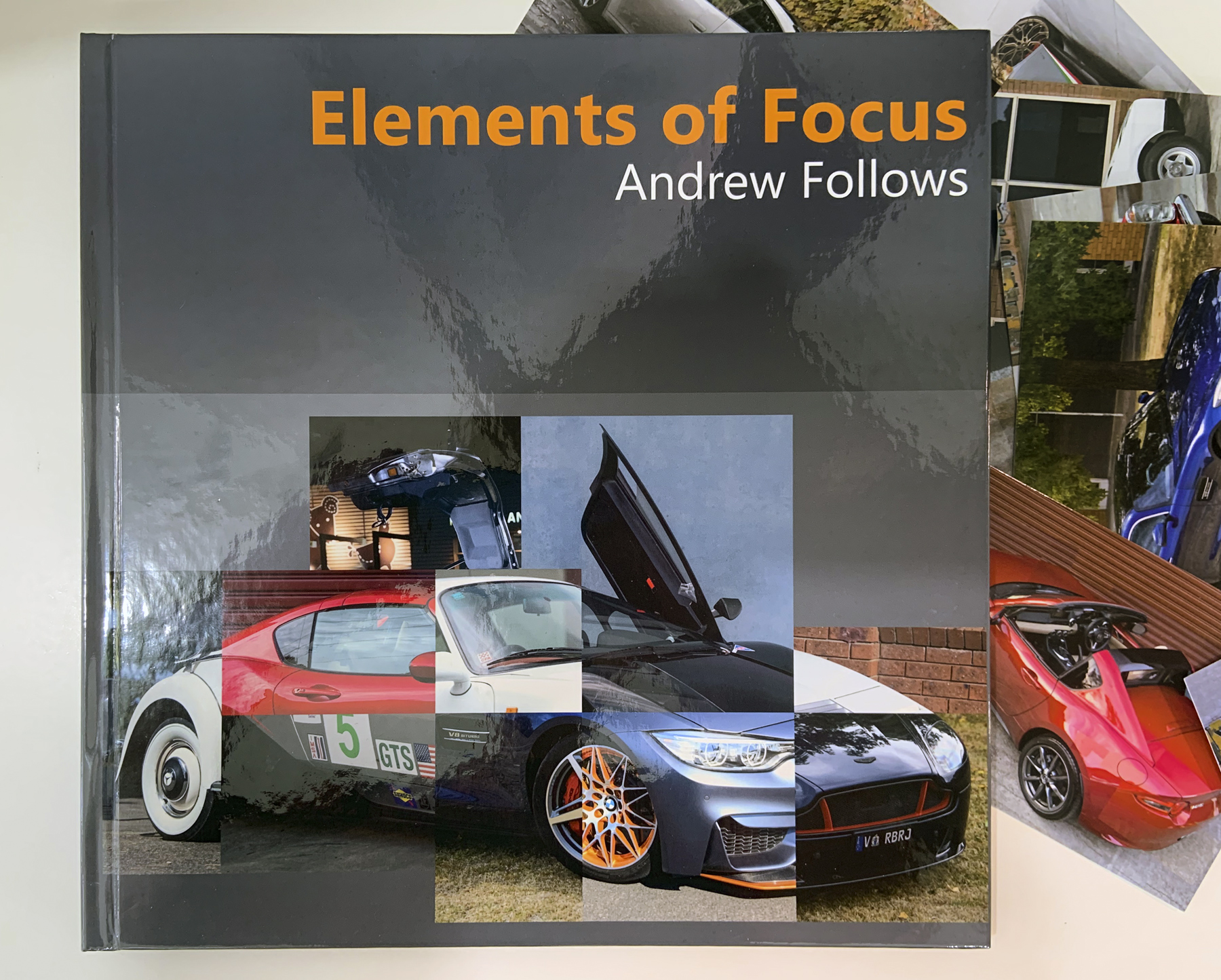
Andrew Follows 'Elements of Focus' exhibition book cover


Elements of Focus exhibition book cover


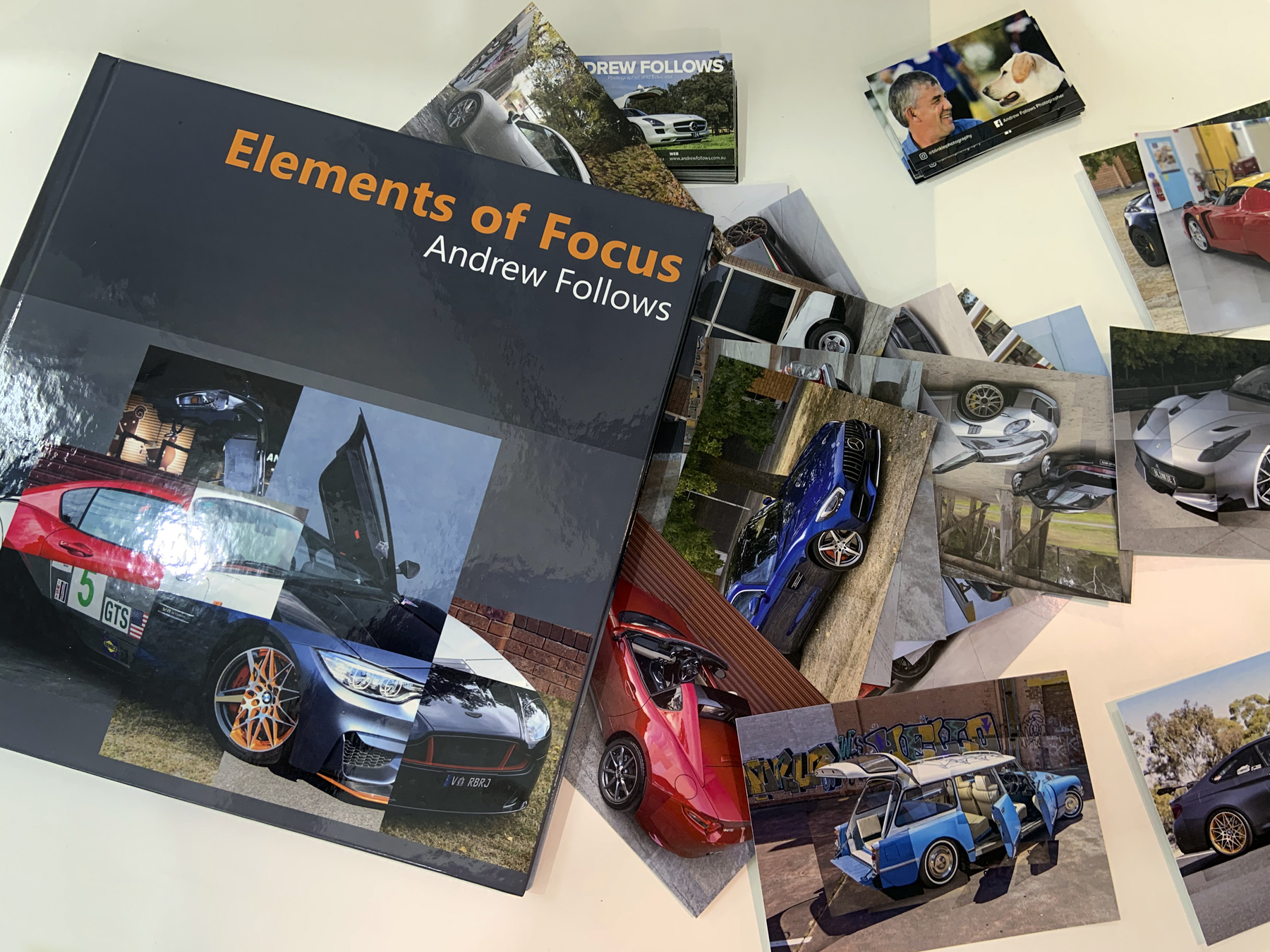
Andrew Follows 'Elements of Focus' exhibition book cover and postcards


Elements of Focus exhibition book cover and postcards


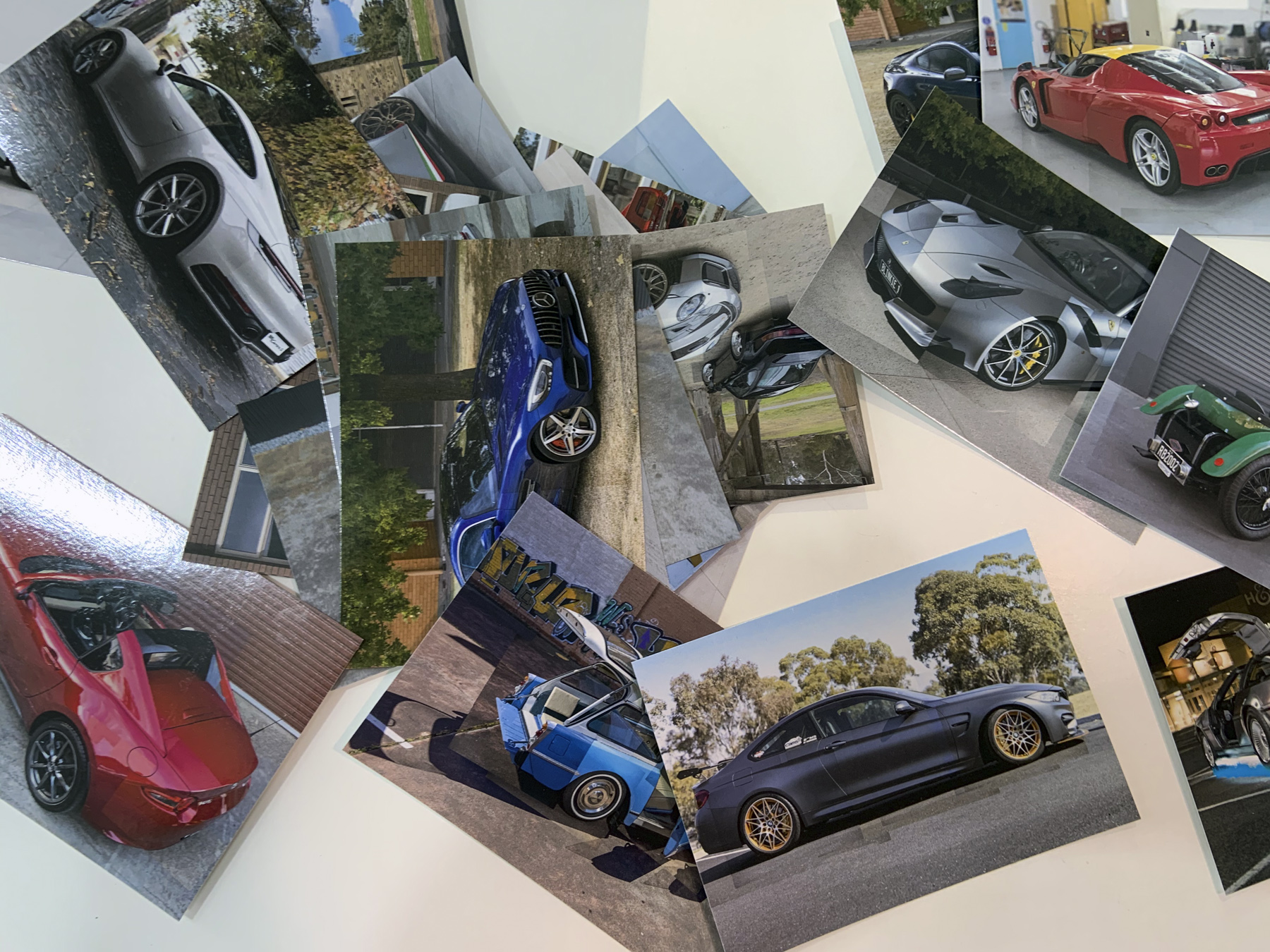
Andrew Follows 'Elements of Focus' exhibition postcards


Elements of Focus exhibition postcards


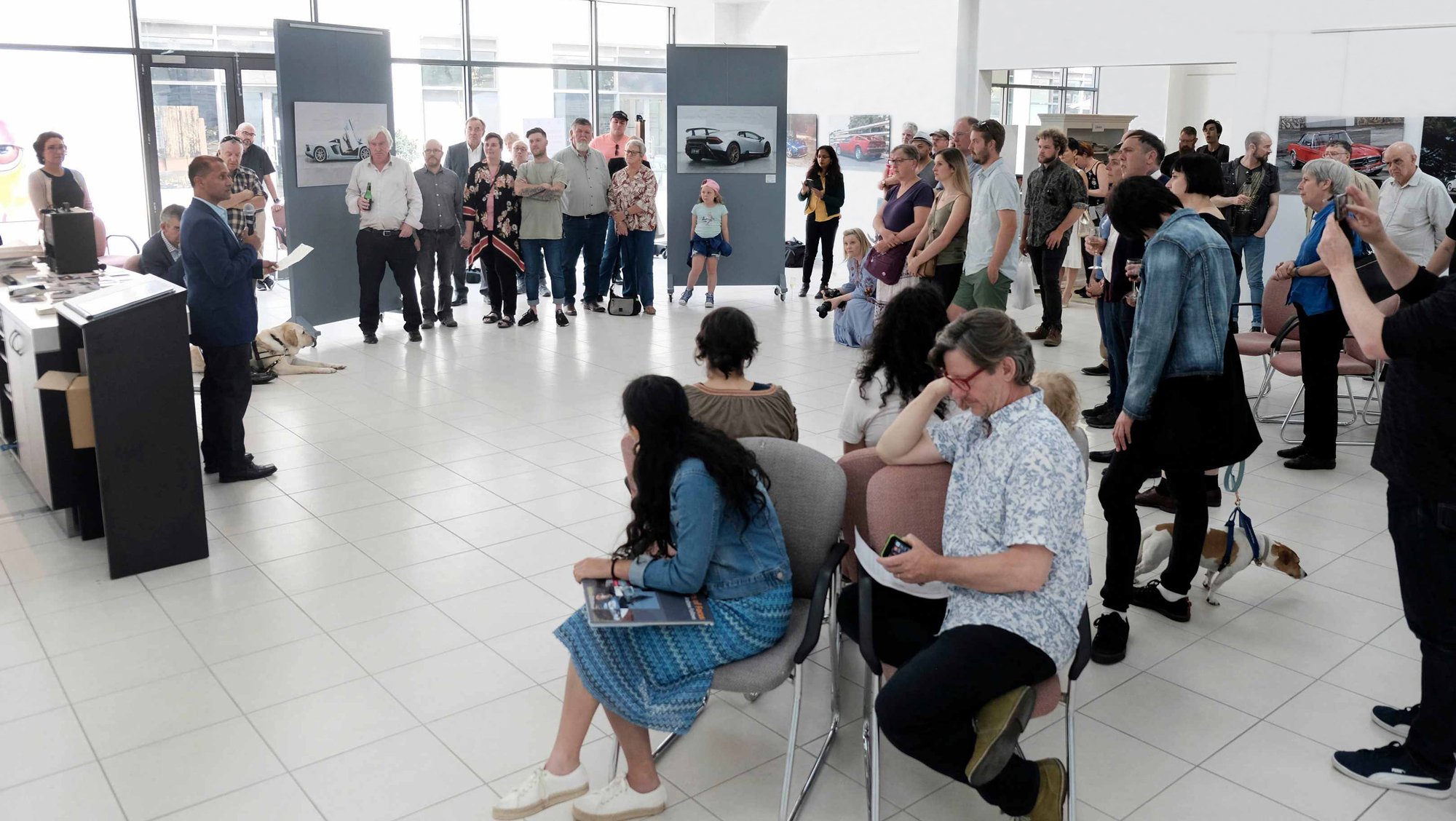
Crowd at the opening of Andrew Follows' 'Elements of Focus' exhibition at Magnet Galleries Melbourne


Crowd at the opening of Andrew Follows’ Elements of Focus exhibition at Magnet Galleries Melbourne
Photo: Michael Silver


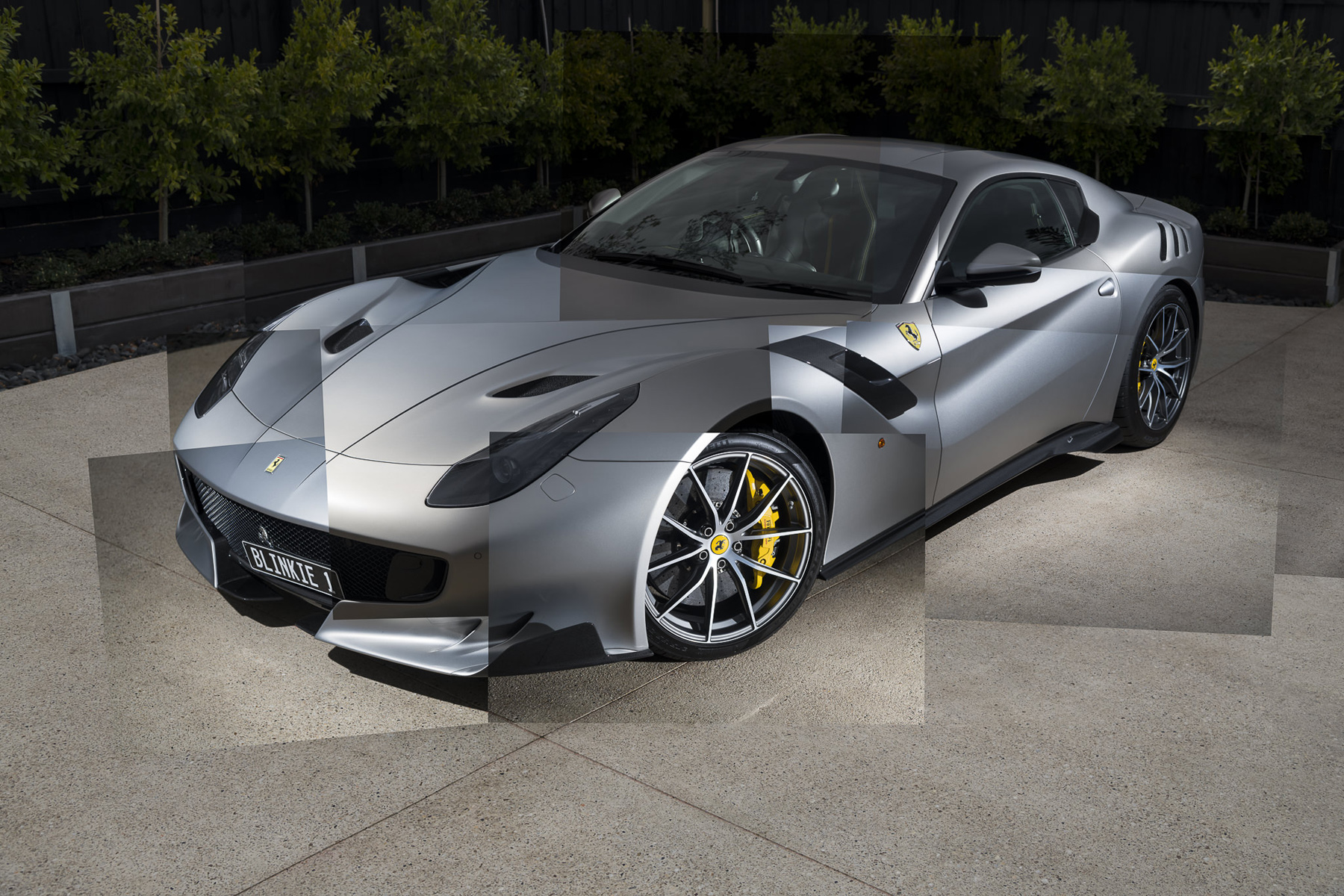
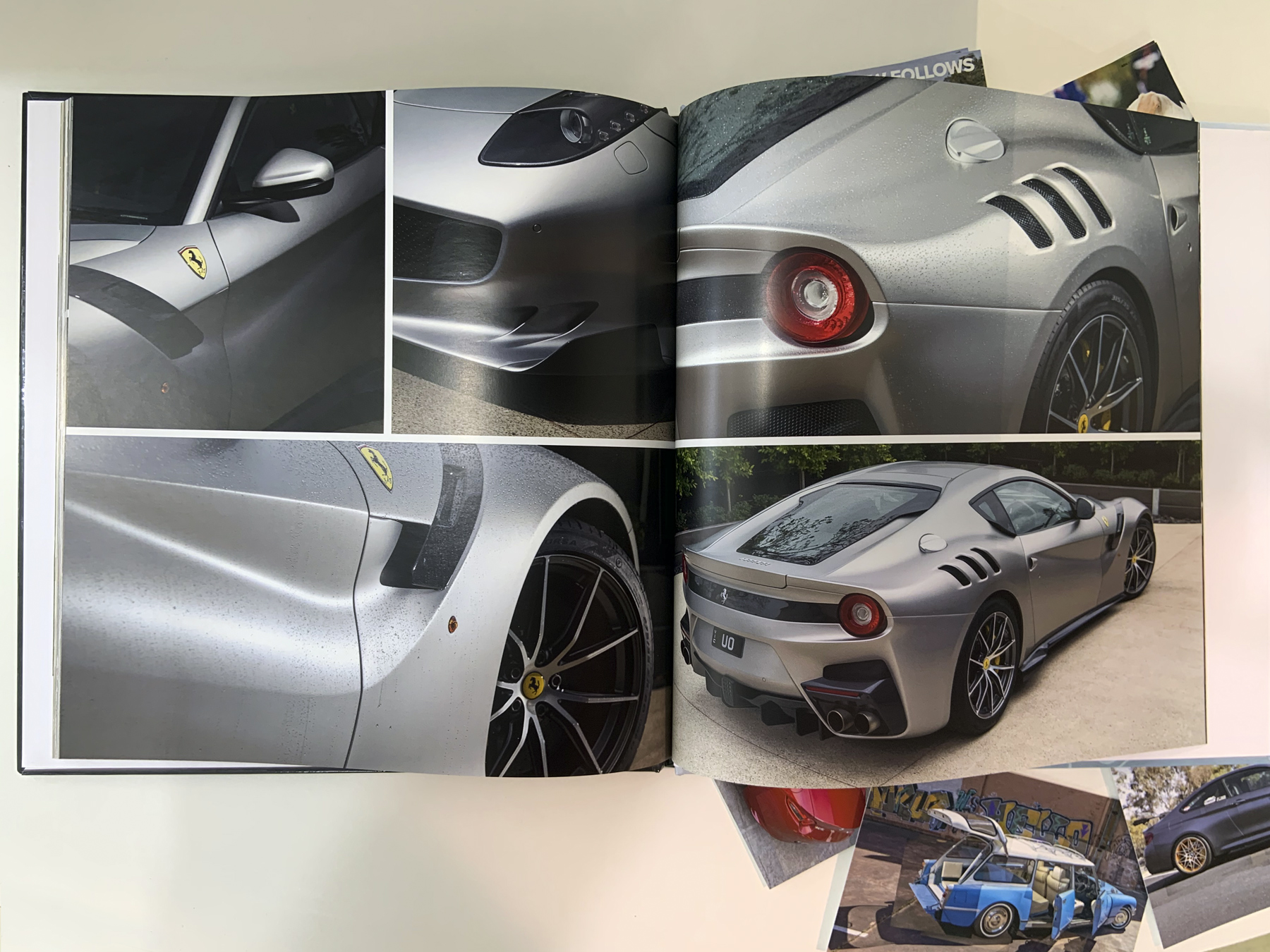
Andrew Follows (Australian, d. 2019) 'Ferrari F12tdf' 2019


Andrew Follows (Australian, d. 2019)
Ferrari F12tdf
2019
Photos used: 12
Year of manufacture: 2017


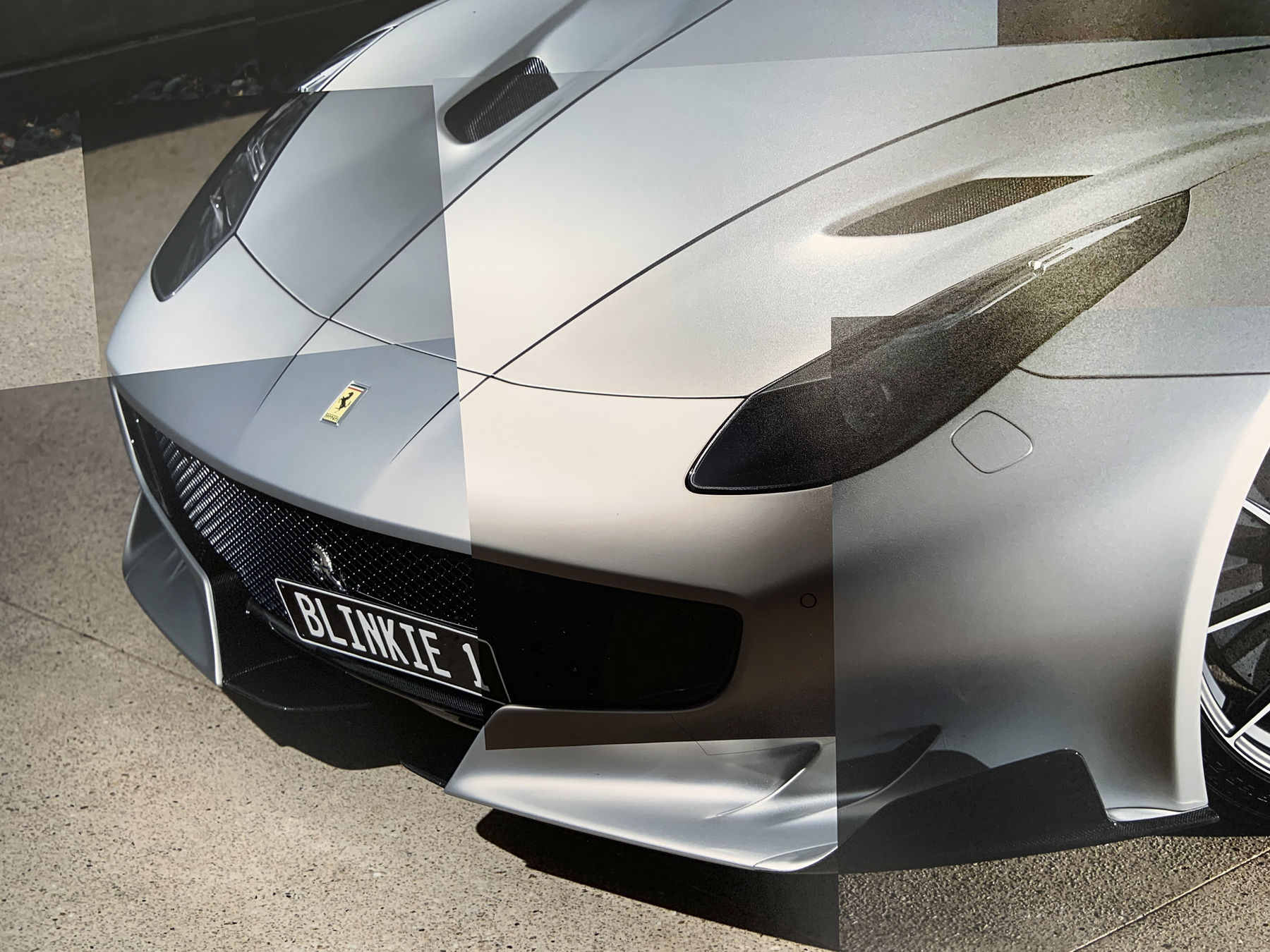
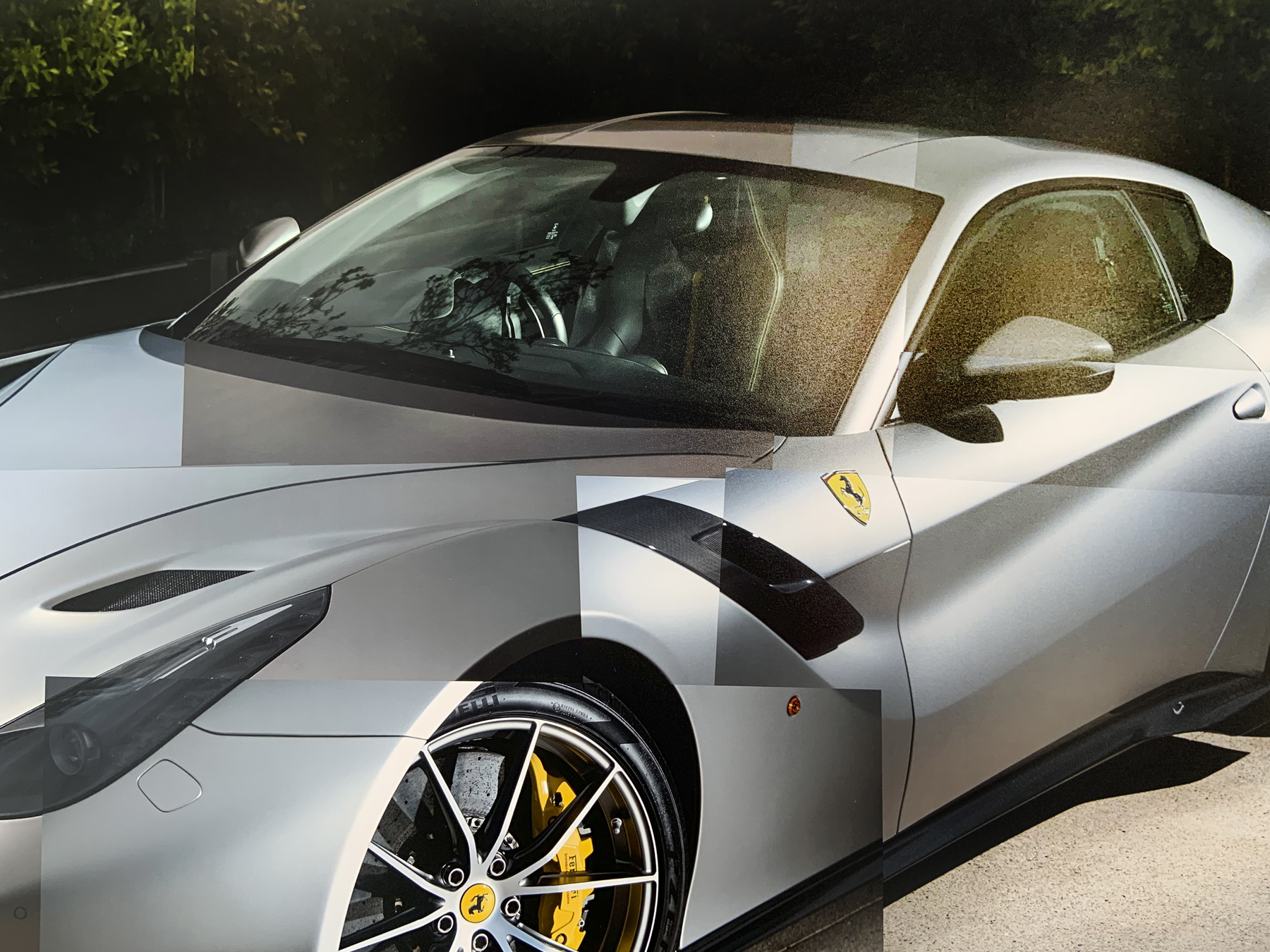
Andrew Follows (Australian, d. 2019) 'Ferrari F12tdf' 2019 (detail)

Andrew Follows (Australian, d. 2019) 'Ferrari F12tdf' 2019 (detail)


Andrew Follows (Australian, d. 2019)
Ferrari F12tdf (details)
2019
Photos used: 12
Year of manufacture: 2017


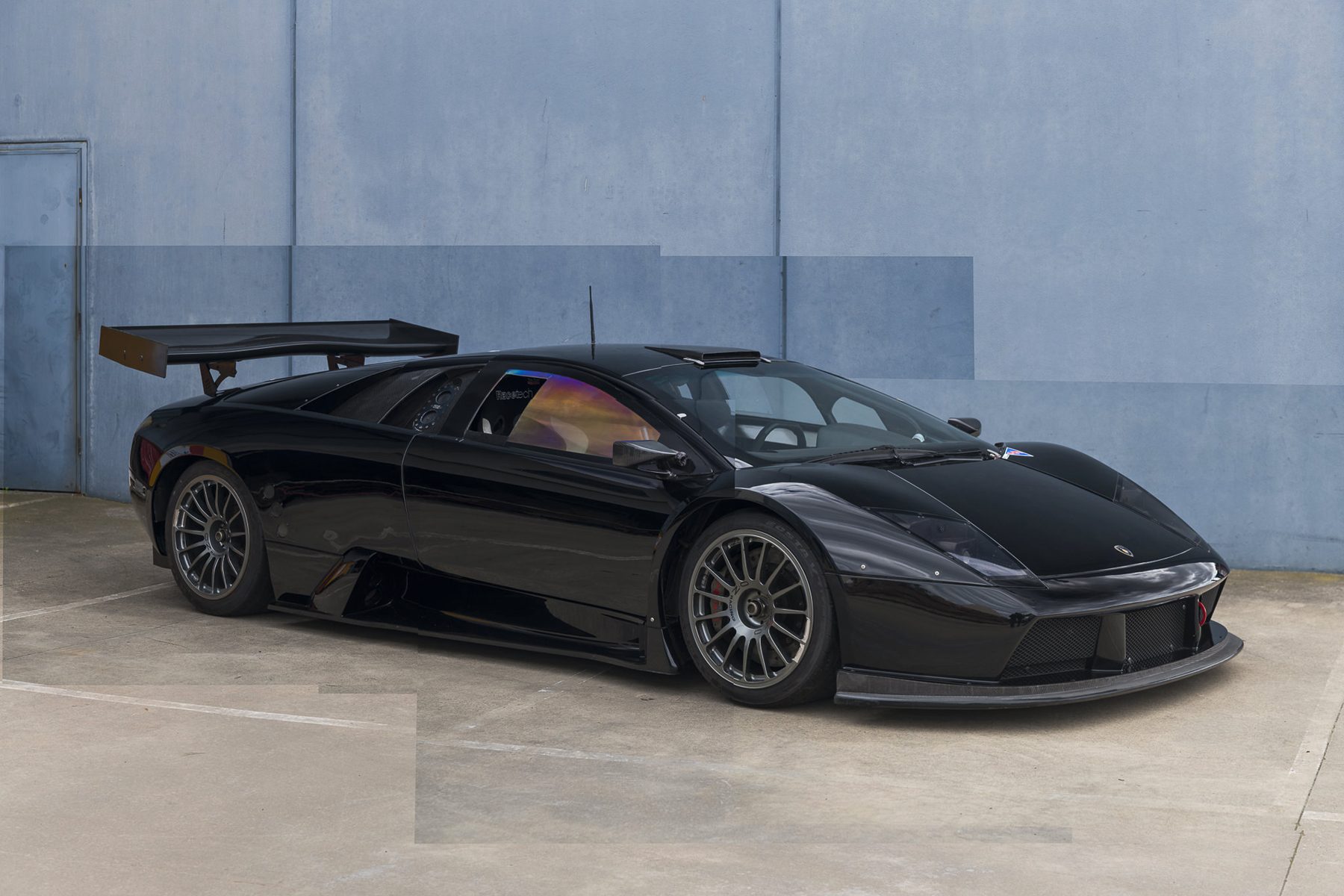
Andrew Follows (Australian, d. 2019) 'Lamborghini Murcielago R-GT (unrestored)' 2019


Andrew Follows (Australian, d. 2019)
Lamborghini Murcielago R-GT (unrestored)
2019
Photos used: 5
Year of manufacture: 2004


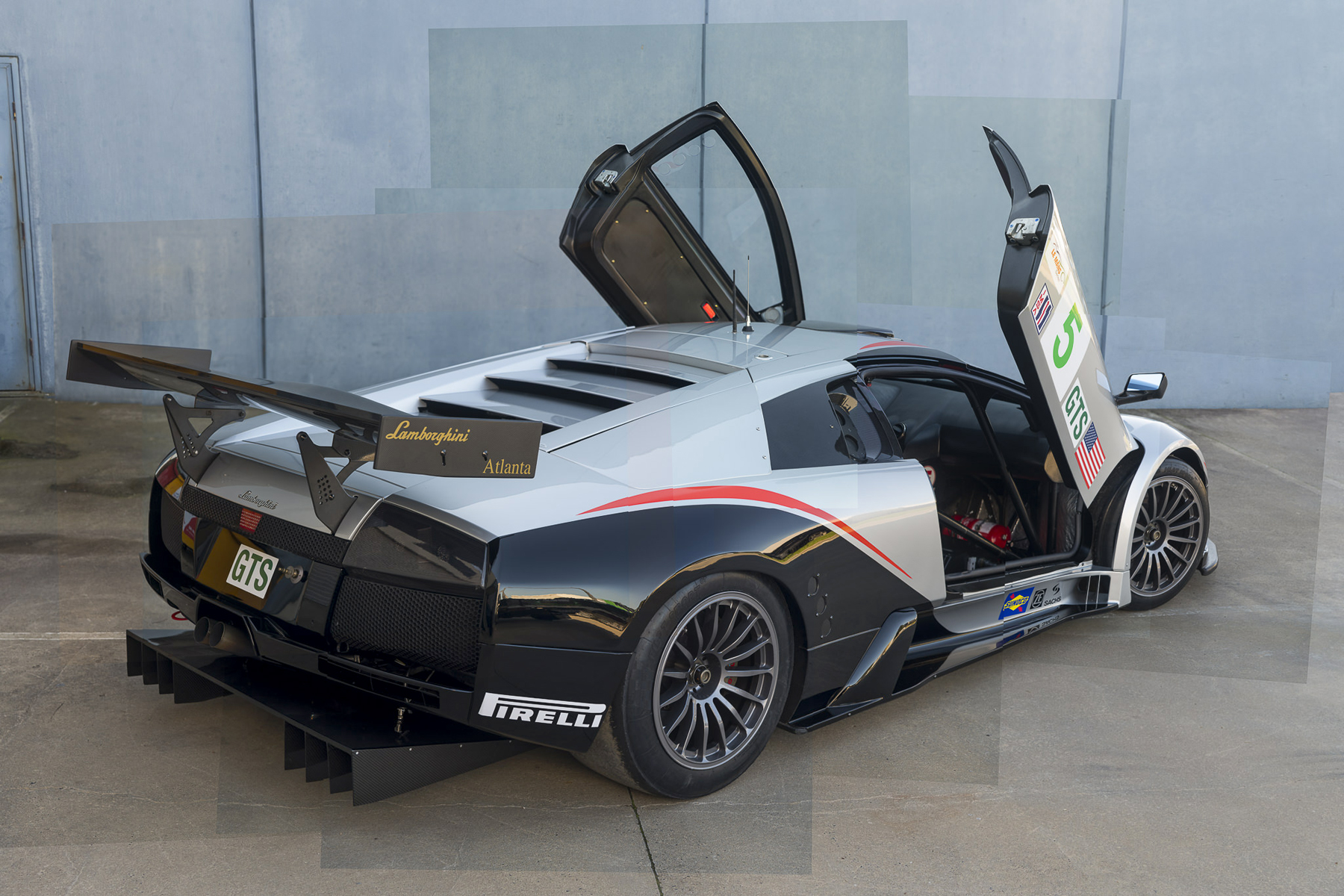
Andrew Follows (Australian, d. 2019) 'Lamborghini Murcielago R-GT (restored)' 2019


Andrew Follows (Australian, d. 2019)
Lamborghini Murcielago R-GT (restored)
2019
Photos used: 13
Year of manufacture: 2004


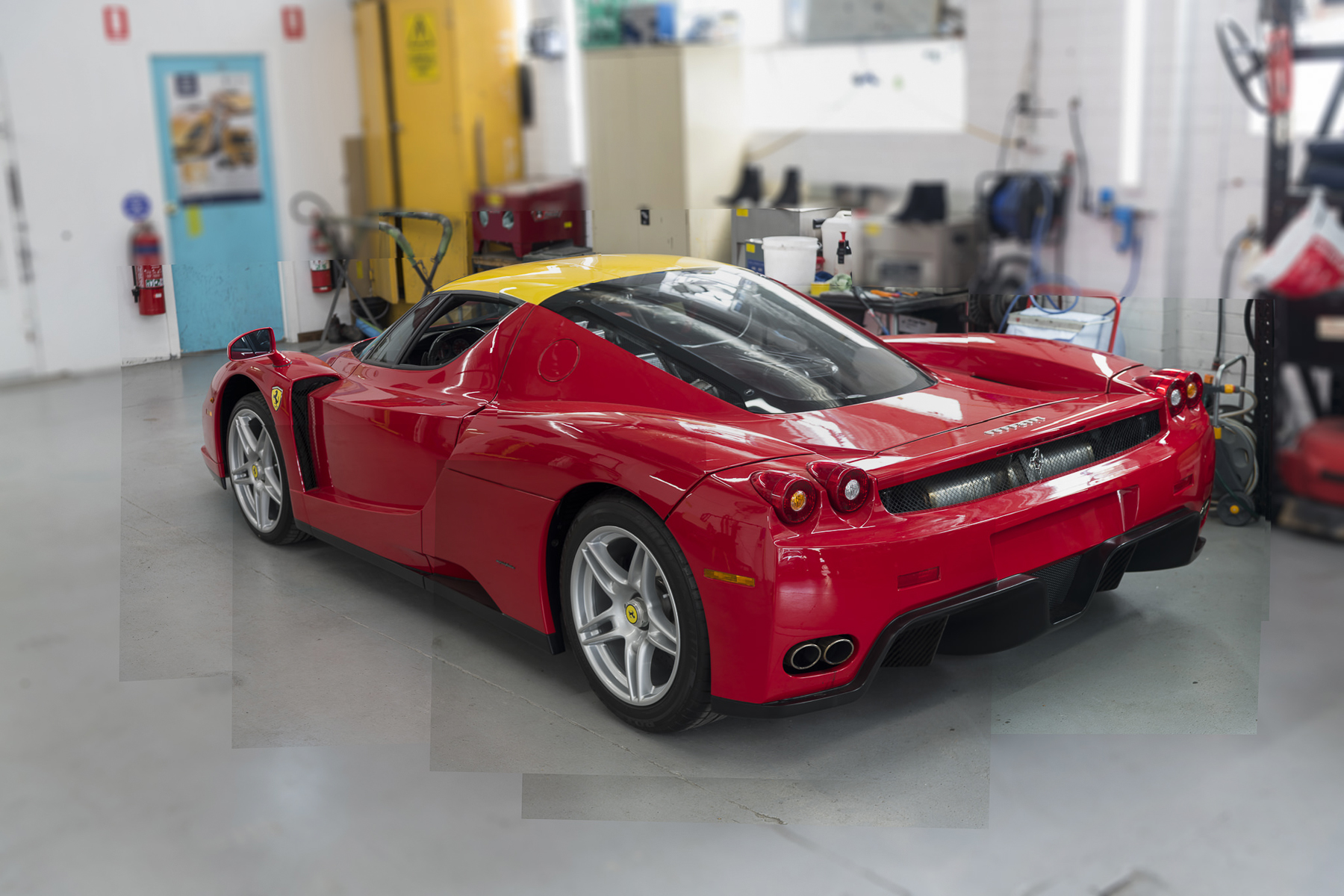
Andrew Follows (Australian, d. 2019) 'Ferrari Enzo' 2019


Andrew Follows (Australian, d. 2019)
Ferrari Enzo
2019
Photos used: 10
Year of manufacture: 2003


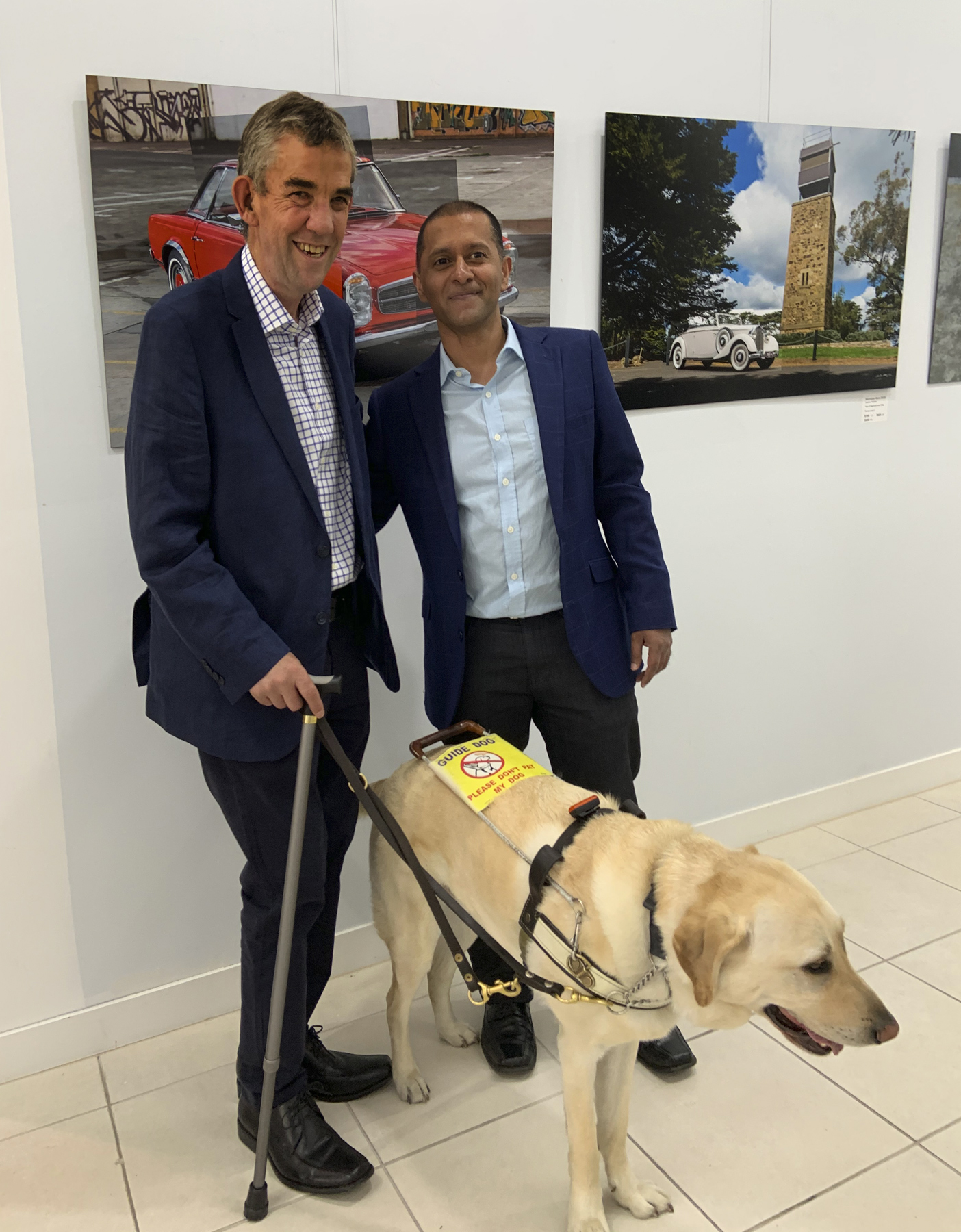
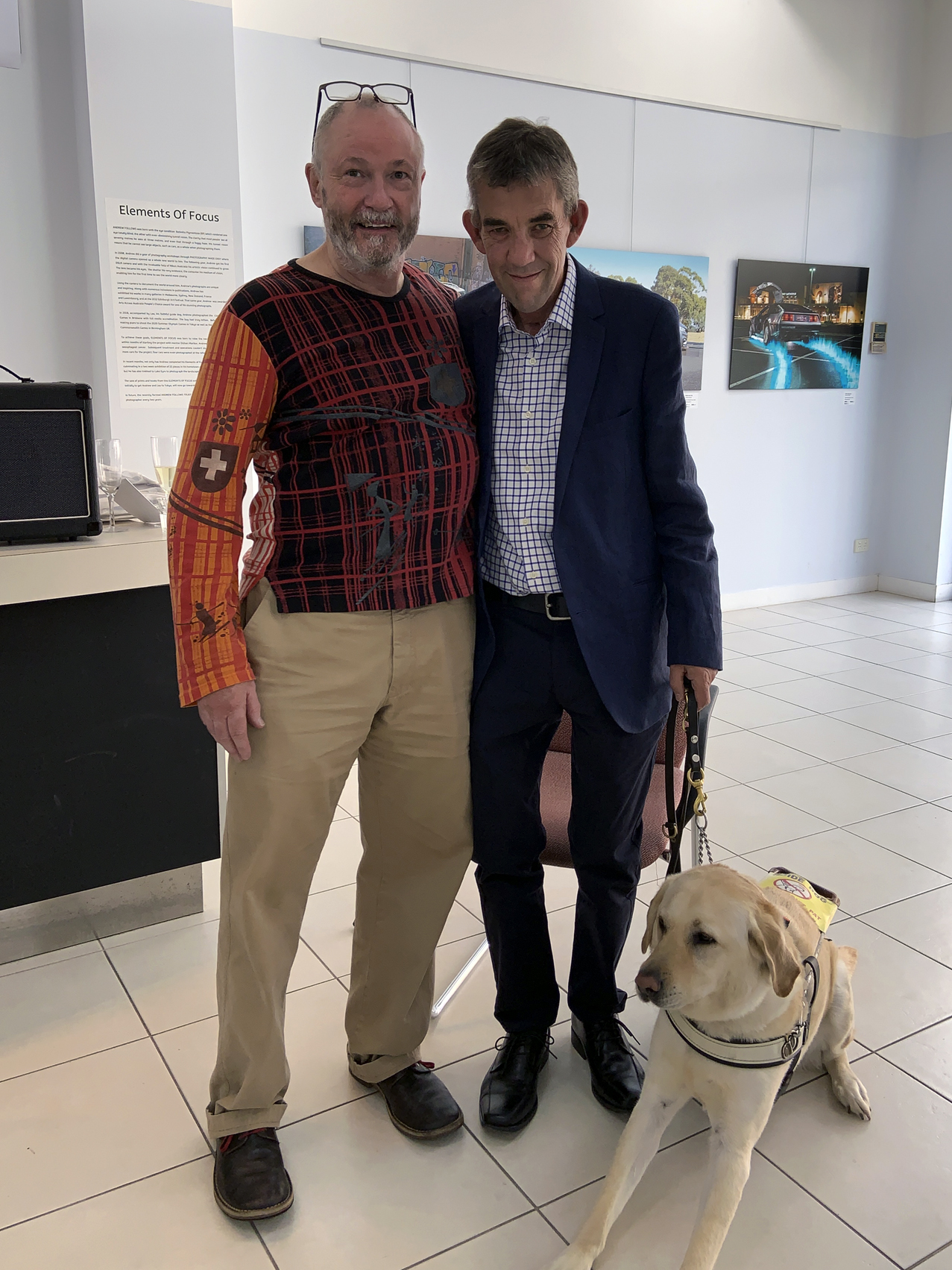
Andrew Follows with his guide dog Leo and his mentor Dishan Marikar


Andrew Follows with his guide dog Leo and his mentor Dishan Marikar at the opening of the exhibition Elements of Focus at Magnet Galleries Melbourne


Elements of Focus is a very important project that brings together my two passions – motor cars and photography. The cars in this project range from some of the rarest to even a few more common examples, but they are being photographed and presented in a way that has never been seen before.

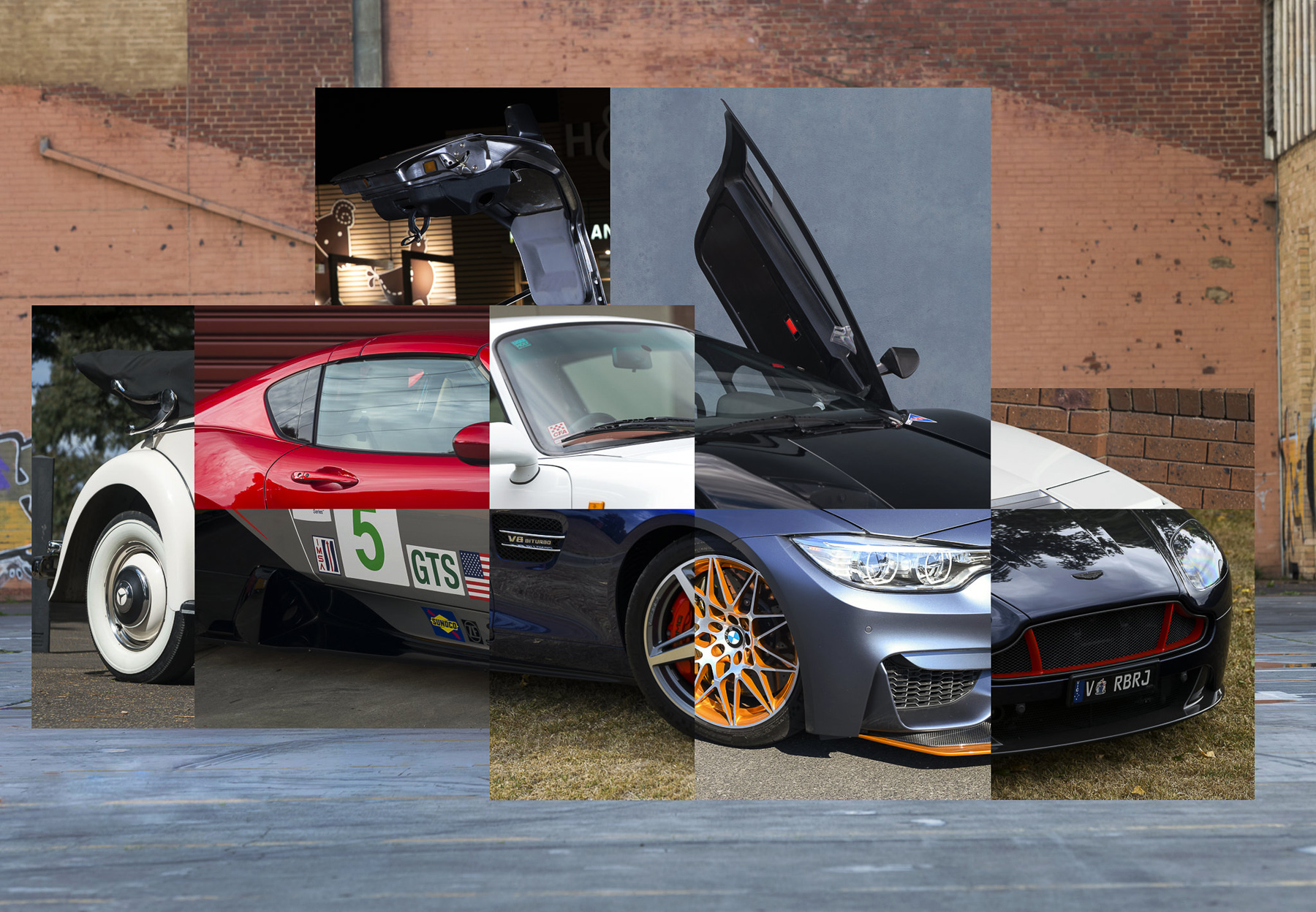
Being a legally blind photographer, who has tunnel vision, my images offer the viewer a different perspective through my lens and take them on a visual journey. I have an eye condition called Retinitis Pigmentosa (RP), a condition which has rendered one eye completely blind with ever diminishing tunnel vision in the other. I can see three metres to most people’s seventy metres, and that through a foggy haze.

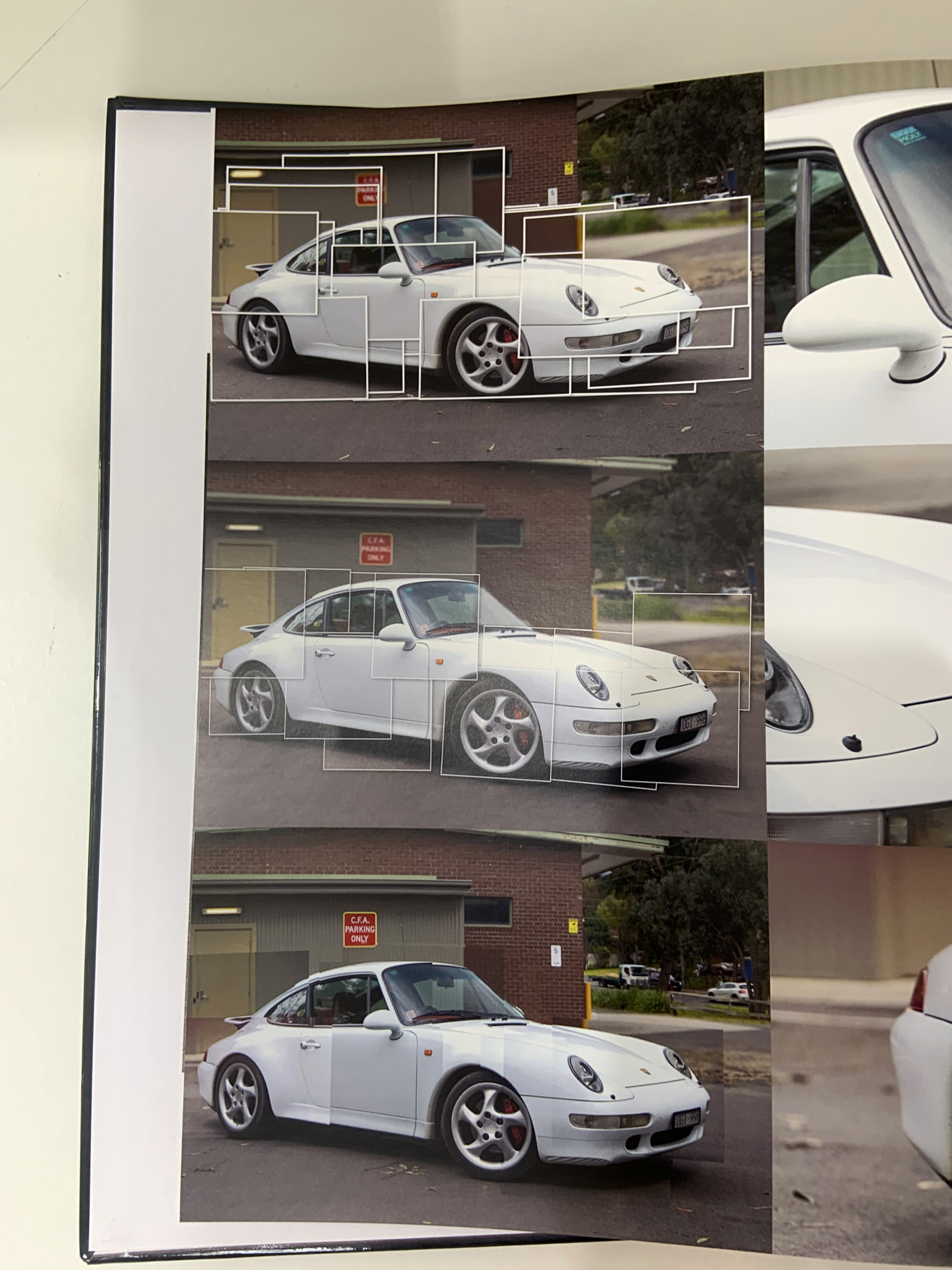
My tunnel vision means that I can’t see the object as a whole when I’m photographing a car, I take shots of each individual element of the car, and then piece the final image together like a jigsaw puzzle.

For this very exciting photographic project, I have been mentored by Dishan Marikar, one of the best car photographers in Melbourne. I am very honoured and proud to have Dishan teach me new skills in the area of photography he is so well known for.

For those of you may not know, I have been diagnosed with cancer of the oesophagus and Elements of Focus may be the last exhibition that I will be able to celebrate with you as I am not well. I’d love to share this important exhibition with my friends, peers and colleagues. Thank you for being part of my journey in photography and life.

Andrew Follows

Text from the Andrew Follows website November 7, 2019 [Online] Cited Saturday 07/12/2019


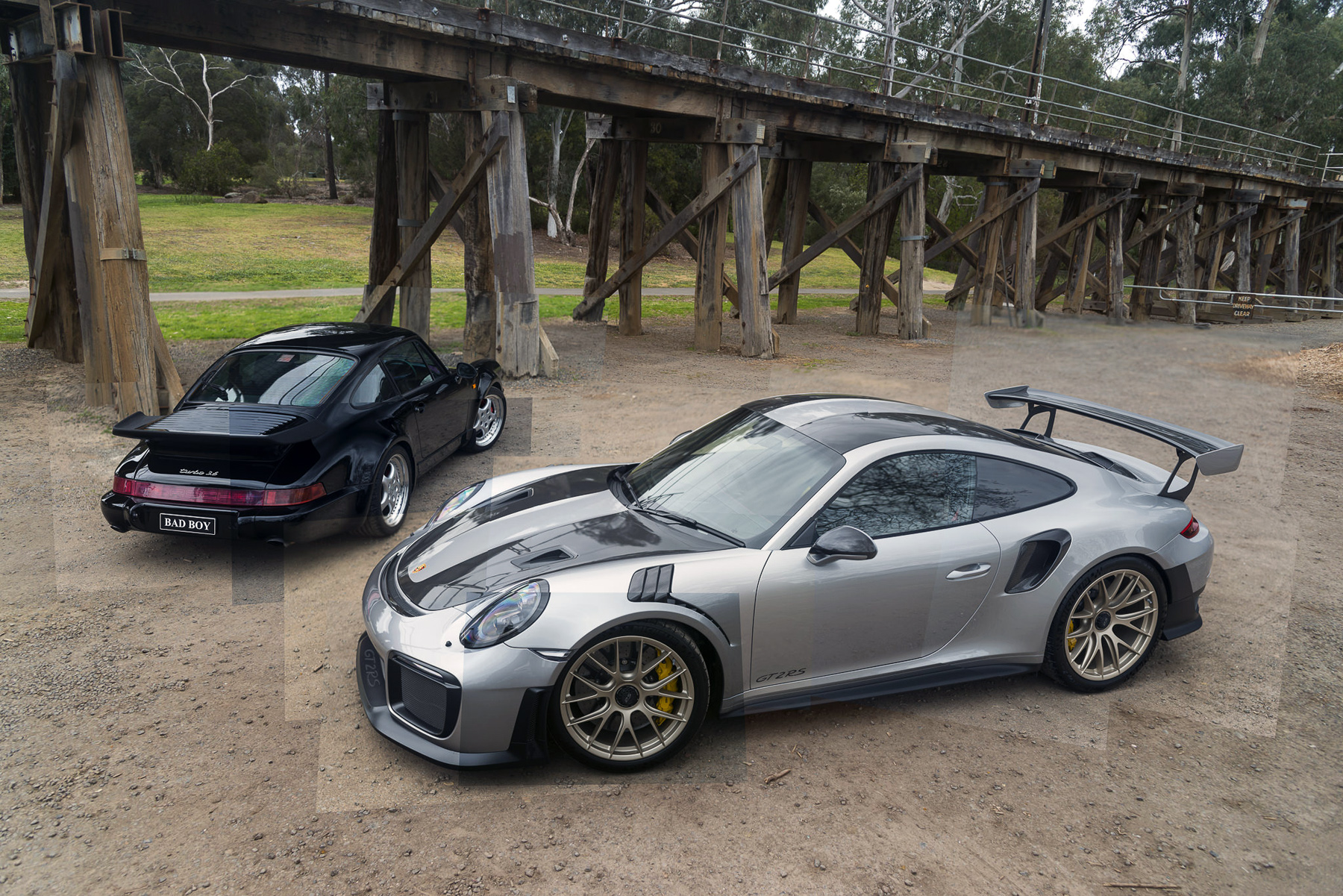
Andrew Follows (Australian, d. 2019) 'Porsche 991 911 GT2 RS' 2019


Andrew Follows (Australian, d. 2019)
Porsche 991 911
GT2 RS

2019
Photos used: 16
Year of manufacture: 2018


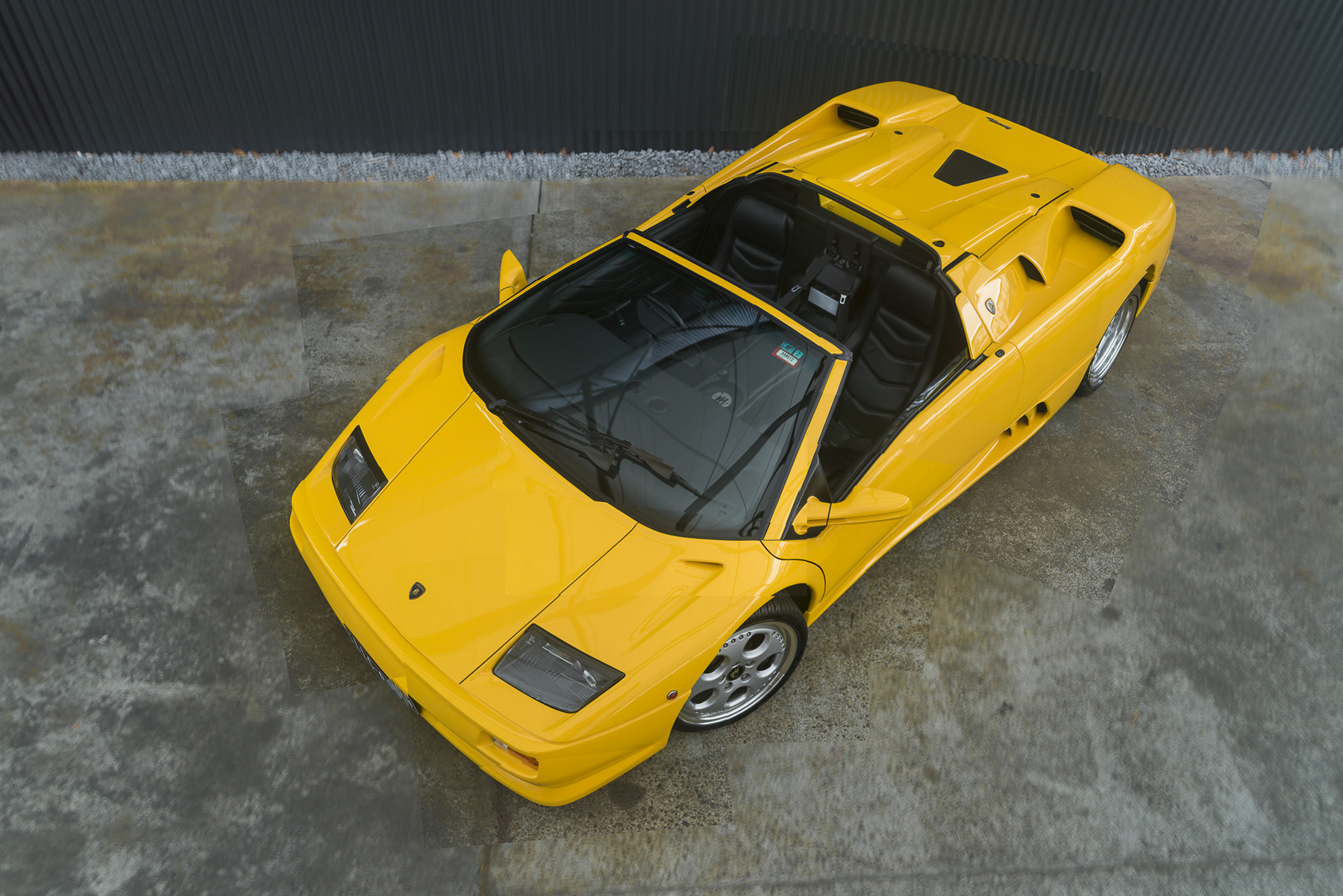
Andrew Follows (Australian, d. 2019) 'Lamborghini Diablo Roadster' 2019


Andrew Follows (Australian, d. 2019)
Lamborghini Diablo Roadster
2019
Photos used: 21
Year of manufacture: 1999


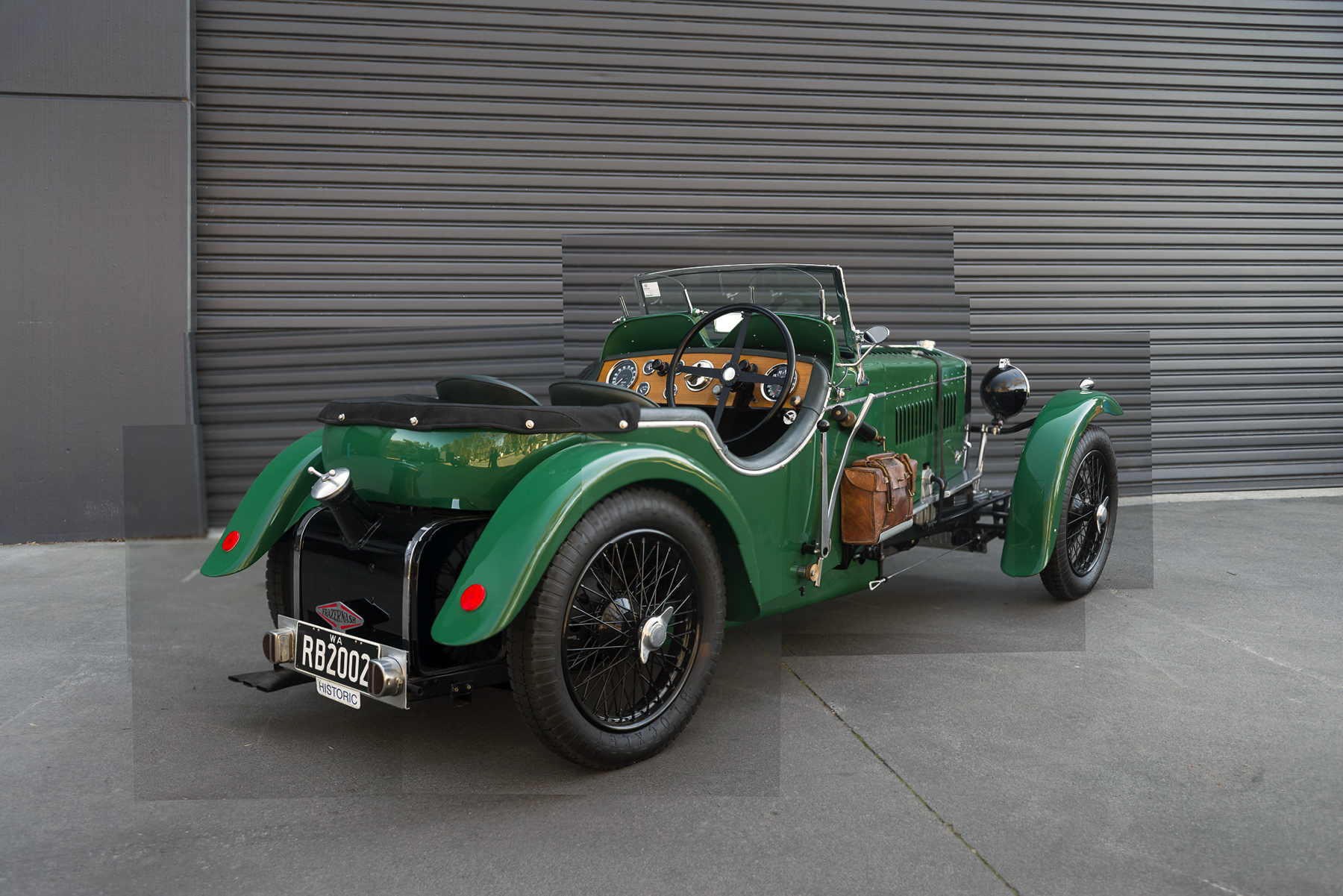
Andrew Follows (Australian, d. 2019) 'Frazer Nash TT' 2019


Andrew Follows (Australian, d. 2019)
Frazer Nash TT
2019
Photos used: 11
Year of manufacture: 1932


Elements Of Focus is a very important project that brings together the two passions of Andrew Follows: motor cars and photography. The cars in this project range from some of the rarest in Australia to even a few common examples, but they are being photographed and presented in a way that has never been seen before. Being a legally blind photographer with tunnel vision, Andrew’s images offer viewers a different perspective through his lens as he takes them on a visual journey.

“My tunnel vision means that I can’t see the object as a whole. When I’m photographing a car, I take shots of each individual element of the car, and then piece the final image together like a jigsaw puzzle.”

For this very exciting photographic project, Andrew has been mentored by Dishan Marikar, one of the best car photographers in Melbourne.

The exhibition is being held in December at Magnet Gallery in Docklands, a highly respected photography gallery in Melbourne.

“I am very honoured and proud to have Dishan teach me new skills in the area of photography he is so well known for. The team at Magnet has been great to work with and I am very excited to showcase my Elements Of Focus project there.”

Text from the Magnet Galleries Melbourne website [Online] Cited Saturday 07/12/2019


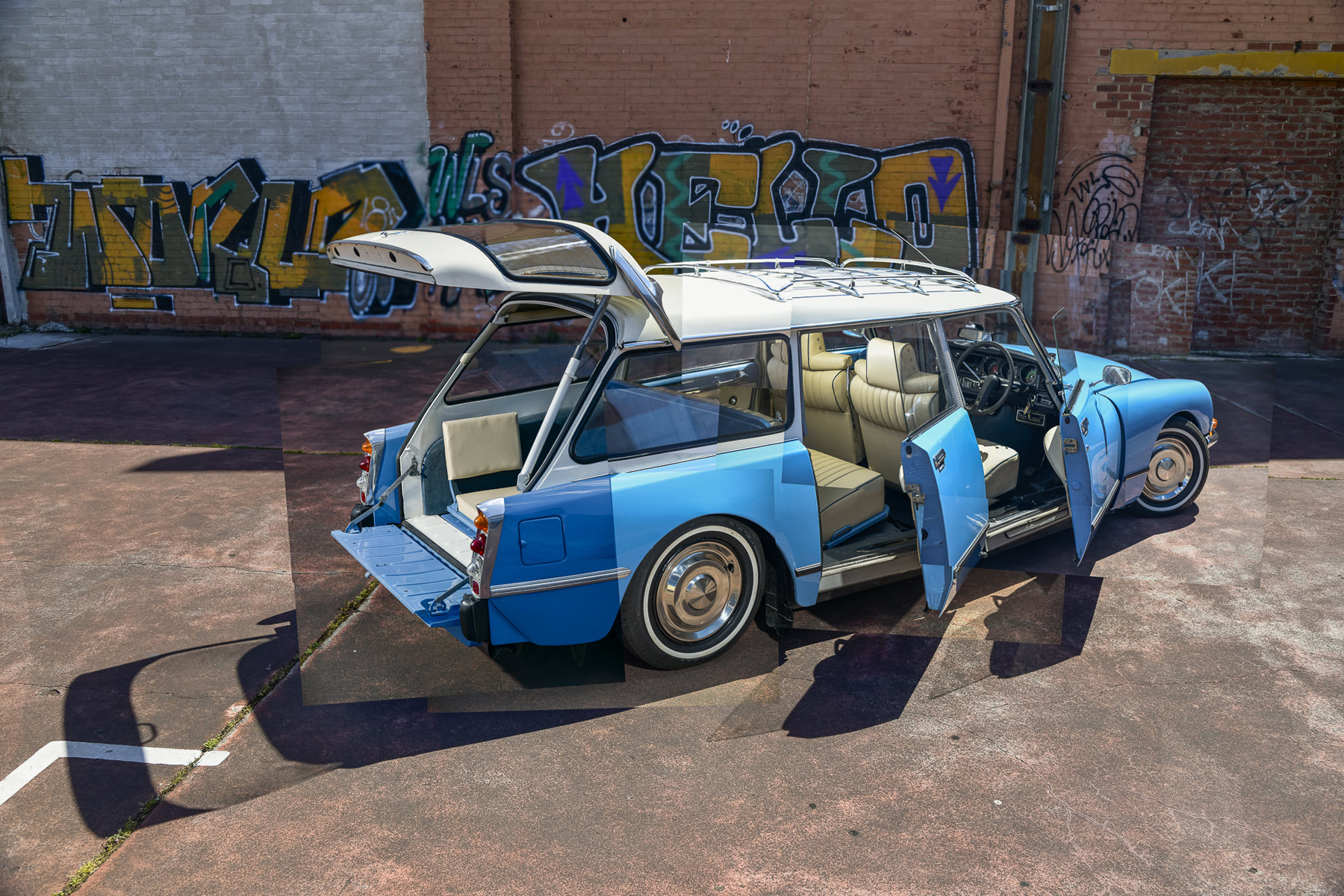
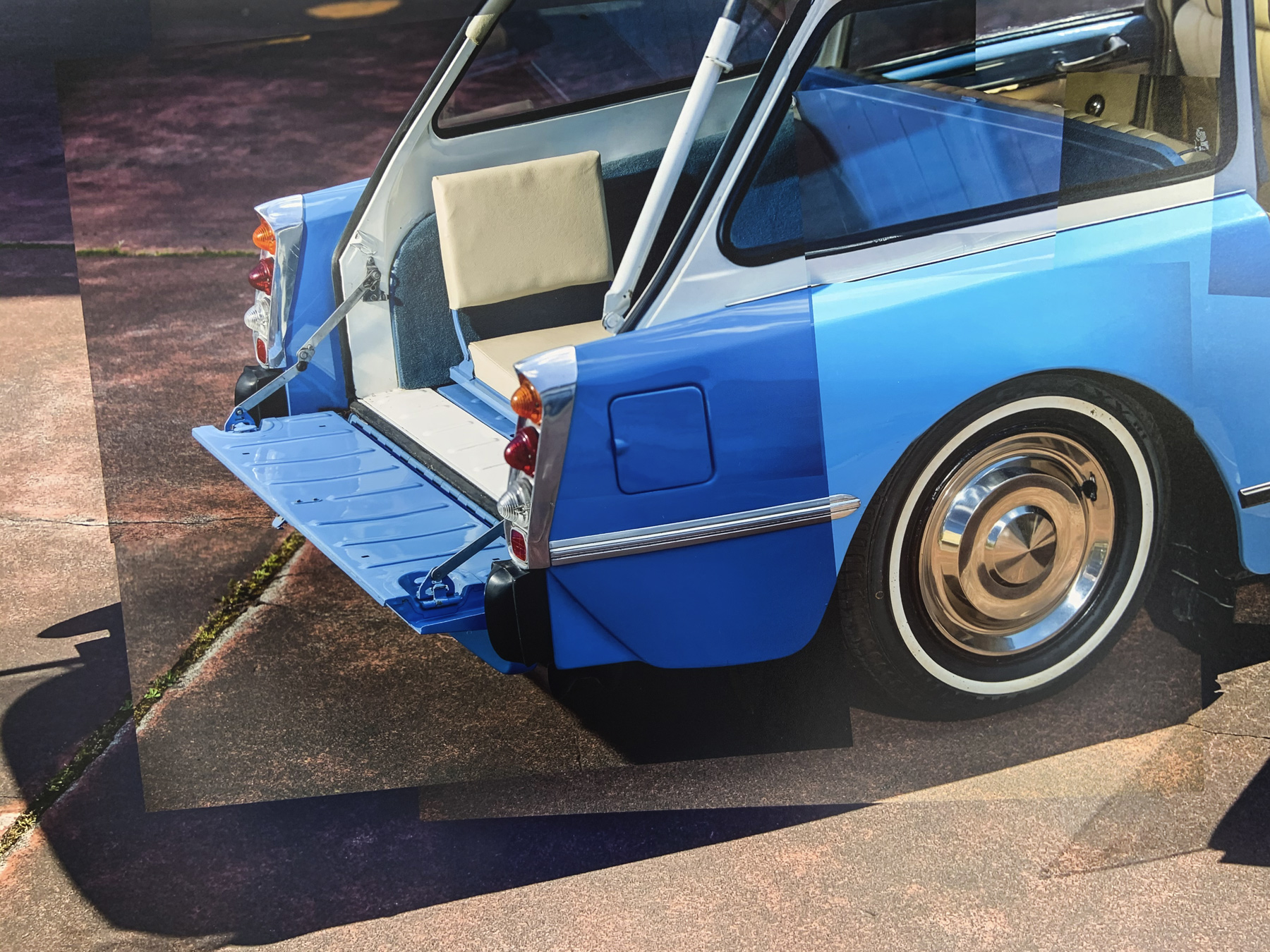
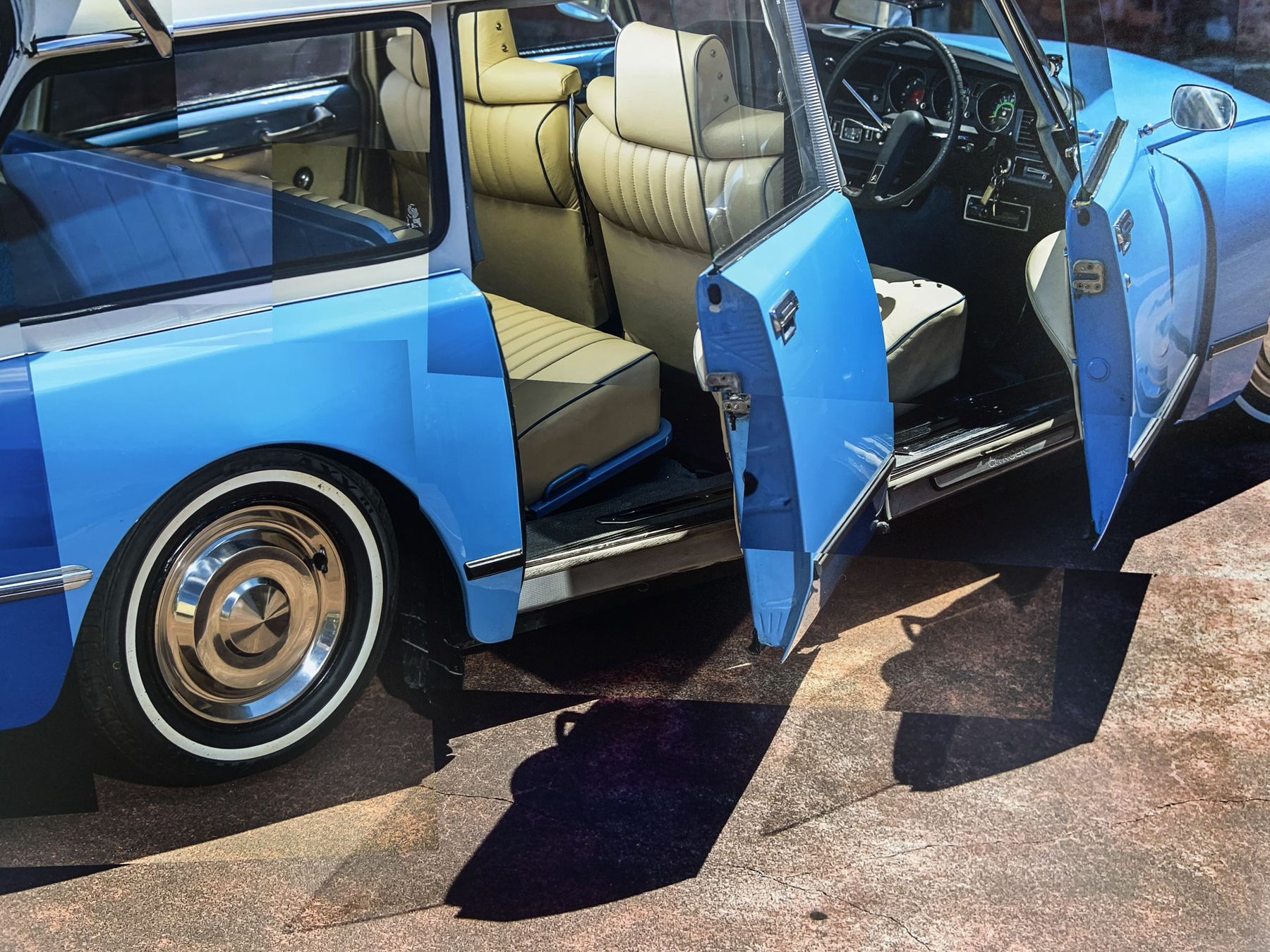
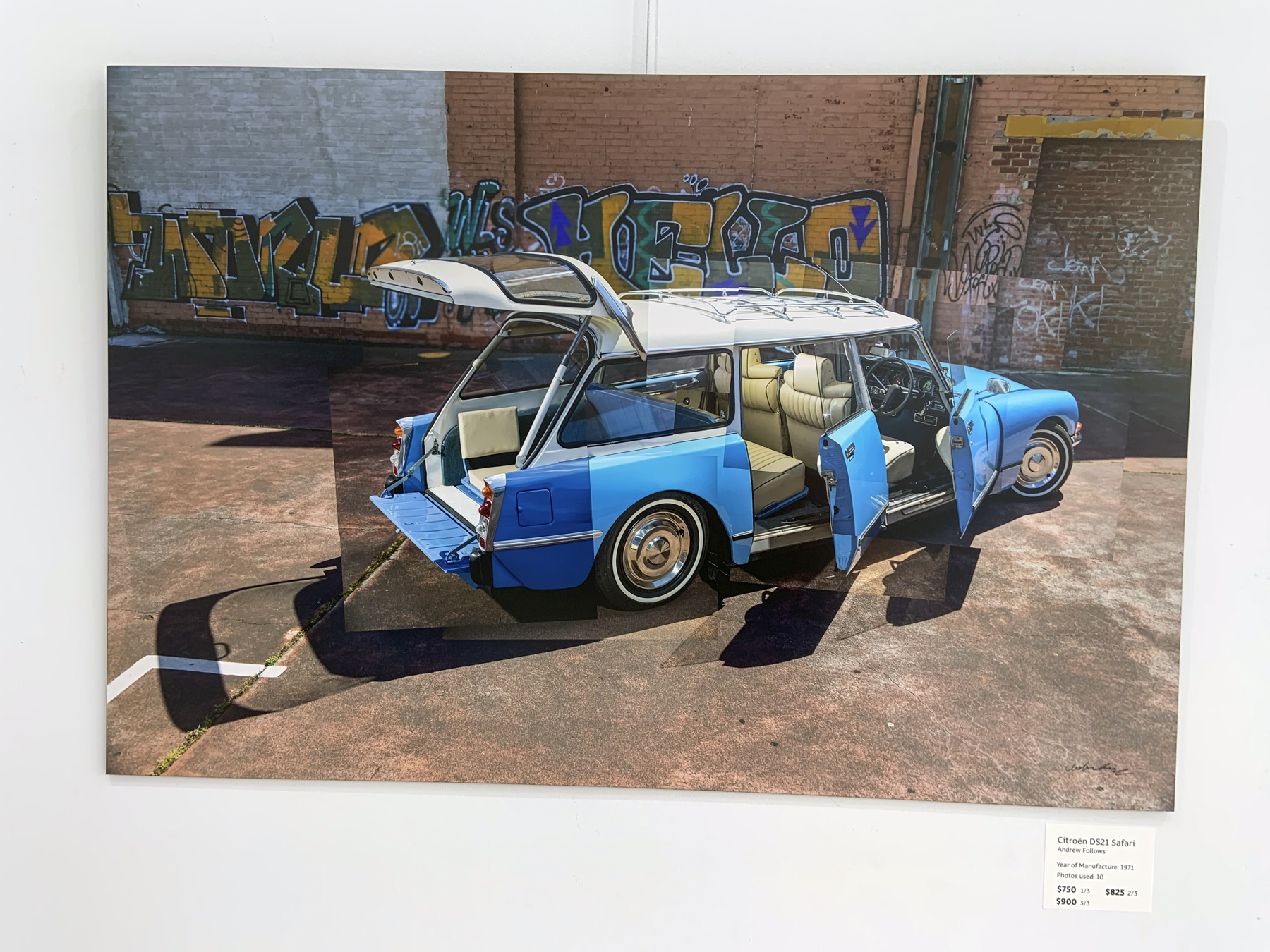
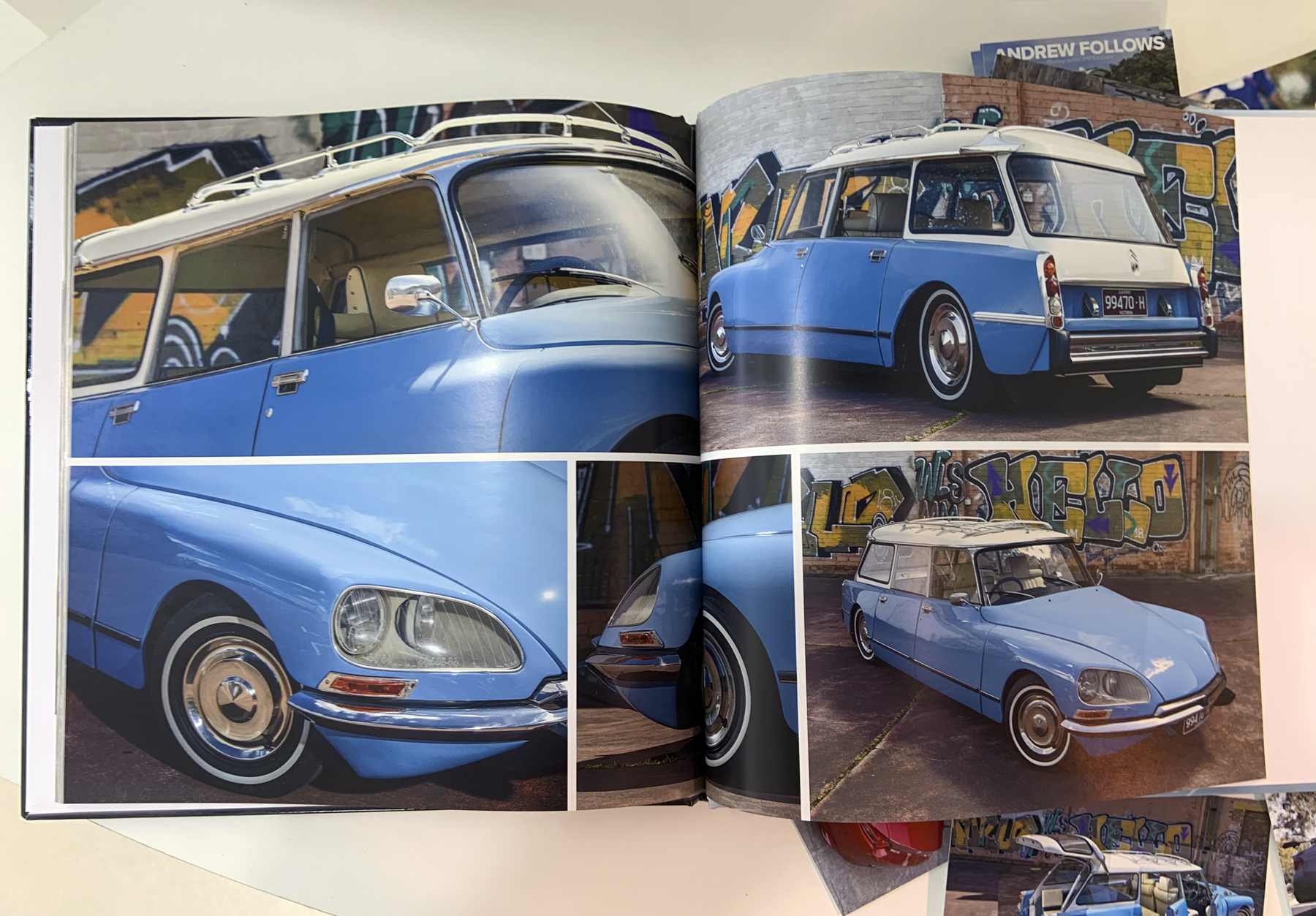
Andrew Follows (Australian, d. 2019) 'Citroën DS21 Safari' 2019


Andrew Follows (Australian, d. 2019)
Citroën DS21 Safari
2019
Photos used: 10
Year of manufacture: 1971


Andrew Follows (Australian, d. 2019) 'Citroën DS21 Safari' 2019 (detail)

Andrew Follows (Australian, d. 2019) 'Citroën DS21 Safari' 2019 (detail)


Andrew Follows (Australian, d. 2019)
Citroën DS21 Safari (details)
2019
Photos used: 10
Year of manufacture: 1971


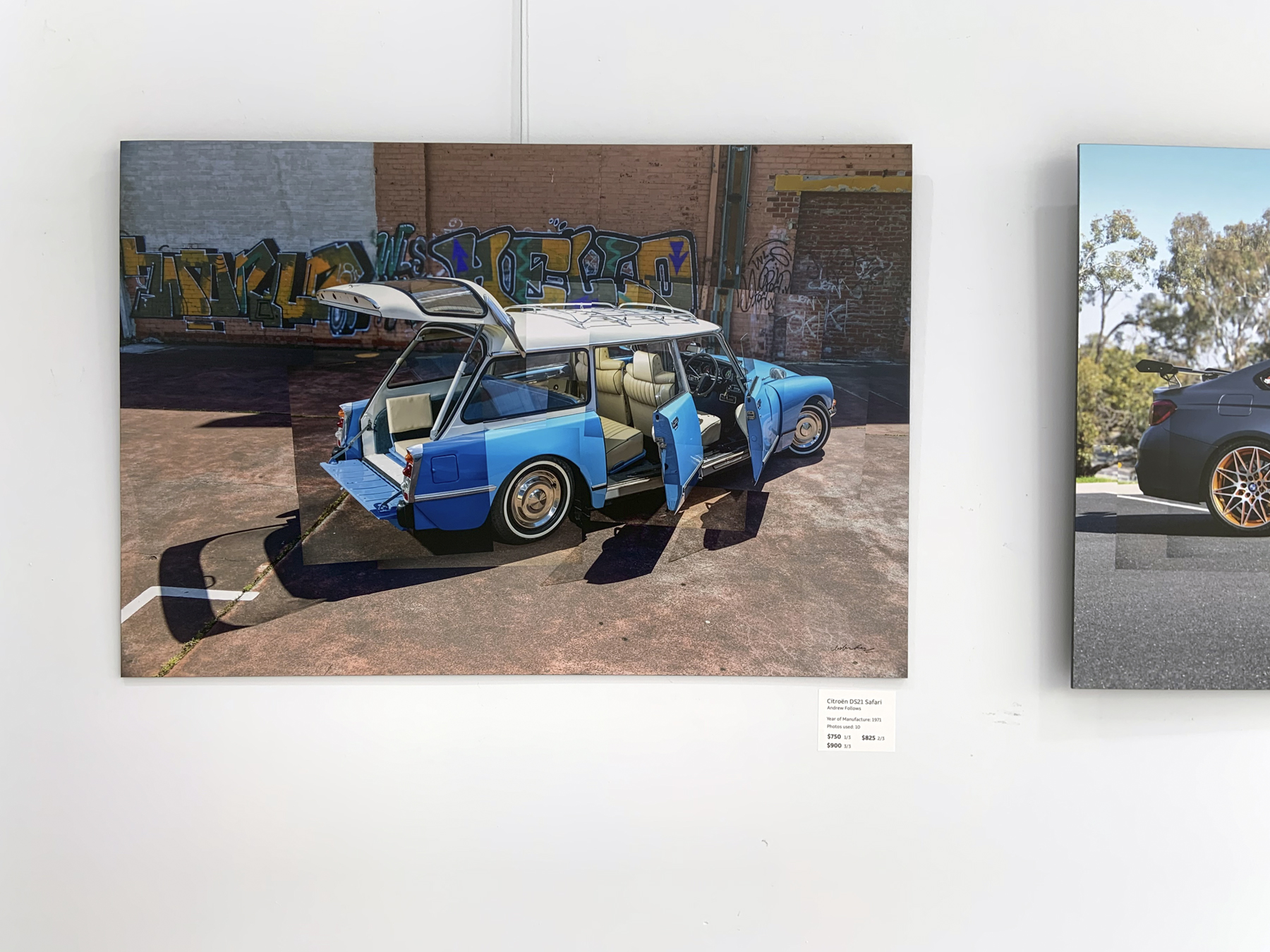
Installation view of Andrew Follows 'Citroën DS21 Safari' 2019 at the exhibition 'Elements of Focus' at Magnet Galleries Melbourne

Installation view of Andrew Follows 'Citroën DS21 Safari' 2019 at the exhibition 'Elements of Focus' at Magnet Galleries Melbourne


Installation views of Andrew Follows Citroën DS21 Safari 2019 at the exhibition Elements of Focus at Magnet Galleries Melbourne


Pages from the 'Elements of Focus' book showing photographic fragmentation and stitching process

Pages from the 'Elements of Focus' book showing photographic fragmentation and stitching process

Pages from the 'Elements of Focus' book showing photographic fragmentation and stitching process


Pages from the Elements of Focus book showing photographic fragmentation and stitching process


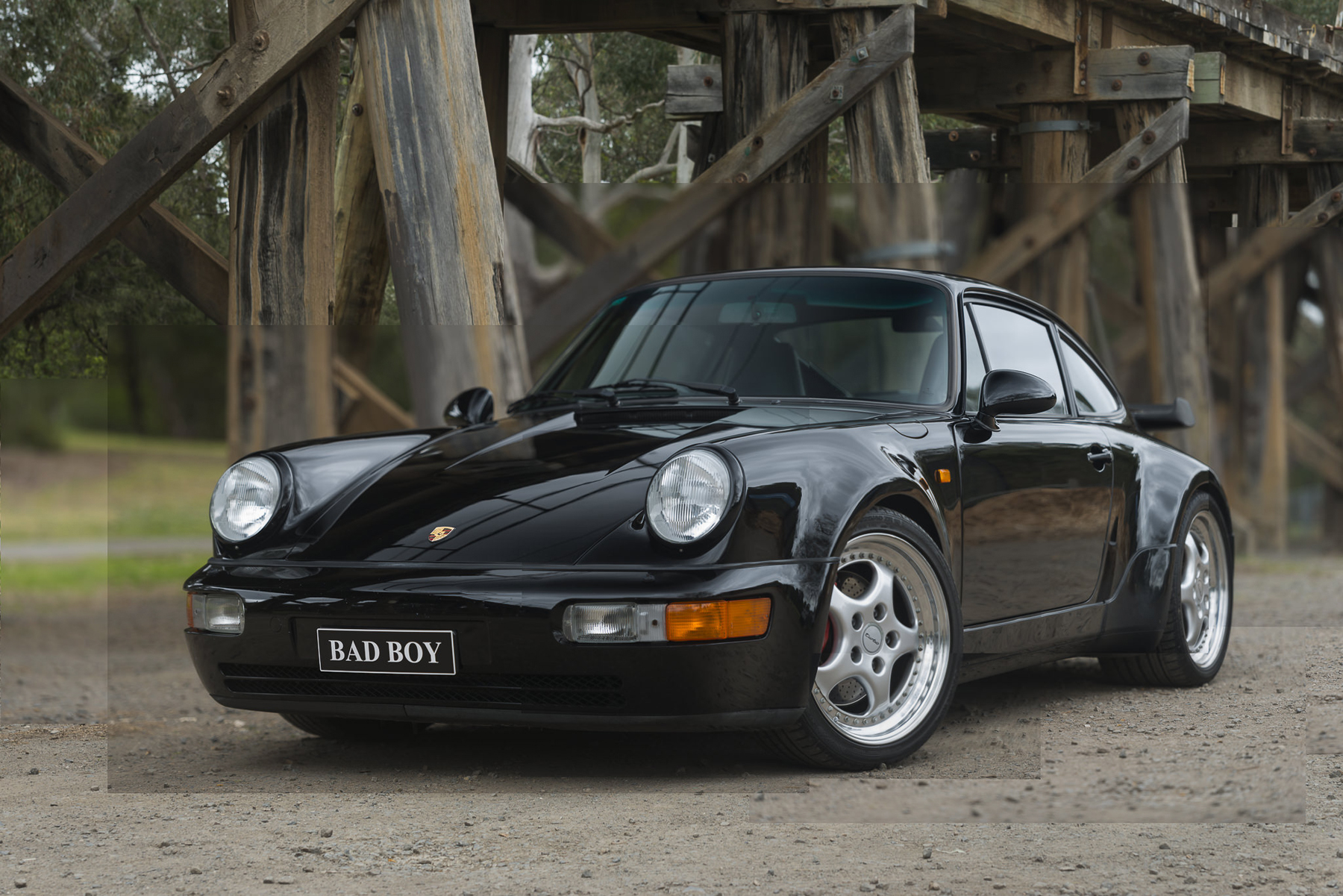
Andrew Follows (Australian, d. 2019) 'Porsche 964 991 Turbo 3.6' 2019


Andrew Follows (Australian, d. 2019)
Porsche 964 991 Turbo 3.6
2019
Photos used: 9
Year of manufacture: 1994


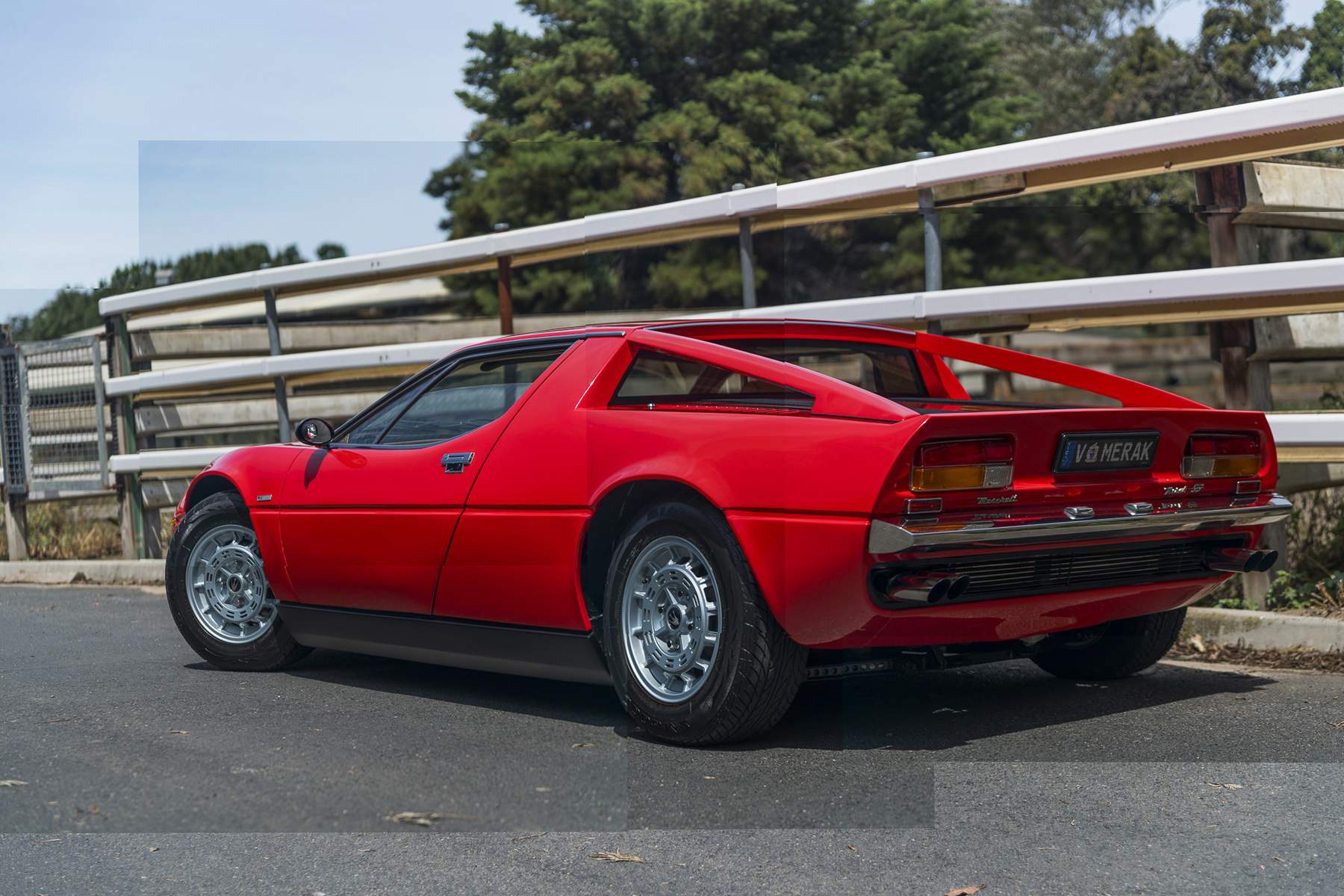
Andrew Follows (Australian, d. 2019) 'Maserati Merak SS' 2019


Andrew Follows (Australian, d. 2019)
Maserati Merak SS
2019
Photos used: 9
Year of manufacture: 1978


Marcus Bunyan with his friend Andrew Follows at the opening of his exhibition 'Elements of Focus'


Marcus Bunyan with his friend Andrew Follows at the opening of his exhibition Elements of Focus at Magnet Galleries Melbourne


Magnet Galleries Melbourne
SC G19 Wharf St, The District,
Docklands, Victoria, 3008
Australia
Phone: +61 (0) 3 8589 0371

Opening hours:
Tuesday – Friday 11am – 5pm
Saturday and Sunday 11am – 4pm

Andrew Follows Photographer website

Magnet Galleries Melbourne website

LIKE ART BLACK ON FACEBOOK

Back to top

Exhibition: ‘Sensuous Steel: Art Deco Automobiles’ at The Frist Center for the Visual Arts, Nashville, TN

Exhibition dates: 14th June – 15th September 2013
 

'Jordan Model Z Speedway Ace Roadster' 1930


Jordan Model Z Speedway Ace Roadster
1930
Collection of Edmund J. Stecker Family Trust
Photograph © 2013 Peter Harholdt


OMG, OMG, OMG a bumper posting of car porn!

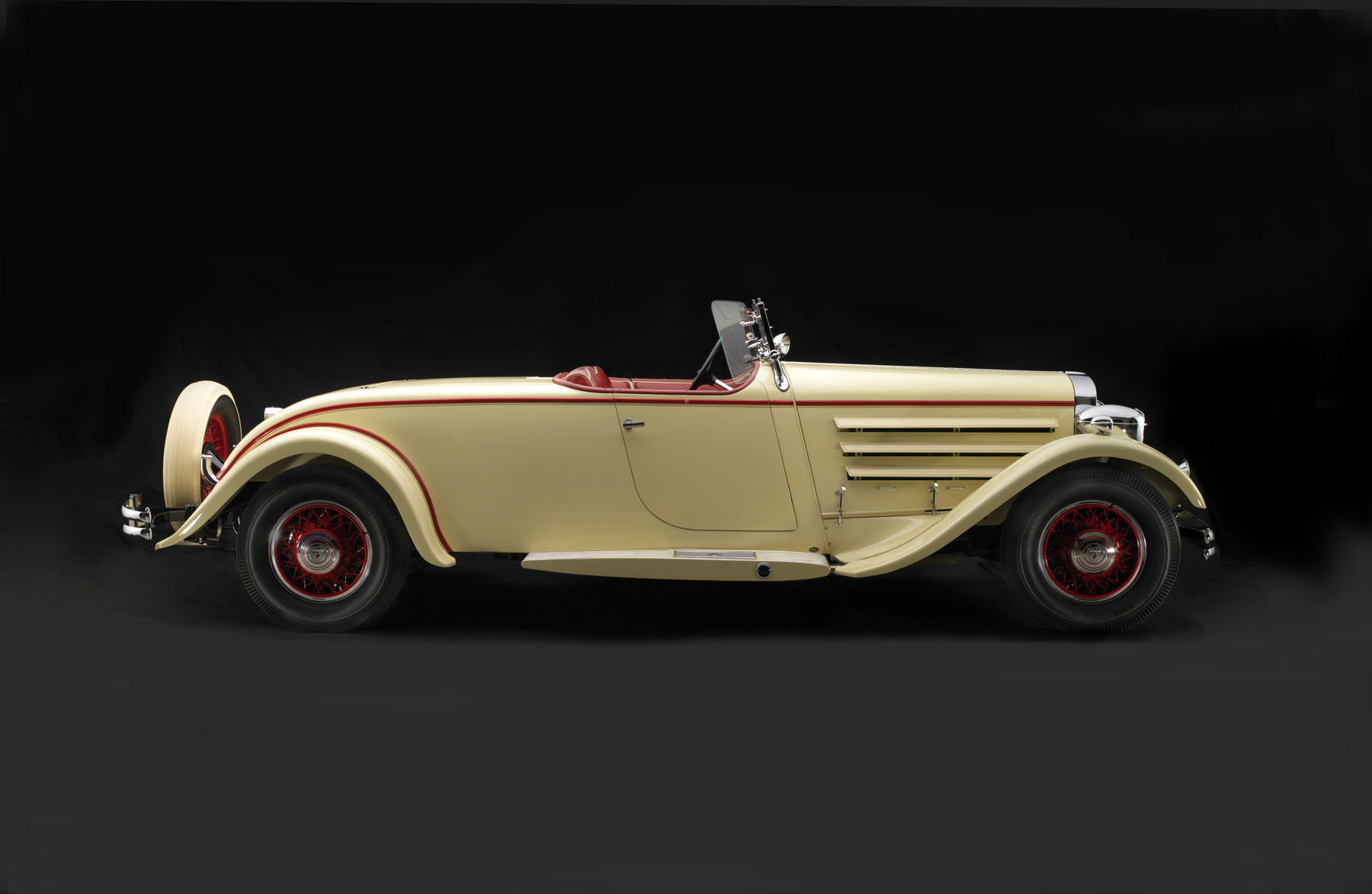
Some of these are just ravishing (my favourite is the Hispano-Suiza H6B Dubonnet “Xenia” Coupe, 1938) and the elegant, eloquent photography (including some wonderfully framed detail shots), highlights the sensuousness of these objects of desire. Also, notice the almost negligible rear view windows in most of the cars…

What happened to this kind of style detail in today’s cars?

Dr Marcus Bunyan


Many thankx to The Frist Center for the Visual Arts for allowing me to publish the photographs in the posting. Please click on the photographs for a larger version of the image.


'Bugatti Type 46 Semi-profile Coupe' 1930


Bugatti Type 46 Semi-profile Coupe
1930
Collection of Merle and Peter Mullin
Photograph © 2013 Peter Harholdt


Ettore Bugatti lived on a baronial estate in Alsace-Lorraine in eastern France. His father Carlo created elegant, Art Deco style furniture. His younger brother Rembrandt was an accomplished sculptor of animals. Although he was trained as an apprentice engineer, Ettore possessed the dreamy soul of an artist. From 1911 to 1939, he built hand-crafted automobiles of sporting competence, which, thanks to the styling talents of Ettore’s young son Jean, were also hauntingly beautiful.

Working with factory designer Joseph Walter, Jean Bugatti initially designed an Art Deco Superprofile coupe with rakish, valance-free fenders, a steeply canted windscreen, a roof with a perfect radius, and dramatic sweep panels. This has been called by Paul Kestler, author of Bugatti: Evolution of Style, “one of the landmarks in coach building history, made at the moment when classic lines were yielding to something more aerodynamic.” Only a few Superprofile coupes were built. One original survives in the Louwman Collection, Netherlands.

Inspired by the earlier Superprofile design, Walter and Bugatti’s Semi-profile coupes like the one in this exhibition had a more practical and equally attractive notchback rear treatment and twin exposed spare wheels. The chassis of this Bugatti Type 46 was made in 1929 and bodied in 1934 in Czechoslovakia by coach builder Oldřich Ulik. Originally a two-door sedan, it was re-bodied by Barry Price, with period-perfect coachwork in the exact style of Jean Bugatti’s Semi-profile coupe. The interior is elephant hide leather. In Bugatti circles, a magnificent re-creation like this one is welcomed, when it is done so beautifully.

valance-free fenders: this type of motor vehicle wheel covering did not make use of the then popular valance, a piece of metal added to the side of the fender that prevented splashing along the body
 

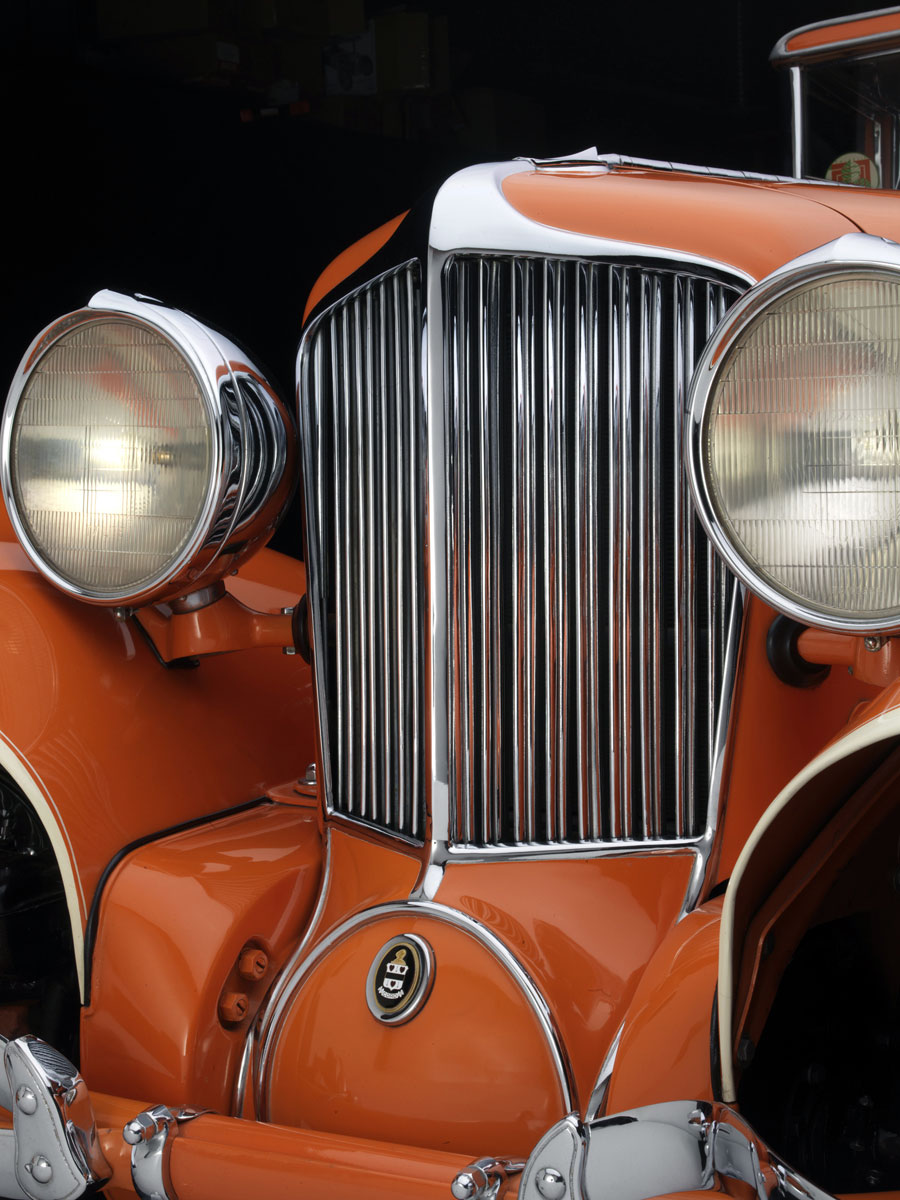
'Cord L-29 Cabriolet' 1929

'Cord L-29 Cabriolet' 1929

'Cord L-29 Cabriolet' 1929

'Cord L-29 Cabriolet' 1929


Cord L-29 Cabriolet
1929
Collection of Auburn Cord Duesenberg Automobile Museum
Photograph © 2013 Peter Harholdt


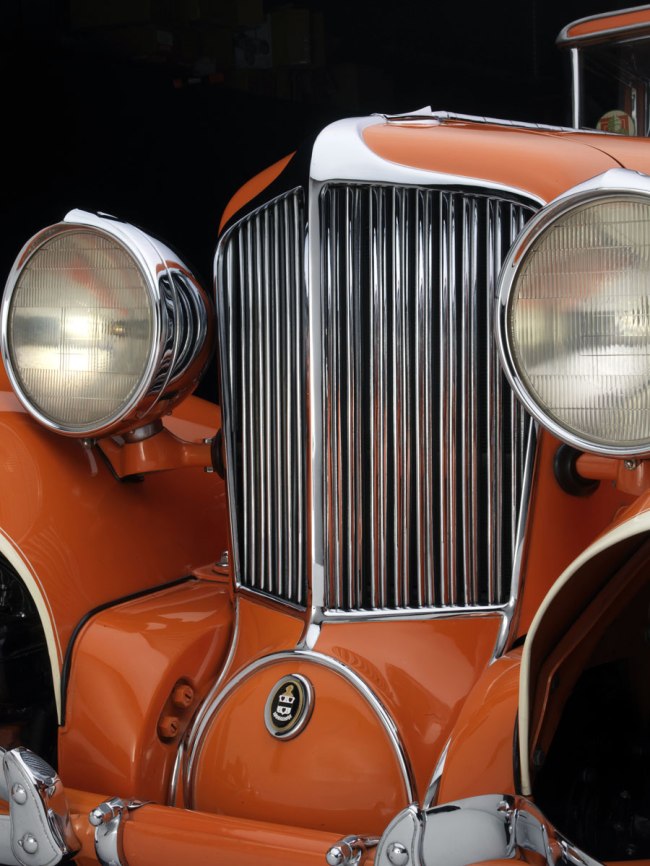
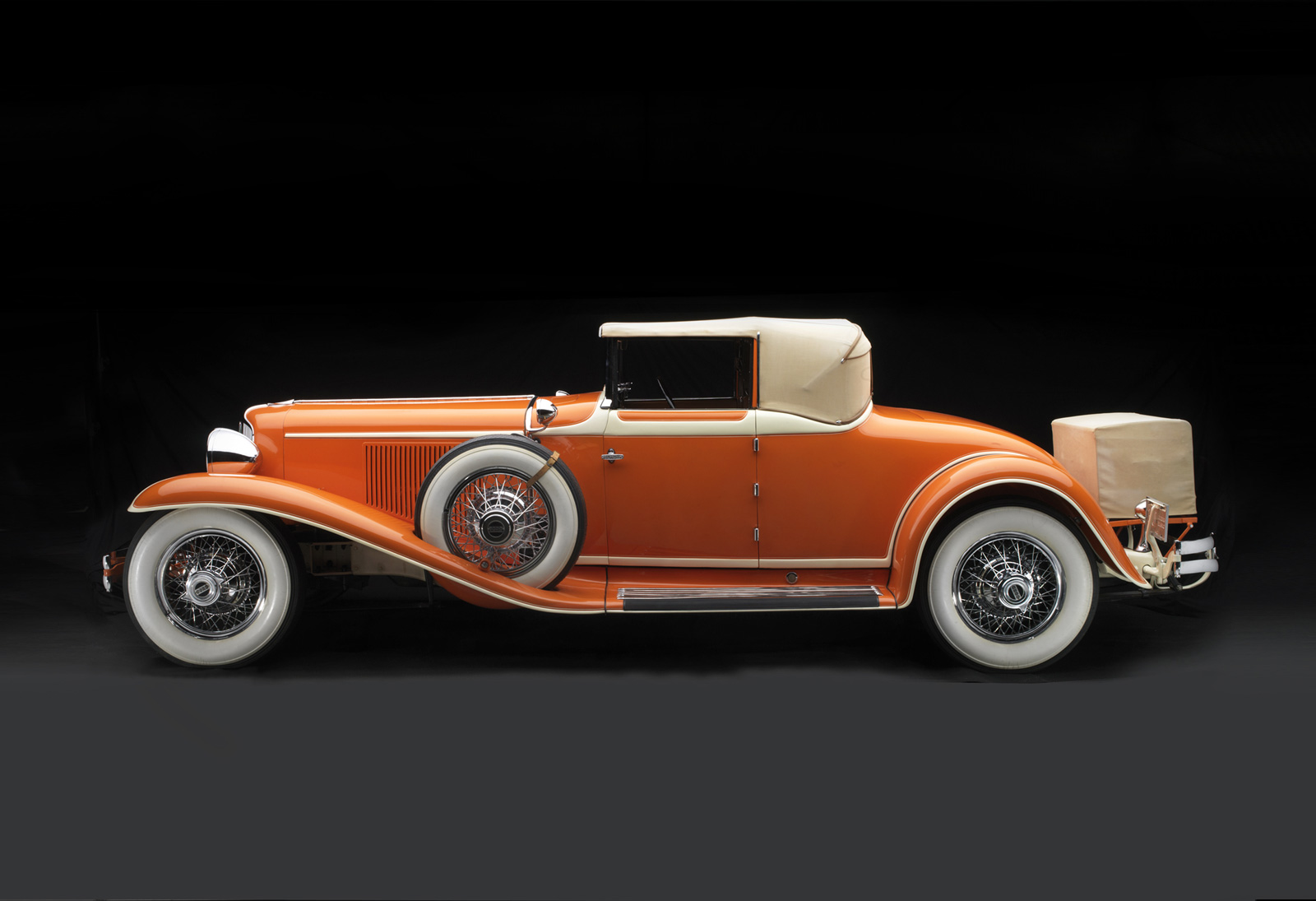
Errett Lobban Cord rose to national prominence after rescuing the Auburn Automobile Company of Auburn, Indiana, in 1928. Seeing an opportunity for a uniquely engineered luxury automotive brand, Cord encouraged Fred and August Duesenberg to build what he envisioned as America’s finest motorcar.

Noted race car constructor Harry A. Miller and his associates were retained by Cord to engineer a radical front-drive chassis. The innovative and luxurious L-29 Cord, unfortunately introduced just as the New York Stock Market crashed, combined its engine, transaxle, and clutch into one co-located assembly, eliminating a conventional driveshaft. This permitted a 10-inch lower chassis and necessitated a lengthy hood that appeared even longer because the designer, Al Leamy, surrounded the radiator with an integrated sheet-metal assembly, finished to match the car’s colour.

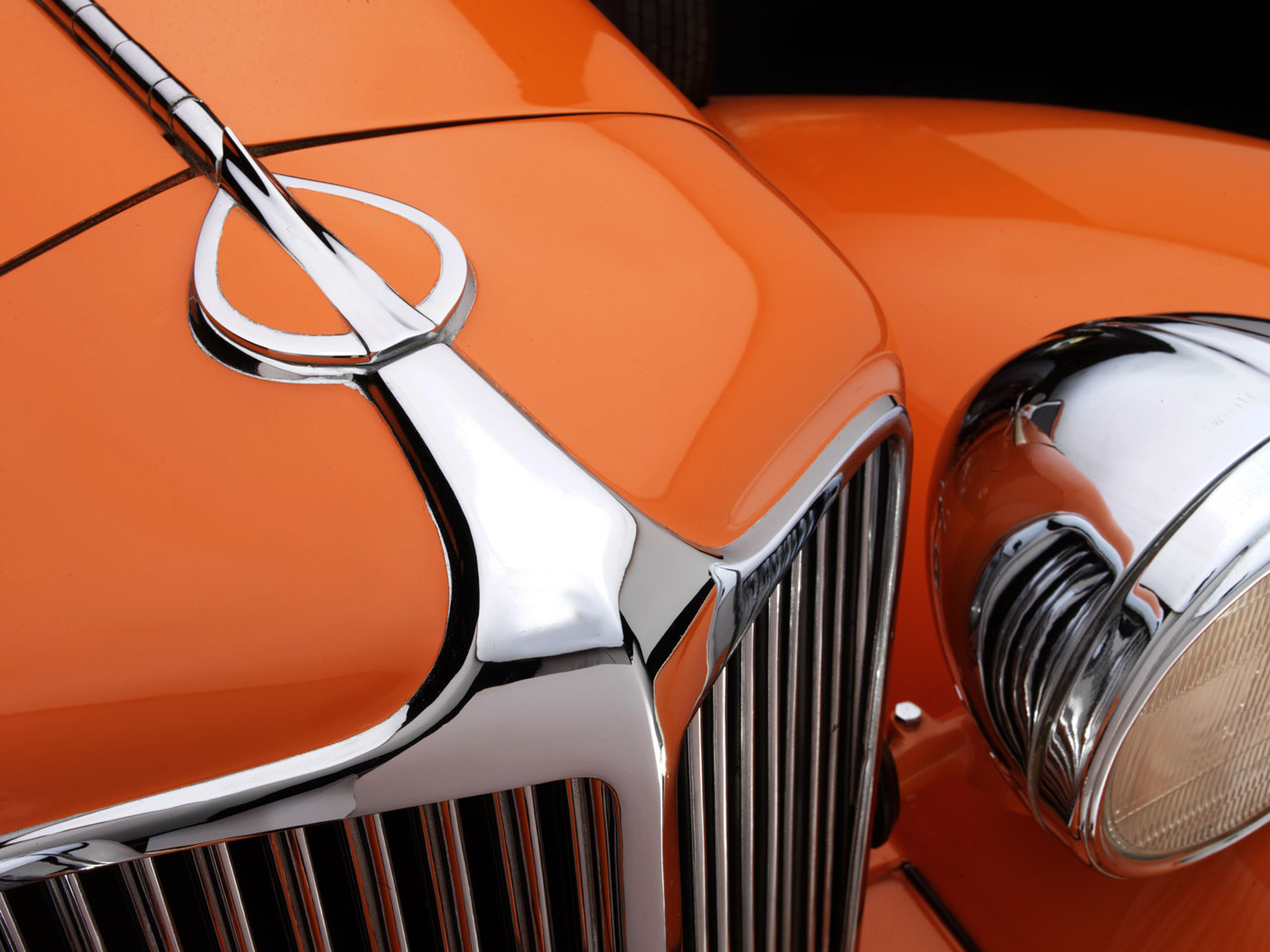
The lowslung Cord’s bodylines were exquisite. Features include an Art Deco styled transaxle cover, an elegant streamlined grille that evoked the styling of Harry Miller’s racing cars, sweeping clamshell fenders, sleek body side reveals which accentuated the car’s length, and a low roofline. These are embellished by myriad Art Deco styled details ranging from accented fender trim, tapered headlamp shapes, etched door-handle detailing and tiny, but exquisite instrument panel dials.

The L-29 Cord’s art moderne styling and engineering prowess attracted buyers of taste and style who were not afraid to try something different. Owners included the era’s most prominent and controversial architect, Frank Lloyd Wright, who bought a new L-29 Convertible Phaeton in 1929 and drove it for many years. This stunning cabriolet, was purchased in the 1950s by the Frank Lloyd Wright Foundation, Wright’s legal caretaker until his death in 1959. Wright had many of his cars painted in a bright hue called Taliesin orange. The finish of this Cord is a close approximation.
 

'Henderson KJ Streamline' 1930

'Henderson KJ Streamline' 1930

'Henderson KJ Streamline' 1930

'Henderson KJ Streamline' 1930


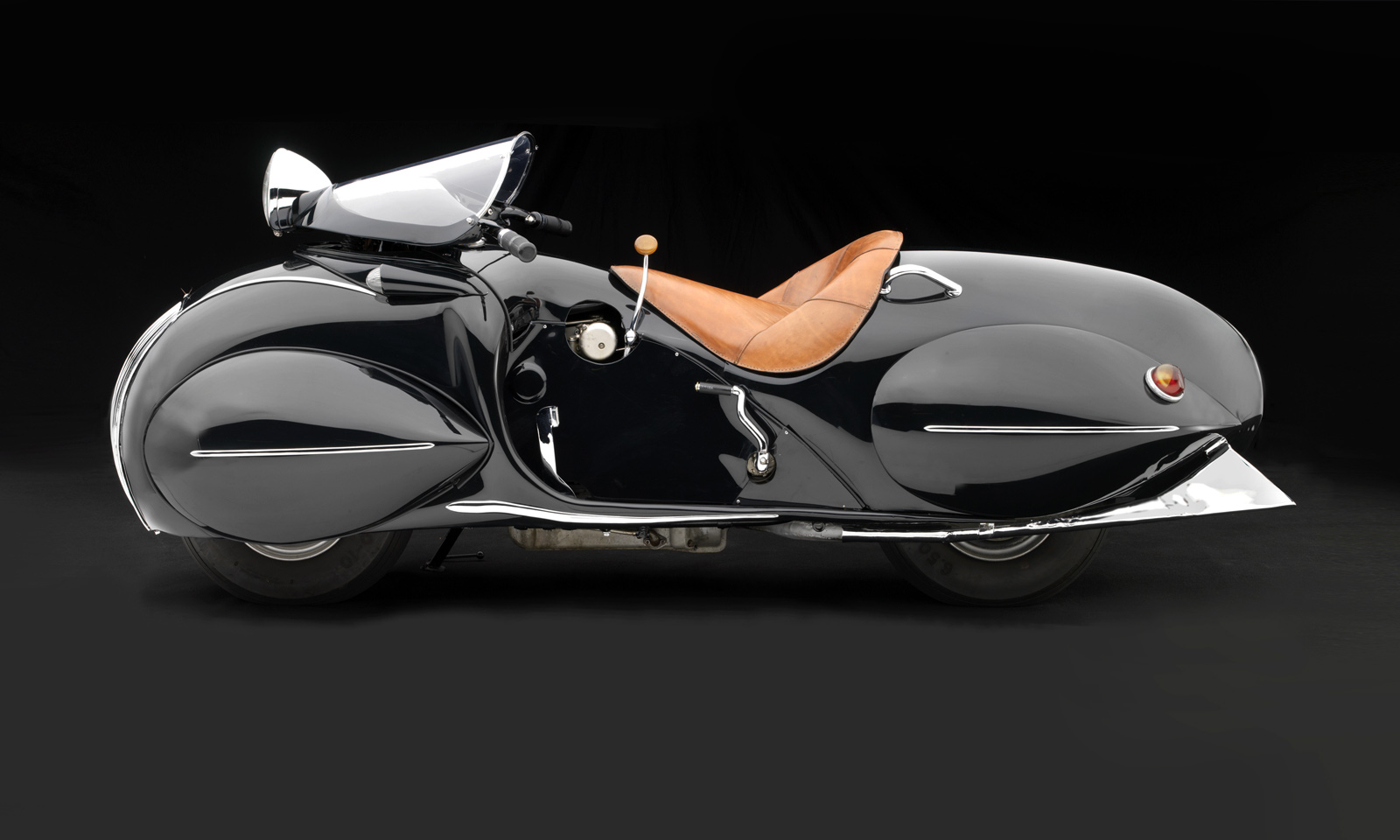
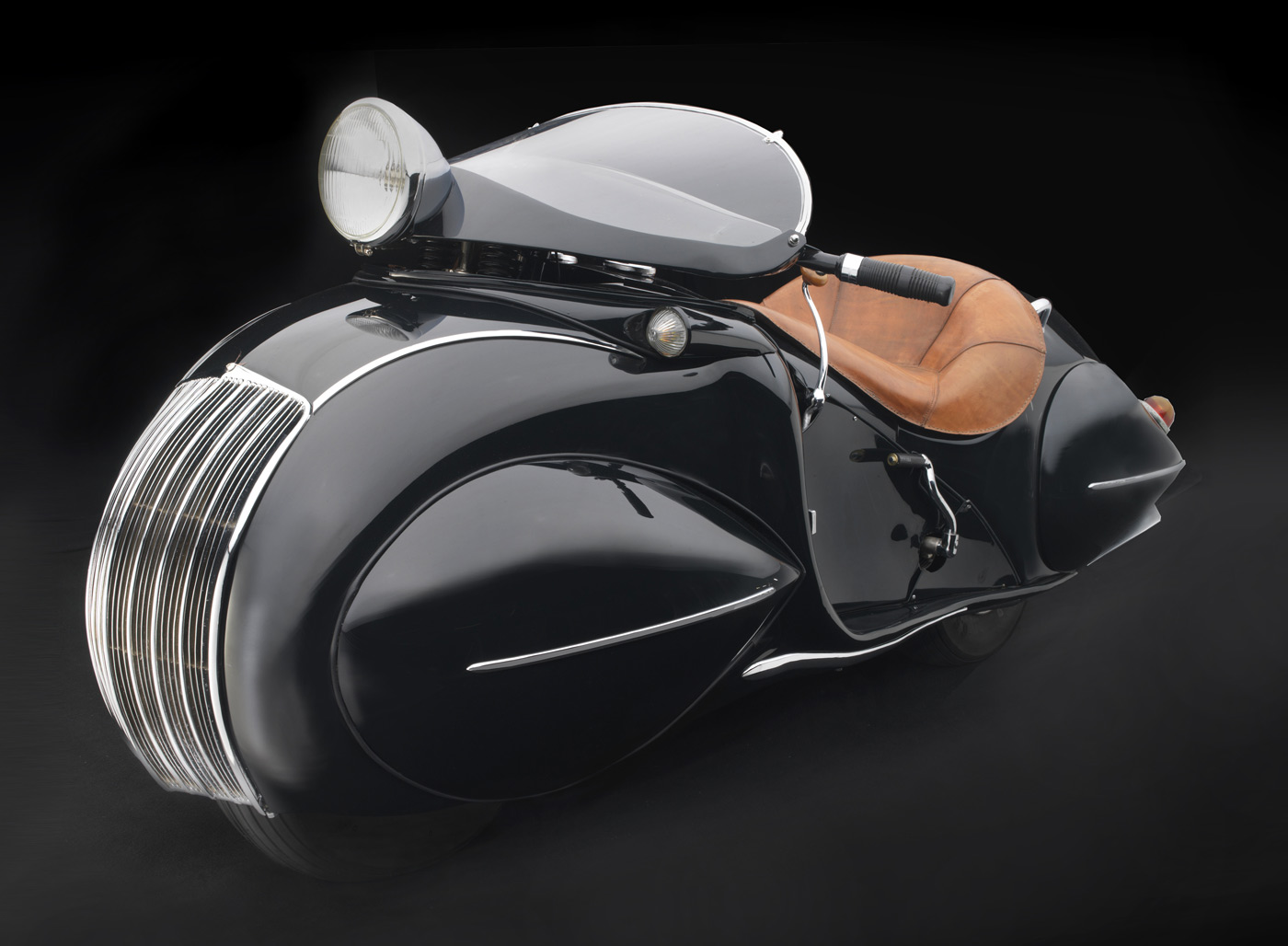
Henderson KJ Streamline
1930
Collection of Frank Westfall
Photograph © 2013 Peter Harholdt


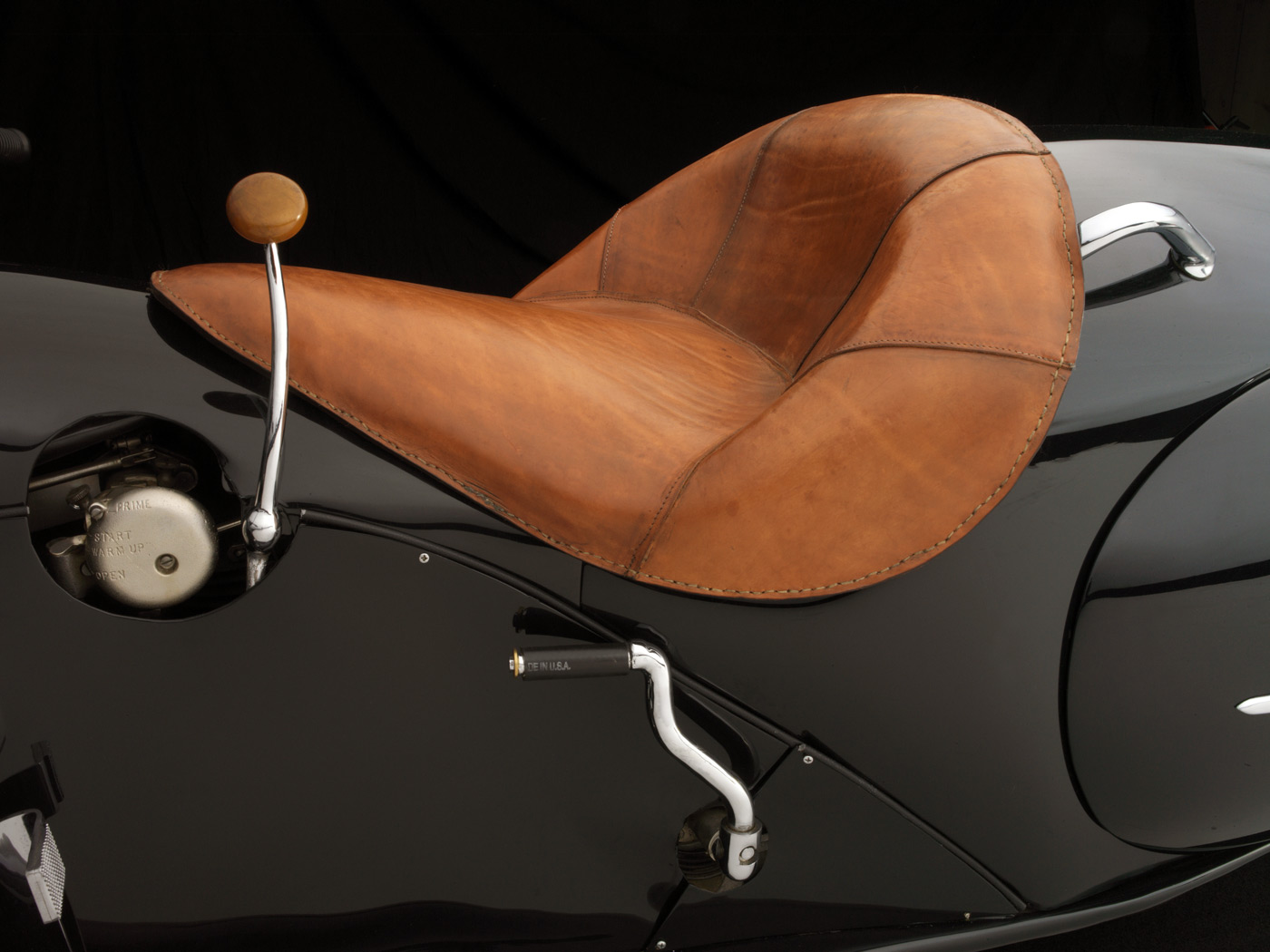
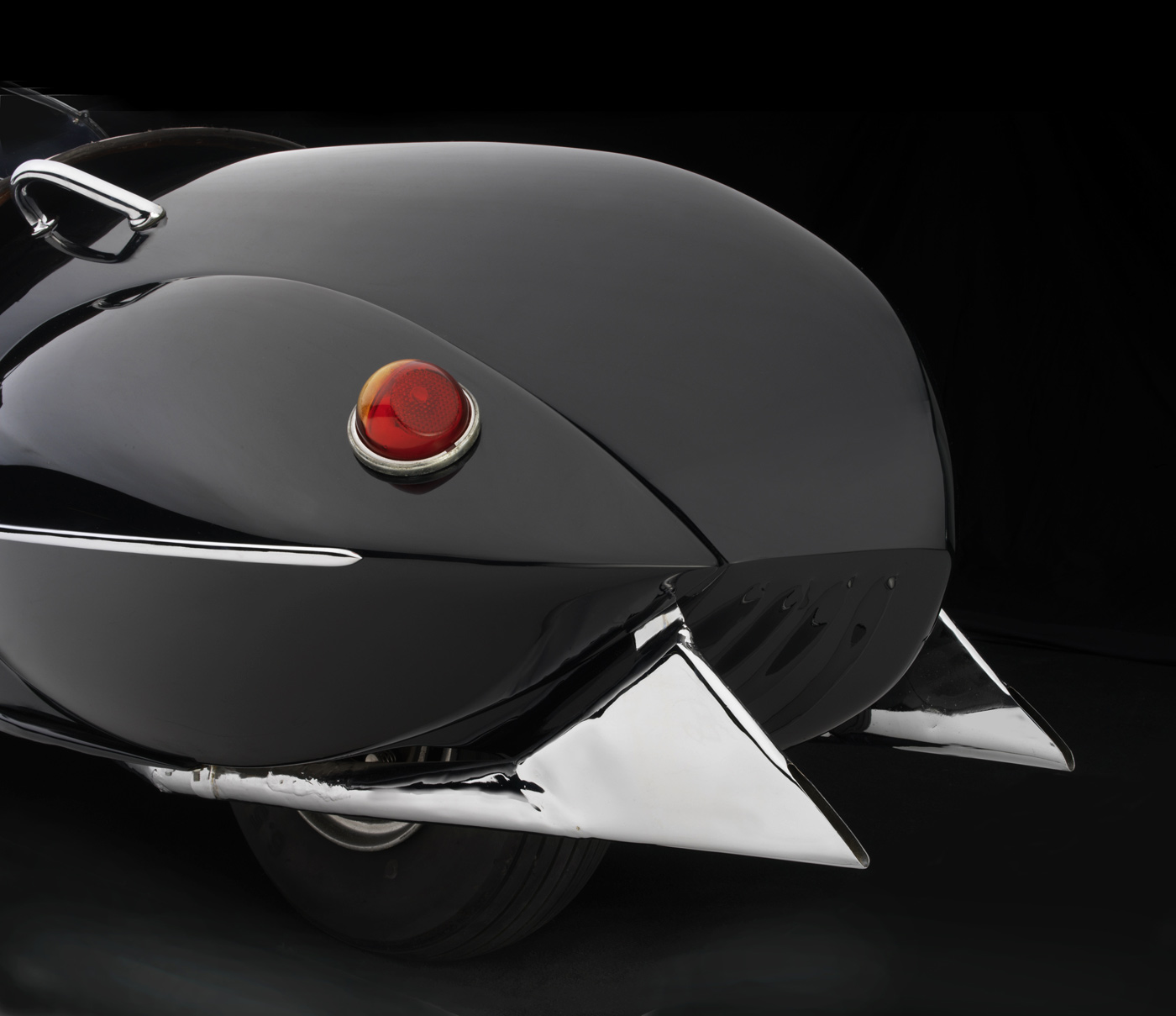
With its 1,200-cc, 40-brake horsepower, in-line four-cylinder engine, the 1930 Henderson Model KJ Streamline could exceed 100 mph. In an era when streamlining was used sparingly in motorcycle design, American Orley Ray Courtney’s enclosed bodywork was virtually unknown on production two-wheelers (except for a few racing machines), making the KJ an unusual and beautiful example of Art Deco design.

Courtney believed that the motorcycle industry failed to provide weather protection and luxury for its riders. His radically streamlined KJ body shell was unlike anything ever done on two wheels. The sleek vehicle had a curved, vertical-bar grille, reminiscent of the Chrysler Airflow, and the rear resembled an Auburn boat-tail speedster. The panels were hand-formed of steel with a power hammer.

Stunningly beautiful but impractical and hard to ride, the Streamline’s complex curved body was heavy and was difficult to make. In 1941, Courtney filed for a patent for a second motorcycle design with fully enclosed fenders. Perhaps he was influenced by the fact that the Indian Motocycle Company had introduced its partially skirted fenders in 1940, and that motorcyclists were becoming more accepting of this trend.*

* In 1923, Indian Motorcycle Company became Indian Motocycle Company and retained that name until the company closed in 1953.

 

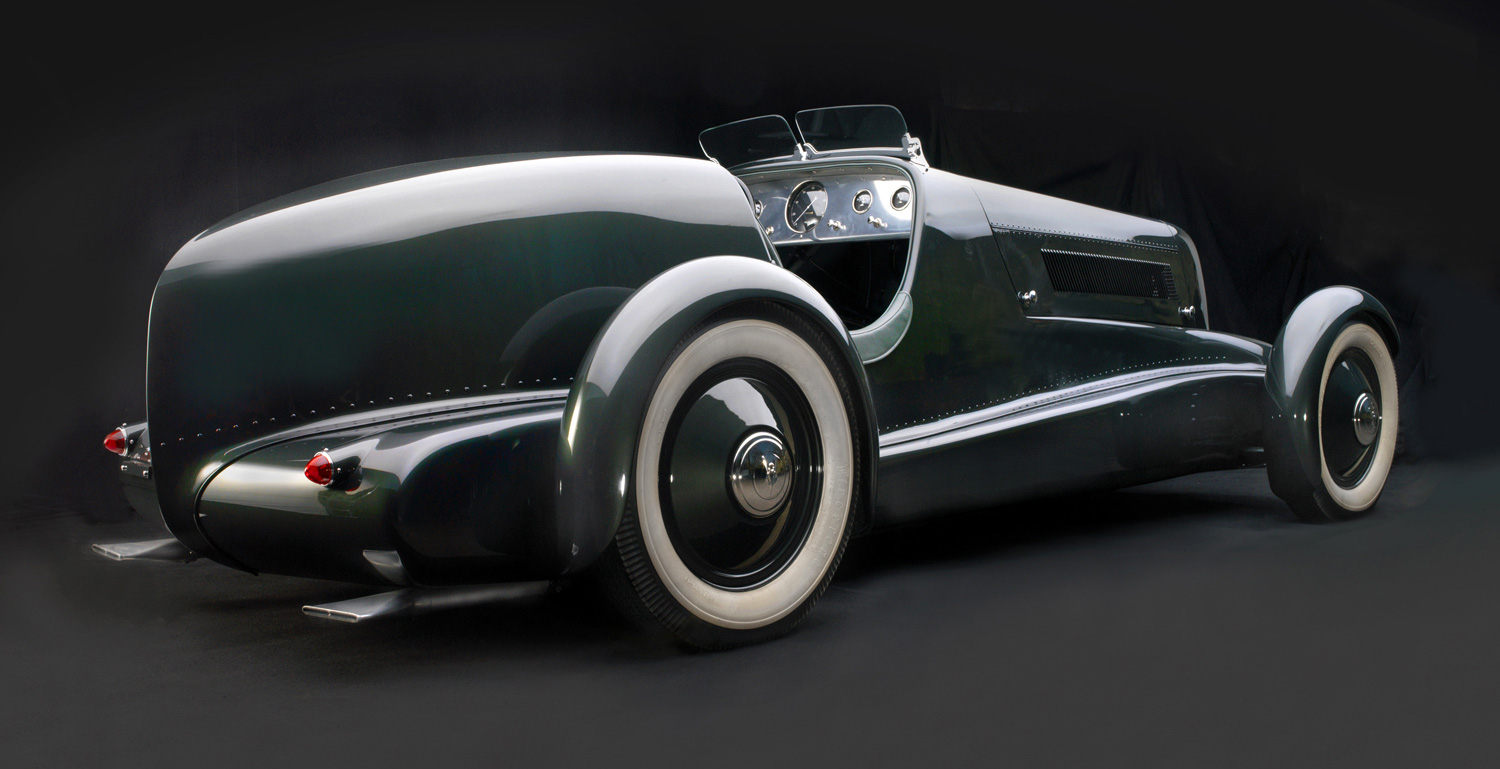
'Model 40 Special Speedster'™ 1934

'Model 40 Special Speedster'™ 1934

'Model 40 Special Speedster'™ 1934

'Model 40 Special Speedster'™ 1934


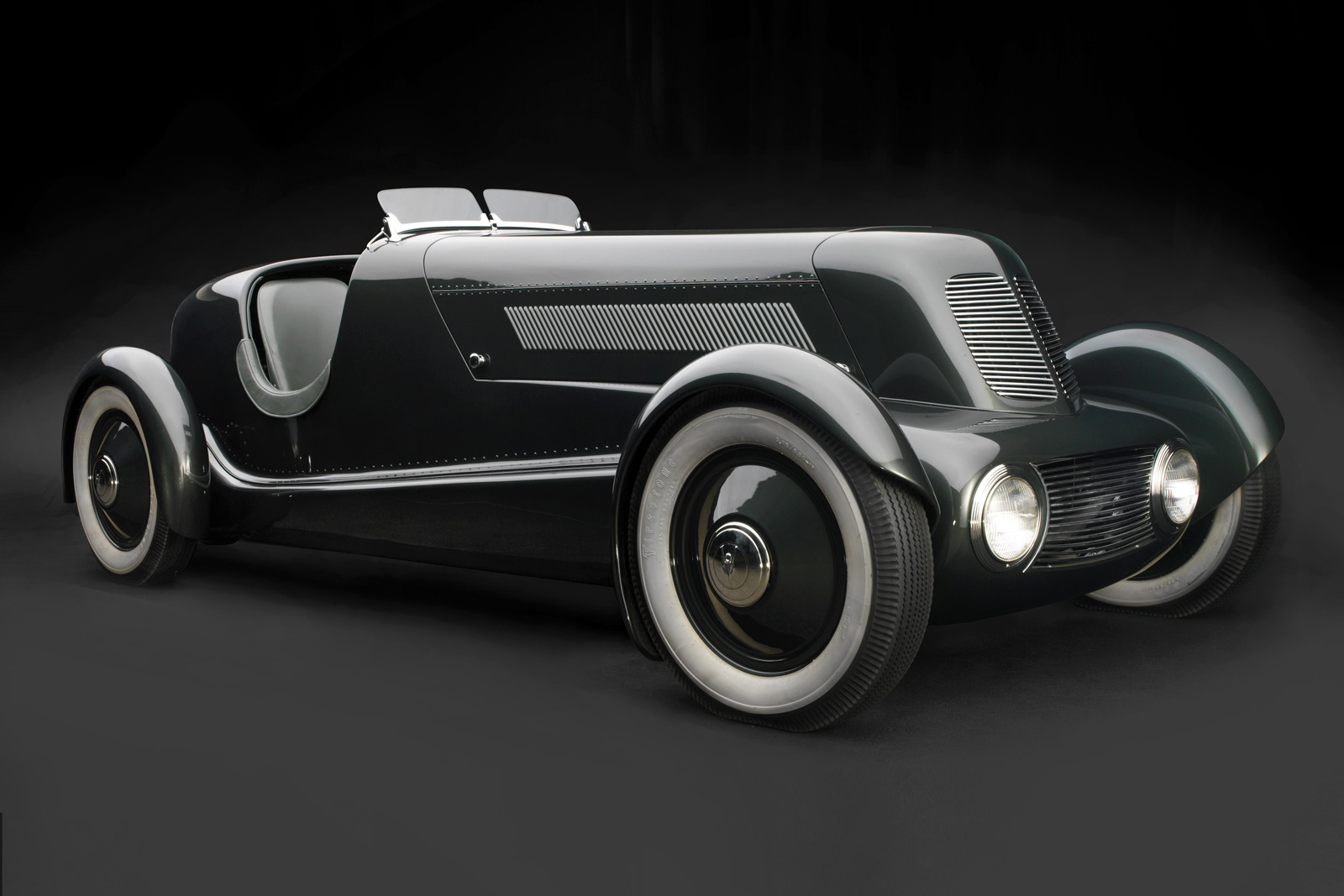
Model 40 Special Speedster
1934
Owned and restored by Edsel & Eleanor Ford House, Grosse Pointe Shores, Michigan
Photograph © 2013 Peter Harholdt


Edsel B. Ford, President of Ford Motor Company of Dearborn, Michigan, asked his styling chief, Eugene T. “Bob” Gregorie, to build a “continental” roadster that could have limited production potential. Gregorie sketched alternatives and then built a 1/25th scale model that he tested in a small wind tunnel. Because of its 1934 Ford (also known as Model 40) origins, the roadster became known as the Model 40 Special Speedster.

Assisted by Ford Aircraft personnel, Gregorie’s team fabricated a taper-tailed aluminium body, mounted over a custom welded tubular structural framework. This car resembles the 1935 Miller-Ford Indianapolis 500 two-man race cars, but it was designed and built prior to their construction. This car’s long, low proportions were unlike anything Ford Motor Company had ever built. The Speedster weighs about 2,100 pounds. Its engine is now a 100-brake horsepower Mercury flathead V-8.

This Model 40 was one of Edsel Ford’s personal vehicles. After his death in 1943, the Speedster passed through several owners. Bill Warner, founder of Florida’s Amelia Island Concours d’Elegance, read an article that mentioned that the Model 40 Special Speedster was owned by a fellow Floridian. Warner tracked the Speedster down, bought it, and later sold it to Texas mega-collector John O’Quinn. After O’Quinn died in 2009, Edsel Ford II arranged for the speedster’s purchase. In August 2010, this car was restored by RM Restorations, Blenheim, Ontario, Canada.


Sensuous Steel: Art Deco Automobiles is an exhibition of Art Deco automobiles from some of the most renowned car collections in the United States. Inspired by the Frist Center’s historic Art Deco building, this exhibition features spectacular automobiles and motorcycles from the 1930s and ’40s that exemplify the classic elegance, luxurious materials, and iconography of motion that characterises vehicles influenced by the Art Deco style.

Fascination with automobiles transcends age, gender, and environment.  While today automotive manufacturers often strive for economy and efficiency, there was a time when elegance reigned.  Influenced by the Art Deco movement that began in Paris in the early 1920s and propelled to prominence with the success of the International Exposition of Modern Decorative and Industrial Arts in 1925, automakers embraced the sleek new streamlined forms and aircraft-inspired materials, creating memorable automobiles that still thrill all who see them. The exhibition features 18 automobiles and two motorcycles from some of the most important collectors and collections in the United States.

While today automotive manufacturers often strive for economy and efficiency, there was a time when elegance reigned.  Like the Frist Center’s historic building, the automobiles included in Sensuous Steel display the classic grace and modern luxury of Art Deco design. An eclectic, machine-inspired decorative style that thrived between the two World Wars, Art Deco combined craft motifs with industrial materials and lavish embellishments. The movement began in Paris in the early 1920s and was propelled to prominence in with the success of the International Exhibition of Modern Decorative and Industrial Arts in 1925. Automakers embraced the sleek iconography of motion and aircraft-inspired materials connotative of Art Deco, creating memorable automobiles that still thrill all who see them.

“Sensuous Steel is the first major museum auto exhibition devoted entirely to Art Deco automobiles, and there could be no more fitting a venue than the Frist Center’s landmark historic Art Deco building, which was completed in 1934,” notes Frist Center Executive Director Dr. Susan H. Edwards. “Art Deco styling influenced everything from architecture to sleek passenger trains and luxury liners, furniture, appliances, jewellery, objets d’art, signage, fashionable clothing and, of course, automobiles. The works in this exhibition convey the breadth, diversity, and stunning artistry of cars designed in the Art Deco style.”

“Rapidly changing and ever-evolving, the automobile became the perfect metal canvas upon which industrial designers expressed the vital spirit of the interwar period,” explains Guest Curator Ken Gross. “To give the illusion of dramatic movement and forward thrust, cars of the 1930s and ’40s merged gentle curves with angular edges. These automobiles were made from the finest materials and sported beautifully crafted ornamentation, geometric grillwork, and the elegant miniature statuary of hood ornaments. The classic cars of the Art Deco age remain today as among the most visually exciting, iconic and refined designs of the twentieth century.”

Press release from The Frist Center for the Visual Arts website


'Voisin Type C27 Aérosport Coupe' 1934


Voisin Type C27 Aérosport Coupe
1934
Collection of Merle and Peter Mullin
Photograph © 2013 Peter Harholdt


Pioneer French aeronautical expert Gabriel Voisin was an eccentric visionary whose aircraft greatly benefited his country during World War I. He later became an automobile manufacturer, achieving, in the words of designer Robert Cumberford, “sometimes… amazing results.”

Voisin’s chief designer, André “Noël-Noël” Telmont, who was trained as an architect, based the style of this Type C27 Aérosport after the earlier Voisin Aérodyne’s radical new look. Telmont was inspired by aviation and architecture, whereas other French coach builders such as Joseph Figoni turned to the female form and imitated its soft curves. Gabriel Voisin unveiled the Aérosport at the 1935 Madrid Auto Salon. With the Aérosport, Telmont presented wonderfully balanced Art Deco coachwork that featured new, modern, and aerodynamic themes. The Aérosport’s profile outlined the cross-section of an imaginary wing. The semi-circular roof line traced the contours of a cockpit, and the larger surfaces simulated a fuselage.

A lack of funds meant the factory was unable to fully develop this model. Telmont sold the car to Moïse Kisling, a leading European artist. After a front-end crash, the coupe was kept in a disassembled state at the Saliot garage near Paris for years. With the information provided by period photos of the Type C27, this renovated body was built in France to match the original in every detail. The car has its original chassis, a correct Voisin engine and transmission parts, and accessories from one of the two original Type C27s.


'Packard Twelve Model 1106 Sport Coupe by LeBaron' 1934


Packard Twelve Model 1106 Sport Coupe by LeBaron
1934
Collection of Robert and Sandra Bahre
Photograph © 2013 Peter Harholdt


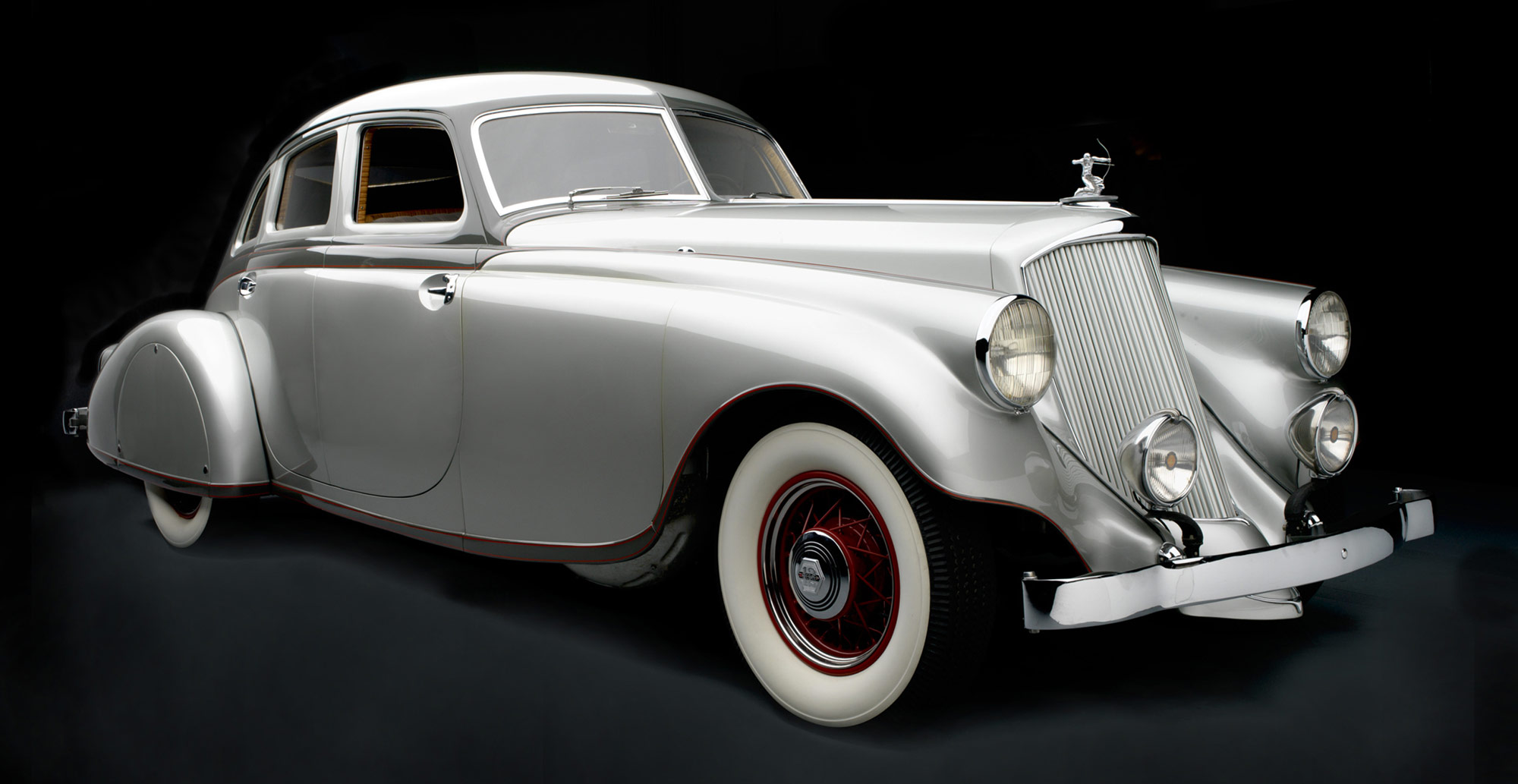
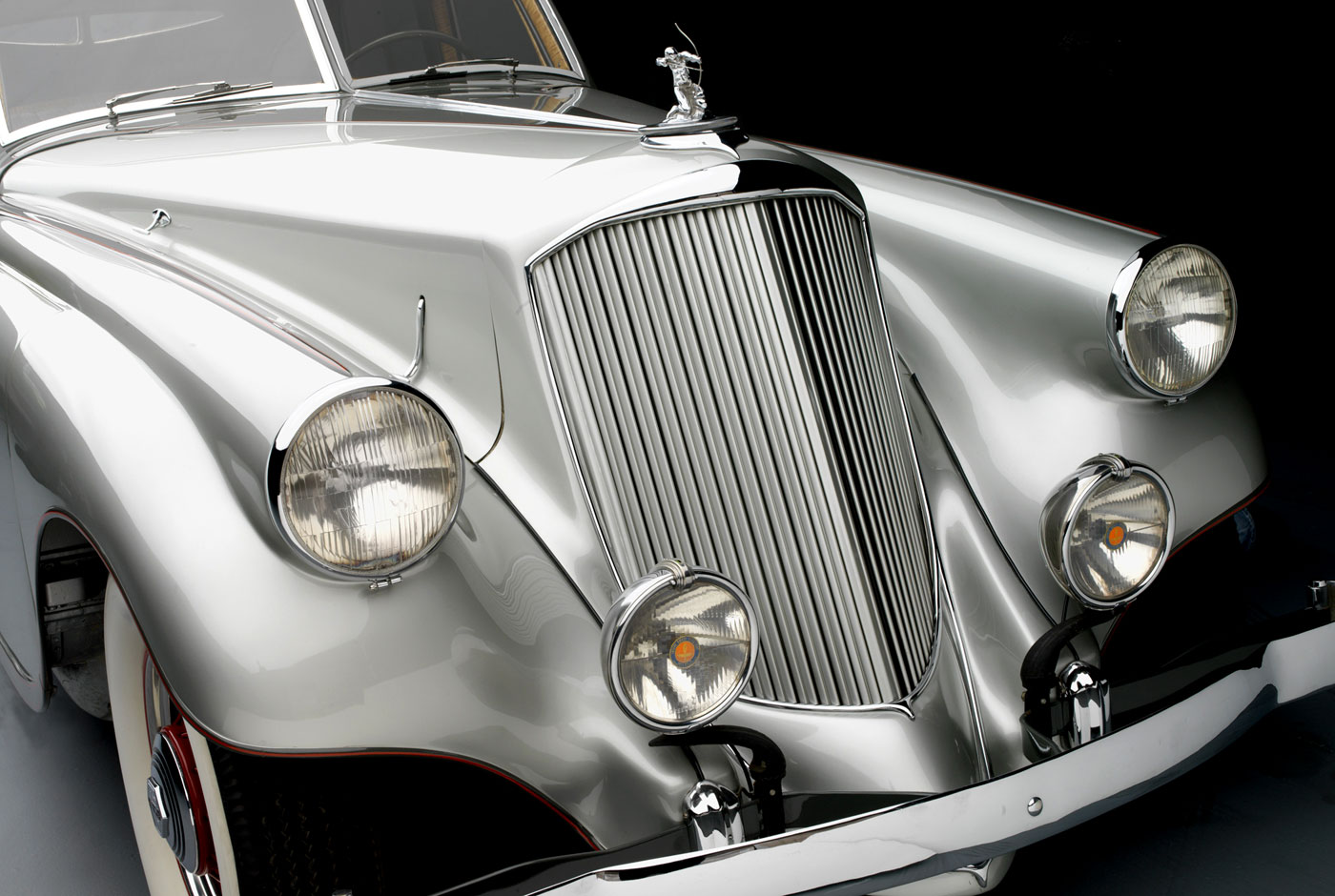
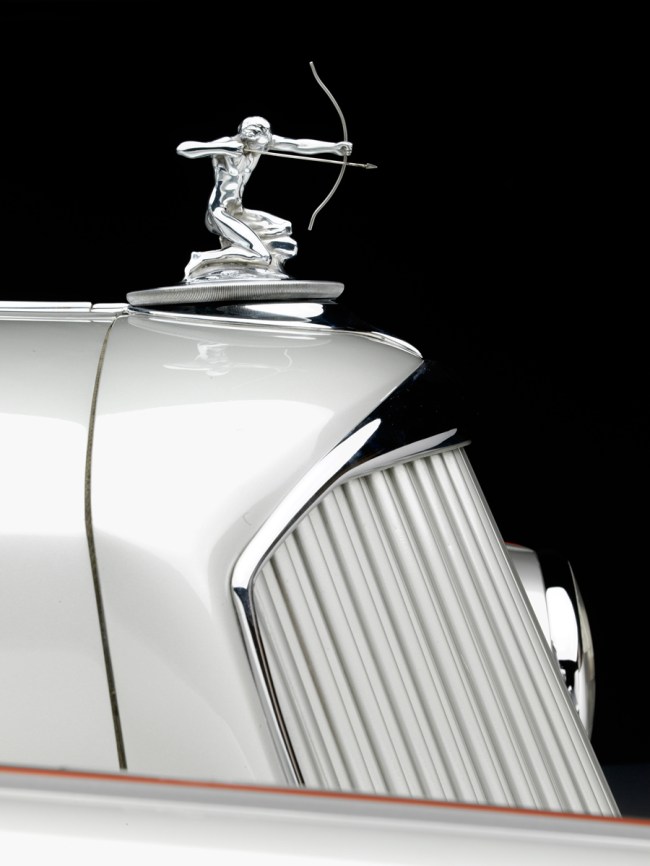
Pierce-Arrow Silver Arrow Sedan 1933

Pierce-Arrow Silver Arrow Sedan 1933

Pierce-Arrow Silver Arrow Sedan 1933

'Pierce-Arrow Silver Arrow Sedan' 1933

Pierce-Arrow Silver Arrow Sedan 1933


Pierce-Arrow Silver Arrow Sedan
1933
Collection of Academy of Art University Automobile Museum, San Francisco
Photograph © 2013 Peter Harholdt


With its dignified advertising, elegant styling, and respectable dealers, Buffalo, New York-based Pierce-Arrow rivalled Packard for prestige. The staunchly conservative Pierce-Arrow clung to six-cylinders long after Packard and Cadillac introduced V-8s. Facing tough competition, sales slumped and Pierce merged with Studebaker in 1926.

In 1932, Phillip O. Wright designed a streamlined fastback coupe on the Pierce-Arrow V-12 chassis. He moved to Studebaker headquarters in South Bend, Indiana, where his rakish design evolved into a sporty sedan with a low roofline, envelope front and skirted rear fenders, and faired-in headlamp nacelles. With its 175-brake horsepower V-12, a Silver Arrow could top 115 mph. In a sea of boxy sedans, the sleek Pierce-Arrow show car was the height of modernity. Five hand-built Silver Arrows toured 1933 auto shows, where they caused a sensation. At the Chicago Century of Progress, the Silver Arrow upstaged Cadillac’s Aero-Dynamic coupe, Duesenberg’s “Twenty Grand,” and Packard’s “Car of the Dome,” with its audacious, aircraft-like shape.

Priced at a then-expensive $10,000, the Silver Arrow was one of thirty-eight different 1933 Pierce-Arrow models. Sales slipped to just 2,152 units in total. After succumbing in mid-1938, Pierce-Arrow is best remembered for its magnificent Silver Arrow. This is one of three survivors.

faired-in headlamp nacelles: a fairing, primarily found on aircraft, is a streamlined structure used to create a more aerodynamic outline; a nacelle refers to any streamlined housing or enclosure; in this instance, the forward facing headlamps are enclosed within a housing and placed with a fairing that does not extend beyond the curvilinear profile of the overall design
 

'Chrysler Imperial Model C-2 Airflow Coupe' 1935


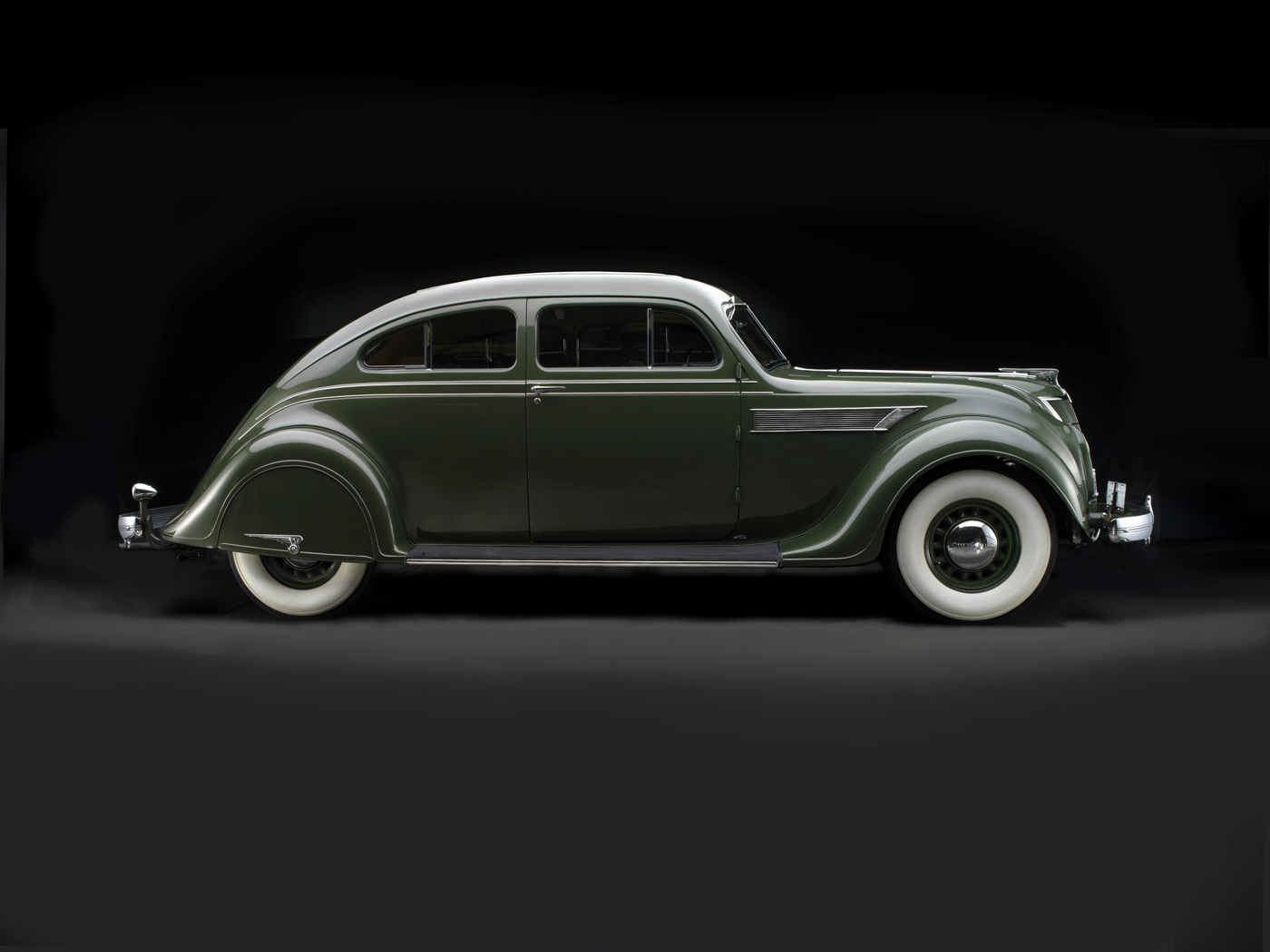
Chrysler Imperial Model C-2 Airflow Coupe
1935
Collection of John and Lynn Heimerl, Suffolk, VA
Photograph © 2013 Peter Harholdt


'Cord 810 "Armchair" Beverly Sedan' 1936


Cord 810 “Armchair” Beverly Sedan
1936
Collection of Richard and Debbie Fass
Photograph © 2013 Peter Harholdt

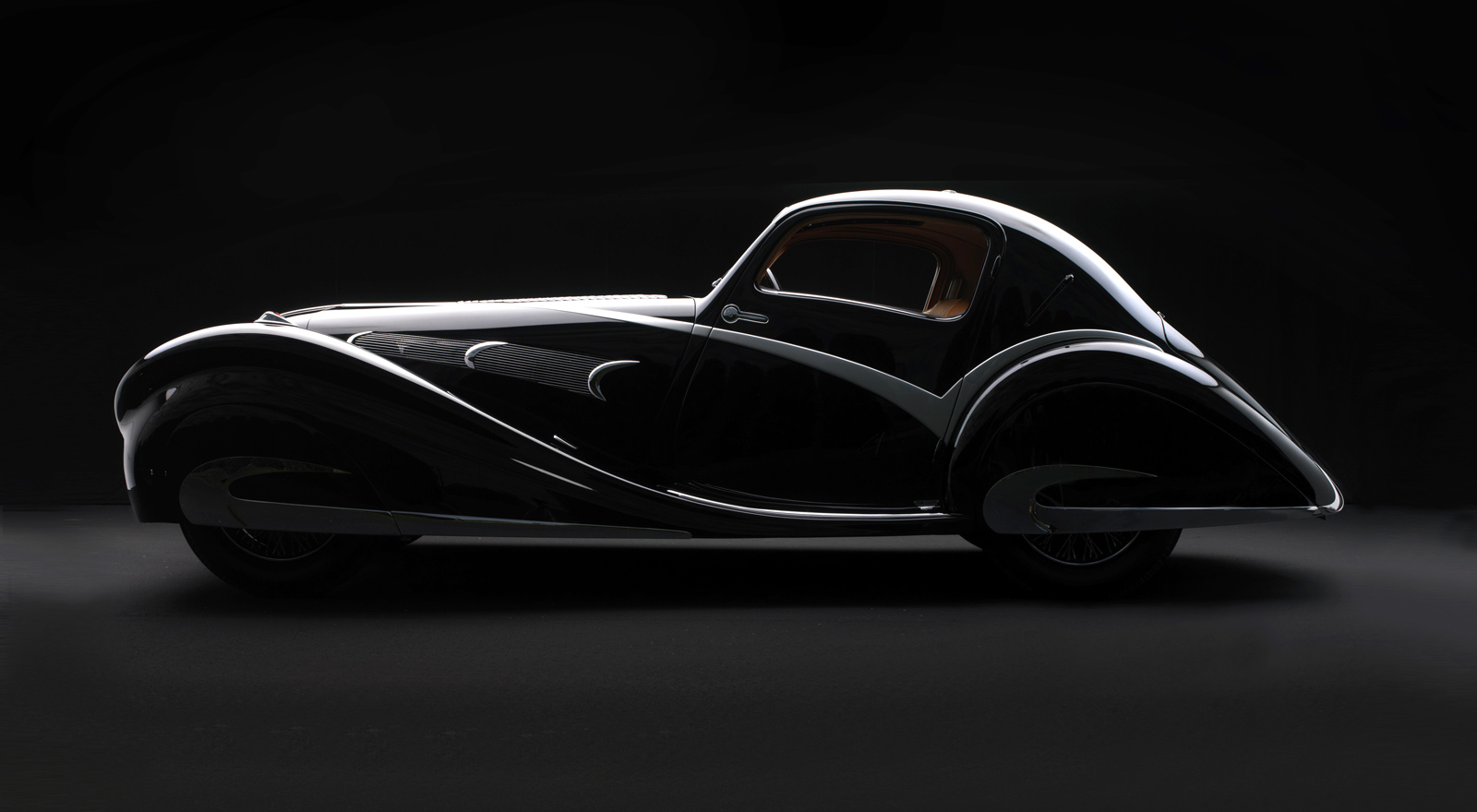
 

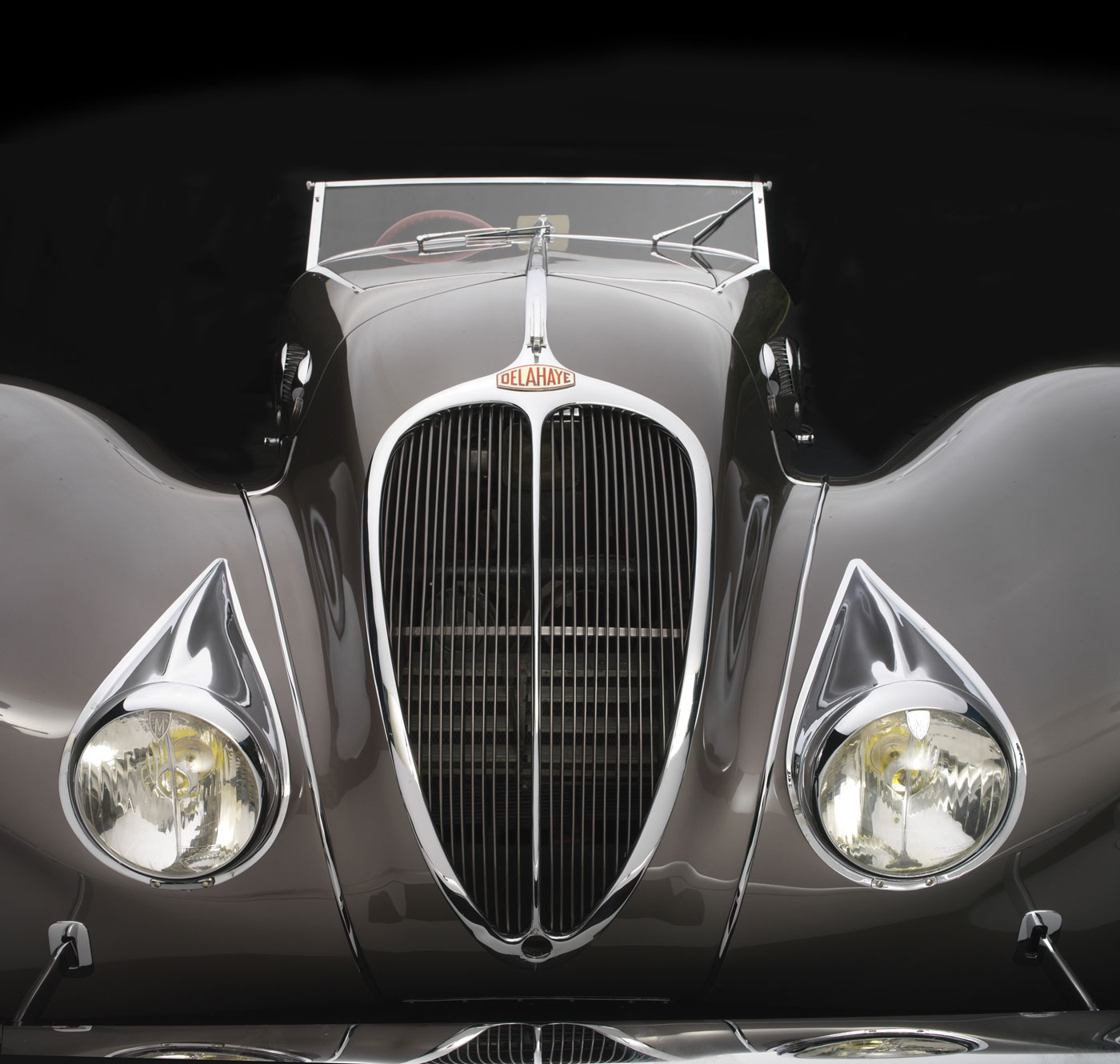
'Delahaye 135M Figoni & Falaschi Competition Coupe' 1936

'Delahaye 135M Figoni & Falaschi Competition Coupe' 1936

'Delahaye 135M Figoni & Falaschi Competition Coupe' 1936

'Delahaye 135M Figoni & Falaschi Competition Coupe' 1936


Delahaye 135M Figoni & Falaschi Competition Coupe
1936
Collection of Jim Patterson/The Patterson Collection
Photograph © 2013 Peter Harholdt


This stunning Delahaye was one of French coach builders Joseph Figoni and Ovidio Falaschi’s first aerodynamic coupe designs. With its dramatic enclosed fenders and hand-crafted aluminium body, it was built on one of the fifty short chassis designed by the Delahaye Company for sporty two-seater models. It was equipped with a four-speed competition-style manual transmission, appropriate to a sporty coupe intended for rally competition. The dashboard included a Jaeger rally clock, and the trunk had only enough room to carry a spare tire. The engine was a highly reliable 4-litre Delahaye six with three downdraft Solex carburettors.

The coupe’s striking design emphasised flowing lines with teardrop-shaped chrome accents on the hood and the front and rear fenders. The door handles and headlights were flush with the body. The dashboard was made of rich, golden wood, a Figoni & Falaschi signature. A sliding metal sunroof and a windshield that opened outward at the bottom afforded ventilation.

A French racing driver named Albert Perrot commissioned this coupe. The Comtesse de la Saint Amour de Chanaz displayed it at a concours d’elegance in Cannes. It was successfully hidden from the Germans during World War II. After the war, it reportedly belonged to actress Dolores del Rio, a well-known owner of exotic cars who lived in Mexico City and Los Angeles.

After several more owners, Don Williams, of the Blackhawk Collection, purchased the coupe in the late 1990s. Some time earlier, the Delahaye’s original engine had broken down; it was replaced with a postwar model, and the old engine was retained. In 2004, the Delahaye became the property of Mr. James Patterson, who re-installed the original engine and had the car beautifully restored.
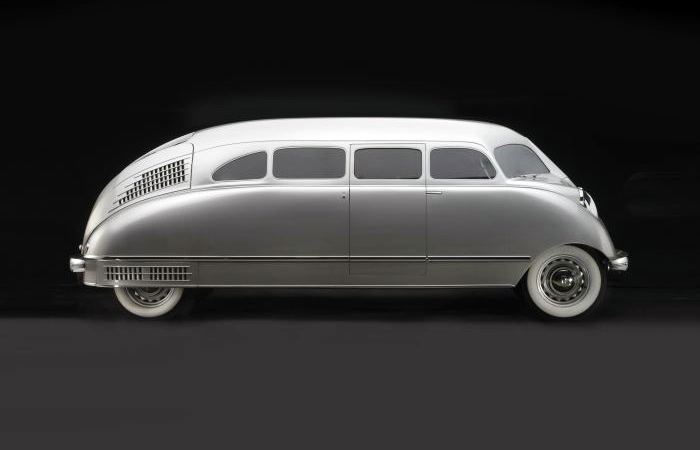
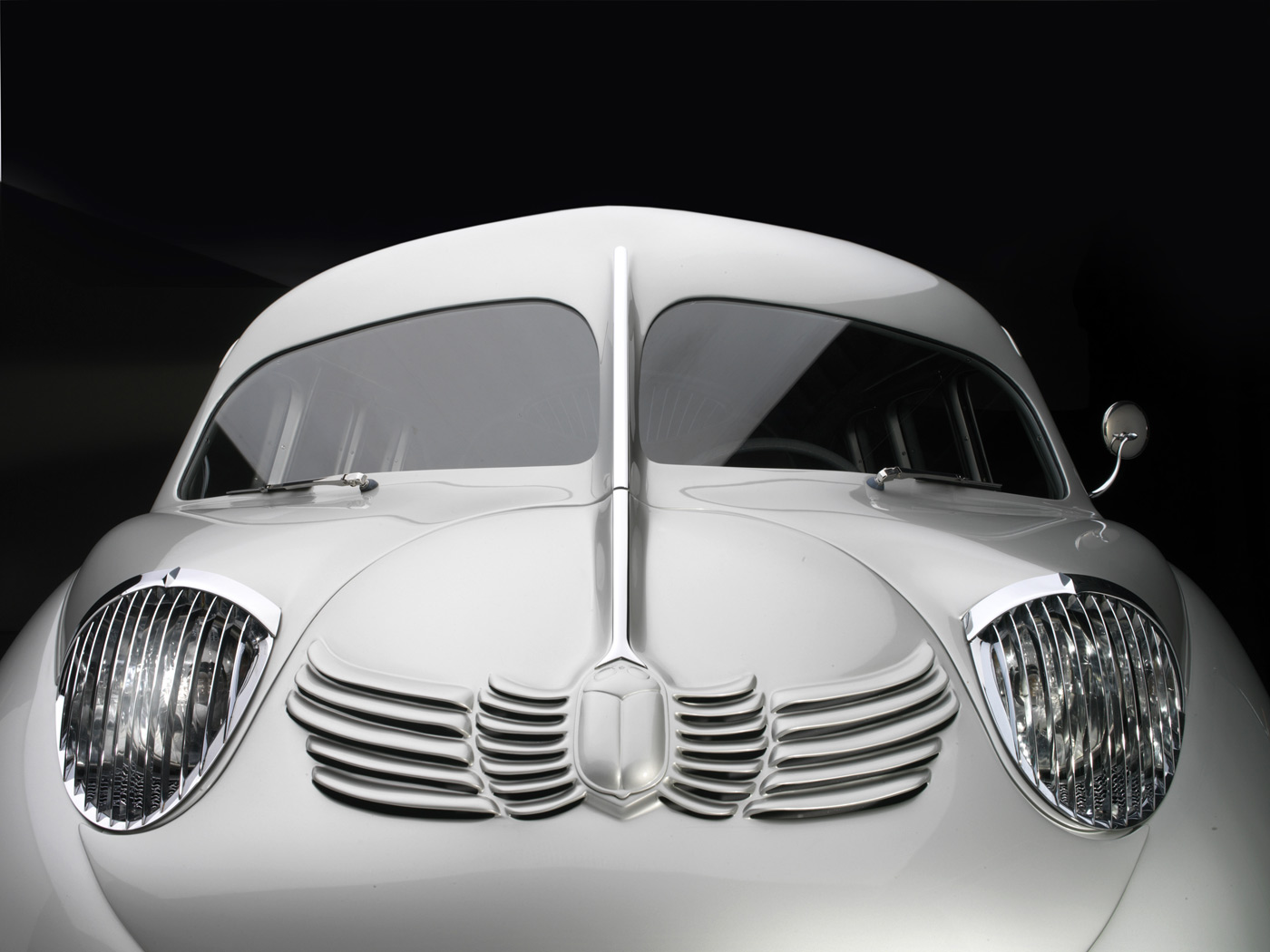
 

'Stout Scarab' 1936

'Stout Scarab' 1936

'Stout Scarab' 1936

'Stout Scarab' 1936


Stout Scarab
1936
Collection of Larry Smith
Photograph © 2013 Peter Harholdt


American aeronautical designer William Bushnell Stout modelled this sturdy Ford Tri-Motor after his own 3-AT aircraft. The futuristic Scarab (named for the Egyptian symbol based on a beetle) has a smooth and startling shape, with a tubular frame covered with aluminium panels surrounding a rear-mounted Ford flathead V-8. The Scarab’s passenger compartment is positioned within the car’s wheelbase. Access to the interior is through a central door on the right side, and there is a narrow front door on the left for the driver. This unusual configuration anticipated the first minivan.

The “turtle-shell” styling celebrated the Art Deco influence, beginning with decorative “moustaches” below the split windshield. It continues to be evident in the headlamps covered with thin grilles, and culminates in fan-shaped vertical fluting, framing the elegant cooling grilles. The Scarab’s design was even more radically different than other cars of the era like the ill-fated Chrysler Airflow. At $5,000, it was very expensive, and the Depression-wracked buying public did not recognise its many advantages.

Stout’s investors, like William K. Wrigley, the chewing gum magnate, and Willard Dow of Dow Chemical, purchased Scarabs, as did tire company owner Harvey Firestone and Robert Stranahan of Champion Spark Plug. At least six cars were built; some sources say nine. Scarab number five was shipped to France for the editor of Le Temps, a Paris newspaper. In the early 1950s, this Scarab was offered for sale on a Parisian used car lot and returned to America.

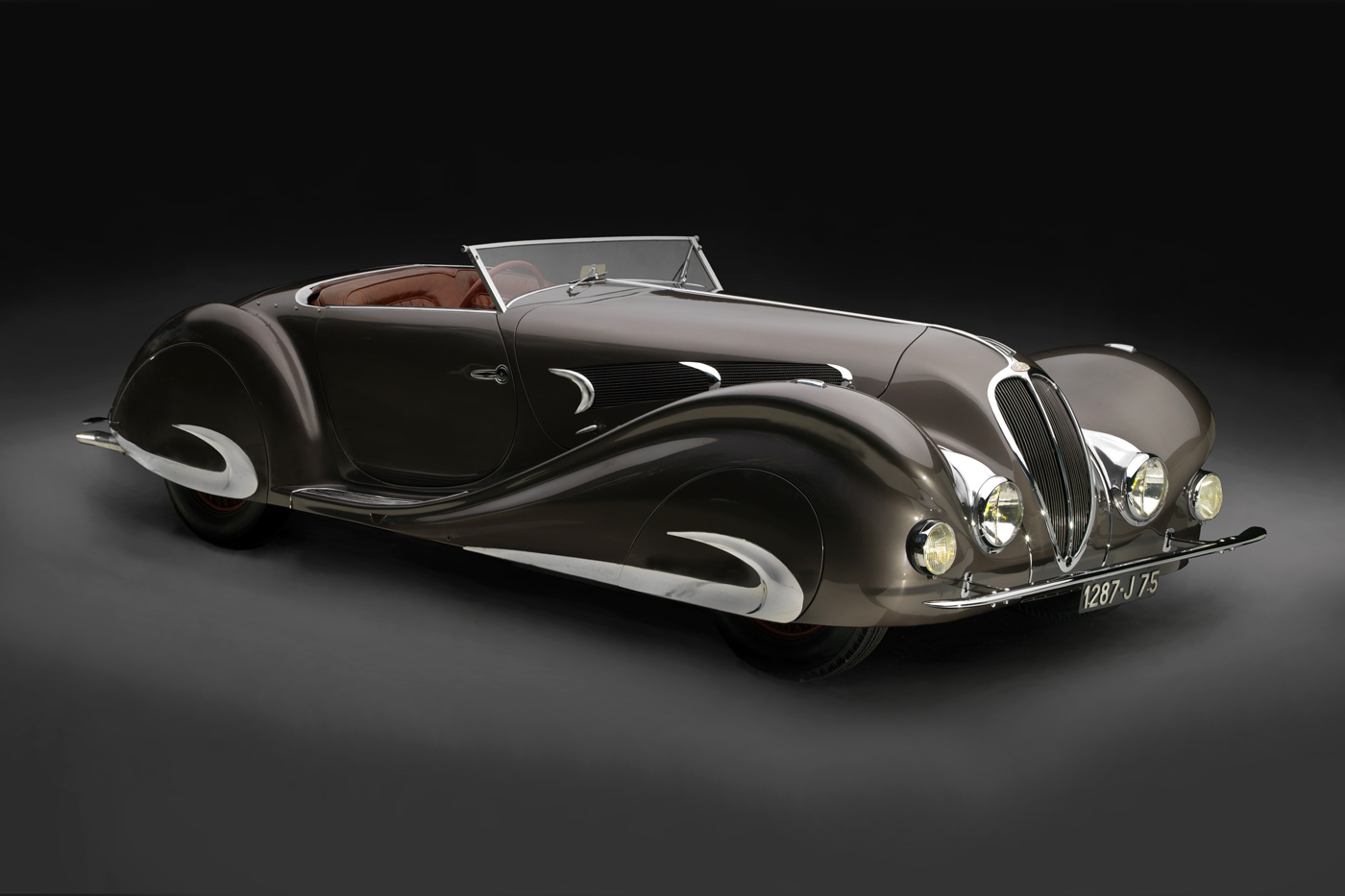
 

'Delahaye 135MS Roadster' 1937

'Delahaye 135MS Roadster' 1937

'Delahaye 135MS Roadster' 1937

'Delahaye 135MS Roadster' 1937


Delahaye 135MS Roadster
1937
Courtesy of The Revs Institute for Automotive Research @ the Collier Collection
Photograph © 2013 Peter Harholdt


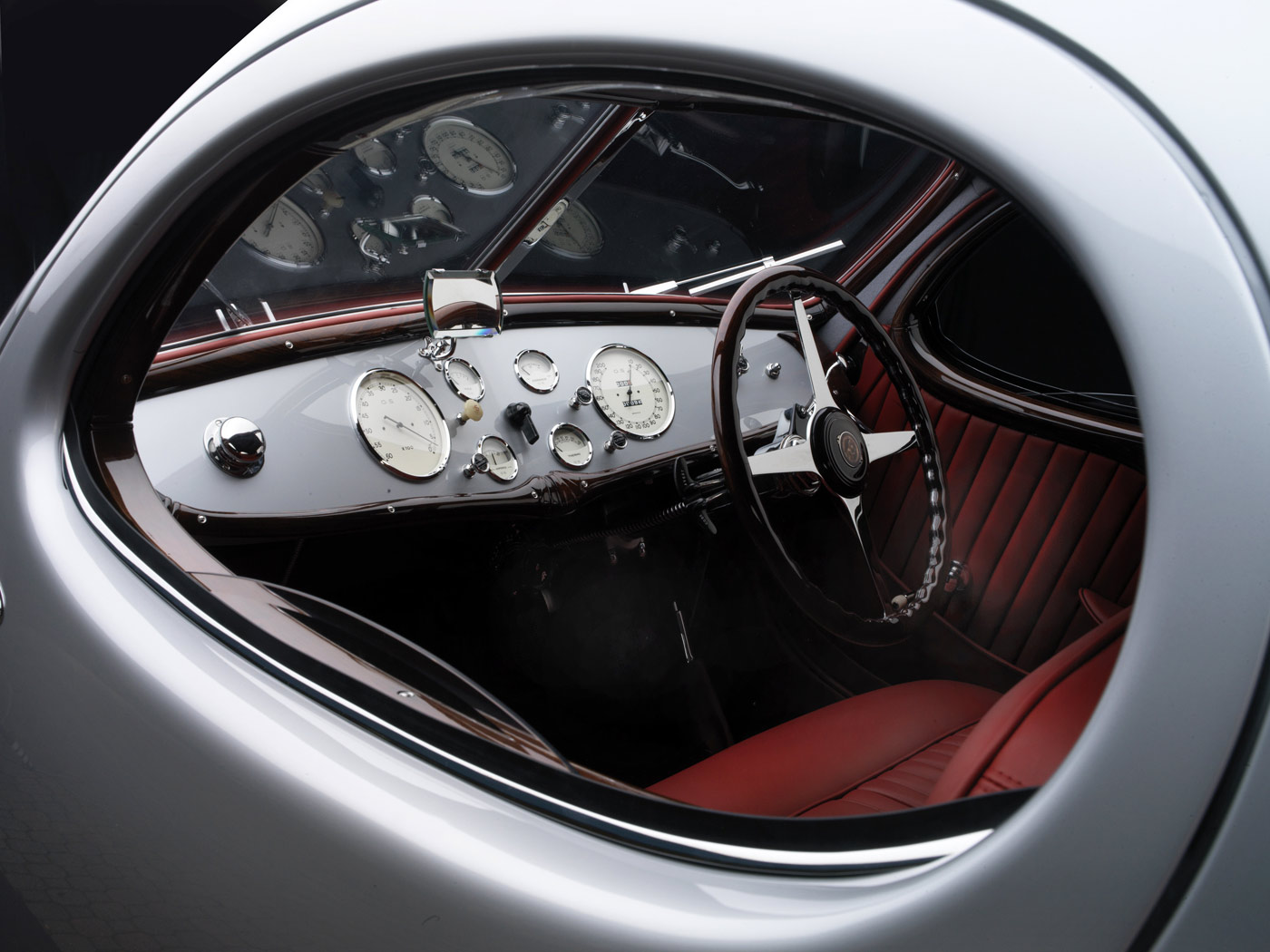
Parisian coach builders Joseph Figoni and Ovidio Falaschi produced this very special Delahaye 135MS Roadster for the 1937 Paris Auto Salon. Instead of conventional pontoon fenders that protruded from the car’s body, Figoni incorporated them into the body, heightening the impression of a singular, flowing form. Using Art Deco ornamentation, he punctuated the car’s hood with scalloped chrome trim that accentuated the curves of the fenders. Its all-aluminium body is built on a short 2.70-meter competition chassis. The dark red leather interior and matching carpets were provided by Hermès, a French company begun in the eighteenth century and known for its fine carriage building.

This low, sleek car appears to be moving when it is standing still. The avant-garde design caused a sensation at the Paris Auto Salon, and its completion provided Figoni & Falaschi with the opportunity to file four new patents: for the aerodynamic design that stabilised the front fenders; for the disappearing front windshield; for the special lightweight competition tubular seats; and for the disappearing convertible top. The original design also featured a central light mounted in the front grille. The door handles were mounted flush to the body surface, augmenting the roadster’s modern, clean look. In early 1938, this roadster returned to the Figoni & Falaschi shop, where the central headlight was removed, and front and rear bumpers were installed to protect the car from daily driving hazards.
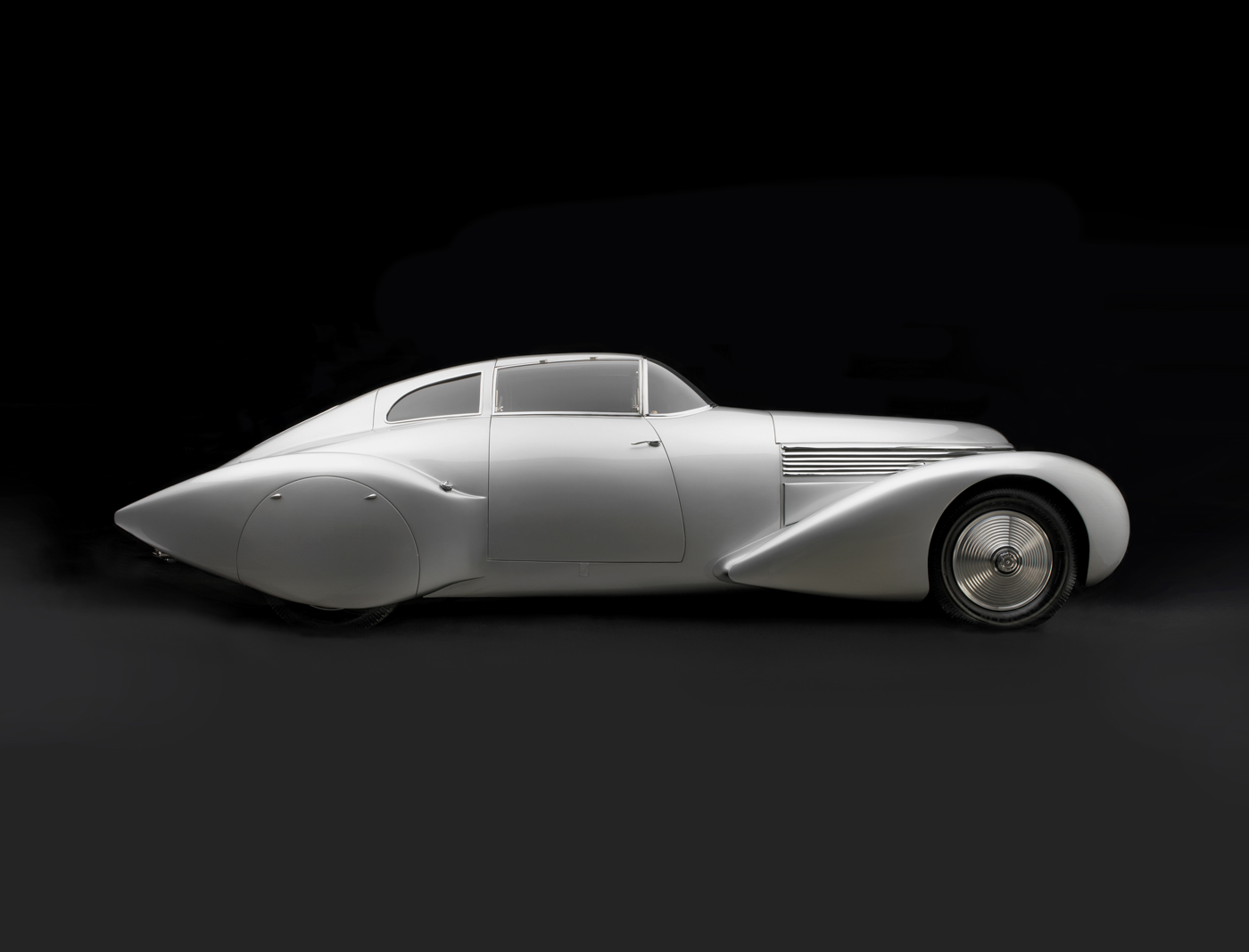
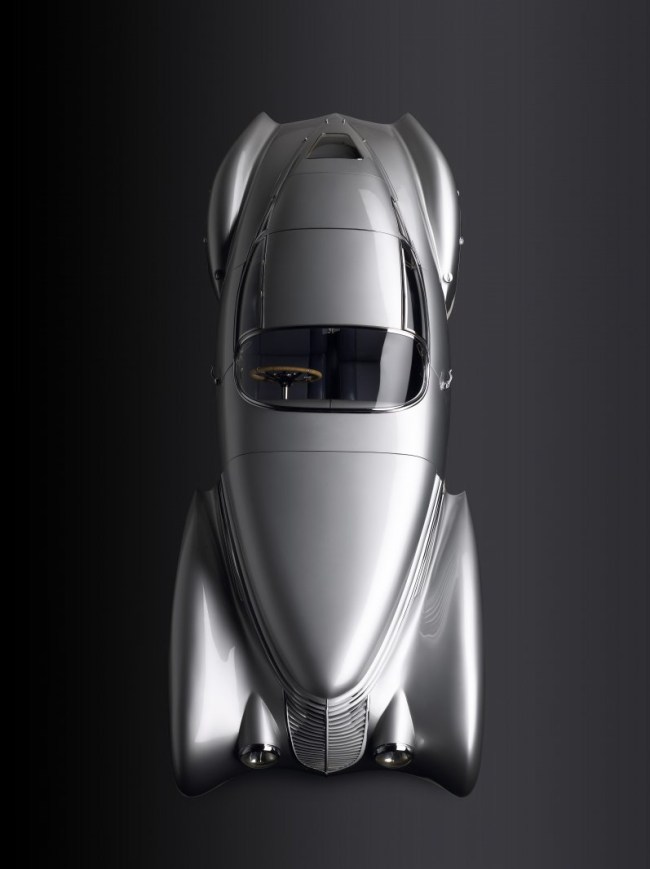
 

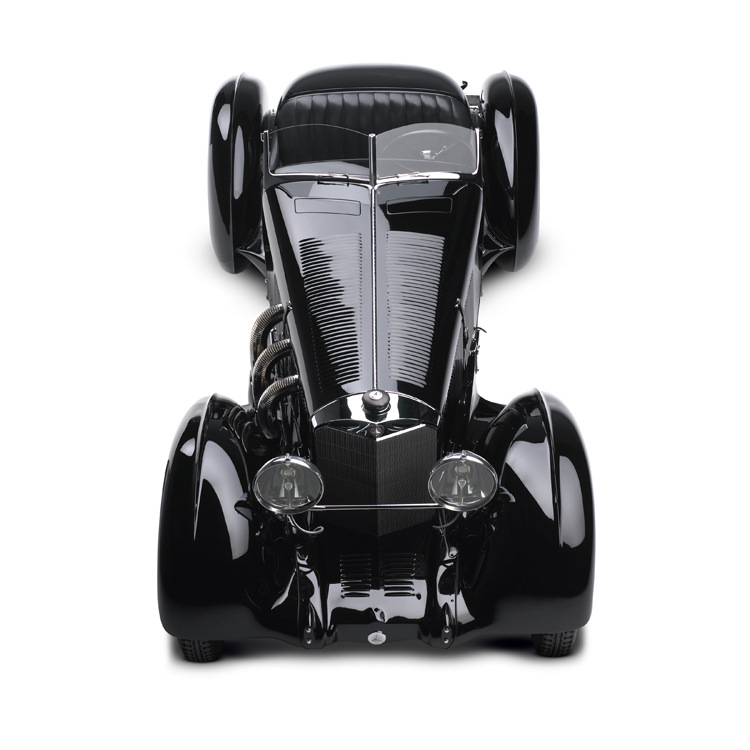
'Hispano-Suiza H6B Dubonnet “Xenia” Coupe' 1938

'Hispano-Suiza H6B Dubonnet “Xenia” Coupe' 1938


Hispano-Suiza H6B Dubonnet “Xenia” Coupe
1938
Collection of Peter Mullin Automotive Museum Foundation
Top photo: Photograph © 2013 Peter Harholdt
Overhead photo: Anonymous from the internet


André Dubonnet was France’s aperitif baron as well as an amateur racing driver and inventor. Dubonnet worked with engineer Antoine-Marie Chedru to develop and patent an independent front-suspension system in 1927 that was used by General Motors and Alfa Romeo. Following the 1932 Paris Auto Salon, Dubonnet acquired a French built Hispano-Suiza chassis, which he used to create a rolling showcase for his ideas. This car was designed by Jean Andreau, known for avant-garde streamlined aircraft and automotive creations, and hand-built in the coach building shop of Jacques Saoutchik.

The body resembled an airplane fuselage. Curved glass was used, including a panoramic windscreen (not seen again until General Motors cars of the 1950s), and Plexiglas side windows that opened upward in gullwing fashion. The side doors, suspended on large hinges, opened rearward in “suicide” fashion. A tapered fastback was crowned with a triangular rear window. The car featured Dubonnet’s hyperflex independent front suspension system.

The original Hispano-Suiza chassis sat high off the ground, and the “Xenia” – named for Dubonnet’s deceased wife, Xenia Johnson – was built atop the frame, so while its overall appearance is sleek and elegant, it is a comparatively tall and heavy car. Dramatically different from its contemporaries, the “Xenia” appears far more modern than almost any other 1930s-era automotive design.

.
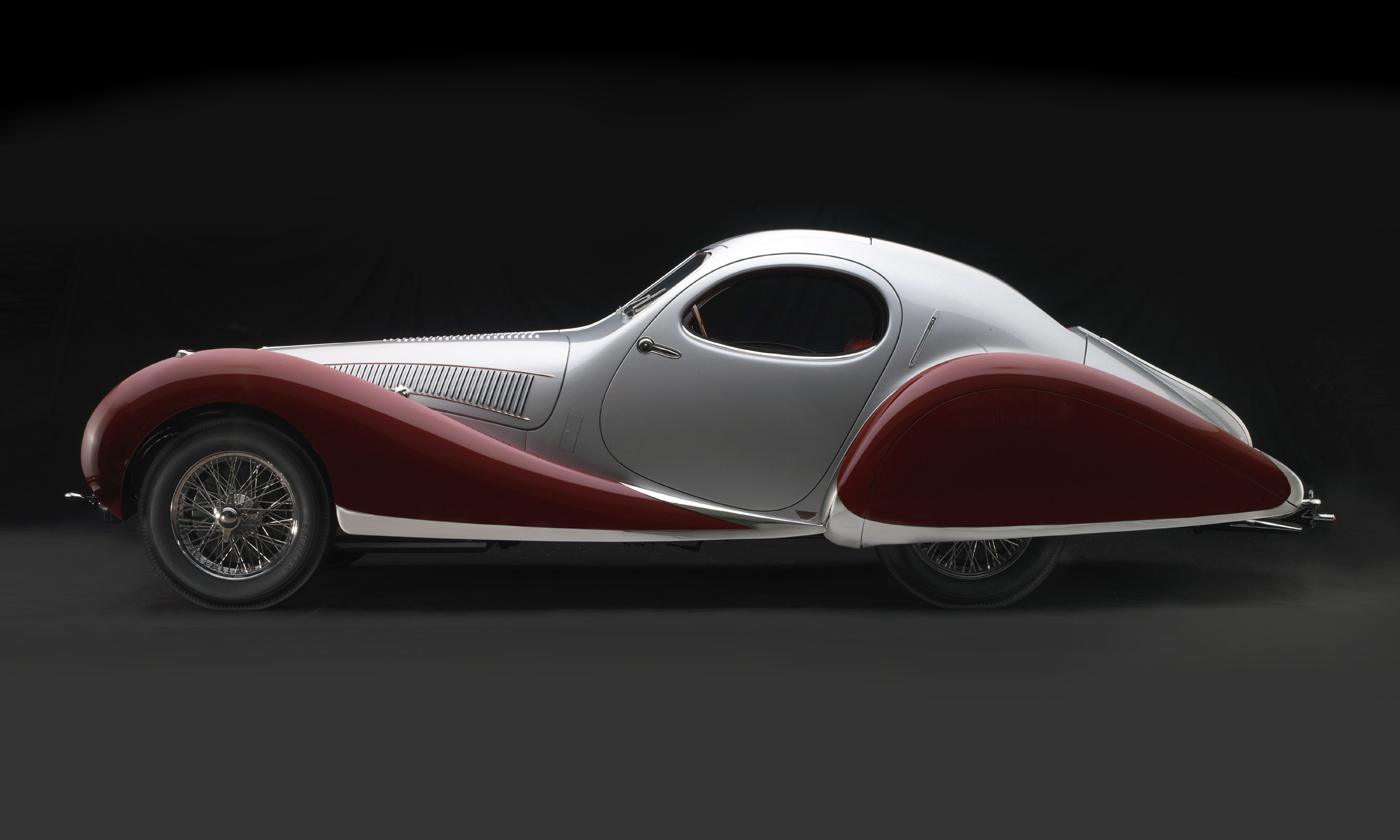
'Talbot-Lago T-150C-SS Teardrop Coupe' 1938

'Talbot-Lago T-150C-SS Teardrop Coupe' 1938

'Talbot-Lago T-150C-SS Teardrop Coupe' 1938


Talbot-Lago T-150C-SS Teardrop Coupe
1938
Collection of J. Willard Marriott, Jr.
Photograph © 2013 Peter Harholdt


The sporting Talbot-Lago T-150-C chassis inspired the design of many open roadsters and closed cars, most notably a series of curvaceous custom coupes. Sensational in their heyday, the French-produced Talbot-Lagos remain highly valued today. Streamlined, sleek, and light enough to race competitively, they were called Goutte d’Eau (drop of water), and, in English, they quickly became known as the Teardrop Talbots. Famed Parisian coach builders Joseph Figoni and Ovidio Falaschi patented the car’s distinctive aerodynamic shape.

Figoni & Falaschi built twelve “New York-style” Talbot-Lago coupes between 1937 and 1939, so-called because the first was introduced at the 1937 New York Auto Show at the Grand Central Palace. Five more cars, built in a notchback Teardrop style, were named “Jeancart” after a wealthy French patron. It took Figoni & Falaschi craftsmen 2,100 hours to complete a body. No two Teardrop coupes were exactly alike.

Talbot’s president, Antony Lago, offered a top-of-the-line SS (Super Sport) version with independent front suspension. The competition engine, a 4-litre six cylinder topped with a hemi head, could be fitted with three carburettors for 170-brake horsepower. Some cars were equipped with an innovative Wilson pre-selector gearbox, with a fingertip actuated lever that permitted instant shifts without the driver having to take his hand off the steering wheel. In 1938, a racing model T-150C-SS Coupe finished third at the 24 Hours of Le Mans.

This car was the first “New York-style” Teardrop coupe. Its first owner was Freddie McEvoy, an Australian member of the 1936 British Olympic bobsled team. A prominent player on the Hollywood scene, McEvoy’s ready access to celebrities made him an ideal concessionaire for luxurious automobiles.

hemi head: an internal combustion engine that is designed with hemispherically shaped chambers that optimised combustion and permitted larger valves for more efficiency

pre-selector gearbox: a type of manual gearbox or transmission that allows a driver to use levers to “pre-select” the next gear to be used, and with a separate foot pedal control, engage the gear in one single operation
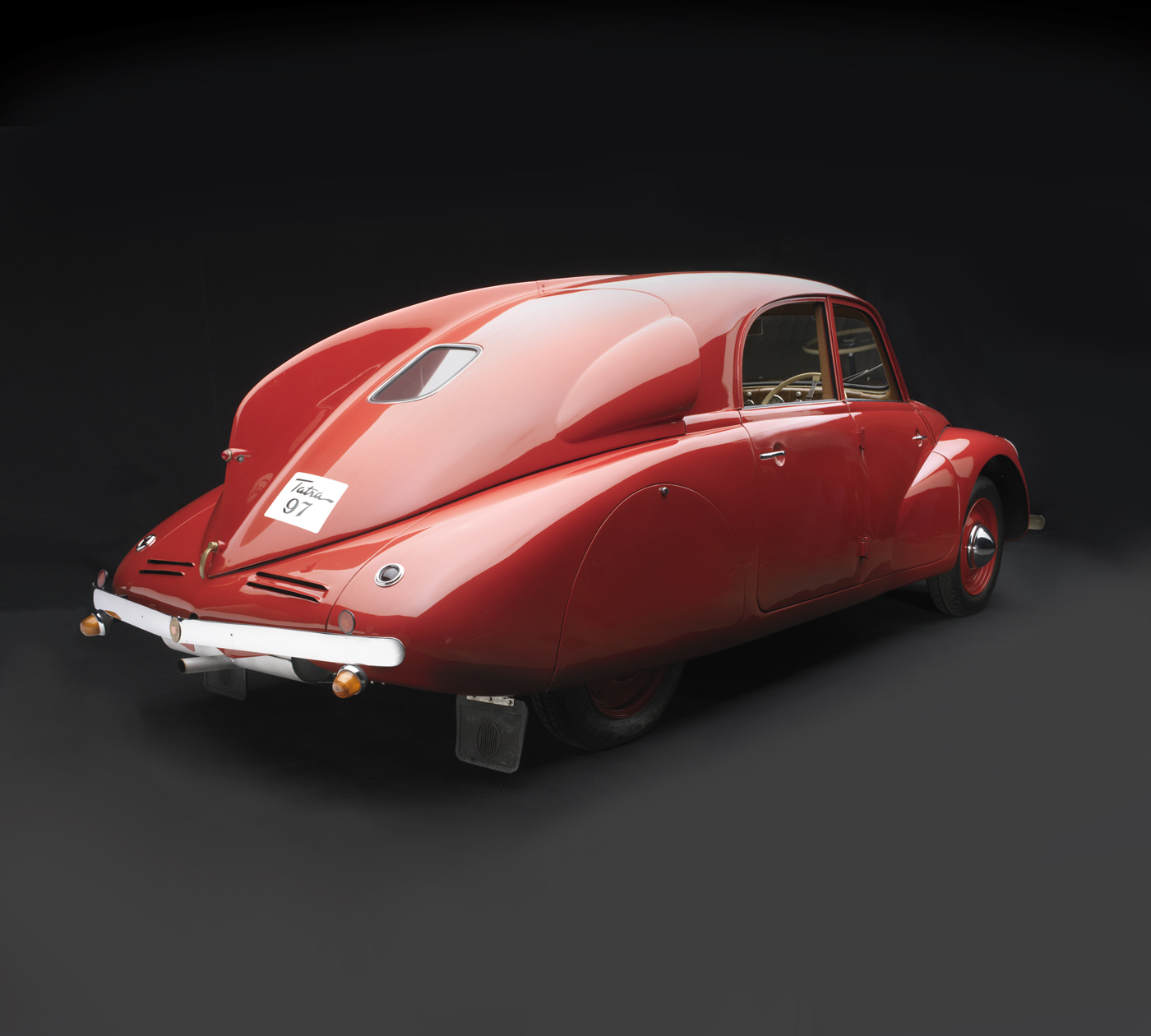
 

'Tatra T97' 1938


Tatra T97
1938
Collection of Lane Motor Museum
Photograph © 2013 Peter Harholdt


One of the most advanced designs of the pre-World War II era came from Czechoslovakia. Czech-based Koprivnicka vozovka evolved into Nesseldorfer Waggonfabrik and was renamed Tatra in 1927 after the country’s prominent mountain range. Tatra vehicles became known for innovative engineering and high quality. The engineer largely responsible was Hans Ledwinka, who had worked under automotive and aircraft pioneer Edmund Rumpler. Ledwinka was an early proponent of air-cooled engines, a rigid backbone chassis, and independent suspension.

The Tatra was a perfect platform for the new emphasis on streamlining being pioneered by aircraft and Zeppelin designer Paul Jaray. A short front end flowed to a curved roofline that gracefully sloped into a long fastback tail. When integrated fenders and a full undertray were added, wind resistance was dramatically reduced. A prominent rear dorsal fin ensured high-speed stability.

Tatra was arguably the first production car to take advantage of effective streamlining. The T97 used a horizontally opposed, rear-mounted, four cylinder engine with a rigid backbone chassis, four-wheel independent suspension and hydraulic drum brakes. Four were built in 1937, followed by 237 in 1938, and 269 in 1939. Top speed was 80.78 mph, which was truly remarkable for a 40-hp car at the time.

According to automobile designer Raffi Minasian, “The Tatra T97 was one of the most interesting and well-developed engineering and design intersections of the Deco period.” It may have lacked the usual flamboyance of the traditional French coach builders of the period, but it manifested the expression of Art Deco design as a merger of science and industry where form was dictated by function.


'Bugatti Type 57C by Vanvooren' 1939


Bugatti Type 57C by Vanvooren
1939
Collection of Margie and Robert E. Petersen, Courtesy of the Petersen Automotive Museum, Los Angeles
Photograph © 2013 Peter Harholdt


The Great Depression was slow to impact France, due to that country’s high tariffs and restricted trade, but by the early 1930s, sales of luxury automobiles dwindled. Ettore Bugatti and his brilliant son Jean understood that a special model was imperative to help their company survive. The resulting new Type 57’s styling was at once contemporary and affordable, with custom coachwork available for the very wealthy.

For racing, a normally-aspirated, 3.3-litre straight 8-powered Type 57, on an ultra-low “S” chassis, was fitted with streamlined open coachwork. The factory successes included averaging 135.45 mph for one hour, 123.8 mph for 2,000 miles, and 124.6 mph for 4,000 kilometres. An avid horseman, “Le Patron,” as Bugatti was known, was convinced automobile competition improved the breed, as it did with thoroughbred racing.

The greatest coach builders of France: Gangloff, Saoutchik, Letourneur & Marchand, and Vanvooren, as well as Britain’s Corsica, and Graber of Switzerland, all built custom coachwork on the Type 57 chassis. This special Type 57C was the property of Mohammed Reza Pahlavi, Prince of Persia and future Shah of Iran.

When Pahlavi married Egypt’s Princess Fawzia, many nations sent extravagant wedding presents. A gift from France, this cabriolet’s drophead coachwork – a study in sweeping lines and fluid Art Deco ornamentation – was constructed by coach builder Vanvooren of Paris, in the style of Figoni & Falaschi. The windscreen can be lowered into the cowl for an even racier appearance.
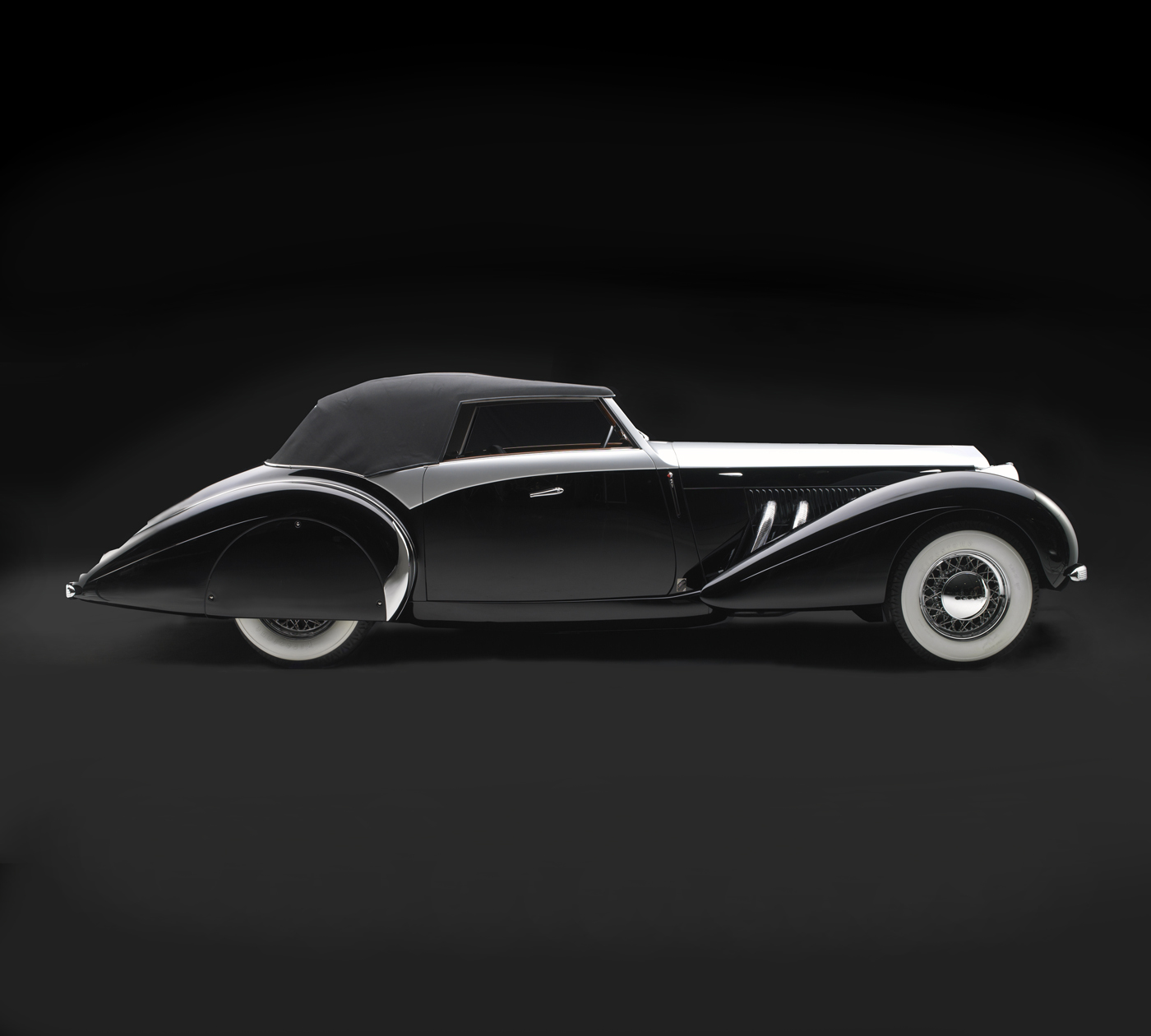
 

'Delage D8-120S Saoutchik Cabriolet' 1939


Delage D8-120S Saoutchik Cabriolet
1939
Collection of John W. Rich, Jr.
Photograph © 2013 Peter Harholdt


La Belle Voiture Francaise: The Beautiful French Car. Coined by the French public to describe the automobiles created by Louis Delage, these words became the slogan for one of France’s oldest and most renowned automobile companies. Coach builders favoured the Delage chassis to showcase their designs, winning numerous concours d’legance.

The Delage D8-120S, a new model for 1938, offered a lowered chassis, (“S” stood for Surbaisse) and the 3.5-litre straight 8’s output was increased. The bare chassis could be purchased for 105,000 French francs. The custom coachwork is estimated to have cost an additional 45,000 French francs, making the D8-120S one of France’s most expensive luxury cars. This car was commissioned for the 1939 Paris Auto Salon by the French government, which was promoting French cars in Europe and the United States. Jacques Saoutchik, one of France’s premier coach builders, created its coachwork, which includes patented sliding parallel doors that opened outward with a pantograph mechanism, then slid rearward, permitting easy access.

The completed cabriolet was hidden away by the workshop prior to the German invasion of France. After World War II, the D8-120S was used by the Provisional Government of the French Republic for official duties. It was sold in 1949 and the buyer installed faired-in headlights and a postwar Delage grille. The D8-120S passed through several more owners before it was restored to its original condition, with the exception of its modern faired-in headlights.
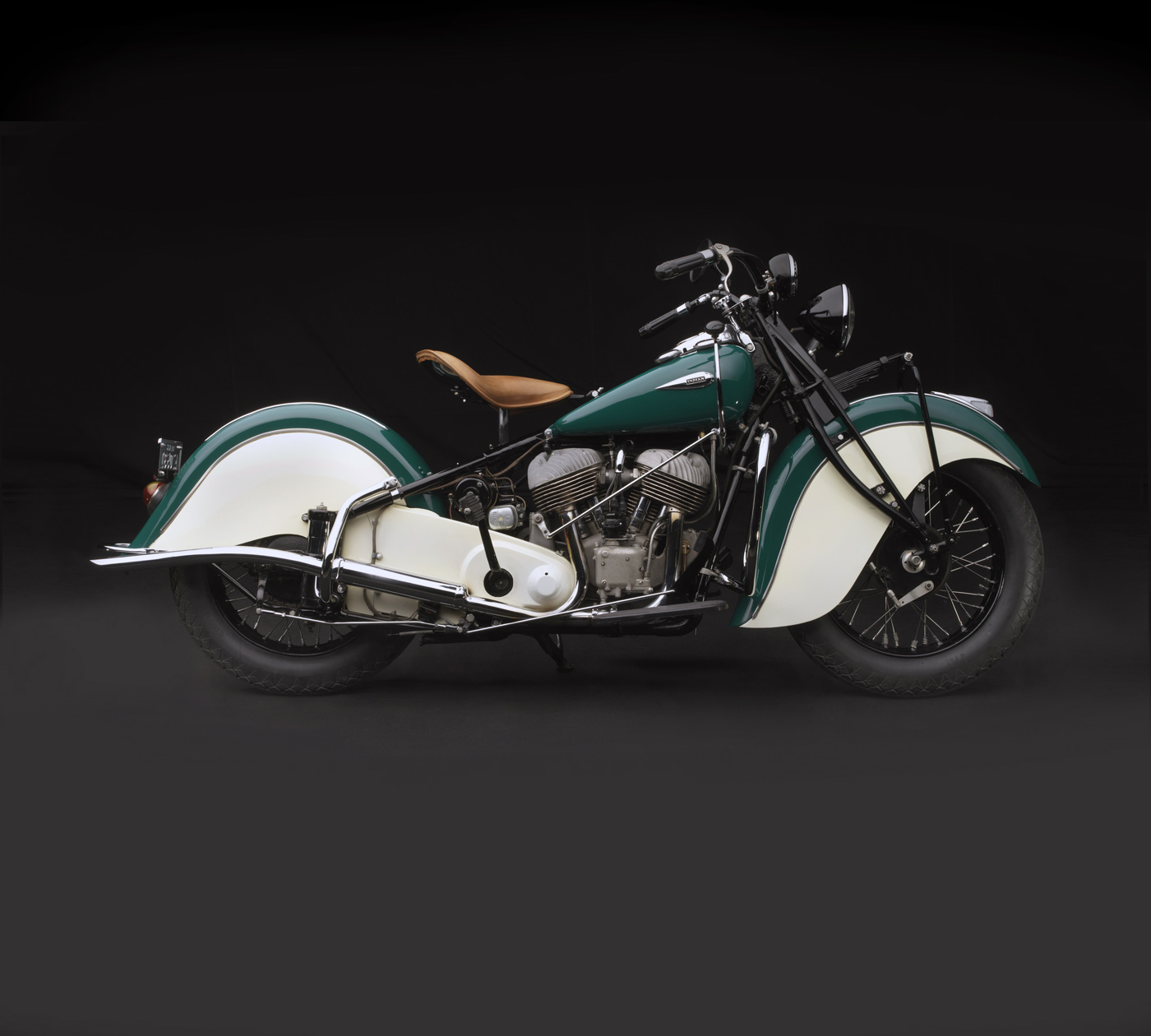
 

'Indian Chief' 1940


Indian Chief
1940
Collection of Gary Sanford
Photograph © 2013 Peter Harholdt


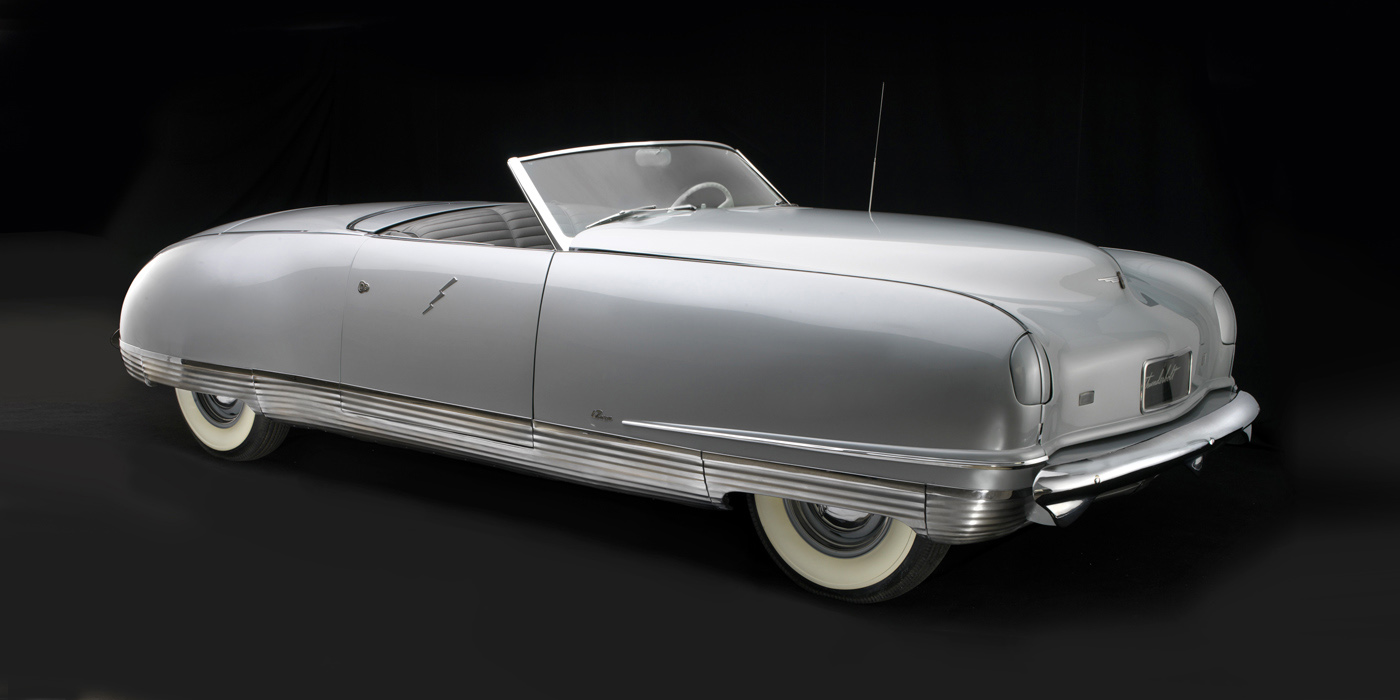
'Chrysler Thunderbolt' 1941

'Chrysler Thunderbolt' 1941


Chrysler Thunderbolt
1941
Collection of Chrysler Group, LLC
Photograph © 2013 Peter Harholdt


Detroit-based carmaker Chrysler touted the Thunderbolt and its companion, the Newport Phaeton, as cars of the future. With its aerodynamic body shell, hidden headlights, enclosed wheels, and a retractable one-piece metal hardtop, the sensational Thunderbolt conveyed the message that tomorrow’s Chryslers would leave more prosaic rivals in the dust.

Following the design of Chief Designer Ralph Roberts, both the Thunderbolt and the Phaeton models were built by LeBaron, an American coach building company. Associate designer Alex Tremulis suggested these cars be promoted as “new milestones in Airflow design,” hinting that without the 1934 Airflows, Chrysler styling might not have evolved so far. The Thunderbolt’s full-width hood, which flowed uninterrupted from the base of the windshield to the slender front bumper, and its broad decklid, were made of steel, as was the folding top, a feature designed and patented by Roberts not previously seen on an American car. Fluted, anodised aluminium lower body side trim ran continuously from front to rear. Removable fender skirts covered the wheels, which were inset in front, so they could turn.

Priced at $8,250, eight Thunderbolts were planned, but only five were built, of which four survive. World War II’s interruption meant that while a few features found their way onto production Chryslers, these unique cars were not replicated when hostilities ceased.


Frist Center for the Visual Arts
919 Broadway, Nashville, Tennessee, 37203

Opening hours:
Monday: 10.00am – 5.30pm
Tuesday: Closed
Wednesday: Closed
Thursday: 10.00am – 8.00pm
Friday: 10.00am – 5.30pm
Saturday: 10.00am – 5.30pm
Sunday: 1.00 – 5.30pm

Frist Center for the Visual Arts website

LIKE ART BLART ON FACEBOOK

Back to top

Exhibition: ‘The Art of the Automobile: Masterpieces of the Ralph Lauren Collection’ at The Arts Décoratifs Museum, Paris

Exhibition dates: 28th April – 28th August 2011


Many thankx to The Arts Décoratifs Museum for allowing me to publish the photographs in the posting. Please click on the images for a larger version of the image.


Mercedes Benz SSK “Count Trossi”, 1930


Mercedes Benz SSK “Count Trossi”
1930
Ralph Lauren collection
© Photo Michael Furman


The notion of line in a car echoes that of the perfectly harmonious line of trajectory. The design is never far from this line, even in those coachworks designed without drawing boards, of which some of the most marvellous examples are seen here. It is interesting to see that in the French language at least, cars have taken on board the concept of ligne (or “line”), a word with many meanings. Yet the term ligne, taken in the sense that it is used nowadays in reference to coachwork, is classified by French lexicographer Littré within the sphere of fine art, and defined by him as: “the general effect produced by the coming together and combination of different parties of either a natural object or a composition.” The natural development of language thus shows us the relationship between cars and fine art.


Excerpt from the catalog, Editions Les Arts Décoratifs, Paris 2011


In 1970, Les Arts Décoratifs presented a selection of competition cars, “Bolides Design.” To compile the exhibition, a special jury was assembled, featuring designers Joe Colombo, Roger Tallon and Pio Manzu, and the artists Jean-Paul Riopelle, Jean Tinguely and Victor Vasarely, as well as Robert Delpire and François Mathey. The jury chose the models with the idea of the car as a design object, a work of art, showing that “art and technique, each at their own level, are the expression of man and his relationship with design.”

The Ralph Lauren collection can be seen from the same perspective. Patiently assembled over several decades by the fashion designer in a quest for speed and performance, it includes some of the most extraordinary jewels in the crown of European automobile history, with beauty as its common denominator.

Within the collection are some of the most elegant and innovative cars in automotive history, from the “Blower” Bentley (1929), the Ferrari 250 GTO (1962), the famous Mercedes 300 SL (1955) and the unforgettable Jaguar “D type,” whose shark fin blazed a triumphant trail at Le Mans in 1955, 1956 and 1957. But the grand tourer, the Bugatti Atlantic (1938) of which only four models were produced, represents the ultimate in luxury while showcasing the evolution of styles and techniques on the road. Each of these exceptional vehicles was designed as a masterpiece blending technological innovation and boldness of style.

For its first presentation in Europe, the Ralph Lauren collection will be put on display by Jean-Michel Wilmotte, who has opted for an intimate visual approach as these vehicles stand out both for their overall design and detail, as well as for bodywork, chassis and engines.

The kinetic and sound of the vehicles will be reproduced by means of several films and recordings. A seminar on automobile design will also be held during the exhibition.

Press release from The Arts Décoratifs Museum website


Mercedes Benz SSK “Count Trossi”, 1930


Mercedes Benz SSK “Count Trossi”
1930
Ralph Lauren collection
© Photo Michael Furman


Chassis number SSK 36038, currently owned by Ralph Lauren, remained unsold by the Mercedes-Benz factory in 1928, but was then sent out to Japan in 1930, before being brought back to Europe. This car was put together by the young British coach builder, Willy White, based on a design suggested by its aristocratic owner-cum-industrialist, Count Carlo Felice Trossi, himself a racing driver. The SSK, the archetypal Mercedes of the 1920s, built on a short chassis, is dominated by a colossal hood with a trio of exhaust pipes emerging from each side – a hood encompassing over half the car’s length with a radiator projecting out front as a windbreak. Its flamboyant rear end, dramatically tapered, adds a touch of civility to this extraordinary model, contrasting with the hieratic image of its front end. The supercharging gives the Mercedes SSK its fiery temperament, as well as the legendary noise of its seven litre straight 6 cylinder engine producing 300 CV and enabling a flat-out speed of 235kph!


Bugatti 57 SC Atlantic, 1938


Bugatti 57 SC Atlantic, 1938


Bugatti 57 SC Atlantic
1938
Collection Ralph Lauren
© Photo Michael Furman


According to Paul Bracq, “the Atlantic is a monument in the history of French coach building! More than any other car, it expresses a French-Italian look. An incredible sense of lightness is given off by this sculpture.” Powered by a straight 8 cylinder engine fitted with twin overhead camshafts and a compressor, this beauty is also incredibly fast, capable of reaching 200 kph. As the aluminium alloy used for the coachwork did not lend itself to shaping and soldering, Jean Bugatti was obliged to make the wings and roof in two parts and then assemble them with rivets. His talent lay precisely in the art of transforming this inconvenient technique into a stylistic advantage. Power and speed are suggested by the doors which are cut out of the roof and the ellipsoidal windows reminiscent of airplanes. Chassis number 57591 was the last of the four examples originally produced, a masterpiece embodying sport and luxury at their height – in short, the automobile exception.


Alfa Romeo 8C 2900 Mille Miglia, 1938


Alfa Romeo 8C 2900 Mille Miglia
1938
Collection Ralph Lauren
© Photo Michael Furman


This racing model fitted out with a straight 8 cylinder 2.9 litre engine with twin overhead camshafts supercharged by two compressors is equipped with fully independent suspension and a four speed rear transaxle. The whole thing is perfectly balanced, resulting in the most extraordinary roadholding. The hydraulic brakes are an additional bonus, enabling it to outclass its rivals at over 185 kph. The Turin factory called upon Carrozzeria Touring to design a small series of four two-seater roadsters intended to take part in the 1938 Mille Miglia, the first example of which is the car exhibited here. Driven by the Pintacuda-Mambelli team, the car came in an incredible second under the number 142. The tear drop shaped wings add the final touch to this extraordinary car which is considered to be one of the most prestigious pre-War Grand Touring Alfa Romeos.


Ferrari 375 Plus, 1954


Ferrari 375 Plus
1954
Collection Ralph Lauren
© Photo Michael Furman


The Ferrari known as the 375 Plus was an extrapolation of the Type 375 MM, a model powered by a V12 engine with three carburettors, a gearbox with four speeds plus reverse that increased its engine size to nearly 5 litres, giving it more power and enabling it to reach 340 CV, and attain 250 kph. Because Ferrari did not have its own design department, the 375 Plus, an absolute masterpiece, was created by highly qualified, talented artisans under the guidance of Pinin Farina, Ferrari’s official coach builder. Only five examples of the Type 375 Plus were made, including a spyder version which won the Le Mans 24 Hours in 1954. Ralph Lauren’s car, chassis number 0398 AM – the last of the series – left the factory in 1954 and had a relatively illustrious career in Argentina, often driven by Valiente.


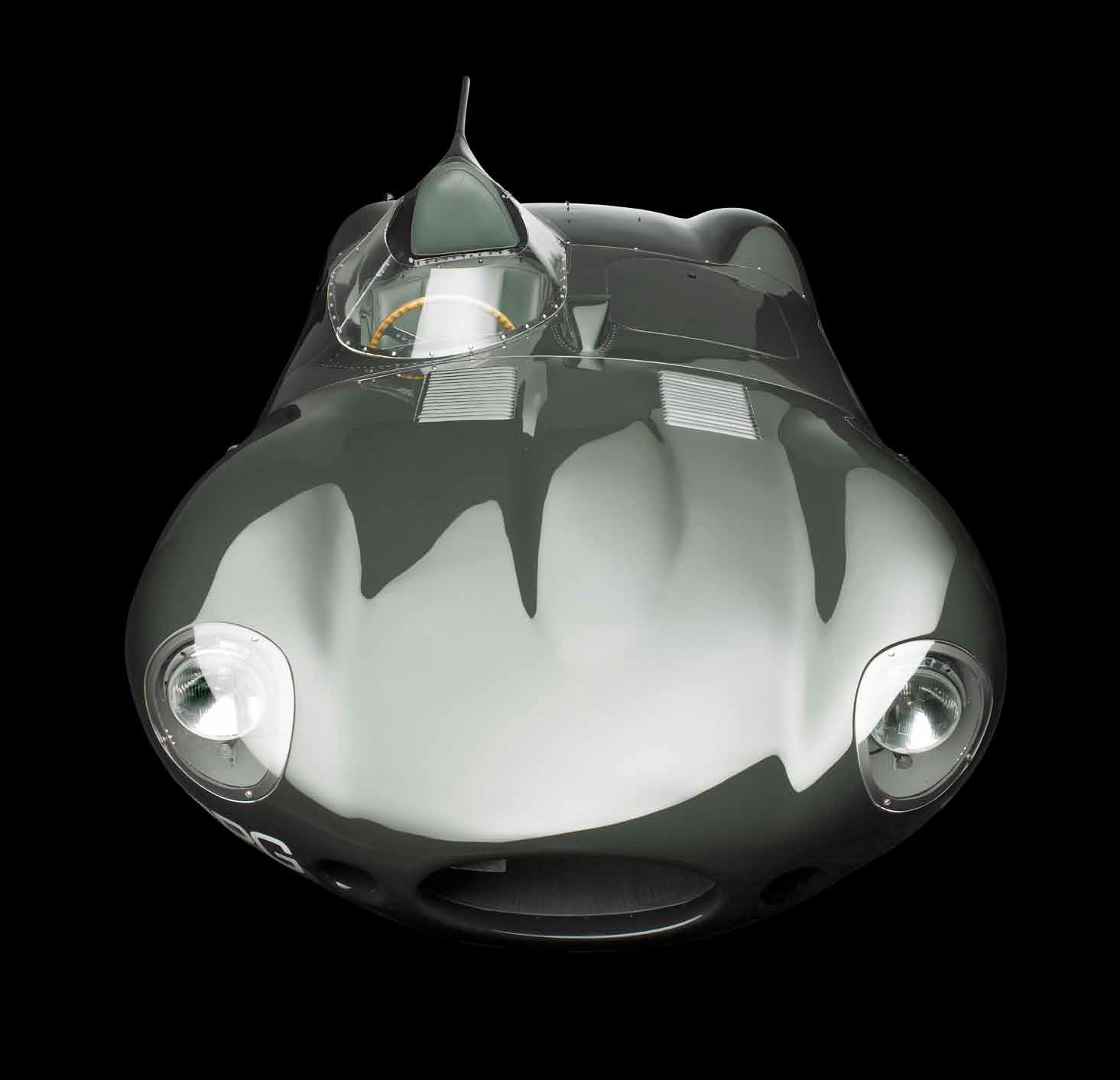
Jaguar XKD, 1955


Jaguar XKD
1955
Collection Ralph Lauren
© Photo Michael Furman


In order to find a worthy successor to the brilliant Jaguar Type XKC, winner on two occasions of the Le Mans 24 Hours, the aeronautic aerodynamicist Malcolm Sayer came up with a non-conformist vehicle. The D-Type has a long hood with no radiator grille, opening away from the block and a slender, extremely graceful rear, easily recognisable thanks to the highly original fin that extends the driver’s head-rest, providing greater stability at high speeds. With the classic straight 6 cylinder 3.4 litre engine, the D-Type, built on a monocoque structure, also has disk brakes. The “long-nosed” version (only 10 examples of which left the factory, including Ralph Lauren’s 505/601) gained an additional 15 kph at maximum speed, pushing it to 260 kph. No other car from the 1950s embodies speed better than this Jaguar D, with three consecutive victories in the Le Mans 24 Hours between 1955 and 1957 and another at Nurburgring in 1956. It was the most successful racing car of its generation.


Jaguar XKSS, 1958


Jaguar XKSS
1958
Collection Ralph Lauren
© Photo Michael Furman


Following on from Jaguar’s magnificent victories in the 1955 and 1956 Le Mans 24 Hours, demand from its enthusiastic clients was such that the company decided to make a road version of the XKD (straight 6 cylinder 3.4 litre engine with a 250 CV output capable of propelling the car to nearly 250 kph) which was named the XKSS. Principally aimed at the American market, it differed from the racing model in having a windscreen, a convertible roof, bumpers and a more civilised interior, and the famous fin was removed. Only 16 examples were constructed between January and February 1957, and a further two examples of the D-Type were transformed by the factory in 1958. Ralph Lauren’s car is one of these, created from the XKD 533 in 1956. It participated in the Six Heures du Forez in 1957, driven by Monnoyeur and Dupuy, finishing 7th, behind a fleet of Jaguar Ds which took the three first places.


Ferrari 250 Testa Rossa, 1958


Ferrari 250 Testa Rossa
1958
Collection Ralph Lauren
© Photo Michael Furman


The 250 Testa Rossa (red head) owes its name to the red camshaft covers of its V12 3 litre engine. Made by Carrozzeria Scaglietti, adapted from a design by Pinin Farina introducing a torpedo shaped body, the car had a headrest that stuck out above the bodywork and integrated headlights behind protruding Plexiglas protection. The very particular line of this vehicle proved to be primarily functional, rather than aesthetic. Indeed, the originality of the pontoon fenders enabled the wheels to remain partially uncovered, to allow for a sufficient supply of cold air to the drum brakes. Equipped with a light body that allowed it to attain 270 kph, its 300 CV engine carried it to victory on numerous occasions, including in the Le Mans 24 Hours in 1958, 1960 and 1961. Ralph Lauren’s car is the 14th of 34 similar examples produced by Ferrari.


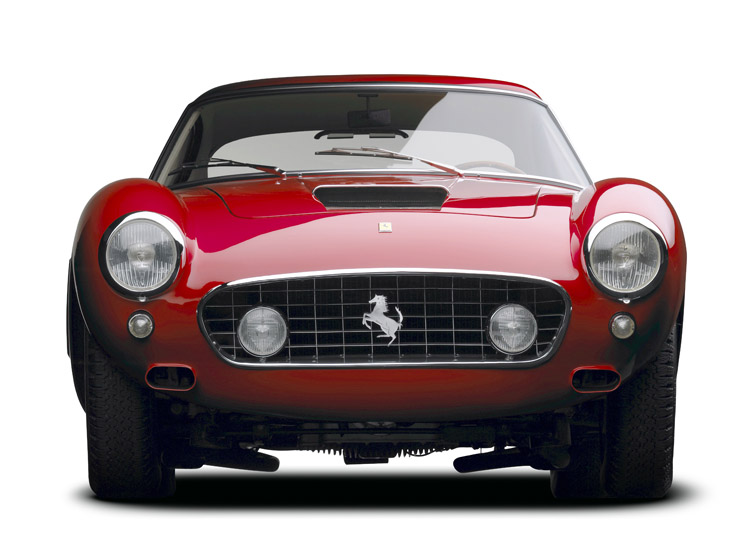
Ferrari 250 GT Berlinetta SWB, 1960


Ferrari 250 GT Berlinetta SWB
1960
Collection Ralph Lauren
© Photo Michael Furman


While the name 250 GT appeared in the Maranello catalog in 1955, the 1959 Paris Motor Show presented a short chassis Berlinetta version, with a wheelbase 20 cms shorter than other versions of the line – a thoroughbred equipped for the road, with aluminium coachwork designed by Pinin Farina and made in the Scaglietti workshops in Modena. Compared to the grand tourer version, intended for road use, the racing version was devoid of all luxury interior trimmings and bumpers, but equipped with disk brakes and a 280 CV engine that enabled this flagship model to masterfully dominate the legendary Tour de France automobile for three consecutive seasons (1960-1962) and the GT category of the Le Mans 24 Hours. Its sensual line, unequalled handling and performance (250kph), and list of victories, all combined to make the short chassis 250 GT Berlinetta one of Ferrari’s most popular models. Ralph Lauren’s car was the 31st example to leave the factory out of the 165 produced.


Ferrari 250 GTO, 1962


Ferrari 250 GTO
1962
Collection Ralph Lauren
© Photo Michael Furman


Designed in the utmost secrecy, the 250 GTO is considered by aficionados today to be the quintessential vintage Ferrari model, both technically and aesthetically, embodying one of the most famous and most expensive sports cars of all time. This Grand Tourer, of which only 39 examples were produced, clocked up an impressive list of victories, including the International Championship for GT Manufacturers in 1962, 1963 and 1964, thanks to its V12 300 CV engine situated up front, but also because of the lightness of its aluminium body, enabling it to attain 280 kph flat out! With its Scaglietti coachwork and its long hood, stocky cockpit and truncated rear, it symbolised the Grand Tourer par excellence. Ralph Lauren’s car was the 21st out of 36 Series I GTOs produced, and won many races driven by Pedro and Ricardo Rodriguez, Roger Penske, Augie Pabst and Richie Ginther.


The Arts Décoratifs Museum
107 rue de Rivoli
75001 Paris
Phone: +33 01 44 55 57 50

Open Tuesday to Sunday 11am – 6pm

The Arts Décoratifs Museum website

LIKE ART BLART ON FACEBOOK

Back to top

Exhibition: ‘Ray K. Metzker: Automagic’ at the Laurence Miller Gallery, New York

24th November, 2009 – 9th January, 2010


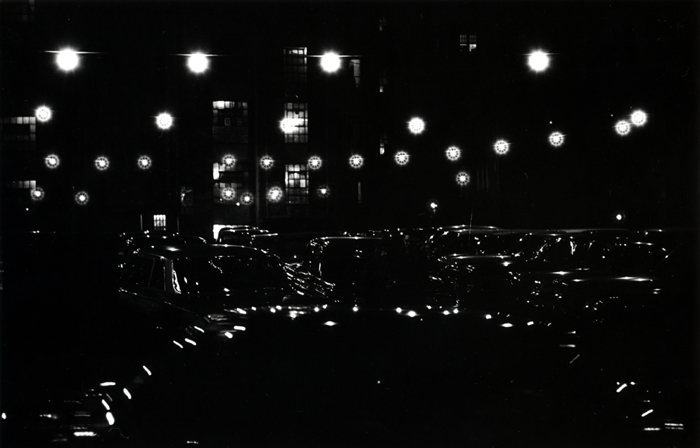
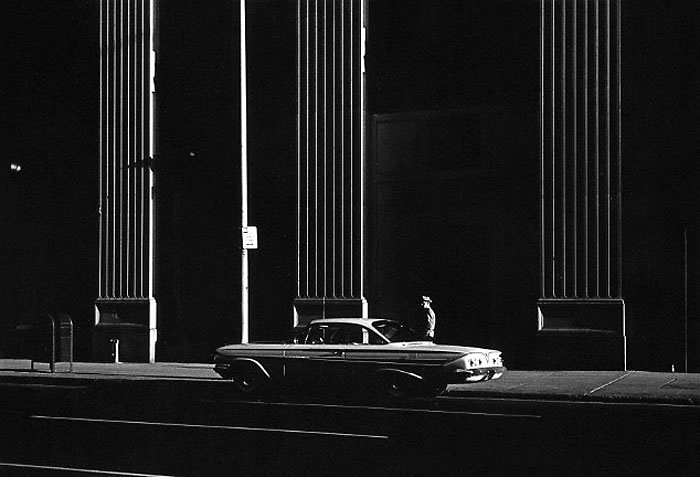
Ray K. Metzker (American 1931-2014) 'Philadelphia, 1963' 1963 from the exhibition 'Ray K. Metzker: Automagic' at the Laurence Miller Gallery, New York,  Nov 2009 - Jan 2010


Ray K. Metzker (American, 1931-2014)
Philadelphia, 1963
1963
Gelatin silver print


The early photographs from the 1960’s are stupendous!

The pre-visualisation of the final photograph shows rare talent. The use of deep chiaroscuro is handled so adeptly, so confidently. The photographer is in full control of the modelling of the spaces and contours of the objects within the photographic frame. Metzker’s drawing with light surely comes from an enlightened mind. Magical. Wonderful.

Dr Marcus Bunyan


Many thankx to Laurence Miller Gallery for allowing me to publish the photographs in the posting. Please click on the photographs for a larger version of the image.


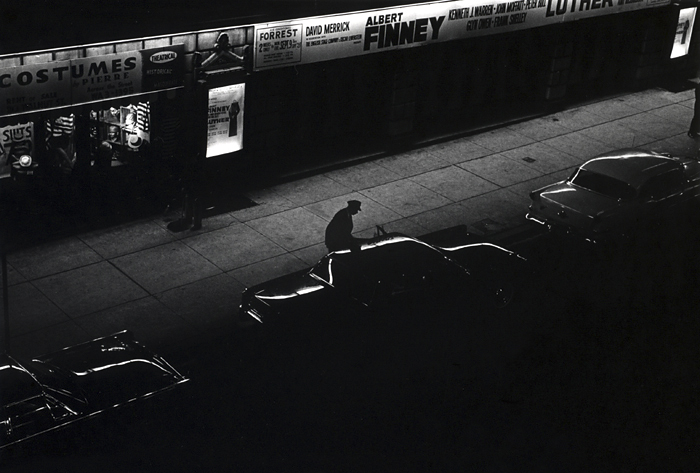
Ray K. Metzker (American, 1931-2014) 'Philadelphia, 1963' from the exhibition 'Ray K. Metzker: Automagic' at the Laurence Miller Gallery, New York,  Nov 2009 - Jan 2010


Ray K. Metzker (American, 1931-2014)
Philadelphia, 1963
1963
Gelatin silver print


Ray K. Metzker (American 1931-2014) 'Philadelphia' 1963 from the exhibition 'Ray K. Metzker: Automagic' at the Laurence Miller Gallery, New York,  Nov 2009 - Jan 2010


Ray K. Metzker (American, 1931-2014)
Philadelphia
1963
Gelatin silver print


Ray K. Metzker (American, 1931-2014) 'Philadelphia, 1964'


Ray K. Metzker (American, 1931-2014)
Philadelphia, 1964
1964
Gelatin silver print


Ray K. Metzker (American, 1931-2014) 'Chicago, 1958'


Ray K. Metzker (American, 1931-2014)
Chicago, 1958
1958
Gelatin silver print


From November 24 through January 9 Laurence Miller Gallery celebrates Ray K. Metzker: AutoMagic. This exhibition features over fifty black-and-white photographs taken by this 78-year old master photographer over the past fifty years in which the automobile plays a pivotal role in the contest between light and shadow. Forty of the photographs have never been exhibited before.

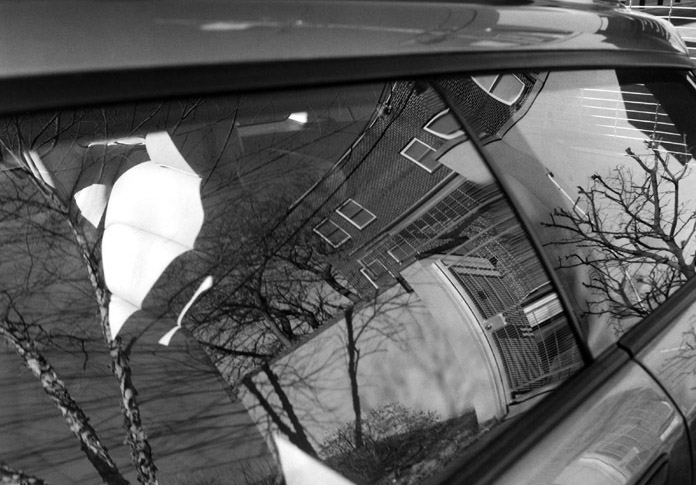
From his earliest street pictures taken under the El in Chicago’s Loop in the mid-Fifties, to his most recent highly abstract views of reflections on Philadelphia car windows, Ray K. Metzker brings an exuberance of vision rarely found among today’s photographers. In total control of his camera and craft, Metzker transforms the mundane in daily urban life into intense images that sizzle, and delight the eye.

In the darkest recesses of a parking garage, we discover a single shimmering tail fin of a late 50’s Cadillac. In a scene more Orson Wells than Woody Allen, we witness a menacing shadow figure approaching a parked car, intent unknown. In a blizzard, we join the photographer and a single figure as they look at one another wondering why each other is standing there in the cascading snow.

The show also reveals a more tender side of Metzker, as we peer into car windows to see folks uninhibited within their mobile shelters, including a sleeping man with a medallion, head resting on the door; a man reading at the wheel of his damaged white coupe; and a man at the end of long day, hand upon his head.

Metzker’s work of the last few years, fondly nicknamed Autowackies, are a brilliant extension of his earlier forays into abstraction, and are only made possible by the contours of  our newest cars and SUV’s, which wildly warp the architecture and cloud formations reflected on their glossy surfaces.

Text from the Lawrence Miller Gallery website [Online] Cited 12/12/2009. No longer available online


Ray K. Metzker (American, 1931-2014) 'Philadelphia, 1963'


Ray K. Metzker (American, 1931-2014)
Philadelphia, 1963
1963
Gelatin silver print


Ray K. Metzker (American, 1931-2014) 'Philadelphia, 1964'


Ray K. Metzker (American, 1931-2014)
Philadelphia, 1964
1964
Gelatin silver print


Ray K. Metzker (American, 1931-2014) 'Albuquerque, 1971' solarized vintage silver print


Ray K. Metzker (American, 1931-2014)
Albuquerque, 1971
1971
Solarized vintage silver print


Ray K. Metzker (American 1931-2014) 'Philadelphia' 1963


Ray K. Metzker (American, 1931-2014)
Philadelphia
1963
Gelatin silver print


Ray K. Metzker (American 1931-2014) 'Philadelphia' 1963


Ray K. Metzker (American, 1931-2014)
Philadelphia
1963
Gelatin silver print


Ray K. Metzker (American 1931-2014) 'Philadelphia' 1963


Ray K. Metzker (American, 1931-2014)
Philadelphia
1963
Gelatin silver print


Ray K. Metzker (American 1931-2014) 'Philadelphia' 1963


Ray K. Metzker (American, 1931-2014)
Philadelphia
1963
Gelatin silver print


Ray K. Metzker (American 1931-2014) 'Philadelphia' 1963


Ray K. Metzker (American, 1931-2014)
Philadelphia
1963
Gelatin silver print


Ray K. Metzker (American, 1931-2014) 'Philadelphia, 2009'


Ray K. Metzker (American, 1931-2014)
Philadelphia, 2009
2009
Gelatin silver print


Ray K. Metzker (American, 1931-2014) 'Philadelphia, 2009'


Ray K. Metzker (American, 1931-2014)
Philadelphia, 2009
2009
Gelatin silver print


Lawrence Miller Gallery

Lawrence Miller Gallery is now operating as a private dealer and consultant. The gallery is no longer hosting a physical exhibition space.

Lawrence Miller Gallery website

LIKE ART BLART ON FACEBOOK

Back to top