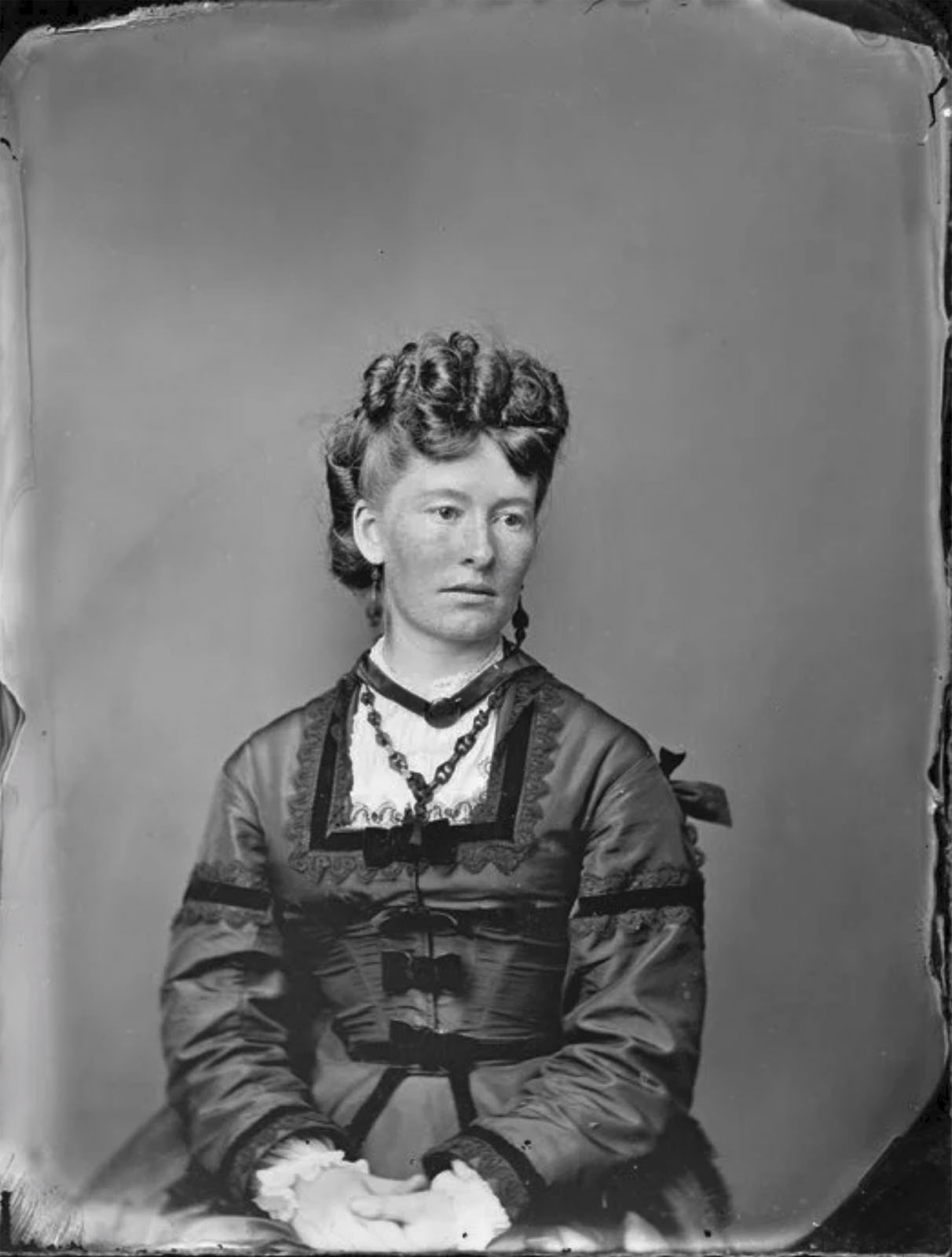
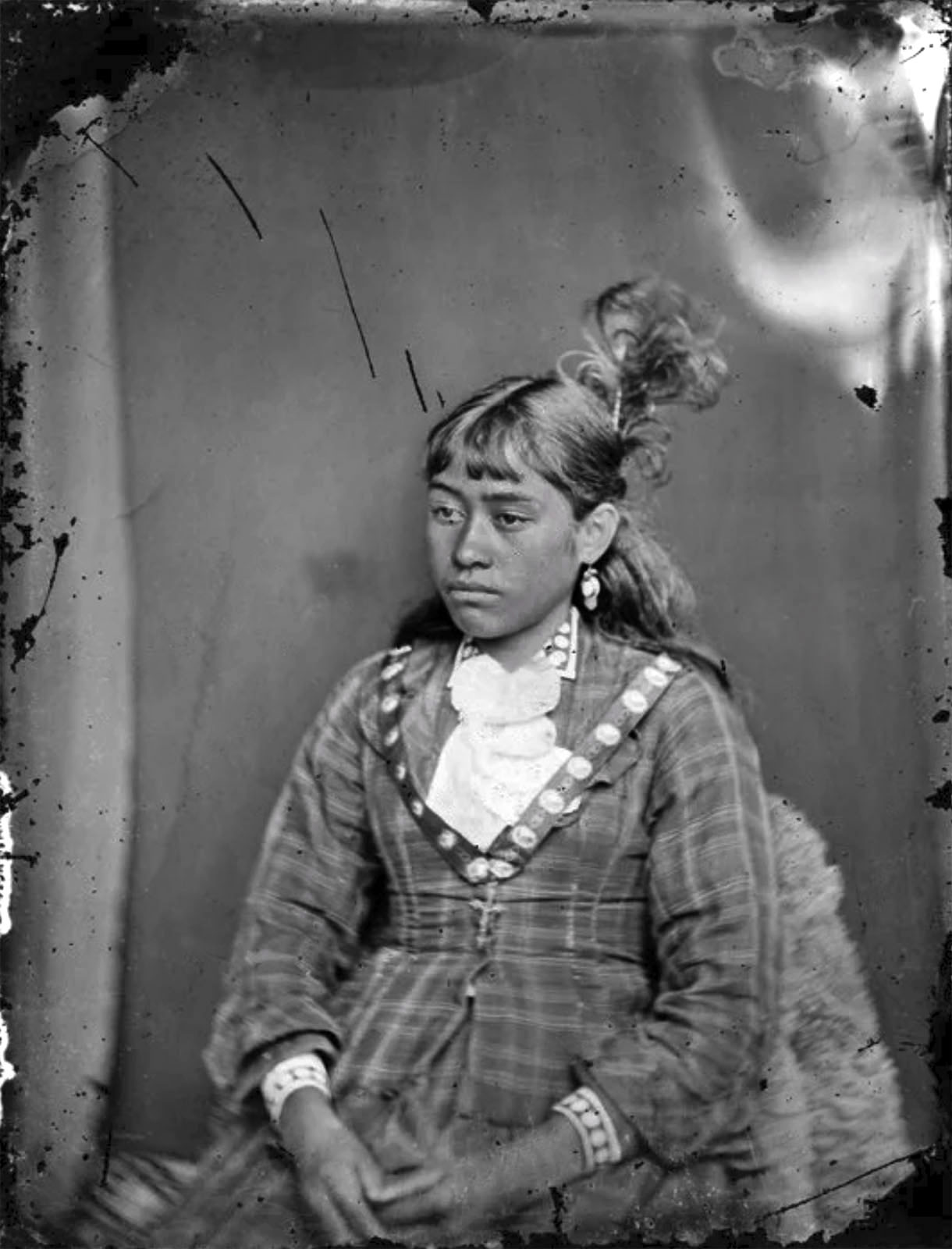
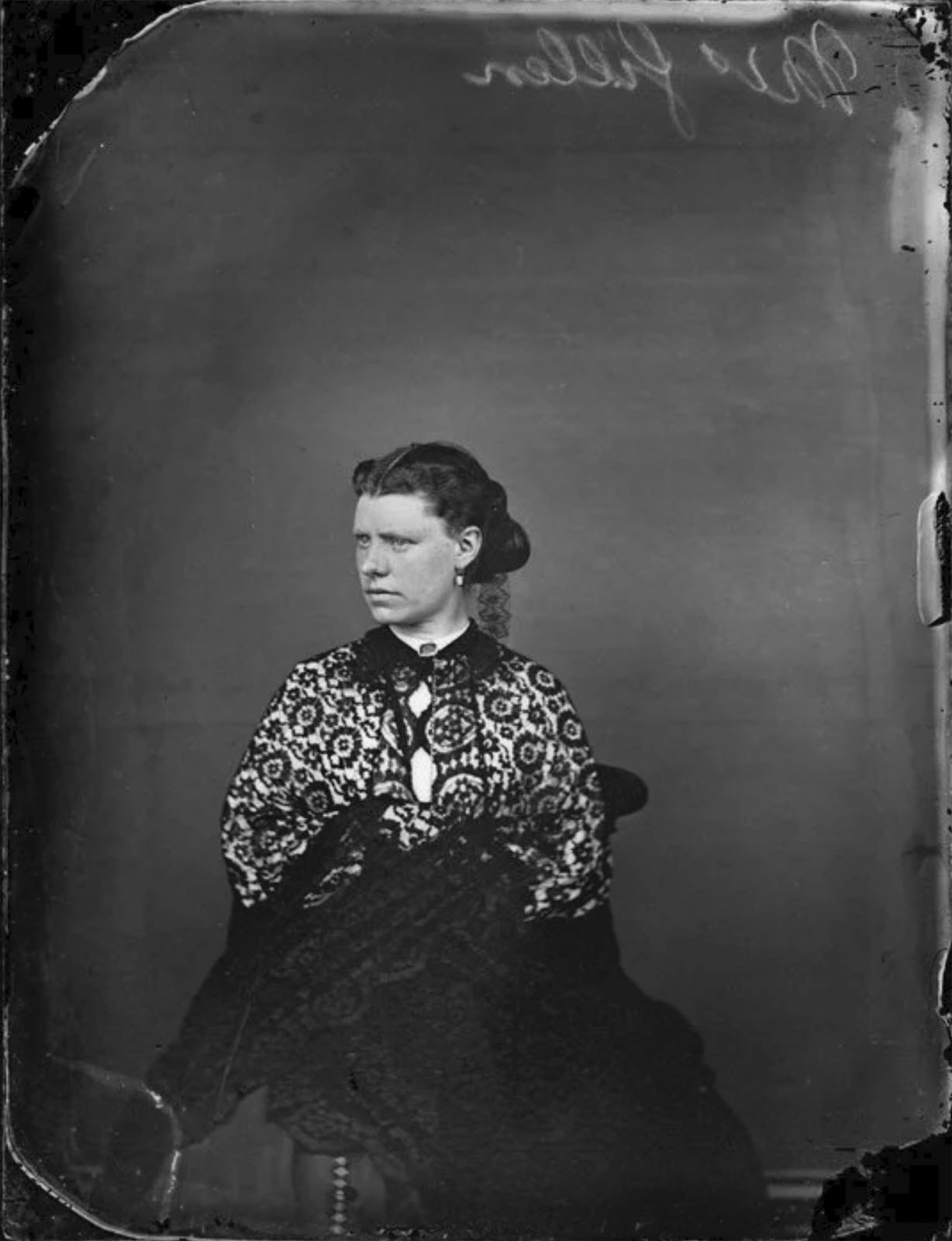
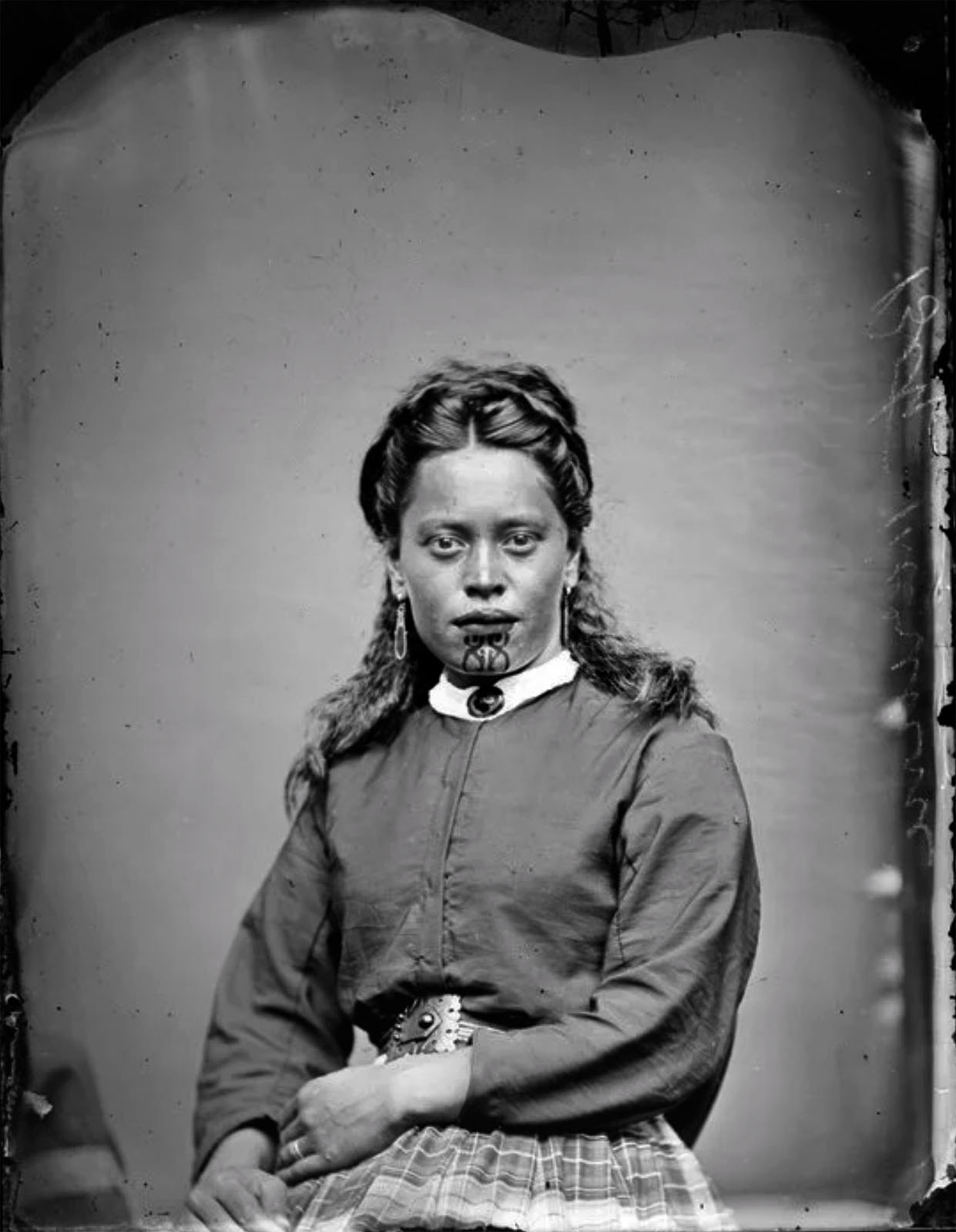
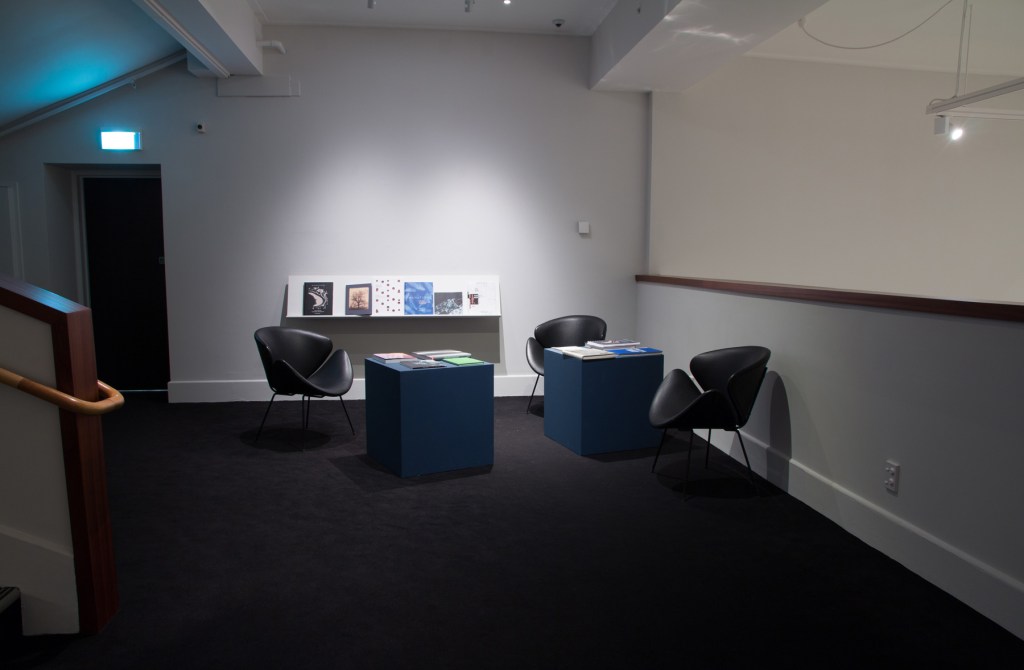
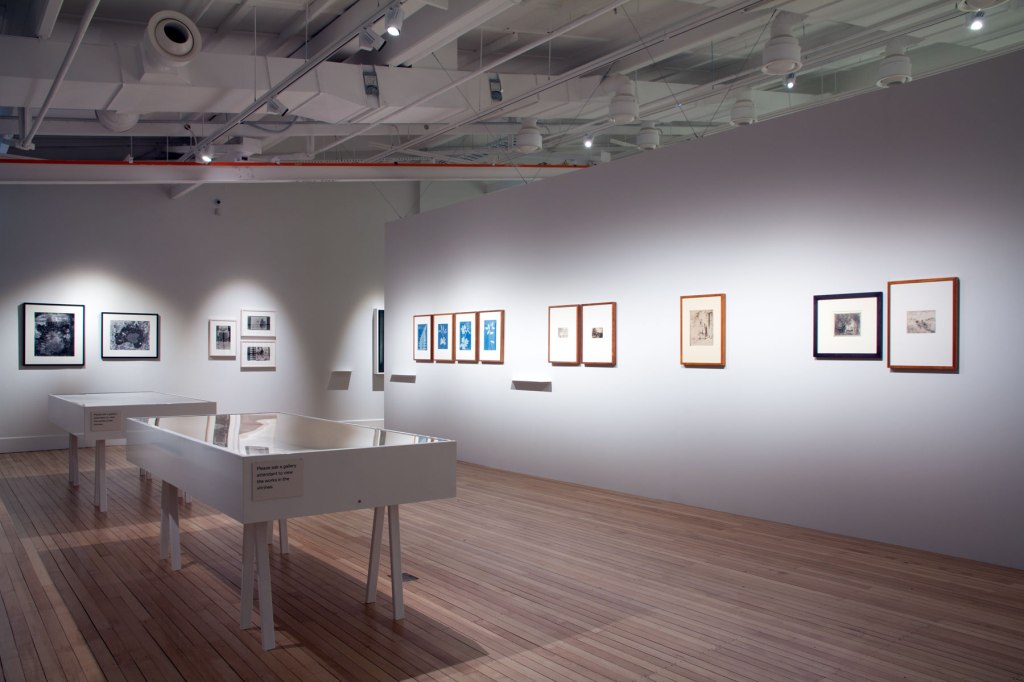
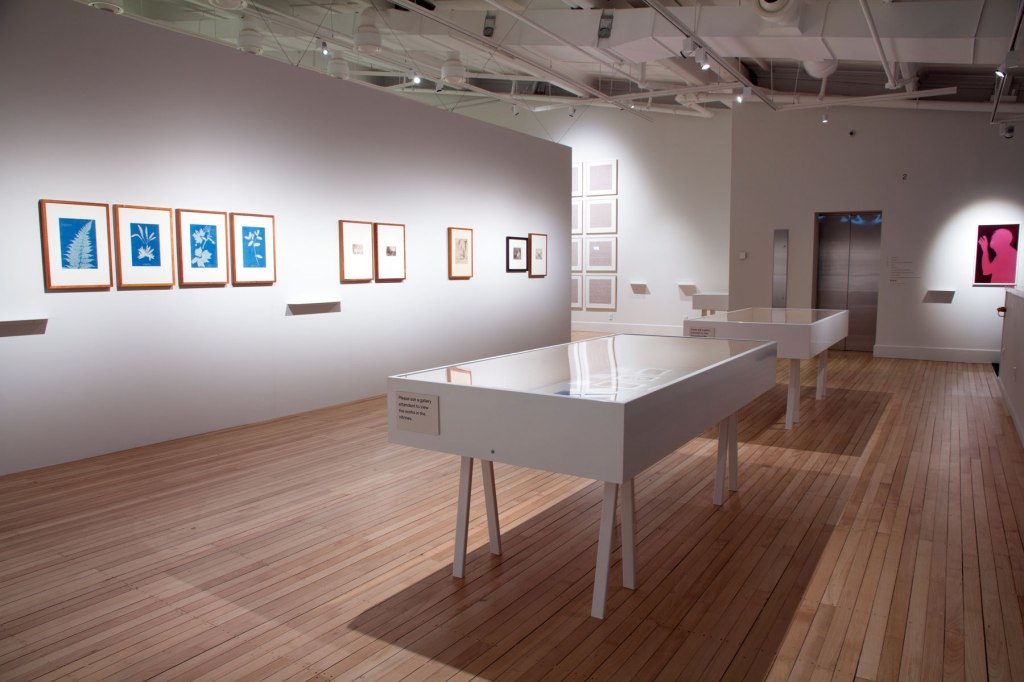
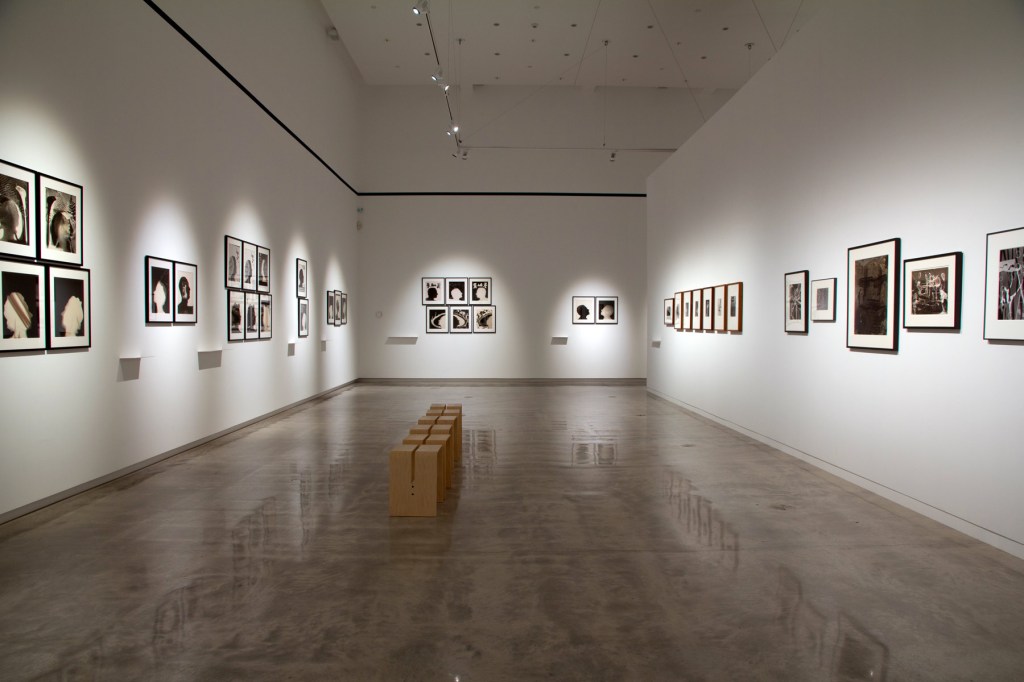
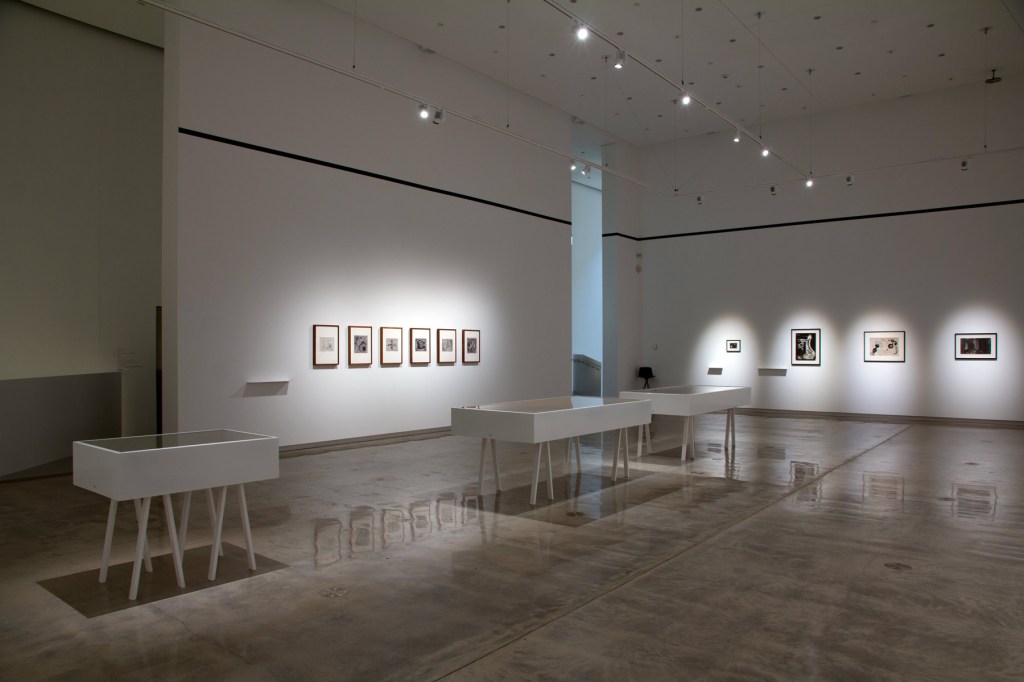
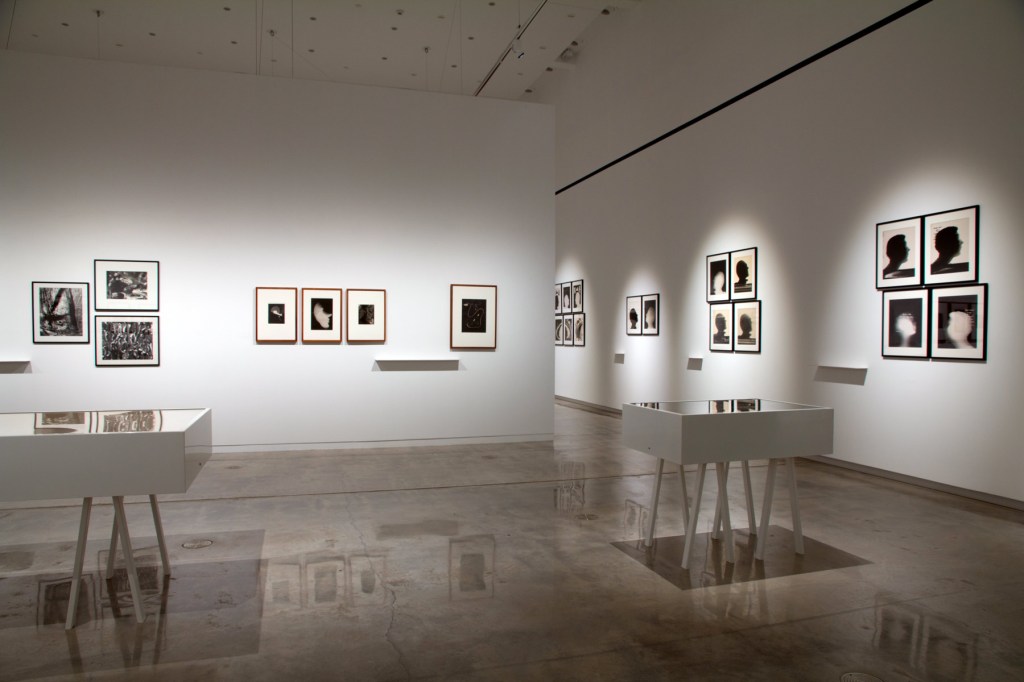
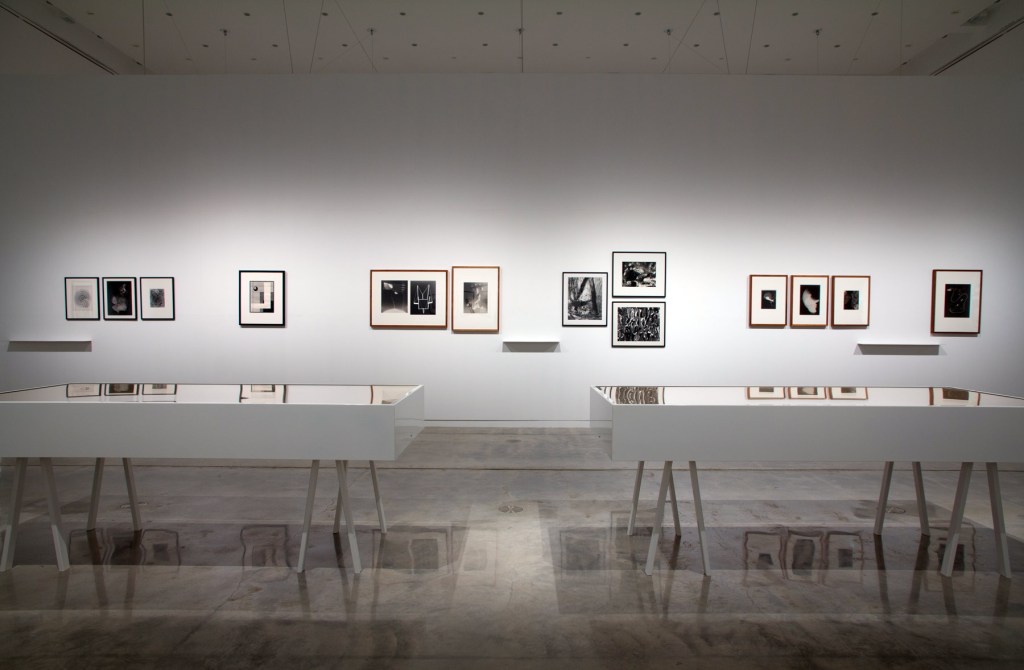
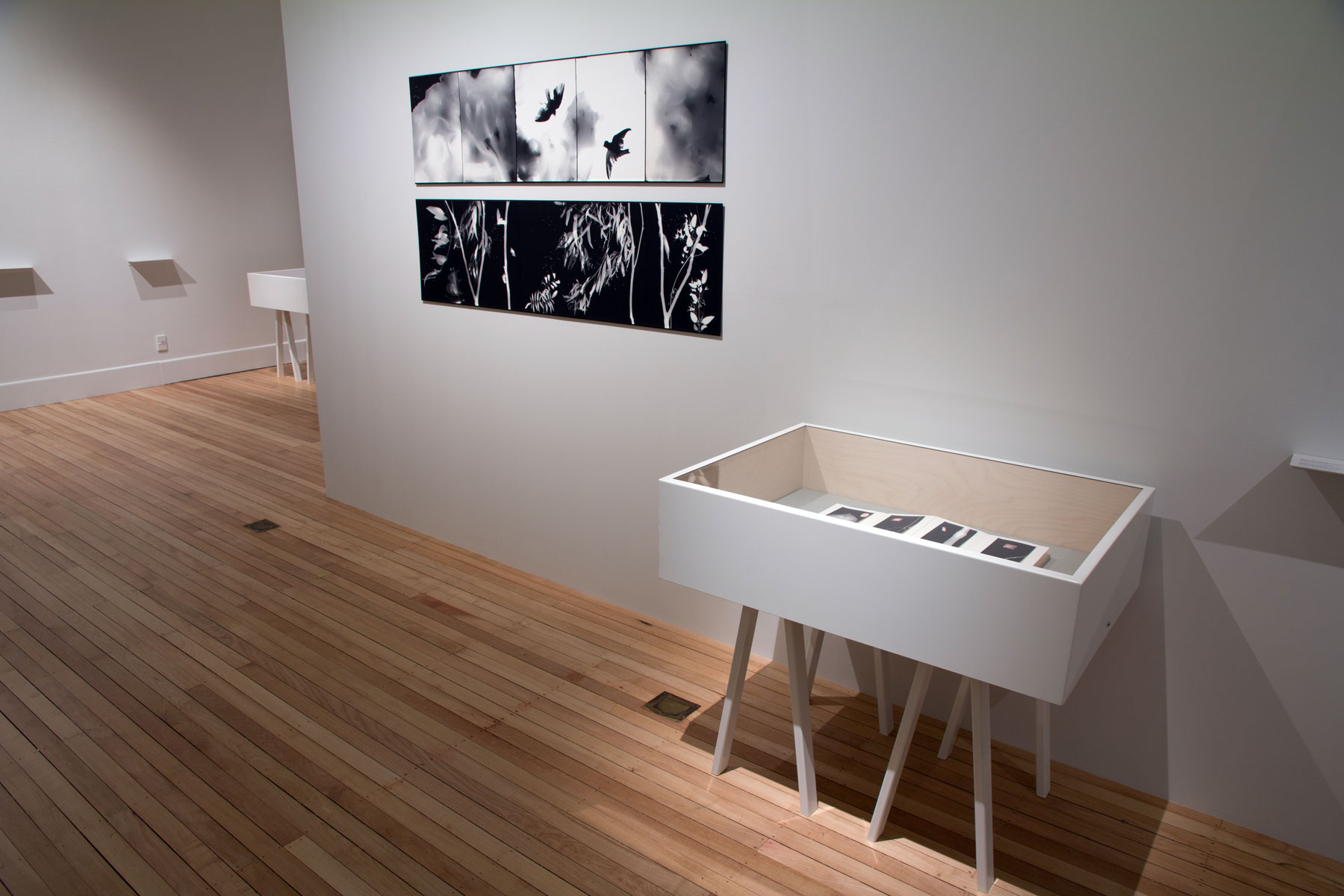
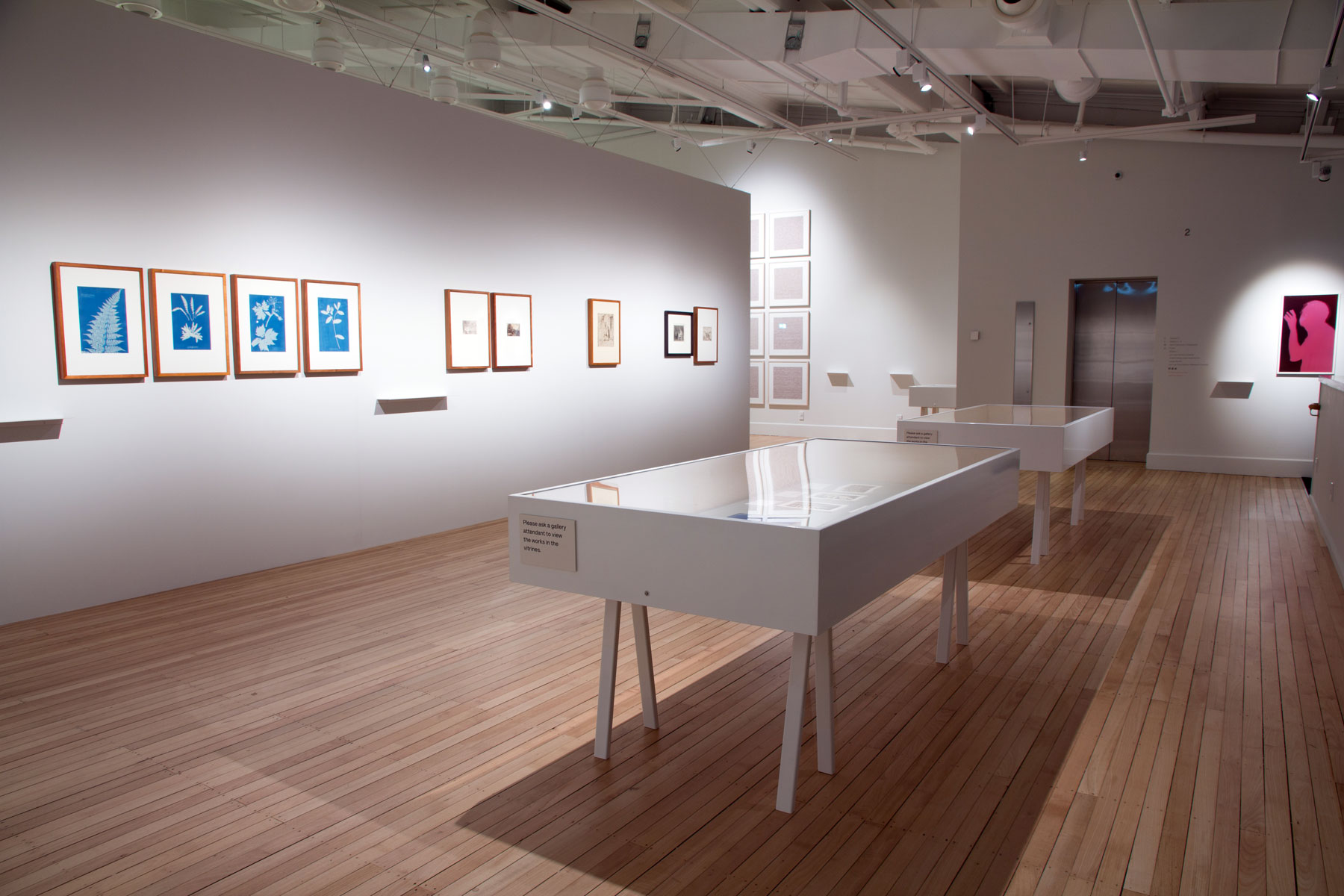
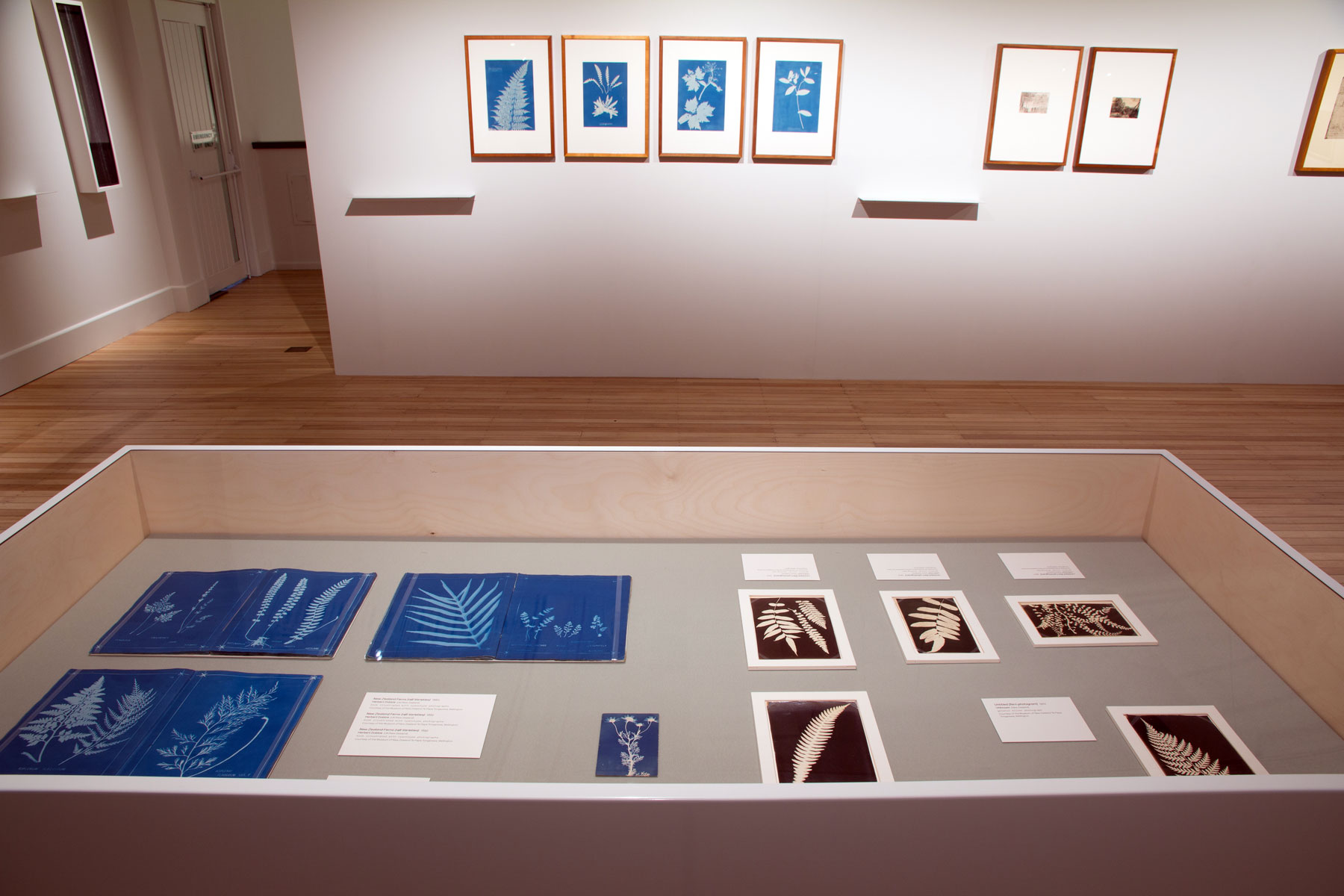
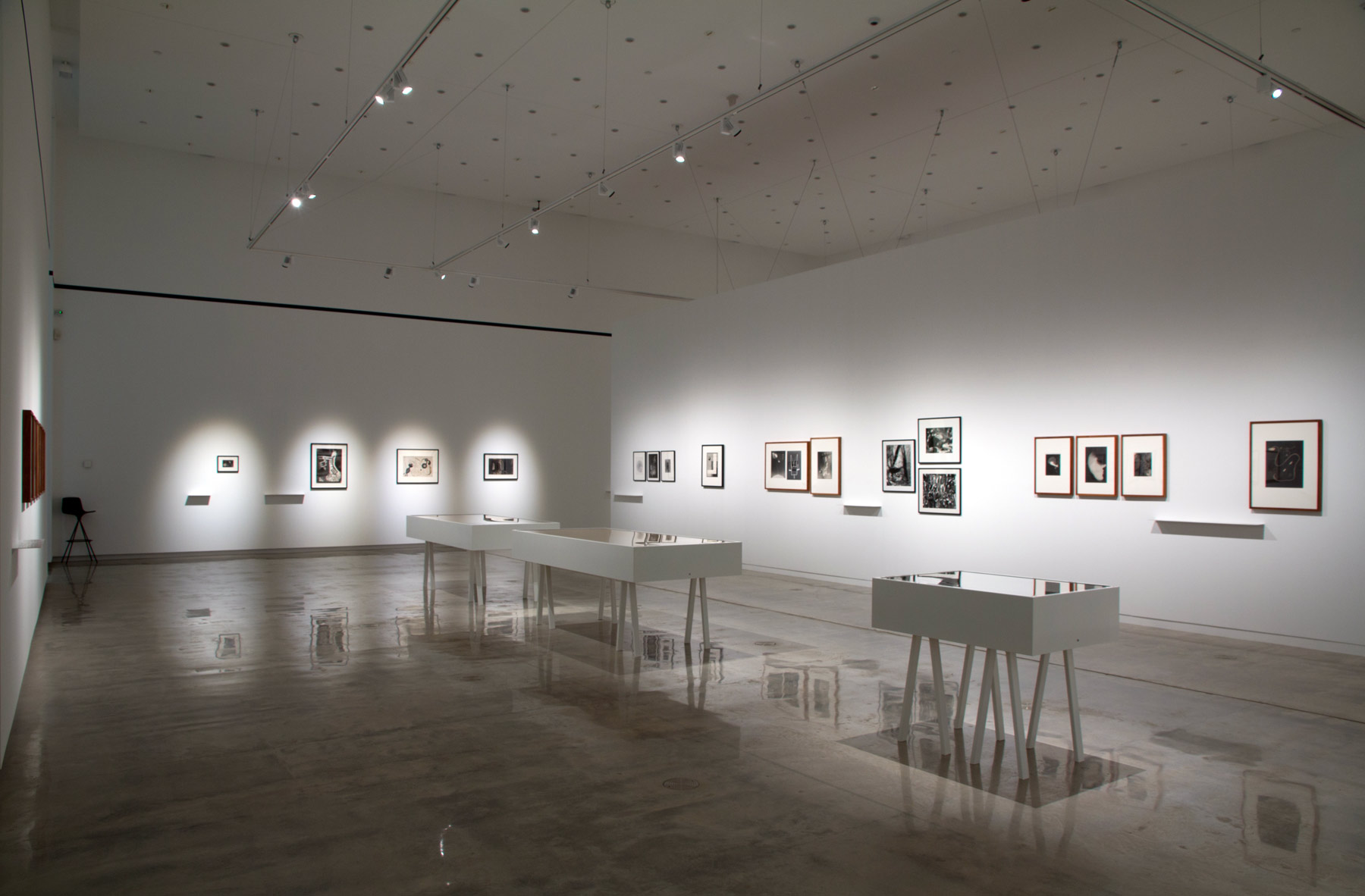
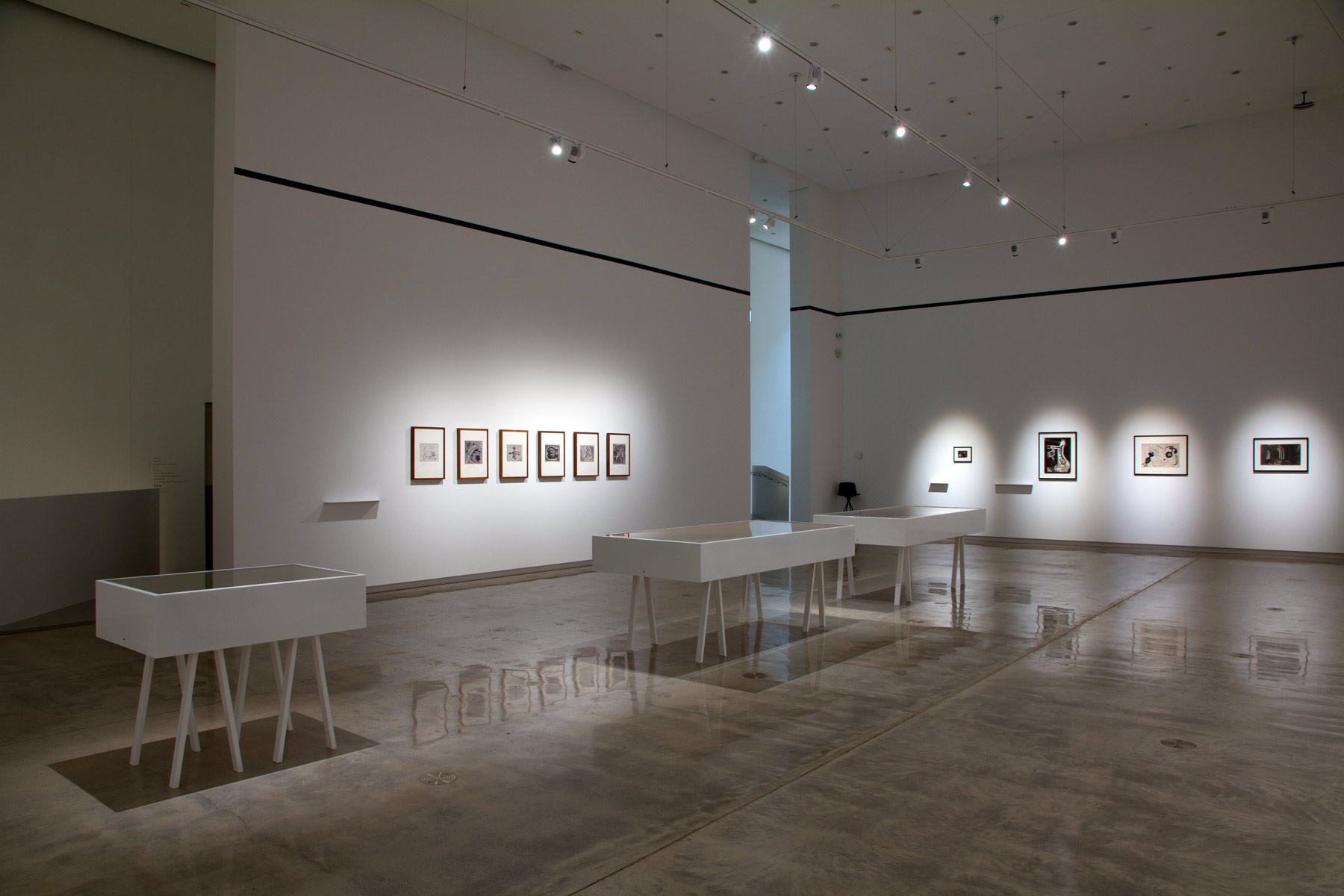
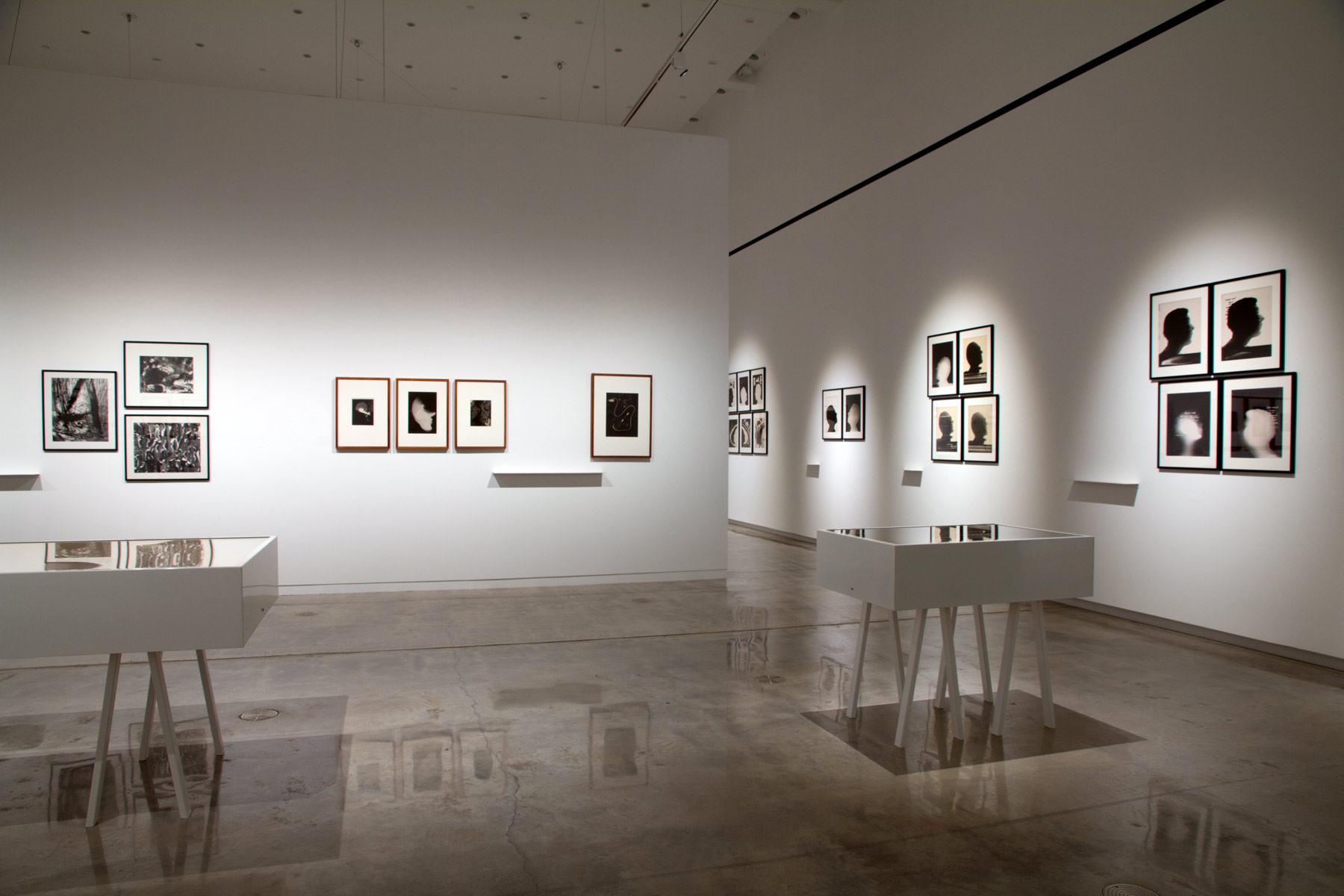
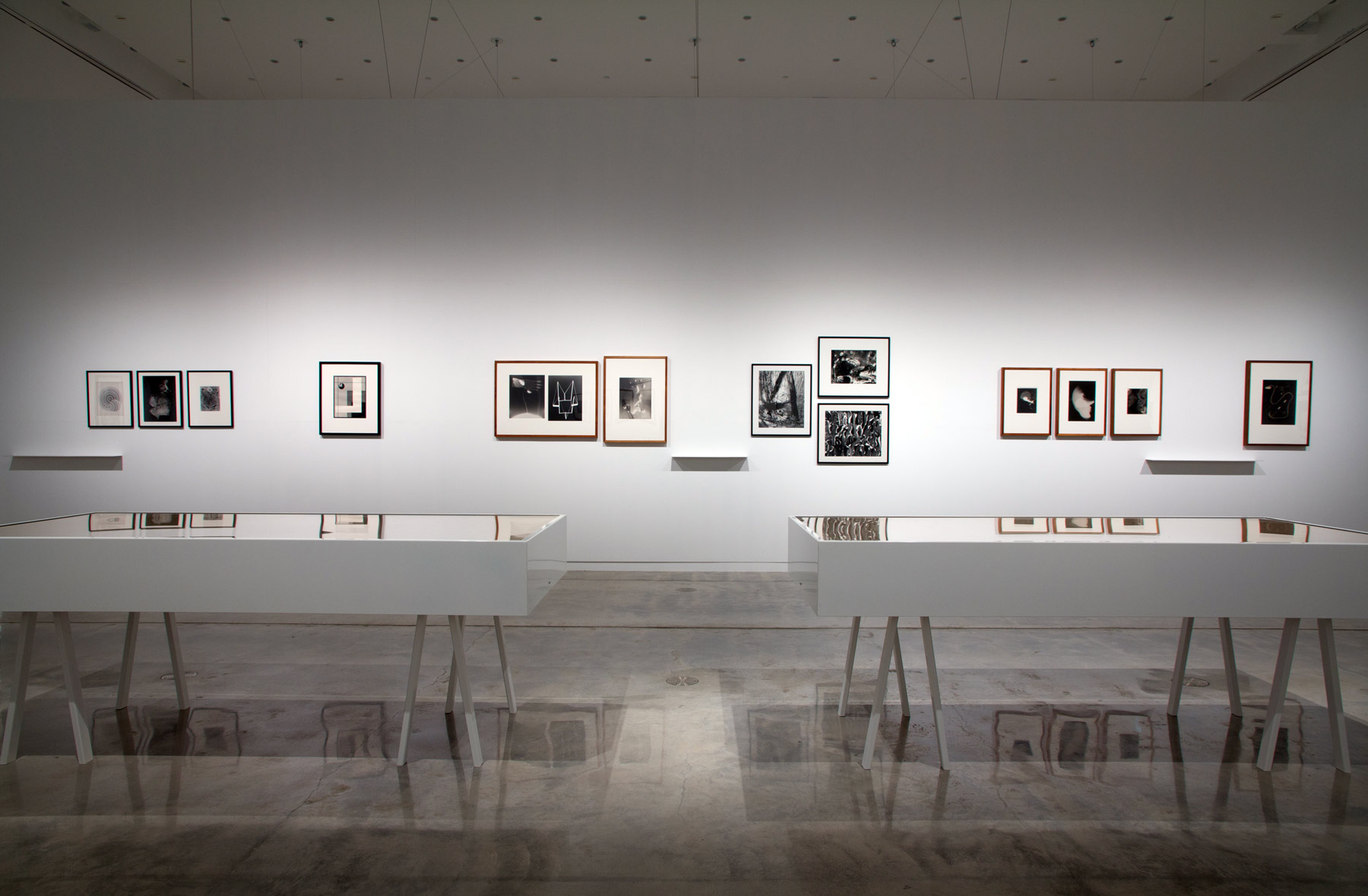
Exhibition: ‘A Different Light – First Photographs of Aotearoa’ at the Auckland War Memorial Museum, New Zealand

Exhibition dates: 11th April – 1st September 2024

This exhibition is a collaboration between Tāmaki Paenga Hira Auckland War Memorial Museum, Alexander Turnbull Library, and Hocken Collections Uare Taoka o Hākena
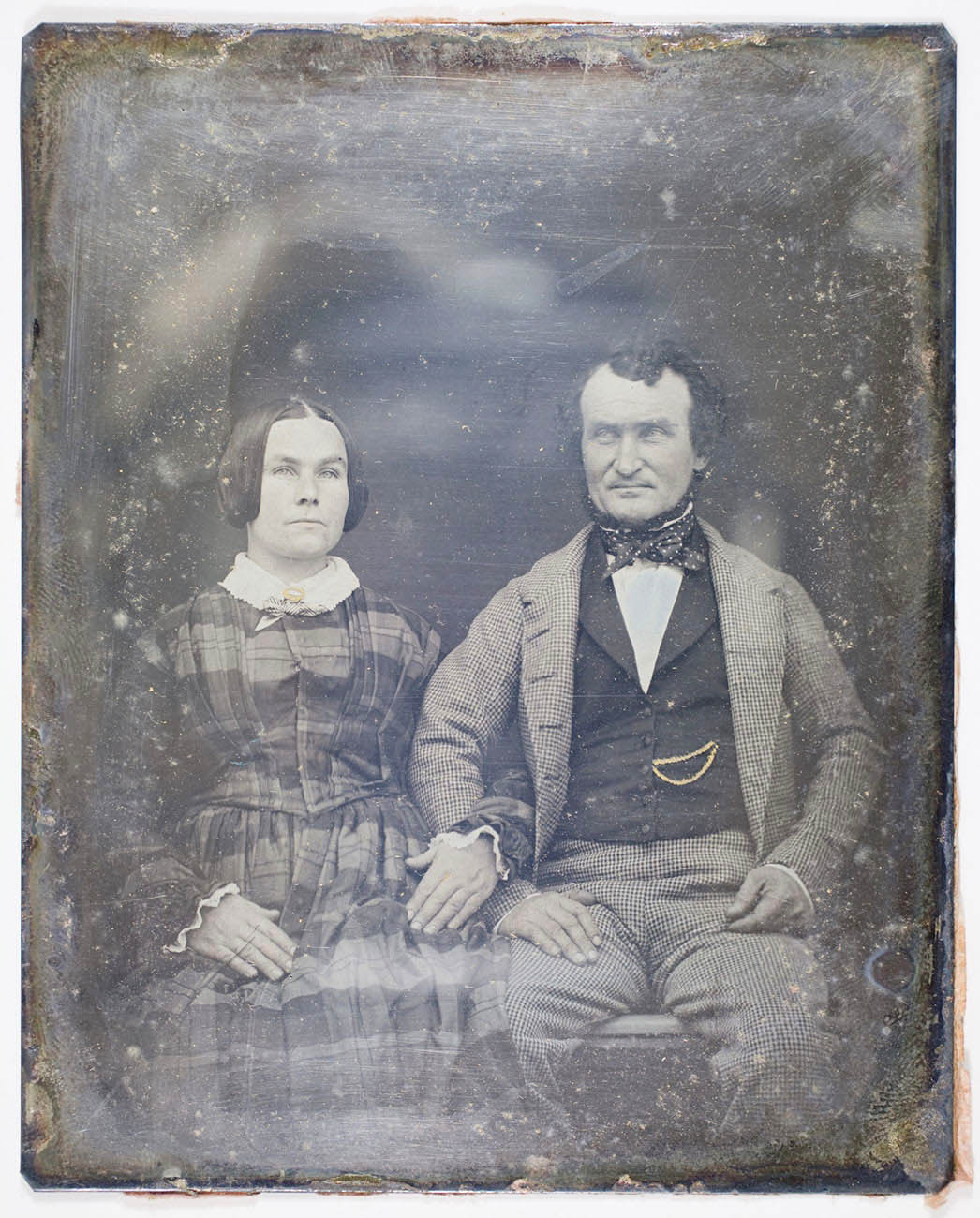
 

Hartley Webster (New Zealand, 1818-1906) (Attributed to) 'Jane and Alexander Alison' 30 June 1852


Hartley Webster (New Zealand, 1818-1906) (Attributed to)
Jane and Alexander Alison
30 June 1852
Half-plate daguerreotype, passe-partout mount
130 mm. x 100 mm. (plate)
Auckland Museum Collection


Hartley Webster was Auckland’s first resident professional photographer, but despite his longevity and his unique role in the growth of photography in 19th century New Zealand his death in 1906 passed without an obituary.

~ Keith Giles


Then and now

I went to the annual Melbourne Rare Book Fair at the University of Melbourne recently. There, albums of early photographs of Aotearoa were available to purchase for nearly AUD$7,000. These days, colonial photographs from both Australia and New Zealand are only for those that can afford them – to on sell, to secrete away in collections, to act as memento mori.

The colonial settler lens focused on landscape photography and portrait photographs of white settlers and Indigenous people, Māori “captured” by the camera. Professor Angela Wanhalla observes that, “Photographs are complicit in colonialism because they were used to document the impacts of migration, settlement and land transformation.”1

Through the use of material culture studies – an interdisciplinary field that examines the relationship between people and their things, the making, history, preservation, and interpretation of objects – we can study colonial photographs and the albums that hold them in order to understand how photographs are complicit in colonialism, and how colonial photographs can become a “rich sources for historians trying to uncover and understand late-nineteenth-century life.”2

Historian Jules Prown outlined material culture and a suggested approach. He wrote:

“Material culture as a study is based upon the obvious fact that the existence of a man-made object is concrete evidence of the presence of a human intelligence operating at a time of fabrication. The underlying premise is that objects made or modified by man reflect, consciously or unconsciously, directly or indirectly, the beliefs of individuals who made, commissioned, purchased, or used them, and by extension the beliefs of the larger society to which they belonged.”3


Colonial photographers and their photographs then, reflect the dominant hegemonic, patriarchal society to which they belong. According to Jarrod Hore they were engaged in “settler colonial work” because they “mobilised and visually reorganised local environments in the service of broader settler colonial imperatives.”4

Evidence of this reorganisation and the loss of individual and cultural identity can be found in the photographs Māori people. While the names of the Pākehā commercial photographic studios that took photographs of Māori might be known, the identity of the Māori subjects were often not recorded. Sapeer Mayron observes that, “Māori in particular were often photographed and their names and identities not preserved, called instead “Māori celebrities” and dressed with props in the artists’ studios” while in the same article Shaun Higgins, Auckland Museum pictures curator and curator of this exhibition observes, “When you’re documenting, you’re not this invisible entity that’s just documenting everything, you are making choices. You are, in effect, not documenting neutrally, but with your own agenda.”5 Again, photographers using material culture to record what was around them, reflecting, “consciously or unconsciously, directly or indirectly, the beliefs of individuals who made, commissioned, purchased, or used them, and by extension the beliefs of the larger society to which they belonged.”

But while Pākehā commercial photography captured Māori as ethnographic photographic subjects, conversely the Māori themselves were not always passive subjects in their own representation, posing for the camera as they wanted to be seen, or using the camera themselves to document family and culture. Indeed (and applicable to early New Zealand photographs as well as early Australian ones), academics such as the Australian Jane Lydon in her important books Eye Contact: Photographing Indigenous Australians (2005) and Photography, Humanitarianism, Empire (2016) note that these photographs were not solely a tool of colonial exploitation. Lydon articulates an understanding in Eye Contact that the residents of Coranderrk, an Aboriginal settlement near Healsville, Melbourne, “had a sophisticated understanding of how they were portrayed, and they became adept at manipulating their representations.”

Professor Angela Wanhalla also enunciates that the relationship between the camera and the Māori whānau (extended family group) is multilayered and complicated:

“At different times, and depending on the context, Māori embraced or rejected photography. Because of its colonial implications, Māori whānau and communities have a complicated relationship with the camera. But, as scholars Ngarino Ellis and Natalie Robertson argue, there is evidence it was regarded as friend as much as foe. …

Colonial photographs are culturally dynamic. Their integration into Māori life means they do not just depict relationships but are imbued with them. As such, photographs are taonga (treasures) and connect people across time and space.”6


Then and now, through the photographs ‘materiality’ and their role as sensory things that are held and used as well as viewed – the photographs imbued with the spirit of people long past – images of Indigenous ancestors taken by Māori and Pākehā act as talisman against the vicissitudes of colonial oppression.

They picture a land and culture which has irrevocably changed but the photographs can can still bring past stories into present life, which then regenerate the spirit of the ancestors into the presence of contemporary Māori families. With the recent acts of regression against the Māori people by the current New Zealand government, any object, any taonga (treasures) which connect people across time and space and make them stronger, is to be valued, especially if the photographs upend the tropes of colonial power and control.

As Joyce Campbell observes of these photographs, “The living connection to the sitter was the same as to a carved ancestor, or any other manifestation… It is easy to see that how they lived intersects with how we live now, and also to recognize the ways in which it does not. If these photographs are technically rough, or worn, we easily look past all that to engage with an image of another person or place. The images defy the notion that we need hyper-reality, immersion, massive scale, vivid colour or idealised beauty in order to achieve psychic proximity.”

In psychic proximity and unity, across time.

Strength people, strength. Hope, spirit, respect, strength.

Dr Marcus Bunyan


1/ Extract from Professor Angela Wanhalla. “The past in a different light: how Māori embraced – and rejected – the colonial camera lens,” on The Conversation website April 11, 2024 [Online] Cited 10/08/2024

2/ Jill Haley. “Otago’s Albums: Photographs, Community and Identity,” in New Zealand Journal of History, 52, 1, 2018, p. 24 on the Academia website 2018 [Online] Cited 28/08/2024

3/ Jules Prown, ‘Mind in Matter: An Introduction to Material Culture Theory and Method’, Winterthur Portfolio, 17, 1 (1982), pp. 1-2 quoted in Haley, Op. cit., p. 24.

4/ Jarrod Hore. “Capturing Terra Incognita: Alfred Burton, ‘Maoridom’ and Wilderness in the King Country,” in Australian Historical Studies Volume 50, Issue 2, 2019, pp. 188-211 quoted in Professor Angela Wanhalla Op. cit.,

5/ Shaun Higgins, Auckland Museum pictures curator quoted in Sapeer Mayron. “A Different Light: A chance to see 19th-century Aotearoa as our first photographers saw it,” on The Post website April 7, 2024 [Online] Cited 28/06/2024.

6/ Professor Angela Wanhalla, Op. cit.,

7/ Joyce Campbell. “A Different Light: First Photographs of Aotearoa,” on the New Zealand Review of Books website May 14, 2024 [Online] Cited 23/06/2024


Many thankx to the Auckland War Memorial Museum for allowing me to publish the photographs in the posting. Please click on the photographs for a larger version of the image.


“For Māori there was another dimension. The living connection to the sitter was the same as to a carved ancestor, or any other manifestation. Wharenui would eventually feature photographs of ancestors located where at one time they would have been depicted in other forms. But their presence has the same significance.” …

In Natalie Marshall’s essay ‘Camera Fiends and Snapshooters: Early Amateur Photography in Aotearoa’, it is the immediacy of photographs by James Coutts Crawford, Henry Wright and Robina Nicol that ‘pricks’ me, as Roland Barthes would have it. These photographers working far from the global centre of their craft are freed to explore domesticity and love. Their photographs are suffused with intimacy, warmth, pregnancy, yawning and easy comradery. It is easy to see that how they lived intersects with how we live now, and also to recognize the ways in which it does not. If these photographs are technically rough, or worn, we easily look past all that to engage with an image of another person or place. The images defy the notion that we need hyper-reality, immersion, massive scale, vivid colour or idealised beauty in order to achieve psychic proximity.

Joyce Campbell. “A Different Light: First Photographs of Aotearoa,” on the New Zealand Review of Books website May 14, 2024 [Online] Cited 23/06/2024


A Different Light: First Photographs of Aotearoa – from the curators

Hear from the curators of A Different Light: First Photographs of Aotearoa, from from Auckland Museum, Hocken Collections, and Alexander Turnbull Library, as they speak to some of their favourite objects from this new exhibition that explores the captivating evolution of photography in 19th-century New Zealand.


Witness the dawn of photography in Aotearoa New Zealand. Through precious, original photographs, explore its beginnings as an expensive luxury, through to becoming a part of everyday life.

Step into A Different Light: First Photographs of Aotearoa and explore the captivating evolution of photography in 19th-century New Zealand. Delve into the advances that took photography from its beginnings for an exclusive few in the mid-1800s, to being a part of daily life by the turn of the century.

Experience the 19th-century studio as you pose for your own digital Victorian portrait, and explore the wonder of this new technology that changed the way we see ourselves forever.

Featuring precious, original photographs from Auckland Museum, Hocken Collections, and Alexander Turnbull Library, this exhibition offers a unique glimpse into our visual heritage.

Text from the Auckland War Memorial Museum website
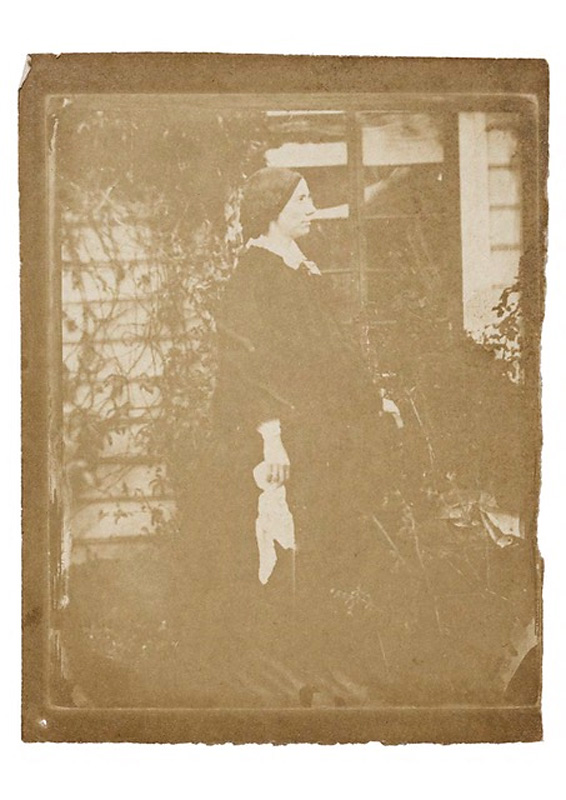
 

James Coutts Crawford (New Zealand born Scotland, 1817-1889) 'Jessie Crawford, probably outside the Crawfords' home in Thorndon, Wellington' c.  1859


James Coutts Crawford (New Zealand born Scotland, 1817-1889)
Jessie Crawford, probably outside the Crawfords’ home in Thorndon, Wellington
c.  1859
Salted paper print
143 × 110 mm
Alexander Turnbull Library


A rare image of a heavily pregnant Victorian woman, shot outdoors in a domestic garden.


James Coutts Crawford (New Zealand born Scotland, 1817-1889) 'Nurse Edgar [left] and Jessie Crawford' c. 1860


James Coutts Crawford (New Zealand born Scotland, 1817-1889)
Nurse Edgar [left] and Jessie Crawford
c. 1860
Salted paper print
Alexander Turnbull Library Collection
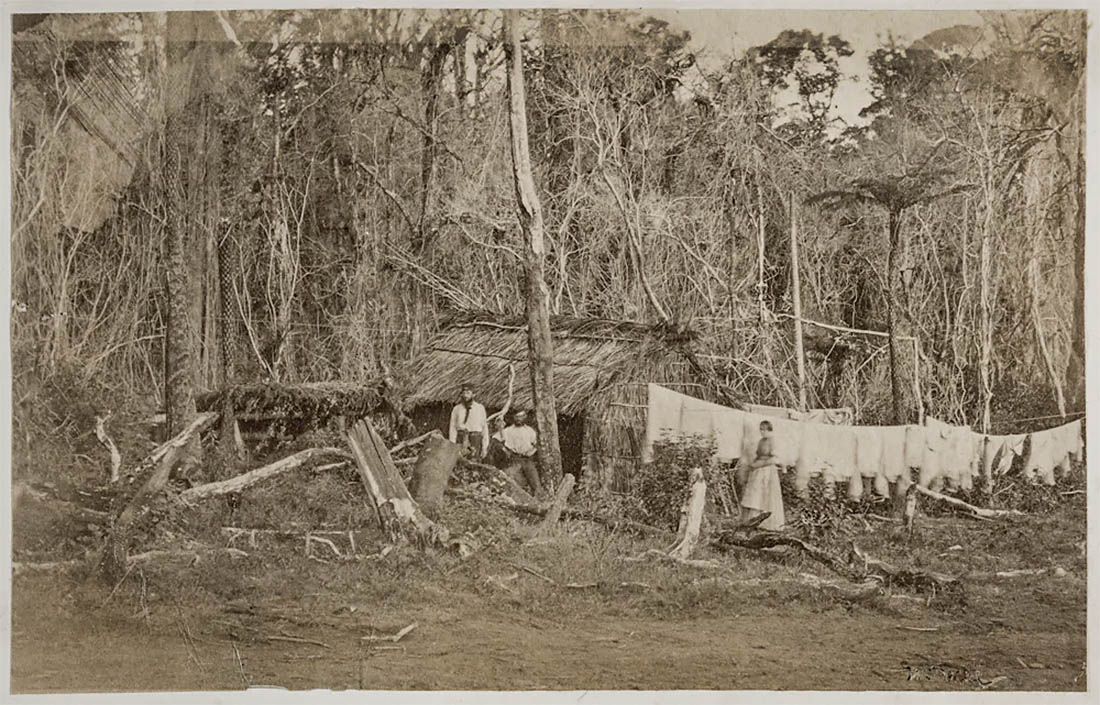
 

William Temple (New Zealand born Ireland, 1833-1919) 'The Bush at Razorback, Great North Road New Zealand' 1862-1863


William Temple (New Zealand born Ireland, 1833-1919)
The Bush at Razorback, Great North Road New Zealand
1862-1863
Tāmaki Paenga Hira Auckland War Memorial Museum


Medical officer with Imperial forces during New Zealand Wars; photographer. Born Co Monaghan, Ireland, son of William Temple MD and Anne Temple. Entered army service 1858, and served as Assistant Surgeon with the Royal Artillery in the Taranaki (1860-1861) and Waikato (1863-1865) campaigns. He was awarded the Victoria Cross for gallantry at Rangiriri. Died in London.

Text from the National Library of New Zealand website


“… every single photograph is taken with purpose. The photographer chooses what’s in the frame. There is always a bit of an edit in that regard.

“When you’re documenting, you’re not this invisible entity that’s just documenting everything, you are making choices. You are, in effect, not documenting neutrally, but with your own agenda.”

While many of the pictures have full captions detailing not only who took the photo but who is featured in it, some people’s names were lost – or possibly were never recorded at all, Higgins says.

Māori in particular were often photographed and their names and identities not preserved, called instead “Māori celebrities” and dressed with props in the artists’ studios.

“Sadly we sometimes know the studio, but we don’t know who they are, we don’t know answers to questions why they were taken. Did you walk away with your own picture, but did you know that that would then be sold to collectors for their albums?

“You might see someone and say, ‘Oh, they’re sitting with their taonga’. Well, not necessarily, they might be sitting with the studio’s prop and dressed up for a certain image.

“Photos like these are why throughout the exhibition you might see the question: Do you know who is in this picture? Higgins hopes with a bit of luck, some of the “orphan pictures” with no names might be identified.

“Our own institution and others play a part. We collect from collectors and photos end up in an institution with no name,” Higgins says.

“The best thing we can do is put them out and say, ‘Do you know who these people are?’ and hopefully we find out more about these orphan photographs that have made their journey through time in albums collected by largely white men.

“We don’t have answers, but we can pose the questions. I hope people walk away from an exhibition like this questioning some of the things they’ve seen and maybe looking at things in a different light.”

Shaun Higgins, Auckland Museum pictures curator quoted in Sapeer Mayron. “A Different Light: A chance to see 19th-century Aotearoa as our first photographers saw it,” on The Post website April 7, 2024 [Online] Cited 28/06/2024.
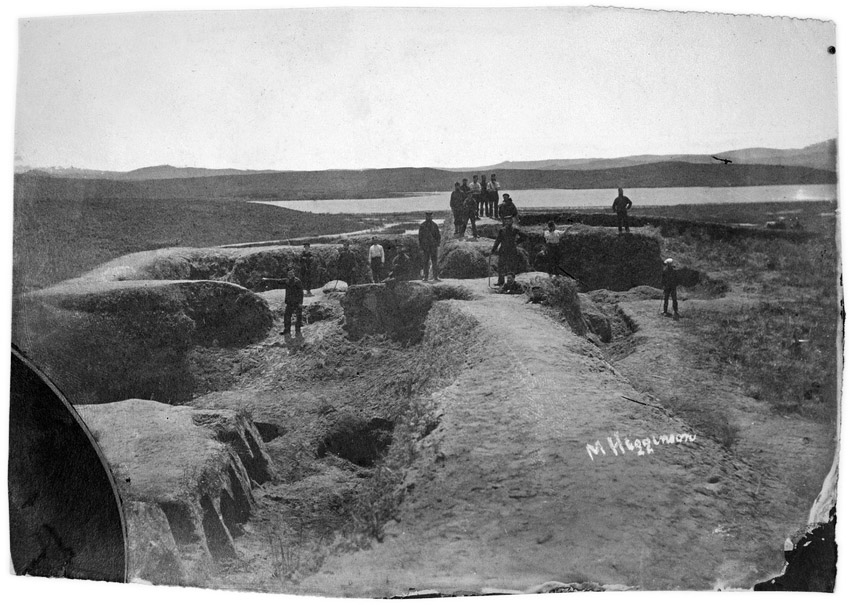
 

Montagu Higginson (English, 1840-1910) 'The Native Earthworks at Rangiriri partially destroyed' November 1863


Montagu Higginson (English, 1840-1910)
The Native Earthworks at Rangiriri partially destroyed
November 1863
Auckland Museum


In 2006 Auckland Museum acquired the album Photographs of the South Sea Islands; a photograph album featuring the work of a hitherto unknown photographer, one George Montagu John Higginson (Auckland War Memorial Museum 2006:28). Known commonly as Montagu Higginson (Illustrated London News vol. 045 XLV:91), this amateur photographer produced many images of  the Waikato campaign that are either new, or at the very least previously of unknown authorship.  There are also many images which cross over to other albums compiled by other photographers indicating the strong possibility of trading. This notion has been considered by Main and Turner (1993:10) with regard to other photographers such as Daniel Manders Beere.

Shaun Higgins. “Brothers in Glass: Montage Higginson and the Photographers of the Waikato War,” Auckland Museum Records, 2012
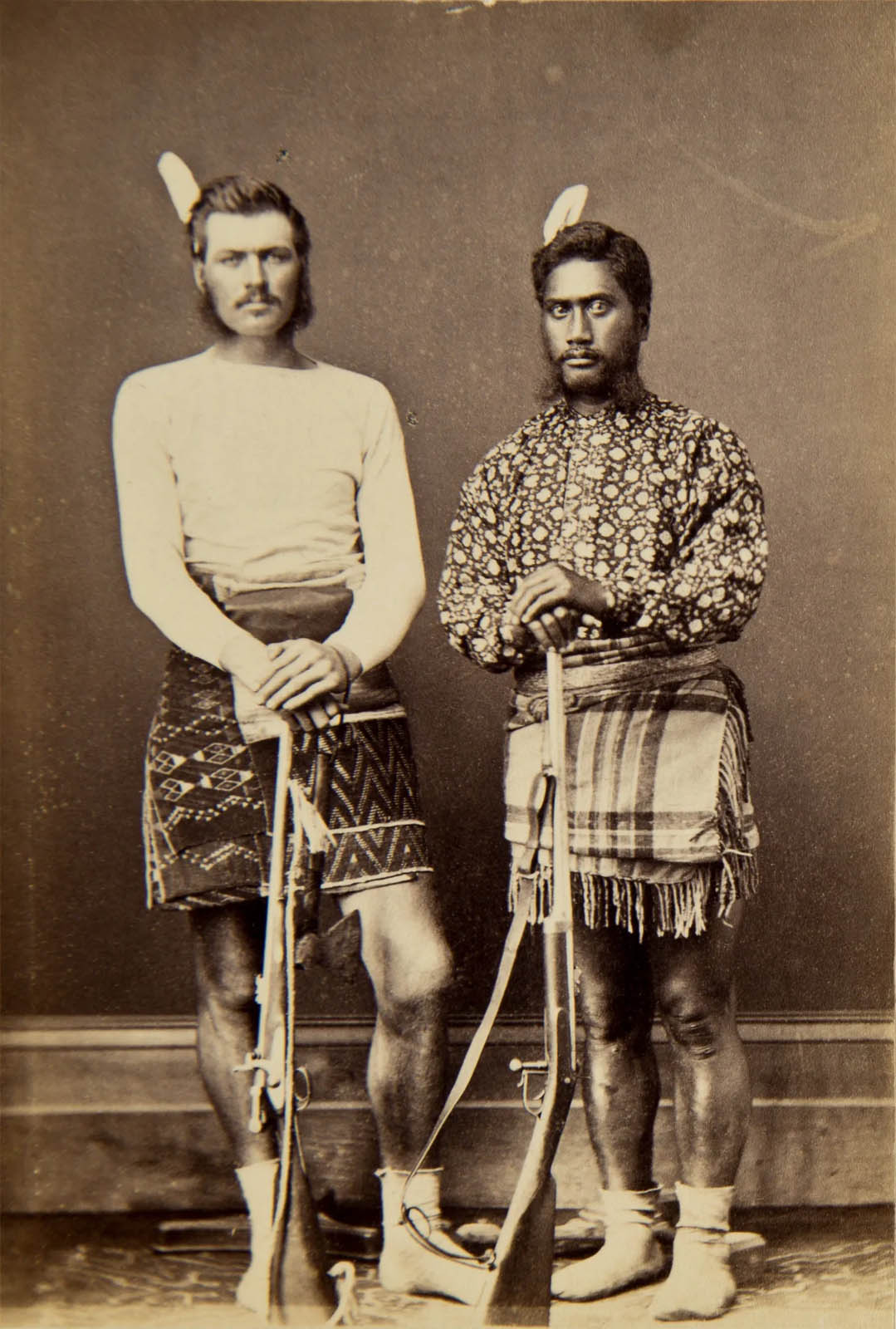
 

Batt & Richards (firm) (finished January 1874) 'Tom Adamson and Wiremu Mutumutu, Wanganui' c. 1867-1874


Batt & Richards (firm) (finished January 1874)
Tom Adamson and Wiremu Mutumutu, Wanganui
c. 1867-1874
Hocken


This studio carte de visite provides striking evidence of cultural exchange in the way of Māori and European fabrics and designs, with Tom Adamson on the left wearing a woven flax kaitaka with a geometric tāniko border, and Wiremu Mutumutu on the right wearing a fringed tartan rug, both in the manner of kilts. Adamson worked alongside Māori as a military scout and guide, hunting down dissidents in the dense native bush for pro-government forces during the New Zealand Wars. This service earned him a New Zealand Cross in 1876.
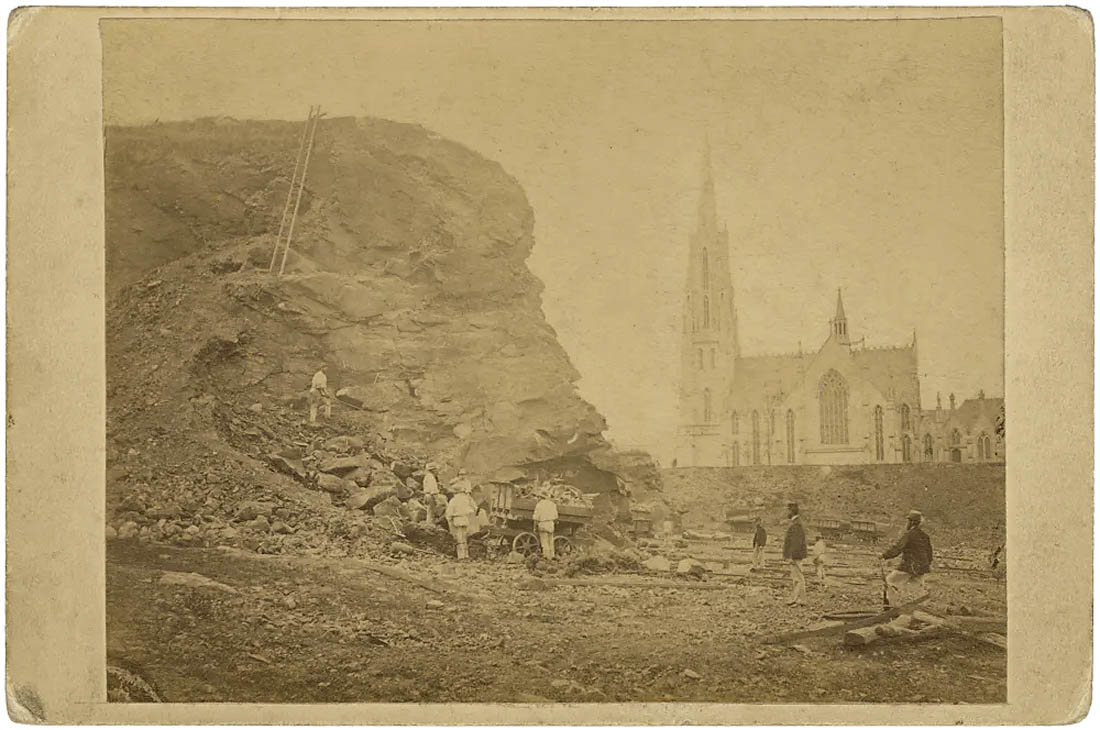
 

John McGregor (New Zealand born Scotland, 1831-1894) 'Bell Hill' c. 1875


John McGregor (New Zealand born Scotland, 1831-1894)
Bell Hill
c. 1875
Hocken Collections Uare Taoka o Hākena


Photographer, Stuart St, Dunedin, fl 1863-1884. Awarded first class certificate at The New Zealand Exhibition 1865 (Source: Photography in New Zealand / Hardwicke Knight and back of photograph). Died 12 Oct 1894, aged 63 years. 32 years in New Zealand, formerly of Glasgow, Scotland. Buried at Southern Cemetery, Dunedin (Source: Dunedin online cemetery database).


In 1848, two decades after a French inventor mixed daylight with a cocktail of chemicals to fix the view outside his window onto a metal plate, photography arrived in Aotearoa. How did these ‘portraits in a machine’ reveal Māori and Pākehā to themselves and to each other? Were the first photographs ‘a good likeness’ or were they tricksters? What stories do they capture of the changing landscape of Aotearoa?

From horses laden with mammoth photographic plates in the 1870s to the arrival of the Kodak in the late 1880s, New Zealand’s first photographs reveal Kīngi and governors, geysers and slums, battles and parties. They freeze faces in formal studio portraits and stumble into the intimacy of backyards, gardens and homes.

A Different Light brings together the extraordinary and extensive photographic collections of three major research libraries – Tāmaki Paenga Hira Auckland War Memorial Museum, Alexander Turnbull Library and Hocken Collections Uare Taoka o Hākena – to coincide with a touring exhibition of some of the earliest known photographs of Aotearoa.

Text from the Auckland War Memorial Museum website
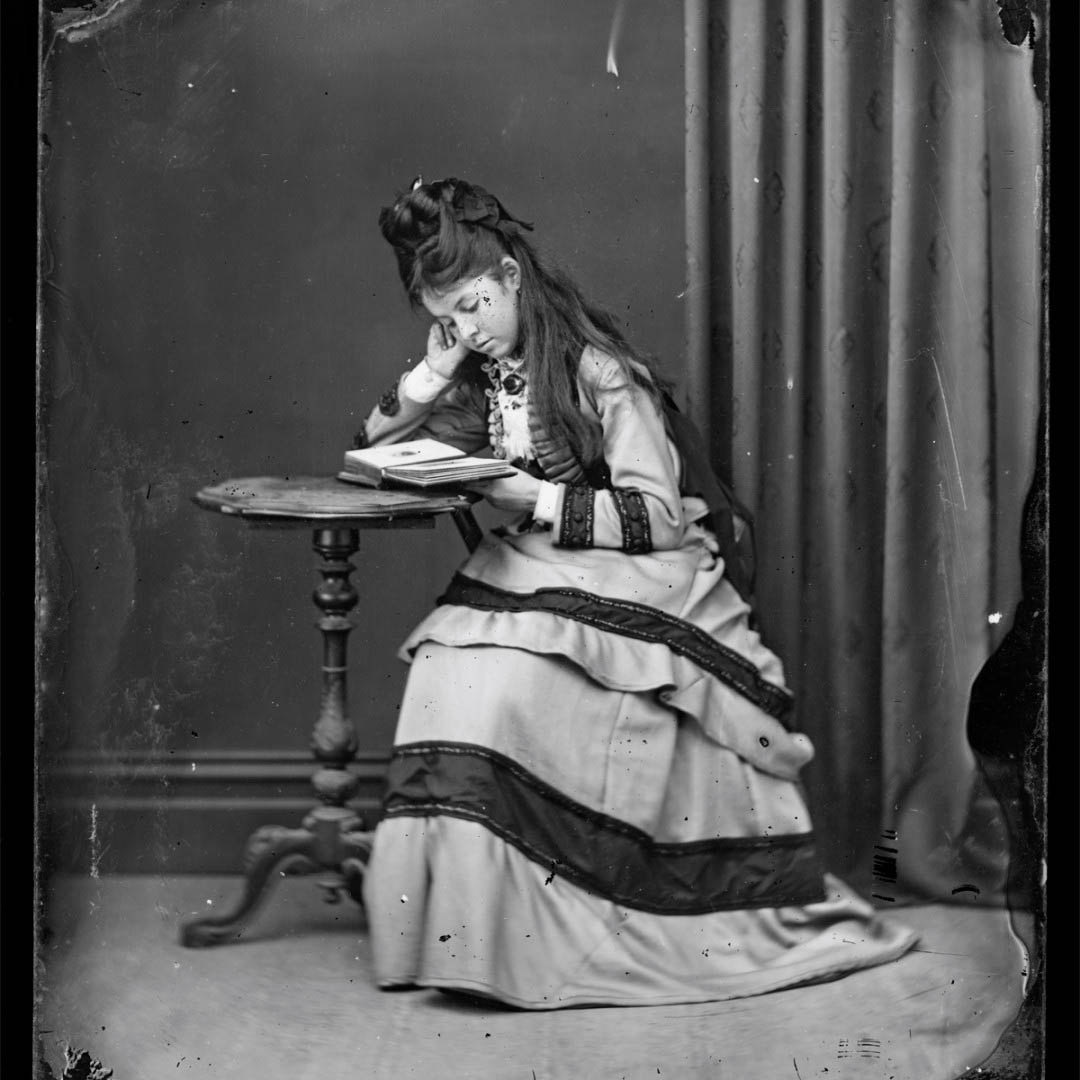
 

William James Harding (New Zealand born England, 1826-1899) 'Young woman looking at photograph album' c. 1870s


William James Harding (New Zealand born England, 1826-1899)
Young woman looking at photograph album
c. 1870s
Quarter-plate collodion silver glass negative
Alexander Turnbull Library Collection


William and Annie Harding arrived in New Zealand in 1855. Two brothers had already emigrated – John in 1842 and Thomas in 1848. The three brothers, and Annie, were followers of Emanuel Swedenborg, and strong supporters of the Total Abstinence Society. William and Annie settled in Wanganui, where William set up briefly as a cabinet-maker but in 1856 established a photographic studio. By the 1860s his studio was installed in a two-storeyed, corrugated-iron building on Ridgway Street.

Text from the Wikipedia website


William James Harding founded his studio in Wanganui in 1856. In 1889 he sold it to Alfred Martin, who had previously practiced in Christchurch. During his tenure, Harding occasionally hired out his studio to other photographers, and there are images in the 1/4 plate sequence which the Library also holds as cartes-de-visite by the photographers D Thomson and T Tuffin. Alfred Martin sold the business to Frank Denton in 1899. Denton in turn sold out to Mark Lampe around 1930, but retained Harding’s negatives, and Martin’s 10 x 8 and 10 x 12 negatives, himself.

Text from the National Library of New Zealand website
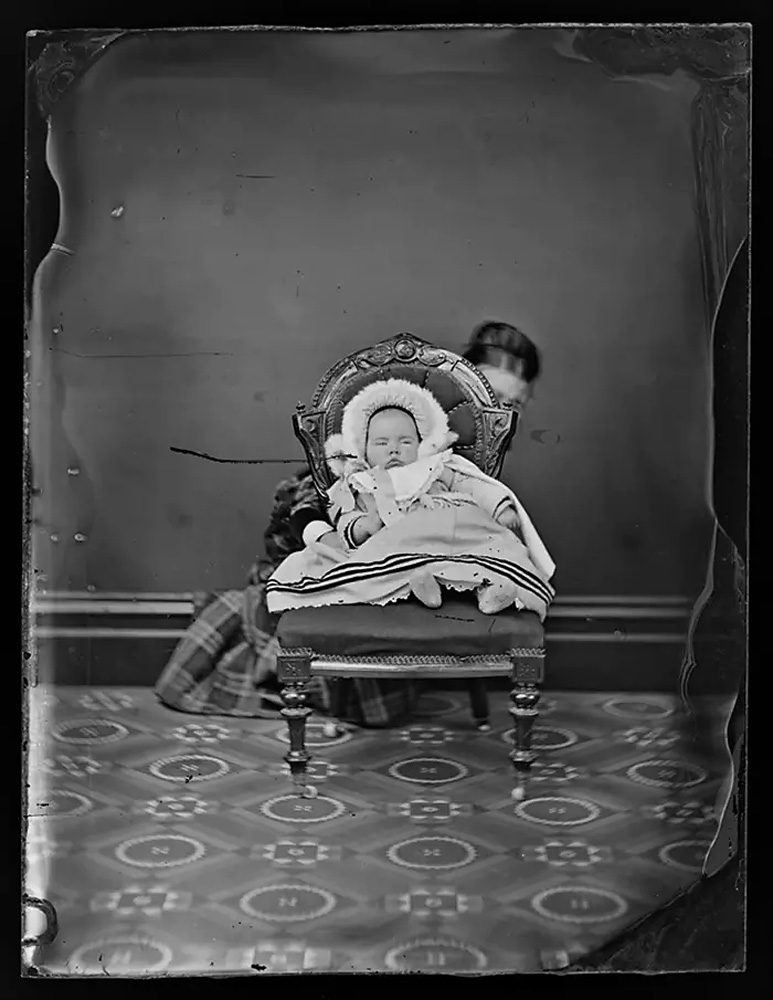
 

William James Harding (New Zealand born England, 1826-1899) 'Studio portrait of a woman and child' 1870s


William James Harding (New Zealand born England, 1826-1899)
Studio portrait of a woman and child
1870s
Reproduction from quarter-plate collodion silver glass negative
Alexander Turnbull Library Collection
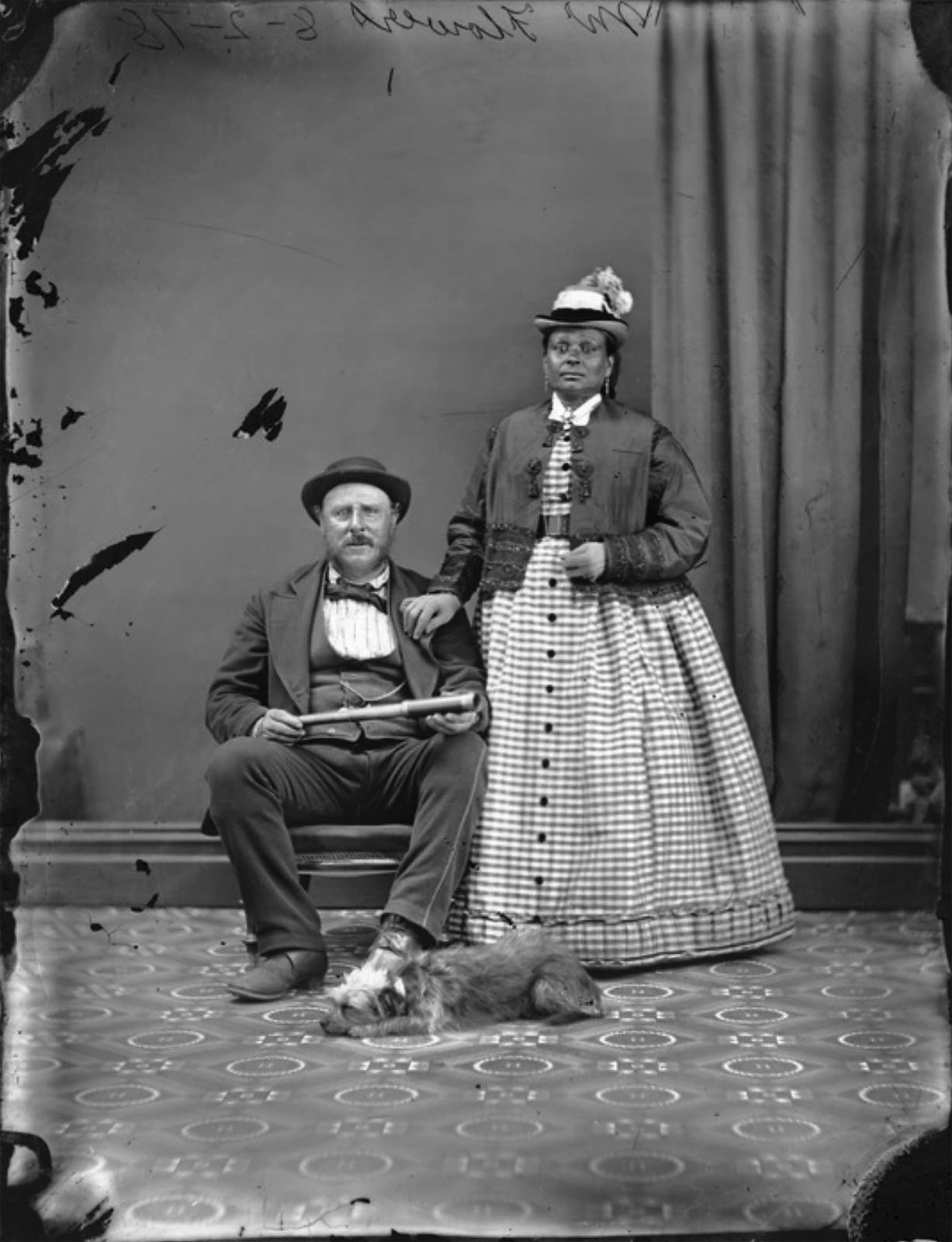
 

William James Harding (New Zealand, 1826-1899) 'Captain Nathaniel Flowers and wife Margaret, with a dog' 1878


William James Harding (New Zealand born England, 1826-1899)
Captain Nathaniel Flowers and wife Margaret, with a dog
February 1878
Glass negative
4.25 x 3.25 inches
Negatives of Wanganui district
Alexander Turnbull Library, Wellington, New Zealand


When Nathaniel and Margaret Flowers visited the Whanganui photographic studio of W.J. Harding (1826-99) in February 1878, they engaged with a technology that was only a few decades old but one that had been rapidly embraced by ordinary people such as themselves. By the 1870s, people – as individuals, couples and families – could have their likenesses made for a small fee. Harding photographed people from an array of backgrounds, from social elites to imperial and colonial soldiers, as we as interracial couples such as Nathaniel and Margaret. As soon as photography was invented, it was used by individuals, families and communities to fashion their social identities around age, class, ethnicity and gender. It was quickly integrated into society through social and cultural practices such as the making and keeping of photograph albums.

Text from the Introduction to the book A Different Light – First Photographs of Aotearoa


Elizabeth Pulman (New Zealand born England, 1836-1900) 'King Tāwhiao' 1882


Elizabeth Pulman (New Zealand born England, 1836-1900)
King Tāwhiao
1882
Carte de visite
Tāmaki Paenga Hira Auckland War Memorial Museum


Blackman, Elizabeth, 1836-1900, Chadd, Elizabeth, 1836-1900 Auckland photographer. Married George Pulman (d. 1871). Worked with him in his photographic studio in Shortland Street, specialising in scenic photographs and portraits. Elizabeth continued Pulman’s Photographic Studio for almost 30 years until the business was sold shortly before her death in 1900. After George Pulman’s death she married John Blackman (d 1893). She continued to be known professionally as Elizabeth Pulman.

Text from the National Library of New Zealand website


In the early years of photography it was relatively uncommon for women to take photographs, let alone work as professional photographers. Elizabeth Pulman was quite possibly New Zealand’s first female professional photographer.

Born in Lymm, Cheshire, England in 1836, she married George Pulman in 1859, and emigrated to New Zealand in 1861. Although a joiner and draughtsman by training, in 1867 George Pulman opened a photographic studio in Auckland, specialising in scenic photographs and portraits. Elizabeth assisted George with the business and after he died in 1871 she continued the work of the studio.

She married John Blackman in 1875, and was once more widowed in 1893. But for almost 30 years, until the business was sold to the Government Tourist Bureau shortly before her death, she carried on Pulman’s Photographic Studio, almost single-handedly managing the upbringing of nine children, running a successful business, and the problems of a period of rapidly changing technology in photography.

Pulman’s Photographic Studio left a legacy of many prints of historical interest, in both portrait and scenic subjects. Among the portraits are photographs of many important Maori chiefs of the North Island, including Tawhiao, the second Maori King, taken in Auckland shortly after he left his King Country stronghold.

Adapted by Andy Palmer from the DNZB biography by Phillip D. Jackson published as “Elizabeth Pulman,” on the New Zealand History website updated 
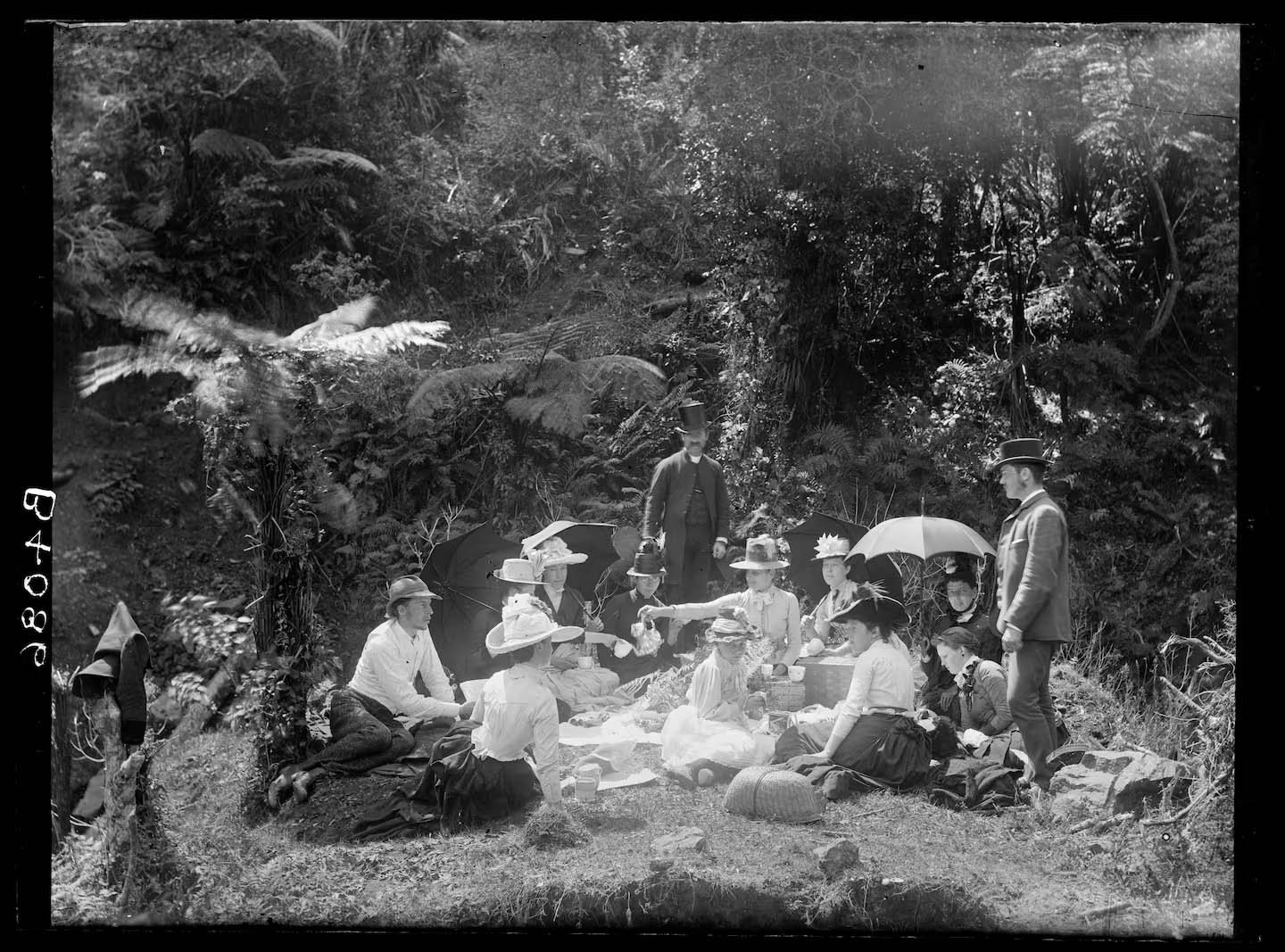
 

John Martin Hawkins Lush (New Zealand, 1854-1893) 'Picnic party at Thames' c. 1884


John Martin Hawkins Lush (New Zealand, 1854-1893)
Picnic party at Thames
c. 1884
Half-plate gelatin silver glass negative
Auckland Museum Collection


Unknown photographer. 'Three men in hats' c. 1880s


Unknown photographer
Three men in hats
c. 1880s
Ferrotype
Hocken Collections


Charles Spencer (New Zealand born England, 1854-1933) 'Cold Water Baths White Terrace' c. 1880s


Charles Spencer (New Zealand born England, 1854-1933)
Cold Water Baths White Terrace
c. 1880s
Cyanotype
Auckland Museum Collection


New Zealand photographer operating in Tauranga from 1879. Active in Auckland from the 1880s to 1917. Was one of Stephenson Percy Smith’s survey party at Mount Tarawera after the 1886 eruption. Took a series of photographs on White Island in late 1890s.

For more information on the photographer see Charles Spencer, Photographer (Part I) May 2019 and Charles Spencer, Photographer (Part II) July 2019 on the Tauranga Historical Society website
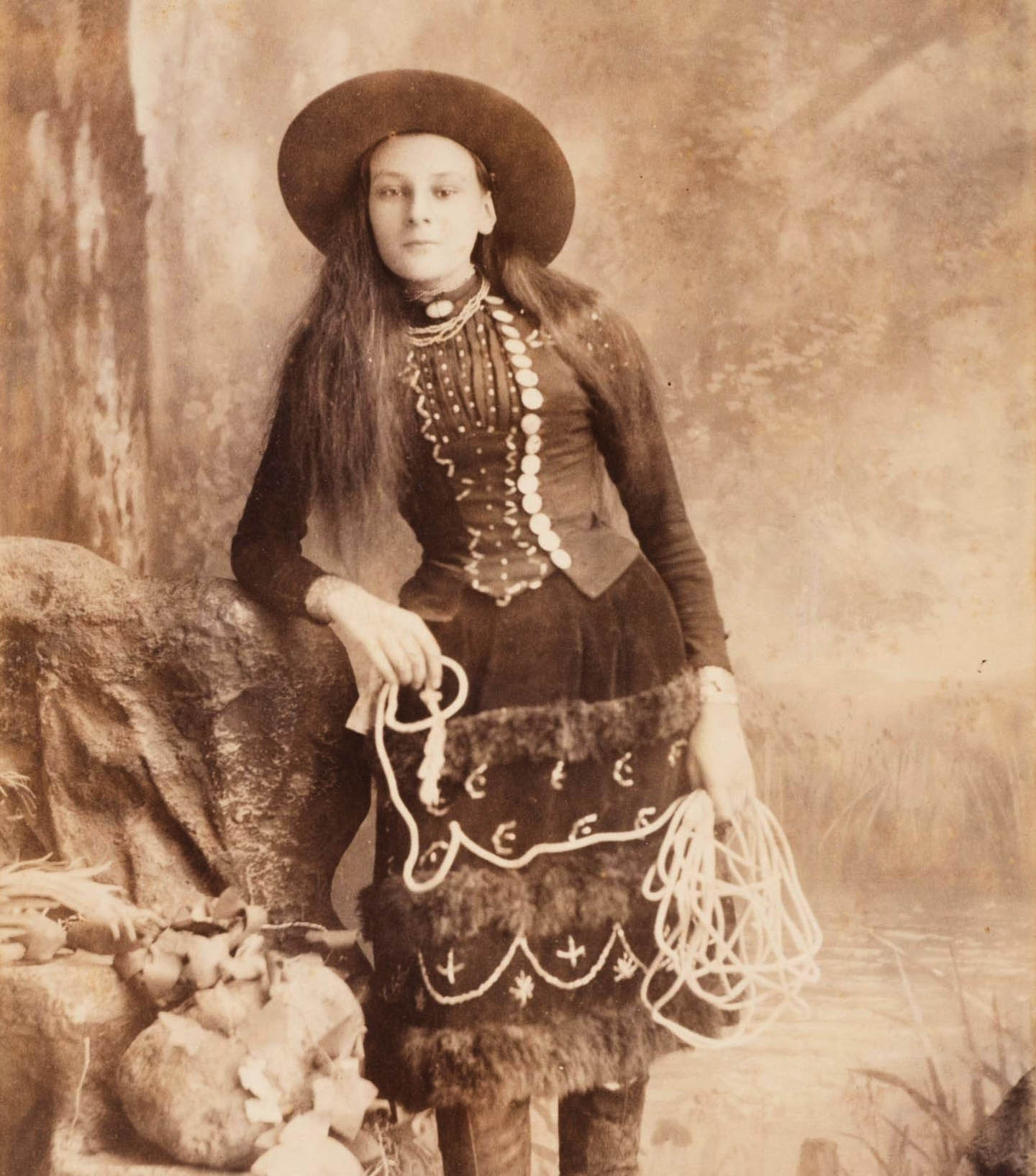
 

Josiah Martin (New Zealand born England, 1843-1916) 'Portrait of an unidentified sitter from the Teutenberg family album' c. 1880s


Josiah Martin (New Zealand born England, 1843-1916)
Portrait of an unidentified sitter from the Teutenberg family album
c. 1880s
Albumen silver print, cabinet card
Auckland Museum Collection


Josiah Martin was born in London, England, on 1 August 1843 and, in 1864, married Caroline Mary Wakefield. They emigrated to New Zealand a few years later with an infant daughter and eventually settled in Auckland. Martin founded a private academy, where he was headmaster until 1874 and proved to be a gifted teacher but retired from the profession in 1879 due to failing health.

He then concentrated on photography. During 1879 he returned to Europe, and while in London studied the latest innovations in photographic techniques and processes. On his return to Auckland he opened a photographic business with a studio on the corner of Queen and Grey streets in partnership with W.H.T. Partington. After the partnership was dissolved he opened another studio in Queen Street, later selling the portrait business and transferring premises to Victoria Arcade. Martin visited the area of Tarawera and Rotomahana many times and was there on the eve of the eruption of Mt Tarawera in 1886; some of the photographs he took after the eruption were reproduced in the Auckland Evening Star. He also appears to have visited several Pacific Islands, including Fiji and Samoa, in 1898, and in 1901 travelled there with S. Percy Smith. He published an account of this trip in Sharland’s New Zealand Photographer and also contributed articles and photographs to the Auckland Weekly News and the New Zealand Illustrated Magazine.

Martin gained an international reputation for his ethnological and topographical photographs. His work was exhibited in London at the Colonial and Indian Exhibition of 1886 and he won a gold medal at the Exposition coloniale in Paris in 1889. He was also editor of Sharland’s New Zealand Photographer for several years and lectured frequently, not only on photography but also on scientific subjects.

Josiah Martin died on 29 September 1916 at his home in Northcote, Auckland, aged 73. His photographs provide a record of changed landscapes and societies. Martin was one of the first photographers to realise the commercial potential of photography to encourage tourism, but he was also aware of the need for conservation of the landscape and of the role of photography in providing a documentary record (Orange 1993, pp.313-314).

Orange, Claudia ed. (1993), The dictionary of New Zealand biography, volume 2, 1870-1900, Wellington: Bridget Williams Books Limited and the Department of Internal Affairs.
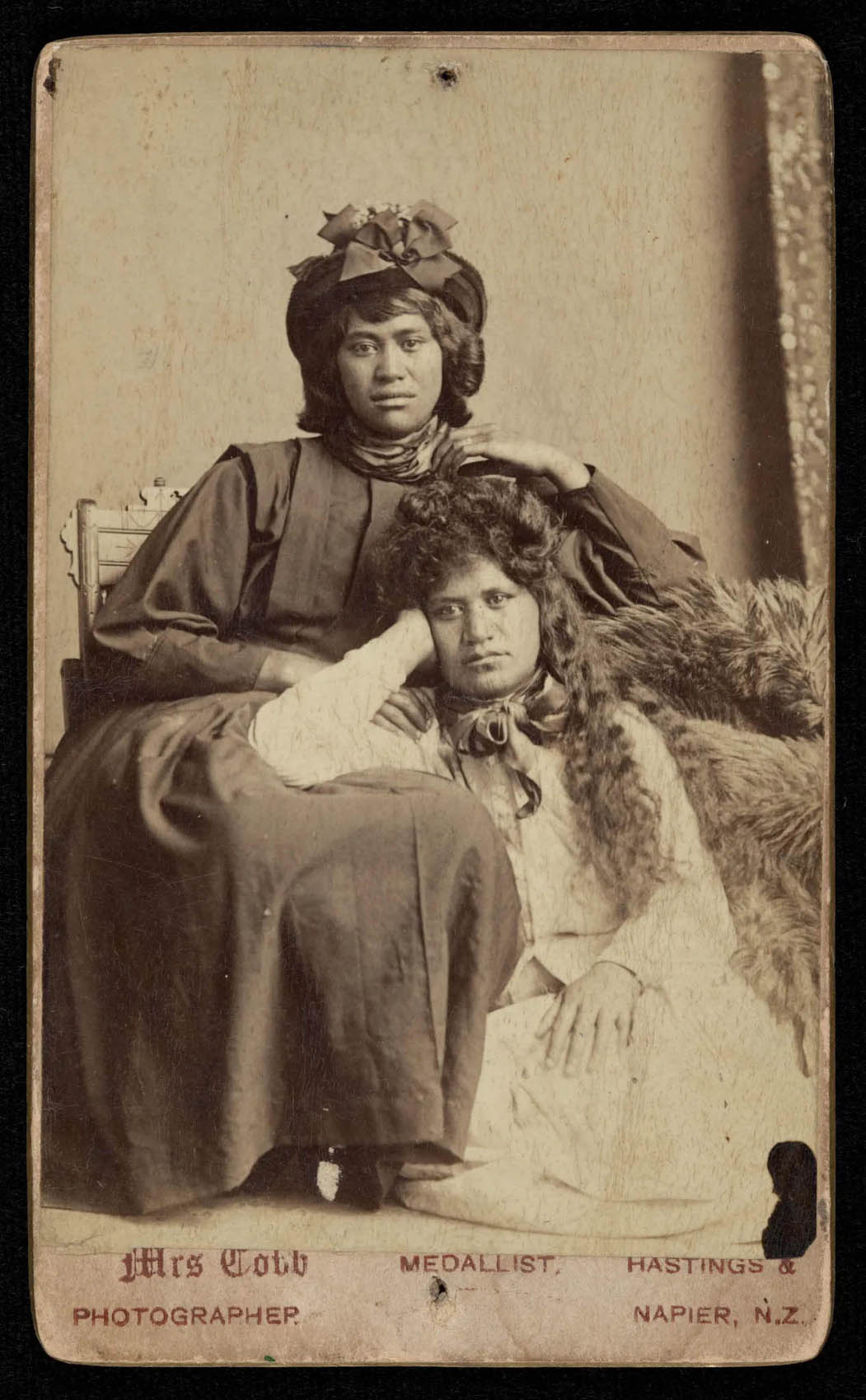
 

Harriet Cobb (New Zealand born England, 1846-1929) 'Two wāhine' c. 1887-1890


Harriet Cobb (New Zealand born England, 1846-1929)
Two wāhine
c. 1887-1890
Albumen silver print, carte de visite
Alexander Turnbull Library Collection


The word “wahine” came into English in the late 18th century from Maori, the language of a Polynesian people native to New Zealand; it was originally used for a Maori woman, especially a wife. The word is also used for a woman in Hawaiian and Tahitian, though spelled “vahine” in the latter.


Harriet Sophia Cobb (née Day, 10 February 1846 – 18 December 1929) was a New Zealand photographer. Her works are held in the collection of the Museum of New Zealand Te Papa Tongarewa. Cobb operated two successful photography studios in the late 1800s and into the 20th century.

In 1866 she married Joseph Edward Cobb, and they went on to have 15 children… In 1884 Cobb and her husband emigrated from the United Kingdom to New Zealand with their nine children and set up a photographic studio in the Hawke’s Bay. They arrived in Wellington on the Lady Jocelyn.

The couple operated two studios known as JE & H Cobb in Napier (from 1884) and Hastings (from 1885), but in 1887 after Joseph’s bankruptcy, Cobb won a plea to operate the businesses in her name until she retired in 1911… Cobb died on 18 December 1929 in Ōtāhuhu, Auckland.

Text from the Wikipedia website


Ambitious and creative

Harriet was a busy and ambitious woman – having a sensibility for the photographic trade learnt from her father that was out of step in the sleepy colony of New Zealand. Her work in the 1885 Industrial Exhibition in Wellington caught the attention of Julius von Haast who selected it for inclusion in the New Zealand court at the 1886 Colonial and Indian Exhibition in London.

Cobb’s work was described by a reviewer as being portraiture of mostly female subjects. By being included in the exhibition, Cobb’s work inserted the visual existence of family life and women’s lives in the colony into the multitude of industrial and scenic exhibits that dominated the New Zealand court at the London exhibition.

An art photographer

Cobb advertised herself as an ‘art photographer’, which was a way of claiming that her work was of higher quality than other photographers. In one of Cobb’s advertisements she claimed that the basics of photography could be learnt by any school boy in a week but not the skills, experience, and eye for creating quality photographs that she had.

Cobb’s marketing targeted a broad clientele and emphasised quality service in a quality establishment run by herself. She wanted it understood that her studios were respectable places for women to go unaccompanied by men.

Extract from Lissa Mitchell. “Inspiring stories about NZ women photographers – Harriet Cobb (1846-1929),” on the Museum of New Zealand / Te Papa Tongarewa website 16 Oct 2018 [Online] Cited 10/08/2024
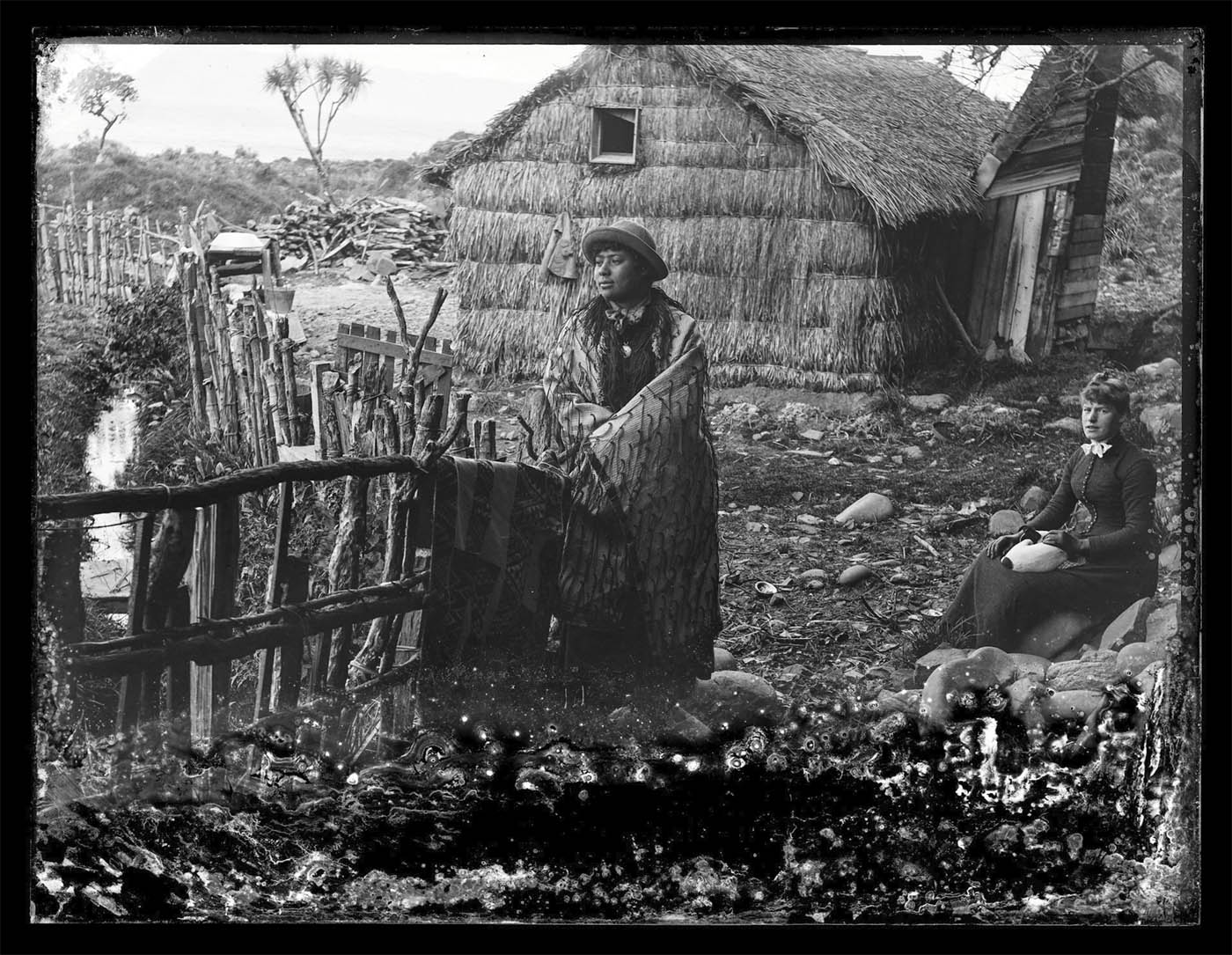
 

Henry Wright (New Zealand, 1844-1936) 'Māori woman in a tag cloak (possibly Rīpeka Te Puni) and Amy Elizabeth Wright, Wellington' c. 1885


Henry Wright (New Zealand, 1844-1936)
Māori woman in a tag cloak (possibly Rīpeka Te Puni) and Amy Elizabeth Wright, Wellington
c. 1885
Alexander Turnbull Library


John Kinder (New Zealand born England, 1819-1903) 'Mount Tarawera' 1886


John Kinder (New Zealand born England, 1819-1903)
Mount Tarawera
1886
Albumen silver print mounted on album page
151 × 200 mm
Tāmaki Paenga Hira Auckland War Memorial Museum


While he [Kinder] was at Ayr Street Kinder also practised as an amateur photographer. There is no indication that he had taken an active interest in photography in England. Rather, it seems likely that he learned the wet-plate photographic process in Auckland about 1860-61. He was friendly with Hartley Webster, a prominent professional, who was the Kinder family photographer in the 1860s. He also collected prints of the work of Daniel Manders Beere, a photographer working in Auckland at the same time, whose photography has some affinities with his own.

Kinder was primarily a landscape and architectural photographer, although he did take a few portraits of family and friends, including Celia Kinder and the Reverend Vicesimus Lush, vicar of Howick. One of his best-known photographs is the portrait of Wiremu Tāmihana, which was used as the frontispiece for John Gorst’s The Māori King (1864). There are also a few fine photographs of Māori artefacts, including canoes and canoe prows. He took photographs of Parnell in the 1860s, especially of Anglican buildings such as the first St Mary’s Church, St Stephen’s Chapel and Bishopscourt (Selwyn Court). These provide a good historical record as well as having high artistic merit. Kinder also travelled extensively and his paintings and photographs are not confined to Auckland. After his sisters Mary and Sarah settled in Dunedin in 1878 he made several trips to the South Island.

In his photographs and paintings Kinder imposed a sense of order on his views, as if regulating them to current conventions of composition where clarity and intelligibility were paramount. This tidiness, combined with the serene calmness of the depicted weather conditions, can give a Utopian or idealised dimension to his colonial scenes. While there is a high degree of objectivity in his works, this does not exclude an element of interpretation – an adaptation of landforms and buildings to an ideal. His art expresses a positive view of the colonising process. It is worth noting that many of his finished paintings were made late in life, during his retirement, when he was looking back through rose-tinted glasses to a time of great achievement and rapid progress. In an unpublished autobiography, written in his later years, he recalled with pride how the city of Auckland had grown from the humble beginnings he encountered in 1855, when there were only one or two decent buildings to be seen.

Extract from Michael Dunn. “Kinder, John,” first published in the Dictionary of New Zealand Biography in 1993 digitally published on the Te Ara – the Encyclopedia of New Zealand website [Online] Cite 11/08/2024
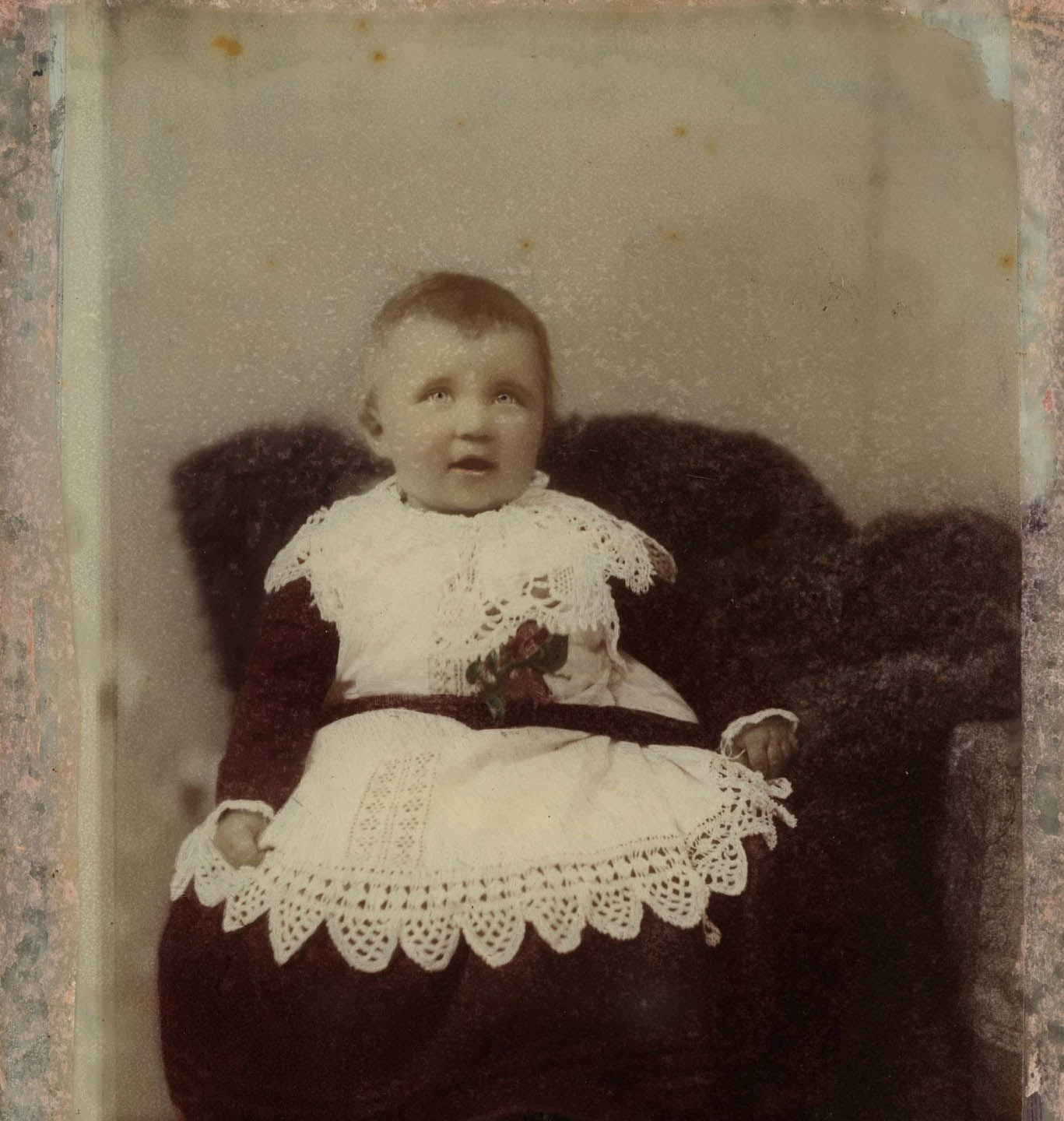
 

Unknown photographer. 'Portrait of an unidentified child' c. 1890


Unknown photographer
Portrait of an unidentified child
c. 1890
Crystoleum
Auckland Museum Collection


Elite Photographers. 'Portrait of the Thompson family, with drawn-on eyes and eyebrows' 1893


Elite Photographers
Portrait of the Thompson family, with drawn-on eyes and eyebrows
1893
Opalotype
Auckland Museum Collection


The settler lens

Photographs are complicit in colonialism because they were used to document the impacts of migration, settlement and land transformation. For example, they illustrate the advance of settlement and the subjugation of Māori after the Waikato War (1863-1864).

Imperial officers such as William Temple, who was active in military campaigns to advance European settlement, photographed two icons of colonisation: roads and military camps.

An Irish-born soldier, Temple followed the Great South Road on foot and with his camera as the route advanced towards the border of Kiingitanga territory. One of his photographs (The Bush at Razorback, Great North Road New Zealand, 1862-1863) demonstrates the impacts of the Great South Road on the local environment.

Photography’s commercial interests also aligned with colonial propaganda, especially as landscape photography grew in popularity from the 1870s. Historian Jarrod Hore has demonstrated how landscape photographers helped shape settler attitudes to the environment, but also documented colonial progress.

Photographs were used to illustrate engineering successes and the advancing tide of settlement. For instance, John McGregor’s 1875 photograph (Bell Hill, c. 1875) depicts the clearing of Bell Hill in Dunedin. In the background, the church embodies the possibilities of colonial advancement enabled by environmental transformation.

Our early photographers were, in Hore’s words, engaged in “settler colonial work” because they “mobilised and visually reorganised local environments in the service of broader settler colonial imperatives.”

The photograph as taonga

Indigenous peoples were a particular focus of early photography in other settler colonial societies. New Zealand followed this pattern and Māori feature prominently in our colonial photographic record.

As soon as photography arrived in the colony, Māori were captured by the camera. Itinerant daguerreotype photographers travelled the new colony in the 1840s and 1850s to exploit the commercial opportunities available in new colonies such as New Zealand.

Reproduction of colonial tropes became common in commercial photography, reflecting the collectability of Māori as photographic subjects. The carte-de-visite, popular from the 1860s and of a size that could easily be posted, meant images of Māori found their way into albums all around the world.

Such images became an important part of the business for studio photographers in the colonial period.

At different times, and depending on the context, Māori embraced or rejected photography. Because of its colonial implications, Māori whānau and communities have a complicated relationship with the camera. But, as scholars Ngarino Ellis and Natalie Robertson argue, there is evidence it was regarded as friend as much as foe.

Māori have long integrated visual likenesses into customary practices, such as tangihanga (funerals), while portraits adorn the walls of wharenui [meeting house, large house] across the country.

Colonial photographs are culturally dynamic. Their integration into Māori life means they do not just depict relationships but are imbued with them. As such, photographs are taonga (treasures) and connect people across time and space.

Te Whiti and the camera

Māori also took up the camera. Canon Hākaraia Pāhewa, for instance, was a skilled photographer who took his camera on his pastoral rounds, during which he recorded scenes of daily life.

He depicted people at work and documented transformations of landscapes, important cultural events, religious service and domestic routines. These photographs bring to light the diversity and richness of Māori life in the early 20th century.

Māori whānau [basic extended family group] already valued and used photographs in a variety of ways in the 19th century. Photographs were memory containers, mementos of family, markers of personal transformation, and generators of social connection.

Designed to be shared and displayed, photographs were prompts for discussion and storytelling. They are visual records of whakapapa [Whakapapa is a fundamental principle in Māori culture. Reciting one’s whakapapa proclaims one’s Māori identity, places oneself in a wider context, and links oneself to land and tribal groupings and their mana], identity and notions of belonging. They also mark Indigenous presence and survival in the face of settler colonialism.

At the same time, though, photography’s role in advancing colonialism meant Māori were cautious about the reproduction of images. There was an awareness of what could happen to photographs once they were out of the subject’s control.

Extract from Professor Angela Wanhalla. “The past in a different light: how Māori embraced – and rejected – the colonial camera lens,” on The Conversation website April 11, 2024 [Online] Cited 10/08/2024

This article is republished from The Conversation under a Creative Commons license. Read the original article.


Henry Wright (New Zealand, 1844-1936) 'Rahui Te Kiri Tenetahi [right] and her daughter Ngāpeka Te Roa of Ngāti Manuhiri' 1893


Henry Wright (New Zealand, 1844-1936)
Rahui Te Kiri Tenetahi [right] and her daughter Ngāpeka Te Roa of
Ngāti Manuhiri
1893
Full-plate gelatin silver glass negative
216 × 165 mm
Alexander Turnbull Library


Rahui Te Kiri Tenetahi (right) and her daughter Ngapeka Te Roa, of Ngati Manuhiri, alongside a building made of ponga logs, Little Barrier Island, 1893. They hold dahlia flowers.

Henry Wright was a prominent Wellington businessman. He was also a keen amateur photographer. Negatives found in two wooden boxes under house at 117 Mein Street, originally the home of Henry Wright, who had lived there from 1896 until his death in 1936.


Henry Wright spent nearly three months living on the island and produced a report for the government on its value as a bird reserve. After the government purchased the island from iwi and it was declared a forest reserve and bird sanctuary, Wright was appointed its first ranger. Wright’s series of photographs capture the vegetation, coastline and the last of the mana whenua [the right of a Maori tribe to manage a particular area of land], Ngāti Manuhiri, to live and sustain themselves on the island, including Rāhui Te Kiri Tenetahi, her daughter Ngāpeka Te Roa, and her second husband Wiremu Tenetahi, who were forcibly evicted just three years after Wright had visited the island.

Text from the book A Different Light: First Photographs of Aotearoa
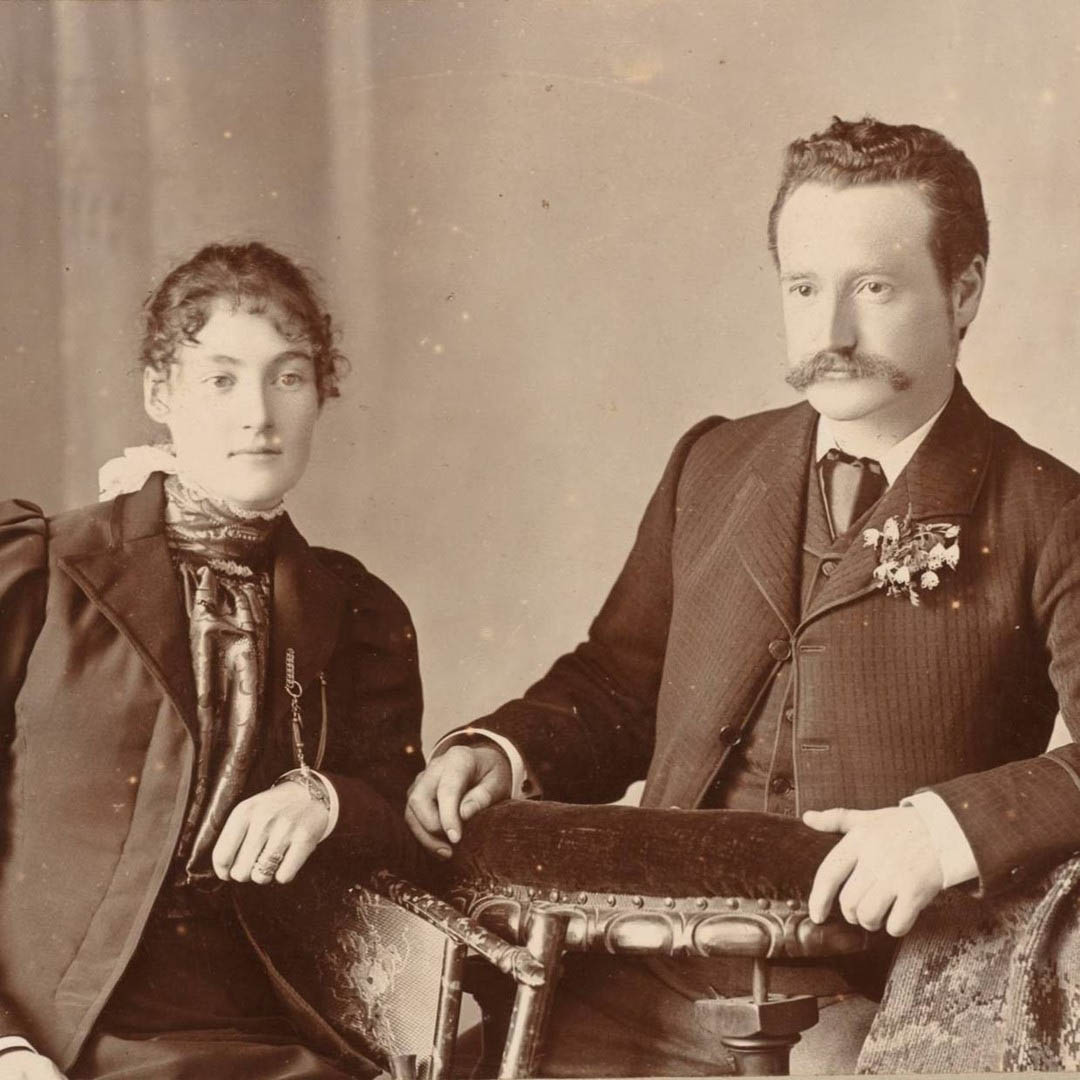
 

John Robert Hanna (New Zealand born Ireland, 1850-1915) 'Portrait of unidentified sitters' c. 1895


John Robert Hanna (New Zealand born Ireland, 1850-1915)
Portrait of unidentified sitters
c. 1895
Gelatin silver print, cabinet card
Auckland Museum Collection


Photographer of Auckland. Born Ireland in 1850, eldest son of Eliza Crawford and Robert Hanna of Drum, County Monaghan, Ireland; arrived in Auckland per ‘Ganges’ in 1865; began his photographic career in Auckland with R H Bartlett whose business he managed for some time. Then managed the firm of Hemus & Hanna for 10 years before business dissolved in 1885. Bought the business of J Crombie (which had been established in 1855) in Queen Street. Died in 1915.

Text from the National Library of New Zealand website
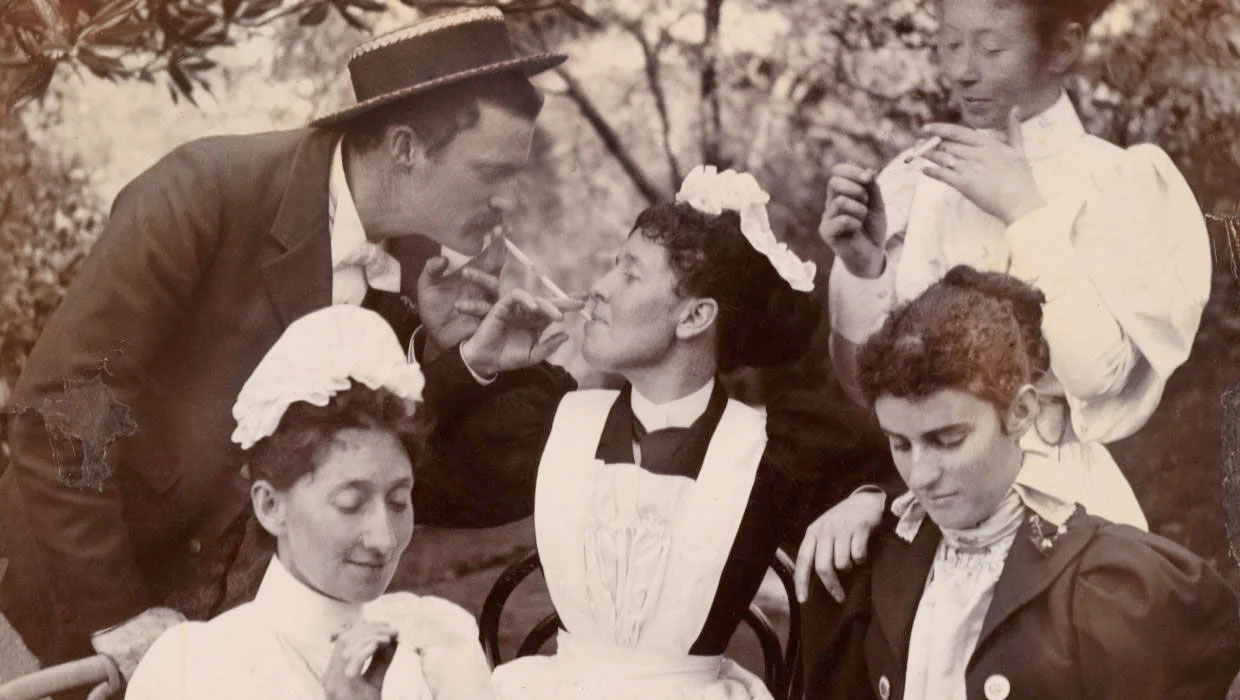
 

Margaret Matilda White (New Zealand born Northern Ireland, 1868-1910) 'Nurse Pierce and Bessie McKay smoking with Mr Hodson and other nurses at Huia Private Hospital' 1895


Margaret Matilda White (New Zealand born Northern Ireland, 1868-1910)
Nurse Pierce and Bessie McKay smoking with Mr Hodson and other nurses at Huia Private Hospital
1895
Gelatin silver print
Auckland Museum Collection


Margaret Matilda White

Margaret Matilda White came to New Zealand in the 1880s to join her family when she was 18 years old. She was acquainted with the photographer Hanna, possibly working in his studio. She established her own photographic business, which was not a success, but continued to photograph on an amateur or semi-professional basis until her early death in 1910.

Margaret Matilda White is best known for her photographs of the Auckland Mental Hospital, known at times as the Whau Lunatic Asylum, Oakley Mental Hospital or Carrington Mental Hospital.  She photographed the buildings and the staff, making pictures of nurses and attendants with her characteristic structured group poses.

The Museum has a large collection of her glass plates, donated by her son Albert Sherlock Reed, in 1965.

Text from the Auckland Museum website
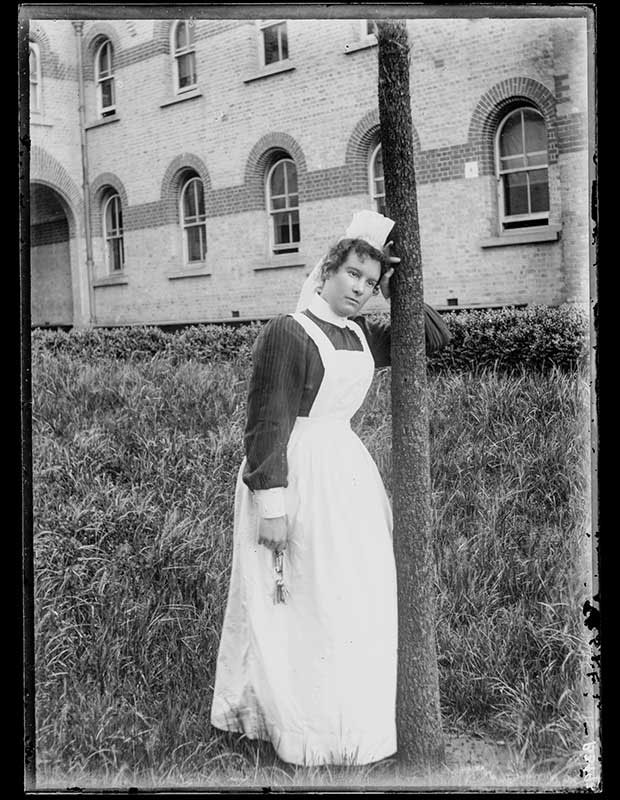
 

Margaret Matilda White (New Zealand born Northern Ireland, 1868-1910) 'Self Portrait' c.  1897


Margaret Matilda White (New Zealand born Northern Ireland, 1868-1910)
Self Portrait
c.  1897
Half-plate gelatin silver glass negative
164 × 120 mm
Tāmaki Paenga Hira Auckland War Memorial Museum


A series of photographs taken around 1897 by Margaret Matilda White (1868-1910) at the Whau Lunatic Asylum, also known as the Avondale Asylum, show a rare example of what appear as deliberately staged images of staff in the grounds. Starting as an apprentice to Hanna in 1890, White briefly operated a studio in Queen Street. She spent some time working as an attendant at the asylum, photographing the staff on location using a dry-plate camera. The playful approach White takes shows an unexpected side to her sitters, despite their formal uniforms. Arranged in the grounds, sitting together for a portrait, the men and women who worked at the asylum appear to have shed the formality of the studio. Even when they appear lined up in rows, they all look in different directions as a man peers through the window behind them. One image, thought to be a self-portrait, shows White in her uniform holding a set of keys. An informal portrait taken at Huia Private Hospital shows staff smoking together on a break: a far cry from the wooden poses of early likenesses.

Text from the book A Different Light: First Photographs of Aotearoa
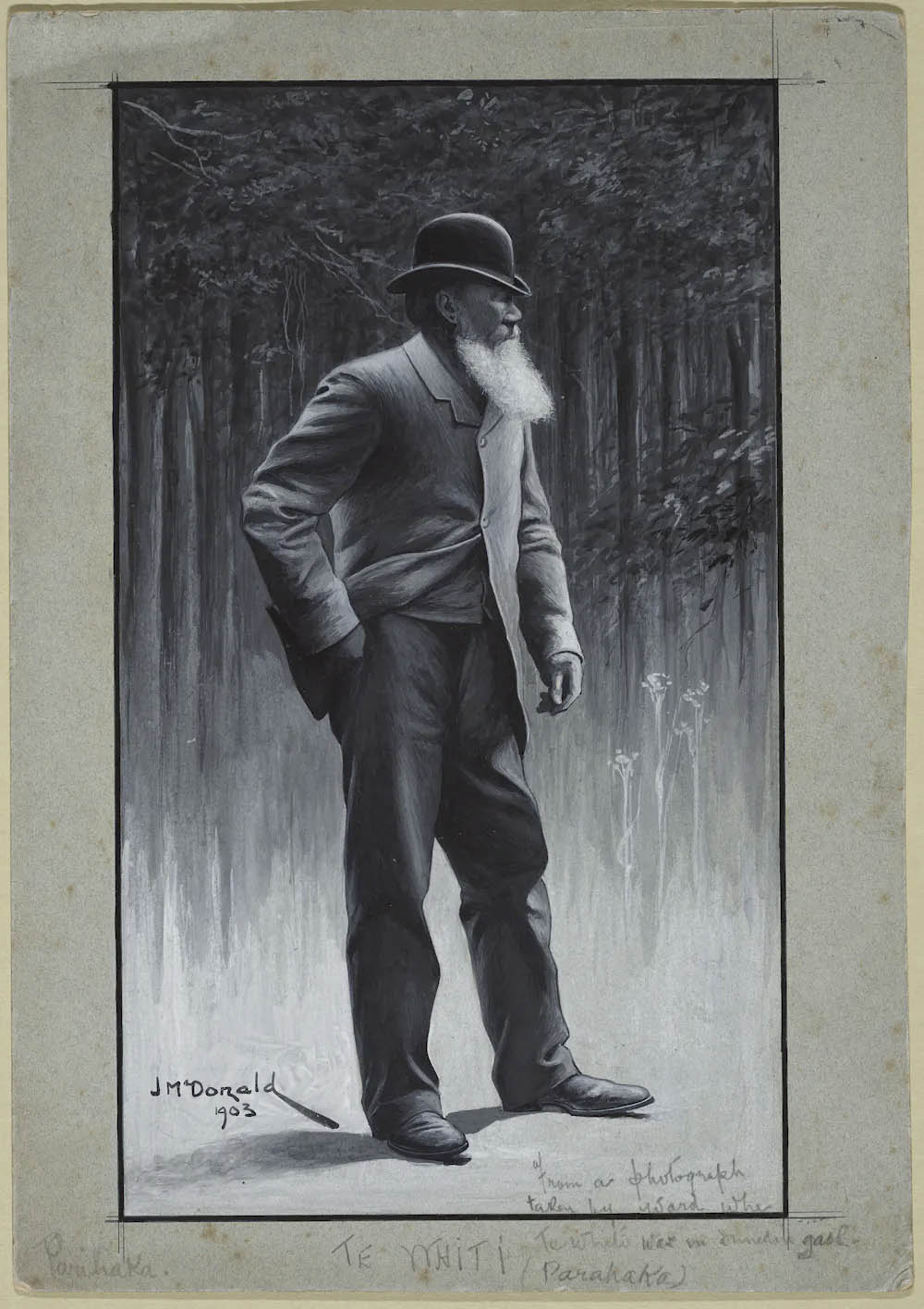
 

James Ingram McDonald (New Zealand 1865-1935) 'Te Whiti' c. 1903


James Ingram McDonald (New Zealand 1865-1935)
Te Whiti
c. 1903
Alexander Turnbull Library


James Ingram McDonald (11 June 1865 – 13 April 1935) was a New Zealand painter, photographer, film-maker, museum director, cultural ambassador film censor, and promoter of Maori arts and crafts.

James McDonald was born in Tokomairiro, South Otago, New Zealand on 11 June 1865. He began painting early in his life and took art lessons as a young man in Dunedin with James Nairn, Nugent Welch and Girolamo Nerli. He continued his art studies in Melbourne, Australia, but returned to New Zealand in 1901, where he worked as a photographer. From 1905 he was a museum assistant and draughtsman in the Colonial Museum, later to become the Dominion Museum and even later the Museum of New Zealand Te Papa Tongarewa). He began making films about various scenic sights. At the museum he was responsible for the maintenance of the photographic collection and the production of paintings, drawings and photographs for the Dominion Museum bulletins.

He began to gather information about Māori tribal traditions. His films show poi dances and whai string games. He was probably the earliest known ethnographic filmmaker in New Zealand. In 1920 he filmed the gathering of the Māori tribes in Rotorua, when they welcomed the Prince of Wales, and other aspects of the royal journey. He filmed traditional skills and activities, including the make of fishing nets and traps, weaving, digging kumara camps and cooking food in a hangi. Most of his often unedited and fragmentary negatives became only known in 1986 after restoration by the New Zealand film archive. …

He died in Tokaanu on 13 April 1935 and was buried at Taupo cemetery. The School of Applied Arts, which he had founded, doesn’t exist anymore, but many examples of McDonald’s work have been preserved. Many hundreds of his photographic negatives are kept by the Museum of New Zealand Te Papa Tongarewa. There are prints of his works in the collections of the Alexander Turnbull Library and the Bernice P. Bishop Museum in Hawaii. The four ethnographic films he has made are preserved in the collection of the New Zealand Film Archive Nga Kaitiaki or Nga Taonga Whitiahua.

Text from the Wikipedia website


Te Whiti o Rongomai III (c.  1830 – 18 November 1907) was a Māori spiritual leader and founder of the village of Parihaka, in New Zealand’s Taranaki region.

Te Whiti established Parihaka community as a place of sanctuary and peace for Māori many of whom seeking refuge as their land was confiscated in the early 1860s. Parihaka became a place of peaceful resistance to the encroaching confiscations. On 5 November 1881, the village was invaded by 1500 Armed Constabulary with its leaders arrested and put on trial. Te Whiti was sent to Christchurch at the Crown’s insistence after it was clear the crown was losing its case in New Plymouth. The trial, however, was never reconvened and Te Whiti, along with Tohu were held for two years. Te Whiti and Tohu returned to Parihaka in 1883, seeking to rebuild Parihaka as a place of learning and cultural development though land protests continued. Te Whiti was imprisoned on two further occasions after 1885 before his death in 1907.

Text from the Wikipedia website
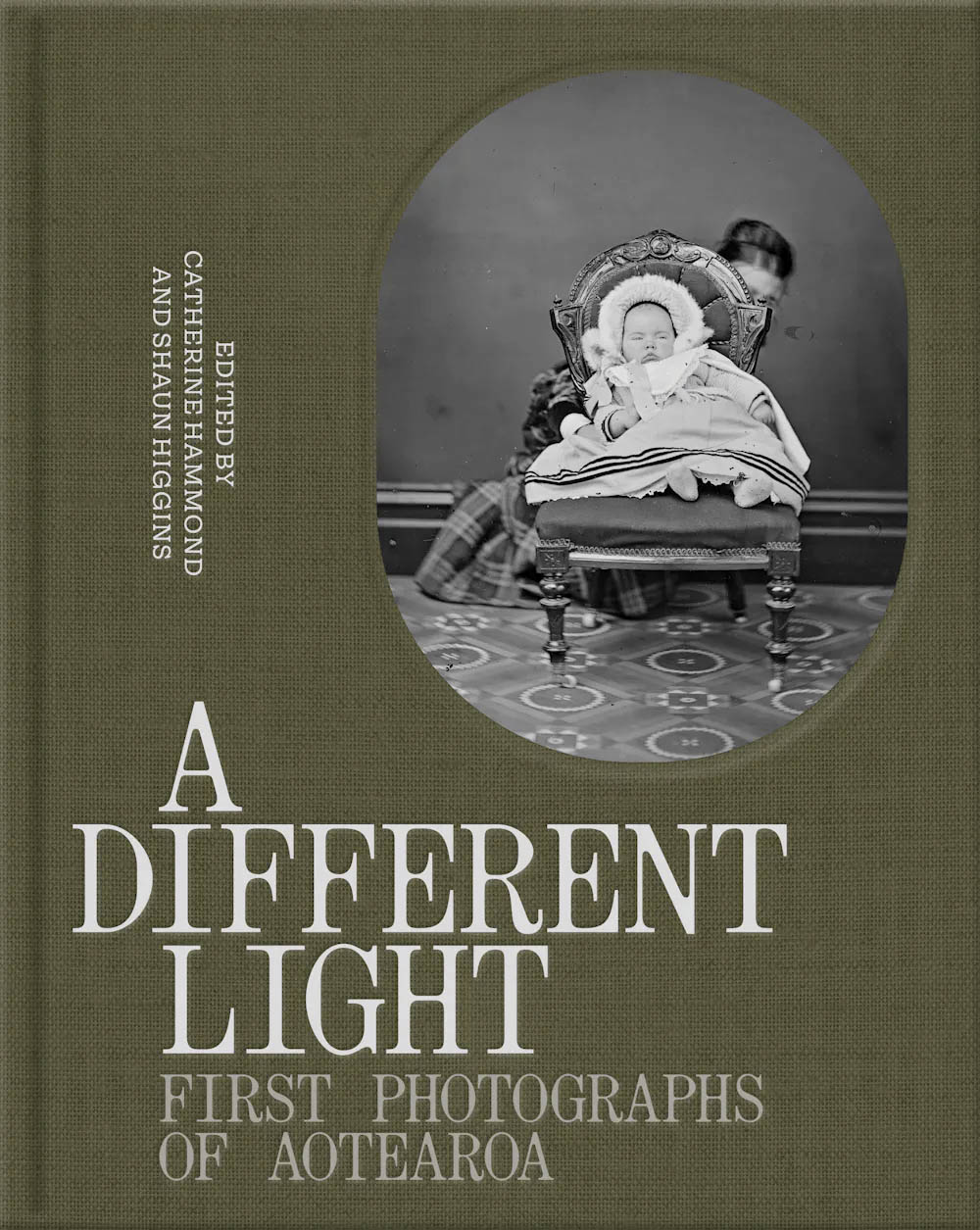
 

'A Different Light – First Photographs of Aotearoa' book cover


A Different Light – First Photographs of Aotearoa book cover


The mīhini mīharo reveals nineteenth-century Aotearoa as never before.

In 1848, two decades after a French inventor mixed daylight with a cocktail of chemicals to fix the view outside his window onto a metal plate, photography arrived in Aotearoa. How did these ‘portraits in a machine’ reveal Māori and Pākehā to themselves and to each other? Were the first photographs ‘a good likeness’ or were they tricksters? What stories do they capture of the changing landscape of Aotearoa?

From horses laden with mammoth photographic plates in the 1870s to the arrival of the Kodak in the late 1880s, New Zealand’s first photographs reveal Kīngi and governors, geysers and slums, battles and parties. They freeze faces in formal studio portraits and stumble into the intimacy of backyards, gardens and homes.

A Different Light brings together the extraordinary and extensive photographic collections of three major research libraries – Tāmaki Paenga Hira Auckland War Memorial Museum, Alexander Turnbull Library and Hocken Collections Uare Taoka o Hākena – to coincide with a touring exhibition of some of the earliest known photographs of Aotearoa.

Editors

Catherine Hammond is the director of collections and research at Tāmaki Paenga Hira Auckland War Memorial Museum. She was formerly Hocken Librarian at the University of Otago Te Whare Wānanga o Ōtākou, and before that head of documentary heritage at Tāmaki Paenga Hira Auckland War Memorial Museum and research library manager at Auckland Art Gallery Toi o Tāmaki.

Shaun Higgins is curator pictorial at Tāmaki Paenga Hira Auckland War Memorial Museum. He has worked on exhibitions for two decades, most recently Robin Morrison: Road Trip (2023). He has an MA, BA and PGDip from the University of Auckland in anthropology, art history and museum studies, and further qualifications in photography and care and identification of photographs.

Alongside the editors, A Different Light includes essays by Angela Wanhalla (Kāi Tahu), professor of History at the University of Otago; Paul Diamond (Ngāti Hauā, Te Rarawa, Ngāpuhi), curator, Māori at the Alexander Turnbull Library; Anna Petersen, curator, Photographs at Hocken Collections Uare Taoka o Hākena; and Natalie Marshall, formerly curator, Photographs at Alexander Turnbull Library.

Text from the Auckland University Press website


'A Different Light – First Photographs of Aotearoa' Introduction to book


A Different Light – First Photographs of Aotearoa Introduction to book


'A Different Light – First Photographs of Aotearoa' book pages

'A Different Light – First Photographs of Aotearoa' book pages


A Different Light – First Photographs of Aotearoa book pages


Auckland War Memorial Museum
The Auckland Domain Parnell,
Auckland New Zealand
+6493090443

Opening hours:
Open weekdays from 10am – 5pm.
Open Saturdays, Sundays, and public holidays from 9am – 5pm.
Open late every Tuesday evening until 8.30pm
Auckland War Memorial Museum website

LIKE ART BLART ON FACEBOOK

Back to top

Exhibition: ‘Between skin & shirt: The photographic portraits of William Harding’ at the National Library of New Zealand Gallery, Wellington

Exhibition dates: 26th May – 29th October, 2022

Curator: Fiona Oliver


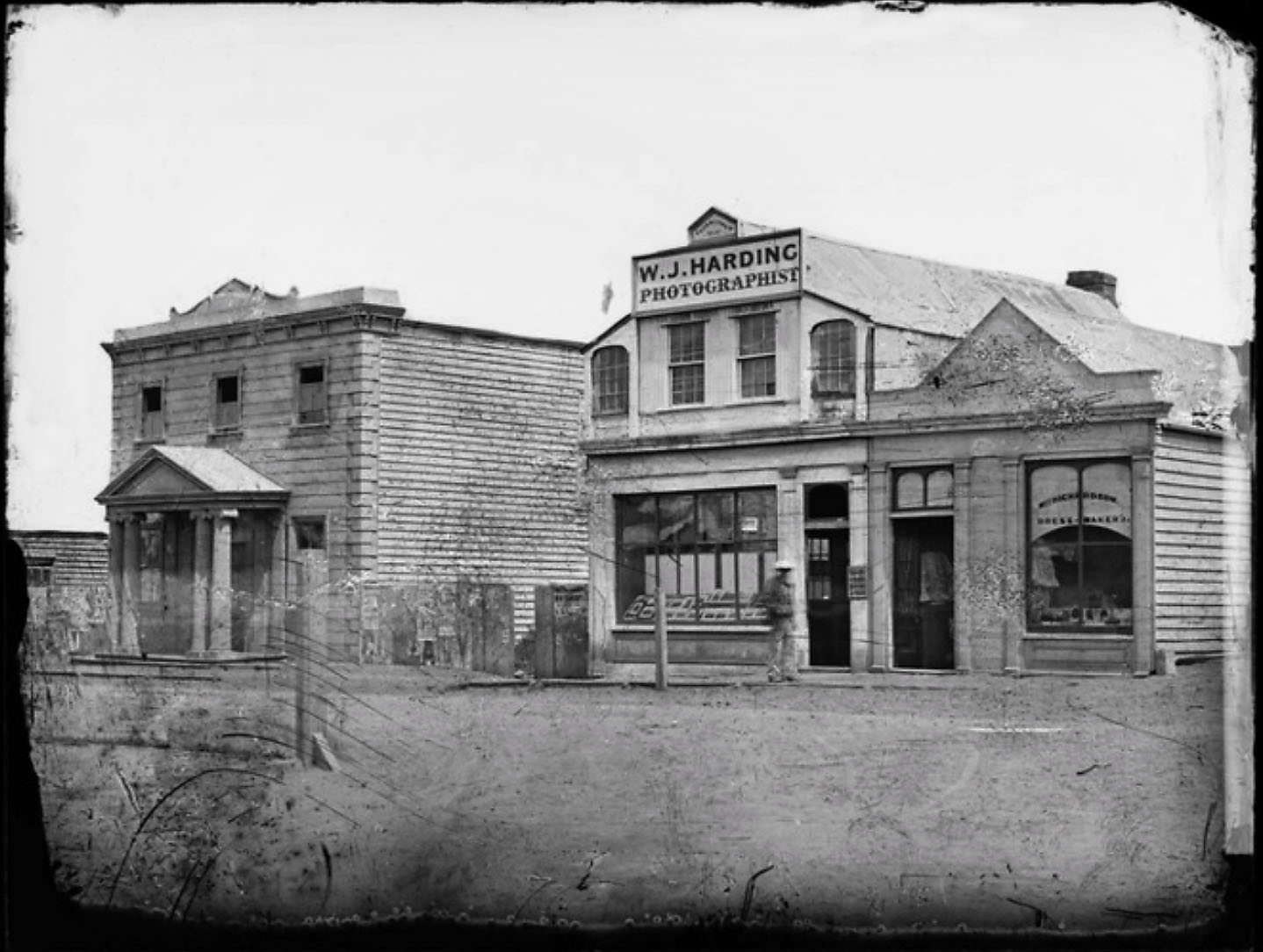
William James Harding (New Zealand, 1826-1899) 'Businesses of Harding and Richardson, Ridgeway Street, Wanganui' c. 1870s from the exhibition 'Between skin & shirt: The photographic portraits of William Harding' at the National Library of New Zealand Gallery, Wellington, May - Oct, 2022
 

William James Harding (New Zealand, 1826-1899)
Businesses of Harding and Richardson, Ridgeway Street, Wanganui
c. 1870s
Wet collodion glass negative
6.5 x 8.5 inches
Negatives of Wanganui district
Alexander Turnbull Library, Wellington, New Zealand


Buildings on Ridgeway Street, Wanganui, circa 1870s, including that of W J Harding, photographer, and Mrs Richardson, dressmaker.

William Harding’s studio, Ridgeway St, Whanganui, c. 1870s. He used this studio from 1860 until 1889, when he left for Sydney. His collection of 6,500 glass-plate negatives were nearly dumped by the studio’s new owner but were rescued by a relative of Harding’s and the Whanganui Museum. They were bought by the Turnbull Library in 1948.


Reclaiming the light

A fascinating posting on the portrait photographs of New Zealand photographer William Harding (New Zealand, 1826-1899), which “provide a detailed picture of Whanganui society from the 1850s to the 1880s, and are a rich source of information relating to Māori and Pākehā individuals and their relationships at a formative time in this country’s history… He’d come to New Zealand from England as a coachbuilder in 1855, along with his wife Annie. He tried his hand at cabinet-making, and in 1860 set up a photographic studio in Ridgway St, Whanganui.”1

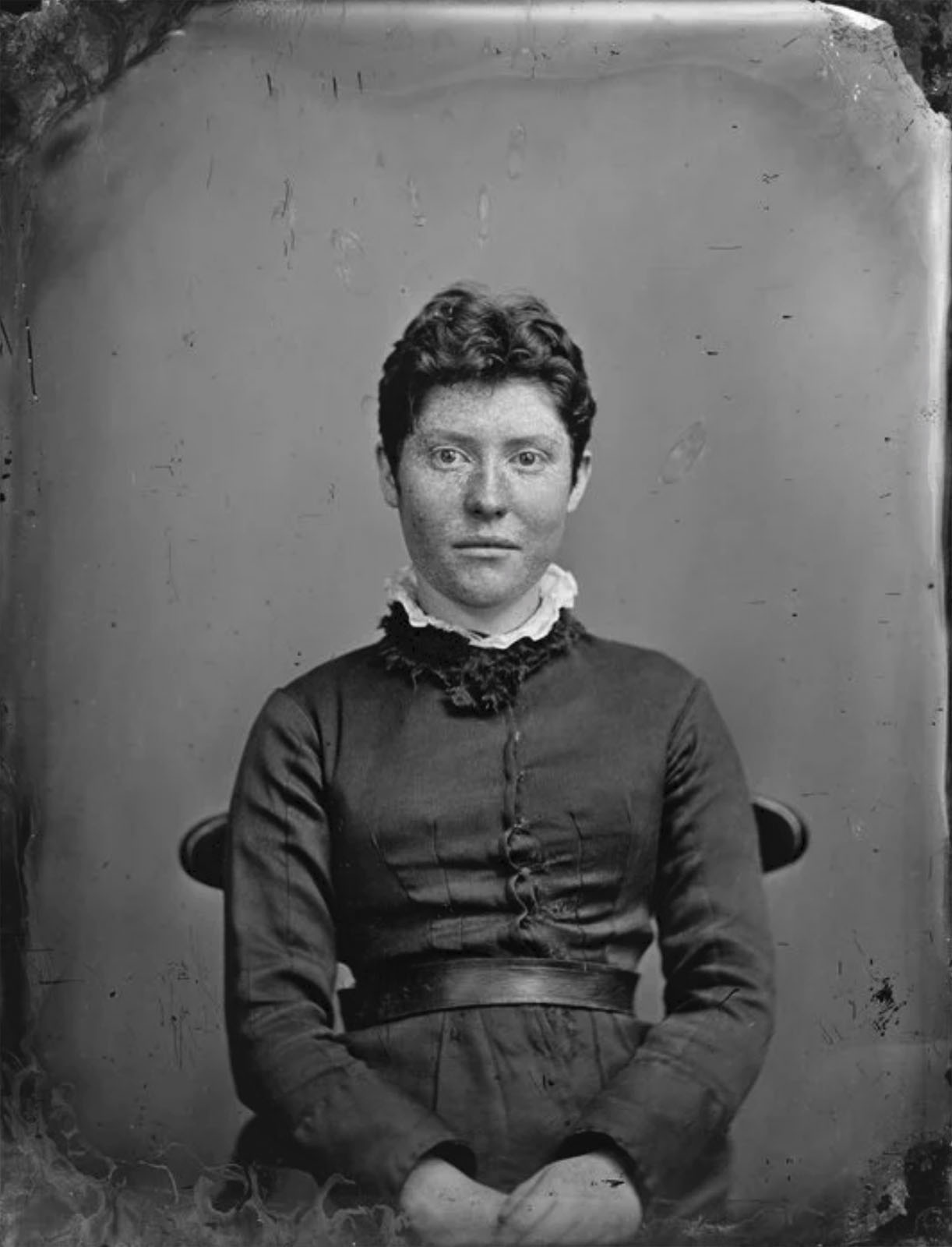
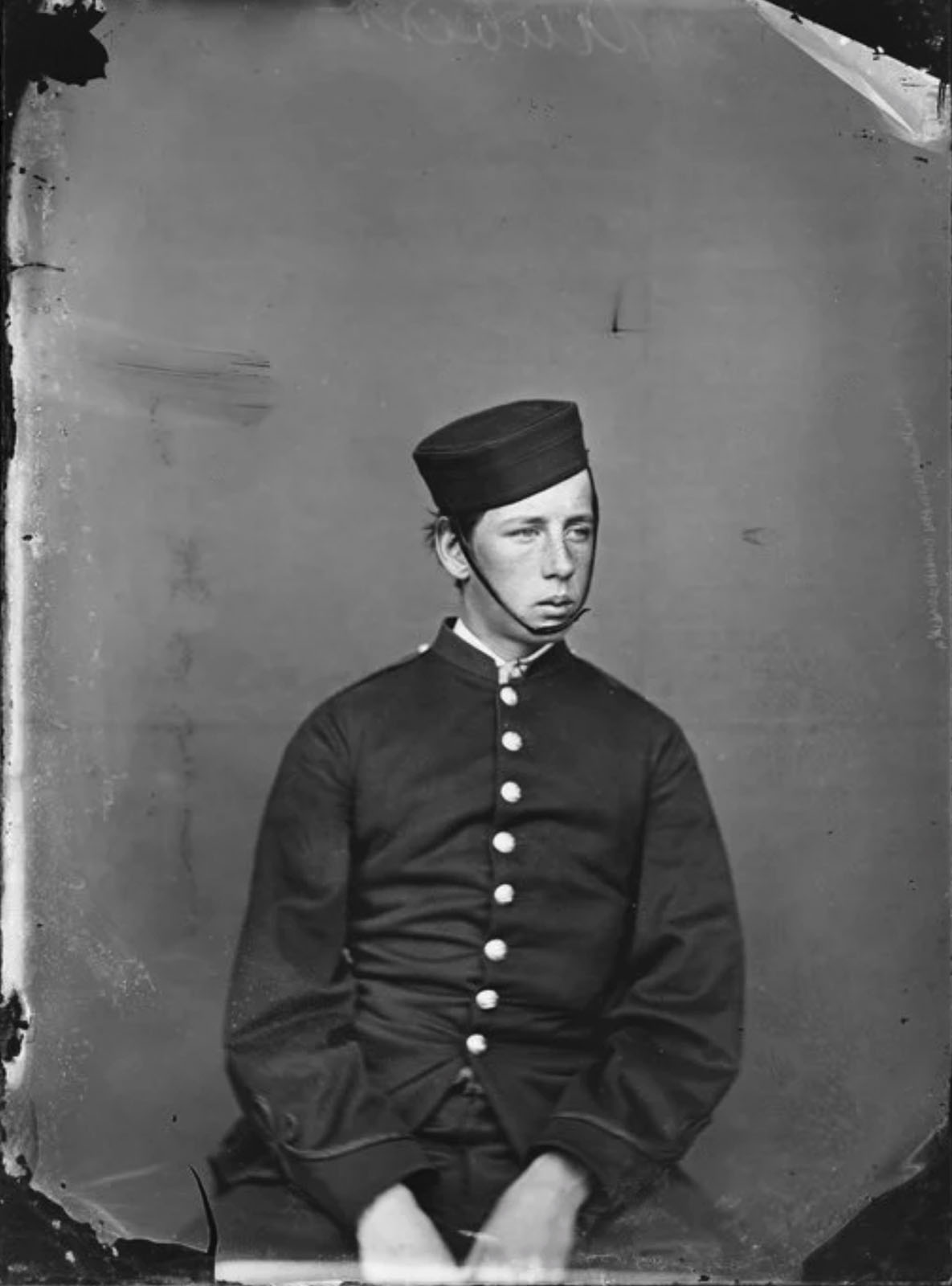
In the main the photographs are the usual Victorian colonial fare of formal studio portraits of white settlers (Master Percival Thomas Scott), the standing or sitting subjects posed with props on linoleum floors against rolls of plain paper or painted backgrounds staring straight into the camera lens or obliquely off into the distance. Harding’s portraits never flatter to deceive: “Harding’s sitters are also largely unsmiling. But their faces are alight, staring down the camera, eyes aflame. Sometimes they look peevish, bored or exhausted. There seems to be little inclination towards idealisation. Harding refused to retouch his photographs as other commercial photographers did. Faces are weathered and freckled; clothing is often ragged, mended or borrowed, illustrating the hardships of colonial life… The women, men, children, families and other groups who sat for him are shown with sensitivity and honesty.”2

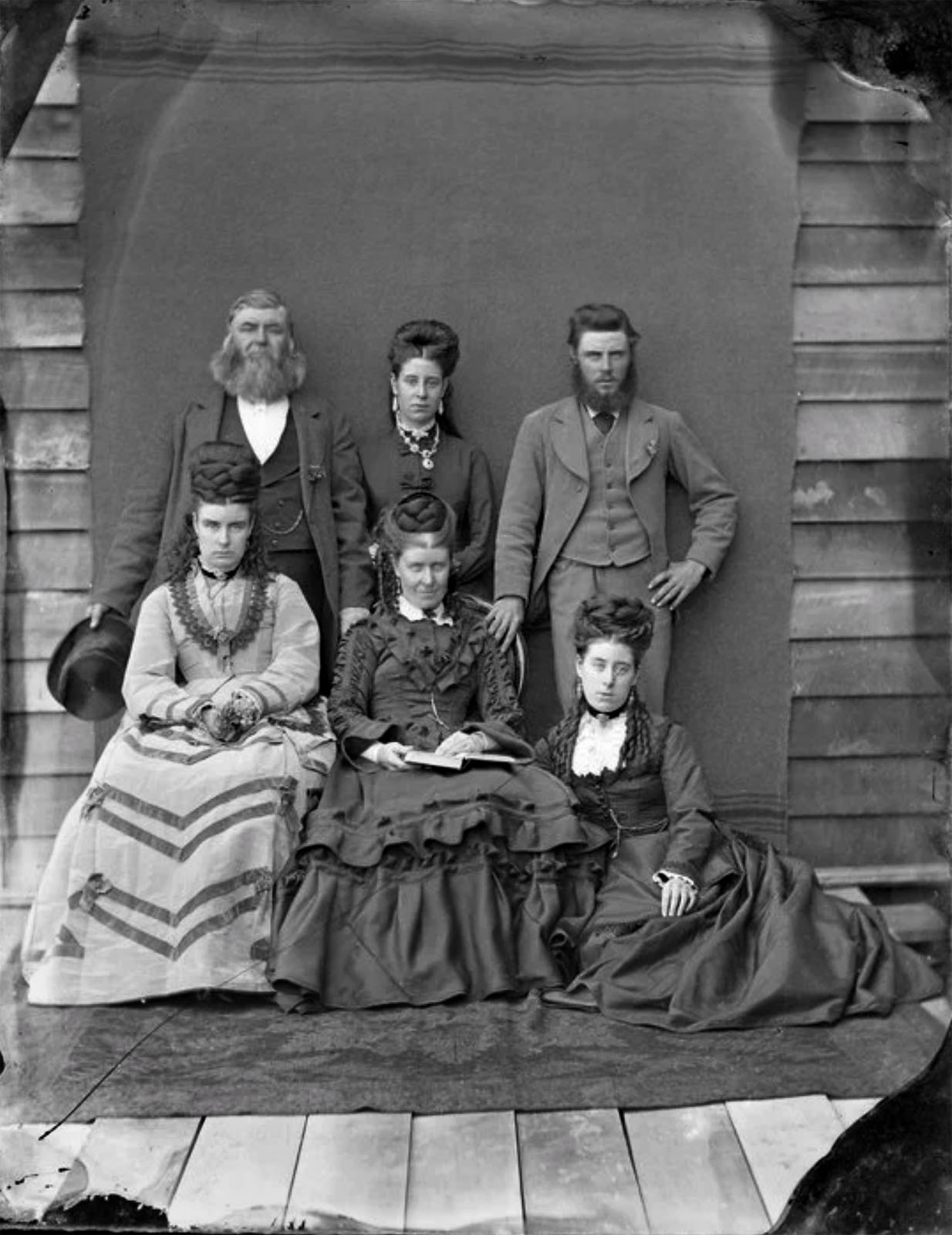
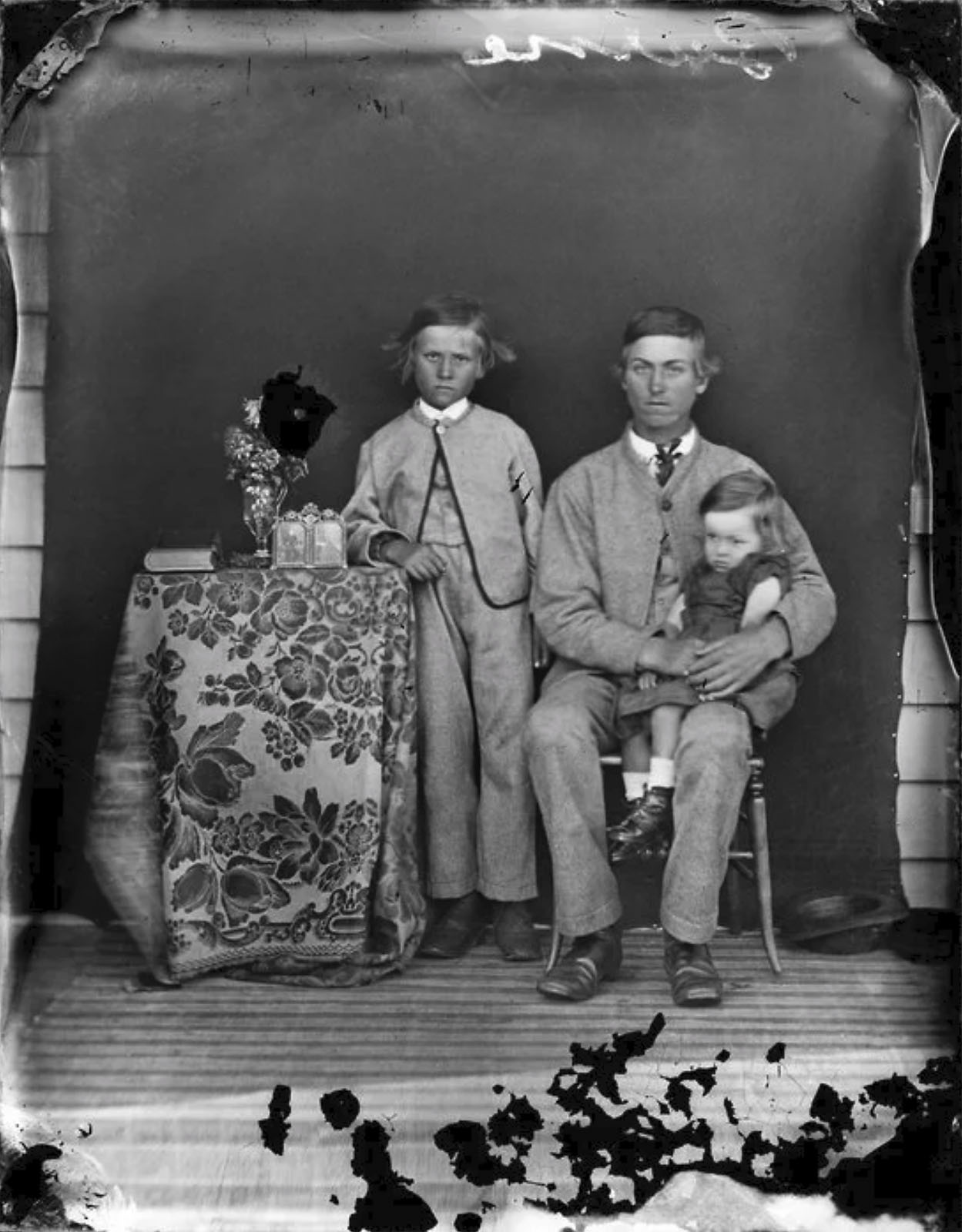
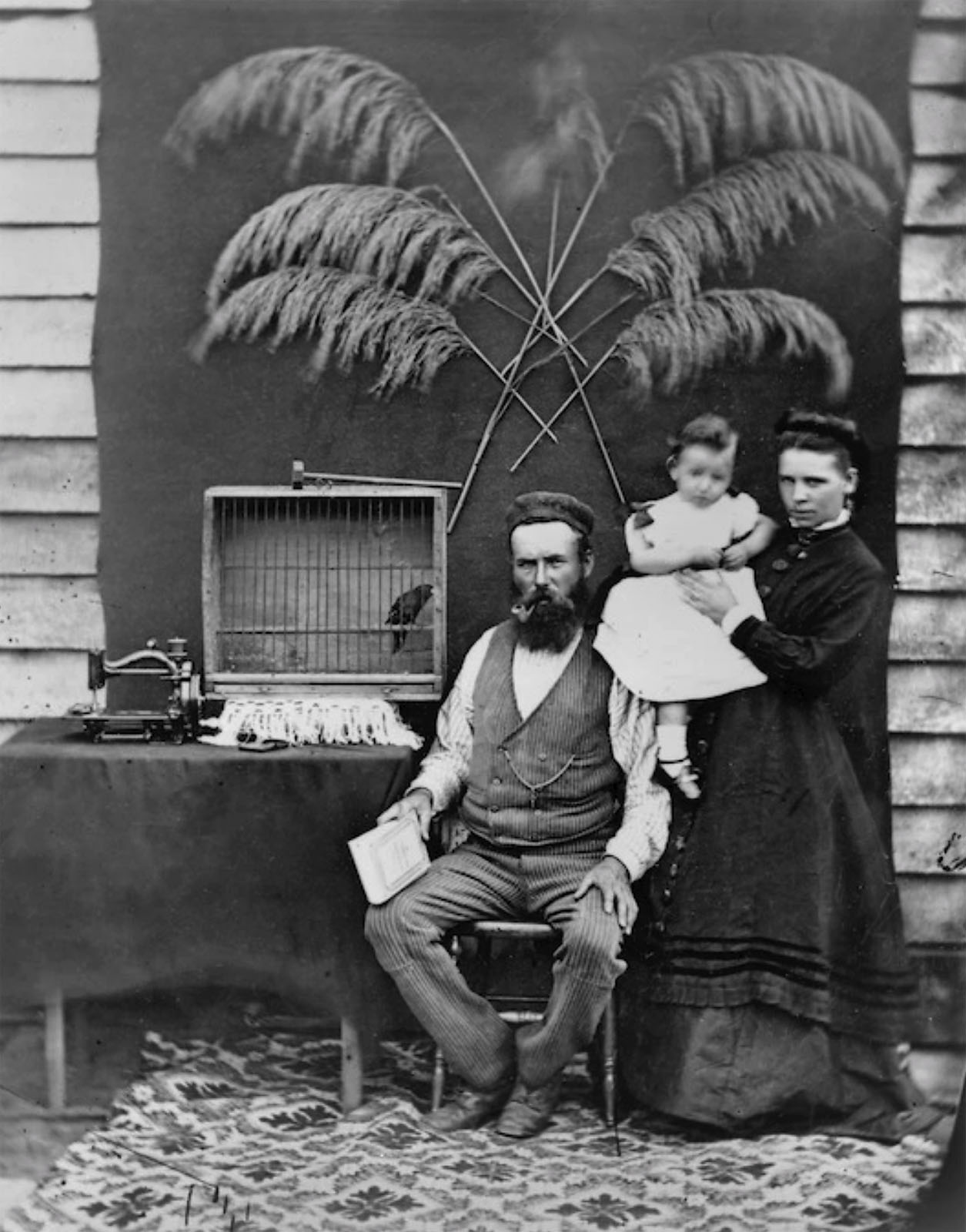
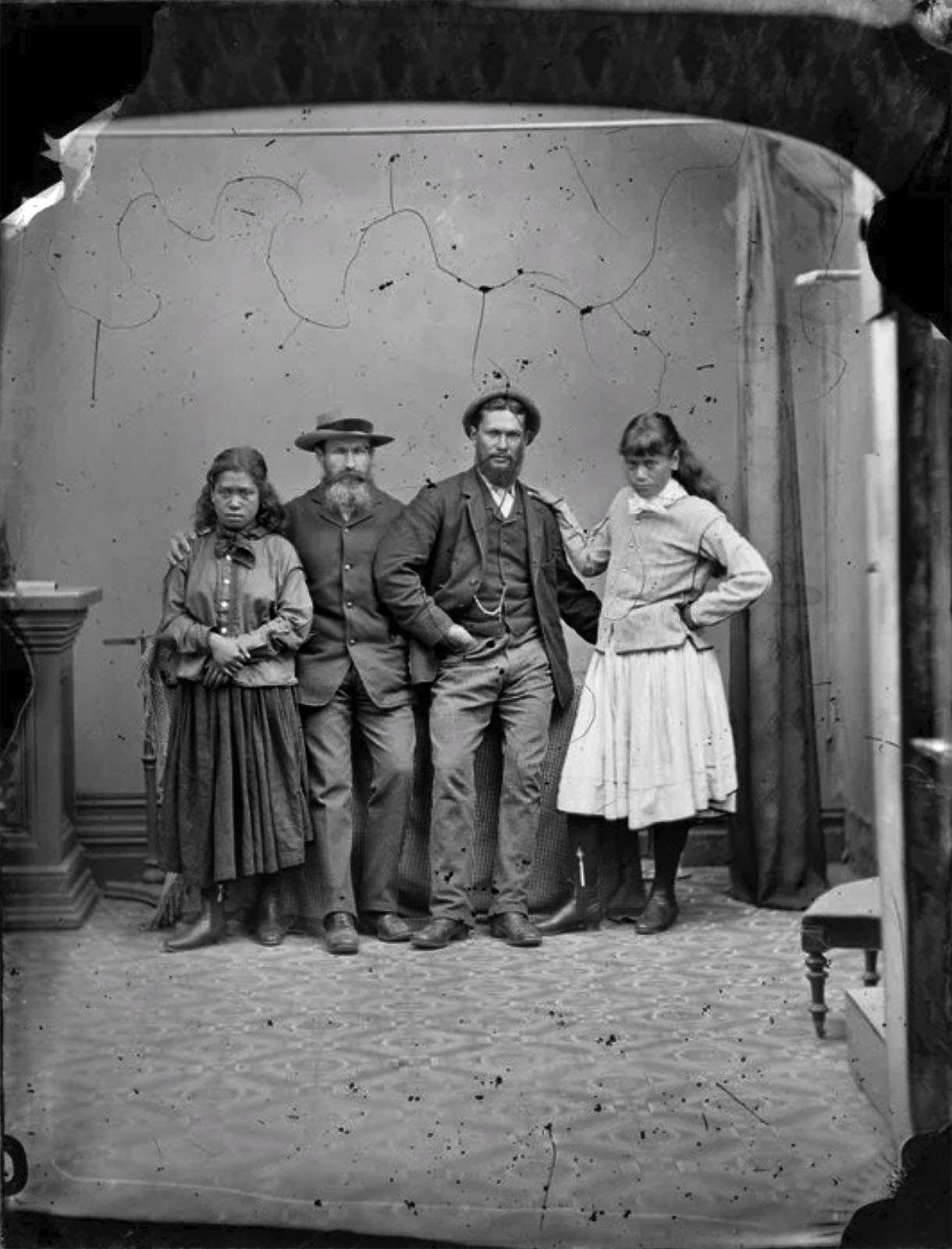
Occasionally the framing is more interesting, as in the negative space which surrounds the profile portrait of [Miss] Scott (Between 1870-1889, below), the placement of the figure within the pictorial frame in Mrs Gillen (1870s, below), or the closeness to the subject so that the strong face fills the frame in Unidentified Maori man, with moko, Whanganui district (1860s, below). Group photographs are also taken outdoors against hanging rug or fabric backdrops which are pinned to the exterior of weatherboard houses, probably as Harding travelled around the district or was commissioned to take the family portrait. As with other colonial portrait photographs from around the world, treasured possessions such as photographs, sewing machines, clocks, birds, bibles, and books are placed on covered tables to signify their importance in the colonists lives.

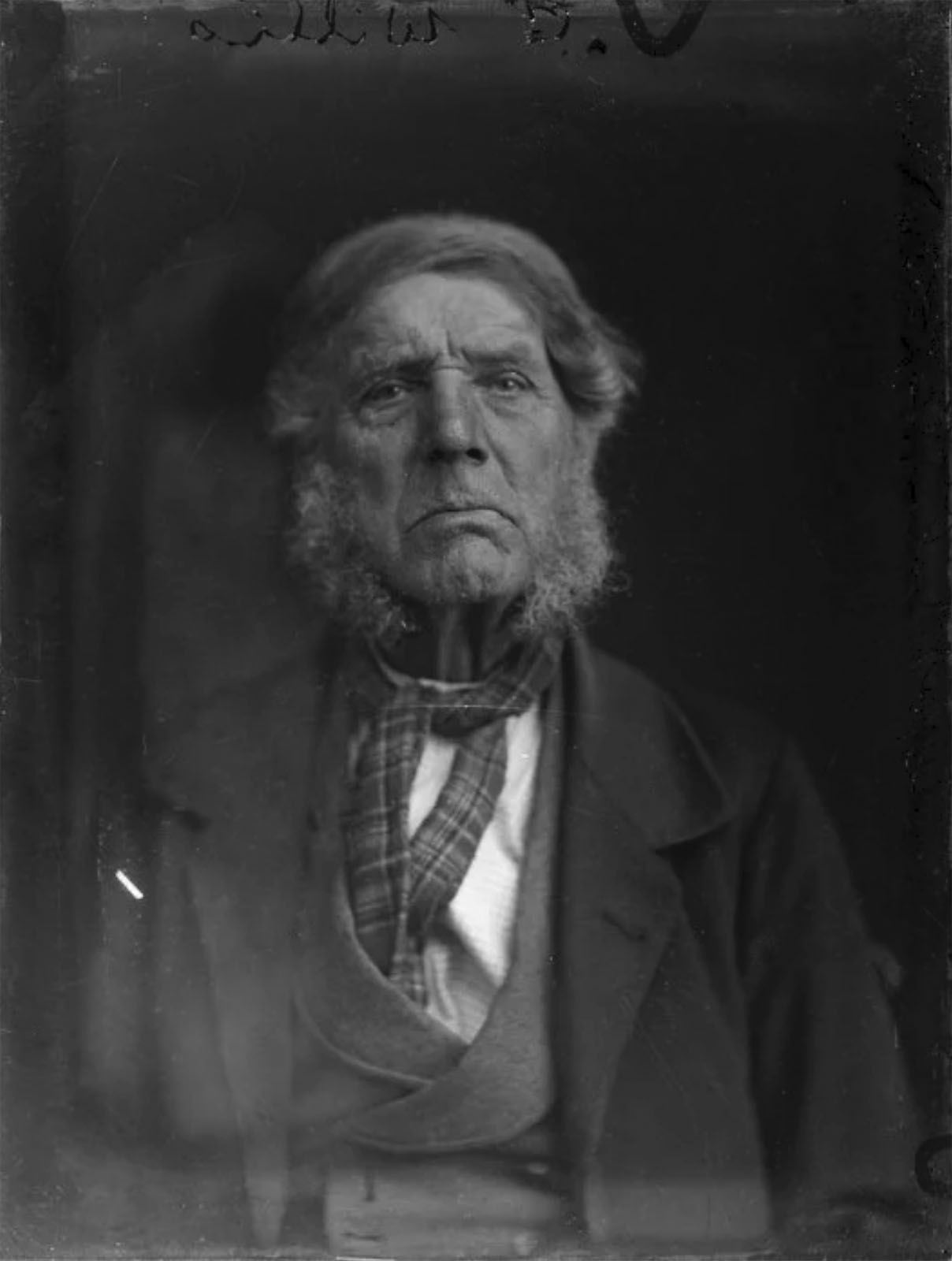
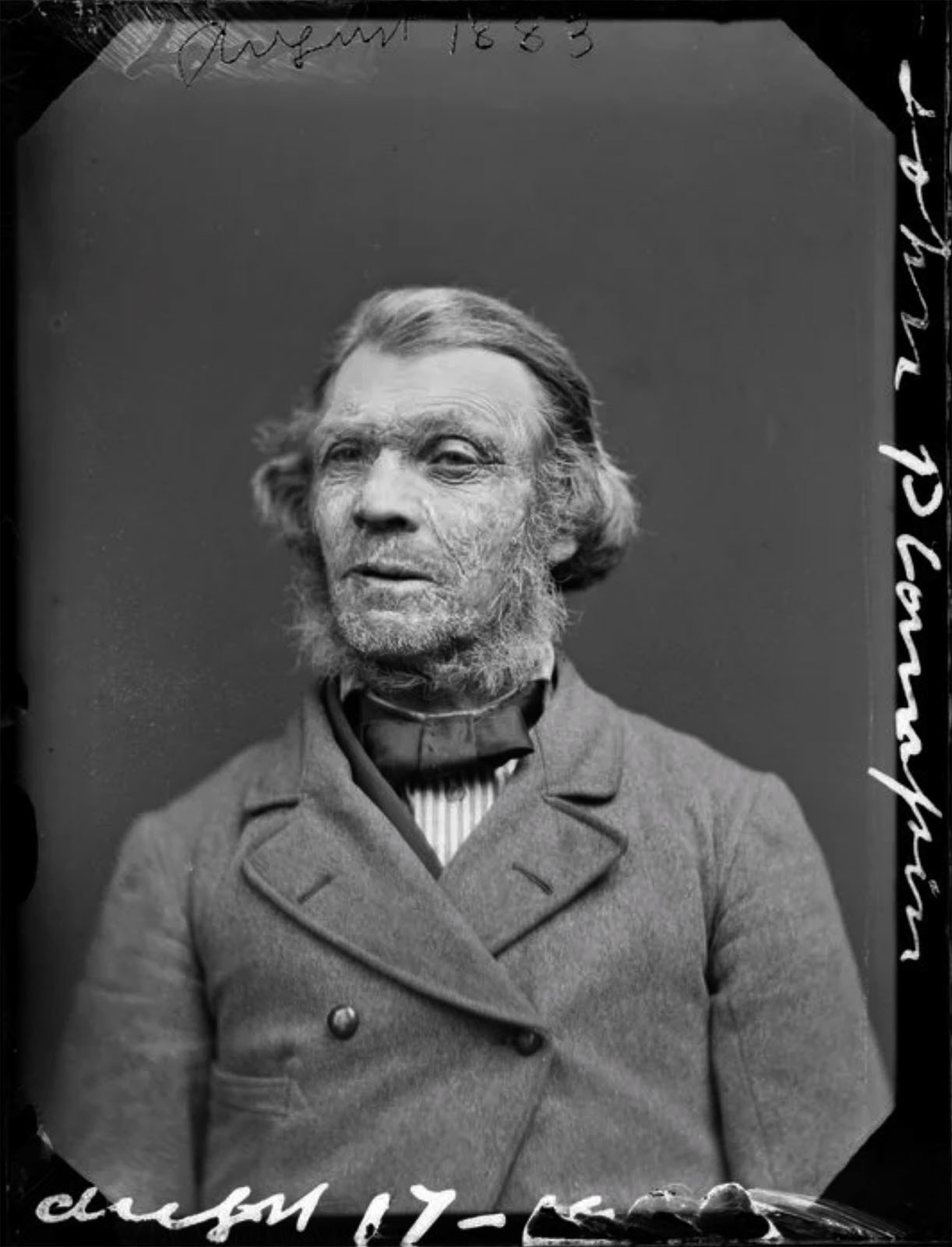
What is undeniable is the wonderful, casual yet almost crystalline presence that Harding’s sitters possess… no doubt due to his perception as a human being and a photographer, to his association with the community in which he lived, and to the clarity of the glass plate negatives that he produced. In this regard you only have to look at the portrait of Mr Plampin (17 August 1883, below) in all his Dickensian glory to understand what a great photographer William Harding was… in his ability to convey with perspicacity the personality of the sitter, that bright spark that was their life.
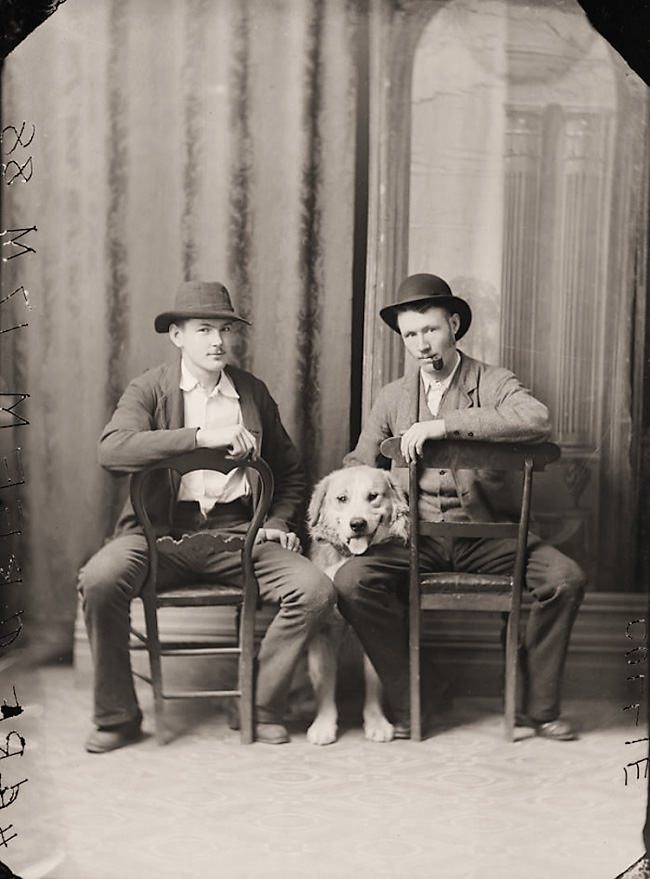
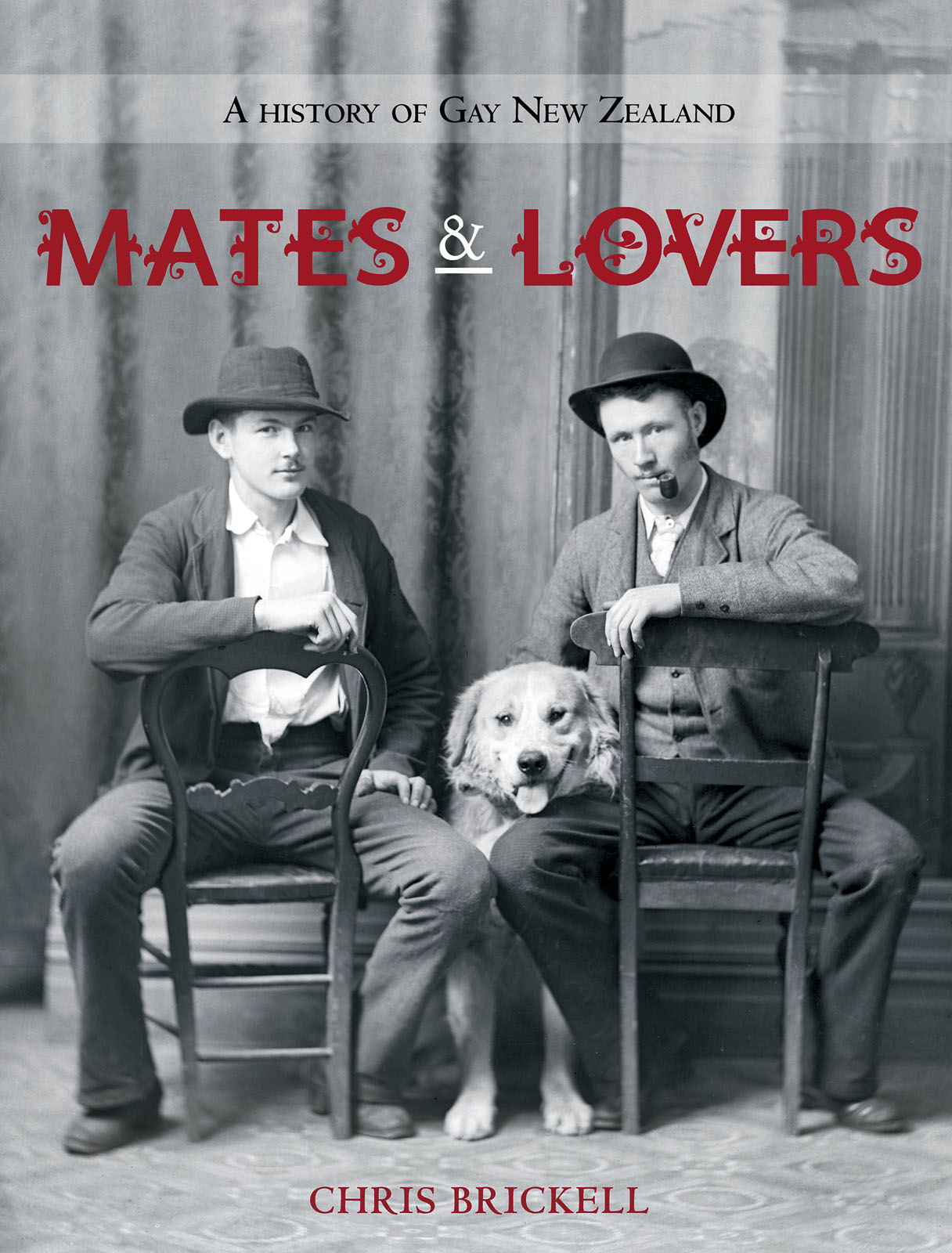
Through his portrait textures and tonalities there is a sense of the people who populate that place, but more than that, there is a sense of our own fragility and mortality. A feeling of anOther existence for our life if we had been born into such worlds. It is a little disappointing then that none of Harding’s many photographs of pairs of men are present in the exhibition, such as the photograph with the dog on the front of the book Mates and Lovers: A History of Gay New Zealand by Chris Brickell (2009), which is a Harding image (see photograph below).3 Hidden histories indeed!

As interesting, and just as problematic, are the portraits by a white photographer of the Māori and their artefacts, indigenous Polynesian people of mainland New Zealand (Aotearoa). First of all can I say that I am not an expert in the field of colonial photography of First Nations peoples including the photographs of the Māori of New Zealand. This is a complex and contested terrain requiring specialised knowledge of ancient histories, cultures and memories, where the reclaiming and becoming is being undertaken mostly by scholars and First Nations peoples and artists.

Having said that, what I can observe is that ALL photographic histories of colonised peoples – whether it be for example photographs of Indigenous Australians, indigenous people of the United States or African colonial photographs – are contested terrain which needs to be reclaimed by ancestors: from the posing of “conquered” people; to the gaze of a white male photographer; to the “impartial” gaze of the machine; to the possession of the body and artefacts of the possessed through the physicality of the photograph; to the scripting of a particular un/reality, a story photographers wanted to tell; to the scientific, anthropological measuring of physiognomies (anthropologists were interested in documenting hair styles and scarification marks, as well as tattoos, moko, and facial characteristics); to the representation of many cultural items and ancestors that have been stolen; to the photographs ability to “show us today some things that we may no longer have access to and give us a window into eyes of real human beings who were in the process of losing the lives they had known for centuries.”4 To name just a few terrains and identities that need to be reclaimed.

Very briefly, in the history of New Zealand (and the “new” in the title speaks for itself, despite the fact the Polynesian people of Aotearoa had been on the islands for centuries before the British), in 1841 “representatives of the United Kingdom and Māori chiefs signed the Treaty of Waitangi, which in its English version declared British sovereignty over the islands. In 1841, New Zealand became a colony within the British Empire. Subsequently, a series of conflicts between the colonial government and Māori tribes resulted in the alienation and confiscation of large amounts of Māori land.”5

Although there was only “estimated a scant 1100 Europeans in the North Island in 1839, with 200 of them missionaries, and a total of about 500-600 Europeans in the Bay of Islands” compared with an estimated population of 30-40,000 Māori by 1870, with the arrival of new immigrants and the issue of land-ownership, Justice Minister Henry Sewell (in office 1870-1871) described the aims of the Native Land Court as “to bring the great bulk of the lands in the Northern Island […] within the reach of colonisation” and “the detribalisation of the Māori – to destroy, if it were possible, the principle of communism upon which their social system is based and which stands as a barrier in the way of all attempts to amalgamate the Māori race into our social and political system.” By the end of the 19th century these goals were largely met – to the detriment of Māori culture.”6

There are many complexities around colonial photography – on both sides of the lens – and the decolonisation of collections and museums / galleries in general is a difficult area. “The ‘archival turn’ of the 1990s has brought increased scrutiny to the practices of collecting, collating, and classifying photographs and artefacts – procedures that are now sites of contested histories.”7 Despite the repurposing of the colonial archive and the decolonisation of historical images, we must accept that the Māori people photographed in Harding’s portraits were subjected to the colonial gaze: “Originally photographed and collected to document a so-called primitive race or culture, or as part of tourism and government programmes of protection and assimilation, the colonial archives remained inaccessible to First Nations peoples until recent decades.”8  We must acknowledge the usual myths (for example, that authentic Māori culture was about to be or had been lost through Māori degeneration – the myth of the dying race) and stereotypes presented by colonials who “discovered, created, propagated and romanticised the Maori world at the turn of the century summed up in a popular nickname describing New Zealand; Maoriland [in which] the culture of Maoriland was a colonists creation…”9 but we must also acknowledge (as with Indigenous Australians10) the part Māori played in manipulating colonial myth-making for their own purposes, that “Māori were not merely passive victims: they too had a stake in this process of romanticisation…”11

But as Indigenous Australian artist Brook Andrew observes, “There is an urgent need for First Nations peoples to control their representation, both contemporary and historical, and for Indigenous knowledge to be recognised. For too long, negative or romantic representations of First Nations peoples have proliferated in primitivist discourse and museum displays to naturalise the colonial project and its aftermath…”12 According to a friend who works in a museum in New Zealand, “It would be fair to say that, despite us having the Treaty of Waitangi, there is still a lot of cultural trauma here. There are lots of attempts at redress, and strong work being done by contemporary Māori artists (including photographers) to reinterpret colonial views, give voice to the harm done, and find ways to move forward.”13

She continues, “Outside of the museum/gallery, in local marae (meeting houses), photographs of ancestors are a way to connect with them quite tangibly. This is positive. Most marae display photographic portraits illustrating the whakapapa (geneaology / lineage) of their iwi (tribe) and hapu (sub-tribe). Some have many photos hung along all the walls of the whare, and others are only brought out for tangihanga (funerals). Photographs are often removed from the wall and travel to other marae for big events. So on a vernacular as well as a ritual / spiritual level, they have an important and valued role invoking the presence of people now departed.”

There is never a definitive answer to these complex questions and the ground will forever remain contested terrain, full of the possibilities of re-territorialisation and remembering. But this visual language of race can be reinterpreted with respect, honour and grace, serving “as inspiration for artistic production in New Zealand that centres Indigenous frameworks, concepts, and worldviews” that prioritise storytelling and lived cultural practices which elaborate “the Māori values and principles that should underpin both academic and community research, particularly where photography is concerned.”14 Yes, simply yes!

The photographic portraits by Harding of Māori emphasise the fact that their story is not one of the distant past but is one of “a present-day reality populated by real people with mana, knowledge, history, integrity, and a legitimate grievance against the Crown’.15 “As Christopher Morton and Elizabeth Edwards have demonstrated, the medium [photography] is defined by its incessant ‘recodability’ and, while photographs have been valued for recording a past moment, photographic images also perform in the present, often in unexpected ways. When it comes to legacy images, I can examine the conditions around their making, but I can also consider their contemporary uses and meanings. This is a method of rewriting history to account for Indigenous loss and survival, and also to think through the absences in the photographic record.”16

“In Roland Barthes’s words, it is ‘that someone has seen the reference […] in flesh and blood‘. The relation between metal compounds and light in analogue photography means they are an ’emanation of the referent. From a real body, which was there, proceed radiations which ultimately touch me, who am here’. Ethnographic photographs can reveal trauma, when viewers connect with the bodily presence of those photographed, recognise a life that matters, and implicate themselves in the history of dispossession. However, the trauma includes the violent framing of First Nations peoples.”17

“In sum, for Aboriginal and Māori artists and communities, photographic archives offer a rich source of history, counter silence and exclusion, and provide a means to explore many issues that remain in the present. Archival images are tangible and powerful relics that provide a link with the past and bring it concretely into our time. This is the power of photographs: to address absence, to reconnect relatives with each other and to Country, and to heal. As Wiradjuri scholar Lawrence Bamblett argues, photographs link people in the present, as well as connecting them to places and the past; they ‘fit into the joyful scene of people telling stories’. The history of broken families and the dispossession and control of Aboriginal people remain contested, and often absent, from national stories and visual histories, but these silences are filled by the solidity and presence of photographs.”18

To me, the saddest photograph in the posting is that of an Unidentified young maori girl (Between 1856-1889, below) in which the unknown has a traditional hairstyle yet wears Western clothes (some Māori disdained to wear a Pākehā garment when being photographed) and has a crucifix around her neck. The pensiveness of the hands and the desolate look on her face says it all… they speak of sadness “not because of what she’s doing or where she is, but something ages ago, like there is a long, long deep sadness.”

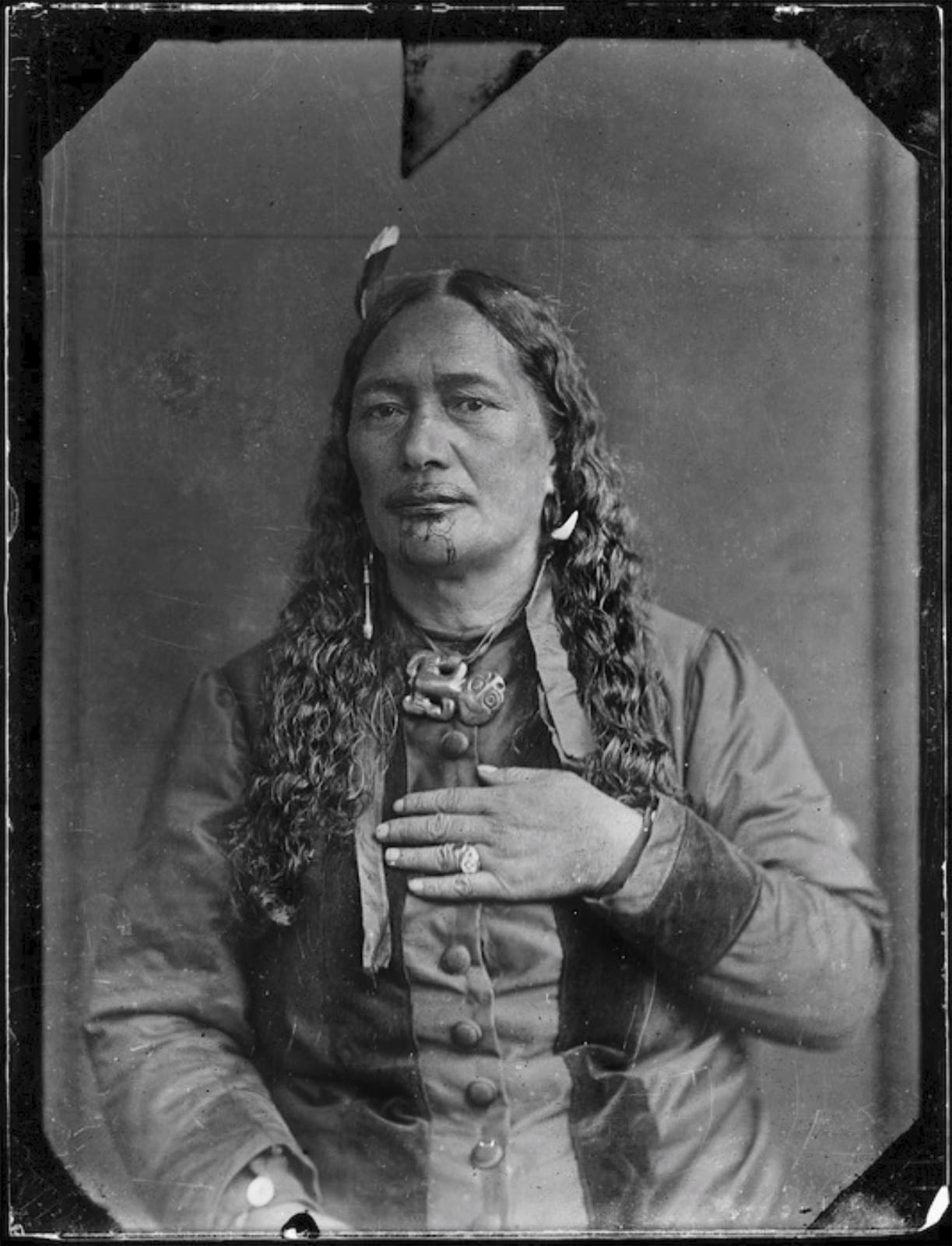
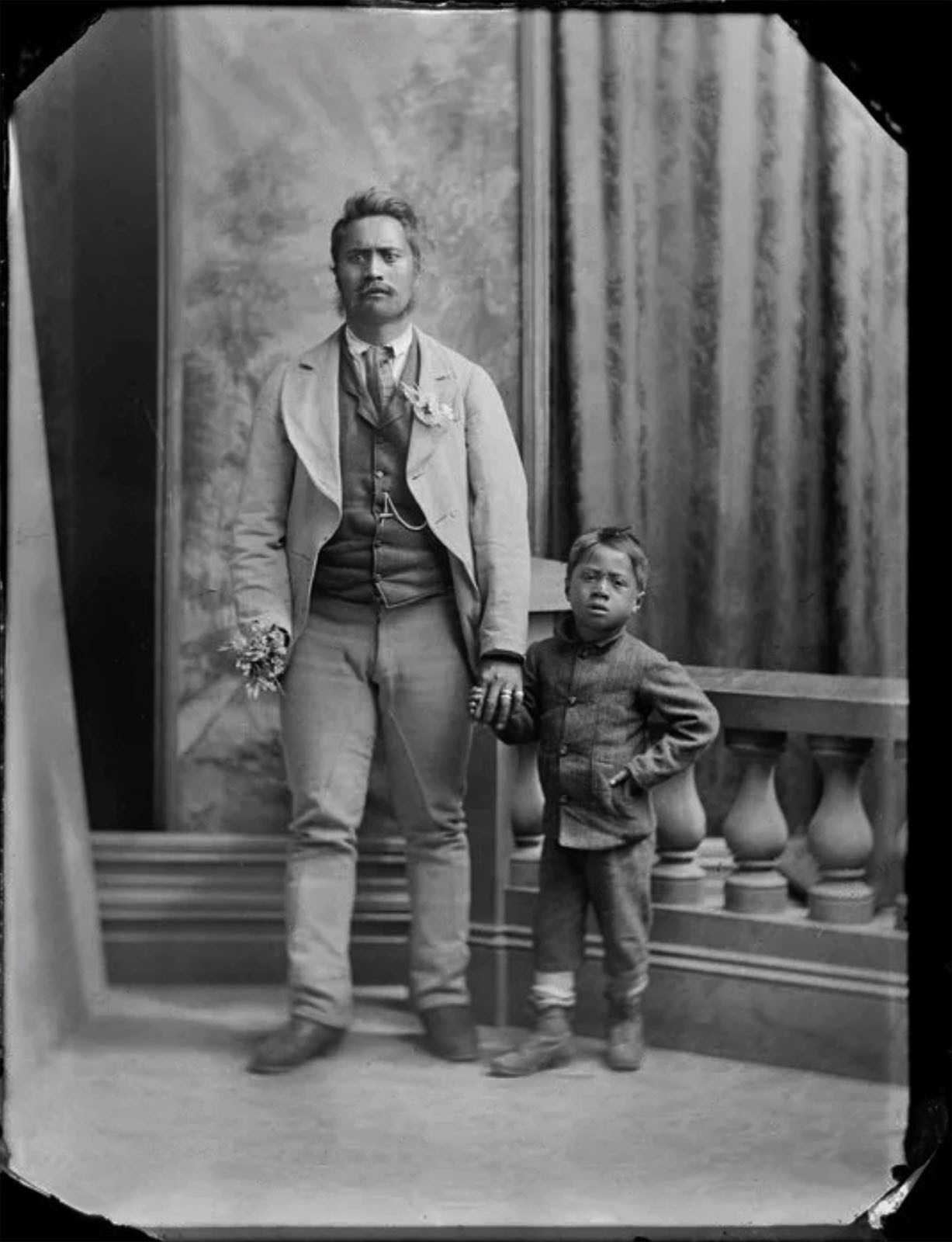
And yet the strongest photographs of Māori women are two other portraits: in one, Unidentified young Maori woman with clear chin moko (1870-1889, below), the unknown wears Western dress but stares comfortably, defiantly at the camera displaying her clear chin moko (her heritage, her culture) with her hands relaxed on her lap, her presence undeniable / her undeniable ‘presence’; and in the other, Unidentified Māori woman (c.1880, below), the unknown also wears Western dress and stares determinedly at the camera (that stare reaching through the centuries), the white-tipped tail feather of the huia in her long natural hair (these feathers were prized above all others as head adornments, and signified chiefly status) – her ringed hand resting comfortably across her chest, the hand over the heart a gesture emblematic of honesty, she displays her tā moko tattoo, a unique expression of her cultural heritage and identity.

Present, alive, full of energy, an emanation of the referent, a real body, which was there, proceed radiations which ultimately touch me, who am here.

From past into present into future.
From past time into present time into future time.
From past (representation) into present (reclamation/reconfiguration) into future (change).

Dr Marcus Bunyan


Footnotes

1/ Fiona Oliver. “Off the record | William Harding, ‘photographist’,” on the National Library website July 28th, 2022 [Online] Cited 23/08/2022

2/ Ibid.,

3/ For more photographs of men and pairs of men by William Harding please see Stephen O’Donnell. “Young gentlemen of Whanganui – photographs from the studio of William James Harding, New Zealand, circa 1856-1889,” on the Gods and Foolish Grandeur blog, Sunday, May 30, 2021 [Online] Cited 20/10/2022

4/ Email to the author, 1st June 2018 from Executive Director Shannon Keller O’Loughlin (Choctaw) of the Association on American Indian Affairs (AAIA)

5/ Anonymous. “New Zealand,” on the Wikipedia website [Online] Cited 18/10/2022

6/ Anonymous. “Māori culture,” on the Wikipedia website [Online] Cited 18/10/2022

7/ Elizabeth Edwards and Christopher Morton, ‘Introduction’, in Photography, Anthropology and History: Expanding the Frame, ed. Christopher Morton and Elizabeth Edwards, Farnham: Ashgate 2009, pp. 1-24 footnoted in Jane Lydon and Angela Wanhalla. ‘Editorial’, in History of Photography Volume 42, 2018 – Issue 3: Indigenous Photographies. Guest Editors: Jane Lydon and Angela Wanhalla, pp. 213-216

8/ Michael King. Māori: A Photographic and Social History. Wellington: Reed 1996, p. 2 quoted in Helen Brown (2018) “‘I Depend More on Photographs to Help Me Along’: The Ngāi Tahu Portraits in Lore and History of the South Island Maori,” in History of Photography, Volume 42, 2018 – Issue 3: Indigenous Photographies. Guest Editors: Jane Lydon and Angela Wanhalla, pp. 288-305

9/ See Roger Blackley. Galleries of Maoriland: Artists, Collectors and the Māori World, 1880-1910. Auckland University Press, 2018

10/ See Jane Lydon and her important books Eye Contact: Photographing Indigenous Australians (2005) and Photography, Humanitarianism, Empire (2016) where she unpacks the historical baggage of the colonial portrait photography of Indigenous Australians and notes that the photographs were not solely a tool of colonial exploitation. Lydon articulates an understanding in Eye Contact that the residents of Coranderrk, an Aboriginal settlement near Healsville, Melbourne, “had a sophisticated understanding of how they were portrayed, and they became adept at manipulating their representations.”

11/ Roger Blackley Op cit.,

12/ Brook Andrew & Jessica Neath (2018). “Encounters with Legacy Images: Decolonising and Re-imagining Photographic Evidence from the Colonial Archive,” in History of Photography, Volume 42, 2018 – Issue 3: Indigenous Photographies. Guest Editors: Jane Lydon and Angela Wanhalla, pp. 217-238

13/ “Artists draw upon the archive to retell or transform national histories that have omitted or denigrated Indigenous people.6 In addition, Indigenous photographers have provided a new perspective on past and present by revealing marginal experiences, asserting Indigenous capacity and addressing the losses and fractures of historical processes such as assimilation.”
Jane Lydon. ‘Transmuting Australian Aboriginal Photographs’, World Art, 6:1 (2016), pp. 45-60; and Ashley Rawling, ‘Brook Andrew: Archives of the Invisible’, Art Asia Pacific, 68 (May/June 2010), pp. 110-17, footnoted in Jane Lydon and Angela Wanhalla. ‘Editorial’, in History of Photography Volume 42, 2018 – Issue 3: Indigenous Photographies. Guest Editors: Jane Lydon and Angela Wanhalla, pp. 213-216

14/ Elizabeth Edwards and Christopher Morton, ‘Introduction’, in Photography, Anthropology and History: Expanding the Frame, ed. Christopher Morton and Elizabeth Edwards, Farnham: Ashgate 2009, pp. 1-24 footnoted in Jane Lydon and Angela Wanhalla. ‘Editorial’, in History of Photography Volume 42, 2018 – Issue 3: Indigenous Photographies. Guest Editors: Jane Lydon and Angela Wanhalla, pp. 213-216

15/ Ibid.,

16/ Brook Andrew & Jessica Neath (2018). “Encounters with Legacy Images: Decolonising and Re-imagining Photographic Evidence from the Colonial Archive,” in History of Photography, Volume 42, 2018 – Issue 3: Indigenous Photographies. Guest Editors: Jane Lydon and Angela Wanhalla, pp. 217-238

17/ Roland Barthes, Camera Lucida: Reflections on Photography (1981), London: Vintage 2000, pp. 79-80 (original emphasis) quoted in Brook Andrew & Jessica Neath (2018). “Encounters with Legacy Images: Decolonising and Re-imagining Photographic Evidence from the Colonial Archive,” in History of Photography, Volume 42, 2018 – Issue 3: Indigenous Photographies. Guest Editors: Jane Lydon and Angela Wanhalla, pp. 217-238

18/ Elizabeth Edwards and Christopher Morton Op cit.,


Many thankx to the National Library for allowing me to publish the photographs in the posting. Please click on the photographs for a larger version of the image.


Book cover of 'Mates and Lovers: A History of Gay New Zealand' by Chris Brickell


Book cover of Mates and Lovers: A History of Gay New Zealand by Chris Brickell which is a Harding image.


William James Harding (New Zealand, 1826-1899) 'Two unidentified men' c. 1888


William James Harding (New Zealand, 1826-1899)
Two unidentified men
c. 1888
Glass negative
Negatives of Wanganui district
Alexander Turnbull Library, Wellington, New Zealand


Please note: photograph not in exhibition.


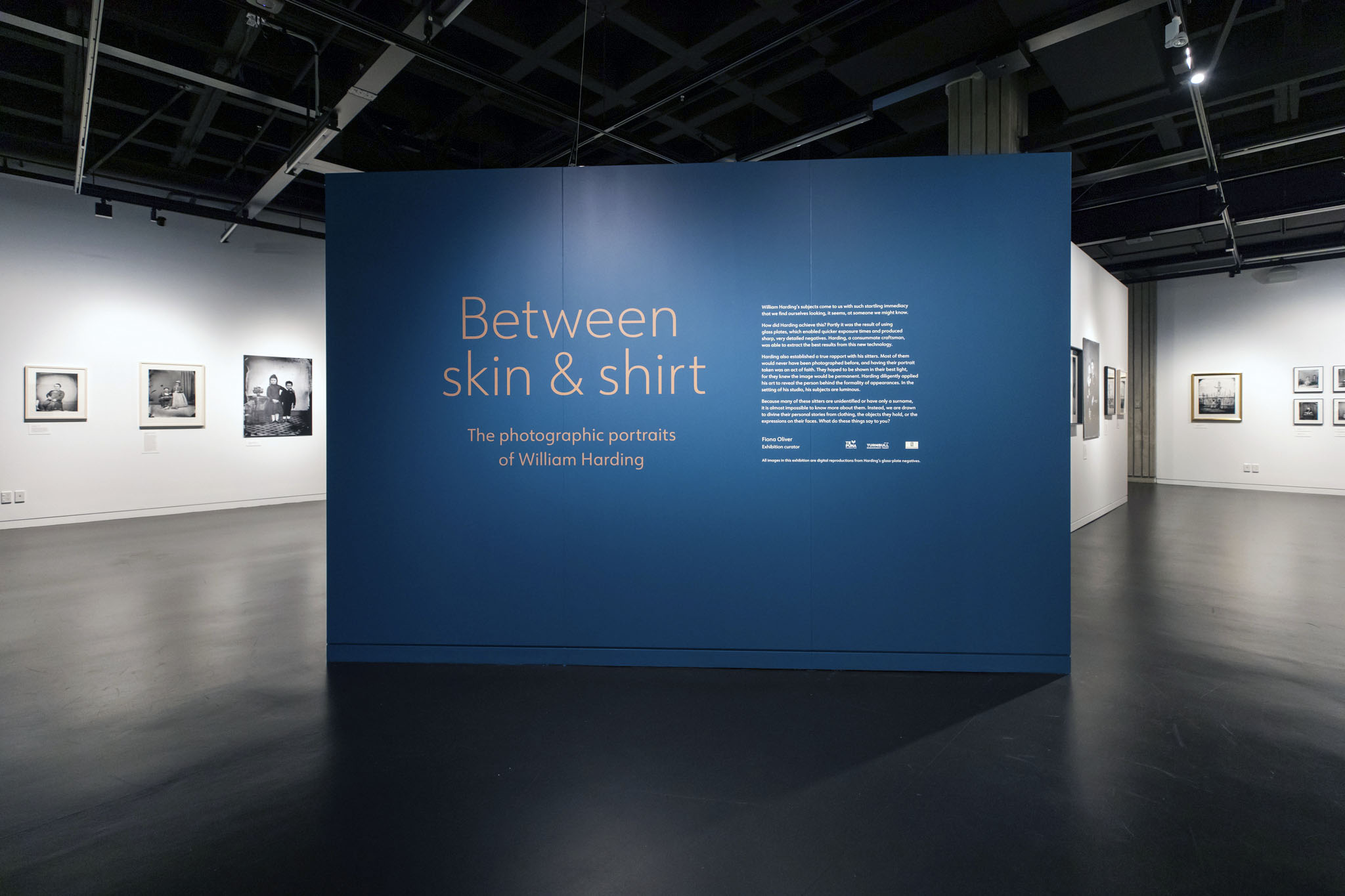
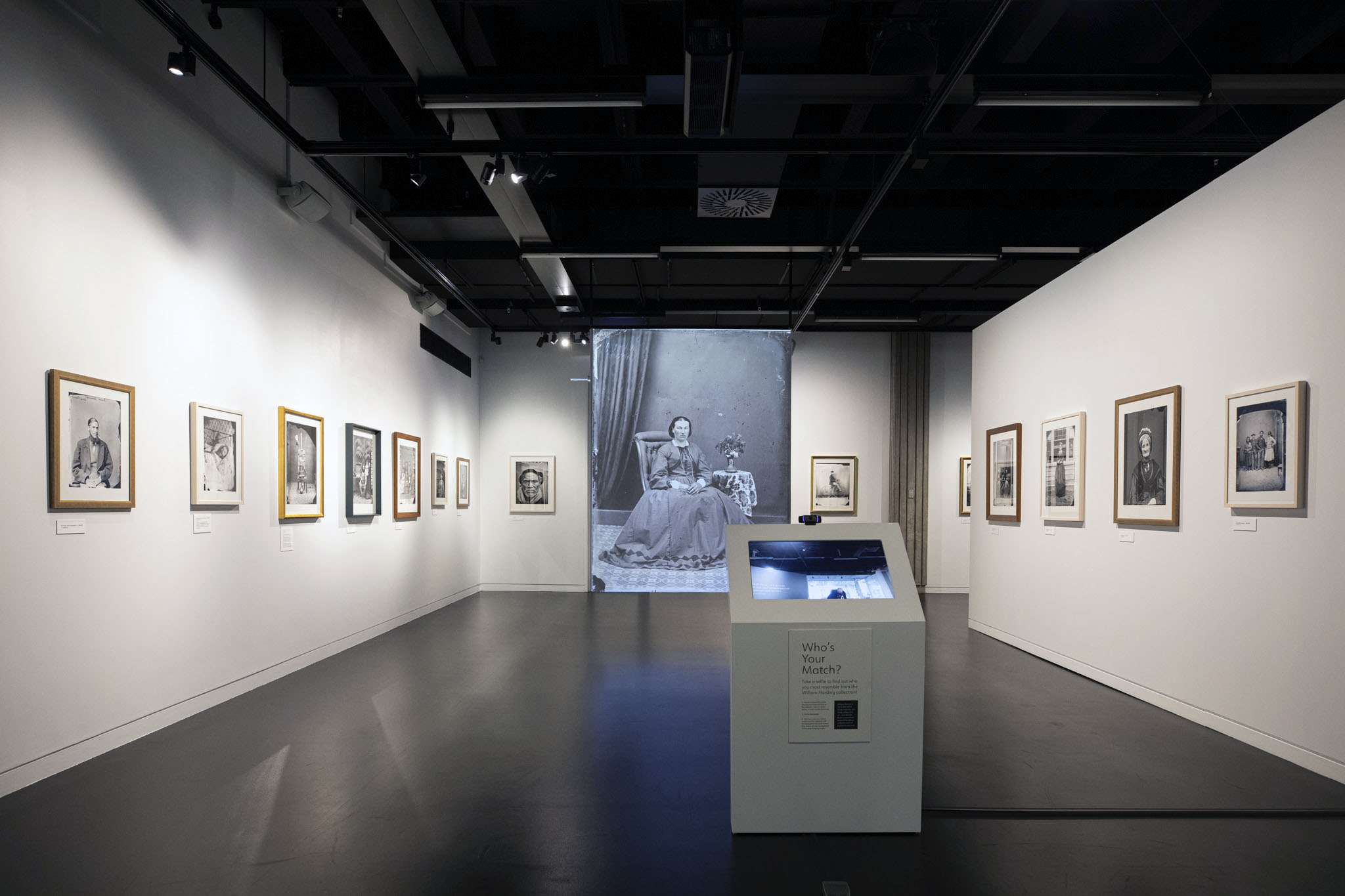
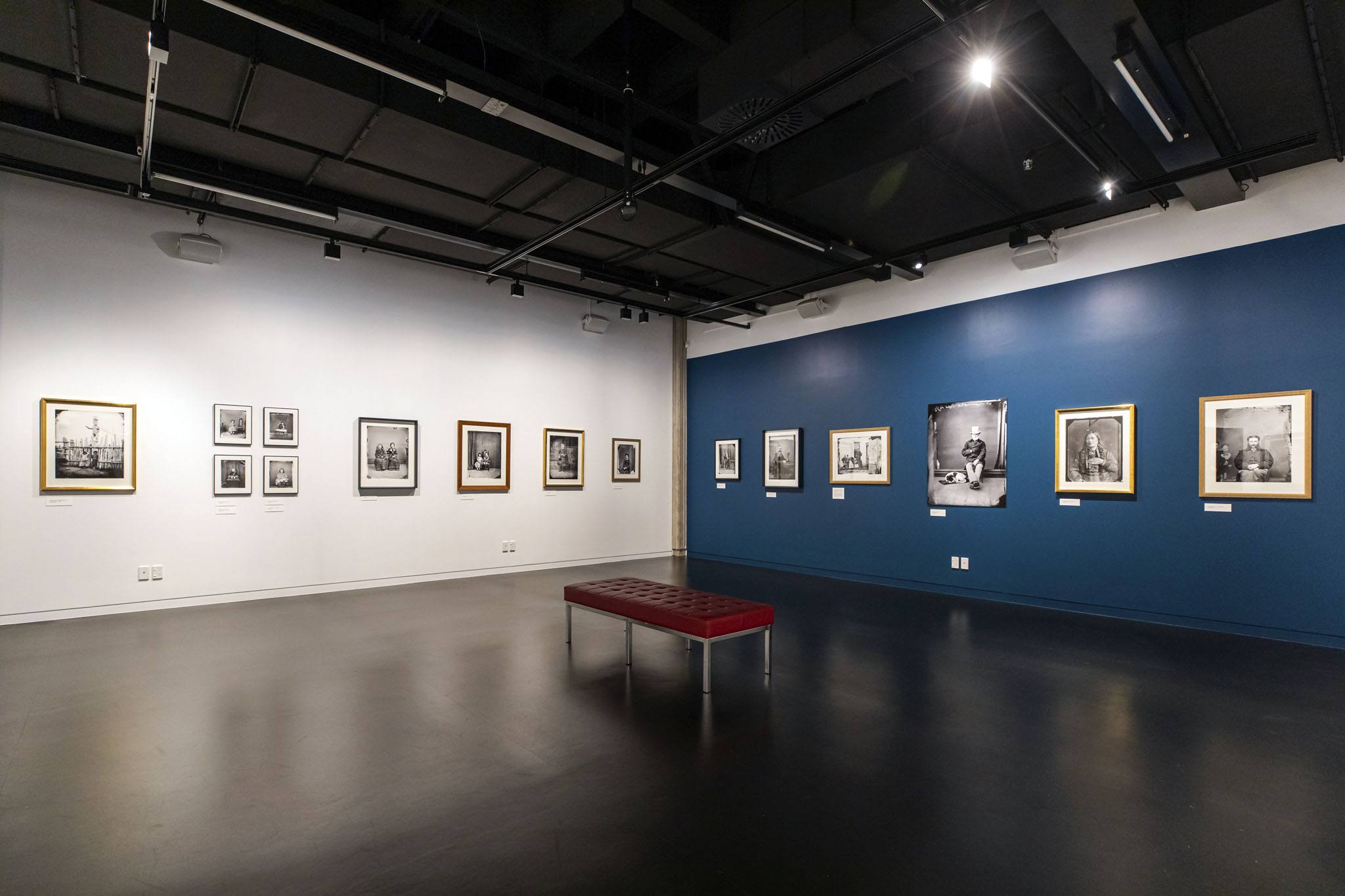
Installation view of the exhibition 'Between skin & shirt: The photographic portraits of William Harding' at the National Library of New Zealand Gallery, Wellington

Installation view of the exhibition 'Between skin & shirt: The photographic portraits of William Harding' at the National Library of New Zealand Gallery, Wellington

Installation view of the exhibition 'Between skin & shirt: The photographic portraits of William Harding' at the National Library of New Zealand Gallery, Wellington

Installation view of the exhibition 'Between skin & shirt: The photographic portraits of William Harding' at the National Library of New Zealand Gallery, Wellington


Installation views of the exhibition Between skin & shirt: The photographic portraits of William Harding at the National Library of New Zealand Gallery, Wellington
Photographer: Mark Beatty for Alexander Turnbull Library Imaging Services


Looking at Harding’s portraits

French photographer Henri Cartier-Bresson said that ‘The most difficult thing … is a portrait. You have to try and put your camera between the skin of a person and his shirt’. William Harding achieves just that. Harding diligently applied his art to reveal the person behind the formality of appearances. In the setting of his studio, his subjects are luminous.

The portraits in this exhibition have been selected from the nationally significant Harding collection of over 6,500 glass-plate negatives held by the Alexander Turnbull Library. The photographic portraits William Harding took in his Whanganui studio from the 1850s to the 1880s come to us with such startling immediacy that we find ourselves looking, it seems, at someone we might know.


William James Harding (New Zealand, 1826-1899) 'Reardon child' c. 1870s from the exhibition 'Between skin & shirt: The photographic portraits of William Harding' at the National Library of New Zealand Gallery, Wellington, May - Oct, 2022


William James Harding (New Zealand, 1826-1899)
Reardon child
c. 1870s
Glass negative
4.25 x 3.25 inches
Negatives of Wanganui district
Alexander Turnbull Library, Wellington, New Zealand


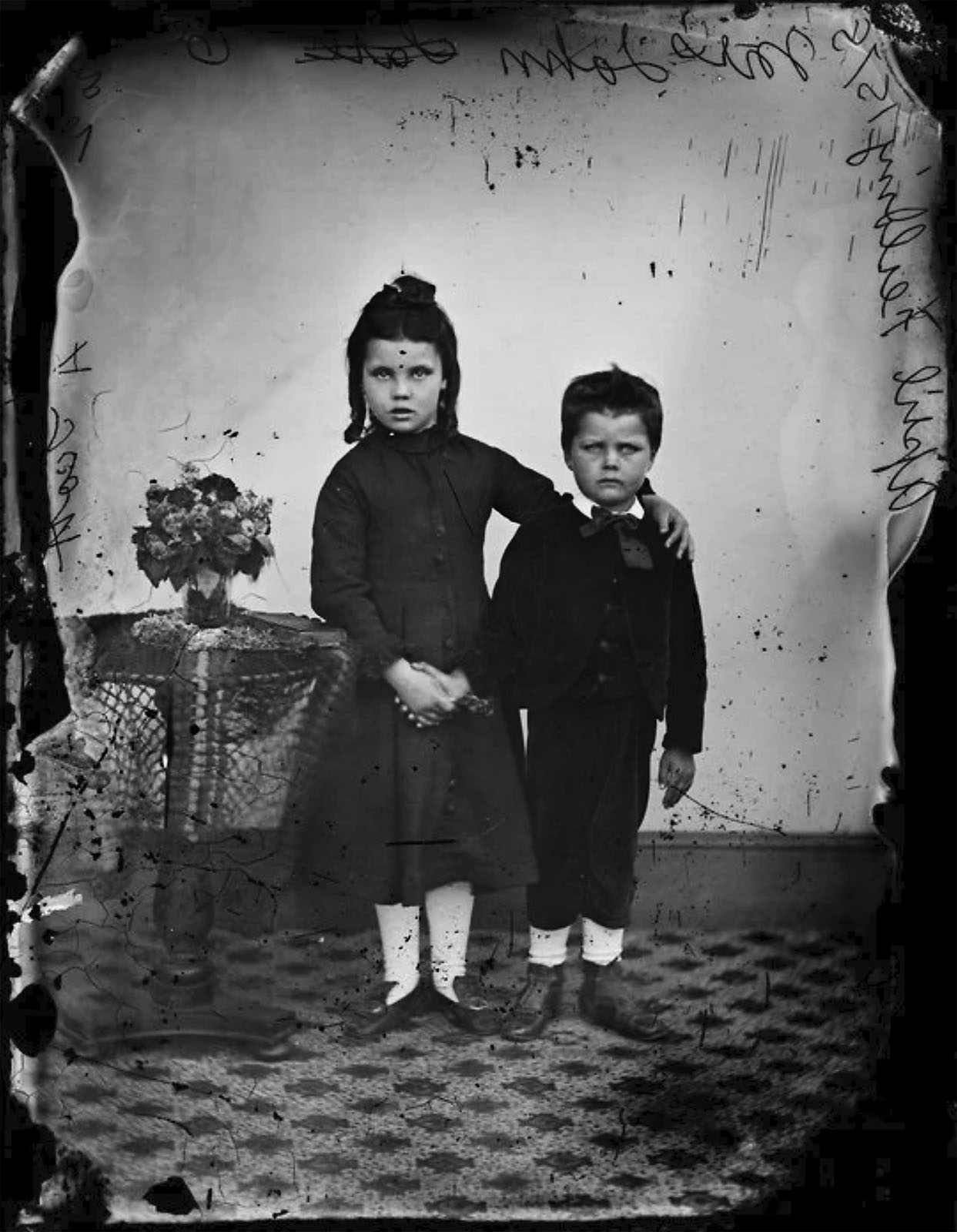
William James Harding (New Zealand, 1826-1899) 'Master Percival Thomas Scott and his sister, of Feilding' April 1878 from the exhibition 'Between skin & shirt: The photographic portraits of William Harding' at the National Library of New Zealand Gallery, Wellington, May - Oct, 2022


William James Harding (New Zealand, 1826-1899)
Master Percival Thomas Scott and his sister, of Feilding
April 1878
Glass negative
4.25 x 3.25 inches
Negatives of Wanganui district
Alexander Turnbull Library, Wellington, New Zealand


Photograph taken by the studio of William James Harding, Whanganui. Accession register gives girl’s name as Elizabeth Jane or Annie Scott and her age as 6 years. Percival’s age is given as four years.


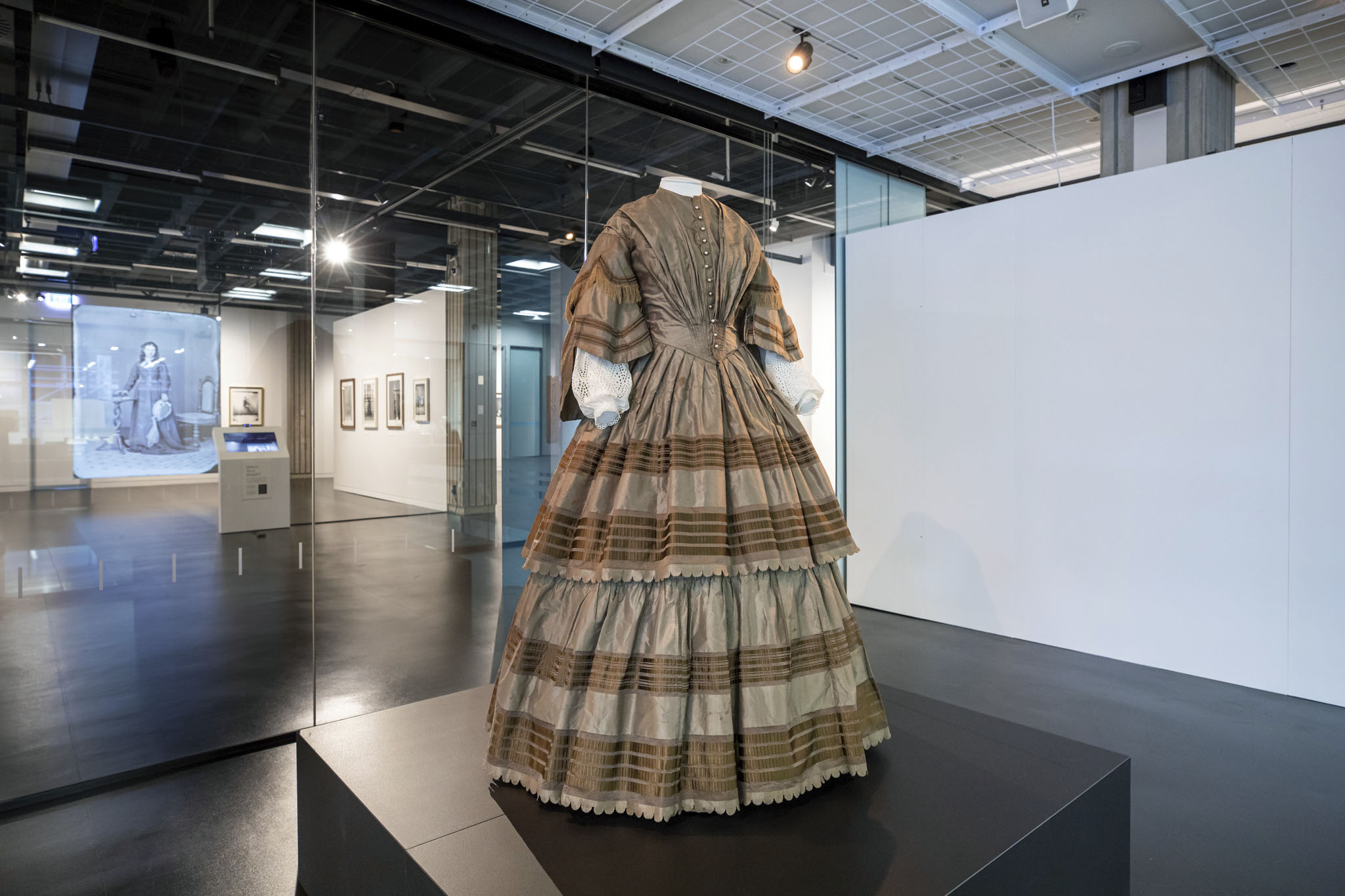
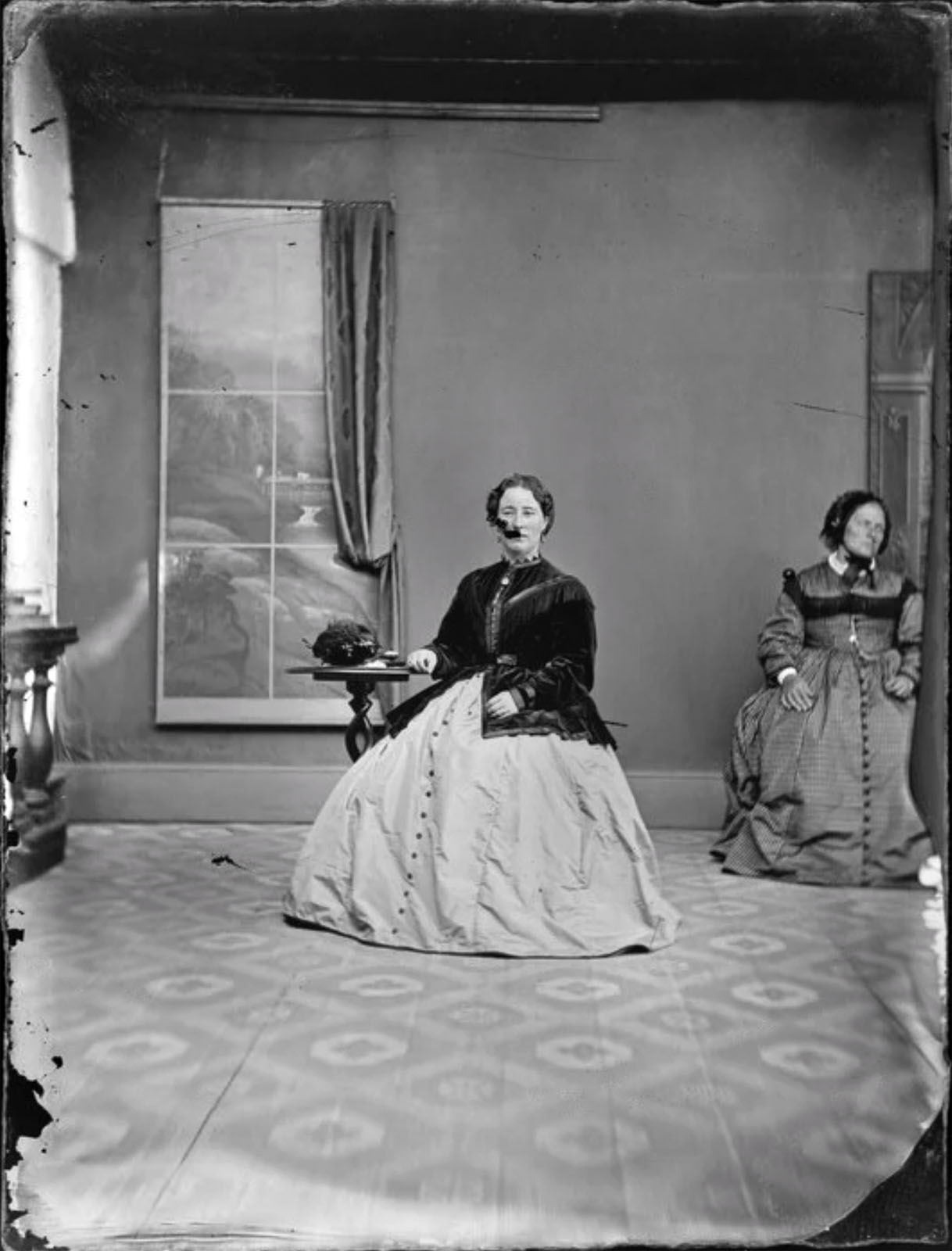
Installation view of the exhibition 'Between skin & shirt: The photographic portraits of William Harding' at the National Library of New Zealand Gallery, Wellington showing at left, '[Miss] Scott' (between 1870-1889); at second left, 'Woman on left wearing large crinoline dress with black jacket with tassels and belt above the waist, woman on the right wearing crinoline dress with tassels on top part of dress' (between 1870-1880); at centre, 'Lieutenant Herman with his ventriloquist dummy' (c. 1877); and at second right, 'Members of the Burne family' (between 1856-1889)


Installation view of the exhibition Between skin & shirt: The photographic portraits of William Harding at the National Library of New Zealand Gallery, Wellington showing at left, [Miss] Scott (Between 1870-1889, below); at second left, Woman on left wearing large crinoline dress with black jacket with tassels and belt above the waist, woman on the right wearing crinoline dress with tassels on top part of dress (Between 1870-1880, below); at centre, Lieutenant Herman with his ventriloquist dummy (c. 1877, below); and at second right, Members of the Burne family (Between 1856-1889, below)
Photographer: Mark Beatty for Alexander Turnbull Library Imaging Services


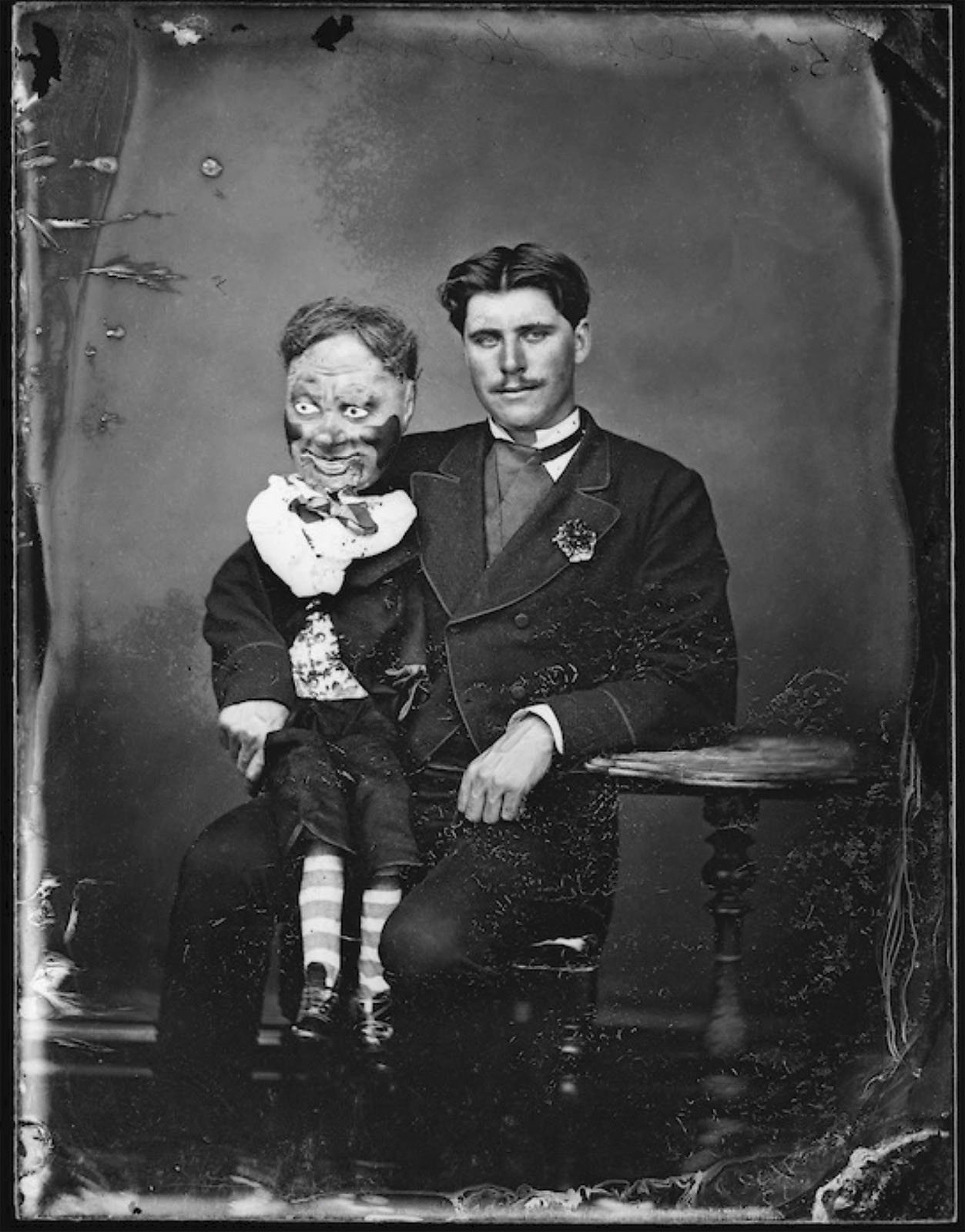
William James Harding (New Zealand, 1826-1899) 'Lieutenant Herman with his ventriloquist dummy' c. 1877


William James Harding (New Zealand, 1826-1899)
Lieutenant Herman with his ventriloquist dummy
c. 1877
Wet collodion glass negative
Negatives of Wanganui district
Alexander Turnbull Library, Wellington, New Zealand


Lieutenant Herman (b. 1855), whose real name was Thomas Martin Powell, advertised his performances in New Zealand newspapers from 1877-1882, touring here and in Australia alongside William H. Thompson’s American and Zulu war dioramas. He poses in this portrait with his dummy, but also exercised his powers of ventriloquism through the character of a sock with a face drawn on it.


William James Harding (New Zealand, 1826-1899) 'Unidentified Māori woman' c. 1880


William James Harding (New Zealand, 1826-1899)
Unidentified Māori woman
c. 1880
Glass negative
Negatives of Wanganui district
Alexander Turnbull Library, Wellington, New Zealand


Half length portrait of an unidentified Maori woman wearing European clothing and holding her hand to her chest. She wears a white tipped feather in her hair, ear adornments, a tiki around her neck, and a ring on one of her fingers. She has a facial moko.


William James Harding (New Zealand, 1826-1899) 'Unidentified woman' 1870-1899


William James Harding (New Zealand, 1826-1899)
Unidentified woman
Between 1870-1899
Glass negative
4.25 x 3.25 inches
Negatives of Wanganui district
Alexander Turnbull Library, Wellington, New Zealand


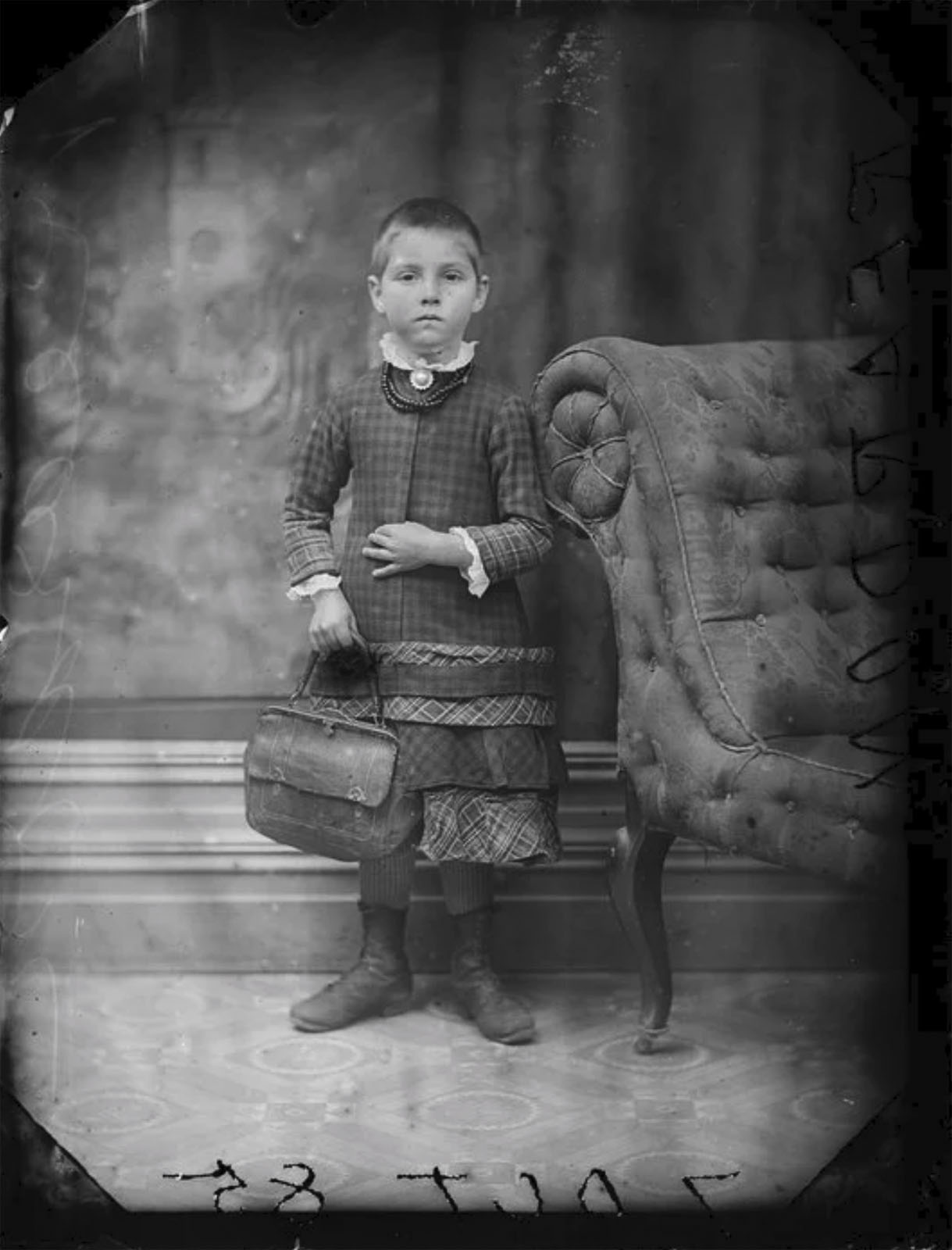
Many of Harding’s portraits show a directness not associated with Victorian period. Many of his sitters, like this one, show weathered and freckled skin, illustrating the hardships of colonial life.


William Harding: An unconventional eye

Fiona Oliver, Curator of the Between Skin & Shirt exhibition, writes about William Harding and his photographic practice including thoughts on why there was no smiling in formal Victorian portraiture. …

First photographs

The first photographic studios opened in New Zealand in 1848 – J. Polack and J. Newman in Auckland, and H.B. Sealy in Wellington, making daguerreotypes. The collodion wet-plate process was invented in England in 1851 and just five years later, in Whanganui, William Harding set up his studio producing these glass-plate negatives.

An early adopter, he was also a real craftsman; having previously worked as a coach builder and cabinetmaker, he now turned his hand to making his own cameras and grinding his own lenses. His portraits were commissioned and many were intended for cartes de visite (calling cards), which had become popular. The emulsified and peeling edges seen in the Harding negatives would have been cropped out of the finished photograph.

Say ‘prunes’!

Most of Harding’s sitters would never have been photographed before, and having their portrait taken was an act of faith. They hoped to be shown in their best light, for they knew the image would be permanent. Convention dictated what facial expressions were acceptable. Despite not smiling, Harding’s subjects are full of expression.

Smiling was not usually done in formal Victorian portraiture, including Harding’s. Some argue it was because of the state of everyone’s teeth, but the convention came from painting, where only fools and drunks were shown to be grinning. It was Mark Twain who wrote: ‘A photograph is a most important document, and there is nothing more damning to down in posterity than a silly, foolish smile caught and fixed forever’. So instead of saying ‘cheese’, sitters were encouraged to say ‘prunes’, to create the effect of a small, perfect, mouth.

Harding’s sitters are also largely unsmiling. But their faces are alight, staring down the camera, eyes aflame. Sometimes they look peevish, bored or exhausted. There seems to be little inclination towards idealisation. Harding refused to retouch his photographs as other commercial photographers did. Faces are weathered and freckled; clothing is often ragged, mended or borrowed. Wealthier clients look more poised, but even they have been captured in a moment where the mask of formality seems to have slipped. Harding seems to get beyond the rigidity of convention, his faces coming to us with honesty and startling immediacy.

Strike a pose

In Victorian photography, a sitter was usually arranged to highlight their best features and disguise any aspect that might be considered, by the standards of the time, unsightly. Harding didn’t seem to go in for that. There is little idealisation or subterfuge: a crippled child is shown wearing her callipers; a Down’s syndrome child is held on her mother’s lap; a man with a sheen of sweat lies on his deathbed. …

Props

Most props were supplied by the studio, but some sitters brought their own. Such props were used to convey something about the sitter. Some were common conventions; for example, a book held in the hand indicated literacy at a time when not everyone could read. Posing with a small framed photographic portrait indicated a need to remember someone who was otherwise absent. Children often posed with a favourite toy, and men with an object that represented the job they did and their status in society.

This unidentified Māori woman, c. 1870-1889, poses with a vignette of personal, not studio props, including a faux Greek vase, a book, a cameo brooch, a hat with an ostrich feather, and a box. She makes her wedding ring evident to indicate her married status.

In many of Harding’s portraits, we see the same props turn up over and over again, including a rocking horse, a statuette of a child, a stereoscope, a vase, and a side table with barley-twist legs. Men hold flowers – why would this be? Soldiers hold their rifles, or, if they played in a military band, their musical instruments. Perhaps needing something to do with an awkward pair of hands, some hold a hat, bag or clutch at a piece of furniture. The same oversized and overstuffed chaise longue is leaned, climbed or sat on by many of Harding’s subjects.

Painted backdrops

As well as pieces of furniture, the studio offered a selection of painted backdrops in front of which sitters were arranged. In Harding’s studio they depicted, for example, a scene through a window of a church steeple set in bucolic abundance, the interior of a stately home, and an archway beyond which lies Roman columns and trees. These came with the addition of artificial plants, a balustrade, plinths, patterned flooring and heavy drapes.

This might all sound opulent – but there is a shabby look to much of it. In some cases the painted backdrops are on a slight lean, or are crumpled. And because these are uncropped images, we see unused props and other studio paraphernalia cluttered at the edges. The artifice is fascinating, perhaps because it is in such contrast to the authenticity with which Harding depicts his subjects.

Fiona Oliver

Fiona is an Exhibition Advisor at the National Library. She was formerly the Curator of New Zealand and Pacific Publications at the Alexander Turnbull Library.

Fiona Oliver. “William Harding: An unconventional eye,” on the National Library website August 17th, 2022 [Online] Cited 23/08/2022


William James Harding (New Zealand, 1826-1899) 'Unidentified young man (Mr Aubert?) in military uniform, with cap' 1870-1899


William James Harding (New Zealand, 1826-1899)
Unidentified young man (Mr Aubert?) in military uniform, with cap
Between 1870-1899
Glass negative
4.25 x 3.25 inches
Negatives of Wanganui district
Alexander Turnbull Library, Wellington, New Zealand


William James Harding (New Zealand, 1826-1899) 'Mr G Willis' April 1884


William James Harding (New Zealand, 1826-1899)
Mr G Willis
April 1884
Glass negative
4.25 x 3.25 inches
Negatives of Wanganui district
Alexander Turnbull Library, Wellington, New Zealand


William James Harding (New Zealand, 1826-1899) 'Mr Plampin' 17 August 1883


William James Harding (New Zealand, 1826-1899)
Mr Plampin
17 August 1883
Glass negative
4.25 x 3.25 inches
Negatives of Wanganui district
Alexander Turnbull Library, Wellington, New Zealand


William James Harding (New Zealand, 1826-1899) 'Reverend Richard Taylor's chair, with other Maori artifacts' Between 1856-1899


William James Harding (New Zealand, 1826-1899)
Reverend Richard Taylor’s chair, with other Māori artefacts
Between 1856-1899
Glass negative
4.25 x 3.25 inches
Negatives of Wanganui district
Alexander Turnbull Library, Wellington, New Zealand


Reverend Richard Taylor’s chair, with other Maori artefacts. Shows a wooden chair carved with Māori motifs. Three staffs are behind it. On the left is a tewhatewha, and on the right, a taiaha. A patu is balanced on the central back panel. On the seat are two waka huia. A gourd is on the floor. Photograph taken between 1856-1889, by William James Harding.

“Curios might be excavated, purchased, even stolen from burial caves, but the usual way in which they moved from Māori to Pākehā hands was through gifting. Gifts forced the basis of the outstanding collections, including those accumulate by Grey and Mair, but this was also how innumerable farmers, lawyers, churchmen and politicians obtained their Māori treasures. In the Māori world, such gifting embodied reciprocal debt and important taonga were expected to be returned at auspicious occasions or in turn gifted on to further recipients, together with their kõrero (provenance). Having arrived in Pākehā ownership, however, tango became commodities – objects with market value – and only rarely returned to the original givers.”

Roger Blackley. ‘Introduction’ in Galleries of Maoriland: Artists, Collectors and the Māori World, 1880-1910. Auckland University Press, 2018


William James Harding (New Zealand, 1826-1899) 'Fraser' [Consump?] Between 1856-1899


William James Harding (New Zealand, 1826-1899)
Fraser [Consump?]
Between 1856-1899
Glass negative
4.25 x 3.25 inches
Negatives of Wanganui district
Alexander Turnbull Library, Wellington, New Zealand


William James Harding (New Zealand, 1826-1899) 'Unidentified Maori man, with moko, Whanganui district' 1860s


William James Harding (New Zealand, 1826-1899)
Unidentified Maori man, with moko, Whanganui district
1860s
Glass negative
6.5 x 8.5 inches
Negatives of Wanganui district
Alexander Turnbull Library, Wellington, New Zealand


William James Harding (New Zealand, 1826-1899) 'Unidentified man, sick in bed' 1870-1889


William James Harding (New Zealand, 1826-1899)
Unidentified man, sick in bed
1870-1889
Glass negative
4.25 x 3.25 inches
Negatives of Wanganui district
Alexander Turnbull Library, Wellington, New Zealand


Off the record | William Harding, ‘photographist’

For the first time, the photographs of William Harding (1826-1899) are featured in a major exhibition Between skin & shirt: The photographic portraits of William Harding.

Importance of William Harding photographs

The collection of William Harding’s glass-plate negatives – over 6,500 in total – is undoubtedly of national importance. His portraits provide a detailed picture of Whanganui society from the 1850s to the 1880s, and are a rich source of information relating to Māori and Pākehā individuals and their relationships at a formative time in this country’s history. But what really makes the photographs special is not their broader significance, nor their number, but the minutiae of detail evident in each one of them. Every image depicts its subjects with such depth and nuance that we find ourselves looking, it seems, at people we might know.

Portraits immediate and relatable

The faces are immediate and relatable, despite having been photographed over 140 years ago. How did Harding achieve this striking effect? Firstly, the glass plates he used produce a sharper, more stable and detailed negative than paper. In addition, Harding’s work was what his daughter Lydia described as unerringly ‘faithful’. That is to say, he was interested most of all in authenticity.

Unlike other commercial photographers, Harding embellished his studio with only a small repertoire of props and backdrops, and wouldn’t retouch his photographs to flatter his sitters. But in the shabby setting of his studio, his subjects are luminous. The women, men, children, families and other groups who sat for him are shown with sensitivity and honesty. We are drawn to the contemporaneity of their faces and in this way we make a connection with the person.

William Harding ‘photographist’

Harding’s methods may have been unconventional because he refused to compromise his art to make money. He’d come to New Zealand from England as a coachbuilder in 1855, along with his wife Annie. He tried his hand at cabinet-making, and in 1860 set up a photographic studio in Ridgway St, Whanganui. Clever at whatever he turned his hand to – an autodidact with a prodigious memory, he could quote the Bible at will, build telescopes and make his own cameras – his lack of financial motivation meant that the family relied on Annie’s earnings as a teacher to get by. Unlike the landscapes he much preferred to photograph, portraits at least provided some regular income – and we can be thankful they did, or he would not have produced so many.

Up close to a diverse cast of characters

This exhibition of Harding’s portraits, reproduced at much larger scale from the original negatives, gives us chance to get close to a diverse cast of characters. Sometimes it seems that those characters are watching us. In the mutual exchange, time and space appear to dissolve. As photographer Henri Cartier-Bresson has said: ‘The most difficult thing … is a portrait. You have to try and put your camera between the skin of a person and his shirt’ – Harding achieves just that.

Fiona Oliver. “Off the record | William Harding, ‘photographist’,” on the National Library website July 28th, 2022 [Online] Cited 23/08/2022


William James Harding (New Zealand, 1826-1899) 'Unidentified woman' Between 1856-1889


William James Harding (New Zealand, 1826-1899)
Unidentified woman
Between 1856-1889
Glass negative
4.25 x 3.25 inches
Negatives of Wanganui district
Alexander Turnbull Library, Wellington, New Zealand


William James Harding (New Zealand, 1826-1899) '[Mrs?] Keen' Between 1870-1889


William James Harding (New Zealand, 1826-1899)
[Mrs?] Keen
Between 1870-1889
Glass negative
4.25 x 3.25 inches
Negatives of Wanganui district
Alexander Turnbull Library, Wellington, New Zealand


William James Harding (New Zealand, 1826-1899) 'Unidentified young maori girl' Between 1856-1889


William James Harding (New Zealand, 1826-1899)
Unidentified young maori girl
Between 1856-1889
Glass negative
4.25 x 3.25 inches
Negatives of Wanganui district
Alexander Turnbull Library, Wellington, New Zealand


William James Harding (New Zealand, 1826-1899) 'Mrs Gillen' 1870s


William James Harding (New Zealand, 1826-1899)
Mrs Gillen
1870s
Glass negative
4.25 x 3.25 inches
Negatives of Wanganui district
Alexander Turnbull Library, Wellington, New Zealand


William James Harding (New Zealand, 1826-1899) '[Miss] Scott' Between 1870-1889


William James Harding (New Zealand, 1826-1899)
[Miss] Scott
Between 1870-1889
Glass negative
4.25 x 3.25 inches
Negatives of Wanganui district
Alexander Turnbull Library, Wellington, New Zealand


William James Harding (New Zealand, 1826-1899) 'Unidentified young Maori woman with clear chin moko' 1870-1889


William James Harding (New Zealand, 1826-1899)
Unidentified young Maori woman with clear chin moko
1870-1889
Glass negative
4.25 x 3.25 inches
Negatives of Wanganui district
Alexander Turnbull Library, Wellington, New Zealand


William James Harding (New Zealand, 1826-1899) 'Woman on left wearing large crinoline dress with black jacket with tassels and belt above the waist, woman on the right wearing crinoline dress with tassels on top part of dress' Between 1870-1880


William James Harding (New Zealand, 1826-1899)
Woman on left wearing large crinoline dress with black jacket with tassels and belt above the waist, woman on the right wearing crinoline dress with tassels on top part of dress
Between 1870-1880
Glass negative
4.25 x 3.25 inches
Negatives of Wanganui district
Alexander Turnbull Library, Wellington, New Zealand


William James Harding (New Zealand, 1826-1899) 'Unidentified family group' 1870-1889


William James Harding (New Zealand, 1826-1899)
Unidentified family group
1870-1889
Glass negative
4.25 x 3.25 inches
Negatives of Wanganui district
Alexander Turnbull Library, Wellington, New Zealand


William James Harding (New Zealand, 1826-1899) 'Members of the Burne family' Between 1856-1889


William James Harding (New Zealand, 1826-1899)
Members of the Burne family
Between 1856-1889
Glass negative
4.25 x 3.25 inches
Negatives of Wanganui district
Alexander Turnbull Library, Wellington, New Zealand


William James Harding (New Zealand, 1826-1899) 'Captain Nathaniel Flowers and wife Margaret, with a dog' 1878


William James Harding (New Zealand, 1826-1899)
Captain Nathaniel Flowers and wife Margaret, with a dog
1878
Glass negative
4.25 x 3.25 inches
Negatives of Wanganui district
Alexander Turnbull Library, Wellington, New Zealand


Nathaniel Flowers, a British Army soldier, and Margaret Murch, married on St Helena during his posting there in the 1840s. Margaret was likely a freed slave living on the island. In the 1850s, Nathaniel was sent to New Zealand with his wife and son, eventually leaving the army and settling in Whanganui, where he worked as a labourer and harbour-board signalman – the spyglass he’s holding would have been used to look for ships coming over the horizon, before signalling to them whether it was safe to enter port. The couple’s relationship hit rough seas in the years after this photograph was taken. In 1891 Margaret was arrested for being drunk and disorderly, and later that year Nathaniel applied for an order to prohibit her from buying alcohol before being charged himself with not providing for his wife.

Exhibition label


William James Harding (New Zealand, 1826-1899) 'Unidentified Maori man and his son' 1870-1889


William James Harding (New Zealand, 1826-1899)
Unidentified Maori man and his son
1870-1889
Glass negative
4.25 x 3.25 inches
Negatives of Wanganui district
Alexander Turnbull Library, Wellington, New Zealand


William James Harding (New Zealand, 1826-1899) 'Unidentified Wanganui family and their possessions' c. 1870s


William James Harding (New Zealand, 1826-1899)
Unidentified Wanganui family and their possessions
c. 1870s
Glass negative
4.25 x 3.25 inches
Negatives of Wanganui district
Alexander Turnbull Library, Wellington, New Zealand


William James Harding (New Zealand, 1826-1899) 'Unidentified men and women' Between 1856-1889


William James Harding (New Zealand, 1826-1899)
Unidentified men and women
Between 1856-1889
Glass negative
4.25 x 3.25 inches
Negatives of Wanganui district
Alexander Turnbull Library, Wellington, New Zealand


National Library of New Zealand, Wellington
Corner Molesworth & Aitken St
Phone: 0800 474 300

Opening hours:
Monday – Friday: 9am – 5pm
Saturday: 9am – 1pm

National Library of New Zealand website

LIKE ART BLART ON FACEBOOK

Back to top

Exhibition: ‘Emanations: The Art of the Cameraless Photograph’ at the Govett-Brewster Art Gallery/Len Lye Centre, New Plymouth, New Zealand Part 2

Exhibition dates: 29th April – 14 August, 2016

Curator: Geoffrey Batchen


Installation view of the exhibition 'Emanations: The Art of the Cameraless Photograph' at the Govett-Brewster Art Gallery


Installation view of the exhibition Emanations: The Art of the Cameraless Photograph at the Govett-Brewster Art Gallery with at left, Christian Marclay and at right, Hiroshi Sugimoto


Part 2 of a posting on the wonderful exhibition Emanations: The Art of the Cameraless Photograph at the Govett-Brewster Art Gallery / Len Lye Centre, New Plymouth, New Zealand. See Part 1 of the posting.


While there is no doubt as to the quality and breadth of the work on display, nor how it has been curated or installed in these beautiful contemporary spaces, I question elements of the conceptual rationale that ground the exhibition. Curator Geoffrey Batchen correctly notes that “artists are coming back to the most basic and elemental chemistry of photography, hands on, making unique images where there is a direct relationship between the thing being imaged and then image itself” as a response to the dematerialisation of the image that occurs in a digital environment and the proliferation of reproductions of digital images, but his assertion in a Radio New Zealand interview that the cameraless photograph has a direct relationship to the world, unmediated – through the unique touch of the object on the photographic paper – is an observation that seems a little disingenuous.

Batchen observes, “it’s as if nature represents itself, completely unmediated and directly. In some ways … [this] is far more realist, far more true to the original object than any camera picture could be.” Note how he qualifies his assertion and position by the statement “in some ways”.

The reality of the situation is that every photograph is mediated to one degree or another, whether through the use of the camera, the choice of developer, photographic paper, size, perspective and so forth. The physicality of the actual print and the context of capture and display are also mediated, in each instance and on every occasion. Every photograph is mediated through the choices of the photographer, even more so in the production of cameraless photographs (what to choose to photograph, where to position the object, what to draw with the light) because the artist has the ultimate control on what is being pictured (unlike the reality of the world). To say that cameraless photographs have a more direct and unmediated relationship to the world than analogue and digital photographs could not be further from the truth – it is just that the taxonomic system of ordering “reality” is of a different order.

Batchen further states in the Radio new Zealand interview that “in these photographs the object is still there, that’s the strange thing about cameraless photographs. There is a sense of presentness to this kind of photograph. … Cameraless photographs seem to exist in a kind of eternal present, and in that sense they complicate our understanding both of photography but also to the world that is being represented here.”

This is a contentious observation that argues for some special state of being that exists within the cameraless photograph which I believe does not exist. I argue that EVERY photograph possesses the POSSIBILITY of a sense of presentness of the object being photographed (whether it be landscape, portrait, street, abstract, etc…). It just depends whether the photographer is attuned to what is present before their eyes, whether they are attuned to the mediation of the camera and whether the print reveals what has been captured in the negative. Minor White’s “revelation of spirit”.

A “hands on” process does not guarantee a more meaningful form of photographic authenticity, or cameraless photographs possess some inherent authentic reality (the appeal to the aura of the object, Benjamin), any more than analogue or digitally reproduced photographs do. They are all representations of a mediated reality in one form or another. Some photographs will simply not capture that “presence” no matter how hard you try, be they cameraless or not.

Further, every photograph exists in an eternal present, bringing past time to present and, in the process of existence, transcending time. In this regard, to claim special status for cameraless photographs is a particularly incongruous and elliptical argument, an argument which posits an obfuscation of the theoretical history of photography.

Dr Marcus Bunyan

PS. I particularly love Len Lye’s work for its visual dexterity and robustness.


Many thankx to the Govett-Brewster Art Gallery for allowing me to publish the photographs in the posting. Please click on the photographs for a larger version of the image. All images are photographed by Bryan James.


“You assume that the image caught by the camera is “the” image, but of course a camera is ultimately a device – about from the Renaissance on – in which perspective is organised within a box using a lens, based on a principle that light travels in straight lines. So what you get when you use a camera is a mediated image, an image constructed according to certain conventions developed during the Renaissance and beyond in which the world is developed … according to the rules of perspective, and we’ve learnt to accept those rules as, as reality itself. But … when you put an object directly onto a piece of paper without any mediation [of a machine], it’s as if nature represents itself, completely unmediated and directly. In some ways … [this] is far more realist, far more true to the original object than any camera picture could be.”


Geoffrey Batchen


Geoffrey Batchen: Cameraless Photography

From Standing Room Only, 2:25 pm on 17 April 2016 Radio New Zealand

Today, if you have a smartphone, you have a camera with you wherever you go. But how were the first ever photos taken?  Professor of Art History at Victoria University and world-renowned historian Geoffrey Batchen is the curator of ‘Emanations: The Art of the Cameraless Photograph’ exhibition at the Govett-Brewster Art Gallery and Len Lye Centre in New Plymouth.


Installation view of the exhibition Emanations: The Art of the Cameraless Photograph at the Govett-Brewster Art Gallery showing Christian Marclay's 'Large Cassette Grid No. 6', 2009 (left) and 'Allover (Rush, Barbra Streisand, Tina Turner, and Others)', 2008 (right)


Installation view of Christian Marclay’s Large Cassette Grid No. 6, 2009 (left) and Allover (Rush, Barbra Streisand, Tina Turner, and Others), 2008 (right)


Christian Marclay (US) 'Large Cassette Grid No. 6' 2009 from the exhibition 'Emanations: The Art of the Cameraless Photograph' at the Govett-Brewster Art Gallery/Len Lye Centre, New Plymouth, New Zealand, April - August, 2016


Christian Marclay (American, b. 1955)
Large Cassette Grid No. 6
2009
Cyanotype photograph


Christian Marclay (American, b. 1955) 'Allover (Rush, Barbra Streisand, Tina Turner, and Others)' 2008


Christian Marclay (American, b. 1955)
Allover (Rush, Barbra Streisand, Tina Turner, and Others)
2008
Cyanotype photograph


Using hundreds of cassette tapes bought in thrift stores, Christian Marclay has scattered the entangled strands of the tapes across large sheets of specially prepared blueprint paper, deliberately adopting the “action painter” techniques of Jackson Pollock and similar artists. He then exposed them, sometimes multiple times, under a high-powered ultraviolet lamp. In other cases, the cassettes themselves were stacked in translucent grids to make a minimalist composition.


Installation view of the exhibition 'Emanations: The Art of the Cameraless Photograph' at the Govett-Brewster Art Gallery with at left, Christian Marclay and at right, Hiroshi Sugimoto


Installation view of the exhibition Emanations: The Art of the Cameraless Photograph at the Govett-Brewster Art Gallery with at left, Christian Marclay and at right, Hiroshi Sugimoto


Walead Beshty (American, b. 1976) 'Two Sided Picture (RY), January 11, 2007, Valencia, California, Fujicolor Crystal Archive, 2007' from the exhibition 'Emanations: The Art of the Cameraless Photograph' at the Govett-Brewster Art Gallery/Len Lye Centre, New Plymouth, New Zealand, April - August, 2016


Walead Beshty (American, b. 1976)
Two Sided Picture (RY), January 11, 2007, Valencia, California, Fujicolor Crystal Archive, 2007
Chromogenic photograph


In the series from which this work comes American photographic artist Walead Beshty cut and folded sheets of photographic paper into three-dimensional forms and then exposed each side to a specific colour of light, facilitating the production of multi-faceted prints with the potential to exhibit every possible colour combination. The trace of this process remains visible, with the original folds transformed into a network of contours on the surface of the print.


Hiroshi Sugimoto (Japanese, b. 1948) 'Lightning Fields 168' 2009 (installation view)


Hiroshi Sugimoto (Japanese, b. 1948)
Lightning Fields 168 (installation view)
2009


Hiroshi Sugimoto (Japanese, b. 1948) 'Lightning Fields 168' 2009


Hiroshi Sugimoto (Japanese, b. 1948)
Lightning Fields 168
2009
Gelatin silver photograph


Hiroshi Sugimoto’s photographs of static electricity were inspired by his unsuccessful efforts to banish such discharges from the surface of his negatives during the printing process. Sugimoto decided instead to try and harness such discharges for the purposes of image making. Utilising a Van der Graaf generator, he directed as many as 40,000 volts onto metal plates on which rested unexposed film. He soon changed tactics when he discovered that immersing the film in saline water during the discharge gave much better results.


Installation view of the exhibition 'Emanations: The Art of the Cameraless Photograph' at the Govett-Brewster Art Gallery

Installation view of the exhibition 'Emanations: The Art of the Cameraless Photograph' at the Govett-Brewster Art Gallery

Installation view of the exhibition 'Emanations: The Art of the Cameraless Photograph' at the Govett-Brewster Art Gallery


Installation views of the exhibition Emanations: The Art of the Cameraless Photograph at the Govett-Brewster Art Gallery with at left, Andreas Müller-Pohle Digital Scores (after Nicéphore Niépce) 1995, and to the right in the second and third images, Susan Purdy


In 1995 the German artist Andreas Müller-Pohle took the digital code generated by a scan of the supposed “first photograph,” Nicéphore Niépce’s 1827 heliograph View from the window at Le Gras, and spread it across eight panels as a messy swarm of numbers and computer notations. Each of Müller-Pohle’s separations represents an eighth of a full byte of memory, a computer’s divided remembrance of the first photograph. The Scores are therefore less about Niépce’s photograph than about their own means of production (as the title suggests, they bear the same abstracted relation to an image as sheet music has to sound). We see here, not a photograph, but the new numerical rhetoric of digital imaging.


Installation view of Ian Burn (Australian, 1939-1993) 'Xerox book # 1', 1968 from the exhibition 'Emanations: The Art of the Cameraless Photograph' at the Govett-Brewster Art Gallery


Installation view of Ian Burn (Australian, 1939-1993) Xerox book # 1, 1968 from the exhibition Emanations: The Art of the Cameraless Photograph at the Govett-Brewster Art Gallery


In the 1960s a number of artists sought to distil artwork from the new imaging technologies becoming commonly available. Ian Burn, an Australian artist then living in New York, made a series of Xerox Books in 1968 in which he churned out 100 copies of a blank sheet of white paper on a Xerox 660 photocopying machine, copying each copy in turn until the final sheet was filled with the speckled visual noise left by the machine’s own imperfect operations.


Installation view of the exhibition 'Emanations: The Art of the Cameraless Photograph' at the Govett-Brewster Art Gallery


Installation view of the exhibition Emanations: The Art of the Cameraless Photograph at the Govett-Brewster Art Gallery


Installation view of the exhibition 'Emanations: The Art of the Cameraless Photograph' at the Govett-Brewster Art Gallery with at left, the cyanotypes of Anna Atkins

Installation view of the exhibition 'Emanations: The Art of the Cameraless Photograph' at the Govett-Brewster Art Gallery

Installation view of the exhibition 'Emanations: The Art of the Cameraless Photograph' at the Govett-Brewster Art Gallery with in foreground display case, Herbert Dobbie's illustrated cyanotype books 'New Zealand Ferns (148 Varieties)' 1880, 1882, 1892 and background, the cyanotypes of Anna Atkins


Installation views of the exhibition Emanations: The Art of the Cameraless Photograph at the Govett-Brewster Art Gallery with in foreground display case, Herbert Dobbie’s illustrated cyanotype books New Zealand Ferns (148 Varieties) 1880, 1882, 1892 and background, the cyanotypes of Anna Atkins


Herbert Dobbie, a railway station master and amateur botanist who emigrated to New Zealand from England in 1875, made cyanotype contact prints of specimens of all 148 known species of fern in his new country in 1880 and sold them in album form. Dobbie was responding to a fashion for collecting and displaying ferns among his local audience, a fashion driven in part by a nostalgia for a pre-modern style of life and in part by a developing nationalism. The end result is a group of images that hover somewhere between science and art, between popular aesthetic enjoyment and commercial profit.


Anna Atkins (English, 1799-1871) 'Untitled' (from the disassembled album 'Cyanotypes of British and Foreign Flowering Plants and Ferns') c. 1854


Anna Atkins (English, 1799-1871)
Untitled (from the disassembled album Cyanotypes of British and Foreign Flowering Plants and Ferns)
c. 1854
Cyanotype photographs


The English photographer Anna Atkins issued albums of cyanotype prints of seaweed and algae from 1843, and these are often regarded as the earliest photographic books.

In the 1850s, Atkins collaborated with her friend Anne Dixon to produce at least three presentation albums of cyanotype contact prints, including Cyanotypes of British and Foreign Ferns (1853) and Cyanotypes of British and Foreign Flowering Plants and Ferns (1854). These albums included examples from places like Jamaica, New Zealand and Australia – a reminder that, for an English observer, all these places were but an extension of home, a part of the British Empire. These cyanotypes look as if they were made yesterday, offering a trace from the past that nevertheless always remains contemporary.


William Henry Fox Talbot (British, 1800-1877) 'Lace' c. 1845


William Henry Fox Talbot (British, 1800-1877)
Floral patterned lace
c. 1845
Salted paper print
23.0 x 18.8 cm (irregular)


During the 1850s, William Henry Fox Talbot focused his energies on the invention of a way of producing photographic engravings on metal plates, so that permanent ink on paper imprints could be taken from them. In April 1858, having found a way to introduce an aquatint ground to the process, he filed a patent for a system which he called photoglyphic engraving.

Talbot described his invention in terms of an ability to make accurate photographic impressions without a camera: “The objects most easily and successfully engraved are those which can be placed in contact with the metallic plate, – such as the leaf of fern, the light feathery flowers of a grass, a piece of lace, etc. In such cases the engraving is precisely like the object; so that it would almost seem to any one, before the process was explained to him, as if the shadow of the object had itself corroded the metal, – so true is the engraving to the object.”

This photograph was made using the calotype process, patented in 1841 by its inventor, the English gentleman William Henry Fox Talbot. The increased exposure speeds allowed by the process made it easier to print positive photographs from a negative image, so that multiple versions of that image could be produced. In this case, a positive photograph has been made from a contact print of a piece of lace.


Installation view of the exhibition 'Emanations: The Art of the Cameraless Photograph' at the Govett-Brewster Art Gallery

Installation view of the exhibition 'Emanations: The Art of the Cameraless Photograph' at the Govett-Brewster Art Gallery featuring Len Lye's cameraless photographic portraits

Installation view of the exhibition 'Emanations: The Art of the Cameraless Photograph' at the Govett-Brewster Art Gallery

Installation view of the exhibition 'Emanations: The Art of the Cameraless Photograph' at the Govett-Brewster Art Gallery

Installation view of the exhibition 'Emanations: The Art of the Cameraless Photograph' at the Govett-Brewster Art Gallery


Installation views of the exhibition Emanations: The Art of the Cameraless Photograph at the Govett-Brewster Art Gallery featuring Len Lye’s cameraless photographic portraits


Len Lye (New Zealand, 1901-1980) 'Georgia O'Keeffe' 1947


Len Lye (New Zealand, 1901-1980)
Georgia O’Keeffe
1947
Courtesy of the Len Lye Foundation Collection
Govett-Brewster Art Gallery/Len Lye Centre


Len Lye (New Zealand, 1901-1980) 'Le Corbusier' 1947


Len Lye (New Zealand, 1901-1980)
Le Corbusier
1947
Courtesy of the Len Lye Foundation Collection and Archive
Govett-Brewster Art Gallery/Len Lye Centre


Lye’s subjects included notable artists such as Joan Miró, Hans Richter, and Georgia O’Keeffe (who brought some deer antlers to the shoot), the architect Le Corbusier, the jazz musician Baby Dodds, the scientist Nina Bull, and the writer W. H. Auden. But they also included a baby and a young woman who remain unnamed; Lye’s new partner, Ann Hindle; and Albert Bishop, a plumber who had come by to do some repairs. (Referencing the history of “silhouette” art)


Len Lye (New Zealand, 1901-1980) 'Marks and Spencer in a Japanese Garden (Pond People)' 1930


Len Lye (New Zealand, 1901-1980)
Marks and Spencer in a Japanese Garden (Pond People)
1930
Courtesy of the Len Lye Foundation Collection and Archive
Govett-Brewster Art Gallery/Len Lye Centre


Len Lye’s earliest cameraless photographs were made around 1930 as he settled into the London art scene and before he emerged as a leading figure in experimental cinema. His practice was eclectic during this period. He exhibited paintings, batiks, photographs and sculpture as part of the Seven and Five Society, Britain’s leading avant-garde group. During a visit to Mallorca with his friends Robert Graves and Laura Riding, Lye made a number of photograms with plasticine and cellophane shapes arranged over the photographic paper. Two of these, Self-Planting at Night (Night Tree) and Watershed, were exhibited in the 1936 International Surrealist Exhibition in London.


Installation view of the exhibition 'Emanations: The Art of the Cameraless Photograph' at the Govett-Brewster Art Gallery featuring James Cant's 'Six Signed Artist's Prints' 1948


Installation view of the exhibition Emanations: The Art of the Cameraless Photograph at the Govett-Brewster Art Gallery featuring James Cant’s Six Signed Artist’s Prints 1948


James Cant (Australian, 1911-1982) 'The struggle for life' 1948


James Cant (Australian, 1911-1982)
The struggle for life
1948
Cliché verre print (cyanotype blueprint from one hand-drawn glass plate)
35 x 29.6cm sheet


A number of Australian artists, some working in Melbourne and some in London, issued prints in the 1940s and early 50s using architectural blueprint (or cyanotype) paper, perhaps because, during the deprivations that attended the aftermath of World War Two, it was a cheap and available material for this purpose. James Cant, an artist interested in both Surrealism and Australian Aboriginal art, brought the two together in his designs for a portfolio of Six Signed Artist’s Prints that he issued in a print run of 150 in 1948. Each image was painted on a sheet of glass and then this glass was contact printed onto the blueprint paper to create a photograph.

In August 1834, while resident in Geneva, William Henry Fox Talbot had a friend make some drawings on sheets of varnished glass exposed to smoke, using an engraver’s needle to scratch through this darkened surface. The procedure came to be known as cliché verre.


Kilian Breier (German, 1931-2011) 'Kilian Breier: Fotografik 1953-1990' 1991 (cover)


Kilian Breier (German, 1931-2011)
Kilian Breier: Fotografik 1953-1990 (cover)
1991


The German artist Kilian Breier began making abstract photographs in the 1950s, some by folding his photographic paper and others by allowing rivulets of developer to flow across and stain it. A 1991 exhibition catalogue, Kilian Breier: Fotografik 1953-1990, gave the artist an opportunity to make a provocative gesture in line with his dedication to the self-generated image; he included in it a loose unfixed piece of signed photographic paper that continues to develop every time it is exposed to light. It therefore inhabits the book that protects it like a ghost, unable to be seen but nonetheless always present.


Max Dupain (Australian, 1911-1992) 'Untitled rayograph [with water]' 1936


Max Dupain (Australian, 1911-1992)
Untitled rayograph [with water]
1936
Gelatin silver photograph


The Australian modernist photographer Max Dupain was a great admirer of the work of Man Ray. In 1935 Dupain reviewed a book of the American’s photographs for The Home magazine in Sydney, declaring that “He is alone. A pioneer of the 20th century who has crystallised a new experience in light and chemistry.” With this book as his inspiration, Dupain himself made a number of experimental cameraless photographs in the later 1930s.


Běla Kolářová (Czechoslovakia, 1923-2010) 'Pecky broskve' (z 'cyklu' Stopy) 'Peach Stones' (From 'Traces' series) 1961


Běla Kolářová (Czechoslovakia, 1923-2010)
Pecky broskve (z cyklu Stopy)
Peach Stones
(From Traces series)
1961
Gelatin silver photograph from an artificial negative


Taking up photography in 1956 during the Cold War, the Czech artist Běla Kolářová wrote about the need to photograph things normally beneath the notice of photography, the negligible detritus of everyday life. Her initial experiments along these lines involved the making of prints from what she called “artificial negatives.” Collecting all sorts of discarded items (onion peels, peach pits), she either placed her scraps directly on celluloid or embedded them in a layer of paraffin, projecting the resulting image onto bromide paper using an enlarger. Kolářová also began to produce photographic images by placing her light-sensitive paper on a record turntable, rotating it at varying speeds, and allowing the light to produce a series of overlapping and wavy concentric circles.


Installation view of György Kepes (Hungarian, 1906-2001) 'Black, great and white light composition', 1949; 'Black and white calligraphy', 1951; 'Fluid patterns', 1938; '(Calligraphic light)', 1948; 'Optical transformation', 1938; 'Hieroglyphic body', 1942; '(Magnetic pattern)', 1938


Installation view of
György Kepes (Hungarian, 1906-2001)
Black, great and white light composition, 1949
Black and white calligraphy, 1951
Fluid patterns, 1938
(Calligraphic light), 1948
Optical transformation, 1938
Hieroglyphic body, 1942
(Magnetic pattern), 1938
Gelatin silver photographs (printed c. 1977)


The Hungarian-born artist György Kepes moved to the United States in the late 1930s, where he published a series of interdisciplinary books concerned with the “language of vision.” Informed by his study of psychological theory, Kepes particularly favoured the cameraless photograph as offering a kind of universal language, stressing the need for images that combined “transparency and interpenetration… the order of our time is to knead together the scientific and technical knowledge required, into an integrated whole on the biological and social plane.” Even when they appear to be abstractions, Kepes’s own photograms were intended as an expression of the interdependence of natural and manmade structures and as an advocacy for the interrelationship of art, science, and technology.


Installation view of the exhibition 'Emanations: The Art of the Cameraless Photograph' at the Govett-Brewster Art Gallery showing the work of Herbert Matter (left), Chargesheimer (centre), and Roger Catherineau (right)


Installation view of the work of Herbert Matter (left), Chargesheimer (centre), and Roger Catherineau (right)


Herbert Matter (American born Switzerland, 1907-1984) 'Untitled' c. 1939-1943


Herbert Matter (American born Switzerland, 1907-1984)
Untitled
c. 1939-1943
Gelatin silver photograph


Born in Switzerland, Herbert Matter studied with Fernand Léger in Paris before working there and in Switzerland as a graphic designer, incorporating photographic images into his many posters. In 1935 he moved to the United States, involving himself in the design and art world he found there, with a special interest in the work of abstract painters. He produced a number of experimental photographs in this period, deliberately designed to break with what he called “the chains of documentation.” These included a calligraphic image made in 1944 by tracing brush strokes on a wet emulsion plate charged by an electrical current and a series of sinuous, painterly photographs, perhaps made by pouring chemicals on sheets of glass already marked with a resist and then printing from them.


Chargesheimer (German, 1924-1972) 'Scenarium' 1961


Chargesheimer (German, 1924-1972)
Scenarium
1961
Gelatin silver chemigram


In 1961, the German artist Karl-Heinz Hargesheimer, who went by the single name of Chargesheimer, published a limited-edition book titled Lichtgrafik [Light Graphic]. He described the ten unique prints gathered in it as photochemische Malereien or “photo-chemical paintings,” inducing their strange combinations of gestural calligraphic marks and organic-looking surface using only developer and fixer on gelatin silver photographic paper.


Roger Catherineau (French, 1925-1962) 'Photogramme' 1957


Roger Catherineau (French, 1925-1962)
Photogramme
1957
Gelatin silver photograph


Starting in the 1950s, French artist Roger Catherineau drew on his interest in sculpture and dance to produce sinuous, layered photograms that look more like graphics than paintings. Their ambiguous depths were made even more elusive by the addition of coloured inks to their surfaces.


Installation view of the exhibition 'Emanations: The Art of the Cameraless Photograph' at the Govett-Brewster Art Gallery with at left, Marco Breuer and at right, Lynn Cazabon


Installation view of the exhibition Emanations: The Art of the Cameraless Photograph at the Govett-Brewster Art Gallery with at left, Marco Breuer and at right, Lynn Cazabon


Installation view of Danica Chappell (Australia) 'Slippery Image #1' 2014-2015 'Slippery Image #2' 2014-2015 and 'Traversing Edges & Corners (Orange #9)' 2014 'Traversing Edges & Corners (Orange #10)' 2014 tintype


Installation view of
Danica Chappell (Australian, b. 1972)
Slippery Image #1, 2014-2015
Slippery Image #2, 2014-2015
Daguerreotype

Danica Chappell (Australian, b. 1972)
Traversing Edges & Corners (Orange #9), 2014
Traversing Edges & Corners (Orange #10), 2014
Tintype


The work of Australian artist Danica Chappell brings together the formal experiments of early modernist avant-garde groups, such as the Russian Constructivists and the German Bauhaus, with some of photography’s earliest techniques, resulting in geometrically patterned daguerreotypes and tintypes. These patterns of light and shadow animate the surface of Chappell’s metallic photographs, while also recording her work in the darkroom, her negotiation of radiation, object, body and time.


Installation view of Lynn Cazabon (American, b. 1964) 'Diluvian' 2010-2013


Installation view of
Lynn Cazabon (American, b. 1964)
Diluvian
2010-2013
40 unique silver gelatin solar photographs


Diluvian, by American artist Lynn Cazabon, comprises a grid of unique contact prints, with their imagery and the means of its production both being directly generated by the work’s subject matter. Embedded in a simulated waste dump, covered with discarded cell phones and computer parts as well as organic material, expired sheets of gelatin silver paper were sprayed with baking soda, vinegar and water, sandwiched under a heavy sheet of glass, and left in direct sunlight for up to six hours, four prints at a time. The chemical reactions that ensued left visual traces – initially vividly coloured and then gradually fading when fixed – of our society’s flood of toxic consumer items, produced by the decomposing after-effects of those very items.


Installation view of works by Marco Breuer (German, b. 1966) Untitled (C-1378), 2013; Untitled (C-1598), 2014; Untitled (C-1526), 2014; Untitled (C-1338), 2013


Installation view of
Marco Breuer (German, b. 1966)
Untitled (C-1378), 2013
Untitled (C-1598), 2014
Chromogenic paper, embossed/burned/scraped

Marco Breuer (German, b. 1966)
Untitled (C-1526), 2014
Chromogenic paper, burned/scraped

Marco Breuer (German, b. 1966)
Untitled (C-1338), 2013
Chromogenic paper, burned


By folding, scoring, burning, scouring, abrading, and/or striking his pieces of photographic paper, German-born, US-based artist Marco Breuer coaxes a wide range of colours, markings and textures from his chosen material. Both touched and tactile, Breuer’s photographs have become surrogate bodies, demonstrating the same fragility and relationship to violence as any other organism. And like any other body, they also bear the marks of time, not of a single instant from the past, like most photographs, but rather of a duration of actions that have left accumulated scars.


Installation view of the exhibition 'Emanations: The Art of the Cameraless Photograph' at the Govett-Brewster Art Gallery with at left, the work of Anne Noble

Installation view of the exhibition 'Emanations: The Art of the Cameraless Photograph' at the Govett-Brewster Art Gallery with at centre, the work of Anne Noble


Installation views of the exhibition Emanations: The Art of the Cameraless Photograph at the Govett-Brewster Art Gallery with at centre, the work of Anne Noble


Anne Noble (New Zealand, b. 1954) 'Bruissement: Bee Wing Photograms #10' 2015


Anne Noble (New Zealand, b. 1954)
BruissementBee Wing Photograms #10
2015
Pigment print on Canson baryta paper
320 x 110cm
Courtesy of the artist, Wellington


In recent times, the New Zealand artist Anne Noble has made a number of works that address the calamitous collapse of the global honeybee population. In these two cameraless photographs, cascading vertically down the wall like Chinese scroll paintings, we get to see the imprint of thousands of detached bee wings, their determined hum stilled by disease, human interference and a toxic ecology. The haunting beauty of these delicate traceries and strange shadows is also a warning. A beekeeper herself, Noble looks at bees as a living system under stress but also as a model for our own society; as she says, “what is happening to the bees we are likely doing to ourselves.”


Installation view of works by Alison Rossiter (American, b. 1953) Agfa Cykora, expired January 1942, processed 2013; Eastman Kodak Velox, expired March 1919a, processed 2014; Eastman Kodak Medalist E2, expired September 1956, processed 2010; Eastman Kodak Velox, expired March 1919b, processed 2014; Eastman Kodak PMC No.11, expired September 1937, processed 2013; Defender Argo, exact expiration date unknown, c. 1910, processed 2013; Velox T4, expiry date October 1, 1940, processed 2008

Installation view of works by Alison Rossiter (American, b. 1953) Agfa Cykora, expired January 1942, processed 2013; Eastman Kodak Velox, expired March 1919a, processed 2014; Eastman Kodak Medalist E2, expired September 1956, processed 2010; Eastman Kodak Velox, expired March 1919b, processed 2014; Eastman Kodak PMC No.11, expired September 1937, processed 2013; Defender Argo, exact expiration date unknown, c. 1910, processed 2013; Velox T4, expiry date October 1, 1940, processed 2008


Installation views of
Alison Rossiter
(American, b. 1953)
Agfa Cykora, expired January 1942, processed 2013
Eastman Kodak Velox, expired March 1919a, processed 2014
Eastman Kodak Medalist E2, expired September 1956, processed 2010
Eastman Kodak Velox, expired March 1919b, processed 2014
Eastman Kodak PMC No.11, expired September 1937, processed 2013
Defender Argo, exact expiration date unknown, c. 1910, processed 2013
Velox T4, expiry date October 1, 1940, processed 2008
Unique gelatin silver photographs


Since 2007, American photographic artist Alison Rossiter has been buying old expired packets of unexposed film at auction or on the internet, some of them dating from as early as 1900. She then develops these sheets in her darkroom with no further exposure to light, never quite sure what the resulting object-image will look like. The one inscribed Velox T4, expiry date October 1, 1940, for example, was developed in 2008, and displays a Mark Rothko-like grid of pale impressions on a dark ground. These are the chemical traces left behind by the wrapping paper that once protected it from light. We’re looking, then, at an exposure – to chemicals as well as to leaked light – of approximately seventy years.


Installation view of works by Matt Higgins (Australia) Untitled 134-5, 2014; Untitled 254-5, 2014; Untitled 287-5, 2014; Untitled 292-5, 2014


Installation view of
Matt Higgins (Australia)
Untitled 134-5, 2014
Untitled 254-5, 2014
Untitled 287-5, 2014
Untitled 292-5, 2014
Unique chemigram on gelatin silver photographic paper


Australian artist Matt Higgins makes what are called ‘chemigrams,’ created by the interplay of various manual and chemical processes on a single sheet of photographic paper or film. Higgins also uses resists to help create his patterned surfaces, from soft organic substances such as apple syrup to industrial compounds such as epoxy enamel. He thereby returns photography to its historical roots: the desire to coax images from a chemical reaction to light.


Installation view of the exhibition 'Emanations: The Art of the Cameraless Photograph' at the Govett-Brewster Art Gallery

Installation view of the exhibition 'Emanations: The Art of the Cameraless Photograph' at the Govett-Brewster Art Gallery

Installation view of the exhibition 'Emanations: The Art of the Cameraless Photograph' at the Govett-Brewster Art Gallery

Installation view of the exhibition 'Emanations: The Art of the Cameraless Photograph' at the Govett-Brewster Art Gallery

Installation view of the exhibition 'Emanations: The Art of the Cameraless Photograph' at the Govett-Brewster Art Gallery

Installation view of the exhibition 'Emanations: The Art of the Cameraless Photograph' at the Govett-Brewster Art Gallery

Installation view of the exhibition 'Emanations: The Art of the Cameraless Photograph' at the Govett-Brewster Art Gallery


Installation views of the exhibition Emanations: The Art of the Cameraless Photograph at the Govett-Brewster Art Gallery


Govett-Brewster Art Gallery/Len Lye Centre
Queen St, New Plymouth, New Zealand
Phone: +64 6 759 6060
Email: info@govettbrewster.com

Opening hours:
Daily 10am – 5pm

Govett-Brewster Art Gallery/Len Lye Centre website

LIKE ART BLART ON FACEBOOK

Back to top

Book: ‘HAND-COLOURED NEW ZEALAND: THE PHOTOGRAPHS OF WHITES AVIATION’ by Peter Alsop

August 2016


HAND-COLOURED NEW ZEALAND THE PHOTOGRAPHS OF WHITES AVIATION by Peter Alsop cover


HAND-COLOURED NEW ZEALAND: THE PHOTOGRAPHS OF WHITES AVIATION by Peter Alsop cover


A beautiful book by my New Zealand friend Peter Alsop about that countries hand coloured scenic photos. Whites Aviation changed the way New Zealanders viewed their country. Take a look inside this book.

Dr Marcus Bunyan


“A magical cocktail of aviation and photography … painted with cotton wool.”

“Nothing can change the authenticity and aesthetic of a hand-made craft.”

“This beautiful book follows Marcus King: Painting New Zealand for the World in providing another significant step towards understanding New Zealand’s art and design. However, for me, reading this book has been a transformational experience. In my youth, a Whites Aviation photograph, whether in a living room or office, represented the absence of other art in everyday Kiwi lives. Having read this book, I’ve come to realise that Whites’ hand-coloured photos were instead a harbinger; a forerunner, an object of contemporary art in thousands of New Zealand homes.”

Douglas Lloyd Jenkins, Art & Design Historian


Book blurb

Every single photo coloured by hand? Using cotton wool? Yes, such was the era of hand-coloured photography – a painting and photograph in one – the way you got a high-quality colour photo before colour photography became mainstream.

Some of New Zealand’s best hand-coloured photos were produced by Whites Aviation from 1945. For over 40 years, the glorious scenic vistas were a sensation, adorning offices and lounges around the land; patriotic statements within New Zealand’s emerging visual arts. Now, despite massive changes in society and photography, the stunning scenes and subtle tones still enchant, as coveted collectibles; decorations on screen; and as respected pieces of photographic art.

But, until now, this inspirational story has not been told; nor the full stories of Leo White (company founder); Clyde Stewart (chief photographer and head of colouring); and the mission-critical ‘colouring girls’. New Zealand’s first published collection of hand-coloured photography is also now enshrined, ready to enchant for decades more. Nothing, it seems, can change the appeal of an alluring hand-made craft.


The Colourist

Lovely 3 min doco on hand-coloured photography and Whites Aviation. Every photo coloured by hand.


HAND-COLOURED NEW ZEALAND THE PHOTOGRAPHS OF WHITES AVIATION by Peter Alsop page 31

HAND-COLOURED NEW ZEALAND THE PHOTOGRAPHS OF WHITES AVIATION by Peter Alsop page 41

HAND-COLOURED NEW ZEALAND THE PHOTOGRAPHS OF WHITES AVIATION by Peter Alsop page 50


HAND-COLOURED NEW ZEALAND: THE PHOTOGRAPHS OF WHITES AVIATION by Peter Alsop pages 31, 41 and 50.


LIKE ART BLART ON FACEBOOK

Back to top

Exhibition: ‘Emanations: The Art of the Cameraless Photograph’ at the Govett-Brewster Art Gallery/Len Lye Centre, New Plymouth, New Zealand Part 1

Exhibition dates: 29th April – 14 August, 2016

Curator: Geoffrey Batchen


Installation view of the exhibition 'Emanations: The Art of the Cameraless Photograph' at the Govett-Brewster Art Gallery


Installation view of the exhibition Emanations: The Art of the Cameraless Photograph at the Govett-Brewster Art Gallery


This is how best a contemporary art exhibition can show the work to advantage. Just gorgeous!

The well curated, comprehensive content is complemented by a beautifully paced hang nestled within stunning contemporary art spaces. Labels are not just plonked on the wall, but are discretely displayed on horizontal shelves next to the work – accessible but so as not to interrupt the flow of the work. Coloured walls add to the ambience of the installation and act as an adjunct to the colours of the art. Beautiful modernist contemporary display cabinets keep the spaces fresh and vibrant.

A discussion of the content of the exhibition to follow in part 2 of the posting.

Dr Marcus Bunyan


Many thankx to the Govett-Brewster Art Gallery for allowing me to publish the photographs in the posting. Please click on the photographs for a larger version of the image. All images are photographed by Bryan James.


“Exploring the art of cameraless photography, encompassing historical, modern and contemporary works. Emanations: The Art of the Cameraless Photograph is the first comprehensive survey of cameraless photography held anywhere in the world, presenting more than 200 examples, from 1839 – when photography’s invention was announced – through to contemporary artists. We present the most complete study of cameraless photography to date, focusing on the cameraless mode from the 1830s through to today and offering a global perspective on this way of working.

The theme of the exhibition is inspired by artist Len Lye’s cameraless photographs from 1930 and 1947, and it’s the first time all 52 of Lye’s photograms have been seen together. Emanations is an opportunity to put Lye’s photographic work in a suitably global context, surrounded by his predecessors, contemporaries and successors. Emanations includes many masterpieces of photographic art and showcases the talents of some of the world’s leading contemporary photographic artists.

The exhibition has work by photographic pioneers William Henry Fox Talbot and Anna Atkins, important modernist photographers Man Ray and László Moholy-Nagy, and many of today’s most significant photographic artists including Walead Beshty, Marco Breuer, Liz Deschenes, Joan Fontcuberta, Christian Marclay, Thomas Ruff, and Hiroshi Sugimoto. Emanations also includes work by both senior and emerging Australian and New Zealand artists, from Anne Noble and Anne Ferran to Andrew Beck and Justine Varga.

The exhibition presents artwork by more than 50 artists hailing from New Zealand, Australia, Japan, Poland, Czechoslovakia, Hungary, France, Germany, Italy, England, Canada and the United States. Almost every photographic process is included in the exhibition – photogenic drawings, calotypes, daguerreotypes, and tintypes, as well as gelatin silver, chromogenic and ink-jet photographic prints, photocopies, verifax and thermal prints.

The exhibition is accompanied by a major book by the same name and on the same theme, co-published by the Govett-Brewster Art Gallery and DelMonico Books/Prestel, based in New York and Munich. The book contains 184 full-page colour plates and a 25,000 word essay by Geoffrey Batchen. The Govett-Brewster is also publishing another book reproducing all the cameraless photographs by Len Lye, along with an essay by Wystan Curnow.

Emanations is curated by Geoffrey Batchen, Professor of Art History at Victoria University of Wellington, and a world-renowned historian and curator of photography.”

Text from the Govett-Brewster Art Gallery website


Installation view of Andrew Beck ‘Double Screen’ 2016 part of the exhibition 'Emanations: The Art of the Cameraless Photograph' at the Govett-Brewster Art Gallery

Installation view of Andrew Beck ‘Double Screen’ 2016 part of the exhibition 'Emanations: The Art of the Cameraless Photograph' at the Govett-Brewster Art Gallery

Installation view of Andrew Beck ‘Double Screen’ 2016 part of the exhibition 'Emanations: The Art of the Cameraless Photograph' at the Govett-Brewster Art Gallery


Installation views of
Andrew Beck (New Zealand, b. 1987)
Double Screen
2016
Glass, acrylic paint, gelatin silver photographs


In the 1930s, László Moholy-Nagy made art that combined a cameraless photograph, plexiglass and paint. New Zealand artist Andrew Beck works in a similar way to produce sculptural installations that complicate our expectations of the relationship between light and shadow, the natural and the artificial, images and objects, art and reality. He forces us to look very closely at what we are seeing, and even to critically reflect on the act of seeing itself.


Installation view of the exhibition 'Emanations: The Art of the Cameraless Photograph' at the Govett-Brewster Art Gallery with at left, works by Anne Ferran and at right, Joyce Campbell


Installation view of the exhibition Emanations: The Art of the Cameraless Photograph at the Govett-Brewster Art Gallery with at left, Anne Ferran and at right, Joyce Campbell


Installation view of Joyce Campbell ‘LA Bloom’ 2002 part of the exhibition 'Emanations: The Art of the Cameraless Photograph' at the Govett-Brewster Art Gallery


Installation view of
Joyce Campbell (New Zealand, b. 1971)
LA Bloom
2002
Cibachrome photographs
Courtesy of the artist, Auckland


In 2002 the New Zealand photographer Joyce Campbell decided to conduct a microbial survey of Los Angeles, a city in which she lives for part of each year. She swabbed the surfaces of plants and soil from twenty-seven locations chosen out of her Thomas Guide to the city. She then transferred each sample onto a sterilised plexiglass plate of agar and allowed it to grow as a living culture. The Cibachrome positive colour contact prints she subsequently made from these plates resemble abstract paintings and yet also offer a critical mapping of the relative fertility of this particular urban landscape, revealing its dependence on the politics of water distribution.


Installation view of Aldo Tambellini (Italy/US) 'Videograms' 1969


Installation view of
Aldo Tambellini
(Italian-American, 1930-2020)
Videogram, 1969
Videogram, 1969
Videogram, 1969
Videogram, 1969
Gelatin silver photographs


Although raised in Italy, Aldo Tambellini was working in New York in 1969 when he manipulated the cathode ray tube of a TV set into the shape of a spiral (for this artist, a universal sign of energy) and exposed sheets of light-sensitive paper by laying them over its screen. The calligraphic inscriptions that resulted made his paper look as if it had been scorched from the inside out. These ‘videograms,’ as Tambellini called them, highlight the chaos and chance operations that lurk just beneath the surface of technology’s apparent rationality.


Installation view of Shaun Waugh (New Zealand) 'ΔE2000 1.1' 2014 part of the exhibition of the exhibition 'Emanations: The Art of the Cameraless Photograph' at the Govett-Brewster Art Gallery

Installation view of Shaun Waugh (New Zealand) 'ΔE2000 1.1' 2014 part of the exhibition of the exhibition 'Emanations: The Art of the Cameraless Photograph' at the Govett-Brewster Art Gallery

Installation view of Shaun Waugh (New Zealand) 'ΔE2000 1.1' 2014 part of the exhibition of the exhibition 'Emanations: The Art of the Cameraless Photograph' at the Govett-Brewster Art Gallery


Installation views of
Shaun Waugh (New Zealand, b. 1982)
ΔE2000 1.1
2014
24 Agfa boxes with mounted solid colour inkjet photographs


This work by New Zealand artist Shaun Waugh began with the purchase of empty boxes that once held Agfa photographic paper. Waugh then took readings of all four sides of the inside lip of each box lid using a spectrophotometer, employing this data and Photoshop to generate a solid orange-red inkjet print. The box lid is used to frame a two-dimensional version of itself, bringing analogue and digital printing into an uncomfortably close proximity to create a memorial to a kind of photography that is now defunct. Hung salon style, like so many small paintings, Waugh’s work manages to turn the photograph inside out, and thus into something other than itself.


Wall text from the exhibition 'Emanations: The Art of the Cameraless Photograph' at the Govett-Brewster Art Gallery


Wall text from the exhibition Emanations: The Art of the Cameraless Photograph at the Govett-Brewster Art Gallery


Installation view of the exhibition 'Emanations: The Art of the Cameraless Photograph' at the Govett-Brewster Art Gallery with, at left, work by Anne Ferran and, at right, Adam Fuss


Installation view of the exhibition Emanations: The Art of the Cameraless Photograph at the Govett-Brewster Art Gallery with at left, Anne Ferran and at right, Adam Fuss


Installation view of the work of Anne Ferran (Australian, b. 1949) Untitled, 1998; Untitled, 1998; Untitled, 1998; Untitled (baby's petticoat), 1998; Untitled (collar), 1998; Untitled (baby's bonnet), 1998; Untitled (sailor suit), 1998; Untitled (shirts), 1998


Installation view of
Anne Ferran (Australian, b. 1949)
Untitled, 1998
Untitled, 1998
Untitled, 1998
Untitled (baby’s petticoat), 1998
Untitled (collar), 1998
Untitled (baby’s bonnet), 1998
Untitled (sailor suit), 1998
Untitled (shirts), 1998

Unique gelatin silver photographs


In 1998 Australian artist Anne Ferran was offered an artist-in-resident’s position at an historic homestead not far from Sydney that had been occupied by successive generations of the same family since 1813. Ferran spent six months systematically making contact prints using the dresses, bodices, skirts, petticoats, and collars still contained in the house. Hovering in a surrounding darkness, softly radiating an inner light, the ghostly traces of these translucent garments now act as residual filaments for a century of absorbed sunshine. Many of them have been patched over the years and their signs of wear and repair are made clear. This allows us to witness a history of the use of each piece of clothing, seeing inside them to those small and skilful acts of home economy – the labour of women – usually kept hidden from a public gaze.


Anne Ferran (Australian, b. 1949) 'Untitled (baby's bonnet)' 1998


Anne Ferran (Australian, b. 1949)
Untitled (baby’s bonnet)
1998
Unique gelatin silver photograph


Installation view of the exhibition Emanations: The Art of the Cameraless Photograph at the Govett-Brewster Art Gallery with, at left, work by Adam Fuss and, at right, Lisa Clunie


Installation view of the exhibition Emanations: The Art of the Cameraless Photograph at the Govett-Brewster Art Gallery with at left, Adam Fuss and at right, Lisa Clunie


installation view of Adam Fuss (UK/Australia/US) ‘Caduceus’ 2010 (left) and ‘Untitled’ 1991 (right)


Installation view of Adam Fuss (UK/Australia/US) Caduceus 2010 (left) and Untitled 1991 (right)


Born in England, raised in Australia, and resident in New York, Adam Fuss has produced a diverse range of large cameraless photographs since the 1980s, asking his light-sensitive paper to respond to the physical presence of such phenomena as light, water, a slithering snake, flocks of birds, and sunflowers.


Adam Fuss (British, b. 1961) 'Untitled' 1991 from the exhibition 'Emanations: The Art of the Cameraless Photograph' at the Govett-Brewster Art Gallery/Len Lye Centre, New Plymouth, New Zealand, April - August, 2016


Adam Fuss (British, b. 1961)
Untitled
1991
Type C photograph


Lisa Clunie (New Zealand) ‘Fold I’ 2014 from the exhibition 'Emanations: The Art of the Cameraless Photograph' at the Govett-Brewster Art Gallery/Len Lye Centre, New Plymouth, New Zealand, April - August, 2016


Lisa Clunie (New Zealand)
Fold I
2014
Silver gelatin photograph


The work of New Zealand artist Lisa Clunie looks back to the work of pioneer modernist László Moholy-Nagy in order to manifest the idea that our lives are shaped by a continual play of forces. Like Moholy, she wets her photographic paper and then tightly folds it, before moving the paper back and forth under her enlarger, selectively exposing these folds to the ‘force’ of light. The resulting work reminds us that a photograph has weight, surface, texture, tension and edges.


Installation view of the exhibition 'Emanations: The Art of the Cameraless Photograph' at the Govett-Brewster Art Gallery with at right, the work of Robert L. Buelteman


Installation view of the exhibition Emanations: The Art of the Cameraless Photograph at the Govett-Brewster Art Gallery with at right, the work of Robert L. Buelteman


Installation view of Robert L. Buelteman (American, b. 1954) ‘Cannabis sativa’ 2002 (left) and ‘Eucalyptus polyanthemos’ 2000 (right)


Installation view of
Robert L. Buelteman (American, b. 1954)
Cannabis sativa (left)
2002
Digital chromogenic development photograph

Robert L. Buelteman (American, b. 1954)
Eucalyptus polyanthemos (right)
2002
Digital chromogenic development photograph


The San-Franciscan artist Robert Buelteman takes his leaves and other botanical specimens and slices them into paper-thin sections, before charging them, in a complicated and dangerous process, with a pulse of 40,000 volts of electricity. This leaves behind a colorised trace on his photographic paper, a photogram in which these plants appear to be aflame, as if emitting an energy all their own. Hovering between life and death, this is a nature that seems to be on the cusp of its transmutation into something else entirely.


Installation view of the exhibition Emanations: The Art of the Cameraless Photograph at the Govett-Brewster Art Gallery with at centre, the work of Robert Owen and at right, Joan Fontcuberta


Installation view of the exhibition Emanations: The Art of the Cameraless Photograph at the Govett-Brewster Art Gallery with at centre, Robert Owen and at right, Joan Fontcuberta


Robert Owen (Australian, b. 1937) ‘Endings (Rothko died today) – Kodachrome 64, No. 21, 26/02/1970’ 2009


Robert Owen (Australian, b. 1937)
Endings (Rothko died today) – Kodachrome 64, No. 21, 26/02/1970
2009
Pigment ink-jet print


The photographic work of Australian artist Robert Owen is part of a broader tendency on the part of contemporary artists to reflect in morbid terms on aspects of photography’s past. Owen has been collecting film stubs since 1968. Although better known as a painter and sculptor, he recently decided to print these end strips of film as a series of large colour photographs, paying homage to this residue of the Kodak era in a chronological sequence of readymade chromatic fields. This one was collected on the day that the American abstract painter Mark Rothko killed himself.


Adam Fuss (British, b. 1961) 'Untitled' (from the series 'My Ghost') 2001


Adam Fuss (British, b. 1961)
Untitled (from the series My Ghost)
2001
Unique gelatin silver photograph


In his series, titled My Ghost, Adam Fuss put together a body of contact photographs of such things as plumes of smoke, patterns of light, a butterfly, a swan and a baptism dress. As his title suggests, Fuss’s work aims to evoke rather than describe; for all their evident tactility, these photographs are meant as metaphors, as prayers, perhaps even as poems.


Adam Fuss (British, b. 1961) both 'Untitled' 1989


Installation view of
Adam Fuss (British, b. 1961)
Untitled
1989
Cibachrome photograph

Adam Fuss (British, b. 1961)
Untitled
1989
Cibachrome photograph


Installation view of Joan Fontcuberta (Spain). ‘MN 62: OPHIUCUS (NGC 6266), AR 17 h. 01,2 min. / D -30º 07’’ (left) and ‘LAMBDA CORONAE AUSTRALIS (Mags 5,1/9,7 Sepn 29,2" AP 214º), AR 18 h 43,8 min. / D -38º 19’’ (right) both 1993

Installation view of Joan Fontcuberta (Spanish, b. 1955) ‘MN 62: OPHIUCUS (NGC 6266), AR 17 h. 01,2 min. / D -30º 07’’ (left) and ‘LAMBDA CORONAE AUSTRALIS (Mags 5,1/9,7 Sepn 29,2" AP 214º), AR 18 h 43,8 min. / D -38º 19’’ (right) both 1993


Installation views of
Joan Fontcuberta (Spanish, b. 1955)
MN 62: OPHIUCUS (NGC 6266), AR 17 h. 01,2 min. / D -30º 07′ (left)
LAMBDA CORONAE AUSTRALIS (Mags 5,1/9,7 Sepn 29,2″ AP 214º), AR 18 h 43,8 min. / D -38º 19′ (right)
both 1993
From the Constellations series
Cibachrome photographs


Photographs from the Constellations series by Spanish artist Joan Fontcuberta come filled with fields of sparkling blackness, their speckled surfaces redolent of infinite space and twinkling stars. Their titles imply we are looking upwards towards the heavens. But this artist’s prints actually record dust, crushed insects and other debris deposited on the windscreen of his car, a trace of the evidence of his own rapid passage through terrestrial space and time. The artist applied sheets of 8-by-10-inch film directly onto the glass windscreen and shone a light through, creating photograms which were then made into glossy Cibachrome prints.


Installation view of Paul Hartigan (New Zealand) 'Colourwords' 1980-1981 as part of the exhibition 'Emanations: The Art of the Cameraless Photograph' at the Govett-Brewster Art Gallery

Installation view of Paul Hartigan (New Zealand) 'Colourwords' 1980-1981 as part of the exhibition 'Emanations: The Art of the Cameraless Photograph' at the Govett-Brewster Art Gallery

Detail of Paul Hartigan (New Zealand, b. 1939) 'Colourwords' 1980-1981 as part of the exhibition 'Emanations: The Art of the Cameraless Photograph' at the Govett-Brewster Art Gallery

Detail of Paul Hartigan (New Zealand, b. 1939) 'Colourwords' 1980-1981 as part of the exhibition 'Emanations: The Art of the Cameraless Photograph' at the Govett-Brewster Art Gallery

Detail of Paul Hartigan (New Zealand, b. 1939) 'Colourwords' 1980-1981 as part of the exhibition 'Emanations: The Art of the Cameraless Photograph' at the Govett-Brewster Art Gallery

Detail of Paul Hartigan (New Zealand, b. 1939) 'Colourwords' 1980-1981 as part of the exhibition 'Emanations: The Art of the Cameraless Photograph' at the Govett-Brewster Art Gallery

Detail of Paul Hartigan (New Zealand, b. 1939) 'Colourwords' 1980-1981 as part of the exhibition 'Emanations: The Art of the Cameraless Photograph' at the Govett-Brewster Art Gallery


Installation views and detail of
Paul Hartigan (New Zealand, b. 1939)
Colourwords
1980-1981
Colour photocopy


Consistently defined by a subversive edge and a darkly witty humour, the work of New Zealand artist Paul Hartigan is often subtly permeated by astute social and political perceptions. Shortly after they were introduced into New Zealand in 1980, Hartigan explored the creative possibilities of a colour photocopying machine, making a series of images in which words and found objects ironically refer to each other in an endless loop. With the objects arranged to spell out their own colour, each picture offers an oscillation of word and meaning, flatness and dimension, art and detritus.


Installation view of Gavin Hipkins (New Zealand) ‘The Coil’ 1998 (left) and Lucinda Eva-May as part of the exhibition 'Emanations: The Art of the Cameraless Photograph' at the Govett-Brewster Art Gallery


Installation view of Gavin Hipkins (left) and Lucinda Eva-May (right) as part of the exhibition Emanations: The Art of the Cameraless Photograph at the Govett-Brewster Art Gallery


Installation view of Gavin Hipkins (New Zealand, b. 1968) ‘The Coil’ 1998


Installation view of
Gavin Hipkins (New Zealand, b. 1968)
The Coil
1998
Silver gelatin photographs


Inspired by the kinetic films of Len Lye, in the 1990s Gavin Hipkins made a series of cameraless photographs that play with sequence and implied movement. The 32 images that make up The Coil were made by resting polystyrene rings on sheets of photographic paper and then exposing them to light.


Installation view of Lucinda Eva-May (Australia) 'Unity in light #6' 2012 (left) 'Unity in light #9' 2012 (right)


Installation view of
Lucinda Eva-May (Australia)
Unity in light #6, 2012 (left)
Unity in light #9, 2012 (right)
C-type prints


Australian artist Lucinda Kennedy has sought to capture a phenomenological representation of the feelings and sensations of sexual intercourse through the direct imprint on sheets of photographic paper of this most primal of human interactions. Turned into a single blurred organism by the extended duration of the exposure, the artist and her partner become an abstraction, thereby aptly conjuring an experience that has always been beyond the capacity of mere description.


Installation view of the exhibition 'Emanations: The Art of the Cameraless Photograph' at the Govett-Brewster Art Gallery with at left, the work of Thomas Ruff, and at right, Justine Varga


Installation view of the exhibition Emanations: The Art of the Cameraless Photograph at the Govett-Brewster Art Gallery with at left, Thomas Ruff, and at right, Justine Varga


Installation view of Thomas Ruff (Germany, b. 1958) 'r.phg.07_II' 2013

Installation view of Thomas Ruff (Germany, b. 1958) 'r.phg.07_II' 2013


Installation views of
Thomas Ruff (Germany, b. 1958)
r.phg.07_II
2013
Chromogenic print


Thomas Ruff (Germany, b. 1958) 'r.phg.07_II' 2013


Thomas Ruff (Germany, b. 1958)
r.phg.07_II
2013
Chromogenic print


German artist Thomas Ruff uses his computers to construct virtual objects with simulated surfaces and to calculate the lights and shadows they might cast in different compositions. He then prints the results, in colour and at very large scale. Combining variations of spheres, curves, zig-zags and sharp edges, all set within richly coloured surrounds, Ruff’s images are both untethered abstractions and historical ciphers. Although referred to by the artist as photograms, the final prints are perhaps better conceived as being about the photogram, studiously replaying an analogue process in digital terms so as to make a spectacle of its logic.


Installation view of the exhibition 'Emanations: The Art of the Cameraless Photograph' at the Govett-Brewster Art Gallery with at left, Shimpei Takeda and at right, Justine Varga

Installation view of the exhibition 'Emanations: The Art of the Cameraless Photograph' at the Govett-Brewster Art Gallery


Installation view of the exhibition Emanations: The Art of the Cameraless Photograph at the Govett-Brewster Art Gallery with at left, Shimpei Takeda and at right, Justine Varga


Justine Varga (Australian, b. 1984) 'Exit (Red State)' 2014-2015


Justine Varga (Australian, b. 1984)
Exit (Red State)
2014-2015
Chromogenic photograph


Justine Varga (Australian, b. 1984) 'Desklamp' 2011-2012


Justine Varga (Australian, b. 1984)
Desklamp
2011-2012
Chromogenic photograph


Australian artist Justine Varga creates photographic works from an intimate and often prolonged exchange between a strip of film and the world that comes to be inscribed on it. Desklamp involved the year-long exposure of a large format negative placed on top of the artist’s desk lamp. Exit was derived from a similar piece of film that was scarred and weathered during a three-month exposure on her windowsill during a residency in London. Both were then turned into luscious colour photographs in the darkroom via various printing procedures.


Govett-Brewster Art Gallery/Len Lye Centre
Queen St, New Plymouth, New Zealand
Phone: +64 6 759 6060
Email: info@govettbrewster.com

Opening hours:
Daily 10am – 5pm

Govett-Brewster Art Gallery/Len Lye Centre website

LIKE ART BLART ON FACEBOOK

Back to top

Review: ‘Confounding: Contemporary Photography’ at NGV International, Melbourne

Exhibition dates: 5th October 2012 – 3rd March 2013


Thomas Demand (Germany, b. 1964) 'Public housing' 2003


Thomas Demand (Germany, b. 1964)
Public housing
2003
Type C photograph
100.1 x 157.0cm (image and sheet)
National Gallery of Victoria, Melbourne
Purchased with funds donated by the Bowness Family Fund for Contemporary Photography, 2010
© Thomas Demand/VG Bild-Kunst, Bonn. Licensed by VISCOPY, Sydney


Thinking contemporary photography

At its birth in the 19th century, photography was seen as the ultimate tool for the representation and classification of the visual world.1 Photography recorded reality; a photograph was seen as a visual and literal truth of something that existed in the world. It re-presented the world to the viewer, telling something of the world, reflecting the world. A photograph provided a freeze frame – the snap of the shutter – of one point in time and space. People were astounded that their likeness and that of the world around them could be captured for all to see.

Technological advancements in the early twentieth century, such as faster exposure times and more portable cameras, transformed the potential of the medium to not only show things that escaped the eye but new ways of seeing them as well.2 The photograph began to reveal the personal dimensions of reality. It began to explore the intangible spaces that define our physical and spiritual relationship with reality. “Photographers and artists attempted to depict via photographic means that which is not so easily photographed: dreams, ghosts, god, thought, time” (Jeffrey Fraenkel The Unphotographable Fraenkel Gallery Books 2013). With the advent of modernism, they sought to capture fragments, details and blurred boundaries of personal experience.3 The indexical link photograph and referent, between the camera, the object being photographed and the photograph itself was being stretched to breaking point.

Think of it like this. Think of a photograph of an apple that a camera has taken. There is a link between the photograph and its referent, the photograph of the apple and the object itself (in reality, in the lived world). As a viewer of the photograph of the apple we are secondary witness to the fact that, at some point in time, someone took a photograph of this apple in real life. We bear witness to the eyewitness. Now what if I rip up the photograph of the apple and reassemble it in a different order? Is this still not an apple, only my subjective interpretation of how I see an apple existing in the world? Is it no less valid than the “real” photograph of the apple? What kinds of visual “truth” can exist in images?

Presently, contemporary photography is able to reveal intangible, constructed vistas that live outside the realm of the scientific. A photograph becomes a perspective on the world, an orientation to the world based on human agency. An image-maker takes resources for meaning (a visual language, how the image is made and what it is about), undertakes a design process (the process of image-making), and in so doing re-images the world in a way that it has never quite been seen before.

These ideas are what a fascinating exhibition titled Confounding: Contemporary Photography, at the National Gallery of Victoria, Melbourne investigates. In the confounding of contemporary photography we are no longer witnessing a lived reality but a break down of binaries such as sacred and profane, public and private, natural and artificial, real and dreamed environments as artists present their subjective visions of imagined, created worlds. Each image presents the viewer with a conundrum that investigates the relationship between photographs and the “real” world they supposedly record. How do these photographs make you feel about this constructed, confounding world? These fields of existence?

Thomas Demand’s Public Housing (2003, above) plays with the real and the fictional, presenting the viewer with an idealised vision of a public housing complex illustrated on a Singapore $10 note. Demand makes large models out of paper and cardboard in his studio and then photographs the result before destroying the basis of his performance, the model, leaving only the photograph as evidence of their existence, an existence that emanated from the imagination of the artist. This particular Demand is unusual in that it depicts the totality of an outdoor structure, for the artist usually focuses on details of buildings, plants and environments in mid to close up view. The flattened perspective, limited colour palette and absence of detail adds to the utopian nature of the work (almost like a photographic Jeffrey Smart), aping the aesthetic and social ideals of Le Courbusier. As John Meades notes, “From early in its history, photography was adopted by architects as a means of idealising their buildings. As beautiful and heroic, as tokens of their ingenuity and mankind’s progress, etc. This debased tradition continues to thrive. At its core lies the imperative to show the building out of context, as a monument, separate from streetscape, from awkward neighbours, from untidiness.”4

In Roger Ballen’s photograph Terminus (2004, below), one the more moody works in the exhibition, a heavy wooden board with a deflated leather bladder on top presses down on a human face. Although it is not a human face (it confounds!), it is the painted face of a mannequin which the viewer can only acknowledge after a jolt of recognition. There is a feeling of entombment, a palpable feeling of claustrophobia, as the meta / physical “weight” of the bladder (like the weight of a heavy meteorite) presses down on the half obscured, thin lipped, black eyed face. Similarly confounding are the two photographs by Eliza Hutchison called The ancestors (2004, below). Shot from the waist up, these photographs remind you of those old black and white Photo Booth snapshots that you used to get for passports (there are still two of those machines outside the Elizabeth Street entrance to Flinders Street railway station, standing there like forlorn sentinels of a by gone age), complete with nondescript curtain that you used to pull behind you. There is something “not quite right” about the people in the photographs but you can’t put your finger on it until the text panel, a little gleefully, informs you that the portraits had been shot upside down. Now you realise what is out of kilter: more cheek and jowl rather than cheek by jowl.

The exhibition makes a powerful point as Robert Nelson in his review of the exhibition in The Age newspaper observes: photography doesn’t necessarily have to be confounding to be art, to become enduring, it just has to have a decent idea behind it.

“I would say that being confounding is not a necessary property of art photography; and even when it’s present, it isn’t in itself a sufficient ingredient to guarantee enduringly valuable art. Photography doesn’t have to confound in order to be art, but it does have to have an idea in it. The idea is always the issue, whether it works by confounding us or not.”5


The idea has always been the issue. Collectively, it is the ideas contained within the images in this exhibition that unsettle the relationship between the photograph and the world in the mind of the viewer, not their confounding. I don’t find any of these images contain much emotion (except possibly the Ballen) but the images are transformational because they fire up our imagination. Images speak not just of the world, but to the world; they challenge our beliefs, our politics and our daily practices. The camera’s single viewpoint, our single viewpoint, our field of existence has changed. People find themselves somehow, somewhere, not in a lived reality but in an imagined one.

Much is staged, scaled and variations in perspective are paramount. This affects the relationship between the viewer and the viewed for we can no longer take anything at face value. In a media saturated world full of images we begin to question every image that we see: has it been digitally manipulated, does it, did it actually exist in the world? These days “truth” in photography is an elusive notion and that might not be such a bad thing as people question the nature of images that surround them, their authenticity and their aura. In a media saturated world, in a world no longer of our making, seeing is no longer believing.

Dr Marcus Bunyan


Footnotes

1/ Anon. “Flatlands: photography and everyday space,” press release from the Art Gallery of New South Wales website posted on Art Blart [Online] Cited 19/02/2013

2/ Ibid.,

3/ Ibid.,

4/ Meades, Jonathan. “Architects are the last people who should shape our cities,” on The Guardian website, Tuesday 18 September 2012 [Online] Cited 19/02/2013

5/ “First, do all confounded photographic images qualify as art? Or does a photograph have to be founding in a special way? And second, can a photograph be art without being confounding? Bundling these questions together, I would say that being confounding is not a necessary property of art photography; and even when it’s present, it isn’t in itself a sufficient ingredient to guarantee enduringly valuable art. Photography doesn’t have to confound in order to be art, but it does have to have an idea in it. The idea is always the issue, whether it works by confounding us or not.”
Nelson, Robert. “Getting the picture can be confounding,” in The Age newspaper, Wednesday January 2nd, 2013, p. 11.


Many thankx to the National Gallery of Victoria for allowing me to publish the photographs in the posting. Please click on the photographs for a larger version of the image.


Peter Peryer (New Zealand, 1941-2018) 'Home' 1991


Peter Peryer (New Zealand, 1941-2018)
Home
1991
Gelatin silver photograph
35.6 x 53.8cm
National Gallery of Victoria, Melbourne
Purchased, 1996
© Peter Peryer


Loretta Lux (Germany, b. 1969) 'The drummer' 2004


Loretta Lux (Germany, b. 1969)
The drummer
2004
Cibachrome photograph
Image: 45.0 x 37.7cm
Sheet: 56.0 x 49.0cm
National Gallery of Victoria, Melbourne
Purchased, NGV Foundation, 2006
© Loretta Lux/VG BILD-KUNST, Bonn. Licensed by VISCOPY, Australia


On 5 October, the National Gallery of Victoria will present Confounding: Contemporary Photography, an exploration of the uncanny worlds created by human imagination, dreams and memories.

Drawn from the NGV’s collection, the fourteen works on display transform the strange, uncomfortable and awkward into plausible realities. Visitors will discover the gaze of unnerving children in the hyper-real work of Loretta Lux; be jolted upon realising the hidden reality of Wang Qingsong’s monumental tableaux; and wonder at the strange beauty in the carefully constructed cardboard world of Thomas Demand.

Susan van Wyk, Curator, Photography, NGV, said: “Like the recollection of a dream, the photographs displayed in Confounding seem to make sense, but do not sit comfortably in the world. There are subtle, slightly sinister elements within the images that suggest a mystifying alternative reality… Through a selection of works by Australian and international artists, including two new acquisitions by Thomas Demand and Roger Ballen, Confounding explores the unexpected with images that bridge the divide between real and fictional.”

Confounding will present works by contemporary photographers including Roger Ballen, Pat Brassington, Thomas Demand, Eliza Hutchison, Rosemary Laing, Loretta Lux, Patricia Piccinini, Peter Peryer, Wang Qingsong and Ronnie van Hout.

Press release from the National Gallery of Victoria website


Patricia Piccinini (b. Sierra Leone 1965, lived in Italy 1968-1972, arrived Australia 1972) 'Protein lattice – subset blue, portrait' 1997


Patricia Piccinini (b. Sierra Leone 1965, lived in Italy 1968-1972, arrived Australia 1972)
Protein lattice – subset blue, portrait
1997
From the Protein lattice series 1997
Type C photograph
Image: 80.5 x 80.3cm irreg.
Sheet: 90.0 x 126.9cm
National Gallery of Victoria, Melbourne
Purchased through The Art Foundation of Victoria with the assistance of Optus Communications Pty Limited, Member, 1998
© Patricia Piccinini


Rosemary Laing (Australian, 1959-2024) 'flight research #8' 1999, printed 2000


Rosemary Laing (Australian, 1959-2024)
flight research #8
1999, printed 2000
Type C photograph
Image: 59.8 x 59.8 cm
Sheet: 78.7 x 78.7 cm
National Gallery of Victoria, Melbourne
Purchased with funds from the Victorian Foundation for Living Australian Artists, 2004
© Estate of Rosemary Laing


Wang Qingsong (Chinese, b. 1966) 'Preincarnation' 2002


Wang Qingsong (Chinese, b. 1966)
Preincarnation
2002
Type C photographs
(a) 100.0 × 63.0cm (image)
(b) 100.0 × 61.0cm (image)
(c) 100.1 × 63.0cm (image)
National Gallery of Victoria, Melbourne
Purchased with the assistance of the Lillian Ernestine Lobb Bequest, 2007
© Wang Qingsong


Ronnie van Hout (New Zealand, b. 1962) 'Mephitis' 1995


Ronnie van Hout (New Zealand, b. 1962)
Mephitis
1995
Gelatin silver photograph
Image: 47.2 x 32.6cm
Sheet: 50.5 x 40.9cm
National Gallery of Victoria, Melbourne
Purchased, 1996
© Courtesy the artist and Darren Knight Gallery, Sydney


Roger Ballen (American, b. 1950, worked in South Africa 1982- ) 'Terminus' 2004


Roger Ballen (American, b. 1950, worked in South Africa 1982- )
Terminus
2004
Carbon print
45.2 x 44.9cm
National Gallery of Victoria, Melbourne
Gift of Bill Bowness through the Australian Government’s Cultural Gift’s Program, 2012
© courtesy the artist and Stills Gallery, Sydney


Eliza Hutchison (Australian, b. 1965) 'The ancestors' 2004


Eliza Hutchison (Australian, b. 1965)
The ancestors
2004
Light-jet print
Image: 95.4 x 72.9cm
Sheet: 105.4 x 82.9cm
National Gallery of Victoria, Melbourne
Purchased with funds arranged by Loti Smorgon for Contemporary Australian Photography, 2005
© Eliza Hutchison, courtesy Murray White Room


Eliza Hutchison (Australian, b. 1965) 'The ancestors' 2004


Eliza Hutchison (Australian, b. 1965)
The ancestors
2004
Light-jet print
Image: 95.3 x 73.0cm
Sheet: 105.3 x 83.0cm
National Gallery of Victoria, Melbourne
Purchased with funds arranged by Loti Smorgon for Contemporary Australian Photography, 2005
© Eliza Hutchison, courtesy Murray White Room


NGV International
180 St Kilda Road

Opening hours
Open daily 10am – 5pm

National Gallery of Victoria website

LIKE ART BLART ON FACEBOOK

Back to top

Review: ‘Unnerved: The New Zealand Project’ at NGV International, Melbourne

Exhibition dates: 26th November 2010 – 27th February, 2011

A Queensland Art Gallery Touring Exhibition


Ava Seymour (New Zealand, b. 1967) 'Sate Highway 1' 1997 from the exhibition 'Unnerved: The New Zealand Project' at NGV International


Ava Seymour (New Zealand, b. 1967)
State Highway I
1997
From Health, happiness and housing series
Colour photograph of a photomontage


Ava Seymour (New Zealand b. 1967) 'Day Care Walkabouts' 1997 from the exhibition 'Unnerved: The New Zealand Project' at NGV International


Ava Seymour (New Zealand b. 1967)
Day Care Walkabouts
1997
From Health, happiness and housing series
Photomontage on colour photograph


New Zealand art adrift in a myriad of stories and symbols – not a brave ‘new world’

This is an underwhelming group exhibition of over 100 works drawn from the Queensland Art Gallery collection, a show to wander around on a lazy weekend afternoon and not get too excited about. The large number of works in the exhibition make it impossible to review each work individually (although I critique some works below) but one does get an overall sense of the investigation by New Zealand artists into their history, place, culture and identity. While there are a few good works in the exhibition there are also some very mediocre works as well and, other than a few splashes of self-deprecating humour (such as the wonderful The Horn of Africa (2006) by Michael Parekowhai, below) it all seems importantly earnest: an exhibition for serious people (apologies to Oscar Wilde).

On the evidence of this exhibition the country of New Zealand must be a very unnerving place to live, mainly because their artists can’t seem to keep their hand off it – cultural history that is.

Throughout this exhibition we have psychological unease, physical unease, a little humour, parody, poetry, symbology, allegory, mythology, colonialism, post-colonialism, nationalism, commercialisation, representation, anthropology, travel, landscape, topography, advertising, first contact, sacred spaces, indigenous politics, Māori culture, Pacific Islander culture, pakeha (non-indigenous) culture, tools, guns, rabbits, seals, pianos, traditional tattoos, tourist sites and museums, surfing, suburbia, personal journeys, family albums, androgyny, identity, public housing, ambiguous states, hyperreality, surreality, dislocation, disenfranchisement, alienation, bodies, portraits, subjects, past, present, future (and more!)

Ronnie van Hout exhibits three atmospheric, eerie, dark photographs of constructed model landscapes: of a Nazi doodlebug and the words ABDUCT and HYBRID. The wall text tries, unsuccessfully, to link the images to the obscure and haunted landscapes of New Zealand – a very long bow to draw indeed. Bill Cuthbert’s “nice” photographs offer generalised statements of light and place but really don’t take you anywhere and in fact could have been taken anywhere. The wall text offers that the photographs are a “self-conscious, critical response” to the dismantling of colonial ideas of empire and nation … this is art speak gobbledygook at its worst trying to justify basic photography.

Mark Adams panoramic photograph of one of the sites of first contact – an important historical moment of encounter between Māori and pakeha (non-Māori people of European descent) – are a beautiful photograph of a sound and mountains that has then been dissected, fragmented and individually framed and then mounted unevenly on the gallery wall – just to make sure we get the point about the ‘nature’ of the scenery and its cultural implications. Lonnie Hutchinson’s cut wall work Cinco “offers an interplay between paper and space and explores the ‘va’ or space between – a relation between the Samoan people and the landscape saturated with the dialogue of our ancestors … being adrift in a sea of memories caused by feelings related to cultural loss and uncertainty.” I know how they feel: adrift, underwhelmed by the art and overwhelmed by the text.

Other than the striking photograph of the Dandy (2007, below) Lisa Reihana’s series Digital Marae (2001- ) also fails to inspire. The marae is a highly structure space where Māori families come together – an outdoor, cleared area, a communal or sacred place which serves religious and social purposes in Polynesian societies. Here can be found male sculptures called poupou featuring diverse forms of masculinity, Māori gods and goddesses. The elder Mahuika, while sometimes described as male, is deliberately depicted in her female state in this series. In Reihanna’s digital interpretation of the marae her gods and goddesses become slick, media-inspired glossy magazine type images printed large, mounted on aluminium and lit for maximum theatrical effect. The unstructured spaces behind the figures have no context, no placement and give lie to the inspiration for the series (a highly structured space) and, as such, they land with a commercial thud onto the cleared earth.

The lowest point in the exhibition must be reserved for the 80 photographs of the series ‘The homely’ (1997-2000) by Gavin Hipkins. Usually when reviewing I refrain from saying anything bad about works of art. Robert Nelson in The Age describes the series as “visually and conceptually incoherent.” Taken over 4 years and supposedly “examining notions of nationhood that are unstable and fractured” Hipkins describes it as “a post-colonial gothic novel.” !!

The series features flat, one-dimensional images of symbols: sculptures, closed doors, open doors, flags, people, repeating circles and vertical elements – where the aggregate of all the images is supposed to MEAN SOMETHING. These are the most simple, most basic of year 12 images formed into a sequence that is conceptually irrelevant in terms of its symbolism and iconography vis a vis the purported critical examination it seeks to undertake. This artist needs to look at the sequences of Minor White to see how a master artist puts photographs together – not just in terms of narrative but the meaning in the spaces between the images, their spiritual resonance – or if wanting to be more literal, study that seminal book The Americans by Robert Frank to see how to really make a sequence.

On to better things. For me the absolute gem of this exhibition were the photomontages of Ava Seymour from her ‘Health, happiness and housing’ series (see photographs above). These are just fantastic! Featuring as a backdrop photographs of state houses built in the 1950s and 60s Seymour assembles her cast of characters – composite figures of found limbs, bodies and faces taken from old medical text books – and creates stark, psychological sites of engagement. The can be seen as family portraits, social documents of unseen alienation and dis-enfranchisement with communities and also a comment on the conduct of the welfare system and state housing, but in their ironic, self-deprecating humour they become so much more. Even though they use old photographs the artist recasts them ingenuously to become something new, a new space that the viewer can step into, unlike most of the work in this exhibition.

Most artists in this exhibition seem intent on a form of cultural excavation to make their work, digging and rooting around in cultural history and memory to find “meaning”, to make new forms from old that actually lead nowhere. They excavate symbols and signs and reform them hoping for what, exactly? All that appears is work that is stunted and fragmented, chopped up dislocations that offer nothing new in terms of a way forward for the culture from which these histories and memories emerge. There is no holistic, healing vision here, only a series of mined observations that fragment, distort and polarise, descending into the decorative, illustrative or the commercial. The same can be said of some Australian art (including the exhibition Stormy Weather: Contemporary Landscape Photography at NGV Federation Square that I will review next). As Robert Nelson succinctly observed in his review of this exhibition in The Age (Wednesday, December 29th, 2010), this exhibition “reveals a weakness that also exists in our scene: fertile tricks and noble intentions, but patchy skill or poetic imagination for connecting them.” Well said.

“”When the soul wants to experience something she throws out an image in front of her and then steps into it.” (Meister Eckhart) It is an evocation of the image as a threshold leading to new dimensions of meaning. Symbolic images are more than data; they are vital seeds, living carriers of possibility.”1


New dimensions of meaning, vital seeds, living carriers of possibility. Everyone of us is a living, breathing embodiment of cultural history and memory. We know that intimately in our bones, as human beings. What artists need to do is observe this legacy but offer a way forward, not constantly excavating the past and hoping this is enough when creating work. These are not new spaces to step into! The cohabitation of indigenous and ethnically mixed non-indigenous cultures in both Australia and New Zealand requires this holistic forward looking vision. It is a redemptive vision that is not mired in the symbols and archetypes of the past but, as Australia writer David Malouf envisages it, ‘a dream history, a myth history, a history of experience in the imagination’.2 It is a vision of the future that all post-colonial countries can embrace, where a people can come to know their sense of place more fully.

Rather than an escapist return to the past perhaps a redemptive vision of New Zealand’s cultural future, a history of experience in the imagination, would be less insular and more open to the capacity to wonder.

Dr Marcus Bunyan


1/ Ronnberg, Ami (ed.,). “Preface,” in The Book of Symbols. Cologne: Taschen, 2010, p. 6

2/ Footnote 6. Daniel, Helen. “Interview with David Malouf,” in Australian Book Review (September , 1996), p. 13 quoted in Ennis, Helen. “The Presence of the Past,” in Photography and Australia. London: Reaktion Books, 2007, p. 141


Many thankx to Jemma Altmeier for her help and to the National Gallery of Victoria for allowing me to publish the photographs in the posting. Please click on the photographs for a larger version of the image.


Lisa Reihana (Ngāpuhi: Ngāti Hine, Ngāi Tu New Zealander, b. 1964) 'Hinepukohurangi' 2001 from the exhibition 'Unnerved: The New Zealand Project' at NGV International


Lisa Reihana (Ngāpuhi: Ngāti Hine, Ngāi Tu New Zealander, b. 1964)
Hinepukohurangi
2001
From Digital Marae 2001-
Cibachrome photograph mounted on aluminium
200 x 100cm
Purchased 2002
© Lisa Reihana


Lisa Reihana (Ngāpuhi: Ngāti Hine, Ngāi Tu New Zealander, b. 1964) 'Dandy' 2007 from the exhibition 'Unnerved: The New Zealand Project' at NGV International


Lisa Reihana (Ngāpuhi: Ngāti Hine, Ngāi Tu New Zealander, b. 1964)
Dandy
2007
From Digital Marae 2001-
Colour digital print mounted on aluminium
200 x 120cm
Queensland Art Gallery, Brisbane
Purchased 2008 with funds from the Estate of Vincent Stack through the Queensland Art Gallery Foundation Queensland Art Gallery, Brisbane
© Lisa Reihana


Yvonne Todd (New Zealander, b. 1973) 'January' 2005 from the exhibition 'Unnerved: The New Zealand Project' at NGV International


Yvonne Todd (New Zealander, b. 1973)
January
2005
From the Vagrants’ reception centre series
Light jet photograph
100 x 73.8cm
Queensland Art Gallery, Brisbane
Purchased 2007. Queensland Art Gallery Foundation Grant
©Yvonne Todd


Michael Parekowhai (Ngāti Whakarongo New Zealander, b. 1968) 'Kapa Haka (Whero)' 2003 from the exhibition 'Unnerved: The New Zealand Project' at NGV International


Michael Parekowhai (Ngāti Whakarongo New Zealander, b. 1968)
Kapa Haka (Whero)
2003
Automotive paint on fibreglass
188 x 60 x 50cm
Queensland Art Gallery, Brisbane
Purchased 2009 with funds from Tim Fairfax AM, through the Queensland Art Gallery Foundation
© Michael Parekowhai


The National Gallery of Victoria today opened a major exhibition celebrating the extraordinary work of 26 contemporary New Zealand artists in Unnerved: The New Zealand Project.

Unnerved explores a particularly rich, dark vein found in contemporary New Zealand art. The psychological or physical unease underlying many works in the exhibition is addressed with humour, parody and poetic subtlety by artists across generations and mediums. Bringing together more than 100 works ranging from intimate works on paper to large scale installations by both established and emerging artists, Unnerved engages with New Zealand’s changing social, political and cultural landscape as the country navigates its indigenous settler and migrant histories. These works explore a changing sense of place, the continued importance of contemporary Maori art, biculturalism, a complex colonial past, the creative reworking of memory, and the often interconnected mediums of performance, photography and video. If the vision is unsettling, it is also compelling and Unnerved: The New Zealand Project offers us new ways of seeing one of our closest neighbours.

This fascinating exhibition explores a rich and dark vein found in contemporary art in New Zealand, drawing on the disquieting aspects of New Zealand’s history and culture reflected through more than 100 works of art.

Jane Devery, Coordinating Curator, NGV said: “The works presented in Unnerved reveal a darkness and distinctive edginess that characterises this particular trend in New Zealand contemporary art. The psychological or physical unease underlying many works in the exhibitions is addressed with humour, parody and poetic subtlety.

The exhibition reflects the strength and vitality of contemporary art in New Zealand with works created by both established and emerging artists, across a range of mediums including painting, photography, sculpture, installation, drawing, film and video.

Unnerved engages with New Zealand’s changing social, political and cultural landscape, exploring a shifting sense of place, complex colonial past, the relationships between contemporary Māori, Pacific Islander and pakeha (non-indigenous) culture, and the interplay between performance, video and photography,” said Ms Devery.

A highlight of the exhibition is a group of sculptural works by Michael Parekowhai including his giant inflatable rabbit, Cosmo McMurtry, which will greet visitors to the exhibition, and a spectacular life-size seal balancing a grand piano on its nose titled The Horn of Africa. Also on display are a series of haunting photographs by Yvonne Todd, whose portrait photography often refers to B-grade films and pulp fiction novels.

Gerard Vaughan, Director, NGV said this exhibition demonstrates the NGV’s strong commitment to interesting and challenging contemporary art secured from around the world; he noted that the NGV has made a special commitment to exhibition the contemporary art of our region.

Unnerved will introduce visitors to the rich contemporary arts scene of one of our closest neighbours, fascinating audiences with works ranging from the life size installations by Parekowhai through to the spectacular 30 metre photographic essay by Gavin Hipkins. This truly is a must see show this summer!” said Dr Vaughan.

Unnerved will also offer a strong and engaging collection of contemporary sculpture, installations, drawings, paintings, photography, film and video art by artists including Lisa Reihana, John Pule, Gavin Hipkins, Anne Noble, Ronnie van Hout, Shane Cotton, Julian Hooper and many others.

Press release from the National Gallery of Victoria website


Michael Parekowhai (Ngāti Whakarongo New Zealander, b. 1968) 'The Horn of Africa' 2006


Michael Parekowhai (Ngāti Whakarongo New Zealander, b. 1968)
The Horn of Africa
2006
Automotive paint, wood, fibreglass, steel, brass
395 x 200 x 260cm
Queensland Art Gallery, Brisbane
Purchased 2008 with funds from the Queensland Government’s Gallery of Modern Art Acquisitions Fund in recognition of the contribution to the Gallery by Wayne Goss (Chair of Trustees 1999-2008)
© Michael Parekowhai


Michael Parekowhai (Ngāti Whakarongo New Zealander, b. 1968) 'Cosmo McMurtry' 2006 from the exhibition 'Unnerved: The New Zealand Project' at NGV International


Michael Parekowhai (Ngāti Whakarongo New Zealander, b. 1968)
Cosmo McMurtry
2006
Synthetic polymer paint on polyvinyl chloride, fibreglass, air compressor
734.3 x 506.4 x 739.1cm (variable)
Presented by the Melbourne Art Fair Foundation with the assistance of funds donated by NGV Contemporary, 2006
National Gallery of Victoria
© Michael Parekowhai


Gavin Hipkins (New Zealander, b. 1968) 'Christchurch (Mask)' 1998 from the exhibition 'Unnerved: The New Zealand Project' at NGV International


Gavin Hipkins (New Zealander, b. 1968)
Christchurch (Mask)
1998
From The homely series 1997-2000
Type C photograph
60 x 40cm
Queensland Art Gallery, Brisbane Purchased 2008. The Queensland Government’s Gallery of Modern Art Acquisitions Fund
© Gavin Hipkins


Fiona Pardington (Kai Tahu, Kati Mamoe, Kati Waewae New Zealander, b. 1961) 'Sweet Kiwi, from the collection 'Whanganui Museum'' 2008 from the exhibition 'Unnerved: The New Zealand Project' at NGV International


Fiona Pardington (Kai Tahu, Kati Mamoe, Kati Waewae New Zealander, b. 1961)
Sweet Kiwi, from the collection ‘Whanganui Museum’
2008
Gold-toned gelatin silver photograph
61 x 50.8cm
Queensland Art Gallery, Brisbane
Purchased 2008 with funds from Gina Fairfax through the Queensland Art Gallery Foundation
© Fiona Pardington


Max Gimblett (New Zealander / American, b. 1935) 'Balls' 1990-1997 from the exhibition 'Unnerved: The New Zealand Project' at NGV International


Max Gimblett (New Zealander/American, b. 1935)
Balls
1990-1997
Brush and ink, synthetic polymer paint and pencil on handmade paper
59.8 x 79.3cm
Queensland Art Gallery, Brisbane
The Max Gimblett Gift.
Gift of the artist through the Queensland Art Gallery Foundation 2000
© Max Gimblett


Anne Noble (New Zealander, b. 1954) 'Ruby's room no. 6' 1999 from the exhibition 'Unnerved: The New Zealand Project' at NGV International


Anne Noble (New Zealander, b. 1954)
Ruby’s room no. 6
1999
Colour digital print
67 x 100.2cm
Queensland Art Gallery, Brisbane
Purchased 2006
© Anne Noble


NGV International
180 St Kilda Road

Opening hours
Daily 10am – 5pm

National Gallery of Victoria website

LIKE ART BLART ON FACEBOOK

Back to top