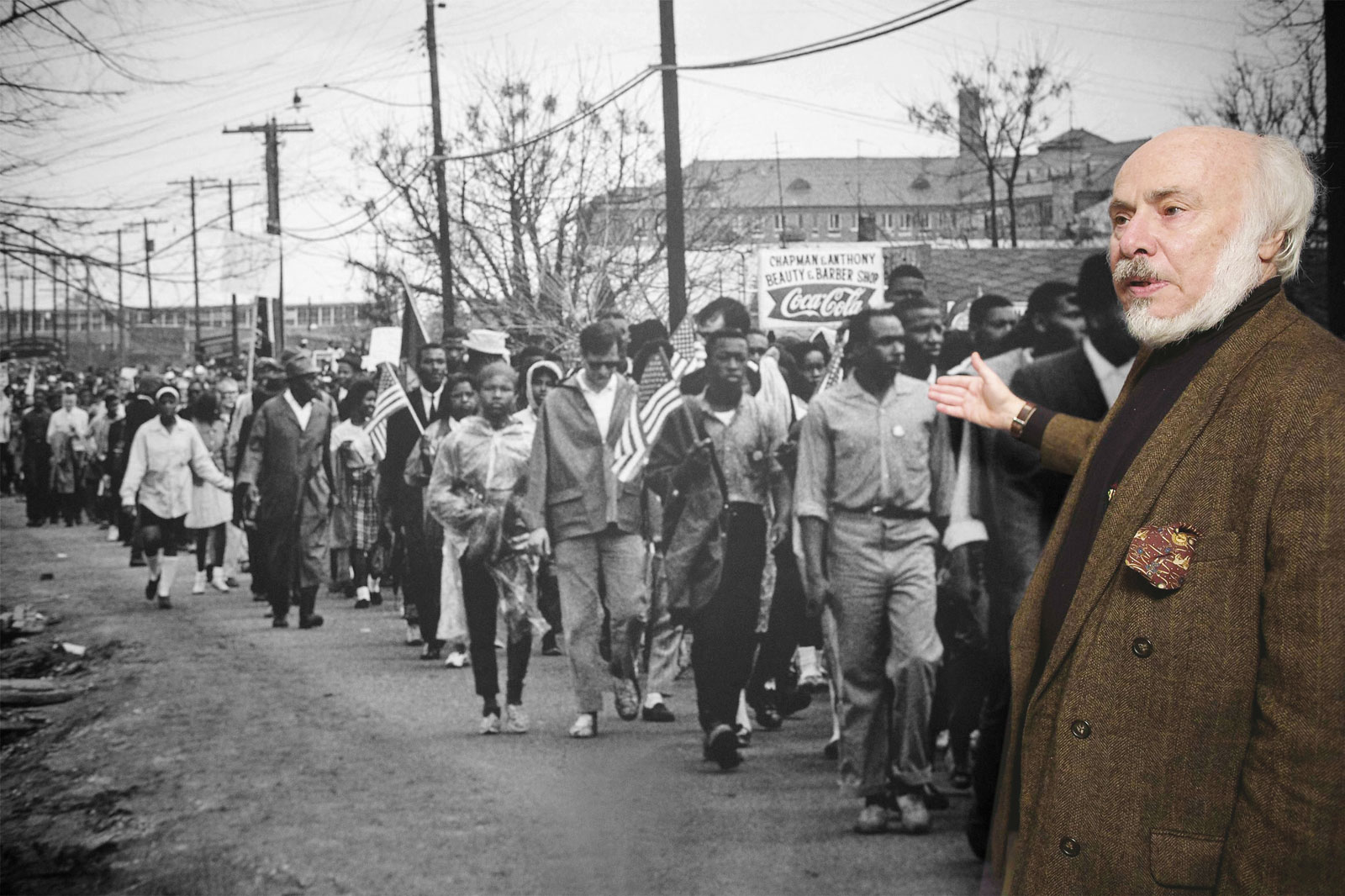
Exhibition: ‘ “I’ll Have What She’s Having”: The Jewish Deli’ at the New-York Historical Society

Exhibition dates: 11th November 2022 – 2nd April 2023

Co-curated by Skirball curators Cate Thurston and Laura Mart and Lara Rabinovitch, renowned writer, producer, and specialist in immigrant food cultures. The exhibition was coordinated at New-York Historical by Cristian Petru Panaite with Marilyn Kushner, curator and head, Department of Prints, Photographs, and Architectural Collections.


Ei Katsumata (American) 'Carnegie Deli, New York, NY' 2008 from the exhibition Exhibition: '"I'll Have What She's Having": The Jewish Deli' at the New-York Historical Society, Nov 2022 - April 2023


Ei Katsumata (American)
Carnegie Deli, New York, NY
2008
Photo by Ei Katsumata /Alamy Stock Photo


Culture and its history – past, present and future – is always so fascinating!

Dr Marcus Bunyan


Many thankx to the New-York Historical Society for allowing me to publish the photographs in the posting. Please click on the photographs for a larger version of the image.


Our special exhibition examines how Jewish immigrants, mostly from Central and Eastern Europe, imported and adapted traditions to create a uniquely American restaurant and reveals how Jewish delicatessens became a cornerstone of American food culture.

Organised by the Skirball Cultural Center, “I’ll Have What She’s Having”: The Jewish Deli examines how Jewish immigrants, mostly from Central and Eastern Europe, imported and adapted traditions to create a uniquely American restaurant and reveals how Jewish delicatessens became a cornerstone of American food culture.

The exhibition explores the food of immigration, the heyday of the deli in the interwar period, delis and Broadway, stories of Holocaust survivors and war refugees who worked in delis, the shifting and shrinking landscapes of delis across the country, and delis in popular culture. On display are neon signs, menus, advertisements, deli workers’ uniforms, and video documentaries. The local presentation is enriched with artwork, artefacts, and photography from New-York Historical’s collection along with restaurant signs, menus and fixtures from local establishments, mouthwatering interactives, and a Bloomberg Connects audio tour. And families: Be sure to pick up a copy of our kid-centric guide to the exhibition in the gallery.

Text from the New-York Historical Society website


2nd Ave Deli // “I’ll Have What She’s Having”: The Jewish Deli

New-York Historical Society

What makes the 2nd Ave Deli so special? The New-York Historical Society takes a trip to the Midtown landmark to talk to the owner, managers, workers, and customers about the special magic of the decades-old delicatessen where they “prepare the foods that our mothers and grandmothers made.”


James Reuel Smith (American, 1852-1935) 'Louis Klepper Confectionary and Sausage Manufacturers, 45 E. Houston Street, New York' c. 1900 from the exhibition Exhibition: '"I'll Have What She's Having": The Jewish Deli' at the New-York Historical Society, Nov 2022 - April 2023


James Reuel Smith (American, 1852-1935)
Louis Klepper Confectionary and Sausage Manufacturers, 45 E. Houston Street, New York
c. 1900
Patricia D. Klingenstein Library, New-York Historical Society


James Reuel Smith (1852-1935) was an American photographer and amateur historian who worked in the late 19th century to early 20th century. He was known for his documentary photographs of historical springs and wells in New York City before they were buried beneath the concrete of the rapidly growing city. Many of these natural water resources disappeared as the New York municipal water system developed.

Smith’s photographs documented a vanishing way of life in urban America. Drawing and fetching water had been an essential activity of daily life prior to the development of the modern municipal water system. In the 1870s New York City undertook efforts to eradicate the natural open wells and springs as they were perceived to be hazardous to health. The official municipal source for city water was the Croton Aqueduct which was endorsed by the NYC sanitation officers, rather than local neighbourhood wells and springs.

Text from the Wikipedia website


'Hester Street, Lower East Side' c. 1900 from the exhibition Exhibition: '"I'll Have What She's Having": The Jewish Deli' at the New-York Historical Society, Nov 2022 - April 2023


Hester Street, Lower East Side
c. 1900
Postcard
Patricia D. Klingenstein Library, New-York Historical Society


Unknown photographer (American) 'Anne Russ Federman serving customers at New York's Russ & Daughters, with Hattie Russ Gold in the background' 1939 from the exhibition Exhibition: '"I'll Have What She's Having": The Jewish Deli' at the New-York Historical Society, Nov 2022 - April 2023


Unknown photographer (American)
Anne Russ Federman serving customers at New York’s Russ & Daughters, with Hattie Russ Gold in the background
1939
From the collection of Russ & Daughters


Benjamin Segan (American, 1924-2017) 'Letter to Judith Berman, April 23, 1944'


Benjamin Segan (American, 1924-2017)
Letter to Judith Berman, April 23, 1944
Caserta, Italy
Patricia D. Klingenstein Library, New-York Historical Society


Benjamin David “Ben” Segan was born in New York City on 27 August 1924, to Jacob and Lillian Segan, immigrants from Vilnius, Lithuania. Ben attended George Washington High School in Manhattan, where he met his future wife, Judith “Judy” Berman. During his senior year he attended school by night to work in a defense plant by day.

Nineteen-year-old Ben was drafted into the United States Army as a private on 28 April 1943. His initial processing took place at Fort Dix, New Jersey, where he began his correspondence with Judy, writing to her almost daily until he left the service. By mid-May 1943 he was at Camp Croft, South Carolina, where he remained in basic training through late September and to operate radio equipment.

By October 1943 he was sent to Fort George G. Meade, Maryland, and from there shipped to Italy to join the 93rd Armored Field Artillery Battalion. In Europe he served in Italy, southern France, and Germany. During the Battle of Monte Cassino (a.k.a. the Battle for Rome), January-May 1944, he worked in the 93rd’s communication section.

Although he saw combat, Ben refrained from graphic descriptions in writing to his fianceé. Some of his reticence was due to restrictions imposed by the censors. For example, on 7 April 1945, during the liberation of the Buchenwald concentration camp from the Nazis, which he witnessed, Ben wrote, cryptically (in letter 574), “I’ve been extremely busy recently darling, & don’t think it’s so necessary to tell you as you must have a[n] inkling from the latest news reports on our progress.”

The war in Europe ended on 8 May 1945, but Ben was still there as late as November 10th (the date of his last letter in the collection), when he wrote from the French port of Le Havre, unsure of which ship he’d be on or indeed when it would sail.

Ben was honoured with the American Service Medal, the European-African-Middle Eastern Service Medal, the Good Conduct Medal, and the World War II Victory Medal.

Once home he married Judy on 10 March 1946 at Temple Ansche Chesed on Manhattan’s Upper West Side. They raised two children and worked together for many years in New York City’s Garment District.

Anonymous. “Biographical/Historical Note: Guide to the Benjamin Segan Letters 1943-1945,” on the New-York Historical Society website Nd [Online] Cited 26/02/2023


Lionel S. Reiss (American born Poland, 1894-1988) 'Frankfurter and Lemonade from Manhattan Crosstown' series c. 1945


Lionel S. Reiss (American born Poland, 1894-1988)
Frankfurter and Lemonade from Manhattan Crosstown series
c. 1945
Watercolour, black ink, white gouache, and graphite on paper
11 × 8 in. (27.9 × 20.3cm)
New-York Historical Society, Foster-Jarvis Fund, and contribution of Harry Goldberg


Lionel S. Reiss (1894-1988) was a Polish-American Jewish painter born in Jaroslaw, Poland (then in the Austro-Hungarian Empire), and grew up on the Lower East Side of Manhattan where he studied commercial art. His family had moved to the United States in 1898 when he was four years old. As immigrants to the United States, Reiss’ parents joined the ranks of other Eastern European Jews who were fleeing their native countries at the start of the 20th century. Lionel Reiss’ family settled on New York’s Lower East Side neighbourhood and Reiss himself spent the majority of his life in the city. Reiss worked as a commercial artist for newspapers, publishers, and a motion picture company. Eventually he became art director for Paramount Studios and is credited to be the creator of the Leo the Lion logo of Metro-Goldwyn-Mayer Studios.

Reiss became known for his portraits of Jewish people and landmarks in Jewish history, which he made during his trip to Europe, Africa, and the Middle East in the early 1920s. Being American and Jewish himself, Reiss became fascinated with Jewish life in the Old World. In 1919 Reiss temporarily left the United States to travel to the aforementioned regions, and recorded the everyday life that he encountered in the ghettos. His trip resulted in exhibitions in major American cities.

At the dawn of the Holocaust in 1938, Reiss, who had long returned to the United States, published his book My Models Were Jews, in which he illustratively argued that there is no such thing as a “Jewish ethnicity”, but the Jewish people are rather a cultural group, whereby there is significant diversity within Jewish communities and between different communities in different geographical regions. Reiss was therefore presenting an argument against what he considered to be a common misconception that existed about the Jews. Later works included a 1954 book, New Lights and Old Shadows, which dealt with “the new lights” of a reborn Israel and the “old shadows” of an almost eradicated European Jewish culture. In his last book, A World of Twilight, published in 1972, with text by Isaac Bashevis Singer, Reiss presented a portrait of the Jewish communities in Eastern Europe before the Holocaust.

Text from the Wikipedia website


'Reuben's Delicatessen Menu [autographed by Arnold Reuben]' 1946


Reuben’s Delicatessen Menu [autographed by Arnold Reuben]
1946
Patricia D Klingenstein Library, New-York Historical Society


This fall, New-York Historical Society presents “I’ll Have What She’s Having”: The Jewish Deli, a fascinating exploration of the rich history of the Jewish immigrant experience that made the delicatessen so integral to New York culture. On view November 11, 2022 – April 2, 2023, the exhibition, organised by the Skirball Cultural Center in Los Angeles, where it is on view through September 18, examines how Jewish immigrants, mostly from Central and Eastern Europe, imported and adapted traditions to create a cuisine that became a cornerstone of popular culture with worldwide influence. The exhibition explores the food of immigrants; the heyday of the deli in the interwar period; delis in the New York Theater District; stories of Holocaust survivors and war refugees who found community in delis; the shifting and shrinking landscapes of delis across the country; and delis in popular culture. On display are neon signs, menus, advertisements, and deli workers’ uniforms alongside film clips and video documentaries. New-York Historical’s expanded presentation includes additional artwork, artefacts, photographs of local establishments, and objects from deli owners, as well as costumes from The Marvelous Mrs. Maisel, a mouthwatering interactive, and a Bloomberg Connects audio tour.

“It’s our great pleasure to present an exhibition on a topic so near and dear to the hearts of New Yorkers of all backgrounds,” said Dr. Louise Mirrer, president and CEO of New-York Historical. “‘I’ll Have What She’s Having’: The Jewish Deli tells a deeply moving story about the American experience of immigration – how immigrants adapted their cuisine to create a new culture that both retained and transcended their own traditions. I hope visitors come away with a newfound appreciation for the Jewish deli, and, with it, the story of the United States.”

“Whether you grew up eating matzoball soup or are learning about lox for the first time, this exhibition demonstrates how Jewish food became a cultural touchstone, familiar to Americans across ethnic backgrounds,” said co-curators Cate Thurston and Laura Mart. “This exhibition reveals facets of the lives of Central and Eastern European Jewish immigrants in the late 19th and early 20th centuries that echo in contemporary immigrant experiences. It shows how people adapt and transform their own cultural traditions over time, resulting in a living style of cooking, eating, and sharing community that is at once deeply rooted in their own heritage and continuously changing.”

“I’ll Have What She’s Having” is co-curated by Skirball curators Cate Thurston and Laura Mart along with Lara Rabinovitch, renowned writer, producer, and specialist in immigrant food cultures. It was coordinated at New-York Historical by Cristian Petru Panaite with Marilyn Kushner, curator and head, Department of Prints, Photographs, and Architectural Collections. The exhibition explores topics including deli culture, the proliferation of delis alongside the expansion of New York’s Jewish communities, kosher meat manufacturing, shortages during World War II, and advertising campaigns that helped popularise Jewish foods throughout the city.

Highlights include a letter in New-York Historical’s Patricia D. Klingenstein Library collection from a soldier fighting in Italy during World War II writing to his fiancée that he “had some tasty Jewish dishes just like home” thanks to the salami his mother had sent – a poignant addition to Katz’s famous “Send a Salami to Your Boy in the Army” campaign. Images show politicians and other notable figures eating and campaigning in delis. Movie clips and film stills include the iconic scene in Nora Ephron’s romantic comedy When Harry Met Sally…, which inspired the exhibition title. This and other movie scenes underscore the prominent role of Jewish delis in American popular culture.

Unique to New-York Historical’s presentation is a closer look at the expansion of Jewish communities at the turn of the 20th century, not just on the Lower East Side but also in Brooklyn, Queens, and the Bronx. In the 1930s, some 3,000 delis operated in the city; today, only about a dozen remain. The exhibition gives special attention to dairy restaurants, which offered a safe meatless eating experience; a portion of the neon sign from the Famous Dairy Restaurant on the Upper West Side is on display. Salvaged artefacts, like the 2nd Avenue Delicatessen storefront sign and vintage meat slicers and scales from other delis, are also on view, along with costumes by Emmy Award-winning costume designer Donna Zakowska from the popular Prime Video series The Marvelous Mrs. Maisel.

Visitors are invited to build their own sandwiches named after celebrities, such as Milton Berle, Sophie Tucker, Frank Sinatra, Ethel Merman, and Sammy Davis Jr., in a digital interactive inspired by menu items from Reuben’s Deli and Stage Deli. On the Bloomberg Connects app, exhibition goers can enjoy popular songs like “Hot Dogs and Knishes” from the 1920s, along with clips of Mayor Fiorello La Guardia discussing kosher meat pricing, 1950s radio ads, and interviews with deli owners forced to close during the pandemic lockdown.

In a nostalgic tribute to departed delis that continue to hold a place in the hearts of many New Yorkers, photographs show restaurants that closed in recent years. Eateries include the Upper West Side’s Fine & Schapiro Kosher Delicatessen, Jay & Lloyd’s Kosher Delicatessen in Brooklyn, and Loeser’s Kosher Deli in the Bronx. An exuberant hot dog-shaped sign from Jay & Lloyds Delicatessen, which closed in May 2020, and folk artist Harry Glaubach’s monumental carved and painted signage for Ben’s Best Kosher Delicatessen in Queens, also pay tribute to beloved establishments. The exhibition concludes on a hopeful note, highlighting new delis that have opened their doors in the past decade, such as Mile End and Frankel’s, both in Brooklyn, and USA Brooklyn Delicatessen, located steps from the site of the former Carnegie and Stage Delis in Manhattan.

Support

“I’ll Have What She’s Having”: The Jewish Deli is organised and circulated by the Skirball Cultural Center, Los Angeles, California. Exhibitions at New-York Historical are made possible by Dr. Agnes Hsu-Tang and Oscar Tang, the Saunders Trust for American History, the Evelyn & Seymour Neuman Fund, the New York City Department of Cultural Affairs in partnership with the City Council, and the New York State Council on the Arts with the support of the Office of the Governor and the New York State Legislature. WNET is the media sponsor.

Press release from the New-York Historical Society


Norman Rockwell (American, 1894-1978) 'Save Freedom of Worship: Buy War Bonds' 1943


Norman Rockwell (American, 1894-1978)
Save Freedom of Worship: Buy War Bonds
1943
Poster; offset lithograph
28 x 20 inches
Public domain


World War II poster encouraging individuals to buy war bonds. The poster includes an image by Norman Rockwell and was published by the United States Government Printing Office in Washington, DC, in 1943.


The poster depicts men and women of various races and faiths, including a woman with rosary beads, with hands clasped in prayer. Norman Rockwell was a 20th-century American painter and illustrator. His works enjoy a broad popular appeal in the United States for their reflection of American culture. Rockwell is most famous for the cover illustrations of everyday life scenarios he created for The Saturday Evening Post magazine for more than four decades. The Four Freedoms or Four Essential Human Freedoms is a series of four oil paintings that Rockwell produced in 1943 for reproduction in The Saturday Evening Post alongside essays by prominent thinkers of the day. Later they were the highlight of a touring exhibition sponsored by the Saturday Evening Post and the United States Department of the Treasury. The Four Freedoms theme was derived from the 1941 State of the Union Address by United States President Franklin Roosevelt in which he identified four essential human rights (Freedom of Speech, Freedom of Worship, Freedom from Want, and Freedom from Fear) that should be universally protected. The Office of War Information printed four million sets of Four Freedoms posters by the end of the war. World War II was a massive conflict which involved a majority of the nations of the world, and became the most widespread and deadliest event in human history; it had profound ramifications politically and economically that lasted into the next century. …

Posters were used extensively throughout the war by countries on both sides for purposes such as propaganda, morale, and the broad dissemination of information. The United States Office of War Information (OWI) was a U.S. government agency created during World War II to consolidate government information services. It operated from June 1942 until September 1945. It coordinated the release of war news for domestic use, and, using posters and radio broadcasts, worked to promote patriotism, warn about foreign spies and recruit women into war work. The office also established an overseas branch, which launched a large scale information and propaganda campaign abroad. The War Finance Committee was placed in charge of supervising the sale of all bonds, and the War Advertising Council promoted voluntary compliance with bond buying. More than a quarter of a billion dollars worth of advertising was donated during the first three years of the National Defense Savings Program. The government appealed to the public through popular culture. Norman Rockwell’s painting series, the Four Freedoms, toured in a war bond effort that raised $132 million.

Text from the Wikipedia website


Unknown photographer. 'Rena Drexler on the day of her liberation from Auschwitz Poland, 1945'


Unknown photographer
Rena Drexler on the day of her liberation from Auschwitz
Poland, 1945
Private collection
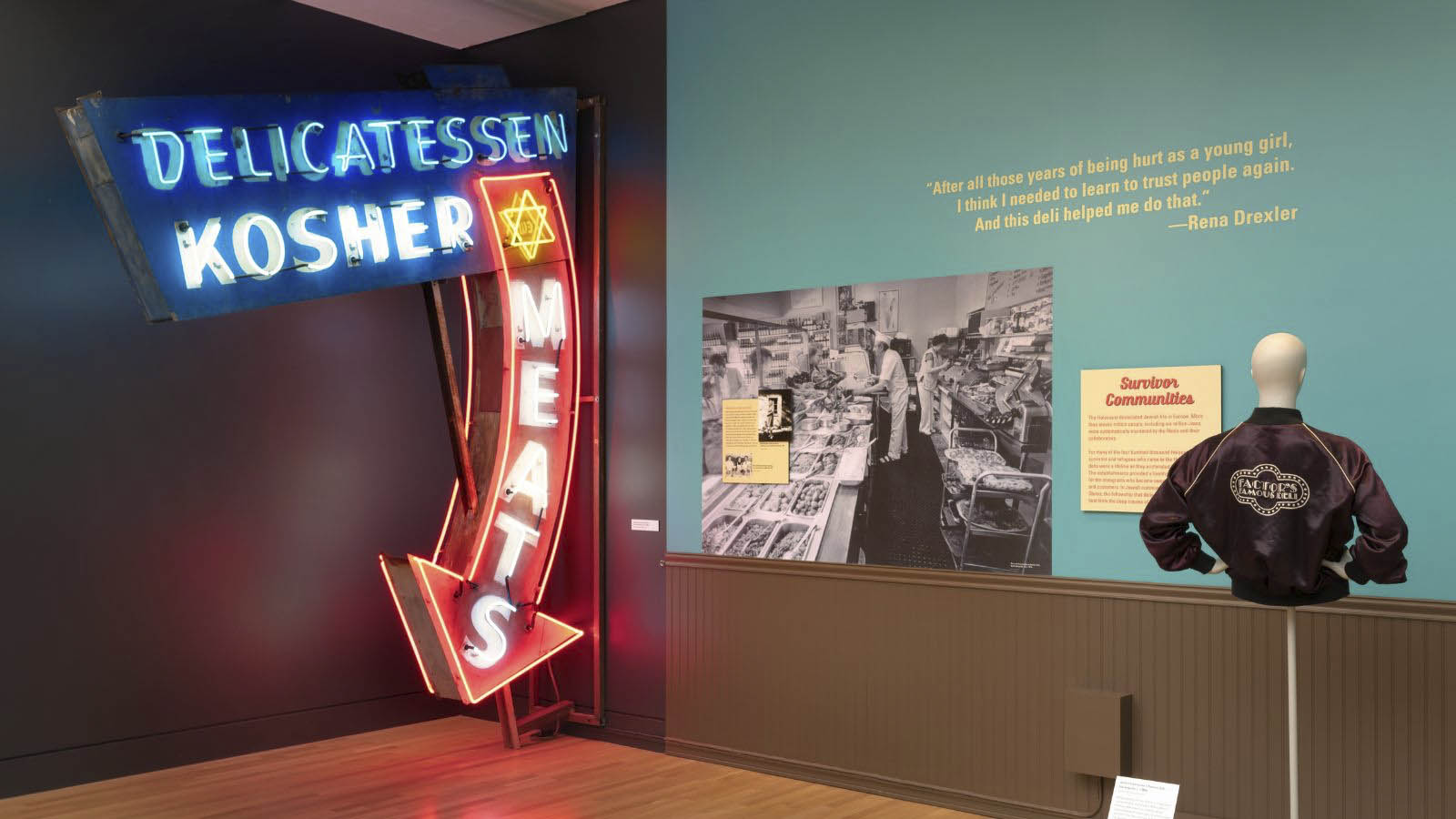
 

Installation view of the exhibition "I'll Have What She's Having": The Jewish Deli at the New-York Historical Society showing at centre, a photograph by an unknown photographer 'Rena and Harry Drexler at Drexler's Deli, North Hollywood, CA' (c. 1970s)


Installation view of the exhibition “I’ll Have What She’s Having”: The Jewish Deli at the New-York Historical Society showing at centre, a photograph by an unknown photographer Rena and Harry Drexler at Drexler’s Deli, North Hollywood, CA (c. 1970s, below)


Unknown photographer (American) 'Rena and Harry Drexler at Drexler's Deli, North Hollywood, CA' c. 1970s


Unknown photographer (American)
Rena and Harry Drexler at Drexler’s Deli, North Hollywood, CA
c. 1970s
Private collection


Unknown photographer (American) 'Vienna Beef Factory, inspecting sausages Chicago, IL' c. 1950s


Unknown photographer (American)
Vienna Beef Factory, inspecting sausages
Chicago, IL c. 1950s
Vienna Beef Museum


Unknown photographer (American) 'Vienna Beef Factory, curing pastrami Chicago, IL' c. 1950s


Unknown photographer (American)
Vienna Beef Factory, curing pastrami
Chicago, IL, c. 1950s
Vienna Beef Museum


'Paula Weissman's Hotel and Restaurant Employees Union Books' 1958-1983


Paula Weissman’s Hotel and Restaurant Employees Union Books
1958-1983
Courtesy of Paula Weissman


Installation view of ads from the "You don't have to be Jewish to love Levy's real Jewish Rye" campaign


Installation view of ads from the “You don’t have to be Jewish to love Levy’s real Jewish Rye” campaign (1960s). Despite the campaign’s success, the ads relied on both ethnic stereotypes and a narrowly focused white, Eurocentric view of Jewish identity that excluded Jews of Color.
Photo by Robert Wedemeyer.


With a self-reflection that is arguably as Jewish as its subject, the exhibition doesn’t shy away from an awareness that the deli, created by Eastern and Central European immigrants, is an almost exclusively Ashkenazi institution, and thus limited in its view of Jewish life and culture. Take, for example, the commentary on the posters featuring the famous “You don’t have to be Jewish to love Levy’s” series of rye bread ads. Considered progressive for their time because of the diversity of the models, in retrospect the ads suggest that racial diversity among the Jewish community is an anomaly, which is not the case.

Edie Jarolim. “”I’ll Have What She’s Having” Explores the American Jewish Deli (And Leaves You Hungry),” on the Nosher website July 21, 2022 [Online] Cited 26/02/2023


Howard Zieff (photographer) 'You don't have to be Jewish to love Levy's real Jewish Rye' 1965


Howard Zieff (photographer)
You don’t have to be Jewish to love Levy’s real Jewish Rye
[New York : s.n., 1965?]
Photomechanical print (poster): offset, colour
Library of Congress
Public domain


Howard Zieff (photographer) 'You don't have to be Jewish to love Levy's real Jewish Rye' 1965


Howard Zieff (photographer)
You don’t have to be Jewish to love Levy’s real Jewish Rye
[New York : s.n., 1965?]
Photomechanical print (poster): offset, colour
Library of Congress
Public domain
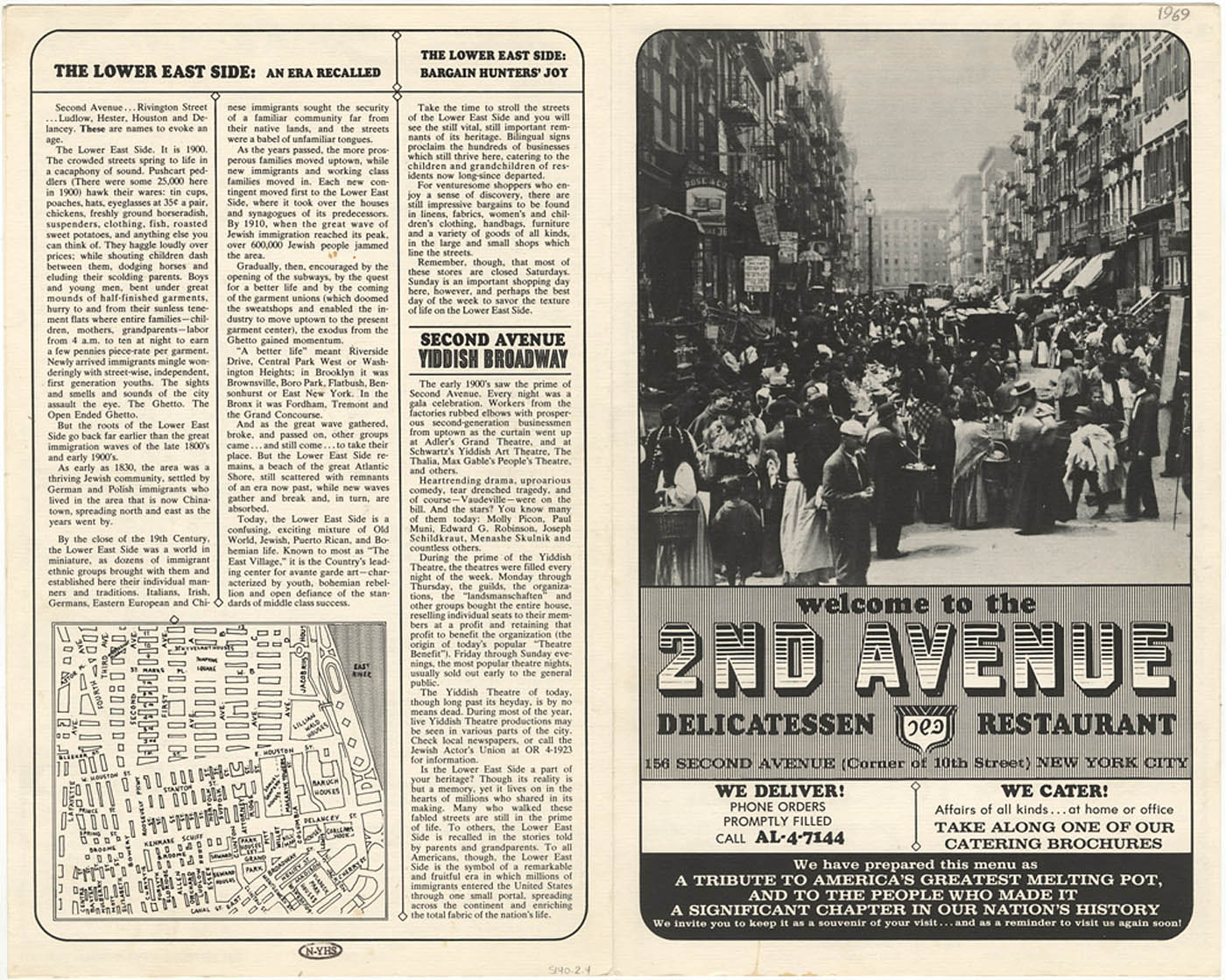
 

'Menu from 2nd Avenue Delicatessen' (outside cover) New York City, 1968


Menu from 2nd Avenue Delicatessen (outside cover)
New York City, 1968
Patricia D. Klingenstein Library, New-York. Historical Society


'Menu from 2nd Avenue Delicatessen New York City' 1968


Menu from 2nd Avenue Delicatessen
New York City, 1968
Patricia D. Klingenstein Library, New-York. Historical Society


'Katz's Delicatessen Napkin' 1980-2000


Katz’s Delicatessen Napkin
1980-2000
Paper
Overall: 5 × 5 in. (12.7 × 12.7cm)
Gift of Bella C. Landauer


Unknown photographer (American) 'Abe Lebewohl with hero, from the 2nd Ave Deli, New York, NY' c. 1990


Unknown photographer (American)
Abe Lebewohl with hero, from the 2nd Ave Deli, New York, NY
c. 1990


Unknown photographer (American) 'Snack at Manny's Delicatessen Chicago, IL' 2010


Unknown photographer (American)
Snack at Manny’s Delicatessen
Chicago, IL, 2010
Image Professionals GmbH / Alamy Stock Photo


New-York Historical Society
170 Central Park West
at Richard Gilder Way (77th Street)
New York, NY 10024
Phone: (212) 873-3400

Opening hours:
Monday CLOSED
Tuesday – Thursday 11am – 5pm
Friday 11am – 8pm
Saturday – Sunday 11am – 5pm

New-York Historical Society website

LIKE ART BLART ON FACEBOOK

Back to top

Exhibition: ‘Safe/Haven: Gay Life in 1950s Cherry Grove’ at the New-York Historical Society, Manhattan, New York

Exhibition dates: 14th May – 11th October, 2021

Curators: Brian Clark, Susan Kravitz, and Parker Sargent for the Cherry Grove Archives Collection and coordinated at New-York Historical by Rebecca Klassen, associate curator of material culture


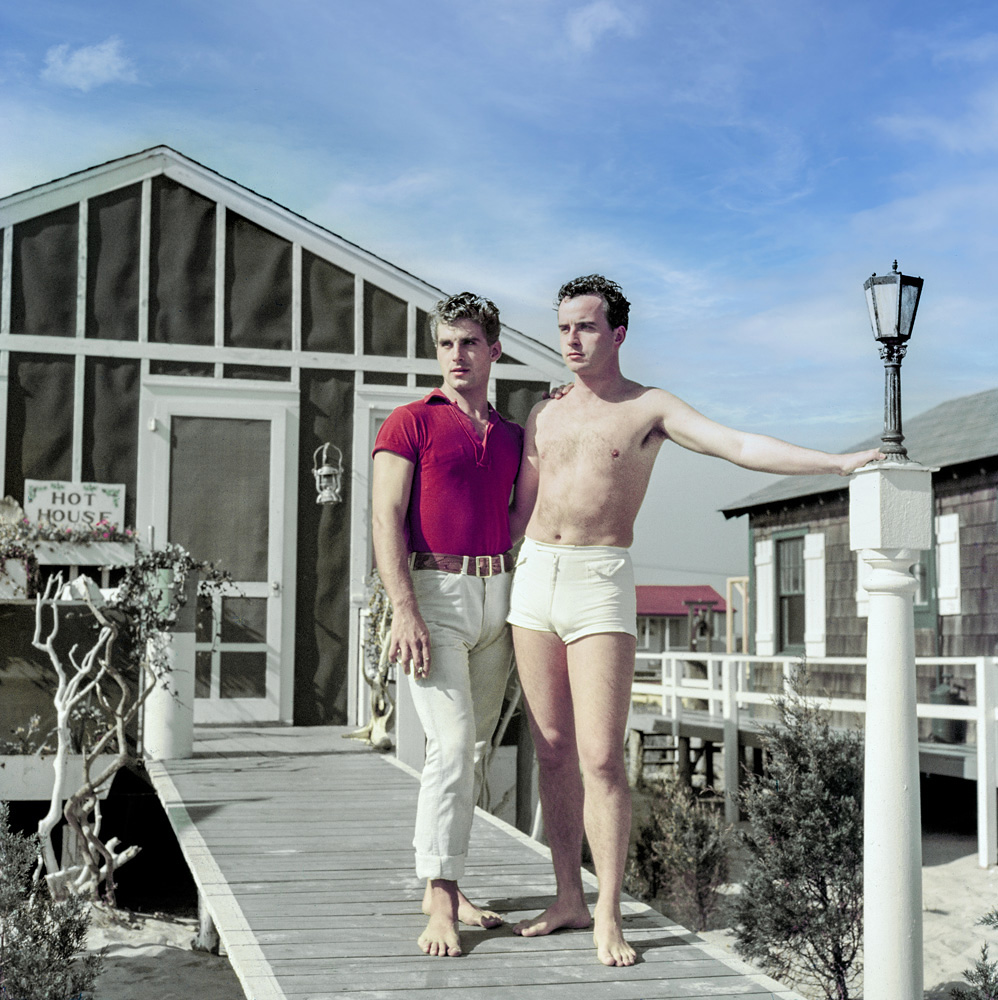
'Weekend Guest at Hot House' 1958 from the exhibition 'Safe/Haven: Gay Life in 1950s Cherry Grove' at the New-York Historical Society, Manhattan, New York, May - Oct, 2021


Weekend Guest at Hot House
1958
Cherry Grove Archives Collection, Gift of Harold Seeley


During the 1950s, Cherry Grove provided gay individuals a much-needed escape from the homophobia and the legal and social persecution that many experienced in the era of McCarthyism following World War II. Homosexuals faced physical assault, verbal attacks, family rejection, loss of employment, imprisonment, and even involuntary psychiatric hospitalisation. In the Grove, they could openly socialise and experience a joyful and rare freedom of sexual expression.


I seem to be on a roll at the moment with a series of exhibitions that this archive loves to highlight: human beings who picture, capture, depict, image, or photograph the subversive, marginalised, disenfranchised, hidden ‘Other’ in society – as an act of resistance against living lives of conformity, against the prejudices of patriarchy and religion, and against the oppression of bigotry and discrimination.

This exhibition is no exception.

In the 1950s, in an era of “passing” – where queer people had to pass themselves off as something else, something they were not, in order to keep a job or secure a roof over their heads – it is refreshing to see these candid, vernacular, performative photographs of, admittedly, privileged white gays playing, camping it up and having fun with their liberation and identity construction. Having fun in their lives.

Acknowledgement must be made that this party life on Fire Island in the 1950s was only for the white, middle-upper classes. Black, Hispanic, Latino and poor white gay trash need not apply. But that does not mean that these photographs are any less valuable in documenting queer resistance to the status quo.

Dr Marcus Bunyan


Many thankx to New-York Historical Society for allowing me to publish the photographs in the posting. Please click on the photographs for a larger version of the image.


Curator Confidential: Safe/Haven: Gay Life in 1950s Cherry Grove

During weekends and summers in the pre-Stonewall era, gay men and women, including many New Yorkers, traveled to the secluded beach town of Cherry Grove on Fire Island where they found opportunities for sexual exploration and self-expression – behaviour that was both stigmatised and criminalised in the straight world. Together with creative figures like Truman Capote, W.H. Auden, Carson McCullers, and Patricia Highsmith, these visitors to the Grove took pleasure in the costumed parties, theatrical events, and liberated atmosphere that this gay sanctuary provided.

On view outdoors in New-York Historical’s rear courtyard, this exhibition explores the gay and lesbian community that flourished during the 1950s in Cherry Grove through some 70 enlarged photographs and additional ephemera from the unique holdings of the Cherry Grove Archives Collection.

Curated by Brian Clark, Susan Kravitz, and Parker Sargent for the Cherry Grove Archives Collection and coordinated at New-York Historical by Rebecca Klassen, associate curator of material culture.


'One Hundred Club Party' 1949  from the exhibition 'Safe/Haven: Gay Life in 1950s Cherry Grove' at the New-York Historical Society, Manhattan, New York, May - Oct, 2021


One Hundred Club Party
1949
Cherry Grove Archives Collection, Gift of Harold Seeley


During the 1950s, campy costume parties were held every summer weekend. Attendees, straight and gay, showed off flamboyant outfits that would have otherwise been considered a violation of New York laws prohibiting risqué attire and cross-dressing.


'Outside of Bea Greer's Home, Bea's Brunch' 1951


Outside of Bea Greer’s Home, Bea’s Brunch
1951
Cherry Grove Archives Collection, Gift of Harold Seeley


Cocktails, sunbathing, sex, and parties were the norm during summer weekends. Gay men and women found opportunities to socialise out in the open, whether on the beach or on the decks of Grove houses.


'Parasol Party' 1951


Parasol Party
1951
Cherry Grove Archives Collection, Gift of Harold Seeley


Under the guise of dressing up, many men and women were able to play with gender norms at these fabulous cocktail parties, thereby challenging society’s expectations of “proper” behaviour.


'Patricia Fitzgerald and Kay Guinness, Cherry Grove Beach' September 1952


Patricia Fitzgerald and Kay Guinness, Cherry Grove Beach
September 1952
Cherry Grove Archives Collection, Gift of Gay Nathan and Julie Paradise


Kay Guinness (right) was an iconic Cherry Grove figure. Independently wealthy and closeted, she had affairs with women while also being married three different times to men. She flew small airplanes, had her own motorboat, and loved to be part of fashionable society. In the 1950s, Guinness was arrested in Cherry Grove for nude sunbathing on the beach. Her cottage was named No Man’s Land.


The New-York Historical Society presents Safe/Haven: Gay Life in 1950s Cherry Grove, an intimate look at one of the first gay beach towns in the United States, on view in New-York Historical’s rear courtyard May 14 – October 11, 2021. The outdoor exhibition explores mid-20th-century gay life in Fire Island’s remote hamlet of Cherry Grove, located on the barrier island south of Long Island, through some 70 enlarged photographs and additional ephemera from the holdings of the Cherry Grove Archives Collection – which works to collect and archive the community’s rich and colourful history.

“Cherry Grove on Fire Island became a weekend and summer destination for gay men and women in the pre-Stonewall era of the 1950s and 1960s,” said Dr. Louise Mirrer, president and CEO of New-York Historical. “At a time when they faced homophobia and persecution, the residents of Cherry Grove found a sanctuary where they could socialise and express themselves freely. We are proud to partner with the Cherry Grove Archives Collection to display these joyful images.”

“The Cherry Grove Archives Collection is honoured to exhibit our 1950s Cherry Grove photographs and ephemera at the New-York Historical Society,” said Susan Kravitz, on behalf of the Cherry Grove Archives Collection. “As you walk around this exhibition, we hope you will become aware of the joyous freedom of expression that LGBTQ people demonstrate in so many of these photographs, remembering that pre-Stonewall 1950s was a time when persecution and prosecution ruled the lives of homosexuals in mainland America. Yet the 1950s was a richly creative historical period in Cherry Grove when gay and straight people worked and played together, whether in theatrical productions, costumed cocktail parties, annual balls, or a range of community-sponsored events.”

Safe/Haven: Gay Life in 1950s Cherry Grove is presented in conjunction with the Cherry Grove Archives Collection. Curated by Brian Clark, Susan Kravitz, and Parker Sargent for the Cherry Grove Archives Collection, it’s coordinated at New-York Historical by Rebecca Klassen, associate curator of material culture. Throughout the exhibition, visitors can hear personal, recorded accounts from members of the Cherry Grove community about their experiences and memories; the audio will be accessible to visitors through their cell phones.

At Cherry Grove, gay men and women could socialise out in the open, whether on the beach or on the decks of Grove houses. In the evenings, many gathered at local restaurants or at Duffy’s Hotel bar, where they could enjoy same-sex dancing late at night. Photographs in the exhibition depict scenes of summer events, including theatre performances, an annual regatta, art shows, beach baseball, and an end-of-season costume ball.

Writers, artists, dancers, theatre people, and Hollywood celebrities had been drawn to the Grove since the 1930s. Gay people became the majority of the population during the 1950s and joined with local straight families to work in community organisations. Visitors to the Grove took pleasure in the costumed parties, theatrical events, and liberated atmosphere that this gay sanctuary provided. A sense of togetherness could be felt at campy Cherry Grove costume parties where attendees, straight and gay, showed off flamboyant outfits that would have otherwise been considered a violation of New York laws prohibiting risqué attire and cross-dressing. Under the guise of dressing up, many men and women were able to play with gender norms at these fabulous cocktail parties, thereby challenging society’s expectations of “proper” behaviour. The images on view showcase the abundant creativity in the ebullient social scene. Many Grove house parties were fundraisers for organisations such as the Cherry Grove Fire Department; the Arts Project of Cherry Grove, which organised theatrical productions; the Dune Fund, which preserved the beach dunes; and the Doctor’s House, which provided community medical services.

With more and more gay people arriving in the 1950s, long-standing local residents attempted to reinstate “decent” behaviour, and police raids became common through the 1960s. Men in particular risked being arrested, jailed, and exposed by name in local newspapers. Headlines from the Suffolk County News – “Five Arrested in Cherry Grove Raid” (August 23, 1957) and “Fifteen Seized in Cherry Grove Raid” (August 9, 1962) – on display in the exhibition document these risks.

Safe/Haven also highlights the creative atmosphere appreciated by cultural figures, gay and straight, in Cherry Grove. Writers who rented or visited there included Christopher Isherwood, Patricia Highsmith, and Tennessee Williams. Truman Capote, the novelist, playwright, and journalist whose flamboyant lifestyle contributed to his social celebrity, stayed at Carrington House just outside of the Grove in 1957, where he wrote parts of the novella Breakfast at Tiffany’s. In one of the photographs displayed in the exhibition, Marty Mann – a pioneering member of Alcoholics Anonymous who founded the National Council on Alcoholism – is pictured with novelist, poet, and playwright Carson McCullers, who wrote the bestselling novel The Heart Is a Lonely Hunter. Both women frequented Cherry Grove in the summer.

The final section of the exhibition explores the changing community of Cherry Grove in more recent decades. In the 1960s, following developments in the civil rights movement, Cherry Grove became more welcoming to Black and Latino gay people, reflected in photographs from that time. Working-class gay women began spending more time in the Grove in the 1960s, a change from the groups of mostly affluent and financially successful women who were there in the 1940s and 1950s. During the 1980s, the AIDS crisis devastated Cherry Grove. Both lesbians and gay men in the Grove took care of many of their male friends who were dying from the disease. Later on, middle-class lesbians had the financial ability to buy houses that had once belonged to these men, preserving the Grove as a gay community.

Press release from the New-York Historical Society


'Ed Burke in Ethel Merman's Mermaid Costume, One Hundred Club Party' 1949


Ed Burke in Ethel Merman’s Mermaid Costume, One Hundred Club Party
1949
Cherry Grove Archives Collection, Gift of Harold Seeley


Many Grove house parties were also fundraisers for organisations such as the Cherry Grove Fire Department; the Arts Project of Cherry Grove, which organised theatrical productions; the Dune Fund, which preserved the beach dunes; and the Doctor’s House, which provided community medical services. For the One Hundred Club Party, an early fundraiser for the Arts Project, organisers asked attendees to donate $100 to join the festivities.


'Two Women Getting Sun' 1951


Two Women Getting Sun
1951
Cherry Grove Archives Collection, Gift of Harold Seeley


'Patricia Fitzgerald, Kay Guinness, Mary Ronin, and Bea Greer, Duffy's Hotel' c. 1950


Patricia Fitzgerald, Kay Guinness, Mary Ronin, and Bea Greer, Duffy’s Hotel
c. 1950
Cherry Grove Archives Collection, Gift of Gay Nathan and Julie Paradise


Long summer days on the beach, gay-themed theatre productions, weekend house parties, sitting together in local bars and restaurants, community fundraisers – all these were spaces where gay people and their straight neighbours could form social connections and share experiences that were not possible off-island.


'Men on the Beach' c. 1950


Men on the Beach
c. 1950
Cherry Grove Archives Collection, Gift of Paul Jablonski


Same-sex relationships were openly expressed and nurtured within this supportive and relatively safe Fire Island community. Men and women who came to 1950s Cherry Grove were free to explore their same-sex attractions, to develop positive gay identities, and to enjoy gay social support networks.


'Diaper Party, II' 1951


Diaper Party, II
1951
Cherry Grove Archives Collection, Gift of Harold Seeley


House members hosting a party would often send out creative invitations with tongue-in-cheek humour.


'End of Season APCG Ball, Community House, Woman with Headdress' September 1954


End of Season APCG Ball, Community House, Woman with Headdress
September 1954
Cherry Grove Archives Collection, Gift of Harold Seeley


Beginning in the late 1940s, community members in late September ended the season by going to “the Ball.” Some spent the entire summer designing and sewing the outfits they would wear. This tradition continues today. In addition to cocktails, food, and a campy costume contest, attendees were able to dance with same-sex partners within the safety of the Community House.


'Young Man Posing for Polaroid' 1959


Young Man Posing for Polaroid
1959
Cherry Grove Archives Collection, Gift of Don Steeple


Taking photos in Cherry Grove was complicated. People wanted to capture their history but also did not want to be identified, fearing retribution if discovered. The instant Polaroid camera, invented in 1948, produced small-sized photos in a minute but required processing on the spot. Simple cameras models like the 127 Brownie or the Argus C3 were most likely used to take snapshots in 1950s Cherry Grove.


'Hot House' 1958


Hot House
1958
Cherry Grove Archives Collection, Gift of Harold Seeley


Cherry Grove homeowners and renters have a long-standing tradition of naming their homes. These names, like Hot House, often have a charm that reflects the character of the community.


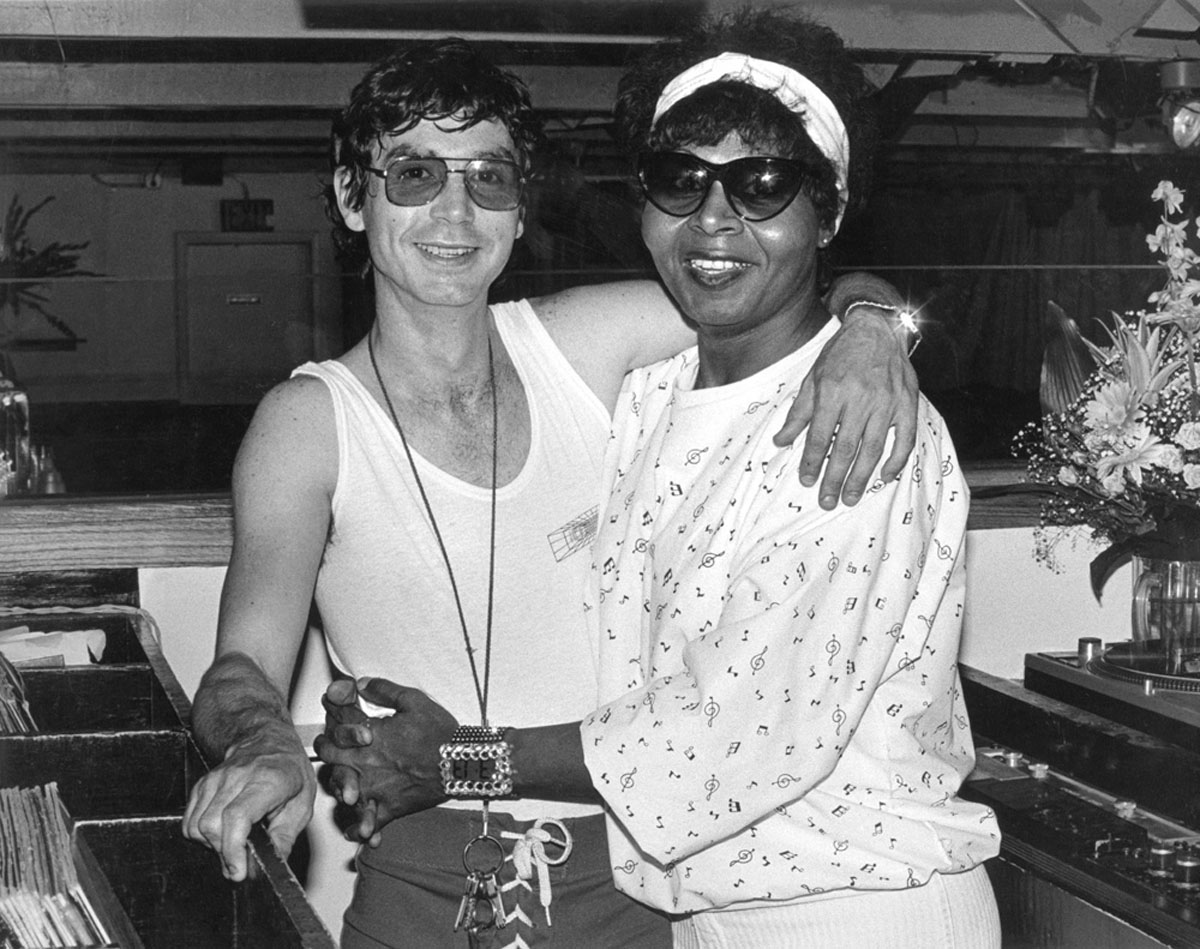
'DJ Beast and Candy Stevens, Ice Palace' c. 1980


DJ Beast and Candy Stevens, Ice Palace
c. 1980
Cherry Grove Archives Collection, Gift of Valerie Perez and Evelyn Danko


During the 1980s, the AIDS crisis devastated Cherry Grove. Gay men, women, and trans people of all races, religions, and economic status joined together to care for their male friends who were dying from this disease.


New-York Historical Society
170 Central Park West
at Richard Gilder Way (77th Street)
New York, NY 10024
Phone: (212) 873-3400

Opening hours:
Monday CLOSED
Tuesday – Thursday 11am – 5pm
Friday 11am – 8pm
Saturday – Sunday 11am – 5pm

New-York Historical Society website

LIKE ART BLART ON FACEBOOK

Back to top

Exhibition: ‘Art as Activism: Graphic Art from the Merrill C. Berman Collection’ at the New-York Historical Society, New York

Exhibition dates: 26th June – 13th September, 2015


Hugo Gellert (Hungarian-American, 1892-1985) 'Daily Worker' c. 1935 from the exhibition 'Art as Activism: Graphic Art from the Merrill C. Berman Collection' at the New-York Historical Society, New York, June-  Sept, 2015


Hugo Gellert (Hungarian-American, 1892-1985)
Daily Worker
c. 1935
Lithograph on paper
Collection of Merrill C. Berman
Courtesy Mary Ryan Gallery, New York


It has given me greater insight after researching the artists and the issues for this posting. Strong graphics for just social causes. Words and images are powerful tools against bigotry, racism and extremism of any form.

The older I get the more fiercely liberal and socially conscious I become.

Dr Marcus Bunyan


Many thankx to the New-York Historical Society Museum and Library for allowing me to publish the photographs in the posting. Please click on the photographs for a larger version of the image.


Great Depression to World War II

Featuring three main sections, Art as Activism opens with works dating from the Great Depression to World War II. The posters and broadsides from the era focus on the American labor movement, Communism, racism in the South, housing in the North, and the legacy of the Harlem Renaissance.


The Scottsboro Boys

The Scottsboro Boys were a group of nine black teenagers accused of rape in the 1930s South. The blatant injustice given to them during their trial lead to several legal reforms. Watch as Emory’s Associate Professor of African American Studies, Carol Anderson, discusses what happened to these boys both during and after their trial.


J. Louis Engdahl (American, 1884-1932) 'Labor Defender' June 1931 from the exhibition 'Art as Activism: Graphic Art from the Merrill C. Berman Collection' at the New-York Historical Society, New York, June-  Sept, 2015


J. Louis Engdahl (American, 1884-1932)
Labor Defender
June 1931
Lithograph on paper
Collection of Merrill C. Berman


Scottsboro Boys

The Scottsboro Boys were nine African-American teenagers accused in Alabama of raping two White American women on a train in 1931. The landmark set of legal cases from this incident dealt with racism and the right to a fair trial. The cases included a lynch mob before the suspects had been indicted, a frameup, all-white juries, rushed trials, and disruptive mobs. It is frequently cited as an example of an overall miscarriage of justice in the United States legal system.

On March 25, 1931, several people were hoboing on a freight train traveling between Chattanooga and Memphis, Tennessee. Several white teenagers jumped off the train and reported to the sheriff that they had been attacked by a group of African-American teenagers. The sheriff deputised a posse comitatus, stopped and searched the train at Paint Rock, Alabama and arrested the African Americans. Two young white women also got off the train and accused the African-American teenagers of rape. The case was first heard in Scottsboro, Alabama, in three rushed trials, in which the defendants received poor legal representation. All but 12-year-old Roy Wright were convicted of rape and sentenced to death, the common sentence in Alabama at the time for black men convicted of raping white women, even though there was medical evidence to suggest that they had not committed the crime.

With help from the Communist Party USA (CPUSA), the case was appealed. The Alabama Supreme Court affirmed seven of the eight convictions, and granted 13-year-old Eugene Williams a new trial because he was a minor. Chief Justice John C. Anderson dissented, ruling that the defendants had been denied an impartial jury, fair trial, fair sentencing, and effective counsel. While waiting for their trials, eight of the nine defendants were held in Kilby Prison. The cases were twice appealed to the United States Supreme Court, which led to landmark decisions on the conduct of trials. In Powell v. Alabama (1932), it ordered new trials.

The case was returned to the lower court and the judge allowed a change of venue, moving the retrials to Decatur, Alabama. Judge Horton was appointed. During the retrials, one of the alleged victims admitted fabricating the rape story and asserted that none of the Scottsboro Boys touched either of the white women. The jury found the defendants guilty, but the judge set aside the verdict and granted a new trial.

The judge was replaced and the case tried under a more biased judge, whose rulings went against the defence. For the third time a jury – now with one African-American member – returned a third guilty verdict. The case returned to the US Supreme Court on appeal. It ruled that African Americans had to be included on juries, and ordered retrials. Charges were finally dropped for four of the nine defendants. Sentences for the rest ranged from 75 years to death. All but two served prison sentences. One was shot in prison by a guard and permanently disabled. Two escaped, were later charged with other crimes, convicted, and sent back to prison. Clarence Norris, the oldest defendant and the only one sentenced to death, “jumped parole” in 1946 and went into hiding. He was found in 1976 and pardoned by Governor George Wallace, by which time the case had been thoroughly analysed and shown to be an injustice. Norris later wrote a book about his experiences. The last surviving defendant died in 1989.

“The Scottsboro Boys,” as they became known, were defended by many in the North and attacked by many in the South. The case is now widely considered a miscarriage of justice, particularly highlighted by use of all-white juries. African Americans in Alabama had been disenfranchised since the turn of the century and thus were generally disqualified from jury duty. The case has been explored in many works of literature, music, theatre, film and television. On November 21, 2013, Alabama’s parole board voted to grant posthumous pardons to the three Scottsboro Boys who had not been pardoned or had their convictions overturned.

Text from Wikipedia website


nina simone – strange fruit

Not the usual version of this song by Billie Holiday, but a different rendition by the great Nina Simone (no date to the recording). White southerners lynched nearly 4,000 black men, women and children between the years 1877 and 1950.

This song, written by white teacher ‪Abel Meeropol‬ as a poem and published in 1937, was performed by many artists (but most notably, Billie Holiday and Nina Simone,) is a dark and profound song about the lynching of African Americans in the Southern United States during the Jim Crow Era. In the lyrics, black victims are portrayed as “strange fruit,” as they hang from trees, rotting in the sun, blowing in the wind, and becoming food for crows upon being burned.


Southern trees
Bearing strange fruit
Blood on the leaves
And blood at the roots
Black bodies
Swinging in the southern breeze
Strange fruit hangin’
From the poplar trees
Pastoral scene
Of the gallant south
Them big bulging eyes
And the twisted mouth
Scent of magnolia
Clean and fresh
Then the sudden smell
Of burnin’ flesh
Here is a fruit
For the crows to pluck
For the rain to gather
For the wind to suck
For the sun to rot
For the leaves to drop
Here is
 strange and bitter crop


Vera Bock (American born Russia, 1905-1973) 'Haiti; A Drama of the Black Napoleon by William Du Bois at Lafayette Theatre' 1938


Vera Bock (American born Russia, 1905-1973)
Haiti; A Drama of the Black Napoleon by William Du Bois at Lafayette Theatre
1938
Screenprint on board
Collection of Merrill C. Berman


François-Dominique Toussaint Louverture (Haitian, 1743-1803)

François-Dominique Toussaint Louverture (20 May 1743 – 7 April 1803), also known as Toussaint L’Ouverture, Toussaint-Louverture, Toussaint Bréda, and nicknamed the “Napoléon Noir” (Black Napoleon), was the leader of the Haitian Revolution. His military genius and political acumen transformed an entire society of slaves into the independent state of Haiti. The success of the Haitian Revolution shook the institution of slavery throughout the New World.

Toussaint Louverture began his military career as a leader of the 1791 slave rebellion in the French colony of Saint-Domingue; he was by then a free black man. Initially allied with the Spaniards of neighbouring Santo Domingo, Toussaint switched allegiance to the French when they abolished slavery. He gradually established control over the whole island and used political and military tactics to gain dominance over his rivals. Throughout his years in power, he worked to improve the economy and security of Saint-Domingue. He restored the plantation system using paid labour, negotiated trade treaties with Britain and the United States, and maintained a large and well-disciplined army.

In 1801 he promulgated an autonomist constitution for the colony, with himself as governor for life. In 1802 he was forced to resign by forces sent by Napoleon Bonaparte to restore French authority in the former colony. He was deported to France, where he died in 1803. The Haitian Revolution continued under his lieutenant, Jean-Jacques Dessalines, who declared independence in early 1804. The French had lost two-thirds of forces sent to the island in an attempt to suppress the revolution; most died of yellow fever.

Text from the Wikipedia website


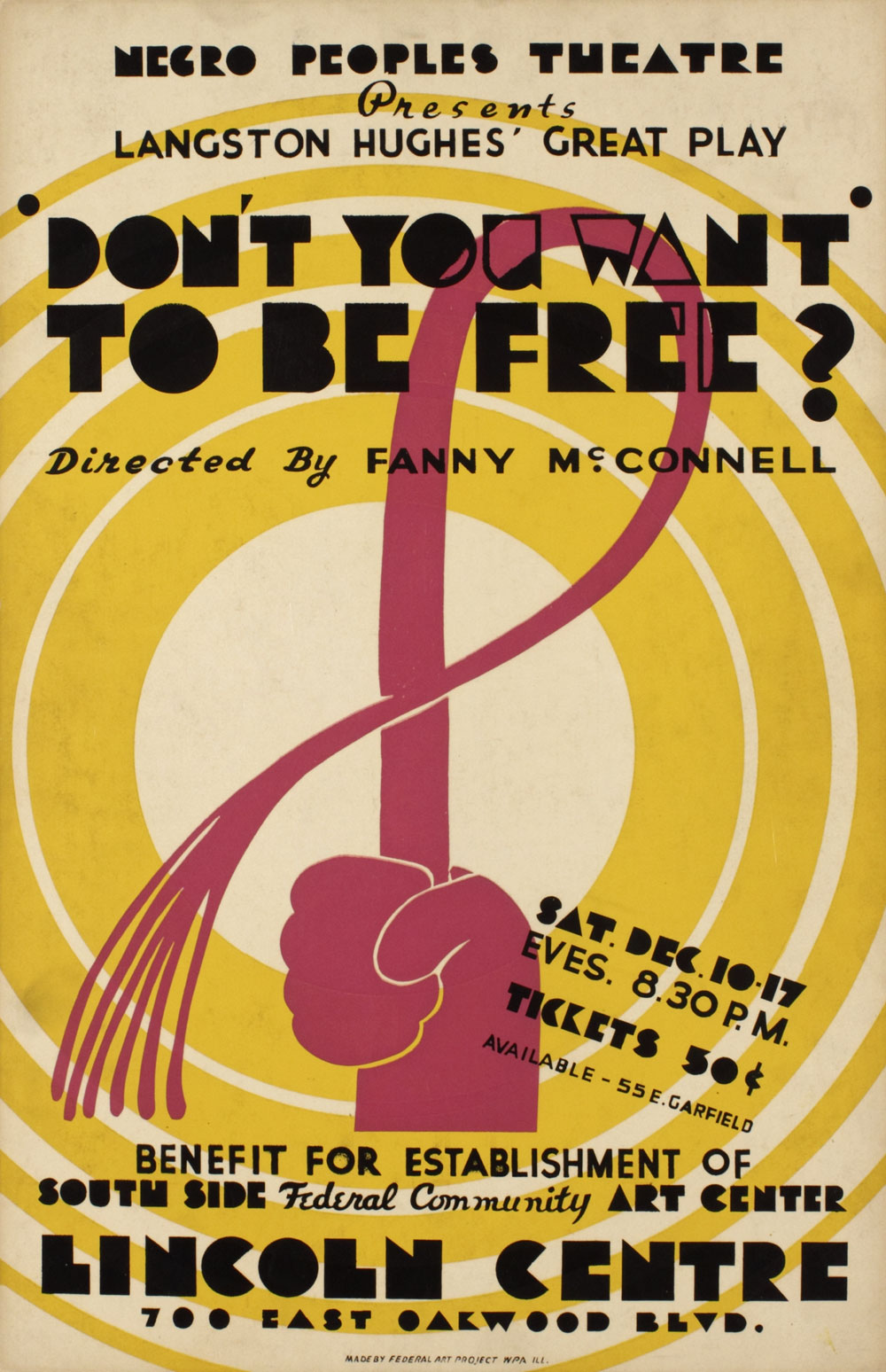
Unidentified artist. 'Negro Peoples Theatre Presents: Langston Hughes' Great Play, "Don’t You Want to be Free?" Directed by Fanny McConnell, Lincoln Centre' 1938


Unidentified artist
Negro Peoples Theatre Presents: Langston Hughes’ Great Play, “Don’t You Want to be Free?” Directed by Fanny McConnell, Lincoln Centre
1938
Screenprint on paper mounted on board
Collection of Merrill C. Berman


James Mercer Langston Hughes (American, 1902-1967)

James Mercer Langston Hughes (February 1, 1902 – May 22, 1967) was an American poet, social activist, novelist, playwright, and columnist from Joplin, Missouri. He was one of the earliest innovators of the then-new literary art form called jazz poetry. Hughes is best known as a leader of the Harlem Renaissance. He famously wrote about the period that “the negro was in vogue”, which was later paraphrased as “when Harlem was in vogue”.

When Langston Hughes returned from his assignment in Spain as a war correspondent, he told Louise Patterson of his idea for establishing a people’s theatre. She suggested the hall of the International Workers Order (a leftist labor-cultural group) above Frank’s Restaurant on 125th Street. This was the first home of the Harlem Suitcase Theatre, in 1937.

Named for its arena staging and lack of scenic properties, Suitcase Theatre was a peoples’ theatre composed of amateur actors. The audiences were seventy-five per cent black; admission was thirty-five cents. The program was usually two or three short pieces; The Slave, or The Man Who Died at Twelve O’Clock, or several skits written by Mr. Hughes lampooning white caricatures of blacks: Em-Fueher Jones, Limitations of Life, and Little Eva’s End. The piece de resistance was always Don’t You Want To Be Free? We had no play so the suggestion came up one evening as we were sitting there plotting the theatre, that Langston should do a play and why not a play of music-drama of many of his folk poems? So that he went home that night after we had had that discussion and sat up all night writing it and came back the next night with Don’t You Want To Be Free? (from an interview with Louise Patterson by Norma Markman, 1969)

Although Suitcase Theater lasted only two years (it did not survive its transplant to the library basement on 135th Street) the idea of a Negro People’s Theater spread to other cities. In March 1939, Mr. Hughes founded the New Negro Theater in Los Angeles.

The success of Don’t You Want To Be Free?, which opened in February 1937 and ran for 135 performances, may be found in three factors: (1) the direct appeal to the problems of the audience (most businesses in Harlem were owned by whites and only one of every six employees of the businesses were black), (2) the simplicity and beauty of the poetry and songs, (3) the appeal to unite poor whites and blacks in a fight against exploitation by the rich.

Text from The University Theatre website Cited [Online] Cited 20/07/2015. No longer available online


Lester Beall (American, 1903-1969) 'Cross Out Slums' 1941


Lester Beall (American, 1903-1969)
Cross Out Slums
1941
Lithograph on paper
Collection of Merrill C. Berman
© Dumbarton Arts, LLC
Licensed by VAGA, New York, NY


Lester Beall (American, 1903-1969)

Lester Beall (1903-1969) was an American graphic designer notable as a leading proponent of modernist graphic design in the United States.

His clear and concise use of typography was highly praised both in the United States and abroad. Throughout his career he used bold primary colours and illustrative arrows and lines in a graphic style that became easily recognisable as his own. He eventually moved to rural New York and set up an office, and home, at a premises that he and his family called “Dumbarton Farm”. He remained at the farm until his death in 1969.

Lester Thomas Beall was born in Kansas City, Missouri. His family soon moved to St. Louis, Missouri, and later to Chicago, Illinois. Beall studied at the University of Chicago and was active on the varsity track team coached by Amos Alonzo Stagg. Beall also took classes at the Art Institute of Chicago. After a short period of experimentation and professional work in Chicago, Beall moved to New York in 1935. The following year he established his home / office in Wilton, Connecticut.

According to his online AIGA biography by R. Roger Remington: “Through the 1930s and 1940s Beall produced innovative and highly regarded work for clients including the Chicago Tribune, Sterling Engraving, The Art Directors Club of New York, Hiram Walker, Abbott Laboratories and Time magazine. Of particular interest was his work for the Crowell Publishing Company which produced Colliers magazine. The promotional covers “Will There Be War?” and “Hitler’s Nightmare” are powerful designs which distill messages of the time. In these works he utilises angled elements, iconic arrows, silhouetted photographs and dynamic shapes, all of which captures the essence of his personal style of the late 1930s. Also of interest in this period are the remarkable poster series for the United States Government’s Rural Electrification Administration.”

Text from the Wikipedia website


Unidentified artist. 'Vote American Labor Party; Roosevelt and Lehman' 1936


Unidentified artist
Vote American Labor Party; Roosevelt and Lehman
1936
Lithograph on paper
Collection of Merrill C. Berman


Long before digital technology made worldwide communication possible, political protests and calls for action reached the public through posters. Posted on walls and bulletin boards, slapped up on store windows and church doors, these works often featured bright colours and modernist art-inspired graphics, and were quickly mass-produced to inform communities, stir audiences, and call attention to injustice. This summer, the New-York Historical Society will present 72 posters dating from the early 1930s through the 1970s, drawn from one of the world’s finest collections of American protest art in Art as Activism: Graphic Art from the Merrill C. Berman Collection, on view June 26 through September 13, 2015.

“These seemingly ephemeral activist artefacts are of tremendous historical and artistic importance, with deep roots in the past and a lasting influence,” said Dr. Louise Mirrer, President and CEO of the New-York Historical Society. “Merrill Berman’s collection rivals the graphic design holdings of the Museum of Modern Art in New York and the Stedelijk Museum in Amsterdam, and we are thrilled to be able to share some highlights with the public this summer.”

Art as Activism presents a wide selection of posters addressing movements that arose in reaction to the Great Depression, World War II, racial inequality, the Vietnam War, and environmental concerns. Featured posters include works by artists such as Emory Douglas, Hugo Gellert, James Rosenquist and Tomi Ungerer, as well as numerous unidentified designers.

Art as Activism will showcase imagery that served as the wallpaper of public discontent,” said New-York Historical’s Chief Curator Stephen Edidin. “Posters shaped the visual language of protest for generations, “going viral” decades before the term was born, until they were replaced by other forms of social media, including street art and ultimately the Internet.”

Exhibition highlights

Featuring three main sections, Art as Activism opens with works dating from the Great Depression to World War II, with themes that include electoral politics, workers’ marches and the political, social, and economic inequalities endured by African Americans. Featured works include a poster for Langston Hughes’ political play Don’t You Want to be Free?: From Slavery Through the Blues to Now – and then some! (1938), with bright red and yellow graphics of a whip in a raised fist. A colourful 1941 poster Cross Out Slums promoted the U.S. Housing Authority, which cleared slums and built new low-income housing. Using photomontage and European modernist design, graphic artist Lester Beall shows a bucolic neighbourhood in the form of a hand, crossing out substandard accommodations with a large “X.”

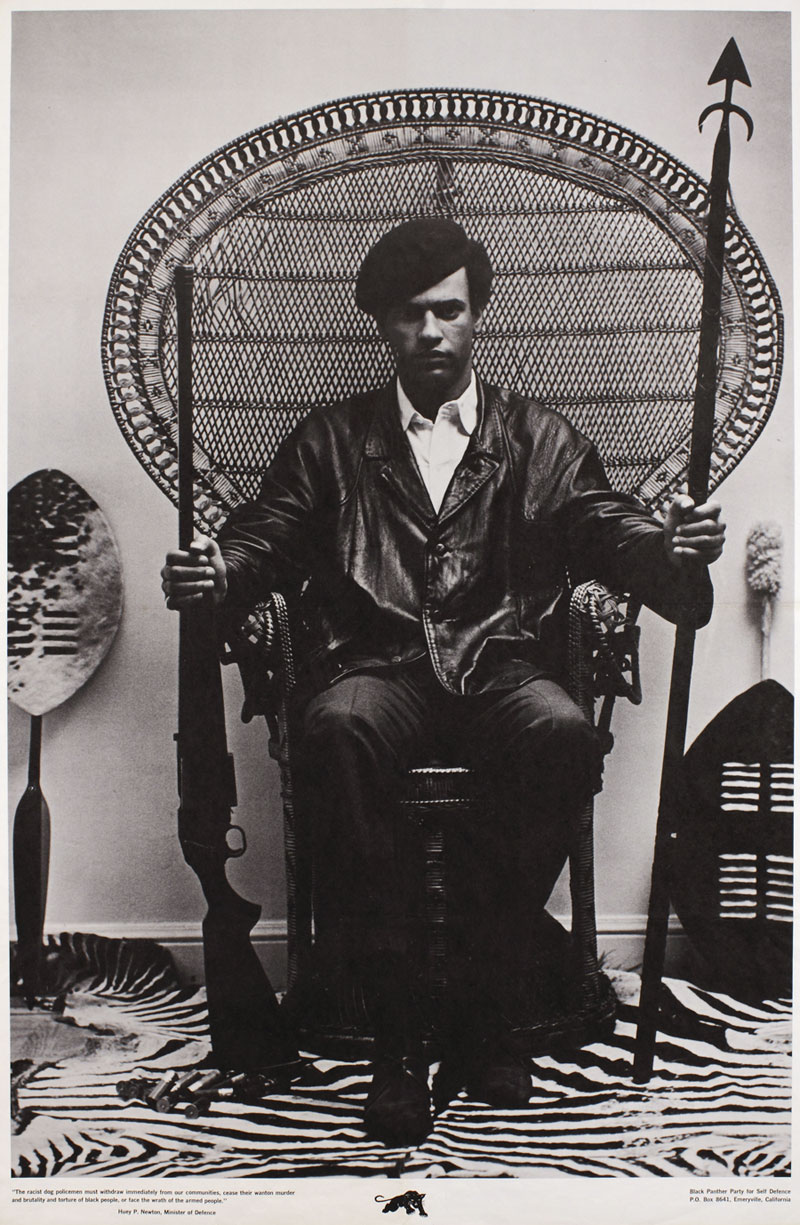
The second section of the exhibition explores the Black Panther organisation, beginning with its founding in California in 1966 and tracing its rise to national prominence. The Panthers used posters and the press to spread their message, leveraging advertising techniques and celebrity culture to compose and disseminate powerful imagery. One of the most defining photographs of this era is the iconic image Huey Newton seated in a wicker chair (1967), featuring the Panthers’ Minister of Defense enthroned in a wicker chair, holding a rife and a spear. Another highlight is the poster An Attack Against One is An Attack Against All, The Slaughter of Black People Must be Stopped by Any Means Necessary! (circa 1970), featuring the image of a black panther with massive claws and a sinuous body, poised to attack.

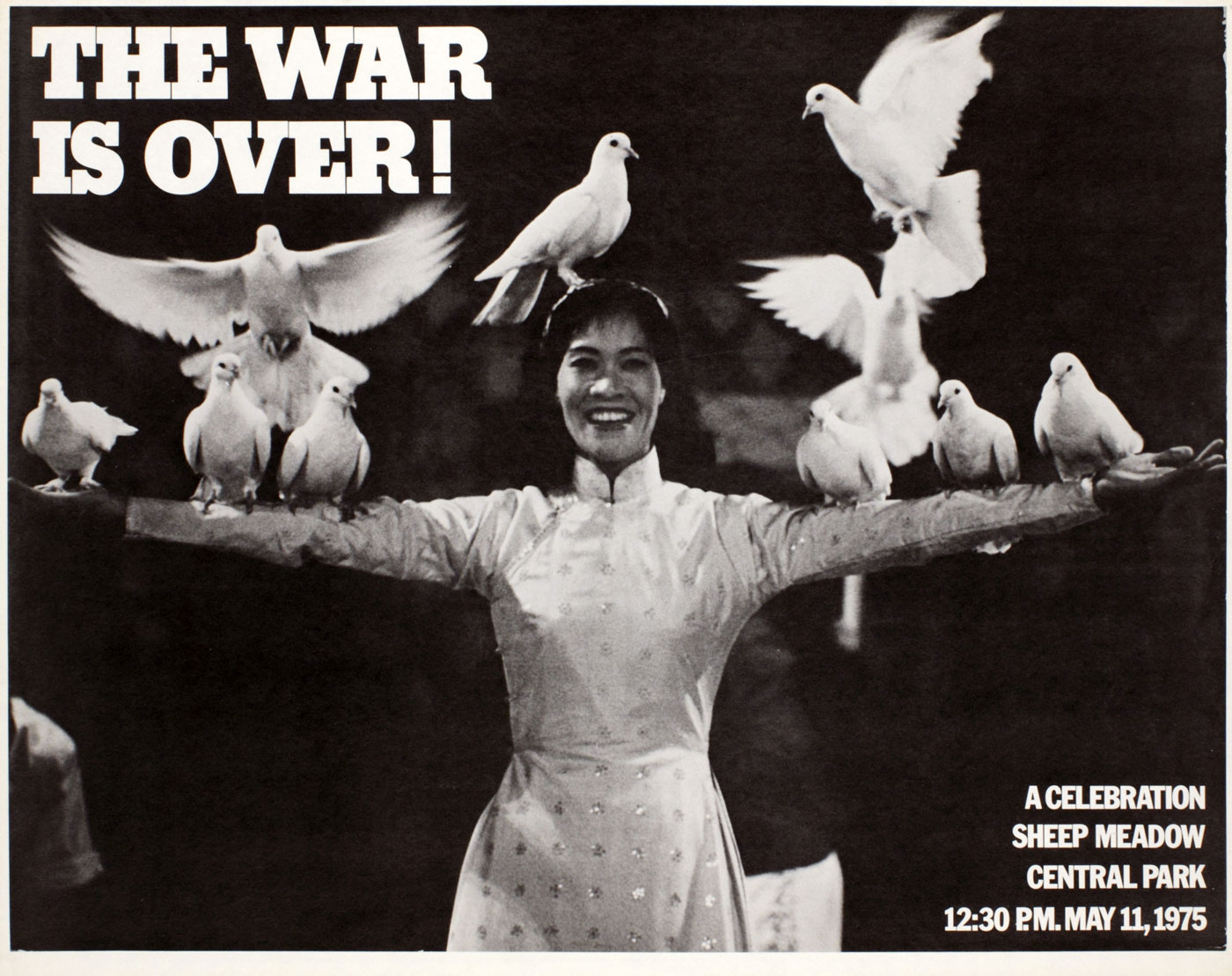
The final section of Art as Activism focuses on the anti-Vietnam War movement and other protest movements of the era, such as the American Indian movement and the nascent Environmentalist effort. To cut costs and distribute the message by any means available, activists printed posters on computer paper. In 1970, U.C. Berkeley students protested President Nixon’s bombing of Cambodia with the poster Amerika is Devouring Its Children, making a powerful anti-war statement by appropriating Francisco Goya’s terrifying image of the god Saturn fiendishly eating his own son. Another highlight on view is a poster from the 1975 Central Park rally celebrating the end of the Vietnam War, featuring a photograph of a Hanoi circus performer with doves balanced on her outstretched arms, offering an uplifting image and global message.

Press release from the New-York Historical Society Museum and Library


Black Panther Party

The second section of the exhibition explores the Black Panther Party, beginning with its founding in California in 1966 and traces its rise to international prominence. Their policies of self-defense and anti-imperialism prompted FBI Director J. Edgar Hoover to notoriously condemn them as “the greatest threat to internal security.” Their legacy of lesser-known initiatives to aid impoverished black communities, including a breakfast program that at its height served 10,000 kids in need every day was overshadowed as a result.


Unidentified artist. 'Free Angela Davis' c. 1970-1972


Unidentified artist 
Free Angela Davis
c. 1970-72
Lithograph on paper
Collection of Merrill C. Berman


Angela Yvonne Davis (American, b. 1944)

Angela Yvonne Davis (born January 26, 1944) is an American political activist, scholar, and author. She emerged as a prominent counterculture activist and radical in the 1960s as a leader of the Communist Party USA, and had close relations with the Black Panther Party through her involvement in the Civil Rights Movement, although she was never a party member. Her interests included prisoner rights; she founded Critical Resistance, an organisation working to abolish the prison-industrial complex. She is a retired professor with the History of Consciousness Department at the University of California, Santa Cruz, and a former director of the university’s Feminist Studies department.

Davis was arrested, charged, tried, and acquitted of conspiracy in the 1970 armed take-over of a Marin County courtroom, in which four persons died.

On August 7, 1970, Jonathan Jackson, a heavily armed 17-year-old African-American high-school student, gained control over a courtroom in Marin County, California. Once in the courtroom, Jackson armed the black defendants and took Judge Harold Haley, the prosecutor, and three female jurors as hostages.

As Jackson transported the hostages and two black convicts away from the courtroom, the police began shooting at the vehicle. The judge and the three black men were killed in the melee; one of the jurors and the prosecutor were injured. The firearms used in the attack, including the shotgun used to kill Haley, had been purchased by Davis two days prior and the barrel of the shotgun had been sawed off. Davis was also corresponding with one of the inmates involved. Since California considers “all persons concerned in the commission of a crime, whether they directly commit the act constituting the offence… principals in any crime so committed”, Marin County Superior Judge Peter Allen Smith charged Davis with “aggravated kidnapping and first degree murder in the death of Judge Harold Haley” and issued a warrant for her arrest. Hours after the judge issued the warrant on August 14, 1970, a massive attempt to arrest Angela Davis began. On August 18, 1970, four days after the initial warrant was issued, the FBI director J. Edgar Hoover made Angela Davis the third woman and the 309th person to appear on the FBI’s Ten Most Wanted Fugitive List.

Soon after, Davis became a fugitive and fled California. According to her autobiography, during this time she hid in friends’ homes and moved from place to place at night. On October 13, 1970, FBI agents found her at the Howard Johnson Motor Lodge in New York City. President Richard M. Nixon congratulated the FBI on its “capture of the dangerous terrorist, Angela Davis”.

On January 5, 1971, after several months in jail, Davis appeared at the Marin County Superior Court and declared her innocence before the court and nation: “I now declare publicly before the court, before the people of this country that I am innocent of all charges which have been levelled against me by the state of California.” John Abt, general counsel of the Communist Party USA, was one of the first attorneys to represent Davis for her alleged involvement in the shootings. While being held in the Women’s Detention Center there, she was initially segregated from the general population, but with the help of her legal team soon obtained a federal court order to get out of the segregated area.

Across the nation, thousands of people who agreed with her declaration began organising a liberation movement. In New York City, black writers formed a committee called the Black People in Defense of Angela Davis. By February 1971 more than 200 local committees in the United States, and 67 in foreign countries worked to liberate Angela Davis from prison. Thanks, in part, to this support, in 1972 the state released her from county jail. On February 23, 1972, Rodger McAfee, a dairy farmer from Fresno, California, paid her $100,000 bail with the help of Steve Sparacino, a wealthy business owner. Portions of her legal defence expenses were paid for by the United Presbyterian Church.

Davis was tried, and the all-white jury returned a verdict of not guilty. The fact that she owned the guns used in the crime was judged not sufficient to establish her responsibility for the plot. She was represented by Leo Branton Jr., who hired psychologists to help the defence determine who in the jury pool might favour their arguments, a technique that was uncommon at the time, and also hired experts to undermine the reliability of eyewitness accounts.

Her research interests are feminism, African-American studies, critical theory, Marxism, popular music, social consciousness, and the philosophy and history of punishment and prisons. Her membership in the Communist Party led to Ronald Reagan’s request in 1969 to have her barred from teaching at any university in the State of California. She was twice a candidate for Vice President on the Communist Party USA ticket during the 1980s.

Text from the Wikipedia website


Photography attributed to Blair Stapp. Composition by Eldridge Cleaver. 'Huey Newton seated in wicker chair' 1967


Photography attributed to Blair Stapp
Composition by Eldridge Cleaver
Huey Newton seated in wicker chair
1967
Lithograph on paper
Collection of Merrill C. Berman


Huey Percy Newton (American, 1942-1989)

Huey Percy Newton (February 17, 1942 – August 22, 1989) was an African-American political and urban activist who, along with Bobby Seale, co-founded the Black Panther Party in 1966. Newton had a long series of confrontations with law enforcement, including several convictions, while he participated in political activism. He continued to pursue an education, eventually earning a Ph.D. in Social Science. Newton spent time in prison for manslaughter and was involved in a shooting that killed a police officer, for which he was later acquitted. In 1989 he was shot and killed in Oakland, California by Tyrone “Double R” Robinson, a member of the Black Guerrilla Family.

Text from the Wikipedia website


Emory Douglas (American, b. 1943) 'All Power To The People' 1969


Emory Douglas (American, b. 1943)
All Power To The People
1969
Lithograph on paper
Collection of Merrill C. Berman
© 2015 Artists Rights Society (ARS), New York


Emory Douglas (American, b. 1943)

Emory Douglas (born May 24, 1943) was born in Grand Rapids, Michigan and grew up in the San Francisco Bay Area. As a teenager, Douglas was incarcerated at the Youth Training School in Ontario, California; during his time there he worked in the prison’s printing shop. He later studied commercial art, taking graphic design classes, at San Francisco City College. As Erika Doss wrote, “He also joined the college’s Black Students Union and was drawn to political activism.”

In 1967 Douglas became Minister of Culture for the Black Panther Party. In 2007, The San Francisco Chronicle reporter Jessica Werner Zack reported that he “branded the militant-chic Panther image decades before the concept became commonplace. He used the newspaper’s popularity to incite the disenfranchised to action, portraying the poor with genuine empathy, not as victims but as outraged, unapologetic and ready for a fight.”

Douglas worked at the black community-oriented San Francisco Sun Reporter newspaper for over 30 years after The Black Panther newspaper was no longer published. He continued to create activist artwork. According to Greg Morozumi, of the Bay Area EastSide Arts Alliance, his artwork stayed relevant. “Rather than reinforcing the cultural dead end of “post-modern” nostalgia, the inspiration of his art raises the possibility of rebellion and the creation of new revolutionary culture.”

In 2006, artist and curator Sam Durant edited a comprehensive monograph of Black Panther artist Emory Douglas’ work, Black Panther: The Revolutionary Art of Emory Douglas, with contributors including Danny Glover, Kathleen Cleaver, St. Clair Bourne, Colette Gaiter (associate professor at the University of Delaware), Greg Morozumi (artistic director of the EastSide Arts Alliance in Oakland, California), and Sonia Sanchez.

“Douglas was the most prolific and persistent graphic agitator in the American Black Power movements. Douglas profoundly understood the power of images in communicating ideas…. Inexpensive printing technologies – including photostats and presstype, textures and patterns – made publishing a two-colour heavily illustrated, weekly tabloid newspaper possible. Graphic production values associated with seductive advertising and waste in a decadent society became weapons of the revolution. Technically, Douglas collaged and re-collaged drawings and photographs, performing graphic tricks with little budget and even less time. His distinctive illustration style featured thick black outlines (easier to trap) and resourceful tint and texture combinations. Conceptually, Douglas’s images served two purposes: first, illustrating conditions that made revolution seem necessary; and second, constructing a visual mythology of power for people who felt powerless and victimised. Most popular media represents middle to upper class people as “normal.” Douglas was the Norman Rockwell of the ghetto, concentrating on the poor and oppressed. Departing from the WPA / social realist style of portraying poor people, which can be perceived as voyeuristic and patronising, Douglas’s energetic drawings showed respect and affection. He maintained poor people’s dignity while graphically illustrating harsh situations.”

Colette Gaiter quoted in the Wikipedia entry for Emory Douglas.


Distributed by the Robert Brown Elliott League. 'An Attack Against One is An Attack Against All' c. 1970


Distributed by the Robert Brown Elliott League
An Attack Against One is An Attack Against All
c. 1970
Lithograph on paper
Collection of Merrill C. Berman


Art as Activism

The final section of Art as Activism focuses on the anti-Vietnam War movement and other protest movements of the 1960s and 1970s. The mass protest movements varied greatly in their demands and their activist style. Some were violent, others peaceful. Some pushed for reform, others revolution. Regardless of their messages, these movements brought millions to the streets and forever changed American society; they helped end the Vietnam War and gave rise to watershed legislation and fundamental social change.


Jay Belloli (American, 1944-2021) Berkeley, California 'Amerika is Devouring Its Children' 1970


Jay Belloli (American, 1944-2021) Berkeley, California
Amerika is Devouring Its Children
1970
Screenprint on computer paper
Collection of Merrill C. Berman


Decade of Dissent – Jay Belloli

Jay Belloli is an independent contemporary art curator and writer who created an iconic political poster while a student at UC Berkeley during the strike to oppose Nixon’s bombing of Cambodia in 1970. In this video, Jay discusses his developing politicisation during the Vietnam War era and describes the urgent activity of students across the country to use political posters to define the pressing issues of the day.

This interview is part of a video series in which poster artists share stories about art and activism. The interviews accompany Decade of Dissent: Democracy in Action 1965-1975, a traveling political poster art exhibition that premiered at the West Hollywood Library, February – April 2012. Both the exhibition and interviews were produced by the Center for the Study of Political Graphics.

1965-1975 – years that span the U.S. war in Viet Nam – was a watershed decade for California and the country as a whole. Through legislation and demonstrations, democracy was both advanced and challenged at the ballot box, in the classroom and in the streets. U.S. democracy embraces free speech, yet California’s students fought for the right to engage in free speech in high schools and college campuses. Our democracy ensures freedom of assembly, yet the police often attacked peaceful demonstrators. The Constitution protects civil liberties and civil rights regardless of race, gender, class or ethnicity, yet African Americans, Asians, Latinos, women, lesbians, gays and others fought – and continue to fight – for their equality.

Whenever people organise and protest, artists are in the forefront of the struggles for greater democracy and justice. This exhibition documents the importance of poster art for developing and promoting the ideas and ideals of democracy in California during a very turbulent decade – not unlike the present. The posters forcefully and graphically demonstrate that democracy includes the obligation to speak-out and struggle for justice. Dissent is patriotic. The exhibition also shows the power of art to recall historical events and views of the world that can create a deeper context for understanding contemporary society.

Text from the YouTube website


Unidentified artist. 'Red Power' 1970


Unidentified artist
Red Power
1970
Lithograph on paper
Collection of Merrill C. Berman


Phil Ochs (American, 1940-1976), Cora Weiss (American, b. 1934) and Dan Luce. 'The War is Over!' 1975


Phil Ochs (American, 1940-1976), Cora Weiss (American, b. 1934) and Dan Luce
The War is Over!
1975
Lithograph on paper
Collection of Merrill C. Berman


New-York Historical Society
170 Central Park West
at Richard Gilder Way (77th Street)
New York, NY 10024
Phone: (212) 873-3400

Opening hours:
Monday CLOSED
Tuesday – Thursday 11am – 5pm
Friday 11am – 8pm
Saturday – Sunday 11am – 5pm

New-York Historical Society website

LIKE ART BLART ON FACEBOOK

Back to top

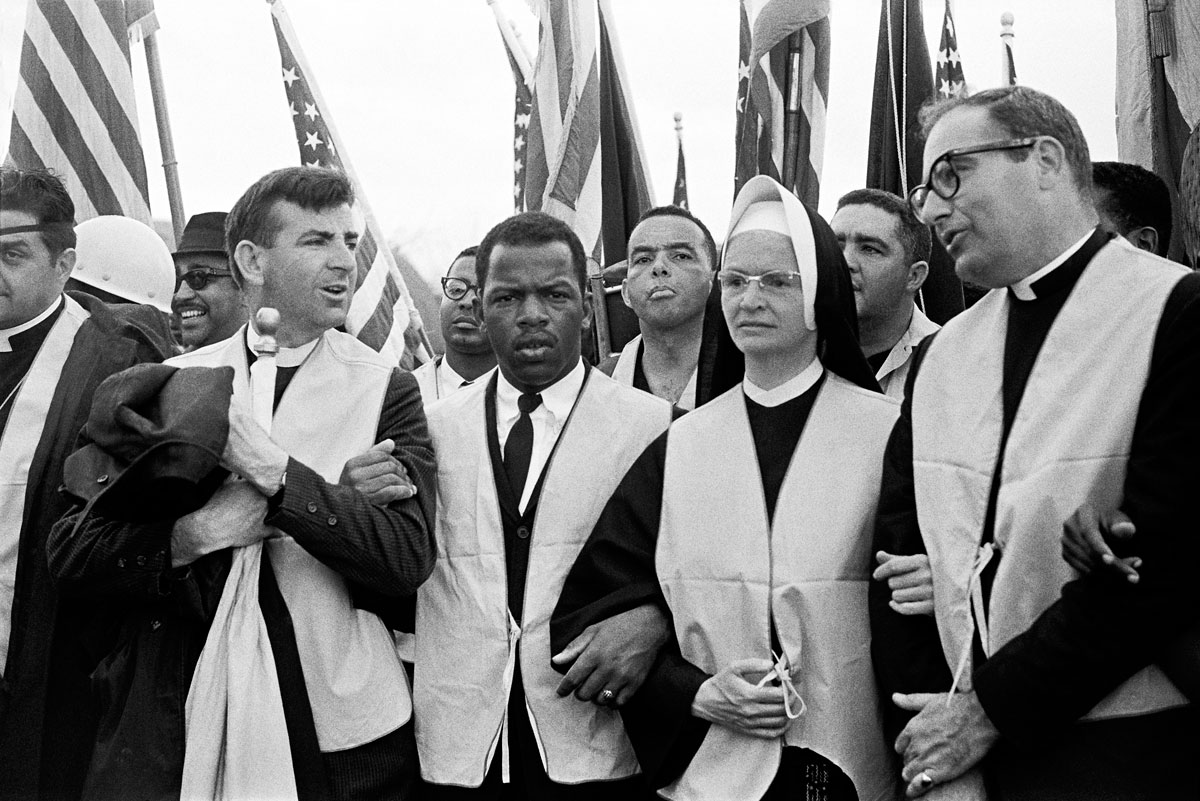
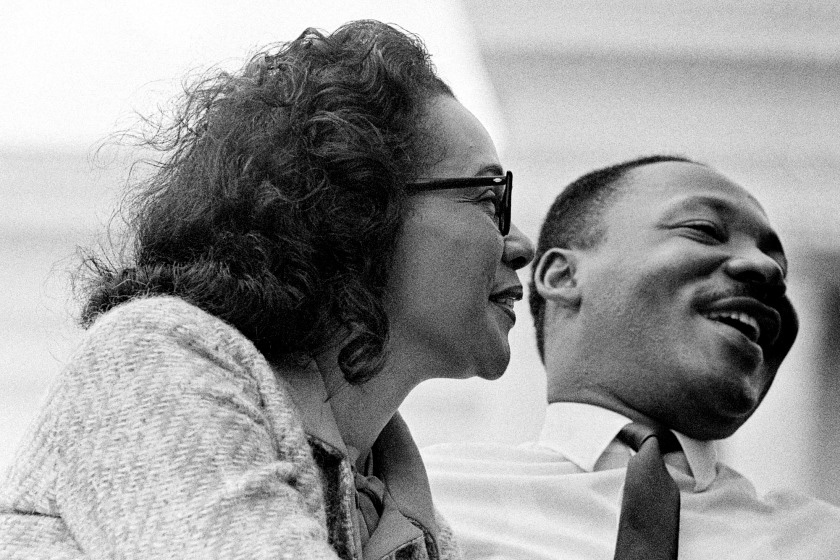
Exhibition: ‘Freedom Journey 1965: Photographs of the Selma to Montgomery March by Stephen Somerstein’ at the New-York Historical Society, New York

Exhibition dates: 16th January – 19th April, 2015

Curator: Dr. Louise Mirrer, President and CEO of the New-York Historical Society working with exhibition organiser Deborah Davis


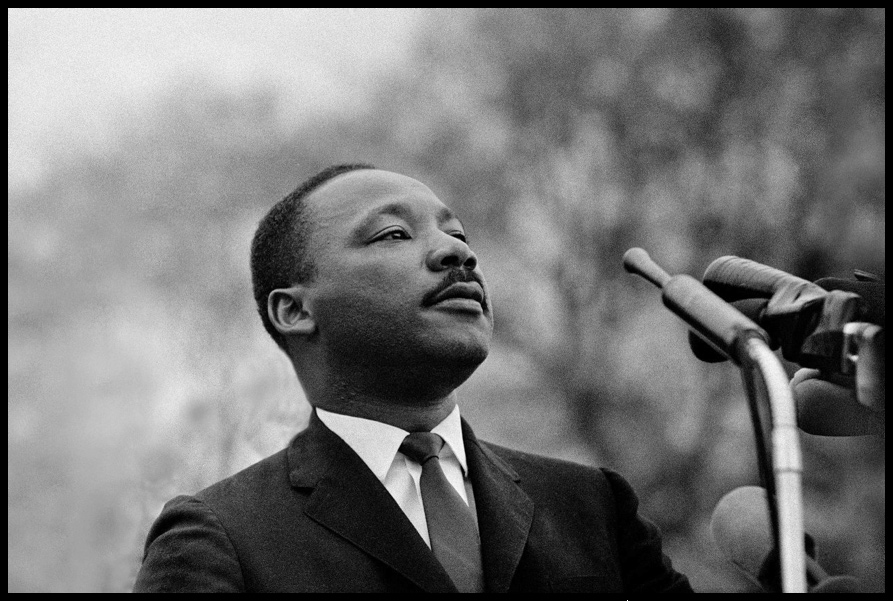
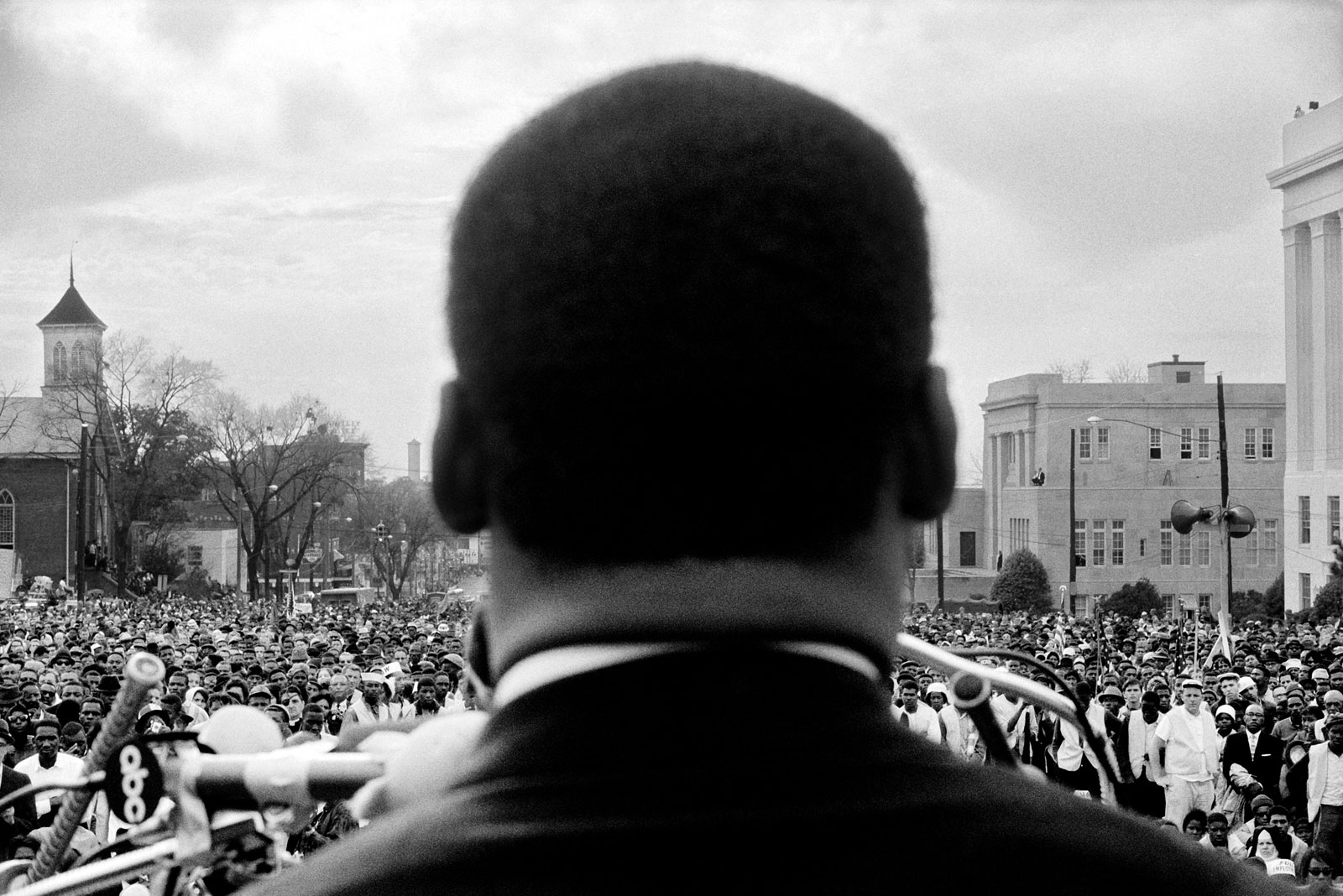
Stephen Somerstein (American, b. 1941) 'Dr. Martin Luther King, Jr. speaking to 25,000 civil rights marchers in Montgomery' 1965 from the exhibition 'Freedom Journey 1965: Photographs of the Selma to Montgomery March by Stephen Somerstein' at the New-York Historical Society, New York, January - April, 2015


Stephen Somerstein (American, b. 1941)
Dr. Martin Luther King, Jr. speaking to 25,000 civil rights marchers in Montgomery 
1965
Courtesy of the photographer


And still it goes on… whether it be so called Chelsea football “fans” singing racist songs and abusing a black man on the Paris Metro, the Australian government’s “intervention” in Aboriginal communities, or Channel Seven’s adverts for Australia: The Story of Us which states, “This is the story of how a bunch of convicts transformed Australia from a barren, frontier prison into one of the richest countries in the world.”

The use of the word “barren” insidiously supports the hidden tenants of racism, surreptitiously reaffirming the idea that Australia was a terra nullius when it was invaded. And for one of the richest countries in the world, the Aboriginal and refugee population is sure not seeing the benefits, both in terms of freedom (refugee children and Indigenous people from incarceration), health, education and life span.

When will the human race ever grow up? We have been fighting this stuff since time immemorial, or perhaps that should be time ‘in memoriam’ – in honour of those who have passed – and in honour of those that continue to suffer. In the end it all comes down to the intersectionality of power, race, religion, money, gender and place, a moveable and fluid feast of fear and loathing, possession and patriarchy. I don’t believe that it will ever change, unless something truly momentous happens to this world… the earth self regulates and rids itself of this disease, this human ‘race’. But we can and we will, still fight the good fight, against bigotry, war, corporations and government surveillance, everywhere.

Dr Marcus Bunyan


Many thankx to the New York Historical Society Museum and Library for allowing me to publish the photographs in the posting. Please click on the photographs for a larger version of the image.


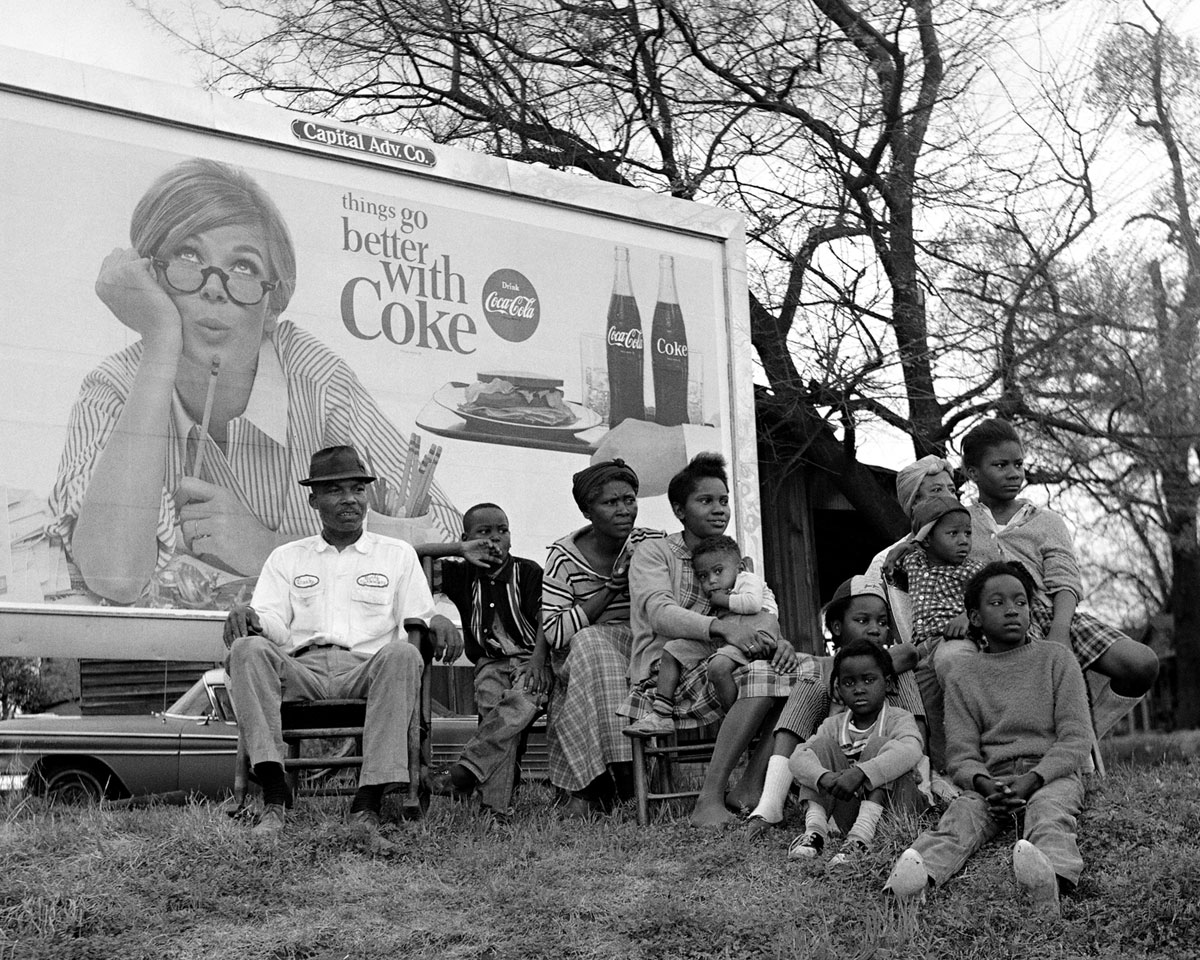
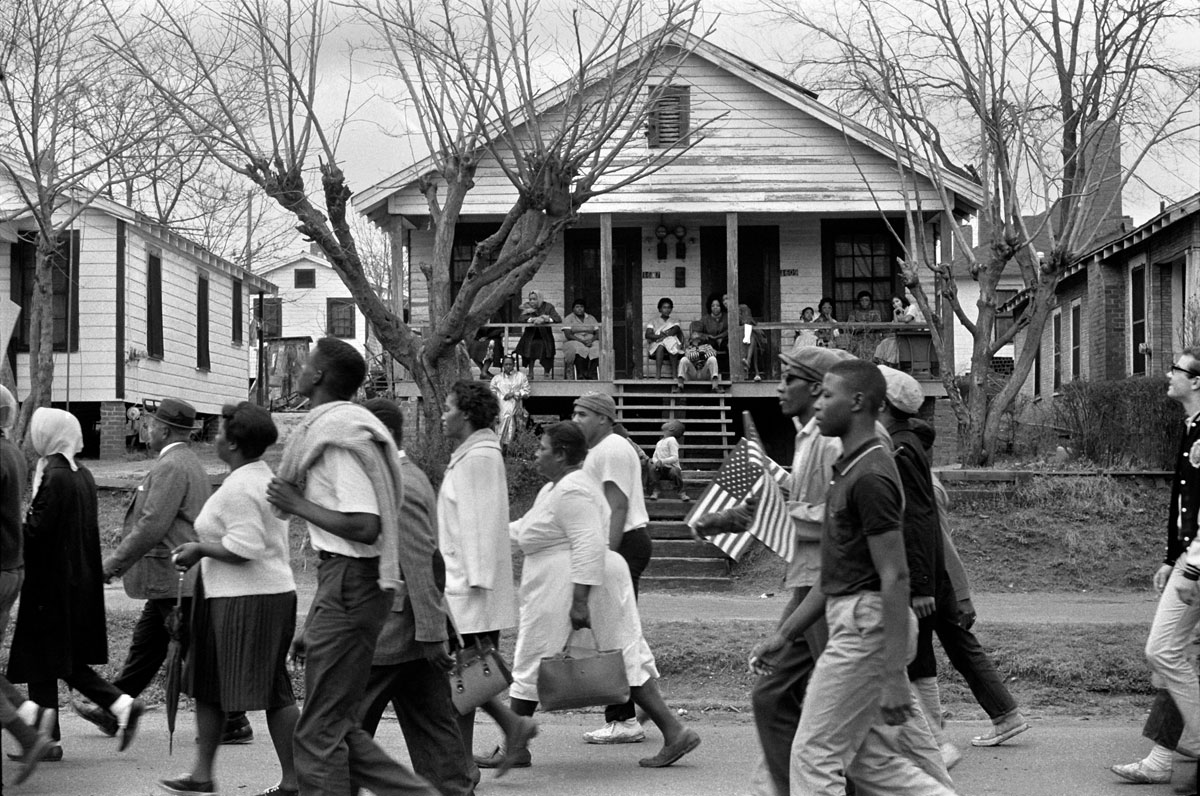
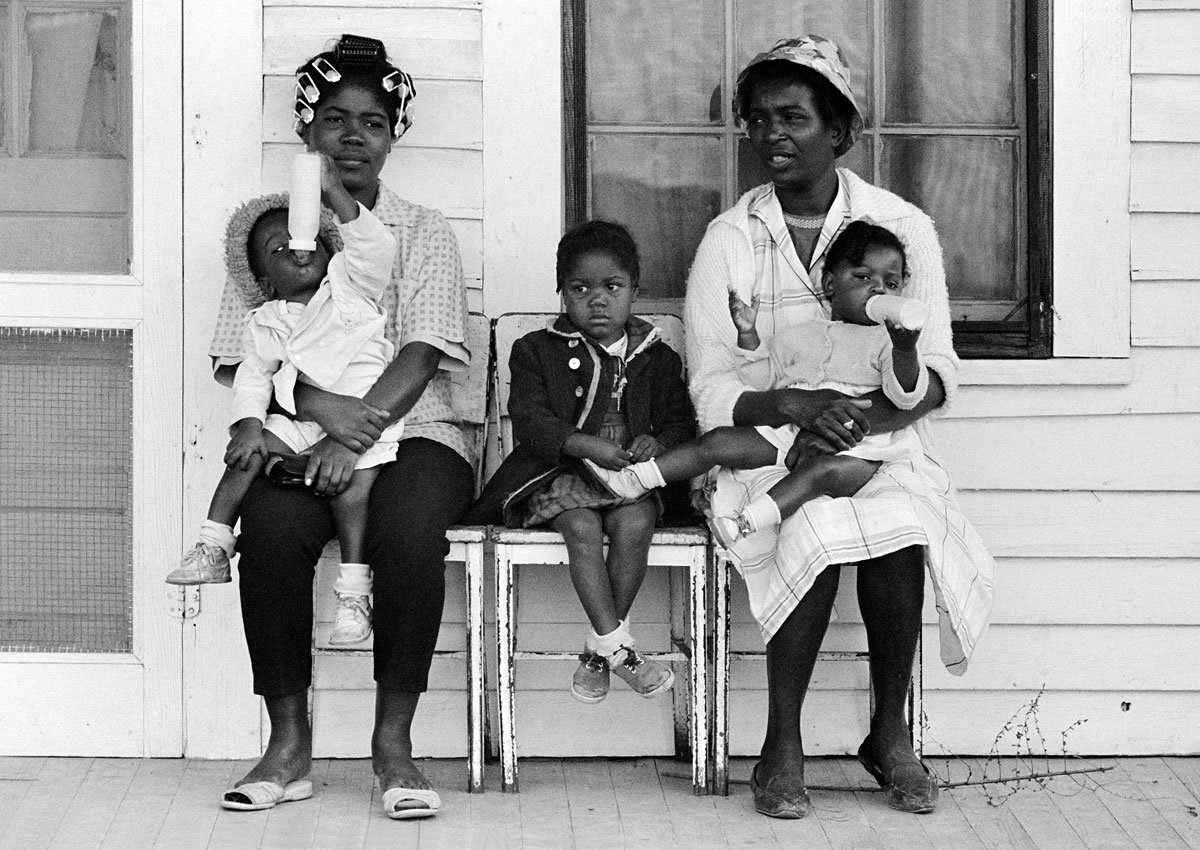
“All through the march I was thinking, ‘This is history in the making. Can I capture it? Can I give a sense to other people of what I am experiencing myself?’ That was the thread that always wove through the back of my mind. Am I up for the task?… I turned my camera most consciously to the people watching the march. It was meant to free them. The march was meant to give them voting rights. The march was meant to change their lives… I wanted the pictures to be a window for people to look back in time and see what it was like then. I needed to capture a sense of their vision.”


Stephen Somerstein


Stephen Somerstein (American, b. 1941) '"Things Go Better With Coke" sign and multi-generational family watching marchers' 1965 from the exhibition 'Freedom Journey 1965: Photographs of the Selma to Montgomery March by Stephen Somerstein' at the New-York Historical Society, New York, January - April, 2015


Stephen Somerstein (American, b. 1941)
“Things Go Better With Coke” sign and multi-generational family watching marchers
1965
Courtesy of the photographer


This is among Somerstein’s favourite shots from the march. “Only in this instant are they looking mostly in the same direction,” he said, recalling that a second shot he took just after lacked the “unity” of this composition.


Stephen Somerstein (American, b. 1941) 'Marchers on the way to Montgomery as families watch from their porches' 1965


Stephen Somerstein (American, b. 1941)
Marchers on the way to Montgomery as families watch from their porches
1965
Courtesy of the photographer


Stephen Somerstein (American, b. 1941) 'Nuns, priests, and civil rights leaders at the head of the march' 1965


Stephen Somerstein (American, b. 1941)
Nuns, priests, and civil rights leaders at the head of the march
1965
Courtesy of the photographer


Stephen Somerstein (American, b. 1941) 'Two mothers with children watching marchers' 1965


Stephen Somerstein (American, b. 1941)
Two mothers with children watching marchers
1965
Courtesy of the photographer


Stephen Somerstein (American, b. 1941) 'Dr. Martin Luther King, Jr. Looks out at crowd in Montgomery' 1965


Stephen Somerstein (American, b. 1941)
Dr. Martin Luther King, Jr. Looks out at crowd in Montgomery
1965
Courtesy of the photographer


“I had to be totally cool about it,” Somerstein said of getting this shot, taken from the platform where Martin Luther King was speaking. “You don’t ask people, you don’t discuss it, you just do it… I had 30 seconds to take the photograph.” This image inspired the poster for the current film Selma.

“Somehow, the photographer managed to position himself directly behind Dr. King as he delivered the sonorous “How Long? Not Long” speech: “Somebody’s asking, ‘How long will prejudice blind the visions of men, darken their understanding, and drive bright-eyed wisdom from her sacred throne?'” it began, ending, “Not long, because the arc of the moral universe is long, but it bends toward justice.” (Holland Cotter)

Iconic Photographs by Stephen Somerstein Capture the Spirit of the Civil Rights Movement

The New-York Historical Society showcases a powerful selection of photographs by Stephen Somerstein that chronicle the 1965 Selma-to-Montgomery Civil Rights March, honouring the 50th anniversary of the protest that changed the course of civil rights in America. On view from January 16 through April 19, 2015, the exhibition Freedom Journey 1965: Photographs of the Selma to Montgomery March by Stephen Somerstein will feature the work of the 24-year-old City College student, who felt he had to document “what was going to be a historic event.” He accompanied the marchers, gaining unfettered access to Dr. Martin Luther King, Jr., Coretta Scott King, Rosa Parks, James Baldwin, Joan Baez, and Bayard Rustin.

Through 55 black and white and colour photographs, Freedom Journey 1965 will document the quest for equality and social justice over the five-day march. Then the managing editor and picture editor of the City College newspaper, Stephen Somerstein recalls “When Dr. King called on Americans to join him in a massive protest march to Montgomery, I knew that important, nation-changing history was unfolding and I wanted to capture its power and meaning with my camera.”

The Selma-to-Montgomery March marked a peak of the American civil rights movement. From March 21 to March 25, 1965, hundreds of people marched from Selma to the State Capitol Building in Montgomery, Alabama to protest against the resistance that the Student Nonviolent Coordinating Committee (SNCC) and other groups had encountered in their mission to register black voters. By March 25, the group had grown to 25,000 people, which Dr. King addressed from the steps of the Montgomery State Capitol. Three months later, President Lyndon Johnson signed the Voting Rights Act of 1965.

Somerstein took approximately 400 photographs over the five-day, 54 mile march. Exhibition highlights include images of Dr. Martin Luther King, Jr. addressing the crowd of 25,000 civil rights marchers in Montgomery; folk singer Joan Baez, standing before a line of state troopers blocking the entrance to the State Capitol; white hecklers yelling and gesturing at marchers; families watching the march from their porches; and images of young and old alike participating in the demonstration.

Somerstein pursued a career in physics, building space satellites at the Harvard Smithsonian Astrophysical Observatory and Lockheed Martin Co. Upon retiring, Somerstein revisited the Selma photographs. Though he had sold a few of them, the majority were not showcased until he participated in a civil rights exhibition at the San Francisco Art Exchange in 2010. “I realised that I had numerous iconic and historic photographs that I wanted to share with the public,” says Somerstein.

This exhibit features the stunning and historic photographs of Stephen Somerstein, documenting the Selma-to-Montgomery Civil Rights March in January 1965. Somerstein was a student in City College of New York’s night school and Picture Editor of his student newspaper when he traveled to Alabama to document the March.

He joined the marchers and gained unfettered access to everyone from Martin Luther King Jr. to Rosa Parks, James Baldwin, and Bayard Rustin. “I had five cameras slung around my neck,” he recalled. Over the five-day, 54-mile march, Somerstein took about four hundred photographs including poignant images of hopeful blacks lining the rural roads as they cheered on the marchers walking past their front porches and whites crowded on city sidewalks, some looking on silently-others jeering as the activists walked to the Alabama capital. Somerstein sold a few photographs to the New York Times Magazine, Public Television and photography collectors, but none were exhibited until 2010, when he participated in a civil rights exhibition at the San Francisco Art Exchange.

Rather than choosing photography as a career, Somerstein became a physicist and worked at the Harvard-Smithsonian Astrophysical Observatory and at Lockhead Martin Company. It was only after his retirement in 2008 that he returned to his photography remarking that he wanted “to have exhibitions of my work and that I realised that I had numerous iconic as well as historic photographs.” Among those photographs were his moving photographs of that memorable march to Montgomery in 1965.”

Press release from the New-York Historical Society Museum and Library


Selma – Montgomery March, 1965

A powerful and recently rediscovered film made during the 1965 Selma to Montgomery march for voting rights. Stefan Sharff’s intimate documentary reflects his youthful work in the montage style under the great Russian filmmaker Sergei Eisenstein. The film features moving spirituals. Marchers include Rev. Dr. Martin Luther King Jr. and his wife Coretta Scott King. (NJ state film festival)

Director: Stefan Sharff

Cameramen:
Stefan Sharff
Christopher Harris
Julian Krainin
Alan Jacobs
Norris Eisenbrey


Stephen Somerstein (American, b. 1941) 'Coretta Scott King and husband civil rights leader Dr. Martin Luther King, Jr., on platform at end of 1965 Selma to Montgomery, Alabama Civil Rights March - March 25, 1965' 1965


Stephen Somerstein (American, b. 1941)
Coretta Scott King and husband civil rights leader Dr. Martin Luther King, Jr., on platform at end of 1965 Selma to Montgomery, Alabama Civil Rights March – March 25, 1965
1965
Courtesy of the photographer


It had taken them 54 miles on the march and their entire lives to reach their goal of voting rights for blacks. Somerstein, who took that photo as a CCNY student, says it’s one of his favourite images from that time.


Stephen Somerstein (American, b. 1941) 'Folk singer Joan Baez in Montgomery' 1965


Stephen Somerstein (American, b. 1941)
Folk singer Joan Baez in Montgomery
1965
Courtesy of the photographer


Stephen Somerstein (American, b. 1941) 'Hecklers yelling and gesturing at marchers' 1965


Stephen Somerstein (American, b. 1941)
Hecklers yelling and gesturing at marchers
1965
Courtesy of the photographer


Stephen Somerstein (American, b. 1941) 'Young civil rights marchers with American flags march in Montgomery' 1965


Stephen Somerstein (American, b. 1941)
Young civil rights marchers with American flags march in Montgomery
1965
Courtesy of the photographer


For all involved, danger was ever-present. The march, which covered 54 miles and took five days, from March 21 to 25, had been preceded by two traumatic aborted versions. On March 7, 600 people trying to walk across the Edmund Pettus Bridge over the Alabama River leading out of Selma to Montgomery were accused by local law officials of gathering illegally and were savagely assaulted by state troopers. Two days later, a second group, this one led by Dr. King, approached the bridge, knelt to pray and turned back. If the retreat was intended as a symbolic rebuke to violence, it did no good. That night, a Unitarian minister from Boston named James J. Reeb, in town for the event, was beaten on the street by a group of Selma racists and died.

By the time of the third march, certain protective measures were in place. The force of public opinion was one. Pictures of the attack at the bridge had been widely seen in print and on national television: All eyes were on Selma now. An Alabama judge had finally granted legal permission for a march to proceed. Finally, President Lyndon B. Johnson, enraged at Gov. George C. Wallace’s refusal to shield the marchers, ordered federal troops to guard them…

Scads of photographers were on the job that day and, inevitably, certain subjects – political leaders, visiting celebrities – were the focus of many cameras, including Mr. Somerstein’s. Yet most of the people in his pictures are not stars; they’re rank-and-file participants. It’s from their perspective that we see the march. In one shot, we’re in the middle of it, surrounded by fellow walkers. In others, we’re looking out at bystanders who line the way: white office workers; hecklers; multiracial shoppers; African-American children on porches; women, dressed in Sunday best, on the steps of black churches.

This viewpoint subtly alters a standard account of the event, one perpetuated in Selma, which suggests that a small, elite band of high-level organisers were the heroes of the day. They were indeed heroes, but they were borne on the shoulders of the countless grass-roots organisers who paved the way for the march and the anonymous marchers, many of them women, who risked everything to walk the walk…

… in the film, the image [of the back of Dr King’s head] seems to be about the man and his drama; in Mr. Somerstein’s photograph, it seems to be about the crowd. For an account of this and other civil rights era events that balance symbols and facts, I look back to the documentary series Eyes on the Prize that ran on public television between 1987 and 1990. Its use of archival images and contemporary interviews with people involved in the Selma-to-Montgomery march gave equal time to personalities and larger realities. And its news clips of the bloody attack on citizens by the police on the bridge in Selma, despite being choppy and grainy, are to me far more wrenching in a you-are-there way than a Hollywood re-enactment, however spectacular. Mr. Somerstein’s quiet photographs are moving in a similar way.

Extracts from Holland Cotter. “A Long March Into History: Stephen Somerstein Photos in ‘Freedom Journey 1965’,” on the New York Times website [Online] Cited 19/02/2015. No longer available online. Used under fair use conditions for the purposes of education and research.


Stephen Somerstein (American, b. 1941) 'Family watching march' 1965


Stephen Somerstein (American, b. 1941)
Family watching march
1965
Courtesy of the photographer


Stephen Somerstein (American, b. 1941) 'Man with American flag and marchers walking past federal troops guarding crossroads' 1965


Stephen Somerstein (American, b. 1941)
Man with American flag and marchers walking past federal troops guarding crossroads
1965
Courtesy of the photographer


Martin Luther King Jr. (MLK) delivers his famous “How Long, Not Long” speech on the steps of the state capitol building in Montgomery, Alabama, 1965


Eyes On The Prize – (Part 6) Bridge to Freedom 1965


Stephen Somerstein talks about a photo he took during the famous 1965 Selma to Montgomery, Ala., march at the New-York Historical Society


Stephen Somerstein talks about a photo he took during the famous 1965 Selma to Montgomery, Ala., march at the New-York Historical Society on Wednesday. Somerstein was a 24-year-old college student when he photographed Dr. Martin Luther King Jr. and the march from Selma to Montgomery that changed the course of civil rights in the U.S. REUTERS


New-York Historical Society
170 Central Park West
at Richard Gilder Way (77th Street)
New York, NY 10024
Phone: (212) 873-3400

Opening hours:
Monday CLOSED
Tuesday – Thursday 11am – 5pm
Friday 11am – 8pm
Saturday – Sunday 11am – 5pm

New-York Historical Society website

LIKE ART BLART ON FACEBOOK

Back to top