Exhibition: ‘Alfred Buckham: Daredevil Photographer’ at the Scottish National Portrait Gallery, Edinburgh

Exhibition dates: 18th October, 2025 – 19th April, 2026

Curator: Louise Pearson
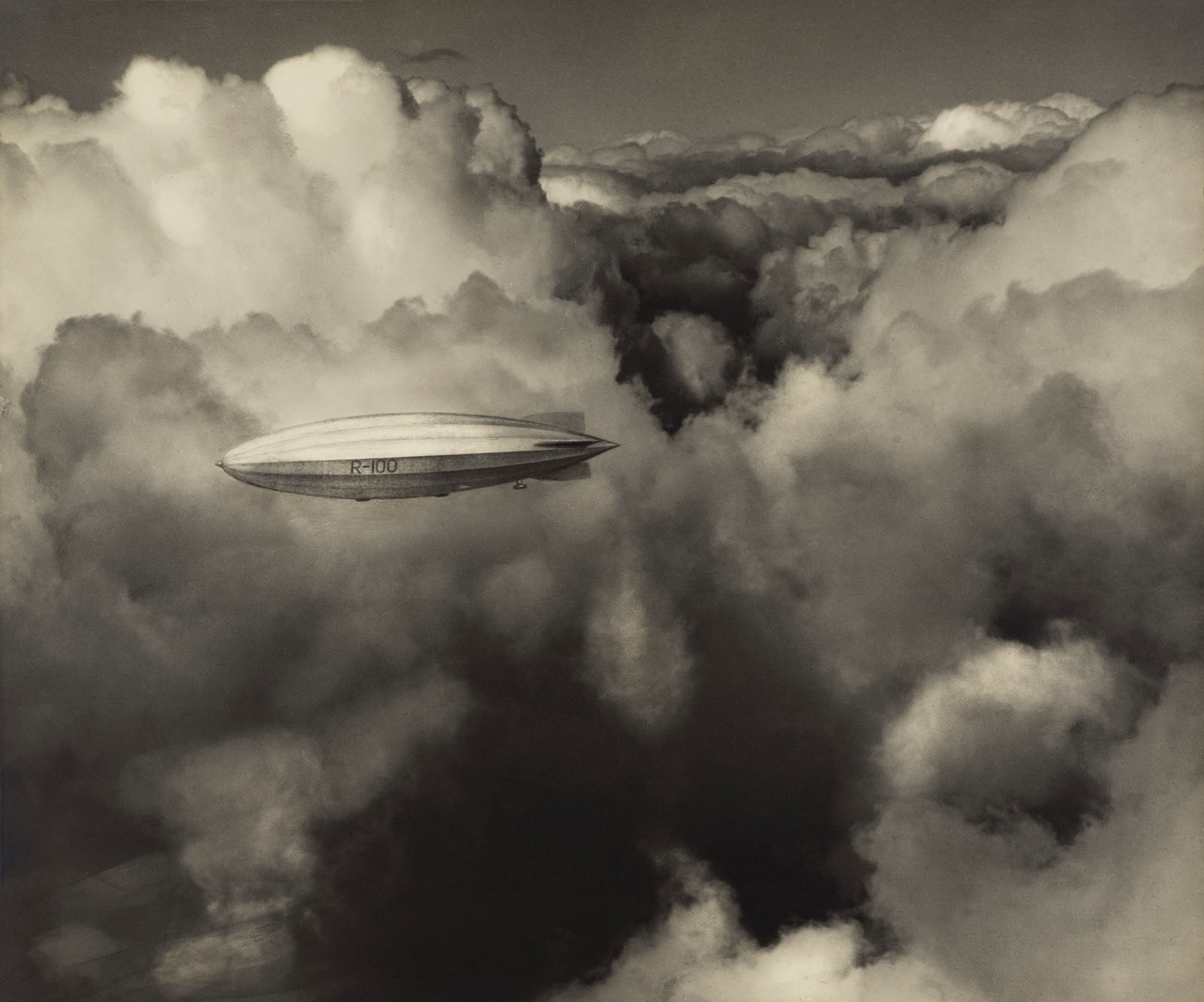
 

Alfred Buckham (British, 1879-1956) 'R100' about 1930


Alfred Buckham (British, 1879-1956)
R100
about 1930
Gelatin silver print
National Galleries of Scotland
Purchased with Art Fund support, 2008
© Richard and John Buckham


This is an example of one of his shots of an impressive cloud formation. It features the R-100 airship, noted for its more oval, aerodynamic shape in comparison to the traditional Zeppelin. The R-100 embarked on its maiden flight in 1929 but in 1930 it was deflated and removed from service following the crash of her sister ship, the R-101, with the loss of forty-eight lives. Buckham painted the airship into the scene by hand.


Flights of fancy

What a man, what a daredevil, what an artist!

Member of the Royal Photographic Society and lecturer in photography before the First World War.

Joined the Royal Naval Air Service (precursor to the Royal Air Force) in 1916 and taught young recruits the basics of photography before requesting a transfer to active service. He became a pioneer in aerial reconnaissance over France when the pilots and observers/camera operators of biplanes over the trenches had no parachutes.

Invalided out of the service in 1918 after multiple crashes. After his ninth crash he had to undergo a tracheotomy and spent the rest of his life breathing through a tube.

Determined to continue his love affair with flying and photography, he rented planes and, strapping himself in and leaning over the side with his heavy plate camera, he captured romantic, rugged, aerial landscape photographs which combined dramatic, atmospheric shots of the landscape with photographic manipulation inside and outside the darkroom.

Rather than scratching in the original negative and/or making a composite negative (a la the Australian photographer Frank Hurley, 1885-1962) or using photomontage (the cutting and pasting physical photographs together), Buckham used combination printing – the use of multiple negatives to create seamless, “perfect” images, such as adding detailed skies to landscapes and biplanes to the skies, planes that were photographed on the ground – in the final, unique print. He often scratched the final print to emphasise highlights, and then used watercolour paints to blend in the areas where the different negatives overlapped in the print or to paint in details of aircraft wheels or bridge supports.

Buckham’s photographs of the landscape are truly beautiful. I love them.

The final prints are a heady mixture of romantic landscape (with their underlying nod to Pictorialism, emotional, romantic, and atmospheric scenes over realistic documentation) and modernist elements, of cutting edge machines, bridges, aeroplanes, airships and flying boats added through photographic manipulation in the darkroom, further enhanced by hand, through scratching and painting on the actual print.

To finally reveal what Buckham felt of the physical thrill of flying and the deeply felt emotional reaction to the landscape beneath him – can you imagine being him! – creating these photographs with deep, inward feelings impinging on his mind, his imagination, his memory. To perfectly present “so nearly, the effect that I saw” when in the air. Clouds in a sea of air.

These. These were his flights of fancy.

Dr Marcus Bunyan


Many thankx to the Scottish National Portrait Gallery for allowing me to publish the photographs in the posting. Please click on the photographs for a larger version of the image.


“I always stand up to make an exposure and, taking the precaution to tie my right leg to the seat, I am free to move about rapidly, and easily, in any desired direction; and loop the loop, and indulge in other such delights, with perfect safety… If you stand erect you will not have to resist the fatal tendency to rest your arms on the side of the aeroplane whilst making the exposure, for if you do so your photograph will surely be spoiled by the vibration of the engine.”


“Unfortunately, Nature does not always surmount her landscapes with clouds such as will compose well, as a whole, in the picture space, consequently I have provided a store of over 2,000 cloud negatives for such contingencies and from this suitable clouds for combination purposes are selected. And here is just where the hasty or unobservant worker may go badly astray, producing incredible or even appalling results. For the lighting of the landscape must be in correct relation to the light coming down from the sky, and heavy cloud masses insist that they shall have corresponding shapes upon the earth. Selection for the right negative for the purpose may entail the inspection of fifty or more, and on the print some handwork with a chemical reducer and stumping chalk, or other medium, is usually required to bring the whole into harmony. So before venturing upon combination work it is surely wise to serve some years of apprenticeship sketching and painting in the open air, which happens to have been my own way of approach to photography.”


“The open cockpit of a not-too-speedy airplane affords better facilities for working than a cabined plane. When the best weather conditions prevail for pictorial photography, the skyroad is disposed to be bumpy, descending and ascending currents of air moving beneath the big banks of cumulus cloud. A sudden drop of 300 or 400ft may be a little alarming if one is not prepared for it.”


Alfred Buckham
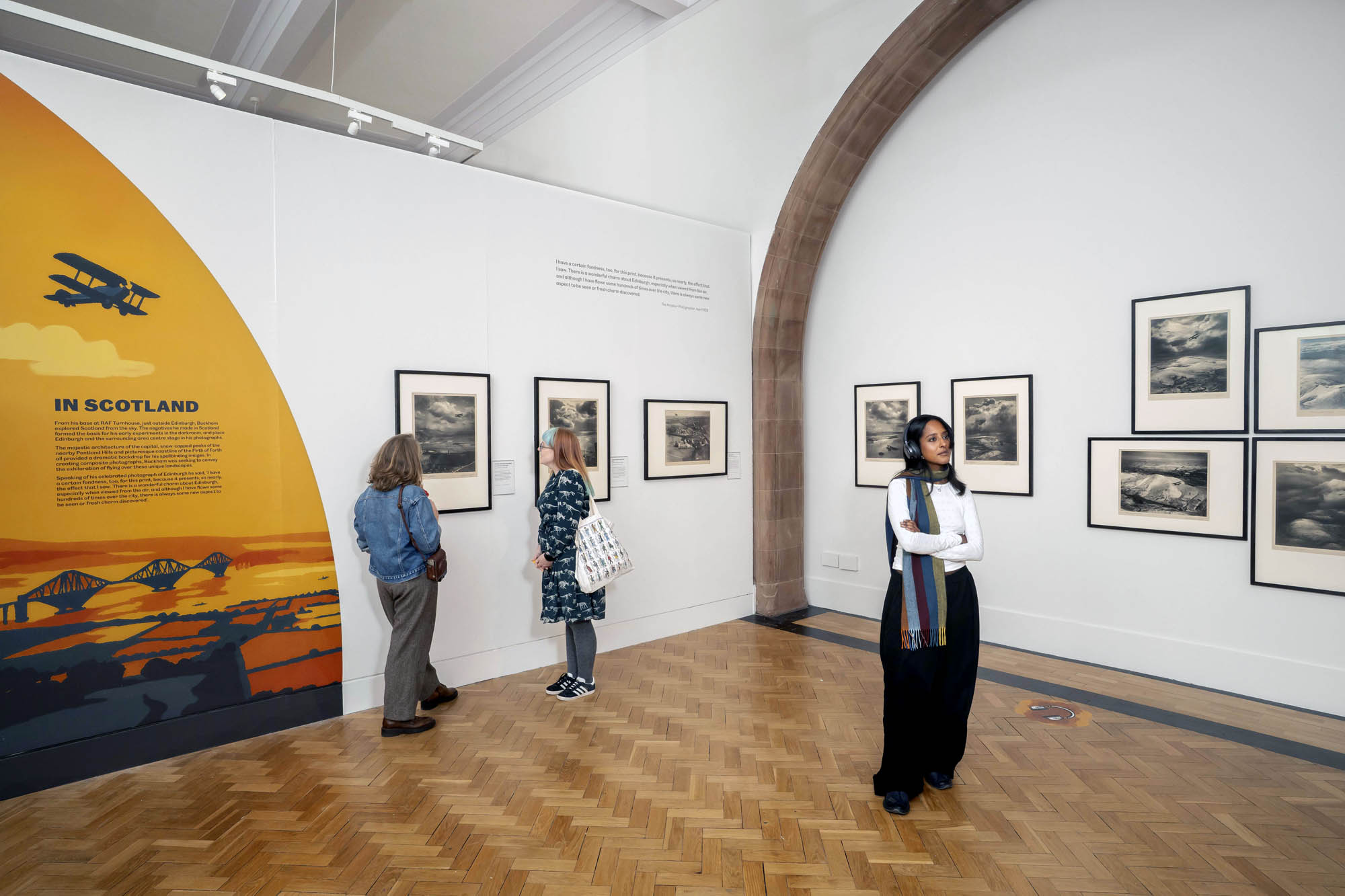


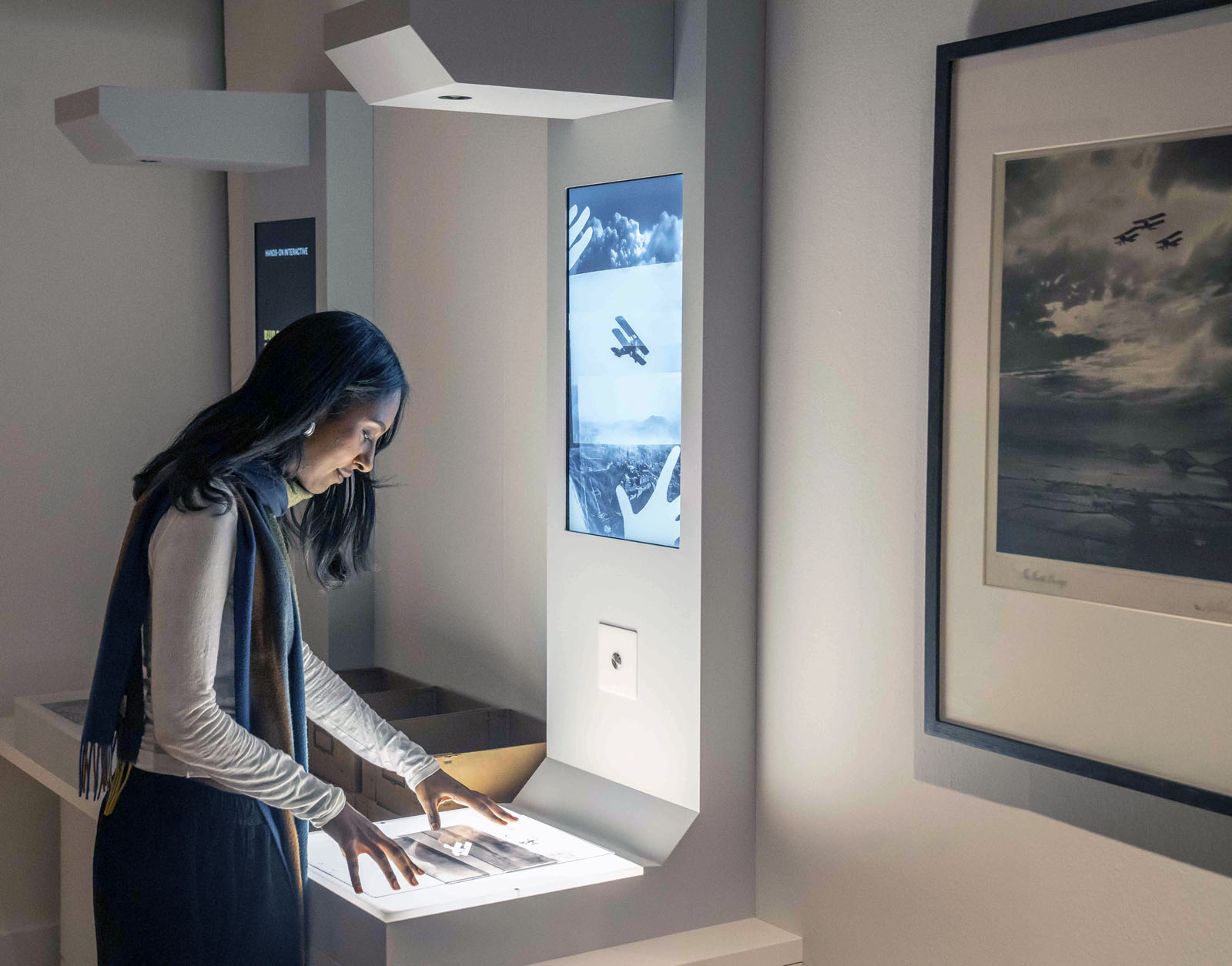
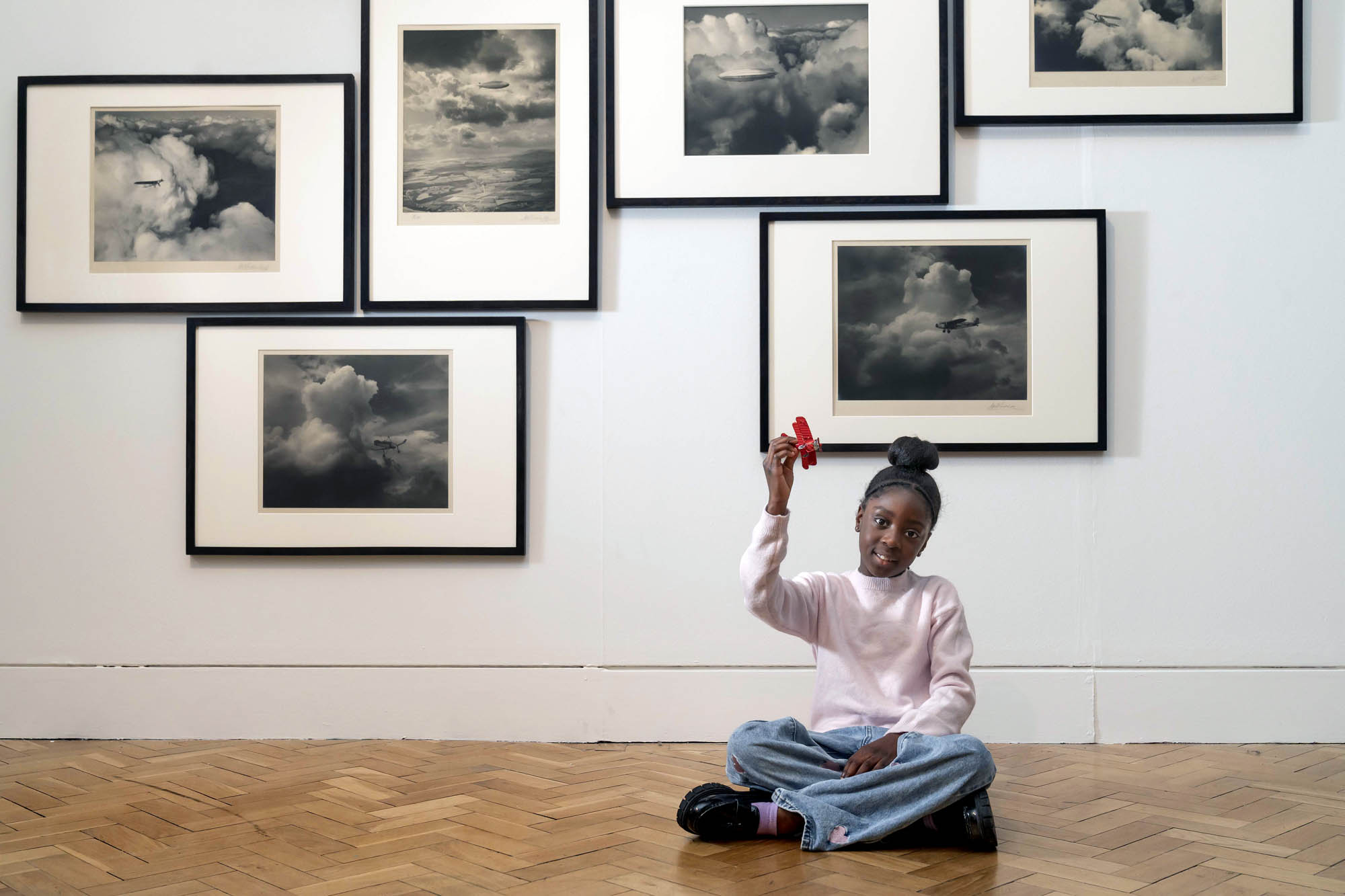
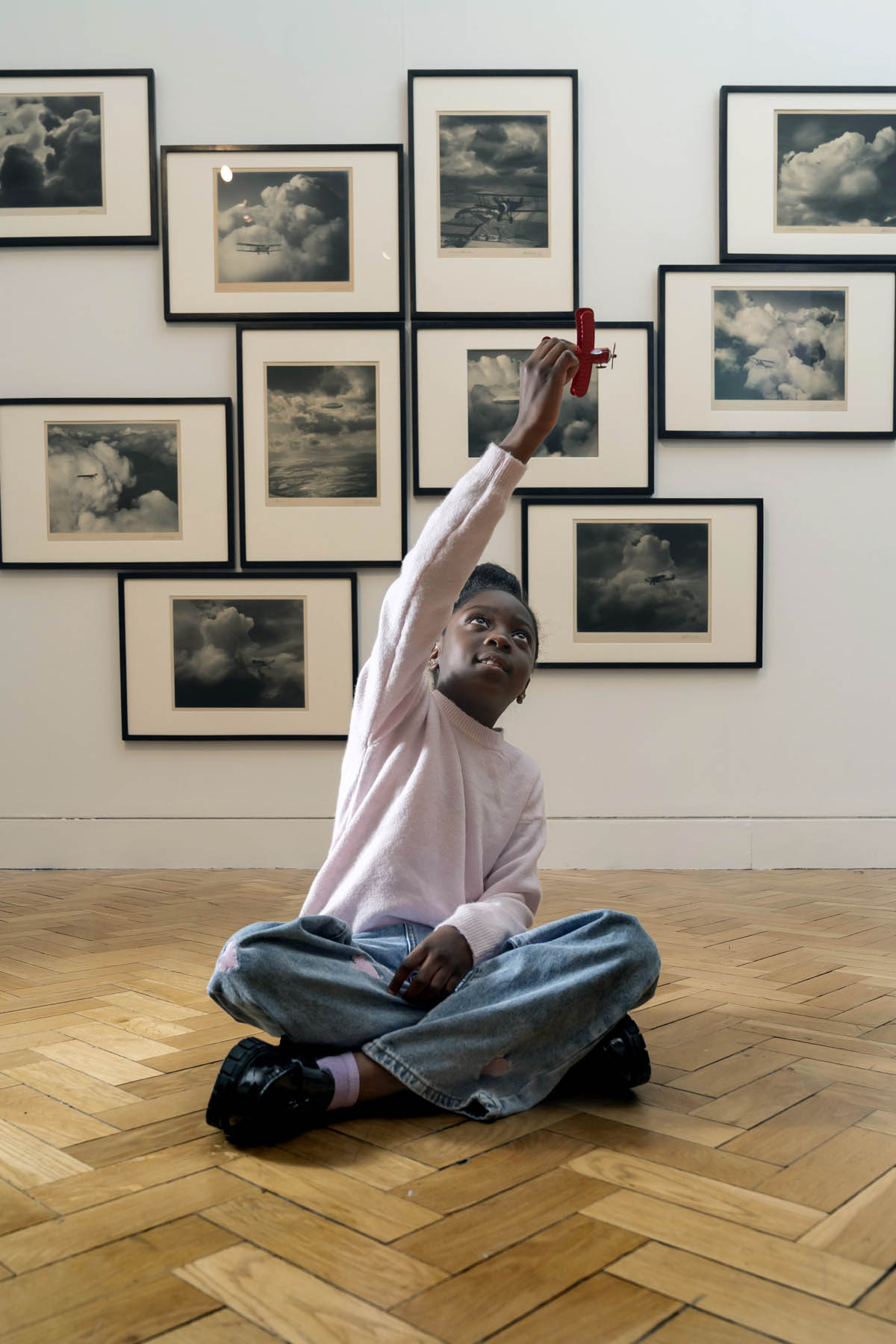
Installation view of the exhibition 'Alfred Buckham: Daredevil Photographer' at the Scottish National Portrait Gallery, Edinburgh


Installation views of the exhibition Alfred Buckham: Daredevil Photographer at the Scottish National Portrait Gallery, Edinburgh
Photos: Aly Wight
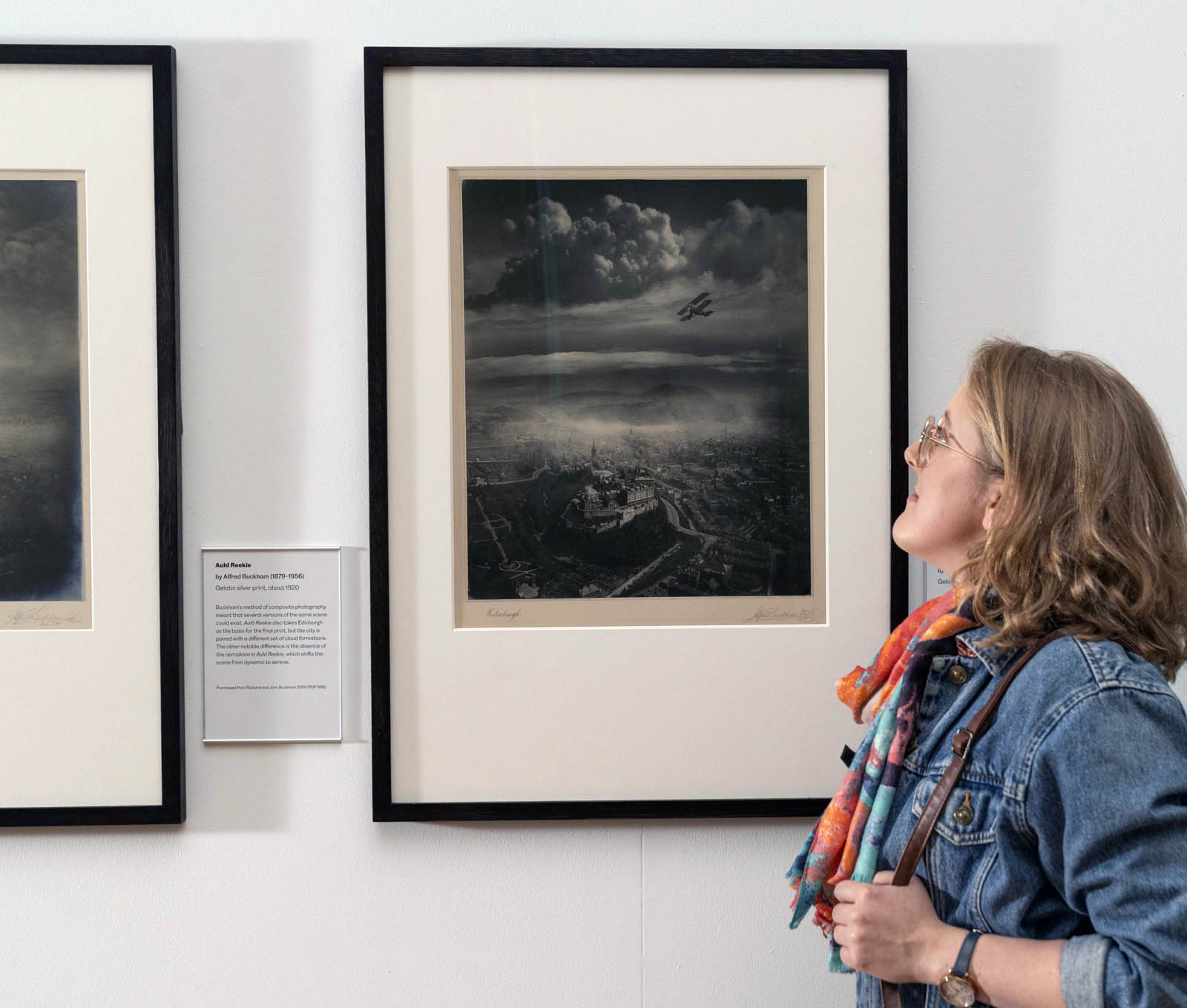
 

Installation view of the exhibition 'Alfred Buckham: Daredevil Photographer' at the Scottish National Portrait Gallery, Edinburgh showing Buckham's photograph 'Edinburgh' (about 1920)


Installation view of the exhibition Alfred Buckham: Daredevil Photographer at the Scottish National Portrait Gallery, Edinburgh showing Buckham’s photograph Edinburgh (about 1920, below)
Photo: Aly Wight
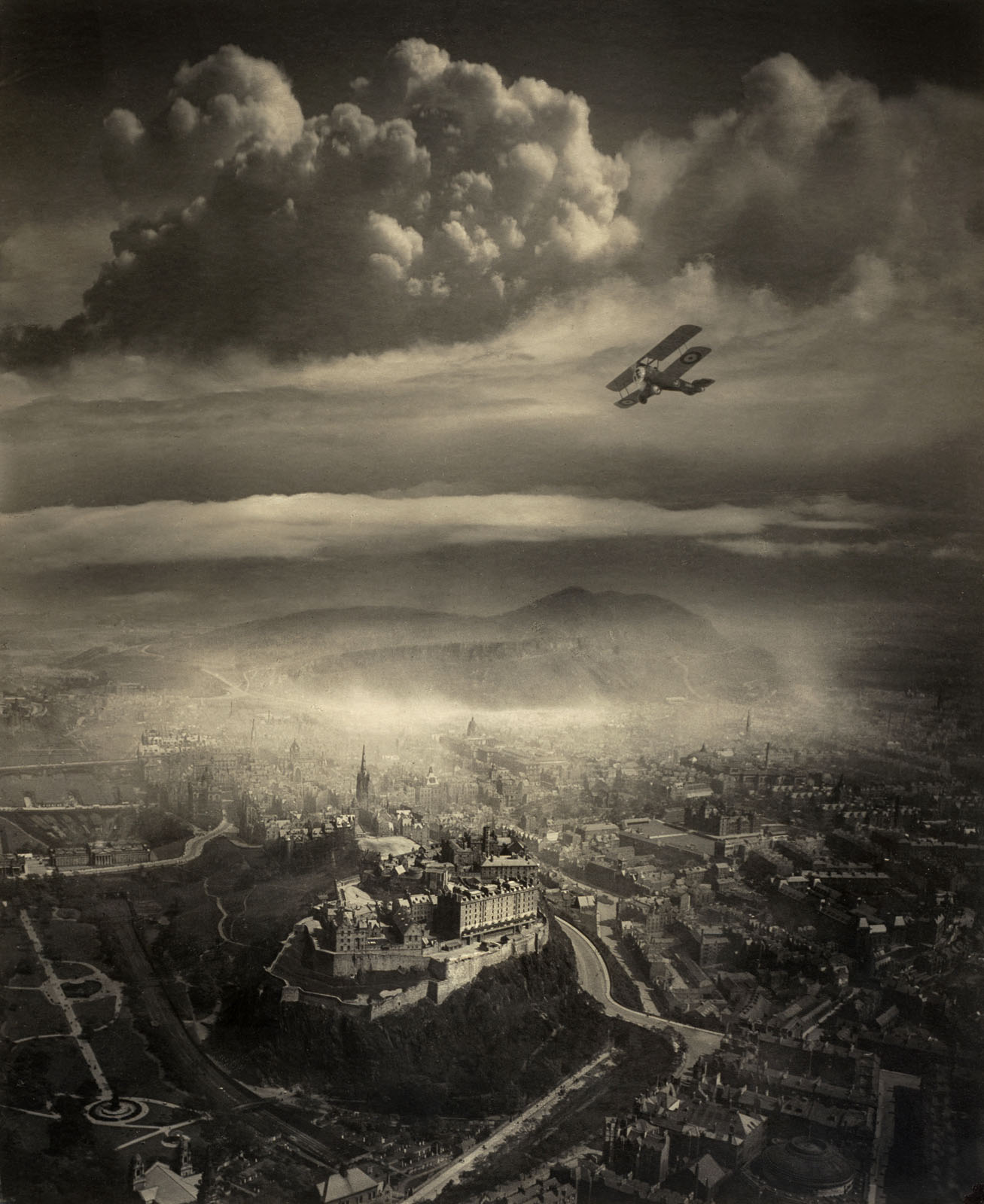
 

Alfred Buckham (British, 1879-1956) 'Edinburgh' about 1920


Alfred Buckham (British, 1879-1956)
Edinburgh
about 1920
Gelatin silver print
45.80 x 37.80 cm
Scottish National Gallery of Modern Art
Purchased 1990
© Richard and John Buckham


Buckham had crashed nine times before he was discharged from the Royal Naval Air Service as a hundred per cent disabled. Continuing to indulge his passion for aerial photography, he wrote that ‘If one’s right leg is tied to the seat with a scarf or a piece of rope, it is possible to work in perfect security’. Presumably these were the perilous conditions in which the photographer took this dazzling picture of Edinburgh, one of the city’s most popular aerial views.
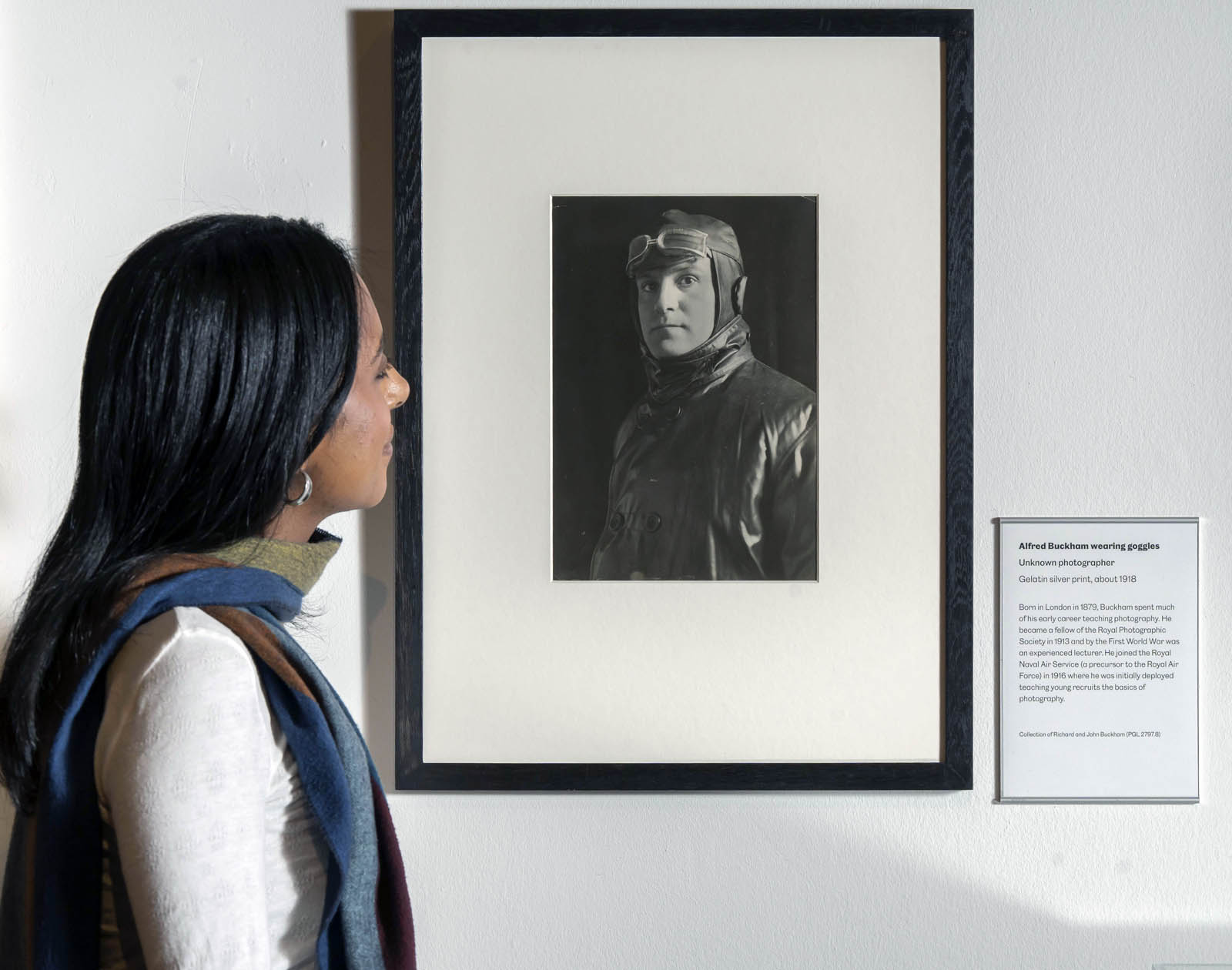
 

Installation view of the exhibition 'Alfred Buckham: Daredevil Photographer' at the Scottish National Portrait Gallery, Edinburgh showing Alfred Buckham wearing googles by an unknown photographer (1918, below)


Installation view of the exhibition Alfred Buckham: Daredevil Photographer at the Scottish National Portrait Gallery, Edinburgh showing Alfred Buckham wearing googles by an unknown photographer (1918, below)
Photo: Aly Wight
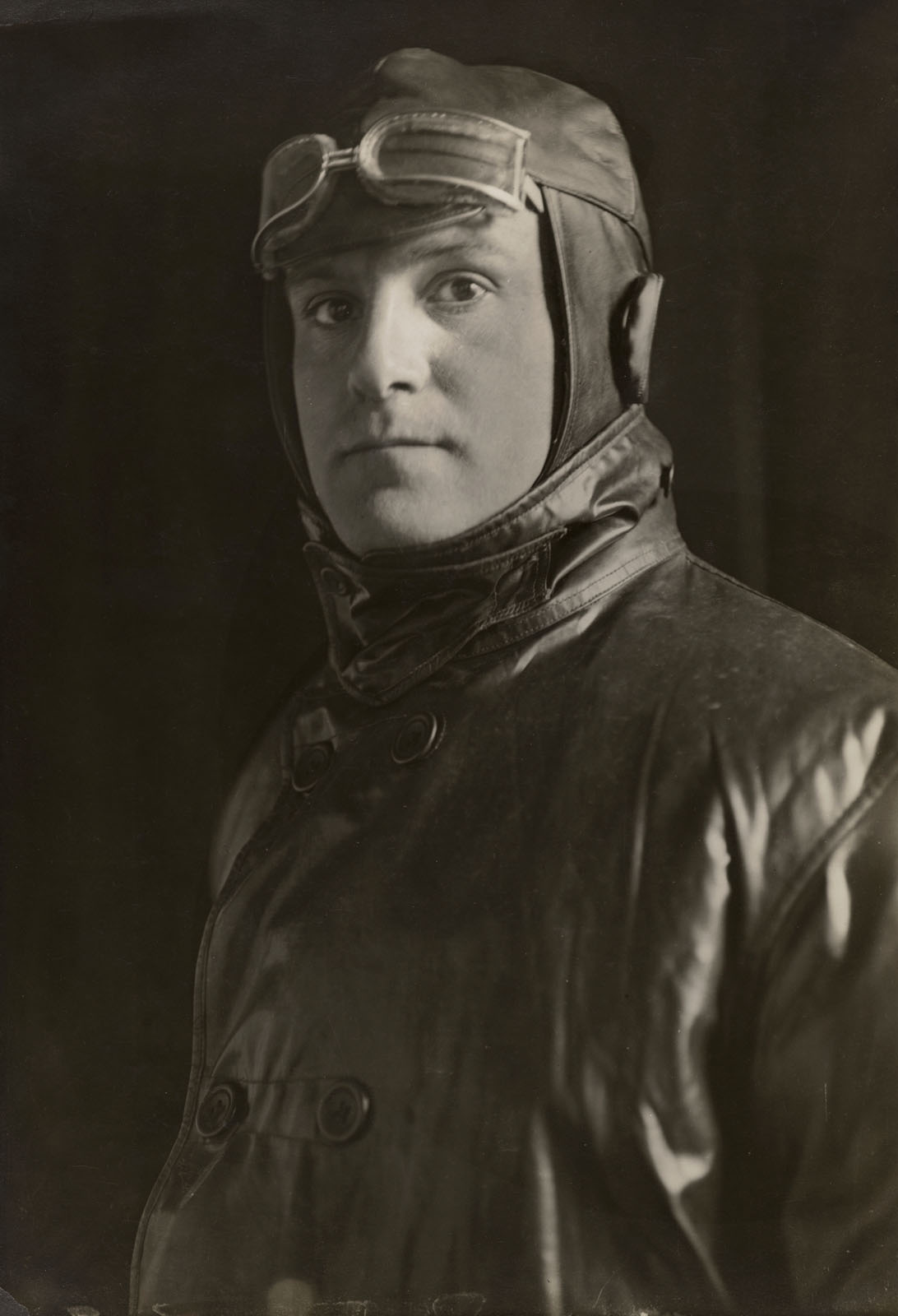
  

Unknown photographer. 'Alfred Buckham wearing googles' 1918


Unknown photographer
Alfred Buckham wearing googles
1918
Gelatin silver print
Collection of Richard and John Buckham
© Richard and John Buckham
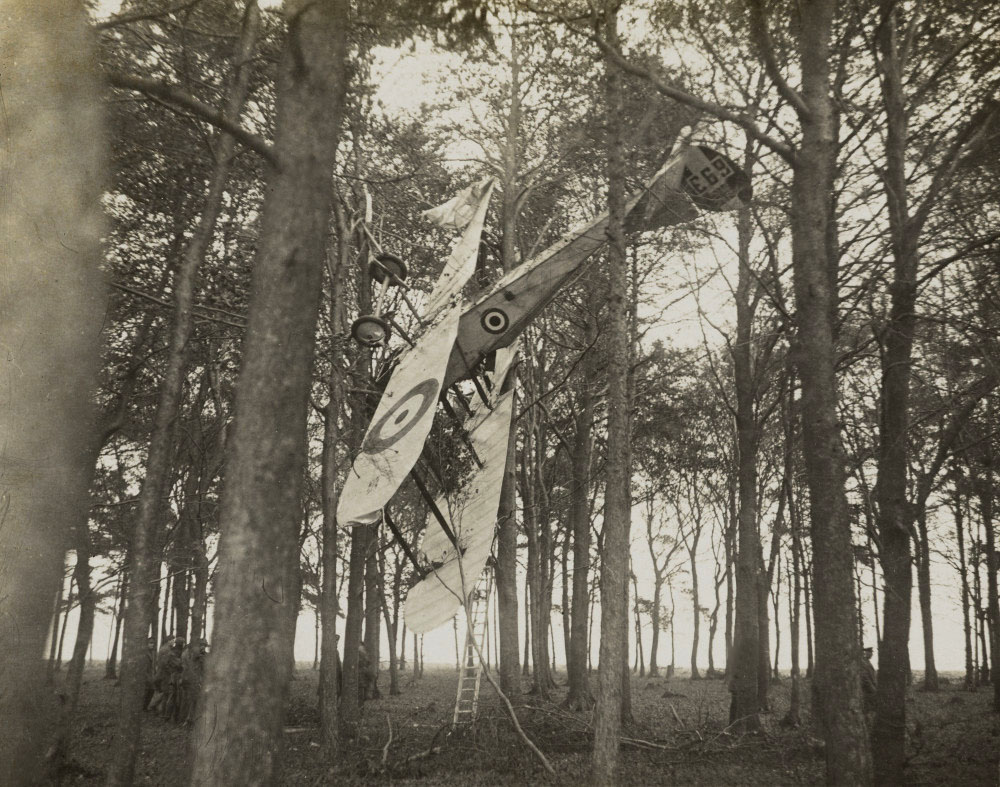
  

Unknown photographer. 'Alfred Buckham’s aeroplane hanging in a tree after a crash during the First World War' 1916


Unknown photographer
Alfred Buckham’s aeroplane hanging in a tree after a crash during the First World War
1916
Gelatin silver print
Collection of Richard and John Buckham
© Richard and John Buckham
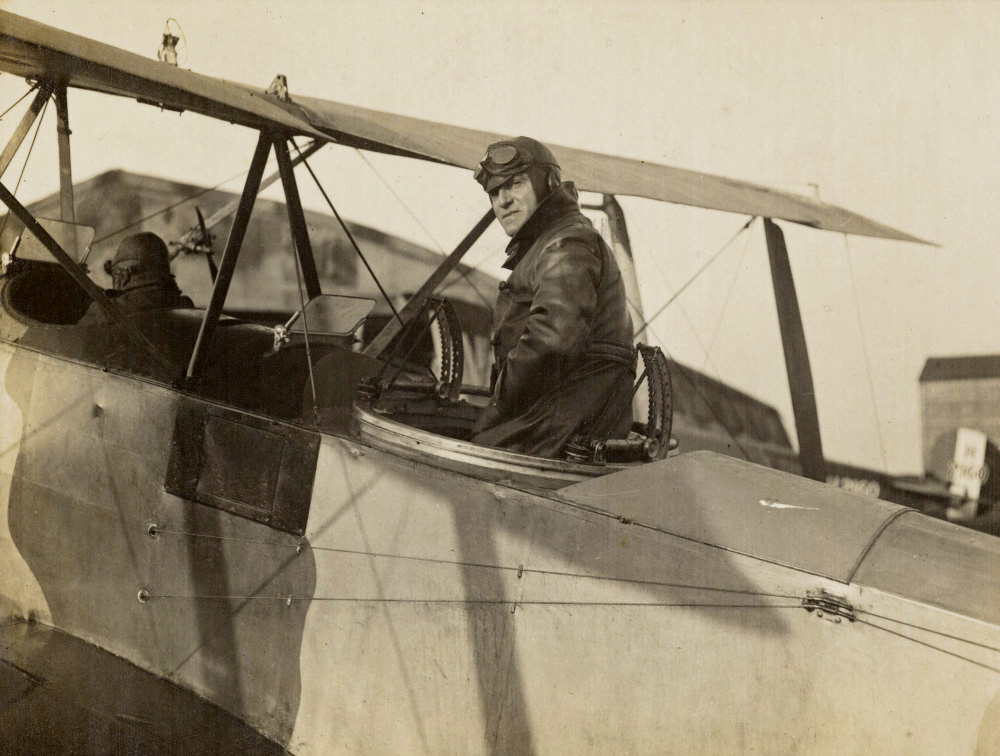
  

Unknown photographer. 'Alfred Buckham in an aeroplane' 1918


Unknown photographer
Alfred Buckham in an aeroplane
1918
Gelatin silver print
Collection of Richard and John Buckham
© Richard and John Buckham
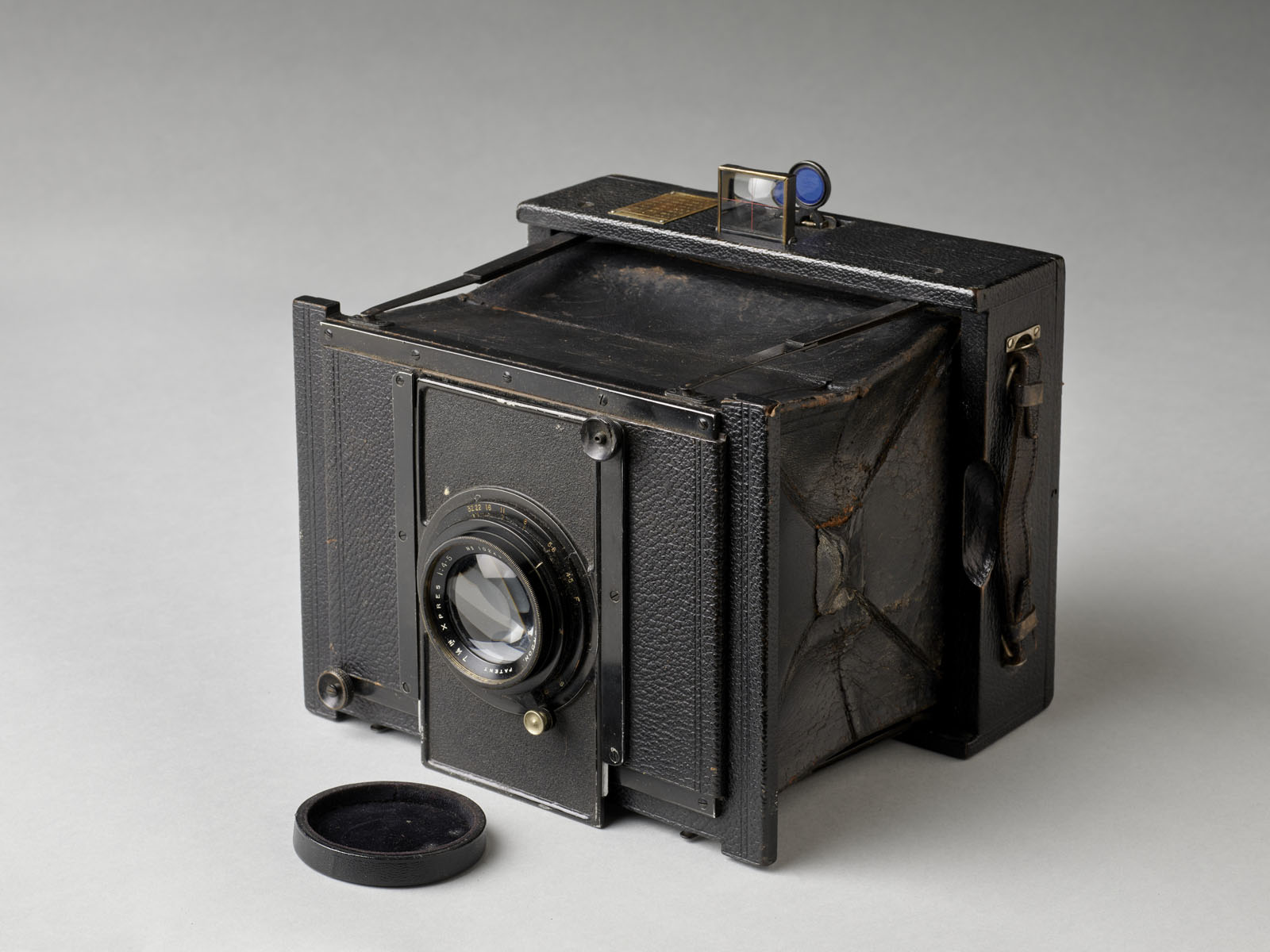
  

Unknown photographer. 'Camera belonging to Alfred G. Buckham' about 1920


Unknown photographer
Camera belonging to Alfred G. Buckham
about 1920
National Galleries of Scotland
Purchased from Richard and John Buckham, 2019
© Richard and John Buckham


Take to the skies and discover the world from above the clouds through the remarkable work of Alfred Buckham: Daredevil Photographer.

A trailblazer in his field, Alfred Buckham soared above the realms of what was thought to be possible in 20th century photography and aviation. Meet the man behind some of the most iconic aerial photographs, marvel at the death-defying lengths he took to capture the perfect image and explore how his innovative techniques paved the way for modern technologies such as Photoshop and AI.

Text from the Scottish National Portrait Gallery website


Alfred Buckham’s first ambition was to be a painter, but after seeing JMW Turner’s pictures in the National Gallery in London, he returned home and made a bonfire of his own work. He was the first head of aerial reconnaissance for the Royal Navy in the First World War and later a captain in the Royal Naval Air Service. After crashing nine times he was obliged to undergo a tracheotomy and was discharged as a hundred per cent disabled. While recovering from surgery Buckham started making photo-montages, combining two or three photographs he had taken to compose a single image. He would look for a sky which complemented the city or landscape below, and even add tiny planes to create the look of a one-shot photograph. He continued to take aerial photographs with a heavy plate camera, leaning perilously out of the aeroplane, where his delight in picture making greatly increased the risk of accident.

Text from the National Galleries website


Secrets of the Darkroom | Alfred Buckham

Transcript

Narrator: Lucy Armitage
Video duration: 00:03:43

[This film consists of animations illustrating the photographic techniques described in the narration]

Narrator

How would you have combined multiple photographs into one image in the days before Photoshop? From wartime aerial reconnaissance photographer to intrepid explorer, Alfred Buckham was a true daredevil.

But when he entered the darkroom, he was a meticulous and innovative artist. Let’s take a look at one of his most iconic composite photographs: Edinburgh, which was made using three separate negatives.

The first stage would have been to select one of the negatives he captured while literally dangling from his cockpit at death-defying heights.

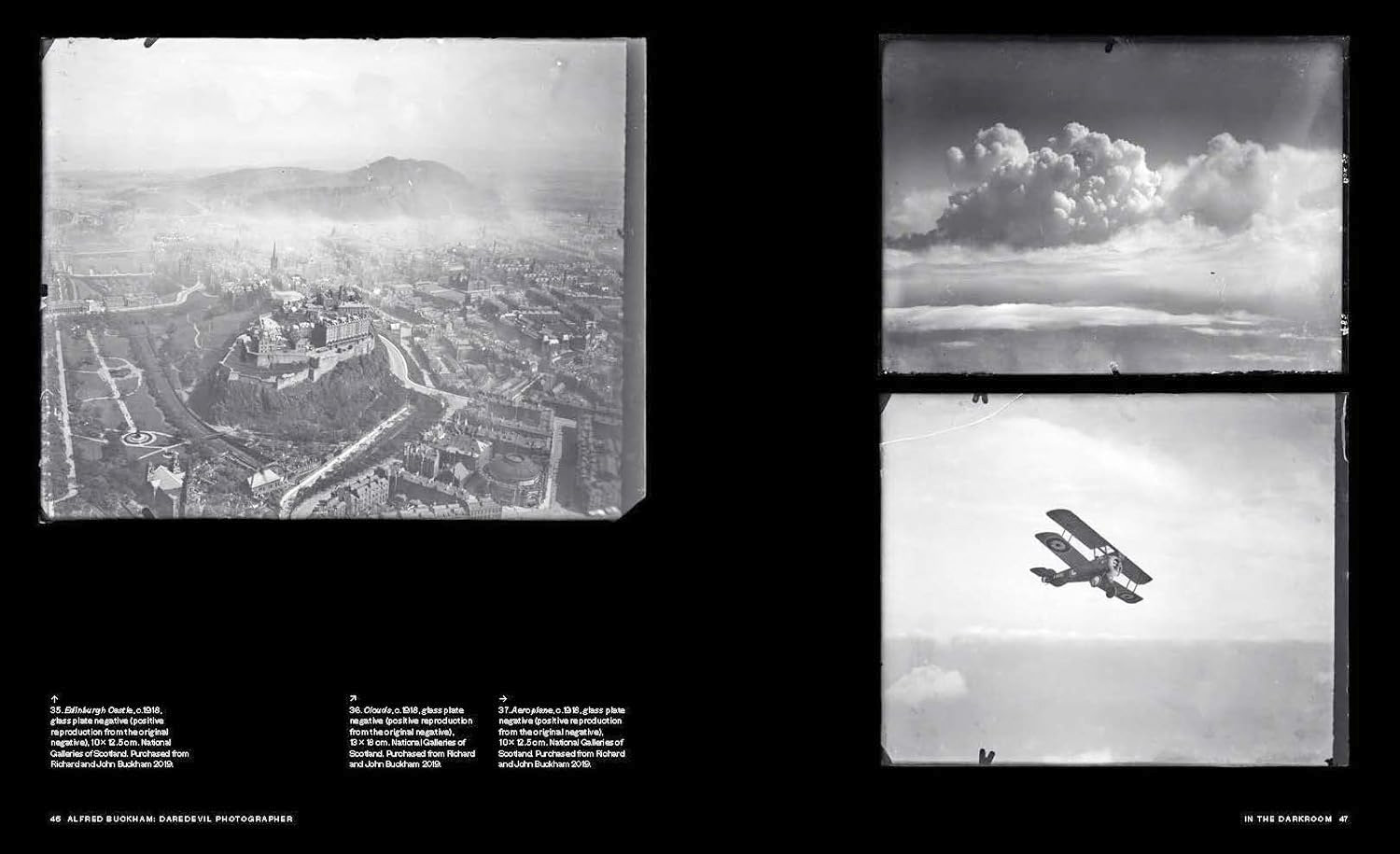
He would then select a second negative from his impressive library of over 2,000 negatives of clouds. Selecting the right clouds sometimes required inspecting 50 or more options, and occasionally, he created new cloud formations by taping two negatives together.

He also built up a library of plane negatives, masking each plane from the background. All these planes were photographed from the ground, because it would have been impossible to capture a clear image of a plane, mid-flight, from another moving vehicle.

To make a photographic print, the negative would be placed into a device called an enlarger. Think of it like a top-down projector, shining light through the negative to project its image onto a sheet of light-sensitive photographic paper.

This paper would become a canvas for combining multiple negatives into one image. Buckham would first expose the image of Edinburgh onto the lower half of the paper for just the right amount of time. Next, he would expose the image of the sky onto the upper half. The longer the light projected the negative onto the paper, the darker the final image would be.

Throughout the exposure process, he used dodging and burning techniques to soften the horizon where the two negatives met. Dodging involves using your hand, or a piece of card, to block light on specific areas of the paper during exposure, making them appear lighter in the final print. Burning works in the opposite way, where you block light on the areas you’re happy with, and expose for longer the areas you want to darken.

Buckham used a pin mark to identify his chosen spot for the aeroplane. He would have to adjust the height of the enlarger to change the apparent size of the aeroplane. In this case, he also inserted the negative into the enlarger back to front to reverse the plane’s direction. Did you spot the backwards tail number?

After all three exposures, he would then place the paper into a shallow chemical bath called a developer for a set time. Slowly, as if by magic, the composite image would begin to appear on the paper. Subsequent chemical baths stopped the development process before fixing the image in place.

After washing and drying the paper, the print was ready for final adjustments. Buckham rarely edited negatives directly, as was common for photographers using glass plates. Instead, he made all his final adjustments in the print.

Here, he has used black watercolour to enhance the contrast between the brooding castle and the rest of the city. He would sometimes scratch away dark areas of the print to reveal the lighter colour of the paper beneath. Using this method, he could create the impression of spinning propeller blades or light glinting on key landmarks.

These artistic interventions resulted in each print being truly unique. Buckham’s photographs not only capture breathtaking moments at daring, dizzying heights, but are also the meticulous creations of a pioneering visionary artist.
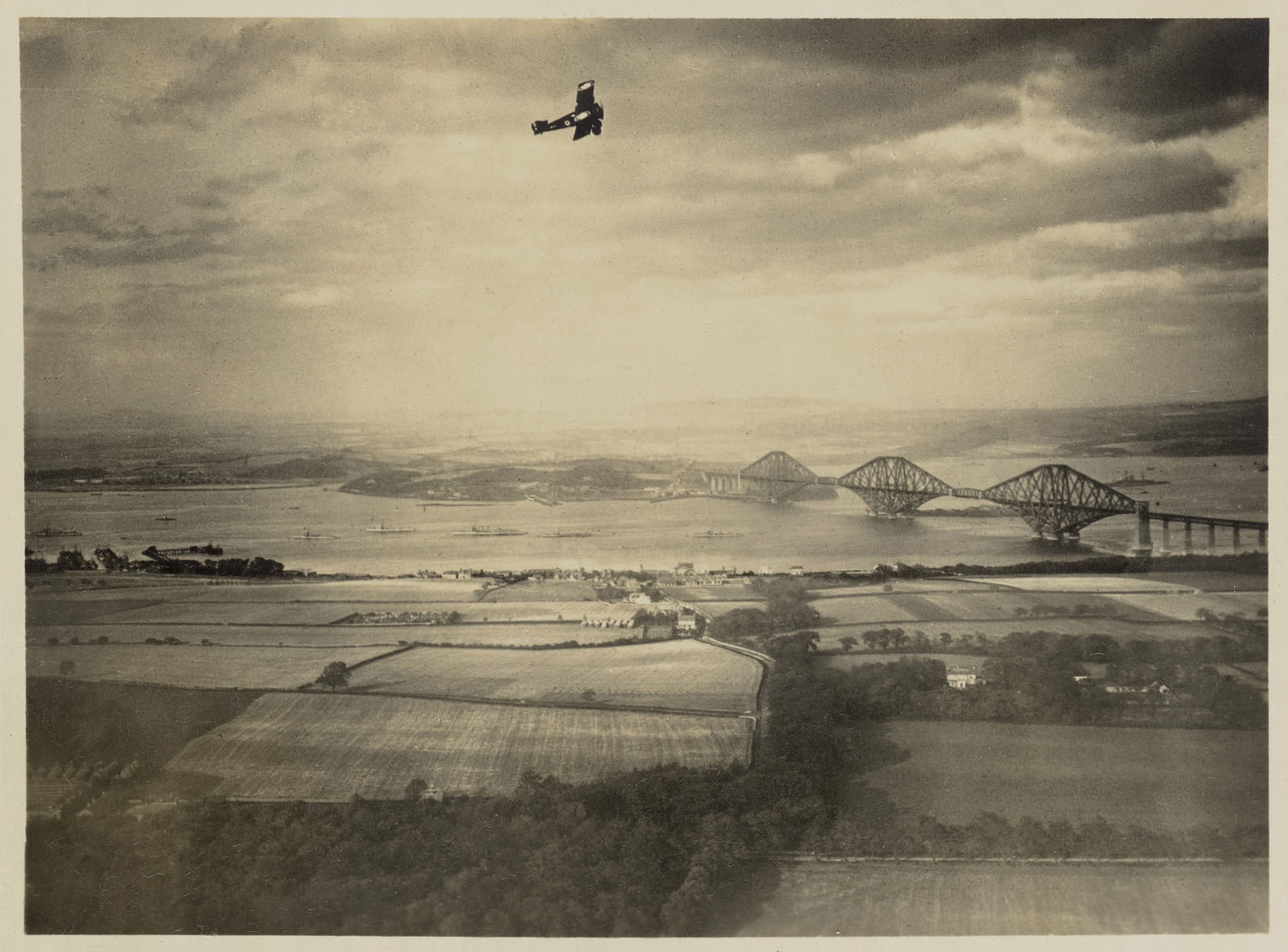
 

Alfred Buckham (British, 1879-1956) 'RAF Turnhouse Christmas Card' 1918


Alfred Buckham (British, 1879-1956)
RAF Turnhouse Christmas Card
1918
Gelatin silver print
National Galleries of Scotland
Gift of the Bartholomew Family, Edinburgh, 2022
© Richard and John Buckham


A negative of The Forth Bridge, looking north towards Fife, was used as the basis for several prints. It was also used to produce this Christmas card for RAF Turnhouse in 1918. Showing an aeroplane flying towards the Forth Bridge, this is probably one of the first composite photographs Buckham created as it was made while he was still serving in the air force.
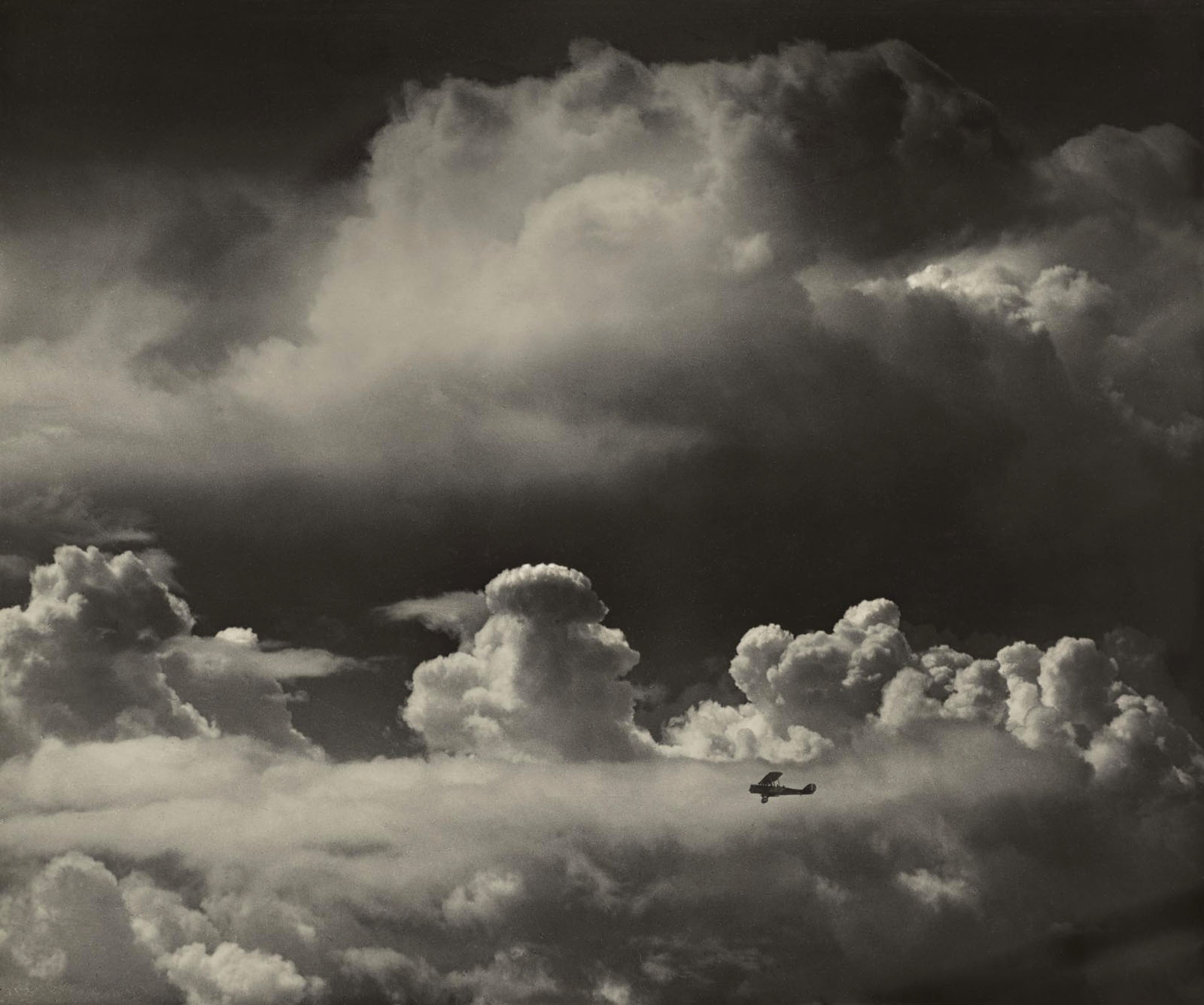
 

Alfred Buckham (British, 1879-1956) 'Cloud Turrets' about 1920


Alfred Buckham (British, 1879-1956)
Cloud Turrets
about 1920
Gelatin silver print
38.00 x 45.70cm
National Galleries of Scotland
Purchased with Art Fund support, 2008


This dramatic, and almost surreal photograph, shows the diversity of cloud formations during a fierce thunderstorm. Over the years Buckham amassed a vast collection of photographs of skies which he could integrate with a separate landscape photograph to enhance the drama and create a more impressive composition. He also often manipulated his images further by adding a hand painted aircraft, such as in this image, which heightens the viewer’s awareness of the dominating power and scale of the natural world.
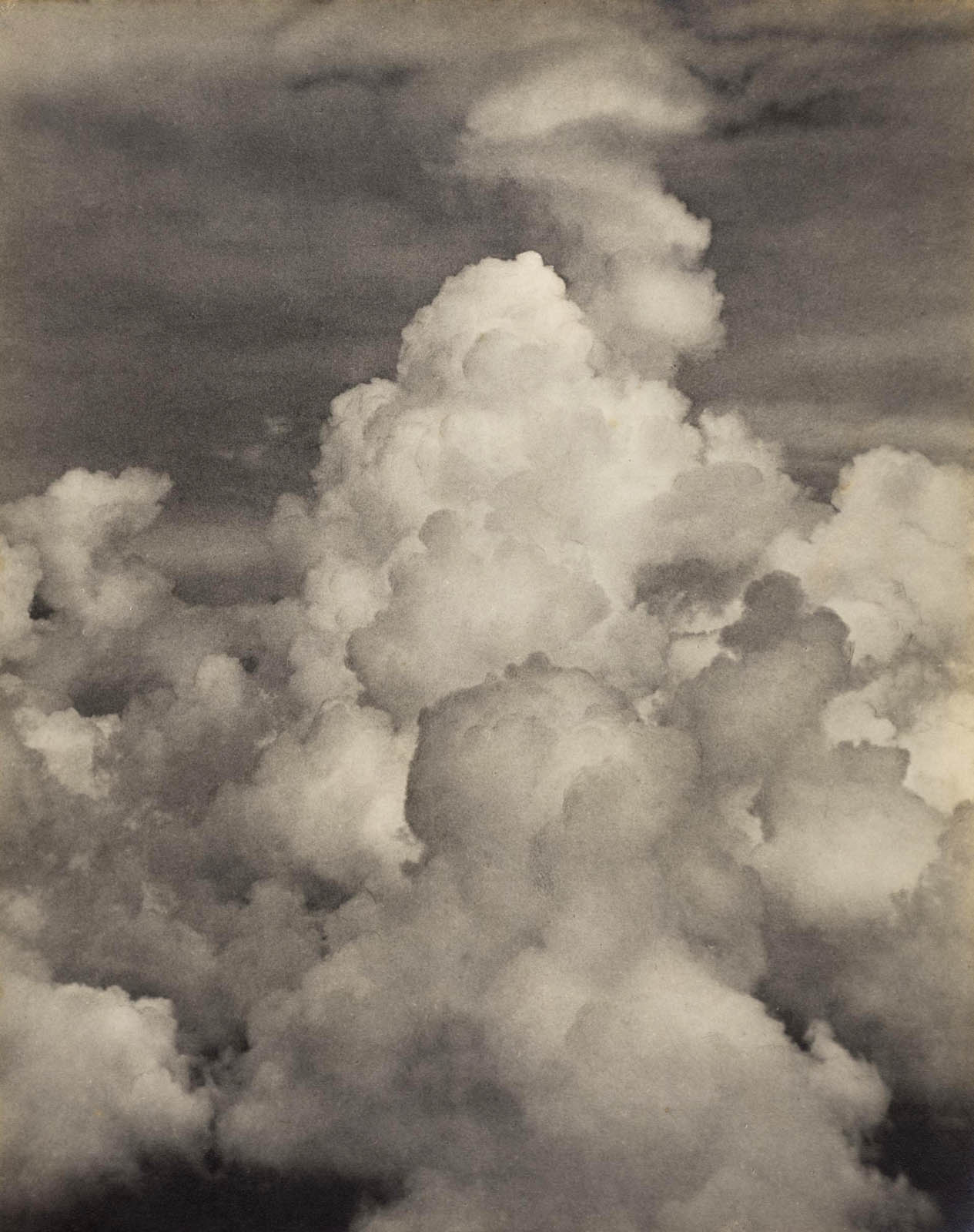
 

Alfred Buckham (British, 1879-1956) 'Clouds Massing Before a Thunderstorm' about 1920


Alfred Buckham (British, 1879-1956)
Clouds Massing Before a Thunderstorm
about 1920
Gelatin silver print
37.80 x 30.00cm
Scottish National Gallery of Modern Art
Purchased with Art Fund support, 2008


Buckham was renowned for his atmospheric shots of the landscape. He felt that the most spectacular cloud formations and theatrical light could be captured on ‘stormy days, with bursts of sunshine and occasional showers of rain’. Over the years Buckham built up a vast collection of photographs of skies which he could integrate with a separate landscape photograph to enhance the drama and create a more impressive composition. This is an example of one of his shots of an impressive cloud formation before a thunderstorm.
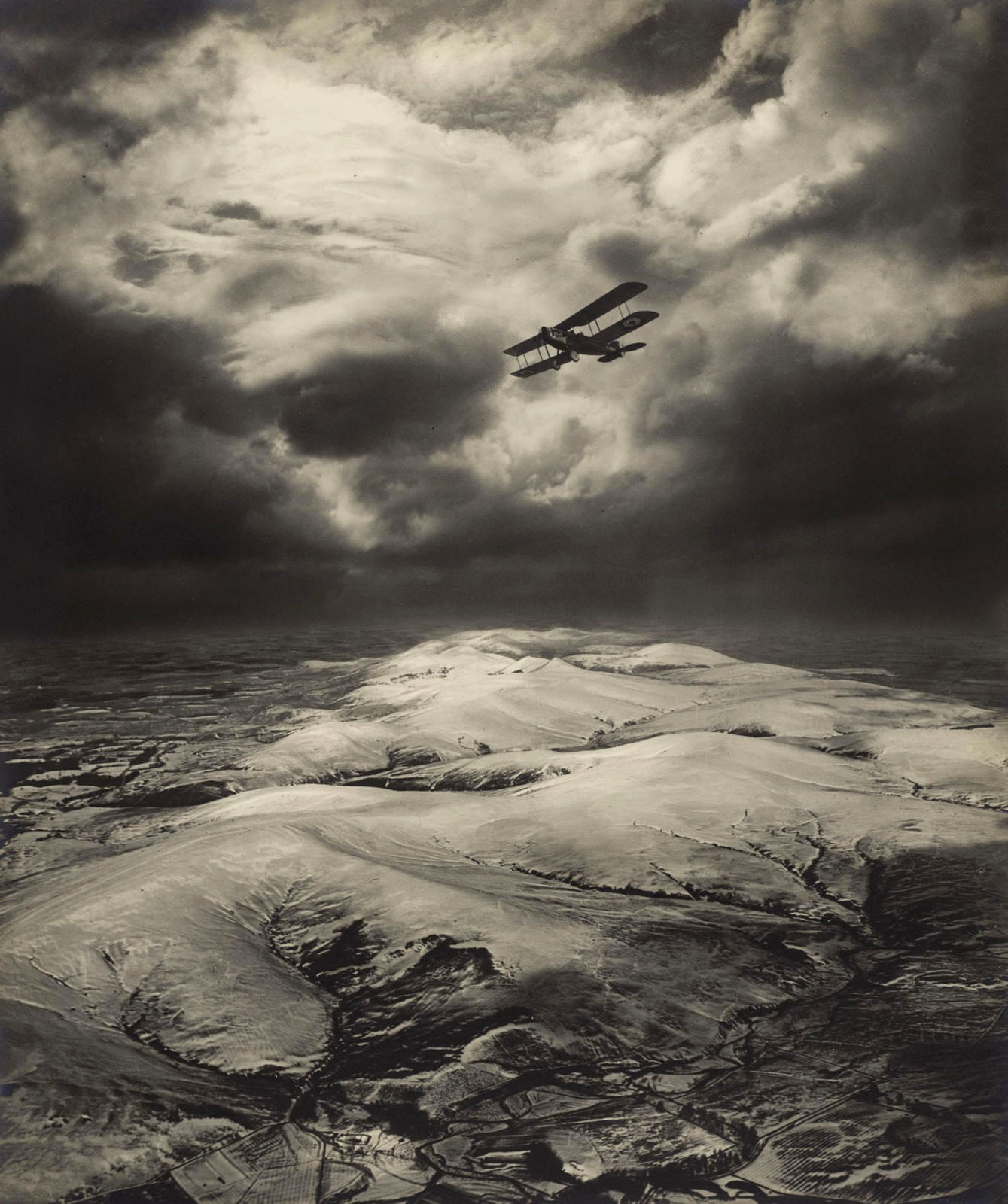
 

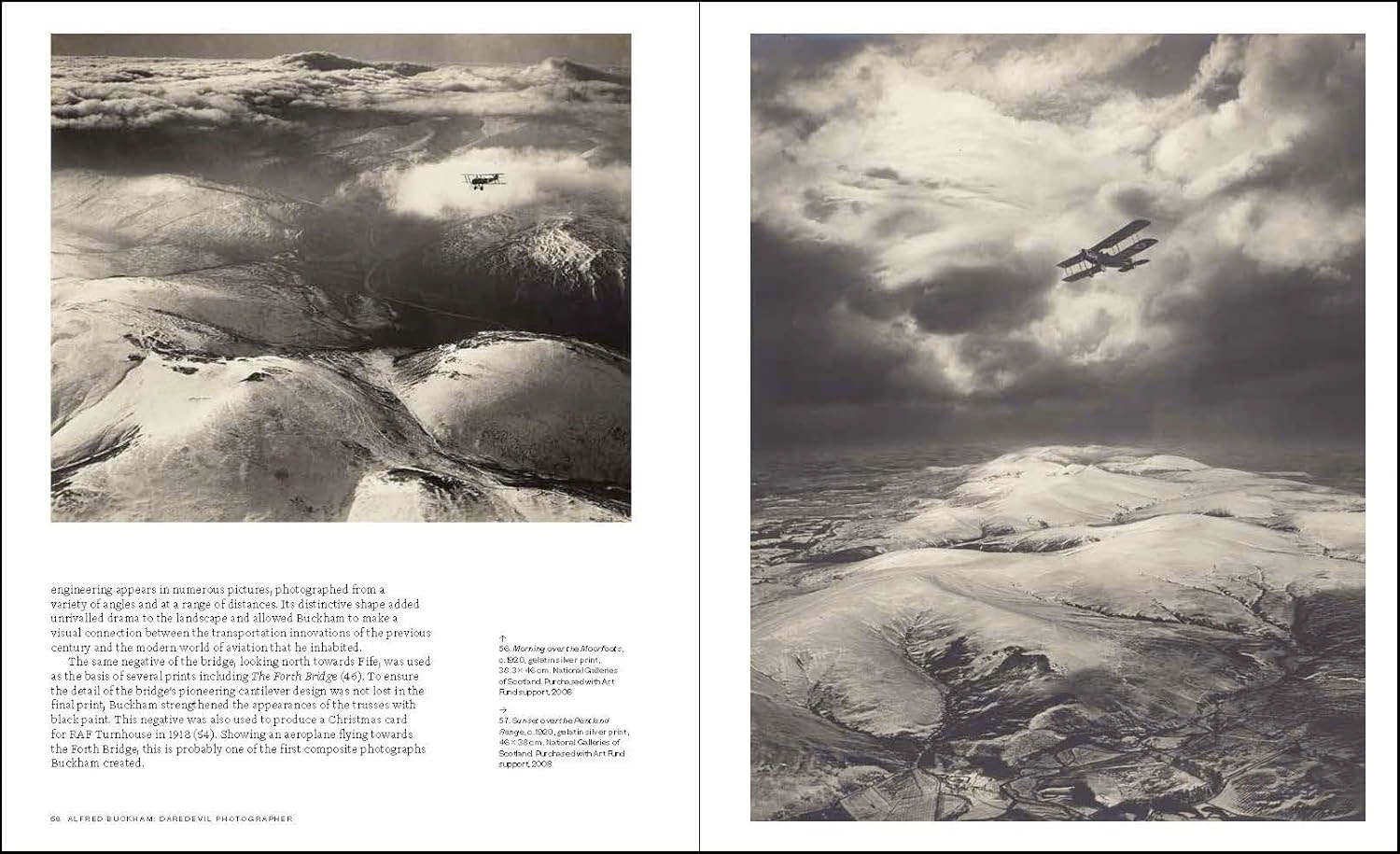
Alfred Buckham (British, 1879-1956) 'Sunset over the Pentlands Range' about 1920


Alfred Buckham (British, 1879-1956)
Sunset over the Pentlands Range
about 1920
Gelatin silver print
46 x 38.6cm
National Galleries of Scotland
Purchased with Art Fund support, 2008
© Richard and John Buckham


Buckham was the leading aerial photographer of his day and was renowned for his atmospheric shots of the landscape. He felt that the most spectacular cloud formations and dramatic light could be captured on “stormy days, with bursts of sunshine and occasional showers of rain”. Over the years Buckham amassed a vast collection of photographs of skies which he could integrate with a separate landscape photograph to enhance the drama and create a more impressive composition. This photograph of the landscape over the Pentlands Hills near Edinburgh demonstrates this technique. It also illustrates another feature of Buckham’s photographs in the perfectly positioned silhouette of a biplane against the broken clouds, which Buckham would have painted on later.


Crafting an image | The photographic techniques of Alfred Buckham

Louise Pearson

Alfred Buckham created some spectacular photographs of the earth from the air. In 2018 curator Louise Pearson looked at how these images were created through a unique combination of daring escapades in the air and clever photographic manipulation on the ground.

Alfred Buckham was a passionate enthusiast of both photography and flight. By 1914 he was already an established photographer and a Fellow of the Royal Photographic Society. During the First World War he was involved in the relatively new discipline of aerial reconnaissance, both as a teacher and a practitioner. It was a dangerous occupation and his military career ended as a result of the injuries sustained to his throat during his ninth crash. Despite this, his wartime activities had sparked a love of flying and on leaving the Royal Naval Air Service it seemed natural that he would continue to take photographs from the sky. Buckham subsequently created an astonishing series of photographs, ranging in subject from the Forth Bridge to the skyscrapers of New York and the volcanoes of South America.

The National Galleries of Scotland holds a group of Buckham’s photographs including Edinburgh, which has become one of the most popular works of art in the collection. When we decided to have a photography exhibition on the theme of transport it was clear that Buckham’s aerial photographs would take centre stage. I selected several of Buckham’s photographs for inclusion, including Edinburgh and The Forth Bridge, and started to look at the photographs in more detail with conservator James Berry. We also started planning a blog to explain how Buckham was able to create such dramatic images.

From previous research, and the work James was doing on conserving the photographs ahead of the exhibition, we knew that Buckham was using a technique called combination printing. This is when a photographer uses a number of different negatives to create a single photographic print. In order to fully understand his working methods, we needed to see the negatives he was using. Fortunately, Alfred Buckham’s entire archive of around 1400 negatives, nearly 300 prints, camera and associated archive material has remained with his family and is currently in the care of his grandsons Richard and John Buckham. Richard kindly allowed me to spend a day at his home in London, looking through this fascinating collection. Being able to compare the negatives to the prints in our collection, and read Buckham’s accounts of his photographic work, helped us to piece together how he would have made the atmospheric photograph Edinburgh.

The first stage in taking an aerial photograph is to select the right plane. Buckham took photographs around the world and would have used a number of different planes flown by various pilots to take his photographs. However he recorded that he always preferred to use older planes with open cockpits that travelled at the fairly sedate speed of 60 to 80 miles per hour. Through trial and error he discovered that flying between 1,000 and 2,000 ft gave the best results, as at that height the landscape could be captured with just the right level of detail. …

The other essential piece of equipment was the camera. Happily, as Buckham’s camera survives, we know exactly what he was using to make his exposures. In an article written for the benefit of prospective aerial photographers, he advised using the kind of cameras used by newspaper reporters, which operated at eye-level, rather than the cumbersome cameras which had originally been developed for aerial photography. ‘The camera best suited to the purpose and the one I usually employ has a F4.5 lens and a large direct vision view-finder the same size as the plate, fitted on the top of the lens panel’. He cautioned however that the leather bellows needed to be reinforced with cardboard or aluminium, as the otherwise delicate bellows could not withstand the force of the winds encountered at altitude.

The kind of camera favoured by Buckham used glass plate negatives, which was a conscious decision by Buckham at a time when photographic film was becoming readily available. He favoured double-coated panchromatic plates made in the USA, with dimensions of 10.0cm x 12.5cm. Throughout his career he reiterated that despite their bulk and delicacy, plates gave a far superior result to film.

Extract from Louise Pearson. “Crafting an image | The photographic techniques of Alfred Buckham,” on the National Galleries of Scotland website Nd [Online] Cited 11/02/2026. Used under fair use conditions for the purposes of education and research
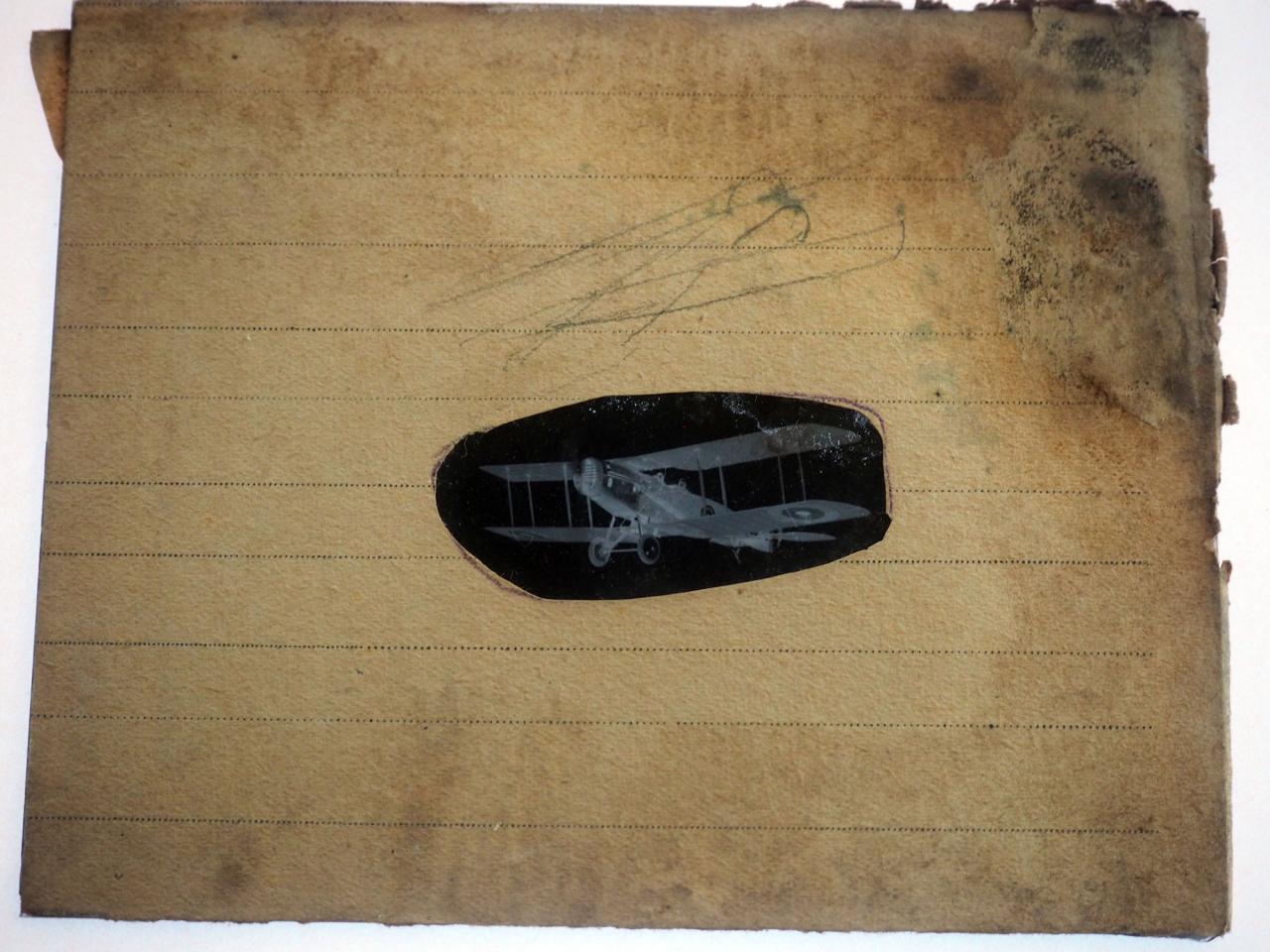
 

Alfred Buckham (British, 1879-1956) 'Aeroplane Negative' about 1920


Alfred Buckham (British, 1879-1956)
Aeroplane Negative
About 1920
© Richard and John Buckham


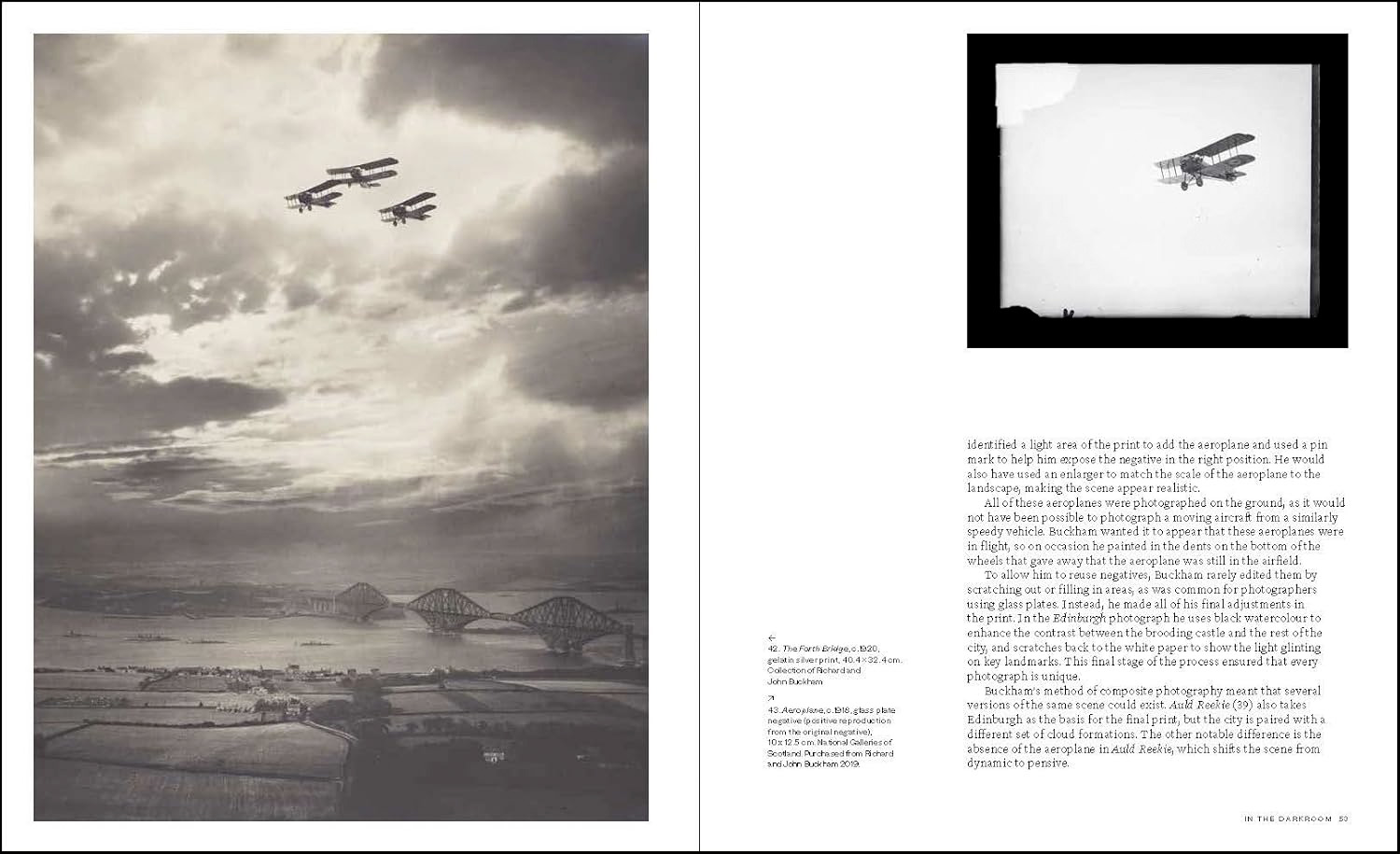
Buckham built up a library of negatives depicting only aeroplanes, where the original background was masked out. This meant that when the negative was exposed on top of an existing print the plane would appear to be part of the chosen landscape. Buckham would have also been able use an enlarger to match the scale of the plane to the landscape, making the scene appear realistic. While in most cases this technique produces a believable, if slightly incredible, final image there are examples where the planes appear too close together, or at impossible angles.

For Buckham, the final stage of creating a finished image was to use watercolour paints and sometimes ink to add detail to the final print and soften the areas where the two negatives meet. In some of his photographs these hand-drawn elements are easily visible, though in the case of Edinburgh they are more subtle. The clouds on the horizon have been softened to make the join where the two negatives meet less noticeable in the finished print, highlights have been added to the clouds to make them more dramatic and the light below Arthur’s Seat has been adjusted to better match the clouds above. In addition, some areas have been highlighted and others darkened to sharpen the details of key landmarks and make them more recognisable. The use of black watercolour or ink to strengthen and define specific areas of the photographs shows Buckham’s ingenuity. Whilst other photographers would alter the negatives and perhaps scratch out an area that they wished to appear darker, Buckham added the darker tone to the photographic print itself. He also used a scratching out technique, similar to Turner, where a dark area of the photograph is scratched revealing the lighter colour of the paper beneath. This artistic intervention results in each photograph being a unique piece of work. No two can be exactly the same.

It is clear then that Buckham’s photographs are not the result of a single, breath-taking moment in time but instead are a carefully crafted piece of art. He was using known photographic techniques, but created a style which was very much his own. As a result it is easy to see why Edinburgh has become one of the most popular artworks in the collection.

Extract from Louise Pearson. “Crafting an image | The photographic techniques of Alfred Buckham,” on the National Galleries of Scotland website Nd [Online] Cited 11/02/2026. Used under fair use conditions for the purposes of education and research
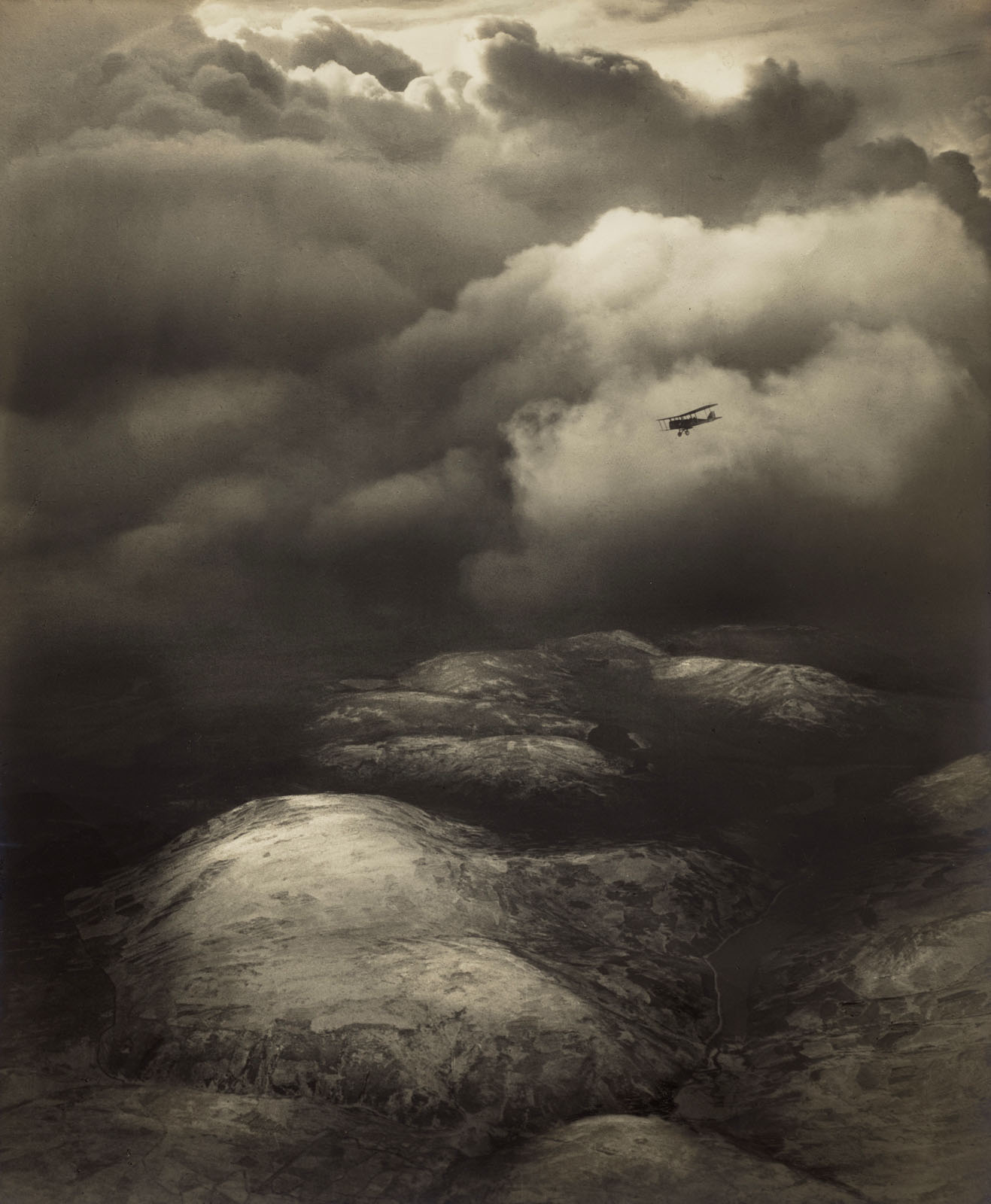
 

Alfred Buckham (British, 1879-1956) 'Uplands Snowstorm Passing' about 1920


Alfred Buckham (British, 1879-1956)
Uplands Snowstorm Passing
about 1920
Gelatin silver print
National Galleries of Scotland
Purchased with Art Fund support, 2008
© Richard and John Buckham


In this image the undulations of the snow covered hills are mirrored in the cloudy sky. Buckham introduces a sense of scale through the lone plane silhouetted against a cloud.
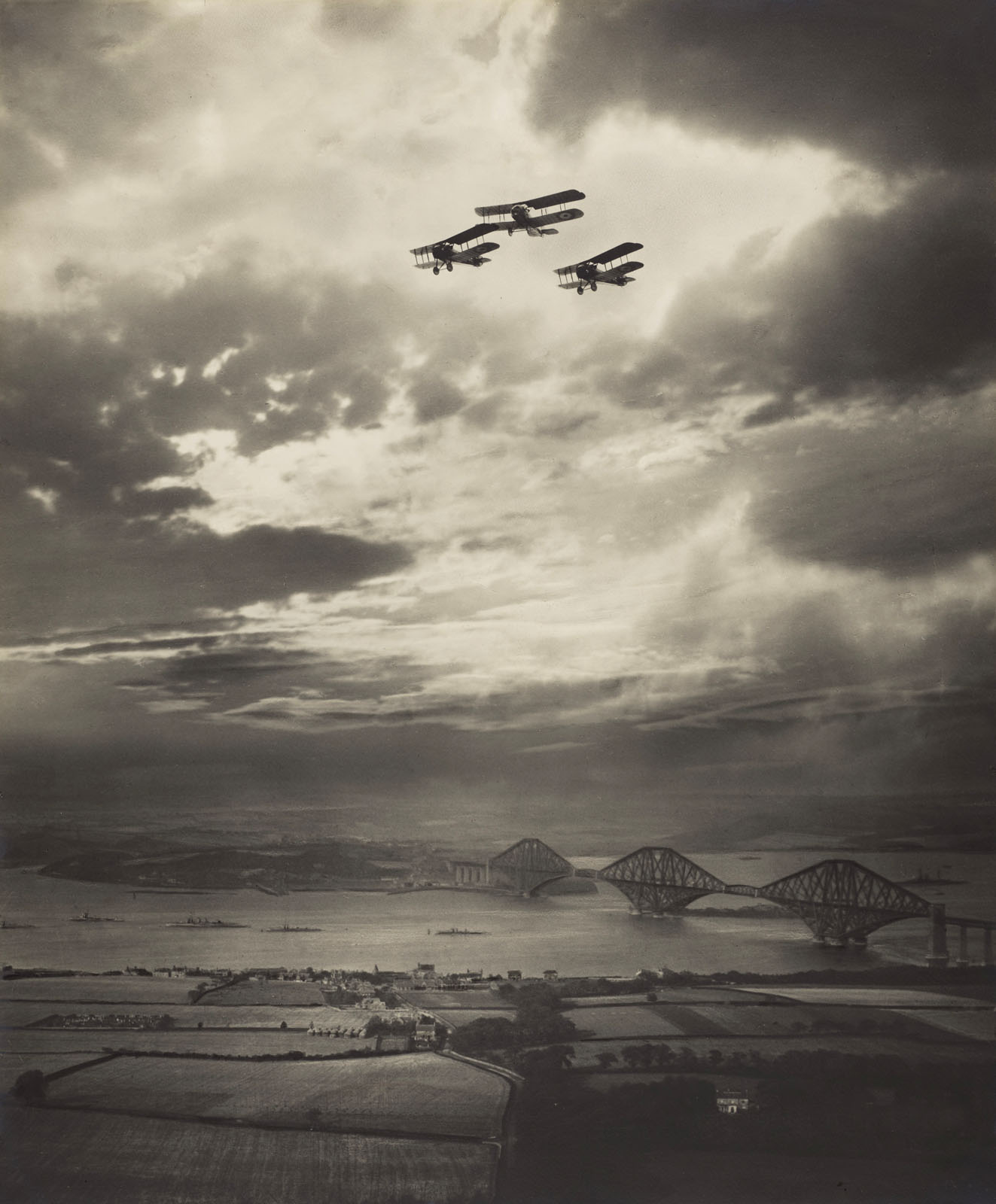
 

Alfred Buckham (British, 1879-1956) 'The Forth Bridge' about 1920


Alfred Buckham (British, 1879-1956)
The Forth Bridge
about 1920
Gelatin silver print
National Galleries of Scotland
Purchased with Art Fund support, 2008
© Richard and John Buckham


Buckham felt that the most spectacular cloud formations and theatrical light could be captured on ‘stormy days, with bursts of sunshine and occasional showers of rain’. This creativity led to him being regarded as the leading aerial photographer of his day and he was renowned for his atmospheric shots of the landscape. Over the years he amassed a vast collection of photographs of skies which he integrated with a separate landscape photograph to enhance the drama and create an imposing composition. This image over the Firth of Forth, Scotland, encapsulates the romantic fusion of man’s engineering achievements against the dramatic beauty of nature. The three steel arches of the Forth Rail Bridge are mirrored in the three biplanes, which Buckham added later by hand, silhouetted against the spectacular sky.
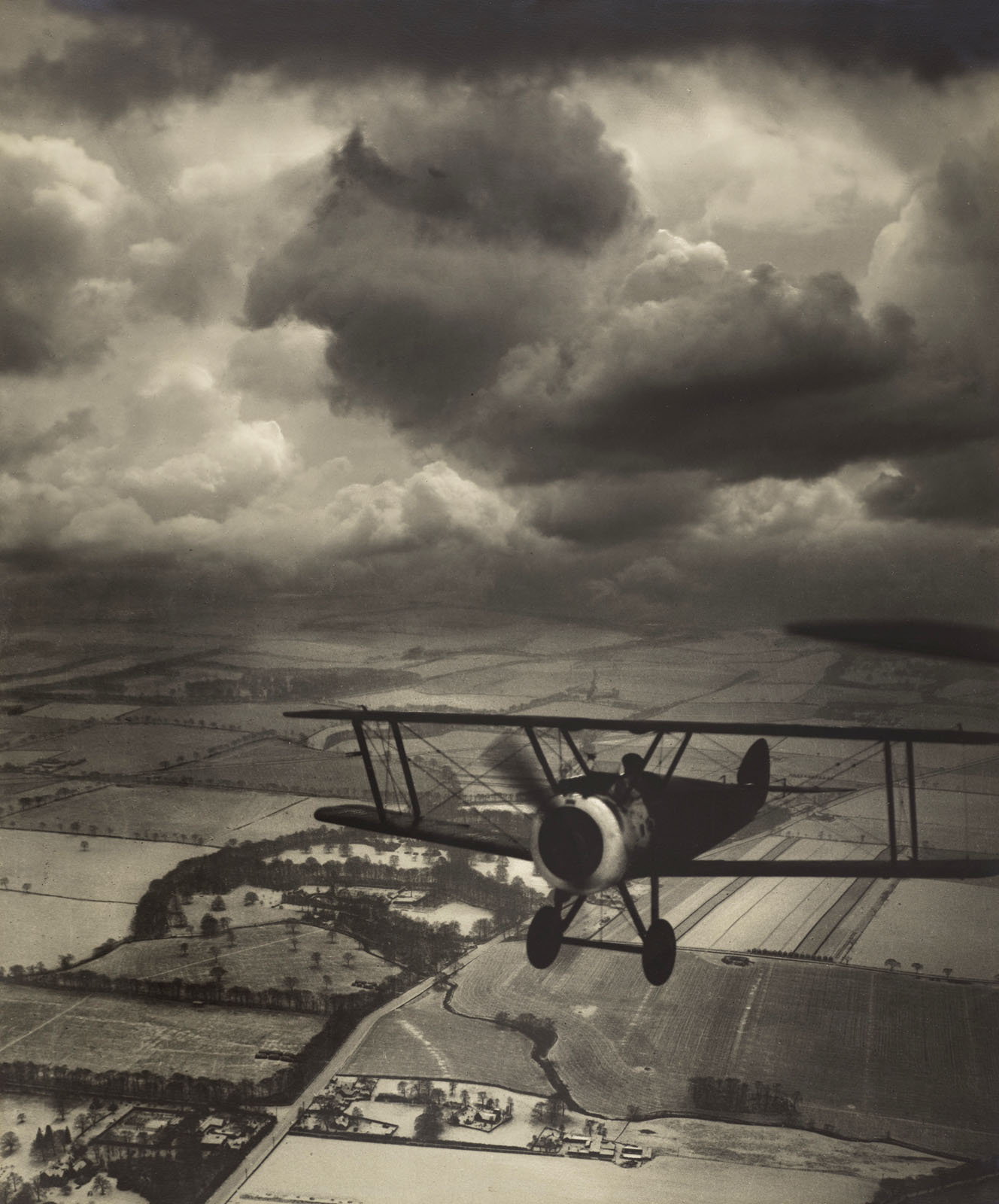
 

Alfred Buckham (British, 1879-1956) 'Sunshine and Showers' about 1920


Alfred Buckham (British, 1879-1956)
Sunshine, and Showers
about 1920
Gelatin silver print
National Galleries of Scotland
Purchased with Art Fund support, 2008
© Richard and John Buckham


This image shows Captain Jordan flying his Black Camel biplane at very close proximity to Buckham’s aircraft. Taken over the landscape around Rosyth, Fife, Scotland this was near to where Buckham crashed for the ninth time in 1918 and sustained serious injuries.


This autumn at the Portrait gallery in Edinburgh, take to the skies and see the world from above the clouds through the remarkable work of Alfred Buckham: Daredevil Photographer. From 18 October 2025 – 19 April 2026, meet the man behind some of the most iconic aerial photographs ever taken, marvel at the death-defying lengths he took to capture the perfect image and explore how his innovative techniques in the darkroom paved the way for modern technologies such as Photoshop and AI. Free to visit at the National Galleries Scotland: Portrait, this will be the first major exhibition dedicated to Alfred Buckham and can only be seen in Scotland. 

This exhibition will bring together over 100 photographs and objects including popular works from the Scottish national collection, alongside extensive archival material generously loaned by Alfred Buckham’s grandsons, Richard and John Buckham. Thanks to the support of the Buckham family, personal objects including letters, photographs and even the passport Alfred Buckham used will be put on public display for the first time. 

A maverick of early aviation, Alfred Buckham (1879-1956) created his own unique style of photography by combining daring exploits in the air with innovation in the darkroom. Born in London, Buckham learned his craft by teaching photography before joining the Royal Naval Air Service in 1916, a predecessor to the Royal Air Force. Hailed as an exceptionally skilled flyer, he combined his talent for aviation with his passion for photography, resulting in remarkable endeavours and trailblazing images. Based for most of his military career at RAF Turnhouse, now Edinburgh Airport, central Scotland became a natural playground for Buckham to refine his photographic techniques and let his imagination soar. Daredevil Photographer will chart his phenomenal story from his early photographic experiments in Scotland to exciting adventures in South America and look closer at the skilled and inventive ways he created his work. 

Explore Scotland from the air and get a new perspective of well-known sights, just as Buckham himself would have. Daredevil Photographer celebrates the impact Scotland had on Buckham’s work through his images of recognisable landmarks including St Andrews Golf Links, Linlithgow Palace and the Wallace Monument in Stirling. The exhibition will also feature several images of the Forth Rail Bridge, Buckham’s most photographed landmark. The iconic bridge was the subject of one of his first composite photographs and appeared on the 1918 RAF Turnhouse Christmas card, which will go on display alongside the original photography.

Daredevil Photographer will delve into the darkroom and uncover more about the creative processes used to bring Buckham’s unique images to life. After the First World War, Buckham began experimenting with composite photography; a technique where several negatives are used to create one photographic print. While this wasn’t a new concept, composite photography added a layer of creative freedom to Buckham’s work, much like a very early form of Photoshop. From his vast collection of glass negatives – he had over 2000 cloud images alone in his ‘cloud library’ – Buckham had the means to create images which became immersive, giving a unique sense of flying alongside these incredible aircraft while viewing the world below. 

It was through the technique of composite photography that some of Buckham’s most famous works were born, including the iconic aerial view of Edinburgh (about 1920). This striking photograph shows a bi-plane hovering amongst wispy clouds above Edinburgh Castle, with Arthur’s Seat visible through the mist in the background, and the bustling city below. For the first time, Edinburgh will be displayed alongside the camera and original glass negatives Buckham used to capture and create this much-loved image. Visitors will also be encouraged to get inspired and try their hand at creating their own composite creations through interactive exhibits. 

Telling Buckham’s story through his own words and memories, Daredevil Photographer allows visitors to meet the courageous and humorous man behind the camera. Firsthand accounts of his incredible exploits in the air and ingenious creative methods on the ground will enhance his story and highlight his adventurous spirit: Ah! One was a rare daredevil in those days! (Alfred Buckham, The New York Times, 1930). A free and unique immersive audio experience will bring Buckham’s world of flight and imagination to life through his own words. Hear Buckham’s grandson Richard give a voice to his grandfather’s memories and reflections on his daredevil persona. 

Daredevil in every sense of the word, Buckham went to incredible feats to capture the perfect shot, which the exhibition will explore. His preferred methods included standing in an open cockpit while mid-air, with his leg tied to the seat as a nod to safety. As a result, he experienced no less than nine crashes in his lifetime, one ending in a serious throat injury that cut his military career short. However, he would not be deterred, describing his eccentric photography methods in a surprisingly relaxed way: 

“It is not easy to tumble out of an aeroplane, unless you really want to, and on considerably more than a thousand flights I have used a safety belt only once, and then it was thrust upon me. I always stand up to make an exposure and, taking the precaution to tie my right leg to the seat, I am free to move rapidly, and easily, in any desired direction; and loop the loop; and indulge in other such delights, with perfect safety” – Alfred Buckham, The Camera, January 1927. 

Daredevil Photographer will celebrate Buckham’s skill in the air through a range of his mesmerising photographs. Encounter stunning images of the leading aircraft of the day, such as the Bristol Fighter, a two seated bi-plane designed for aerial reconnaissance, and the bizarre airships of the 1920s. See them soaring through the skies in all weathers, amongst an array of remarkable landscapes. The exhibition will include one of his most well-known works, The Heart of the Empire (1923), on loan from the V&A Museum in London and displayed in Edinburgh for the first time. The photograph follows a bi-plane as it glides across the London skyline, with landmarks such as Tower Bridge and the River Thames in view. Exhibited by the Royal Photographic Society in 1925, The Heart of the Empire secured Buckham’s position as one of Britain’s leading aerial photographers. 

Experience the golden age of travel through Buckham’s portfolio of images spanning across the globe. In 1931, a commission from Fortune Magazine took Buckham on an epic fifteen-week trip across the Americas, covering 19,000 miles and setting a world record. Starting in New York City and taking the opportunity to capture the newly built Empire State Building, Buckham photographed his intrepid journey from the United States to the tip of South America to share with the world. Daredevil Photographer will chart Buckham’s incredible journey, from expansive views of Christ the Redeemer in Rio De Janeiro and the snowy caps of the Andes Mountains to perilous scenes of smoking volcanic creators in Guatemala and Mexico. Through his death-defying adventures and stunning photographs, Buckham expanded public understanding of the world, creating an exciting legacy which continues to capture imaginations today.

Louise Pearson, curator of photography at the National Galleries of Scotland says: “Alfred Buckham’s eye-catching photograph of Edinburgh is one of the most popular artworks in the National Galleries of Scotland collection. This enthralling image becomes even more intriguing when you learn that it is a darkroom jigsaw – a composite photograph made through a combination of technical skill and creative vision. Alfred Buckham: Daredevil Photographer tells the remarkable story of this maverick of early aviation whose adventures took him from aerial reconnaissance photographer to intrepid explorer via numerous loop the loops.”

Press release from National Galleries of Scotland
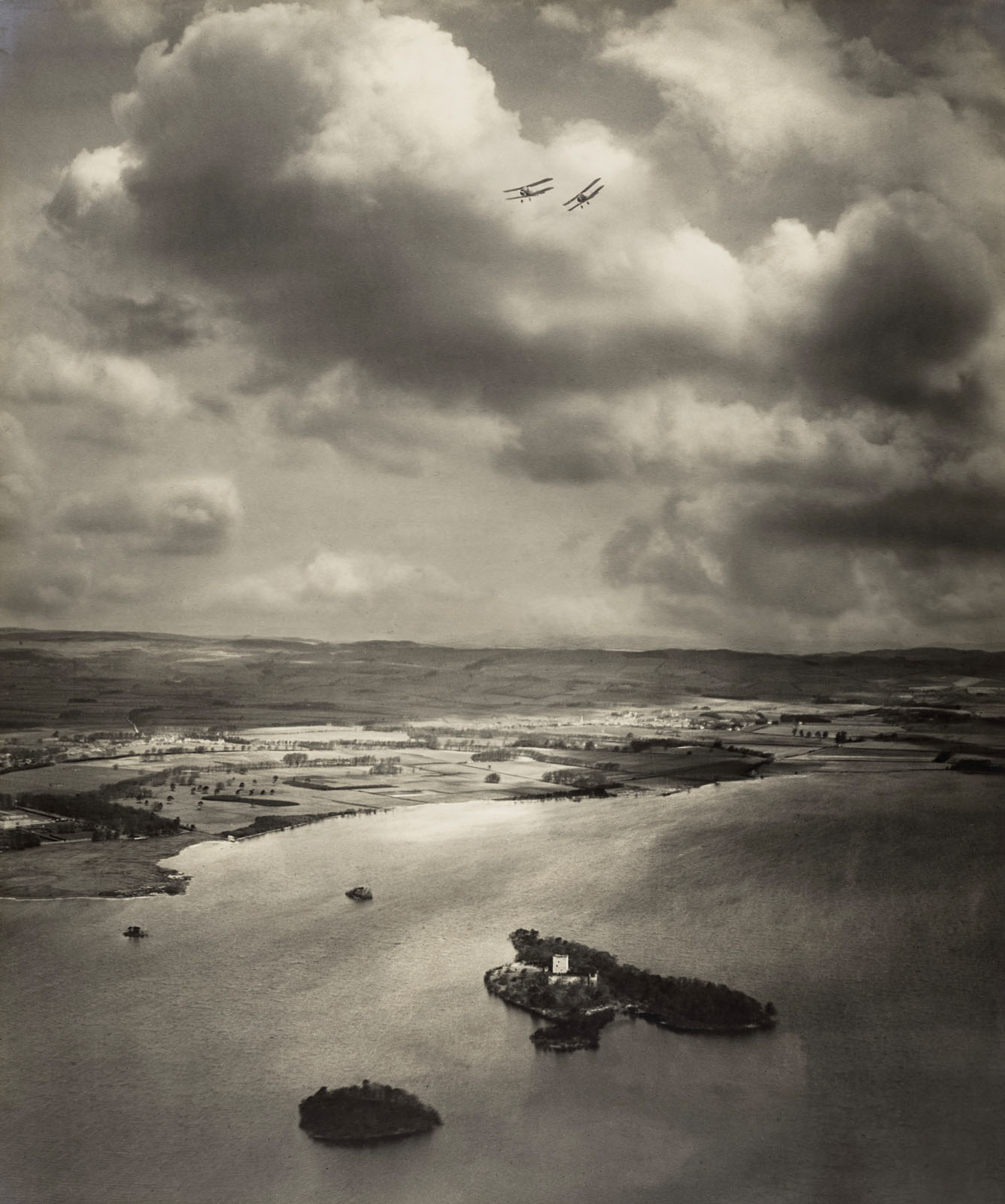
 

Alfred Buckham (British, 1879-1956) 'Castle Island Loch Leven (Where Mary Queen of Scots was Imprisoned)' about 1920


Alfred Buckham (British, 1879-1956)
Castle Island Loch Leven (Where Mary Queen of Scots was Imprisoned)
about 1920
Gelatin silver print
National Galleries of Scotland
Purchased with Art Fund support, 2008
© Richard and John Buckham


This photograph of Castle Island, where Mary, Queen of Scots was imprisoned in 1567, shows the vast expanse of the rolling countryside around Loch Leven, Scotland. The cloudy sky enhances the depth of the image and the small biplanes, which Buckham added later by hand, reinforce the dramatic scale.
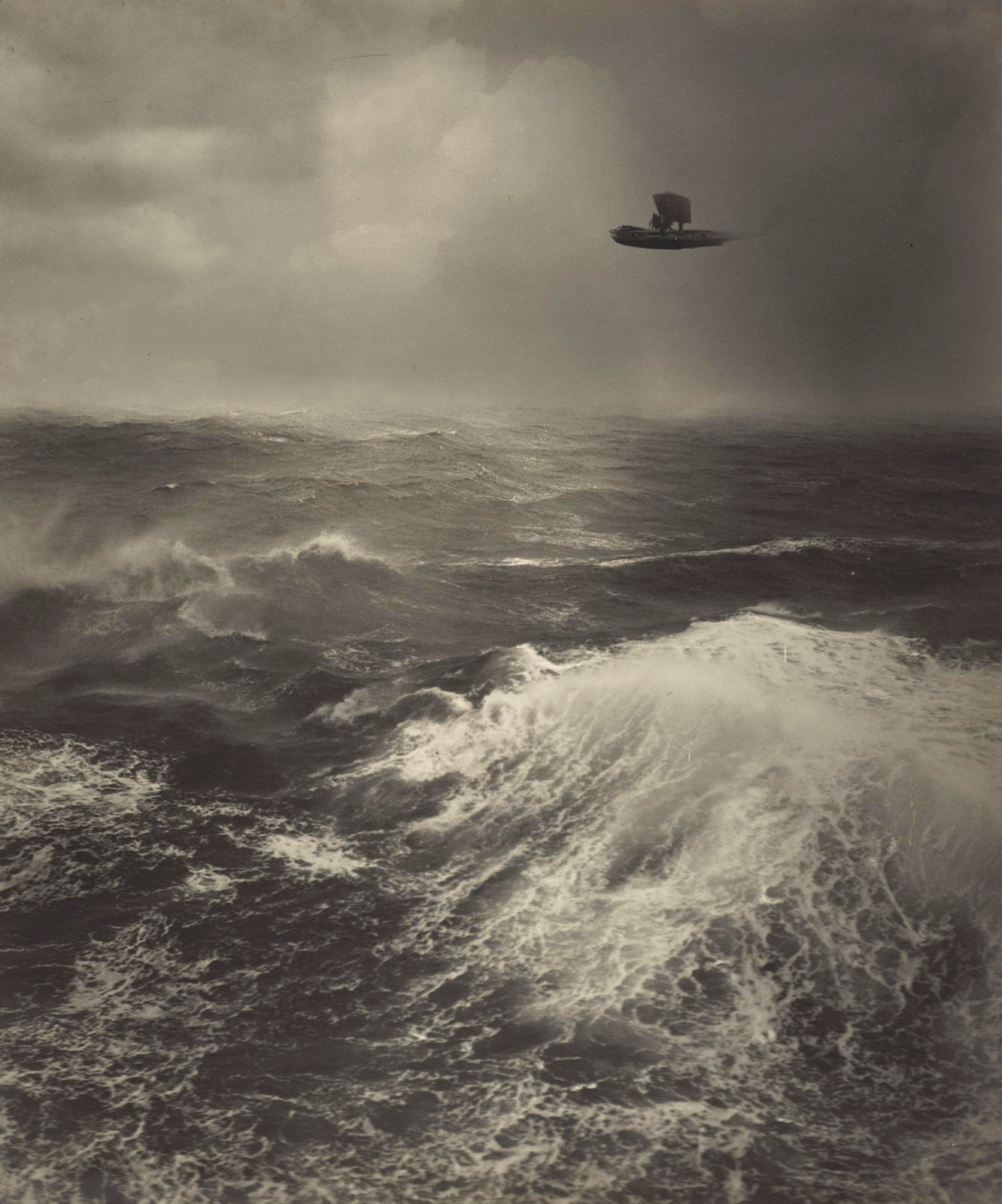
 

Alfred Buckham (British, 1879-1956) 'Flying Boat Over Sea' 1930


Alfred Buckham (British, 1879-1956)
Flying Boat Over Sea
1930
Gelatin silver print
45.5 x 37.6cm
National Galleries of Scotland
Purchased with Art Fund support, 2008


This photograph captures the stormy ocean with its swelling crests of the waves illuminated white. Silhouetted against the threatening sky is a flying boat. This specialised form of aircraft was purposely designed to take off from, and land on, water. This feature was exploited during the World Wars but its use rapidly declined thereafter. Buckham was aware of the flying boat from his time in the Royal Naval Air Service and, specifically, his involvement in photographing the alterations required that allowed planes to take off from, and land on, a ship. 
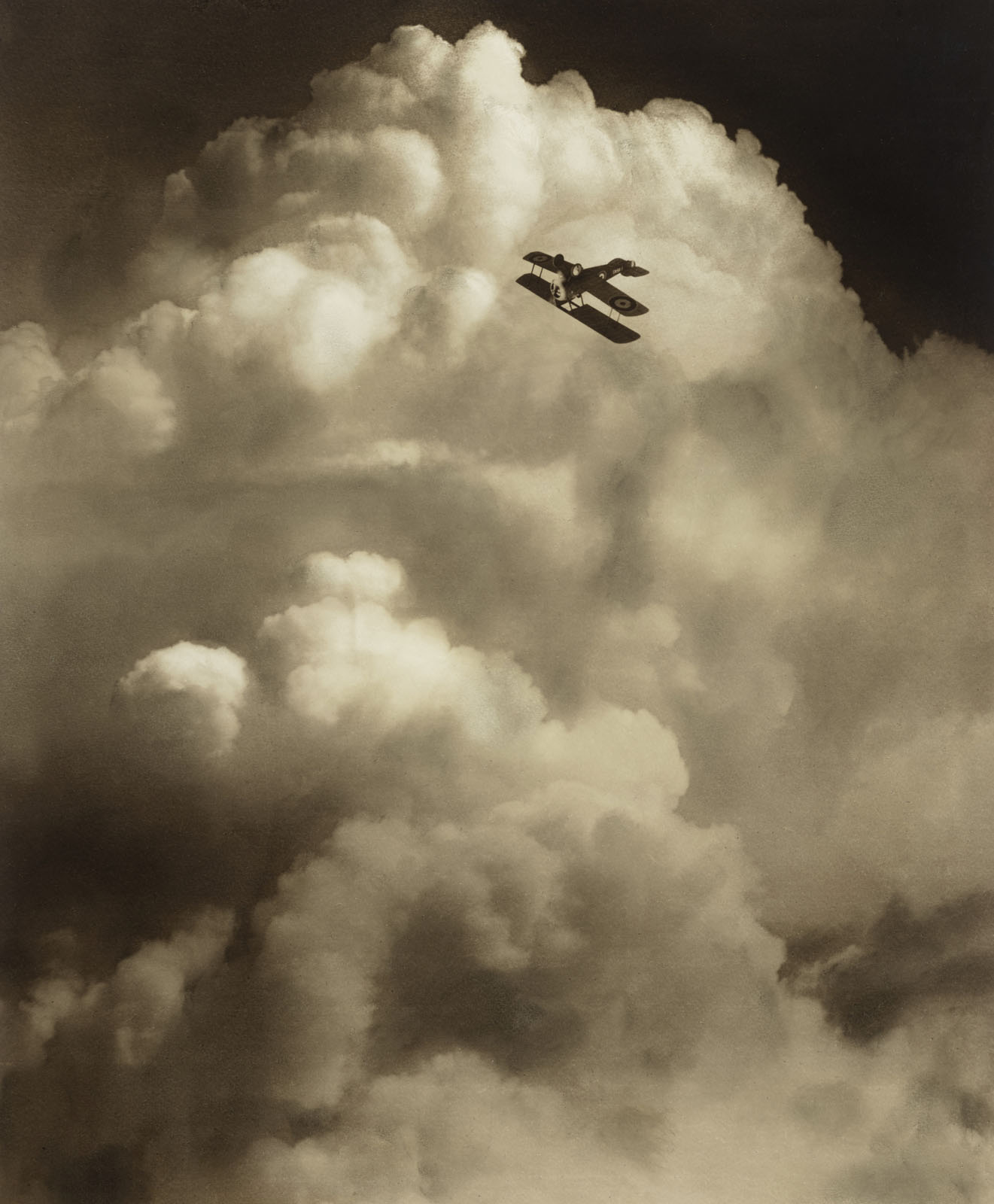
 

Alfred Buckham (British, 1879-1956) 'The Loop' about 1930


Alfred Buckham (British, 1879-1956)
The Loop
about 1930
Gelatin silver print
National Galleries of Scotland
Purchased in recognition of over 40 years of work on the National Galleries of Scotland photography collection by James Berry, Senior Paper Conservator
© Richard and John Buckham
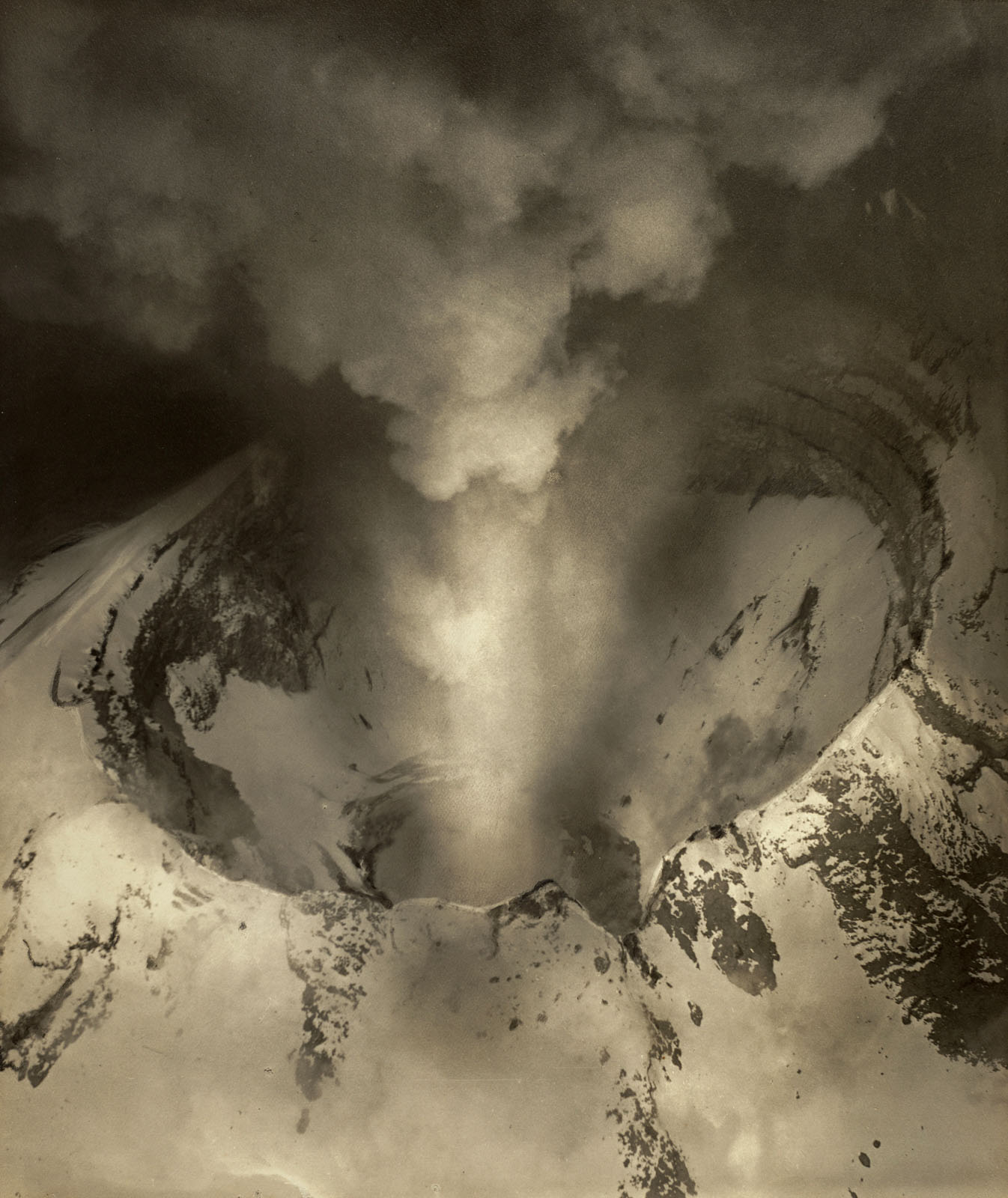
 

Alfred Buckham (British, 1879-1956) 'Volcano Crater of Popocatepetl' about 1930


Alfred Buckham (British, 1879-1956)
Volcano Crater of Popocatepetl
about 1930
National Galleries of Scotland
Purchased with Art Fund support, 2008
© Richard and John Buckham


In 1930 Buckham was commissioned by Fortune magazine to produce a portfolio of aerial photographs of his chosen area of the Americas. Buckman opted for central and South America and this dramatic photograph captures the centre of Mexican volcano, Popocatepetl. The snow covered edge of the crater contrasts against the ominous dark sky, creating a shot which captures the awe-inspiring power of an active volcano. Buckham described the journey of the flight as his aeroplane turned down into the crater: ‘Almost at once the aeroplane dropped about two hundred feet… Beneath us the circular lake of boiling lava emitted numerous spouts of smoke and steam, whilst round its edge played occasional fires which, suddenly springing up and flickering awhile, as suddenly disappeared.’


Alfred Buckham: Daredevil Photographer

Paperback – 12 Nov. 2025 by Louise Pearson (Author), James Crawford (Other Contributor)
Buy on Amazon


'Alfred Buckham: Daredevil Photographer' paperback November 2025, book pages


Alfred Buckham: Daredevil Photographer paperback November 2025, book pages


Scottish National Portrait Gallery
1 Queen Street, Edinburgh,
EH2 1JD, Scotland

Opening hours:
Daily, 10am – 5pm

National Galleries of Scotland website

LIKE ART BLART ON FACEBOOK

Back to top

Exhibition: ‘The Greats: masterpieces from the National Galleries of Scotland’ at the Art Gallery of New South Wales (AGNSW), Sydney Part 2

Exhibition dates: 24th October, 2015 – 14th February, 2016

Curator: Richard Beresford, Senior Curator of European art at AGNSW; Richard Johnson designed the installation


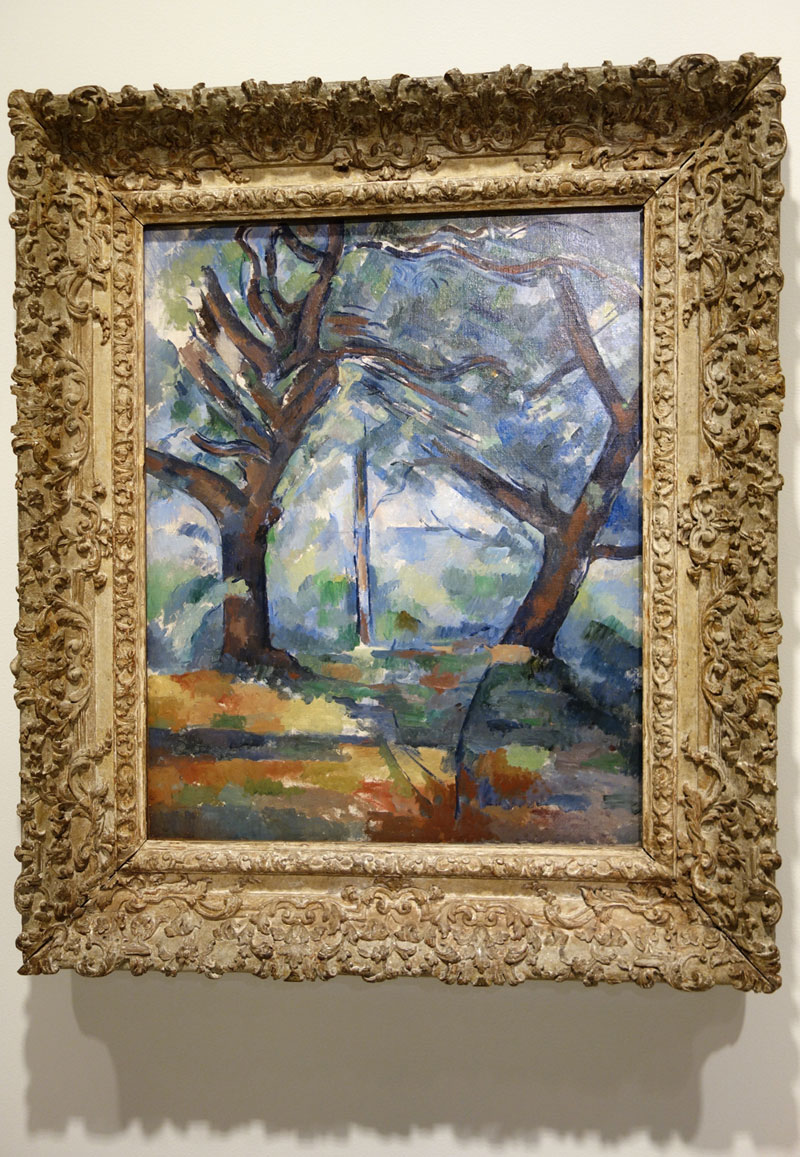
Michael Clarke, Director of the National Galleries of Scotland, with Paul Cézanne's 'The big trees' c. 1904


Michael Clarke, Director of the National Galleries of Scotland, with Paul Cézanne’s The big trees (c. 1904)
Photo: © Marcus Bunyan and the Art Gallery of New South Wales


The second part of this monster two-part posting.

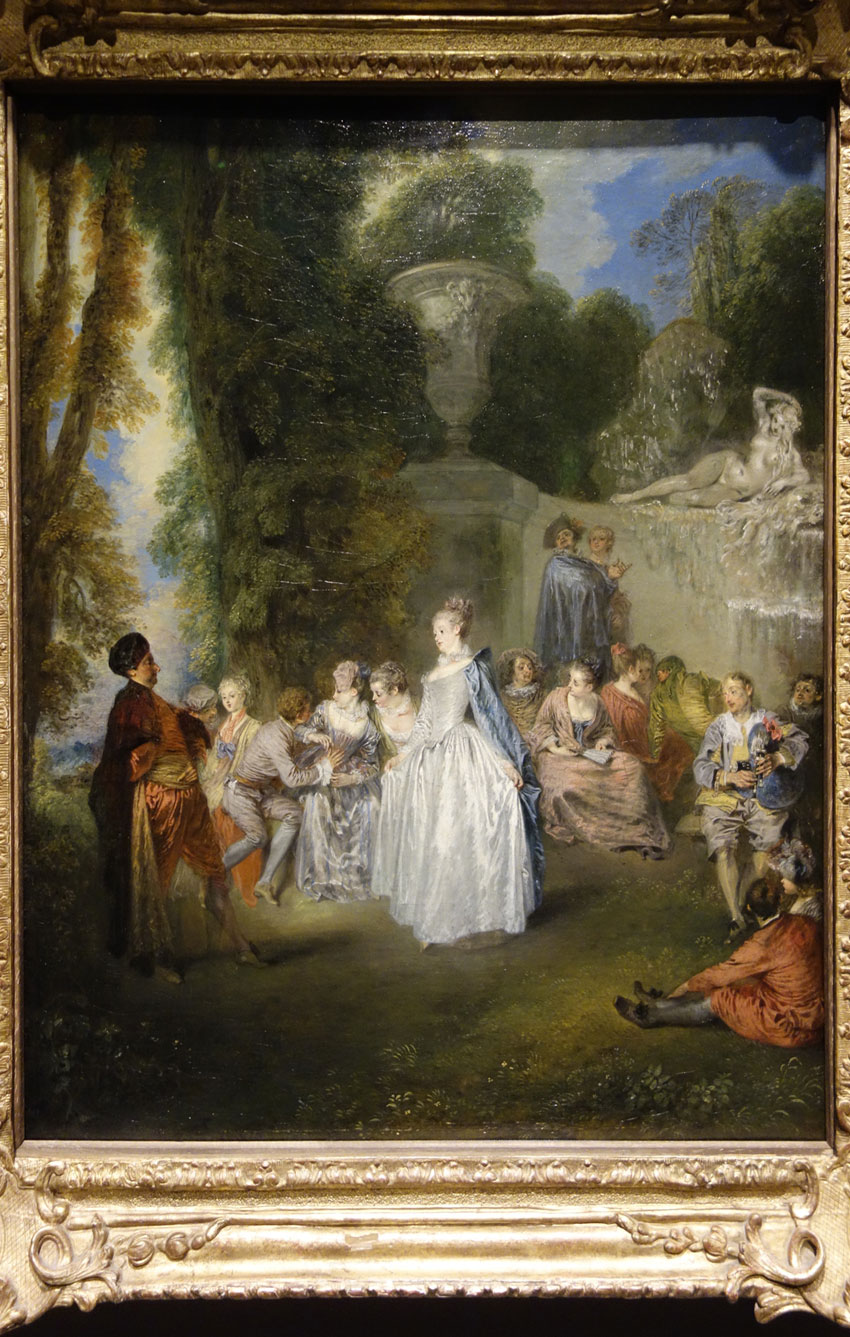
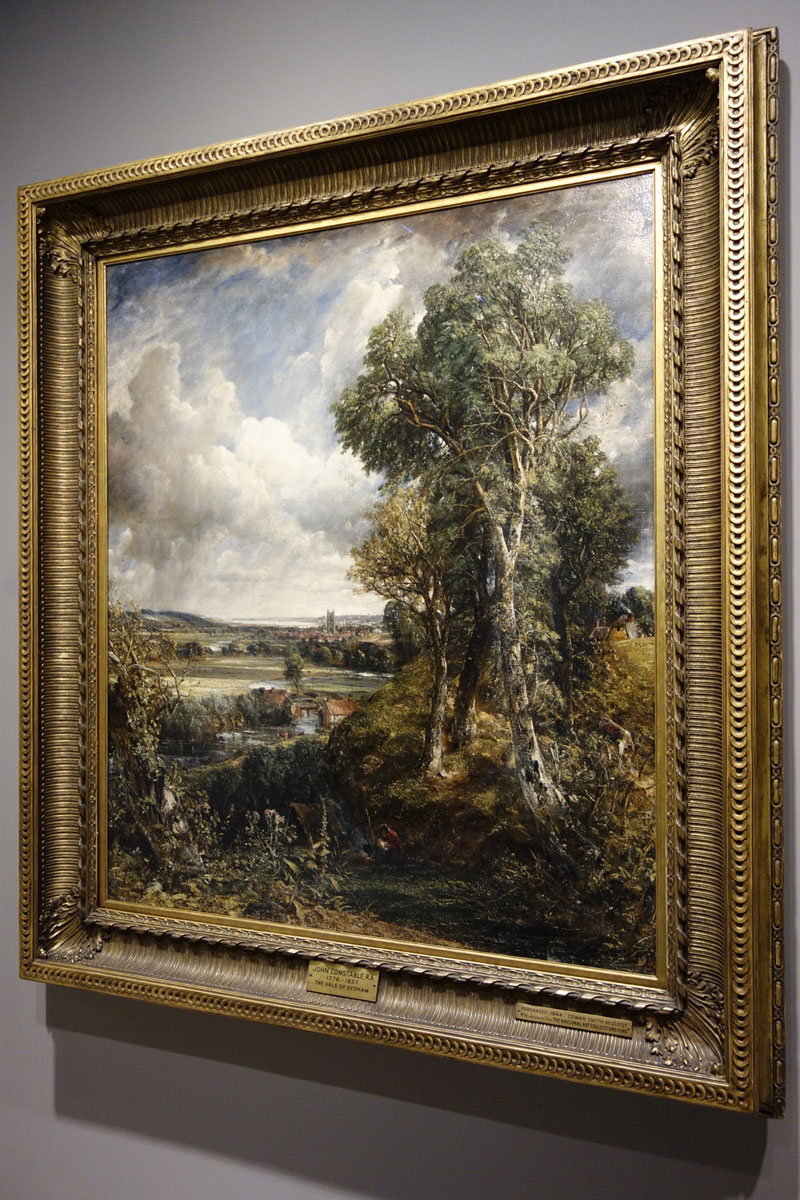
Highlights include the delicacy and strength of the William Blake, the stunning beauty of the John Singer Sargent portrait Lady Agnew of Lochnaw (1892), the perceived movement and presence of The Reverend Robert Walker skating on Duddingston Loch by Sir Henry Raeburn (c. 1795). Watteau’s Fêtes vénitiennes (1718-1719) confirmed my pleasure when looking at his paintings, the stillness, romanticism and intensity of vision while the muscularity and intensity of the painting in Constable’s The Vale of Dedham c. 1827-1828 was a revelation.

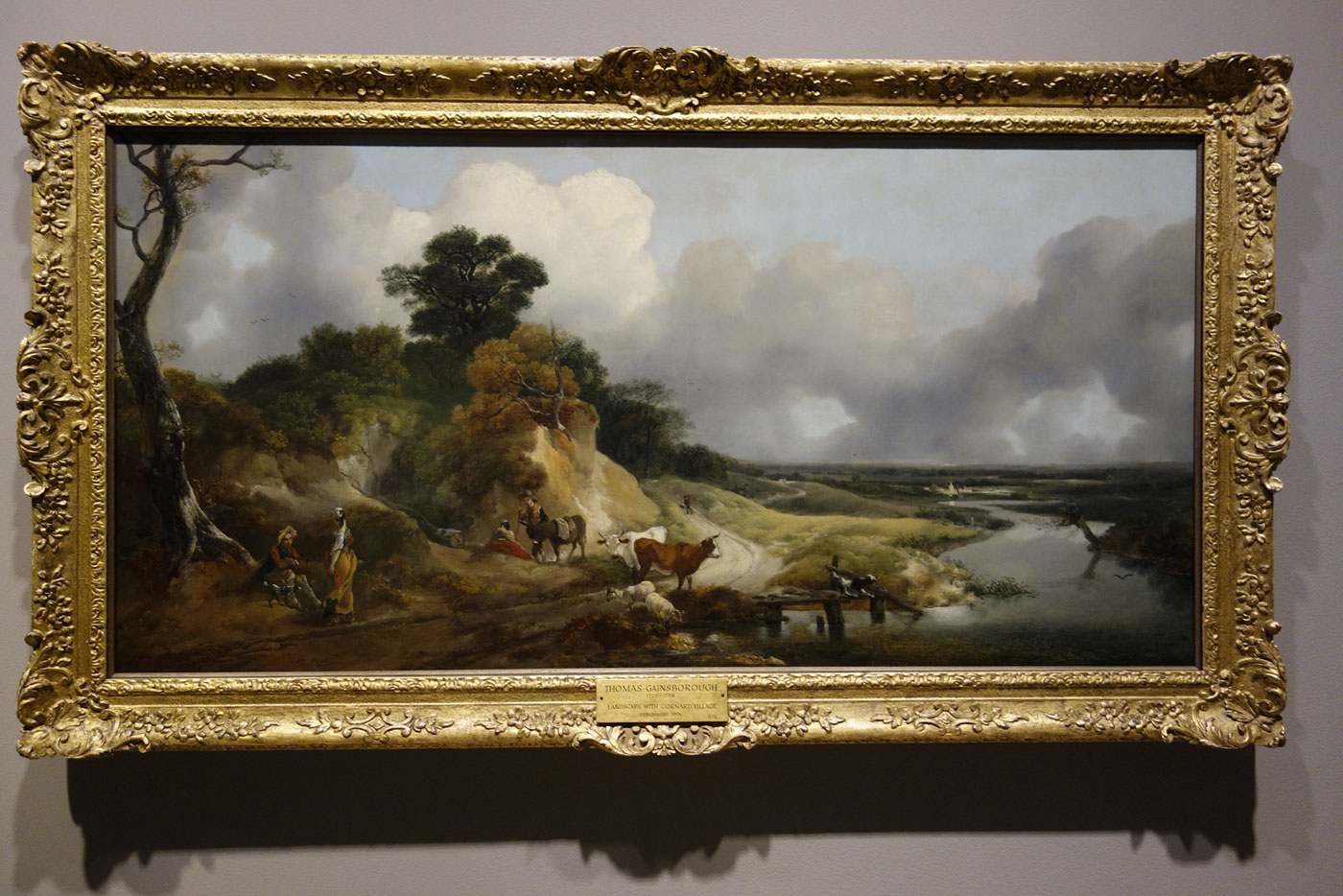
Gainsborough’s pastoral River landscape with a view of a distant village (c. 1748-1750) was a surprise while the impressionists did not disappoint. Favourite among the last room, though, was the joyous spaces and overlaid patches of light and colour in Paul Cézanne’s The big trees (c. 1904). One of the great treasures of the exhibition.

View Part 1 of the posting.

Dr Marcus Bunyan


Many thankx to the AGNSW for allowing me to publish the art work in the posting. Please click on the photographs for a larger version of the image. All installation photographs Â© Marcus Bunyan and the Art Gallery of New South Wales.


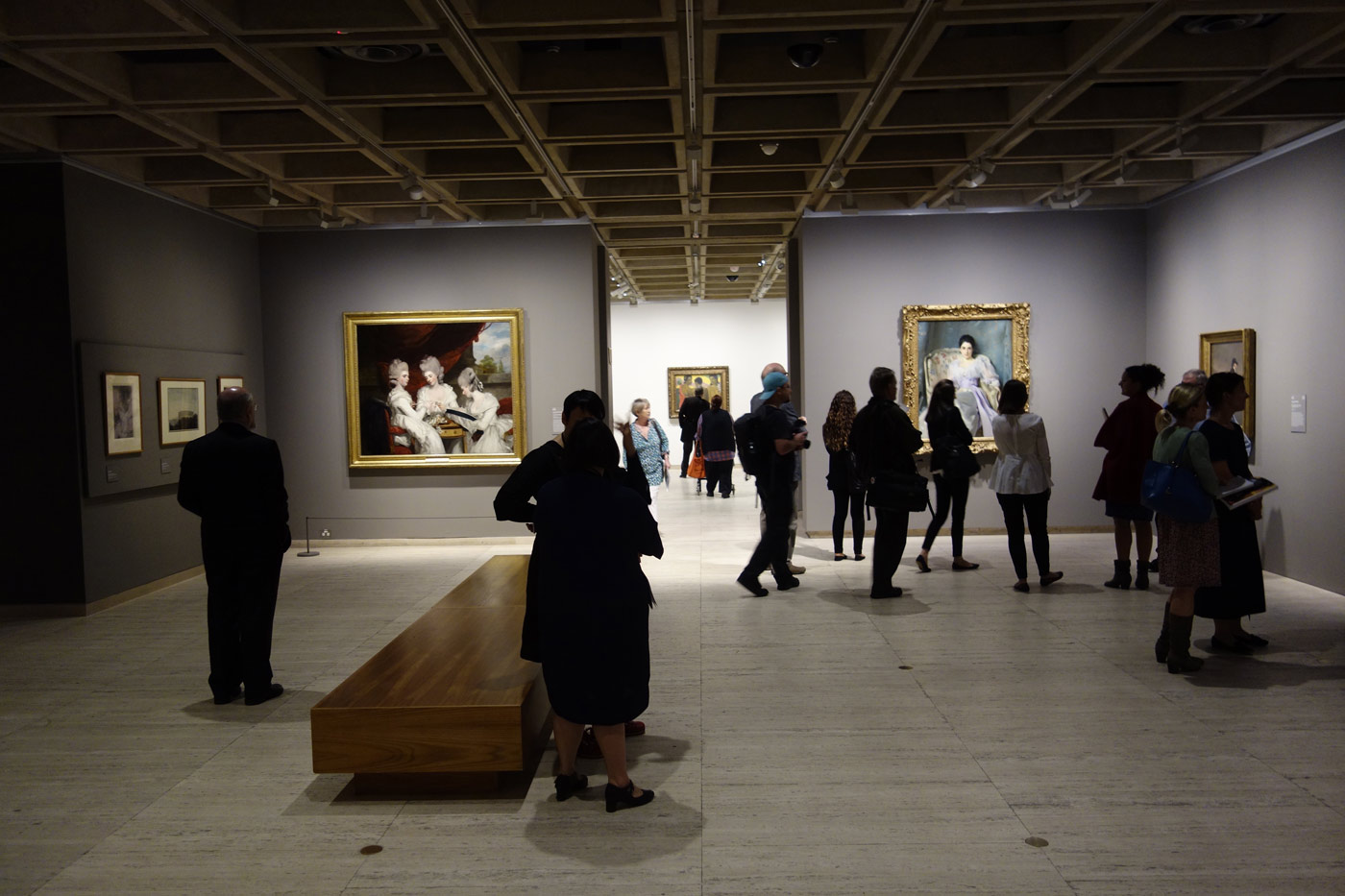
Installation view of the exhibition 'The Greats: Masterpieces from the National Galleries of Scotland' at the Art Gallery of New South Wales, Sydney

Installation view of the exhibition 'The Greats: Masterpieces from the National Galleries of Scotland' at the Art Gallery of New South Wales, Sydney with at left, Sir Joshua Reynolds' 'The Ladies Waldegrave' (1780-1781) and at right, John Singer Sargent's 'Lady Agnew of Lochnaw' (1892)


Installation view of the exhibition The Greats: Masterpieces from the National Galleries of Scotland at the Art Gallery of New South Wales, Sydney with at left, Sir Joshua Reynolds’ The Ladies Waldegrave (1780-1781) and at right, John Singer Sargent’s Lady Agnew of Lochnaw (1892)
Photos: © Marcus Bunyan and the Art Gallery of New South Wales.


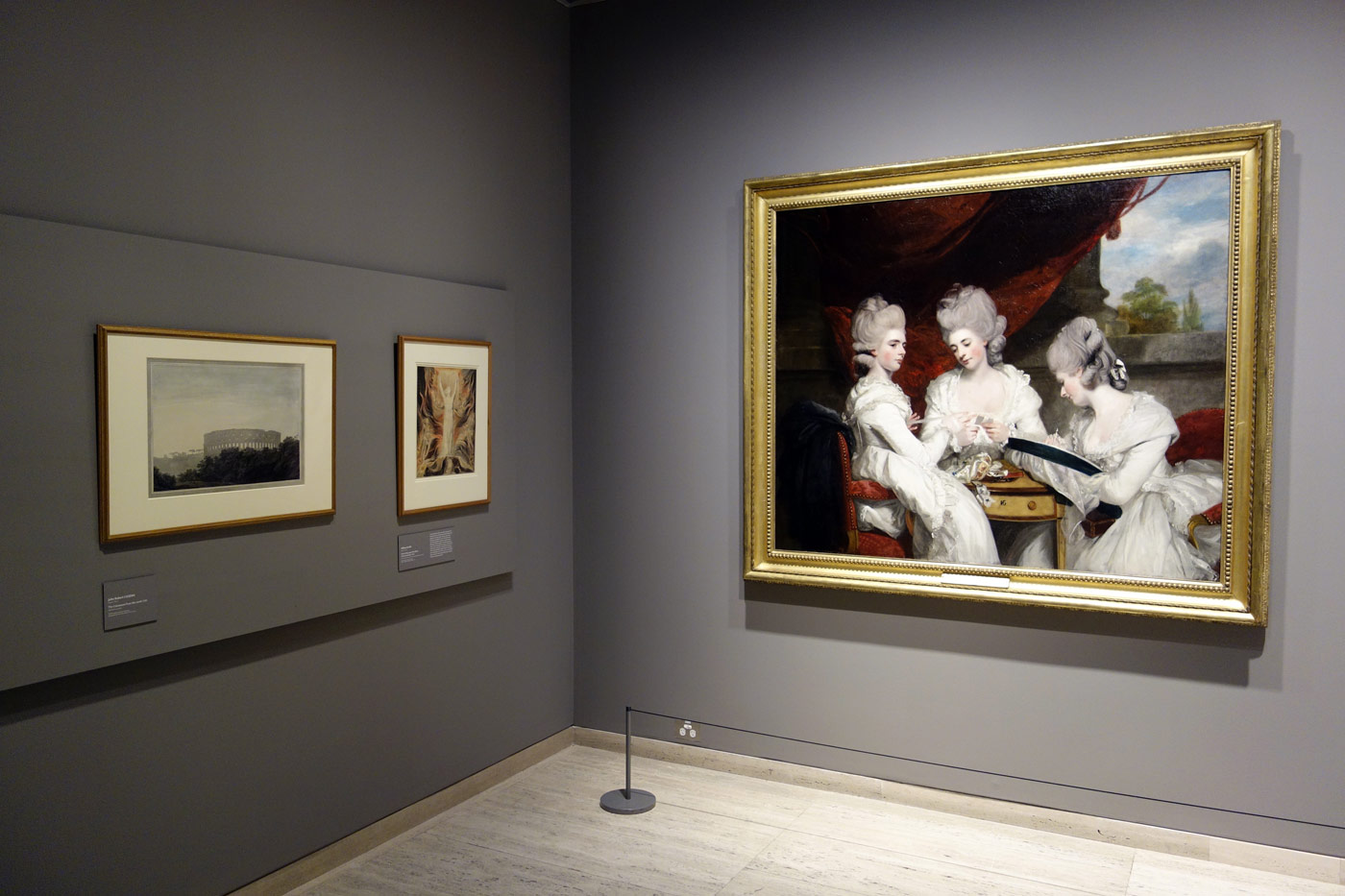
Installation view of the exhibition 'The Greats: Masterpieces from the National Galleries of Scotland' at the Art Gallery of New South Wales, Sydney with in the corner left, William Blake's 'God writing upon the tables of the Covenant' (c. 1805) and at right, Sir Joshua Reynolds' 'The Ladies Waldegrave' (1780-1781)


Installation view of the exhibition The Greats: Masterpieces from the National Galleries of Scotland at the Art Gallery of New South Wales, Sydney with in the corner left, William Blake’s God writing upon the tables of the Covenant (c. 1805) and at right, Sir Joshua Reynolds’ The Ladies Waldegrave (1780-1781)
Photo: © Marcus Bunyan and the Art Gallery of New South Wales


William Blake (England, 1757-1827) 'God writing upon the tables of the Covenant' c. 1805 (installation view)


William Blake (England, 1757-1827)
God writing upon the tables of the Covenant (installation view)
c. 1805
Ink and watercolour over pencil and some sketching with a stylus on paper
Scottish National Gallery, Edinburgh
William Findlay Watson Bequest, 1881
© Trustees of the National Galleries of Scotland
Photo: © Marcus Bunyan and the Art Gallery of New South Wales


This superb watercolour comes from a group of over 80 illustrations to the Bible executed from Blake’s most significant and loyal patron, Thomas Butts. Artist and patron probably first met in 1799, when Butts commissioned Blake to produce 50 small tempera paintings of biblical subjects. This initial commission seems to have developed into an open-ended series of watercolours, painted over a period of nine years, for which Butts paid Blake a regular stipend. The original mount belonging to this work, now lost, was inscribed with a reference to the relevant biblical text, which in this case is Deuteronomy 9:10.


Sir Joshua Reynolds (England, 1723-1792) 'The Ladies Waldegrave' 1780-1781 (installation view)


Sir Joshua Reynolds (England, 1723-1792)
The Ladies Waldegrave (installation view)
1780-1781
Oil on canvas
143 x 168.3cm
Scottish National Gallery, Edinburgh Purchased with funds from the Cowan Smith Bequest and with the aid of the Art Fund, 1952
© Trustees of the National Galleries of Scotland
Photo: © Marcus Bunyan and the Art Gallery of New South Wales


The first president of the Royal Academy, Reynolds worked to raise the status of portraiture in Britain by painting people in the ‘grand manner’ more commonly associated with history painting. This informal portrait, a ‘conversation piece’, features the three sisters Lady Charlotte Maria, Lady Elizabeth Laura and Lady Anna Horatia Waldegrave. Depicting interlocking figures, Reynolds subtly alludes to trios of goddesses or graces of antiquity – a reference that would have been understood by classically educated viewers of the late 18th century. Reynolds’s triple portrait was commissioned by the sitters’ great-uncle, the celebrated antiquarian, connoisseur and critic Horace Walpole.


John Singer Sargent (USA, 1856-1925) 'Lady Agnew of Lochnaw' 1892 (installation view)

John Singer Sargent (USA, 1856-1925) 'Lady Agnew of Lochnaw' 1892 (installation view)

John Singer Sargent (USA, 1856-1925) 'Lady Agnew of Lochnaw' 1892 (installation view detail)


John Singer Sargent (USA, 1856-1925)
Lady Agnew of Lochnaw (installation views)
1892
Oil on canvas
125.7 x 100.3cm
Scottish National Gallery, Edinburgh
Purchased with the aid of the Cowan Smith Bequest Fund, 1925
© Trustees of the National Galleries of Scotland
Photo: © Marcus Bunyan and the Art Gallery of New South Wales


One of the best-loved pictures of the National Galleries of Scotland, this portrait of 27-year old Lady Agnew of Lochnaw is the first Sargent to be exhibited in Sydney in 35 years. As one of Sargent’s most glamorous and beguiling characterisations, it was pivotal in establishing the renown of both artist and sitter. The painting was first exhibited at the Royal Academy exhibition in 1893 to wide public acclaim and cemented Sargent’s position as a sought-after, fashionable portraitist of high society. For Lady Agnew, it launched her as a society beauty who later established her own private salon in London. Ironically, the costs of sustaining such fine style led Lady Agnew to sell her own portrait to the Scottish National Gallery in 1925.

In an ornate plush chair and surrounded by swathes of Chinese fabric, Lady Agnew gazes out at the viewer, confidently but enigmatically. Her pose is gracious, but relaxed. The chair and fabric were Sargent’s own props, and along with the generous, gauzy swathes of the sitter’s dress they give the painting a sense of comfort and luxury. Sargent’s brushstrokes are wide and fluid, and in some areas the canvas shows through the thin, sketchy layers of paint. But it is also very carefully composed to present Lady Agnew as an assured and elegant society woman.


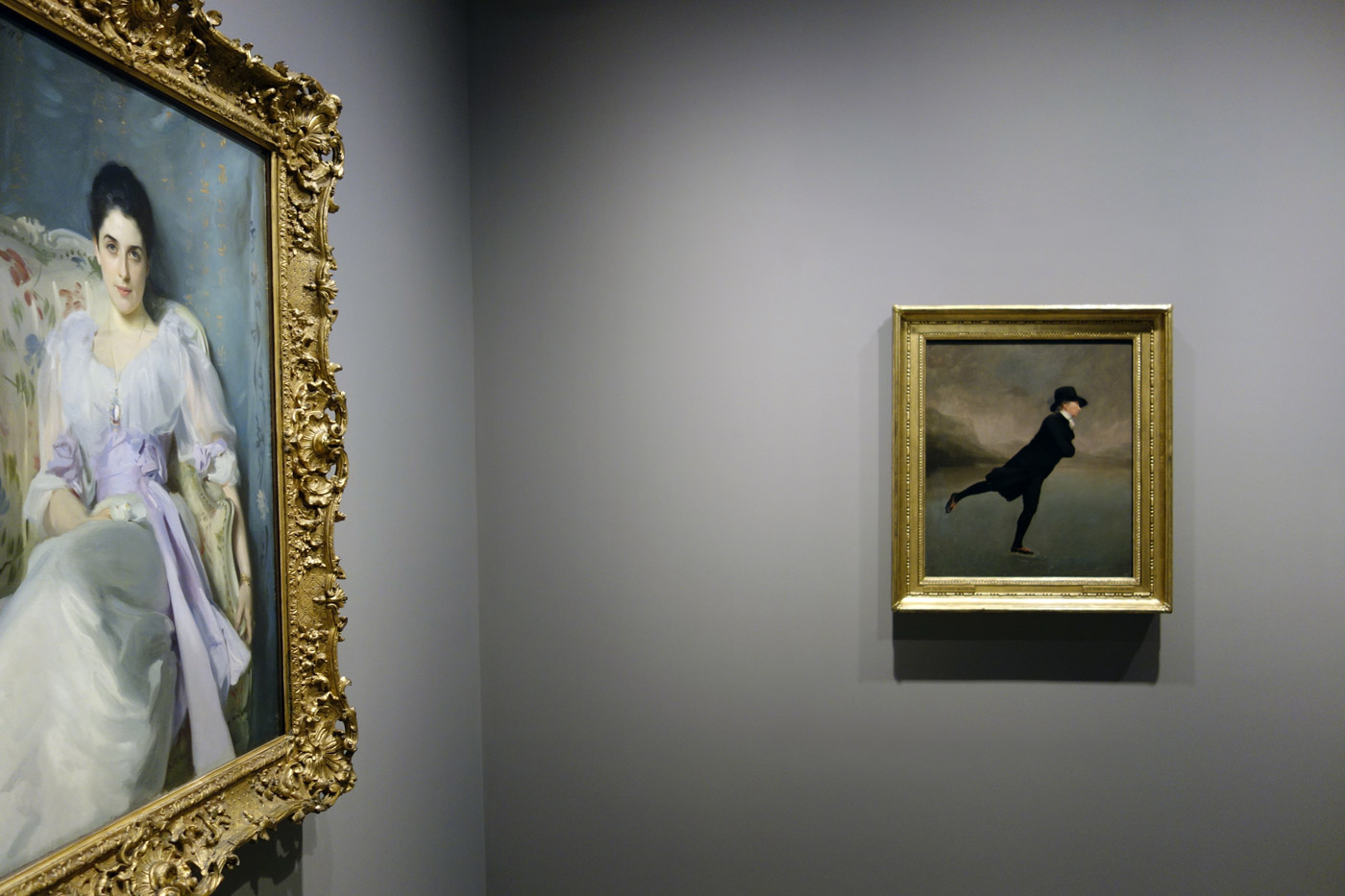
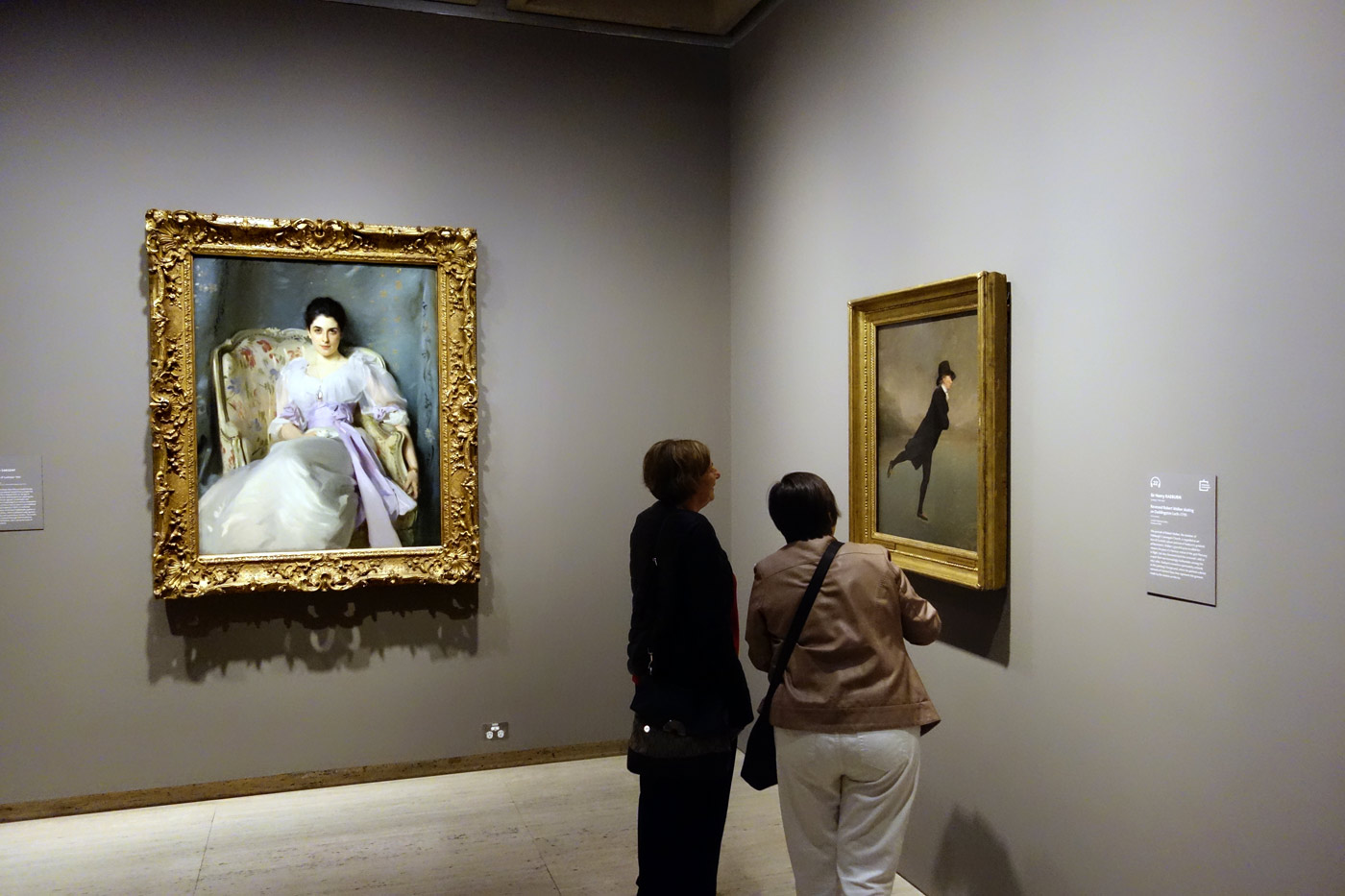
Installation view of the exhibition 'The Greats: Masterpieces from the National Galleries of Scotland' at the Art Gallery of New South Wales, Sydney with at left, John Singer Sargent's 'Lady Agnew of Lochnaw' (1892) and at right, Sir Henry Raeburn's 'Reverend Robert Walker skating on Duddingston Loch' (c. 1795)

Installation view of the exhibition 'The Greats: Masterpieces from the National Galleries of Scotland' at the Art Gallery of New South Wales, Sydney with at left, John Singer Sargent's 'Lady Agnew of Lochnaw' (1892) and at right, Sir Henry Raeburn's 'Reverend Robert Walker skating on Duddingston Loch' (c. 1795)


Installation view of the exhibition The Greats: Masterpieces from the National Galleries of Scotland at the Art Gallery of New South Wales, Sydney with at left, John Singer Sargent’s Lady Agnew of Lochnaw (1892) and at right, Sir Henry Raeburn’s Reverend Robert Walker skating on Duddingston Loch (c. 1795)
Photos: © Marcus Bunyan and the Art Gallery of New South Wales


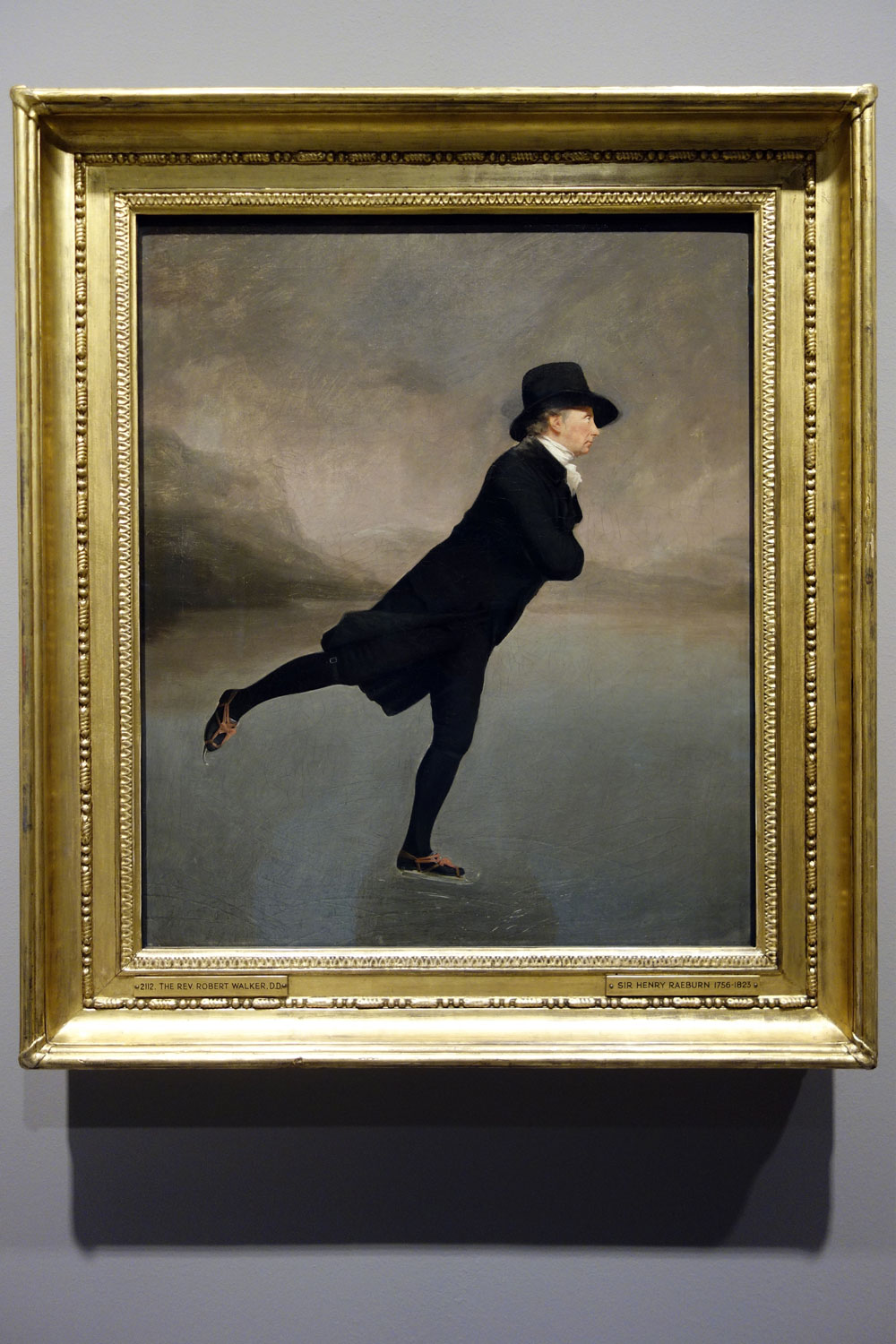
Sir Henry Raeburn (Scotland, 1756-1823) 'The Reverend Robert Walker skating on Duddingston Loch' c. 1795 (installation view)


Sir Henry Raeburn (Scotland, 1756-1823)
The Reverend Robert Walker skating on Duddingston Loch (installation view)
c. 1795
Oil on canvas
76.2 x 63.5cm
Scottish National Gallery, Edinburgh
© Trustees of the National Galleries of Scotland
Photo: © Marcus Bunyan and the Art Gallery of New South Wales


Raeburn was the leading Scottish portrait painter of his time. This striking portrait of Robert Walker (1755-1808), minister of Edinburgh’s Canongate Church and a leading member of the city’s exclusive skating society, has come to be regarded as one of Raeburn’s greatest works. It is the most famous painting in the Scottish National Gallery, often described as the quintessential Scottish painting, and is listed in a recent publication as one of the 1000 paintings you must see before you die.

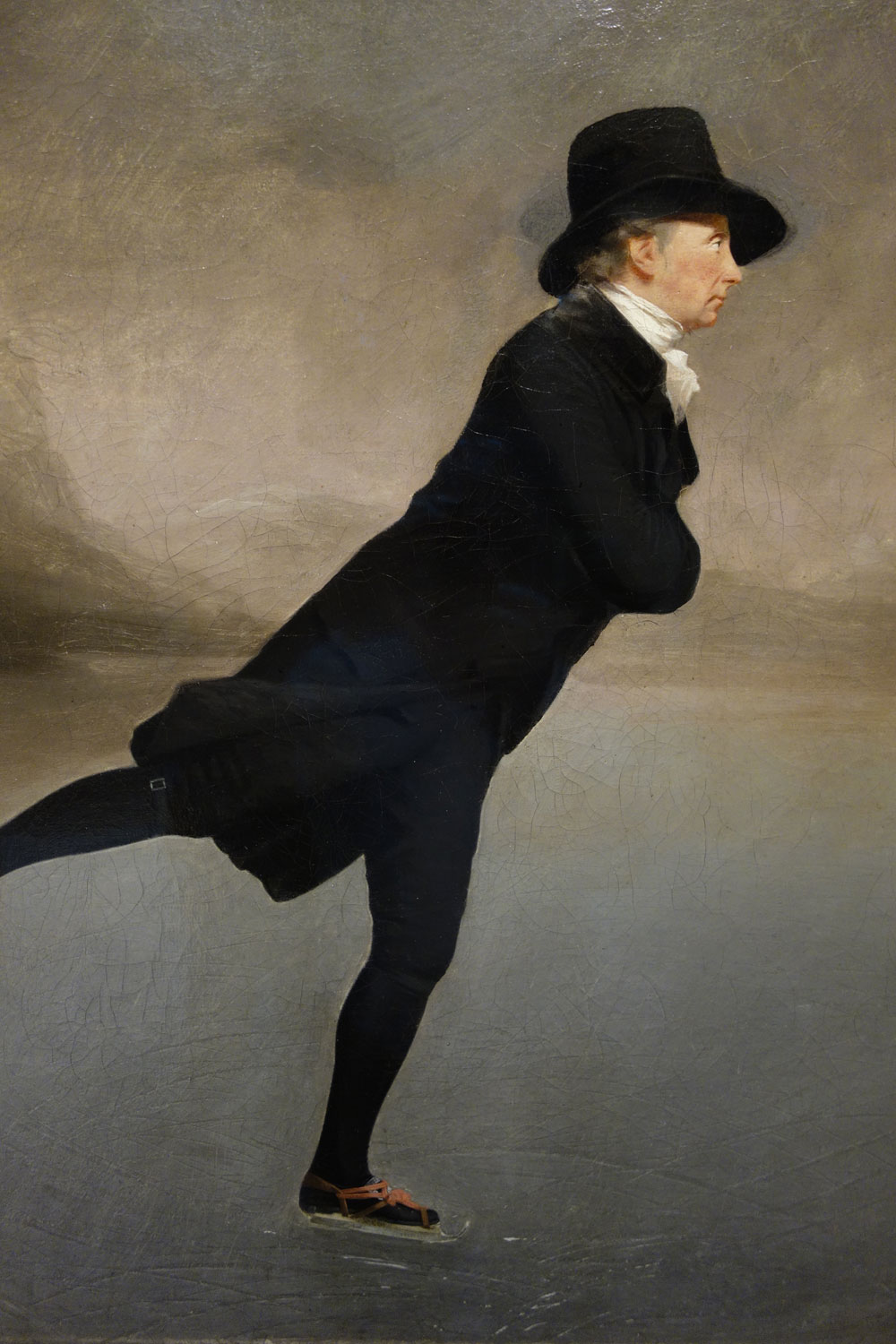
Its simple composition bestows the painting with an extraordinary visual impact. Walker is shown gliding across the icy surface of one of the small lochs near Edinburgh, his arms folded nonchalantly across his chest and his right leg lifted balletically behind him. Raeburn has cleverly created the effect of ice scored by the skater’s blades by scratching back into the paint surface. Unlike most of his artistic peers, Raeburn received no formal artistic education, instead pursuing other academic studies before being apprenticed to a local goldsmith at the age of sixteen.

Raeburn’s approach to painting reflected this unusual path into his profession. He avoided the meticulous production of preparatory drawings and sketches, instead preferring to work straight onto the canvas with minimal formal planning. While this approach invariably meant having to deal with compositional changes in the process of painting, it also enabled Raeburn to produce portraits that were unrivalled in their directness and spontaneity.


Sir Henry Raeburn (Scotland, 1756-1823) 'The Reverend Robert Walker skating on Duddingston Loch' c. 1795 (detail)


Sir Henry Raeburn (Scotland, 1756-1823)
The Reverend Robert Walker skating on Duddingston Loch (detail)
c. 1795
Oil on canvas
76.2 x 63.5cm
Scottish National Gallery, Edinburgh
© Trustees of the National Galleries of Scotland
Photo: © Marcus Bunyan and the Art Gallery of New South Wales


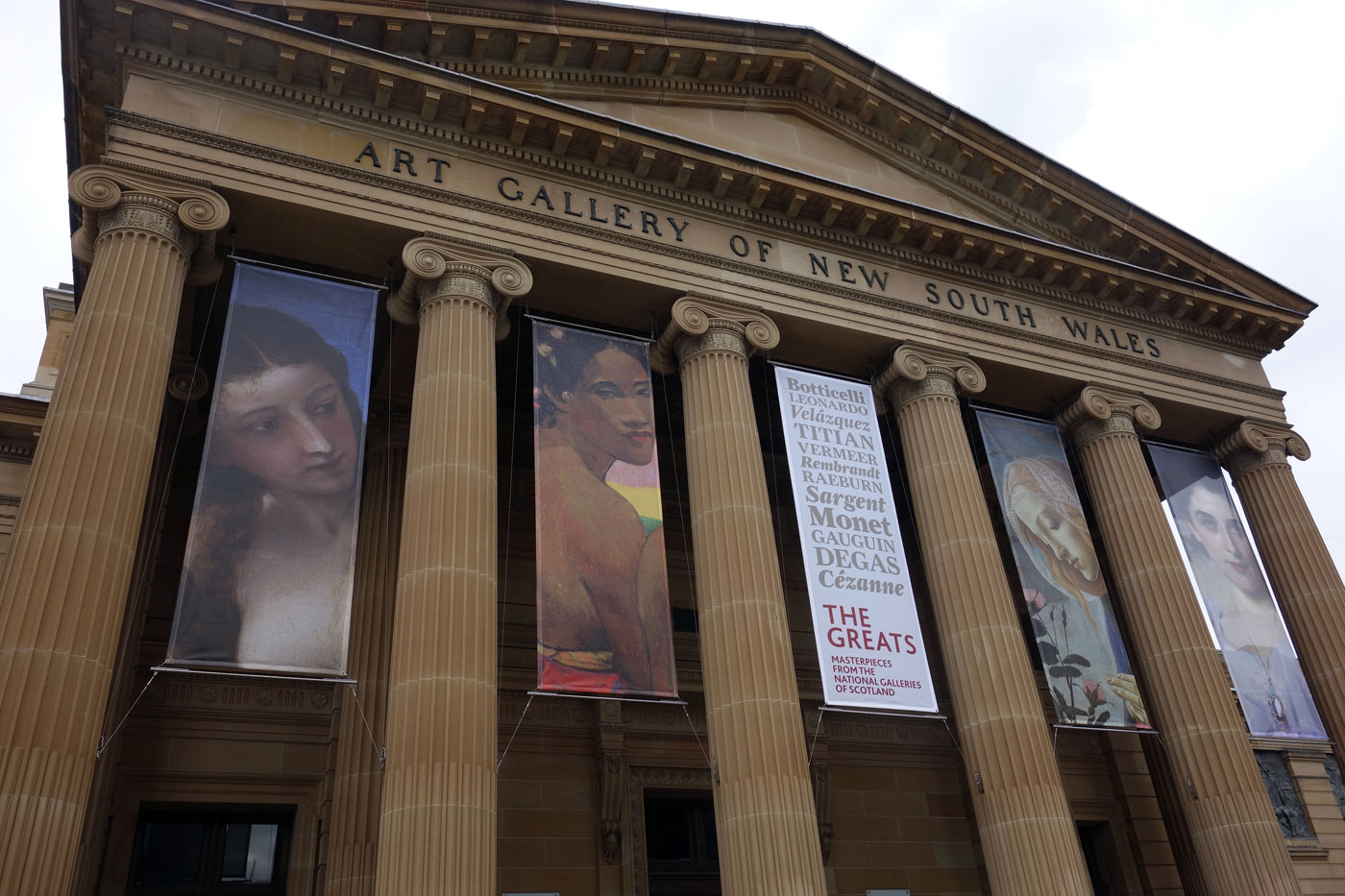
Botticelli. Cézanne. Gauguin. Leonardo. Monet. Raphael. Titian. Turner. Velázquez. Vermeer.

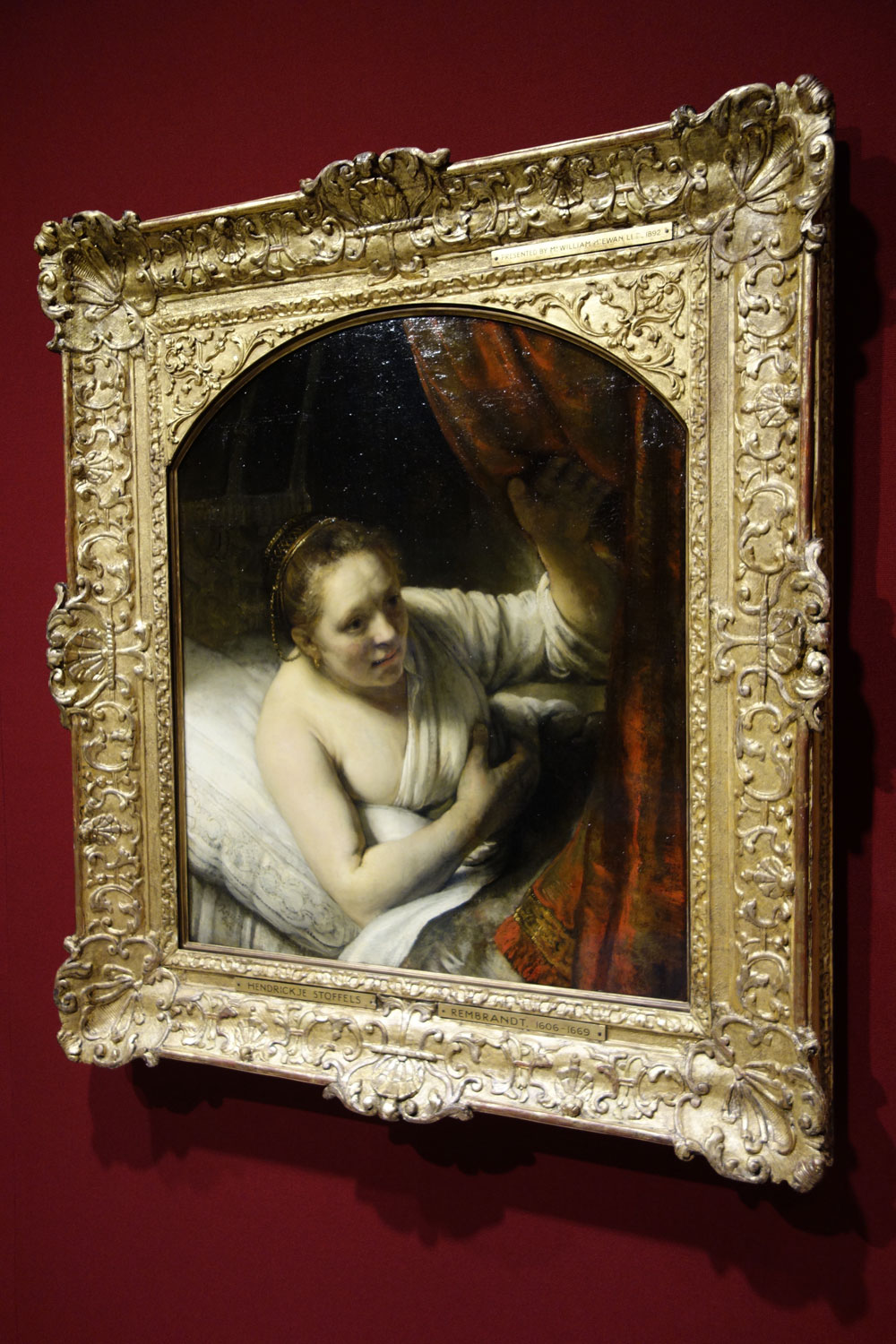
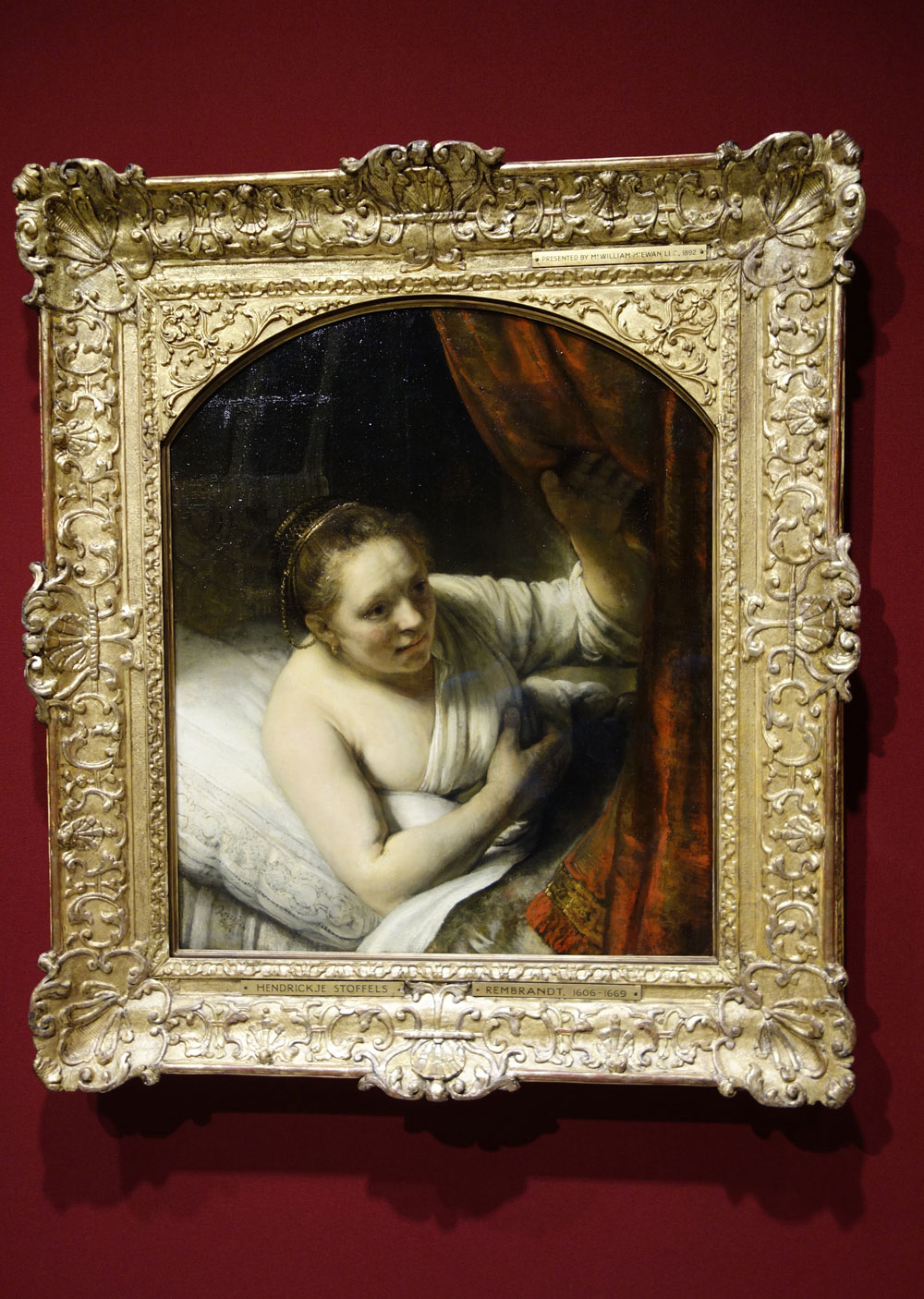
One of the most significant collections of European old master paintings ever seen in Australia is now open at the Art Gallery of New South Wales, providing a once in a lifetime opportunity for Australians to contemplate the extraordinary quality of over 70 masterful paintings and drawings from across four centuries. The Greats marks the first time these artworks have been exhibited in Australia, with the exception of Rembrandt’s A woman in bed (c. 1647) and Seurat’s La Luzerne, Saint-Denis (1884-1885).

Deputy Premier and Minister for the Arts, Troy Grant, said with works by some of the world’s most well-known artists, The Greats alongside the Art Gallery of NSW’s own impressive collection is bound to draw big crowds this summer. “An exhibition of this calibre is a real coup for the State and builds on our standing as the cultural capital of Australia,” Minister Grant said. “These incredible works from Scotland may never be on Australian soil again, so art-lovers and novices alike should visit the Art Gallery of NSW and see this historic exhibition while they can.”

Michael Brand, director of the Art Gallery of NSW said The Greats is a rich and intimate show of remarkable quality. “Each masterpiece – whether it be Titian’s luminous Venus rising from the sea (c. 1520-1525) or Gauguin’s striking Three Tahitians (1899) – tells its own unique story. Through robust and engaging public programs, the Gallery looks forward to sharing these stories with visitors of all ages.”

The Greats: masterpieces from the National Galleries of Scotland unfolds in rooms devoted to the art of the Italian Renaissance, the Baroque in Southern and Northern Europe, the French and British Enlightenment, nineteenth century Scotland, and Impressionism. The exhibition has been carefully designed and installed to accentuate the grandeur of the paintings and foster an intimate experience with each of the artworks.”

Text from the AGNSW


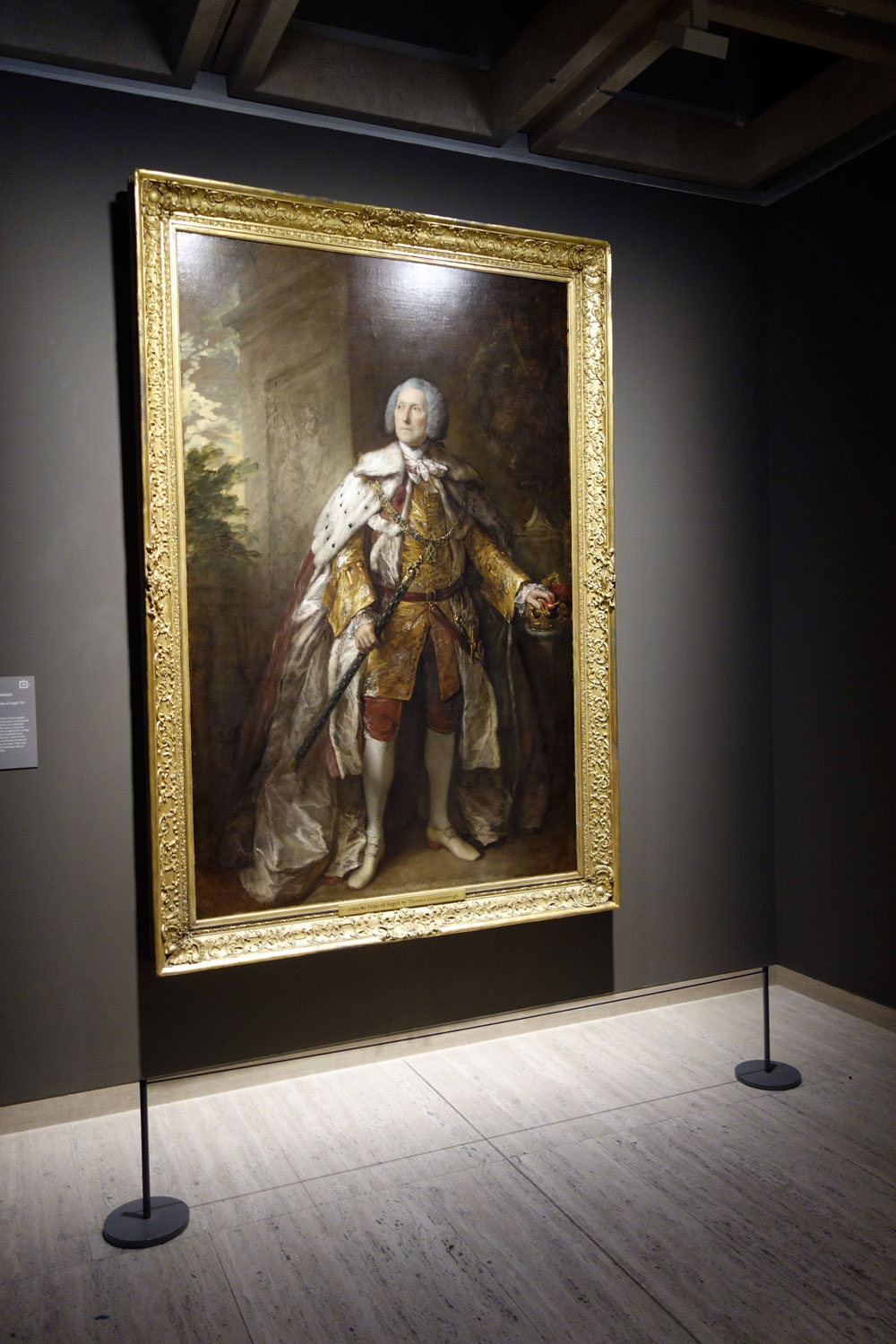
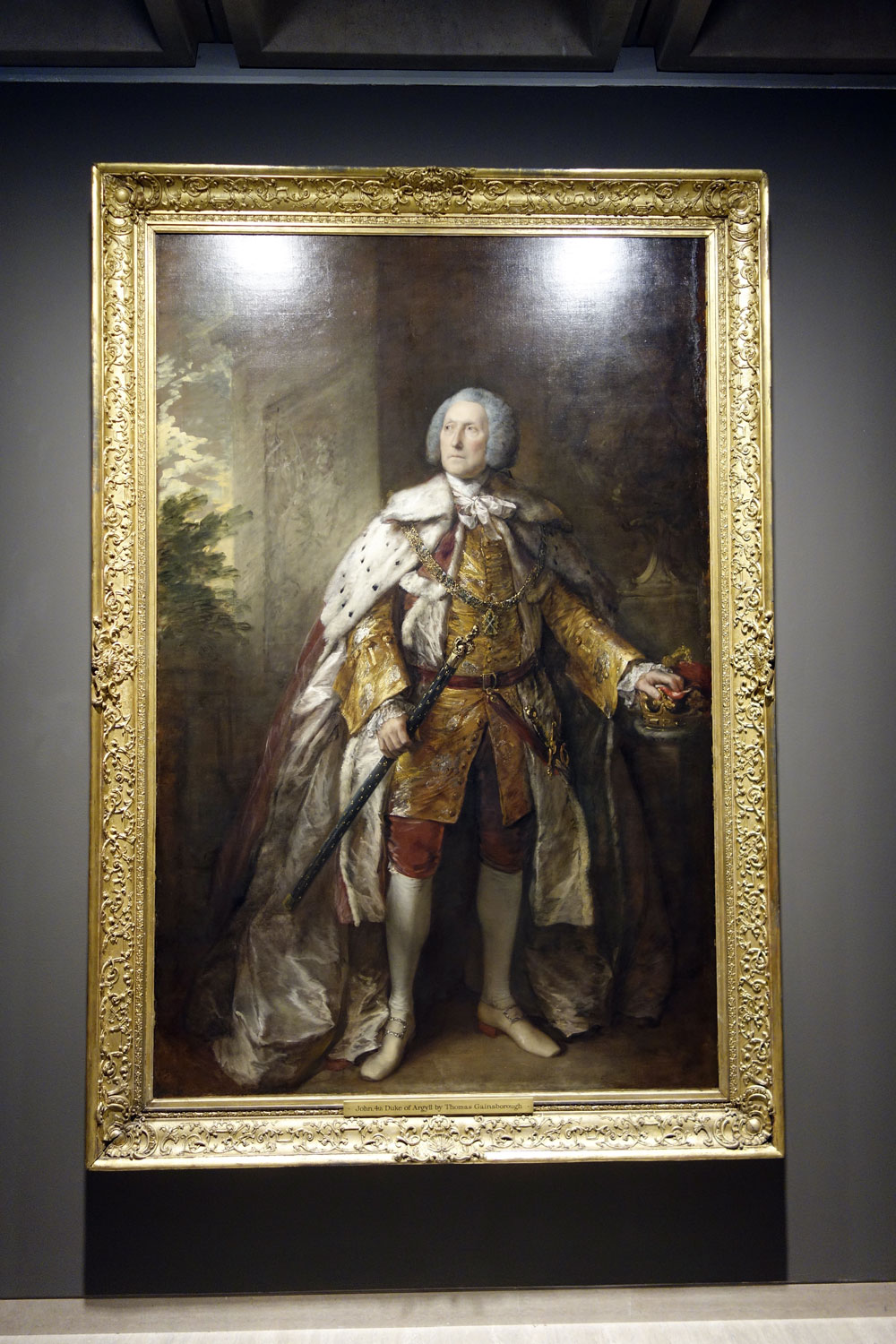
Thomas Gainsborough (England, 1727-1788) 'John Campbell, 4th Duke of Argyll' 1767 (installation view)

Thomas Gainsborough (England, 1727-1788) 'John Campbell, 4th Duke of Argyll' 1767 (installation view)


Thomas Gainsborough (England, 1727-1788)
John Campbell, 4th Duke of Argyll (installation views)
1767
Oil on canvas
235 x 154.3cm
Scottish National Portrait Gallery, Edinburg
Purchased 1953
© Trustees of the National Galleries of Scotland
Photos: © Marcus Bunyan and the Art Gallery of New South Wales


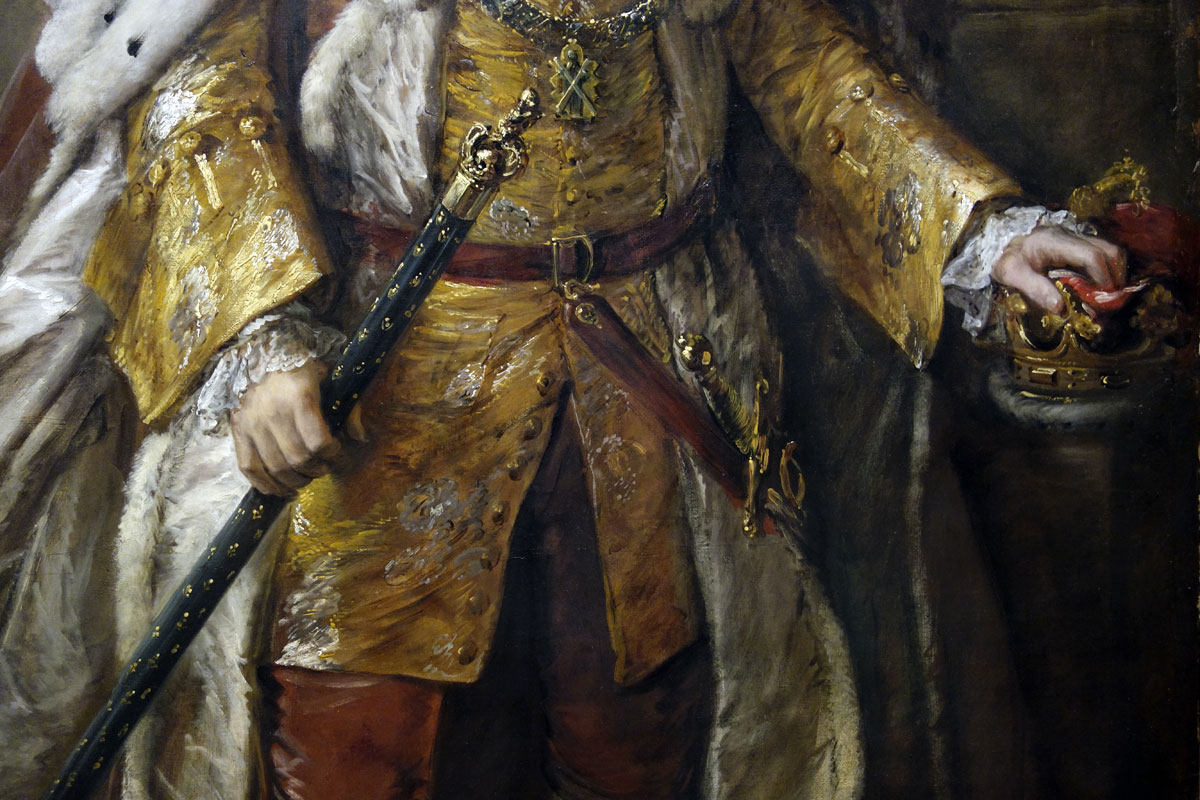
The Scottish Duke of Argyll, Chief of Clan Campbell, whose hereditary seat is Inverary Castle, commissioned Thomas Gainsborough, one of the most celebrated English portraitists of the 18th century, to paint his likeness. The artist’s talents were sought by the wealthy elite both in London and in the fashionable resort town of Bath, where he established a studio in 1759. Gainsborough applied dense and feathery brushwork to convey Argyll’s ducal robes, his collar of the Order of  Thistle, and the baton of his hereditary office of Master of the King’s Household.


Thomas Gainsborough (England, 1727-1788) 'John Campbell, 4th Duke of Argyll' 1767 (installation view detail)


Thomas Gainsborough (England, 1727-1788)
John Campbell, 4th Duke of Argyll (installation view detail)
1767
Oil on canvas
235 x 154.3cm
Scottish National Portrait Gallery, Edinburg
Purchased 1953
© Trustees of the National Galleries of Scotland
Photo: © Marcus Bunyan and the Art Gallery of New South Wales


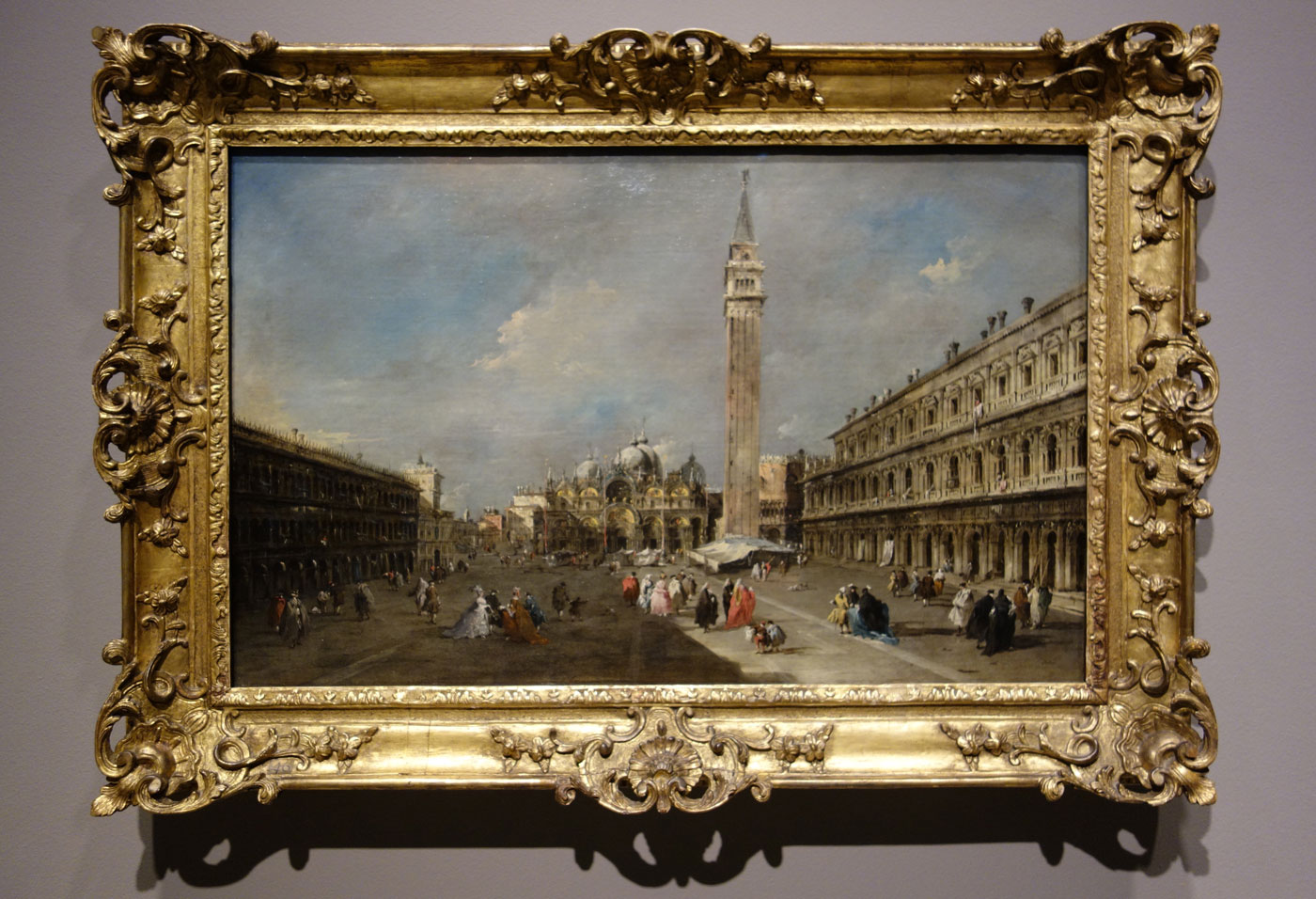
Francesco Guardi (Italy, 1712-1793) 'The Piazza San Marco, Venice' c. 1770-1775 (installation view)

Francesco Guardi (Italy, 1712-1793) 'The Piazza San Marco, Venice' c. 1770-1775 (installation view)


Francesco Guardi (Italy, 1712-1793)
The Piazza San Marco, Venice (installation views)
c. 1770-1775
Oil on canvas
55.2 x 85.4cm
Scottish National Gallery, Edinburgh Accepted by HM Government in lieu of inheritance tax and allocated to the Scottish National Gallery, 1978
© Trustees of the National Galleries of Scotland
Photos: © Marcus Bunyan and the Art Gallery of New South Wales


Like his fellow painter Canaletto, Guardi capitalised on the market of tourists eager for topographical views – vedute – of the spectacular urban spaces of Venice. This composition features the Piazza San Marco, which Napoleon would later call ‘the most splendid drawing room in Europe’. On either side, the receding arcades of official buildings, the Procurator Vecchio and Procurator Nuove, lead the eye towards the Basilica of San Marco, its mosaics shimmering in the sunlight. Behind the bellower is a glimpse of the Doge’s Palace. The scene is enlivened by traders, uniformed government officials, and fashionably dressed tourists – all portrayed through only a few deft strokes of the brush.


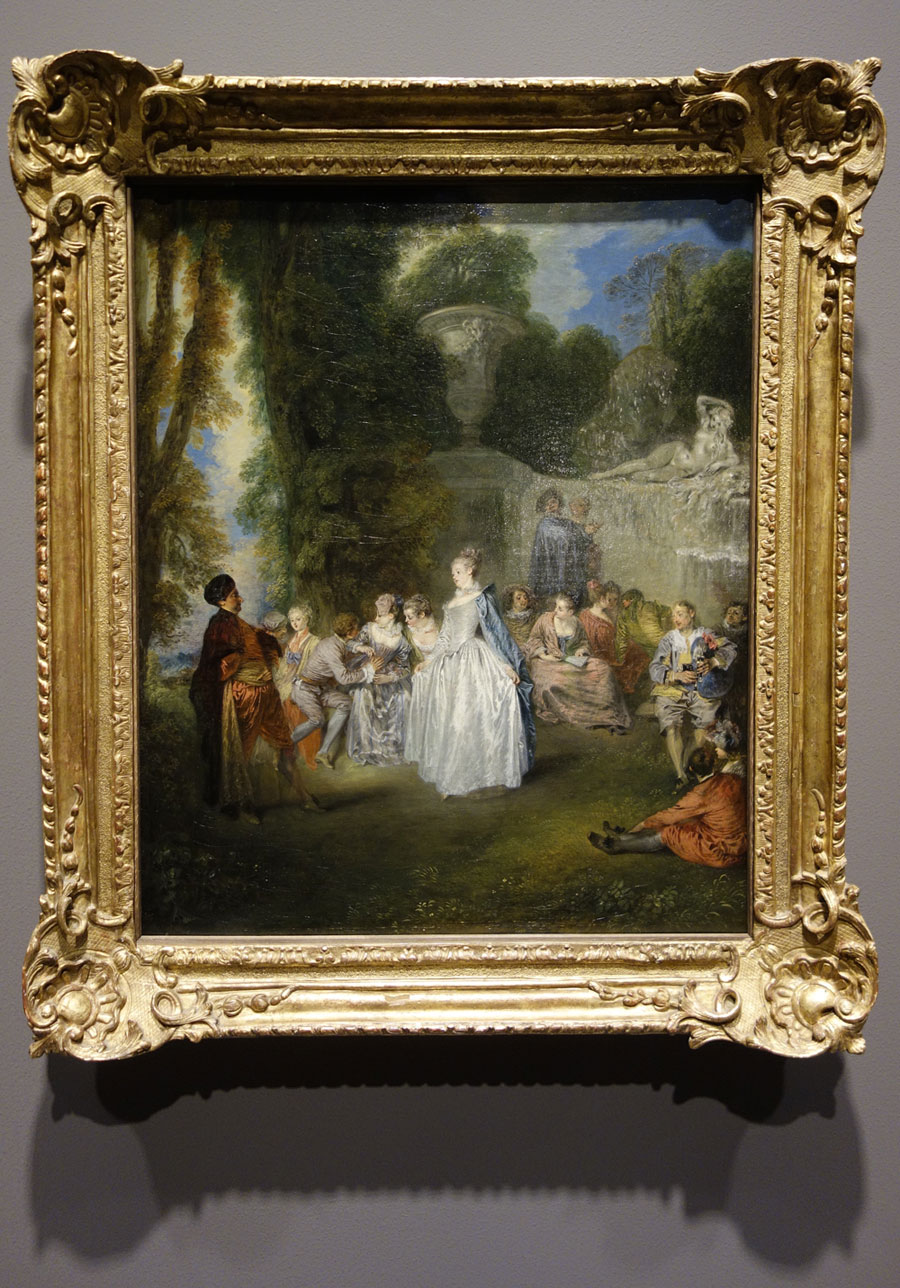
Jean-Antoine Watteau (France, 1684-1721) 'Fêtes vénitiennes (Venetian pleasures)' 1718-1719 (installation view)

Jean-Antoine Watteau (France, 1684-1721) 'Fêtes vénitiennes (Venetian pleasures)' 1718-1719 (installation view detail)


Jean-Antoine Watteau (France, 1684-1721)
Fêtes vénitiennes (Venetian pleasures) (installation views)
1718-1719
Oil on canvas
55.9 x 45.7cm
Scottish National Gallery, Edinburgh. Bequest of Lady Murray of Henderland, 1861
© Trustees of the National Galleries of Scotland
Photos: © Marcus Bunyan and the Art Gallery of New South Wales


Jean-Antoine Watteau (France, 1684-1721) 'Fêtes vénitiennes (Venetian pleasures)' 1718-1719 (installation view detail)


Jean-Antoine Watteau (France, 1684-1721)
Fêtes vénitiennes (Venetian pleasures) (installation view detail)
1718-1719
Oil on canvas
55.9 x 45.7cm
Scottish National Gallery, Edinburgh. Bequest of Lady Murray of Henderland, 1861
© Trustees of the National Galleries of Scotland
Photo: © Marcus Bunyan and the Art Gallery of New South Wales


At the beginning of the 18th century, Watteau pioneered the fêtes gallant, a type of painting depicting a group of men and women enjoying flirtatious love, music and conversation, generally in a park or a garden setting. His paintings inspired a generation of artists who sought to capture the light-hearted elegance of the period. This painting is one of his few compositions that portray real people: the figure on the left can be identified as Watteau’s friend and fellow artist Nichola Vleugxhels, and the lovelorn bagpipe player on the right is considered a self-portrait of Watteau himself.


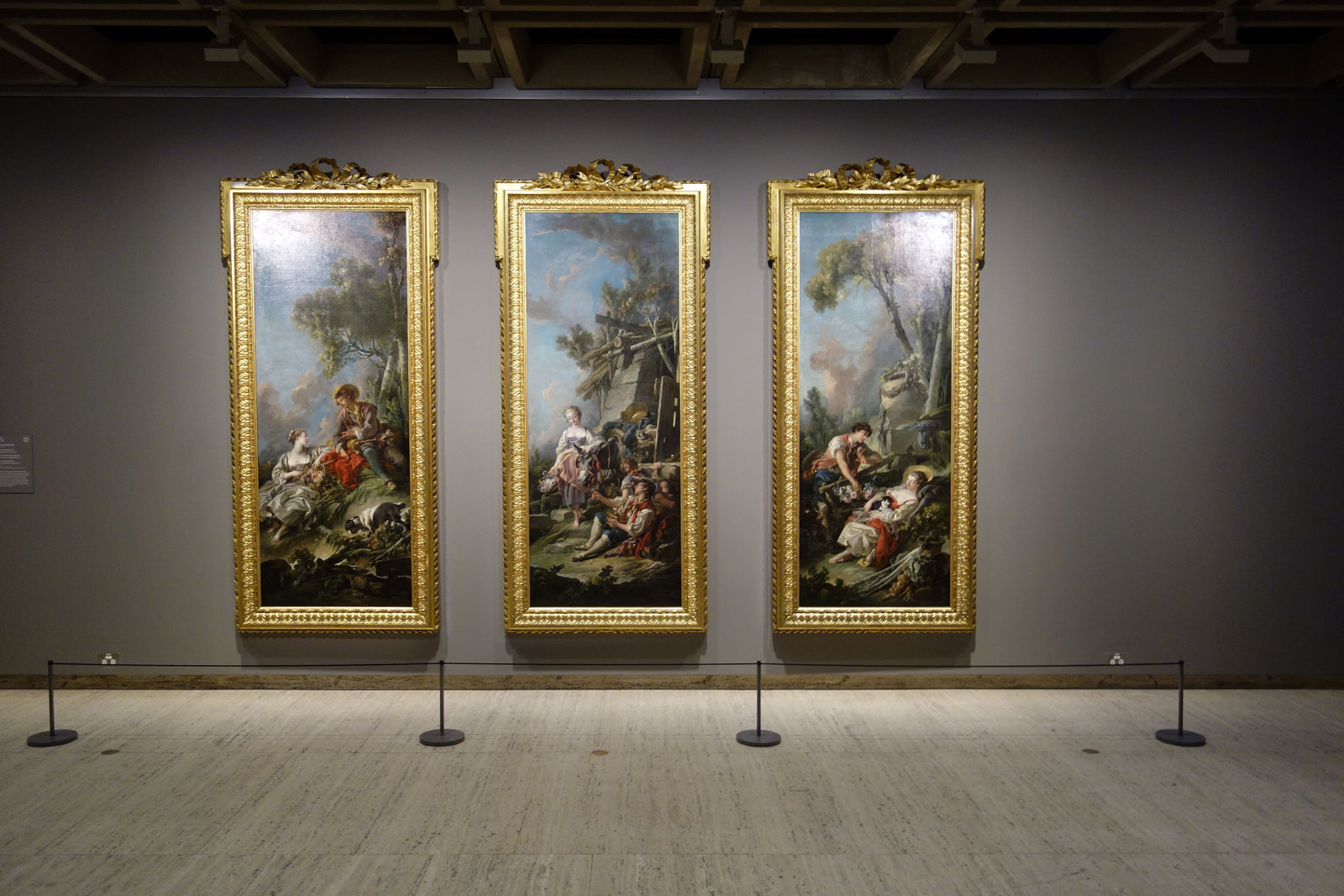
François Boucher (France, 1703-1770) Pastoral scene: l’offrande à la villageoise 1761 Pastoral scene: la jardinière endormie 1762 Pastoral scene: l’aimable pastorale 1762 (installation view)

François Boucher (France, 1703-1770) Pastoral scene: l’offrande à la villageoise 1761 Pastoral scene: la jardinière endormie 1762 Pastoral scene: l’aimable pastorale 1762 (installation view)


François Boucher (France, 1703-1770)
The pleasing pastoral: l’aimable pastorale
1762
Oil on canvas
231.5 x 91cm

The offering of the village girl: l’offrande à la villageoise

1761
Oil on canvas
229 x 89cm

The sleeping gardener: la jardinière endormie
1762
Oil on canvas
232 x 91cm

Scottish National Gallery, Edinburgh
Purchased by private treaty from the estate of HMV Showering, 1986
© Trustees of the National Galleries of Scotland
Photos: © Marcus Bunyan and the Art Gallery of New South Wales


Boucher, considered the pre-eminent painter of the French rococo, effectively invented this genre of elegiac, erotic pastoral which found a parallel in the pantomimes devised by his friend Charles-Simon Favart. In these three pastoral scenes set in a luxuriant and entirely unthreatening nature, shepherds engage in a perpetual drama of frustrated courtship, reflecting the polished etiquette and suppressed passions of aristocratic society in pre-revolutionary France.


Installation view of the exhibition 'The Greats: Masterpieces from the National Galleries of Scotland' at the Art Gallery of New South Wales, Sydney showing at left, John Constable's 'The Vale of Dedham' (c. 1827-1728) and at right, Thomas Gainsborough's 'River landscape with a view of a distant village' (c. 1748-1750)


Installation view of the exhibition The Greats: Masterpieces from the National Galleries of Scotland at the Art Gallery of New South Wales, Sydney showing at left, John Constable’s The Vale of Dedham (c. 1827-1728) and at right, Thomas Gainsborough’s River landscape with a view of a distant village (c. 1748-1750)
Photo: © Marcus Bunyan and the Art Gallery of New South Wales


John Constable (England, 1776-1837) 'The Vale of Dedham' c. 1827-1828 (installation view)


John Constable (England, 1776-1837)
The Vale of Dedham (installation view)
c. 1827-1828
Oil on canvas
145 x 122cm
Scottish National Gallery, Edinburgh
Purchased with funds from the Cowan Smith Bequest and with the aid of the Art Fund, 1944
© Trustees of the National Galleries of Scotland
Photo: © Marcus Bunyan and the Art Gallery of New South Wales


Constable was born in Suffolk, and he dedicated most of his career to painting the surrounding English countryside with a marked romantic idealism. He was influenced by the grand tradition of European landscape painting, which he learned from artists and dealers he met in London early in his career. This composition, for instance, is indebted broadly to that of Claude Lorrain’s work Hagar and the angel 1646 (National Gallery, London). Constable referred to his own mature masterpiece in al better of June 1828: ‘I have painted a large upright landscape, perhaps my best.’


John Constable (England, 1776-1837) 'The Vale of Dedham' c. 1827-1828 (installation view detail)

John Constable (England, 1776-1837) 'The Vale of Dedham' c. 1827-1828 (installation view detail)


John Constable (England, 1776-1837)
The Vale of Dedham (installation view details)
c. 1827-1828
Oil on canvas
145 x 122cm
Scottish National Gallery, Edinburgh
Purchased with funds from the Cowan Smith Bequest and with the aid of the Art Fund, 1944
© Trustees of the National Galleries of Scotland
Photos: © Marcus Bunyan and the Art Gallery of New South Wales


Thomas Gainsborough (England, 1727-1788) 'River landscape with a view of a distant village' c. 1748-50 (installation view)


Thomas Gainsborough (England, 1727-1788)
River landscape with a view of a distant village (installation view)
c. 1748-1750
Oil on canvas
76 x 151cm
Scottish National Gallery, Edinburgh. Purchased 1953
© Trustees of the National Galleries of Scotland
Photo: © Marcus Bunyan and the Art Gallery of New South Wales


Thomas Gainsborough (England, 1727-1788) 'River landscape with a view of a distant village' c. 1748-50 (installation view detail)

Thomas Gainsborough (England, 1727-1788) 'River landscape with a view of a distant village' c. 1748-50 (installation view detail)

Thomas Gainsborough (England, 1727-1788) 'River landscape with a view of a distant village' c. 1748-50 (installation view detail)


Thomas Gainsborough (England, 1727-1788)
River landscape with a view of a distant village (installation details)
c. 1748-1750
Oil on canvas
76 x 151cm
Scottish National Gallery, Edinburgh. Purchased 1953
© Trustees of the National Galleries of Scotland
Photos: © Marcus Bunyan and the Art Gallery of New South Wales


Although best known for his portraits, Gainsborough consistently painted landscape throughout his long career. Rich in detail and carefully composed, this painting reveals his firsthand knowledge of 17th-century Dutch landscapes. During the 1740s, collectors in London admired and sought out works by such artists of Holland’s Golden Age as Meindert Hobbema and Jacob van Ruisdael. The especially horizontal format of this work suggests that it may have been part of a decorative cycle for a domestic interior, perhaps hanging above a fireplace.


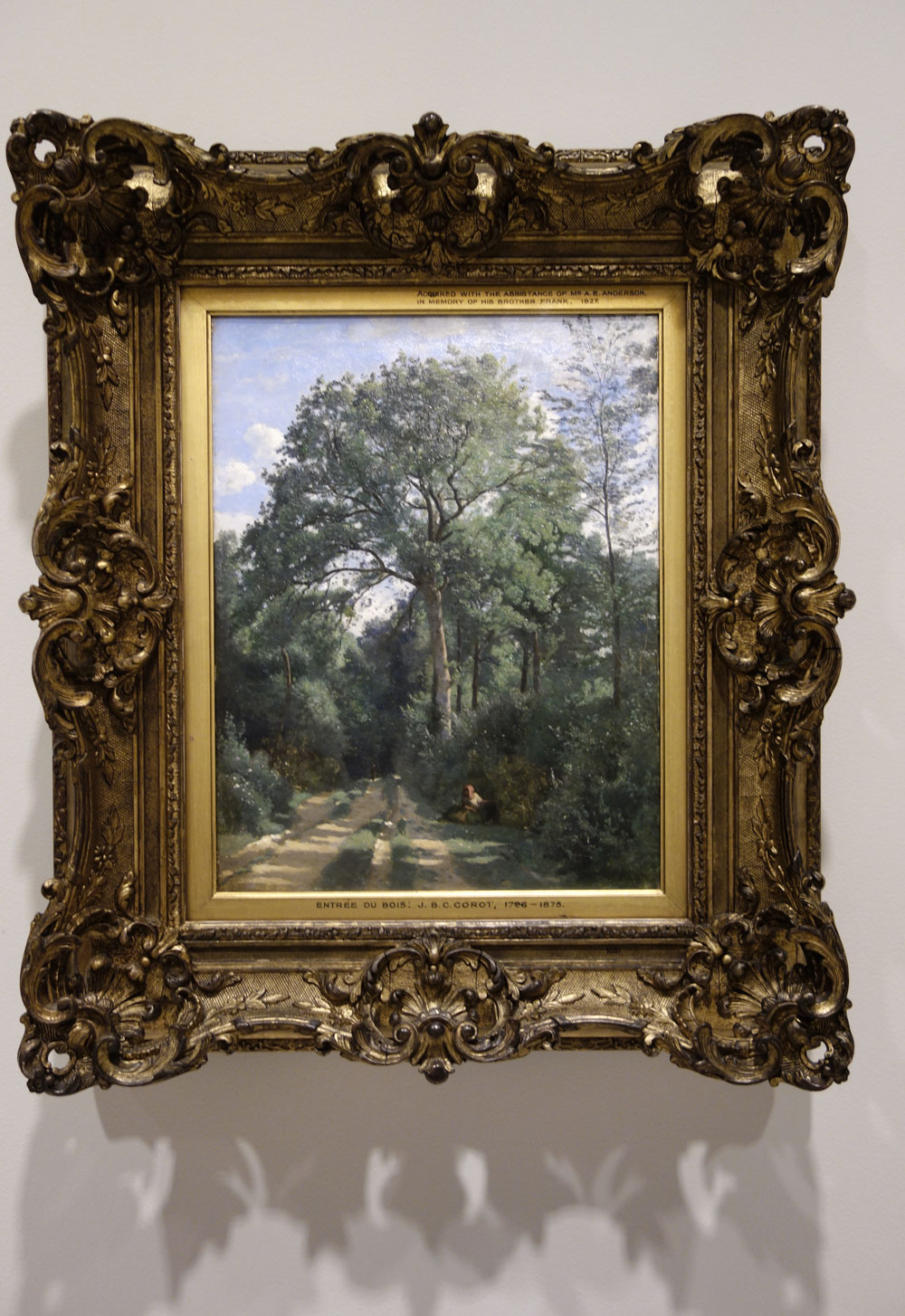
Camille Corot (France, 1796-1875) 'Ville-d'Avray: entrance to the wood' c. 1825, with later retouching (installation view)

Camille Corot (France, 1796-1875) 'Ville-d'Avray: entrance to the wood' c. 1825, with later retouching (installation view)


Camille Corot (France, 1796-1875)
Ville-d’Avray: entrance to the wood (installation views)
c. 1825, with later retouching
Oil on canvas
46 x 35cm
Scottish National Gallery, Edinburgh
Purchased with the aid of AE Anderson in memory of his brother Frank, 1927
© Trustees of the National Galleries of Scotland
Photos: © Marcus Bunyan and the Art Gallery of New South Wales


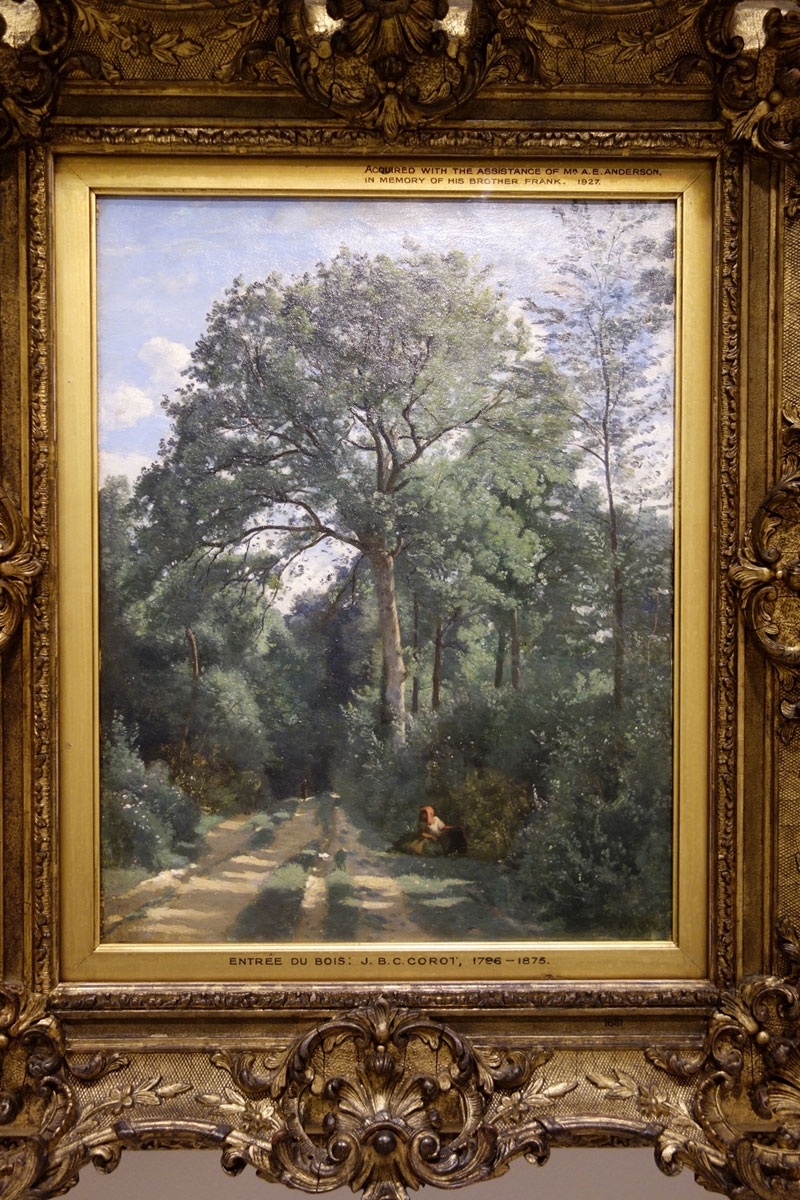
Camille Corot (France, 1796-1875) 'Ville-d'Avray: entrance to the wood' c. 1825, with later retouching (installation view detail)


Camille Corot (France, 1796-1875)
Ville-d’Avray: entrance to the wood (installation view detail)
c. 1825, with later retouching
Oil on canvas
46 x 35cm
Scottish National Gallery, Edinburgh
Purchased with the aid of AE Anderson in memory of his brother Frank, 1927
© Trustees of the National Galleries of Scotland
Photo: © Marcus Bunyan and the Art Gallery of New South Wales


Corot, whose career spanned more than 50 years, emerged from the classicism of the 1820s to found the ‘school of nature’ that would find its culmination after his death in the art of the impressionists. This bucolic early work was painted at Ville-d’Avray, a small town west of Paris, where Corot’s parents owned a modest country house with grounds. The painting was retouched around 1850, at least in part by Corot’s friend and fellow artist Narcisse Virgile Diaz de la Peña, who added the red cap of the seated woman as a bold implement to the otherwise cool palette.


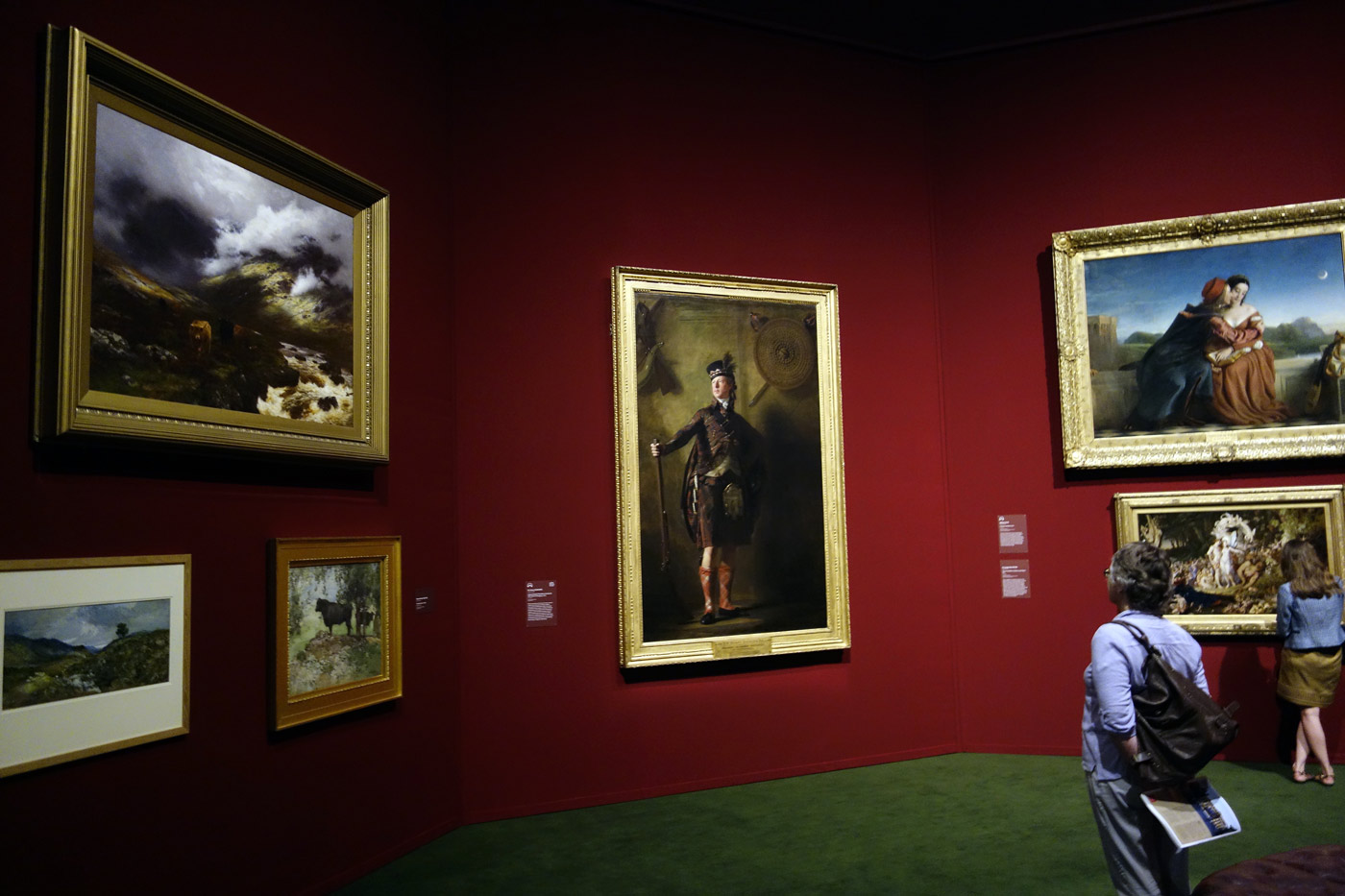
Installation view of the exhibition 'The Greats: Masterpieces from the National Galleries of Scotland' at the Art Gallery of New South Wales, Sydney showing at centre, Sir Henry Raeburn's 'Colonel Alastair Ranaldson Macdonell, 15th Chief of Glengarry' c. 1812


Installation view of the exhibition The Greats: Masterpieces from the National Galleries of Scotland at the Art Gallery of New South Wales, Sydney showing at centre, Sir Henry Raeburn’s Colonel Alastair Ranaldson Macdonell, 15th Chief of Glengarry c. 1812
Photo: © Marcus Bunyan and the Art Gallery of New South Wales


Installation view of the exhibition 'The Greats: Masterpieces from the National Galleries of Scotland' at the Art Gallery of New South Wales, Sydney showing at left, Sir Henry Raeburn's 'Colonel Alastair Ranaldson Macdonell, 15th Chief of Glengarry' (c. 1812) and at centre, William Dyce's 'Francesca da Rimini' (1837)


Installation view of the exhibition The Greats: Masterpieces from the National Galleries of Scotland at the Art Gallery of New South Wales, Sydney showing at left, Sir Henry Raeburn’s Colonel Alastair Ranaldson Macdonell, 15th Chief of Glengarry (c. 1812) and at centre, William Dyce’s Francesca da Rimini (1837)
Photo: © Marcus Bunyan and the Art Gallery of New South Wales


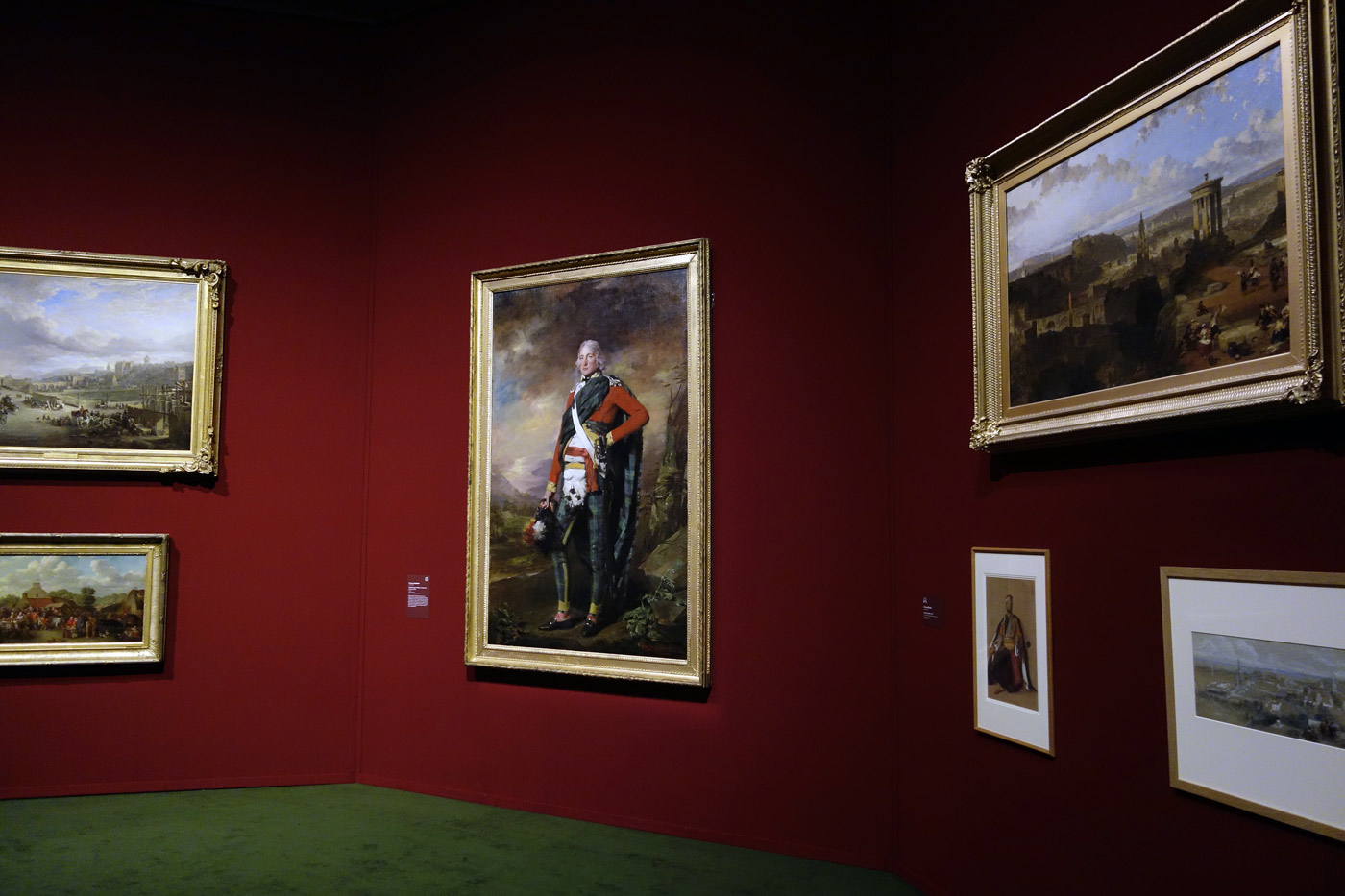
Installation view of the exhibition 'The Greats: Masterpieces from the National Galleries of Scotland' at the Art Gallery of New South Wales, Sydney showing at centre, Sir Henry Raeburn's 'Sir John Sinclair of Ulbster, 1st Baronet' (mid to late 1790s)

Installation view of the exhibition 'The Greats: Masterpieces from the National Galleries of Scotland' at the Art Gallery of New South Wales, Sydney showing at centre, Sir Henry Raeburn's 'Sir John Sinclair of Ulbster, 1st Baronet' (mid to late 1790s)


Installation view of the exhibition The Greats: Masterpieces from the National Galleries of Scotland at the Art Gallery of New South Wales, Sydney showing at centre, Sir Henry Raeburn’s Sir John Sinclair of Ulbster, 1st Baronet (mid to late 1790s)
Photo: © Marcus Bunyan and the Art Gallery of New South Wales


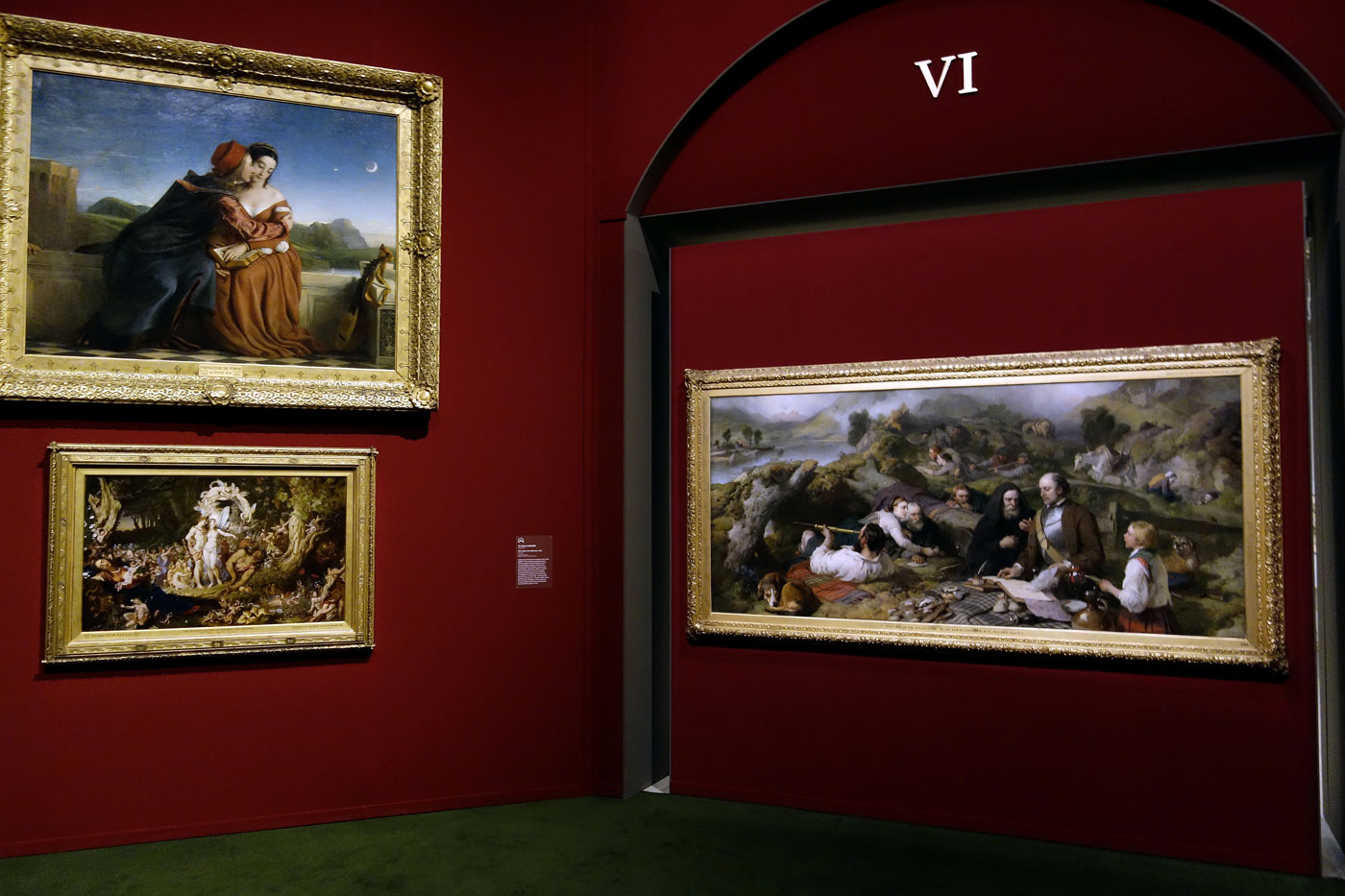
Installation view of the exhibition 'The Greats: Masterpieces from the National Galleries of Scotland' at the Art Gallery of New South Wales, Sydney showing at left, William Dyce's 'Francesca da Rimini' (1837) and at right, Sir Edwin Landseer's 'Rent-day in the wilderness' (1868)


Installation view of the exhibition The Greats: Masterpieces from the National Galleries of Scotland at the Art Gallery of New South Wales, Sydney showing at left, William Dyce’s Francesca da Rimini (1837) and at right, Sir Edwin Landseer’s Rent-day in the wilderness (1868)
Photo: © Marcus Bunyan and the Art Gallery of New South Wales


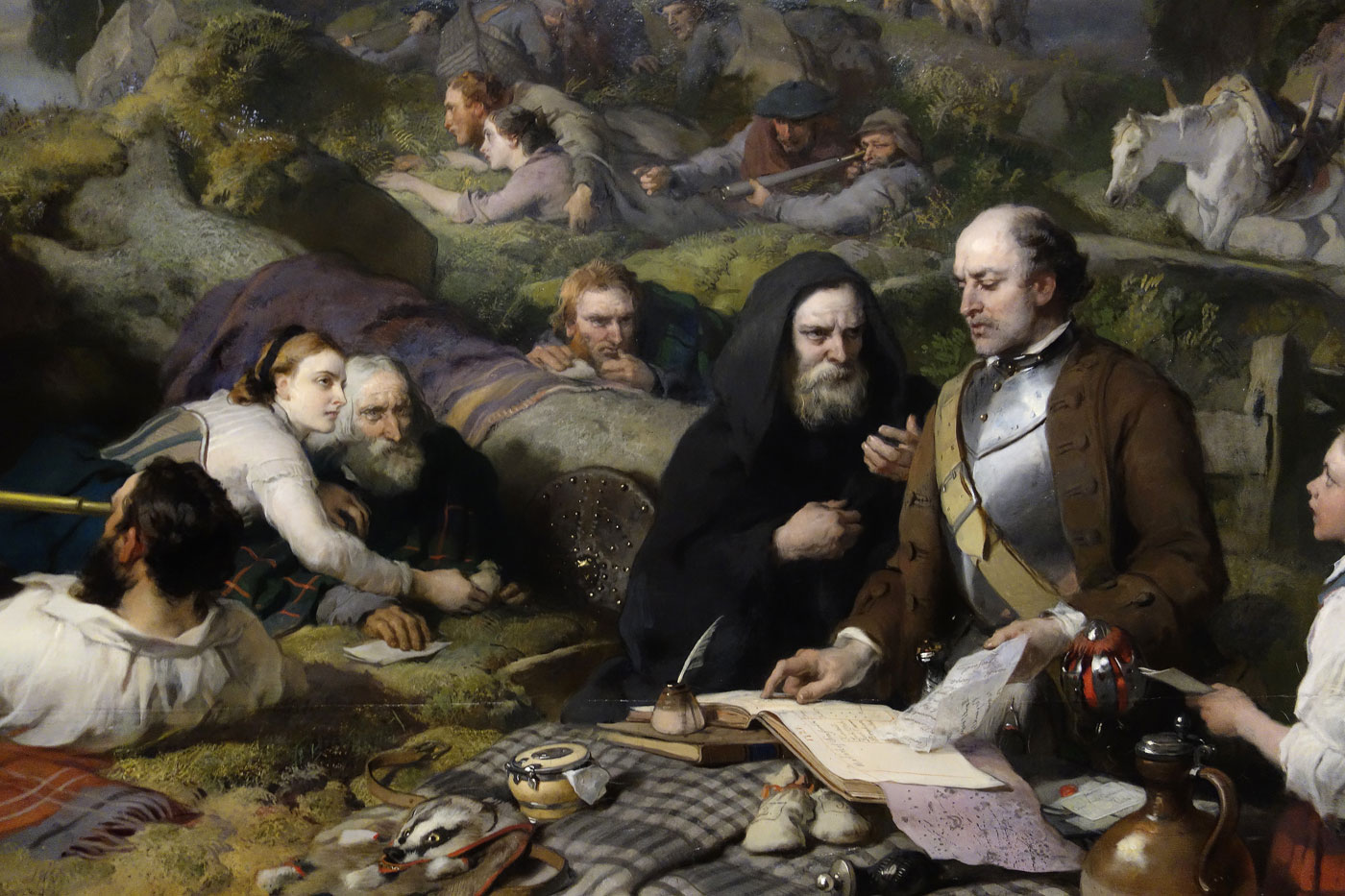
Sir Edwin Landseer (England, 1802-1873) 'Rent-day in the wilderness' 1868 (installation view)


Sir Edwin Landseer (England, 1802-1873)
Rent-day in the wilderness (installation view)
1868
Oil on canvas
122 x 265cm
Scottish National Gallery, Edinburgh
Bequest of Sir Roderick Impey Murchison, 1871
© Trustees of the National Galleries of Scotland
Photo: © Marcus Bunyan and the Art Gallery of New South Wales


Sir Edwin Landseer (England, 1802-1873) 'Rent-day in the wilderness' 1868 (installation view detail)

Sir Edwin Landseer (England, 1802-1873) 'Rent-day in the wilderness' 1868 (installation view detail)


Sir Edwin Landseer (England, 1802-73)
Rent-day in the wilderness (installation view details)
1868
Oil on canvas
122 x 265cm
Scottish National Gallery, Edinburgh
Bequest of Sir Roderick Impey Murchison, 1871
© Trustees of the National Galleries of Scotland
Photo: © Marcus Bunyan and the Art Gallery of New South Wales


Lands became famous for his paintings of the Scottish Highlands. This unusual history painting is based on the heroic exploits of Colonel Donald Murchison, as recounted in Robert Chamber’s Domestic annals of Scotland (1858-1860). Murchison, a lawyer turned guerrilla fighter, supported the rebellion to reinstate the Stuart dynasty to the throne of Great Britain. he brazenly defied the government by collecting rents illegally from Scottish tenants to finance local armed resistance. In this painting – commissioned by Murchison’s great-grandson – Landseer conflates several distinct episodes, including the colonel’s daring and notorious ambush of government-appointed agents, escorted by British redcoats, in 1721.


Frederic Edwin Church (USA, 1826-1900) 'Niagara Falls, from the American side' 1867 (installation view)


Frederic Edwin Church (USA, 1826-1900)
Niagara Falls, from the American side (installation view)
1867
Oil on canvas
260 x 231cm
Scottish National Gallery, Edinburgh
Presented by John Stewart Kennedy, 1887
© Trustees of the National Galleries of Scotland
Photo: © Marcus Bunyan and the Art Gallery of New South Wales


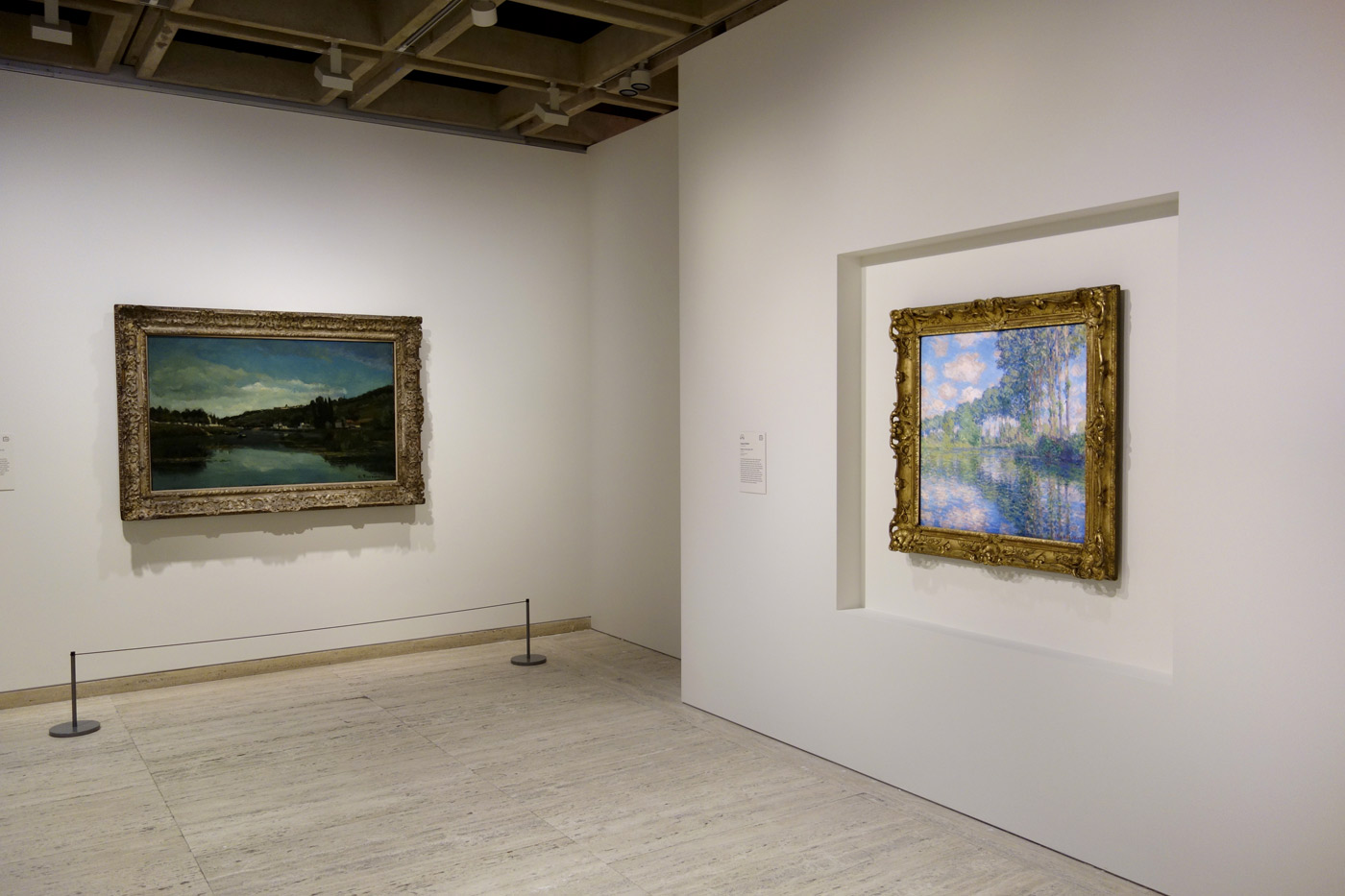
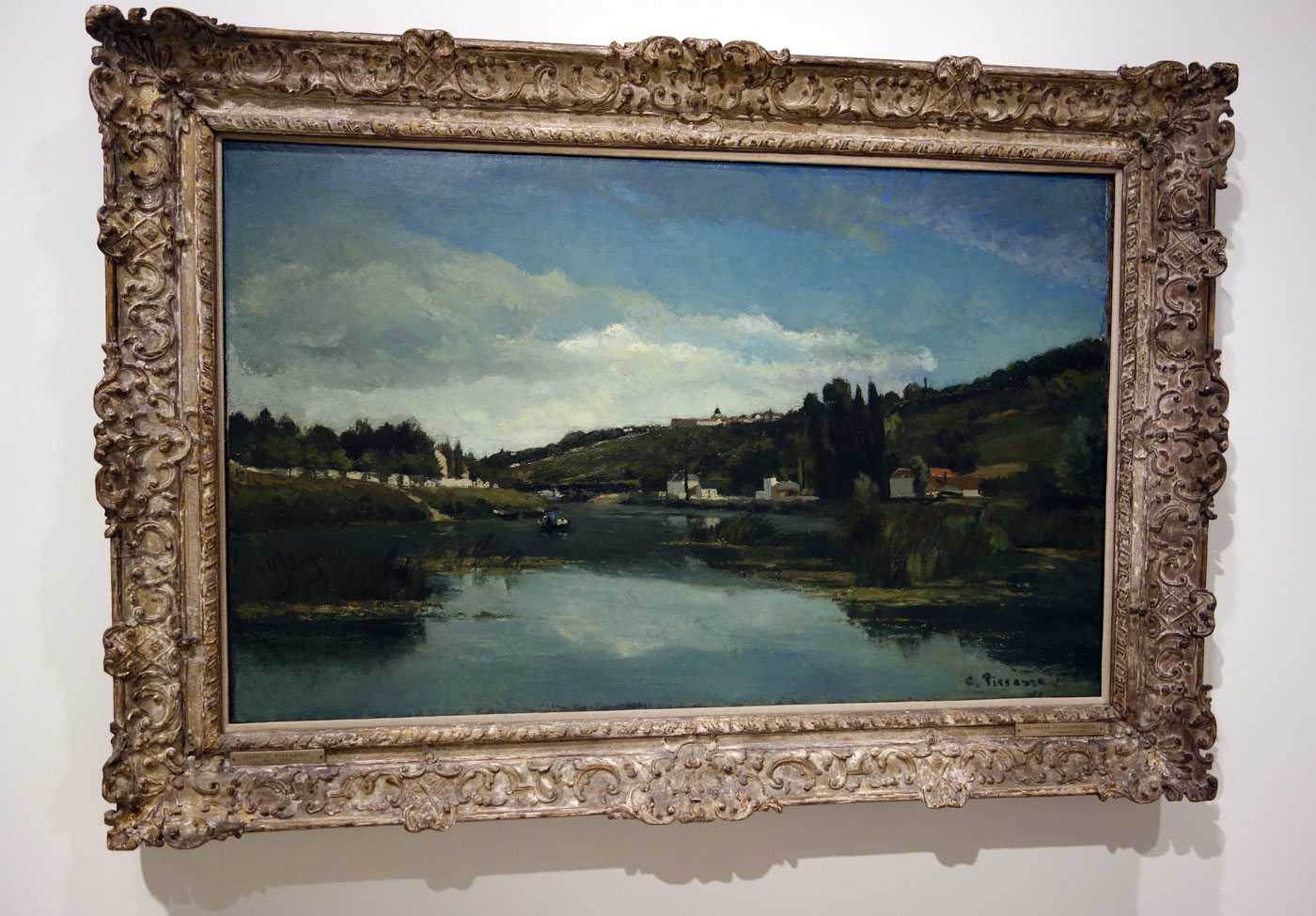
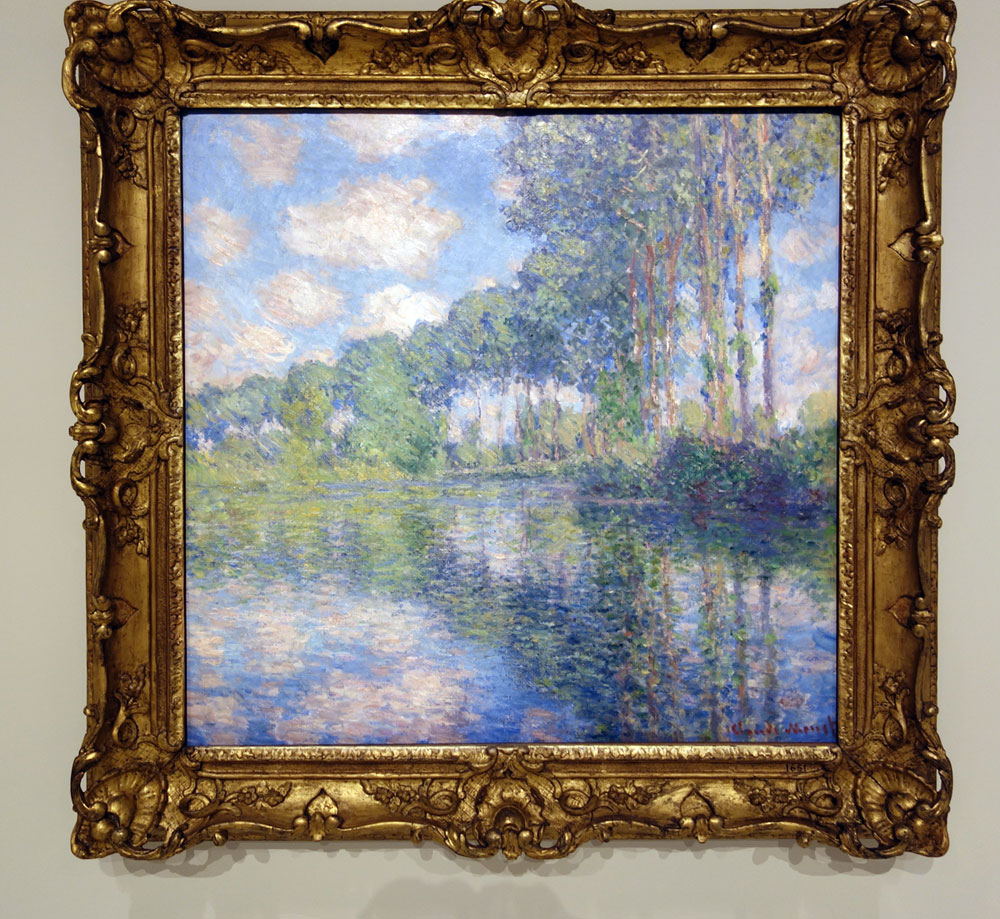
Installation view of the exhibition 'The Greats: Masterpieces from the National Galleries of Scotland' at the Art Gallery of New South Wales, Sydney showing at left, Camille Pissarro's 'The Marne at Chennevières' (c. 1864-1865) and at right, Claude Monet's 'Poplars on the Epte' (1891)


Installation view of the exhibition The Greats: Masterpieces from the National Galleries of Scotland at the Art Gallery of New South Wales, Sydney showing at left, Camille Pissarro’s The Marne at Chennevières (c. 1864-1865) and at right, Claude Monet’s Poplars on the Epte (1891)
Photo: © Marcus Bunyan and the Art Gallery of New South Wales


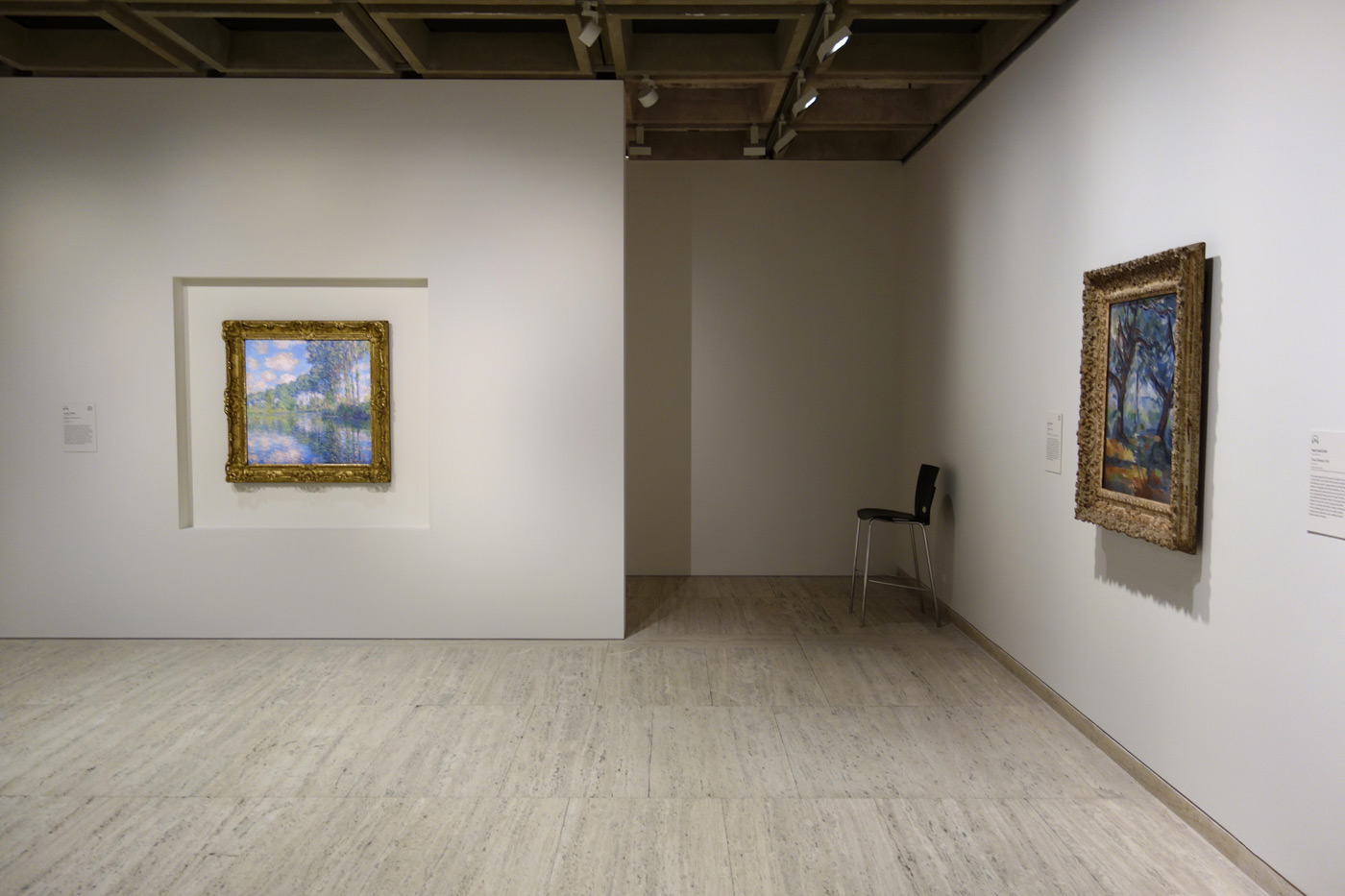
Installation view of the exhibition 'The Greats: Masterpieces from the National Galleries of Scotland' at the Art Gallery of New South Wales, Sydney showing at left, Claude Monet's 'Poplars on the Epte' (1891) and at right, Paul Cézanne's 'The big trees' (c. 1904)


Installation view of the exhibition The Greats: Masterpieces from the National Galleries of Scotland at the Art Gallery of New South Wales, Sydney showing at left, Claude Monet’s Poplars on the Epte (1891) and at right, Paul Cézanne’s The big trees (c. 1904)
Photo: © Marcus Bunyan and the Art Gallery of New South Wales


Camille Pissarro (France, 1830-1903) 'The Marne at Chennevières' c. 1864-1865 (installation view)

Camille Pissarro (France, 1830-1903) 'The Marne at Chennevières' c. 1864-1865 (installation view)


Camille Pissarro (France, 1830-1903)
The Marne at Chennevières (installation views)
c. 1864-1865
Oil on canvas
91.5 x 145.5cm
Scottish National Gallery, Edinburgh
Purchased 1947
© Trustees of the National Galleries of Scotland
Photos: © Marcus Bunyan and the Art Gallery of New South Wales


Camille Pissarro (France, 1830-1903) 'The Marne at Chennevières' c. 1864-1865 (installation view detail)


Camille Pissarro (France, 1830-1903)
The Marne at Chennevières (installation view detail)
c. 1864-1865
Oil on canvas
91.5 x 145.5cm
Scottish National Gallery, Edinburgh
Purchased 1947
© Trustees of the National Galleries of Scotland
Photo: © Marcus Bunyan and the Art Gallery of New South Wales


Pisarro, the oldest and perhaps the most paternal of the impressionists, was the only artist to show at all eight of the group exhibitions. He painted this large riverscape early in his career, while renting a house at La Varenne-Saint-Hilaire, a village to the southeast of Paris, situated on the river Marne. The diagonal composition and the use of a palette knife to create this bucolic scene reflect the painter’s admiration for such diverse artists as Charles François Daubigny and Gustave Courbet.


Claude Monet (France, 1840-1926) 'Poplars on the Epte' 1891 (installation view)


Claude Monet (France, 1840-1926)
Poplars on the Epte (installation view)
1891
Oil on canvas
81.8 x 81.3cm
Scottish National Gallery, Edinburgh
Purchased 1925
© Trustees of the National Galleries of Scotland
Photo: © Marcus Bunyan and the Art Gallery of New South Wales


In the 1880s, Monet gradually developed a more schematic and decorative approach to landscape, which led to his ‘series’ paintings of the 1890s, beginning with the Haystacks in 1891 and culminating in his water lily paintings. This painting belongs to a series of twenty-three canvases that Monet, the founder of French impressionism and one of the most celebrated artists in Western art history, completed in the late spring and autumn of 1891.

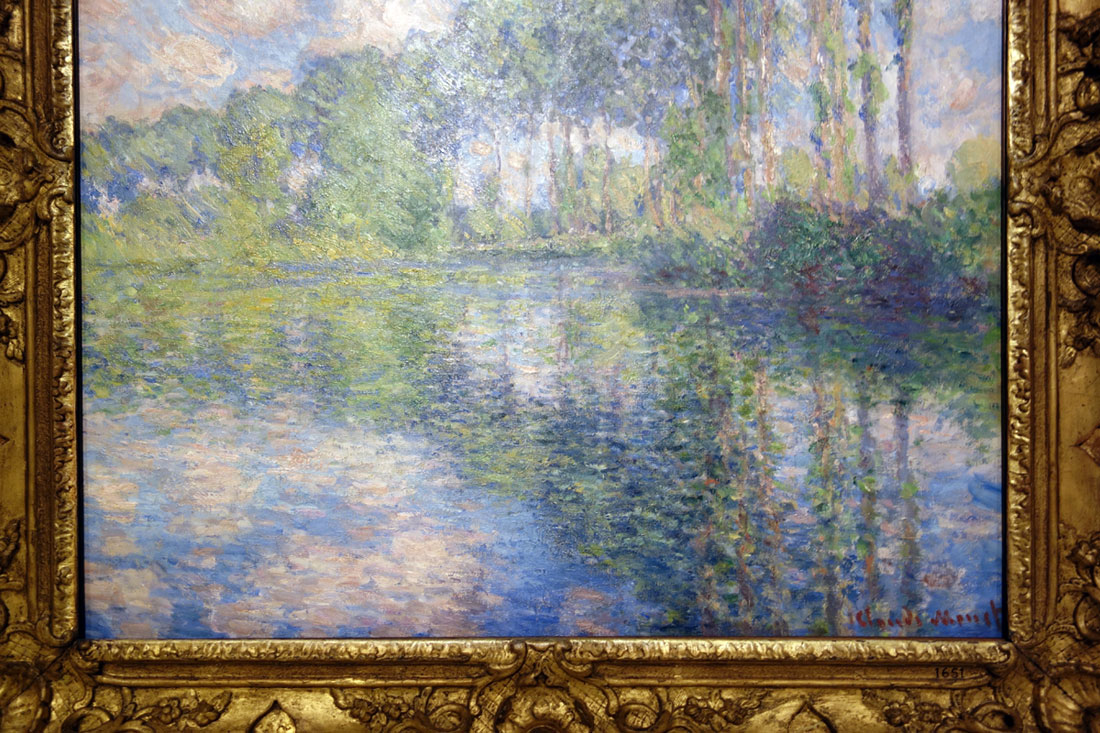
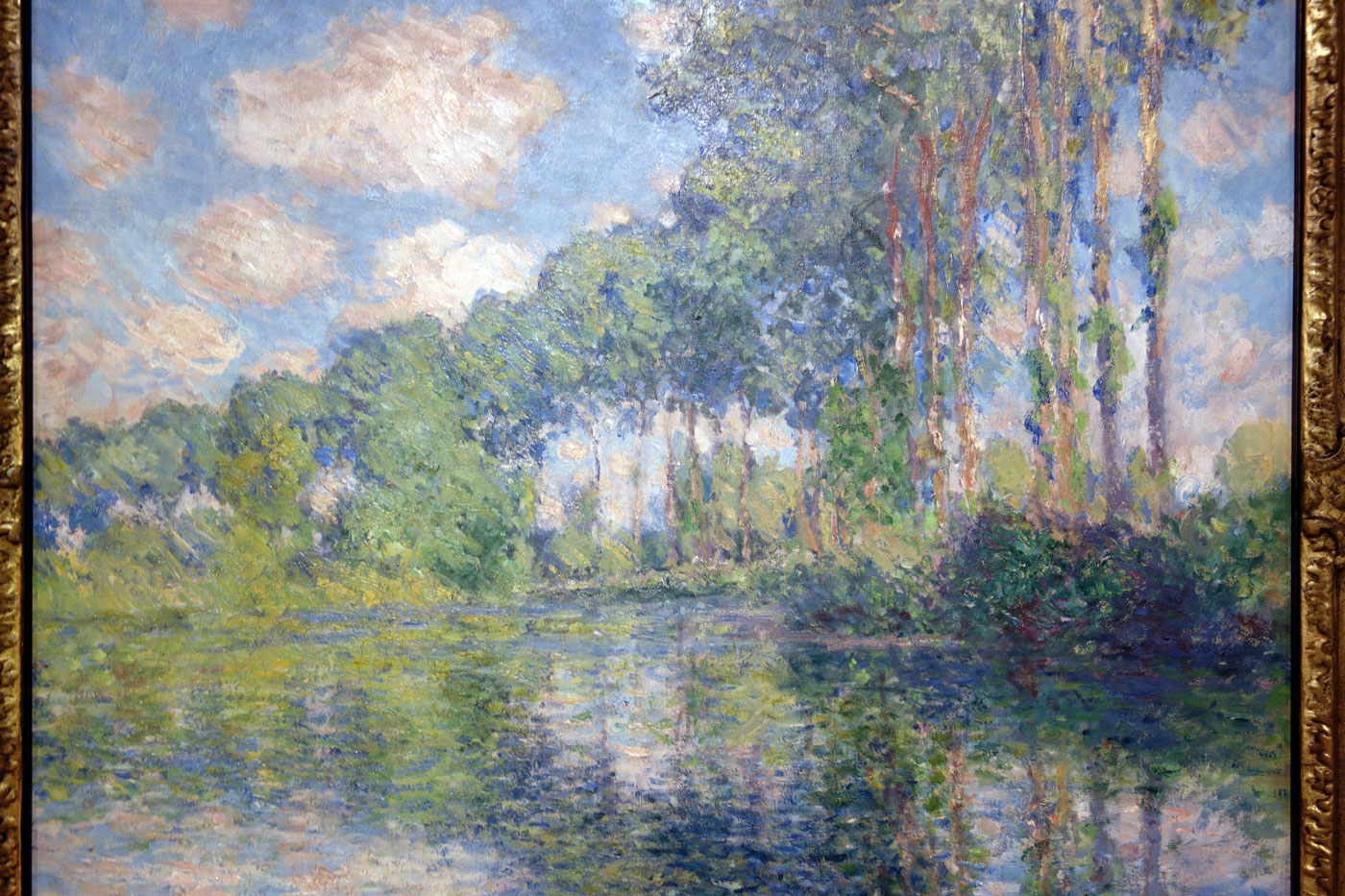
For the series, Monet painted poplar trees on the river Epte, close to where it joins the river Seine, just more than a mile from his home at Giverny. The clear blue sky and sunlit clouds express a fresh atmosphere. Monet painted the scene on the river from his boat, which served as a floating studio. This explains the low vantage point, with the trees towering above, the river bank at eye level, and the vast expanse of water dominating the lower half of the painting. Unlike most of the series paintings which are vertical, the Edinburgh picture’s format is square, emphasising the gentle curve of the bank and the verticality of the slender trees trunks and their reflection in the water.

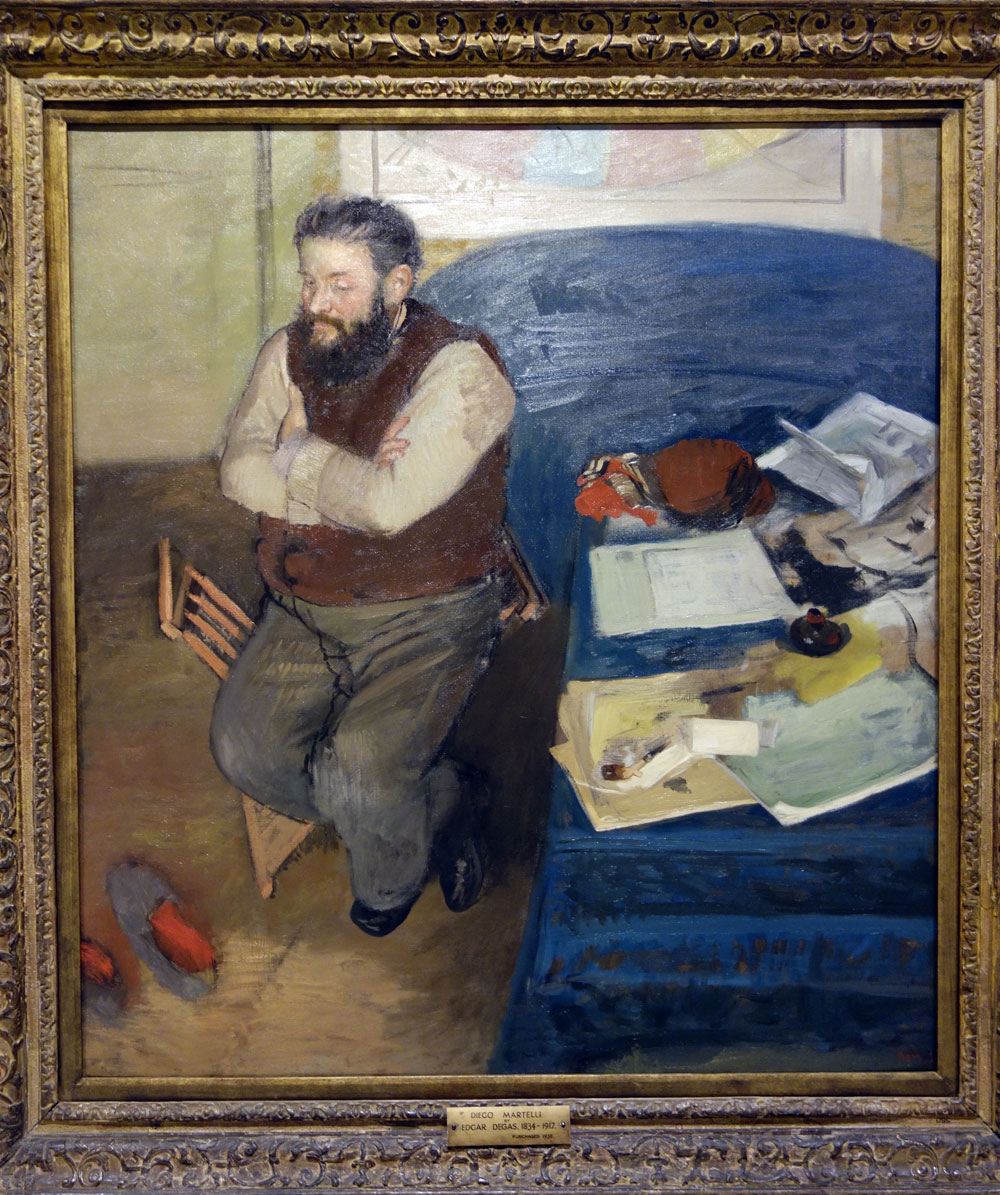
Monet had already started to create these works when municipal authorities decided to cut down the trees for lumber and sell them at auction. In order to preserve his motifs, Monet partnered with a timber merchant, and successfully saved the poplars, allowing him to complete his series for exhibition in 1892. The painting was the first impressionist picture to enter the National Galleries of Scotland’s collection. It was sold to the Gallery in 1924 by the important Scottish art dealer Alex Reid, who was responsible for introducing impressionism to many British collectors. Degas’ Portrait of Diego Martelli 1879 also passed through his hands (see below).


Claude Monet (France, 1840-1926) 'Poplars on the Epte' 1891 (installation view detail)

Claude Monet (France, 1840-1926) 'Poplars on the Epte' 1891 (installation view detail)


Claude Monet (France, 1840-1926)
Poplars on the Epte (installation details)
1891
Oil on canvas
81.8 x 81.3cm
Scottish National Gallery, Edinburgh
Purchased 1925
© Trustees of the National Galleries of Scotland
Photos: © Marcus Bunyan and the Art Gallery of New South Wales


Edgar Degas (France, 1834-1917) 'Diego Martelli' 1879 (installation view)


Edgar Degas (France, 1834-1917) 'Diego Martelli' 1879 (installation view)


Edgar Degas (France, 1834-1917)
Diego Martelli (installation views)
1879
Oil on canvas
110.4 x 99.8cm
Scottish National Gallery, Edinburgh
Purchased 1932
© Trustees of the National Galleries of Scotland
Photos: © Marcus Bunyan and the Art Gallery of New South Wales


This portrait of the Florentine art critic Diego Martelli, a close friend of Degas and an important champion of impressionism, was painted in Martelli’s Paris apartment. The high viewpoint flattens the composition, throwing the sitter’s legs into sharp perspective. The work’s asymmetry and the cropping of such elements as the discarded slippers reflect Degas’s interest in Japanese prints. The curved picture behind the sofa is a map of Paris: the river Seine is visible, running through coloured segments denoting the city’s new souther neighbourhoods.


Paul Cézanne (France, 1839-1906) 'The big trees' c. 1904 (installation view)


Paul Cézanne (France, 1839-1906)
The big trees (installation view)
c. 1904
Oil on canvas
81 x 65cm
Scottish National Gallery, Edinburgh
Presented by Mrs Anne F Kessler, 1958; received after her death, 1983
© Trustees of the National Galleries of Scotland
Photo: © Marcus Bunyan and the Art Gallery of New South Wales


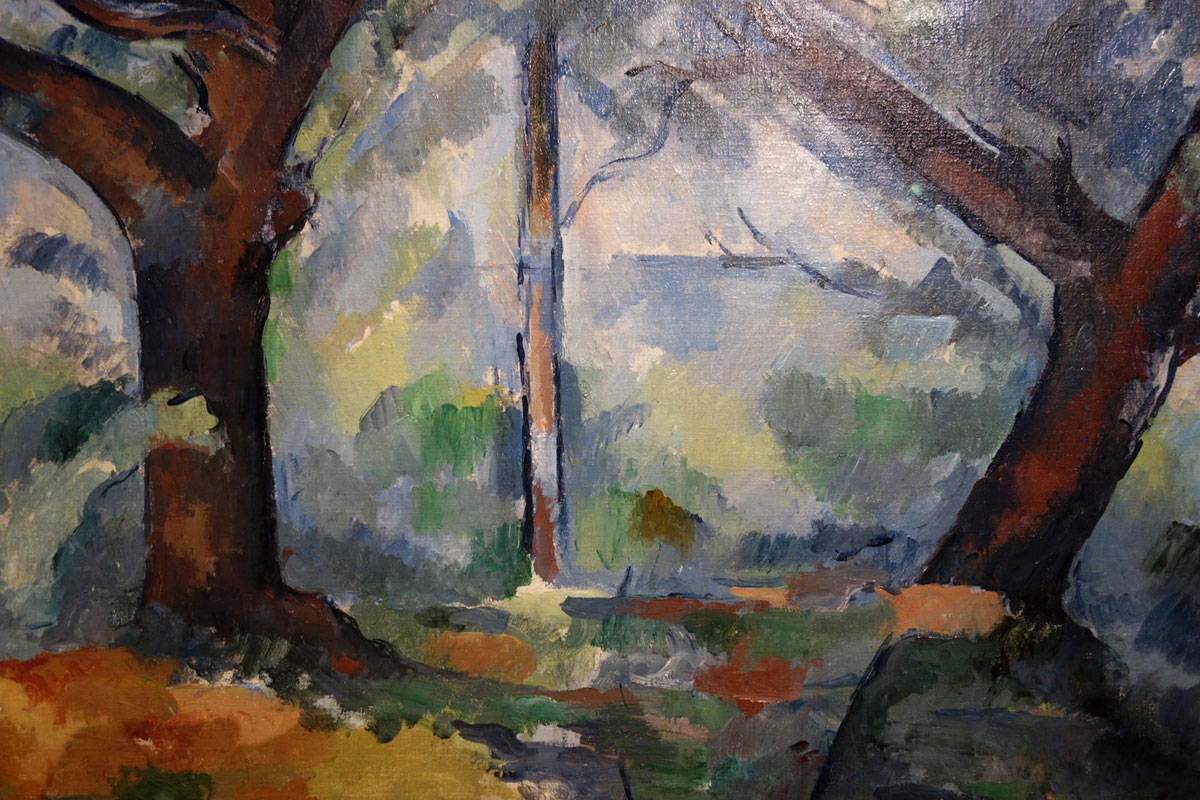
This painting dates from the last years of Cézanne’s career. It is one of a series of works executed in the forest around the Bibémus quarry and the Château Noir, areas in which he often painted in his native Aix-en-Provence. The twisting limbs of the tree at left and the dramatic diagonal of the tree at right inject a sense of dynamism into the composition. Cézanne often left his pertaining in seemingly unfinished states, with areas of the primed white canvas showing through; here, they function not only as markers of the painter’s practice but also as patches of reflected sunlight.


Paul Cézanne (France, 1839-1906) 'The big trees' c. 1904 (installation view detail)

Paul Cézanne (France, 1839-1906) 'The big trees' c. 1904 (installation view detail)


Paul Cézanne (France, 1839-1906)
The big trees (installation details)
c. 1904
Oil on canvas
81 x 65cm
Scottish National Gallery, Edinburgh
Presented by Mrs Anne F Kessler, 1958; received after her death, 1983
© Trustees of the National Galleries of Scotland
Photos: © Marcus Bunyan and the Art Gallery of New South Wales


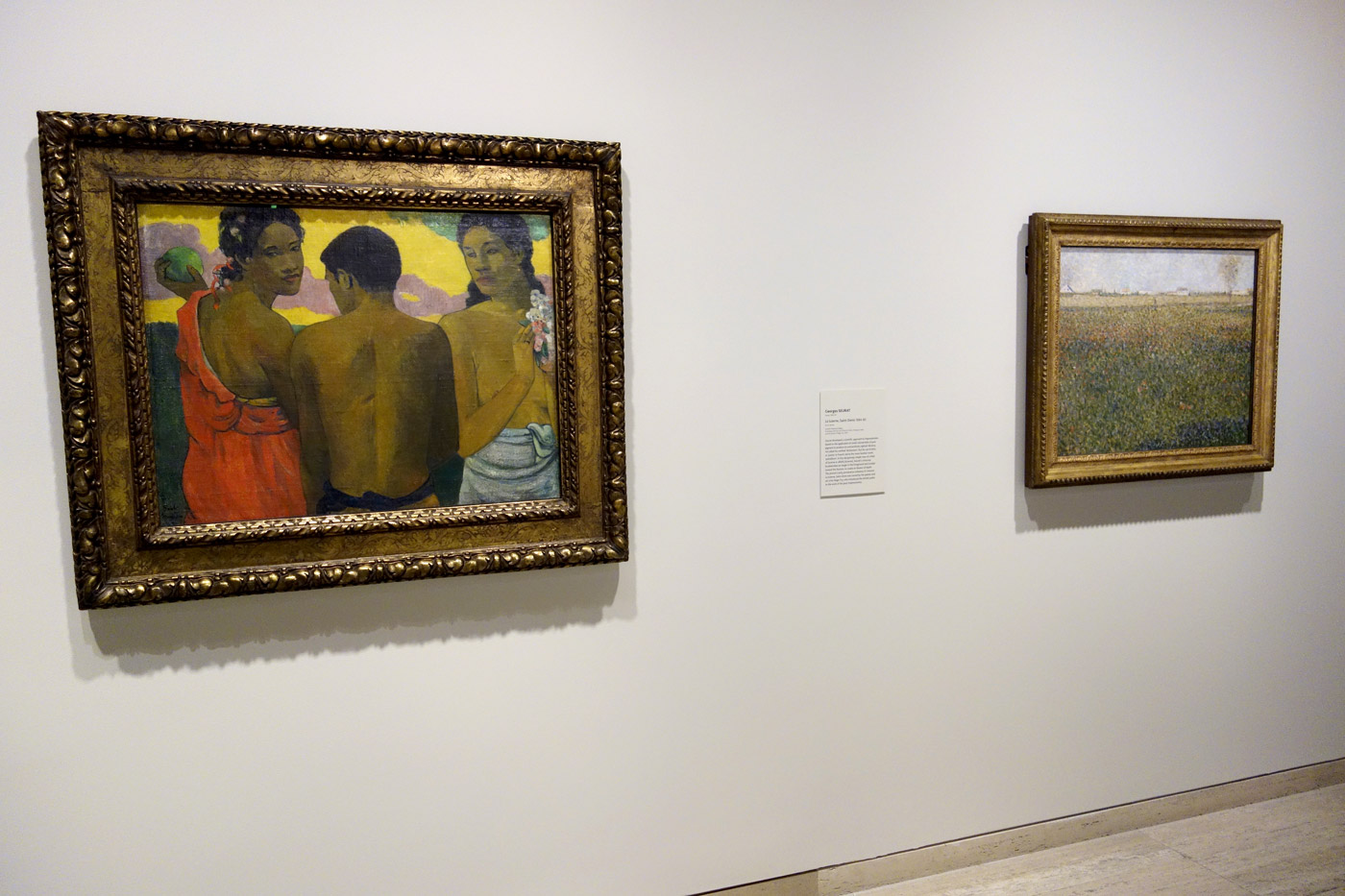
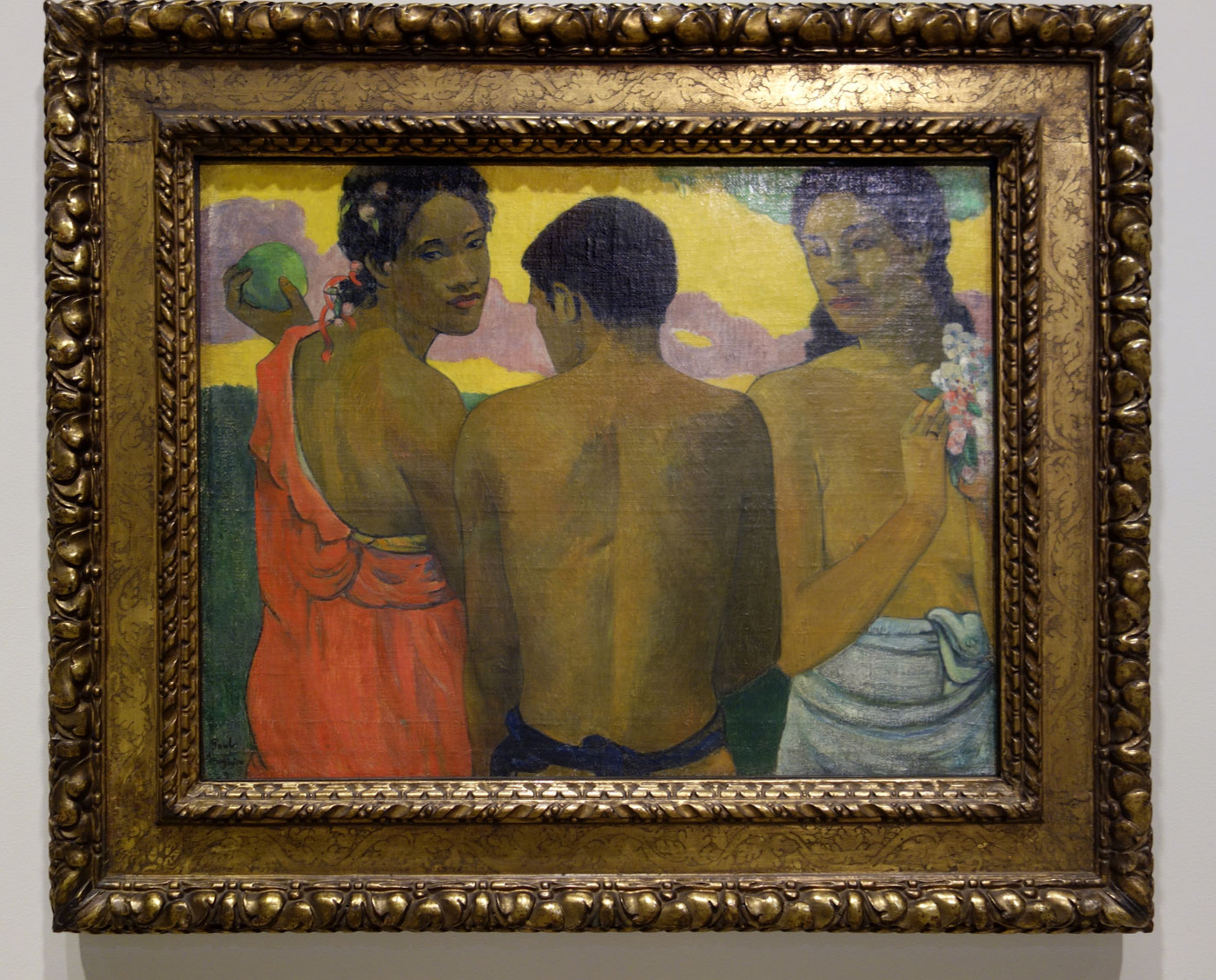
Installation view of the exhibition 'The Greats: Masterpieces from the National Galleries of Scotland' at the Art Gallery of New South Wales, Sydney showing at left Paul Gauguin's 'Three Tahitians' (1899) and at right, Georges Seurat's 'La luzerne, Saint-Denis' (1884-1885)


Installation view of the exhibition The Greats: Masterpieces from the National Galleries of Scotland at the Art Gallery of New South Wales, Sydney showing at left Paul Gauguin’s Three Tahitians (1899) and at right, Georges Seurat’s La luzerne, Saint-Denis (1884-1885)
Photo: © Marcus Bunyan and the Art Gallery of New South Wales


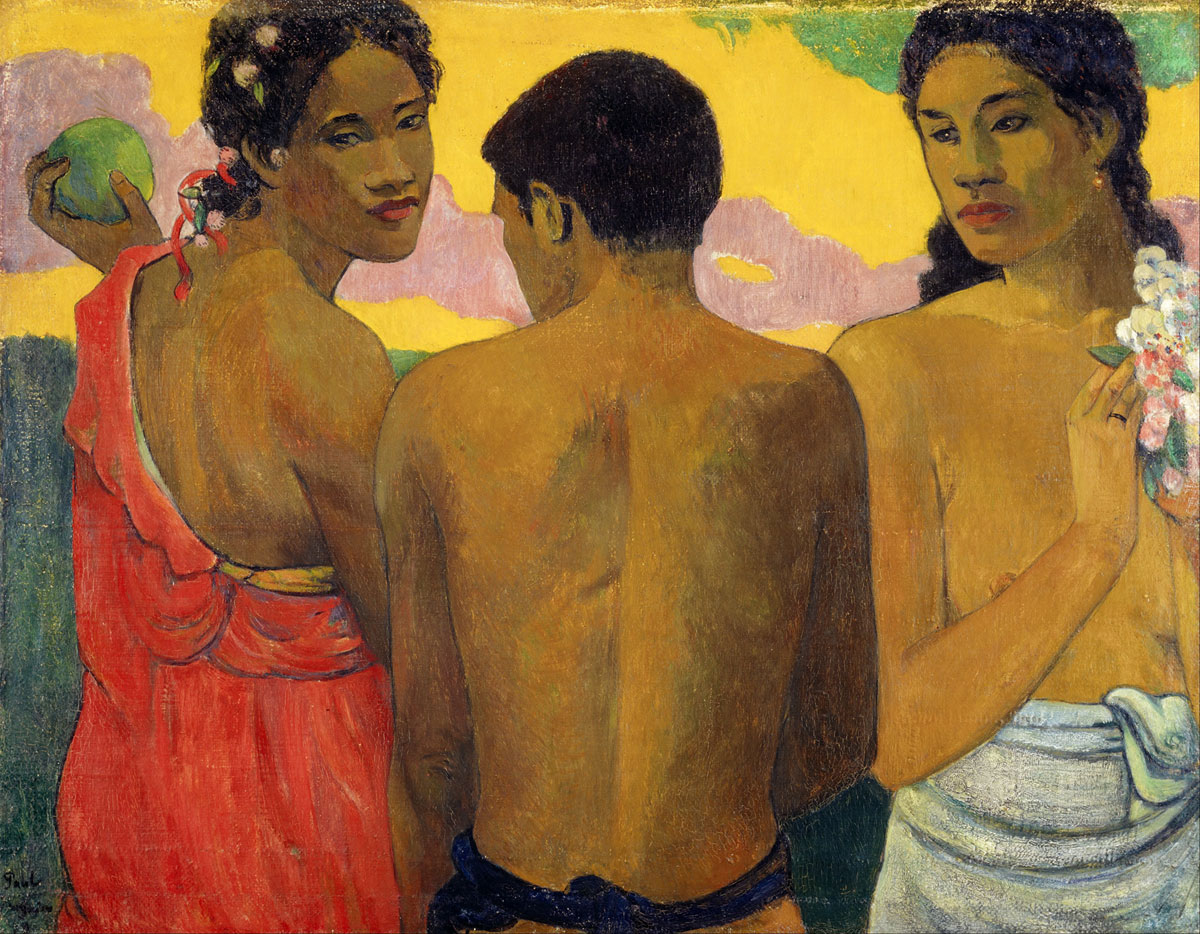
Paul Gauguin (France, 1848-1903) 'Three Tahitians' 1899 (installation view)

Paul Gauguin (France, 1848-1903) 'Three Tahitians' 1899 (installation view detail)


Paul Gauguin (France, 1848-1903)
Three Tahitians (installation views)
1899
Oil on canvas
73 x 94cm
Scottish National Gallery, Edinburgh
Presented by Sir Alexander Maitland in memory of his wife Rosalind, 1960
© Trustees of the National Galleries of Scotland
Photos: © Marcus Bunyan and the Art Gallery of New South Wales


Three Tahitians epitomises the decorative intensity of Gauguin’s late Polynesian works. Painted in the artist’s final years, during his second period in Tahiti, the work is said to depict a silent conversation in which the man appears to be undecided about the choice offered by the two attractive women – the choice between sensuality and piety. Although ambiguous, it has been suggested these two women are respectively symbolic of vice and virtue.

The bare-chested woman, holding a small posy of flowers and wearing a wedding ring, would seem to represent goodness, her gaze directed to the man. While the woman who turns to face the viewer, her sensuous lips in an enigmatic smile, and holds a mango, may be a reference to the biblical figure Eve who tempted Adam with an apple. These two women recur in several other compositions by Gauguin around this time. In the 1880s, the French post-impressionist fled urban civilisation in search of a tropical Garden of Eden, in which he felt his art could flourish. His final two years of life were spent on the remote island of Hivaoa in the tiny village of Atuona.


Art Gallery of New South Wales
Art Gallery Road, The Domain
Sydney NSW 2000, Australia

Opening hours:
Open every day 10am – 5pm
except Christmas Day and Good Friday

Art Gallery of New South Wales website

LIKE ART BLART ON FACEBOOK

Back to top

Exhibition: ‘The Greats: Masterpieces from the National Galleries of Scotland’ at the Art Gallery of New South Wales (AGNSW), Sydney Part 1

Exhibition dates: 24th October, 2015 – 14th February, 2016

Curator: Richard Beresford, Senior Curator of European art at AGNSW; Richard Johnson designed the installation


Entrance to the Art Gallery of New South Wales, Sydney


Entrance to the Art Gallery of New South Wales, Sydney
Photo: © Marcus Bunyan and the Art Gallery of New South Wales


I was lucky enough to be up in Sydney to review the Julia Margaret Cameron exhibition at the Art Gallery of New South Wales… and the media preview for The Greats was on. What an unexpected bonus!

This is part 1 of a monster 2 part posting on the exhibition which, in all honesty, is a bit of a hotchpotch of a blockbuster. But my god, what a hotchpotch it is.

Highlights in part 1 of the posting include:

~ The vibrancy and folds of the pink dress of the Virgin as it flows down and under the Christ child in Botticelli’s The Virgin adoring the sleeping Christ child, c. 1485

~ The stillness and intensity, colouration of the figures in Johannes Vermeer’s Christ in the house of Martha and Mary, c. 1654-1655

~ The glorious “atmosphere”, light and colour in Jan Lievens’ Young man in yellow c. 1630-1631, one of the unexpected highlights of the exhibition

~ The intensity of the painting, the precision and care in Diego Velazquez’s An old woman cooking eggs 1618. Now that is really looking at the world

~ And the glorious frames of all these works. I do like a good frame!


View part 2 of the posting.

Dr Marcus Bunyan


Many thankx to the AGNSW for allowing me to publish the art work in the posting. Please click on the photographs for a larger version of the image. All installation photographs © Marcus Bunyan and the Art Gallery of New South Wales.


Installation photograph of Titian (Tiziano Vecellio) (Italian, c. 1485/90-1576) 'Venus rising from the sea (Venus Anadyomene)' c. 1520-1525

Installation photograph of Titian (Tiziano Vecellio) (Italian, c. 1485/90-1576) 'Venus rising from the sea (Venus Anadyomene)' c. 1520-1525

Installation photograph of Titian (Tiziano Vecellio) (Italian, c. 1485/90-1576) 'Venus rising from the sea (Venus Anadyomene)' c. 1520-1525


Installation photographs of Titian (Tiziano Vecellio) (Italian, c. 1485/90-1576) Venus rising from the sea (Venus Anadyomene) (c. 1520-25)
Photos: © Marcus Bunyan and the Art Gallery of New South Wales


Titian (Tiziano Vecellio) (Italian, c. 1485/90-1576) 'Venus rising from the sea (Venus Anadyomene)' c. 1520-1525 from the exhibition 'The Greats: Masterpieces from the National Galleries of Scotland' at the Art Gallery of New South Wales (AGNSW), Sydney, Oct 2015 - Feb 2016


Titian (Tiziano Vecellio) (Italian, c. 1485/90-1576)
Venus rising from the sea (Venus Anadyomene)
c. 1520-1525
Oil on canvas
74 x 56.2cm
Scottish National Gallery, Edinburgh
© Trustees of the National Galleries of Scotland


Titian was the most celebrated Venetian painter of his time. His wealthy and learned patrons spanned across Europe. Well-versed in classical art and literature, including the myths of ancient Greece and Rome, they fuelled a strong demand for paintings like Venus rising from the sea c. 1520-1525. According to legend, Venus, the goddess of love and beauty, was born fully grown from the sea. She was then carried to land upon a scallop shell, blown by the zephyr winds.

In Venus rising from the sea, Titian has painted the goddess as a beautiful and voluptuous woman, emerging from the sea and wringing out her wet hair, with a miniature version of her scallop shell floating nearby. Her long auburn locks, milky skin and blushing cheeks are sensuous and tactile, suggesting her seductive powers as the goddess of love. Venus’s gracious, twisting pose recalls classical statues of the goddess. Titian rarely made preparatory drawings for his paintings, preferring to work straight onto the canvas, applying subtle gradations of colour in soft, feathery brushstrokes. He also used live models to pose for his figures, which was uncommon in the early 1500s. This lends the painting its great liveliness and sensuality – qualities that have made Titian justly famous.


Sandro Botticelli (Italian, 1444/45-1510) 'The Virgin adoring the sleeping Christ child' ('The Wemyss Madonna') c. 1485 (installation view)

Sandro Botticelli (Italian, 1444/45-1510) 'The Virgin adoring the sleeping Christ child' ('The Wemyss Madonna') c. 1485 (installation view)


Sandro Botticelli (Italian, 1444/45-1510)
The Virgin adoring the sleeping Christ child (‘The Wemyss Madonna’) (installation views)
c. 1485
Tempera, oil and gold on canvas
122 x 80.5cm
Scottish National Gallery, Edinburgh
© Trustees of the National Galleries of Scotland
Photos: © Marcus Bunyan and the Art Gallery of New South Wales


Sandro Botticelli (Italian, 1444/45-1510) 'The Virgin adoring the sleeping Christ child' ('The Wemyss Madonna') c. 1485 (installation view detail)

Sandro Botticelli (Italian, 1444/45-1510) 'The Virgin adoring the sleeping Christ child' ('The Wemyss Madonna') c. 1485 (installation view detail)


Sandro Botticelli (Italian, 1444/45-1510)
The Virgin adoring the sleeping Christ child (‘The Wemyss Madonna’) (installation details)
c. 1485
Tempera, oil and gold on canvas
122 x 80.5cm
Scottish National Gallery, Edinburgh
© Trustees of the National Galleries of Scotland
Photos: © Marcus Bunyan and the Art Gallery of New South Wales


Painted by one of the most outstanding artists of the Italian Renaissance, The Virgin adoring the sleeping Christ child c. 1485 is the earliest work in the exhibition. It has not left the United Kingdom since 1846 and The Greats presents the first time in almost three decades that any painting by Botticelli has been exhibited in Sydney. In this devotional painting, the Virgin Mary kneels silently and prays before her son, the infant Jesus Christ, in a rose-filled garden. Her gown and cloak spill onto the ground to provide a pillow for the child, who is nestled among the flowers, asleep. Its simple composition, focusing on just the two figures, invites quiet contemplation.

Like many Renaissance paintings, the picture is rich in symbolism. The enclosed garden is a reference to the purity of the Virgin, who was often called ‘a rose without thorns’. Some symbols are more ominous. The sleeping child with his pallid complexion is presumably a reference to Christ’s eventual death. The red strawberry plant in the lower right corner symbolises the blood he will shed on the cross. Technically the painting is unusual for the Florentine artist: it is quite small and has been painted on canvas rather than wooden panel. This suggests it was intended for a private home or convent, rather than a public space like a church.


Installation view of the exhibition 'The Greats: Masterpieces from the National Galleries of Scotland' at the Art Gallery of New South Wales, Sydney showing at left, Domenichino's 'The adoration of the shepherds' (c. 1606-1608)


Installation view of the exhibition The Greats: Masterpieces from the National Galleries of Scotland at the Art Gallery of New South Wales, Sydney showing at left, Domenichino’s The adoration of the shepherds (c. 1606-1608)
Photo: © Marcus Bunyan and the Art Gallery of New South Wales


Domenichino (Domenico Zampieri) (Italy, 1581-1641) 'The adoration of the shepherds' c. 1606-1608 from the National Galleries of Scotland' at the Art Gallery of New South Wales (AGNSW), Sydney, Oct 2015 - Feb 2016


Domenichino (Domenico Zampieri) (Italy, 1581-1641)
The adoration of the shepherds
c. 1606-1608
Oil on canvas
143 x 115cm
Scottish National Gallery, Edinburgh
Purchased 1971
© Trustees of the National Galleries of Scotland


Installation view of the exhibition 'The Greats: Masterpieces from the National Galleries of Scotland' at the Art Gallery of New South Wales, Sydney showing at centre, Sir Anthony van Dyck's 'Saint Sebastian bound for martyrdom' (c. 1620-1621)


Installation view of the exhibition The Greats: Masterpieces from the National Galleries of Scotland at the Art Gallery of New South Wales, Sydney showing at centre, Sir Anthony van Dyck’s Saint Sebastian bound for martyrdom (c. 1620-1621)
Photo: © Marcus Bunyan and the Art Gallery of New South Wales


Sir Anthony van Dyck (Southern Netherlands, 1599-1641) 'Saint Sebastian bound for martyrdom' c. 1620-1621 (installation view)

Sir Anthony van Dyck (Southern Netherlands, 1599-1641) 'Saint Sebastian bound for martyrdom' c. 1620-1621 (installation view)


Sir Anthony van Dyck (Southern Netherlands, 1599-1641)
Saint Sebastian bound for martyrdom (installation views)
c. 1620-1621
Oil on canvas
230 x 163.3cm
Scottish National Gallery, Edinburgh
Purchased by the Royal Institution, 1830; transferred, 1859
© Trustees of the National Galleries of Scotland
Photos: © Marcus Bunyan and the Art Gallery of New South Wales


Anthony van Dyck, the most successful pupil of Peter Paul Rubens, is regarded as one of the masters of the Flemish baroque. Painted just before Van Dyck left Flanders for Italy in 1621, this dramatic composition features Saint Sebastian, a Roman officer who converted secretly to Christianity. When Sebastian’s faith was discovered, he was tied to a tree and shot with arrows. Usually shown at the moment of his martyrdom, with the arrows piercing his body, here Sebastian has been portrayed prior to his execution. His twisting body and his upward-turned face seem to anticipate the punishment that is to come.


Sir Anthony van Dyck (Southern Netherlands, 1599-1641) 'Saint Sebastian bound for martyrdom' c. 1620-1621 (installation view detail)

Sir Anthony van Dyck (Southern Netherlands, 1599-1641) 'Saint Sebastian bound for martyrdom' c. 1620-1621 (installation view detail)


Sir Anthony van Dyck (Southern Netherlands, 1599-1641)
Saint Sebastian bound for martyrdom (installation view details)
c. 1620-1621
Oil on canvas
230 x 163.3cm
Scottish National Gallery, Edinburgh
Purchased by the Royal Institution, 1830; transferred, 1859
© Trustees of the National Galleries of Scotland
Photos: © Marcus Bunyan and the Art Gallery of New South Wales


The Greats: masterpieces from the National Galleries of Scotland is one of the most significant collections of European old master paintings ever seen in Australia and is presented as part of the Sydney International Art Series 2015-2016. Spanning a period of 400 years from the Renaissance to Impressionism, The Greats includes works by the most outstanding names in Western art, including Botticelli, Leonardo, Raphael, Titian, Rubens, Velázquez, Poussin, Rembrandt, Vermeer, Turner, Monet, Degas, Gauguin, and Cézanne.

This richly presented exhibition brings together over 70 of the greatest paintings and drawings from the National Galleries of Scotland, based in the beautiful capital city of Edinburgh. The Greats marks the first time these artworks have been exhibited in Australia, with the exception of Rembrandt’s A woman in bed (c. 1647) and Seurat’s La Luzerne, Saint-Denis (1884-1885). Botticelli’s Virgin adoring the sleeping Christ child (c. 1485) has not been exhibited outside of the United Kingdom in 169 years.

Director of the Art Gallery of New South Wales, Michael Brand, said it is a tremendous privilege to host such a fine collection of masterpieces in Sydney and that the Art Gallery of NSW is extremely grateful to the National Galleries of Scotland for their generosity and collegiality. “The Greats is a statement of unequivocal artistic excellence – each piece in this exhibition is of extraordinary quality. We are excited to provide Australian audiences the rare opportunity to come face to face with such unique and masterful artworks,” Brand said.

“Approaching the entrance to the Art Gallery of NSW, we are reminded of Sydney’s historic aspirations for viewing the creations of European old masters, with names such as Titian, Rembrandt and Botticelli adorning the Gallery’s sandstone facade. It is with great pleasure that we now welcome incredible works by these artists to our interior walls, into a sublime exhibition space that promises a moving and absorbing experience for all visitors,” Brand added.

Director of the Scottish National Gallery, Michael Clarke, said, “We are delighted to present some of the finest masterworks from the National Galleries of Scotland at the distinguished Art Gallery of New South Wales. The Gallery provides a marvellous venue for our exhibition, which includes a selection of paintings that have recently toured to art institutions in America, including the de Young in San Francisco and the Kimbell Museum in Fort Worth.”

Visitors to The Greats will experience the Scottish National Gallery’s famous interior with part of the exhibition space inspired by the Edinburgh gallery’s octagonal rooms with fabric walls of a sumptuous red – the traditional colour on which to hang old master paintings. This installation will serve to accentuate the grandeur of the paintings and foster an intimate experience with each of the artworks. A variety of associated public and education programs are on offer to visitors of all ages. Serving to engage the widest possible audience, the Gallery will host daily guided tours, lecture series, late night programs and a suite of other events designed to facilitate meaningful interactions with the artworks featured in The Greats.

Press release from the AGNSW


Installation view of the exhibition 'The Greats: Masterpieces from the National Galleries of Scotland' at the Art Gallery of New South Wales, Sydney

Installation view of the exhibition 'The Greats: Masterpieces from the National Galleries of Scotland' at the Art Gallery of New South Wales, Sydney showing Frans Hals' 'Portrait of Pieter(?) Verdonck' (c. 1627, left) and Johannes Vermeer's 'Christ in the house of Martha and Mary' (c. 1654-1655, centre)

Installation view of the exhibition 'The Greats: Masterpieces from the National Galleries of Scotland' at the Art Gallery of New South Wales, Sydney showing Frans Hals' 'Portrait of Pieter(?) Verdonck' (c. 1627, left) and Johannes Vermeer's 'Christ in the house of Martha and Mary' (c. 1654-1655, centre)


Installation views of the exhibition The Greats: Masterpieces from the National Galleries of Scotland at the Art Gallery of New South Wales, Sydney showing in the bottom two images, Frans Hals’ Portrait of Pieter(?) Verdonck (c. 1627, left) and Johannes Vermeer’s Christ in the house of Martha and Mary (c. 1654-1655, centre)
Photos: © Marcus Bunyan and the Art Gallery of New South Wales


Frans Hals (The Netherlands, 1582/3-1666) 'Portrait of Pieter(?) Verdonck' c. 1627 (installation view)


Frans Hals (The Netherlands, 1582/3-1666)
Portrait of Pieter(?) Verdonck (installation view)
c. 1627
Oil on panel
Scottish National Gallery
Presented by John J Moubray of Naemoor, 1916
© Trustees of the National Galleries of Scotland
Photo: © Marcus Bunyan and the Art Gallery of New South Wales


With his loose and seemingly spontaneous brushwork, combined with an exceptional ability to capture a sitter’s likeness and expression, Hals inspired generations of artists, from Jean-Honoré Fragonard to Édouard Manet. This portrait probably shows Pieter Verdonck, a Haarlem Mennonite, who was said to be aggressive and argumentative. In a contemporary engraving after the painting, an inscription reads: ‘This is Verdonck, that outspoken fellow, / whose jawbone attacks everyone.’ The jawbone that he holds is the same weapon used by the biblical hero Samson to kill the Philistines; here, it may refer to Verdonck’s ability to wound his enemies with his cutting words.


Frans Hals (The Netherlands, 1582/3-1666) 'Portrait of Pieter(?) Verdonck' c. 1627 (installation view detail)


Frans Hals (The Netherlands, 1582/3-1666)
Portrait of Pieter(?) Verdonck (installation view)
c. 1627
Oil on panel
Scottish National Gallery
Presented by John J Moubray of Naemoor, 1916
© Trustees of the National Galleries of Scotland
Photo: © Marcus Bunyan and the Art Gallery of New South Wales


Johannes Vermeer (The Netherlands, 1632-1675) 'Christ in the house of Martha and Mary' c. 1654-1655 (installation view)


Johannes Vermeer (The Netherlands, 1632-1675)
Christ in the house of Martha and Mary (installation view)
c. 1654-1655
Oil on canvas
Scottish National Gallery
Presented by the Sons of WA Coats in memory of their father, 1927
© Trustees of the National Galleries of Scotland
Photo: © Marcus Bunyan and the Art Gallery of New South Wales


The fame of Vermeer, now one of the best-known painter of the Dutch Golden Age, rests on just 36 paintings known to survive today. This canvas is music larger than his usual compositions and is the only one that illustrates a biblical subject. In spite of its uniqueness, the painting is replete with the quiet human interactions for which the artist is known. The scene depicts the story from Luke 10:38-42, in which Martha objected to her sister Mary listening to Jesus while she herself was busy serving. Given the substantial size of the canvas, it is likely that the painting was a specific commission, possibly intended for a Catholic church.


Installation view of the exhibition 'The Greats: Masterpieces from the National Galleries of Scotland' at the Art Gallery of New South Wales, Sydney showing at centre, Rembrandt van Rijn's 'A woman in bed' (164(7?)) and at right, Jan Lievens' 'Young man in yellow' (c. 1630-1631)


Installation view of the exhibition The Greats: Masterpieces from the National Galleries of Scotland at the Art Gallery of New South Wales, Sydney showing at centre, Rembrandt van Rijn’s A woman in bed (164(7?)) and at right, Jan Lievens’ Young man in yellow (c. 1630-1631)
Photo: © Marcus Bunyan and the Art Gallery of New South Wales


Rembrandt van Rijn (The Netherlands, 1606-1669) 'A woman in bed' 164(7?) (installation view)

Rembrandt van Rijn (The Netherlands, 1606-1669) 'A woman in bed' 164(7?) (installation view)


Rembrandt van Rijn (The Netherlands, 1606-1669)
A woman in bed (installation views)
164(7?)
Oil on canvas (formerly laid down on panel)
81.4 x 67.9cm (arched top)
Scottish National Gallery, Edinburgh Presented by William McEwan, 1892
© Trustees of the National Galleries of Scotland
Photos: © Marcus Bunyan and the Art Gallery of New South Wales


The model for this painting is still unidentified. She might be any one of the three main women in Rembrandt’s life: his wife, Saskia; his son’s nursemaid, Geertje Dircx; or his family’s servant girl, Hendrickje Stoffels. Though intimate in its appearance, the painting is probably not a portrait, as a bed would have been an inappropriate setting for a respectable female model. The figure most likely represents the biblical character Sarah from the Old Testament Book of Tobit. Rembrandt shows her watching anxiously as her bridegroom Tobias chases away the devil that had murdered each of her previous seven husbands on their wedding nights.


Rembrandt van Rijn (The Netherlands, 1606-1669) 'A woman in bed' 164(7?) (installation view detail)


Rembrandt van Rijn (The Netherlands, 1606-1669)
A woman in bed (installation view detail)
164(7?)
Oil on canvas (formerly laid down on panel)
81.4 x 67.9cm (arched top)
Scottish National Gallery, Edinburgh Presented by William McEwan, 1892
© Trustees of the National Galleries of Scotland
Photo: © Marcus Bunyan and the Art Gallery of New South Wales


Jan Lievens (The Netherlands, 1607-1674) 'Young man in yellow' c. 1630-1631 (installation view)


Jan Lievens (The Netherlands, 1607-1674)
Young man in yellow (installation view)
c. 1630-1631
Oil on canvas
112 x 99cm
Scottish National Gallery, Edinburgh
Purchased with the aid of the Cowan Smith Bequest Fund, 1922
© Trustees of the National Galleries of Scotland
Photo: © Marcus Bunyan and the Art Gallery of New South Wales


Jan Lievens (The Netherlands, 1607-1674) 'Young man in yellow' c. 1630-1631 (installation view detail)


Jan Lievens (The Netherlands, 1607-1674)
Young man in yellow (installation view detail)
c. 1630-1631
Oil on canvas
112 x 99cm
Scottish National Gallery, Edinburgh
Purchased with the aid of the Cowan Smith Bequest Fund, 1922
© Trustees of the National Galleries of Scotland
Photo: © Marcus Bunyan and the Art Gallery of New South Wales


Jan Lievens and Rembrandt van Rijn were two young artists working in Leiden in the years around 1630. They worked separately, though they engaged in artistic competition and exchange, as this painting suggests. The dramatically lit depiction of a young man posing as a commander with his gorget and baton is not a true portrait, but a tronie – a Dutch term for a painting that features an exaggerated facial expression or a figure in an almost theatrical costume. Both Lievens and Rembrandt experimented with tronies early in their careers, often introducing members of their families or their own likenesses.


Paolo Veronese (Italy, 1528-1588) 'Venus, Cupid and Mars' 1580s (installation view)

Paolo Veronese (Italy, 1528-1588) 'Venus, Cupid and Mars' 1580s (installation view)


Paolo Veronese (Italy, 1528-1588)
Venus, Cupid and Mars (installation views)
1580s
Oil on canvas
165.2 x 126.5cm
Scottish National Gallery, Edinburgh
Purchased by the Royal Institution, 1859; transferred, 1868
© Trustees of the National Galleries of Scotland
Photos: © Marcus Bunyan and the Art Gallery of New South Wales


Veronese was famous in his lifetime as a master of rich colour. His paintings often show exotic figures, sumptuous fabrics and such seemingly incidental details as the spaniel pictured at lower right. The depiction of a dog, a symbol of marital fidelity, was intended as a clever and ironic commentary on the adulterous relationship between Venus, the goddess of love and wife of Vulcan, and Mars, the god of war. This canvas was presented as a diplomatic gift on behalf of the Spanish Crown to King Charles 1 of Britain during his trip to Spain in 1623.


El Greco (Domenikos Theotokopoulos) (Greece/Spain, 1541-1614) 'An allegory (Fábula)' c. 1585-1595 (installation view)


El Greco (Domenikos Theotokopoulos) (Greece/Spain, 1541-1614)
An allegory (Fábula) (installation view)
c. 1585-1595
Oil on canvas
67.3 x 88.6cm
Scottish National Gallery, Edinburgh
Accepted by HM Government in lieu of inheritance tax (hybrid arrangement), with additional funding from the National Heritage Memorial Fund, the Art Fund, and Gallery funds, 1989
© Trustees of the National Galleries of Scotland
Photo: © Marcus Bunyan and the Art Gallery of New South Wales


This enigmatic composition has been described as an allegory to fable (fábula), though its specific meaning has long been debated. One possibility is that it is a recreation of a lost painting of a boy blowing a fire, made by the ancient artist Antiphilus of Alexandria and known from a text written in the 1st century by Pliny the Elder. The presence of the monkey evokes the classical notion of art as the ape of nature, while the man, whose toothy grin and red and yellow attire identify him as a jester, may allude to the ultimate folly of the painter’s aim of reproducing the visible world – or, perhaps, of imitating the ancients.


El Greco (Domenikos Theotokopoulos) (Greece/Spain, 1541-1614) 'An allegory (Fábula)' c. 1585-1595 (installation view detail)


El Greco (Domenikos Theotokopoulos) (Greece/Spain, 1541-1614)
An allegory (Fábula) (installation view detail)
c. 1585-1595
Oil on canvas
67.3 x 88.6cm
Scottish National Gallery, Edinburgh
Accepted by HM Government in lieu of inheritance tax (hybrid arrangement), with additional funding from the National Heritage Memorial Fund, the Art Fund, and Gallery funds, 1989
© Trustees of the National Galleries of Scotland
Photo: © Marcus Bunyan and the Art Gallery of New South Wales


Diego Velazquez (Spain, 1599-1660) 'An old woman cooking eggs' 1618 from the National Galleries of Scotland' at the Art Gallery of New South Wales (AGNSW), Sydney, Oct 2015 - Feb 2016


Diego Velazquez (Spain, 1599-1660)
An old woman cooking eggs
1618
Oil on canvas
100.5 x 119.5cm
Scottish National Gallery, Edinburgh
Purchased with the aid of the Art Fund and a special Treasury Grant, 1955
© Trustees of the National Galleries of Scotland


This simple scene of everyday life in seventeenth-century Spain displays the technical sophistication of painter Diego Velázquez. No Velázquez of comparable importance has been seen before in Australia. And indeed, the painting marks the Scottish National Gallery’s most expensive purchase to date. Painted in 1618 when the artist was just eighteen or nineteen years old, the work depicts an old woman cooking eggs in a red-glazed pot, while a young boy holds a flask of wine and a melon. The subjects were real people, perhaps family members or neighbours, and both reappear in other paintings by the artist. It is likely that Velázquez painted the objects and figures directly from life.

The scene is painted with utmost care and detail. His depiction of light and the textures of objects is meticulous – from the soft folds of the woman’s headscarf, to the thick glaze on a ceramic pot, to the warm sheen of light hitting brass or copper. Unlike other portrayals of everyday people and humble genre scenes, this portrait presents its subjects with dignity, without mockery or censure. The extraordinary skill of Velázquez was considered to be unprecedented in Spain at the time. Establishing himself as much-respected painter in his native Seville, the artist moved to the royal courts of Madrid in 1623 and was soon appointed painter to King Philip IV.


Gerrit Dou (The Netherlands, 1613-1675) 'An interior with a young viola player' 1637 (installation view)


Gerrit Dou (The Netherlands, 1613-1675)
An interior with a young viola player (installation view)
1637
Oil on oak panel
31.1 x 23.7cm (arched top)
Scottish National Gallery, Edinburgh
Purchased with the aid of the National Heritage Memorial Fund 1984
© Trustees of the National Galleries of Scotland
Photo: © Marcus Bunyan and the Art Gallery of New South Wales


Dou was the father of the so-called fijnschilders (fine painters), the Lieden school celebrated for its commitment to detailed illusionism and refined technique. This painting is rendered so precisely that it is possible to identify the open book, shown at centre, as De Friesche Lust-Hof (The Frisian pleasure garden), a popular Dutch songbook first published in 1621. The pages are turned to a comic number about the joys and sorrows of love, accompanied by an image of two lovers under a tree in a landscape. For the informed viewer, this depiction adds unexpected irony to the tranquil, melancholic portrayal of the young musician.


Art Gallery of New South Wales
Art Gallery Road, The Domain
Sydney NSW 2000, Australia

Opening hours:
Open every day 10am – 5pm
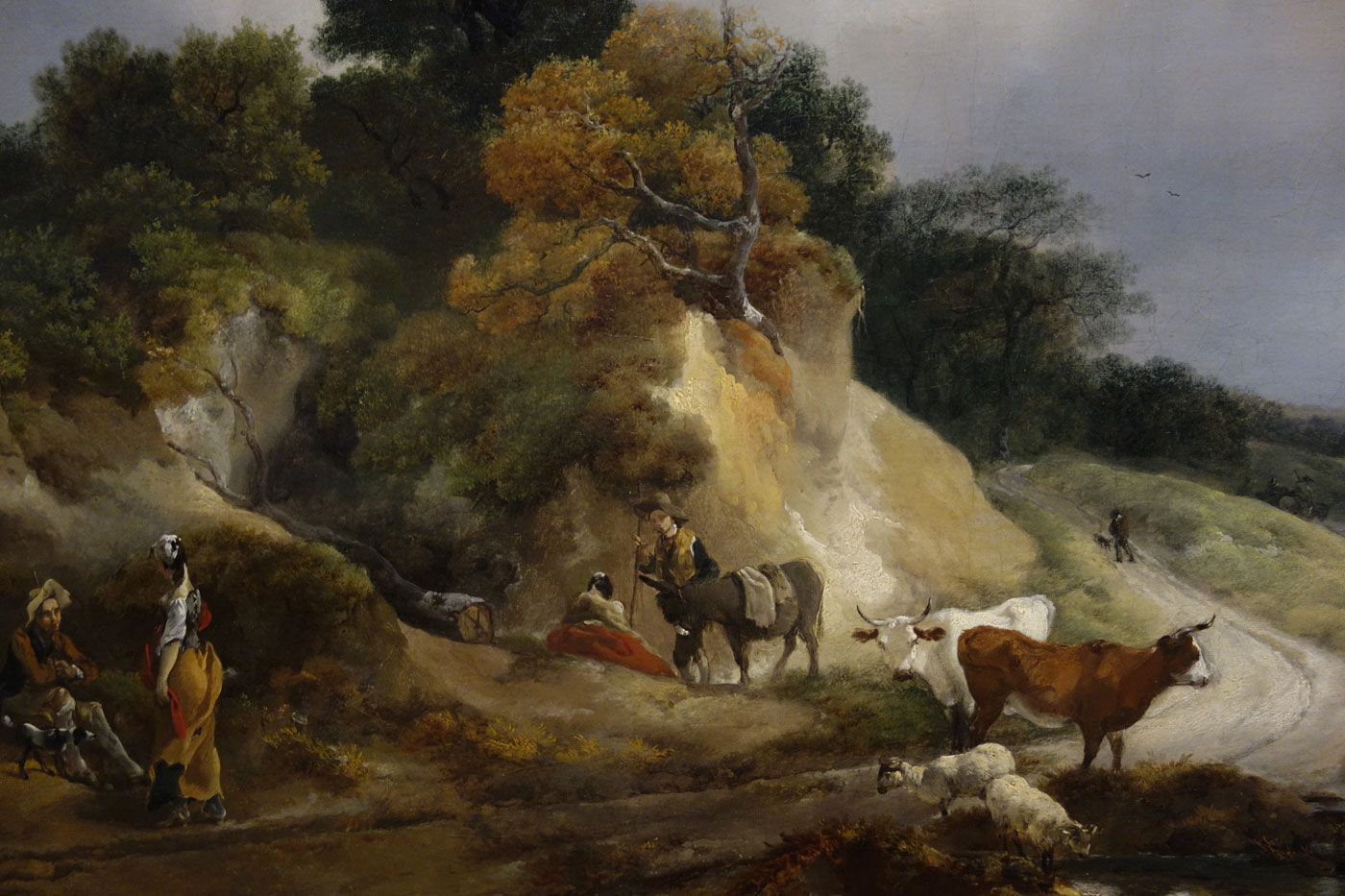
except Christmas Day and Good Friday

Art Gallery of New South Wales website

LIKE ART BLART ON FACEBOOK

Back to top