Review: ‘Shrouds’ by Mike Reid at the Colour Factory Gallery, Fitzroy, Melbourne

Exhibition dates: 8th March – 30th March 2013


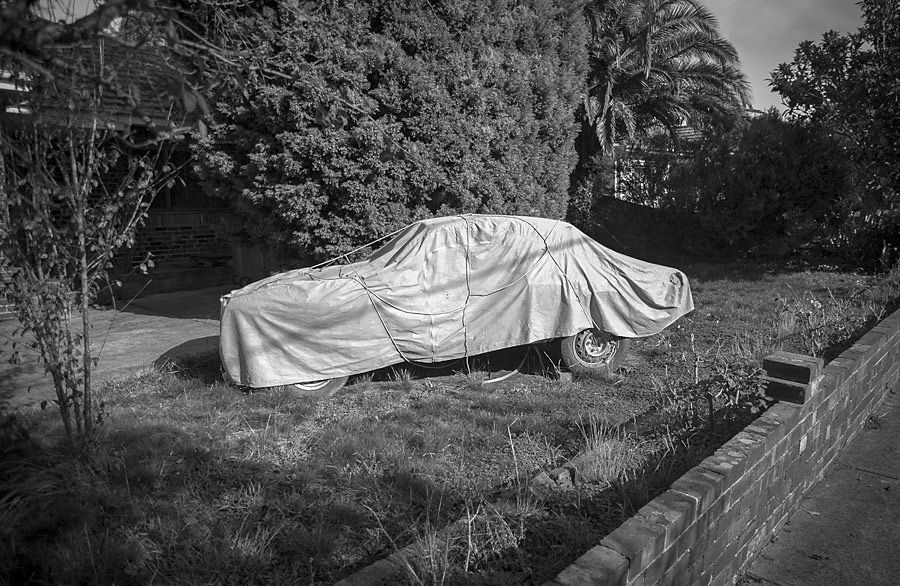
Mike Reid (Australian) 'Santa Monica, Los Angeles, USA' Nd


Mike Reid (Australian)
Santa Monica, Los Angeles, USA
Nd


“Any discovery changing the nature, or the destination of an object or phenomenon constitutes a Surrealist achievement. Already the automats are multiplying and dreaming… realism prunes trees, Surrealism prunes life.”


J-A. Boiffard, Paul Ellard and Roger Vitrac, in La Revolution Surréaliste, December 1924, p. 2, quoted in Arturo Schwarz, Man Ray: the rigour of imagination, Thames & Hudson, London, 1977, p. 161.


This is a strong exhibition of documentary photography by Mike Reid at the Colour Factory Gallery. Interesting idea; well seen formal photographs; good use of colour (brown, blue, silver, red and green shrouds); nice sized prints appropriate to the subject matter; and an excellent self published book to accompany the exhibition. This is just what it is – a solid exhibition of documentary photography.

Unfortunately the artist cannot leave it there. In his almost unintelligible artist statement (below), he tries to lever the concept of resurrection onto the work, meandering from Horus and Osiris through The Shroud of Turin, to Jewish Tachrichim (burial shrouds) and onto the commerce of Billabong and the politics of the burqa linking, very tenuously, the covering of Islamic women with the idea of these cars being “old bombs.”

Here I take issue with Reid’s conceptualisation of the word “shroud” vis a vis his photographs of covered cars. One of the definitions of shroud is “A cloth used to wrap a body for burial” but the more pertinent use of the word in relation to this work is “To shut off from sight; something that conceals, protects, or screens” from the Middle English schrud, garment. These are not abandoned, lifeless vehicles awaiting resurrection but loved vehicles that have been protected from the elements by their owners, wrapped and cocooned jewels that are in a state of hibernation. If they were unwanted they would have been abandoned by their owners to the elements, not protected beneath a concealing garment in a state of metamorphosis. The shrouding of the car acts like a Surrealist canvas, hinting at the structure underneath (the Cadillac, the Volkswagen, the Morris Minor) but allowing the viewer to discover the changing nature of the object.

All that was needed to accompany the exhibition and the book was something like the quotation at the top of the posting. Leave the rest up to the strength of the work and the viewer. They have the intelligence and imagination to work out what is going on without all the proselytising that only reveals the artist’s ultimate disconnection from the source. In other words, less is more. Nothing more, nothing less.

Dr Marcus Bunyan


Many thankx to the Colour Factory Gallery for allowing me to publish the photographs in the posting. Please click on the photographs for a larger version of the image.
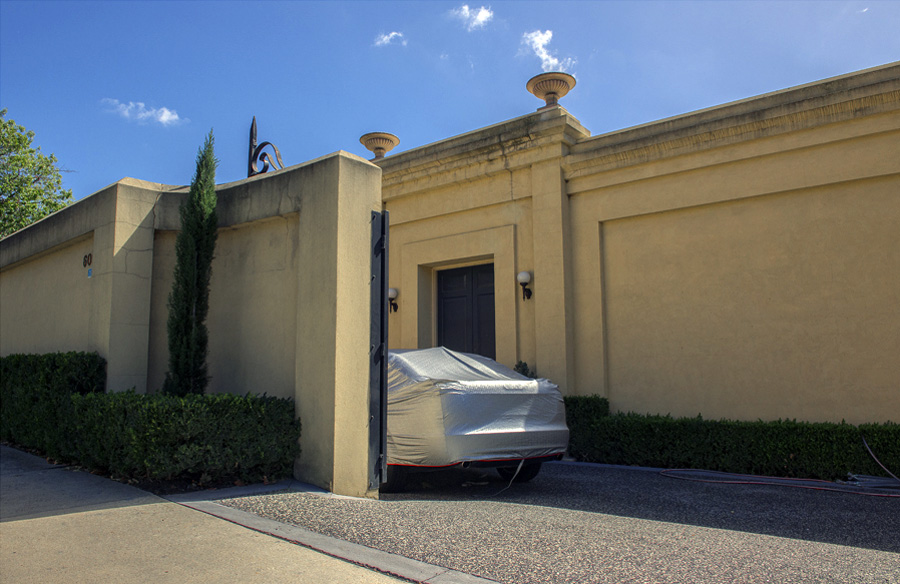


Mike Reid (Australian) 'Toorak, Victoria' Nd


Mike Reid (Australian)
Toorak, Victoria
Nd


Mike Reid (Australian) 'South Fremantle, Western Australia' Nd


Mike Reid (Australian)
South Fremantle, Western Australia
Nd
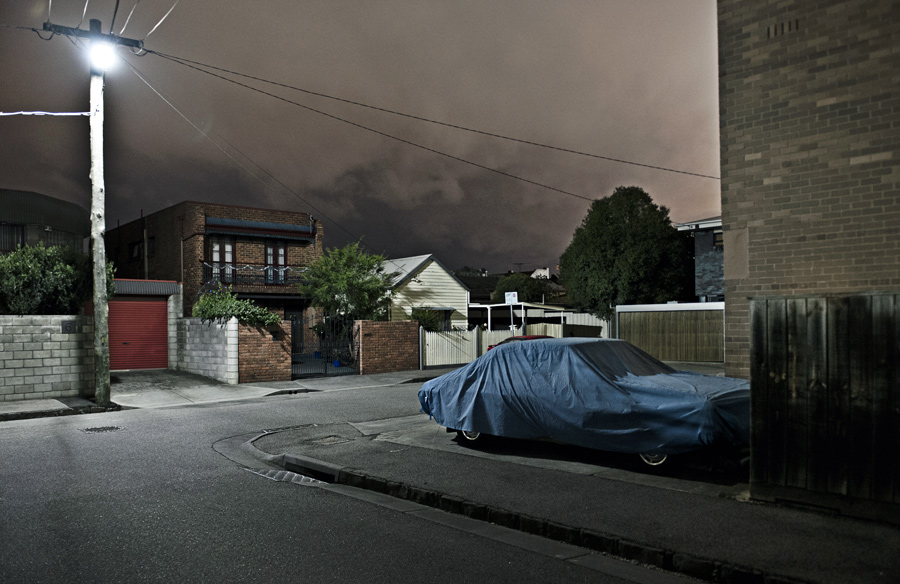
 

Mike Reid (Australian) 'Richmond, Victoria' Nd


Mike Reid (Australian)
Richmond, Victoria
Nd


Shrouds, by Mike Reed is a collection of photographs of covered cars. His love of gleaning was inherited from his ‘rag and bone’ father who amassed a metal detritus found on the bicycle route home from the factory where he worked. This assortment was stockpiled in his father’s rusted sheds, which appeared like an ‘Aladdin’s cave’ to a youthful Mike.

“The car was draped with a plastic sheet in the back blocks of Surfers Paradise whilst seeking to photograph decay in the landscape… You start with one and then see another then… over time, the medley plays into a collection… patterns precipitate or idiosyncrasies evolve from within…This is the joy of “seeing”.”

“Within my category of covered cars I began to view these still loved but lifeless vehicles, as if a resurrection was about to take place… for the heavenly roads of restoration or hell.”

Mike equates the car covers to the burial garments adorning the dead in preparation for resurrection. Mike cites the ‘wrapping’ of objects found in the work of artists’ Christo, Jean Claude, Man Ray and Magritte as inspiration. This incredible accumulation of images spans over two decades and 6 countries. A small selection has been chosen for this exhibition and a larger range appears in his book to be launched at the opening of Shrouds.

Press release from the Colour Factory Gallery website
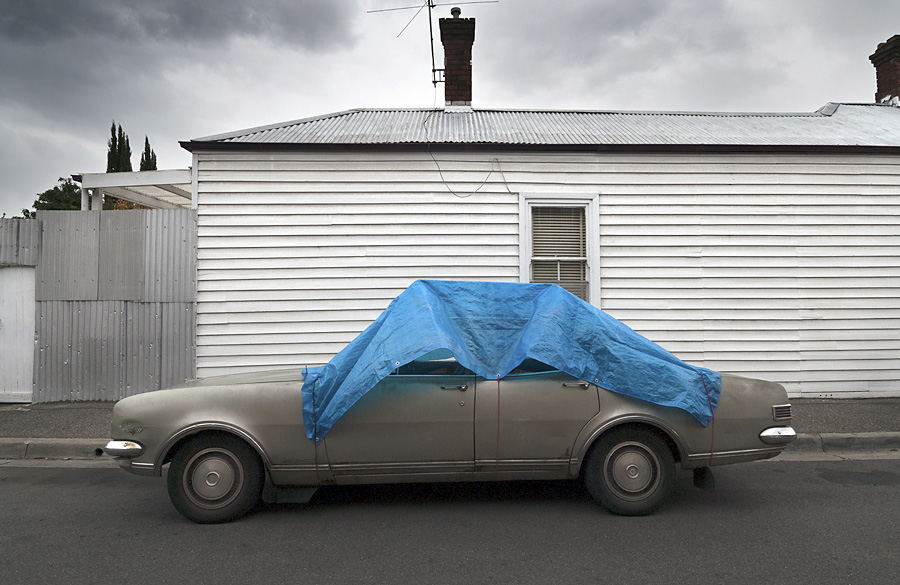
 

Mike Reid (Australian) 'Richmond, Victoria' Nd


Mike Reid (Australian)
Richmond, Victoria
Nd


Mike Reid (Australian) 'Macleod, Victoria' Nd


Mike Reid (Australian)
Macleod, Victoria
Nd


Shrouds

The resurrection of the dead is a fundamental and central doctrine of Judaism, Christianity, and Islam. Many religious critics have alleged that even Christ’s resurrection was borrowed from the accounts of Osiris, God of the underworld, and the best-known deity in all of ancient Egyptian history. As a life-death-rebirth deity, Horus, the Sun God, and Osiris became a reflection of the annual cycle of crop harvesting as well as reflecting people’s desires for a successful afterlife. The Masons, Illuminati, Priory De Sion, clandestine government groups, and others believed that on December 22, 2012, Osiris would be resurrected. Nothing happened on that world shattering day but Spam and candle sales most certainly went through the roof. Thus in preparation to meet thy maker, a shroud, burial sheet or winding-cloth, usually cotton or linen but with no pockets, is wrapped around a body after it has been ceremonially washed and readied for burial.

Certainly the most controversial and famous burial garment is the Shroud of Turin. It is now stored in the Cathedral of St. John the Baptist in Turin, Northern Italy after the crusaders stole it and bought it first to France around 1204.

Many believe this 4.3 by 1.1m linen cloth of a rare herringbone weave covered the beaten and crucified body of Jesus of Nazareth when He was laid in a tomb prior to His resurrection. Is it really the cloth that wrapped His bloodstained body, or is it simply a medieval hoax? This has lead to intense scrutiny by forensic experts, scientists, chemists, immunologists, pathologists, believers, historians, and writers regarding the where, when, and how the bloodstain image on the shroud was created. C-14 Carbon dating carried out in 1988, dated the cloth between 1260 and 1390.

In Jewish religious traditions the Tachrichim (burial shrouds) are traditional simple white burial garments, containing no pockets, usually made from 100% pure linen.A shroud or sometimes a prayer shawl for a man, in which Jews are dressed by the Chevra Kadisha for burial after undergoing a taharah (purification ceremony). Burying the departed in a garment is considered a testimony of faith in the resurrection of the body (commentary of Shach). This is a fundamental principle of faith, one of the thirteen principles, which the Rambam enumerates as being essential to Jewish belief. More to the point today we have an insurrection, while not yet violent against the wearing of another kind of covering… the niqab or the burqa. European governments are escalating the introduction of laws on the basis that the face covering, along with ski masks and bikies helmets, encourages female subjugation, lack of communication, non-safety, isolation, female abuse, oppression of freedom and non-conformity to the western culture. In fact the Koran only dictates to modesty in dress. May I say it that Billabong could improve sales with the launch of a ‘Tri-Kini’ on the beaches next summer.

Meanwhile… “The 2012 ban in France is officially the second country in Europe, after Belgium, to introduce a full ban on a garment which immigration minister Eric Besson has called a “walking coffin.””1 Indeed Australian Liberal Cory Bernadi said, “The burqa is no longer simply the symbol of female repression and Islamic culture, it is now emerging as a disguise of bandits and n’er do wells.”2 More so now the government and police authorities in the Netherlands, a usually very tolerant nation, have become anxious regarding security worries that a terrorist could use one for concealment. Well my shrouded cars could be the same, as most do conceal “old bombs.”

The inspiration for my rag tag assortment evolved from the artistes Christo and Jeanne-Claude who have wrapped, covered whole buildings, bridges and landscapes. Other favourites of mine, Man Ray and Rene Magritte have objects and humans covered as well, specifically Magrittes’ Las Amants 1 & II (The Lovers)3 1928. A plastic explanation is that “love is blind” and that the mantles are symbolic to the idea that a devoted lover would identify his soul mate in any form, immortal love. Another interpretation of Magrittes’ shrouds is that the paintings symbolise his mothers’ death. Magritte, when only 14, discovered her lifeless body which was naked apart from her nightdress that had swathed up around her face.

I started recording these morphological images over 20 years ago. The first was draped with a plastic sheet in a paddock in the back blocks of Surfers Paradise while meandering aimlessly, seeking decay in the landscape.

With my wandering and collecting shots I realised I have inherited the trait from my father. In his latter years my father became a rag and bone man in order to supplement the low family income. A bicycle route from his employment at Laminex factory to home lay through the local hard rubbish dump. Copper wire, lead, iron, even an aerial practice bomb, military helmets, a stockless revolver and rifle, rusted tools… festooned from his bike and festooned from his gladstone bag. Two rusting sheds contained somewhat the ever-growing metal waste for selling or keeping… an Aladdins’ cave to a young boy, everyday re-discovering lifes’ discards care of the Dendy Street tip.

Within my category of covered cars I began to view these still loved but lifeless vehicles, as if a resurrection was about to take place… for the heavenly roads of restoration or hell… (a scrap yard)

Mike Reed, 2013


1/ The Telegraph, April 11 , 2011, “Peter Allen In Paris”
2/ Cory Bernadi, SMH, May 6, 2011
3/ “Las Amants” 1 is in the NGA collection, Canberra, NGA
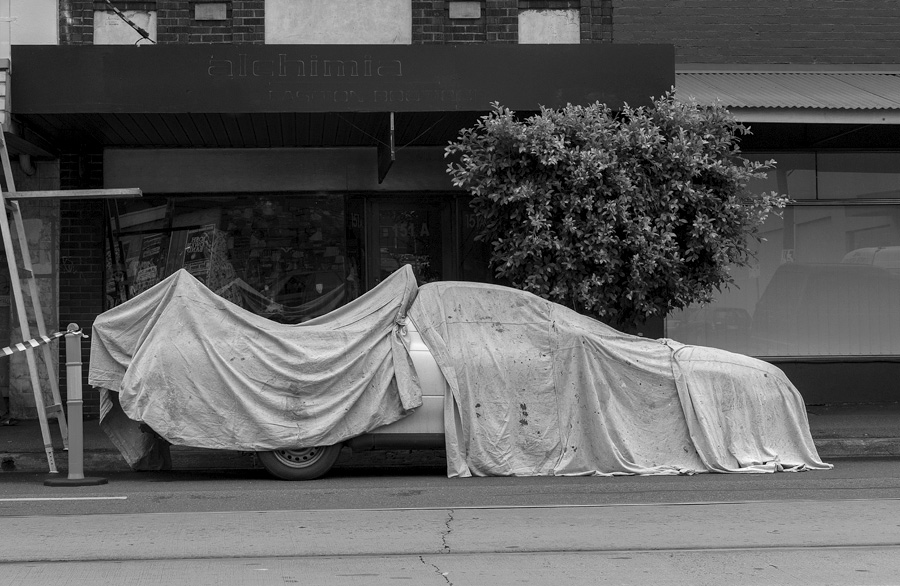
 

Mike Reid (Australian) 'Brunswick East, Victoria' Nd


Mike Reid (Australian)
Brunswick East, Victoria
Nd
 

Mike Reid (Australian) 'Fairfield, Victoria' Nd


Mike Reid (Australian)
Fairfield, Victoria
Nd


Man Ray (American, 1890-1976) 'L'Enigme d'Isidore Ducasse' 1920, remade 1972


Man Ray (American, 1890-1976)
L’Enigme d’Isidore Ducasse
1920, remade 1972
Sewing machine, wool and string
355 x 605 x 335 mm

 

Mike Reid (Australian) 'Athens, Greece' Nd


Mike Reid (Australian)
Athens, Greece
Nd


Colour Factory Gallery
409-429 Gore Street
Fitzroy, Victoria 3056
Phone: +61 3 9419 8756

Opening hours:
Closed for refurbishment
Mike Reed Photography website

Colour Factory Gallery website

LIKE ART BLART ON FACEBOOK

Back to top

Photographs: Anonymous motor vehicle wizbang thingamabobs

March 2013


Anonymous motor vehicles


A friend sent these to me and I thought you might enjoy them. He supplied nothing of the vehicle type, country, year, photographer, etc… so I have undertaken some judicious research and surmised the rest. Somehow today’s cars just don’t have the joie de vivre of these earlier contraptions. Enjoy the inventiveness of man and his love of the vehicular device!

Information on any of the photographs would be appreciated.

Marcus


Please click on the photographs for a larger version of the image.


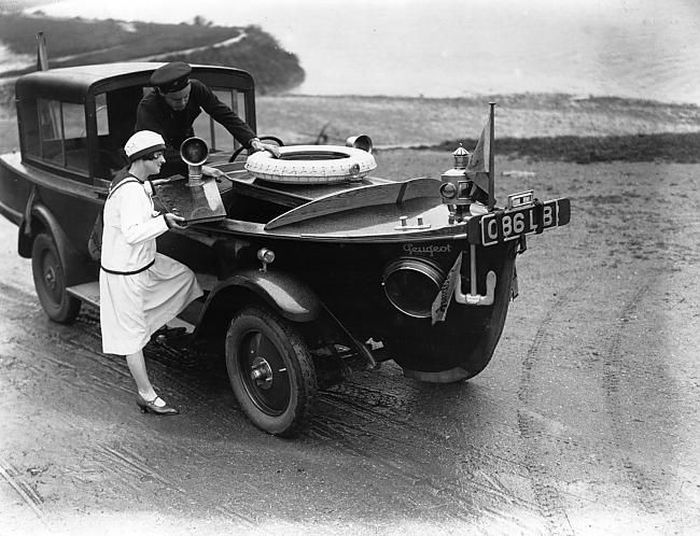
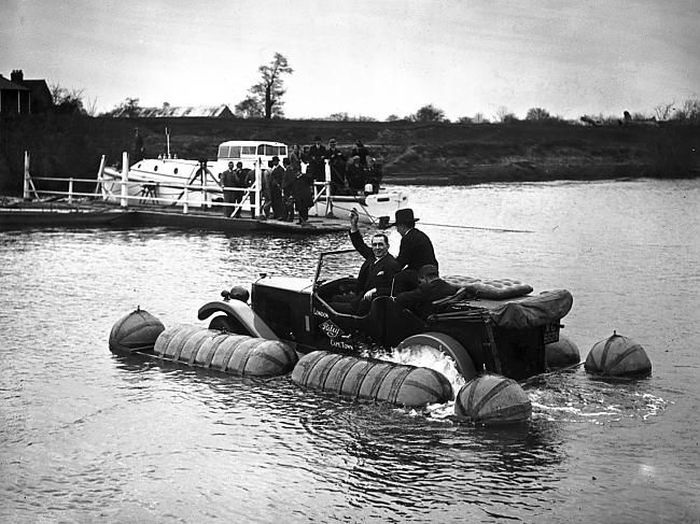
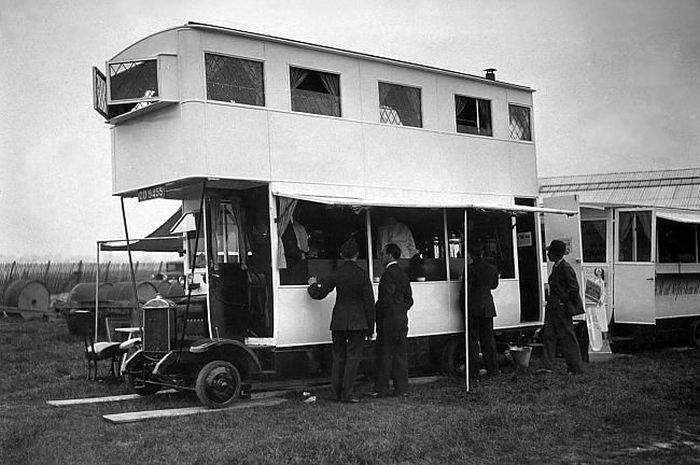
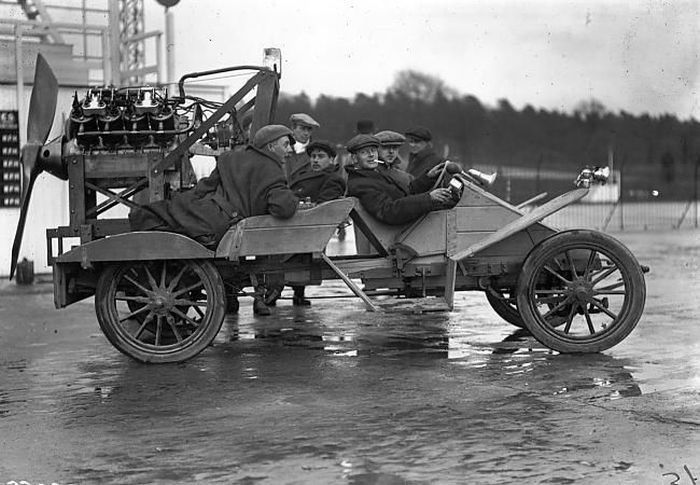
English amphibious car 1910s-1920s


English amphibious car – by the look of the number plate, 1910s-1920s


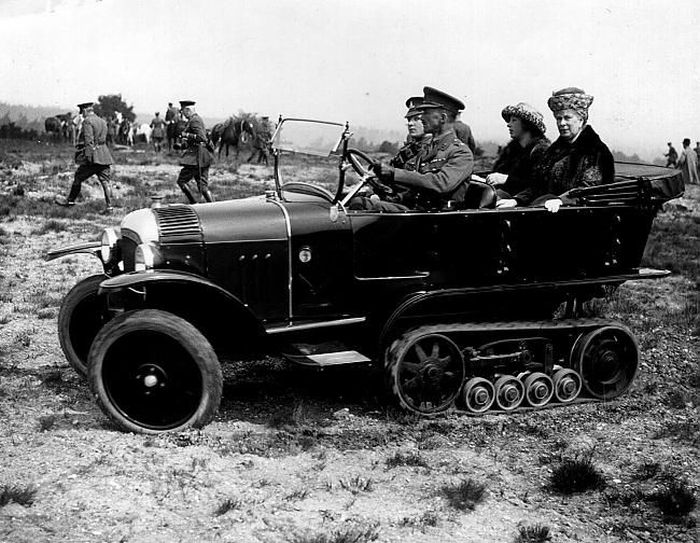
English half-track car c. 1910s-1920s?


English half-track car c. 1910s-1920s? Around the First World War from the look of the uniforms


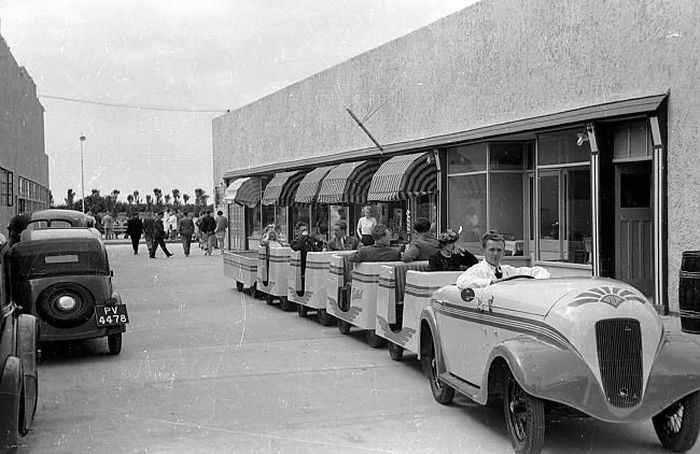
English, probably at a Butlins holiday camp or some such, 1940s-50s


English, probably at a Butlins holiday camp or some such, 1940s-1950s by the look of the cars


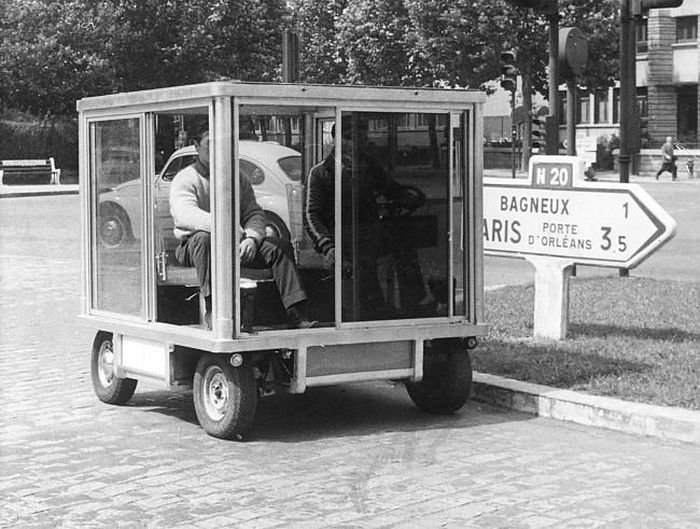
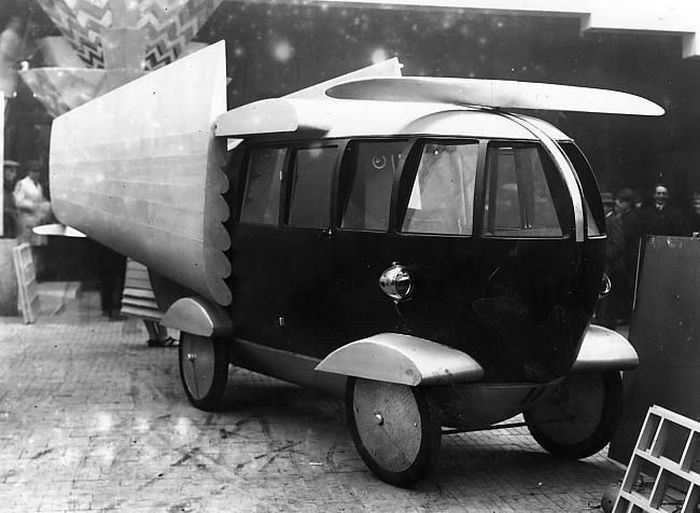
French cube car, 1960s?


French, 1960s?


Amphibious Riley 1931


Amphibious Riley
1931


For a private Africa expedition (London to Capetown) Riley needed a trick to cross the rivers on his journey. The inflatable pontoons did the job but the holding rack was so close to the wheels that steering was impossible when the pontoons where in place. The brand name of the car is Riley to, if you are wondering where Riley got the money for his expedition.

Text from the Amphiclopedia website [Online] Cited 12/03/2013 no longer available online


Anonymous motor vehicles


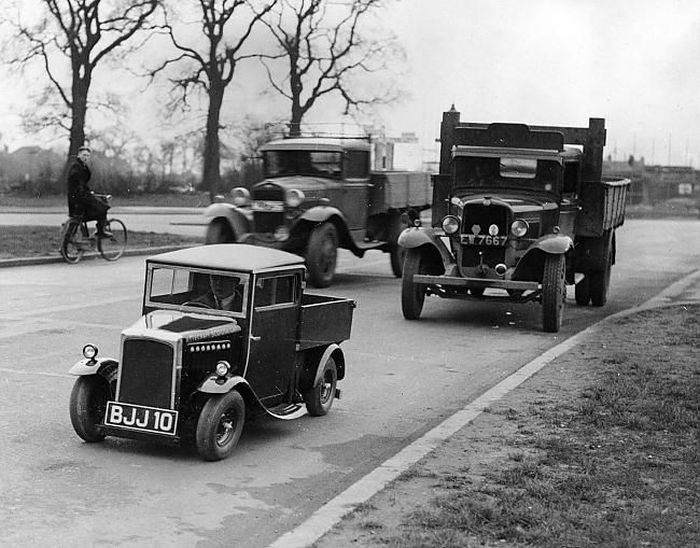
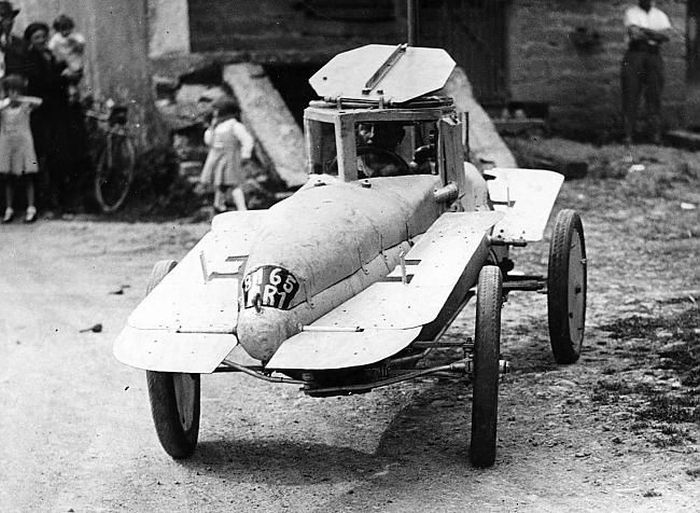
Miniature lorry, English c.1920s-1930s?


Miniature lorry, English c. 1920s-1930s?


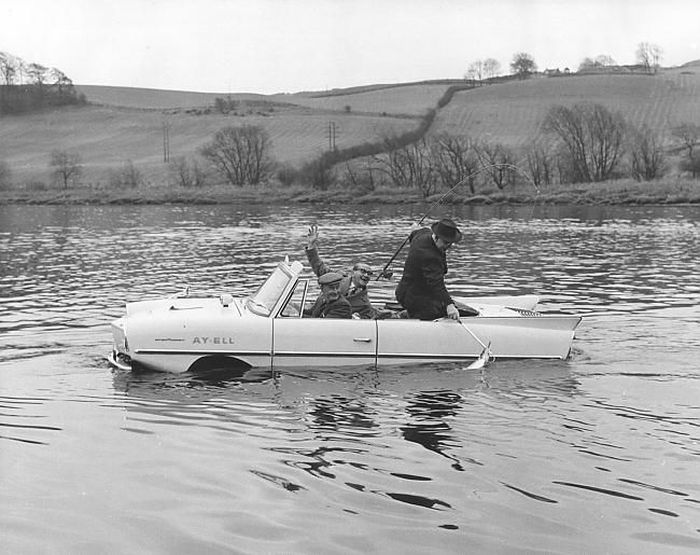
Ian Cameron. 'Ay-Ell' 1964


Ian Cameron
Ay-Ell
1964


16th January, 1964: “On the day after the official opening of the Tay Salmon Rod Fishing Season, Duncan McGregor catches an 8lb salmon from Ian Cameron’s amphibious car ‘Ay-Ell’.”


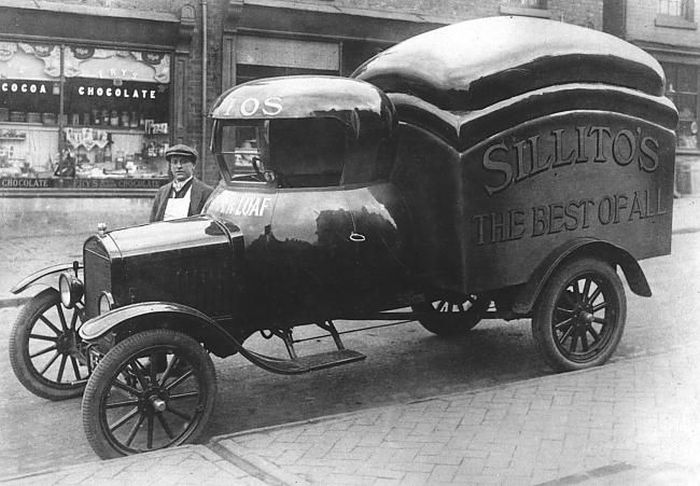
American delivery van 1910s-1920s?


American delivery van 1910s-1920s?


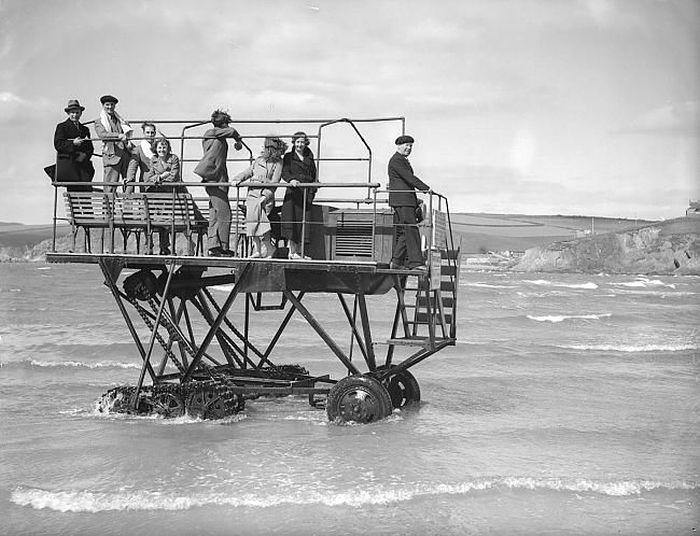
Motorised half-track ferry, French?


Motorised half-track ferry, French?


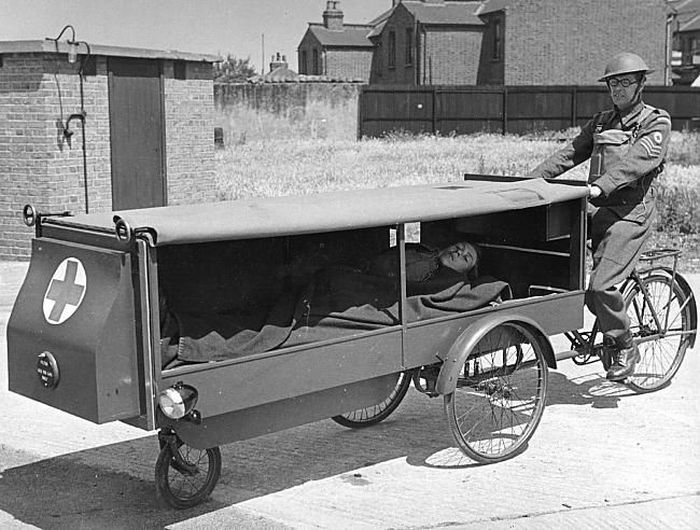
English tricycle ambulance, c. 1940


English tricycle ambulance, c. 1940


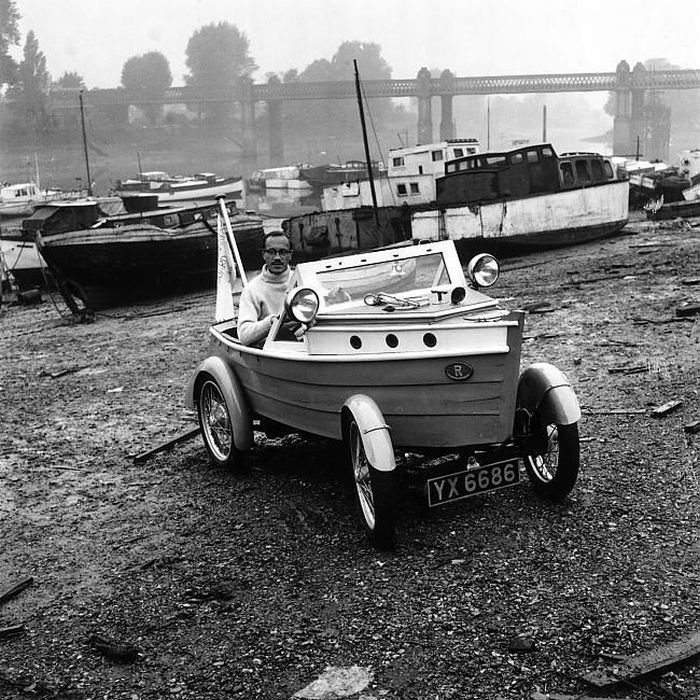
English boat car 1950s?


Those mad Englishmen – boat car 1950s?


Motorouta 1931


Motorouta
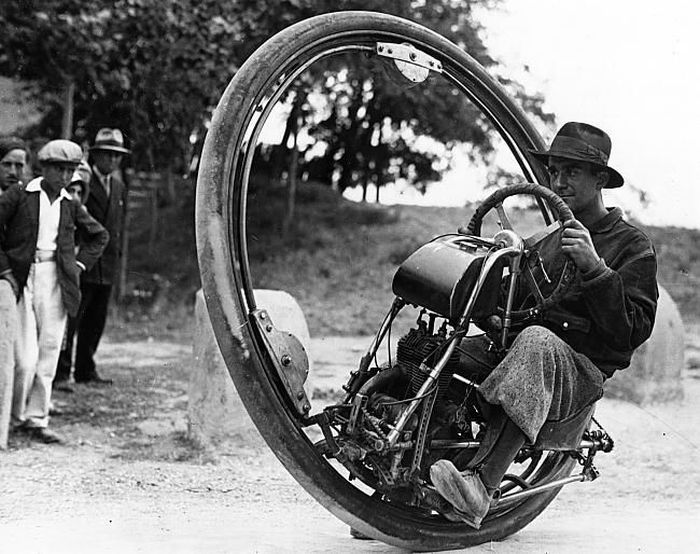
Swiss engineer Mr. Gerdes astride/inside his one-wheel motorcycle
1931


OMG, I’m in love, I want one now!


Across Europe on a Monowheel!

The 1920s, however, also saw the introduction of a few more ‘sensible’ motorised monowheels, which were really aimed as useable one-wheeled motorcycles. One of these was the mid-1920s Italian Motorouta that was actually produced in limited numbers. According to an advertisement of the time this machine had a 175 cc engine coupled to a 3-speed gearbox. It must have worked reasonably well, since a Swiss engineer by the name of Gerdes set of with a Motorouta machine for a rather grand trip from Switzerland to Spain in 1931. We know that he made it to Arles in the south of France, but whether he ever reached Spain is unclear.
Text from the Dark Roasted Blend: Monowheels website [Online] Cited 24/10/2020


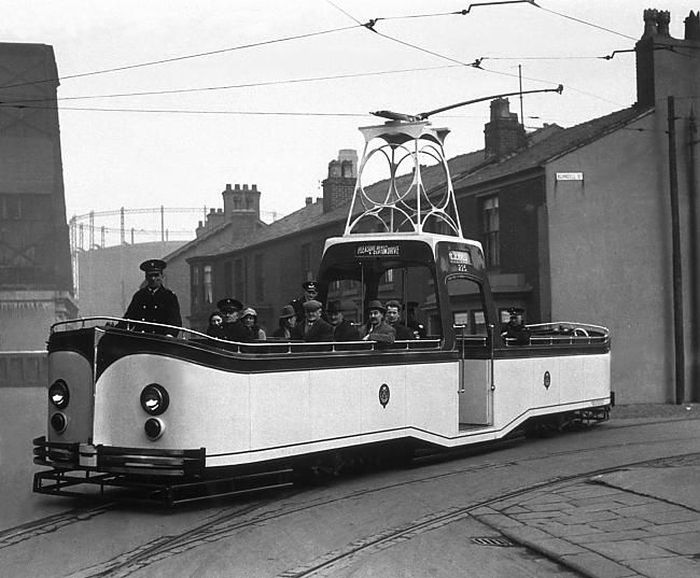
English open-air tram c. 1930s-1940s?


English open-air tram – class-ridden scene with the old workers houses, gas container behind, c. 1930s-1940s?


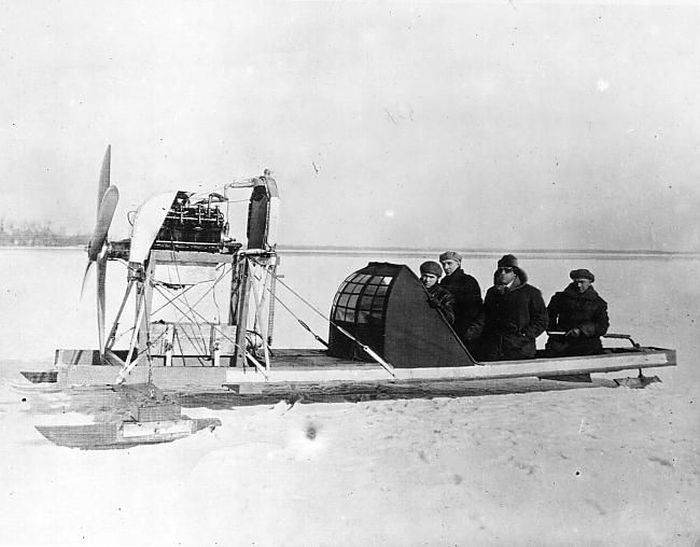
American/Canadian snow sled, 1910s-1920s?


American/Canadian snow sled, 1910s-1920s?


Anonymous motor vehicles, English 1930s?


Oh wow, love this!
English 1930s?


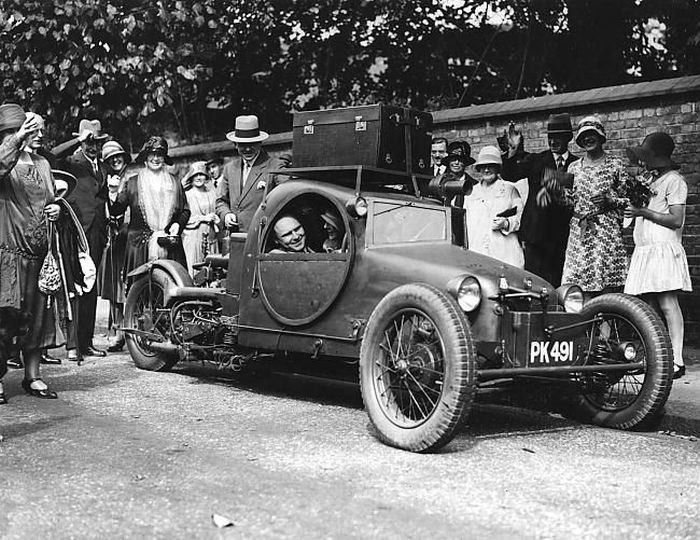
English tricar built by a Mr A. Graham of Kingston, Surrey in 1929

English tricar built by a Mr A. Graham of Kingston, Surrey in 1929


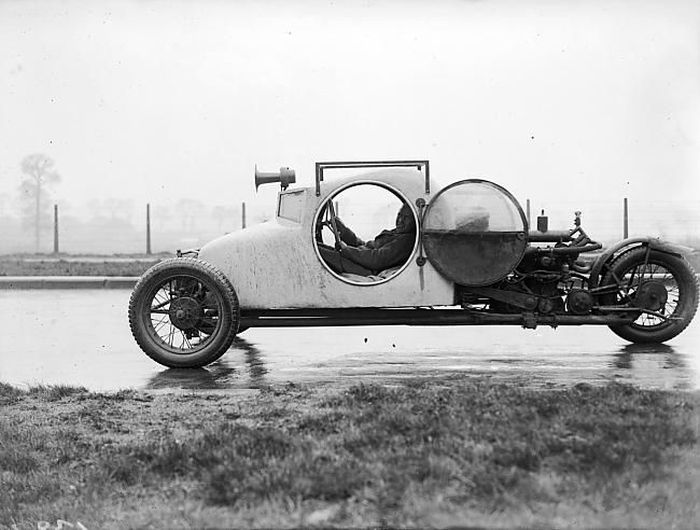
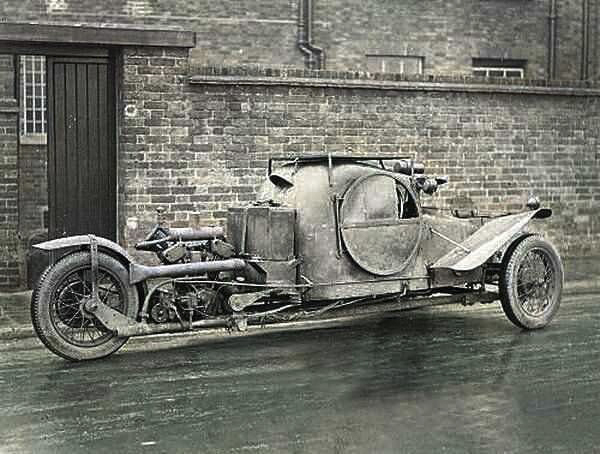
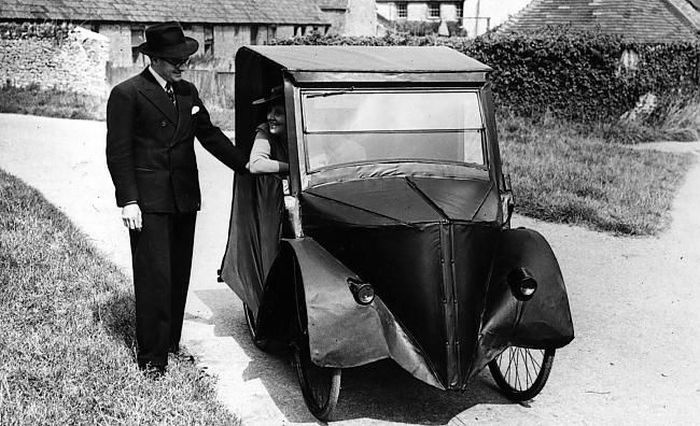
English tricar, two photographs similar vehicles, 1920s-1930s? Love the circular door… another three-wheeler!

I now know that this tricar was built by a Mr A. Graham of Kingston, Surrey in 1929.


English tricar built by a Mr A. Graham of Kingston, Surrey in 1929


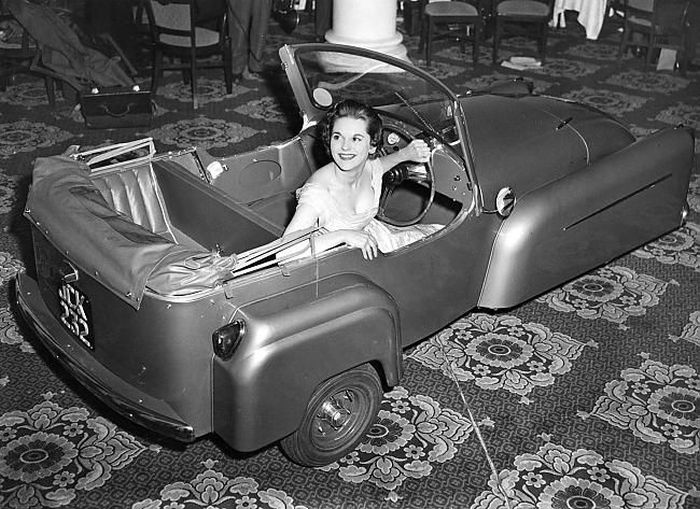
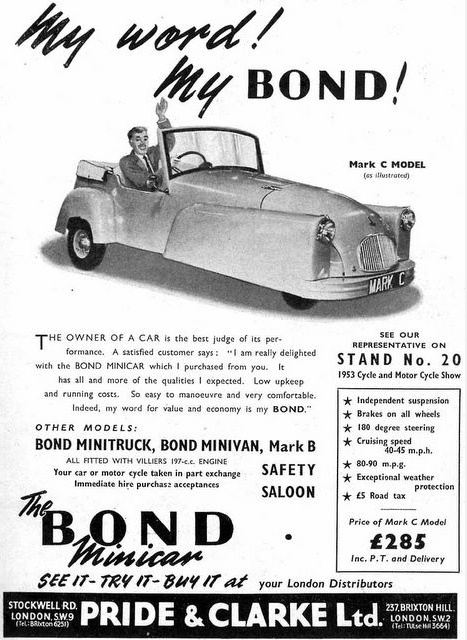
Bond Minicar 3-Wheeler. In production 1948-1965 English


Bond Minicar 3-Wheeler
In production 1948-1965
English


Bond Minicar poster 1953


Bond Minicar poster 1953


At the end of the war cars were at a premium so engineer Lawrie Bond came up with a budget three-wheeler Britain could afford. The Bond Minicar was poverty motoring in the extreme: no roof, no doors, brakes only at the rear and precious little suspension. The 1-cylinder two-stroke 122cc motorcycle engine started life with just 5bhp but gave 40mph and a claimed 104mpg. Minicars gradually became more refined and powerful until production ended in 1966. The final Mark G had a roof, doors and hydraulic brakes (Wikipedia).

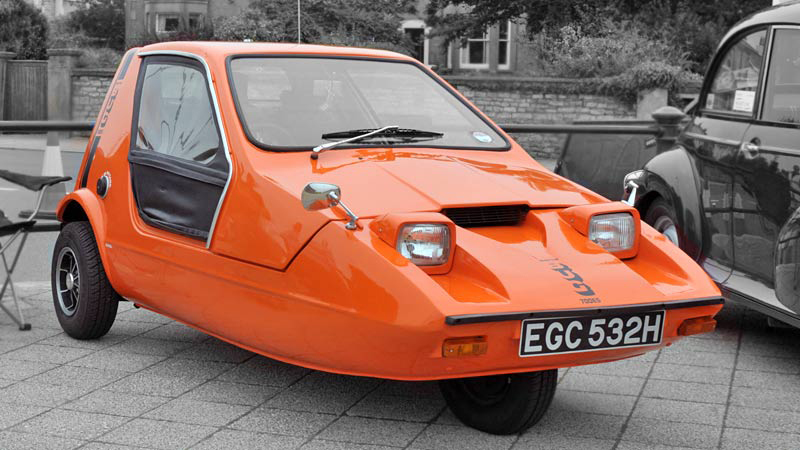
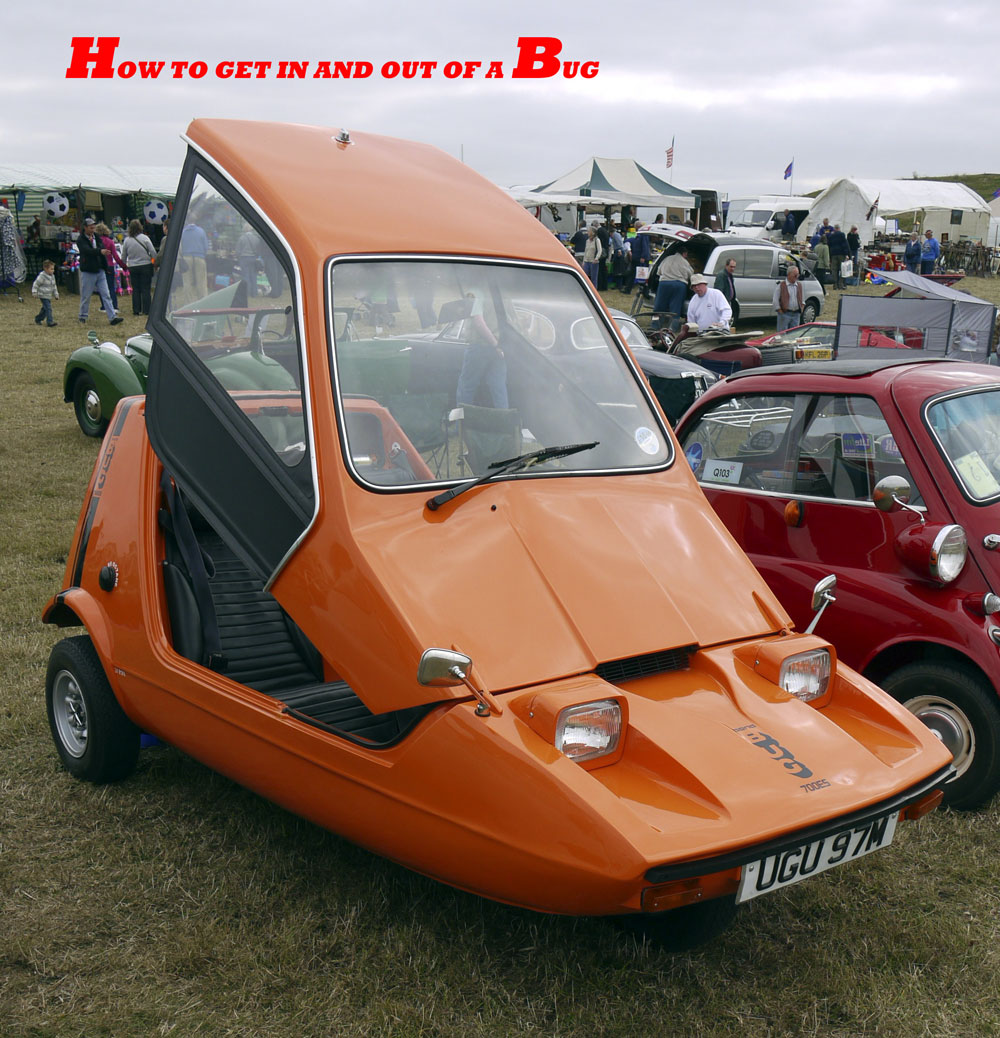
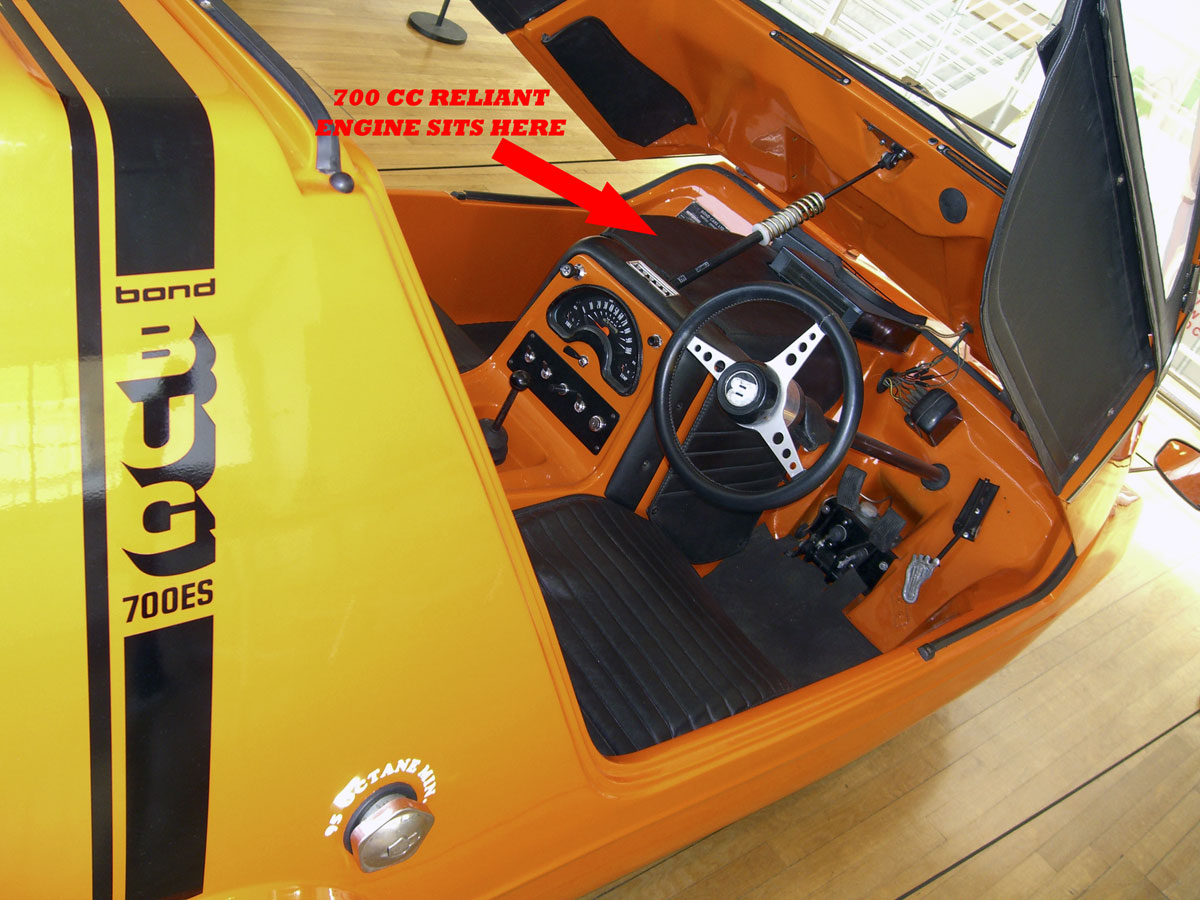
There is a minicar club in England and they hold rallies for all types of minicar, including my first ever car, the Bond Bug (see below). The Bond Bug had a 700cc Reliant engine sitting between the two seats, was made of fibreglass, and had fabric windows offering now protection to side impact at all. The car was so low, and you entered and exited by raising the roof of the car that was supported by a pneumatic strut. I had so much fun in that car, blew the engine on Bodmin Moor in Cornwall one trip away. Stuck for 3 days before friends drove down from London with a Transit van, took the doors off the back of that, heaved the Bug up into the back, and drove back to London!


Bond Bug 1970-1974 English

Bond Bug 1970-1974 English

Bond Bug 1970-1974 English

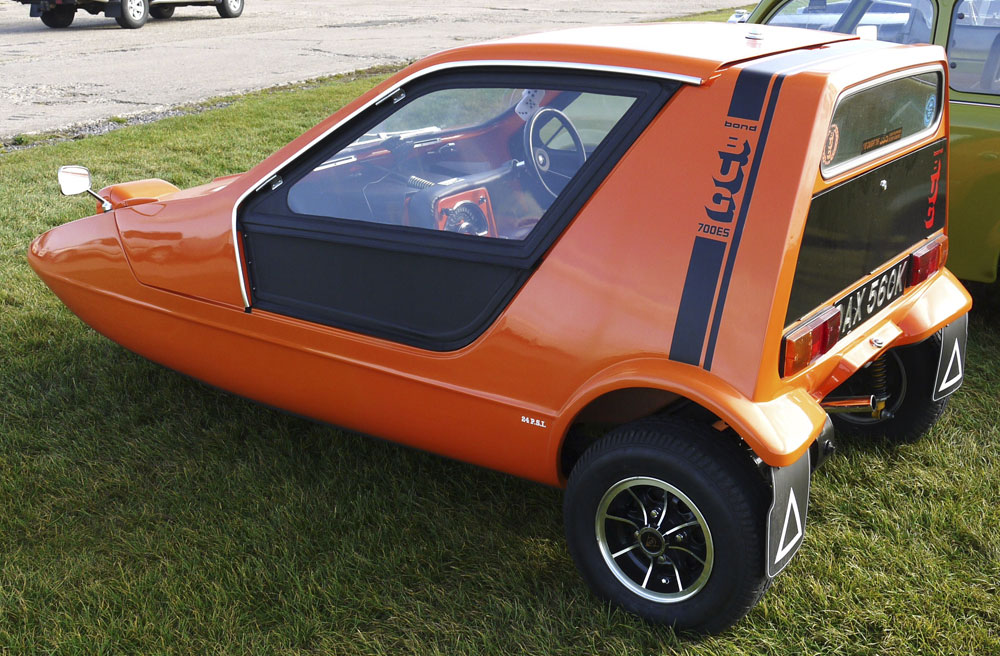
Bond Bug interior


Bond Bug
1970-1974
English


The Bond Bug is a small British two-seat, three-wheeled sports car built from 1970 to 1974. It is a wedge-shaped microcar, with a lift-up canopy and side screens instead of conventional doors. The engine is the front-mounted 700 cc (later uprated to 750 cc) Reliant light-alloy four-cylinder unit which protruded into the passenger cabin. In contrast to the image of three-wheeled Reliants as being slow, the Bond Bug was capable of some 78 mph (126 km/h), comparable to the Mini (72 mph) and the least powerful version of the Lotus Seven (80 mph). The car was, however, not cheap. At £629, it cost more than a basic 850 cc Mini which was at the time £620. Although it had a fairly short production run (1970-1974), it has a dedicated following today

Text from the Wikipedia website


English, c. 1910s-1920s?


English, c. 1910s-1920s?


British mini car, 1940s?


British mini car, 1940s?


Anonymous motor vehicles


Anonymous motor vehicles


What a classic!
English, c. 1930s?


Wow! looks American... 1930s?


Wow! looks American… 1930s?


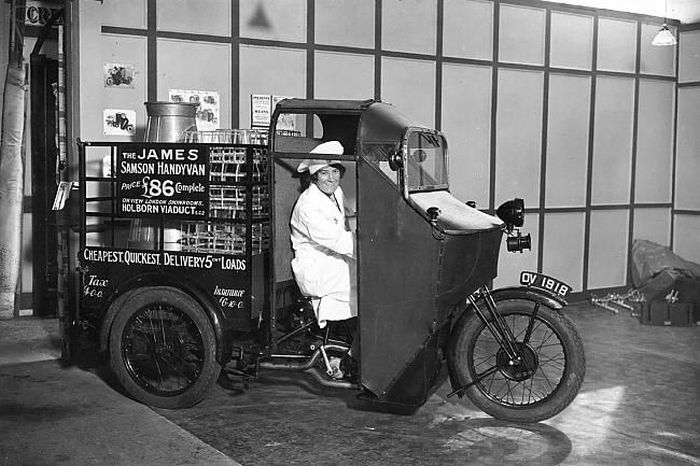
'The James Samson Handyvan' 1933-1939


The James Samson Handyvan
1933-1939
In production 1929-1939
English


The James Handyvan first puttered onto the chaotic roads of Britain in 1929, and survived in production until 1939. Obviously motorcycle-based, the Handyvan offered an economical light goods vehicle for the small-business owner. Early Handyvans were powered by an engine of just 247cc and offered a payload capacity of 5cwt. In 1933 the engine was replaced with a larger V-Twin unit, as can be seen on this page, and the payload capacity was increased to 8cwt or 12cwt, depending on the model chosen. The later James vans were known as the “Samson Handyvan”.

Anonymous. “The James Handyvan, 1929-1939,” on the Old Classic Car website [Online] Cited 18/10/2020

.

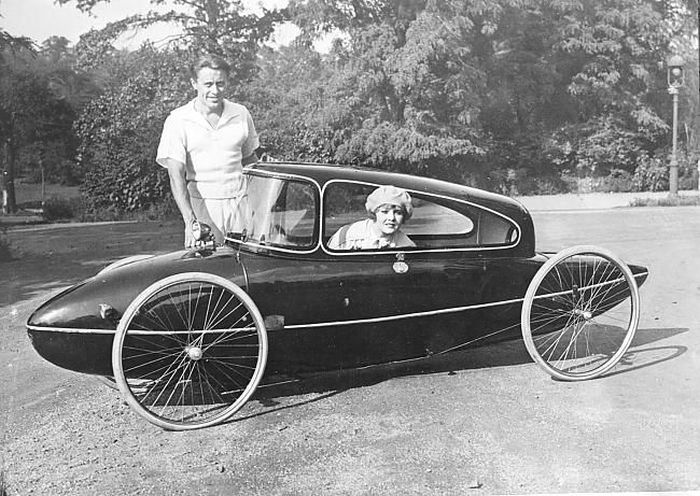
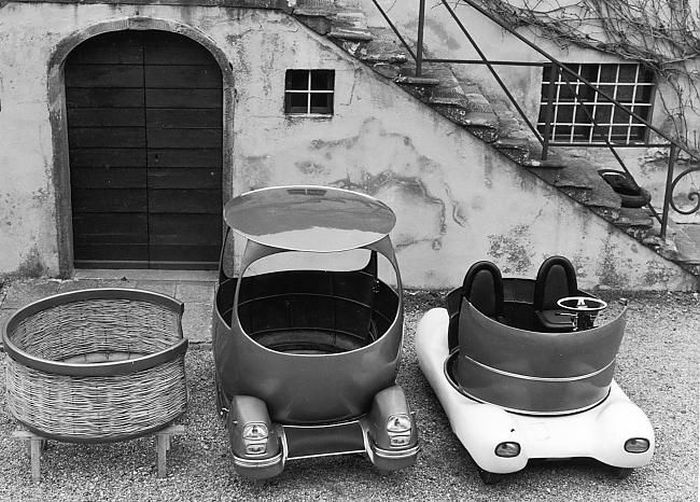
I have no idea (Italian?), but boy are they groovy!


I have no idea (Italian?), but boy are they groovy!


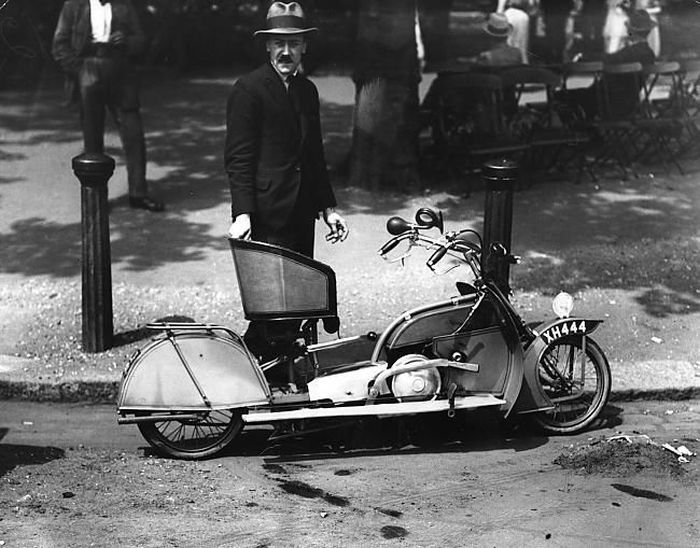
English moped (because of the number plate!), 1930s?


Oh my, how beautiful!
English moped (because of the number plate!), 1930s?


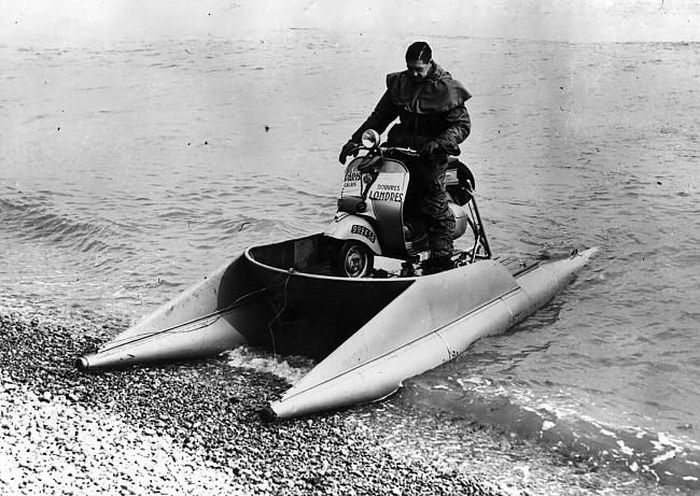
Georges Monneret. 'Amphibious Vespa' 1952


Georges Monneret (French, 1908-1983)
Amphibious Vespa
1952


A Vespa travelling across the English Channel to London? Yes – 1952

“The Vespa also has a racing career behind it. In Europe back in the Fifties, it took part, often successfully, in regular motor cycle races (speed and off-road), as well as unusual sporting ventures. In 1952 the Frenchman Georges Monneret built an “amphibious Vespa” for the Paris-London race and successfully crossed the Channel on it.”

Text from the Vespa Official website [Online] Cited 12/03/2013 no longer available online


Mostly known as “Jojo la Moto”, Georges Monneret is considered as one of the great stars in the history of French motorcycle racing. During his career which spanned over three decades, between the early 1930s and the mid-1950s, he obtained a total of 499 victoires, breaking almost 200 World speed records. …

His most famous performance was his Paris-London Race, on 08 October 1952, riding a Piaggio Vespa scooter, without getting off his vehicle, powered by a 125 cm3 Vespa Douglas engine, to cross the English Channel from Calais to Dover. His “Amphibious Vespa” was fitted with two long aluminium pontoons, a wooden platform for the bike, a steering system that used the front wheel to steer the rudder and two rollers beneath the rear wheel to power the three bladed propeller via a three speed gearbox. The propeller could also be raised and lowered for beach landings. The Vespa also had a larger fuel tank installed. Despite inclement weather, “Jojo” Monneret reached the Dover beach safely on his second attempt, escorted by a trawler. And achieved his record by winning the race in almost 15 hours, from Paris to London.
Anonymous. “Georges Monneret,” on the Motorsport Memorial website Nd [Online] Cited 23/07/2024


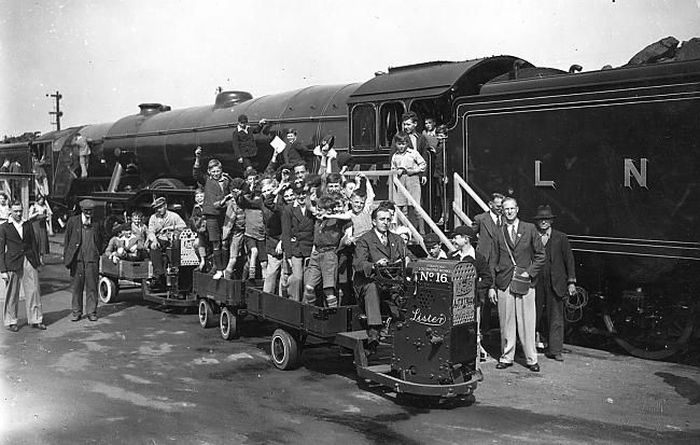
R.A. Lister & Company / Lister Blackstone. 'Lister Autotruck' c. 1930s-1940s?


R.A. Lister & Company / Lister Blackstone
Lister Autotruck
c. 1930s-1940s?
English, next to LNER railway train


The London and North Eastern Railway (LNER) was the second-largest of the “Big Four” railway companies created by the Railways Act 1921 in Britain. It existed from 1 January 1923 until nationalisation on 1 January 1948, when it was divided into the new British Railways’ Eastern Region, North Eastern Region and partially the Scottish Region

Text from the Wikipedia website


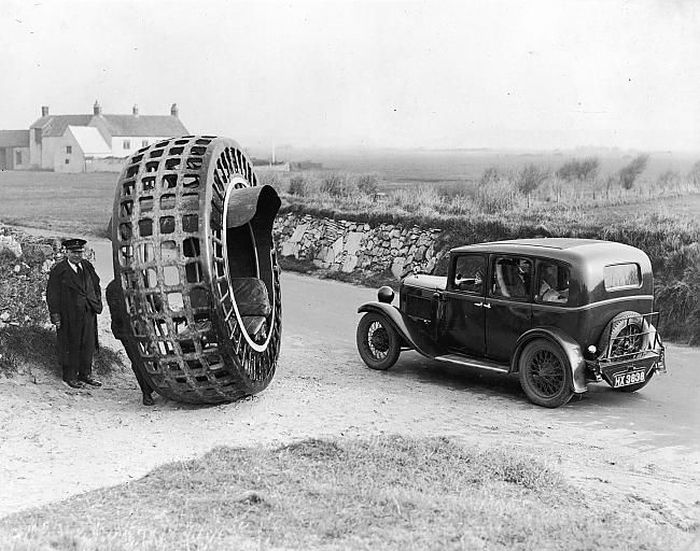
Dr John Archibald Purves (English, 1870-1952) 'Dynosphere' 1932

Dr John Archibald Purves (English, 1870-1952) 'Dynosphere' 1932


Dr John Archibald Purves (English, 1870-1952)
Dynosphere
1932
English


Two photographs of the same amazing contraption… fantastic!

“Another fascinating chapter in monowheel history was written by a chap called Dr John Archibald Purves from England, who seriously believed that one huge wheel encompassing five passengers was far more efficient than a car with four (smaller) wheels. In 1932, Purves designed the remarkable Dynosphere.
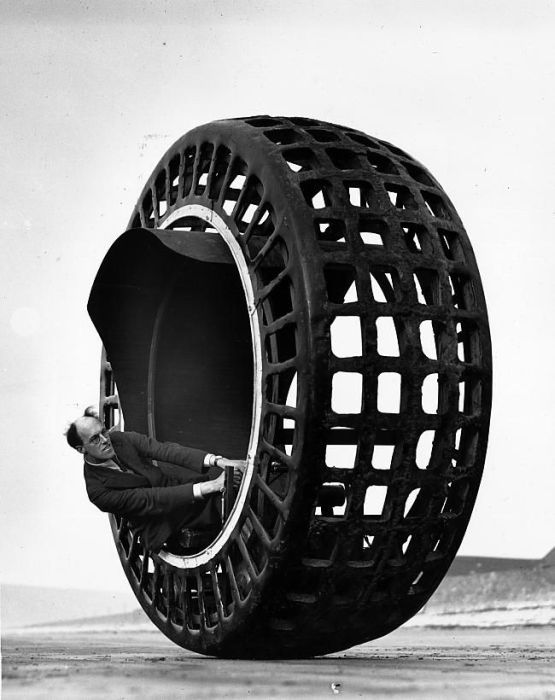
This monowheel differed from other designs in various ways. For one, it was wide enough to stand up by itself, without the need of continuous and rather tricky balancing. The outside of the wheel was part of the surface of a sphere, so that it did not touch the ground over its entire width and could be tilted sideways for steering. The outside consisted of a metal framework, so that the driver could look through the openings in the wheel frame.
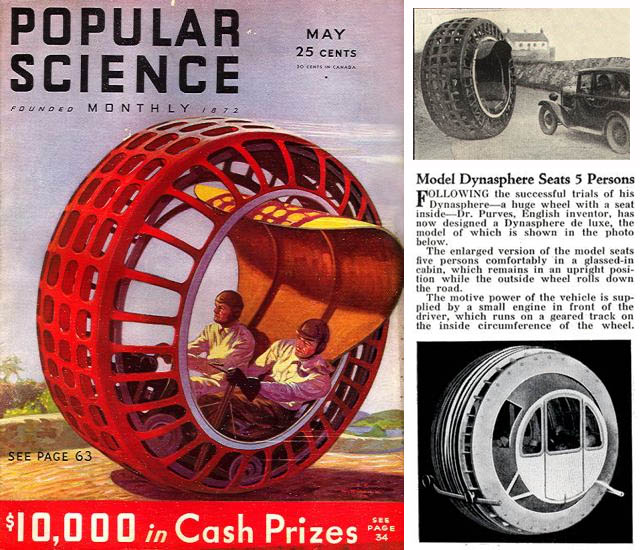
Purves built a few different prototypes that were either petrol-driven or electrically powered. These machines were tested on the beach at Brean Sands and at Brooklands racing track. A short surviving film clip of the latter shows the difficulty in making a smooth ride – even at fairly constant speed – without the occupants gerbilling back and forth inside the wheel. It has even said to have knocked someone over during this test-run because of the inadequate steering system. The project was soon abandoned after that. The last known news from the project was a finished model of a five-seating Dynosphere with an enclosed glassed-in cabin, complete with bumpers and headlights.”

Text from the Dark Roasted Blend: Monowheels website [Online] Cited 24/10/2020


Popular Science Dynosphere


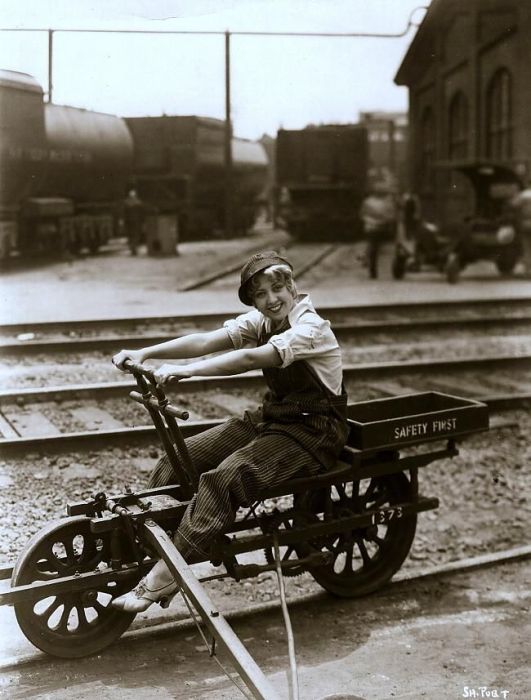
American rail three-wheeler, 1900s-1910s?


American rail three-wheeler, 1900s-1910s?


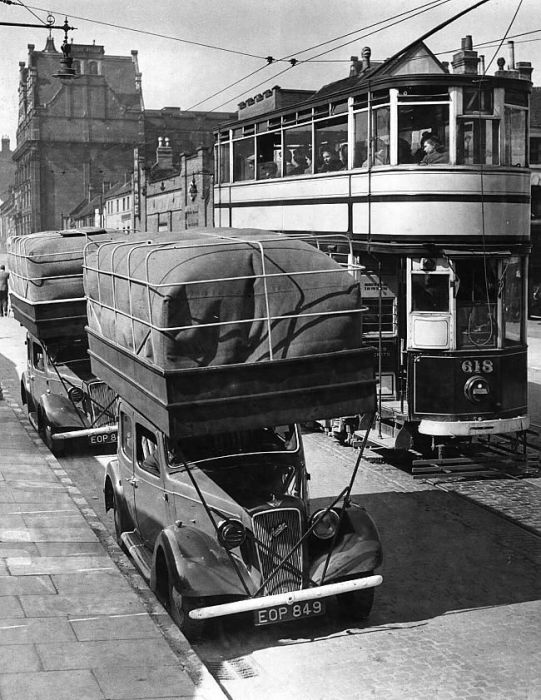
English Gas bag vehicles c. 1940


English cars with gas bags used for fuel during the early days of the Second World War, c. 1940


Gas bag vehicles

What can be seen on the roof is the fuel tank of the vehicle – a balloon filled with uncompressed gas. Gas bag vehicles were built during World War One and (especially) World War Two in France, the Netherlands, Germany and England as an improvised solution to the shortage of gasoline. Apart from automobiles, buses and trucks were also equipped with the technology. The vehicles consumed ‘town gas’ or ‘street gas’, a by-product of the process of turning coal into cokes (which are used to make iron). The fuel used for gas bag vehicles during the World Wars was generally not compressed and had a much lower energy density than LPG or CNG. To replace one litre of gasoline, two to three cubic metres of gas was needed.

Private automobiles were equipped with a wooden framework which was fastened to the roof and the reinforced bumpers of the vehicle. It was hard to overlook a gas bag vehicle passing along. Witnesses to the vehicle passing by could easily see how much fuel was left: the gas bag was fully inflated at the start of a trip, and it deflated with every mile that was driven. The gas storage bags were made of silk or other fabrics, soaked in rubber (Zodiac was one of the manufacturers). These bags were (and are) much cheaper and easier to build than metal tanks. They could also be repaired in a similar way to bicycle tyres. The bag was anchored to the roof using rings and straps. Some gas bag vehicles could operate alternatively on gas or gasoline. Switching between the two options could be controlled from inside the vehicle.

Kris De Decker. “Gas Bag Vehicles,” on the Low-tech magazine website [Online] Cited 18/10/2020


LIKE ART BLART ON FACEBOOK

Back to top