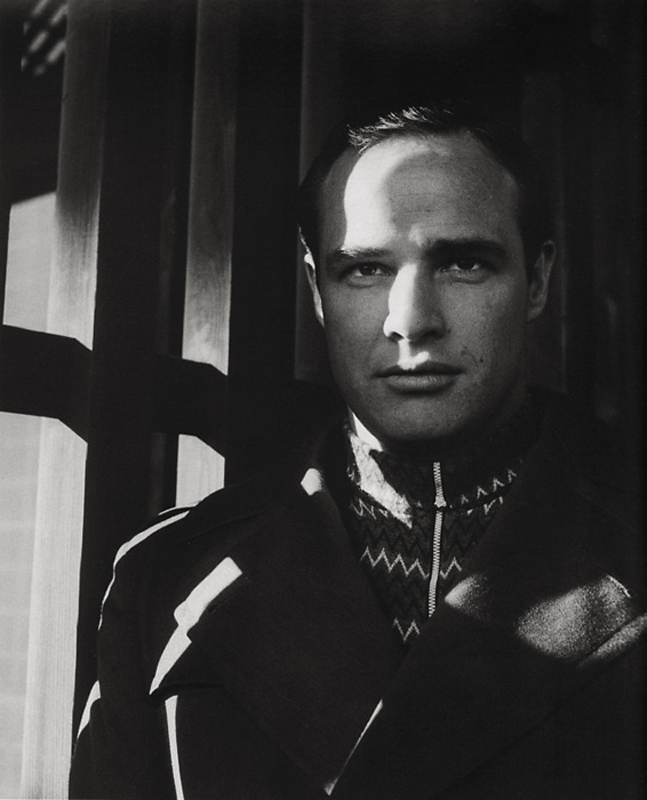
Exhibition: ‘Nude Visions. 150 Years of Nude Photography’ at Museum Fur Kunst und Gewerbe (MKG), Hamburg

Exhibition dates: 29th January – 25th April, 2010

 Curator: Ulrich Pohlmann


Many thankx to the MKG for allowing me to publish the photographs in this post. Please click on the photographs for a larger version of the image.

Marcus
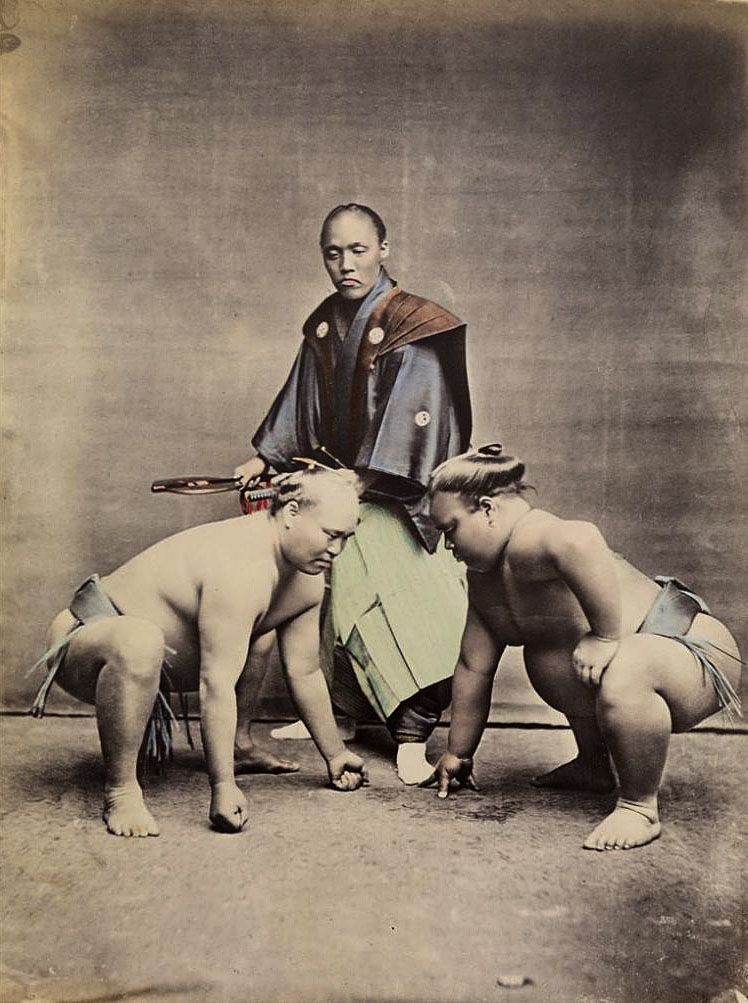


Kusakabe Kimbei (Japanese, 1841-1934)
Sumo wrestlers
c. 1880
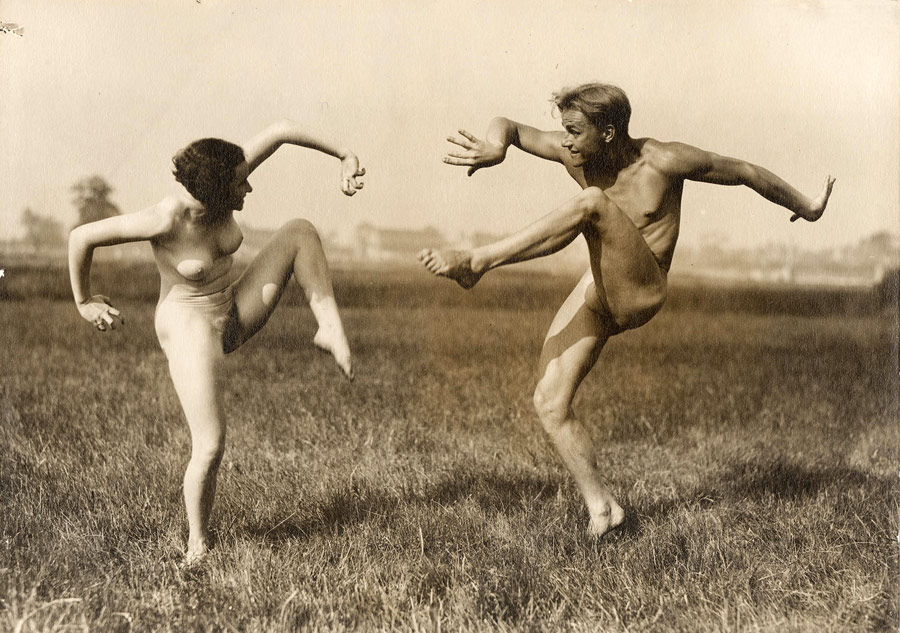
 

Gerhard Riebicke (German, 1878-1957) 'Couple Performing German Dance' c. 1930 from the exhibition Exhibition: 'Nude Visions. 150 Years of Nude Photography' at Museum Fur Kunst und Gewerbe (MKG), Hamburg, January - April, 2010


Gerhard Riebicke (German, 1878-1957)
Couple Performing German Dance
c. 1930
Gelatin silver print
11.6 x 16.2 cm
Bodo Niemann and Münchner Stadtmuseum


Gerhard Riebicke spent his childhood in Switzerland. He studied in Tübingen, worked as a tutor in Poznan, and appropriated the technique of self taught photographer. In 1909 he was a press photographer in Berlin. Gradually, his focus shifted to the sports and nudity culture photography (ball games, jumps, dance or bathing scenes).

As a friend of Adolf Koch, he documented his school for physical education and nude culture. As a chronicler of the reform movement, he also maintained contacts with the Laban School of Hertha Feist and other dance and gymnastics schools Hedwig Hagemann, Berte Trümpi and Mary Wigman. He was represented in Hans Surén’s “The Man and the Sun” in 1924. After 1933 he concentrated on sports photography.

Text translated from the German Wikipedia website
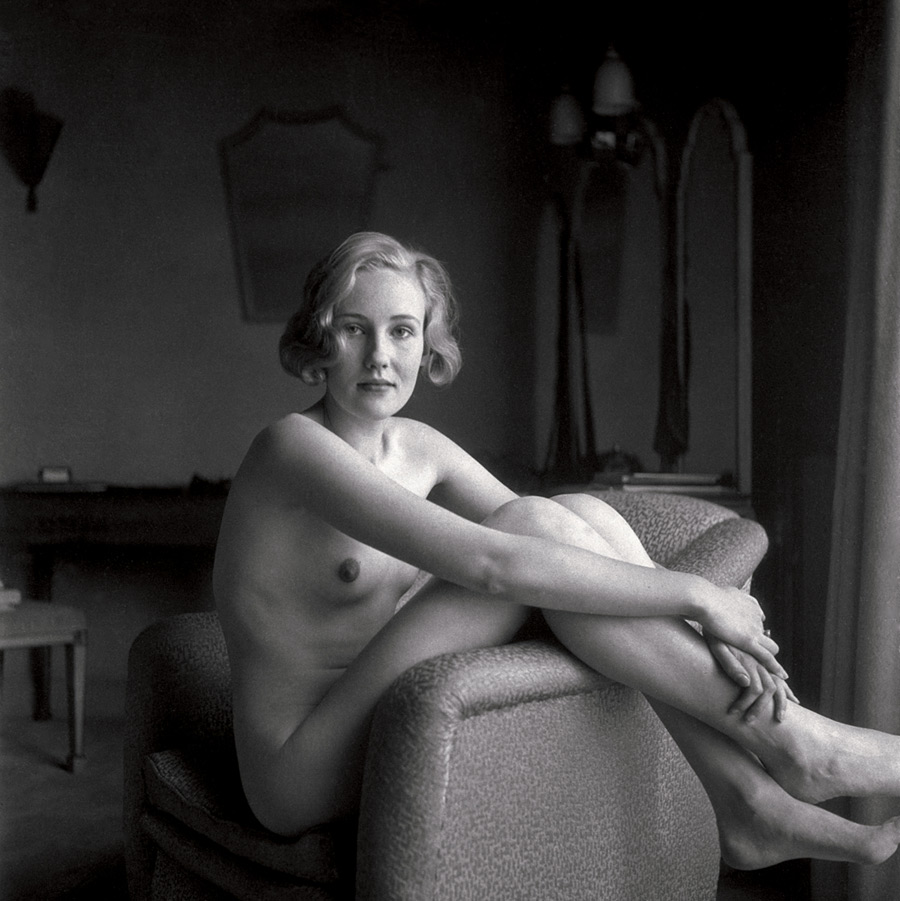
 

T.W. Salomon (attributed) 'Female Nude in Armchair' c. 1935


T.W. Salomon (attributed)
Female Nude in Armchair
c. 1935
Gelatin silver print
27.5 x 27.4cm
Münchner Stadtmuseum


T.W. Salomon was a notable German photographer best known for his “Revuegirls” series from 1935. He was a contemporary of Erich Salomon, another influential German photographer, but there is no direct connection between the two.
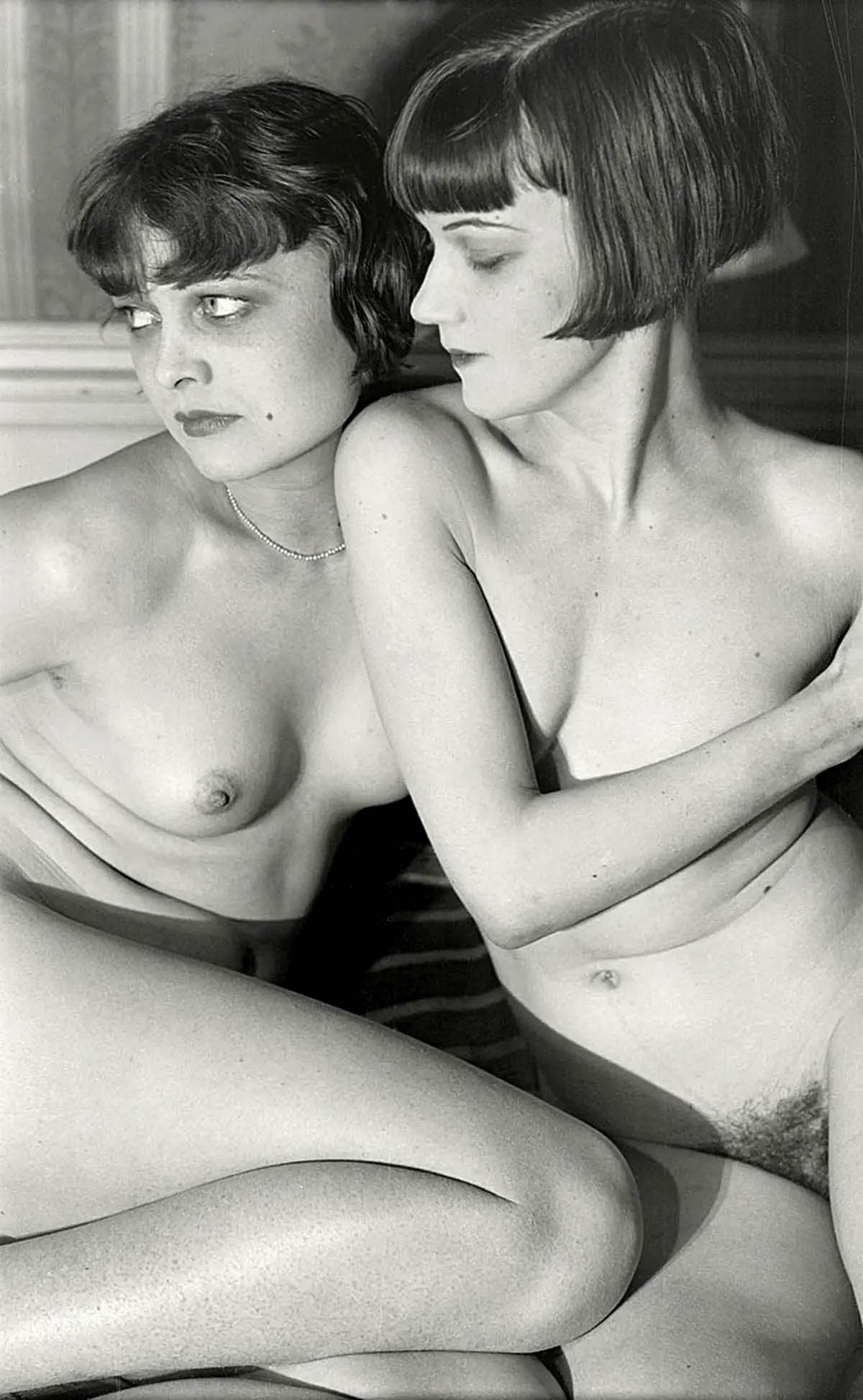
 

T.W. Salomon (attributed) 'Revuegirls' 1935


T.W. Salomon (attributed)
Revuegirls
1935
Gelatin silver print
© Münchner Stadtmuseum
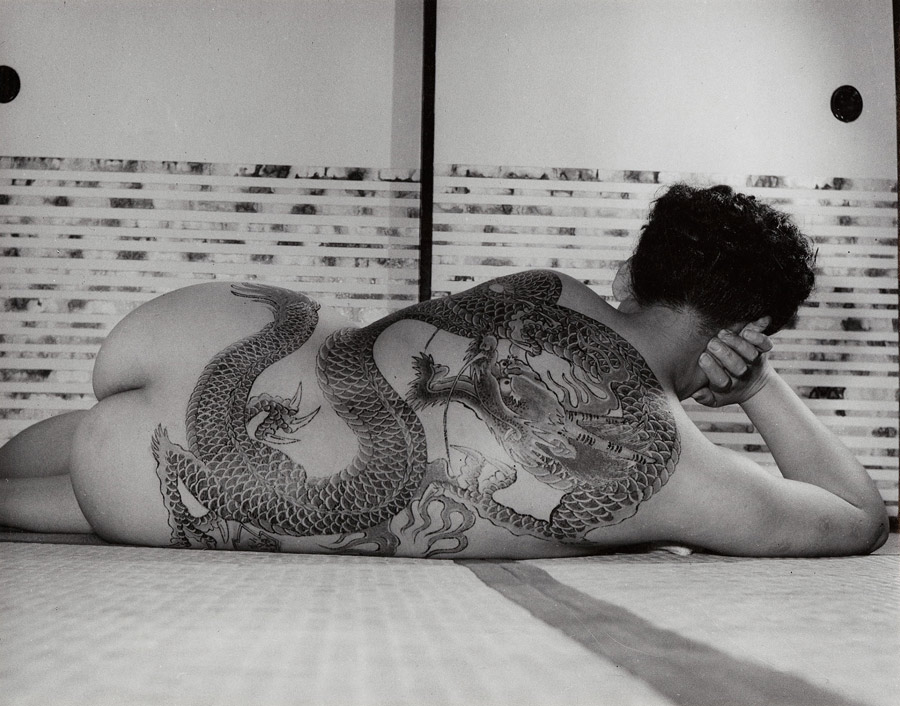
 

Jan Mutsu. 'Japanese Man with Tattoo' c. 1955 from the exhibition Exhibition: 'Nude Visions. 150 Years of Nude Photography' at Museum Fur Kunst und Gewerbe (MKG), Hamburg, January - April, 2010


Jan Mutsu
Japanese Man with Tattoo
c. 1955
Gelatin silver print
20.2 x 25.7cm
Münchner Stadtmuseum
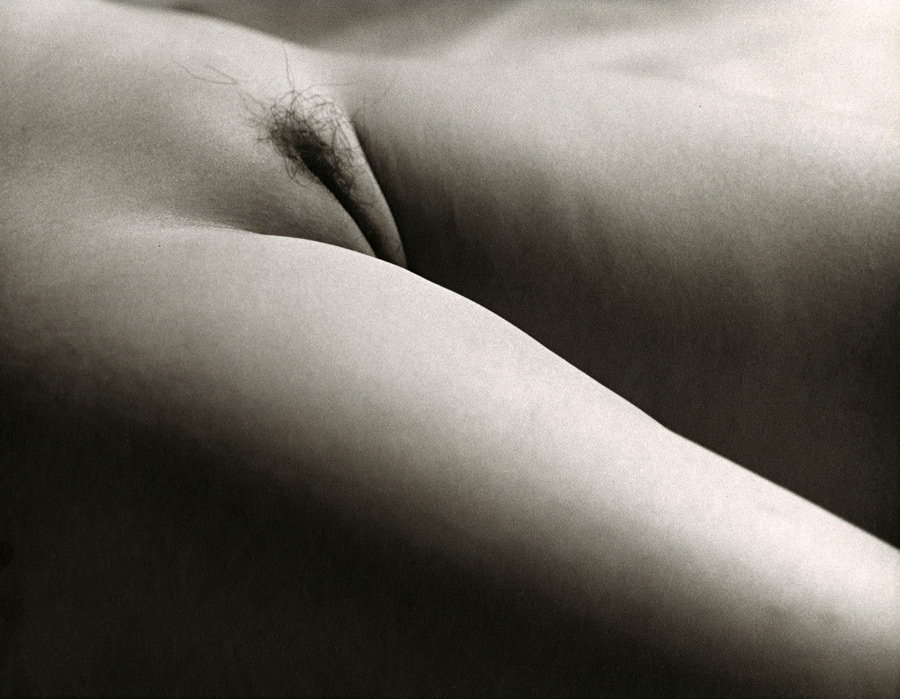
 

Josef Breitenbach (German-American, 1896-1984) 'Nude' from the series 'This beautiful landscape' 1963 from the exhibition Exhibition: 'Nude Visions. 150 Years of Nude Photography' at Museum Fur Kunst und Gewerbe (MKG), Hamburg, January - April, 2010


Josef Breitenbach (German-American, 1896-1984)
Nude from the series This beautiful landscape
1963
Gelatin silver print
27.5 x 35.3cm
Breitenbach Trust USA and Munchner Stadtmuseum


An exhibition with more than 250 original photos, books and folders with studies from the nude, including masterpieces from each period.

The representation of the unclothed human body has exuded a great fascination ever since time began. The exhibition Nude Visions invites visitors to embark on a journey through a collection of depictions of the human body spanning 150 years. More than 250 original photos, books and folders with studies from the nude will be on view, including masterpieces from each period: from photographs dating from the 19th century which seek their models in Classical Antiquity and the Renaissance, up to Surrealistic experiments and fashion and lifestyle photography. The exhibition illustrates changing ideals of beauty and moral perceptions, and reveals once again the constant attempt to balance between educational openness, titillation and curiosity.

“Without any doubt, there is nothing which draws the attention of the observer to it so much as the naked human body.” This comment of the journalist and photographer Kurt Freytag in1909 is as true today as it was then. The exhibition turns this fact to its advantage and deals with the historical, aesthetic and ideological development of images of the human body in photography. The show is divided into seven chapters devoted to the meaning and function of the unclothed human body in photography, and tracing the history of the medium: “Academies and Exotic Pictures in the 19th century,” “Art photography around 1900 (Pictorialism),” “Avant-gardes of the 20s and 30s,” “Artistic positions after 1945,” “Naturism,” “The Male Nude” and “Glamourous Nudes.” The first coloured Daguerreotypes of curvaceous ladies with blushing cheeks dating from 1855 meet the unflatteringly in-your-face and voyeuristic self-portrait of the photographer Frank Stürmer from 2004. These two photos mark the two ends of the spectrum covered by the exhibition, which illustrates the evolution of nude photography over sixteen decades by the example of more than 250 eminent works.

Nude photography is always, too, a process of negotiation between revealing and concealing. This exhibition makes clear the ambivalence of what is visible and what is unseen, of shame and curiosity, of legitimation and provocativeness. How nakedness is treated is closely bound up with the specific social context in which it occurs, the ideas of morality and the aesthetic ideal of an era. The motif of the nude is always influenced here both by the historical artistic tradition and reactions to contemporary impulses, which are interpreted by the photographer. Thus the movement for women’s emancipation, for instance, led to new ways of looking at both the female and the male body, as seen for example in the work of Herlinde Koelbl. Images which were still regarded as being scandalous at the beginning of the 20th century, triggering moral misgivings and controversy about a subject perceived as being delicate, would hardly bring a blush to the face of anyone living today. It is not only the motifs which have moved on, but also the reproducibility of the images and the extent of their media coverage impact on the awareness and significance of nakedness in society.

The origins of the history of nude photography lie in the so-called “academies,” which provided painters, graphic artists and sculptors with study objects in the 19th century and which followed the historical artistic models of Classical Antiquity and the Renaissance. Nude photography soon increasingly became emancipated from being a mere model for painting and sculpture, and developed artistic ambitions of its own: photographers discovered in the art of the fin de siècle, with its debt to Symbolism, the nude as a reflection of emotional states and yearnings. In the outgoing 19th century, with its bias towards the exact sciences, the human body served as an object for the study of movement, such as in the celebrated series shots by Eadweard Muybridge showing the sequence of motions in human movement.

Whereas historically staged scenes and compositions are still created in the sheltered environment of the atelier at the beginnings of photography, we find the first open-air nudes after 1870. Wilhelm von Gloeden, Guglielmo Plüschow and others took advantage of the light in the Mediterranean South to stage their visions of an earthly Arcadia. As a feature of the Lebensreform back-to-nature movement which gained ground from the turn of the century onwards, especially in Germany, nude photography became a torchbearer of the Naturist movement. The ornamentally arranged groupings of naked dancers which Gerhard Riebicke for example photographs, mainly in the German countryside, became a symbol for the liberation from the moral constraints of civilisation and industrialisation. The aesthetic of athletic bodies engaged in sporting activities or dancers in motion was taken up in the heroic physical ideal of the National Socialists and can later still be found in the cult of bodybuilding.

A new, more radical vision was developed by the Avant-garde movements after the 1920s, with their abstract and surrealistic experiments, such as the stories narrated in a play of light and shadow by FrantiÅ¡ek Drtikol or the deformed bodies in the works of Hans List. The theme of “glamour” plays a crucial role above all in fashion photography. That chapter poses the question as to what role is played in the debate on fashion by the way of showing the unclothed female body, by male desire and how perceptions change in the course of cultural history. Glamour can be seen in the erotic images from the Atelier Manassé, shown in soft focus, in Bert Stern’s portraits from the “last sitting” of Marilyn Monroe, up to and including Helmut Newton’s photos. In addition to these, selected works by amateurs as well as the male nude as an expression of gay emancipation will also be presented in pictures, particularly by Will McBride or Herbert Roettgen, who placed the representation of the naked male body in the focus of their work as an expression of their homosexuality, an emblem of their coming-out.

The depiction of the naked torso is shrouded in an aura of scandal and has always been a political bone of contention, whereby images of the bare human body send signals which differ according to their historical context: the photographic artists of the 1970s, working within the framework of body art and performance events, declared the directness of their own physical experience to be a political necessity. In retrospect, their work can be seen as a last desperate attempt to grapple with the vanishing concept of the subjective personality before the transition to the post-modern age. The private spaces of life too are meanwhile also illuminated in a quite different way than 25 years ago. The photographer Thomas Ruff deals in his works, which he imbues with a diffuse haziness by digital means, with the theme of the exhibitionism which can go as far as pornographic exposure of one’s own and others’ nakedness in internet forums. Nude Visions shows that the representation of the naked human body always also has something to do with the quest for insight into what human beings (and one’s own self) really are and what role they play in society.

Press release from the MKG website [Online] Cited 15/04/2010. No longer available online
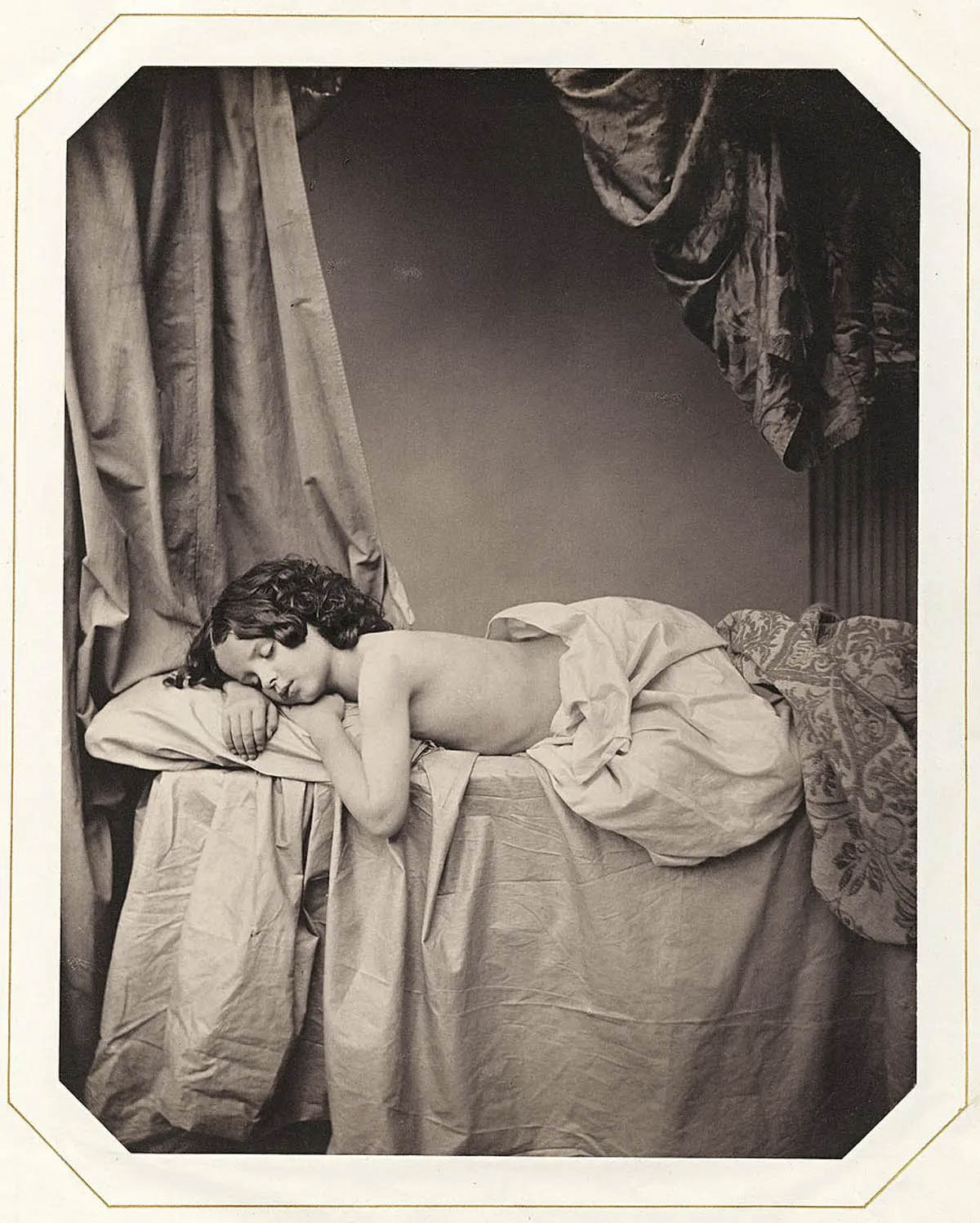
 

Franz Hanfstaengl (Bavarian, 1804-1877) 'Eugenie von Klenze' about 1855


Franz Hanfstaengl (Bavarian, 1804-1877)
Eugenie von Klenze
about 1855
© Münchner Stadtmuseum
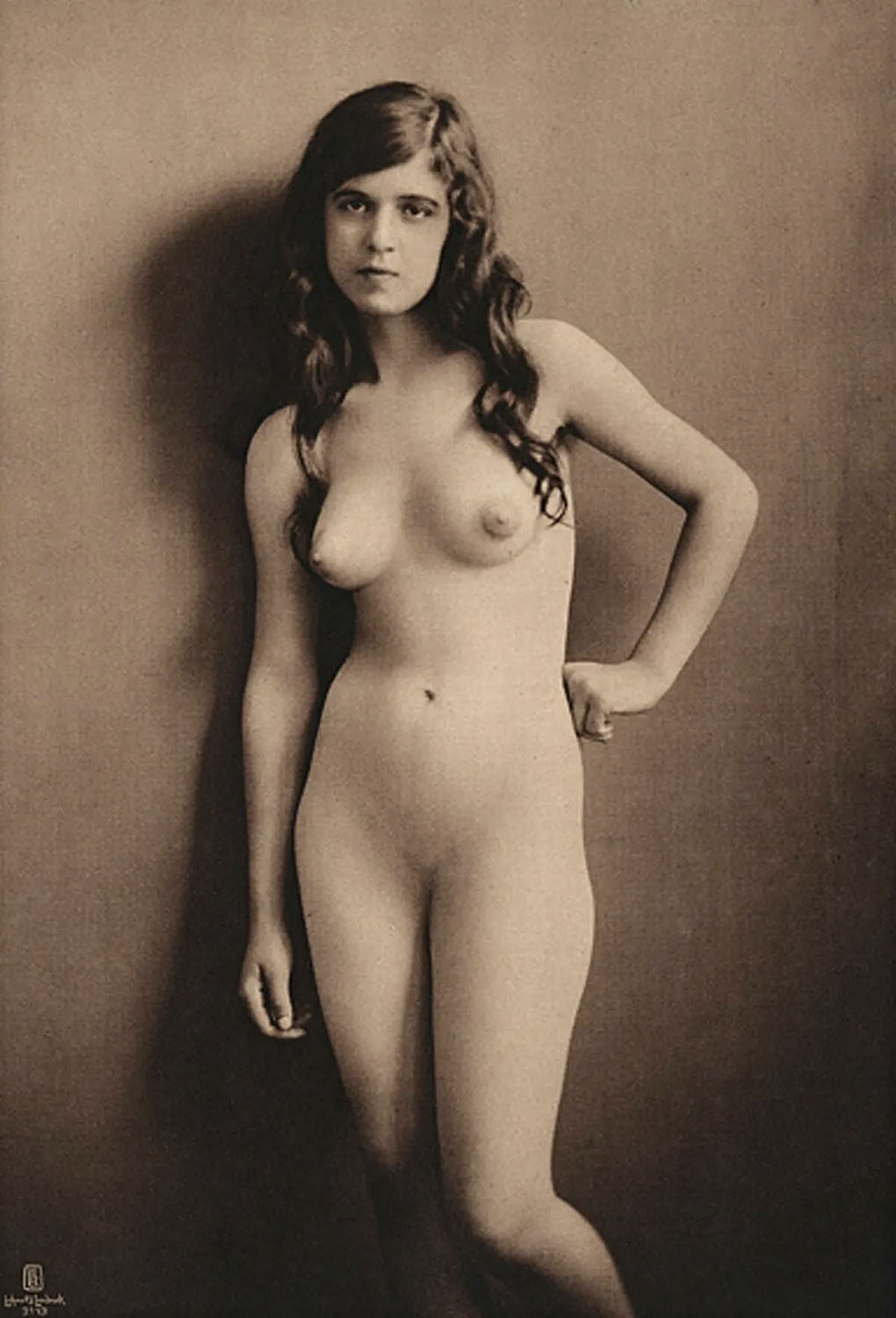
 

Lehnert & Landrock. 'Artistic Nude Study 3113' around 1920


Lehnert & Landrock
Rudolf Lehnert (Bohemia, 1878-1948) & Ernst Landrock (German, 1878-1948)
Artistic Nude Study 3113
around 1920
© Münchner Stadtmuseum


Lehnert & Landrock was a photographic studio run by Rudolf Franz Lehnert and Ernst Heinrich Landrock active in Tunisia and Egypt in the early 20th century, noted for producing Orientalist images. Rudolf Franz Lehnert and Ernst Heinrich Landrock produced images of North African people, landscapes, and architecture for a primarily European audience. These images were mainly distributed in monographs, though also as original prints, photogravures, and lithographic postcards.

Text from the Wikipedia website


Rudolf Koppitz (Austrian, 1994-1936)
'In the Arms of Nature (Self-portrait)'
around 1925


Rudolf Koppitz (Austrian, 1994-1936)
In the Arms of Nature (Self-portrait)
around 1925
Gelatin silver print
© Münchner Stadtmuseum
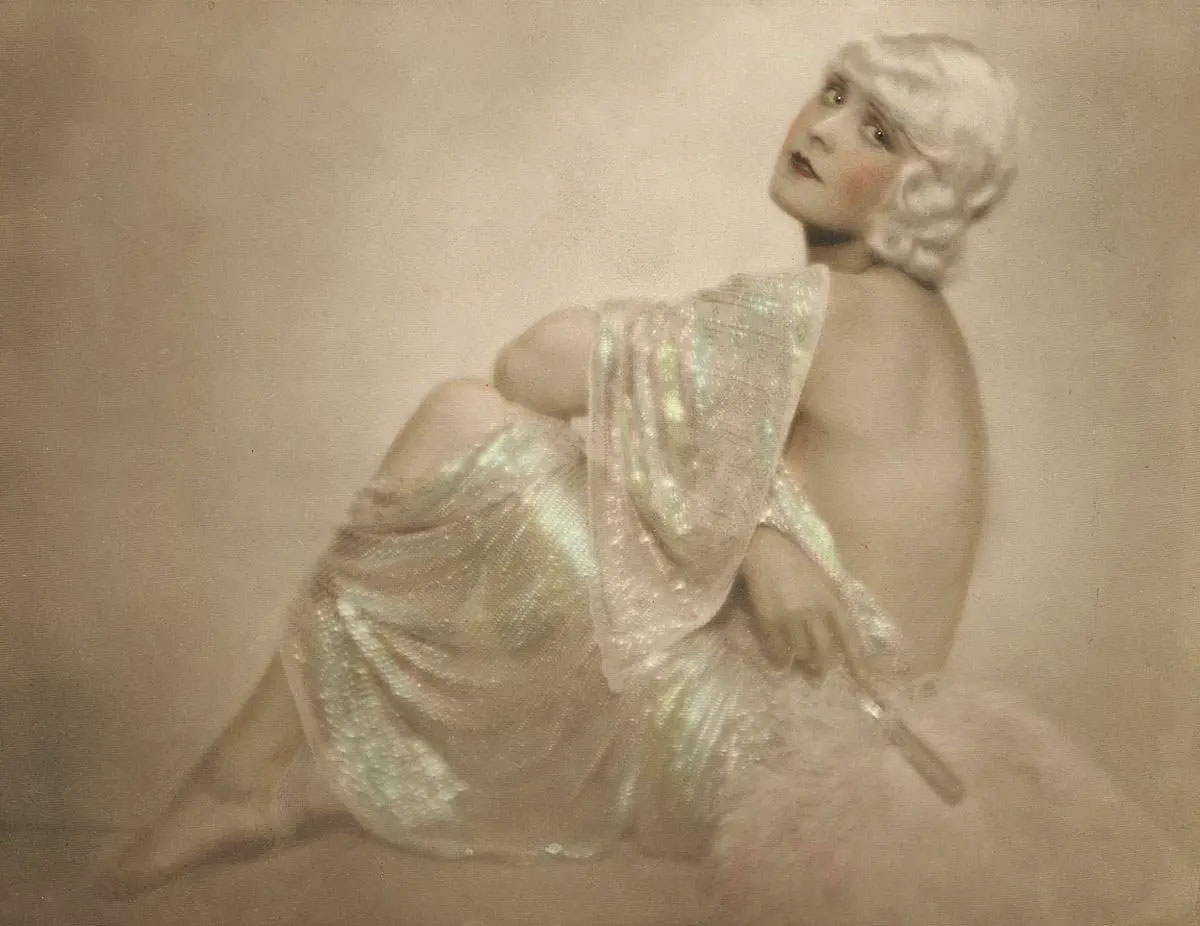
 

Anonymous photographer. 'Untitled' c. 1928


Anonymous photographer
Untitled
c. 1928
© Münchner Stadtmuseum


Around 1900, photography increasingly established itself as an artistic medium, with proponents like Frank Eugene attempting to conceal its true character through soft-focus lenses, gauze curtains, and post-processing of the image.
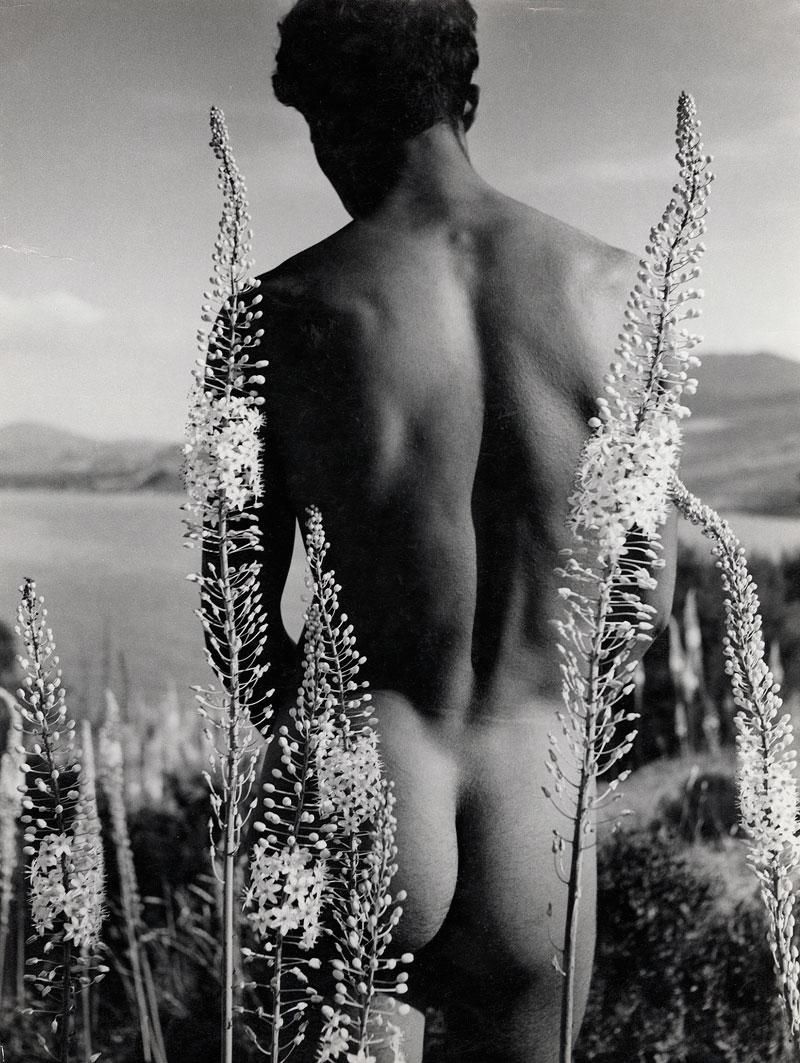
 

Herbert List (German, 1903-1975) 'Arab Boy with Desert Candles' 1935


Herbert List (German, 1903-1975)
Arab Boy with Desert Candles
1935
Gelatin silver print
29.7 x 22.5cm
Herbert List-inheritance, Hamburg and Munchner Stadtmuseum


Will McBride (American, 1931-2015)
'Barbara in our bed, recording for 'twen'' 1959


Will McBride (American, 1931-2015)
Barbara in our bed, recording for ‘twen’
1959
Gelatin silver print
© Will McBride and Münchner Stadtmuseum
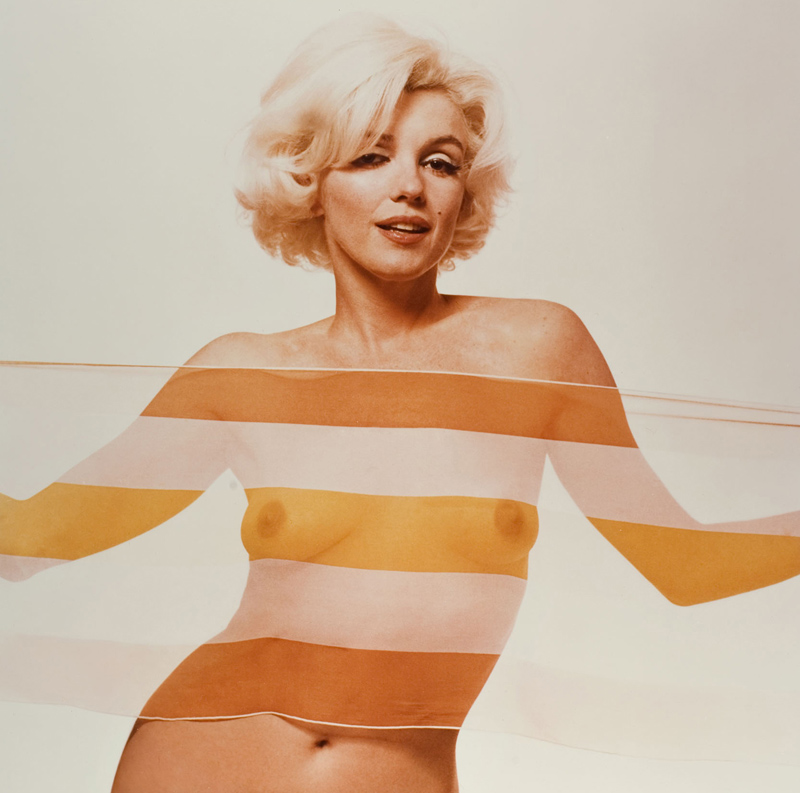
 

Bert Stern (American, 1929-2013) 'Marilyn Monroe' from the series 'The Last Sitting' 1962


Bert Stern (American, 1929-2013)
Marilyn Monroe from the series The Last Sitting
1962
C-print
48 x 48.1cm
Bert Stern
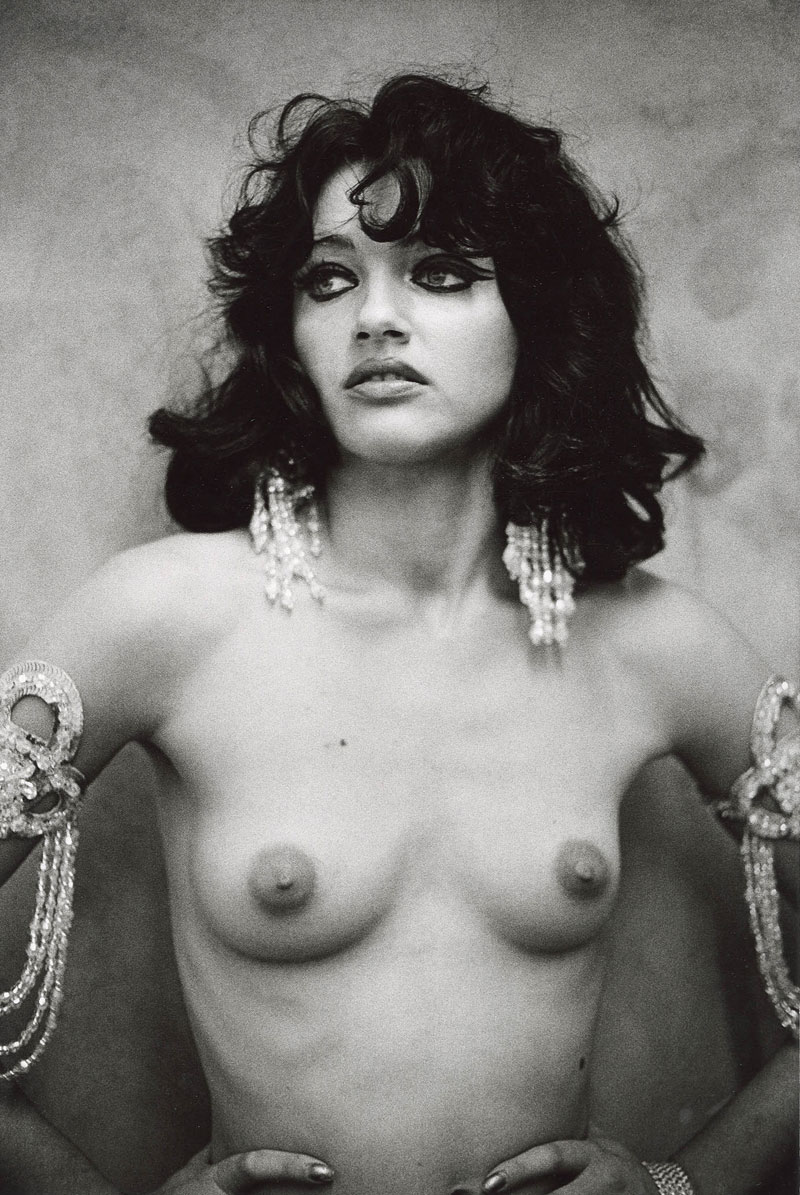
 

André Gelpke (German, b. 1947) 'Angelique, Salambo, St.Pauli/Hamburg' 1976


André Gelpke (German, b. 1947)
Angelique, Salambo, St.Pauli/Hamburg
1976
Gelatin silver print
32.6 x 22cm
André Gelpke and Münchner Stadtmuseum
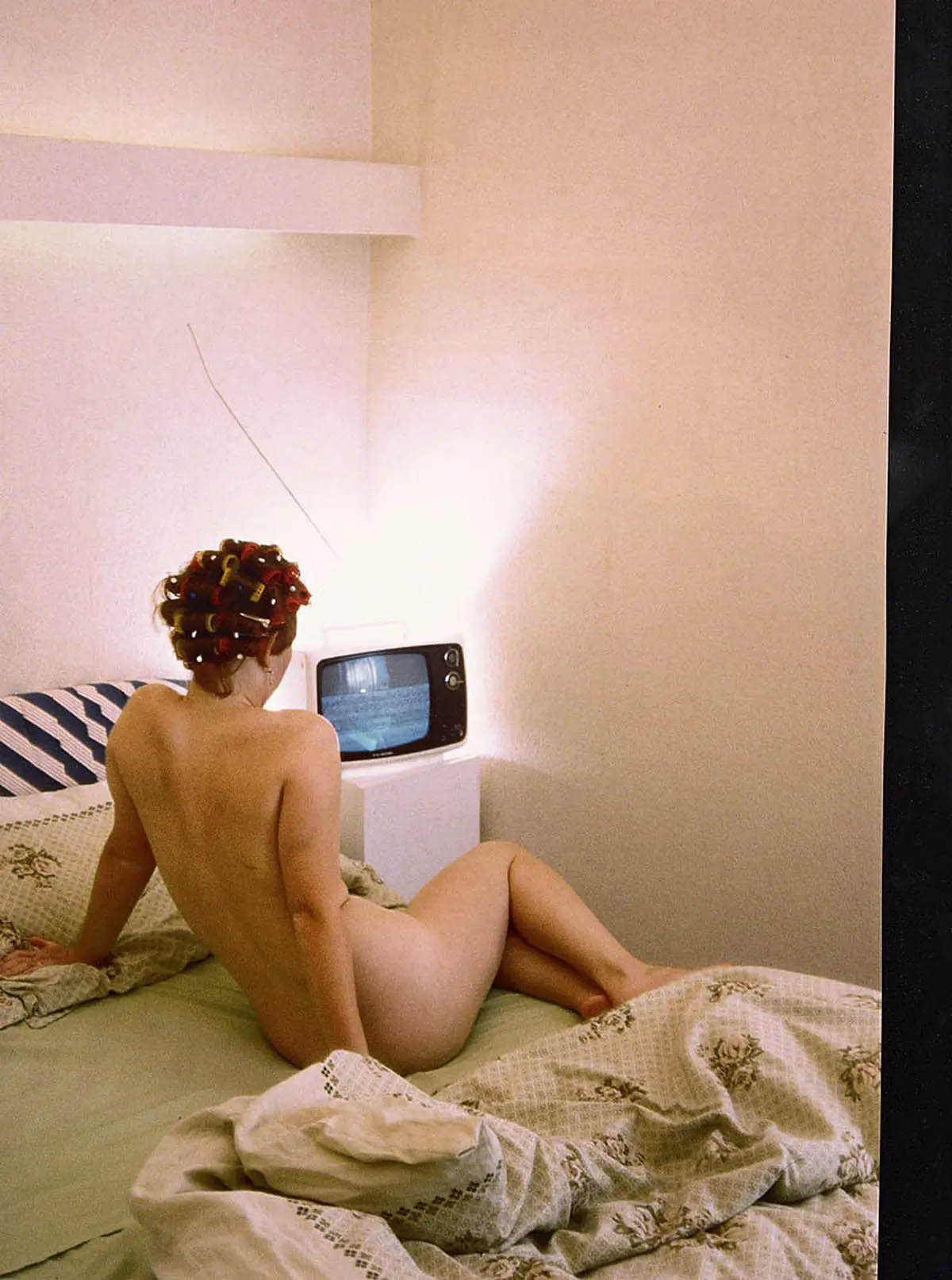
 

Anonymous photographer. 'Female Nude Watching Television' 1980s


Anonymous photographer
Female Nude Watching Television
1980s
© Münchner Stadtmuseum
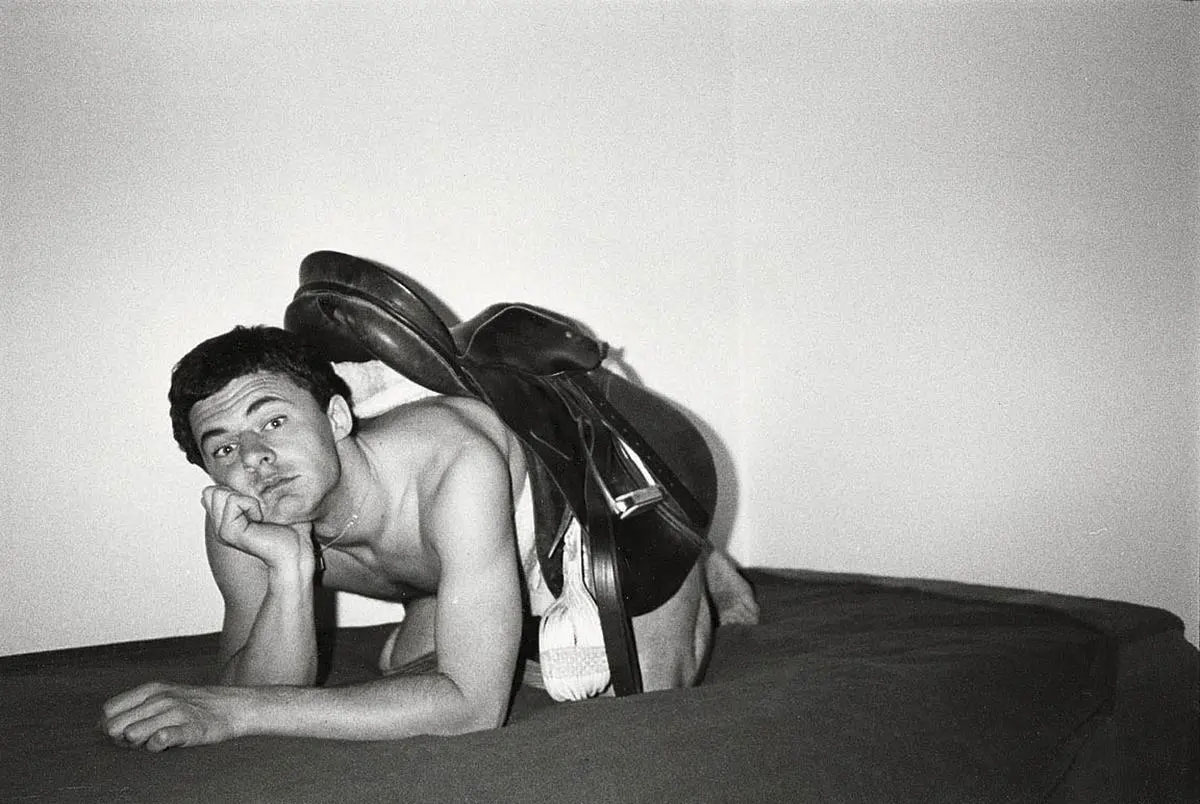
 

Hermann Stamm (German, b. 1953)
'Homage to Helmut Newton' 1985


Hermann Stamm (German, b. 1953)
Homage to Helmut Newton
1985
Gelatin silver print
© Hermann Stamm and Münchner Stadtmuseum
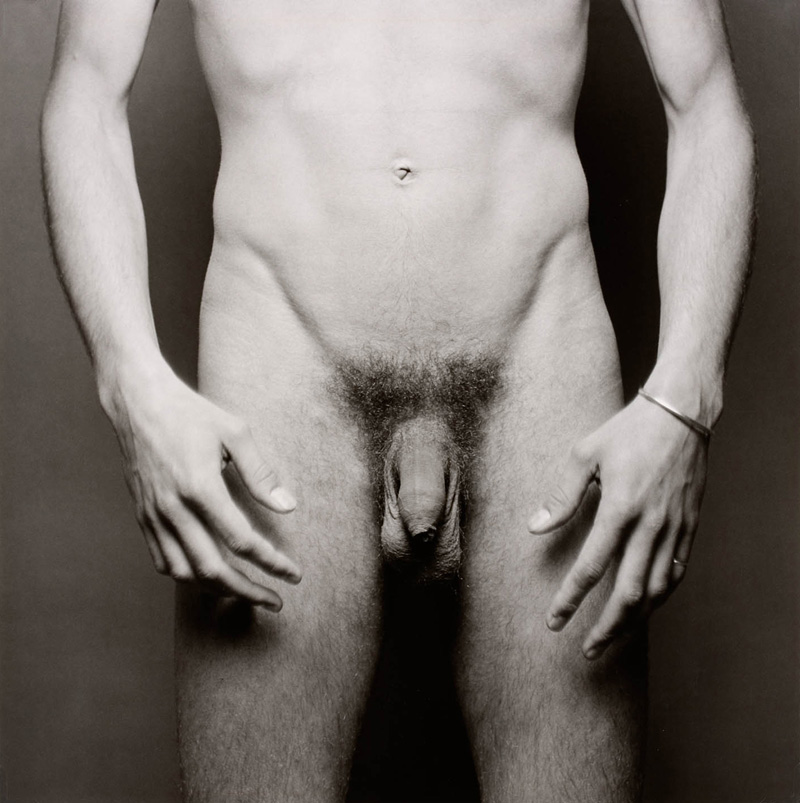
 

Norbert Przybilla (1953-1996) 'Franz' 1986


Norbert Przybilla (1953-1996)
Franz
1986
Gelatin silver print
50 x 50 cm
Münchner Stadtmuseum
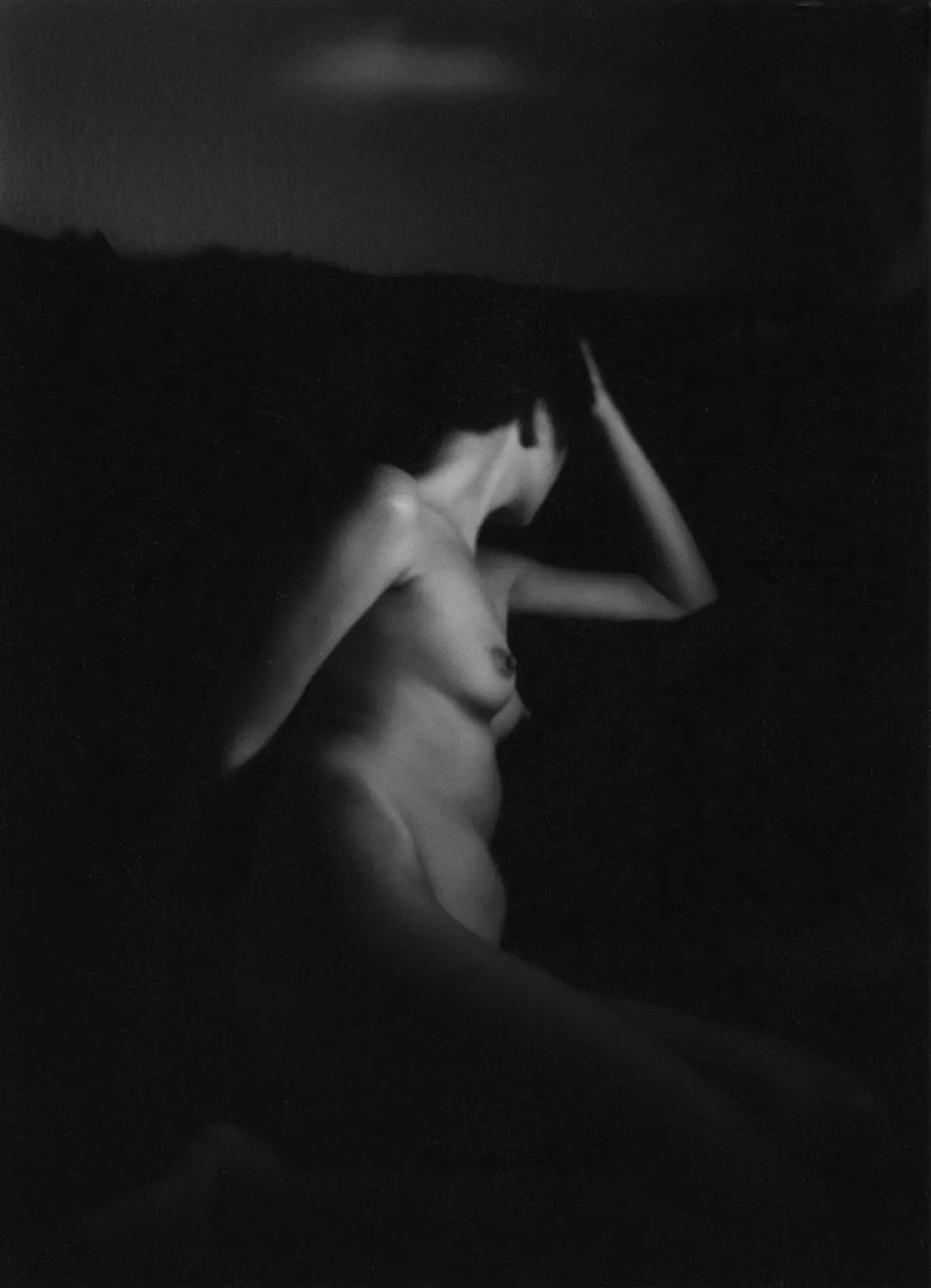
 

Ulrike Frömel (German) 'Body image'
1993


Ulrike Frömel (German)
Body image
1993
Gelatin silver print
© Ulrike Frömel and Münchner Stadtmuseum
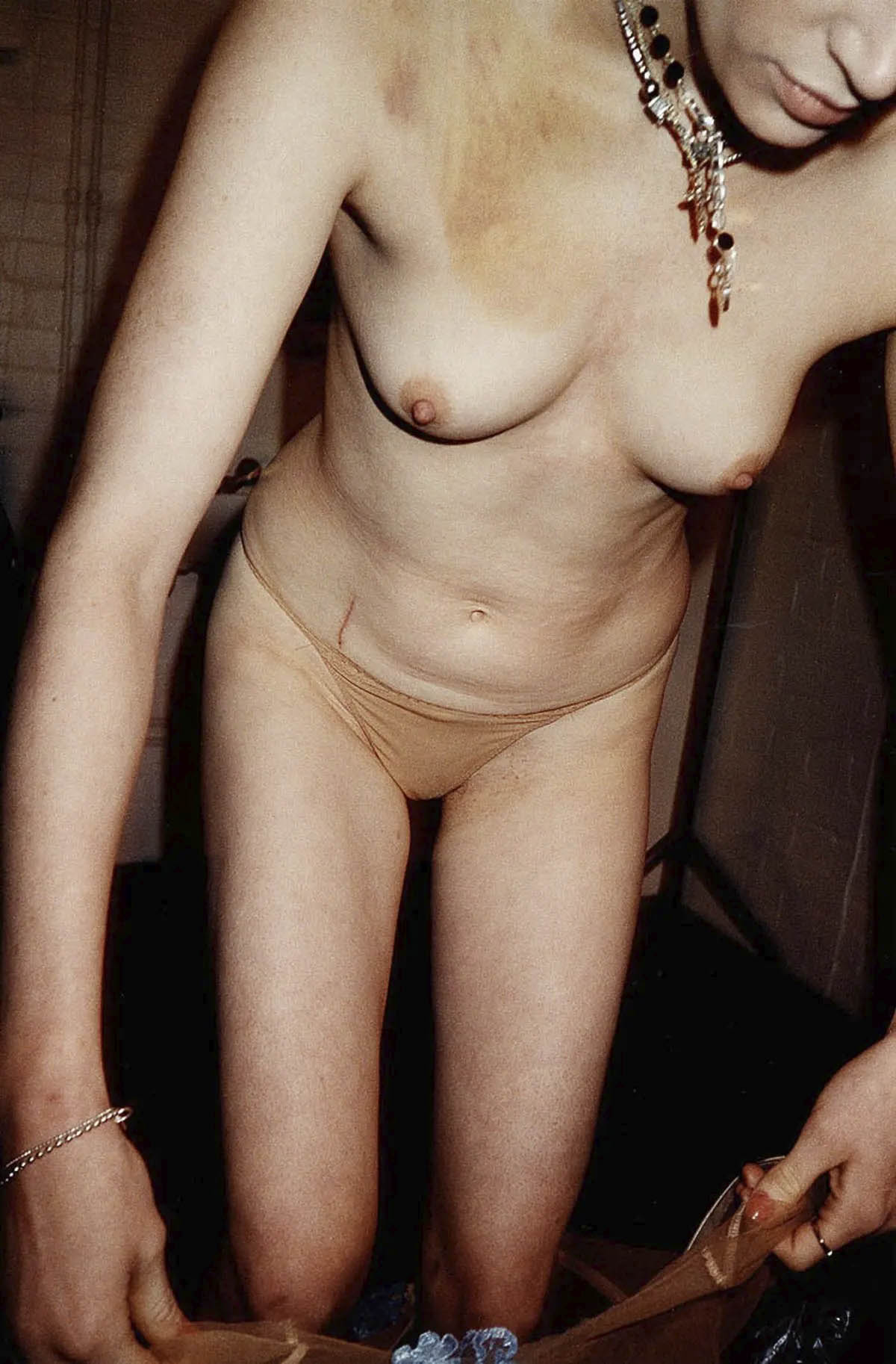
 

Juergen Teller (German, b. 1964) 'Kristen McMenamy' 1996


Juergen Teller (German, b. 1964)
Kristen McMenamy
1996
© Juergen Teller and Münchner Stadtmuseum


Museum für Kunst und Gewerbe Hamburg
Steintorplatz | 20099 Hamburg

Opening hours:
Tuesdays to Sundays 10 am – 6 pm
Wednesdays and Thursdays 10 am – 9 pm
Closed on Mondays

Museum für Kunst und Gewerbe Hamburg website

LIKE ART BLART ON FACEBOOK

Back to top

Exhibition: ‘Cecil Beaton: Portraits’ at the Walker Art Gallery, Liverpool

Exhibition dates: 26th June – 31st August, 2009


Cecil Beaton (British, 1904-1980)
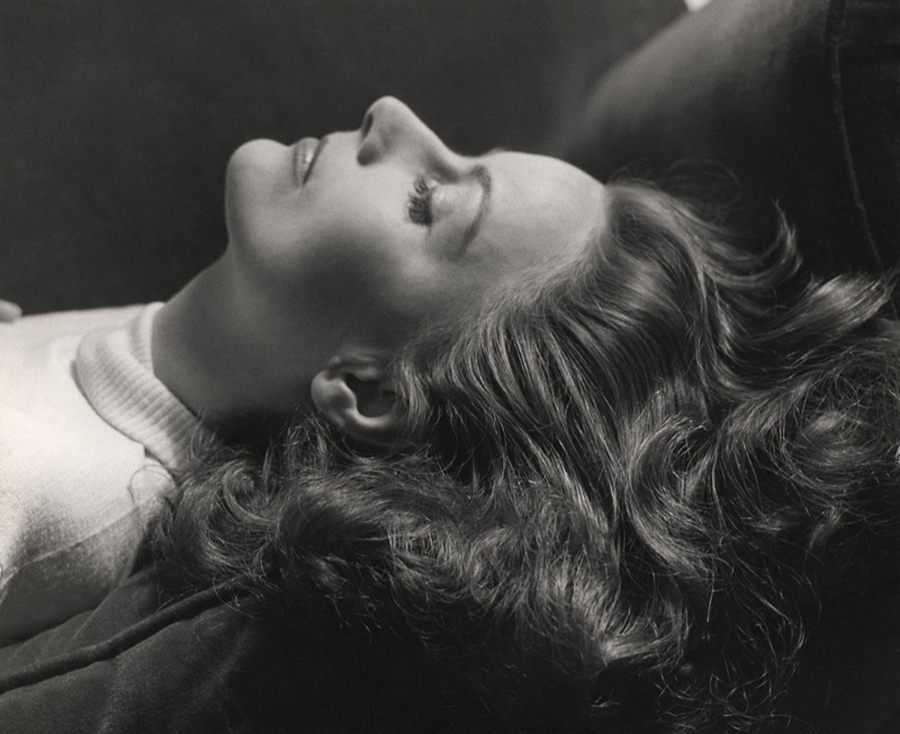
'Greta Garbo, Plaza Hotel, New York, April 1946' 1946 from the exhibition 'Cecil Beaton: Portraits' at the Walker Art Gallery, Liverpool, June - August, 2009


Cecil Beaton (British, 1904-1980)
Greta Garbo, Plaza Hotel, New York, April 1946
1946
Gelatin silver print
© The Cecil Beaton Studio Archive


Until you are reminded by the photographs you sometimes forget what a fantastic auteur Cecil Beaton was.

Marcus


Many thankx to the Walker Art Gallery for allowing me to publish the photographs in the posting. Please click on the photographs for a larger version of the image.


Cecil Beaton (British, 1904-1980) 'Greta Garbo, Plaza Hotel, New York, April 1946' 1946 from the exhibition 'Cecil Beaton: Portraits' at the Walker Art Gallery, Liverpool, June - August, 2009


Cecil Beaton (British, 1904-1980)
Greta Garbo, Plaza Hotel, New York, April 1946
1946
Gelatin silver print
© The Cecil Beaton Studio Archive


Cecil Beaton (British, (1904-1980) 'Greta Garbo' 1946


Cecil Beaton (British, 1904-1980)
Greta Garbo
1946
Gelatin silver print
© The Cecil Beaton Studio Archive


Cecil Beaton (British, (1904-1980) 'Audrey Hepburn' 1960


Cecil Beaton (British, 1904-1980)
Audrey Hepburn
1960
Gelatin silver print
© The Cecil Beaton Studio Archive


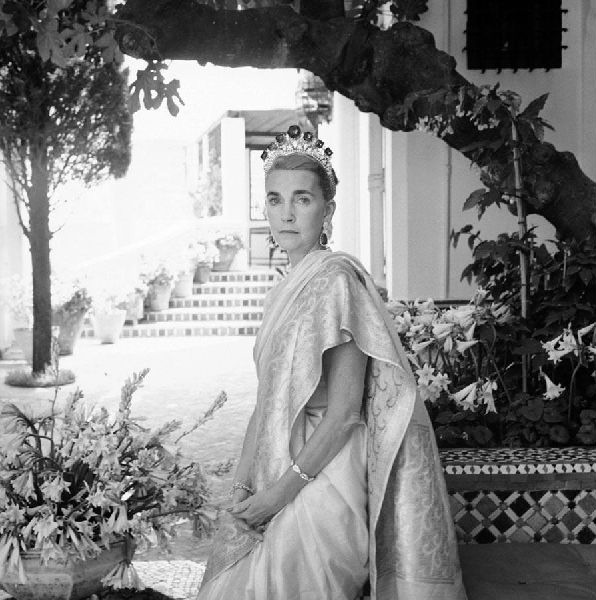
Cecil Beaton (British, 1904-1980) 'Barbara Hutton in Tangier, Morocco' 1961


Cecil Beaton (British, 1904-1980)
Barbara Hutton in Tangier, Morocco
1961
Gelatin silver print
© The Cecil Beaton Studio Archive


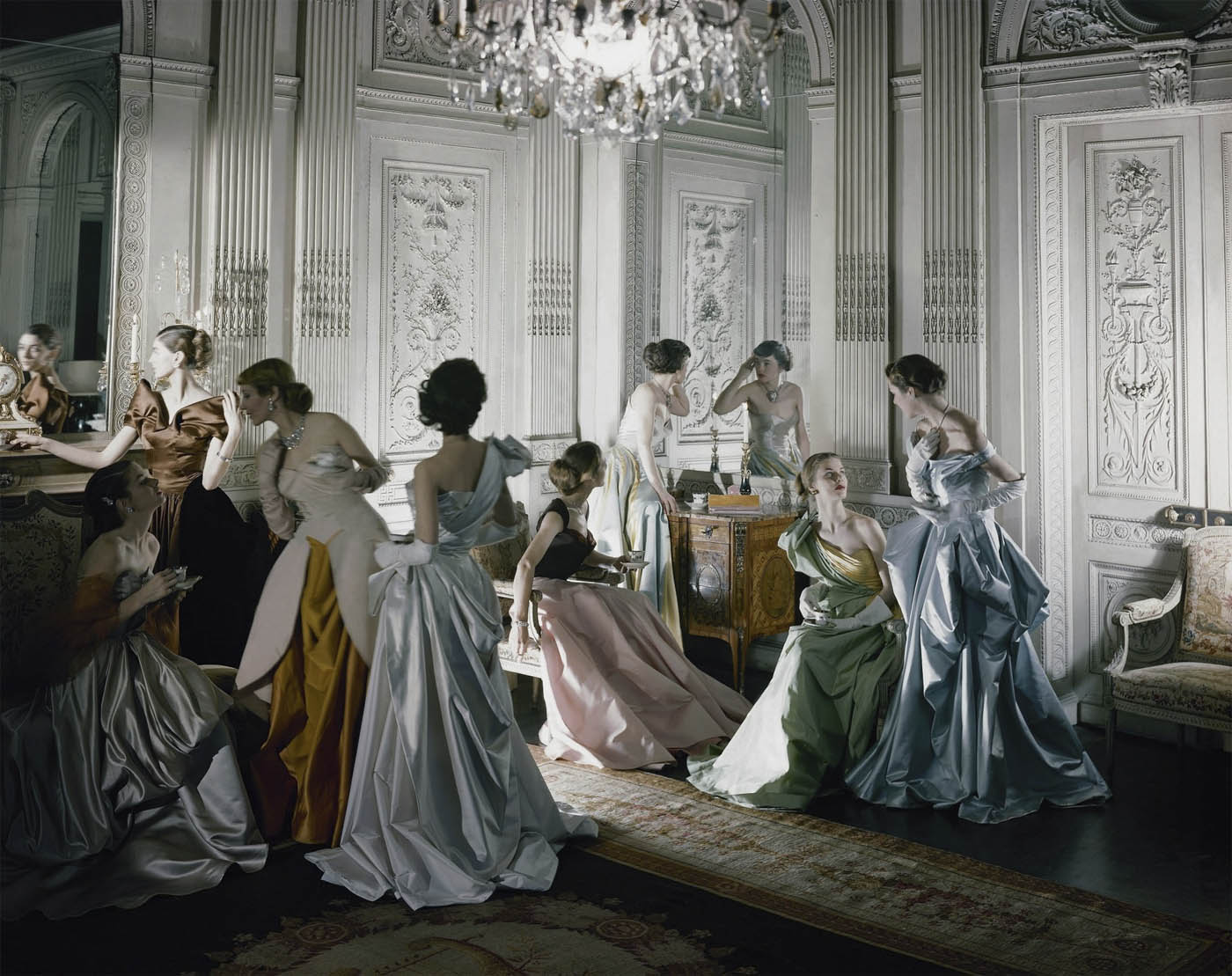
Cecil Beaton (British, 1904-1980) 'Charles James Gowns by Cecil Beaton, Vogue, June 1948' 1948


Cecil Beaton (British, 1904-1980)
Charles James Gowns by Cecil Beaton, Vogue, June 1948
1948
© The Cecil Beaton Studio Archive


A stunning exhibition of nearly 50 portraits by Cecil Beaton, one of the most famous photographers of the 20th century, captures the glamour and excitement of some of the world’s greatest celebrities.

Cecil Beaton: Portraits 26 June – 31 August 2009 brilliantly reflects the astonishing talents of the photographer who was also a writer, artist, designer, actor, caricaturist, illustrator and diarist.

He photographed a dazzling array of superstars and leading personalities ranging from the Queen to Mick Jagger, Marilyn Monroe to Audrey Hepburn and Winston Churchill to Lucian Freud.

Beaton (1904-1980) was himself a charismatic character who could charm and cajole, amuse and flirt, electrify and calm. He was known for his elegant sartorial style which exactly matched and reflected the circles he moved in.
His long career covered an era of great change from the Roaring Twenties to the dawn of the New Romantics.

Jessica Feather, Walker curator, says:

“Cecil Beaton had a remarkable gift of bringing out the personalities and flair of his sitters so that he created some of the great iconic images of the age. The portraits still cast a spell with their timeless appeal, giving deep insights into the extraordinary people who came before his camera.”

Beaton’s career as a photographer began with his earliest portraits of his sister Baba taken in 1922, when he was a teenager.

After Cambridge, his early photographs were published in society magazines The Sketch, Tatler and Eve from 1925 onwards. In 1927, 23-year-old Beaton secured a contract with Vogue to provide portraits, caricatures and social commentary. His career – with the exception of two short breaks – continued with Vogue for the rest of his life.

In the 1930s he published books packed with glamorous portraits and artwork and photographed the wedding of the Prince of Wales to Wallis Simpson. Beaton also took a striking series of romantic studies of Queen Elizabeth (later the Queen Mother).

His work took on a grittier aspect during the war and post-war years when he worked for the Ministry of Information and as an official war photographer.

Beaton reached the height of his powers in the 1950s and 60s when he became a household name. As well as creating great portraits of a new generation of film actresses such as Audrey Hepburn and Marilyn Monroe, he won Oscars for his design work in the blockbuster films Gigi and My Fair Lady.

Knighted in 1972, Beaton had a stroke in 1974 but returned to photography three years later. Among his subjects in his final years were fashion designers and international celebrities.

Press release from the Walker Art Gallery website [Online] Cited 05/08/2009. No longer available online


Cecil Beaton (British, 1904-1980) 'Francis Bacon' 1951


Cecil Beaton (British, 1904-1980)
Francis Bacon
1951
Bromide print on white card mount
© The Cecil Beaton Studio Archive


Cecil Beaton (British, 1904-1980) 'Marilyn Monroe, New York, February 22, 1956' 1956


Cecil Beaton (British, 1904-1980)
Marilyn Monroe, New York, February 22, 1956
1956
Gelatin silver print
© The Cecil Beaton Studio Archive


Cecil Beaton (British, 1904-1980) 'Maria Callas' 1957


Cecil Beaton (British, 1904-1980)
Maria Callas
1957
Gelatin silver print
© The Cecil Beaton Studio Archive


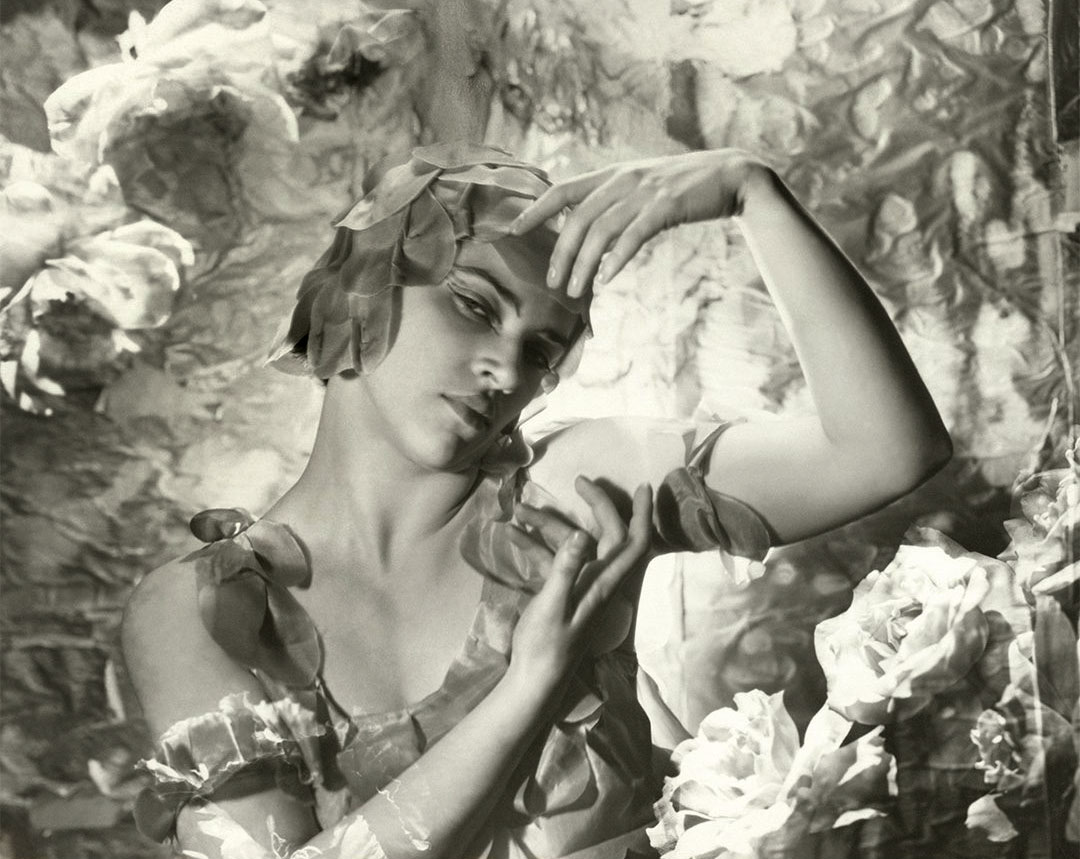
Cecil Beaton (British, 1904-1980) 'Kyra Nijinsky' 1935


Cecil Beaton (British, 1904-1980)
Kyra Nijinsky
1935
Gelatin silver print
© The Cecil Beaton Studio Archive


Kyra Vaslavovna Nijinsky (19 June 1913 – 1 September 1998), was a ballet dancer of Polish and Hungarian ancestry, with a Russian dance and cultural heritage. She was the daughter of Vaslav Nijinsky and the niece of Bronislava Nijinska. In the 1930s she appeared in ballets mounted by Ida Rubinstein, Max Reinhardt, Marie Rambert, Frederick Ashton, Antony Tudor.

Her father Vaslav (1889-1950) was a truly world-famous dancer with Ballets Russes in Paris. Her aunt Bronia (1891-1972) also excelled in dance and was a leading choreographer, initially with Ballets Russes. Her mother Romola de Pulszky was a socialite and author. Romola’s mother, Kyra’s grandmother, was Emilia Márkus, a popular Hungarian actress. …

“We also met Nijinsky’s daughter, Kyra, who is fascinating. Sturdily built and full of exuberance, she has the most engaging smile and what must be her father’s eyes, of an unusual grey-green, or is it green-brown? She is an artist and uses bright colours. Her father is a frequent subject, but I noticed all her paintings show him in ballet roles, never as himself. When she was describing a Russian dance she made a momentary gesture of her right arm across her brow, and I could see Nijinsky exactly. There was something in her movement and her face that expressed all there is to say about dancing in that one instant, and I can never forget it.”

Dame Margot Fonteyn on meeting Kyra in San Franciso in 1951

Text from the Wikipedia website


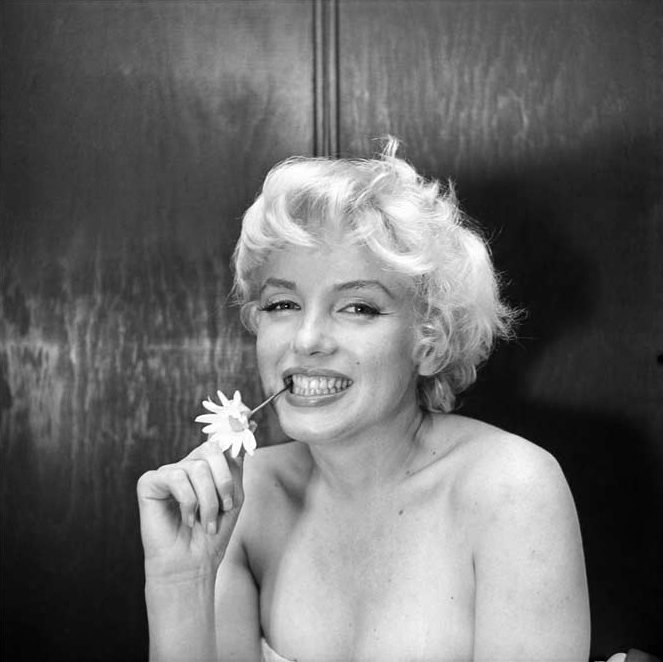
Cecil Beaton (British, 1904-1980) 'Marilyn Monroe' 1956


Cecil Beaton (British, 1904-1980)
Marilyn Monroe
1956
Gelatin silver print
© The Cecil Beaton Studio Archive


Cecil Beaton (British, 1904-1980) 'Mick Jagger, Marrakesh' 1967


Cecil Beaton (British, 1904-1980)
Mick Jagger, Marrakesh
1967
Gelatin silver print
© The Cecil Beaton Studio Archive


This major retrospective exhibition brings together captivating images from Cecil Beaton, one of the most celebrated photographers of the 20th century. Renowned for his images of elegance, glamour and style, Beaton’s work has inspired many famous photographers including David Bailey and Mario Testino.

The exhibition reflects the astonishing talents of the photographer who was also a writer, artist, designer, actor, caricaturist, illustrator and diarist. There are four sections in the exhibition covering Beaton’s career and capturing 50 years of fashion, art and celebrity:

The Early Years: London to Hollywood, 1920s and 1930s

Photographs of Hollywood stars such as Marlene Dietrich and Fred Astaire and artists including John (Rex) Whistler, Pablo Picasso and Salvador Dali.

The Years Between: The War and Post-War Arts, 1940s

Featuring Greta Garbo, Vivian Leigh and Laurence Olivier as well as Princess Elizabeth and Sir Winston Churchill.

The Strenuous Years: Picturing the Arts, 1950s

Portraits of Queen Elizabeth II, Francis Bacon, Jackie Kennedy Onassis, Lucian Freud and Marilyn Monroe.

Partying and the Partying Years: Apotheosis and Retrospection, 1960s and 1970s

Includes images of Audrey Hepburn, Prince Charles, Harold Pinter, Katherine Hepburn, Mick Jagger, Barbara Streisand
and Elizabeth Taylor.”

Text from the Walker Art Gallery website [Online] Cited 23/03/2019 no longer available online


Cecil Beaton (British, (1904-1980) 'Miss Nancy Beaton as a Shooting Star' 1928


Cecil Beaton (British, 1904-1980)
Miss Nancy Beaton as a Shooting Star
1928
Gelatin silver print
49 x 38.8cm
© The Cecil Beaton Studio Archive


Cecil Beaton (British, (1904-1980) 'Fred and Adele Astaire at a piano' 1930


Cecil Beaton (British, 1904-1980)
Fred and Adele Astaire at a piano
1930
Gelatin silver print
© The Cecil Beaton Studio Archive


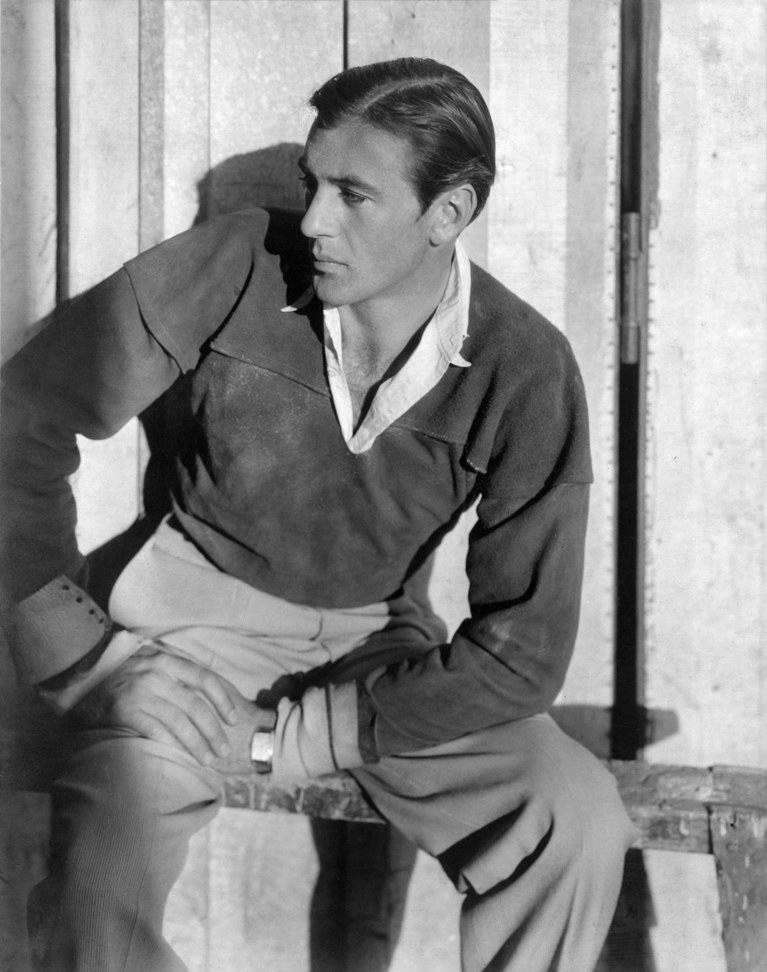
Cecil Beaton (British, (1904-1980) 'Gary Cooper' 1931


Cecil Beaton (British, 1904-1980)
Gary Cooper
1931
Gelatin silver print
© The Cecil Beaton Studio Archive


Cecil Beaton (British, (1904-1980) 'Gwili Andre' 1932


Cecil Beaton (British, 1904-1980)
Gwili Andre
1932
Gelatin silver print
© The Cecil Beaton Studio Archive


Gwili Andre (born Gurli Andresen, 4 February 1908 – 5 February 1959) was a Danish model and actress who had a brief career in Hollywood films.


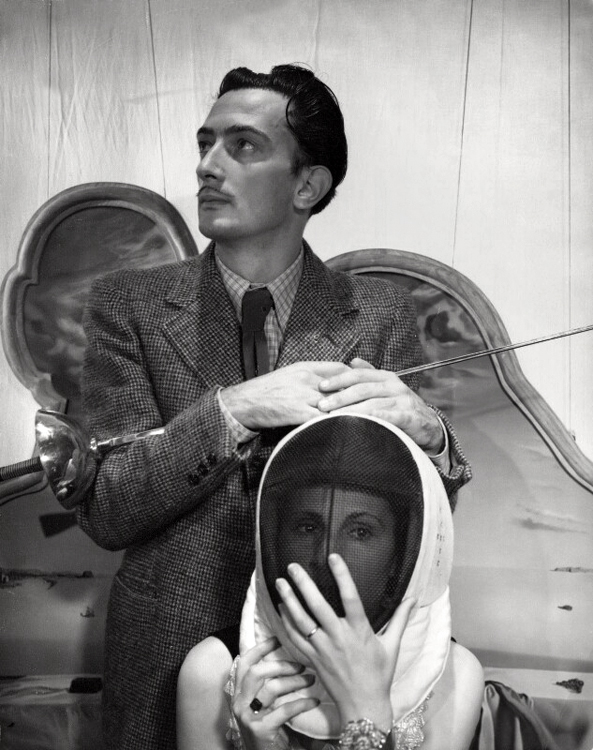
Cecil Beaton (British, (1904-1980) 'Salvador Dali and Gala' 1936


Cecil Beaton (British, 1904-1980)
Salvador Dali and Gala
1936
Gelatin silver print
© The Cecil Beaton Studio Archive


Cecil Beaton (British, (1904-1980) 'Cecil Day-Lewis' 1942


Cecil Beaton (British, 1904-1980)
Cecil Day-Lewis
1942
Gelatin silver print
© The Cecil Beaton Studio Archive


Cecil Day-Lewis (or Day LewisCBE (27 April 1904 – 22 May 1972), often writing as C. Day-Lewis, was an Anglo-Irish poet and the Poet Laureate of the United Kingdom from 1968 until his death in 1972. He also wrote mystery stories under the pseudonym of Nicholas Blake.

During World War II, Day-Lewis worked as a publications editor in the Ministry of Information for the UK government, and also served in the Musbury branch of the British Home Guard. He is the father of Sir Daniel Day-Lewis, a noted actor, and Tamasin Day-Lewis, a documentary filmmaker and television chef.

Text from the Wikipedia website


Cecil Beaton (British, (1904-1980) 'Orson Welles resting on a sculpture' 1942


Cecil Beaton (British, 1904-1980)
Orson Welles resting on a sculpture
1942
Gelatin silver print
© The Cecil Beaton Studio Archive


Cecil Beaton (British, (1904-1980) 'Marlon Brando' 1954


Cecil Beaton (British, 1904-1980)
Marlon Brando
1954
Gelatin silver print
© The Cecil Beaton Studio Archive


Walker Art Gallery
William Brown Street
Liverpool L3 8EL

Opening hours:
Tuesday – Sunday 10am – 6pm

Walker Art Gallery website

LIKE ART BLART ON FACEBOOK

Back to top