
Exhibition dates: 8th May – 16th August, 2015
Curator: Walter Moser

Lee Miller (American, 1907-1977)
Floating Head (Mary Taylor), New York Studio, New York, USA
1933
© Lee Miller Archives England 2015. All Rights Reserved
Leave artist’s alone
It takes some time to form an opinion as to the merit of Lee Miller’s work, given the amount of photographs available online, including the ones available on the Lee Miller Archives website. It is also difficult to separate the muse / socialite from the artist, the icon from the person.
Certainly there are unforgettable photographs, such as the haunting SS Guard in Canal, Dachau, Germany (1945, below). Once seen, never forgotten. But then there are the usual fashion photographs for Vogue that are no different from anyone else, a lot of pretty average social documentary photographs, some excellent and not so excellent portraits of friends and artists, and some surreal offerings that sometimes hit the mark.
Only occasionally do her photographs raise themselves above the mundane. This is not the fault of Lee Miller, but the fault of people claiming that someone is more than they are. The fault of people in control of her image. And that all comes down to money and power.
Instead of limiting access to her photographs, if her work was just left to breathe – just letting Lee Miller be nothing, in a Zenian sense – just let the work be what it is … then she and the work might attain more credibility than it has at the moment.
If Lee Miller was not set up as this icon, if she just is, then the work would be all the better for it. Icon and artist need to be separated. Let’s see more of the work freely available, for only then can we truly understand, believe.
Dr Marcus Bunyan
Many thankx to the Albertina for allowing me to publish the photographs in the posting. Please click on the photographs for a larger version of the image.
Lee Miller (1907-1977) is considered one of the most fascinating artists of the 20th century. In only 16 years, she produced a body of photographic work of a range that remains unparalleled, and that unites the most divergent genres. Miller’s oeuvre extends from surrealistic images to photography in the fields of fashion, travelling, portraiture and even war correspondence; the Albertina presents a survey of the work in its breadth and depth, with the aid of 100 selected pieces.
Lee Miller began her artistic career as a surrealist photographer in the Paris of 1929. She alienated motifs by using narrow image frames and applying experimental techniques like solarisation, so that it would be possible to see paradox reality. Travel photography, in which she translated the landscape into modernistic and ambiguous shapes, originated in Egypt in 1934.
As one of just a handful of female photojournalists, she began to photograph the disastrous consequences of the Second World War back in 1940. Lee Miller photographed the attack on London by the German Luftwaffe (“the Blitz”), as well as the eventual liberation of Paris. Her reporting led her to Vienna via Salzburg in 1945 where she photographed a cityscape destroyed by war, as well as the hardships in the children’s hospitals. In this exhibit, the focus is specifically placed on the vast bulk of this unpublished group of works.
Lee Miller | Surrealist Photography from Albertina Vienna.
Lee Miller | War Photography from Albertina Vienna.
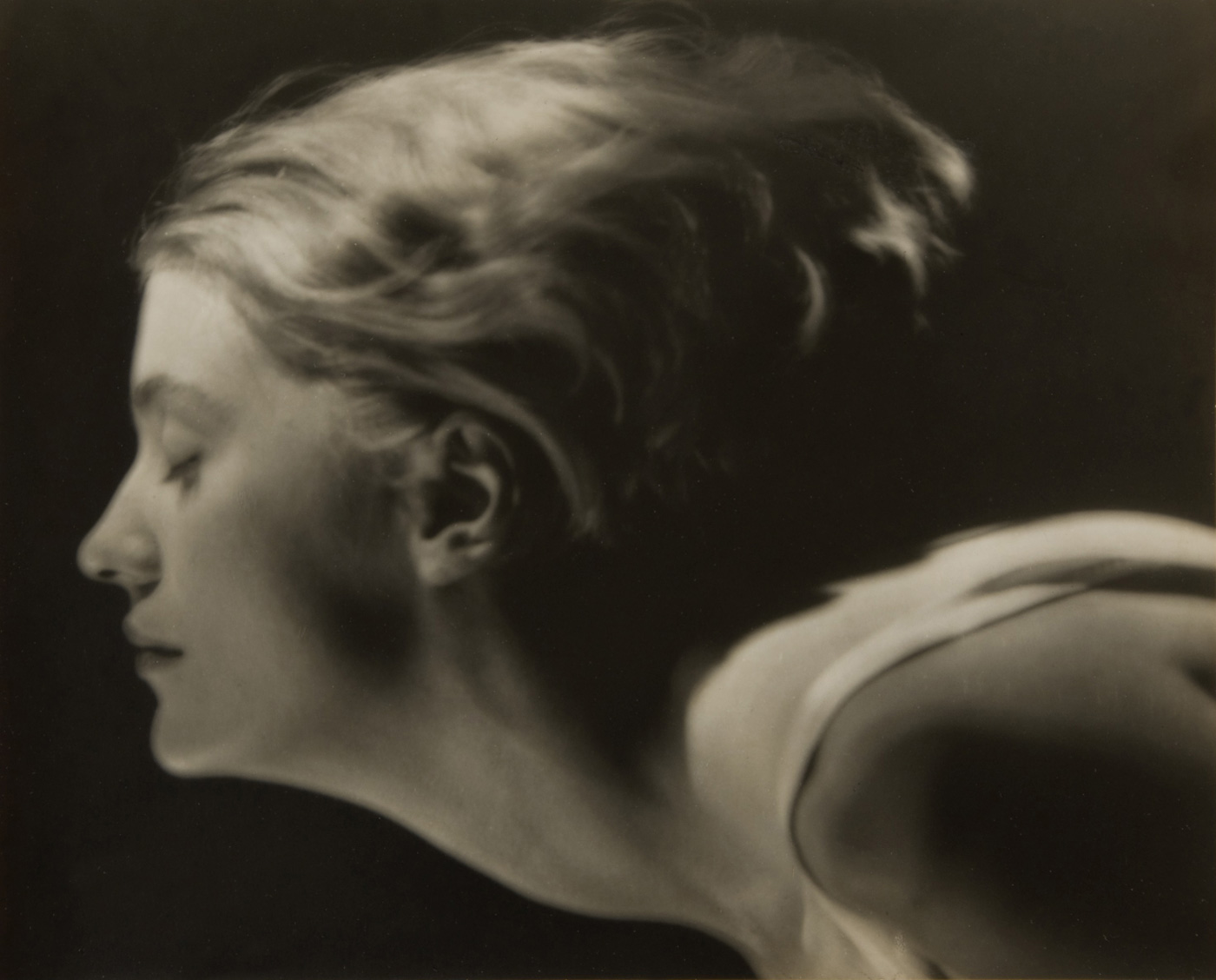
Man Ray (American, 1890-1976)
Portrait of Lee Miller, Paris, France
1929
© MAN RAY TRUST / ADAGP, Paris / Bildrecht Wien 2015
Courtesy Lee Miller Archives, England 2015. All rights reserved
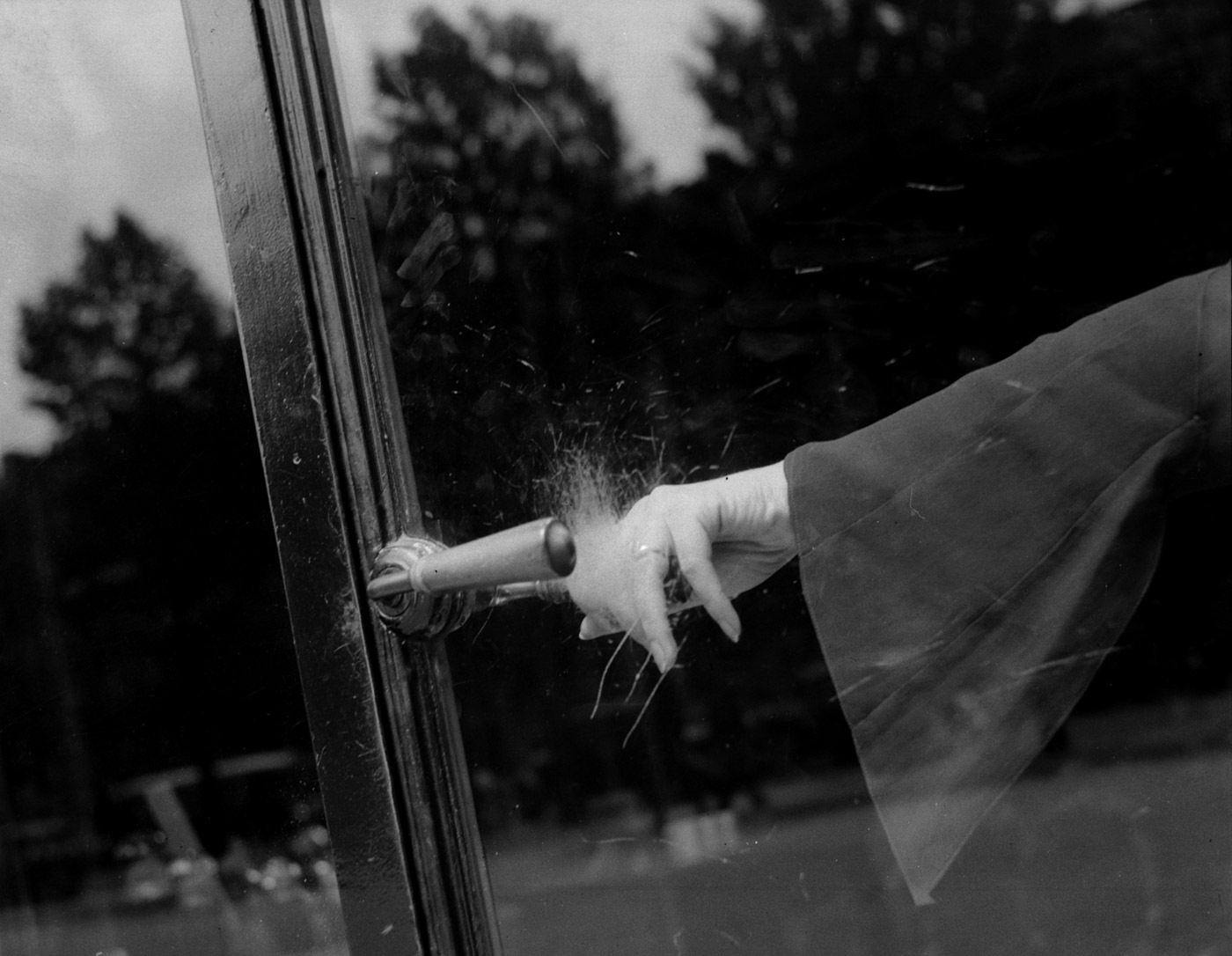
Lee Miller (American, 1907-1977)
Untitled (Exploding Hand), Paris, France
c. 1930
© Lee Miller Archives England 2015. All Rights Reserved

Lee Miller (American, 1907-1977)
Self Portrait, New York Studio, New York, USA
1932
© Lee Miller Archives England 2015. All Rights Reserved
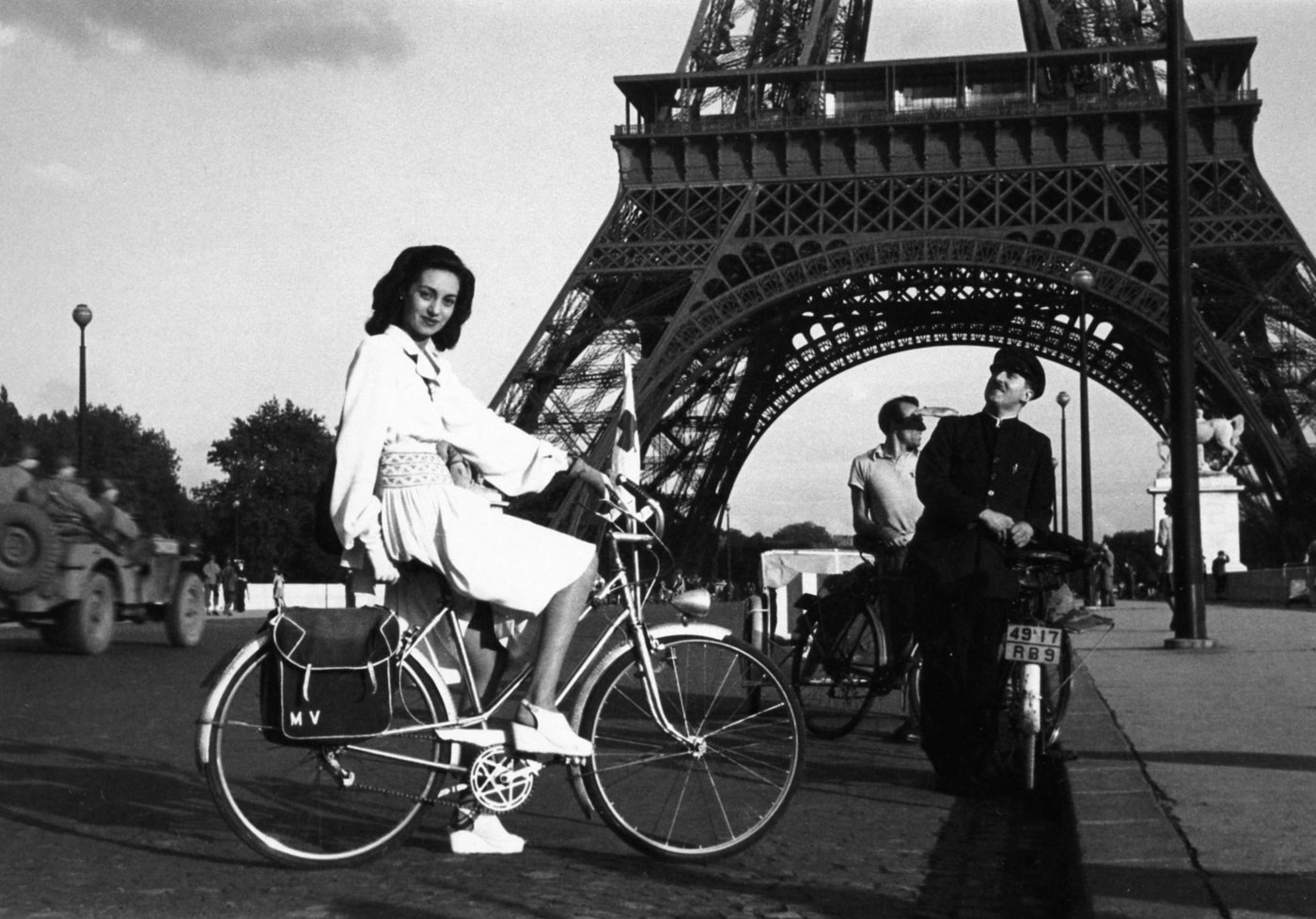
Lee Miller (American, 1907-1977)
Paris
1944
Silver gelatin print
© Lee Miller Archives England 2015. All Rights Reserved

Lee Miller (American, 1907-1977)
Picnic, Ile Sainte Marguerite, France [Man Ray second from right]
1937
© Lee Miller Archives England 2015. All Rights Reserved
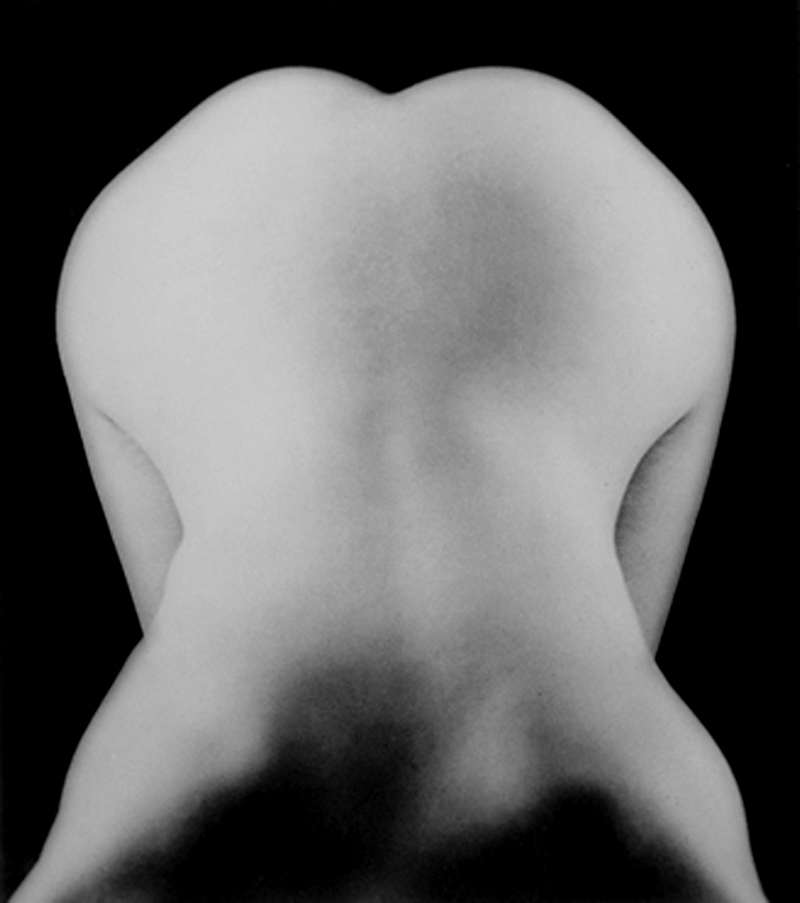
Lee Miller (American, 1907-1977)
Nude bent forward
1930
© Lee Miller Archives England 2015. All Rights Reserved

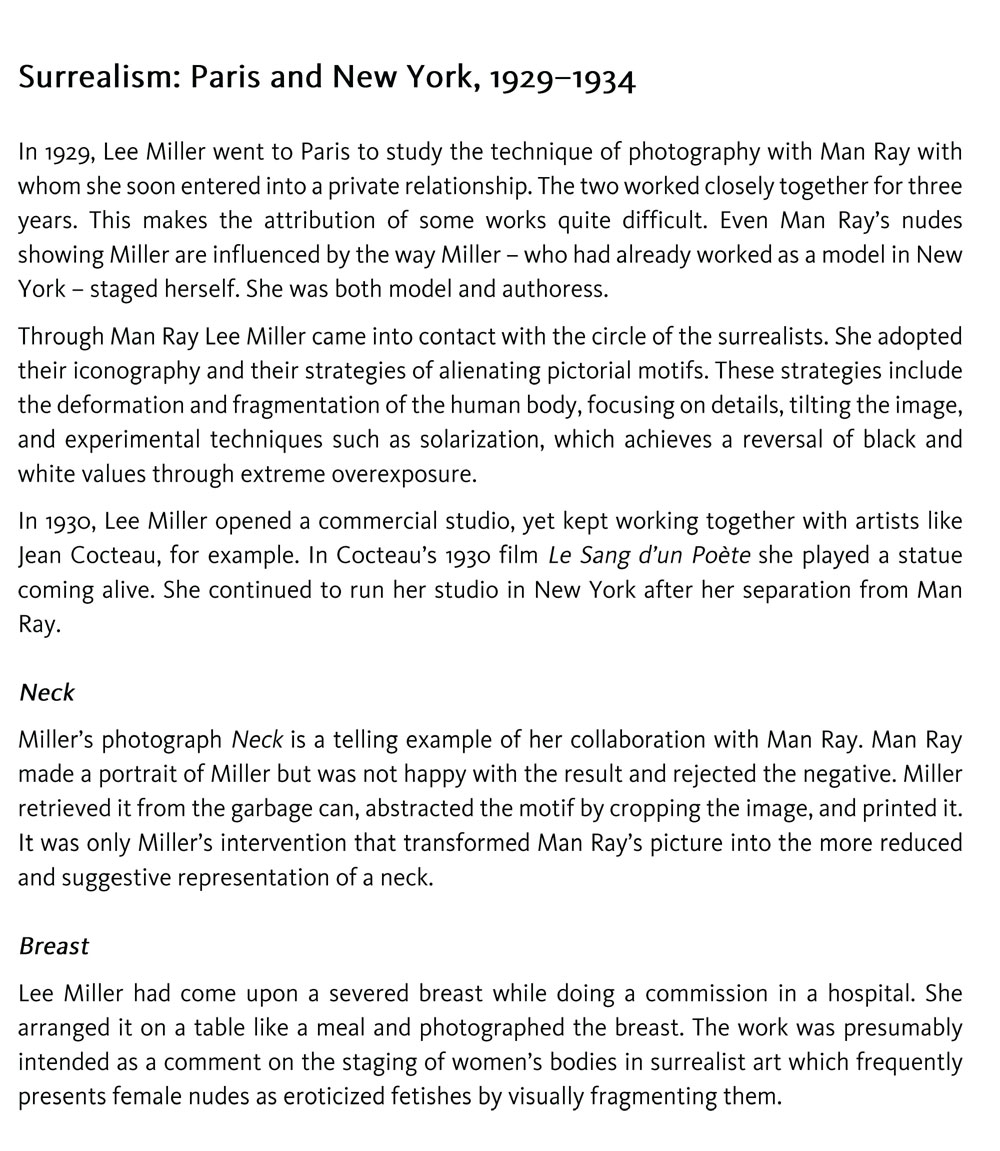


Lee Miller exhibition texts
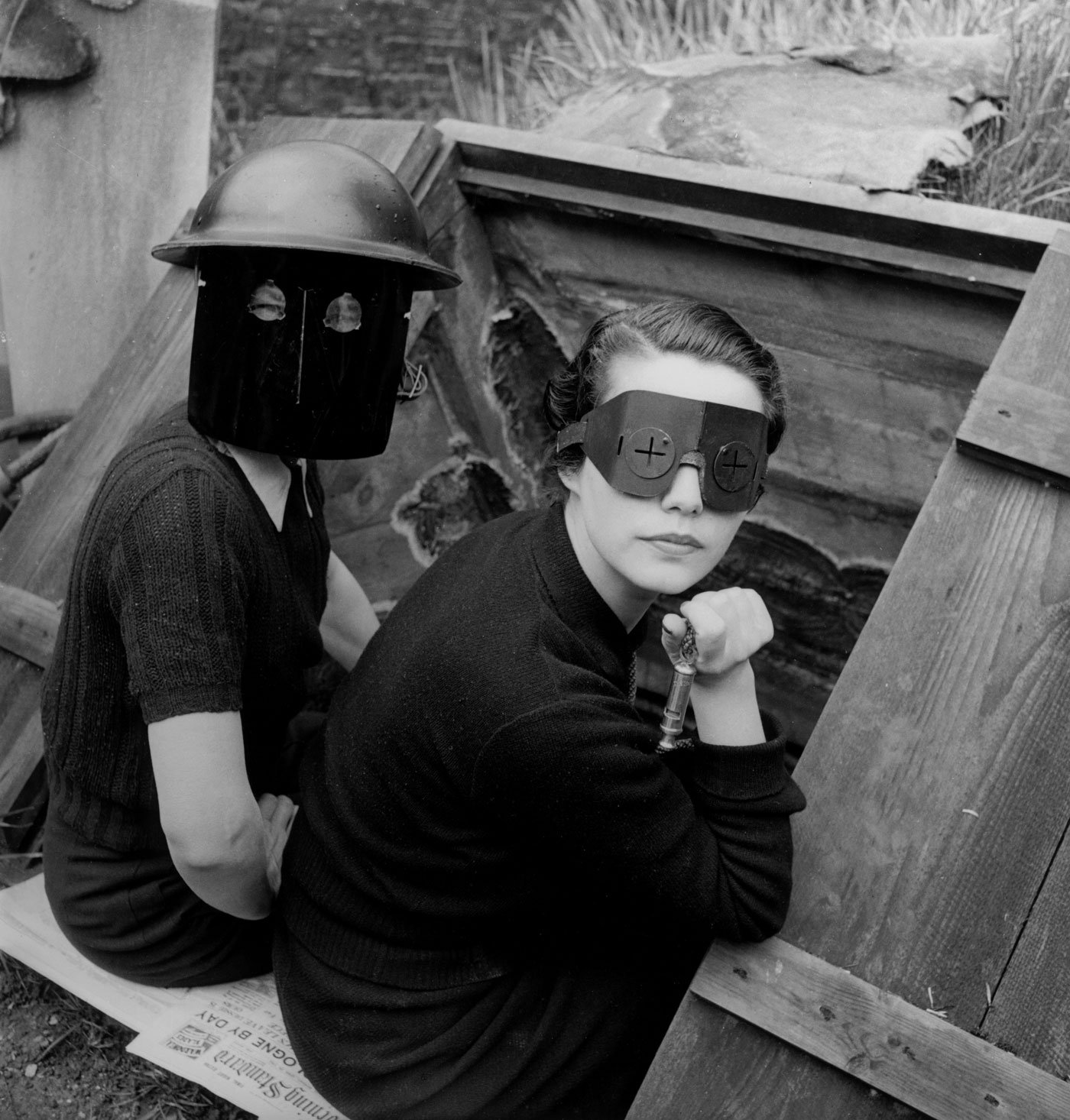
Lee Miller (American, 1907-1977)
Fire Masks, London, England
1941
© Lee Miller Archives England 2015. All Rights Reserved

Lee Miller (American, 1907-1977)
Irmgard Seefried, Opera Singer, Singing an Aria from Madame Butterfly, Vienna Opera House, Vienna, Austria
1945
© Lee Miller Archives England 2015. All Rights Reserved
Irmgard Seefried (German, 1919-1988)
Irmgard Seefried (9 October 1919 – 24 November 1988) was a distinguished German soprano who sang opera, sacred music, and lieder.
One of the outstanding singers to emerge immediately after the Second World War, she was noted for her Mozart and Richard Strauss roles. But she also sang in other composers’ operas; the title role in Puccini’s Madama Butterfly, Marie in Alban Berg’s Wozzeck, Eva in Meistersinger, Blanche in Poulenc’s Dialogues des Carmélites, and the title role in Janáček’s Káťa Kabanová. She was also a noted lieder singer, and a number of her Salzburg Festival recitals were recorded. She left many recordings of oratorio and sacred music by Bach, Mozart, Haydn (including at least four different renditions of the Archangel Gabriel in Die Schöpfung), Brahms, Fauré, Beethoven, Dvořák, Verdi and Stravinsky.
Although she was a high soprano, she performed, and recorded, both the trouser roles of the Composer and Octavian in Richard Strauss’s Ariadne auf Naxos and Der Rosenkavalier, respectively. These roles are usually associated with weightier voices, and today are usually sung by mezzo-sopranos.
She often sang with Elisabeth Schwarzkopf, who said in interview that Seefried was naturally able to achieve results effortlessly which other singers, including Schwarzkopf herself, had to work hard to produce.
Text from the Wikipedia website

Lee Miller (American, 1907-1977) with David E. Scherman (American, 1916-1997)
Lee Miller in Hitler’s Bathtub, Munich, Germany
1945
© Lee Miller Archives England 2015. All Rights Reserved
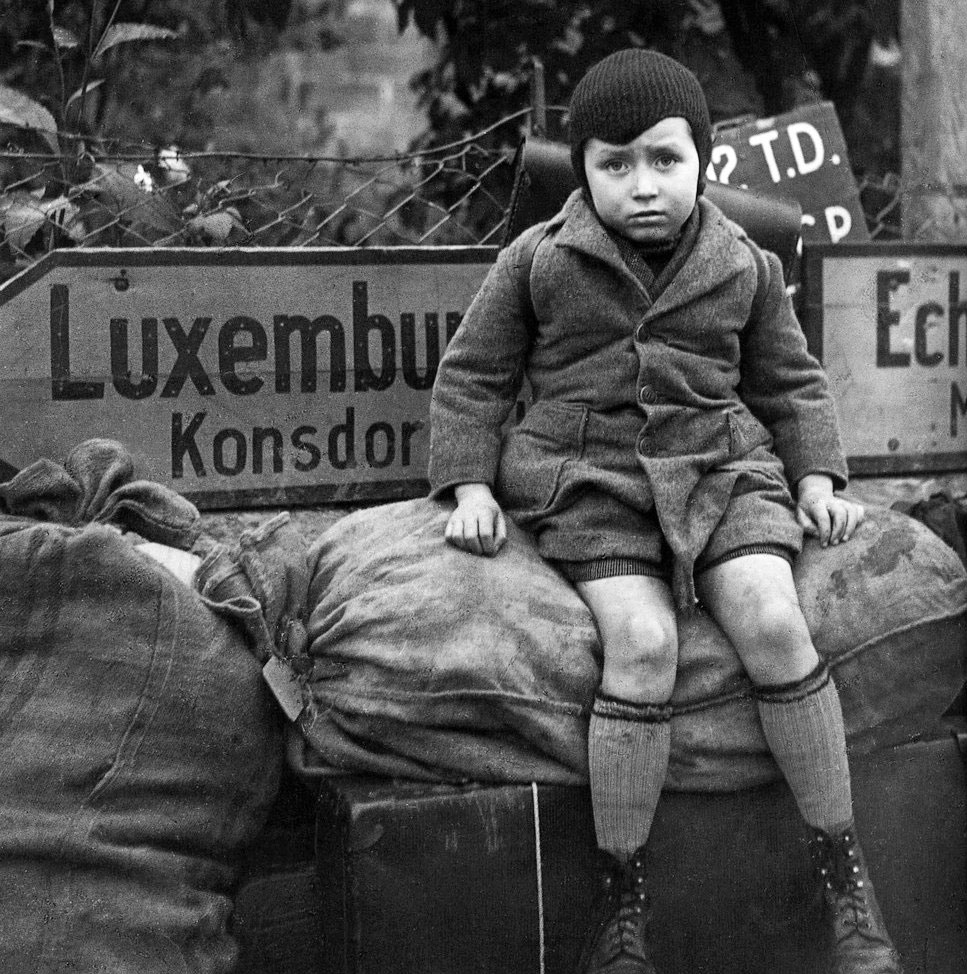
Lee Miller (American, 1907-1977)
Luxembourg
1944
© Lee Miller Archives England 2015. All Rights Reserved

Lee Miller (American, 1907-1977)
SS Guard in Canal, Dachau, Germany
1945
© Lee Miller Archives England 2015. All Rights Reserved

Lee Miller (American, 1907-1977)
Scharnhorst Boy, Vienna, Austria
1945
© Lee Miller Archives England 2015. All Rights Reserved

Lee Miller (American, 1907-1977)
The latest hat model, Vogue Studios, London, April 1942
1942
© Lee Miller Archives England 2015. All Rights Reserved
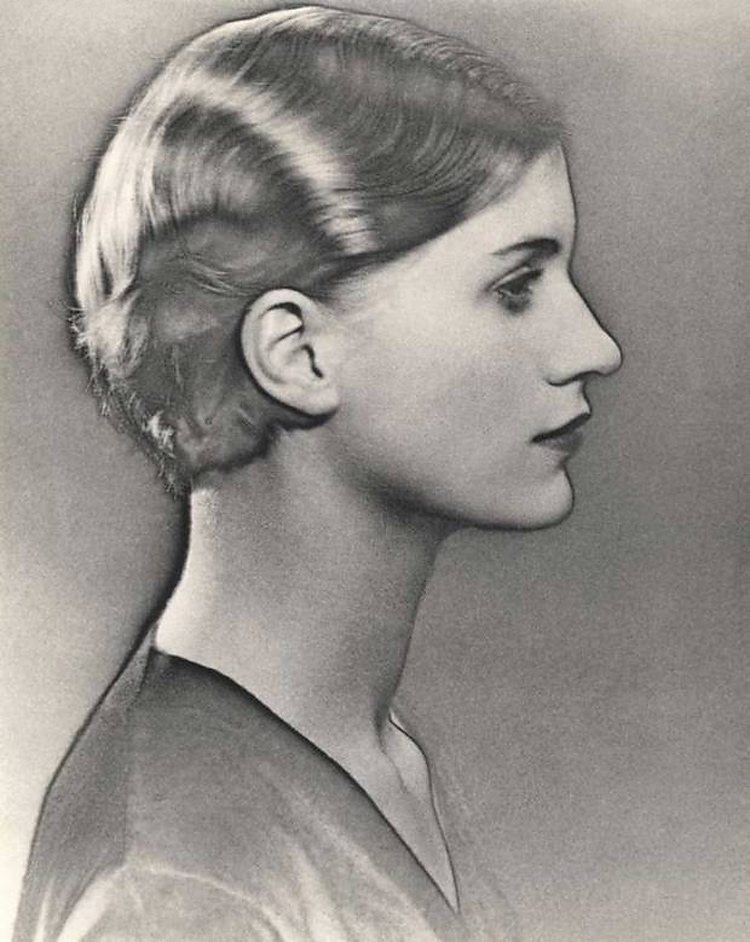
Man Ray (American, 1890-1976)
Solarised Portrait of Lee Miller
c. 1929
© MAN RAY TRUST / ADAGP, Paris / Bildrecht Wien 2015

Lee Miller (American, 1907-1977)
Solarized Portrait of an unknown model
1930
© Lee Miller Archives England 2015. All Rights Reserved

Man Ray (American, 1890-1976) and Lee Miller (American, 1907-1977)
Neck (Portrait of Lee Miller), Paris, France
c. 1930
© Lee Miller Archives England 2015. All Rights Reserved
© MAN RAY TRUST / ADAGP, Paris / Bildrecht Wien 2015
Albertina
Albertinaplatz 1
1010 Vienna, Austria
Phone: +43 (0)1 534 83-0
Opening hours:
Daily 10am – 6pm


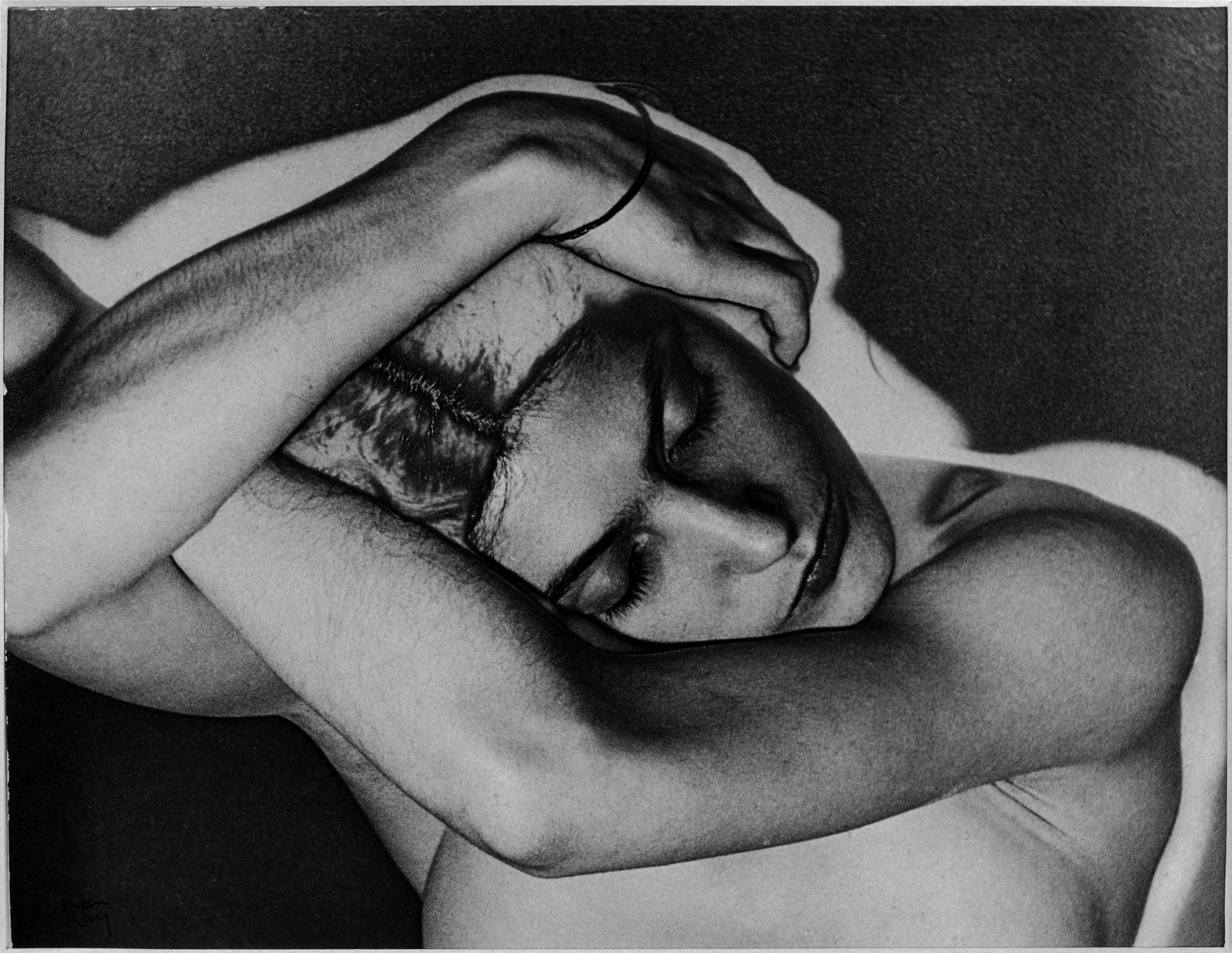
![Man Ray (American, 1890-1976) 'Juliet with Flower' [Juliet Browner] 1950s](https://artblart.com/wp-content/uploads/2009/01/man-ray-juliet-with-flower-1950s.jpg "Man Ray (American, 1890-1976) 'Juliet with Flower' [Juliet Browner] 1950s")


 Art Blart _ art and cultural memory archive
You must be logged in to post a comment.