Exhibition: ‘Fracture: Daido Moriyama’ at the Los Angeles County Museum of Art (LACMA)

Exhibition dates: 7th April – 31st July 2012
 

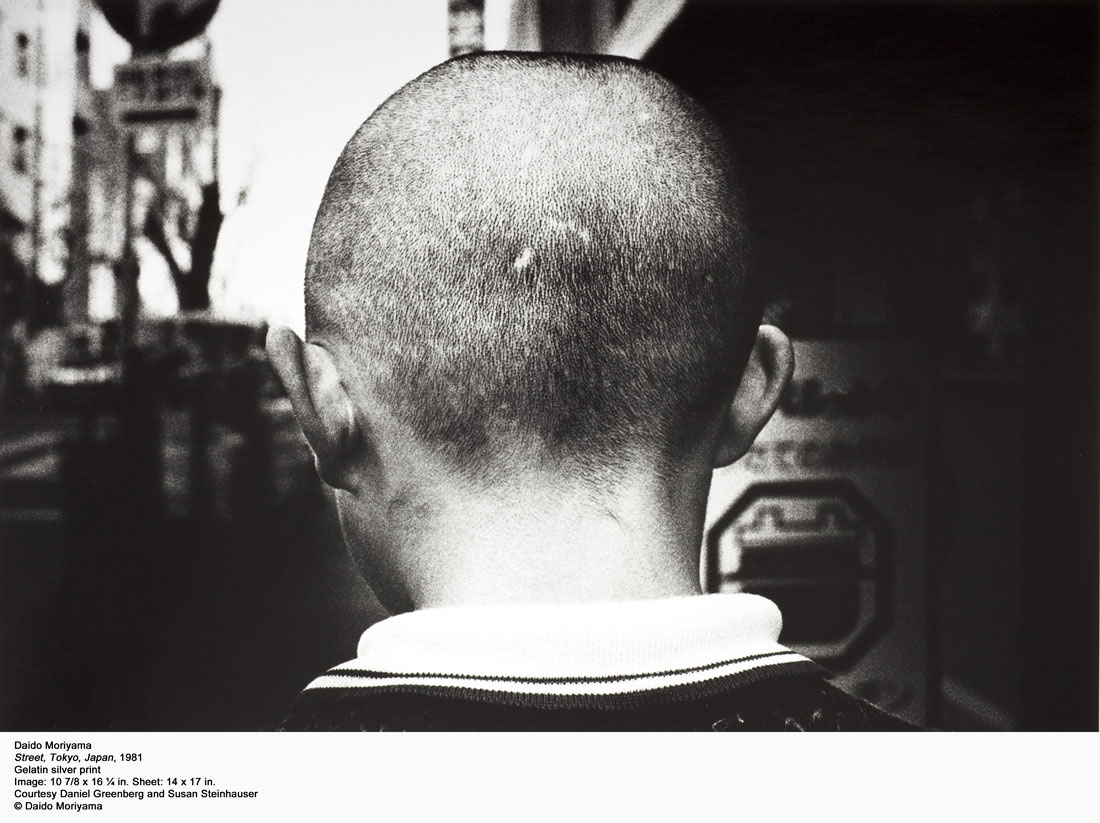
Daido Moriyama (Japanese, b. 1938) 'Street, Tokyo, Japan' 1981


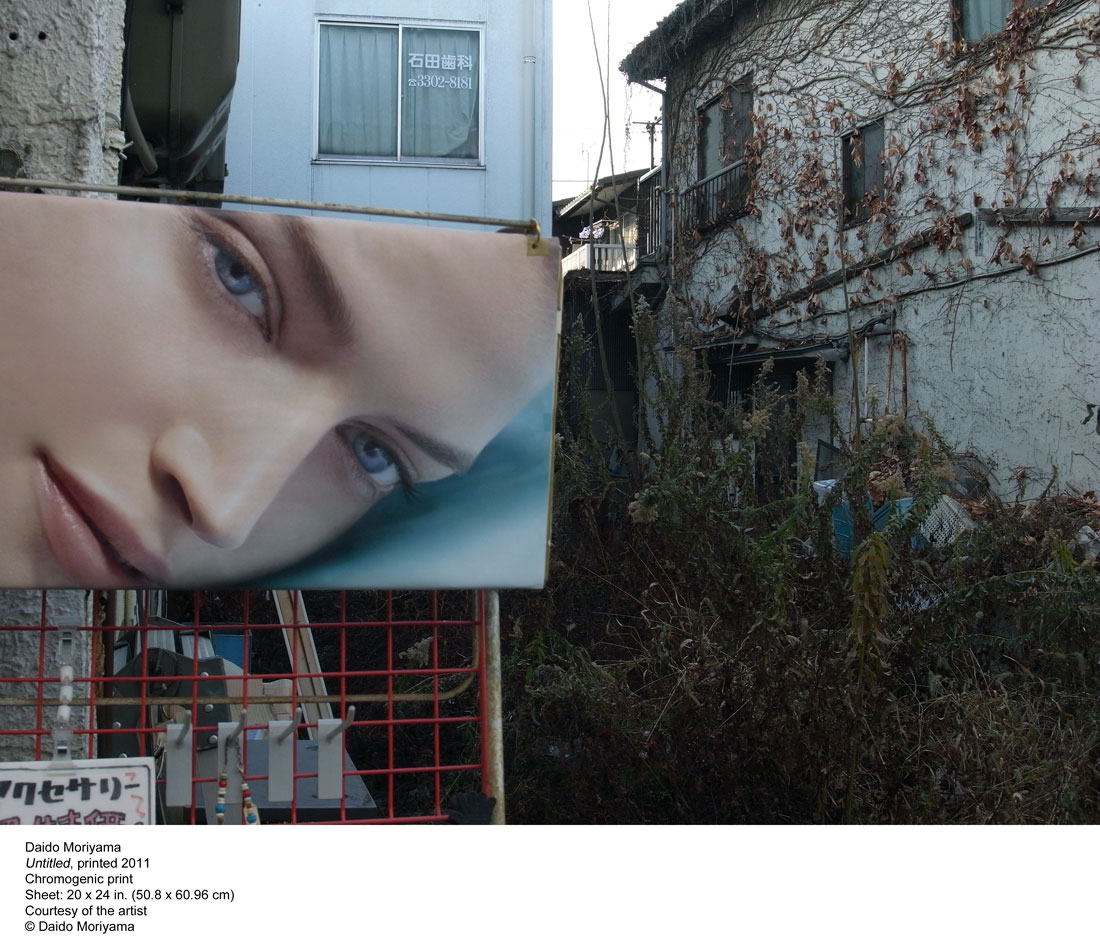
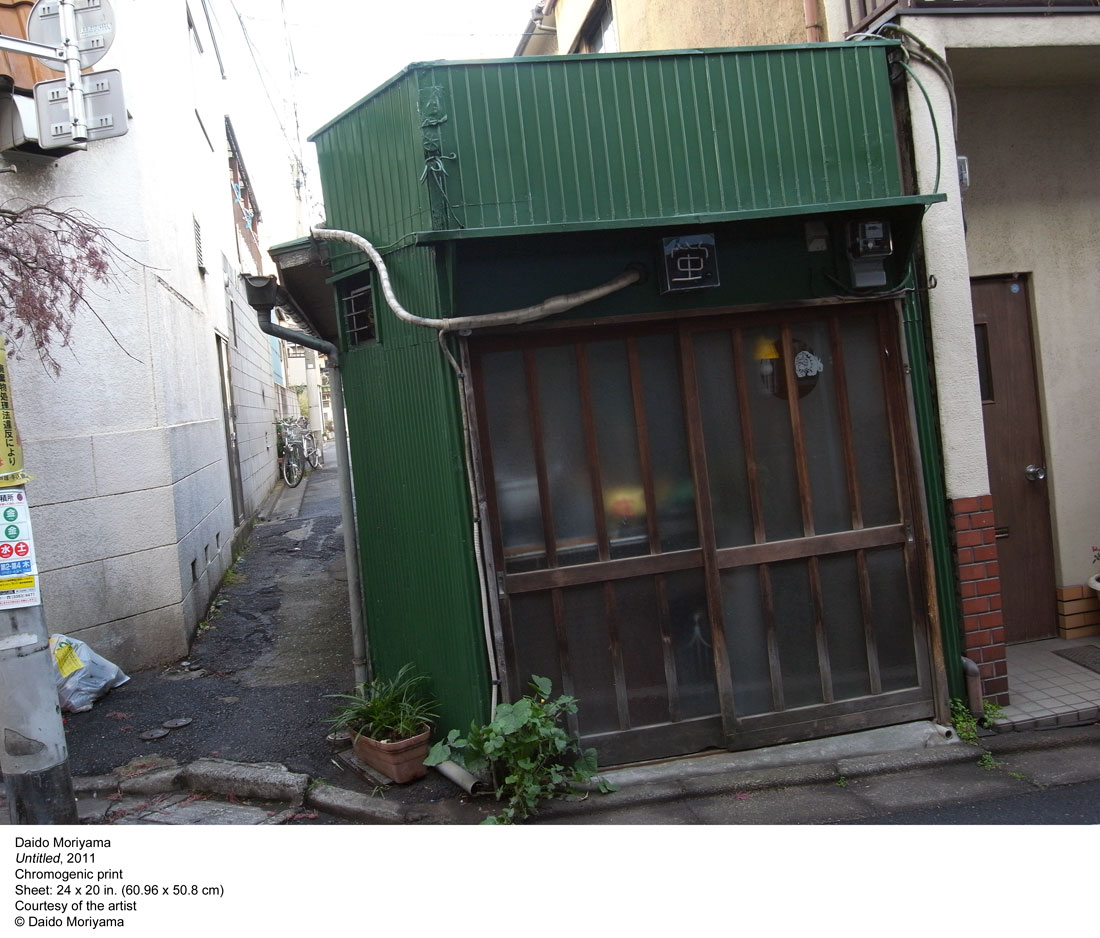
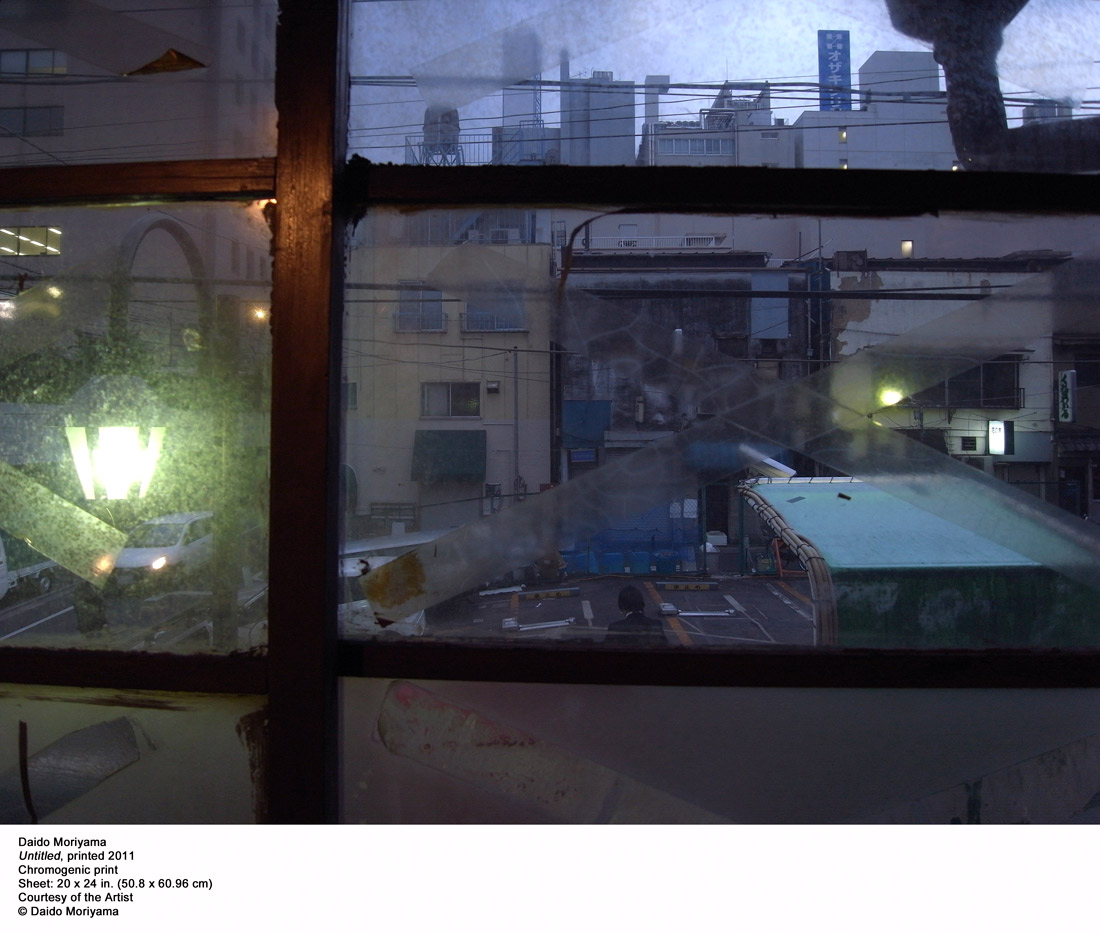
How can we put this. The early black and white photographs are magnificent; the later colour photographs pedestrian and mundane. It is quite amazing how an artist with such skill and panache in the 1960s-1980s can run out of ideas and make such stock standard work 30 years later. Does the artist loose the talent, the energy or just the persistence of vision that made their earlier work so vibrant and alive, or did the work just emerge from the time / space / energy of the artist in that particular period, never to appear again?

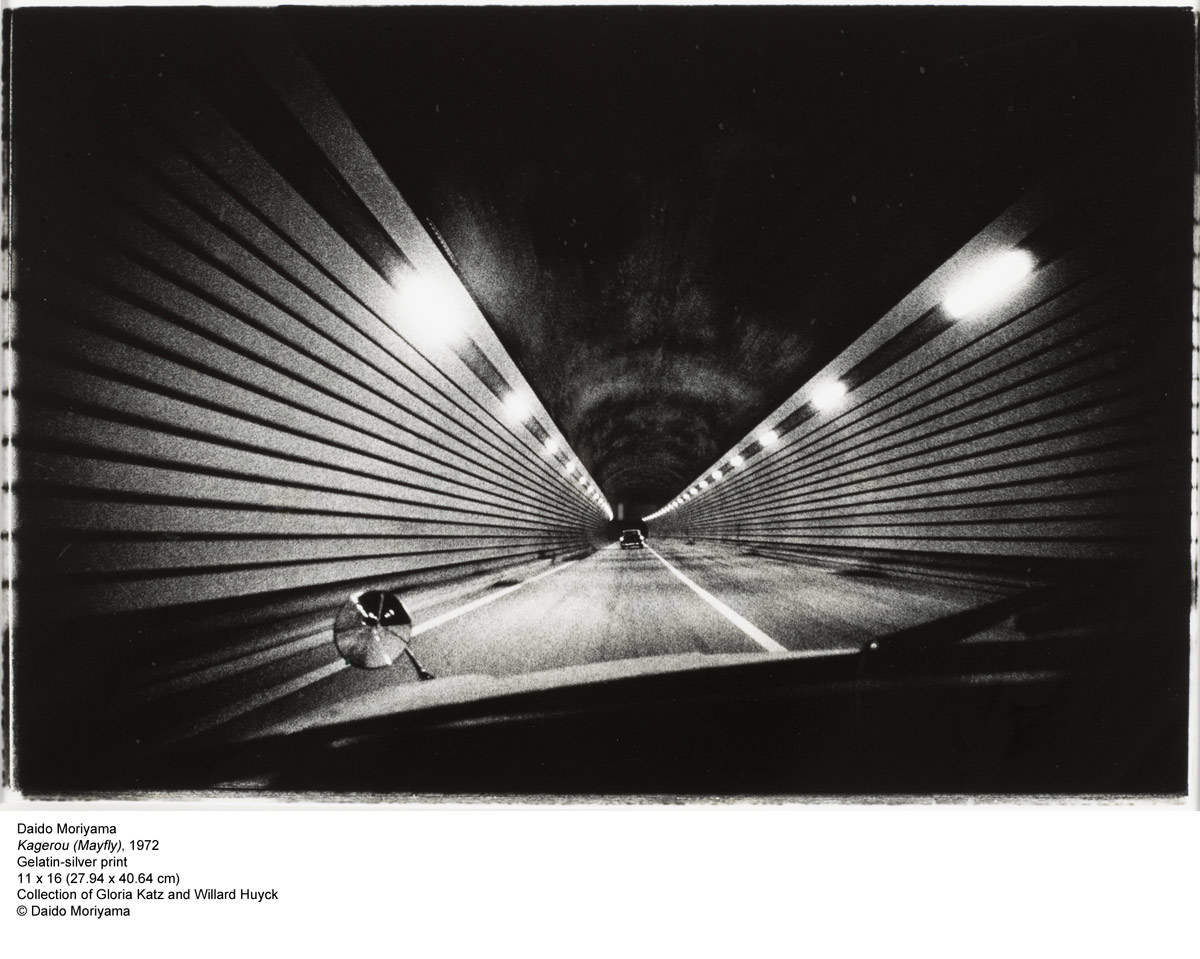
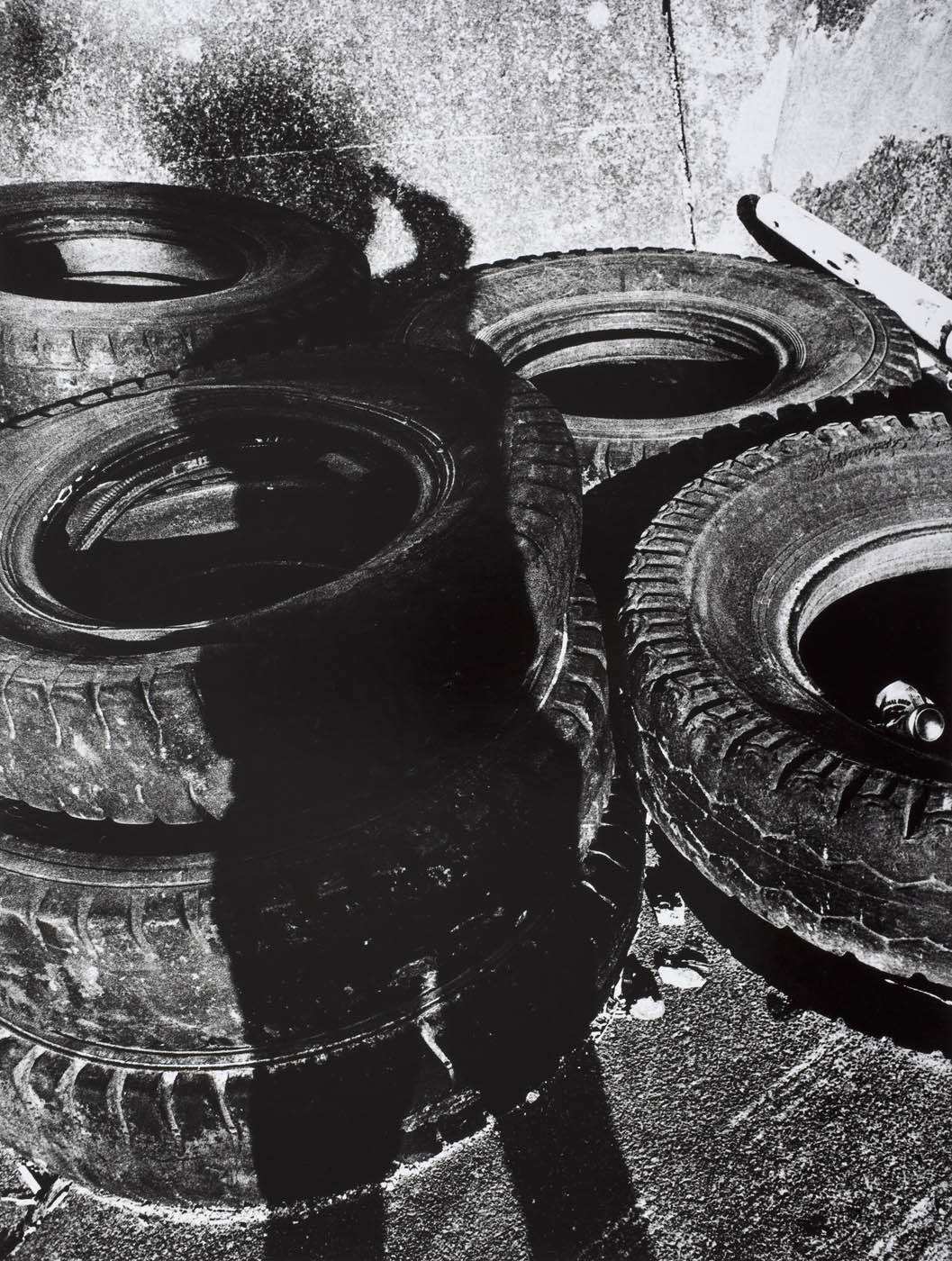
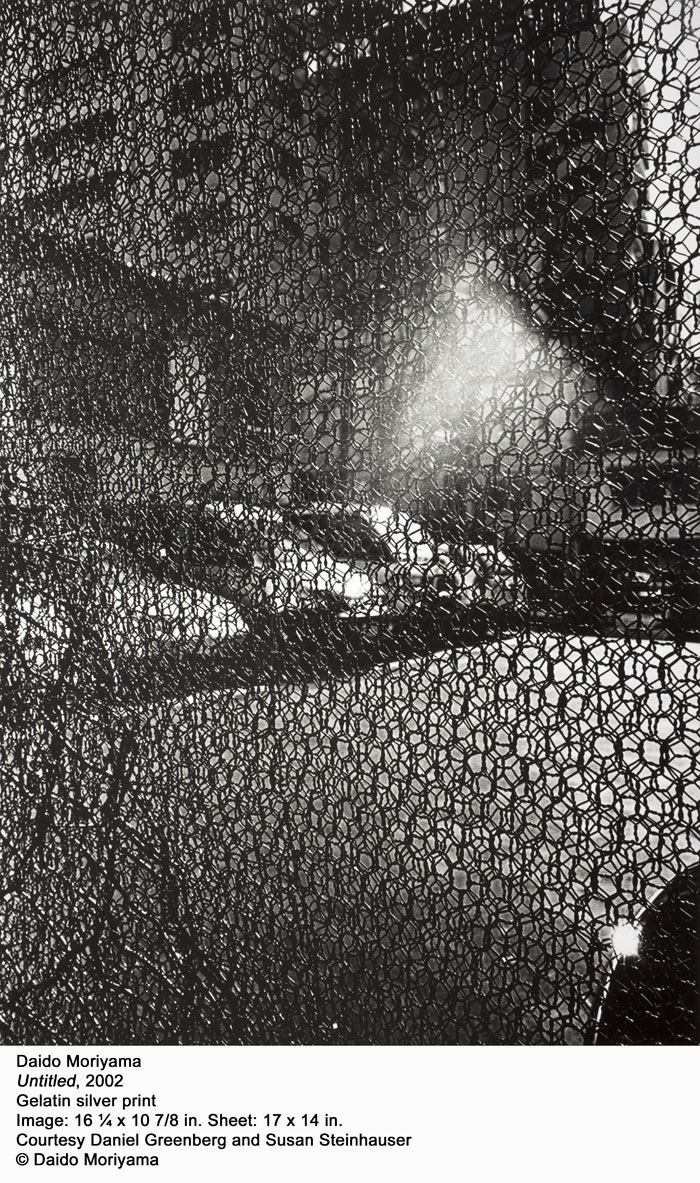
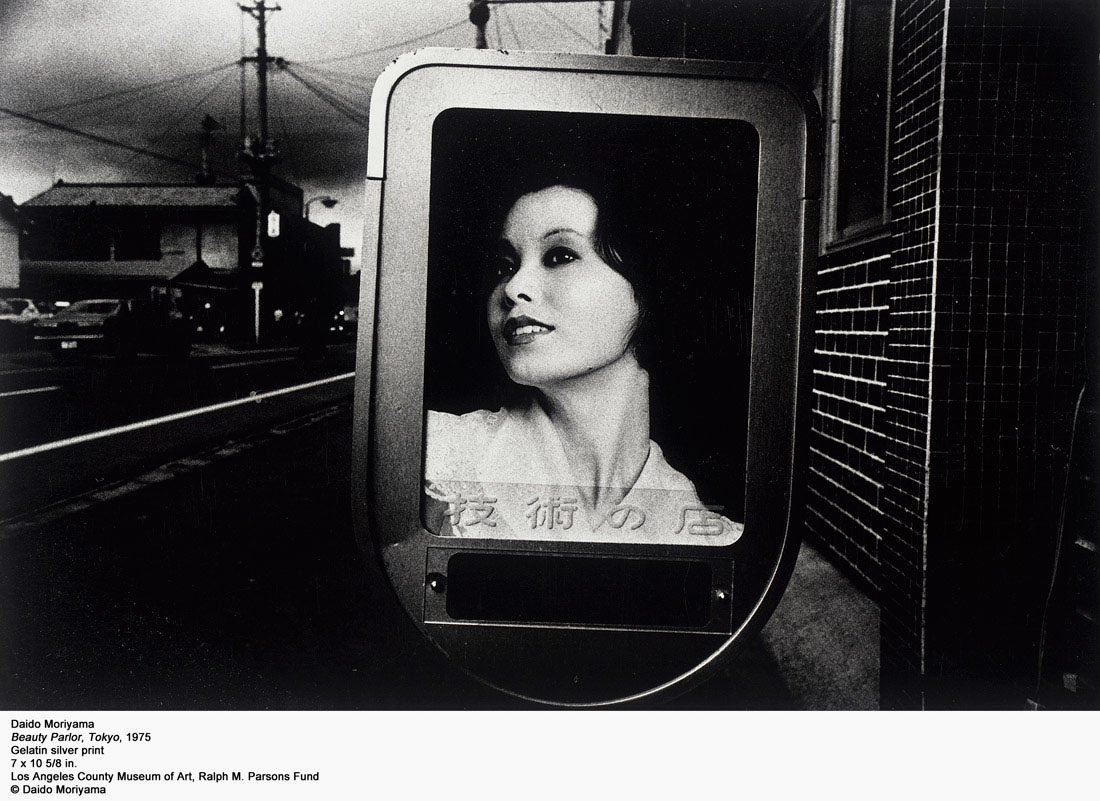
Moriyama’s black and white photographs provide “a raw, restless vision of city life and the chaos of everyday existence, strange worlds, and unusual characters.” More than that, they plunge us into a mesmerising, hypnotic world where the viewer is immersed in a fractured dream / scape / space. Kagerou (Mayfly) (1972, below) is just such an example of this holographic, bugs caught in amber view of our world; the dirty footed, fleeing creature in Untitled (woman in white dress running) (1971, below) confirms this ambiguity, the trapped animal caught by the flash of the camera. Strange, haunting and evocative, Moriyama’s black and white photographs project the derangement of the world onto the psyche of the viewer, producing an abnormal condition of the mind that promotes a loss of contact with reality. The colour photographs never stand a chance against such life changing affirmations.

Dr Marcus Bunyan


Many thankx to the Los Angeles County Museum of Art for allowing me to publish the photographs in the posting. Please click on the photographs for a larger version of the image.
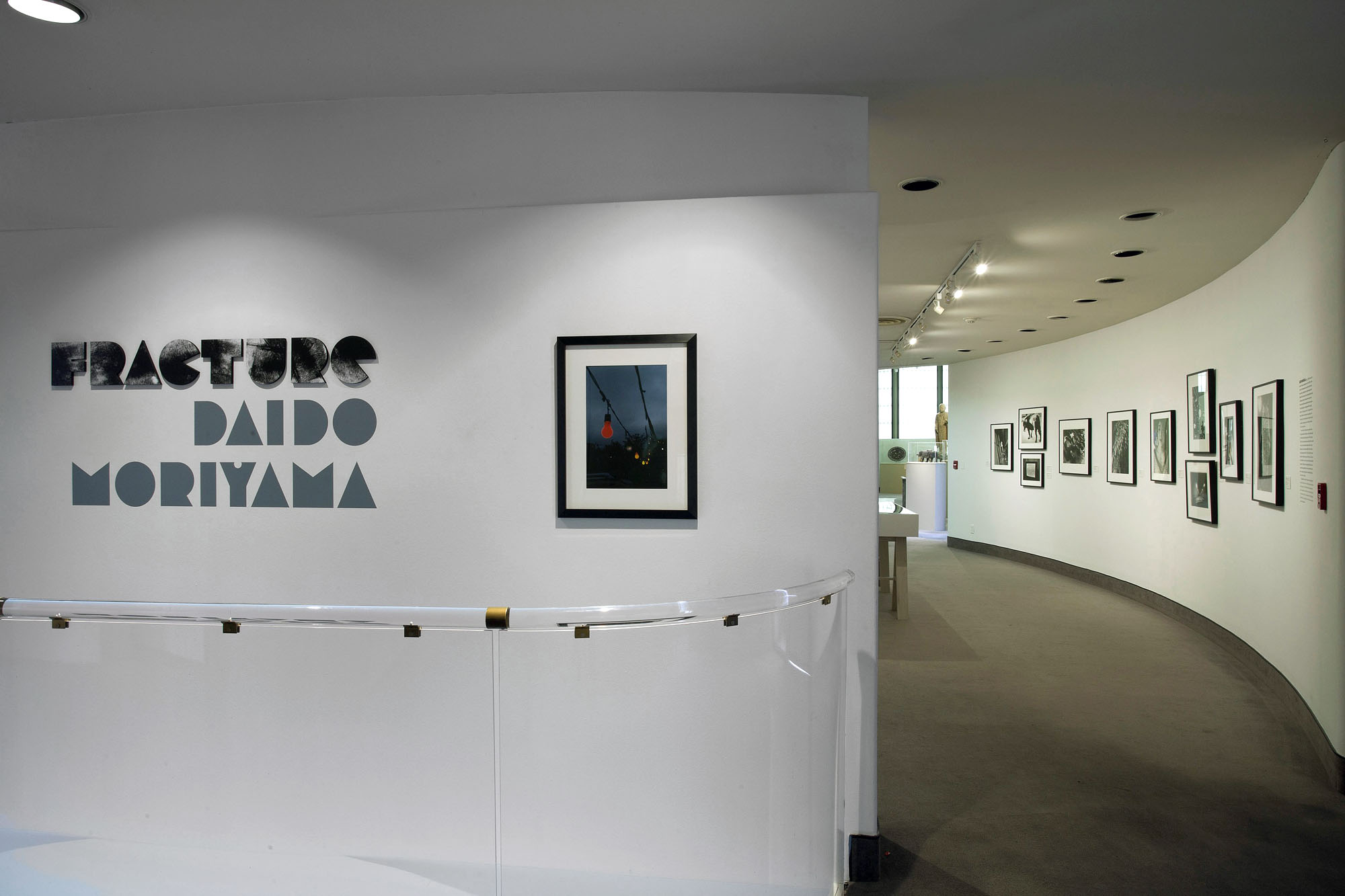


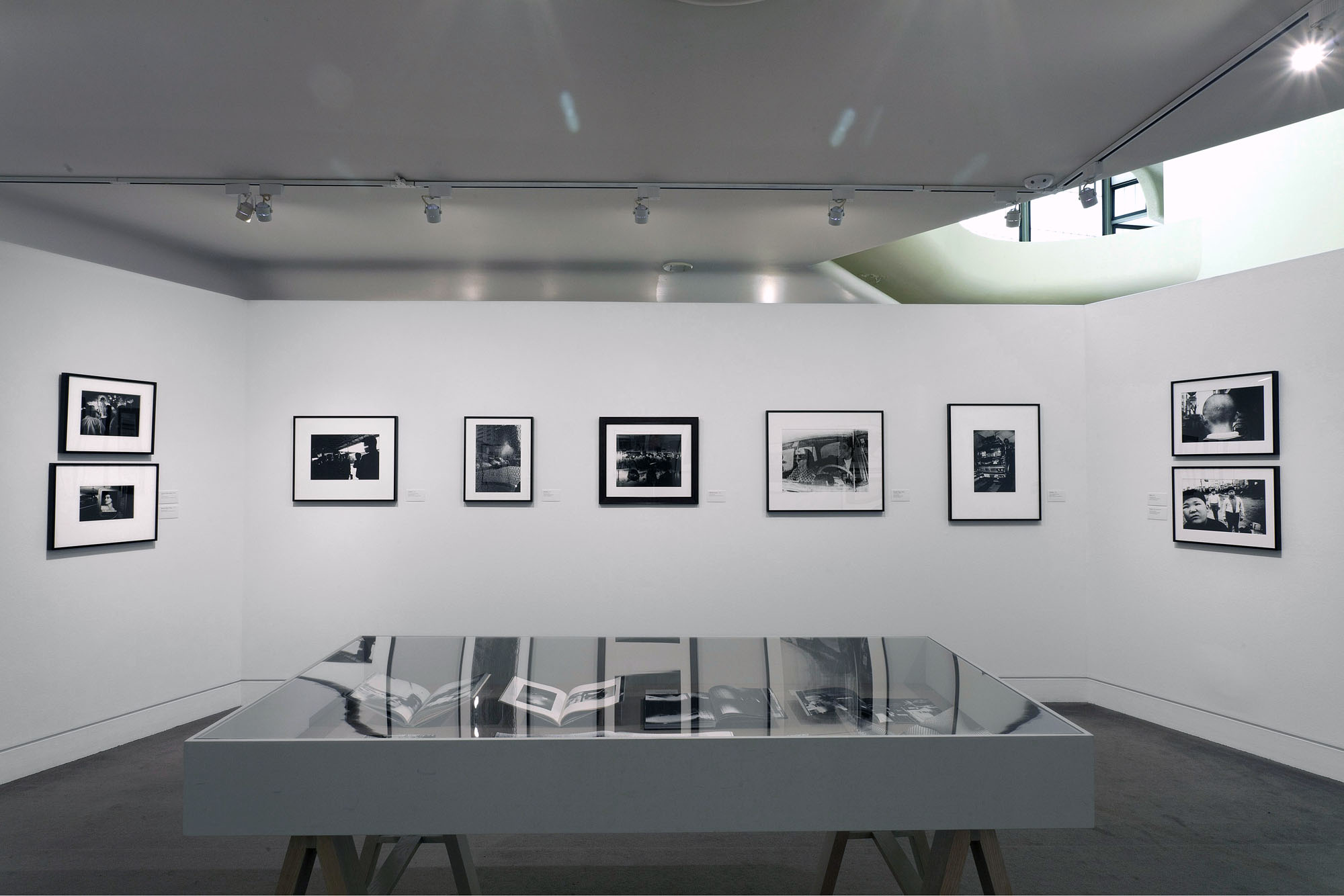
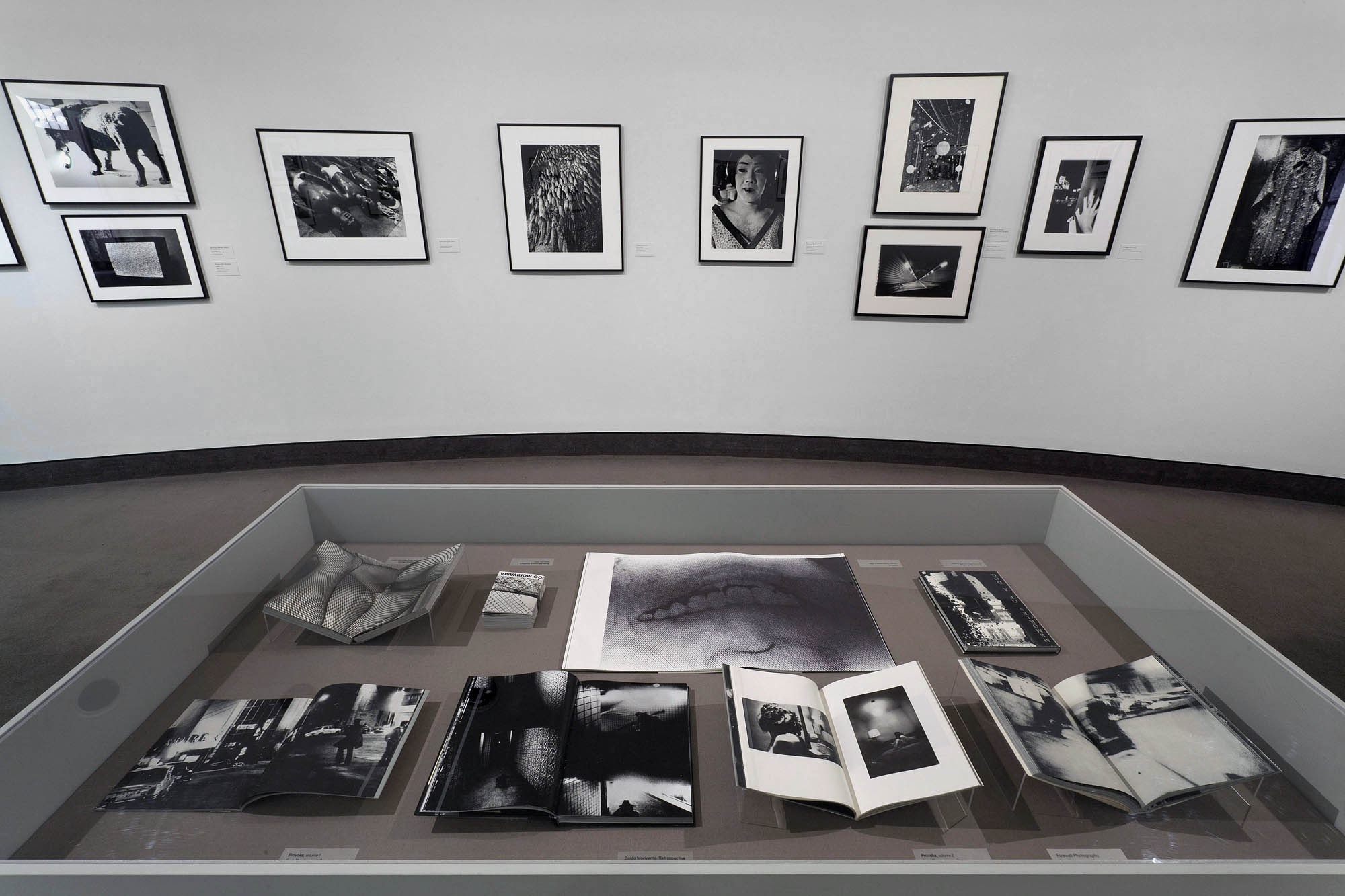
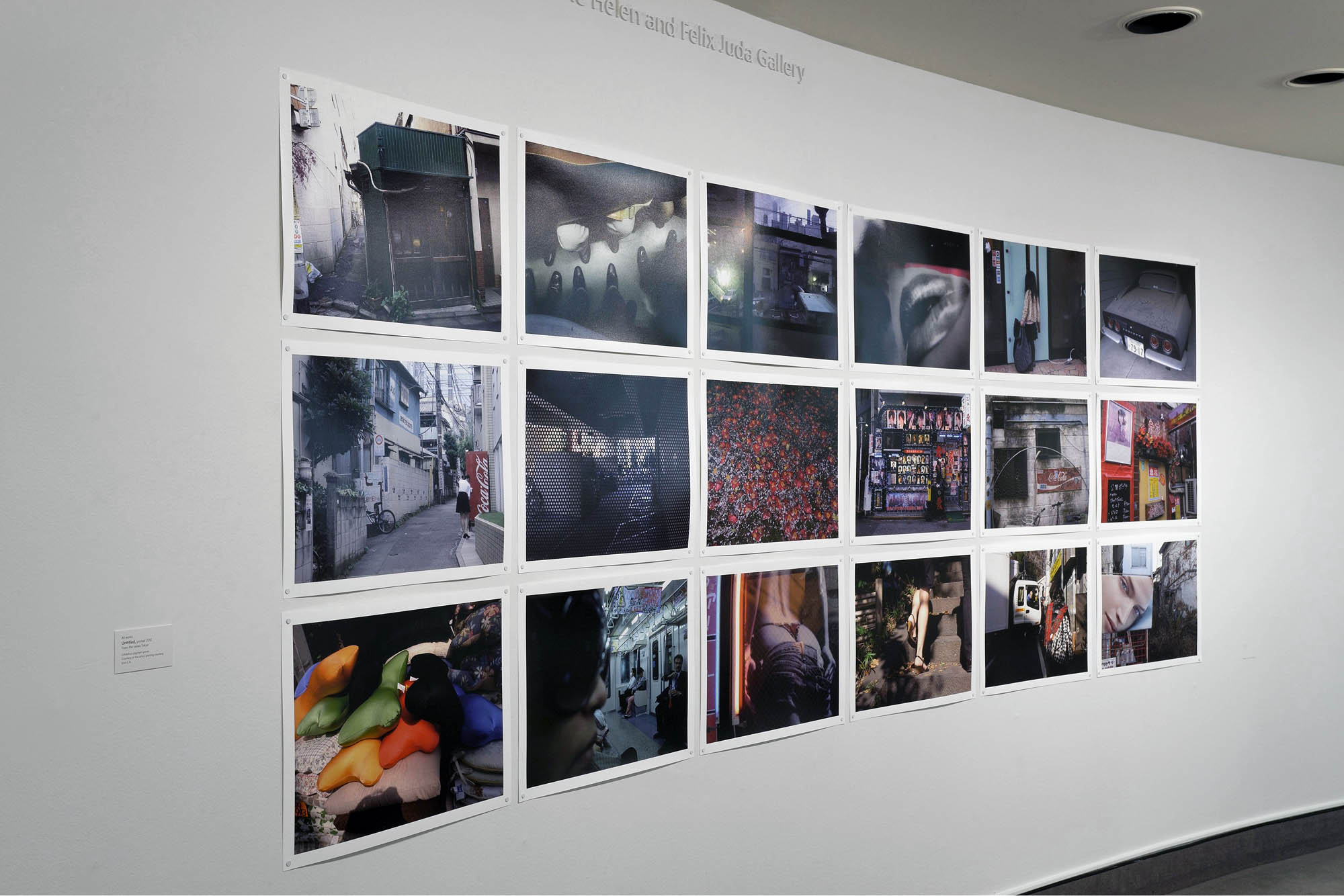
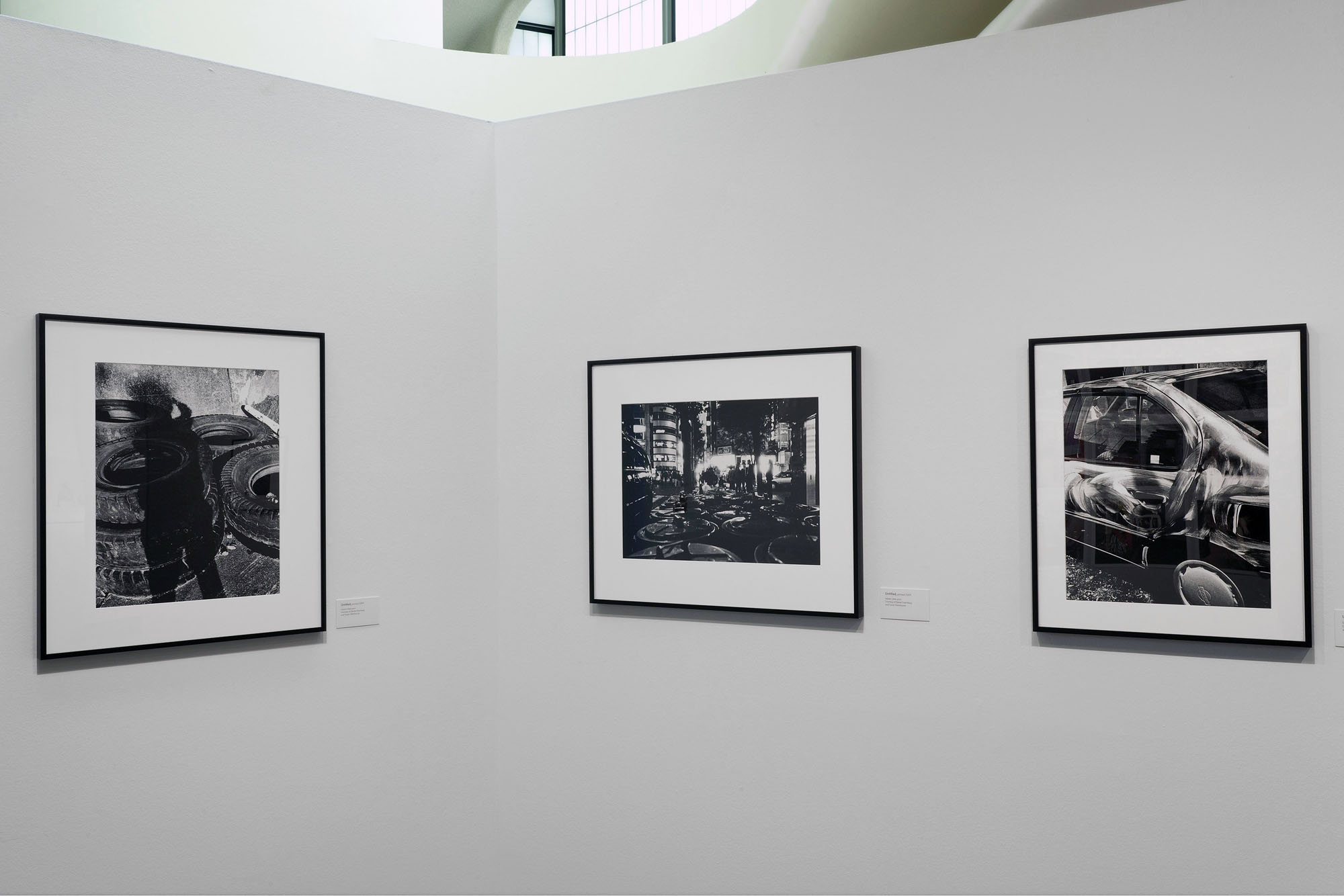
Installation view of the exhibition 'Fracture: Daido Moriyama' at the Los Angeles County Museum of Art (LACMA) 

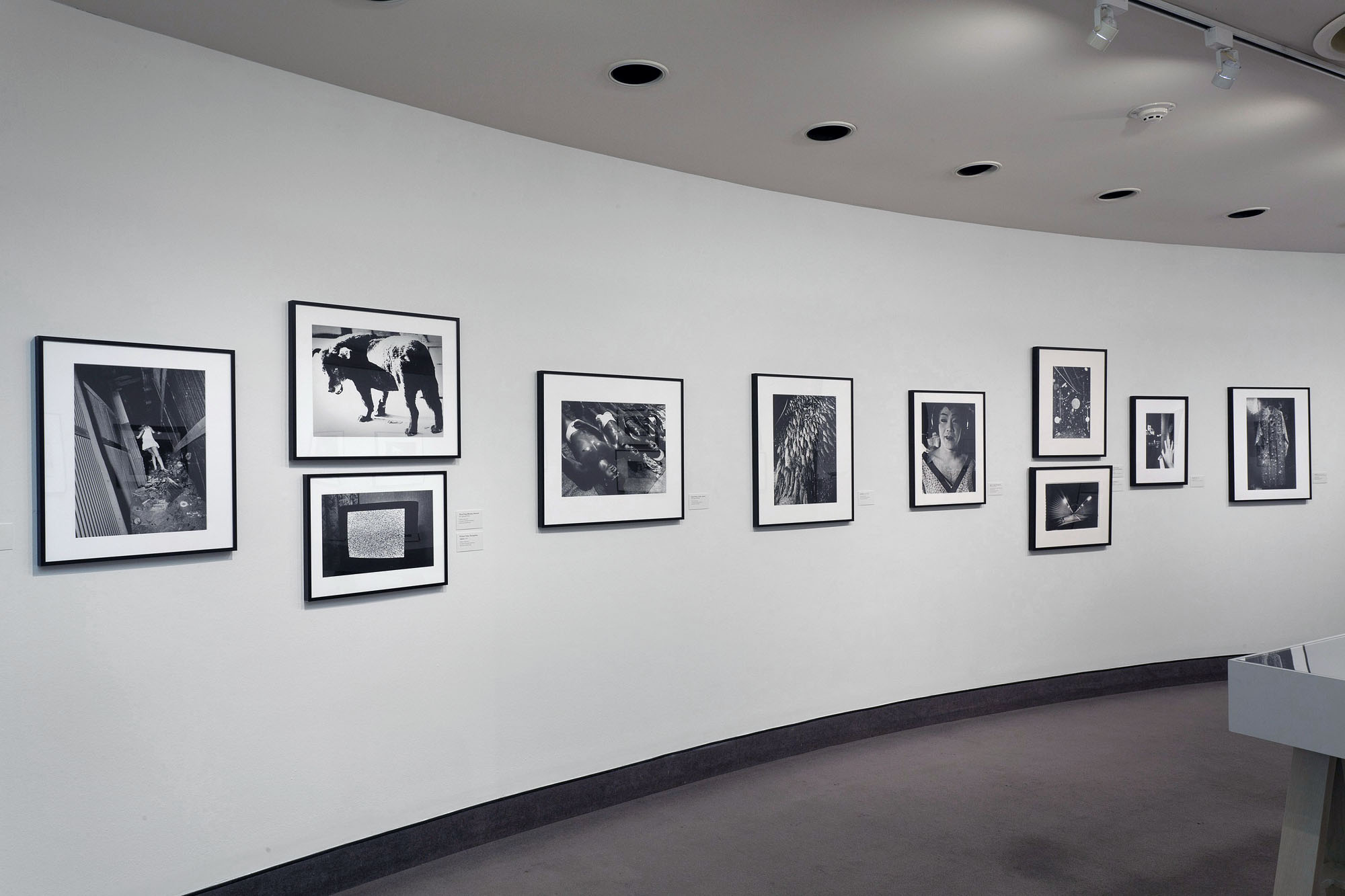
Installation view of the exhibition 'Fracture: Daido Moriyama' at the Los Angeles County Museum of Art (LACMA) 

Installation view of the exhibition 'Fracture: Daido Moriyama' at the Los Angeles County Museum of Art (LACMA) 

Installation view of the exhibition 'Fracture: Daido Moriyama' at the Los Angeles County Museum of Art (LACMA) 

Installation view of the exhibition 'Fracture: Daido Moriyama' at the Los Angeles County Museum of Art (LACMA) 

Installation view of the exhibition 'Fracture: Daido Moriyama' at the Los Angeles County Museum of Art (LACMA) 


Installation views of the exhibition Fracture: Daido Moriyama at the Los Angeles County Museum of Art (LACMA)
Courtesy of Daido Moriyama and Los Angeles County Museum of Art, Los Angeles


Daido Moriyama (Japanese, b. 1938) 'Untitled' c. 1975


Daido Moriyama (Japanese, b. 1938)
Untitled
c. 1975
Gelatin silver print
© Daido Moriyama


Daido Moriyama (Japanese, b. 1938) 'Street, Tokyo, Japan' 1981


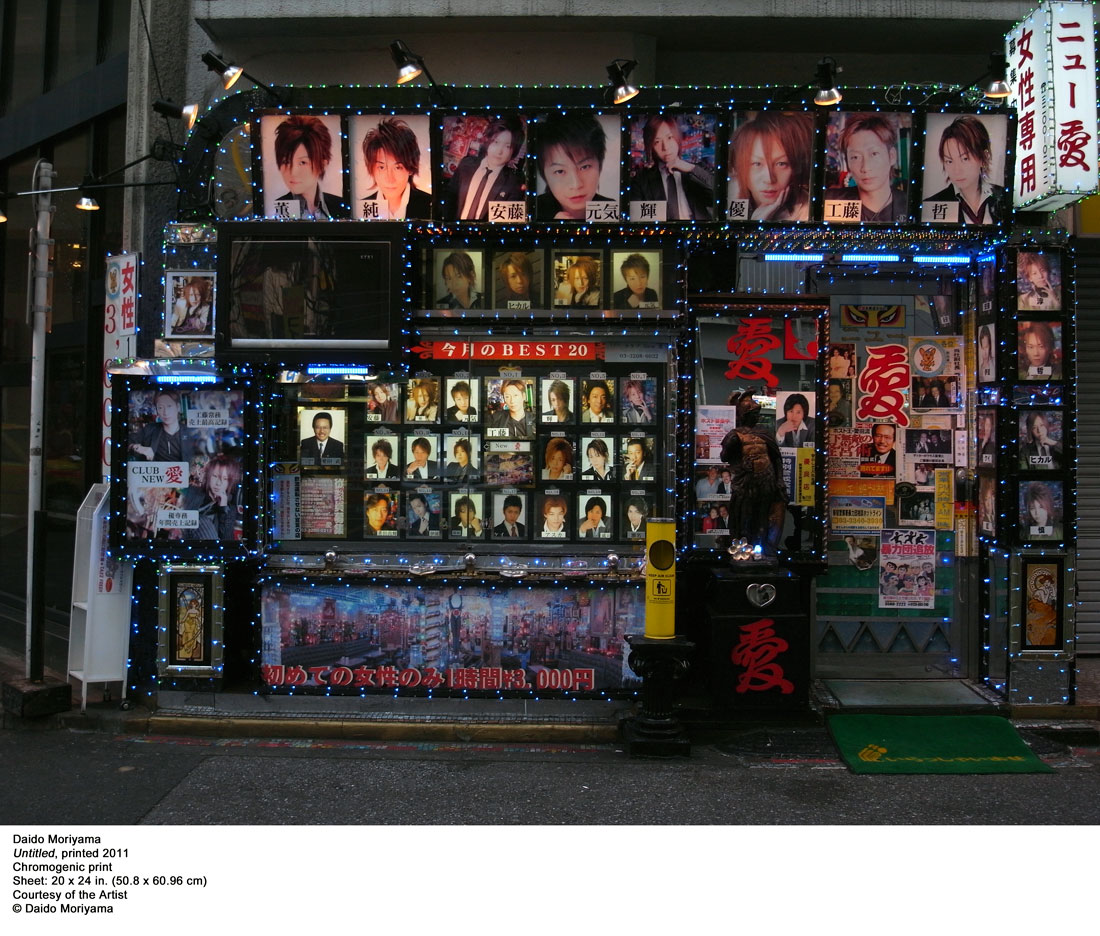
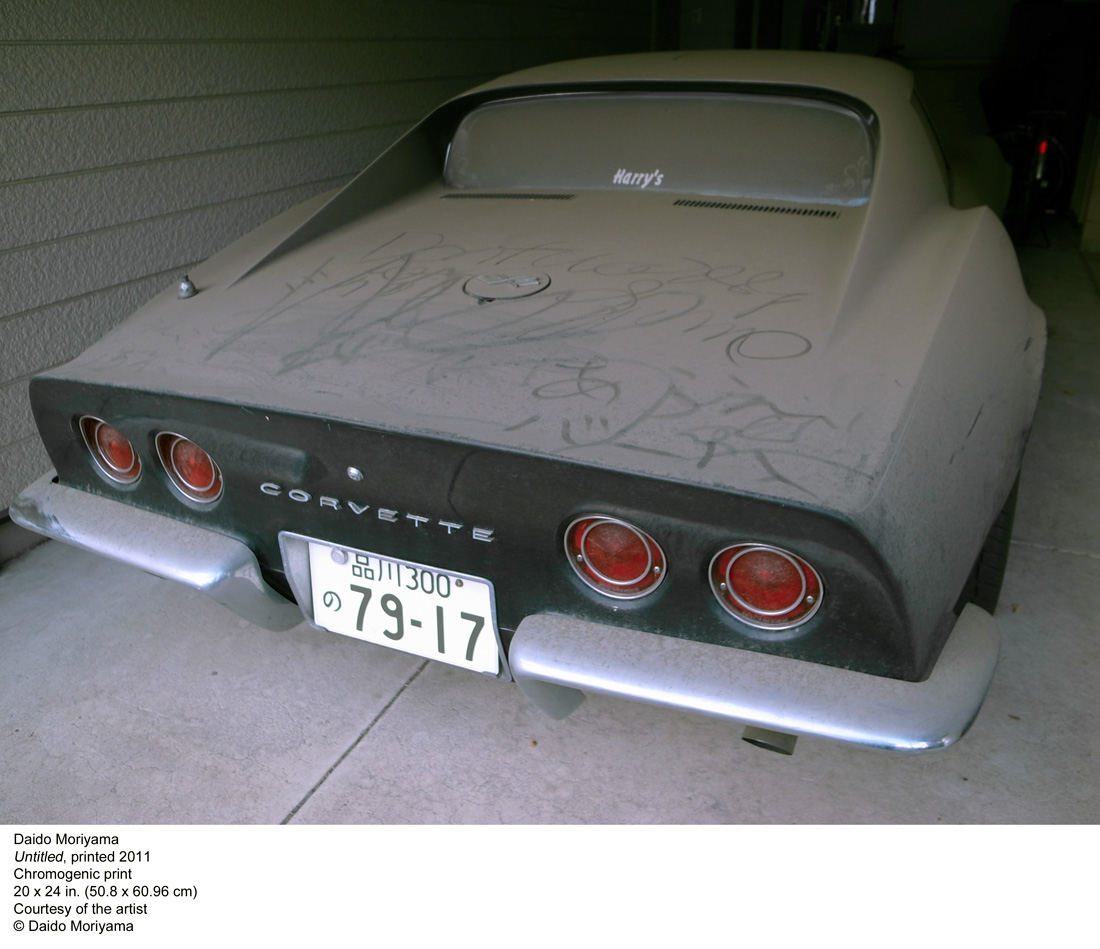
Daido Moriyama (Japanese, b. 1938) 'Untitled' 2011


Daido Moriyama (Japanese, b. 1938) 'Untitled' 2011


Daido Moriyama (Japanese, b. 1938) 'Untitled' 2011


Daido Moriyama (Japanese, b. 1938) 'Kagerou (Mayfly)' 1972


Daido Moriyama (Japanese, b. 1938) 'Untitled' 2011


Daido Moriyama (Japanese, b. 1938) 'Untitled' 2011


The Los Angeles County Museum of Art (LACMA) presents Fracture: Daido Moriyama, the first solo museum exhibition of photographer Daido Moriyama (b. 1938) to be shown in Los Angeles. Moriyama first came to prominence in the mid-1960s with his gritty depictions of Japanese urban life. His highly innovative and intensely personal photographic approach often incorporates high contrast, graininess, and tilted vantages to convey the fragmentary nature of modern realities.

Spanning his early years to present day, the show features nearly fifty works, including a range of Moriyama’s renowned black-and-white photographs, his many important photo books, and the debut of recent colour work taken in Tokyo.

“Daido Moriyama’s immensely inventive and prolific achievements make him one of the leading photographers of our era. Inspiring viewers and artists world-wide, Moriyama continues to demonstrate a raw and restless exploration of the fractured realities of modern times, including his most recent colour work, appearing for the first time,” observes Edward Robinson, associate curator of LACMA’s Wallis Annenberg Photography Department and curator of the exhibition.

Exhibition overview

Responding to the rapid changes that transformed post-World War II Japan, Daido Moriyama’s black-and-white works express a fascination with the cultural contradictions of age-old traditions persisting within modern society, along with the effects of westernisation and consumerism.

Providing a raw, restless vision of city life and the chaos of everyday existence, strange worlds, and unusual characters, Moriyama frequently photographs while on walks through Tokyo – particularly the dark, labyrinthine streets of the Shinjuku district – as well as when traveling on Japan’s postwar highways and during strolls through other urban centers in Japan and abroad. His work suggests the bold intuition informing the artist’s ongoing exploration of urban mystery, memory, and photographic invention.

Fracture: Daido Moriyama will display the artist’s iconic black-and-white photographs, exemplifying the are, bure, boke (grainy, blurry, out-offocus) style, in addition to a new installation of recent colour work. An accompanying video will feature documentary footage of the photographer at work, exploring by foot and responding to the vibrant cityscape of Tokyo. Also on view will be a selection of books – Moriyama has published more than forty to date – which highlights the artist’s highly influential experimentation with reproduction media and the transformative possibilities of the printed page.

About Daido Moriyama

Born in Ikeda, Osaka, Moriyama trained in graphic design, then took up photography with Takeji Iwaniya, a professional photographer of architecture and crafts. Moving to Tokyo in 1961, he assisted photographer Eikoh Hosoe for three years and became familiar with the trenchant societal critiques produced by photographer Shomei Tomatsu. Moriyama also drew inspiration from William Klein’s confrontational photographs of New York, Andy Warhol’s silkscreened multiples of newspaper images, and the writings of Jack Kerouac and Yukio Mishima.

His work has been collected by numerous public and private collections internationally, including LACMA, the Museum of Modern Art, New York, the San Francisco Museum of Modern Art, the Metropolitan Museum of Art, New York, the Getty Museum, Los Angeles, the Museum of Fine Arts, Boston, and the Centre Pompidou, Paris. Moriyama has had recent major solo shows at The Fondation Cartier pour l’Art Contemporain, Paris, The Fotomuseum, Winterthur, Switzerland, the Metropolitan Museum of Photography in Tokyo, and will be exhibited with William Klein at the Tate Modern this fall.

Press release from the LACMA website


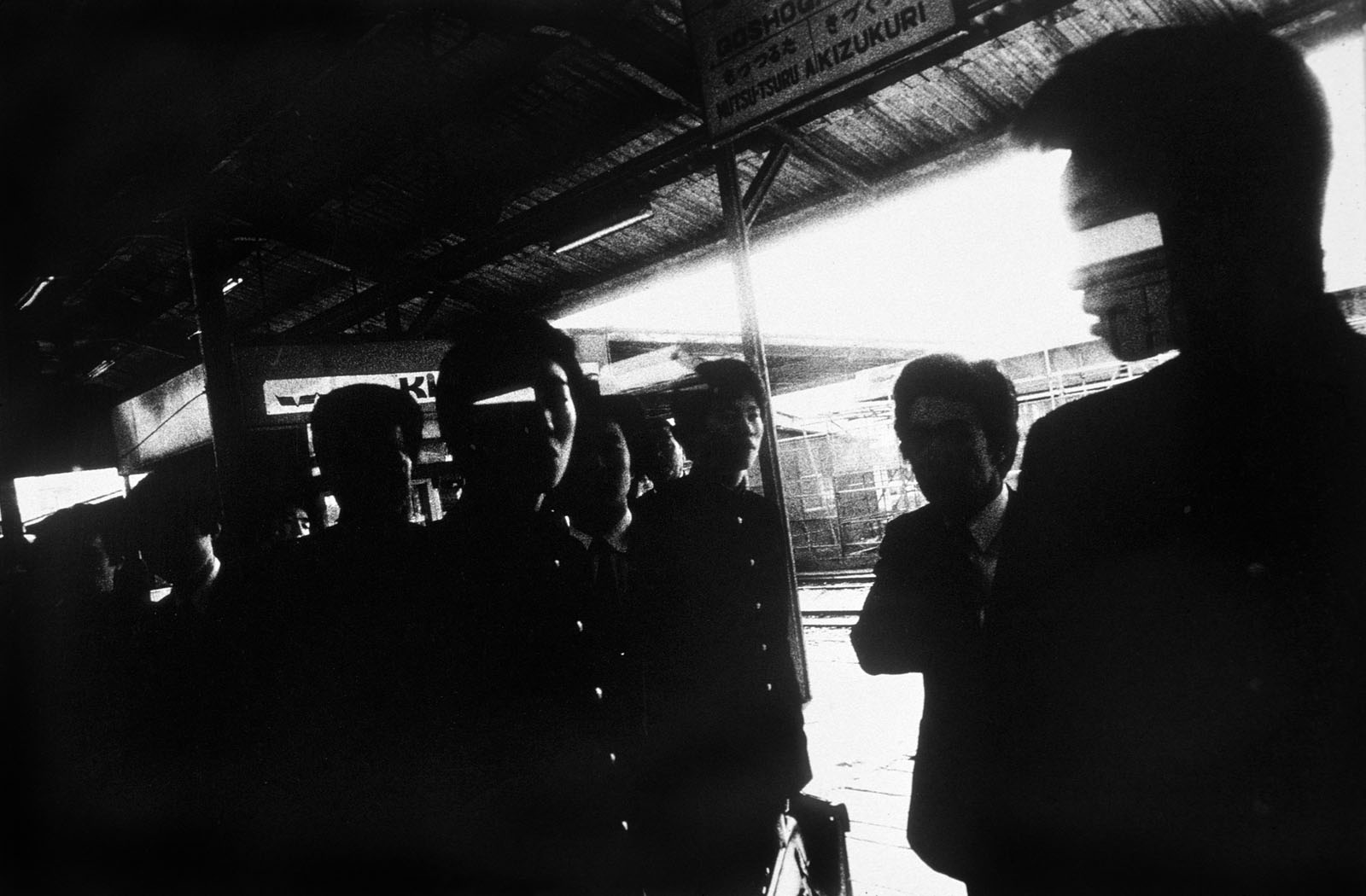
Daido Moriyama (Japanese, b. 1938) 'Untitled (shadows with tires)' Nd, printed 2009


Daido Moriyama (Japanese, b. 1938)
Untitled (shadows with tires)
Nd, printed 2009
Gelatin silver print
Courtesy of Courtesy Daniel Greenberg and Susan Steinhauser
© Daido Moriyama


Daido Moriyama (Japanese, b. 1938) 'Male actor playing a woman' Tokyo 1966


Daido Moriyama (Japanese, b. 1938)
Male actor playing a woman
Tokyo 1966
Gelatin silver print
© Daido Moriyama


Daido Moriyama (Japanese, b. 1938) 'Untitled' 2002


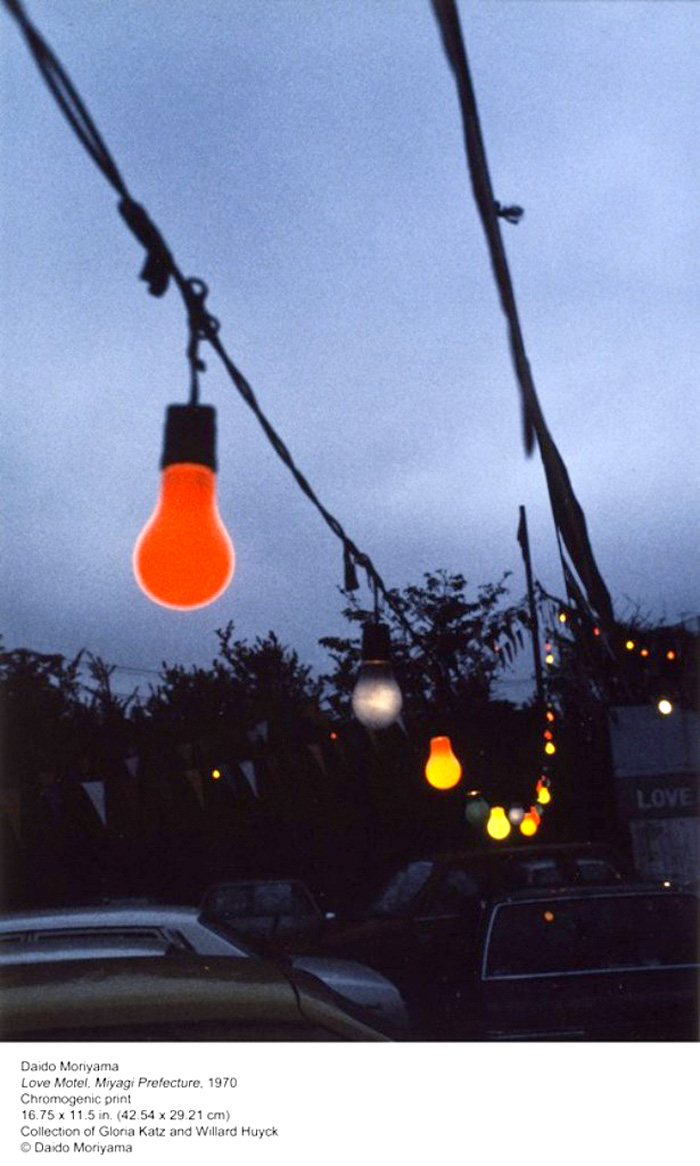
Daido Moriyama (Japanese, b. 1938) 'Love Motel, Miyagi Prefecture' 1970


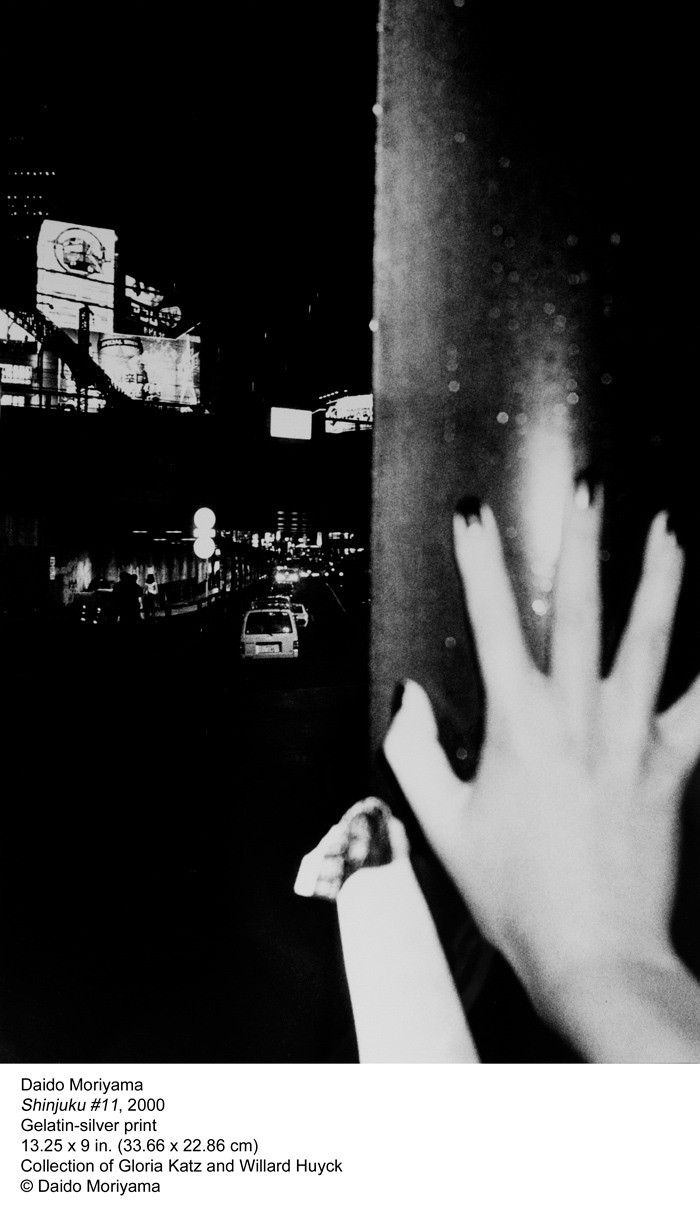
Daido Moriyama (Japanese, b. 1938) 'Shinjuku #11' 2000


Daido Moriyama (Japanese, b. 1938) 'Untitled (woman in white dress running)' 1971


Los Angeles County Museum of Art (LACMA)
5905 Wilshire Boulevard (at Fairfax Avenue)
Los Angeles, CA, 90036
Phone: 323 857-6000

Opening hours:
Monday, Tuesday, Thursday: 11am – 5pm
Friday: 11am – 8pm
Saturday, Sunday: 10am – 7pm
Closed Wednesday

LACMA website

LIKE ART BLART ON FACEBOOK

Back to top

Exhibition: ‘Robert Adams: The Place We Live, a retrospective selection of photographs’ at Los Angeles County Museum of Art (LACMA)

 Exhibition dates: 11th March – 3rd June 2012


Robert Adams (American, b. 1937) 'Interstate 25, Eden Colorado' 1968


More photographs from this fabulous retrospective, different images from the two previous postings. More images from the retrospective can be found in these postings when the exhibition appeared at the Denver Art Museum (DAM), September 2011 – Jan 2012 and the Vancouver Art Gallery, September 2010 – January 2011.

Marcus


Many thankx to the Los Angeles County Museum of Art (LACMA) for allowing me to publish the photographs in the posting. Please click on the photographs for a larger version of the image.


“Over the years I have come to believe… that we live in several landscapes at once, among them the landscape of hope, and that though we must usually focus on what is characteristic of the immediate and troubled present, it is rash to say that other geographies are unimportant or even finally separate.”


Robert Adams


“Southern California was, by the reports of those who lived there at the turn of the century, beautiful; there were live oaks on the hills, orchards across the valleys, and ornamental cypress, palms, and eucalyptus lining the roads. Even now we can almost extrapolate an Eden from what has lasted – from the architecture of old eucalyptus trunks, for example, and from the astringent perfume of the trees’ flowers as it blends with the sweetness of orange blossoms.

What citrus remain today, however, are mostly abandoned, scheduled for removal, and large eucalyptus have often been vandalized, like the hundreds west of Fontana that have been struck head high with shotgun fire. Whether those trees that stand are reassuring is a question for a lifetime. All that is clear is the perfection of what we were given, the unworthiness of our response, and the certainty, in view of our current deprivation, that we are judged.”


Robert Adams 1986


Robert Adams (American, b. 1937) 'Edge of Timoteo Canyon, looking toward Los Angeles, Redlands, California' 1978


The Los Angeles County Museum of Art (LACMA) presents Robert Adams: The Place We Live, A Retrospective Selection of Photographs, an exhibition that showcases the artistic legacy of American photographer Robert Adams (b. 1937) and his longstanding engagement with the contemporary Western landscape. Featuring nearly three hundred photographs and a key selection of the artist’s publications, the retrospective weaves together four decades of Adams’s work into an epic narrative of American experience in the late twentieth and early twenty first centuries. Adams’s work reflects his dedication to describing the changing Western landscape – the growth of its built environment and the lives of its inhabitants – contemplating the presence of trees, the open plains, the Pacific Ocean, and the deforestation of the Pacific Northwest. At LACMA, the exhibition highlights Adams’s extraordinary portrayal of the terrain of the Los Angeles region.

“It is hard to envision the American West without the extraordinary achievements of Robert Adams. Adams conveys the often sharp luminosity and inky shadows of western geography like no other. Yet it is in his reckoning with man’s fraught presence that Adams’s spare and terribly beautiful photographs continue to challenge us,” said Edward Robinson, associate curator of the Wallis Annenberg Photography Department, who organised LACMA’s presentation.

Exhibition overview

With nearly three hundred gelatin silver prints, the exhibition features the photographer’s major projects, from early pictures of quiet buildings and monuments erected by settlers of his native Colorado, to his most recent images of oceans and migratory birds in the Pacific Northwest. Accompanying the photographs in the exhibition are texts drawn from

Adams’s own published writings that total more than forty books to date. The reach of Adams’s work has been felt equally through his publications, which are an indispensable element of the artist’s creative practice. A selection of these books will be displayed; copies will also be available in a reading area and digitally on iPads in the exhibition, enabling visitors to experience Adams’s masterly use of the photographic book as a poetic medium in its own right.

Press release from the LACMA website


Robert Adams (American, b. 1937) 'Edge of San Timoteo Canyon, Redlands, California' 1978


Robert Adams (American, b. 1937)
Edge of San Timoteo Canyon, Redlands, California
1978
Yale University Art Gallery, purchased with a gift from Saundra B. Lane, a grant from the Trellis Fund, and the Janet and Simeon Braguin Fund
© 2012 Robert Adams


Robert Adams (American, b. 1937) 'Abandoned windbreak, West of Fontana, California' 1982


Robert Adams (American, b. 1937) 'New development on a former citrus-growing estate, Highland, California' 1983


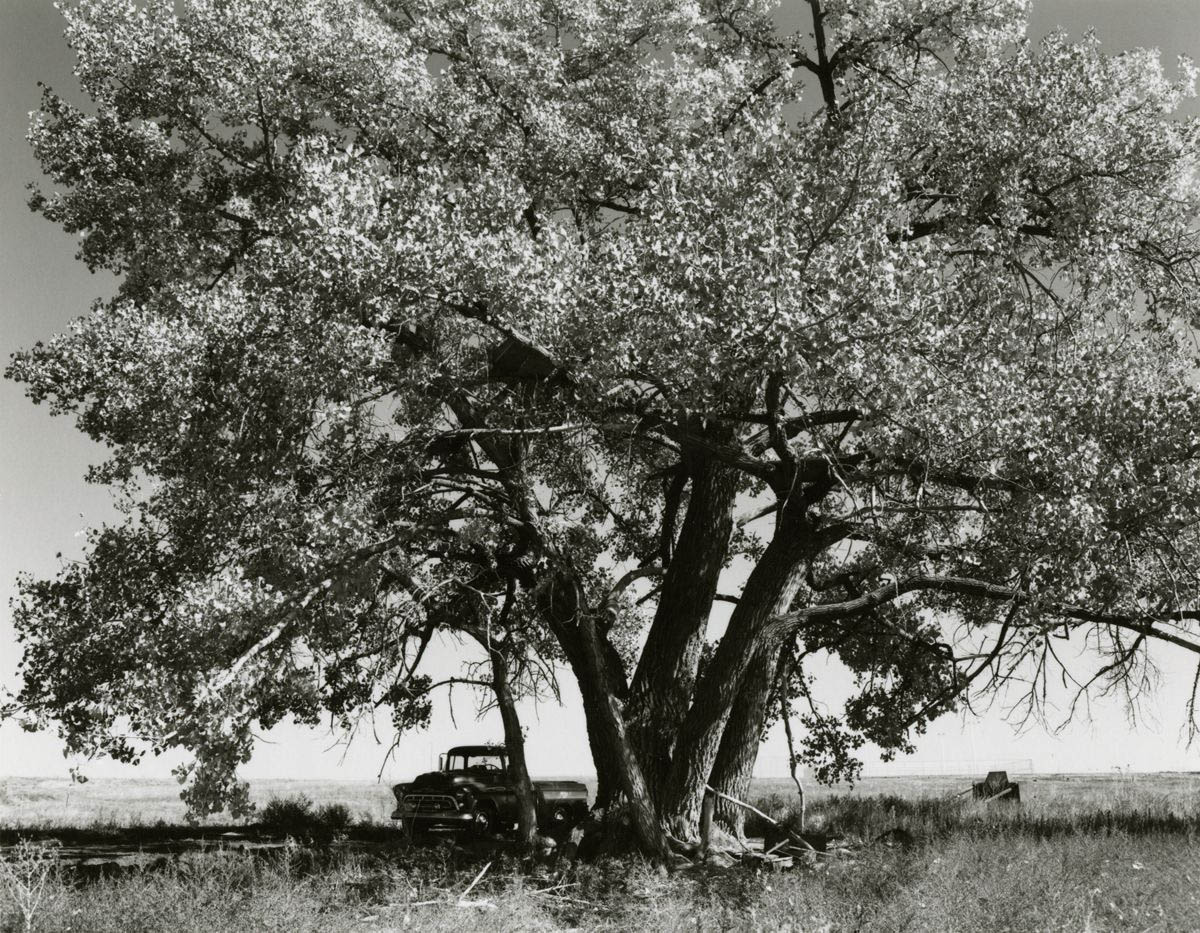
Robert Adams (American, b. 1937) 'Cottonwood, Longmont, Colorado' 1973-1975


Robert Adams (American, b. 1937)
Cottonwood, Longmont, Colorado
1973-1975
Gelatin silver print
Yale University Art Gallery, purchased with a gift from Saundra B. Lane, a grant from the Trellis Fund, and the Janet and Simeon Braguin Fund
© 2012 Robert Adams


Robert Adams (American, b. 1937) 'Pikes Peak, Colorado Springs, Colorado' 1969


Robert Adams (American, b. 1937)
Pikes Peak, Colorado Springs, Colorado
1969
Yale University Art Gallery, purchased with a gift from Saundra B. Lane, a grant from the Trellis Fund, and the Janet and Simeon Braguin Fund
© 2012 Robert Adams


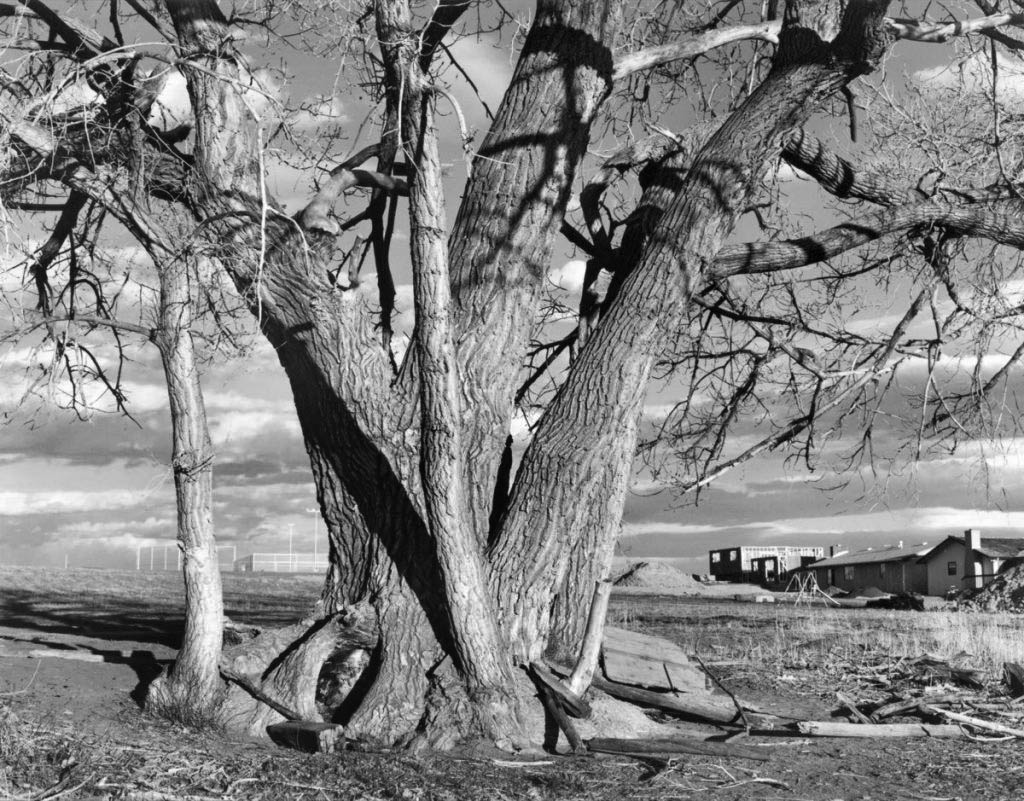
Robert Adams (American, b. 1937) 'Cottonwood' 1973-1975


Robert Adams (American, b. 1937)
Cottonwood
1973-1975
Gelatin silver print
Yale University Art Gallery, purchased with a gift from Saundra B. Lane, a grant from the Trellis Fund, and the Janet and Simeon Braguin Fund
© 2012 Robert Adams


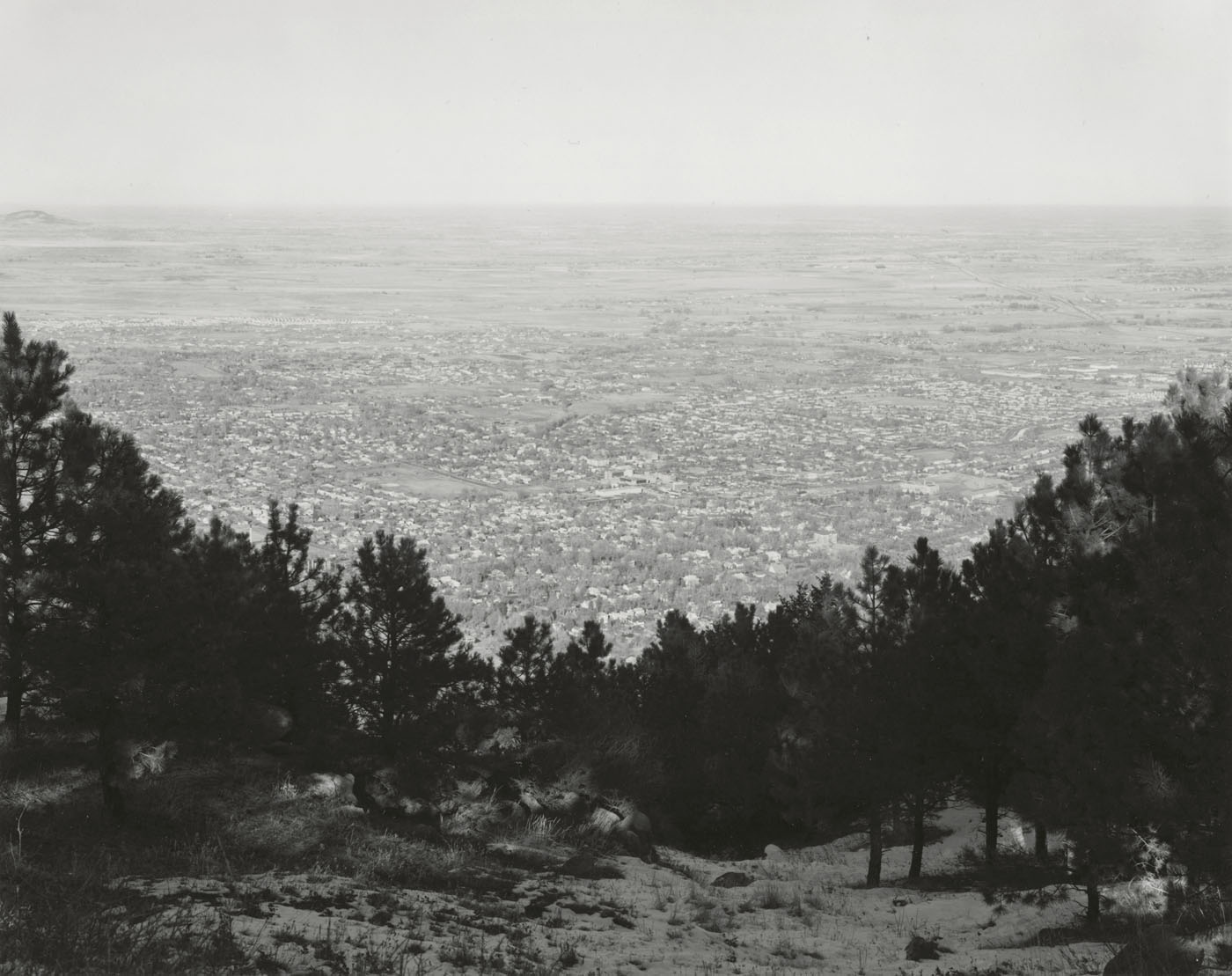
Robert Adams (American, b. 1937) 'East from Flagstaff Mountain, Boulder County, Colorado' 1975


Robert Adams (American, b. 1937)
Northeast from Flagstaff Mountain, Boulder County, Colorado
1975
Gelatin silver print
Yale University Art Gallery, purchased with a gift from Saundra B. Lane, a grant from the Trellis Fund, and the Janet and Simeon Braguin Fund
© 2012 Robert Adams


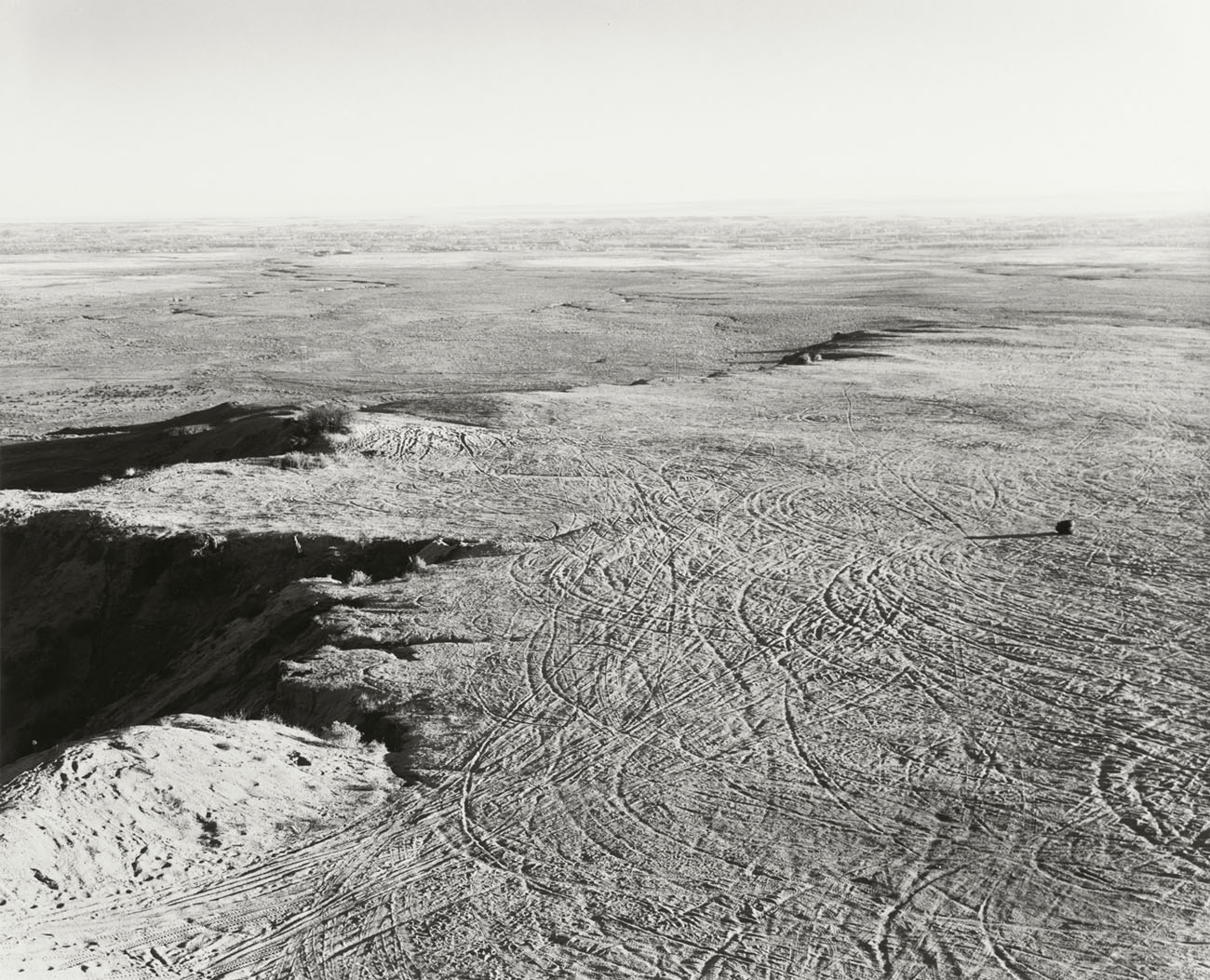
Robert Adams (American, b. 1937) 'Quarried Mesa Top, Pueblo County, Colorado' 1978


Robert Adams (American, b. 1937)
Quarried Mesa Top, Pueblo County, Colorado
1978
Gelatin silver print
Yale University Art Gallery, purchased with a gift from Saundra B. Lane, a grant from the Trellis Fund, and the Janet and Simeon Braguin Fund
© 2012 Robert Adams


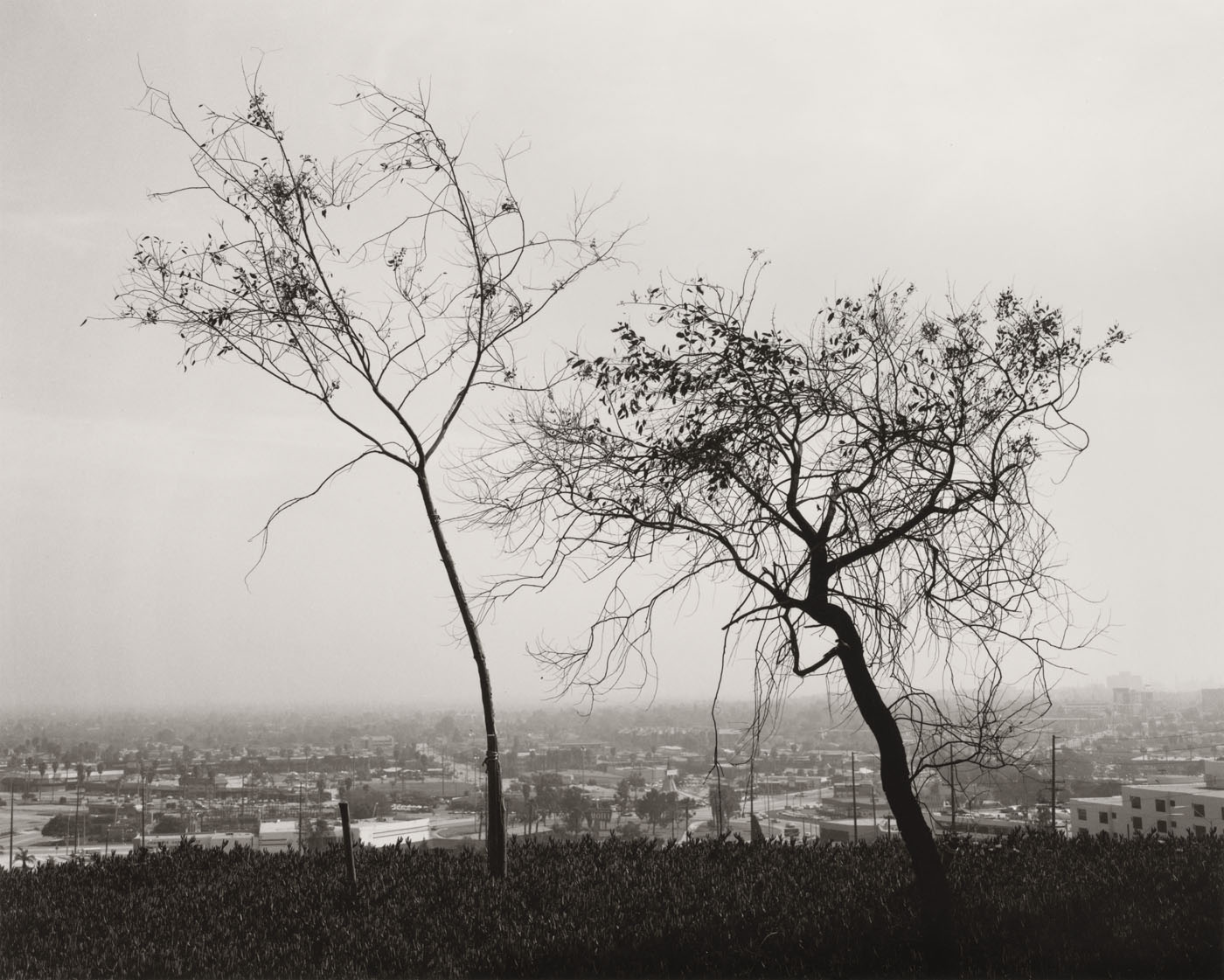
Robert Adams (American, b. 1937) 'On Signal Hill, Overlooking Long Beach, California' 1983


Robert Adams (American, b. 1937)
On Signal Hill, overlooking Long Beach, California
1983
Gelatin silver print
Yale University Art Gallery, purchased with a gift from Saundra B. Lane, a grant from the Trellis Fund, and the Janet and Simeon Braguin Fund
© 2012 Robert Adams


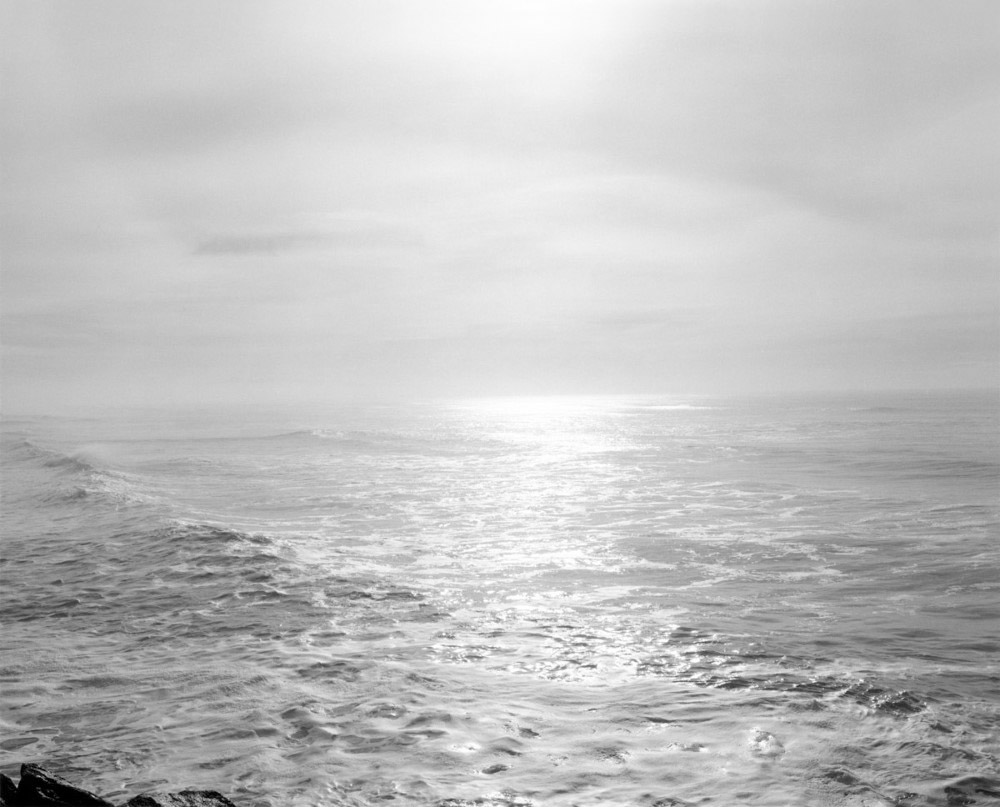
Robert Adams (American, b. 1937) 'Southwest from the South Jetty, Clatsop County, Oregon' 1992


Robert Adams (American, b. 1937)
Southwest from the South Jetty, Clatsop County, Oregon
1992
Yale University Art Gallery, purchased with a gift from Saundra B. Lane, a grant from the Trellis Fund, and the Janet and Simeon Braguin Fund
© 2012 Robert Adams


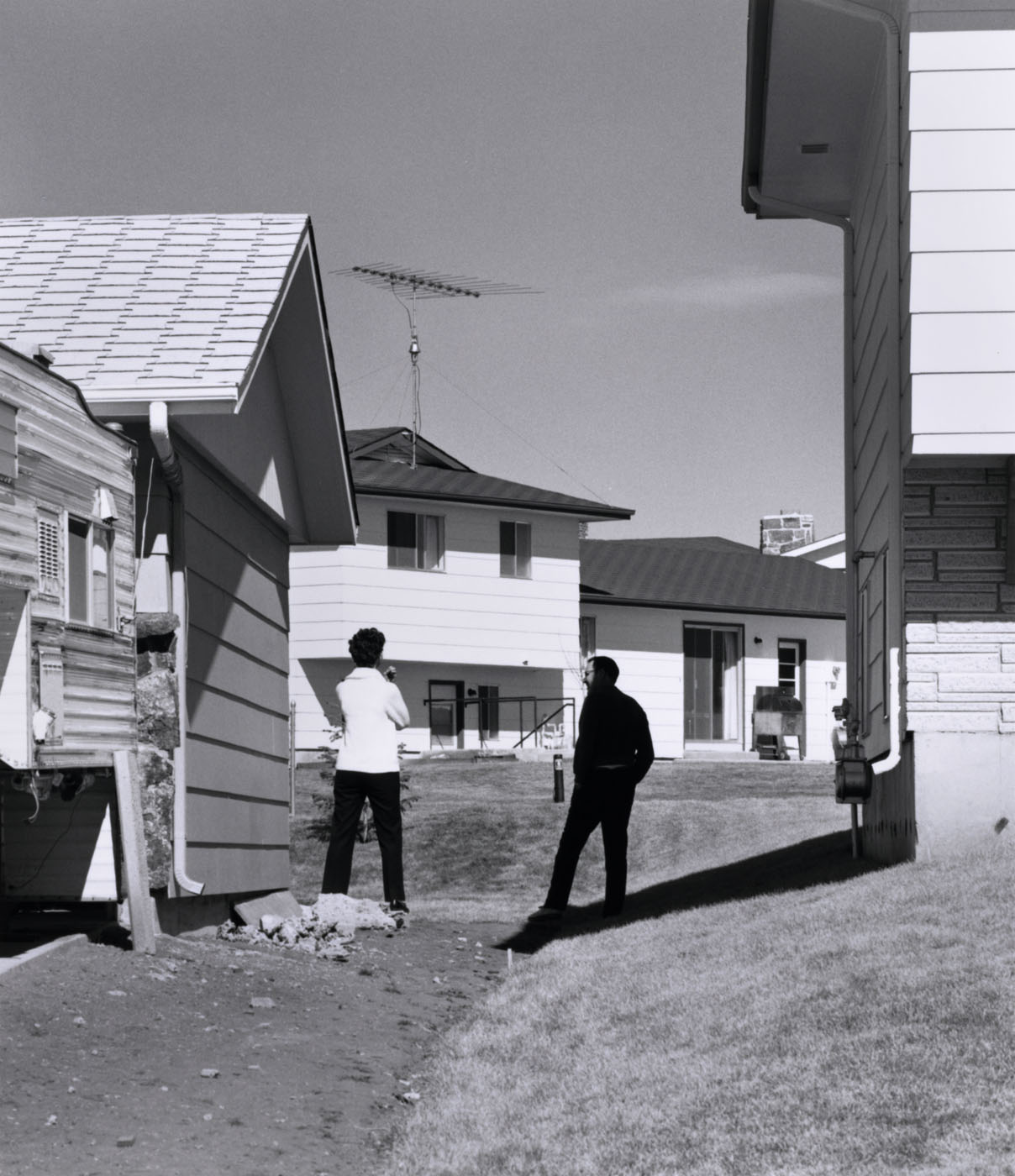
Robert Adams (American, b. 1937) 'In a New Subdivision, Colorado Springs, Colorado' 1969


Robert Adams (American, b. 1937)
In a New Subdivision, Colorado Springs, Colorado
1969
Yale University Art Gallery, purchased with a gift from Saundra B. Lane, a grant from the Trellis Fund, and the Janet and Simeon Braguin Fund
© 2012 Robert Adams


Los Angeles County Museum of Art (LACMA)
5905 Wilshire Boulevard (at Fairfax Avenue)
Los Angeles, CA, 90036
Phone: 323 857-6000

Opening hours:
Monday, Tuesday, Thursday: 11am – 6pm
Friday: 11am – 8pm
Saturday, Sunday: 10am – 7pm
Closed Wednesday

LACMA website

LIKE ART BLART ON FACEBOOK

Back to top

Sculpture: ‘Metropolis II’ (2010) by Chris Burden at LACMA, Los Angeles

Installation dates: 14th January 2012 –


Chris Burden (American, 1946-2015)
Metropolis II
2010
Courtesy of the Nicolas Berggruen Charitable Foundation
© Chris Burden

Dimensions: 9’9″ (H) x 28’3” (W) x 19’2” (D) (297 cm x 862 cm x 584 cm)

Media: 
3 1/2 hp DC motors with motor controllers
1,100 custom-manufactured die-cast cars
13 HO-scale train sets with controllers and tracks
Steel, aluminium, shielded copper wire, copper sheet, brass, various plastics, assorted woods and manufactured wood products, Legos, Lincoln Logs, Dado Cubes, glass, ceramic and natural stone tiles, acrylic and oil-based paints, rubber, sundry adhesives


Poetic, historic, amazing, fantastic, incredible, indescribable (the words of an eight year old, comment on the website). Great video as well. Take your ear plugs!

Dr Marcus Bunyan


Many thankx to LACMA for allowing me to publish the video and the photographs in the posting. Please click on the photographs for a larger version of the image.


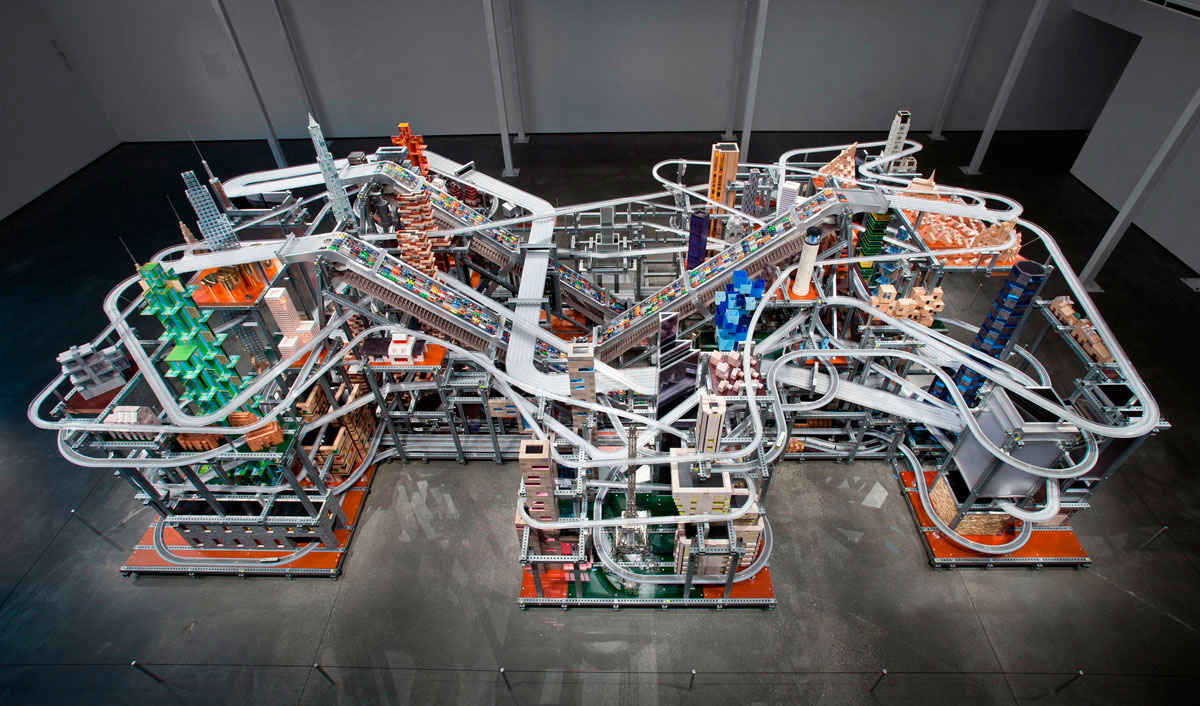
Chris Burden (American, 1946-2015) 'Metropolis II' 2010


Chris Burden (American, 1946-2015)
Metropolis II
2010
Courtesy of the Nicolas Berggruen Charitable Foundation
© Chris Burden


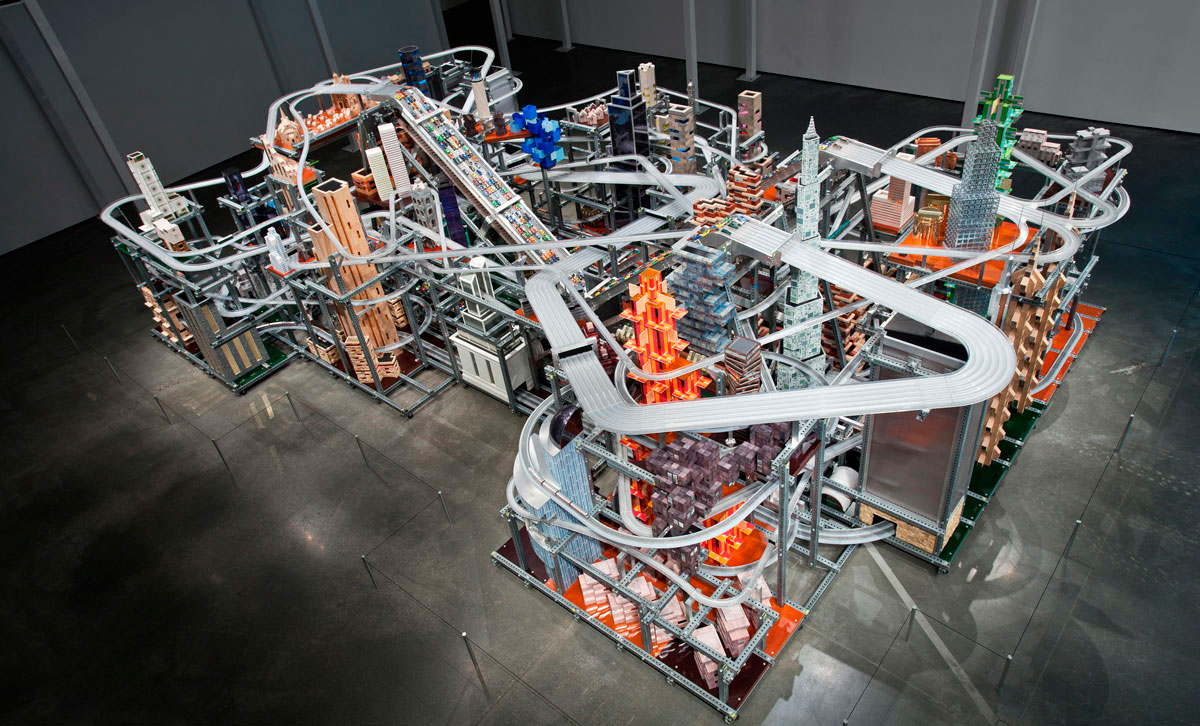
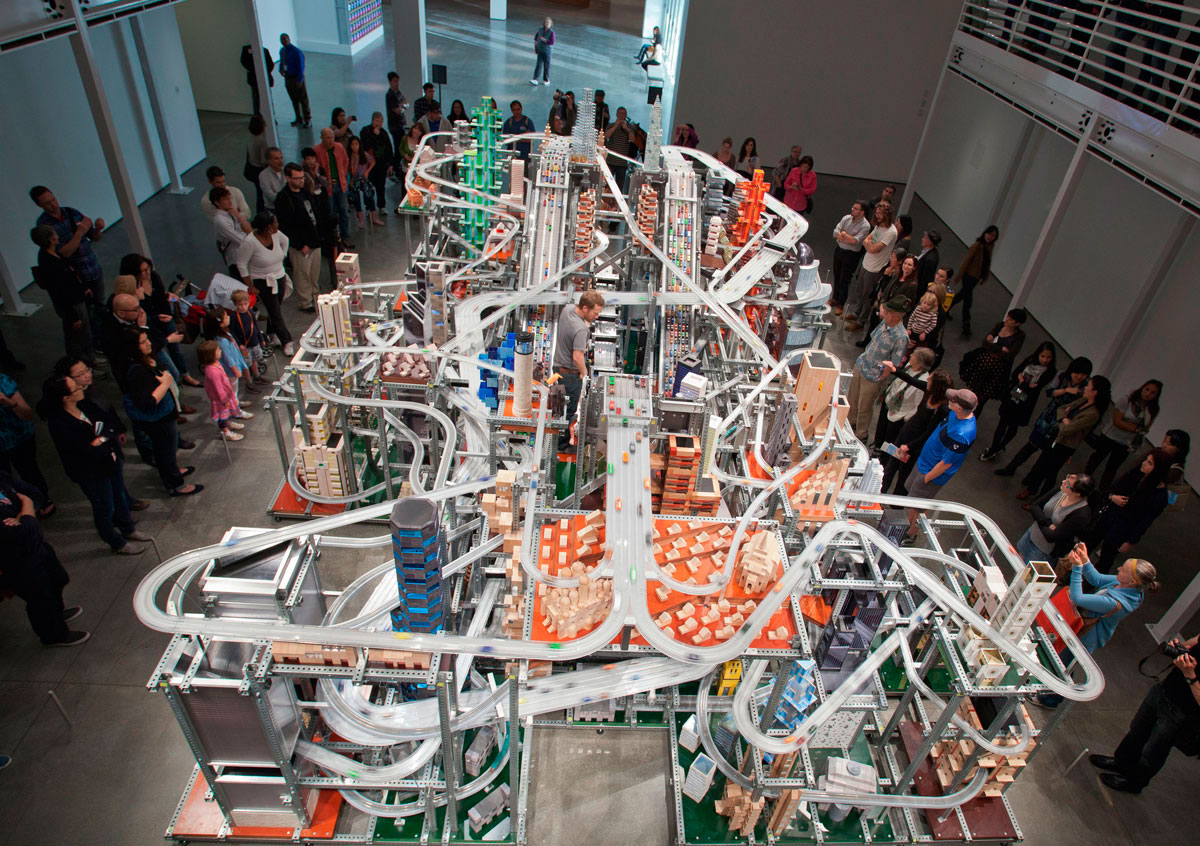
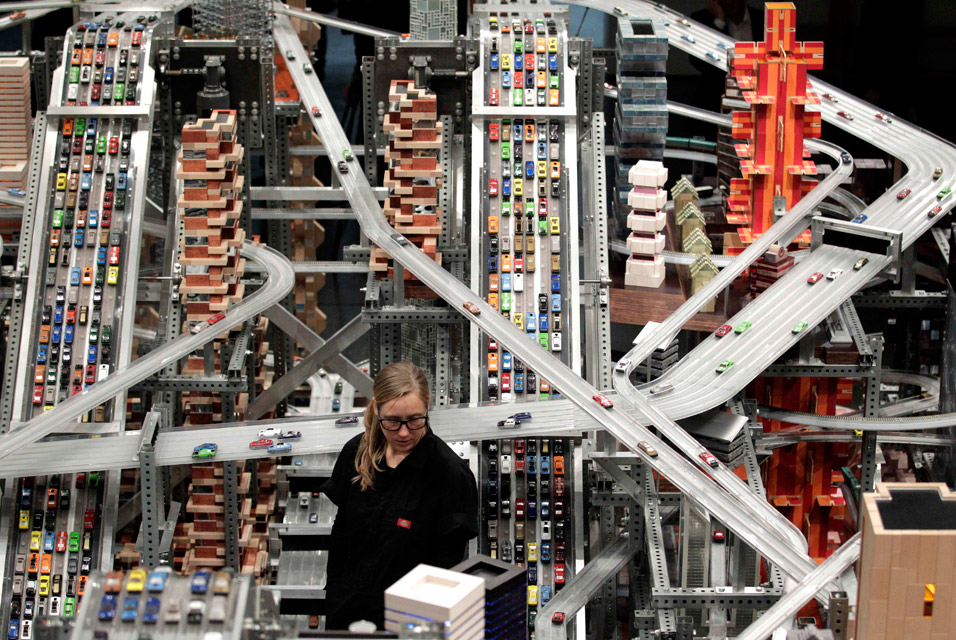
Created by artist Chris Burden, Metropolis II (2010) is a complex, large-scale kinetic sculpture modelled after a fast-paced modern city. The armature of the piece is constructed of steel beams, forming an eclectic grid interwoven with an elaborate system of eighteen roadways, including a six-lane freeway, train tracks, and hundreds of buildings. 1,100 miniature toy cars speed through the city at 240 scale miles per hour on the specially designed plastic roadways. Every hour, the equivalent of approximately 100,000 cars circulates through the sculpture. “The noise, the continuous flow of the trains, and the speeding toy cars, produces in the viewer the stress of living in a dynamic, active and bustling 21st Century city.”

Situated in the centre of the grid are three electrically powered conveyor belts, each studded with magnets at regular intervals. The magnets on the conveyor belt and those on the toy cars attract, enabling the cars to travel to the top of the sculpture without physical contact between the belt and cars. At the top, the cars are released one at a time and race down the roadways, weaving in and out of the structure, simulating rapid traffic and congestion.

Metropolis II is on long-term loan to LACMA, thanks to the generosity of LACMA Trustee Nicolas Berggruen. Beginning January 14, 2012, the work will be on view on the first floor of the Broad Contemporary Art Museum (BCAM) and run on weekends during the scheduled times below.

~ The cars are attached by a small magnet to the conveyor belt that brings them to the crest
~ The only motorisation of the cars is the conveyor belt to the top
~ Once the cars cross over the crest and head downward, their entire movement is by gravity
~ They travel at a scale speed of 240 mph, plus or minus
~ The tracks they take are Teflon coated to reduce friction
~ The tracks are beveled at 7 degrees to give added torque for speed when they come through corners and curves


Beginning Saturday, January 14, to see Metropolis II in action, please visit the gallery at these times:
Fridays: 12.30 – 2pm; 3 – 4.30pm; 5 – 6.30pm; 7 – 8.30pm
Weekends: 11.30 – 1.00pm; 2 – 3.30pm; 4 – 5.30pm; 6 – 7.30pm
Weekdays: not operational”

Press release from LACMA


Chris Burden (American, 1946-2015) 'Metropolis II' 2010

Chris Burden (American, 1946-2015) 'Metropolis II' 2010


Chris Burden (American, 1946-2015)
Metropolis II
2010
Courtesy of the Nicolas Berggruen Charitable Foundation
© Chris Burden


Chris Burden (American, 1946-2015) 'Metropolis II' 2010 (detail)


Chris Burden (American, 1946-2015)
Metropolis II (detail)
2010
Courtesy of the Nicolas Berggruen Charitable Foundation
© Chris Burden


Operator Alison Walker watches miniature cars move along the roads in Chris Burden’s latest kinetic sculpture, Metropolis II, at the Los Angeles County Museum of Art (LACMA) in Los Angeles, Wednesday, Jan. 11, 2012. The sculpture does more than just imitate life. The colorful display of roads, cars, trains and buildings is art imitating what the artist foresees life being like in five or 10 years.


Los Angeles County Museum of Art (LACMA)
5905 Wilshire Boulevard (at Fairfax Avenue)
Los Angeles, CA, 90036
Phone: 323 857-6000

Opening hours:
Monday, Tuesday, Thursday: 11am – 5pm
Friday: 11am – 8pm
Saturday, Sunday: 10am – 7pm
Closed Wednesday

LACMA website

LIKE ART BLART ON FACEBOOK

Back to top