Review: ‘Ivy’ photographs by Jane Burton at Karen Woodbury Gallery, Richmond, Melbourne

Exhibition dates: 2nd September – 26th September, 2009
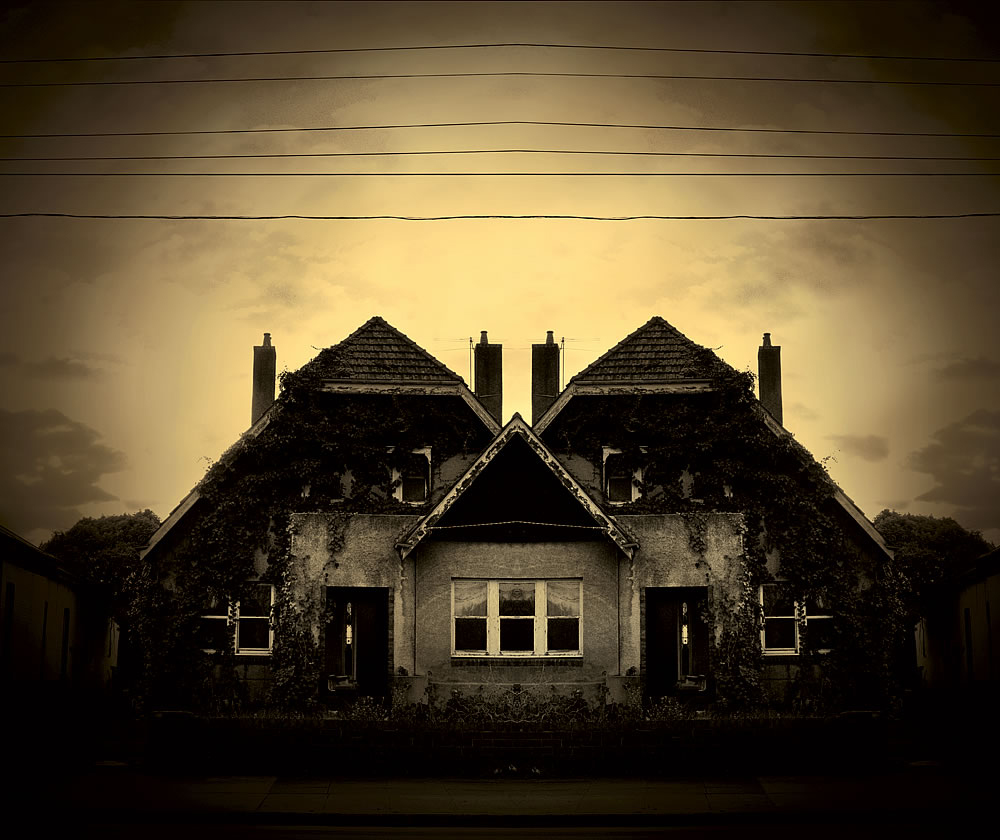
 

Jane Burton (Australian, b. 1966) 'Ivy #1' 2009 from the exhibition 'Ivy' photographs by Jane Burton at Karen Woodbury Gallery, Richmond, Melbourne, Sept, 2009


Jane Burton (Australian, b. 1966)
Ivy #1
2009
Pigment print
89 x 75cm


This is another outstanding body of photographic work on display in Melbourne. Featuring 10 large and 2 small sepia toned, vignetted pigment prints Burton’s work creates dark enchanted worlds of faceless female figures placed in the built environment that balance (meta)physical light and shade creating ambiguous narratives of innocence tinged with a darker edge.

The eponymous photograph Ivy #1 (above) is the seminal image of the series: a dark brooding house, hunched down positioned low in the photographic space, covered in ivy with black windows and dark eves has an ominous almost impenetrable presence and sets the tone for the rest of the work.

There are wonderful references to the history of photography if one cares to look (not simply generic references to Victorian daguerreotypes, postcards and family photographs). Ivy #2 (below) is a powerful photograph where the female figure is blindfolded, unable to see the encroaching tumescence of vegetation that surrounds and is about to engulf her. The placement of the hands is exquisite – unsure, reaching out, doubting her surroundings – with the 3-bladed fan hovering behind ready to devour the unwary. This photograph has resonances of the magical photographs of the garden by the Czech photographer Josef Sudek.

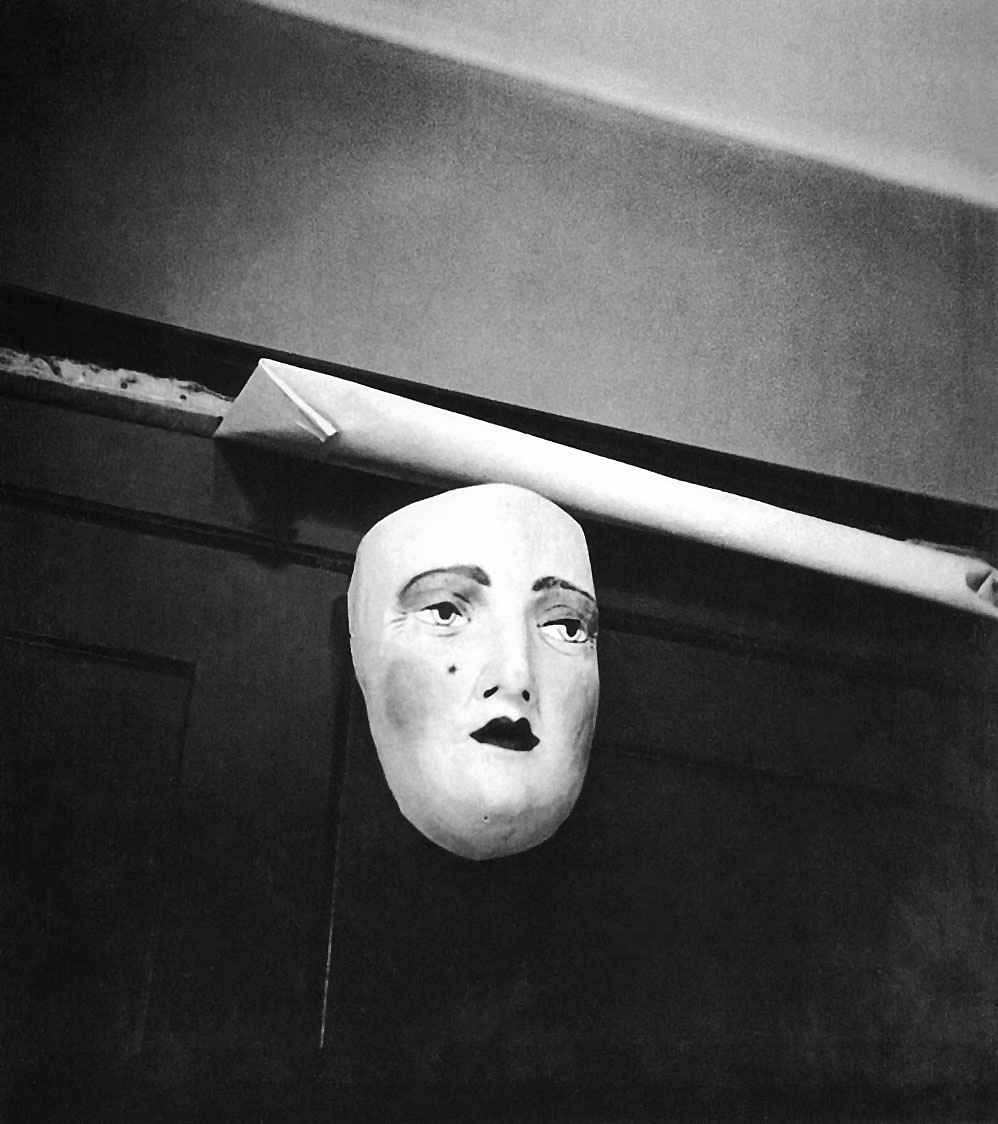
Ivy #3 (below) has echoes of the work of the American photographer Ralph Eugene Meatyard and his placement of masked people within built environments. In Burton’s photograph the broken umbrella becomes like insect wings, the faceless whiteness of the three-legged and three-armed creature cocooned among the overhanging predatory ivy, the luminescent sky offering the possibility of redemption. Other photographs such as Ivy #6 (below) and Ivy #7 with their wonderful colours, depth of field, heavy shadows and elegiac romantic feel have references to Eugene Atget and his photographs of the parks of Versailles (see photograph below).

Still further references to the history of photography can be found in the photographs Ivy #9 and Ivy #10 (below). In Ivy #9 the intersection of the two female bodies through double exposure forms a slippage in (photographic) reality and the disappearance of original identity in the layering of the photographs and into the empty non-reflection of the mirror. This non-reflection is confirmed in Ivy #10 where the faceless nude woman holds a mirror with no reflection. These photographs remind me of the photographs of New Orleans prostitutes in the early years of the 20th century by the photographer Bellocq with their masked faces and the ornamentation of the wallpaper behind the figures (see below).

I feel that in these photographs with their facelessness and the non-reflection of the mirror investigate notions of ‘Theoria’ – a Greek emphasis on the vision or contemplation of God where theoria is the lifting up of the individual out of time and space and created being and through contemplative prayer into the presence of God.1 In fact the whole series of photographs can be understood through this conceptualisation – not just remembrances of past time, not a blind contemplation on existence but a lifting up out of time and space into the an’other’ dark but enlightening presence.

The greatest wonder of this series is that the photographs magically reveal themselves again and again over time. Despite (or because of) the references to other artists, the beauty of Burton’s work is that she has made it her own. The photographs have her signature, her voice as an artist and it is an informed voice; this just makes the resonances, the vibrations of energy within the work all the more potent and absorbing. I loved them.

Dr Marcus Bunyan


Many thankx to Karen Woodbury Gallery for allowing me to publish the photographs in the posting. Please click on the photographs for a larger version of the image.
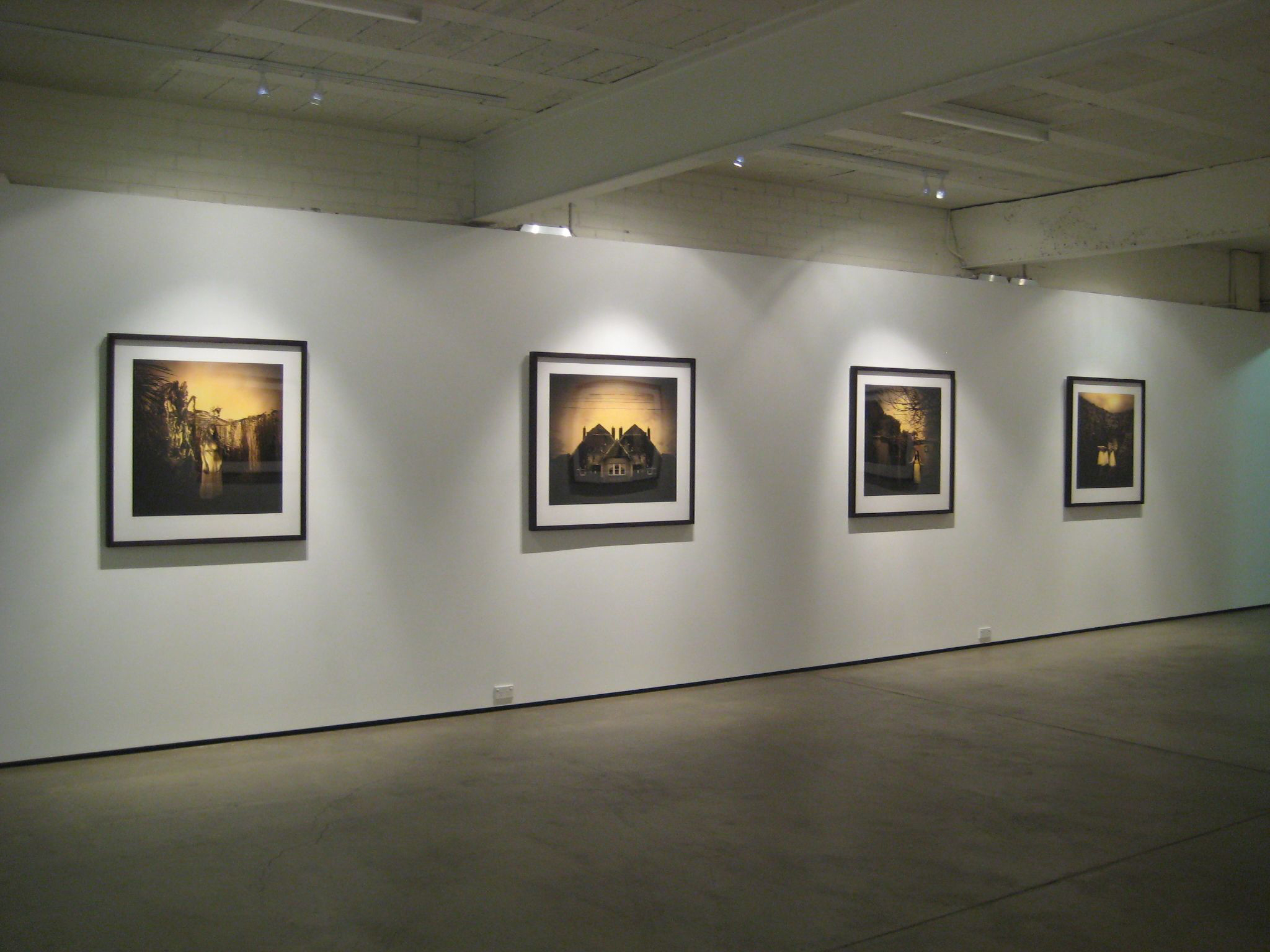
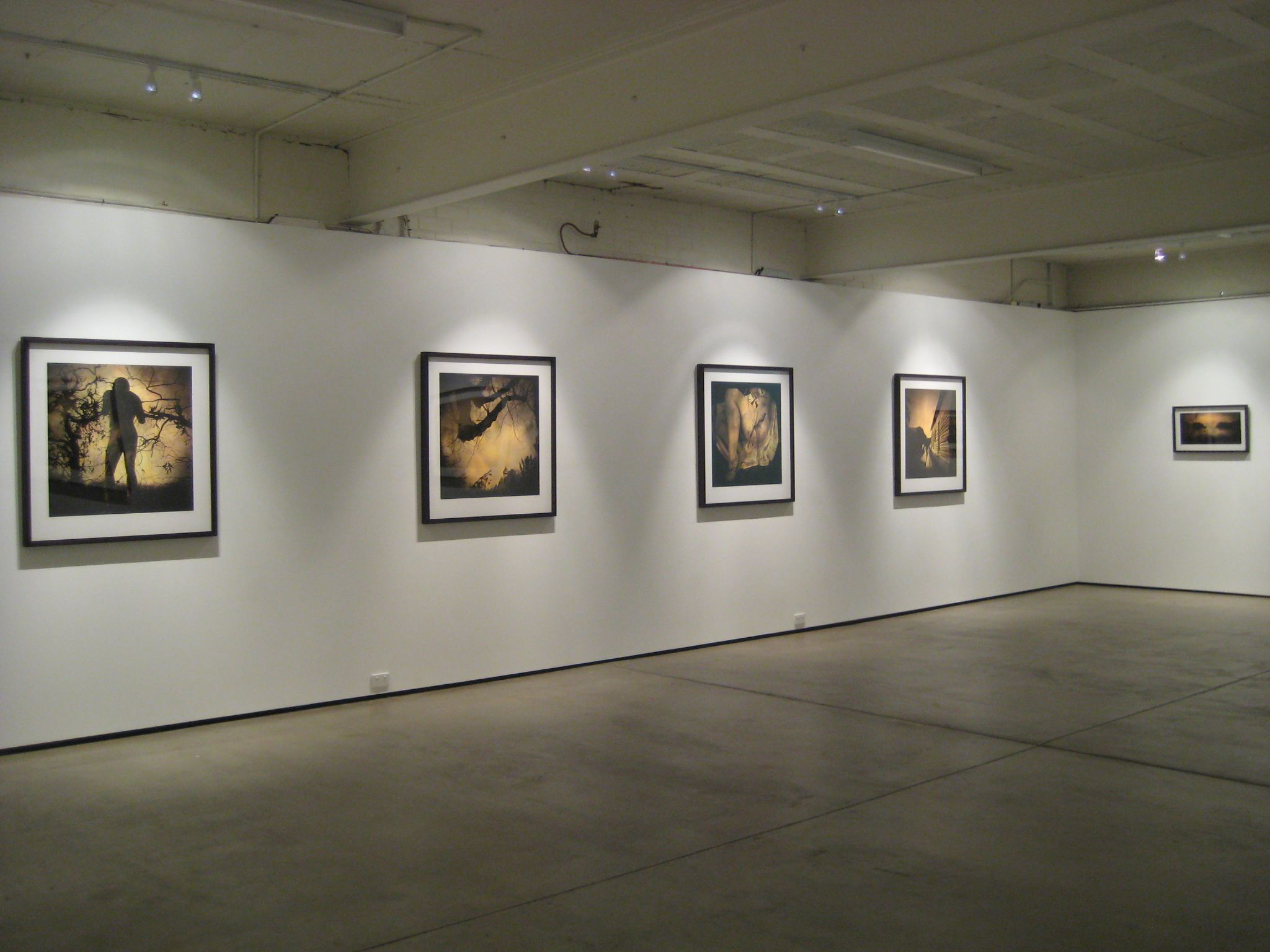


Installation view of 'Ivy' by Jane Burton at Karen Woodbury Gallery, Melbourne

Installation view of 'Ivy' by Jane Burton at Karen Woodbury Gallery, Melbourne


Installation views of Ivy by Jane Burton at Karen Woodbury Gallery, Melbourne
Photos: Marcus Bunyan
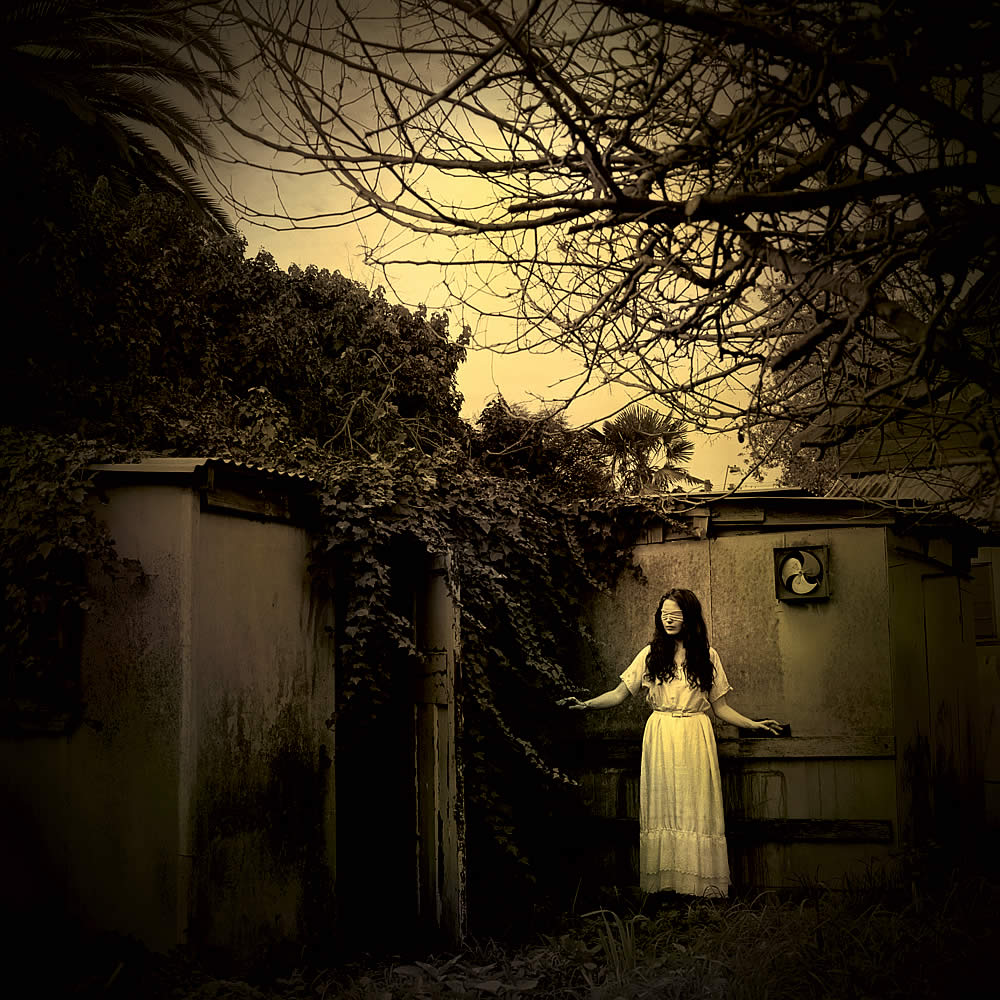
 

Jane Burton (Australian, b. 1966) 'Ivy #2' 2009 from the exhibition 'Ivy' photographs by Jane Burton at Karen Woodbury Gallery, Richmond, Melbourne, Sept, 2009


Jane Burton (Australian, b. 1966)
Ivy #2
2009
Pigment print
75 x 75cm
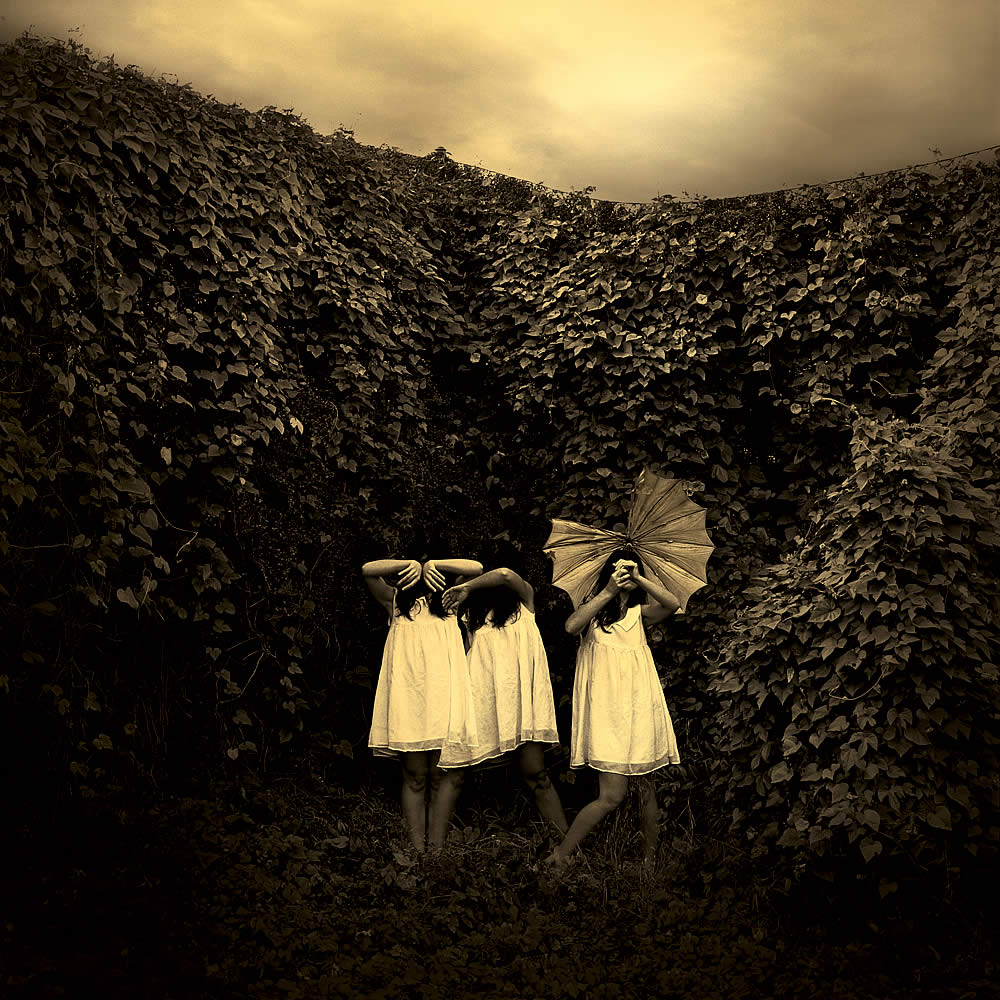
 

Jane Burton (Australian, b. 1966) 'Ivy #3' 2009 from the exhibition 'Ivy' photographs by Jane Burton at Karen Woodbury Gallery, Richmond, Melbourne, Sept, 2009


Jane Burton (Australian, b. 1966)
Ivy #3
2009
Pigment print
75 x 75cm
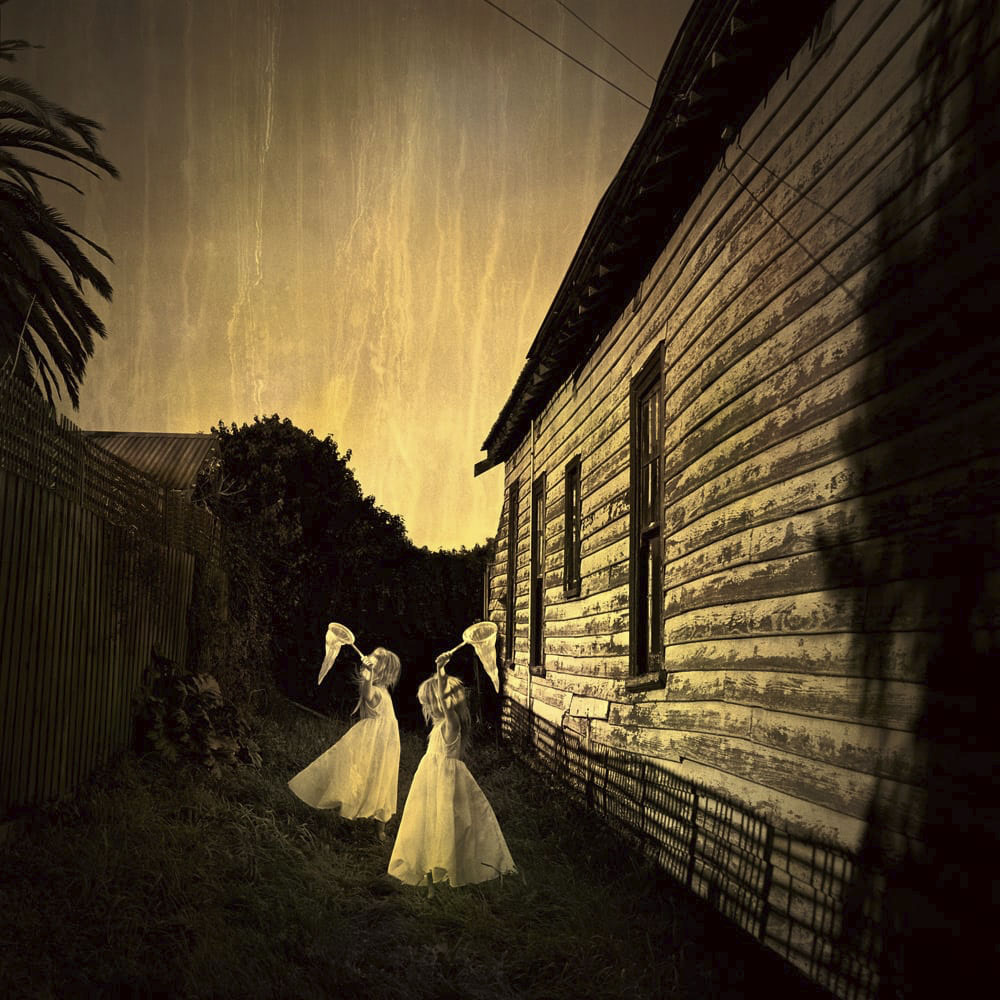
 

Jane Burton (Australian, b. 1966) 'Ivy #5' 2009


Jane Burton (Australian, b. 1966)
Ivy #5
2009
Pigment print
75 x 75cm
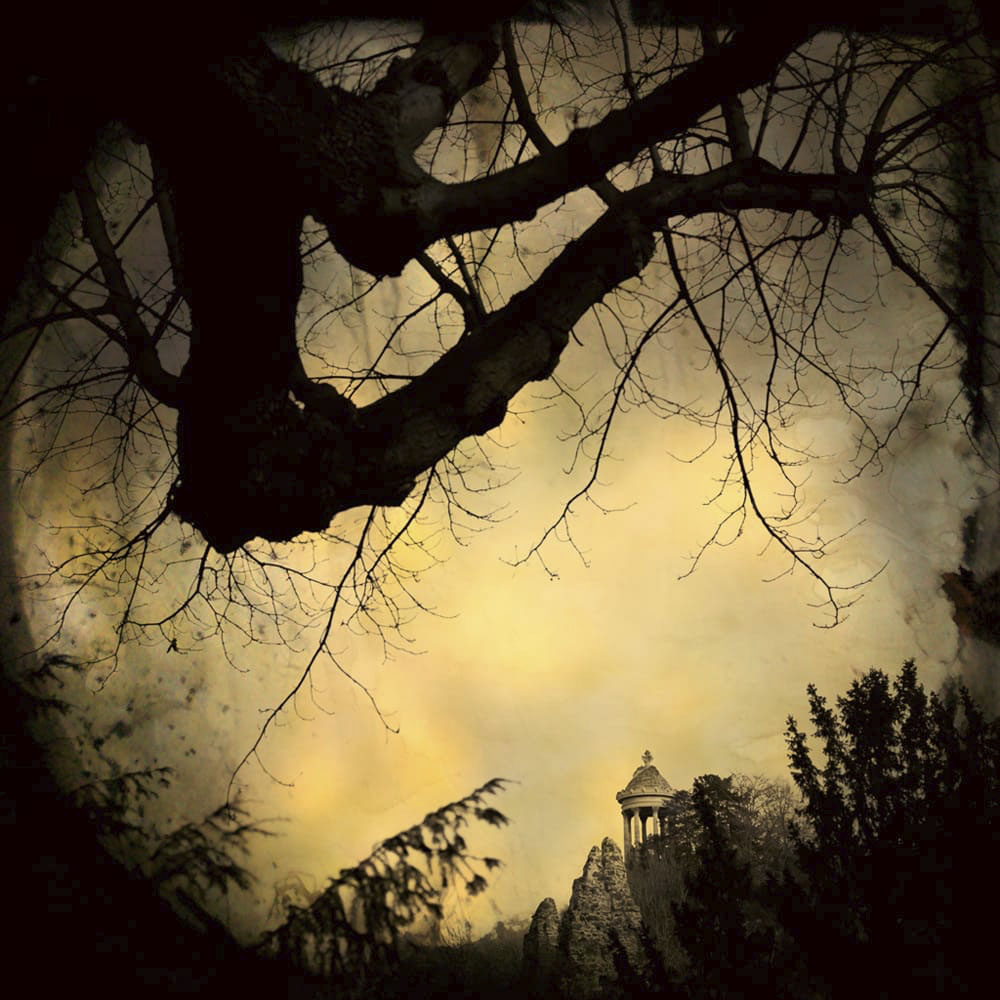
 

Jane Burton (Australian, b. 1966) 'Ivy #7' 2009


Jane Burton (Australian, b. 1966)
Ivy #7
2009
Pigment print
75 x 75cm


Jane Burton’s exhibition, Ivy comprises a series of photographs captured in black and white. The final prints are rendered with a sepia, peach-champagne tone, with many displaying a mottled hand-coloured effect in faded pastels of pink and green. These works hope to suggest an era past, perhaps Victorian. The imagery is evocative of old picture postcards from Europe and old photographs from the pages of family albums.

Central to the series is an image of a house covered with ivy. Depicted as dark and malevolent, the house is ‘haunted’ by the traces and stains of family history, habitation, and the buried secrets of all that occurred within.

Anonymous female figures are seen in garden settings where the foliage is rampant and encroaching and the shadows deep. There is an air of enchantment perceived with unspecified darker edge. The figures are innocent and playful. The viewer is asked to question if the and girls aware of the camera capturing their activity? Are the poses staged or caught spontaneously. In another photograph, a dilapidated male statue stands broken and armless, the texture of stone worn, and bruised with dark lichen and moss.

In the interior photographs, several nudes are depicted in the style of 19th century French daguerreotype photographs. These vignetted images display women against wall-papered backdrops with theatrical props reminiscent of earlier works by Burton such as the series ‘The other side’ (2003). Posed suggestively for the camera and the viewer’s gaze, the subjects themselves are faceless, their own gaze and features hidden behind dark hair. The surface and texture of these particular works suggests the patina of decay and the damage and wear of time.

Text from the Karen Woodbury Gallery website [Online] Cited 20/09/2009. No longer available online


E. J. Bellocq (American, 1873-1949) 'Untitled [prostitute of Storyville, New Orleans]' 1912


E. J. Bellocq (American, 1873-1949)
Untitled [prostitute of Storyville, New Orleans]
1912
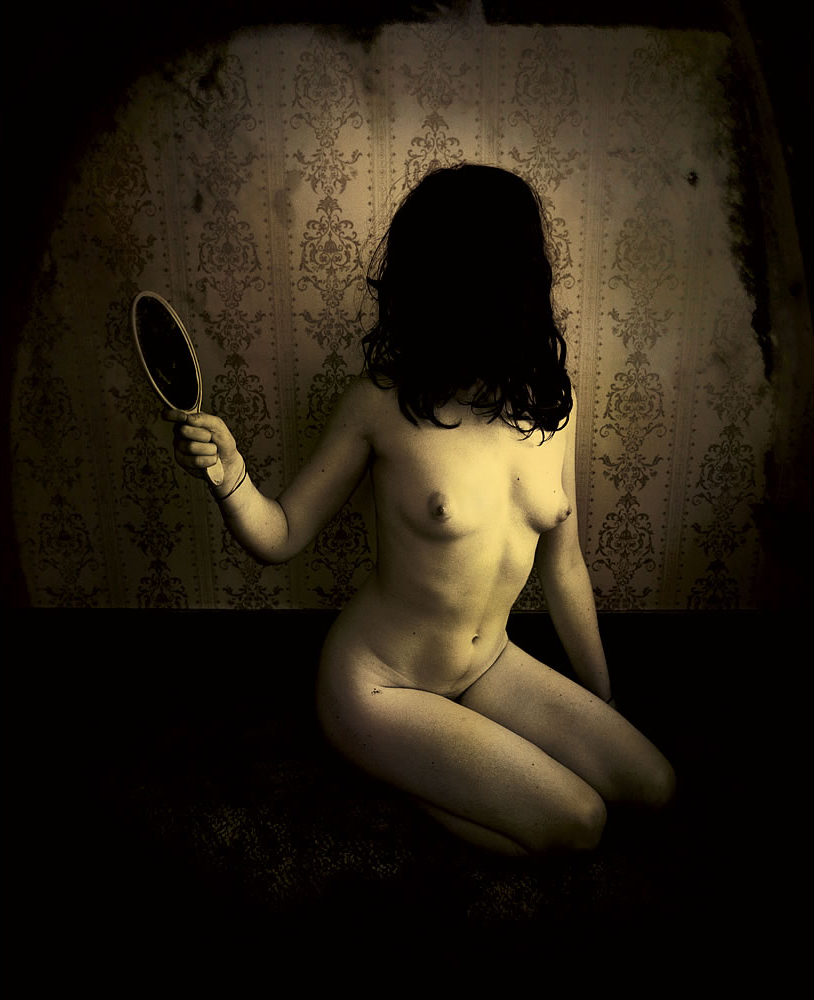
 

Jane Burton (Australian, b. 1966) 'Ivy #10' 2009


Jane Burton (Australian, b. 1966)
Ivy #10
2009
Pigment print
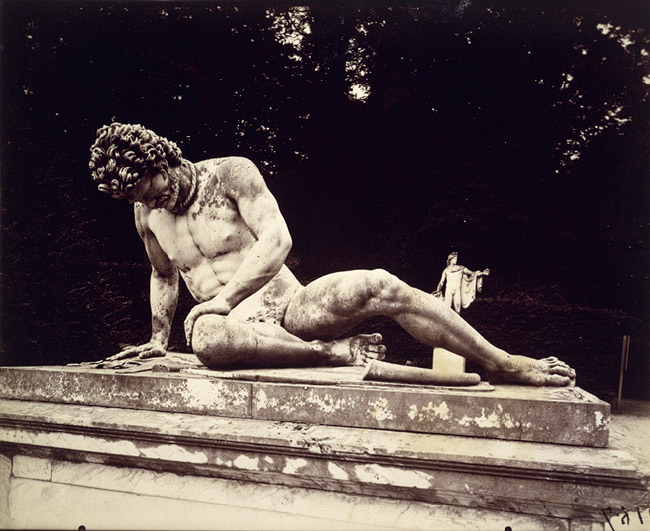
 

Eugene Atget (French, 1857-1927) 'Versailles, France' 1923


Eugene Atget (French, 1857-1927)
Versailles, France
1923
Albumen print
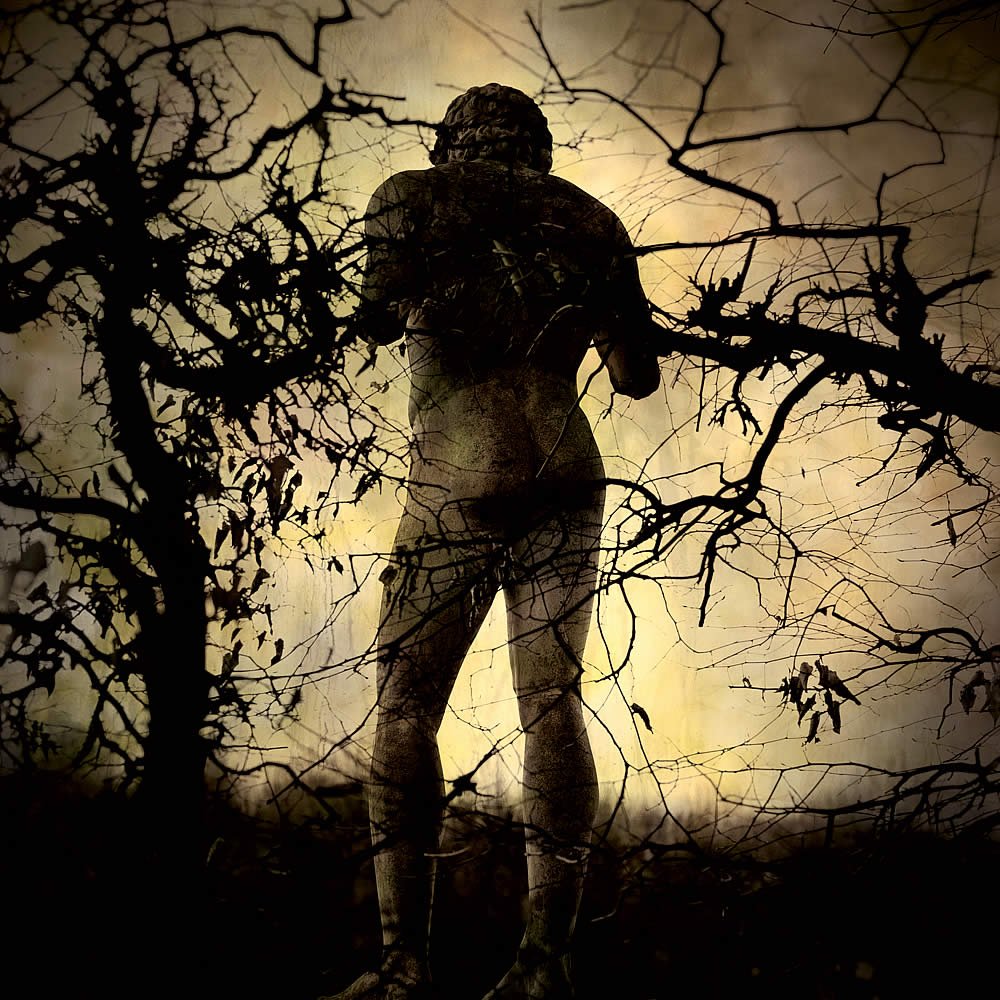
 

Jane Burton (Australian, b. 1966) 'Ivy #6' 2009


Jane Burton (Australian, b. 1966)
Ivy #6
2009
Pigment print
75 x 75cm


Karen Woodbury Gallery

This gallery has now closed.

Jane Burton website

LIKE ART BLART ON FACEBOOK

Back to top

Josef Sudek: Master of Photography

April 2009


Josef Sudek (Czech, 1896-1976) 'A Summer Shower in the Magic Garden' 1954-1959


Josef Sudek (Czech, 1896-1976)
A Summer Shower in the Magic Garden
1954-1959
Gelatin silver print


Further to the last post I have collected some images from the Czech photographer Josef Sudek (1896-1976), one of my favourite photographers. The images of this master photographer are a delight. Like the photographs of Eugene Atget they evince generosity in the understanding of light, space and humanity. Insightful writing on Josef Sudek by Charles Sawyer is included in the post.

Dr Marcus Bunyan


Please click on the photographs for a larger version of the image.


“Everything around us, dead or alive, in the eyes of a crazy photographer mysteriously takes on many variations, so that a seemingly dead object comes to life through light or by its surroundings. And if the photographer has a bit of sense in his head maybe he is able to capture some of this – and I suppose that’s lyricism.”

“I believe a lot in instinct. One should never dull it by wanting to know everything. One shouldn’t ask too many questions but do what one does properly, never rush, and never torment oneself.”

“It would have bored me extremely to have restricted myself to one specific direction for my whole life, for example, landscape photography. A photographer should never impose such restrictions upon himself.”


Josef Sudek


Josef Sudek (Czech, 1896-1976) 'In the enchanted garden' 1954-1959


Josef Sudek (Czech, 1896-1976)
In the enchanted garden
1954-1959
From the series Remembrances
Gelatin silver print


Josef Sudek (Czech, 1896-1976) 'Untitled' 1967


Josef Sudek (Czech, 1896-1976)
Untitled
1967
Gelatin silver print


“The systematic approach, and the dogged aesthetic experimentation of Sudek are akin to the working habits of Cezanne. But these alone are insufficient to make great art or even good art. On the contrary, if these are all one sees in a work, then the cumulative burden of so much plain labor would be unbearable. Sudek’s devotion to work may have integrated his shattered life but it could not have offered him the spiritual redemption he was seeking; only his aesthetic quest could bring this. It is the struggle for spiritual redemption through his aesthetic quest that gives Sudek’s best photographs their true power. Two qualities characterise his best work: a rich diversity of light values in the low end of the tonal scale, and the representation of light as a substance occupying its own space. The former, the diversity of light values, requires very delicate treatment of the materials, especially the negative, but also the paper (Sudek used silver halide papers in the main). The latter, the portrayal of light as substance, is a more original trait than his tonal palette, which one sees in occasional prints of other photographers. Flaubert once expressed an ambition to write a book which would have no subject, “a book dependent on nothing external … held together by the strength of its style.” Photographers have sometimes expressed parallel aspirations to make light itself the subject of their photographs, leaving the banal, material world behind. Both ideals are, of course, unobtainable, but nonetheless they may be worth pursuing. (Artists, in their pursuit of the unobtainable, are not so likely to be called pathological as others, of us, though recent developments in the philosophy of science tend to view the scientist’s quest for truth as equally quixotic).

Sudek has come closer than any other photographer to catching this illusive goal. His devices for this effect are simple and highly poetic: the dust he raised in a frenzy when the light was just right, a gossamer curtain draped over a chair back, the mist from a garden sprinkler, even the ambient moisture in the atmosphere when the air is near dew point. The eye is usually accustomed to seeing not light but the surfaces it defines; when light is reflected from amorphous materials, however, perception of materiality shifts to light itself. Sudek looked for such materials everywhere. And then he usually balanced the ethereal luminescence with the contra-bass of his deep shadow tonalities. The effect is enchanting, and strongly conveys the human element which is the true content of his photographs. For, throughout all his photography, there is one dominant mood, one consistent viewpoint, and one overriding philosophy. The mood is melancholy and the point of view is romanticism. And overriding all this is a philosophic detachment, an attitude he shares with Spinoza. The attitude of detachment that characterises Sudek’s art accounts for both its strength and weakness: the strength which lies in the ideal of utter tranquility and the weakness which is found in the paucity of human intimacy. Some commentators find Sudek’s photos mysterious but I think this is a mistake: the air of mystery vanishes once we see in Sudek’s photography a person’s private salvation from despair.”

Charles Sawyer. “Josef Sudek” in Creative Camera April 1980, Number 190 [Online] Cited 14/04/2009. No longer available online


A good collection of Josef Sudek photographs can be found on the Museum of Fine Arts Boston website. Go to the site and enter ‘Josef Sudek’ in the Collection Search box to the right and then click on the arrow.


Josef Sudek (Czech, 1896-1976) From the series 'Vanished Statues in Mionsi' 1969


Josef Sudek (Czech, 1896-1976)
From the series Vanished Statues in Mionsi
1969
Gelatin silver print


Josef Sudek (Czech, 1896-1976) 'The Window of My Atelier' 1969


Josef Sudek (Czech, 1896-1976)
The Window of My Atelier
1969
Gelatin silver print


Josef Sudek (Czech, 1896-1976) 'Still-life after Caravaggio, Variation No 2 (or a night-time Variation)' 1956


Josef Sudek (Czech, 1896-1976)
Still-life after Caravaggio, Variation No 2 (or a night-time Variation)
1956
Gelatin silver print


Josef Sudek (Czech, 1896-1976) 'Untitled (Still Life According to Caravaggio)' 1956


Josef Sudek (Czech, 1896-1976)
Untitled (Still Life According to Caravaggio)
1956
Gelatin silver print


Josef Sudek (Czech, 1896-1976) 'Remembrance of Mr. Magician (the garden of architect Rothmayer)' 1959


Josef Sudek (Czech, 1896-1976)
Remembrance of Mr. Magician (the garden of architect Rothmayer)
1959
Gelatin silver print


Otto Rothmayer (architect)

Otto Rothmayer was born during 1892 into a family of carpenters. He took up that trade, following in his father’s footsteps. Rothmayer studied at the Academy of Applied Arts in Prague under Jože Plečník’s guidance, and the Slovenian architect would inspire Rothmayer throughout his entire life. In fact, the design of the Rothmayer Villa was greatly influenced by Plečník’s Villa Stadion in Ljubljana. Rothmayer’s skill at carpentry came in handy as he designed much furniture. He made furniture for the gurus of Czech Cubism, architects Pavel Janák and Josef Gočár. Furniture he designed that does not fall under the category of Cubism but is rather simple and practical can be found in his villa and garden, for instance. His white chairs forged from rough steel were a big hit.

Work at Prague Castle

Plečník would not only be Rothmayer’s mentor but also his colleague. Rothmayer started working as Plečník’s assistant architect at Prague Castle in 1921, when Tomáš G. Masaryk was president of a young, democratic Czechoslovakia. Rothmayer even built a spiral staircase at Prague Castle, using what was then a new material – faux marble. When Plečník left his Castle post after 1930, Rothmayer continued to draw plans for the Castle until his retirement in 1958.

Other projects and the academic world

Rothmayer’s résumé does not only include his tenure at Prague Castle. He took up other projects, too. For instance, he designed three family houses and a side altar for a church in the Vinohrady district of Prague. He also designed museum exhibitions. Rothmayer went into teaching as well. He held the post of Professor of Interior Design at Prague’s Academy of Applied Arts in the late 1940s and early 1950s, when he left for political reasons. Rothmayer also was friends with photographer Josef Sudek, who took many snapshots at Otto’s Břevnov residence. Sudek’s photos set in the villa’s garden are particularly impressive. Otto Rothmayer died in 1966.

Tracy A. Burns. “The Rothmayer Villa: A gem of modern architecture,” on the Private Prague Guide website [Online] Cited 11/01/2019


Josef Sudek (Czech, 1896-1976) 'Labyrinths' 1969


Josef Sudek (Czech, 1896-1976)
Labyrinths
1969
Gelatin silver print


Josef Sudek (Czech, 1896-1976) 'Labyrinth of Spring' 1968


Josef Sudek (Czech, 1896-1976)
Labyrinth of Spring
1968
Gelatin silver print
22.5 × 28.7cm (8 7/8 × 11 1/4 in)


Josef Sudek (Czech, 1896-1976) 'Remembrances of Architect Rothmayer, Mr. Magician' 1960


Josef Sudek (Czech, 1896-1976)
Remembrances of Architect Rothmayer, Mr. Magician
1960
Gelatin silver print


LIKE ART BLART ON FACEBOOK

Back to top

Exhibition: ‘Czech Photography of the 20th Century’ at the Exhibition Hall of the Federal Republic of Germany, Bonn

Exhibition dates: 13th March – 26th July, 2009


Jindřich Štreit (Czech, b. 1946) 'Arnoltice' 1985 from the exhibition 'Czech Photography of the 20th Century' at the Exhibition Hall of the Federal Republic of Germany, Bonn,  March - July, 2009


Jindřich Štreit (Czech, b. 1946)
Arnoltice
1985
From the Village Life series
Gelatin silver print


Jindřich Štreit (born 5 September 1946 in Vsetín) is a Czech photographer and pedagogue known for his documentary photography. He concentrates on documenting the rural life and people of Czech villages. He is considered one of the most important exponents of Czech documentary photography.


Looks like an interesting exhibition. I wish I had been able to see it. Wouldn’t it be such a grand job flying around the world, reviewing photography exhibitions and bringing you my thoughts. I can only wish…

Dr Marcus Bunyan


Many thankx to the Exhibition Hall of the Federal Republic of Germany for allowing me to publish the photographs in the posting. Please click on the photographs for a larger version of the image.


František Drtikol (Czech, 1883-1961) 'Wave' 1925 from the exhibition 'Czech Photography of the 20th Century' at the Exhibition Hall of the Federal Republic of Germany, Bonn,  March - July, 2009


František Drtikol (Czech, 1883-1961)
Wave
1925
Gelatin silver print


Czech photography produced and produces leading figures in all areas of photography – from classical documentary photojournalism to surrealism, realism or avant-garde works. From 13 March 2009 on, the Art and Exhibition Hall of the Federal Republic of Germany is presenting over 400 photographic works, a historical mosaic of Czech photography from 1900 until the late 20th century that underlines the international reputation enjoyed by Czech photography today. That reputation is not only apparent in the outstanding contributions by such renowned artists as Josef Sudek, Karel Hájek, Václav Jírů, Vilém Reichmann, Jan Reich, Jindřich Štreit, Frantisek Drtikol, Jaromír Funke, Jaroslav Rossler, Josef Koudelka and Jan Saudek, but also in works from a host of younger photographers. The exhibition does not only showcase famous names but also less well-known photographers, providing an overall impression of the variation and innovation in Czech photography.

From Surrealism and other avant-garde experimentation to realism and classic photo reportage, Czech photographers have long played a key role in all areas of photography and continue to do so to this day.

This exhibition is the first in Germany to present the history and development of Czech photography from 1900 to the turn of the millennium. Beginning with Art Nouveau-inspired Pictorialism, the comprehensive survey traces the rise of avant-garde photography and the development of photo montage in the 1920s to the 1940s. It examines the influence of ideological pressure on photography during the Second World War, the Stalinist 1950s and the period of Communist ‘normalisation’ after the occupation in 1968 and introduces the visitor to the multifaceted range of contemporary trends.

Text from the Exhibition Hall of the Federal Republic of Germany website [Online] Cited 10/04/2009. No longer available online


František Drtikol (Czech, 1883-1961) 'Nude' 1927


František Drtikol (Czech, 1883-1961)
Nude
1927
Gelatin silver print


František Drtikol (3 March 1883, Příbram – 13 January 1961, Prague) was a Czech photographer of international renown. He is especially known for his characteristically epic photographs, often nudes and portraits.

From 1907 to 1910 he had his own studio, until 1935 he operated an important portrait photostudio in Prague on the fourth floor of one of Prague’s remarkable buildings, a Baroque corner house at 9 Vodičkova, now demolished. Jaroslav Rössler, an important avant-garde photographer, was one of his pupils. Drtikol made many portraits of very important people and nudes which show development from pictorialism and symbolism to modern composite pictures of the nude body with geometric decorations and thrown shadows, where it is possible to find a number of parallels with the avant-garde works of the period. These are reminiscent of Cubism, and at the same time his nudes suggest the kind of movement that was characteristic of the futurism aesthetic.

Text from the Wikipedia website


Eugen Wiskovsky (Czech, 1888-1964) 'Lunar Landscape or Collars' 1929


Eugen Wiskovsky (Czech, 1888-1964)
Lunar Landscape or Collars
1929
Gelatin silver print


The oeuvre of the leading Czech avant-garde photographer Eugen Wiskovsky (1888-1964) is not large in size or subject range, but it is noteworthy in its originality, depth of ideas, and mastery. Wiskovsky’s early New Objectivist works, from the late 1920s and early 1930s, sought artistic effect in apparently non-aesthetic objects: His inventive lighting and cropping allowed their elementary lines to stand out, to lose their worldly associations and take on potential metaphorical meanings. In his dynamic diagonal compositions, Wiskovsky was among the most radical practitioners of Czech Constructivism. His landscape work is similarly distinctive.


Jaroslav Rössler (Czech, 1902-1990) 'Untitled' 1931


Jaroslav Rössler (Czech, 1902-1990)
Untitled
1931
Gelatin silver print


Jaroslav Rössler (25 May 1902, Smilov – 5 January 1990, Prague) was a pioneer of Czech avant-garde photography and a member of the association of Czech avant-garde artists Devětsil (Butterbur).

Rössler was born to the Czech-German father, Eduard Rössler, and a Czech mother, Adela Nollova. From 1917 to 1920, Rössler studied in the atelier of the company owned by renowned Czech photographer František Drtikol. Subsequently, he worked with the company as a laboratory technician. As a 21 years old, he began collaboration with the art theorist Karel Teige, who assigned him to create typographic layout for magazines Pásmo, Disk, Stavba and ReD (Revue Devětsilu). While working on these tasks, Rössler deepened his knowledge of photographic methods. In his works he utilised and combined the techniques of photogram, photomontage, collage and drawing. The beginnings of his photographic work were influenced by Cubism and Futurism, but he also attempted to create the first abstract photographs. In 1923, he became a member of the avant-garde association Devětsil.

In 1925, he went on a six-month study visit to Paris. The same year he began working as a photographer in the Osvobozené divadlo in Prague. Before his second departure to Paris, he co-worked as a commercial photographer with the pictorial magazine Pestrý týden.

In 1927, Rössler moved to Paris together with his wife, Gertruda Fischerová (1894-1976). Initially, he focused on commercial photography. He collaborated with the experimental studio of Lucien Lorell, and worked on commissions for notable companies such as Michelin and Shell. However, later he found an interest in the “street life” of Paris, which influenced his future stay in the city. During a demonstration, he encountered the protesters and took photographs of the event. Shortly after that he was arrested, and after a six-month imprisonment he was expelled from the country, in 1935. The alleged reason for his expulsion was his German-sounding surname.

After his return from Paris, Rössler and his wife resided in Prague, Žižkov. He opened a small photographic atelier, but difficulties associated with the management of the studio caused a significant gap in his artistic work, lasting for almost two decades.

In the 1950s, he resumed his previous activities and again began experimenting with the camera and photographic techniques. He created so-called “prizmata” (prisms), photographs taken through a birefringent prism. Additionally, he experimented with solarisation and explored the possibilities of the Sabatier effect.

Text from the Wikipedia website


Jindřich Štyrský (Czech, 1899-1942) From the 'Man with Blinkers' series 1934


Jindřich Štyrský (Czech, 1899-1942)
From the Man with Blinkers series
1934
Museum of Decorative Arts, Prague


Eugen Wiskovsky (Czech, 1888-1964) 'Disaster' 1939


Eugen Wiskovsky (Czech, 1888-1964)
Disaster
1939
Gelatin silver print


Josef Sudek (Czech, 1896-1976) 'The Last Rose' 1956


Josef Sudek (Czech, 1896-1976)
The Last Rose from the Rose series
1956
Gelatin silver print


Josef Sudek (17 March 1896, Kolín, Bohemia – 15 September 1976, Prague) was a Czech photographer, best known for his photographs of Prague.

Sudek was originally a bookbinder. During the First World War he was drafted into the Austro-Hungarian Army in 1915 and served on the Italian Front until he was wounded in the right arm in 1916 which led to the limb being amputated at the shoulder. After the war he studied photography for two years in Prague under Jaromir Funke. His army disability pension gave him leeway to make art, and he worked during the 1920s in the romantic Pictorialist style. Always pushing at the boundaries, a local camera club expelled him for arguing about the need to move forwards from ‘painterly’ photography. Sudek then founded the progressive Czech Photographic Society in 1924. Despite only having one arm, he used large, bulky cameras with the aid of assistants.

Sudek’s photography is sometimes said to be modernist. But this is only true of a couple of years in the 1930s, during which he undertook commercial photography and thus worked “in the style of the times”. Primarily, his personal photography is neo-romantic.

Text from the Wikipedia website


Josef Sudek was a Czech photographer best known for his elegiac black-and-white images of Prague, interiors, still lifes, and the landscapes of Bohemian forests. Many of Sudek’s most memorable images were taken from the window of his small studio, documenting his humble courtyard during changing weather and light conditions. “Everything around us, dead or alive, in the eyes of a crazy photographer mysteriously takes on many variations,” he explained, “so that a seemingly dead object comes to life through light or by its surroundings.”

Text from the artnet website [Online] Cited 10/01/2019


Jan Saudek (Czechoslovakia, b. 1935) 'Life' 1966


Jan Saudek (Czech, b. 1935)
Life
1966
Gelatin silver print


Josef Koudelka (Czech, b. 1938) 'France' 1987


Josef Koudelka (Czech, b. 1938)
France
1987
Gelatin silver print


The Art and Exhibition Hall of the Federal Republic of Germany
Museumsmeile Bonn
Helmut-Kohl-Allee 4
53113 Bonn
Telephone: +49 228 9171-200

Opening hours:
Thursday – Sunday and Tuesday 10am – 7pm
Closed Mondays

Exhibition Hall of the Federal Republic of Germany website

LIKE ART BLART ON FACEBOOK

Back to top