Many thankx to the Fotomuseum Winterthur, Zurich for allowing me to publish the photographs in the posting. Please click on the photographs for a larger version of the image.
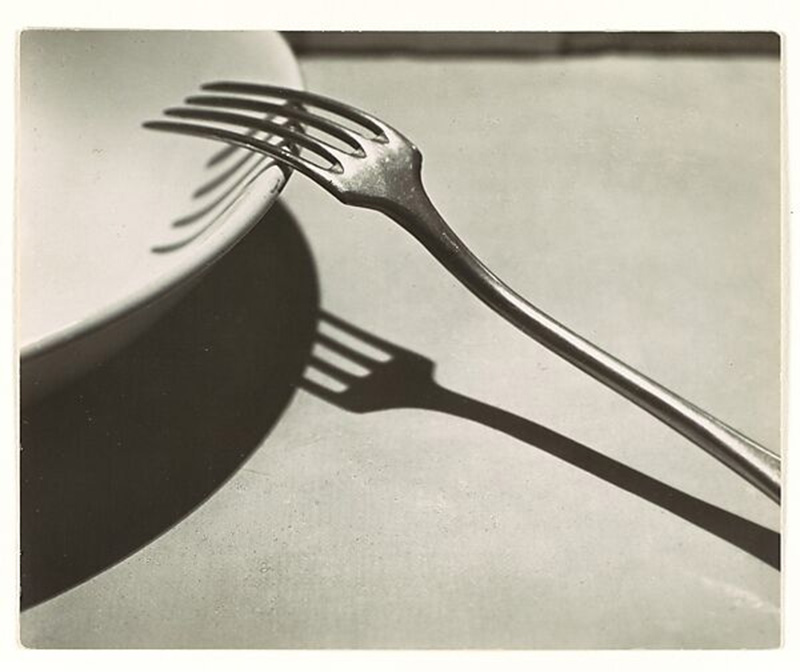
André Kertész (Hungarian, 1894-1985) Fork 1928 Gelatin silver print
André Kertész (Hungarian, 1894-1985) Elizabeth and I 1933, printed in the 1960s Gelatin silver print 25.3 x 17.5cm Collection of Sarah Morthland, New York
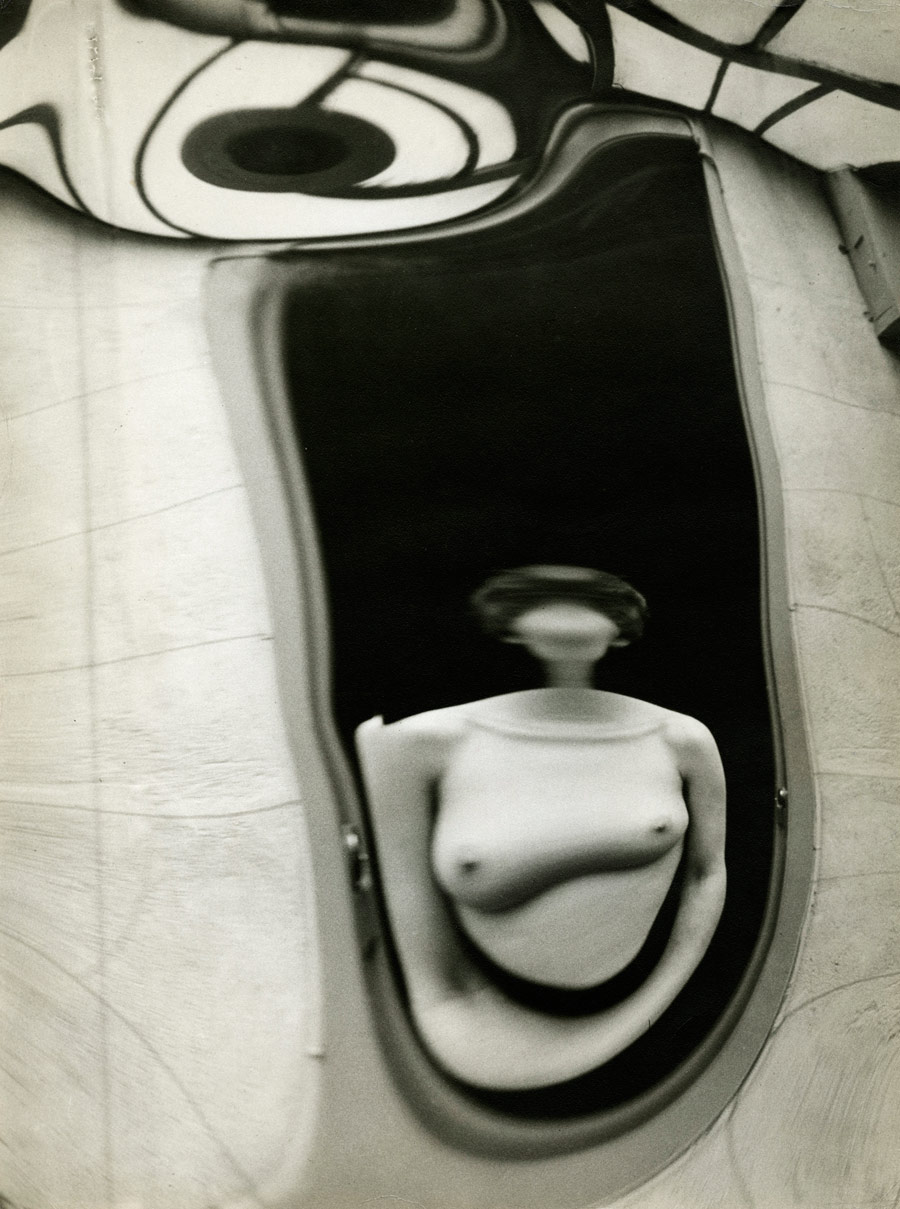
André Kertész (Hungarian, 1894-1985) Distortion No. 200 1933, printed c. 1938/1939 Gelatin silver print 34.4 x 25.7cm Courtesy of Klever Holdings
André Kertész is possibly the most photographic of all photographers: he sought out the play of light and shadow; he liked the concentration and overlapping of forms, of moments; and in the everyday, in banality, he recognised poetry, beauty, and even, for all his innate modesty, the “sublime.” Kertész is a photographic poet and seer, for whom it was long difficult to break into the market precisely because of his rich, chiseled iconography.
André Kertész (Budapest 1894 – 1985 New York) supported Brassaï, inspired Henri Cartier-Bresson, is considered one of the founders of photojournalism, and introduced stylistic elements into photography that can still be found in works by contemporary photographers. At heart, he was a photographer and artist in equal measure, poetic, probing, vital, independent in thought and actions. In a word, he was a master of photography, whose long period of production was very influential. Nevertheless, it took a remarkably long time for his special abilities, his poetic experimental version of photography, to find recognition in the history of photography. The three locations where he lived (Budapest, Paris, New York), his freedom, his form of “contemplative photography,” as Roland Barthes characterised it, made quick reception and categorisation of his work impossible. Today, more than twenty-five years after his death, he is recognised and considered to be a central photographer of the twentieth century who crucially enriched the language of photography.
With around 250 photographs and countless magazine contributions, the retrospective at Fotomuseum Winterthur on view until May 15, 2011, allows a comprehensive view of his work. The chronological order and the major themes show what it is that makes up his photographic practice: his unique methods (in photographic postcards, in distortions), his editorial engagement (for example, in the volume Paris vu par Kertész, 1934), his passion for experimentation (with light and shadow), and the evocation of emotions, above all of melancholy and loneliness. Periods that have remained neglected or unexplored until today (his life as a soldier from 1914-1918, for example) are reassessed, and juxtaposed with the development of photojournalism in Paris and the distribution of his pictures in the media, with which he earned his living.
André Kertész liked to characterise himself as an “eternal amateur.” But what a virtuosic “amateur” he was; what virtuosic visual language he employed his entire life to capture the poetry of the everyday! His photographic production was closely connected to his life and psyche. Even when he seemed to be documenting something, he let himself be guided almost exclusively by feeling, by instinct, from his soul. This resulted in a body of work that he liked to compare to a “visual journal”, and about which he said, “I have never just ‘made photos’. I express myself photographically.”
Text from the Fotomuseum Winterthur website
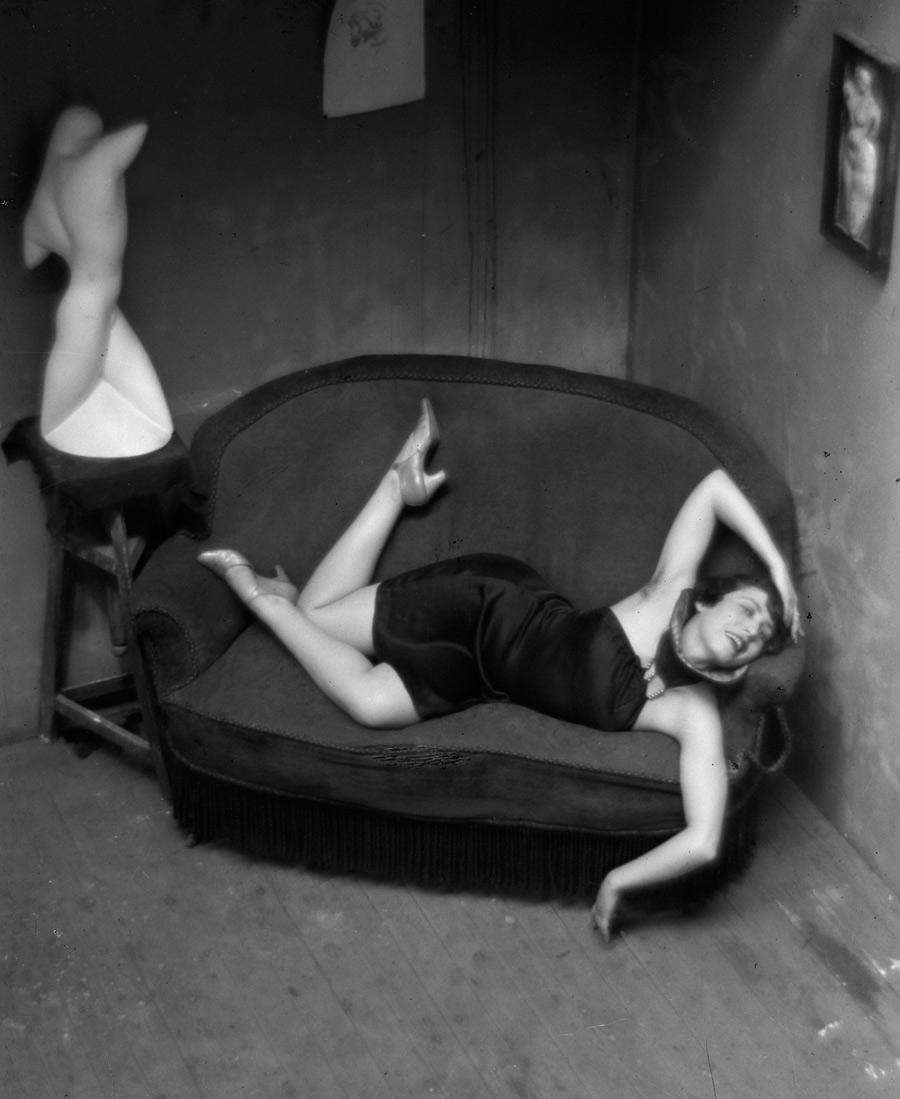
André Kertész (Hungarian, 1894-1985) Satiric Dancer 1926 Gelatin silver print
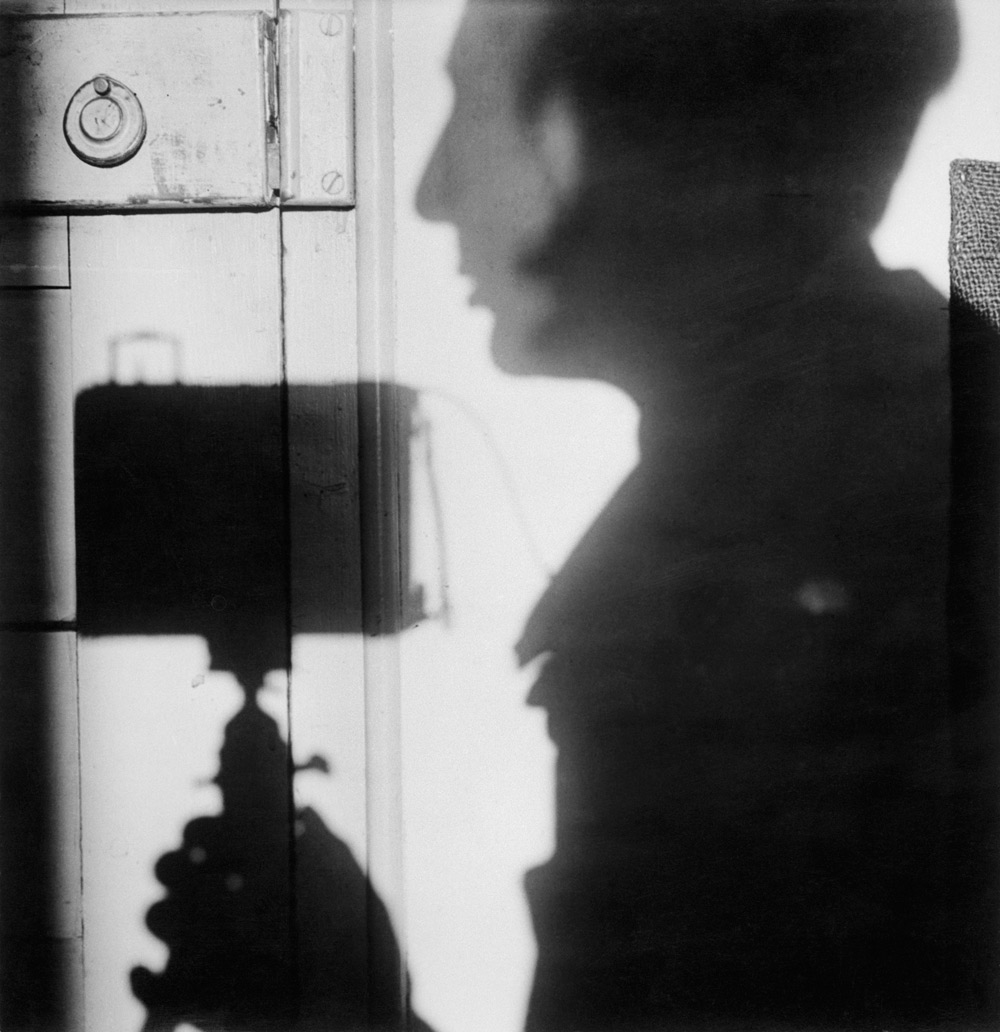
André Kertész (Hungarian, 1894-1985) Self-Portrait Paris, 1927, printed in the 1970s Gelatin silver print 25.4 x 20.3cm Courtesy of Estate of André Kertész, New York
André Kertész (Hungarian, 1894-1985) Arm and Ventilator 1937, printed in the 1940s-1950s Gelatin silver print 30.5 x 26.7cm Collection of Eric Cepotis and David Williams
André Kertész (Hungarian, 1894-1985) Washington Square New York, January 9, 1954 Vintage gelatin silver print 12.7 x 9.2cm Collection of Leslie, Judith and Gabrielle Schreyer
André Kertész (Hungarian, 1894-1985) July 3, 1979 1979 Polaroid SX-70 original 7.9 x 7.9cm Courtesy of Stephen Bulger Gallery
My apologies for the paucity of reviews of local exhibitions on the archive recently. It’s not that I haven’t been going to exhibitions far from it, just that nothing has really struck me as worthy of an in depth review!
Recently I went to the new Monash University Gallery of Art (MUMA) and the opening exhibition of the gallery, CHANGE (until 18th December). This is a hotchpotch of an exhibition that showcases the “breadth and depth of the Monash University Collection, reflecting on the changing forms, circumstances and developments in contemporary art practice from the 1960s to the present day – from late modernism to our contemporary situation … the exhibition signals the potential for institutional change that MUMA’s new situation represents.” Avowing an appeal to the senses the exhibition has some interesting works, notably a large canvas by Howard Arkley, Family home – suburban exterior 1993, Daniel von Sturmer’s installation The Field Equation (2006), Mike Parr’s bloody, mesmeric performance Close the Concentration Camps (2002) that you just can’t take your eyes off and part of Tracey Moffatt’s haunting series Up In The Sky (1998), the “part” declamation leaving one unable to decipher the narrative of the work without seeing the whole series on the Roslyn Oxley9 website. This is symptomatic of the whole exhibition – somehow it doesn’t come together, one of the problems of large, non-thematically organised group exhibitions.
The spaces of the new gallery are interesting to wander through but seem a little pokey and confined. A series of smallish intersecting rooms to the left hand side of the gallery leads one around to a big gallery to the right hand side (the best space), before another small front room. Down the spine runs a narrow enclosed area with exposed trusses and ducts that is unimaginative in design and redundant as an exhibiting space. Overall the gallery feels claustrophobic being an almost hermetically sealed environment enclosed by several sliding glass doors at entry points (and yes, I do know that a gallery has to have regulated temperature, light and humidity). This is at odds with the idea of exhibiting fresh, exciting art that breathes life.
I also ventured to Anna Pappas Gallery to see the exhibition of photographic work Endless Days by Vin Ryan (until 23rd December). Nice idea but a disappointment. Featuring grided, colour-coded photographs of the physical artefacts used to plate 20 meals eaten by the Ryan family the information within the prints is almost indecipherable, the selection of plates, cups and objects so small as to become mere colour decoration. I struggled to see what the objects actually were; even in the 5 individual prints of a meal the definition of the objects was weak, the printing not up to standard. The moral of the story is this: if you are going to use the photographic medium for artwork make sure that a/ you know how to construct an image visually using the medium and b/ that you get someone who knows what they are doing to print the photographs for you if you can’t print them well yourself.
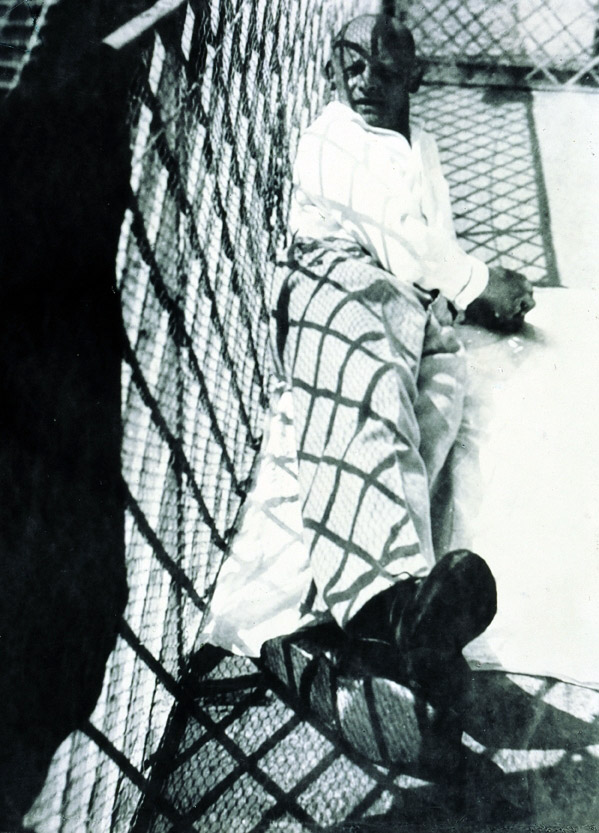
On to better things. In this posting there are some outstanding photographs: the imaginative camera angles of Moholy-Nagy (heavily influenced by Constructivism and Suprematism) where truly ground-breaking at the time. The iconic From the radio tower, Berlin (1928) is simply breathtaking in the photographs ability to flatten the pictorial landscape into abstract shape and form.
Dr Marcus Bunyan
Many thankx to Martin Gropius-Bau, Berlin for allowing me to publish the photographs in the posting. Please click on the photographs for a larger version of the image.
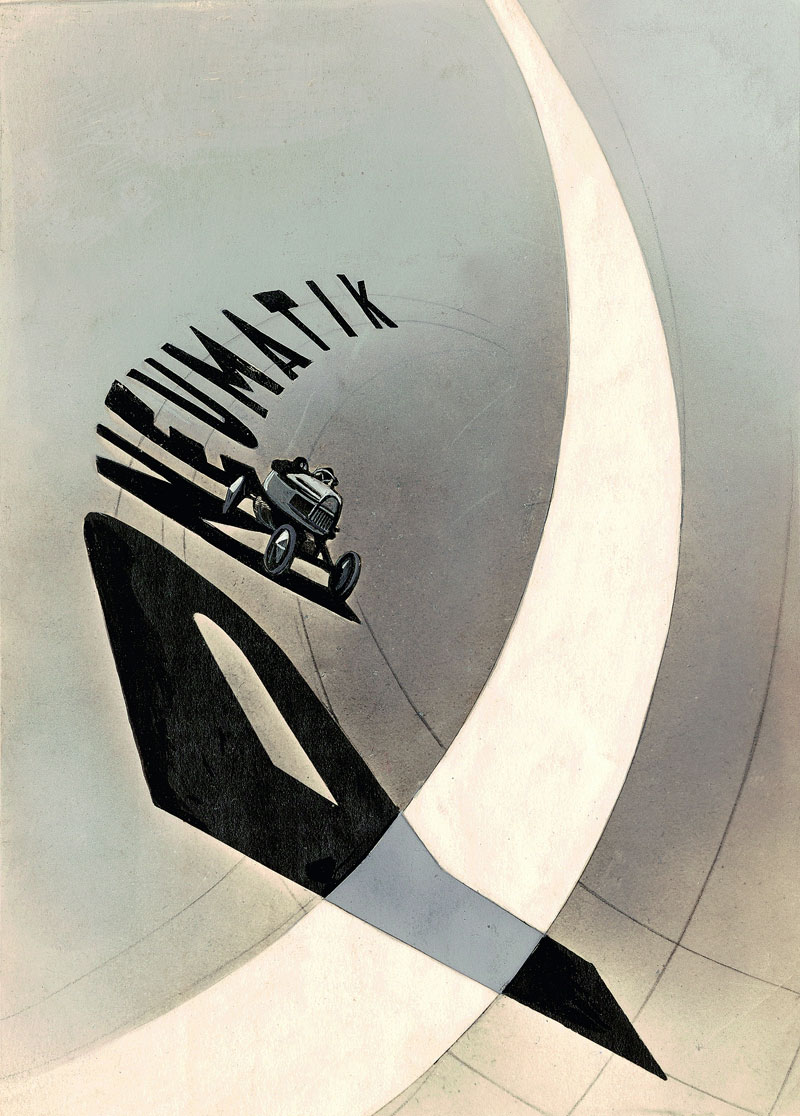
For Moholy-Nagy was always a theoretician and practitioner in equal measure, always wanting to be a holistic artist. He approached his work – painting, photography, commercial and industrial design, film, sculpture, scenography – from a wide variety of aspects and practised it as a radical, extreme experiment, by refusing to place his hugely differing works in any sort of aesthetic hierarchy. He also attached enormous importance to education, which is why, at the request of Walter Gropius, he worked in this field for the Bauhaus in Weimar (1923-1925) and Dessau (1925-1928). In Chicago, where he settled in 1937, he again assumed teaching duties and founded the “New Bauhaus”, which sought to realise the programmes of the German Bauhaus in the United States. Shortly afterwards he founded the Institute of Design in Chicago, where he was to remain active until his death in 1946. The institute was later incorporated in the Illinois Institute of Technology, which offers study courses to this day.
From Weimar to Chicago Moholy-Nagy retained his faith in his pedagogical ideal, which for him meant not only teaching, but the moral education of human beings. He believed in education as a means of developing all the abilities lying dormant in the students and as a means of paving the way to a “new, total human being.”
All of Moholy-Nagy’s theoretical contributions arose out of his artistic and pedagogical work. In his numerous writings he gradually presented his ideas, thus developing a complete artistic and pedagogical aesthetic. In his 1925 landmark essay “Painting, Photography, Film” he developed an aesthetic theory of light – light as a matrix of art and art as light. He applied his aesthetic theory of light not only to painting, photography and film, but also to theatrical and commercial design.
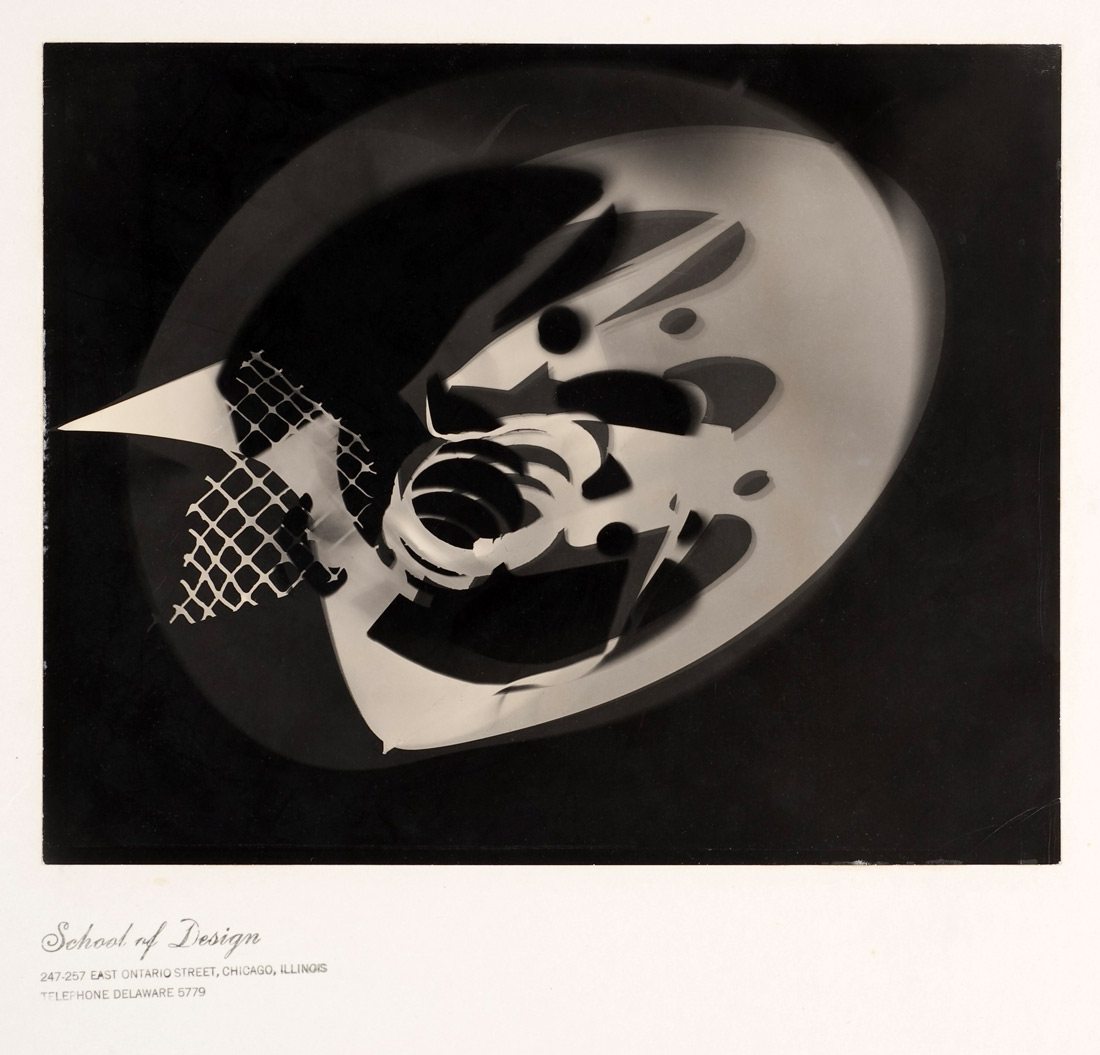
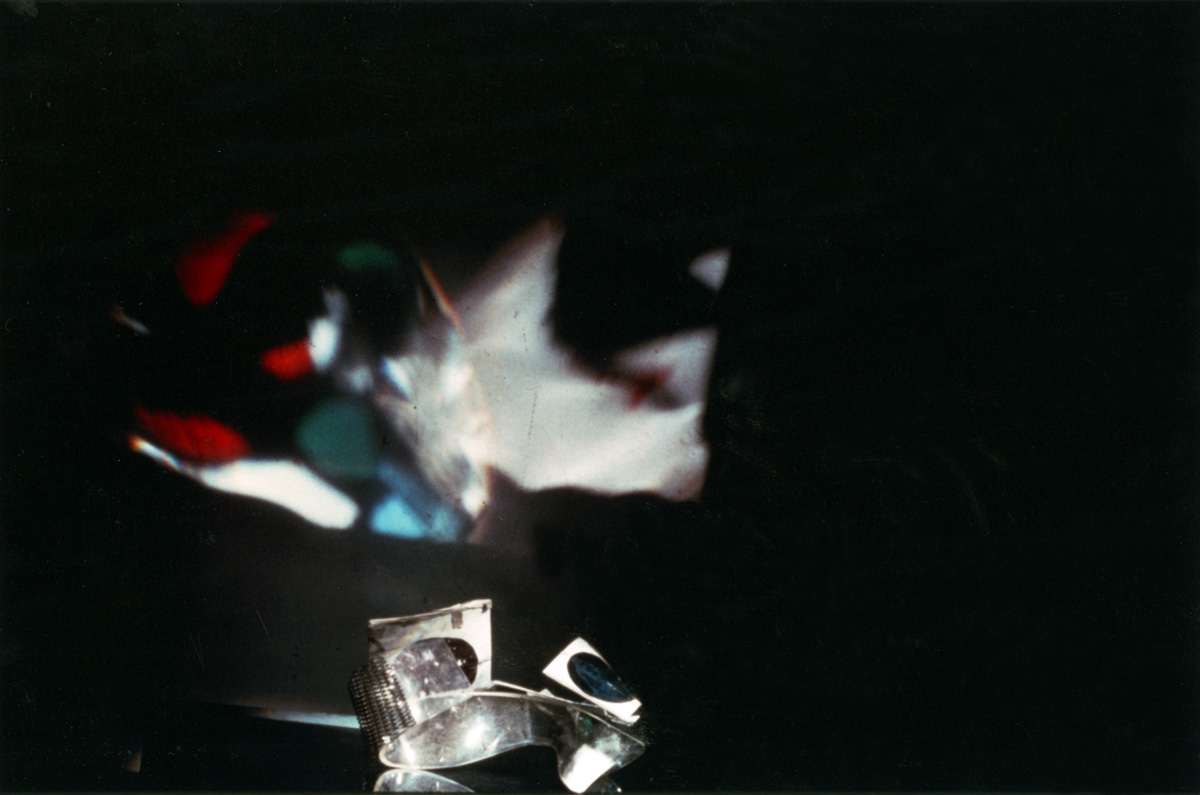
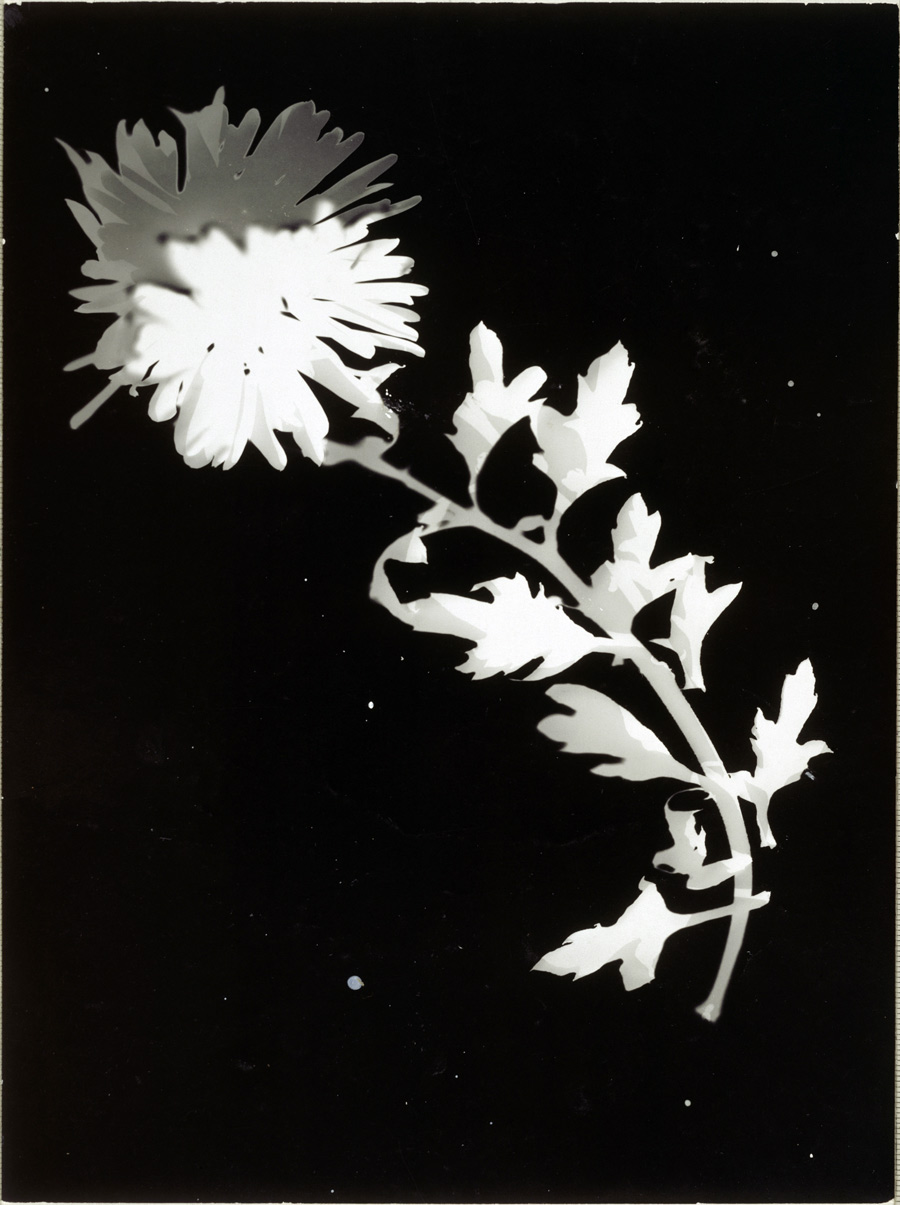
From that point on light became the foundation of Moholy-Nagy’s practical and theoretical work. For him art of whatever kind only acquired meaning when it reflected light. Painting was also reinterpreted on the basis of this criterion. Moholy-Nagy described his development as a painter as a shift away from “painting from transparency” to a painting that was free of any representational constraints and created the possibility of painting “not with colours, but with light.” This theory reached its full potential in photography and film. Etymologically, the word “photography” means “writing with light.” The artistic essence of film consists in the portrayal of “inter-related movements as revealed by light projections.” Although he was not in charge of the photography classes in the Bauhaus, it was there that he wrote Painting, Photography, Film, drawing upon his photographic experience. He invented the “photogram,” a purely light-based form of graphic representation, thus demonstrating an ability to create photographic images without a camera at the same time as the “Rayogram” was invented by Man Ray in Paris. He saw photography as a completely autonomous medium whose potential was still to be discovered. He criticised “pictoriality,” propagating an innovative, creative and productive photography. He regarded seriality as one of the main features of the practice of photography and opposed the “aura” of the one-off work in contrast to the infinite multifariousness of the photographic cliché, thus anticipating one of Walter Benjamin’s theses.
The distinction between production and reproduction is a basic theme of his art. A prominent aspect of every work is its ability to integrate the unknown. Works that only repeat or reproduce familiar relationships, are described as “reproductive,” while those that create or produce new relationships are “productive.” For Moholy-Nagy the ability of a work of art to create something new (a basic feature of Modernism) is a key criterion. He postulated for painting, photography and film a moral and aesthetic imperative – the New. Art had to confront new times and an industrial civilisation. In the systematic implementation of this thesis 1926 turned out to be the year in which his pictorial output was greater than his works in other fields, but 1927 witnessed a positive flood of photographic, scenographic, kinetic and film productions. Painting was something he never abandoned. He decided to drop the representational painting inherited from the past and to devote himself to non-representational or “pure” painting instead. The emergence of photography gave painting the perfect opportunity to free itself from all figurative or representative imperatives. Artists did not have to decide in favour of one medium or another, but should use all media to capture and master an optical creation.
Text from the Martin Gropius-Bau website [Online] Cited 26/11/2010 no longer available online
Atget, one of my all time favourite photographers; Paris, a city that stirs the heart – what more can one ask!
Many thankx to the Frist Museum of Art (formerly the Frist Center for the Visual Arts) for allowing me to publish the photographs in the posting. Please click on the photographs for a larger version of the image.
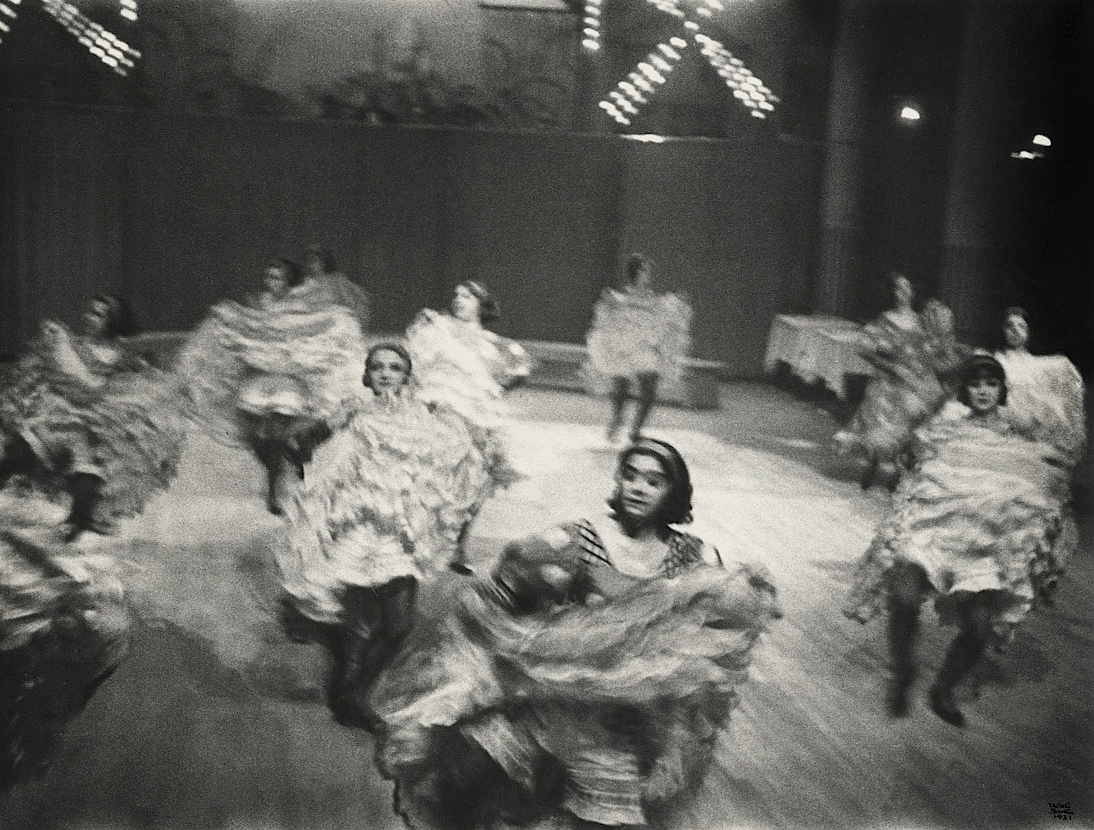
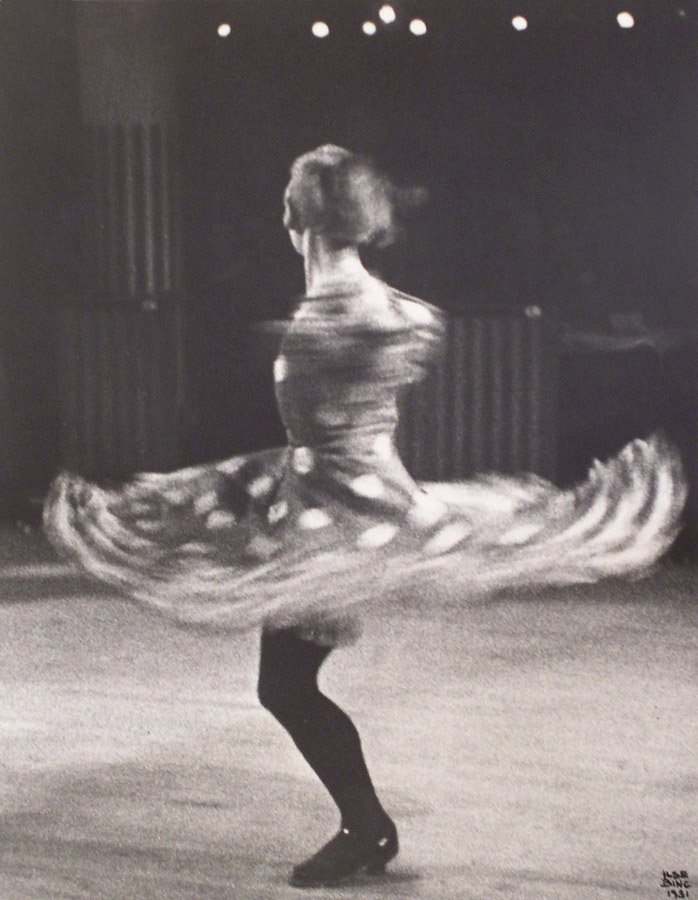
Ilse Bing (German, 1899-1998) French Can Can Dancers, Moulin Rouge 1931 Gelatin silver print
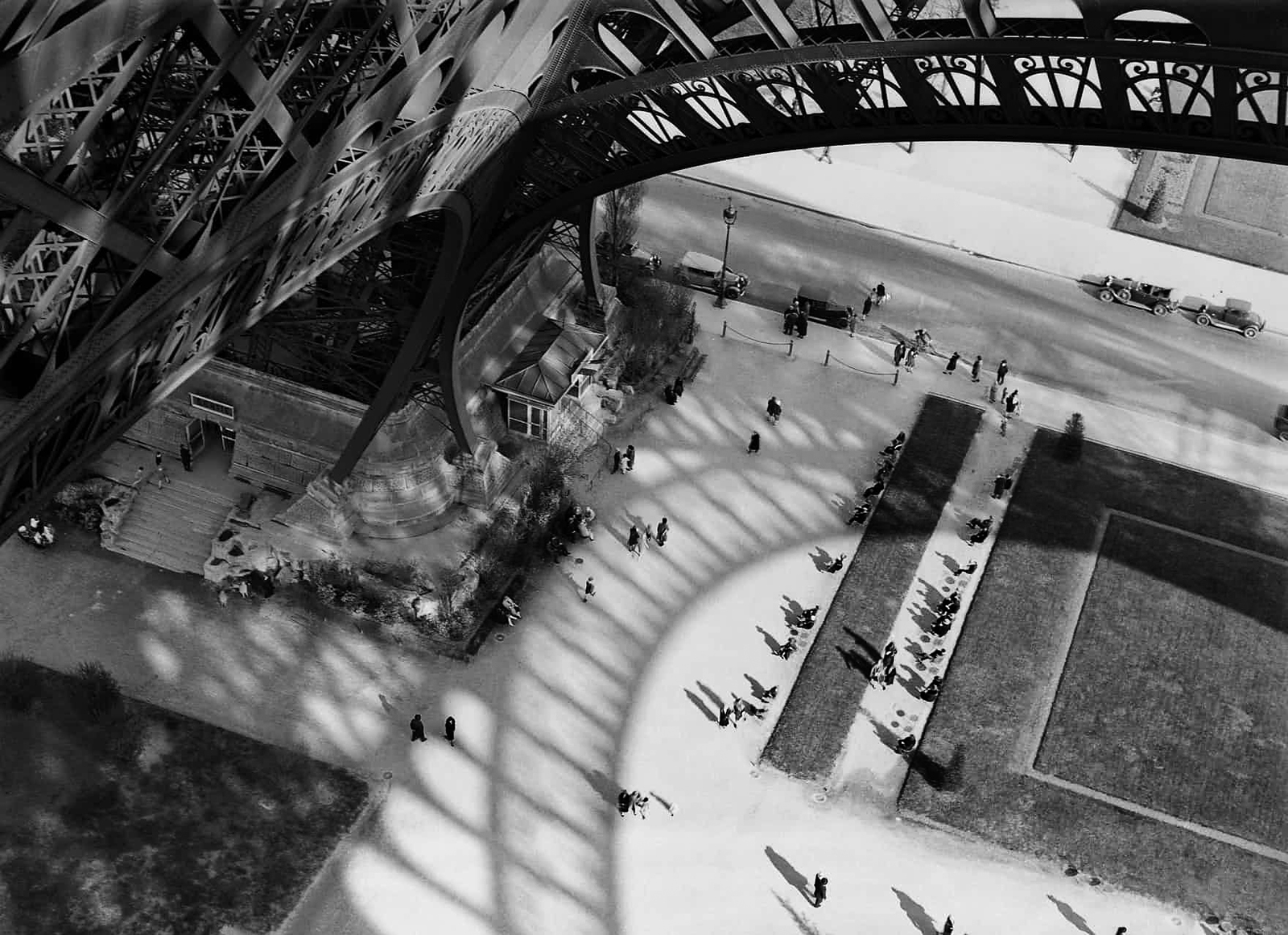
Andre Kertesz (Hungary, 1894-1985) Eiffel Tower, Paris 1929 Gelatin silver print
The Frist Center for the Visual Arts [now the Frist Museum of Art] will present Twilight Visions: Surrealism, Photography, and Paris, opening Sept. 10, 2009, in the Upper-Level Galleries. The show, which offers a unique perspective on Surrealism by examining the intersection of documentary photography, manipulated photography and film, will be on exhibition through Jan. 3, 2010, when it will travel to the International Center of Photography in New York followed by the Telfair Museum of Art in Savannah, Ga.
Guest Curator Therese Lichtenstein, Ph.D., New York-based art historian and photography scholar, has organised the exhibition, working with Frist Center Curator Katie Delmez.
The exhibition of more than 150 works, which features a preponderance of photographs but also includes films, books and period ephemera, explores the city of Paris as the literal and metaphoric base of Surrealism in the wake of the World War I. It was believed by the Surrealists that unconscious dreams, chance encounters and actions and automatism freed “pure thought,“ from all constraints imposed by conscious thought, reason or morals.
In conjunction with the exhibition, the Frist Center will partner with Nashville’s Belcourt Theatre and Vanderbilt University’s International Lens and the school’s French and film departments to present a Surrealism film series which will include the classic Un Chien Andalou (The Andalusian Dog) directed by Luis Buñuel and Salvador Dalí and several other rarely screened period films.
Paris was a hotbed of creative activity at the dawn of the 20th century, attracting artists and writers to its vibrant and wildly fertile art scene. Numerous galleries flourished during this period, fuelling the immigration of many of the world’s most talented artists. During the 1920s and 1930s, a number of photographers associated with Surrealism, including Man Ray, Brassaï, André Kertész, Ilse Bing and Germaine Krull, turned their lenses on the city of Paris with its dance halls, cafés and characters. These seemingly ordinary people and places not only had social histories but also became psychologically charged “found objects.“ In exploring the city’s commonplace as well as its monuments, these photographers used unusual viewpoints, manipulative lighting techniques and innovative technical processes to expose and examine “the marvellous“ in the everyday.
As Dr Lichtenstein writes, “The images in Twilight Visions form a collection of views of various urban spaces, filled with cultural artefacts. The viewer is invited to slowly contemplate the city – its architecture, its monuments, its public spaces and its denizens – as an ephemeral ruin, at once both of the past and the present.”
The Exhibition
Twilight Visions comprises five sections: images of the city at night and in the day, the transformation of well-known public monuments, the influence of Eugène Atget on the Surrealists; Parisian nightlife after hours and surreal figures.
The first section, “Marvellous Encounters”, includes photographs of city streets, shop windows, ordinary people and found objects that invite viewers to discover “the marvellous“ in common objects and familiar places. Many of the works in this section look both familiar and strange, as subjects were photographed from unexpected angles, using dim lighting, soft focus and abstracted views to create dreamlike images. Among the works in this section are photographs by Brassaï, Man Ray, Ilse Bing, André Kertész, Germaine Krull, Dora Maar and Joseph Breitenbach.
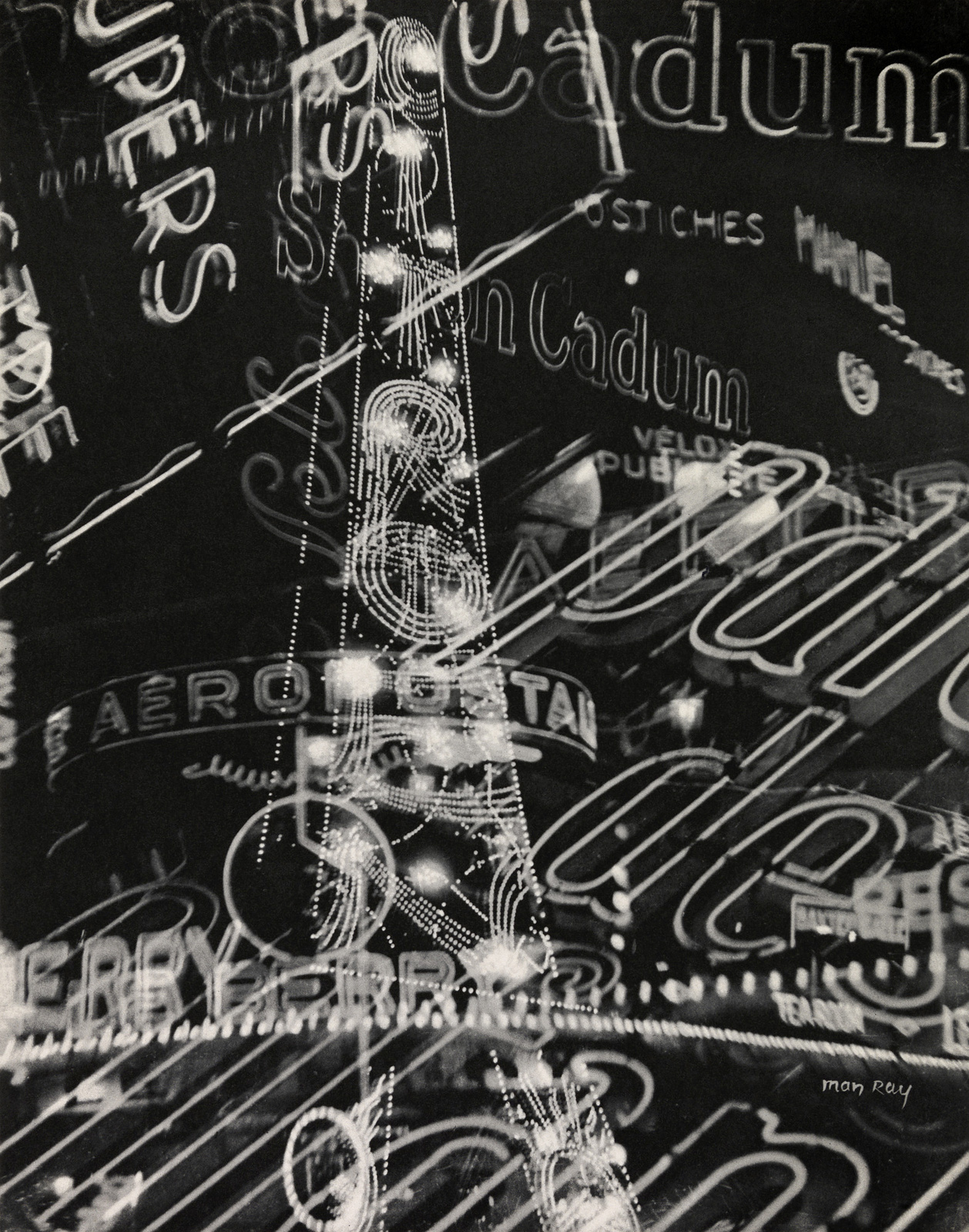
The second section of the exhibition, entitled “Photography’s Transformation of the Monument”, looks at the monuments of Paris, particularly the Eiffel Tower, to examine the ways they shape connections to past and future. Included in this section are works by André Kertész, Ilse Bing, Germaine Krull and Man Ray. The Eiffel Tower, constructed from 1887-1889, was designed to serve as the entry to the Paris World’s Fair commemorating the centennial anniversary of the French Revolution. The skeletal iron structure also was designed to be a radio transmitter and a beacon for commercial advertisements in the form of illuminated signs. In 1931 Man Ray created a series of photographs that were reproduced in a portfolio by the Paris Electric Company for an advertising booklet called Èlectricité, which was used to promote personal use of electricity. That same year, he photographed the tower at night and used the image as the basis for La Ville (The City, 1931 – see photograph below), a multiple-exposure print and one of the images used in Èlectricité. The Eiffel Tower, built as a utilitarian homage to the past, is transformed. The magic of electricity makes the tower visible at night, but in so doing, renders it unstable and non-architectural. Ray’s photograph turns the magnificent Eiffel Tower into indecipherable electrified text. In addition to Man Ray’s work, there are photographs by Ilse Bing, Georges Hugnet, André Kertész, Germaine Krull, Raoul Ubac and various postcards of the city that interrupt traditional heroic views of the monument.
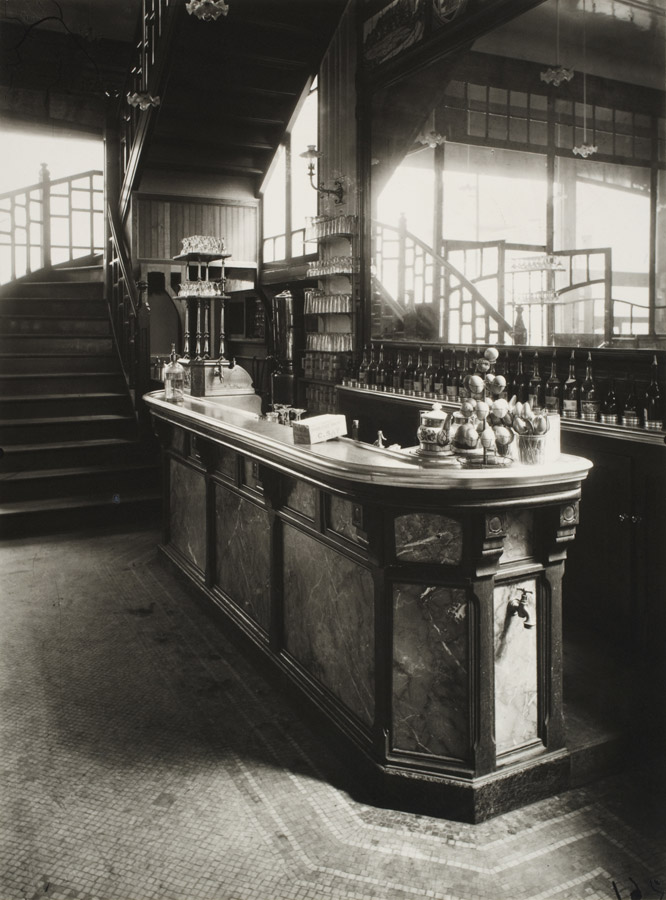
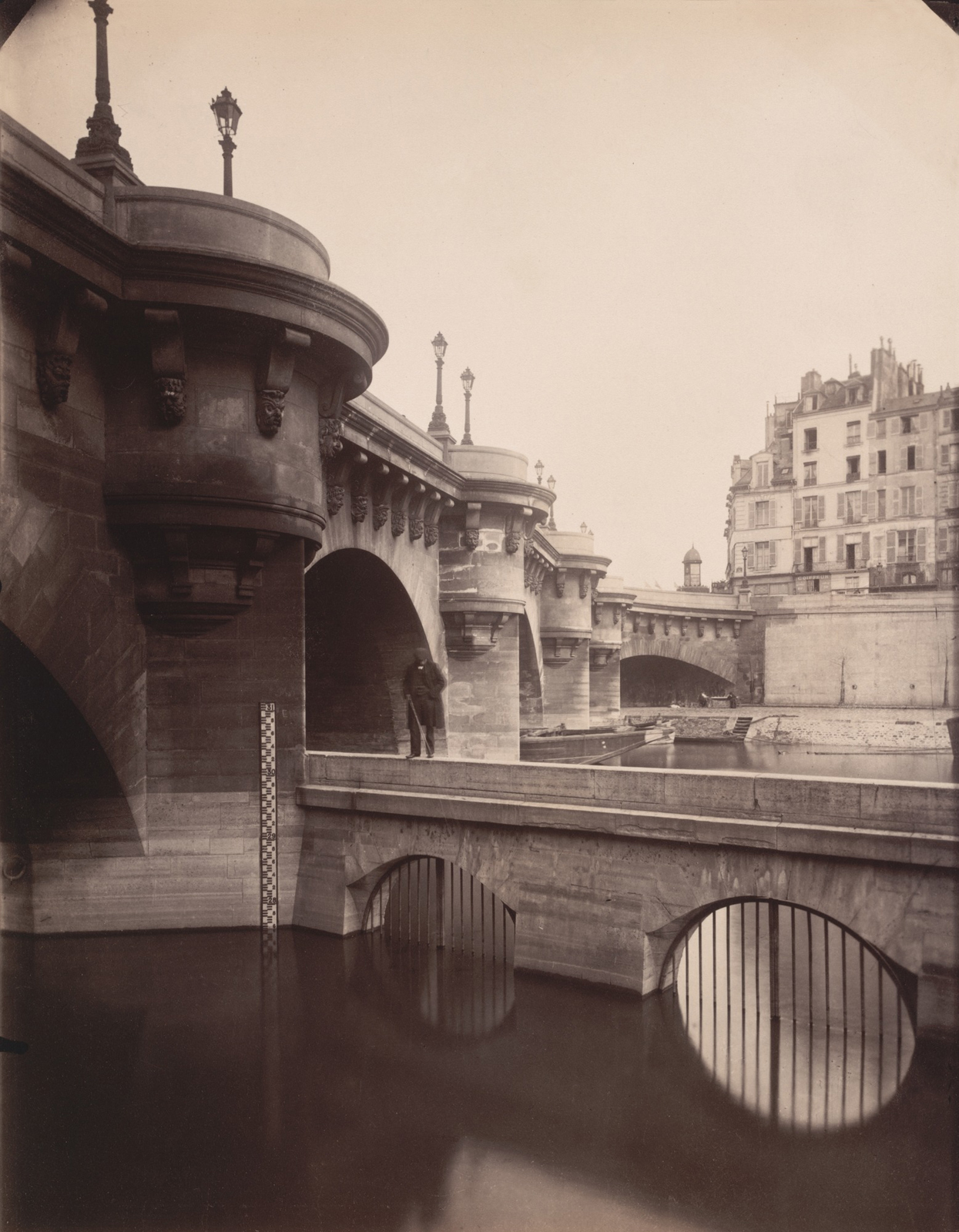
Section three, entitled “Looking at Atget”, examines the powerful work of Eugène Atget, a photographer who was “discovered“ in the 1920s by Man Ray. Following a stint as a sailor, a brief career as an actor and an attempt at becoming a painter, he turned to photography. Working quietly and modestly, Atget documented the loss of “old“ Parisian culture after the turn of the 20th century. But in so doing, his “poetry of the everyday“ also became a personal expression of nostalgia for the world that was disappearing before his lens. His work was straightforward yet magical. Works include Pont Neuf (1902-1903), The Wine Seller, 15 Rue Boyer (c. 1910) and Boulevard de Strasbourg (1926) (see photographs above).
Section four, “Portraits After Hours”, explores the Bohemian avant-garde culture of Paris. In the 1920s and 1930s, the cafés and cabarets of Montparnasse and Montmartre were a part of the transition to modernity taking place in the city. The antibourgeois, often seedy places that were the comfortable haunts of Parisian artists and intellectuals were becoming tourist destinations … fetishised places of fantasy and desire. As these locales metamorphosed into tourist sites where “regular“ folk could rub elbows with Parisian characters, increasingly, these locales became stage sets where the “actors“ relived the past for the cameras of the tourists. Ilse Bing’s photographs of Cancan dancers at the famed Moulin-Rouge capture the colour, flourish, nostalgia and exhilaration of the dance (see photographs above). Photographers represented in section four include: James Abbe, Ilse Bing, Brassaï and Man Ray.
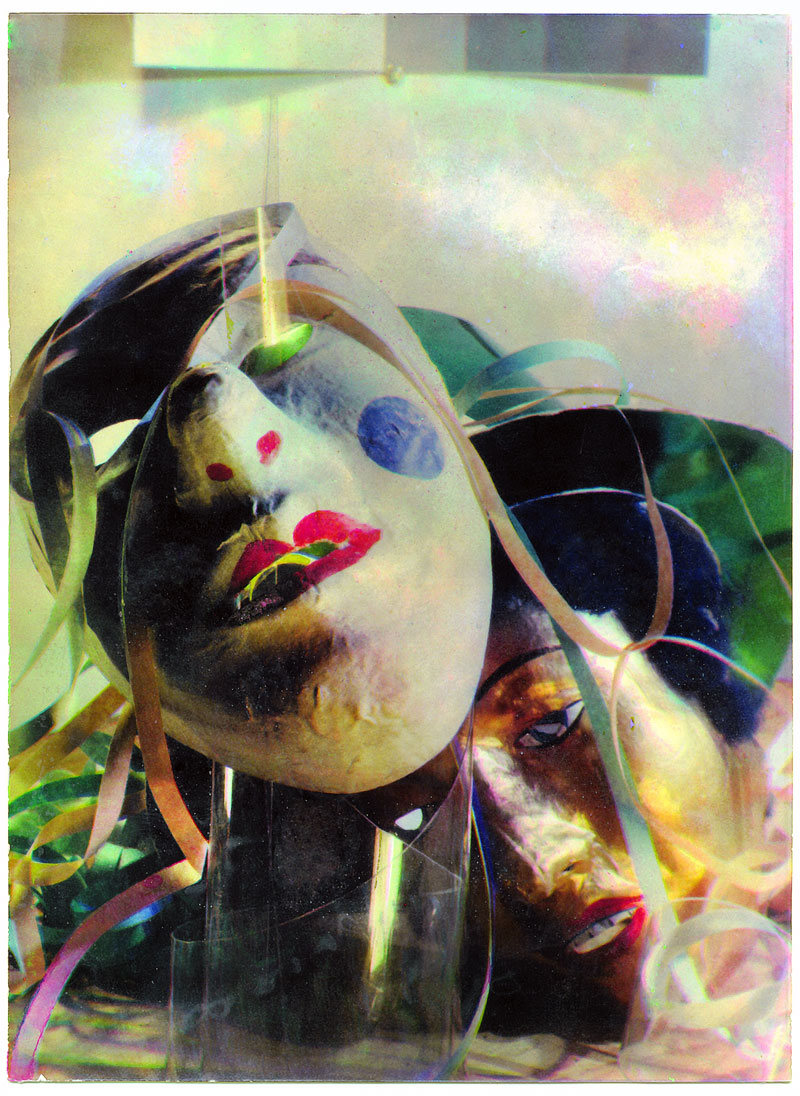
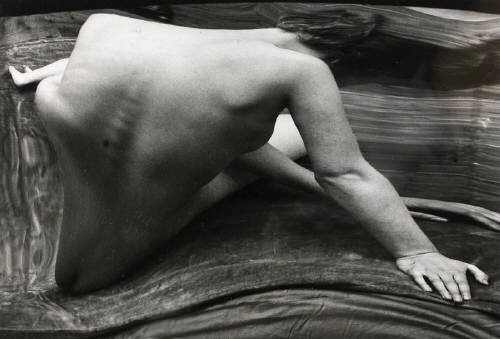
“Mutable Mirrors”, the fifth section of the exhibition, investigates the subject of shifting identities that was a part of the Surrealists’ desire to alter consciousness and transform concepts of personal, social and group identity. Issues of gender and sexuality and the roles of masquerade and play are examined in the works of Lee Miller, Nusch Eluard, Dora Maar, Claude Cahun, Raoul Ubac, Hans Bellmer, Georges Hugnet, André Kertész, Man Ray and Brassaï who experimented with techniques of doubling, distorting, multiplying and fragmenting their images. Included in this section are André Kertesz’s Distortions (1933) a series of photographs of nude women reflected in distorting mirrors that transform them into dreamlike creatures (see photographs below). The series was commissioned by the editor of the Parisian humour magazine, Le Sourire (The Smile).
Text from the Frist Museum of Art (formerly the Frist Center for the Visual Arts) website [Online] Cited 11/11/2009. No longer available online
Eugène Atget (French, 1857-1927) The Wine Seller, 15 Rue Boyer 1910-1911 Gelatin-silver print (printed by Berenice Abbott) Gift of Walter P. Chrysler, Jr., Chrysler Museum of Art, Norfolk, VA.
Eugène Atget (French, 1857-1927) Boulevard de Strasbourg 1926 Albumen print
Eugène Atget (French, 1857-1927) Rue du Figuier 1924 Albumen print 9 x 7 in. Gift of Walter P. Chrysler, Jr. by Exchange, Chrysler Museum of Art, Norfolk, VA.
Eugène Atget (French, 1857-1927) Pont-Neuf 1902-03 Albumen print 8 7/8 x 7″ (22.6 x 17.8cm)
Andre Kertesz (Hungary, 1894-1985) Distortion 144, Paris 1933 Gelatin silver print
Andre Kertesz (Hungary, 1894-1985) Distortion 147, Paris 1933 Gelatin silver print
The Distortions were made with a glass plate view camera and Kertesz used two particular female models for the series, Najinskaya Verackhatz and Nadia Kasine. Kertesz began this surrealist experimentation with mirrors in the late 1920’s with most of the exhibited images being attributed to 1932-33. The series was first exhibited in Paris in 1932 causing a sensation that helped catapult Kertesz to international fame in the art world. In 1936 they were exhibited in New York at the Museum Of Modern Art, again causing a furore. Kertesz had “fun house” mirrors installed in his studio to experiment and create the landmark series.
By the 1960’s the entire series of original glass plate negatives was thought to be permanently lost due to deterioration and oxidation. In the early 1970’s a highly trained restoration specialist was employed to salvage these innovative pieces of art history. Using a newly discovered technique for removing oxidation, he meticulously and painstakingly laboured on the plates until this masterpiece collection was perfectly restored to its original beauty…
Andre Kertesz (Hungary, 1894-1985) Distortion 38, Paris 1933 Gelatin silver print
Andre Kertesz (Hungary, 1894-1985) Distortion 40, Paris 1933 Gelatin silver print
Frist Art Museum 919 Broadway, Nashville, Tennessee, 37203
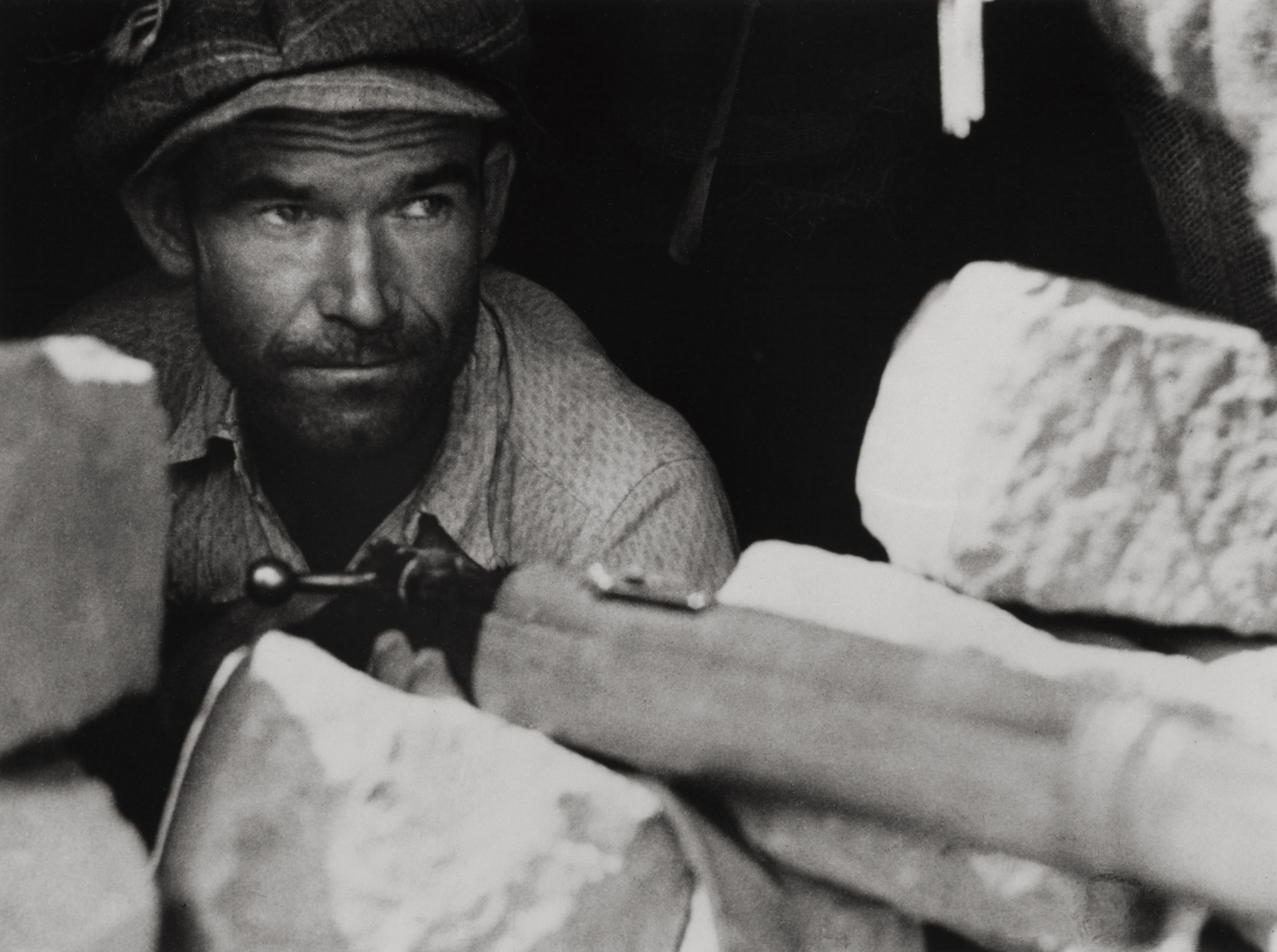
Robert Capa (Hungarian, 1913-1954) Barcelona or its vicinity, August 1936. Loyalist militiamen 1936 Gelatin silver print
Thankyou to the Ludwig Museum press office for allowing me to use these photographs to illustrate the post. Another exhibition about Robert Capa, This is War! Robert Capa at Work is on show at Museu Nacional d’Art de Catalunya from 7th July – 27th September, 2009
Dr Marcus Bunyan
Please click on the photographs for a larger version of the image.
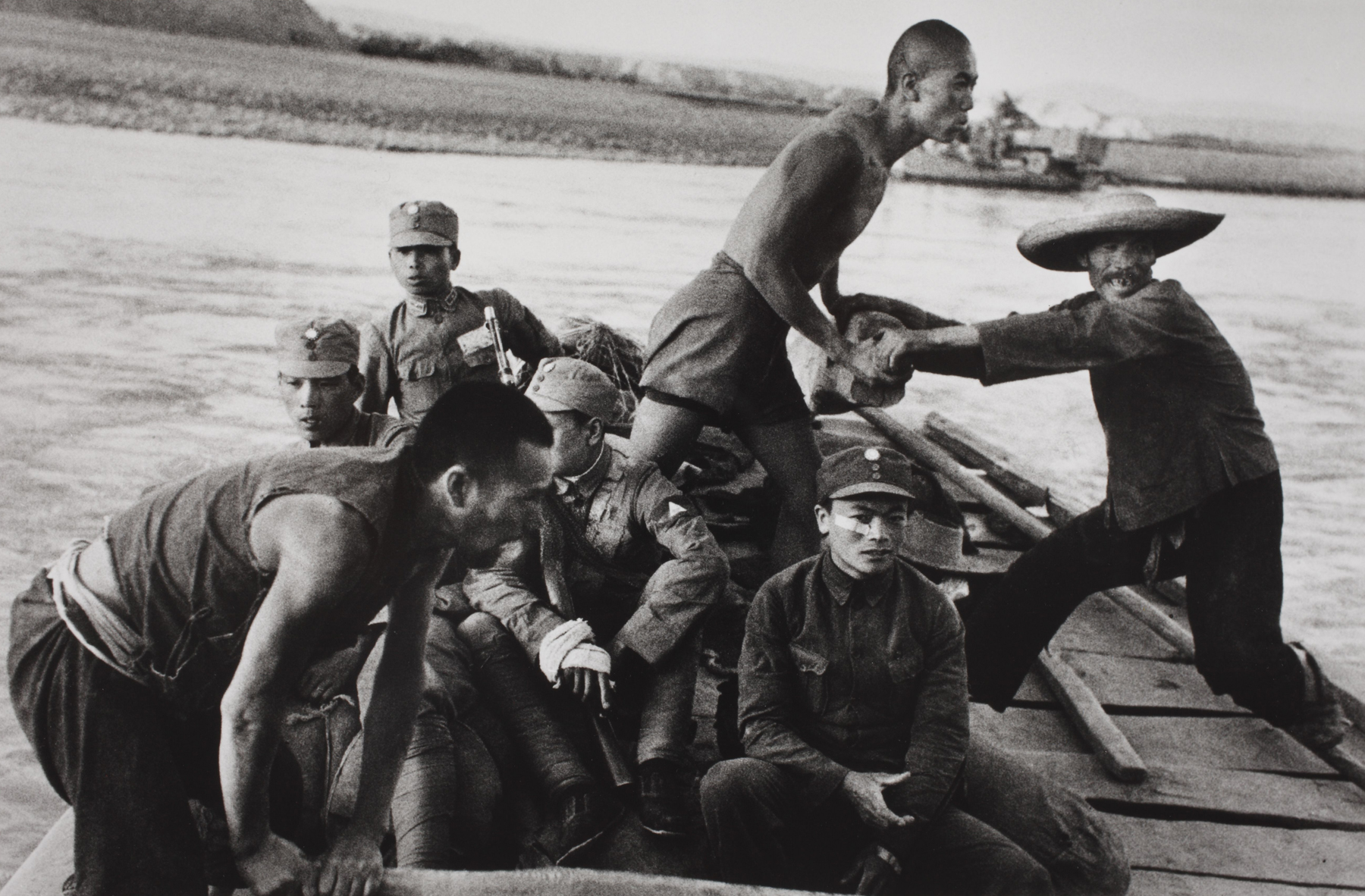
Robert Capa (Hungarian, 1913-1954) Near Zhengzhou, June-July 1938 1938 Gelatin silver print
Near Zhengzhou, June-July 1938. As the Japanese advanced on Zhengzhou – the crossroads of the two major railway lines of northern and eastern China, and the gateway to the Hankow region – Chiang Kai-shek ordered the dikes of the Yellow River blown up. The flood, which halted the Japanese only temporarily, inundated eleven cities and four thousand villages, destroyed the crops of four provinces, and rendered two million people homeless. In this photograph Chinese soldiers are being ferried across the river.
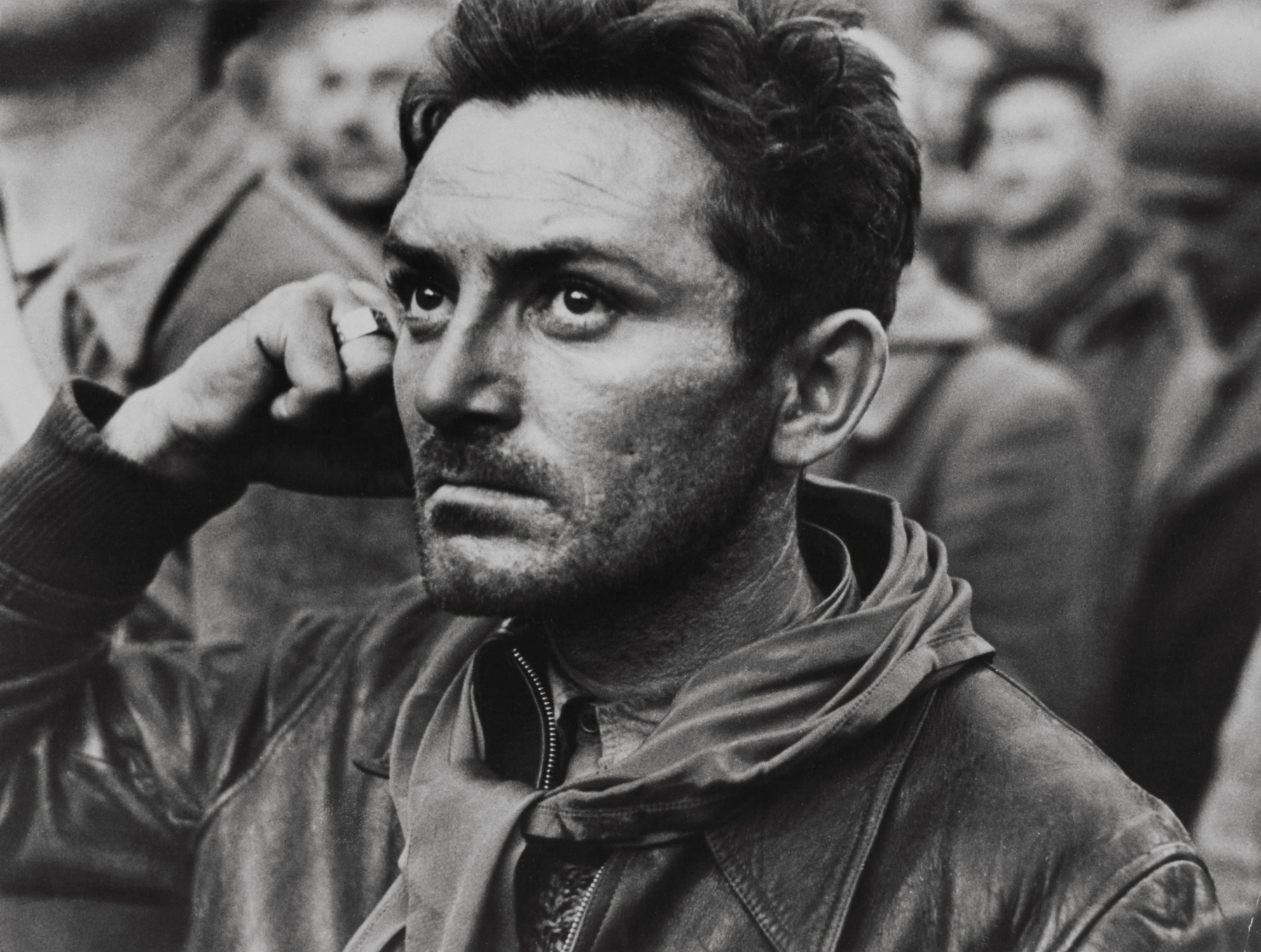
Robert Capa (Hungarian, 1913-1954) Near Barcelona, October 1938 1938 Gelatin silver print
Near Barcelona, October 1938. Farewell ceremony for the International Brigades. As an overture of friendship toward Hitler (who naturally wanted General Franco’s fascists to win the civil war), Stalin forced the Spanish Loyalist government to disband this Communist-supported force. This move was a terrible blow both to the Loyalist cause and to the men of the International Brigades.
Robert Capa (Hungarian, 1913-1954) September 5, 1936. The death of a Loyalist militiaman 1936 Gelatin silver print
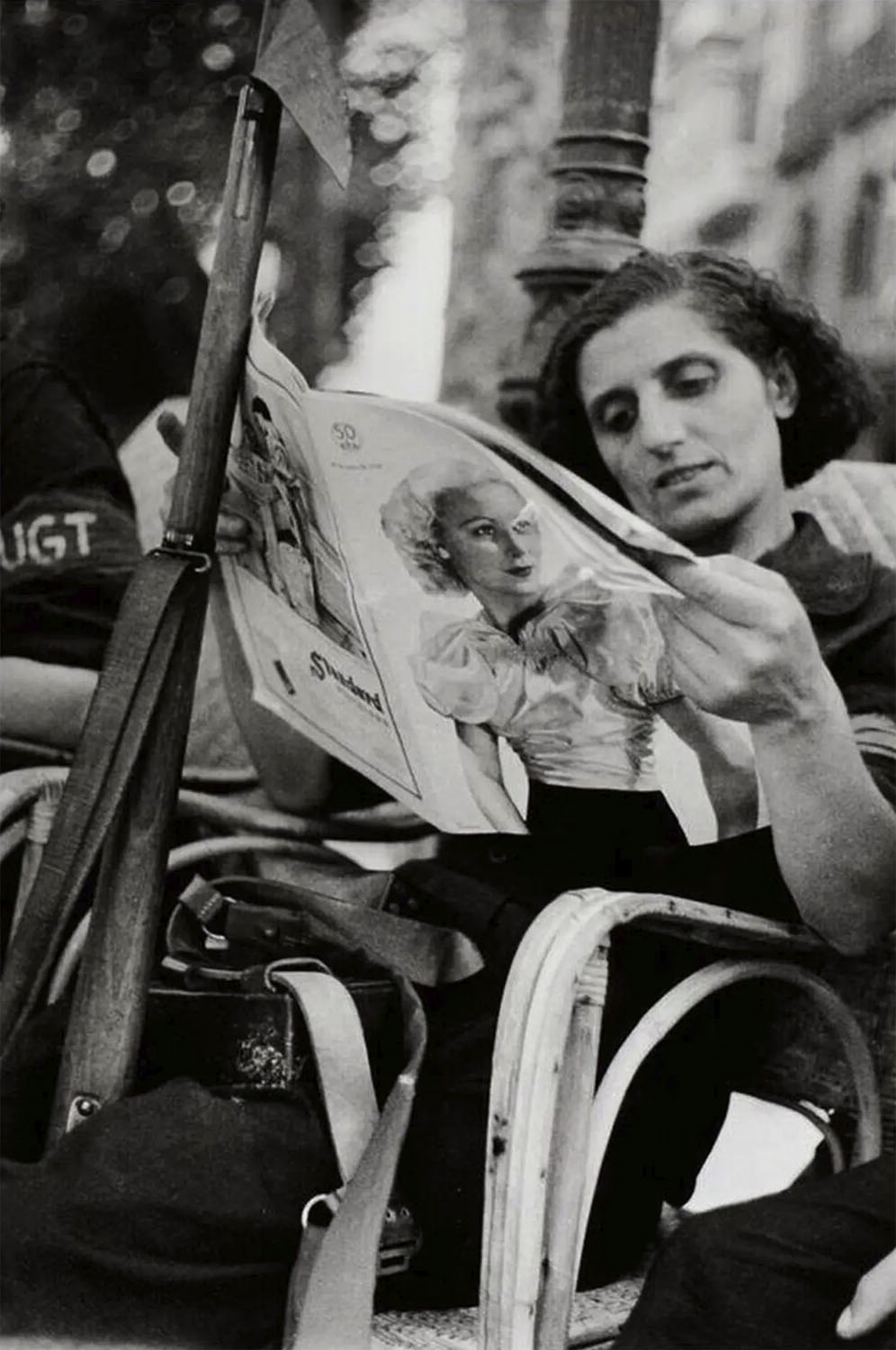
Robert Capa (Hungarian, 1913-1954) Loyalist Militiawoman 1936 Gelatin silver print
“The precocious Budapest teenager who would eventually become known to the world as Robert Capa did not aspire to be a photographer. He wanted to be a writer – a reporter and a novelist.”
Richard Whelan
Capa’s evolution into a press photographer and war reporter (all the while entertaining the idea of filmmaking) was fundamentally determined by history, as well as by factors like the accelerated technical developments in photography, the changes in the printed picture press in the 1920s as a result of the influence of motion pictures, as well as the increasingly refined techniques and strategies of photographers.
Capa distinguished himself among the ranks of war reporters who thought – with the visual appearance of magazine pages already in mind – in series of images that rolled like film footage, and who had the courage and the ability to “get in close” and show aspects of war and fighting on the front lines in a form that had hitherto been impossible, partly due to technological limitations and partly because of the restrictions of censorship.
Capa worked for a number of US and European agencies; his photo reports appeared in the columns of such publications as Vu, Regards, Ce Soir, Life, Picture Post, Collier’s and Illustrated. At the same time, in addition to his work as a photo correspondent, being one of the founders of the Magnum photo agency (1947), educating and supporting young photographers were of primary importance to him.
Following his death in 1954, his brother Cornell Capa, in addition to his own work as press photographer, strove to preserve and introduce to the world the oeuvre of his brother and his colleagues. As a first step, he expanded the International Fund for Concerned Photography, which he had co-founded with others in 1956. Then, in 1974, he established the International Center of Photography (ICP) – one of the world’s most prominent institutions of photography, simultaneously a museum, a school and an archive – with himself as director.
Between 1990 and 1992, Cornell Capa and Richard Whelan looked through Capa’s more than seventy thousand photos and chose 937 of them, the most outstanding photos of his oeuvre from 1932 to 1954, to represent the cornerstones of his life’s work and his career as a press photographer.
In 1995, from the 937 negatives that had been selected, three identical, excellent quality series were produced using traditional photographic technique. These consisted of 40 x 50 cm enlargements and marked with Robert Capa’s embossed seal. It was determined that no additional series could be made after this time. Of the three series, one remained in New York, the second one found a home in the Fuji Art Museum of Tokyo, and the third set was purchased by the Hungarian Ministry of Culture and added to the Historical Photo Collection of the Hungarian National Museum.
Besides the 937 photographs that constitute what is known as the “Definitive Collection”, the Hungarian National Museum also acquired 48 original Robert Capa vintage copies dating back to the same time. The backbone of the exhibition consists of selected groups of photographs. The more than 200 images lead viewers through the key stages of Robert Capa’s career as war correspondent through highlighted themes of his oeuvre, in chronological order.
The exhibition starts off with Budapest – presenting family photos, portraits and other documents – and moves on to the first serious commission in Berlin (the series on the speech given by the exiled Lev Trotsky in 1932, in Copenhagen) and the difficulties of the Paris years. Then we arrive to the most definitive stage in the oeuvre, the three-year period (1936-1939) spent photographing the Spanish Civil War and the Second Sino-Japanese War, during which Endre Friedmann / André Friedmann became Robert Capa, one of the most famous war press photographers in the world. Next we see the seats of world war operations: photos capturing the North African, Southern Italian and Sicilian fronts as well as the Normandy Landing on June 6, 1944. The “D-Day” series, which also served as inspiration to film director Steven Spielberg, is followed by images documenting the denigration of the French women who collaborated with the Germans and the liberation of Paris. The sequence of wartime photographs ends with images of the Ardennes Offensive and the advances of the Allied Forces. Capa’s post-world war work is represented by his reports on the establishment of the State of Israel and the associated conflicts, the immigrants and the refugees, as well as the material from his journey to the Soviet Union with John Steinbeck in 1947 and the photos of his 1948-1949 trip around Eastern Europe, which also include some Budapest shots. The chronological sequence ends with Capa’s photographs of Indochina and the photos taken on May 25, 1954, immediately preceding his death.
A separate section is devoted to the photographic documents of his social life, which became inextricably intertwined with his work as press photographer. His portraits which were taken in parallel with his war reports capture people that were important to him – colleagues, friends and lovers – as well as many prominent figures of the era, including Pablo Picasso, Ingrid Bergman, John Steinbeck and Ernest Hemingway.”
Press release from the Ludwig Museum – Museum of Contemporary Art Cited 10/07/2009
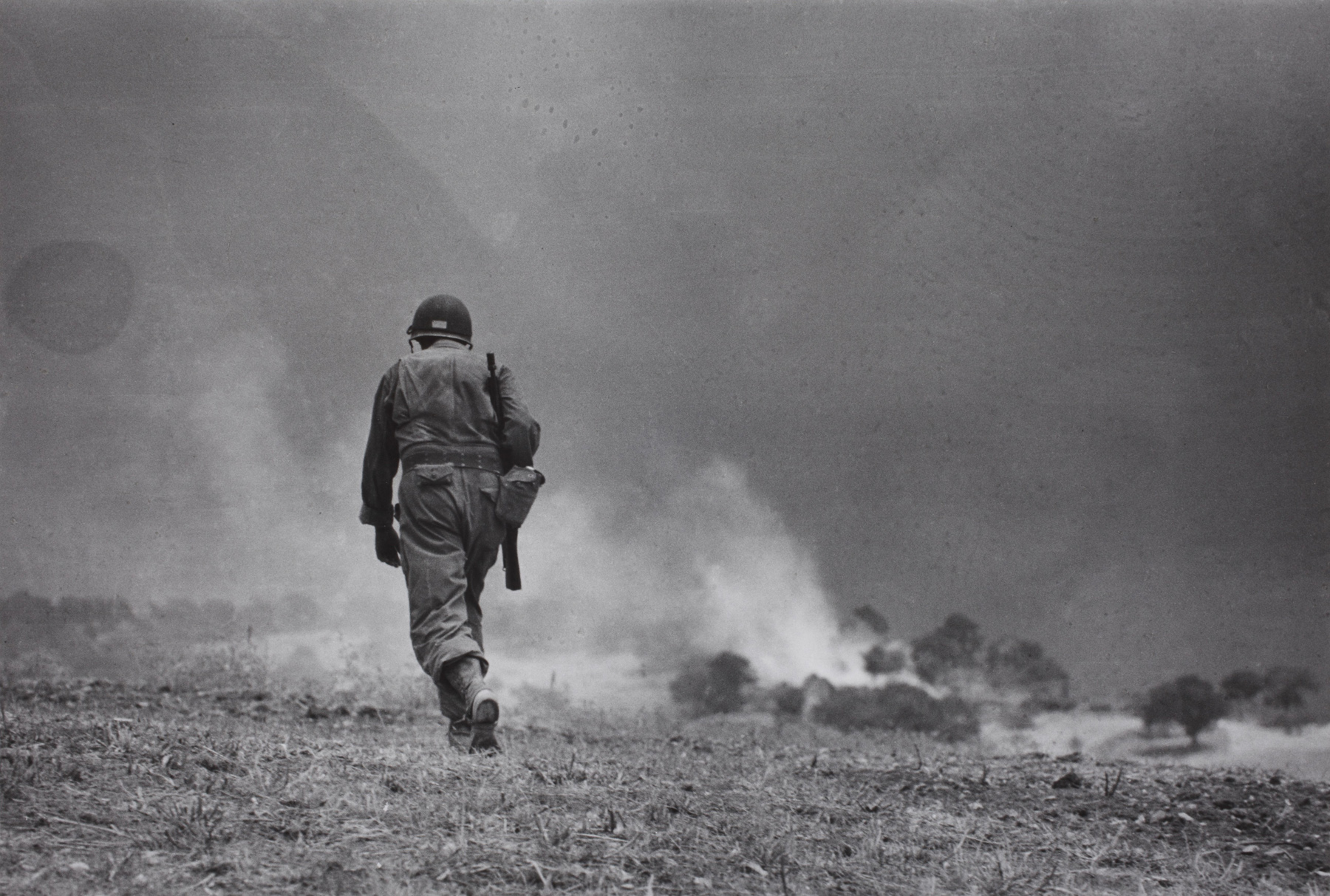
Robert Capa (Hungarian, 1913-1954) Near Troina, Sicily, August 4-5, 1943. Reconnaissance mission 1943 Gelatin silver print
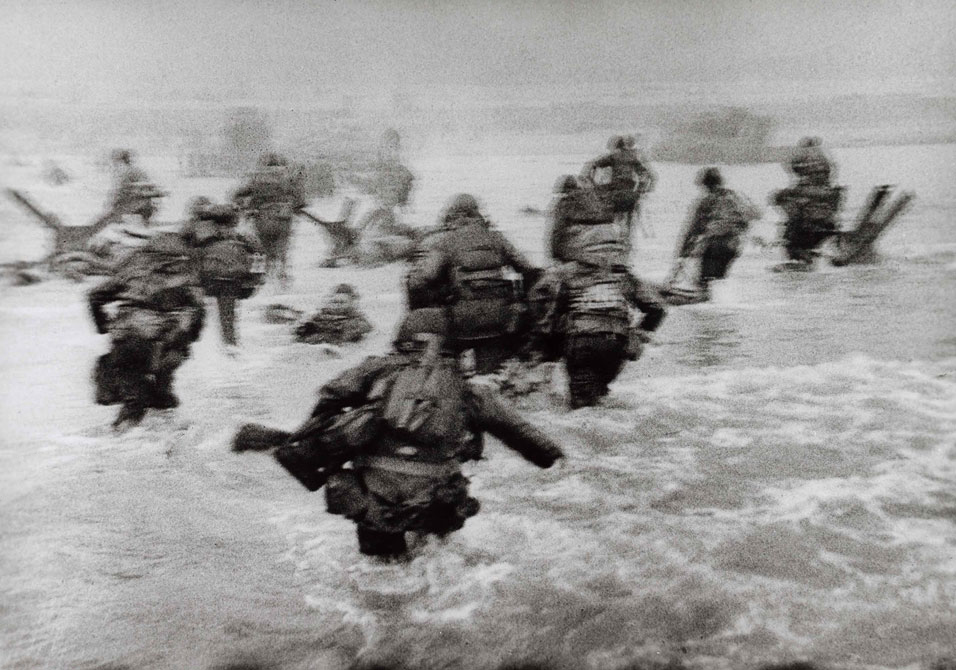
Robert Capa (Hungarian, 1913-1954) American soldiers landing on Omaha Beach, D-Day, Normandy, France, June 6, 1944 1944 Gelatin silver print
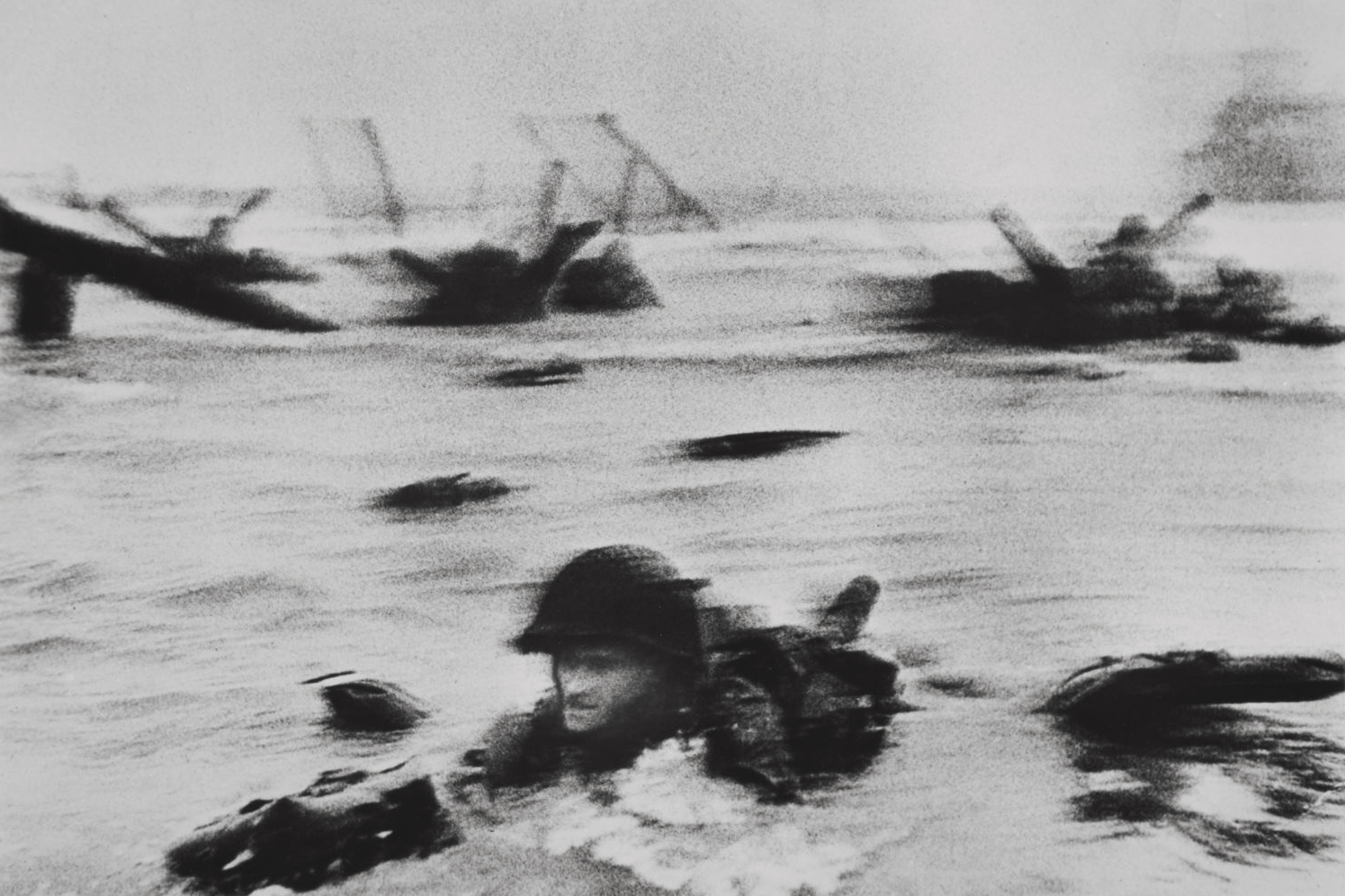
Robert Capa (Hungarian, 1913-1954) Omaha Beach, near Colleville-sur-Mer, Normandy coast, June 6, 1944. The first wave of American troops landing on D-Day 1944 Gelatin silver print
One of the greatest photographers of the 20th century, Robert Capa was born in Budapest, on October 22, 1913, as Endre Ernő Friedmann. He started to work as a photographer in the 1930s, first as a correspondent of Dephot, a Berlin-based agency. In 1933 he moved to Paris, where he befriended André Kertész, Henri Cartier-Bresson and David Seymour (Chim), and met with the great love of his life, Gerda Taro, also a photographer. He changed his name to Robert Capa in 1935, and his pictures of the 1936-1937 Spanish civil war were already published under this nom de plume. He immigrated to the US in 1939. Between 1941 and 1945, he worked on the European scenes of the war for Life magazine. He was one of the founders of the Magnum Photos agency. He died in May 1954, when he stepped on a landmine in Vietnam.
In 2008, a government grant enabled the Hungarian National Museum to buy 985 of Robert Capa’s photos from the collection of the International Center of Photography, New York. 48 of these are original prints by Robert Capa, and 937 form the so-called Robert Capa Master Selection III. Founded in 1974, the International Center of Photography holds about seventy thousand negatives made by the Hungarian born Robert Capa, considered the greatest war photographer of all time. In 1995, Cornell Capa (Robert’s brother, who died last year) and Richard Whelan (Robert Capa’s friend and biographer) selected 937 of these negatives to represent the oeuvre. Of these, three identical, limited-edition series were made, each excellent 40 x 50 cm print marked with Robert Capa’s dry seal. No further prints will be made. One of the series stayed in New York, the second was bought by the Tokyo Fuji Art Museum, Japan, and the third by the Hungarian National Museum. Not only does the series offer a comprehensive overview of the oeuvre, it also enables exhibition-goers to have a visual experience of important events in the history of the 20th century through high-quality material. The 937 pictures were made on four continents, in 23 countries. 461 were made before the Second World War, of which images of the Spanish civil war are the most important. 276 of these photos he made on the fronts of the World War – the poignant pictures of the D-Day landing in Normandy were later to inspire film director Steven Spielberg. 154 photos from after the world war illustrate more struggle and suffering during the establishment of the state of Israel and the Indochina War. 46 images bear testimony to the talent of Capa the portrait photographer, with pictures of Gary Cooper, Ingrid Bergman, Alfred Hitchcock, John Steinbeck, Pablo Picasso and others. ICP made a gift of large prints of 20 negatives considered especially important in the series, and five portraits of Robert Capa. In all, the national collection was enriched with 1010 photographs.
Robert Capa was a war photographer, with all the important traits of an excellent correspondent: he owned the right amount of persistence, aggressiveness to get to the scenes, resourcefulness and communication skills to match the capacities of a great artist: a high degree of sensitivity, the talent to recognise and choose subjects, and composition skills. Bravely, though not fearlessly, he was there in all of the large wars of the middle of the 20th century, and he struggled with the eternal dilemma of journalists and photographers, whether he is a hyena when his participation stops at recording the events, and does not extend to helping those who flee or are wounded. His vocation, to which his dedication was always complete, was thus a source of moral conflict for him, while also compelled him to show what he considered really important. To show things in a way no one else could because no one else was close enough. “If your pictures are not good enough, you weren’t close enough,” he said. He was close when the militiaman died, he was there in the bloodbath of the landing in Normandy, and he was of course close enough to the Indochina War when he stepped on that fatal mine. He lived an intensive, passionate life, taking risks, even gambling; a life that promised childlessness, social solitude, homelessness and a preordained mode of death. This was probably the only way to live through and show all that surrounded him.
A selection from the new acquisition, about 30 pictures, will be on view in the Hungarian National Museum, between March 6 and 15, 2009. The first large exhibition of this exceptional material opens in Ludwig Museum on July 2, and can be seen until October 11. A travelling selection is also planned, to be shown in ten Hungarian cities.
Press release from the Ludwig Museum website [Online] Cited 16/03/2019
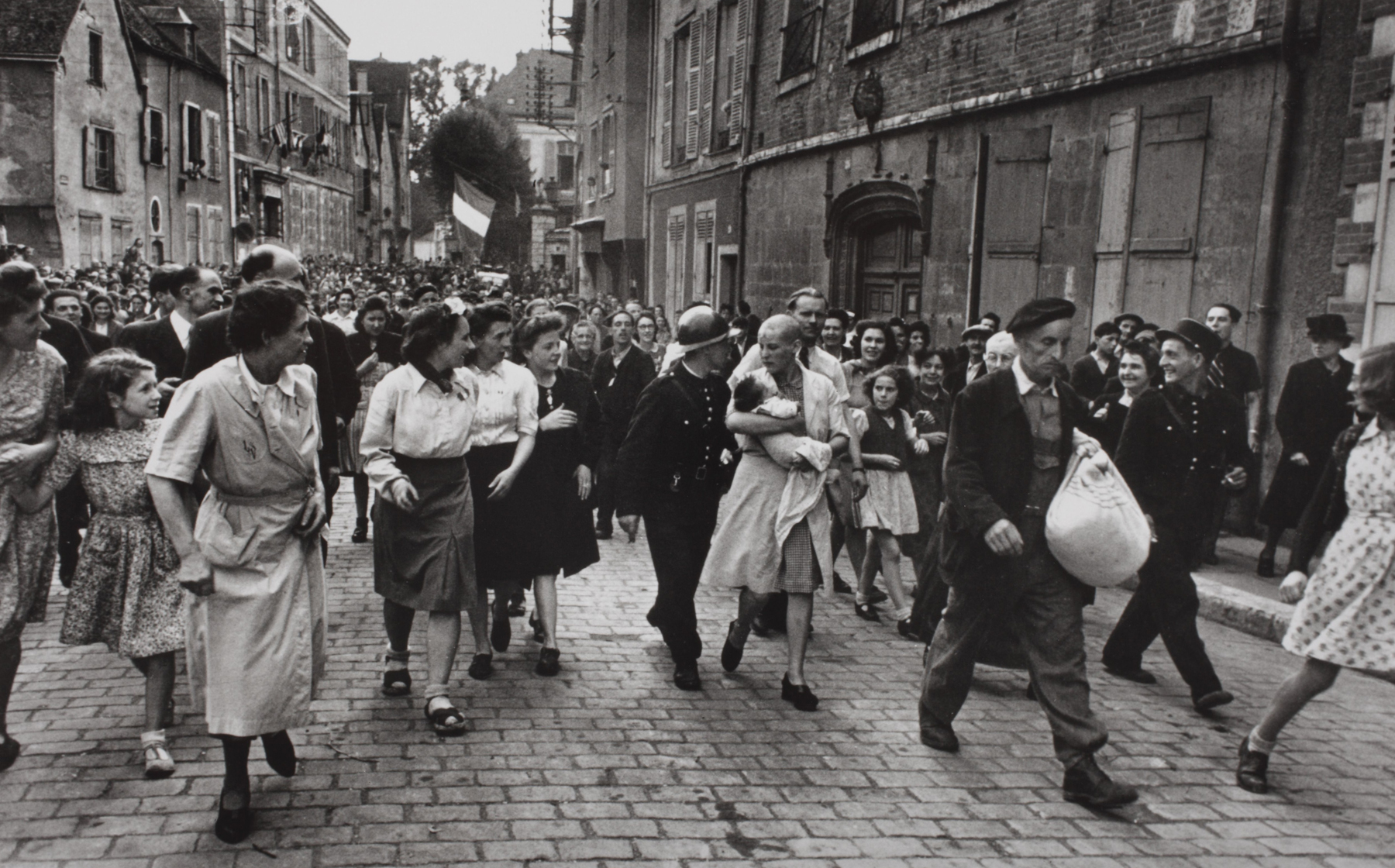
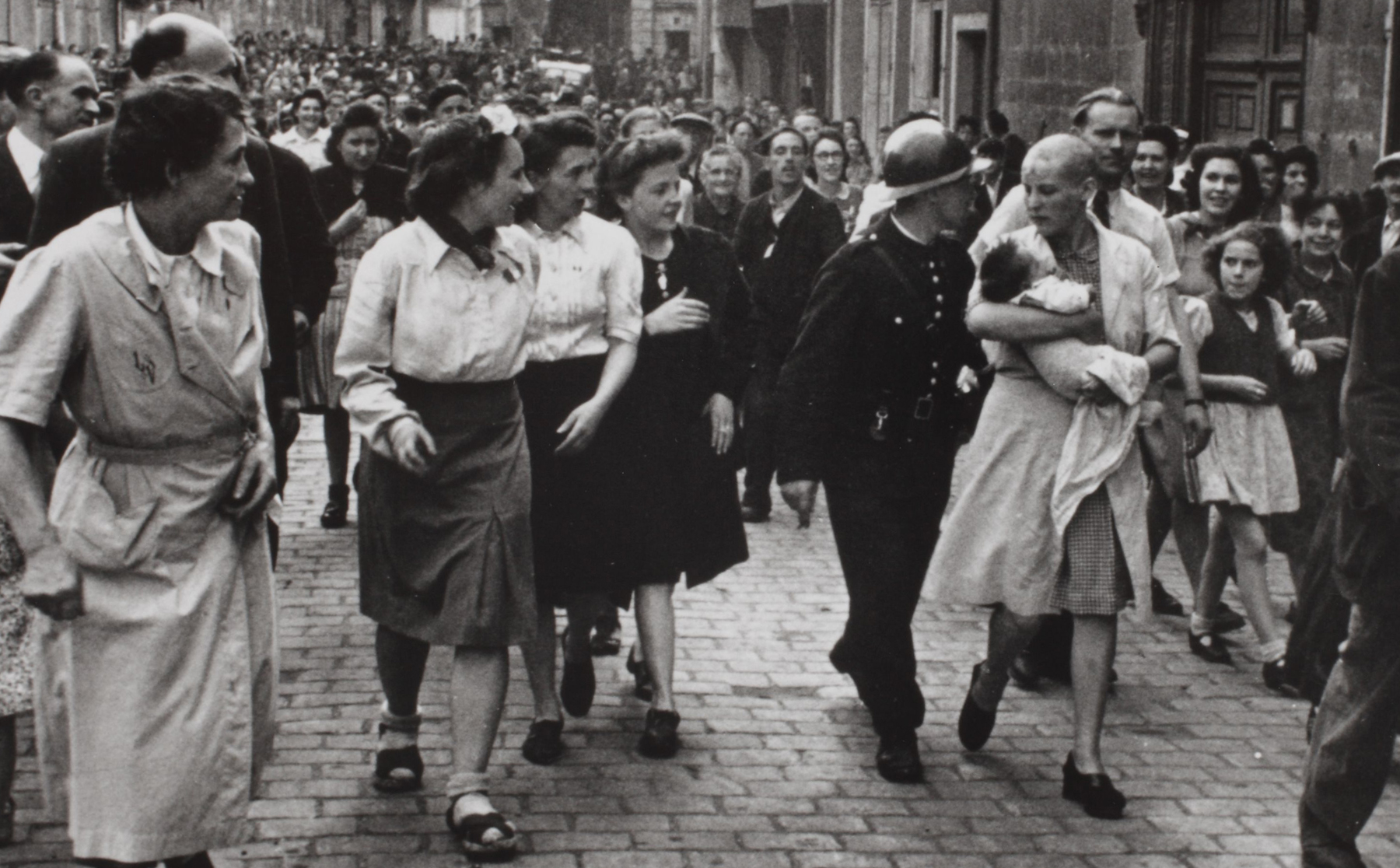
Robert Capa (Hungarian, 1913-1954) Chartres, August 18, 1944 1944 Gelatin silver print
Robert Capa (Hungarian, 1913-1954) Chartres, August 18, 1944 (detail) 1944 Gelatin silver print
Chartres, August 18, 1944. Just after the Allies had liberated the town, a Frenchwoman who had had a baby by a German soldier was punished by having her head shaved. Here she is seen being marched home. Her mother (barely visible over the right shoulder of the man at right carrying cloth sack) was similarly punished.
Ludwig Museum – Museum of Contemporary Art Palace of Arts, Komor Marcell u. 1, Budapest, H-1095 Phone: +36 1 555 3444
















 Art Blart _ art and cultural memory archive
You must be logged in to post a comment.