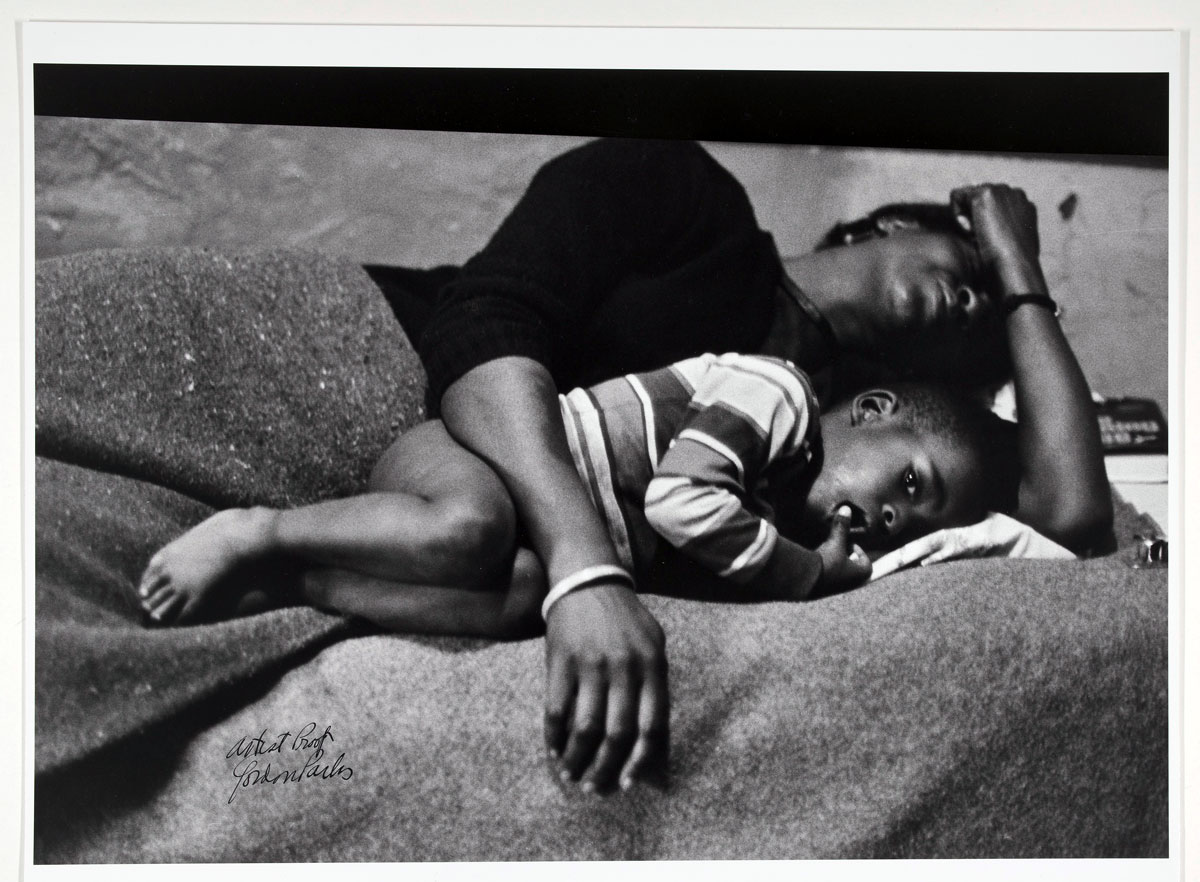
Exhibition: ‘Gordon Parks: 100 Moments’ at New York State Museum

Exhibition dates: 26th January – 19th May 2013
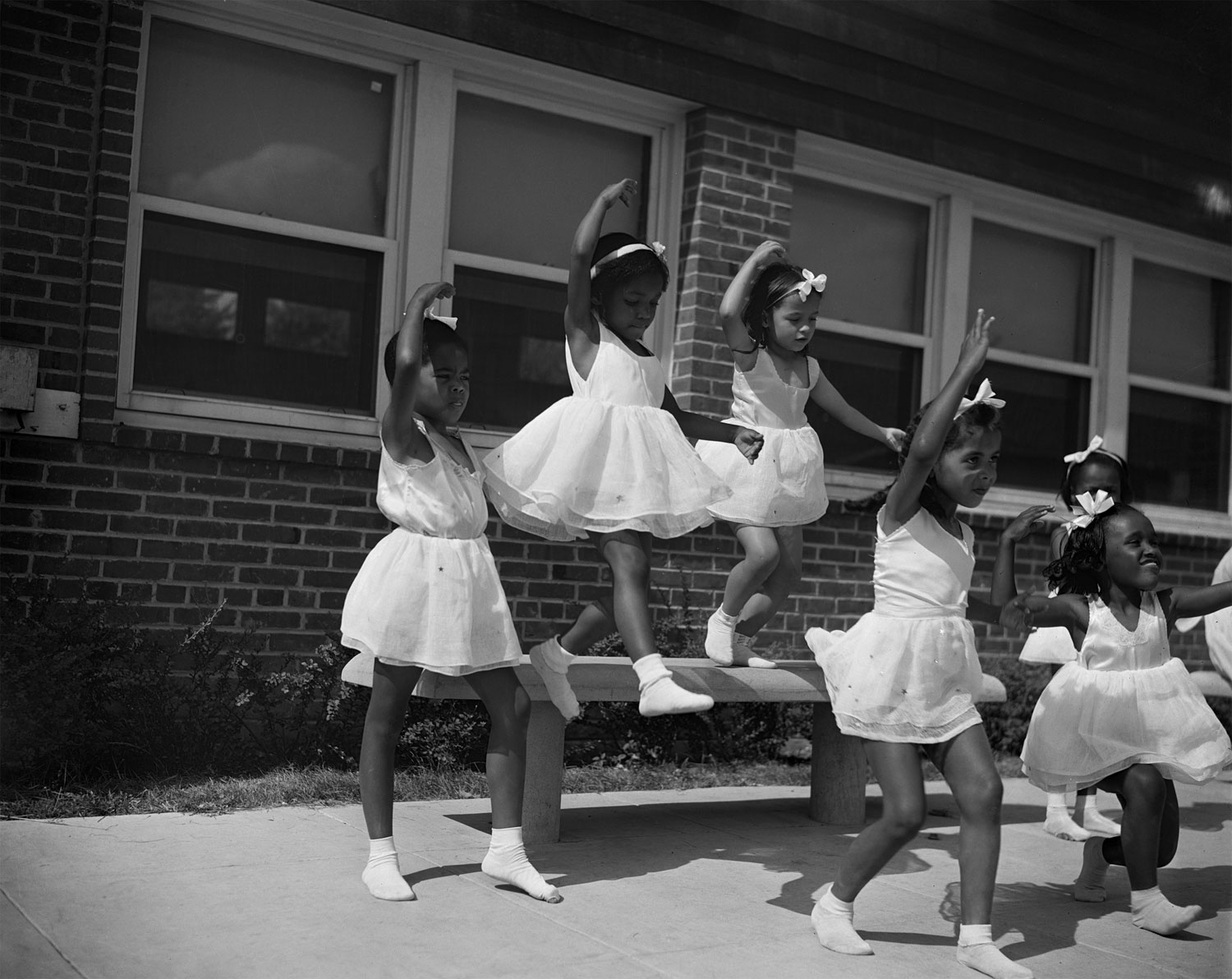
 

Gordon Parks (American, 1912-2006) 'A dance group, Frederick Douglass housing project, Anacostia, Washington, DC, 1942' 1942


Gordon Parks (American, 1912-2006)
A dance group, Frederick Douglass housing project, Anacostia, Washington, DC, 1942
1942
Gelatin silver print
17.5 x 22″
Prints and Photographs Division
Library of Congress


The more I see the work of this outstanding artist, the more I fall in love with it. There is just a beautiful lyricism here – nothing extraneous or superfluous within the picture frame, sensitively balanced photographs that are whimsical and engaging. A woman and her dog in Harlem, NY, 1943 (below) is just a joy.

Dr Marcus Bunyan


Many thankx to the New York State Museum for allowing me to publish the photographs in the posting. Please click on the photographs for a larger version of the image.


“I saw that the camera could be a weapon against poverty, against racism, against all sorts of social wrongs. I knew at that point I had to have a camera.”


Gordon Parks
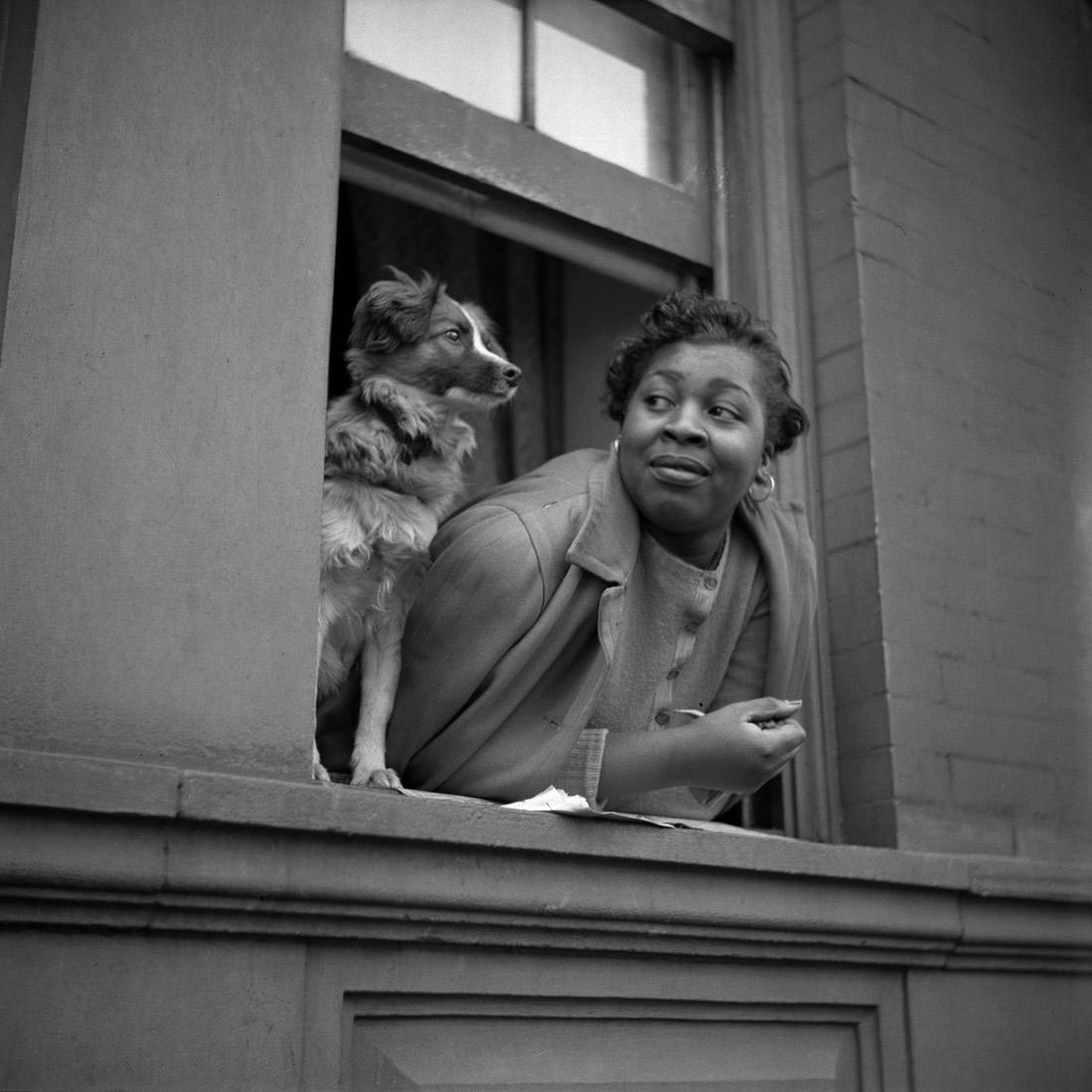


Gordon Parks (American, 1912-2006) 'A woman and her dog in Harlem, NY, 1943' 1943


Gordon Parks (American, 1912-2006)
A woman and her dog in Harlem, NY, 1943
1943
Gelatin silver print
23 x 21″
Prints and Photographs Division
Library of Congress
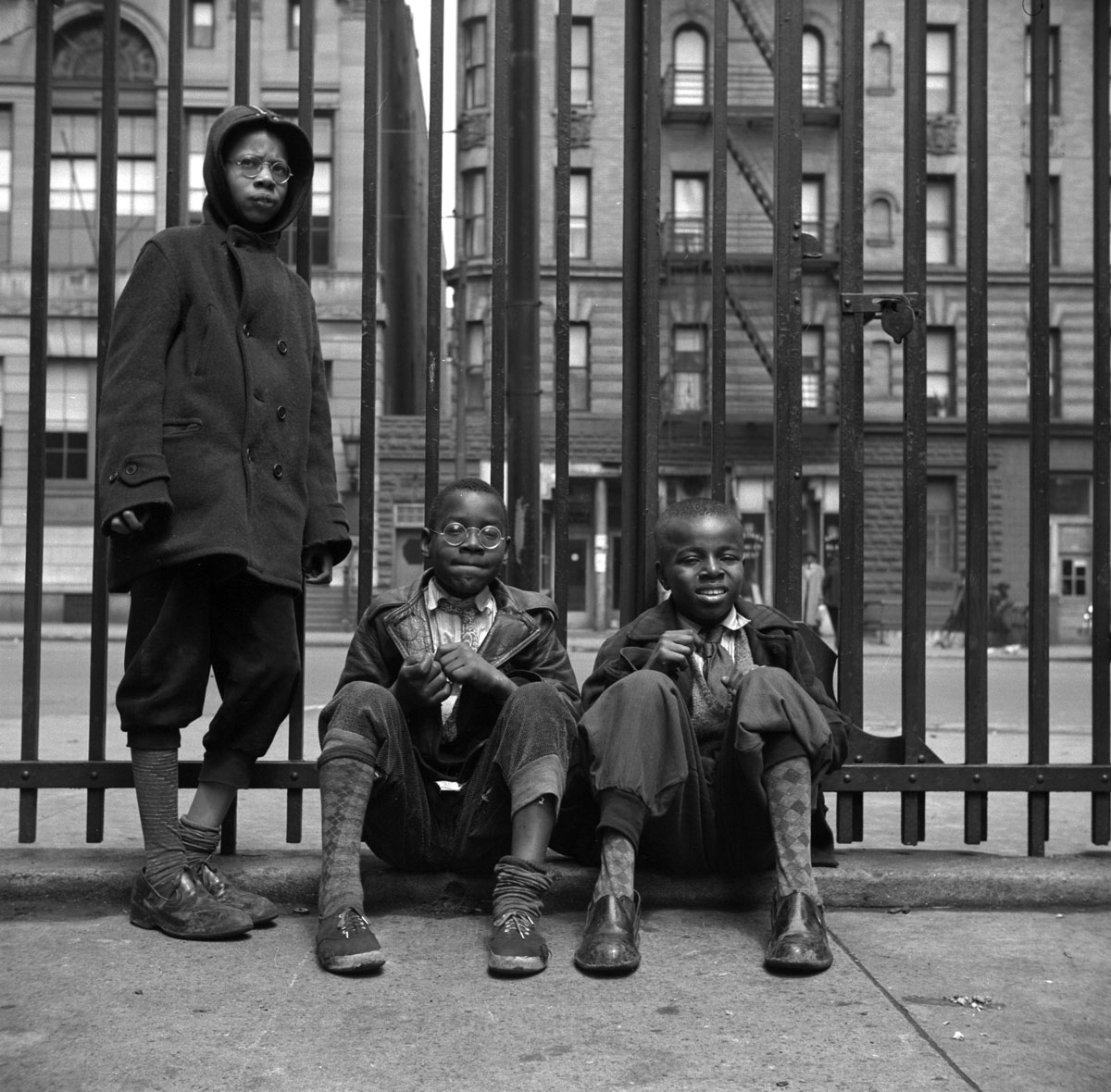
 

Gordon Parks (American, 1912-2006) 'Street Scene: Three young boys, Harlem, NY, 1943' 1943


Gordon Parks (American, 1912-2006)
Street Scene: Three young boys, Harlem, NY, 1943
1943
Gelatin silver print
23 x 21″
Prints and Photographs Division
Library of Congress
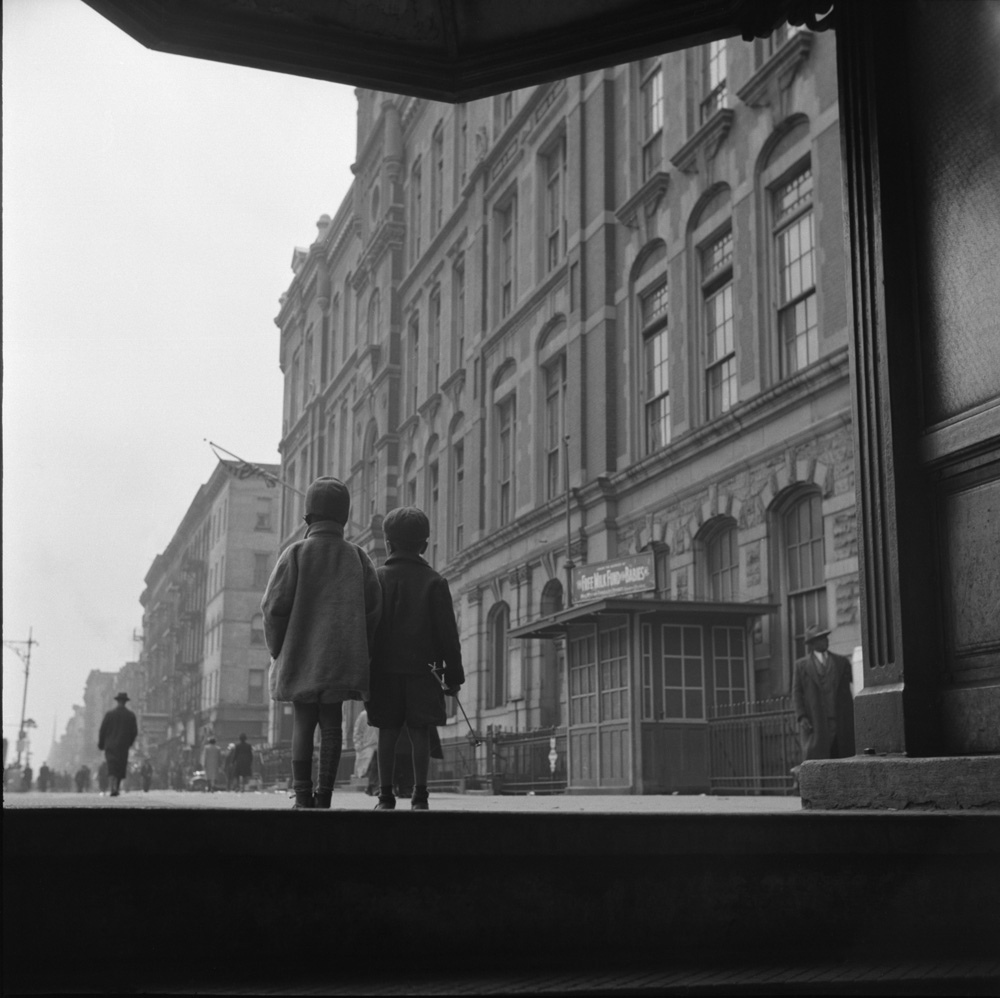
 

Gordon Parks (American, 1912-2006) 'Street Scene: Two children walking, Harlem, NY, 1943' 1943


Gordon Parks (American, 1912-2006)
Street Scene: Two children walking, Harlem, NY, 1943
1943
Gelatin silver print
23 x 21″
Prints and Photographs Division
Library of Congress
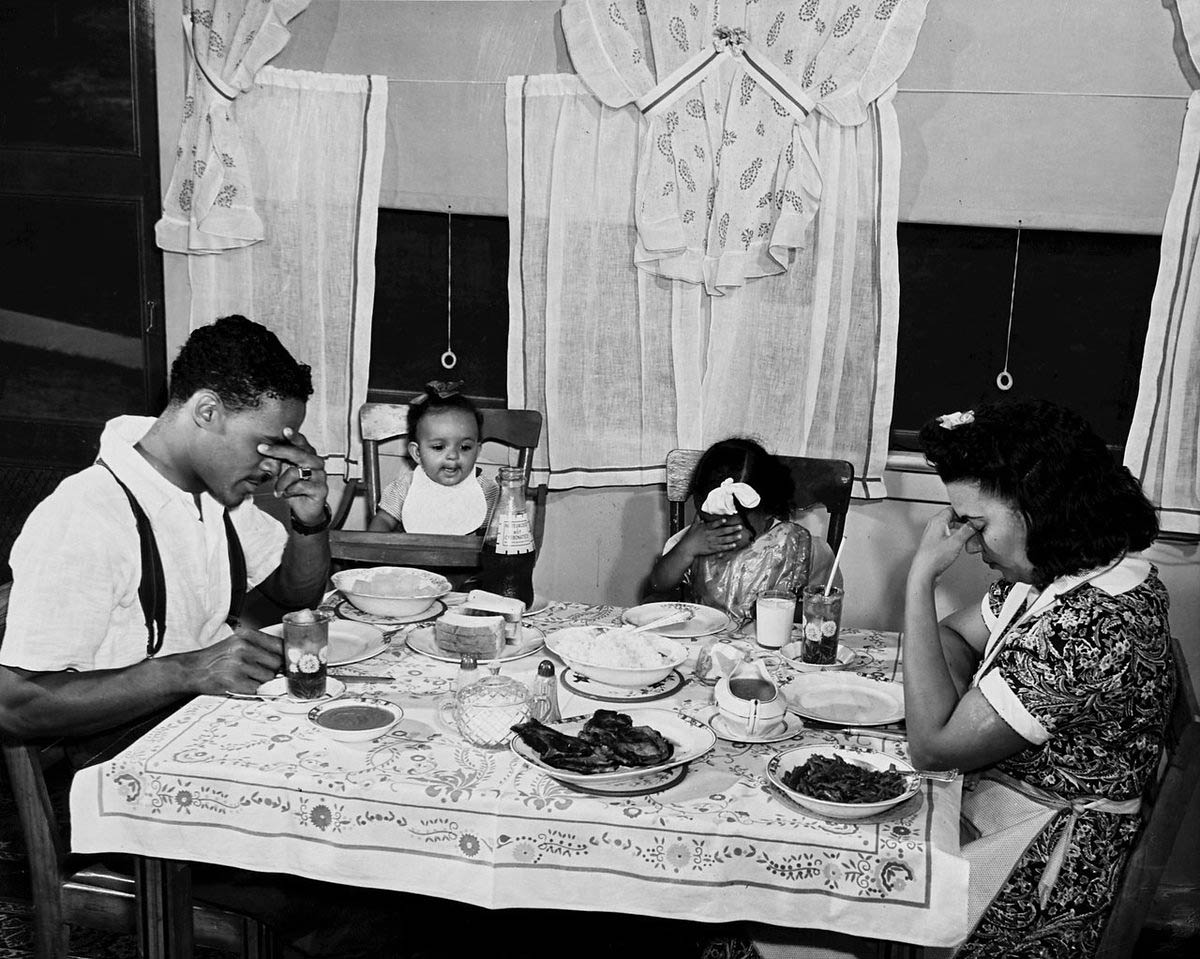
 

Gordon Parks (American, 1912-2006) 'Anacostia, D.C. Frederick Douglass Housing Project. A family says grace before the evening meal. June 1942' 1942


Gordon Parks (American, 1912-2006)
Anacostia, D.C. Frederick Douglass Housing Project. A family says grace before the evening meal. June 1942
1942
Gelatin silver print
Gordon Parks Collection, Photographs and Prints Division
Schomburg Center for Research in Black Culture, The New York Public Library
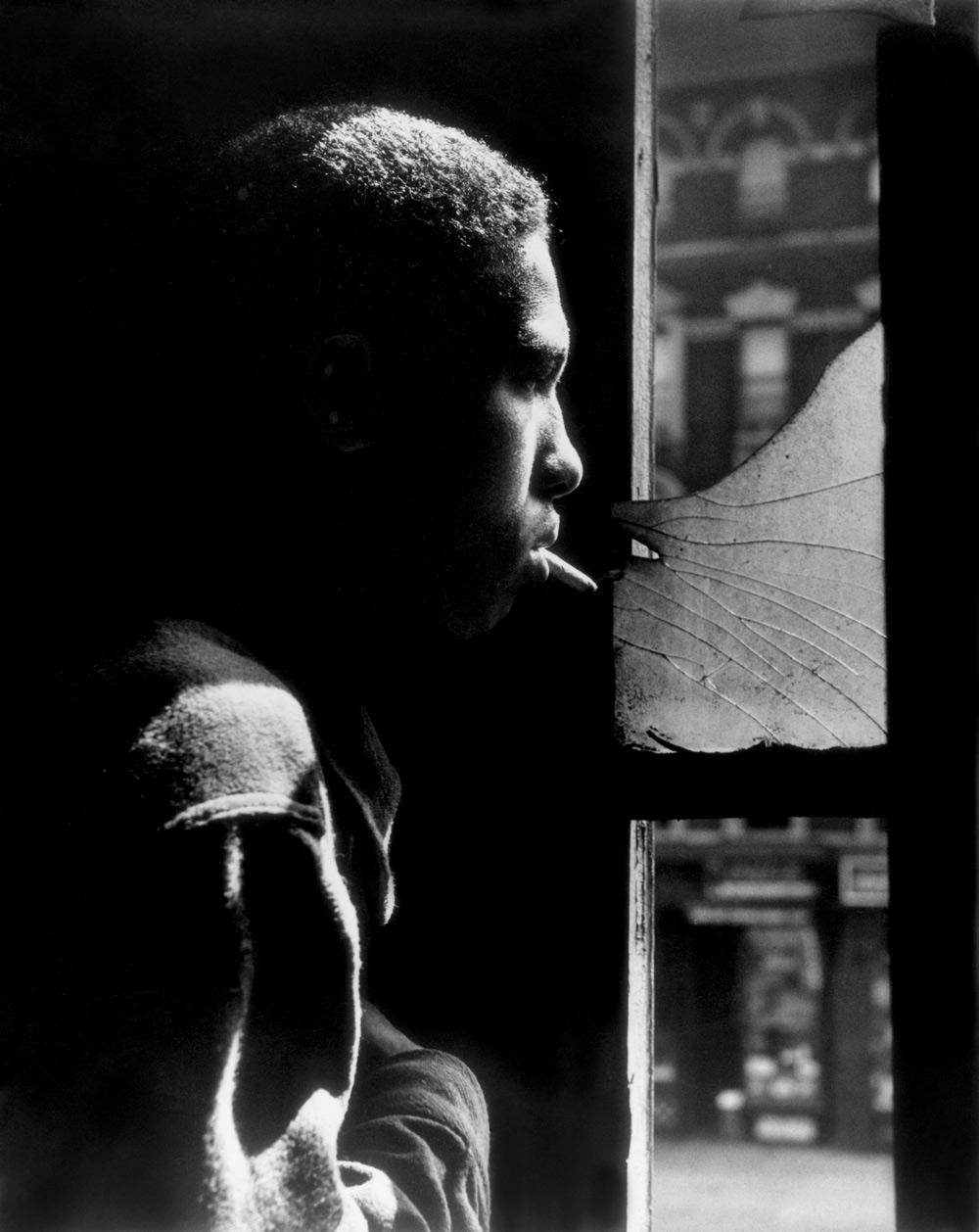
 

Gordon Parks (American, 1912-2006) 'Red Jackson, Harlem' 1948


Gordon Parks (American, 1912-2006)
Red Jackson, Harlem
1948
Gelatin silver print
Gordon Parks Collection, Photographs and Prints Division
Schomburg Center for Research in Black Culture, The New York Public Library
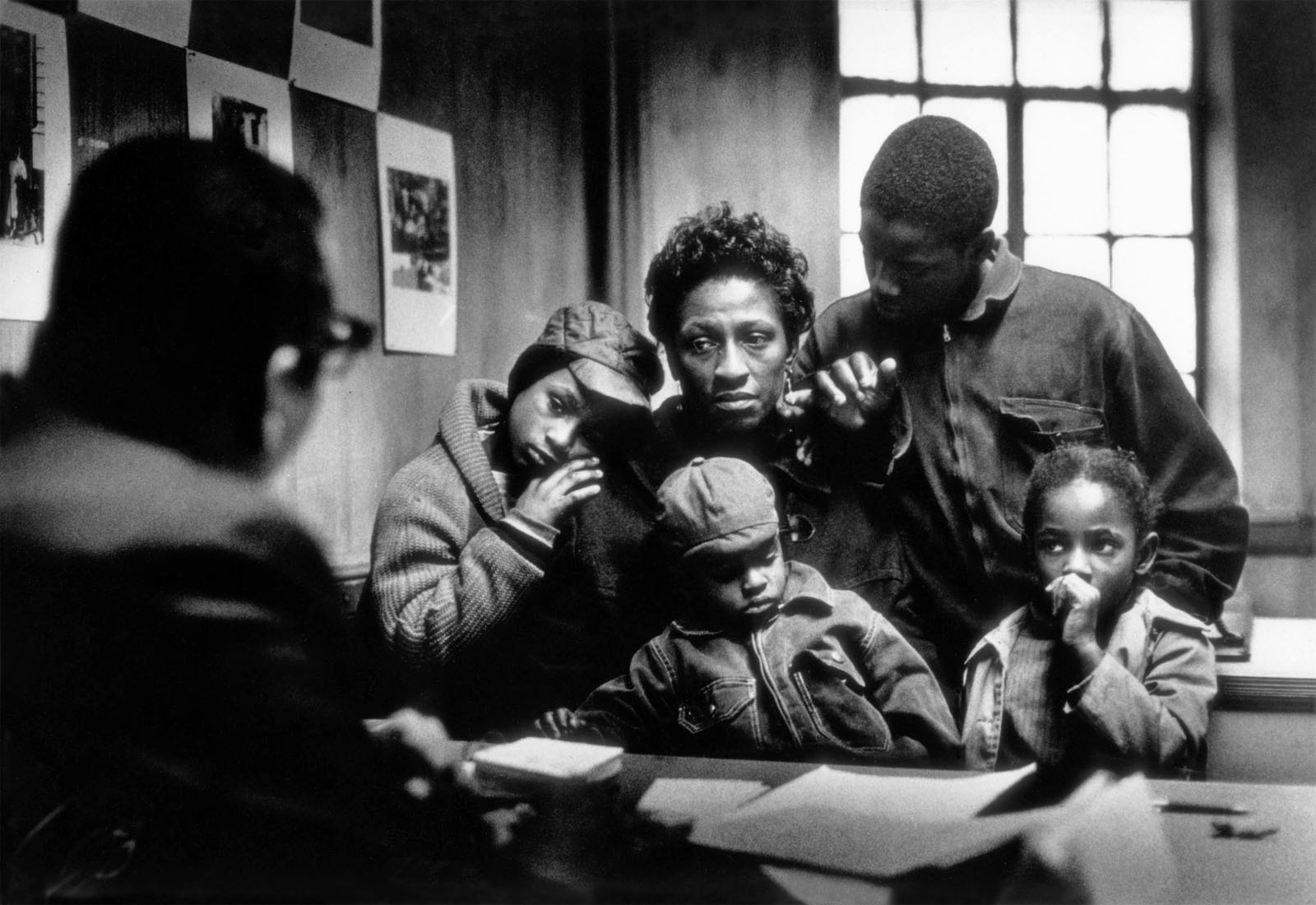
 

Gordon Parks (American, 1912-2006) 'The Fontenelle Family' 1967


Gordon Parks (American, 1912-2006)
The Fontenelle Family
1967
Gelatin silver print
Gordon Parks Collection, Photographs and Prints Division
Schomburg Center for Research in Black Culture, The New York Public Library


Another Parks image in the show, taken in 1967 and published in Life magazine, is subtler though ultimately more powerful. It shows Harlem resident Bessie Fontenelle and four of her children at the welfare office. Across a desk, the family faces an anonymous white man, his back to the camera, with a suit, thick-framed spectacles and slicked hair. Fontenelle looks drawn and careworn, ground down by poverty. Parks lived with the family for a month and documented their lives for a story and photo essay for Life, an assignment he devised in response to an editor’s question about why inner-city residents were rioting across America.

“The problem in documenting a family like that,” Parks later said, “is that you wonder, in the end, whether you should have touched the family, or just left them alone.” While he lived with them, the alcoholic father, Norman, was unemployed, and Parks struggled with journalistic objectivity as he resisted the impulse to provide funds for food and clothing.

After their story was published, money flooded in from Life readers, and the Fontenelles were able to buy a small house in Queens. They’d been there just three months when Norman, who was drunk, dropped a lit cigarette onto the couch and burned the house down. He died in the fire, as did one of the six kids; another boy died a few years later, and three girls eventually were claimed by AIDS. Parks spent the rest of his life wondering whether, in service of telling the larger story of urban poverty for many families, he’d contributed to the destruction of the one he photographed.

Steve Barnes. “On exhibit: ‘Gordon Parks: 100 Moments’ at the State Museum,” on the Times Union website Jan 23, 2013 [Online] Cited 15/07/2024
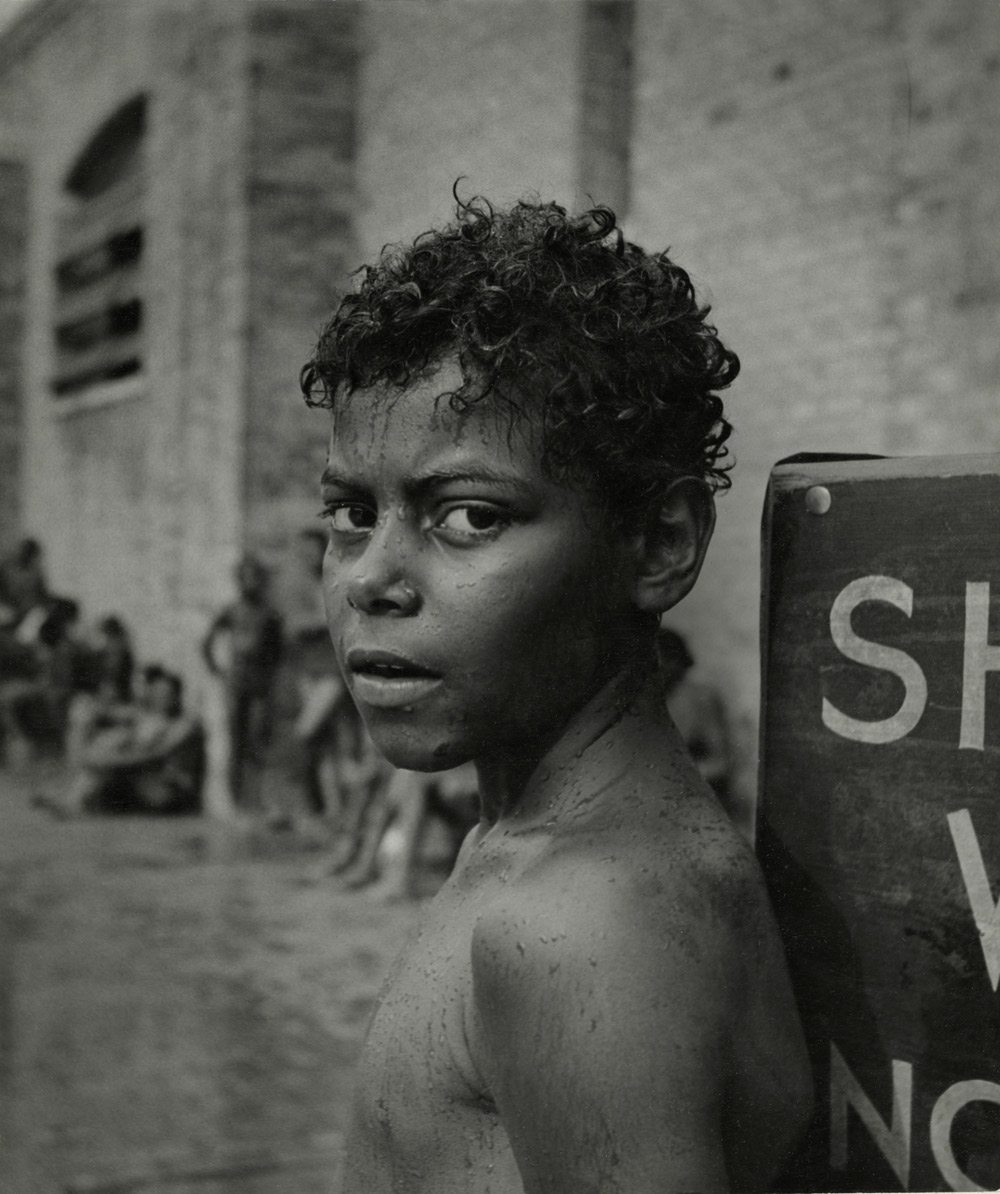
 

Gordon Parks (American, 1912-2006) 'Boy at Swimming Pool, Harlem, NY, 1942' 1942


Gordon Parks (American, 1912-2006)
Boy at Swimming Pool, Harlem, NY, 1942
1942
Gelatin silver print
22 x 17.5″
Gordon Parks Collection, Photographs and Prints Division
Schomburg Center for Research in Black Culture, The New York Public Library


A new exhibition celebrating the 100th birthday of world-renowned photographer Gordon Parks opens on January 26, 2013 at the New York State Museum. Gordon Parks: 100 Moments showcases six decades of Parks’ photographs, including numerous never-before-seen images and Parks’ most famous photo, American Gothic, Washington, D.C. On display at the State Museum through May 19, 2013, the stunning visual collection is organised by the Schomburg Center for Research in Black Culture. The exhibit also includes images from the Farm Security Administration and Office of War Information (OWI) collections at the Library of Congress, Prints and Photographs Division.

“Gordon Parks was a true Renaissance man – musician, writer, film director and, most notably, world-class photographer,” said State Education Commissioner John B. King, Jr. “His work helped drive the Civil Rights movement by exposing the stark realities of life faced by so many African Americans. We are honoured to exhibit some of his most important images at the New York State Museum.”

“The State Museum is honoured to present this landmark exhibition by Gordon Parks, one of New York’s greatest photographers,” said State Museum Director Mark Schaming. “This is truly a unique opportunity to see these powerful images from the Schomburg’s vast collections together in a beautifully curated exhibition.”

Known for documenting the ordinary yet compelling lives of African Americans in cities like Harlem and Washington, D.C., Parks began his career in 1948 as a professional photographer for Life magazine, where he was the publication’s first African American employee. Tackling issues in black communities like post-World War II urban migration, the expansion of black newspapers and radio, entrenched segregation and economic discrimination, Parks was a consummate storyteller of urban life through his ever-questioning lens. Parks died in 2006.

Press release from the New York State Museum website
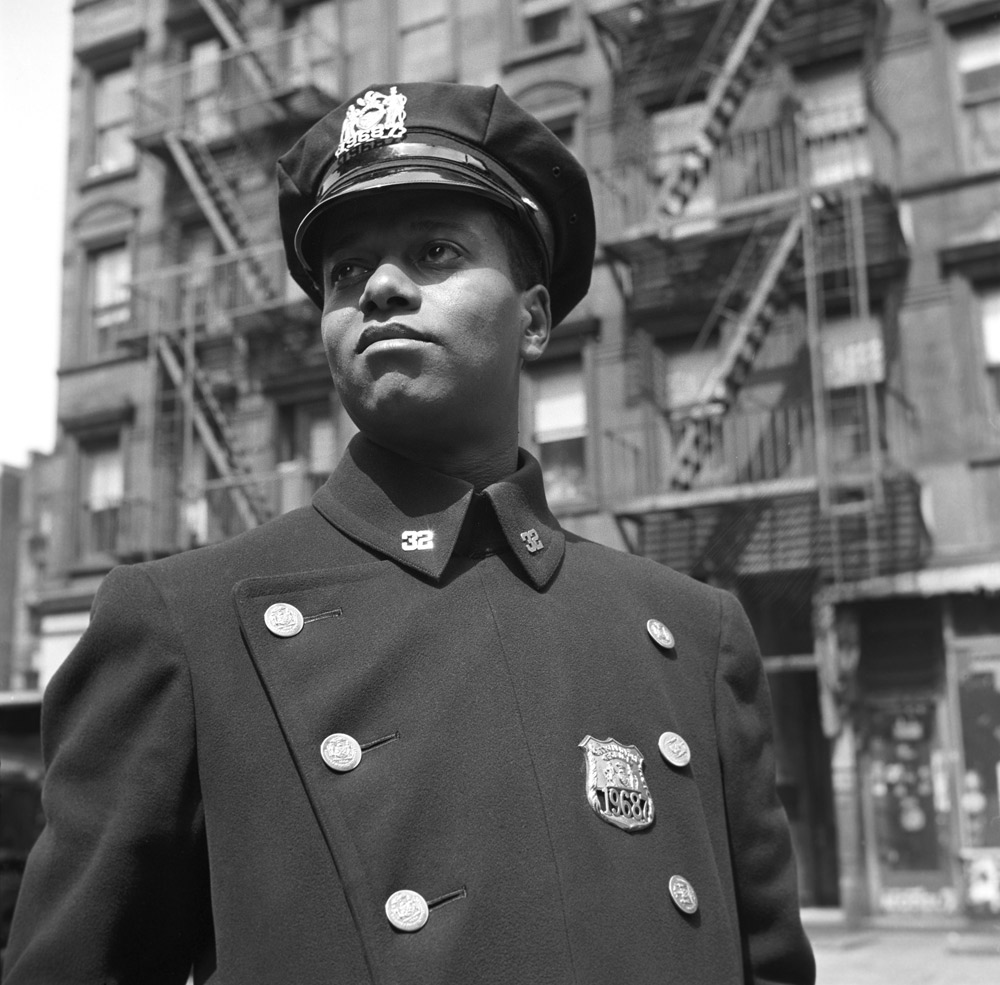
 

Gordon Parks (American, 1912-2006) 'Policeman, badge no. 19687, NY, 1943' 1943


Gordon Parks (American, 1912-2006)
Policeman, badge no. 19687, NY, 1943
1943
Gelatin silver print
23 x 21″
Prints and Photographs Division
Library of Congress


Gordon Parks (American, 1912-2006) 'American Gothic, Washington, D.C., (Ella Watson)' 1942


Gordon Parks (American, 1912-2006)
American Gothic, Washington, D.C., (Ella Watson)
1942
Gelatin silver print


One of Parks’ most famous images, taken in Washington, D.C., in 1942, captures Ella Watson, who at that point had been a cleaning woman in federal offices for 26 years and supported a family of six on a salary of about $20 a week. She’s in front of a large, vertically hung American flag and flanked by a broom and a mop, their well-used heads a testament to the rigor of her nightly labors. Watson, whom Parks chronicled as part of his work as the first black photographer for the Farm Security Administration, has a stony expression, and she looks slightly to the side of the camera – a gaze diverted and downcast. It’s a polemical picture, and its obvious echo of Grant Wood’s painting “American Gothic” led to Parks’ photo becoming familiarly known by the same name. Parks later said the photo was meant to highlight racism and inequality and that when he made the picture he was still seething from having been refused service at several retail establishments in Washington.

Steve Barnes. “On exhibit: ‘Gordon Parks: 100 Moments’ at the State Museum,” on the Times Union website Jan 23, 2013 [Online] Cited 15/07/2024
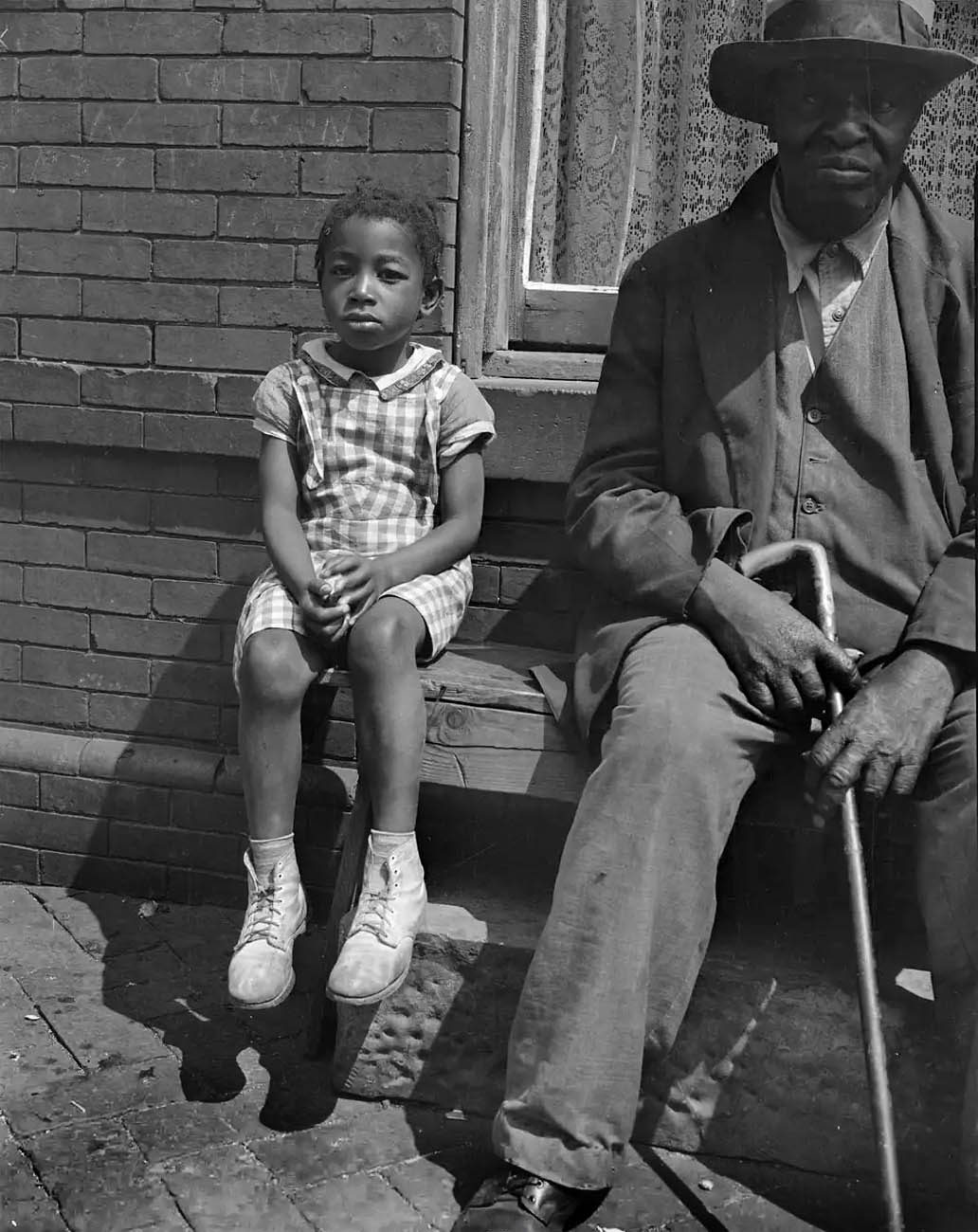
 

Gordon Parks (American, 1912-2006) 'Grandfather and grandchild on Seaton Road, Washington, DC, 1942' 1942


Gordon Parks (American, 1912-2006)
Grandfather and grandchild on Seaton Road, Washington, DC, 1942
1942
Gelatin silver print
21 x 17″
Prints and Photographs Division
Library of Congress
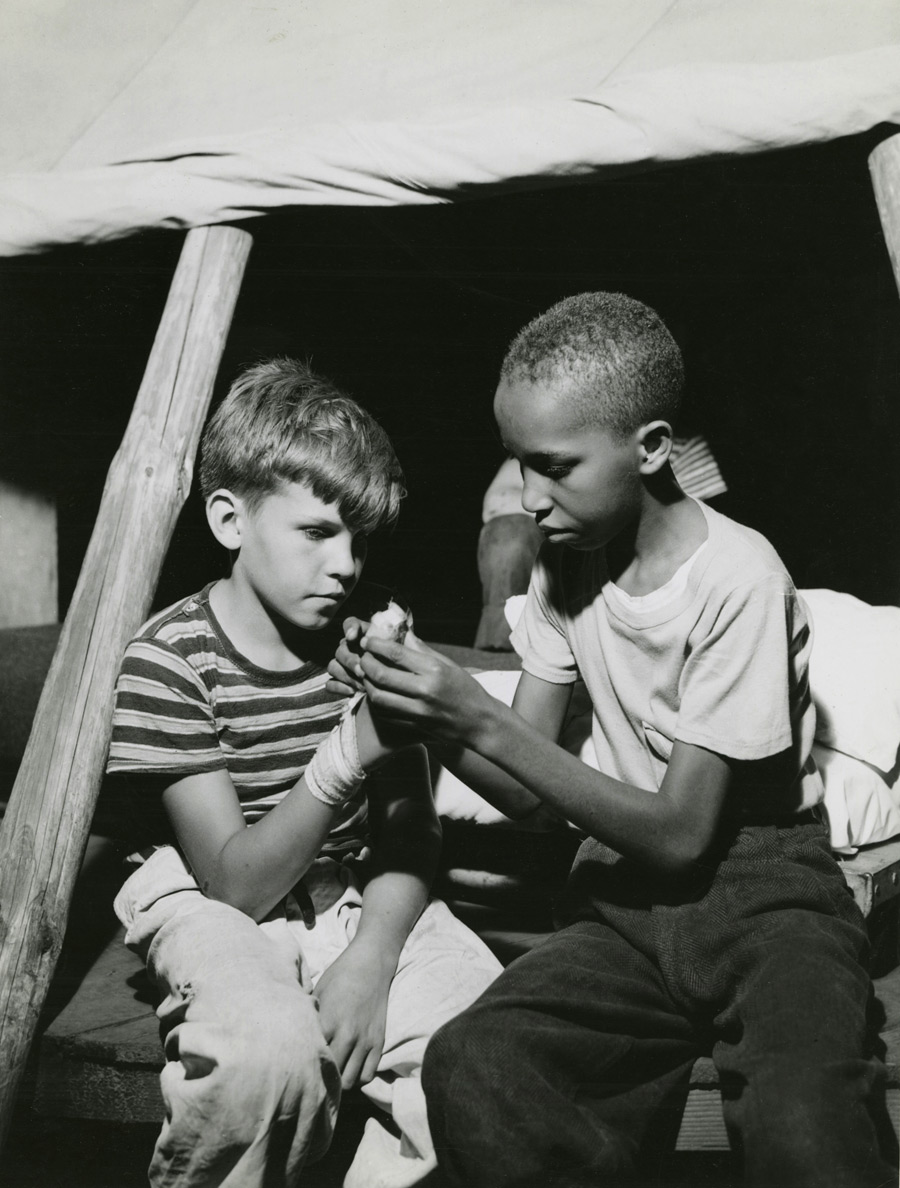
 

Gordon Parks (American, 1912-2006) 'First Aid: Interracial activities at Camp Nathan Hale, Southfields, NY, 1943' 1943


Gordon Parks (American, 1912-2006)
First Aid: Interracial activities at Camp Nathan Hale, Southfields, NY, 1943
1943
Gelatin silver print
22 x 17.5″
Gordon Parks Collection, Photographs and Prints Division
Schomburg Center for Research in Black Culture, The New York Public Library
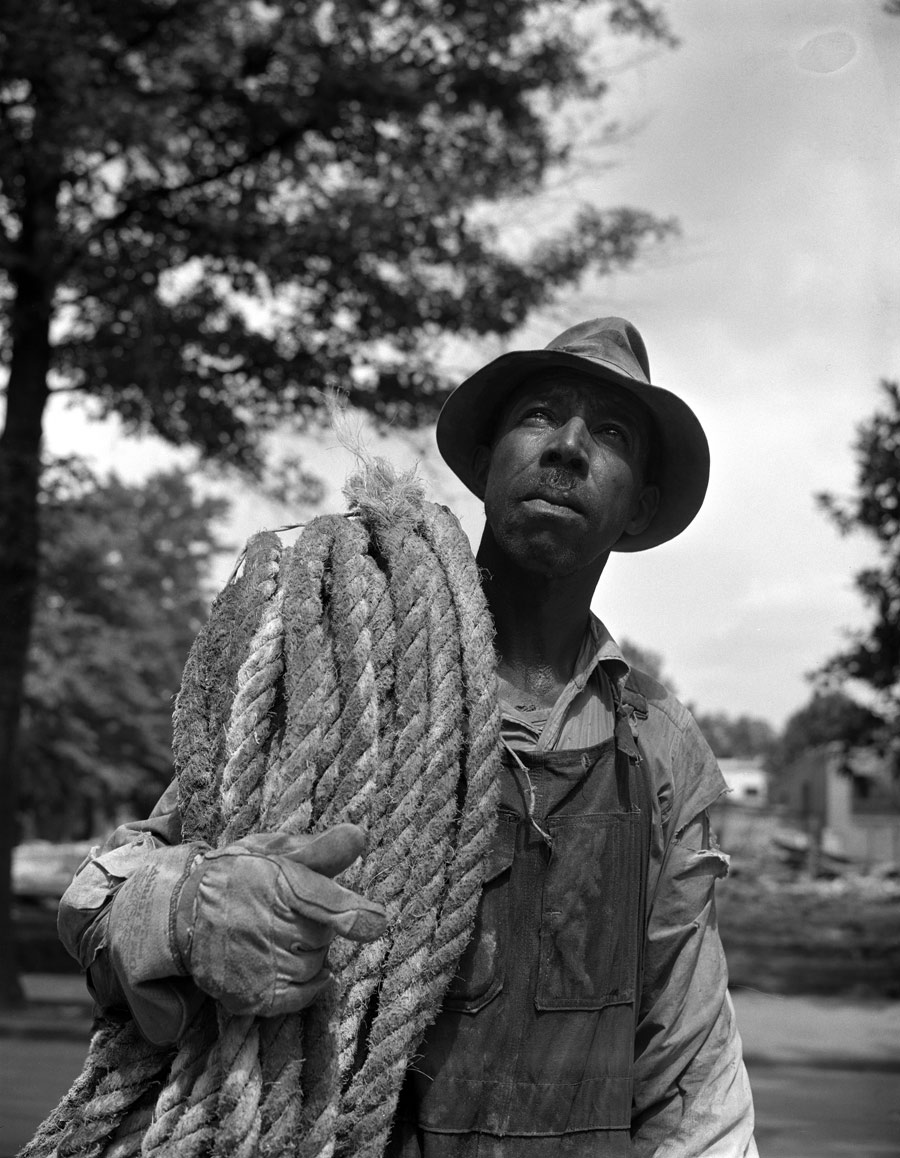
 

Gordon Parks (American, 1912-2006) 'Construction workman, Washington, DC, 1942' 1942


Gordon Parks (American, 1912-2006)
Construction workman, Washington, DC, 1942
1942
Gelatin silver print
21″ x 17″
Prints and Photographs Division
Library of Congress


New York State Museum
260 Madison Ave  Albany
NY 12230, United States
Phone: +1 518-474-5877

Opening hours:
Tuesday – Sunday 9.30am – 5.00pm
Closed Monday
Closed Thanksgiving, Christmas, and New Year’s Day

New York State Museum website

LIKE ART BLART ON FACEBOOK

Back to top

Exhibition: ‘Gordon Parks: Centennial’ at Jenkins Johnson Gallery, San Francisco

Exhibition dates: 21st February – 27th April 2013


Gordon Parks (American, 1912-2006) 'Ondria Tanner and Her Grandmother Window-shopping, Mobile, Alabama' 1956


Gordon Parks (American, 1912-2006)
Ondria Tanner and Her Grandmother Window-shopping, Mobile, Alabama
1956
Edition 19 of 25
Pigment print
14 x 14 inches
Modern print
© The Gordon Parks Foundation


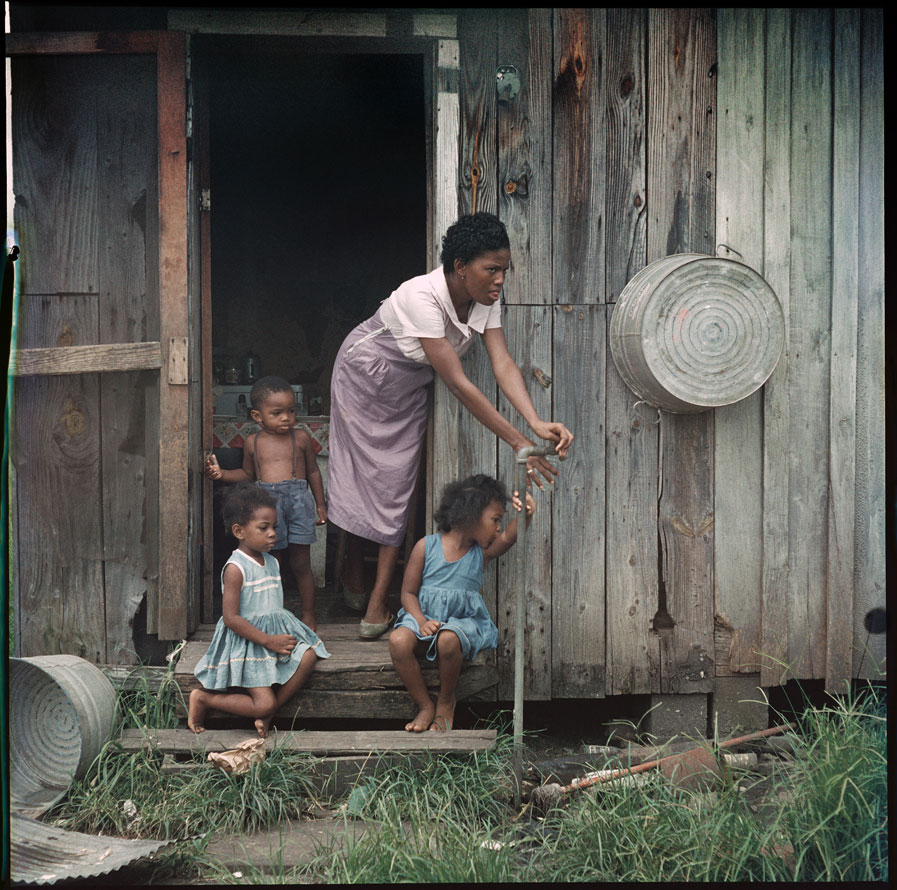
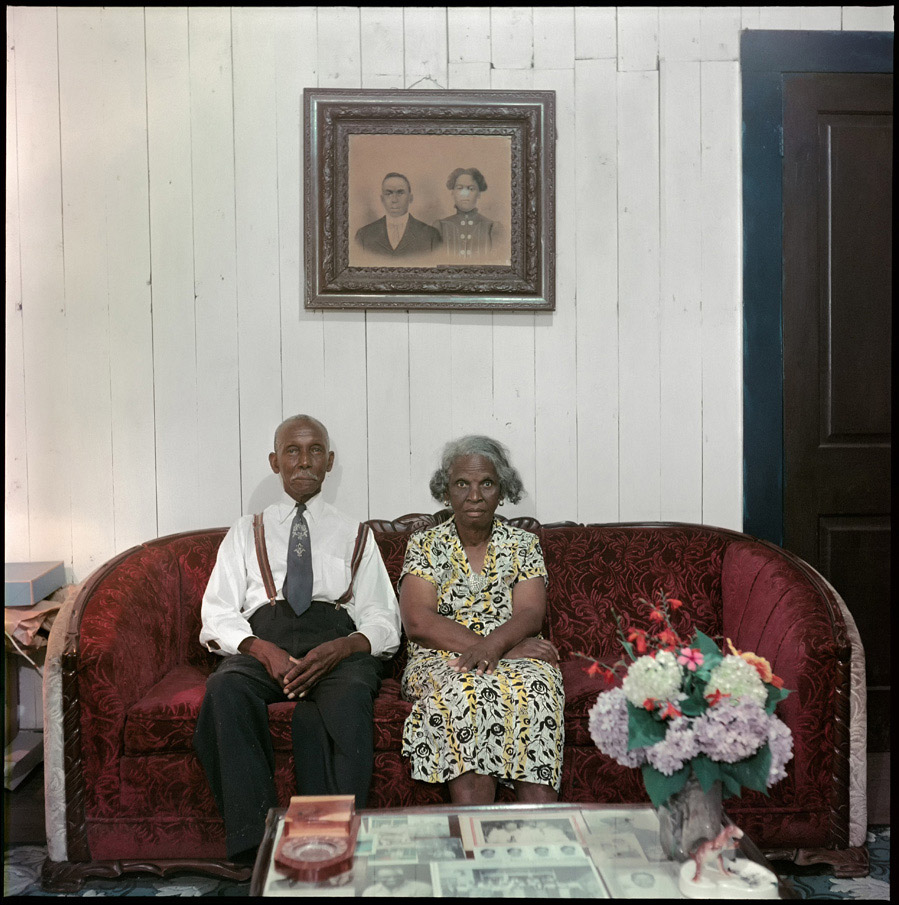
What an admirable photographer Gordon Parks was. It is a joy to see five of his colour photographs in this posting because I have never seen any before. They are glorious, complex compositions that ebb and flow like music whilst at the same time they are also damning indictments of the racially segregated society that was America in the 1950s (and still is today). Bitterness, discrimination and racism have deep roots in any country – just look at contemporary Australia. The little girl looks on in Ondria Tanner and Her Grandmother Window-shopping (1956, above), her left index finger bent upward on the pane of glass as the prettily dressed white, automaton mannequins march on, oblivious to her gaze; Mr. and Mrs. Albert Thornton, Mobile, Alabama  (1956, below) are surrounded by photographs, their pose mimicking that of their parents hanging behind them, while before them on the coffee table (under glass) are other, younger members of their extended family. Past, present and future coalesce in this one poignant image.

“Sensibility” is based on personal impressions of pleasure or pain. The sensibility of Parks photographs is a refined sensitivity based on experience – his experience of the discrimination of human beings toward each other. These hard-wired responses toward such a situation will vary from person to person.

These photographs were his hard-wired response. This was his feeling towards subject matter and that is why these insightful photographs still matter to us today.

Dr Marcus Bunyan


Many thankx to the Jenkins Johnson Gallery for allowing me to publish the photographs in the posting. Please click on the photographs for a larger version of the image.


Gordon Parks is the most important black photographer in the history of photojournalism. Long after the events that he photographed have been forgotten, his images will remain with us, testaments to the genius of his art, transcending time, place and subject matter.


Dr Henry Louis Gates


Gordon Parks (American, 1912-2006) 'At Segregated Drinking Fountain, Mobile, Alabama' 1956


Gordon Parks (American, 1912-2006)
At Segregated Drinking Fountain, Mobile, Alabama
1956
Edition 19 of 25
Pigment print
14 x 14 inches
Modern print
© The Gordon Parks Foundation


Gordon Parks (American, 1912-2006) 'Department Store, Mobile, Alabama' 1956


Gordon Parks (American, 1912-2006)
Department Store, Mobile, Alabama
1956
Edition 20 of 25
Pigment print
14 x 14 inches
Modern print
© The Gordon Parks Foundation


Gordon Parks (American, 1912-2006) 'Mother and Children, Mobile, Alabama' 1956


Gordon Parks (American, 1912-2006)
Mother and Children, Mobile, Alabama
1956
Edition 17 of 25
Pigment print
13 7/8 x 14 inches
Modern print
© The Gordon Parks Foundation


Gordon Parks (American, 1912-2006) 'Mr. and Mrs. Albert Thornton, Mobile, Alabama' 1956


Gordon Parks (American, 1912-2006)
Mr. and Mrs. Albert Thornton, Mobile, Alabama
1956
Edition 17 of 25
Pigment print
14 1/8 x 14 inches
Modern print
© The Gordon Parks Foundation


In celebration of the 100th birthday of Gordon Parks, one of the most influential African American photographers of the 20th century, Jenkins Johnson Gallery in collaboration with The Gordon Parks Foundation presents Gordon Parks: Centennial, on view from February 21 through April 27, 2013. Gordon Parks, an iconic photographer, writer, composer, and filmmaker, would have turned 100 on November 30, 2012. This will be the first solo exhibition for Parks on the West Coast in thirteen years. The exhibition will survey works spanning six decades of the artist’s career starting in 1940. The exhibition consists of more than seventy-five gelatin silver and pigment prints, including selections from Life magazine photo essays: Invisible Man, 1952; Segregation Story, 1956; The Black Panthers, 1970; and Flavio, 1960, about favelas in Brazil. Also included in the exhibition is his reinterpretation of American Gothic and his elegant depictions of artists like Alexander Calder, fashion models, and movie stars.

Noteworthy highlights include groundbreaking prints from the Invisible Man series which unfolds a visual narrative based on Ralph Ellison’s award winning novel. The images capture the essence of social isolation and the struggle of a black man who feels invisible to the outside world. Also on view will be a number of colour prints from Segregation Story, 1956, which are a part of a limited edition portfolio of twelve colour photographs with an essay by Maurice Berger. Newly released, these images were produced from transparencies found in early 2012, discovered in a storage box at The Gordon Parks Foundation. In the late 1960s Life magazine asked Gordon Parks to report on the Oakland, California-based Black Panther Party, including Eldridge Cleaver. Parks’ striking image of Eldridge Cleaver and His Wife, Kathleen, Algiers, Algeria, 1970 depicts Cleaver recovering from gun wounds after being ambushed by the Oakland police as well as an insert of Huey P. Newton, co-founder of the party along with Bobby Seale.

About Gordon Parks

Parks was born into poverty in Fort Scott, Kansas in 1912, the youngest of fifteen children. He worked several odd jobs until he bought a camera at a Pawn Shop in 1937 in Seattle and was hired to photograph fashion at a department store in Minneapolis. In 1942 Parks received a photography fellowship from the Farm Security Administration, succeeding Dorothea Lange among others. While at the F.S.A., Parks created American Gothic, now known as one of his signature images, in which he shows Ella Watson, a cleaning women, holding a mop and broom, standing in front of an American flag. The image makes a poignant commentary on social injustice whilst referencing Grant Wood’s celebrated painting American Gothic which it is also named after. He became a freelance photographer working for Vogue as well as publishing two books, Flash Photography (1947) and Camera Portraits: Techniques and Principles of Documentary Portraiture (1948). In 1948 Parks was hired by Life magazine to do a photographic essay on Harlem gang leader, Red Jackson, which led to a permanent position at Life, where he worked for twenty years. Parks developed his skills as a composer and author and in 1969 he became the first African American to direct a major motion picture, The Learning Tree based on his best selling novel and in 1971 he directed Shaft. A true Renaissance man, Gordon Parks passed away in 2006.

As Philip Brookman, curator of photography and media arts at the Corcoran, states, “Gordon Parks’ art has now changed the way we perceive and remember chronic issues, such as race, poverty, and crime, just as it has influenced our understanding of beauty: of nature, landscape, childhood, fashion, and memory.”

Press release from the Jenkins Johnson Gallery website


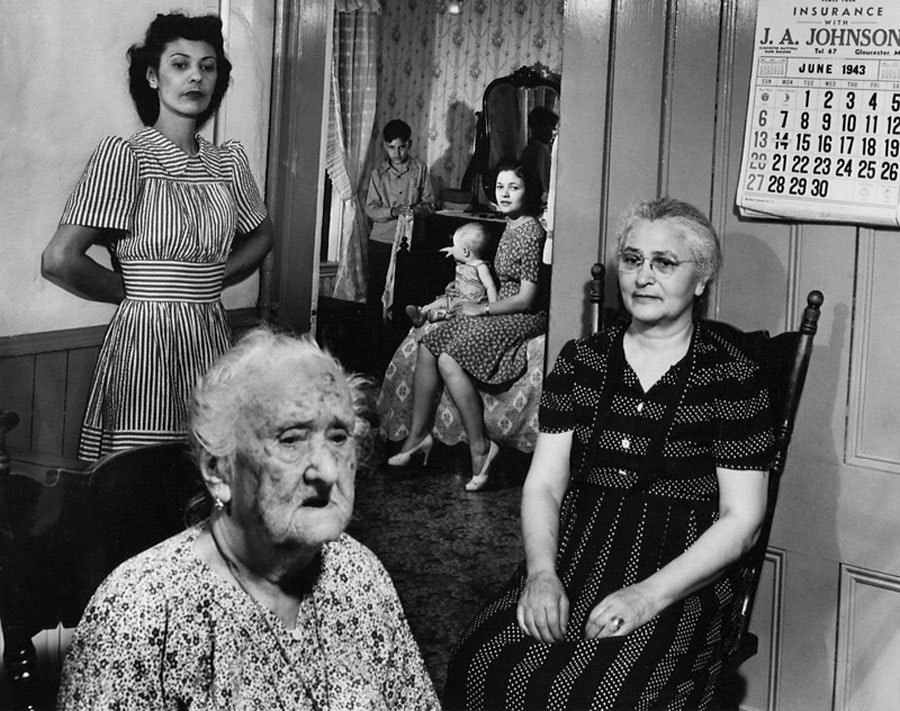
Gordon Parks (American, 1912-2006) 'Mary Machado, Mother of Isabell Lopez, and Family, Gloucester, Massachusetts' 1943


Gordon Parks (American, 1912-2006)
Mary Machado, Mother of Isabell Lopez, and Family, Gloucester, Massachusetts
1943
Gelatin silver print
© The Gordon Parks Foundation


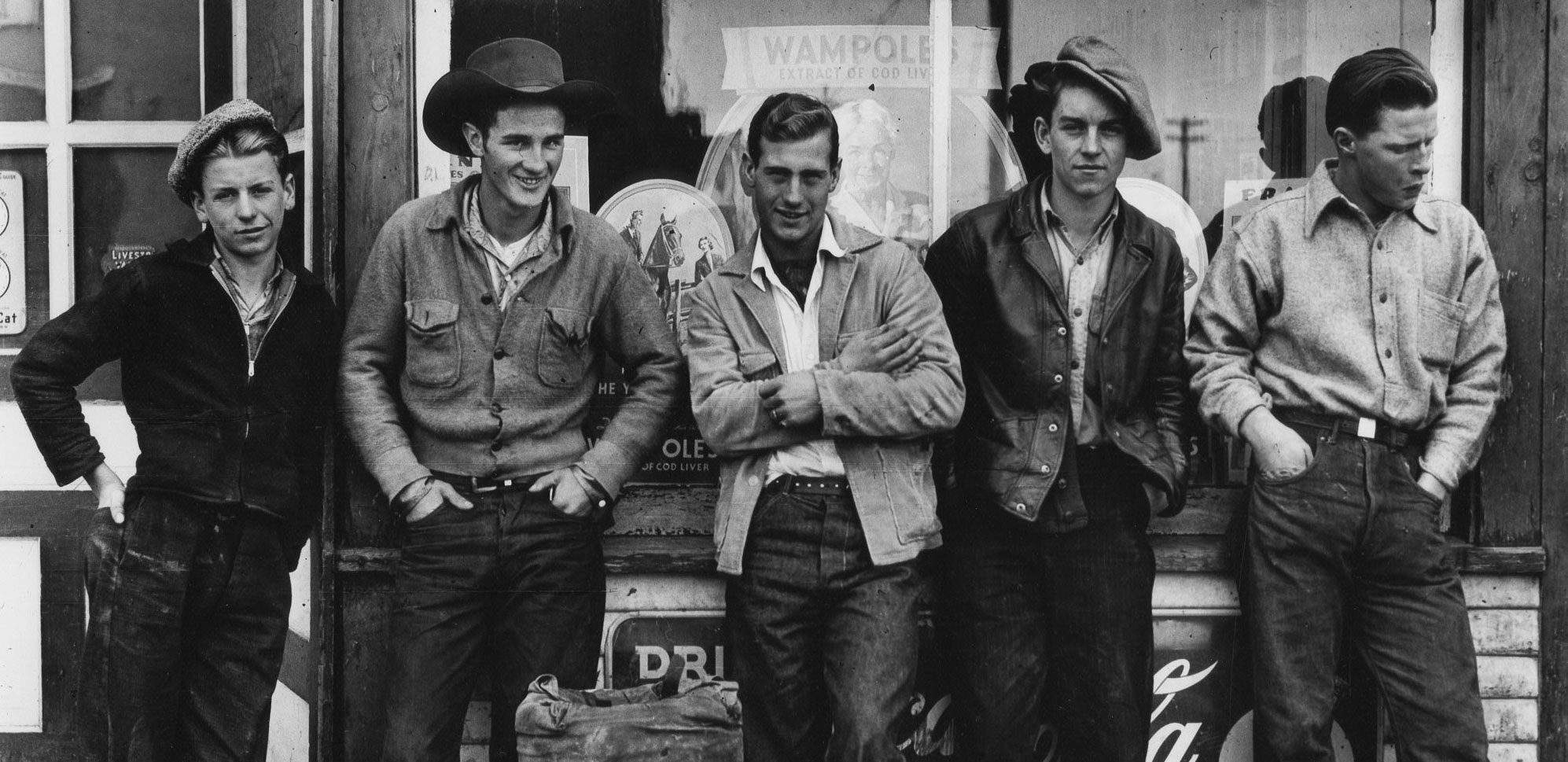
Gordon Parks (American, 1912-2006) 'Drugstore Cowboys, Turner Valley, Canada' 1945


Gordon Parks (American, 1912-2006)
Drugstore Cowboys, Turner Valley, Canada
1945
Gelatin silver print
9 7/8 x 12 7/8 inches
Modern print
© The Gordon Parks Foundation


Gordon Parks (American, 1912-2006) 'Untitled' 1950


Gordon Parks (American, 1912-2006)
Untitled
1950
Gelatin silver print
© The Gordon Parks Foundation


Gordon Parks (American, 1912-2006) 'Tenement Dwellers, Chicago, Illinois' 1950


Gordon Parks (American, 1912-2006)
Tenement Dwellers, Chicago, Illinois
1950
Gelatin silver print
7 x 9 inches
Modern print
© The Gordon Parks Foundation


Gordon Parks (American, 1912-2006) 'Mysticism, Harlem, New York' 1952


Gordon Parks (American, 1912-2006)
Mysticism, Harlem, New York
1952
Gelatin silver print
10 5/8 x 10 3/8 inches
Vintage print
© The Gordon Parks Foundation


Gordon Parks (American, 1912-2006) 'Harlem Neighborhood, Harlem, New York' 1952


Gordon Parks (American, 1912-2006)
Harlem Neighborhood, Harlem, New York
1952
Gelatin silver print
10 3/8 x 13 1/2 inches
Vintage print
© The Gordon Parks Foundation


Gordon Parks (American, 1912-2006) 'The Invisible Man, Harlem, New York' 1952


Gordon Parks (American, 1912-2006)
The Invisible Man, Harlem, New York
1952
Edition 1 of 10
Pigment print
14 1/8 x 14 inches
Modern print
© The Gordon Parks Foundation


Gordon Parks (American, 1912-2006) 'Muhammad Ali' 1966


Gordon Parks (American, 1912-2006)
Muhammad Ali
1966
Gelatin silver print
© The Gordon Parks Foundation


Gordon Parks (American, 1912-2006) 'Ellen's Feet, Harlem, New York' 1967


Gordon Parks (American, 1912-2006)
Ellen’s Feet, Harlem, New York
1967
Gelatin silver print
6 1/4 x 9 3/8 inches
Modern print
© The Gordon Parks Foundation


Gordon Parks (American, 1912-2006) 'Norman Fontenelle, Sr., Harlem, New York' 1967


Gordon Parks (American, 1912-2006)
Norman Fontenelle, Sr., Harlem, New York
1967
Gelatin silver print
13 x 9 1/8 inches
Modern print
© The Gordon Parks Foundation


Gordon Parks (American, 1912-2006) 'Bessie and Little Richard the Morning After She Scalded Her Husband, Harlem, New York, 1968' 1968


Gordon Parks (American, 1912-2006)
Bessie and Little Richard the Morning After She Scalded Her Husband, Harlem, New York, 1968
1968
Gelatin silver print
© The Gordon Parks Foundation


Jenkins Johnson Gallery
1275 Minnesota Street, #200
San Francisco, CA 94107
Phone: 415.677.0770

Opening hours:
Tuesday – Saturday 11am – 5pm

Jenkins Johnson Gallery website

LIKE ART BLART ON FACEBOOK

Back to top

Exhibition: ‘Saul Leiter: New York Reflections’ at the Jewish Historical Museum, Amsterdam

Exhibition dates: 24th October 2011 – 4th March 2012


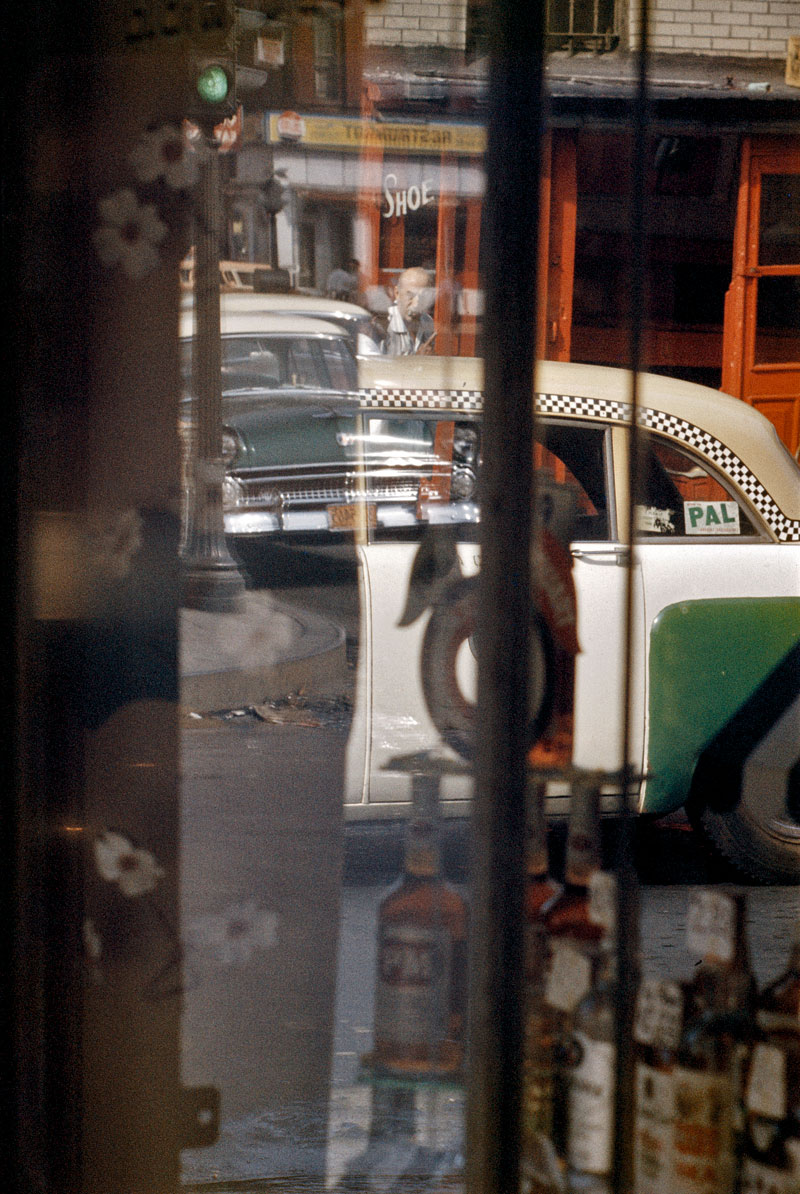
Saul Leiter (American, 1923-2013) 'Taxi' 1957


Saul Leiter (American, 1923-2013)
Taxi
1957
© Saul Leiter, Collection Howard Greenberg Gallery, New York


“I must admit that I am not a member of the ugly school. I have a great regard for certain notions of beauty even though to some it is an old fashioned idea. Some photographers think that by taking pictures of human misery, they are addressing a serious problem. I do not think that misery is more profound than happiness.”

“Seeing is a neglected enterprise.”


Saul Leiter


“Leiter’s sensibility… placed him outside the visceral confrontations with urban anxiety associated with photographers such as Robert Frank or William Klein. Instead, for him the camera provided an alternate way of seeing, of framing events and interpreting reality. He sought out moments of quiet humanity in the Manhattan maelstrom, forging a unique urban pastoral from the most unlikely of circumstances.”


Martin Harrison. ‘Saul Leiter Early Color’


The first of two postings on the underrated, underexposed American photographer Saul Leiter. These photographs are a delightful surprise! Some, like Through Boards (1957, below) are as illuminating as any Rothko going around. His art is not of the documentary gaze but of a brief glimpse, glanz, refulgence of desire ∞ snatched from the nonlinearity of time ∞ cleft in(to) its fabric. What wonderfully composed reflections they are. I absolutely adore them.

The media release states, “… but where his color photography is concerned, he cannot be compared with any other photographer. In the 1940s and 1950s, Leiter was virtually the only non-commercial photographer working in color.” Galleries must beware such bombastic claims: other photographers working in colour in the 1940s-50s include Paul OuterbridgeLászló Moholy-NagyNickolas MurayJack Smith, Eliot Porter and William Eggleston to name but a few (also see the posting on the exhibition Beyond COLOR: Color in American Photography, 1950-1970).

The second posting will be from a major retrospective of his work at The House of Photography at Deichtorhallen.

Perhaps this photographer is finally getting the accolades he so rightly deserves.

Dr Marcus Bunyan


Many thankx to the Jewish Historical Museum for allowing me to publish the photographs in the posting. Please click on the photographs for a larger version of the image.


Saul Leiter (American, 1923-2013) 'Haircut' 1956


Saul Leiter (American, 1923-2013)
Haircut
1956
© Saul Leiter, Collection Howard Greenberg Gallery, New York


Saul Leiter (American, 1923-2013) 'Through Boards' 1957


Saul Leiter (American, 1923-2013)
Through Boards
1957
© Saul Leiter, Courtesy Howard Greenberg Gallery, New York


Saul Leiter (American, 1923-2013) 'Harlem' 1960


Saul Leiter (American, 1923-2013)
Harlem
1960
© Saul Leiter, Collection Howard Greenberg Gallery, New York


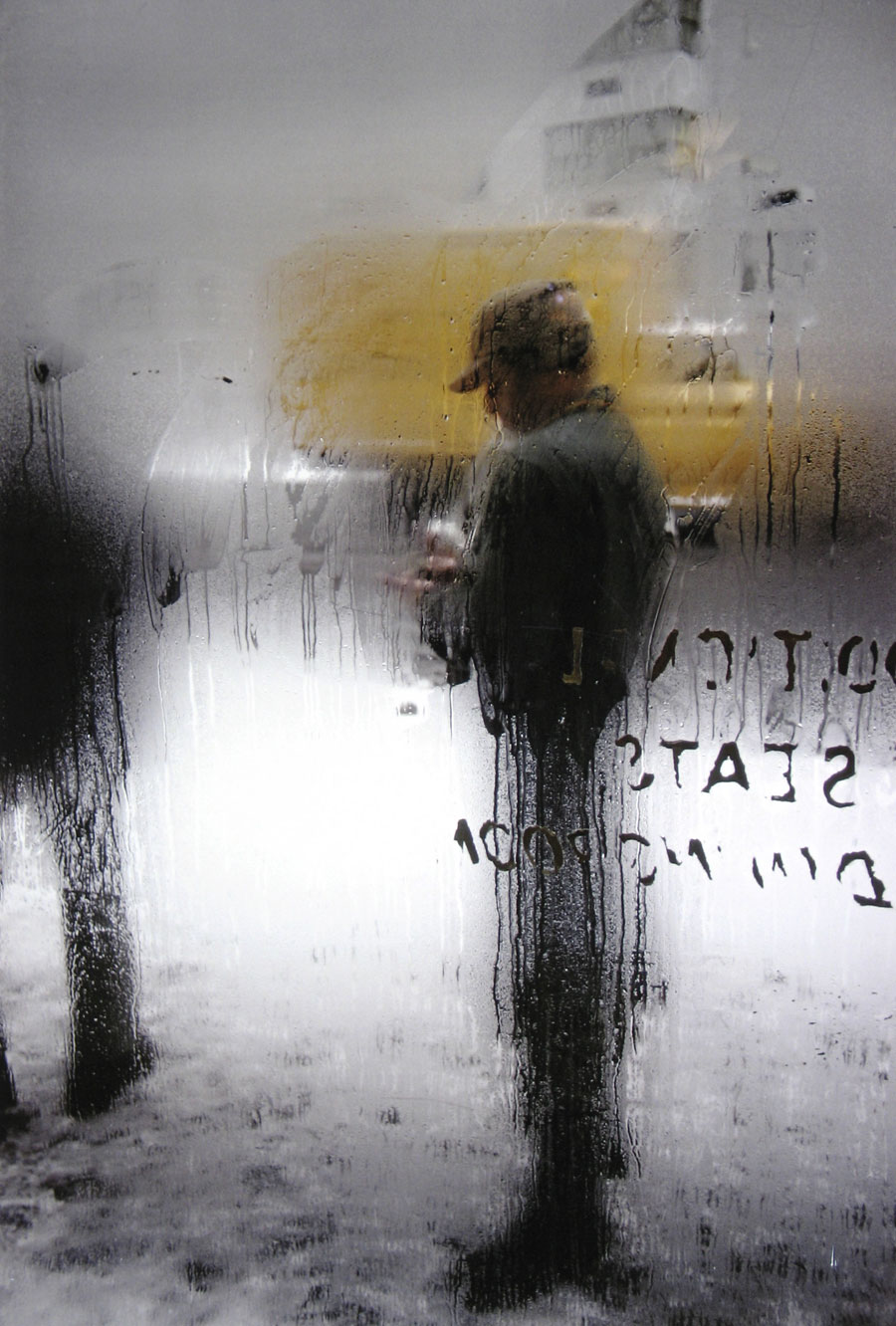
Saul Leiter (American, 1923-2013) 'Snow' 1960


Saul Leiter (American, 1923-2013)
Snow
1960
© Saul Leiter, Collection Howard Greenberg Gallery, New York


From 24 October 2011 to 4 March 2012 the JHM is presenting a retrospective exhibition of the work of the American photographer and painter Saul Leiter (1923-2013). Following a long period of obscurity, Leiter’s work has recently been rediscovered in the United States and Europe. This is the first exhibition of his work in the Netherlands.

Saul Leiter is celebrated particularly for his painterly colour photographs of the street life in New York, which he produced between 1948 and 1960. Amid the hectic life of the city he captured tranquil moments of everyday beauty. He was able to transform mundane objects – a red umbrella in a snowstorm, a foot resting on a bench in the metro, or a human figure seen through the condensation on a pane of glass – into what has been described as ‘urban visual poetry’. His photographs are frequently layered, near-abstract compositions of reflections and shadows, which recall paintings by abstract expressionists such as Mark Rothko and Willem de Kooning, with whom Leiter felt a strong affinity.

Saul Leiter is seen as belonging to the New York School of Photographers, a group of innovative artists, most of them Jewish, who achieved fame in New York in the period 1936-1963, primarily with their images of the street and their documentary photography. His black-and-white work displays a lyricism, dreaminess and surrealism that might prompt comparison with photographers such as Ted Croner, Leon Levinstein and Louis Faurer, but where his colour photography is concerned, he cannot be compared with any other photographer. In the 1940s and 1950s, Leiter was virtually the only non-commercial photographer working in colour.

Born in Pittsburgh, Leiter was destined to become a rabbi like his father. But his growing interest in art led him to abandon his religious studies. Instead, he went to New York and dedicated himself to painting. His friendship there with the abstract expressionist painter Richard Pousette-Dart, who was experimenting with photography, and the work of the photographer Henri Cartier-Bresson, inspired Leiter to take up photography. His friendship with the photographer W. Eugene Smith was another inspiring influence.

The exhibition Saul Leiter: New York Reflections was prepared by the JHM in collaboration with the Howard Greenberg Gallery in New York. Besides over 60 colour and 40 black-and-white examples of his street photography, a small selection of fashion photographs, paintings, and painted photographs will be shown. Visitors will also be able to watch a recent documentary about Leiter by the British film maker Tomas Leach. This autumn, the publisher Steidl will be publishing the third edition of Early Color, the first book of Leiter’s photographs, compiled in 2006 by Martin Harrison of the Victoria & Albert Museum in London.

Press release from the Jewish Historical Museum website


Saul Leiter (American, 1923-2013) 'Foot on El' 1954


Saul Leiter (American, 1923-2013)
Foot on El
1954
© Saul Leiter, Courtesy Howard Greenberg Gallery, New York


Saul Leiter (American, 1923-2013) 'Taxi' 1956


Saul Leiter (American, 1923-2013)
Taxi
1956
© Saul Leiter, Courtesy Howard Greenberg Gallery, New York


Saul Leiter (American, 1923-2013) 'Reflection' 1958


Saul Leiter (American, 1923-2013)
Reflection
1958
© Saul Leiter, Courtesy Howard Greenberg Gallery, New York


Saul Leiter (American, 1923-2013) 'Paris' 1959


Saul Leiter (American, 1923-2013)
Paris
1959
© Saul Leiter, Collection Howard Greenberg Gallery, New York


Saul Leiter (American, 1923-2013) 'Walk with Soames' Nd


Saul Leiter (American, 1923-2013)
Walk with Soames
Nd
© Saul Leiter, Courtesy Howard Greenberg Gallery, New York


Jewish Historical Museum
Nieuwe Amstelstraat
1
1011 PL Amsterdam
Phone: +31 (0)20 5 310 310

Opening hours:
Daily from 10.00 – 17.00

Jewish Historical Museum website

LIKE ART BLART ON FACEBOOK

Back to top