Exhibition: ‘Gregory Crewdson. Retrospective’ at the Albertina Museum, Vienna

Exhibition dates: 29th May – 8th September 2024

Curators: Walter Moser and Astrid Mahler
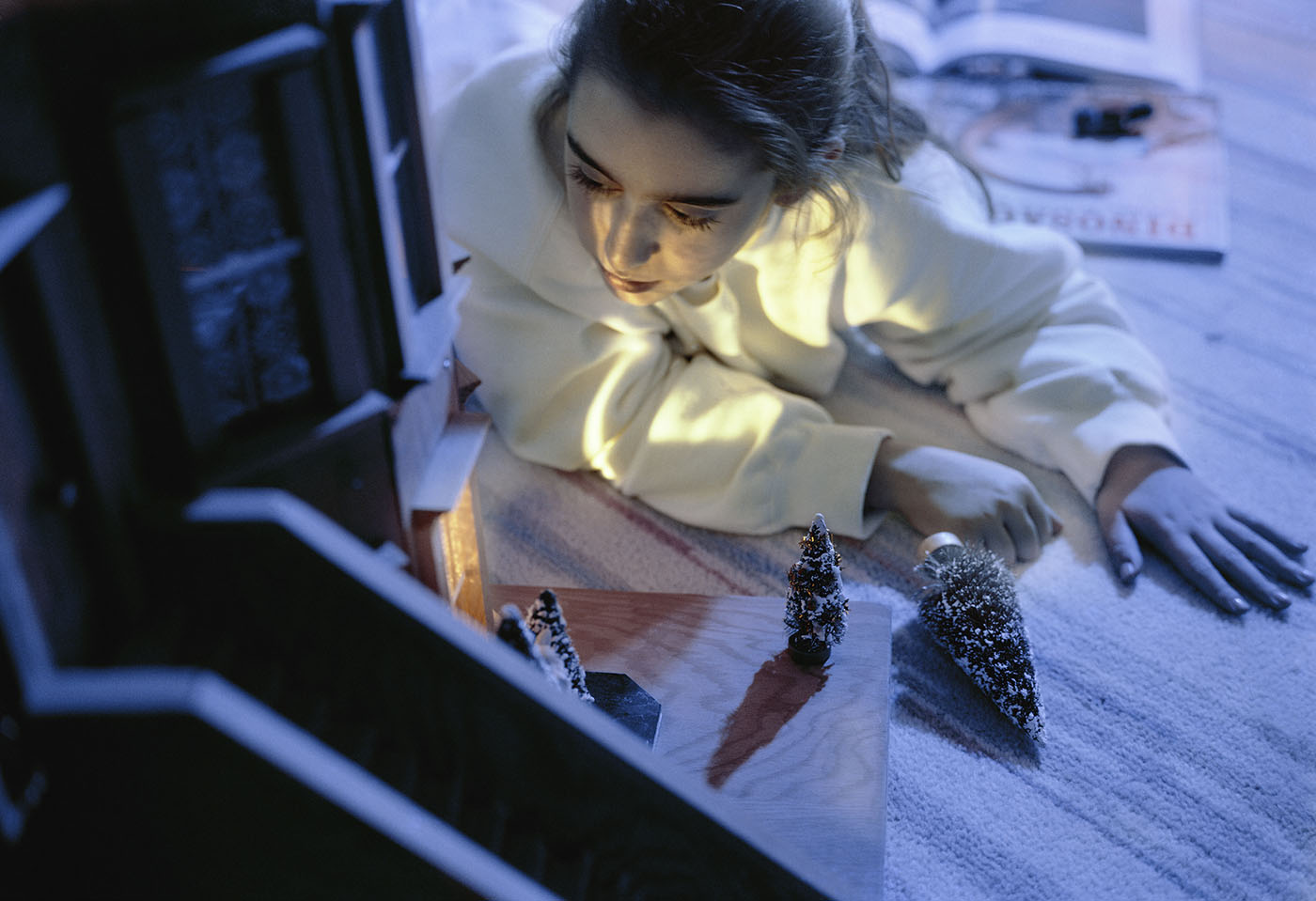
 

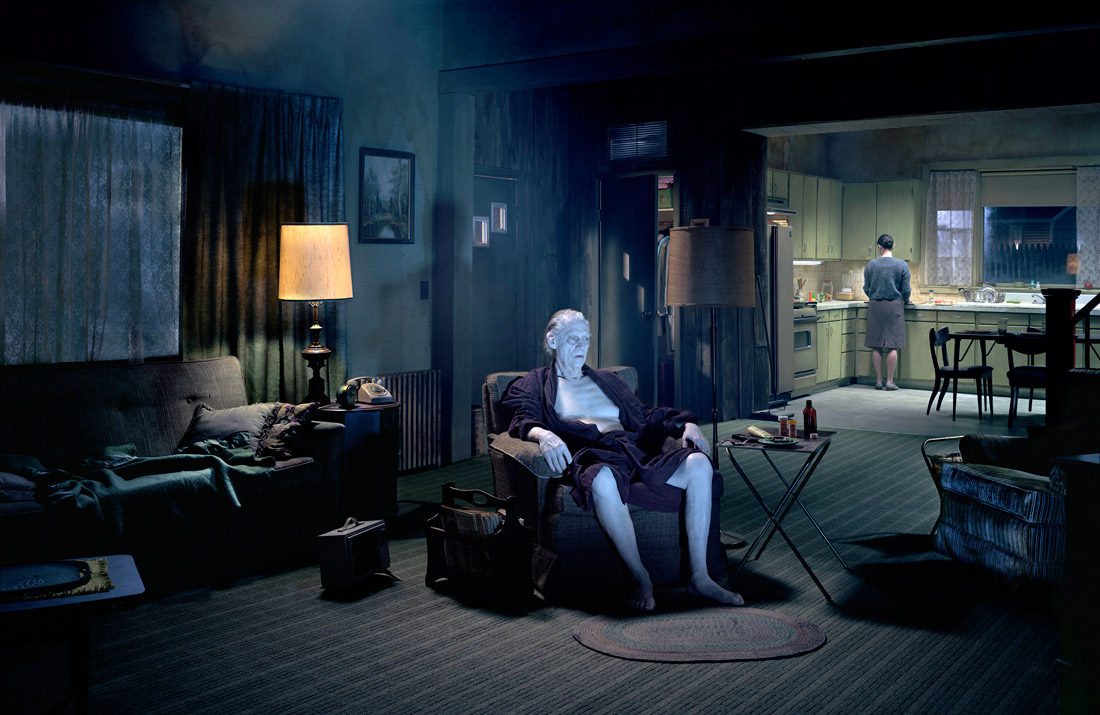
Gregory Crewdson (American, b. 1962) 'Untitled' From the series 'Early Work' 1986-1988 from the exhibition 'Gregory Crewdson. Retrospective' at the Albertina Museum, Vienna, May - Sept 2024


Gregory Crewdson (American, b. 1962)
Untitled
From the series Early Work, 1986-1988
Digital pigment print
39 x 58cm
The Albertina Museum, Vienna
Permanent loan, Private Collection
© Gregory Crewdson


I have so many exhibitions to post within the next few weeks that you get two postings this weekend and next weekend!

It’s always a pleasure to see the work of Gregory Crewdson – stylish, stylised, hyperreal, dead pan, cinematic, panoramic large-scale transcendent photographs.

For an analysis of Crewdson’s work please see my text Downfall of a dream: (n)framing the enigma in Gregory Crewdson’s Beneath the Roses (2012)

Dr Marcus Bunyan


Many thankx to the Albertina Museum for allowing me to publish the photographs for the posting. Please click on the photographs for a larger version of the image.


Gregory Crewdson. Retrospective

Gregory Crewdson (American, b. 1962) is one of the world’s most renowned photographers. Since the mid-1980s, Crewdson has been using the backdrop of small American towns and film sets to create, like a director, technically brilliant and colourfully seductive photographs that focus on human isolation and the abysses of society. The enigmatic scenes self-reflexively raise questions about the boundary between fact and fiction but can also be related to socio-political developments.

Watch this emotional video of the artist in the middle of his exhibition at the Albertina Museum.


Gregory Crewdson. Retrospektive | Mit Kurator Walter Moser

Curator Walter Moser on Cregory Grewdson’s unique work


Gregory Crewdson | Mit Co-Kuratorin Astrid Mahler

“Gregory Crewdson’s latest series is set in the fictional small town of ‘Eveningside’. It is the last part of a trilogy in which Crewdson addresses the socio-political conditions of his country and the failure of the American Dream,” says co-curator Astrid Mahler about the last part of our major retrospective of the world-famous photographer Gregory Crewdson.


What I am interested in is that moment of transcendence, where one is transported into another place, into a perfect, still world.


Gregory Crewdson


Gregory Crewdson (American, b. 1962) is one of the world’s most renowned photographers. Since the mid-1980s, Crewdson has been using the backdrop of small American towns and film sets to create, like a director, technically brilliant and colourfully seductive photographs that focus on human isolation and the abysses of society. The enigmatic scenes self-reflexively raise questions about the boundary between fact and fiction but can also be related to socio-political developments.

The retrospective at the Albertina comprises a total of nine groups of works, created over the last three and a half decades and conceived serially. Starting with his Early Work (1986-1988), the exhibition includes Crewdson’s best-known series such as Twilight (1998-2002), which depicts scenes shaped by cinematic language, with people being confronted by unexplainable phenomena in their everyday lives. The impressive, mysterious large-scale scenes from the Beneath the Roses series (2003‒2008) deal with people’s isolation and alienation from their environment. The most recently completed group of works Eveningside (2021-2022) portrays an unheroic image of a fictional small town of the same name in atmospheric black and white. Following Cathedral of the Pines (2013-2014) and An Eclipse of Moths (2018-2019), Eveningside represents the final part of a trilogy through which the artist examines the social decline of society far removed from the American dream.

Crewdson’s large-scale pictures are preceded by months of planning; they are created with the participation of hundreds of people from casting, wardrobe and art departments, plus technical specialists. Production photographs taken in parallel illustrate the highly elaborate process of design, culminating in an extensive post-production process in which the final photographs are assembled from multiple shots.

As a generous gesture, the exhibition is accompanied by a significant donation to the Albertina’s photo collection. This extensive assimilation of works strengthens the focus of the collection on contemporary photography.

Text from the Albertina Museum website
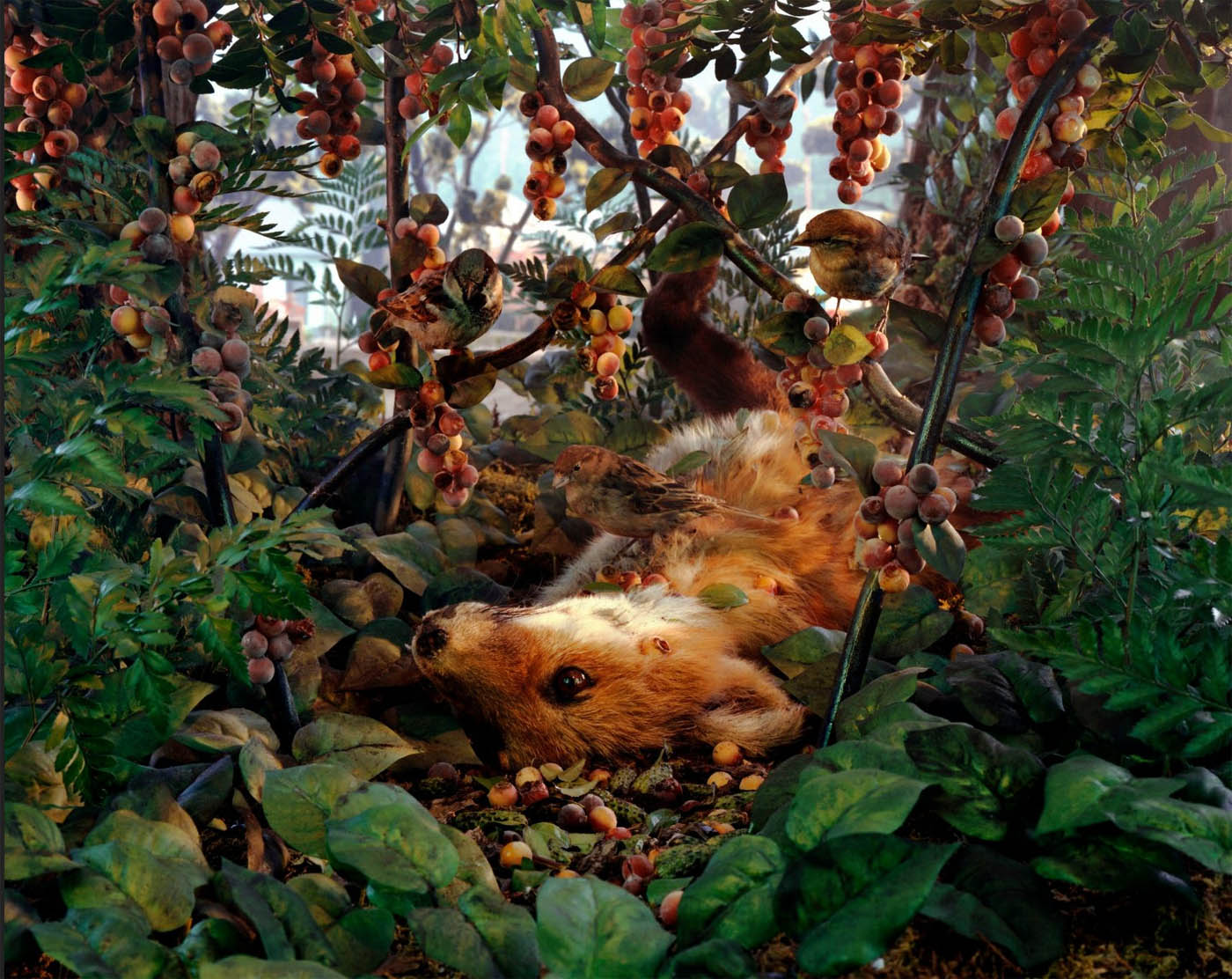
 

Gregory Crewdson (American, b. 1962) 'Untitled' From the series 'Natural Wonder' 1991-1997 from the exhibition 'Gregory Crewdson. Retrospective' at the Albertina Museum, Vienna, May - Sept 2024


Gregory Crewdson (American, b. 1962)
Untitled
From the series Natural Wonder, 1991-1997
Digital pigment print
30 x 39 7/8 in.
The Albertina Museum, Vienna
Permanent loan, Private Collection

© Gregory Crewdson


Gregory Crewdson (American, b. 1962) 'Untitled' From the series 'Hover' 1996-1997 from the exhibition 'Gregory Crewdson. Retrospective' at the Albertina Museum, Vienna, May - Sept 2024


Gregory Crewdson (American, b. 1962)
Untitled
From the series Hover, 1996-1997
Digital pigment print
51 x 61cm
The Albertina Museum, Vienna
Permanent loan, Private Collection
© Gregory Crewdson
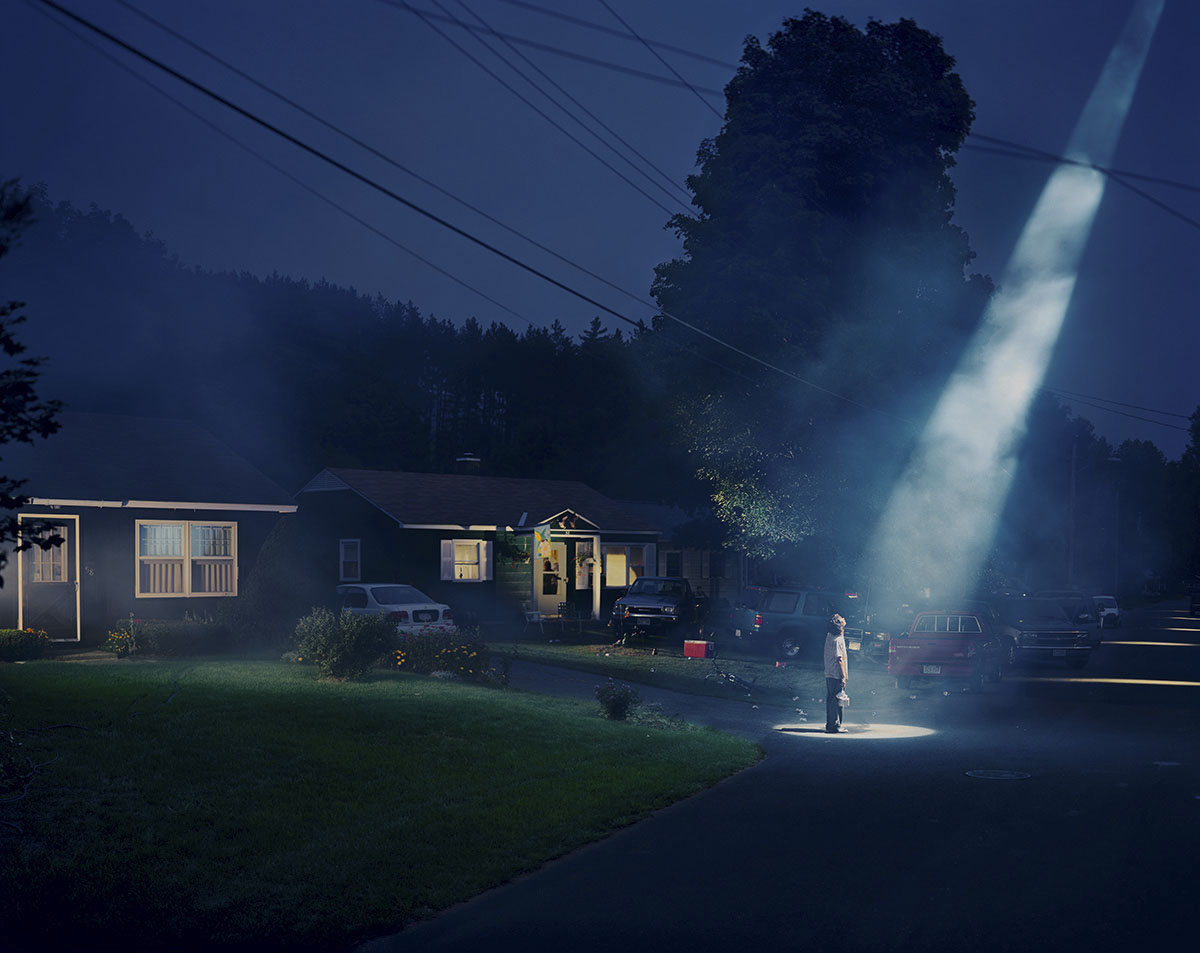
 

Gregory Crewdson (American, b. 1962) 'Untitled' From the series 'Twilight' 1998-2002


Gregory Crewdson (American, b. 1962)
Untitled
From the series Twilight, 1998-2002
Digital pigment print
122 x 152cm
The Albertina Museum, Vienna
Permanent loan, Private Collection
© Gregory Crewdson


Gregory Crewdson (American, b. 1962) 'Untitled' From the series 'Twilight' 1998-2002


Gregory Crewdson (American, b. 1962)
Untitled
From the series Twilight, 1998-2002
Digital pigment print
The Albertina Museum, Vienna
Permanent loan, Private Collection
© Gregory Crewdson
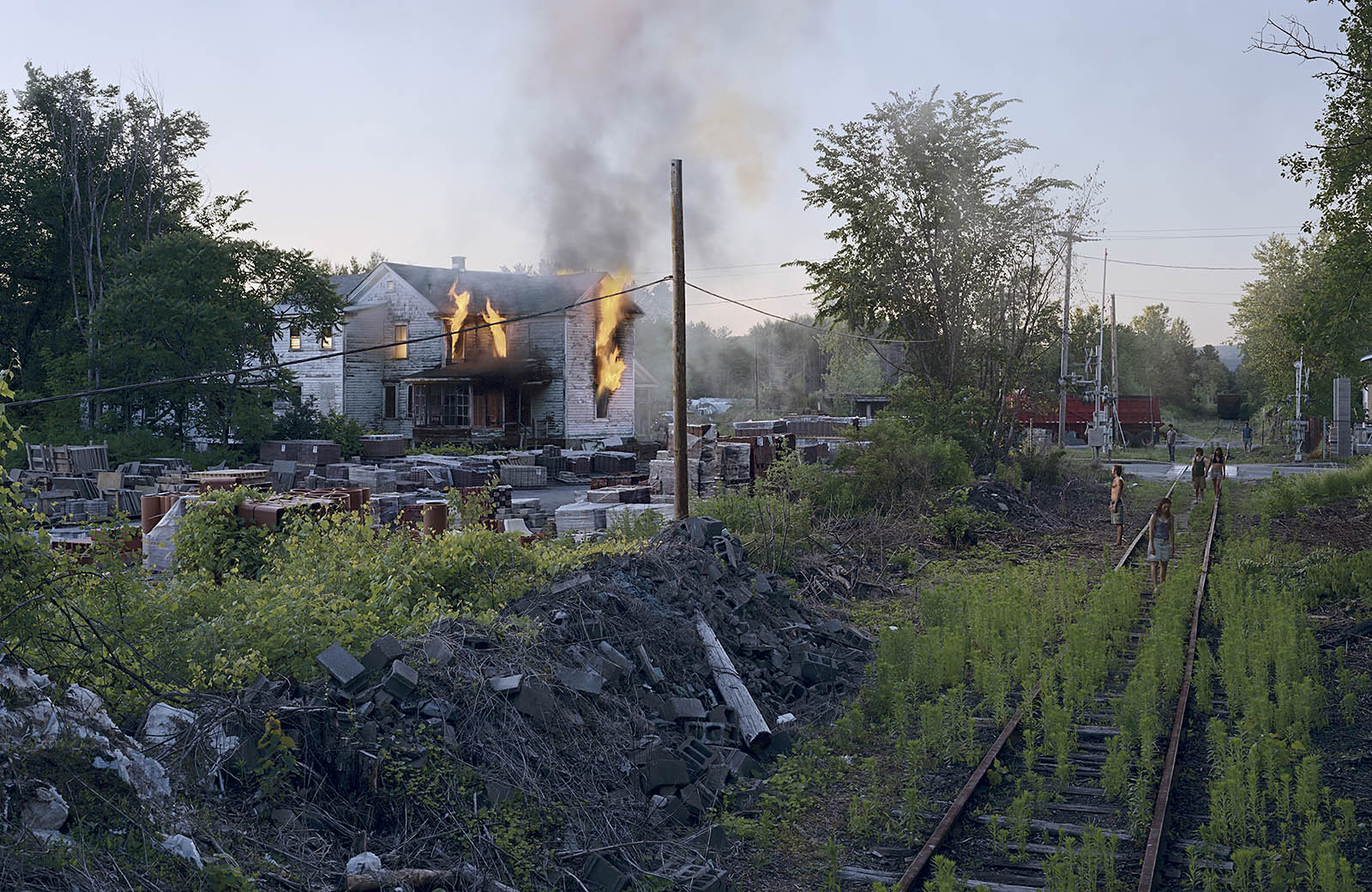
 

Gregory Crewdson (American, b. 1962)'Untitled' From the series 'Beneath the Roses' 2003-2008


Gregory Crewdson (American, b. 1962)
Untitled
From the series Beneath the Roses, 2003-2008
Digital pigment print
144 x 223cm
The Albertina Museum, Vienna
Permanent loan, Private Collection
© Gregory Crewdson
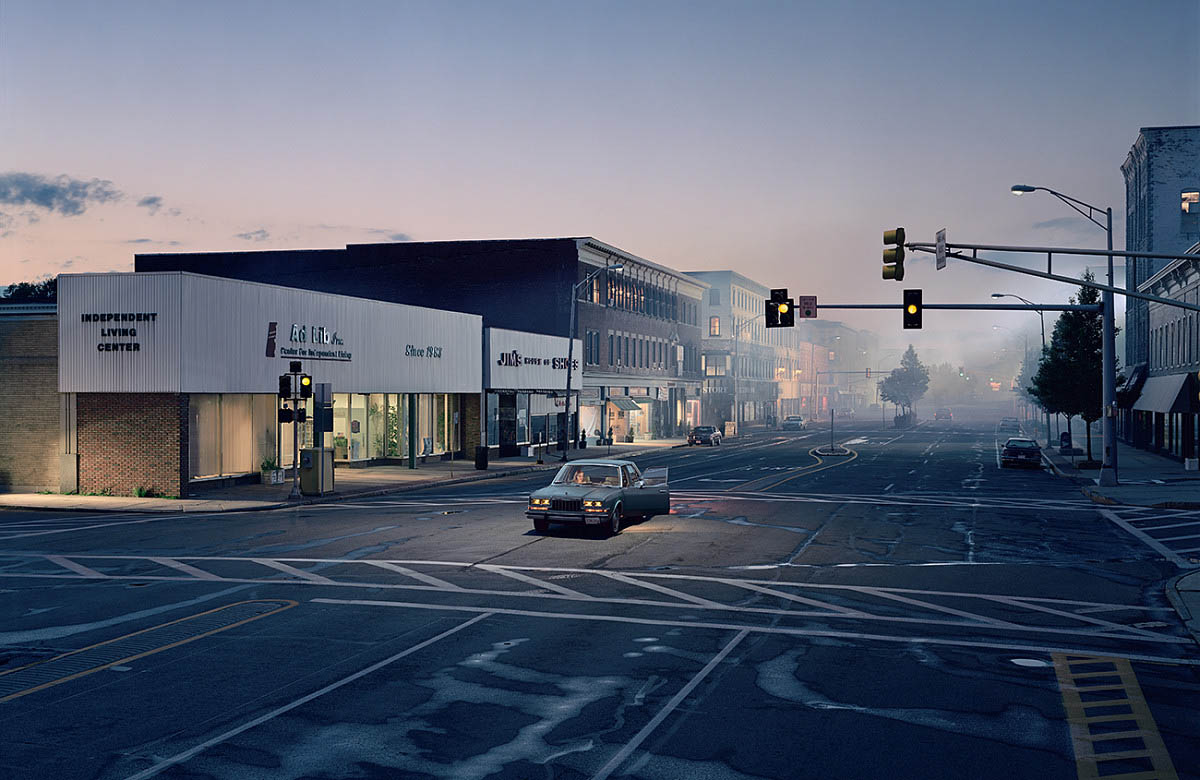
 

Gregory Crewdson (American, b. 1962) 'Untitled' From the series 'Beneath the Roses' 2003-2008


Gregory Crewdson (American, b. 1962)
Untitled
From the series Beneath the Roses, 2003-2008
Digital pigment print
144 x 123cm
The Albertina Museum, Vienna
Permanent loan, Private Collection
© Gregory Crewdson
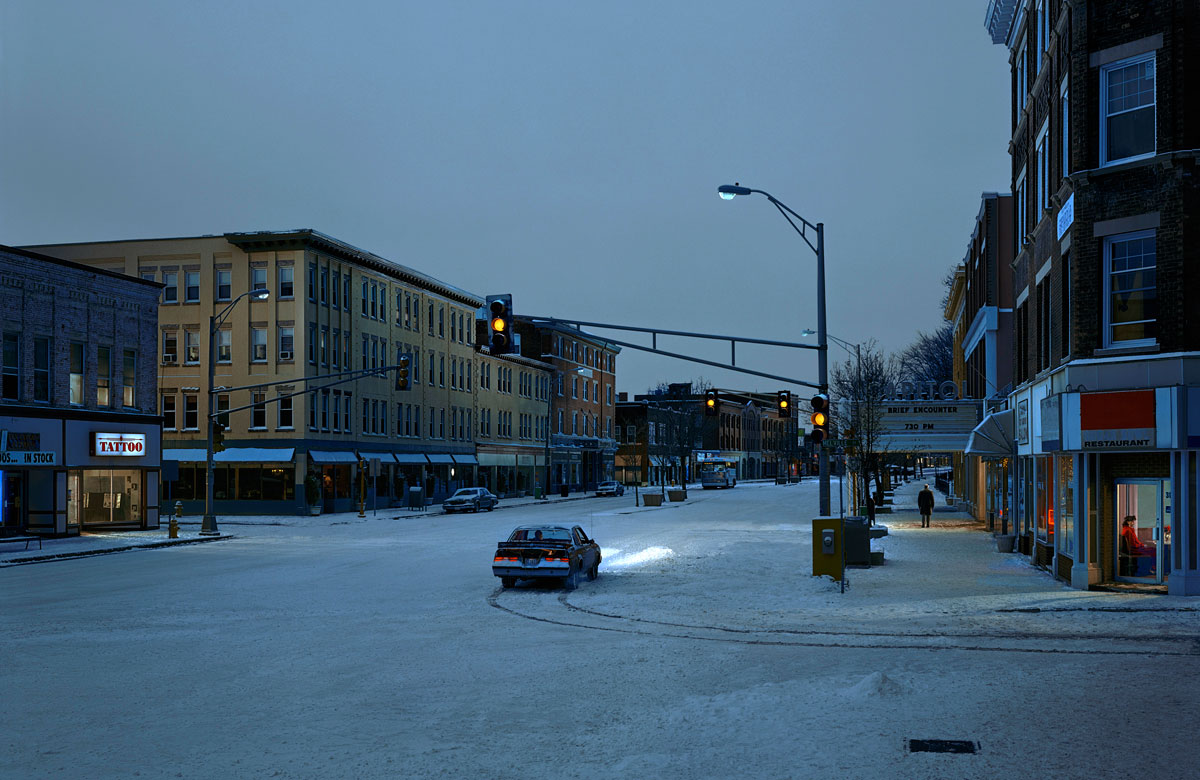
 

Gregory Crewdson (American, b. 1962) 'Untitled' From the series 'Beneath the Roses' 2003-2008


Gregory Crewdson (American, b. 1962)
Untitled
From the series Beneath the Roses, 2003-2008
Digital pigment print
144 x 123cm
The Albertina Museum, Vienna
Permanent loan, Private Collection
© Gregory Crewdson


Gregory Crewdson (American, b. 1962) 'Untitled' From the series 'Beneath the Roses' 2003-2008


Gregory Crewdson (American, b. 1962)
Untitled
From the series Beneath the Roses, 2003-2008
Digital pigment print
144 x 223cm
The Albertina Museum, Vienna
Permanent loan, Private Collection
© Gregory Crewdson


Exhibition Texts

Early Work, 1986-1988

Early Work was created as Crewdson’s final project at Yale University’s School of Art. Among other places, Gregory Crewdson photographed the series in the US state of Massachusetts, mostly in the small town of Lee, which is very close to the family’s summer home. Due to his personal connection to this region, the artist still realises almost all of his photographic projects in the Massachusetts area. In the photographs, Crewdson arranged the town’s residents in the context of their domestic settings. Using relatively modest technical devices at the time, he transformed the real places into mysterious, uncanny scenes with the help of artificial lighting. Introverted protagonists rendered in tightly cropped views present typically American suburbs as places of human isolation and oppression. David Lynch’s surreal masterpiece Blue Velvet, in which the main character encounters human abysses behind the idyllic façade of a small town, served as a major model. The film, which came out in 1986, turned out to be stylistic inspiration for Crewdson and also became an important source of reference for his subsequent series. Crewdson also dealt with more documentary positions, such as those of Stephen Shore and William Eggleston. On their journeys across the United States, they enhanced everyday motifs with symbolic meaning through close-up views and vibrant colours. Especially Eggleston employed these means to allude to disconcerting aspects in society.

Natural Wonder, 1991-1997

Inspired by the dioramas in natural history museums, for Natural Wonder Gregory Crewdson built three-dimensional models in his studio, which he then photographed. The pictures show enigmatic rituals and cruel incidents happening in nature, which take place against the backdrop of the suburbs without people realising. For example, birds sit around a mysterious circle of eggs, or nature takes possession of a decaying animal carcass. As a metaphor for suppressed anxieties and traumas, the depicted landscape functions as a mirror of the unconscious and the human psyche. In Crewdson’s series, autobiographic elements – his father was a psychoanalyst – and overriding social themes characteristically coincide. The symbolism of Natural Wonder has essentially been inspired by cinematography: in Alfred Hitchcock’s film The Birds (1963), the eponymous animals, suddenly infesting an idyllic world, symbolise dysfunctional relationships and human fears. In Blue Velvet (1986), David Lynch eliminates the line between reality and illusion, between the familiar and the eerie, between idyll and violence through the motif of a prepared robin or of a severed human ear covered with ants, which is found in a meadow.

Hover, 1996/1997

In Hover, his third series, Gregory Crewdson abandons the aesthetic achievements of earlier works: he takes pictures in black and white from a bird’s-eye view with the help of a crane. The strategy characteristic of Crewdson’s work to merely adumbrate a narrative while abstaining from resolving it and keeping it in mysterious suspense reaches an early climax in Hover. With a distanced, objectifying gaze he shows familiar occurrences in a small town as they tip over into the unusual. The recurring motif of the circle refers not only to popular science fiction movies and works of land art, but also quotes Alfred Hitchcock’s film Vertigo (1958), in which the circle is considered a metaphor for romantic obsession.

Gregory Crewdson now began to plan his sessions in advance and in great detail. As were other series, Hover was shot in the real place of Lee with the aid of residents performing as protagonists. Occasionally, Crewdson still resorted to improvisation; for example, he called the police for the purpose of integrating the police car into the photograph.

Twilight, 1998-2002

Twilight is one of Gregory Crewdson’s most well-known works. It is informed by cinema even more than earlier series. In its scenes, which are mostly set at dusk, Crewdson resorts to the fantastic as the principal theme. Inexplicable phenomena intrude into everyday life. Familiar objects are repurposed, and people give the impression of being exposed and unprotected because of their nudity.

Similar to a film production, a crew of about sixty took part in Twilight. In this series, Crewdson arrived at his characteristic repertoire of motifs, such as open cars, windows, and mirrors, which he varied and put together like vocabulary and would also use for subsequent works. Crewdson began to fully concentrate on the mise-en-scène, leaving the technical implementation of the shots to Richard Sands for the first time – a practice continued to this day. This high-profile director of photography from the world of cinema has worked with Steven Spielberg and Francis Ford Coppola, among others.

The photographs, which Crewdson refers to as “single-frame movies,” contain multiple references to classical painting and popular culture, a telling example of the latter being Steven Spielberg’s science fiction film Close Encounters of the Third Kind (1977). Gregory Crewdson’s postmodern approach becomes manifest in these images: starting out from the idea that reality is no longer “authentic” but merely experienced through the media, the recognisable references reveal the staging they are based on.

Beneath the Roses, 2003-2008

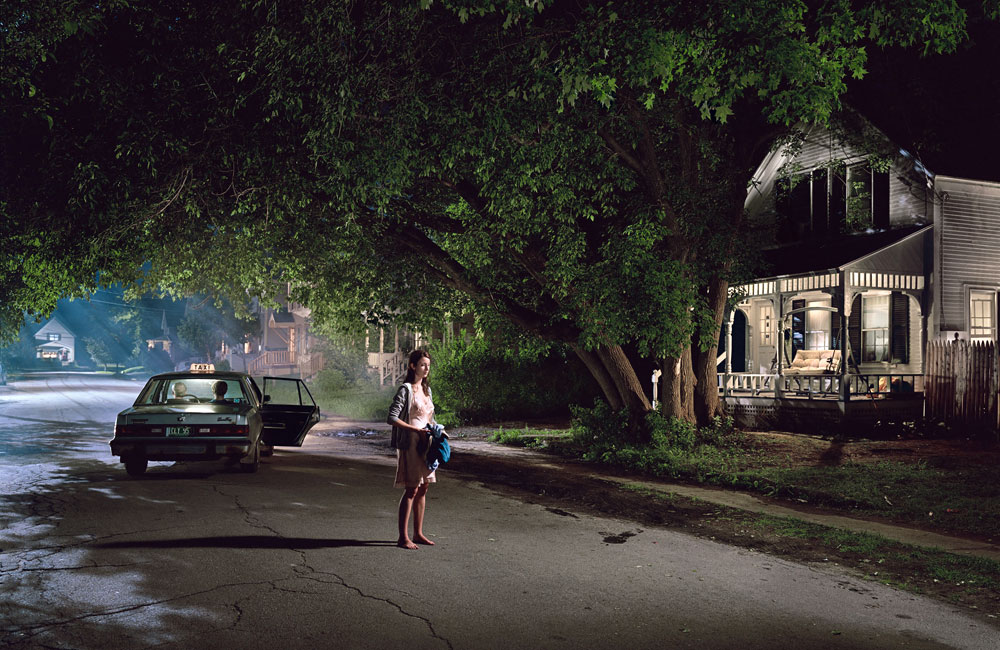
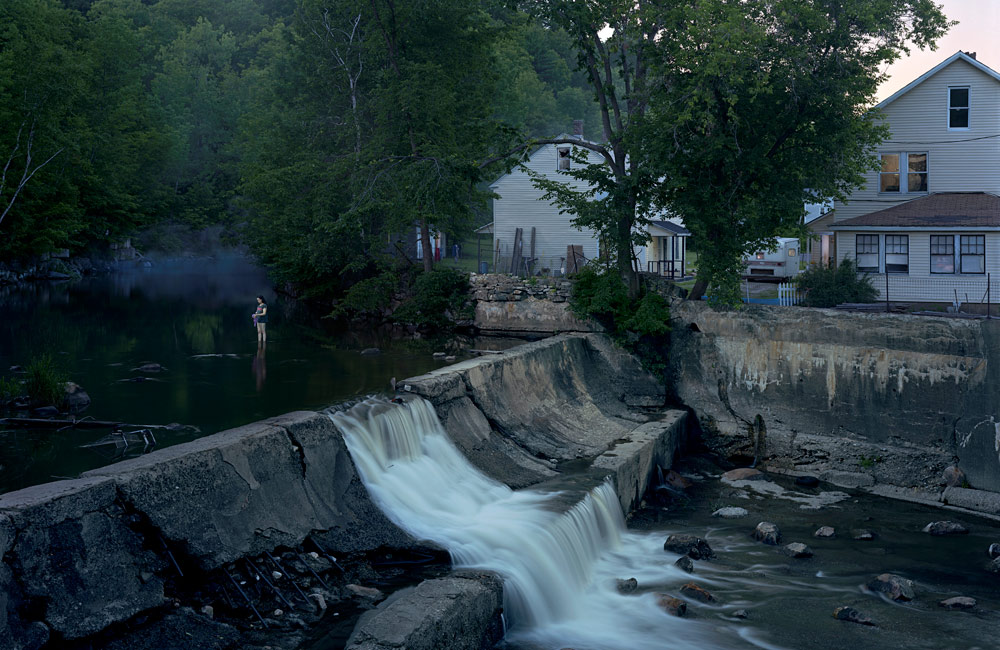
In Beneath the Roses, the surreal, uncanny atmosphere of earlier series gives way to an essentially melancholic and psychologising key tone. The protagonists, captured in desolate surroundings, are shown frozen and motionless. Lonely, isolated, and without interacting, they appear totally alienated. Especially for his interior shots, Gregory Crewdson borrows from Edward Hopper’s painting. Situations of human introspection in anonymous, everyday architectural settings that both suggest intimacy and accommodate a voyeuristic gaze are unmistakable parallels.

Beneath the Roses is the most elaborate series in Gregory Crewdson’s oeuvre, which he originally developed as an idea for a film and to which more than one hundred specialists from casting, costume design, technical, and art departments contributed over the extensive period during which the series was realised. As in Twilight, he staged the interior shots in studios, whereas outdoor shots were taken in real places he had profoundly transformed according to his ideas. The artist meticulously prepared the shoot with architectural models, storyboards, scene scripts, and location shots. The focus was particularly on the choice of props, which appear both quintessentially American and timeless. Using different aperture settings, Crewdson took multiple photographs of each scene. In postproduction, which lasted over several months, he combined forty to fifty negatives, so that the constant depth of field in the final picture gives a hyperrealist impression.

Sanctuary, 2009

Sanctuary was created after the monumental large-scale project Beneath the Roses (2003-2008). The series marks a period of transition during which Gregory Crewdson put new artistic approaches to the test. When staying in Rome in 2009, he visited the Italian city of cinematography Cinecittà, where, in its film sets, his first group of works was realised outside the United States. He completed the project within two months with a small team and little technical and financial input. In Sanctuary, Crewdson heightened the tension between reality and fiction known from earlier series by making the sets as such the actual subject. The black-and-white photography accentuates the morbid appeal of the sets as ruins. In contrast to Crewdson’s usual practice of conveying loneliness and isolation with the aid of performers, in Sanctuary he creates an essentially melancholic atmosphere through the complete absence of people. In particular, the artist makes palpable the discrepancy between the hustle and bustle of past film shoots and the now ghostly desolation.

Cathedral of the Pines, 2013/2014

Cathedral of the Pines was created after a period of personal and artistic crisis. In the midst of the mighty pine forests near the city of Becket in Massachusetts, where Gregory Crewdson has lived since 2010, he discovered the eponymous path that became the starting point for this series. Cathedral of the Pines is one of the artist’s most personal groups of work. For the first time, he engaged persons from his family and circle of friends as performers. Moreover, he staged his interiors in real houses, working with a comparatively small team and a minimum of artificial light.

Cathedral of the Pines examines the subject of the human condition through the relationship between human beings and landscape. The nocturnal atmosphere of earlier series gives way to cool daylight and cold colours: completely in the nude or only partially covered and staring absent-mindedly, his performers seem frozen and withdrawn into their own emotional worlds. By placing windows prominently, Crewdson contrasts the relationship between interior and exterior space, as well as interior and exterior light. With its references to the Romanticism of the early nineteenth century – such as compositions by Caspar David Friedrich – or seventeenth-century Dutch painting – such as the art of Jan Vermeer – the motif of the window is also in the tradition of a symbol of contemplation and unfulfilled yearning.

An Eclipse of Moths, 2018/2019

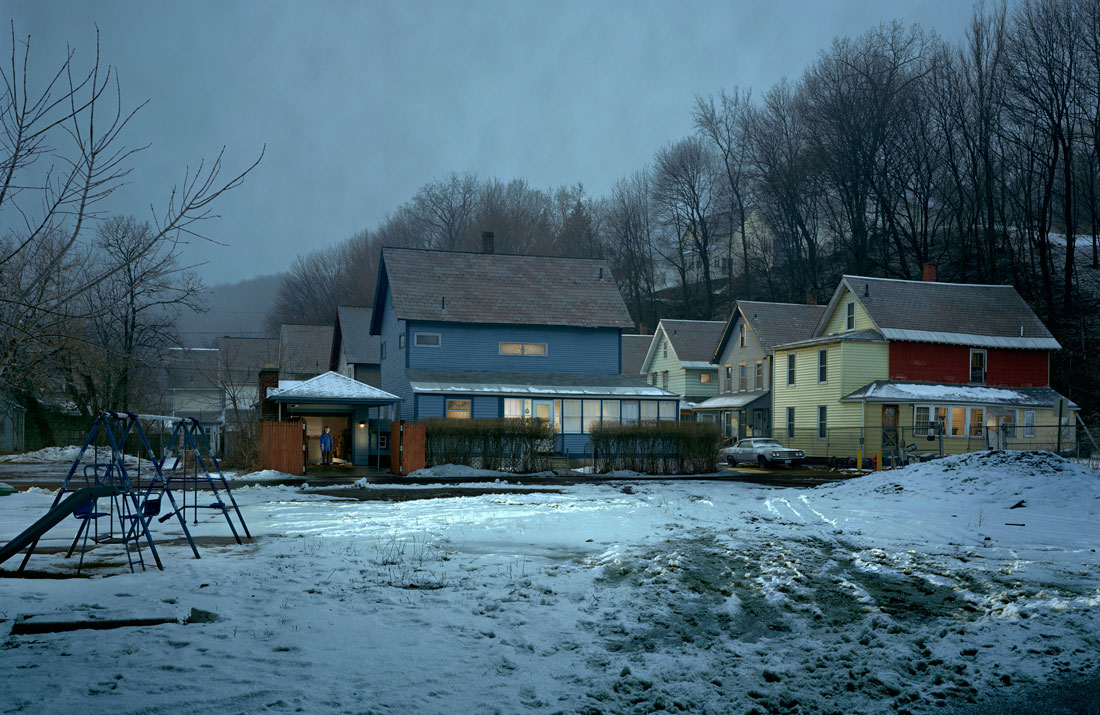
Gregory Crewdson photographed An Eclipse of Moths during Donald Trump’s presidency, thus formulating his analysis of society as sociopolitical criticism. In the city where the series was shot, Pittsfield in Massachusetts, the majority of the population had worked for the local General Electric plant and many lost their jobs after the firm had closed down. In addition to high unemployment, the company left behind a devastated environment. Crewdson describes the situation of neglected postindustrial places through the contrast between light atmospheres rendered in vibrant colours and desolate motifs of everyday life. Potholed streets or dilapidated houses symbolise the fragility and frailty of a society that has lost its footing.

Different from Cathedral of the Pines (2013/2014), his previous series, in An Eclipse of Moths Crewdson returned to the cinematographic widescreen format. The artist depicted his protagonists as small figures in proportion to their surroundings and at a distance from one another. He frequently arranged his seemingly disoriented protagonists around street lamps, comparable to the eponymous moths circling around the light in the darkness. Apart from a multitude of props, he also used smoke and artificially sprinkled streets for this series so as to masterfully stage his light effects.

Eveningside, 2021/2022

Gregory Crewdson’s most recent series is set in a fictitious small town called Eveningside. Its imaginary geography is made up of various places in western Massachusetts the artist had used as scenes for earlier works. After Cathedral of the Pines (2013/2014) and An Eclipse of Moths (2018/2019), this atmospheric work in black and white constitutes the final part of Crewdson’s trilogy, which deals with the sociopolitical dark sides of a society removed from the American dream. In Eveningside, the artist often depicts people going about their work. Frozen in absolute standstill, they seem caught in their respective social contexts.

Crewdson’s arrangements ingeniously position the protagonists in space through lighting influenced by film noir and motifs like shopwindow and mirror. The artist shows their faces in reflections from irritating and slightly shifted perspectives with the aid of montage. Windows frame the protagonists as pictures within the picture und underscore the act of image-making as a self-reflexive practice.

Text from The Albertina Museum press release
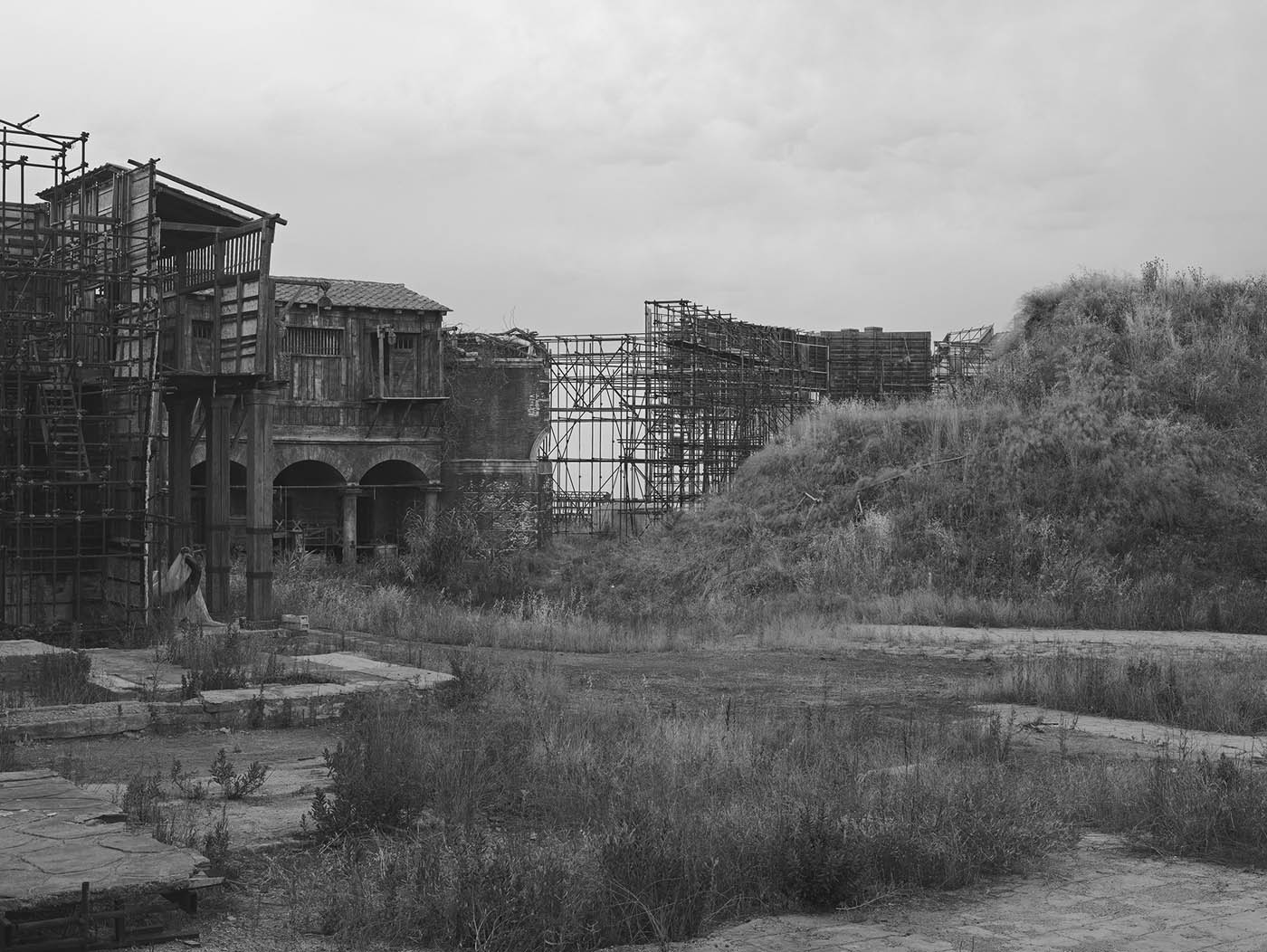
 

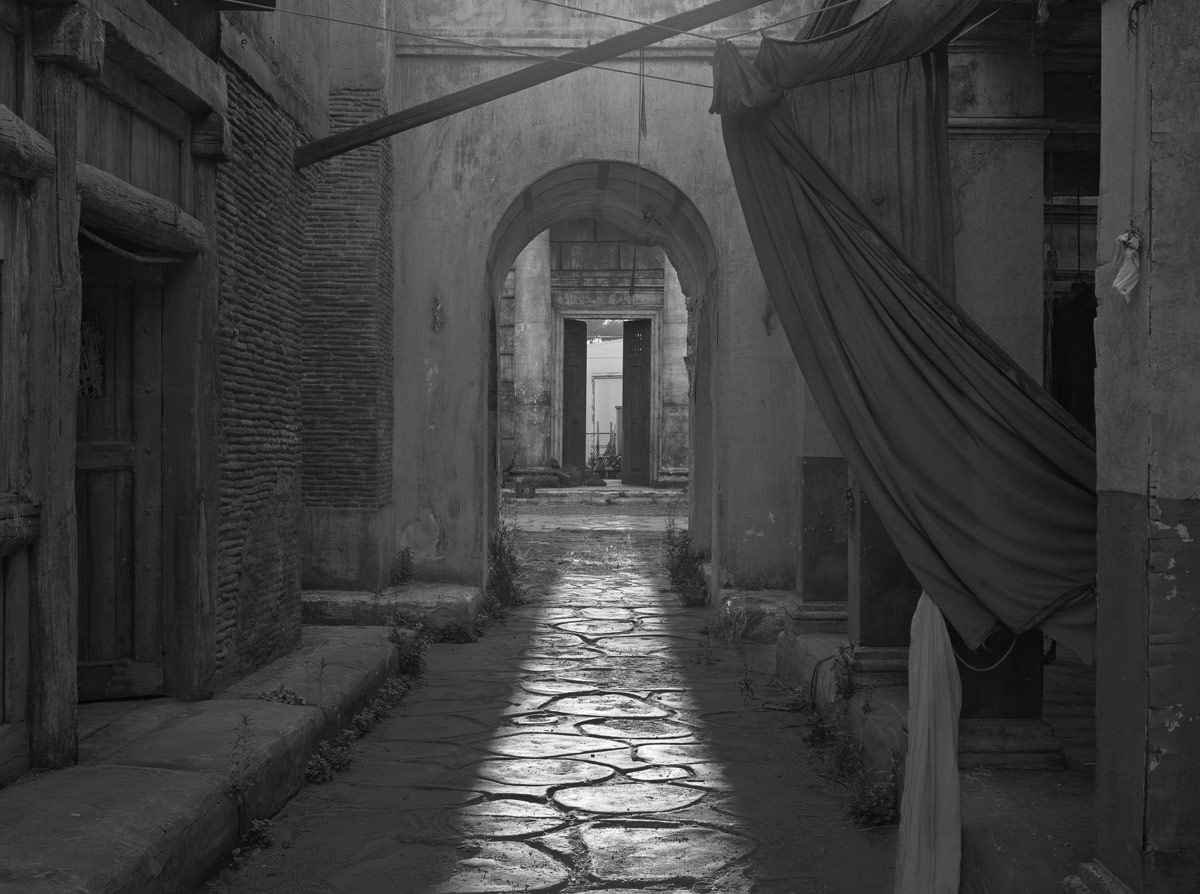
Gregory Crewdson (American, b. 1962) 'Untitled' From the series 'Sanctuary' 2009


Gregory Crewdson (American, b. 1962)
Untitled
From the series Sanctuary, 2009
Digital pigment print
72 x 90cm
The Albertina Museum, Vienna
Permanent loan, Private Collection
© Gregory Crewdson
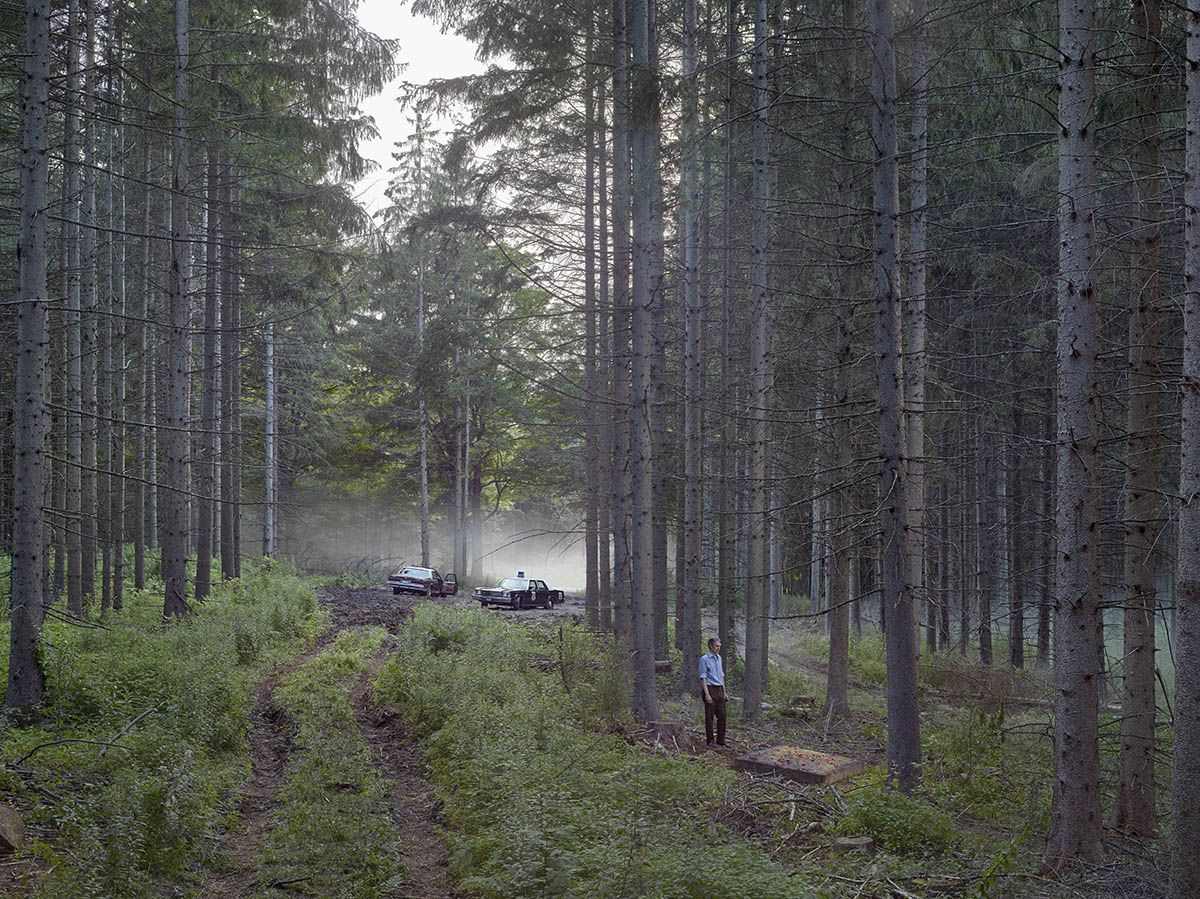
 

Gregory Crewdson (American, b. 1962) 'The Mattress' From the series 'Cathedral of the Pines' 2013-2014


Gregory Crewdson (American, b. 1962)
The Mattress
From the series Cathedral of the Pines, 2013-2014
Digital pigment print
94 x 127cm
The Albertina Museum, Vienna
Permanent loan, Private Collection
© Gregory Crewdson
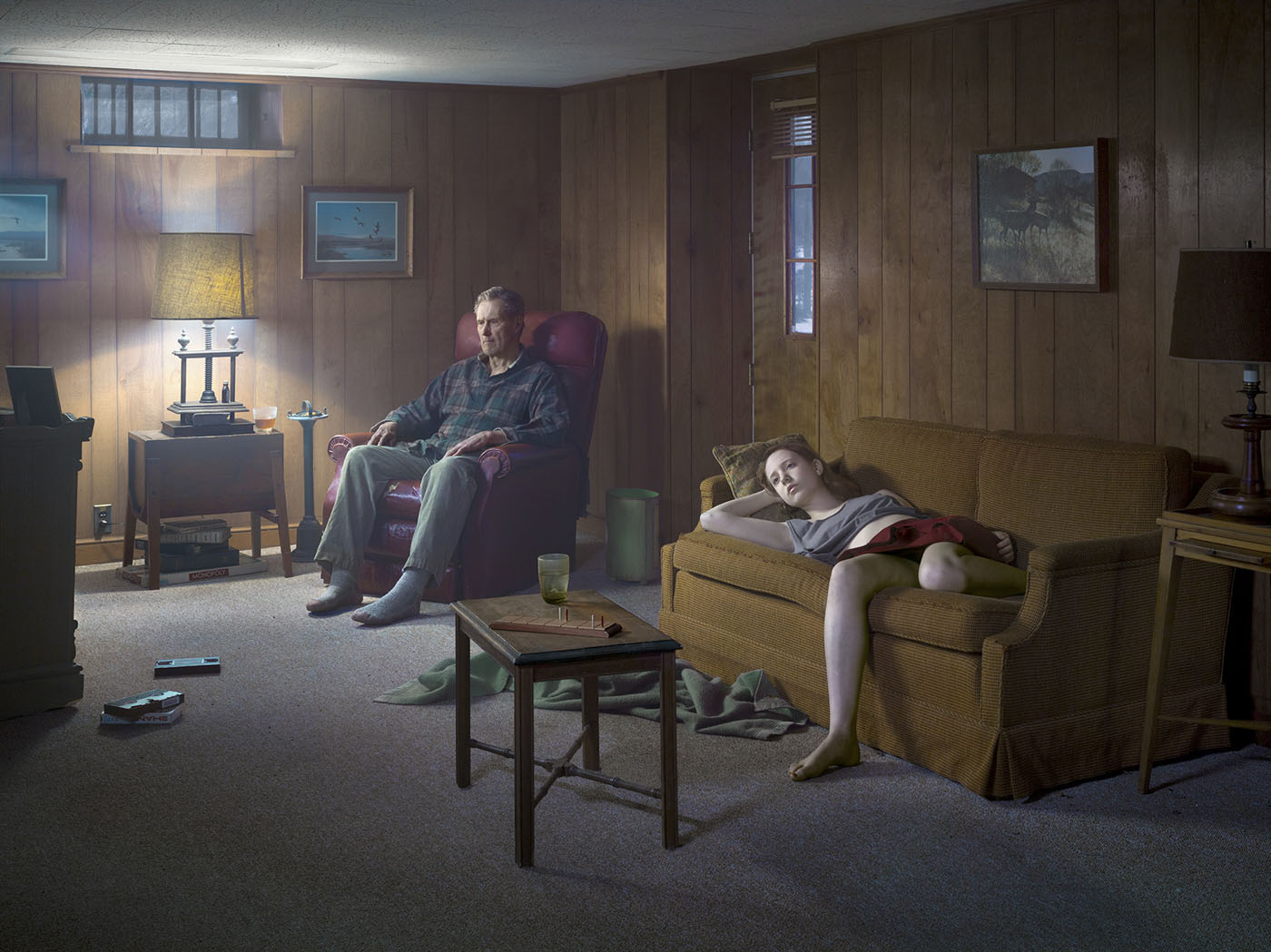
 

Gregory Crewdson (American, b. 1962) 'The Basement' From the series 'Cathedral of the Pines' 2013-2014


Gregory Crewdson (American, b. 1962)
The Basement
From the series Cathedral of the Pines, 2013-2014
Digital pigment print
94 x 127cm
The Albertina Museum, Vienna
Permanent loan, Private Collection
© Gregory Crewdson
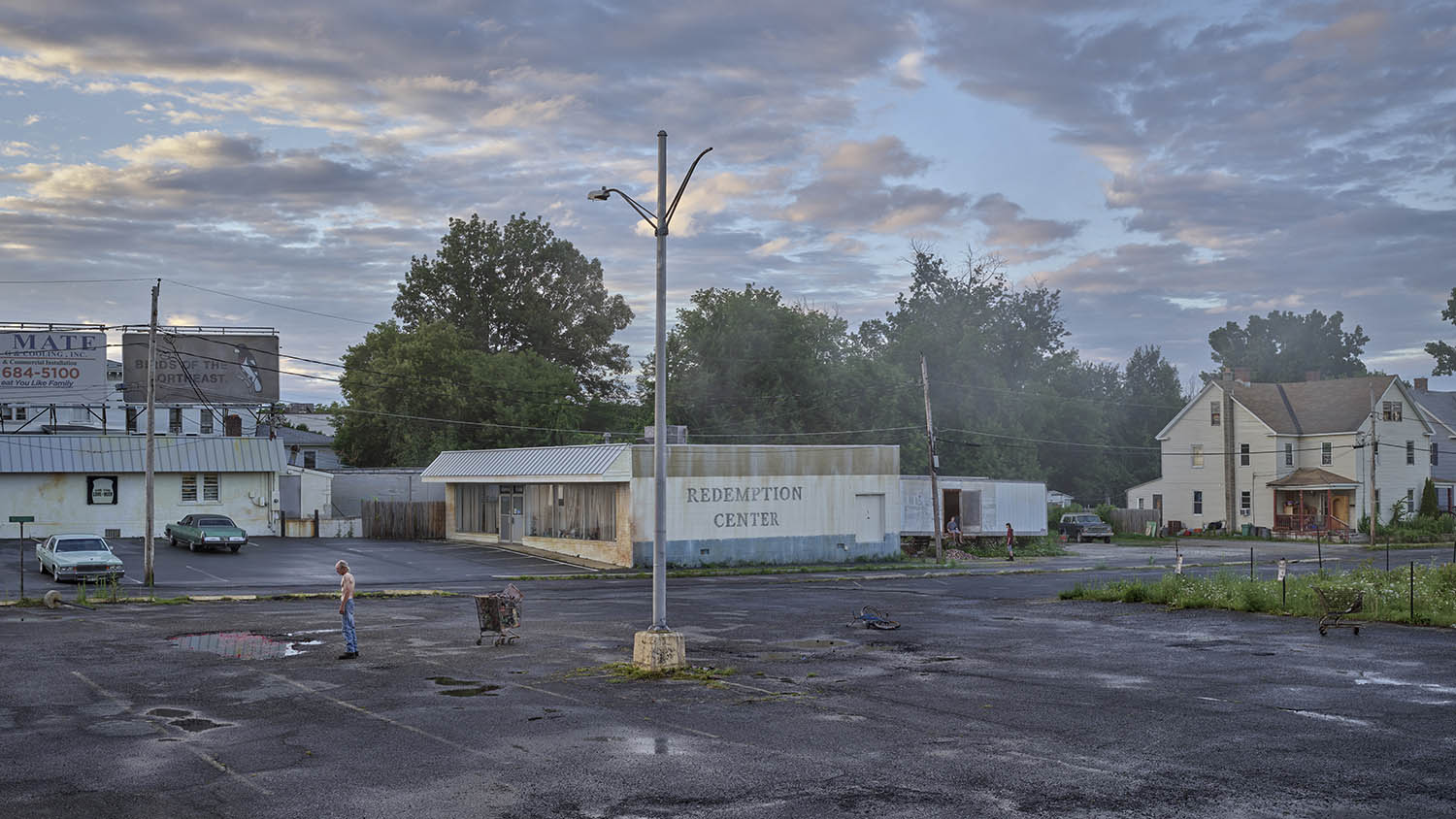
 

Gregory Crewdson (American, b. 1962) 'Redemption Center' From the series 'An Eclipse of Moths' 2018-2019


Gregory Crewdson (American, b. 1962)
Redemption Center
From the series An Eclipse of Moths, 2018-2019
Digital pigment print
127 x 225cm
The Albertina Museum, Vienna
Permanent loan, Private Collection
© Gregory Crewdson
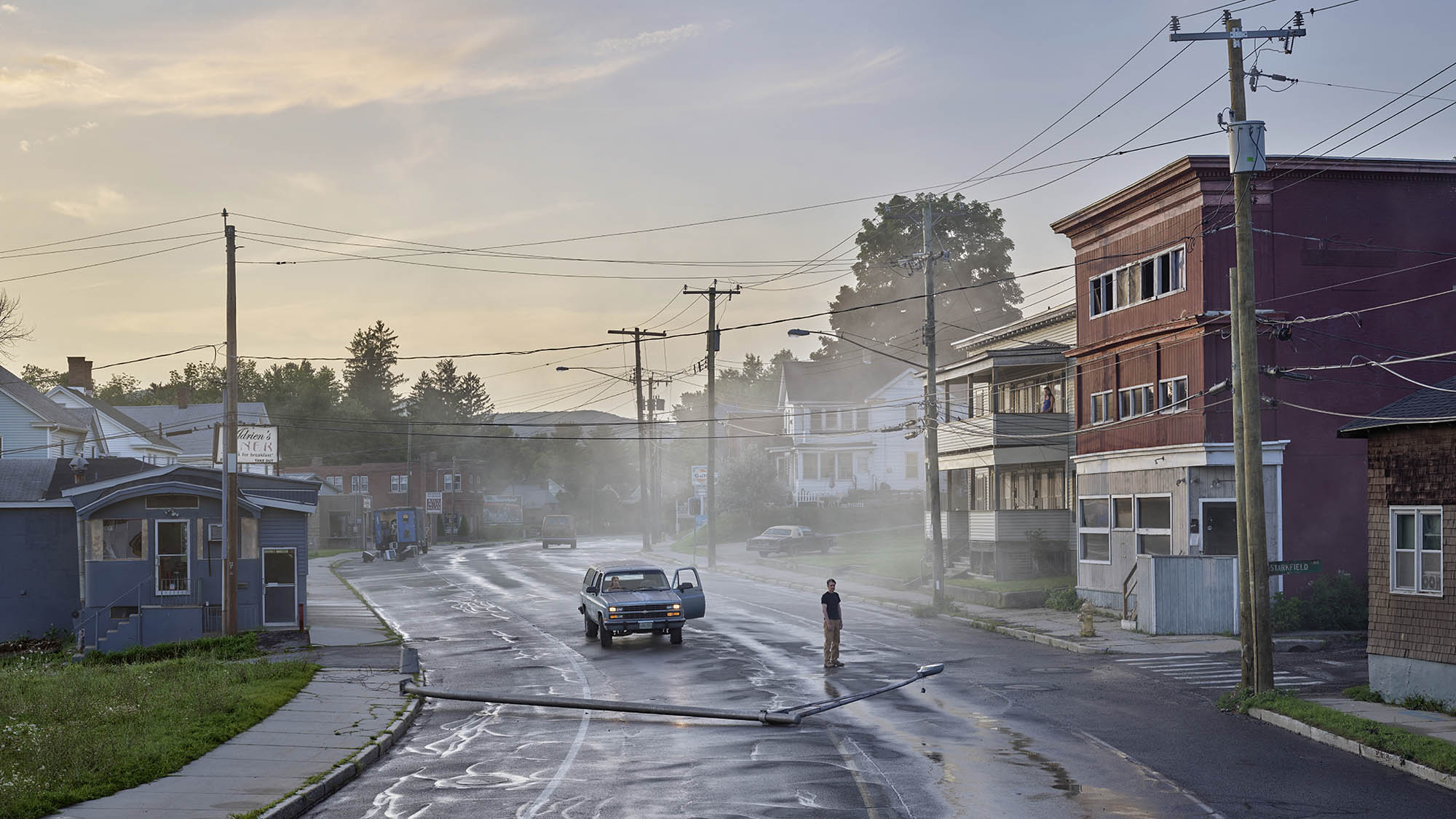
 

Gregory Crewdson (American, b. 1962) 'Starkfield Lane' From the series 'An Eclipse of Moths' 2018-2019


Gregory Crewdson (American, b. 1962)
Starkfield Lane
From the series An Eclipse of Moths, 2018-2019
Digital pigment print
127 x 225cm
The Albertina Museum, Vienna
Permanent loan, Private Collection
© Gregory Crewdson


Gregory Crewdson (American, b. 1962) 'Madeline's Beauty Salon' From the series 'Eveningside' 2021-2022


Gregory Crewdson (American, b. 1962)
Madeline’s Beauty Salon
From the series Eveningside, 2021-2022
Digital pigment print
88 x 117cm
The Albertina Museum, Vienna
Permanent loan, Private Collection
© Gregory Crewdson


The Albertina Museum
Albertinaplatz 1
1010 Vienna
Phone: +43 (0)1 534 83 0

Daily 10am – 6pm
Except Wednesday and Friday 10am – 9pm

The Albertina Museum website

LIKE ART BLART ON FACEBOOK

Back to top

Review: ‘Gregory Crewdson: In A Lonely Place’ at the Centre for Contemporary Photography (CCP), Fitzroy, Melbourne

Exhibition dates: 28th September – 11th November 2012


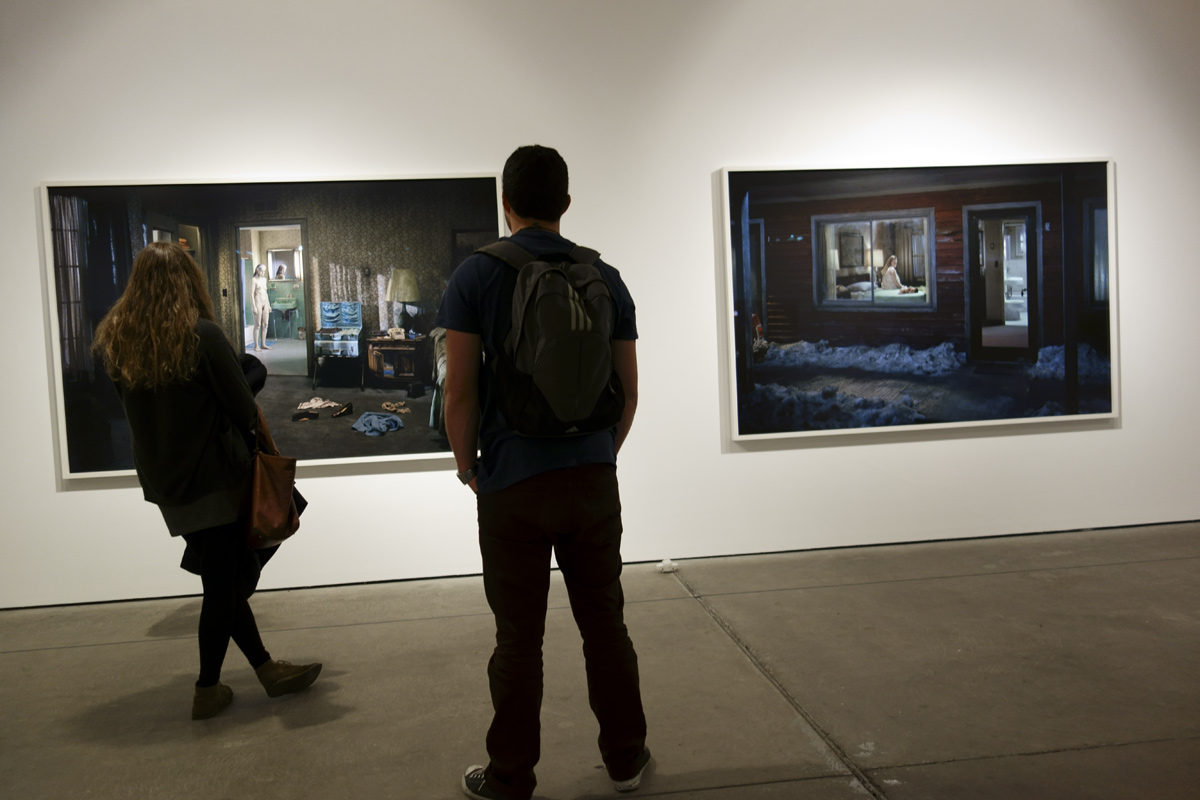
Installation photograph of the series 'Beneath the Roses' (2003-2008) from the exhibition 'Gregory Crewdson: In A Lonely Place' at the Centre for Contemporary Photography (CCP), Fitzroy, Melbourne

Installation photograph of the series 'Beneath the Roses' (2003-2008) from the exhibition 'Gregory Crewdson: In A Lonely Place' at the Centre for Contemporary Photography (CCP), Fitzroy, Melbourne


Installation photographs of the series Beneath the Roses (2003-2008) from the exhibition Gregory Crewdson: In A Lonely Place at the Centre for Contemporary Photography (CCP), Fitzroy, Melbourne
Photos: Dr Marcus Bunyan


Downfall of a dream: (n)framing the enigma in Gregory Crewdson’s Beneath the Roses

After the excoriating diatribe by Robert Nelson in The Age newspaper (“Unreal stills, unmoving images” Wednesday October 17 2012) I hope this piece of writing will offer greater insight into the work of this internationally renowned artist. With some reservations, I like Crewsdon’s work, I like it a lot – as do the crowds of people flocking to the Centre for Contemporary Photography, Fitzroy to see the exhibition. Never have I seen so many people at the CCP looking at contemporary photography before and that can only be a good thing.

Let’s get the basics out of the way first. The early series Fireflies are small silver gelatin photographs that capture “the tiny insects’ transient moments of light as they illuminate the summer night.” These are minor works that fail to transcend the ephemeral nature of photography, fail to light the imagination of the viewer when looking at these scenes of dusky desire and discontinuous lives. The series of beautiful photographs titled Sanctuary (2010) evidence the “ruin of the legendary Cinecittà studios, which was founded by Mussolini in the 1930s and is associated with the great Italian film director Federico Fellini.” Wonderful photographs of doorways, temples, dilapidated stage sets with excellent use of soft miasmic light creating an atmosphere of de/generation (as though a half-remembered version of Rome had passed down through the generations) interfaced with contemporary Rome as backdrop. The digital prints show no strong specular highlights, no deep blacks but a series of transmutable grey and mid tones that add to the overall feeling of romantic ruin. It is a pity that these photographs are not printed as silver gelatin photographs, for they would have had much more depth of feeling than they presently possess. They just feel a little “thin” to me to sustain the weight of atmosphere required of them.

But it is the series Beneath the Roses (2003-2008) that has made Crewdson truly famous. Shot using a large format camera, Crewdson makes large-scale photographs of elaborate and meticulously staged tableaux, which have been described as “micro-epics” that probe the dark corners of the psyche. Working in the manner of a film director, he leads a production crew, which includes a director of photography, special effects and lighting teams, casting director and actors. He typically makes several exposures that he later digitally combines to produce the final image. Photographs in the series of “brief encounters” include external dioramas (shot in a down at heel Western Massachusetts town), where Crewdson shuts down streets and lights the whole scene; to interior dialogues where houses are built on sound stages and the artist can control every detail of the production. Influences on these works include, but are not limited to:

David Lynch (Blue Velvet, Twin Peaks), Alfred Hitchcock (Vertigo), Steven Spielberg (Close Encounters), the paintings of Edward Hopper, Diane Arbus (the detritus of her photographic interiors), film noir, psychoanalysis, American suburbia, the American dream, the photographs of Walker Evans, Cindy Sherman and surrealism. Concepts that you could link to the work include loneliness, alienation, apathy, resignation, mystery, contemplation and confusion, identity, desire, memory and imagination.


Now to the nuts and bolts of the matter.

Another major influence that I will add is that of the great Italian director Federico Fellini (La Dolce Vita – The Sweet Life) who shot most of that film on the sets at Cinecittà studios in Rome. It is perhaps no coincidence that Crewdson, on his first overseas film shoot, shot the series Sanctuary at the very same location. Crewdson’s photographs in the series Beneath the Roses are an American form of  “The Sweet Life.” In 1961, the New York Times film critic Bosley Crowther praised Fellini’s “brilliantly graphic estimation of a whole swath of society in sad decay and, eventually, a withering commentary on the tragedy of the over-civilized… Fellini is nothing if not fertile, fierce and urbane in calculating the social scene around him and packing it onto the screen. He has an uncanny eye for finding the offbeat and grotesque incident, the gross and bizarre occurrence that exposes a glaring irony. He has, too, a splendid sense of balance and a deliciously sardonic wit that not only guided his cameras but also affected the writing of the script. In sum, it is an awesome picture, licentious in content but moral and vastly sophisticated in its attitude and what it says.”1 The same could equally be said of the Crewdson and his masterpieces in Beneath the Roses. Crewdson is in love with Fellini’s gesture – of the uplifting of the characters and their simultaneous descent into “sweet” hedonism, debauchery and decadence using the metaphor of downfall (downfall links each scene in La Dolce Vita, that of a “downward spiral that Marcello sets in motion when descending the first of several staircases (including ladders) that open and close each major episode.”)2 Crewdson’s “spectacular apocalypses of social enervation”3 mimic Fellini’s gestural flourishes becoming Crewdson’s theme of America’s downfall, America as a moral wasteland. Crewdson’s is “an aesthetic of disparity” that builds up a cumulative impression on the viewer that finds resolution in an “overpowering sense of the disparity between what life has been or could be, and what it actually is.”4

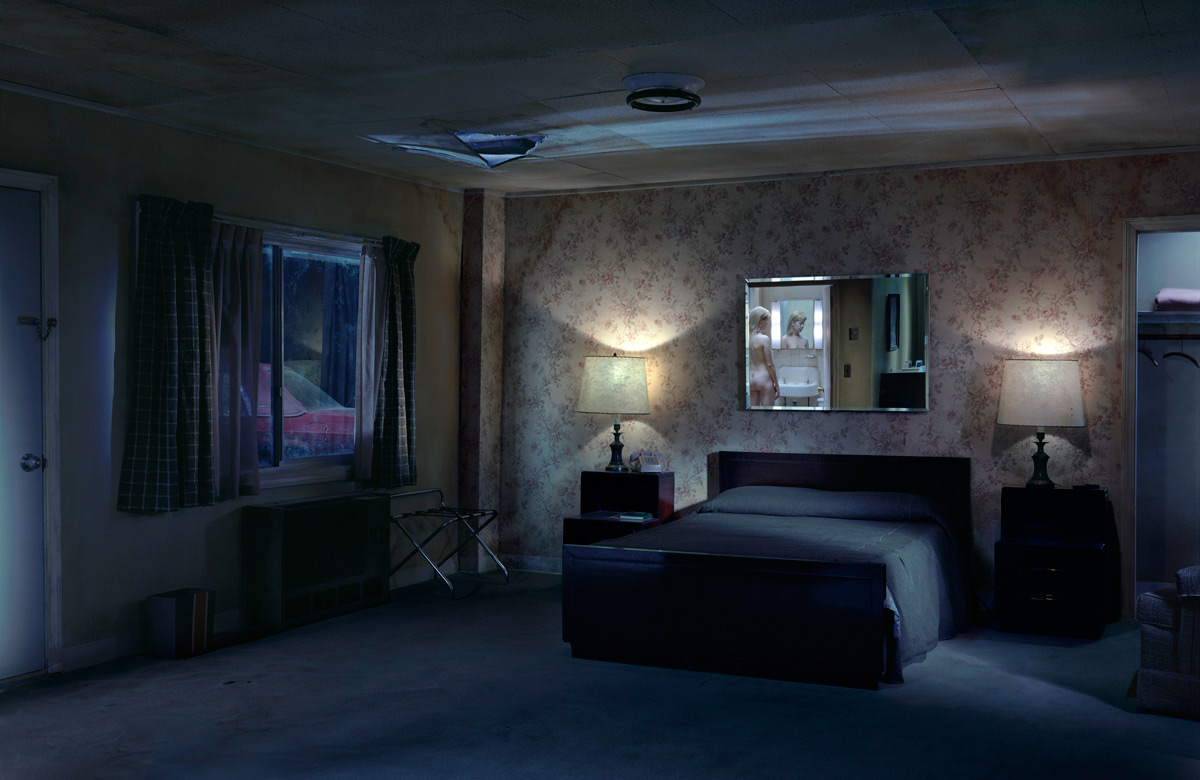
Crewdson’s cinematic encounters are vast and pin sharp when seen in the flesh. No reproduction on the web can do their physical presence justice; it is the details that delight in these productions. You have to get up close and personal with the work. His dystopic landscapes are not narratives as such, not stills taken from a movie (for that implies an ongoing story) but open-ended constructions that allow the viewer to imagine the story for themselves. They do not so much evoke a narrative as invite the viewer to create one for themselves – they are an “invitation” to a narrative, one that explores the anxiety of the (American) imagination, an invitation to empathise with the dramas at play within contemporary environments. For me, Crewdson’s extra ordinary photographs are a form of enigma (a puzzling or inexplicable occurrence or situation), the picture as master puzzle (where all the pieces fit perfectly together in stillness) that contains a riddle or hidden meaning. Clues to this reading can be found in one of the photographs from the series (Blue Period, see detail image, below) where Crewdson deliberately leaves the door of a bedside cupboard open to reveal a “Perfect PICTURE PUZZLE” box inside. The viewer has to really look into the image and understand the significance of this artefact.

Another reading that I have formulated is of the transience of space and time within Crewdson’s series. In the disquieting, anonymous townscapes people look out from their porches (or the verandas are lit and empty), they abandon their cars or walk down desolate streets hardly ever looking directly out at the viewer. The photographs become sites of mystery and wonder hardly anchored (still precisely anchored?) in time and space. This disparity is emphasised in the interior dialogues. The viewer (exterior) looks at a framed doorway or window (exterior) looking into an scene (interior) where the walls are usually covered with floral wallpaper (interior / exterior) upon which hangs a framed image of a Monet-like landscape (exterior) (see detail image, above). Exterior, exterior, interior, interior / exterior, exterior. The trees of the landscape invade the home but are framed; exterior/framed, interior/mind. There is something mysterious going on here, some reflection of an inner state of mind.

In his visual mosaics Crewdson engages our relationship with time and space to challenge the trace of experience. His tableaux act as a kind of threshold or hinge of experience – between interior and exterior, viewer and photograph. His photographs are a form of monism in which two forces (interior / exterior) try to absorb each other but ultimately lead to a state of equilibrium. It is through this “play” that the context of the photographs and their relationship to each other and the viewer are “framed.” This device emphasises the aesthetic as much as information and encourages the viewer to think about the relationship between the body, the world of which it is part and the dream-reason of time.5 This intertextual (n)framing (n meaning unspecified number in mathematics) encourages the viewer to explore the inbetween spaces in the non-narrative / meta-narrative,”and by leaps (intuitive leaps, poetic leaps, leaps of faith)”6 encourage escapism in the imagination of the viewer. It is up to us as viewers to seek the multiple, disparate significances of what is concealed in each photograph as “felt knowledge” (Walter Benjamin), recalling to mind the sensory data placed before our eyes, something that can be experienced but cannot be explained by man: “the single moment of the present amidst the transience of life and searching for some kind of eternal truth.”7

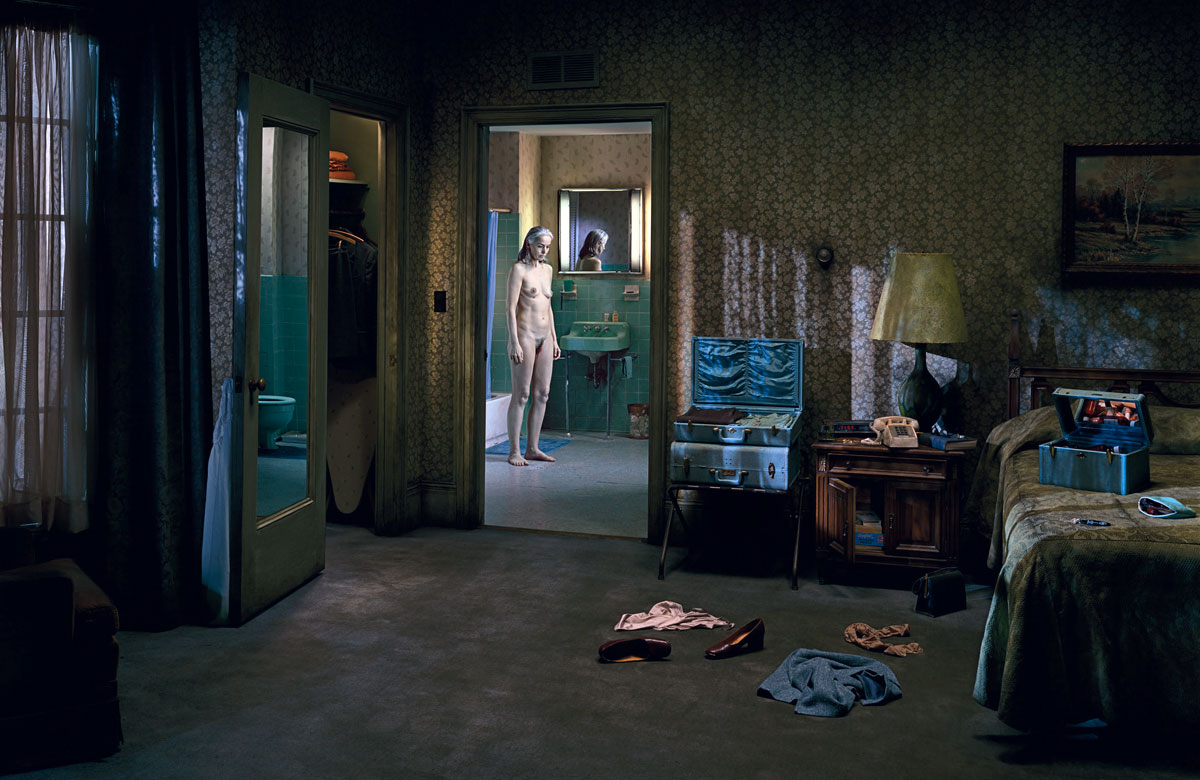
Finally, in a more adverse reading of the photographs from the series Beneath the Roses, I must acknowledge the physically (not mentally) static nature of the images where every detail of the mise-en-scène is fully articulated and locked down: from the perfect trickle of blood running from the woman’s vagina in Blue Period, to the reflections in mirrors, the detritus of living scattered on the bedroom floor, the dirty telephone, packed suitcases and keys in locks to the desolate looks of the participants that never engage with the viewer. Despite allusions of despair, in their efficacy (their static and certain world order), there is no real chthonic madness here, no real messiness of the capture of death, murder and the wastage of human life (famine, AIDS, cancer or the blood running over the pavement in one of Weegee’s murder scenes for example). This is Fellini’s gross and bizarre LITE. Americurbana “is being addressed with the same reserve and elegance that ensures that the institution – artistic, political, what you will – is upheld and never threatened. It is pre-eminently legible, it elicits guilt but not so much as to cause offence.”8 I must also acknowledge the male-orientated viewpoint of the photographs, where men are seated, clothed, lazy or absent and all too often women are doing the washing or cooking, are naked and vulnerable. In their portrayal of (usually) half dressed or naked females the photographs evidence a particularly male view of the world, one that his little empathy or understanding of how a female actually lives in the world. For me this portrait of the feminine simply does not work. The male photographer maintains control (and power) by remaining resolutely (in)visible.

Overall this is a outstanding exhibition that thoroughly deserves that accolades it is receiving. Sitting in the gallery space for an hour and a half and soaking up the atmosphere of these magnificent works has been for me one of the art experiences of 2012. Make sure that you do not miss these mesmerising prophecies.

Dr Marcus Bunyan


1/ Crowther’s review first published in The New York Times, April 20, 1961. In Fava and Vigano, 105 quoted in Anon. “La Dolce Vita,” on Wikipedia Footnote 30 [Online] Cited 20/10/2012. en.wikipedia.org/wiki/La_Dolce_Vita

2/ Anon. “La Dolce Vita,” on Wikipedia Footnote 30 [Online] Cited 20/10/2012. en.wikipedia.org/wiki/La_Dolce_Vita

3/ Sultanik, Aaron. Film, a Modern Art. Cranbury, N.J: Cornwall Books, 1986, p. 408

4/ Richardson, Robert. “Waste Lands: The Breakdown of Order,” in Bondanella (ed.), Federico Fellini: Essays in Criticism, p. 111 quoted in Anon. “La Dolce Vita,” on Wikipedia Footnote 30 [Online] Cited 20/10/2012. en.wikipedia.org/wiki/La_Dolce_Vita

5/ Bacon, Julie Louise. “Liquid Archive: On Ambivalence,” in Liquid Archive. Melbourne: Monash University Museum of Art (MUMA), 2012, p. 119

6/ Kirshenblatt-Gimblett, Barbara. “The Museum – A Refuge for Utopian Thought,” in Rüsen, Jörn; Fehr Michael, and Ramsbrock, Annelie (eds.). Die Unruhe der Kultur: Potentiale des Utopischen. Velbrück Wissenschaft, 2004. In German.

7/ Kataoka, Mami commenting on the work of Allan Kaprow. “Transient Encounters,” in Broadsheet: Criticism, Theory, Art Vol 41.3, September 2012, p. 174

8/ Geczy, Adam. “A dish served lukewarm,” in Broadsheet: Criticism, Theory, Art Vol 41.3, September 2012, p. 177

Many thankx to the artist, Gagosian Gallery and the Centre for Contemporary Photography for allowing me to publish the photographs in the posting. Special thankx to Director of the CCP Naomi Cass and Ms. James McKee from Gagosian Gallery for facilitating the availability of the media images. Please click on the photographs for a larger version of the image.

All photographs © Gregory Crewdson. Courtesy Gagosian Gallery.

Installation and detail photographs © Dr Marcus Bunyan


Gregory Crewdson (American, b. 1962) 'Untitled (Blue Period)' 2003-2005


Gregory Crewdson (American, b. 1962)
Untitled (Blue Period)
2003-2005
© Gregory Crewdson. Courtesy Gagosian Gallery


Gregory Crewdson (American, b. 1962) 'Untitled (Blue Period)' 2003-2005 (detail)

Gregory Crewdson (American, b. 1962) 'Untitled (Blue Period)' 2003-2005 (detail)

Gregory Crewdson (American, b. 1962) 'Untitled (Blue Period)' 2003-2005 (detail)


Details from Gregory Crewdson’s Untitled (Blue Period) (2003-2005, above) from the series Beneath the Roses (2003-2008)
Photos: Dr Marcus Bunyan


“The American middle-class nightmare: nothing is clean, orderly, idyllic, or romantic. In his perfectly staged, hyperrealistic tableaux, photographer Gregory Crewdson reveals the claustrophobic limbo and abyss of spiritual repression that is the typical suburb. Here, hushed-up violence, alienation, isolation, and emptiness are nothing new or unfamiliar, but rather part of the everyday neighbourhood experience.”

Gregory Crewdson, In a Lonely Place, Abrams Publishing, New York, 2011


“I have always been fascinated by the poetic condition of twilight. By its transformative quality. Its power of turning the ordinary into something magical and otherworldly. My wish is for the narrative in the pictures to work within that circumstance. It is that sense of in-between-ness that interests me.”


Gregory Crewdson


Gregory Crewdson (American, b. 1962) 'Untitled (Maple Street)' 2003-2005


Gregory Crewdson (American, b. 1962)
Untitled (Maple Street)
2003-2005
© Gregory Crewdson. Courtesy Gagosian Gallery


Gregory Crewdson (American, b. 1962) 'Untitled (Shane)' 2006


Gregory Crewdson (American, b. 1962)
Untitled (Shane)
2006
© Gregory Crewdson. Courtesy Gagosian Gallery


Gregory Crewdson (American, b. 1962) 'Untitled (Brief Encounter)' 2006


Gregory Crewdson (American, b. 1962)
Untitled (Brief Encounter)
2006
© Gregory Crewdson. Courtesy Gagosian Gallery


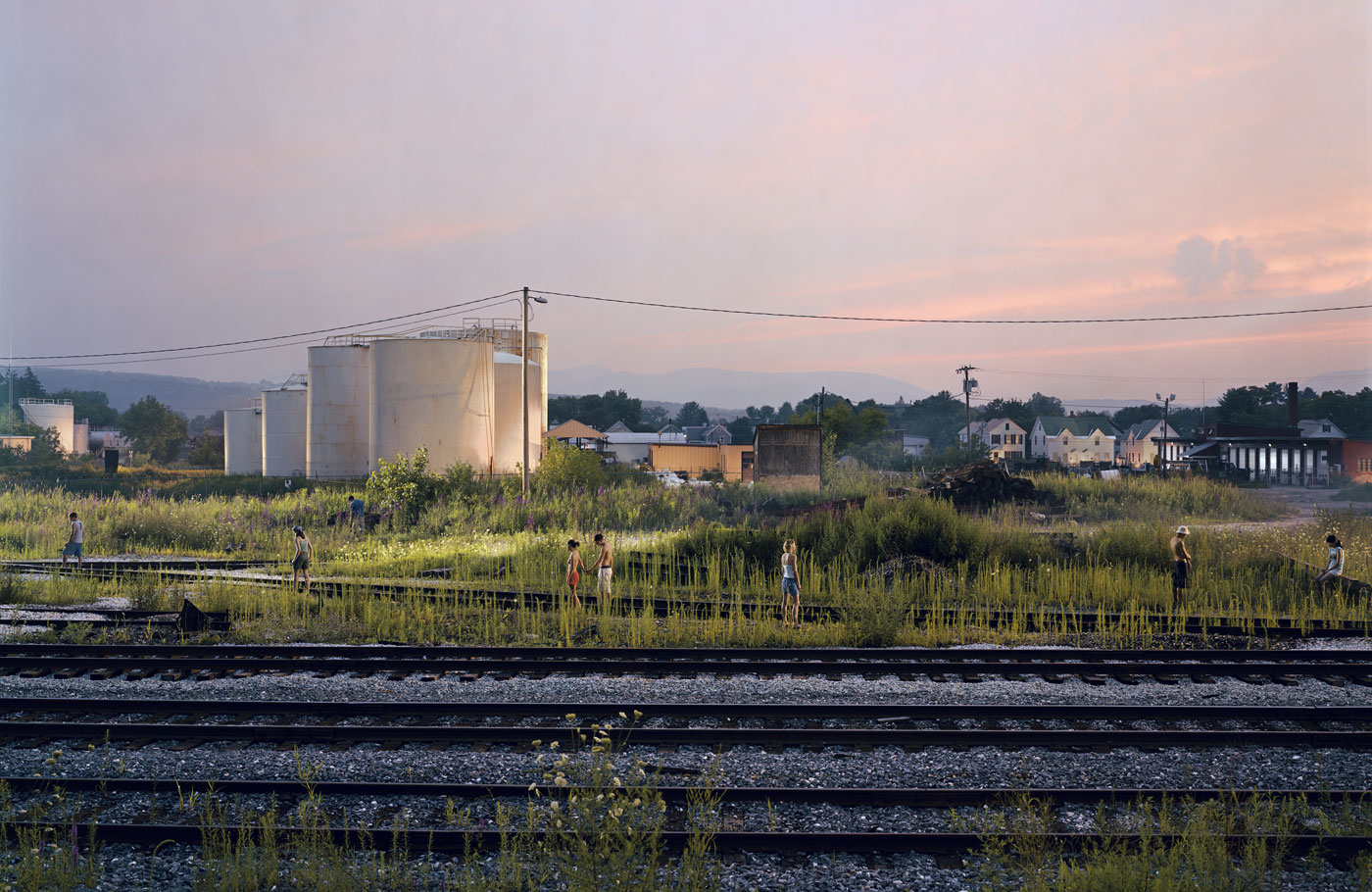
Gregory Crewdson (American, b. 1962) 'Untitled (Railway Children)' 2003-2005


Gregory Crewdson (American, b. 1962)
Untitled (Railway Children)
2003-05
© Gregory Crewdson. Courtesy Gagosian Gallery


In a Lonely Place presents selections from three major series by Gregory Crewdson, Fireflies (1996), Beneath the Roses (2003-2008), Sanctuary (2010) and, presented for the first time, the video Field Notes (2009). The exhibition title comes from Nicholas Ray’s 1950s film noir of the same name, one of many films that inspired Crewdson. In a Lonely Place is evocative of an underlying mood-a quiet feeling of alienation and loneliness that links the three series selected by curators Estelle Af Malmborg, Jens Erdman Rasmussen and Felix Hoffmann. In a Lonely Place presents the first comprehensive exhibition of Crewdson’s work in Australia.

In Beneath the Roses, anonymous townscapes, forest clearings and broad, desolate streets are revealed as sites of mystery and wonder; similarly, ostensibly banal interiors become the staging grounds for strange human scenarios. Crewdson’s scenes are tangibly atmospheric: visually alluring and often deeply disquieting. Never anchored precisely in time or place, these and the other narratives of Beneath the Roses are located in the dystopic landscape of the anxious American imagination. Crewdson explores the American psyche and the dramas at play within quotidian environments.

In his most recent series, Sanctuary (2010), Crewdson has taken a new direction, shooting for the first time outside the US. During a trip to Rome, he visited the legendary Cinecittà studios, which was founded by Mussolini in the 1930s and is associated with the great Italian film director Federico Fellini. Crewdson discovered fragments of a past glory, with occasional unexpected views of the surrounding contemporary Roman suburbia. Cinecittà is a lonely place deserted by the film crews who once used the site to recreate settings of ancient Rome, medieval Italy and nineteenth-century New York.

In the intimate photographs of Fireflies, Crewdson portrays the mating ritual of fireflies at dusk, capturing the tiny insects’ transient moments of light as they illuminate the summer night. Unlike the theatrical scale of the Beneath the Roses and Sanctuary series, Fireflies is a quiet meditation on the nature of light and desire, as the images reflect not only upon the fleeting movements of the insects in their intricate mating ritual, but upon the notion of photography itself, in capturing a single ephemeral moment.

Gregory Crewdson received a BA from the State University of New York, Purchase, New York in 1985 and an MFA in Photography from Yale School of Art, Yale University, New Haven, Connecticut in 1988. He has exhibited widely in the United States and Europe. He is Associate Professor and Director of Graduate Studies in Photography at the Yale School of Art, Yale University. Gregory Crewdson is represented by Gagosian Gallery and White Cube Gallery.

Press release from the Gagosian Gallery website


Installation photograph of the series 'Sanctuary' (2010) from the exhibition 'Gregory Crewdson: In A Lonely Place' at the Centre for Contemporary Photography (CCP), Fitzroy, Melbourne

Installation photograph of the series 'Sanctuary' (2010) from the exhibition 'Gregory Crewdson: In A Lonely Place' at the Centre for Contemporary Photography (CCP), Fitzroy, Melbourne


Installation photographs of the series Sanctuary (2010) from the exhibition Gregory Crewdson: In A Lonely Place at the Centre for Contemporary Photography (CCP), Fitzroy, Melbourne
Photos: Dr Marcus Bunyan


Gregory Crewdson (American, b. 1962) 'Untitled (1)' 2009


Gregory Crewdson (American, b. 1962)
Untitled (1)
2009
© Gregory Crewdson. Courtesy Gagosian Gallery


Gregory Crewdson (American, b. 1962) 'Untitled (17)' 2009


Gregory Crewdson (American, b. 1962)
Untitled (17)
2009
© Gregory Crewdson. Courtesy Gagosian Gallery


Gregory Crewdson (American, b. 1962) 'Untitled (8)' 2009


Gregory Crewdson (American, b. 1962)
Untitled (8)
2009
© Gregory Crewdson. Courtesy Gagosian Gallery


Gregory Crewdson (American, b. 1962) 'Untitled (2)' 2009


Gregory Crewdson (American, b. 1962)
Untitled (2)
2009
© Gregory Crewdson. Courtesy Gagosian Gallery


Gregory Crewdson (American, b. 1962) 'Untitled' 1996


Gregory Crewdson (American, b. 1962)
Untitled
1996
© Gregory Crewdson. Courtesy Gagosian Gallery


Gregory Crewdson – Close Up – Ovation

In this Ovation TV original special, acclaimed photographers Albert Maysles, Sylvia Plachy, Andrew Moore and Timothy Greenfield-Sanders discuss the impact their work has on their lives and on culture as a whole.

Gregory Crewdson is an American photographer who is best known for elaborately staged, surreal scenes of American homes and neighborhoods.

In this interview, acclaimed photographer, Gregory Crewdson shares with us insight into his techniques.


Centre for Contemporary Photography

No permanent exhibition space at the moment

Gagosian Gallery website

Centre for Contemporary Photography website

LIKE ART BLART ON FACEBOOK

Back to top

Exhibition: ‘Duane Hanson/Gregory Crewdson: Uncanny realities’ at Museum Frieder Burda, Baden-Baden

Exhibition dates: 27th November 2010 – 6th March 2011

Curators: Götz Adriani and Patricia Kamp


Installation photograph of the exhibition 'Duane Hanson/Gregory Crewdson: Uncanny realities' at Museum Frieder Burda


Installation photograph of the exhibition Duane Hanson/Gregory Crewdson: Uncanny realities at Museum Frieder Burda


A great double act!

An inspired curatorial choice brings the work of these two artist’s together – life-like sculptures of everyday Americans mixing with theatrical, deadpan staged images. The mis en scène created in the exhibition space, the tension between sculpture, photograph, frame and space – is delicious.

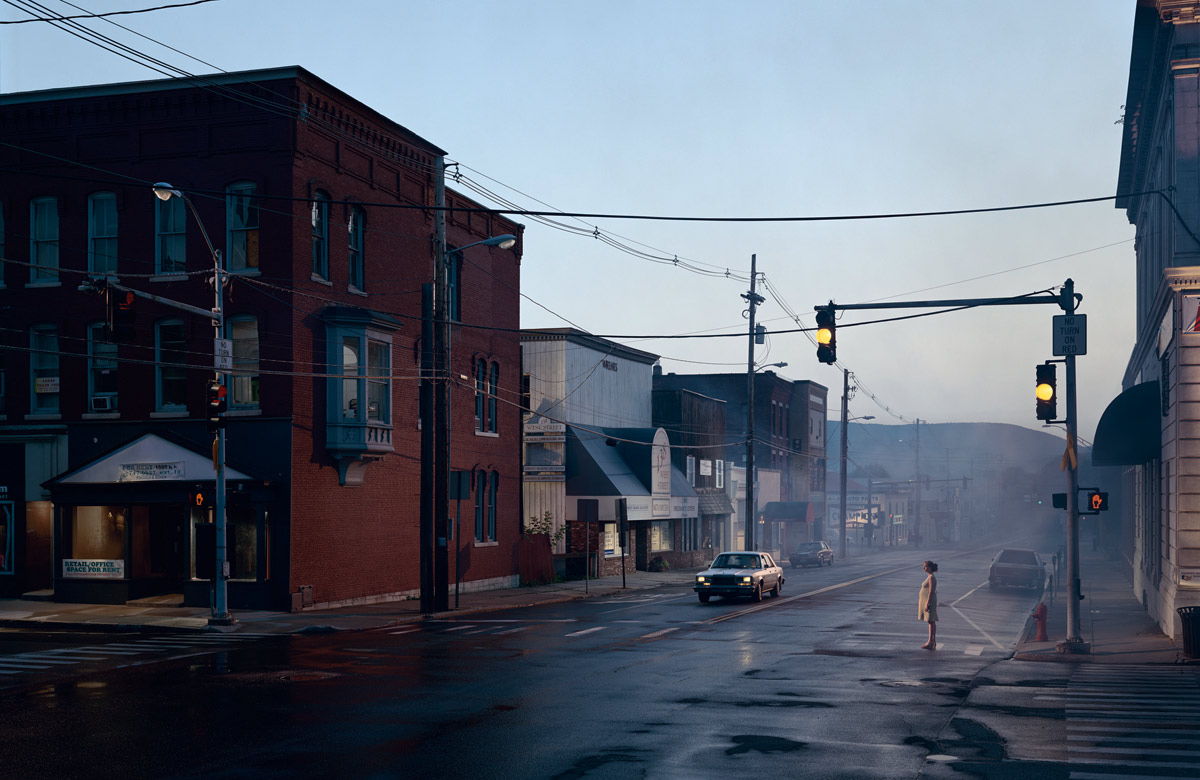
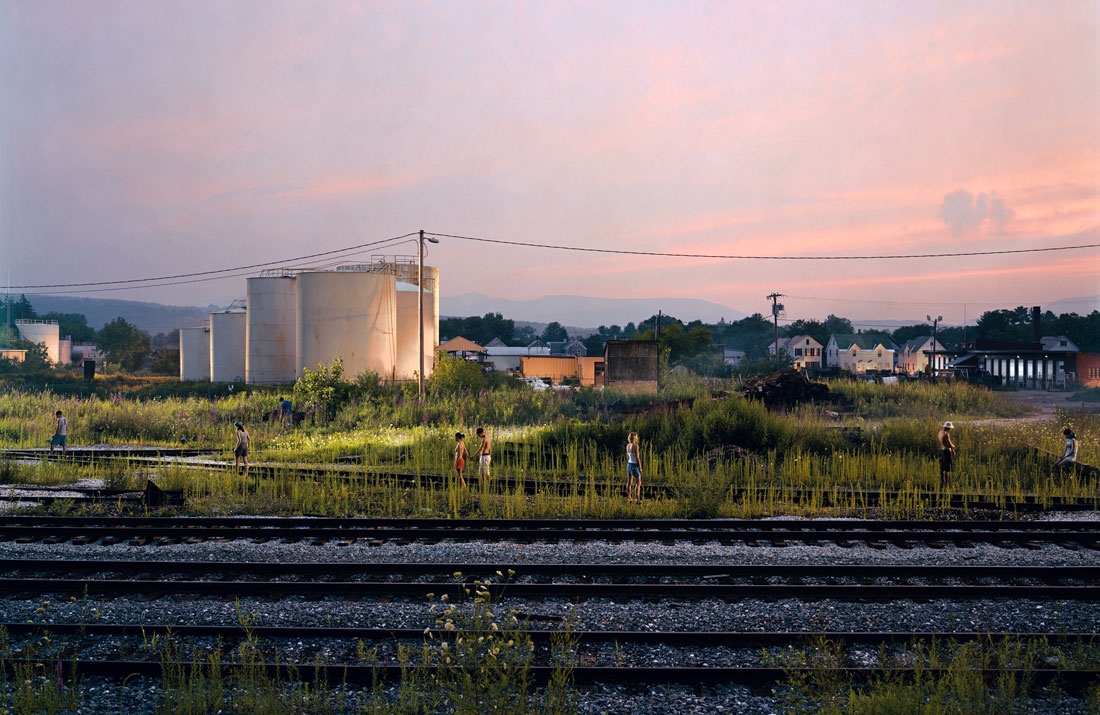
Crewdson is at his best when he resists the obvious narrative (for example, all the traffic lights stuck on yellow in the photograph Untitled (Brief Encounter) (2006, see below). Personally I prefer his staged photographs with pairs or groups of people within the image, rather than a single figure. The storyline is more ambiguous and the photographs of people walking along railway tracks always remind me of the Stephen King story filmed as Stand by Me (1986) with a young River Phoenix. Either way they are intoxicating, the viewer drawn into these wonderful, dark psychological dramas.

Dr Marcus Bunyan


Many thankx to Museum Frieder Burda for allowing me to publish the photographs in the posting. Please click on the photographs for a larger version of the image.


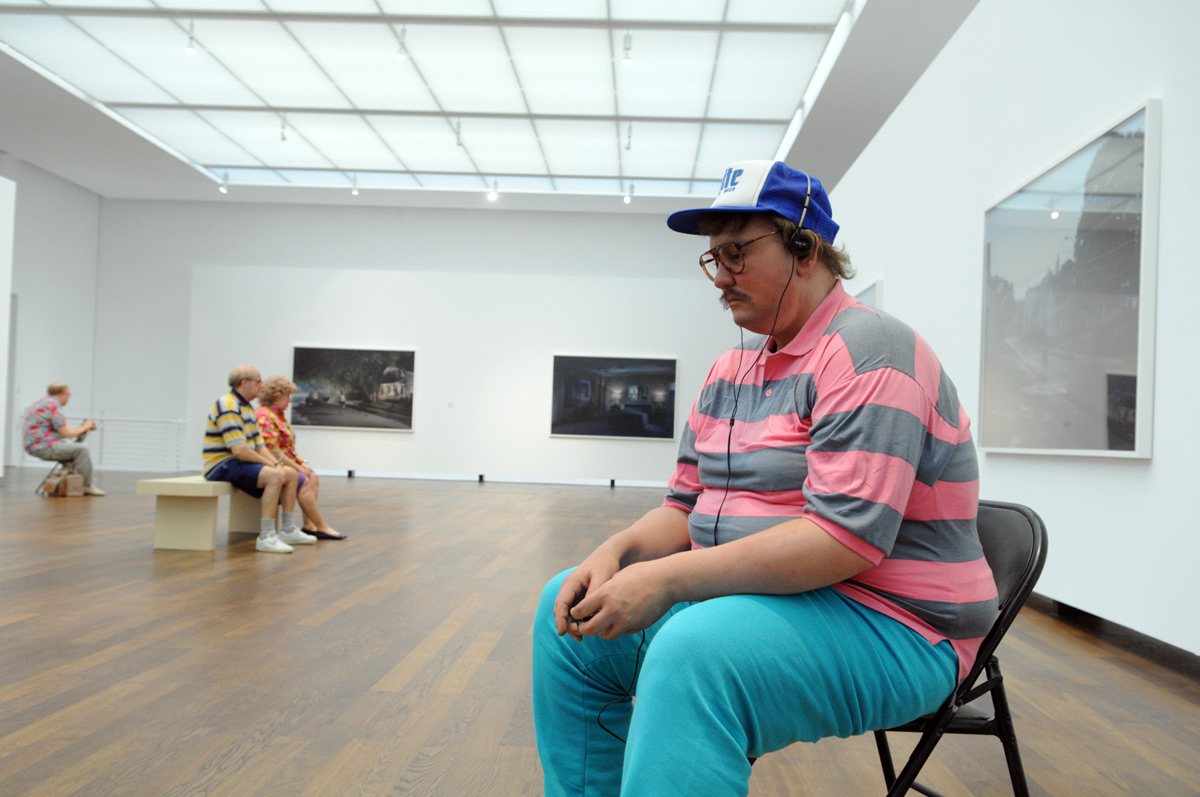
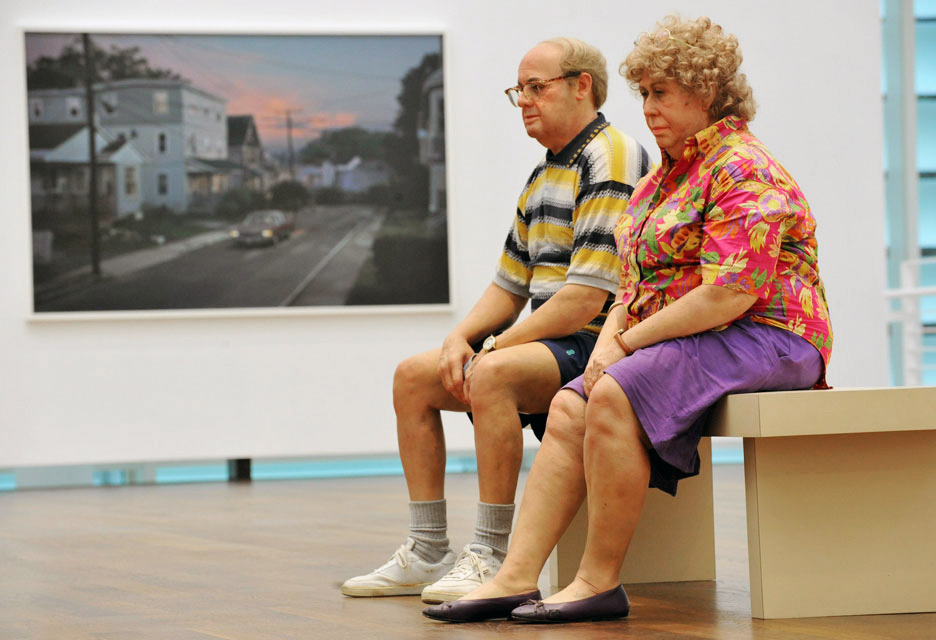
Installation photograph of the exhibition 'Duane Hanson/Gregory Crewdson: Uncanny realities' at Museum Frieder Burda with Duane Hanson 'Old Couple on a Bench' (1994) in the foreground and Gregory Crewdson 'Untitled (Worthington Street)' (2006) in the background


Installation photograph of the exhibition Duane Hanson/Gregory Crewdson: Uncanny realities at Museum Frieder Burda with Duane Hanson Old Couple on a Bench (1994) in the foreground and Gregory Crewdson Untitled (Worthington Street) (2006) in the background


The works by the two American artists Duane Hanson (1925-1996) and Gregory Crewdson (born in 1962) confuse and touch the observer.

Both artists present people in their everyday lives, with hopes, yearnings and broken dreams. People we usually do not notice, aged and marked by reality, by life itself. While Hanson shapes his life-sized figures with a great deal of sympathy, Crewdson rather spreads a gloomy and depressing atmosphere in his pictures of lonely people in their houses, gardens and in streets.

With his realistic sculptures, the American artist Duane Hanson has become a synonym for contemporary realism in contemporary art. Typical motives are average people like  housewives, waitresses, car dealers, janitors. Posture and expression of these figures are very close to reality. The photographer Gregory Crewdson arranges his large format pictures with cineastic arrangements and lets the abyss behind every-day life scenes become visible.

The exhibition at the Frieder Burda Museum presents about 30 figures by Duane Hanson, mainly from the artist’s estate, in dialogue with 20 large format works from the series Beneath the Roses by the photographer Gregory Crewdson. The photographies are mainly owned by the artist himself.

The curators Götz Adriani and Patricia Kamp are not aiming at a direct confrontation. They are rather presenting two artists who work with different materials, but deal with very similar topics. Both artists, Hanson and Crewdson, are grand when it comes to arranging their art. Crewdson always puts very much effort into the arrangements of the scenes in his pictures, and Hanson always keeps an eye on his close surroundings.

The works of both artists impressively reflect the complexity of the human existence. …


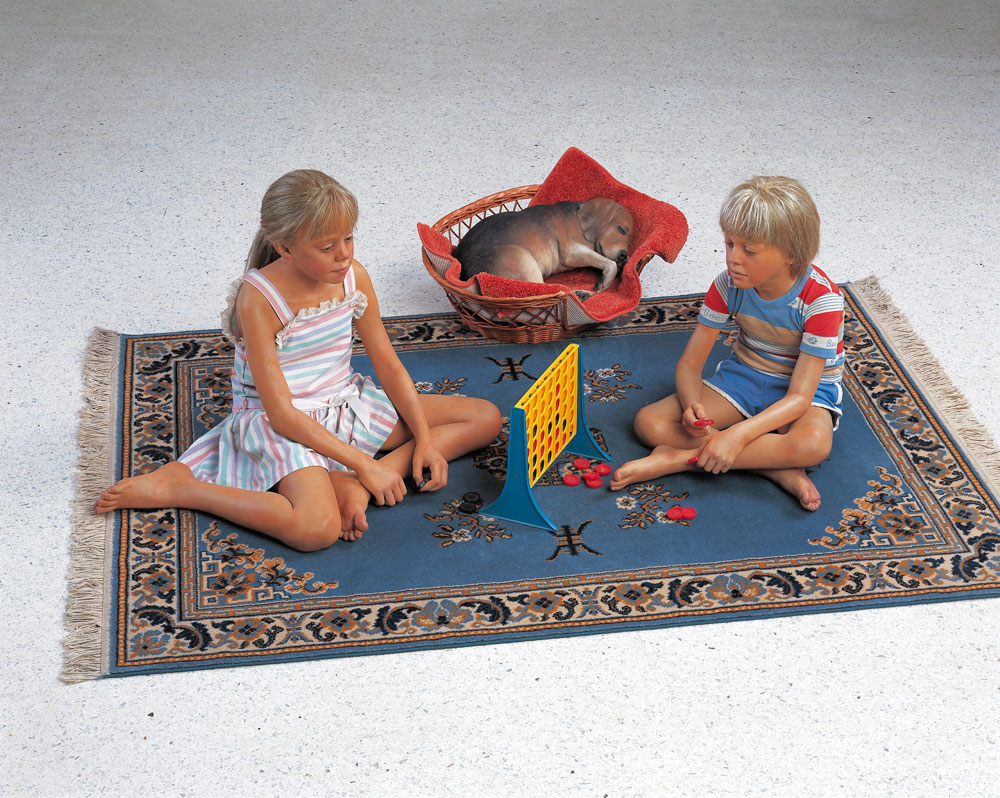
Duane Hanson (American, 1925-1996) 'Children Playing Game' 1979


Duane Hanson (American, 1925-1996)
Children Playing Game
1979
Polyvinyl chloride, coloured with oil, mixed technique and accessories
Collection Hanson, Davie, Florida
© VG Bild-Kunst, Bonn 2010


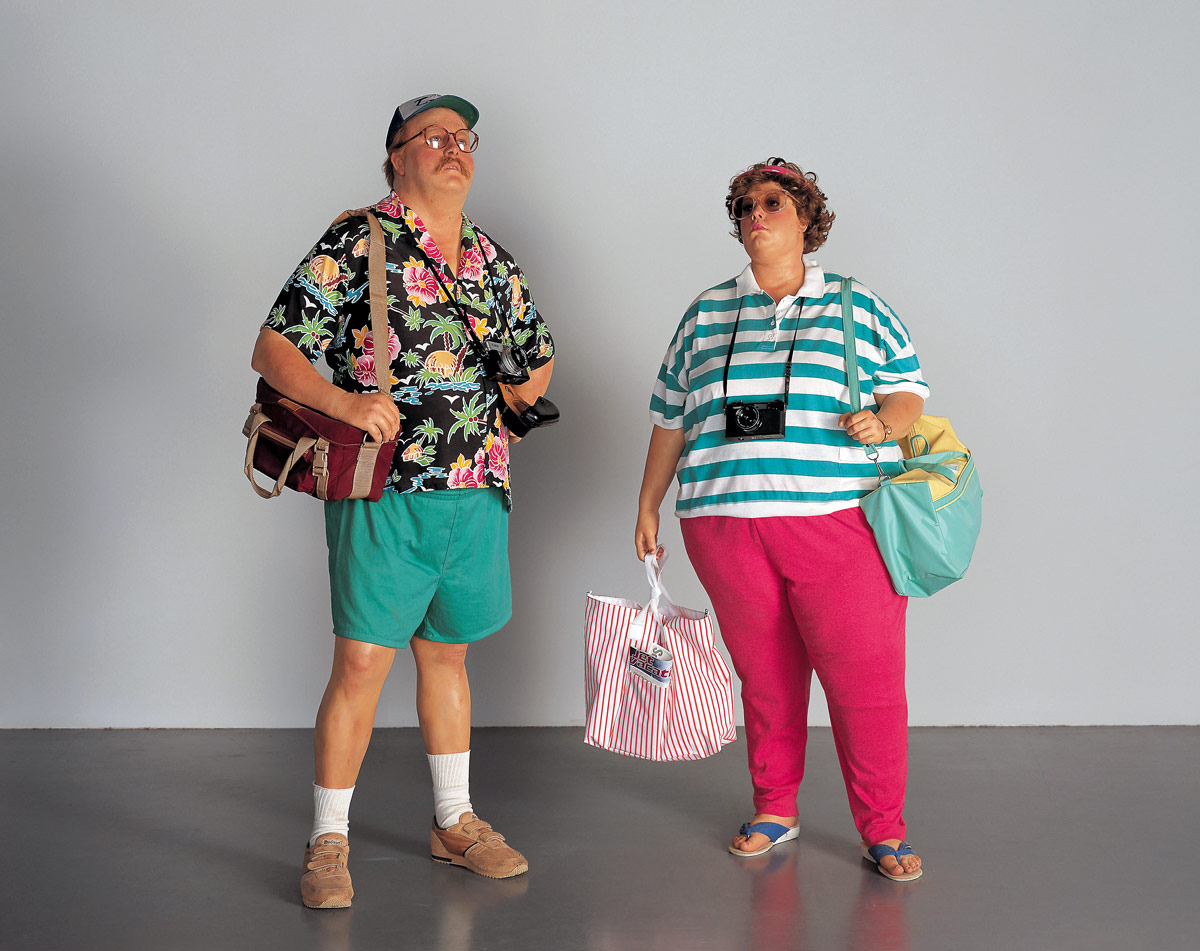
Duane Hanson (American, 1925-1996) 'Tourists II' 1988


Duane Hanson (American, 1925-1996)
Tourists II
1988
polyvinyl chloride, coloured with oil, mixed technique, accessories
Collection Hanson, Davie, Florida
© VG Bild-Kunst, Bonn 2010


Duane Hanson (American, 1925-1996) 'Self-Portrait with Model' 1979


Duane Hanson (American, 1925-1996)
Self-Portrait with Model
1979
Polyvinyl chloride, coloured with oil, mixed technique and accessories
Collection Hanson, Davie, Florida
© VG Bild-Kunst, Bonn 2010


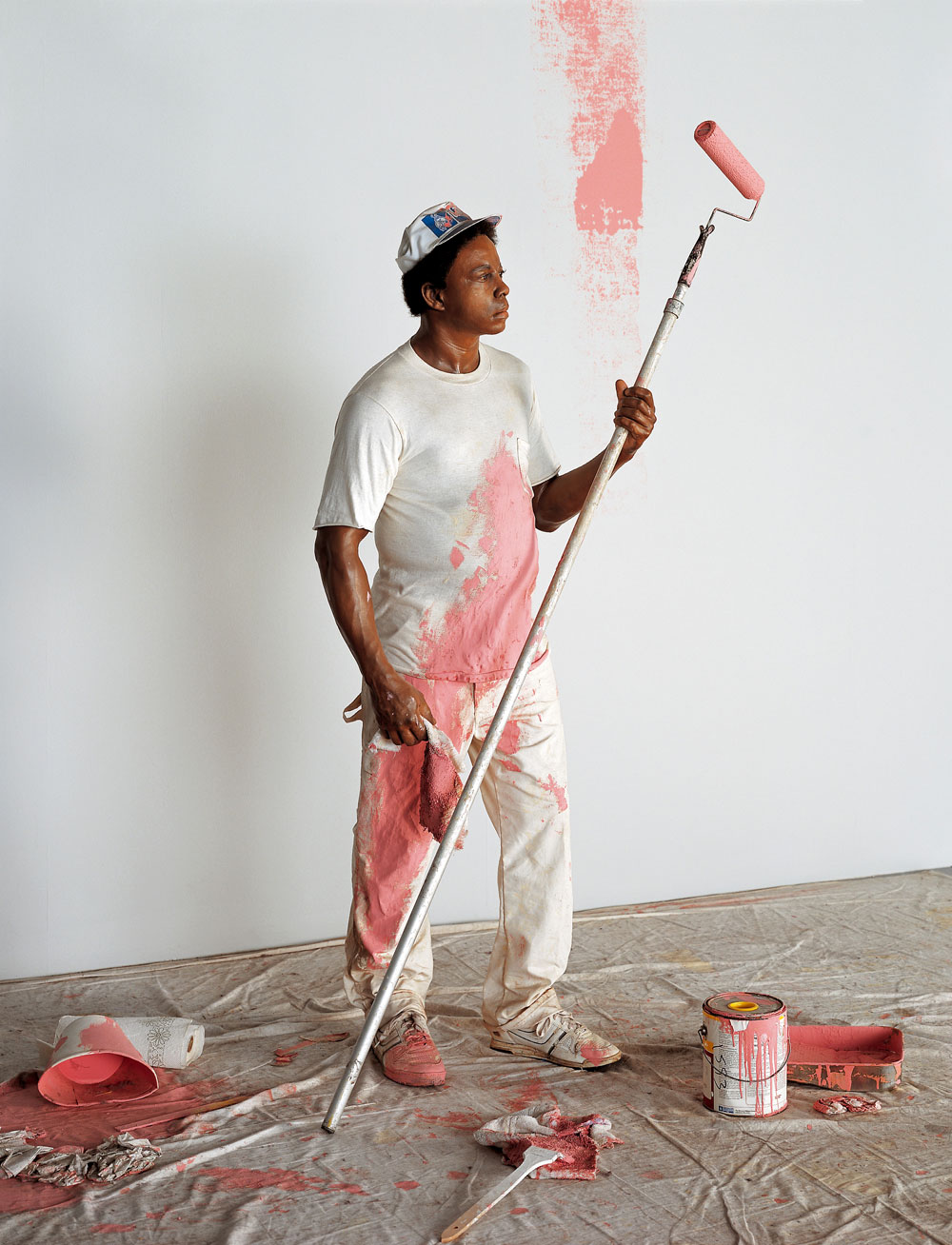
Duane Hanson (American, 1925-1996) 'Housepainter I' 1984/1988


Duane Hanson (American, 1925-1996)
Housepainter I
1984/1988
Epoxy resin, coloured with oil, mixed technique, accessories
Collection Hanson, Davie, Florida
© VG Bild-Kunst, Bonn 2010


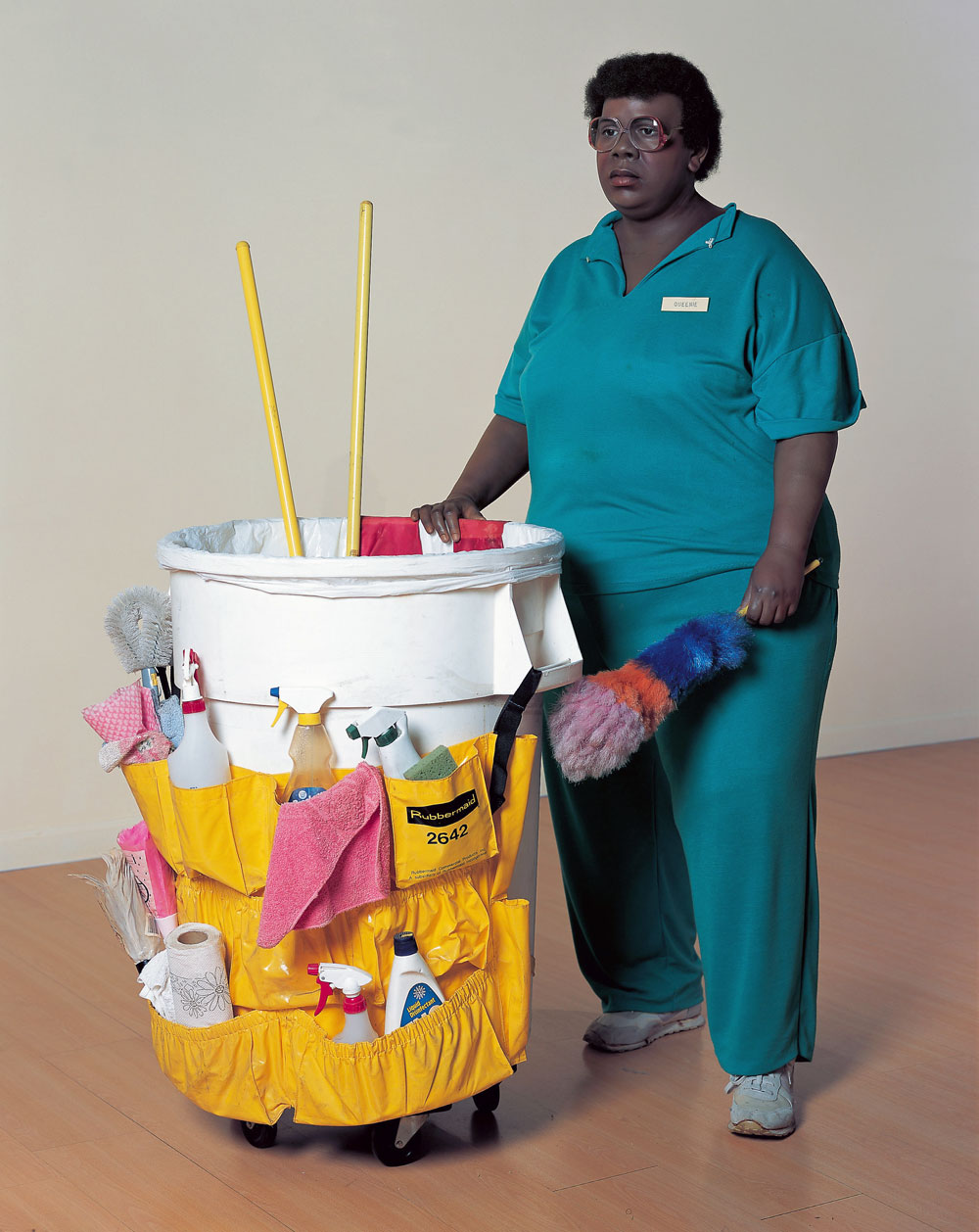
Duane Hanson (American, 1925-1996) 'Queenie II' 1988


Duane Hanson (American, 1925-1996)
Queenie II
1988
Epoxy resin, coloured with oil, mixed technique, accessories
Collection Hanson, Davie, Florida
© VG Bild-Kunst, Bonn 2010


Duane Hanson

Duane Hanson (1925-1996) is one of the most influential American sculptors of the 20th century committed to Realism.

The proximity to reality of his lifelike, detailed human figures make for perfect irritation. Despite all the seriousness hidden behind the socio-critical issue, which prompted Hanson to create his protagonists, the figures have a great deal of entertainment value, above all – and it is precisely this that makes them so appealing – due to their occasional gravitational bearing. Featuring twenty-five works, the exhibition presents a representative cross-section of the American’s extensive oeuvre, which comprises a total of only 114 works. The figures enter a dialogue with the large-format photographs by the American photo artist Gregory Crewdson, who has a flair for relating human abysses in a different and very subtle way.

In the early 1950s, after completing his study of sculpture at the Cranbrook Academy of Art in Bloomfield Hills, Michigan, Hanson was initially guided by the abstract style of art that prevailed during this period. However, this would not lead to a satisfactory result. In 1953, he turned his back on his homeland and spent nearly ten years of his life earning a living as an art teacher at American schools in Germany. It was during this period that he discovered the materials polyester resin and fibreglass, which would become crucial for his future creative work. After returning to the United States, Hanson spent the ensuing years perfecting his artistic skills in the treatment of these materials in such a way that the boundaries between reality and artificial figure seem to blur – where Hanson was never concerned with the mere illusionistic reproduction of reality, but chose this veristic manner of representation as a medium for communicating his concern in terms of content, i.e., shedding light on the tragedy of human lives that hauntingly consolidates in his characters.

In the human figures produced in the early work phase in the late 1960s, Hanson responded to the sociopolitical tension and protest movements of the day. He created sculptures and ensembles that very directly take issue with social hardship, violence, or racism, and he took a stand for the victims of this system, for the people who never had a chance to successfully face the demands made by life.

Influenced by Pop Art, Hanson turned to thematising everyday American life, frequently switching his observations to a critically satirical attitude that was, however, always guided by compassion. Housewives, construction workers, car salesmen, or janitors – the models for his figures are people in the American middle and working classes in whose biographies the disappointment in the American dream has become entrenched. He often puts his people and all of their small insufficiencies into perspective with ironic kindness, such as, for example, the Tourists, in whom are combined all of the clichés associated with the typical Florida tourist.

Hanson’s participation in documenta 5 in Kassel in 1972 gave rise to his international breakthrough. His figures became more lifelike; they more and more naturally blended into their surroundings. Their gestures, facial expressions, and postures related the emotional and physical burdens of life. The artist concentrated on older people in whose physiognomies one can read the traces of existence, the impact of loneliness, the problems that accompany being old, and their alienation. Hanson was struck by the isolation of this generation by society, a circumstance that has not lost any of its relevance.

Hanson’s interest in rendering the figures as lifelike as possible is surely not rooted in a desire to want to convince the viewer of their “authenticity”; rather, their lifelikeness was meant to move the viewer to experience empathy and concern, thus manifesting Hanson’s humanism. Human values and destinies comprise the focus of his art; he transforms the reality of life into the realism of art and in doing so sharpens our outlook and our view of the world, our fellow human beings, and our own life as well.


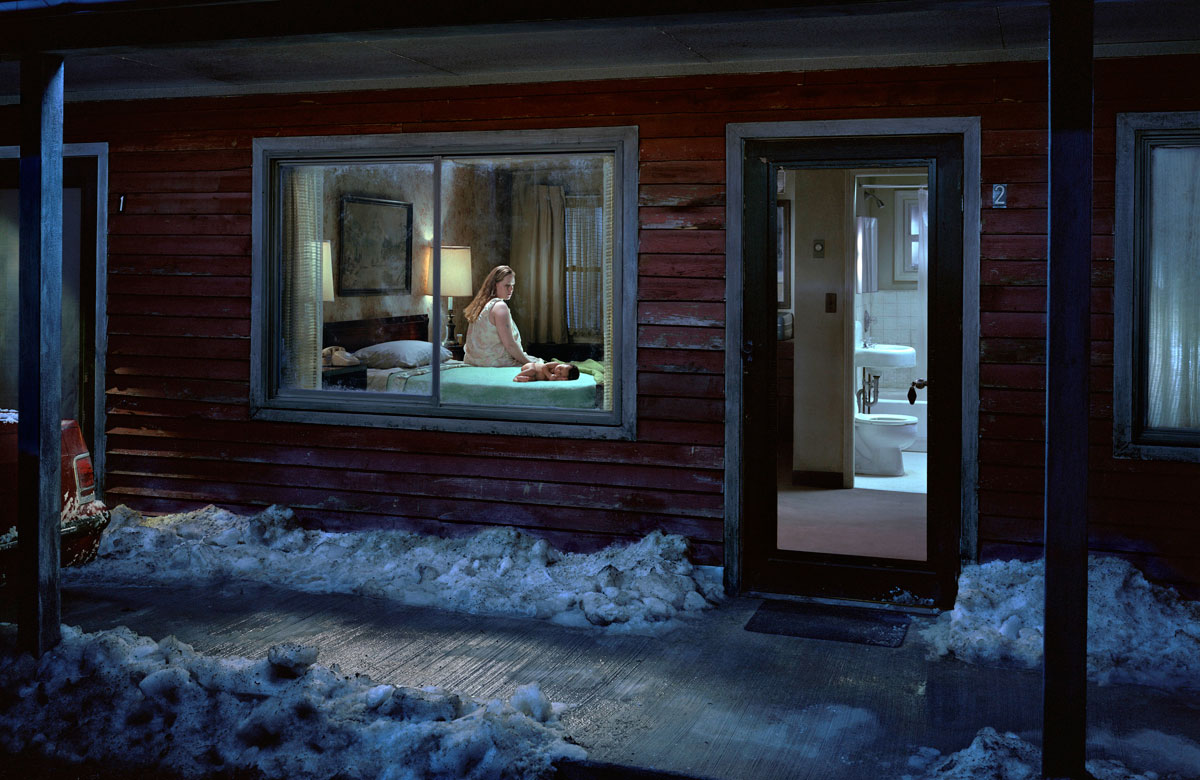
Gregory Crewdson (American, b. 1962) 'Untitled (Birth)' from the series 'Beneath the Roses' 2007


Gregory Crewdson (American, b. 1962)
Untitled (Birth)
From the series Beneath the Roses
2007
Digital carbon print
144.8 x 223.5cm
Gregory Crewdson, Courtesy Gagosian Gallery, New York
© Gregory Crewdson, 2010


Gregory Crewdson (American, b. 1962) 'Untitled (Blue Period)' from the series 'Beneath the Roses' 2005


Gregory Crewdson (American, b. 1962)
Untitled (Blue Period)
From the series Beneath the Roses
2005
Digital carbon print
144.8 x 223.5cm
Gregory Crewdson, Courtesy Gagosian Gallery, New York
© Gregory Crewdson, 2010


Gregory Crewdson (American, b. 1962) 'Untitled (Brief Encounter)' from the series 'Beneath the Roses' 2006


Gregory Crewdson (American, b. 1962)
Untitled (Brief Encounter)
From the series Beneath the Roses
2006
Digital carbon print
144.8 x 223.5cm
Gregory Crewdson, Courtesy Gagosian Gallery, New York
© Gregory Crewdson, 2010


Gregory Crewdson (American, b. 1962) 'Untitled (Debutante)' from the series 'Beneath the Roses' 2006


Gregory Crewdson (American, b. 1962)
Untitled (Debutante)
From the series Beneath the Roses
2006
Digital carbon print
144.8 x 223.5cm
Gregory Crewdson, Courtesy Gagosian Gallery, New York
© Gregory Crewdson, 2010


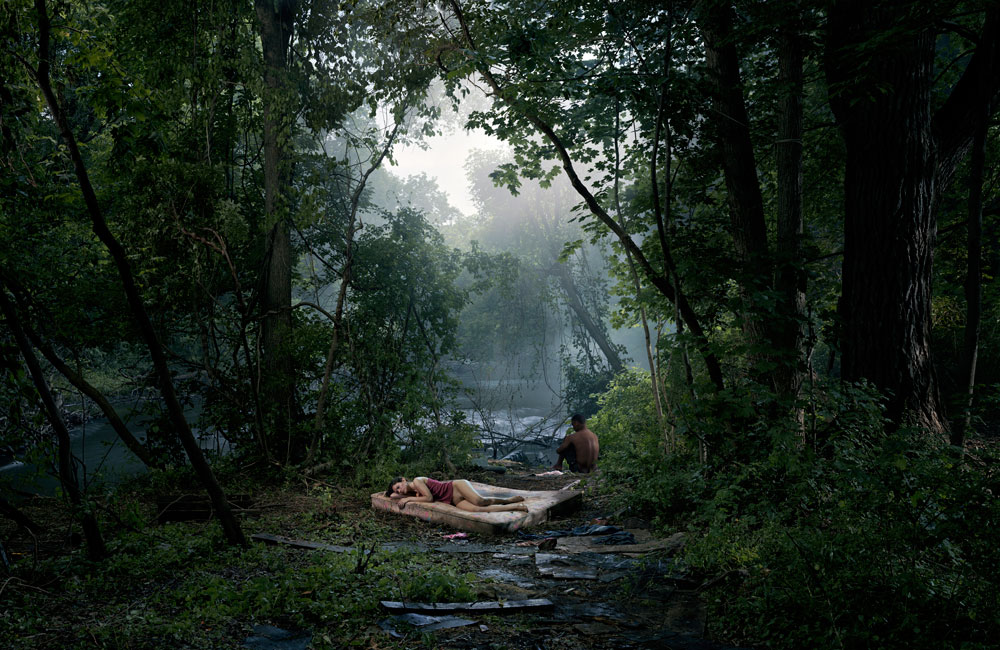
Gregory Crewdson (American, b. 1962) 'Untitled (Forest Clearing)' from the series 'Beneath the Roses' 2006


Gregory Crewdson (American, b. 1962)
Untitled (Forest Clearing)
From the series Beneath the Roses
2006
Digital carbon print
144.8 x 223.5cm
Gregory Crewdson, Courtesy Gagosian Gallery, New York
© Gregory Crewdson, 2010


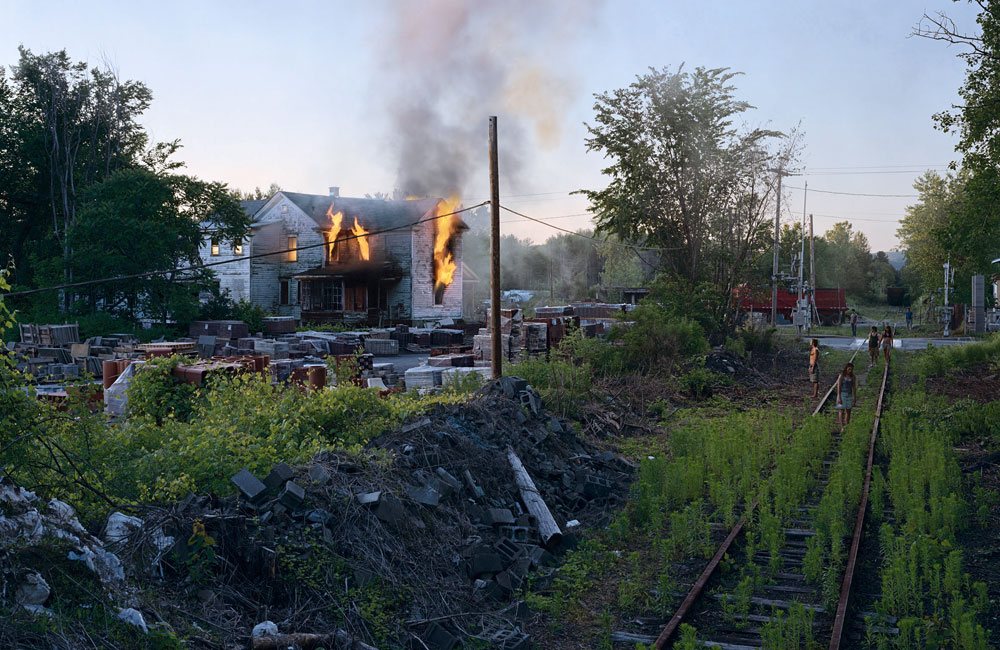
Gregory Crewdson (American, b. 1962) 'Untitled (House Fire)' from the series 'Beneath the Roses' 2004


Gregory Crewdson (American, b. 1962)
Untitled (House Fire)
From the series Beneath the Roses
2004
Digital carbon print
144.8 x 223.5cm
Gregory Crewdson, Courtesy Gagosian Gallery, New York
© Gregory Crewdson, 2010


Gregory Crewdson (American, b. 1962) 'Untitled (Kent Street)' from the series 'Beneath the Roses' 2007


Gregory Crewdson (American, b. 1962)
Untitled (Kent Street)
From the series Beneath the Roses
2007
Digital carbon print
144.8 x 223.5cm
Gregory Crewdson, Courtesy Gagosian Gallery, New York
© Gregory Crewdson, 2010


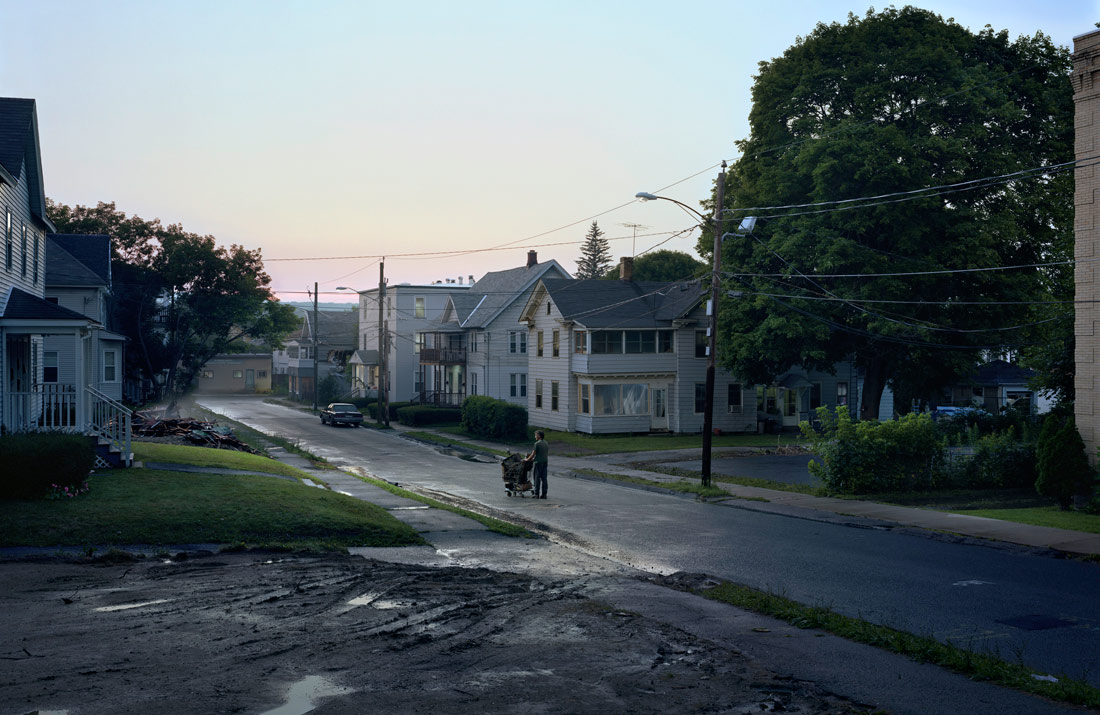
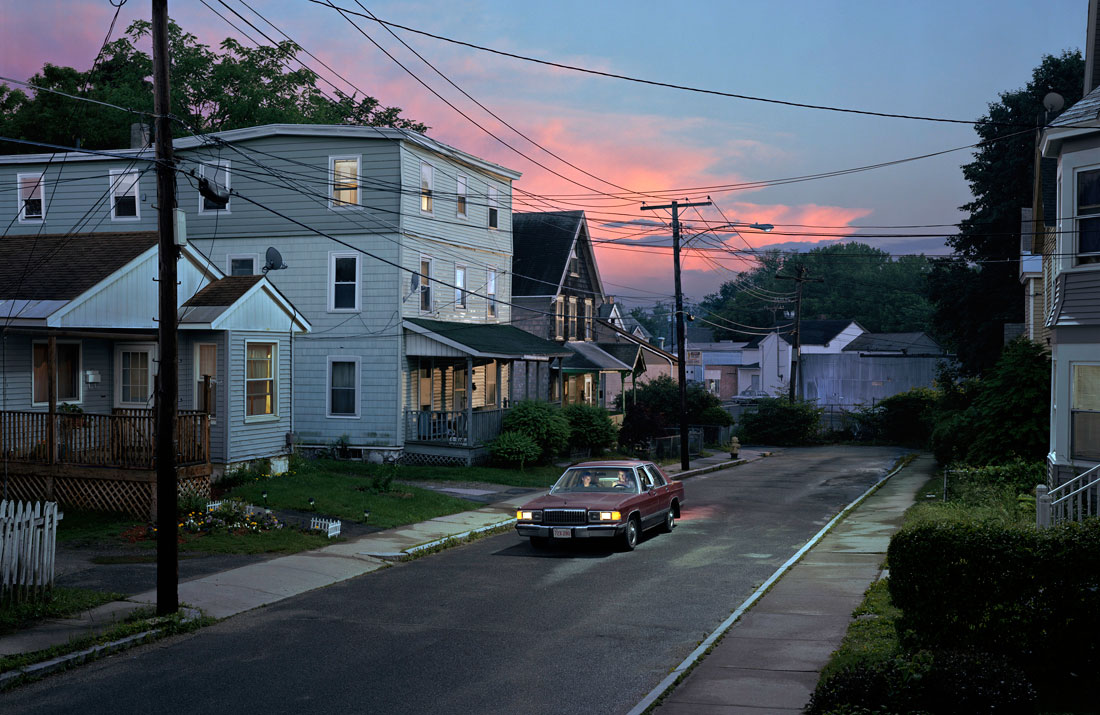
Gregory Crewdson (American, b. 1962) 'Untitled (Maple Street)' from the series 'Beneath the Roses' 2004


Gregory Crewdson (American, b. 1962)
Untitled (Maple Street)
From the series Beneath the Roses
Digital carbon print
144.8 x 223.5cm
Gregory Crewdson, Courtesy Gagosian Gallery, New York
© Gregory Crewdson, 2010


Gregory Crewdson (American, b. 1962) 'Untitled (Merchants Row)' from the series 'Beneath the Roses' 2003


Gregory Crewdson (American, b. 1962)
Untitled (Merchants Row)
From the series Beneath the Roses
Digital carbon print
144.8 x 223.5cm
Gregory Crewdson, Courtesy Gagosian Gallery, New York
© Gregory Crewdson, 2010


Gregory Crewdson

Born in 1962 in Brooklyn, New York, Gregory Crewdson is one of the best-known contemporary photographers internationally. In his most important series to date Beneath the Roses, which he created between 2003 and 2008, Crewdson explores the American psyche and the disturbing realities at play within quotidian environments. In his dramatically detailed and realistic photographs situated in America’s morbid, small-town milieu, the artist succeeds to stimulate the viewer’s subconscious on various levels. Twenty outstanding works from the series are being placed in a dialogue with sculptures by Duane Hanson. Gregory Crewdson does not spare either effort or expenses for the production of his visual inventions, which are reminiscent of film productions. The stagings are planned and arranged in advance down to the smallest detail and then elaborately implemented in a major logistical and human effort. The final photograph is the result of what is frequently work lasting several weeks, a circumstance that is substantiated by its depths in terms of content and its technical perfection.

Gregory Crewdson works in two distinct ways to create his photographs. On one hand, he works on location in real neighborhoods and townships. On the other hand, the artist works on the soundstage inventing his world from scratch. Before the photographic location productions start, Crewdson drives around upstate Massachusetts looking for interesting settings, which he then has prepared in an elaborate process. In most cases, local residents of the ramshackle towns also play the characters in his work. Crewdson works closely with the art department of the museum MASSMoCA, when shooting his pictures done on the soundstage. The results are much like stills from a movie and reflect his affinity with cinema. Filmmakers such as Alfred Hitchcock, David Lynch, or Steven Spielberg are the inspiration for Crewdson’s uncanny stories, which he seems to freeze in a single snapshot in time.

The construction of this narrative instant demonstrates the artist’s extraordinary talent. Like sophisticated literature does the reader, his works pose a challenge to viewers, as they have to mount the decisive share of the creative effort themselves. A brief, fleeting glance is not enough. Viewers become immersed in the staged scenes full of details and accessories to experience a moment that is intensely real. Fantasy and the powers of imagination and association fashion the visual event in the mind to become a subjective, alternative reality – an uncanny reality.

In his photographs, Crewdson deliberately works with emotions and fears that extend through his oeuvre in recurring, in part very different scenarios. They mirror alienation, absence, shame, sexuality, and loss – human states of emotion that deeply touch the viewer. That the artist focuses on the mind in his works may be due to the fact that, as the son of a psychoanalyst, he experienced insight into the profundity of the human soul very early on. His works can be regarded as metaphors for fears and desires, for the things that take place below the surface, the palpable, as if Crewdson wanted to make visible a new or different level of reality situated somewhere between the conscious and subconscious.

At the same time, the Beneath the Roses series can be seen as a psychological study of the American province. The settings show social realities and document the economic decline of a society behind the backdrop of the American way of life. Unsentimental and direct, they reflect working-class life – which allows us to strike an arc to the work by Duane Hanson, whose oeuvre also revolves around the concept of humanity, the facets of which he lends expression to in his silent, introverted figures.

The evolution of Beneath the Roses was documented in a series of production stills, original drawings by the artist, and detailed lighting plans. About sixty works from this reservoir are presented in a studio exhibition at the museum in order to illustrate the complex technical process of producing the photographs. Gregory Crewdson completed his study of Street Photography at the Yale School of Art in New Haven in 1988. He returned to Yale in 1993 and has occupied the Chair of Photography since.

Press release from the Museum Frieder Burda website


Gregory Crewdson (American, b. 1962) 'Untitled (Natural Bridge)' from the series 'Beneath the Roses' 2007


Gregory Crewdson (American, b. 1962)
Untitled (Natural Bridge)
From the series Beneath the Roses
Digital carbon print
144.8 x 223.5cm
Gregory Crewdson, Courtesy Gagosian Gallery, New York
© Gregory Crewdson, 2010


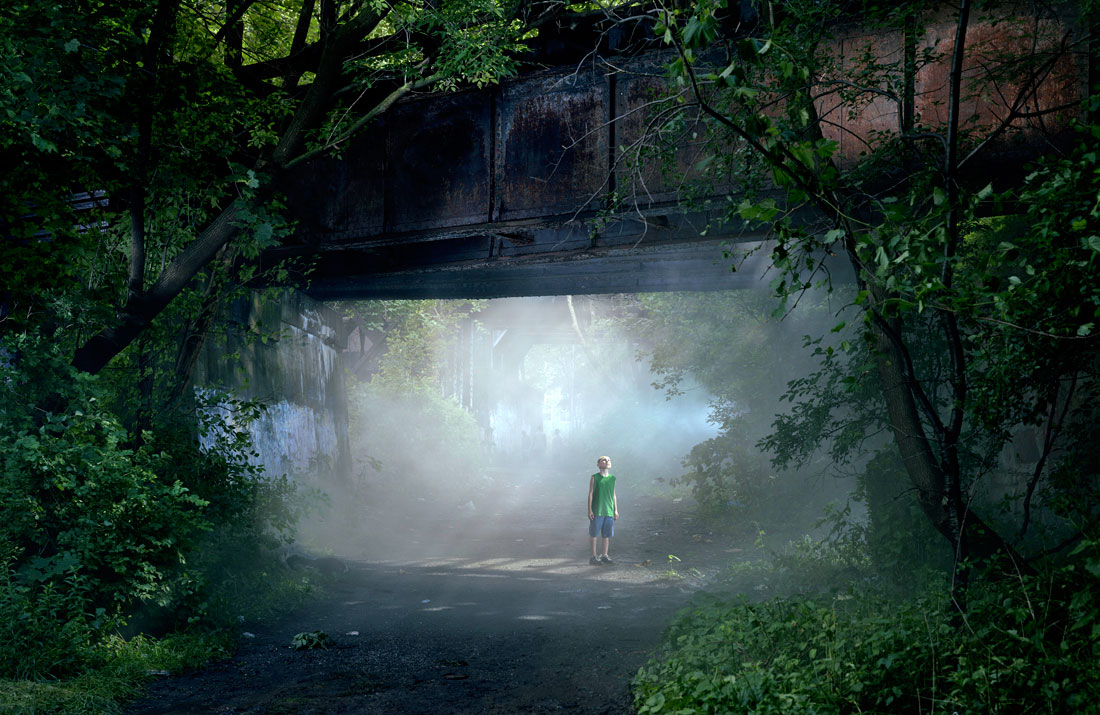
Gregory Crewdson (American, b. 1962) 'Untitled (Railway Children)' from the series 'Beneath the Roses' 2003


Gregory Crewdson (American, b. 1962)
Untitled (Railway Children)
From the series Beneath the Roses
2003
Digital carbon print
144.8 x 223.5cm
Gregory Crewdson, Courtesy Gagosian Gallery, New York
© Gregory Crewdson, 2010


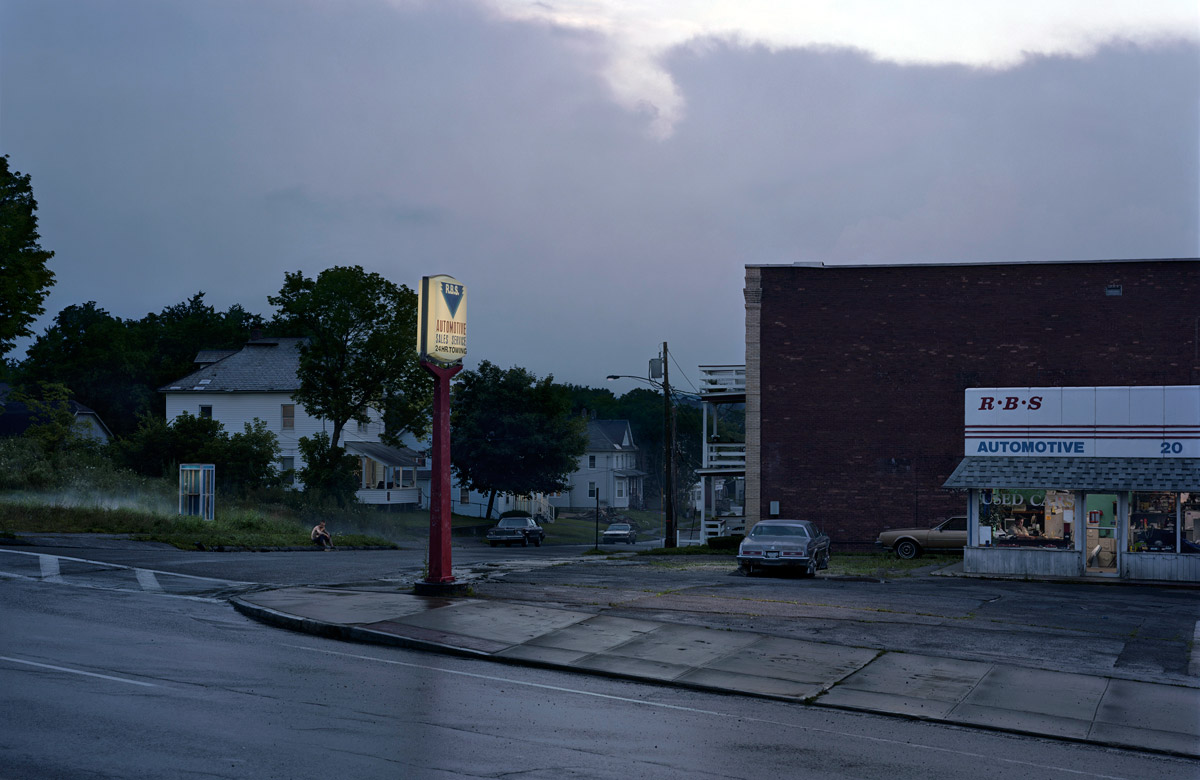
Gregory Crewdson (American, b. 1962) 'Untitled (RBS Automotive)' from the series 'Beneath the Roses' 2007


Gregory Crewdson (American, b. 1962)
Untitled (RBS Automotive)
From the series Beneath the Roses
2007
Digital carbon print
144.8 x 223.5cm
Gregory Crewdson, Courtesy Gagosian Gallery, New York
© Gregory Crewdson, 2010


Gregory Crewdson (American, b. 1962) 'Untitled (Shane)' from the series 'Beneath the Roses' 2006


Gregory Crewdson (American, b. 1962)
Untitled (Shane)
From the series Beneath the Roses
2006
Digital carbon print
144.8 x 223.5cm
Gregory Crewdson, Courtesy Gagosian Gallery, New York
© Gregory Crewdson, 2010


Gregory Crewdson (American, b. 1962) 'Untitled (Sunday Roast)' from the series 'Beneath the Roses' 2005


Gregory Crewdson (American, b. 1962)
Untitled (Sunday Roast)
From the series Beneath the Roses
2005
Digital carbon print
144.8 x 223.5cm
Gregory Crewdson, Courtesy Gagosian Gallery, New York
© Gregory Crewdson, 2010


Gregory Crewdson (American, b. 1962) 'Untitled (Temple Street)' from the series 'Beneath the Roses' 2006


Gregory Crewdson (American, b. 1962)
Untitled (Temple Street)
From the series Beneath the Roses
2006
Digital carbon print
144.8 x 223.5cm
Gregory Crewdson, Courtesy Gagosian Gallery, New York
© Gregory Crewdson, 2010


Gregory Crewdson (American, b. 1962) 'Untitled (The Father)' from the series 'Beneath the Roses' 2007


Gregory Crewdson (American, b. 1962)
Untitled (The Father)
From the series Beneath the Roses
Digital carbon print
144.8 x 223.5cm
Gregory Crewdson, Courtesy Gagosian Gallery, New York
© Gregory Crewdson, 2010


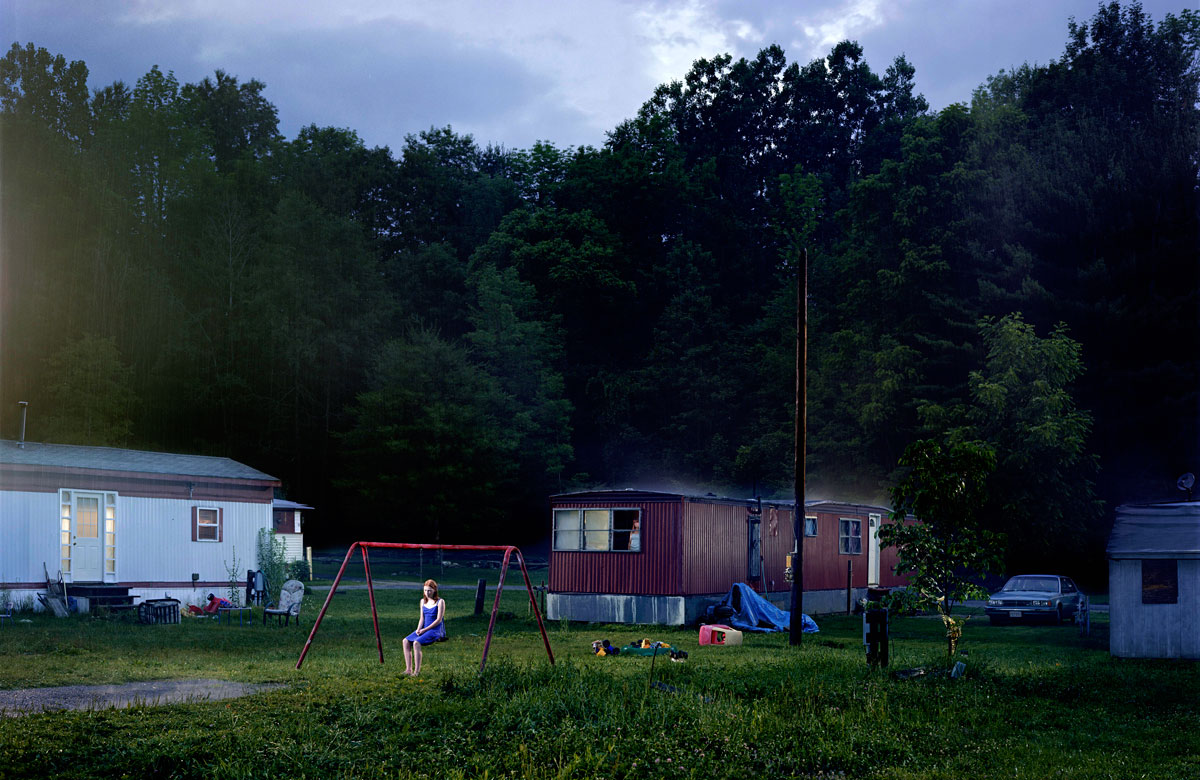
Gregory Crewdson (American, b. 1962) 'Untitled (Trailer Park)' from the series 'Beneath the Roses' 200


Gregory Crewdson (American, b. 1962)
Untitled (Trailer Park)
From the series Beneath the Roses
2007
Digital carbon print
144.8 x 223.5cm
Gregory Crewdson, Courtesy Gagosian Gallery, New York
© Gregory Crewdson, 2010


Gregory Crewdson (American, b. 1962) 'Untitled (Worthington Street)' from the series 'Beneath the Roses' 2006


Gregory Crewdson (American, b. 1962)
Untitled (Worthington Street)
From the series Beneath the Roses
2006
144.8 x 223.5cm
Gregory Crewdson, Courtesy Gagosian Gallery, New York
© Gregory Crewdson, 2010


Museum Frieder Burda
Lichtentaler Allee 8b
D-76530 Baden-Baden
Phone: +49 (0)7221 / 3 98 98-0

Opening hours:
Tuesday – Sunday 10am – 6pm
Closed Mondays

Museum Frieder Burda website
LIKE ART BLART ON FACEBOOK

Back to top

Artist’s talk: Photographer Gregory Crewdson to present at the Nelson-Atkins Museum of Art, Kansas City

12th March, 2009


Many thankx to the Nelson-Atkins Museum of Art for allowing me to publish the photographs in the posting. Please click on the photographs for a larger version of the image.


Gregory Crewdson (American, b. 1962) 'Untitled' from the series 'Beneath the Roses' 2006


Gregory Crewdson (American, b. 1962)
Untitled from the series Beneath the Roses
2006
Digital pigment print


Famed photographer Gregory Crewdson will present the inaugural discussion in a series sponsored by the Photography Society of The Nelson-Atkins Museum of Art, Kansas City…

Crewdson’s work has been widely exhibited and reviewed. He makes large-scale photographs of elaborate and meticulously staged tableaux, which have been described as “micro-epics” that probe the dark corners of the psyche. Working in the manner of a film director, he leads a production crew, which includes a director of photography, special effects and lighting teams, casting director and actors. He typically makes several exposures that he later digitally combines to produce the final image.

“Crewdson is one of the most daring and inventive contemporary artists using photography,” said Keith F. Davis, Curator of Photography at the Nelson-Atkins. “His meticulously crafted works are immensely rich in both narrative and psychological terms. They prod us to rethink our ‘usual’ relationship to photographs as physical objects and as records of worldly fact. Crewdson is a genuinely important figure in today’s art world. He has an international reputation and has influenced an entire generation of younger photographic artists.”

Attendance to the program is free.

Text from ArtDaily.org website


Gregory Crewdson (American, b. 1962) 'Untitled' from the series 'Beneath the Roses' 2005


Gregory Crewdson (American, b. 1962)
Untitled from the series Beneath the Roses
2005
Digital pigment print


Gregory Crewdson (American, b. 1962) 'Untitled' from the series 'Beneath the Roses' 2005


Gregory Crewdson (American, b. 1962)
Untitled from the series Beneath the Roses
2005
Digital pigment print


Gregory Crewdson (American, b. 1962) 'Untitled (Sunday Roast)' from the series 'Beneath the Roses' 2005


Gregory Crewdson (American, b. 1962)
Untitled (Sunday Roast) from the series Beneath the Roses
2005
Digital pigment print


Nelson-Atkins Museum of Art
4525 Oak Street
Kansas City, MO 64111

Opening hours:
Thursday – Monday 10am – 5pm
Closed Tuesday and Wednesday

Nelson-Atkins Museum of Art website

Gregory Crewdson on the Gagosian website

LIKE ART BLART ON FACEBOOK

Back to top