Many thankx to the Whitechapel Gallery for allowing me to publish the photographs in the posting. Please click on the photographs for a larger version of the image.
The films and photographs of British artist Gillian Wearing (b. Birmingham, 1963) explore our public personas and private lives. This Turner Prize winner’s remarkable works draw on fly-on-the-wall documentaries, reality TV and the techniques of theatre, to explore how we present ourselves to the world.
Wearing’s portraits and mini-dramas reveal a paradox, given the chance to dress up, put on a mask or act out a role, the liberation of anonymity allows us to be more truly ourselves.
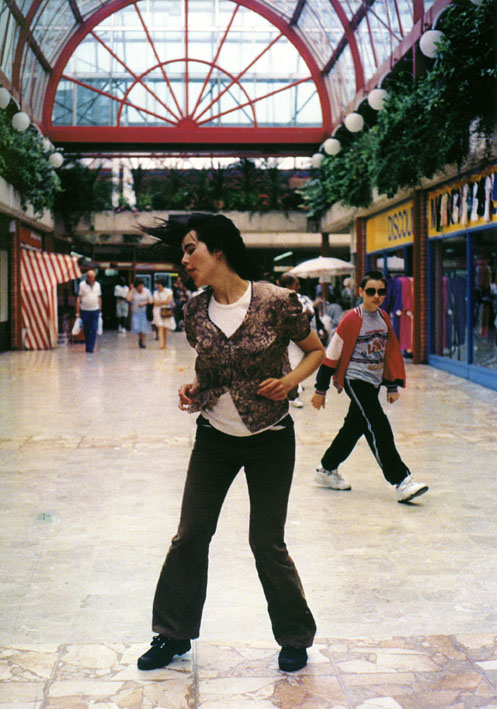
The exhibition begins with the artist herself, dancing in a shopping mall, blissfully unaware of her bemused audience. The idea of performance continues with works including Wearing’s 1997 masterpiece, 10–16. Adults lip synch the voices and act out the physical tics of seven children in a captivating film which moves from the breathless excitement of a ten year old to the existential angst of an adolescent.
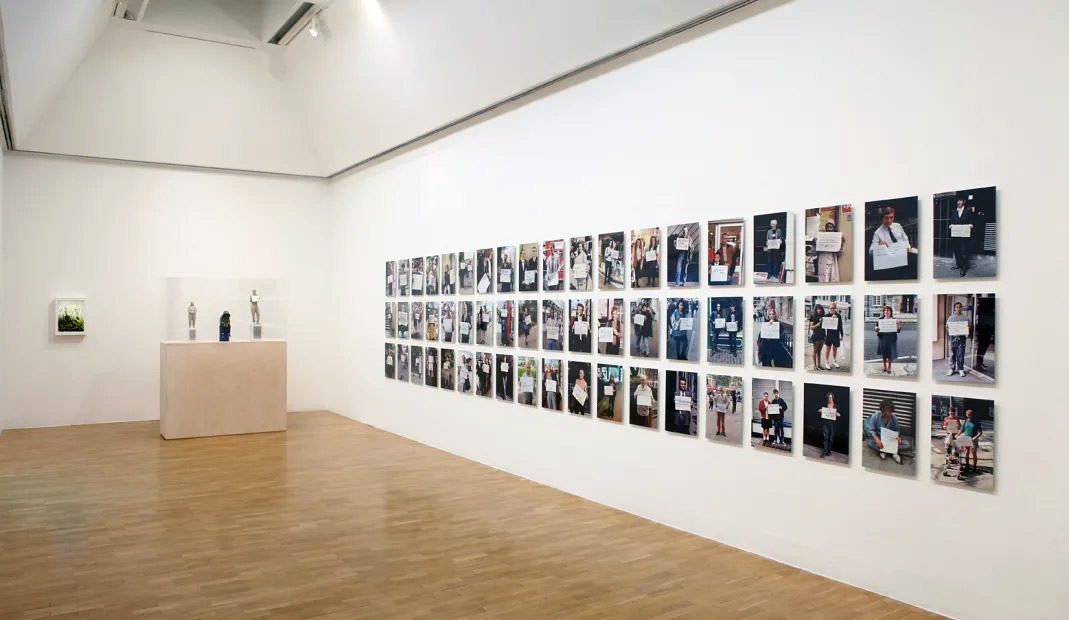
Other highlights include Wearing’s iconic 1992 series, Signs that say what you want them to say, and not Signs that say what someone else wants you to say where strangers are offered paper and pen to communicate their message. In the upper galleries we enter the inner world of subjectivity. An advert – Confess All On Video. Don’t Worry, You Will Be In Disguise. Intrigued? Call Gillian… (1994) attracted a series of disturbing disclosures. Wearing jettisons her own identity to adopt the guise of family members or artists such as Diane Arbus or Andy Warhol, so revealing her own background and influence.
This comprehensive survey, which also premieres new films and sculptures, shows how Wearing is both political – often focusing on the dispossessed or the traumatised – and poetic, finding the extraordinary in us all.
Curator Daniel Hermann introduces the Gillian Wearing exhibition at the Whitechapel Gallery from 28 March – 17 June 2012.
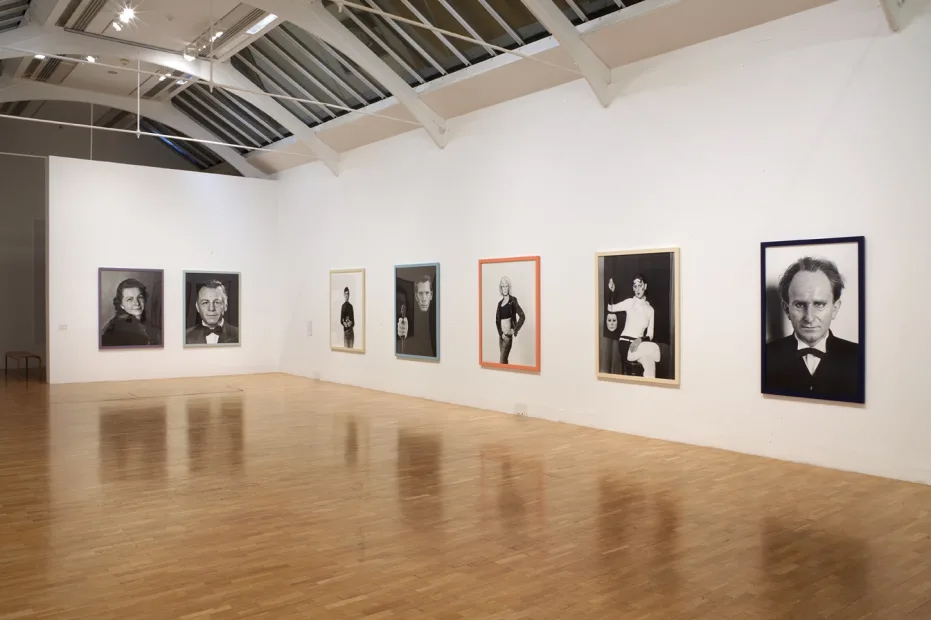
Installation view of the exhibition Gillian Wearing at Whitechapel Gallery, London showing work from her series Signs that say what you want them to say and not Signs that say what someone else wants you to say
The Whitechapel Gallery presents the first major international survey of Turner Prize-winning British artist Gillian Wearing’s photographs and films which explore the public and private lives of ordinary people. Fascinated by how people present themselves in front of the camera in fly-on-the-wall documentaries and reality TV, Gillian Wearing explores ideas of personal identity through often masking her subjects and using theatre’s staging techniques.
This major exhibition surveys Wearing’s work from the early photographs Signs that Say What You Want Them to Say and Not Signs that Say What Someone Else Wants You to Say (1992-3) to her latest video Bully (2010) and also includes several new photographs made specially for the Whitechapel Gallery exhibition.
Visitors to the exhibition enter a film set-style installation showcasing photographs and films in ‘front and back stage’ areas. Highlights include a striking photograph of the artist posing as her younger self, Self-Portrait at 17 Years Old (2003), Dancing in Peckham (1994), a film which blurs the boundaries between public space and private expression as Wearing dances in the middle of a shopping mall, and the UK premiere of recent film Bully (2010). New photographic works shown for the first time include two portraits of Wearing as artists August Sander and Claude Cahun as part of her ongoing series of iconic photographers, as well as still lives of flowers, looking back to the rich symbolism of the great age of 17th century Dutch painting.
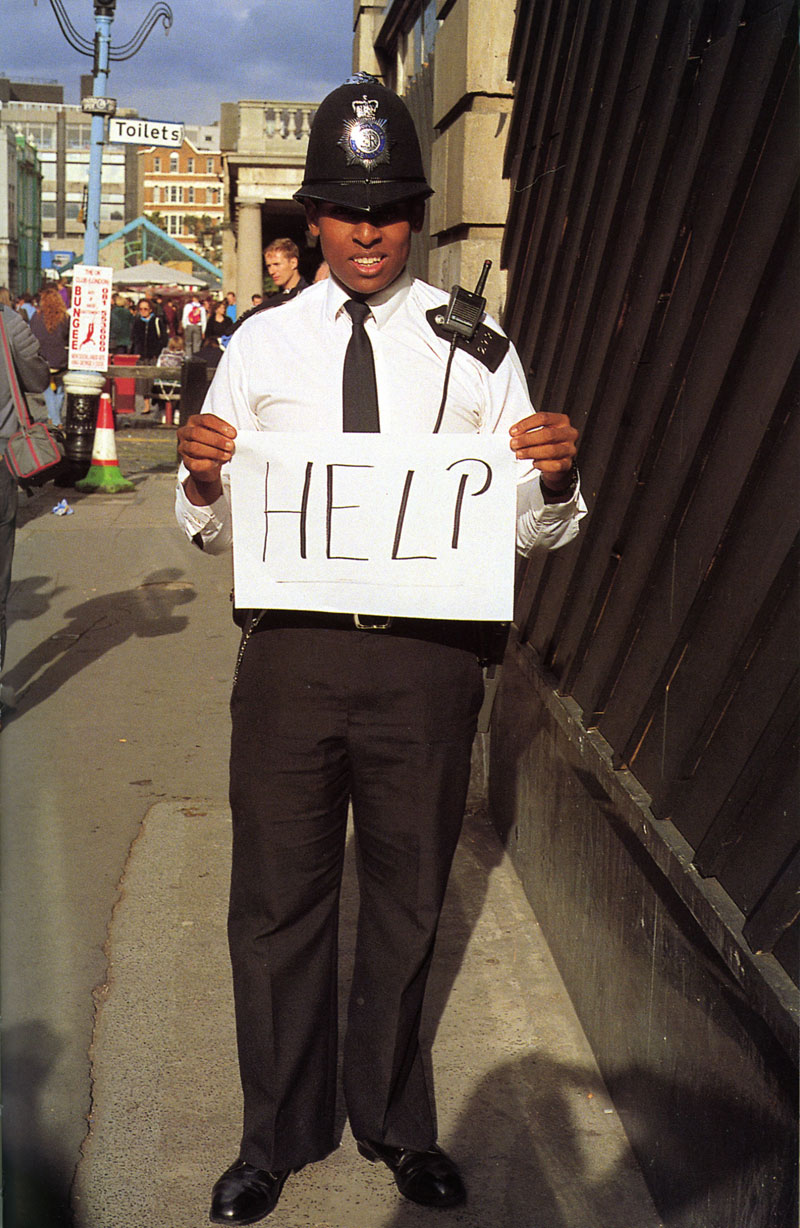
A gallery is dedicated to Wearing’s well-known photographs giving people the chance to write what they were thinking at that moment, titled Signs that Say What You Want Them to Say and Not Signs that Say What Someone Else Wants You to Say (1992-3). The series includes a city worker holding a sign saying, ‘I’m Desperate’, a policeman holding ‘Help!’ and another person’s sign ‘Will Britain ever get through this recession’.
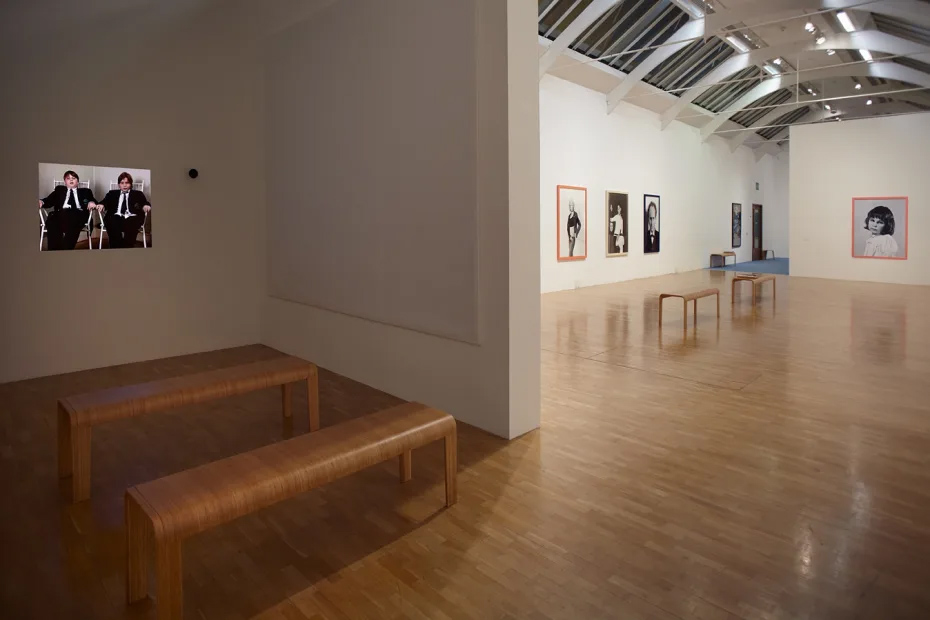
The exhibition also includes a series of private viewing booths for three confessional videos shown together for the first time and in which Gillian Wearing asked people to describe intensely personal experiences. These include Trauma (2000) where sitters describe childhood traumas while wearing a mask. As well as the powerful videos Secrets and Lies (2000) and Confess All On Video. Don’t Worry, You Will Be In Disguise. Intrigued? Call Gillian… (1994). Alongside these works the video 2 into 1 (1997) sees a mother lip synching the voices of her twin sons and vice versa as they describe their relationship.
Press release from Whitechapel Gallery website
Gillian Wearing: Self Made, 2010 Trailer
Gillian Wearing’s debut feature film introduces a cast of untrained actors to a Method acting teacher. Drawing upon their own experiences, each participant creates and stars in their own mini-film.
Artists: Jean-Michel Alberola, Louis Aragon, Marie-Berthe Aurenche, Richard Avedon, Alain Baczynsky, Jared Bark, Marc Bellini, Jacques-André Boiffard, André Breton, Hansjürg Buchmeier, Anita Cruz-Eberhard, Sabine Delafon, Anne Deleporte, Paul Eluard, Max Ernst, Michael Fent, Michel Folco, Valentine Fournier, Lee Friedlander, Näkki Goranin, Jeff Grostern, Susan Hiller, Dick Jewell , Svetlana Khachaturova, Jürgen Klauke, Jacques-Henri Lartigue, Naomi Leibowitz, Leon Levinstein, Annette Messager, Willy Michel, Daniel Minnick, Suzanne Muzard, Raynal Pellicer, Mathieu Pernot, Steven Pippin, Jacques Prévert, Raymond Queneau, Arnulf Rainer, Timm Rautert, Bruno Richard, Gerhard Richter, Thomas Ruff, Michel Salsmann, Tomoko Sawada, Joachim Schmid, Cindy Sherman, Lorna Simpson, Dimitri Soulas, Yves Tanguy, Amanda Tetrault, Roland Topor, Franco Vaccari, Andy Warhol, Gillian Wearing, Jan Wenzel, David Wojnarowicz and the group Fluxus.
This is one exhibition I wish I could really see in person. Such a fascinating subject!
The images are timeless, contextless and quite beguiling. The exhibition questions the aesthetics of the photobooth through six major themes: The Booth, Automatism, The Strip, Who Am I?, Who Are You?, Who Are We?. In Melbourne there are still two black and white photobooths outside the Elizabeth Street exit of Flinders Street railway station, standing there like silent sentinels of a bygone age. I remember when I was younger queueing to have my photograph taken, for student cards and for my first passport. You needed two nearly identical black and white shoulder up portraits, no smiling, no glasses on. Now you just go to the chemist for your colour renditions. The magic and the fun has gone.
The whole performance has the illusion of the cinematic. You queue to get in, drawing back the curtain and closing it behind you, as they close the doors of the cinema. The privacy of the booth, not in darkness but behind a curtain that shields your face from prying eyes but leaves the lower half of your body exposed. Behind where you will be sitting another curtain – drawn or open? What background do you want? You adjust the seat up and down so that your face is at the correct level with the mark on the screen, enter your money and wait. The red light comes on, you (com)pose yourself and a couple of seconds later: flash! Your eyes try to recover in time for the next red light: flash!
Time seems to slow down and almost stop between the flashes of light. The experience of your performance before the screen possesses such a visceral, tense, gut feel but also a disembodied feeling. I never know how I am going to look on the cinematic film strip, not at 24 frames a second, but at 4 frames per minute. What happens to the time in between? Standing outside the booth waiting for a strip of paper with your impression on it, not knowing what the images are going to be like, whether the development of the image in such a short space of time has worked correctly – and the smell of the chemicals on the paper as you handle the still wet strip. Magic…
Dr Marcus Bunyan
Many thankx to the Musée de l’Elysée for allowing me to publish the photographs in the posting. Please click on the photographs for a larger version of the image.
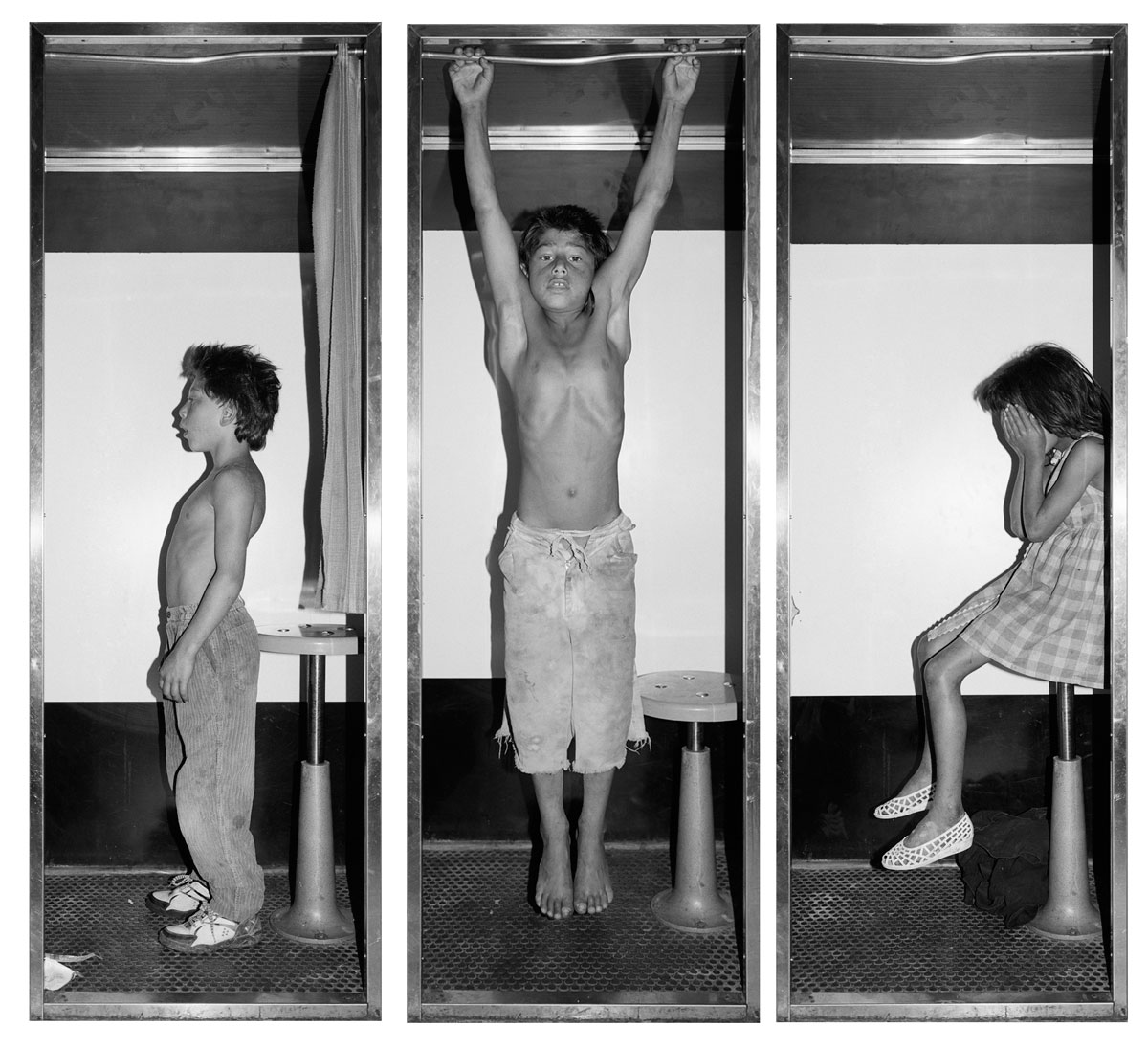
When the first photobooths were set up in Paris in 1928, the Surrealists used them heavily and compulsively. In a few minutes, and for a small price, the machine offered them, through a portrait, an experience similar to automatic writing. Since then, generations of artists have been fascinated by the concept of the photobooth. From Andy Warhol to Arnulf Rainer, Thomas Ruff, Cindy Sherman and Gillian Wearing, many used it to play with their identity, tell stories, or simply create worlds.
Behind the Curtain – the Aesthetics of the Photobooth, an exhibition created by the Musée de l’Elysée, is the first to focus on the aesthetics of the photobooth. It is divided into six major themes: the booth, the automated process, the strip, who am I ?, who are you?, who are we? Provider of standardised legal portraits, it is the ideal tool for introspection and reflection on others, whether individually or in groups. By bringing together over 600 pieces made on different media (photographs, paintings, lithographs and videos ) from sixty international artists, the exhibition reveals the influence of the photobooth within the artistic community, from its inception to the present day.
The exhibition questions the aesthetics of the photobooth through six major themes.
The Booth
An isolated space, closed in as if it were some sort of modern confessional, the photobooth is an invitation to the most intimate revelations. Generally located in public spaces-subway station, department store or train station-it also offers an extraordinary observation point onto the urban hustle and bustle. It is a world in between the intimate and the public, the inside and the outside, the debarred and the open.
Automatism
From the Surrealists to the most contemporary artists, all have been fascinated by the automatism of the photobooth. The machine does the work. The author vanishes behind the almighty technology. Malfunction can occur at times. The result is a form of poetry of the automatism made visible in its faults, failures or blunders.
The Strip
As a series of juxtaposed images, the strip recreates spatial or temporal continuities. It reconstructs improbable spaces: a closer look shows that, in fact, the adjacent image is the following image. Through this succession of images, the photobooth holds, as if folded into it, the principle of the cinema. Putting images side by side is already telling a story.
Who am I?
Identity is embodied within the space of the photobooth. It is a space for self-staging, where social, ethnic, sexual, community or any other identity can be strengthened or undone. One can pretend to ascertain one’s naked identity through the mirror of the photobooth, or on the contrary, by pulling faces or in disguise, to establish metamorphoses of the self. The photobooth is the ideal introspective tool.
Who are you?
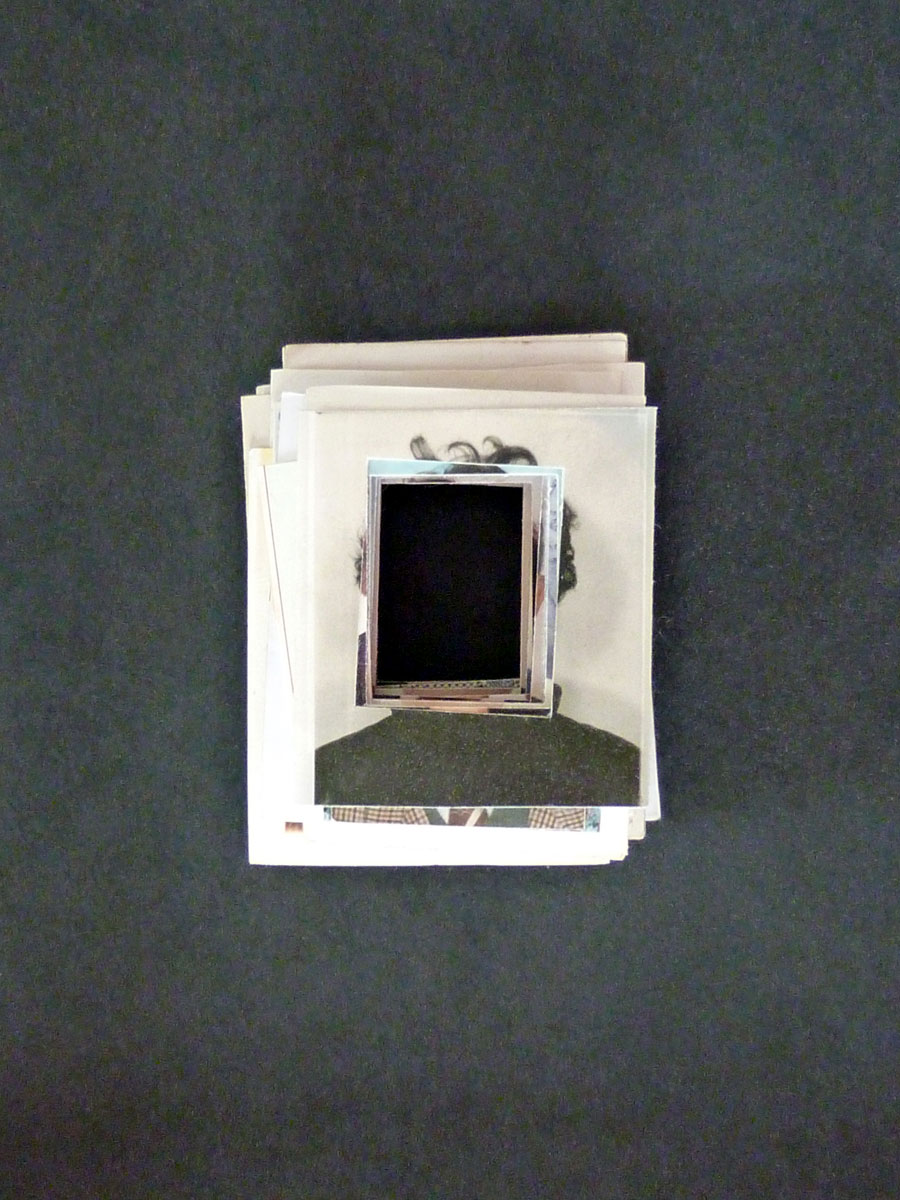
The photobooth is not only a place suitable for self-reflection, it is also a place in which the other can be questioned, in particular through the legal identification system that delivers what is commonly referred to as ‘ID’. In devoting oneself to the compulsive and bulimic collecting of photobooth strips, one can also get lost in the faces of others.
Who are we?
While it allows us to reflect upon our own identity, or other people’s, the photobooth is also an opportunity to ponder about the nature of the couple, or the group. Inside the booth, some build their image through the mirror of the other, or of others; they pose in pairs or more, thus asserting their affiliation to a social entity. The photobooth reinforces our gregarious instinct; it embodies collective identity.
With works by Jacques-Henri Lartigue, Willy Michel, Lorna Simpson, Amanda Tetrault and the collection of albums of purikuras (see photograph below: in Japan, the name purikuras refers to a photo sticker booth or the product of such a photo booth. The name is a shortened form of the registered trademark Purinto Kurabu (プリント倶楽部). The term derives from the English print club. Jointly developed by Atlus and Sega, the first purikura machines were sold in July 1995).
Many thankx to the Museum of Modern Art for allowing me to publish the photographs in the posting. Please click on the photographs for a larger version of the image.
Eugène Atget (French, 1857-1927) Saint-Cloud 1923 Albumen silver print 6 7/8 x 8 3/8″ (17.5 x 21.3cm) The Museum of Modern Art, New York. Anonymous gift
Edward Steichen (American born Luxembourg, 1879-1973) Midnight – Rodin’s Balzac 1908 Pigment print 12 1/8 x 14 5/8″ (30.8 x 37.1cm) The Museum of Modern Art, New York. Gift of the photographer Permission of Joanna T. Steichen
The Original Copy: Photography of Sculpture, 1839 to Today presents a critical examination of the intersections between photography and sculpture, exploring how one medium informs the analysis and creative redefinition of the other. On view at The Museum of Modern Art from August 1 through November 1, 2010, the exhibition brings together over 300 photographs, magazines, and journals, by more than 100 artists, from the dawn of modernism to the present, to look at the ways in which photography at once informs and challenges the meaning of what sculpture is. The Original Copy is organised by Roxana Marcoci, Curator, Department of Photography, The Museum of Modern Art. Following the exhibition’s presentation at MoMA, it will travel to Kunsthaus Zürich, where it will be on view from February 25 through May 15, 2011.
When photography was introduced in 1839, aesthetic experience was firmly rooted in Romanticist tenets of originality. In a radical way, photography brought into focus the critical role that the copy plays in art and in its perception. While the reproducibility of the photograph challenged the aura attributed to the original, it also reflected a very personal form of study and offered a model of dissemination that would transform the entire nature of art.
“In his 1947 book Le Musée Imaginaire, the novelist and politician André Malraux famously advocated for a pancultural ‘museum without walls,’ postulating that art history, and the history of sculpture in particular, had become ‘the history of that which can be photographed,'” said Ms. Marcoci.
Sculpture was among the first subjects to be treated in photography. There were many reasons for this, including the desire to document, collect, publicise, and circulate objects that were not always portable. Through crop, focus, angle of view, degree of close-up, and lighting, as well as through ex post facto techniques of dark room manipulation, collage, montage, and assemblage, photographers have not only interpreted sculpture but have created stunning reinventions of it.
Conceived around ten conceptual modules, the exhibition examines the rich historical legacy of photography and the aesthetic shifts that have taken place in the medium over the last 170 years through a superb selection of pictures by key modern, avant-garde, and contemporary artists. Some, like Eugène Atget, Walker Evans, Lee Friedlander, and David Goldblatt, are best known as photographers; others, such as Auguste Rodin, Constantin Brancusi, and David Smith, are best known as sculptors; and others, from Hannah Höch and Sophie Taeuber-Arp to such contemporaries as Bruce Nauman, Fischli/Weiss, Rachel Harrison, and Cyprien Gaillard, are too various to categorise but exemplify how fruitfully and unpredictably photography and sculpture have combined.
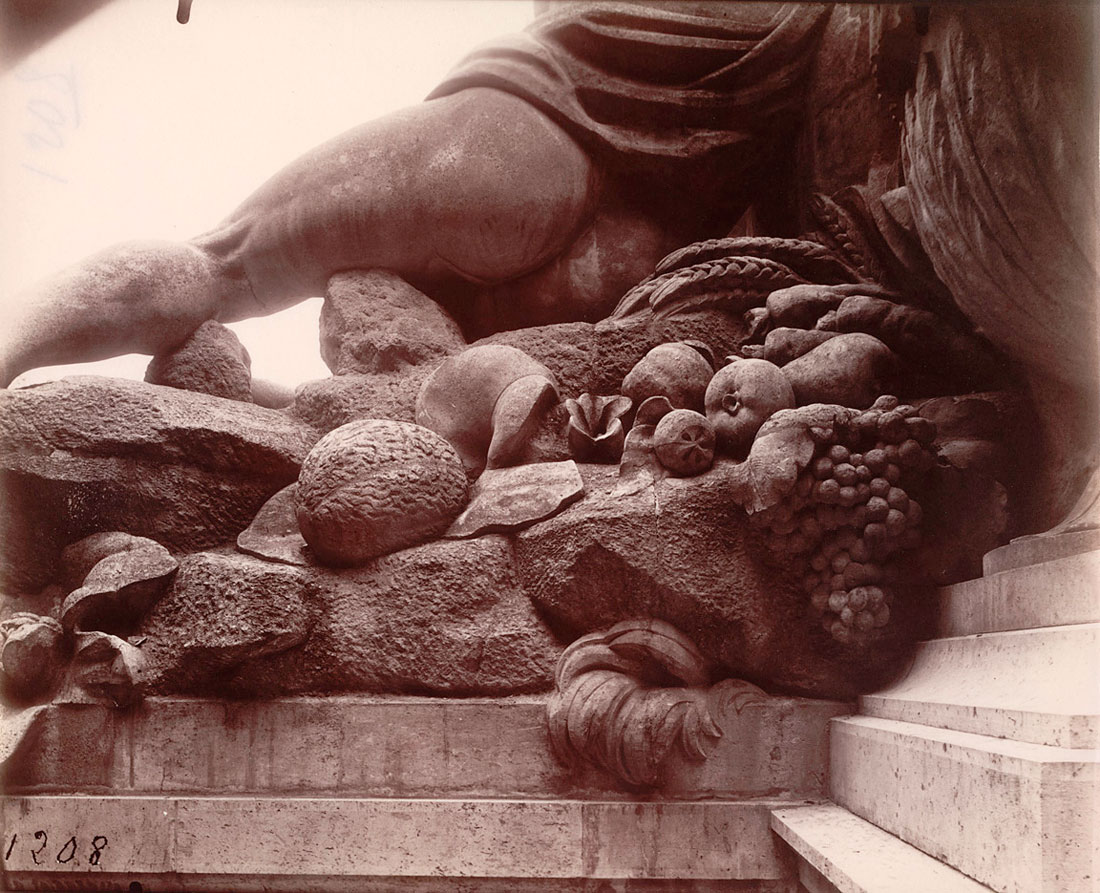
The Original Copy begins with Sculpture in the Age of Photography, a section comprising early photographs of sculptures in French cathedrals by Charles Nègre and in the British Museum by Roger Fenton and Stephen Thompson; a selection of André Kertész’s photographs from the 1920s showing art amid common objects in the studios of artist friends; and pictures by Barbara Kruger and Louise Lawler that foreground issues of representation to underscore photography’s engagement in the analysis of virtually every aspect of art. Eugène Atget: The Marvelous in the Everyday presents an impressive selection of Atget’s photographs, dating from the early 1900s to the mid 1920s, of classical statues, reliefs, fountains, and other decorative fragments in Paris, Versailles, Saint-Cloud, and Sceaux, which together amount to a visual compendium of the heritage of French civilisation at the time.
Auguste Rodin: The Sculptor and the Photographic Enterprise includes some of the most memorable pictures of Rodin’s sculptures by various photographers, including Edward Steichen’s Rodin – The Thinker (1902), a work made by combining two negatives: one depicting Rodin in silhouetted profile, contemplating The Thinker (1880-82), his alter ego; and one of the artist’s luminous Monument to Victor Hugo (1901). Constantin Brancusi: The Studio as Groupe Mobile focuses on Brancusi’s uniquely nontraditional techniques in photographing his studio, which was articulated around hybrid, transitory configurations known as groupe mobiles (mobile groups), each comprising several pieces of sculpture, bases, and pedestals grouped in proximity. In search of transparency, kineticism, and infinity, Brancusi used photography to dematerialise the static, monolithic materiality of traditional sculpture. His so-called photos radieuses (radiant photos) are characterised by flashes of light that explode the sculptural gestalt.
Marcel Duchamp: The Readymade as Reproduction examines Box in a Valise (1935-41), a catalogue of his oeuvre featuring 69 reproductions, including minute replicas of several readymades and one original work that Duchamp “copyrighted” in the name of his female alter ego, Rrose Sélavy. Using collotype printing and pochoir – in which colour is applied by hand with the use of stencils – Duchamp produced “authorised ‘original’ copies” of his work, blurring the boundaries between unique object, readymade, and multiple. Cultural and Political Icons includes selections focusing on some of the most significant photographic essays of the twentieth century – Walker Evans’s American Photographs (1938), Robert Franks’s The Americans (1958), Lee Friedlander’s The American Monument (1976), and David Goldblatt’s The Structure of Things Then (1998) – many of which have never before been shown in a thematic context as they are here.
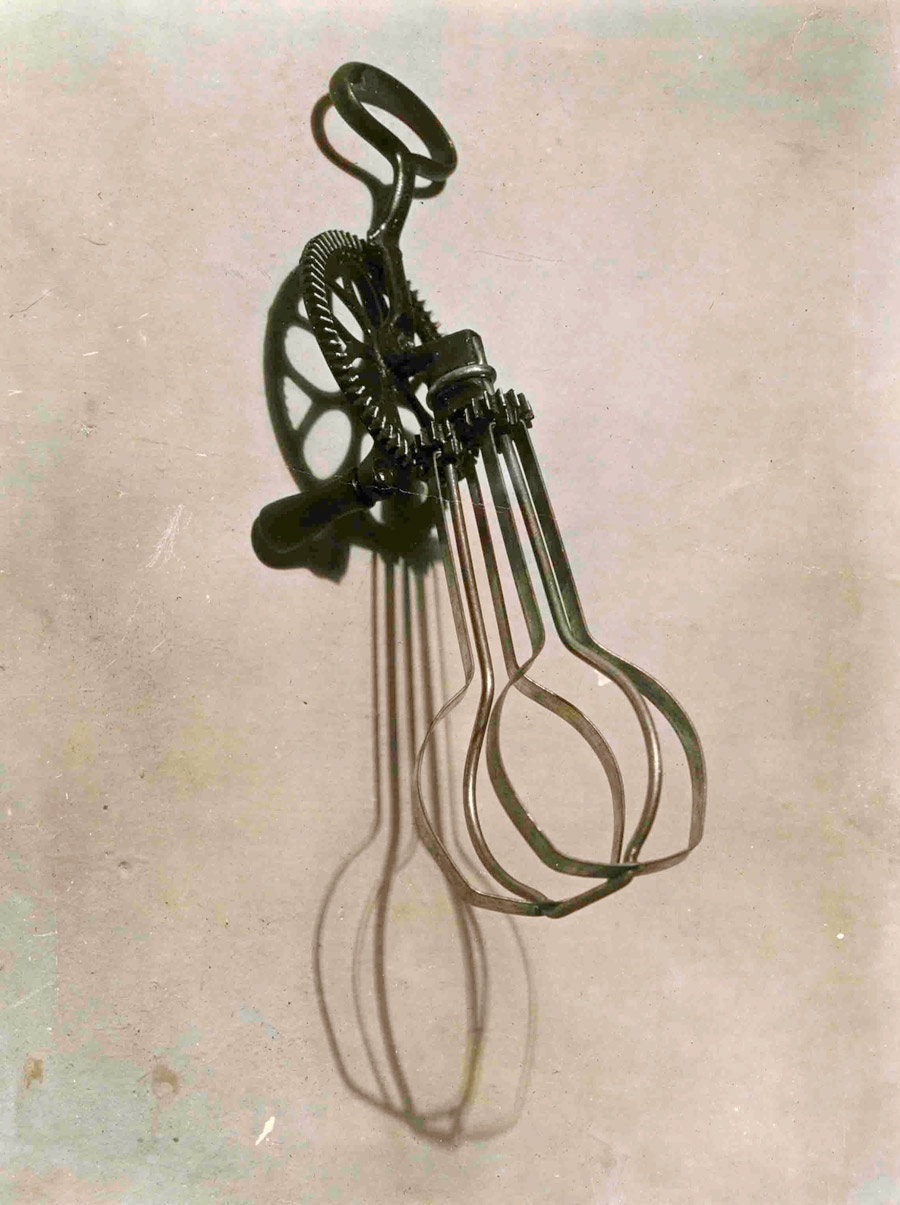
The Studio without Walls: Sculpture in the Expanded Field explores the radical changes that occurred in the definition of sculpture when a number of artists who did not consider themselves photographers in the traditional sense, such as Robert Smithson, Robert Barry, and Gordon Matta-Clark, began using the camera to document remote sites as sculpture rather than the traditional three-dimensional object. Daguerre’s Soup: What Is Sculpture? includes photographs of found objects or assemblages created specifically for the camera by artists, such as Brassaï’s Involuntary Sculptures (c. 1930s), Alina Szapocznikow’s Photosculptures (1970-1971), and Marcel Broodthaers’s Daguerre’s Soup (1974), the last work being a tongue-in-cheek picture which hints at the various fluid and chemical processes used by Louis Daguerre to invent photography in the nineteenth century, bringing into play experimental ideas about the realm of everyday objects.
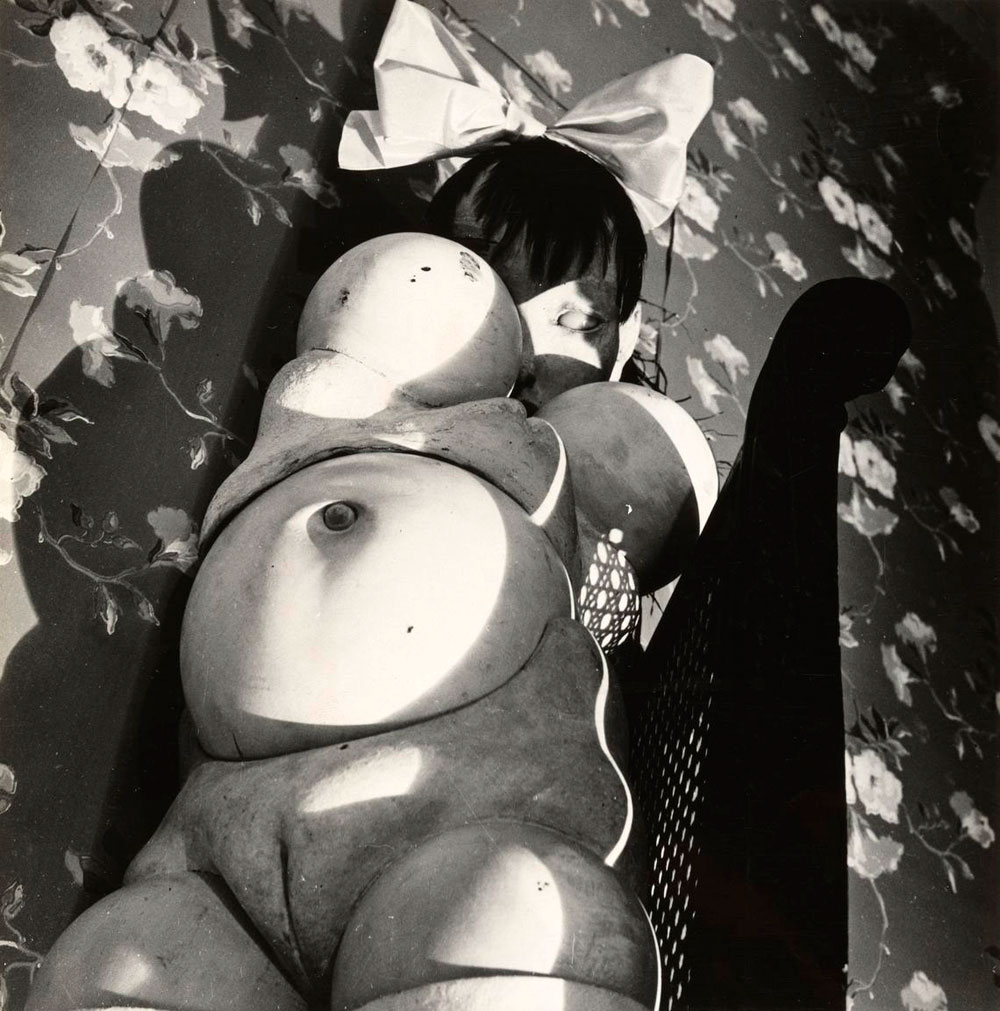
The Pygmalion Complex: Animate and Inanimate Figures looks at Dada and Surrealist pictures and photo-collages by artists, including Man Ray, Herbert Bayer, Hans Bellmer, Hannah Höch, and Johannes Theodor Baargeld, who focused their lenses on mannequins, dummies, and automata to reveal the tension between living figure and sculpture. The Performing Body as Sculptural Object explores the key role of photography in the intersection of performance and sculpture. Bruce Nauman, Charles Ray, and Dennis Oppenheim, placing a premium on their training as sculptors, articulated the body as a sculptural prop to be picked up, bent, or deployed instead of traditional materials. Eleanor Antin, Ana Mendieta, VALIE EXPORT, and Hannah Wilke engaged with the “rhetoric of the pose,” using the camera as an agency that itself generates actions through its presence.
Press release from the Museum of Modern Art website
Man Ray (Emmanuel Radnitzky) (American, 1890-1976) Noire et blanche (Black and white) 1926 Gelatin silver print 6 3/4 x 8 7/8″ (17.1 x 22.5cm) The Museum of Modern Art, New York. Gift of James Thrall Soby 2010 Man Ray Trust/Artists Rights Society (ARS), New York/ADAGP, Paris
“The advent of photography in 1839, when aesthetic experience was firmly rooted in Romanticist tenets of originality, brought into focus the critical role that the copy plays in the perception of art. The medium’s reproducibility challenged the aura attributed to the original, but it also reflected a new way of looking and offered a model for dissemination that would transform the entire nature of art. The aesthetic singularity of the photograph, the archival value of a document bearing the trace of history, and the combinatory capacity of the image, open to be edited into sequences in which it mixes with others – all these contribute to the status of photography as both an art form and a medium of communication.
Sculpture was among the first subjects to be treated in photography. In his 1947 book Le Musée imaginaire, the novelist and politician André Malraux famously advocated for a pancultural “museum without walls,” postulating that art history, and the history of sculpture in particular, had become “the history of that which can be photographed.” There were many reasons for this, including the immobility of sculpture, which suited the long exposure times needed with the early photographic processes, and the desire to document, collect, publicise and circulate objects that were not always portable. Through crop, focus, angle of view, degree of close-up, and lighting, as well as through ex post facto techniques of dark room manipulation, collage, montage, and assemblage, photographers not only interpret sculpture but create stunning reinventions of it.
The Original Copy presents a critical examination of the intersections between photography and sculpture, exploring how the one medium has been implicated in the analysis and creative redefinition of the other. Bringing together 300 pictures, magazines and journals by more than 100 artists from the dawn of modernism to the present, this exhibition looks at the ways in which photography at once informs and challenges our understanding of what sculpture is within specific historic contexts.
Sculpture in the Age of Photography
If we consider photography a child of the industrial era – a medium that came of age alongside the steam engine and the railroad – it is not surprising that one of its critical functions was to bring physically inaccessible worlds closer by means of reproduction. Among its early practitioners, Charles Nègre photographed sculpture in the cathedrals of Chartres, Amiens, and, in Paris, Notre Dame, circling them at different levels to capture perspectives of rarely seen sculptural details, while in London Roger Fenton and Stephen Thompson documented the ancient statuary in the British Museum, making visible the new power of collecting institutions.
With the advent of the handheld portable camera in the early 1920s, photographers had the flexibility to capture contingent sculptural arrangements taken from elliptical viewpoints. André Kertész, for instance, recorded unexpected juxtapositions between art and common objects in the studios of artist friends, including Fernand Léger and Ossip Zadkine. His ability to forge heterogeneous materials and objects into visual unity inspired the novelist Pierre Mac Orlan to confer on him the title of “photographer-poet.”
Focusing on details in this way, photographers have interpreted not only sculpture itself, as an autonomous object, but also the context of its display. The results often show that the meaning of art is not fixed within the work but open to the beholder’s reception of it at any given moment. Taking a place in the tradition of institutional critique, Barbara Kruger’s and Louise Lawler’s pictures foreground issues of representation to underscore photography’s engagement in the analysis of virtually every aspect of art.
Eugène Atget The Marvelous in the Everyday
During the first quarter of the twentieth century, Atget took hundreds of photographs of sculptures – classical statues, reliefs, fountains, door knockers, and other finely wrought decorative fragments – in Paris and its outlying parks and gardens, especially at Versailles, Saint-Cloud, and Sceaux. These images amount to a visual compendium of the heritage of French civilisation at that time.
At Versailles, most intensely between 1901 and 1906 and again between 1921 and 1926, Atget photographed the gardens that André Le Nôtre, the landscape architect of King Louis XIV, had designed in the second half of the seventeenth century. In a series of pictures of allegorical statues punctuating the garden’s vistas, Atget focused on the scenic organisation of the sculptures, treating them as characters in a historical play. The pantomimic effect of the statues’ postures clearly appealed to Atget, who in 1880, before turning to photography, had taken acting classes at the Conservatory of the Théâtre national de France. Depicting the white marble statues from low viewpoints, in full length, and against the dark, unified tones of hedges and trees, Atget brought them into dramatic relief, highlighting the theatrical possibilities of sculpture.
Among the pictures taken at Saint-Cloud is a series centred on a melancholy pool surrounded by statues whose tiny silhouettes can be seen from a distance. Atget’s interest in the variable play between nature and art through minute changes in the camera’s angle, or as functions of the effects of light and time of day, is underscored in his notations of the exact month and sometimes even the hour when the pictures were taken.
Auguste Rodin The Sculptor and the Photographic Enterprise
Rodin never took pictures of his sculptures but reserved the creative act for himself, actively directing the enterprise of photographing his work. He controlled staging, lighting and background, and he was probably the first sculptor to enlist the camera to record the changing stages through which his work passed from conception to realisation. The photographers working with Rodin were diverse and their images of his work varied greatly, partly through each individual’s artistic sensibility and partly through changes in the photographic medium. The radical viewing angles that Eugène Druet, for instance, adopted in his pictures of hands, in around 1898, inspired the poet Rainer Maria Rilke to write: “There are among the works of Rodin hands, single small hands which without belonging to a body, are alive. Hands that rise, irritated and in wrath; hands whose five bristling fingers seem to bark like the five jaws of a dog of Hell.”
Among the most memorable pictures of Rodin’s sculptures is Edward Steichen’s Rodin – The Thinker (1902), a work made by combining two negatives: Rodin in dark silhouetted profile contemplating The Thinker (1880-1882), his alter ego, is set against the luminous Monument to Victor Hugo (1901), a source of poetic creativity. Steichen also photographed Rodin’s Balzac, installed outdoors in the sculptor’s garden at Meudon, spending a whole night taking varying exposures from fifteen minutes to an hour to secure a number of dramatic negatives. The three major pictures of the sculpture against the nocturnal landscape taken at 11 p.m., midnight, and 4 a.m. form a temporal series.
Constantin Brancusi The Studio as Groupe Mobile
“Why write?” Brancusi once queried. “Why not just show the photographs?” The sculptor included many great photographers among his friends – Edward Steichen was one of his early champions in the United States; Alfred Stieglitz organised in 1914 his first solo exhibition in New York; Man Ray helped him buy photographic equipment; Berenice Abbott studied sculpture under him; and he was on close terms with Brassaï, André Kertész, and László Moholy-Nagy. Yet he declined to have his work photographed by others, preferring instead to take, develop, and print his own pictures.
Pushing photography against its grain, Brancusi developed an aesthetic antithetical to the usual photographic standards. His so-called photos radieuses (radiant photos) are characterised by flashes of light that explode the sculptural gestalt. In search of transparency, kineticism, and infinity, Brancusi used photography and polishing techniques to dematerialise the static, monolithic materiality of traditional sculpture, visualising what Moholy-Nagy called “the new culture of light.”
Brancusi’s pictures of his studio underscore his scenographic approach. The artist articulated the studio around hybrid, transitory configurations known as groupes mobiles (mobile groups), each comprising several pieces of sculpture, bases, and pedestals grouped in proximity. Assembling and reassembling his sculptures for the camera, Brancusi used photography as a diary of his sculptural permutations. If, as it is often said, Brancusi “invented” modern sculpture, his use of photography belongs to a reevaluation of sculpture’s modernity.
Cultural and Political Icons
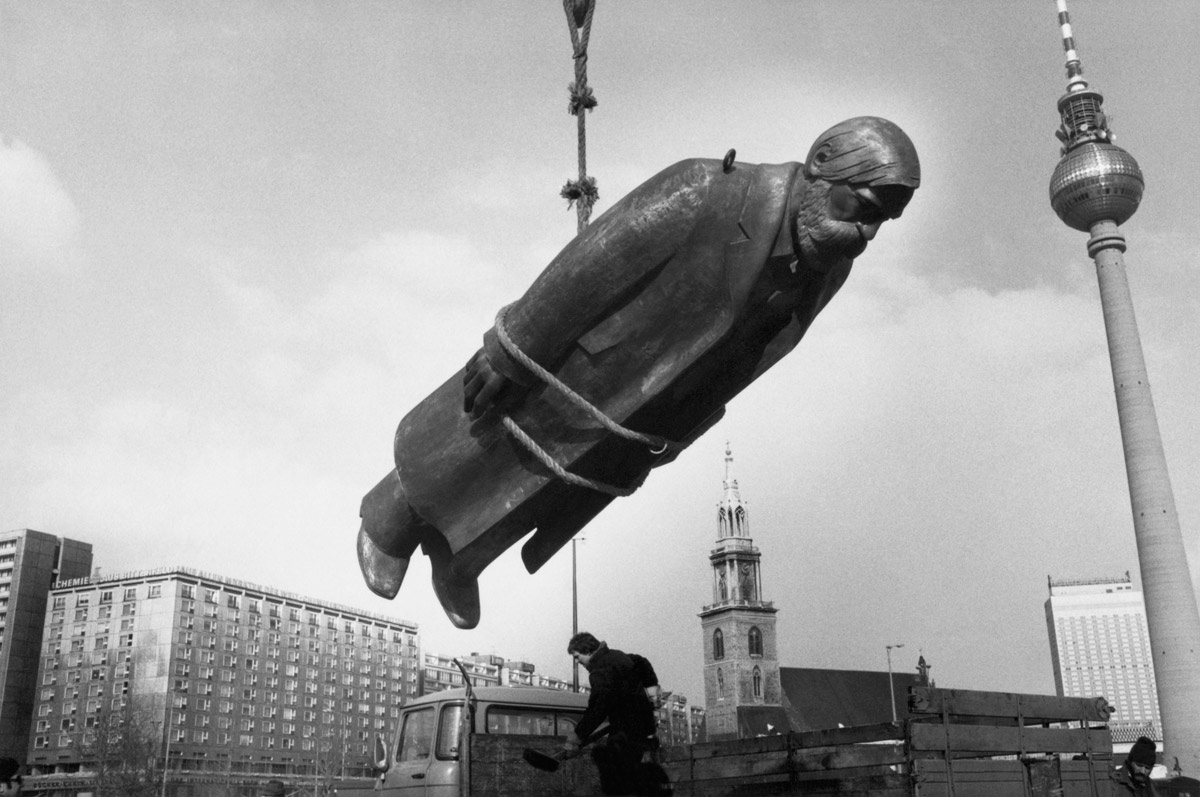
How do we remember the past? What role do photographs play in mediating history and memory? In an era resonating with the consequences of two world wars, the construction and then dismantling of the Berlin Wall, the Vietnam War, and the after effects of the colonialist legacy in South Africa, commemoration has provided a rich subject for photographic investigation.
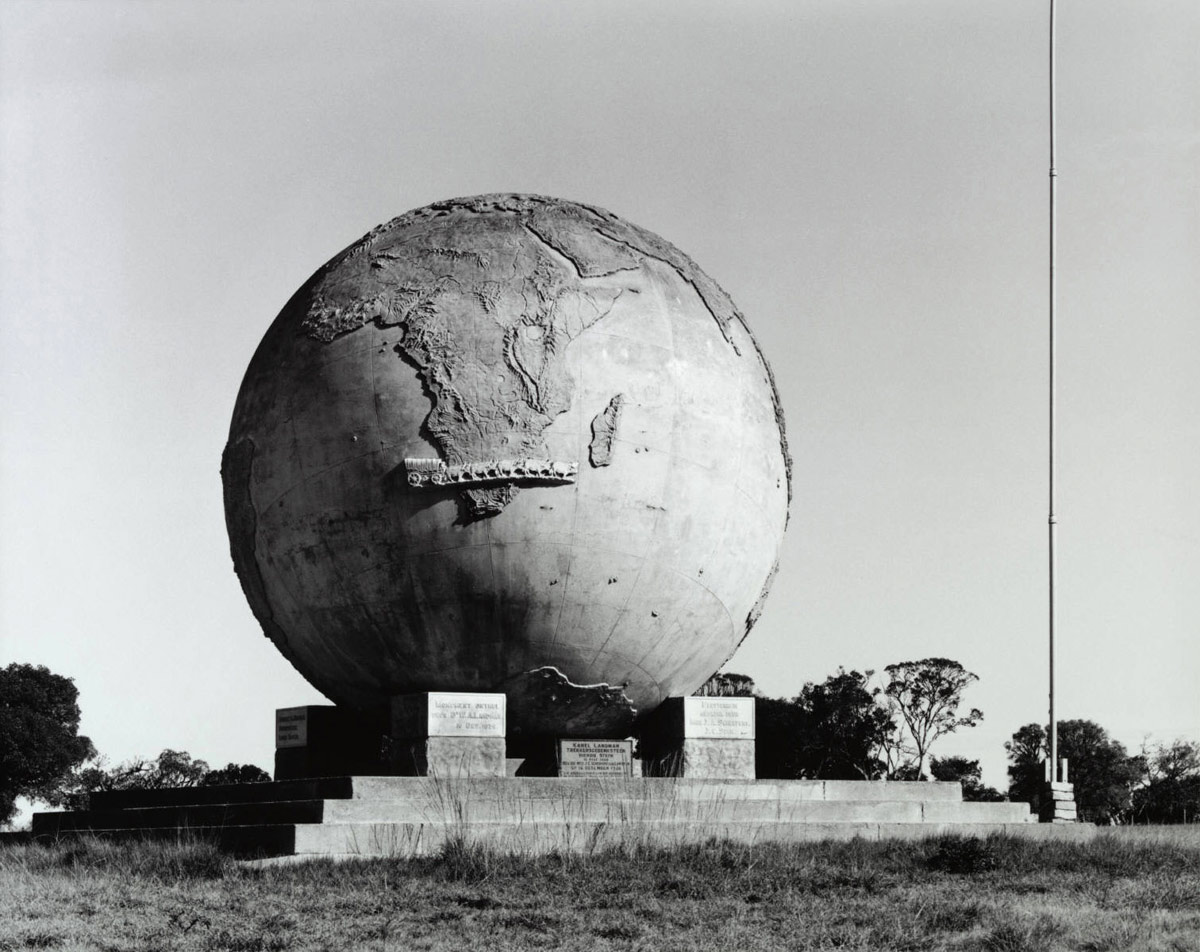
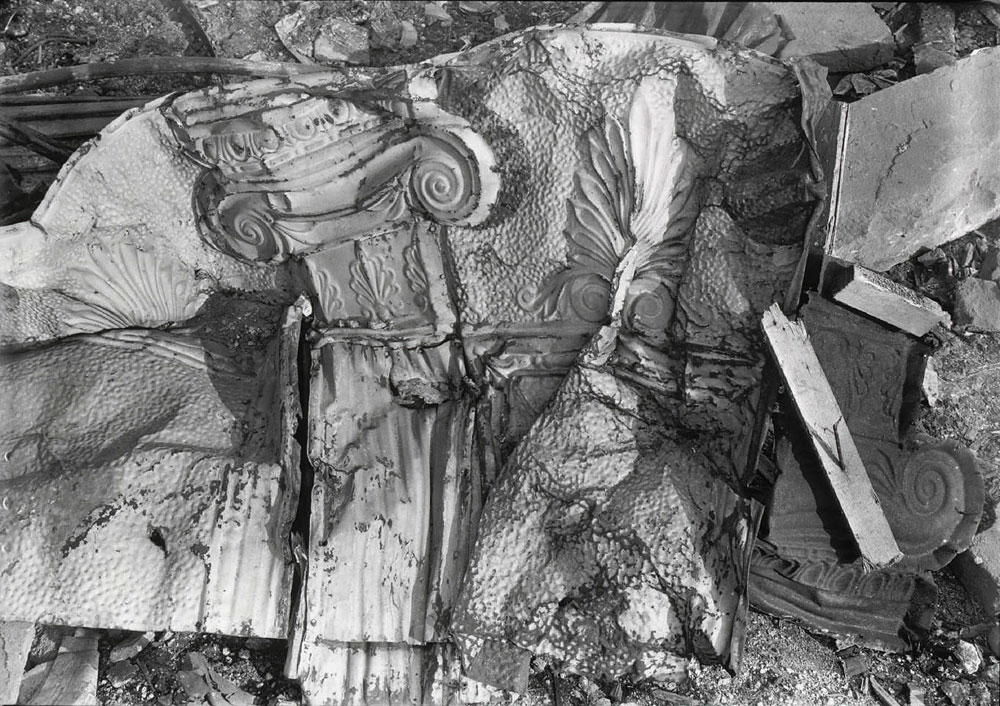
Some of the most significant photographic essays of the twentieth century – Walker Evans’s American Photographs (1938), Robert Frank’s The Americans (1958), Lee Friedlander’s The American Monument (1976), and David Goldblatt’s The Structure of Things Then (1998) – articulate to different degrees the particular value of photography as a means of defining the cultural and political role of monuments.
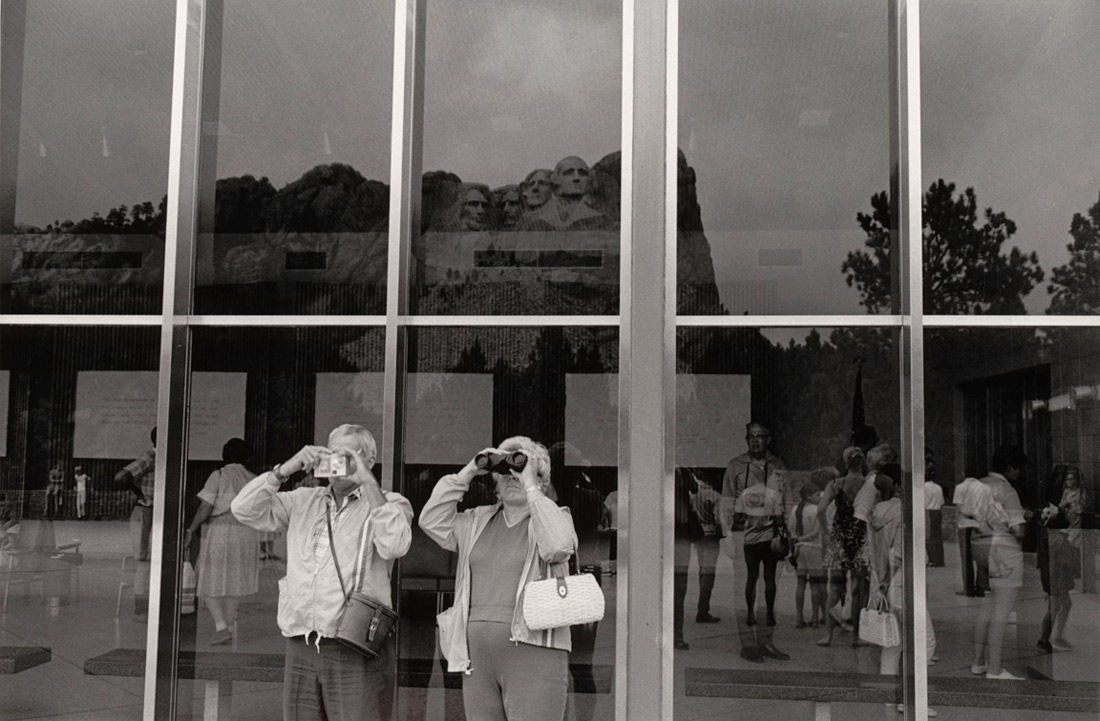
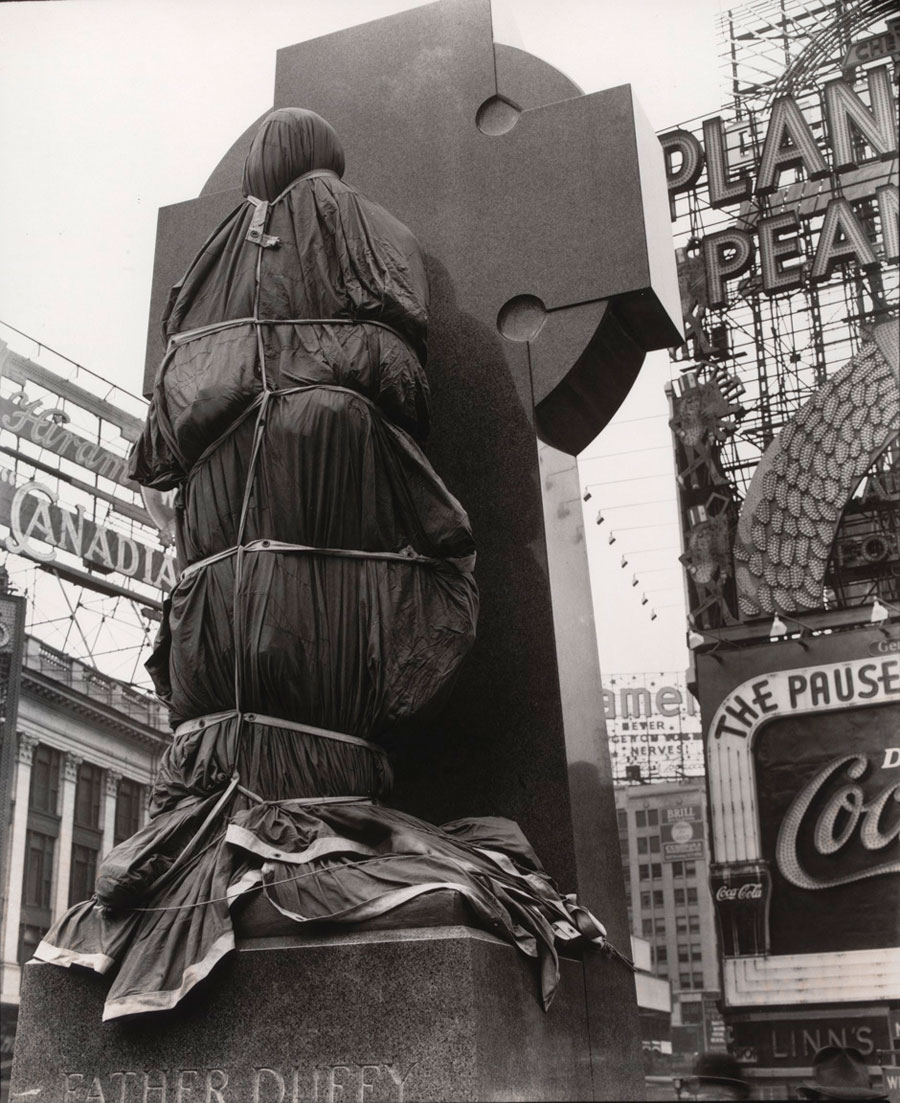
Evans’s emblematic image of a crushed Ionic column made of cheap sheet metal; Frank’s picture of a statue of St. Francis preaching, cross and Bible in hands, to the bleak vista of a gas station; Friedlander’s photograph of World War I hero Father Duffy, engulfed in the cacophony of Times Square’s billboards and neon, which threaten to jeopardise the sculpture’s patriotic message; and Goldblatt’s pictures of monuments to some of the most potent symbols of Afrikaner triumphalism – all take a critical look at the world that public statues inhabit.
The Studio without Walls Sculpture in the Expanded Field
In the late 1960s a radical aesthetic change altered both the definition of the sculptural object and the ways in which that object was experienced. A number of artists who did not consider themselves photographers in the traditional sense began using the camera to rework the idea of what sculpture is, dispensing with the immobile object in favour of an altered site: the built environment, the remote landscape, or the studio or museum space in which the artist intervened.
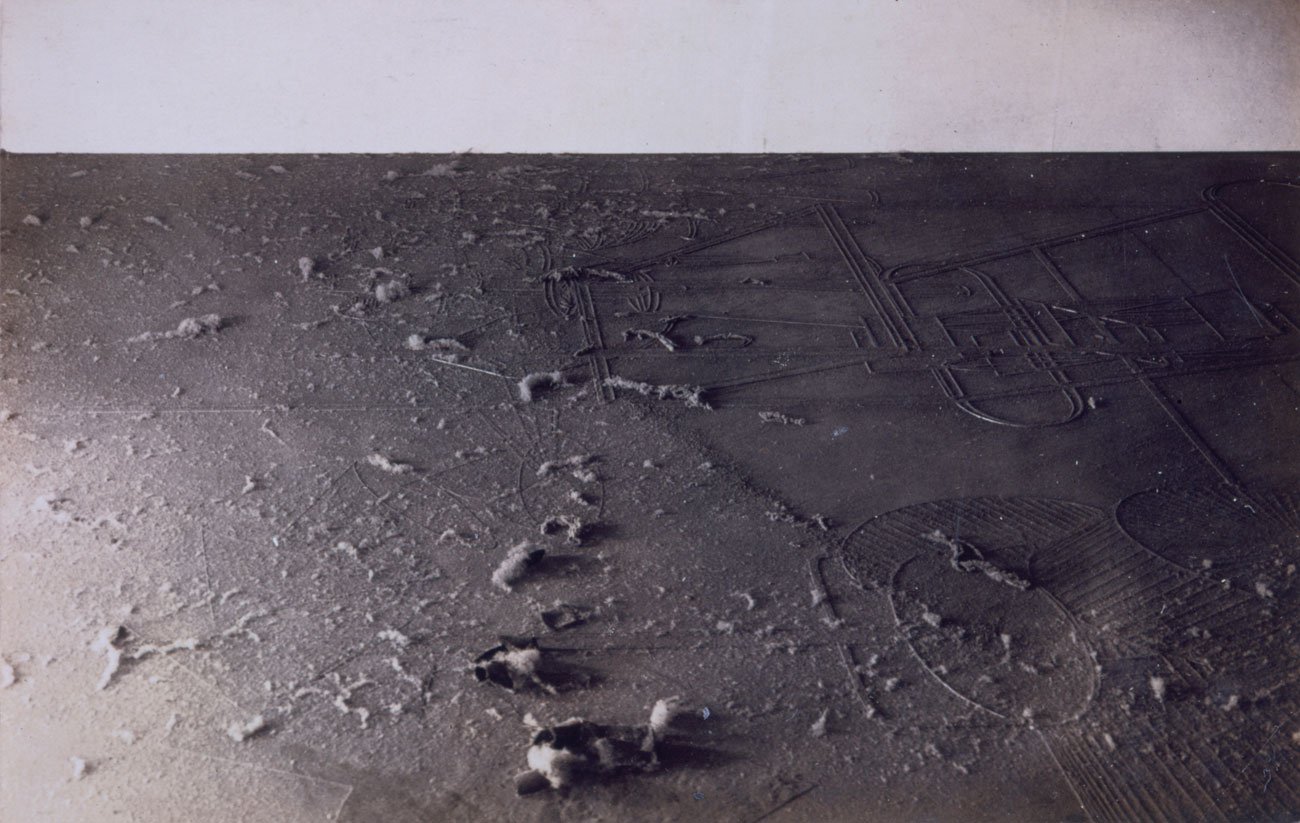
This engagement with site and architecture – undoubtedly a function of early critiques of art’s institutional status – meant that sculpture no longer had to be a permanent three-dimensional object; it could, for instance, be a configuration of debris on the studio floor, a dematerialised vapour released into the landscape, a dissected home reconfigured as gravity-defying walk-through sculpture, or a wrapped-up building. Bruce Nauman, Robert Barry, Gordon Matta-Clark, and Christo respectively, as well as Michael Heizer, Richard Long, Dennis Oppenheim, and Robert Smithson made extensive use of photography, collecting and taking hundreds of pictures as raw material for other pieces, such as collages and photomontages.
In the first decade of the twenty-first century, artists such as Zhang Dali, Cyprien Gaillard, and Rachel Whiteread have continued this dialogue through photographs contemplating examples of architecture and sculpture in states of dilapidation and entropy, remnants of a society in demise.
Daguerre’s Soup What Is Sculpture?
In 1932, Brassaï challenged the established notions of what is or is not sculpture when he photographed a series of found objects – tiny castoff scraps of paper that had been unconsciously rolled, folded, or twisted by restless hands, strangely shaped bits of bread, smudged pieces of soap, and accidental blobs of toothpaste, which he titled Involuntary Sculptures. In the 1960s and ’70s artists engaging with various forms of reproduction, replication, and repetition used the camera to explore the limits of sculpture. The word “sculpture” itself was somewhat modified, no longer signifying something specific but rather indicating a polymorphous objecthood. For instance, in 1971 Alina Szapocznikow produced Photosculptures, pictures of a new kind of sculptural object made of stretched, formless and distended pieces of chewing gum.
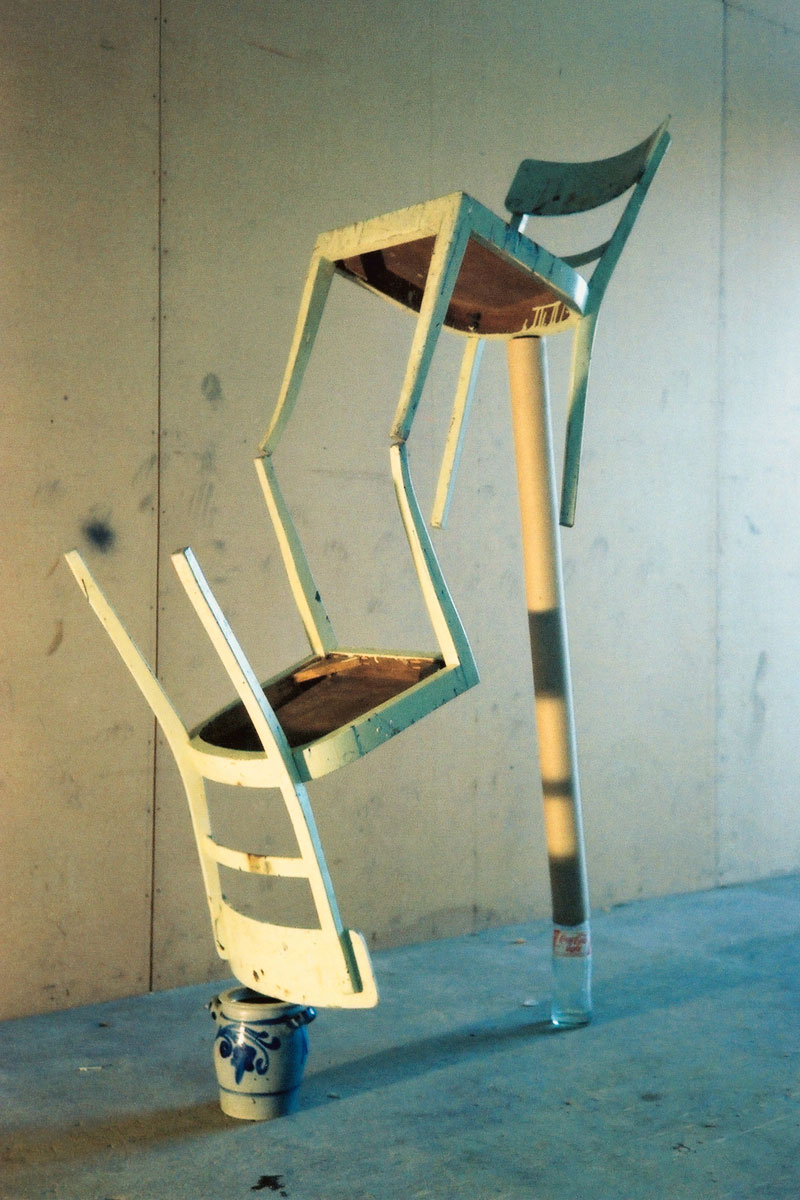
At the same time, Marcel Broodthaers concocted absurdist taxonomies in photographic works. In Daguerre’s Soup (1975), Broothaers hinted at the various fluids and chemical processes used by Louis Daguerre to invent photography in the nineteenth century by bringing into play experimental ideas about language and the realm of everyday objects. A decade later, the duo Fischli/Weiss combined photography with wacky, ingeniously choreographed assemblages of objects. Their tongue-in-cheek pictures of assemblages shot on the verge of collapse convey a sense of animated suspension and deadpan comedy.
In 2007, Rachel Harrison drew on Broodthaers’s illogical systems of classification and parodic collections of objects to produce Voyage of the Beagle, a series of pictures that collectively raise the question “What is sculpture?” Ranging from images of prehistoric standing stones to mass-produced Pop mannequins, and from topiaries to sculptures made by modernist masters, Harrison’s work constitutes an oblique quest for the origins and contemporary manifestations of sculpture.
The Pygmalion Complex Animate and Inanimate Figures
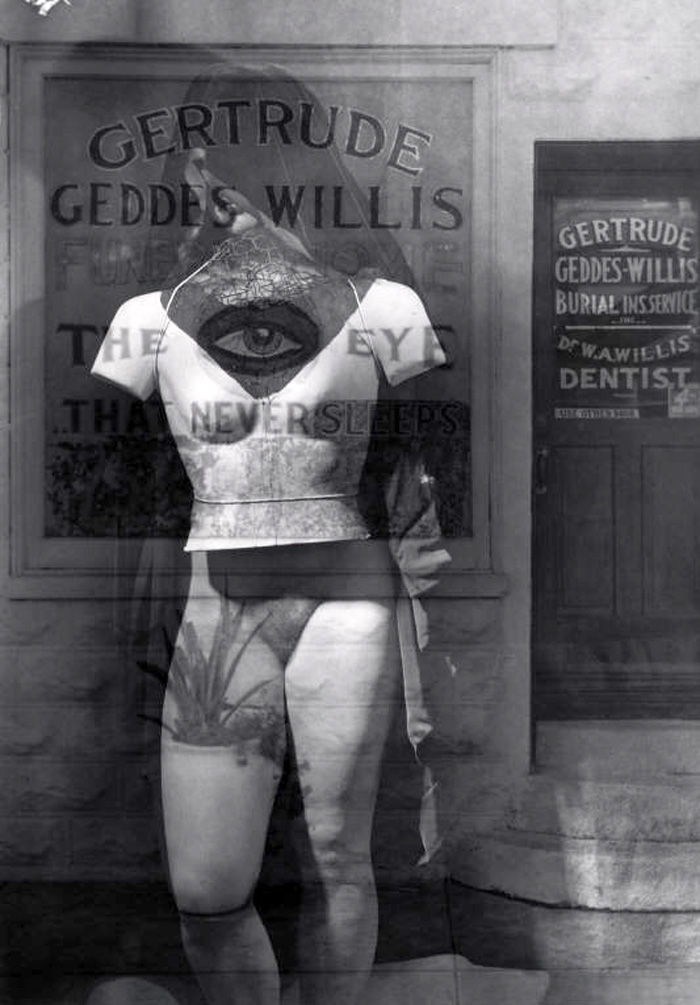
The subject of the animated statue spans the history of avant-garde photography. Artists interested in Surrealist tactics used the camera to tap the uncanniness of puppets, wax dummies, mannequins, and automata, producing pictures that both transcribe and alter appearances. Laura Gilpin explored this perturbing mix of stillness and living, alluring lifelikeness in her mysterious portrait George William Eggers (1926), in which Eggers, the director of the Denver Art Museum, keeps company with a fifteenth-century bust whose polychrome charm is enhanced by the glow of the candle he holds next to her face. So does Edward Weston, in his whimsical Rubber Dummies, Metro Goldwyn Mayer Studios, Hollywood (1939), showing two elastic dolls caught in a pas de deux on a movie-studio storage lot; and Clarence John Laughlin, in his eerie photomontage The Eye That Never Sleeps (1946), in which the negative of an image taken in a New Orleans funeral parlour has been overlaid with an image of a mannequin – one of whose legs, however, is that of a flesh-and-blood model.
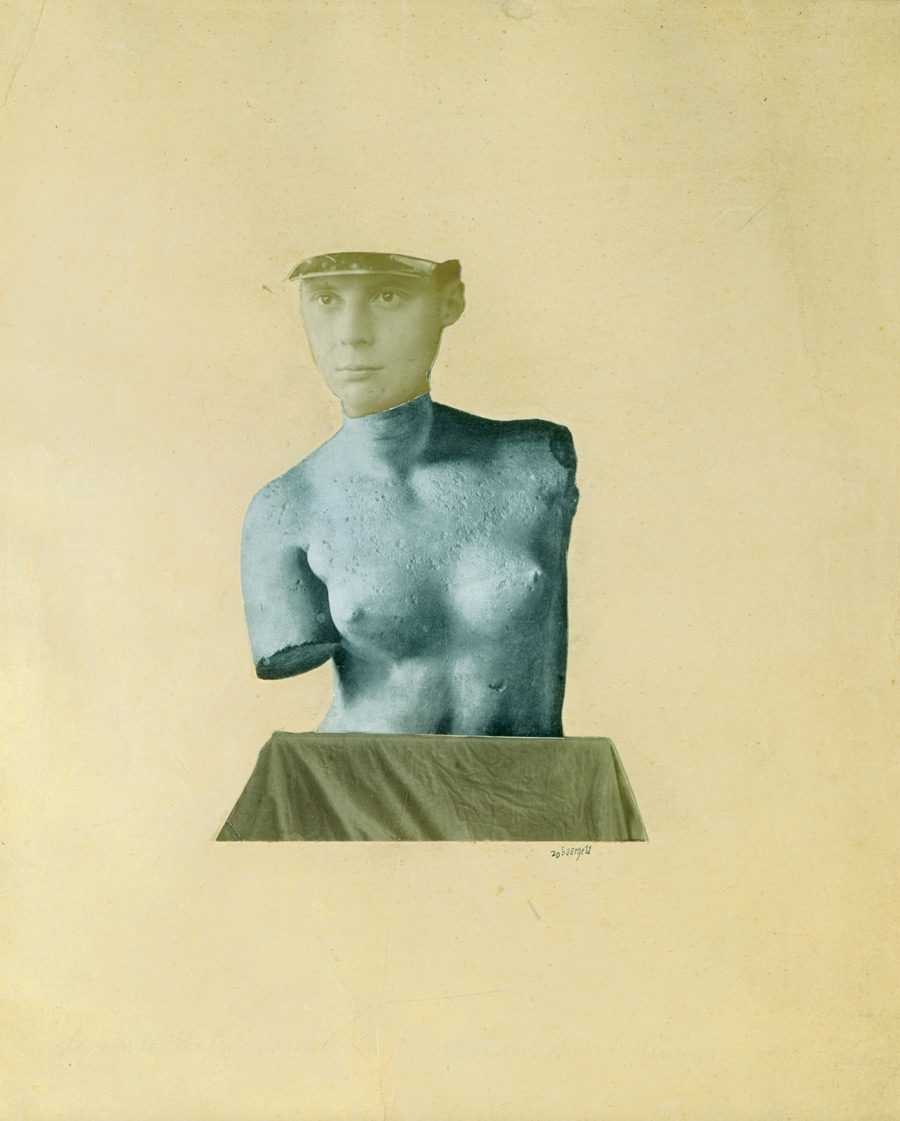
The tension between animate object and inanimate female form lies at the crux of many of Man Ray’s photographs, including Black and White (1926), which provocatively couples the head of the legendary model, artist, and cabaret singer Alice Prin, a.k.a. Kiki of Montparnasse, with an African ceremonial mask. Hans Bellmer’s photographs of dismembered dolls, and the critical photomontages of Herbert Bayer, Hannah Höch, and Johannes Theodor Baargeld, probe the relationship between living figure and sculpture by invoking the unstable subjectivity and breakdown of anatomic boundaries in the aftermath of the Great War.
The Performing Body as Sculptural Object
In 1969, Gilbert & George covered their heads and hands in metallic powders to sing Flanagan and Allen’s vaudeville number “Underneath the Arches” in live performance. Declaring themselves living sculptures, they claimed the status of an artwork, a role they used photography to express. Charles Ray and Dennis Oppenheim, placing a premium on their training as sculptors, articulated the body as a prop that could be picked up, bent, or deployed instead of more traditional materials as a system of weight, mass, and balance.
In the radicalised climate of the 1970s, artists such as Eleanor Antin, Ana Mendieta, VALIE EXPORT, and Hannah Wilke engaged with the “rhetoric of the pose,” underscoring the key role of photography in the intersection of performance, sculpture and portraiture.
Other artists as diverse as Robert Morris, Claes Oldenburg, Otto Muehl, Bas Jan Ader, and Bruce Nauman, experimented with the plasticity of the body as sculptural material. Several of Nauman’s pictures from his portfolio Eleven Color Photographs (1966-1967 / 1970) spoof the classic tradition of sculpture. Yet the signature image of the group – Self-Portrait as a Fountain, in which a stripped-to-the-waist Nauman spews water from his mouth like a medieval gargoyle – is a deadpan salute to Marcel Duchamp’s Fountain (1917). In this spirit, Erwin Wurm’s series of One Minute Sculptures (1997-98) evoke gestural articulations in which the artist’s body is turned into a sculptural form. Wurm, like the other artists presented in this exhibition, focuses attention on what one can do with and through photography, using the camera not to document actions that precede the impulse to record them but as an agency that itself generates actions through its own presence.
Johannes Theodor Baargeld (Alfred Emanuel Ferdinand Gruenwald) (German, 1892-1927) Typische Vertikalklitterung als Darstellung des Dada Baargeld (Typical vertical mess as depiction of the Dada Baargeld) 1920 Photomontage 14 5/8 x 12 3/16″ (37.1 x 31cm) Kunsthaus Zürich, Grafische Sammlung



















 Art Blart _ art and cultural memory archive
You must be logged in to post a comment.