Exhibition: ‘The Heart of the Great Alone: Scott, Shackleton and Antarctic Photography’ at The Queen’s Gallery, Buckingham Palace, London

Exhibition dates: 21st October 2011 – 15th April 2012
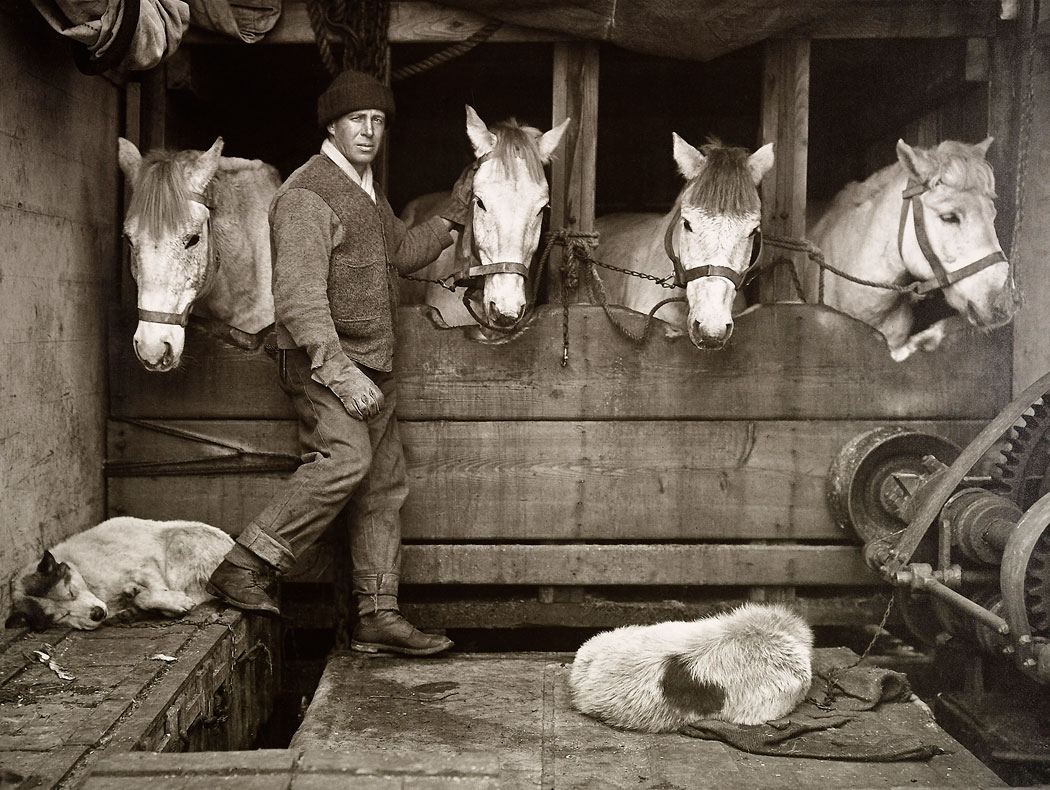
 

Herbert Ponting (British, 1870-1935) 'Captain Lawrence Oates and Siberian ponies on board 'Terra Nova'' 1910


Herbert Ponting (British, 1870-1935)
Captain Lawrence Oates and Siberian ponies on board ‘Terra Nova’
1910
Presented to King George V, 1914
© 2011 Her Majesty Queen Elizabeth II


Continuing my fascination with all things Antarctic, here are more photographs from the Scott and Shackleton expeditions. The photograph Captain Lawrence Oates and Siberian ponies on board ‘Terra Nova’ by Herbert Ponting (1910, above) is simply breathtaking.

Dr Marcus Bunyan


Many thankx to The Royal Collection for allowing me to publish the photographs in the posting. Please click on the photographs for a larger version of the image.


This exhibition of remarkable Antarctic photography by George Herbert Ponting and Frank Hurley marks the 100th anniversary of Captain Scott’s ill-fated journey to the South Pole. Ponting’s dramatic images record Scott’s Terra Nova expedition of 1910-1912, which led to the tragic death of five of the team on their return from the South Pole. Hurley’s extraordinary icescapes were taken during Ernest Shackleton’s polar expedition on Endurance in 1914-1917, which ended with the heroic sea journey from Elephant Island to South Georgia. Both collections of photographs were presented to King George V and are today part of the Royal Photograph Collection.
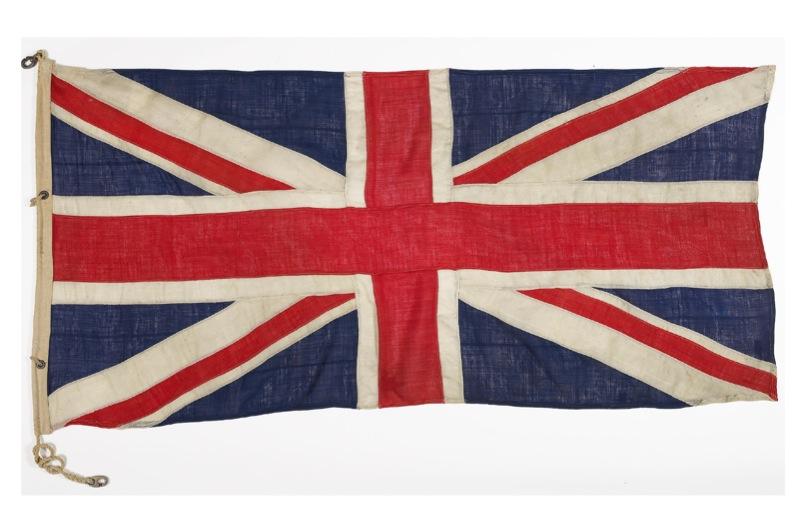
Union Jack taken by Scott to the South Pole 1911-1912


Union Jack taken by Scott to the South Pole
1911-1912
Presented to King George V, 1914
© 2011 Her Majesty Queen Elizabeth II


This Union Jack was given to Scott by the recently widowed Queen Alexandra on 25 June 1910 for him to plant at the South Pole. The flag was recovered with Scott’s body and returned to the queen by his wife, Kathleen, on 12 July 1913.


The photographs of Herbert Ponting and Frank Hurley may be stencilled into the collective memory after nearly a century of over-exposure. But it’s not often you get to see them away from the printed page, and they certainly bring out fresh depths and new perspectives…

It turns out to be highly instructive seeing Hurley and Ponting hung in neighbouring rooms. I’ve always taken Ponting to be somehow the lesser snapper. Hurley had the greatest photostory ever captured land in his lap when Shackleton’s ship the Endurance was trapped in ice floes and held fast for months before pressure ridges eventually crushed it like a dry autumn leaf. Like a good journalist Hurley recorded these traumas and more while also taking the chance to experiment with the strange light and baroque shapes supplied by his surroundings.

Ponting’s story was different. Four or so years earlier, and on the other side of the Antarctic land mass, he didn’t stray far from the expedition base, and indeed was left on the Terra Nova while Scott’s polar party were still out on the ice, trudging balefully towards immortality. There’s something about Ponting’s floridly unmodern moustache which sets him apart from the clean-shaven younger men in either expedition, as if he never quite left the studio behind.

But the photographs are astonishing… The story here is the unequal battle between man and ice, the castellations and ramparts of bergs dwarfing explorers with dogs and sledges placed at their foot to give a sense of scale. Ponting also has a beautiful eye for filigree detail, never more than in one picture of long spindly icicles echoing the adjacent rigging of the Terra Nova.

One of the revelations is that the originals play up the drama of Ponting’s work much more than Hurley’s, which are printed at half the size. For all the astonishing pictures – a field of ice flowers, the masts of the Endurance all but shrouded by Brobdingnagian ice clumps – the final impact of Hurley’s collection lies in the fact that they exist at all… That is partly why Ponting trumps Hurley in this show. His pictures of Scott’s men have never felt more immediate.

Rees, Jasper. Review of “The Heart of the Great Alone: Scott, Shackleton and Antarctic Photography, Queen’s Gallery” on the Arts Desk website. Thursday, 27 October 2011 [Online] Cited 06/04/2012
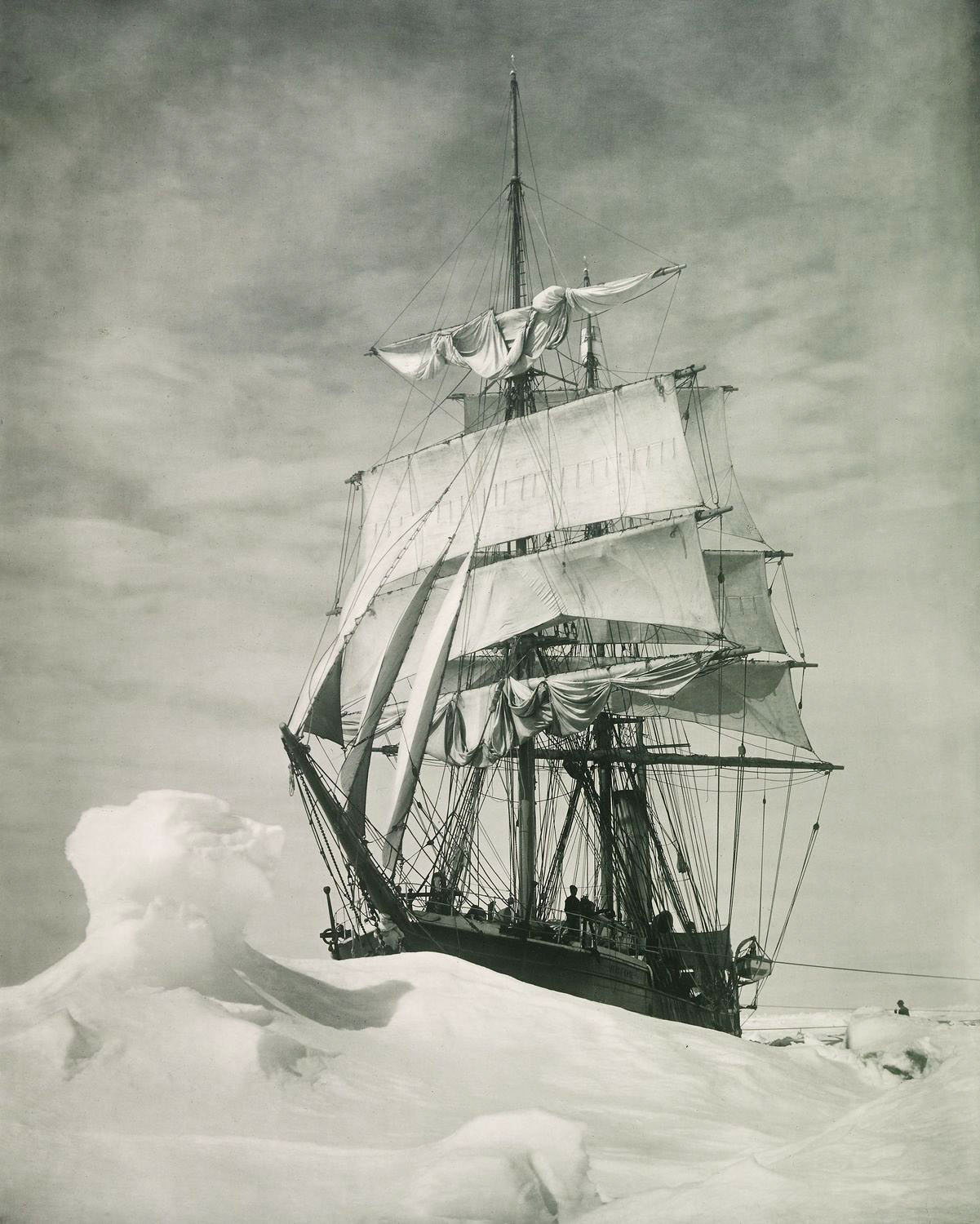
 

Herbert Ponting (British, 1870-1935) 'The Terra Nova icebound in the pack' 13 Dec 1910


Herbert Ponting (British, 1870-1935)
The Terra Nova icebound in the pack
13 Dec 1910
Carbon print
73.5 x 58.2cm
Presented to King George V, 1914
© 2011 Her Majesty Queen Elizabeth II


Photograph of the Terra Nova in sail, passing through ice and snow. Scott’s ship is seen here held up by the ice pack, with a curiously shaped ‘ice bollard’ in the foreground. The Terra Nova was launched in 1884 as a whaling ship. She had sailed to both the Arctic and Antarctic before serving as Scott’s ship in 1910. She survived until 1943 when she was damaged by ice and sank off the coast of Greenland.


British Antarctic Expedition

Scott and his men reached Antarctica on board the Terra Nova on 31 December 1910. The expedition had several aims that were scientific in nature, but the principal goal for Scott was to lead the first team to the South Pole.

Following his earlier polar experience on the Discovery expedition of 1901-1904, Scott realised the importance of good photographic images for fund-raising and publicising the achievements of the expedition. Scott employed the photographer Herbert Ponting to accompany him. This was the first time a professional photographer had been included in an Antarctic expedition.

Ponting had previously worked in the United States and Asia. He had a great deal of experience, and during his time in Antarctica, he produced around 2,000 glass plate negatives as well as making films. Ponting also taught photography to Scott and other members of the team so that they could record their assault on the Pole.

In March 1912 Ponting left the Antarctic, according to previously-laid plans. After his return to Britain, Ponting exhibited his work and lectured widely about Scott, thus ensuring that his photographs became inextricably linked with Scott and the heroic age of Antarctic exploration.

Text from the Royal Collection Trust website
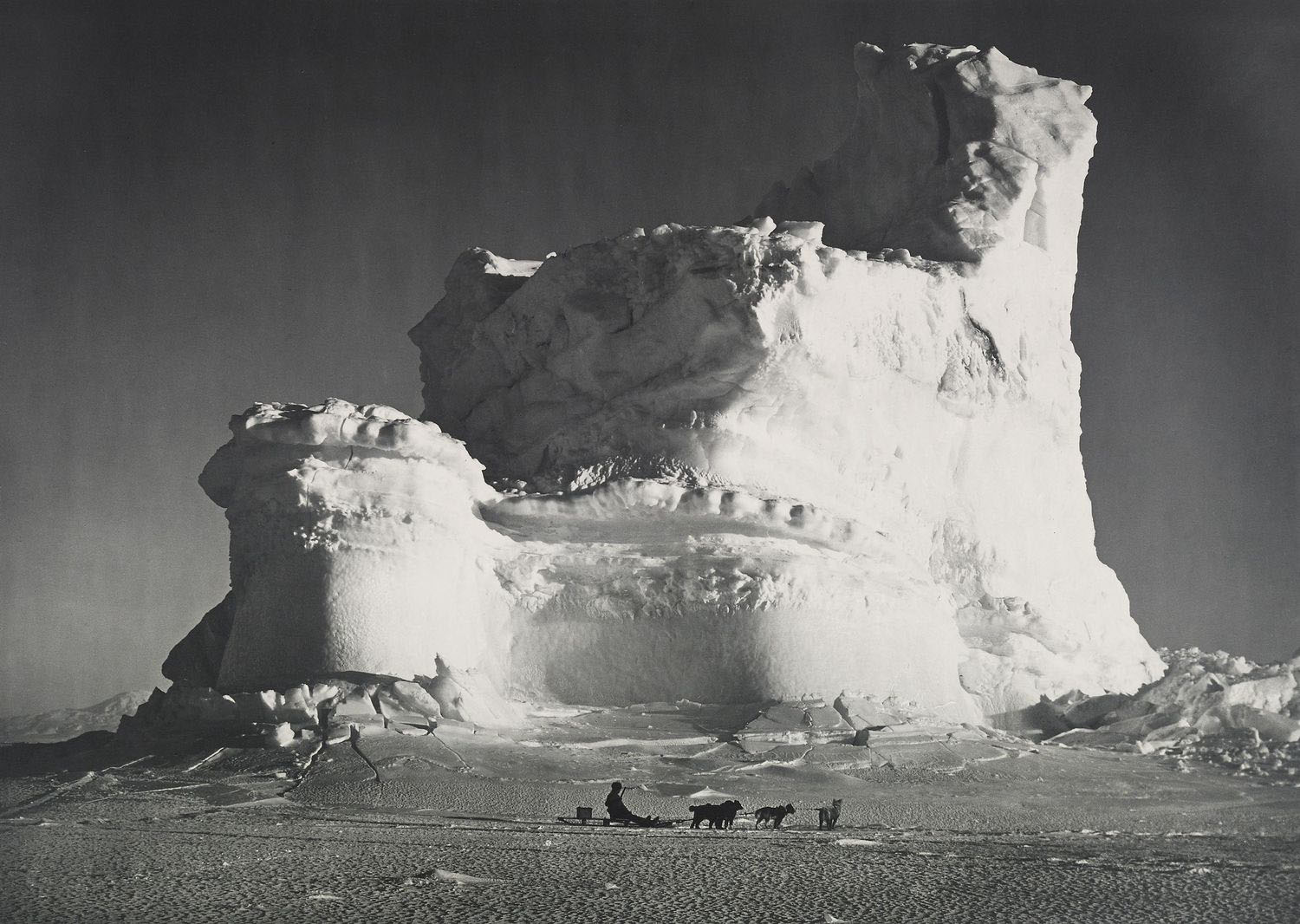
 

Herbert Ponting (British, 1870-1935) 'The Castle Berg with dog Sledge' 17 Sep 1911


Herbert Ponting (British, 1870-1935)
The Castle Berg with dog Sledge
17 Sep 1911
Carbon print
53.2 x 75.0cm
Presented to King George V, 1914
© 2011 Her Majesty Queen Elizabeth II


This iceberg, which resembles a medieval castle, was greatly admired by members of the expedition. Ponting returned several times during 1911 to photograph it, including once in June, the middle of the Antarctic winter, when he set up flashlights to make an image. At its highest point the berg is around 100 feet high (30.5 m).


Herbert Ponting (British, 1870-1935) 'The ramparts of Mount Erebus' 1911


Herbert Ponting (British, 1870-1935)
The ramparts of Mount Erebus
1911
Presented to King George V, 1914
© 2011 Her Majesty Queen Elizabeth II


Mount Erebus, an active volcano on Ross Island which last erupted in 2008, was first climbed in 1908 by members of Shackleton’s Nimrod expedition. Ponting has contrasted the overwhelming size of the natural world against the tiny human figure pulling a sledge, in the lower left corner of the photograph.


It is a story of heroism and bravery, and ultimately of tragedy, that has mesmerised generations. One hundred years on from their epic voyages to the very limits of the Earth, and of man’s endurance, the legends of Scott and Shackleton live on.

To mark the centenary of Captain Robert Falcon Scott’s expedition to the South Pole, the Royal Collection brings together, for the first time, a collection of the photographs presented to King George V by the official photographers from Scott’s Terra Nova expedition of 1910-1913 and Shackleton’s expedition on Endurance in 1914-1916, and unique artefacts, such as the flag given to Scott by Queen Alexandra (widow of King Edward VII) and taken to the Pole.

The exhibition documents the dramatic landscapes and harsh conditions the men experienced, through the work of expedition photographers Herbert Ponting and Frank Hurley. These sets of photographs are among the finest examples of the artists’ work in existence – and the men who took them play a vital part in the explorers’ stories. Highlights from Scott’s voyage include Ponting’s The ramparts of Mount Erebus, which presents the vast scale of the icescape, and the ethereal The freezing of the sea. Among the most arresting images from Hurley’s work on Shackleton’s expedition are those of the ship Endurance listing in the frozen depths and then crushed between floes.

The photographs also give insights into the men themselves. For instance, at the start of the journey Scott appears confident and relaxed, with his goggles off for the camera. In contrast, a photograph taken at the Pole shows him and his team devastated and unsmiling, knowing they had been beaten. The exhibition also records the lighter moments of expedition life, essential for teams cut off from the outside world for years at a time. On Shackleton’s expedition, a derby for the dogs was organised – with bets laid in cigarettes and chocolate. A menu for Midwinter’s Day, on 22 June 1911, shown in the accompanying exhibition publication, includes roast beef and Yorkshire pudding, ‘caviare Antarctic’ and crystallised fruits.

Antarctic adventurer David Hempleman ­Adams has been closely involved in the exhibition and has written an introduction to the catalogue. First given the taste for adventure by The Duke of Edinburgh’s Award scheme, he was inspired, like generations of school children, by the tales of discovery. As a South Pole veteran, the first Briton to reach the Pole solo and unsupported, he is still in awe of Scott and Shackleton’s achievements – and will return with his daughter this year to mark the centenary. David Hempleman­ Adams said: “We have a big psychological advantage today: We know it is possible to reach the South Pole. Nowadays you can go on Google Earth and see what’s there. Back then, it was just a big white piece of paper. Scott and Shackleton had no TVs, radios or satellite phones – they were cut off from the outside world – and in terms of equipment, the tents, skis and sledges, today, we carry about one tenth of what they carried, over the same mileage. What they achieved, with what they had, is really magnificent. This is the 100th anniversary and the legend has stood the test of time. Even in this modern world, there’s still just as much interest.”

As the photographs show, animals played an important part in the expeditions. There are portraits of the ponies and of individual sledge dogs. In his diaries, Scott describes the relationship he struck up with the bad­ tempered husky Vida: “He became a bad wreck with his poor coat… and… I used to massage him; at first the operation was mistrusted and only continued to the accompaniment of much growling, but later he evidently grew to like the warming effect and sidled up to me whenever I came out of the hut… He is a strange beast – I imagine so unused to kindness that it took him time to appreciate it.”

Ponting also photographed wildlife, including seals, gulls and penguins. Scott writes of the moment Ponting tried to photograph killer whales and how the creatures crashed through the ice to catch him. Scott, watching but unable to help, observes, “It was possible to see their tawny head markings, their small glistening eyes, and their terrible array of teeth – by far the largest and most terrifying in the world.”

The inspirational qualities of the explorers were recognised by King George V. In his book, The Great White South, Ponting records what the Monarch said to him when he went to Buckingham Palace to show his Antarctic film: “His Majesty King George expressed to me the hope that it might be possible for every British boy to see the pictures – as the story of the Scott Expedition could not be known too widely among the youth of the nation, for it would help to promote the spirit of adventure that had made the Empire.”

Royal interest in polar exploration began with Queen Victoria and Prince Albert, who followed the fortunes of the early adventurers, such as Sir John Franklin and William Bradford, and it continues to this day. The Duke of Edinburgh, who has written a foreword to the exhibition catalogue, has been the patron of many of David Hempleman­ Adams’s expeditions and has himself crossed the Antarctic Circle. HRH The Princess Royal is Patron of the UK Antarctic Heritage Trust.

Press release from The Royal Collection website


Herbert Ponting (British, 1870-1935) 'Grotto in an iceberg' 5 January 1911


Herbert Ponting (British, 1870-1935)
Grotto in an iceberg
5 January 1911
Presented to King George V, 1914
© 2011 Her Majesty Queen Elizabeth II


Photograph of the Terra Nova seen from inside a grotto that was formed by an iceberg as it turned over, carrying a large floe which froze onto it. Both Ponting and Scott were struck by the colours of the ice inside this ice grotto; they were a rich mix of blues, purples and greens. Ponting thought that this photograph, framing the Terra Nova, was one of his best.


Both Captain Scott and Herbert Ponting – the photographer accompanying him on the Terra Nova expedition – wrote about the intense colours that they encountered in the landscape of Antarctica. In this series of three short talks by Royal Collection curator Sophie Gordon, we examine how Ponting attempted to capture these magical blues, greens and oranges in his photographs beginning here with the blues of this grotto within an iceberg, taken in January, 1911.

Royal Collection: ‘A Lovely Symphony of Blue and Green’ – Grotto in an Iceberg

Both Captain Scott and Herbert Ponting – the photographer accompanying him on the Terra Nova expedition – wrote about the intense colours that they encountered in the landscape of Antarctica. In this series of three short talks by Royal Collection curator Sophie Gordon, we examine how Ponting attempted to capture these magical blues, greens and oranges in his photographs beginning here with the blues of this grotto within an iceberg, taken in January, 1911.


Herbert Ponting (British, 1870-1935) 'The Freezing of the Sea' 1911


Herbert Ponting (British, 1870-1935)
The Freezing of the Sea
1911, printed 1913-1914
Carbon print, tinted
74.6 x 58.1cm
Presented to King George V, 1914
© 2011 Her Majesty Queen Elizabeth II


Photograph of a thin film of new ice covering the sea with ice blocks in the foreground. The Barne Glacier can be seen in the distance. This view, looking from Cape Evans towards Cape Barne on Ross Island, shows the moment when the sea began to freeze. The men would have realised that they could no longer leave Antarctica. Once winter began, no ships would be able to reach them to bring in supplies or to take anyone out.


Royal Collection: ‘A Lovely Symphony of Blue and Green’ – The Freezing of the Sea

In the second of these three short talks, Royal Collection curator Sophie Gordon, briefly considers this atmospheric photograph which captured the moment the sea began to freeze, cutting the men off in Antarctica for the winter.
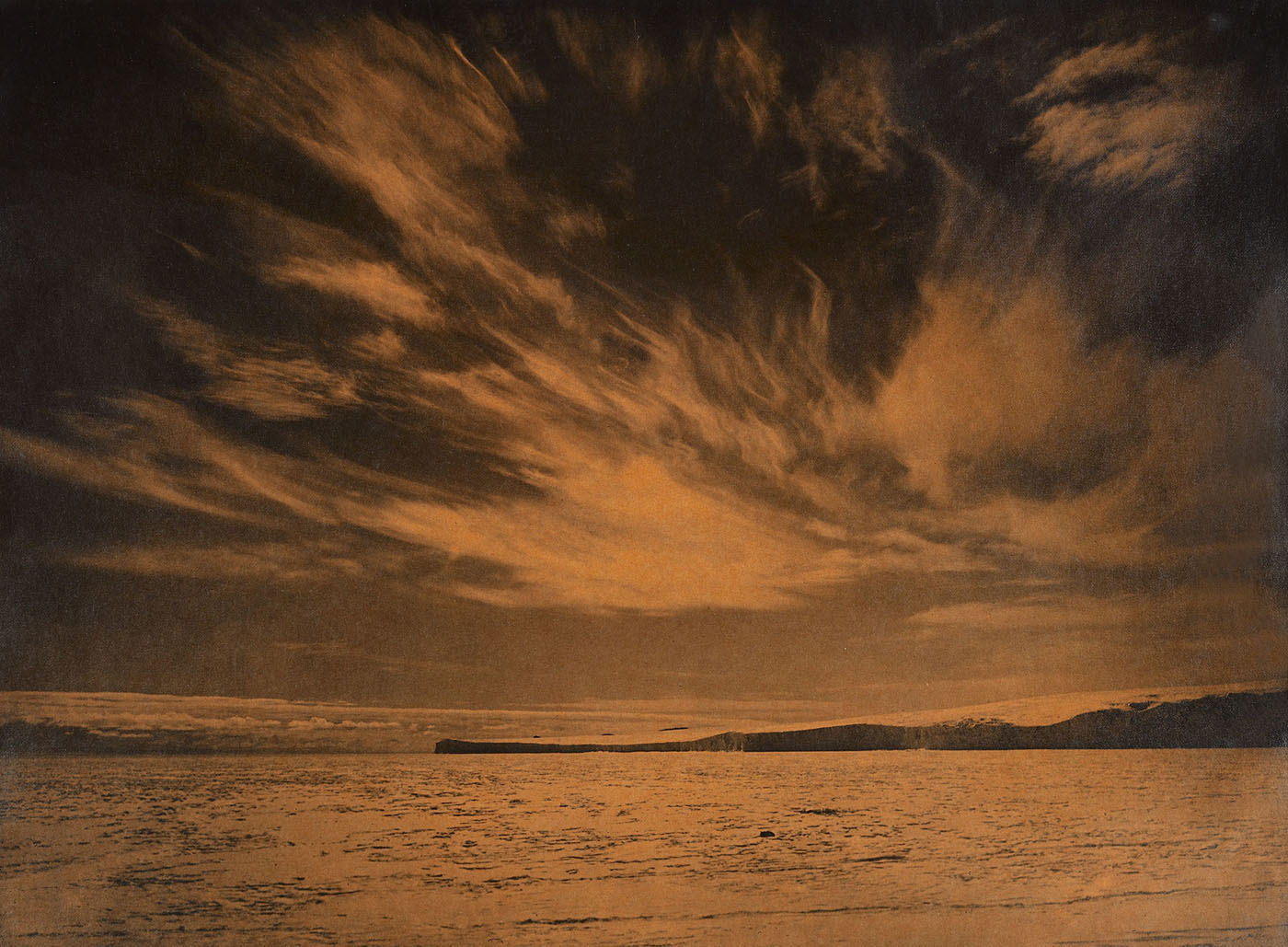
 

Herbert Ponting (British, 1870-1935) 'Cirrus clouds over the Barne Glacier' April 1911


Herbert Ponting (British, 1870-1935)
Cirrus clouds over the Barne Glacier
April 1911
Carbon print on dyed paper
43.4 x 58.8cm
Presented to King George V, 1914
© 2011 Her Majesty Queen Elizabeth II


Royal Collection: ‘A Lovely Symphony of Blue and Green’ – Cirrus Clouds over the Barne Glacier

In this, the third in her series of talks, Royal Collection curator Sophie Gordon examines how Ponting captured the dramatic reds and oranges and the beauty of the natural landscape that he experienced during his time in the Antarctic.
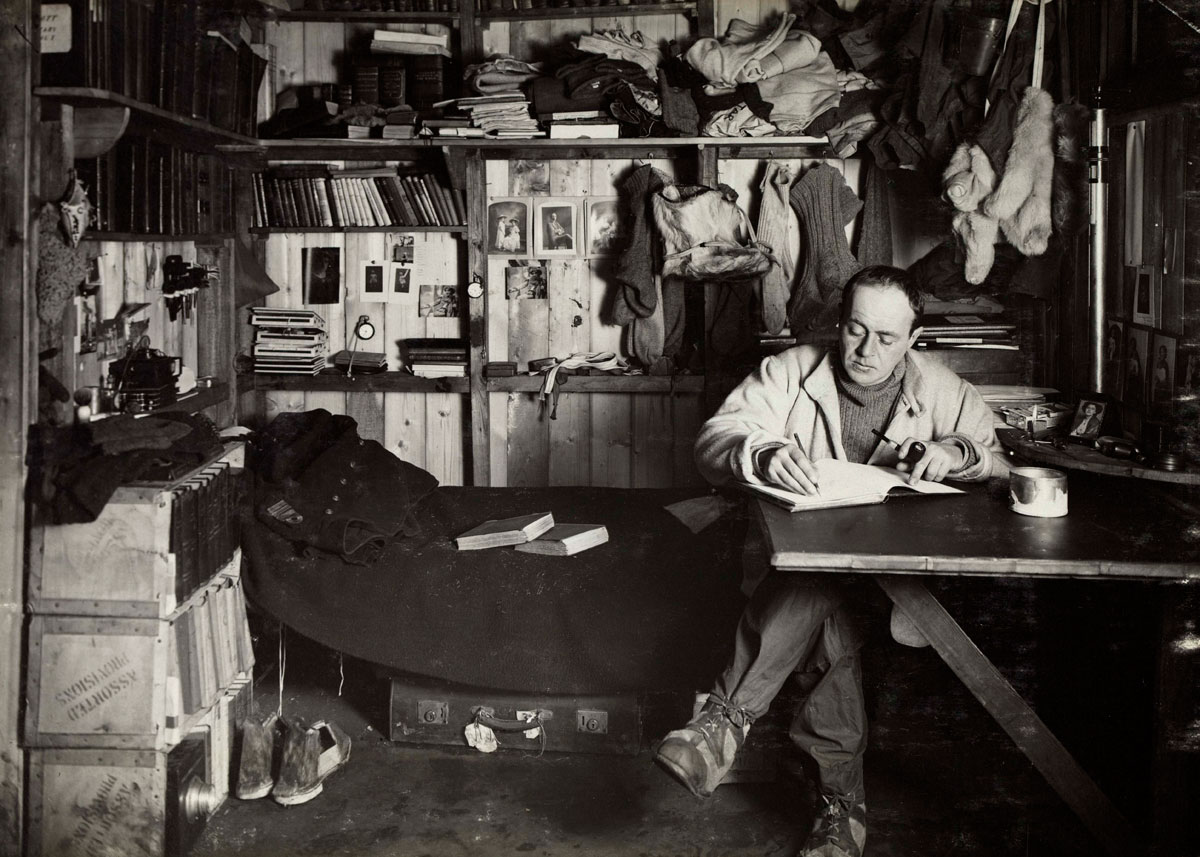
 

Herbert Ponting (British, 1870-1935) 'Scott writing in his area of the expedition hut, Scott's cubicle' 7 October 1911


Herbert Ponting (British, 1870-1935)
Scott writing in his area of the expedition hut, Scott’s cubicle
7 October 1911
Presented to King George V, 1914
© 2011 Her Majesty Queen Elizabeth II


Captain Robert F. Scott, sitting at a table in his quarters, writing in his diary, during the British Antarctic Expedition.
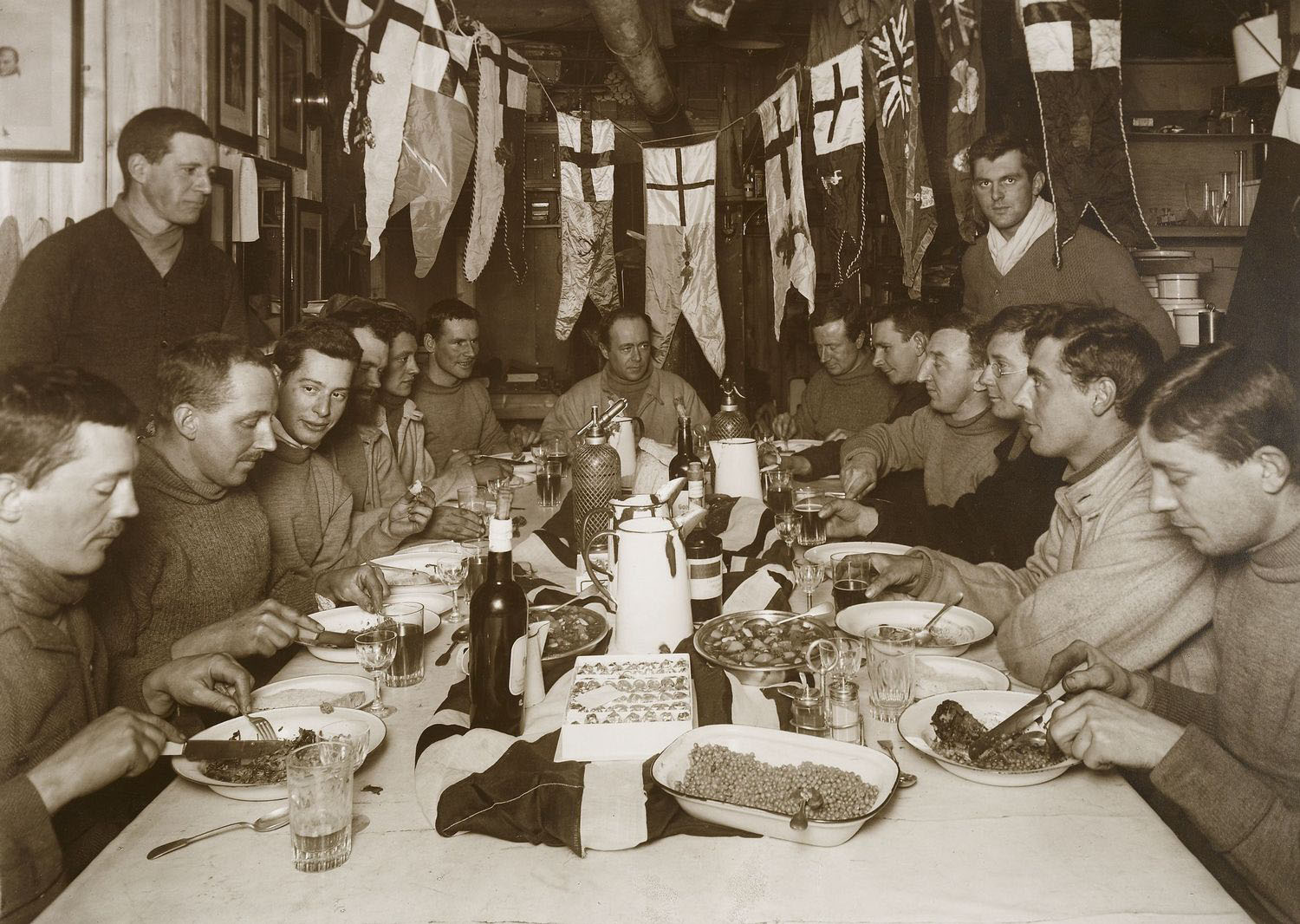
 

Herbert Ponting (British, 1870-1935) 'Scott's birthday dinner' June 1911


Herbert Ponting (British, 1870-1935)
Scott’s birthday dinner
June 1911
Toned silver bromide print
43.6 x 61cm
Presented to King George V, 1914
© 2011 Her Majesty Queen Elizabeth II


Photograph of the Officer’s table for Captain Scott’s birthday dinner with a variety of food and drink laid out on the table. The men are celebrating Scott’s 43rd birthday – his last – on 6 June 1911. He sits at the head of the table, and is surrounded by the officers and senior members of the team. The only man looking at the camera is the Norwegian naval officer Tryggve Gran (1889-1980). The atmosphere is both festive and patriotic.


Herbert Ponting (British, 1870-1935) 'Vida' 1911


Herbert Ponting (British, 1870-1935)
Vida
1911
Toned silver bromide print
38.0 x 27.5cm
Presented to King George V, 1914
© 2011 Her Majesty Queen Elizabeth II


Photograph of Vida. One of Scott’s favourite dogs, Vida suffered from a bad coat and would creep up to Scott for attention. Scott noted in his diary that initially the dog would growl at him but eventually his suspicion grew less: ‘He is a strange beast – I imagine so unused to kindness that it took him time to appreciate it’.
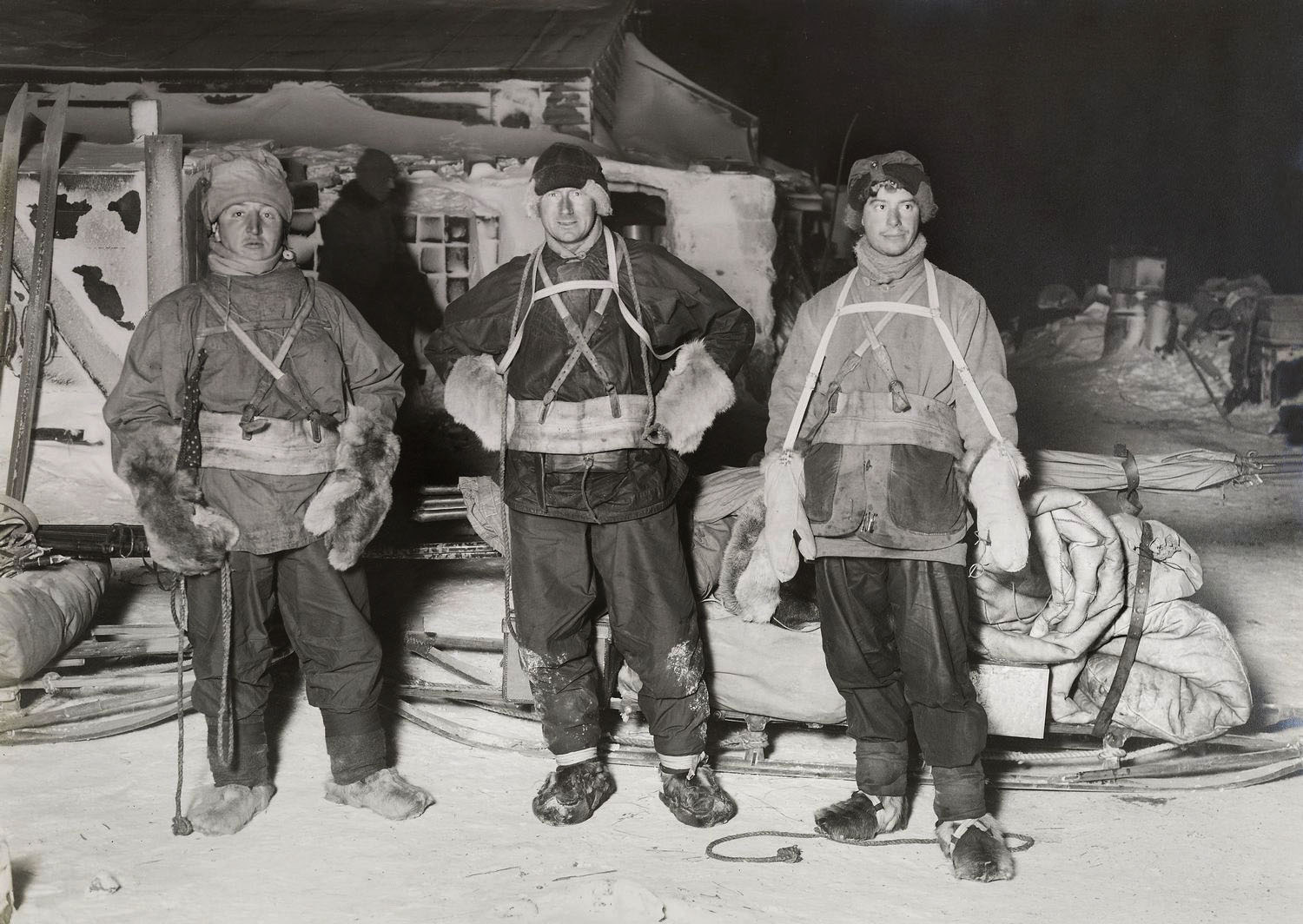
 

Herbert Ponting (British, 1870-1935) 'The winter journey to Cape Crozier' June 1911


Herbert Ponting (British, 1870-1935)
The winter journey to Cape Crozier
June 1911
Silver bromide print
43.7 x 61cm
Presented to King George V, 1914
© 2011 Her Majesty Queen Elizabeth II


Henry Bowers (1883-1912), Edward Wilson (1872-1912) and Apsley Cherry-Garrard (1886-1959) are shown shortly before departing for Cape Crozier in search of Emperor penguin eggs. Between 27 June and 1 August, the trio endured extreme weather conditions and winter darkness as they crossed Ross Island and then returned, having collected three eggs. Cherry-Garrard famously described it as ‘the worst journey in the world’.


Royal Collection: ‘The weirdest bird’s-nesting expedition that has ever been’ – Part Two

In the second in this series of talks, Royal Collection curator Emma Stuart takes us on a journey with three intrepid explorers as they faced the hostile conditions of the Antarctic to recover an Emperor Penguin’s egg.
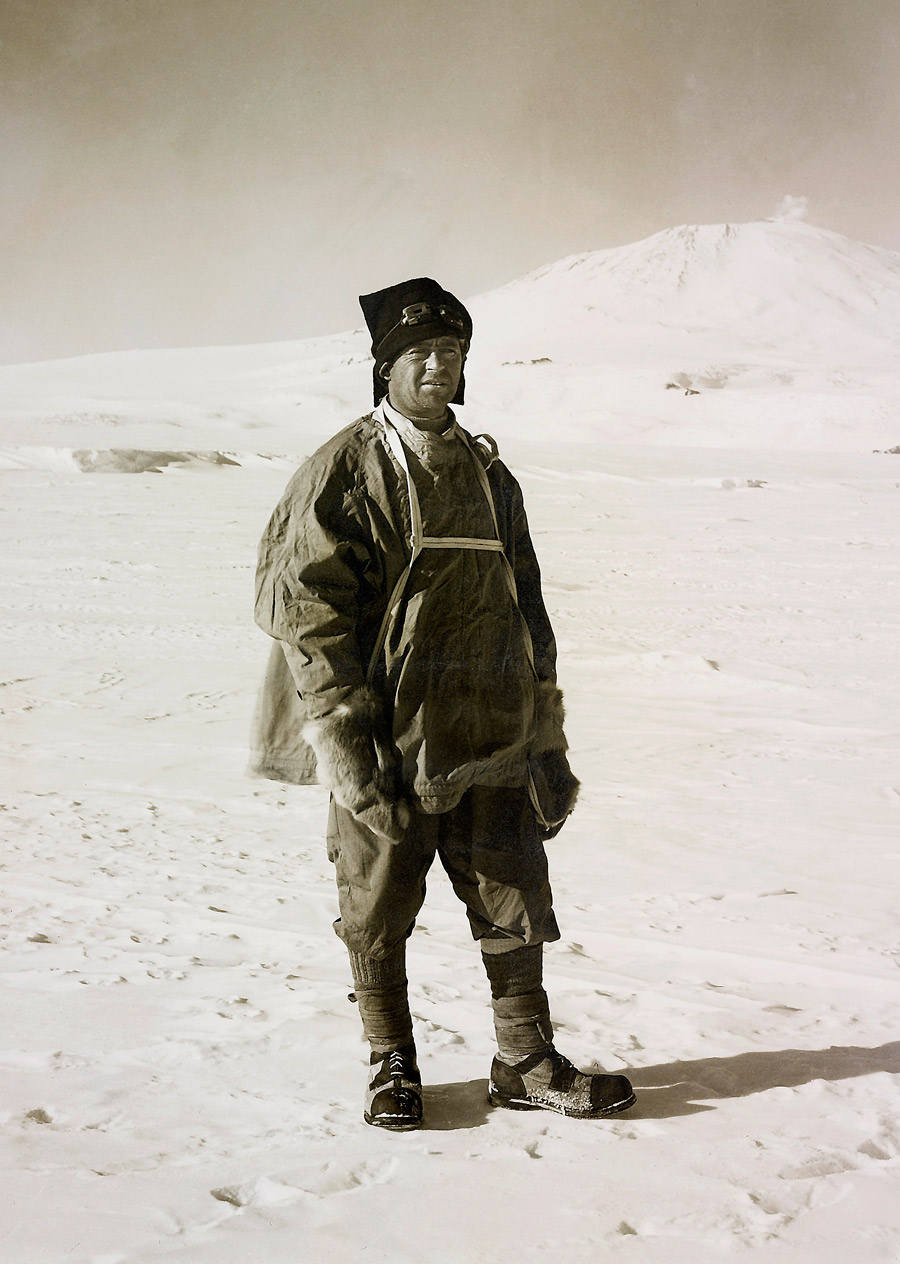
 

Herbert Ponting (British, 1870-1935) 'Captain Scott' February 1911


Herbert Ponting (British, 1870-1935)
Captain Scott
February 1911
Presented to King George V, 1914
© 2011 Her Majesty Queen Elizabeth II


This photograph of Scott, with Mount Erebus in the background, was taken at the start of the expedition. He is wearing fur gloves with an attached cord, leather boots, gaiters and thick socks.
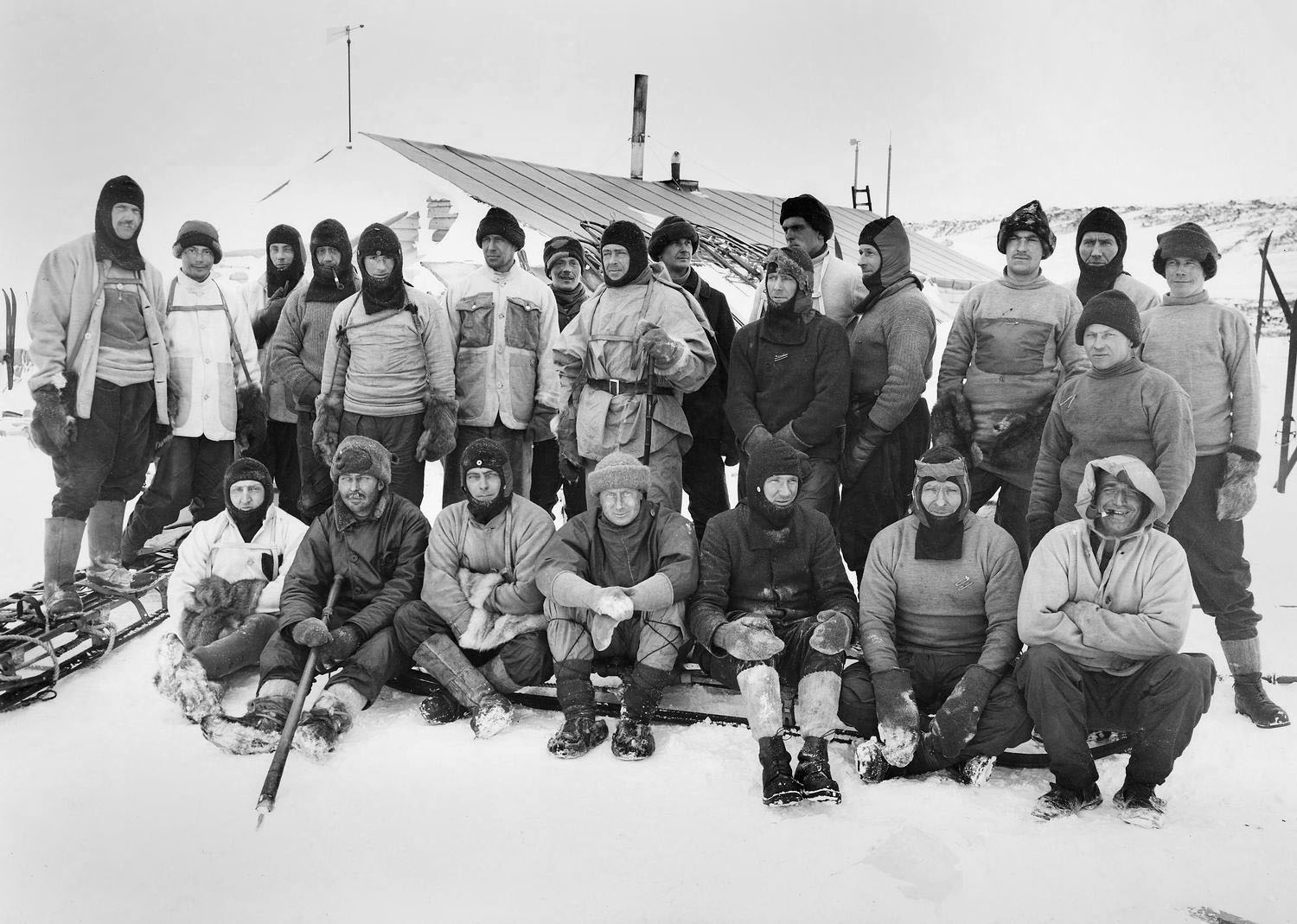
 

Herbert Ponting (British, 1870-1935) 'The Shore Party' Jan 1911


Herbert Ponting (British, 1870-1935)
The Shore Party
Jan 1911
Silver bromide print
43.6 x 61.9cm
Presented to King George V, 1914
© 2011 Her Majesty Queen Elizabeth II


Photograph of the Shore party. On the back row are (from left to right): T. Griffith Taylor; Apsley Cherry-Garrard; Bernard Day; Edward Nelson; Edward Evans; Lawrence Oates; Edward Atkinson; Robert Falcon Scott; Charles Wright; Patrick Keohane; Tryggve Gran; William Lashly; Frederick Hooper; Robert Forde; Anton Omelchenko; Dimitri Gerov. On the front row are (from left to right): Henry Bowers; Cecil Meares; Frank Debenham; Edward Wilson; George Simpson; Edgar Evans and Tom Crean. This group is the Shore Party – the men who remained in Antarctica throughout the winter of 1911, preparing for Scott’s final departure for the Pole. They pose in front of the expedition hut at Cape Evans. The only people not visible are Clissold, the cook, and Ponting, the photographer. Scott is at the centre of the group and all the men look relaxed. This was taken at the very beginning of the expedition, when they would have been optimistic and excited about the future.


Henry Bowers (British, 1883-1912) 'Forestalled. Amundsen's tent at the South Pole' 18 Jan 1912


Henry Bowers (British, 1883-1912)
Forestalled. Amundsen’s tent at the South Pole
18 Jan 1912
Silver bromide print
27.5 x 38cm
Presented to King George V, 1914
© 2011 Her Majesty Queen Elizabeth II


Photograph of Scott’s party at Amundsen’s tent at the South Pole. (from left to right are): Robert Falcon Scott (1868-1912); Lawrence Oates (1880-1912); Edward Wilson (1872-1912) and Edgar Evans (1876-1912). This photograph shows the dejection of the team as they explore the tent left by Roald Amundsen, who reached the South Pole on 14 December 1911, thirty-five days before Scott. There is a Norwegian flag at the top of the tent; inside, Scott found a letter recording their achievement, left by Amundsen in case he did not return safely.
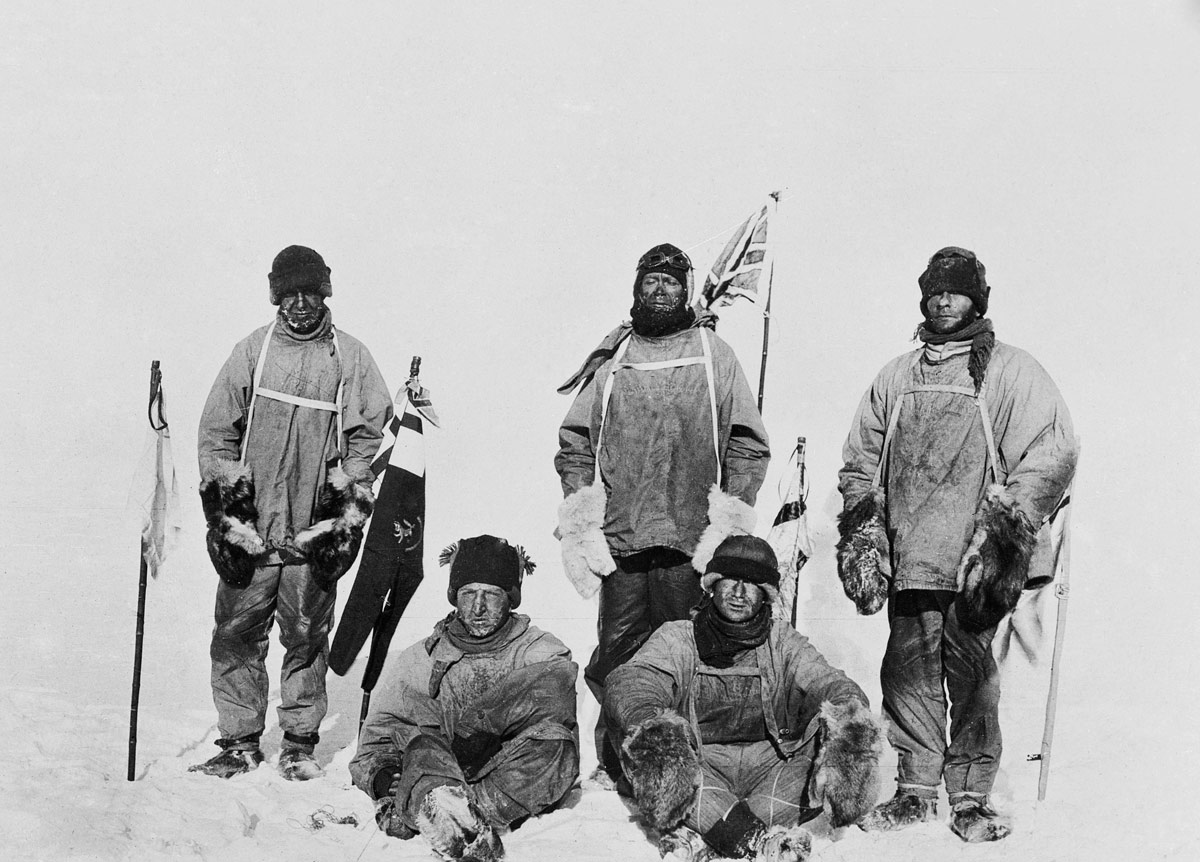
 

Henry Bowers (British, 1883-1912) 'Scott and the Polar Party at the South Pole' 17 January 1912


Henry Bowers (British, 1883-1912)
Scott and the Polar Party at the South Pole
17 January 1912
Presented to King George V, 1914
© 2011 Her Majesty Queen Elizabeth II


Imperial Transantarctic Expedition 1914-1916

Shackleton set out in October 1914 on the Endurance with the intention of making the first crossing of the Antarctic continent via the South Pole. While he and his men planned to reach Antarctica through the Weddell Sea, another party aboard the Aurora sailed to the other side of the continent to lay food depots for the expected party.

The intention was that only six men would complete the crossing; the photographer Frank Hurley was to be one of the team. Hurley had been to the Antarctic before, as part of the Australasian Expedition of 1911-1914. He was intrepid in his search for dramatic images. The role of photographer was important not just to document the achievements of the expedition, but also to create a source of income. The rights to publish the images would be sold for a great deal of money after the return to Britain.

The expedition ran into difficulties almost immediately. By mid-January 1915, Endurance became trapped in ice and had to become a floating scientific station. The men waited out the harsh Antarctic winter in the hope that their situation would improve.

Text from the Royal Collection Trust website
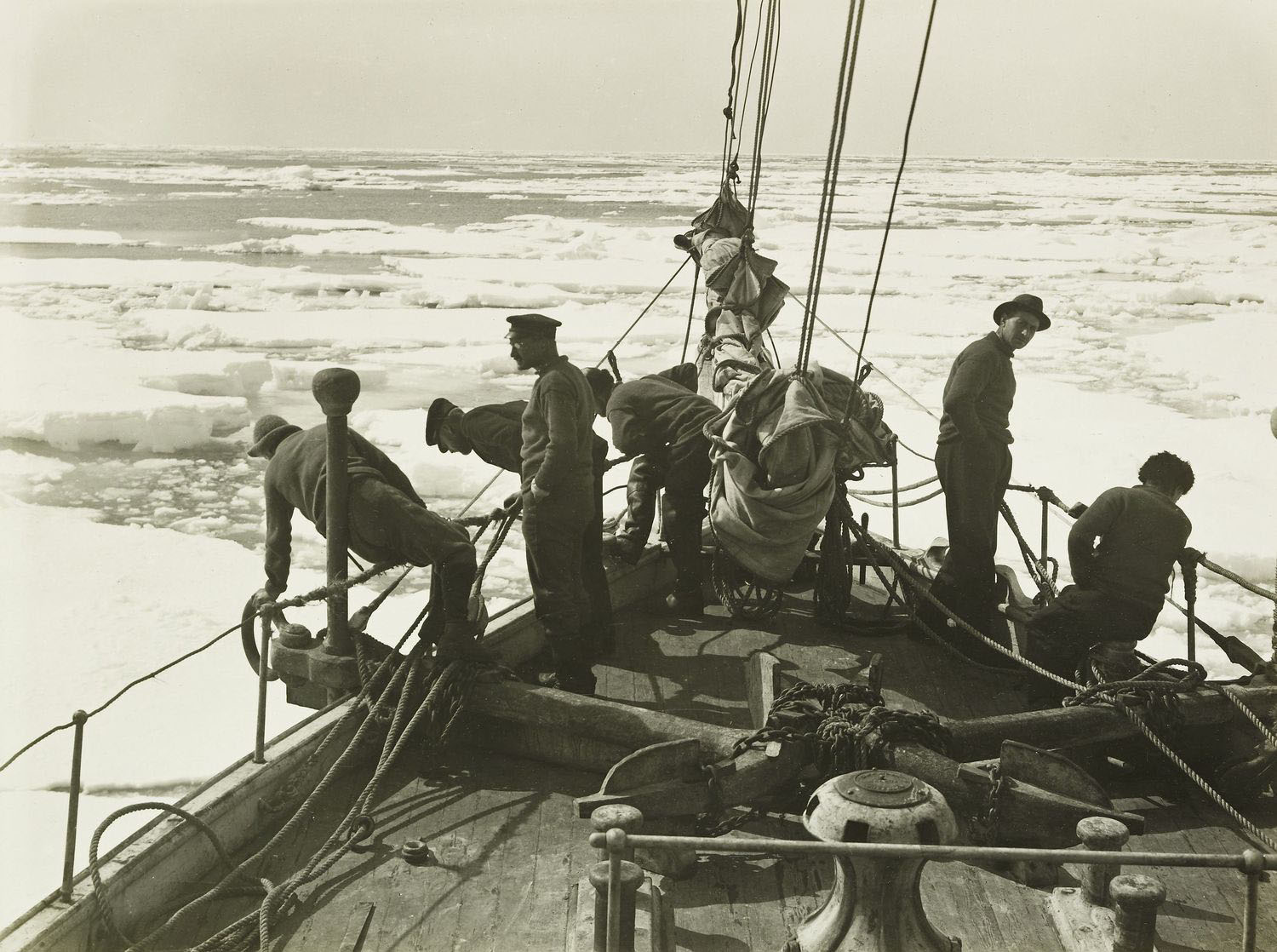
 

Frank Hurley (Australian, 1885-1962) 'Entering the pack ice. Weddell Sea, lat. 57° 59' S. long. 22° 39' W' 9 Dec 1914


Frank Hurley (Australian, 1885-1962)
Entering the pack ice. Weddell Sea, lat. 57° 59′ S. long. 22° 39′ W
9 Dec 1914
Silver bromide print
15.3 x 20.5cm
Presented to King George V, 1914
© 2011 Her Majesty Queen Elizabeth II


Photograph of six members of Shackleton’s crew standing on the deck of Endurance. This was the men’s first view of the pack ice through which they had to navigate in order to reach the coast of Antarctica. The Endurance met the ice far further north than they had hoped. The whalers on South Georgia had warned them of the poor ice conditions before they set out. This was a warning of things to come.


Frank Hurley (Australian, 1885-1962) 'Self-portrait with cinematograph next to the Endurance' 1915


Frank Hurley (Australian, 1885-1962)
Under the bow of the Endurance
Self-portrait with cinematograph next to the Endurance

1915
Presented to King George V, 1914
© 2011 Her Majesty Queen Elizabeth II


Hurley poses with his cinematograph, which was used to shoot moving film footage. The footage was later turned into a film released after his return under the name of In the Grip of the Polar Pack Ice.
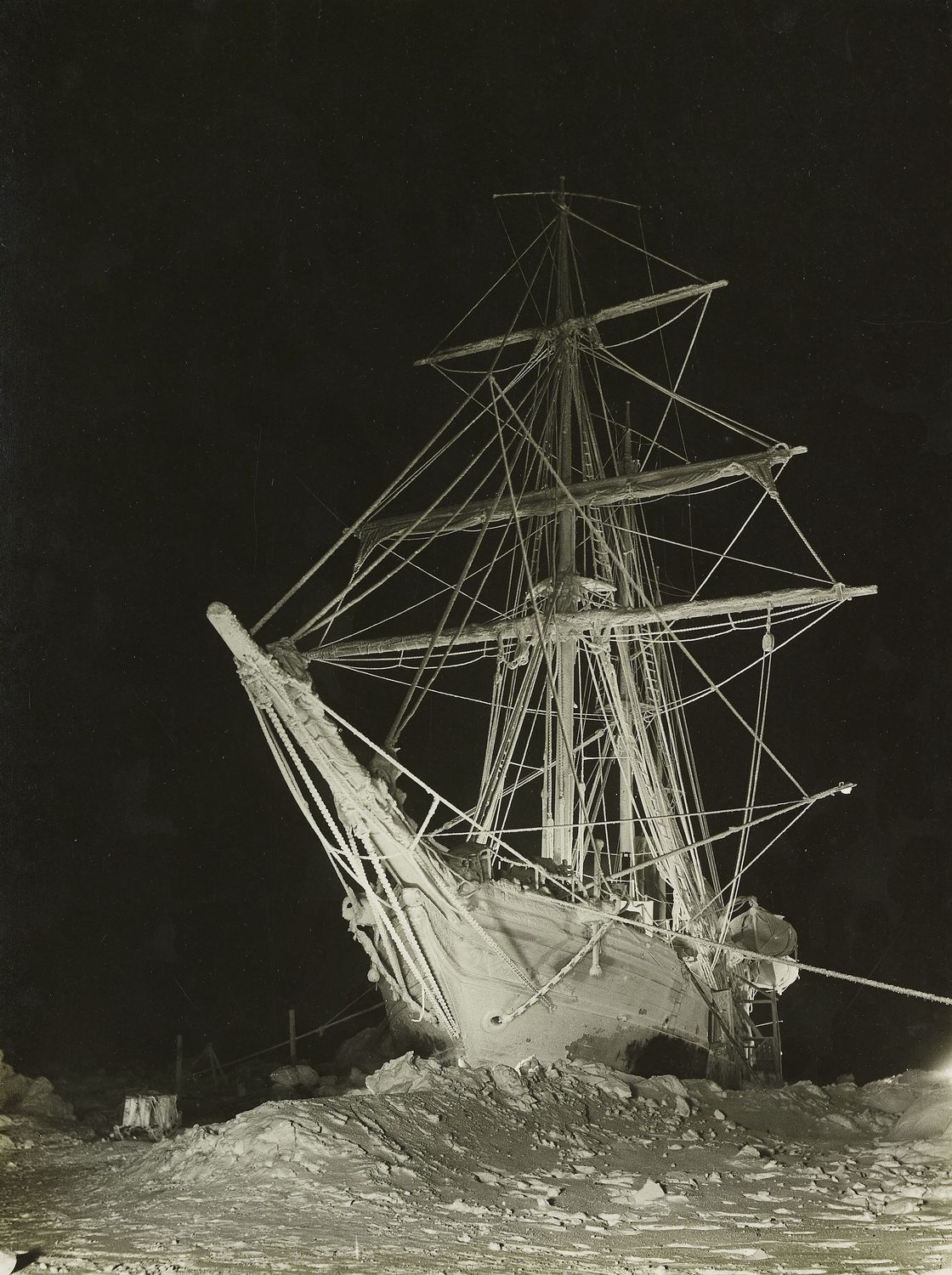
 

Frank Hurley (Australian, 1885-1962) 'The Endurance in the garb of winter' June 1915


Frank Hurley (Australian, 1885-1962)
The Endurance in the garb of winter
June 1915
Silver bromide print
20.2 x 15.2cm
Presented to King George V, 1914
© 2011 Her Majesty Queen Elizabeth II


Endurance sits benignly at rest in the midst of the ice field. A recent blizzard has coated the hummocks in a layer of snow, softening the contours. All looks peaceful, but within a few months these same hummocks will have crushed the ship.

Photograph of the bow and part of the left side of Endurance, lit by flashlight in the darkness of the night. This is probably Hurley’s best-known photograph, which he took with flashlights at -38 °F/-39 °C. It was later used on the front cover of Shackleton’s account of the expedition, South. Hurley described the scene in his autobiography: Never did the ship look quite so beautiful as when the bright moonlight etched her in inky silhouette, or transformed her into a vessel from fairy-land.
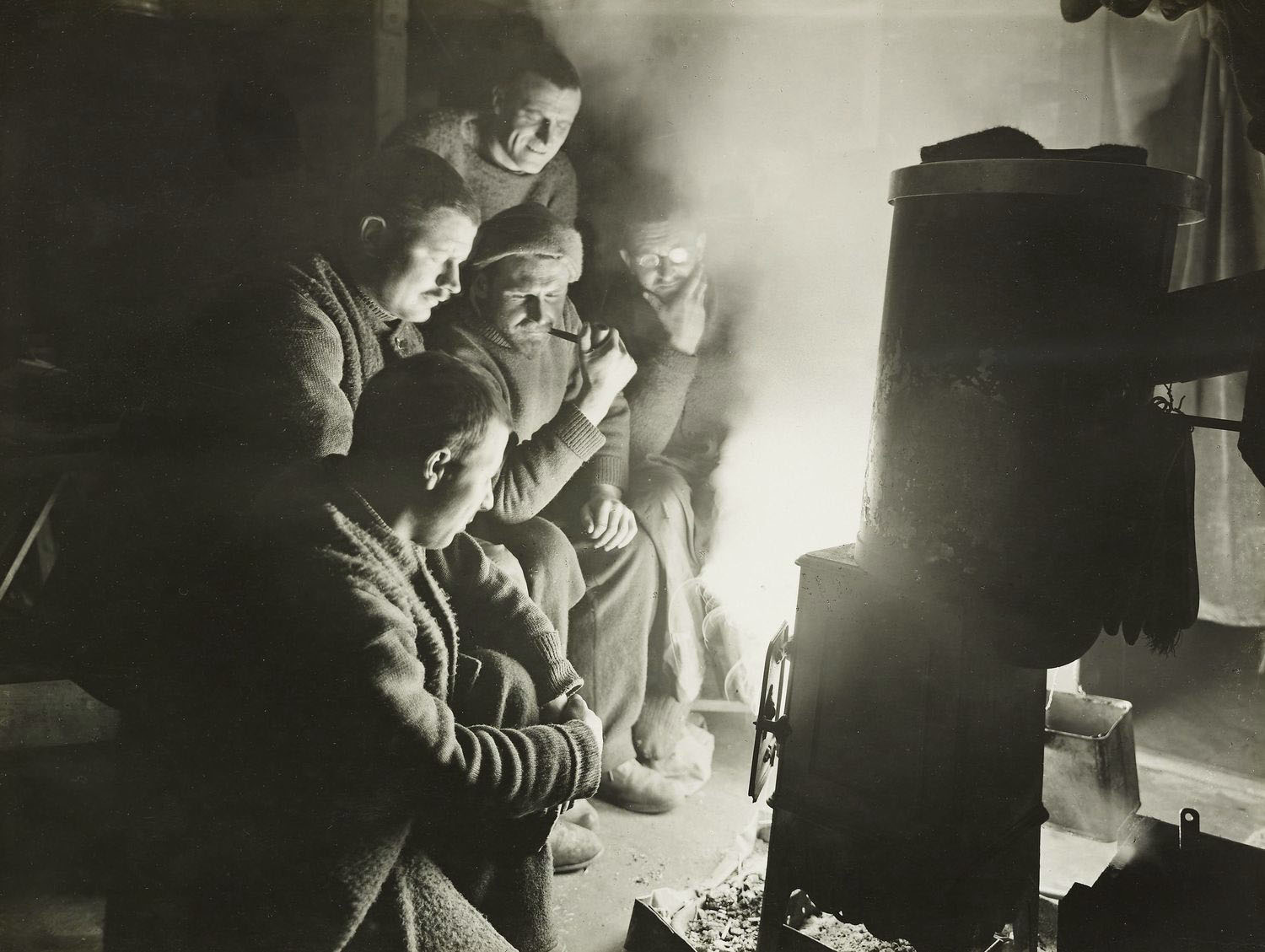
 

Frank Hurley (Australian, 1885-1962) 'The night watchman spins a yarn' 1915


Frank Hurley (Australian, 1885-1962)
The night watchman spins a yarn
1915
Gelatin silver print
Presented to King George V, 1914
© 2011 Her Majesty Queen Elizabeth II


After Endurance became a winter station in February 1915, Shackleton abandoned the usual system of watches. The single nightwatchman had little to do, apart from tending the dogs and observing ice movements. It was private leisure time, to read, or do some washing, but often became a social occasion as shown here, as the men gather companionably round the fire.
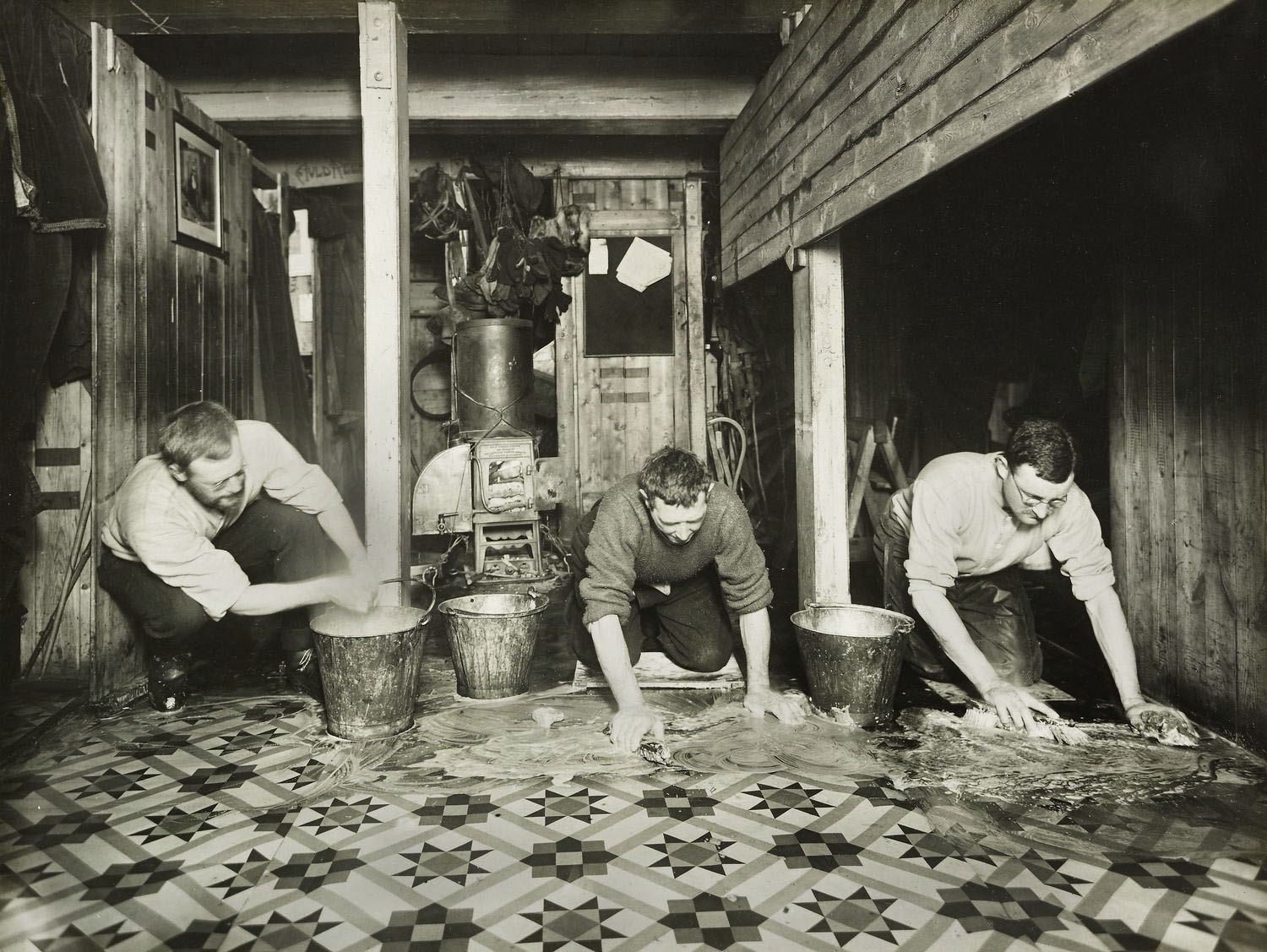
 

Frank Hurley (Australian, 1885-1962) 'The bi-weekly ablutions of the 'Ritz'' 1915


Frank Hurley (Australian, 1885-1962)
The bi-weekly ablutions of the ‘Ritz’
The Scientists washing down the “Ritz” (living quarters in the hold)

James Wordie, Alfred Cheetham and Alexander Macklin, washing down the ‘Ritz’ living quarters in the hold of the Endurance
1915
Gelatin silver print
© 2011 Her Majesty Queen Elizabeth II


Following the onset of winter and the transformation of Endurance into a scientific station, the main cargo hold was emptied and turned into a communal living space for the men, nicknamed the ‘Ritz’. The traditional Antarctic Christmas on Midwinter’s Day (22 June) saw the ‘Ritz’ transformed for a cabaret, featuring satirical speeches, songs, poems and even a drag act. From left to right are Wordie (1889-1962), Cheetham (1867-1918) and Macklin (1889-1967).


Frank Hurley (Australian, 1885-1962) 'Sir Ernest Shackleton arrives at Elephant Island to take off marooned men' 30 August 1916


Herbert Ponting (British, 1870-1935)
Sir Ernest Shackleton arrives at Elephant Island to take off marooned men
30 August 1916
Presented to King George V, 1914
© 2011 Her Majesty Queen Elizabeth II


This photograph was actually taken at the time of the ‘James Caird’s’ departure on 24 April. Hurley has altered it to represent the moment of rescue, with the arrival of Shackleton on the ‘Yelcho’. The actual rescue was not photographed.


The Royal Collection
The Queen’s Gallery, Buckingham Palace
London SW1A 1AA

Opening hours:
Thursday – Monday 10.00 – 17.30

The Queen’s Gallery website

LIKE ART BLART ON FACEBOOK

Back to top

Exhibition: ‘Adam Fuss A Survey of his Work: 1986/2010’ at Huis Marseille Museum for Photography, Amsterdam

Exhibition dates: 11th June – 4th September 2011


Many thankx to the Huis Marseille Museum for allowing me to publish the text and photographs in the posting. Please click on the photographs for a larger version of the image.


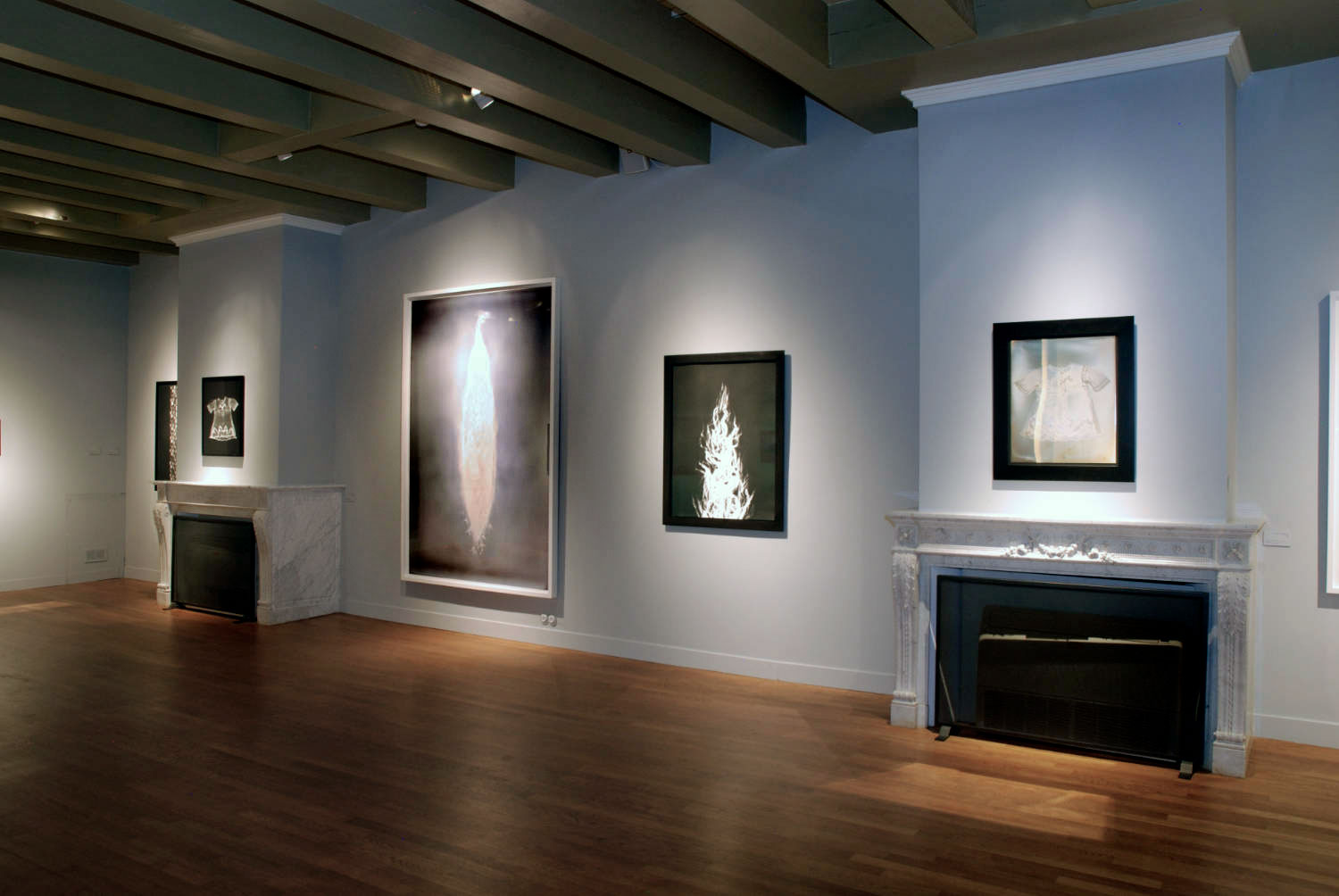
Installation view of the exhibition 'Adam Fuss A Survey of his Work: 1986/2010' at Huis Marseille Museum for Photography, Amsterdam showing at right, 'Untitled' (1999) from the series 'My Ghost'


Installation view of the exhibition Adam Fuss A Survey of his Work: 1986/2010 at Huis Marseille Museum for Photography, Amsterdam showing at right, Untitled (1999, below) from the series My Ghost


Adam Fuss (British, b. 1961) From the series 'My Ghost' 1999


Adam Fuss (British, b. 1961)
Untitled
1999
From the series My Ghost
Gelatine silver print photogram
195.3 x 141.3cm
Unique piece
Courtesy Cheim & Read, New York
© Adam Fuss


Installation view of the exhibition 'Adam Fuss A Survey of his Work: 1986/2010' at Huis Marseille Museum for Photography, Amsterdam showing at second right, 'Untitled' (1999) from the series 'My Ghost'


Installation view of the exhibition Adam Fuss A Survey of his Work: 1986/2010 at Huis Marseille Museum for Photography, Amsterdam showing at second right, Untitled (1999, below) from the series My Ghost


Adam Fuss (British, b. 1961) From the series 'My Ghost' 1999


Adam Fuss (British, b. 1961)
Untitled
1999
From the series My Ghost
Platinum print photogram
100.3  x 76.2cm
Unique piece
Courtesy Cheim & Read, New York
© Adam Fuss


Installation view of the exhibition 'Adam Fuss A Survey of his Work: 1986/2010' at Huis Marseille Museum for Photography, Amsterdam showing at left, 'Untitled' (2003)


Installation view of the exhibition Adam Fuss A Survey of his Work: 1986/2010 at Huis Marseille Museum for Photography, Amsterdam showing at left, Untitled (2003, below)


Adam Fuss (British, b. 1961) 'Untitled' 2003 Digital pigment print


Adam Fuss (British, b. 1961)
Untitled
2003
Digital pigment print
182.9 x 111.8cm
Edition 6/7
Courtesy Cheim & Read, New York
© Adam Fuss


Adam Fuss (British, b. 1961) 'Untitled' 1998 Cibachrome photogram


Adam Fuss (British, b. 1961)
Untitled
1998
76.2 x 101.6cm
Private Collection
© Adam Fuss


Adam Fuss (British, b. 1961) 'Invocation' 1992


Adam Fuss (British, b. 1961)
Invocation
1992
Cibachrome photogram
101.6 x 76.2cm
Unique piece
Courtesy Cheim & Read, New York
© Adam Fuss


Distance

What immediately stands out with the work of Adam Fuss is that, both in terms of the chosen subject matter and in his approach to the photographic technique, he has greatly dissociated himself from conventional photography. That which Fuss produces is, in fact, still a photograph; but in order to achieve that, he did rid himself of all the finer luxuries available to users of the medium nowadays. Like a present-day alchemist, Fuss has mastered the medium’s most elementary and primitive forms; he sees just as much potential for creativity in technical knowledge as in the imagination, or the visionary power of the photographer.

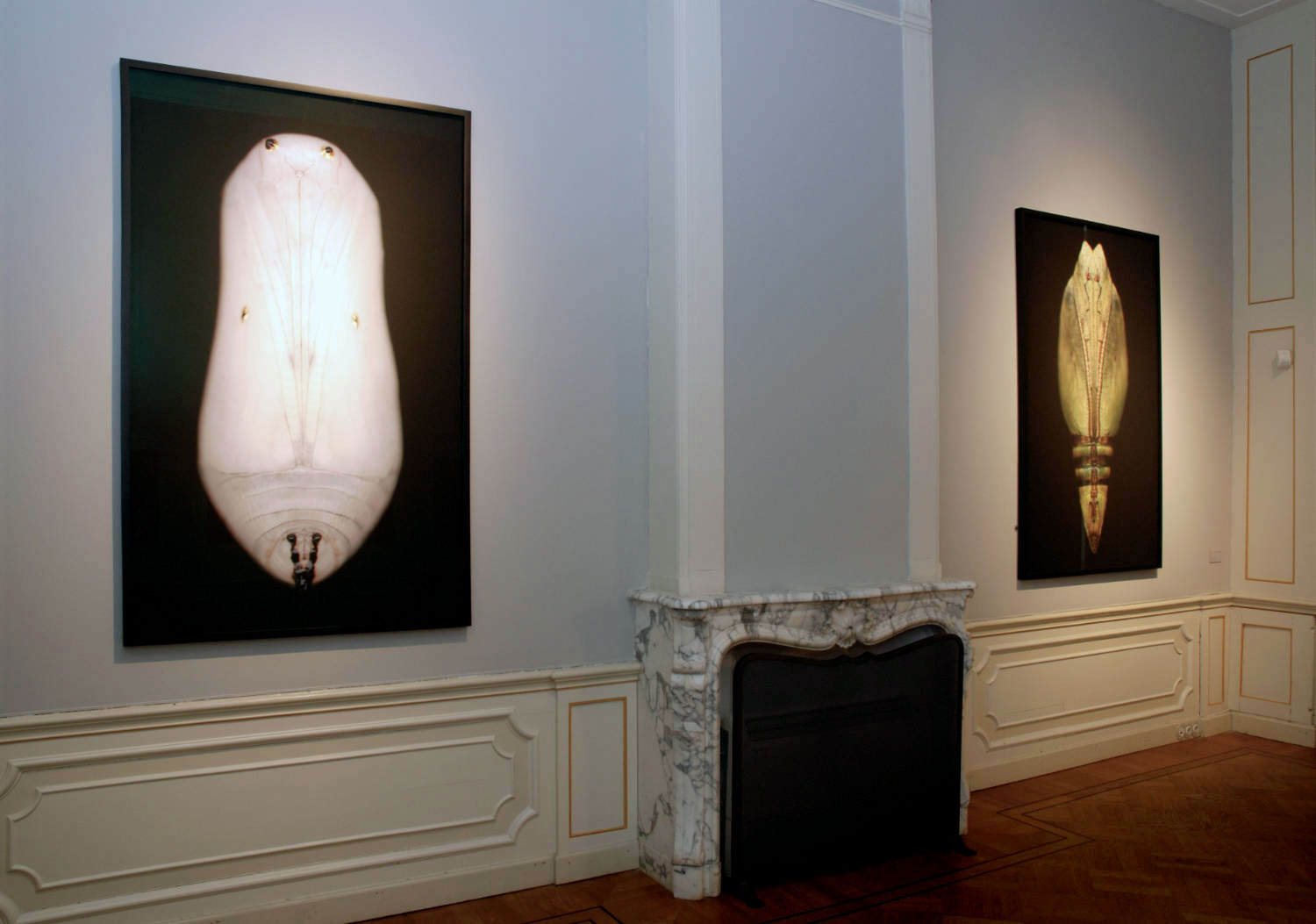
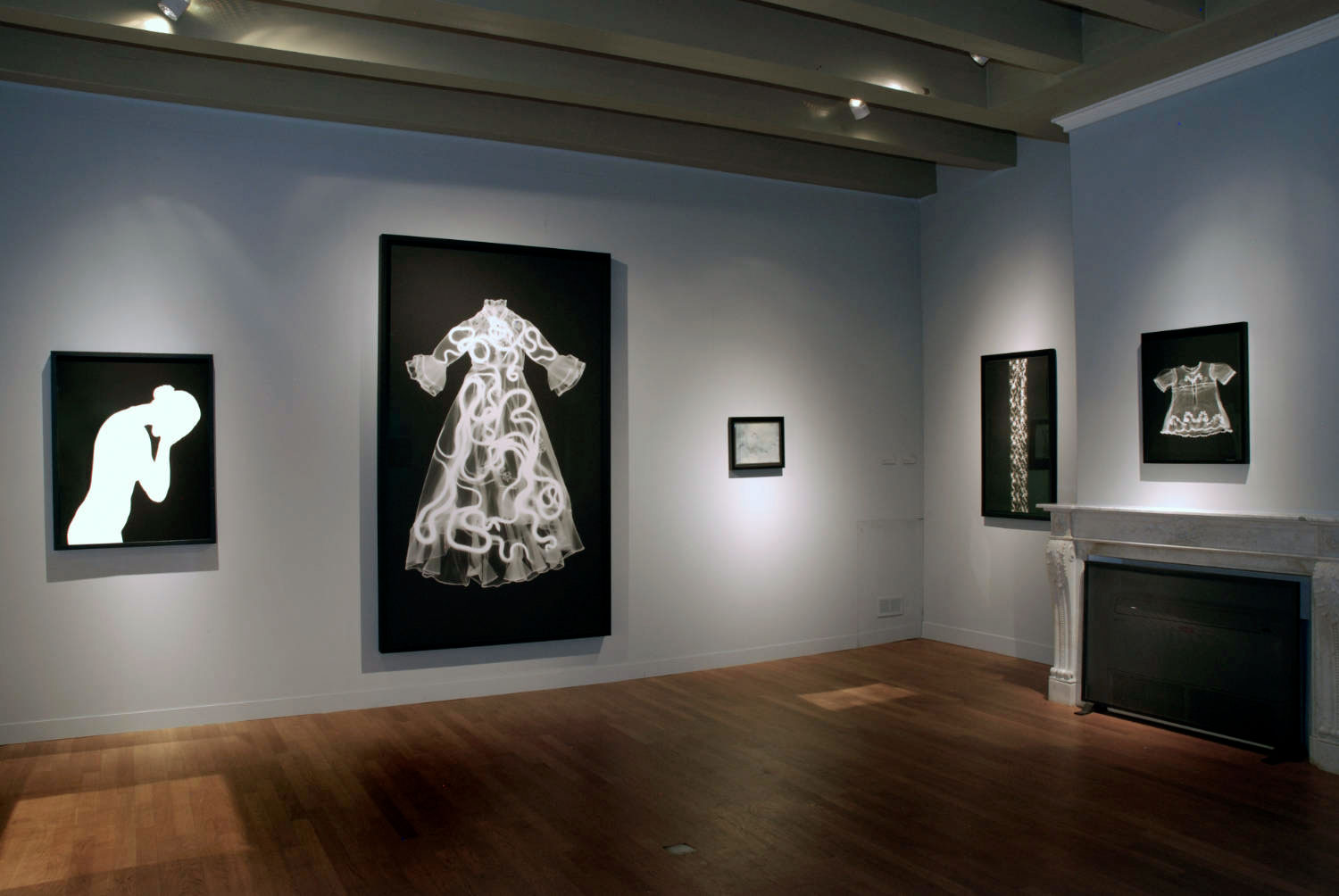
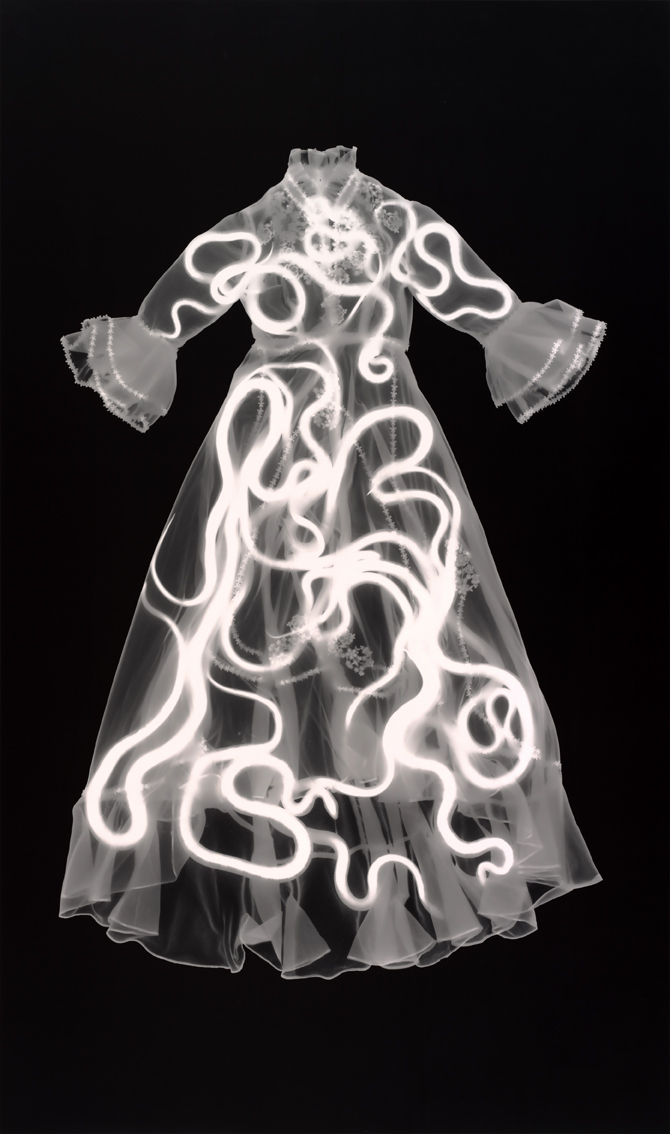
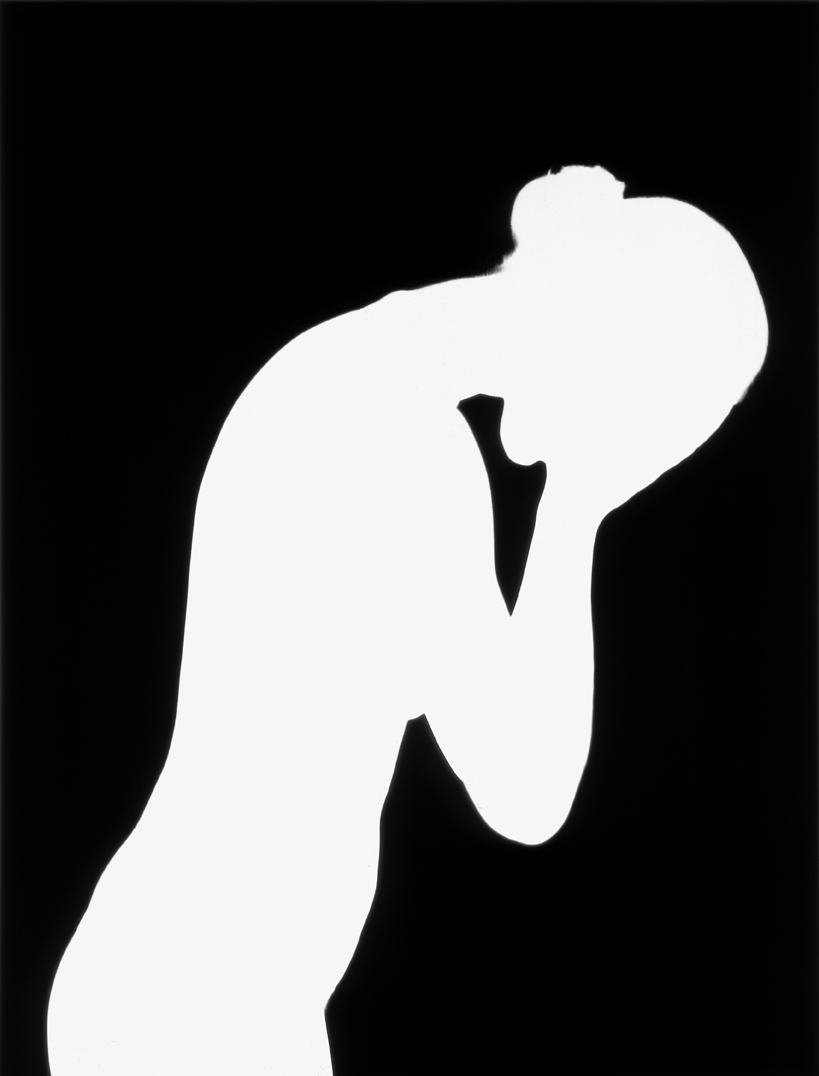
His subjects (silhouettes, gossamer christening gowns, rabbits, butterflies, snakes, lace, smoke, drops of water) have also been removed from their natural habitats. In the studio they become so epitomised that they assume the strength and quality of a symbol, or icon, fraught with emotion. Fuss seems, figuratively speaking, to have given wings to his images: they have a weightless and elusive appearance, as though being supernatural in origin and import.

Bipolarity

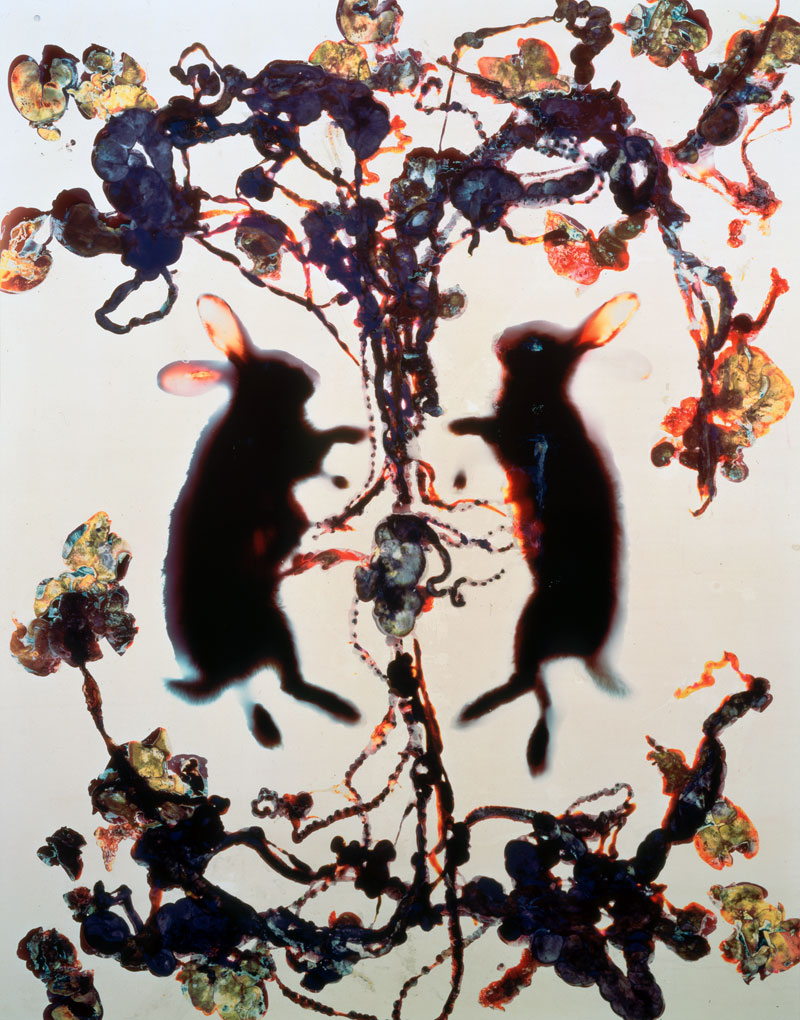
Though ostensibly sublime, the work’s impact on the viewer is nevertheless one of predominantly earthly beauty. This may be a consequence of the bipolarity that lies at the heart of it. All of Fuss’s endeavours have a twofold focus: on matter and mind, on earth or water and the dynamics of fire or air – in short, on vital forces in relation to space and history. Sometimes, as a true photographic magician, he allows the vital fluids of animals (snakes, rabbits) literally to corrode the silver salts of the light-sensitive photographic emulsions. As though trying to allow the image and its model to share the same source of life.

In his technique as well, Fuss wants to reconcile, to connect, past and present. With this he goes back, through experimentation, to the source. Here and there his printing technique is reminiscent of the zeal and the limitations with which Daguerre and Fox Talbot, the disputed founders of photography, wanted to put their discoveries into practice. In the course of time, he came to master the various old and highly complex processes – that of the daguerreotype, the calotype, the photogram, the platinum print – to a degree that remains unsurpassed. Each of these works is unique, and their technical standard is unparalleled. Fuss’s accomplishments include the making of the world’s largest daguerreotypes. (Both daguerreotypes of the Taj Mahal on display here can be counted among these.)

‘Poetic Genius’

Throughout his work Adam Fuss seeks the very essence of the image; to him that lies particularly at the point where an observation of reality is so intensified that it takes on magical powers, so to speak. His outlook on this comes from the notion of ‘Poetic Genius’ expressed by the British poet, writer, engraver and painter William Blake (1757-1827). It seems that Fuss’s idea of producing daguerreotypes of poems and incorporating them into his work also began with Blake.

In Fuss’s extensive 1998 interview with Mark Haworth Booth (then Curator of Photography at the Victoria & Albert Museum in London) he explained this in relation to his photographs of babies in water, saying that the colour photographs are actually not about an individual, a child. The titles Invocation, Journey, Wish have more to do with emotional, romantic ideas. What the image conveys is a feeling, a sensibility. This is no depiction of a baby in water, even though it may be that as well.

Fuss has an incomparable command of the photogram technique. Since 1988 he has been achieving astonishing results with this. The photogram is produced without a camera – and yields, by definition, a unique print. The physical and lifelike quality of these silhouettes is further heightened by the 1:1 scale on which this technique is based. The previously mentioned photographs of babies in water, from the series Invocation (a continuous series with silhouettes of children) are the earliest photograms shown here. Since 1999 Fuss has been making work which he titles My Ghost. Here the themes relate to memory, loss, but also images of remarkable beauty, such as those of peacock feathers. In this series his magnificent daguerreotypes play a leading role.

Press release from the Huis Marseille Museum


Adam Fuss (British, b. 1961) 'For Allegra' from the series 'My Ghost' 2009 Daguerreotype


Adam Fuss (British, b. 1961)
For Allegra
2009
From the series My Ghost
Daguerreotype
70 x 105cm
Collection Richard Edwards, Aspen, Colorado
© Adam Fuss


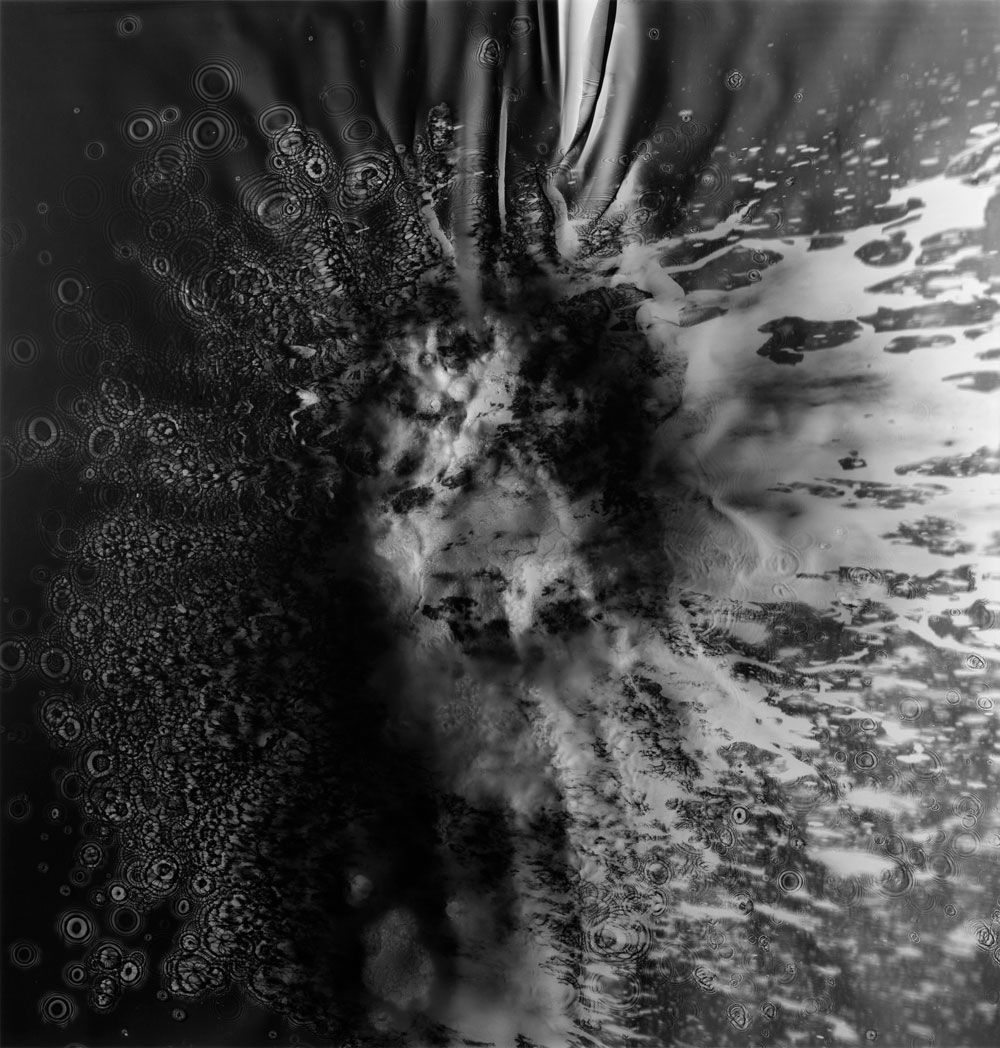
Adam Fuss (British, b. 1961) 'Untitled' 1988 Gelatin silver print photogram


Adam Fuss (British, b. 1961)
Untitled
1988
Gelatin silver print photogram
144.8 x 141cm
Unique piece
Collection Robin Katz
© Adam Fuss


Installation view of the exhibition 'Adam Fuss A Survey of his Work: 1986/2010' at Huis Marseille Museum for Photography, Amsterdam showing at left, 'Untitled' (1999) from the series 'My Ghost'; at second left, 'Medusa' (2010); and at right, 'Untitled' (1999) from the series 'My Ghost'


Installation view of the exhibition Adam Fuss A Survey of his Work: 1986/2010 at Huis Marseille Museum for Photography, Amsterdam showing at left, Untitled (1999, below) from the series My Ghost; at second left, Medusa
(2010, below); and at right, Untitled (1999, below) from the series My Ghost


Adam Fuss (British, b. 1961) From the series 'My Ghost' 1997


Adam Fuss (British, b. 1961)
Untitled
1997
From the series My Ghost
Gelatin silver print photogram
160 x 104.1cm
Collection Jan Widlund
© Adam Fuss


Adam Fuss (British, b. 1961) 'Medusa' from the series 'Home and the World' 2010


Adam Fuss (British, b. 1961)
Medusa
2010
From the series Home and the World
Gelatin silver print photogram
240 x 144.1cm
Edition of 9
Unique print
Courtesy Timothy Taylor Gallery, London
© Adam Fuss


Adam Fuss (British, b. 1961) From the series 'My Ghost' 1999


Adam Fuss (British, b. 1961)
Untitled
1999
From the series My Ghost
Gelatine silver print photogram
38 x 75cm
Unique piece
Collection John Cheim
© Adam Fuss


Adam Fuss (British, b. 1961) 'Love' 1993


Adam Fuss (British, b. 1961)
Love
1993
Cibachrome photogram
124.5 x 98.4cm
Unique piece
Courtesy Cheim & Read, New York
© Adam Fuss


Huis Marseille Museum for Photography
Keizersgracht 401
1016 EK Amsterdam

Opening hours:
Daily 10 – 18 hr

Huis Marseille Museum for Photography website

LIKE ART BLART ON FACEBOOK

Back to top

Exhibition: ‘A Ballad of Love and Death: Pre-Raphaelite Photography in Great Britain, 1848-1875’ at the Musée d’Orsay, Paris

Exhibition dates: 8th March – 29th May 2011


Julia Margaret Cameron – you are one of my heroes!


Many thankx to the Musée d’Orsay for allowing me to publish the photographs in the posting. Please click on the photographs for a larger version of the image.


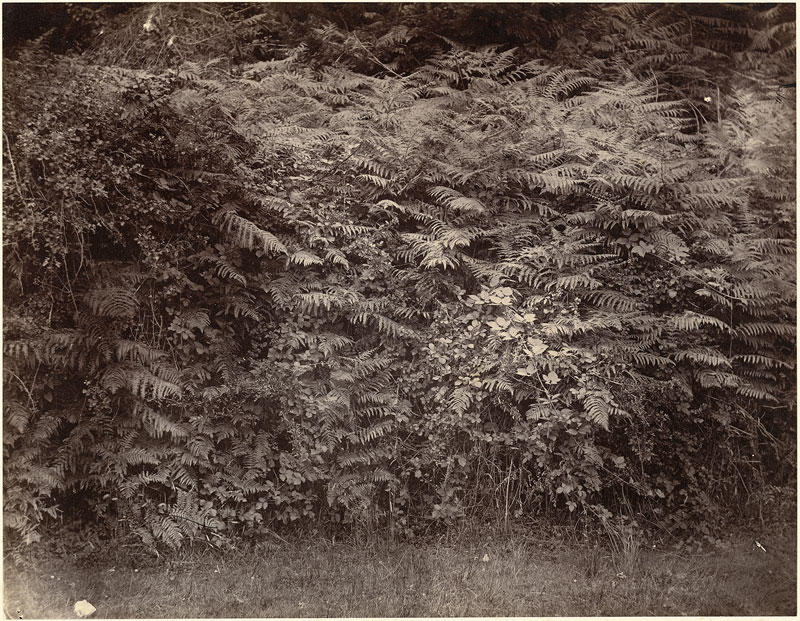
Henry White (British, 1819-1903) 'Ferns and brambles' 1856


Henry White (British, 1819-1903)
Fougères et ronces (Ferns and brambles)
1856
Albumen print
19.1 x 24.1cm
Collection particulière
© Droits réservés


John Ruskin (English, 1819-1900) 'Fribourg' 1859


John Ruskin (English, 1819-1900)
Fribourg
1859
Pencil, ink, watercolour and gouache on paper
22.5 x 28.7cm
London, The British Museum
© The Trustees of The British Museum. All rights reserved


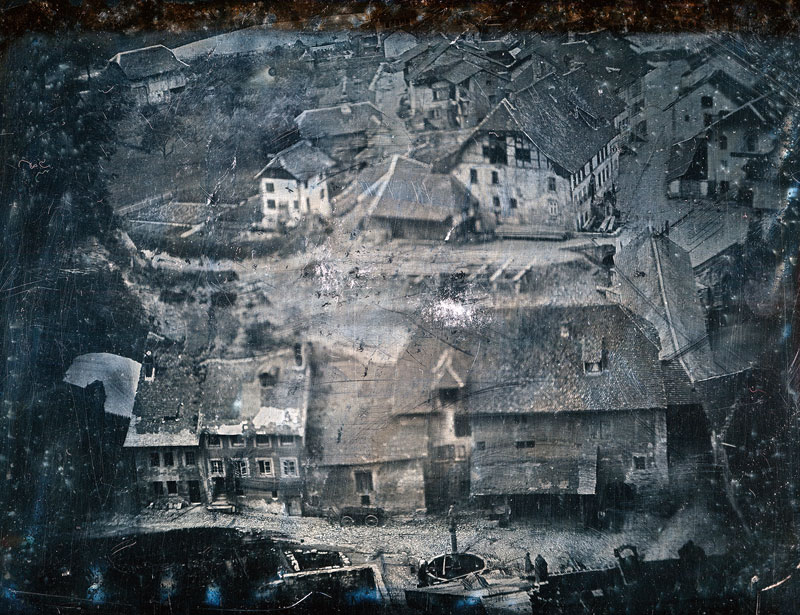
Frederick Crawley, under the direction of John Ruskin (English, 1819-1900) 'Fribourg, Switzerland, Palm Street and Berne Bridge' about 1854 or 1856


Frederick Crawley, under the direction of John Ruskin (English, 1819-1900)
Fribourg, Suisse, Rue de la Palme et Pont de Berne (Fribourg, Switzerland, Palm Street and Berne Bridge)
about 1854 or 1856
Daguerréotype
11.5 x 15.1cm
Angleterre, Courtesy K. and J. Jacobson
© Droits réservés


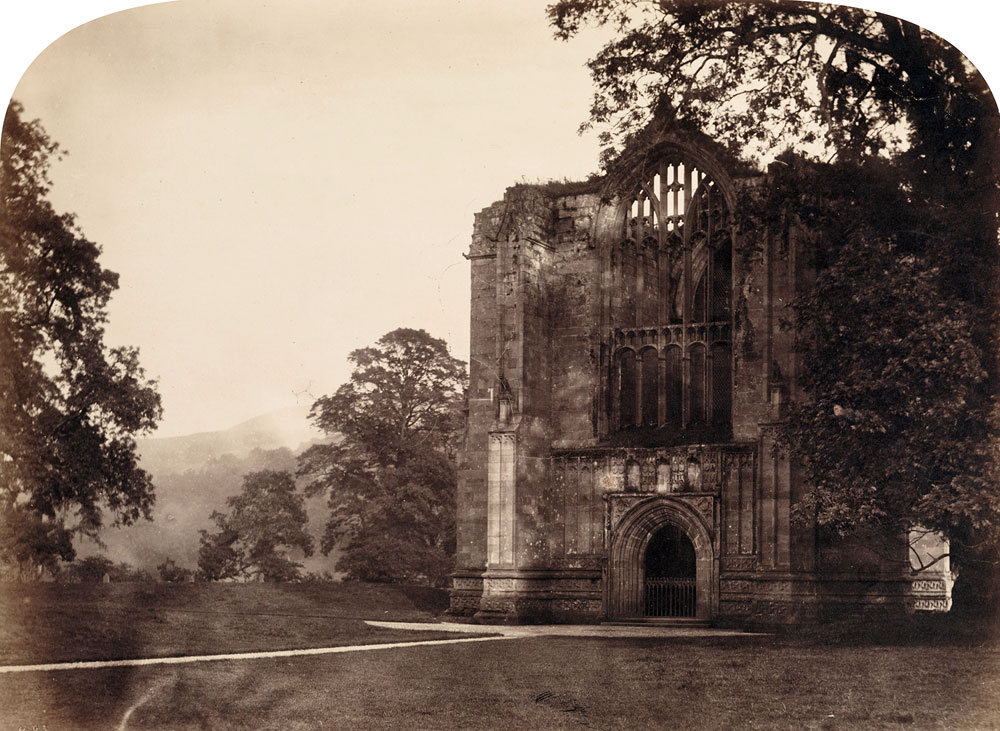
Roger Fenton (British, 1819-1869) 'Bolton Abbey' 1854


Roger Fenton (British, 1819-1869)
Bolton Abbey, West window
1854
Albumen print
25.1 x 34.5cm
Bradford, National Media Museum
© National Media Museum, Bradford/Science & Society Picture Library


John William Inchbold (English, 1830-1888) 'La Chapelle de Bolton Abbey' 1853


John William Inchbold (English, 1830-1888)
La Chapelle de Bolton Abbey (The Vault of Bolton Abbey)
1853
Oil on canvas
50 x 68.4cm
Northampton, Museum and Art Gallery
© Northampton, Museum and Art Gallery


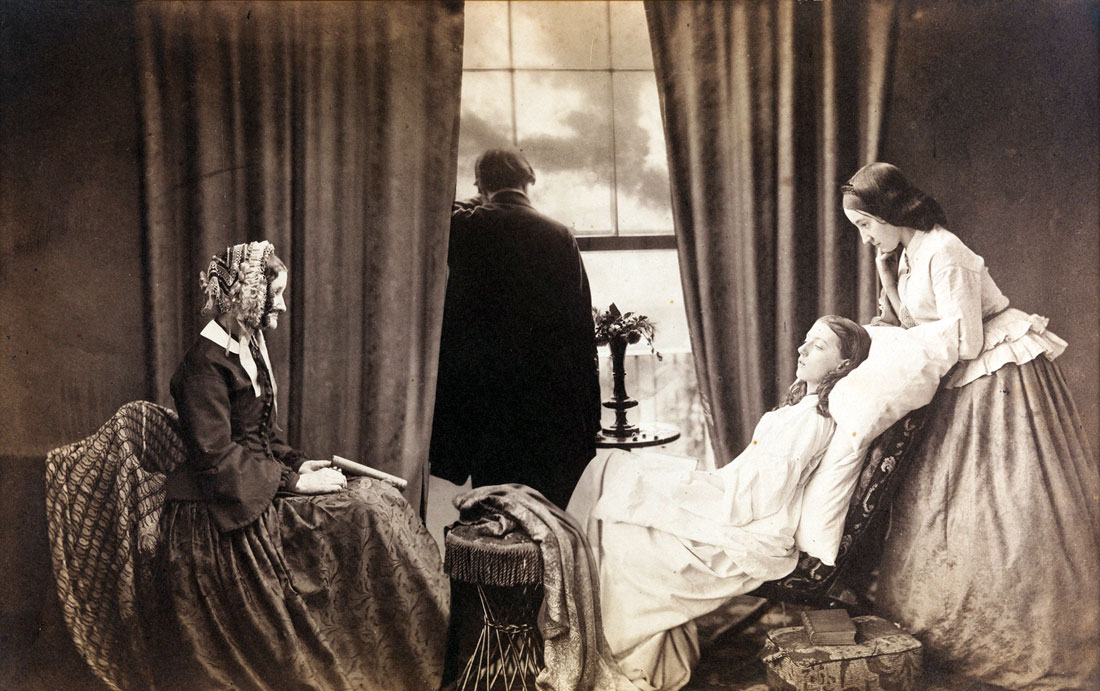
Henry Peach Robinson (English, 1830-1901) 'Fading Away' 1858


Henry Peach Robinson (English, 1830-1901)
Fading Away
1858
Albumen print
28.8 x 52.1cm
Bradford, The Royal Photographic Society Collection au National Media Museum.
© National Media Museum, Bradford/Science & Society Picture Library


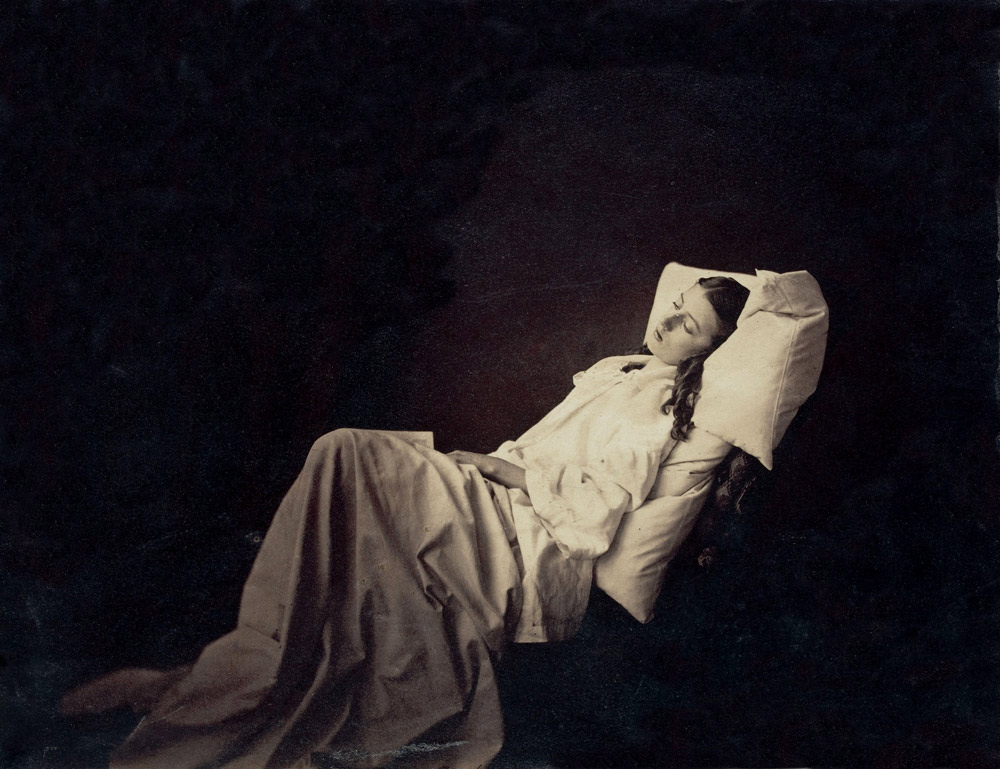
Henry Peach Robinson (English, 1830-1901) 'She Never Told her Love' 1857


Henry Peach Robinson (English, 1830-1901)
She Never Told her Love
1857
Albumen print
18.6 x 23.3cm
Paris, musée d’Orsay
© Musée d’Orsay (dist. RMN)/Patrice Schmidt


Consumed by the passion of unrequited love, a young woman lies suspended in the dark space of her unrealised dreams in Henry Peach Robinson’s illustration of the Shakespearean verse “She never told her love,/ But let concealment, like a worm i’ the bud,/ Feed on her damask cheek” (Twelfth Night II,iv,111-13). Although this picture was exhibited by Robinson as a discrete work, it also served as a study for the central figure in his most famous photograph, Fading Away, of 1858.

Purportedly showing a young consumptive surrounded by family in her final moments, Fading Away was hotly debated for years. On the one hand, Robinson was criticised for the presumed indelicacy of having invaded the death chamber at the most private of moments. On the other, those who recognised the scene as having been staged and who understood that Robinson had created the picture through combination printing (a technique that utilised several negatives to create a single printed image) accused him of dishonestly using a medium whose chief virtue was its truthfulness.

While addressing the moral and literary themes that Robinson believed crucial if photography were to aspire to high art, this picture makes only restrained use of the cloying sentimentality and showy technical artifice that often characterise this artist’s major exhibition pictures. Perhaps intended to facilitate the process of combination printing, the unnaturally black background serves also to envelop the figure in palpable melancholia.

Text from the Metropolitan Museum of Art website [Online] Cited 27/01/2020


Frederick Pickersgill (English, 1820-1900) 'Sunshine and Shade' 1859


Frederick Pickersgill (English, 1820-1900)
Sunshine and Shade
1859
Albumen print
16.4 x 19.4cm
The Royal Photographic Society Collection at the National Media Museum.
© National Media Museum, Bradford/Science & Society Picture Library


The historian and art critic, John Ruskin, had a great influence in Great Britain not only on the Pre-Raphaelite movement created in 1848, but on the development of early photography in the 1850s. The leading Pre-Raphaelite painters, John Everett Millais, Dante Gabriel Rossetti, Holman Hunt and Ford Madox Brown and their followers, wished to change the pictorial conventions laid down by the Royal Academy, and in order to demonstrate the transformations in modern life, invented a radically new idiom marked by bright colours and clarity of detail.

Pre-Raphaelite painters and photographers frequently made similar choices of subjects, and the photographers, particularly Julia Margaret Cameron, David Wilkie Wynfield and Lewis Carroll, were often had close links with the painters.

When painting landscapes, the Pre-Raphaelite artists answered Ruskin’s call, meticulously observing nature in order to capture every nuance of detail. For their part, photographers, such as Roger Fenton, Henry White, William J. Stillman and Colonel Henry Stuart Wortley, experimented with the new process of wet plate collodion negatives that allowed much greater image detail, and achieved similar effects. Although highly impressed at first by the daguerreotype, which enabled the eye to see tiny, overlooked details, Ruskin was nonetheless still very critical of landscape photography, which could not reproduce the colours of nature and in particular of the sky. This failing also gave rise to a major debate amongst photography critics.

In portraiture, there were clear links between the painted portraits of Watts and Cameron’s photographic portraits. By using special lenses and photographing her models in close-up, Cameron, achieved, with a glass negative, exactly the opposite effect to the clear image advocated by Ruskin, and her work was distinctive for the breadth of relief and contour, as well as the compositions evoking Raphael’s paintings, also a source of inspiration for Watts.

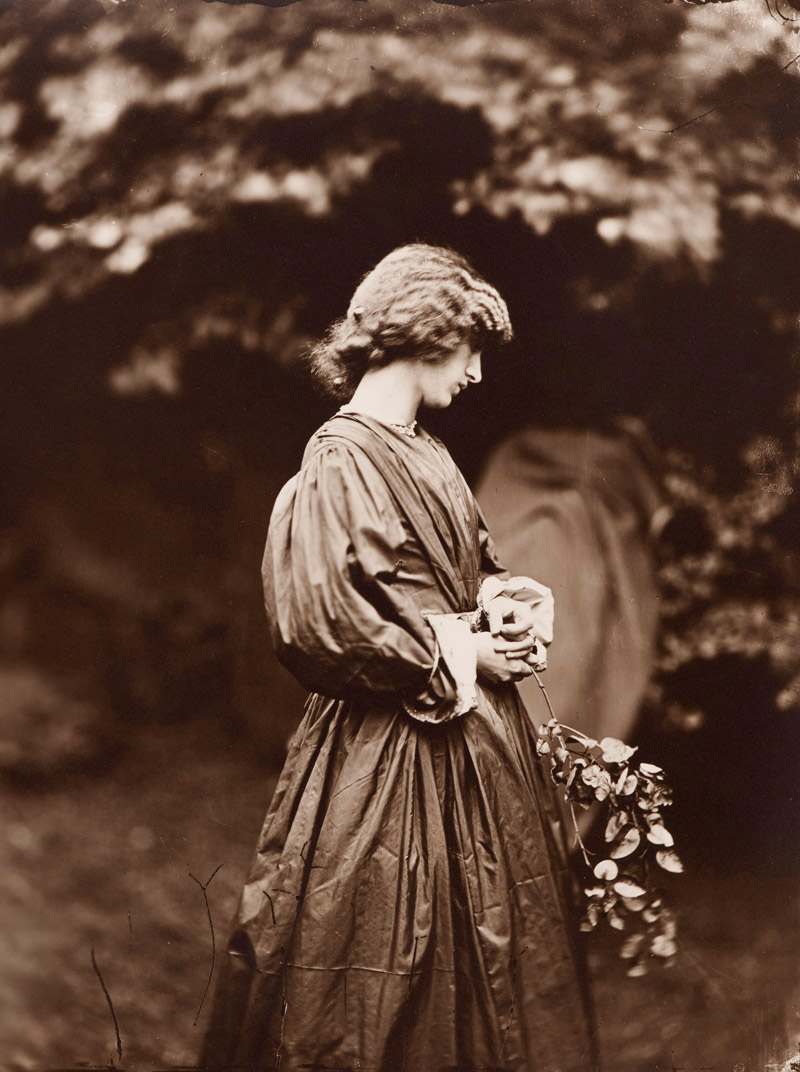
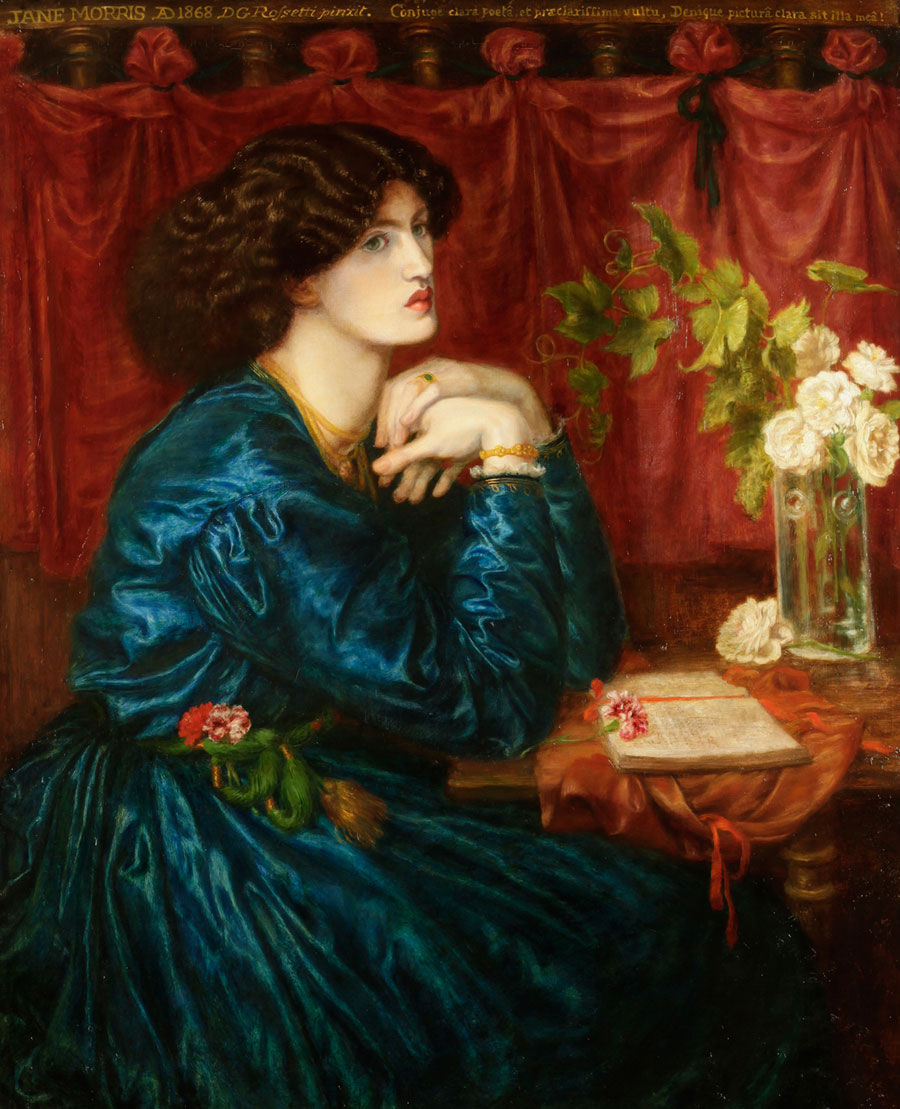
The painter Dante Gabriel Rossetti repeatedly drew and painted Jane Morris, a model with whom he was infatuated, and he asked Robert Parsons to produce a series of photographs, under his personal direction, which captured the fascinating presence of the young woman as effectively as his own paintings.

Just like the Pre-Raphaelite painters, Victorian photographers would turn to religious or historical subjects, finding a shared inspiration in the poems of Dante, Shakespeare and possibly Byron, and above all in the Arthurian legend made popular once more by Lord Tennyson, the poet laureate. From a formal point of view, Millais’ Ophelia, one of his most successful paintings, was a source for Henry Peach Robinson’s photograph, The Lady of Shalott, even though it had a different theme.

Finally, Pre-Raphaelite painters and Victorian photographers both liked to present scenes from modern life with a moralising undertone: hence She Never Told Her Love, a photograph by Robinson that was very successful when exhibited at the Crystal Palace in 1858, William Holman Hunt’s painting, Awakening of Conscience, and Rossetti’s Found, a painting depicting a countryman who comes across his former sweetheart, now a prostitute in the city.

In the 1880s, Pre-Raphaelite painting would be transformed, with artists and writers like William Morris, Burne-Jones, Whistler and Oscar Wilde, into a very different movement concerned only with the cult of beauty and rejecting Ruskin’s concept of art as something moral or useful. British photographers, however, inspired by the Pre-Raphaelites would inspire the Pictorialist movement that flourished in the 1890s, encouraged by the writings of Henry Peach Robinson and Peter Henry Emerson, extolling artistic photography.

Press release from the Musée d’Orsay website


James Sinclair 14th Earl of Caithness (Scottish, 1821-1881) 'Weston Avenue, Warwickshire' c. 1860


James Sinclair 14th Earl of Caithness (Scottish, 1821-1881)
Avenue à Weston, Warwickshire (Weston Avenue, Warwickshire)
c. 1860
Albumen print
23 x 18.3cm
New York, Courtesy George Eastman House Rochester
© Courtesy of George Eastman House, International Museum of Photography and Film


Julia Margaret Cameron (British, 1815-1879) 'The sunflower' 1866-1870


Julia Margaret Cameron (British, 1815-1879)
Le tournesol (The sunflower)
1866-1870
Albumen print
35.2 x 24.3cm
Washington, National Gallery of Art, Fond Paul Mellon
© National Gallery of Art, Washington


John Robert Parsons (Irish, 1826-1909), under the direction of Dante Gabriel Rossetti (English, 1828-1882) 'Jane Morris posing in the house of Rossetti' summer 1865


John Robert Parsons (Irish, 1826-1909), under the direction of Dante Gabriel Rossetti (English, 1828-1882)
Jane Morris posant dans la maison de Rossetti (Jane Morris posing in the house of Rossetti)
Summer 1865
Modern print
22.6 x 17.5cm
London, Victoria and Albert Museum
© V&A Images / Victoria and Albert Museum, London


John Robert Parsons (Irish, 1826-1909) 'Jane Morris posing in the garden of the house of Rossetti' summer 1865


John Robert Parsons (Irish, 1826-1909)
Jane Morris posant dans le jardin de la maison de Rossetti (Jane Morris posing in the garden of the house of Rossetti)
Summer 1865
Albumen print
Private collection
© Tim Hurst Photography


Dante Gabriel Rossetti (English, 1828-1882) 'Jane Morris, the blue silk dress' 1868


Dante Gabriel Rossetti (English, 1828-1882)
Jane Morris, the blue silk dress
1868
Oil on canvas
110.5 x 90.2cm
Londres, The Society of Antiquaries
© Kelmscott Manor Collection, by Permission of the Society of Antiquaries of London


Charles Lutwidge Dodgson (Lewis Caroll) (English, 1832-1898) 'Amy Hughes' 1863


Charles Lutwidge Dodgson (Lewis Caroll) (English, 1832-1898)
Amy Hughes
1863
Austin, The University of Texas, Harry Ransom Center, Gernsheim Collection
© Droits réservés


Julia Margaret Cameron (British, 1815-1879) 'Maud' 1875


Julia Margaret Cameron (British, 1815-1879)
Maud
1875
Charcoal print
30 x 25cm
Paris, musée d’Orsay
© Musée d’Orsay (dist. RMN)/Patrice Schmidt


Sir John Everett Millais (British, 1829-1896) 'A Huguenot, on St. Bartholomew's Day Refusing to Shield Himself from Danger by Wearing the Roman Catholic Badge' 1851-1852


Sir John Everett Millais (British, 1829-1896)
A Huguenot, on St. Bartholomew’s Day Refusing to Shield Himself from Danger by Wearing the Roman Catholic Badge
1851-1852
Oil on canvas
91.4 x 62.2cm
Collection Makins
© The Makins Collection/The Bridgeman Art Library


Sir Edward Burne-Jones (British, 1833-1898) 'Princess Sabra (The King's Daughter)' 1865-1866


Sir Edward Burne-Jones (British, 1833-1898)
Princess Sabra (The King’s Daughter)
1865-1866
Oil on canvas
105 x 61cm
Paris, Musée d’Orsay
© Musée d’Orsay (dist. RMN)/Patrice Schmidt


Julia Margaret Cameron  (British, 1815-1879) 'And Enid Sang' 1874


Julia Margaret Cameron  (British, 1815-1879)
And Enid Sang
1874
Print on albumen paper, collodion glass negative, laminated on cardboard
35 x 28cm
Paris, Musée d’Orsay
© Musée d’Orsay (dist. RMN)


Musée d’Orsay
62, rue de Lille
75343 Paris Cedex 07
France

Opening hours:
Tuesday – Sunday 9.30am – 6pm
Thursdays 9.30am – 9.45pm
Closed on Mondays

Musée d’Orsay website

LIKE ART BLART ON FACEBOOK

Back to top

Exhibition: ‘ANALOG: trends in sound and picture’ at The Riflemaker Gallery, London

Exhibition dates: 10th January – 3rd March 2011


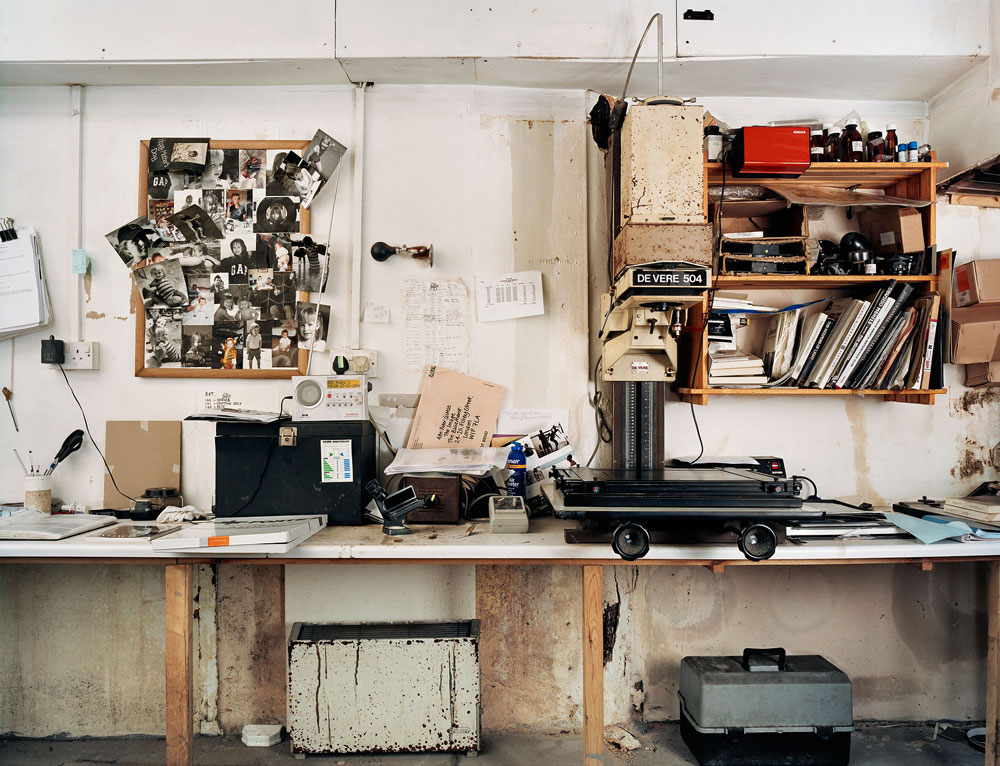
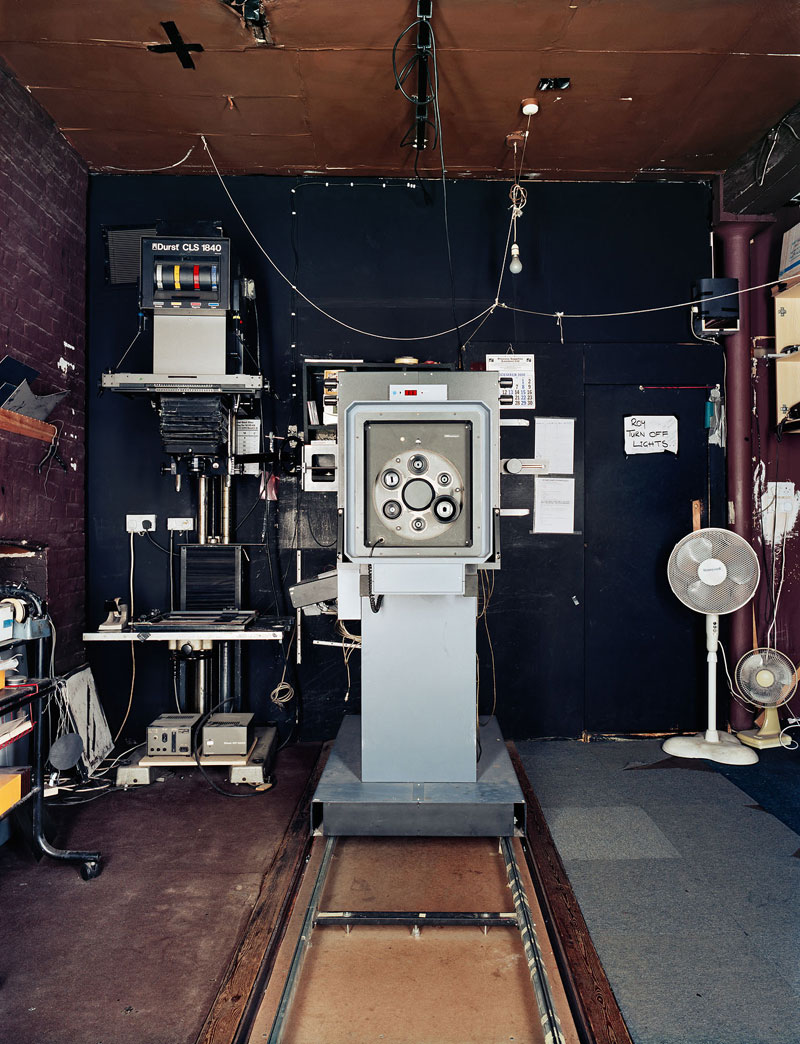
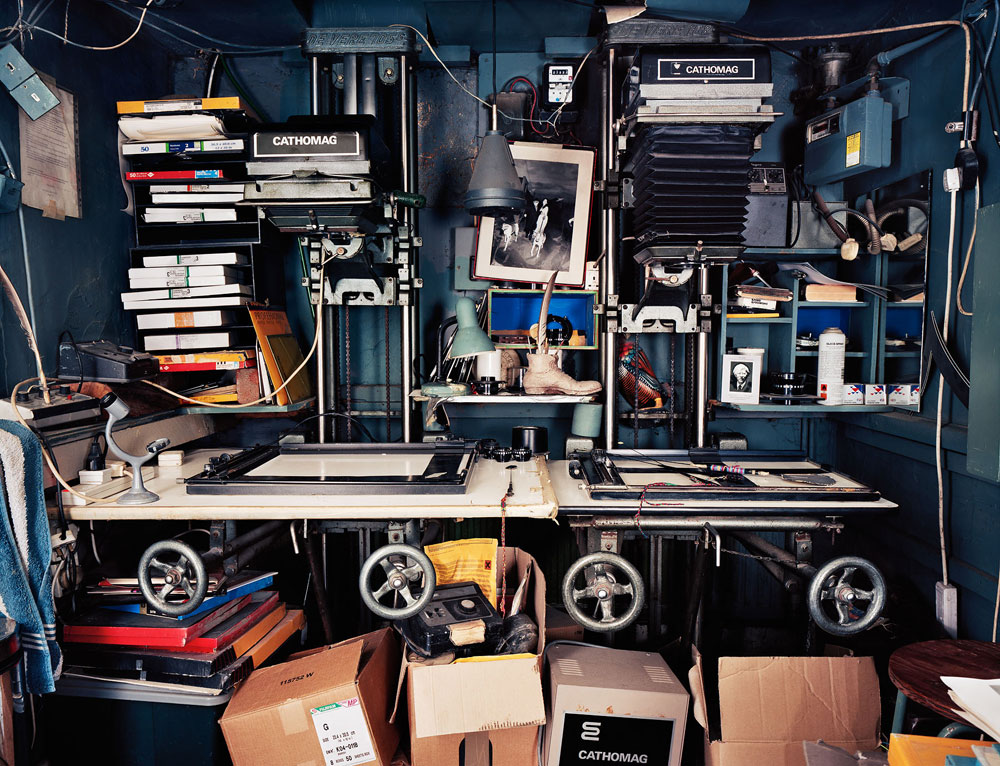
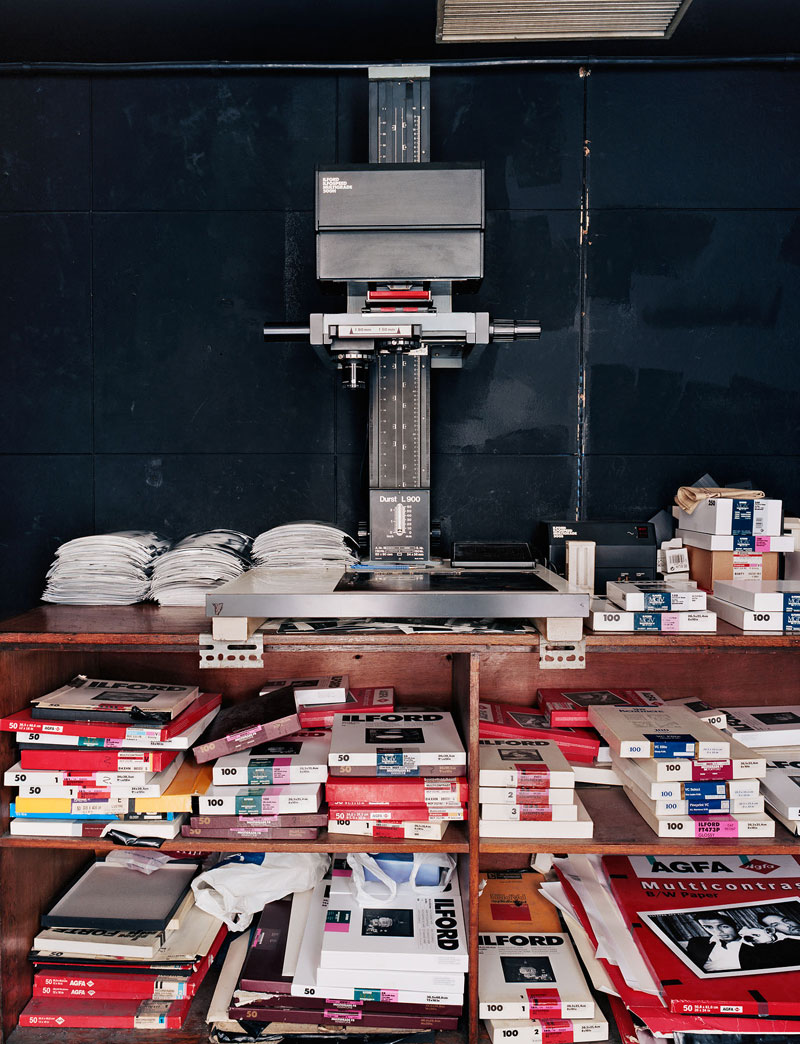
Richard Nicholson (British, b. 1968) 'Peter Guest darkroom' 2006


Richard Nicholson (British, b. 1968)
Peter Guest darkroom
2006
Courtesy of the artist and Riflemaker


I started my life as an artist as a black and white photographer. I spent many hours ensconced in the enveloping black and red safety light of the darkroom, listening to the sound of running water – a nurturing, womb-like environment despite the toxic nature of the chemicals involved. It was magical to see the image appear in the developing tray out of nothing, an alchemical process that never ceased to amaze me, a link to the early days of photography and the wonder that those first images would have generated. At that time the photography course at Phillip Institute (soon to become part of RMIT University) had 3 huge darkrooms; now they have one with only a couple of enlargers.

Working in those darkrooms did teach you a solid foundation for your art practice: for one thing, the value of developing a working methodology – choosing a good negative that you wanted to print, spending time with it, adjusting the enlarger to obtain optimum size and printing it beautifully – for in a good day I could only print one or possibly two negatives a day. Then there was the process of washing the chemicals out of the paper and drying the prints. The whole process taught you patience, precision and dedication to the task at hand so that the negative revealed in the print something else that might be present, some ‘other’ that photography has the ability to capture if you take time, are aware and receptive to this illumination. These disciplines have held me in good stead during the following years.

I still love analogue colour and black and white photographs. To me it is like the difference between an LP and a CD. The CD might have it all over the LP in terms of information captured but there is this ineffable feeling about an LP with it’s scratches and pops, it’s atmosphere. The same goes for an analogue print and it is something that you can’t quite put your finger on. I believe that there is still a place for analogue prints in the world – for the magical process, for their beauty, sensitivity and downright inspiration. Long may they live.

Dr Marcus Bunyan


Many thankx to The Riflemaker Gallery for allowing me to publish the photographs and text in the posting. Please click on the photographs for a larger version of the image.


Richard Nicholson (British, b. 1968) 'Roy Bass darkroom, Michael Dyer Associates, Covent Garden' 2006


Richard Nicholson (British, b. 1968)
Roy Bass darkroom, Michael Dyer Associates, Covent Garden
2006
Courtesy of the artist and Riflemaker


The End of Professional Photographic Darkrooms and Music Recording Studios

The impact of digital technology on print photography and music production is the subject of ANALOG at Riflemaker, Soho from 10 January 2011. The exhibition invites us inside the last of London’s photographic darkrooms as well as taking a visit to a working reel-to-reel music studio, courtesy of an installation by Lewis Durham of the band Kitty, Daisy & Lewis.

Richard Nicholson. “A Survey of London’s Remaining Professional Darkrooms 2006-2010”

1979. The year my father constructed a darkroom and introduced me to photography. I was immediately entranced by the printing process and cherished the long hours spent in this dark, private space; standing in the gloom of the red safelight, slowly rocking the print tray, watching the ghost-like image reveal itself through the gently lapping developer solution. As I experimented with the many formulas and techniques detailed in my father’s guidebooks, I often found the most interesting prints were the chemically stained accidents pulled from the bin at the end of a session. The darkroom became a bolt-hole for me; a private space where I could escape from the noise of family life. As I passed through school, university and various jobs, I often sought out a darkroom to escape from the crowd. But as I honed my skills – solarising, masking, bleaching, split-toning, hand-colouring – my prints began to attract public attention.

2006. I’m working in London as a photographer. I’m still shooting film, but digital is becoming ubiquitous. The photographic manufacturer Durst announces that it will no longer be producing enlargers. Annual sales have dropped from a peak of 107,000 units in 1979 to just a few hundred units in recent years. The darkroom has always been integral to my practice as a photographer. But for how much longer? Once bustling hire darkrooms have become eerily quiet, and London labs are dropping like flies. Joe’s Basement, Primary, Metro Soho, Keishi Colour, Ceta, Team Photographic, Sky – all gone. Polaroid has stopped making instant film and Kodak and Fuji are discontinuing one emulsion after another. The recently introduced Canon 5d camera has persuaded many diehard film photographers that digital is the future, and those who remain unconvinced are facing clients who no longer have the budgets for film, Polaroids, clip-tests, contact-sheets and prints. The darkroom’s days are numbered.

Against this backdrop, I begin to look at the darkroom in a new light. My enlarger (a handsomely engineered GeM 504) has been an invisible tool, but now it presents itself as a sad and lumpen creature in the face of extinction. With its long neck, heavy head and inviting focus handles, the thing has a human form which elicits sympathy – the surrounding matt black walls add an air of theatricality. Hearing tales of noble machines being unceremoniously dumped in skips when labs close down, I decide to document them before they all disappear.

I chose to photograph professional darkrooms because they are often shrouded in mystery; hidden behind the tidy glass facade of the lab’s front desk. As a keen printer myself, I was curious to see the workspaces of the master printers; craftsmen who had spent their working lives in darkness. The spaces I discovered were often haphazard and brimming with personal details; coffee cups, CD collections, family snapshots, unpaid invoices, curious knick-knacks brought back by globe-trotting photographers. These human elements transformed what might have been a detached typology of modernist industrial design into something more intimate and nuanced.

I photographed each darkroom on large format film. Working in total darkness, I carefully painted these normally dingy spaces with a flashgun, seeking to reveal the beauty of the machinery, and shed some light on the clutter stained with the patina of time. Some of the darkrooms were busy, whilst others were neglected (all attention being given to the new inkjet printer in the adjoining corridor). Many of the darkrooms were facing imminent closure. (The one with the slogan pinned to the wall, ‘I want to stay here forever’, was dismantled the day after I photographed it and is currently being converted into luxury apartments.)

Many of the iconic images of recent decades were crafted in these rooms. Mike Spry’s high contrast lith prints of U2 and Depeche Mode for music photographer Anton Corbijn, Peter Guest’s black and white prints of the Trainspotting cast for portrait photographer Lorenzo Agius, or Brian Dowling’s intricately masked colour prints for fashion photographer Nick Knight. Such commercial work is now routinely carried out in Photoshop and professional printers have had to seek out new avenues for their skills. The art market is perhaps the last bastion for traditional darkroom printing, but even this area is being taken over by digital machines – Lightjet, Lambda, and Chromira printers. But suddenly there is a resurgence of interest in analog processes amongst younger photographers who were brought up on digital. Left cold by the clinical nature of the virtual workspace, they seek depth and authenticity via the chemical ambience of the traditional darkroom. Alternative processes from the early history of photography are being rediscovered, Polaroid instant film has been relaunched, and the craze for poorly engineered Russian and Chinese film cameras (Lomo, Holga, Diana etc) continues unabated.

I wonder at this enthusiasm. Like many committed film photographers, I experienced a belated epiphany when I finally switched to digital. My darkroom skills were easily transferred to the digital realm, and I soon discovered that Photoshop offered creative printmaking possibilities that far exceeded what I could achieve in the darkroom. Whilst I don’t miss the chemistry of the darkroom – much of it highly toxic – I do miss the aura of the red safelight and the soothing sound of running water. I miss the excited sense of performance when making a complicated print (there’s no ‘undo’ button in the darkroom), and the physicality of dodging and burning – the manual shaping of the light. With film I had a network of contacts across London and felt embedded in the city, whereas with digital I feel disembodied. The history of photography is young and fast moving. The darkroom era was short lived. This collection of images represents its apotheosis.”

Richard Nicholson, November 2010

I would like to thank all the printers who kindly allowed me to photograph their darkrooms.

Nicholson, Richard. “A Survey of London’s Remaining Professional Darkrooms 2006-2010,” in Taylor, Tot (ed.,). ANALOG: trends in sound and picture book. London: Riflemaker, 2011, pp. 17-19. ISBN 978-0-9563571-6-8.


Richard Nicholson (British, b. 1968) 'Roy Snell darkroom, Earlsfield' 2006


Richard Nicholson (British, b. 1968)
Roy Snell darkroom, Earlsfield
2006
Courtesy of the artist and Riflemaker


Richard Nicholson (British, b. 1968) 'Gordon Bishop Associates, Paddington Street' 2006


Richard Nicholson (British, b. 1968)
Gordon Bishop Associates, Paddington Street
2006
Courtesy of the artist and Riflemaker


The Riflemaker Gallery
79 Beak Street, Regent Street,
London W1

Opening hours:
Monday – Friday 10.00am – 6.00pm
Saturday 12.00pm – 6.00pm

Riflemaker website

LIKE ART BLART ON FACEBOOK

Back to top