Unknown photographer (Australian) Hawaii 1960s Ektachrome medium format transparency scanned
State of grace
I was very excited by the discovery in a country town in Victoria, Australia of 73 medium format Kodak Ektakchrome slides taken in Australia, Mexico, United States of America and Canada in the mid-1960s. I believe that the photographer was an Australian who was on holiday in Mexico, United States of America and Canada.
In nearly 40 years of being a photographer I have never seen colour medium format slides from the 1960s. There was no colour fading to the slides. The person who took the photographs was shooting medium format colour in the 1960s so they would have been a photographic aficionado. Just by holding the slides up to the light I could see the photographs were compositionally very interesting. Whoever the photographer was they had a great eye!
I can date the slides to late 1966 / early 1967. This is because of the unknown photograph of the construction of John F. Kennedy’s grave at Arlington National Cemetery (below). Construction began in 1965 and was completed on July 20, 1967. Since JFK’s grave is 2/3rds complete this would date the photograph to late 1966 / early 1967. This would also help date all the other Ektachrome slides that I have scanned as well.
The has been a journey of (self) discovery.
Firstly, I made the conscious decision not to look at the slides before scanning them but rather to randomly pick up whichever slide came next … then to take us on a journey in time and space from my studio in Melbourne – to Canada, Mexico, United States of America and different parts of Australia, in the mid-1960s.
Together, through these photographs, we can travel the planet, traversing time back to the 1960s where we can witness historic places of that era – John F. Kennedy’s grave under construction; George Washington’s house in Mount Vernon; the White House closer than you can ever get today in our paranoid era of protection.
In some ways it was a more open society in those days, more trusting and available; in others, it was more prejudiced against, for example, women, migrants, colour and difference. War never changes. Not everything changes for the better, but some things do.
Scanning these slides was a journey of self discovery. I immersed myself in their worlds… staring for hours at the scans and at the dots and scratches on the screen – cleaning up the slides and colour balancing them (see Metropolitan Opera House, Lincoln Center, New York City 1960s below for an example) to make them presentable. It was as much a meditative practice and an acceptance of self to keep going that was so rewarding, especially for the peace it brings my bipolar and depression. Peace and self acceptance.
I lived and breathed these images back into existence after nobody had seen them for so many years. I saved them for prosperity, from the eternity of loss of all unseen images – to not have eyes look at them for that moment of recognition, when the language of the image can be decoded and understood. When the feeling of that image impacts the senses.
I hope you enjoy this series of images, that it reaches you in all its wonderful, effervescent glory. Whoever the photographer was I want to thank them for their vision – for they have taken us to places and times we could never have gone.
Dr Marcus Bunyan
PS. Look at the two hands in the photograph Untitled (Mexican scene?) 1960s (below). It perfectly sums up a moment caught through the energy of the photographer, the camera … and the cosmos. The open hand, the shielded hand.
Just a bit about these scans: scanned at 1200dpi, 21.3Mb. Each image takes on average 1.5 hours of cleaning and balancing to achieve the end result. 300dpi jpg made from scans.
“A good image is created by a state of grace. Grace expresses itself when it has been freed from conventions, free like a child in his early discovery of reality. The game is then to organise the rectangle.” [or the square in this case!]
Sergio Larraín Echeñique
Ektachrome transparency box
United States of America
Unknown photographer (Australian) Grand Canyon 1960s Ektachrome medium format transparency scanned
Unknown photographer (Australian) Snow in the Grand Canyon 1960s Ektachrome medium format transparency scanned
Unknown photographer (Australian?) Grand Canyon with snow 1960s Ektachrome medium format transparency scanned
Unknown photographer (Australian) John looking bored, Father and Sylvia at Aunt Jemima’s Kitchen, Disneyland 1960s Ektachrome medium format transparency scanned
Unknown photographer (Australian) Wedding day (USA?) 1960s Ektachrome medium format transparency scanned
What a wonderful composition from a low vantage point. Not sure where it is but it feels USA to me…
The girl at left looking at the bride and groom, his white gloves one on one off, her yellow bride’s bouquet and the relationship to the yellow of the bridesmaid’s dress, and the two girls at right… one looking at the couple and one at the camera. Magic!
I wonder what happened to them, how long they were together. Was it a happy marriage? Did they had children and where are they now? And now all these years later to see this mnemonic device, this photograph of associations, designed to recover fragmentary memories of a happy time…
Unknown photographer (Australian) Wedding day (USA?) 1960s Ektachrome medium format transparency scanned
Unknown photographer (Australian) Untitled (USA) 1960s Ektachrome medium format transparency scanned
I am pretty sure this image is connected to the wedding photos above.
Unknown photographer (American) Hawaii? California? coastline 1960s Ektachrome medium format transparency scanned
Definitely not Australia…
Unknown photographer (American) Hawaii? California? coastline 1960s Ektachrome medium format transparency scanned
Unknown photographer (Australian) Untitled [coastline] 1960s Ektachrome medium format transparency scanned
I think this is the Hawaiian or Californian coastline, but unsure… the telephone pole is definitely not Australian!
Unknown photographer (Australian) Untitled 1960s Ektachrome medium format transparency scanned
No idea where this is (not Australia!) or what the structures are. Obviously shot out of a moving car or possibly train/bus. An interesting image nonetheless.
Unknown photographer (Australian) Untitled [Desert scene, California?] 1960s Ektachrome medium format transparency scanned
Unknown photographer (Australian) Untitled [Desert scene, California?] 1960s Ektachrome medium format transparency scanned
A wonderful photograph shot contre-jour which is a photographic technique in which the camera is pointing directly toward a source of light.
Unknown photographer (Australian) George Washington’s home, Mount Vernon 1960s Ektachrome medium format transparency scanned
Thank you to Colin Vickery who informed me this is George Washington’s home, Mount Vernon.
Unknown photographer (Australian) John F. Kennedy’s gravesite under construction at Arlington Cemetery (foreground) with Memorial Bridge and the Lincoln Memorial in the background. View from Arlington House Late 1966 / early 1967 Ektachrome medium format transparency scanned
An important photograph! An unknown photograph of the construction of John F. Kennedy’s grave at Arlington National Cemetery.
Construction began in 1965 and was completed on July 20, 1967. Since JFK’s grave is 2/3rds complete this would date the photograph to late 1966 / early 1967. This would also help date all the other Ektachrome slides that I am scanning.
Unknown photographer (Australian) Grave of John F. Kennedy, Arlington National Cemetery, Washington 1960s Ektachrome medium format transparency scanned
Another important photograph of the temporary grave of John F. Kennedy at Arlington National Cemetery with the construction of Kennedy’s new grave ongoing in the background.
Around the grave are the caps of the services with what I think are dog leads in between? In the background in the centre is a wreath from a Boy Scout Troop. And of course, the flame…
Unknown photographer (Australian) Arlington National Cemetery, Washington 1960s Ektachrome medium format transparency scanned
This was a poor exposure and about the best I could do with the scan.
Unknown photographer (Australian) Arlington National Cemetery, Washington 1960s Ektachrome medium format transparency scanned
Unknown photographer (Australian) Road to Arlington National Cemetery, Washington 1960s Ektachrome medium format transparency scanned
A wonderful vista with Arlington National Cemetery in the distance…
Unknown photographer (Australian) The White House, Washington, DC 1960s Ektachrome medium format transparency scanned
Unknown photographer (Australian) The White House, Washington, DC 1960s Ektachrome medium format transparency scanned
Unknown photographer (Australian) Untitled States Capitol, Washington, D.C. 1960s Ektachrome medium format transparency scanned
What a great image, shot out of the front of a bus driving towards the United States Capitol, love all the old cars!
Unknown photographer (Australian) Untitled States Capitol, Washington, D.C. 1960s Ektachrome medium format transparency scanned
I love the perspective, the shadows of the old cars, the path leading the eye towards the building and the trees framing the vista.
Unknown photographer (Australian) Abraham Lincoln, Lincoln Memorial, Washington, D.C. 1960s Ektachrome medium format transparency scanned
Unknown photographer (Australian) Metropolitan Opera House, Lincoln Center, New York City 1960s Ektachrome medium format transparency scanned
The top image has not been colour corrected, as scanned.
Unknown photographer (Australian) 1040 Fifth Avenue NY 1960s Ektachrome medium format transparency scanned
Some photos are winners, some are losers… but they are all interesting. The fifteenth floor of 1040 Fifth Avenue NY was home to Jackie Onassis from 1964 to 1994.
The cars are a Super 88 Oldsmobile, 1965 Plymouth Fury Suburban S/W and 1964/65 Buick Special 4dr.
This slide was so underexposed it was very hard to get a usable scan. Colour correction was difficult.
Unknown photographer (Australian) Untitled (American landscape) 1960s Ektachrome medium format transparency scanned
A lovely image. Whoever took these photographs had a really good eye.
Unknown photographer (Australian) Untitled (American landscape) 1960s Ektachrome medium format transparency scanned
Unknown photographer (Australian) Untitled (American landscape) 1960s Ektachrome medium format transparency scanned
Unknown photographer (Australian) Untitled (American landscape) 1960s Ektachrome medium format transparency scanned
Unknown photographer (Australian) Untitled (California) 1960s Ektachrome medium format transparency scanned
I think this is California?
A classic 1960s photograph. The photographer had a good eye. Los Castillo artesanos on the left hand side, a Kodak sign, and a Chevrolet if I’m not mistaken.
Unknown photographer (Australian) American landscape with cars, perhaps Malibu, California? 1960s Ektachrome medium format transparency scanned
Great photo!
Unknown photographer (Australian) Main Str Cinema, Disneyland, California 1960s Ektachrome medium format transparency scanned
I don’t know what the fault is at top left, it’s in the transparency itself – so obviously something inside the camera got ‘recorded’ on film
Unknown photographer (Australian) Mickey Mouse, Disneyland, California 1960s Ektachrome medium format transparency scanned
Unknown photographer (Australian) General view over Universal Studios including my plane, Tammy’s houseboat, Warner Brothers in background, California 1960s Ektachrome medium format transparency scanned
The photograph was taken from a “Glamor Tram” travelling around the lot. These were introduced in July, 1964. “The iconic red and white Glamor Trams, with their ruffled awnings, were staged five times a day, each lasting just over two hours, Monday through Friday.”
The handwritten inscription on the slide reads:
“General view over Universal Studios including my plane, Tammy’s houseboat, Warner Brothers in background”
“My plane” seems to be a North American P-51 Mustang. According to John Lovaas on Facebook he is “pretty sure the green space is Lakeside Golf Club, and the plane and cars in the foreground are on Universal Studios property. How many P-51s has Universal ever had on their lot? A finite number!”
He states that the P-51 is most likely the plane 44-72739 N44727 “Man O War” which was the plane at Universal Studios between 1955-1970. I can’t see a houseboat at all!
Unknown photographer (Australian) ‘Battle Hymn’ North American P-51 Mustang 1960s Ektachrome medium format transparency scanned
A closer look at the North American P-51 Mustang that featured at a distance in the slide above.
The text written on the slide reads: “Me and plane used in “Battle Hymn”.”
“‘Battle Hymn’ is a 1957 American war film directed by Douglas Sirk and starring Rock Hudson as Lieutenant Colonel Dean E. Hess, a real-life United States Air Force fighter pilot in the Korean War who helped evacuate several hundred war orphans to safety… Hess promises her he won’t see combat, since he will be the senior USAF advisor / Instructor Pilot to the Republic of Korea Air Force, only serving as a teacher and flying F-51D Mustangs. …
In order to replicate the ROK unit, the 12 F-51D Mustangs of 182nd Fighter Squadron, 149th Fighter Group of the Texas Air National Guard were enlisted by the USAF to provide the necessary authentic aircraft of the period. During filming, an additional surplus F-51 was acquired from USAF stocks to be used in an accident scene where it would be deliberately destroyed.”
Unknown photographer (Australian) Sylvia and ship used for McHale’s Navy, Universal Studios 1960s Ektachrome medium format transparency scanned
The title was written on the slide.
Unknown photographer (Australian) San Francisco with Golden Gate Bridge (in the background) 1960s Ektachrome medium format transparency scanned
Unknown photographer (Australian) View over San Francisco 1960s Ektachrome medium format transparency scanned
Unknown photographer (Australian) Untitled (Car and river, USA) 1960s Ektachrome medium format transparency scanned
Lovely photo, great shadows. I have no idea where this is…
Unknown photographer (Australian) Untitled (woman and car) USA, 1960s Ektachrome medium format transparency scanned
Left hand drive car so this must be the United States of America.
Canada
Unknown photographer (Australian) Place Ville Marie, Montreal 1960s Ektachrome medium format transparency scanned
Unknown photographer (Australian) Cathédrale Basilique Marie Reine du Monde, Montreal 1960s Ektachrome medium format transparency scanned
Unknown photographer (Australian) Cathédrale Basilique Marie Reine du Monde, Montreal 1960s Ektachrome medium format transparency scanned
Unknown photographer (Australian) Interior, Cathédrale Basilique Marie Reine du Monde, Montreal 1960s Ektachrome medium format transparency scanned
Unknown photographer (Australian) Downtown Montreal, intersection of Blvd de Maisonneuve Ouest and Metcalfe St, looking toward Mont Royal 1960s Ektachrome medium format transparency scanned
Mexico
Unknown photographer (Australian) Cuernavaca Cathedral, Morelos, Mexico 1960s Ektachrome medium format transparency scanned
Unknown photographer (Australian) Chapultepec Castle, Mexico City 1960s Ektachrome medium format transparency scanned
This is Chapultepec Castle, site of the National History Museum, México City. The soldiers are wearing Mexican helmets of the M1 pattern with regimental insignia on the front.
Unknown photographer (Australian) Untitled (Mexico) 1960s Ektachrome medium format transparency scanned
Unknown photographer (Australian) Untitled (Mexico) 1960s Ektachrome medium format transparency scanned
Unknown photographer (Australian) Hotel Borda, Cuernavaca 1960s Ektachrome medium format transparency scanned
A view of the “Hotel Borda” which still exists in Cuernavaca a town just south of Mexico City.
Unknown photographer (Australian) Untitled (Mexico) 1960s Ektachrome medium format transparency scanned
I can make out the words “Gloria”, “Dios”, and “Paz” in the sign on the right hand side.
Unknown photographer (Australian) Untitled (Mexican scene?) 1960s Ektachrome medium format transparency scanned
Exhibition dates: 7th June – 1st September, 2019 Visited September 2019 posted November, 2019
Curators: Martine Ravache and Gabriella Csizek
Installation view of the exhibition Lartigue: Life in Color at the Robert Capa Contemporary Photography Center, Budapest Photo: Marcus Bunyan
A posting on this exhibition with some iPhone images I took in Budapest. I was lucky enough to see the exhibition the day before it closed.
What struck me most was Lartigue’s restrained use of colour. Mainly family portraits and landscapes, these photographs integrate a reduced colour palette with the line and form of the image. Subtle yet dynamic, the whimsical and poetic Ektachrome photographs were a revelation. You could say that there is seemingly nothing unusual about any of these photographs but just look – look at the light that radiates across Florette in Venice, the donkey and the washing, the green umbrella and tree laden with snow or the boys looking around to stare at the camera – and there is, indeed, something uncanny in the everyday. Just to see those two birds flying towards you in The Appian Way, Rome, Italy, January 1960 and to raise your camera to capture them mid-flight perfectly framed between the trees – what a moment!
While the original transparencies have faded, digital technology and restoration allows us to see them in all their glory: sometimes low depth of field, but always with a strong visual structure, these photographs form a holistic feeling as a body of images, a portrait of life in colour. Lartigue’s sense of fun is also evident in many images. There is no sense of the ego of the photographer in any of these images… they are, just so. Considered, concise and in colour (which is unusual for this time period) they possess an inimitable joie de vivre. This posting also features Lartigue’s early Autochromes which were interesting but nowhere as important as his later Ektachromes.
With a careful eye for composition, colour, and geometry, Lartigue’s background (in which he saw everything with his painter’s eye) is clearly translated in the pictorial construction of these sublime photographs.
Jacques Henri Lartigue (1894-1986) was the best-known “amateur” in the history of photography, famously discovered by the art world and given an exhibition at MoMA in New York when he was in his late sixties. He began by recording the pastimes and customs of his wealthy Parisian milieu, indulging his fascination with sports and aviation, and throughout his long life he was never without his camera. His friendships extended to the superstars of French culture, but he also made thousands of photographs of his family, wives, and lovers. His work was irresistibly warm and engaging.
Although known for his black-and-white work, Lartigue loved colour film, experimenting with the Autochrome process in the teens and twenties and embracing Ektachrome in the late 1940s. His colour work, reproduced here for the first time, is astonishingly fresh: the French countryside, the women in his life, famous friends (Picasso, Fellini), and glimpses from his travels all come alive in this delightful book.
Installation views of the exhibition Lartigue: Life in Color at the Robert Capa Contemporary Photography Center, Budapest Photos: Marcus Bunyan
Jacques Henri Lartigue (French, 1894-1986) Around Pau (installation view) France, December 1912 Autochrome 6 x 13cm Photo: Marcus Bunyan
Jacques Henri Lartigue (French, 1894-1986) Mrs Folletête, Rico, me, Sim, Manik and Mummy (installation view) Rouzat, France, September 16, 1913 Automchrome, triggered 6 x 13cm Photo: Marcus Bunyan
Jacques Henri Lartigue (French, 1894-1986) M. Folletête and Henry Lartigue (installation view) La Baule, France, May 1915 Autochrome 6 x 13cm Photo: Marcus Bunyan
Jacques Henri Lartigue (French, 1894-1986) Bibi at the Château de la Garoupe (installation view) Cap d’Antibes, France, 1920 Autochrome 6 x 13cm Photo: Marcus Bunyan
Jacques Henri Lartigue (French, 1894-1986) Bibi (installation view) Cap d’Antibes, France, May 1920 Autochrome 6 x 13cm Photo: Marcus Bunyan
Jacques Henri Lartigue (French, 1894-1986) Bibi (installation view) Rouzat, France, 1920 Autochrome 6 x 13cm Photo: Marcus Bunyan
Jacques Henri Lartigue (French, 1894-1986) Bibi and Germaine Chalom (installation view) Cannes, France, 1927 Autochrome 6 x 13cm Photo: Marcus Bunyan
Lartigue’s autochromes comprise a colourful reunion with all our favourite characters. We recognise Lartigue’s older brother Zissou with his glider (1914), and his beloved cousin Simone in her (blue!) bobsled wearing a stylish green ensemble (1913). But the plane is no longer airborne. And Simone is keeping still not to ruin the picture, instead of crashing down a gravel road with her tongue out, like she would in sepia. Due to the long exposure time dictated by the autochrome, Lartigue’s relatives are stalled in their playful banter to accommodate the sluggishness of the early color process.
“Is this still Lartigue? Are we disfiguring an artist?” curator Martine Ravache asks in the accompanying exhibition catalogue Lartigue: Life in Color, recently published by Abrams. Apart from the occasional leaping dog or bobsled, the subject matter is often quaint, even sentimental. The colour prints display exactly the pictorial quality for which Lartigue’s black-and-white work had been deemed antithetical. This realisation, which is as fascinating as it is uncomfortable, is downplayed by presenting Lartigue as a painter at heart who proclaimed to “see everything with my painter’s eye.”
Yet the picturesque subject matter is not enough to undermine his status as the lovechild of modernity – on the contrary. From the pink pastel of Bibi’s dainty hands (1921) to the fiery red nails of Florette and her glossy magazine (1961), the prints testify to Lartigue’s eagerness to experiment with any new photographic process he could get his hands on. The colour work constitutes more than the diaristic musings of a man in love. Marcelle “Coco” Paolucci is conspicuous by her absence, a hiatus that speaks more to the stalled development of colour photography than disaffection for his second wife. Discouraged by the sluggishness of the autochrome process, Lartigue stopped photographing in colour in 1927. He did not start again until 1949, after two world wars and the development of Ektachrome film. …
Tracing the incremental disclosure of Lartigue’s albums since Szarkowski reveals the making of an artist through careful curation. And so the exhibition texts about Lartigue’s love for the seasons or his relationship with God sidestep the more uneasy subtext: the jerky trajectory of Lartigue’s colour photographs from the amateur album to the museum wall.
Hinde Haest is a photography curator based in Amsterdam.
Hinde Haest. “Lartigue: Life in Color,” on the Aperture website February 3rd, 2016 [Online] Cited 08/11/2019
Installation view of the exhibition Lartigue: Life in Color at the Robert Capa Contemporary Photography Center, Budapest showing original Ektachrome transparencies Photo: Marcus Bunyan
Jacques Henri Lartigue (French, 1894-1986) Cycling race between Nice-La Turbie (installation view) France, March 1954 Ektachrome 6 x 6cm Photo: Marcus Bunyan
Jacques Henri Lartigue (French, 1894-1986) Florette, Venice, May 1954 Ektachrome 6 x 6cm
Jacques Henri Lartigue (French, 1894-1986) Havanna, Cuba, 1957 Ektachrome 6 x 6cm
Jacques Henri Lartigue (French, 1894-1986) Cádiz, Spain, 1957 (during his trip to Cuba) (installation view) Ektachrome 6 x 6cm Photo: Marcus Bunyan
Jacques Henri Lartigue (French, 1894-1986) Saint-Dalmas de Tende, France, 1958 (installation view) Ektachrome 6 x 6cm Photo: Marcus Bunyan
Jacques Henri Lartigue (French, 1894-1986) Manfredonia, Italy, February 1958 (installation view) Ektachrome 6 x 6cm Photo: Marcus Bunyan
Jacques Henri Lartigue (French, 1894-1986) Via del Mandrione, Rome, Italy 1958 (installation view) Ektachrome 6 x 6cm Photo: Marcus Bunyan
Jacques Henri Lartigue (French, 1894-1986) Ascoli Piceno, Italy 1958 (installation view) Ektachrome 6 x 6cm Photo: Marcus Bunyan
Jacques Henri Lartigue (French, 1894-1986) Ascoli Piceno, Italy 1958 Ektachrome 6 x 6cm
Jacques Henri Lartigue (French, 1894-1986) Vendeé, France 1958 (installation view) Ektachrome 6 x 6cm Photo: Marcus Bunyan
Jacques Henri Lartigue (French, 1894-1986) San Sebastian, Spain, 1958 (installation view) Ektachrome 6 x 6cm Photo: Marcus Bunyan
One of the surprise-oeuvres of photography is that of the French painter Jacques Henri Lartigue (1894-1986), who was born 125 years ago. He became a world-renowned photographer at the age of 69, following his extremely successful solo exhibition showcased at the Museum of Modern Art (MoMA) in New York, immediately becoming unavoidable in the history of photography.
He was documenting his life from the age of 6, keeping an “optical notebook.” He is interested in everything, his curiosity knows no limits. He is mesmerised by the possibility of capturing the one-time, unreproducible experiences, situations, and the observed visual interrelations in his photographs. He is not only seized by the joy of seeing, or the creation of images, but also by using the technical device itself, the camera, and the vast repository of possibilities it offers.
His main subjects were the achievements of technical innovation, flying, car races, speed, social life, women, beauty, and traveling. He magically turned the small miracles of everyday life, the enchanting conjunctions of objects and lights into a common memory for all of us. He disregarded photographic conventions; he followed his heart when taking photographs, he enjoyed observation, photography, and life itself.
Lartigue is a photographer of the bright side of life, whose visual diary reveals a history of the 20th century filled with beauty and joyful moments.
His full photographic oeuvre consists of 120,000 negatives, glass plates, slides, moving pictures, and 126 photo albums with the accompanying texts.
The Life in Color exhibition showcases a selection of the colour images making up about one-third of the oeuvre, providing an overview of not only the most determining relationships he had, his journeys and his everyday life, but also his experimentation with the various techniques of colour photography.
Gabriella Csizek, curator
Text from the Robert Capa Contemporary Photography Center website [Online] Cited 09/11/2019
Jacques Henri Lartigue (French, 1894-1986) The Appian Way, Rome, Italy, January 1960 (installation view) Ektachrome 6 x 6cm Photo: Marcus Bunyan
Jacques Henri Lartigue (French, 1894-1986) Florette (installation view) Piozzo, Italy, 1960 Ektachrome 6 x 6cm Photo: Marcus Bunyan
Jacques Henri Lartigue (French, 1894-1986) Park Bagatelle, Paris, France, June 1960 (installation view) Ektachrome 6 x 6cm Photo: Marcus Bunyan
Jacques Henri Lartigue (French, 1894-1986) Étretat, France, June 1960 (installation view) Ektachrome 6 x 6cm Photo: Marcus Bunyan
Jacques Henri Lartigue (French, 1894-1986) Sylvana Empain, Juan-les-Pins France, 1960 Ektachrome 6 x 6cm
Jacques Henri Lartigue (French, 1894-1986) Brittany, 1960 Ektachrome 6 x 6cm
Driven by his curiosity and his perpetual search for innovation, Lartigue adopts colour processes shortly after their commercialisation. The Kodachromes (24 x 36) and the Ektachromes (6 x 6) followed the autochromes of its beginnings (dated 1912), which delighted 20th century photographers, both amateurs and professionals. Colour therefore adds a new dimension to the speed and immediacy that are at the heart of Lartigue’s work. His painter’s eye finds in this practice, which allows him to take visual “notes” to rework afterwards, a formidable transcription of his pictorial research.
His predilection goes to the subjects of his immediate environment: his life within his family, his games at the castle of Rouzat, sports of all kinds. Fascinated by nature as a whole, and particularly by flowers, the artist continually fixes its changing nuances, both on canvas and on film. This obsession is also found in the repetition of the views from his window in Opio (Alpes-Maritimes), and in the many images of Florette, his wife for forty years.
Little by little, Lartigue opens himself to other subjects, applying himself to testify to the daily life of the privileged and the more popular classes. This coincided with a period of openness to the world: from 1955, Lartigue multiplied his travels, discovering new landscapes and confronting the unknown. Leaving the seaside resorts where he used to spend his holidays (Basque Country, French Riviera or Normandy), it is Italy, Venezuela, Mexico and Cuba which are photographed in turn in black and white and in colors by Jacques Henri Lartigue.
Extract from the press release from the Musée de l’Elysée
Jacques Henri Lartigue (French, 1894-1986) Florette’s hands, Brie-le-Néflier France, June 1961 Ektachrome 6 x 6cm
Jacques Henri Lartigue (French, 1894-1986) Puerto Cabello, Venezuela, February 1962 (installation view) Ektachrome 6 x 6cm Photo: Marcus Bunyan
Jacques Henri Lartigue (French, 1894-1986) On board the Christoforo Colombo during the New York-Cannes trip (installation view) May 1962 Ektachrome 6 x 6cm Photo: Marcus Bunyan
Jacques Henri Lartigue (French, 1894-1986) Opio, France, 1963 (installation view) Ektachrome 6 x 6cm Photo: Marcus Bunyan
Jacques Henri Lartigue (French, 1894-1986) Florette (installation view) 1964 Ektachrome 6 x 6cm Photo: Marcus Bunyan
Jacques Henri Lartigue (French, 1894-1986) Parma, Italy 1965 (installation view) Ektachrome 6 x 6cm Photo: Marcus Bunyan
Jacques Henri Lartigue (French, 1894-1986) Bretagne, France, 1965 (installation view) Ektachrome 6 x 6cm Photo: Marcus Bunyan
Jacques Henri Lartigue (French, 1894-1986) Florette and Stéphanie (installation view) Opio, France, Spring 1964 Ektachrome 6 x 6cm Photo: Marcus Bunyan
Jacques Henri Lartigue (French, 1894-1986) Florette, Megève, March 1965 Ektachrome 6 x 6cm
Jacques Henri Lartigue (French, 1894-1986) Brittany, 1965 Ektachrome 6 x 6cm
Jacques Henri Lartigue (French, 1894-1986) Brittany, 1970 Ektachrome 6 x 6cm
Robert Capa Contemporary Photography Center, Budapest 8 Nagymező Street, 1065 Budapest, Hungary Phone: +36 1 413 1310
To be honest, Robert Capa was not the most natural colour photographer, especially when you compare him to the likes of Paul Outerbridge and Saul Leiter who were working at around the same time. Even the official text from Jeu de Paume that accompanies the exhibition is littered with descriptions like “uninspired”, “the color photographs lack focus”, or worse, “Fleur Cowles at Look and Len Spooner at Illustrated were disappointed with the color images.”
His work in this medium is what I would call “observational” colour photography. The images are best when the subject is intimate, human and ‘on set’, preferably using a limited palette with splashes of subdued colour – such as in the gorgeous Model wearing Dior on the banks of the Seine, Paris, France (1948), the delicate Woman on the beach, Biarritz, France (1951), and the simpatico duo of Humphrey Bogart and Peter Lorre on the set of ‘Beat the Devil’, Ravello, Italy (April 1953) and Truman Capote and Jennifer Jones on the set of ‘Beat the Devil’, Ravello, Italy (April 1953). The photographs of Ava Gardner on set are also cracking images for their vitality and overall balance, as is the almost monochromatic Gen X girl, Colette Laurent, at the Chantilly racetrack, France (1952). Other ensemble tableaux might as well have been shot in black and white, such as Spectators at the Longchamp Racecourse, Paris, France (c. 1952).
Capa too often resorts to one or two strong primary colours for effect, as in Capucine, French model and actress, on a balcony, Rome, Italy (August 1951), Rambaugh Family Circus, Indiana, USA (1949) or American Judith Stanton, Zermatt, Switzerland (1950). In the the former two images the composition doesn’t work with the colour; only in the latter does it become a vigorous and joyous structural element.
Sometimes I think that Capa didn’t exactly know what to do with colour – Woman at an ice bar, Zürs, Austria (1949-1950) and Party, Rome, Italy (August 1951) are not very good at all – but here we must acknowledge an artist experimenting with a relatively new commercial medium, even as he seeks to sell these images to his clients.
Capa in Color is at his best when he employs subtlety, constructing strong human compositions with nuanced placement of shades and hues.
One of the most complex images in the posting is Anna Magnani on the set of Luchino Visconti’s ‘Bellissima’ (Rome, 1951-1952). Just look at this image: your eye plays over the surface, investigating every nook and cranny, every modular plane. The blue of the skirt, the brown of the top, the patterns of the two bikinis and the earthiness of tree and earth. I am reminded of the paintings of Paul Cézanne.
Dr Marcus Bunyan
Many thankx to Jeu de Paume for allowing me to publish the photographs in the posting. Please click on the photographs for a larger version of the image.
The first exhibition dedicated to Capa’s fourteen years of color photographs, Capa in Color has an ambition to evaluate and place these photographs in the timeline of his career and of their period. Capa in Color shows how color photography renewed his vision and how his work gained from a new sensibility after the war, by readapting his compositions in colour, but also to a public attracted to entertainment and to the discovery of new types of images.
Recently presented at the International Center of Photography and now available for travel, Capa in Color presents Robert Capa’s colour photographs to the European public for the first time. Although he is recognised almost exclusively as a master of black-and-white photography, Capa began working regularly with colour film in 1941 and used it until his death in 1954. While some of this work was published in the magazines of the day, the majority of these images have never been printed or seen in any form.
Capa in Color includes over 150 contemporary colour prints by Capa, as well as personal papers and tear sheets from the magazines in which the images originally appeared. Organised by Cynthia Young, curator of Capa Collections at ICP, the exhibition presents an unexpected aspect of Capa’s career that has been previously edited out of posthumous books and exhibitions, and show how he embraced colour photography and integrated it into his work as a photojournalist in the 1940s and 1950s.
Robert Capa’s (1913-1954) reputation as one of history’s most notable photojournalists is well established. Born Endre Ernö Friedmann in Budapest and naturalised as a U.S. citizen in 1946, he was deemed “The Greatest War Photographer in the World” by Picture Post in a late 1938 publication of his Spanish Civil War photographs. During World War II, he worked for such magazines as Collier’s and Life, extensively portraying preparation for war as well as its devastating aftermath. His best-known images symbolised for many the brutality and valour of war and changed the public perception of, and set new standards for, war photography.
July 27, 1938, while in China for eight months covering the Sino-Japanese war, Robert Capa wrote to a friend at his New York agency, “… send 12 rolls of Kodachrome with all instructions; … Send it “Via Clipper” because I have an idea for Life“. Although no colour film from China survives except for four prints published in the October 17, 1938, issue of Life, Capa was clearly interested in working with colour photography even before it was widely used by many other photojournalists.
In 1941, he photographed Ernest Hemingway at his home in Sun Valley, Idaho, in colour, and used colour for a story about crossing the Atlantic on a freighter with an Allied convoy, published in the Saturday Evening Post. While Capa is best known for the black-and-white images of D-Day, he also used colour film sporadically during World War II, most notably to photograph American troops and the French Camel Corps in Tunisia in 1943.
Capa’s use of colour film exploded in his postwar stories for magazines such as Holiday (USA ), Ladies’ Home Journal (USA ), Illustrated (UK), and Epoca (Italy). These photographs, which until now have been seen only in magazine spreads, brought the lives of ordinary and exotic people from around the world to American and European readers alike, and were markedly different from the war reportage that had dominated Capa’s early career. Capa’s technical ability coupled with his engagement with human emotion in his prewar black-and-white stories enabled him to move back and forth between black and white and colour film and integrate colour to complement the subjects he photographed. These early stories include photographs of Moscow’s Red Square from a 1947 trip to the USS R with writer John Steinbeck and refugees and the lives of new settlers in Israel in 1949-50. For the Generation X project, Capa traveled to Oslo and northern Norway, Essen, and Paris to capture the lives and dreams of youth born before the war.
Capa’s photographs also provided readers a glimpse into more glamorous lifestyles that depended on the allure and seduction of colour photography. In 1950, he covered fashionable ski resorts in the Swiss, Austrian, and French Alps, and the stylish French resorts of Biarritz and Deauville for the burgeoning travel market capitalised on by Holiday magazine. He even tried fashion photography by the banks of the Seine and on the Place Vendôme. Capa also photographed actors and directors on European film sets, including Ingrid Bergman in Roberto Rossellini’s Viaggio in Italia, Orson Welles in Black Rose, and John Huston’s Moulin Rouge. Additional portraiture in this period included striking images of Picasso, on the beach near Vallauris, France with his young son Claude.
Capa carried at least two cameras for all of his postwar stories: one with black-and-white film and one with colour, using a combination of 35mm and 4 x 5 Kodachrome and medium-format Ektachrome film, emphasising the importance of this new medium in his development as a photographer. He continued to work with colour until the end of his life, including in Indochina, where he was killed in May 1954. His colour photographs of Indochina presage the colour images that dominated the coverage from Vietnam in the 1960s.
Capa in Color is the first museum exhibition to explore Capa’s fourteen-year engagement with colour photography and to assess this work in relation to his career and period in which he worked. His talent with black-and-white composition was prodigious, and using colour film halfway through his career required a new discipline. Capa in Color explores how he started to see anew with colour film and how his work adapted to a new postwar sensibility. The new medium required him to readjust to colour compositions, but also to a postwar audience, interested in being entertained and transported to new places.
It is surprising, even shocking to some, that famous photojournalist Robert Capa (born Budapest 1913, died Indochina 1954) photographed in colour, and not just occasionally, but regularly after 1941. His coloured work is essentially unknown. Capa is considered a master of black-and-white war photography, a man who documented some of the most important political events of Western Europe in the mid-twentieth century. His photographs of 1930s Paris, the Spanish Civil War, World War II, postwar Europe, and his last images in Indochina are known to us in black-and-white. None of the posthumous retrospective projects of his work have included colour, with a few rare exceptions..
Capa first experimented with colour in 1938, two years after Kodak developed Kodachrome, the first colour roll film. While in China covering the Sino-Japanese War, he wrote to a friend at his New York agency, Pix, “Please immediately send 12 rolls of Kodachrome with all instructions; whether special filters are needed, etc. – in short, all I should know. Send it ‘Via Clipper’, because I have an idea for Life“. Only four colour images from China were published, but Capa’s enthusiasm for colour was born. He photographed with colour film again in 1941 and for the next two years he fought hard to persuade editors to buy his colour images in addition to the black-and-white. After the war, the magazines were eager to include colour and his colour assignments increased. For the rest of his life, he almost always carried at least two cameras: one for black-and-white and one for colour film.
Jay F. Shelley, Sr., 88, of Yuma,formerly of Scottsdale, Arizona, entered Eternity on June 6, 2004. Jay was born May 16, 1916, in Long Beach, California. He was a decorated B-17 Bomber Pilot during WWII and flew 54 combat missions. He received a degree in business administration with a major in accounting from University of Montana. Jay worked as an accountant until 1979 when he retired with his wife to Scottsdale, Arizona. Capt. Jay F Shelleywas assigned to the 301st BG 32nd Squadron.
In 1941, Capa produced his first colour film story for the Saturday Evening Post, about crossing the Atlantic from New York on a convoy. Once in England, he was also able to sell these images to the English magazine Illustrated, because the two magazines did not have the same readerships.
He made the crossing again the next year, carrying a larger format camera that made bigger, more spectacular portraits of the ship’s crew. The turnaround time for Kodachrome film was several weeks. As Kodak maintained secrecy surrounding the formula, the undeveloped film had to go to a special Kodak processing plant and then returned to the photographer. It was not ideal for timely news. The magazines published few of Capa’s colour images from the UK, but he persisted in using it. In 1943, he entered the battlefields of World War II in North Africa, first traveling on a troop ship from England to Casablanca. His last colour images from the war were taken on a boat from Tunisia to Sicily in July 1943, where he debarked and moved up to Naples with America soldiers over the following months. It appears that for the rest of the war he did not use colour film, apparently discouraged by a combination of the slow shutter speed of the film, long processing times, and the uneven commitment to his colour images by the magazines.
Soon after his return from England, in the fall of 1941, Capa traveled to Sun Valley, Idaho, to do a story for life on his friends, the writers Ernest Hemingway and Martha Gellhorn, whom he had met during the Spanish Civil War. After World War II, Capa sought out new relationships with magazines and holiday became one of his most important supporters.
A glamorous travel magazine that featured New Yorker – caliber writers, Holiday was launched in 1946 by the Philadelphia-based Curtis Publishing Company, which also carried The Saturday Evening Post and Ladies’ Home Journal. Born in full colour, it was a peacetime publication catering to an ideal of American postwar prosperity. Holiday covered American cities, but immediately assigned stories on stylish international hot spots, places readers could dream of visiting with the advent in 1947 of nonstop transatlantic flights. In 1950, Holiday sent Capa to Indianapolis, and while his pictures of a nuclear family of five exploring the city are uninspired, he also photographed a family-run traveling circus. Despite Capa’s lukewarm attitude toward American culture, the colour images present a strong vision of American small-town life.
The year 1947 was a turning point in Capa’s life. He founded Magnum, the photographers cooperative agency he had dreamed of since 1938. The same year, he traveled to the Soviet Union, a trip that he had wanted to make in 1937 and then in 1941, both times unable to obtain a visa or magazine support for the trip.
He teamed up with writer John Steinbeck to report on the lives and opinions of ordinary Russians in opposition to Cold War rhetoric. Their adventures were published in the book A Russian Journal the following year and syndicated in newspapers and international picture magazines. Although the colour images were well represented in the magazines and on the cover of Illustrated for a special issue, Capa did not shoot much colour film in the Soviet Union, and no colour was included in A Russian Journal, except for the cover. Either he deemed only a few places worthy of the new medium format Ektachrome colour film that did not require special processing – chiefly Moscow and collective farms in the Ukraine and Georgia – or he had only a limited amount of film and used it sparingly. The images of Red Square take full advantage of colour film.
Some of Capa’s colour works were considerably less successful than his black-and-white photographs. This was the case with his 1948 feature on Picasso, originally sold to look as a story about the artist’s pottery, but as Capa failed to take pictures of the pottery, it became a story about Picasso and his family.
He instructed his Magnum colleague Maria Eisner: “Look gave me a definite assignment but no price so you have to insist on $200 pro black and white and $300 pro coloured page, and $250 for expenses. If they are not willing to pay a reasonable sum, you can withdraw, but Madame Fleurs Cowles was so positive on this matter and the pictures are so exclusive that I could be very surprise[d] if this doesn’t work”. Both Fleur Cowles at Look and Len Spooner at Illustrated were disappointed with the colour images, although delighted with the story, which included Capa’s now famous picture of Picasso holding a sun umbrella over his ravishing young artist girlfriend, Françoise Gilot, parading on the beach.
Hungary
In 1948, Holiday sent Capa to his native Budapest and commissioned him to write the accompanying article. Capa had been widely praised for the hilarious and self-deprecating 1947 book about his wartime exploits, slightly out of focus, so the editors were hardly taking risk by asking him to write a long article.
Holiday used four colour images in the November 1949 issue. Unlike the glamorous destinations the magazine usually covered or that Capa would later cover for them, the images and accompanying article, one of the strongest texts he wrote about a place, functioned more as a letter from Budapest. He observes with fascination and humour the clashing end of one empire with the start of another, bittersweet against the reality of what his childhood city had become. While he seemed to have had more colour film on this assignment than in Russia, it was expensive to buy and process, so he still conserved, and there are many more black-and-white negatives of similar scenes than in colour.
Morocco
Capa’s 1949 trip to Morocco was one of the few postwar stories he made concerning a political subject, but it was a complicated sell and failed as an international news story.
The assignment was muddled from the start, as it combined Moroccan politics, lead mines, and the filming of The Black Rose with Orson Welles. Paris Match first published some of the pictures in a piece about the annual tour of the country by the Moroccan leader Sultan Sidi Mohammed. Illustrated published a story with only black-and-white images about the strange effects of the Marshall Plan, in which as a French colony Morocco received American aid through France, although the French General was not recognised as the leader in charge by the U.S. State Department. Some of the best images are portraits of the Moroccan people.
Capa’s big geopolitical assignment of the late 1940s took him to Israel. He first traveled there in 1948 to cover the Arab-Israeli war, then returned in 1949, for Holiday and Illustrated, with writer Irwin Shaw.
He came back in 1950 to continue photographing the new nation in transition, focusing on the influx of refugees arriving from Europe and neighbouring Arab countries, the ongoing repair of the physical destruction, portraits of immigrants, agricultural work, kibbutzim, and various Jewish festivities. While there is only one colour image from the 1948 trip, of the Altalena ship burning in the water off the beach in Tel Aviv – a result of the conflict between extreme right-wing Irgunists and the Israeli government – by the time Capa arrived in 1949, he seemed to have all the colour film he needed. His Israel stories were picked up by all the major international picture news magazines, spurred by the 1950 publication Report on Israel, with text by Shaw and photos by Capa.
Following the success of his skiing story, Capa proposed a piece on French seaside resorts. In the summer of 1950, he traveled to Deauville in Normandy, with its racetrack and casino, photographing only in black-and-white (all that appeared in Illustrated).
He knew he could do more with the story and pitched it to Holiday as a double feature with Biarritz, in Basque Country. A year later, he returned to Deauville with colour film to photograph the scene, capturing the mix of social classes at the horse races. He then traveled to Biarritz, covering the beach, nightlife, and traditional folklore. For this story, the black-and-white and colour images complement each other – the colour adding details to the black-and-white, which set the stage. The layout, not published until September 1953, balances the colour and black-and-white with Capa’s humorous, self-deprecating text about his time in each resort.
Capucine (6 January 1928 – 17 March 1990) was a French fashion model and actress known for her comedic roles in The Pink Panther (1963) and What’s New Pussycat? (1965). She appeared in 36 films and 17 television productions between 1948 and 1990. At age 17, while riding in a carriage in Paris, she was noticed by a commercial photographer. She became a fashion model, working for fashion houses Givenchy and Christian Dior.She adopted the name, “Capucine” (French for nasturtium). She met Audrey Hepburn while modelling for Givenchy in Paris. The two would remain close friends for the rest of Capucine’s life.
In 1957, film producer Charles K. Feldman spotted Capucine while she was modelling in New York City. Feldman brought her to Hollywood to learn English and study acting under Gregory Ratoff. She was signed to a contract with Columbia Pictures in 1958 and landed her first English-speaking role in the film Song Without End (1960) for which she was nominated for a Golden Globe Award. Over the next few years, Capucine made six more major motion pictures. They included North to Alaska (1960), a comedy, as a prostitute who becomes the love interest of John Wayne, and Walk on the Wild Side (1962), in which she portrayed a redeemed hooker, before moving to Switzerland in 1962.
Much of 1963’s hit film The Pink Panther was shot in Europe. A crime comedy that led to a number of sequels, the film starred David Niven and Peter Sellers along with Capucine. The risqué comedy What’s New Pussycat? (1965), which co-starred Sellers and Peter O’Toole, was filmed entirely in France. She continued making films in Europe until her death.
In his article on Norway for Holiday, Capa wrote: “I have revisited Budapest because i happen to have been born there, and because the place offered only a short season for revisiting. I even got to Moscow, which usually offers no revisiting at all. I kept on revisiting Paris because I used to live there before the war; London, because I lived there during the war; and Rome, because I was sorry that I had never lived there at all.”
Capa traveled to Rome for Holiday in 1951 and his pictures were published in April 1952, with a text authored by Alan Moorehead. A writer for The New Yorker at the time of the Rome assignment, Moorehead had been a correspondent for the Daily Express of London during World War II, and he and Capa had been together in North Africa, Sicily, and Normandy. Capa’s accompanying colour photographs pursued a glamorous city filled with beautiful people engaged in endless partying, reflecting a Rome removed from postwar destruction and entering the period of La Dolce Vita.
Skiing was one of Capa’s favourite pastimes and he vacationed annually in Klosters, Switzerland, to relax and recuperate. In 1948, he and a Magnum colleague were trying to drum up a story on Megève, France, a popular ski resort for Parisians, on its “dual personality … simple peasant life and gay, café society set.”
Capa photographed in Zürs, Austria, in early 1949, for a Life story, although the magazine ultimately killed it. Holiday pulled in after Life dropped out and, in late 1949, signed on to a feature about the great skiing resorts of Austria, Switzerland, and France, which would become one of Capa’s most joyous and successful colour stories. In fact, it was arguably better in colour, which provided the additional elements of glitter and humour that black-and-white often missed. For two months, he traveled from the Austrian resorts of Kitzbühel, St. Anton, Zürs, and Lech, to the Swiss towns of Davos, Klosters, and Zermatt, then over the French border to Val d’Isère. In each place, he found a glamorous circle to depict: director Billy Wilder and writer Peter Viertel from Hollywood, young international ski champions, and current and ex-European royalty, including the Queen and Prince of Holland. Everyone was healthy and the mood festive. Capa found a relaxed, casual confidence in his subjects.
Paris was Capa’s de facto home from 1933 to 1939 and then as his postwar base, usually in a back room of the elegant Hotel Lancaster off the Champs-Élysées, where he was friend with the owner.
Holiday‘s editor Ted Patrick commissioned Capa to provide photographs for a special issue on Paris in 1952, and Capa brought in other Magnum colleagues – Henri Cartier-Bresson, Chim, and the young Dennis Stock. The magazine included texts by Irwin Shaw, Paul Bowles, Ludwig Bemelmans, Art Buchwald, and Colette, among others, and is a romantic paean to the city, almost a stage set for romance, gastronomy, and history. Some of Capa’s best images from this story are the quirkiest ones and play with the contrasts that he seemed to revel in, between the young and old, human and animal, high-life and low-life, particularly at the horse races, about which he noted: “The sport of kings is also the sport of concierges”. For his photographs of plein air painters, Capa wrote: “Place du Tertre is a painter’s paradise. A few stops from Sacré Coeur we find an old gentleman in beard and beret looking like an American movie producer’s idea of the kind of French painter found in Montmartre”.
Capa developed Generation X, also known as Gen X, for Magnum on the mark of the half century in late 1949. McCall’s was originally behind the project, but had pulled out by 1951, when Capa insisted on injecting more political content.
Holiday filled the void and supported the project all the way to a three-part series published in early 1953. Capa observed, “it was one of those projects, of which many are born in the minds of people who have big ideas and little money. The funny thing about this project is that it was accomplished.” He assigned the photographers, including Chim, Cartier-Bresson, and Eve Arnold, to each create a portrait of a boy and/or girl in countries where they were already working or had worked. Each subject answered a detailed questionnaire about his or her life, family, personal beliefs, and goals. The project eventually included twenty-four individuals in fourteen countries on five continents. Capa photographed all his subjects – a French girl, a German boy, and Norwegian boy and girl – in colour and black-and-white, but only the Norwegian photos were published in colour. Capa’s biographer Richard Whelan suggested that Capa’s depiction of the French girl, Colette Laurent, was an oblique portrait of himself at the time: “Her life is superficial, artificial on the surface and holds none of the good things except the material ones.”
Capa was friends with a number of movie stars and directors and incorporated them into his professional work. He met John Huston in Naples in 1944, while Huston was making films for the Army Signal Corps, and Ingrid Bergman in 1945 when she was filming in Paris, before beginning a one-year love affair.
As part of his 1948 trip to Morocco, he included a story on The Black Rose and its star Orson Welles. He photographed the set of Huston’s Beat the Devil, written by Truman Capote and filmed in the hillside town of Ravello, Italy. The cast visited the set of Viaggio in Italia in nearby Almalfi with Bergman, Roberto Rossellini, and George Sanders and Capa also dipped down to Paestum with his friend Martha Gellhorn, casting her as a caryatid in the ancient ruins. Capa covered another Huston film, Moulin Rouge, about the life of painter Toulouse Lautrec, shot in Paris and at Shepparton Studios near London. Capa’s colour portraits of the actors eschew traditional head shots and capture the varied pace and playful moments on the set.
In 1953, Capa traveled to London to cover the coronation of the young Elizabeth II with friends Humphrey Bogart and John Huston. His colour images of crowds waiting for the parade of guests before the coronation, for which he used 35mm Kodachrome, suggest a new interest in colour for colour’s sake.
In 1954, he received an invitation from Mainichi Press to travel to Japan for six weeks with Japanese cameras and an unrestricted amount of film to shoot what he liked in return for images they could publish. The trip was an easy one, but the colour photographs lack focus. He wandered around markets, documented foreign signs, watched people visiting temples and shrines, and photographed Children’s Day in Osaka, but they are little better than tourist snaps. Only a few images of a May Day workers’ celebration in Tokyo, in bright colours, show some engagement, reminiscent of his 1930s images of workers in France and Spain.
In 1953, Capa expressed his readiness “to get back to real work, and soon. What and where I do not know, but the Deauville and Biarritz and motley movie period is over.”
In the same letter, he writes of his desire to go to “Indochina, or any other proposition which would get me back to reporting on my own type of territory”. While in Japan the next year, Capa received a cable from Life asking him to cover for their photographer in Indochina. The assignment was only for a few weeks and would bring in some needed money. He reached Hanoi on May 9 and on May 25, with Time reporter John Mecklin and Scripps-Howard correspondent John Lucas, left Mandihn with two cameras, a Contax with black-and-white film, and a Nikon with colour film. Their convoy traveled along a dirt road lined by rice paddies. Moving toward Thaibinh, Capa left the convoy and walked on by himself. He photographed the soldiers advancing through the fields, and as he climbed the dike along the road, he stepped on a land mine and was killed. While the colour images are some of the strongest war pictures he made, none were used in the press at the time, probably in part because of the extra time required to process the colour film.
Jeu de Paume – Château de Tours 25 avenue André Malraux 37000 Tours
Opening hours: Tuesday to Sunday: 2pm – 6pm Closed Mondays
NASA, Washington, D.C. (United States est. 1958, manufacturer) Skylab (photographer) Three Skylab 2 crewmen demonstrate effects of weightlessness 1973 Type C photograph 40.5 x 49.9cm (image and sheet) National Gallery of Victoria, Melbourne Purchased, 1980
A small but fun show at NGV International, Melbourne that is drawing in the crowds. A selection of beautiful, breathtaking images from NASA really takes you into space. I had a great time researching and finding some of the images from the exhibition on the NASA Image and Video Library website!
Dr Marcus Bunyan
. Many thankx to the National Gallery of Victoria for allowing me to publish the photographs in the posting. Please click on the photographs for a larger version of the image.
“Once a photograph of the Earth, taken from outside, is available, we shall, in an emotional sense, acquire an additional dimension … and a new idea as powerful as any in history will be let loose.”
Sir Fred Hoyle, 1948
“Every great advance in science has issued from a new audacity of the imagination.”
John Dewey, 1859-1952, American philosopher, psychologist and educational reformer
NASA, Washington, D.C. (United States est. 1958, manufacturer) Neil Armstrong (American 1930-2012, photographer) Astronaut Buzz Aldrin, lunar module pilot, walks on the surface of the Moon near the leg of the Lunar Module (LM) 1969
Note the reflection of the shadow of the astronaut, the photographer and the leg of the LM in the visor of Buzz Aldrin.
Astronaut Edwin E. Aldrin Jr., Lunar Module LM pilot, walks near the module as a picture is taken of him. Discolouration is visible on his boots and suit from the lunar soil adhering to them. Reflection of the LM and Astronaut Neil A. Armstrong is visible in Aldrin’s helmet visor. Image taken at Tranquility Base during the Apollo 11 Mission. Original film magazine was labeled S. Film Type: Ektachrome EF SO168 colour film on a 2.7-mil Estar polyester base taken with a 60mm lens. Sun angle is Medium. Tilt direction is Northeast NE.
Text from the NASA archives website
Astronaut Buzz Aldrin, lunar module pilot, stands on the surface of the moon near the leg of the lunar module, Eagle, during the Apollo 11 moonwalk. Astronaut Neil Armstrong, mission commander, took this photograph with a 70mm lunar surface camera. While Armstrong and Aldrin descended in the lunar module to explore the Sea of Tranquility, astronaut Michael Collins, command module pilot, remained in lunar orbit with the Command and Service Module, Columbia. This is the actual photograph [above] as exposed on the moon by Armstrong. He held the camera slightly rotated so that the camera frame did not include the top of Aldrin’s portable life support system (“backpack”). A communications antenna mounted on top of the backpack is also cut off in this picture. When the image was released to the public, it was rotated clockwise to restore the astronaut to vertical for a more harmonious composition, and a black area was added above his head to recreate the missing black lunar “sky”. The edited version [below] is the one most commonly reproduced and known to the public, but the original version, above, is the authentic exposure. A full explanation with illustrations can be seen at the Apollo Lunar Surface Journal.
NASA, Washington, D.C. (United States est. 1958, manufacturer) Neil Armstrong (American, 1930-2012 photographer) Astronaut Buzz Aldrin, lunar module pilot, walks on the surface of the Moon near the leg of the Lunar Module (LM) 1969 Colour transparency 50.8 × 40.6cm (image and sheet) National Gallery of Victoria, Melbourne Purchased, 1980
In 1948, the British astronomer Sir Fred Hoyle speculated that “Once a photograph of the Earth, taken from outside, is available, we shall, in an emotional sense, acquire an additional dimension … and a new idea as powerful as any in history will be let loose.” Hoyle encapsulated the immense anticipation that was felt in the mid-twentieth century, when the idea of leaving Earth and viewing it from afar was on the verge of becoming reality.
When astronauts and spacecraft began exploring our solar system, it was the photographs from these voyages which visualised the reality of the epic feats of science, engineering and human imagination. These photographs transcended a strictly scientific purpose and depicted scenes of unexpected and sublime beauty.
This exhibition brings together works from the permanent collection of the National Gallery of Victoria that depict space travel, seen in archival images from NASA, space allegories, and altered perceptions of reality inspired by ideas of science and space. These photographs also show a fascination with light, as both the means and the subject of the image.
The exhibition focuses largely on the 1960s and 1970s – an exciting time for the artistic and scientific exploration of worlds beyond our own. These were ‘light years’, in which people looked up to the skies and beyond, in a real and an imagined sense, and through photography discovered additional dimensions.
The work is from van Hout’s Untitled 1992 series. It comprises images made by photographing still life constructed from small scale models. The series is based upon B-grade 1950s and 1960s science fiction films. The photographs in the series show a single word, encapsulating an essential element of the story and constructed in 3-D text, placed within a barren / lunar model landscape.
In his Untitled series, 1992, Ronnie van Hout created models based on the mountains in New Zealand, shown as the sun was setting and they fell into silhouette, and placed a single word (‘rejoice’ or ‘visitation’) in the foreground. The influence of 1960s sci-fi aesthetics is clearly evident in the glowing lights, the desolate ground, and the potential for an otherworldly experience. As with much science fiction, van Hout’s photographs create ambiguous narratives that allude to alien visitation set in a mystical landscape.
The photographs of Raymond de Berquelle reflect excitement about the possibilities of astronomy and a fascination for science fiction. The radio telescope was a particularly significant emblem of the exploration of the universe. The primary tool of astronomy, it allowed astronomers to see beyond visible light into the expansive electromagnetic spectrum. De Berquelle frequently visited observatories and radio telescopes, including the one at Parkes, outside Canberra, that was one of a network of radio antennas around the world used to receive images from the Apollo 11 Moon landing in July 1969.
To create the fantastical photograph, Space man, Raymond de Berquelle combined different negatives to construct an image that expressed both his expectations of astronomy and his vision of a man in space. De Berquelle describes the process as beginning with an unexpected vision:
[one day] a radio telescope appeared on the horizon with a human being clinging to it as if caught in its net. It was a technician [working on] the huge instrument. In the darkroom later on the negative appeared stronger than the positive image … and an earthy radio telescope technician became a space man.
Raymond de Berquelle in correspondence with Maggie Finch, 12 November 2008, quoted in Maggie Finch, Light Years: Photography and space (exh. cat.), National Gallery of Victoria, Melbourne, 2009, p. 18.
The photograms of John Wilkins reveal methods of abstraction and distortion (the hallmarks of psychedelia) to produce lush, exploding, organic forms. Wilkins uses the photogram technique to record the object (in this case, liquid) directly onto film, which was later enlarged and printed. Wilkins’s photographs resemble cosmic worlds, and he has described how the chemical patterns were directly influenced by the psychedelic patterns meant to simulate LSD trips that were projected onto the walls of nightclubs in the 1960s and 1970s. They possess a mysterious quality that transcends a distinction between art and science.
“Light is the energy that maintains life on earth, through the plants’ marvellous process of photosynthesis: no light, no plants; no plants, no animals, and no us. This is the secret of life, and I want to celebrate this life-giving energy in images of, about, and made by light, in other words in photographs.”
Sir George Pollock, 2009
Space exploration opened up new ways of seeing and imagining the world and created new perceptions of our place in the universe.
Parallel to the exploration of outer space taking place under the auspices of science, explorations of space in other realms were contributing to new and altered perceptions of the world, and inspiring new forms of art and artmaking.
During the second half of the twentieth century, many artists rejected the illusionistic representation of three-dimensional space and form which had dominated western art for centuries and opted for a flattened pictorial space. In contrast to the closed compositions traditionally found in western art, artists such as Jackson Pollock (American, 1912-1956) worked with ‘open compositions’ which created the idea that the visual elements in an image extended beyond the confines of the picture space.
The mysterious world of ‘inner space’, including the subconscious, and the senses, was also important territory for exploration, especially within the ‘hippie’ subculture that emerged in the US in the mid-1960s. Psychedelic patterns, inspired by the hallucinations and mind-altering experiences produced by drugs such as LSD, and characterised by wild patterning and colours and dazzling light effects, had a significant effect on the art and popular culture of the period.
In 1962, English artist George Pollock commenced a conceptual photographic project comprising a series of abstract photographs that he called ‘vitrographs’. This term referred to the process of creating images by photographing pieces of glass that have been lit by a number of coloured lights. Pollock used pieces of cullet, the thick lumps of glass left in a kiln at the end of a melt.
By lighting the cullet from different angles and photographing the pieces at close range, Pollock was able to produce patterned, abstract images with an ethereal quality reminiscent of solar eruptions and the nebulae of outer space.
Pollock was influenced by scientific studies, particularly in the field of biology, as well as the literature of science fiction and the abstraction found in the art of surrealism and abstract expressionism. He was interested in using photography to reveal things that otherwise may have been overlooked.
A significant number of the works in Light Years: Photography and space have been acquired by the NGV from NASA (National Aeronautics and Space Administration). The United States government established NASA on 29 July 1958 as the agency responsible for the development of the nation’s new space program.
The 1950s and 1960s were a period of intense activity in space exploration, led by the US and the Union of Soviet Socialist Republics (USSR). The US and the Soviet Union emerged as the two most powerful forces in the world after the Second World War. During the Cold War that followed, these two superpowers competed for political, military and scientific dominance, fuelling a ‘space race’. The space race effectively began when the Soviet Union launched the first artificial satellite to orbit Earth, Sputnik 1, on 4 October 1957, and reached a milestone when NASA succeeded in landing humans on the moon on 20 July 1969 (in Australia, 21 July 1969).
The Apollo missions, in particular the Apollo 11 mission of 1969 that saw Neil Armstrong become the first man to step foot on the moon, have assumed enormous importance in the popular imagination in relation to space travel.
However, since the late 1950s NASA has been involved in many different projects, involving numerous manned and unmanned missions. These projects have ranged from exploring Earth’s orbit and mapping the lunar surface to penetrating greater and greater distances into space and exploring other planets in our solar system, including Mars, Mercury, Venus and Jupiter. These missions played a critical role in extending our knowledge of the solar system.
While information and photographs of the Russian space program were closely guarded and rarely released to the public, NASA strategically managed the publication of images drawn from its vast photographic archive, and this had a very positive impact on the public reception of the space program.
Interestingly, it was not a priority in the early days of NASA to take photographs during missions. However, the importance of photography was soon recognised and, along with rigorous flight training, astronauts who piloted the various space missions were given extensive photographic training. Unmanned probes were equipped with remotely operated cameras, allowing those back on Earth to see details of these voyages. Increasingly sophisticated technology, including advanced imaging techniques such as X-ray, ultraviolet and infrared photography, has also been employed to capture different phenomena.
The photographs in this exhibition include images taken on manned and unmanned space voyages, from the Gemini space walks of 1965 to the Pioneer missions of 1979.
While these space photographs clearly serve a documentary purpose and are a tool of scientific research, they have a unique beauty and evoke something of the mystery and wonder of space.
The NGV acquired the NASA space photographs in two groups, the first in 1971 and the second in 1980. The acquisition submission of 1980, prepared by the former Curator of Photography, Jennie Boddington, noted:
“Apart from the considerations of technology one cannot help but speculate on the philosophical and metaphysical questions which spring to mind when one sees so beautifully presented the form of nebulae which may be light years away from our small earth, or when we see spacemen performing strange exercises in a Skylab.”
Text from the NGV Education kit
NASA, Washington, D.C. (United States est. 1958, manufacturer) James McDivitt (American, 1929-2022, photographer) Astronaut Edward H. White, Gemini 4, June 1965 1965 Type C photograph laminated on aluminium 39.0 × 49.1cm (image and sheet) National Gallery of Victoria, Melbourne Presented by Photimport, 1971
This photograph by astronaut James McDivitt is taken from inside the spacecraft on the Gemini 4 mission as it orbited Earth. It shows astronaut Edward White in his spacesuit and golden visor, ‘floating’ high above the Pacific Ocean. White is attached to the spacecraft by a twisting eight-metre tether and holds a manoeuvring unit. Below him is the extraordinary vision of the vivid blue curvature of Earth and, beyond, the black abyss of deep space.
Text from the NGV Education kit
NASA, Washington, D.C. (United States est. 1958, manufacturer) Apollo 12 (photographer) View of two U.S. spacecraft on the surface of the moon, taken during the second Apollo 12 extravehicular activity (EVA-2) [Astronaut inspecting Surveyor 3, Unmanned craft resting on moon since April 1967] 1969 Gelatin silver photograph 49.0 × 39.0cm (image and sheet) National Gallery of Victoria, Melbourne Presented by Photimport, 1971
This unusual photograph, taken during the second Apollo 12 extravehicular activity (EVA), shows two U.S. spacecraft on the surface of the moon. The Apollo 12 Lunar Module (LM) is in the background. The unmanned Surveyor 3 spacecraft is in the foreground. The Apollo 12 LM, with astronauts Charles Conrad Jr. and Alan L. Bean aboard, landed about 600 feet from Surveyor 3 in the Ocean of Storms. The television camera and several other pieces were taken from Surveyor 3 and brought back to Earth for scientific examination. Here, Conrad examines the Surveyor’s TV camera prior to detaching it. Astronaut Richard F. Gordon Jr. remained with the Apollo 12 Command and Service Modules (CSM) in lunar orbit while Conrad and Bean descended in the LM to explore the moon. Surveyor 3 soft-landed on the moon on April 19, 1967.
Text from the NASA Image and Video Library website
NASA, Washington, D.C. (United States est. 1958, manufacturer) Charles Conrad (American, 1930-1999 photographer) Astronaut Bean, Apollo XII, November 1969, on moon 1969 Gelatin silver photograph 49.0 x 39.0cm (image and sheet) National Gallery of Victoria, Melbourne Presented by Photimport, 1971
NASA, Washington, D.C. (United States est. 1958, manufacturer) Apollo 8 crew (photographer) The Earth showing Southern Hemisphere 1969 Type C photograph 48.9 × 38.9cm National Gallery of Victoria, Melbourne Presented by Photimport, 1971
Project Apollo (1968-1972) sent astronauts greater distances from Earth in the quest to land humans on the Moon. The further they travelled also, crucially, allowed for more complete photographic views of Earth. In this photograph, Earth is shown as a delicate, blue, cloud-covered dot hanging in infinite space.
The spectacle of Earth suspended in a black void had a profound effect on humanity. Earth was no longer seen to be our complete ‘world’ but was recognised as a small planet spinning in the solar system. As awareness of the vulnerability and limits of the planet grew, photographs such as this one formed a strong catalyst for environmental movements.
Photographs from the Apollo missions were also used to promote the inaugural Earth Day on 22 April 1970.
Text from the NGV Education kit
NASA, Washington, D.C. (United States est. 1958, manufacturer) Voyager 1 (photographer) Photo collage of Jupiter and its four largest moons; from early March Voyager I photos 1979 Type C photograph 51.0 x 40.5cm (image and sheet) National Gallery of Victoria, Melbourne Purchased, 1980
While Jupiter had been studied through telescopes for centuries, the Voyager robotic probes that were launched into space in 1977 revealed new information about the planet and its moon system. In March 1979, the Voyager 1 mission took images of the four largest moons of Jupiter. These images were made into a photographic collage, so that the moons are seen in their relative positions (although not to scale). NASA’s arrangement of images in this montage (and others) essentially created an aesthetic rendering of scientific reality.
Text from the NGV Education kit
NASA, Washington, D.C. (United States est. 1958, manufacturer) Pioneer 11 (photographer) Image of Saturn and it’s moon Titan 1979 Type C photograph National Gallery of Victoria, Melbourne Purchased, 1980
Light Years: Photography and Space will feature around 50 works drawn entirely from the NGV Collection. Focusing largely on the 1960s and ’70s, the exhibition will include photographs taken during early NASA missions. The exhibition celebrates the International Year of Astronomy and the 40th anniversary of the first Moon walk.
Maggie Finch, Assistant Curator, Photography, NGV said that cameras were used to give form to both the fantasies and realities of space travel, revealing extra dimensions and animating space.
“The 1960s and ’70s were an exciting time for the artistic and scientific exploration of worlds beyond our own. They were ‘light years’ in which people looked up to the skies and beyond, in a real and an imagined sense, and through photography discovered additional dimensions. The photographs in ‘Light Years’ represent a giant leap forward in the collective journey into space. They retain the extraordinary sense of awe and wonderment that encapsulates our first encounters with a larger universe,” said Ms Finch.
A highlight of the exhibition is a collection of more than 30 NASA photographs, on display for the first time in over twenty years. Among the NASA selection are many celebrated space photographs, including the iconic image of Edwin E. (Buzz) Aldrin, Jr standing on the lunar surface, taken in 1969 by Neil Armstrong, the first man to step foot on the Moon.
These remarkable photographs will be on display alongside works by Sir George Pollock, John Wilkins Raymond de Berquelle, Dacre Stubbs, Val Foreman, Susan Fereday, Olive Cotton and Ronnie van Hout – artists who have been inspired by, and have responded to, the mysteries of space and science.
Frances Lindsay, Deputy Director, NGV said: “The photography from the NASA missions of the 1960s and ’70s has a fascinating yet nostalgic quality, particularly when one considers the advances in both science and photographic technology since that time. These early photographs of space changed our awareness and offered a new understanding of the Earth, the universe and our shared existence within it. Coinciding with the International Year of Astronomy and the 40th anniversary of the first Moon walk, this exhibition will delight viewers, providing a glimpse into another dimension,” said Ms Lindsay.
Press release from the National Gallery of Victoria
NASA, Washington, D.C. (United States est. 1958, manufacturer) Skylab (photographer) Solar Flare recorded by NASA Skylab, December 1973 1973 Colour transparency 50.8 × 40.6cm (image and sheet) National Gallery of Victoria, Melbourne Purchased, 1980
This photograph of the sun, taken on Dec. 19, 1973, during the third and final manned Skylab mission (Skylab 4), shows one of the most spectacular solar flares ever recorded, spanning more than 588,000 kilometres (365,000 miles) across the solar surface. The last picture, taken some 17 hours earlier, showed this feature as a large quiescent prominence on the eastern side of the sun. The flare gives the distinct impression of a twisted sheet of gas in the process of unwinding itself. Skylab photographs such quiescent features erupt from the sun. In this photograph the solar poles are distinguished by a relative absence of supergranulation network, and a much darker tone than the central portions of the disk. Several active regions are seen on the eastern side of the disk. The photograph was taken in the light of ionised helium by the extreme ultraviolet spectroheliograph instrument of the United States Naval Research Laboratory.
Text from the NASA Image and Video Library website
National Gallery of Victoria International 180, St. Kilda Road, Melbourne

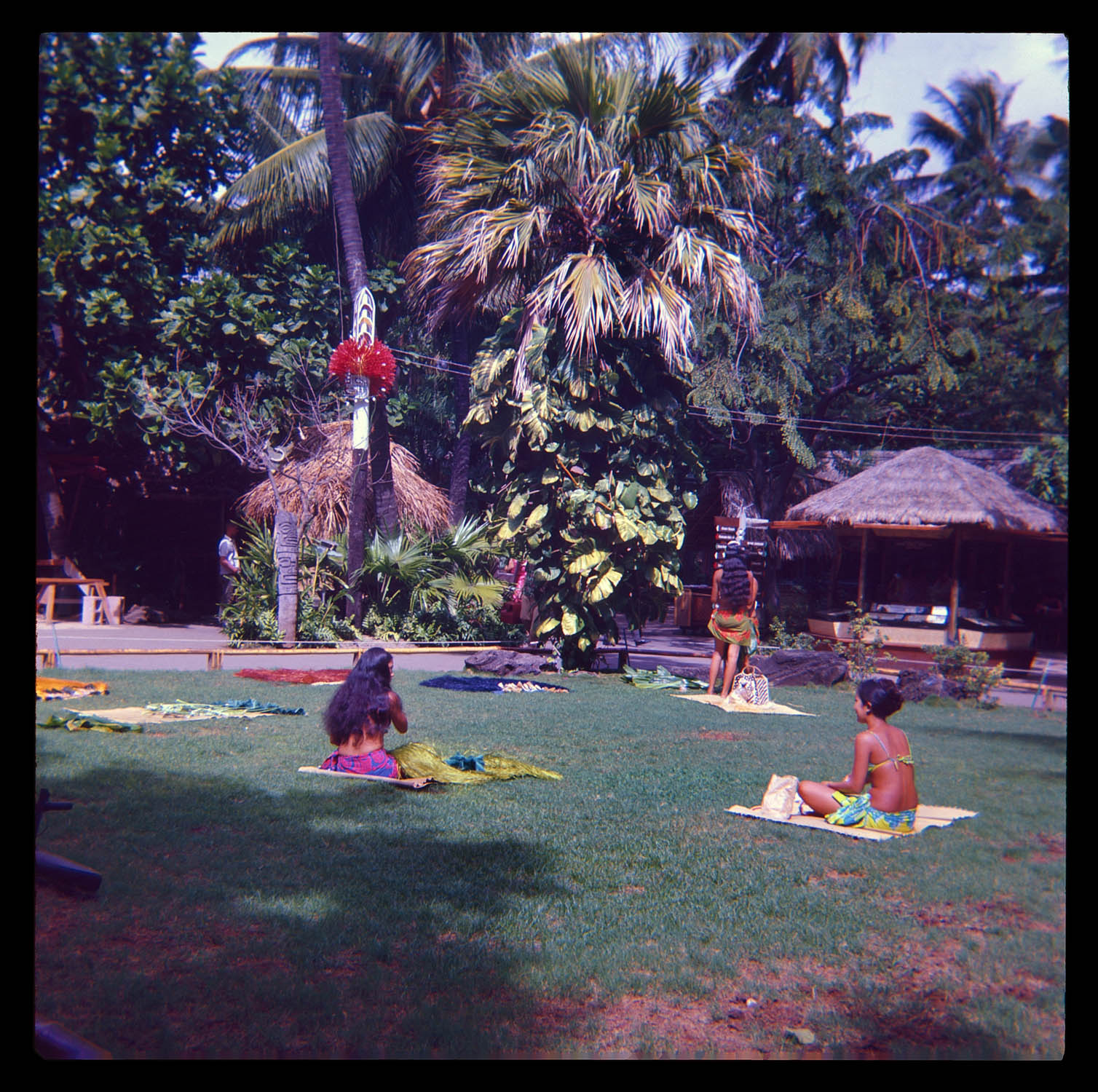
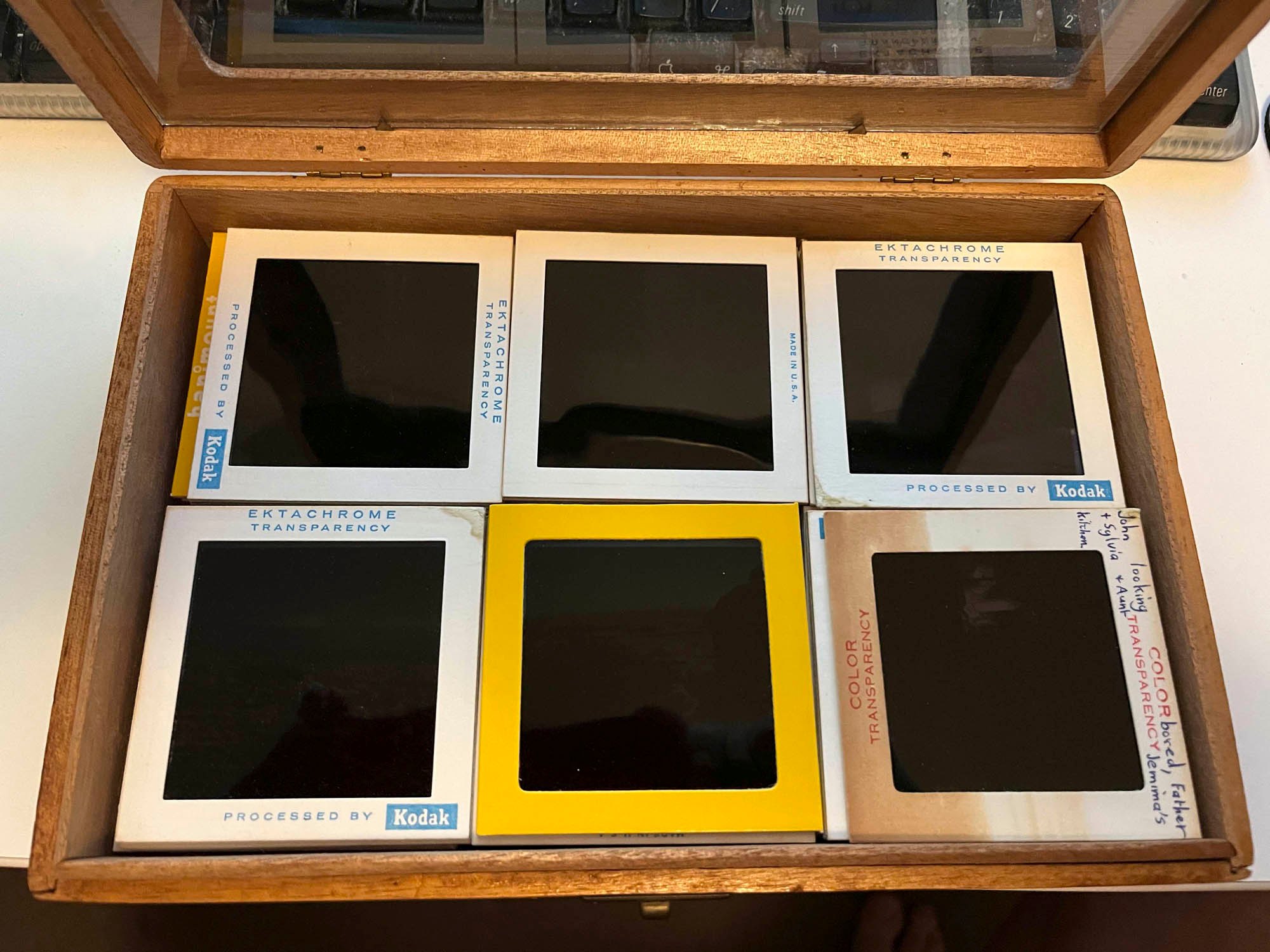

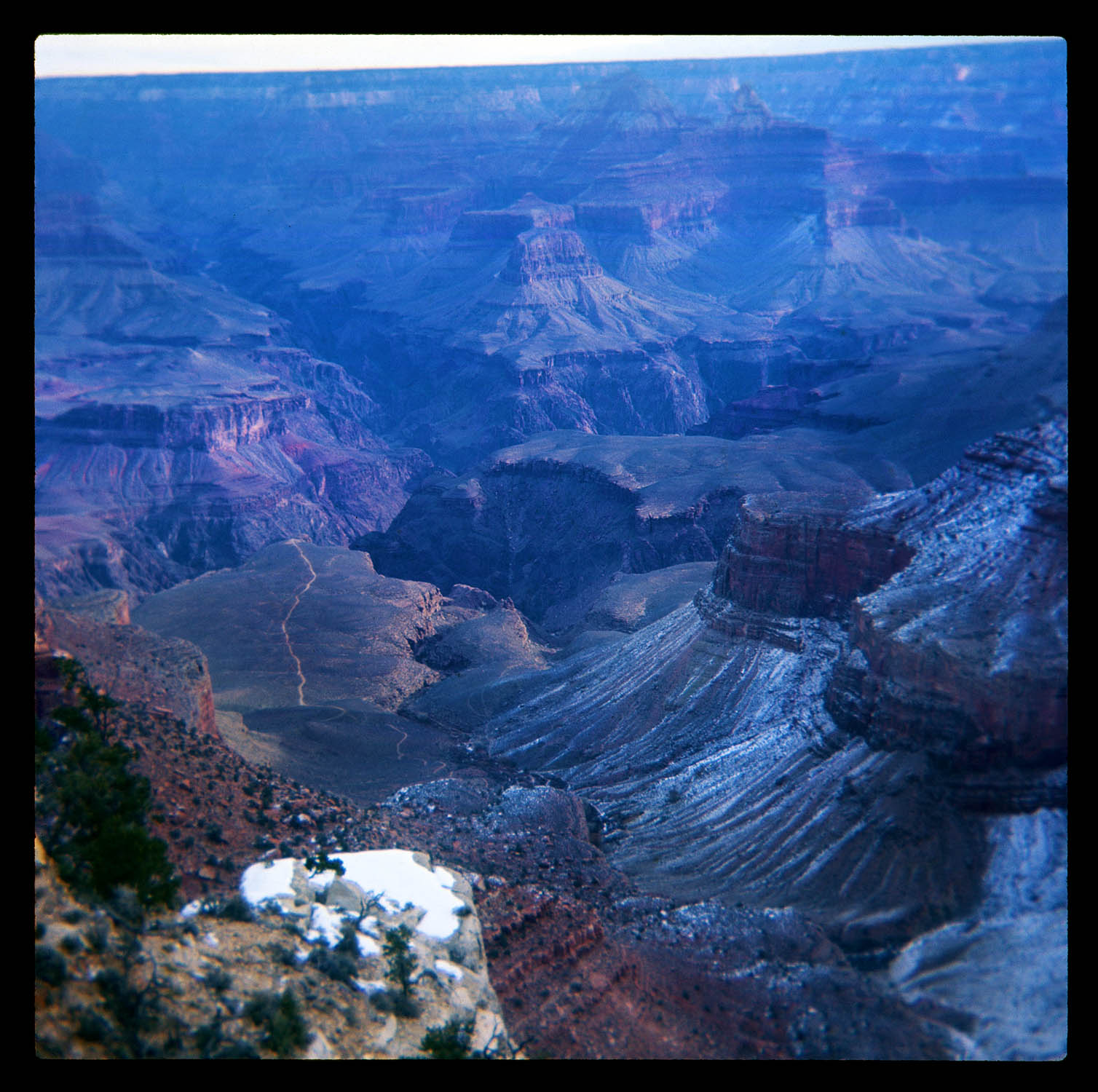
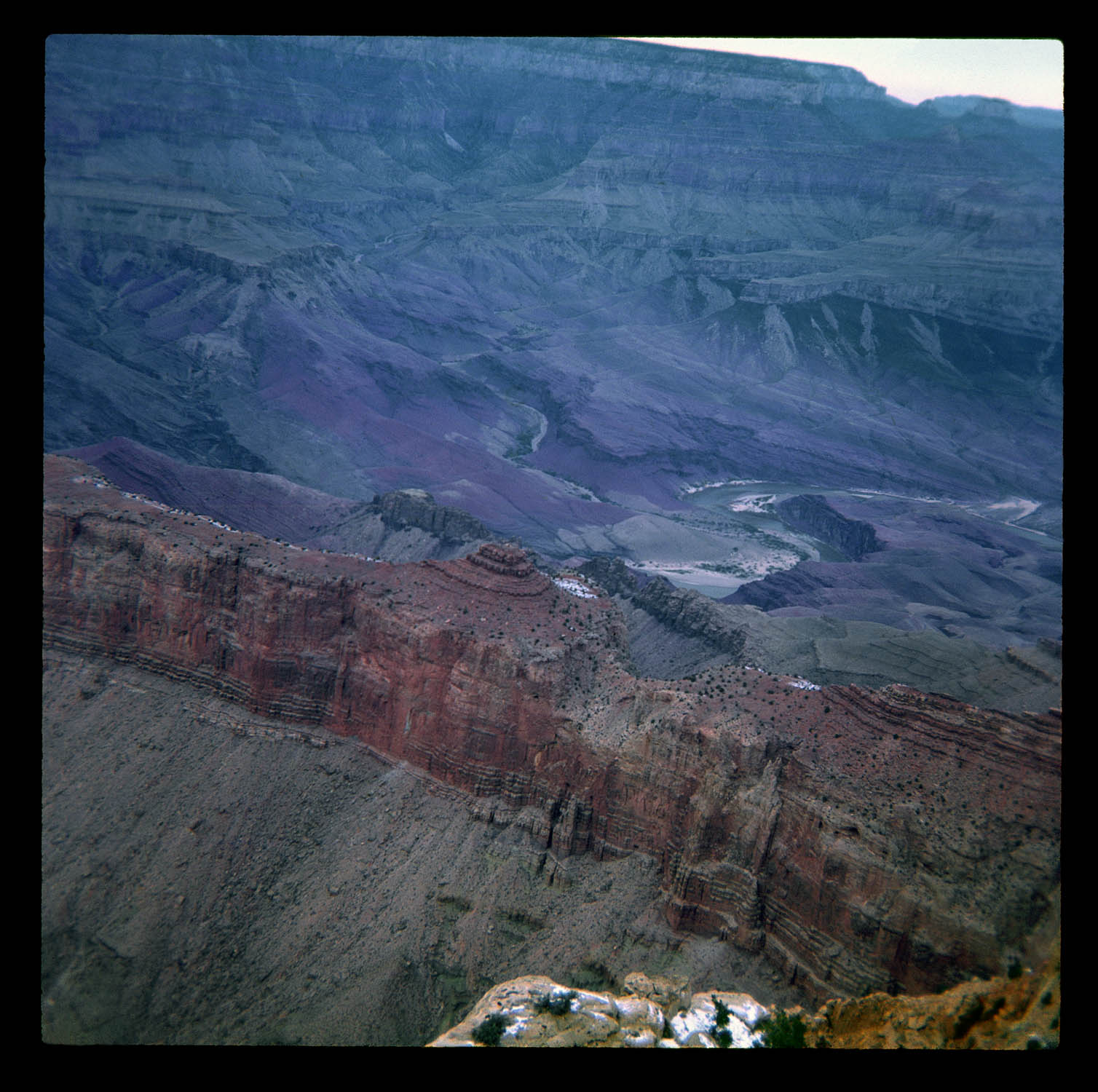
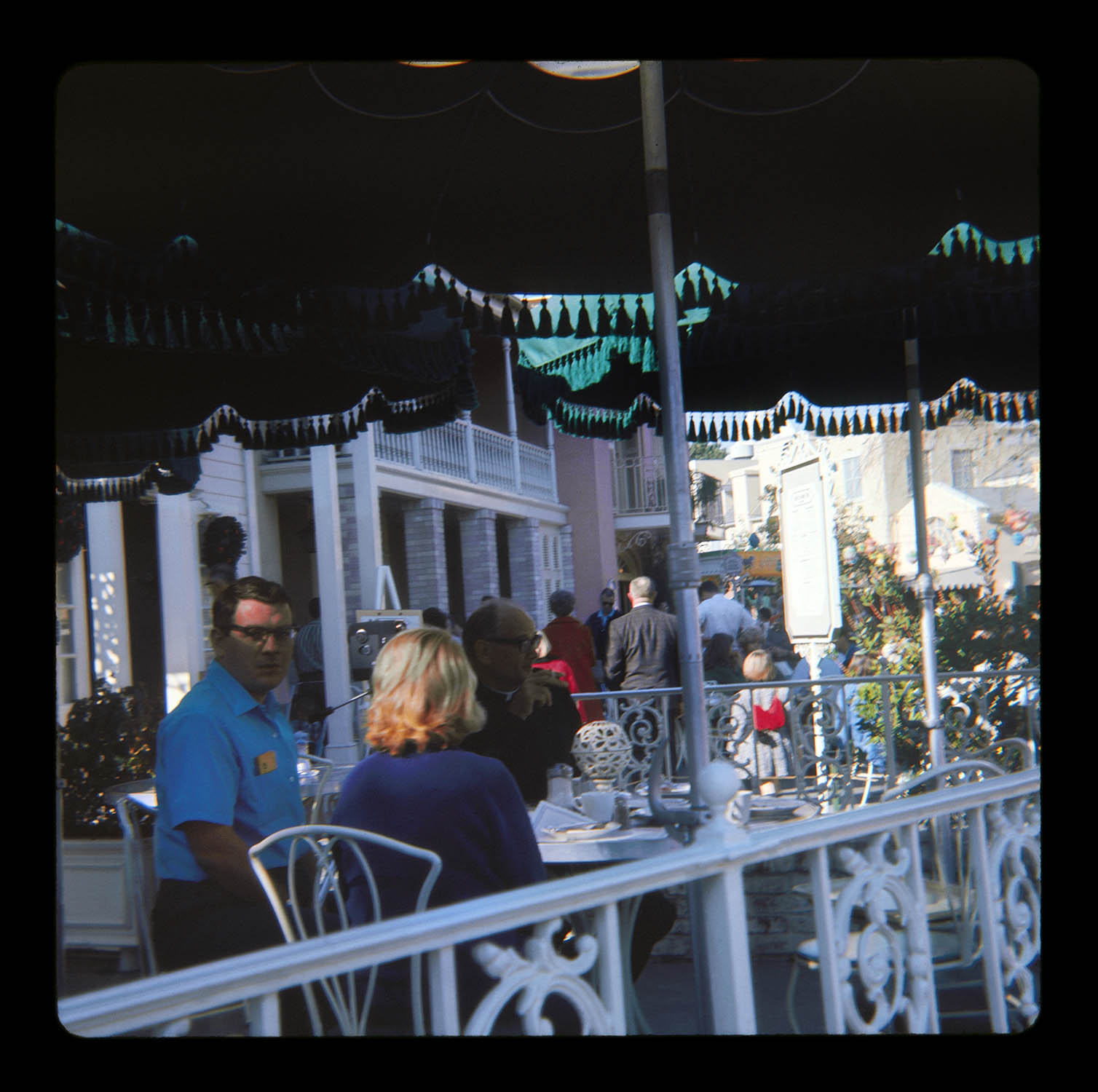
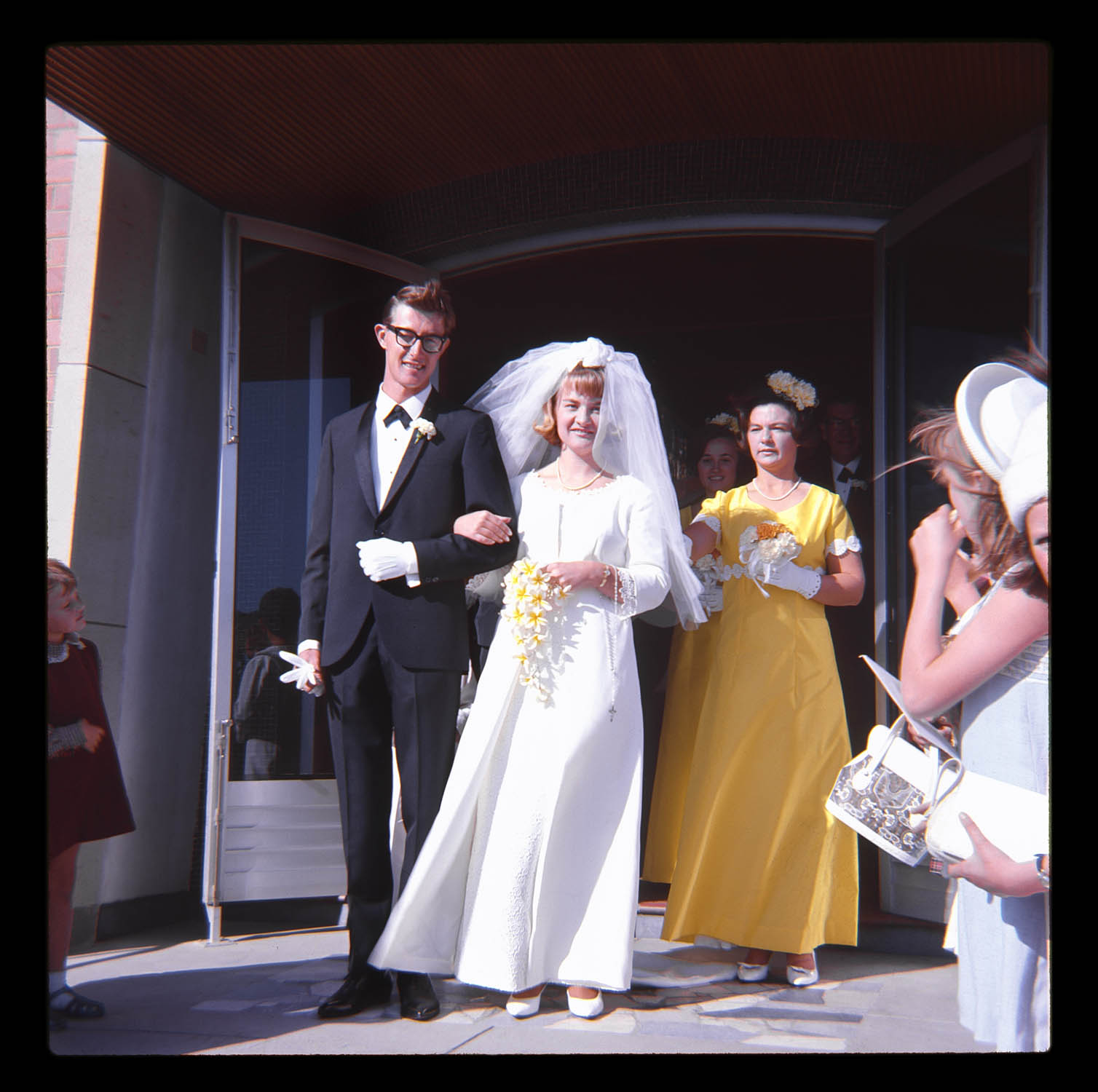
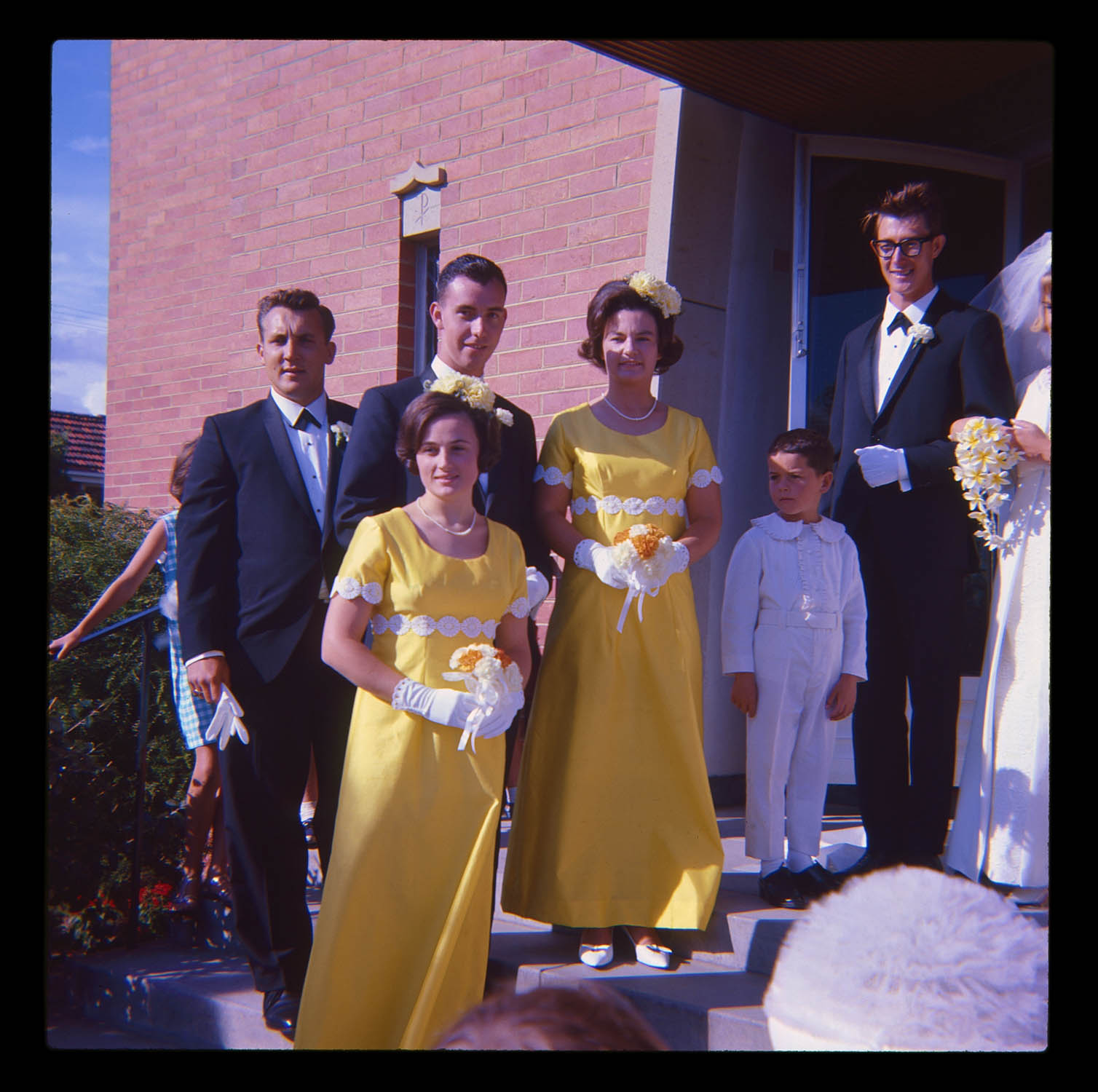
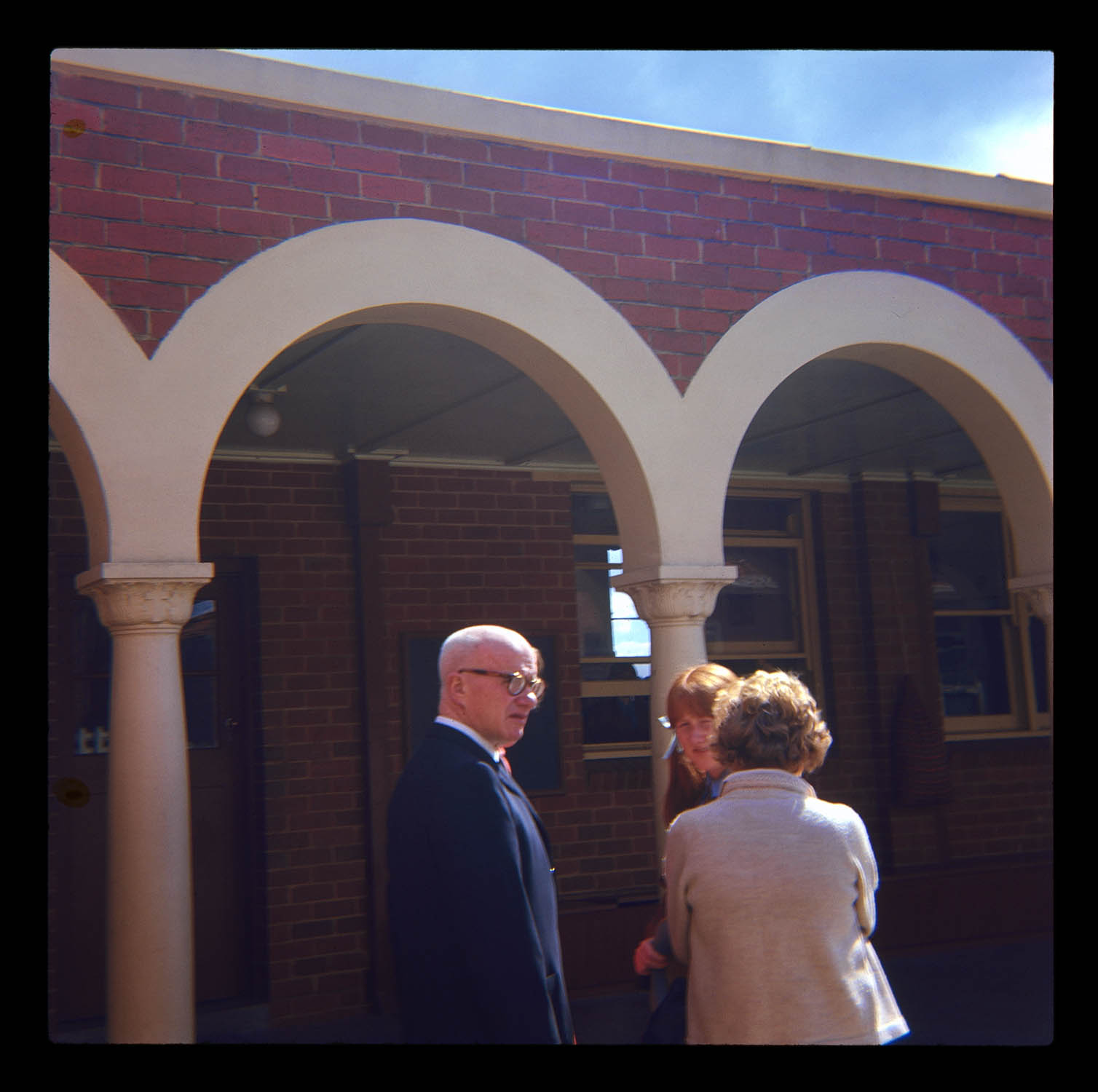
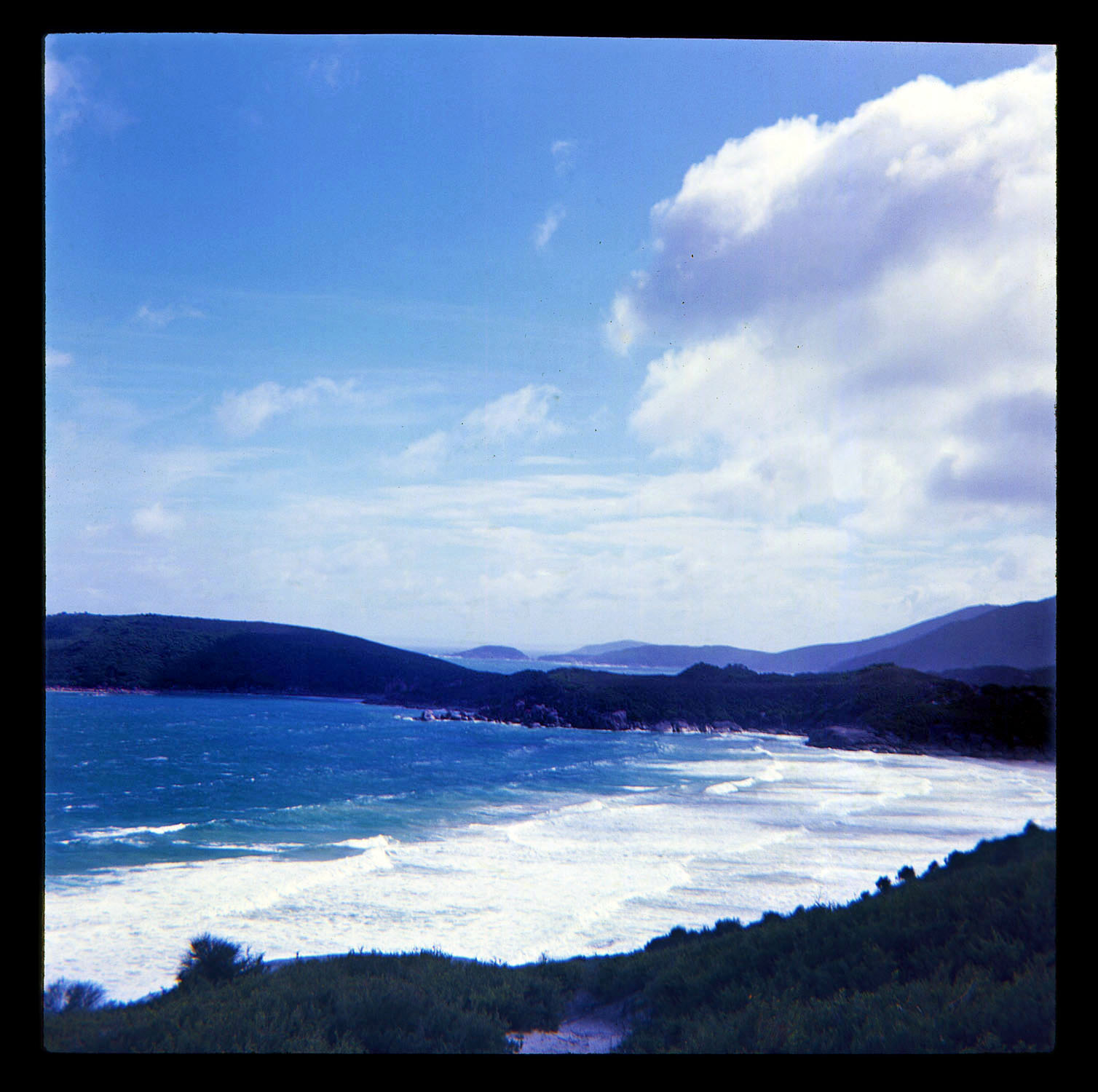
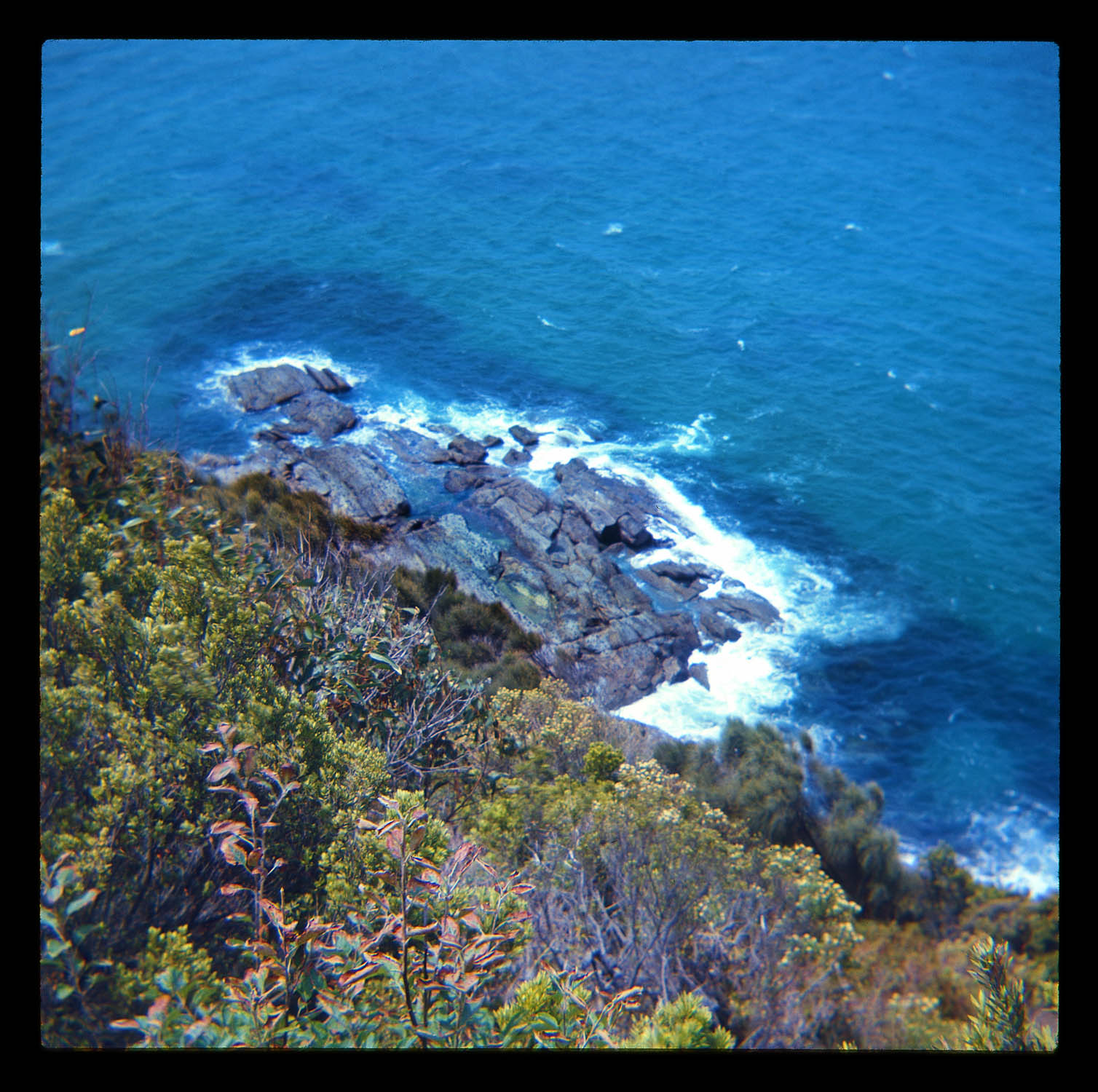
![Unknown photographer (Australian) 'Untitled [coastline]' 1960s](https://artblart.com/wp-content/uploads/2025/05/ektachrome-h.jpg "Unknown photographer (Australian) 'Untitled [coastline]' 1960s")
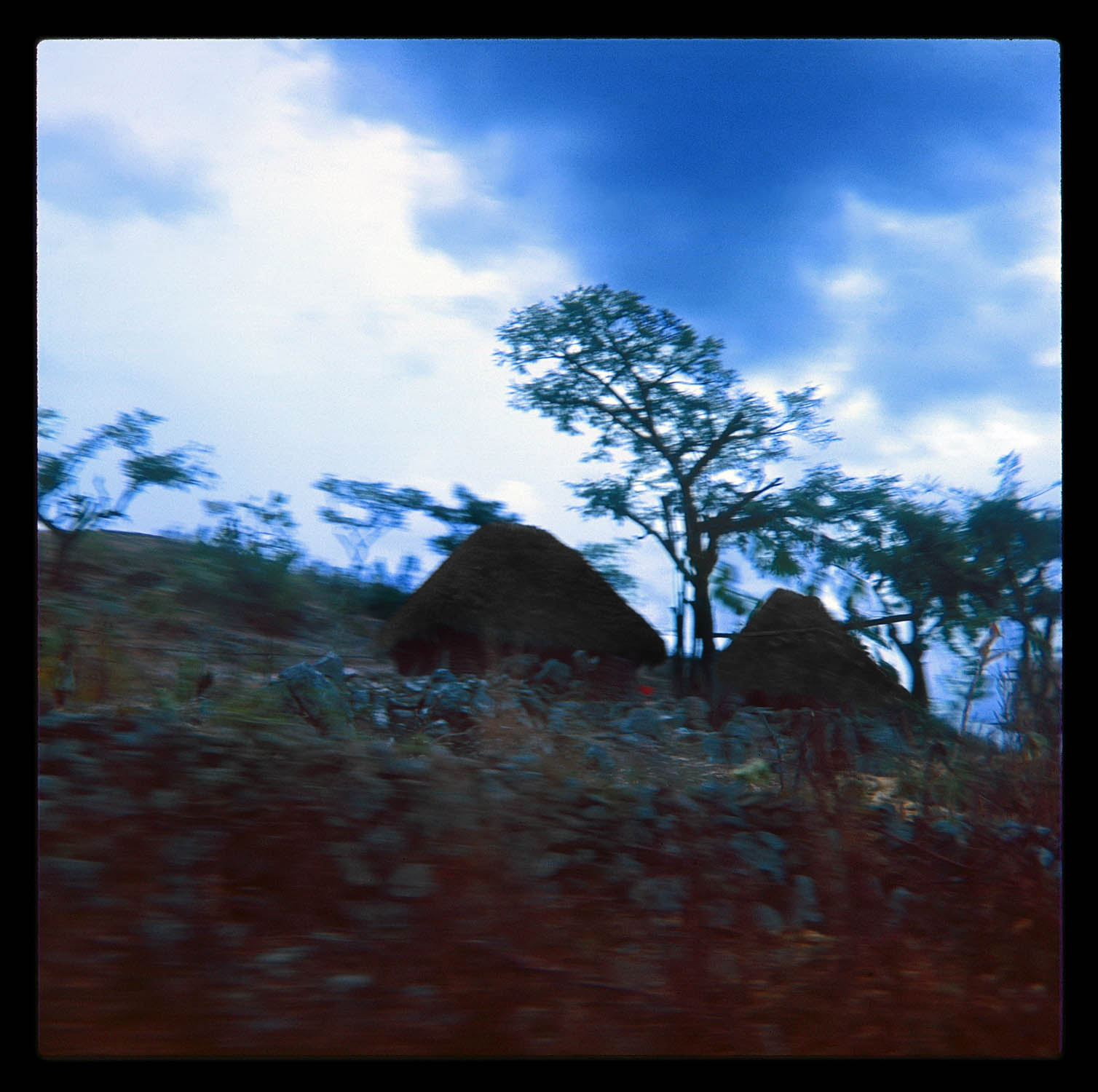
![Unknown photographer (Australian) 'Untitled [Desert scene, California?]' 1960s](https://artblart.com/wp-content/uploads/2025/05/ektachrome-q.jpg "Unknown photographer (Australian) 'Untitled [Desert scene, California?]' 1960s")
![Unknown photographer (Australian) 'Untitled [Desert scene, California?]' 1960s](https://artblart.com/wp-content/uploads/2025/05/ektachrome-p.jpg "Unknown photographer (Australian) 'Untitled [Desert scene, California?]' 1960s")
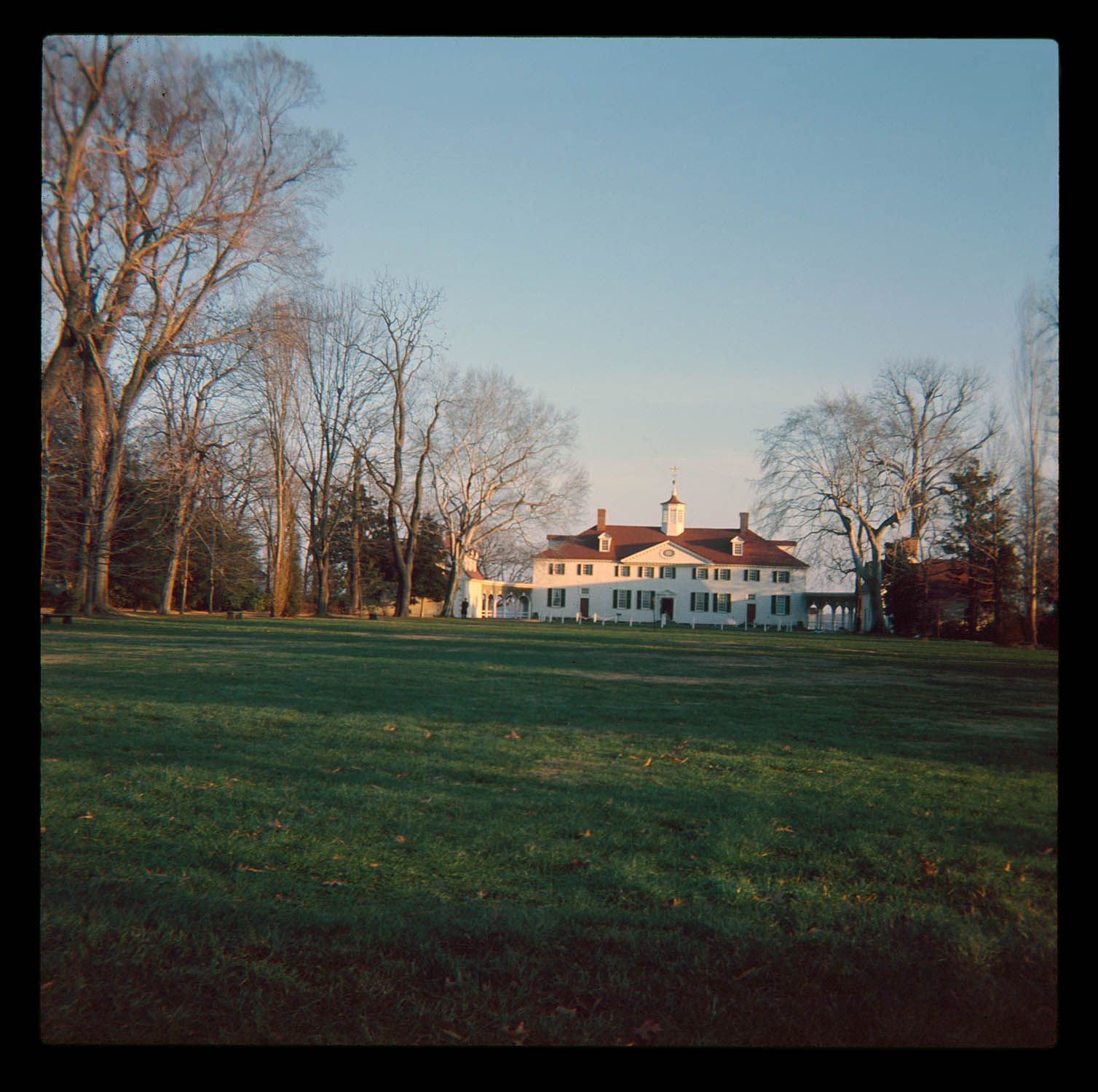

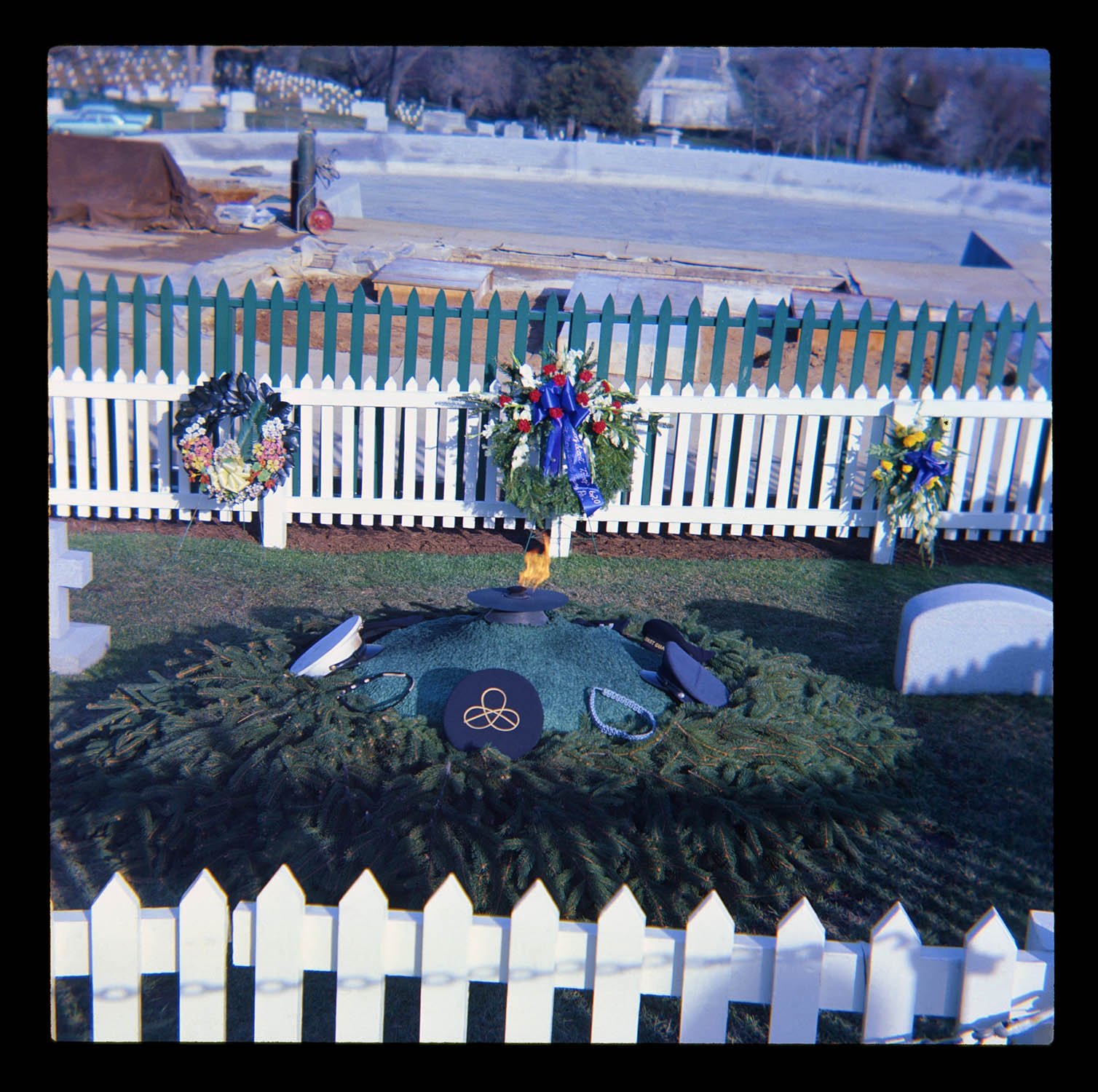
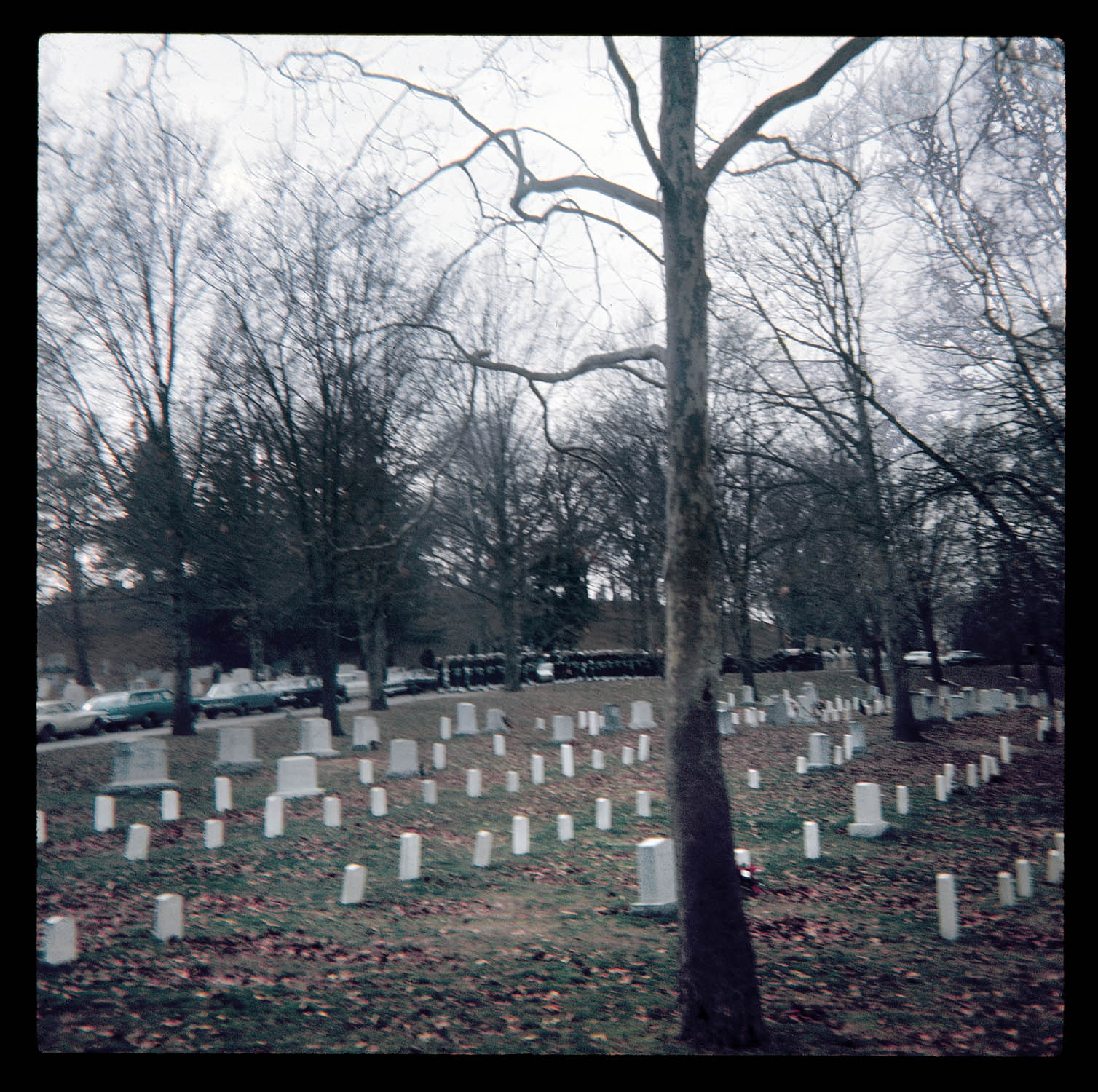
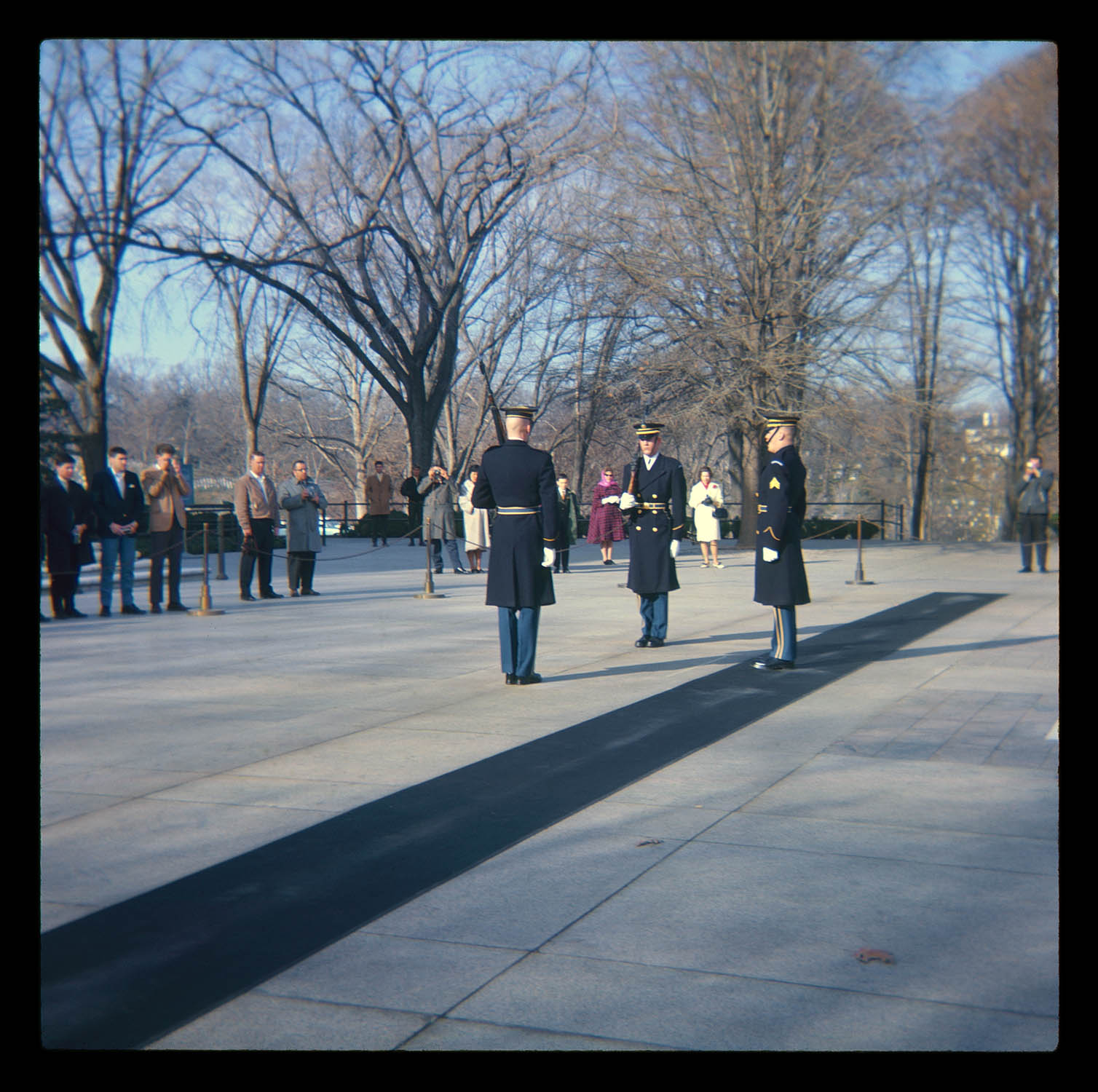
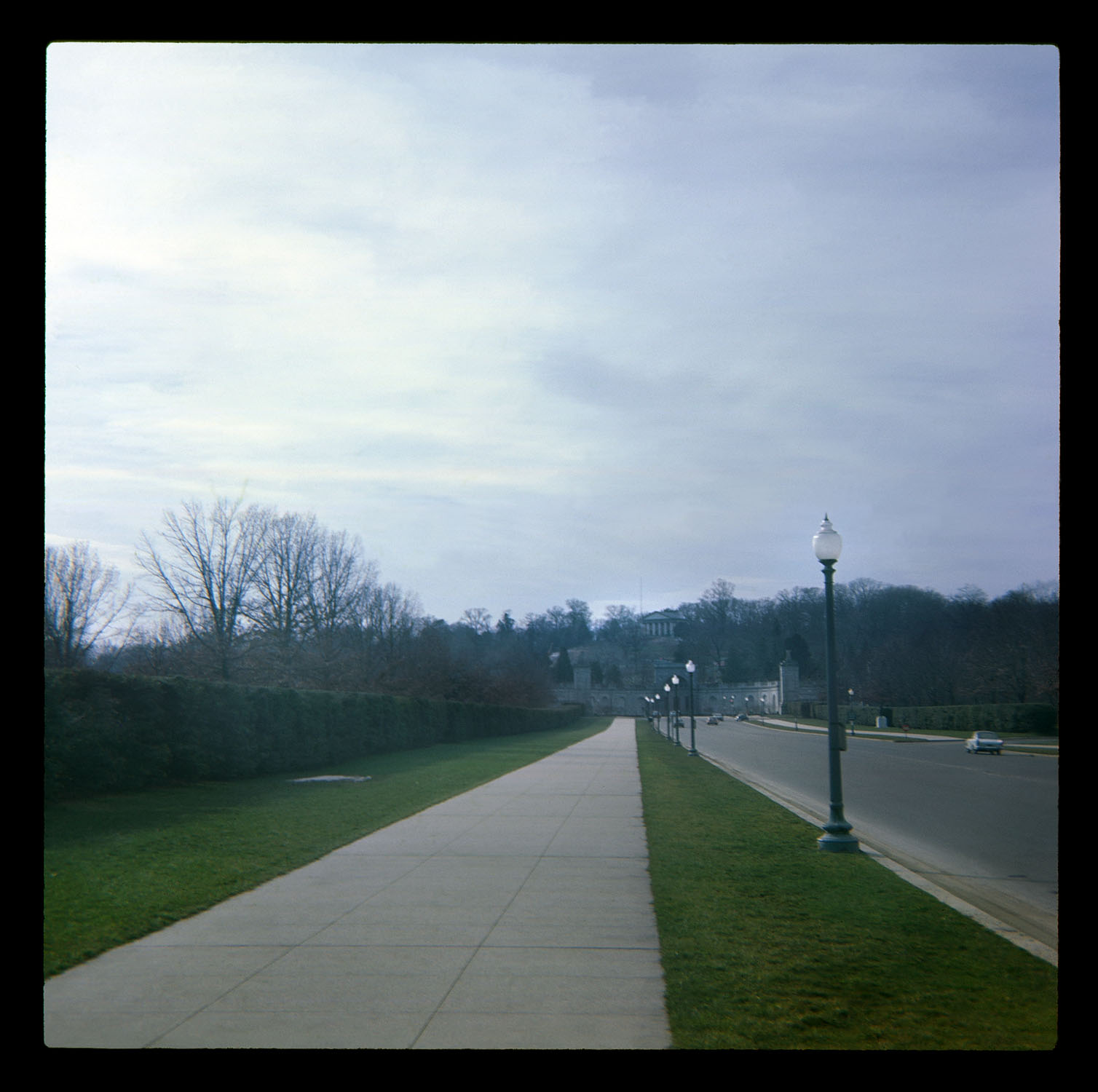
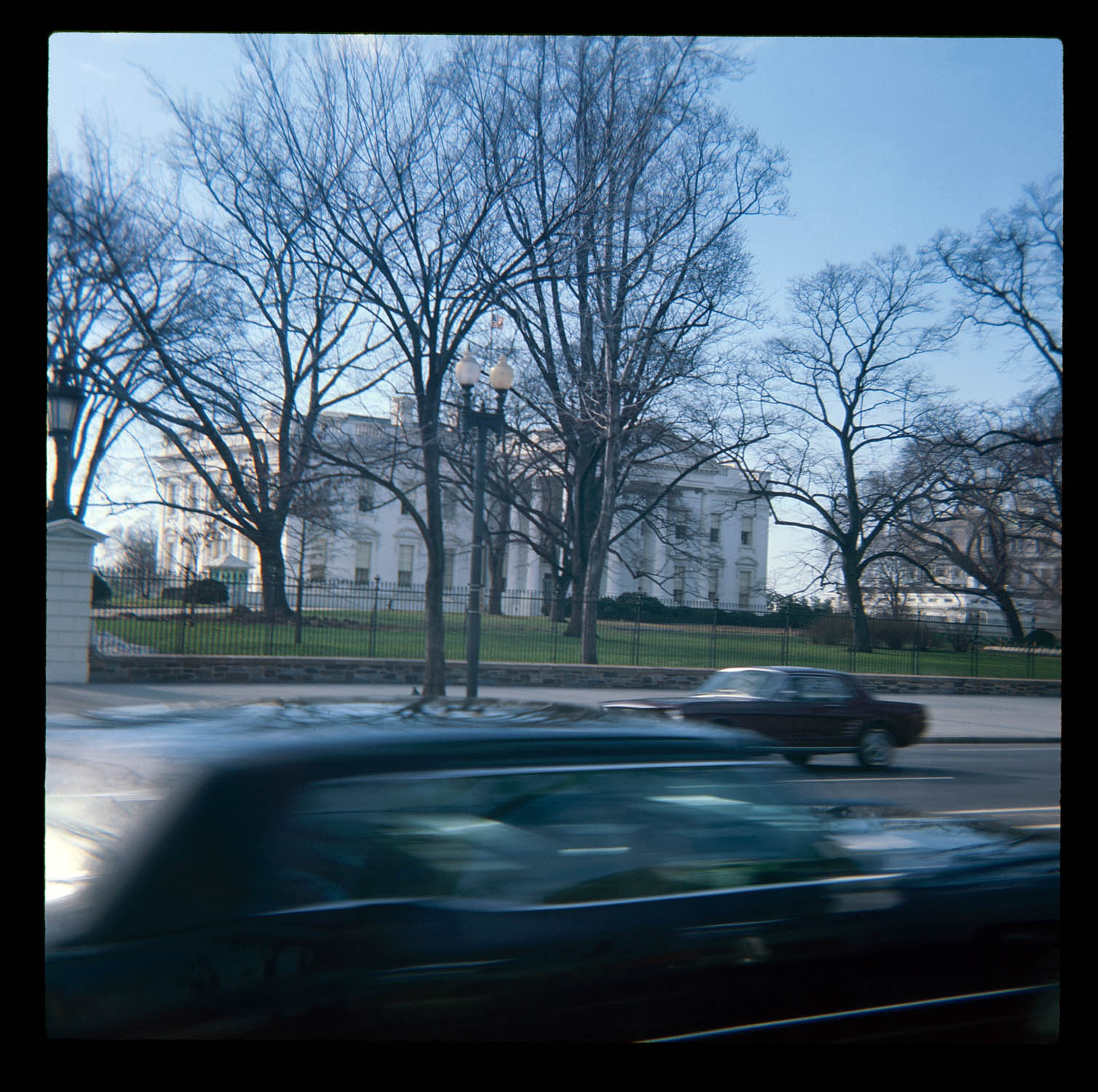
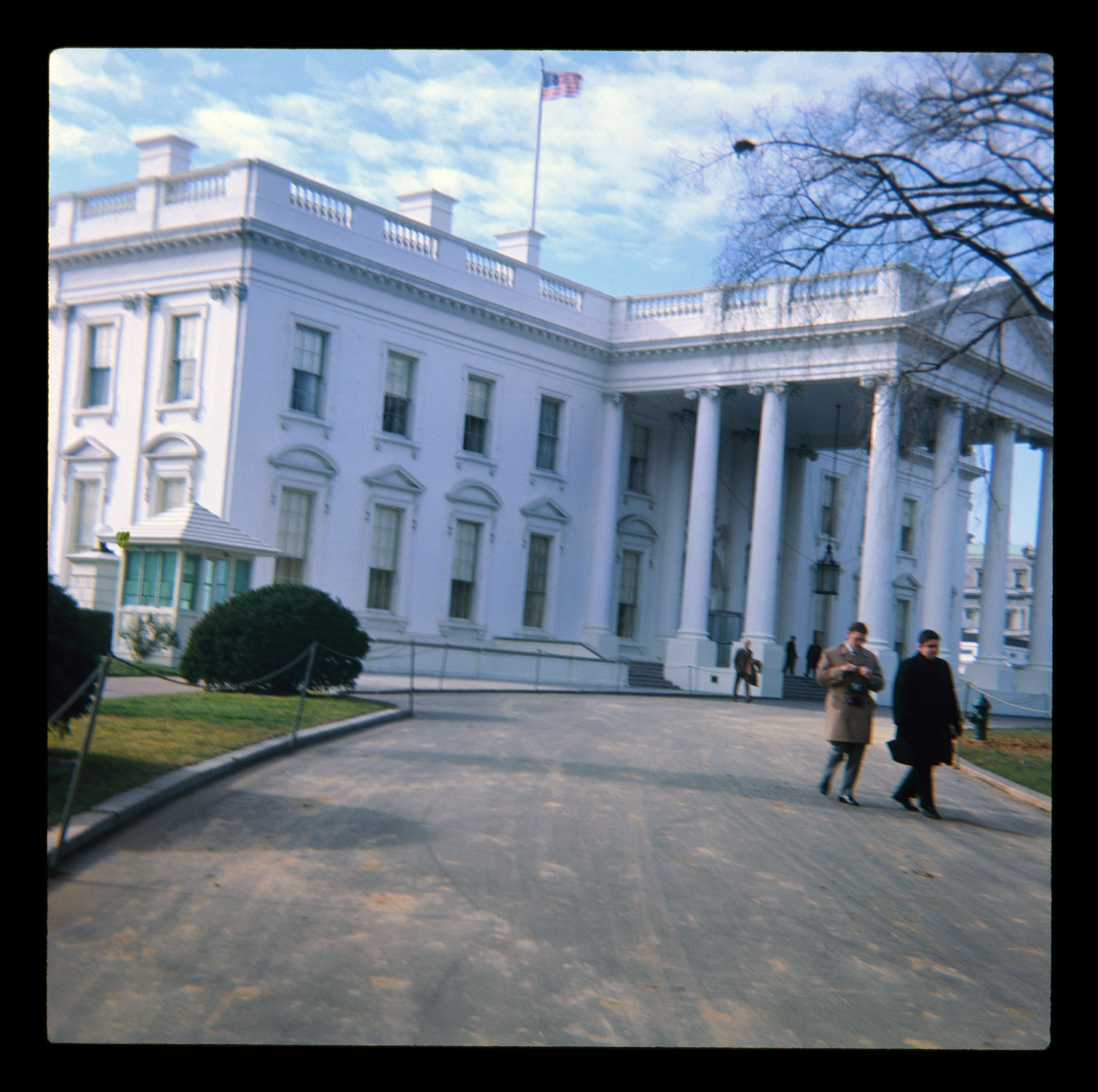
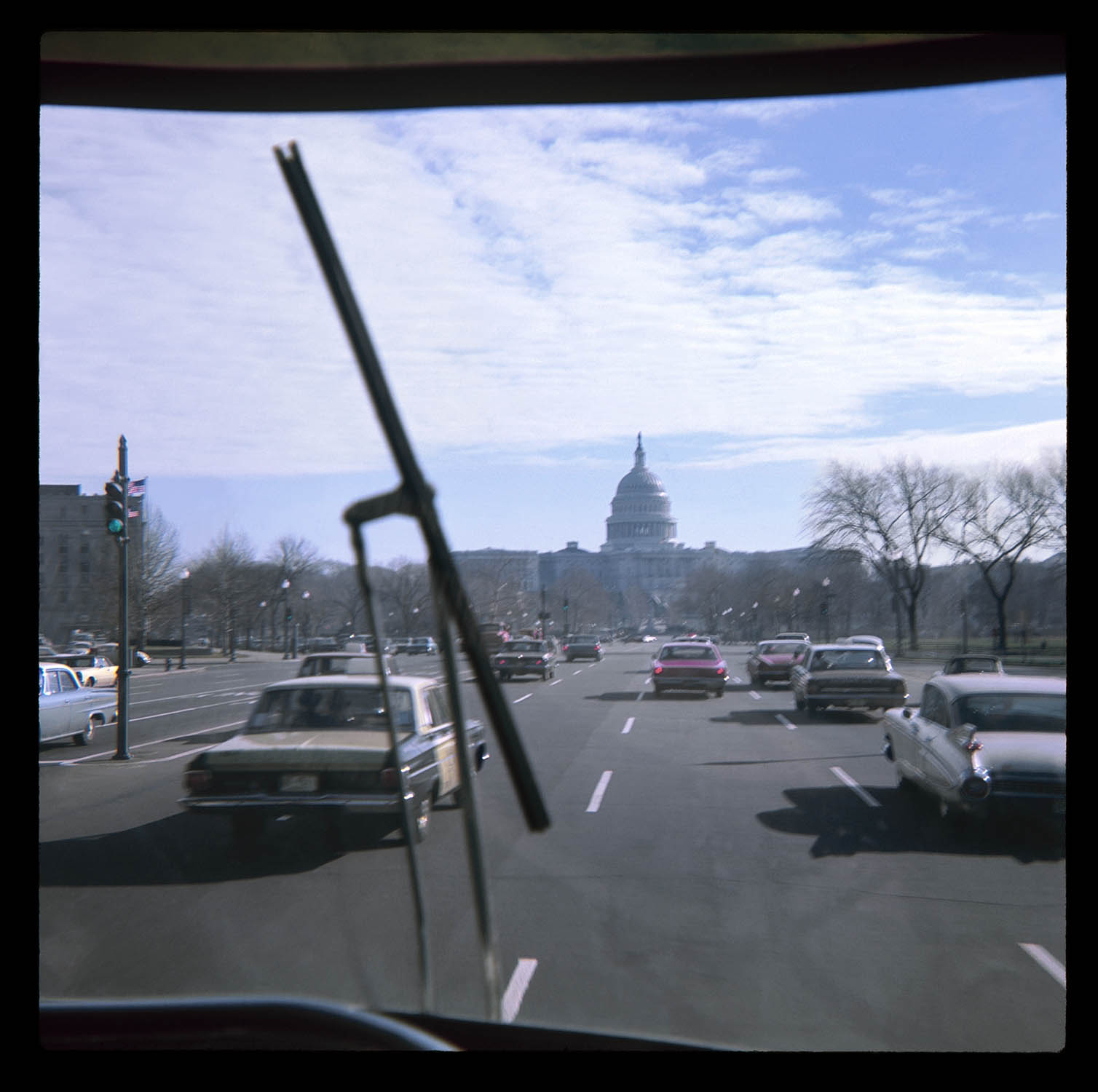
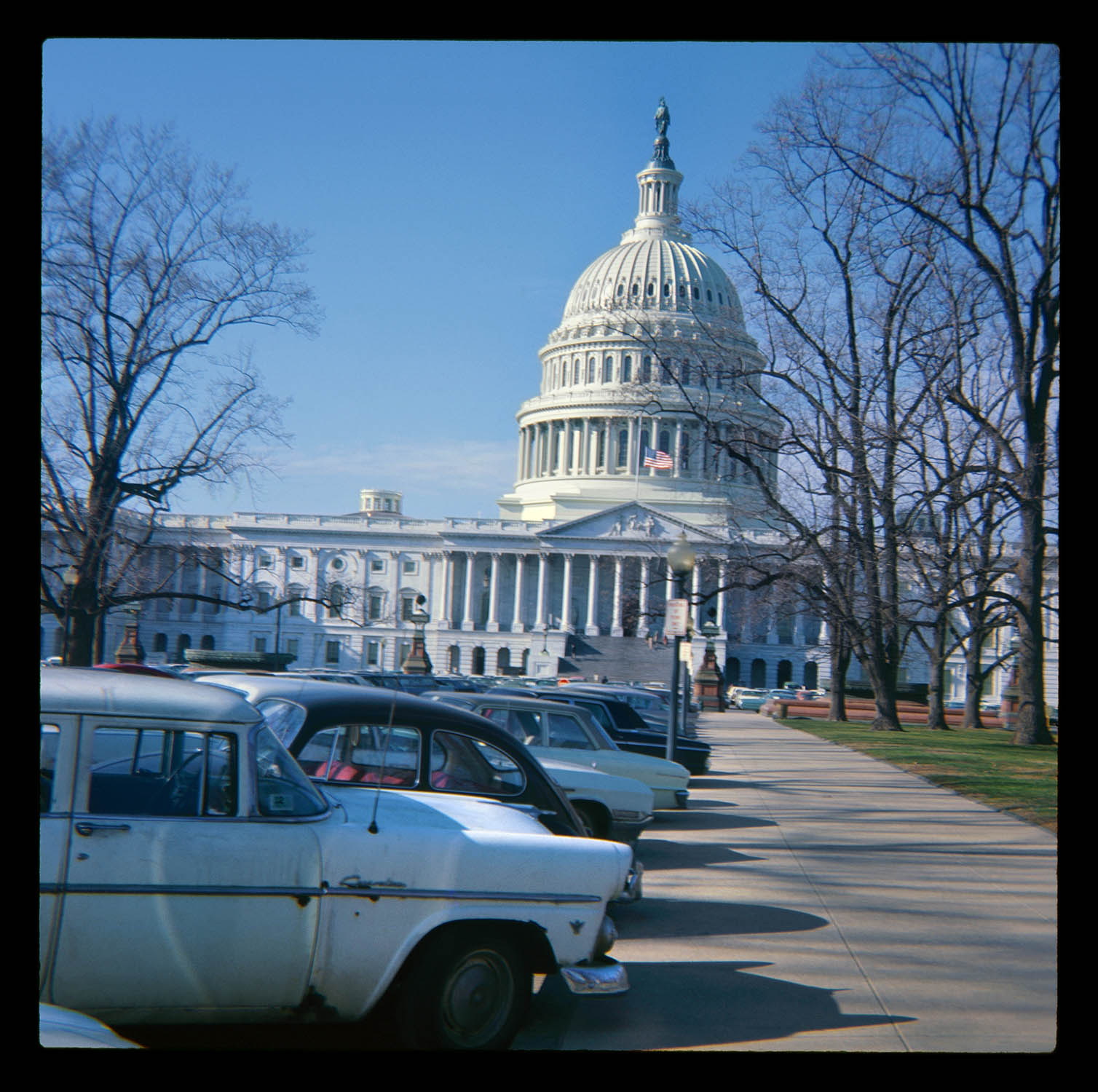
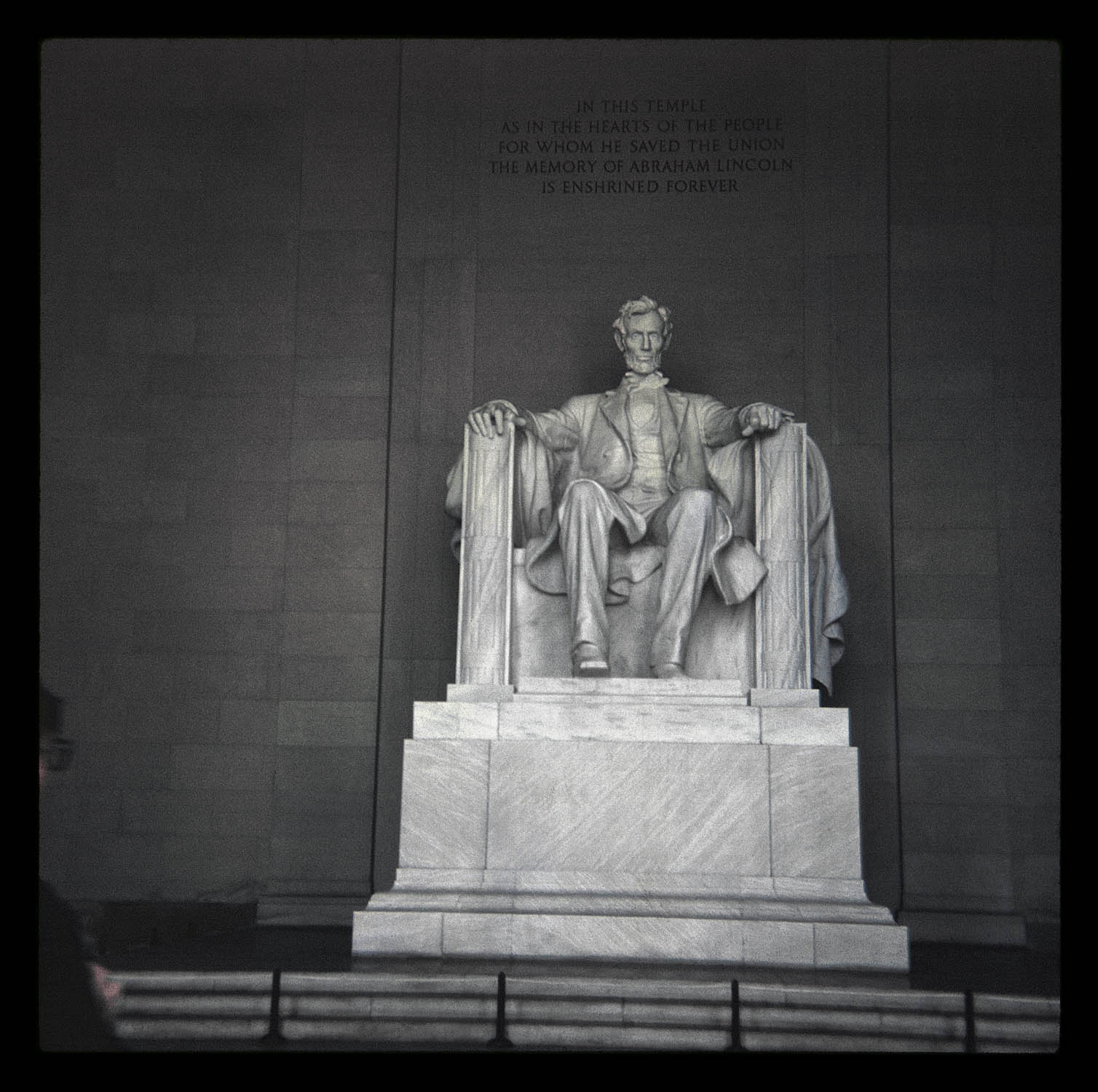
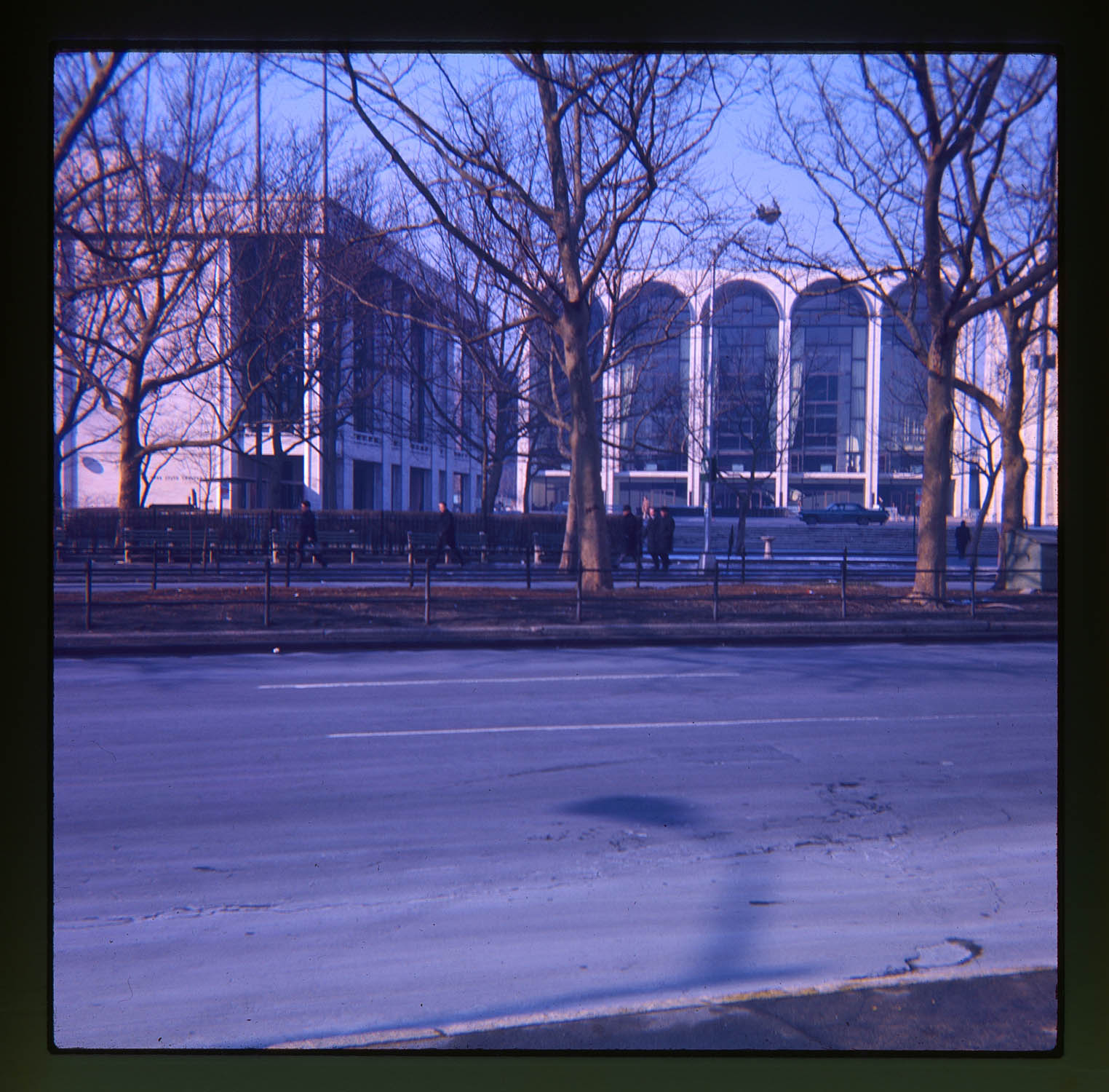

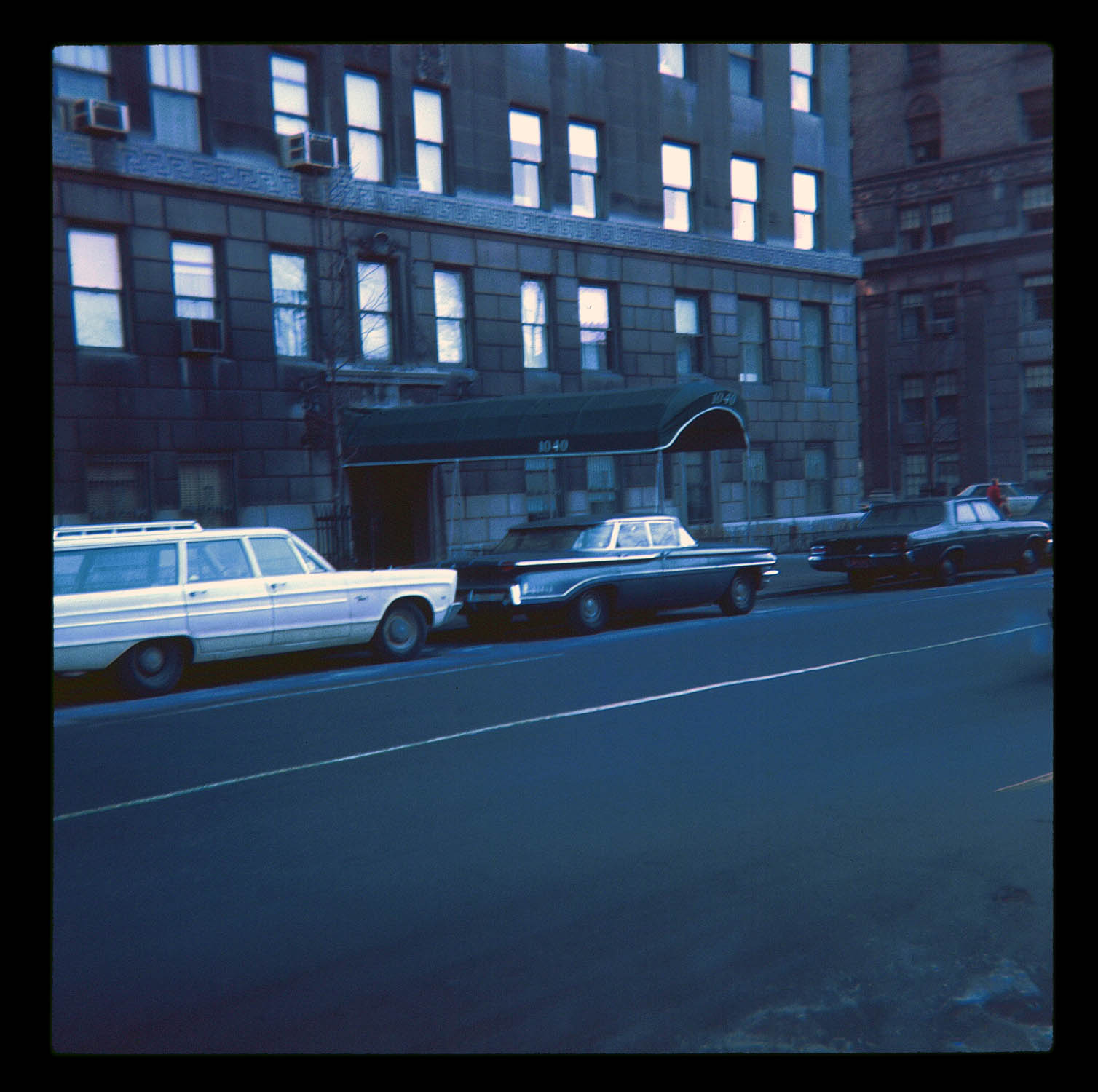
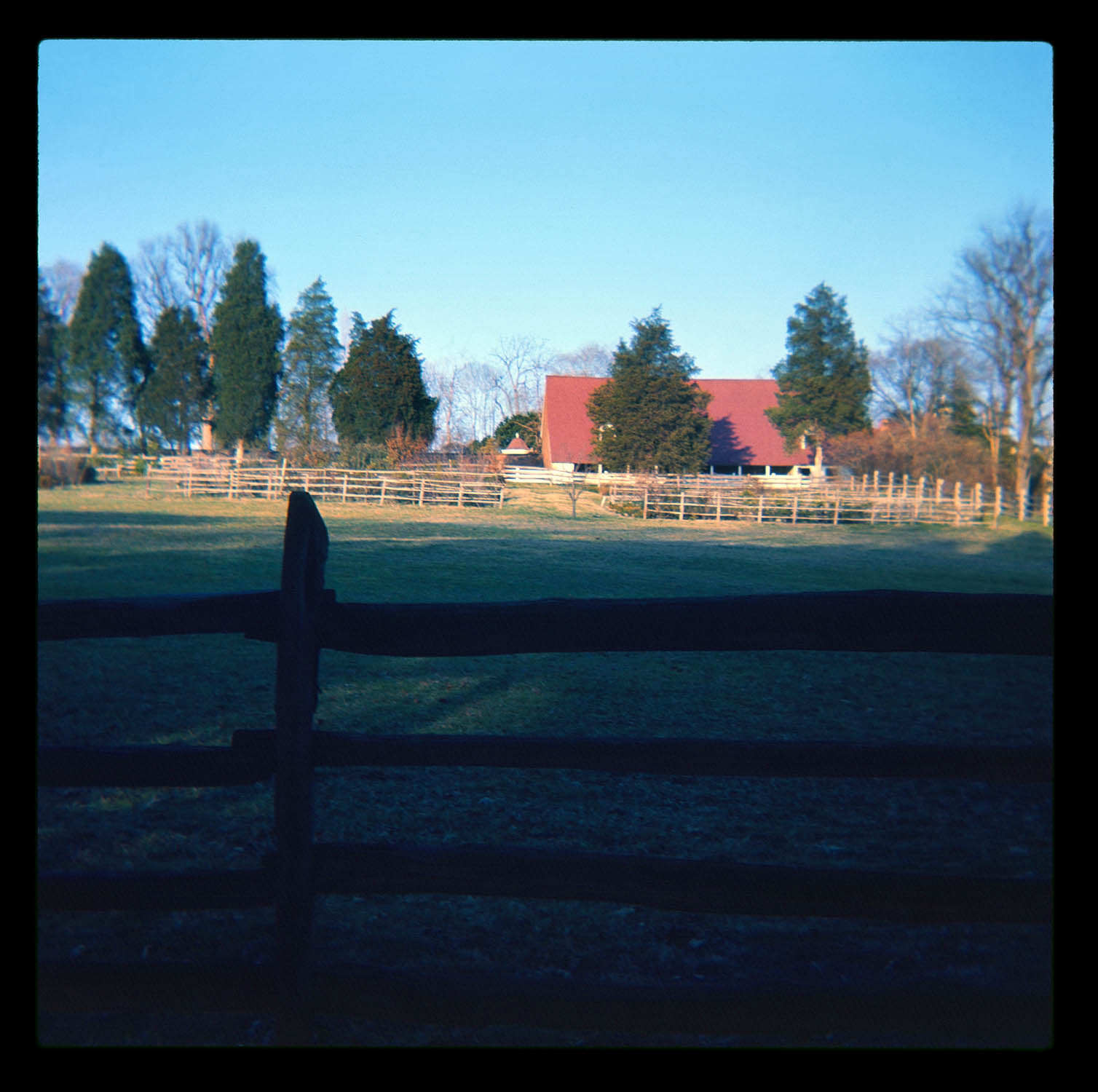
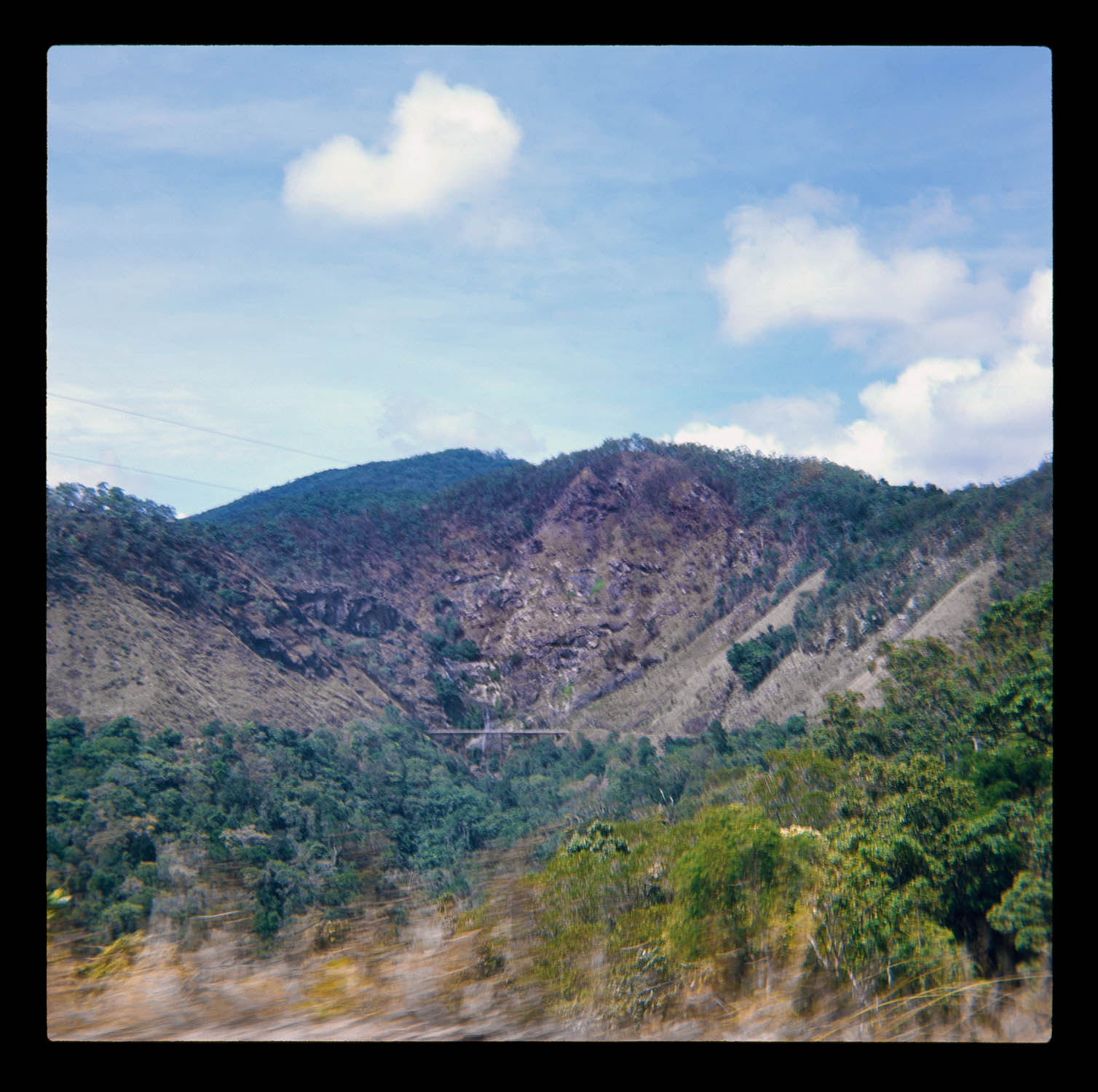
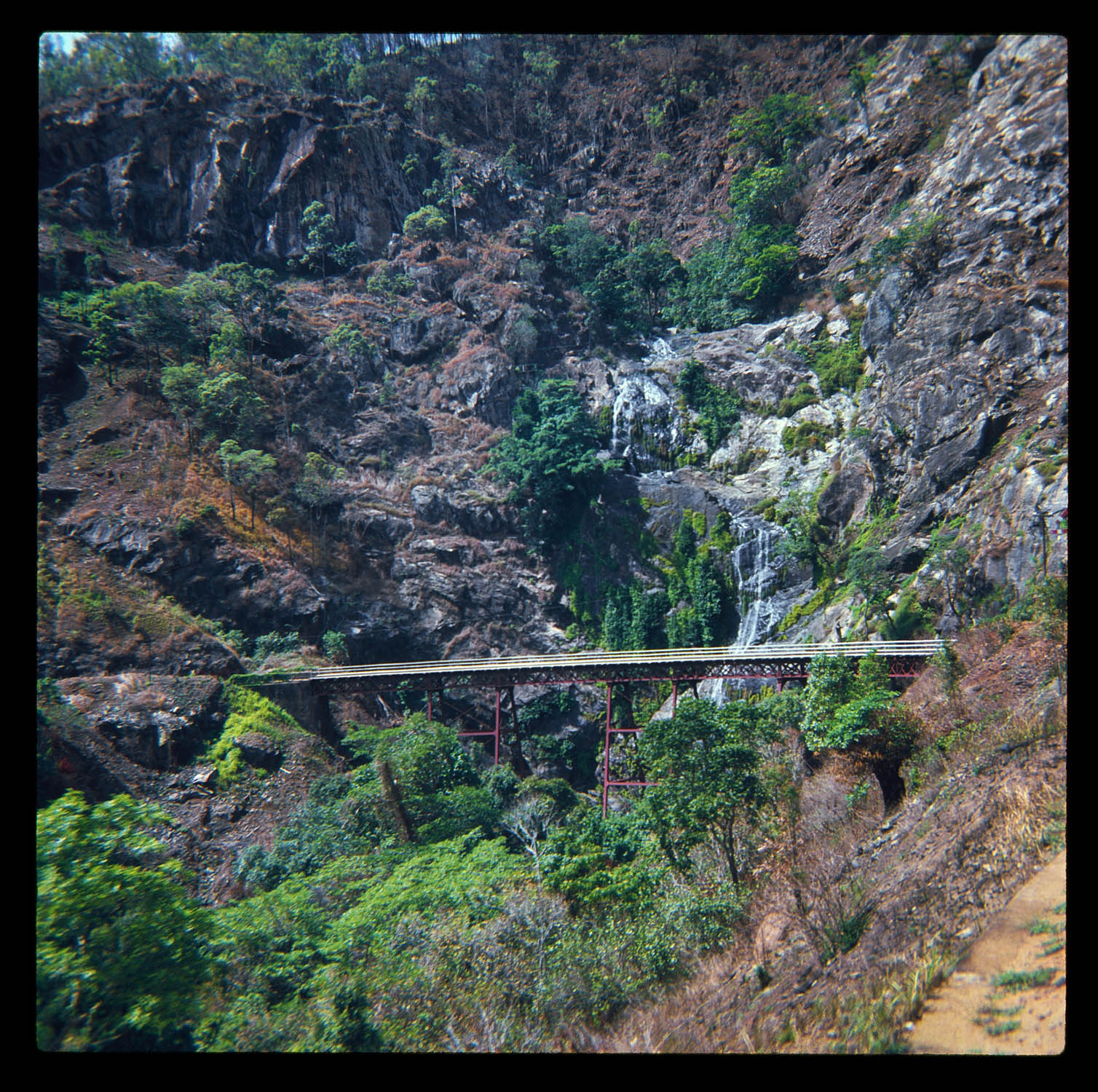
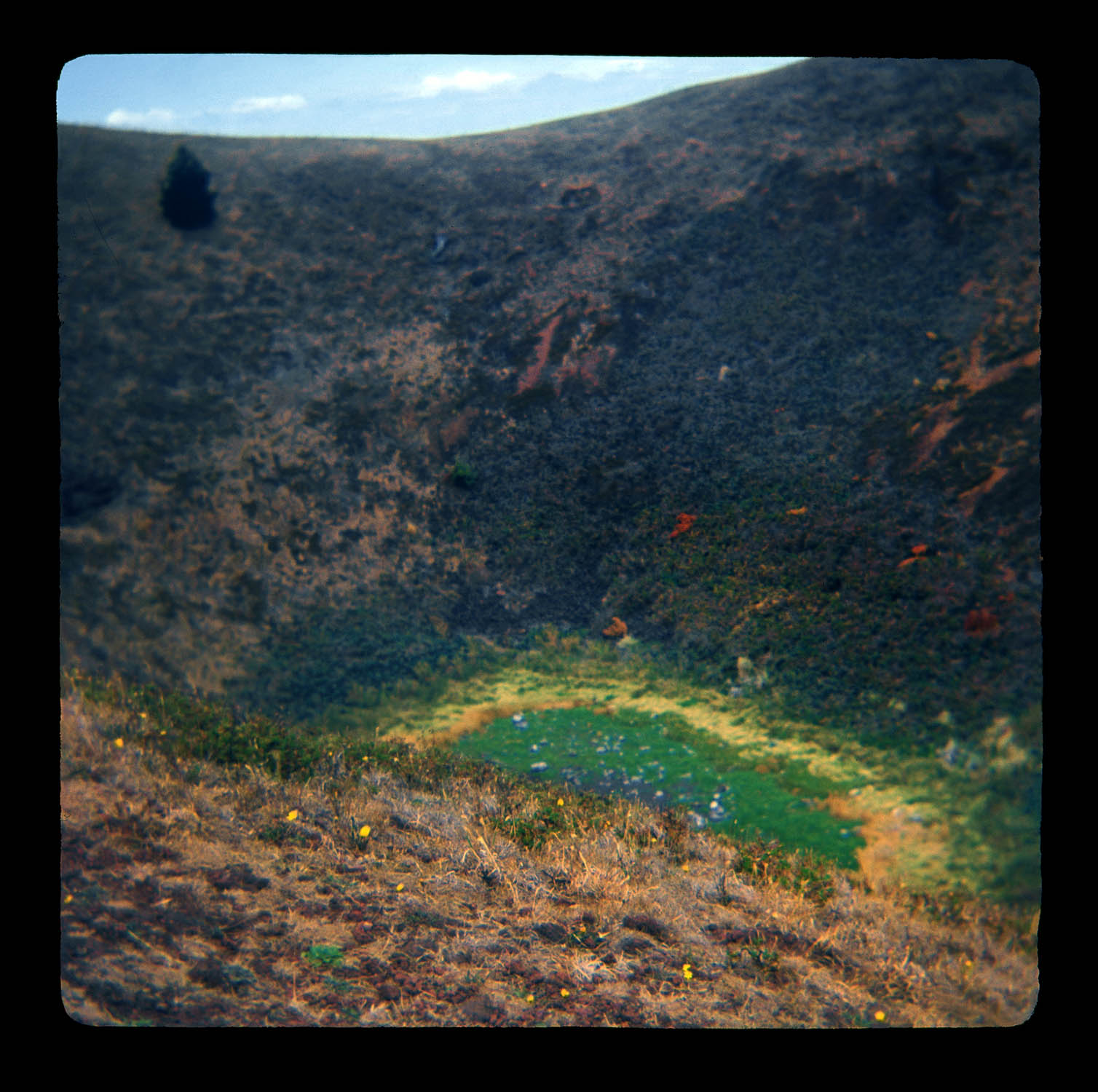

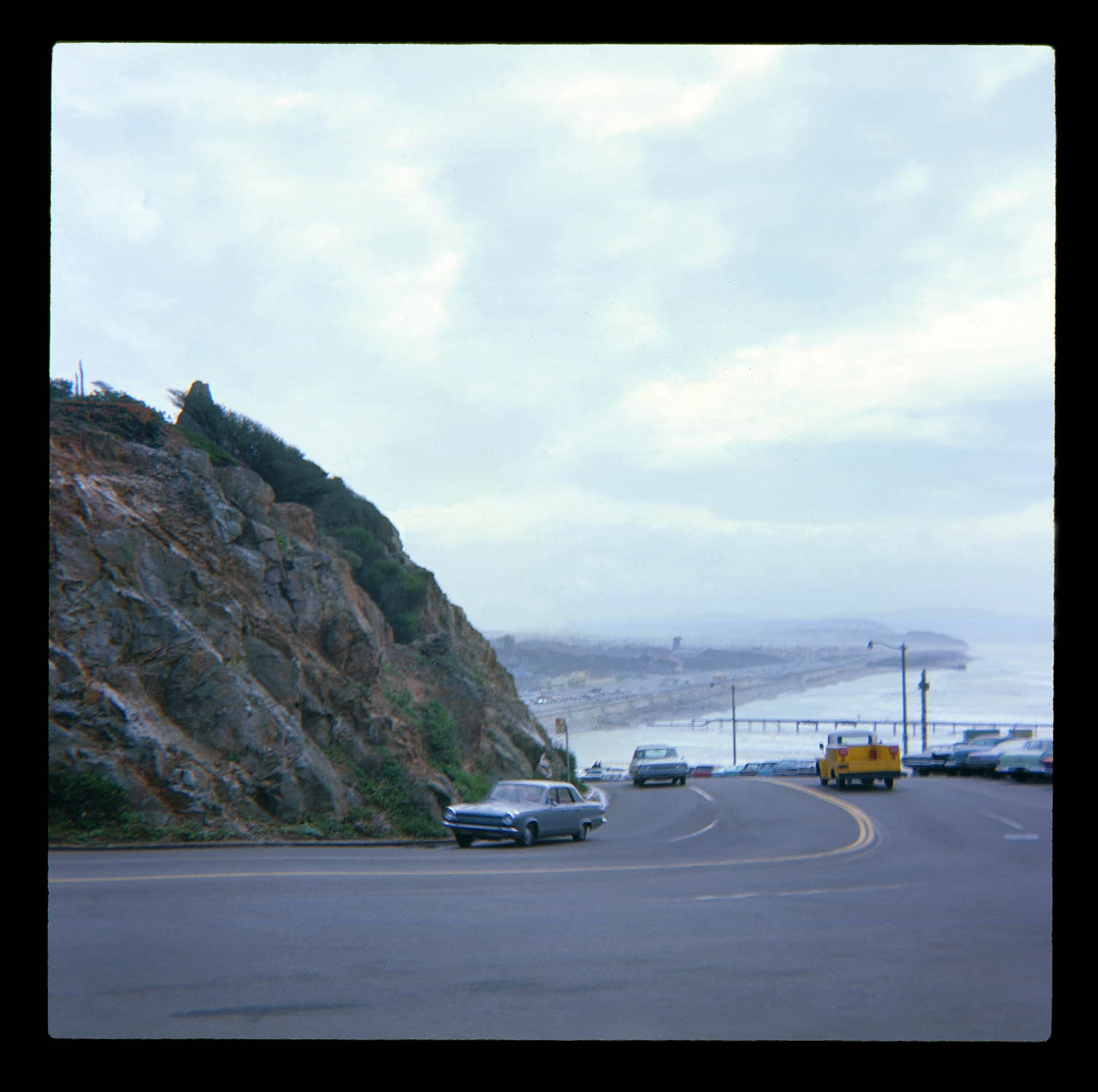

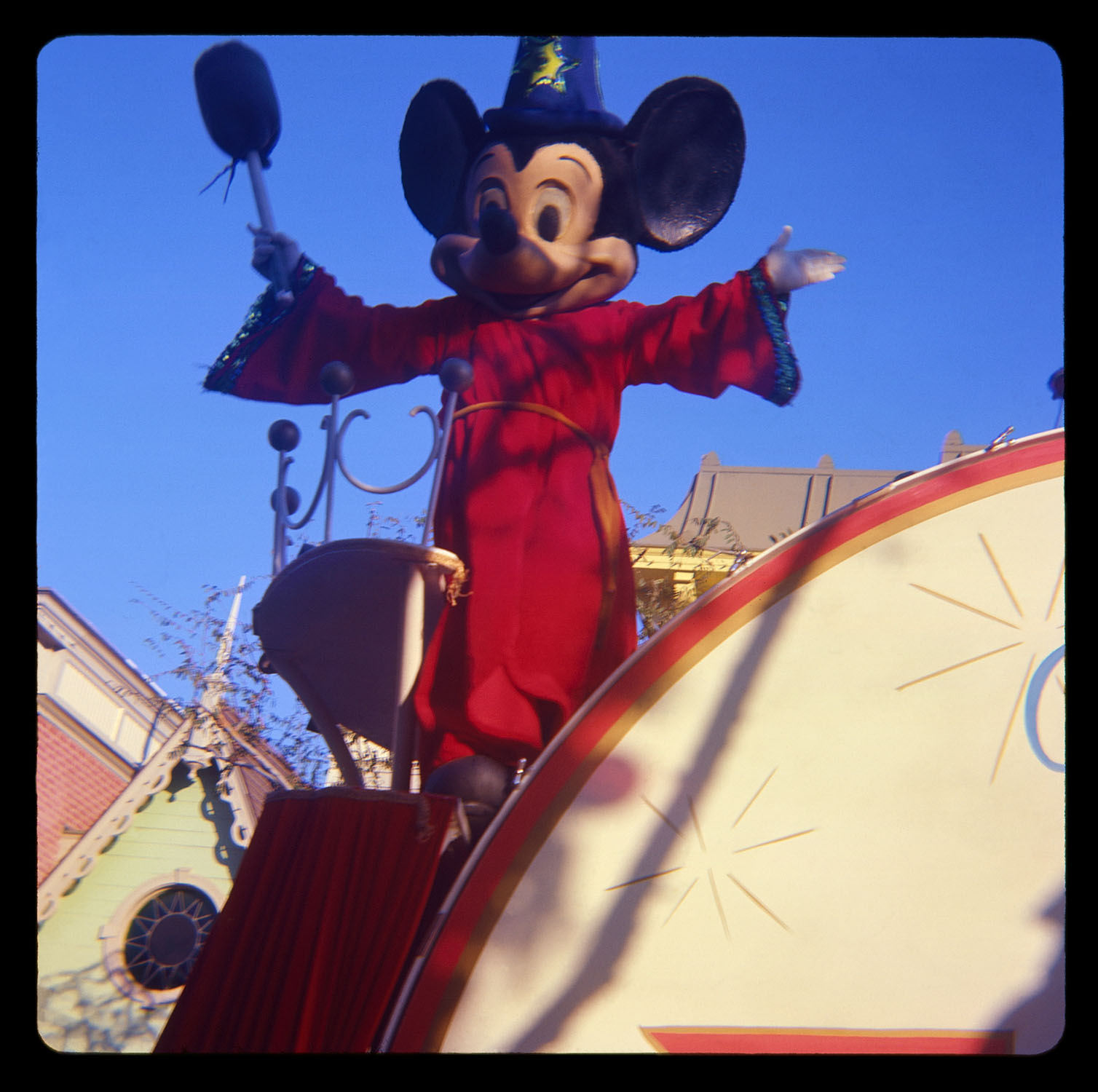
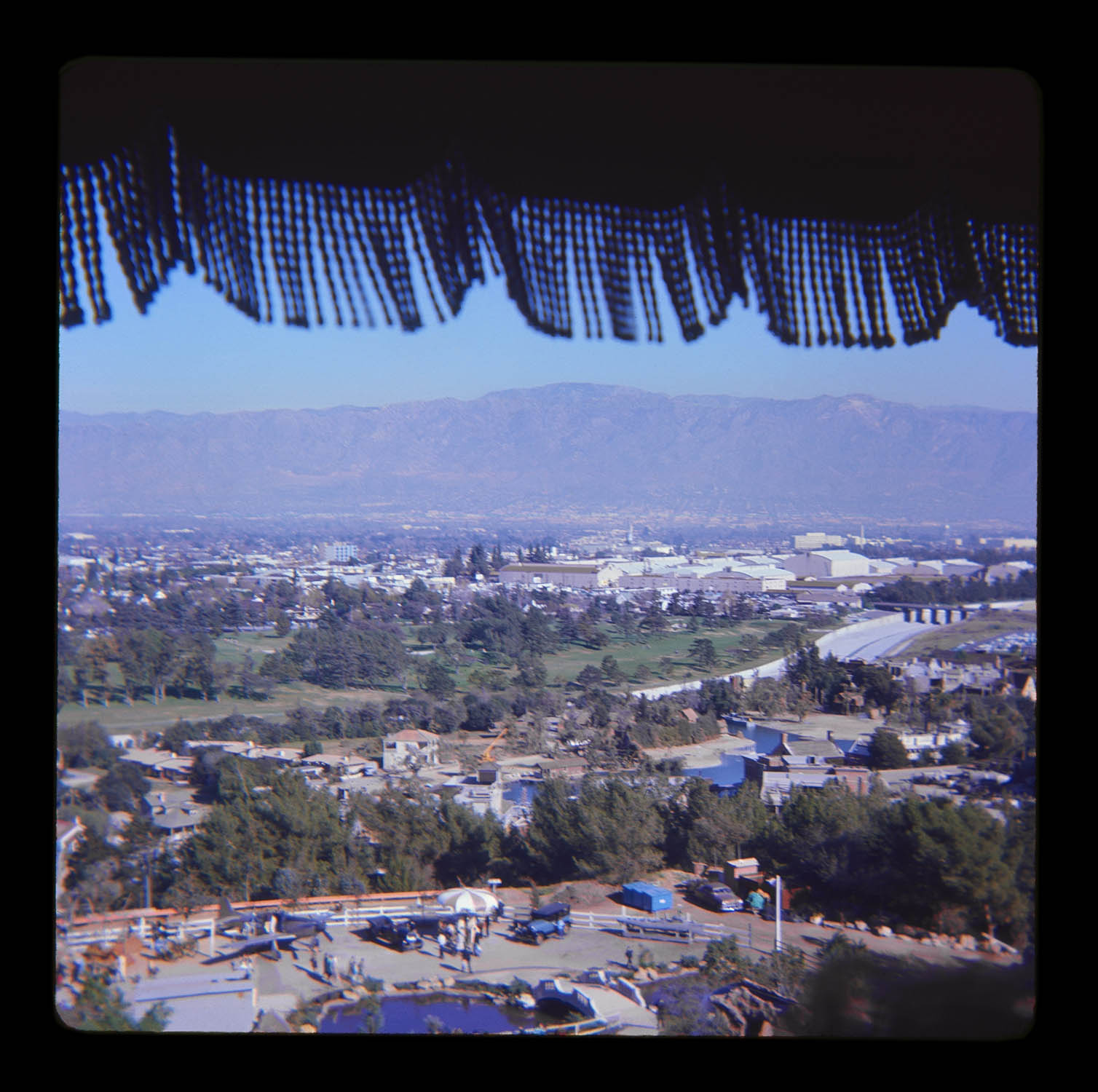

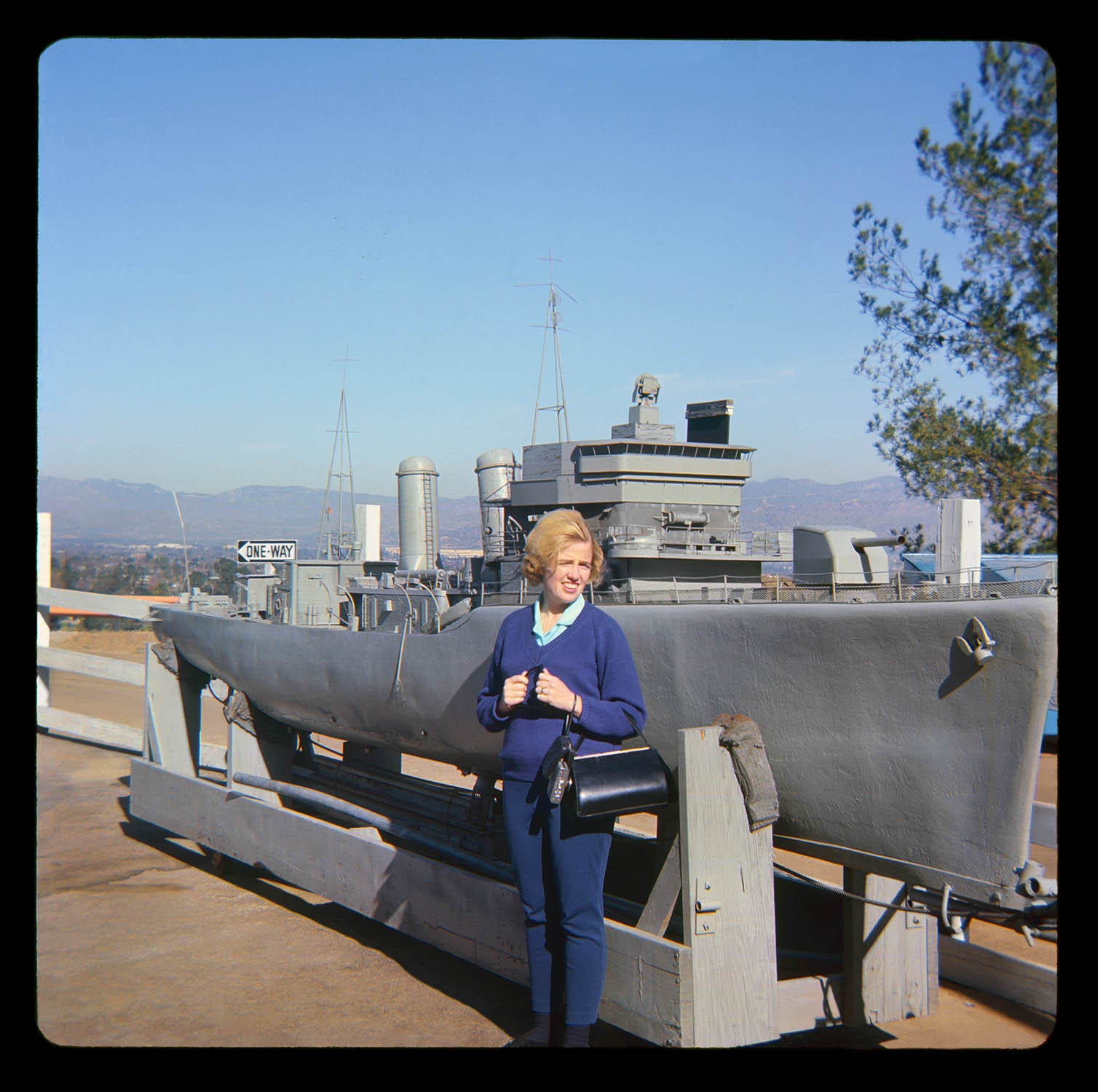

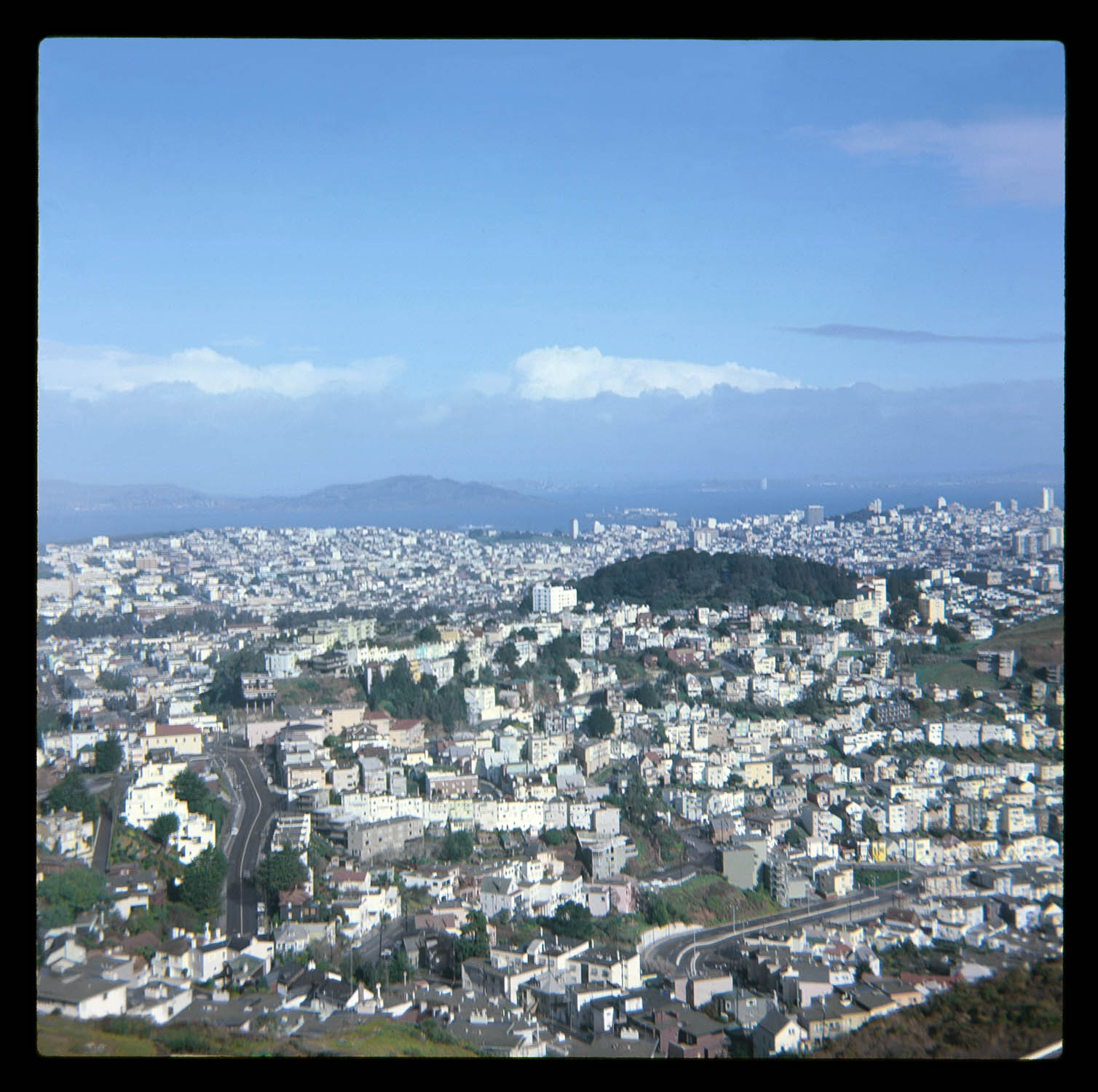
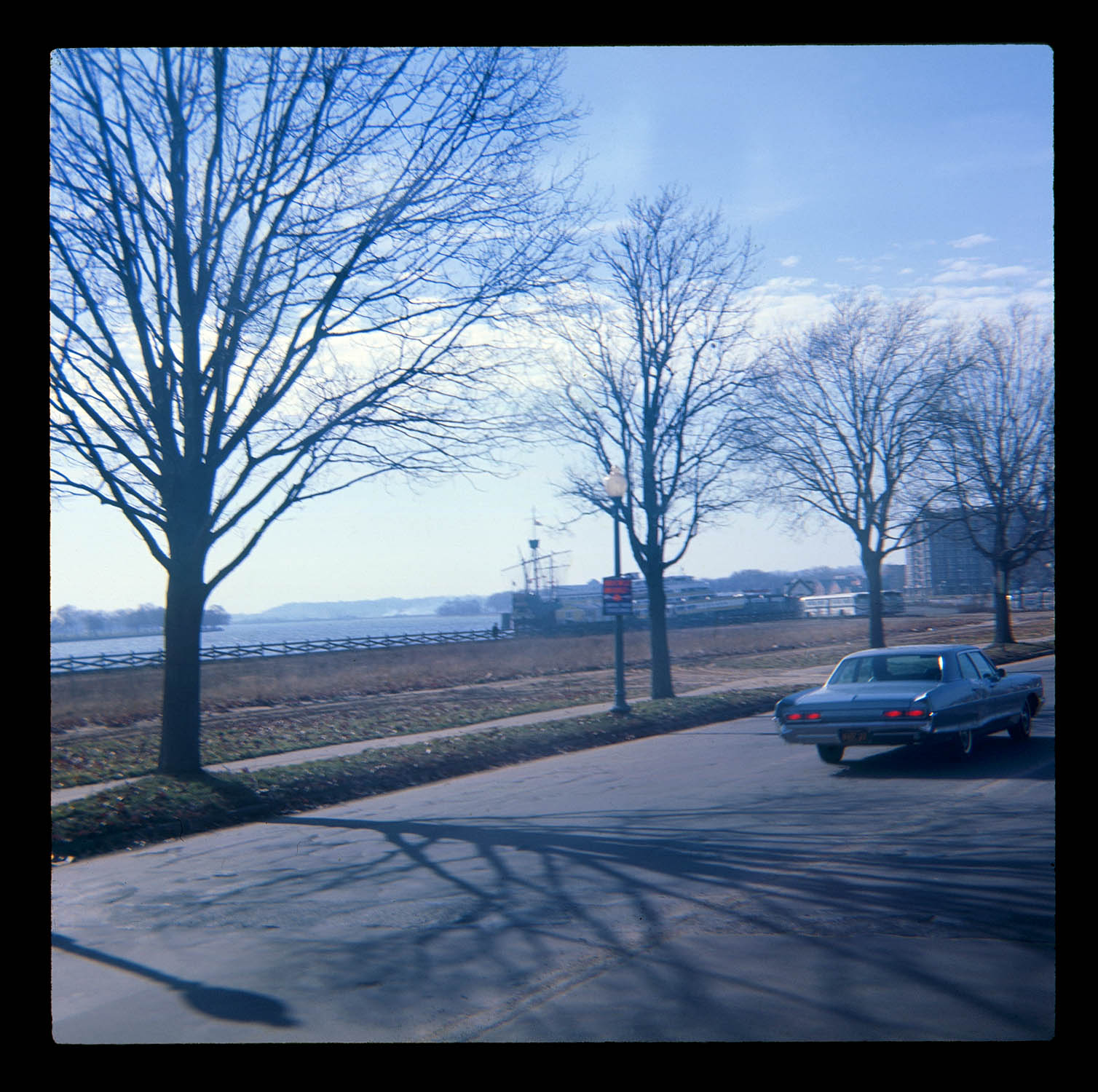
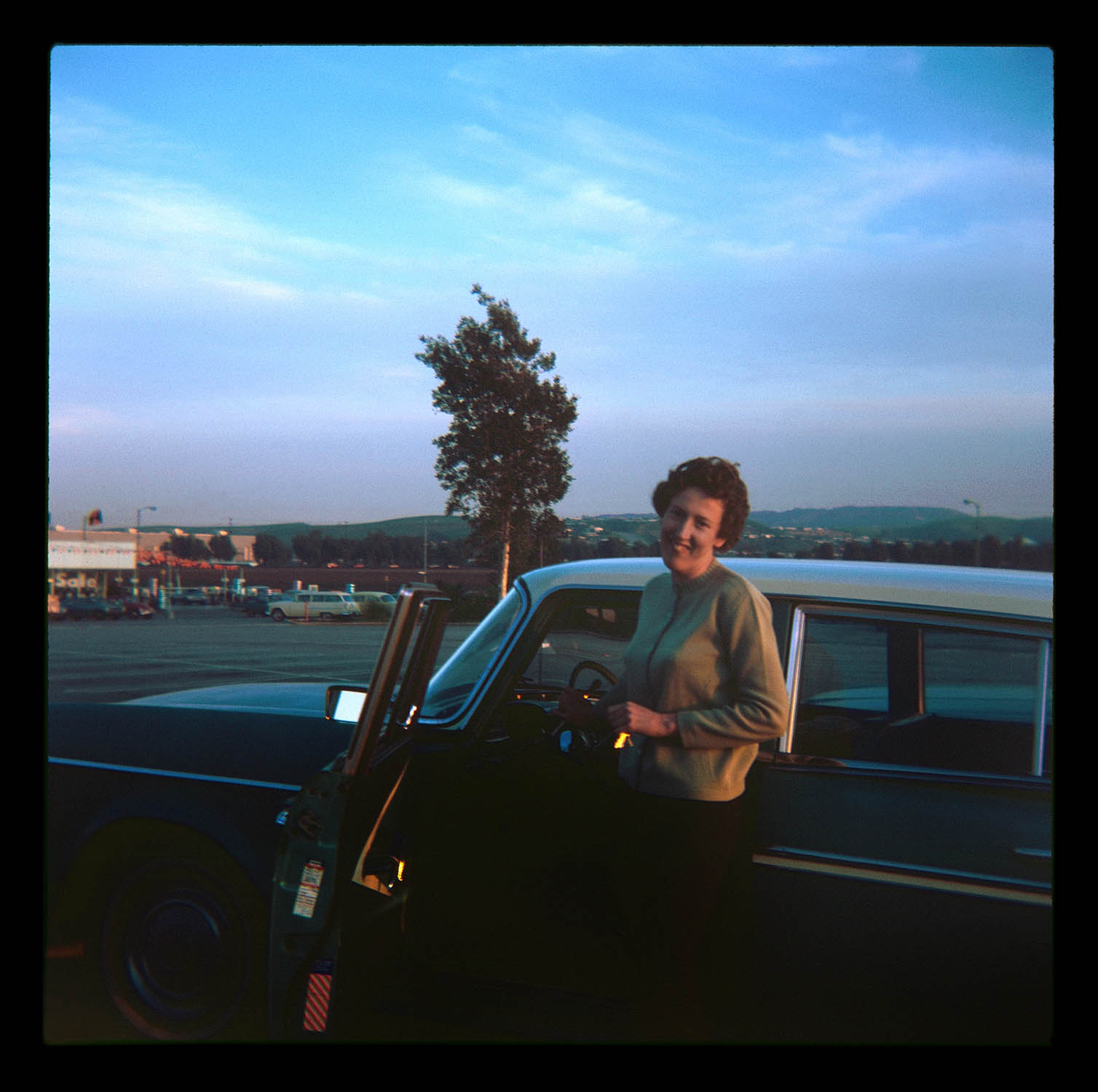
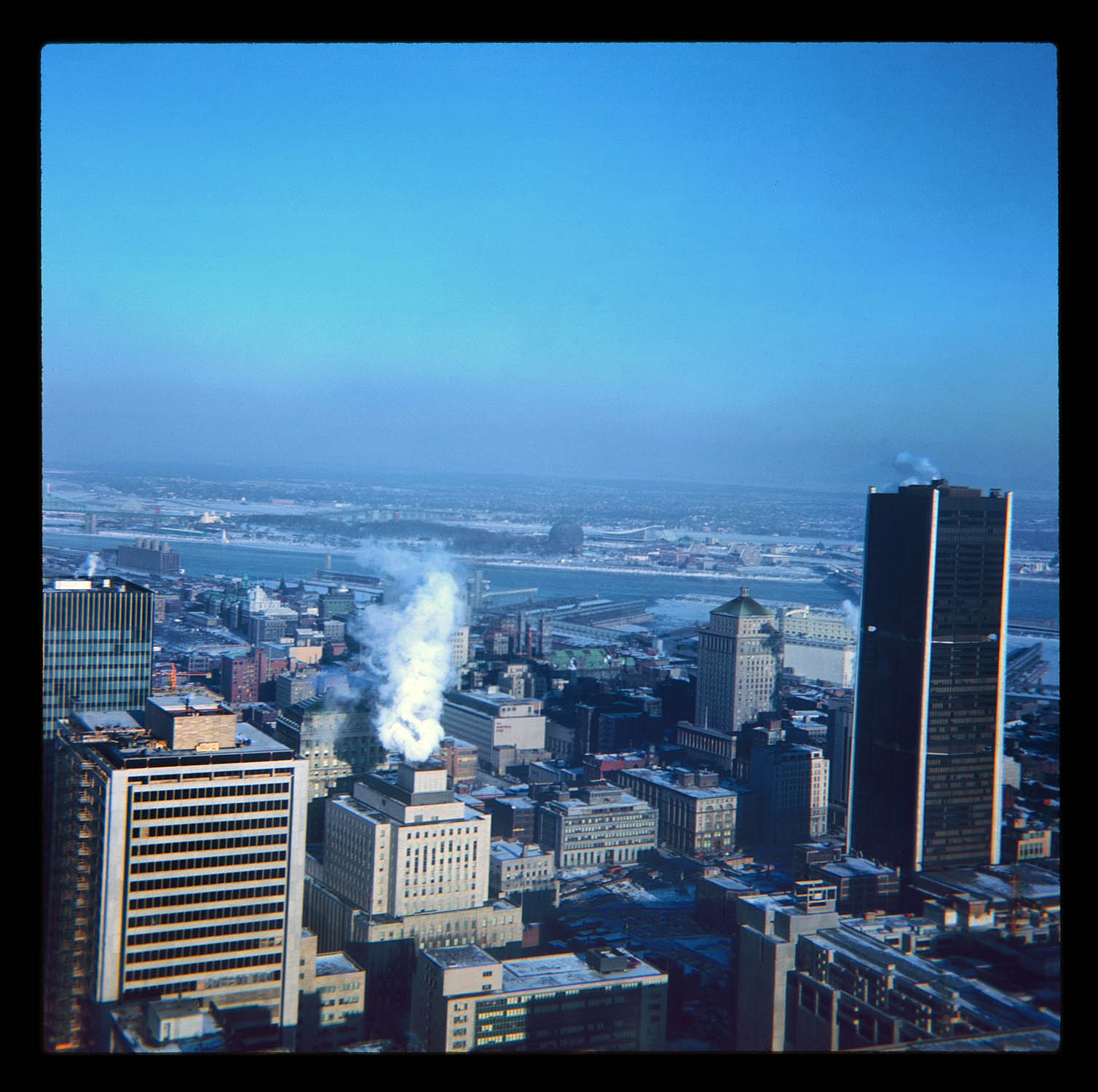
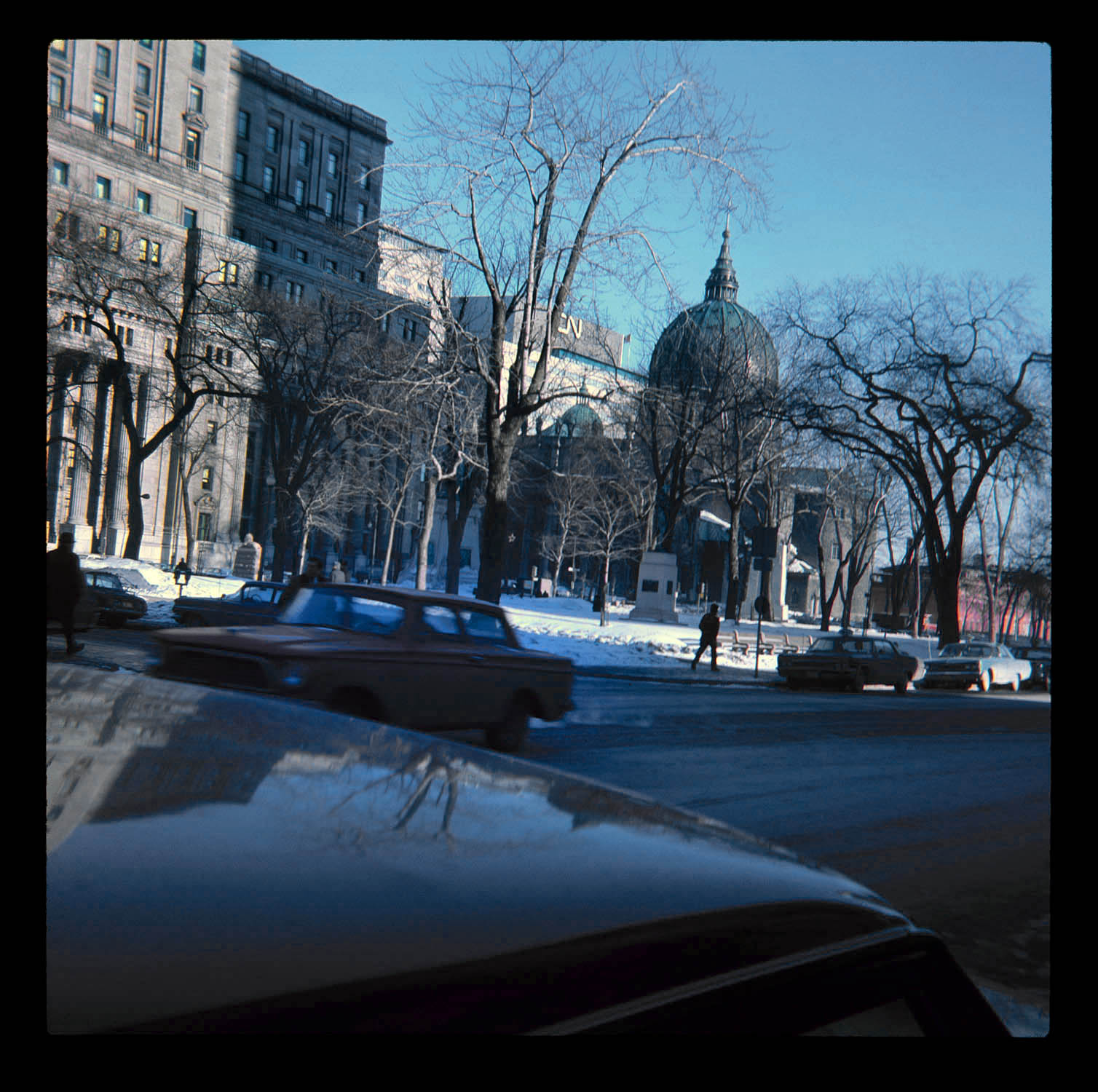
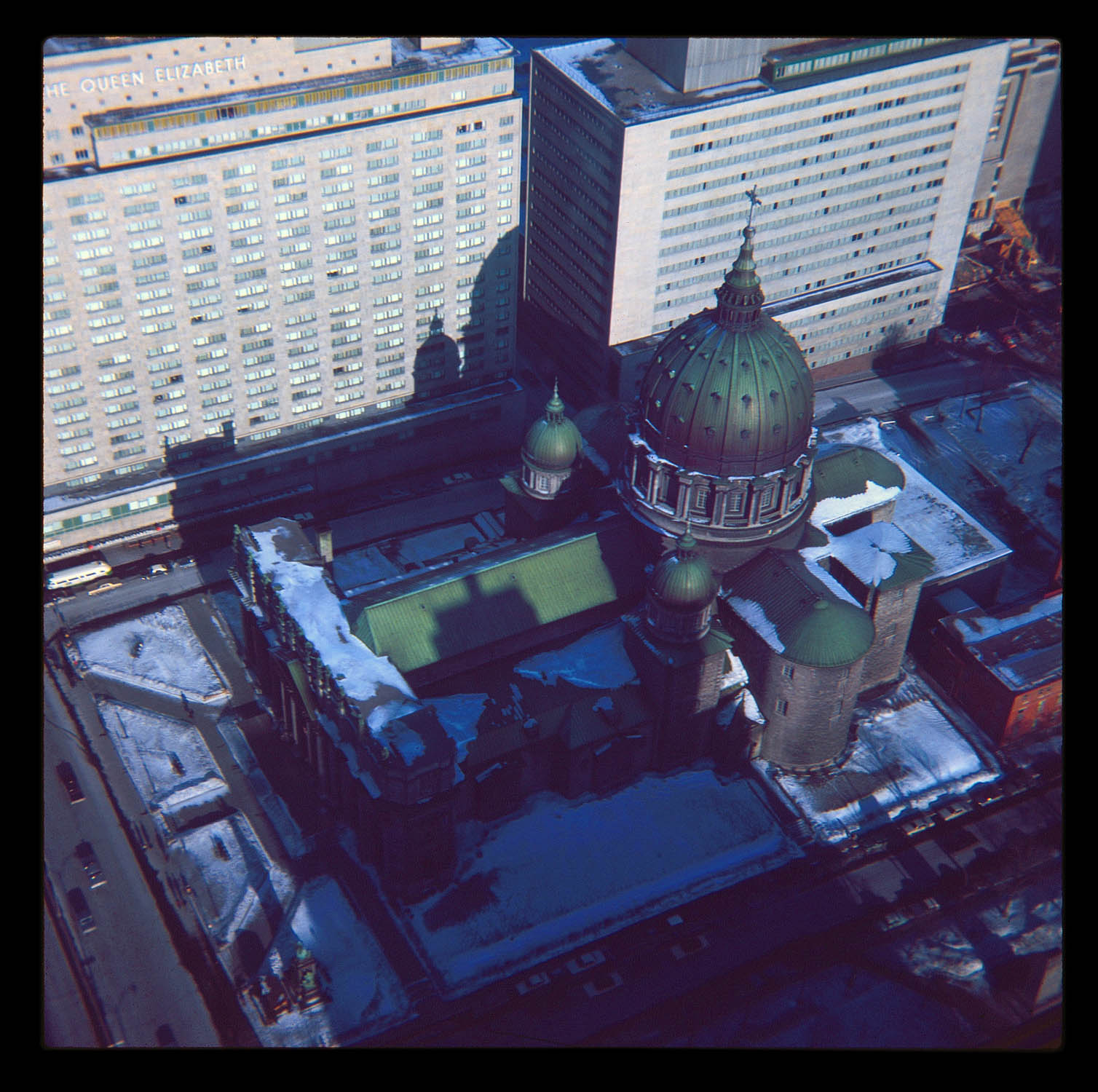
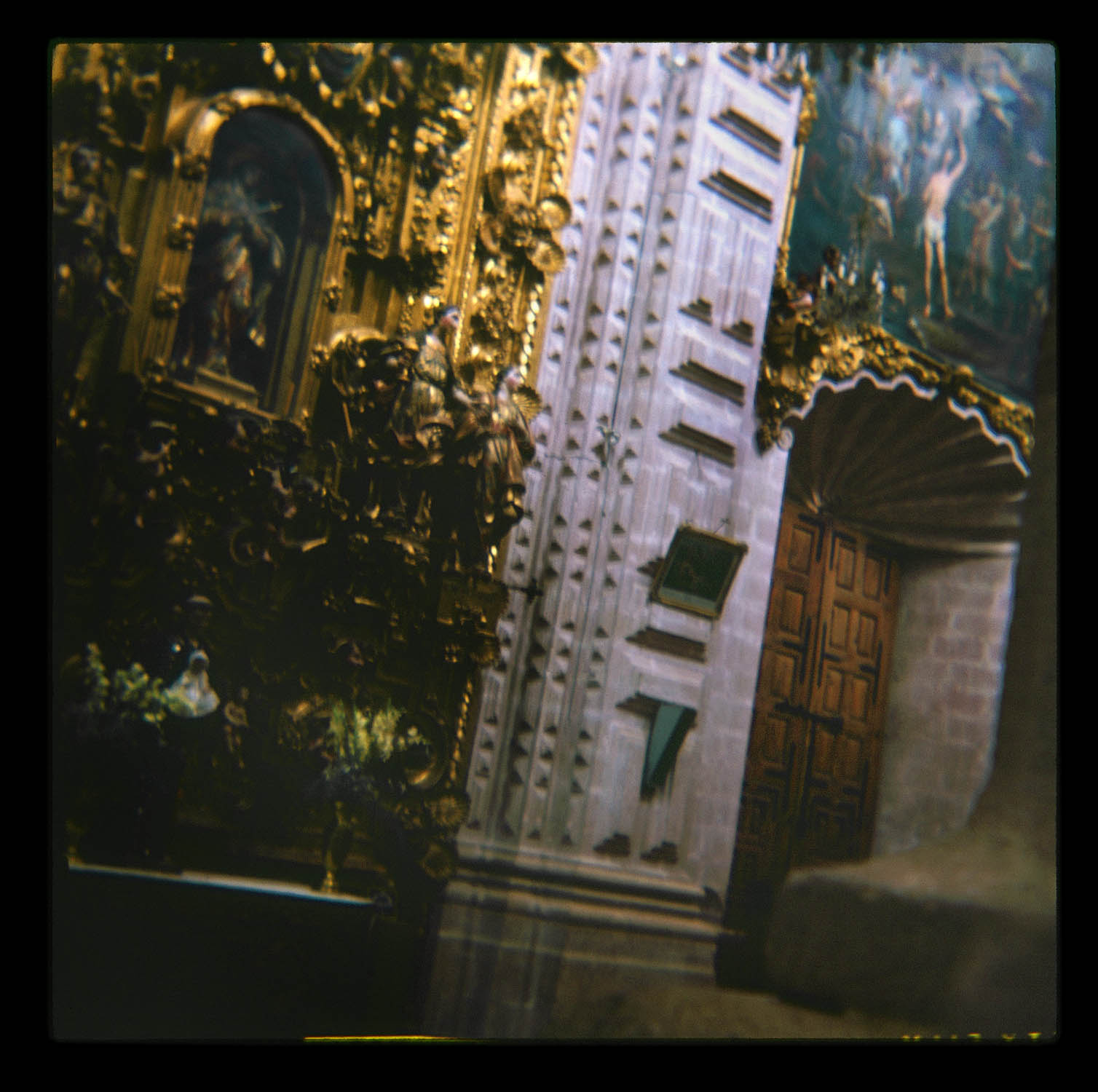
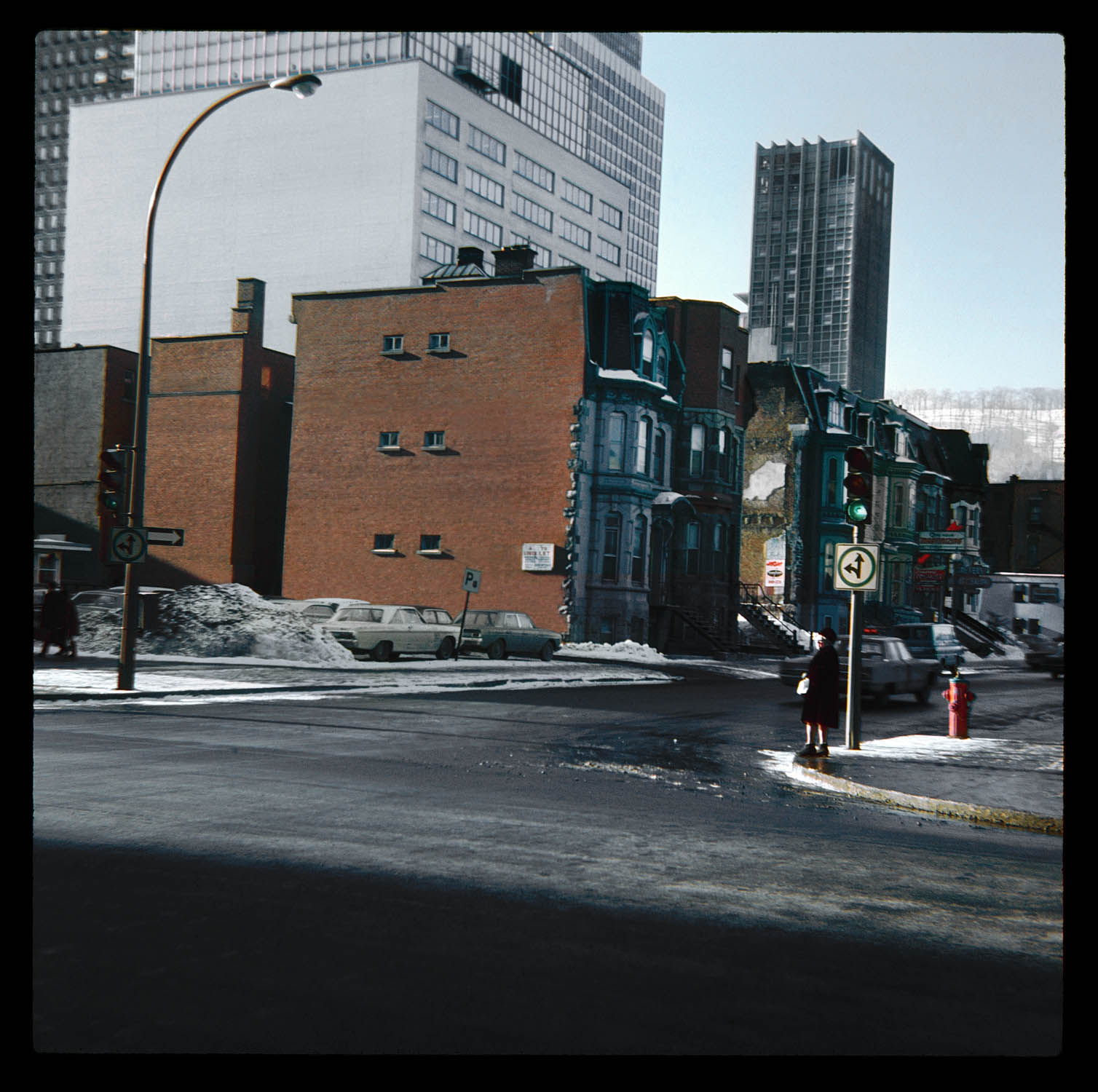
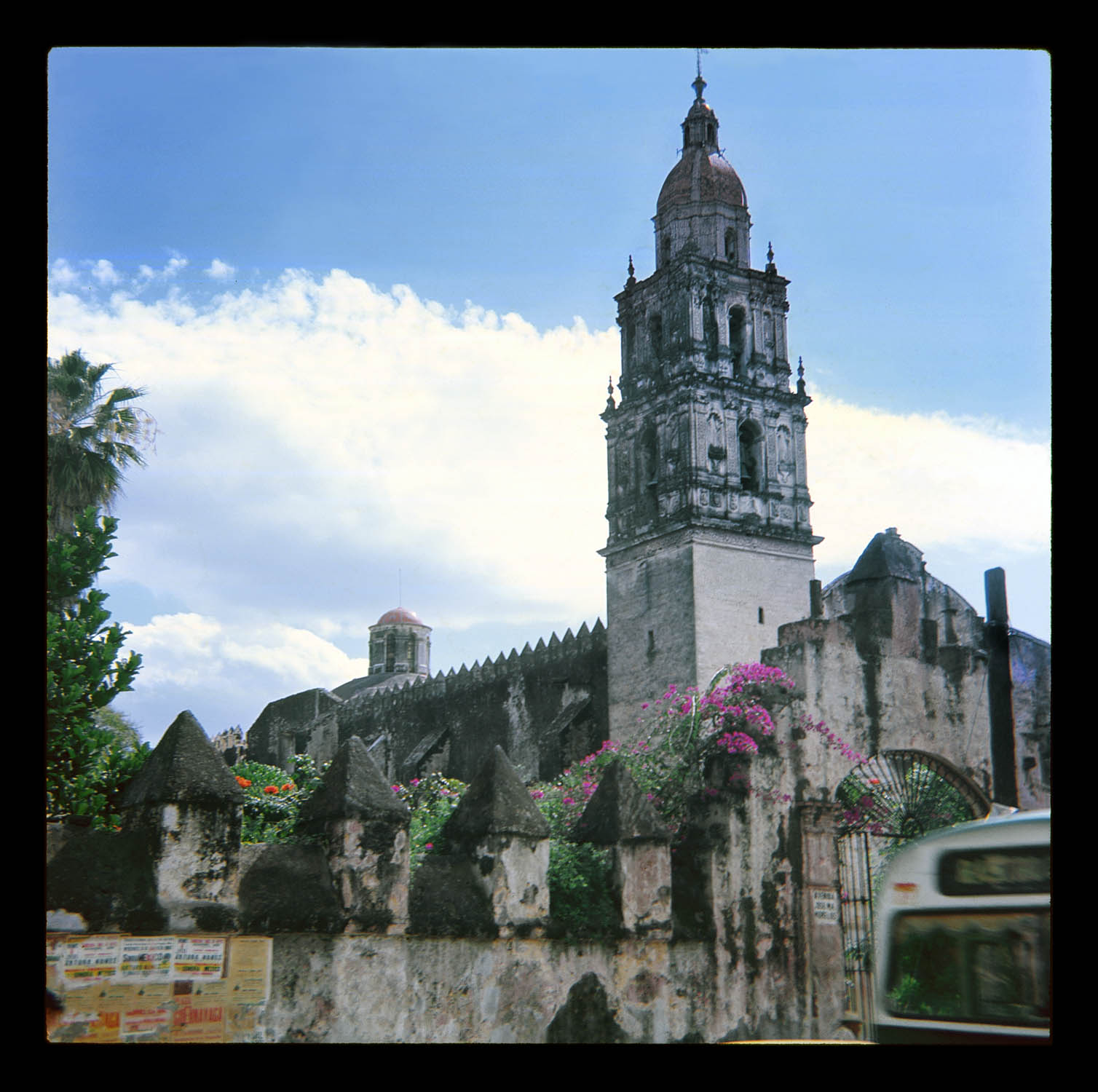

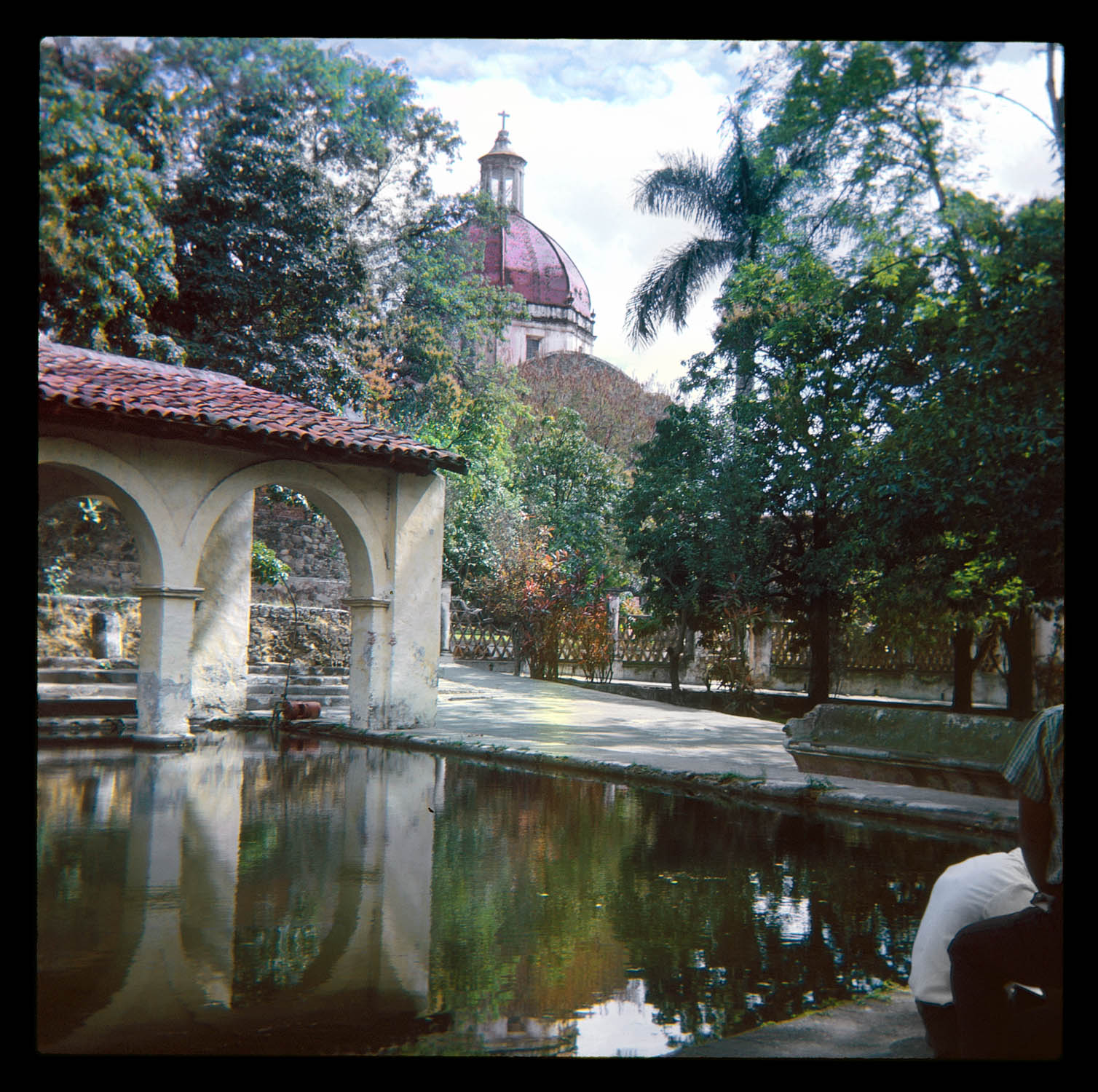
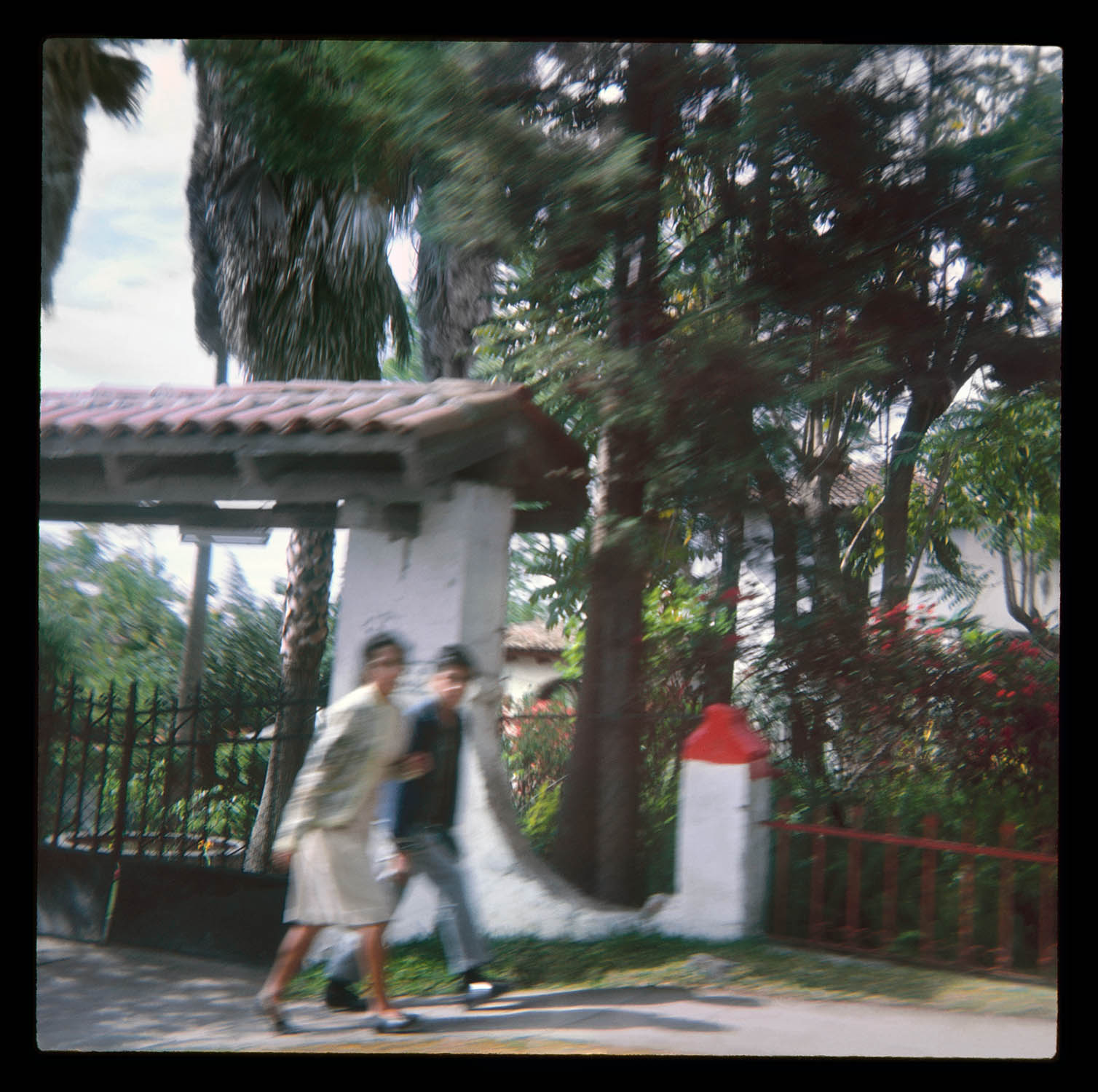
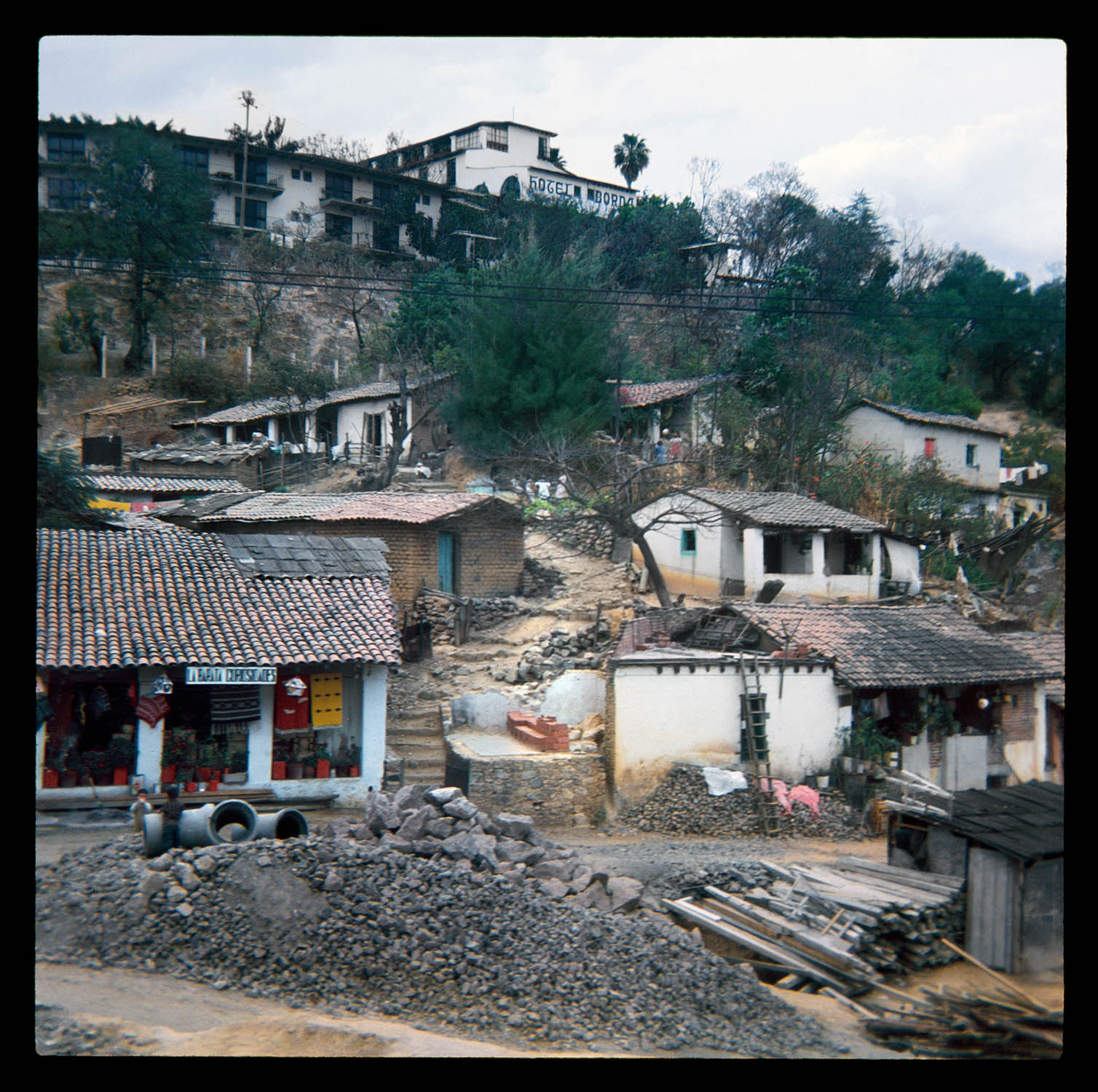
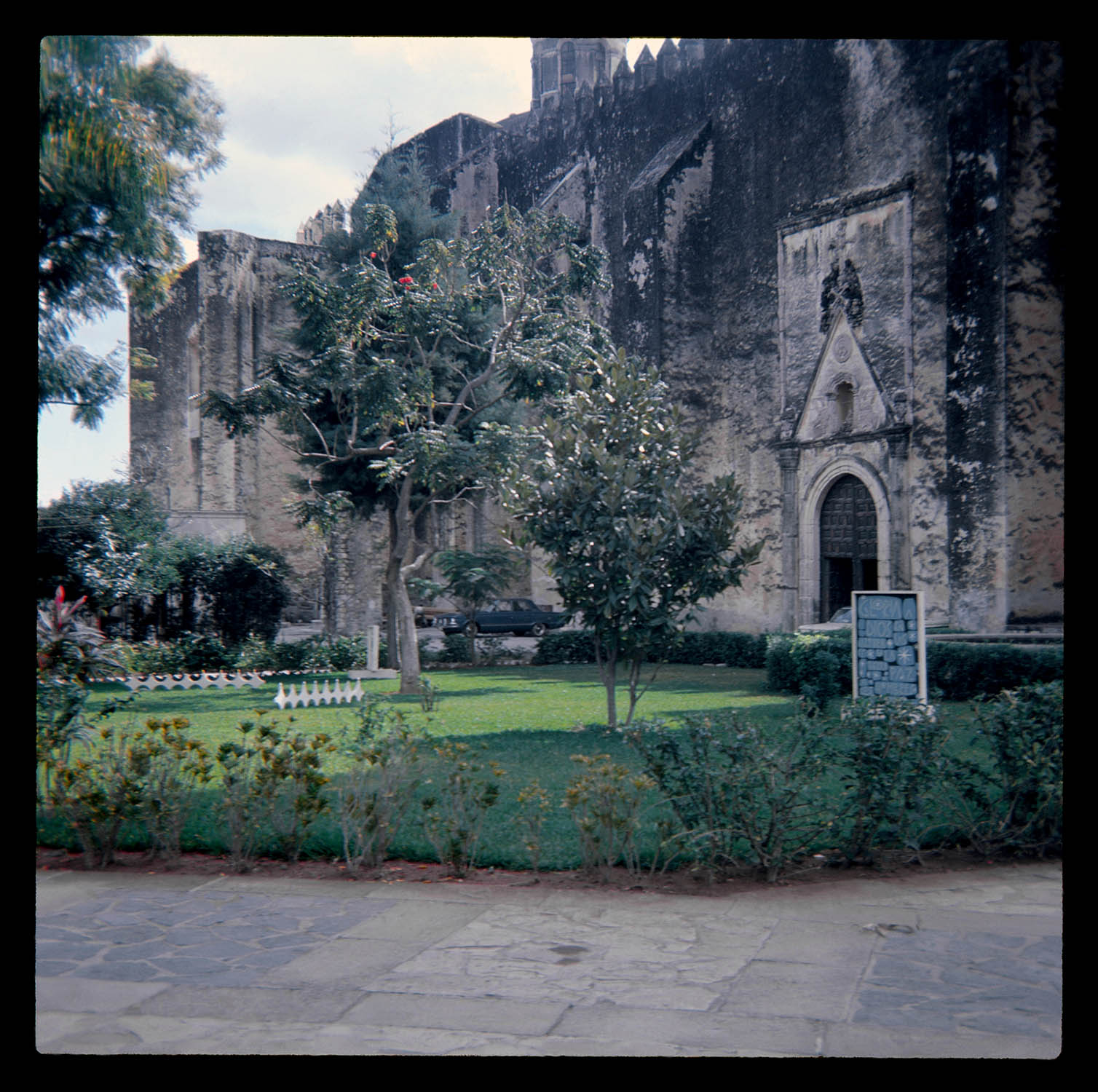
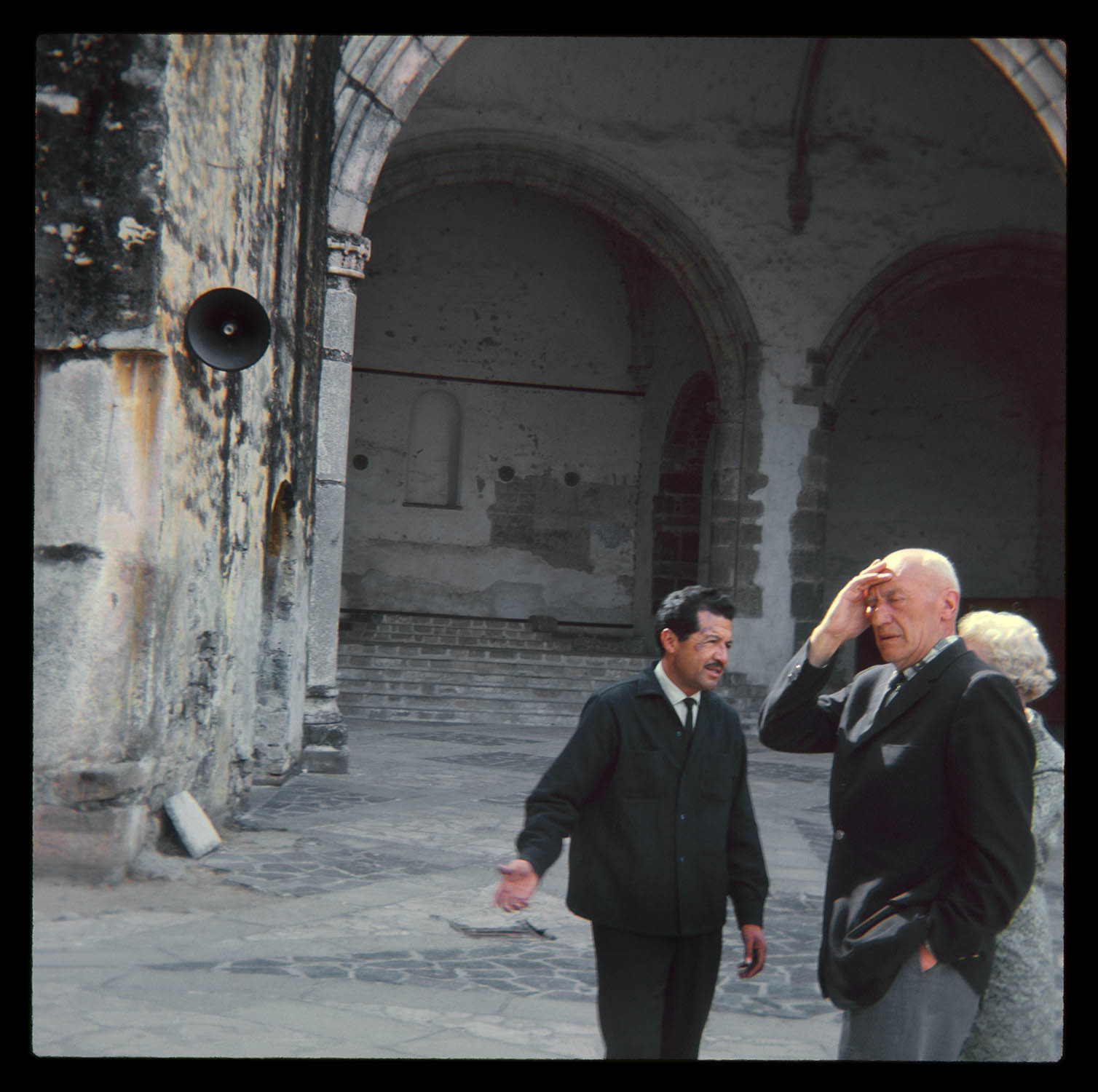
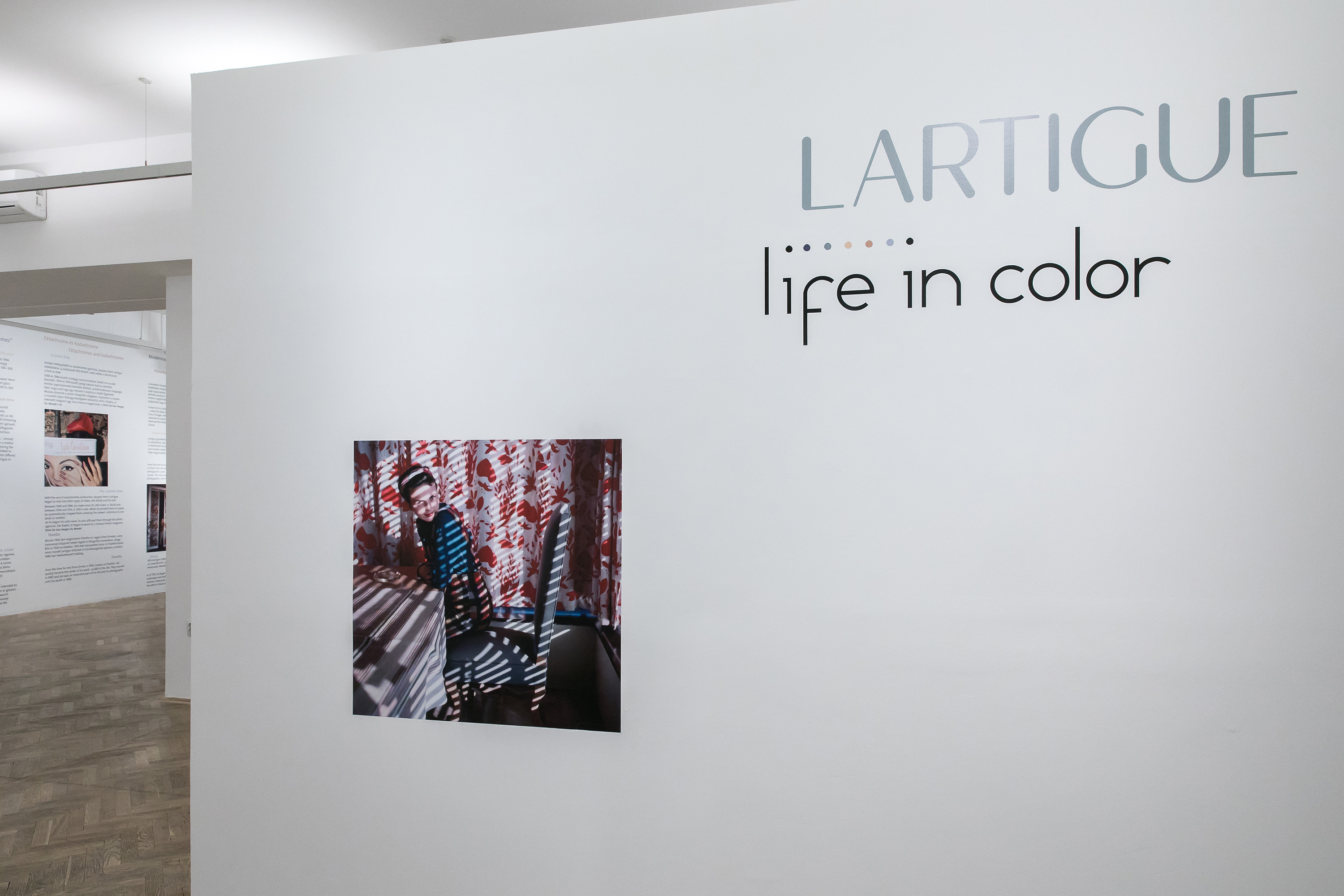
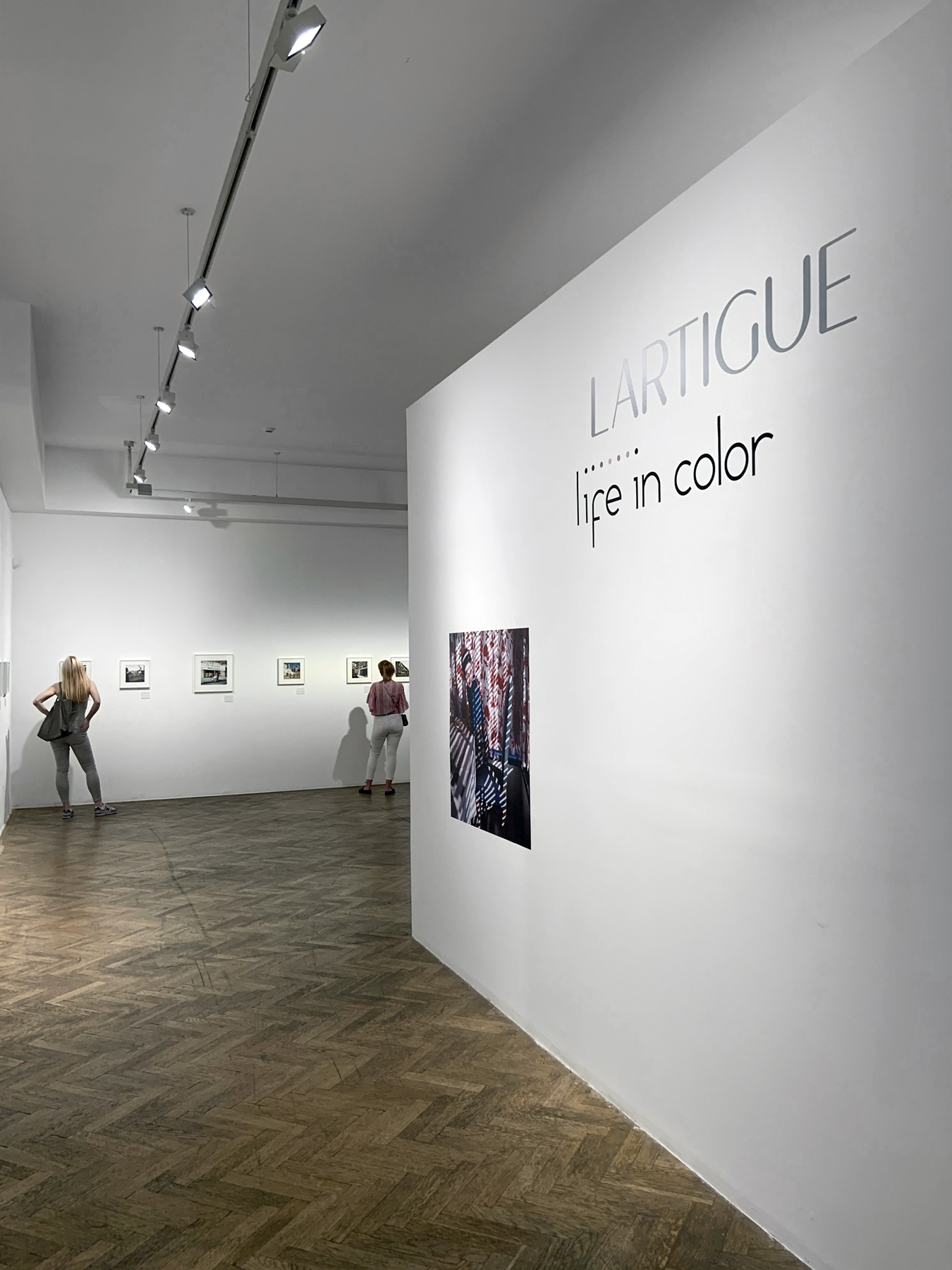
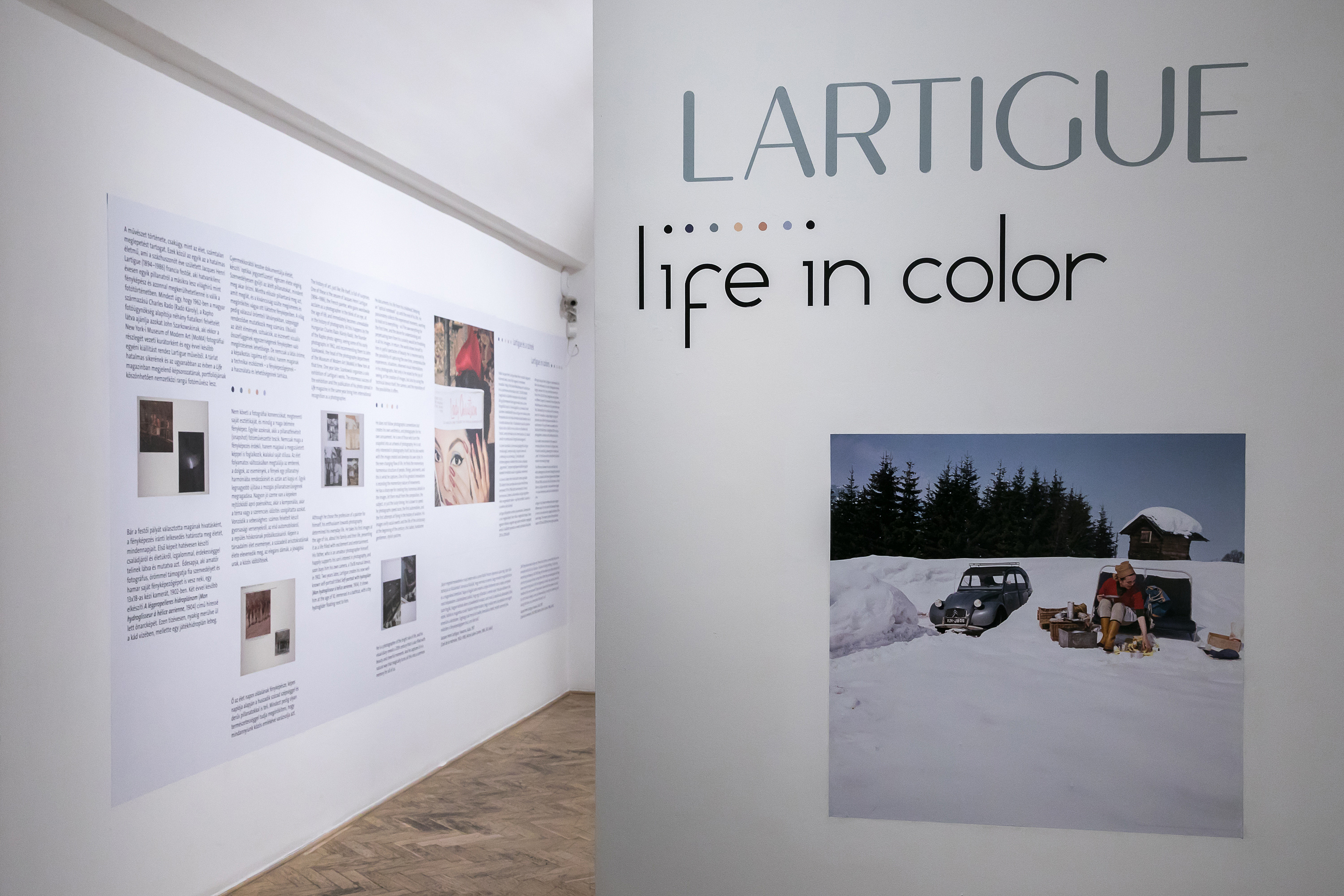
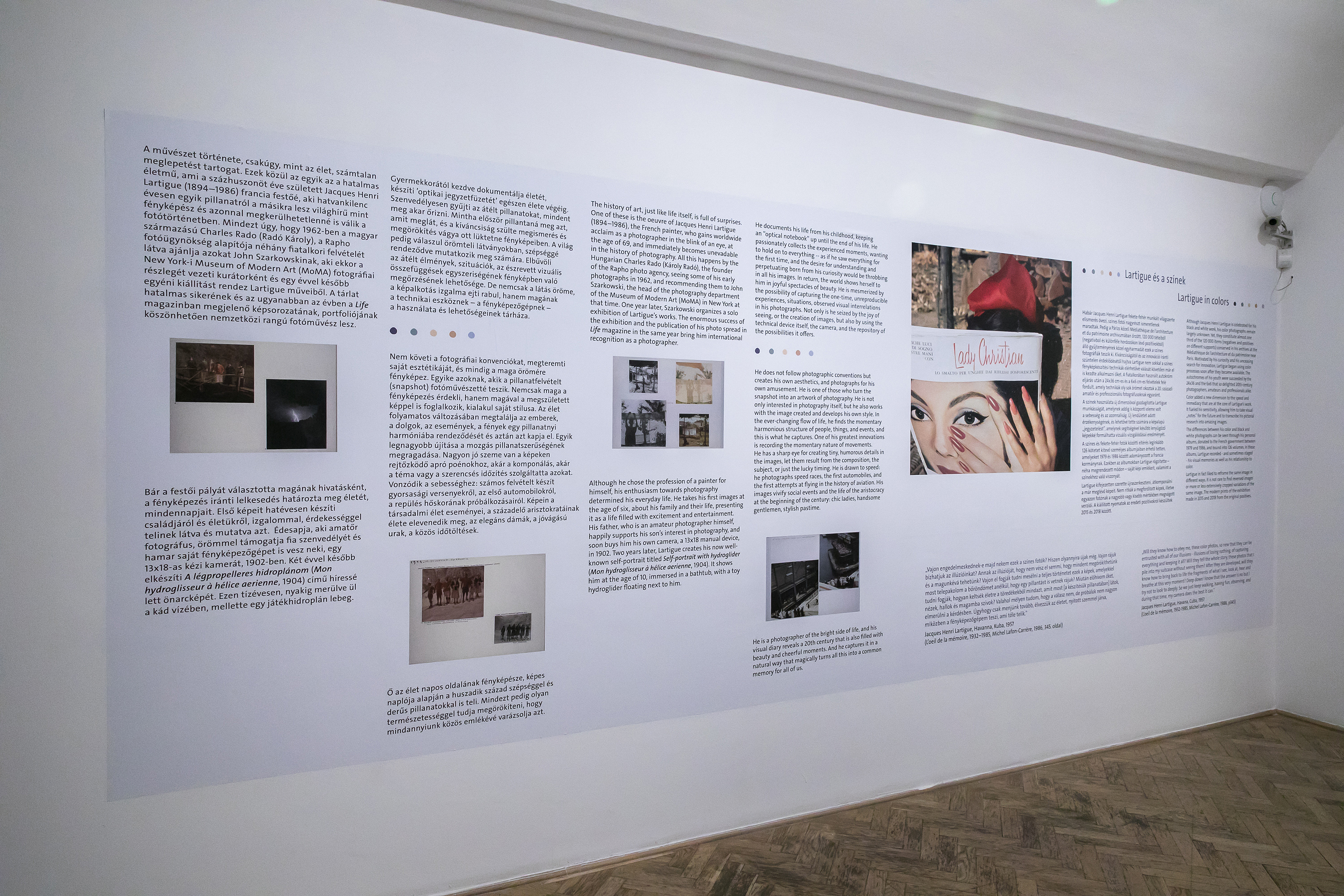
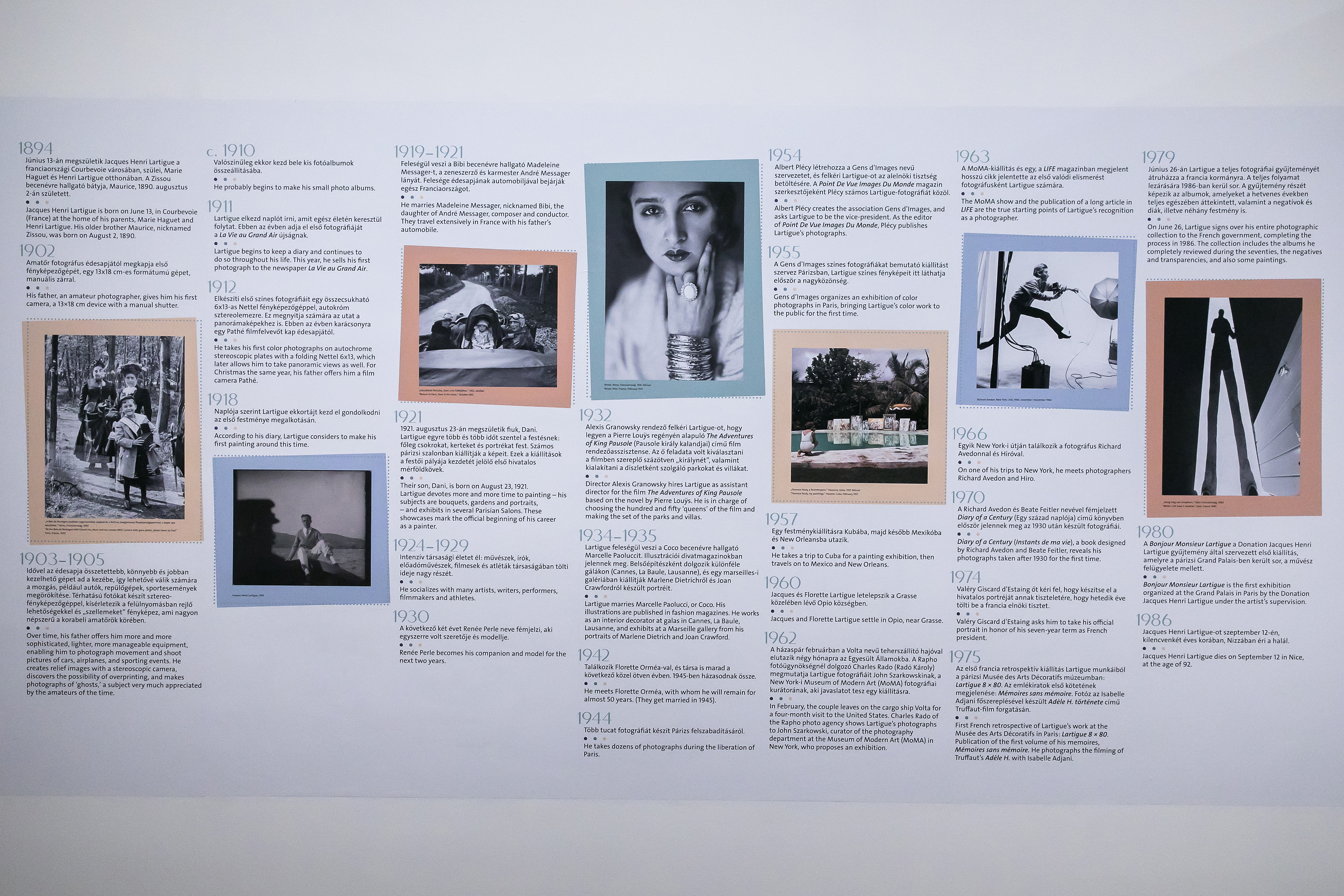
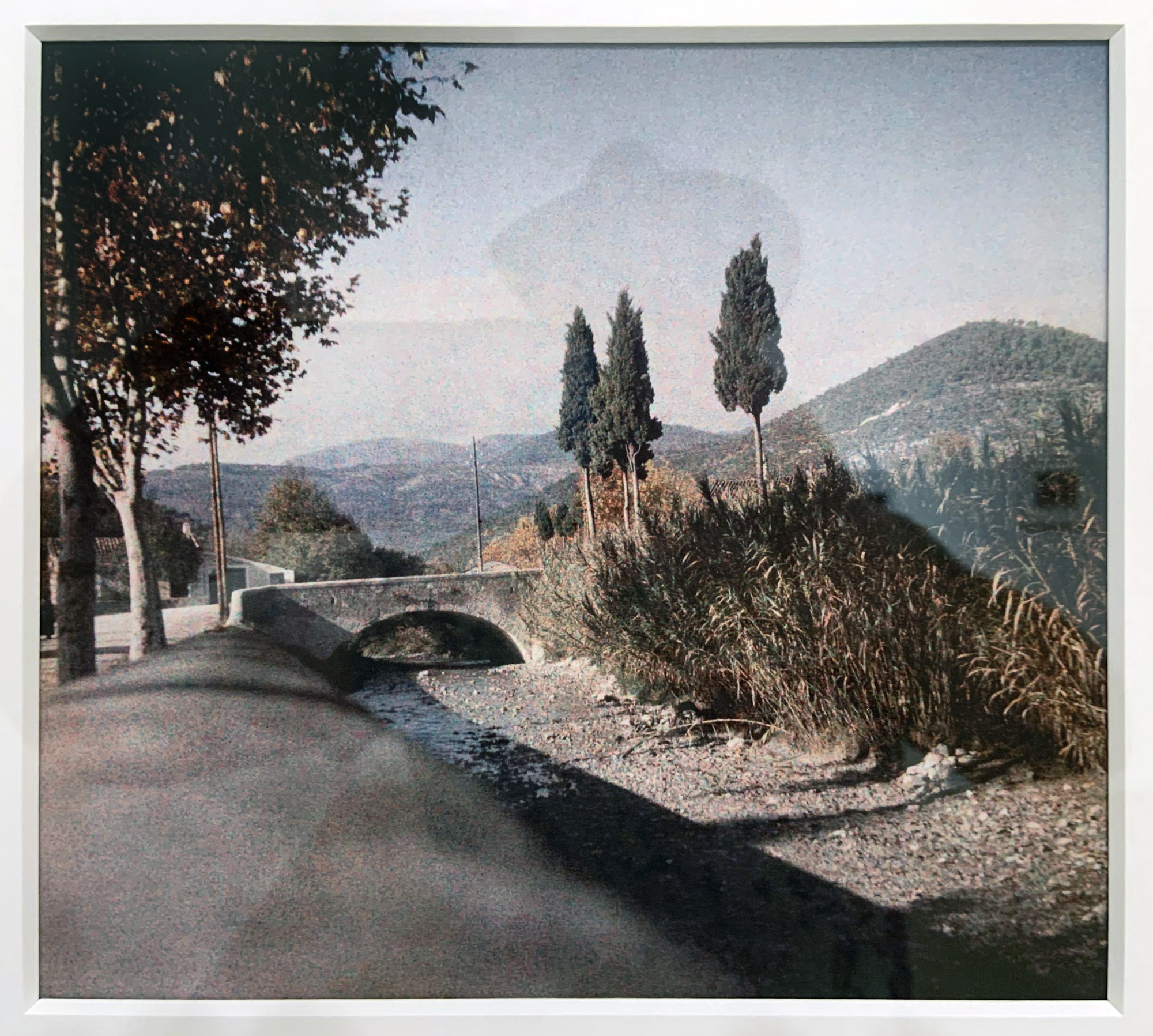
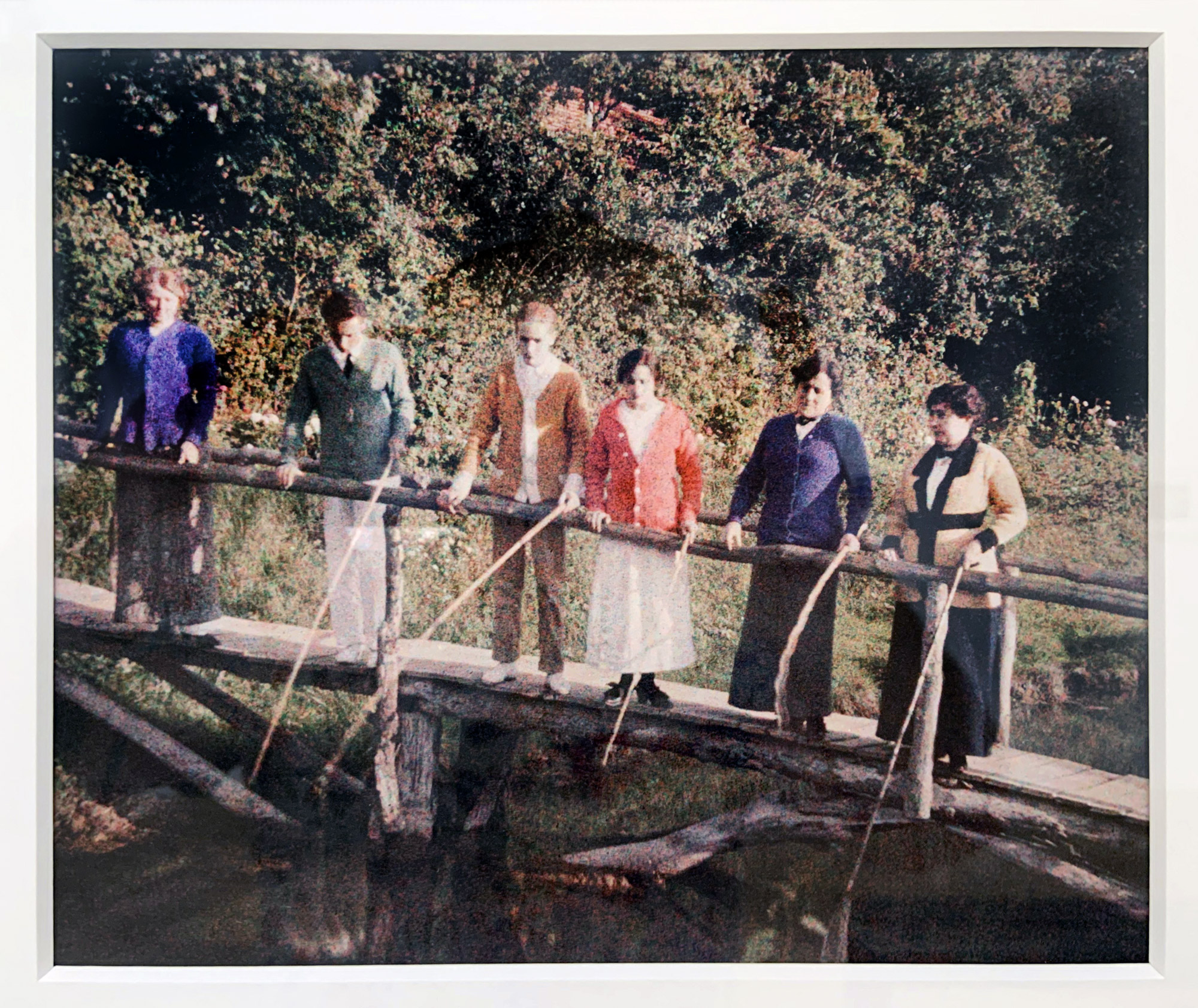
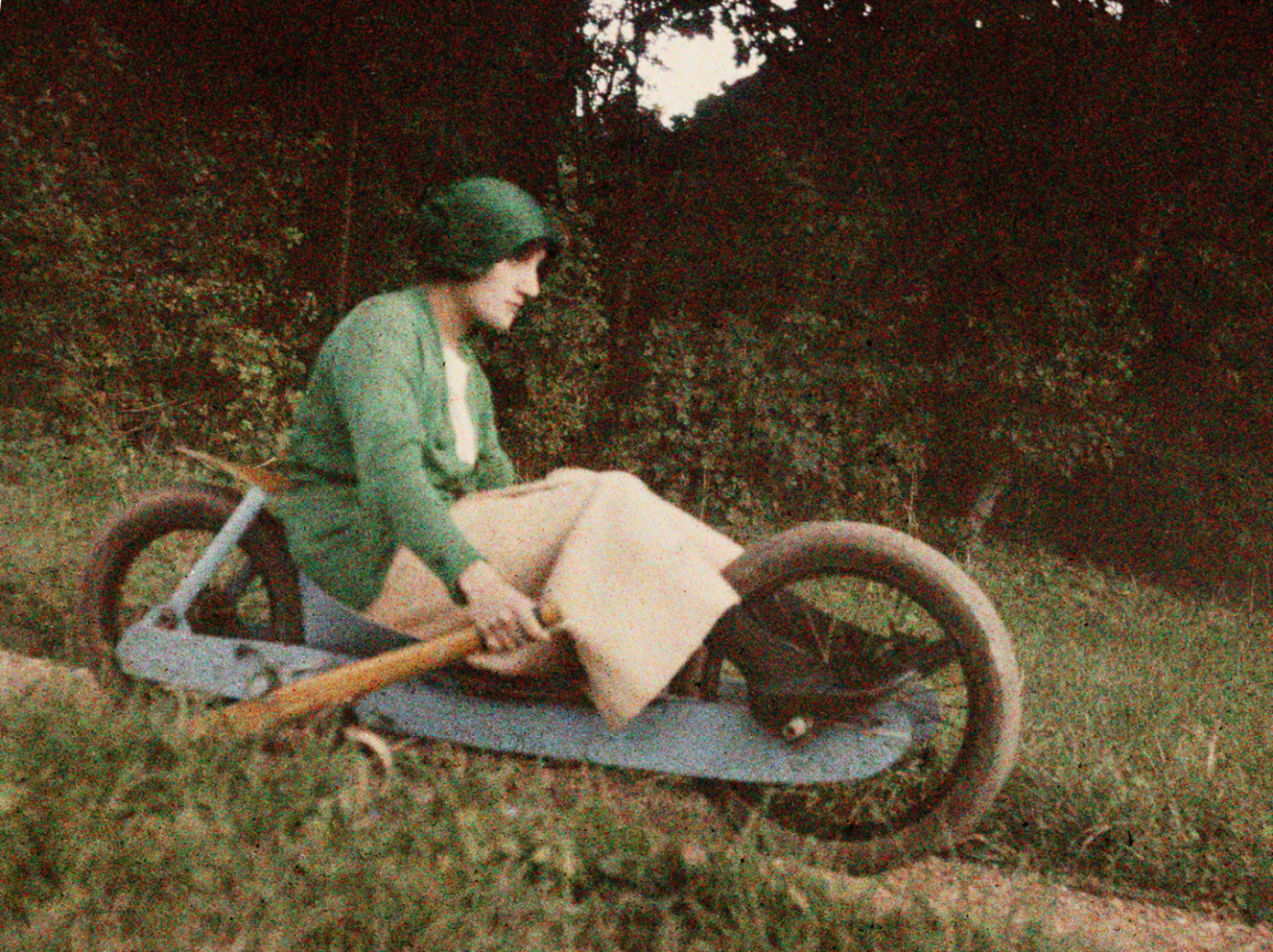
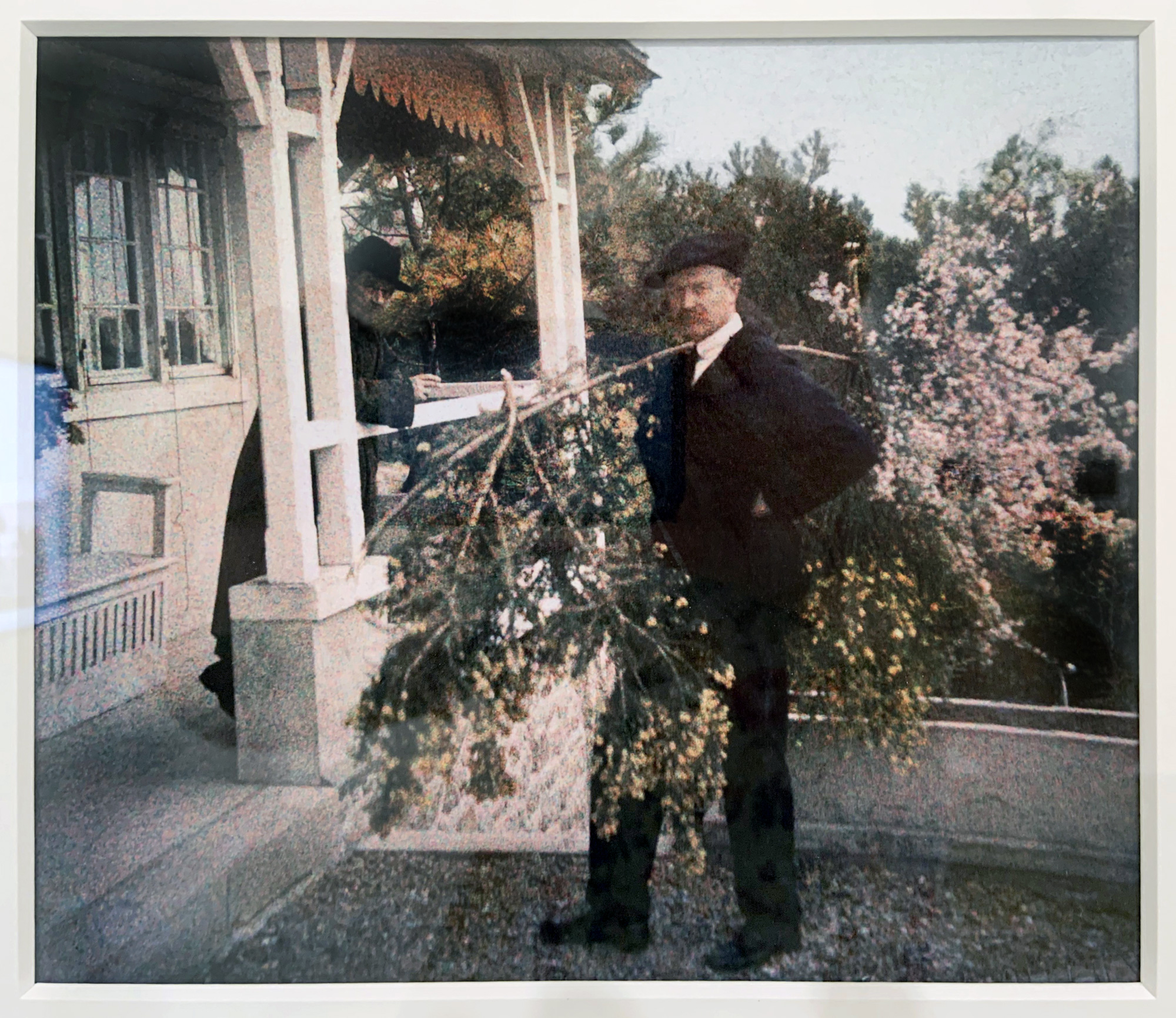
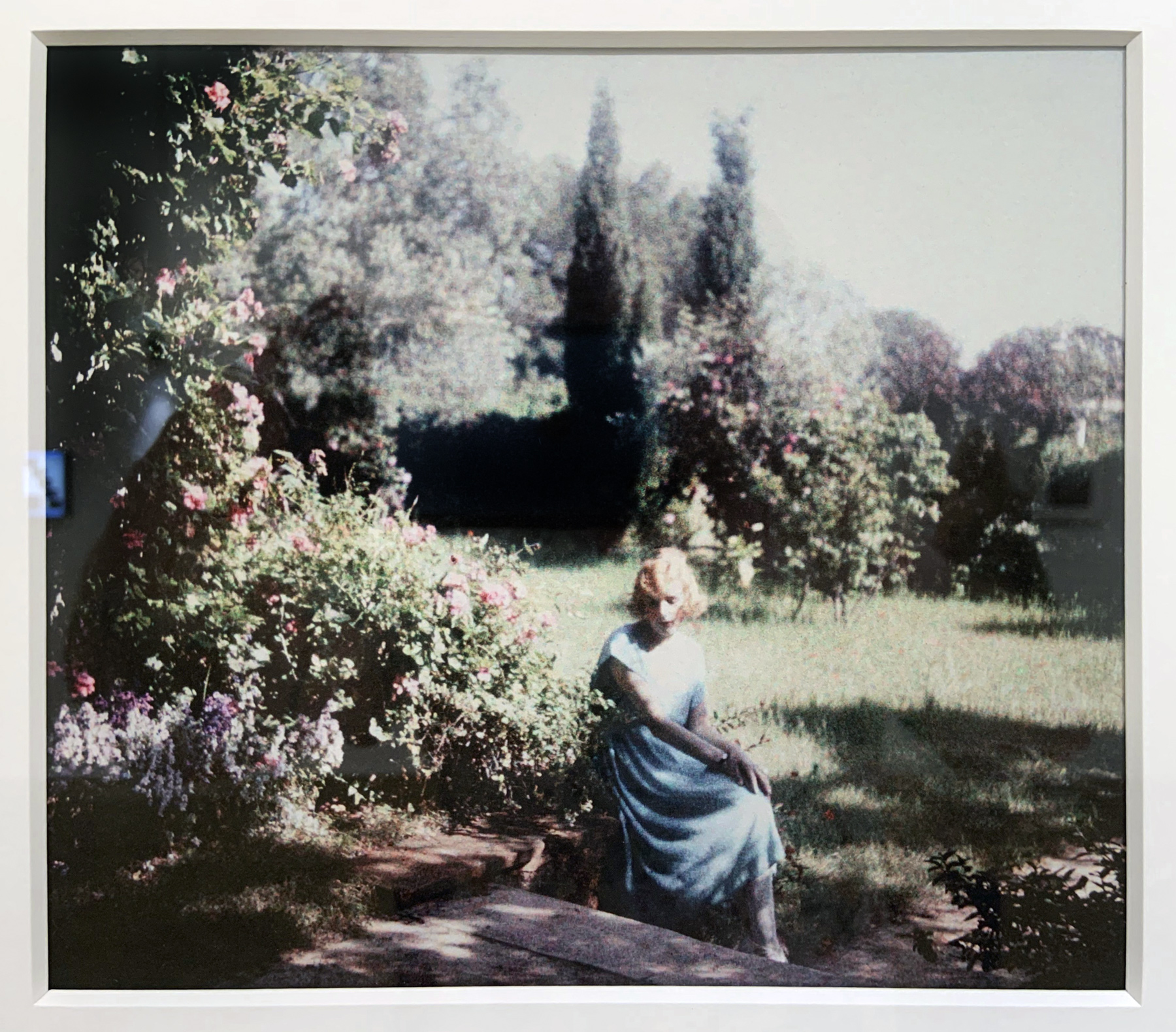
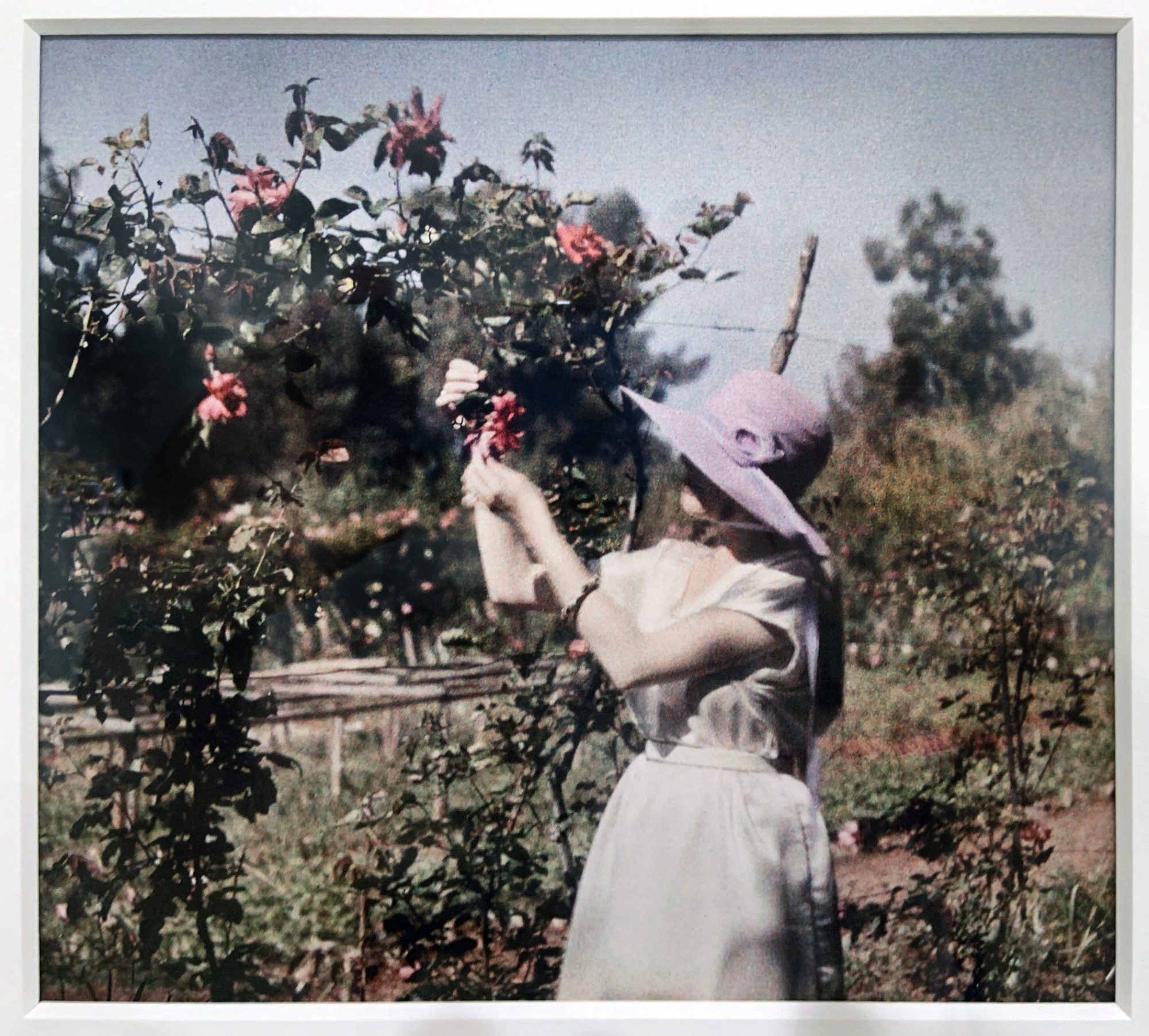
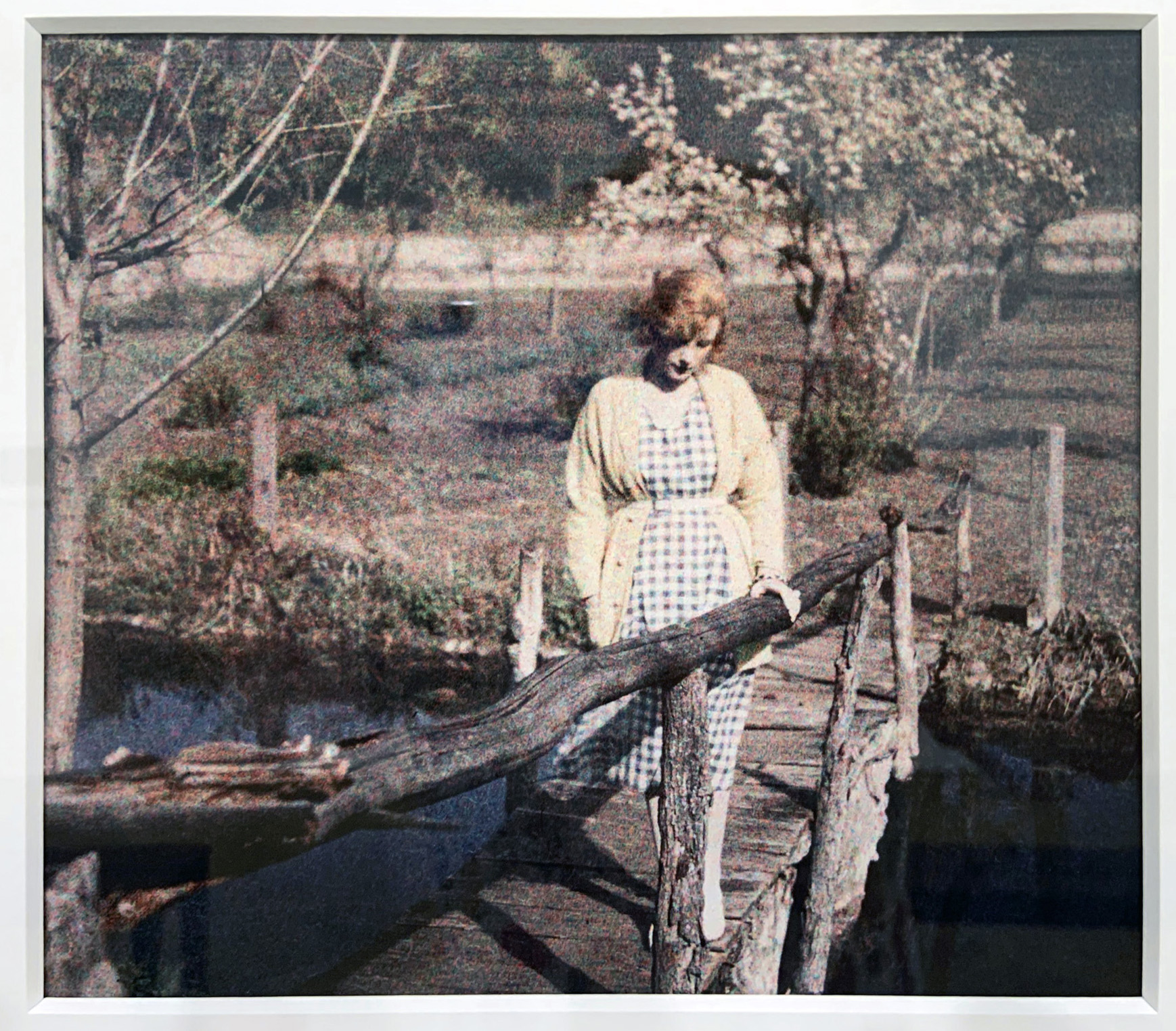
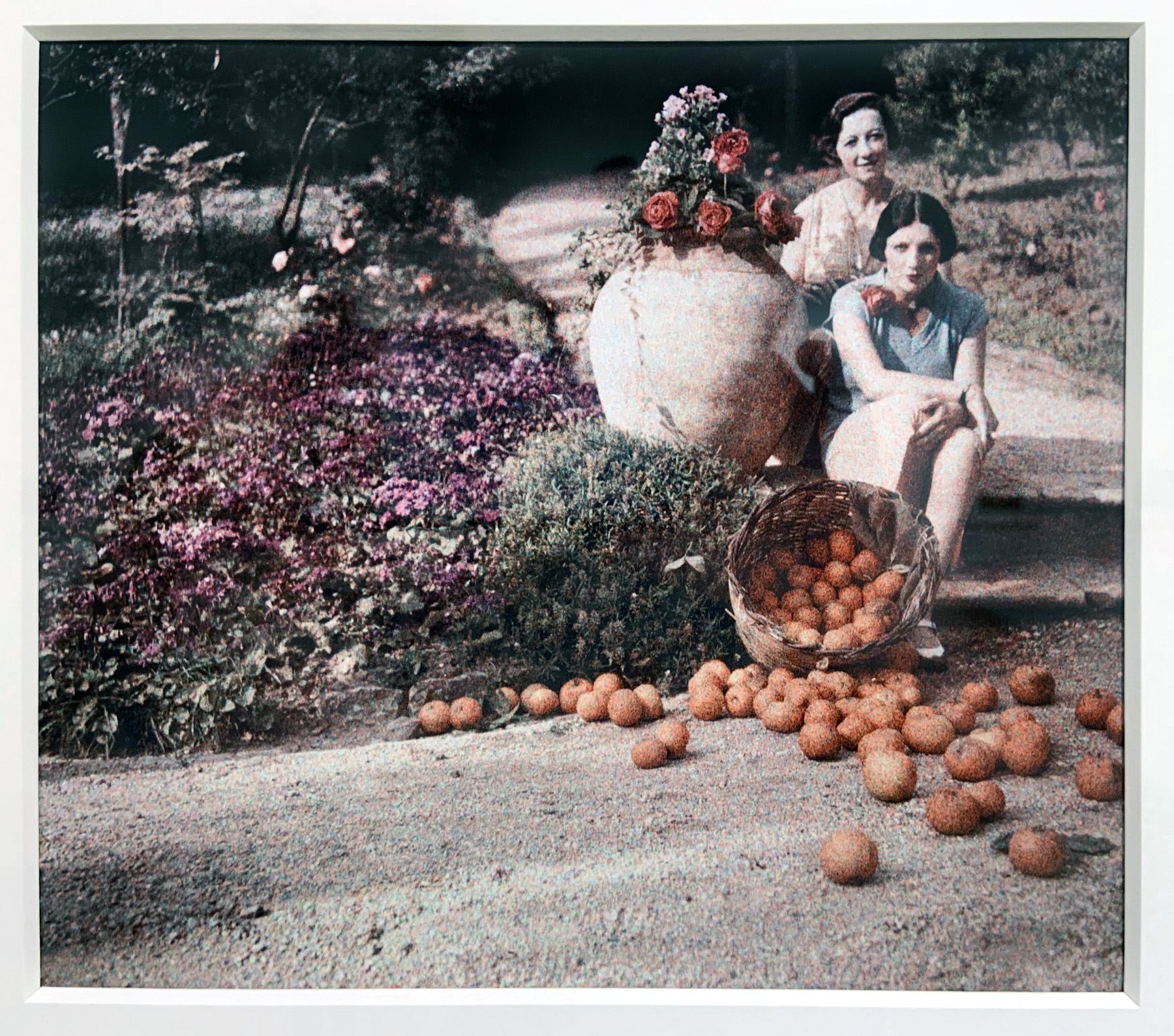
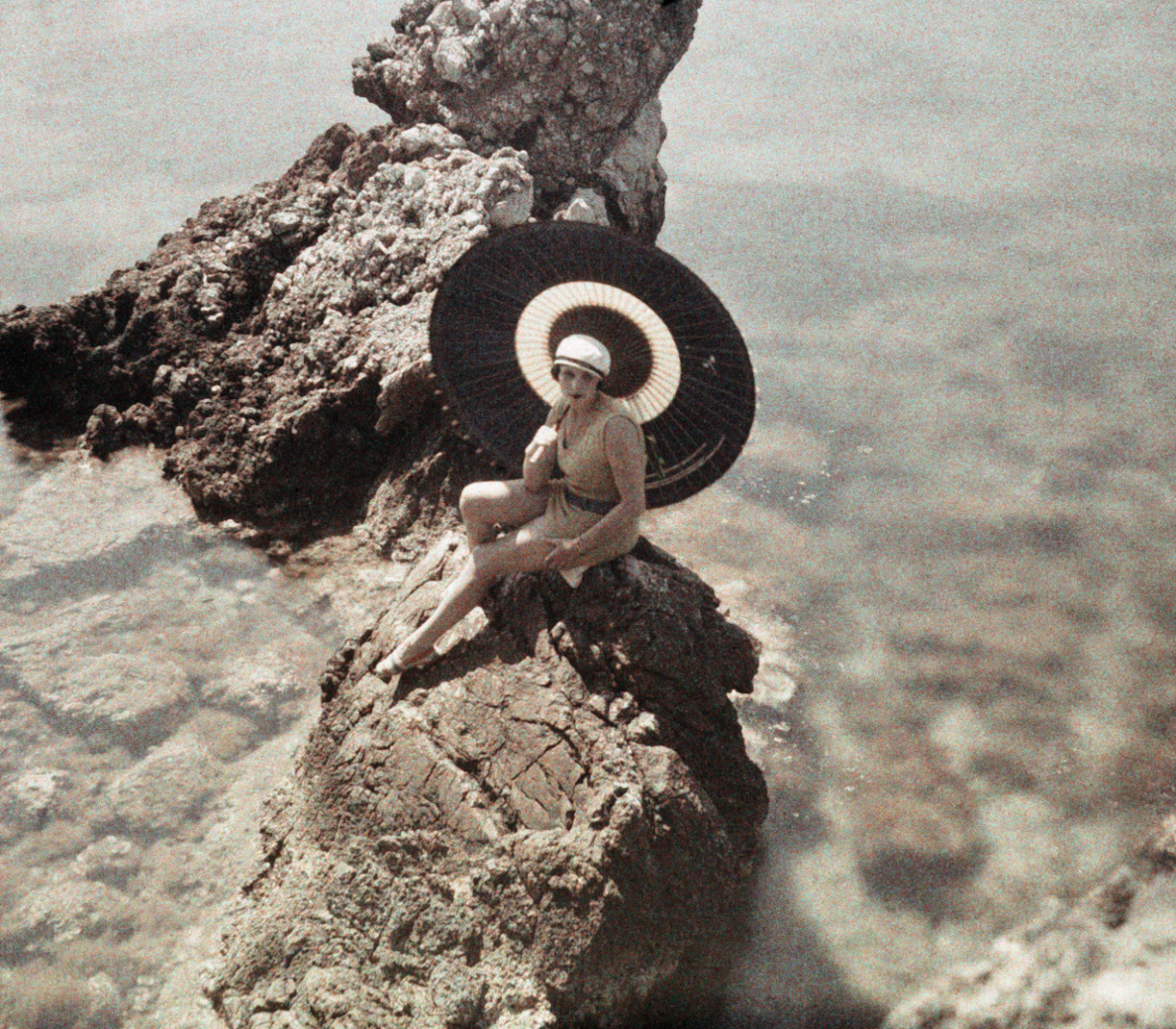
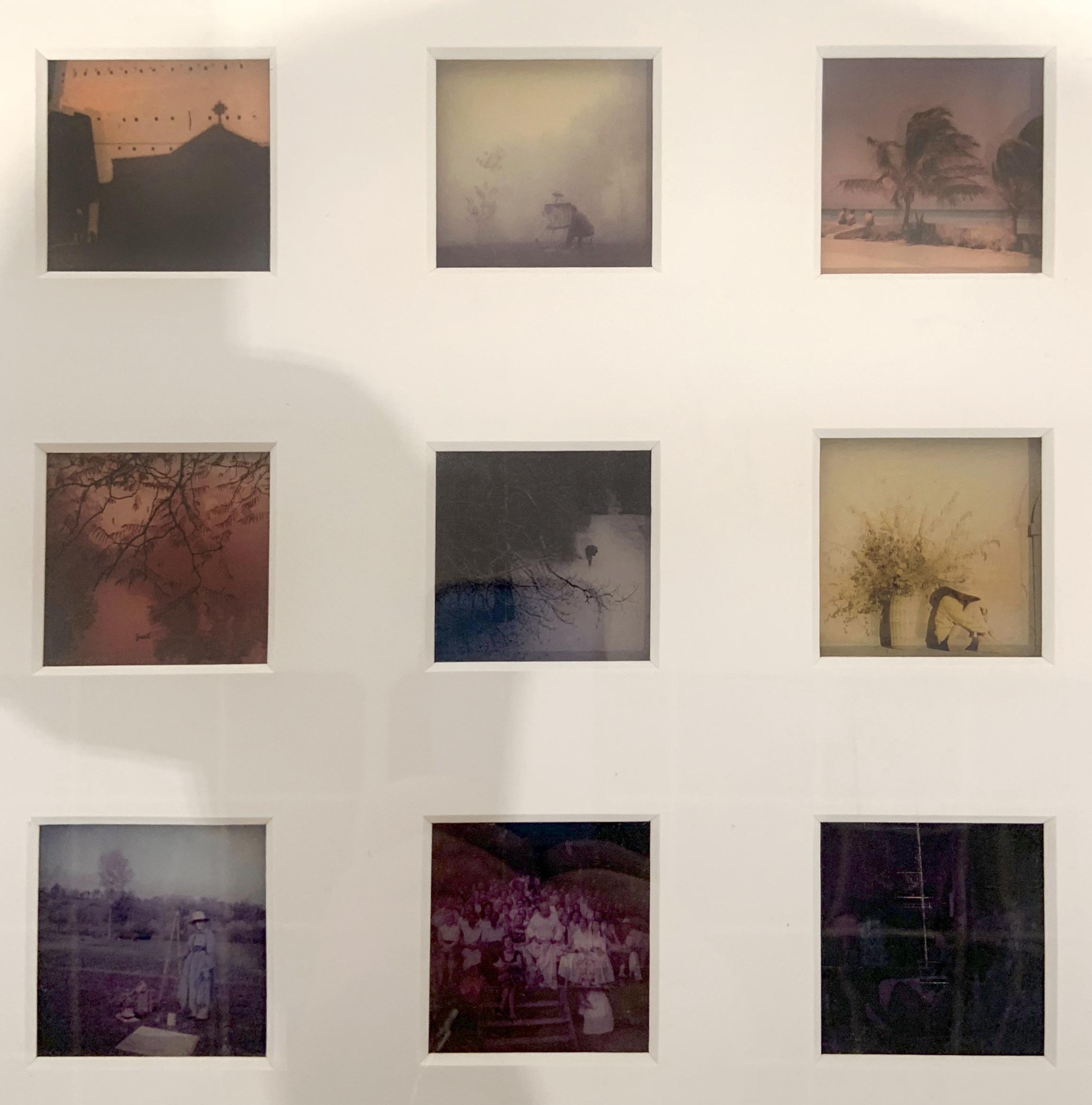
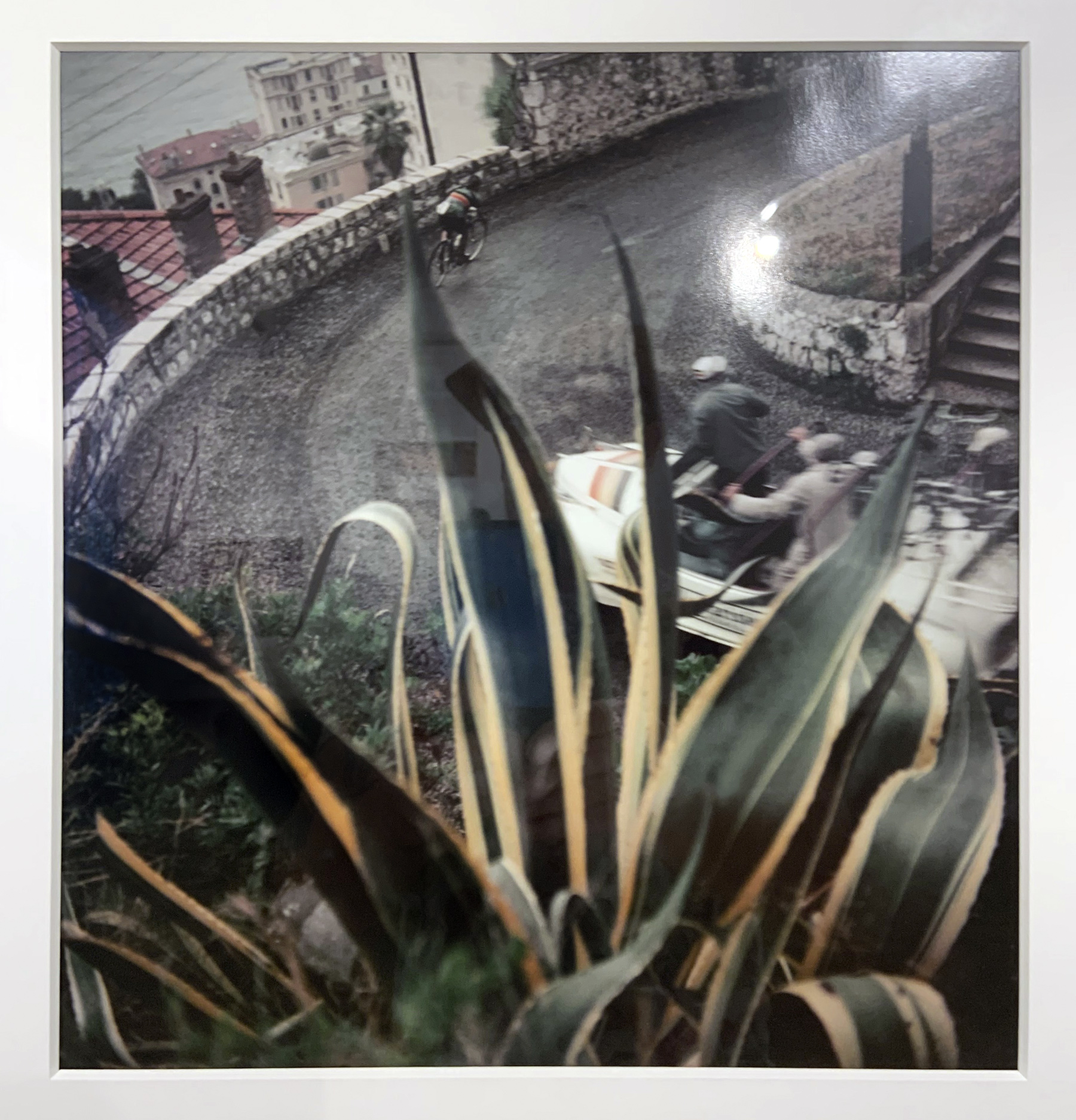
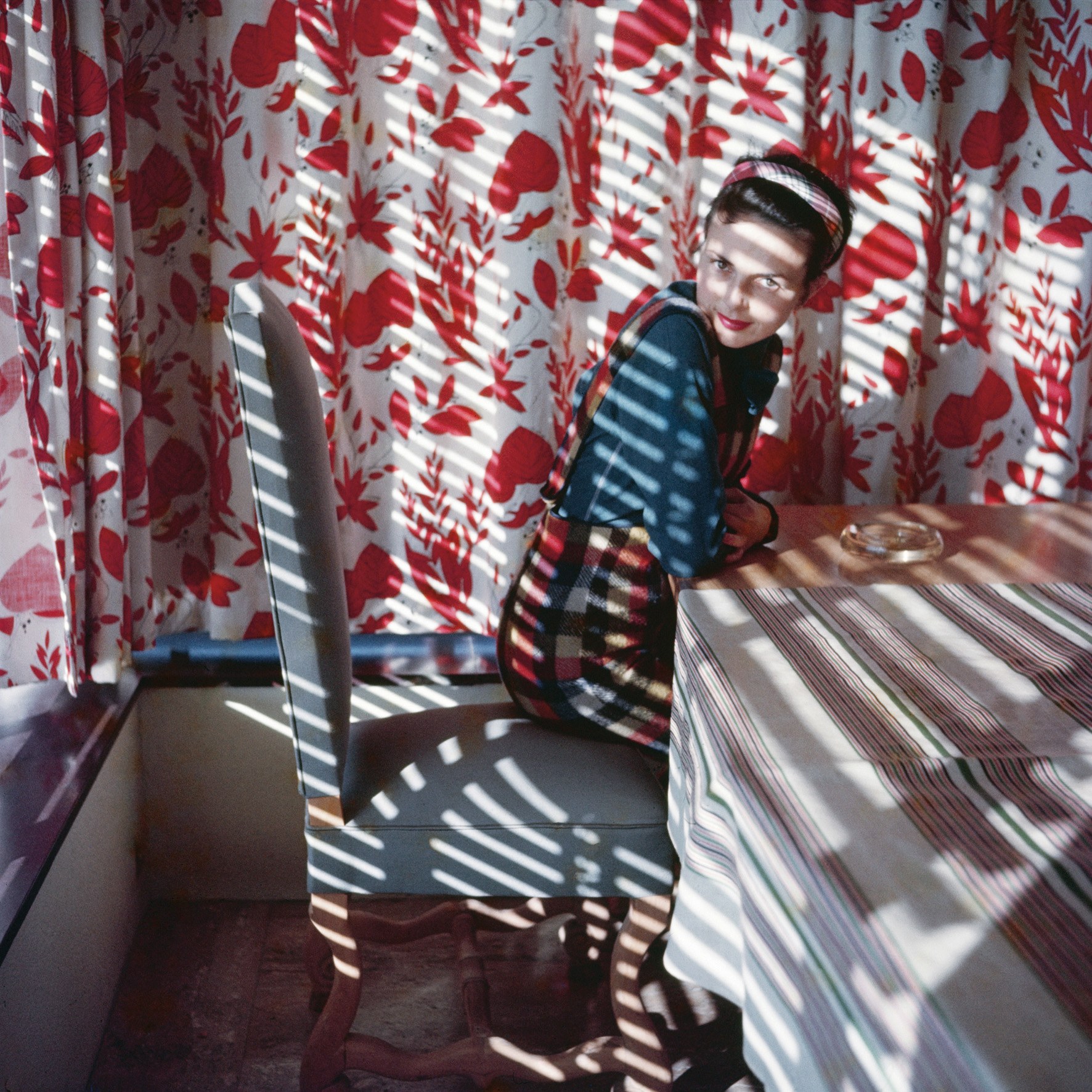
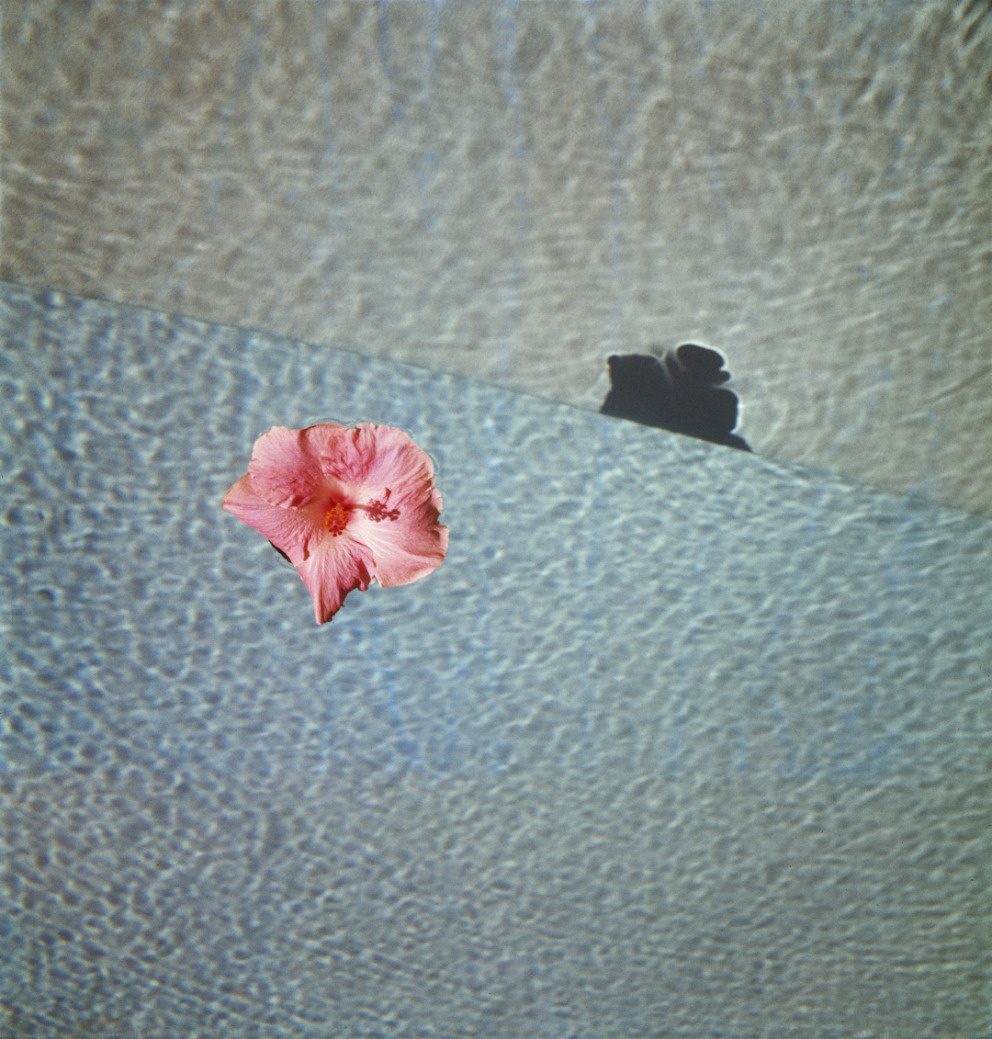
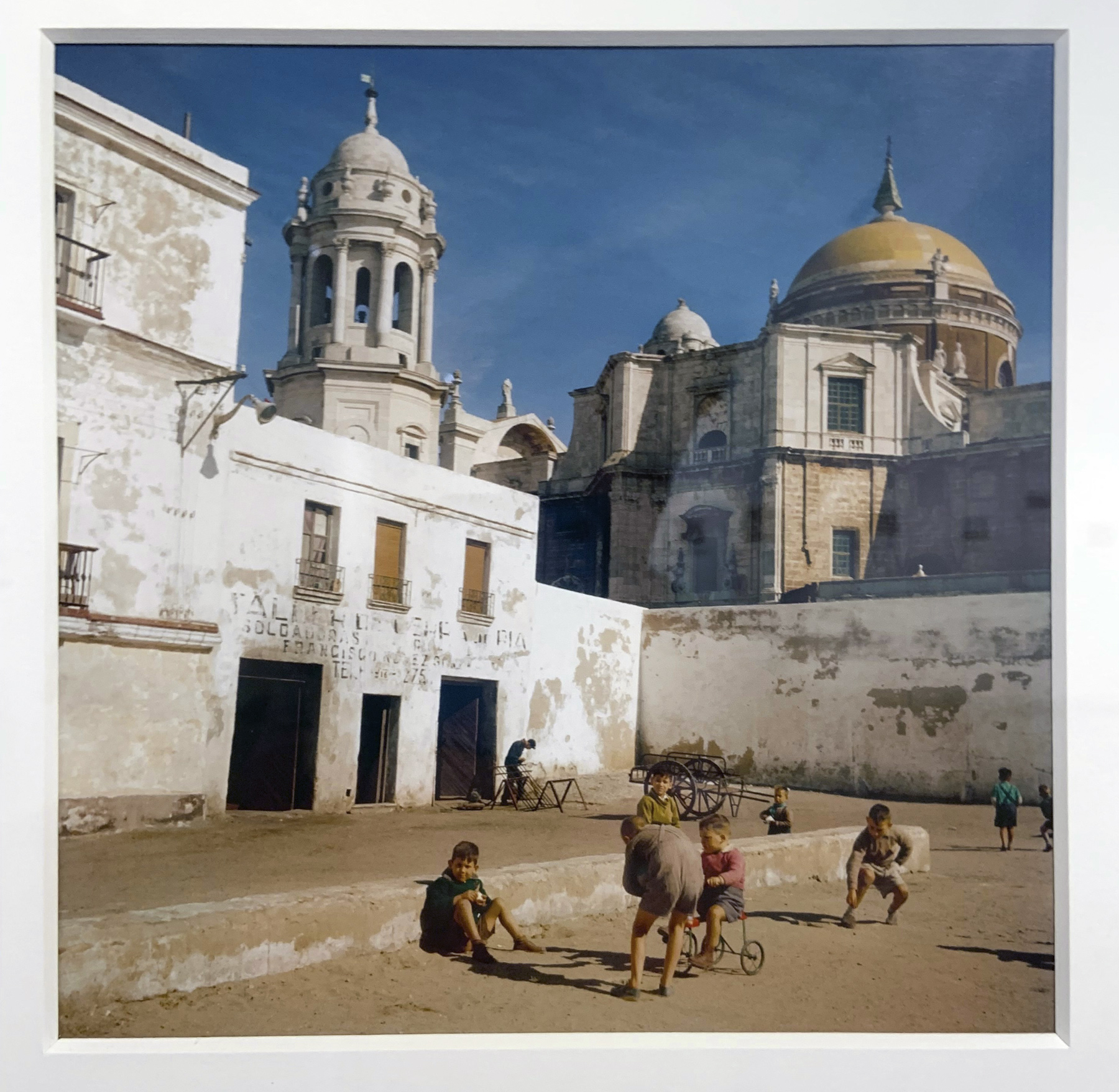
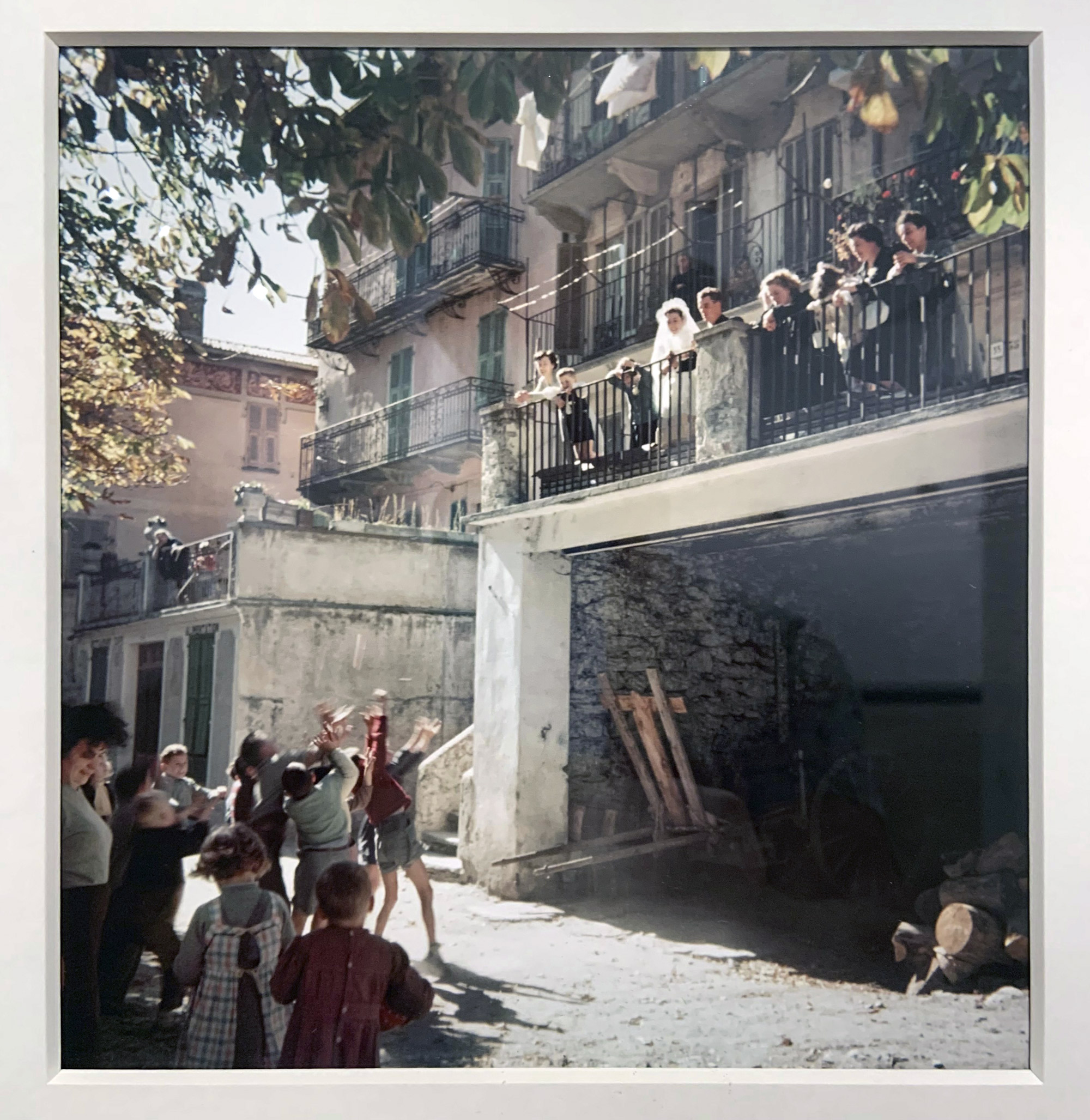
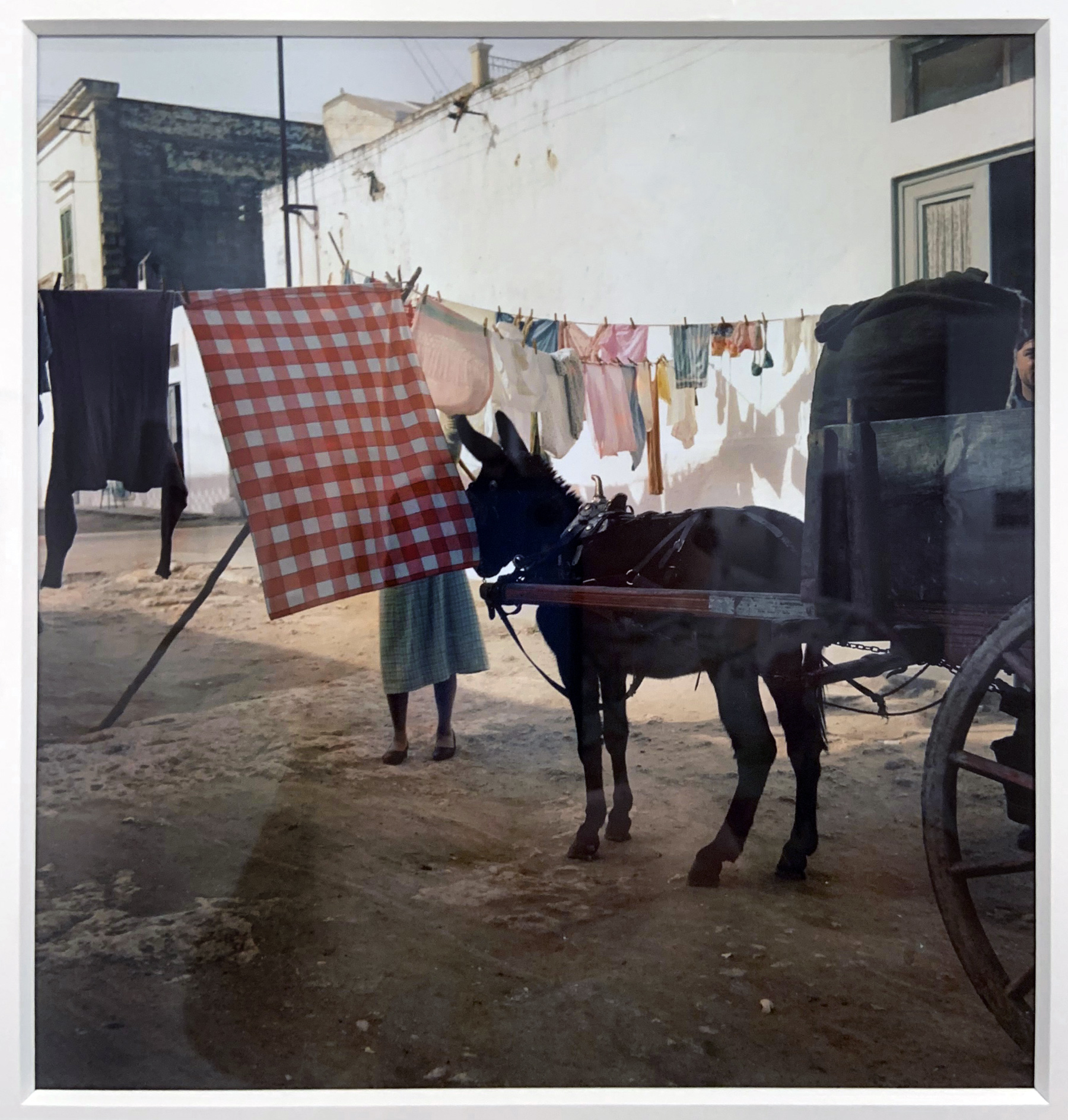
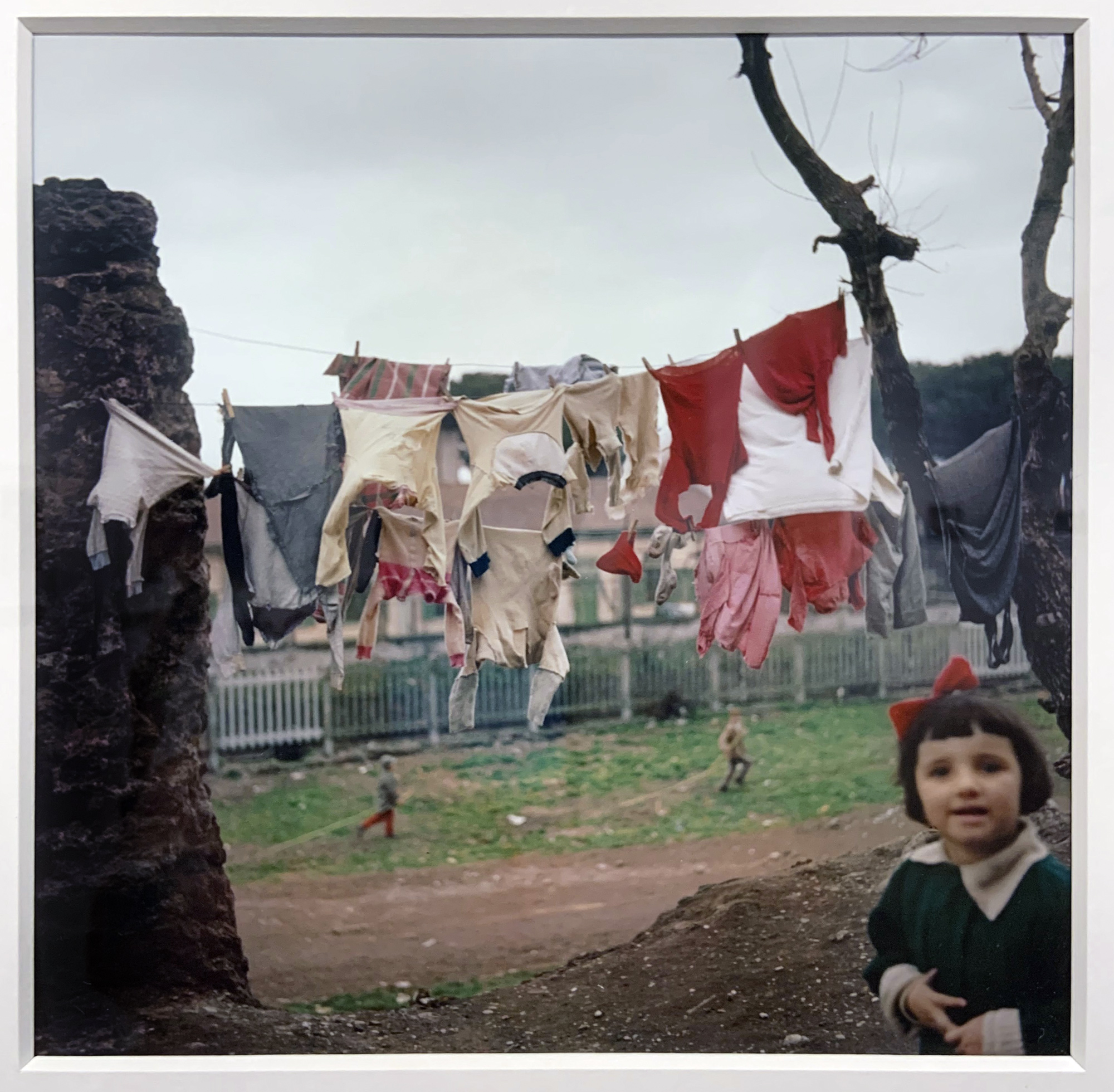
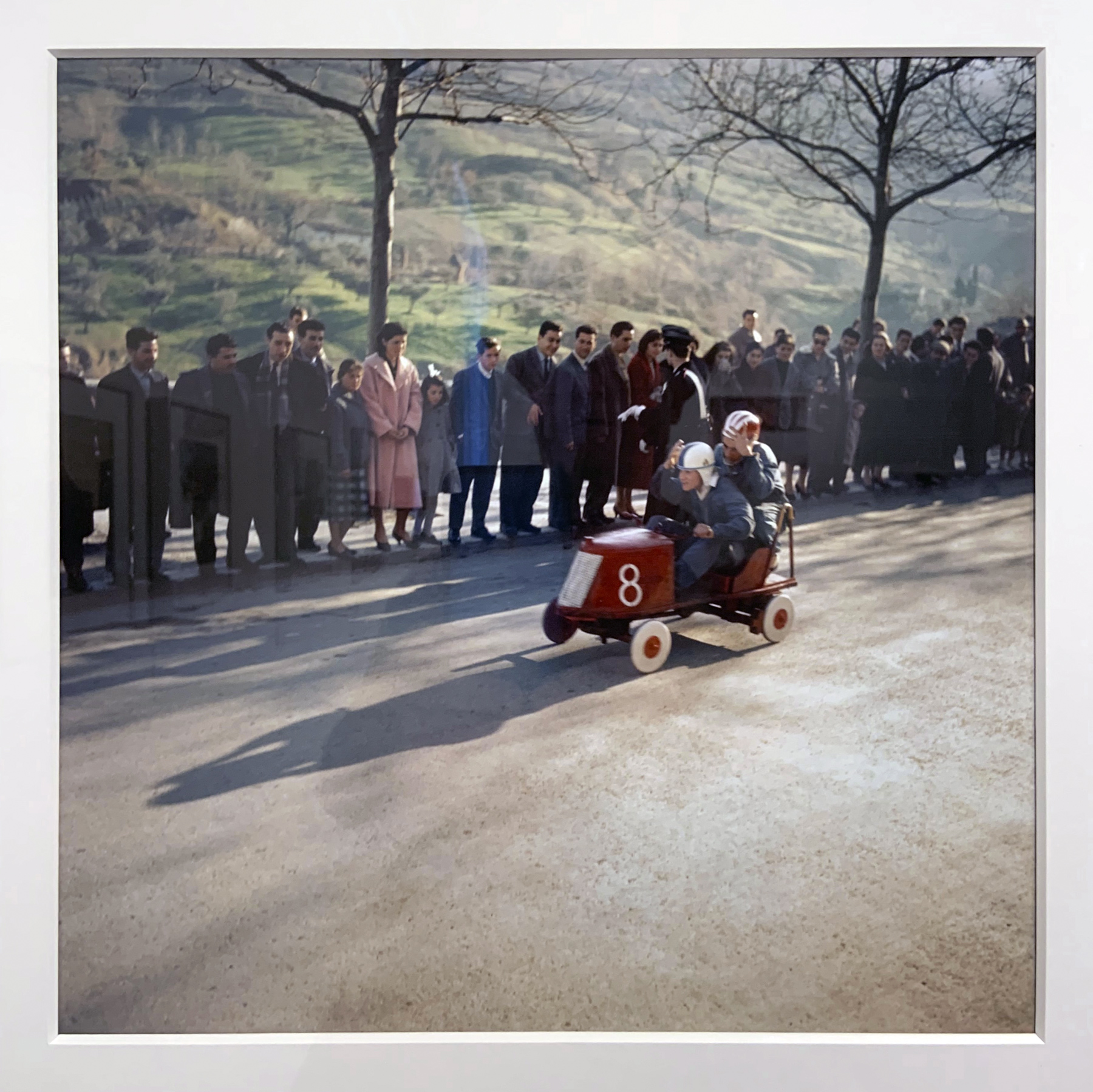
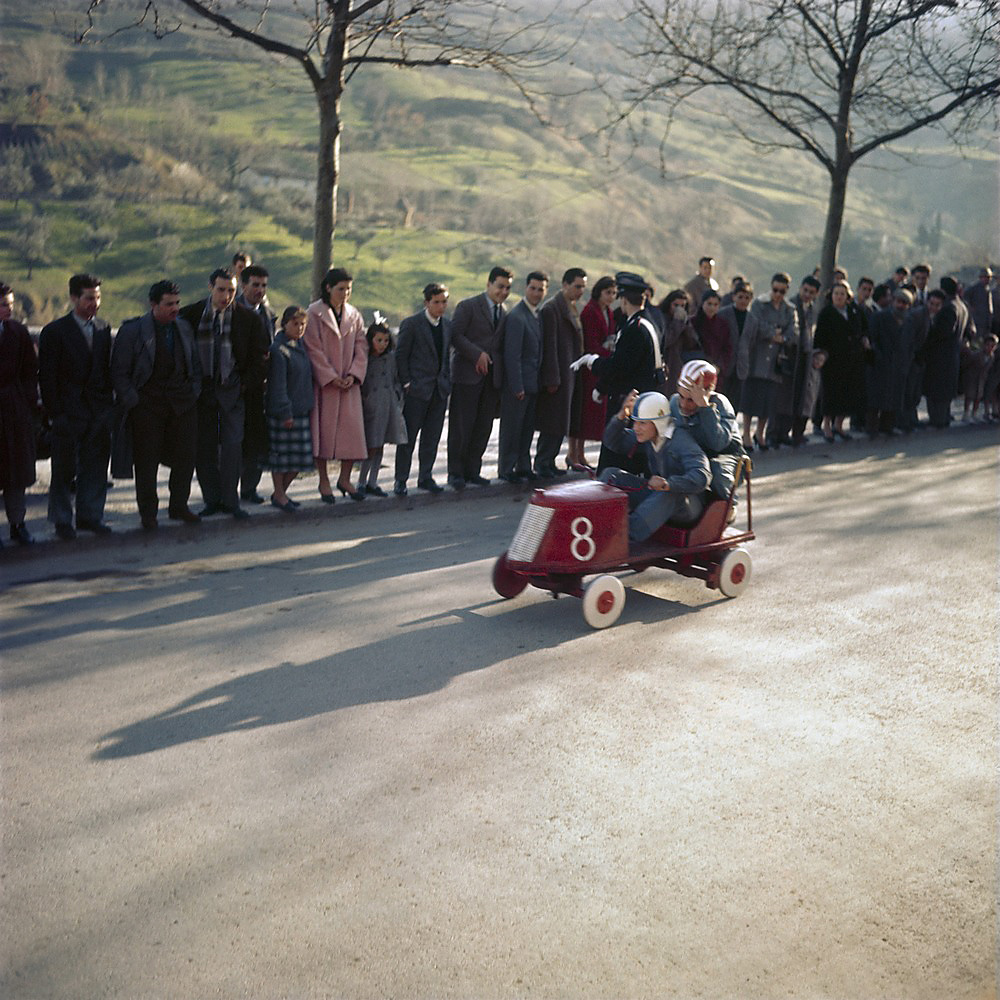
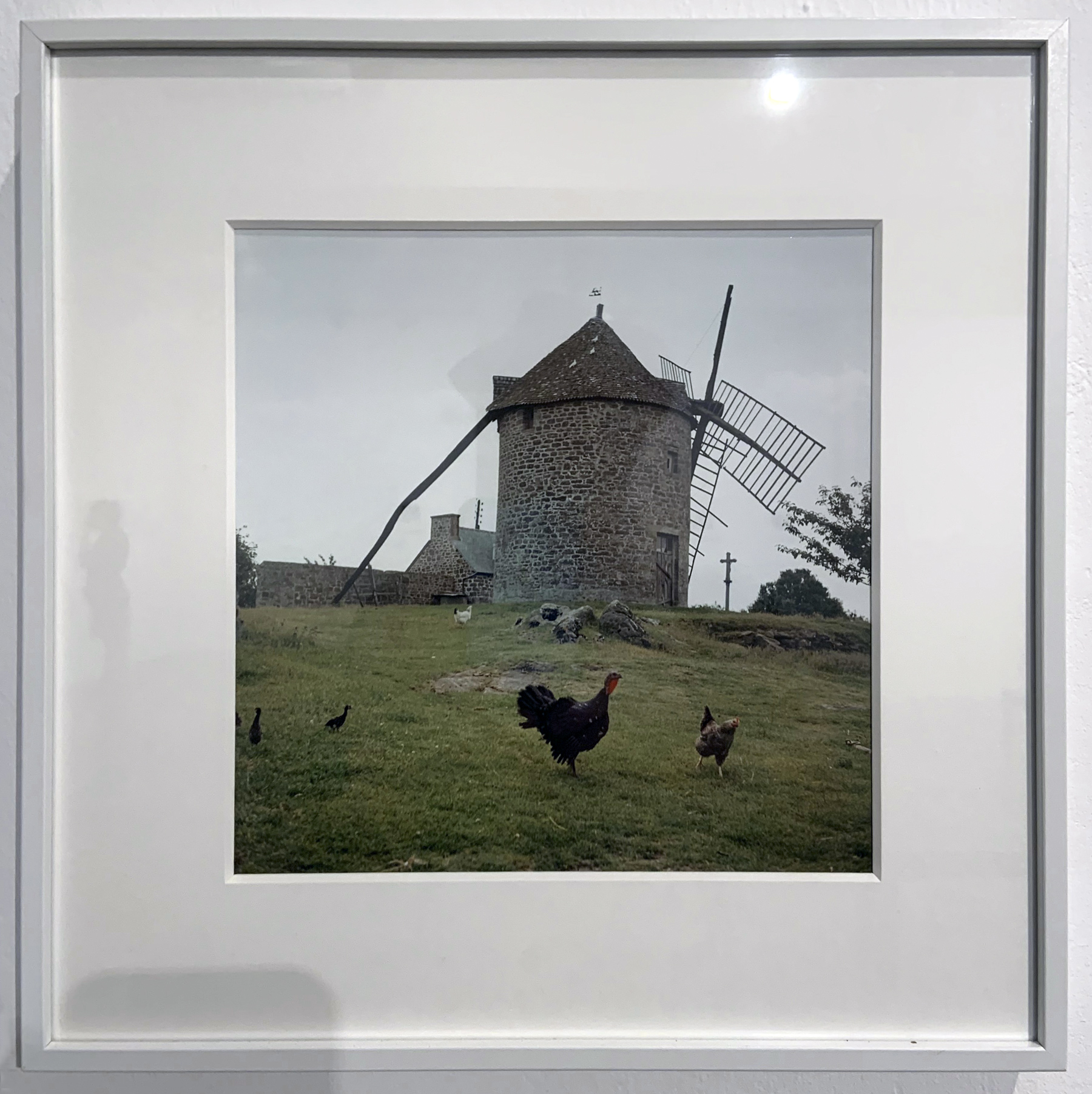
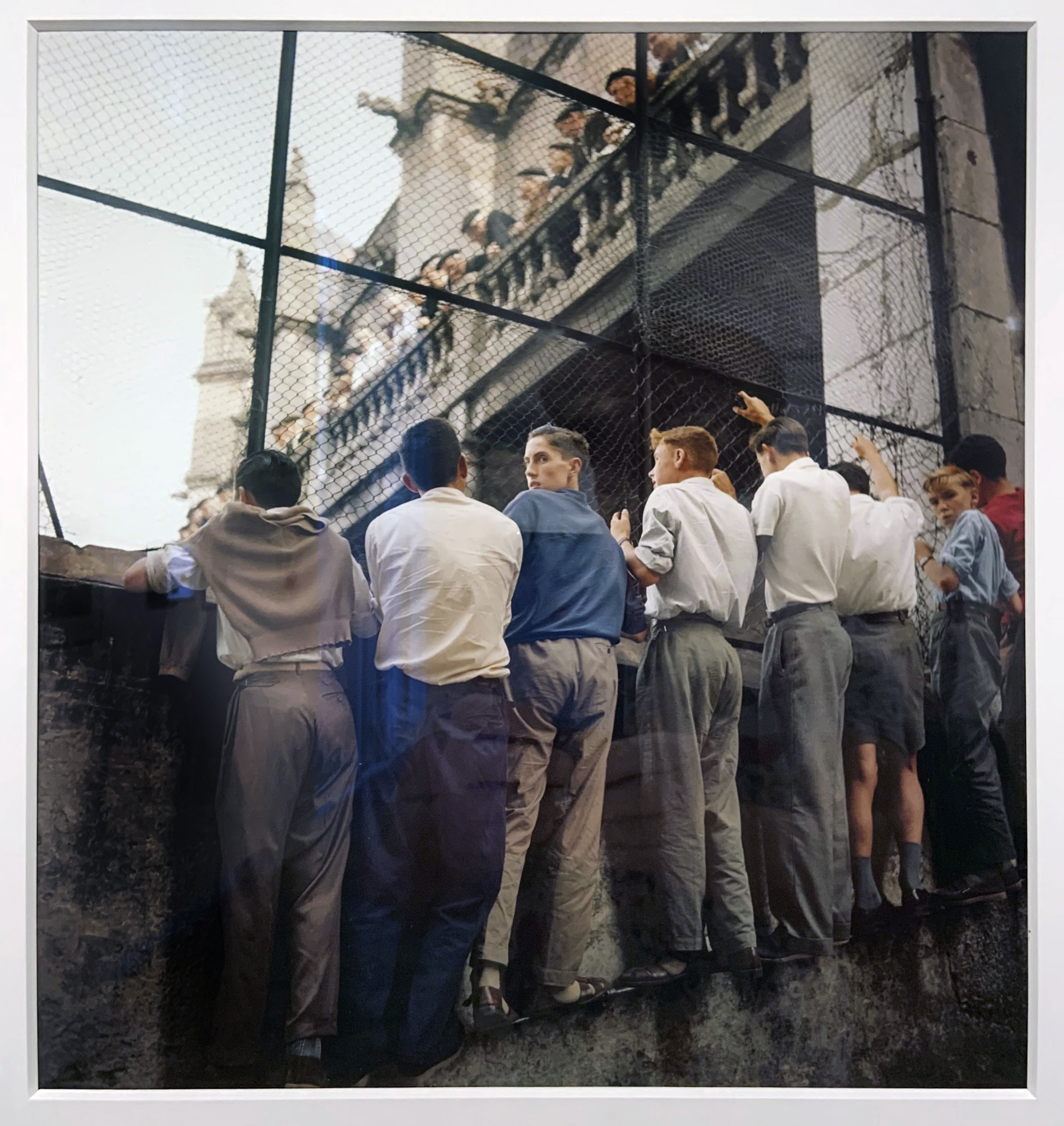
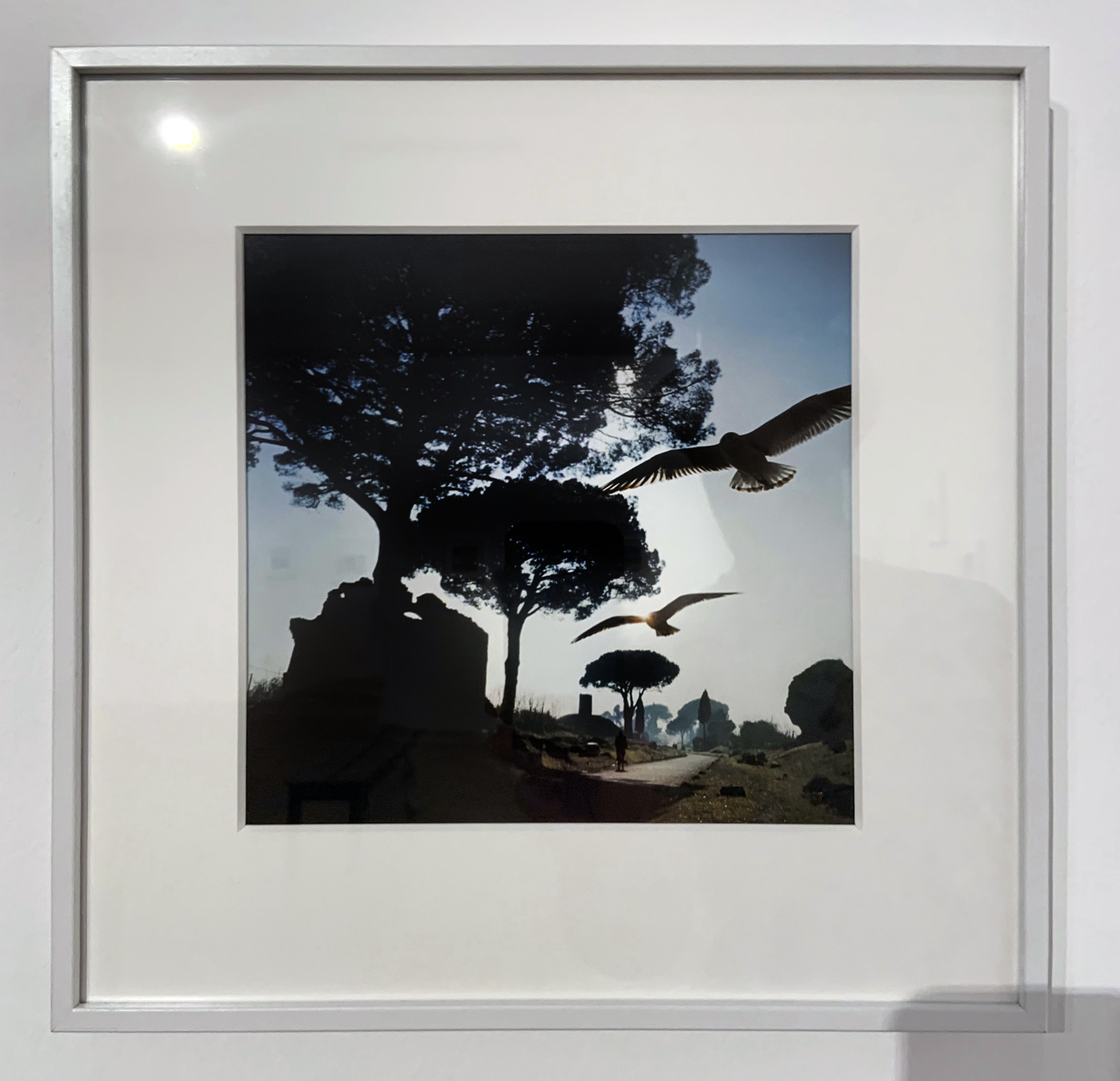
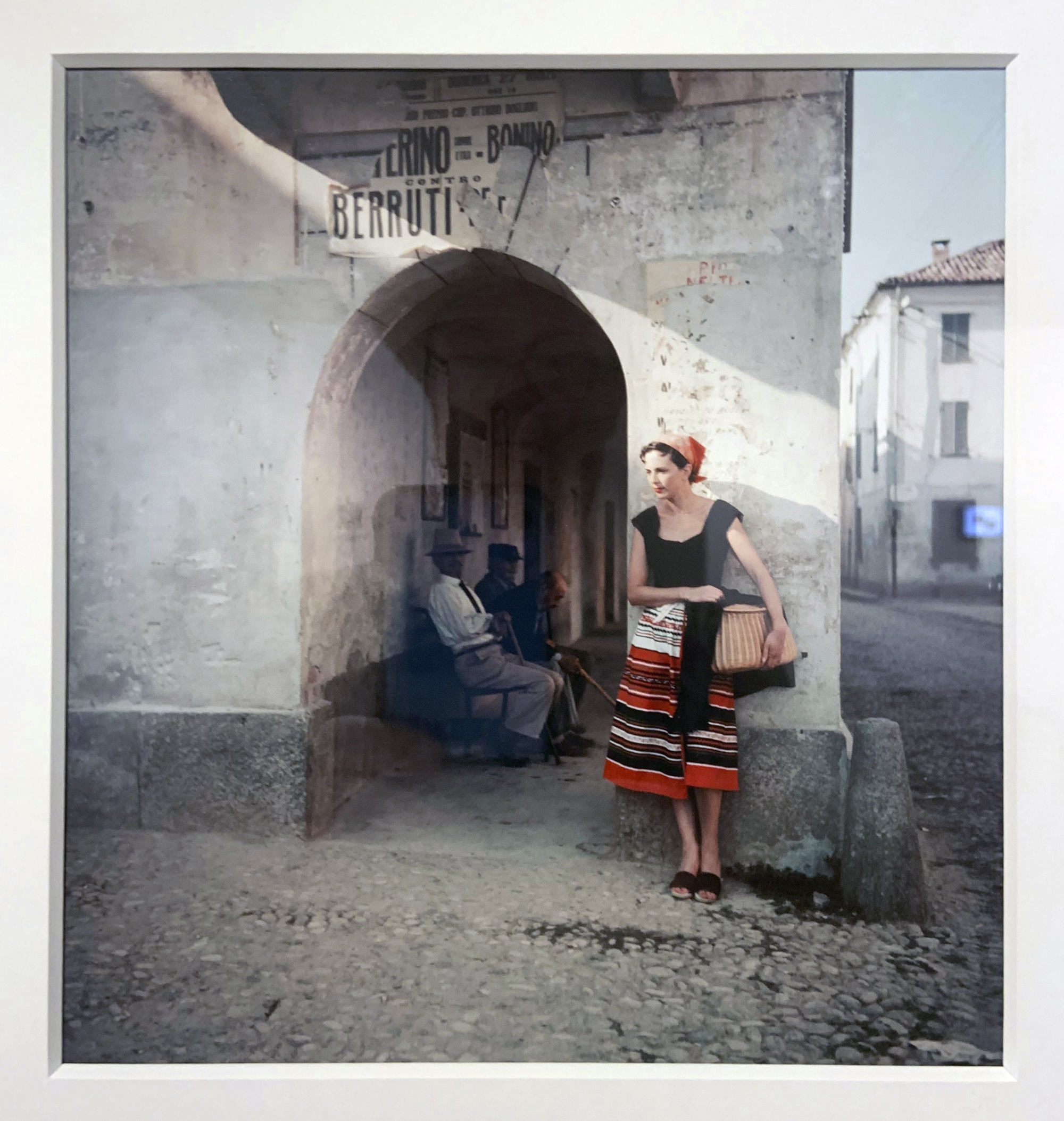
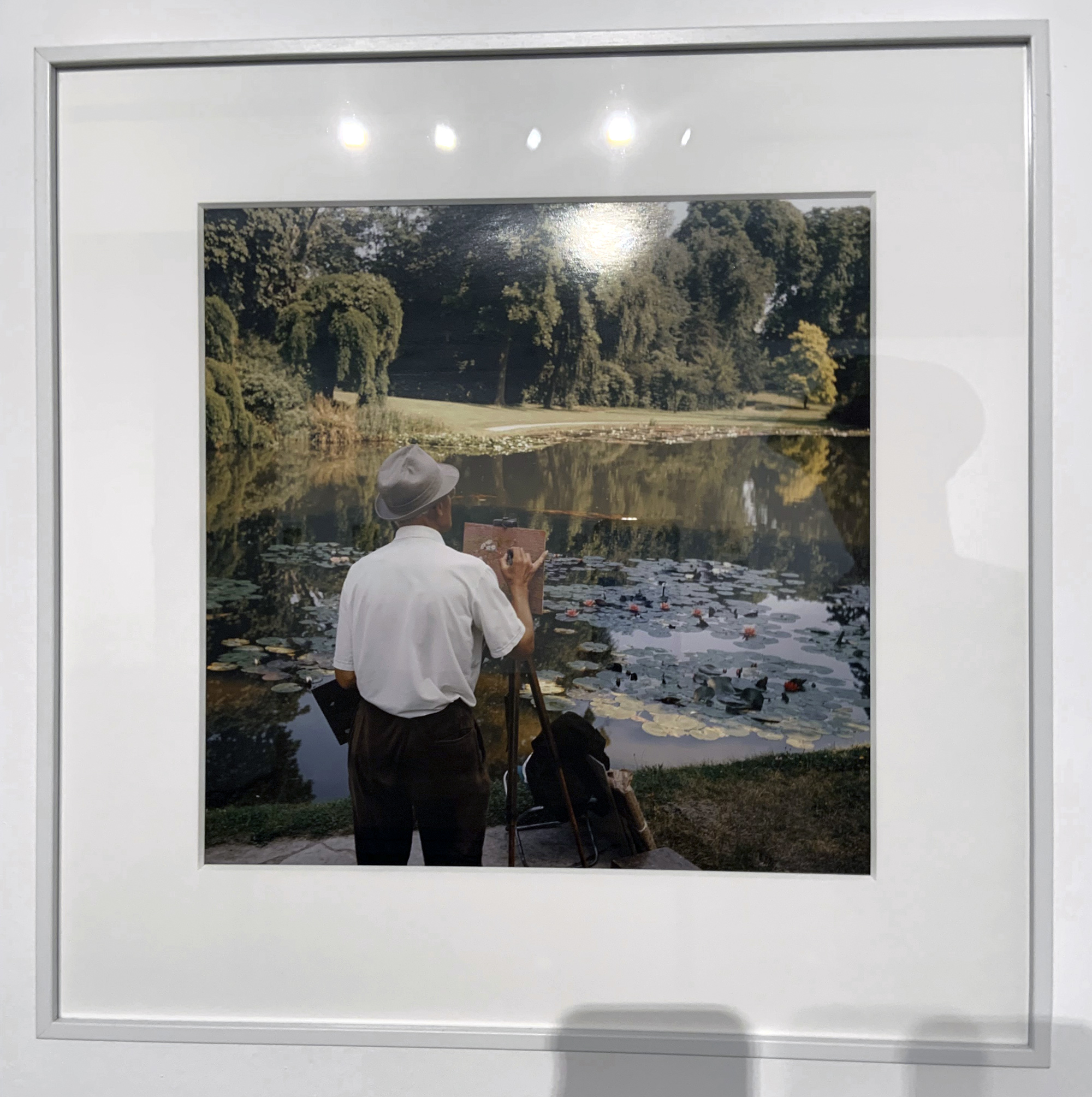
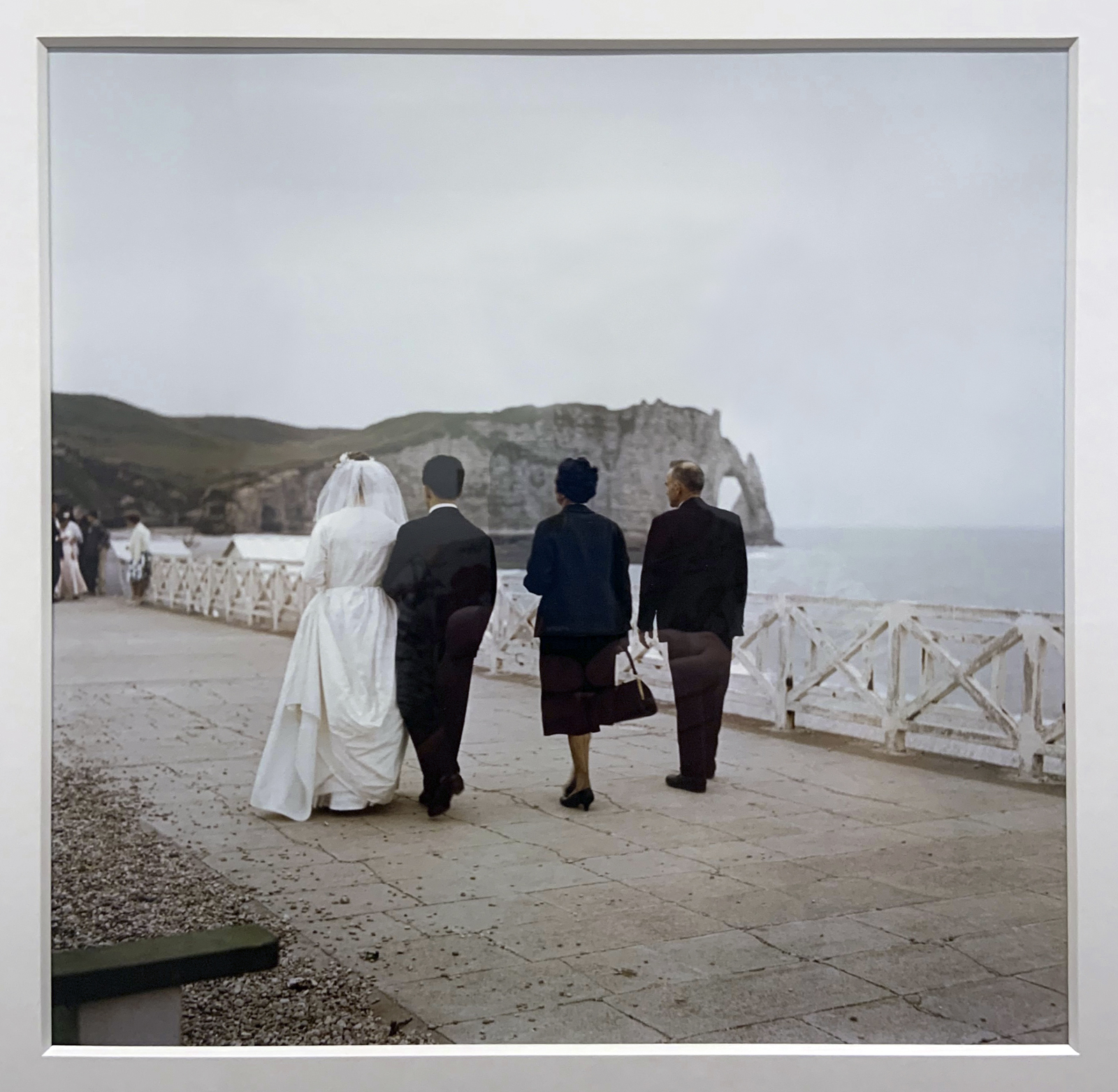
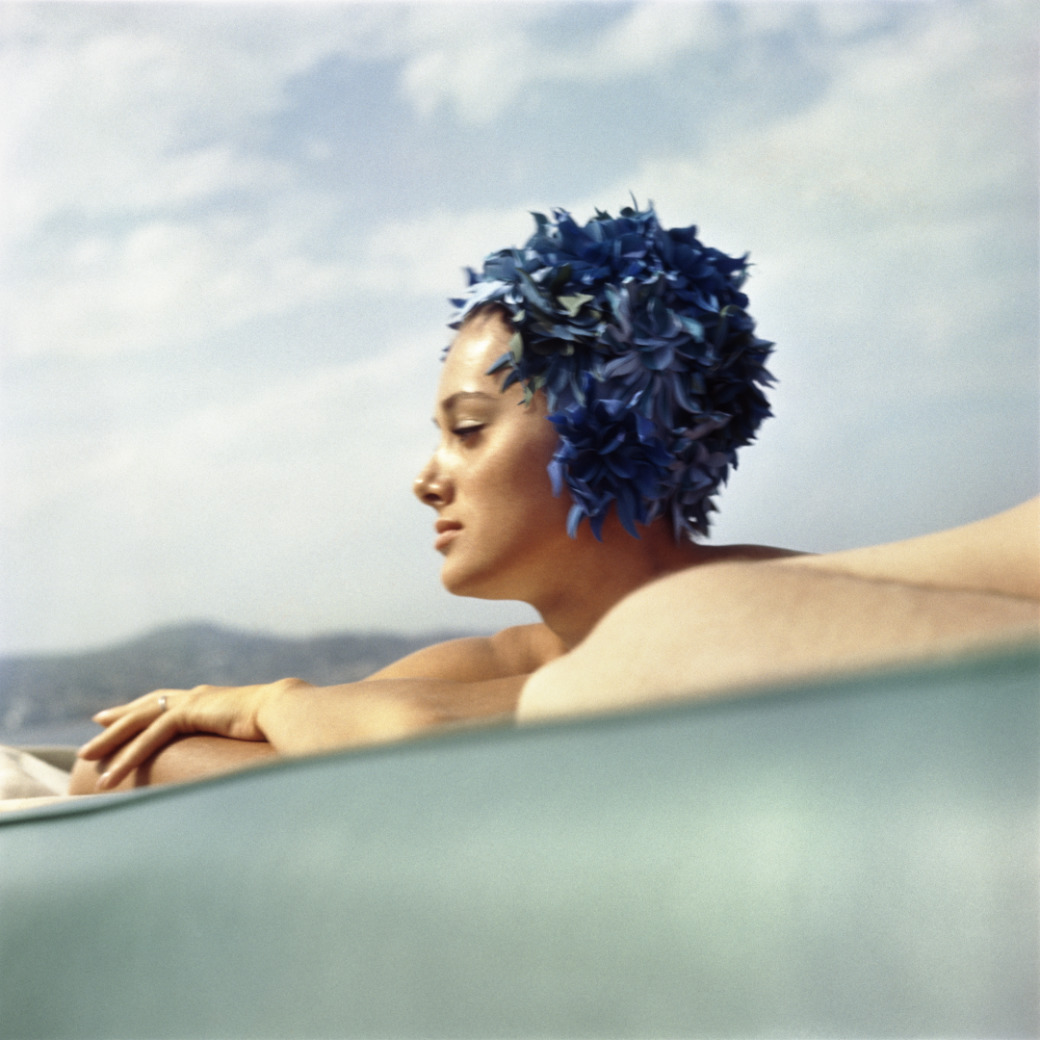
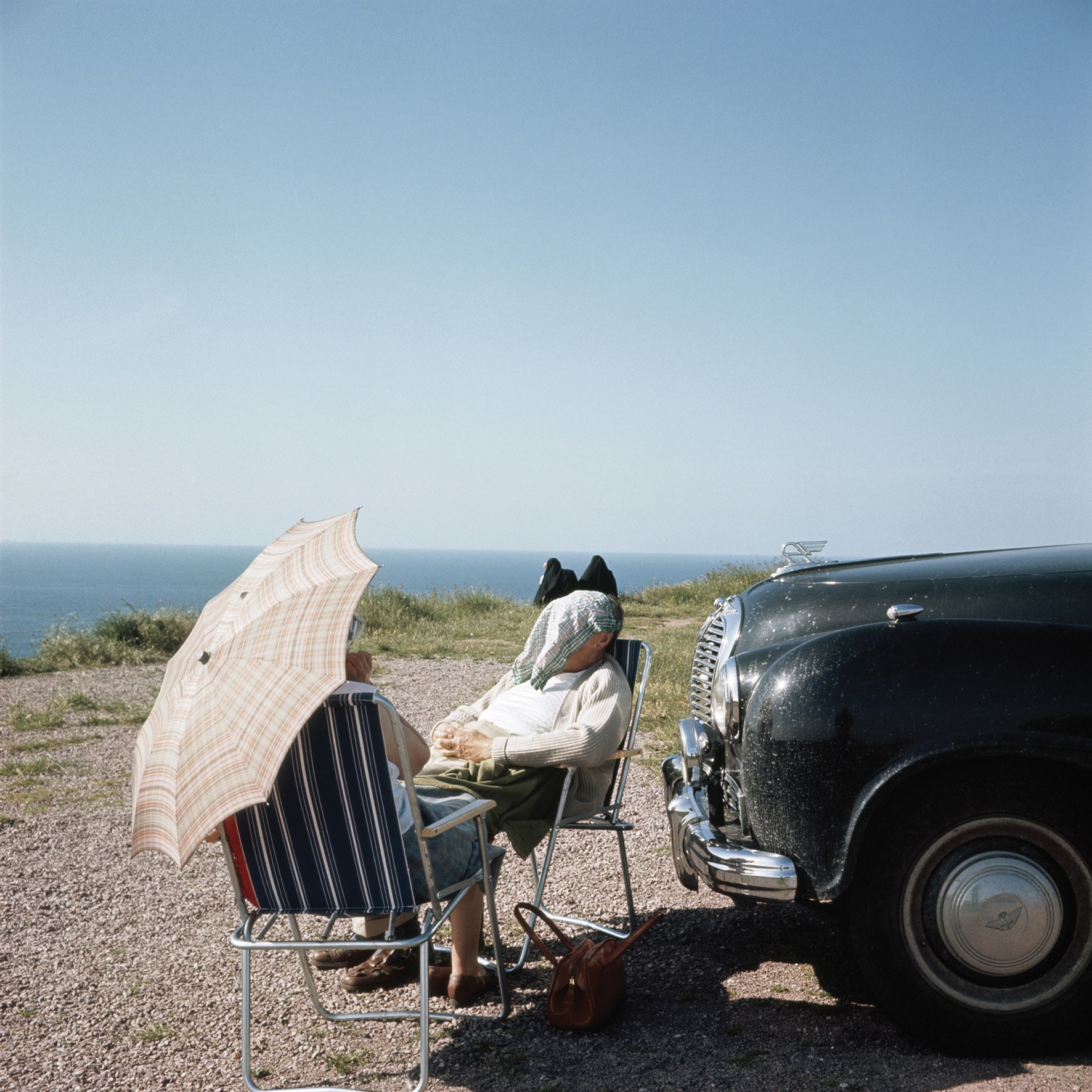
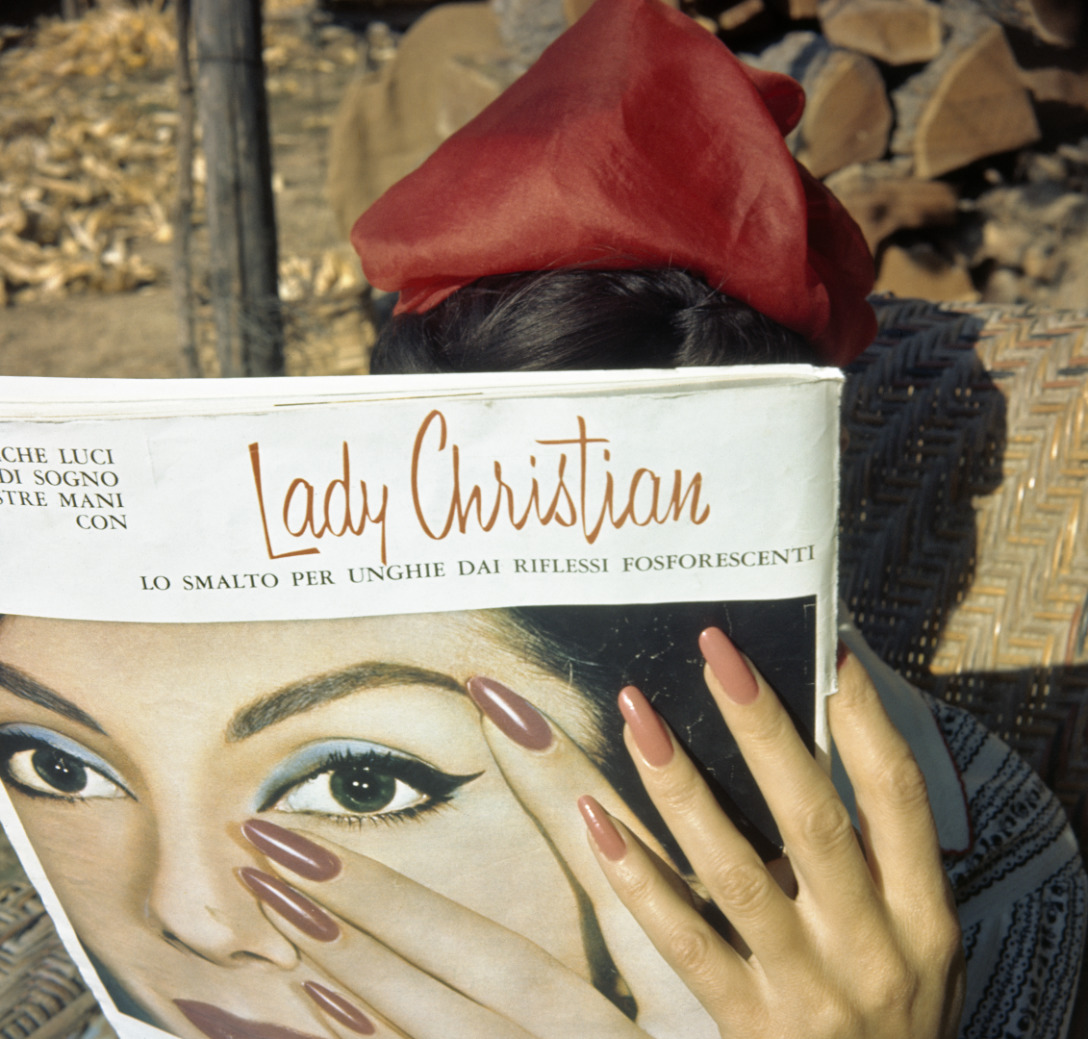
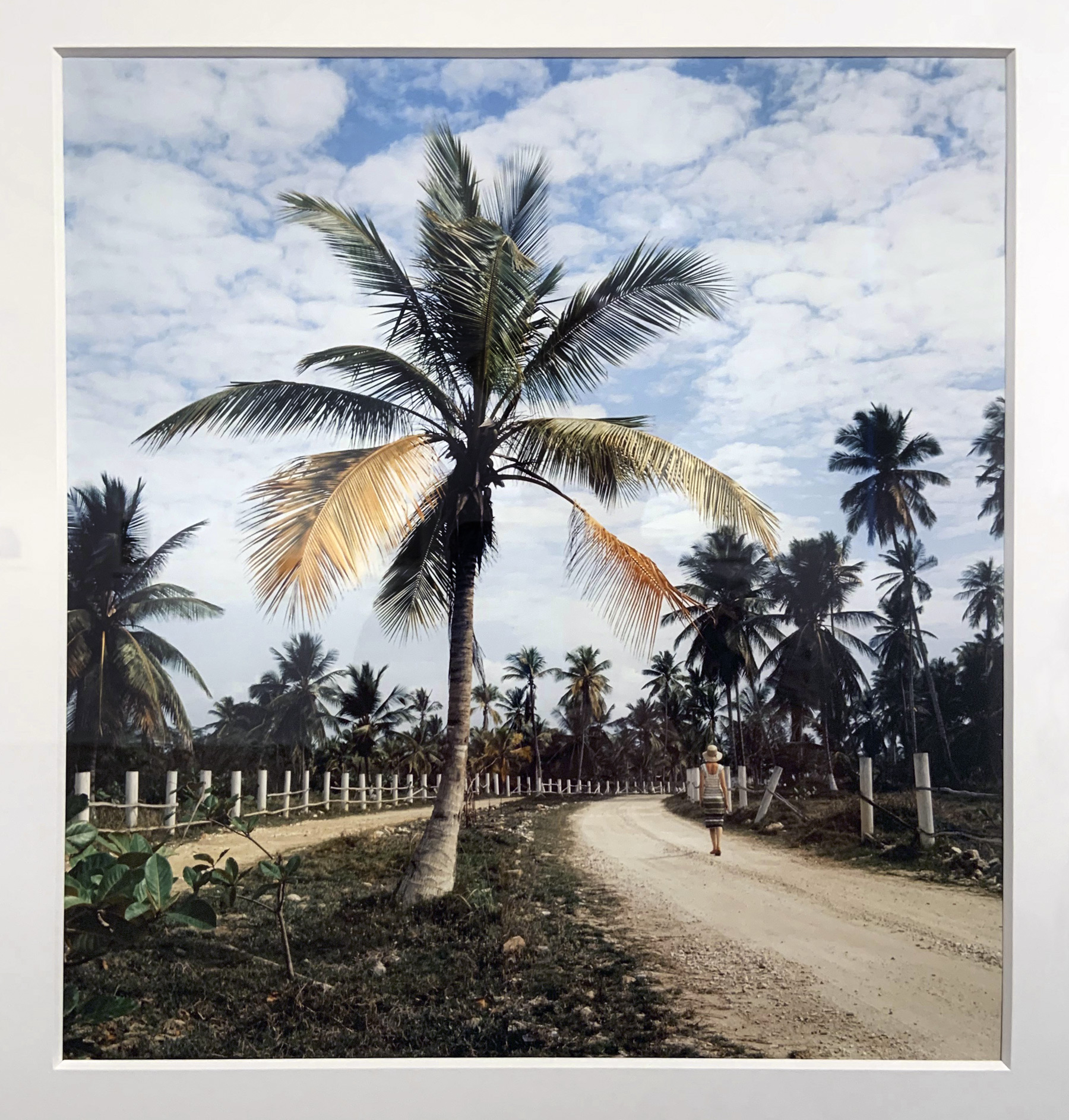
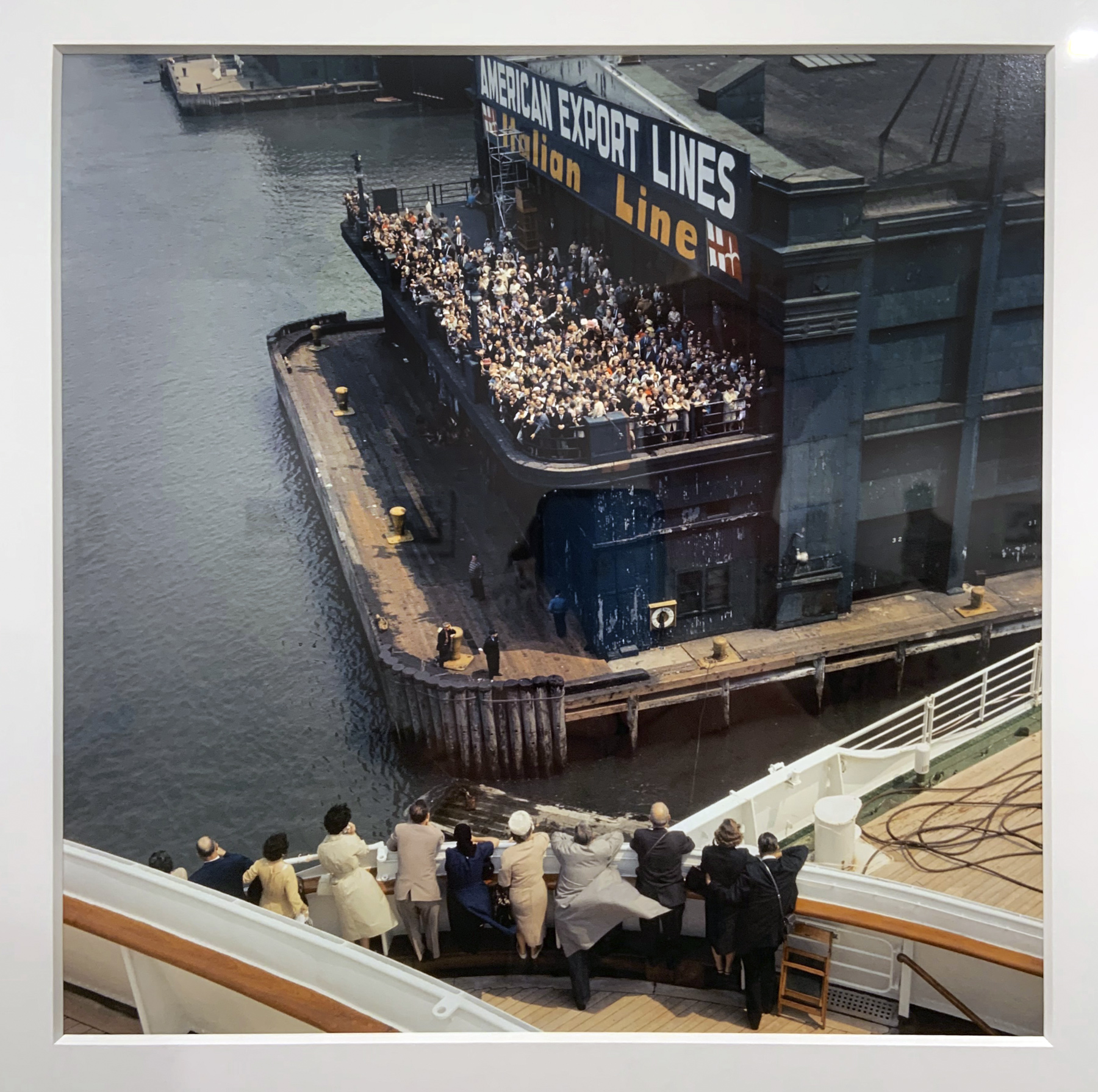
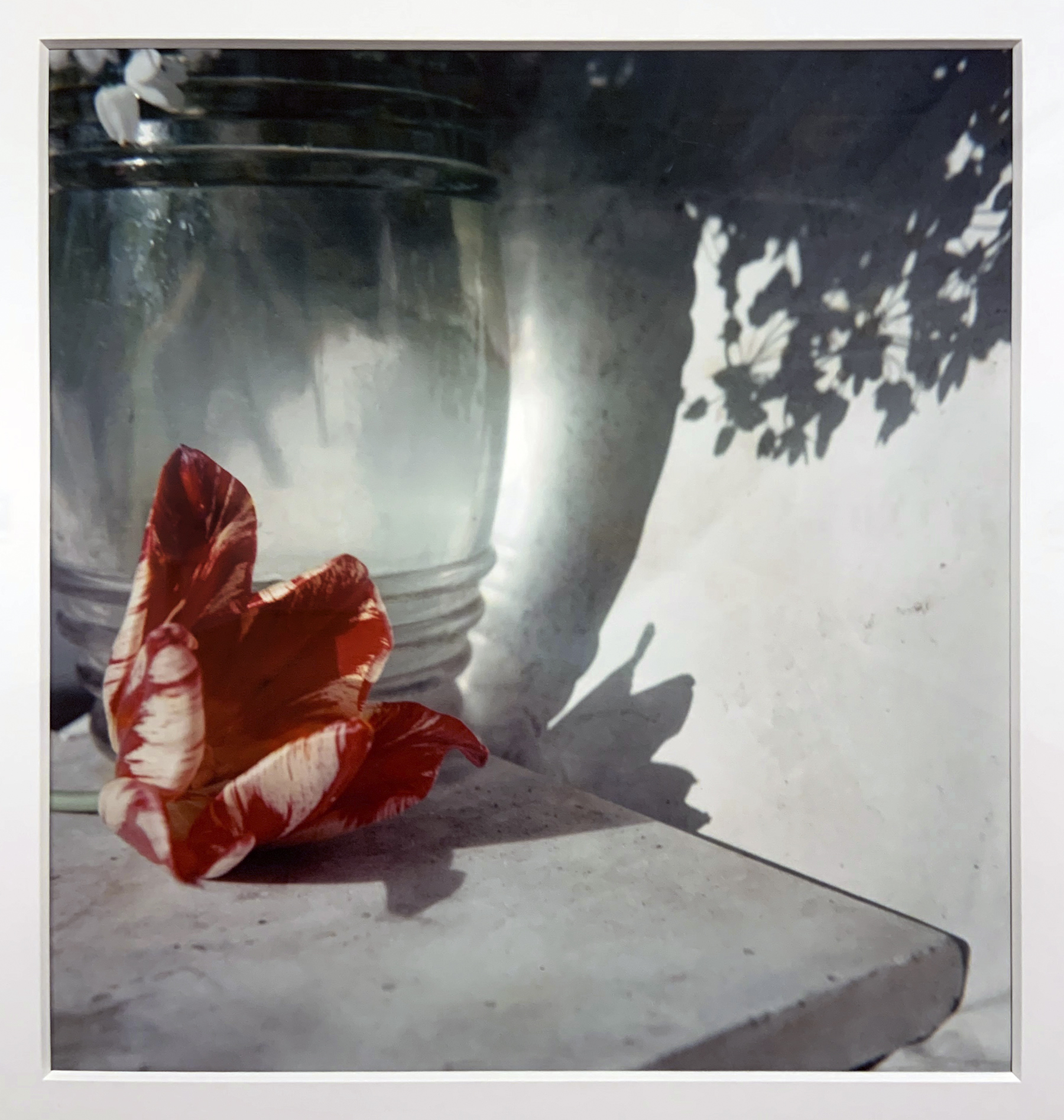
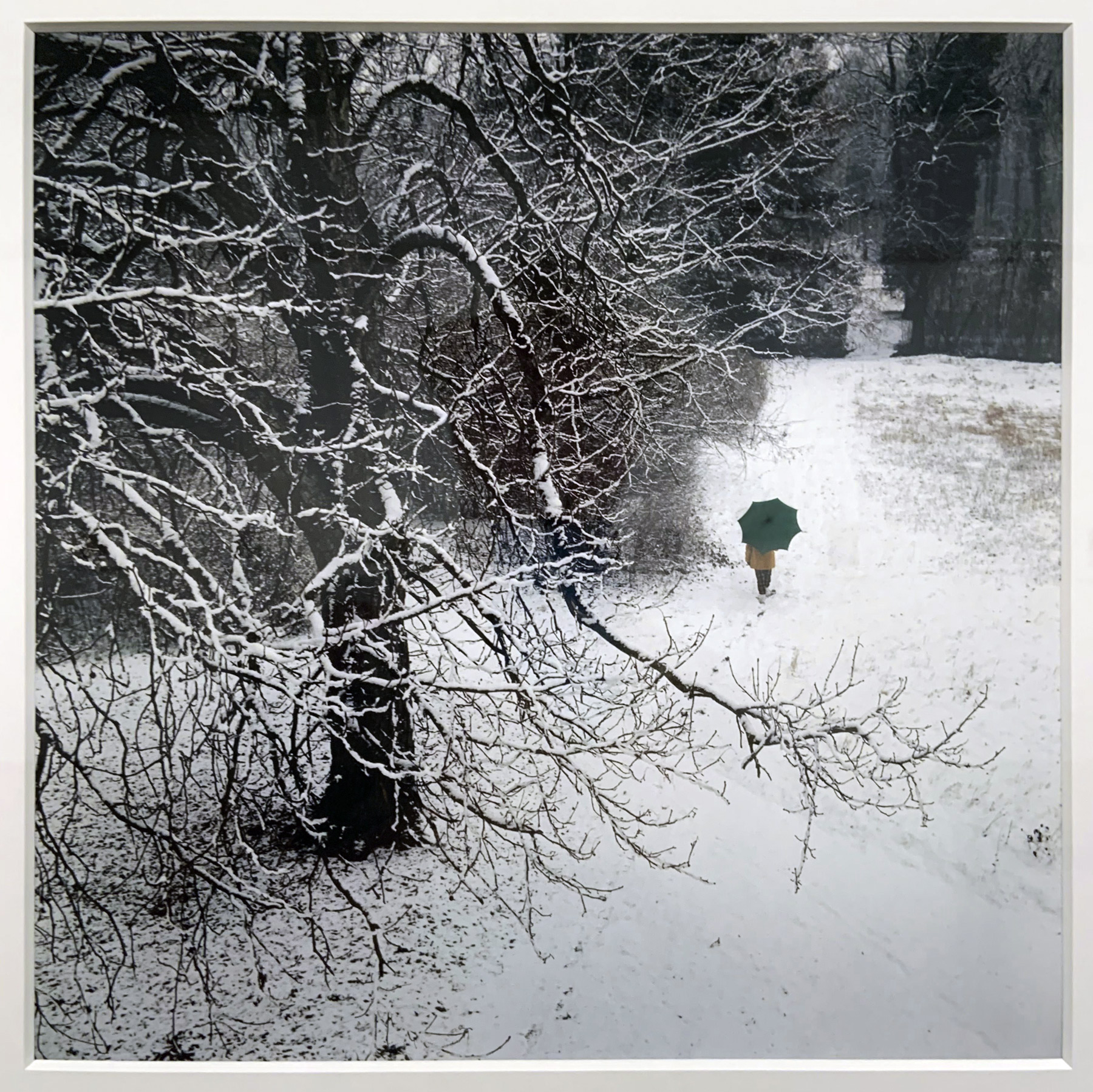
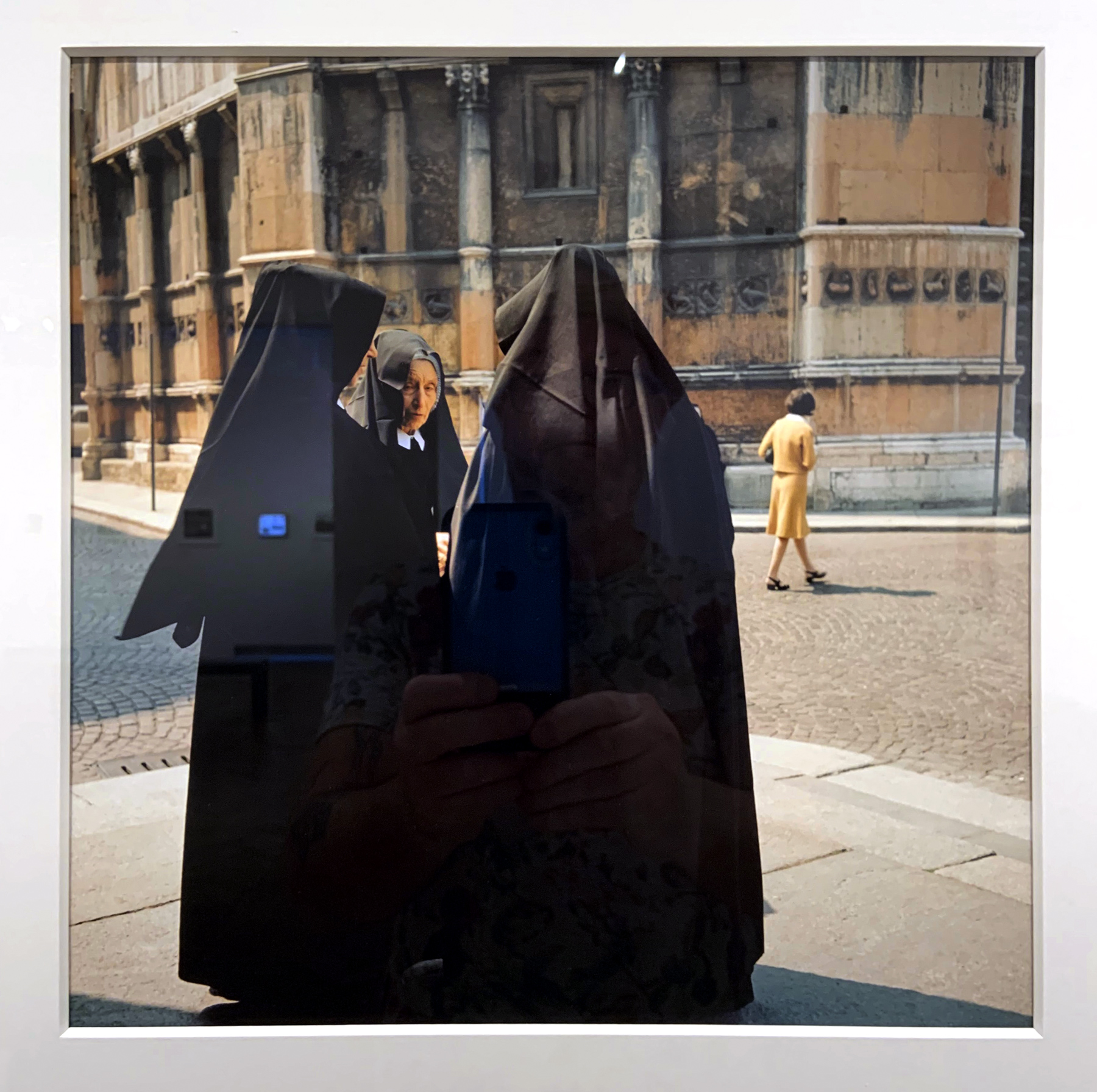
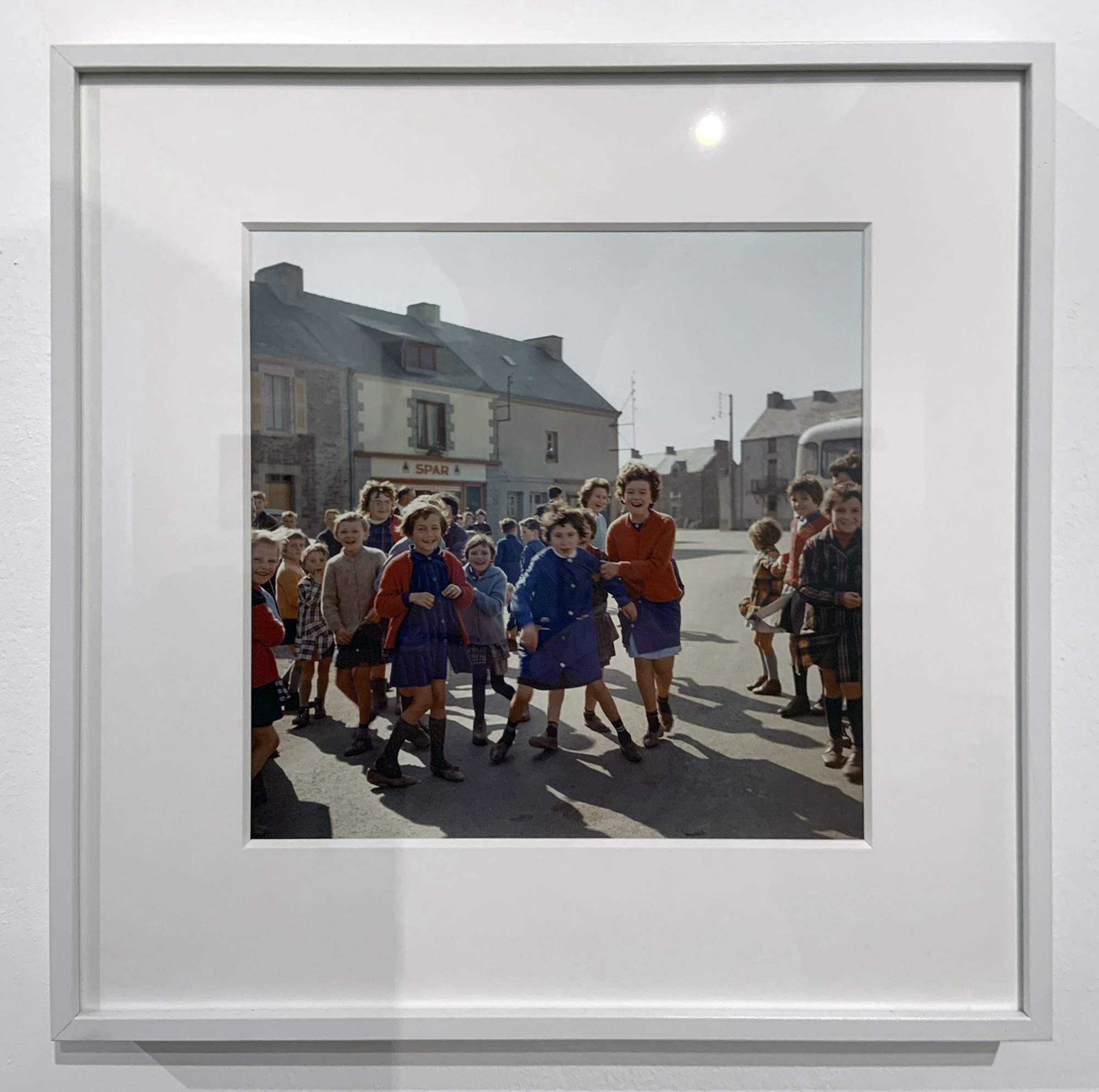
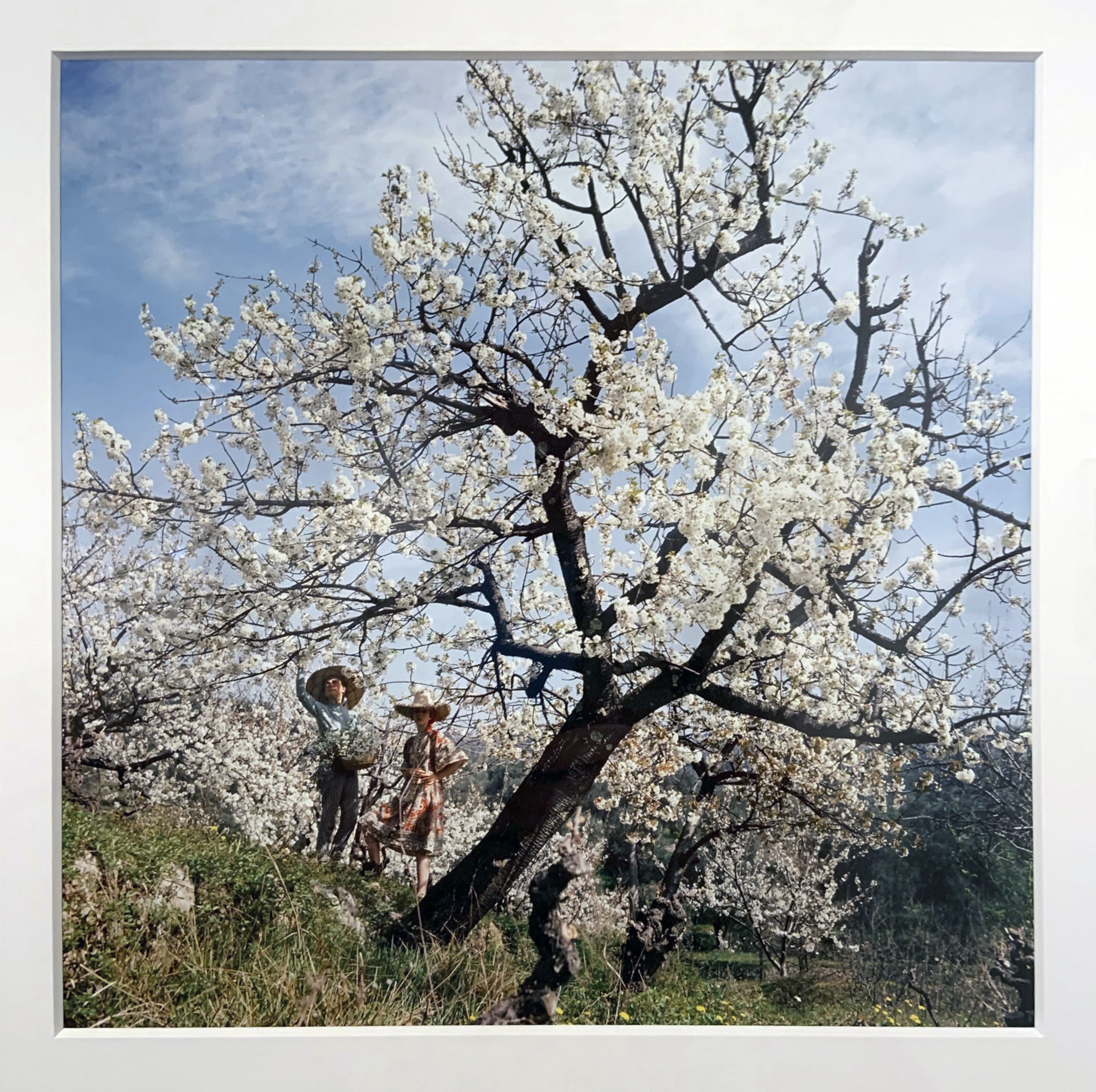
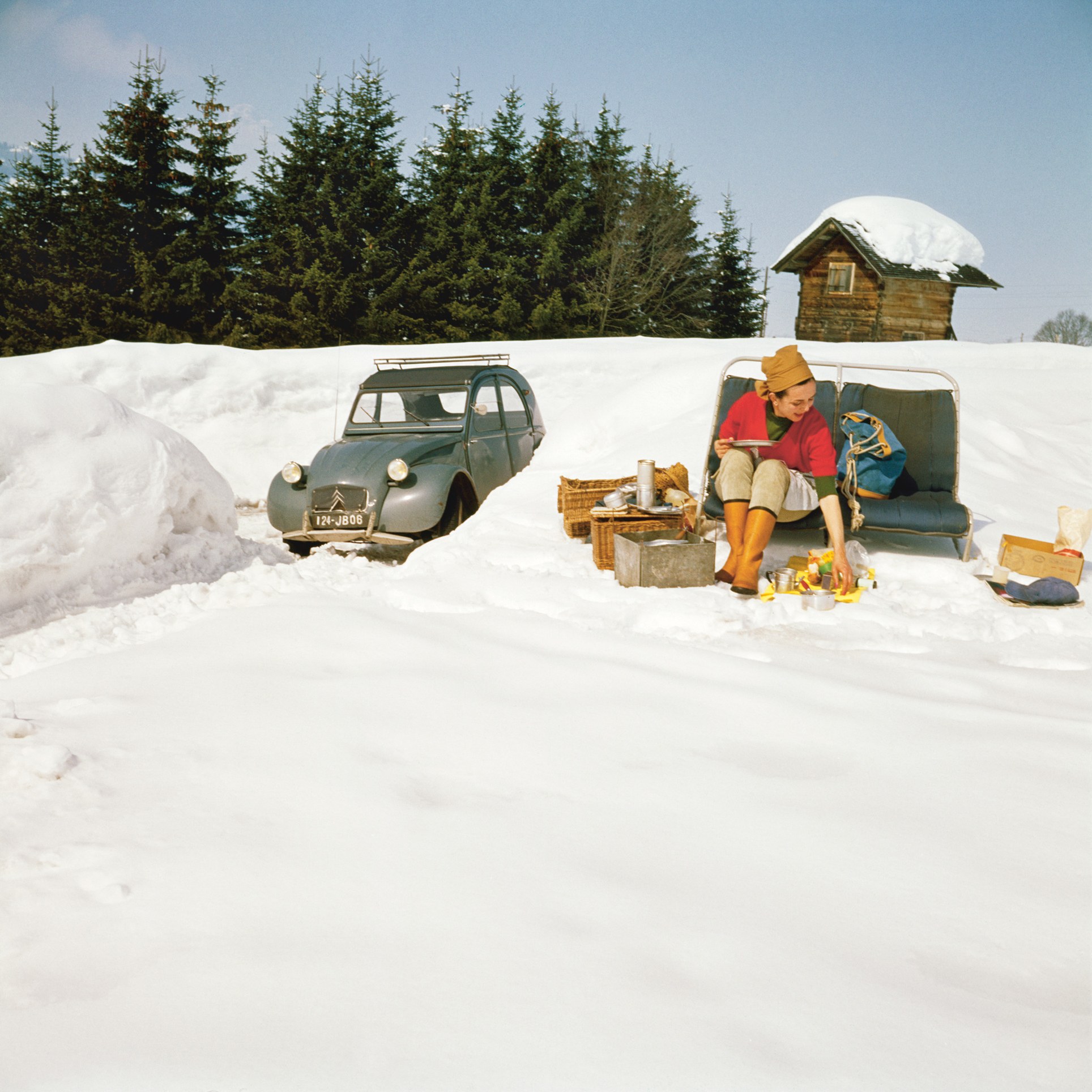
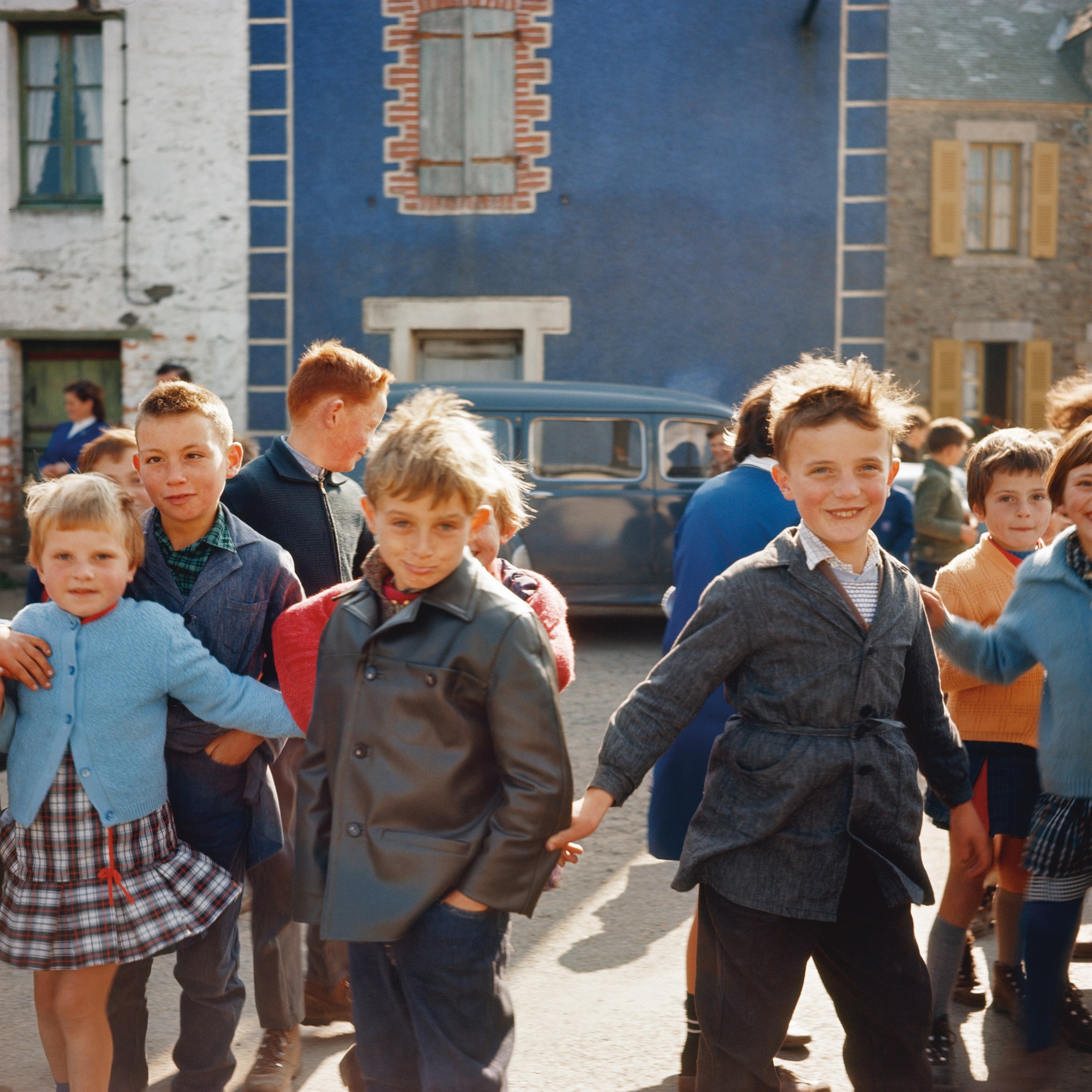
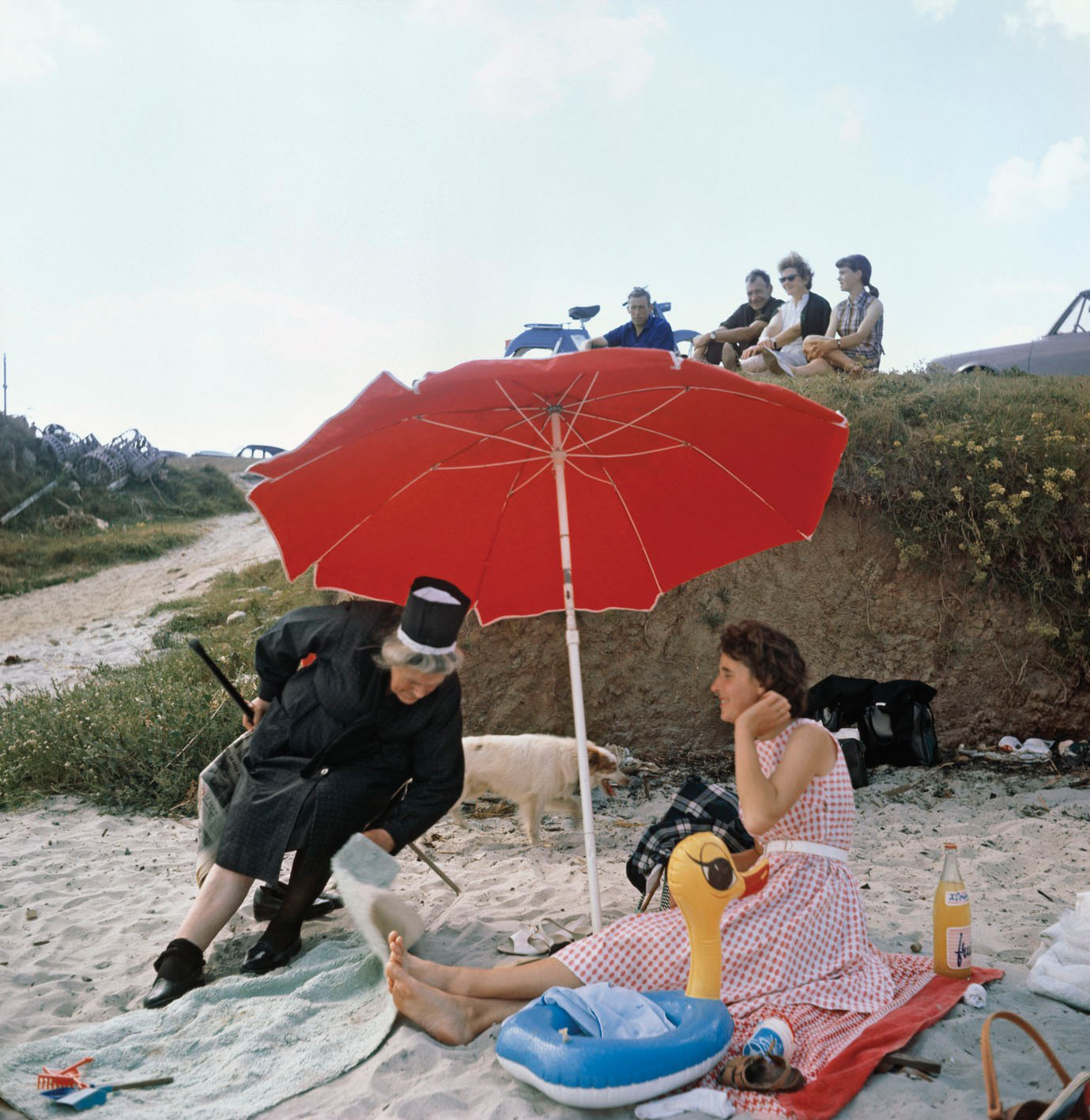




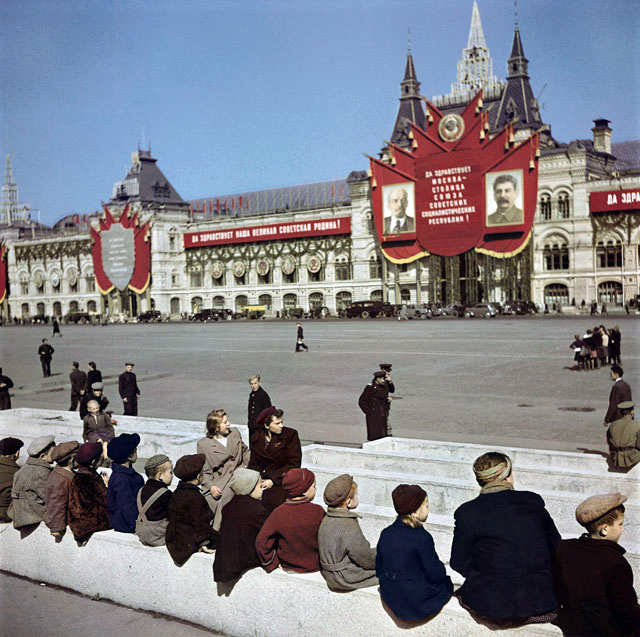


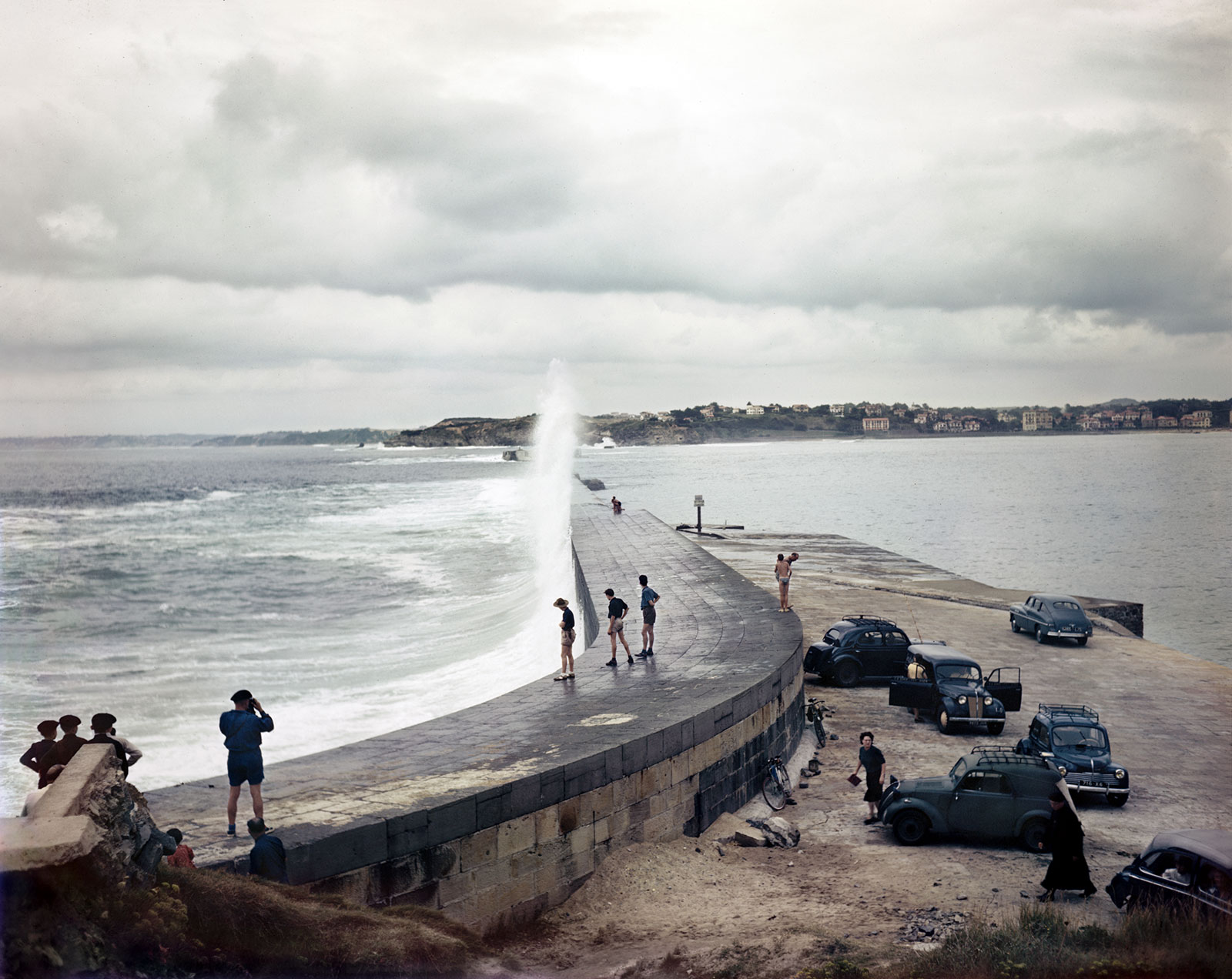
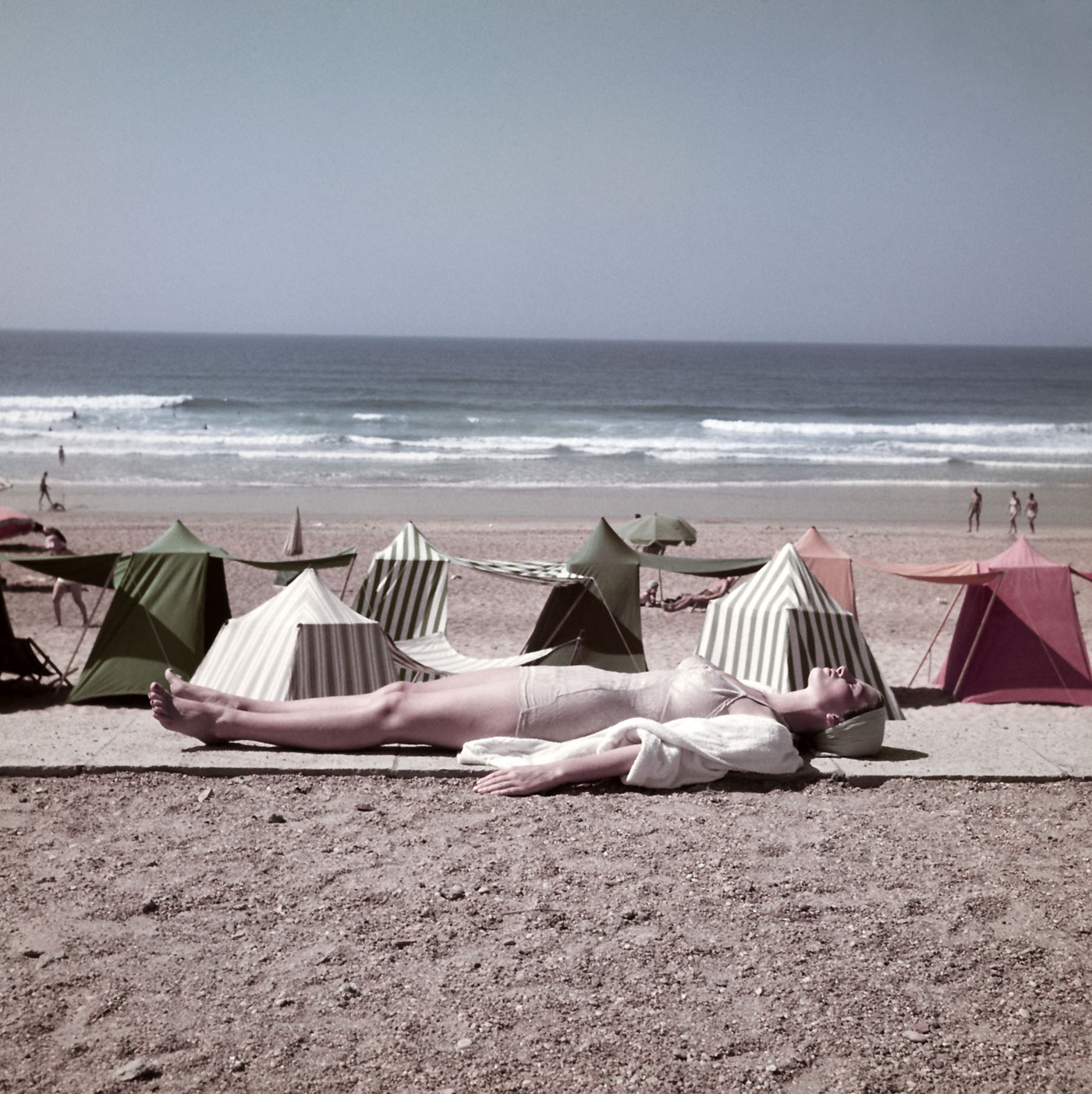

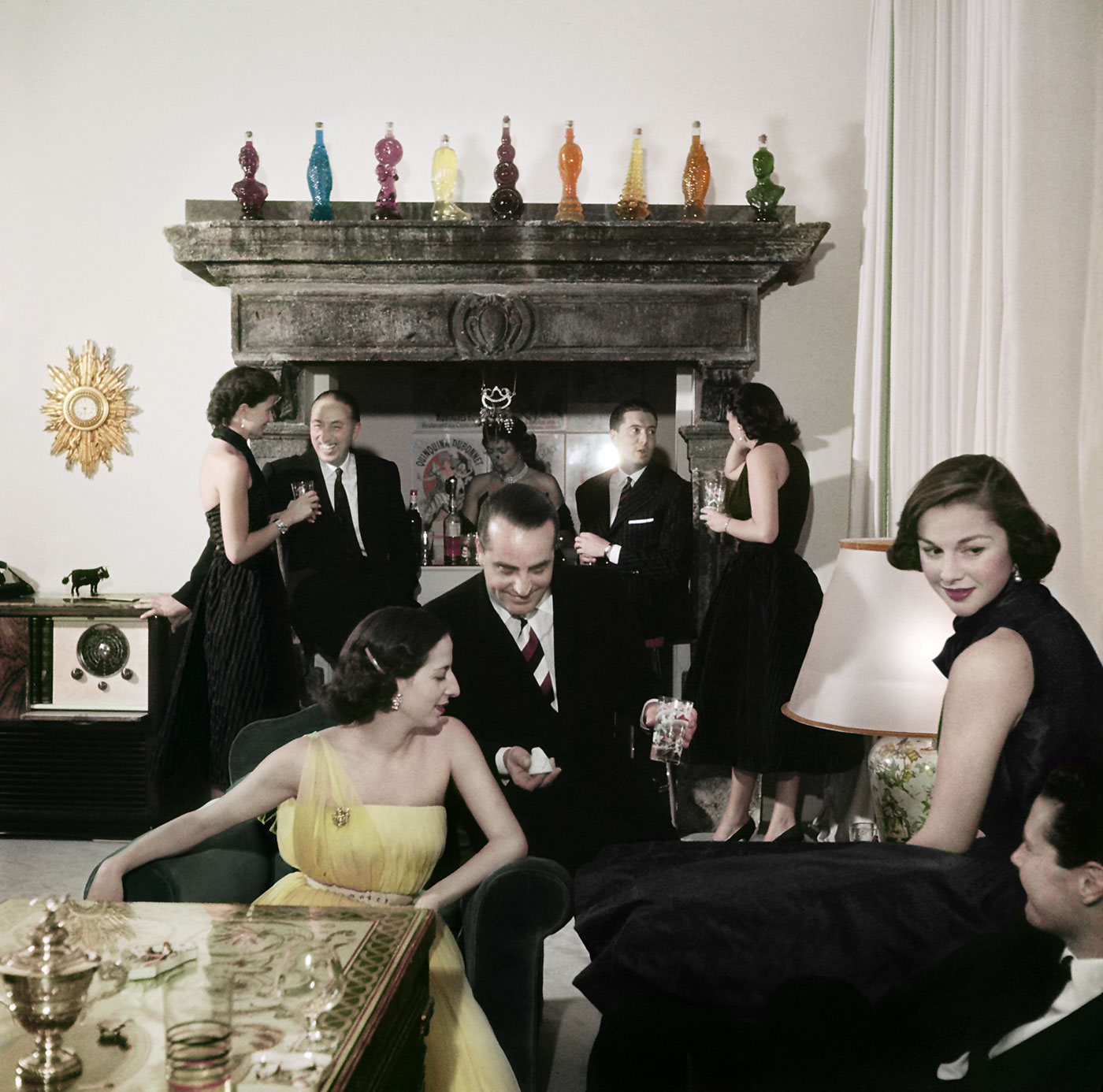
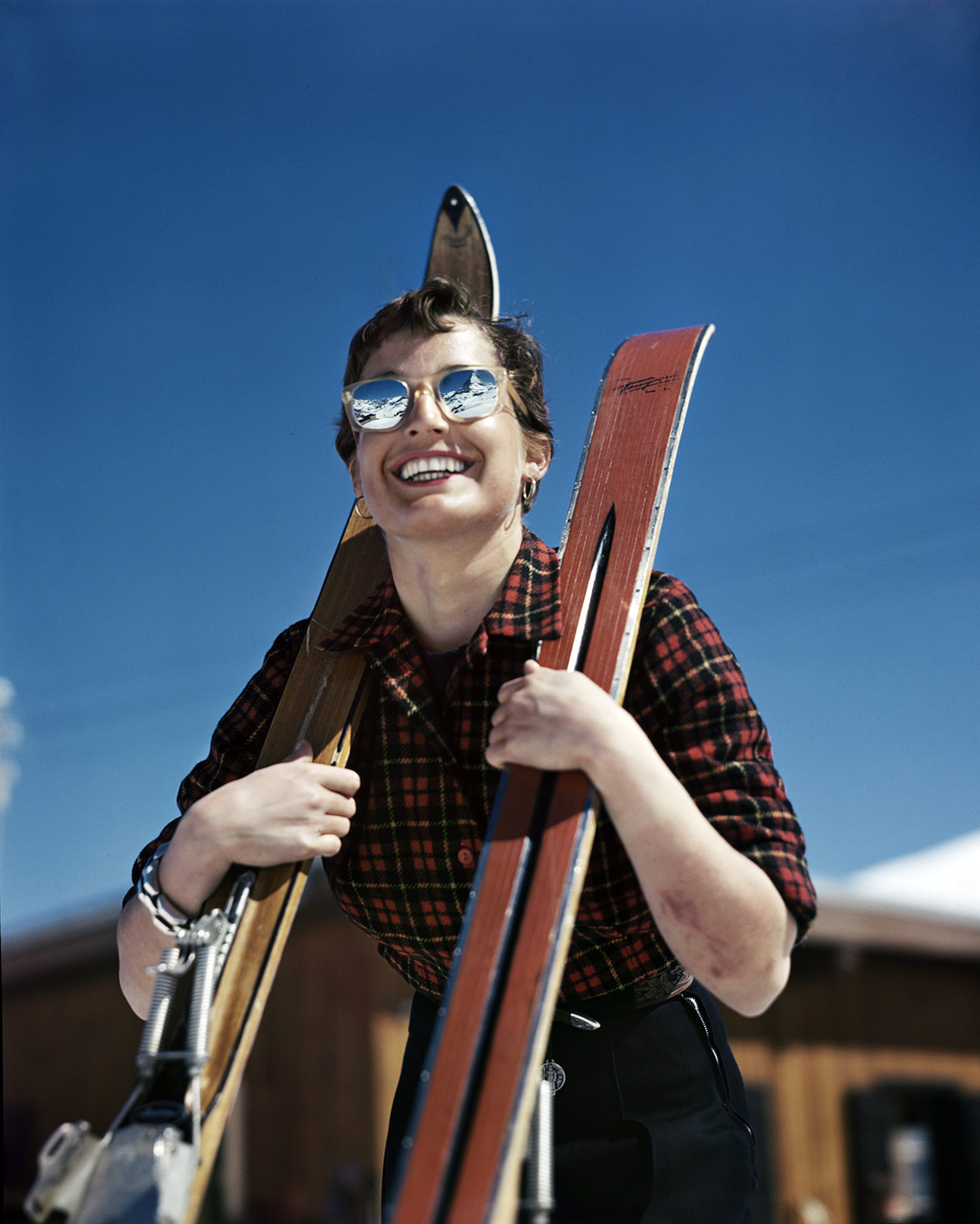


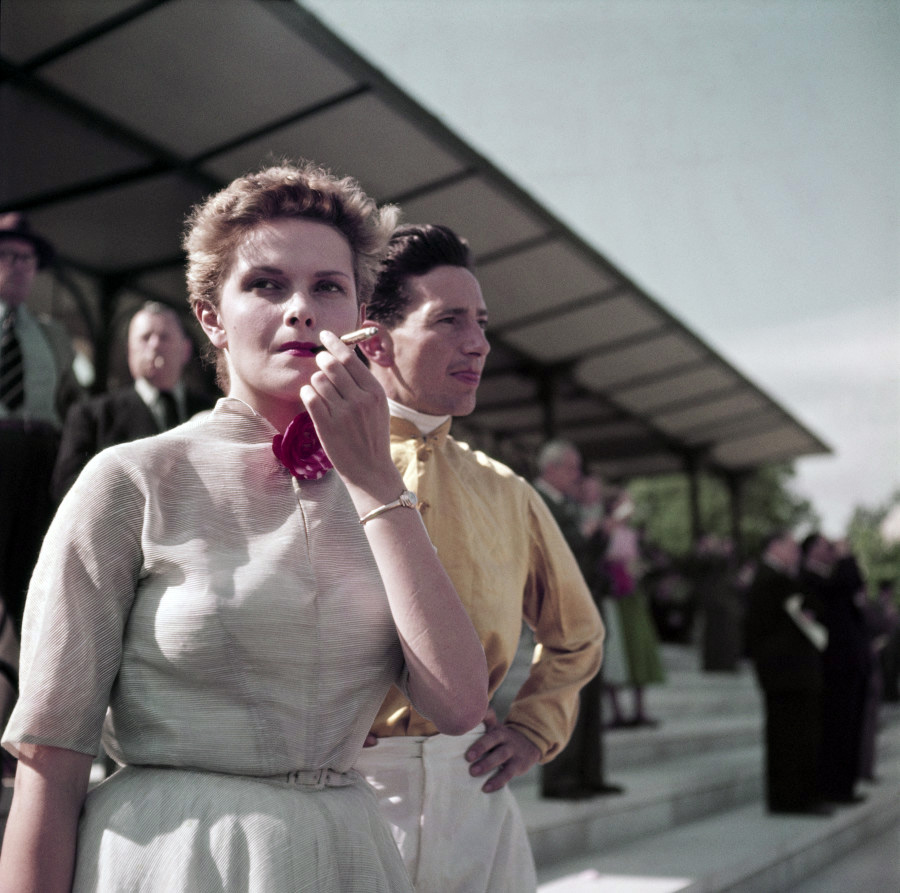
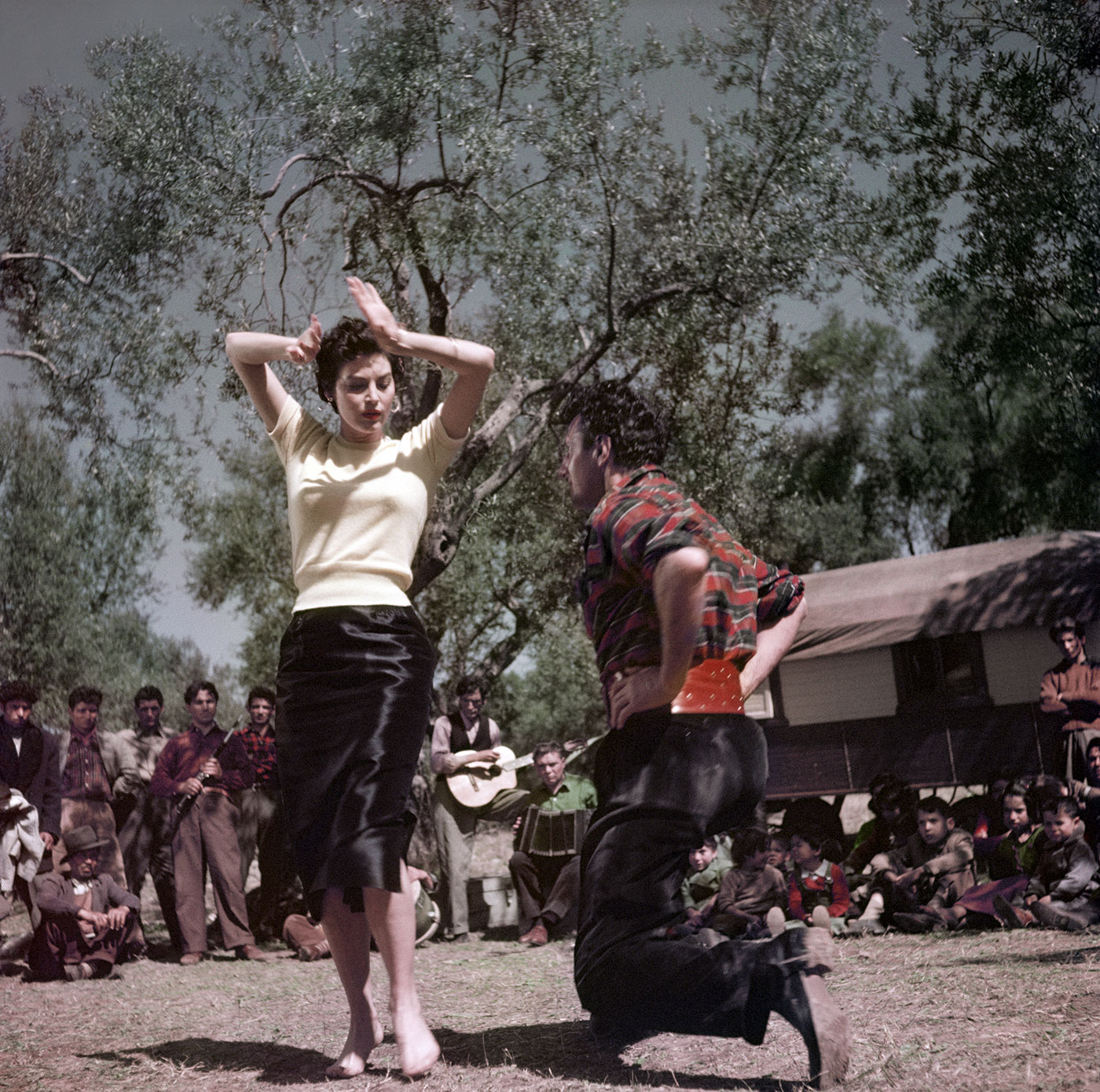


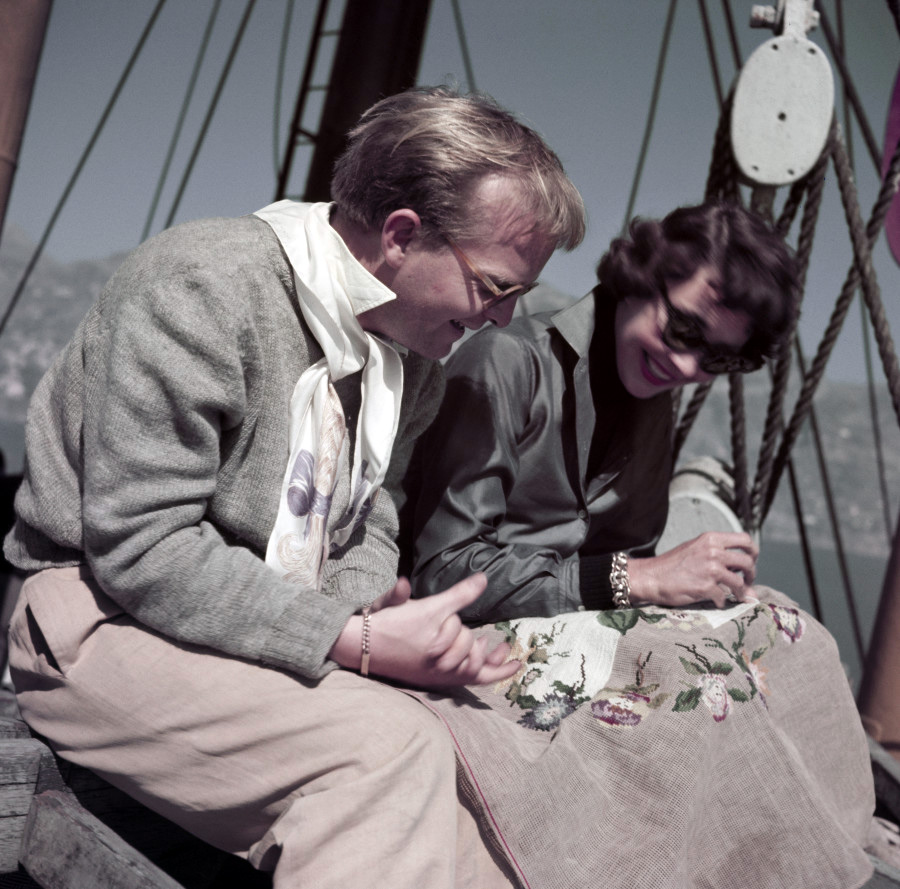


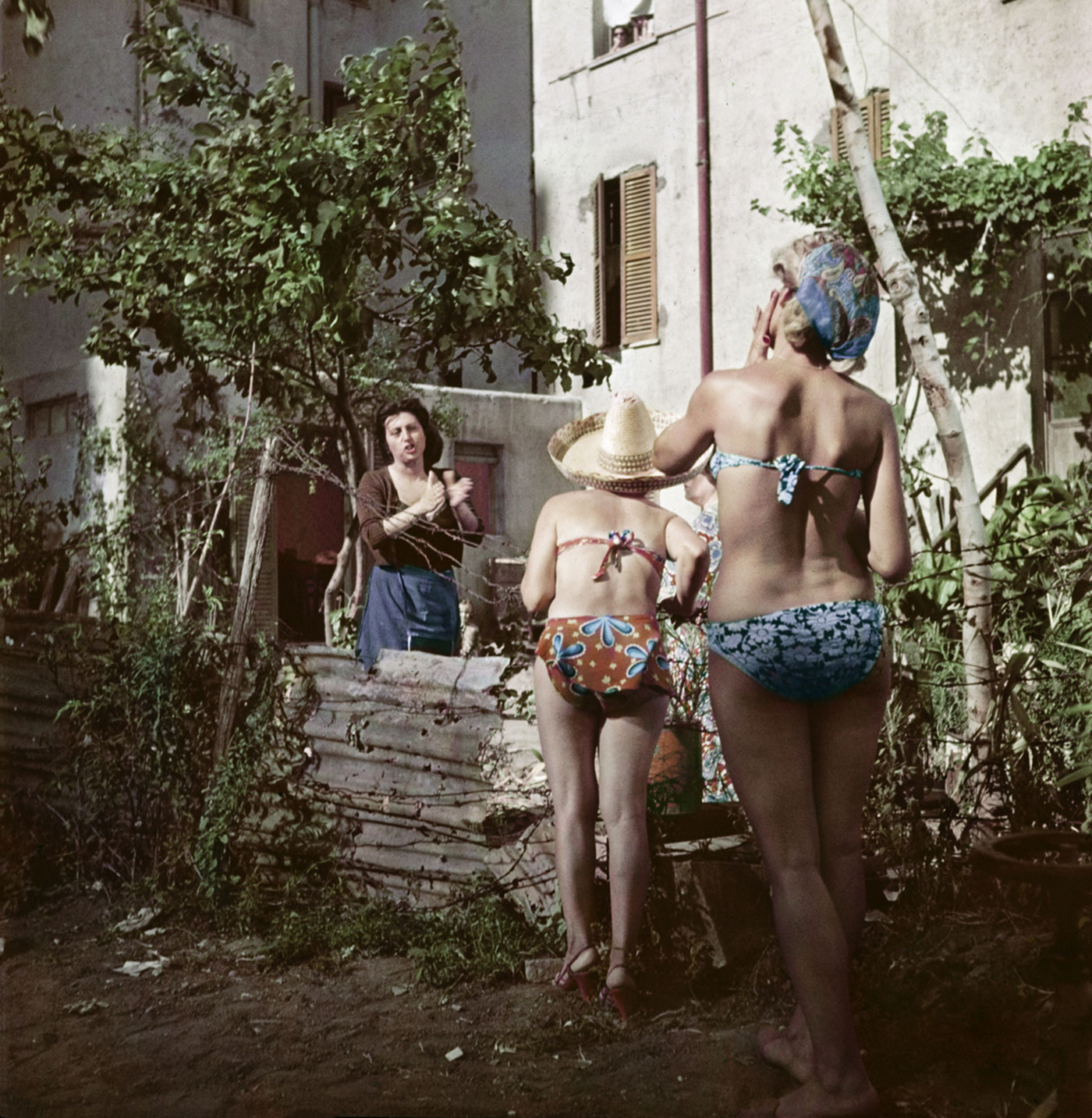


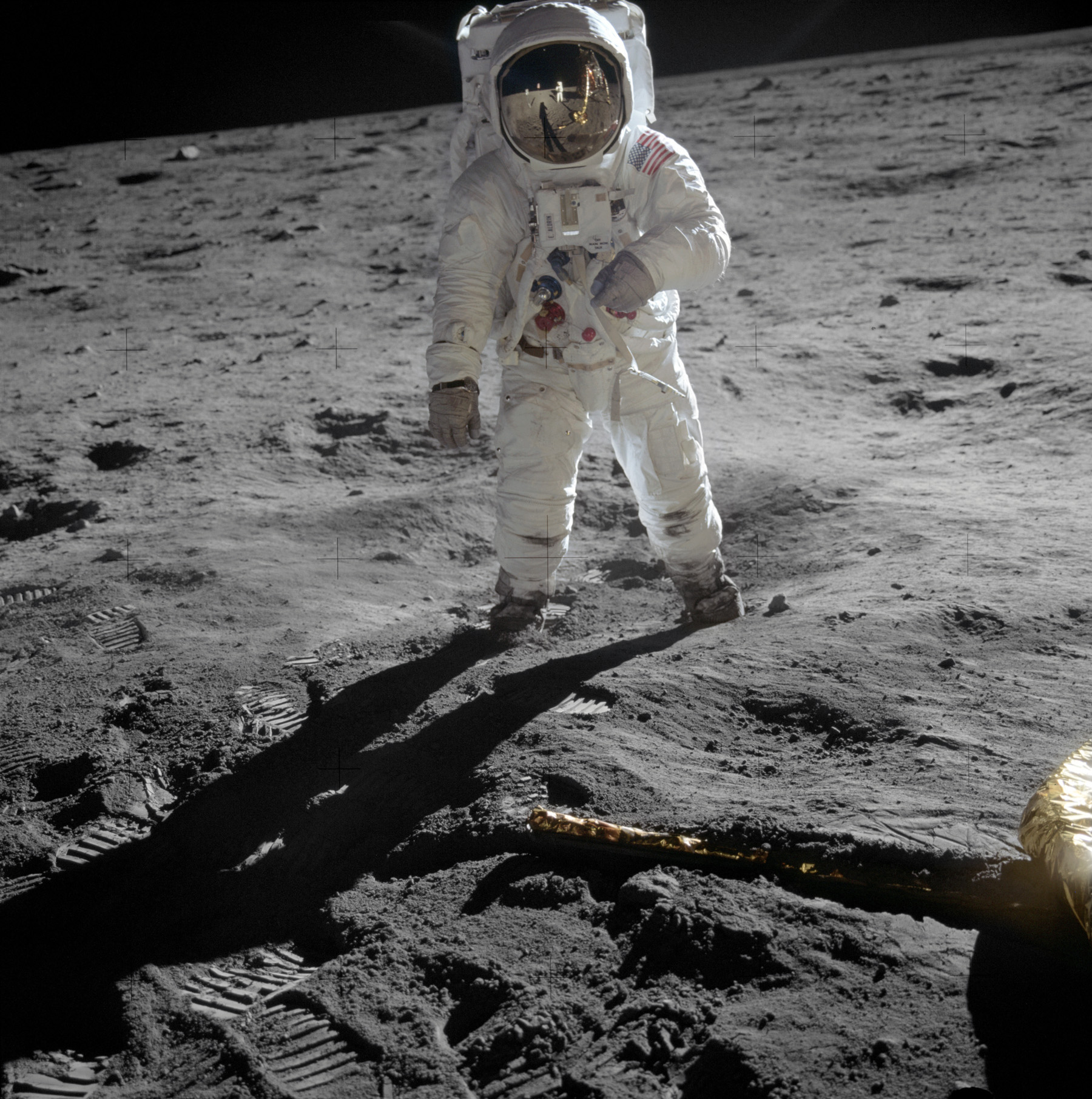


 Art Blart _ art and cultural memory archive
You must be logged in to post a comment.