Edward Steichen (American, 1879-1973) Self-Portrait with Studio Camera 1917; printed 1982 Silver gelatin print 13 1/8 x 10 5/8 inches (image and paper) Gift of Stephen L. Singer and Linda G. Singer
Just for enjoyment.
Marcus
Many thankx to the deCordova Sculpture Park and Museum for allowing me to publish the photographs in the posting. Please click on the photographs for a larger version of the image.
Edward Steichen (American, 1879-1973) Self-Portrait with Studio Camera c. 1917 Gelatin silver print
Edward Steichen (American, 1879-1973) Self-Portrait with photographers paraphernalia 1929 Gelatin silver print
Installation view of Edward Steichen: Twentieth-Century Photographer at the deCordova Sculpture Park and Museum Courtesy Photo/Clements Photography and Design, Boston Creative Commons
DeCordova Sculpture Park and Museum is pleased to present the upcoming exhibition Edward Steichen: Twentieth-Century Photographer. Edward Steichen (1879-1973) is known for his role in expanding the breadth of twentieth-century photography through his memorable images and his work as a gallery director and museum curator. Steichen was a painter, horticulturalist, museum curator, graphic designer, publisher, and film director. He also served as a military photographer in both World Wars, and lived a life that embraced a century transformed by modernisation. On view in the James and Audrey Foster Galleries, the exhibition is drawn from deCordova’s permanent collection, and features important loans from private collectors and select institutions. The majority of photographs included in this show were made from Steichen’s original negatives and printed after his death in the 1980s by photographer George Tice. The exhibition also features a select number of vintage prints printed by Steichen in the 1910s and 1920s that reveal the lush interpretations he made with experimental printing techniques.
From his early Pictorialist images with their painterly quality, to his decades-long work as a commercial photographer for Condé Nast, Steichen explored the full range of the photographic medium. In his role as the Director of Photography at the Museum of Modern Art, New York, he often reproduced and integrated other photographers’ work into groundbreaking exhibitions that reflected his curatorial practice. The combined aspects of his career as a photographer and curator positioned Steichen to become a controversial yet prescient advocate for photography’s ability to record and amplify human observation, endeavour, and creativity.
The exhibition includes portraits of glamorous celebrities and socialites, still-life photographs of plants and flowers, dynamic cityscapes, and commercial advertisements. Also on view are Steichen’s portraits of fellow artists and writers that reveal his place among avant-garde cultural communities in New York and Europe. Edward Steichen also explores his work as the head of the Naval Aviation Photographic Unit in World War II, and traces his role at the Museum of Modern Art, NY where he curated over forty exhibitions. The aesthetic range of the images shows Steichen’s experimentation throughout his career with new techniques for lighting, composing, and printing photographs.
Edward Steichen continues deCordova’s longstanding commitment to the exhibition and collection of important photographic works. The exhibition opens to the public on October 7, 2016 and will be on view until March 26, 2017.
Press release from the deCordova Sculpture Park and Museum
Edward Steichen (American, 1879-1973) Auguste Rodin and the Monument to Victor Hugo 1902 Gum bichromate print
When Edward Steichen arrived in Paris in 1900, Auguste Rodin (1840-1917) was regarded not only as the finest living sculptor but also perhaps as the greatest artist of his time. Steichen visited him in his studio in Meudon in 1901 and Rodin, upon seeing the young photographer’s work, agreed to sit for his portrait. Steichen spent a year studying the sculptor among his works, finally choosing to show Rodin in front of the newly carved white marble of the “Monument to Victor Hugo,” facing the bronze of “The Thinker.” In his autobiography, Steichen describes the studio as being so crowded with marble blocks and works in clay, plaster, and bronze that he could not fit them together with the sculptor into a single negative. He therefore made two exposures, one of Rodin and the “Monument to Victor Hugo,” and another of “The Thinker.” Steichen first printed each image separately and, having mastered the difficulties of combining the two negatives, joined them later into a single picture, printing the negative showing Rodin in reverse.
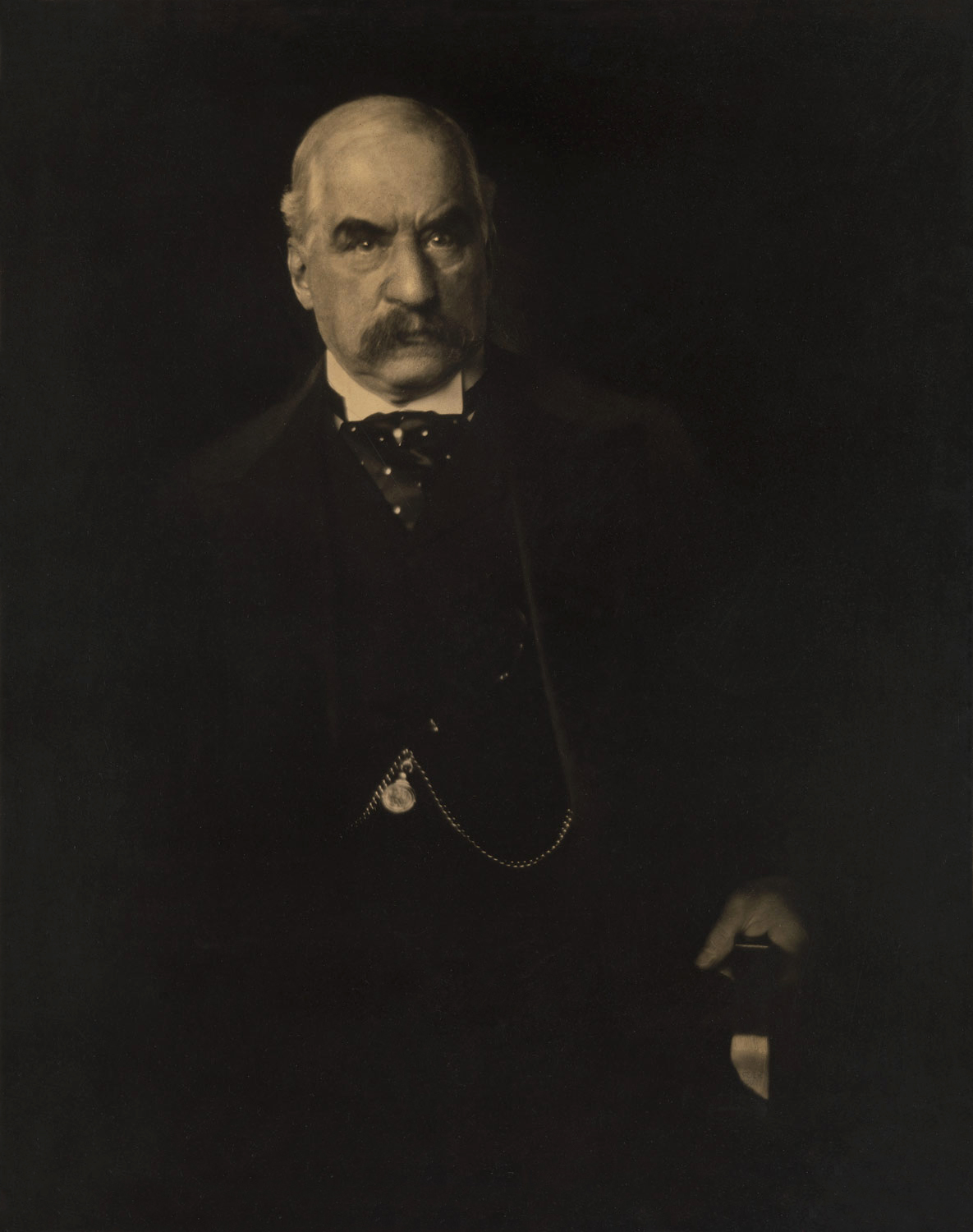
Edward Steichen (American, 1879-1973) J. Pierpont Morgan, Esq. 1903 Gum bichromate over platinum print
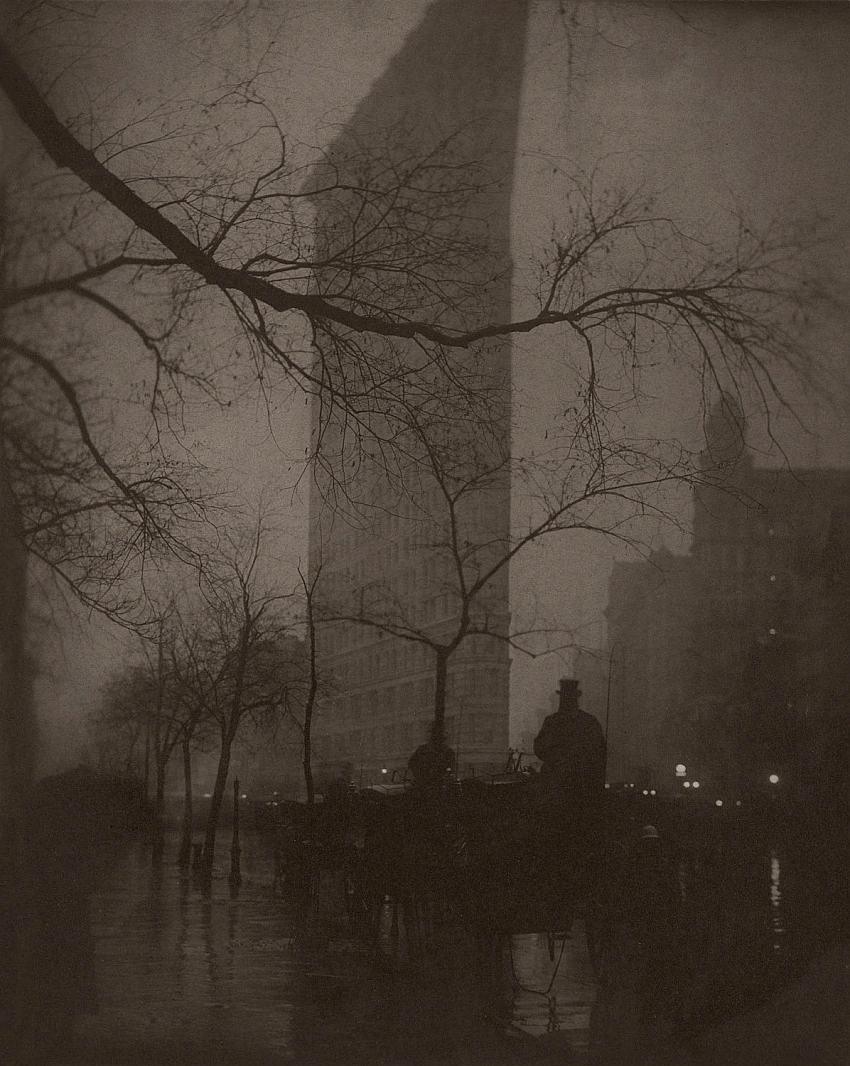
Edward Steichen (American, 1879-1973) The Flatiron 1904 Gum bichromate over platinum print
While Steichen’s palette recalls Whistler’s Nocturne paintings and the foreground branch echoes those often found in the Japanese prints that were much in vogue in turn-of-the-century Paris, his subject is distinctly modern and American. The newly completed, twenty-two-story skyscraper soars so high above Madison Square in New York that it could not be contained within the photographer’s frame… Steichen’s three variant printings of The Flatiron, each in a different tonality, evoke successive moments of twilight and forcefully assert that photography can rival painting in scale, colour, individuality, and expressiveness.
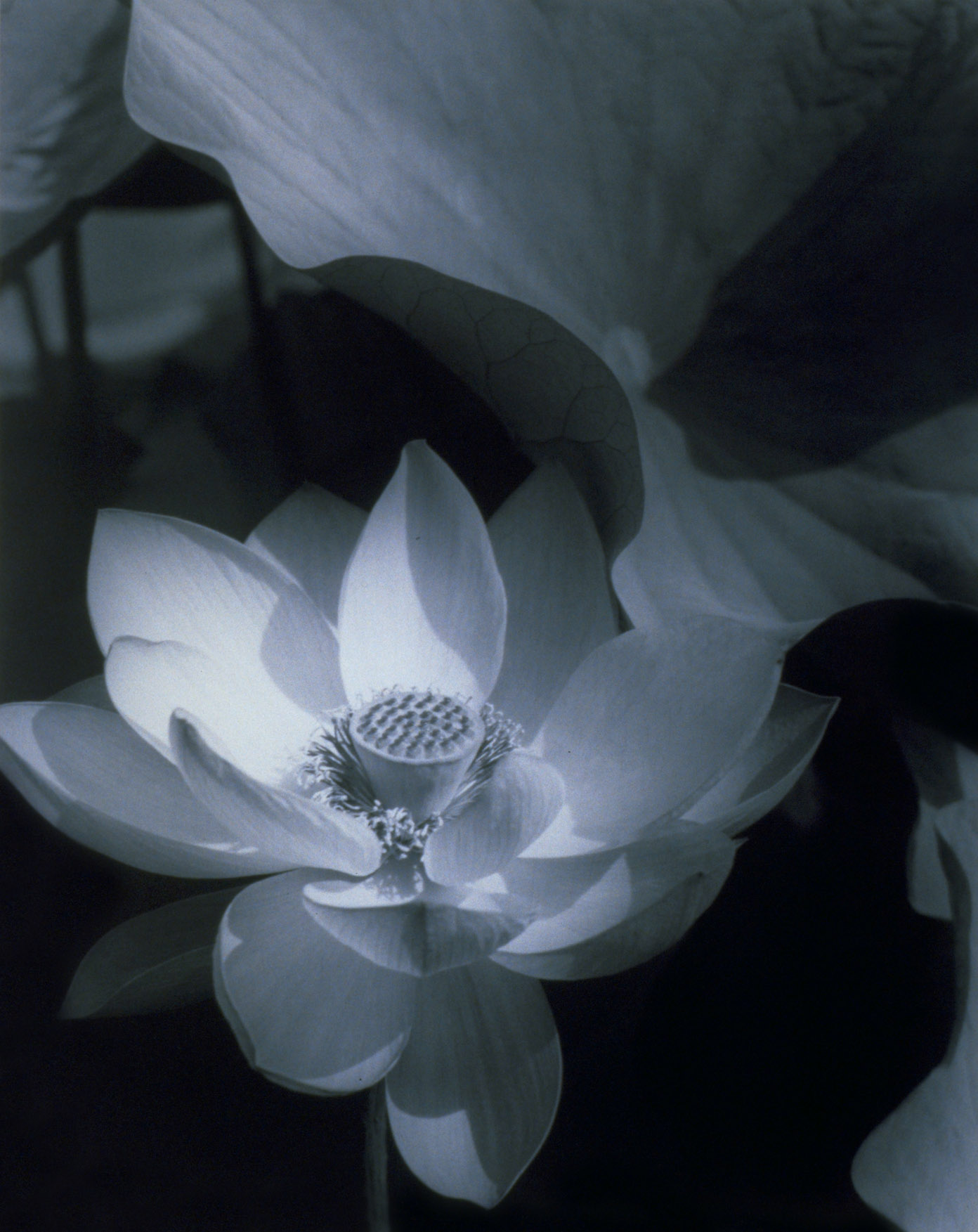
Edward Steichen (American, 1879-1973) Lotus, Mount Kisco, New York 1915; printed 1982 Silver gelatin print 13 1/4 x 10 1/2 inches (image and paper) Gift of Diane Singer in honour of the marriage of Diane Singer to Eric Pearlman
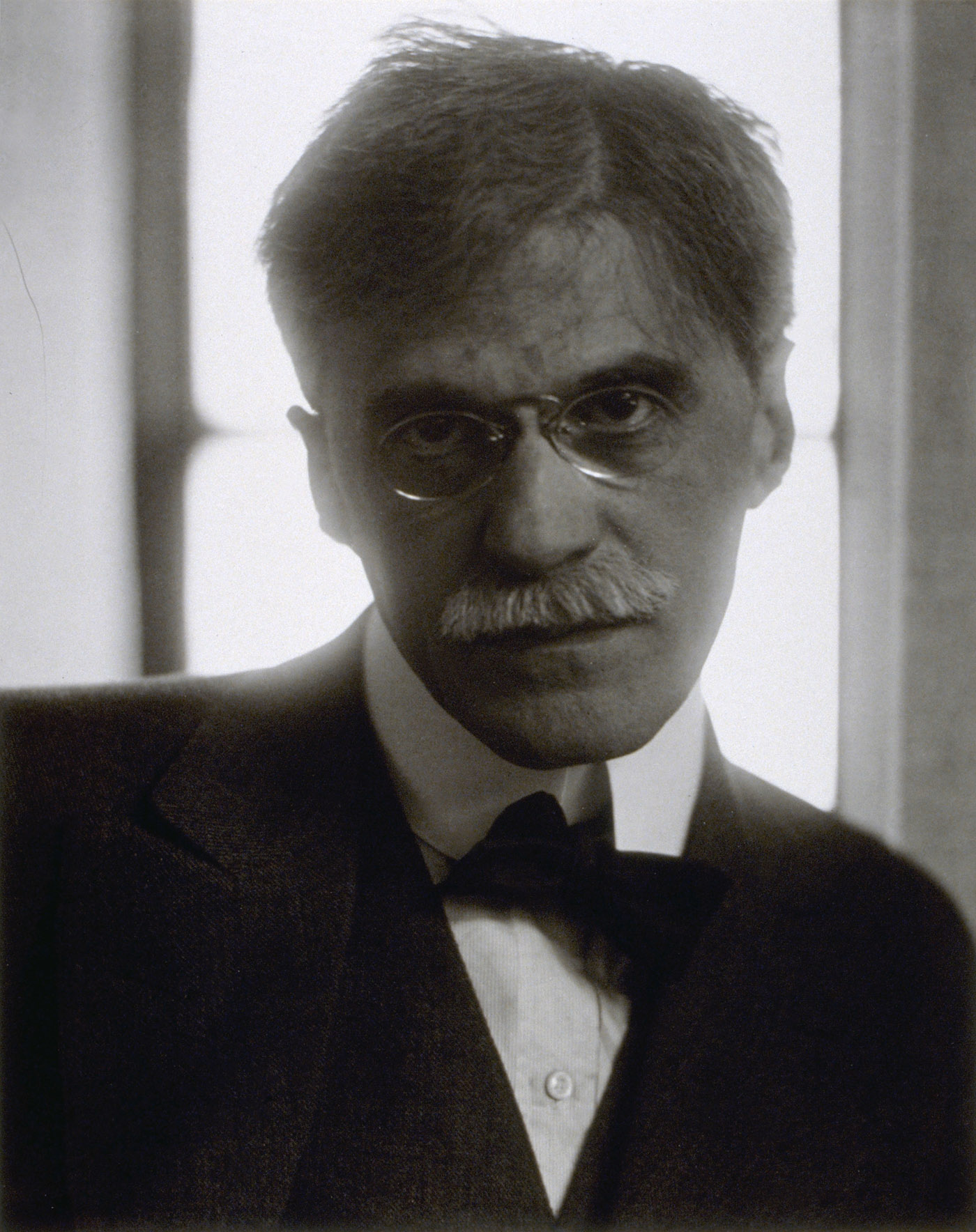
Edward Steichen (American, 1879-1973) Alfred Stieglitz 1915; printed 1982 Silver gelatin print 9 5/8 x 7 3/4 inches (image and paper) Gift of Stephen L. Singer and Linda G. Singer
The most recognisable of these images involve celebrity. Artists – Constantin Brancusi, Eugene O’Neill – and actors Charlie Chaplin, Lillian Gish, Marlene Dietrich, the unforgettable Greta Garbo – all sat for Steichen, who strove for a discovery of the individual.
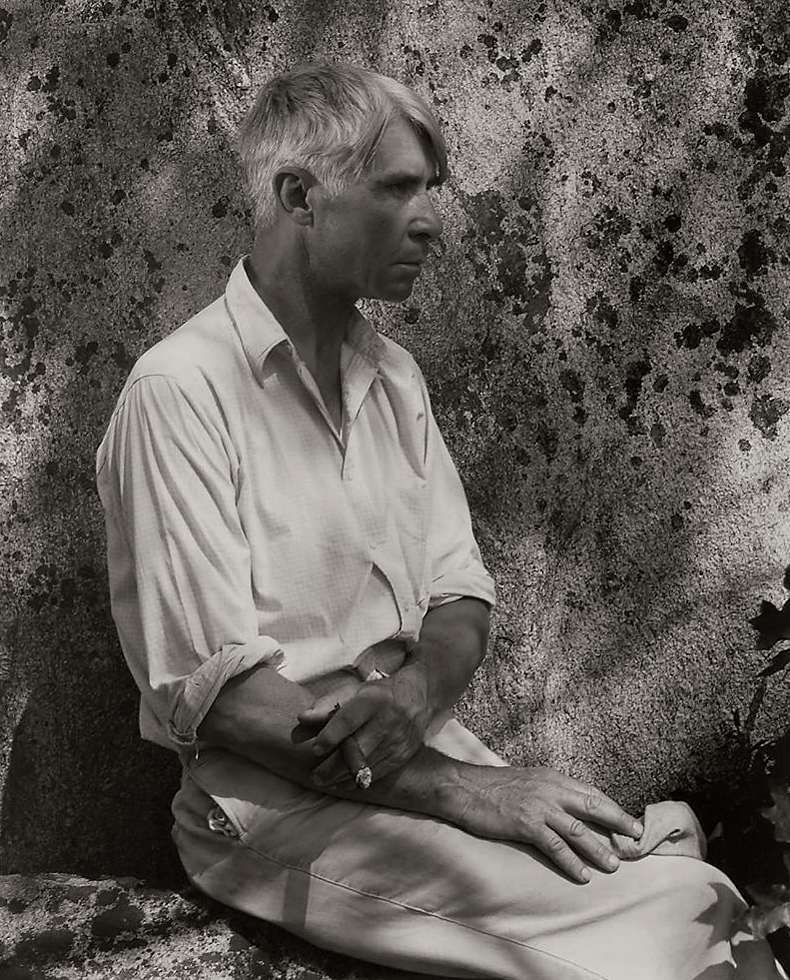
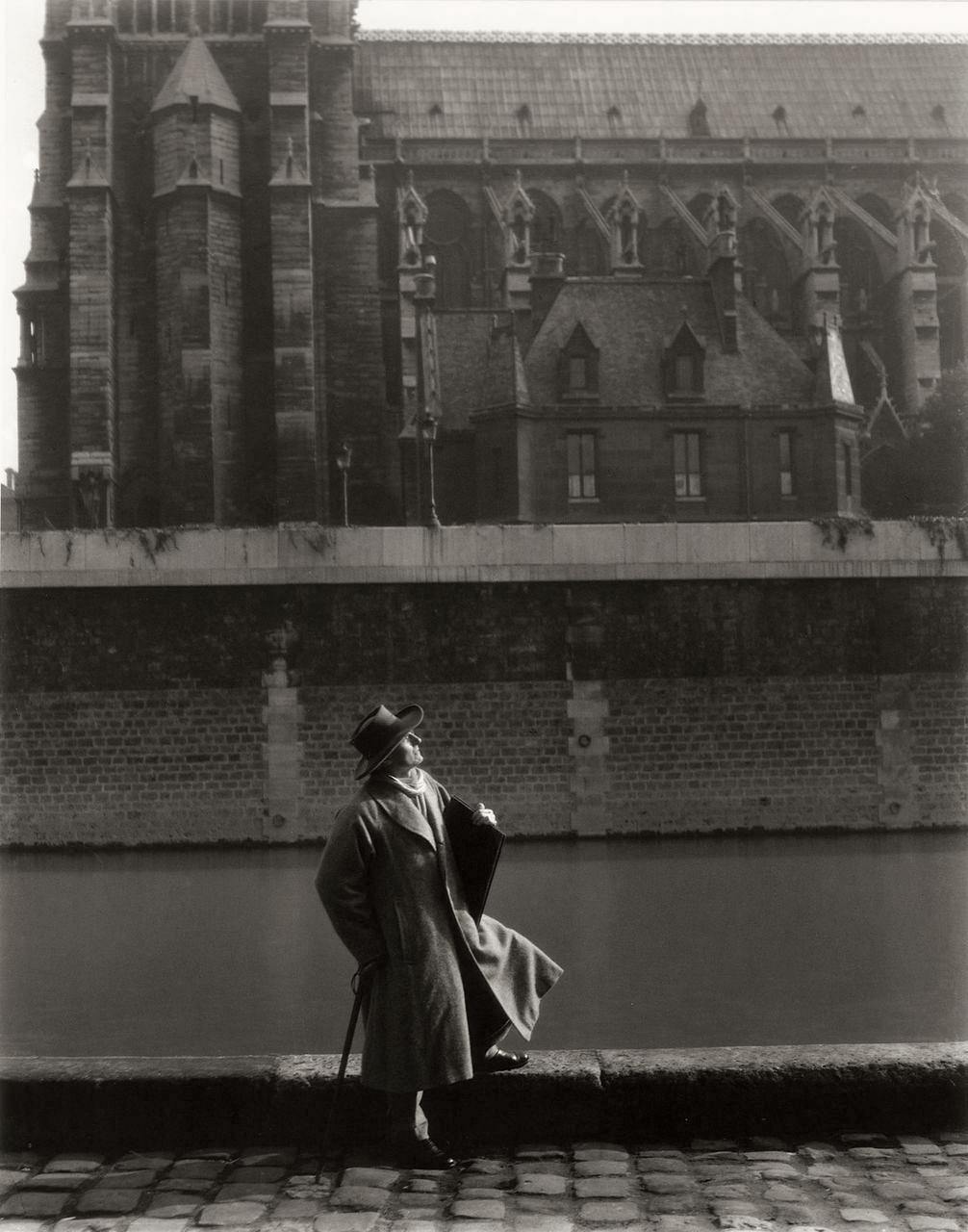
In black-and-white photography, composition, cast and shadow take prominence. Looming stage equipment behind a smiling Chaplin quietly recalls his movie roles. Garbo, clutching her “terrible hair,” wordlessly speaks volumes about her self- and public images. Carl Sandburg (Steichen’s brother-in-law) gazes poetically away from the camera. German author Gerhart Hauptmann stares directly into the camera under the starry firmament. The British dramaturge E. Gordon Craig poses foppishly in front of Notre-Dame cathedral in Paris.
Keith Powers. “DeCordova focuses on the varied career photographer Edward Steichen,” on The Metro West Daily News website [Online] Cited 21/03/2017. No longer available online
Edward Steichen (American, 1879-1973) Brancusi, Voulangis, France c. 1922; printed 1987 Silver gelatin print 13 x 10 1/2 inches (image and paper) Gift of Stephen L. Singer and Linda G. Singer
Edward Steichen (American, 1879-1973) Carl Sandburg, Umpawaug, Connecticut 1930 Gelatin silver print
Carl Sandburg (January 6, 1878 – July 22, 1967) was an American poet, writer, and editor who won three Pulitzer Prizes: two for his poetry and one for his biography of Abraham Lincoln. During his lifetime, Sandburg was widely regarded as “a major figure in contemporary literature”, especially for volumes of his collected verse, including Chicago Poems (1916), Cornhuskers (1918), and Smoke and Steel (1920). He enjoyed “unrivalled appeal as a poet in his day, perhaps because the breadth of his experiences connected him with so many strands of American life”, and at his death in 1967, President Lyndon B. Johnson observed that “Carl Sandburg was more than the voice of America, more than the poet of its strength and genius. He was America.”
Edward Steichen (American, 1879-1973) Greta Garbo 1929 Silver gelatin print
Edward Steichen (American, 1879-1973) E. Gordon Craig, Paris 1920, printed in 1987 Gelatin silver print
Edward Henry Gordon Craig (English, 1872-1966)
Edward Henry Gordon CraigCH OBE (16 January 1872 – 29 July 1966), sometimes known as Gordon Craig, was an English modernist theatre practitioner; he worked as an actor, director and scenic designer, as well as developing an influential body of theoretical writings…
Craig’s idea of using neutral, mobile, non-representational screens as a staging device is probably his most famous scenographic concept. In 1910 Craig filed a patent which described in considerable technical detail a system of hinged and fixed flats that could be quickly arranged to cater for both internal and external scenes. He presented a set to William Butler Yeats for use at the Abbey Theatre in Ireland, who shared his symbolist aesthetic.
Craig’s second innovation was in stage lighting. Doing away with traditional footlights, Craig lit the stage from above, placing lights in the ceiling of the theatre. Colour and light also became central to Craig’s stage conceptualisations…
The third remarkable aspect of Craig’s experiments in theatrical form were his attempts to integrate design elements with his work with actors. His mise en scène sought to articulate the relationships in space between movement, sound, line, and colour. Craig promoted a theatre focused on the craft of the director – a theatre where action, words, colour and rhythm combine in dynamic dramatic form.
All of his life, Craig sought to capture “pure emotion” or “arrested development” in the plays on which he worked. Even during the years when he was not producing plays, Craig continued to make models, to conceive stage designs and to work on directorial plans that were never to reach performance. He believed that a director should approach a play with no preconceptions and he embraced this in his fading up from the minimum or blank canvas approach.
Edward Steichen (American, 1879-1973) The Blue Sky, Long Island, New York 1923; printed 1987 Silver gelatin print 9 1/2 x 7 1/4 inches (image and paper) Gift of Stephen L. Singer and Linda G. Singer
DeCordova Sculpture Park and Museum 51 Sandy Pond Road in Lincoln, Massachusetts
Curators: Susan Van Wyk, Senior Curator of Photography at the NGV, and Paola Di Trocchio, Assistant Curator of Fashion and Textiles at the NGV
Edward Steichen (American, 1879-1973)
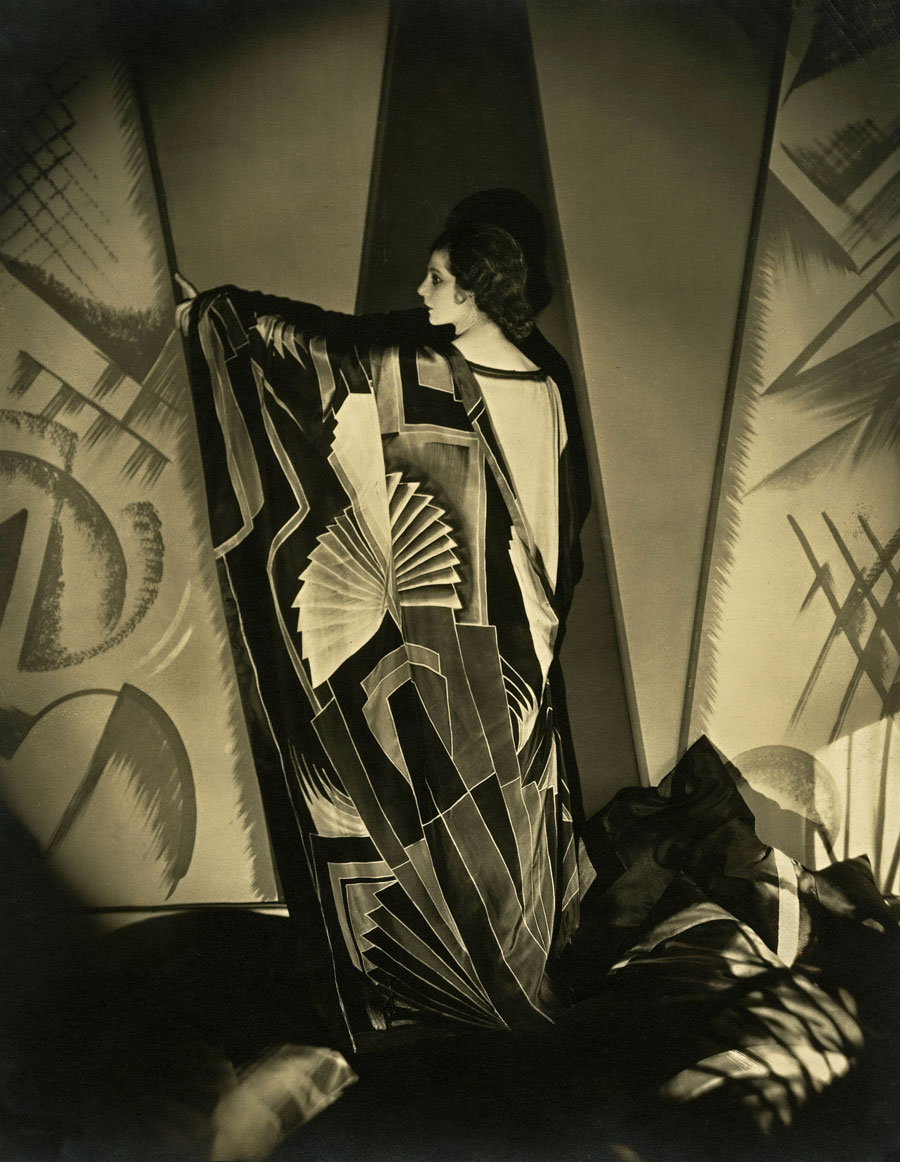
Model Dinarzade in a Dress by Poiret 1924
Gelatin silver photograph
Image used under fair use for the purpose of art criticism
This is a sublime exhibition, teaming with fabulous frocks and beautiful, classical, evanescent photographs. The exhibition was in my top nine magnificent Melbourne exhibitions that featured on Art Blart last year. Elegant, sophisticated and oozing quality, this exhibition has been a sure fire winner for the NGV. This review will concentrate on the photographs by Edward Steichen. See my previous posting on the exhibition including installation photographs.
High Society
Edward Steichen (1879-1973) was a painter and champion of art photography who initially worked in the soft focus, Pictorialist style prevalent at the beginning of the 20th century. He was an artist who worked closely with Alfred Stieglitz on the influential quarterly art journal Camera Work, designing the cover and the Art Nouveau-style typeface especially for the internationally focused publication. Stieglitz, and by extension Camera Work, lived to promote photography as an art form and to challenge the norms of how art may be defined.1 In the early years Camera Work only published photography, but in later years the journal increasingly featured reproductions of and articles on modern painting, drawing and aesthetics.
“This change was brought about by a similar transformation at Stieglitz’s New York gallery, which had been known as the Little Galleries of the Photo-Secession until 1908. That year he changed the name of the gallery to “291”, and he began showing avant-garde modern artists such as Auguste Rodin and Henri Matisse along with photographers. The positive responses he received at the gallery encouraged Stieglitz to broaden the scope of Camera Work as well, although he decided against any name change for the journal.”2
Steichen was heavily associated with Gallery 291 (291 Fifth Avenue, New York City) which ran from 1905 to 1917. The gallery exhibited European artists such as Braque, Picasso, Matisse, Brancussi, Cézanne and Rodin and soon to be famous American artists such as John Marin, Max Weber, Arthur Dove, Marsden Hartley and Georgia O’Keeffe. Virtually no other gallery in the United States was showing modern art works with such abstract and dynamic content at this time.3 Both the gallery and the journal ran hand in hand; both closed in 1917. The journal closed due to a downturn in interest in Pictorial photography, a lack of subscribers, cultural changes and the economic effects of the First World War, which saw both the costs and even the availability of the paper on which it was printed become challenging.4 In the penultimate issue 48 (October 1916) Stieglitz,
” …introduced the work of a young photographer, Paul Strand, whose photographic vision was indicative of the aesthetic changes now at the heart of Camera Work’s demise. Strand shunned the soft focus and symbolic content of the Pictorialists and instead strived to create a new vision that found beauty in the clear lines and forms of ordinary objects. By publishing Strand’s work Stieglitz was hastening the end of the aesthetic vision he had championed for so long. Nine months later, in June 1917, what was to be the final issue of Camera Work appeared. It was devoted almost entirely to Strand’s photographs.”5
Edward Steichen felt the change in the air. When he accepted the job as chief photographer for Condé Nast publications in 1923 his early fashion photographs for Vogue and Vanity Fair were seen as innovative and ground breaking, even as his former art colleagues saw shooting fashion and celebrities was a way of selling-out. Steichen bought to fashion and portrait photography an aesthetic of clear lines and forms that simply had not been present before, coupled with a Pictorialist sensibility for light and the use of low depth of field. John McDonald in his excellent review of the exhibition observes, “Steichen has claims to having invented fashion photography with a series of pictures he took in Paris in 1911, for couturier, Paul Poiret; but the genre had found its first true professional in Baron Adolphe de Meyer, who left Vogue for Harper’s Bazaar, opening the door for Steichen’s appointment. De Meyer was an incurable mannerist who remained true to the Pictorialist aesthetic, but his successor would prove himself an innovator.”6
Steichen’s photographs from 1923-1924 are pared back, Modernist photographs that evidence the beginning of his later photographic style. Madame Nadine Vera wearing a crêpe evening gown by Chanel (1924) has a plain background of some wooden studio panels; Model Dinarzade in a Dress by Poiret (1924, above) has fabric hanging behind while Crêpe de chine dress by Lanvin (1924) has three doors casually put together to form the backdrop to the model. All three photographs show beautiful tonality and lighting in the full length capture of the models with hints of browns and yellows in the prints. The figure is isolated in the studio space simply and elegantly. The model is being studied. Steichen’s models are immersed in suffused light but the form of the photograph is different from that of Pictorialism, for the models themselves are pin sharp, as though stepping out into the world. These early photographs are fascinating to study, for they lay the ground work for what is to follow. These three images inform the viewer as to the experimentation that Steichen was undertaking to get to a starting point for the complex and atmospheric studio lighting that he would later employ.
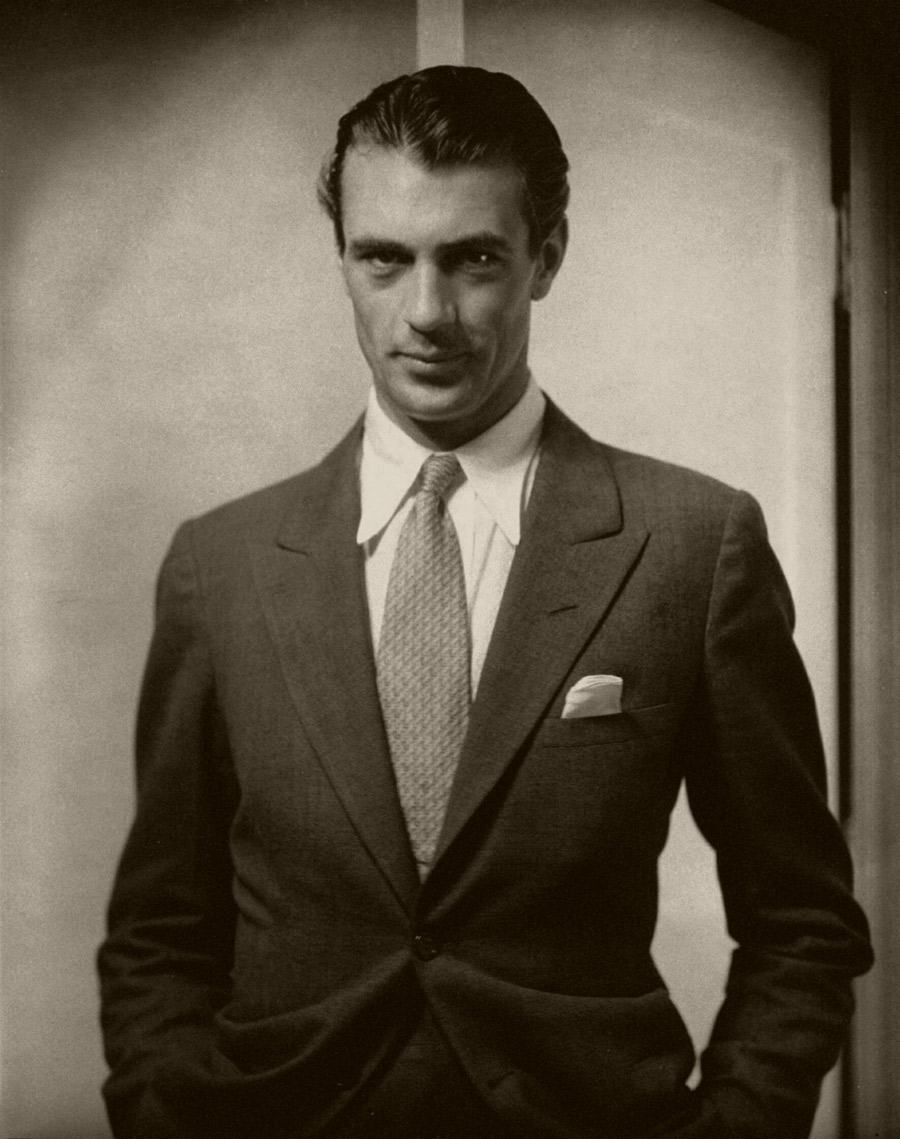
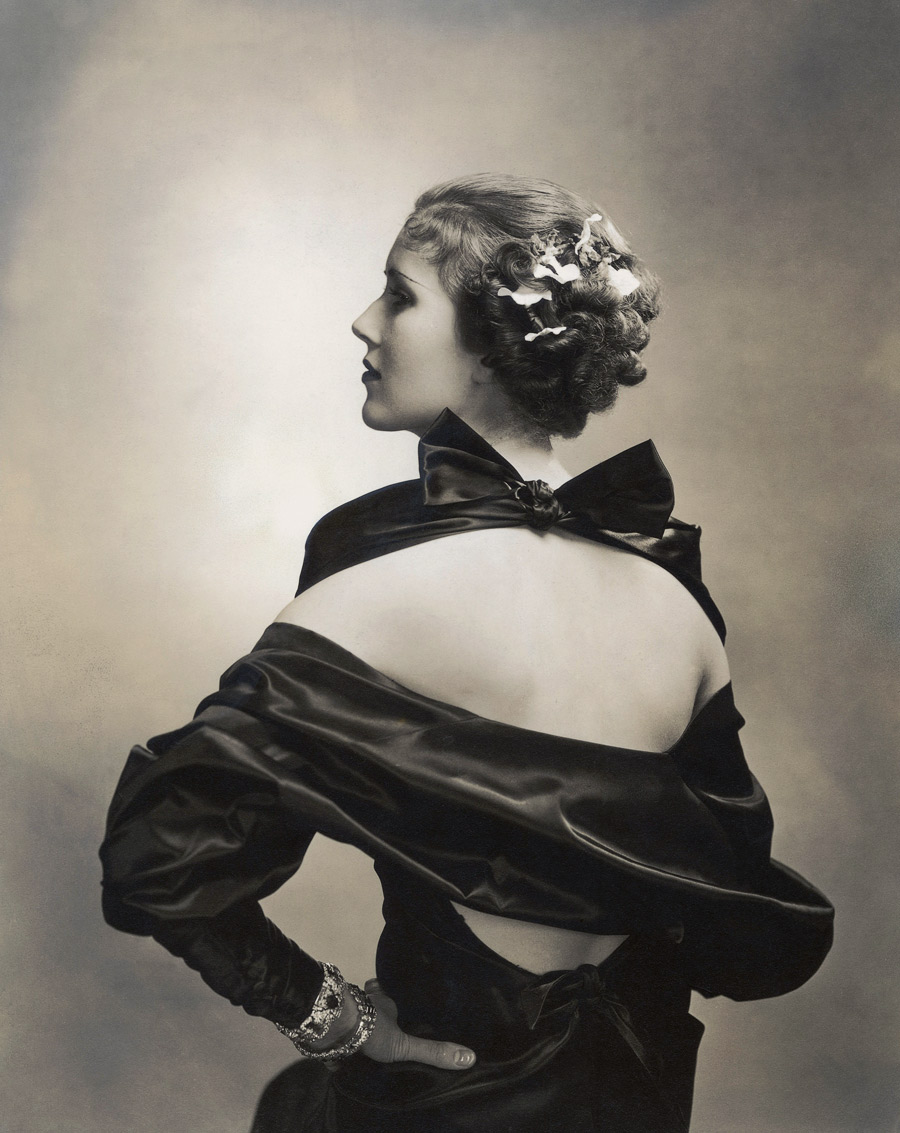
Gradually, Steichen’s images become more confident and assured and take on a patina of beauty, style and grace. In his close-up portraits there is an isolation of the face against out of focus backgrounds with the use of profiles, arms and elbows as framing devices, for example Actress Sylvia Sidney (1929) and Actress Clara Bow (1928, above). In his longer-length portraits there is an isolation of figures against a white or black ground, as in Marion Morehouse in a dress by Louise Boulanger (1929) and Actresses Norma and Constance Talmadge (1927). Males usually have a heavy darkness to them while the females are more luminously lit. In the male portraits the hands dominate. The hands in the male photographs belong to the male as part of the portrait whereas in the early photographs of women they are only models, there at his command, and the hands are almost invisible. Only in the later photographs of high society women are the hands of females fully represented. What can be observed is that the figure is usually isolated against an out of focus background, with deep, dark shadows and soft luxurious light, low depth of field and feminine profiles.
In commercial terms (and we must remember that this is how the artist made his living for these photographs were seen as his commercial work at the time), Steichen’s photographs fulfilled his brief: the portrayal of shimmer and sparkle, geometric Art Deco style, the drama and theatrical lighting of the talkies, and the spectacle of the liberated modern women. She in turn was influenced by the prevalent cultural conditions: smoking, jazz, prohibition, automobiles, trains, dancing, fast living, gold (King Tuts tomb was discovered in 1922) and African and Japanese art. Appealing to the new leisure classes, publications such as Vogue and Vanity Fair offered a glimpse of a longed for paradise to the burgeoning middle-classes with their photographs of the rich and famous, the glamour and the costumes – the social groups that hold the most power actually exposing their own status on paper through these magazines.
As John McDonald notes, “Steichen uses every trick at his disposal to convey a particular kind of image,”7 an image that uses increasingly elaborate studio lighting and disparate indoor and outdoor locations. But by the early 1930s the work becomes quite formulaic with its use of low depth of field, profiles, angles of arms or chairs and geometric shapes. The figure is tightly controlled – either cropped close in or set amongst ambiguously filled sets and shaped backgrounds. There is a sameness and repetitiveness about the work as one image bleeds into another. In fact, after that early period of experimentation, there is basically no change to his mature style from the years 1925-1937 and this makes for a long twelve years for an artist of his talent. He found his mother load and he stuck to it.
Steichen’s photographs of the rich and famous are “pictures” taken by one who mingled with the elite, one who enjoyed the trappings of fame and high society. As Robert Nelson notes in his review of the exhibition, “Steichen’s talents were never incompatible with the conspicuous snobbery of his age, for which it would never have occurred to him to proffer an apology. Having arrived himself, he naturally admires gentry-by-ambition and crowns it with the smugness that it enjoys.”8 Ouch! Nelson goes on to observe, “Much of the work is statuesque and formidable in its composition, lighting and symbolic rigour,” while at the same time portraying a world that is completely artificial in which nothing is real and everything is a pose.9 And we, the viewer and reader, are voyeurs of this hedonistic world.
On close reading, the photographs flatten out into a studied set of stylistic manoeuvres, a form where style stands in for a quality of visual perception.10 As Steichen seeks to “clinch the image” the syntax of his photographs (the system of organisation used in putting lines together to form pictures) becomes imitative. This leads to evanescent photographs, images that soon pass out of sight, memory, or existence; images that slip for the mind as quickly as one sees them. There is little sense of dislocation in the images, only “in his ability to distance himself from a subject, analysing his or her foibles with a cool, practiced eye,”11 and in the distance of the scene from the reality of everyday life. Each photograph becomes a microcosm of vanity, celebrity and fashion. Steichen ticks all the boxes (and he made all the boxes that he ticked) but the photographs usually don’t fulfil any new demands that the situation generates. He restricts his field of view to one that he creates and controls within certain narrowly defined boundaries, usually using passive people who are at his command. In his orientation to the world the photographs are not ‘things as they are’ but things as they are constructed to be (seen) – a form of social capital, social fascism, even.12
Only when Steichen is challenged by an active “personality” does he raise his game. This is when the modernist, emotive, visually rhapsodic AND MEMORABLE photographs take hold in this exhibition.
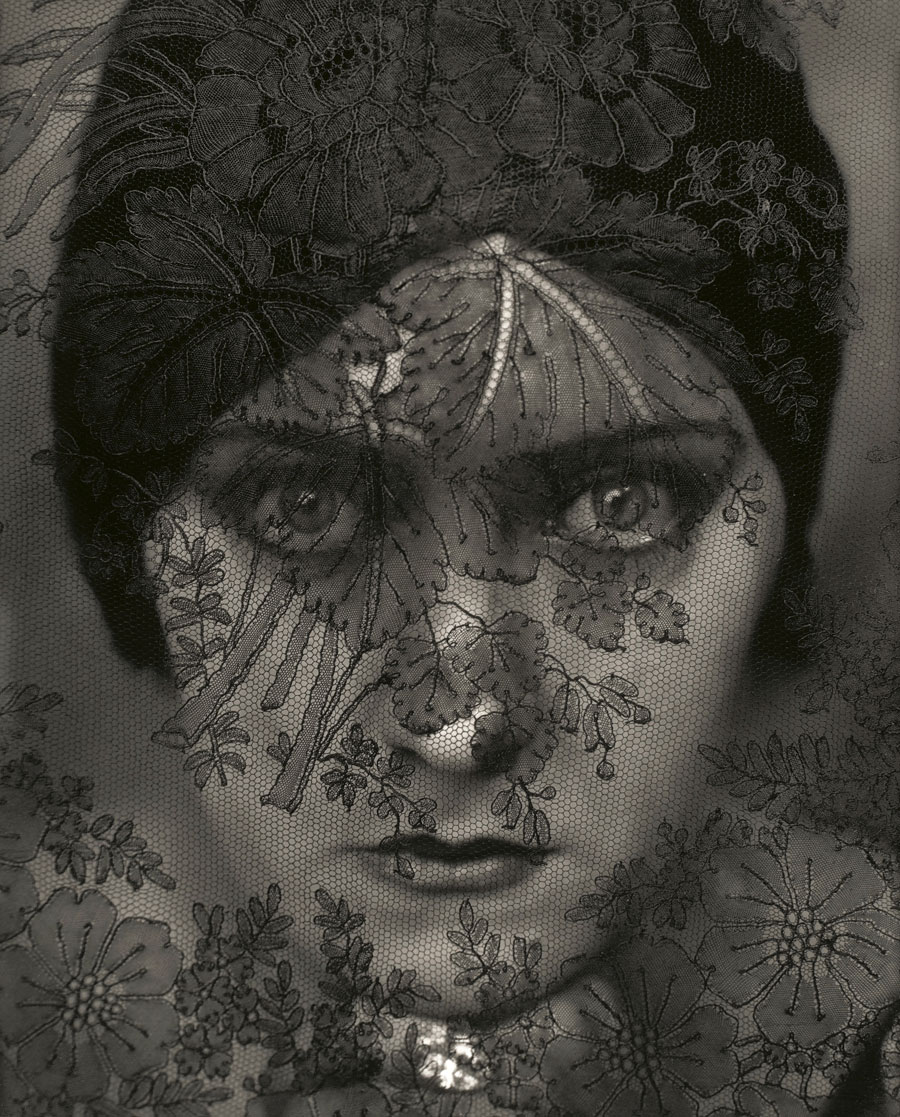
The great breakthrough with Greta Garbo (1929, below), mass of black with face surmounting, hair pulled back by hands “the woman came out full beauty on her magnificent face” Steichen said; Actress Gloria Swanson (1924, below) like some prowling, wide-eyed animal hidden behind a black lace veil, “a predatory femme fatale concealing her ambitions behind a mask of beauty”13; Marlene Dietrich (1934, below) nestled into the glorious curve of an armchair, lace-covered hand open, inviting; and Actress Loretta Young (1931) active, not passive, in which Steichen humanises his sitter. For me, these are the glorious images – not the men, not the fashion photographs, but these strong, independent women.
“An interested image-maker takes available resources for meaning (visual grammars, fabrication techniques and focal points of attention), undertakes an act of designing (the process of image-making), and in so doing re-images the world in a way that it has never quite been seen before.”14 Initially, in the early experimentation, this is what Steichen did; he achieves it again in the photographs of Garbo, Swanson, Dietrich and Young.
As for the other photographs we feel an overall suffused glow of beauty and glamour – we admire their scale and intensity, the deep blacks and velvety whites, and wonder at the light and assemblage of elements – but they do not have the power and engagement of the best, most challenging work. In these photographs of vibrant women the viewer finally starts to feel the spirit of the face, the spirit of the person captured in an instant. And that is a rare and beautiful thing.
Dr Marcus Bunyan
Word count: 1,883
Footnotes
1/ Whelan, Richard. Alfred Stieglitz: A Biography. NY: Little, Brown, 1995, pp. 189-223 2/ Anon. “Camera Work,” on Wikipedia website [Online] Cited 15/02/2014 3/ Anon. “291,” on Wikipedia website [Online] Cited 15/02/2014 4/ “Camera Work,” op. cit., 5/ Hoffman, Katherine. Stieglitz : A Beginning Light. New Haven: Yale University Press Studio, 2004, pp. 213–222 cited in “Camera Work,” op. cit., 6/ McDonald, John. “Edward Steichen & Art Deco Fashion” on John McDonald website February 1, 2014 [Online] Cited 15/02/2014 7/ Ibid., 8/ Nelson, Robert. “An age of elegance captured forever,” in The Age newspaper Wednesday November 6th, 2013, p. 54 9/ Ibid., 10/ Rewording of a sentence by Sleigh, Tom. “Too Much of the Air: Tomas Tranströmer,” 2005, on the Poets.org website [Online] Cited 15/02/2014. No longer available online 11/ McDonald, op. cit., 12/ “In sociology, social capital is the expected collective or economic benefits derived from the preferential treatment and cooperation between individuals and groups. Although different social sciences emphasise different aspects of social capital, they tend to share the core idea “that social networks have value”.” Anon. “Social capital,” on Wikipedia website [Online] Cited 15/02/2014 “Social fascism was a theory supported by the Communist International (Comintern) during the early 1930s, which held that social democracy was a variant of fascism because, in addition to a shared corporatist economic model, it stood in the way of a complete and final transition to communism.” Anon. “Social fascism,” on Wikipedia website [Online] Cited 15/02/2014 13/ McDonald, op. cit., 14/ Anon. “The Image of Transformation: Properties of Consequence,” on The Image website [Online] Cited 15/02/2014. No longer available online
Many thankx to the National Gallery of Victoria for allowing me to publish the photographs in the posting. Please click on the photographs for a larger version of the image.
Steichen’s portrait of Gloria Swanson has taken on iconic masterpiece status overtime. Created in 1924, just as the first feature-length sound movies were emerging – effectively truncating the actress’s brilliant silent-film career – this image caught the essential Gloria Swanson: haunting and inscrutable, forever veiled in the whisper of a distant era. Steichen’s photograph has elements of turn-of-the-century Pictorialism (moody and delicate, the subject seeming to peer from the darkness, as if from jungle foliage), yet it also projects modernist boldness, with its pin-sharp precision and graphic severity.
Anonymous. “Gloria Swanson by Edward Steichen,” on the Iconic Photos website October 5th, 2009 [Online] Cited 11/02/2021. Used under fair use conditions for the purposes of education and research
Maurice Mouvet was one of the most famous and successful dance teams around the early 1910’s and lead the way for many performers that would follow… Maurice was born in New York but as a young lad moved to Paris with his father and knew he wanted to be a dancer as a young boy. He had his first professional dance at the Noveau Cirque in Paris, France at age 15. Mouvet’s best partners were Florence Walton and Leonora (Leona) Hughes.
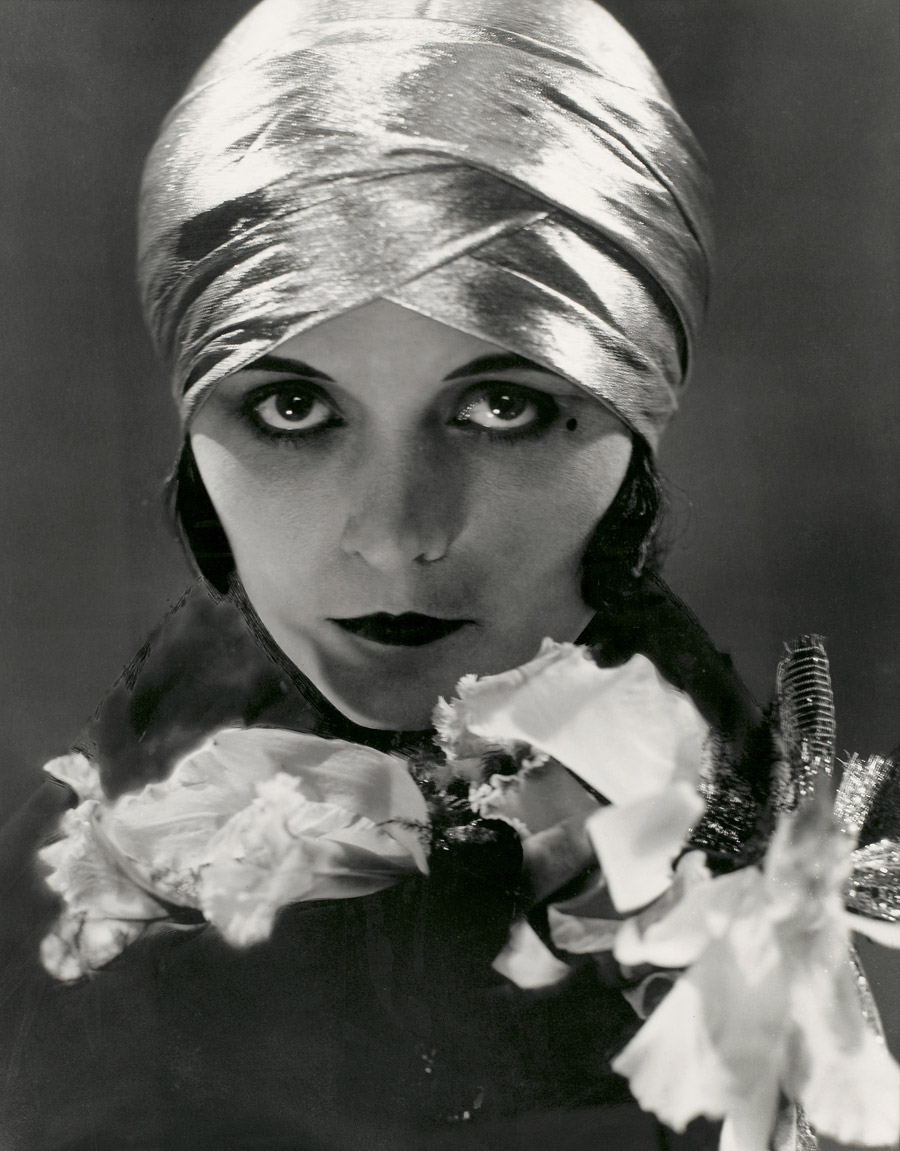
Pola Negri (née Apolonia Chałupiec, January 3, 1897 – 1 August 1987) was a Polish stage and film actress who achieved worldwide fame during the silent and golden eras of Hollywood and European film for her tragedienne and femme fatale roles. She was the first European film star to be invited to Hollywood, and become one of the most popular actresses in American silent film. She also started several important women’s fashion trends that are still staples of the women’s fashion industry. Her varied career included work as an actress in theatre and vaudeville; as a singer and recording artist; as an author; and as a ballerina.
Marion Morehouse (1906-1969), was a fashion model who rose to prominence in the late 20s and early 30s, sitting for Vanity Fair and Vogue photographer Edward Steichen. The pair created some strikingly modernist photographs. According to Steichen Morehouse was:
“The greatest fashion model I ever photographed … When she put on the clothes that were to be photographed, she transformed herself into a woman who really would wear that gown … whatever the outfit was.”
She was also a favourite of Cecil Beaton and French Vogue’s Baron George Hoyningen-Huene. Morehouse was of Choctaw Indian ancestry, with brown eyes and an angular frame. After her modelling career ended, she took up photography herself. Later she became the third wife of author and painter E.E Cummings. When Cummings met Marion Morehouse in 1932, he was in the middle of a painful split from his second wife, Anne Barton. Although it is not clear whether the two were ever formally married, Morehouse lived with Cummings in a common-law marriage until his death in 1962. Morehouse died on May 18, 1969.
Text from the Photographs, film, literature & quotes from the bygone era website [Online] Cited 10/02/2014. No longer available online. Used under fair use conditions for the purposes of education and research
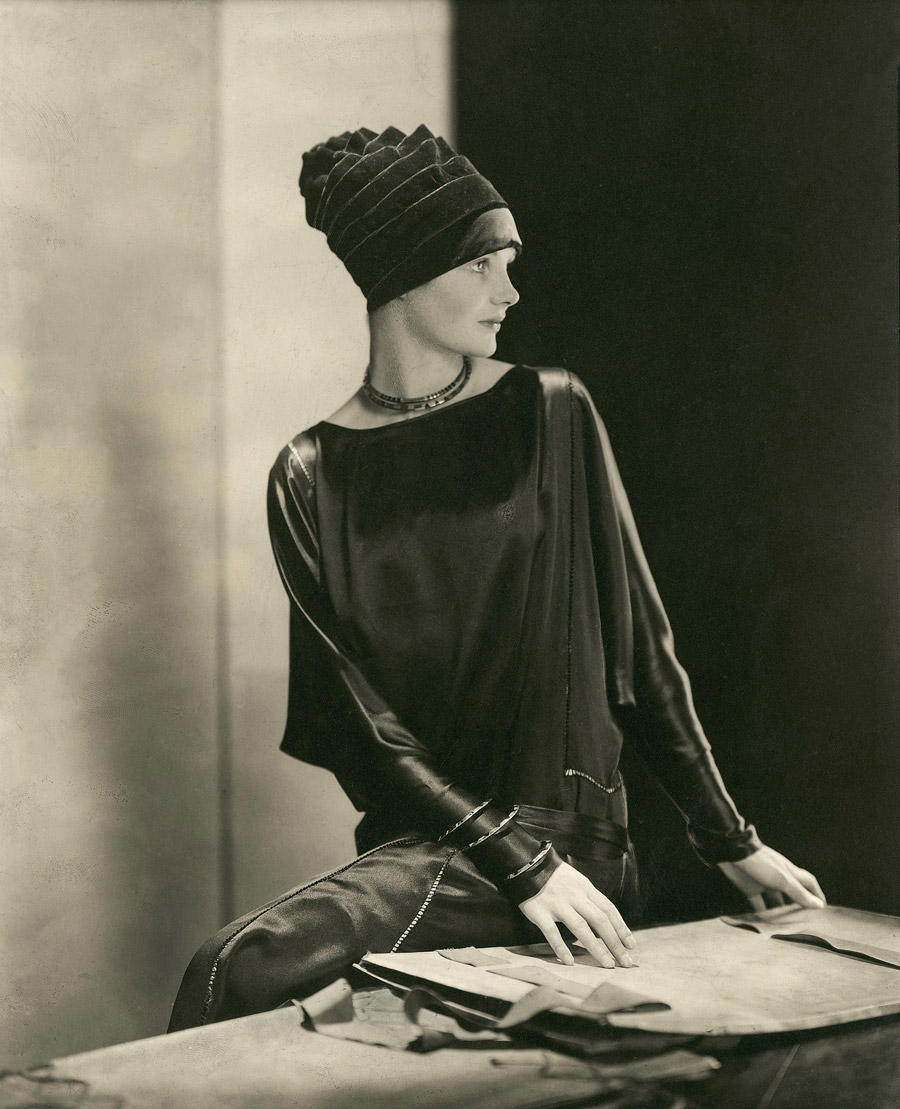
France’s most popular milliner Madame Agnes was born in France in the late 1800’s, she retired in 1949, and died a short while later. She was famous for cutting the brims of her hats while they were worn by her customers. Madame Agnes styled hats which were both abstract and unique. An illustration from 1927 depicts Madame Agnes’ Congo inspired hats with a model wearing a slave collar. As the 20’s moved into the 30’s, the hats became smaller and away from the face. In December 1935 she introduced hats with large straw brims which were mounted on flowered madras handkerchiefs. Madame Agnes was inspired by a matador’s hat when she created a small dinner hat for Spring 1936. It was sewn of black maline with heavy white silk fringe. The fringe was mounted on each side of the hat’s top. In mid-1946 she created a soft beige beret of felt which featured a line that was broken just above the right eyebrow, where a soft quill was inserted.
Text from the Photographs, film, literature & quotes from the bygone era website [Online] Cited 10/02/2014. No longer available online. Used under fair use conditions for the purposes of education and research
Elizabeth “Lee” Miller, Lady Penrose (April 23, 1907 – July 21, 1977) was an American photographer. Born in Poughkeepsie, New York, in 1907, she was a successful fashion model in New York City in the 1920s before going to Paris, where she became an established fashion and fine art photographer. During the Second World War, she became an acclaimed war correspondent for Vogue, covering events such as the London Blitz, the liberation of Paris, and the concentration camps at Buchenwald and Dachau.
Elsa Schiaparelli (1890-1973) was an Italian fashion designer. Along with Coco Chanel, her greatest rival, she is regarded as one of the most prominent figures in fashion between the two World Wars. Starting with knitwear, Schiaparelli’s designs were heavily influenced by Surrealists like her collaborators Salvador Dalí and Alberto Giacometti. Her clients included the heiress Daisy Fellowes and actress Mae West.
Perhaps Schiaparelli’s most important legacy was in bringing to fashion the playfulness and sense of “anything goes” of the Dada and Surrealist movements. She loved to play with juxtapositions of colours, shapes and textures, and embraced the new technologies and materials of the time. With Charles Colcombet she experimented with acrylic, cellophane, a rayon jersey called “Jersela” and a rayon with metal threads called “Fildifer” – the first time synthetic materials were used in couture. Some of these innovations were not pursued further, like her 1934 “glass” cape made from Rhodophane, a transparent plastic related to cellophane. But there were more lasting innovations; Schiaparelli created wraparound dresses decades before Diane von Furstenberg and crumpled up rayon 50 years before Issey Miyake’s pleats and crinkles. In 1930 alone she created the first evening-dress with a jacket, and the first clothes with visible zippers. In fact fastenings were something of a speciality, from a jacket buttoned with silver tambourines to one with silk-covered carrots and cauliflowers. Schiaparelli did not adapt to the changes in fashion following World War II and her business closed in 1954.
Gwili Andre (4 February 1908 – 5 February 1959) was a Danish actress who had a brief career in Hollywood films. Andre came to Hollywood in the early 1930s with the intention of establishing herself as a film star. She appeared in the 1932 RKO Studio films Roar of the Dragon and Secrets of the French Police and began to attract attention for her striking good looks. These films provided her with starring roles playing against such established actors as Richard Dix, ZaSu Pitts and Frank Morgan, and RKO began using her glamorous looks to promote her.
A widespread publicity campaign ensured that her name and face became well known to the American public, but her next role in No Other Woman (1933), opposite Irene Dunne, was not the success the studio expected. Over the next few years she was relegated to supporting roles which included the Joan Crawford picture A Woman’s Face (1941). Her final role was a minor part in one of the popular Falcon series, The Falcon’s Brother in 1942.














 Art Blart _ art and cultural memory archive
You must be logged in to post a comment.