Exhibition: ‘Photography: Real & Imagined’ at The Ian Potter Centre: NGV Australia, Melbourne Part 1

Exhibition dates: 13th October 2023 – 4th February 2024

Warning: Aboriginal and Torres Strait Islander readers should be aware that this posting contains images and names of people who may have since passed away.
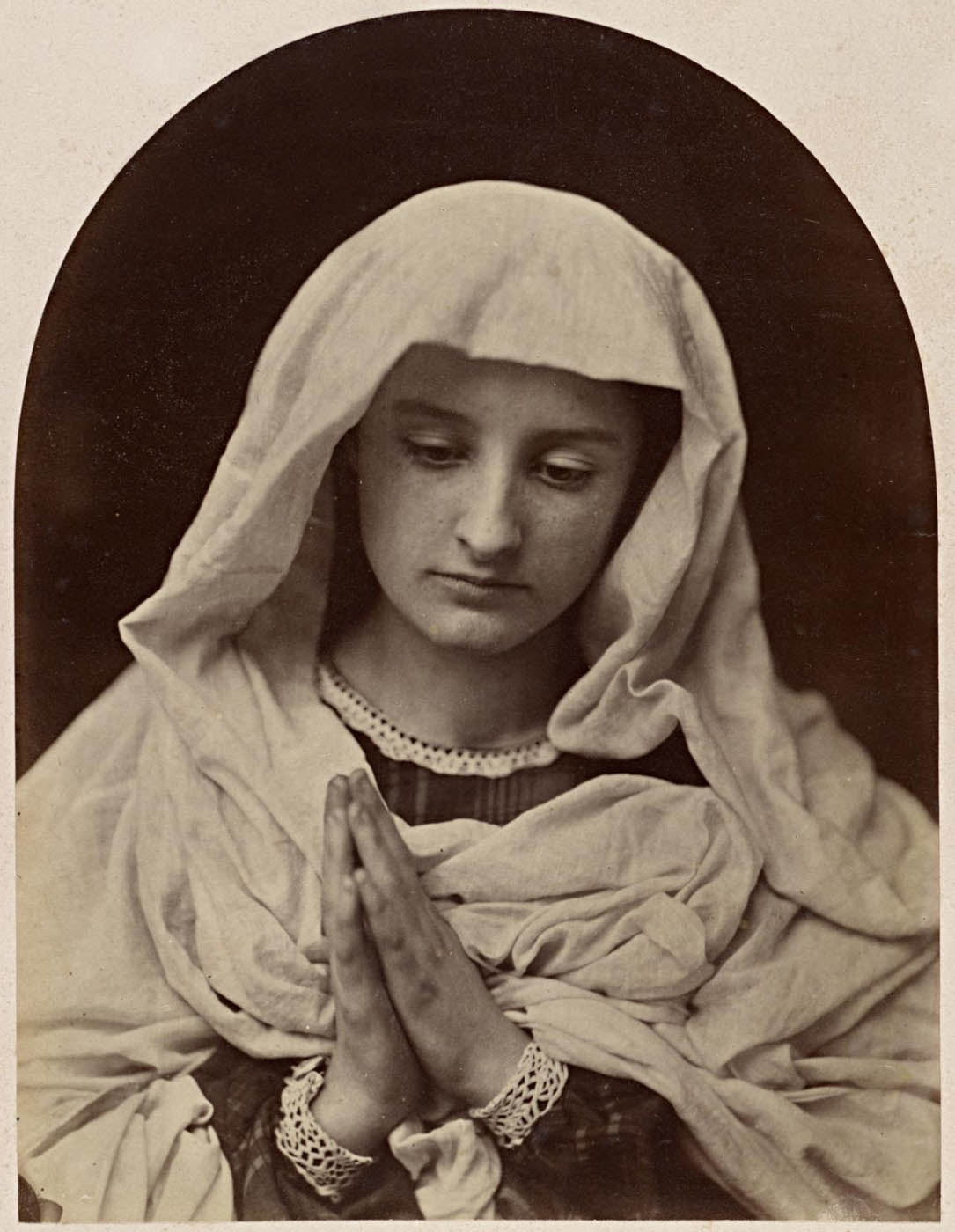
 

O. G. Rejlander (British born Sweden, 1813-1875) No title (The Virgin in prayer) c. 1858-1860


O. G. Rejlander (British born Sweden, 1813-1875)
No title (The Virgin in prayer)
c. 1858-1860
Albumen silver photograph
20.2 × 15.4cm irreg. (image and sheet)
National Gallery of Victoria, Melbourne
Purchased, 2002
Public domain


This is an ambitious, complex but flawed exhibition of photographic works from the NGV Collection. Further comment in Part 2 of the posting…

Dr Marcus Bunyan


Many thankx to the NGV for allowing me to publish the media images in the posting. Other photographs in the posting are public domain. All installation images are by Marcus Bunyan.


Photography: Real and Imagined examines two perspectives on photography; photography grounded in the real world, as a record, a document, a reflection of the world around us; and photography as the product of imagination, storytelling and illusion. On occasion, photography operates in both realms of the real and the imagined.

Highlighting major photographic works from the NGV Collection, including recent acquisitions on display for the very first time, Photography: Real and Imagined examines the complex, engaging and sometimes contradictory nature, of all things photographic. The NGV’s largest survey of the photography collection, the exhibition includes more than 300 works by Australian and international photographers and artists working with photo-media from the nineteenth, twentieth and twenty-first centuries.

Text from the NGV website
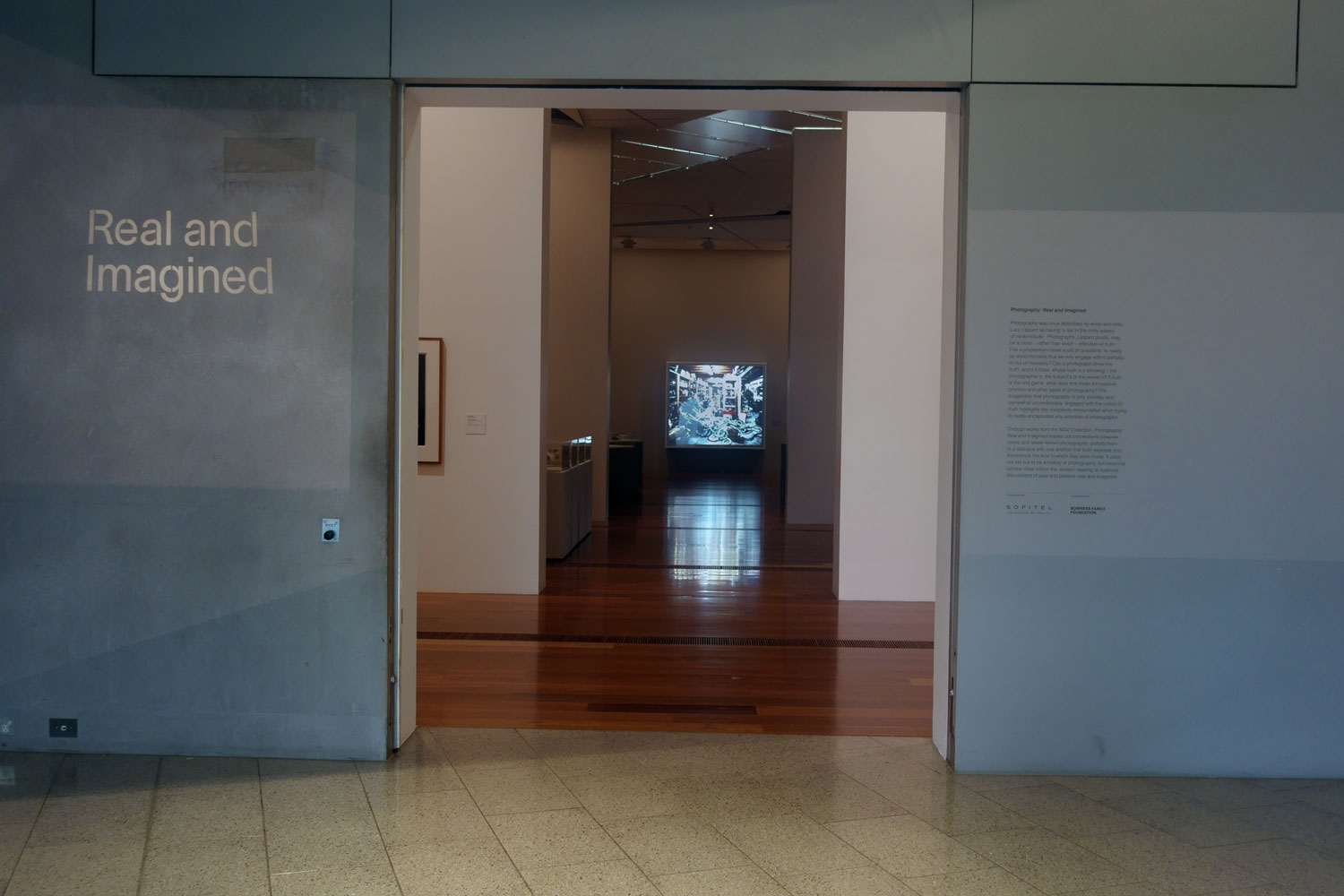
 

Installation view of the entrance to the exhibition 'Photography: Real & Imagined' at The Ian Potter Centre: NGV Australia, Melbourne


Installation view of the entrance to the exhibition Photography: Real & Imagined at The Ian Potter Centre: NGV Australia, Melbourne with introduction wall text to the right
Photo: Marcus Bunyan


Introduction

Photography was once described by writer and critic Lucy Lippard as having ‘a toe in the chilly waters of verisimilitude’. Photographs, Lippard posits, may be a close – rather than exact – reflection of truth. This proposition raises a raft of questions. Is reality so uncomfortable that we only engage with it partially, or out of necessity? Can a photograph show the truth, and if it does, whose truth is it showing – the photographer’s, the subject’s or the viewer’s? If truth is the end game, what does this mean for creative practice and other types of photography? The suggestion that photography is only partially, and somewhat uncomfortably, engaged with the notion of truth highlights the complexity encountered when trying to nearly encapsulate any selection of photographs.

Through works from the NGV Collection, Photography: Real and Imagined teases out connections between iconic and lesser known photographs, putting them in a dialogue with one another that both explores and transcends the time in which they were made. It dos not set out to be a history of photography, but historical context does inform the content, leading to nuanced discussions of past and present, real and imagined.

Introductory wall text from the exhibition


Installation view of the exhibition 'Photography: Real & Imagined' at The Ian Potter Centre: NGV Australia, Melbourne showing at right, Mike and Doug Starn's 'Invictus' (1992)


Installation view of the exhibition Photography: Real & Imagined at The Ian Potter Centre: NGV Australia, Melbourne showing at right, Mike and Doug Starn’s Invictus (1992); and at left works by John Kauffmann, Norman Deck and Edward Steichen (see below)
Photo: Marcus Bunyan


The sun was the light source that enabled the earliest photographs to be made in the 1830s. More than 150 years later the sun is the subject of this photographic sculpture by Mike and Doug Starn that embraces the possibilities of light and its potential effects on photography, in terms of both producing an image and as a force contributing to its irreparable damage. In the centre of their installation, the circular form of a sun seems to pulse and leach out of the layers of exposed orthographic film, which is stretched and layered across steel beams and held with pipe clamps and tape.

Wall text from the exhibition
 

Installation view of the exhibition 'Photography: Real & Imagined' at The Ian Potter Centre: NGV Australia, Melbourne


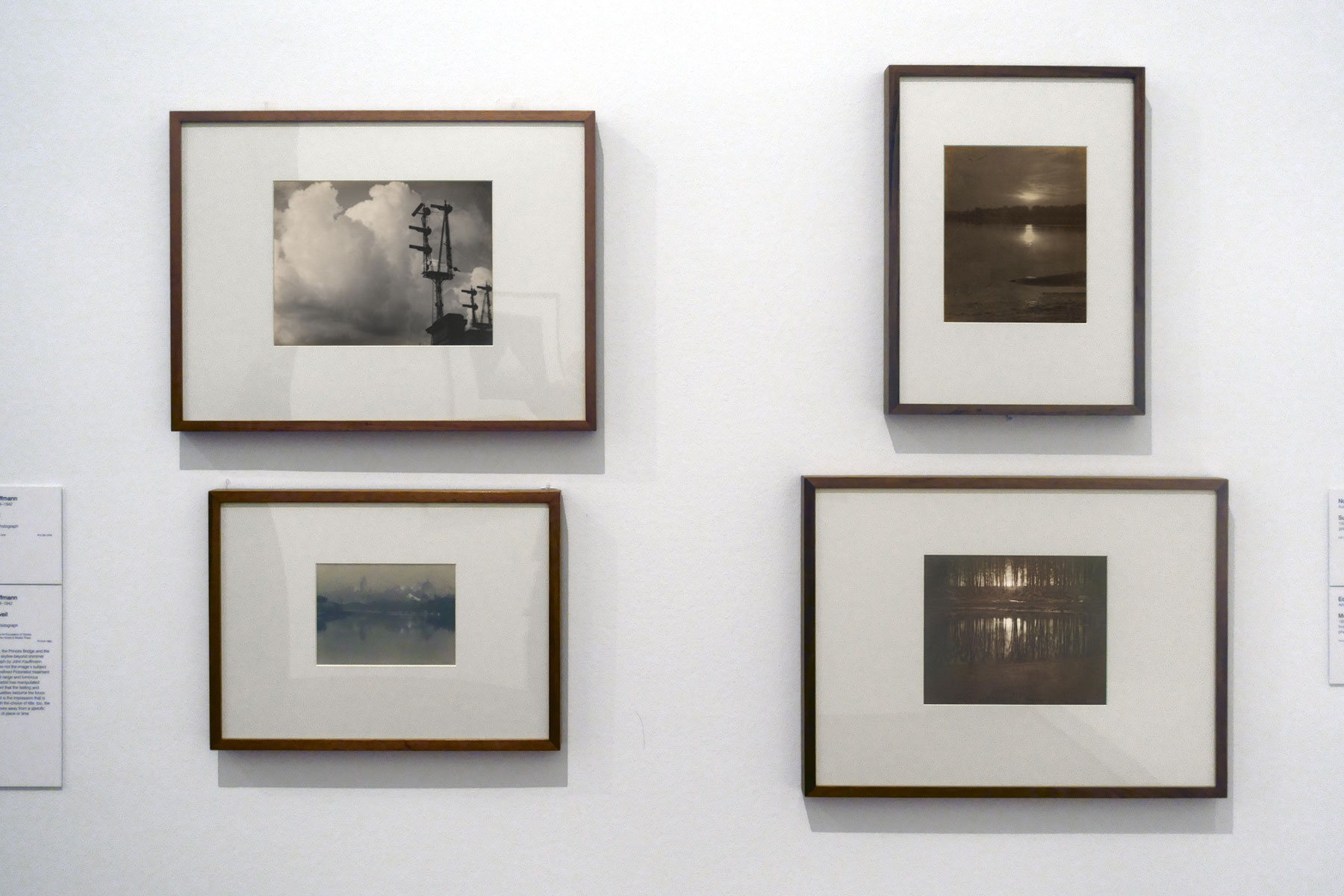
Installation view of the exhibition Photography: Real & Imagined at The Ian Potter Centre: NGV Australia, Melbourne showing at top left, John Kauffmann’s The Cloud (c. 1905, below); at bottom left, Kauffmann’s The grey veil c. 1919; at top right, Norman Deck’s Sunset, Parramatta River (1909); and a bottom right, Edward Steichen’s Moonrise (1904)
Photo: Marcus Bunyan
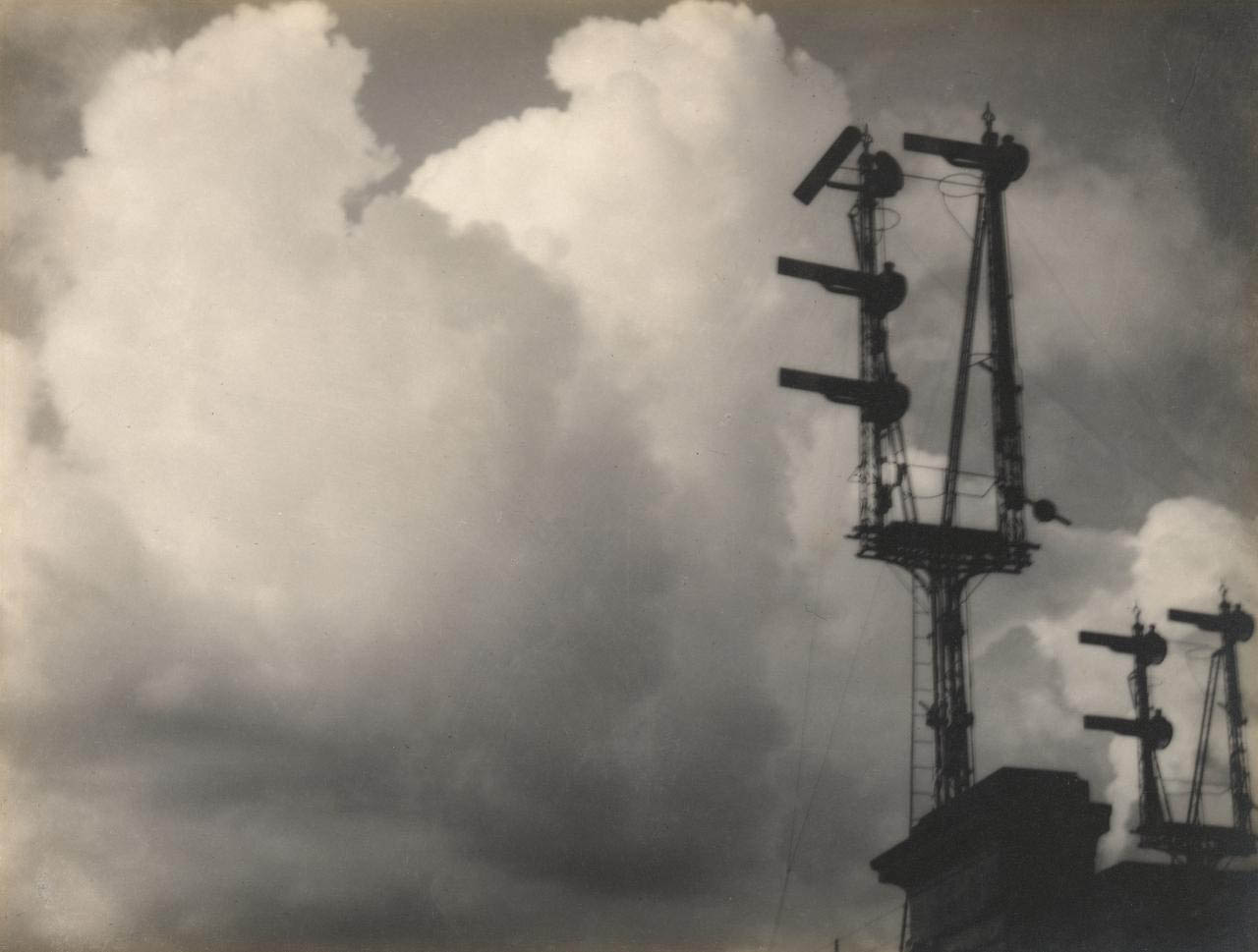
 

John Kauffmann (Australian, 1864-1942) 'The cloud' c. 1905


John Kauffmann (Australian, 1864-1942)
The cloud
c. 1905
Gelatin silver photograph
28.2 × 37.2cm
National Gallery of Victoria, Melbourne
Gift of Mr John Bilney, 1976
Public domain


John Kauffmann (Australian, 1864–1942) 'The grey veil' c. 1919


John Kauffmann (Australian, 1864-1942)
The grey veil
c. 1919
Gelatin silver photograph
National Gallery of Victoria, Melbourne
Purchased through The Art Foundation of Victoria with the assistance of the Herald & Weekly Times Limited, Fellow, 1990
Public domain


The Yarra River, the Princes Bridge and the Melbourne city skyline beyond shimmer in this photograph by John Kauffmann. And yet, they are not the image’s subject. Using a highly refined Pictorialist treatment, a reduced tonal range and luminous mid tones, the artist has manipulated light to the extent that the feeling and atmospheric qualities become the focus of the image – it is the impression that is paramount. With the choice of title, too, the photograph moves away from a specific documentation of place or time.

Wall text from the exhibition


Norman Deck (Australian 1882-1980) 'Sunset, Parramatta River' 1909


Norman Deck (Australian 1882-1980)
Sunset, Parramatta River
1909
Gelatin silver photograph
30.5 × 24.9cm
National Gallery of Victoria, Melbourne
Gift of Joyce Evans, 1993
Public domain
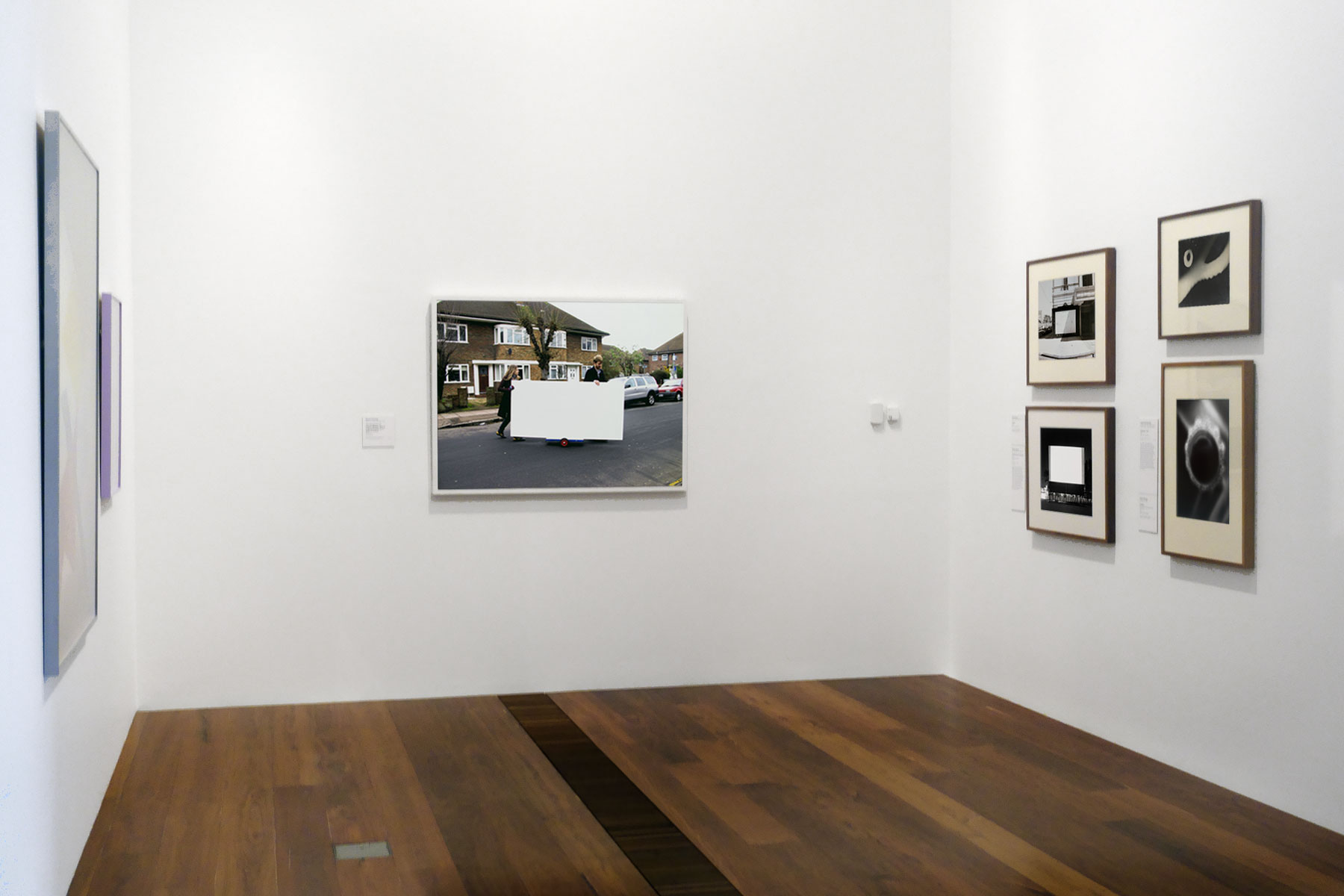
 

Installation view of the exhibition 'Photography: Real & Imagined' at The Ian Potter Centre: NGV Australia, Melbourne showing at centre, David Thomas' 'The Movement of Colour (White), Taking a Monochrome for a Walk (London)' (2010-2011)


Installation view of the exhibition Photography: Real & Imagined at The Ian Potter Centre: NGV Australia, Melbourne showing at centre, David Thomas’ The Movement of Colour (White), Taking a Monochrome for a Walk (London) (2010-2011), with at right works by David Noonan, Hiroshi Sugimoto, László Moholy-Nagy and Susan Fereday (see below)
Photo: Marcus Bunyan
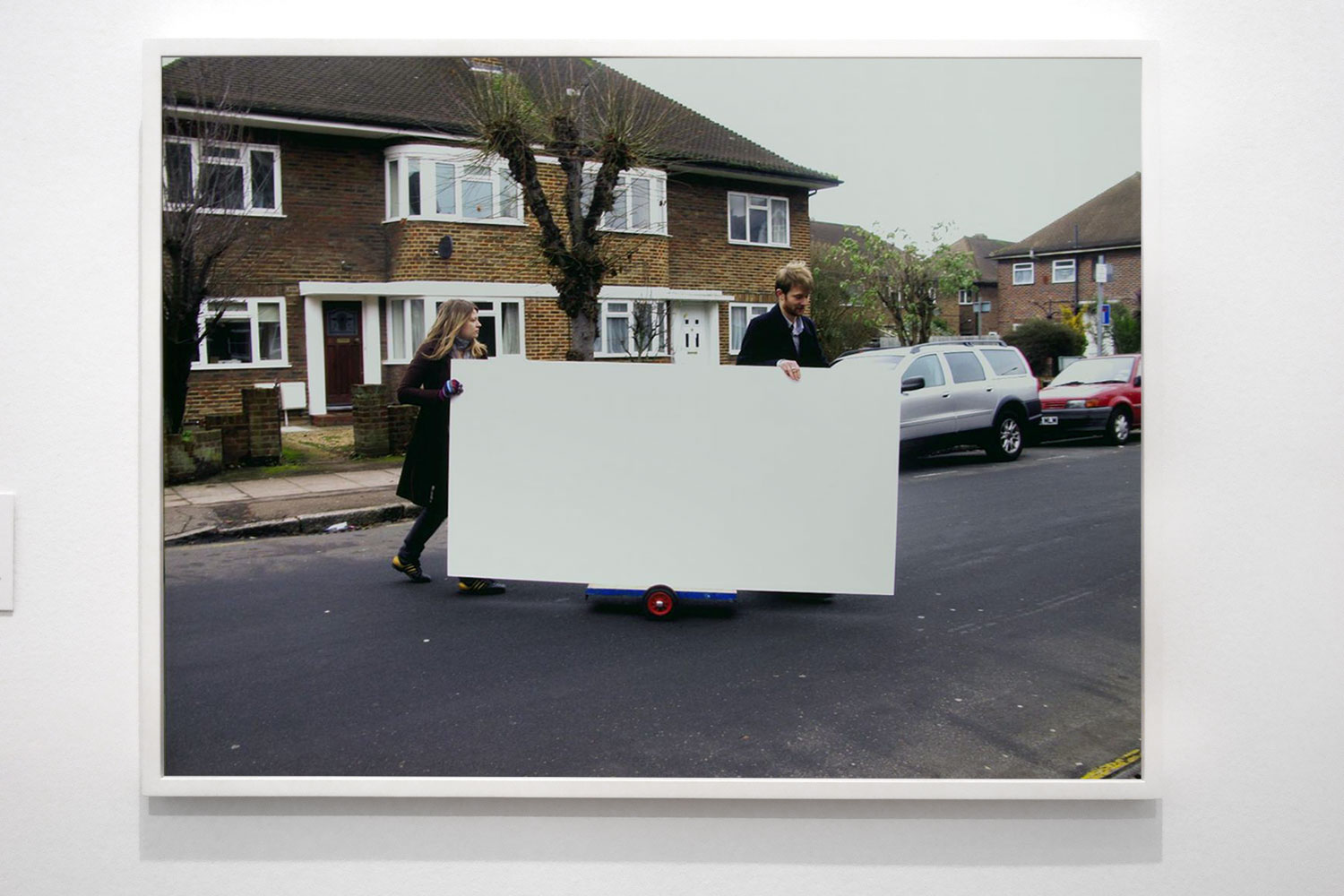
 

David Thomas (British, b. 1951, Australia 1958- ) 'The Movement of Colour (White), Taking a Monochrome for a Walk (London)' 2010-2011 (installation view)


David Thomas (British, b. 1951, Australia 1958- )
The Movement of Colour (White), Taking a Monochrome for a Walk (London) (installation view)
2010-2011
National Gallery of Victoria, Melbourne
Gift of an anonymous donor through the Australian Government’s Cultural Gifts Program 2015
Photo: Marcus Bunyan


“It was made during a residency at the Centre for Drawing Research at Wimbledon School of Art University of the Arts London… and plays on Paul Klee’s definition of drawing as taking a line for a walk on a page… this is taking a monochrome for a walk in the world where the monochrome becomes a key for seeing other colours… an interval in the world. It also suggests the ideas of movement in time and feelings of impermanence.”

~ David Thomas
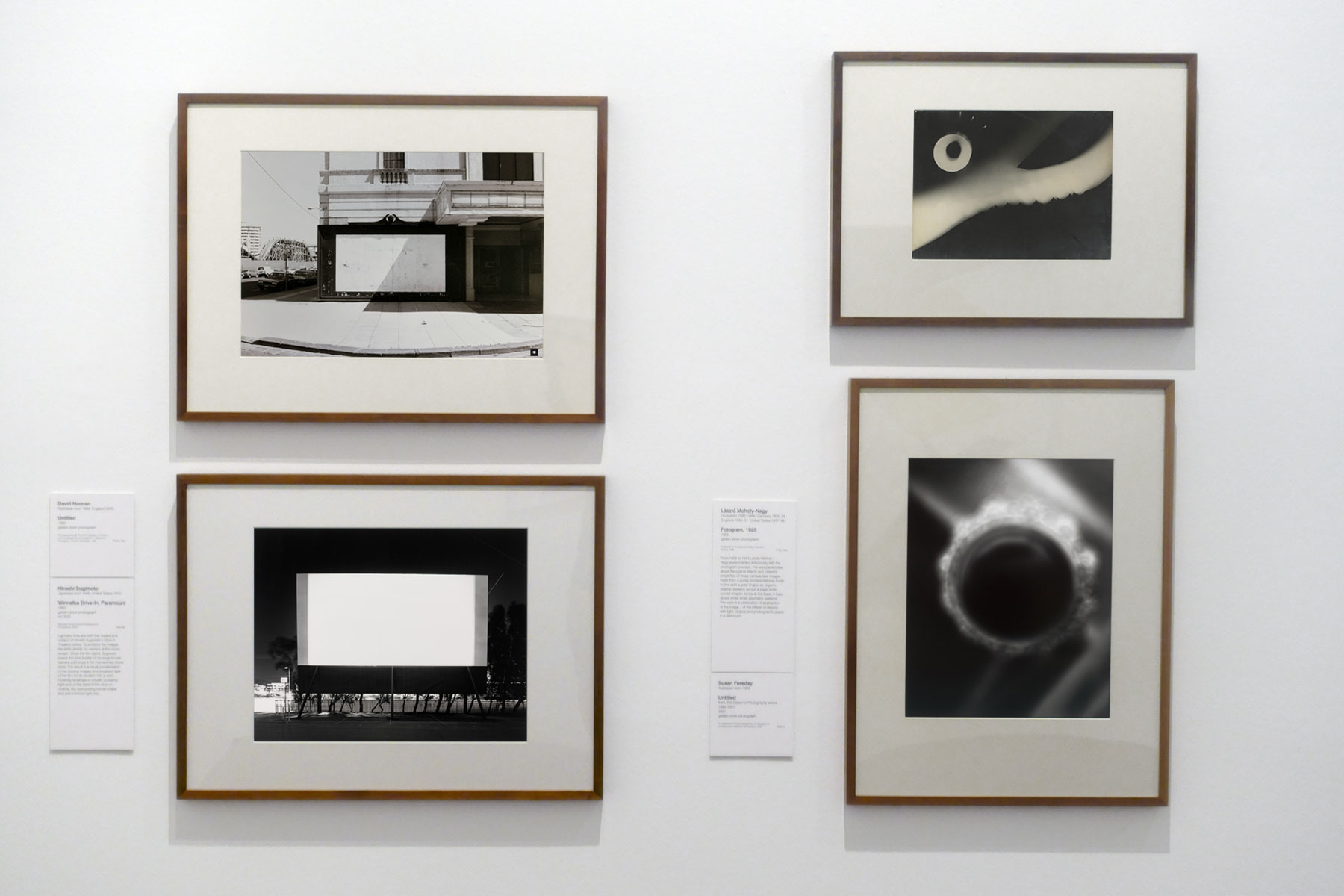
 

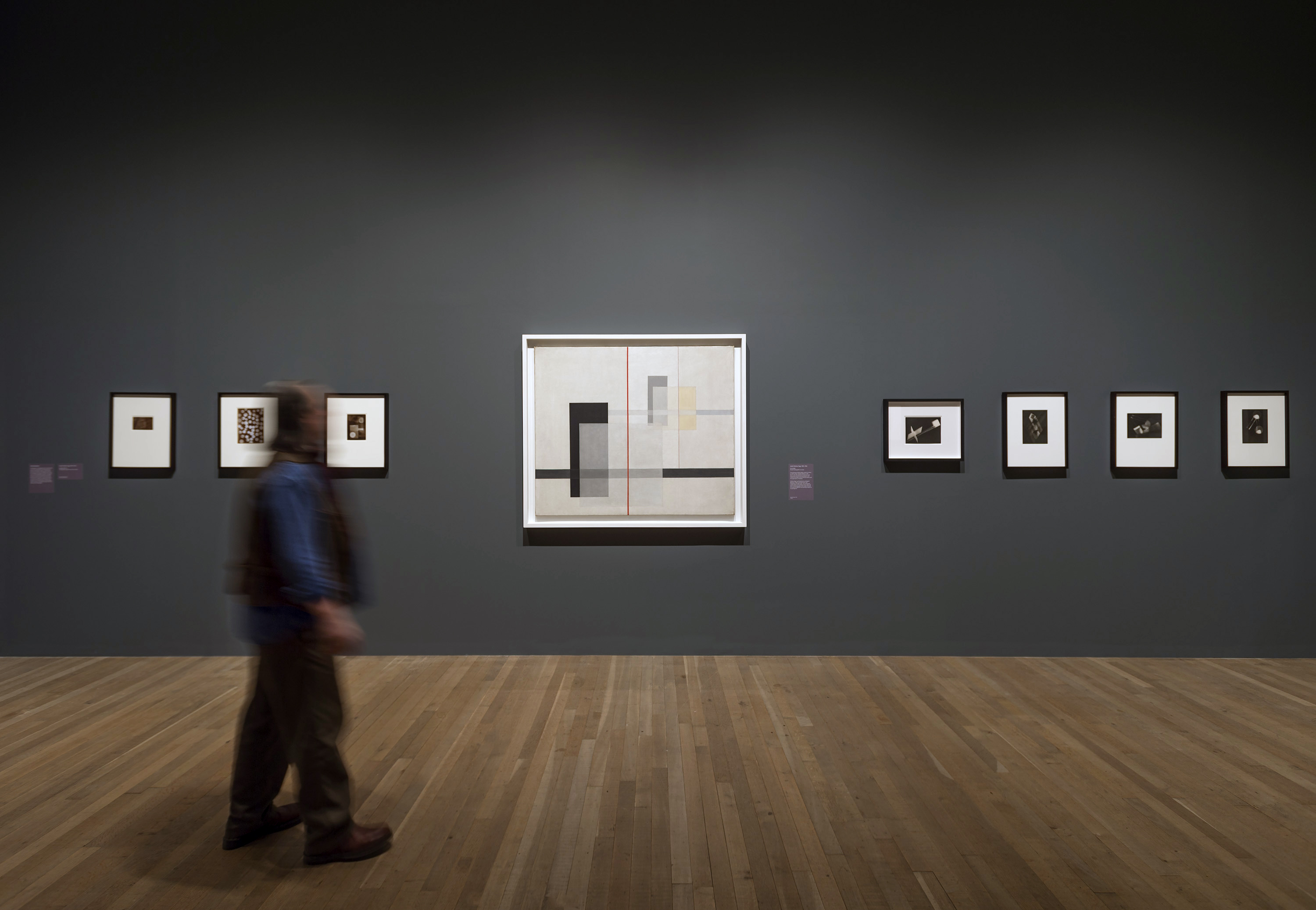
Installation view of the exhibition 'Photography: Real & Imagined' at The Ian Potter Centre: NGV Australia, Melbourne showing works by David Noonan, Hiroshi Sugimoto, Laslo Moholy-Nagy and Susan Fereday


Installation view of the exhibition Photography: Real & Imagined at The Ian Potter Centre: NGV Australia, Melbourne showing at top right, David Noonan’s Untitled (1992); at bottom left, Hiroshi Sugimoto’s Winnetka Drive-In, Paramount (1993); at top right, László Moholy-Nagy’s Fotogram, 1925 (1925); and at bottom right, Susan Fereday’s Untitled (2001)
Photo: Marcus Bunyan


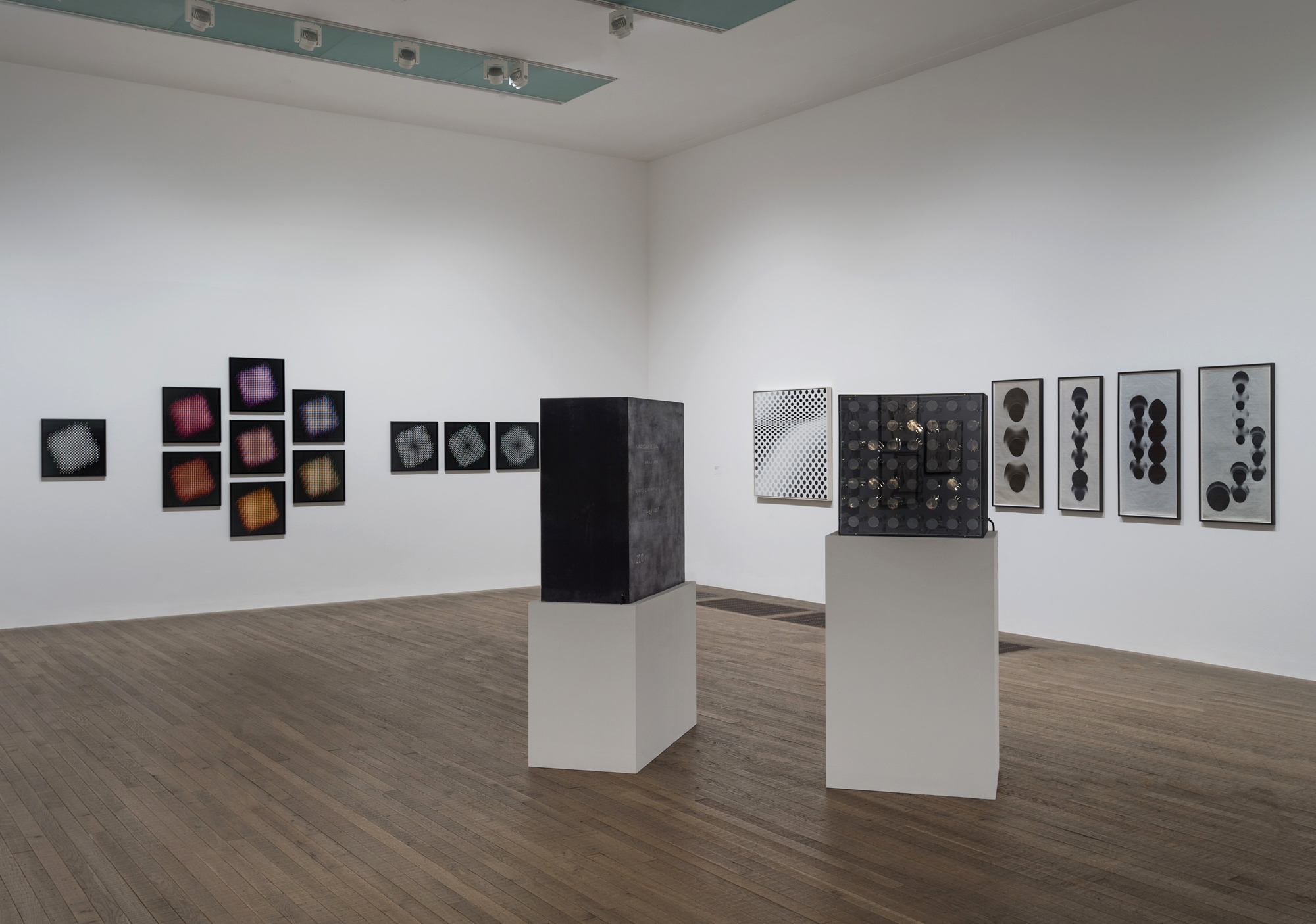
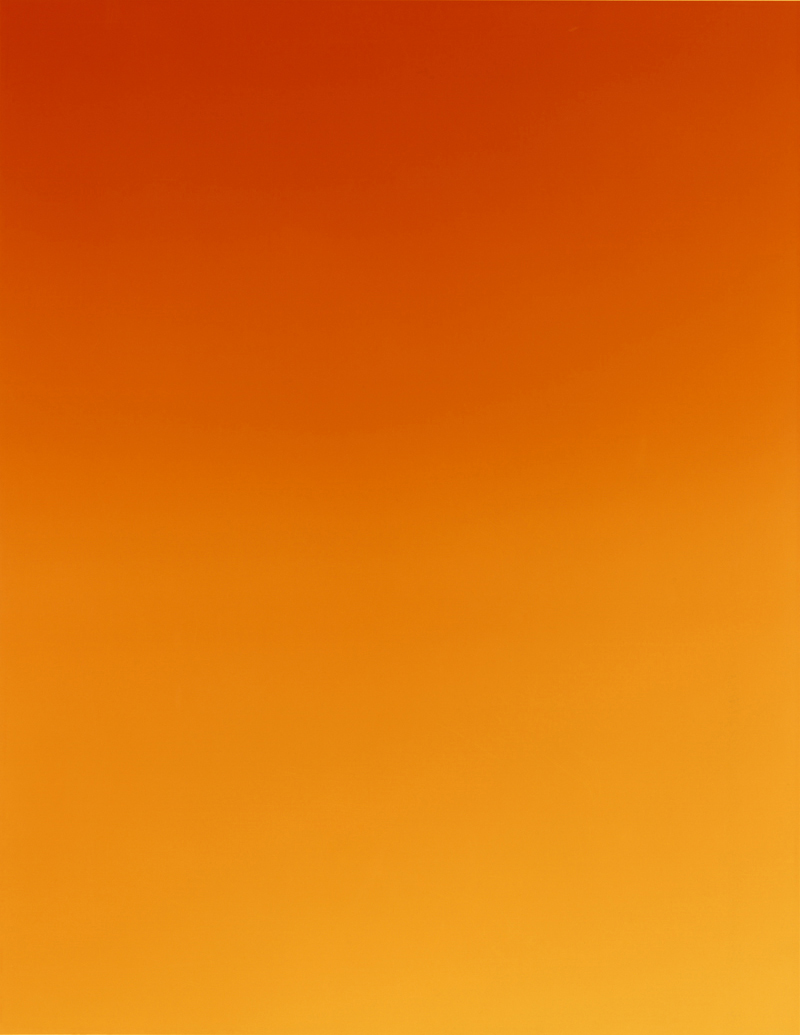
Light and time are both the means and subject of Hiroshi Sugimoto’s Drive-In Theaters series. To produce the images, the artist directs his camera at the movie screen. Once the film starts, Sugimoto opens the lens shutter of his large-format camera and shuts it the moment the movie ends. The result is a visual condensation of the moving images and projected light of the film for its duration into a vivid, hovering rectangle of virtually pulsating light and, in the case of this drive-in cinema, the surrounding human-made and astronomical light, too.

Wall text from the exhibition
 

Installation view of the exhibition 'Photography: Real & Imagined' at The Ian Potter Centre: NGV Australia, Melbourne showing David Noonan's 'Untitled' (1992)


Installation view of the exhibition Photography: Real & Imagined at The Ian Potter Centre: NGV Australia, Melbourne showing David Noonan’s Untitled (1992)
Photo: Marcus Bunyan


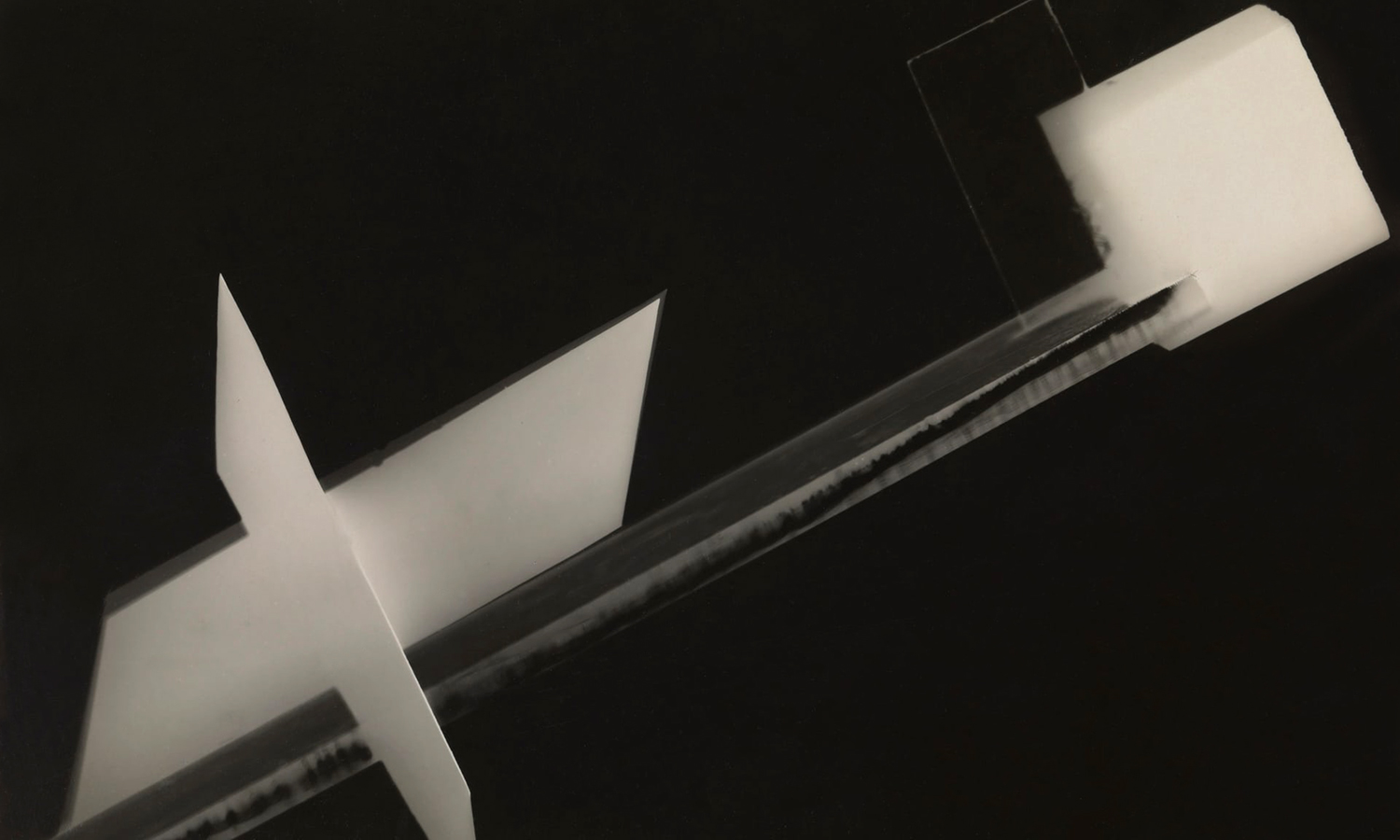
László Moholy-Nagy (Hungarian 1895-1946, Germany 1920-1934, England 1935-1937, United States 1937-1946) 'Fotogram, 1925' 1925


László Moholy-Nagy (Hungarian 1895-1946, Germany 1920-1934, England 1935-1937, United States 1937-1946)
Fotogram, 1925
1925
Gelatin silver photograph
National Gallery of Victoria, Melbourne
Presented by the National Gallery Society of Victoria, 1985
Public domain


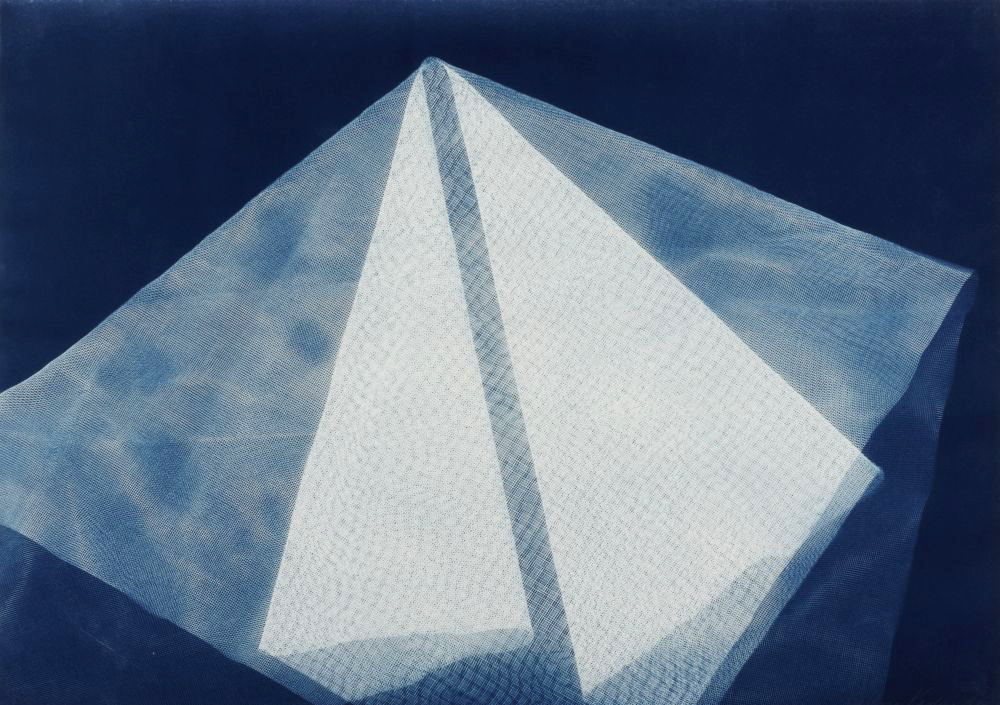
From 1922 to 1943 László Moholy-Nagy experimented extensively with the photogram process – he was passionate about the optical effects and inherent properties of these camera-less images freed from a purely representational mode. In this work a pale shape, an organic swathe, streams across a page while curved shapes dance at the base. A halo above emits small geometric patterns. The work is a celebration of abstraction of the image – of the effects of playing with light, objects and photographic paper in a darkroom.

Wall text from the exhibition


Installation view of the exhibition Photography: Real & Imagined at The Ian Potter Centre: NGV Australia, Melbourne showing at left, Barbara Kasten's Composition 8T (2018); and at right, Lydia Wegner's Purple square (2017)


Installation view of the exhibition Photography: Real & Imagined at The Ian Potter Centre: NGV Australia, Melbourne showing at left, Barbara Kasten’s Composition 8T (2018, below); and at right, Lydia Wegner’s Purple square (2017, below)
Photo: Marcus Bunyan
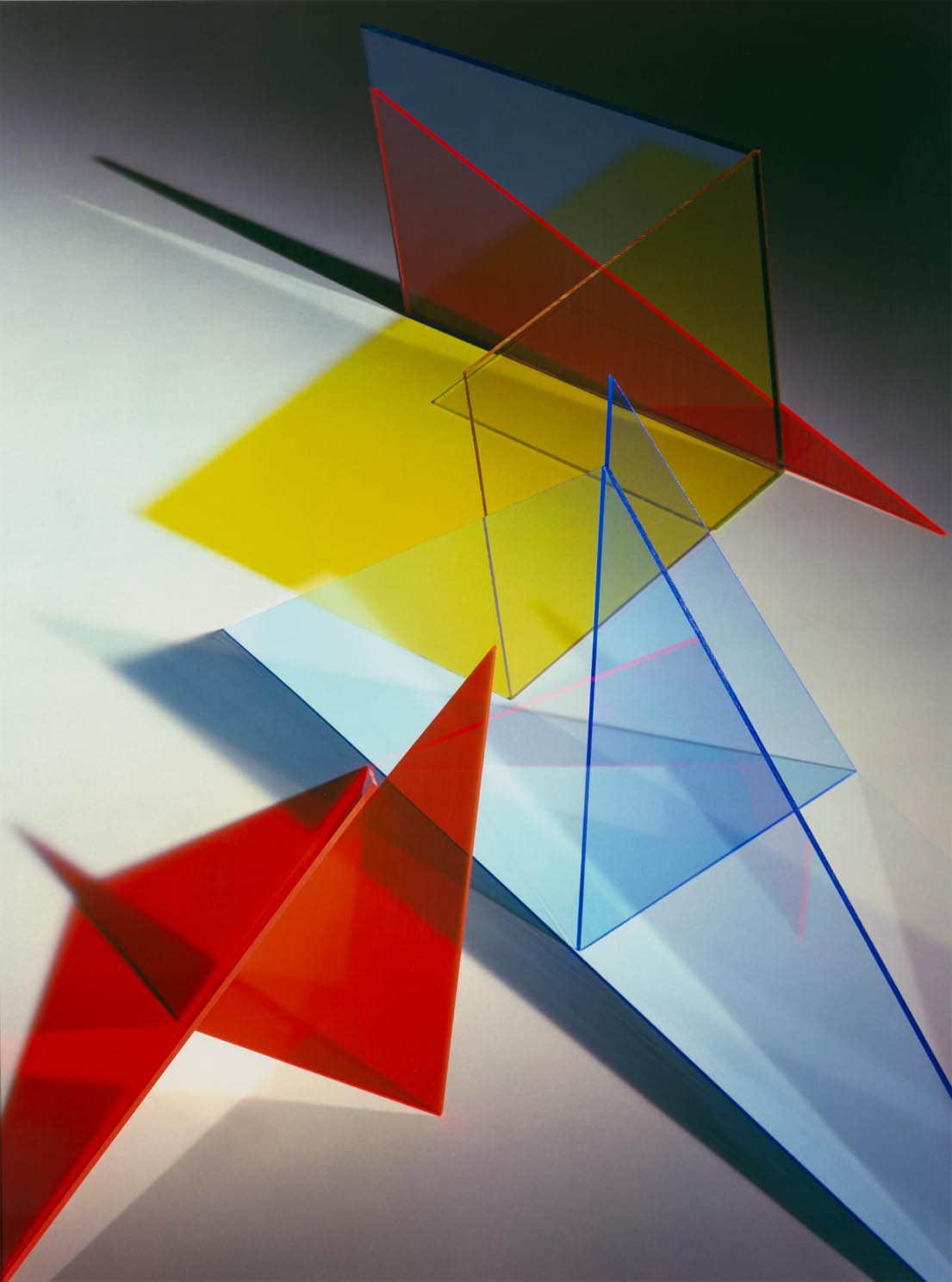
 

Barbara Kasten (American, b. 1936) 'Composition 8T' 2018


Barbara Kasten (American, b. 1936)
Composition 8T
2018
Digital type C print
160.0 x 121.9cm (image and sheet)
ed. 1/1
National Gallery of Victoria, Melbourne
Purchased NGV Foundation, 2018
© Barbara Kasten, courtesy Kadel Willborn, Düsseldorf


This photograph from Barbara Kasten’s Collisions/Compositions series continues her practice of creating architectural spaces in the studio using a range of materials, such as plexiglas and mirrors, which she lights and photographs at close range. Influenced by Constructivism and the teachings of the Bauhaus, specifically the work of László Moholy-Nagy, Kasten has experimented with the parameters of abstract photography for around five decades. She has written of her ongoing fascination with light in the creation and conceptual development of her photographs, saying, ‘The interdependency of shadow and light is the essence of photographic exploration and an inescapable part of the photographic process’.

Wall text from the exhibition


Installation view of the exhibition Photography: Real & Imagined at The Ian Potter Centre: NGV Australia, Melbourne showing Lydia Wegner's 'Purple square' (2017)


Installation view of the exhibition Photography: Real & Imagined at The Ian Potter Centre: NGV Australia, Melbourne showing Lydia Wegner’s Purple square (2017)
Photo: Marcus Bunyan


Installation view of the exhibition 'Photography: Real & Imagined' at The Ian Potter Centre: NGV Australia, Melbourne showing at left, Todd McMillan's 'Equivalent VIII' (2014); and at right, Sue Pedley's 'Sound of lotus 1' (2000)


Installation view of the exhibition Photography: Real & Imagined at The Ian Potter Centre: NGV Australia, Melbourne showing at left, Todd McMillan’s Equivalent VIII (2014); and at right, Sue Pedley’s Sound of lotus 1 (2000)
Photo: Marcus Bunyan


Installation view of the exhibition 'Photography: Real & Imagined' at The Ian Potter Centre: NGV Australia, Melbourne


Installation view of the exhibition Photography: Real & Imagined at The Ian Potter Centre: NGV Australia, Melbourne showing at back left, Thomas Ruff’s Portrait (V. Liebermann D) (1999); and at back second left, Ruff’s Portrait (A. Koschkarow) (2000)
Photo: Marcus Bunyan
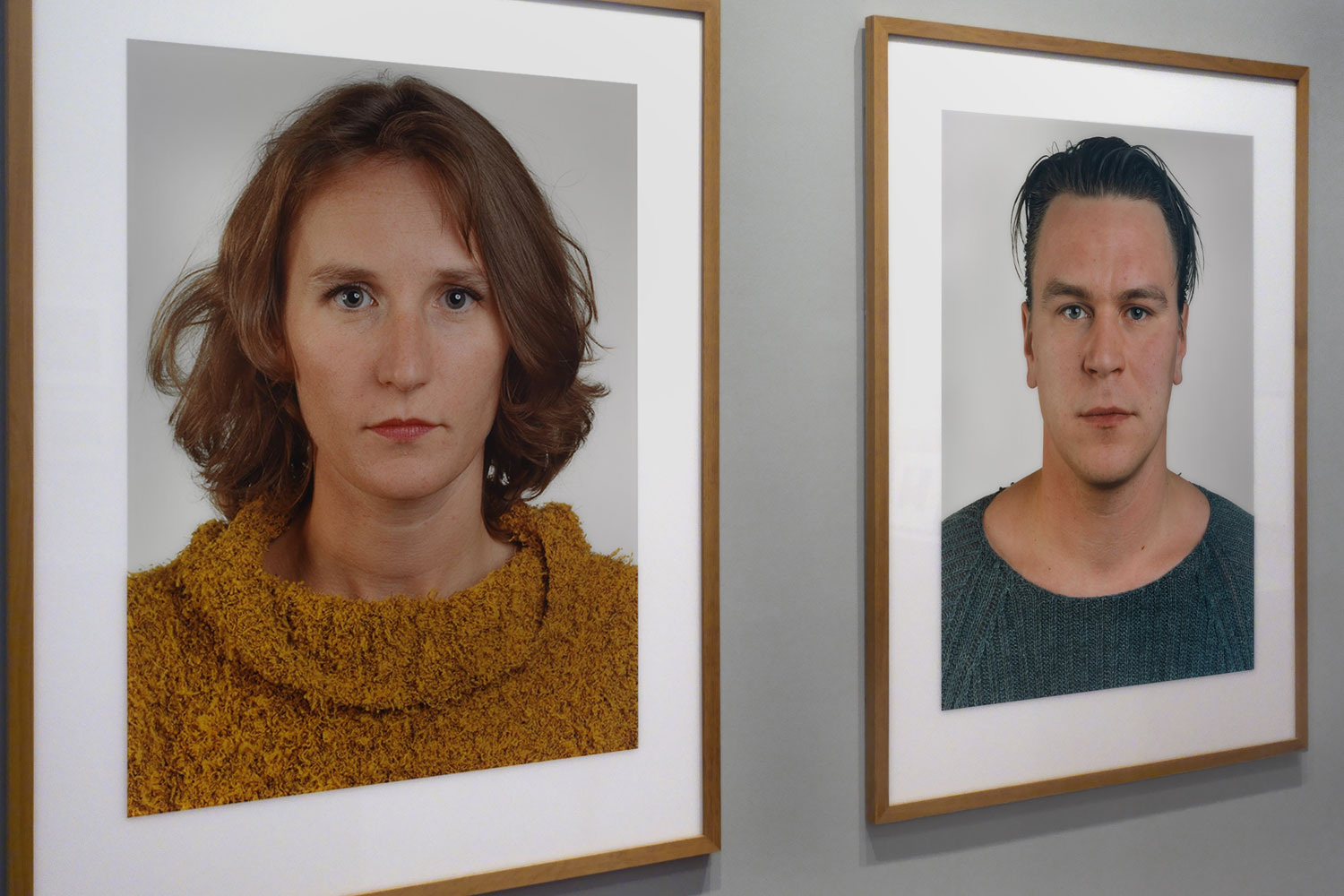
 

Installation view of the exhibition Photography: Real & Imagined at The Ian Potter Centre: NGV Australia, Melbourne showing at left, Thomas Ruff’s 'Portrait (V. Liebermann D)' (1999); and at right, Ruff's 'Portrait (A. Koschkarow)' (2000)


Installation view of the exhibition Photography: Real & Imagined at The Ian Potter Centre: NGV Australia, Melbourne showing at left, Thomas Ruff’s Portrait (V. Liebermann D) (1999); and at right, Ruff’s Portrait (A. Koschkarow) (2000)
Photo: Marcus Bunyan


The earnest gazes of the man and woman in these two monumental photographs by Thomas Ruff are so calm and serene that they bely the intense experience of viewing their enlarged faces. Applying a standardised approach – similar to a generic passport photograph – these portraits have a timeless quality that invites you to attempt to ‘read’ their faces and to search for clues as to the inner state of the person. Ruff, however, lets nothing slip. The faces are known to the artist but remain anonymous to the viewer.

Wall text from the exhibition


Installation view of the exhibition 'Photography: Real & Imagined' at The Ian Potter Centre: NGV Australia, Melbourne showing Robert Rooney's 'AM-PM: 2 Dec 1973-28 Feb 1974' (1973-1974) (detail)


Installation view of the exhibition Photography: Real & Imagined at The Ian Potter Centre: NGV Australia, Melbourne showing Robert Rooney’s AM-PM: 2 Dec 1973-28 Feb 1974 (1973-1974) (detail)
Photo: Marcus Bunyan


Featuring some of the most iconic photographs ever created alongside contemporary approaches to the photographic medium, Photography: Real & Imagined is the largest survey of the NGV’s Photography collection in the institution’s history and features more than 270 photographs by Australian and international practitioners.

Four years in the making, this landmark exhibition features photographs from across the 200-year period since the invention of photography in the 19th century, including work by leading international photographers including Man Ray, Cindy Sherman, Wolfgang Tillmans, Gilbert & George and Nan Goldin, alongside Australian photographers Max Dupain, Olive Cotton, Mervyn Bishop, Polly Borland, Destiny Deacon and Darren Sylvester.

Through twenty-one thematic sections, this large-scale exhibition explores the proposition that a photograph can be grounded in the real world, recording, documenting and reflecting the world around us; or be the product of imagination, storytelling and illusion; and on occasion operate in both realms. The thematic sections explore subject matter such as light, place and environment, consumption, conflict, community, and death.

Exhibition highlights include Mervyn Bishop’s important photograph of former Prime Minister of Australia, Gough Whitlam, pouring sand into the open palm of Gurindji Elder Vincent Lingiari. The 1975 image captures the historic meeting between these two figures where Lingiari received the crown lease of his ancestral lands. Also on display is Joe Rosenthal’s World War II photograph Raising the flag on Iwo Jima, 1945, in which American marines raise their country’s flag over the Japanese Island. Both Bishop and Rosenthal’s photographs were staged, or re-constructed for better pictorial effect, illustrating the fluid space between the real and imagined.

The exhibition also presents fashion and advertising photography, including key examples by Lilian Bassman, Athol Smith, Horst P. Horst and Dora Maar. These images showcase a world of designer fashion and high-end products, which set a standard in advertising that continues today. Ilse Bing’s Surrealist inspired photograph commissioned by Elsa Schiaparelli to launch her new perfume Salut in 1934 is a highlight of the exhibition.

Highlighting an area of focused collecting for the NGV, the exhibition recognises the work of women practicing in the early 20th century, including Barbara Morgan whose acclaimed photo montage City shell, 1938, shows an unexpected view of the then recently completed Empire State Building.

Through to the current day, Photography: Real & Imagined presents contemporary photographers of the 21st century including Zanele Muholi, Richard Mosse and Alex Prager. Highlights include Cindy Sherman’s celebrated self-portrait in the guise of Renaissance aristocrat. Also on display will be the oldest photographic work in the NGV Collection, an early 19th century portrait by Englishman William Henry Fox Talbot, one of the inventors of the medium, as well as examples of daguerreotypes, unique images on silver plated copper sheets that are amongst the earliest forms of photography.

The exhibition is accompanied by a major publication – the most ambitious book published on the NGV Photography Collection, generously supported by the Bowness Family Foundation. The publication comprises essays from NGV Senior Curator of Photography, Susan van Wyk, Susan Bright and David Campany; alongside texts by Curator of Photography, Maggie Finch and external authors from Australia, Europe, North America and Southeast Asia.

Regular introductory talks for students are held on weekdays during term times, and free drop-by guided tours each Thursday and Sunday at 10.30am during the exhibition period.

Tony Ellwood AM, Director, NGV, said: ‘This exhibition celebrates the collections and achievements of the NGV’s photography department, which has presented more than 180 exhibitions in its 55-year history. The exhibition is a testament to the strength of the NGV Collection, with so many key examples of the history of photography represented, from the earliest examples from the 19th century, through to contemporary images being produced right now in the twenty-first century. We are grateful for the support of the many donors and philanthropists, such as the Bowness Family Foundation, who have helped to grow and strengthen the NGV’s photography collection.’

Press release from the NGV


Installation view of the exhibition 'Photography: Real & Imagined' at The Ian Potter Centre: NGV Australia, Melbourne at top left, O. G. Rejlander's 'The Virgin in prayer' (c. 1858-1860); at bottom left, Henry Peach Robinson's 'Elaine watching the shield of Lancelot' (1859); at centre, Ruth Hollick's 'Thought' (1921); and at right Cindy Sherman's 'Untitled' (1988) from the 'History Portraits' series (1988-1990)


Installation view of the exhibition Photography: Real & Imagined at The Ian Potter Centre: NGV Australia, Melbourne at top left, O. G. Rejlander’s The Virgin in prayer (c. 1858-1860, below); at bottom left, Henry Peach Robinson’s Elaine watching the shield of Lancelot (1859); at centre, Ruth Hollick’s Thought (1921); and at right Cindy Sherman’s Untitled (1988) from the History Portraits series 1988-1990
Photo: Marcus Bunyan


Describing the complex conundrum presented by Cindy Sherman in this photograph, photographer and curator Patrick Pound once wrote: ‘Fake chested and with a face like a mask, here Cindy Sherman is costumed to the max. She stares out like a disapproving Renaissance figure who has just walked off set from a Peter Greenaway extravaganza. Here we have a photographer looking like a painting that walked out of a film. Sherman’s photographs speak of the fragilities of the visage in an image-saturated world where information and construction slip into foreplay. In Sherman’s photographic world gender and identity is a compilation album. There is a toughness to the excess that is all her own’.

Wall text from the exhibition
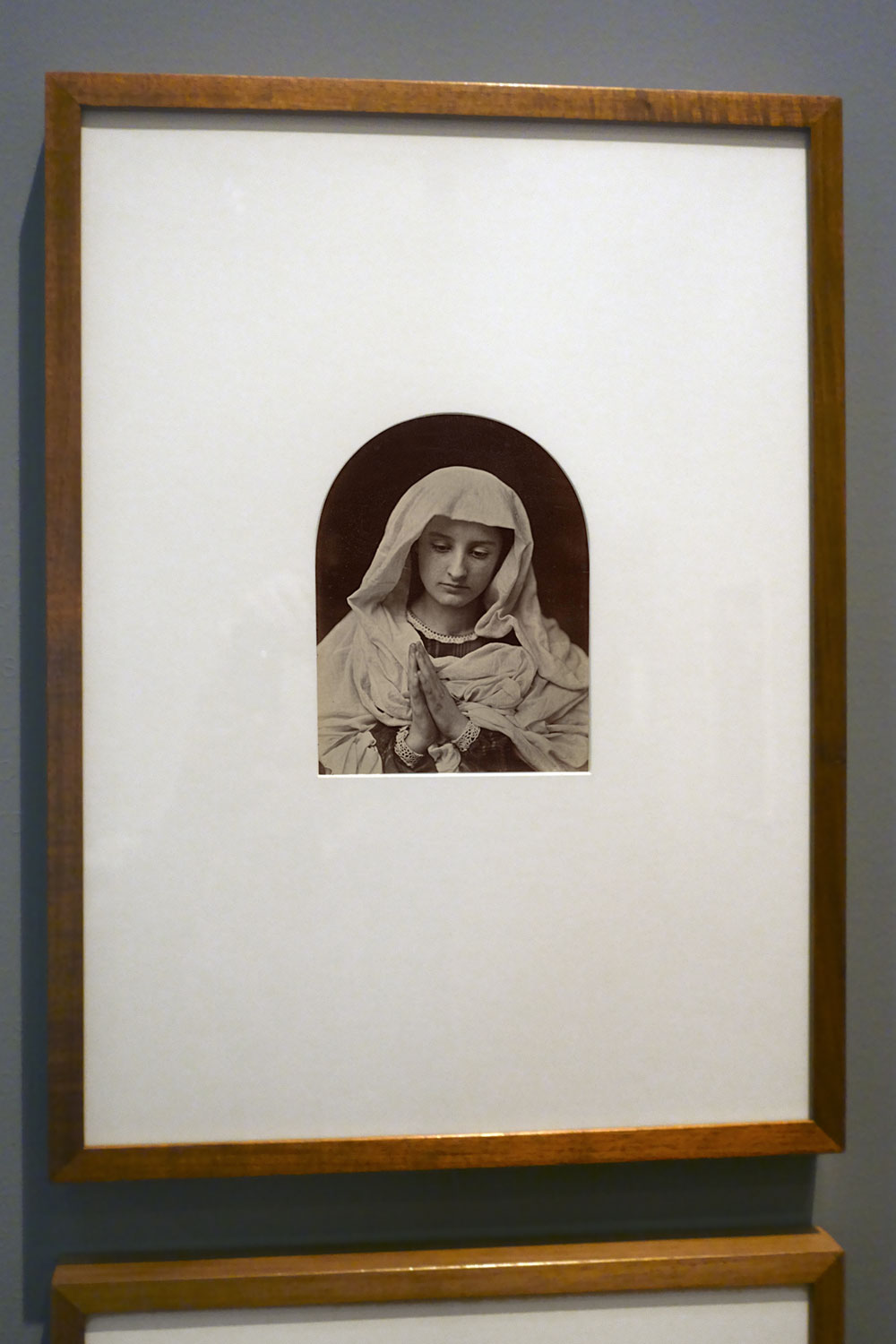
 

Installation view of the exhibition Photography: Real & Imagined at The Ian Potter Centre: NGV Australia, Melbourne showing O. G. Rejlander's 'The Virgin in prayer' (c. 1858-1860)


Installation view of the exhibition Photography: Real & Imagined at The Ian Potter Centre: NGV Australia, Melbourne showing O. G. Rejlander’s The Virgin in prayer (c. 1858-1860, below)
Photo: Marcus Bunyan
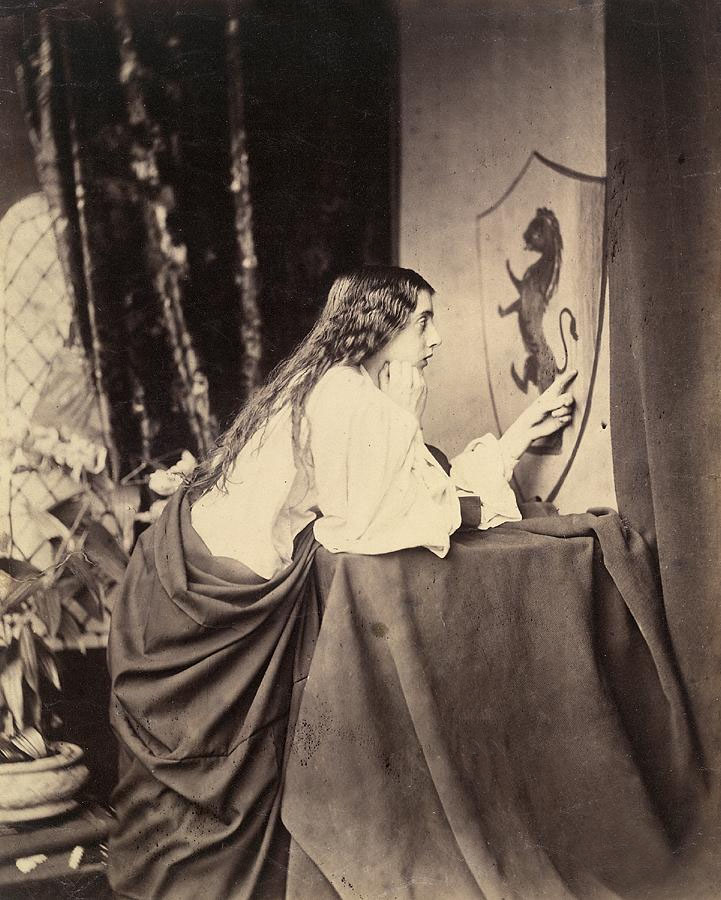
 

Henry Peach Robinson (English, 1830-1901) 'Elaine watching the shield of Lancelot' 1859


Henry Peach Robinson (English, 1830-1901)
Elaine watching the shield of Lancelot
1859
Albumen silver photograph
24.3 × 19.3cm (image and sheet)
National Gallery of Victoria, Melbourne
Purchased from Admission Funds, 1988
Public domain


In the 1850s Henry Peach Robinson was renowned for producing elaborately staged narrative images based on scenes from popular literary sources. He was particularly interested in Arthurian legends and drew upon these stories as inspiration for some of his most admired photographs. Elaine watching the shield of Lancelot is based on Alfred Tennyson’s version of the story of Lancelot and Elaine. Peach Robinson has recreated the scene in which the lovelorn Elaine gazes dreamily at the shield of Lancelot. She is shown as a woman who has shunned reason and propriety and abandoned herself to the intensity of her emotions, making this photograph both a tragic love story and a cautionary narrative.

Wall text from the exhibition
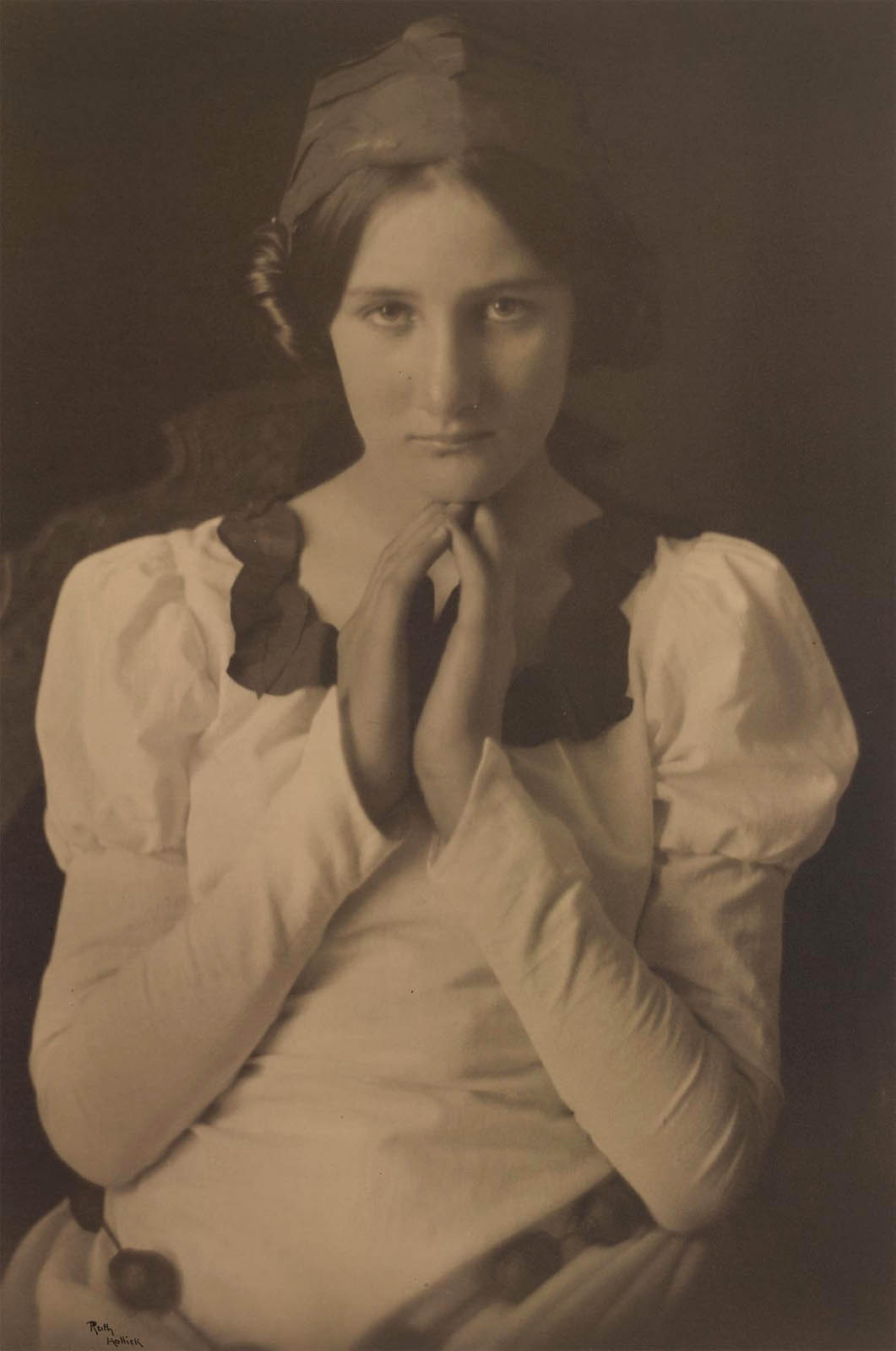
 

Ruth Hollick (Australian, 1883-1977) 'Thought' 1921


Ruth Hollick (Australian, 1883-1977)
Thought
1921
Gelatin silver photograph
37.4 × 25.3cm
National Gallery of Victoria, Melbourne
Presented through The Art Foundation of Victoria by Mrs Lucy Crosbie Morrison, Member, 1993
Public domain


Installation view of the exhibition 'Photography: Real & Imagined' at The Ian Potter Centre: NGV Australia, Melbourne


Installation view of the exhibition Photography: Real & Imagined at The Ian Potter Centre: NGV Australia, Melbourne
Photo: Marcus Bunyan
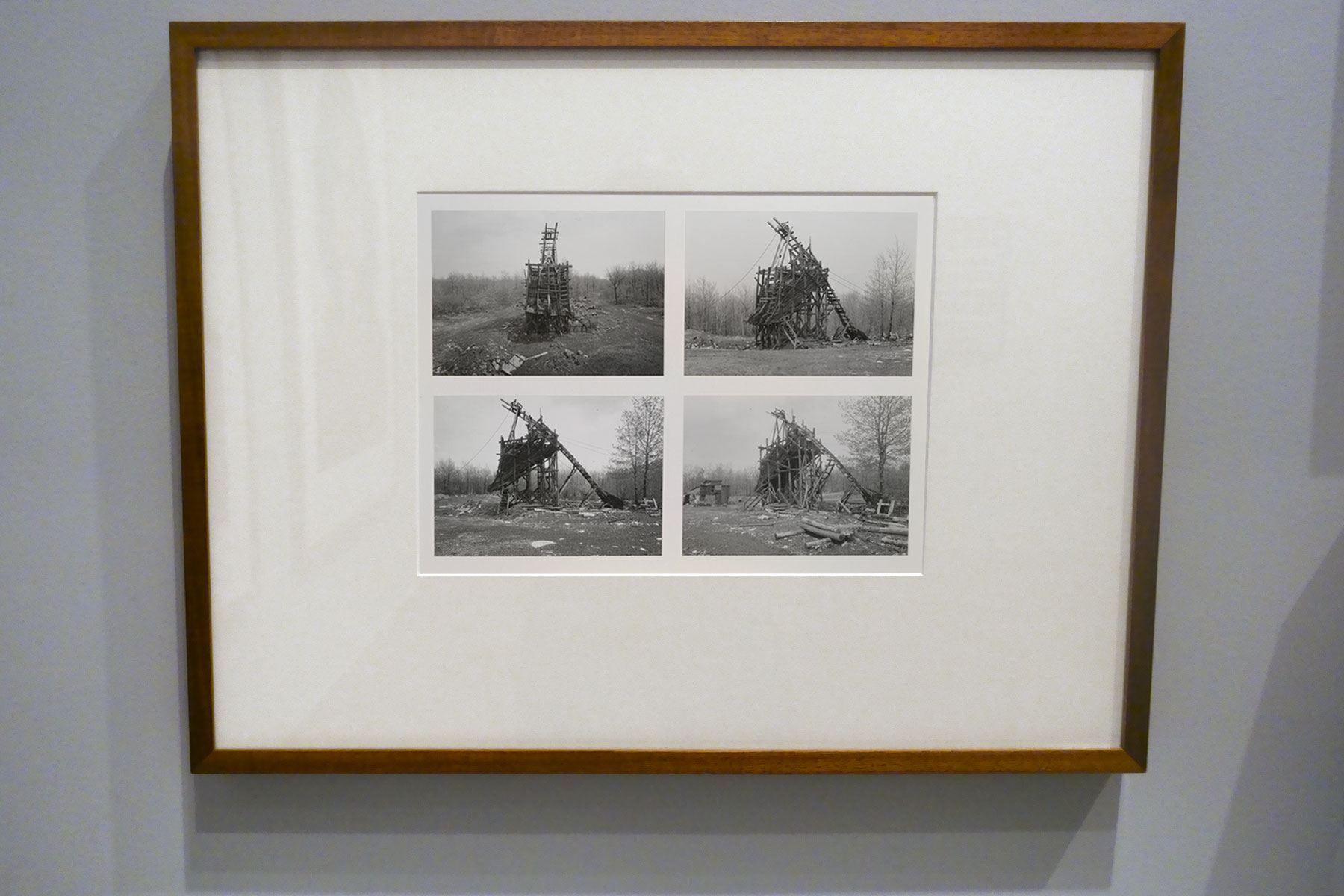
 

Installation view of the exhibition 'Photography: Real & Imagined' at The Ian Potter Centre: NGV Australia, Melbourne


Installation view of the exhibition Photography: Real & Imagined at The Ian Potter Centre: NGV Australia, Melbourne showing Bernd and Hilla Becher’s Coal tipple, Goodspring, Pennsylvania 1975 from the Artists and Photographs folio 1975
Photo: Marcus Bunyan


In 1959, German-born artists Bernd and Hilla Becher began travelling throughout Europe to create photographic typologies of vanishing industrial architecture (a practice they continued for more than four decades). While predominantly documenting German structures and landscapes, they occasionally worked overseas. This image, four views of a coal tipple, was taken on their first trip to North America in the mid 1970s. The Bechers constructed a system for comparing structures: photographed from a consistent angle, with virtually identical lighting conditions, printed at the same size and often displayed in grids.

Wall text from the exhibition
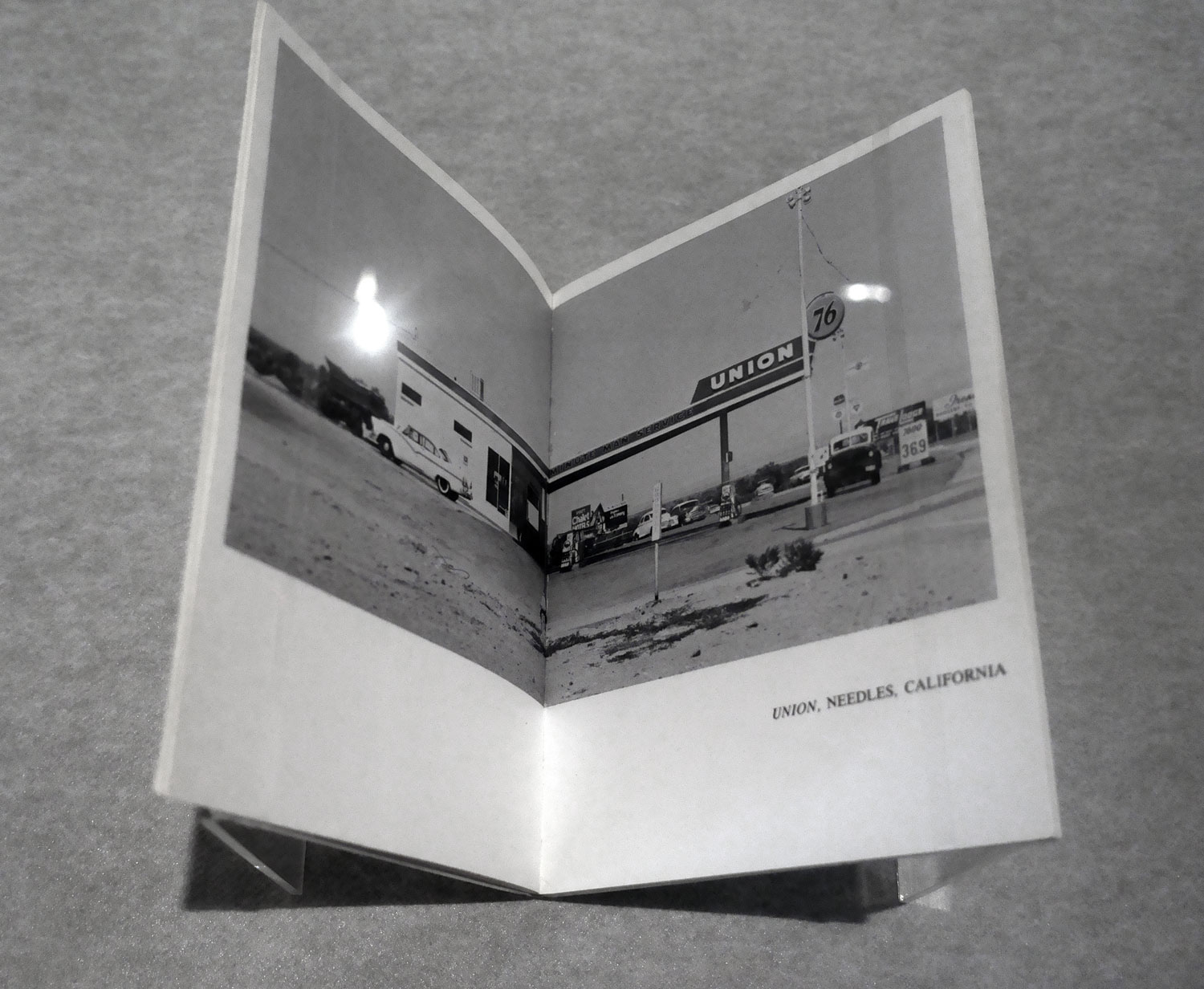
 

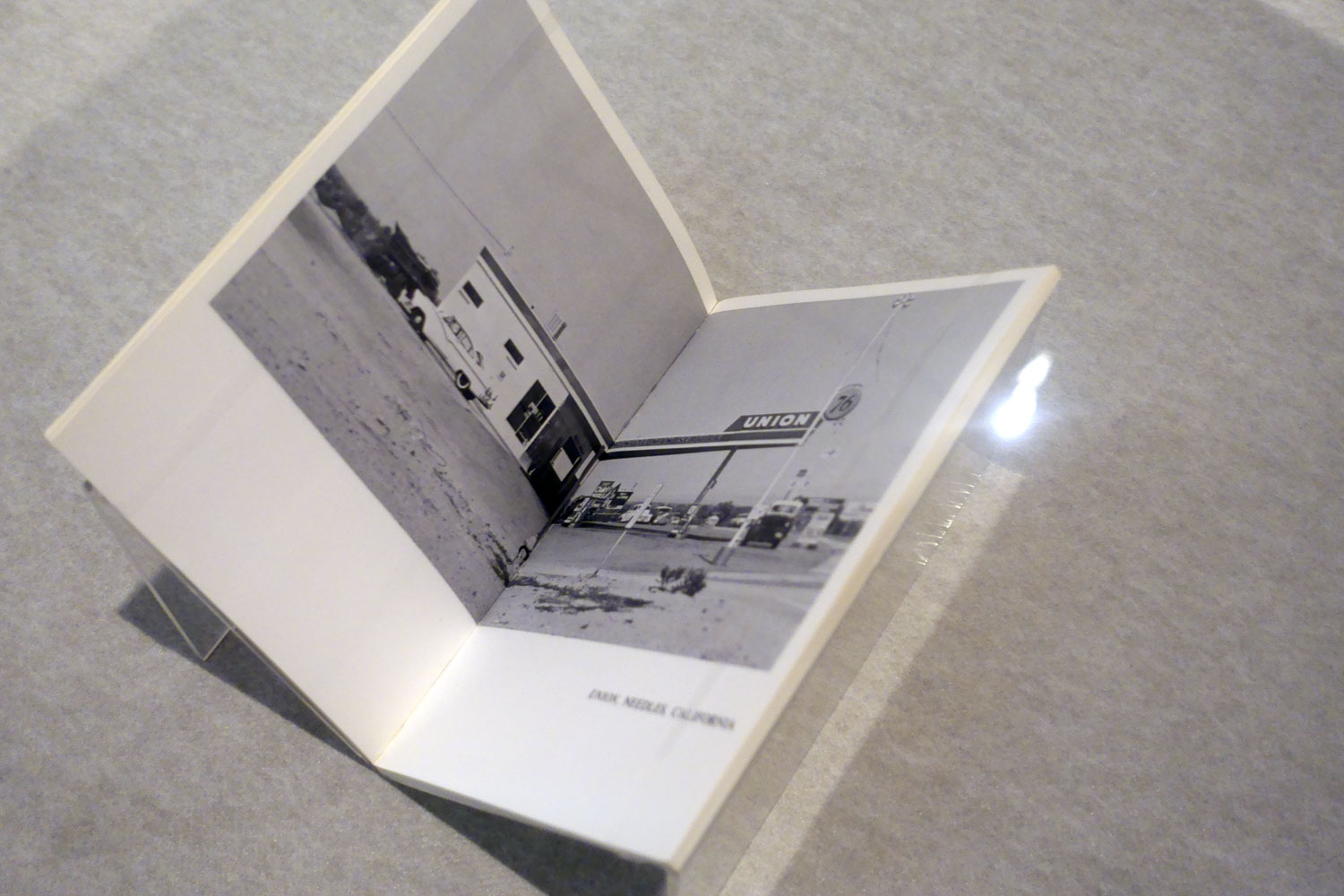
Edward Ruscha (American, b. 1937) 'Twentysix Gasoline Stations' 1963, published 1967 (installation view)

Edward Ruscha (American, b. 1937) 'Twentysix Gasoline Stations' 1963, published 1967 (installation view)


Edward Ruscha (American, b. 1937)
Twentysix Gasoline Stations (installation view)
1963, published 1967
Artist’s book: photo-offset lithograph and printed text, 48 pages, printed cover, glued binding
National Gallery of Victoria, Melbourne
Gift of Robert Rooney through the Australian Government’s Cultural Gifts Program, 2009
Photos: Marcus Bunyan


With the first publication of Twentysix Gasoline Stations, and his subsequent artist books, Edward Ruscha’s work was influential in initiating the widespread interest in photographic book publishing that continues today. Ruscha’s use of photographs as a means of recording – a seemingly unemotional, detached cataloguing of the world – and simply as a ‘device to complete the idea’ influenced the interest in serial imaging adopted by many conceptual artists. Ruscha’s use of the book format was also crucial, providing a transportable way of presenting art in varied contexts that existed as a type of ‘map’ to be read and interpreted, with the subject matter becoming less important than the documentation as a whole.

Wall text from the exhibition
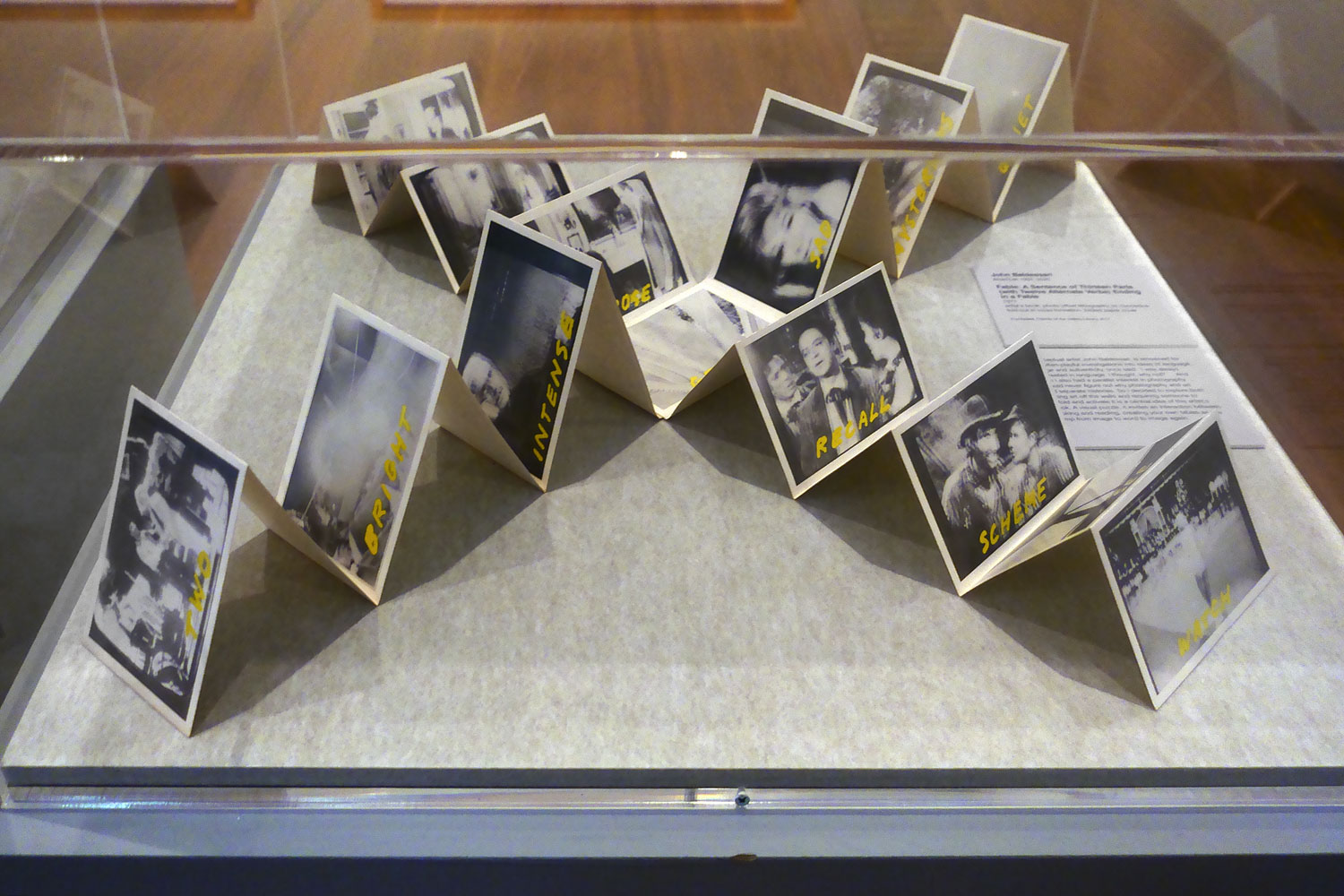
 

John Baldessari (American 1931-2020) ‘Fable: A Sentence of Thirteen Parts (with Twelve Alternate Verbs) Ending in a Fable’ 1977 (installation view)

John Baldessari (American 1931-2020) ‘Fable: A Sentence of Thirteen Parts (with Twelve Alternate Verbs) Ending in a Fable’ 1977 (installation view)


John Baldessari (American 1931-2020)
Fable: A Sentence of Thirteen Parts (with Twelve Alternate Verbs) Ending in a Fable (installation views)
1977
Artist’s book: photo-offset lithography on concertina fold-out in cross formation, folded paper cover
9.8 × 14.0 × 1.8cm (closed) 70.0 × 126.5cm approx. (overall, opened)
National Gallery of Victoria, Melbourne
Purchased, Friends of the Gallery Library, 2017
Photos: Marcus Bunyan


Conceptual artist John Baldessari, is renowned for his often-playful investigations into ideas of language, image and authenticity, once said: ‘I was always interested in language. I thought, why not? … And then I also had a parallel interest in photography … I could never figure out why photography and art had separate histories. So I decided to explore both’. Taking art off the walls and requiring someone to unfold and activate it is a central idea of this artist’s book. A visual puzzle, it invites an interaction between looking and reading, creating your own fables as you jump from image to word to image again.

Wall text from the exhibition
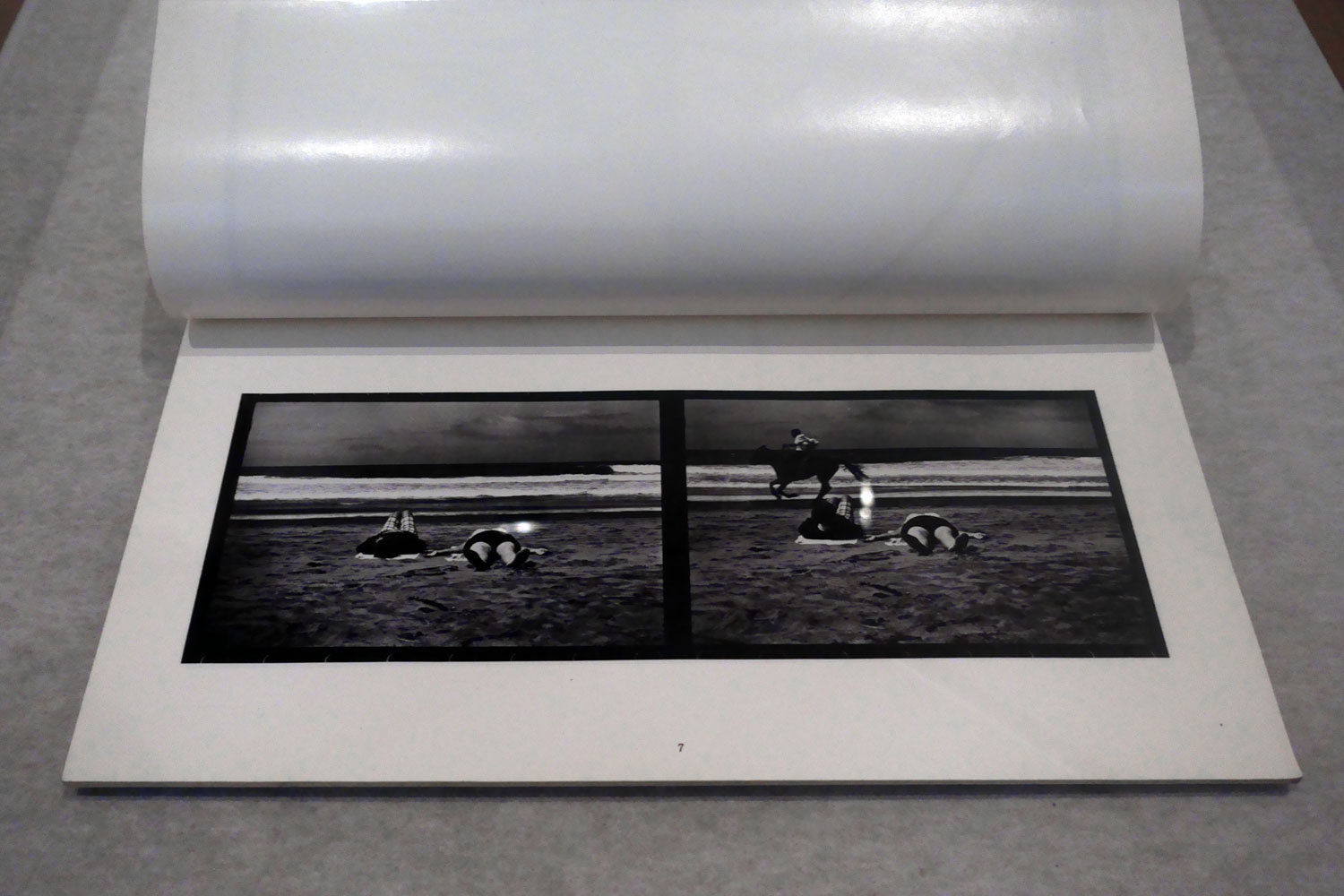
 

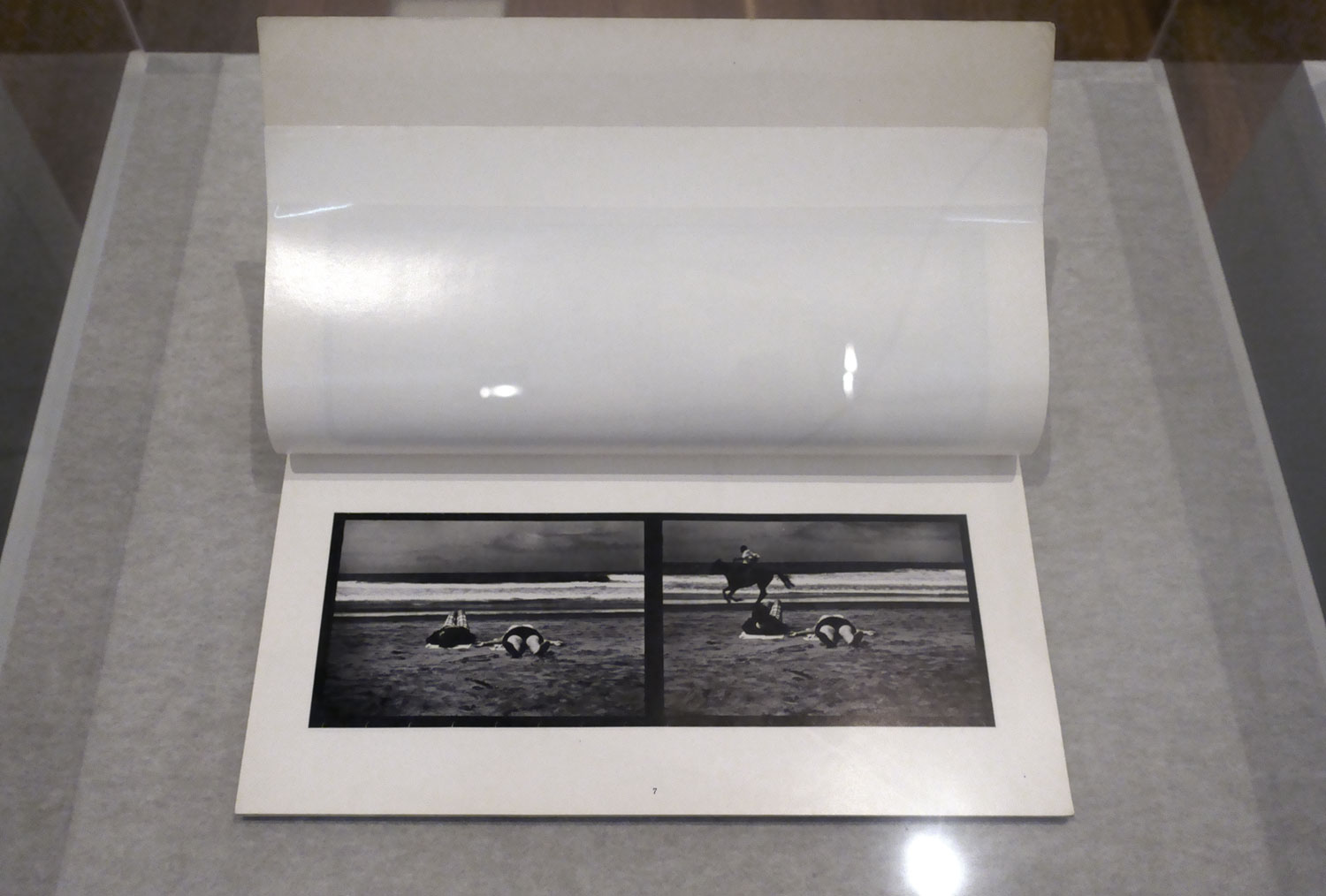
Eve Sonneman (American, b. 1946) 'Real time' 1968-1974 (installation view)

Eve Sonneman (American, b. 1946) 'Real time' 1968-1974 (installation view)


Eve Sonneman (American, b. 1946)
Real time (installation view)
1968-1974, published 1976
Artist’s book: photo-offset lithograph and printed text, 46 folios, printed paper cover, glued binding
National Gallery of Victoria, Melbourne
Purchased NGV Supporters of Photography, 2021
Photos: Marcus Bunyan


Eve Sonneman’s photobook Real time includes paired photographs, each separated by a black line border. The diptychs allow for the occurrence of movement and gestures and changes between the artist’s camera clicks. The ordered presentation, however, takes the images away from a straight documentary reading and to a consideration of their ‘objectness’. After first showing the photographs at MoMA, New York, then photography curator, John Szarkowski, set up a mentorship for Sonneman with the photographer Diane Arbus. As Sonneman recalled: ‘[Arbus] loved my pictures and we got along great. For two years she helped me edit’. Sonneman then published the images through the newly established Printed Matter in New York in 1976.

Wall text from the exhibition


Installation view of the exhibition 'Photography: Real & Imagined' at The Ian Potter Centre: NGV Australia, Melbourne showing at top left, Carol Jerrems and Virginia Fraser's book 'A Book About Australian Women' (1974);  at top centre, Nan Goldin's book 'The Ballad of Sexual Dependency' (1986); and at bottom left, Tracey Emin's 'Exploration of the Soul' (1994) 


Installation view of the exhibition Photography: Real & Imagined at The Ian Potter Centre: NGV Australia, Melbourne showing at top left, Carol Jerrems and Virginia Fraser’s book A Book About Australian Women (published 1974);  at top centre, Nan Goldin’s book The Ballad of Sexual Dependency (published 1986); and at bottom left, Tracey Emin’s Exploration of the Soul (published 1994)
Photo: Marcus Bunyan


Installation view of the exhibition 'Photography: Real & Imagined' at The Ian Potter Centre: NGV Australia, Melbourne showing at bottom left, Harold Cazneaux's book 'The Bridge Book' (published 1930); and at top right, Lee Friedlander's 'The American Monument' (published 1976)


Installation view of the exhibition Photography: Real & Imagined at The Ian Potter Centre: NGV Australia, Melbourne showing at bottom left, Harold Cazneaux’s book The Bridge Book (published 1930); and at top right, Lee Friedlander’s book The American Monument (published 1976)
Photo: Marcus Bunyan


Lee Friedlander (American, b. 1934) 'The American Monument' Published by The Eakins Press Foundation, New York, 1976 (installation view)


Lee Friedlander (American, b. 1934)
The American Monument (installation view)
Published by The Eakins Press Foundation, New York, 1976
Half-tone plate
Shaw Research Library, National Gallery of Victoria
Photo: Marcus Bunyan


Berenice Abbott (American 1898-1991, worked in France 1921-1929) 'Changing New York' Published by E. P. Dutton & Co, New York, 1939 (installation view)


Berenice Abbott (American 1898-1991, worked in France 1921-1929)
Changing New York (installation view)
Published by E. P. Dutton & Co, New York, 1939
Half-tone plate and letterpress text
National Gallery of Victoria, Melbourne
Purchased NGV Foundation, 2022
Photo: Marcus Bunyan


Installation view of the exhibition 'Photography: Real & Imagined' at The Ian Potter Centre: NGV Australia, Melbourne showing at top left, Man Ray's book 'Photographs by Man Ray Paris 1920-1934' (published 1934); at bottom left, Claude Cahun and Marcel Moore's book 'Aveux non Avenus' (Disavowals or Cancelled Confessions) (published 1930); at top right, Bill Brandt's book 'Perspective of Nudes' (published 1961); and at bottom right, Germaine Krull's book 'Nude studies' (Études de nu) (published 1930)


Installation view of the exhibition Photography: Real & Imagined at The Ian Potter Centre: NGV Australia, Melbourne showing at top left, Man Ray’s book Photographs by Man Ray Paris 1920-1934 (published 1934); at bottom left, Claude Cahun and Marcel Moore’s book Aveux non Avenus (Disavowals or Cancelled Confessions) (published 1930); at top right, Bill Brandt’s book Perspective of Nudes (published 1961); and at bottom right, Germaine Krull’s book Nude studies (Études de nu) (published 1930)
Photo: Marcus Bunyan


Photographs today are often viewed in galleries in frames, hung on walls. Many photographs, however, were originally created for display in combination with text and graphic design; to be laid out on a page and reproduced in different formats; to be held, worn on the body, published, and shared.

With recognition of these expanded histories of photography, and the contemporary resurgence in publishing, this exhibition includes artist books, magazines and photobooks that use the photographic image in print, publishing and design. These two cases include examples that show the influence of Surrealism, the New Objectivity and Constructivist graphic design in dynamic modern publications.

Artist and author Martin Parr has described the photobook as the ‘supreme platform’ for photographers to share the work with a broad audience. The 1920s to the 1970s were arguably the most important period for the publication of photobooks. These two cases include examples that show the influence of modernist, humanist and documentary photography traditions in innovative publications from this time. These include exhibition catalogues, examples of first edition books, publications published in larger un-editioned print runs and coveted collectable limited-edition books and portfolios.

Wall text from the exhibition


Installation view of the exhibition 'Photography: Real & Imagined' at The Ian Potter Centre: NGV Australia, Melbourne showing Man Ray’s book 'Photographs by Man Ray Paris 1920-1934' published 1934


Installation view of the exhibition Photography: Real & Imagined at The Ian Potter Centre: NGV Australia, Melbourne showing Man Ray’s book Photographs by Man Ray Paris 1920-1934 (published 1934) with at right, Man Ray’s Anatomies (1930, below)
Photo: Marcus Bunyan


Man Ray (1890-1976) 'Anatomies' 1930


Man Ray (Emmanuel Radnitzky) (American, 1890-1976)
Anatomies
1930
Gelatin silver photograph

Please note: this photograph is not in the exhibition
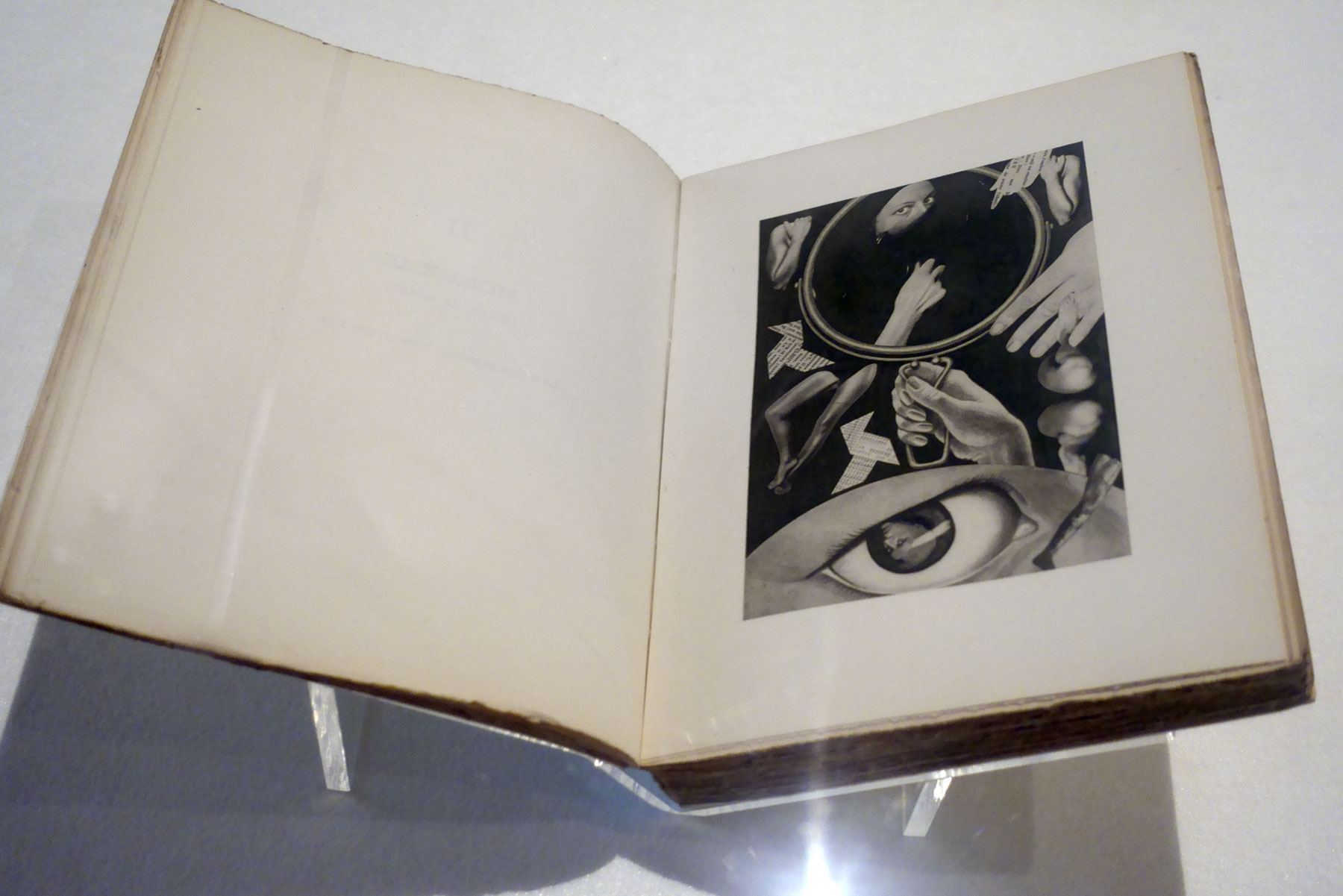
 

Claude Cahun (French, 1894-1954) Marcel Moore (French, 1892-1972) 'Aveux non Avenus' (Disavowals or Cancelled Confessions) Published by Éditions du Carrefour, Paris, 1930 (installation view)

Claude Cahun (French, 1894-1954) Marcel Moore (French, 1892-1972) 'Aveux non Avenus' (Disavowals or Cancelled Confessions) Published by Éditions du Carrefour, Paris, 1930 (installation view)


Claude Cahun (French, 1894-1954) Marcel Moore (French, 1892-1972)
Aveux non Avenus (Disavowals or Cancelled Confessions) (installation view)
Published by Éditions du Carrefour, Paris, 1930
Illustrated book: photogravure, letterpress text, 237 pages, 10 leaves of plates, paper cover, stitched binding
National Gallery of Victoria, Melbourne
Shaw Research Library, acquired through the Friends of the Gallery Library endowment, 2017
Photos: Marcus Bunyan


Aveux non Avenus, by the celebrated poet, writer, sculptor and photographer Claude Cahun, was published in 1930 by Éditions du Carrefour, Paris, in an edition of five hundred. The book comprises a series of texts in French: poems, literary aphorisms, recollections of dream sequences and philosophical thoughts, ideas and meanderings. Pierre Mac Orlan, a French novelist who wrote the preface to the book, described Mademoiselle Claude Cahun’s text as ‘de poèmes-essais et d’essais-poèmes’, or ‘poem-essays and essay-poems’, and said that overall ‘the book is virtually entirely dedicated to the word adventure’

The alliterative title presents a conundrum for English translation – ‘aveux’ meaning ‘avowals’ or ‘confessions’, and ‘non avenus’ meaning ‘voided’ – and is variously translated as Disavowals, Denials, and Unavowed confessions, among other things. Curator Jennifer Mundy has written that the title suggests ‘an affirmative expression immediately followed by some form of negation or retraction’.

Ambiguities around the title aside, there is a strong visual aspect to the book too. The texts are each demarcated with a complex and fantastical photogravure created by Cahun’s partner, Marcel Moore. These photogravure (where an image from the negative of a photograph is etched into a metal plate, similar to printmaking) are collages made up of photographic images of, and by, Cahun. Throughout the book, graphic devices of stars, eyes and lips are also used to separate sections of text. Aveux non Avenus, which has been described as an anti-realist or surrealist-autobiography of the multi-disciplinary Cahun, exists as a potential critique of the autobiography format altogether, is wonderfully irreducible.

Maggie Finch and Isobel Crombie. “Claude Cahun,” in the 2019 July/August edition of NGV Magazine on the NGV website 9th April 2020 [Online] Cited 28/01/2024


Claude Cahun (French, 1894-1954) and Marcel Moore (French, 1892-1972) 'Untitled' 1930


Claude Cahun (French, 1894-1954) and Marcel Moore (French, 1892-1972)
Untitled
1930
In Aveux non avenus 1930
published by Éditions du Carrefour, Paris
illustrated book: heliographs
National Gallery of Victoria, Melbourne
Shaw Research Library, acquired through the Friends of the Gallery Library endowment, 2017
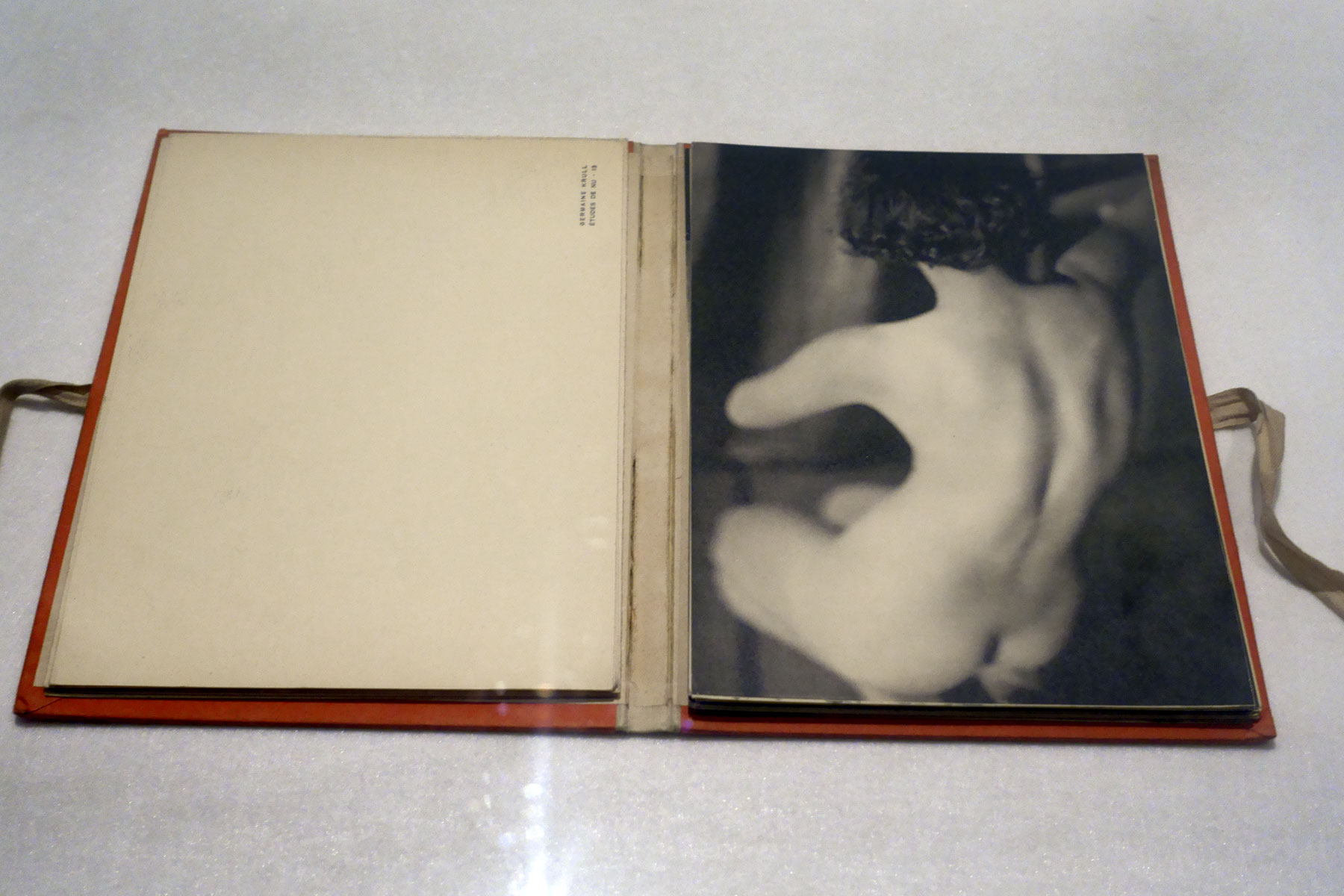
 

Germaine Krull (German, 1897-1985) 'Nude Studies' (Études de Nu) Published by Librarie des arts décoratifs, Paris, 1930 (installation view)


Germaine Krull (German, 1897-1985)
Nude Studies (Études de Nu) (installation view)
Published by Librarie des arts décoratifs, Paris, 1930
24 photogravures, letterpress on paper, white cloth-backed orange paper-covered board portfolio with ribbons
National Gallery of Victoria
Purchased, NGV Foundation, 2022
Photo: Marcus Bunyan


Bill Brandt (English born Germany, 1904-1983) 'Perspective of Nudes' Published Bodley Head, London, 1961 (installation view)


Bill Brandt (English born Germany, 1904-1983)
Perspective of Nudes (installation view)
Published Bodley Head, London, 1961
Half-tone plate
Shaw Research Library, National Gallery of Victoria
Photo: Marcus Bunyan
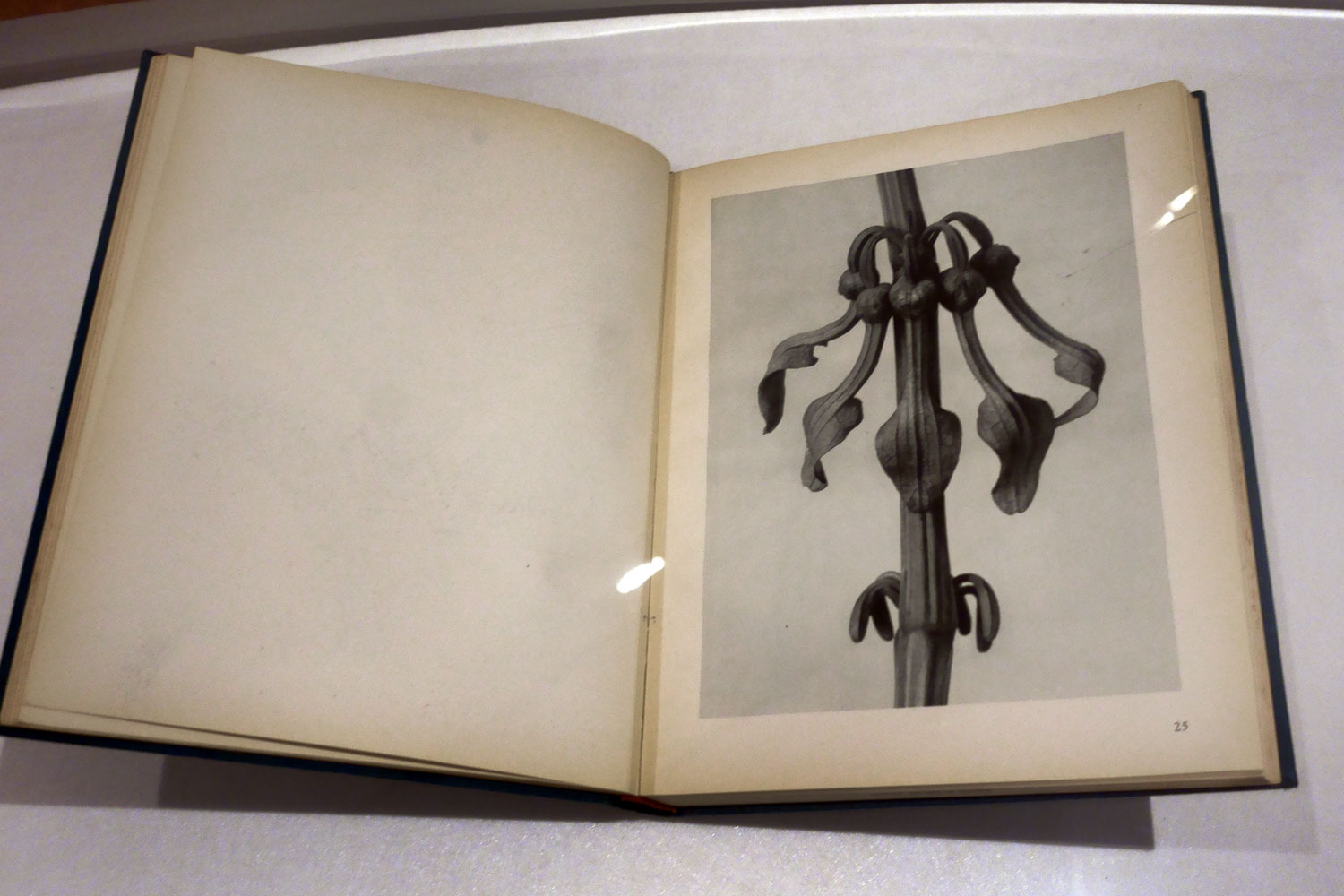
 

Karl Blossfeldt (German, 1865-1932) 'Art Forms in Nature: Examples from the Plant World Photographed Direct from Nature' Published by A. Zwemmer, London, 1929 (installation view)


Karl Blossfeldt (German, 1865-1932)
Art Forms in Nature: Examples from the Plant World Photographed Direct from Nature (installation view)
Published by A. Zwemmer, London, 1929
Half-tone plate
Shaw Research Library, National Gallery of Victoria
Photo: Marcus Bunyan


Karel Teige typographer (Czechoslovakia 1900-1951) Karel Paspa photographer (Czechoslovakia 1862-1936) 'ABECEDA (Alphabet)' Published by J. Otto, Prague, 1926 (installation view)


Karel Teige typographer (Czechoslovakia 1900-1951)
Karel Paspa photographer (Czechoslovakia 1862-1936)
ABECEDA (Alphabet) (installation view)
Published by J. Otto, Prague, 1926
Photomontage
National Gallery of Victoria
Shaw Research Library, acquired through the Friends of the Gallery Library endowment, 2017
Photo: Marcus Bunyan


Aleksandr Rodchenko (Russian, 1891-1958) Varvara Stepanova (Russian, 1894-1958) 'USSR in Construction, no. 12 (Parachute issue)' (URSS en Construction) 1935


Aleksandr Rodchenko (Russian, 1891-1958) and Varvara Stepanova (Russian, 1894-1958)
USSR in Construction, no. 12 (Parachute issue) (URSS en Construction) (installation view)
1935
Illustrated journal: colour rotogravure, 22 pages with fold-out inserts, lithographic cover
National Gallery of Victoria
Purchased, NGV Supporters of Prints and Drawings, 2019
Photo: Marcus Bunyan


Installation view of the exhibition 'Photography: Real & Imagined' at The Ian Potter Centre: NGV Australia, Melbourne showing at top left, Eliza Hutchinson's 'No. 9' (2010); at bottom left, Ewa Narkiewicz's 'Copper flax #4' (1999); at centre top, Harry Nankin's 'The first wave: fragment 2' (1996); at centre bottom, Peter Peryer's 'Seeing' (1989); and at right, Aaron Siskind's 'New York' (1950)


Installation view of the exhibition Photography: Real & Imagined at The Ian Potter Centre: NGV Australia, Melbourne showing at top left, Eliza Hutchinson’s No. 9 (2010); at bottom left, Ewa Narkiewicz’s Copper flax #4 (1999); at centre top, Harry Nankin’s The first wave: fragment 2 (1996); at centre bottom, Peter Peryer’s Seeing (1989); and at right, Aaron Siskind’s New York (1950)
Photo: Marcus Bunyan


In much the same way that tactile writing systems such as braille are impenetrable to those with vision, a photograph printed in two dimensions can be incomprehensible for people with vision impairment. Each system presents a conversion – of letters, texts and illustration – into raised dots on a page; of visible wavelengths of light into an image on a light-sensitive surface. Each relies on an irreversible alteration of the surface. Seeing, the title of this Peter Peryer photograph, infers an action – seeing something. Yet the conversion into a photographic image draws attention to the impenetrability of both acts.

Wall text from the exhibition


Installation view of the exhibition 'Photography: Real & Imagined' at The Ian Potter Centre: NGV Australia, Melbourne showing at left, Gregory Crewdson's 'Untitled' (1999) from the Twilight series (1998-2002); at centre, Malerie Marder's 'Untitled' (2001); and at right, Anne Zahalka's 'Sunday, 2:09pm' (1995) 


Installation view of the exhibition Photography: Real & Imagined at The Ian Potter Centre: NGV Australia, Melbourne showing at left, Gregory Crewdson’s Untitled (1999) from the Twilight series (1998-2002); at centre, Malerie Marder’s Untitled (2001); and at right, Anne Zahalka’s Sunday, 2:09pm (1995)
Photo: Marcus Bunyan
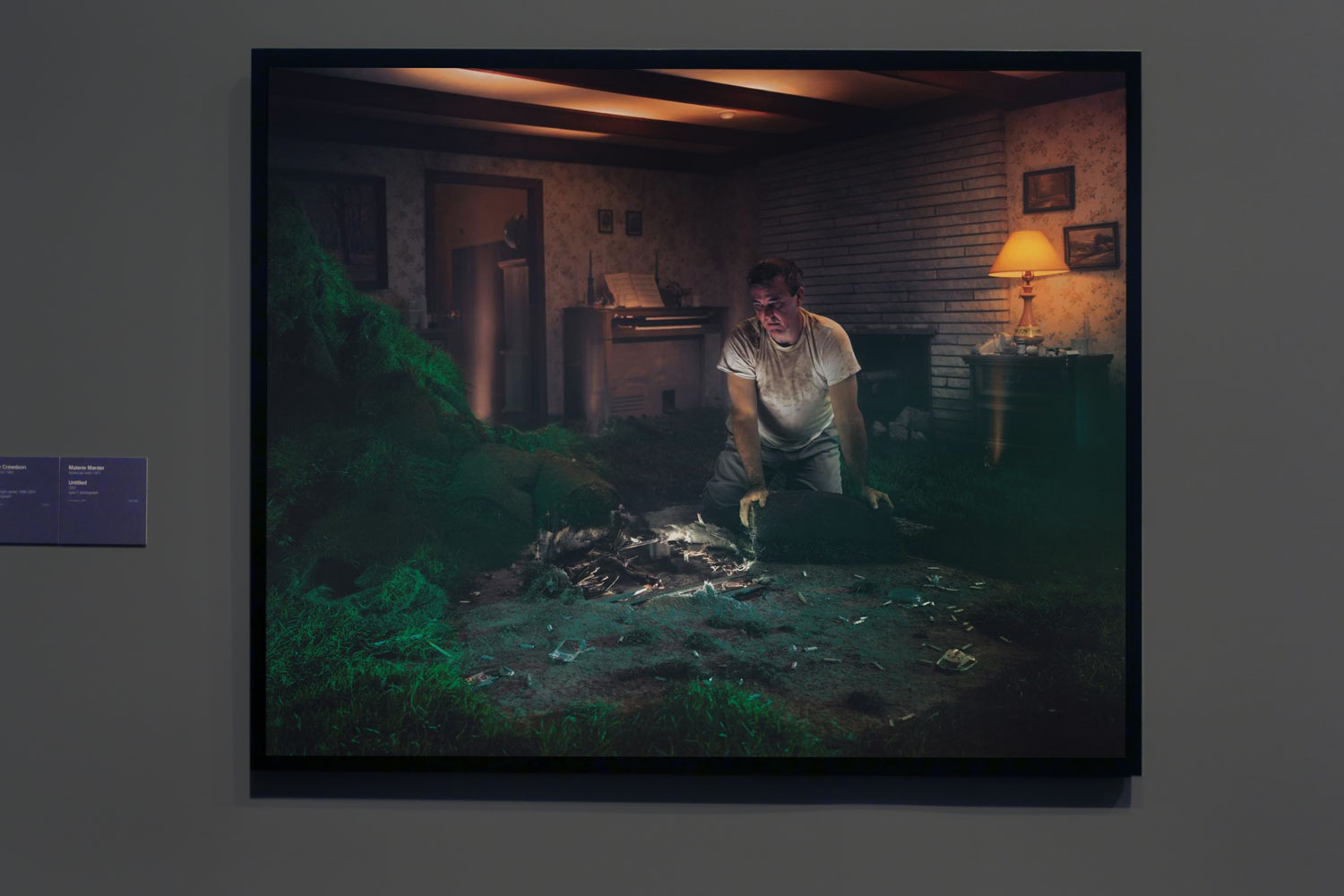
 

Gregory Crewdson (American, b. 1962) 'Untitled' 1999 (installation view)


Gregory Crewdson (American, b. 1962)
Untitled (installation view)
1999
From the Twilight series 1998-2002
Type C photograph
121.9 × 152.4cm
National Gallery of Victoria, Melbourne
Kaiser Bequest, 2000
Photo: Marcus Bunyan


Anne Zahalka (Australian, b. 1957) 'Sunday, 2:09pm' 1995, printed 2019 (installation view)


Anne Zahalka (Australian, b. 1957)
Sunday, 2:09pm
1995, printed 2019
From the Open House series 1995
Colour cibachrome transparency, light box
121.7 × 161.4cm
National Gallery of Victoria, Melbourne
Purchased, Victorian Foundation for Living Australian Artists, 2019
Photo: Marcus Bunyan
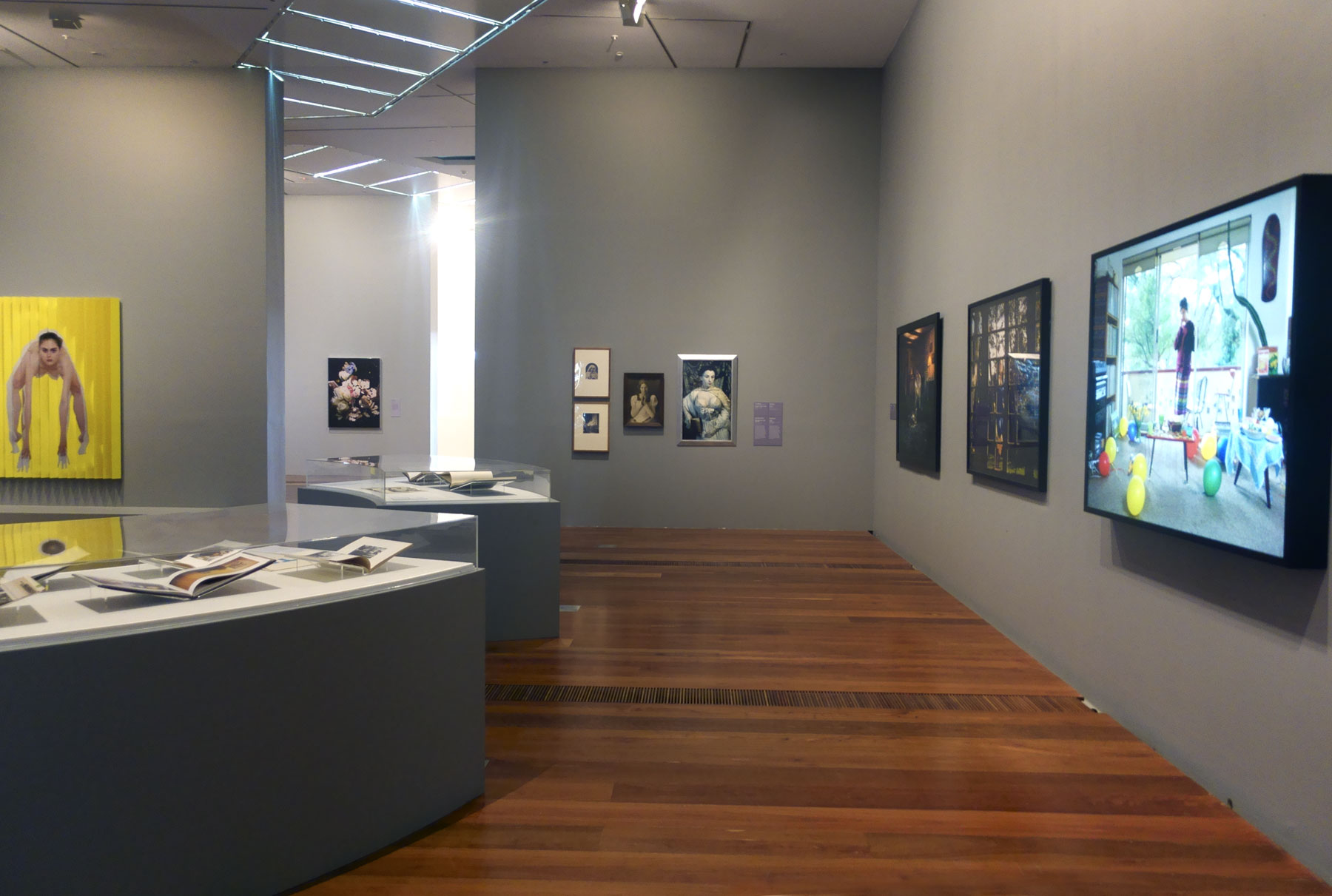
 

Installation view of the exhibition 'Photography: Real & Imagined' at The Ian Potter Centre: NGV Australia, Melbourne showing at left, Polly Borland's 'Untitled' (2018); and at right, Anne Zahalka's 'Sunday, 2:09pm' (1995)


Installation view of the exhibition Photography: Real & Imagined at The Ian Potter Centre: NGV Australia, Melbourne showing at left, Polly Borland’s Untitled (2018); and at right, Anne Zahalka’s Sunday, 2:09pm (1995)
Photo: Marcus Bunyan
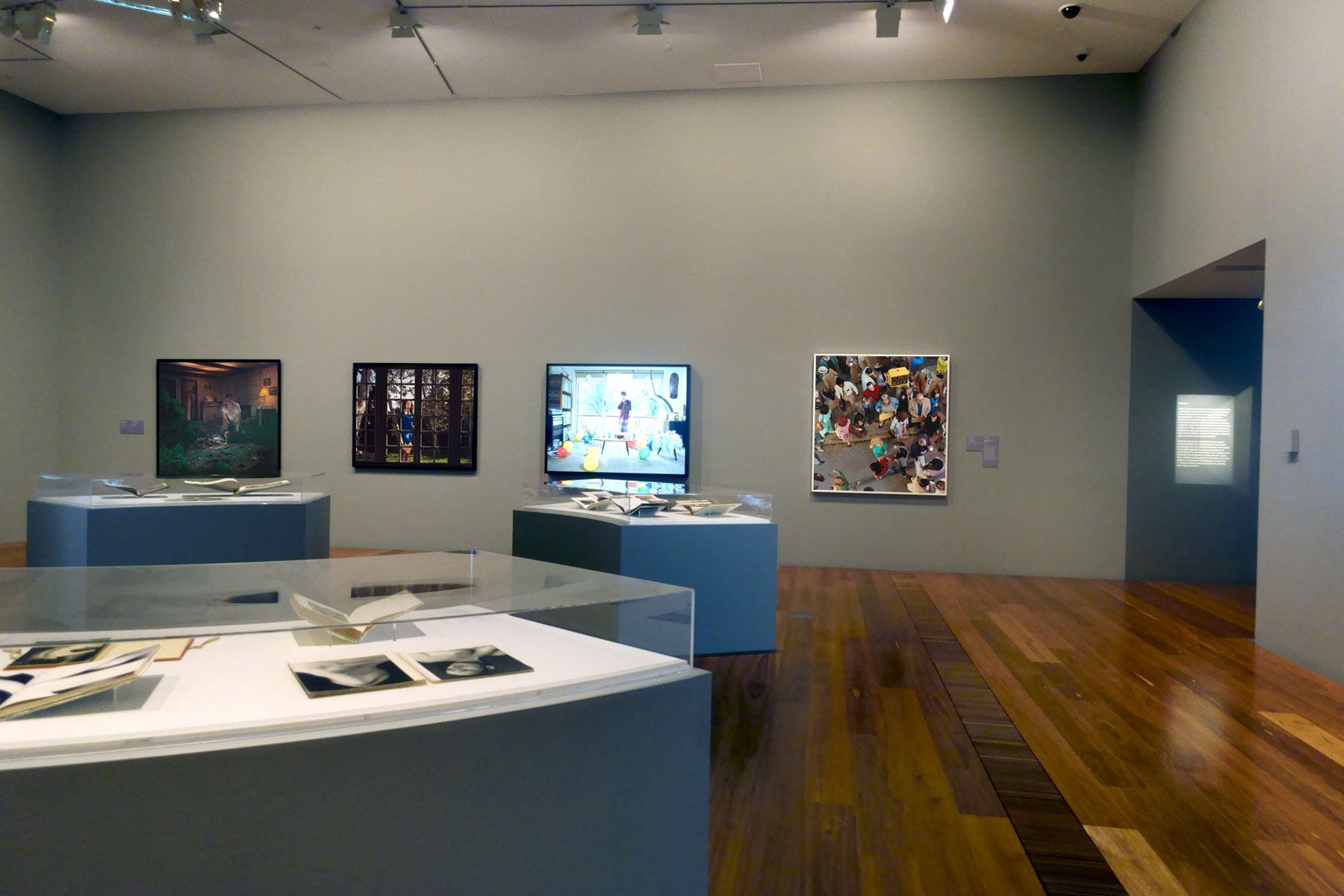
 

Installation view of the exhibition 'Photography: Real & Imagined' at The Ian Potter Centre: NGV Australia, Melbourne showing at rear from left to right, Gregory Crewdson's 'Untitled' (1999) from the 'Twilight' series (1998-2002); at second left, Malerie Marder's 'Untitled' (2001); and centre, Anne Zahalka's 'Sunday, 2:09pm' (1995); and at right, Alex Prager's 'Crowd #11 (Cedar and Broad Street)' (2013)


Installation view of the exhibition Photography: Real & Imagined at The Ian Potter Centre: NGV Australia, Melbourne showing at rear from left to right, Gregory Crewdson’s Untitled (1999) from the Twilight series (1998-2002); at second left, Malerie Marder’s Untitled (2001); and centre, Anne Zahalka’s Sunday, 2:09pm (1995); and at right, Alex Prager’s Crowd #11 (Cedar and Broad Street) (2013, below)
Photo: Marcus Bunyan


Installation view of the exhibition Photography: Real & Imagined at The Ian Potter Centre: NGV Australia, Melbourne showing Alex Prager's 'Crowd #11 (Cedar and Broad Street)' (2013)


Installation view of the exhibition Photography: Real & Imagined at The Ian Potter Centre: NGV Australia, Melbourne showing Alex Prager’s Crowd #11 (Cedar and Broad Street) (2013, below)
Photos: Marcus Bunyan


Alex Prager (American, b. 1979) 'Crowd #11 (Cedar and Broad Street)' 2013


Alex Prager (American, b. 1979)
Crowd #11 (Cedar and Broad Street)
2013
Inkjet print
149.7 × 142.0cm (image and sheet)
National Gallery of Victoria, Melbourne
Bowness Family Fund for Contemporary Photography, 2014


Alex Prager’s staged photographs openly reference the aesthetics of mid-twentieth century American cinema, fashion photography and the photographs of Cindy Sherman. Her images resemble film stills and are packed with emotion and human melodrama. Working with actors, directing their placement and interaction to create a hyperreal dramatisation of crowd behaviour, Prager’s narrative tableaux pair the banal and fantastic, the everyday and the theatrical, real life and cinematic representation. In this image we have a bird’s eye view of a mass of people crossing the road. We can see the patterns of movement, contact and avoidance and a suggestion of the narrative possibilities of the interacting crowd.

Wall text from the exhibition


Installation view of the exhibition 'Photography: Real & Imagined' at The Ian Potter Centre: NGV Australia, Melbourne showing at second right, Pat Brassington's 'Rosa' (2014); and at right, Yvonne Todd's 'Werta' (2005)


Installation view of the exhibition Photography: Real & Imagined at The Ian Potter Centre: NGV Australia, Melbourne showing at second right, Pat Brassington’s Rosa (2014); and at right, Yvonne Todd’s Werta (2005)
Photo: Marcus Bunyan
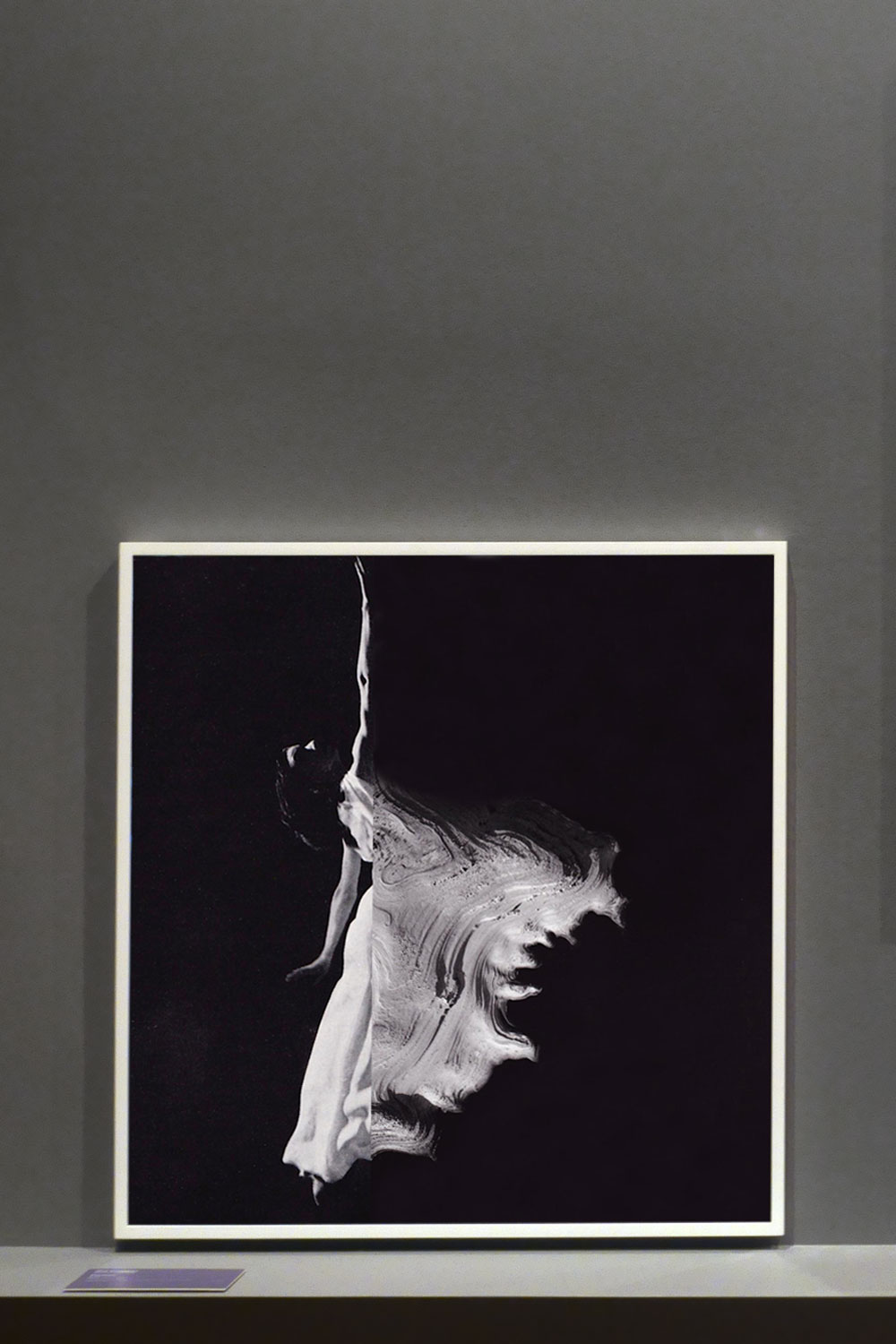
 

Zoë Croggon (Australian, b. 1989) 'Fonteyn' 2012 (installation view)


Zoë Croggon (Australian, b. 1989)
Fonteyn (installation view)
2012
Digital type C print
102.8 × 99.9cm
Purchased with funds arranged by Loti Smorgon for Contemporary Australian Photography, 2013
Photo: Marcus Bunyan
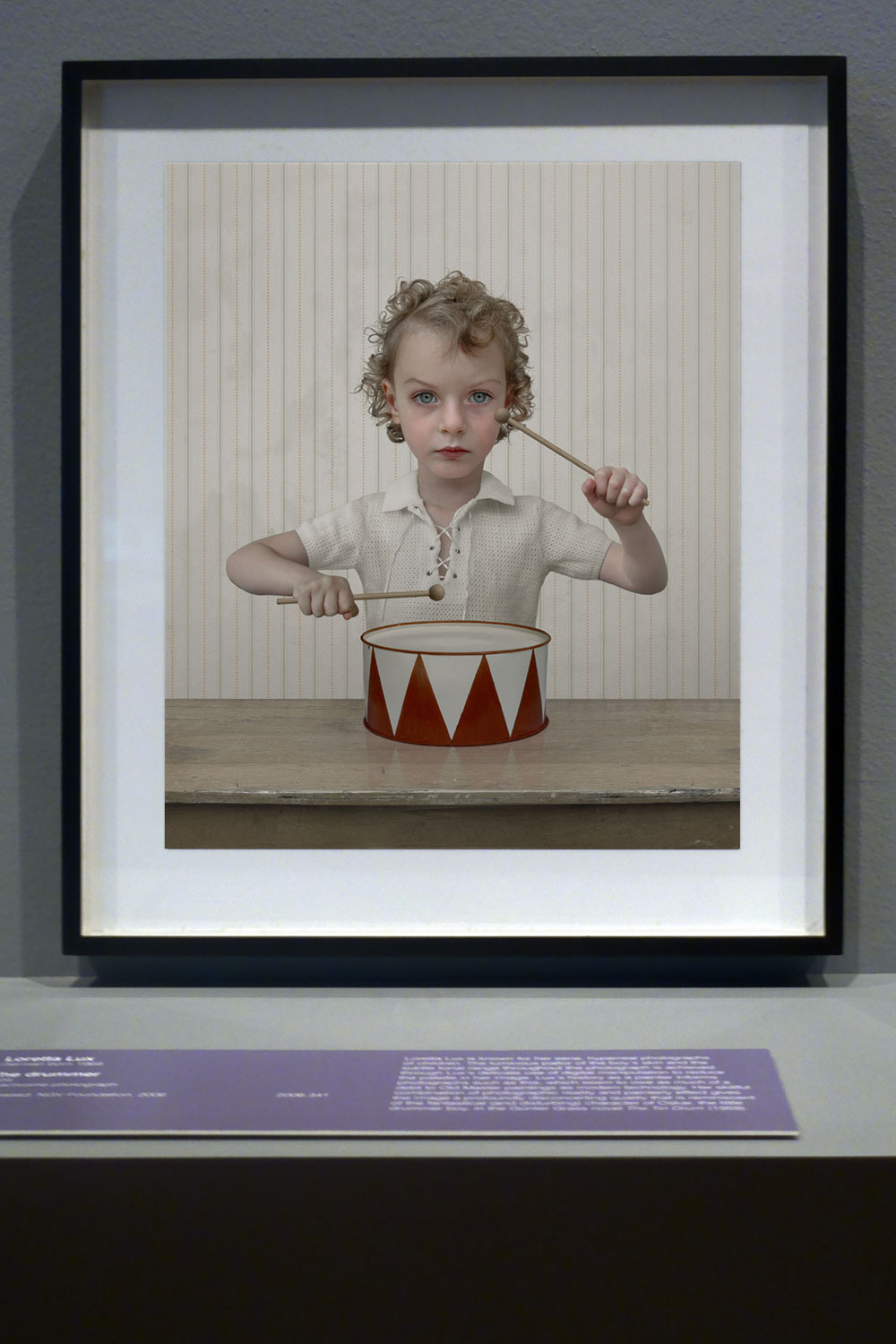
 

Installation view of the exhibition 'Photography: Real & Imagined' at The Ian Potter Centre: NGV Australia, Melbourne showing Loretta Lux's 'The Drummer' (2004)


Installation view of the exhibition Photography: Real & Imagined at The Ian Potter Centre: NGV Australia, Melbourne showing Loretta Lux’s The Drummer (2004, below)
Photo: Marcus Bunyan
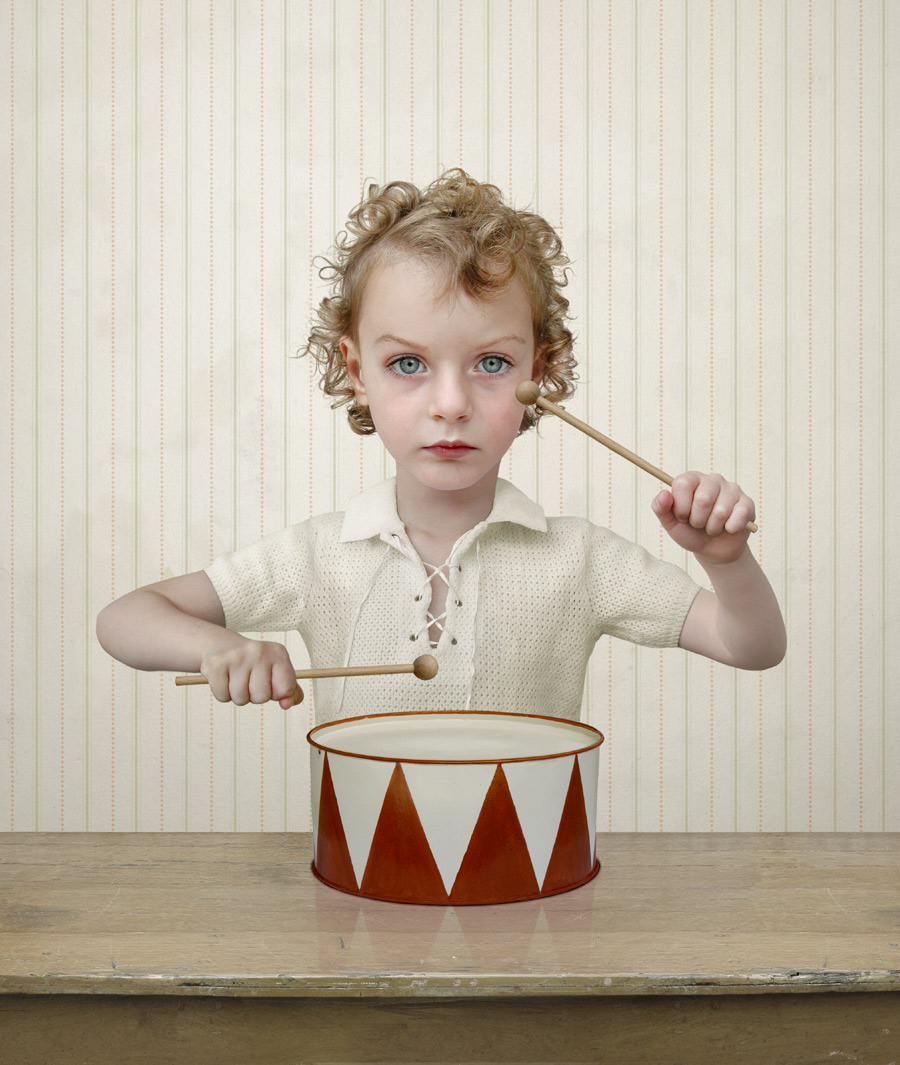
 

Loretta Lux (German, b. 1969) 'The drummer' 2004


Loretta Lux (German, b. 1969)
The drummer
2004
Cibachrome photograph
45.0 x 37.7cm
National Gallery of Victoria, Melbourne
Purchased, NGV Foundation, 2006
© Loretta Lux. VG Bild-Kunst/Copyright Agency, 2023


Loretta Lux is known for her eerie, hyperreal photographs of children. The luminous pallor of the boy’s skin and the subtle tonal range throughout the photograph is achieved through Lux’s delicate use of digital manipulation to reduce the palette in her image. Lux’s history as a painter informs photographs such as this, which seem to owe as much of a debt to Old Master paintings as modern technology. Her skilful combination of photographic reality and painterly effect gives the image a profoundly disconcerting quality that is reminiscent of the fantastical (and disturbing) character of Oskar, the little drummer boy, in the Günter Grass novel The Tin Drum (1959).

Wall text from the exhibition


Installation view of the exhibition 'Photography: Real & Imagined' at The Ian Potter Centre: NGV Australia, Melbourne showing at bottom left, Raoul Ubac's 'Penthésilée' (c. 1938, below); at top centre, André Kertész's Satiric Dancer, Paris (1926, below); and at right, Max Dupain's 'Impassioned clay' (1936, below)


Installation view of the exhibition Photography: Real & Imagined at The Ian Potter Centre: NGV Australia, Melbourne showing at bottom left, Raoul Ubac’s Penthésilée (c. 1938, below); at top centre, André Kertész’s Satiric Dancer, Paris (1926, below); and at right, Max Dupain’s Impassioned clay (1936, below)
Photo: Marcus Bunyan


Raoul Ubac (Belgian, 1909-1985) 'Penthésilée' c. 1938


Raoul Ubac (Belgian, 1909-1985)
Penthésilée
c. 1938
Gelatin silver photograph
31.0 × 41.5cm
National Gallery of Victoria, Melbourne
Purchased NGV Foundation, 2013


From the mid 1930s onwards Surrealist photographer Raoul Ubac experimented with collage, photomontage and solarisation. These processes disrupted the surface of his photographs, enabling him to create new and fantastic realities and introducing an element of chance into his image making. Penthésilée is from his most important series of photographs. The image is based on the story of Penthesilea, queen of the Amazons, who was killed by Achilles while fighting alongside the Trojans. To represent this mythic battle Ubac created this complex photomontage by cutting up, collaging, rephotographing and solarising photographs of nude female figures. The resulting image has an uncanny sense of movement suggesting the height of battle.

Wall text from the exhibition
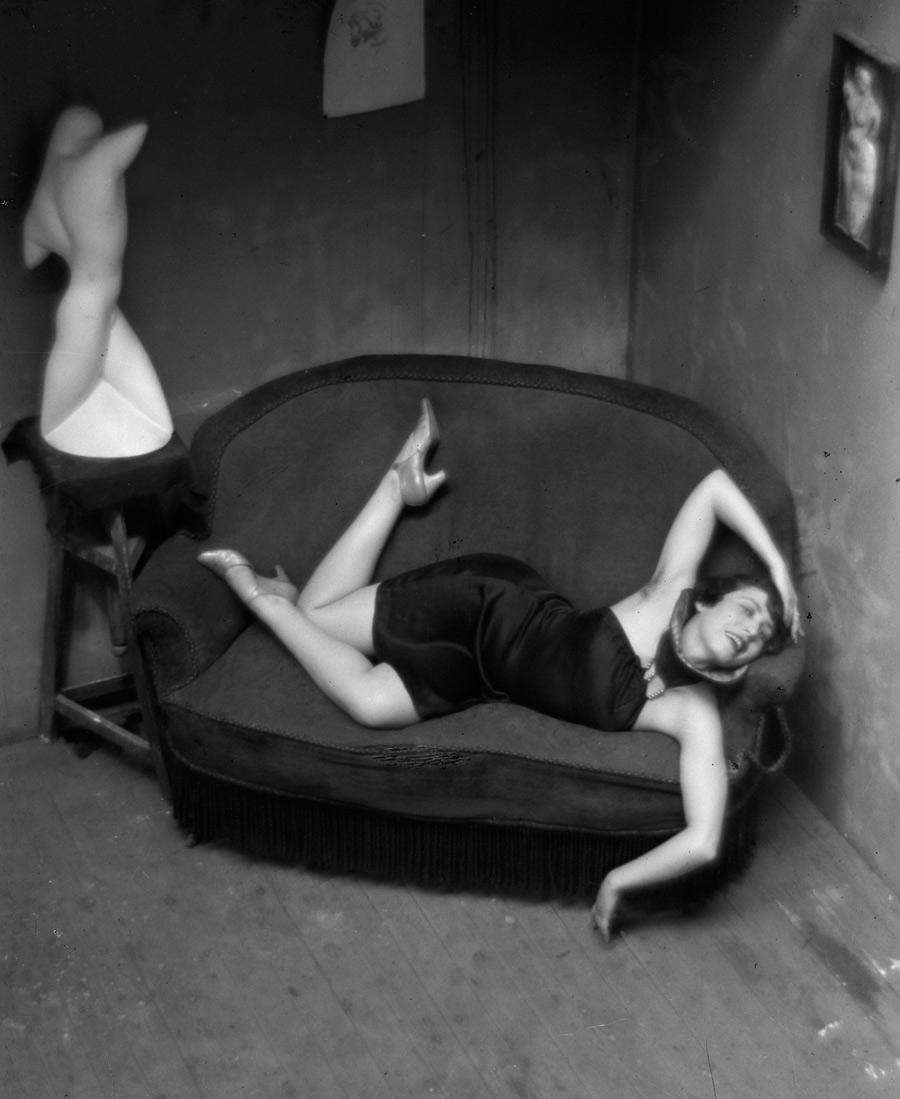
 

André Kertész. 'Satiric Dancer' 1926


André Kertész (Hungarian 1894-1985, France 1925-1936, United States 1936-1985)
Satiric Dancer, Paris
1926, printed c. 1972
Gelatin silver photograph
Purchased, 1973


Installation view of the exhibition 'Photography: Real & Imagined' at The Ian Potter Centre: NGV Australia, Melbourne showing Max Dupain's 'Impassioned clay' (1936)


Installation view of the exhibition Photography: Real & Imagined at The Ian Potter Centre: NGV Australia, Melbourne showing Max Dupain’s Impassioned clay (1936, below)
Photo: Marcus Bunyan


Max Dupain (Australian 1911-1992) 'Impassioned clay' 1936


Max Dupain (Australian 1911-1992)
Impassioned clay
1936
Gelatin silver photograph
50.4 × 36.7cm irreg.
National Gallery of Victoria, Melbourne
William Kimpton Bequest, 2016
Public domain


Installation view of the exhibition 'Photography: Real & Imagined' at The Ian Potter Centre: NGV Australia, Melbourne showing at left, Pat Brassington's 'Rosa' (2014); and at right, Yvonne Todd's 'Werta' (2005)


Installation view of the exhibition Photography: Real & Imagined at The Ian Potter Centre: NGV Australia, Melbourne showing at left, Pat Brassington’s Rosa (2014); and at right, Yvonne Todd’s Werta (2005)
Photo: Marcus Bunyan


Yvonne Todd selects her subjects, most often young women, from ‘call outs’ seeking certain types, people encountered on the street, or modelling agencies where she invariably chooses those with little or no industry experience. In her studio Todd uses costumes, heavy make-up and wigs to style her models. Costuming is an important aspect of Todd’s practice; her interest lies in in what she describes as, ‘the way they carry character and narrative connotations’. Todd’s finished photographs are heavily reworked using Photoshop so that they appear obviously artificial. This overt use of artifice shifts her images from simply being nostalgic recreations to being strangely familiar and undeniably creepy.

Wall text from the exhibition


Installation view of the exhibition 'Photography: Real & Imagined' at The Ian Potter Centre: NGV Australia, Melbourne showing at back left, Robyn Stacey's 'Nothing to see here' (2019) and at back centre, Polly Borland's 'Untitled' (2018)


Installation view of the exhibition Photography: Real & Imagined at The Ian Potter Centre: NGV Australia, Melbourne showing at back left, Robyn Stacey’s Nothing to see here (2019) and at back centre, Polly Borland’s Untitled (2018)
Photo: Marcus Bunyan


Robyn Stacey (Australian, b. 1952) 'Nothing to see here' 2019


Robyn Stacey (Australian, b. 1952)
Nothing to see here
2019
From the Nothing to See Here series 2019
Lenticular image
155.5 × 119cm
National Gallery of Victoria, Melbourne
Purchased, Victorian Foundation for Living Australian Artists, 2020


This large-scale lenticular photograph shows the face of a woman projected onto a curtain. The curtain suggests a hidden cinema screen; however, Robyn Stacey’s curtains cannot be pulled back. From one viewpoint a beautiful face with eyes softly closed as if in sleep appears, but as you move past the image you can only see the curtain. The curtain becomes what the artist described as ‘a membrane between reality and allegory’ and acts as the screen as the portrait appears and disappears.

Wall text from the exhibition
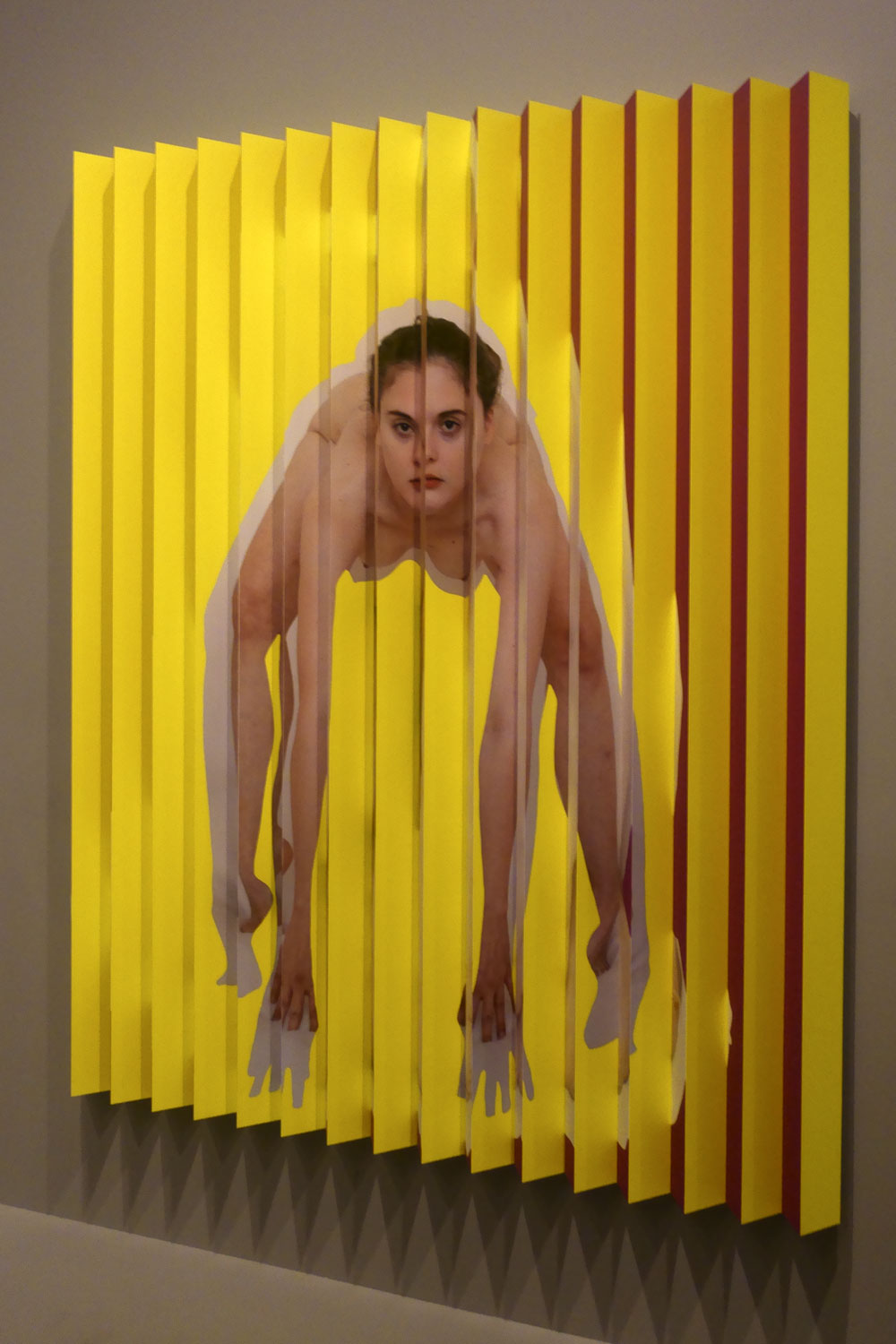
 

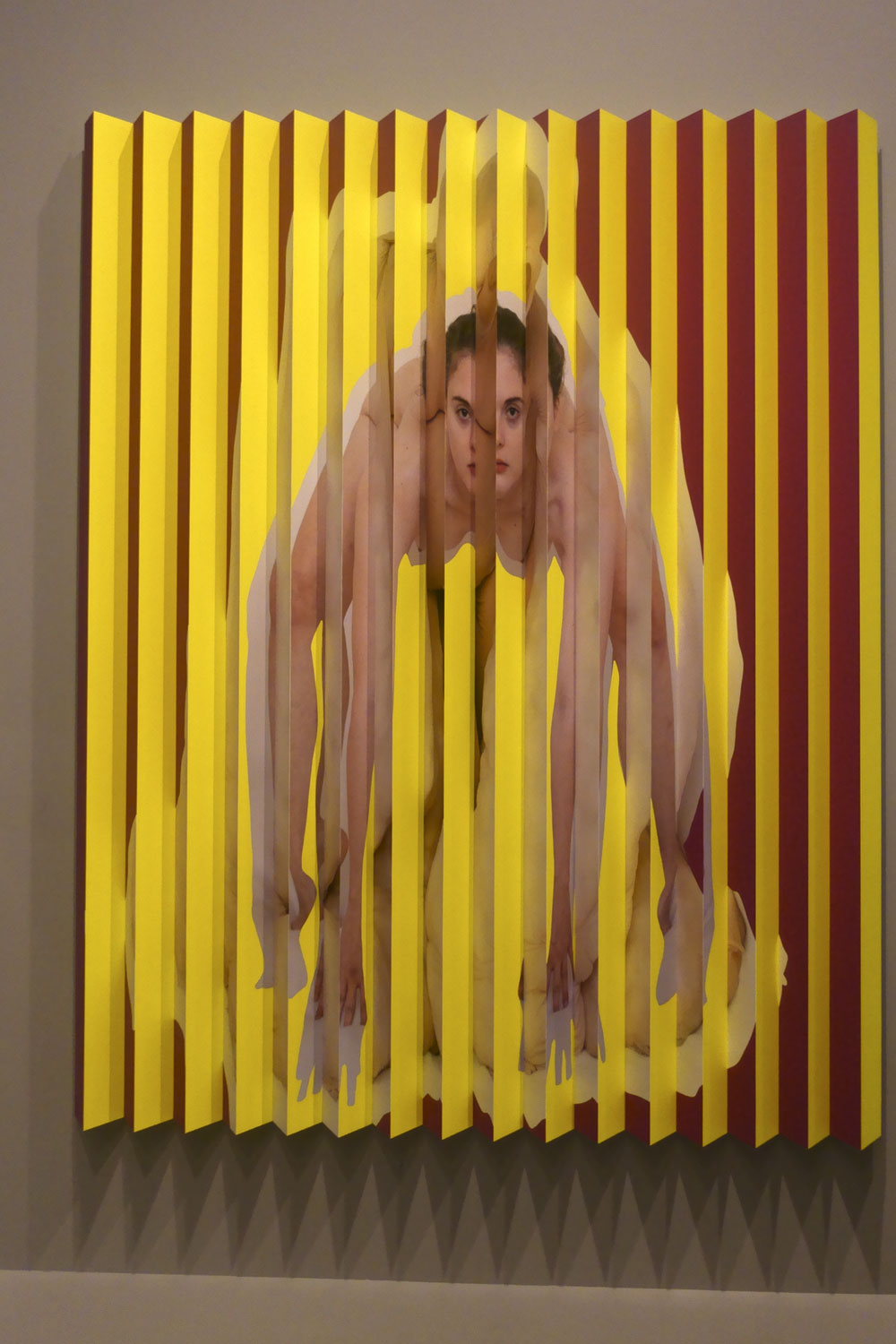
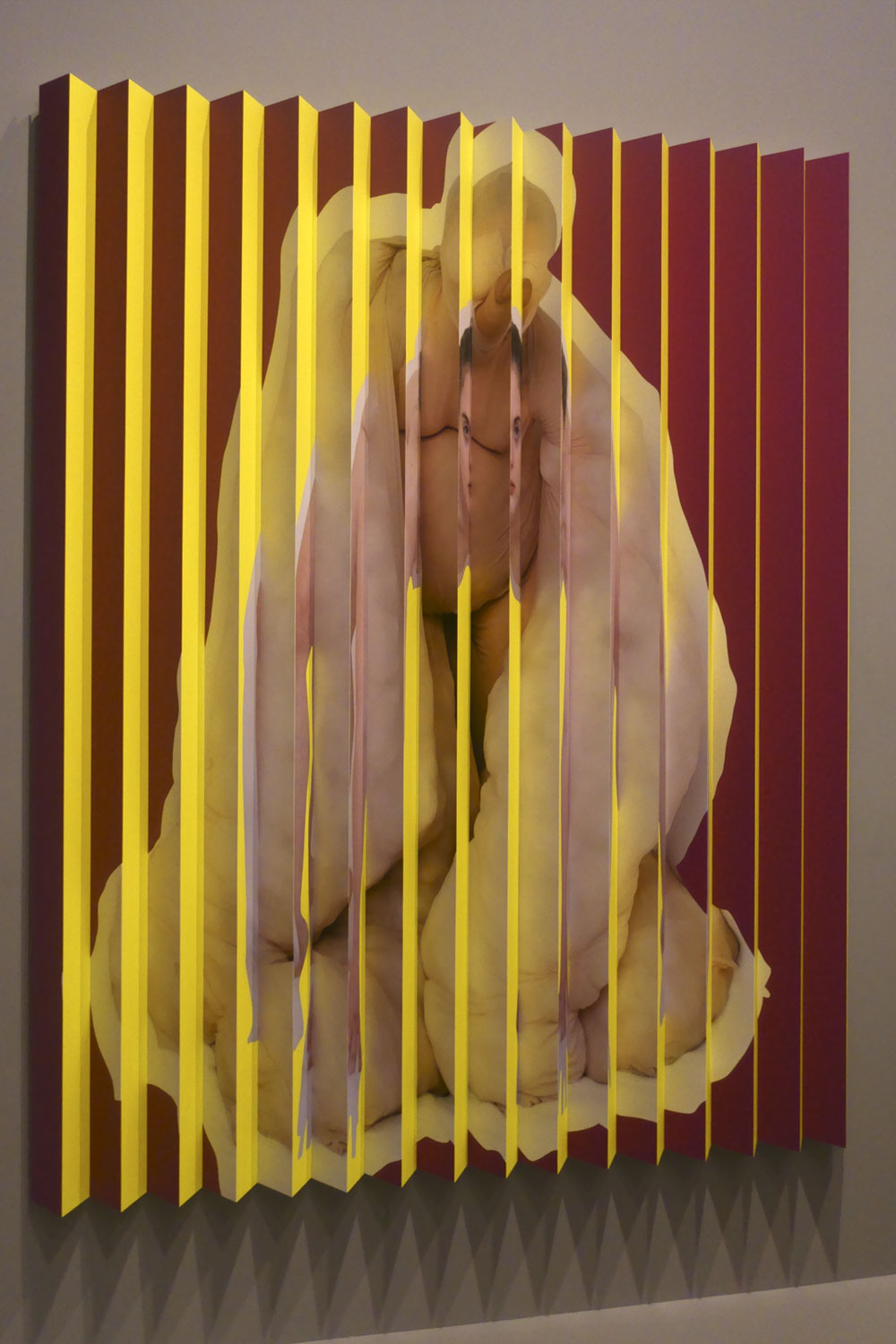
Installation view of the exhibition 'Photography: Real & Imagined' at The Ian Potter Centre: NGV Australia, Melbourne showing Polly Borland's lenticular photograph 'Untitled' (2018)

Installation view of the exhibition 'Photography: Real & Imagined' at The Ian Potter Centre: NGV Australia, Melbourne showing Polly Borland's lenticular photograph 'Untitled' (2018)

Installation view of the exhibition 'Photography: Real & Imagined' at The Ian Potter Centre: NGV Australia, Melbourne showing Polly Borland's lenticular photograph 'Untitled' (2018)


Installation views of the exhibition Photography: Real & Imagined at The Ian Potter Centre: NGV Australia, Melbourne showing Polly Borland’s lenticular photograph Untitled (2018) from the MORPH series
Photos: Marcus Bunyan
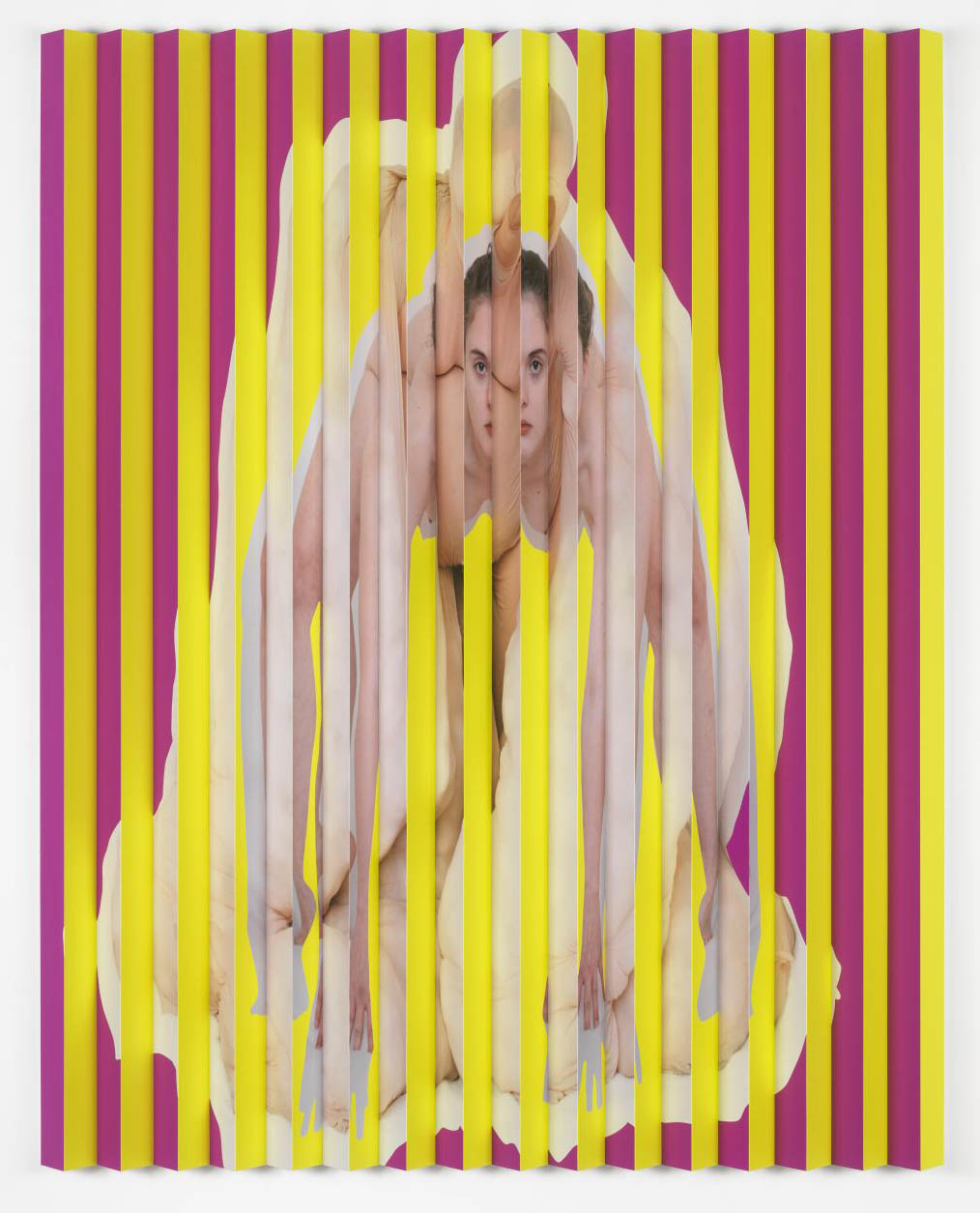
 

Polly Borland (Australia, b. 1959) 'Untitled' 2018


Polly Borland (Australia, b. 1959)
Untitled
2018
From MORPH series 2018
Inkjet print on rice paper on lenticular cardboard
216.0 × 172.7 × 13.0cm
National Gallery of Victoria, Melbourne
Purchased, Victorian Foundation for Living Australian Artists, 2019
© Polly Borland
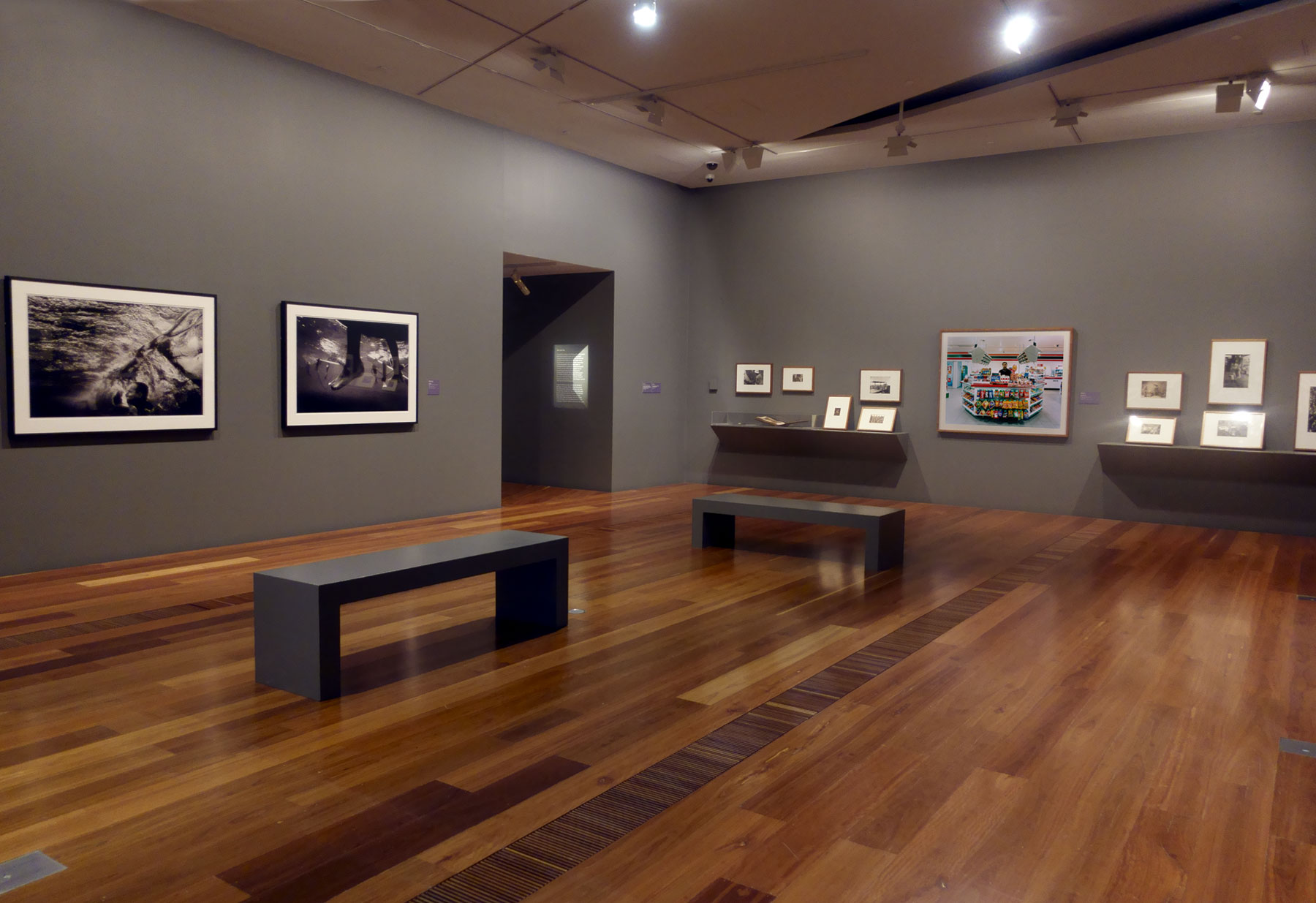
 

Installation view of the exhibition Photography: Real & Imagined at The Ian Potter Centre: NGV Australia, Melbourne showing at left, Narelle Autio's two photographs 'Untitled' from 'The Seventh Wave' series (1999-2000); and at right, Selina Ou's 'Convenience' (2001)


Installation view of the exhibition Photography: Real & Imagined at The Ian Potter Centre: NGV Australia, Melbourne showing at left, Narelle Autio’s two photographs Untitled from The Seventh Wave series (1999-2000); and at centre right, Selina Ou’s Convenience (2001)
Photo: Marcus Bunyan


Installation view of the exhibition Photography: Real & Imagined at The Ian Potter Centre: NGV Australia, Melbourne showing Narelle Autio's two photographs 'Untitled' from 'The Seventh Wave' series (1999-2000)


Installation view of the exhibition Photography: Real & Imagined at The Ian Potter Centre: NGV Australia, Melbourne showing Narelle Autio’s two photographs Untitled from The Seventh Wave series (1999-2000)
Photo: Marcus Bunyan


Narelle Autio (Australian, b. 1969) 'Untitled' 2000 (installation view)


Narelle Autio (Australian, b. 1969)
Untitled (installation view)
2000
From The Seventh Wave series 1999-2000
Gelatin silver photograph
90.0 × 134.1cm
National Gallery of Victoria, Melbourne
Purchased with funds arranged by Loti Smorgon for Contemporary Australian Photography, 2001
Photo: Marcus Bunyan


Installation view of the exhibition Photography: Real & Imagined at The Ian Potter Centre: NGV Australia, Melbourne showing at back centre, Selina Ou’s Convenience (2001); and at right, Rosemary Laing’s welcome to Australia (2004)
Photo: Marcus Bunyan
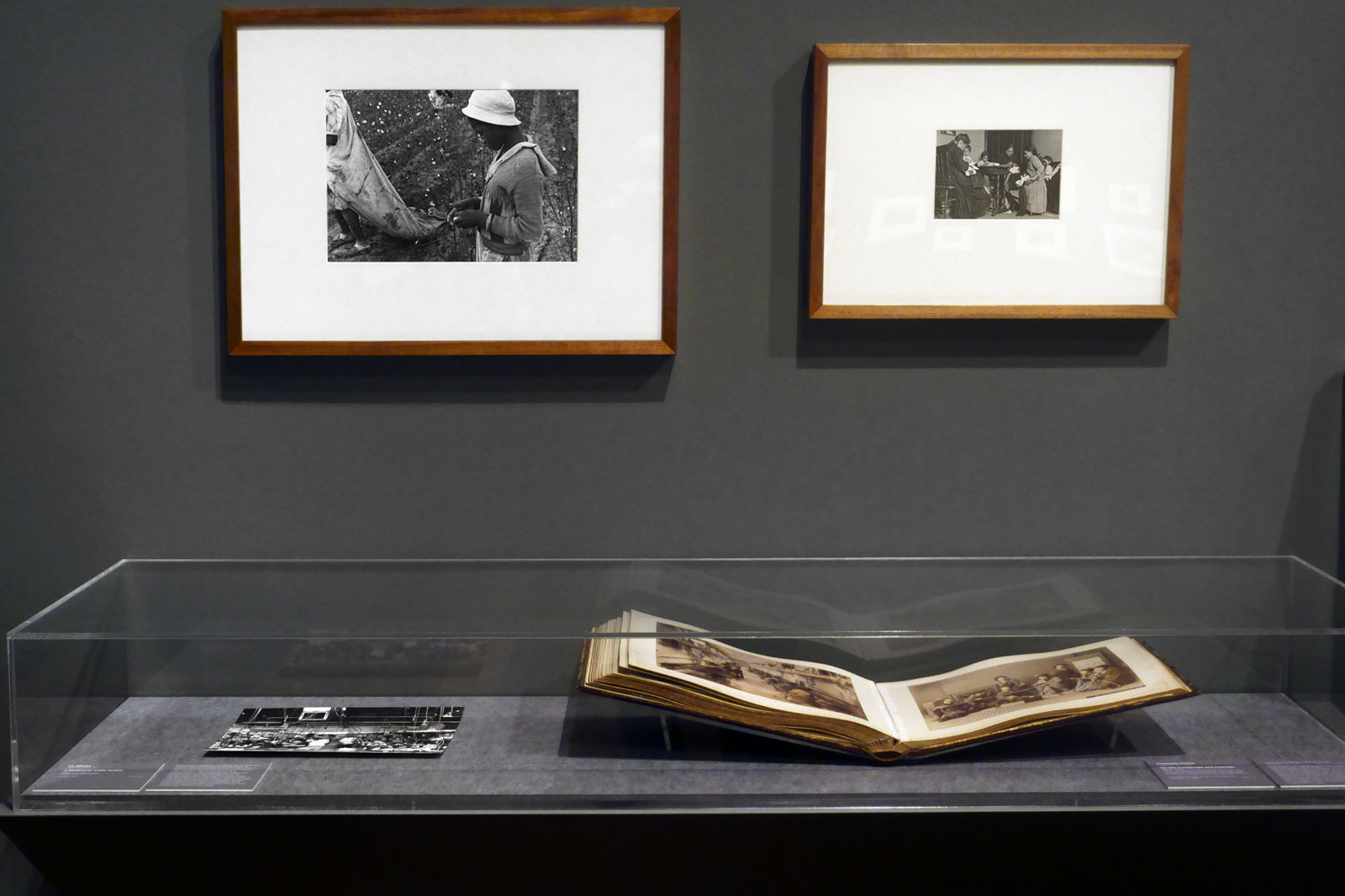
 

Installation view of the exhibition 'Photography: Real & Imagined' at The Ian Potter Centre: NGV Australia, Melbourne showing at back left, Ben Shahn's 'Young cotton picker, Pulaski County, Arkansas. Schools for coloured children do not open until January 1st so as not to interfere with cotton picking' 1935; and back right, Lewis Hine's 'Finishing garments, 10 Hanover Ave., Boston, Massachusetts' 1912; and at right in the cabinet, Kusakabe Kimbei's album '(Landscape and portraits)' (1880s-1910s) 


Installation view of the exhibition Photography: Real & Imagined at The Ian Potter Centre: NGV Australia, Melbourne showing at back left, Ben Shahn’s Young cotton picker, Pulaski County, Arkansas. Schools for coloured children do not open until January 1st so as not to interfere with cotton picking 1935; and back right, Lewis Hine’s Finishing garments, 10 Hanover Ave., Boston, Massachusetts 1912; and at right in the cabinet, Kusakabe Kimbei’s album (Landscape and portraits) (1880s-1910s)
Photo: Marcus Bunyan


Ben Shahn (Lithuanian 1898-1969, United States c. 1925-1969) 'Young cotton picker, Pulaski County, Arkansas. Schools for coloured children do not open until January 1st so as not to interfere with cotton picking' 1935, printed c. 1975 (installation view)


Ben Shahn (Lithuanian 1898-1969, United States c. 1925-1969)
Young cotton picker, Pulaski County, Arkansas. Schools for coloured children do not open until January 1st so as not to interfere with cotton picking (installation view)
1935, printed c. 1975
Gelatin silver photograph
21.7 × 32.8cm
National Gallery of Victoria, Melbourne
Purchased, 1975
Photo: Marcus Bunyan
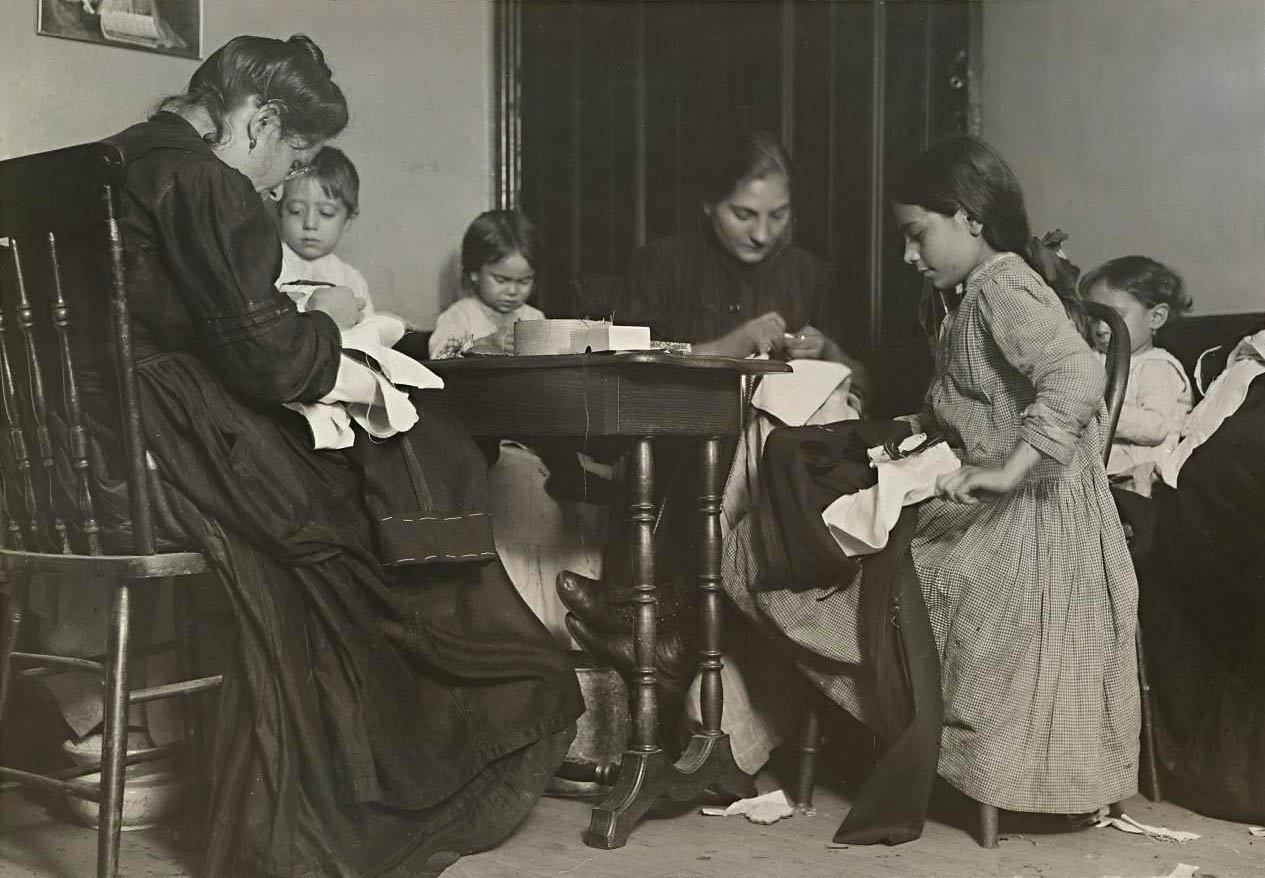
 

Lewis Hine (American, 1874-1940) 'Finishing garments, 10 Hanover Ave., Boston, Massachusetts' 1912


Lewis Hine (American, 1874-1940)
Finishing garments, 10 Hanover Ave., Boston, Massachusetts
1912
Gelatin silver photograph
11.4 × 16.4cm
National Gallery of Victoria, Melbourne
Purchased, 1980
Public domain


Installation view of the exhibition Photography: Real & Imagined at The Ian Potter Centre: NGV Australia, Melbourne showing Kusakabe Kimbei's album '(Landscape and portraits)' (1880s-1910s) 


Installation view of the exhibition Photography: Real & Imagined at The Ian Potter Centre: NGV Australia, Melbourne showing Kusakabe Kimbei’s album (Landscape and portraits) (1880s-1910s)
Photo: Marcus Bunyan
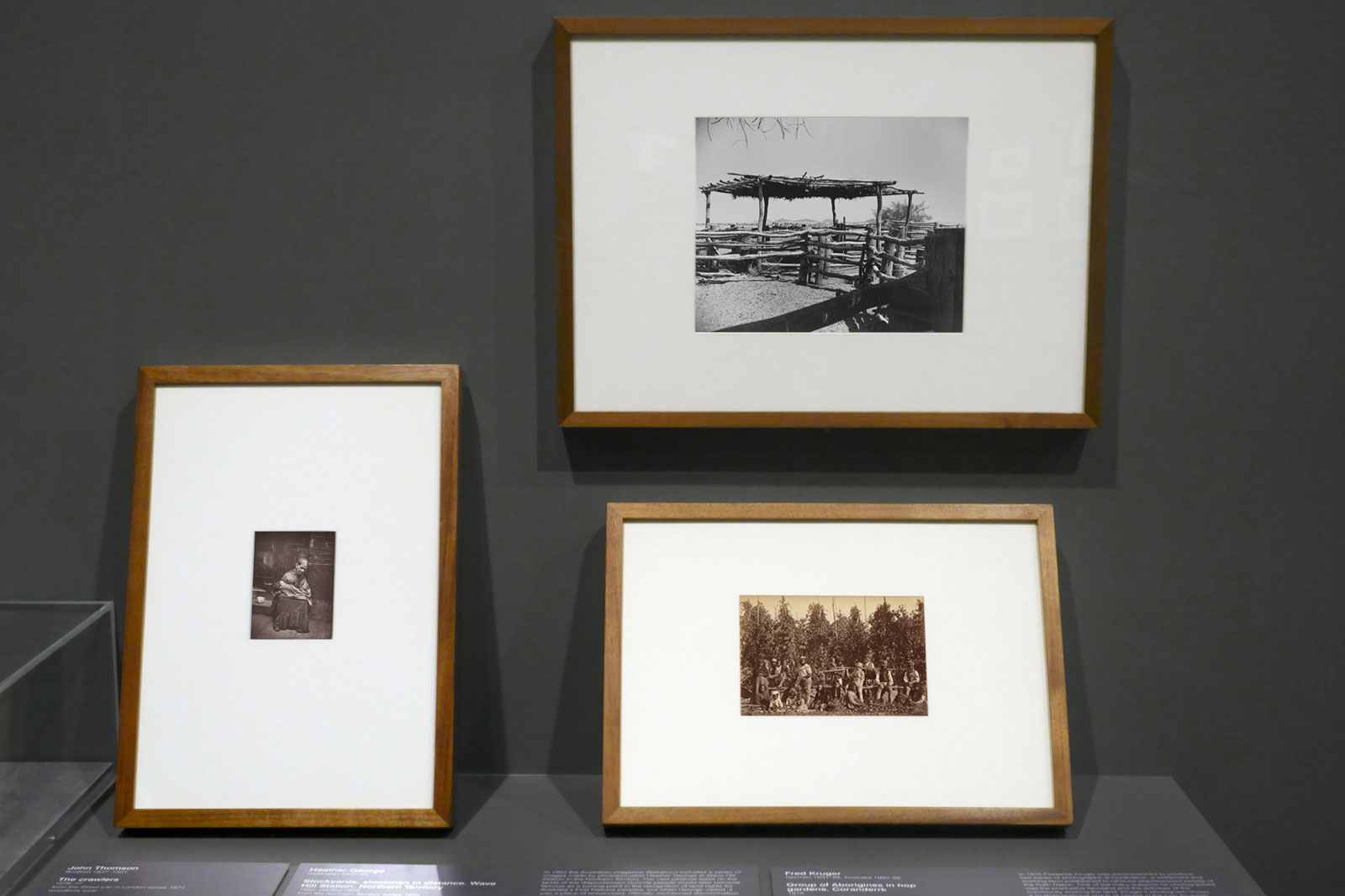
 

Installation view of the exhibition 'Photography: Real & Imagined' at The Ian Potter Centre: NGV Australia, Melbourne showing  at left, John Thomson's 'The crawlers' (1876-1877, below); at top right, Heather George's 'Stockyards, stockmen in distance. Wave Hill Station, Northern Territory' (1952); and at bottom right, Fred Kruger's 'Group of Aborigines in hop gardens, Coranderrk' (1876, below)


Installation view of the exhibition Photography: Real & Imagined at The Ian Potter Centre: NGV Australia, Melbourne showing  at left, John Thomson’s The crawlers (1876-1877, below); at top right, Heather George’s Stockyards, stockmen in distance. Wave Hill Station, Northern Territory (1952); and at bottom right, Fred Kruger’s Group of Aborigines in hop gardens, Coranderrk (1876, below)
Photo: Marcus Bunyan
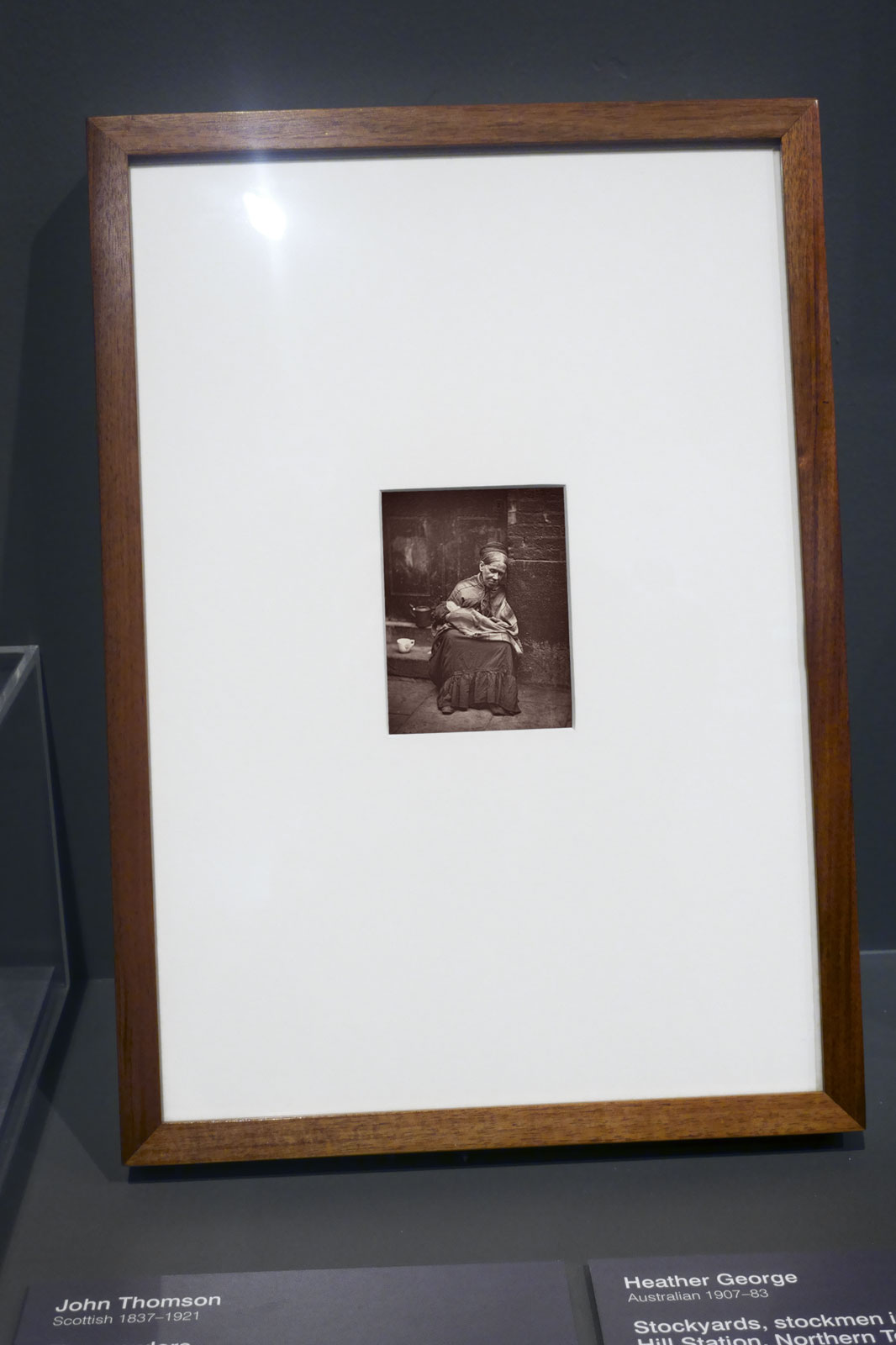
 

Installation view of the exhibition 'Photography: Real & Imagined' at The Ian Potter Centre: NGV Australia, Melbourne showing John Thomson's 'The crawlers' (1876-1877)


Installation view of the exhibition Photography: Real & Imagined at The Ian Potter Centre: NGV Australia, Melbourne showing John Thomson’s The crawlers (1876-1877, below)
Photo: Marcus Bunyan


John Thomson (Scottish 1837-1921) 'The crawlers' 1876-1877


John Thomson (Scottish 1837-1921)
The crawlers
1876-1877
From the Street Life in London series 1877
Woodbury type
11.5 × 8.7cm (image and sheet)
National Gallery of Victoria, Melbourne
Felton Bequest, 1977
Public Domain
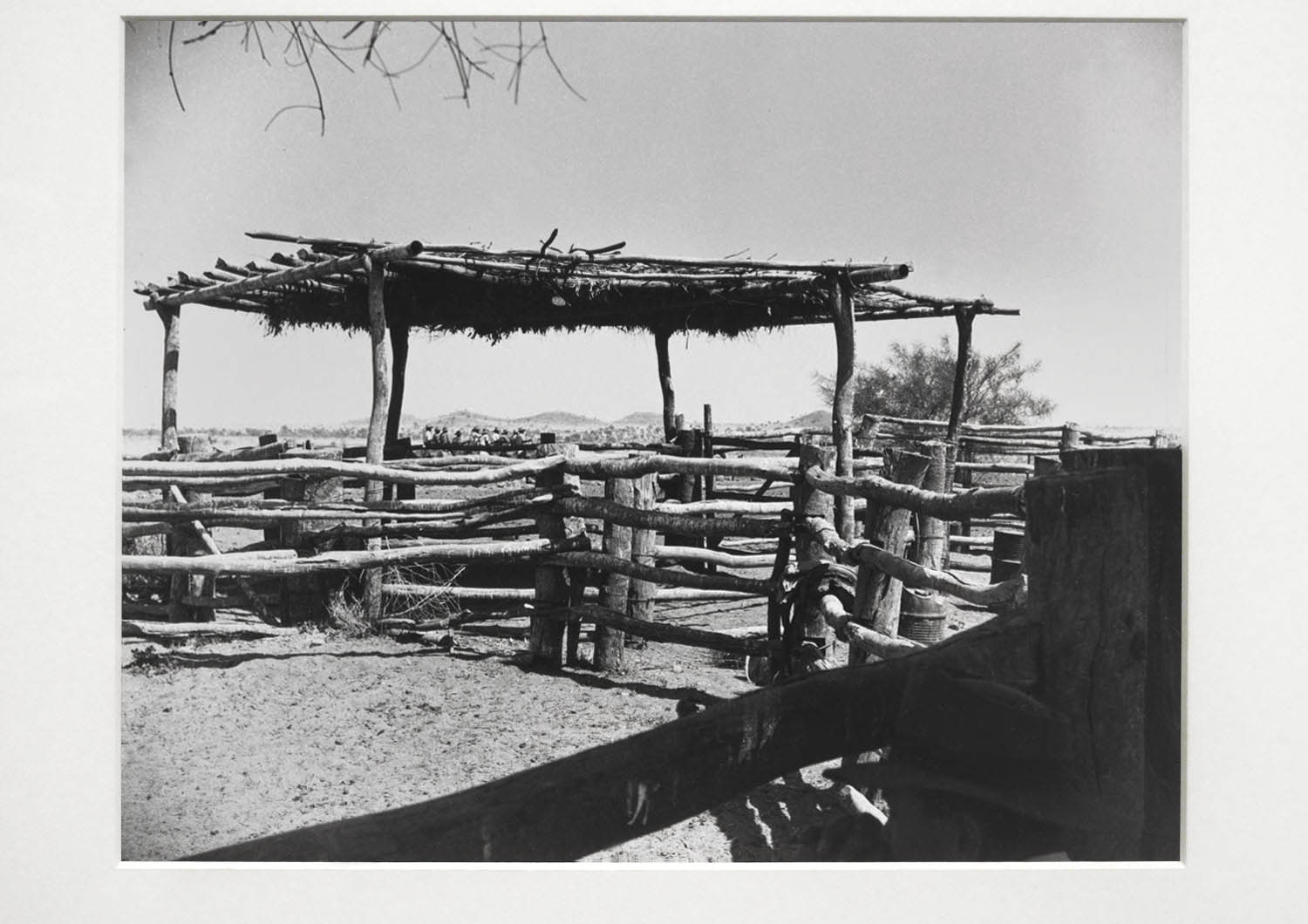
 

Heather George (Australian 1907-1983) 'Stockyards, stockmen in distance. Wave Hill Station, Northern Territory' 1952, printed 1978 (installation view)


Heather George (Australian 1907-1983)
Stockyards, stockmen in distance. Wave Hill Station, Northern Territory (installation view)
1952, printed 1978
From the Northern Territory series 1952
Gelatin silver photograph
Purchased, 1980
Photo: Marcus Bunyan


In 1952 the Australian magazine Walkabout included a series of images made by photojournalist Heather George at Wave Hill Station in the Northern Territory. The vast pastoral lease on the lands of the dispossessed Gurindji people would later become famous as a turning point in the recognition of land rights for Australia’s First Nations peoples, but when George visited, it was a place of entrenched, officially sanctioned discrimination. In George’s photograph, the Gurindji stockmen appear overshadowed by the stockyards in the foreground, perhaps reflecting the attitude of pastoralists who, having been granted leases, took advantage of people living on Country, exploiting them as an unpaid workforce.

Wall text from the exhibition


Fred Kruger (German 1831-1888, Australia 1860-1888) 'Group of Aborigines in hop gardens, Coranderrk' 1876


Fred Kruger (German 1831-1888, Australia 1860-1888)
Group of Aborigines in hop gardens, Coranderrk
1876
Albumen silver photograph
13.3 × 20.2cm
National Gallery of Victoria, Melbourne
Gift of Mrs Beryl M. Curl, 1979
Public domain


In 1876 Fred Kruger was commissioned to produce two series of photographs at Coranderrk, a settlement and working farm established to rehouse dispossessed people of the Kulin Nation. One of the many subjects he photographed was the productive farmland and the activities of the community working the land. Kruger’s photograph shows a multigenerational group of people in the lush Arcadian setting of the hop garden, but what it obscures is the reality of exploitation and poverty that afflicted First Nations people in this place. Kruger’s photographs met a brief to promote the so-called ‘civilising’ work of colonial authorities but in doing so represented a largely imagined reality and created an effective form of propaganda.

Wall text from the exhibition
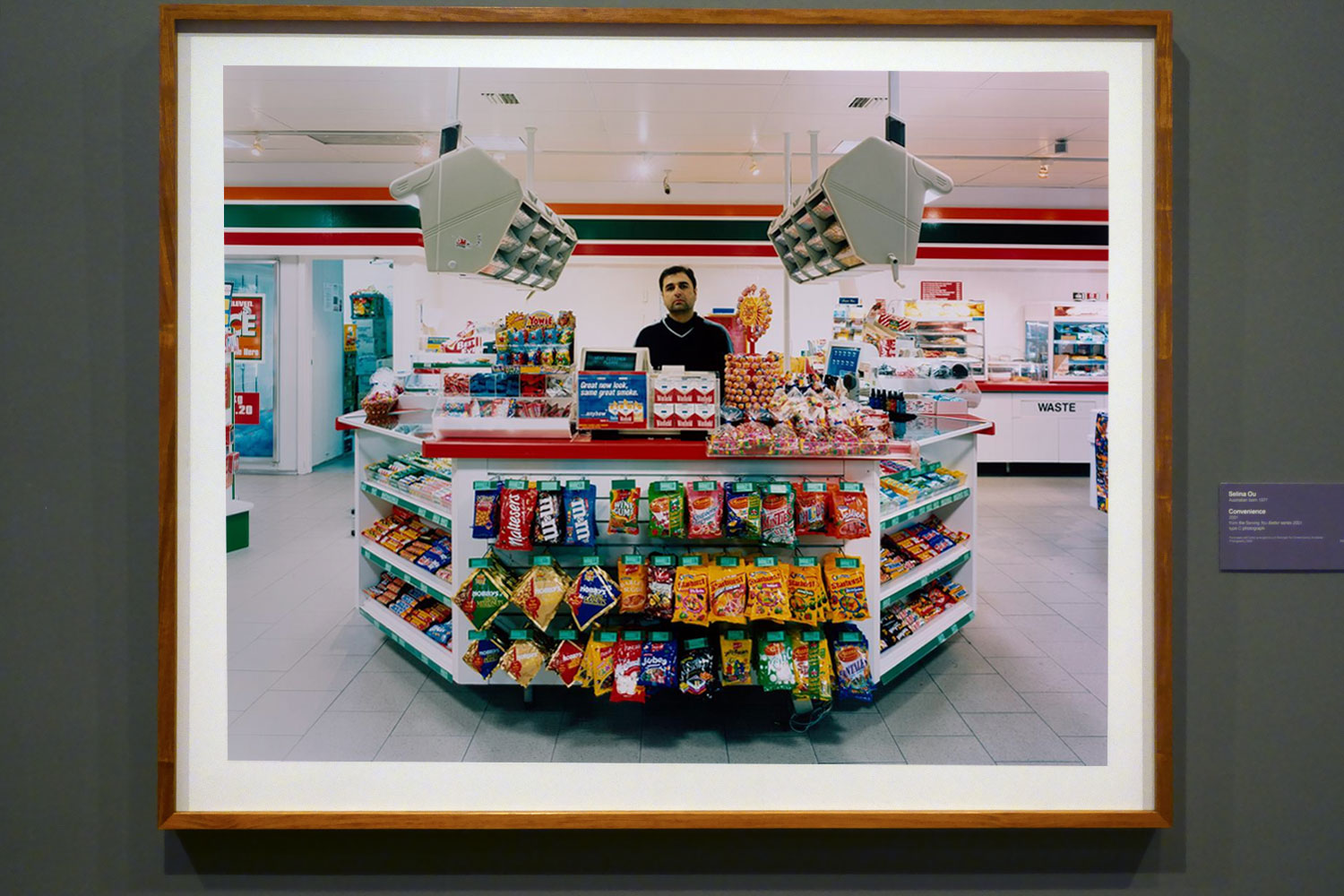
 

Selina Ou (Australian, b. 1977) 'Convenience' 2001 (installation view)


Selina Ou (Australian, b. 1977)
Convenience (installation view)
2001
From the Serving You Better series 2001
Type C photograph
National Gallery of Victoria, Melbourne
Purchased with funds arranged by Loti Smorgon for Contemporary Australian Photography, 2005
Photo: Marcus Bunyan


Installation view of the exhibition 'Photography: Real & Imagined' at The Ian Potter Centre: NGV Australia, Melbourne showing at top left, Kusakabe Kimbei's 'Vegetable peddler' (1880s, below); at bottom left, David Wadelton's 'Richmond hairdresser' (1979, below); at top centre, Rennie Ellis' 'Between strips, Kings Cross' (1970-1971, below); at bottom centre, Brassai's 'Washing up in a brothel, Rue Quincampoix (La Toilette, rue Quincampoix (Bidet))' (1932, below); and at right, Wolfgang Sievers' 'Shiftchange at Kelly and Lewis engineering works, Springvale, Melbourne' (1949, below)


Installation view of the exhibition Photography: Real & Imagined at The Ian Potter Centre: NGV Australia, Melbourne showing at top left, Kusakabe Kimbei’s Vegetable peddler (1880s, below); at bottom left, David Wadelton’s Richmond hairdresser (1979, below); at top centre, Rennie Ellis’ Between strips, Kings Cross (1970-1971, below); at bottom centre, Brassai’s Washing up in a brothel, Rue Quincampoix (La Toilette, rue Quincampoix (Bidet)) (1932, below); and at right, Wolfgang Sievers’ Shiftchange at Kelly and Lewis engineering works, Springvale, Melbourne (1949, below)
Photo: Marcus Bunyan
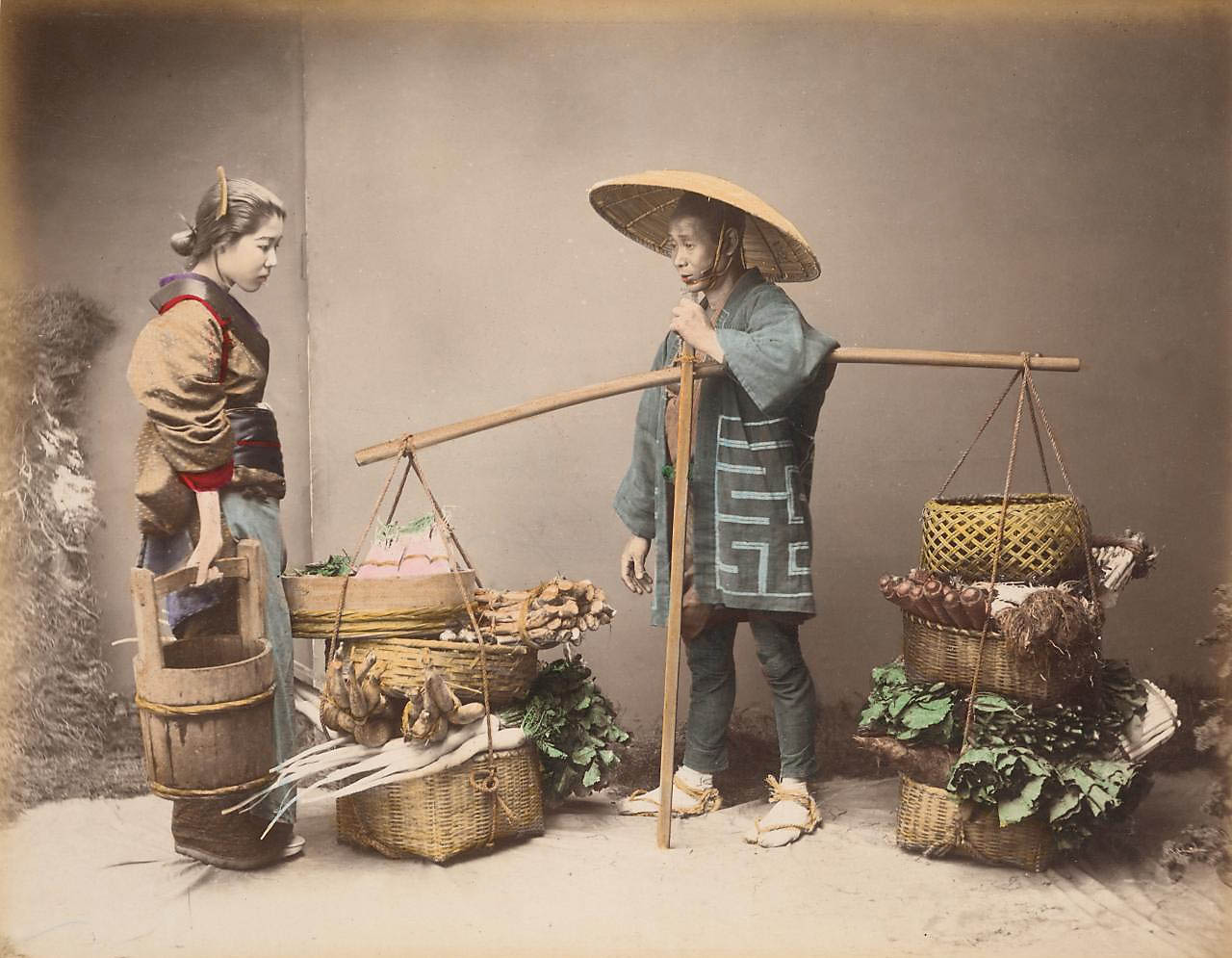
 

Kusakabe Kimbei (Japanese, 1841-1934) 'Vegetable peddler' 1880s


Kusakabe Kimbei (Japanese, 1841-1934)
Vegetable peddler
1880s
Albumen silver photograph, colour dyes
20.6 × 26.3cm (image and sheet)
National Gallery of Victoria, Melbourne
Gerstl Bequest, 2000
Public domain


Japanese photographer Kusakabe Kimbei established his studio in 1881, making photographs for the domestic and tourist markets. Most of the photographs in this elaborate album are conventional, staged domestic scenes; picturesque views of popular tourist attractions; and street scenes. This image, however, stands alone in the album as an unusual view of contemporary life. Despite the women weavers wearing traditional dress and working hand-operated looms, the factory in which they are working is lit by electric lights and they are supervised by men wearing European-style dress. Unlike its companion works in Kimbei’s album, this photograph speaks to the industrialisation that was part of the Meiji-era modernisation in Japan.

Wall text from the exhibition


Kusakabe Kimbei (Japanese, 1841-1934)

Kusakabe Kimbei (日下部 金兵衛; 1841-1934) was a Japanese photographer. He usually went by his given name, Kimbei, because his clientele, mostly non-Japanese-speaking foreign residents and visitors, found it easier to pronounce than his family name

Kusakabe Kimbei worked with Felice Beato and Baron Raimund von Stillfried as a photographic colourist and assistant. In 1881, Kimbei opened his own workshop in Yokohama, in the Benten-dōri quarter. From 1889, the studio operated in the Honmachi quarter. By 1893, his was one of the leading Japanese studios supplying art to Western customers. Many of the photographs in the studio’s catalogue featured depictions of Japanese women, which were popular with tourists of the time.  Kimbei preferred to portray female subjects in a traditional bijinga style, and hired geisha to pose for the photographs. Many of his albums are mounted in accordion fashion.

Around 1885, Kimbei acquired the negatives of Felice Beato and of Stillfried, as well as those of Uchida Kuichi. Kusakabe also acquired some of Ueno Hikoma’s negatives of Nagasaki. Kimbei retired as a photographer in 1914.

Text from the Wikipedia website
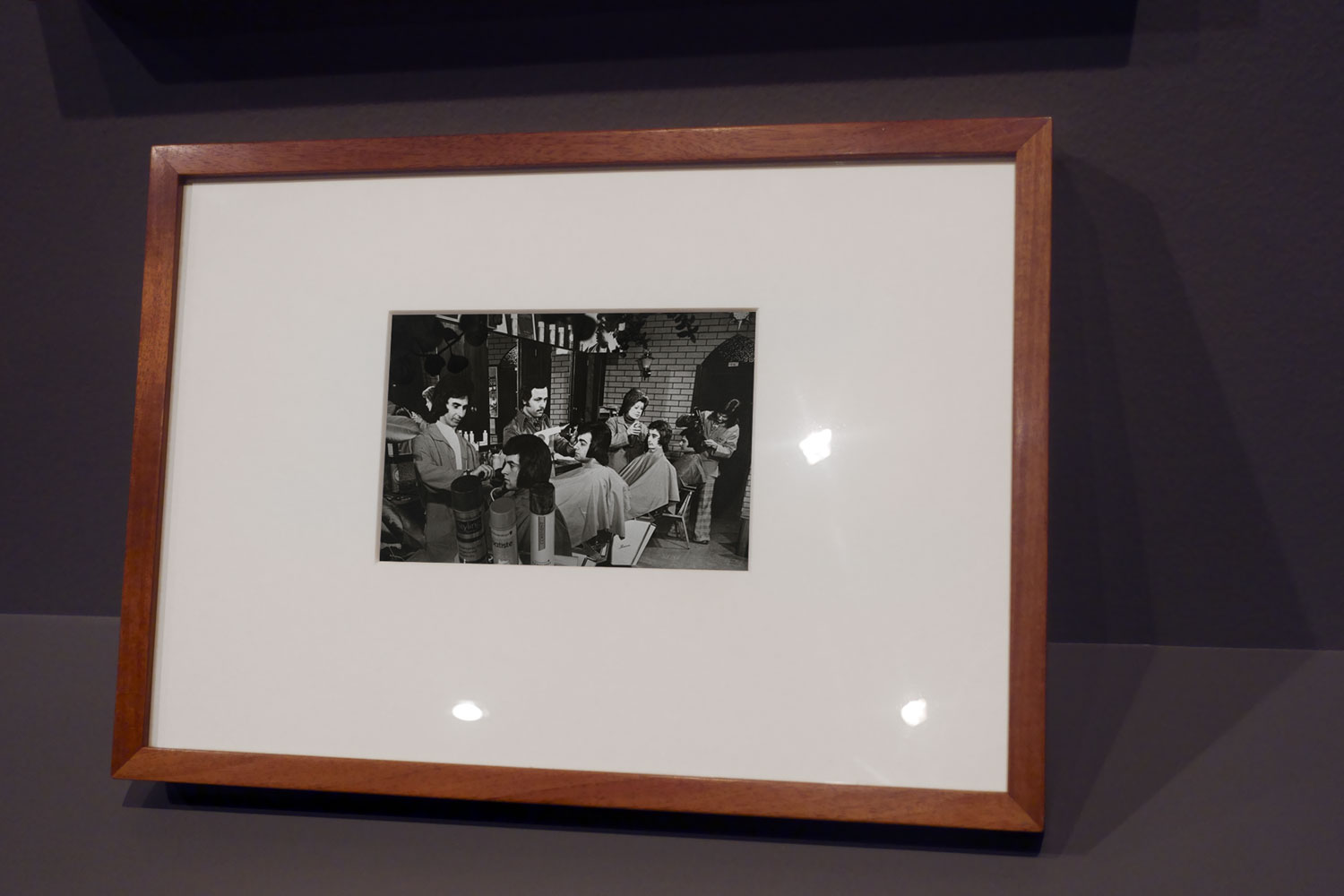
 

Installation view of the exhibition Photography: Real & Imagined at The Ian Potter Centre: NGV Australia, Melbourne showing David Wadelton's 'Richmond hairdresser' (1979) (installation view)


Installation view of the exhibition Photography: Real & Imagined at The Ian Potter Centre: NGV Australia, Melbourne showing David Wadelton’s Richmond hairdresser (1979, below)
Photo: Marcus Bunyan
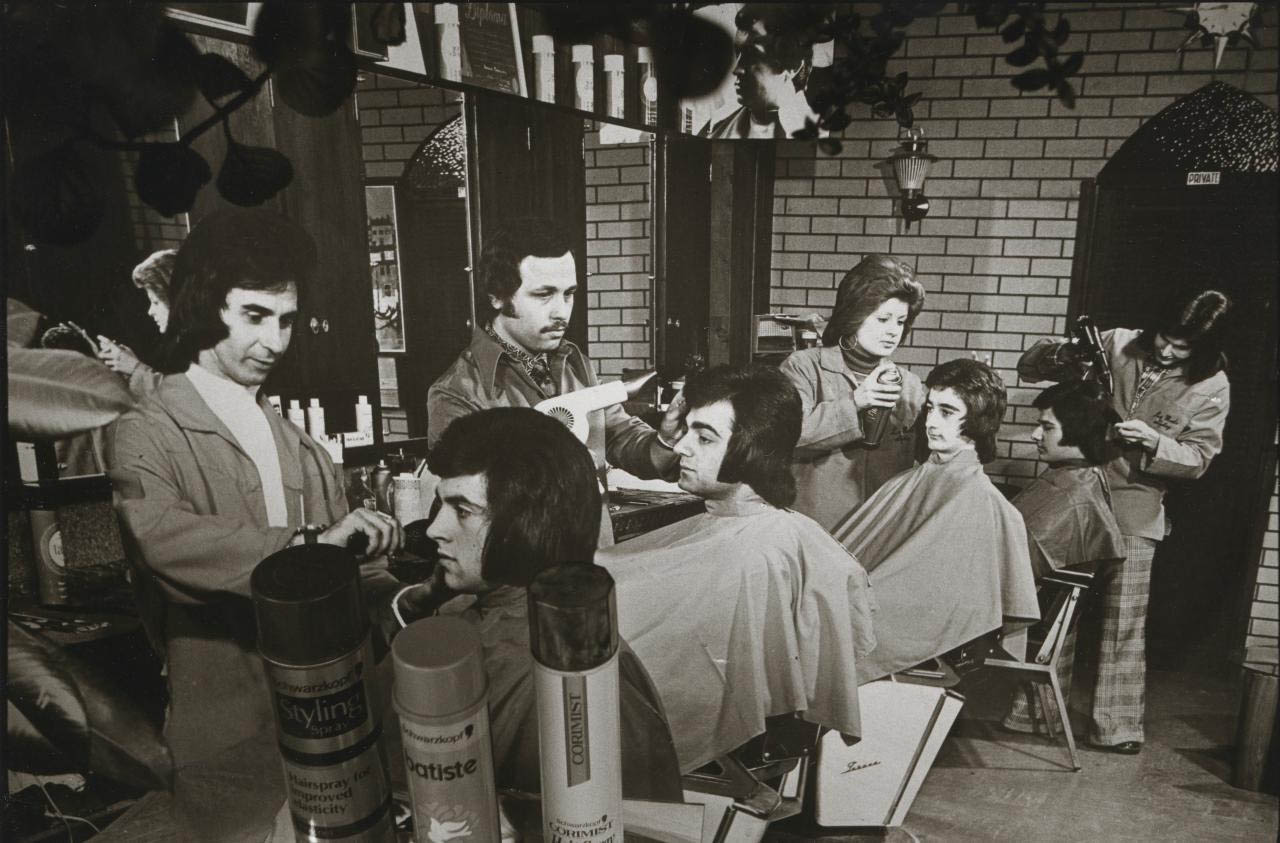
 

David Wadelton (Australian, b. 1955) 'Richmond hairdresser' 1979


David Wadelton (Australian, b. 1955)
Richmond hairdresser
1979
Gelatin silver photograph
13.4 × 20.2cm
National Gallery of Victoria, Melbourne
Gift of David Wadelton through the Australian Government’s Cultural Gifts Program, 2015
© David Wadelton
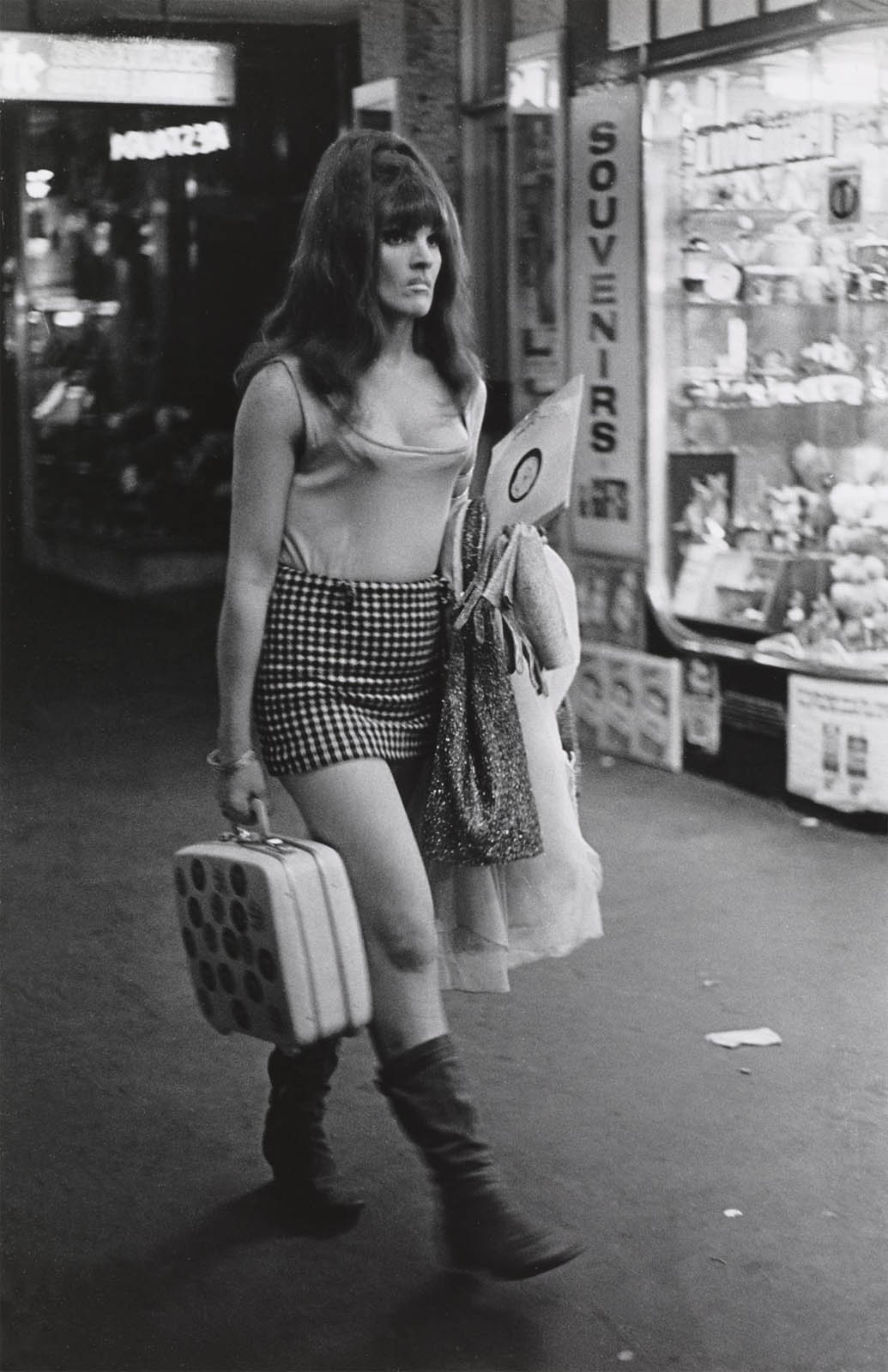
 

Rennie Ellis (Australian, 1940-2003) 'Between strips, Kings Cross' 1970-1971


Rennie Ellis (Australian, 1940-2003)
Between strips, Kings Cross
1970-1971; 2000 {printed}
from the Kings Cross series 1971
gelatin silver photograph
37.1 x 24.1 cm (image) 40.3 x 30.4 cm (sheet)
National Gallery of Victoria, Melbourne
Purchased, 2005
© Rennie Ellis Photographic Archive


Installation view of the exhibition 'Photography: Real & Imagined' at The Ian Potter Centre: NGV Australia, Melbourne showing Brassaï's 'Washing up in a brothel, Rue Quincampoix (La Toilette, rue Quincampoix (Bidet))' (1932)


Installation view of the exhibition Photography: Real & Imagined at The Ian Potter Centre: NGV Australia, Melbourne showing Brassaï’s Washing up in a brothel, Rue Quincampoix (La Toilette, rue Quincampoix (Bidet)) (1932, below)
Photo: Marcus Bunyan
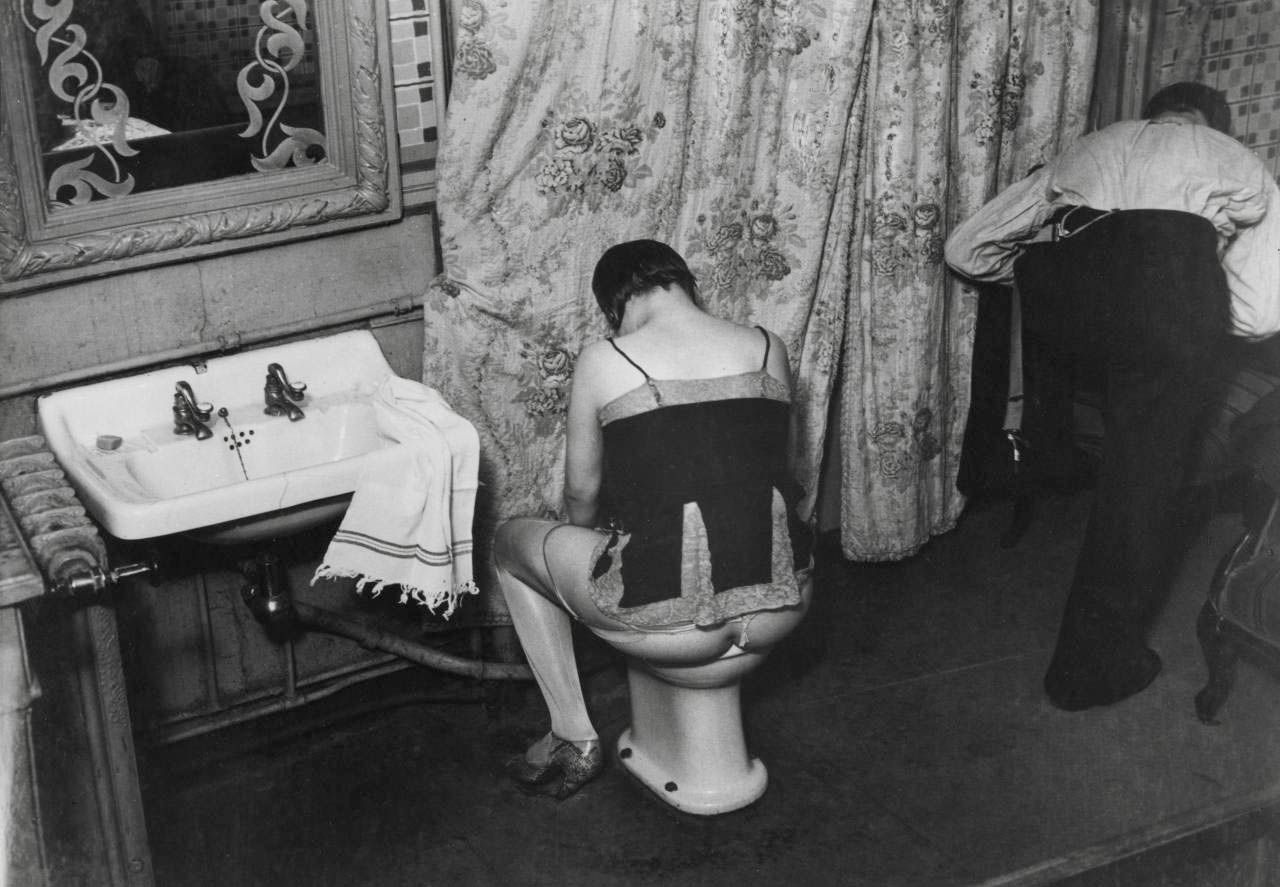
 

Brassaï (Hungarian-French, 1899-1984) 'Washing up in a brothel, Rue Quincampoix' (La Toilette, rue Quincampoix (Bidet)) 1932; printed c. 1979


Brassaï (Hungarian-French, 1899-1984)
Washing up in a brothel, Rue Quincampoix
(La Toilette, rue Quincampoix (Bidet))
1932; printed c. 1979
from The secret of Paris in the 30s series 1931–1935
Gelatin silver photograph
20.5 × 29.2cm (image and sheet)
National Gallery of Victoria, Melbourne
Purchased, 1980
Public Domain


In the 1930s Brassaï became well-known for his photographs of the nightlife of Paris, but it was the sex workers, along with other characters of the city’s underbelly, who excited his imagination. Reflecting on this time, he wrote, ‘Rightly or wrongly, I felt at that time that this underground world represented Paris at its least cosmopolitan, at its most alive, its most authentic, that in these colourful faces of its underworld there had been preserved, from age to age, almost without alteration, the folklore of its remote past’. This photograph presents a matter-of-fact view – there is nothing exotic or erotic about the woman washing herself as her client ties his shoes and prepares to leave.

Wall text from the exhibition
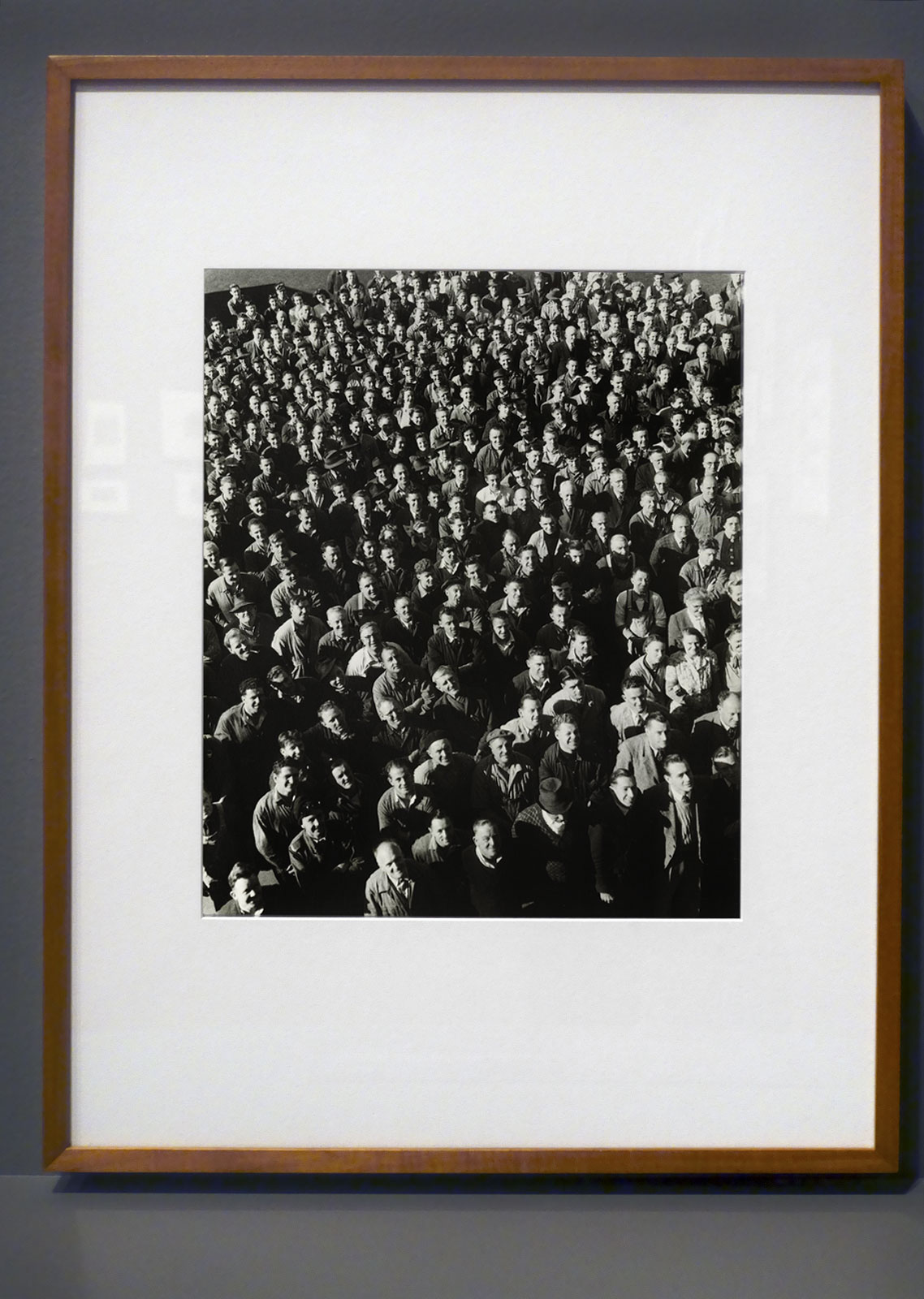
 

Installation view of the exhibition Photography: Real & Imagined at The Ian Potter Centre: NGV Australia, Melbourne showing Wolfgang Sievers' 'Shiftchange at Kelly and Lewis engineering works, Springvale, Melbourne' (1949)


Installation view of the exhibition Photography: Real & Imagined at The Ian Potter Centre: NGV Australia, Melbourne showing Wolfgang Sievers’ Shiftchange at Kelly and Lewis engineering works, Springvale, Melbourne (1949, below)
Photo: Marcus Bunyan


Wolfgang Sievers (Australian born Germany, 1913-2007) 'Shiftchange at Kelly and Lewis engineering works, Springvale, Melbourne' 1949; printed 1986


Wolfgang Sievers (Australian born Germany, 1913-2007)
Shiftchange at Kelly and Lewis engineering works, Springvale, Melbourne
1949; printed 1986
Gelatin silver photograph
49.4 × 40.5cm
National Gallery of Victoria, Melbourne
Purchased, 1986
© National Library of Australia


Wolfgang Sievers arrived in Australia in 1938, bringing photographic equipment, rigorous training in modernist photography, a firmly held belief in the union of art and industry, left-leaning political views, and the self-declared desire to ‘assist this country through my knowledge as thanks for the freedom I can enjoy here’. The human face of industrial Australia is captured in Sievers’s celebrated photograph of the change of shift at a Melbourne engineering works, showing a sea of men and women surging into work. The upturned, smiling faces of the masses speaking to Sievers’s firmly held belief in the dignity of work.

Wall text from the exhibition


Rosemary Laing (Australian, 1959-2024) 'welcome to Australia' 2004 (installation view)


Rosemary Laing (Australian, 1959-2024)
welcome to Australia (installation view)
2004
Type C photograph
110.8 × 224.4cm
National Gallery of Victoria, Melbourne
Purchased with funds from the Victorian Foundation for Living Australian Artists, 2005
Photo: Marcus Bunyan


This photograph by Rosemary Laing makes an obviously ironic statement, as curator Kyla MacFarlane notes: ‘The title and compositional beauty of this photograph … purposefully jar against its subject matter – the remote Woomera Immigration Detention and Processing Centre in South Australia. Photographing the site while the sun sits low in the sky, Laing observes the Centre’s mechanisms of containment and surveillance – a violent presence on the red dirt and gravel road, and sun-tinged, cloudless sky of its remote location’. The photograph’s formal emptiness reflects the lack of freedom imposed on those seeking asylum and the loss of their civil liberties once detained.

Wall text from the exhibition
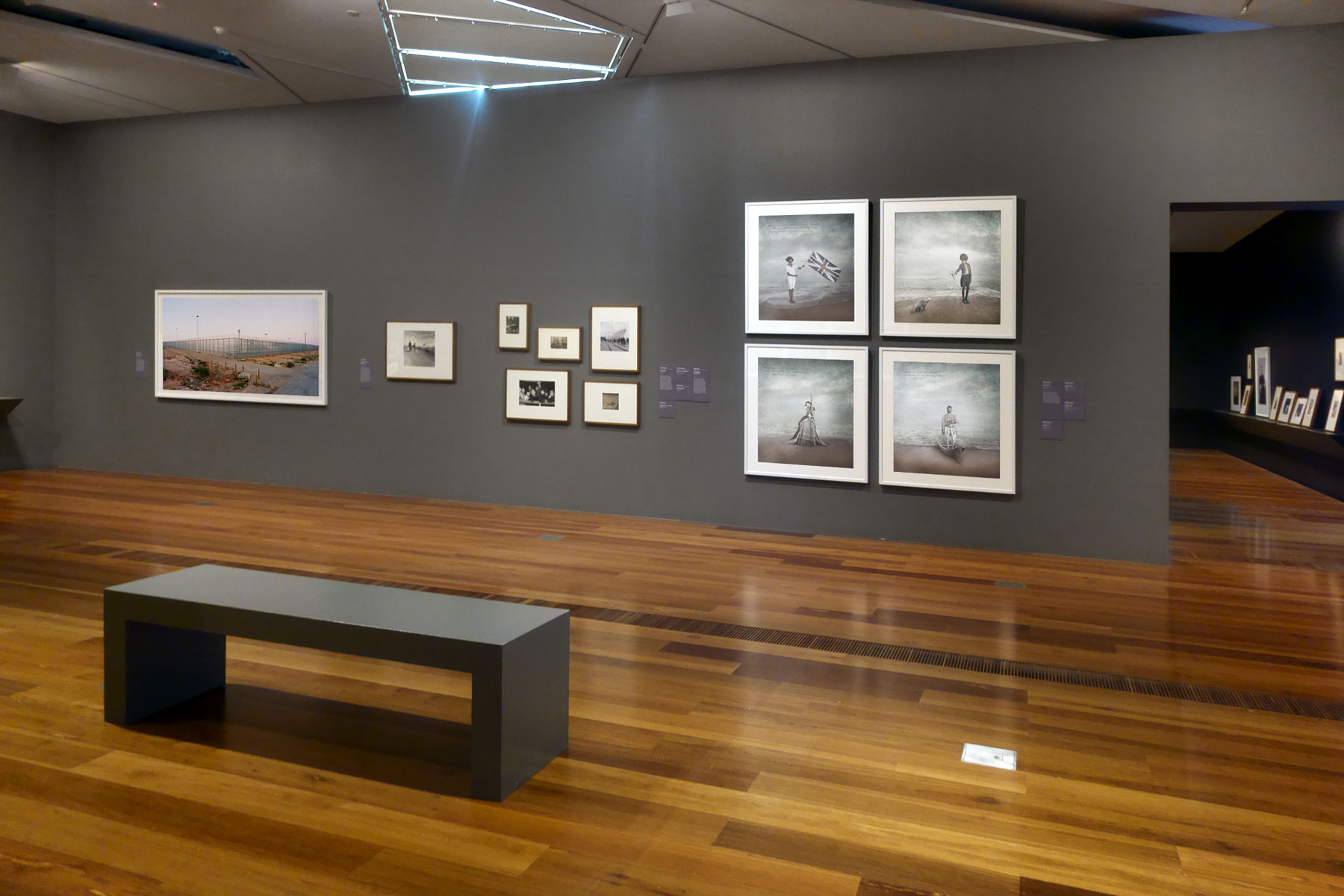
 

Installation view of the exhibition 'Photography: Real & Imagined' at The Ian Potter Centre: NGV Australia, Melbourne showing at left, Rosemary Laing's 'welcome to Australia' (2004, above); and at right, four photographs from Michael Cook's 'Civilised' series (2012)


Installation view of the exhibition Photography: Real & Imagined at The Ian Potter Centre: NGV Australia, Melbourne showing at left, Rosemary Laing’s welcome to Australia (2004, above); and at right, four photographs from Michael Cook’s Civilised series (2012)
Photo: Marcus Bunyan


Installation view of the exhibition 'Photography: Real & Imagined' at The Ian Potter Centre: NGV Australia, Melbourne showing Dorothea Lange's 'Towards Los Angeles, California' (1936)


Installation view of the exhibition Photography: Real & Imagined at The Ian Potter Centre: NGV Australia, Melbourne showing Dorothea Lange’s Towards Los Angeles, California (1936, below)
Photo: Marcus Bunyan
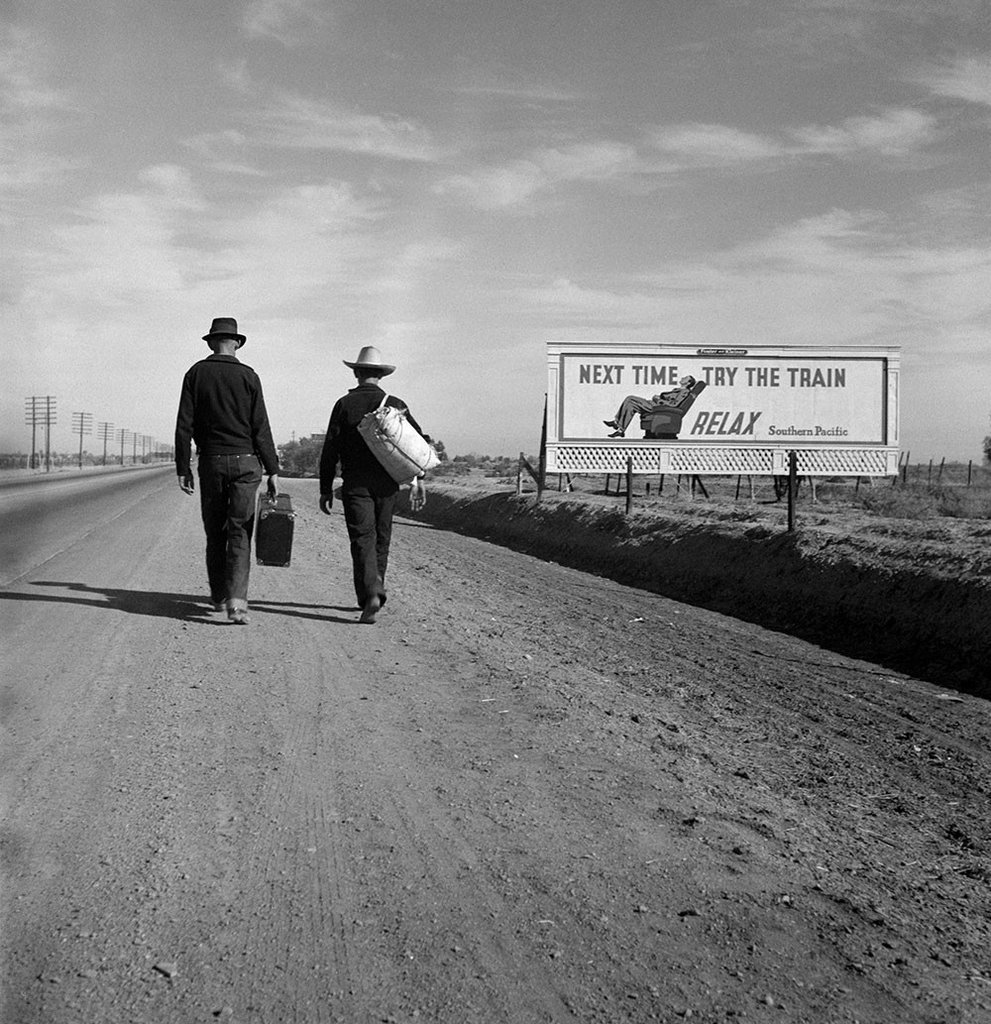
 

Dorothea Lange (United States 1895-1965) 'Towards Los Angeles, California' 1936, printed c. 1975


Dorothea Lange (United States 1895-1965)
Towards Los Angeles, California
1936; c. 1975 {printed}
Gelatin silver photograph
39.6 x 39.1cm
National Gallery of Victoria, Melbourne
Purchased, 1975


In this photograph Dorothea Lange has ironically juxtaposed the aspiration of clean, comfortable train travel with the exhausting reality of the unemployed traversing America in search of work in the 1930s. Renowned for making photographs that combine empathy and clear-eyed observation, Lange also believed that photographs and text should be presented together to amplify the messages carried in both mediums. She understood that captions ‘fortified’ her photographs and that they should ‘not only (carry) factual information, but also add clues to attitudes, relationships and meanings’. Although it doesn’t have a caption, the opportunistic combination of image and text in this image highlights the gulf between the haves and have nots.

Wall text from the exhibition


Installation view of the exhibition 'Photography: Real & Imagined' at The Ian Potter Centre: NGV Australia, Melbourne showing at top left, Alfred Stiegliz's 'The steerage' (1907); at bottom left, David Moore's 'Migrants arriving in Sydney' (1966); at centre, Charles Nettleton's 'Hobsons Bay railway pier' (1870s); at top right, Maggie Diaz's 'The Canberra, Port Melbourne' (1961-1967); and at bottom right, Paul Haviland's 'Passing steamer' (1910)


Installation view of the exhibition Photography: Real & Imagined at The Ian Potter Centre: NGV Australia, Melbourne showing at top left, Alfred Stiegliz’s The steerage (1907, below); at bottom left, David Moore’s Migrants arriving in Sydney (1966, below); at centre, Charles Nettleton’s Hobsons Bay railway pier (1870s, below); at top right, Maggie Diaz’s The Canberra, Port Melbourne (1961-1967); and at bottom right, Paul Haviland’s Passing steamer (1910)
Photo: Marcus Bunyan


Alfred Stiegitz (American, 1864-1946) 'The Steerage' 1907


Alfred Stieglitz (American 1864-1946, Germany 1881-1990)
The steerage
1907, printed 1911
Photogravure
National Gallery of Victoria, Melbourne
Purchased, 1979
Public domain


Alfred Stieglitz was a pioneering photographer, publisher and gallery director. The steerage, arguably his most important photograph, is regarded as his first great modernist work. The composition, with its compressed space, apparent lack of horizon and striking diagonal lines, is suggestive of avant-garde painting of the time. Showing the densely packed lower decks of the of the transatlantic steamer Kaiser Wilhelm II, Stieglitz’s oblique reference to the return movement of unsuccessful immigrants to America offers an insight into the social outcomes and complexities of mass global migration in the early twentieth century.

Wall text from the exhibition
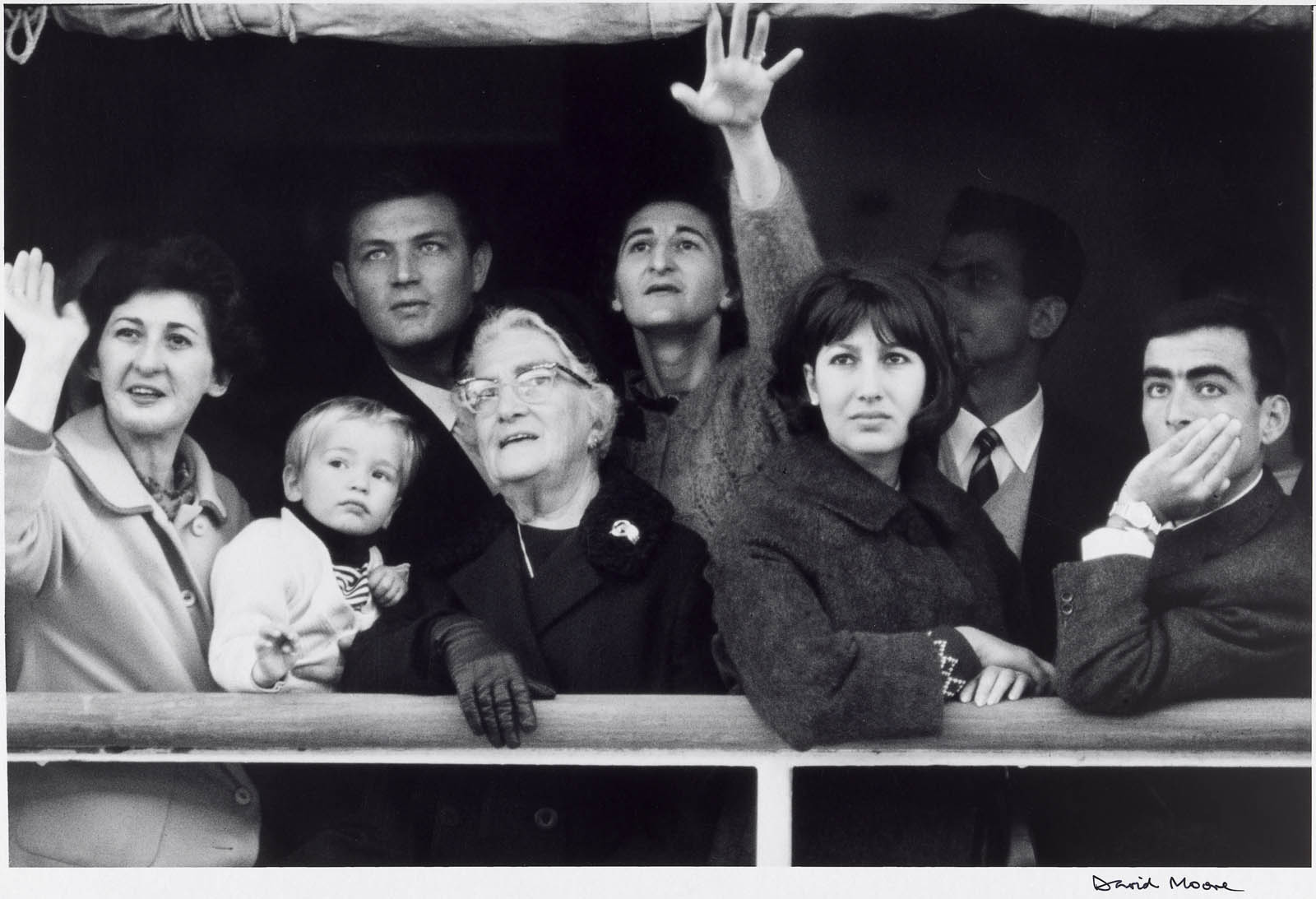
 

David Moore (Australia, 1927-2003) 'Migrants arriving in Sydney' 1966


David Moore (Australia, 1927-2003)
Migrants arriving in Sydney
1966
Gelatin silver photograph
26.7 × 40.4cm
National Gallery of Victoria, Melbourne
Purchased, 1991
© Estate of David Moore


David Moore was Australia’s pre-eminent photojournalist of the 1960s. His work was regularly seen in leading local and international magazines. Moore’s Migrants arriving in Sydney, was commissioned and published by National Geographic in 1966. This now iconic image shows the climactic moment when a ship carrying migrants to Australia docks at Sydney harbour. The tightly framed photograph reveals a range of emotions on the faces of a group of people about to disembark and begin a new life. “We must do more than record the sensational, the bizarre, and the tragic. The lens of the camera must probe, with absolute sincerity, deep into the lives of ordinary men and women and show how we work and play.” David Moore, 1953

Text from the National Gallery of Victoria website

THIS IS NOT CORRECT NGV!

In 2015, Judy Annear [Head of Photography at the Art Gallery of New South Wales] said of this famous photograph: “It’s great to consider that it’s not actually what it seems.” Years after the photo was published, it emerged that four of the passengers in it were not migrants but Sydneysiders returning home from holiday.
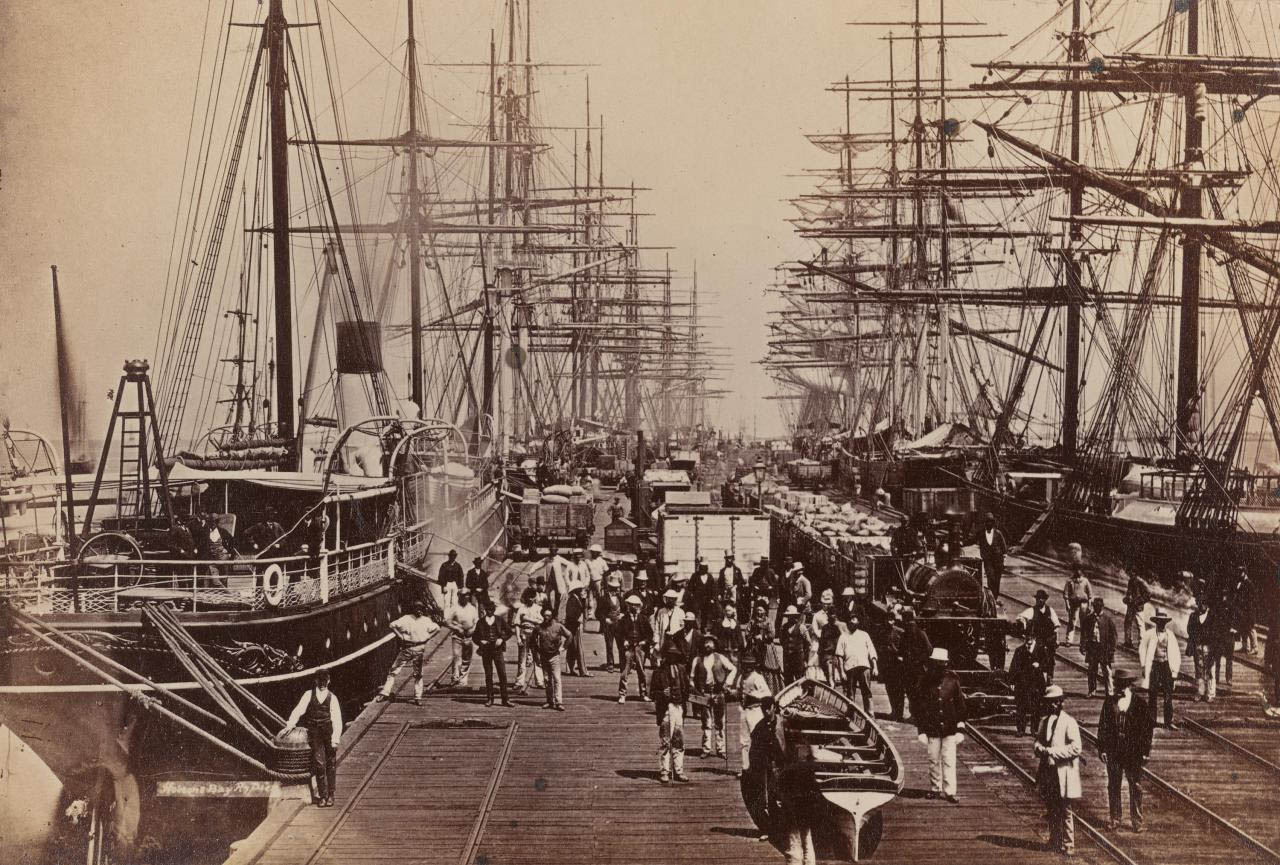
 

Charles Nettleton (English 1825-1902, Australia 1854-1902) 'Hobsons Bay railway pier' 1870s


Charles Nettleton (English 1825-1902, Australia 1854-1902)
Hobsons Bay railway pier
1870s
Albumen silver photograph
12.8 × 19.2cm
National Gallery of Victoria, Melbourne
Purchased, 1992
Public domain


Maggie Diaz (American, 1925-2016, Australia 1961-2016) 'The Canberra, Port Melbourne' 1961-1967, printed 2014


Maggie Diaz (American, 1925-2016, Australia 1961-2016)
The Canberra, Port Melbourne
1961-1967, printed 2014
Pigment print
National Gallery of Victoria, Melbourne
Purchased, Victorian Foundation for Living Australian Artists, 2015


As a young woman, Maggie Diaz had been fascinated by the work of French photographer Henri Cartier-Bresson. Her photographs are a ‘slice of life’ offering similar insights into the everyday experiences of people wherever she encountered them. The ship she photographed at Melbourne’s Station Pier in the 1960s was The Canberra, the largest of the passenger ships sailing between Britain and Australia at that time. Often bringing British migrants on assisted passages, the ship also held personal significance for Diaz: as a migrant from the United States, she travelled one-way from the US to Australia on The Canberra’s maiden voyage in 1961.

Wall text from the exhibition


Installation view of the exhibition 'Photography: Real & Imagined' at The Ian Potter Centre: NGV Australia, Melbourne showing four photographs from Michael Cook's 'Civilised' series (2012)


Installation view of the exhibition Photography: Real & Imagined at The Ian Potter Centre: NGV Australia, Melbourne showing four photographs from Michael Cook’s Civilised series (2012)
Photo: Marcus Bunyan


Michael Cook (Australian / Bidjara, b. 1968) 'Civilised #11' 2012


Michael Cook (Australian / Bidjara, b. 1968)
Civilised #11
2012
From the Civilised series 2012
Inkjet print
100.0 x 87.5cm
ed. 3/8
National Gallery of Victoria, Melbourne
Purchased NGV Foundation, 2013
© Michael Cook and Michael Reid Sydney + Berlin


Bidjara artist Michael Cook poses a question in his Civilised series: ‘What makes a person civilised?’ In these photographs he represents the ways Europeans – English, French, Portuguese and Spanish colonists – responded to First Nations people when they arrived on these shores. The artist asserts that his Civilised series ‘suggests how different history might have been if those Europeans had realised that the Aborigines were indeed civilised’.

Wall text from the exhibition


Installation view of the exhibition 'Photography: Real & Imagined' at The Ian Potter Centre: NGV Australia, Melbourne showing at right, Narelle Autio's two photographs 'Untitled' from 'The Seventh Wave' series (1999-2000)


Installation view of the exhibition Photography: Real & Imagined at The Ian Potter Centre: NGV Australia, Melbourne showing at right, Narelle Autio’s two photographs Untitled from The Seventh Wave series (1999-2000)
Photo: Marcus Bunyan
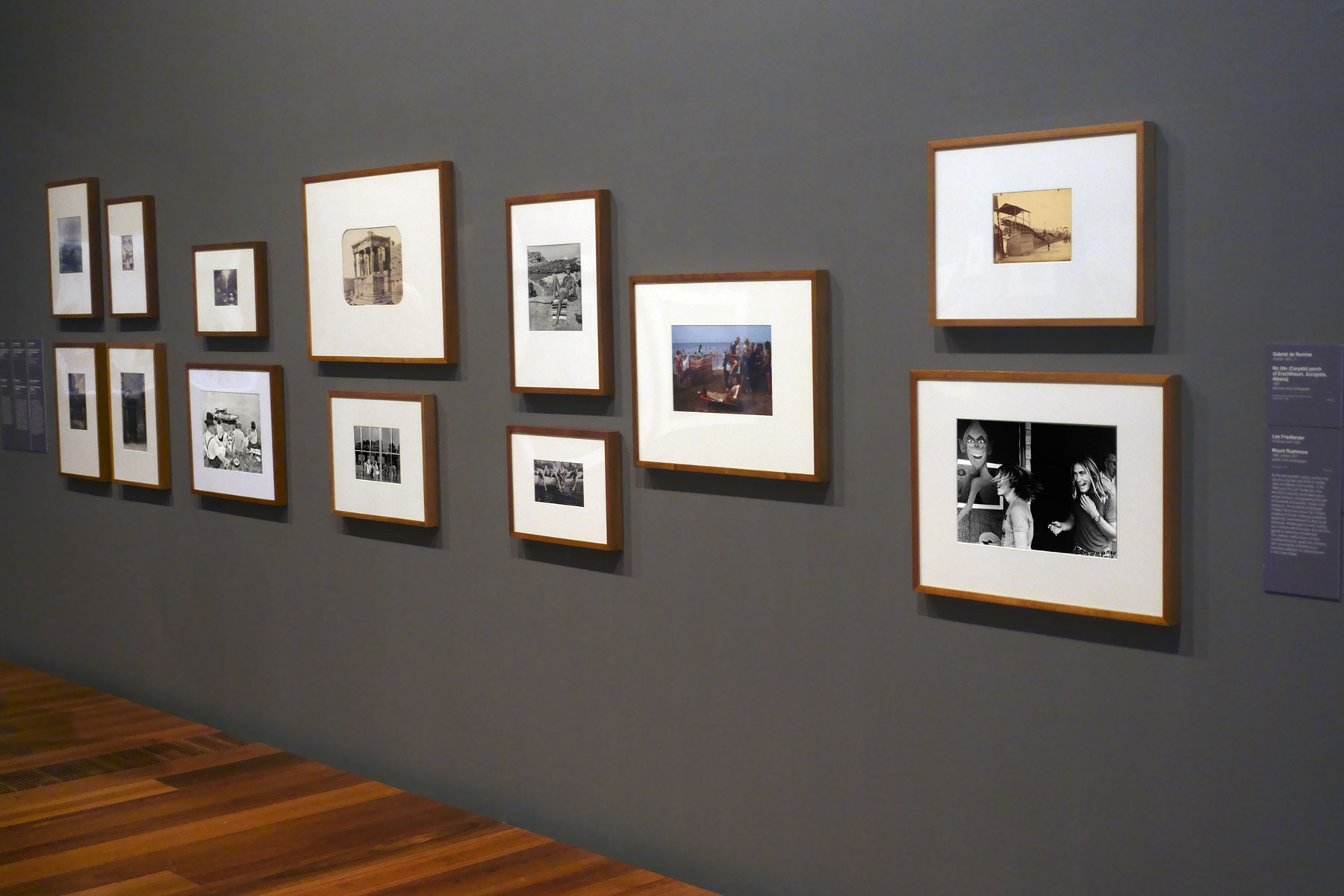
 

Installation view of the exhibition 'Photography: Real & Imagined' at The Ian Potter Centre: NGV Australia, Melbourne showing at third left bottom, Henri Cartier-Bresson's 'Sunday on the banks of the Marne' (1938, below); at fourth left top, Gabriel de Rumine’s 'Caryatid porch of Erechtheum, Acropolis, Athens' (1859, below); at fourth left bottom, Lee Friedlander's 'Mount Rushmore' (1969, below); at centre top, John Williams' 'Clovelly Beach, Sydney' (1969, below); at top right, Eugène Atget's 'The roller coaster, Invalides funfair (Montagnes russes, fête des Invalides)' (1898, below); and at bottom right, Roger Scott's 'Ghost train, Sydney Royal Easter Show' (1972? 1975? below)


Installation view of the exhibition Photography: Real & Imagined at The Ian Potter Centre: NGV Australia, Melbourne showing at third left bottom, Henri Cartier-Bresson’s Sunday on the banks of the Marne (1938, below); at fourth left top, Gabriel de Rumine’s Caryatid porch of Erechtheum, Acropolis, Athens (1859, below); at fourth left bottom, Lee Friedlander’s Mount Rushmore (1969, below); at centre top, John Williams’ Clovelly Beach, Sydney (1969, below); at top right, Eugène Atget’s The roller coaster, Invalides funfair (Montagnes russes, fête des Invalides) (1898, below); and at bottom right, Roger Scott’s Ghost train, Sydney Royal Easter Show (1972? 1975? below)
Photo: Marcus Bunyan


Installation view of the exhibition 'Photography: Real & Imagined' at The Ian Potter Centre: NGV Australia, Melbourne showing David Goldblatt's 'The playing fields of Tladi, Soweto, Johannesburg, August 1972'


Installation view of the exhibition Photography: Real & Imagined at The Ian Potter Centre: NGV Australia, Melbourne showing David Goldblatt’s The playing fields of Tladi, Soweto, Johannesburg, August 1972
Photo: Marcus Bunyan


Harold Cazneaux (Australian born New Zealand, 1878-1953) 'Fairy Lane steps' 1910


Harold Cazneaux (Australian born New Zealand, 1878-1953)
Fairy Lane steps
1910
Bromoil print
24.8 × 18.5cm
National Gallery of Victoria, Melbourne
Purchased, 1979
© The Cazneaux family


Harold Cazneaux was one of the most important and influential Australian photographers of the early twentieth century. He had a great love of the natural world but early in his career also found a rich subject in the inner-city streets of Sydney. Cazneaux made photographs that appear lively and spontaneous, although given the limitations of the equipment at the time they are almost certain to have been staged to a degree. His charming studies of children at play in city streets transformed the bleak, impoverished urban environments of inner-city Sydney into a wonderful playground.

Wall text from the exhibition


Installation view of the exhibition 'Photography: Real & Imagined' at The Ian Potter Centre: NGV Australia, Melbourne showing Helen Levitt's 'New York (Boys fighting on a pediment)' c. 1940


Installation view of the exhibition Photography: Real & Imagined at The Ian Potter Centre: NGV Australia, Melbourne showing Helen Levitt’s New York (Boys fighting on a pediment) c. 1940
Photo: Marcus Bunyan
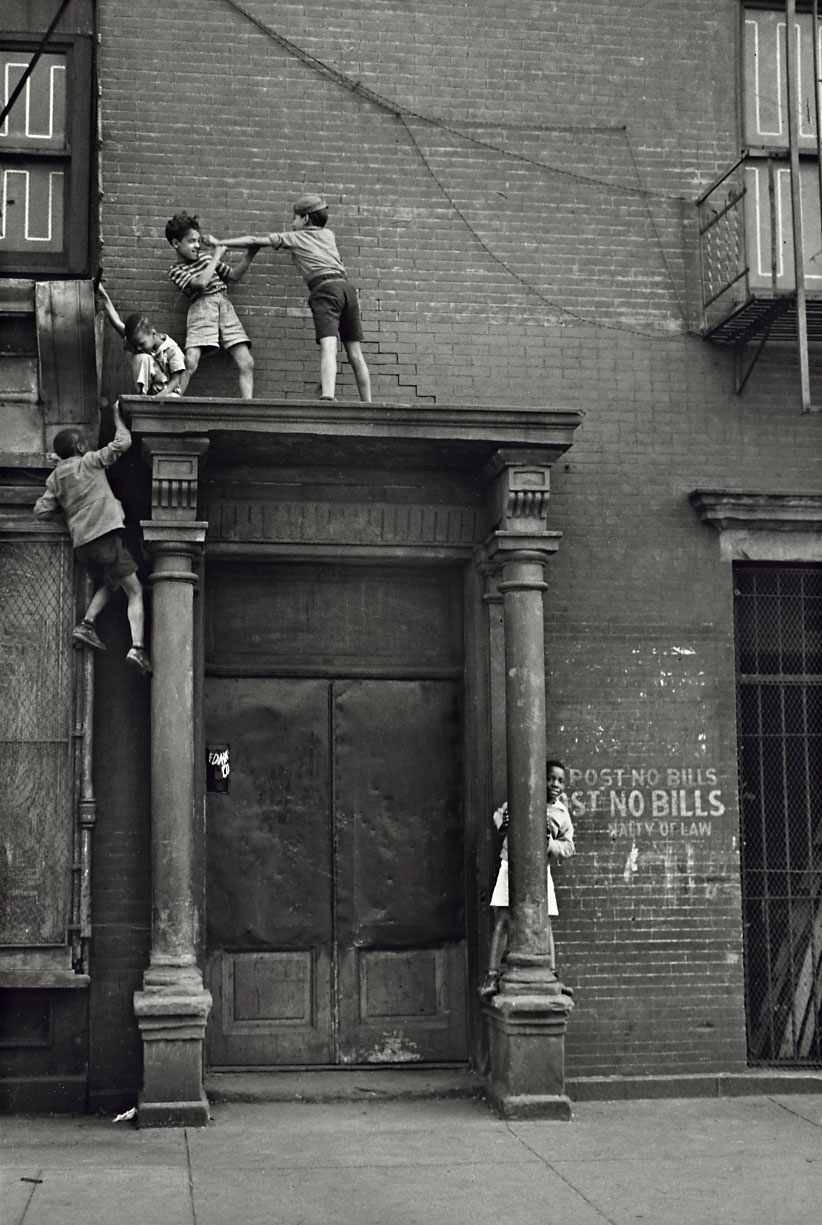
 

Helen Levitt (American, 1913-2009) 'New York (Boys fighting on a pediment)' c. 1940


Helen Levitt (American, 1913-2009)
New York (Boys fighting on a pediment)
c. 1940
Gelatin silver print
31.8 × 21.1cm
National Gallery of Victoria, Melbourne
Bowness Family Fund for Photography, 2022
Public domain
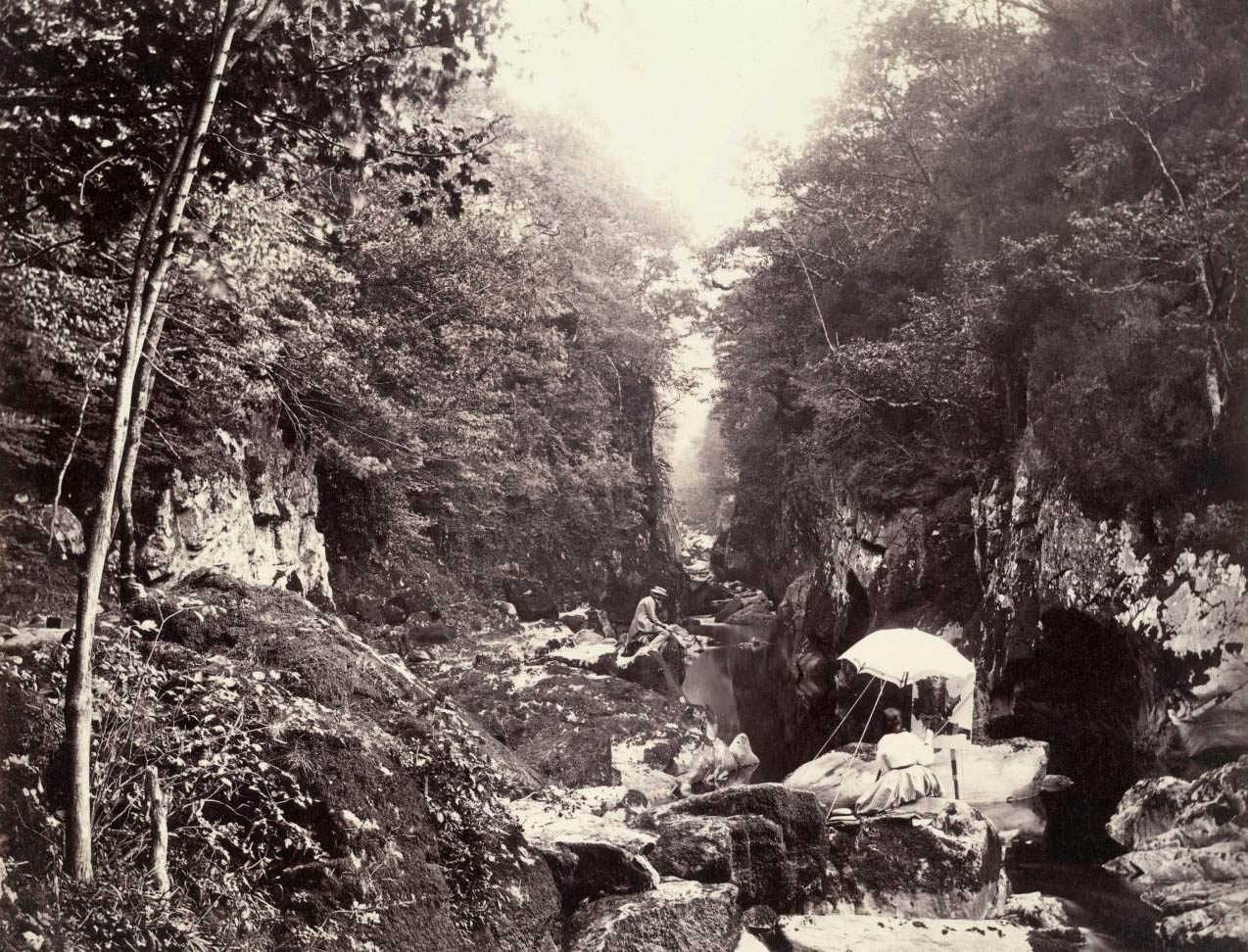
 

Francis Bedford (attributed to) (English, 1815-1894) 'Fairy Glen, Betws-y-Coed' (Ffos Noddyn, Betws-y-Coed) c. 1860


Francis Bedford (attributed to) (English, 1815-1894)
Fairy Glen, Betws-y-Coed
(Ffos Noddyn, Betws-y-Coed)
c. 1860
from the No title (Stephen Thompson album) (1859 – c. 1868)
Albumen silver photograph
13.7 × 17.8cm (image and sheet)
National Gallery of Victoria, Melbourne
Purchased from Admission Funds, 1988
Public domain
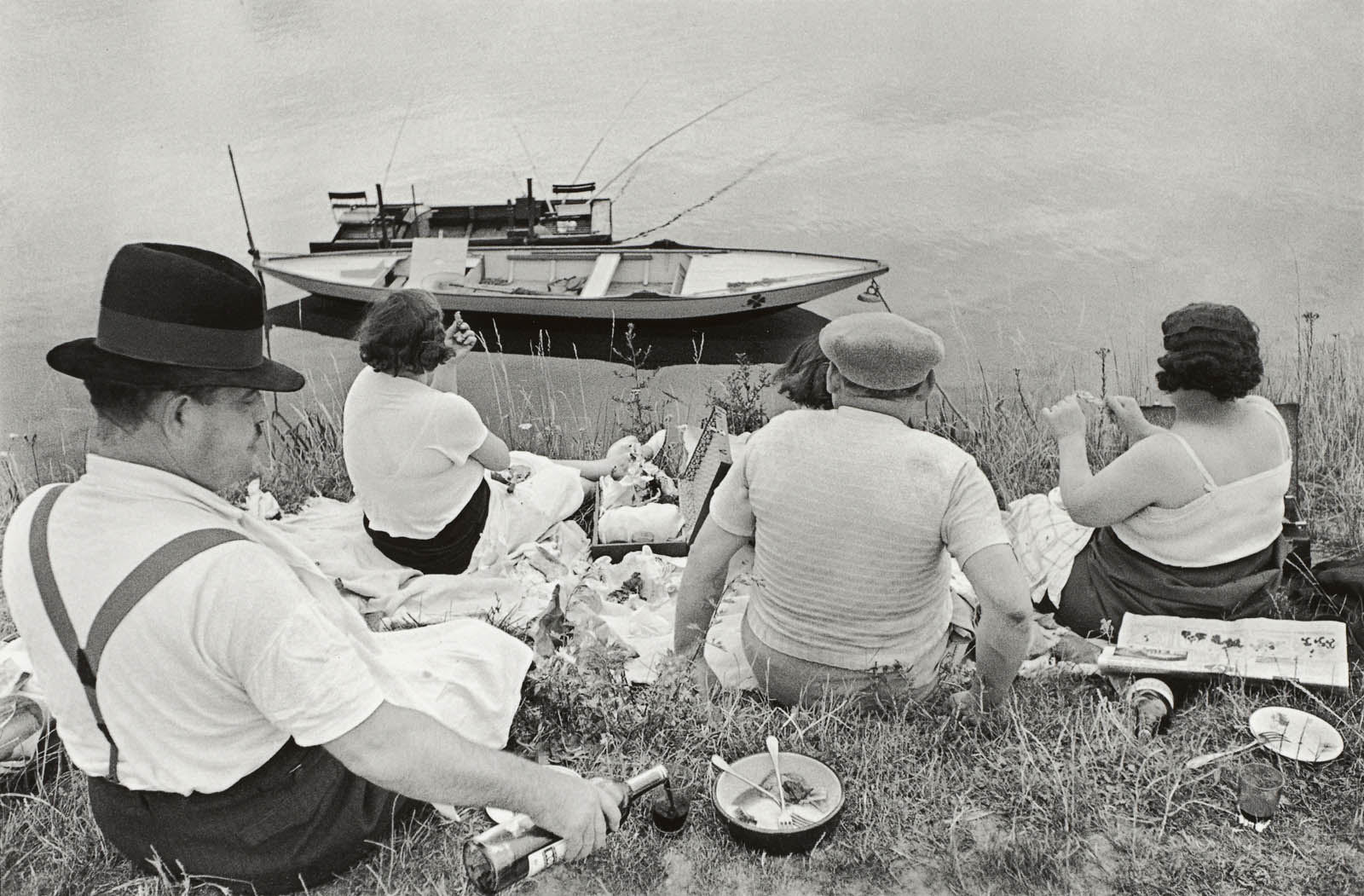
 

Henri Cartier-Bresson (French, 1908-2004) 'Sunday on the banks of the Marne, Juvisy, France' 1938


Henri Cartier-Bresson (French, 1908-2004)
Sunday on the banks of the Marne, Juvisy, France
1938; (1990s) {printed}
Gelatin silver photograph
29.1 x 43.9 cm (image)
National Gallery of Victoria, Melbourne
Purchased NGV Foundation, 2015
2015.566
© Fondation Henri Cartier-Bresson/Magnum Photos


In 1938 Henri Cartier-Bresson photographed a group of people picnicking on the banks of the river Marne. It is a celebratory image showing a quintessential aspect of everyday life in France: long Sunday lunches. But it also reveals something of the revolutionary politics of the period and their profound influence on Cartier-Bresson in the 1930s. In 1938 the left-wing Popular Front swept into power in France and the newly elected government mandated two weeks paid leave for all workers. At the time, Cartier-Bresson worked for the Paris-based communist press and was commissioned by Regards magazine to photograph an extended series that looked at the social impact of this initiative.

Wall text from the exhibition
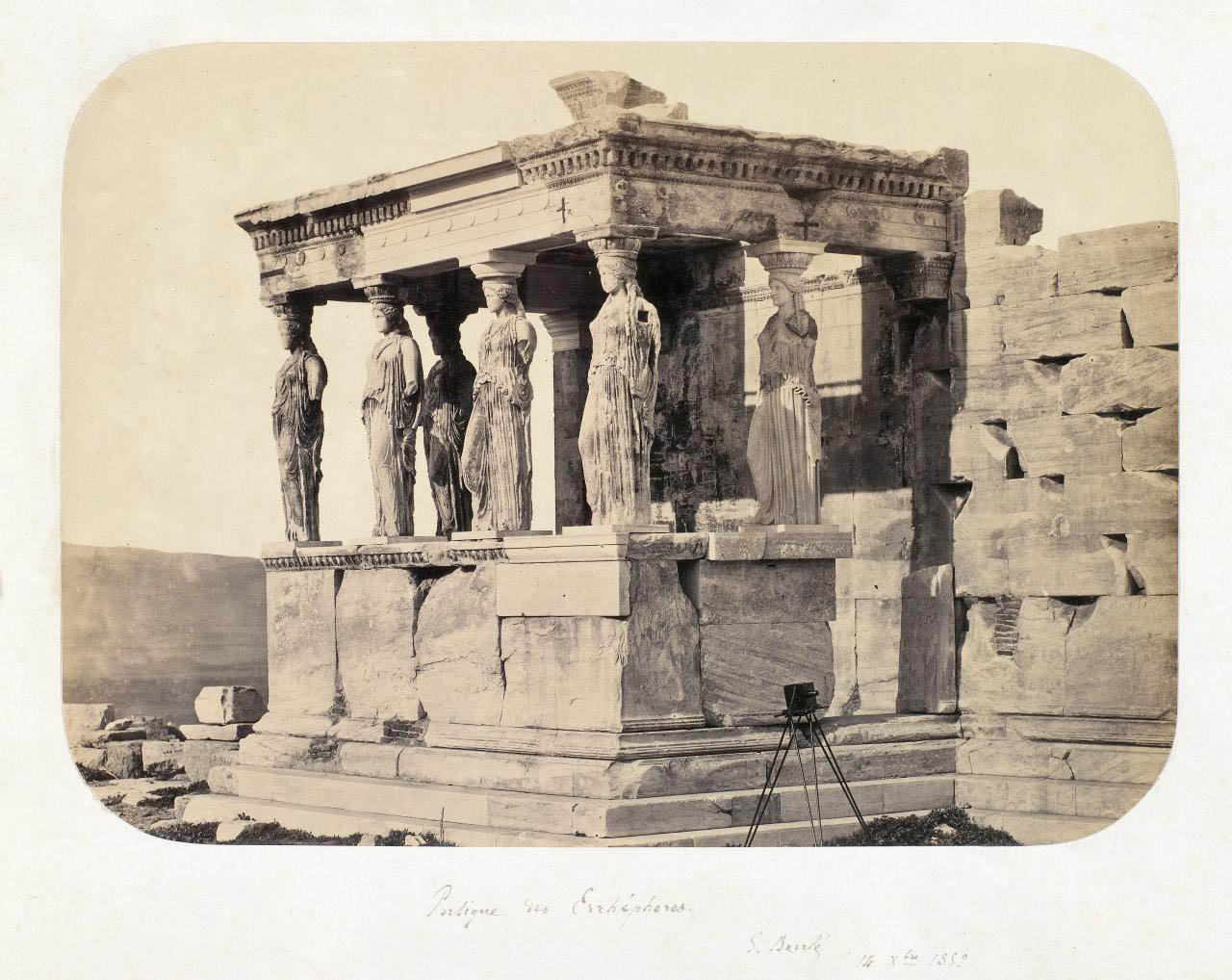
 

Gabriel de Rumine (European, 1841-1871) 'No title (Caryatid porch of Erechtheum, Acropolis, Athens)' 1859


Gabriel de Rumine (European, 1841-1871)
No title (Caryatid porch of Erechtheum, Acropolis, Athens)
1859
Albumen silver photograph
25.7 × 35.8cm irreg. (image and sheet)
National Gallery of Victoria, Melbourne
Presented by the National Gallery Women’s Association, 1995
Public domain


Installation view of the exhibition 'Photography: Real & Imagined' at The Ian Potter Centre: NGV Australia, Melbourne showing Lee Friedlander's 'Mount Rushmore' (1969)


Installation view of the exhibition Photography: Real & Imagined at The Ian Potter Centre: NGV Australia, Melbourne showing Lee Friedlander’s Mount Rushmore (1969, below)
Photo: Marcus Bunyan


Lee Friedlander (United States, b.  1934) 'Mount Rushmore' 1969, printed c. 1977


Lee Friedlander (United States, b.  1934)
Mount Rushmore
1969; printed c. 1977
Gelatin silver print
18.3 × 27.5cm
National Gallery of Victoria, Melbourne
Purchased, 1977
© Lee Friedlander, courtesy Fraenkel Gallery, San Francisco and Luhring Augustine, New York

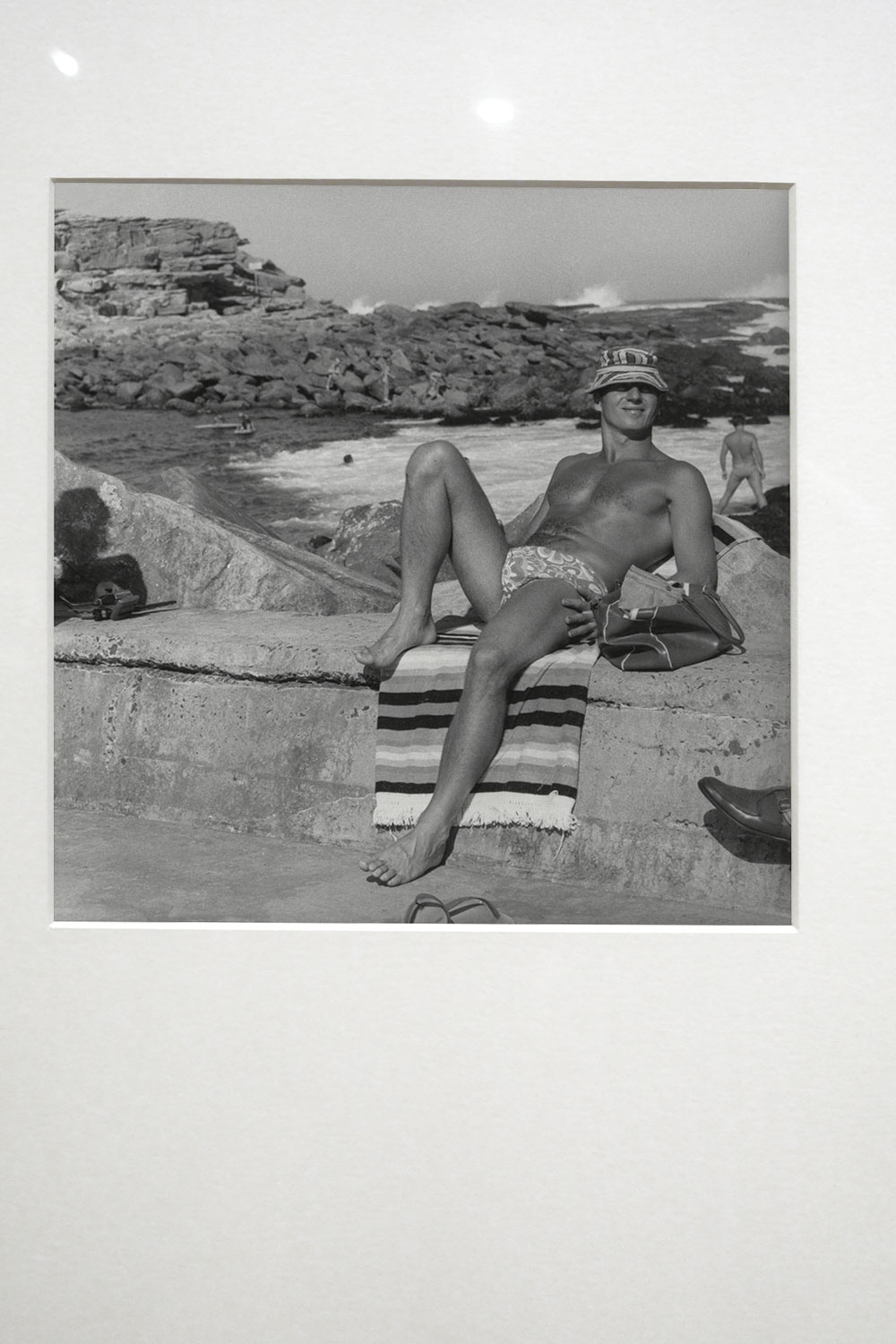
 

Installation view of the exhibition 'Photography: Real & Imagined' at The Ian Potter Centre: NGV Australia, Melbourne showing John Williams' 'Clovelly Beach, Sydney' (1969)

Installation view of the exhibition 'Photography: Real & Imagined' at The Ian Potter Centre: NGV Australia, Melbourne showing John Williams' 'Clovelly Beach, Sydney' (1969)


Installation views of the exhibition Photography: Real & Imagined at The Ian Potter Centre: NGV Australia, Melbourne showing John Williams’ Clovelly Beach, Sydney (1969, below)
Photos: Marcus Bunyan
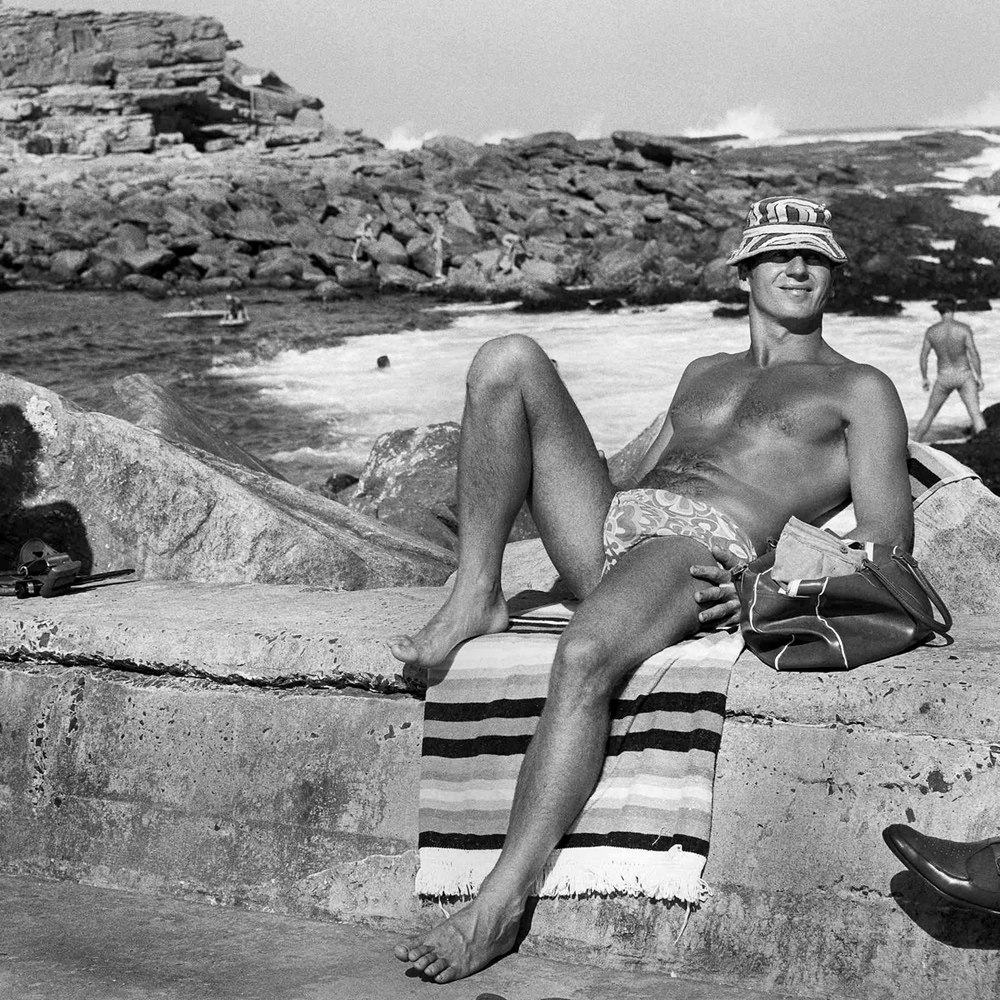
 

John Williams (1933- 2016) 'Clovelly Beach' 1964


John Williams (Australian, 1933-2016)
Clovelly Beach, Sydney
1969; printed 1988
Gelatin silver photograph
25.6 × 25.4cm
National Gallery of Victoria, Melbourne
Purchased, 1989
© John Williams
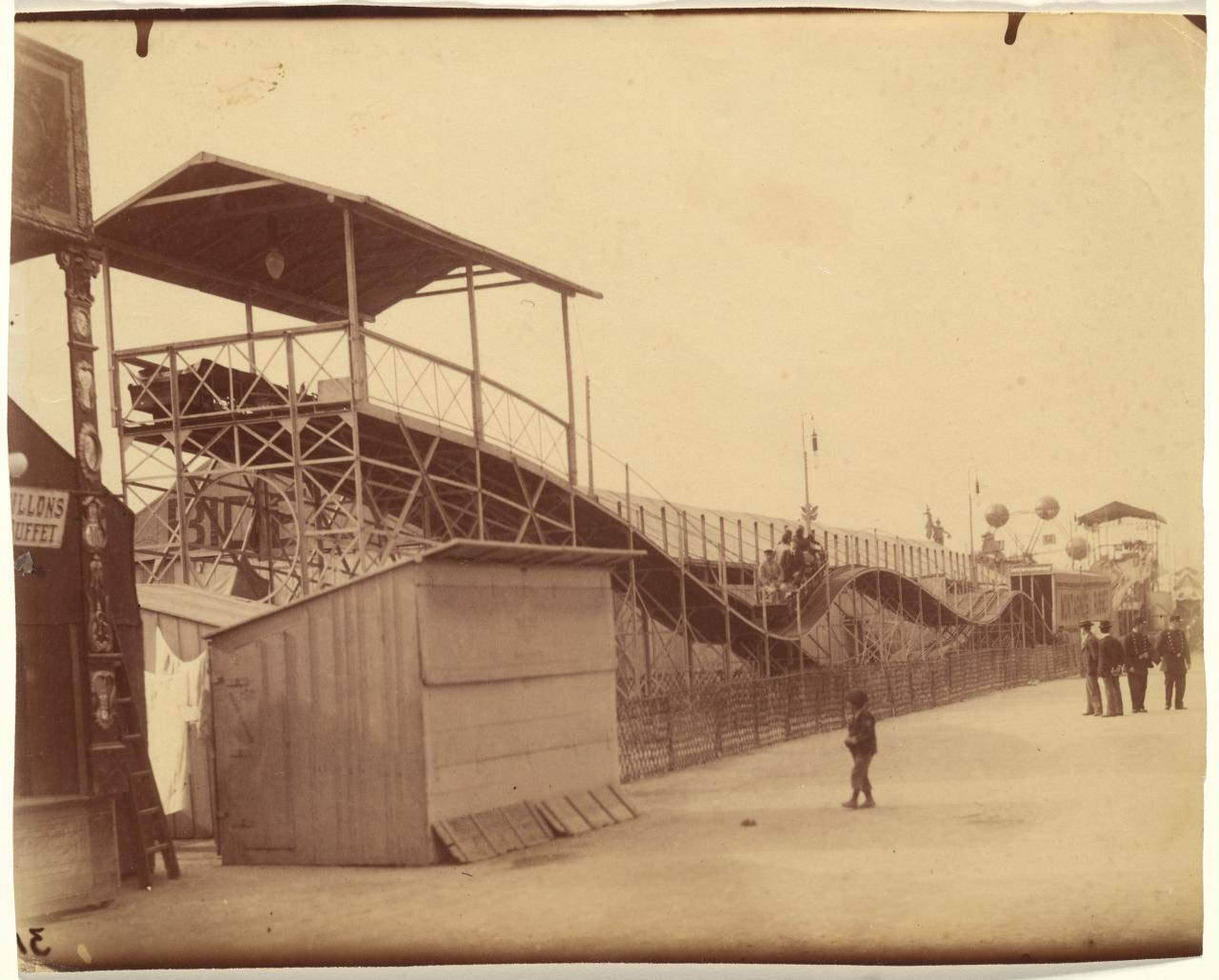
 

Eugène Atget (French, 1857-1927) 'The roller coaster, Invalides funfair (Montagnes russes, fête des Invalides)' 1898


Eugène Atget (French, 1857-1927)
The roller coaster, Invalides funfair (Montagnes russes, fête des Invalides)
1898
From the Festivals and Fairs series in the Art in Old Paris series 1898-1927
Albumen silver photograph
National Gallery of Victoria, Melbourne
Gift of Patrick Pound through the Australian Government’s Cultural Gifts Program, 2020
Public domain


Roger Scott. 'Ghost train, Sydney Royal Easter Show' 1972? 1975?


Roger Scott (Australian, b. 1944)
Ghost train, Sydney Royal Easter Show
1972? 1975?
Gelatin silver print
30.4 × 45.6cm
National Gallery of Victoria, Melbourne
Gift of Mr James Mollison, 1994
© Roger Scott


The Ian Potter Centre: NGV Australia
Federation Square
Corner of Russell and 
Flinders Streets, Melbourne

Opening hours:
Daily 10am – 5pm

National Gallery of Victoria website

LIKE ART BLART ON FACEBOOK

Back to top

Exhibition: ‘Photography’s Last Century: The Ann Tenenbaum and Thomas H. Lee Collection’ at the Metropolitan Museum of Art, New York

Exhibition dates: 10th March – 30th November, 2020

Curator: Jeff L. Rosenheim, Joyce Frank Menschel Curator in Charge of the Department of Photographs


André Kertész (Hungarian, 1894-1985) 'Underwater Swimmer, Esztergom, Hungary' 1917 from the exhibition 'Photography's Last Century: The Ann Tenenbaum and Thomas H. Lee Collection' at the Metropolitan Museum of Art, New York, March - Nov, 2020


André Kertész (Hungarian, 1894-1985)
Underwater Swimmer, Esztergom, Hungary
1917
Gelatin silver print
1 1/2 in. × 2 in. (3.8 × 5.1cm)
Promised Gift of Ann Tenenbaum and Thomas H. Lee, in celebration of the Museum’s 150th Anniversary
The Metropolitan Museum of Art
© 2020 Estate of André Kertész/Higher Pictures


This tiny but iconic masterpiece of twentieth-century photography is the second earliest work in the exhibition, and a gem in the Tenenbaum and Lee collection. Made while André Kertész was convalescing from a gunshot wound received while serving in the Austro-Hungarian army during World War I, it prefigures by some fifteen years his renowned mirror distortions produced in Paris. Displaying both Cubist and Surrealist influences, the photograph reveals the artist’s commitment to the spontaneous yet analytic observation of fleeting commonplace occurrences – one of the essential and most idiosyncratic qualities of the medium.


It’s a mystery

There are some eclectic photographs in this posting, many of which have remained un/seen to me before.

I have never seen the above version of Kertész’s Underwater Swimmer, Esztergom, Hungary (1917), with wall, decoration and water flowing into the pool at left. The usual image crops these features out, focusing on the distortion of the body in the water, and the lengthening of the figure diagonally across the picture frame. That both images are from the same negative can be affirmed if one looks at the patterning of the water. Even as the exhibition of Kertész’s work at Jeu de Paume at the Château de Tours that I saw last year stated that their version was a contact original… this is not possible unless the image has been cropped.

Other images by Alfred Stieglitz, Paul Outerbridge Jr., Eugène Atget, Walker Evans, Pierre Dubreuil, Ilse Bing, Bill Brandt, Dora Maar, Joseph Cornell, Nan Goldin, Laurie Simmons, Robert Gober, Rachel Whiteread, Zanele Muholi have eluded my consciousness until now.

What I can say after viewing them is this.

I am forever amazed at how deep the spirit, and the medium, of photography is… if you give the photograph a chance. A friend asked me the other day whether photographs had any meaning anymore, as people glance for a nano-second at images on Instagram, and pass on. We live in a world of instant gratification was my answer to him. But the choice is yours if you take / time with a photograph, if it possesses the POSSIBILITY of a meditation from its being. If it intrigues or excites, or stimulates, makes you reflect, cry – that is when the photographs pre/essence, its embedded spirit, can make us attest to the experience of its will, its language, its desire. In our presence.

The more I learn about photography, the less I find I know. The lake (archive) is deep – full of serendipity, full of memories, stagings, concepts and realities. Full of nuances and light, crevices and dark passages. To understand photography is a life-long study. To an inquiring mind, even then, you may only – scratch the surface to reveal – a sort of epiphany, a revelation, unknown to others. Every viewing is unique, every interpretation different, every context unknowable (possible).

Dr Marcus Bunyan

PS. When Minor White was asked, what about photography when he dies? When he is no longer there to influence it? And he simply says – photography will do what it wants to do. This is a magnificent statement, and it shows an egoless freedom on Minor White’s part. It is profound knowledge about photography, about its freedom to change.


Many thankx to the Metropolitan Museum of Art for allowing me to publish the photographs in the posting. Please click on the photographs for a larger version of the image.


This exhibition will celebrate the remarkable ascendancy of photography in the last century, and Ann Tenenbaum and Thomas H. Lee’s magnificent promised gift of over sixty extraordinary photographs in honour of The Met’s 150th anniversary in 2020. The exhibition will include masterpieces by the medium’s greatest practitioners, including works by Paul Strand, Dora Maar, Man Ray, and László Moholy-Nagy; Edward Weston, Walker Evans, and Joseph Cornell; Diane Arbus, Andy Warhol, Sigmar Polke, and Cindy Sherman.

The collection is particularly notable for its breadth and depth of works by women artists, its sustained interest in the nude, and its focus on artists’ beginnings. Strand’s 1916 view from the viaduct confirms his break with the Pictorialist past and establishes the artist’s way forward as a cutting-edge modernist; Walker Evans’s shadow self-portraits from 1927 mark the first inkling of a young writer’s commitment to visual culture; and Cindy Sherman’s intimate nine-part portrait series from 1976 predates her renowned series of “film stills” and confirms her striking ambition and stunning mastery of the medium at the age of twenty-two.

Text from the Metropolitan Museum of Art website


Alfred Stieglitz (American, 1864-1946) 'Georgia O'Keeffe' 1918 from the exhibition 'Photography's Last Century: The Ann Tenenbaum and Thomas H. Lee Collection' at the Metropolitan Museum of Art, New York, March - Nov, 2020


Alfred Stieglitz (American, 1864-1946)
Georgia O’Keeffe
1918
Platinum print
9 1/2 × 7 1/2 in. (24.1 × 19.1cm)
Ann Tenenbaum and Thomas H. Lee Collection
The Metropolitan Museum of Art


This photograph marks the beginning of the romantic relationship between Alfred Stieglitz and Georgia O’Keeffe, which transformed each of their lives and the story of American art. The two met when Stieglitz included O’Keeffe, a then-unknown painter, in her first group show at his gallery 291 in May 1916. A year later, O’Keeffe had her first solo show at the gallery and exhibited her abstract charcoal No. 15 Special, seen in the background here. In the coming months and years, O’Keeffe collaborated with Stieglitz on some three hundred portrait studies. In its physical scope, primal sensuality, and psychological power, Stieglitz’s serial portrait of O’Keeffe has no equal in American art.


Paul Outerbridge Jr. (American, 1896-1958) 'Telephone' 1922 from the exhibition 'Photography's Last Century: The Ann Tenenbaum and Thomas H. Lee Collection' at the Metropolitan Museum of Art, New York, March - Nov, 2020


Paul Outerbridge Jr. (American, 1896-1958)
Telephone
1922
Platinum print
4 1/2 × 3 3/8 in. (11.4 × 8.5cm)
Promised Gift of Ann Tenenbaum and Thomas H. Lee, in celebration of the Museum’s 150th Anniversary
The Metropolitan Museum of Art


A well-paid advertising photographer working in New York in the 1930s, Paul Outerbridge Jr. was trained as a painter and set designer. Highly influenced by Cubism, he was a devoted advocate of the platinum-print process, which he used to create nearly abstract still lifes of commonplace subjects such as cracker boxes, wine glasses, and men’s collars. With their extended mid-tones and velvety blacks, platinum papers were relatively expensive and primarily used by fine-art photographers like Paul Strand, Edward Steichen, and Alfred Stieglitz. This modernist study of a Western Electric “candlestick” telephone attests to Outerbridge’s talent for transforming banal, utilitarian objects into small, but powerful sculptures with formal rigour and startling beauty.


Edward Weston. 'Anita ("Pear-Shaped Nude")' 1925


Edward Weston (American, 1886-1958)
Nude
1925, printed 1930s
Gelatin silver print
8 1/2 × 7 1/2 in. (21.6 × 19cm)
Promised Gift of Ann Tenenbaum and Thomas H. Lee, in celebration of the Museum’s 150th Anniversary
The Metropolitan Museum of Art
© Center for Creative Photography, Arizona Board of Regents


Edward Weston moved from Los Angeles to Mexico City in 1923 with Tina Modotti, an Italian actress and nascent photographer. They were each influenced by, and in turn helped shape, the larger community of artists among whom they lived and worked, which included Diego Rivera, Jean Charlot, and many other members of the Mexican Renaissance. In fall 1925 Weston made a remarkable series of nudes of the art critic, journalist, and historian Anita Brenner. Depicting her body as a pear-like shape floating in a dark void, the photographs evoke the hermetic simplicity of a sculpture by Constantin Brancusi. Brenner’s form becomes elemental, female and male, embryonic, tightly furled but ready to blossom.


Eugène Atget (French, 1857-1927) 'Boulevard de Strasbourg' 1926


Eugène Atget (French, 1857-1927)
Boulevard de Strasbourg
1926
Gelatin silver print
8 7/8 in. × 7 in. (22.5 × 17.8cm)
Ann Tenenbaum and Thomas H. Lee Collection
The Metropolitan Museum of Art


Eugène Atget became the darling of the French Surrealists in the mid-1920s courtesy of Man Ray, his neighbour in Paris, who admired the older artist’s seemingly straight forward documentation of the city. Another American photographer, Walker Evans, also credited Atget with inspiring his earliest experiments with the camera. A talented writer, Evans penned a famous critique of his progenitor in 1930: “[Atget’s] general note is a lyrical understanding of the street, trained observation of it, special feeling for patina, eye for revealing detail, over all of which is thrown a poetry which is not ‘the poetry of the street’ or ‘the poetry of Paris,’ but the projection of Atget’s person.”


Walker Evans (American, 1903-1975) 'Self-portrait, Juan-les-Pins, France, January 1927' 1927


Walker Evans (American, 1903-1975)
Self-portrait, Juan-les-Pins, France, January 1927
1927
Promised Gift of Ann Tenenbaum and Thomas H. Lee, in celebration of the Museum’s 150th Anniversary
The Metropolitan Museum of Art


Walker Evans (American, 1903-1975) 'Shadow, Self-Portrait (Right Profile, Wearing Hat), Juan-les-Pins, France, January 1927' 1927


Walker Evans (American, 1903-1975)
Shadow, Self-Portrait (Right Profile, Wearing Hat), Juan-les-Pins, France, January 1927
1927
Film negative
Promised Gift of Ann Tenenbaum and Thomas H. Lee, in celebration of the Museum’s 150th Anniversary
The Metropolitan Museum of Art, New York


Pierre Dubreuil (French, 1872-1944) 'The Woman Driver' 1928


Pierre Dubreuil (French, 1872-1944)
The Woman Driver
1928
Bromoil print
9 7/16 × 7 5/8 in. (24 × 19.3cm)
Promised Gift of Ann Tenenbaum and Thomas H. Lee, in celebration of the Museum’s 150th Anniversary
The Metropolitan Museum of Art
© 2019 Artists Rights Society (ARS), New York / ADAGP, Paris


Like many other European and American photographers, Pierre Dubreuil was indifferent to the industrialisation of photography that followed the invention and immediate global success of the Kodak camera in the late 1880s. A wealthy member of an international community of photographers loosely known as Pictorialists, he spurned most aspects of modernism. Instead, he advocated painterly effects such as those offered by the bromoil printing process seen here. What makes this photograph exceptional, however, is the modern subject and the work’s title, The Woman Driver. Dubreuil’s wife, Josephine Vanassche, grasps the steering wheel of their open-air car and stares straight ahead, ignoring the attention of her conservative husband and his intrusive camera.


Florence Henri (French, born America 1893-1982) 'Windows' 1929


Florence Henri (French, born America 1893-1982)
Windows
1929
Gelatin silver print
14 1/2 × 10 1/4 in. (36.8 × 26cm)
Promised Gift of Ann Tenenbaum and Thomas H. Lee, in celebration of the Museum’s 150th Anniversary
The Metropolitan Museum of Art


A peripatetic French American painter and photographer, Florence Henri studied with László Moholy-Nagy at the Bauhaus in Germany in summer 1927. Impressed by her natural talent, he wrote a glowing commentary on the artist for a small Amsterdam journal: “With Florence Henri’s photos, photographic practice enters a new phase, the scope of which would have been unimaginable before today… Reflections and spatial relationships, superposition and intersections are just some of the areas explored from a totally new perspective and viewpoint.” Despite the high regard for her paintings and photographs in the 1920s, Henri remains largely under appreciated.


Ilse Bing (German, 1899-1998) '[Rue de Valois, Paris]' 1932


Ilse Bing (German, 1899-1998)
[Rue de Valois, Paris]
1932
Gelatin silver print
11 1/8 × 8 3/4 in. (28.3 × 22.2cm)
Ann Tenenbaum and Thomas H. Lee Collection
The Metropolitan Museum of Art
© Estate of Ilse Bing


Ilse Bing trained as an art historian in Germany and learned photography in 1928 to make illustrations for her dissertation on neoclassical architecture. In 1930 she moved to Paris, supporting herself as a freelance photographer for French and German newspapers and fashion magazines. Known in the early 1930s as the “Queen of the Leica” due to her mastery of the handheld 35 mm camera, Bing found the old cobblestone streets of Paris a rich subject to explore, often from eccentric perspectives as seen here. She moved to New York in 1941 after the German occupation of Paris and remained here until her death at age ninety-eight.


Bill Brandt (British, 1904-1983) 'Soho Bedroom' 1932


Bill Brandt (British, 1904-1983)
Soho Bedroom
1932
Gelatin silver print
8 7/16 × 7 5/16 in. (21.4 × 18.5cm)
Ann Tenenbaum and Thomas H. Lee Collection
The Metropolitan Museum of Art


Bill Brandt challenged the standard tenets of documentary practice by frequently staging scenes for the camera and recruiting family and friends as models. In this intimate study of a couple embracing, the male figure is believed to be either a friend or the artist’s younger brother; the female figure is an acquaintance, “Bird,” known for her beautiful hands. The photograph appears with a different title, Top Floor, along with sixty-three others in Brandt’s second book, A Night in London (1938). After the book’s publication, Brandt changed the work’s title to Soho Bedroom to reference London’s notorious Red Light district and add a hint of salaciousness to the kiss.


Dora Maar (French, 1907-1997) '[Woman and Child in Window, Barcelona]' 1932-1934


Dora Maar (French, 1907-1997)
[Woman and Child in Window, Barcelona]
1932-1934
Gelatin silver print
11 1/8 × 8 3/8 in. (28.2 × 21.2cm)
Promised Gift of Ann Tenenbaum and Thomas H. Lee, in celebration of the Museum’s 150th Anniversary
The Metropolitan Museum of Art
© 2020 Artists Rights Society (ARS), New York / ADAGP, Paris


When Dora Maar first traveled to Barcelona in 1932 to record the effects of the global economic crisis, she was twenty-five and still finding her footing as a photographer. To sustain her practice, she opened a joint studio with the film designer Pierre Kéfer. Working out of his parents’ villa in a Parisian suburb, he and Maar produced mostly commercial photographs for fashion and advertising – projects that funded Maar’s travel to Spain. With an empathetic eye, she documents a mother and her child peering out of a makeshift shelter. Adapting an avant-garde strategy, she chose a lateral angle to monumentalise her subjects.


Edward Weston (American, 1886-1958) 'Nude' 1934


Edward Weston (American, 1886-1958)
Nude
1934
Gelatin silver print
3 5/8 in. (9.2cm)
Promised Gift of Ann Tenenbaum and Thomas H. Lee, in celebration of the Museum’s 150th Anniversary
The Metropolitan Museum of Art
© Center for Creative Photography, Arizona Board of Regents


The nude as a subject for the camera would occupy Edward Weston’s attention for four decades, and it is a defining characteristic of his achievement and legacy. This physically small but forceful, closely cropped photograph is a study of the writer Charis Wilson. Although presented headless and legless, Wilson tightly crosses her arms in a bold power pose. Weston was so stunned by Wilson when they first met that he ceased writing in his diary the day after he made this photograph: “April 22 [1934], a day to always remember. I knew now what was coming; eyes don’t lie and she wore no mask… I was lost and have been ever since.” Wilson and Weston immediately moved in together and married five years later.


The exhibition Photography’s Last Century: The Ann Tenenbaum and Thomas H. Lee Collection celebrates the remarkable ascendancy of photography in the last hundred years through the magnificent promised gift to The Met of more than 60 extraordinary photographs from Museum Trustee Ann Tenenbaum and her husband, Thomas H. Lee, in honour of the Museum’s 150th anniversary in 2020. The exhibition will feature masterpieces by a wide range of the medium’s greatest practitioners, including Diane Arbus, Richard Avedon, Ilse Bing, Joseph Cornell, Walker Evans, Robert Frank, Andreas Gursky, Helen Levitt, Dora Maar, László Moholy-Nagy, Jack Pierson, Sigmar Polke, Man Ray, Laurie Simmons, Alfred Stieglitz, Paul Strand, Cindy Sherman, Andy Warhol, Edward Weston, and Rachel Whiteread.

The exhibition is made possible by Joyce Frank Menschel and the Alfred Stieglitz Society.

Max Hollein, Director of The Met, said, “Ann Tenenbaum brilliantly assembled an outstanding and very personal collection of 20th-century photographs, and this extraordinary gift will bring a hugely important group of works to The Met’s holdings and to the public’s eye. From works by celebrated masters to lesser-known artists, this collection encourages a deeper understanding of the formative years of photography, and significantly enhances our holdings of key works by women, broadening the stories we can tell in our galleries and allowing us to celebrate a whole range of crucial artists at The Met. We are extremely grateful to Ann and Tom for their generosity in making this promised gift to The Met, especially as we celebrate the Museum’s 150th anniversary. It will be an honour to share these remarkable works with our visitors.”

“Early on, Ann recognised the camera as one of the most creative and democratic instruments of contemporary human expression,” said Jeff Rosenheim, Joyce Frank Menschel Curator in Charge of the Department of Photographs. “Her collecting journey through the last century of picture-making has been guided by her versatility and open-mindedness, and the result is a collection that is both personal and dynamic.”

The Tenenbaum Collection is particularly notable for its focus on artists’ beginnings, for a sustained interest in the nude, and for the breadth and depth of works by women artists. Paul Strand’s 1916 view from the viaduct confirms his break with the Pictorialist past and establishes the artist’s way forward as a cutting-edge modernist; Walker Evans’s shadow self-portraits from 1927 mark the first inkling of a young writer’s commitment to visual culture; and Cindy Sherman’s intimate nine-part portrait series from 1976 predates her renowned series of “film stills” and confirms her striking ambition and stunning mastery of the medium at the age of 22.

Ms. Tenenbaum commented, “Photographs are mirrors and windows not only onto the world but also into deeply personal experience. Tom and I are proud to support the Museum’s Department of Photographs and thrilled to be able to share our collection with the public.”

The exhibition will feature a diverse range of styles and photographic practices, combining small-scale and large-format works in both black and white and colour. The presentation will integrate early modernist photographs, including superb examples by avant-garde American and European artists, together with work from the postwar period, the 1960s, and the medium’s boom in the late 1970s and early 1980s, and extend up to the present moment.

Photography’s Last Century: The Ann Tenenbaum and Thomas H. Lee Collection is curated by The Met’s Jeff L. Rosenheim, Joyce Frank Menschel Curator in Charge of the Department of Photographs.

Press release from the Metropolitan Museum of Art


Joseph Cornell (American, 1903-1972) 'Tamara Toumanova (Daguerreotype-Object)' October 1941


Joseph Cornell (American, 1903-1972)
Tamara Toumanova (Daguerreotype-Object)
October 1941
Construction with photomechanical reproduction, mirror, rhinestones or sequins, and tinted glass in artist’s frame
Dimensions: 5 1/8 × 4 3/16 in. (13 × 10.6cm)
Frame: 9 3/4 × 8 3/4 × 1 7/8 in. (24.8 × 22.2 × 4.8cm)
Promised Gift of Ann Tenenbaum and Thomas H. Lee, in celebration of the Museum’s 150th Anniversary
The Metropolitan Museum of Art
© 2020 The Joseph and Robert Cornell Memorial Foundation / Licensed by VAGA at Artists Rights Society (ARS), NY


Joseph Cornell is celebrated for his meticulously constructed, magical shadow boxes that teem with celestial charts, ballet stars, parrots, mirrors, and marbles. Into these tiny theatres he decanted his dreams, obsessions, and unfulfilled desires. Here, his subject is the Russian prima ballerina Tamara Toumanova. Known for her virtuosity and beauty, the dancer captivated Cornell, who met her backstage at the Metropolitan Opera and thereafter saw her as his personal Snow Queen and muse.


Tamara Toumanova (Georgian 2 March 1919 – 29 May 1996) was a Georgian-American prima ballerina and actress. A child of exiles in Paris after the Russian Revolution of 1917, she made her debut at the age of 10 at the children’s ballet of the Paris Opera.

She became known internationally as one of the Baby Ballerinas of the Ballet Russe de Monte Carlo after being discovered by her fellow émigré, balletmaster and choreographer George Balanchine. She was featured in numerous ballets in Europe. Balanchine featured her in his productions at Ballet Theatre, New York, making her the star of his performances in the United States. While most of Toumanova’s career was dedicated to ballet, she appeared as a ballet dancer in several films, beginning in 1944. She became a naturalised United States citizen in 1943 in Los Angeles, California.

Text from the Wikipedia website


Richard Avedon (American, 1923-2004) 'Noto, Sicily, September 5, 1947' September 5, 1947


Richard Avedon (American, 1923-2004)
Noto, Sicily, September 5, 1947
September 5, 1947
Gelatin silver print
6 × 6 in. (15.2 × 15.2cm)
Promised Gift of Ann Tenenbaum and Thomas H. Lee, in celebration of the Museum’s 150th Anniversary
The Metropolitan Museum of Art


Richard Avedon believed this early street portrait of a young boy in Sicily was the genesis of his long fashion and portrait career. On the occasion of The Met’s groundbreaking 2002 exhibition on the artist, curators Maria Morris Hambourg and Mia Fineman described the work as “a kind of projected self-portrait” in which “a boy stands there, pushing forward to the front of the picture. … He is smiling wildly, ready to race into the future. And there, hovering behind him like a mushroom cloud, is the past in the form of a single, strange tree – a reminder of the horror that split the century into a before and after, a symbol of destruction but also of regeneration.”


Lee Friedlander (American, b. 1934) 'Philadelphia' 1961


Lee Friedlander (American, b. 1934)
Philadelphia
1961
Gelatin silver print
12 1/16 × 17 15/16 in. (30.7 × 45.5cm)
Promised Gift of Ann Tenenbaum and Thomas H. Lee, in celebration of the Museum’s 150th Anniversary
The Metropolitan Museum of Art


Philadelphia is the earliest dated photograph from a celebrated series of television sets beaming images into seemingly empty rooms that Lee Friedlander made between 1961 and 1970. The pictures provided a prophetic commentary on the new medium to which Americans had quickly become addicted. Walker Evans published a suite of Friedlander’s TV photographs in Harper’s Bazaar in 1963 and noted: “The pictures on these pages are in effect deft, witty, spanking little poems of hate… Taken out of context as they are here, that baby might be selling skin rash, the careful, good-looking woman might be categorically unselling marriage and the home and total daintiness. Here, then, from an expert-hand, is a pictorial account of what TV-screen light does to rooms and to the things in them.”


Edward Ruscha (American, b. 1937) 'Self-Service – Milan, New Mexico' 1962


Edward Ruscha (American, b. 1937)
Self-Service – Milan, New Mexico
1962
Gelatin silver print
4 11/16 × 4 11/16 in. (11.9 × 11.9cm)
Promised Gift of Ann Tenenbaum and Thomas H. Lee, in celebration of the Museum’s 150th Anniversary
The Metropolitan Museum of Art
© Ed Ruscha


This intentionally mundane work by the Los Angeles–based painter and printmaker, Ed Ruscha, appears in Twentysix Gasoline Stations (1963), the first of sixteen landmark photographic books he published between 1963 and 1978. The volume established the artist’s reputation as a conceptual minimalist with a mastery of typography, an appreciation for seriality and documentary practice, and a deadpan sense of humour. Early on, he was influenced by the photographs of Walker Evans. “What I was after,” said Ruscha, “was no-style or a non-statement with a no-style.”


Nan Goldin (American, b. 1953) 'Ivy in the Boston Garden: Back' 1973


Nan Goldin (American, b. 1953)
Ivy in the Boston Garden: Back
1973
Gelatin silver print
Sheet: 20 × 16 in. (50.8 × 40.6cm)
Ann Tenenbaum and Thomas H. Lee Collection
The Metropolitan Museum of Art
Courtesy of the artist and Marian Goodman Gallery
© Nan Goldin


While still in college, Nan Goldin spent two years recording performers at the Other Side, a Boston drag bar that hosted beauty pageants on Monday nights. This black-and-white study of Ivy, Goldin’s friend from the bar, walking alone through the Boston Common is one of the artist’s earliest photographs. The portrait evokes the glamorous world of fashion photography and hints at its loneliness. In all of her photographs, Goldin explores the natural twinning of fantasy and reality; it is the source of their pathos and rhythmic emotional beat. A decade after this elegiac photograph, she conceived the first iteration of her 1985 breakthrough colour series, The Ballad of Sexual Dependency, which was presented as an ever-changing visual diary using a slide projector and synchronised music.


Laurie Simmons (American, b. 1949) 'Woman/Interior I' 1976


Laurie Simmons (American, b. 1949)
Woman/Interior I
1976
Gelatin silver print
5 3/4 × 7 1/2 in. (14.6 × 19.1cm)
Promised Gift of Ann Tenenbaum and Thomas H. Lee, in celebration of the Museum’s 150th Anniversary
The Metropolitan Museum of Art
© 2020 Laurie Simmons
Courtesy of the artist and Salon 94, New York


Laurie Simmons began her career in 1976 with a series of enchantingly melancholic photographs of toy dolls set up in her apartment. The accessible mix of desire and anxiety in these early photographs resonates with, and provides a useful counterpoint to, Cindy Sherman’s contemporaneous “film stills” such as Untitled Film Still #48 seen nearby. Simmons and Sherman were foundational members of one of the most vibrant and productive communities of artists to emerge in the late twentieth century. Although they did not all see themselves as feminists or even as a unified group of “women artists,” each used the camera to examine the prescribed roles of women, especially in the workplace, and in advertising, politics, literature, and film.


Cindy Sherman (American, b. 1954) 'Untitled Film Still #48' 1979


Cindy Sherman (American, b. 1954)
Untitled Film Still #48
1979
Gelatin silver print
6 15/16 × 9 3/8 in. (17.6 × 23.8cm)
Promised Gift of Ann Tenenbaum and Thomas H. Lee, in celebration of the Museum’s 150th Anniversary
The Metropolitan Museum of Art


A lone woman on an empty highway peers around the corner of a rocky outcrop. She waits and waits below the dramatic sky. Is it fear or self-reliance that challenges the unnamed traveler? Does she dread the future, the past, or just the present? So thorough and sophisticated is Cindy Sherman’s capacity for filmic detail and nuance that many viewers (encouraged by the titles) mistakenly believe that the photographs in the series are reenactments of films. Rather, they are an unsettling yet deeply satisfying synthesis of film and narrative painting, a shrewdly composed remaking not of the “real” world but of the mediated landscape.


Robert Mapplethorpe (American, 1946 - 1989) 'Coral Sea' 1983


Robert Mapplethorpe (American, 1946-1989)
Coral Sea
1983
Platinum print
23 1/8 × 19 1/2 in. (58.8 × 49.5cm)
Promised Gift of Ann Tenenbaum and Thomas H. Lee, in celebration of the Museum’s 150th Anniversary
The Metropolitan Museum of Art


This study of a Midway-class aircraft carrier shows a massive warship not actually floating on the ocean’s surface but seemingly sunken beneath it. The rather minimal photograph is among the rarest and least representative works by Robert Mapplethorpe, who is known mostly for his uncompromising sexual portraits and saturated flower studies, as well as for his mastery of the photographic print tradition. Here, he chose platinum materials to explore the subtle beauty of the medium’s extended mid-grey tones. By rendering prints using the more tactile platinum process, Mapplethorpe hoped to transcend the medium; as he said it is “no longer a photograph first, [but] firstly a statement that happens to be a photograph.”


Robert Gober (American, b. 1954) 'Untitled' 1988 (detail)


Robert Gober (American, b. 1954)
Untitled (detail)
1988
Gelatin silver print
6 1/2 × 9 7/16 in. (16.5 × 24cm)
Promised Gift of Ann Tenenbaum and Thomas H. Lee, in celebration of the Museum’s 150th Anniversary
The Metropolitan Museum of Art
© Robert Gober, Courtesy Matthew Marks Gallery


Although Robert Gober is not often thought of as a photographer, his conceptual practice has long depended on a camera. From the time of his first solo show in 1984 Gober has documented temporal projects in hundreds of photographs, and today many of his site-specific installations survive as images. His photography resists classification, seeming to split the difference between archival record and independent artwork. Here, across three frames, flimsy white dresses advance and recede into a deserted wood. Gober sewed the garments from fabric printed by the painter Christopher Wool in the course of a related collaboration. Seen together, Gober’s staged photographs record an ephemeral intervention in an unwelcoming, almost fairy-tale landscape.


Hiroshi Sugimoto (Japanese, b. 1948) 'Imperial Montreal' 1995


Hiroshi Sugimoto (Japanese, b. 1948)
Imperial Montreal
1995
Gelatin silver print
20 × 24 in. (50.8 × 61cm)
Ann Tenenbaum and Thomas H. Lee Collection
The Metropolitan Museum of Art


A self-taught expert on the history of photography and Zen Buddhism, Hiroshi Sugimoto posed a question to himself in 1976: what would be the effect on a single sheet of film if it was exposed to all 172,800 photographic frames in a feature-length movie? To visualise the answer, he hid a large-format camera in the last row of seats at St. Marks Cinema in Manhattan’s East Village and opened the shutter when the film started; an hour and a half later, when the movie ended, he closed it. The series (now forty years in the making) of ethereal photographs of darkened rooms filled with gleaming white screens presents a perfect example of yin and yang, the classic concept of opposites in ancient Chinese philosophy.


Andreas Gursky (German, b. 1955) 'Prada II' 1996


Andreas Gursky (German, b. 1955)
Prada II
1996
Chromogenic print
65 in. × 10 ft. 4 13/16 in. (165.1 × 317cm)
Promised Gift of Ann Tenenbaum and Thomas H. Lee, in celebration of the Museum’s 150th Anniversary
The Metropolitan Museum of Art
© Andreas Gursky / Courtesy Sprüth Magers / Artists Rights Society (ARS), New York


To produce this quasi-architectural study of a barren luxury store display, Andreas Gursky used newly available software both to artificially stretch the underlying chemical image and to digitally generate the billboard-size print. At ten feet wide, the work is a Frankensteinian glimpse of what would transform the medium of photography over the next two decades. Gursky seems to have fully understood the Pandora’s box he had opened by using digital tools to manipulate his pictures, which put into question their essential realism: “I have a weakness for paradox. For me… the photogenic allows a picture to develop a life of its own, on a two-dimensional surface, which doesn’t exactly reflect the real object.”


Rachel Whiteread (English, b. 1963) 'Watertower Project' 1998


Rachel Whiteread (English, b. 1963)
Watertower Project
1998
Screenprint with applied acrylic resin and graphite
20 in. × 15 15/16 in. (50.8 × 40.5cm)
Promised Gift of Ann Tenenbaum and Thomas H. Lee, in celebration of the Museum’s 150th Anniversary
The Metropolitan Museum of Art
© Rachel Whiteread


How might one solidify water other than by freezing it? In New York in June 1998, a translucent 12 x 9-foot, 4 1/2-ton sculpture created by Rachel Whiteread landed like a UFO atop a roof at the corner of West Broadway and Grand Street. The artist described the work – a resin cast of the interior of one of the city’s landmark wooden water tanks – as a “jewel in the Manhattan skyline.” This print is a poetic trace of the massive sculpture, which was commissioned by the Public Art Fund. The original work of art holds and refracts light just like the acrylic resin applied to the surface of this print.


Gregory Crewdson (American, b. 1962) 'Untitled' 2005


Gregory Crewdson (American, b. 1962)
Untitled
2005
Chromogenic print
57 × 88 in. (144.8 × 223.5cm)
Promised Gift of Ann Tenenbaum and Thomas H. Lee, in celebration of the Museum’s 150th Anniversary
The Metropolitan Museum of Art


Gregory Crewdson describes his highly scripted photographs as single-frame movies; to produce them, he engages teams of riggers, grips, lighting specialists, and actors. The story lines in most of his photographs centre on suburban anxiety, disorientation, fear, loss, and longing, but the final meaning almost always remains elusive, the narrative unfinished. In this photograph something terrible has happened, is happening, and will likely happen again. A woman in a nightgown sits in crisis on the edge of her bed with the remains of a rosebush on the sheets beside her. The journey from the garden was not an easy one, as evidenced by the trail of petals, thorns, and dirt. Even so, the protagonist cradles the plant’s roots with tender regard.


Catherine Opie (American, b. 1961) 'Football Landscape #8 (Crenshaw vs. Jefferson, Los Angeles, CA)' 2007


Catherine Opie (American, b. 1961)
Football Landscape #8 (Crenshaw vs. Jefferson, Los Angeles, CA)
2007
Chromogenic print
48 × 64 in. (121.9 × 162.6cm)
Ann Tenenbaum and Thomas H. Lee Collection
The Metropolitan Museum of Art


High school football is not a conventional subject for contemporary artists in any medium. Neither are freeways nor surfers, each of which are series by the artist Catherine Opie. A professor of photography at the University of California, Los Angeles, Opie spent several years traveling across the United States making close-up portraits of adolescent gladiators as well as seductive, large-scale landscape views of the game itself. Poignant studies of group behaviour and American masculinity on the cusp of adulthood, the photographs can be seen as an extension of the artist’s diverse body of work related to gender performance in the queer communities in Los Angeles and San Francisco.


Zanele Muholi (South African, b. 1972) 'Vukani II (Paris)' 2014


Zanele Muholi (South African, b. 1972)
Vukani II (Paris)
2014
Gelatin silver print
23 1/2 in. × 13 in. (59.7 × 33cm)
Promised Gift of Ann Tenenbaum and Thomas H. Lee, in celebration of the Museum’s 150th Anniversary
The Metropolitan Museum of Art


The South African photographer Zanele Muholi is a self-described visual activist and cultural archivist. In the artist’s hands, the camera is a potent tool of self-representation and self-definition for communities at risk of violence. Muholi has chosen the nearly archaic black-and-white process for most of their portraits “to create a sense of timelessness – a sense that we’ve been here before, but we’re looking at human beings who have never before had an opportunity to be seen.” Challenging the immateriality of our digital age, Muholi has restated the importance of the physical print and connected their work to that of their progenitors. In this recent self-portrait, Muholi sits on a bed, sharing a quiet moment of reflection and self-observation. The title, in the artist’s native Zulu, translates loosely as “wake up.”


The Metropolitan Museum of Art
1000 Fifth Avenue at 82nd Street
New York, New York 10028-0198
Phone: 212-535-7710

Opening hours:
Thursday – Tuesday 10am – 5pm
Closed Wednesday

The Metropolitan Museum of Art website

LIKE ART BLART ON FACEBOOK

Back to top

Exhibition: ‘Shape of Light: 100 Years of Photography and Abstract Art’ at Tate Modern, London

Exhibition dates: 2nd May – 14th October, 2018

Curators: Simon Baker, Senior Curator, International Art (Photography) and Shoair Mavlian, Assistant Curator, Tate Modern, with Emmanuelle de l’Ecotais, Curator for Photographs


Pierre Dubreuil (French, 1872-1944) 'Interpretation of Picasso, The Railway' 1911 from the exhibition 'Shape of Light: 100 Years of Photography and Abstract Art' at Tate Modern, London, May - Oct, 2018


Pierre Dubreuil (French, 1872-1944)
Interpretation Picasso, The Railway
1911
Gelatin silver print on paper
238 x 194mm
Centre Pompidou, Paris
Musée National d’Art Moderne / Centre de Création Industrielle
Purchased, 1987


An interesting premise –

“a premise is an assumption that something is true. In logic, an argument requires a set of (at least) two declarative sentences (or “propositions”) known as the premises or premisses along with another declarative sentence (or “proposition”) known as the conclusion” (Wikipedia)

– that the stories (the declarative sentences) of abstract art and abstract photography are intertwined (the conclusion). The two premises and one conclusion forms the basic argumentative structure of the exhibition.

Unfortunately in this exhibition, the abstract art and abstract photographs (declarations), seem to add up to less than the sum of its parts (conclusion).

Why is this so?


The reason these two bedfellows sit so uncomfortably together is that they are of a completely different order, one to the other.

Take painting for example. There is that ultimate linkage between brain, eye and hand as the artist “reaches out” into the unknown, and conjures an abstract representation from his imagination. This has a quality beyond my recognition. The closest that photography gets to this intuition is the cameraless Photogram, as the artist paints with light, from his imagination, onto the paper surface, the physical presence of the print.

Conversely, we grapple with the dual nature of photography, its relation to reality, to the real, and its interpretation of that reality through a physical, mechanical process – light entering a camera (metal, glass, digital chips, plastic film) to be developed in chemicals or on the computer, stored as a physical piece of paper or in binary code – but then we LOOK and FEEL what else a photograph can be. What it is, and what else it can be.

Initially, to take a photograph is to recognise something physical in the world which can then be abstracted. Here is a tree, a Platonic ideal, now here is the bark of the tree, or cracks in dried mud, or Aaron Siskind’s Pleasures and Terrors of Levitation in which, in our imagination, the body is no longer human. This archaeology of photography is a learnt behaviour (from the world, from abstract paintings) where ones learns to turn over the truth to something else, a recognition of something else. Where one digs a clod of earth, inspects it, and then turns it over to see what else it can be.

We can look at something in the world just for what it is and take a photograph of it, but then we can look at the same object for what else it can be (for example, Man Ray’s image Dust Breeding (1920), which is actually dust motes on the top of Duchamp’s Large Glass). Photographers love these possibilities within the physicality of the medium, its processes and outcomes. Photographers love changing scale, perspective, distortion using their intuition to perhaps uncover spiritual truths. Here I are not talking about making doodles – whoopee look what I can make as a photographer! it’s important because I can do it and show it and I said it’s important because I am an artist! the problem with lots of contemporary photography – it is something entirely different. It is the integrity of the emotional and intellectual process.

Not a reaching out through the arm and hand, but an unearthing (a reaching in?) of the possibilities of what else photography can be (other than a recording process). As Stieglitz understood in his Equivalents, and so Minor White espoused through his art and in one of his three canons:

When the image mirrors the man
And the man mirrors the subject
Something might take over


And that revelation is something completely different from the revelation of abstract art.

Dr Marcus Bunyan


Many thankx to the Tate Modern for allowing me to publish the art work in the posting. Please click on the photographs for a larger version of the image.


“Despite its roll call of stellar names, the show’s adrenaline soon slumps. A rhythm sets in, as each gallery offers perhaps a single non photographic work and dozens of medium format black and white abstracts arranged on an allied theme: extreme close ups, engineered structures, worms’ and birds’ eye views, moving light, the human body, urban fabric.

Individually each photograph is quite wonderful, but they echo each other so closely in their authors’ attraction to diagonal arrangements, rich surface textures, dramatic shadows, odd perspectives and close cropping, that the same ‘point’ is being made a dozen times with little to distinguish between the variants. …

By the present day, abstract photography has given in to its already Ouroboros-like tendencies, and swallowed itself whole, offering abstract photographs about the process of photography, and the action of light on its materials. This is a gesture I relished in Wolfgang Tillmans’s show in the same space this time last year, when it was broken up by a plethora of other ideas and perspectives on photography. Here it feels like another level of earnest self-absorption with a century-long backstory.”


Hettie Judah. “By halfway round I actually felt faint,” on the iNews website May 5th 2018 [Online] Cited 14/07/2018. No longer available online


For the first time, Tate Modern tells the intertwined stories of photography and abstract art. The birth of abstract art and the invention of photography were both defining moments in modern visual culture, but these two stories are often told separately.

Shape of Light is the first major exhibition to explore the relationship between the two, spanning the century from the 1910s to the present day. It brings to life the innovation and originality of photographers over this period, and shows how they responded and contributed to the development of abstraction.

Key photographs are brought together from pioneers including Man Ray and Alfred Stieglitz, major contemporary artists such as Barbara Kasten and Thomas Ruff, right up to exciting new work by Antony Cairns, Maya Rochat and Daisuke Yokota, made especially for the exhibition.


Shape of Light | First Look

Tate Curator, Simon Baker, meets Caroline von Courten from leading photography Magazine, Foam. Together they explore the exhibition Shape of Light: 100 Years of Photography and Abstract Art at Tate Modern.


Exhibition Review – Shape of Light: 100 years of Photography and Abstract Art at Tate Modern


Wyndham Lewis (British, 1882-1957) 'Workshop' c. 1914-1915 (installation view)


Wyndham Lewis (British, 1882-1957)
Workshop (installation view)
c. 1914-1915
Tate
Purchased 1974
© Wyndham Lewis and the estate of Mrs G A Wyndham Lewis by kind permission of the Wyndham Lewis Memorial Trust (a registered charity)


Percy Wyndham Lewis (18 November 1882 – 7 March 1957) was a British writer, painter, and critic. He was a co-founder of the Vorticist movement in art and edited BLAST, the literary magazine of the Vorticists.

His novels include Tarr (1918) and The Human Age trilogy, composed of The Childermass (1928), Monstre Gai (1955) and Malign Fiesta (1955). A fourth volume, titled The Trial of Man, was unfinished at the time of his death. He also wrote two autobiographical volumes: Blasting and Bombardiering (1937) and Rude Assignment: A Narrative of my Career Up-to-Date (1950).


Paul Strand (American, 1890-1976) 'Abstraction Bowls, Twin Lakes, Connecticut' 1916 from the exhibition 'Shape of Light: 100 Years of Photography and Abstract Art' at Tate Modern, London, May - Oct, 2018


Paul Strand (American, 1890-1976)
Abstraction Bowls, Twin Lakes, Connecticut
1916
Silver gelatin print


Alvin Langdon Coburn (American, 1882-1966) 'Vortograph' 1917


Alvin Langdon Coburn (American, 1882-1966)
Vortograph
1917
Gelatin silver print on paper
283 x 214mm
Courtesy of the George Eastman Museum NY
© The Universal Order


Installation view of the exhibition 'Shape of Light: 100 Years of Photography and Abstract Art' at Tate Modern, London showing László Moholy-Nagy's 'K VII' at centre


Installation view of the exhibition Shape of Light: 100 Years of Photography and Abstract Art at Tate Modern, London showing László Moholy-Nagy’s K VII at centre
Photo: © Tate / Andrew Dunkley


László Moholy-Nagy (Hungarian, 1895-1946) 'K VII' 1922


László Moholy-Nagy (Hungarian, 1895-1946)
K VII
1922
Oil paint and graphite on canvas
Frame: 1308 x 1512 x 80mm
Tate
Purchased 1961


The ‘K’ in the title of K VII stands for the German word Konstruktion (‘construction’), and the painting’s ordered, geometrical forms are typical of Moholy-Nagy’s technocratic Utopianism. The year after it was painted, he was appointed to teach the one year-preliminary course at the recently founded Bauhaus in Weimar. Moholy-Nagy’s appointment signalled a major shift in the school’s philosophy away from its earlier crafts ethos towards a closer alignment with the demands of modern industry, and a programme of simple design and unadorned functionalism.

Gallery label, April 2012


Man Ray (American, 1890-1976) 'Rayograph' 1922


Man Ray (American, 1890-1976)
Rayograph
1922
Gelatin silver print on paper
Private Collection
© Man Ray Trust/ADAGP, Paris and DACS, London 2018


El Lissitzky (Russian, 1890-1941) 'Proun in Material (Proun 83)' 1924


El Lissitzky (Russian, 1890-1941)
Proun in Material (Proun 83)
1924
Gelatin silver print on paper
140 x 102mm
© Imogen Cunningham Trust. All rights reserved


László Moholy-Nagy (Hungarian, 1895-1946) 'Photogram' c. 1925


László Moholy-Nagy (Hungarian, 1895-1946)
Photogram
c. 1925
Gelatin silver print on paper
Photo: Jack Kirkland Collection, Nottingham


Wassily Kandinsky (Russian, 1866-1944) 'Swinging' 1925


Wassily Kandinsky (Russian, 1866-1944)
Swinging
1925
Oil paint on board
705 x 502mm
Tate


Edward Steichen (American, 1879-1973) 'Bird in Space' [L'Oiseau dans l'espace] 1926


Edward Steichen (American, 1879-1973)
Bird in Space (L’Oiseau dans l’espace)
1926
Gelatin silver print on paper
253 x 202mm
Bequest of Constantin Brancusi, 1957
Centre Pompidou, Paris
Musée National d’Art Moderne / Centre de Création Industrielle


Installation view of the exhibition 'Shape of Light: 100 Years of Photography and Abstract Art' at Tate Modern, London showing at centre, Constantin Brancusi's bronze and stone sculpture 'Maiastra' (1911)


Installation view of the exhibition Shape of Light: 100 Years of Photography and Abstract Art at Tate Modern, London showing at centre, Constantin Brancusi’s bronze and stone sculpture Maiastra (1911)
Photo: © Tate / Andrew Dunkley


Imogen Cunningham (American, 1883-1976) 'Triangles' 1928


Imogen Cunningham (American, 1883-1976)
Triangles
1928, printed 1947-1960
Gelatin silver print on paper
119 x 93mm
Pierre Brahm
© Imogen Cunningham Trust. All rights reserved


Joan Miró (Spanish, 1893-1983) 'Painting' 1927


Joan Miró (Spanish, 1893-1983)
Painting
1927
Tempera and oil paint on canvas
972 x 1302mm
Tate
© Succession Miro/ADAGP, Paris and DACS, London 2018


Man Ray (American, 1890-1976) 'Anatomies' 1930


Man Ray (American, 1890-1976)
Anatomies
1930
Photo: © Man Ray Trust/ADAGP, Paris and DACS, London 2016


Aleksandr Rodchenko (Russian, 1891-1956) 'Radio Station Power' 1929


Aleksandr Rodchenko (Russian, 1891-1956)
Radio Station Power
1929
Gelatin silver print on paper
Lent by Jack Kirkland Collection, Nottingham
© A. Rodchenko and V. Stepanova Archive. DACS, RAO 2018


László Moholy-Nagy (Hungarian, 1895-1946) 'Xanti Schawinsky on the balcony of the Bauhaus' 1929


László Moholy-Nagy (Hungarian, 1895-1946)
Xanti Schawinsky on the balcony of the Bauhaus
1929
Gelatin silver print on paper


Luo Bonian (Chinese, 1911-2002) 'Untitled' 1930s


Luo Bonian (Chinese, 1911-2002)
Untitled
1930s
Gelatin silver print on paper
Courtesy The Three Shadows Photography Art Centre, Beijing
© Luo Bonian


Marta Hoepffner (German, 1912-2000) 'Homage to de Falla' 1937


Marta Hoepffner (German, 1912-2000)
Homage to de Falla
1937
Gelatin silver print on paper
387 x 278mm
Stadtmuseum Hofheim am Taunus
© Estate Marta Hoepffner


Nathan Lerner (American, 1913-1997) 'Light Tapestry' 1939


Nathan Lerner (American, 1913-1997)
Light Tapestry
1939
Gelatin silver print on paper
401 x 504mm
Musée d’Art Moderne de la Ville de Paris
Gift of Mrs Kiyoko Lerner, 2014
Photo: Nathan Lerner/© ARS, NY and DACS, London


Luigi Veronesi (Italian, 1908-1998) 'Construction' 1938


Luigi Veronesi (Italian, 1908-1998)
Construction
1938
Gelatin silver print on paper
286 x 388mm
Tate
Accepted under the Cultural Gifts Scheme by HM Government from Massimo Prelz Oltramonti and allocated to Tate 2015


Luigi Veronesi (Italian, 1908-1998) 'Photo n.145' 1940, printed 1970s


Luigi Veronesi (Italian, 1908-1998)
Photo n.145
1940, printed 1970s
Gelatin silver print on paper
310 x 280mm
Tate
Accepted under the Cultural Gifts Scheme by HM Government from Massimo Prelz Oltramonti and allocated to Tate 2015


Luigi Veronesi (Italian, 1908-1998) 'Photo n.152' 1940, printed 1970s


Luigi Veronesi (Italian, 1908-1998)
Photo n.152
1940, printed 1970s
Gelatin silver print on paper
320 x 298mm
Tate
Accepted under the Cultural Gifts Scheme by HM Government from Massimo Prelz Oltramonti and allocated to Tate 2015


A major new exhibition at Tate Modern will reveal the intertwined stories of photography and abstract art. Shape of Light: 100 Years of Photography and Abstract Art will be the first show of this scale to explore photography in relation to the development of abstraction, from the early experiments of the 1910s to the digital innovations of the 21st century. Featuring over 300 works by more than 100 artists, the exhibition will explore the history of abstract photography side-by-side with iconic paintings and sculptures.

Shape of Light will place moments of radical innovation in photography within the wider context of abstract art, such as Alvin Langdon Coburn’s pioneering ‘vortographs’ from 1917. This relationship between media will be explored through the juxtaposition of works by painters and photographers, such as cubist works by George Braque and Pierre Dubreuil or the abstract expressionism of Jackson Pollock and Otto Steinert’s ‘luminograms’. Abstractions from the human body associated with surrealism will include André Kertesz’s Distorsions, Imogen Cunningham’s Triangles and Bill Brandt’s Baie des Anges, Frances 1958, exhibited together with a major painting by Joan Miró. Elsewhere the focus will be on artists whose practice spans diverse media, such as László Moholy-Nagy and Man Ray.

The exhibition will also acknowledge the impact of MoMA’s landmark photography exhibition of 1960, The Sense of Abstraction. Installation photographs of this pioneering show will be displayed with some of the works originally featured in the exhibition, including important works by Edward Weston, Aaron Siskind and a series by Man Ray that has not been exhibited since the MoMA show, 58 years ago.

The connections between breakthroughs in photography and new techniques in painting will be examined, with rooms devoted to Op Art and Kinetic Art from the 1960s, featuring striking paintings by Bridget Riley and installations of key photographic works from the era by artists including Floris Neussis and Gottfried Jaeger. Rooms will also be dedicated to the minimal and conceptual practices of the 1970s and 80s. The exhibition will culminate in a series of new works by contemporary artists, Tony Cairns, Maya Rochat and Daisuke Yokota, exploring photography and abstraction today.

Shape of Light is curated by Simon Baker, Senior Curator, International Art (Photography) and Shoair Mavlian, Assistant Curator, Tate Modern, with Emmanuelle de l’Ecotais, Curator for Photographs, Musée d’Art Moderne de la Ville de Paris. The exhibition will be accompanied by a fully illustrated catalogue from Tate Publishing and a programme of talks and events in the gallery.

Press release from Tate Modern


Otto Steinert (German, 1915-1978) 'Composition of Forms' 1949


Otto Steinert (German, 1915-1978)
Composition of Forms
1949
Gelatin silver print on paper
290 x 227mm
Jack Kirkland Collection, Nottingham


Guy Bourdin (French, 1928-1991) 'Untitled' 1952


Guy Bourdin (French, 1928-1991)
Untitled
1952
Gelatin silver print on paper
277 x 164mm
Purchased with funds provided by the Photography Acquisitions Committee 2015
© The Guy Bourdin Estate


Guy Bourdin (French, 1928-1991) 'Untitled' 1952


Guy Bourdin (French, 1928-1991)
Untitled
1952
Gelatin silver print on paper
232 x 169mm
Purchased with funds provided by the Photography Acquisitions Committee 2015
© The Guy Bourdin Estate


Guy Bourdin (French, 1928-1991) 'Untitled' c. 1950s


Guy Bourdin (French, 1928-1991)
Untitled
c. 1950s
Gelatin silver print on paper
239 x 179mm
Purchased with funds provided by the Photography Acquisitions Committee 2015
© The Guy Bourdin Estate


Untitled c.1950s is a black and white photograph by the French photographer Guy Bourdin. The entirety of the frame is taken up by a close-up of peeling paint. The paint sections fragment the image into uneven geometric shapes, which are interrupted by a strip of the dark surface beneath that winds from the top to the bottom of the frame. There is little sense of scale or contextual detail, resulting in a near-abstract composition.

Bourdin is best known for his experimental colour fashion photography produced while working for French Vogue between 1955 and 1977. This photograph belongs to an earlier period of experimentation, before he began to use colour and work in fashion. Taken outside the studio, it shows Bourdin’s sensitivity to the natural world and his attempt to transform the everyday into abstract compositions, bridging the gap between surrealism and subjective photography. Bourdin’s early work was heavily influenced by surrealism, as well as by pioneers of photography as a fine art such as Edward Weston, Paul Strand and Bill Brandt. His surrealist aesthetic can be attributed to his close relationship with Man Ray, who wrote the foreword to the catalogue for Bourdin’s first solo exhibition of black and white photographs at Galerie 29, Paris, in 1952.

This and other early works in Tate’s collection (such as Untitled (Sotteville, Normandy) c. 1950s, Tate P81205, and Solange 1957, Tate P81216) are typical of Subjektive Fotografie (‘subjective photography’), a tendency in the medium in the late 1940s and early 1950s. Led by the German photographer and teacher Otto Steinert, who organised three exhibitions under the title Subjektive Fotografie in 1951, 1954 and 1958, the movement advocated artistic self-expression – in the form of the artist’s creative approach to composition, processing and developing – above factual representation. Subjektive Fotografie’s emphasis on, and encouragement of, individual perspectives invited both the photographer and the viewer to interpret and reflect on the world through images. Bourdin’s interest in this can be seen in his early use of texture and abstraction, evident in close-up studies of cracked paint peeling off an external wall or a piece of torn fabric. These still lives were often dark in subject matter and tone, highlighting Bourdin’s interest in surrealist compositions and the intersection between death and sexuality. The works made use of the photographer’s urban environment, with deep black and high contrast printing techniques employed to create a sombre mood.

This approach was also important for Bourdin’s early portraiture, which anticipated his subsequent work in fashion. The subject of his portraits – often Solange Gèze, to whom the artist was married from 1961 until her death in 1971 – is usually framed subtly, rarely appearing in the centre or as the main focus of the image. In these works the figure is secondary, showing how Bourdin let the natural or urban environment frame the subject and integrate the body into its immediate surroundings. Bourdin was meticulous about the creative process from start to finish, sketching out images on paper and then recreating them in the landscape, using the natural environment as a stage set for his work.

Shoair Mavlian
August 2014


Jackson Pollock (American, 1912-1956) 'Number 23' 1948


Jackson Pollock (American, 1912-1956)
Number 23
1948
Enamel on gesso on paper
575 x 784mm
Tate: Presented by the Friends of the Tate Gallery (purchased out of funds provided by Mr and Mrs H.J. Heinz II and H.J. Heinz Co. Ltd) 1960
© ARS, NY and DACS, London 2018


Installation view of the exhibition 'Shape of Light: 100 Years of Photography and Abstract Art' at Tate Modern, London showing  at left Jackson Pollock's 'Number 23' (1948)


Installation view of the exhibition Shape of Light: 100 Years of Photography and Abstract Art at Tate Modern, London showing  at left Jackson Pollock’s Number 23 (1948, above)
Photo: © Tate / Sepharina Neville


Installation view of the exhibition 'Shape of Light: 100 Years of Photography and Abstract Art' at Tate Modern, London showing at top left, Nathan Lerner's 'Light Tapestry'; and at centre right, Otto Steinert's 'Luminogram II' (1952)


Installation view of the exhibition Shape of Light: 100 Years of Photography and Abstract Art at Tate Modern, London showing at top left, Nathan Lerner’s Light Tapestry; and at centre right, Otto Steinert’s Luminogram II (1952, below)
Photo: © Tate / Sepharina Neville


Otto Steinert (German, 1915-1978) 'Luminogram II' 1952


Otto Steinert (German, 1915-1978)
Luminogram II
1952
Gelatin silver print on paper
302 x 401mm
Jack Kirkland Collection Nottingham
© Estate Otto Steinert, Museum Folkwang, Essen


Brett Weston (American, 1911-1993) 'Mud Cracks' 1955


Brett Weston (American, 1911-1993)
Mud Cracks
1955
Silver gelatin print
203 x 254mm
Lent by the Tate Americas Foundation, courtesy of Christian Keesee Collection 2013
© The Brett Weston Archive/CORBIS


Peter Keetman (German, 1916-2005) 'Steel Pipes, Maximilian Smelter' 1958


Peter Keetman (German, 1916-2005)
Steel Pipes, Maximilian Smelter
1958
Gelatin silver print on paper
508 x 427mm
F.C. Gundlach Foundation


Man Ray (American, 1890-1976) 'Unconcerned Photograph' 1959


Man Ray (American, 1890-1976)
Unconcerned Photograph
1959
Museum of Modern Art, New York
© Man Ray Trust/ADAGP, Paris and DACS, London 2018


Jacques Mahé de la Villeglé (French, 1926-2022) 'Jazzmen' 1961


Jacques Mahé de la Villeglé (French, 1926-2022)
Jazzmen
1961
Printed papers on canvas
2170 x 1770mm
Presented by the Friends of the Tate Gallery 2000
© Jacques Mahé de la Villeglé


The Jazzmen is a section of what Jacques Villeglé termed affiches lacérées, posters torn down from the walls of Paris. These particular ones were taken on 10 December 1961. Following his established practice, Villeglé removed the section from a billboard and, having mounted it on canvas, presented it as a work of art. In ‘Des Réalités collectives’ of 1958 (‘Collective Realities’, reprinted in 1960: Les Nouveaux Réalistes, pp. 259-60) he acknowledged that he occasionally tore the surface of the posters himself, although he subsequently restricted interventions to repairs during the mounting process. The large blue and green advertisements for Radinola (at the top right and lower left) provide the main visible surface for The Jazzmen. These establish a compositional unity for the accumulated layers. Overlaid are fragmentary music posters and fly-posters, some dated to September 1961, including the images of the red guitarists that lend the work its title. The artist’s records give the source as rue de Tolbiac, a thoroughfare in the 13th arrondissement in south-east Paris. Villeglé usually uses the street as his title, but has suggested (interview with the author, February 2000) that the title The Jazzmen may have been invented for the work’s inclusion in the exhibition L’Art du jazz (Musée Galliera, Paris 1967).

Villeglé worked together with Raymond Hains (b. 1926) in presenting torn posters as works of art. They collaborated on such works as Ach Alma Manetro, 1949 (Musée nationale d’art moderne, Centre Georges Pompidou, Paris), in which typography dominates the composition. They first showed their affiches lacérées in May 1957 at the Galerie Colette Allendy, Paris, in a joint exhibition named Loi du 29 juillet 1881 ou le lyrisme à la sauvette (The Law of 29 July 1881 or Lyricism through Salvage) in reference to the law forbidding fly-posting. Villeglé sees a social complexity in the developments in the style, typography and subject of the source posters. He also considers the processes of the overlaying and the pealing of the posters by passers-by to be a manifestation of a liberated art of the street. Both aspects are implicitly political. As Villeglé points out, anonymity differentiates the torn posters from the collages of the Cubists or of the German artist Kurt Schwitters. In ‘Des Réalités collectives’ Villeglé wrote: ‘To collages, which originate in the interplay of many possible attitudes, the affiches lacérées, as a spontaneous manifestation, oppose their immediate vivacity’. He saw the results as extending the conceptual basis of Marcel Duchamp’s readymades, whereby an object selected by an artist is declared as art. However, this reduction of the artist’s traditional role brought an end to Villeglé’s collaboration with Hains, who held more orthodox views of creative invention.

In 1960 Villeglé, Hains and François Dufrêne (1930-1982), who also used torn posters, joined the Nouveaux Réalistes group gathered by the critic Pierre Restany (b.1930). Distinguished by the use of very disparate materials and techniques, the Nouveaux Réalistes – who also included Arman (b.1928), Yves Klein (1928-1962) and Jean Tinguely (1925-1991) – were united by what Villeglé has called their ‘distance from the act of painting’ as characterised by the dominant abstraction of the period (interview February 2000). In this way, Klein’s monochrome paintings (see Tate T01513) and Villeglé’s affiches lacérées (lacerated posters) conform to the group’s joint declaration of 27 October 1960: ‘The Nouveaux Réalistes have become aware of their collective singularity. Nouveau Réalisme = new perceptual approaches to reality.’ The Jazzmen, of the following year, embodies Villeglé’s understanding of his ‘singularity’ as a conduit for anonymous public expression.

Matthew Gale
June 2000


Edward Ruscha (American, b. 1937) 'Gilmore Drive-In Theater - 6201 W. Third St.' 1967, printed 2013


Edward Ruscha (American, b. 1937)
Gilmore Drive-In Theater – 6201 W. Third St.
1967, printed 2013
Gelatin silver prints on paper
356 x 279mm
Courtesy Ed Ruscha and Gagosian Gallery
© Ed Ruscha


Installation view of the exhibition 'Shape of Light: 100 Years of Photography and Abstract Art' at Tate Modern, London


Installation view of the exhibition Shape of Light: 100 Years of Photography and Abstract Art at Tate Modern, London
Photo: © Tate / Andrew Dunkley


Installation view of the exhibition 'Shape of Light: 100 Years of Photography and Abstract Art' at Tate Modern, London showing Gregorio Vardanega's 'Circular Chromatic Spaces' 1967


Installation view of the exhibition Shape of Light: 100 Years of Photography and Abstract Art at Tate Modern, London showing Gregorio Vardanega’s Circular Chromatic Spaces 1967. Musée d’Art moderne de la Ville de Paris
Photo: © Tate / Andrew Dunkley


John Divola (American, b. 1949) '74V11' 1974


John Divola (American, b. 1949)
74V11
1974
Silver gelatin print
Jack Kirkland Collection, Nottingham
© John Divola


Barbara Kasten (American, b. 1936) 'Photogenic Painting, Untitled 74/13' (ID187) 1974


Barbara Kasten (American, b. 1936)
Photogenic Painting, Untitled 74/13 (ID187)
1974
Salted paper print
558 x 762mm
Courtesy the artist, Thomas Dane Gallery and Bortolami Gallery, New York
© Barbara Kasten


James Welling (American, b. 1951) 'Untitled' 1986


James Welling (American, b. 1951)
Untitled
1986
C-print on paper
254 x 203mm
Jack Kirkland Collection, Nottingham
© James Welling. Courtesy the artist and David Zwirner, New York/London/Hong Kong and Maureen Paley, London


Installation view of the exhibition 'Shape of Light: 100 Years of Photography and Abstract Art' at Tate Modern, London showing Sigmar Polke's 'Untitled (Uranium Green)' 1992


Installation view of the exhibition Shape of Light: 100 Years of Photography and Abstract Art at Tate Modern, London showing Sigmar Polke’s Untitled (Uranium Green) 1992. Hans Georg Näder © The Estate of Sigmar Polke / VG Bild-Kunst Bonn and DACS London, 2018
Photo: © Tate / Seraphina Neville


Sigmar Polke (German, 1941-1910) 'Untitled (Uranium Green)' 1992


Sigmar Polke (German, 1941-1910)
Untitled (Uranium Green) (detail)
1992
10 Photographs, C-print on paper
Image, each: 610 x 508mm
The Estate of Sigmar Polke / VG Bild-Kunst Bonn 2017
Photo: Adam Reich/The Estate of Sigmar Polke / VG Bild-Kunst Bonn and DACS London, 2018


Daisuke Yokota (Japanese, b. 1983) 'Untitled' 2014


Daisuke Yokota (Japanese, b. 1983)
Untitled
2014
from Abstracts series
© Daisuke Yokota
Courtesy of the artist and Jean-Kenta Gauthier Gallery


Process is at the core of Yokota’s photographs. For his black-and-white work, such as the series Linger or Site/Cloud, Yokota sifts through an archive of more than 10 years of photographs in his Tokyo apartment. When he finds something that speaks to him – a nude figure, a chair, a building, a grove of trees – he makes a digital image of it, develops it, and rephotographs the image up to 15 times, until it becomes increasingly degraded. He develops the film in ways that are intentionally “incorrect,” allowing light to leak in, or singeing the negatives, using boiling water, or acetic acid. The purported subject fades, and shadows, textures, spots and other sorts of visual noise emerge. For his recent colour work, trippy, sensual abstractions, the process is similar, except that it is cameraless; he doesn’t start with a preexisting image. “I wanted to focus on the emulsion, on the different textures, more than on a subject being photographed,” says Yokota.

IN THE STUDIO
Daisuke Yokota
By Jean Dykstra

November – December 2015. No longer available online


Antony Cairns (British, b. 1980) 'LDN5_051' 2017


Antony Cairns (British, b. 1980)
LDN5_051
2017
Courtesy of the artist
© Antony Cairns


Installation view of the exhibition 'Shape of Light: 100 Years of Photography and Abstract Art' at Tate Modern, London showing the installation 'A Rock Is A River', 2018 by the artist Maya Rochat


Installation view of the exhibition Shape of Light: 100 Years of Photography and Abstract Art at Tate Modern, London showing the installation A Rock Is A River, 2018 by the artist Maya Rochat. Courtesy Lily Robert and VITRINE, London | Basel © Maya Rochat
Photo: © Tate / Sepharina Neville


Maya Rochat (German, b. 1985) 'A Rock is a River (META CARROTS)' 2017


Maya Rochat (German, b. 1985)
A Rock is a River (META CARROTS)
2017
Courtesy Lily Robert
© Maya Rochat


Maya Rochat (German, b. 1985) 'A Rock is a River (META RIVER)' 2017


Maya Rochat (German, b. 1985)
A Rock is a River (META RIVER)
2017
Courtesy Lily Robert
© Maya Rochat


Tate Modern
Bankside
London SE1 9TG
United Kingdom

Opening hours:
Daily 10am – 5pm

Tate Modern website

LIKE ART BLART ON FACEBOOK

Back to top