Exhibition: ‘Bernd and Hilla Becher: Mines and Mills – Industrial Landscapes’ at Fotomuseum Winterthur, Zurich

Exhibition dates: 26th November, 2011 – 12th February, 2012


Bernd and Hilla Becher (German, active 1959-2007) Bernd Becher (German, 1931-2007) Hilla Becher (German, 1934-2015)
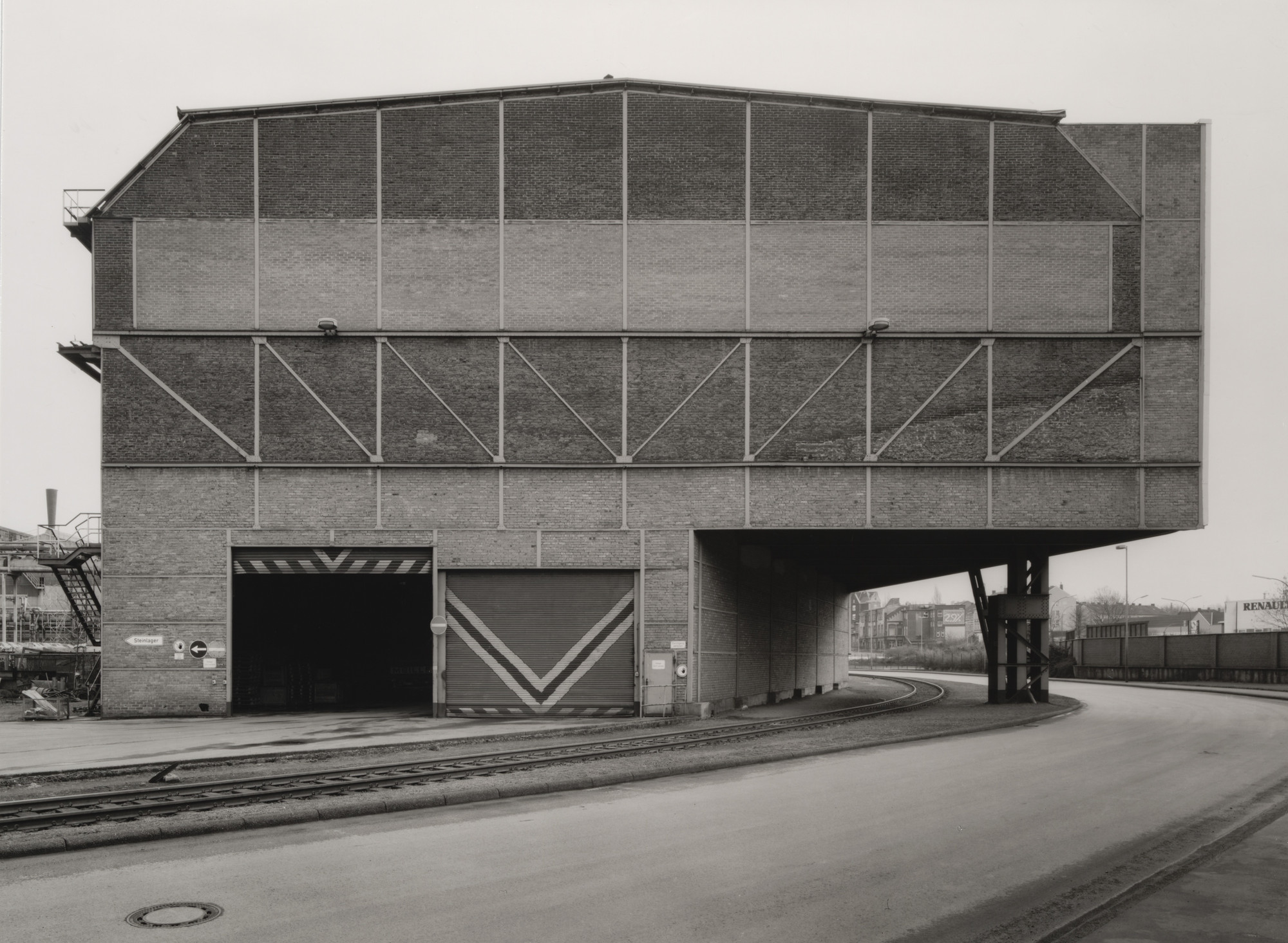
 'Grube San Fernando, Herdorf, D' 1961 from the exhibition 'Bernd and Hilla Becher: Mines and Mills - Industrial Landscapes' at Fotomuseum Winterthur, Zurich, Nov 2011 - Feb 2012


Bernd and Hilla Becher (German, active 1959-2007) Bernd Becher (German, 1931-2007) Hilla Becher (German, 1934-2015)
Grube San Fernando, Herdorf, D
1961
Gelatin silver print
50 x 60cm
© Bernd and Hilla Becher / Courtesy of Schirmer/Mosel


Let’s not beat around the bush. Despite protestations to the contrary (appeals to the objectivity of the image, eschewing entirely the aspects of beauty, emotion and opinion; the rigorous frontality of the individual images giving them the simplicity of diagrams, while their density of detail offers encyclopaedic richness) these are subjective images for all their objective desire. The paradox is the more a photographer strives for objectivity, the more ego drops away, the more the work becomes their own: subjective, beautiful, emotive.

Even though the Bechers’ demonstrate great photographic restraint with regard to documenting the object, the documentary gaze is always corrupted / mutated / distorted by personal interpretation: where to position the camera, what to include or exclude, how to interpret the context of place, how to crop or print the image, and how to display the image, in grids, sequences or singularly. In other words there are always multiple (con)texts to which artists conform or transgress. What makes great photographers, such as Eugène Atget, Walker Evans, August Sander and the Bechers, is the idiosyncratic “nature” of their vision: how Atget places his large view camera – at that particular height and angle to the subject – leaves an indelible feeling that only he could have made that image, to reveal the magic of that space in a photograph. It is their personal, unique thumbprint, recognisable in an instant. So it is with the Bechers.

These are intimate images, a personal reaction to space and place, to being. They make my heart ache for their stillness and ethereal beauty. Bravo!

Dr Marcus Bunyan


Many thankx to the Fotomuseum Winterthur, Zurich for allowing me to publish the photographs in the posting. Please click on the photographs for a larger version of the image.


“The pictures were stripped of any artistic frills and reduced to an essentially topographic state, conveying substantial amounts of visual information but eschewing entirely the aspects of beauty, emotion and opinion.”


William Jenkins, Curator of the ‘New Topographics’ exhibition, 1975


“The Ruhr Valley, where Becher’s family had worked in the steel and mining industries, was their initial focus. They were fascinated by the similar shapes in which certain buildings were designed. In addition, they were intrigued by the fact that so many of these industrial buildings seemed to have been built with a great deal of attention toward design. Together, the Bechers went out with a large 8 x 10-inch view camera and photographed these buildings from a number of different angles, but always with a straightforward “objective” point of view. They shot only on overcast days, so as to avoid shadows, and early in the morning during the seasons of spring and fall. Objects included barns, water towers, oal tipples, cooling towers, grain elevators, coal bunkers, coke ovens, oil refineries, blast furnaces, gas tanks, storage silos, and warehouses. At each site the Bechers also created overall landscape views of the entire plant, which set the structures in their context and show how they relate to each other.”


Wikipedia entry for Bernd and Hilla Becher


“The German artists Bernd and Hilla Becher, who began working together in 1959 and married in 1961, are best known for their “typologies” – grids of black-and-white photographs of variant examples of a single type of industrial structure. To create these works, the artists traveled to large mines and steel mills, and systematically photographed the major structures, such as the winding towers that haul coal and iron ore to the surface and the blast furnaces that transform the ore into metal. The rigorous frontality of the individual images gives them the simplicity of diagrams, while their density of detail offers encyclopaedic richness. At each site the Bechers also created overall landscape views of the entire plant, which set the structures in their context and show how they relate to each other. The typologies emulate the clarity of an engineer’s drawing, while the landscapes evoke the experience of a particular place.”


Peter Galassi, Chief Curator of Photography, MoMA
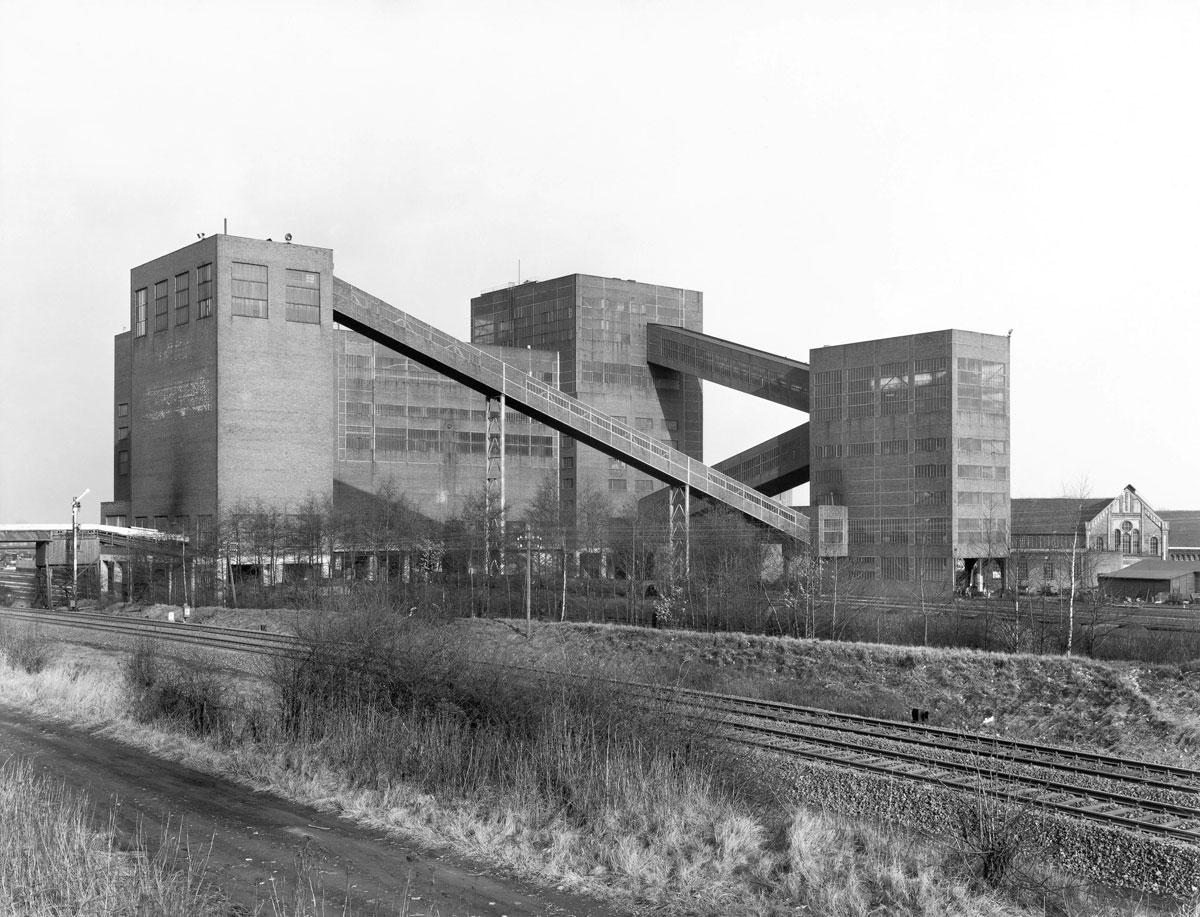


Bernd and Hilla Becher (German, active 1959-2007) Bernd Becher (German, 1931-2007) Hilla Becher (German, 1934-2015)
 'Becher 
Zeche Germania, Dortmund, D' 1971
 rom the exhibition 'Bernd and Hilla Becher: Mines and Mills - Industrial Landscapes' at Fotomuseum Winterthur, Zurich, Nov 2011 - Feb 2012


Bernd and Hilla Becher (German, active 1959-2007) Bernd Becher (German, 1931-2007) Hilla Becher (German, 1934-2015)

Zeche Germania, Dortmund, D
1971
Gelatin silver print
50 x 60cm
© Bernd and Hilla Becher / Courtesy of Schirmer/Mosel


For more than forty years, the photographer couple Bernd (1931-2007) and Hilla Becher (1934-2015) worked on creating an inventory of industrial architecture. Warehouses, shaft towers, gas tanks, blast furnaces as well as half-timbered houses are among the subjects they photographed throughout Germany, England, France, Central Europe, and the USA. Calling these buildings “anonymous sculptures,” they refer to the artistic quality of the constructions, which played no role for the buildings’ largely unknown builders and users. Their photographs attempt to draw attention to these hidden sculptural qualities and to document them historically as a building tradition in decline.

Bernd and Hilla Becher have always held particular interest for the industrial architecture in the Ruhr region. The exhibition Mines and Mills – Industrial Landscapes systematically examines this aspect of their work for the first time. Even today, names such as the Concordia and Hannibal collieries or Gutehoffnungshütte stand for the industrial history of the Ruhr region. Instead of concentrating on individual buildings, the exhibition approaches the mining facilities (where coal was produced for the smelting works) as a whole and in the context of their urban or natural surroundings. This typology, which the Bechers described as “industrial landscape,” compares the Ruhr region with similar complexes elsewhere in Europe and the USA.

As with their typological multiple and serial views of buildings, Bernd and Hilla Becher strive for a comparative perspective in their industrial landscapes. Demonstrating great photographic restraint in their approach and in the name of a “New Objectivity” dedicated solely to the object, they stand in a long tradition of proponents of the documentary gaze that includes Eugène Atget, Karl Blossfeldt, Walker Evans, Albert Renger-Patzsch and August Sander. Their influence on the history of photography extends from the establishment of the “Dusseldorf School” into the present.

“The main aim of our work is to show that the forms of our time are technical forms, although they did not develop from formal considerations. Just as medieval thought is manifested in the gothic cathedral, our era is revealed in technical buildings and apparatuses,” Bernd and Hilla Becher stated in a conversation from 2005.

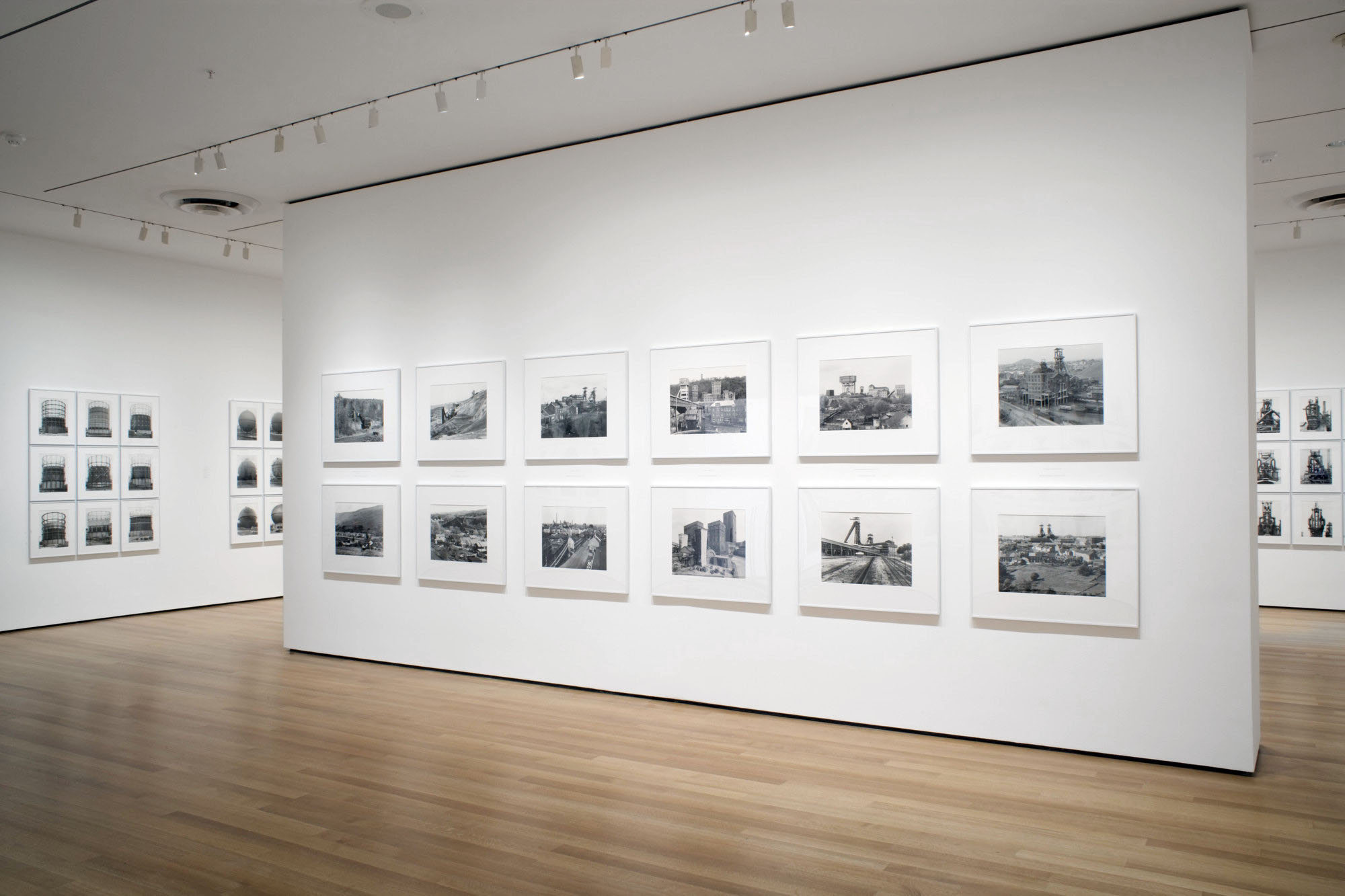
The industrial landscapes can be read from historical and social perspectives, to an even greater extent than the familiar photographs of simple building typologies. Next to the monumental, industrial buildings one often sees residential constructions, gardens, and allotment gardens, which convey how intertwined the organisation of life and work was at the time and how deeply rooted people were in this city-like structure. Photographed at waist-height, the broad, open views of the horizontally composed photographs have an aesthetic that is almost atypical of the Bechers. However, the images adhere systematically to the archival thinking of the artist couple.

Press release from the Fotomuseum Winterthur, Zurich website
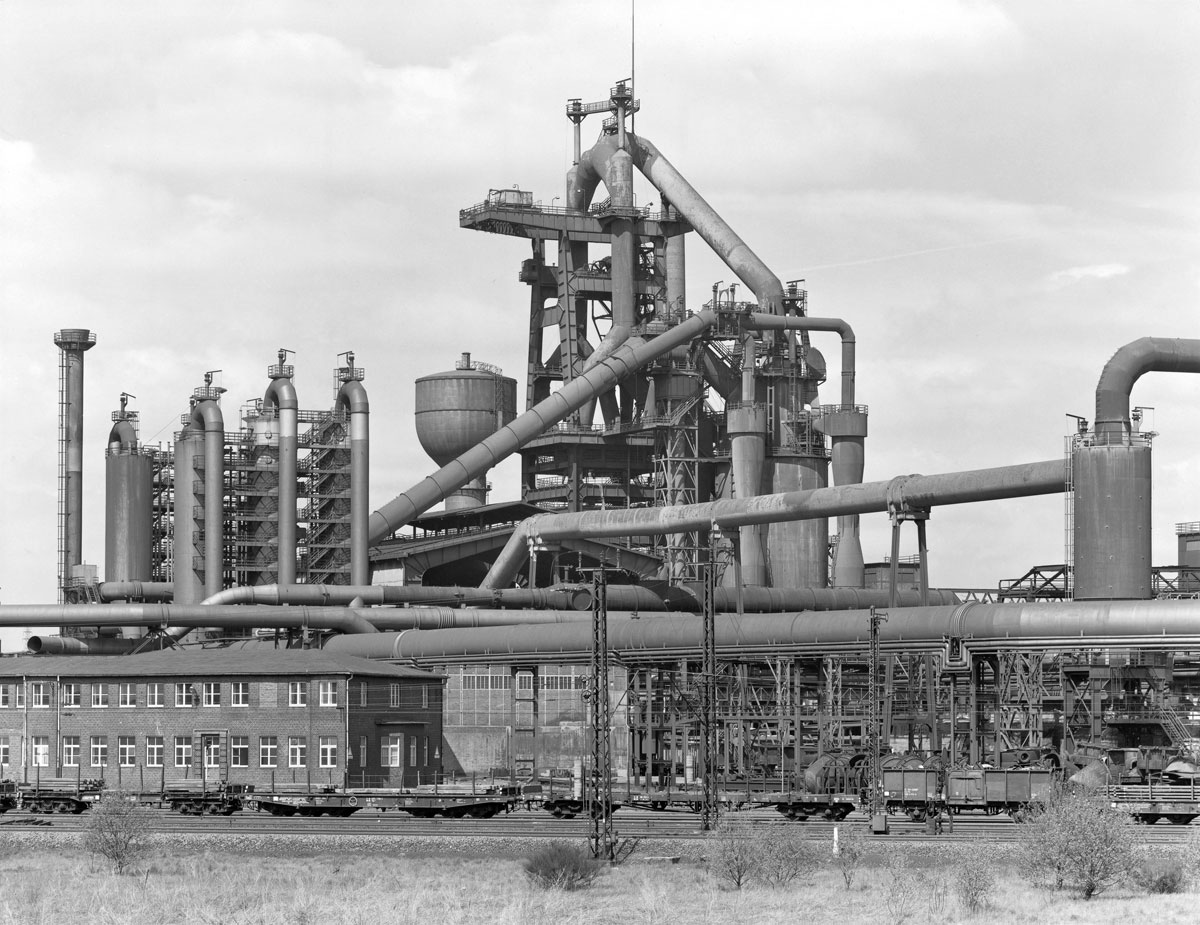
 

Bernd and Hilla Becher (German, active 1959-2007) Bernd Becher (German, 1931-2007) Hilla Becher (German, 1934-2015)
 'Gutehoffnungshütte, Oberhausen, D' 1963


Bernd and Hilla Becher (German, active 1959-2007) Bernd Becher (German, 1931-2007) Hilla Becher (German, 1934-2015)
Gutehoffnungshütte, Oberhausen, D
1963
Gelatin silver print
50 x 60cm
© Bernd and Hilla Becher / Courtesy of Schirmer/Mosel


Bernd and Hilla Becher (German, active 1959-2007) Bernd Becher (German, 1931-2007) Hilla Becher (German, 1934-2015)
 'Charleroi-Montignies, B' 1971


Bernd and Hilla Becher (German, active 1959-2007) Bernd Becher (German, 1931-2007) Hilla Becher (German, 1934-2015)
Charleroi-Montignies, B
1971
Gelatin silver print
50 x 60cm
© Bernd and Hilla Becher / Courtesy of Schirmer/Mosel
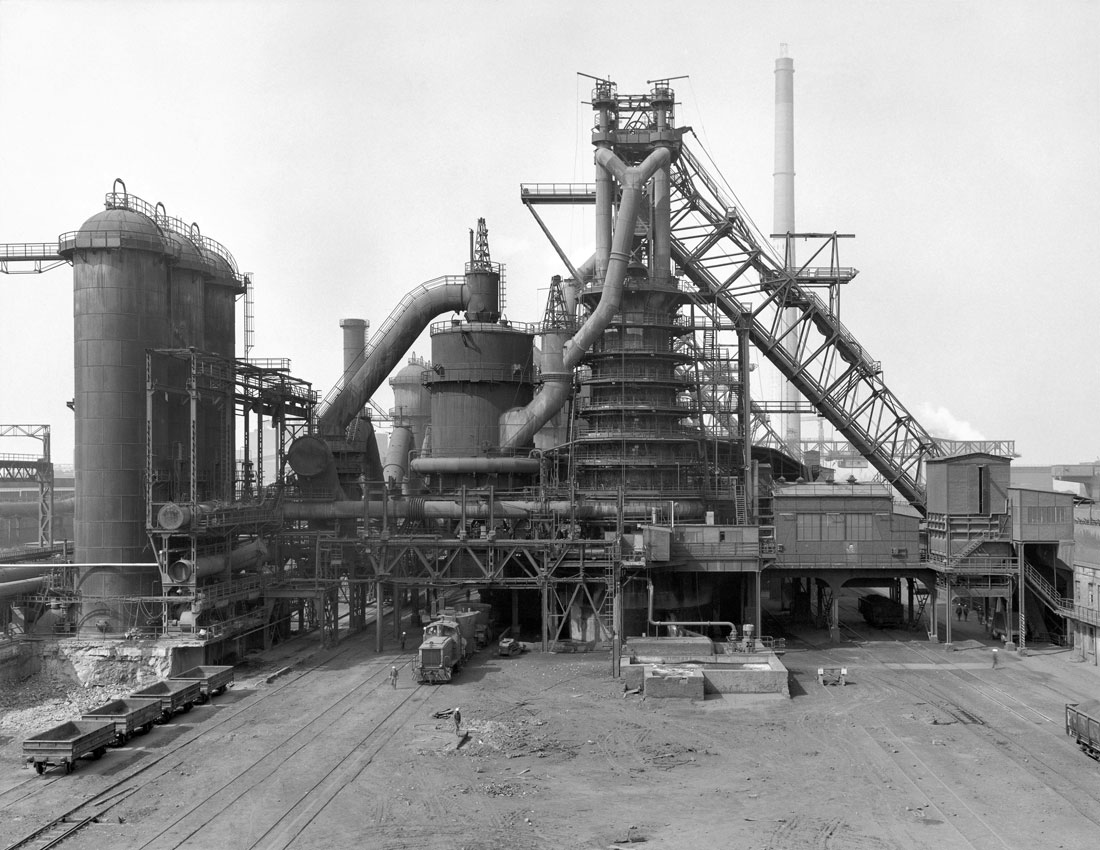
 

Bernd and Hilla Becher (German, active 1959-2007) Bernd Becher (German, 1931-2007) Hilla Becher (German, 1934-2015)
 'Duisburg-Huckingen, D' 1970


Bernd and Hilla Becher (German, active 1959-2007) Bernd Becher (German, 1931-2007) Hilla Becher (German, 1934-2015)
Duisburg-Huckingen, D
1970
Gelatin silver print
50 x 60cm
© Bernd and Hilla Becher / Courtesy of Schirmer/Mosel
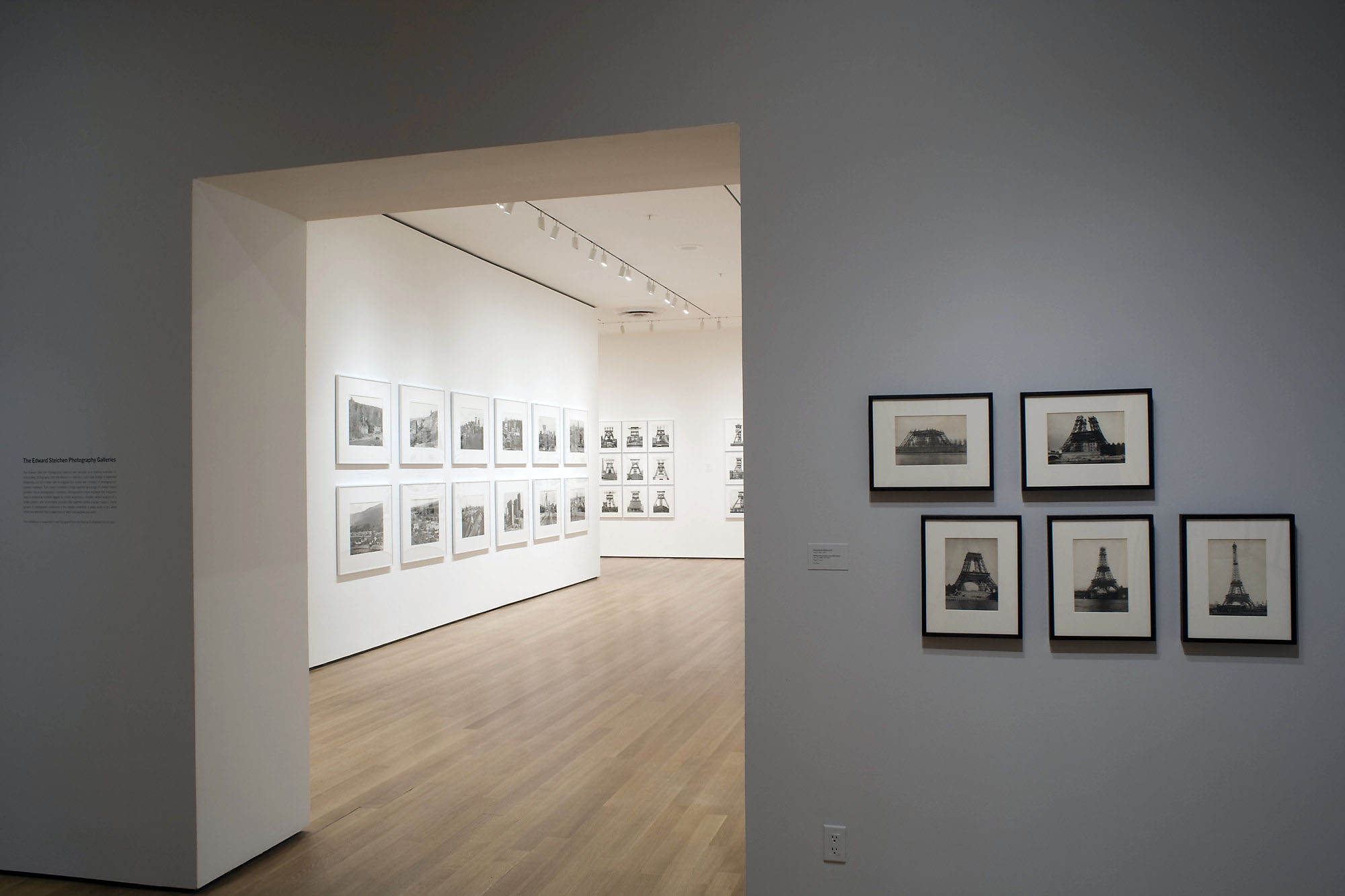
 

Installation view of the exhibition 'Bernd and Hilla Becher: Landscape/Typology' at the Museum of Modern Art, New York


Installation view of the exhibition Bernd and Hilla Becher: Landscape / Typology at the Museum of Modern Art, New York, May 21, 2008 – August 25, 2008 showing top row at right, Hippolyte Blancard’s Untitled (1888, below)
Photograph by John Wronn
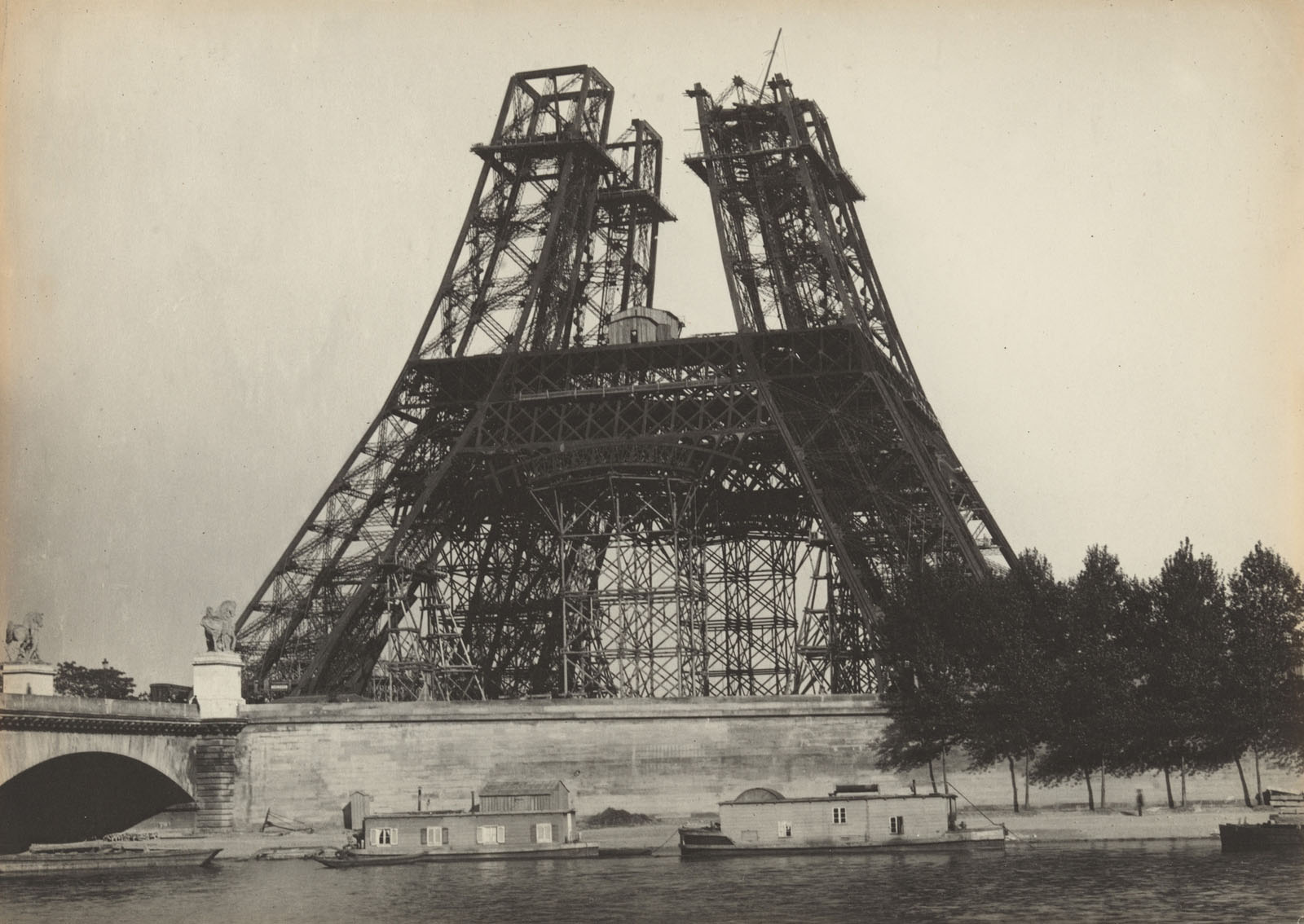
 

Hippolyte Blancard (French, 1843-1924) 'Untitled' April 1888


Hippolyte Blancard (French, 1843-1924)
Untitled
April 1888
Platinum print
8 13/16 × 6 1/8″ (22.4 × 15.6cm)
Museum of Modern Art, New York
Purchase


Hippolyte Blancard, a pharmacist and amateur photographer, documented Parisian architecture leading up to the 1889 Exposition Universelle, or World’s Fair, an international event held in Paris to showcase new innovations, geographic and scientific discoveries, and works of art. His series of photographs shows the construction of the Eiffel Tower, which was conceived as the entrance to the World’s Fair. Blancard’s photographs document the tower’s progression, from July 1887 to April 1889.

Text from the MoMA website
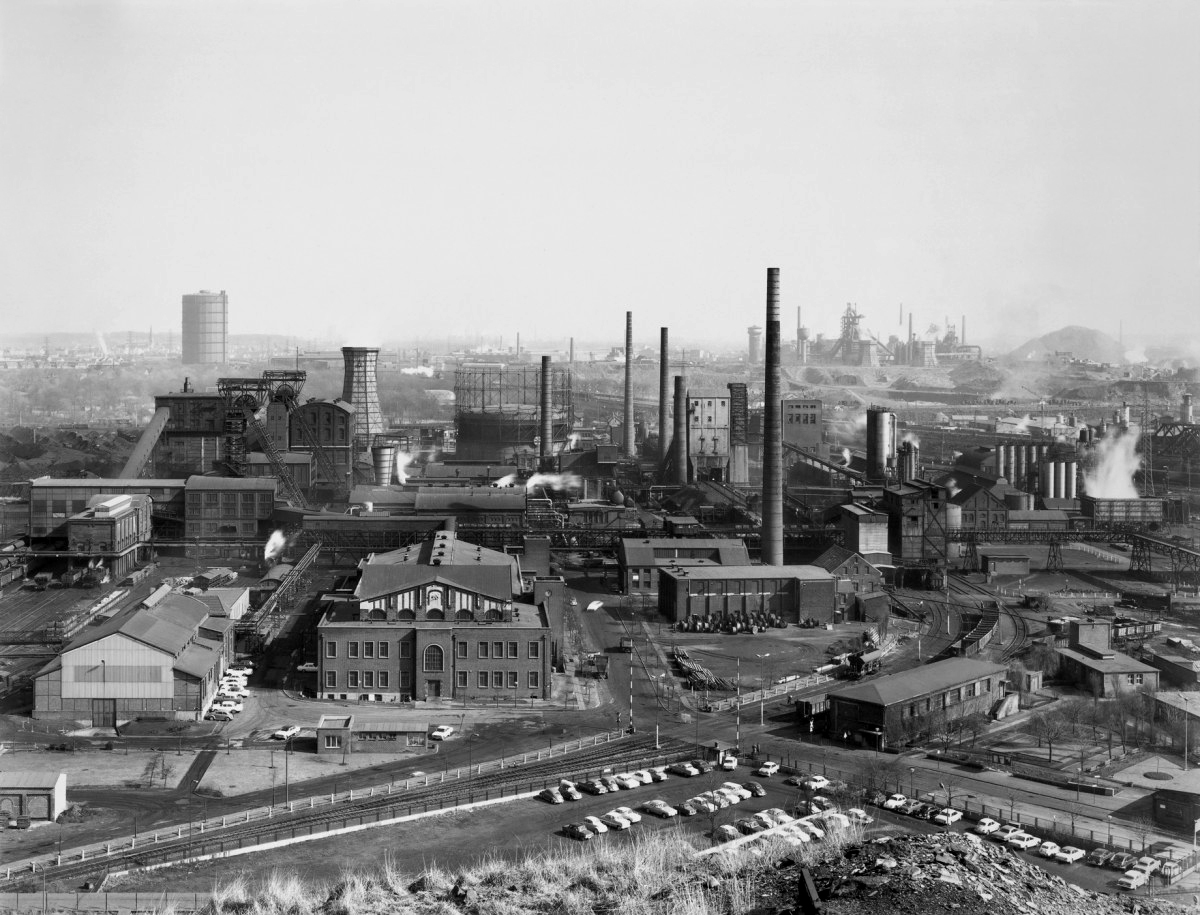
 

Bernd and Hilla Becher (German, active 1959-2007) Bernd Becher (German, 1931-2007) Hilla Becher (German, 1934-2015)
 'Zeche Concordia, Oberhausen, D' 1967


Bernd and Hilla Becher (German, active 1959-2007) Bernd Becher (German, 1931-2007) Hilla Becher (German, 1934-2015)
Zeche Concordia, Oberhausen, D
1967
Gelatin silver print
50 x 60cm
© Bernd und Hilla Becher – Courtesy of Schirmer/Mosel
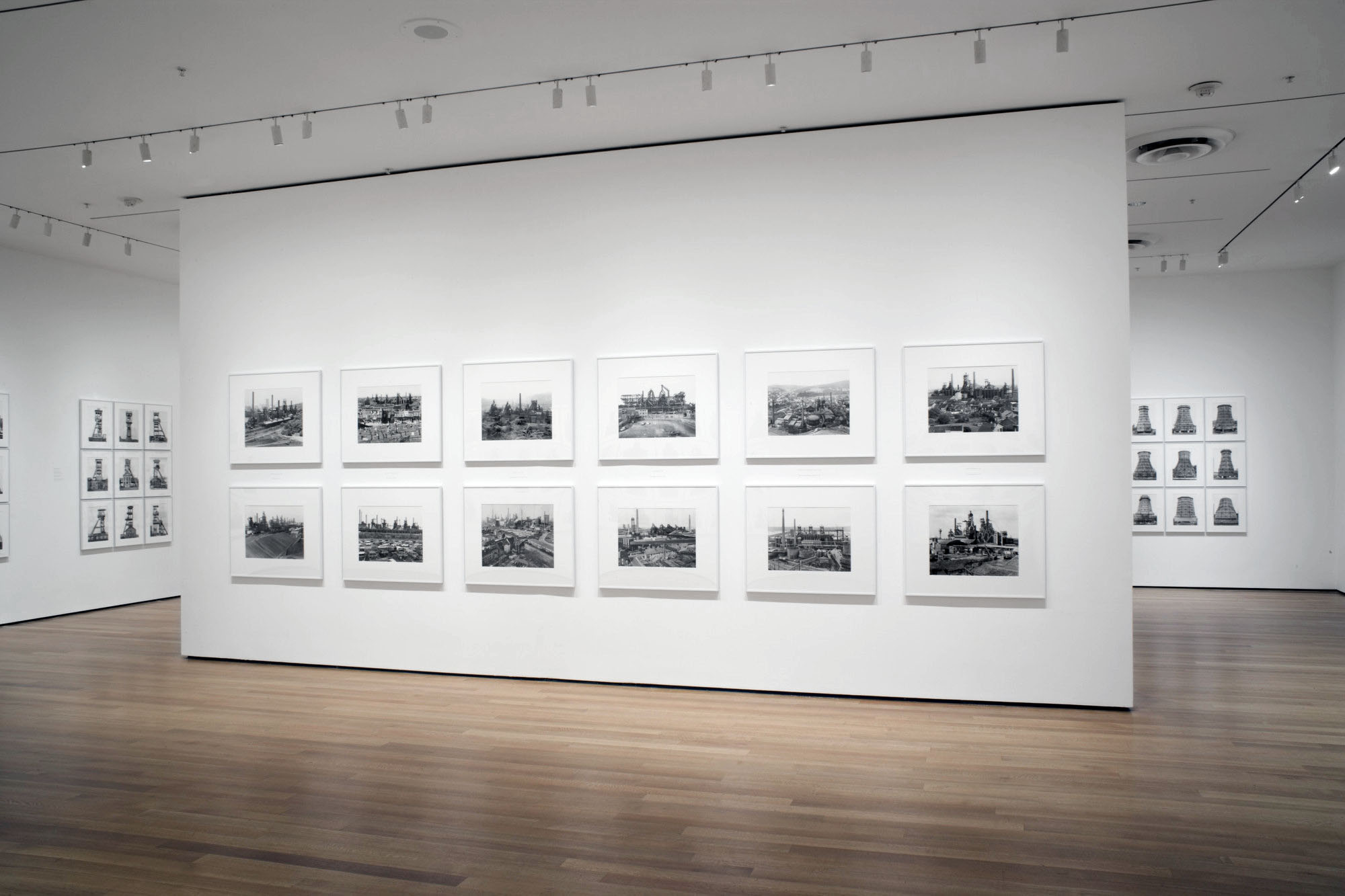
 

Installation view of the exhibition 'Bernd and Hilla Becher: Landscape/Typology' at the Museum of Modern Art, New York


Installation view of the exhibition Bernd and Hilla Becher: Landscape / Typology at the Museum of Modern Art, New York, May 21, 2008 – August 25, 2008 showing the three images directly below – Duisburg-Bruckhausen (1999); Ensley, Alabama, USA (1982); and Knutange, Lorraine, France (1971)
Photograph by John Wronn


Bernd and Hilla Becher (German, active 1959-2007) Bernd Becher (German, 1931-2007) Hilla Becher (German, 1934-2015)
 'Duisburg-Bruckhausen' 1999


Bernd and Hilla Becher (German, active 1959-2007) Bernd Becher (German, 1931-2007) Hilla Becher (German, 1934-2015)
Duisburg-Bruckhausen
1999
Gelatin silver print
50 x 60cm
© Bernd und Hilla Becher – Courtesy of Schirmer/Mosel
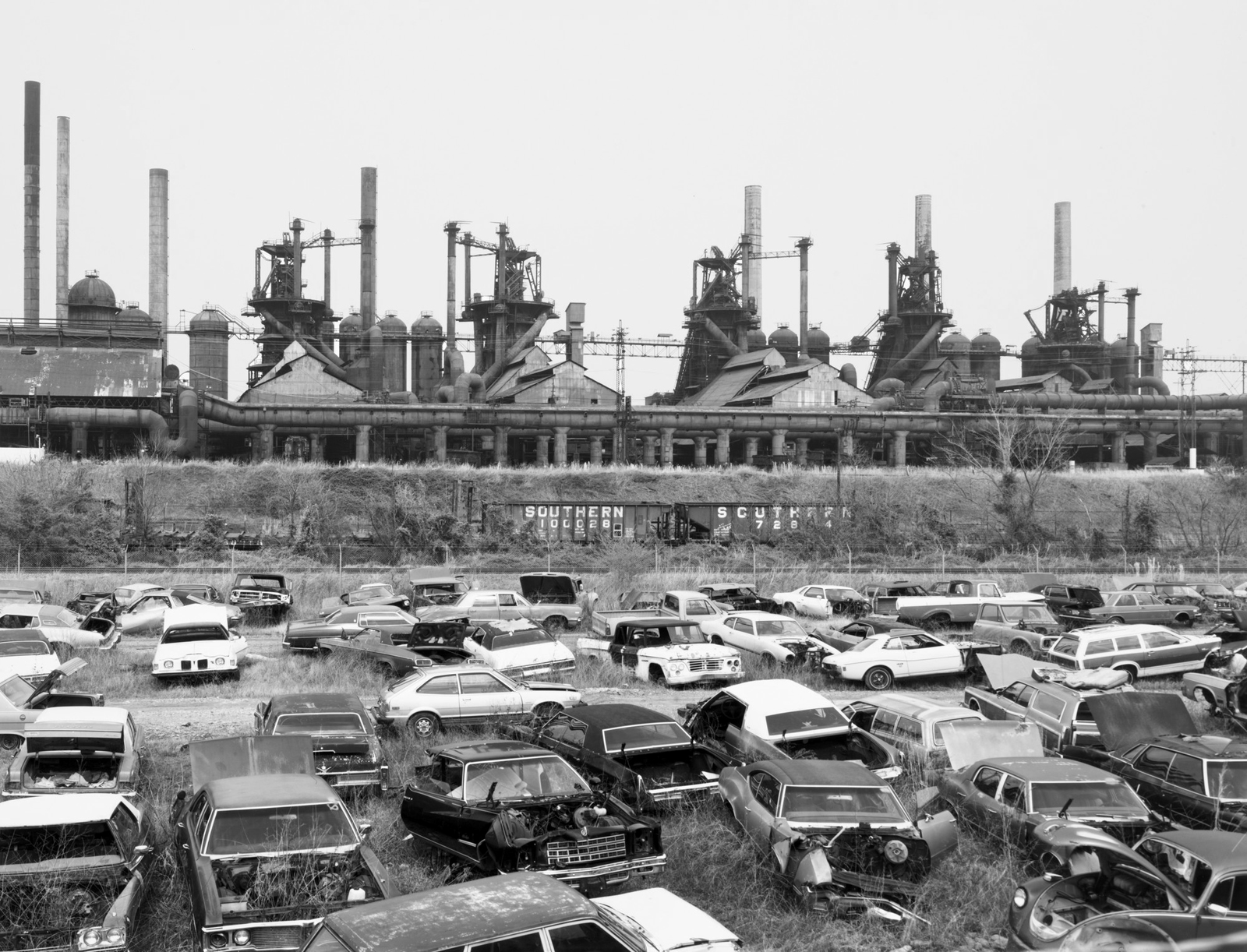
 

Bernd and Hilla Becher (German, active 1959-2007) Bernd Becher (German, 1931-2007) Hilla Becher (German, 1934-2015)
 'Ensley, Alabama, USA' 1982


Bernd and Hilla Becher (German, active 1959-2007) Bernd Becher (German, 1931-2007) Hilla Becher (German, 1934-2015)
Ensley, Alabama, USA
1982
Gelatin silver print
50 x 60cm
© Bernd und Hilla Becher – Courtesy of Schirmer/Mosel
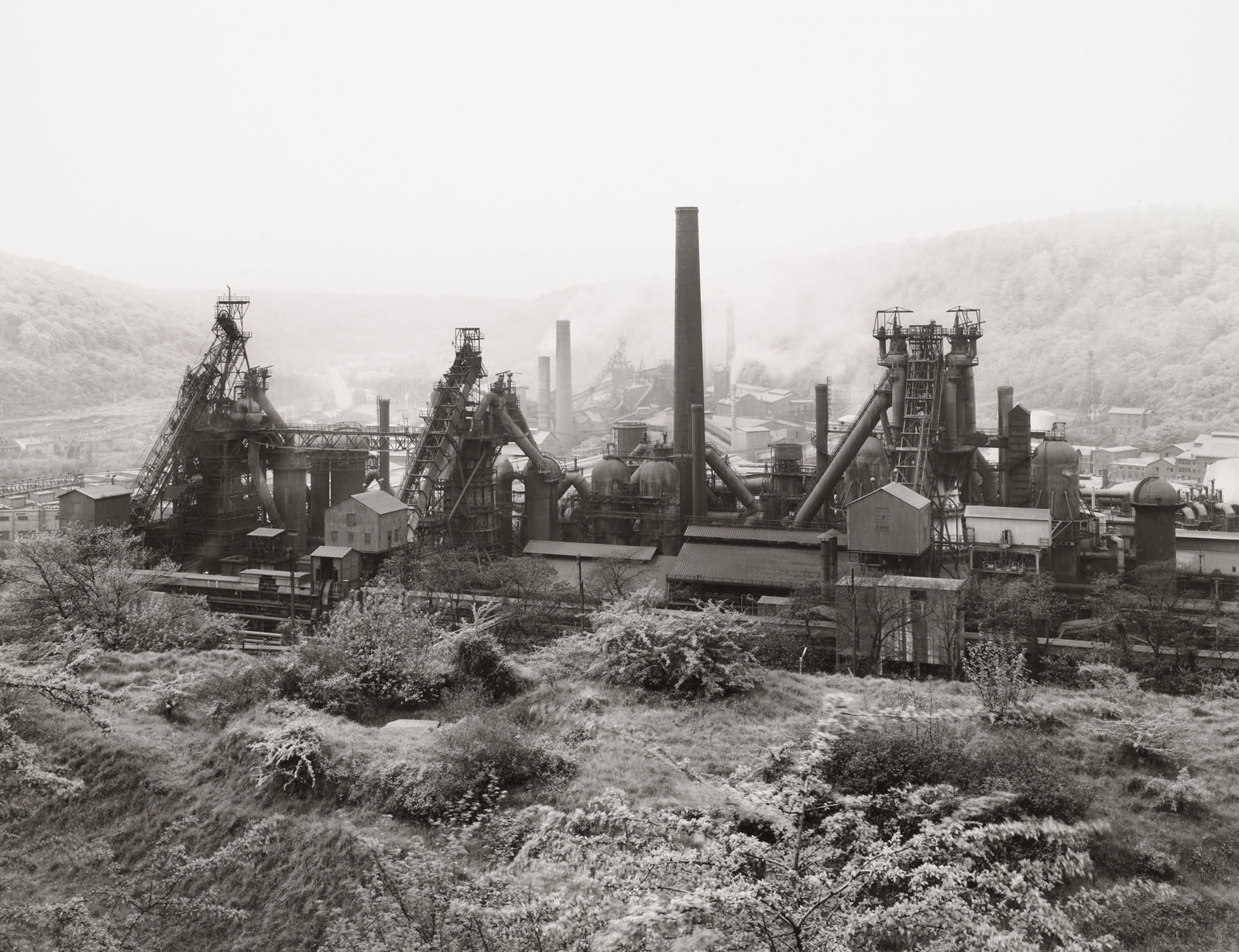
 

Bernd and Hilla Becher (German, active 1959-2007) Bernd Becher (German, 1931-2007) Hilla Becher (German, 1934-2015) 'Knutange, Lorraine, France' 1971


Bernd and Hilla Becher (German, active 1959-2007) Bernd Becher (German, 1931-2007) Hilla Becher (German, 1934-2015)
Knutange, Lorraine, France
1971
Gelatin silver print
17 7/8 × 23 9/16″ (45.4 × 59.9cm)
Horace W. Goldsmith Fund through Robert B. Menschel
© 2022 Estate of Bernd Becher and Hilla Becher
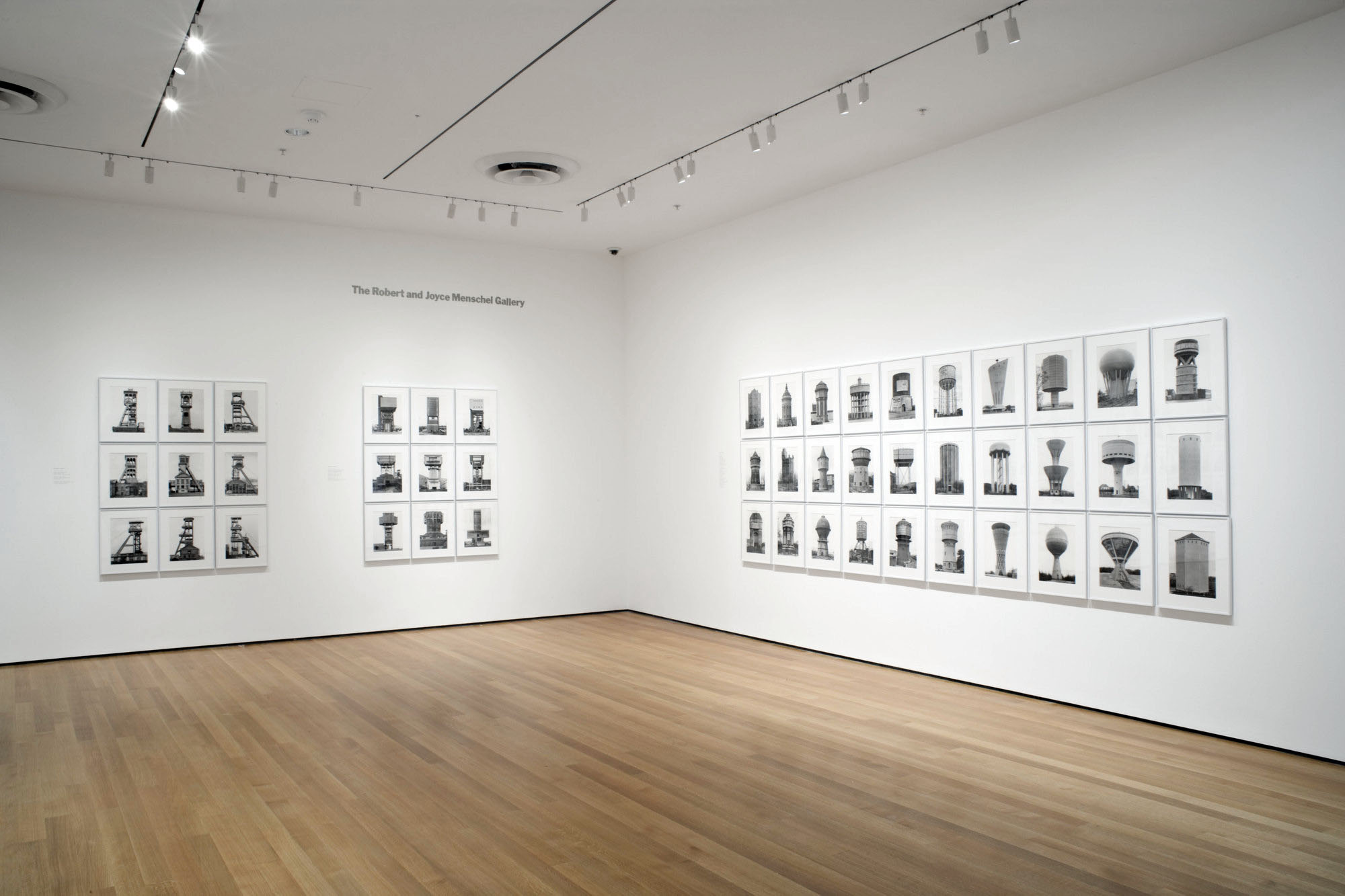
 

Installation view of the exhibition 'Bernd and Hilla Becher: Landscape/Typology' at the Museum of Modern Art, New York

Installation view of the exhibition 'Bernd and Hilla Becher: Landscape/Typology' at the Museum of Modern Art, New York


Installation views of the exhibition Bernd and Hilla Becher: Landscape / Typology at the Museum of Modern Art, New York, May 21, 2008 – August 25, 2008
Photographs by John Wronn
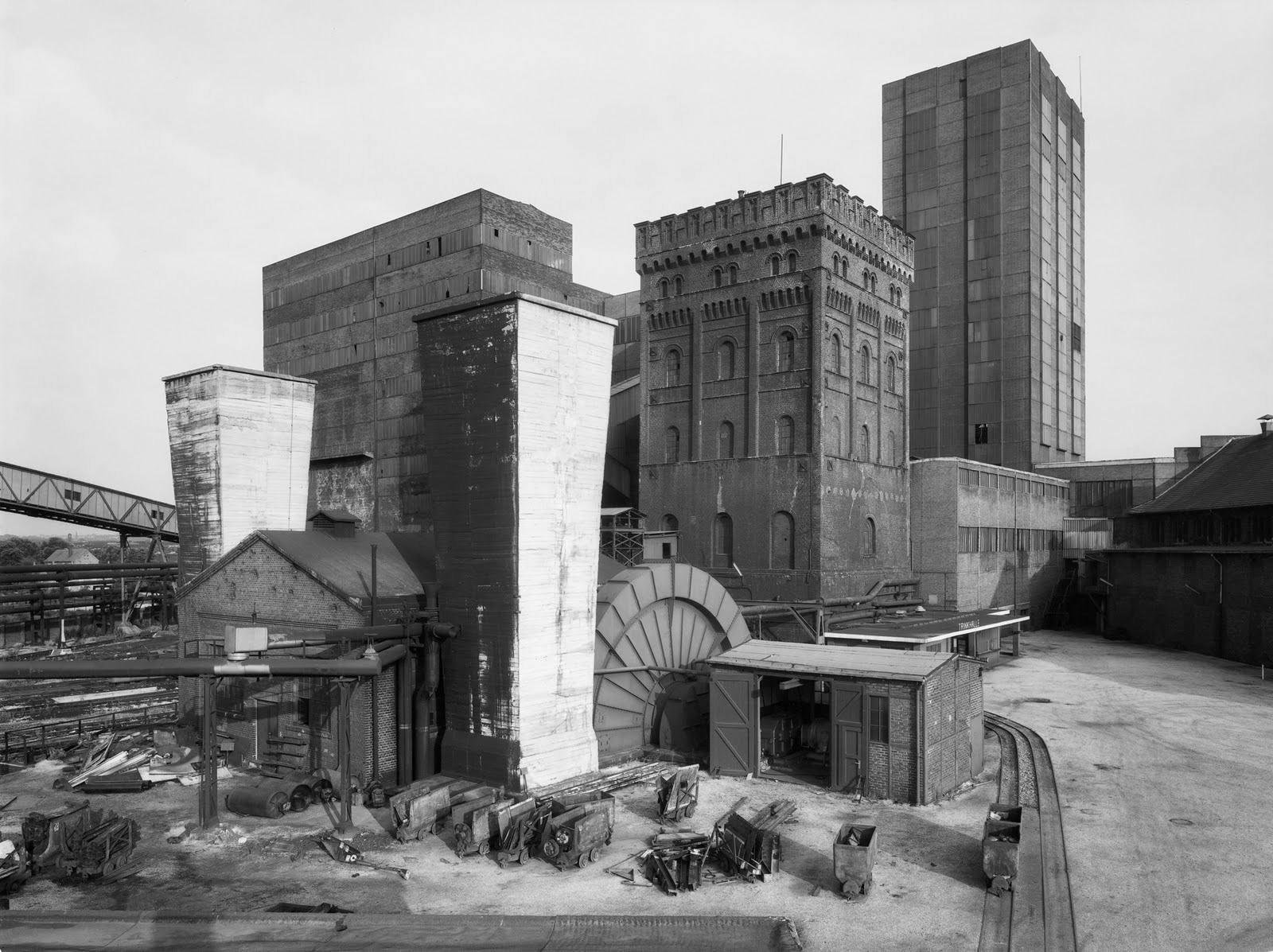
 

Bernd and Hilla Becher (German, active 1959-2007) Bernd Becher (German, 1931-2007) Hilla Becher (German, 1934-2015) 'Hannover Mine 1/2/5, Bochum-Hordel, Ruhr Region, Germany' 1973


Bernd and Hilla Becher (German, active 1959-2007) Bernd Becher (German, 1931-2007) Hilla Becher (German, 1934-2015)
Hannover Mine 1/2/5, Bochum-Hordel, Ruhr Region, Germany
1973
Gelatin silver print
50 x 60cm
© Bernd und Hilla Becher – Courtesy of Schirmer/Mosel
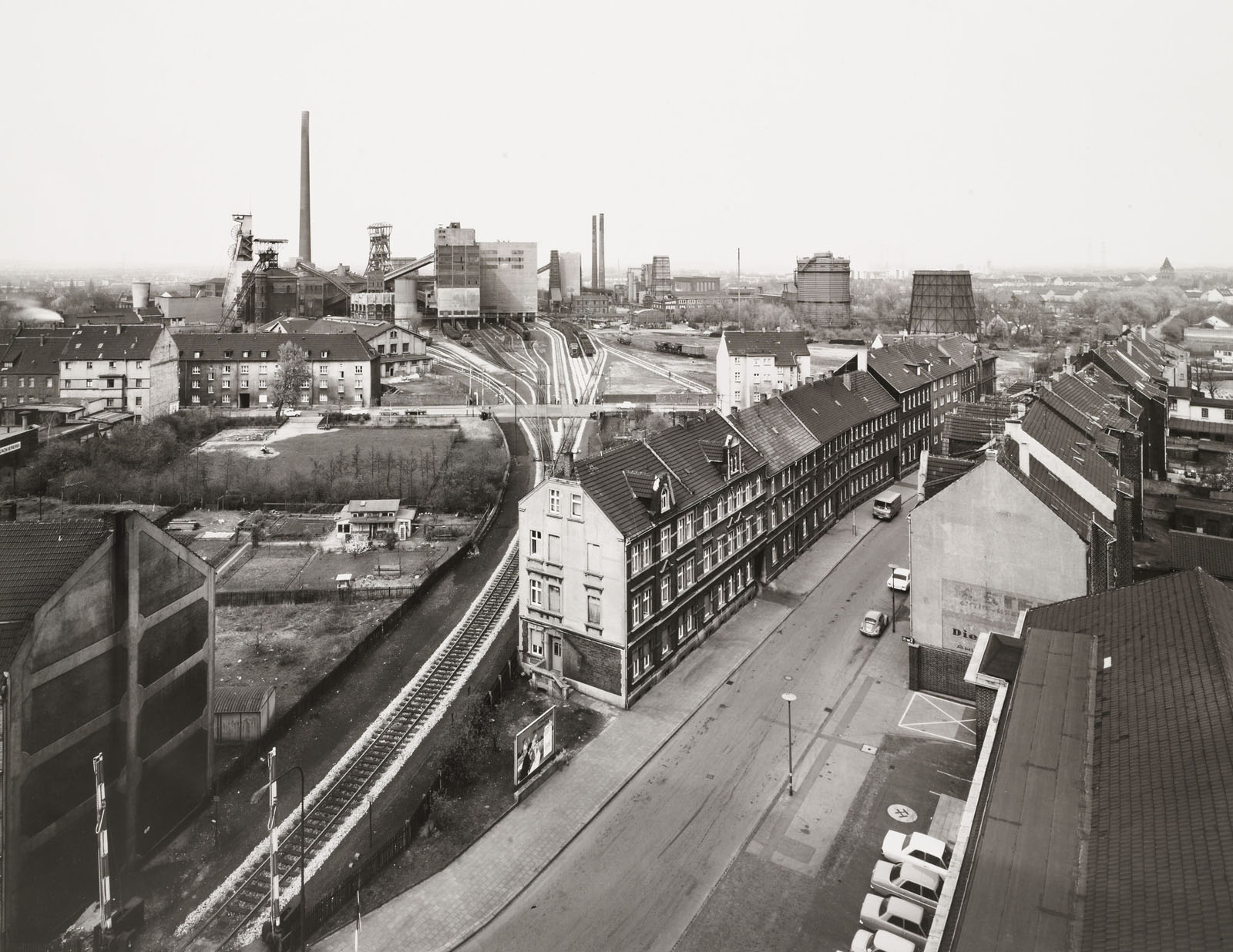
 

Bernd and Hilla Becher (German, active 1959-2007) Bernd Becher (German, 1931-2007) Hilla Becher (German, 1934-2015) 'Consolidation Mine, Gelsenkirchen, Ruhr Region, Germany' 1974


Bernd and Hilla Becher (German, active 1959-2007) Bernd Becher (German, 1931-2007) Hilla Becher (German, 1934-2015)
Consolidation Mine, Gelsenkirchen, Ruhr Region, Germany
1974
Gelatin silver print
18 1/4 × 23 7/16″ (46.3 × 59.5cm)
Horace W. Goldsmith Fund through Robert B. Menschel
© 2022 Estate of Bernd Becher and Hilla Becher
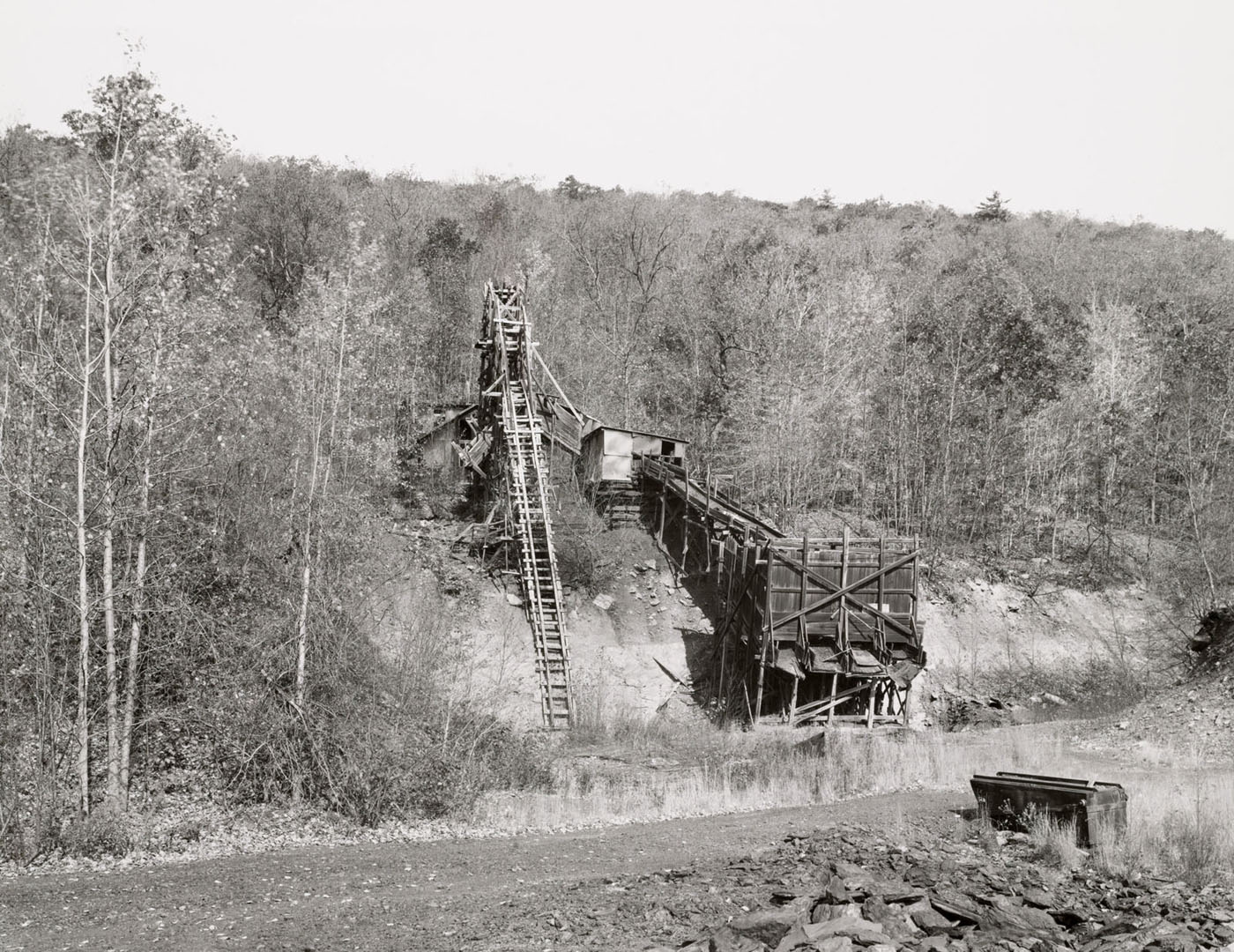
 

Bernd and Hilla Becher (German, active 1959-2007) Bernd Becher (German, 1931-2007) Hilla Becher (German, 1934-2015) 'Coal Mine, Bear Valley, Schuylkill County, Pennsylvania, United States' 1974


Bernd and Hilla Becher (German, active 1959-2007) Bernd Becher (German, 1931-2007) Hilla Becher (German, 1934-2015)
Coal Mine, Bear Valley, Schuylkill County, Pennsylvania, United States
1974
Gelatin silver print
17 5/8 × 23 1/2″ (44.7 × 59.7cm)
Horace W. Goldsmith Fund through Robert B. Menschel
© 2022 Estate of Bernd Becher and Hilla Becher
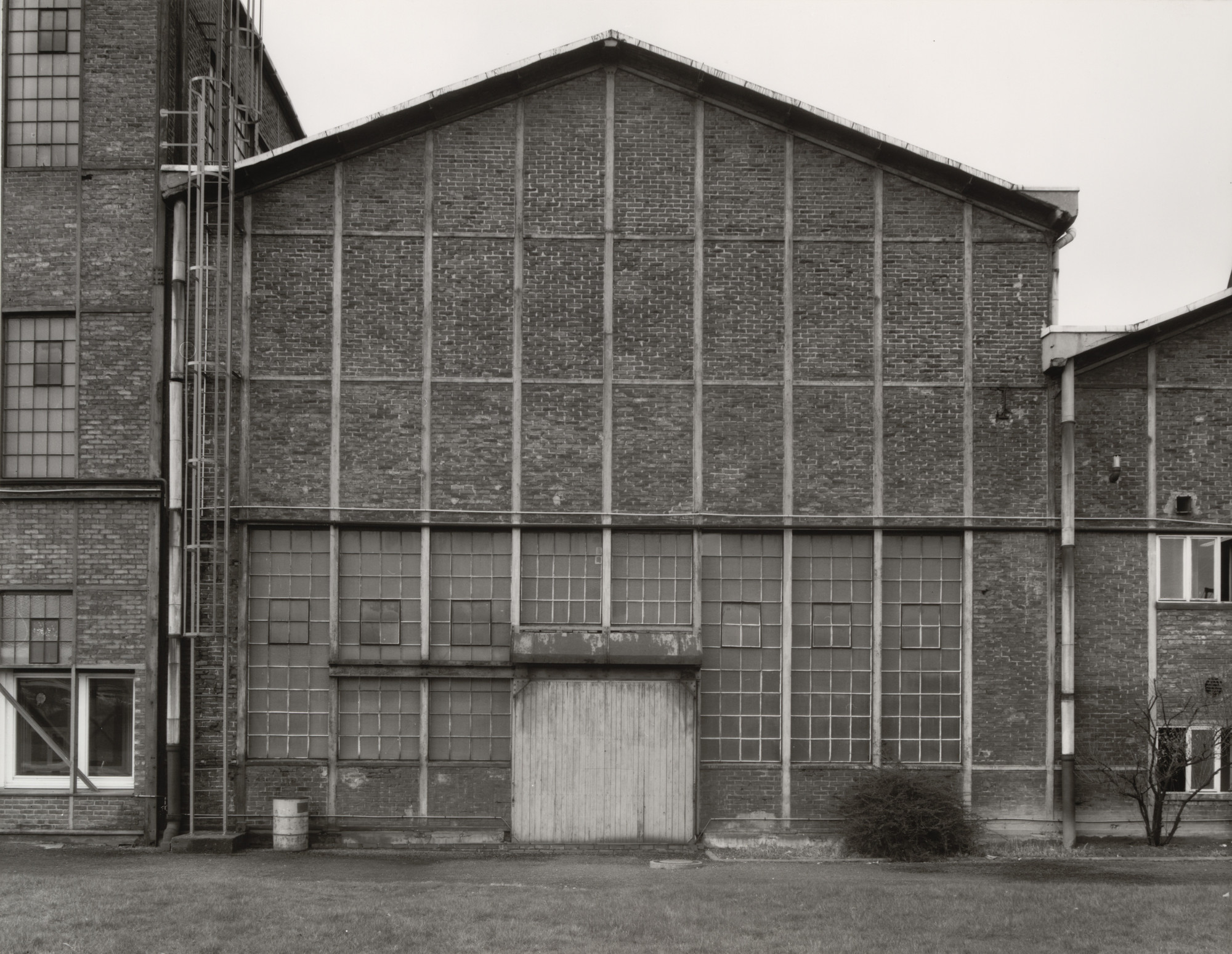
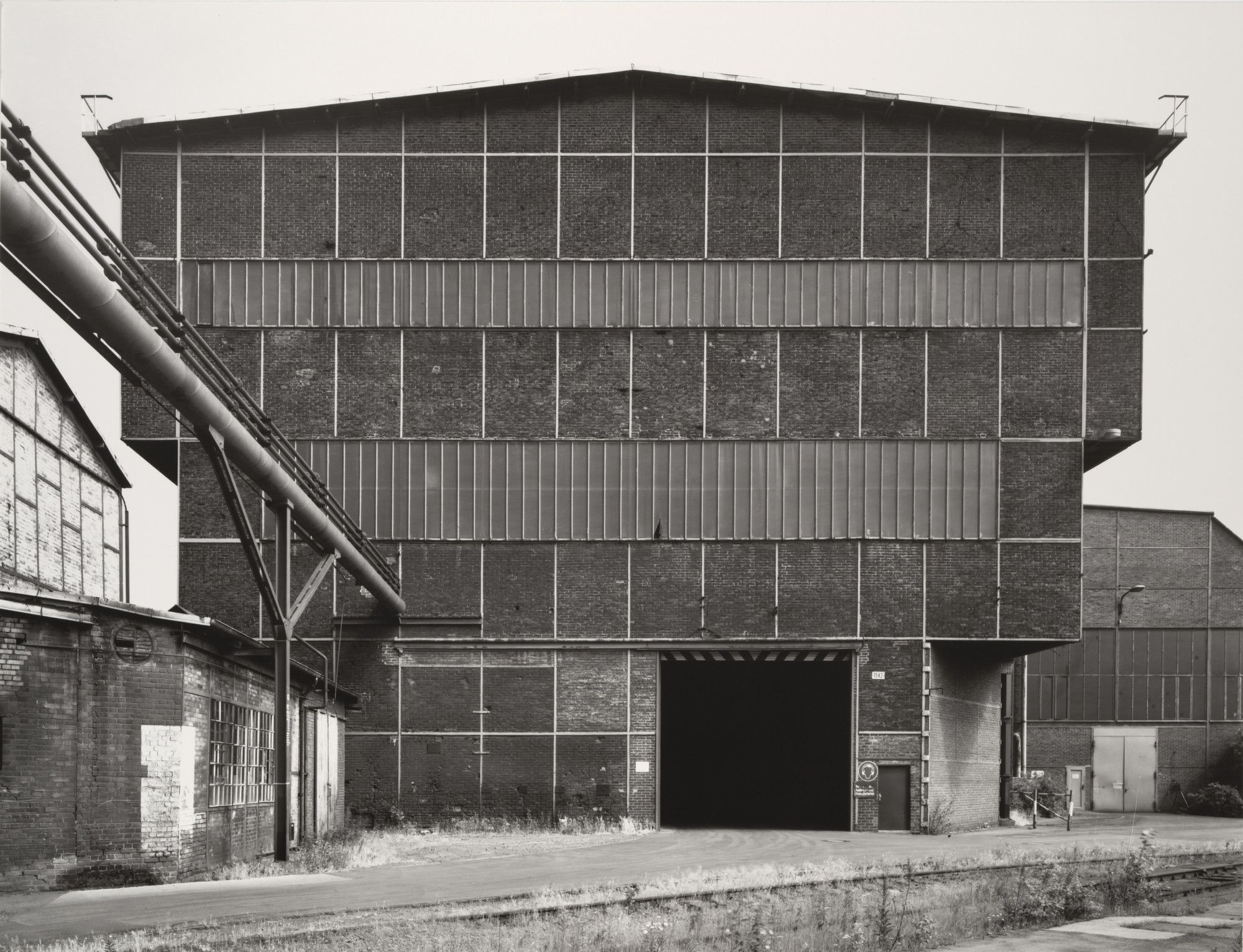
 

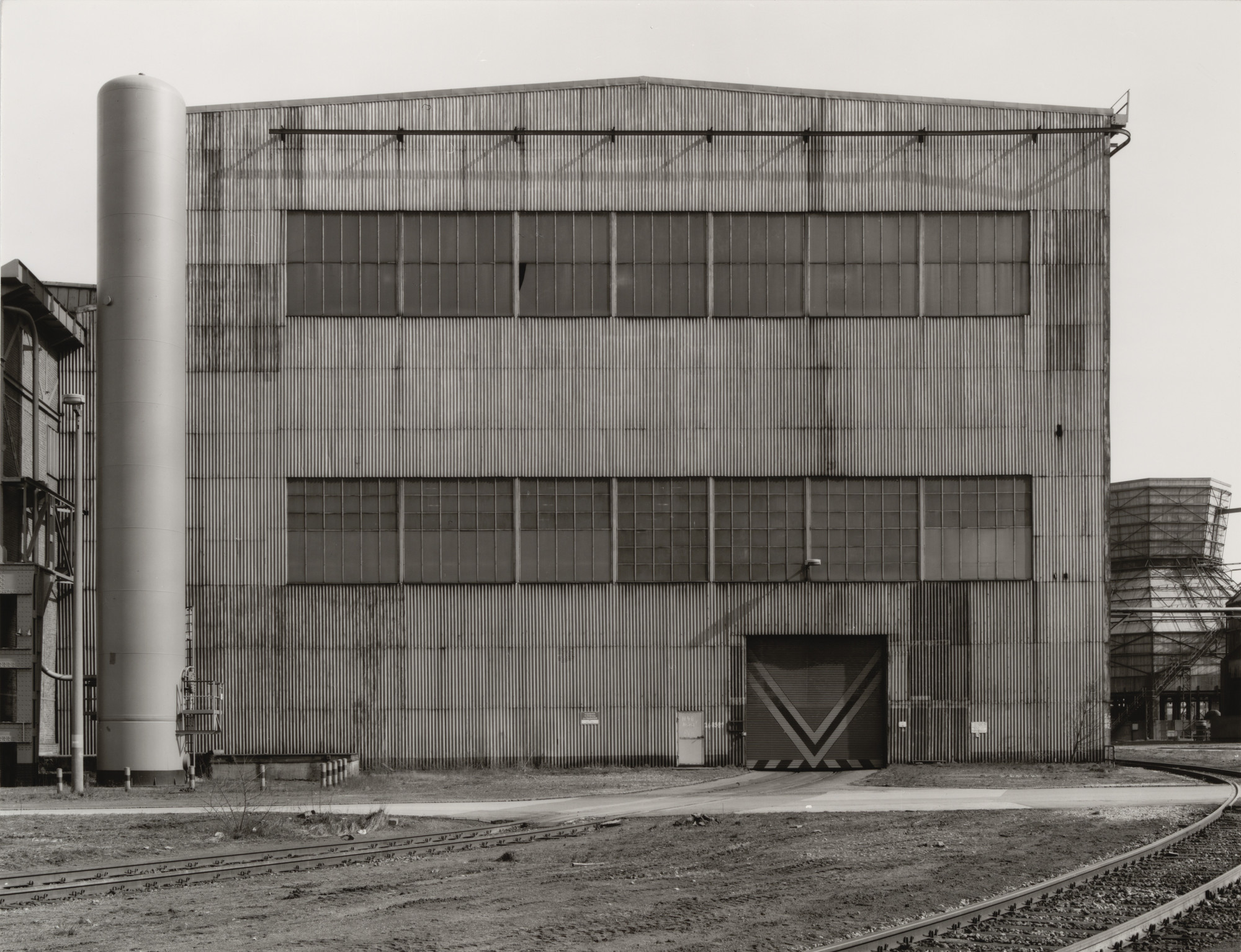
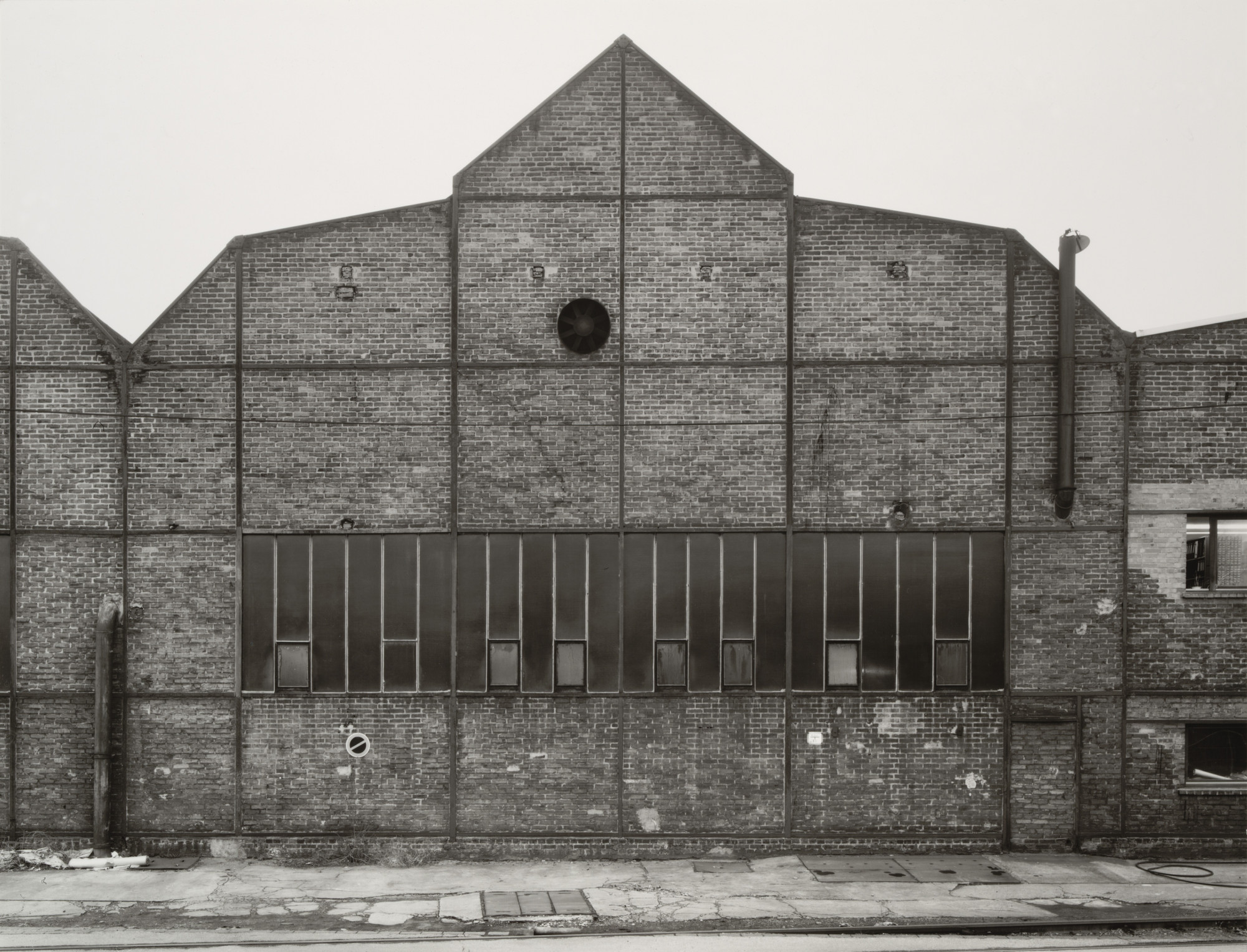
Bernd and Hilla Becher (German, active 1959-2007) Bernd Becher (German, 1931-2007) Hilla Becher (German, 1934-2015) 'Industrial Façades' 1978-1992

Bernd and Hilla Becher (German, active 1959-2007) Bernd Becher (German, 1931-2007) Hilla Becher (German, 1934-2015) 'Industrial Façades' 1978-1992

Bernd and Hilla Becher (German, active 1959-2007) Bernd Becher (German, 1931-2007) Hilla Becher (German, 1934-2015) 'Industrial Façades' 1978-1992

Bernd and Hilla Becher (German, active 1959-2007) Bernd Becher (German, 1931-2007) Hilla Becher (German, 1934-2015) 'Industrial Façades' 1978-1992

Bernd and Hilla Becher (German, active 1959-2007) Bernd Becher (German, 1931-2007) Hilla Becher (German, 1934-2015) 'Industrial Façades' 1978-1992


Bernd and Hilla Becher (German, active 1959-2007) Bernd Becher (German, 1931-2007) Hilla Becher (German, 1934-2015)
Industrial Façades (detail)
1978-1992
21 Gelatin silver prints
Each 12 3/16 × 15 15/16″ (31 × 40.5cm)
Acquired through the Gerald S. Elliot Bequest


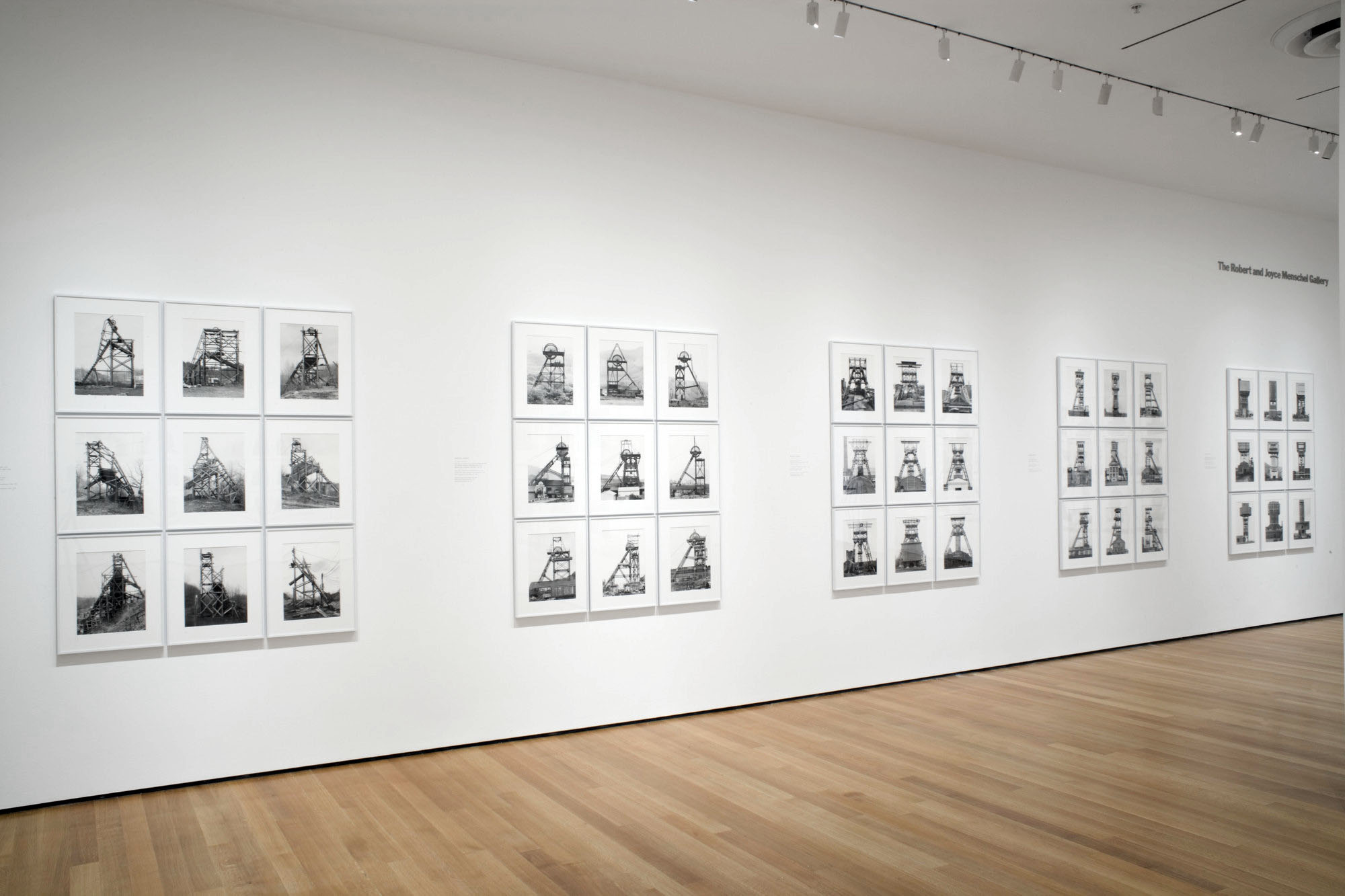
Installation view of the exhibition 'Bernd and Hilla Becher: Landscape/Typology' at the Museum of Modern Art, New York


Installation view of the exhibition Bernd and Hilla Becher: Landscape / Typology at the Museum of Modern Art, New York, May 21, 2008 – August 25, 2008 showing at second left, Winding Towers (1966-1997, below)
Photograph by John Wronn


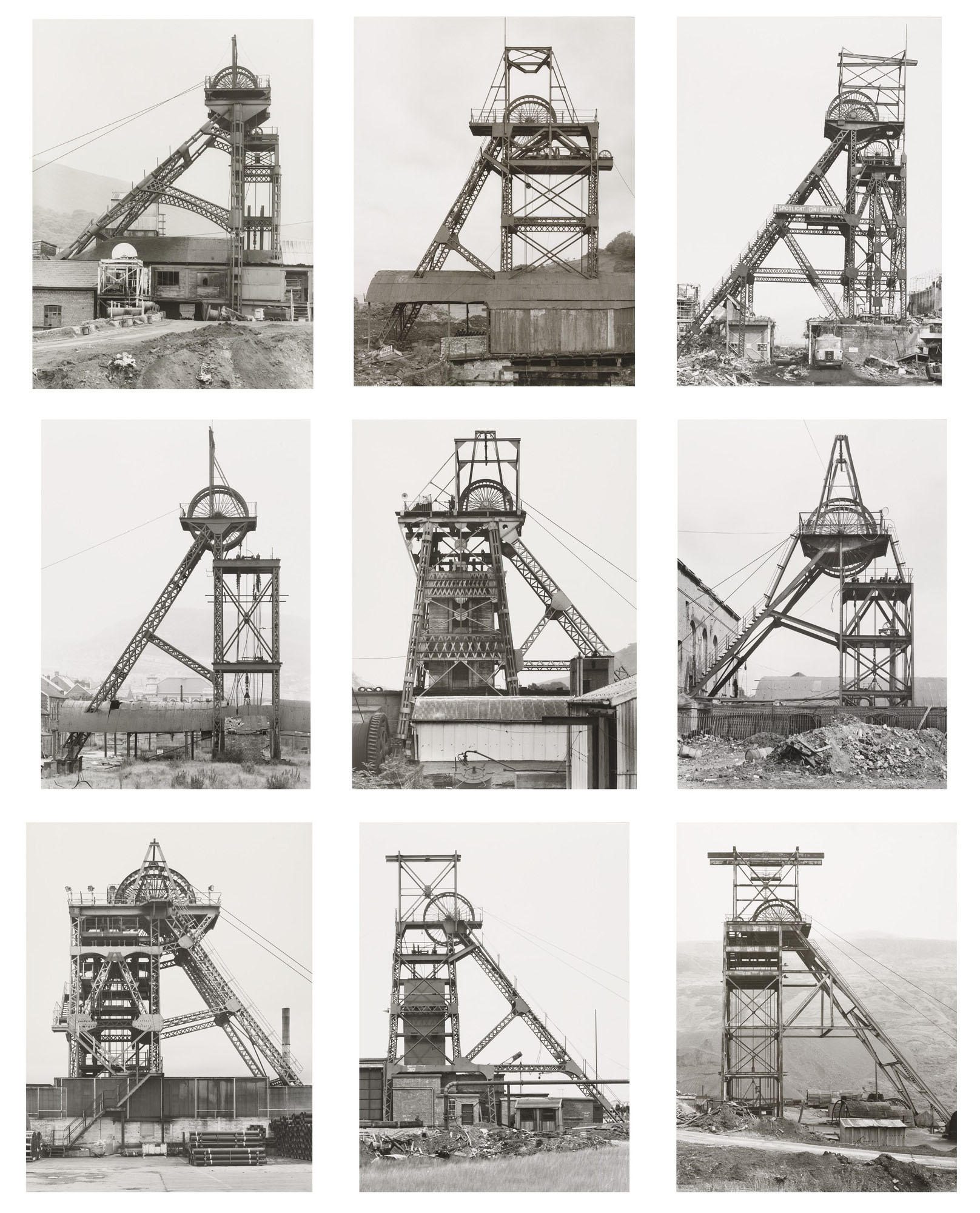
Bernd and Hilla Becher (German, active 1959-2007) Bernd Becher (German, 1931-2007) Hilla Becher (German, 1934-2015) 'Winding Towers' 1966-1997


Bernd and Hilla Becher (German, active 1959-2007) Bernd Becher (German, 1931-2007) Hilla Becher (German, 1934-2015)
Winding Towers
1966-1997
Nine gelatin silver prints
Dimensions
68 1/4 × 56 1/4″ (173.4 × 142.9cm)
Acquired in honour of Marie-Josée Kravis through the generosity of Robert B. Menschel
© 2022 Estate of Bernd Becher and Hilla Becher
 

For more than forty years, the Bechers photographed winding towers, blast furnaces, silos, cooling towers, gas tanks, grain elevators, oil refineries, and the like – all examples of the European and American industrial architecture that had begun to disappear in the transition from an industrial society to an information society. Their works typically present each structure frontally against flat, evenly grey backgrounds. By using large-format cameras and finely grained black-and-white film, they ensured that the motifs they photographed were rendered with a high degree of precision and clarity.

The Bechers organised the images into groupings assembled in grids, classified by function into types. In this strict layout, each structure may easily be compared with the others. The nine separate pictures in Winding Towers together transform the specificity of the individual towers into variations on an ideal form and, conversely, preserve their individual characteristics within a typology.

Publication excerpt from MoMA Highlights: 375 Works from The Museum of Modern Art, New York (New York: The Museum of Modern Art, 2019)
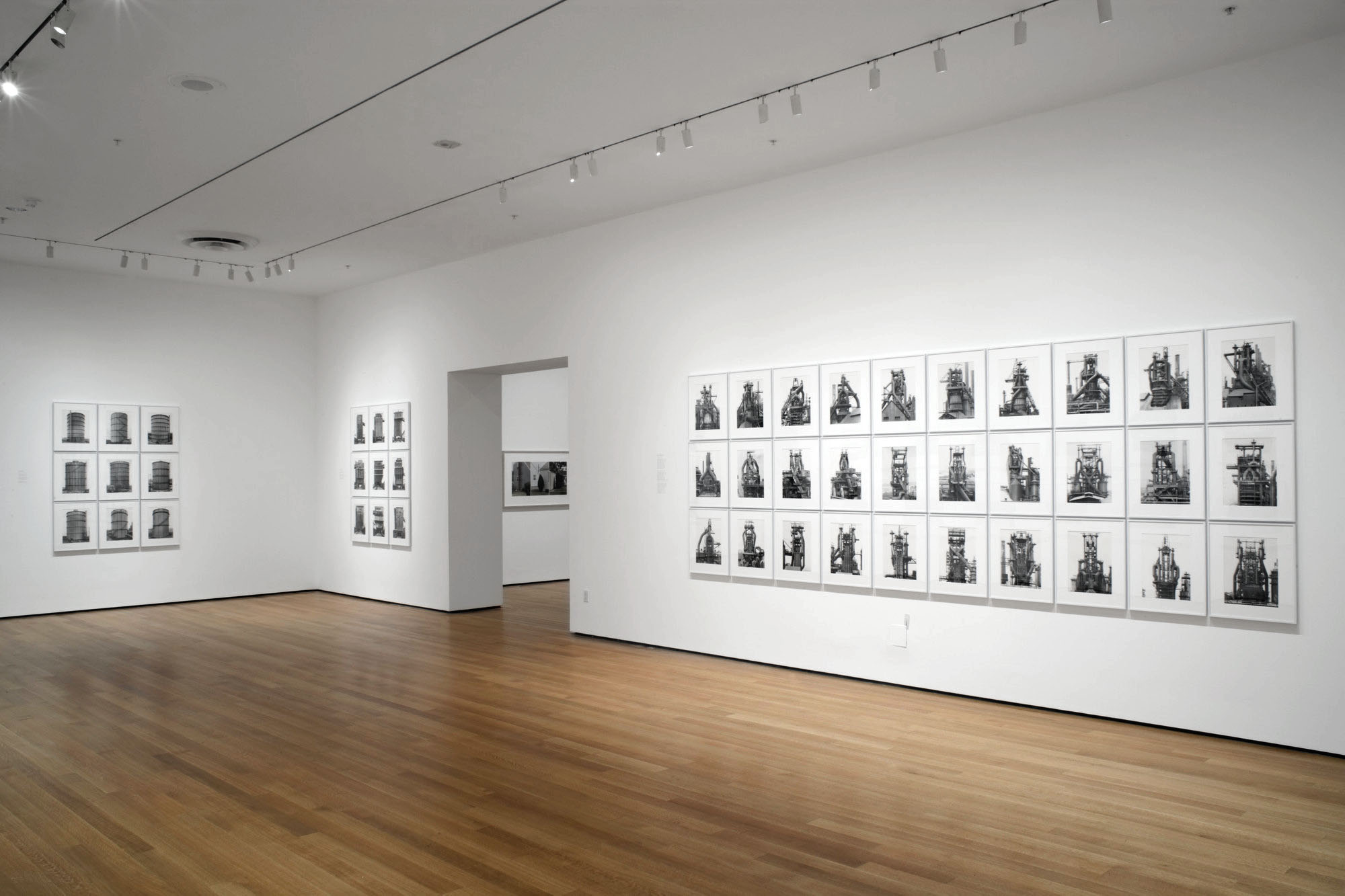
 

Installation view of the exhibition 'Bernd and Hilla Becher: Landscape/Typology' at the Museum of Modern Art, New York


Installation view of the exhibition Bernd and Hilla Becher: Landscape / Typology at the Museum of Modern Art, New York, May 21, 2008 – August 25, 2008
Photograph by John Wronn


Fotomuseum Winterthur
Grüzenstrasse 44 + 45
CH-8400
Winterthur (Zürich)

Opening hours:
Tuesday to Sunday 11am – 6pm
Wednesday 11am – 8pm
Closed on Mondays

Fotomuseum Winterthur website

LIKE ART BLART ON FACEBOOK

Back to top

Exhibition: ‘Forced Labour. The Germans, the Forced Labourers and the War’ at the Jewish Museum, Berlin

Exhibition dates: 28th September 2010 – 30th January, 2011


Gerhard Gronfeld (German, 1911-2000) 'Arrival at the transit camp' 1942 from the exhibition 'Forced Labour. The Germans, the Forced Labourers and the War' at the Jewish Museum, Berlin


Gerhard Gronfeld (German, 1911-2000)
Arrival at the transit camp
1942


Female forced labourers from the Soviet Union on their arrival at the Berlin-Wilhelmshagen Transit Camp, December 1942.

Source: Deutsches Historisches Museum, Berlin


This is an emotional and sobering posting.

The photograph of the Liberated forced laborer with tuberculosis by an unknown photographer (1945, below) is as heartbreaking as the photograph of a mother and child, Tomoko Uemura in Her Bath, Minamata (1972) by Eugene Smith. The look on the man’s face when I first saw it made me burst into tears… it is difficult to talk about it now without being overcome. An unknown man photographed by an unknown photographer.

There is something paradoxical about the solidity of the doctor’s steel helmet, his uniform and the fact he is a doctor contrasted with the strength, size and gentleness of his hand as it rests near the elbow of this emaciated man, this human … yet the intimacy and tenderness of this gesture, as the man stares straight into the camera lens – is so touching that to look at this picture, is almost unbearable. Man’s (in)humanity to man.

Some pertinent facts

The Germans abducted about 12 million people from almost twenty European countries; about two thirds of whom came from Eastern Europe. Many workers died as a result of their living conditions, mistreatment or were civilian casualties of the war. They received little or no compensation during or after the war … At the peak of the war, one of every five workers in the economy of the Third Reich was a forced labourer. According to Fried, in January 1944 the Third Reich was relying on 10 million forced labourers. Of these, 6.5 million were civilians within German borders, 2.2 million were prisoners of war, and 1.3 million were located at forced labor camps outside Germany’s borders. Homze reported that civilian forced labourers from other countries working within the German borders rose steeply from 300,000 in 1939 to more than 5 million in 1944.

Examples

Russian Foreign Civilian Forced Labourers in Nazi Germany (total number approximately): 2,000,000

Russian Number of Known and Estimated Survivors Reported by Reconciliation Foundations: 334,500

(Source: Beyer, John C. and Schneider, Stephen A. “Forced Labour under Third Reich – Part 1” (pdf). Nathan Associates Inc.. 1999.)

Russian “volunteer” POW workers

“Between 22 June 1941 and the end of the war, roughly 5.7 million members of the Red Army fell into German hands. In January 1945, 930,000 were still in German camps. A million at most had been released, most of whom were so-called “volunteer” (Hilfswillige) for (often compulsory) auxiliary service in the Wehrmacht. Another 500,000, as estimated by the Army High Command, had either fled or been liberated. The remaining 3,300,000 (57.5 percent of the total) had perished.”

(Source: Streit, Christian. Keine Kameraden: Die Wehrmacht und die Sowjetischen Kriegsgefangenen, 1941-1945, Bonn: Dietz (3. Aufl., 1. Aufl. 1978))


The remaining 3,300,000 had perished. A sobering figure indeed (if you can even imagine such a number of human beings).

Dr Marcus Bunyan


Many thankx to the Jewish Museum in Berlin for allowing me to publish the photographs in the posting. Please click on the photograph for a larger version of the image.


Unknown photographer. 'Liberated forced laborer with tuberculosis' 1945 from the exhibition 'Forced Labour. The Germans, the Forced Labourers and the War' at the Jewish Museum, Berlin


Unknown photographer
Liberated forced laborer with tuberculosis
1945


A doctor of the U.S. Army examines a former forced labourer from Russia who was ill with tuberculosis. The Americans had discovered the sick forced labourers in a barrack yard in Dortmund. Dortmund, 30 April 1945.

Source: National Archives, Washington


Gerhard Gronfeld (German, 1911-2000) 'Registration at the transit camp' 1942 from the exhibition 'Forced Labour. The Germans, the Forced Labourers and the War' at the Jewish Museum, Berlin


Gerhard Gronfeld (German, 1911-2000)
Registration at the transit camp
1942


Berlin-Wilhelmshagen Transit Camp, December 1942. Labour office staff registered the forced labourers and handed out employment certificates.

Source: Deutsches Historisches Museum, Berlin


Unknown photographer. 'Humiliation of Bernhard Kuhnt in Chemnitz' Nd from the exhibition 'Forced Labour. The Germans, the Forced Labourers and the War' at the Jewish Museum, Berlin


Unknown photographer
Humiliation of Bernhard Kuhnt in Chemnitz
Nd


The inscription, “Always dignified! The naval fleet’s mutineer Bernh. Kuhnt arrives at his new workplace (washing off the dirt),” refers to the myth that mutinous social democratic and communist sailors were responsible for the defeat of the German empire in the First World War.

Source: Bundesarchiv, Koblenz


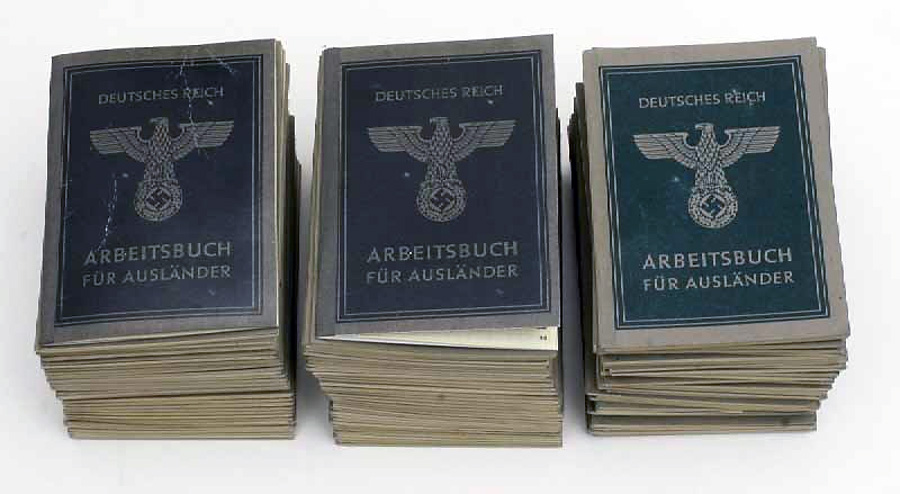
Workbooks issued by the employment office of the German Reich for foreign forced labourers from the exhibition 'Forced Labour. The Germans, the Forced Labourers and the War' at the Jewish Museum, Berlin


Workbooks issued by the employment office of the German Reich for foreign forced labourers; Buchenwald Concentration Camp Memorial, Weimar


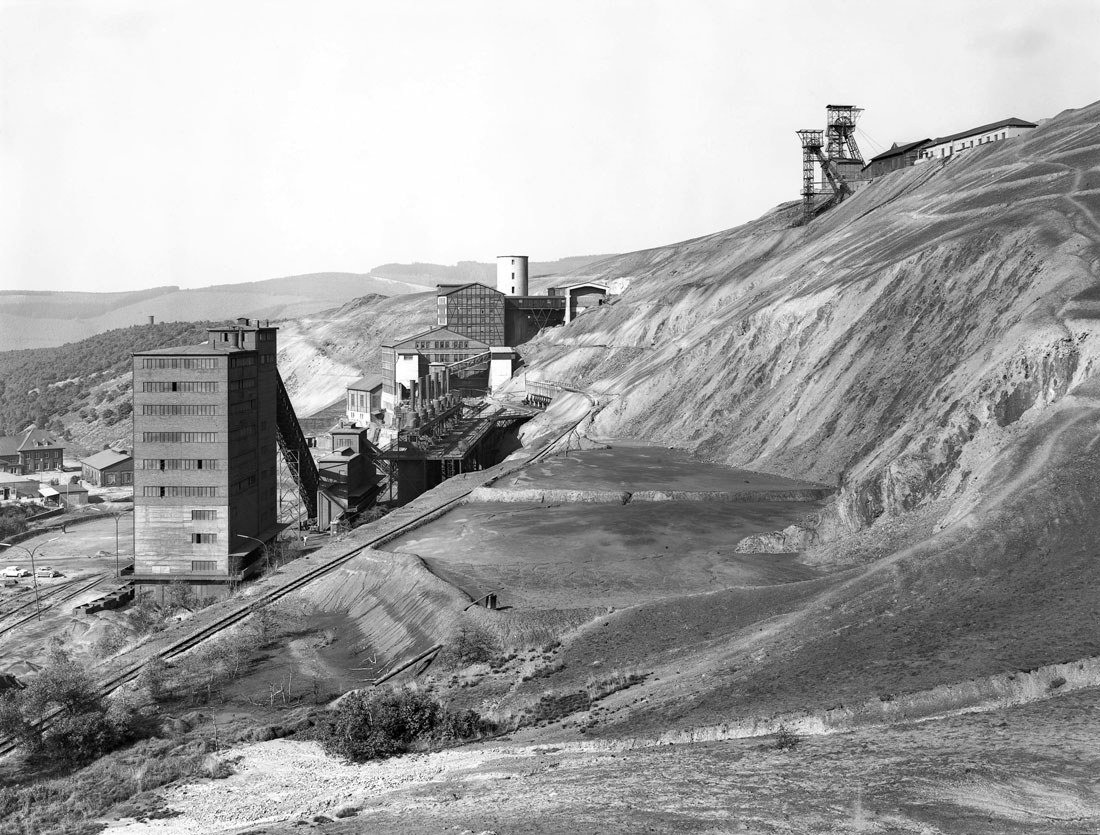
Unknown photographer. 'Selection in a Prisoner of War Camp: Recruitment for Mining' 1942 from the exhibition 'Forced Labour. The Germans, the Forced Labourers and the War' at the Jewish Museum, Berlin


Unknown photographer
Selection in a Prisoner of War Camp: Recruitment for Mining
1942


In the summer of 1942, Soviet prisoners of war were selected from the prisoner of war camp Zeithain to perform forced labor in Belgian mines.
Source: Gedenkstätte Ehrenhain Zeithain


Selection in a Prisoner of War Camp

In the summer of 1942, Karl Schmitt – head of the Wehrmacht mining division in Liège, Belgium – went to Berlin on vacation with his wife. On the way, he visited the Zeithain prisoner of war camp in Saxony. The Soviet POWs were ordered to present themselves for inspection with the aim of deploying them to Belgian mines under German control. They were accordingly checked for physical fitness. Karl Schmitt decided who was to be transported to Belgium and who was not.

Soviet prisoners of war were frequently put to work in mines. The Reich Security Main Office had ruled that they could be employed only in work gangs kept separate from German workers. The authorities considered the mines particularly suitable in that respect.

Source: Gedenkstätte Ehrenhain Zeithain.


Over 20 million men, women, and children were taken to Germany and the occupied territories from all over Europe as “foreign workers,” prisoners of war, and concentration camp inmates to perform forced labor. By 1942, forced labourers were part of daily life in Nazi Germany. The deported workers from all over Europe and Eastern Europe in particular were exploited in armament factories, on building sites and farms, as craftsmen, in public institutions and private households. Be it as a soldier of the occupying army in Poland or as a farmer in Thuringia, all Germans encountered forced labourers and many profited from them. Forced labor was no secret but a largely public crime.

The exhibition Forced Labor. The Germans, the Forced Laborers, and the War on view at the Jewish Museum in Berlin provides the first comprehensive presentation of the history of forced labor and its ramifications after 1945. The exhibition was curated by the Buchenwald and Mittelbau-Dora Memorials Foundation and initiated and sponsored by the “Remembrance, Responsibility and Future” Foundation. Federal President Christian Wulff has assumed patronage for the exhibition. The exhibition’s first venue on its international tour is the Jewish Museum Berlin, other venues are planned in European capitals and in North America.

Forced labor was without precedent in European history. No other Nazi crime involved so many people – as victims, perpetrators, or onlookers. The exhibition provides the first comprehensive presentation of the history of this ubiquitous Nazi crime and its ramifications after 1945. It shows how forced labor was part of the Nazi regime’s racist social order from the outset: The propagated “Volksgemeinschaft” (people’s community) and forced labor for the excluded belonged together. The German “Herrenmenschen” (superior race) ruthlessly exploited those they considered “Untermenschen” (subhumans). The ordinariness and the broad societal participation of forced labor reflect the racist core of Nazism.

The exhibition pays special attention to the relationships between Germans and forced labourers. Every German had to decide whether to treat forced labourers with a residual trace of humanity or with the supposedly required racist frostiness and implacability of a member of an allegedly superior race. How Germans made use of the scope this framework reveals something not only about the individuals but also about the allure and shaping power of Nazi ideology and practice. Through this perspective, the exhibition goes beyond a presentation of forced labor in the narrow sense to illustrate the extent to which Nazi values had infiltrated German society. Forced labor cannot be passed off as a mere crime of the regime but should rather be considered a crime of society.

Over 60 representative case histories form the core of the exhibition. As is true of the majority of documents on show, they resulted from meticulous investigations in Europe, the USA, and Israel. Moreover the exhibition team viewed hundreds of interviews with former forced labourers that have been carried out in recent years. In terms of content, these case histories range from the degrading work of the politically persecuted in Chemnitz through the murderous slave labor performed by Jews in occupied Poland to daily life as a forced labourer on a farm in Lower Austria.

Among the surprises of the extensive international archival research was discovering unexpectedly broad photographic coverage of significant events. The photos relating to the case histories represent the second pillar of the exhibition. Whole series of photos were traced back to their creator and the scene and people depicted. This presentation, based on well-founded sources, allows quasi dramatic insight into aspects of forced labor. Cinematically arranged photo or photo-detail enlargements form the introduction to the continued inquiry into the history of forced labor.

The exhibition is divided into four sections. The first covers the years from 1933 to 1939 and unveils in particular how the racist ideology of Nazi forced labor struck roots. What was propagated up to the beginning of WWII, partly laid down in laws and widely implemented by society in practice, formed the basis for the subsequent radicalisation of forced labor in occupied Europe culminating in extermination through labor. This escalation and radicalisation is the focus of the second section of the exhibition. The third part covers forced labor as a mass phenomenon in the Third Reich from 1941/1942, ending with the massacre of forced labourers at the end of the war. The fourth section explores the period from the time of liberation in 1945 to society’s analysis and recognition of forced labor as a crime today. Former forced labourers have the last word.

Press release from The Jewish Museum website


Unknown photographer. 'Daimler facility in Minsk' 1942 from the exhibition 'Forced Labour. The Germans, the Forced Labourers and the War' at the Jewish Museum, Berlin


Unknown photographer
Daimler facility in Minsk
1942


Female forced laborers of the Daimler facility in Minsk, September 1942.

Source: Mercedes-Benz Classic, Archive, Stuttgart


Minsk: German firms in occupied Eastern Europe

In Minsk, a town which had suffered major destruction, Daimler-Benz ran a large repair facility for motorised Wehrmacht vehicles. Together, Daimler and Organisation Todt set up more than thirty repair sheds on the grounds of a ruined military base. With a workforce of five thousand, the facility was soon one of the largest enterprises in occupied Eastern Europe. The management exploited prisoners of war and members of the local population, among them Jews. Labourers were also deported from White Russian villages to the Minsk works as part of the effort to crush the partisan movement.

In the occupied areas of Eastern Europe, many German companies took advantage of the opportunity to take over local firms or establish branch operations. The unlimited availability of labourers was an important factor in their business strategies.


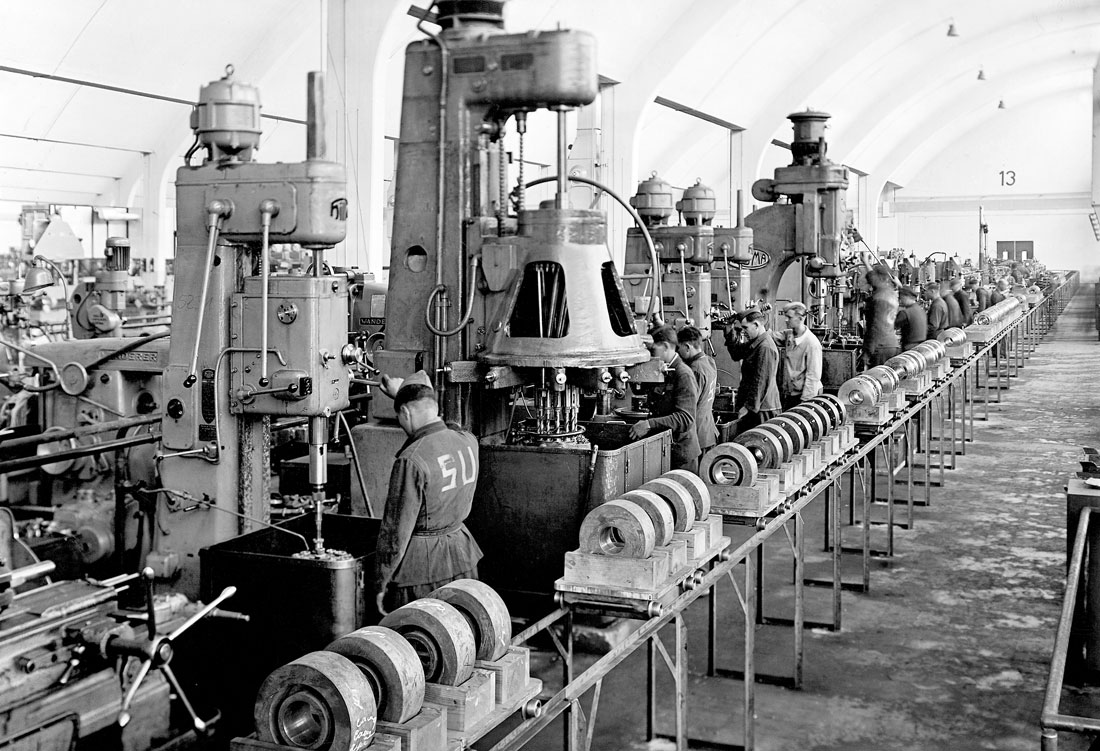
Unknown photographer. 'Foreign workers at BMW in Allach' 1943 from the exhibition 'Forced Labour. The Germans, the Forced Labourers and the War' at the Jewish Museum, Berlin


Unknown photographer
Foreign workers at BMW in Allach
c. 1943


All the foreigners in aircraft engine production had to be visibly identifiable as such. The Soviet prisoners of war had the “SU” symbol on their jackets. Concentration camp inmates could be recognised by their striped uniforms. These photographs were most likely propaganda photos. Munich-Allach, c. 1943.

Source: BMW Group Archiv.


Munich-Allach: Working for BMW

Toward the end of the war ninety percent of the workforce at the largest aircraft engine factory in the German Reich – BMW’s plant in Munich-Allach – consisted of foreign civilian workers, POWs and concentration camp inmates. The number of workers had risen from 1,000 in 1939 to more than 17,000 in 1944.

Forced labourers worked not only in the assembly halls, but also on the factory’s expansion. Due to BMW’s importance to the armament industry, the authorities gave it priority over other companies in the assignment of workers. Nevertheless, its personnel demand was never completely met.

Some of the Western European workers lived in private quarters. For all others, barrack camps were set up all around the factory grounds until 1944, ultimately accommodating 14,000 people. That figure included several thousand concentration camp inmates which the company management had applied for already in 1942.


Unknown photographer. 'KZ-prisoners on the industrial union color building site, Auschwitz' c. 1943 from the exhibition 'Forced Labour. The Germans, the Forced Labourers and the War' at the Jewish Museum, Berlin


Unknown photographer
KZ-prisoners on the industrial union color building site, Auschwitz
c. 1943
Source: © Bundesarchiv, Koblenz


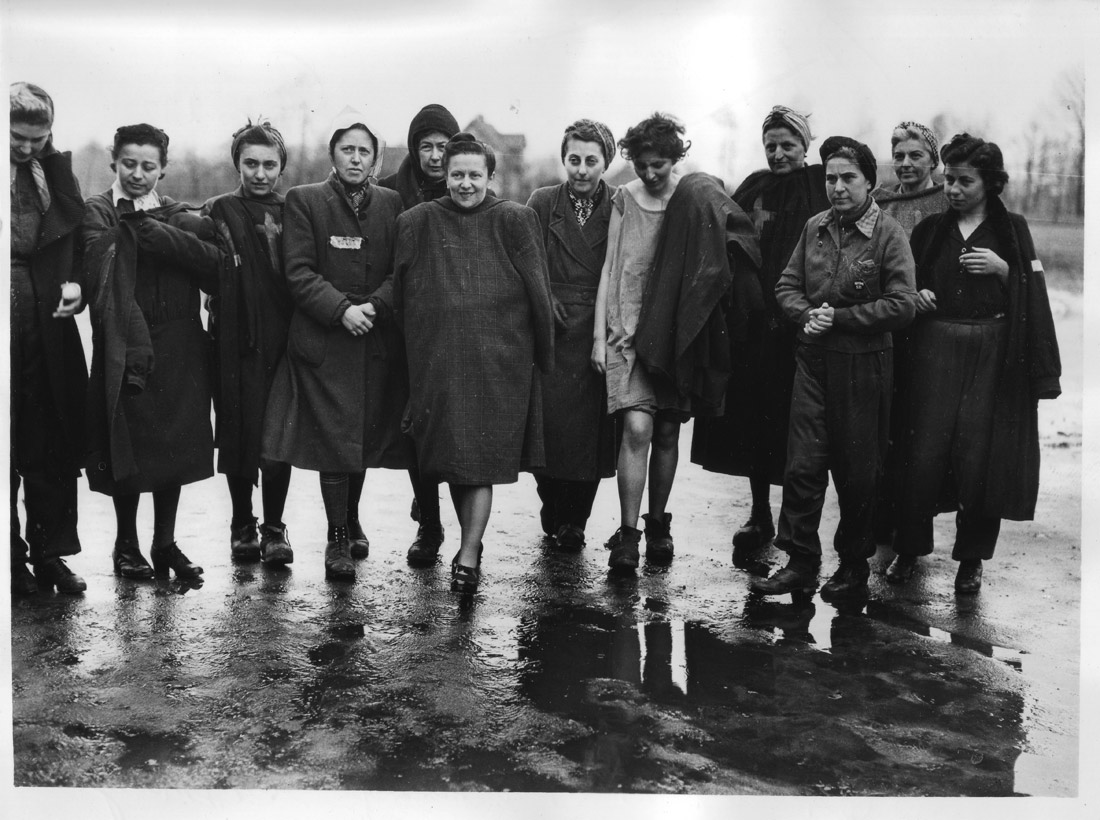
Unknown photographer. 'Liberated Jewish women' 1945 from the exhibition 'Forced Labour. The Germans, the Forced Labourers and the War' at the Jewish Museum, Berlin


Unknown photographer
Liberated Jewish women
1945


These young Jewish women were released from a forced labor camp at Kauritz (Saxony) by U.S. Army troops in early April, 1945. They are part of a large group removed from homes in France, Holland, Belgium and other occupied areas in Europe.

Source: National Archives, Washington


Unknown photographer. 'Wladyslaw Kolopoleski' Nd from the exhibition 'Forced Labour. The Germans, the Forced Labourers and the War' at the Jewish Museum, Berlin


Unknown photographer
Wladyslaw Kolopoleski
Nd


“In addition to the hard work, which exceeded my strength, I was beaten on the slightest provocation, sometimes to the point of unconsciousness. Once, for example, I suffered a severe head injury after I was beaten by Max Ewert, an SA officer. I not only lost consciousness, but I had to have head surgery,” wrote Władysław Kołopoleski, a young Pole born in Łódź in 1932. He was deployed in April 1940 on the estate of mayor Max Ewert in Gervin, now Górawino, in Pomerania.

Source: Foundation “Polish-German Reconciliation,” Warsaw


Jewish Museum Berlin
Lindenstraße 9-14, 10969 Berlin
Phone: +49 (0)30 259 93 300

Opening hours:
10am – 7pm

The Jewish Museum website

LIKE ART BLART ON FACEBOOK

Back to top