Exhibition: ‘Fazal Sheikh: Thirst | Exposure | In Place’ at the Denver Art Museum

Exhibition dates: 10th March – 20th October, 2024

Curators: Curator of Photography, Eric Paddock, in collaboration with Kimberly Roberts, Denver Art Museum Curatorial Associate, and Lauren Thompson, Senior Interpretive Specialist
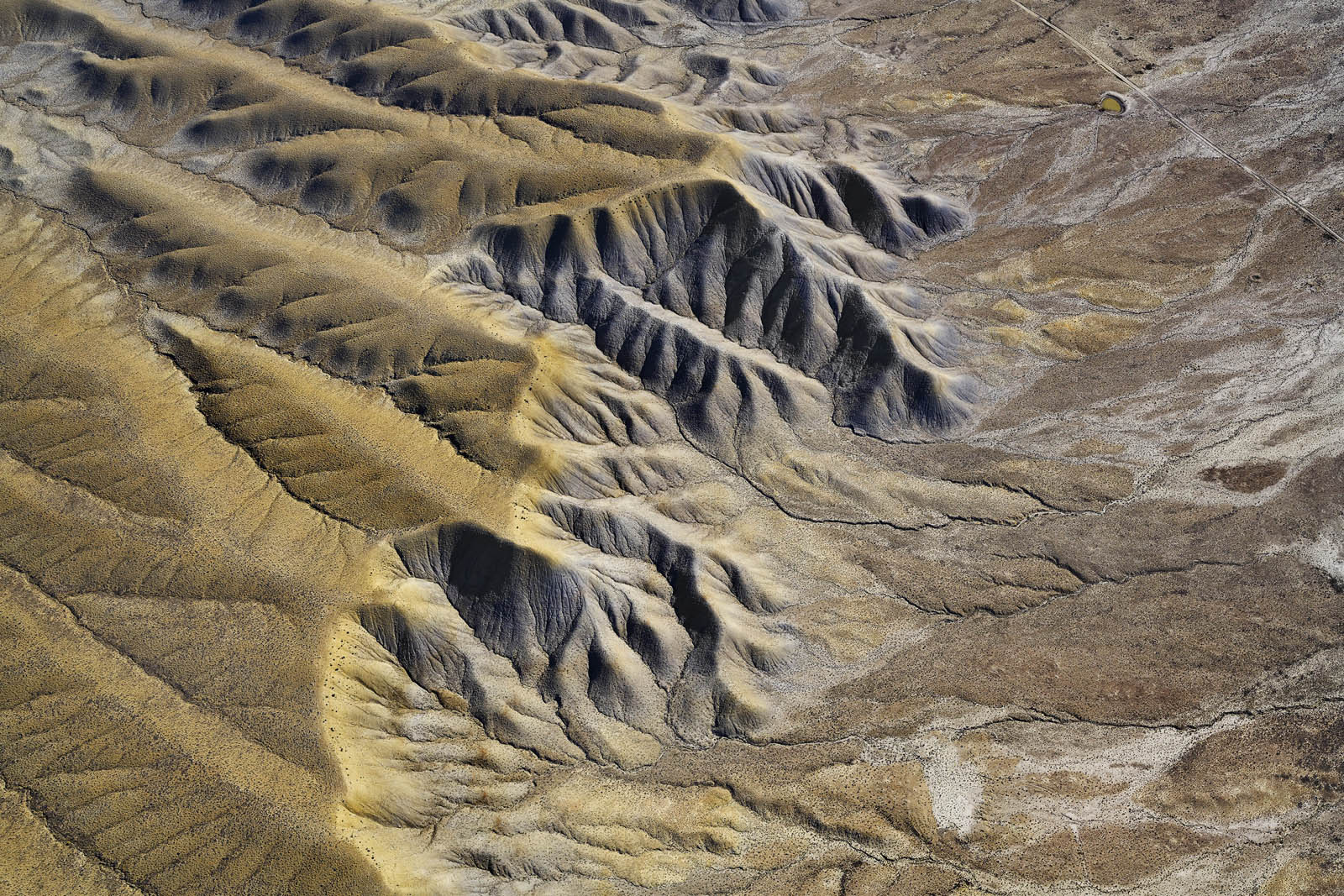
 

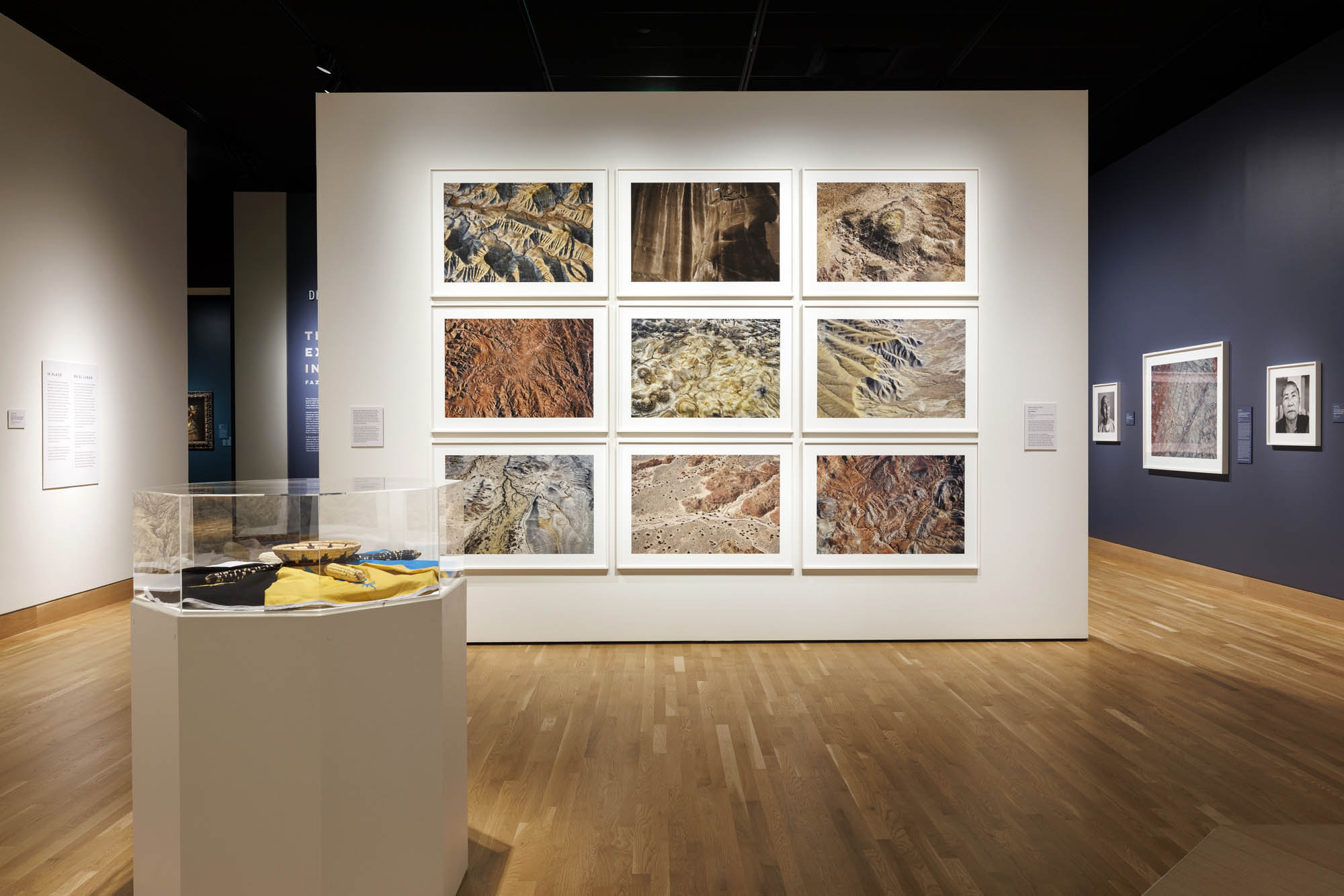
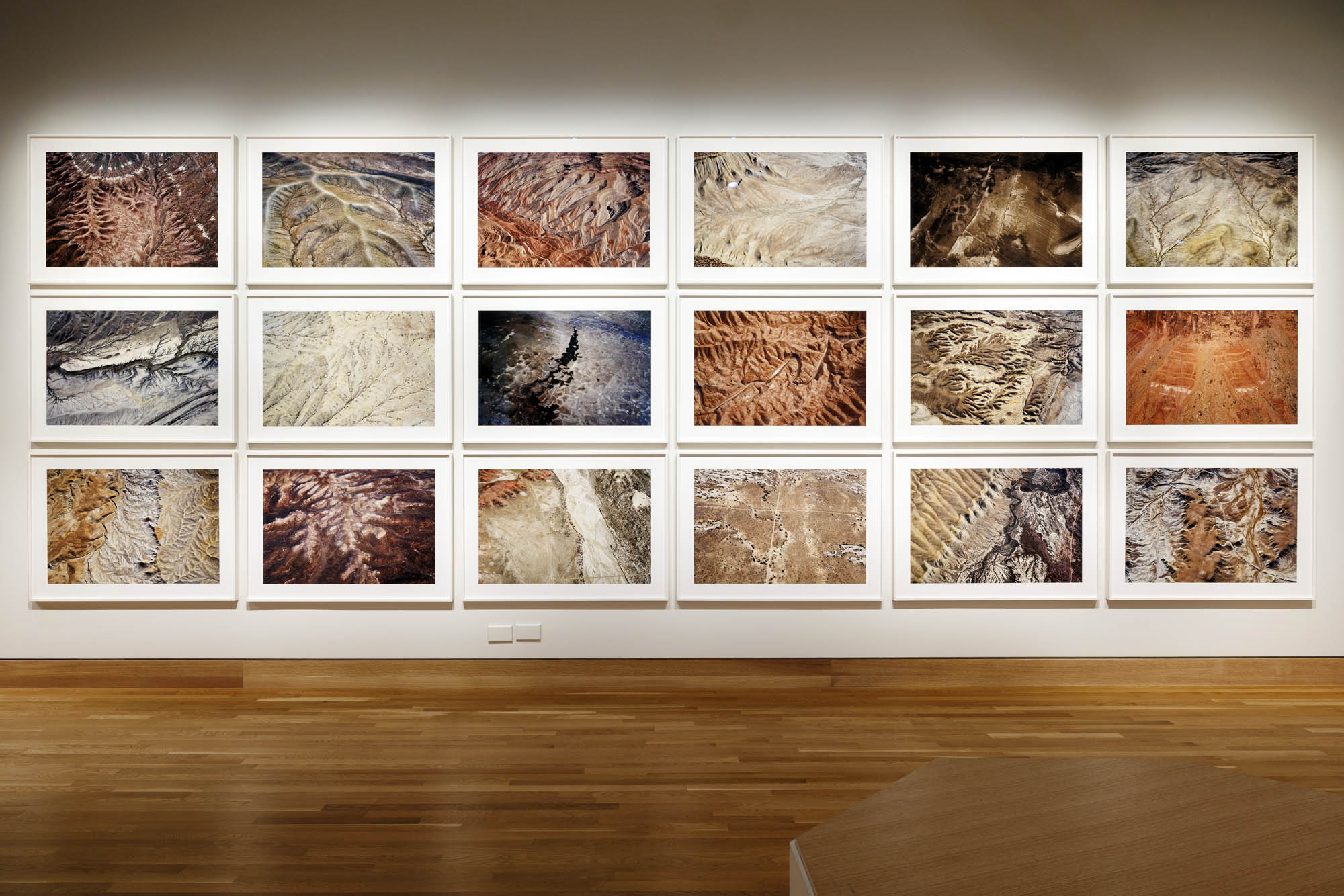
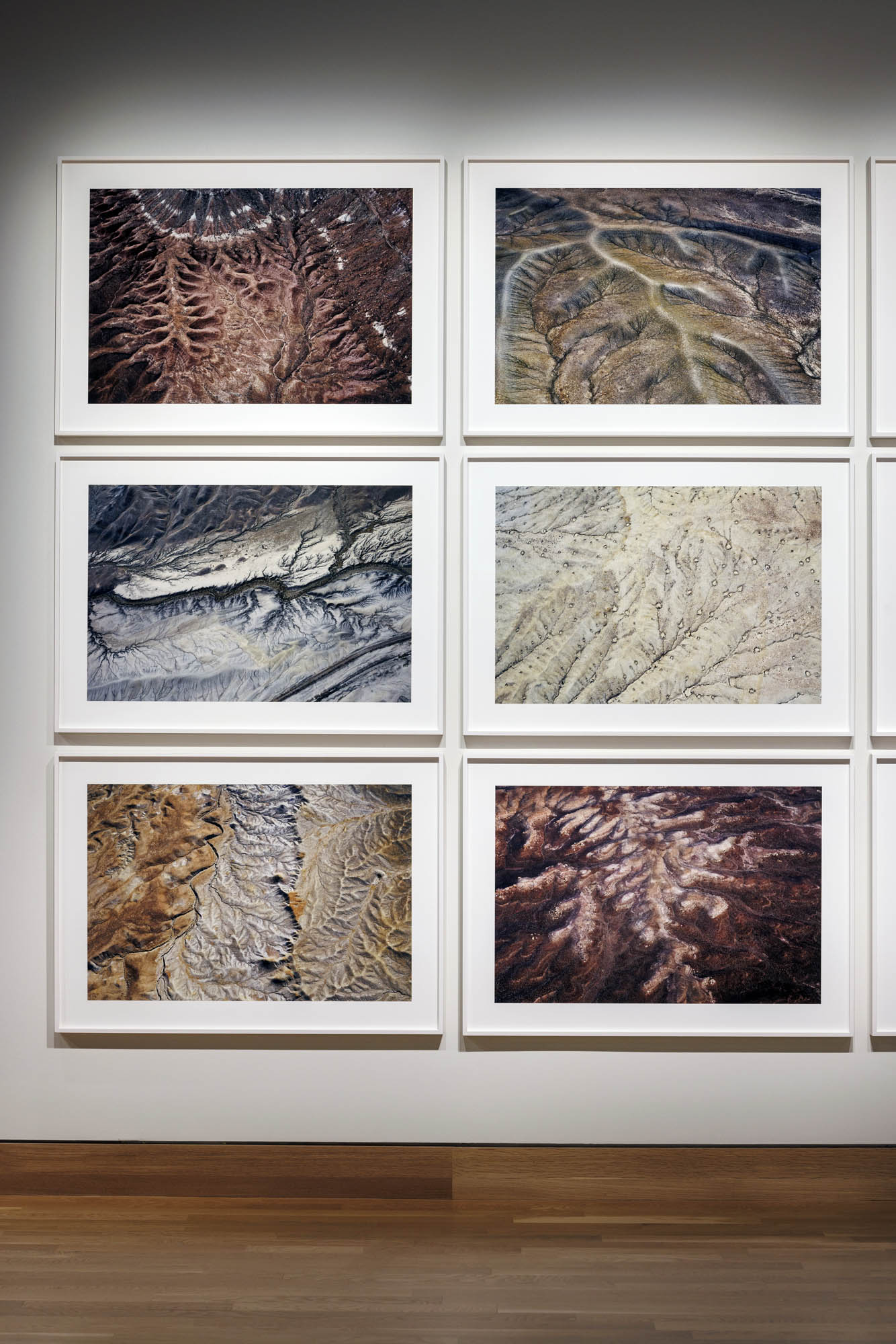
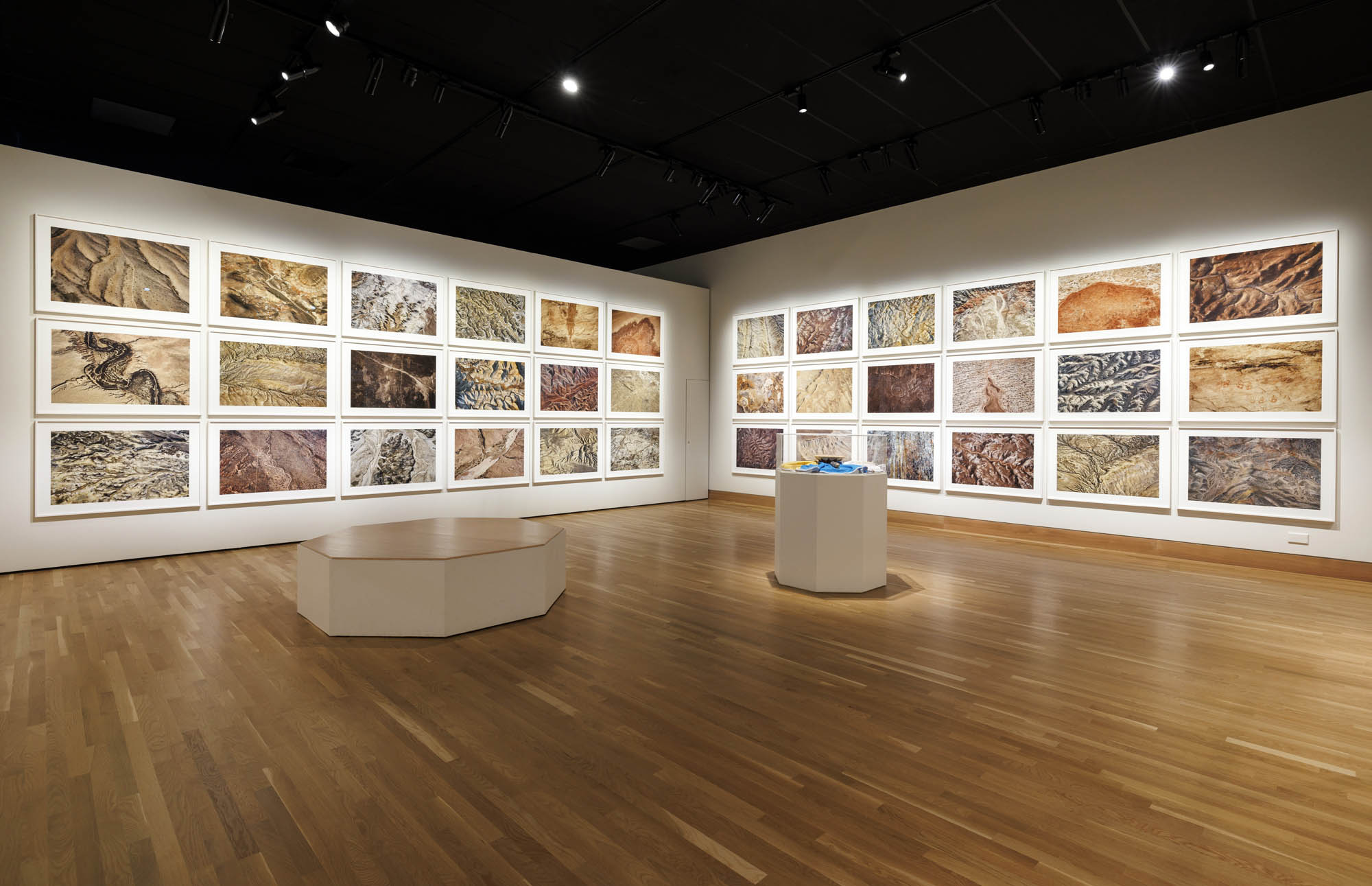
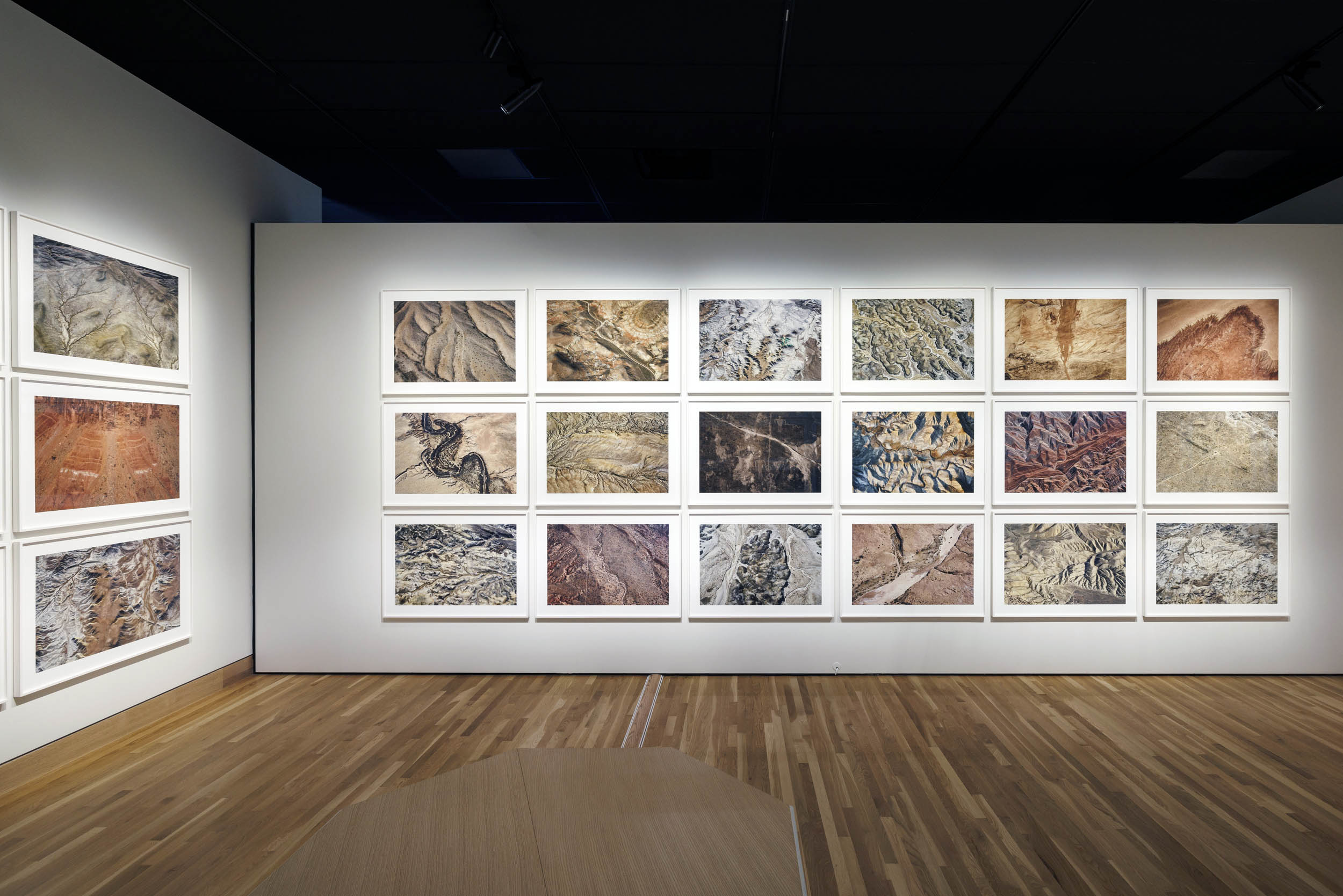
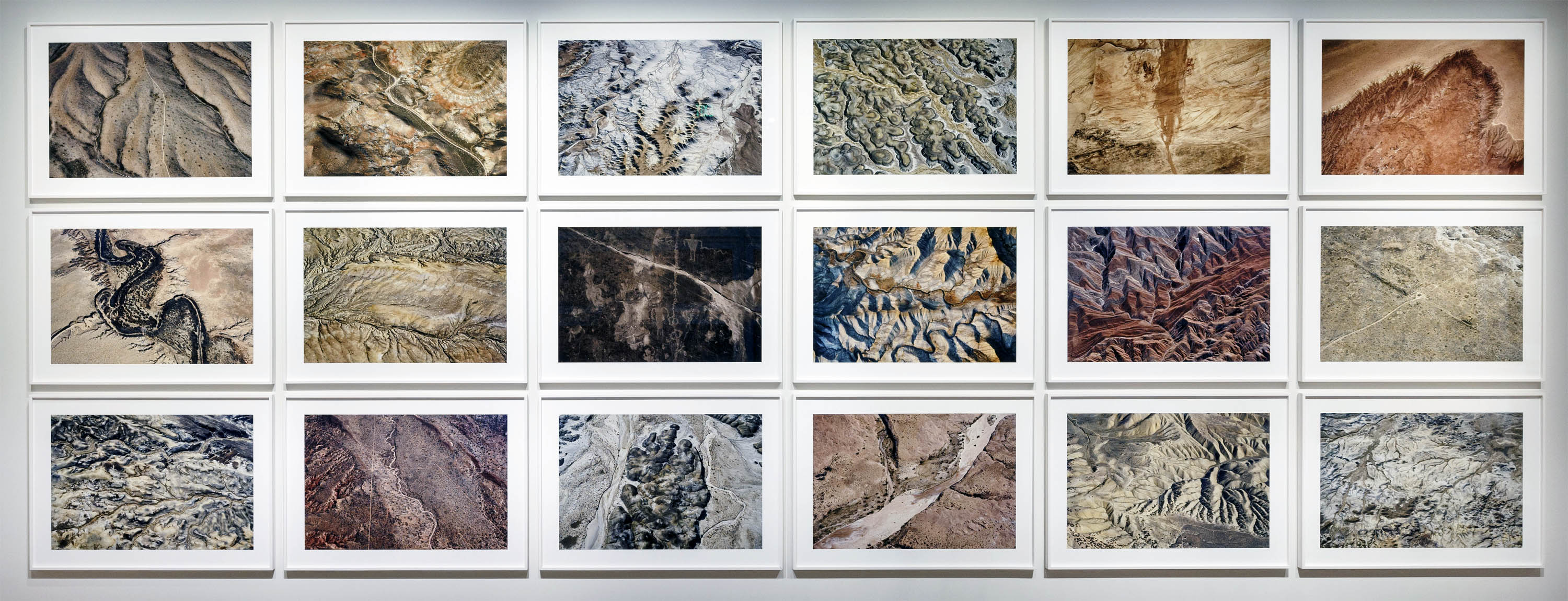
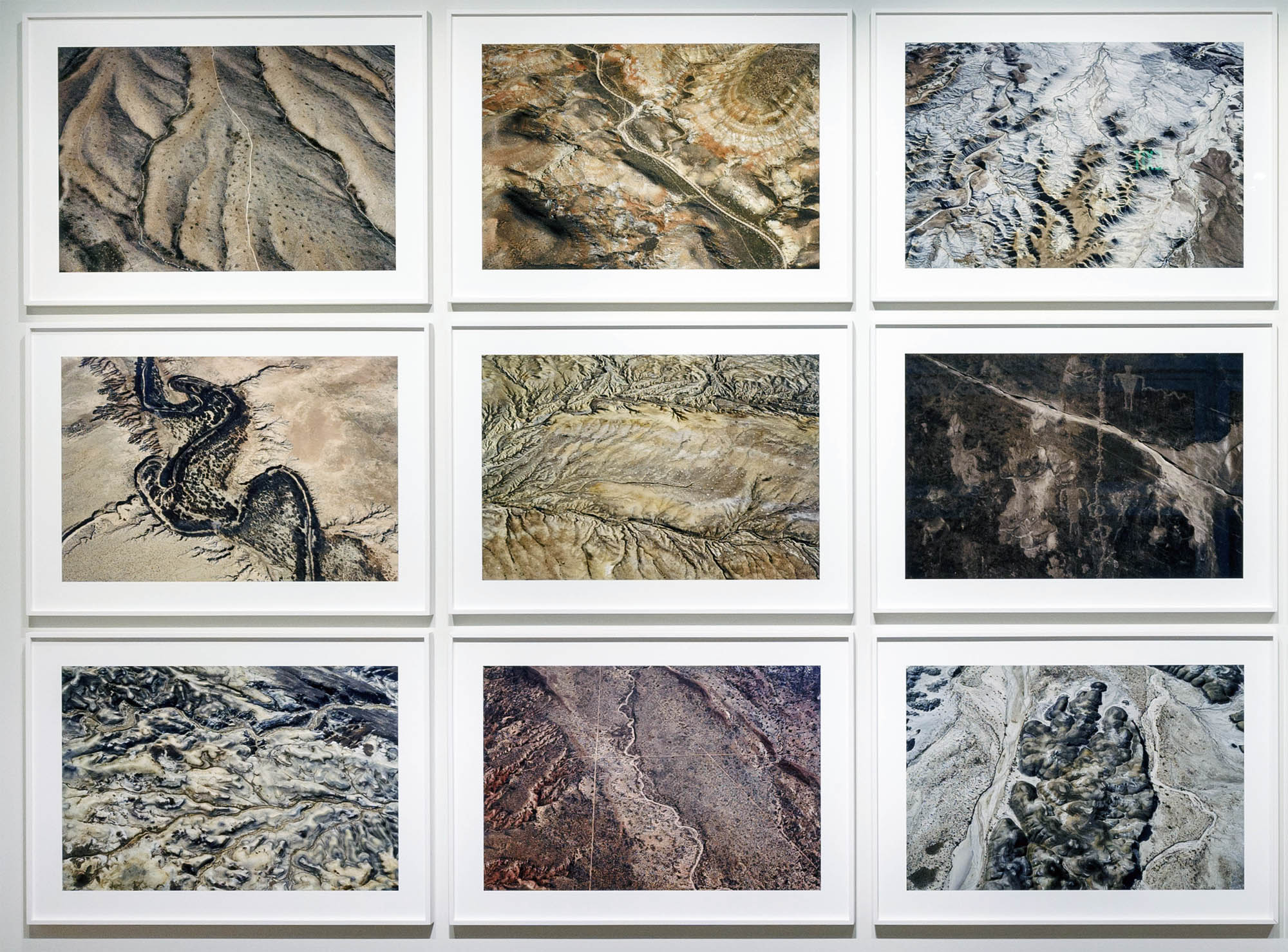
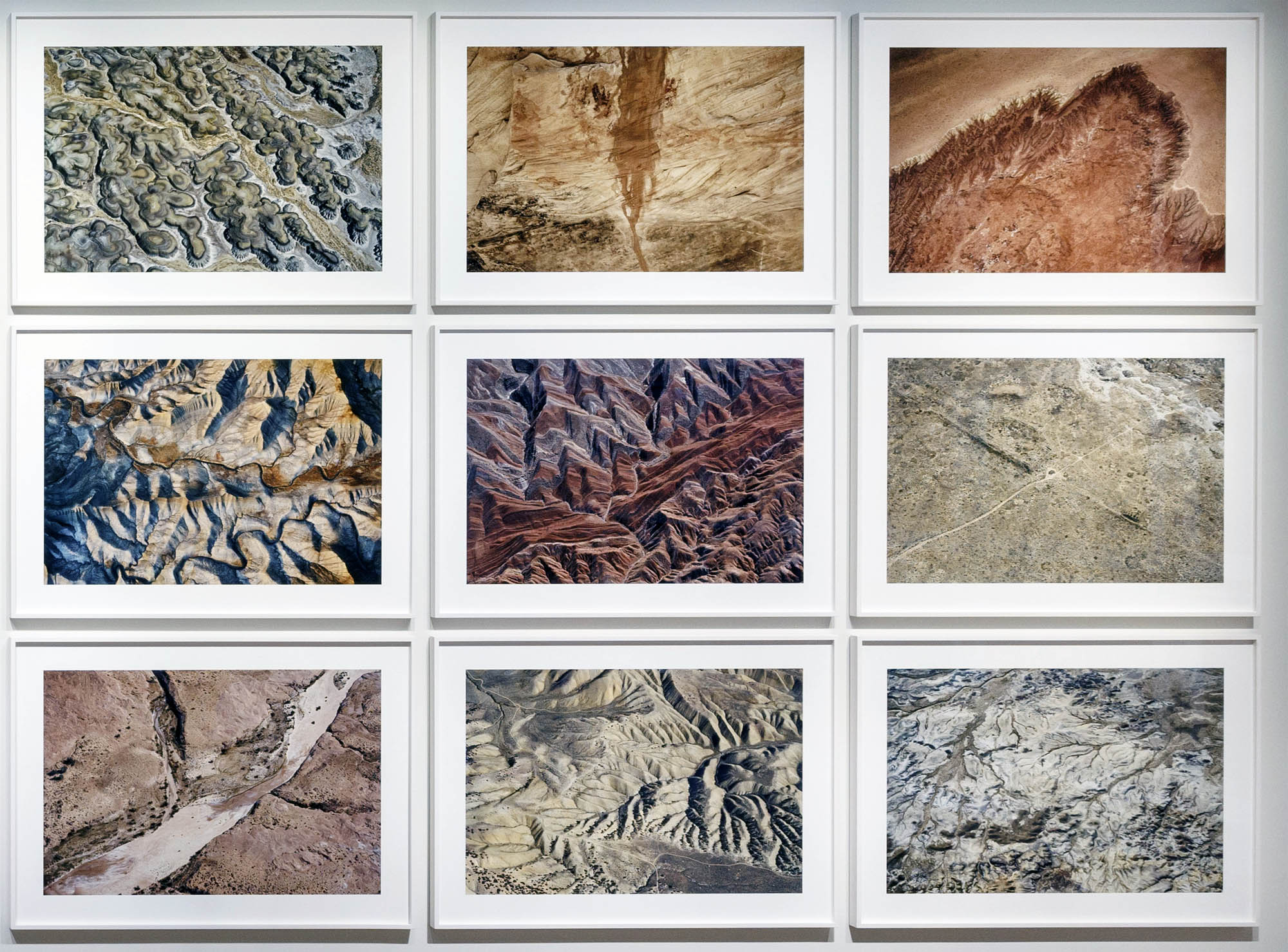
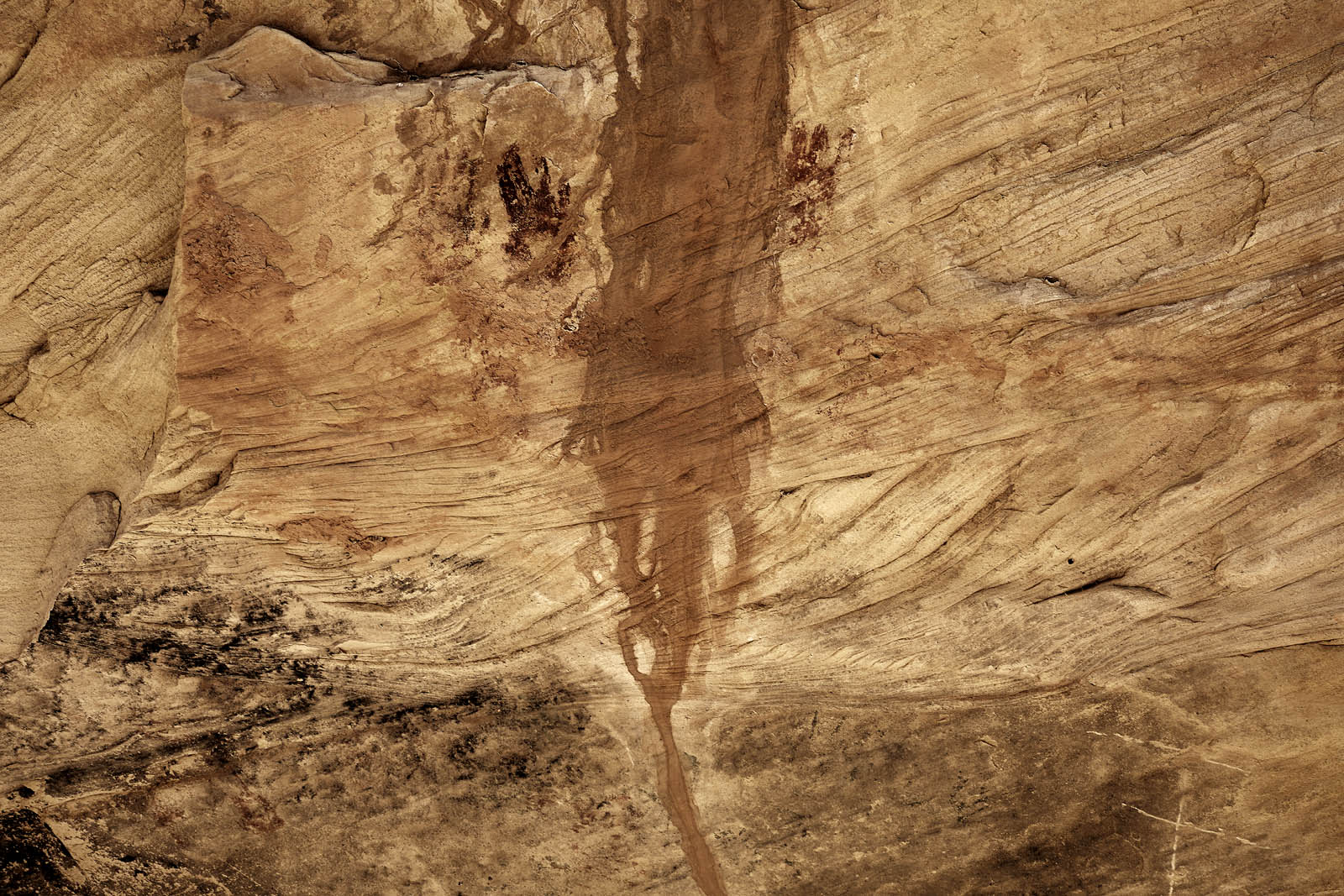
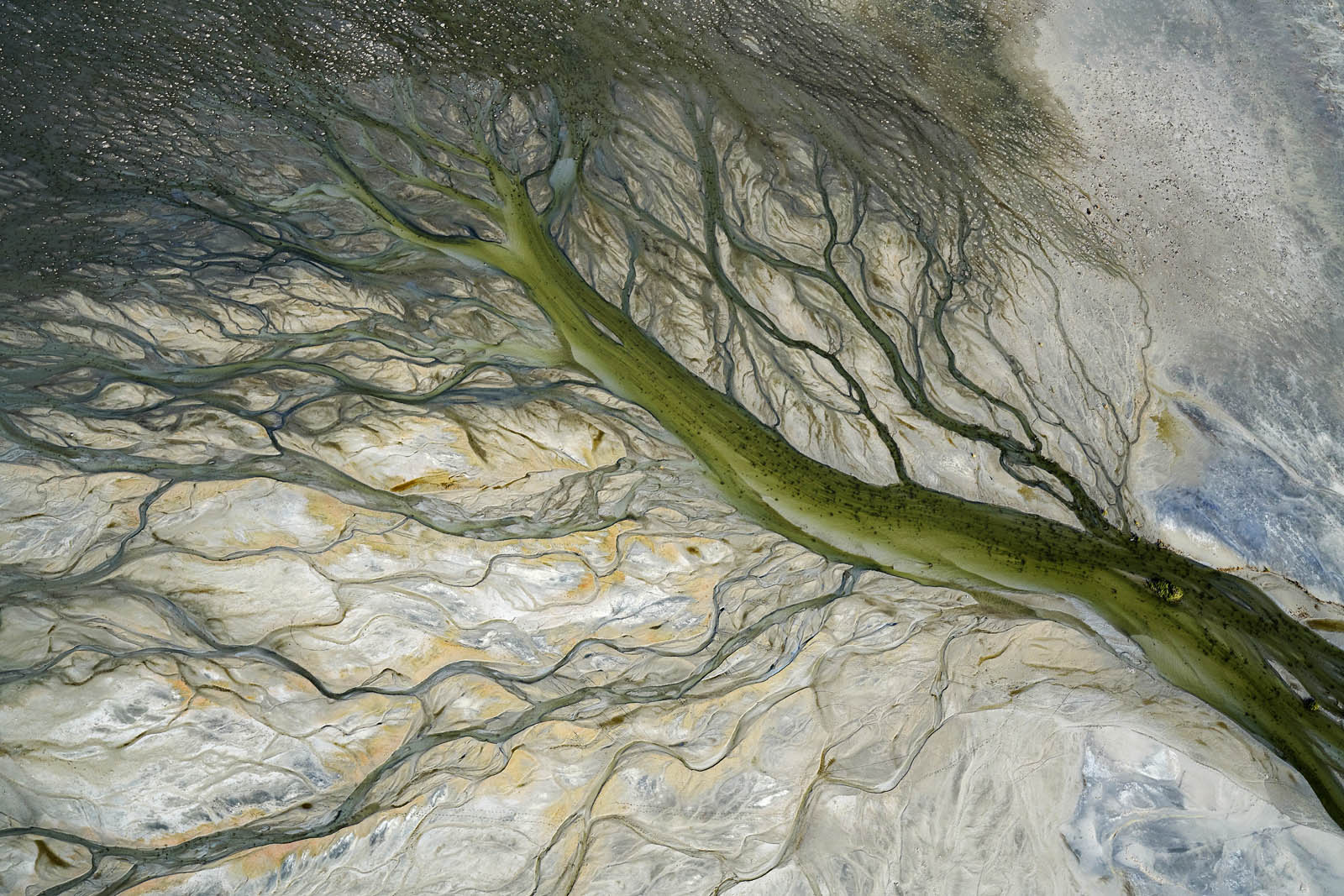
Fazal Sheikh (American, b. 1965) From the installation 'In Place (Utah, Arizona, and New Mexico, Four Corners Region)' 2017-2020


Fazal Sheikh (American, b. 1965)
From the installation In Place (Utah, Arizona, and New Mexico, Four Corners Region)
2017-2020
Pigmented inkjet print
© and courtesy Fazal Sheikh


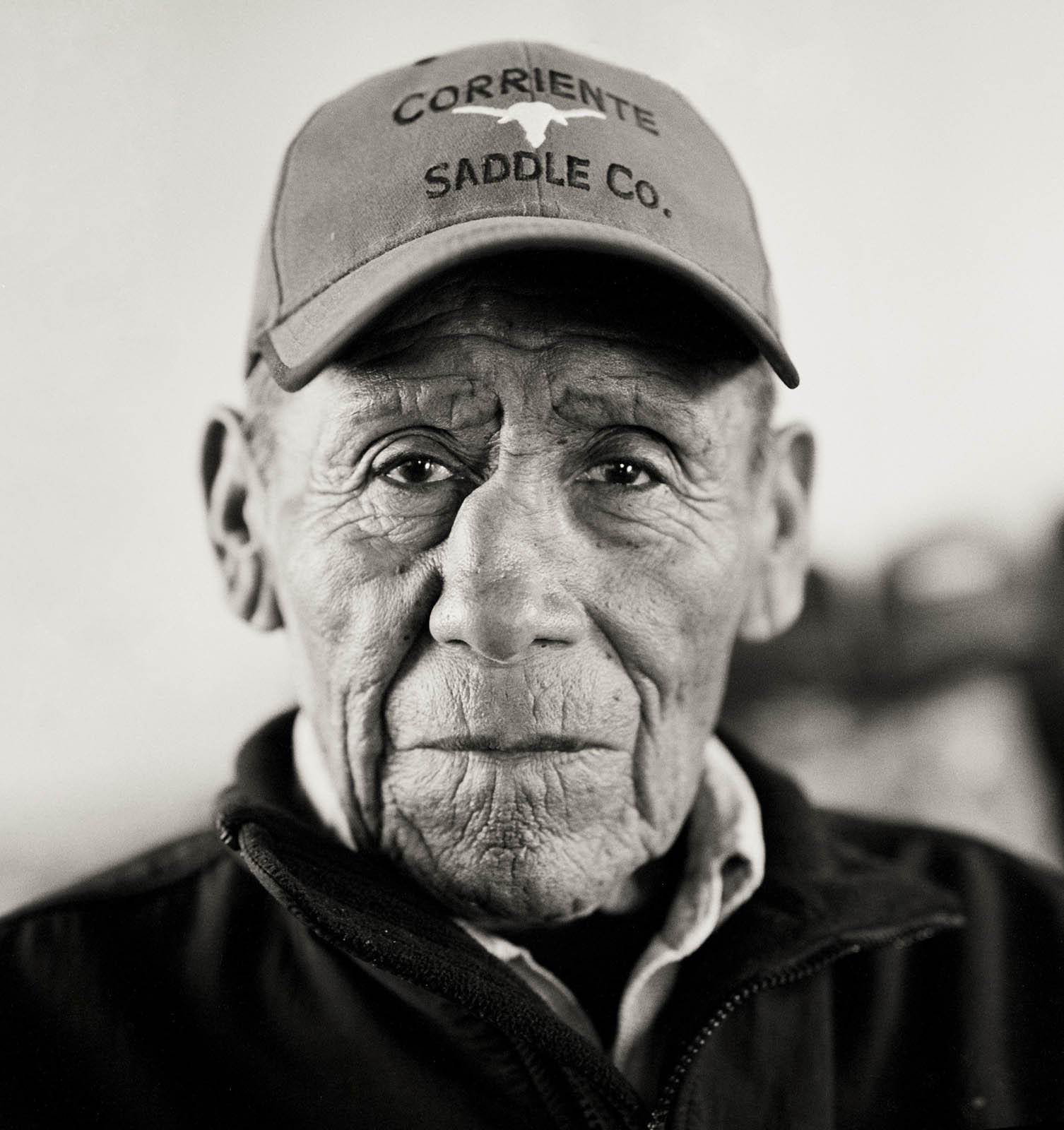
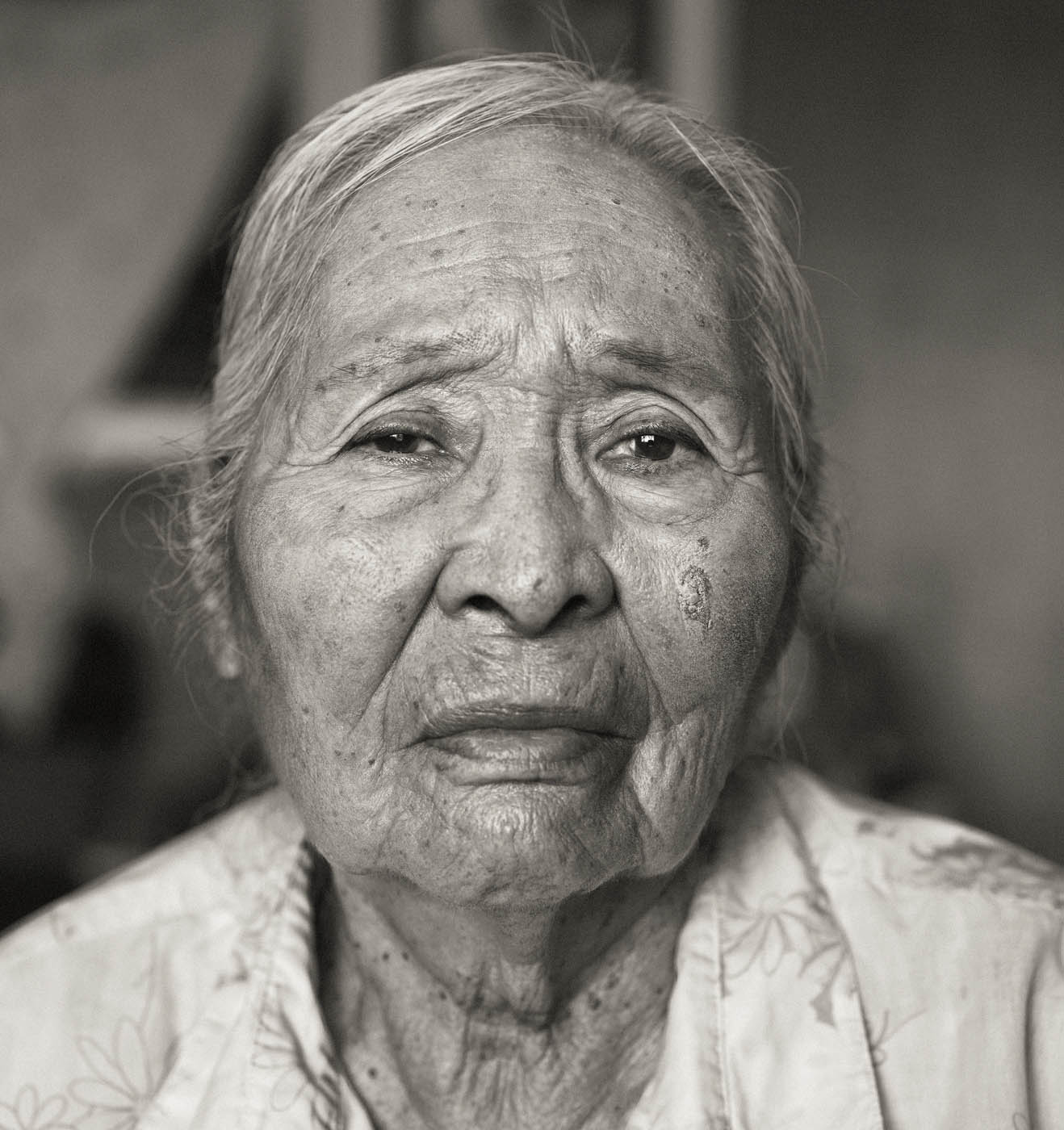
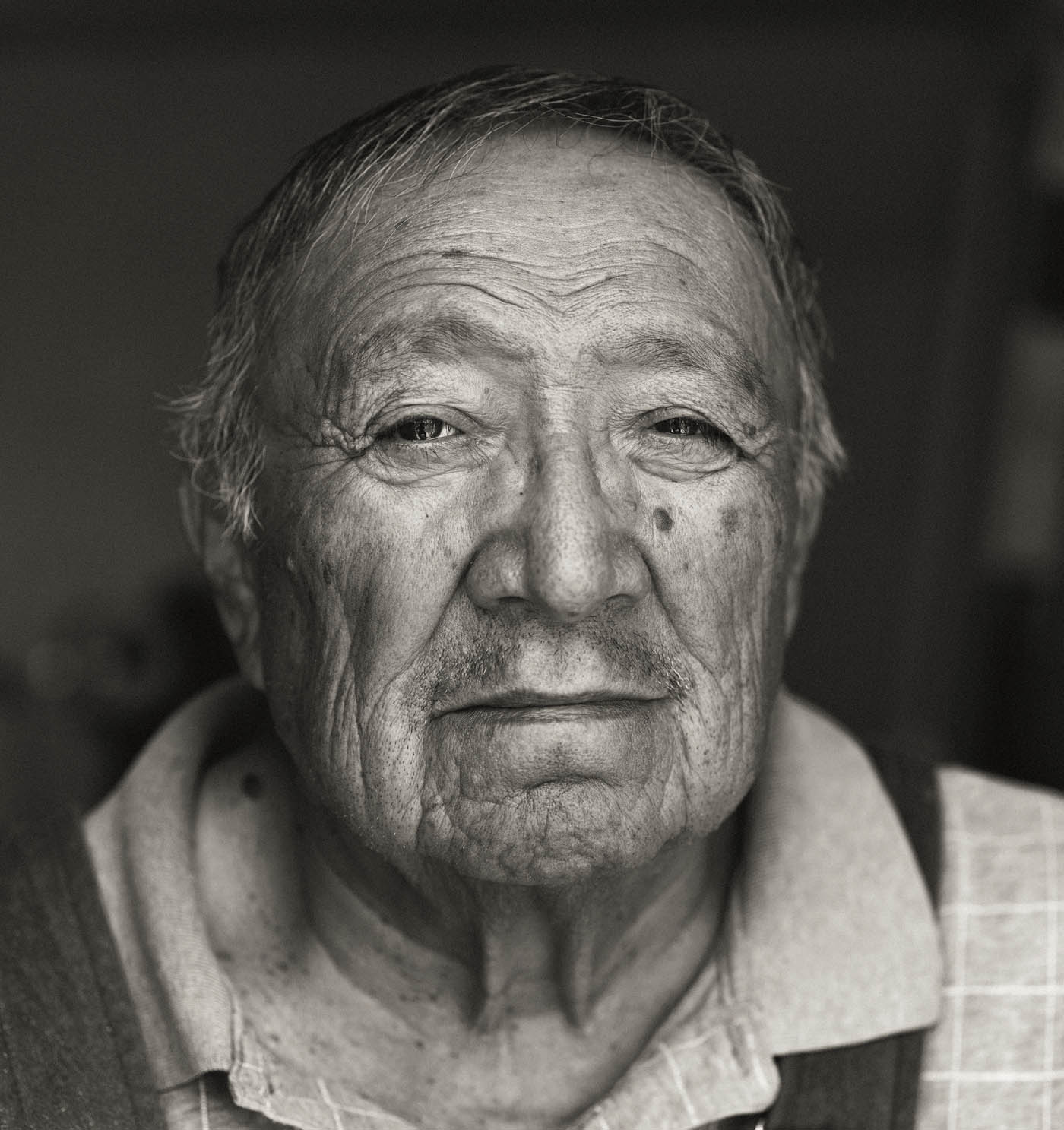
There are some stunning photographs in this exhibition but their “formula” is well known – aerial photographs of the blighted landscape etched by both geological and human forces (a la Edward Burtynsky, Richard Woldendorp et al) paired with objective, frontal “dead pan” portrait photographs (a la Thomas Ruff, Rineke Dijkstra et al), both forms of topographical mapping (of the land and of the face… as is the regulated presentation) – images which attempt to interrogate “the impact of uranium, coal, oil, and natural-gas extraction on the American Southwest and its Indigenous inhabitants.”

This is strong work but it begs the question: what fresh insight are these photographs giving us into the object of the photographers attention, other than the specifics of “American Southwest” and “Indigenous inhabitants” which turn out to be conceptually and visually generic? Is it necessary for everything to be new again or can work such as this stand in its own right and not just be an echo of what has come before. For the general public the work might seem fresh and new but for the informed observer this is well trodden, indeed trampled ground.

The press release states that “The project reflects on the resilience of Indigenous people in the face of threats to the culture, spirituality, and health.” I don’t feel that with these photographs. Where is the art that expresses through a partnership with the photographer the eloquent, unique voice of the Indigenous inhabitants of this ancestral landscape, its spirit and its fire?

As with any art please make up your own mind.

Dr Marcus Bunyan


Many thankx to the Denver Art Museum for allowing me to publish the photographs in the posting. Please click on the photographs for a larger version of the image.
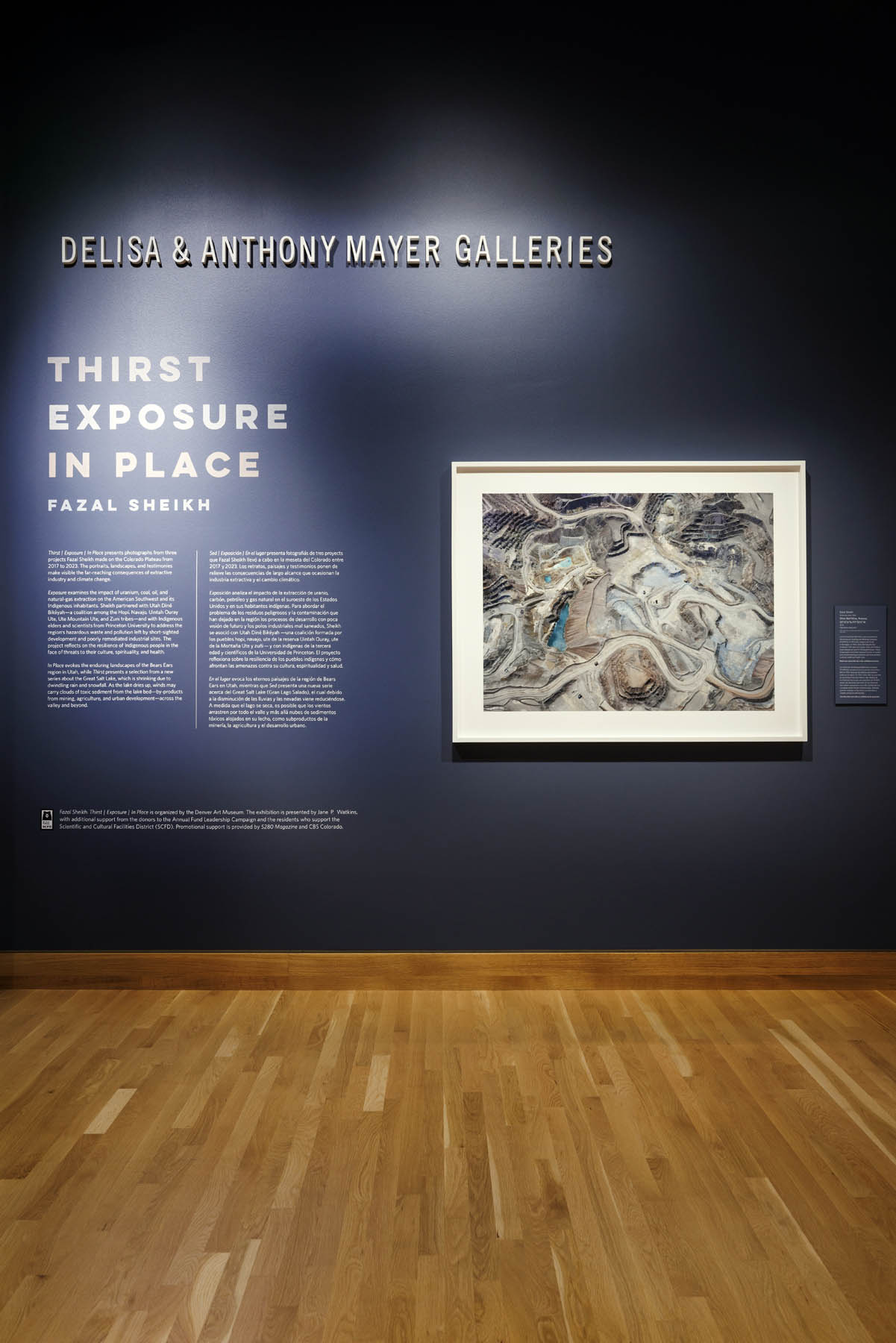


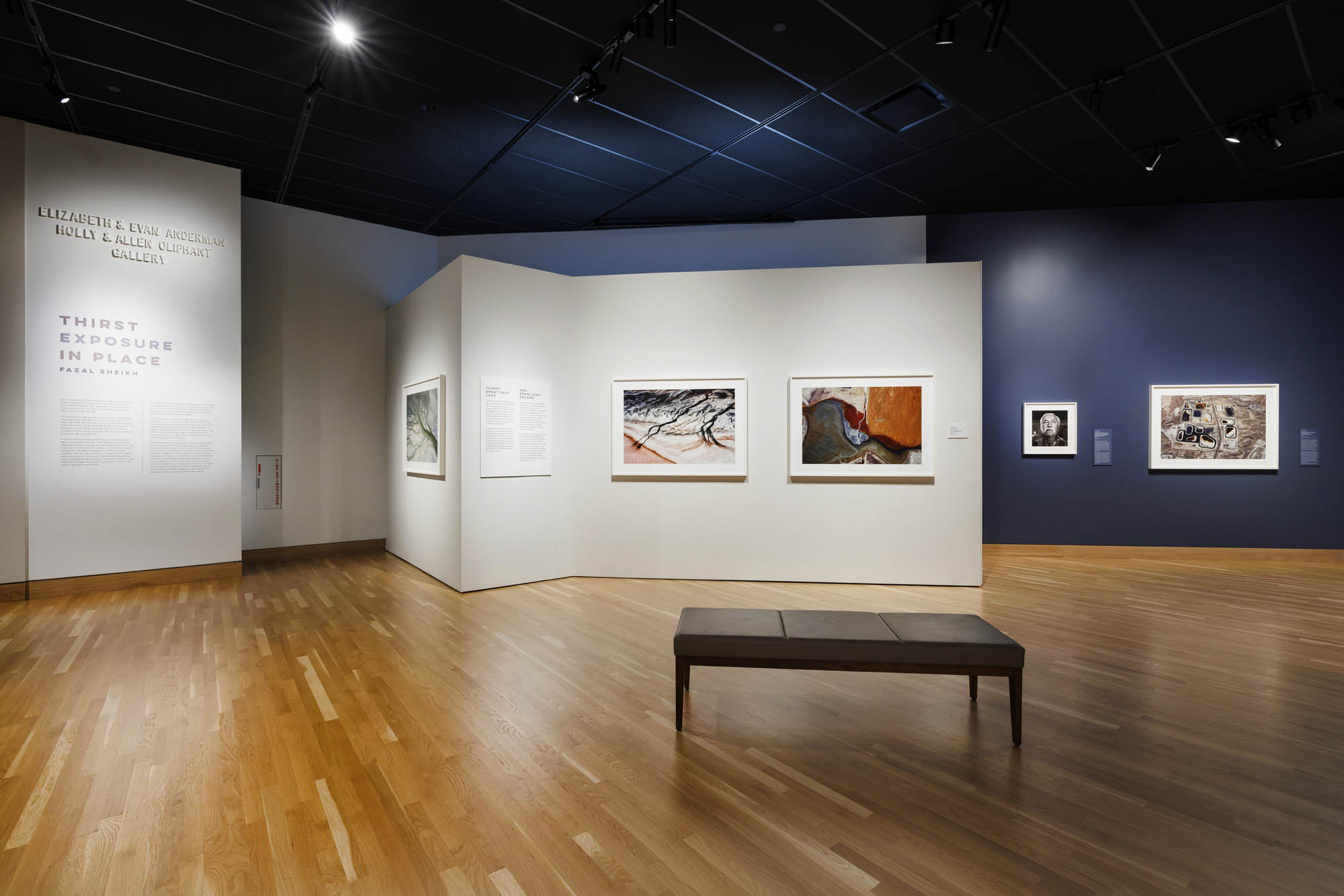
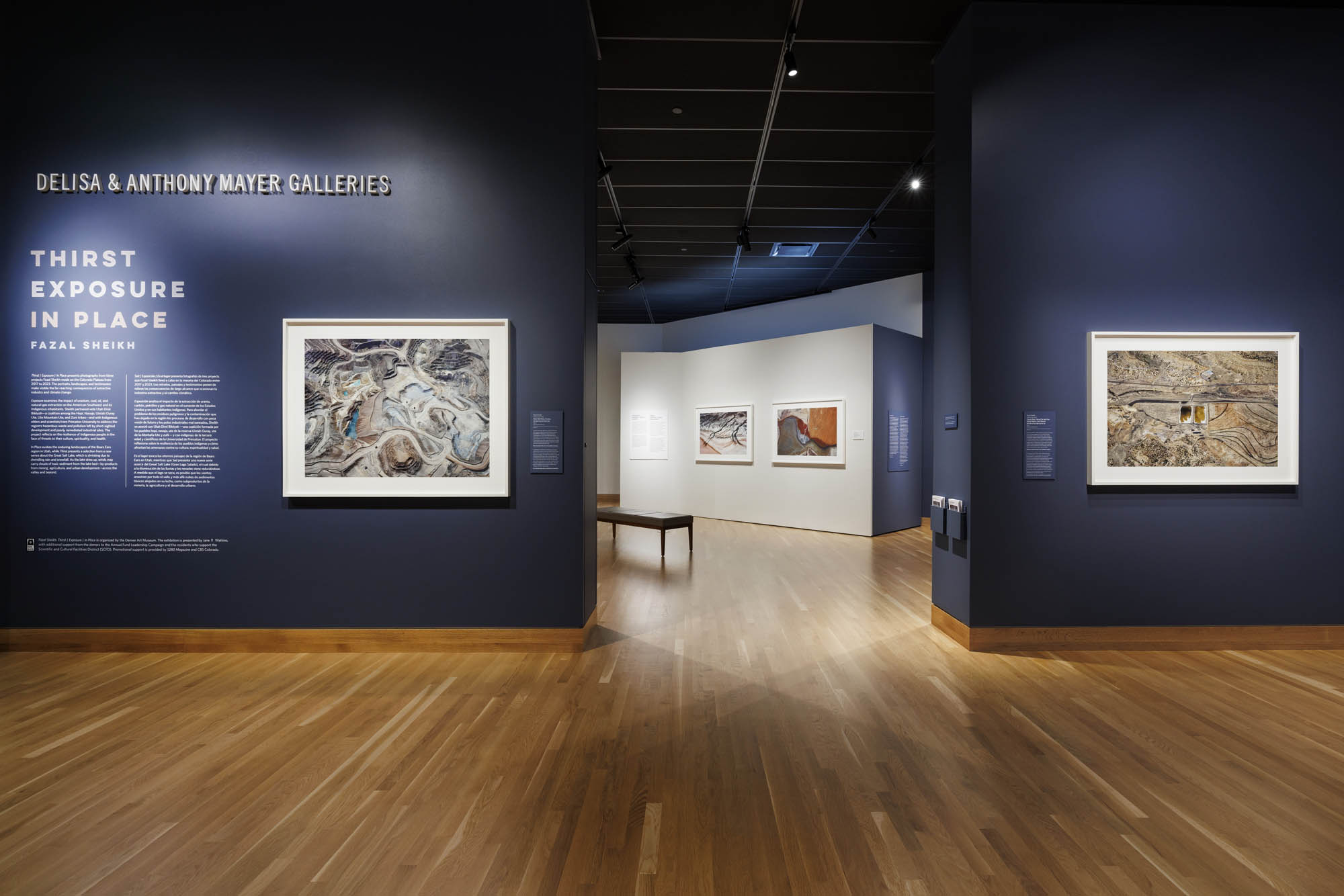
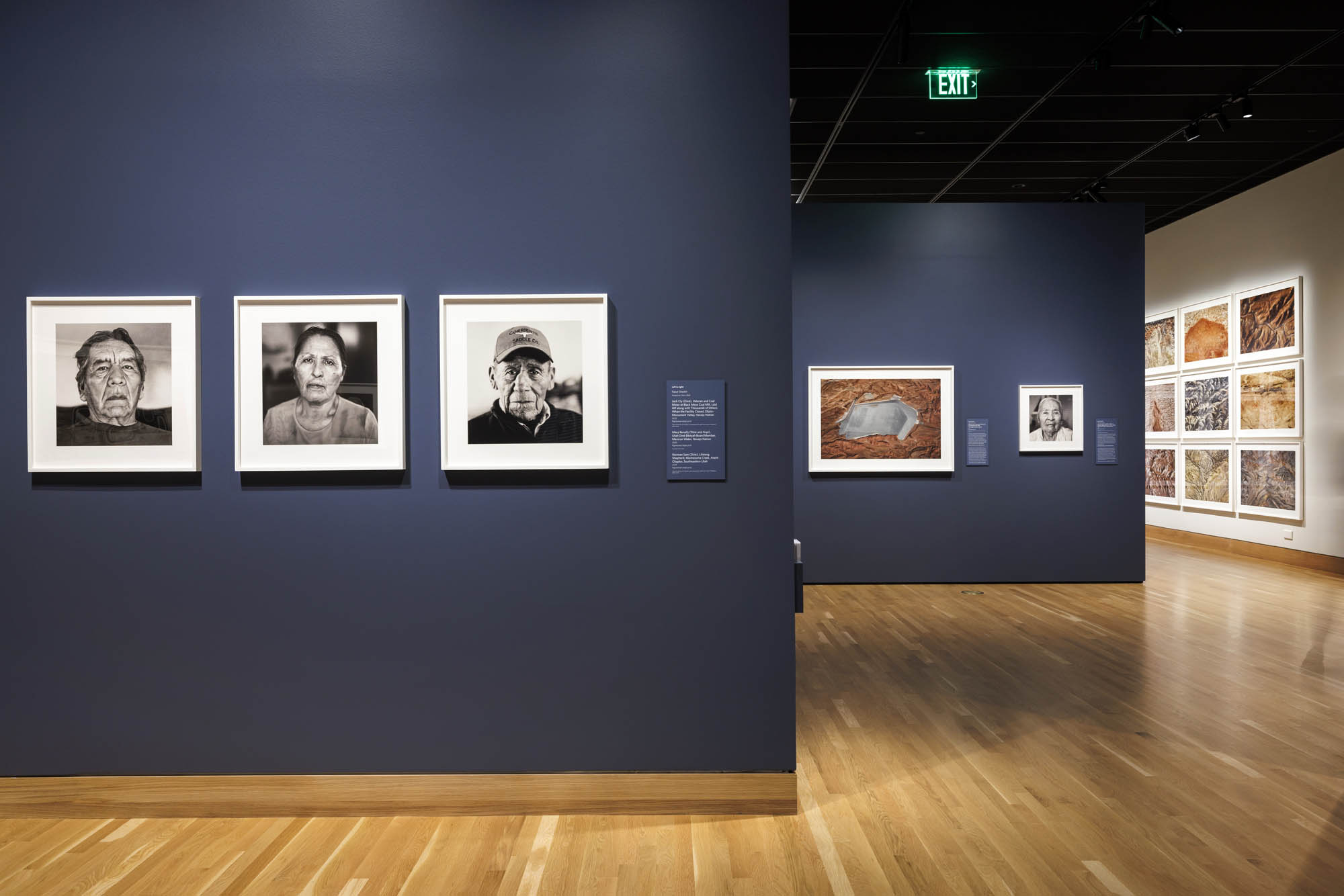
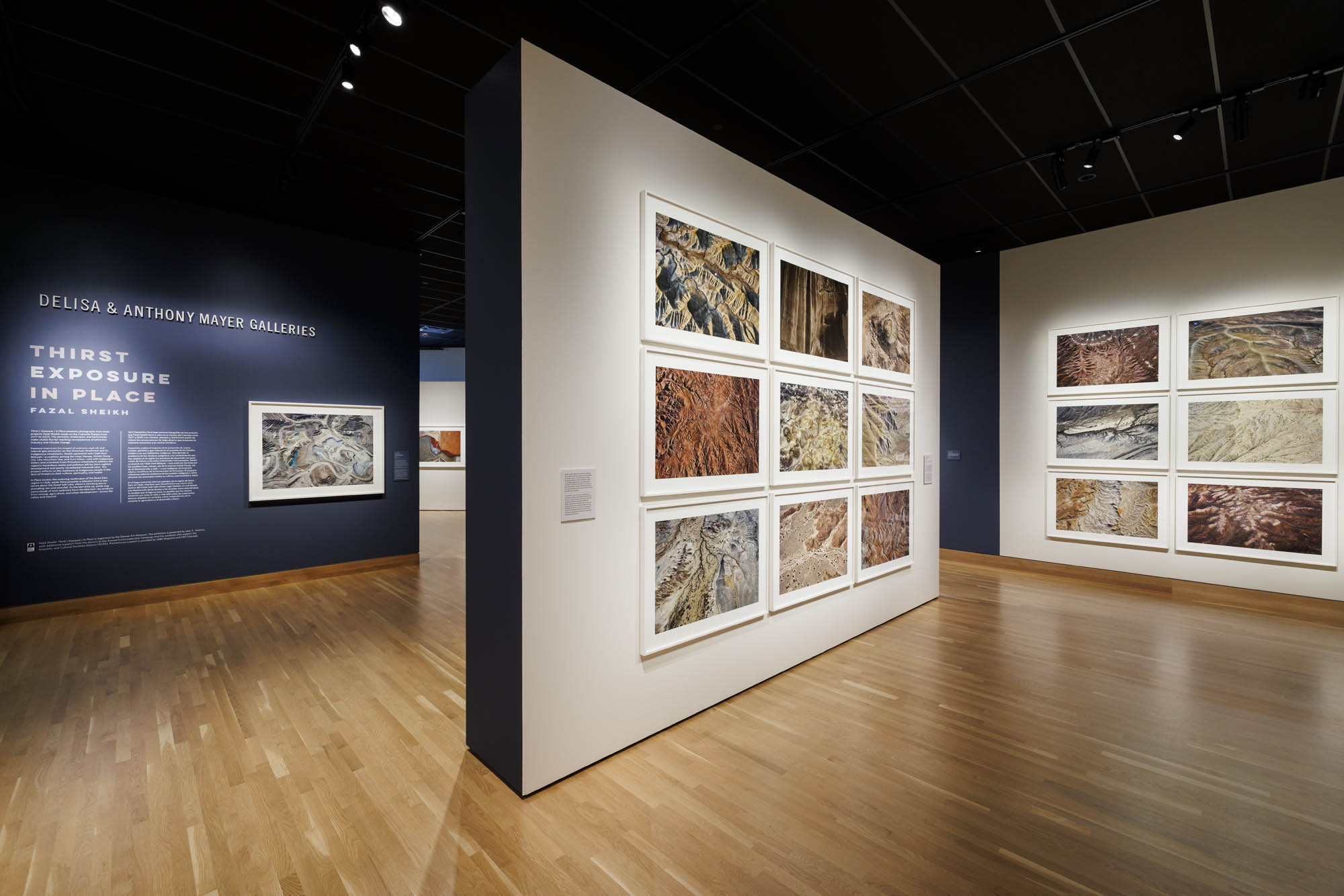
Installation view of the exhibition 'Fazal Sheikh: Thirst | Exposure | In Place' at the Denver Art Museum showing the opening wall text

Installation view of the exhibition 'Fazal Sheikh: Thirst | Exposure | In Place' at the Denver Art Museum showing the opening wall text


Installation views of the exhibition Fazal Sheikh: Thirst | Exposure | In Place at the Denver Art Museum showing the opening wall text (below)


Thirst | Exposure | In Place presents photographs from three projects Fazal Sheikh made on the Colorado Plateau from 2017 to 2023. The portraits, landscapes, and testimonies make visible the far-reaching consequences of extractive industry and climate change.

Exposure examines the impact of uranium, coal, oil, and natural-gas extraction on the American Southwest and its Indigenous inhabitants. Sheikh partnered with Utah Dine Bikeyah – a coalition among the Hopi, Navajo, Uintah Ouray Ute, Ute Mountain Ute, and Zuni tribes – and with Indigenous elders and scientists form Princeton University to address the region’s hazardous waste and pollution left by short-sighted development and poorly remediated industrial sites. The project reflects on the resilience of Indigenous people in the face of threats to the culture, spirituality, and health.

In place evokes the enduring landscape of the Bears Ears region in Utah, while Thirst presents a selection from a new series about the Great Salt Lake, which is shrinking due to dwindling rain and snowfall. As the lake dries up, winds may carry clouds of toxic sediment from the lake bed – by-products from mining, agriculture, and urban development – across the valley and beyond.

Opening wall text from the exhibition


Denver Art Museum Talk with Fazal Sheikh March 9, 2024

Photographer Fazal Sheikh speaks about his recent work in the Four Corners region and at the Great Salt Lake, in connection with his exhibition Fazal Sheikh: Thirst | Exposure | In Place. His photographs address the consequences of industrial land use, engage questions about water use and climate change, and reflect on the ongoing relationship between people and nature. Sheikh discusses the origin of each series, his immersion in the landscapes and communities he photographed, and his collaborations with writers, scientists, and Indigenous community members that are woven throughout this work.

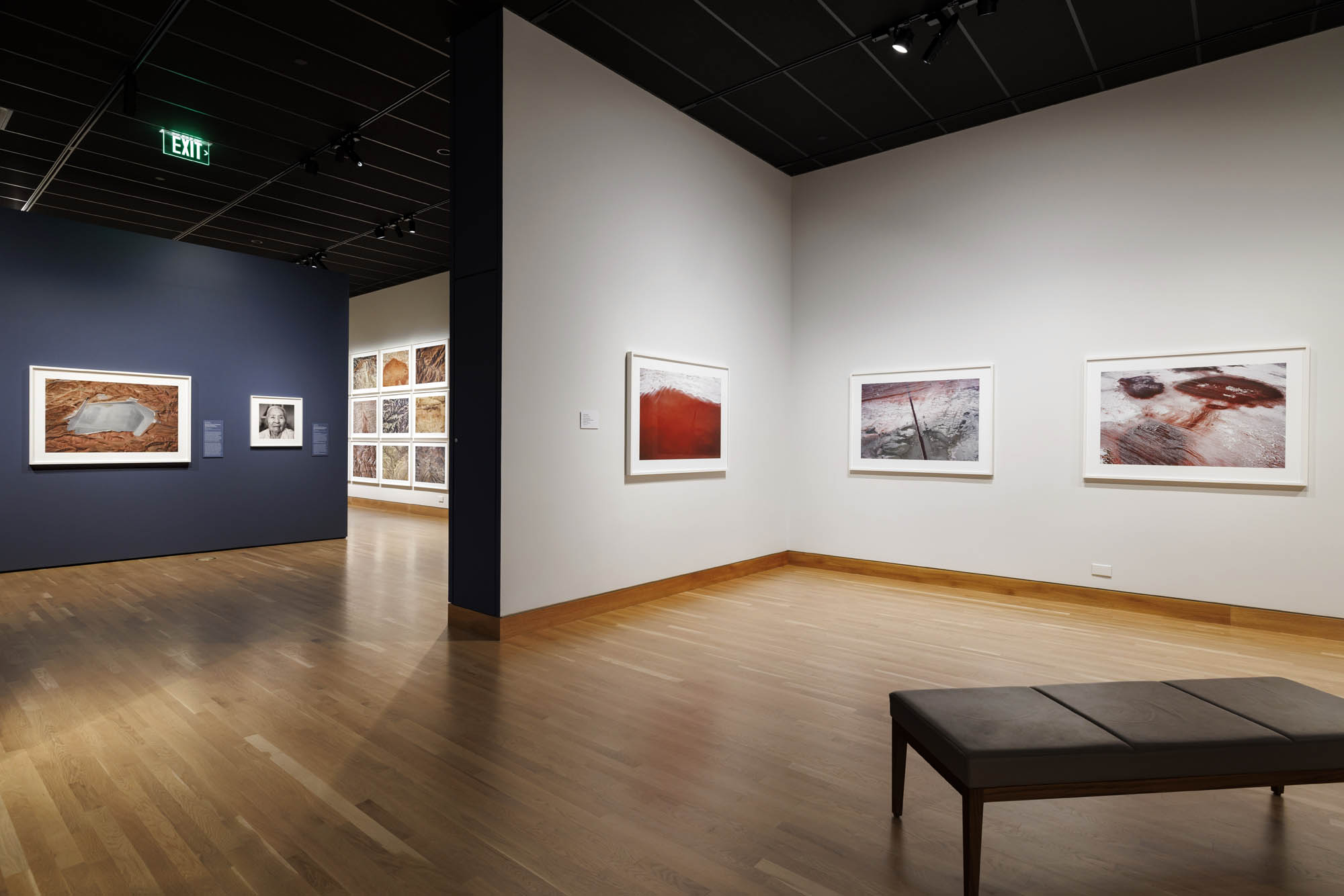
 

Installation view of the exhibition 'Fazal Sheikh: Thirst | Exposure | In Place' at the Denver Art Museum showing work from the series 'Thirst: Great Salt Lake' 2022

Installation view of the exhibition 'Fazal Sheikh: Thirst | Exposure | In Place' at the Denver Art Museum showing work from the series 'Thirst: Great Salt Lake' 2022

Installation view of the exhibition 'Fazal Sheikh: Thirst | Exposure | In Place' at the Denver Art Museum showing work from the series 'Thirst: Great Salt Lake' 2022

Installation view of the exhibition 'Fazal Sheikh: Thirst | Exposure | In Place' at the Denver Art Museum showing work from the series 'Thirst: Great Salt Lake' 2022


Installation view of the exhibition Fazal Sheikh: Thirst | Exposure | In Place at the Denver Art Museum showing work from the series Thirst: Great Salt Lake 2022


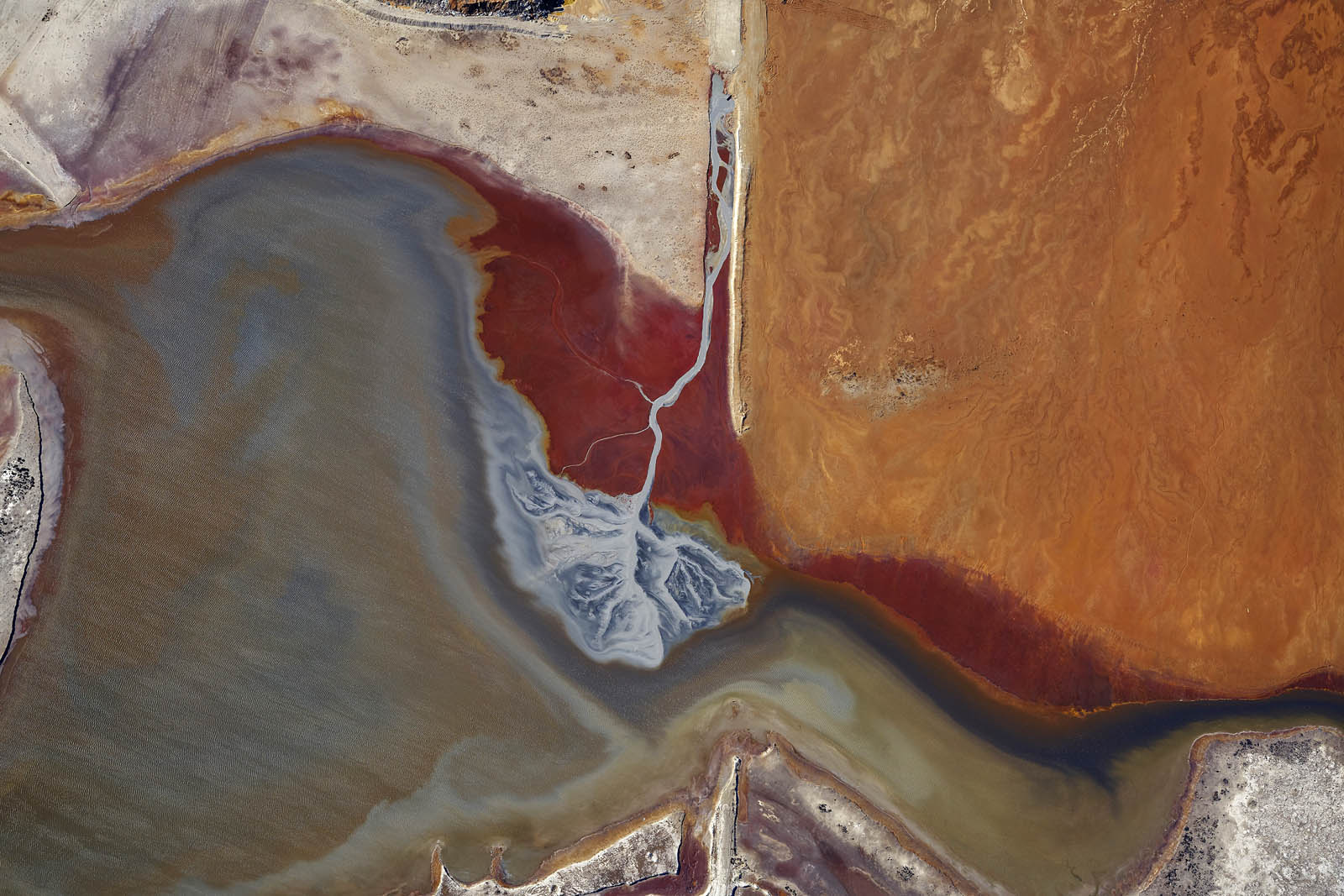
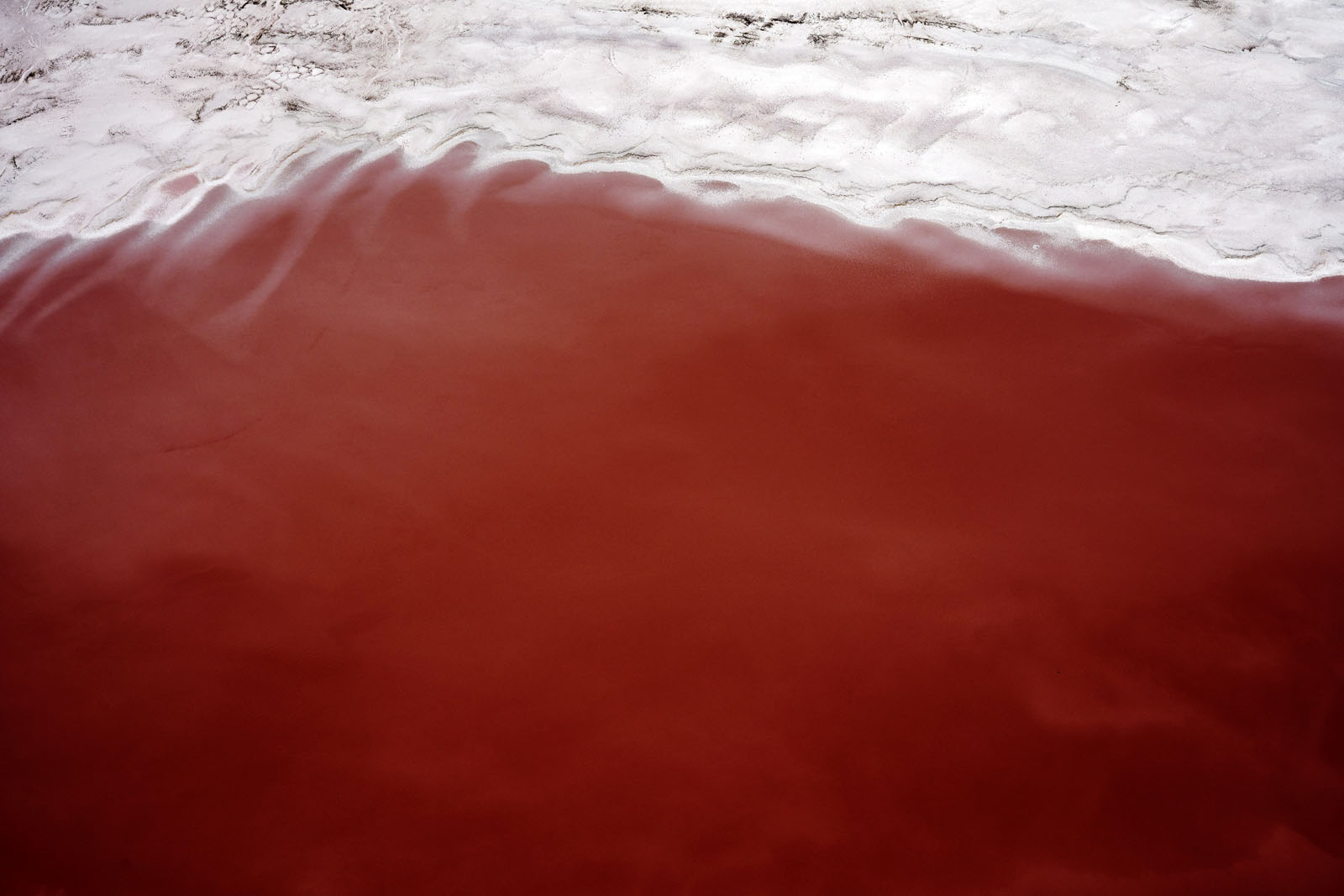
Fazal Sheikh (American, b. 1965) From the series 'Thirst: Great Salt Lake' November 2022


Fazal Sheikh (American, b. 1965)
From the series Thirst: Great Salt Lake
November 2022
Pigmented inkjet print
© and courtesy Fazal Sheikh


Fazal Sheikh (American, b. 1965) From the series 'Thirst: Great Salt Lake' November 2022


Fazal Sheikh (American, b. 1965)
From the series Thirst: Great Salt Lake
November 2022
Pigmented inkjet print
© and courtesy Fazal Sheikh


Fazal Sheikh (American, b. 1965) From the series 'Thirst: Great Salt Lake' November 2022


Fazal Sheikh (American, b. 1965)
From the series Thirst: Great Salt Lake
November 2022
Pigmented inkjet print
© and courtesy Fazal Sheikh


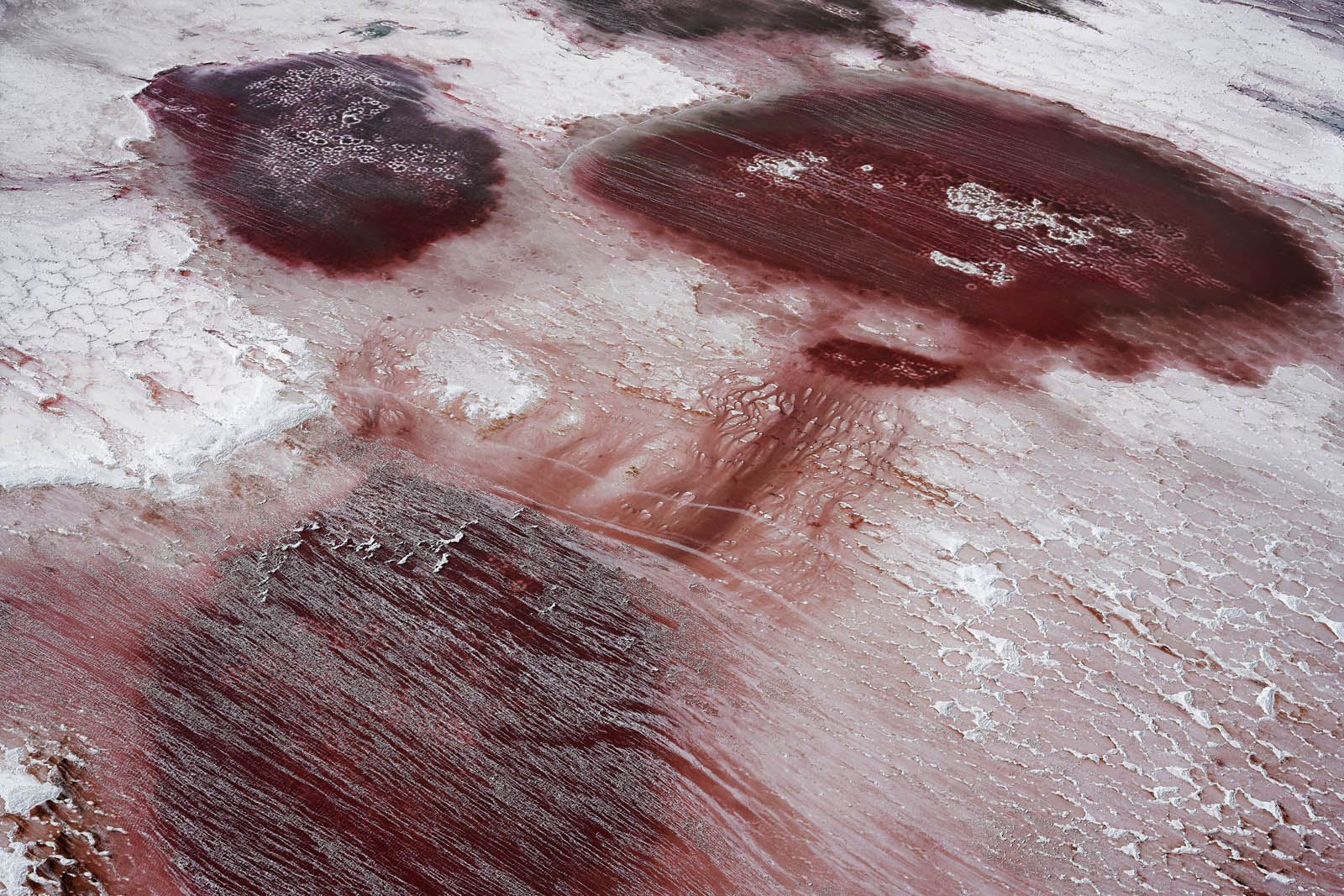
Fazal Sheikh (American, b. 1965) From the series 'Thirst: Great Salt Lake' November 2022November 2022


Fazal Sheikh (American, b. 1965)
From the series Thirst: Great Salt Lake
November 2022
Pigmented inkjet print
© and courtesy Fazal Sheikh


Fazal Sheikh: Thirst | Exposure | In Place is an exhibition created from three projects photographer Fazal Sheikh made on the Colorado Plateau from 2017 to early 2023. Sheikh’s portraits and landscapes shed light on the far-reaching consequences of extractive industry and climate change.

Born in 1965 in New York City, Sheikh creates images of displaced communities and marginalised people that prompt awareness of the world beyond the museum. The photographs in Thirst ǀ Exposure ǀ In Place expose indelible marks on the Colorado Plateau and American Southwest landscape that have been etched by both geological and human forces. Through this beautiful and sometimes frightening new work, Sheikh encourages viewers to witness the consequences of the past and imagine the shape of the future.

The exhibition presents Sheikh’s recent work in three interrelated sections: Thirst is a new series of aerial photographs that document the decline of the Great Salt Lake in northeast Utah, which is shrinking due to overconsumption and dwindling rain and snowfall. Exposure examines the impacts of uranium, coal, oil and natural-gas extraction on the American Southwest and on its Indigenous inhabitants. In Place evokes the enduring landscapes of the Bears Ears region in Utah, bringing Sheikh’s photographs together with contributions from scientists and Indigenous communities in and around Bears Ears in southeastern Utah.

Visitors will reflect upon the transformation – and often devastation – of these landscapes in the context of the past, present and future, while considering the juxtaposition of beauty and catastrophe, as well as intimate, human-scale stories and those spanning vast geological eras and changes.

Text from the Denver Art Museum website


Installation view of the exhibition 'Fazal Sheikh: Thirst | Exposure | In Place' at the Denver Art Museum

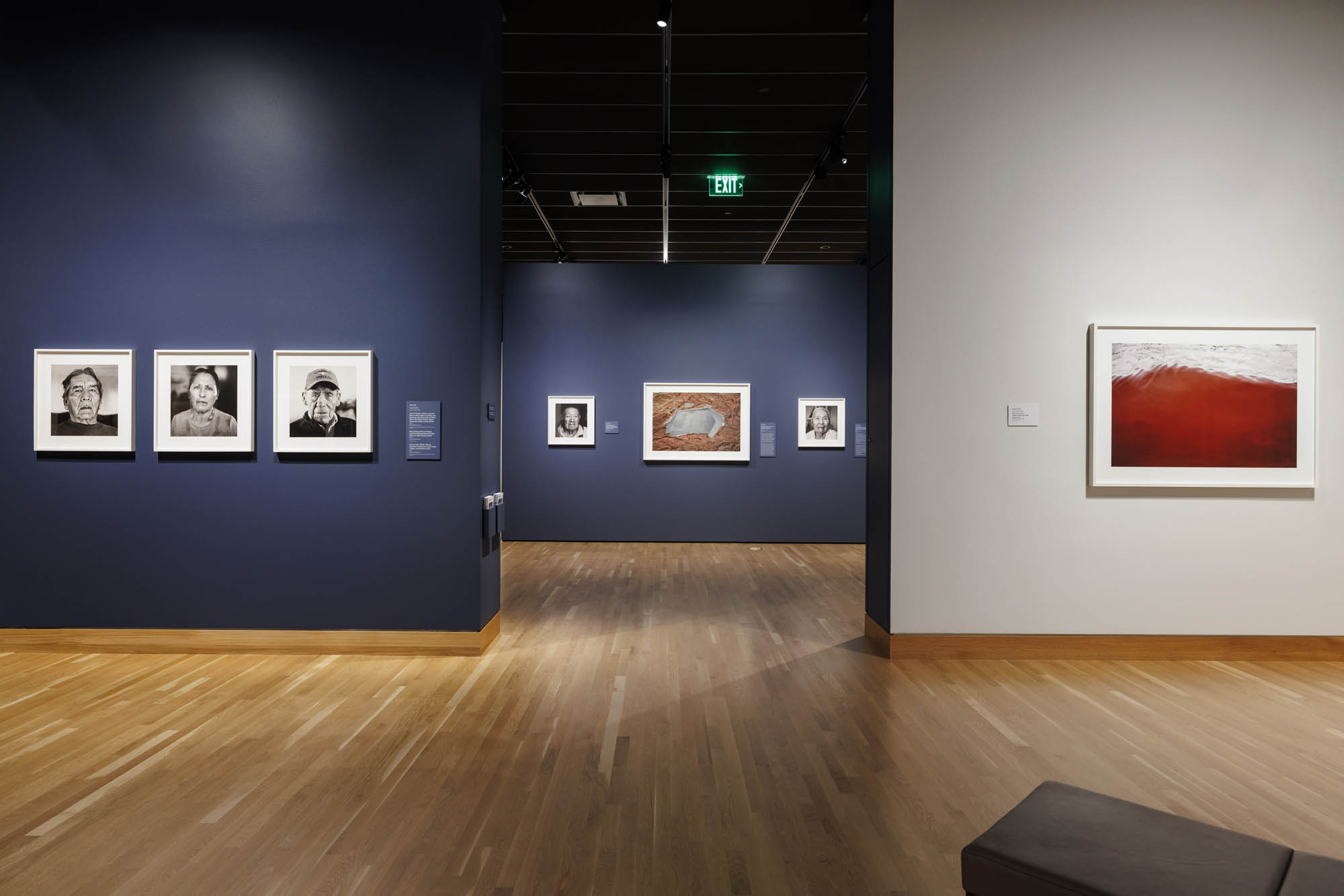
Installation view of the exhibition 'Fazal Sheikh: Thirst | Exposure | In Place' at the Denver Art Museum showing work from the series 'Exposure' 2019 

Installation view of the exhibition 'Fazal Sheikh: Thirst | Exposure | In Place' at the Denver Art Museum showing work from the series 'Exposure' 2019 

Installation view of the exhibition 'Fazal Sheikh: Thirst | Exposure | In Place' at the Denver Art Museum showing work from the series 'Exposure' 2019 


Installation view of the exhibition Fazal Sheikh: Thirst | Exposure | In Place at the Denver Art Museum showing work from the series Exposure 2019


Fazal Sheikh (American, b. 1965) 'Mexican Hat Uranium Mill Disposal Cell, Mexican Hat, Utah, 37°8'0.88"N/109°52'28"W' From the series 'Exposure' 2017


Fazal Sheikh (American, b. 1965)
Mexican Hat Uranium Mill Disposal Cell, Mexican Hat, Utah, 37°8’0.88″N/109°52’28″W
From the series Exposure 2017
Pigmented inkjet print
Yale University Art Gallery, purchased with a gift from Jane P. Watkins, M.P.H. 1979
Image courtesy and © Fazal Sheikh


Fazal Sheikh (American, b. 1965) 'Norman Sam (Diné), Lifelong Shepherd, Montezuma Creek, Aneth Chapter, Southeastern Utah' From the series 'Exposure' 2019


Fazal Sheikh (American, b. 1965)
Norman Sam (Diné), Lifelong Shepherd, Montezuma Creek, Aneth Chapter, Southeastern Utah
From the series Exposure 2019
Pigmented inkjet print. Yale University Art Gallery, purchased with a gift from Jane P. Watkins, M.P.H. 1979
Image courtesy and © Fazal Sheikh


Fazal Sheikh (American, b. 1965) 'Lola Yellowman (Diné), Widow of Uranium Miner John Guy, Cane Valley–Monument Valley, Navajo Nation' From the series 'Exposure' 2019


Fazal Sheikh (American, b. 1965)
Lola Yellowman (Diné), Widow of Uranium Miner John Guy, Cane Valley–Monument Valley, Navajo Nation
From the series Exposure 2019
Pigmented inkjet print
Yale University Art Gallery, purchased with a gift from Jane P. Watkins, M.P.H. 1979
Image courtesy and © Fazal Sheikh


Lola Yellowman’s Testimony

“The medicine men told our men not to work in the mines, that it was dangerous, but the men needed to support their families and had no choice … My husband, John Guy, worked in the mines like my father. He would arrive home during his lunch break with his clothes caked in uranium dust, and I cleaned those clothes in our home every day. The children played on the tailings pile, but no one from the company ever told us the dangers they were being exposed to.”

Wall text from the exhibition


Fazal Sheikh (American, b. 1965) 'Chapita Wells Oil and Gas Field, Uintah Range, Utah, 40°4'10"N/109°27'26"W' From the series 'Exposure' 2017


Fazal Sheikh (American, b. 1965)
Chapita Wells Oil and Gas Field, Uintah Range, Utah, 40°4’10″N/109°27’26″W
From the series Exposure 2017
Pigmented inkjet print
Yale University Art Gallery, purchased with a gift from Jane P. Watkins, M.P.H. 1979
Image courtesy and © Fazal Sheikh


Fazal Sheikh (American, b. 1965) 'Jonah Yellowman (Diné), Spiritual Advisor to Utah Diné Bikéyah, Cane Valley – Monument Valley, Navajo Nation' From the series 'Exposure' 2022


Fazal Sheikh (American, b. 1965)
Jonah Yellowman (Diné), Spiritual Advisor to Utah Diné Bikéyah, Cane Valley – Monument Valley, Navajo Nation
From the series Exposure 2022
Pigmented inkjet print
Image courtesy and © Fazal Sheikh


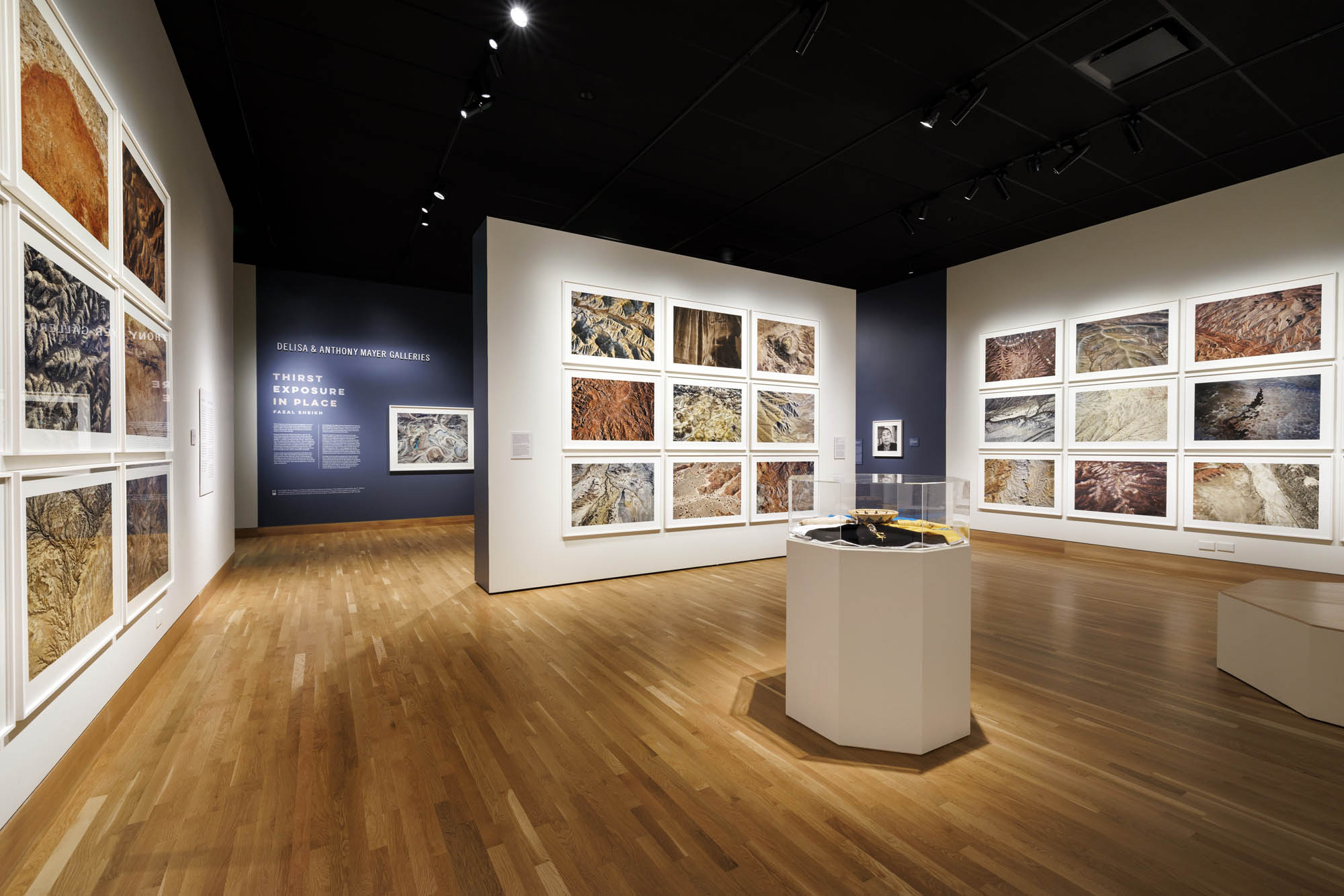
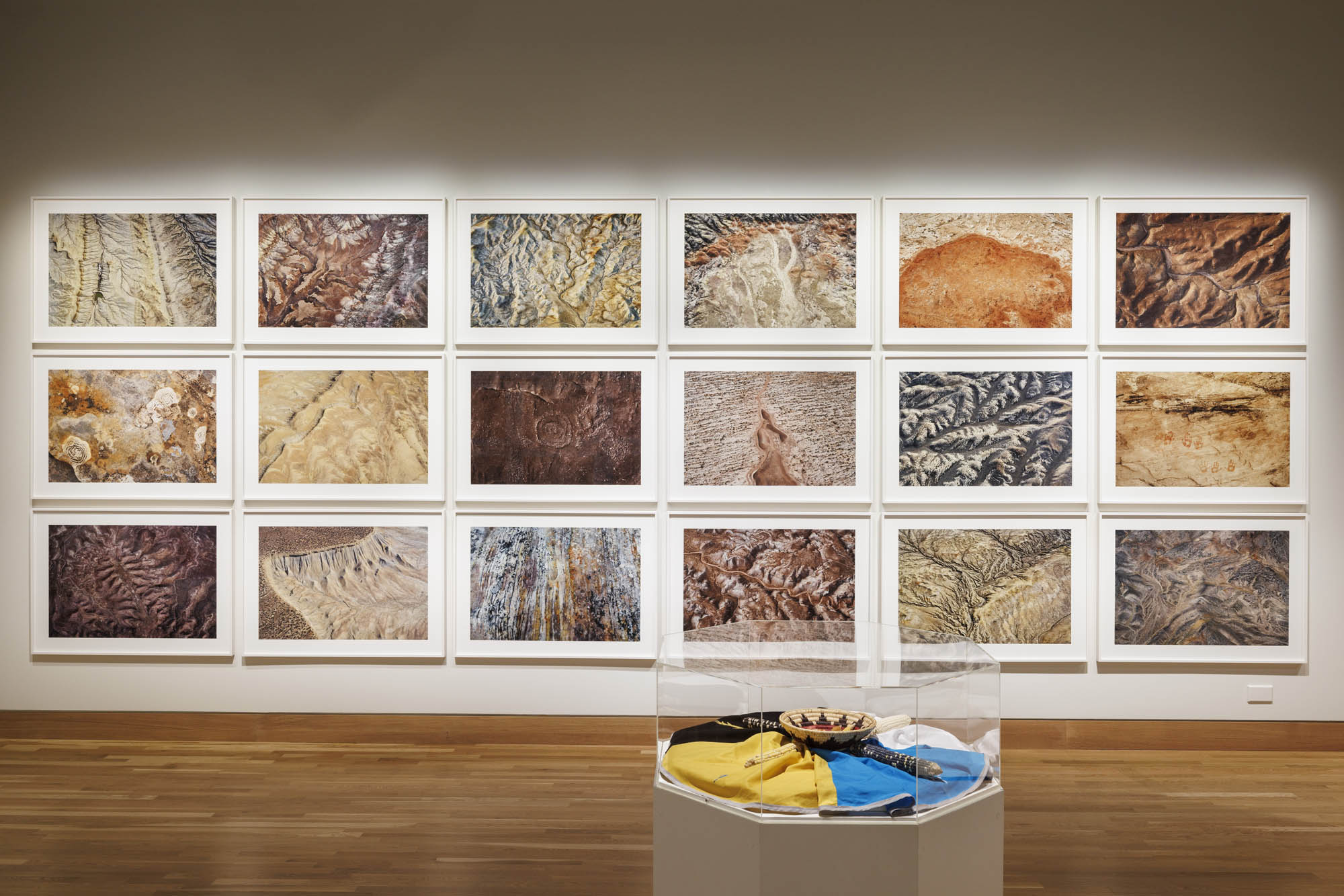
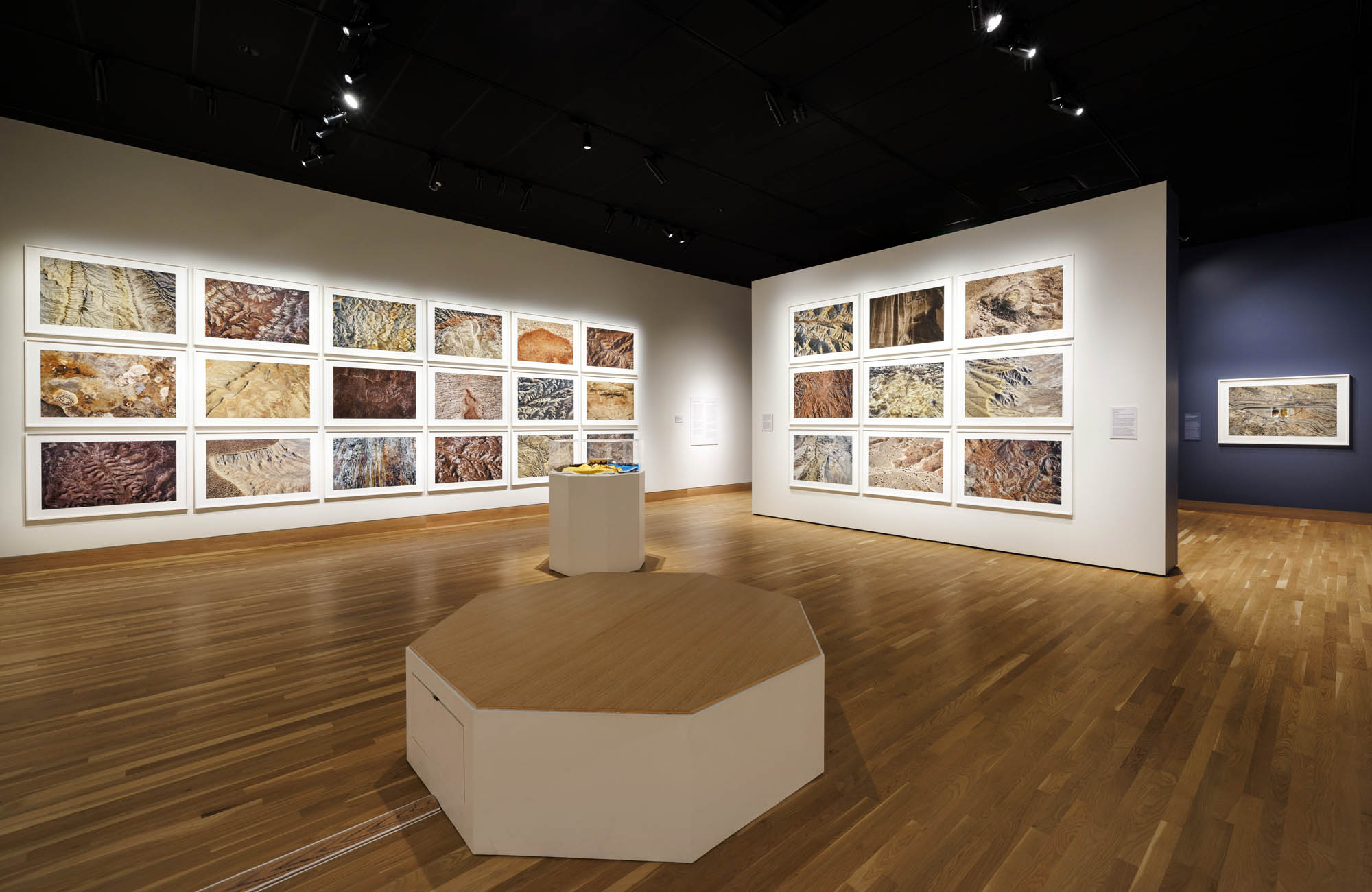
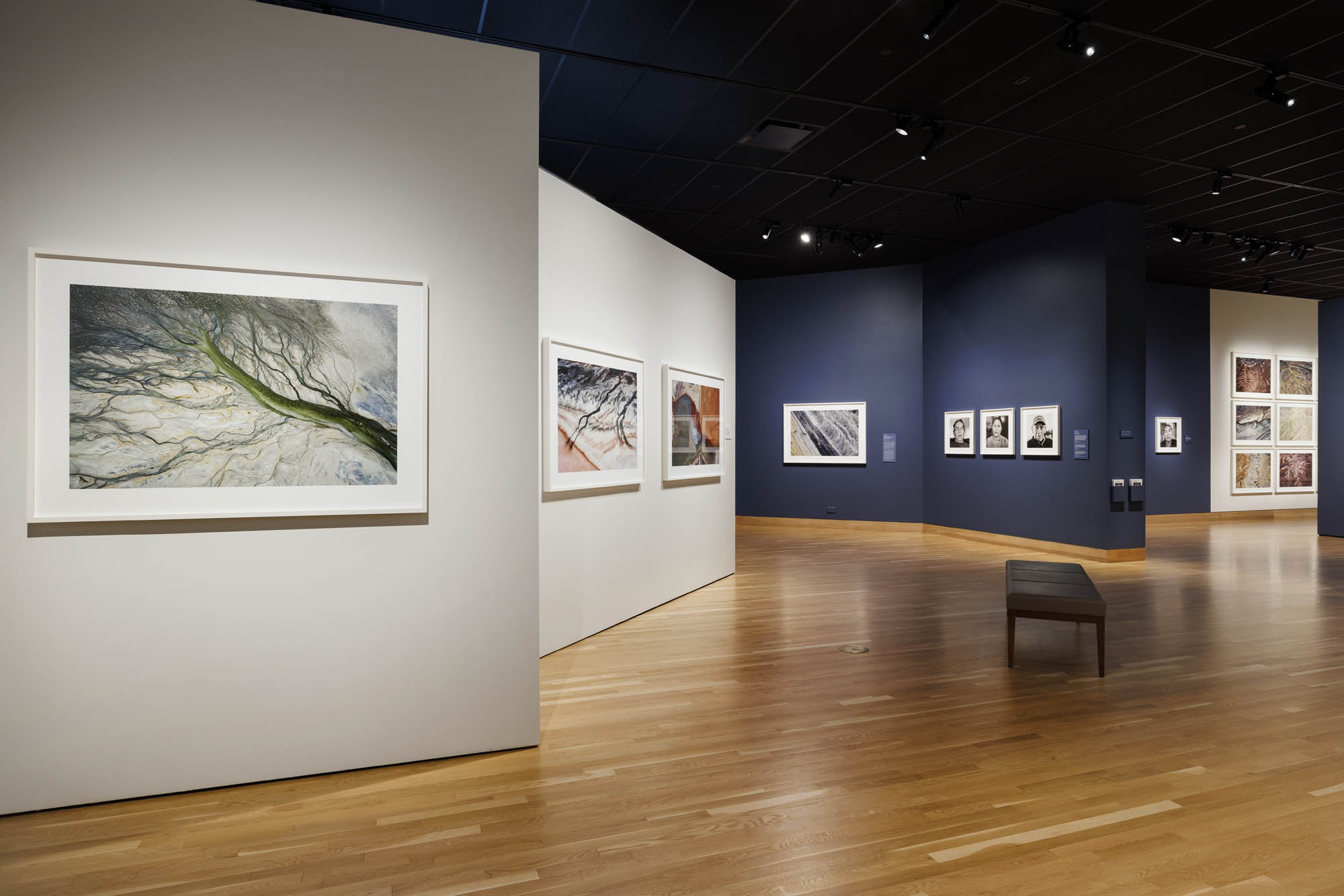
Installation view of the exhibition 'Fazal Sheikh: Thirst | Exposure | In Place' at the Denver Art Museum showing work from the series 'In Place (Utah, Arizona, and New Mexico, Four Corners Region)' 2017-2020

Installation view of the exhibition 'Fazal Sheikh: Thirst | Exposure | In Place' at the Denver Art Museum showing work from the series 'In Place (Utah, Arizona, and New Mexico, Four Corners Region)' 2017-2020

Installation view of the exhibition 'Fazal Sheikh: Thirst | Exposure | In Place' at the Denver Art Museum showing work from the series 'In Place (Utah, Arizona, and New Mexico, Four Corners Region)' 2017-2020

Installation view of the exhibition 'Fazal Sheikh: Thirst | Exposure | In Place' at the Denver Art Museum showing work from the series 'In Place (Utah, Arizona, and New Mexico, Four Corners Region)' 2017-2020

Installation view of the exhibition 'Fazal Sheikh: Thirst | Exposure | In Place' at the Denver Art Museum showing work from the series 'In Place (Utah, Arizona, and New Mexico, Four Corners Region)' 2017-2020

Installation view of the exhibition 'Fazal Sheikh: Thirst | Exposure | In Place' at the Denver Art Museum showing work from the series 'In Place (Utah, Arizona, and New Mexico, Four Corners Region)' 2017-2020

Installation view of the exhibition 'Fazal Sheikh: Thirst | Exposure | In Place' at the Denver Art Museum showing work from the series 'In Place (Utah, Arizona, and New Mexico, Four Corners Region)' 2017-2020

Installation view of the exhibition 'Fazal Sheikh: Thirst | Exposure | In Place' at the Denver Art Museum showing work from the series 'In Place (Utah, Arizona, and New Mexico, Four Corners Region)' 2017-2020

Installation view of the exhibition 'Fazal Sheikh: Thirst | Exposure | In Place' at the Denver Art Museum showing work from the series 'In Place (Utah, Arizona, and New Mexico, Four Corners Region)' 2017-2020

Installation view of the exhibition 'Fazal Sheikh: Thirst | Exposure | In Place' at the Denver Art Museum showing work from the series 'In Place (Utah, Arizona, and New Mexico, Four Corners Region)' 2017-2020

Installation view of the exhibition 'Fazal Sheikh: Thirst | Exposure | In Place' at the Denver Art Museum showing work from the series 'In Place (Utah, Arizona, and New Mexico, Four Corners Region)' 2017-2020Installation view of the exhibition 'Fazal Sheikh: Thirst | Exposure | In Place' at the Denver Art Museum showing work from the series 'In Place (Utah, Arizona, and New Mexico, Four Corners Region)' 2017-2020

Installation view of the exhibition 'Fazal Sheikh: Thirst | Exposure | In Place' at the Denver Art Museum showing work from the series 'In Place (Utah, Arizona, and New Mexico, Four Corners Region)' 2017-2020

Installation view of the exhibition 'Fazal Sheikh: Thirst | Exposure | In Place' at the Denver Art Museum showing work from the series 'In Place (Utah, Arizona, and New Mexico, Four Corners Region)' 2017-2020


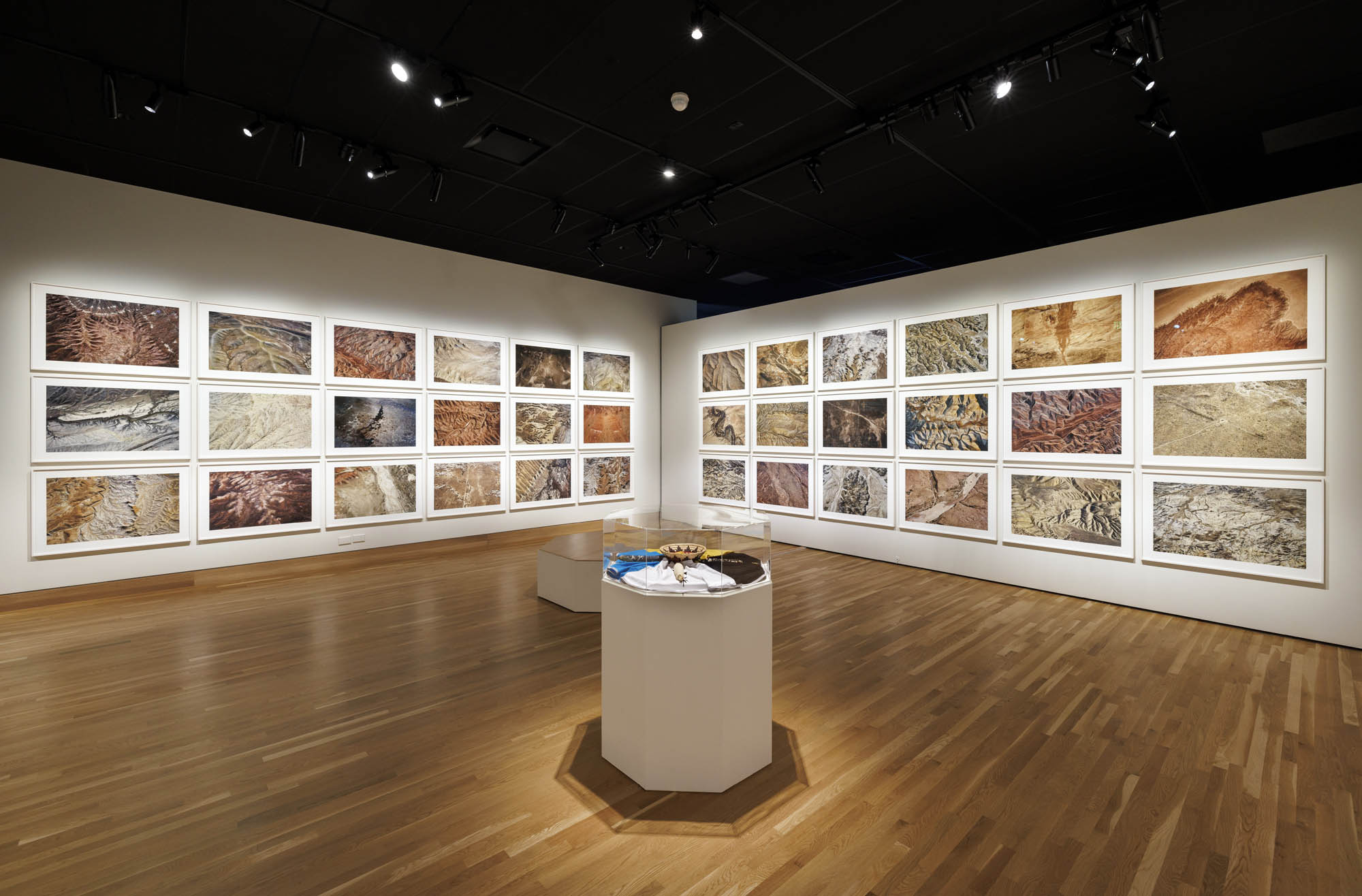
Installation view of the exhibition Fazal Sheikh: Thirst | Exposure | In Place at the Denver Art Museum showing work from the series In Place (Utah, Arizona, and New Mexico, Four Corners Region), 2017-2020


The Denver Art Museum (DAM) presents Fazal Sheikh: Thirst | Exposure | In Place, an exhibition created from three projects photographer Fazal Sheikh made on the Colorado Plateau from 2017 to early 2023. Sheikh’s portraits and landscapes shed light on the far-reaching consequences of extractive industry and climate change. Thirst ǀ Exposure ǀ In Place will open March 10, 2024, and will be on view through October 20, 2024, in the museum’s Photography galleries, located on level 6 of the Martin Building, and will be included with general admission.

Born in 1965 in New York City, Sheikh creates images of displaced communities and marginalised people that prompt awareness of the world beyond the museum. The photographs in Thirst ǀ Exposure ǀ In Place expose indelible marks on the Colorado Plateau and American Southwest landscape that have been etched by both geological and human forces. Through this beautiful and sometimes frightening new work, Sheikh encourages viewers to witness the consequences of the past and imagine the shape of the future.

“Through expansive aerial shots and intimate portraits, Fazal Sheikh documents these regions and their people with solidarity and honesty,” said Christoph Heinrich, Frederick and Jan Mayer Director of the Denver Art Museum. “The Colorado Plateau is a region deeply impacted by climate change and economic development. This exhibition offers a nuanced view into the past, present and future lives of its inhabitants.”

Sheikh is best known for his deeply humane photographs of refugees and migrants displaced by war and famine. Focusing on the United States for the first time, Sheikh explores how Indigenous people and the lands they call home have been affected by industrial growth and government policy.

“The aerial photographs in this exhibition remind us of the great age and natural beauty of the Colorado Plateau,” said Eric Paddock, Curator of Photography at the DAM and curator of this exhibition for Denver. “They create an awareness of deep human and geological time and raise questions about the future of the region. In that context, Sheikh’s portraits and accompanying text affirm local communities’ need to protect their sacred spaces and encourage wider recognition of that need.”

The DAM exhibition presents Sheikh’s recent work in three interrelated sections:

Thirst is a new series of aerial photographs that document the decline of the Great Salt Lake in northeast Utah, which is shrinking due to overconsumption and dwindling rain and snowfall. As the lake dries up, winds carry clouds of toxic sediment – by-products from mining, agriculture and urban development – from the lakebed, across the valley and beyond.

Exposure examines the impacts of uranium, coal, oil and natural-gas extraction on the American Southwest and on its Indigenous inhabitants. Sheikh partnered with Utah Diné Bikéyah – a coalition among the Hopi, Navajo, Uintah Ouray Ute, Ute Mountain Ute and Zuni tribes – and with Indigenous elders and scientists from Princeton University – to address hazardous waste and pollution left across the region by short-sighted development and poorly remediated industrial sites. The project reflects on the resilience of Indigenous people in the face of threats to their culture, spirituality and health.

In Place evokes the enduring landscapes of the Bears Ears region in Utah, bringing Sheikh’s photographs together with contributions from scientists and Indigenous communities in and around Bears Ears in southeastern Utah. Visitors are surrounded by images made at a close distance and from high in the air. Sixty-three large colour photographs show the tremendous geological variety and the long cultural continuities of the Four Corners region.

Visitors will reflect upon the transformation – and often devastation – of these landscapes in the context of the past, present and future, while considering the juxtaposition of beauty and catastrophe, as well as intimate, human-scale stories and those spanning vast geological eras and changes.

Jonah Yellowman, spiritual advisor for the Utah Diné Bikéyah intertribal coalition and one of its founding members, will present an offering that represents his Navajo (Diné) spirituality and a deep connection to the land. This offering will be present in the gallery during the run of the exhibition.

Sound recordings taken from seismometer readings by University of Utah geologist Jeffrey Ralston Moore will resonate throughout the gallery space. They represent the otherwise inaudible vibrations of rock formations on the Colorado Plateau.

Taken together, the photographs and collaborations in Thirst | Exposure | In Place lay bare the indelible marks etched on the landscape by geological and human forces. Sheikh asks us to witness the consequences of what has passed and imagine what is yet to come.

Sheikh will speak about his recent work in the Four Corners region and at the Great Salt Lake, in connection with his exhibition in a lecture event at the DAM on March 9, 11am – 12pm. The lecture will take place in the Sharp Auditorium, in the lower level of the museum’s Hamilton Building. Sheikh will discuss the origin of each series, his immersion in the landscapes and communities he photographed and his collaborations with writers, scientists and Indigenous community members that are woven throughout this work. This exhibition follows the Denver Art Museum’s 2017 presentation of Common Ground: Photographs by Fazal Sheikh, 1989-2013.
Fazal Sheikh: Thirst | Exposure | In Place is organised by the Denver Art Museum. The exhibition is presented by Jane Watkins, with additional support from the donors to the Annual Fund Leadership Campaign and the residents who support the Scientific and Cultural Facilities District (SCFD). Promotional support is provided by 5280 Magazine and CBS Colorado.

The exhibition was curated in Denver by Curator of Photography, Eric Paddock, in collaboration with Kimberly Roberts, Denver Art Museum Curatorial Associate, and Lauren Thompson, Senior Interpretive Specialist.


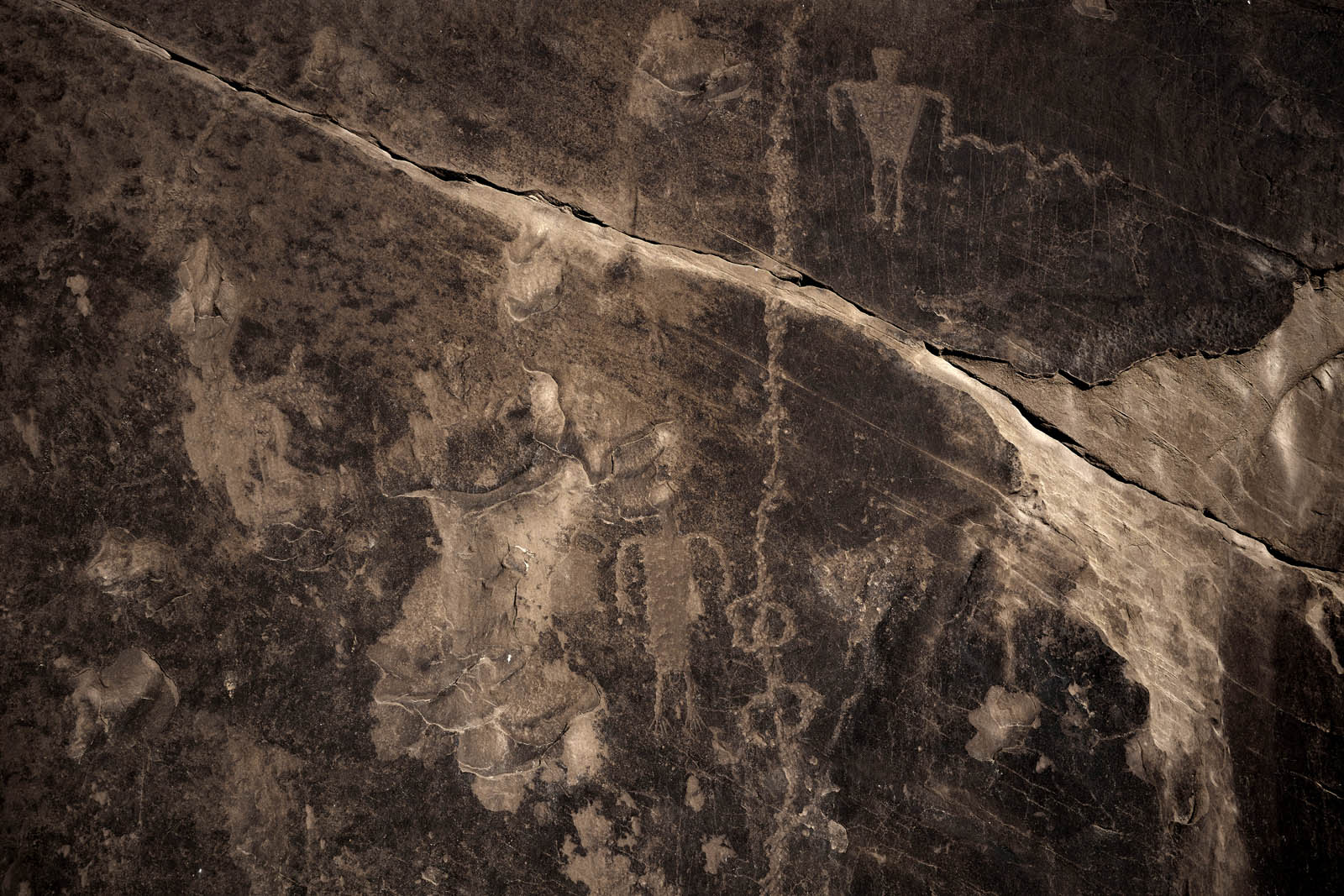
Fazal Sheikh (American, b. 1965) From the installation 'In Place (Utah, Arizona, and New Mexico, Four Corners Region)' 2017-2020


Fazal Sheikh (American, b. 1965)
From the installation In Place (Utah, Arizona, and New Mexico, Four Corners Region)
2017-2020
Pigmented inkjet print
© and courtesy Fazal Sheikh
 

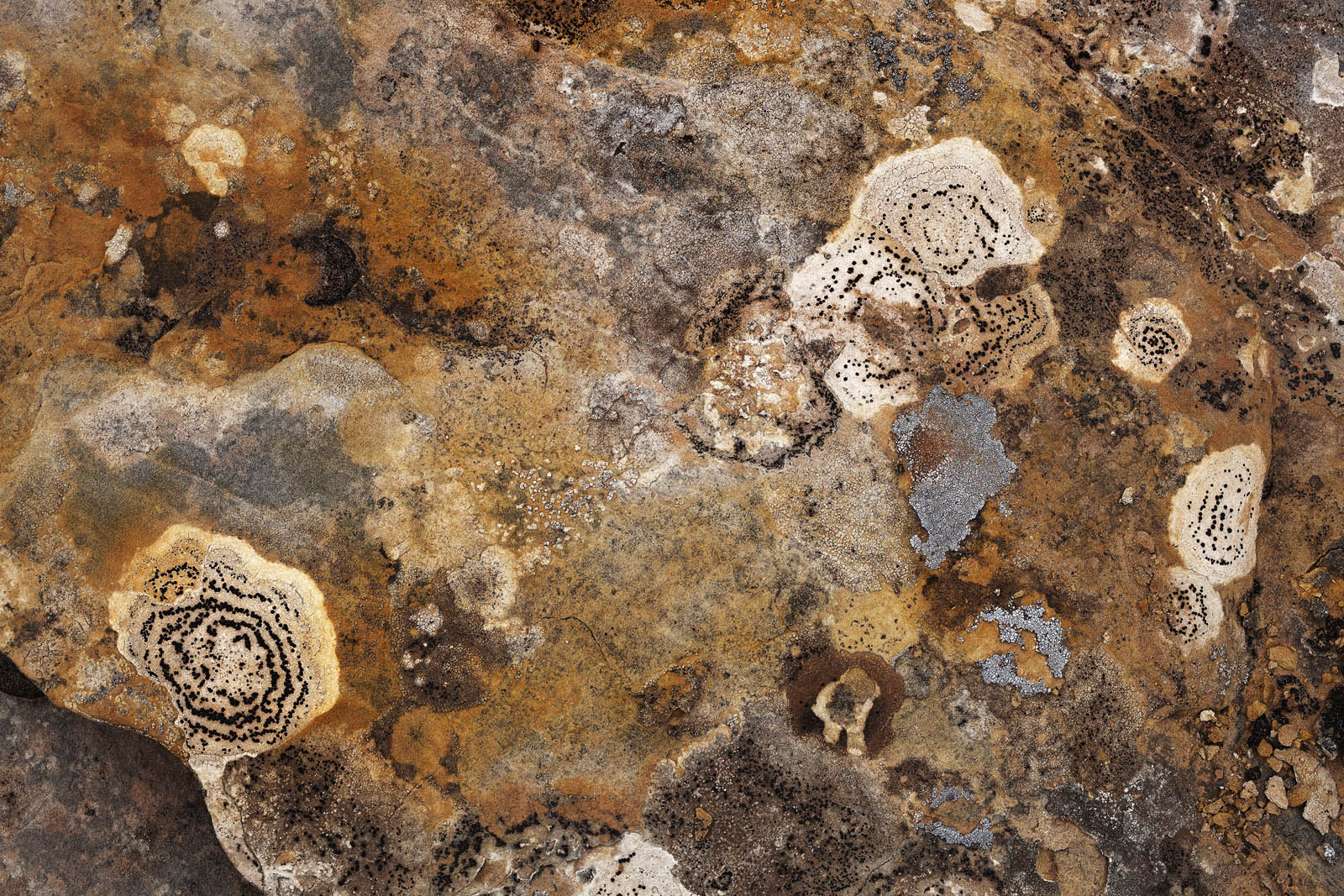
Fazal Sheikh (American, b. 1965) From the installation 'In Place (Utah, Arizona, and New Mexico, Four Corners Region)' 2017-2020


Fazal Sheikh (American, b. 1965)
From the installation In Place (Utah, Arizona, and New Mexico, Four Corners Region)
2017-2020
Pigmented inkjet print
© and courtesy Fazal Sheikh
 

Fazal Sheikh (American, b. 1965) From the installation 'In Place (Utah, Arizona, and New Mexico, Four Corners Region)' 2017-2020


Fazal Sheikh (American, b. 1965)
From the installation In Place (Utah, Arizona, and New Mexico, Four Corners Region)
2017-2020
Pigmented inkjet print
© and courtesy Fazal Sheikh


Denver Art Museum
100 W 14th Ave Pkwy,
Denver, CO 80204, United States
Phone: (720) 865-5000

Opening hours:
Open daily from 10am – 5pm, 10am – 8pm on Tuesdays

Denver Art Museum website

LIKE ART BLART ON FACEBOOK

Back to top

Exhibition: ‘Erwin Olaf’ at the Kunstmuseum Den Haag and Fotomuseum Den Haag / the Hague Museum of Photography

Exhibition dates: 16th February – 16th June, 2019

Curators: Wim van Sinderen with the assistance of Hanneke Mantel (both of Gemeentemuseum Den Haag and The Hague Museum of Photography)


Erwin Olaf (Netherlands, 1959-2023) 'Joy' 1985 from the exhibition 'Erwin Olaf' at the Kunstmuseum Den Haag and Fotomuseum Den Haag / the Hague Museum of Photography, Feb - June, 2019


Erwin Olaf (Netherlands, 1959-2023)
Squares, Joy
1985
Gelatin silver print


As a storyteller, Erwin Olaf is a contemporary photographer whose work addresses most current concerns of the world – discrimination, gender, sexuality, taboo, climate change, reality, equality, power, racism, freedom of expression and democracy – through staged studio and outdoor photographs of incredible technical and visual skill.

The key to his work is the twist that he gives his cinematic, perfect worlds – the hidden crack in the facade, the unhinging of the link between reality and representation. These not so perfect worlds are often inspired by stories of the past, whether those stories may be present in the works of Vermeer, the still lives of the Dutch painters of the 16th and 17th century, Caravaggio, the Olympic Games of 1936, Norman Rockwell paintings, film noir, or clothes of the 1950s and 1960s.

The stillness and silence of the photographs subjects let the viewer examine the details of the mise en scène… the perfectly placed Coke bottle and apple, the shredded American flag in Palm Springs, The Kite (2018); the bandaged knee, the dripping ice cream in Rain, The Ice Cream Parlour (2004); and also admire the beautiful textures and lighting of the finished “product”, for Olaf’s aesthetic riffs on subverting theatrical performances and magazine fashion shoots.

Olaf let’s the viewer’s eye move without restraint across the terrain of the photographs, letting them soak up the atmosphere of his hyperreal tableau vivant. Both seductive and disturbing, his photographs challenge us to interrogate our own story – who are we, what do we really believe in, and what can we do to change prejudice and bigotry in a hostile world.

Dr Marcus Bunyan


Many thankx to the Gemeentemuseum den Haag for allowing me to publish the photographs in the posting. Please click on the photographs for a larger version of the image.


“What I want to show most of all is a perfect world with a crack in it. I want to make the picture seductive enough to draw people into the narrative, and then deal the blow.”


Erwin Olaf


“In 1982, I saw an exhibition of Robert Mapplethorpe in Amsterdam that blew me off the socks. I just had a Hasselblad, I was inspired by his craftsmanship and the beautiful prints, and I thought: this is what I want too. In the series ‘Squares’ (1983-1993) you clearly see his influence. I started asking people that I knew from the nightlife if they wanted to pose for me in my studio, which I had decorated in a squat of a friend. For example, the boy with the champagne bottle worked in the wardrobe of my favourite disco.”


Erwin Olaf (excerpt from the book ‘Erwin Olaf – I am’)


“My earliest work reflects my life in that time. I was a moth – I really loved the nightlife. In the late seventies, the early eighties was a hedonistic period: Disco and the beginning of the punk, the sexual revolution. I loved watching people play with gender, the theatrical of the nightlife, all the roles they could take.”


Erwin Olaf


“The camera offered me a possibility to enter a world that was not mine. I was able to hide behind the camera, but also be part of what I saw. As a photographer, you can look at people. You’re observing. I wanted to focus my gaze on groups that were outside the ‘normal’ society. One of my first photography assignments for school had as a theme ‘what’s normal?’. I still ask myself that.”


Erwin Olaf (excerpt from the book ‘Erwin Olaf – I am’)


Gemeentemuseum Den Haag and The Hague Museum of Photography are to honour one of the Netherlands’ most famous photographers, Erwin Olaf (b. 1959), with a double exhibition. Olaf, whose recent portraits of the royal family drew widespread admiration, will turn sixty this year – a good moment to stage a major retrospective. The Hague Museum of Photography will focus on Olaf’s love of his craft and his transition from analogue photojournalist to digital image-maker and storyteller. Olaf will himself bring together some twenty photographs by famous photographers of the past who have been a vital source of inspiration to him. Gemeente Museum Den Haag will show non-commissioned work by Olaf from 2000 to his most recent series, including the work he produced in Shanghai and his most recent series Palm Springs, on display for the first time. Olaf will be showing his photography in the form of installations, in combination with film, sound and sculpture.


Erwin Olaf – Palm Springs: behind the scenes


Erwin Olaf (Netherlands, 1959-2023) 'First Aids Benefit Club Flora Palace Amsterdam, I' 1983 from the exhibition 'Erwin Olaf' at the Kunstmuseum Den Haag and Fotomuseum Den Haag / the Hague Museum of Photography, Feb - June, 2019


Erwin Olaf (Netherlands, 1959-2023)
First Aids Benefit Club Flora Palace Amsterdam, I
1983
Gelatin silver print


Erwin Olaf (Netherlands, 1959-2023) 'First Aids Benefit Club Flora Palace Amsterdam, II' 1983


Erwin Olaf (Netherlands, 1959-2023)
First Aids Benefit Club Flora Palace Amsterdam, II
1983
Gelatin silver print


Erwin Olaf (Netherlands, 1959-2023) 'Squares, Pearls' 1986


Erwin Olaf (Netherlands, 1959-2023)
Squares, Pearls
1986
Gelatin silver print


Erwin Olaf (Netherlands, 1959-2023) 'Chessmen, XVII' 1988


Erwin Olaf (Netherlands, 1959-2023)
Chessmen, XVII
1988
© Erwin Olaf
Courtesy Hamiltons Gallery, London / Edwynn Houk Gallery, New York


“Chessmen was inspired by a chance meeting with my former photography teacher at the School for Journalism. A few years after I graduated there, I met him on the street. When I showed him my work in my studio, he said, “Say, would you like to publish a book?” He had recently taken over a publishing house for a pittance. The only problem was that I didn’t have enough work for a book. “Oh,” he said, “you only need sixty-four pages. And if you leave a page white next to each photo, you will need thirty-two photos. “At home I thought about it while listening to the radio – a chess program was just going on. At one point the presenter said: “This is an attacking game with thirty-two pieces. A war game. “I knew immediately: I’m going to make chess pieces. Those few words on the radio were all I needed; I had a clear picture in mind. Earlier I had been thinking about how I could do something with the theme of power. Power is something weird. Why do people abuse their power? Or why do you want it? Why do some people allow others to exercise power over them? From those questions came the idea of ​​a power game and the people who play it. “

Erwin Olaf (excerpt from the book Erwin Olaf – I Am)


Erwin Olaf (Netherlands, 1959-2023) 'Chessmen, XXIV' 1988


Erwin Olaf (Netherlands, 1959-2023)
Chessmen, XXIV
1988
© Erwin Olaf
Courtesy Hamiltons Gallery, London / Edwynn Houk Gallery, New York


Erwin Olaf (Netherlands, 1959-2023) 'Blacks, Esmeralda' 1990


Erwin Olaf (Netherlands, 1959-2023)
Blacks, Esmeralda
1990
© Erwin Olaf
Courtesy Hamiltons Gallery, London / Edwynn Houk Gallery, New York


“The Blacks series is largely inspired by Janet Jackson’s album Rhythm Nation 1814. In one song, she sings: “In complete darkness we are all the same / It is only our knowledge and wisdom that separates us / Don’t let your eyes deceive you.” A few years earlier I had been hitchhiking to Paris and southern France, together with a friend with an Indonesian background. I was admitted without problems in all kinds of clubs, but they refused him at the door. At that time I became much more aware of the fact that the amount of pigment in your skin can have serious consequences. So when I heard Janet Jackson sing, I thought: this is my theme. I can create a group of people where everyone is equal.”

Erwin Olaf (excerpt from the book Erwin Olaf – I Am)


Journalistic training

Erwin Olaf was studying journalism in Utrecht in the 1980s when, having noticed that he was unhappy, one of his lecturers pressed a camera into his hands. ‘I loved the thing right from the word go,’ says Olaf, ‘the weight, the cool metal in my hand. It felt so natural. And when I took my first photographs, I knew I had found my calling.’ Olaf began taking journalistic photographs of theatre performances, worked for progressive magazines and volunteered for COC Nederland (which represents LGBTI interests). In his early work Olaf often depicted the human body quite graphically, breaching the restrictions on sexuality, the body and gender. He describes himself at that time as an angry adolescent, though his taboo-breaking work was highly significant in terms of visual freedom in the Netherlands.

Early work at The Hague Museum of Photography

The exhibition at The Hague Museum of Photography will start with his early work. Chessmen (1987-1988) was one of Olaf’s first non-commissioned series, which came about when he was given the opportunity to produce a photobook. He had to fill 32 pages and he wanted to focus on the theme of power. He had heard an item on the radio about chess, a game of war consisting of 32 pieces. Olaf portrayed the game in a series of provocative images, featuring visible genitals, small half-naked people with kinky attributes, and extremely fat women in bondage outfits. The series did not go unnoticed. He received criticism for it, but also the Young European Photographers Prize.

Skill

Another early series shows the engagement that has remained important throughout Olaf’s career. Blacks (1990) is based on a song by Janet Jackson with the line, ‘In complete darkness we are all the same. It is only our knowledge and wisdom that separates us’. The series reflects Olaf’s battle for equality, and also his technical skill. In these baroque portraits, literally everything is black as coal, yet Olaf managed to give the images a rich tonality, both with his camera and in the developing process. A self-taught photographer, he has shown himself to be a master, not only of old-fashioned darkroom processes, but also of new techniques that have emerged in rapid succession since the digital revolution. He did pioneering work with Photoshop in the famous series Royal Blood (2000). Thanks to this new technique, he is even better able to experiment to his heart’s delight in his staged photography.

Sources of inspiration

Besides his own work, at The Hague Museum of Photography Erwin Olaf will be bringing together some twenty photographs by photographers who are his most important sources of inspiration, ranging from a vintage still life with roses by the late nineteenth-century photographer Bernard Eilers to self-portraits by Robert Mapplethorpe and Rineke Dijkstra. The work of these photographers inspired him, made him look in a different way at his own artistic practice, or pushed his photography in a new direction. By showing these pictures alongside his early work, which is imbued with his love of his craft, Olaf will give visitors to the Museum of Photography an idea of what has shaped him as a photographer.

Gemeentemuseum Den Haag

The exhibition at the Gemeentemuseum will begin, even before the entrance to the galleries, with the life-sized installation Keyhole (2012). The exterior has two long walls with panelling above which framed photographs hang, as in a classic interior. But visitors can watch two films through the keyhole in the doors on either side of the installation. It will be immediately apparent that the Gemeentemuseum is highlighting a new development in the work of Erwin Olaf. Here, he is going one step further, presenting his photography in exciting combinations of film, sound and sculpture.

Social engagement

Erwin Olaf’s work has always been highly personal and socially engaged. The clearest influence on the development of his work has been the events surrounding 9/11. Since then, the bombastic, baroque staging of his previous work has made way for more vulnerability and serenity. This has produced images that are very popular with the public: highly stylised film scenes staged perfectly down to the smallest detail, often bathed in light as if they were paintings, with an uncomfortable underlying message. As in the series Rain (2004), which appears to capture the moment between action and reaction after a shocking event. The series Grief (2007), shot in a 1960s setting, is about the first moment of response, the first tear.

Recent events are also reflected in Olaf’s work. He made the Tamed & Anger self-portraits (2015) in response to the Charlie Hebdo attack. In other works he addresses issues like the position of the individual in a globalising world, the exclusion and stereotyping of certain groups of people, and taboos associated with gender and nudity. The exhibition at the Gemeentemuseum will thus afford a glimpse inside Olaf’s turbulent and sometimes dark mind. A visit to the exhibition will be like wandering through his head.

Palm Springs: final part of a triptych

Erwin Olaf’s most recent series, Palm Springs (2018), will premiere at the exhibition in the Gemeentemuseum. It is part of a triptych about cities undergoing change, the other two parts being Berlin (2012) and Shanghai (2017). The Berlin series was produced in a period when dark clouds were gathering above Europe. It highlights Olaf’s concerns about freedom of expression and democracy, and the transfer of power from an older to a new generation. Shanghai is a hypermodern metropolis in China with a population of 24 million. The series made in this city explores what happens to the individual in an environment like this. In Palm Springs, Olaf again focuses on topical issues. One of the key themes is climate change, though at the same time the images also recall the America of the 1960s. In a beautiful series of portraits, landscapes – this was the first time Olaf had photographed landscapes – still lifes and filmic scenes he refers to issues like teenage pregnancy, discrimination, religious abuses and polarisation. The series tells the story of people withdrawing into gated communities as reality invades their paradise.

Photographs of royal family

A very special addition to the double exhibition will be Erwin Olaf’s photographs of the Dutch royal family. As part of the exhibition at the Gemeentemuseum he will bring together many of the photographs that the Government Information Service commissioned him to take of the royal family. He also took the picture that the family used as a Christmas greeting last December. ‘I’m proud of the royal family,’ says Olaf, ‘because they are a binding factor in a democracy that is sometimes very divided. I’m happy to be able to contribute to that.’

Successful artist

The double exhibition will show how Erwin Olaf has developed from angry provocateur to one of the Netherland’s most famous and popular photographers. His work now features in the collections and exhibitions of museums the world over, including China, Russia, The United States of America and Brazil. In 2008 The Hague Museum of Photography showed his Rain, Hope, Grief and Fall series. In 2011 he won the prestigious Johannes Vermeer Prize, and in 2018 the Rijksmuseum purchased almost 500 photographs and videos by Erwin Olaf.

Biggest retrospective to date

Together, the exhibitions at the Gemeentemuseum and the Museum of Photography will constitute the biggest retrospective of Olaf’s work ever staged, spanning the period from the early 1980s to his most recent work. In the words of Erwin Olaf: celebrating 40 years of visual freedom.

The double exhibition has been curated by Wim van Sinderen with the assistance of Hanneke Mantel (both of Gemeentemuseum Den Haag and The Hague Museum of Photography), and has come about in close collaboration with Erwin Olaf and his studio.

Press release from the Gemeentemuseum Den Haag website [Online] Cited 04/05/2019


Erwin Olaf (Netherlands, 1959-2023) 'Royal Blood, Di, †1997' 2000


Erwin Olaf (Netherlands, 1959-2023)
Royal Blood, Di, †1997
2000
© Erwin Olaf
Courtesy Hamiltons Gallery, London / Edwynn Houk Gallery, New York


“I made the Royal Blood series to celebrate Photoshop as the new craft. I wanted to make something that was clearly fiction and would be impossible without Photoshop. A theme that was in the air at the time was that violence was suddenly identified with glamor. I never understood why criminals, even murderers, have fans. People worship them! And every cinema is chock full of people watching violence every week. I wanted to expose the attraction of blood, violence and celebrity – that live fast, that young ideal. Now I could no longer do this type of work. The emotion behind it has disappeared – I have already told that story. But it remains an important part of my legacy.”

Erwin Olaf (excerpt from the book Erwin Olaf – I am)


Erwin Olaf (Netherlands, 1959-2023) 'Rain, The Ice Cream Parlour' 2004


Erwin Olaf (Netherlands, 1959-2023)
Rain, The Ice Cream Parlour
2004
© Erwin Olaf
Courtesy Hamiltons Gallery, London / Edwynn Houk Gallery, New York


Erwin Olaf (Netherlands, 1959-2023) 'Hope, The Hallway' 2005


Erwin Olaf (Netherlands, 1959-2023)
Hope, The Hallway
2005
© Erwin Olaf
Courtesy Hamiltons Gallery, London / Edwynn Houk Gallery, New York


Erwin Olaf (Netherlands, 1959-2023) 'Berlin, Freimaurer Loge Dahlem, 22nd of April, 2012' 2012


Erwin Olaf (Netherlands, 1959-2023)
Berlin, Freimaurer Loge Dahlem, 22nd of April, 2012 [Masonic Lodge Dahlem]
2012
© Erwin Olaf
Courtesy Hamiltons Gallery, London / Edwynn Houk Gallery, New York


Erwin Olaf (Netherlands, 1959-2023) 'Keyhole #6' 2012


Erwin Olaf (Netherlands, 1959-2023)
Keyhole #6
2012
© Erwin Olaf
Courtesy Hamiltons Gallery, London / Edwynn Houk Gallery, New York


Erwin Olaf (Netherlands, 1959-2023) 'Shanghai, Huai Hai 116, Portrait #2' 2017


Erwin Olaf (Netherlands, 1959-2023)
Shanghai, Huai Hai 116, Portrait #2
2017
© Erwin Olaf
Courtesy Hamiltons Gallery, London / Edwynn Houk Gallery, New York


Erwin Olaf (Netherlands, 1959-2023) 'Palm Springs, The Kite' 2018


Erwin Olaf (Netherlands, 1959-2023)
Palm Springs, The Kite
2018
Courtesy Hamiltons Gallery, London / Edwynn Houk Gallery, New York
© Erwin Olaf


Erwin Olaf (Netherlands, 1959-2023) 'Palm Springs, The Family Visit - Portrait I' 2018


Erwin Olaf (Netherlands, 1959-2023)
Palm Springs, The Family Visit – Portrait I
2018
© Erwin Olaf
Courtesy Hamiltons Gallery, London / Edwynn Houk Gallery, New York


Kunstmuseum Den Haag
Stadhouderslaan 41, 2517 HV Den Haag

Opening hours:
Tuesday – Sunday 10.00 – 17:00

Kunstmuseum Den Haag website

Fotomuseum Den Haag
Stadhouderslaan 43
2517 HV Den Haag

Opening hours:
Tuesday – Sunday 11.00 – 17.00
The museum is closed on Mondays
Fotomuseum Den Haag website

LIKE ART BLART ON FACEBOOK

Back to top

Exhibition: ‘Nature/Revelation’ at The Ian Potter Museum of Art, Melbourne

Exhibition dates: 31st March 2015 – 5th July 2015

Curator: Joanna Bosse


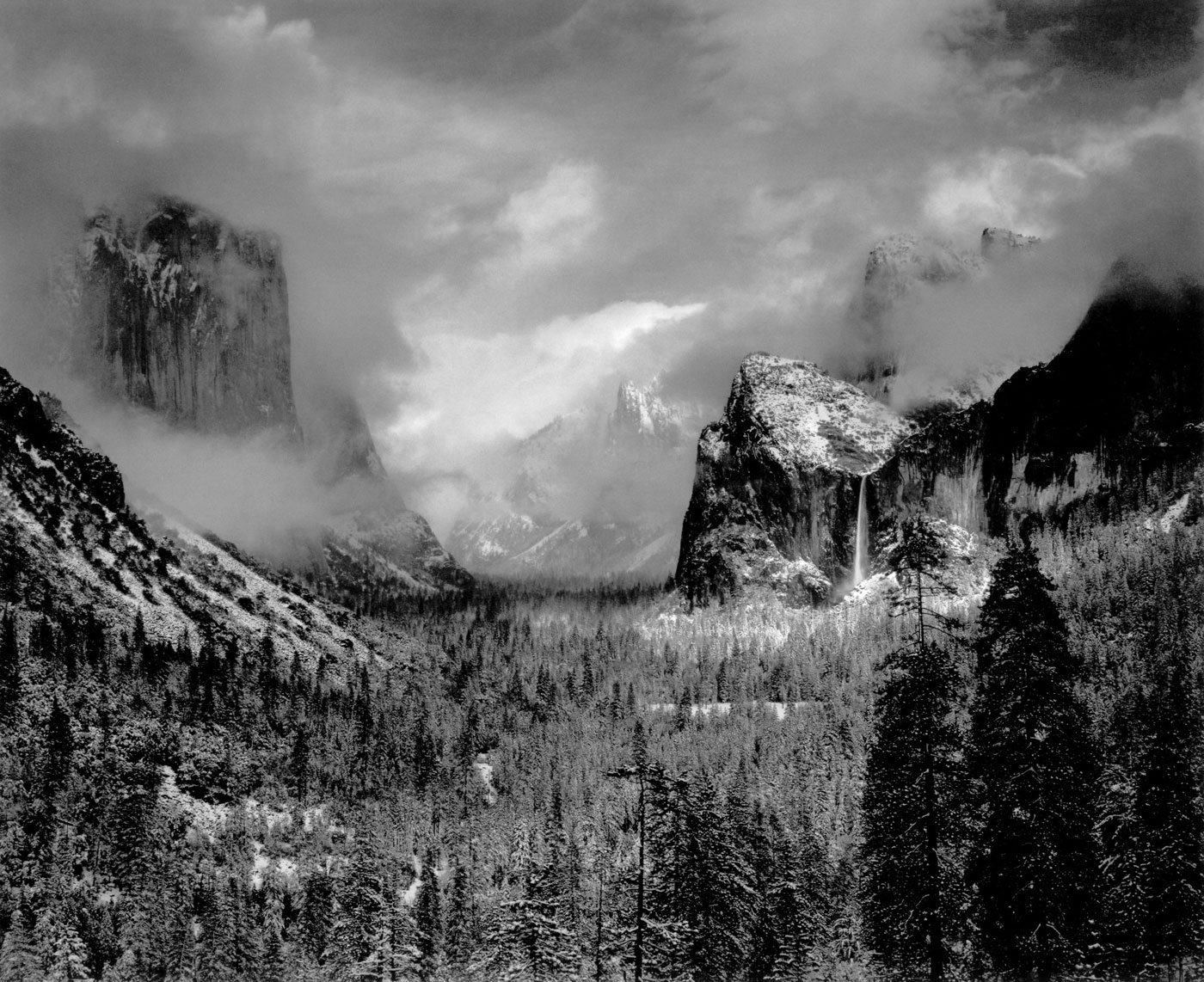
Ansel Adams (American, 1902-1984) 'Clearing winter storm, Yosemite National Park, California' 1935 


Ansel Adams (American, 1902-1984)
Clearing winter storm, Yosemite National Park, California 
1935
Gelatin silver photograph
56 x 71cm framed
National Gallery of Australia, Canberra. Purchased 1980
© 2015 The Ansel Adams Publishing Rights Trust


This is a fascinating exhibition at The Ian Potter Museum of Art, one of the best exhibitions I have seen this year in Melbourne. Unlike the disappointing exhibition Earth Matters: contemporary photographers in the landscape at the Monash Gallery of Art this exhibition, which addresses roughly the same subject matter (climate change and its devastating impact on the earth’s many ecosystems; contemporary notions of nature and the sublime) this exhibition is nuanced and fresh, celebrating “the unique capacity art has to cut through prevailing rhetoric to stimulate individuals both intellectually and emotionally in the face of current environmental issues.”

Every piece of art in this exhibition is emotionally, intellectually and aesthetically challenging. There is no “dead wood” here. As the press release states, “Nature / Revelation features international and Australian artists who are engaged with poetic and philosophical concerns, and whose work offers potentially enlightening experiences that energise our relationship to the natural world.” And it is true!

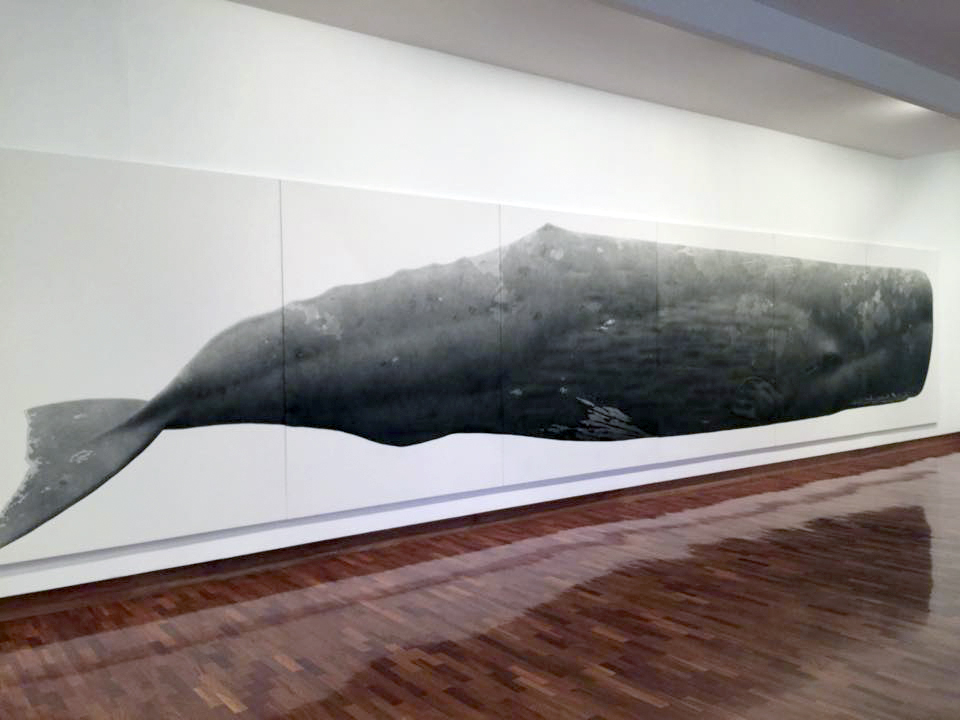
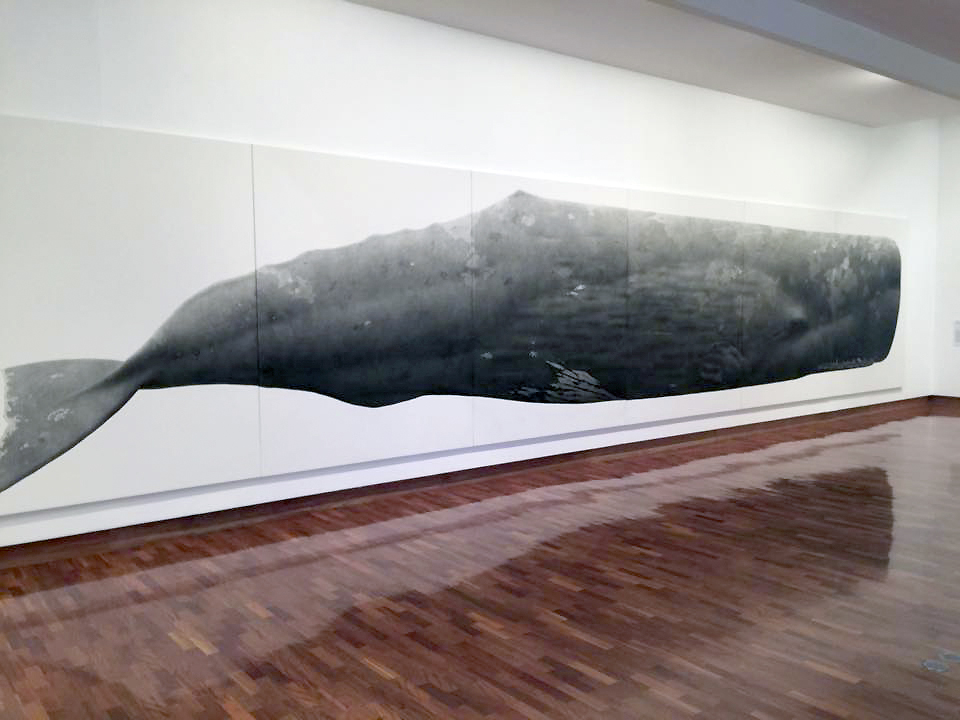
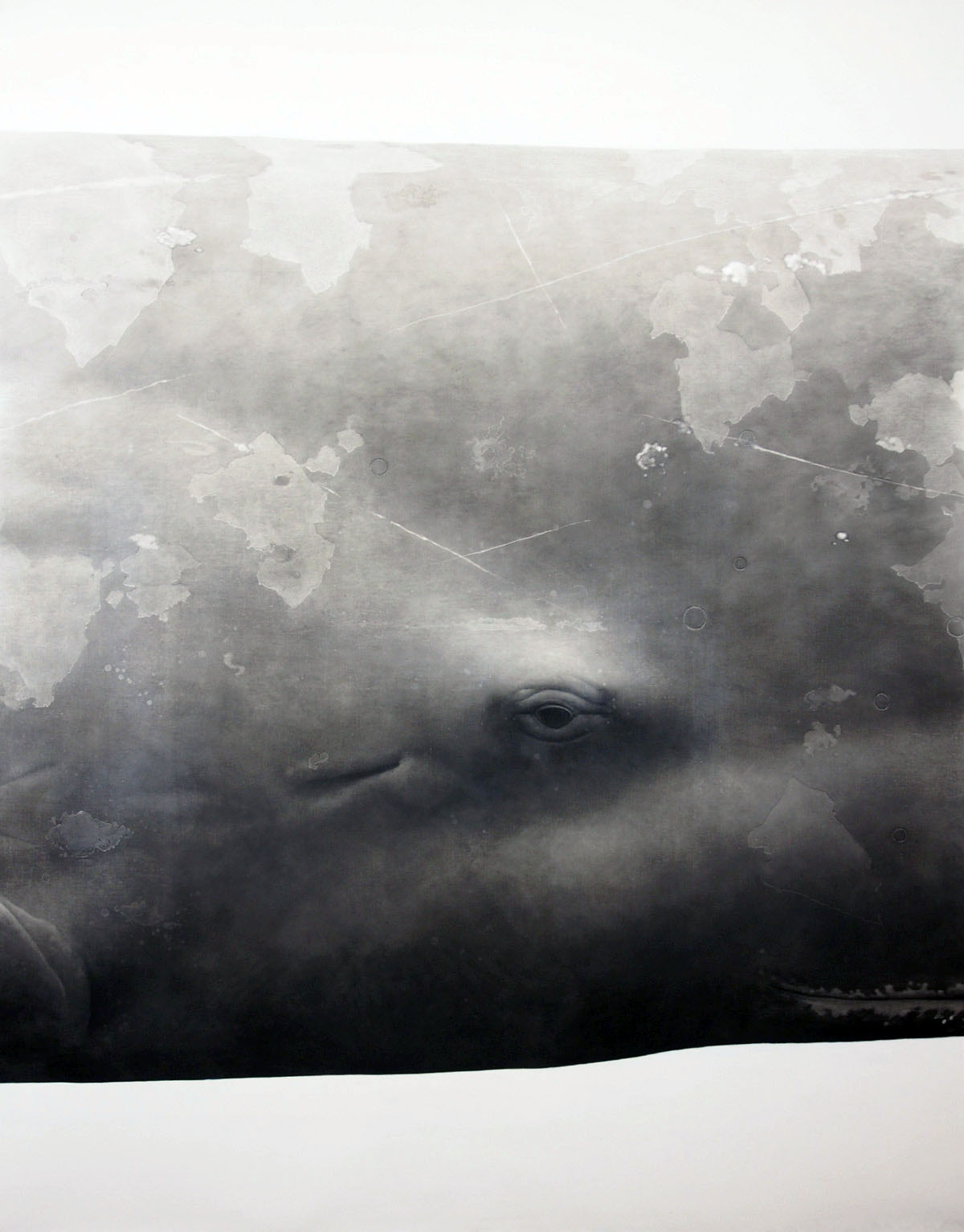
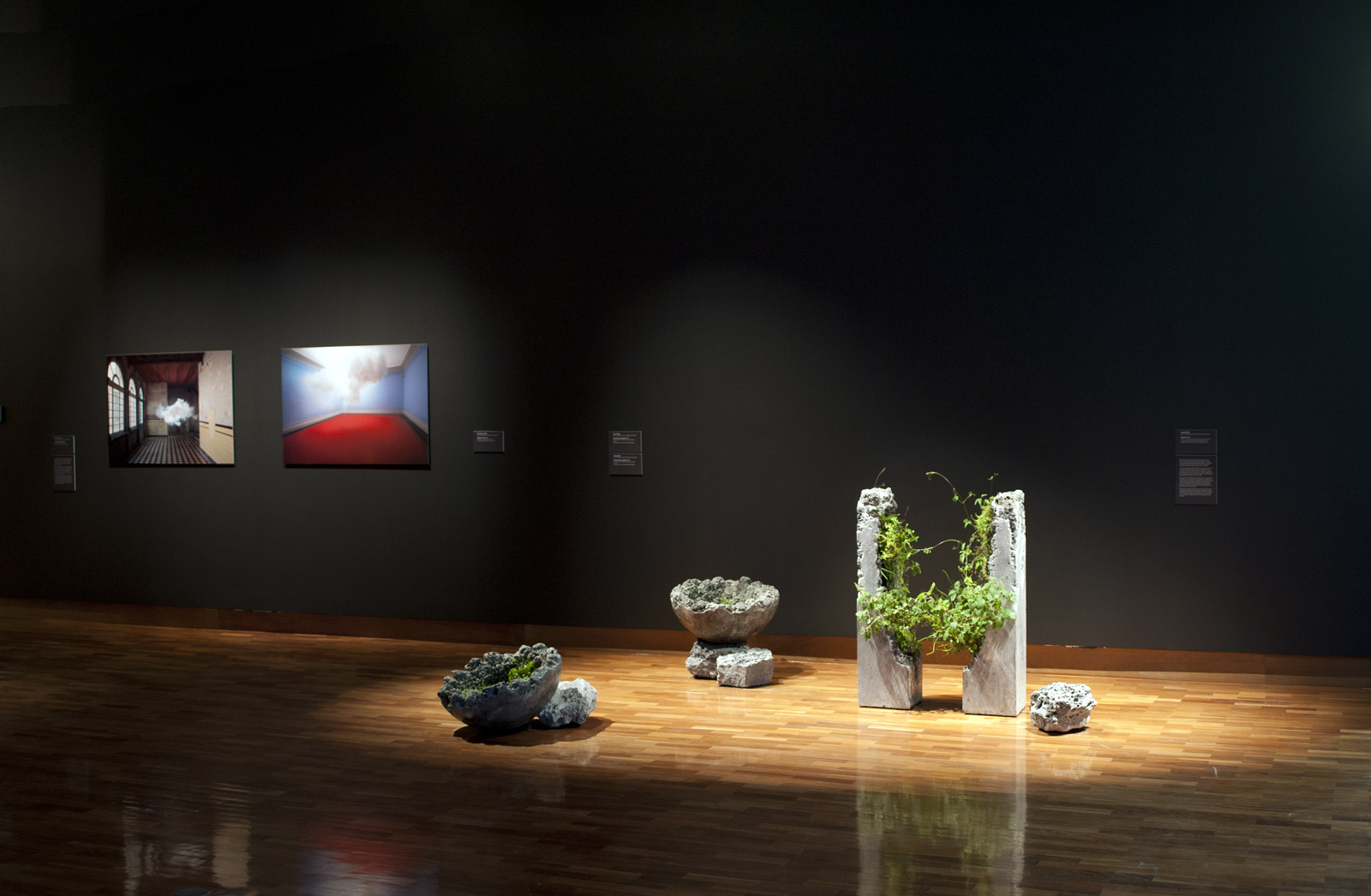
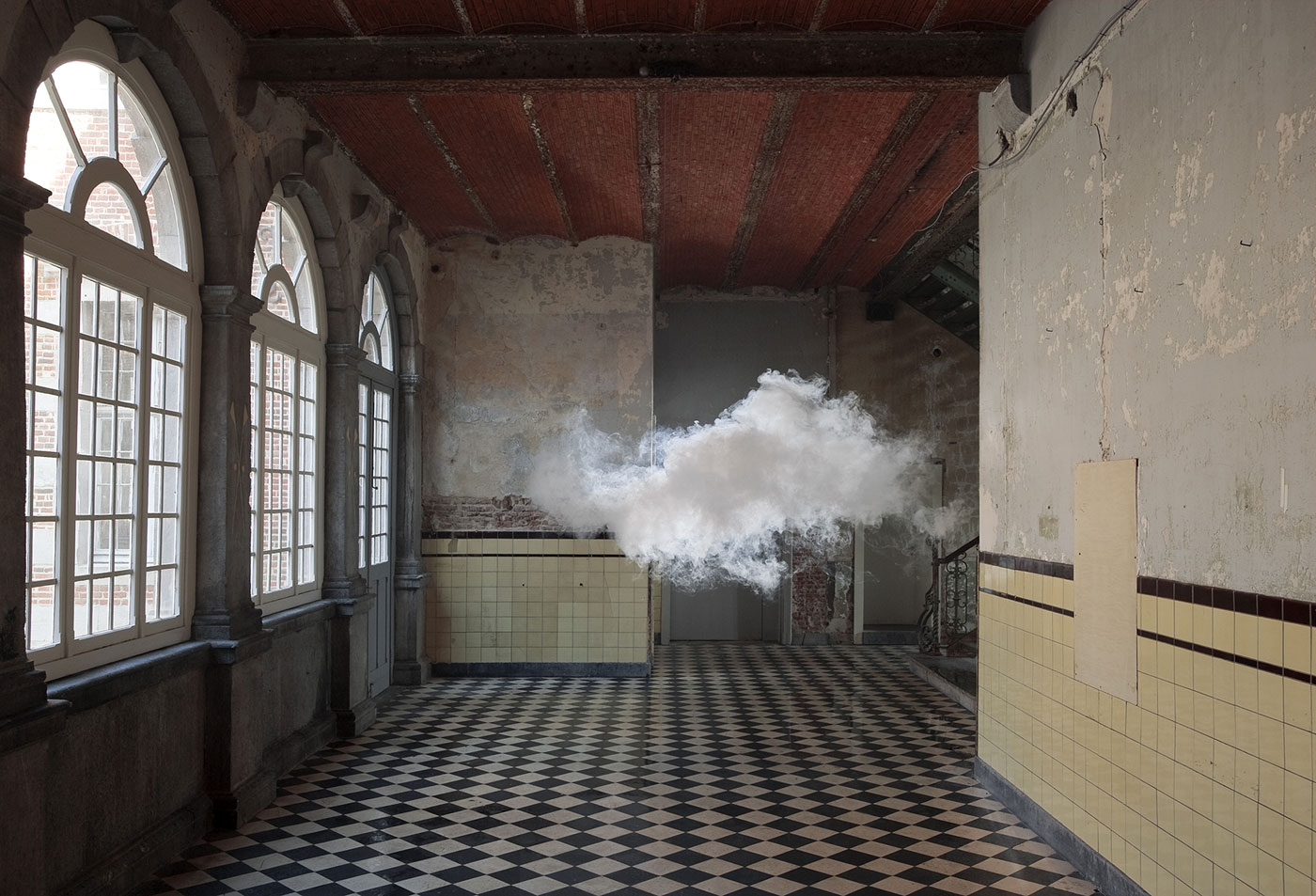
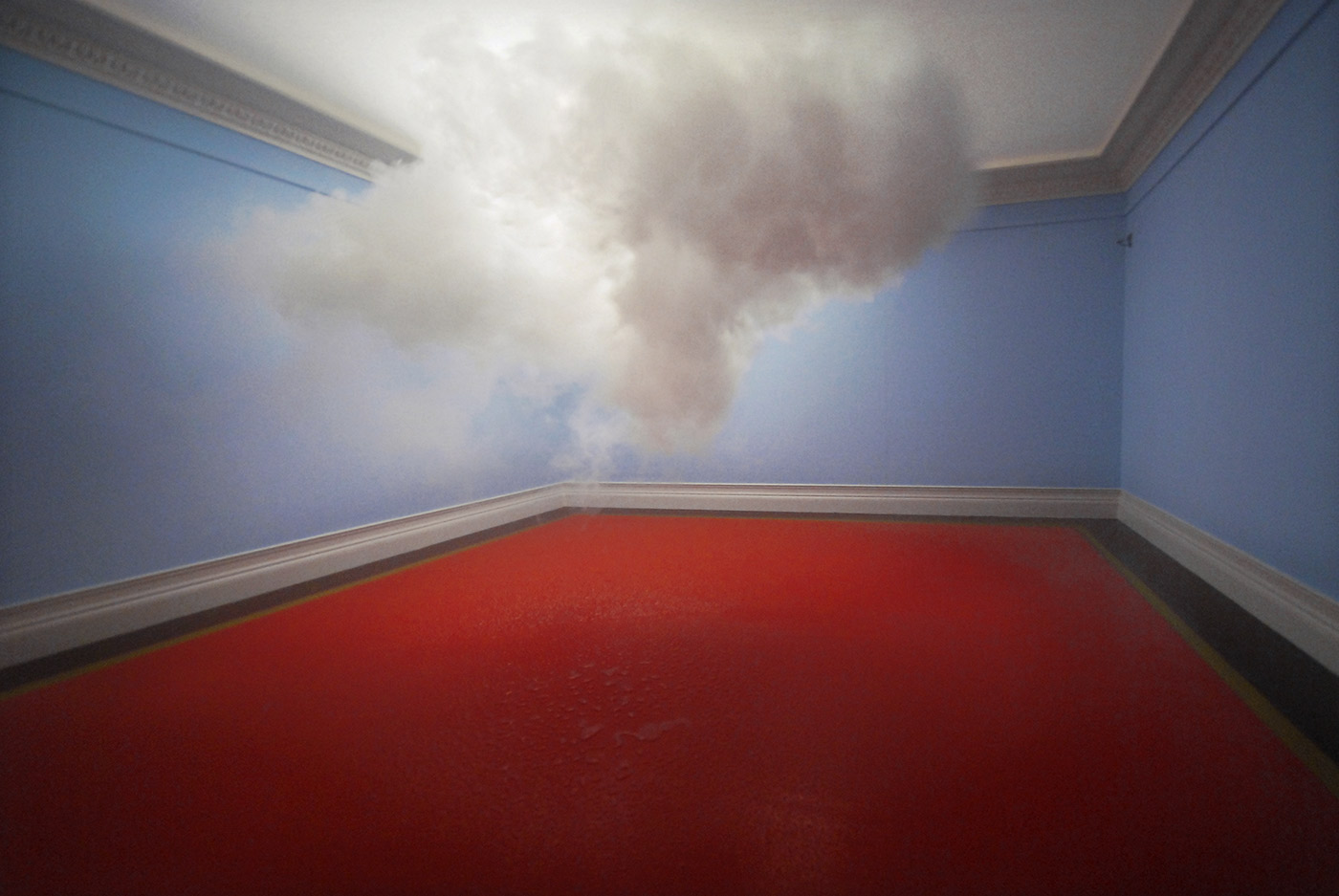
I spent over two hours on a couple of visits to this exhibition and came away feeling en/lightened in mind and body. From the formal beauty of Ansel Adams classical black and white photographs to the mesmerising, eternal video Boulder Hand (2012) by Gabriel Orozco; from the delightful misdirection of Mel O’Callaghan’s Moons to the liminal habitats of Jamie North; and from the constructed clouds of Berndnaut Smilde to the best piece in the exhibition, Jonathan Delafield Cook’s Sperm whale (Physeter macrocephalus) (2013, below) – every piece deserved its place in this exhibition. I would go as far as to say that Delafield Cook’s Sperm whale is the best piece of art that I have seen since Mark Hilton’s dontworry (2013) which featured in the Melbourne Now exhibition at the National Gallery of Victoria. The sheer scale and beauty of the work (with its graphite on canvas attention to detail) and that doleful eye staring out at the viewer, is both empowering and unnerving. It deserves to be in an important collection.

While nature and the world we live in offers moments of revelation, so did the art in this exhibition. The art possesses moments of wonder for the viewer. Kudos to curator Joanna Bosse and The Ian Potter Museum of Art for putting on a top notch show.

Dr Marcus Bunyan


Many thankx to the The Ian Potter Museum of Art for allowing me to publish the photographs in the posting. All installation photographs © Marcus Bunyan and The Ian Potter Museum of Art. Please click on the photographs for a larger version of the image.


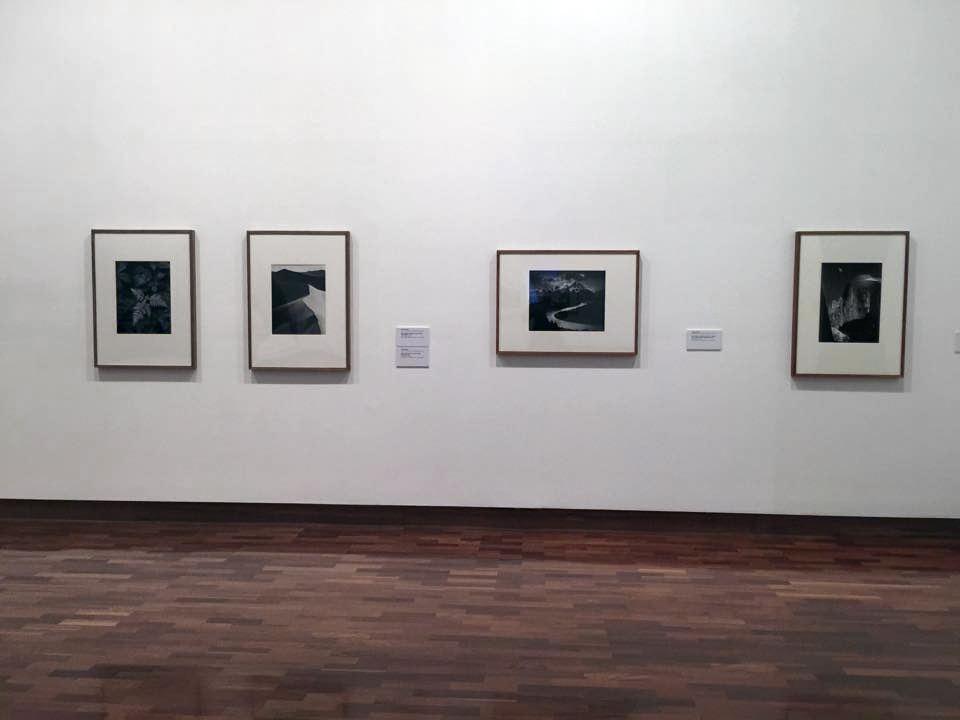
Installation photograph of the exhibition 'Nature/Revelation' at The Ian Potter Museum of Art, Melbourne showing photographs by Ansel Adams


Installation photograph of the exhibition Nature/Revelation at The Ian Potter Museum of Art, Melbourne showing photographs by Ansel Adams
Photo: Marcus Bunyan


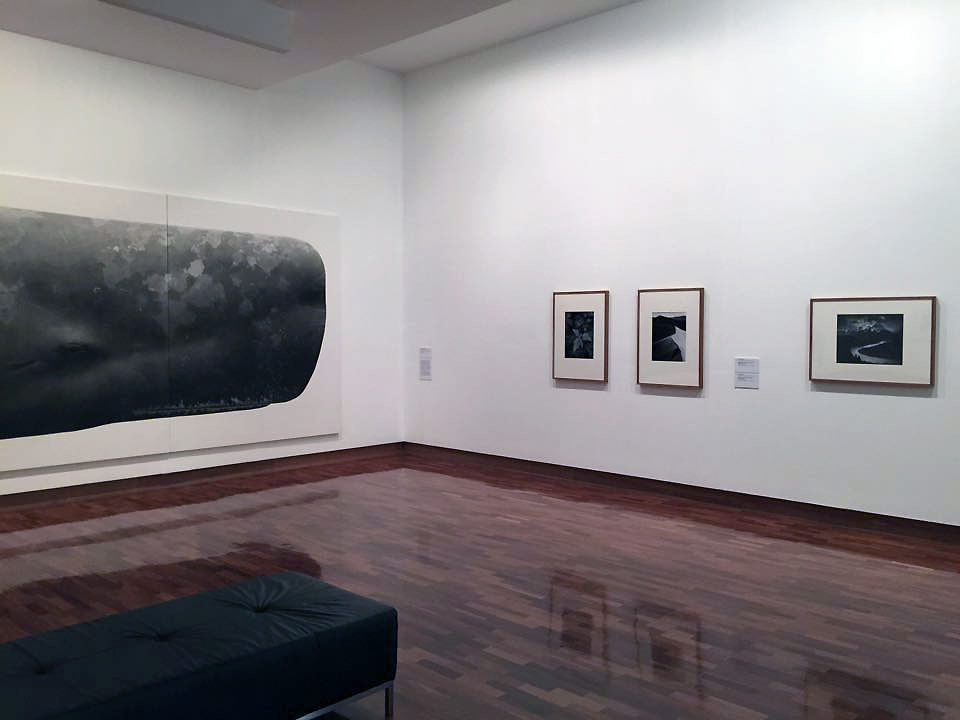
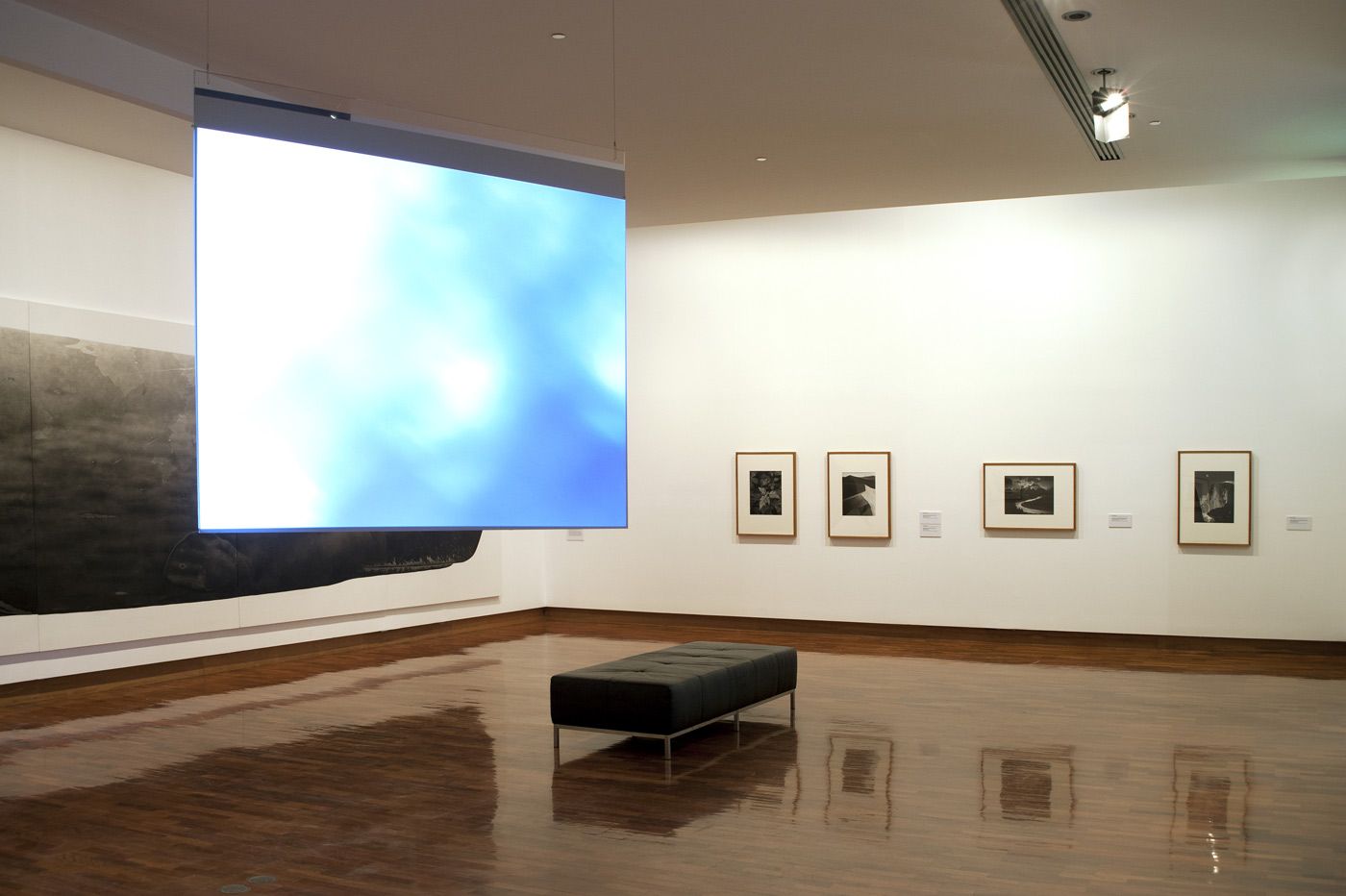
Installation photograph of the exhibition 'Nature/Revelation' at The Ian Potter Museum of Art, Melbourne showing at right, photographs by Ansel Adams; and at left, a detail of Jonathan Delafield Cook's 'Sperm whale (Physeter macrocephalus)' 2013


Installation photograph of the exhibition Nature/Revelation at The Ian Potter Museum of Art, Melbourne showing at right, photographs by Ansel Adams; and at left, a detail of Jonathan Delafield Cook’s Sperm whale (Physeter macrocephalus) 2013
Photo: Marcus Bunyan


Installation photograph of the exhibition 'Nature/Revelation' at The Ian Potter Museum of Art, Melbourne showing Jonathan Delafield Cook's 'Sperm whale (Physeter macrocephalus)' 2013

Installation photograph of the exhibition 'Nature/Revelation' at The Ian Potter Museum of Art, Melbourne showing Jonathan Delafield Cook's 'Sperm whale (Physeter macrocephalus)' 2013


Installation photograph of the exhibition Nature/Revelation at The Ian Potter Museum of Art, Melbourne showing Jonathan Delafield Cook’s Sperm whale (Physeter macrocephalus), 2013
Photos: Marcus Bunyan


Jonathan Delafield Cook (British, b. 1965) 'Sperm whale (Physeter macrocephalus)' 2013 (detail)


Jonathan Delafield Cook (British, b. 1965)
Sperm whale (Physeter macrocephalus) (detail)
2013
Graphite on canvas
6 panels: 245 x 1200 cm overall
Courtesy the artist and Olsen/Irwin Gallery, Sydney
Photo: Marcus Bunyan


Jonathan Delafield Cook’s life size drawing of a Sperm Whale specimen possesses a haunting melancholy… [He] creates an encounter that recalls those between Ahab and Moby Dick immortalised in Hermann Melville’s famous novel. Being face-to-face, eye-to-eye with this majestic sentient being – distinguished for having the largest brain of any creature known to have lived on the Earth – is an awe-inspiring experience. The overwhelming enormity of scale and the panorama-like expanse of the whale’s skin rouse an acute awareness of our own small presence in the room (in the world).

Delafield Cook’s work belongs to the naturalist tradition, and his detailed charcoal drawing intensifies the physical qualities of the subject in a way that renders it both a forensic study and an otherworldly fantasy. The personal history of this sleek leviathan is writ large, like graffiti, on its skin: the abrasions, the exfoliations, scars and its ragged tail tell of unknown adventures in an environment that lies beyond our own experience, but one not exempt from degradation or environmental change.


Installation photograph of the exhibition 'Nature/Revelation' at The Ian Potter Museum of Art, Melbourne showing showing at centre right, photographs by Ansel Adams


Installation photograph of the exhibition Nature/Revelation at The Ian Potter Museum of Art, Melbourne showing showing at centre right, photographs by Ansel Adams
Photo: Marcus Bunyan


Gabriel Orozco (Mexican, b. 1962)
Boulder Hand
2012
Video 54 seconds
Courtesy of the artist


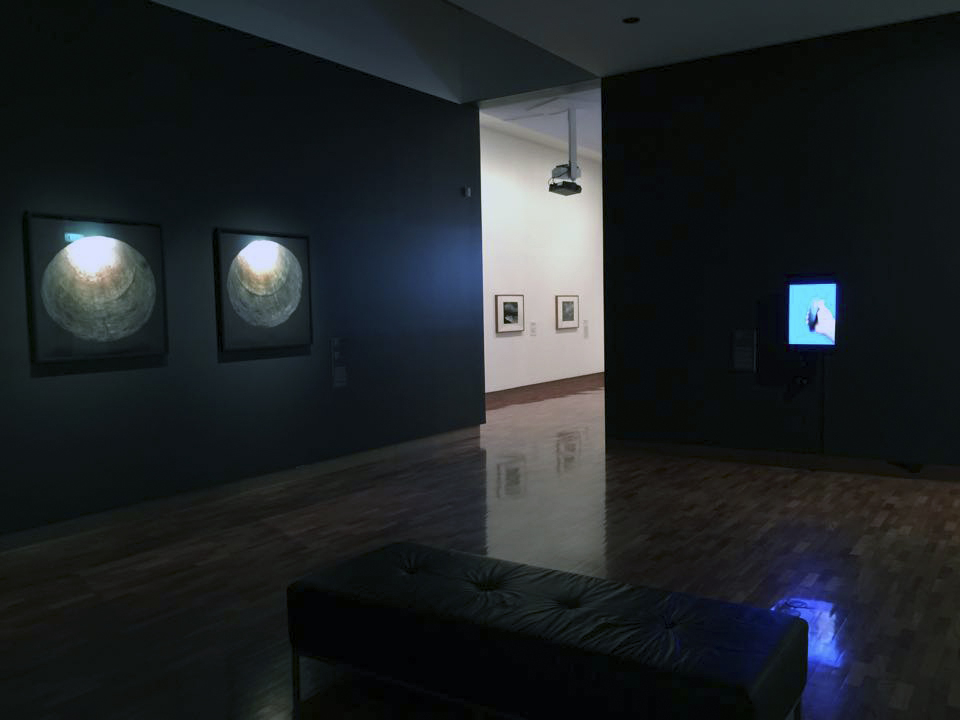
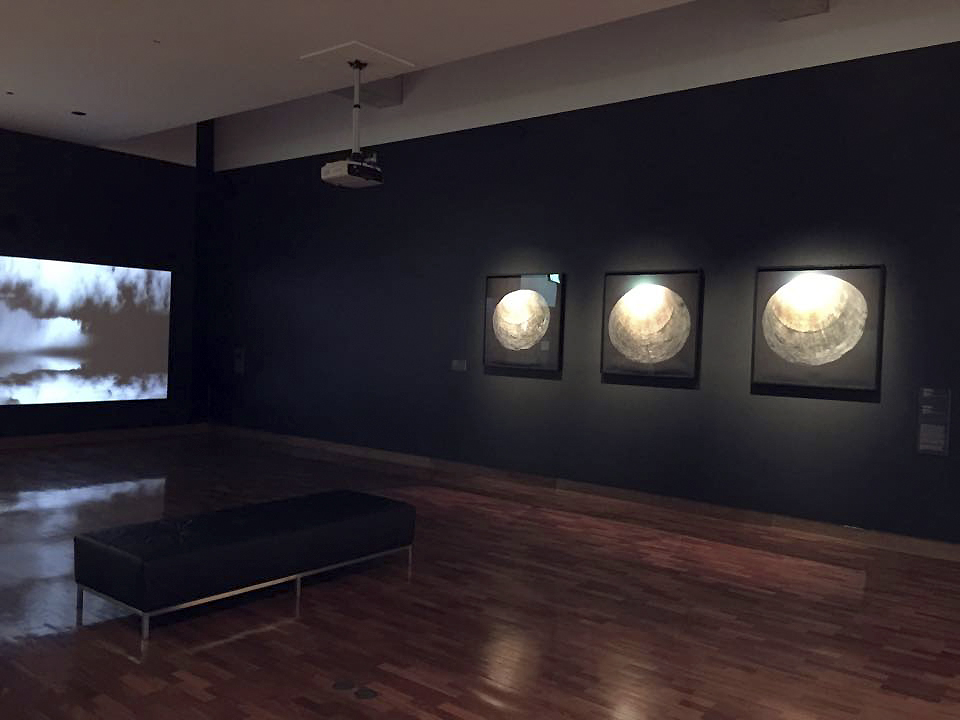
Installation photograph of the exhibition 'Nature/Revelation' at The Ian Potter Museum of Art, Melbourne showing at left, Mel O'Callaghan's 'Moons' 2014; and at right, Gabriel Orozco's video 'Boulder Hand' 2012


Installation photograph of the exhibition Nature/Revelation at The Ian Potter Museum of Art, Melbourne showing at left, Mel O’Callaghan’s Moons 2014; and at right, Gabriel Orozco’s video Boulder Hand 2012
Photo: Marcus Bunyan


Installation photograph of the exhibition 'Nature/Revelation' at The Ian Potter Museum of Art, Melbourne showing Mel O'Callaghan's 'Moons' 2014

Installation photograph of the exhibition 'Nature/Revelation' at The Ian Potter Museum of Art, Melbourne showing Mel O'Callaghan's 'Moons' 2014


Installation photographs of the exhibition Nature/Revelation at The Ian Potter Museum of Art, Melbourne showing Mel O’Callaghan’s Moons 2014
Photos: Marcus Bunyan


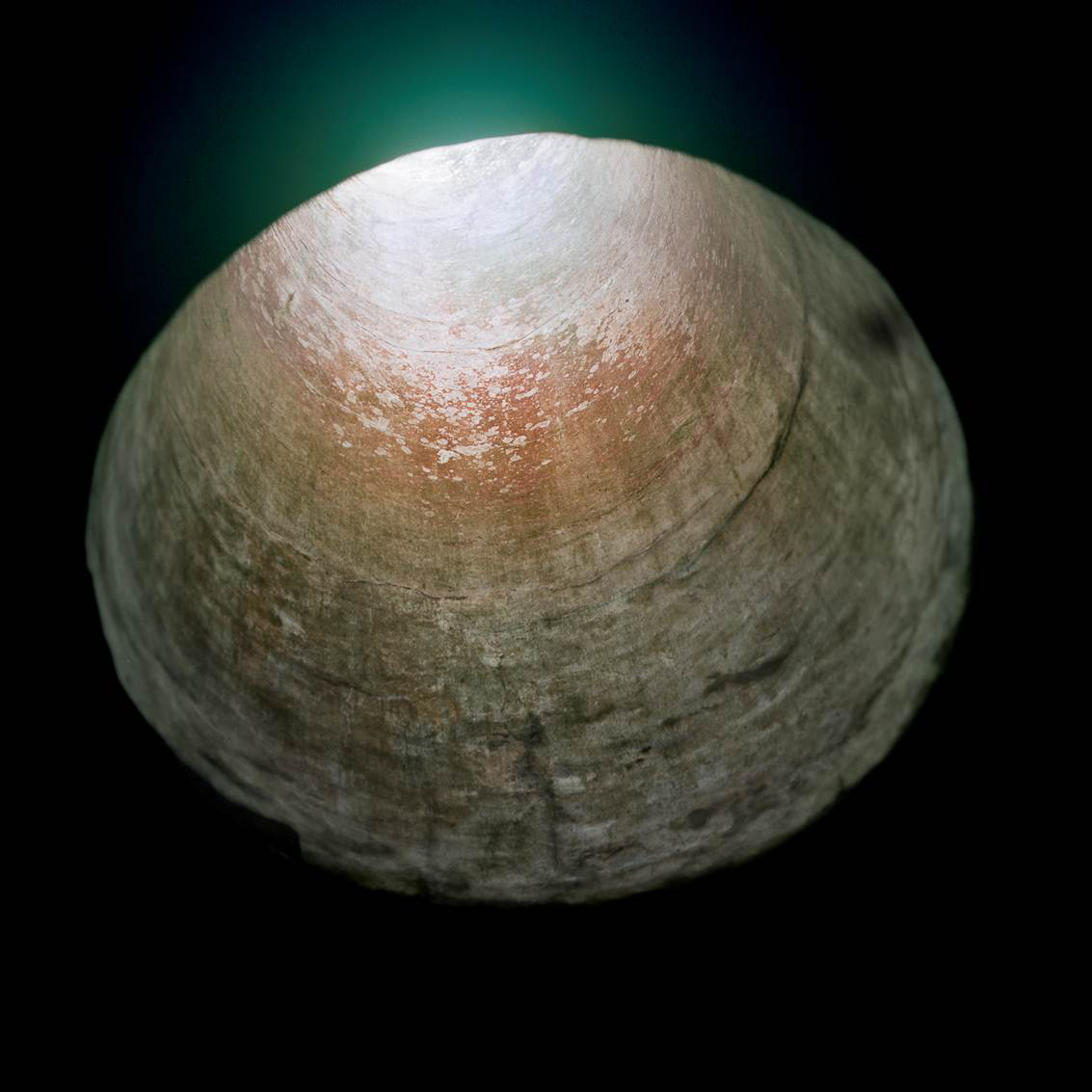
Mel O'Callaghan (Australian, b. 1975) 'Moons (II)' 2014


Mel O’Callaghan (Australian, b. 1975)
Moons (II)
2014
pigmented inkjet print
100 x 100cm
Courtesy the artist and Galerie Allen, Paris, and Galeria Belo Galsterer, Lisbon


Climate change and its devastating impact on the earth’s many ecosystems is arguably today’s most critical global issue. Nature/Revelation celebrates the unique capacity art has to cut through prevailing rhetoric to stimulate individuals both intellectually and emotionally in the face of current environmental issues. Focusing on contemporary notions of nature and the sublime, the exhibition affirms that the world we live in offers moments of revelation, and that nature can provoke a range of associations – both fantastical and grounded – that profoundly affect us.

Nature/Revelation features international and Australian artists who are engaged with poetic and philosophical concerns, and whose work offers potentially enlightening experiences that energise our relationship to the natural world. Artists include Ansel Adams, Jonathan Delafield Cook, David Haines, Andrew Hazewinkel and Susan Jacobs, Jamie North, Mel O’Callaghan, Gabriel Orozco and Berndnaut Smilde. The exhibition also raises questions about concepts of nature and culture following the arguments of philosopher Timothy Morton.

This exhibition forms a key component of the ‘Art+climate=change’ festival presented by Climarte: arts for a safer climate. This festival of climate change related arts and ideas includes curated exhibitions at a number of museums and galleries alongside a series of keynote lectures and forums featuring local and international speakers.

The University of Melbourne, with the Potter as project leader, is the Principal Knowledge Partner of the Climarte program.

Text from The Ian Potter Museum of Art website


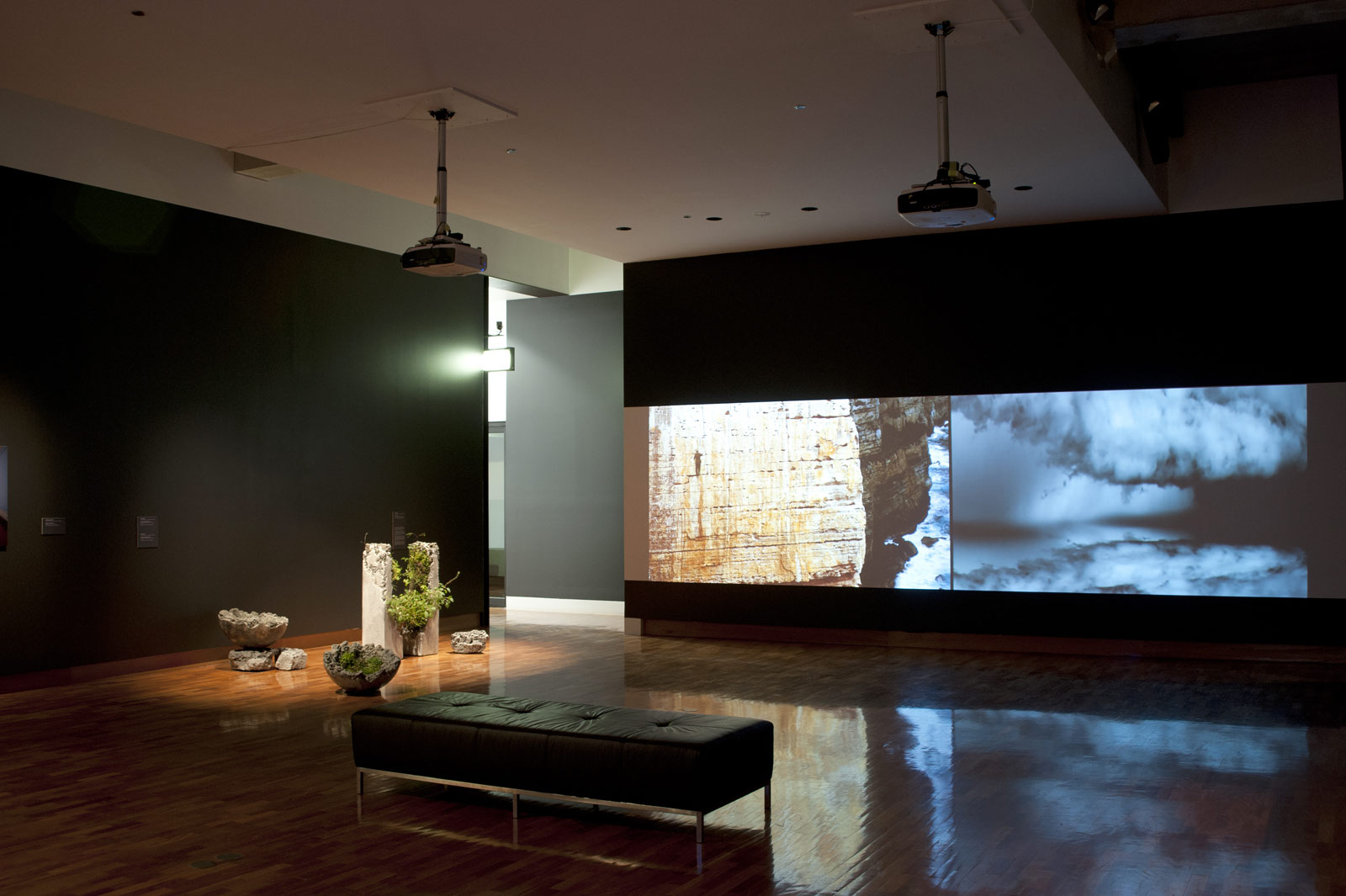
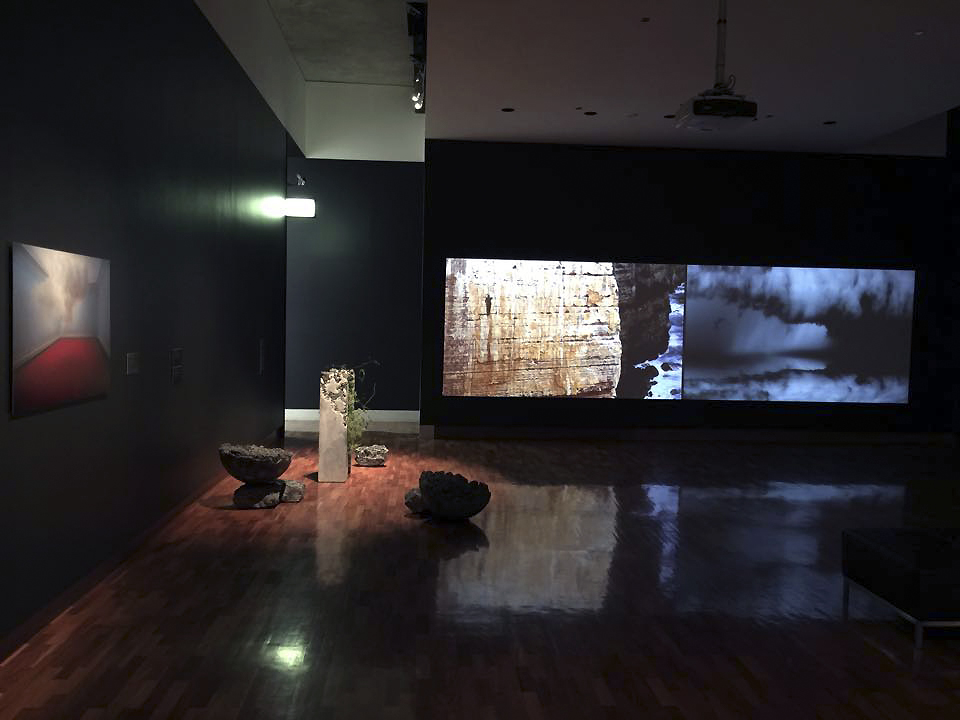
Installation photograph of the exhibition 'Nature/Revelation' at The Ian Potter Museum of Art, Melbourne showing at left on the floor, Jamie North's 'Portal II' and 'Slag bowl I & II' 2014; and at right, David Haines' 'Day & Night' 2005-2015

Installation photograph of the exhibition 'Nature/Revelation' at The Ian Potter Museum of Art, Melbourne showing at left on the floor, Jamie North's 'Portal II' and 'Slag bowl I & II' 2014; and at right, David Haines' 'Day & Night' 2005-2015


Installation photographs of the exhibition Nature/Revelation at The Ian Potter Museum of Art, Melbourne showing at left on the floor, Jamie North’s Portal II and Slag bowl I & II 2014; and at right, David Haines’ Day & Night 2005-2015
Photos: Marcus Bunyan


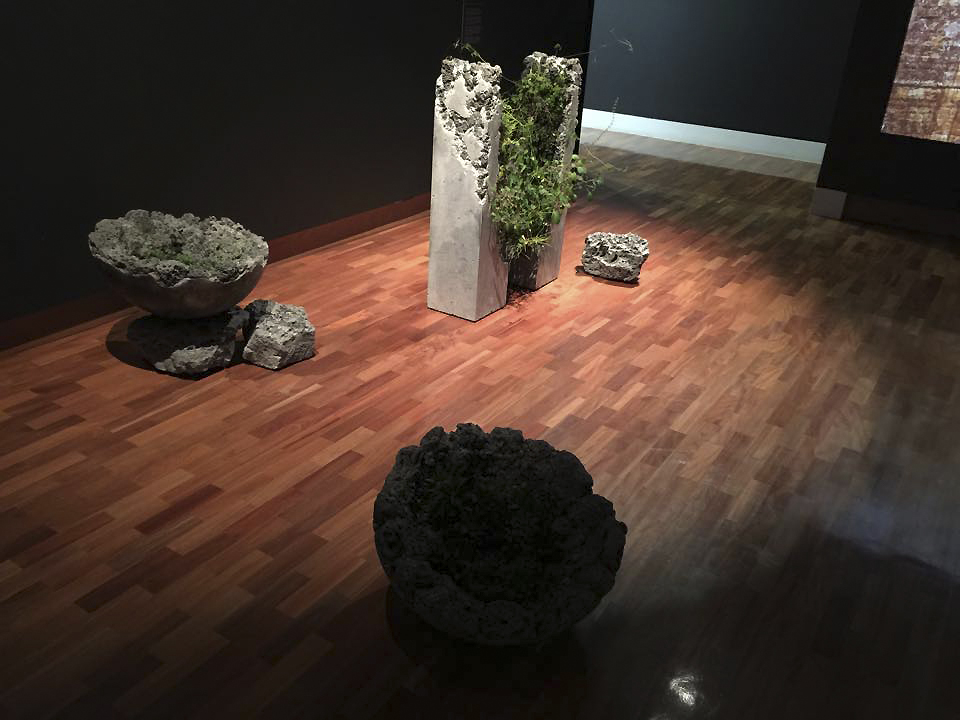
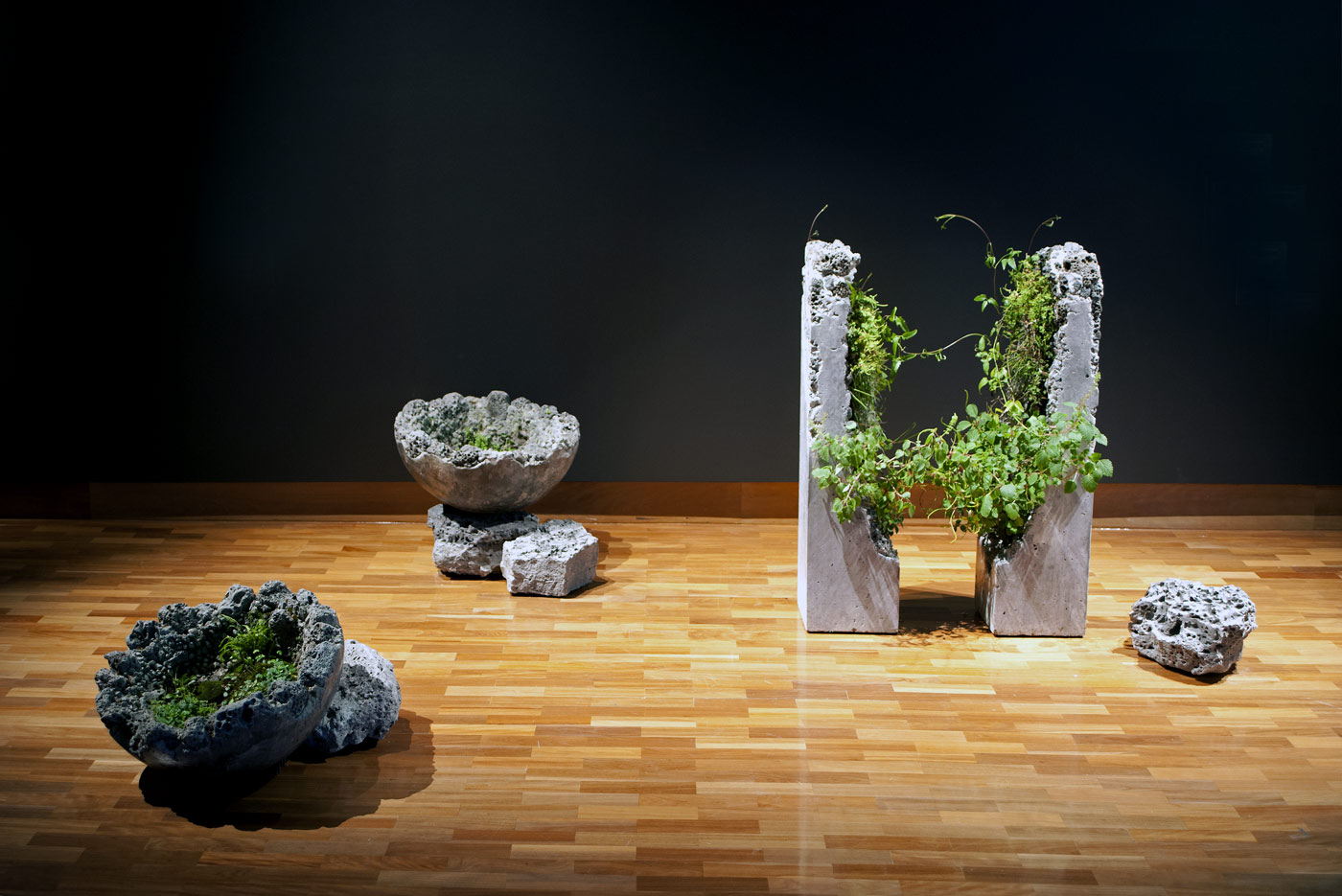
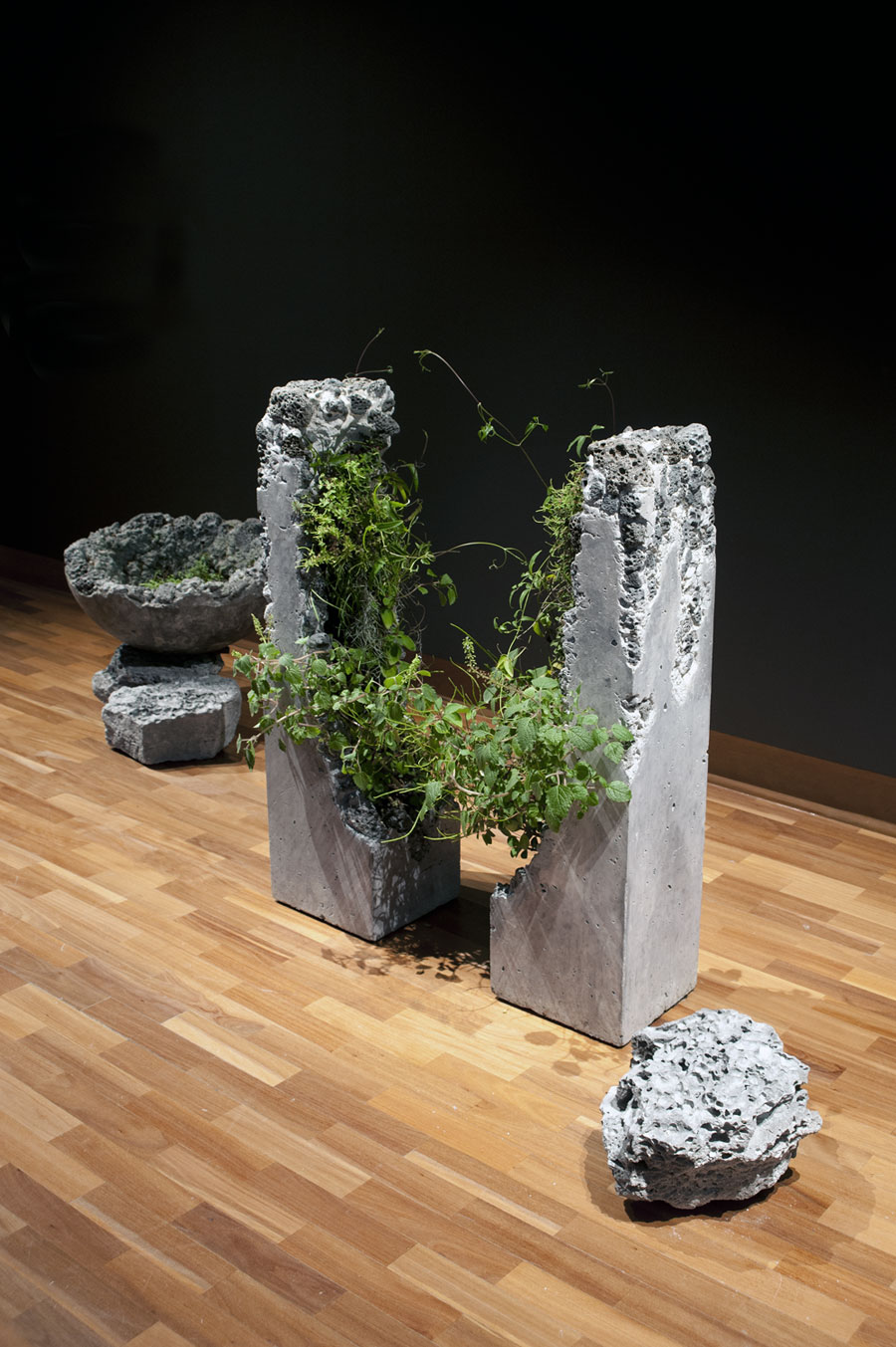
Installation photograph of the exhibition 'Nature/Revelation' at The Ian Potter Museum of Art, Melbourne showing Jamie North's 'Portal II' and 'Slag bowl I & II' 2014

Installation photograph of the exhibition 'Nature/Revelation' at The Ian Potter Museum of Art, Melbourne showing Jamie North's 'Portal II' and 'Slag bowl I & II' 2014

Installation photograph of the exhibition 'Nature/Revelation' at The Ian Potter Museum of Art, Melbourne showing Jamie North's 'Portal II' and 'Slag bowl I & II' 2014


Jamie North (Australian, b. 1971)
Portal II
2014
Cement, marble waste, limestone, steel slag, coal ash, plastic fibre, tree fern slab, various Australian native plants and Spanish moss
2 components: 107.0 x 26.0 x 26.0cm each
Courtesy the artist and Sarah Cottier Gallery, Sydney

Jamie North (Australian, b. 1971)
Slag bowl I & II
2013
Concrete, coal ash, steel slag, Australian native plants and moss
15 x 37 x 37cm each
Courtesy the artist and Sarah Cottier Gallery, Sydney
Photos: Marcus Bunyan


Viewers often mistake Jamie North’s sculptures for actual relics. The sculptures are in fact carefully crafted to emulate liminal habitats where hardy plant species grow in inhospitable conditions. More than mere simulation, each work is itself a miniature ecosystem and has to be tended accordingly.

The sculptures are cast from materials that are commonly found in industrial settings (steel slag, coal ash, marble dust, and concrete) and include local native flora. The specifics of locality are important to North, and his work is a subtle investigation of local environmental systems and the character of place as well as the adaptability of nature in urban settings…

North has an interest in terraforming – the theoretical process of deliberately modifying the atmosphere, temperature, surface topography or ecology of a planet to be similar to the biosphere of Earth. Here, he creates his own terraforms as a reflection on the environmental manipulations that taking place in the everyday.


David Haines (Australian born England, 1966)
Day & Night
2005-2015
Two channel video projection
Courtesy of the artist and Sarah Cotter Gallery, Sydney


Throughout his practice – which comprises investigations into the elemental in carious media – David Haines explores sensation in both seen and unseen forms. He has a particular interest in latent energies, such as aromas, sound waves and electromagnetic currents.

Haines revisits the classic language of the sublime in his 2004 two-channel video installation Day & night. He presents dual images of the sublime: one an immense cliff face with a sea surging against its rocky base; the other a brooding cloudscape, its form gradually unfolding with a mesmeric momentum. The work is simultaneously serene and disturbing, and awakens that range of complex emotions that Kant named the ‘supersensible’ – beyond the range of what is normally perceptible by the senses. The over-riding emotional rush – the presentiment of danger – associated with this experience is a trademark of the sublime.

The abstract sense of danger shifts however when we notice the tiny figure clinging to the cliff face. The scene is abruptly divested of its fantastical quality (its symbolic power is suddenly made real), as we can’t help but identify with the solitary figure. No longer merely observers, we become participants in the scene before us. The perilous figure in Haines’ work provides a touchstone in terms of the overwhelming grandeur of nature. In the context of the exhibition, s/he could represent each of us as we confront the seemingly insurmountable environmental and humanitarian challenges resulting from the increasingly catastrophic effects of global warming.


Installation photograph of the exhibition 'Nature/Revelation' at The Ian Potter Museum of Art, Melbourne showing at left, Berndnaut Smilde's 'Nimbus – Probe'  2012 and 'Nimbus D'Aspremont' 2010; and at right, Jamie North's 'Portal II' and 'Slag bowl I & II' 2014


Installation photographs of the exhibition Nature/Revelation at The Ian Potter Museum of Art, Melbourne showing at left, Berndnaut Smilde’s Nimbus – Probe  2012 and Nimbus D’Aspremont 2010; and at right, Jamie North’s Portal II and Slag bowl I & II 2014
Photo: Marcus Bunyan


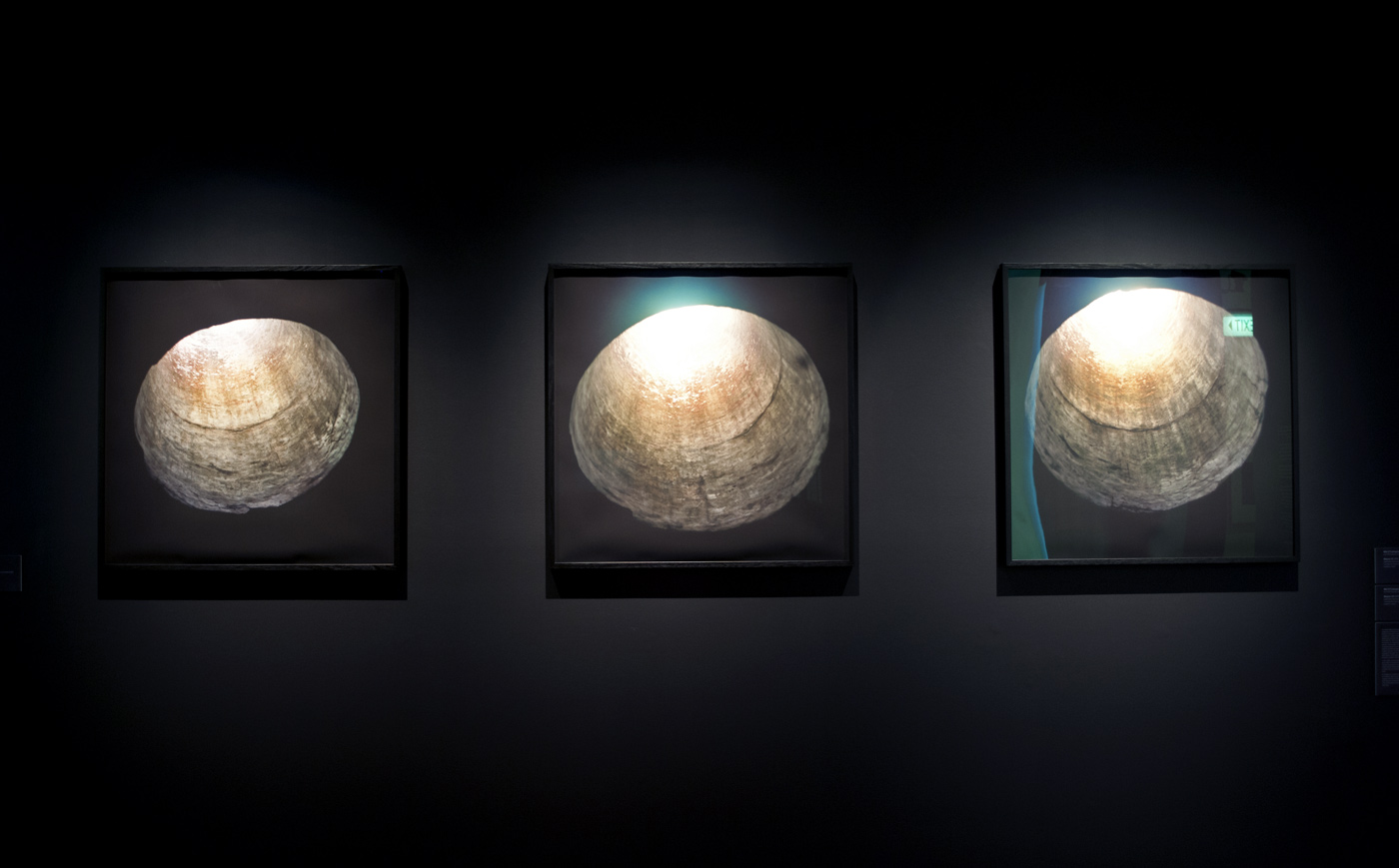
Berndnaut Smilde (Dutch, b. 1978) 'Nimbus D'Aspremont' 2012


Berndnaut Smilde (Dutch, b. 1978)
Nimbus D’Aspremont
2012
Digital C-type print mounted on diabond
75 x 110cm
Courtesy the artist and Ronchini Gallery, London


Berndnaut Smilde (Dutch, b. 1978) 'Nimbus – Probe' 2010


Berndnaut Smilde (Dutch, b. 1978)
Nimbus – Probe
2010
Digital C-type print mounted on diabond
75 x 112cm
Courtesy the artist and Ronchini Gallery, London


The Ian Potter Museum of Art
The University of Melbourne,
Corner Swanston Street and Masson Road
Parkville, Victoria 3010

Opening hours: Tuesday – Saturday 11am – 5pm

The Ian Potter Museum of Art website

LIKE ART BLART ON FACEBOOK

Back to top

Exhibition: ‘Climate Capsules: Means of Surviving Disaster’ at Museum fur Kunst und Gewerbe Hamburg

Exhibition dates: 28th May – 12th September, 2010


Many thankx to Michaela Hille and Museum fur Kunst und Gewerbe Hamburg for allowing me to publish the photographs in the posting. Please click on the photographs for a larger version of the image.


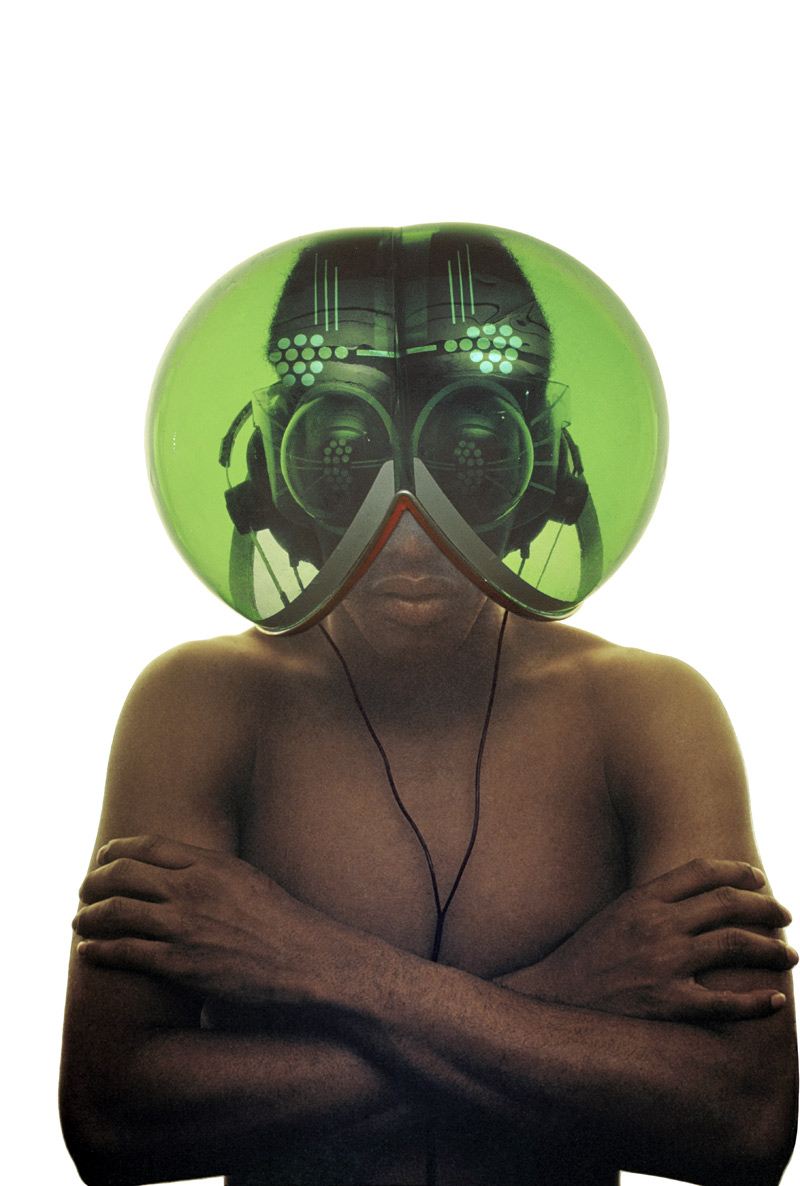
Haus-Rucker-Co (Laurids Ortner, Günter Zamp Kelp, Klaus Pinter) 'Flyhead (Environment Transformer)', Vienna, 1968 from the exhibition 'Climate Capsules: Means of Surviving Disaster' at Museum fur Kunst und Gewerbe Hamburg, may - September, 2010


Haus-Rucker-Co (Laurids Ortner, Gunter Zamp Kelp, Klaus Pinter)
Flyhead (Environment Transformer)
Vienna, 1968
Helmet consisting of two transparent green, symmetrical, hemispherical plastic fragments partially covered with foil. Inside the helmet, with the aid of a metal construction, audio-visual filters are arranged by means of which the normality of the surroundings is acoustically distorted and visually faceted.
Photo: Ben Rose, New York


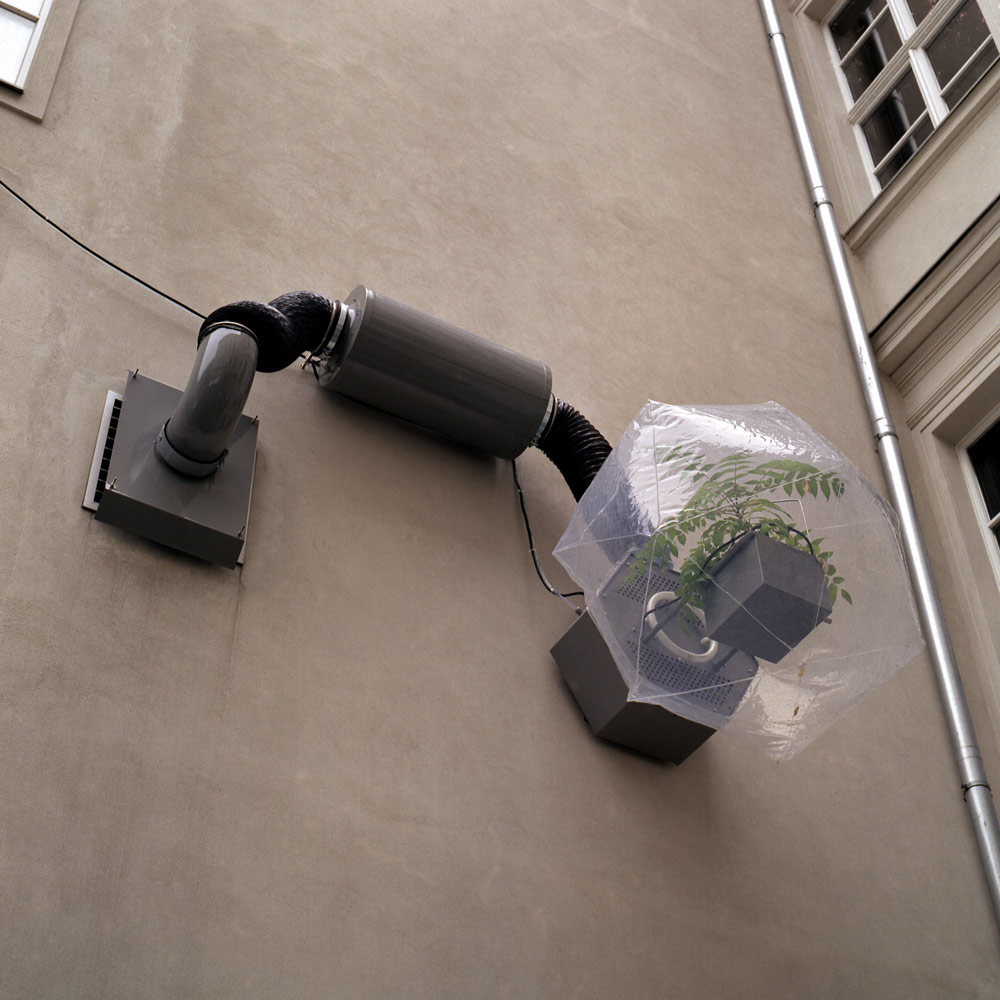
Ingo Vetter (Germany, b. 1968) 'Adaptation Laboratory' 2004 from the exhibition 'Climate Capsules: Means of Surviving Disaster' at Museum fur Kunst und Gewerbe Hamburg, may - September, 2010


Ingo Vetter (Germany, b. 1968)
Adaptation Laboratory
2004
Exhaust-operated greenhouse with tree of heaven (Ailanthus altissima)
Ingo Vetter
© Ingo Vetter for the Detroit Tree of Heaven Woodshop, 2004


Lawrence Malstaf (Belgian, b. 1972) 'Shrink' 1995 from the exhibition 'Climate Capsules: Means of Surviving Disaster' at Museum fur Kunst und Gewerbe Hamburg, may - September, 2010


Lawrence Malstaf (Belgian, b. 1972)
Shrink
1995
Performative Installation
© Lawrence Malstaf/Galerie Fortlaan 17, Ghent (B)


In view of the advancing climate change, the exhibition Climate Capsules: Means of Surviving Disaster at the Museum fur Kunst und Gewerbe Hamburg poses the question: “How do we want to live in the future?” and draws attention to the socio-political consequences of coexistence under new climatic conditions. In view of the fact that the politicians are hesitant to enforce strict measures for climate protection and the citizens very sluggish about changing their habits, the change appears inevitable. The world community is accordingly confronted with the challenge of investigating various possible means of adapting to the climate change. This exhibition is the first to bring together historical and current climate-related models, concepts, strategies, experiments and utopias from the areas of design, art, architecture and urban development – pursuing not the aim of stopping the climate change, but envisioning means of surviving after disaster has struck. More than twenty-five mobile, temporary and urban capsules intended to make human life possible independently of the surrounding climatic conditions will be on view – from floating cities and body capsules to concepts for fertilising sea water or injecting the stratosphere with sulphur. A symposium, film programme, readings, performances and workshops will revolve around the interplay between design processes and political factors such as migration, border politics and resource conflicts, and investigate the consequences for social and cultural partitioning and exclusion.

The public discussion on the climate change concentrates primarily on preventing change by reducing climate damaging emissions. This reduction is to be achieved through new means of obtaining energy as well as the optimisation of energy consumption. The consumption-oriented lifestyle of the industrial nations is also to become more “environmentally friendly”; the citizens are called upon to change their habits. Emerging nations are admonished to avoid the mistakes made by the West from the start. There is not the slightest guarantee, however, that enough nations and enough people around the world will participate in such reductions, and that a “low-carbon culture” will become the globally predominant lifestyle. Nor does anyone know for sure whether the reduction goals presently being discussed will suffice to delay or stop the climate change, which is already measurable today. In the search for alternative solutions, there is a category discussed substantially less often in public: adaptation. Here strategies are developed which aim not to slow or stop the climate change but to adapt to its expected consequences. They include protective measures against flooding and overheating as well as geo-engineering, i.e. large-scale interventions in the global climate.

These technologies are usually subjected only to critical discussion with regard to their technical feasibility. Until now, their possible socio-political effects have for the most part been ignored. Their impact on the structure of the global society, however, can hardly be overestimated: in the endeavour to make life possible independently of outward climatic conditions, these strategies encourage spatial, social and political isolation. Ostensibly motivated by climate-related considerations, they could well lead to inclusion and exclusion on all levels of life, from the interpersonal to the global. They create the conditions for social segregation and global polarisation.

The exhibition Climate Capsules: Means of Surviving Disaster will focus primarily on application-oriented projects for climatological capsules from the areas of design, art, architecture, urban development and geoengineering. The show will reflect on the (political, cultural, socio-spatial) impact of these current adaptation strategies on society by means of contemporary artistic approaches and avant-garde concepts of the twentieth century. Historical projects in the context of the climate change will thus assume new meaning. The current artistic projects question the positivist perspective of their counterparts of the past, and offer the exhibition visitor a further level of sensory experience. The exhibition objects can be divided into five types: body capsules, living capsules, urban capsules, nature capsules and atmosphere capsules.

Body capsules

The exhibition begins with the interactive installation La Parole by Pablo Reinoso. Two visitors at a time can poke their heads into the inflatable textile construction and share the air they breathe as well as a common visual and audio space. The experience of this work raises the question as to how people can protect their bodies from contaminated air, pollutants, storms and aggressive solar radiation. Again and again in the course of the show, the visitor encounters “body capsules” addressing the topic of clothing as bodily protection from climatic conditions.

Living capsules

The objects belonging to this group extend the encapsulated space from the body encasement to the immediate living space. Utopian designs for mobile capsules of the 1960s such as the Walking City by Ron Herron (Archigram) still figured in the discussion emphasising temporary and mobile structures as experimental free spaces after ideas introduced by such architects as Constant or Yona Friedman. Today mobility is no longer just a question of freedom – the counterpart to voluntary mobility is flight, the spatial equivalent the temporary camp. The visitor thus stumbles across Michael Rokowitz’s paraSITE, for example, an inflatable tent which the artist developed in collaboration with the homeless person Bill Stone. Like the other tents in the series, it is designed for use in an exhaust air shaft. It can dock onto a building as a temporary parasite. In this context of precarious modi vivendi – brought about not least of all by global inequality (which is further aggravated by the climate change) and the resulting mass migration – what were once visionary temporary living concepts appear in a new light. They are not spaces of liberation, but of isolation.

Urban capsules

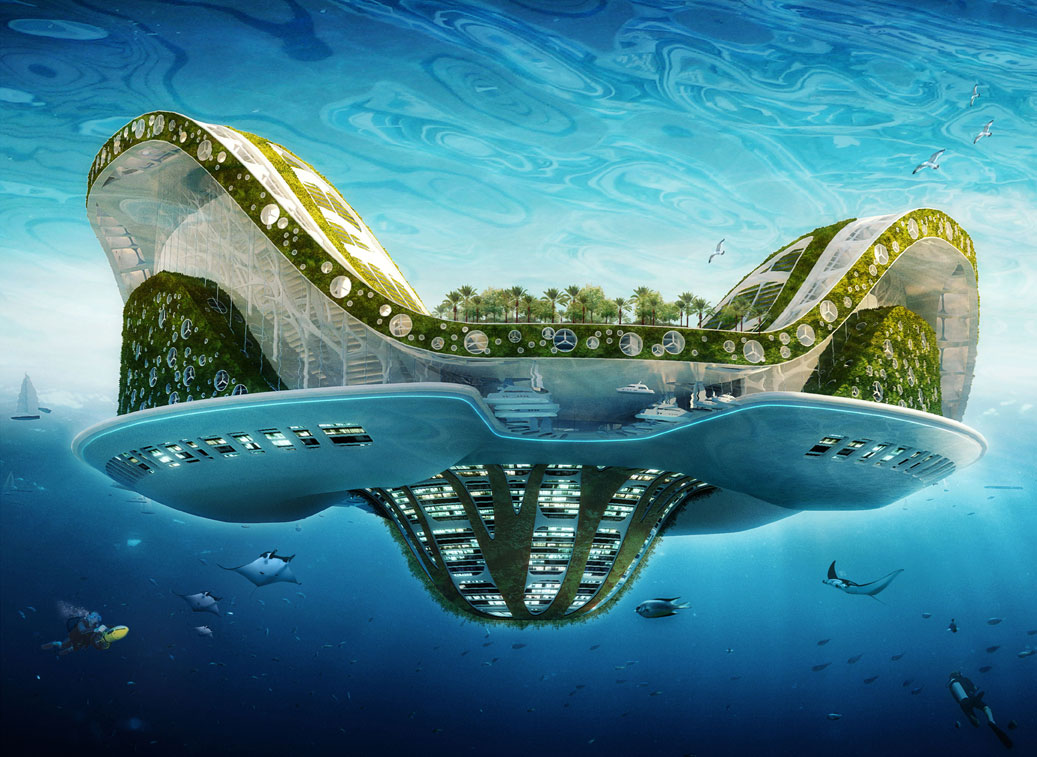
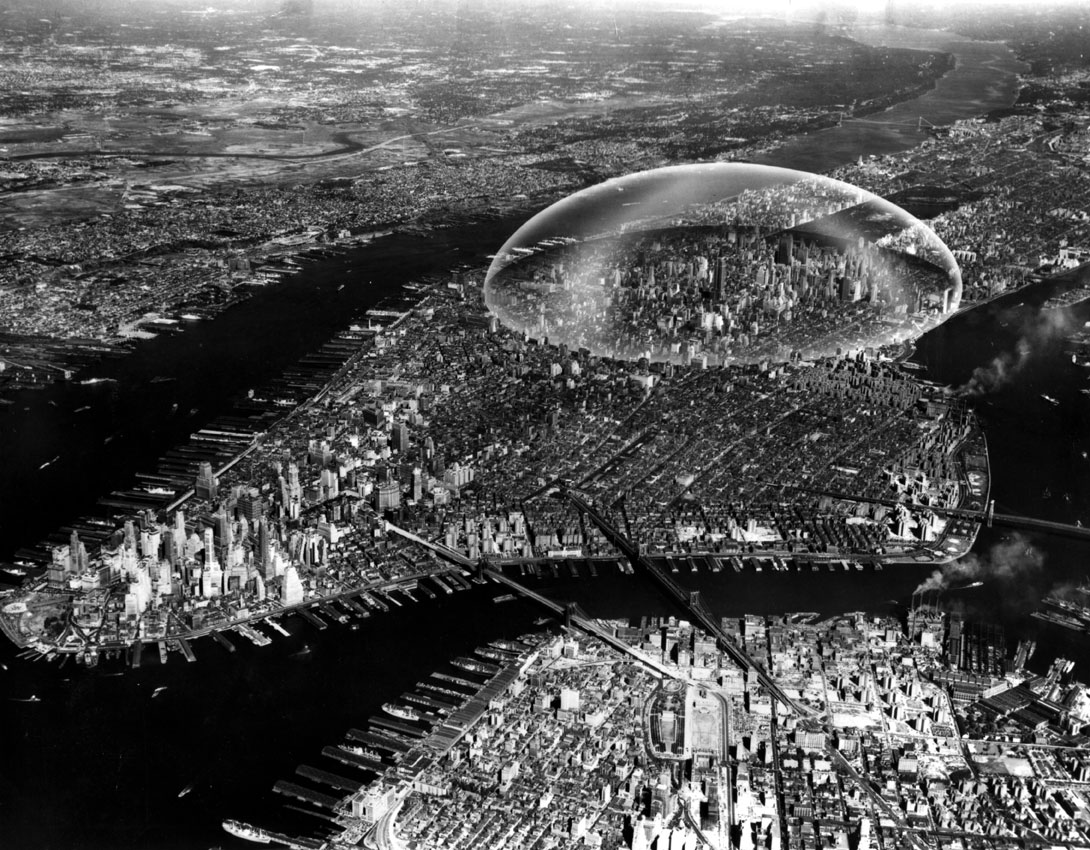
Cities are the largest energy consumers, and urbanisation continues to increase worldwide. Zero waste, zero emission, zero energy are the creeds of the present. Already in the 1950s, Richard Buckminster Fuller and Shoji Sadao sketched the utopia of a climatically self-sufficient reorganisation of the city with their Dome over Manhattan. In this vision, a huge dome covers a large proportion of the island. Today, these encapsulations from the outside are already being realised in conjunction with the design of internal climate worlds, whether on the scale of large building complexes or energy-self-sufficient cities such as Masdar by Norman Foster. Other concepts show that, against the background of imminent climate disasters, the urban system is conceived of increasingly as an autarchic unit, sealed from the outside world, and confronted with the need for the self-contained management of its ecological resources. This debate is carried to the furthest extreme by Vincent Callebaut’s conception for a floating city – Lilypad – intended as a haven for climate refugees.

Nature capsules

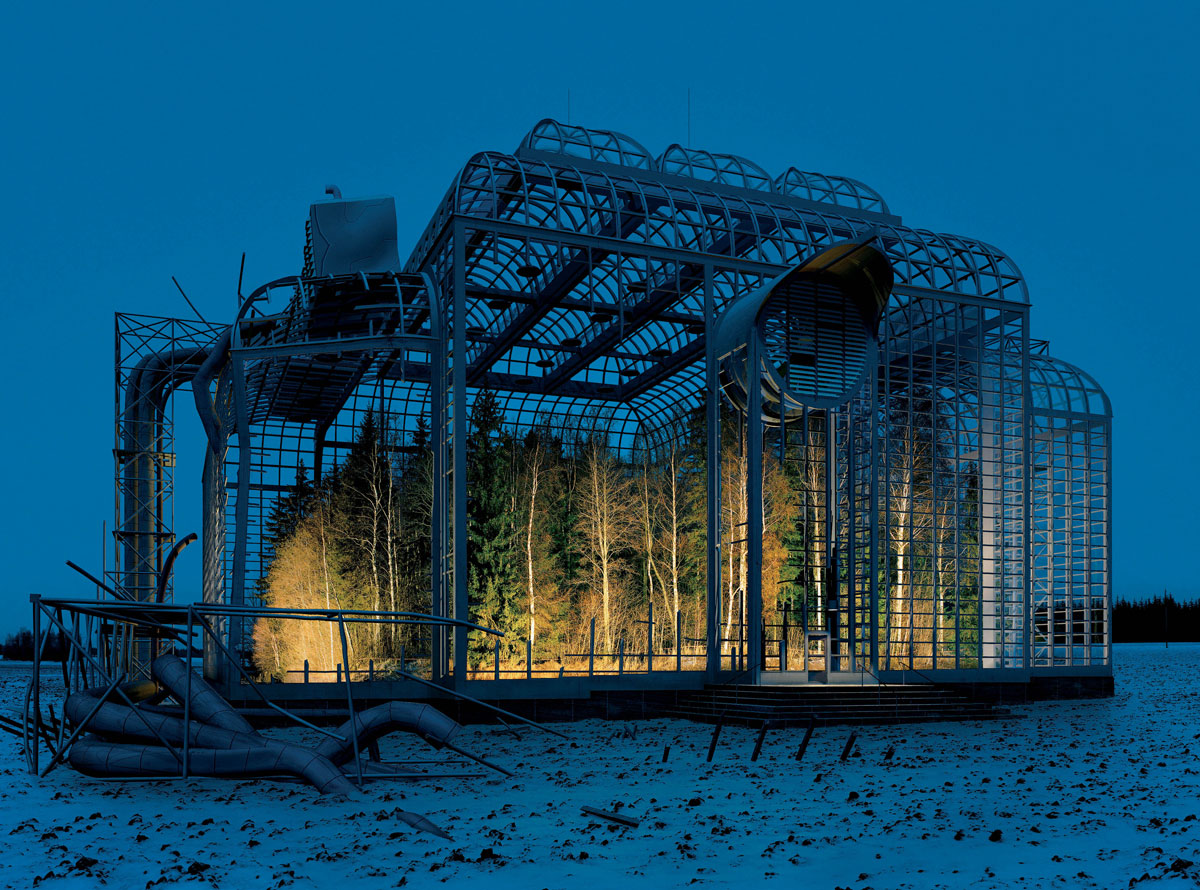
Just as the city is to be protected from the climatologically changing environment, nature is also to be elevated into a sphere of safe artificiality and preserved in nature capsules. Ecosystems are replicated by human hand on the micro level and sealed off from the outside. A concept which initially presents itself as a protective mechanism robs the flora and fauna assembled within it of their connection to the macrolevel ecosystem: Earth. The question arises: can that which is being protected inside such a capsule still be thought of as nature? Or is it a deceptively genuine human artefact? These considerations are made very vivid in Ilkka Halso’s photo series Museum of Nature, consisting of digital montages which insert forests, lakes and rivers into imaginary museum buildings.

Atmosphere capsules

The maximum scale of adaptive design strategies is reached with geo-engineering. With chemical or physical interventions, attempts are made to control climatological, geochemical and biochemical systems actively on the global level, and thus to moderate the climate. The historical forerunners of this development are psychoanalyst Wilhelm Reich’s para-scientific Cloudbusters and the U.S. Army’s Project Cirrus, both of which sought to influence the weather technically by different means. Today, various well-known scientists and research institutes are working on large-scale interventions aiming to protect the global climate from negative influences. Utopian proposals are juxtaposed with feasible projects such as endeavours to reduce global warming through the use of reflective white paint on roofs and streets. To date it is impossible to calculate the consequences of such far-reaching interventions, and they are nowhere near realisation. Yet the fact that they are discussed seriously indicates how close climatological developments have already come to the point where emission-reduction strategies become obsolete.

Participating artists, designers and architects: Anderson Anderson Architecture (US), Ant Farm (US), Richard Buckminster Fuller (US), Vincent Callebaut (B), Juan Downey (US), David Greene (GB), Tue Greenfort (DK), Ilkka Halso (FI), Haus-Rucker-Co (AT), Ron Herron (GB), Kouji Hikawa (JP), Christoph Keller (D), Lawrence Malstaf (B), Gustav Metzger (D), N55 (DK), Lucy Orta (GB), Michael Rakowitz (US), Pablo Reinoso (ARG/F), Shoji Sadao (US), Tomás Saraceno (planet earth), Werner Sobek (D), Jan-Peter E.R. Sonntag (D), Matti Suuronen (FI), Ingo Vetter (D).

Press release from the Museum fur Kunst und Gewerbe website [Online] Cited 17/08/2010 no longer available online


Pablo Reinoso (Argentine-French, b. 1955) 'La Parole' 1998


Pablo Reinoso (Argentine-French, b. 1955)
La Parole
1998
Fabric and electrically powered ventilators
length. 620cm, diam. 200cm
Pablo Reinoso
© Pablo Reinoso Studio


Lucy Orta (English, b. 1966) 'Refuge Wear – Habitent' 1992


Lucy Orta (English, b. 1966)
Refuge Wear – Habitent
1992
Polyamide encased in aluminium, polar fleece, aluminium tent poles, whistle, lantern, compass
125 x 125 x 125cm
Galleria Continua
Photo: Galerie Anne de Villepoix, Courtesy Galleria Continua, San Gimignano / Beijing / Le Moulin


Vincent Callebaut (Belgium, c. 1977) 'Lilypad, A Floating Ecopolis for Climate Refugees' 2008


Vincent Callebaut (Belgium, c. 1977)
Lilypad, A Floating Ecopolis for Climate Refugees
2008
Digital rendering, dimensions variable
© Vincent Callebaut Architectures


Richard Buckminster Fuller, Shoji Sadao. 'Dome over Manhattan' c. 1960


Richard Buckminster Fuller, Shoji Sadao
Dome over Manhattan
c. 1960
Silver gelatine print
34.9 x 46.7cm
Courtesy the Estate of R. Buckminster Fuller


Ilkka Halso (Finnish, b. 1965) 'Museum I' 2003


Ilkka Halso (Finnish, b. 1965)
Museum I
2003
from the work Museum of Nature


Museum für Kunst und Gewerbe Hamburg
Steintorplatz, 20099 Hamburg

Opening hours:
Tuesday to Sunday 10am – 6pm
Thursday 10am – 9pm

Museum fur Kunst und Gewerbe Hamburg website

LIKE ART BLART ON FACEBOOK

Back to top

Review: ‘The Water Hole’ exhibition by Gerda Steiner and Jorg Lenzlinger at ACCA (Australian Centre for Contemporary Art), Melbourne

Exhibition dates: 23rd December, 2008 – 1st March, 2009


“Warning. Watch your step while gazing at distant view.”

Sign at entrance to the exhibition


Gerda Steiner and Jorg Lenzlinger. Entrance to 'The Waterhole' exhibition at ACCA, Melbourne, 2009


Gerda Steiner (Swiss, b. 1967) and Jorg Lenzlinger (Swiss, b. 1964)
Entrance to The Water Hole exhibition at ACCA, Melbourne
2009
Photo: Marcus Bunyan


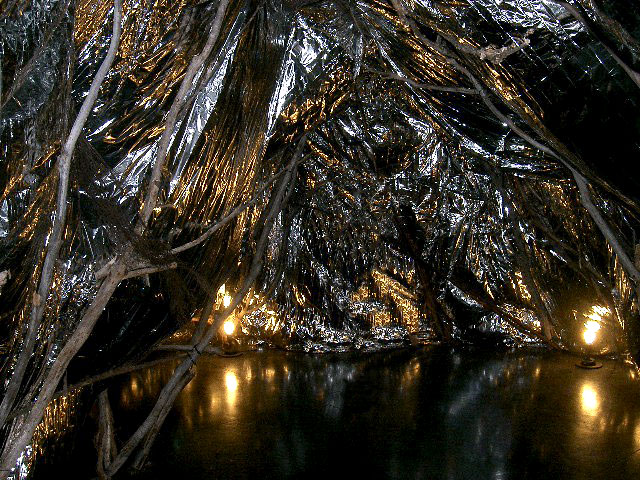
A cave like entrance presents itself to the visitor as they enter the exhibition leading to a long winding tunnel that is lined with silver insulation foil and tree branches, lit by floor mounted electric light bulbs. The foil moves with the natural movement of air causing not a rustling of leaves but of artificial surfaces.

At the end of the tunnel the viewer enters a large installation space, confronted with a effusive pop art Garden of Eden, a Magic Forest.

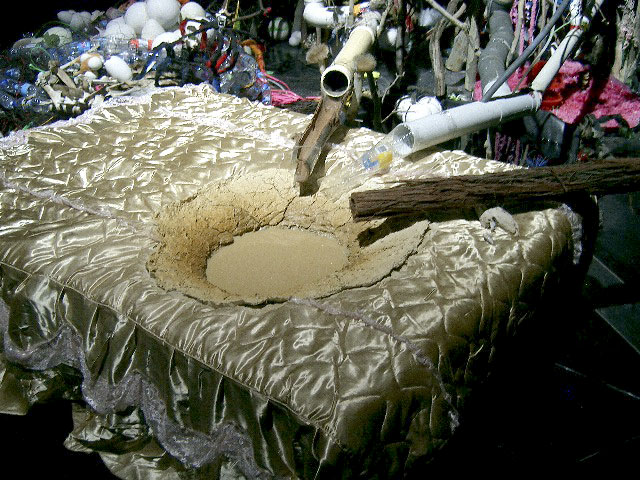
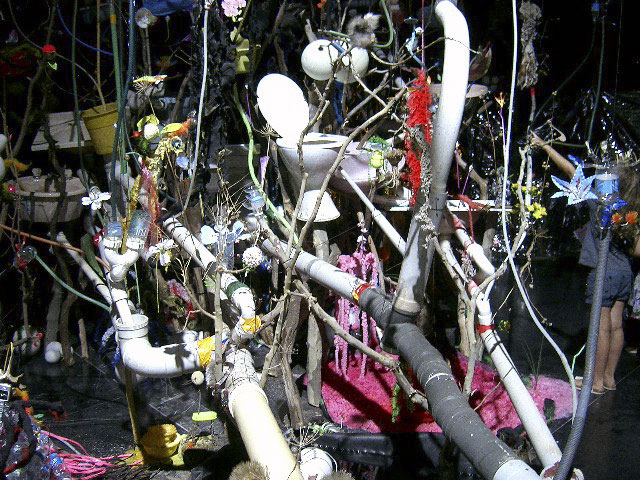
It takes a while to work out what is going on, there are so many elements to the sculptural piece. The main elements are buckets, toilets, basins and drainage pipes, plumbing fittings that all lead to a bed with a drying dam in the centre of a satin bedspread: the ‘waterhole’ of the exhibition title. The waterhole is fed by water dripping from a medical bag suspended high in the air above the dam, a nice touch. The rest of the forest and pipes are dry. The installation comments on our water supplies and the ‘technologies of production’ (Foucault) that permit us to produce, transform or manipulate things. We might install rainwater tanks to catch water but if there is no water to catch in the first place then we are in trouble: we make our bed and have to lie in it, the empty basins like our catchment areas, dry and bleak.

Other elements of the forest have an environmental theme, the installation developed by the artists in response to the extensive drought most of Australia (and it particular Melbourne) is experiencing. Here are spiders with hairy legs and mobile phones for bodies infesting the installation, plumbing fittings with natural seeds sprouting from their ends, brightly coloured crystal forms fed each day with water by gallery staff so that they grow. An upside down umbrella with Polar bear images printed on it’s material has imaginary water draining down a bamboo pipe into a bucket; empty water bottles form a large nest with broken eggs inside; artificial plants, bones, crabs, seaweed and flying stuffed owls are form some of the other elements in the installation.

Climbing a few steps we enter a ‘bird’ watching gallery replete with binoculars to observe the humans in the forest as much as the forest itself. A water cooler sits incongruously in this watching space, silent and somehow complicit in its ironical presence.

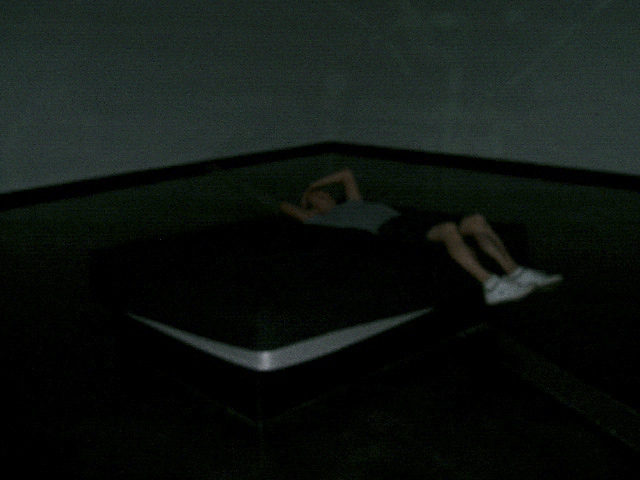
The viewer then moves to another room. 4 video projectors display another water themed installation on the gallery walls, the videos meeting in the middle of the walls and reflecting each other. Ambient music accompanies images of rain!, spurting water, owls and plastic pipes, plastic flowers and plastic horses as the viewer relaxes on a waterbed in the middle of the space. The effect of the music and images is quite meditative when combined with the gentle rocking of the waterbed, the projections of the video forming kaleidoscopic ‘Northern lights’ on the ceiling of the gallery. This room is an extension of the themes of the large installation.

Moving forward the viewer enters another room – the meditation room. This room is most effective in encouraging contemplation of the different planes of our existence and our orientation in (environmental) space. Three beds are present, one suspended from the ceiling by four metal rods. Climbing onto this bed the movement from side to side caused by your weight makes you feel seasick and slightly disorientated. Above the second table is a wonderful mobile made of twigs, branches, dried leaves, plastic flowers, beads, plastic bags, baby dummies and jewellery moving gently in the breeze. Lying on the table with the mobile about a foot above your head things drift in and out of view as you change the focus of your eyes – close, mid, far and then onto the moving shadows on the ceiling.

The most effective bed has a small meteorite suspended in a net bag above it. The viewer slides underneath the ‘rock’ placing the meteorite about a foot or so above your face. The meteorite is brown, dark and heavy, swinging slightly above your ‘third eye’. You feel its weight pressing down on your energy, on your life force and you feel how old this object is, how far it has traveled, how fragile and mortal you are. It is a sobering and enlightening experience but what an experience it is!

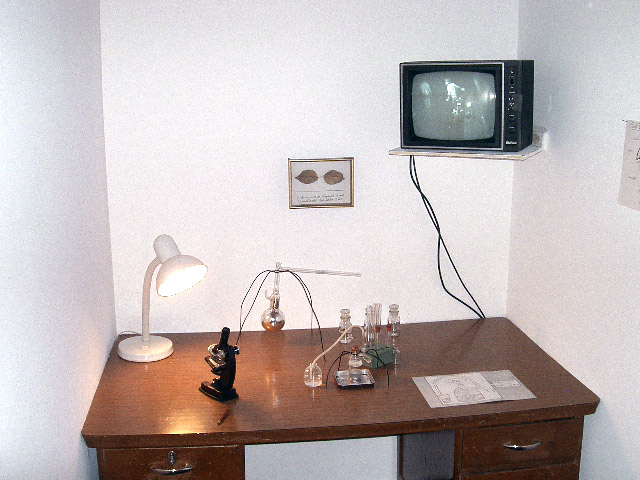
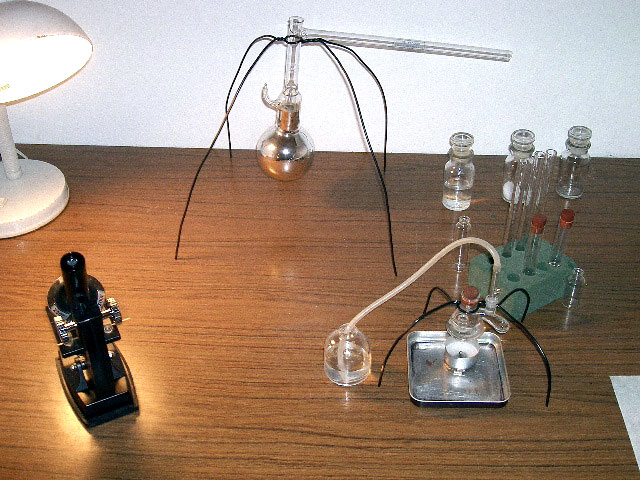
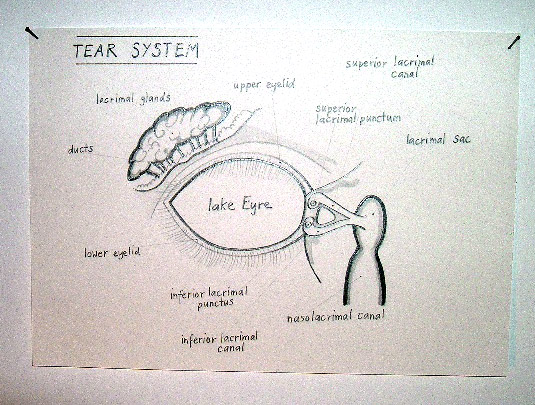
Entering the final room small colour photos of people being hugged from behind and lifted into the air, laughing, line the gallery walls. These are the weakest elements of the exhibition and seem to bear no relation to all that has passed before. Running off of this gallery is an alcove that is a dead end, a full stop to the exhibition with an installation Desalination plant for tears. A cheap Formica desk sits at the end of the space. Perched above the desk is a tv showing live black and white images of the earlier bird watching gallery – the watcher now the watched. On the desk itself is a microscope (with slide of human tears), pencil, a candle for heat under a glass flask of water (looking like a spider from the large installation!) and various glass test tubes and vials. A diagram explains the working of a Desalination plant for tears, an analogous reference to the desalination plant earmarked for Wonthaggi, south-east of Melbourne. Irony is present (again) in the 2 leaves grown at Singapore Airport by desalinated water (2008), two framed, brown dead leaves, and in the Tear system diagram where glands have turned into forests and the eye into a lake (see below).

This is a magical and poignant exhibition that is a joy for children and adults alike. Children love it running around exploring the environments. Adults love it for it’s magical, witty and intelligent response to the problems facing our planet and our lives. Go and enjoy this interplanetary collision. Highly recommended!

Dr Marcus Bunyan


Many thankx to the Australian Centre for Contemporary Art for allowing me to publish the photographs and text in the posting. All photographs © Marcus Bunyan


Gerda Steiner (Swiss, b. 1967) and Jorg Lenzlinger (Swiss, b. 1964) 'The Waterhole' 2009 (detail)


Gerda Steiner (Swiss, b. 1967) and Jorg Lenzlinger (Swiss, b. 1964)
The Water Hole (detail)
2009
Photo: Marcus Bunyan


Gerda Steiner (Swiss, b. 1967) and Jorg Lenzlinger (Swiss, b. 1964) 'The Waterhole' 2009 (detail)


Gerda Steiner (Swiss, b. 1967) and Jorg Lenzlinger (Swiss, b. 1964)
The Water Hole (detail)
2009
Photo: Marcus Bunyan


Gerda Steiner (Swiss, b. 1967) and Jorg Lenzlinger (Swiss, b. 1964) 'The Waterhole' 2009 (detail)


Gerda Steiner (Swiss, b. 1967) and Jorg Lenzlinger (Swiss, b. 1964)
The Water Hole (detail)
2009
Photo: Marcus Bunyan


Gerda Steiner and Jorg Lenzlinger. Installation view of waterbed at 'The Waterhole' exhibition at ACCA, 2009


Gerda Steiner (Swiss, b. 1967) and Jorg Lenzlinger (Swiss, b. 1964)
Installation view of waterbed at The Water Hole exhibition at ACCA, Melbourne
2009
Photo: Marcus Bunyan


Gerda Steiner and Jorg Lenzlinger. Installation view of 'Desalination plant for tears' (detail) from 'The Water Hole' exhibition at ACCA, Melbourne, 2009

Gerda Steiner and Jorg Lenzlinger. Installation view of 'Desalination plant for tears' (detail) from 'The Water Hole' exhibition at ACCA, Melbourne, 2009


Gerda Steiner (Swiss, b. 1967) and Jorg Lenzlinger (Swiss, b. 1964)
Installation view details of Desalination plant for tears from The Water Hole exhibition at ACCA, Melbourne
2009
Photos: Marcus Bunyan


The end of 2008 saw the launch of The Water Hole, a major installation by renowned Swiss artists Steiner and Lenzlinger. The artists created a fantasia of ecology in ACCA’s large hall. In the side galleries a flow out of projects including meteors suspended over beds, a crystal room and a desalination laboratory. The Water Hole, devised specifically for ACCA, referenced Australia’s acute climate challenges as well as the pressure of global waste. The project created a story of place, a fable if you like. And in the tradition of the fable, the artists employed animals, plants and inanimate objects to tell a story that has a moral and ethical dimensions. 

The Water Hole was a big story – filled with pleasurable things but also with the message of peril.  The artists created environments that enabled the visitor to consider and sense our place in history, and our attention to striking a balance between our consumptive desiring and nature.

Text from the ACCA website


Gerda Steiner (Swiss, b. 1967) and Jorg Lenzlinger (Swiss, b. 1964) Diagram from 'Desalination plant for tears' (detail) from the exhibition 'The Water Hole' at ACCA, Melbourne, 2009


Gerda Steiner (Swiss, b. 1967) and Jorg Lenzlinger (Swiss, b. 1964)
Diagram from Desalination plant for tears from the exhibition The Water Hole at ACCA, Melbourne
2009
Photo: Marcus Bunyan


Australian Centre for Contemporary Art (ACCA)
111 Sturt Street
Southbank
Victoria 3006
Australia

Opening hours:
Tuesday to Friday 10am – 5pm
Weekends and Public Holidays 11am – 5pm
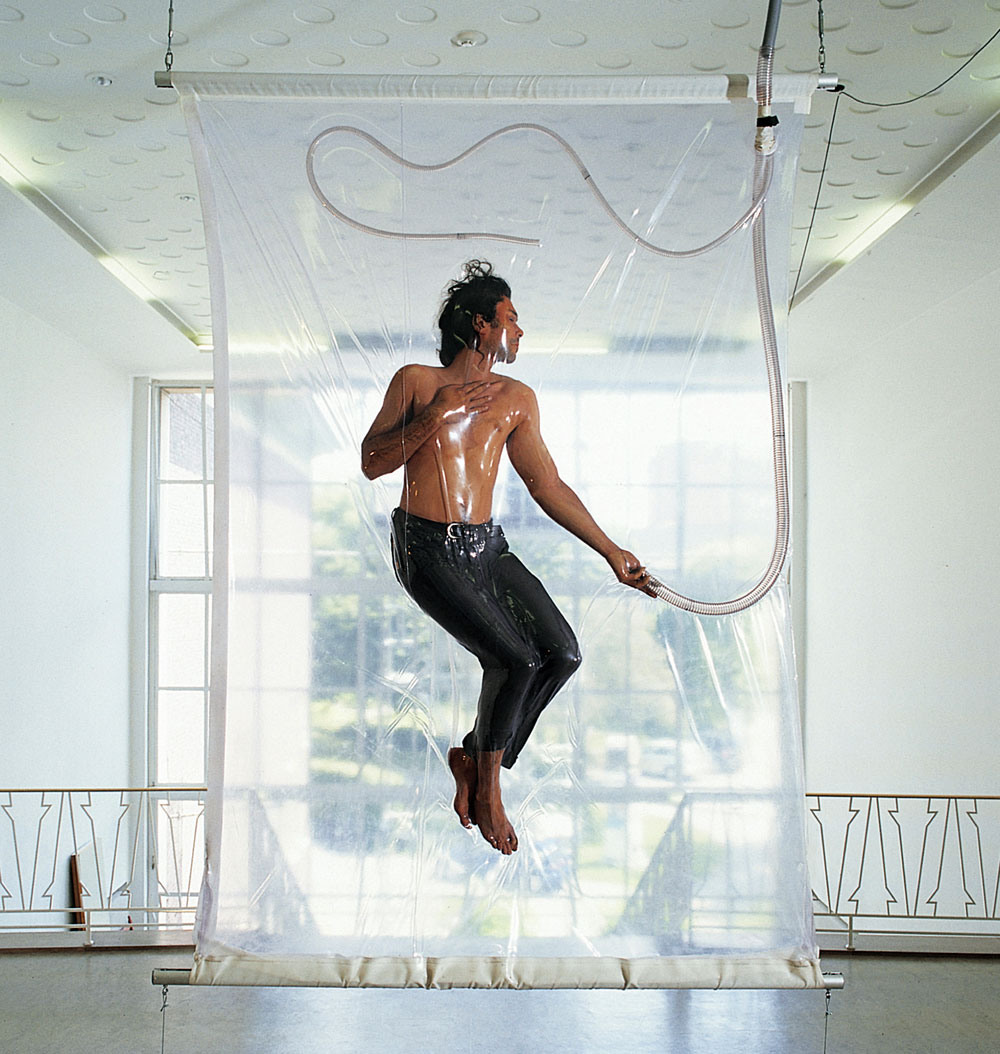
Monday by appointment
Open all public holidays except Christmas Day and Good Friday
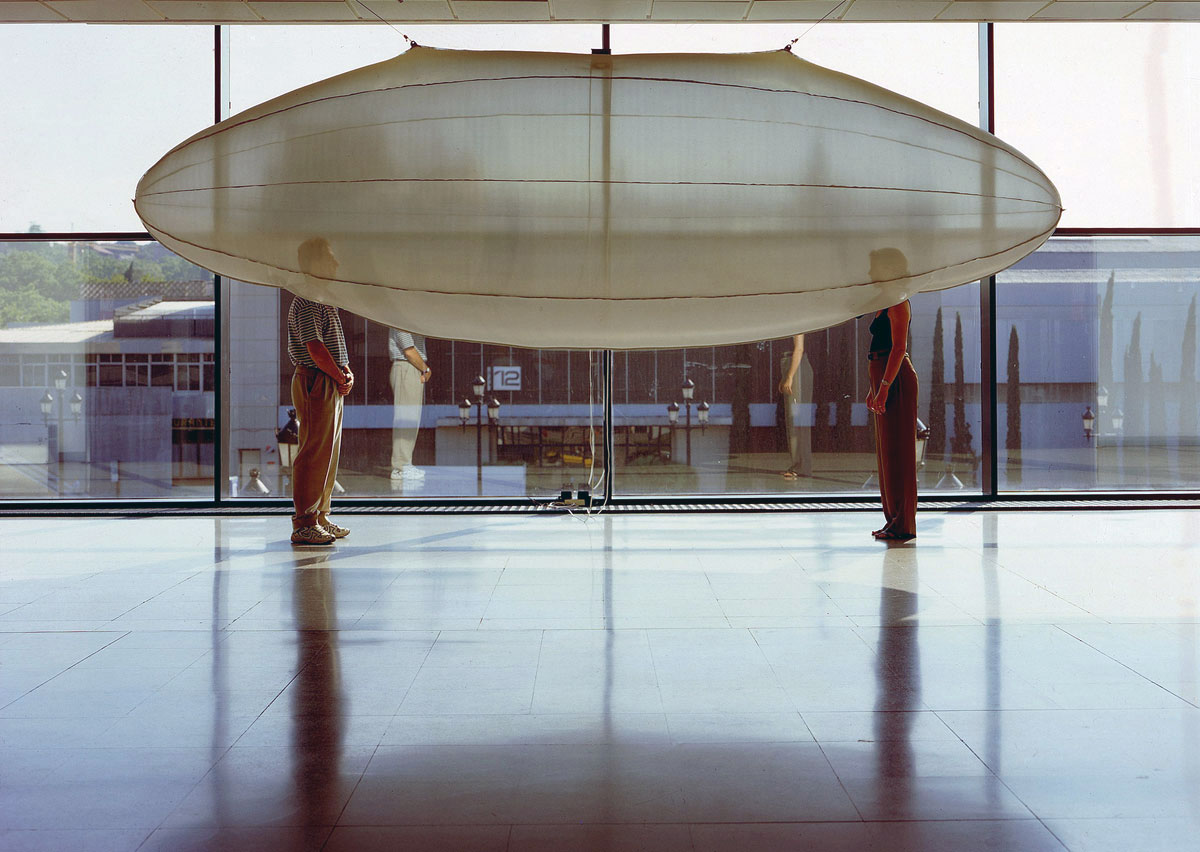
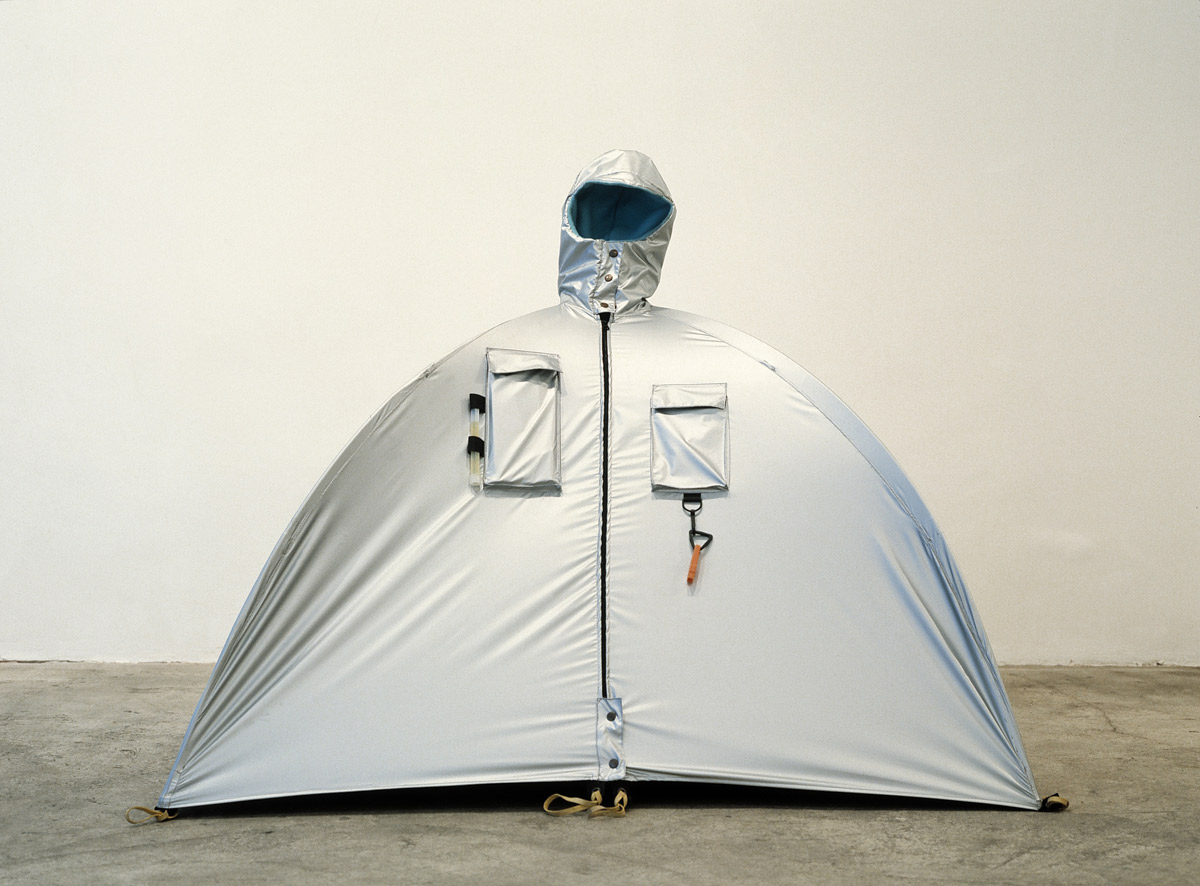
ACCA website

Gerda Steiner and Jorg Lenzlinger website

LIKE ART BLART ON FACEBOOK

Back to top