Exhibition: ‘Baldwin Lee’ at the Ogden Museum of Southern Art, New Orleans

Exhibition dates: 5th October, 2024 – 16th February, 2025


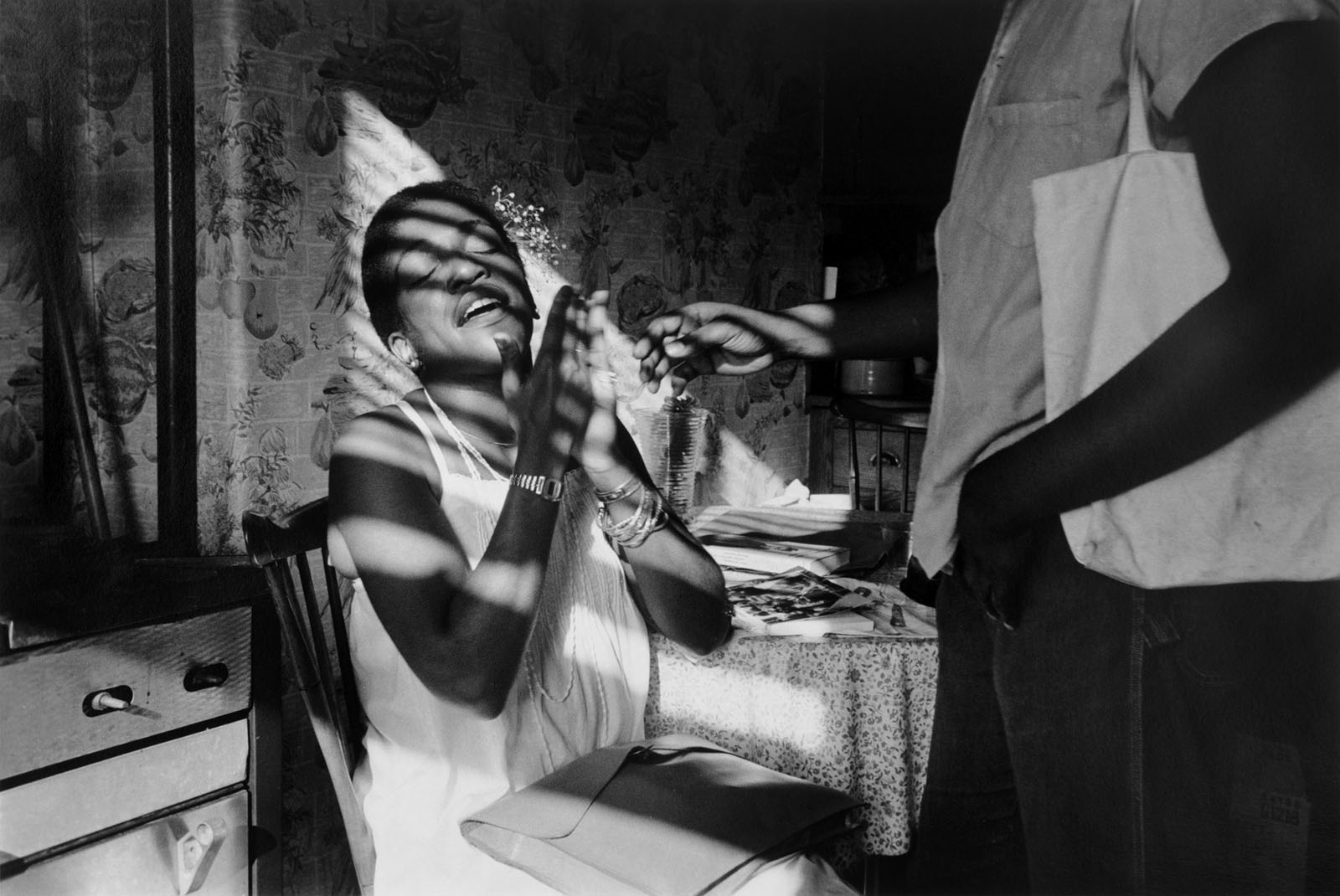
Baldwin Lee (Chinese-American, b. 1951) 'Untitled' 1983-1989 from the exhibition 'Baldwin Lee' at the Ogden Museum of Southern Art, New Orleans


Baldwin Lee (Chinese-American, b. 1951)
Untitled
1983-1989
Vintage gelatin silver print
16 x 20 inches
Collection of the artist, Courtesy of Howard Greenberg Gallery


“A good image is created by a state of grace. Grace expresses itself when it has been freed from conventions, free like a child in his early discovery of reality. The game is then to organise the rectangle.”


Chilean photographer Sergio Larraín Echeñique


figure ground

I have written previously on the excellent work of the Chinese-American photographer Baldwin Lee in his eponymously named exhibition at Joseph Bellows Gallery in 2022. Since then I have spent further time with his photographs, specifically during recent research for my posting on the exhibition A Long Arc: Photography and the American South since 1845 at the Virginia Museum of Fine Arts, Richmond (October 2024 – January 2025) and then again for this posting.

There are more photographs in this posting from Lee’s journey of discovery through the American South in the 1980s photographing Black communities with this 4 x 5 view camera, a journey that was as much a revelation for the people of those communities (literally, shining a light on their existence) as it was for the photographer himself (a self-reflective understanding of what was important to the photographer, discovering his subject).

“The process I adopted in successive road trips during my seven-year project involved splitting time between revisiting places I had previously photographed and seeking out new locations. The families who lived on this street in Rosedale, Mississippi, knew me from prior visits. Children were always thrilled at my arrival, and they delighted in taking turns shrouding their heads under my black focusing cloth that allowed them to peer at the dim image projected on the ground glass of my view camera.” (Text from the Guardian website)

This is what is so important about Baldwin Lee’s photographs. He grounds the figures in his photographs in the glass of his large format camera (standing proud) even as he grounds his figures in the history and culture of the American South, its Black history, its joy and impoverishment. As he himself says, his photographs are “personal stories about events that are momentous”, events in the lives of the participants inflected by how the photographer approaches his subject matter, how he interacts with what is in front of him, influenced by his own history of growing up a Chinese-American and by what he had already thought and felt about the subject, the American South.

Lee’s pictorial compositions, his “photographic seeing” (John Szarkowski’s phrase) is concerned with a felt response to a visual problem… how to conceive a cogent, empathetic picture structure both choreographically and visually. Adapting Szarkowski we could say that in Lee’s photographs the relationship of figure to figure is as centrally important as the relationship of figure to ground and frame.

Here is compassion, here is empathy, here is focus, stillness, culture, humanity. Here is a “state of grace” existing between the mind and feelings of the photographer and the organisation of the people and stories within the image… so much so that there is often a “revelation of spirit” in the subsequent prints by Lee (after Minor White, one of Baldwin Lee’s teachers).

Thus, Lee’s photographs show an impeccable “balance” in the image between figure and ground (touching the earth) – whether that be compositionally, emotionally or historically.

Dr Marcus Bunyan


Many thankx to the Ogden Museum of Southern Art for allowing me to publish the photographs in the posting. Please click on the photographs for a larger version of the image.
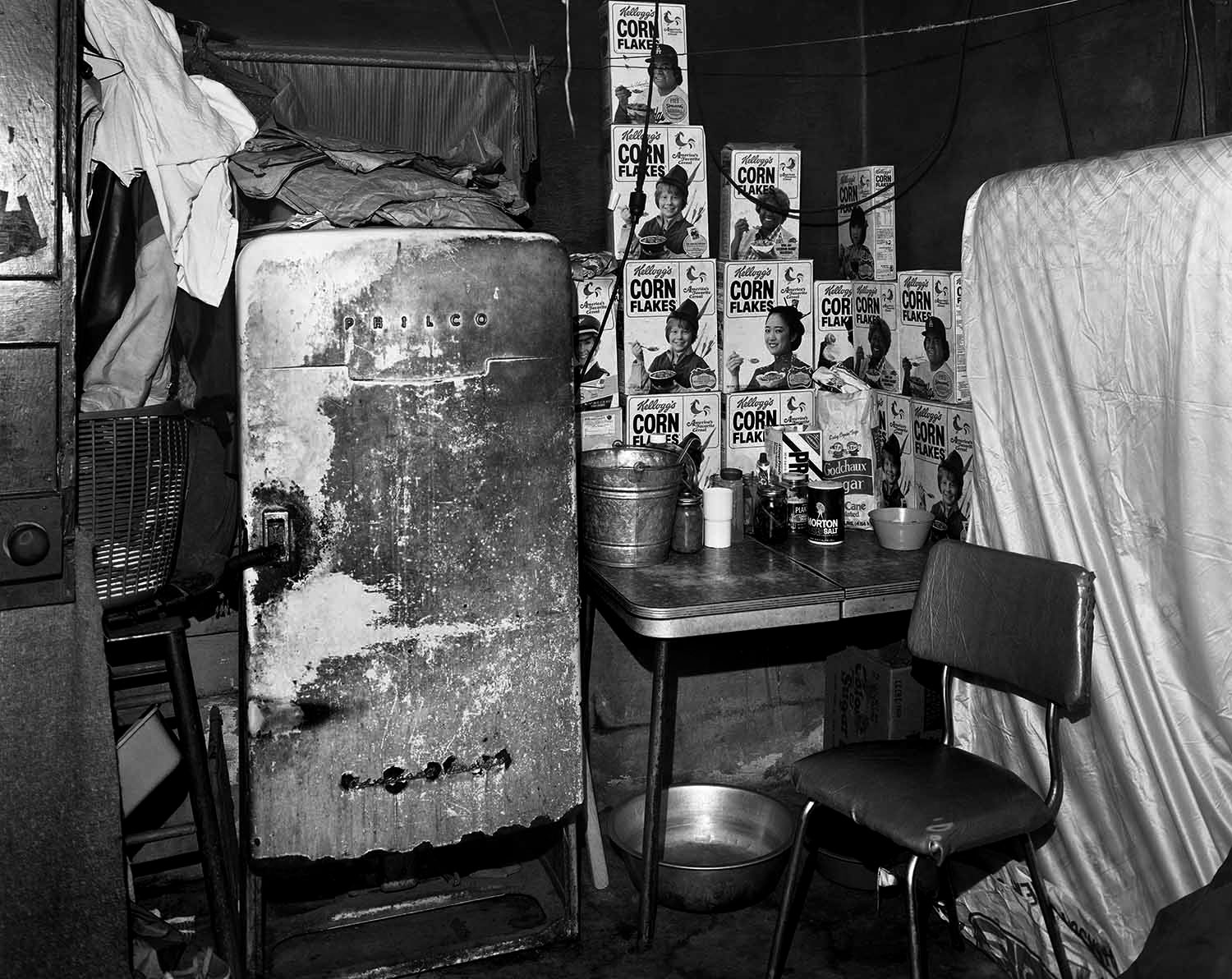


Baldwin Lee (Chinese-American, b. 1951) 'Natchez, Mississippi' 1984 from the exhibition 'Baldwin Lee' at the Ogden Museum of Southern Art, New Orleans


Baldwin Lee (Chinese-American, b. 1951)
Natchez, Mississippi
1984
Vintage gelatin silver print
16 x 20 inches
Collection of the artist
Courtesy of Joseph Bellows Gallery


Is there an image of yours that stands out or is a favourite?

“As I rounded a corner several miles north of Natchez, Mississippi, a stunning sight – a brilliant pink stucco house framed by a blooming wisteria arbor caused me to pull over. I was compelled to knock on the door and found myself and Mr. and Mrs. Fulton, an elderly black couple standing in the cramped dimly lit kitchen whose illumination came from a bare-bulb hanging from the ceiling. Pushed up against a tattered refrigerator was a Formica table upon which provided a foundation for structure made of Kellog Cornflakes boxes. Each box bore a photograph of a beaming face. Boneheadedly I asked Mrs. Fulton if she liked cornflakes. With her gaze lowered she replied no. She then told me she disliked taking meals by herself now that her children had grown and gone.”

Anonymous. “Baldwin Lee,” on the PhotoWork Foundation website Nd [Online] Cited 06/01/2025


Curated Conversation with Baldwin Lee

On Saturday, October 5, Ogden Museum of Southern Art celebrated the opening of “Baldwin Lee” with a free Curated Conversation.

Taking place in the Museum’s historic Patrick F. Taylor Library, Prospect New Orleans’ Director of Curatorial Affairs, Andrew Rebatta, and photographer Baldwin Lee engaged in a lively conversation celebrating “Baldwin Lee,” a landmark solo exhibition at Ogden Museum of Southern Art highlighting Lee’s work.

Lee shared stories from his 5 decade career as a student, educator and practicing artist. Topics of discussion include Lee’s formal education with Minor White and Walker Evans (two of the 20th centuries’ most influential photographers) and his 1980s journey of self-discovery photographing the American South – which resulted in making nearly 10,000 photographs and producing one of the most important visual documents of and about the American South in the past half century.
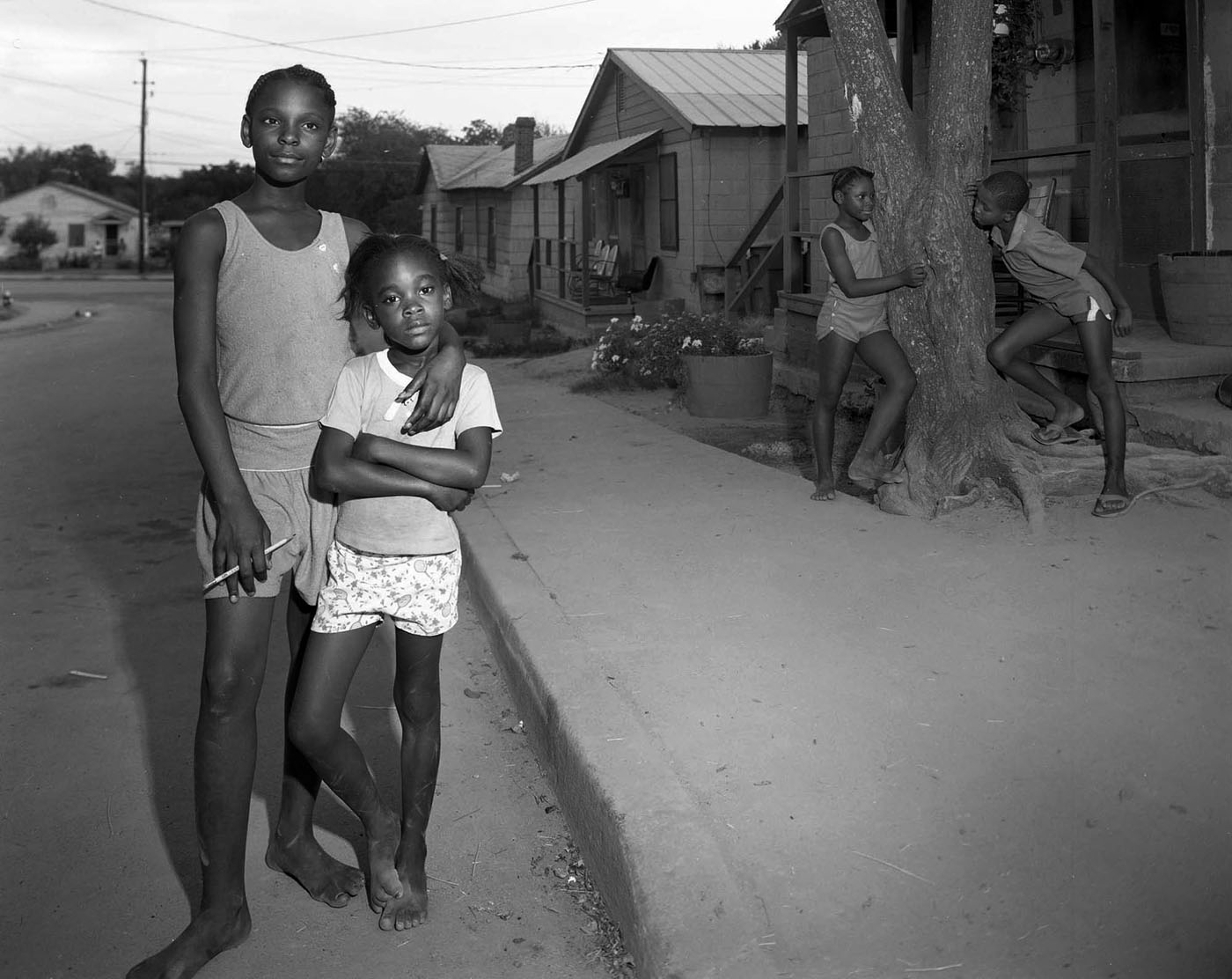
 

Baldwin Lee (Chinese-American, b. 1951) 'Columbia, South Carolina' 1984 from the exhibition 'Baldwin Lee' at the Ogden Museum of Southern Art, New Orleans


Baldwin Lee (Chinese-American, b. 1951)
Columbia, South Carolina
1984
Vintage gelatin silver print
16 x 20 inches
Collection of the artist, Courtesy of Howard Greenberg Gallery


‘Dusty streets and bare feet coexist alongside the South Carolina Statehouse on Gervais Street. A short focal length lens emphasised the difference in scale between the foreground and background figures. An archaic flash bulb, a sealed glass orb containing spun magnesium and pure oxygen, ignited during the exposure illuminating the children closest to the camera. It was positioned higher than the camera and to its right’

Text from The Guardian website
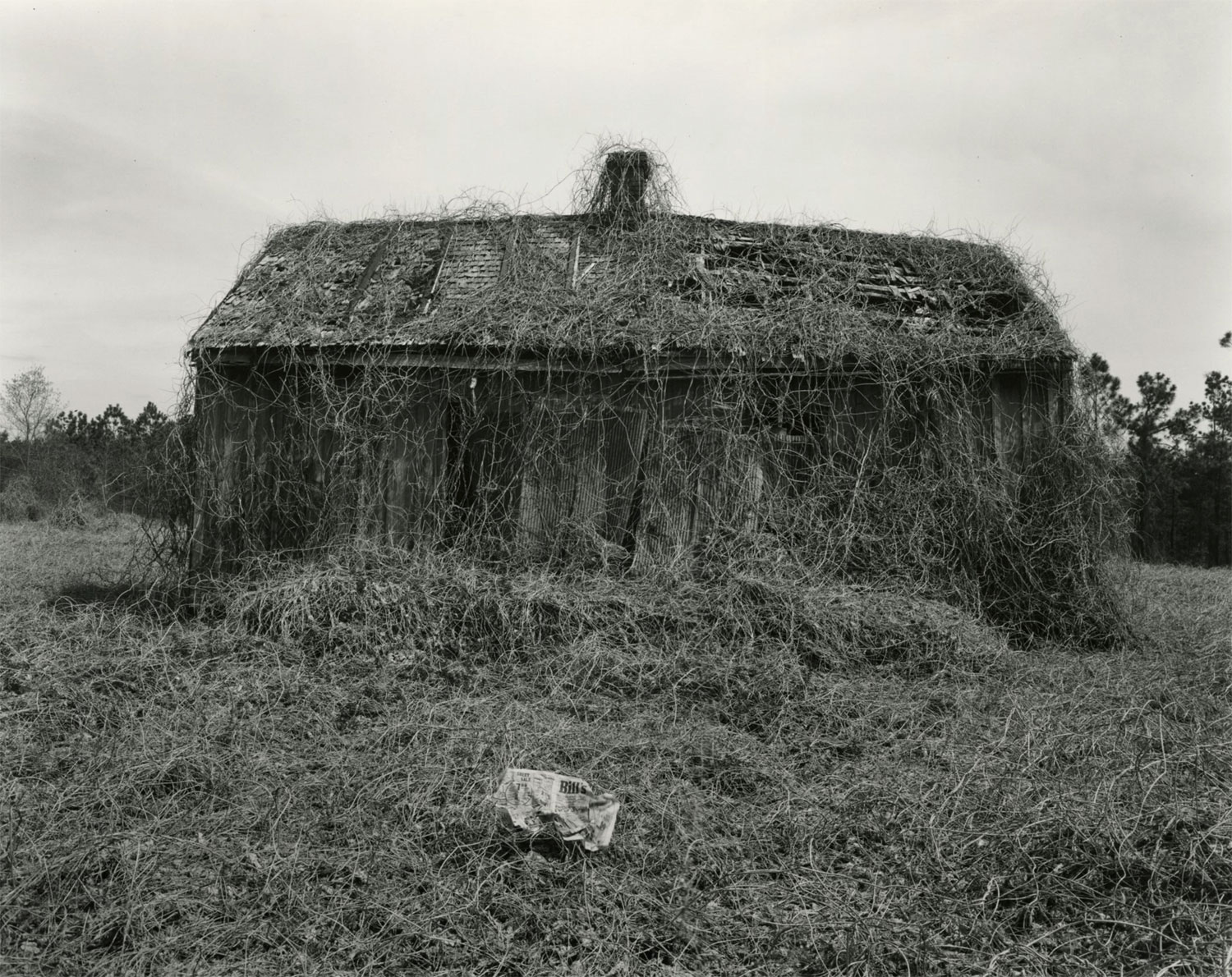
 

Baldwin Lee (Chinese-American, b. 1951) 'Untitled' 1983-1989 from the exhibition 'Baldwin Lee' at the Ogden Museum of Southern Art, New Orleans


Baldwin Lee (Chinese-American, b. 1951)
Untitled
1983-1989
Gelatin silver print
16 x 20 inches
Collection of the artist
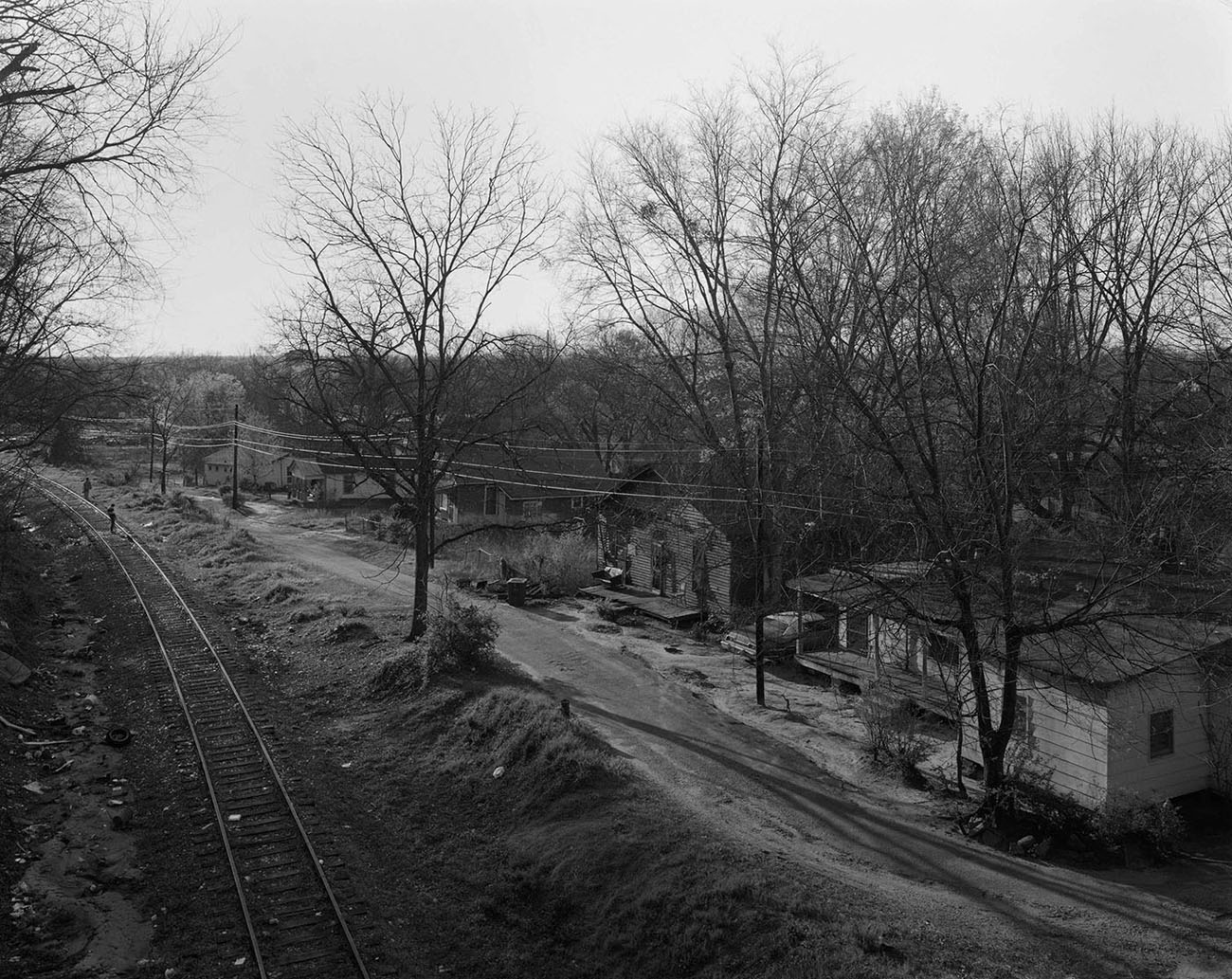
 

Baldwin Lee (Chinese-American, b. 1951) 'Montgomery, Alabama' 1984 from the exhibition 'Baldwin Lee' at the Ogden Museum of Southern Art, New Orleans


Baldwin Lee (Chinese-American, b. 1951)
Montgomery, Alabama
1984
Vintage gelatin silver print
16 x 20 inches
Collection of the artist
Courtesy of Joseph Bellows Gallery


Baldwin Lee (Chinese-American, b. 1951) 'Untitled' 1983-1989 from the exhibition 'Baldwin Lee' at the Ogden Museum of Southern Art, New Orleans


Baldwin Lee (Chinese-American, b. 1951)
Untitled
1983-1989
Gelatin silver print
16 x 20 inches
Collection of the artist
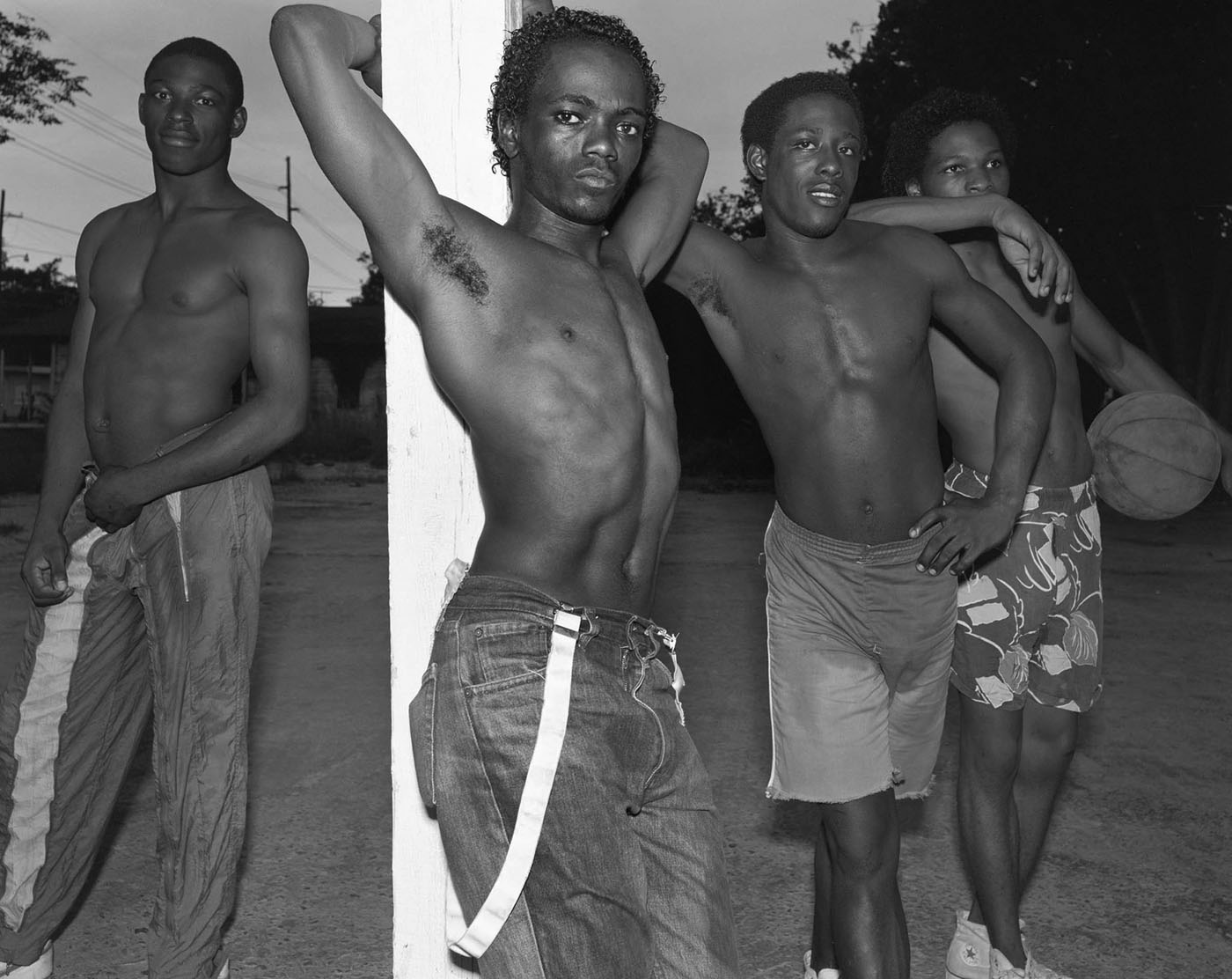
 

Baldwin Lee (Chinese-American, b. 1951) 'Monroe, Louisiana' 1985 from the exhibition 'Baldwin Lee' at the Ogden Museum of Southern Art, New Orleans


Baldwin Lee (Chinese-American, b. 1951)
Monroe, Louisiana
1984
Gelatin silver print
16 x 20 inches
Collection of the artist
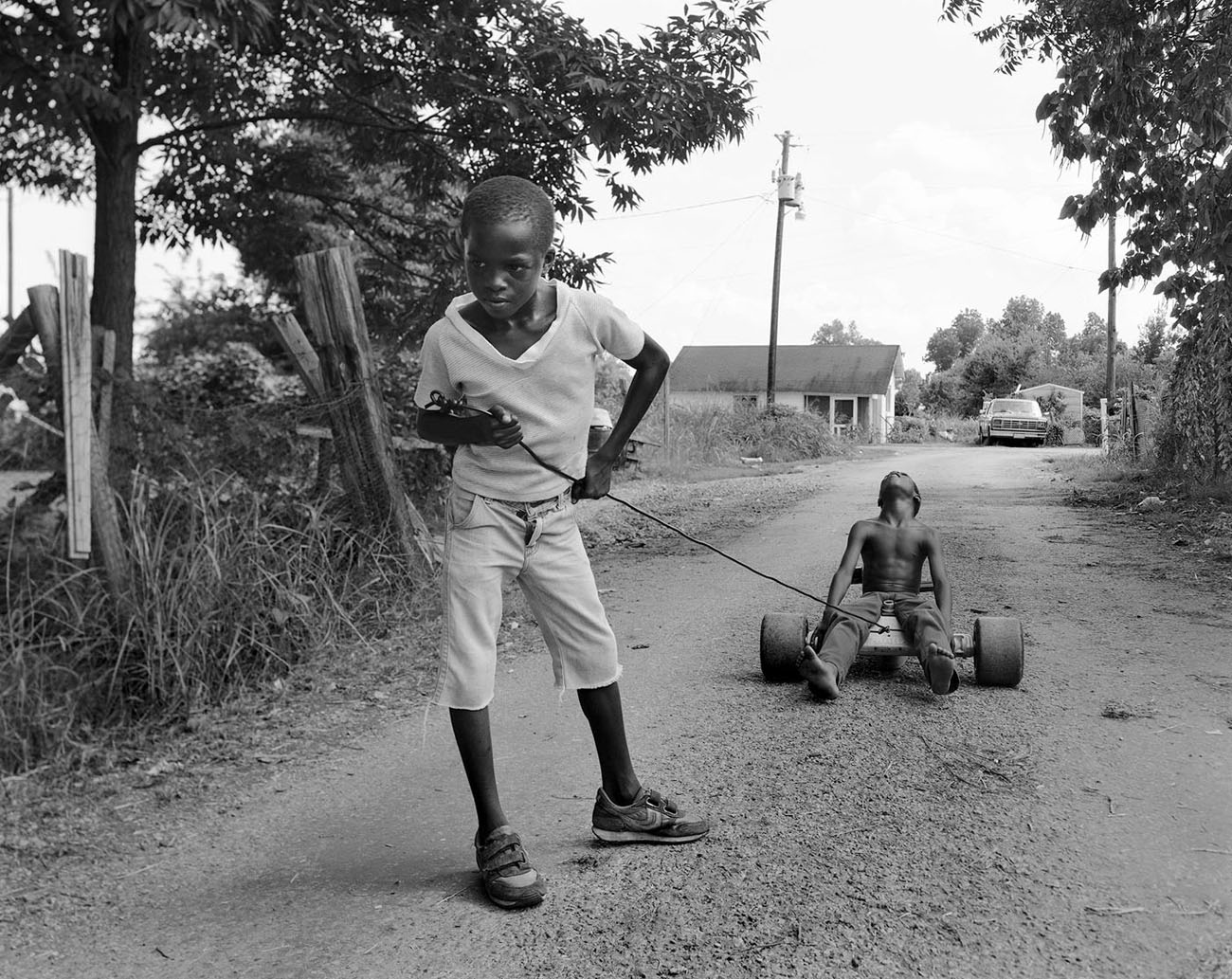
 

Baldwin Lee (Chinese-American, b. 1951) 'Vicksburg, Mississippi' 1984 from the exhibition 'Baldwin Lee' at the Ogden Museum of Southern Art, New Orleans


Baldwin Lee (Chinese-American, b. 1951)
Monroe, Louisiana
1983
Gelatin silver print
16 x 20 inches
Collection of the artist
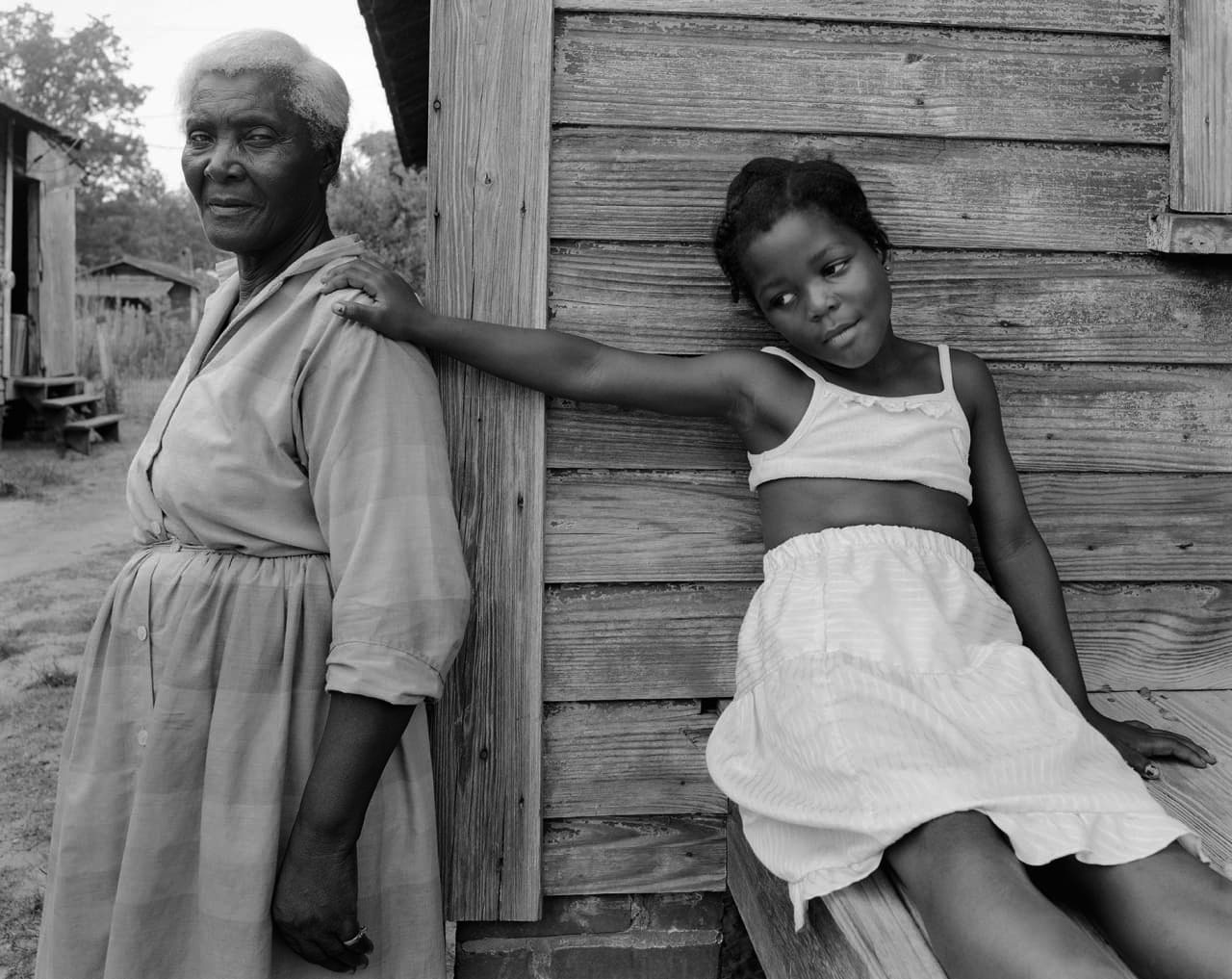
 

Baldwin Lee (Chinese-American, b. 1951) 'Untitled' 1983-1989 from the exhibition 'Baldwin Lee' at the Ogden Museum of Southern Art, New Orleans


Baldwin Lee (Chinese-American, b. 1951)
Untitled
1983-1989
Gelatin silver print
16 x 20 inches
Collection of the artist
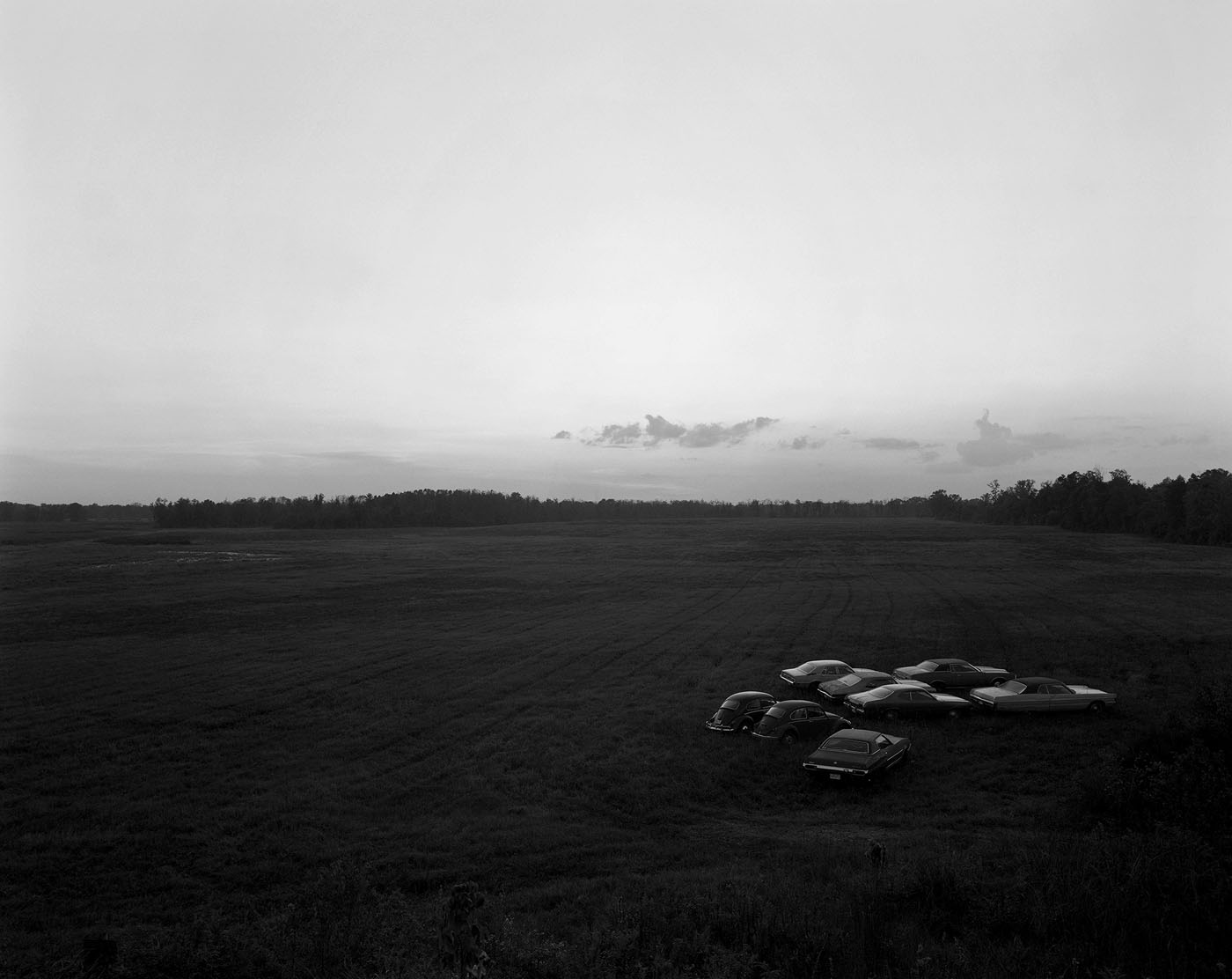
 

Baldwin Lee (Chinese-American, b. 1951) 'Montgomery, Alabama' 1984


Baldwin Lee (Chinese-American, b. 1951)
Montgomery, Alabama
1984
Gelatin silver print
16 x 20 inches
Collection of the artist


‘Southerners savour the sweetness and solace that comes at the end of searingly hot summer days at twilight. The quiet ushers in a deep peace. The other side of tranquility and beauty is ominousness and menace. The viewers of this photograph are invited to interpret its meaning. If there is an inclination toward wholeness this is a scene of contentment. Southerners approach this image with caution. Black southerners would probably not gather so publicly for fear of retributive reactions. White southerners probably have their own reasons to meet’

Text from The Guardian website
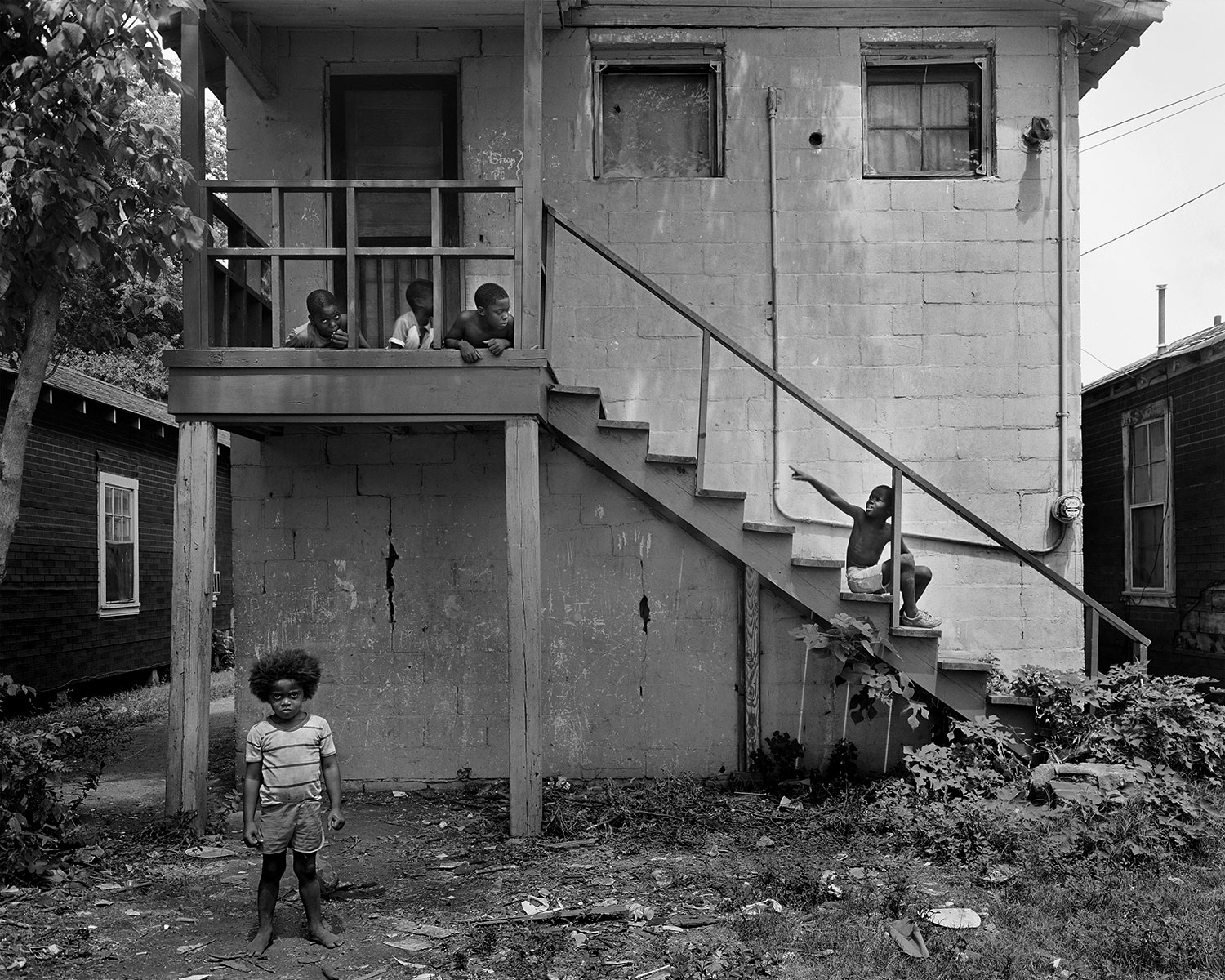
 

Baldwin Lee (Chinese-American, b. 1951) 'Untitled' 1983-1989


Baldwin Lee (Chinese-American, b. 1951)
Untitled
1983-1989
Gelatin silver print
16 x 20 inches
Collection of the artist
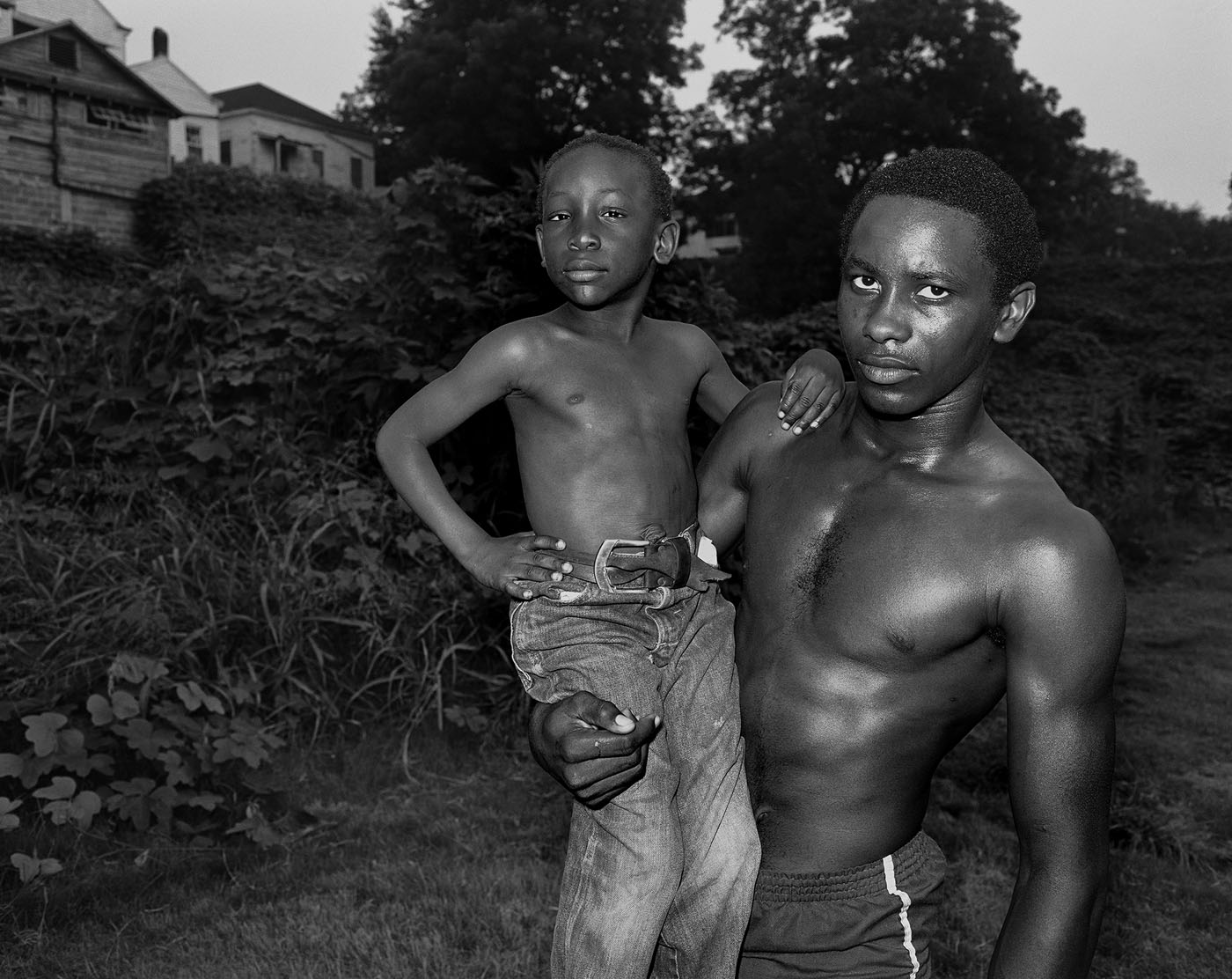
 

Baldwin Lee (Chinese-American, b. 1951) 'Vicksburg, Mississippi' 1983


Baldwin Lee (Chinese-American, b. 1951)
Vicksburg, Mississippi
1983
Gelatin silver print
20 x 16 inches
Collection of the artist


Baldwin Lee was born in Brooklyn, New York and raised in Manhattan’s Chinatown. He studied photography at the Massachusetts Institute of Technology (M.I.T.) with photographer Minor White. Later, he would receive an MFA from Yale School of Art, where he studied with photographer Walker Evans. In 1982, Lee became the first Director of Photography within the Art department at the University of Tennessee. The following year, he set out from Knoxville with a 4 x 5 view camera on a journey of self-discovery photographing his adopted homeland – the American South.

Lee’s artistic goal was to partially re-trace and re-photograph the 1930s-40s routes made across the South by his mentor Walker Evans. Unlike Evans’ iconic depression-era photographs, Lee would eventually focus on documenting Black Americans, many of whom were living in poverty on the fringes of society. Over the next seven years, Lee traveled thousands of miles crisscrossing the South, making nearly 10,000 photographs – producing one of the most important visual documents of and about the American South in the past half century.

With this work, Lee had found his primary subject, and credits his many years of working within Black communities throughout the South as having a “political” effect on his life and art. The compassion Lee felt for those he photographed resonates within his work. Although, Lee’s 1980s photographs were known and respected by his fellow photographers and collectors, until recently this work has remained largely unknown and under-appreciated by a wider public.

In the fall of 2022, Hunter’s Point Press published “Baldwin Lee,” a book consisting of the artist’s 1980s Southern photographs. The book has since become an instant classic and was shortlisted as one of the best photo books of 2022 by “Aperture Magazine,” “TIME” and the International Center for Photography. The first edition of “Baldwin Lee” sold out in less than a month and is presently on its third edition of publication. The book’s success led to solo exhibitions at Howard Greenberg Gallery, New York City, Joseph Bellows Gallery, La Jolla, California and David Hill Gallery, London, England. After nearly 40 years, Baldwin Lee is finally being recognized for his groundbreaking work.

The exhibition Baldwin Lee will feature a selection of over 50 gelatin silver prints culled from thousands of images Lee made across the South in the 1980s. Many of these photographs will be exhibited for the first time. The exhibition will include compelling portraits of Black Americans, as well as a collection of landscape, cityscape and still-life images that visually encapsulate the Reagan-era American South.

Text from the Ogden Museum of Southern Art website
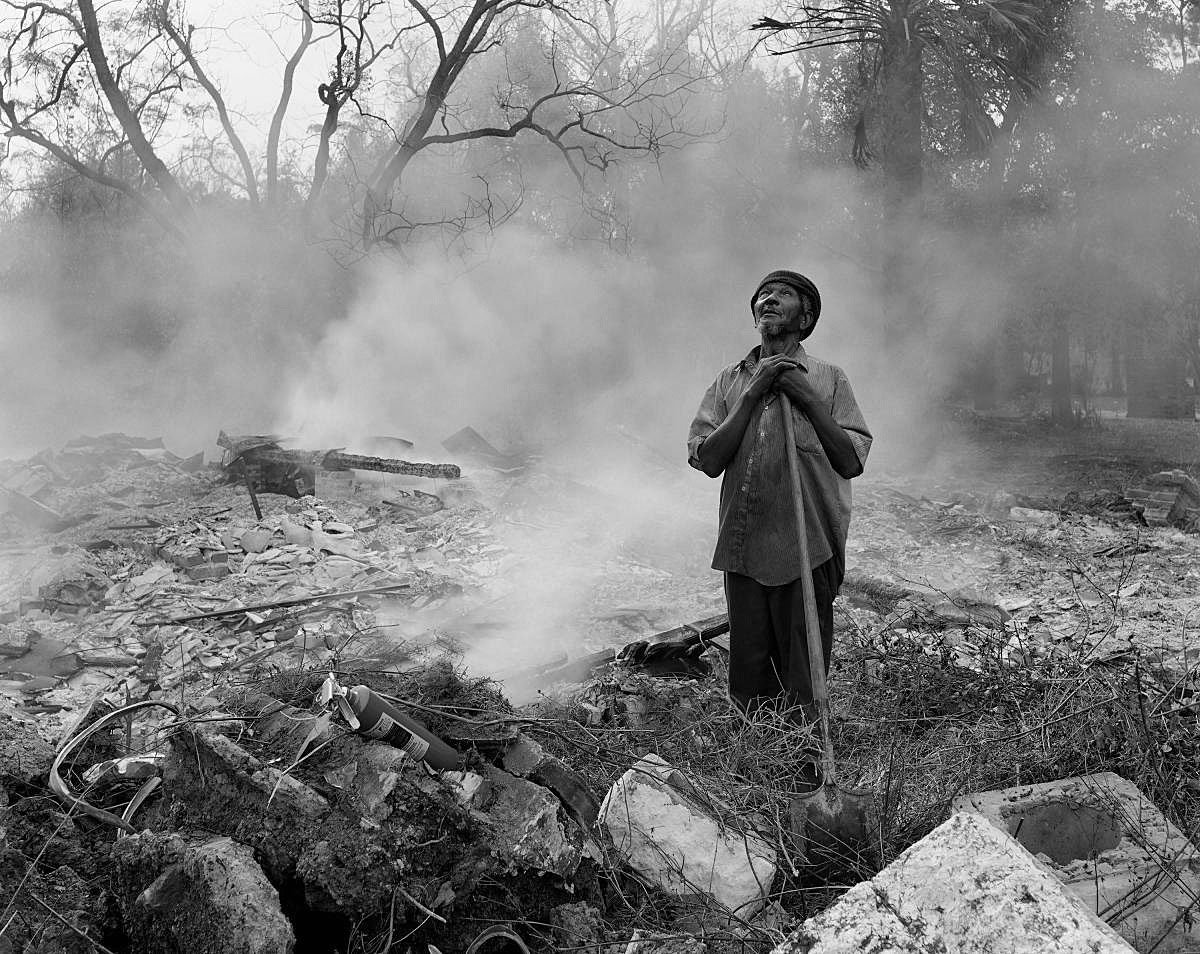
 

Baldwin Lee (Chinese-American, b. 1951) 'Lakeland, Florida' 1984


Baldwin Lee (Chinese-American, b. 1951)
Lakeland, Florida
1984
Vintage gelatin silver print
16 x 20 inches
Collection of the artist
Courtesy of Howard Greenberg Gallery


Baldwin Lee (Chinese-American, b. 1951) 'Richmond, Virginia' 1986


Baldwin Lee (Chinese-American, b. 1951)
Richmond, Virginia
1986
Gelatin silver print
16 x 20 inches
Collection of the artist
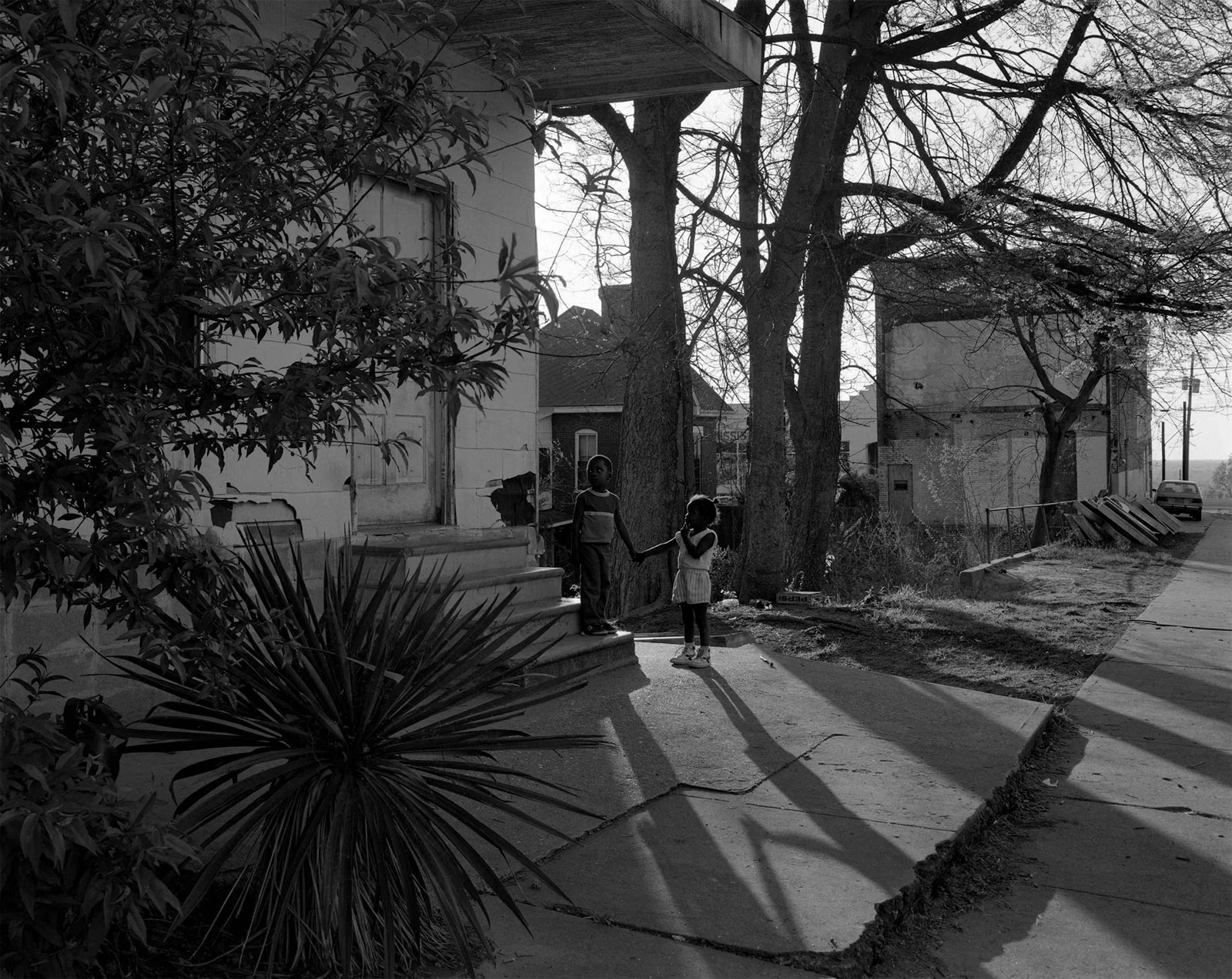
 

Baldwin Lee (Chinese-American, b. 1951) 'Vicksburg, Mississippi' 1984


Baldwin Lee (Chinese-American, b. 1951)
Vicksburg, Mississippi
1984
Gelatin silver print
16 x 20 inches, Collection of the artist
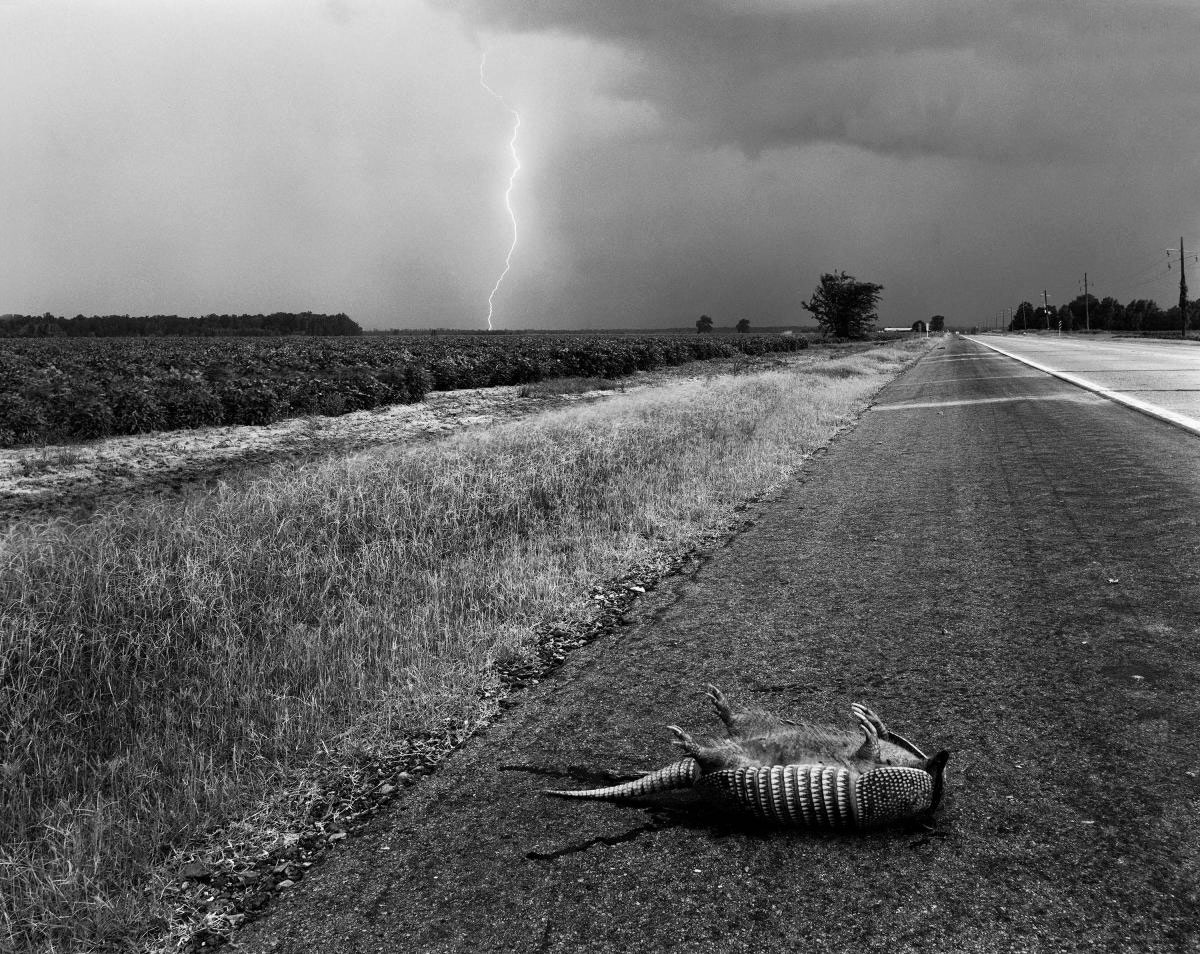
 

Baldwin Lee (Chinese-American, b. 1951) 'Waterproof, LA' 1986


Baldwin Lee (Chinese-American, b. 1951)
Waterproof, LA
1986
Gelatin silver print
16 x 20
Collection of the artist
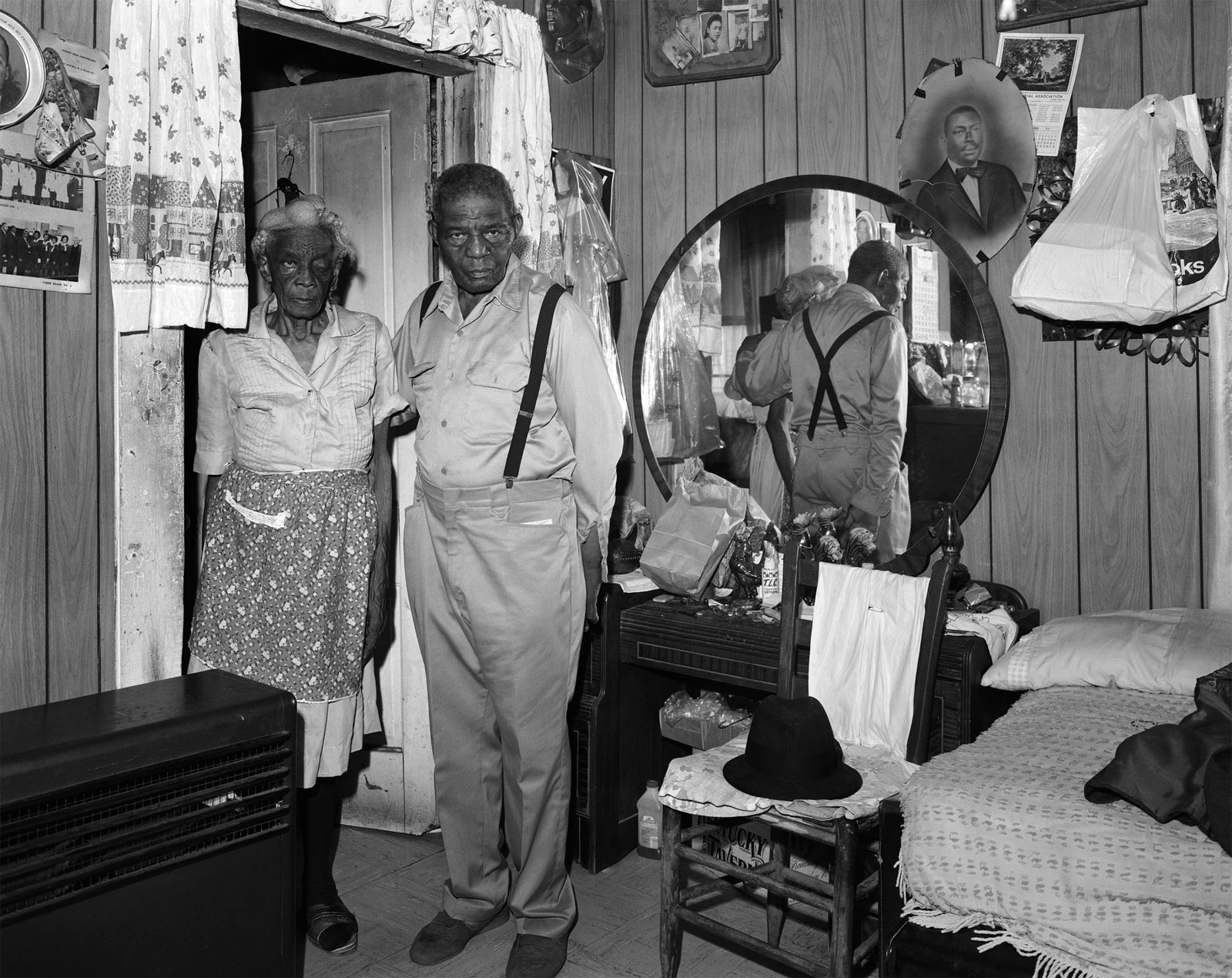
 

Baldwin Lee (Chinese-American, b. 1951) 'Lula, Mississippi' 1984


Baldwin Lee (Chinese-American, b. 1951)
Lula, Mississippi
1984
Vintage gelatin silver print
16 x 20 inches
Collection of the artist
Courtesy of Joseph Bellows Gallery
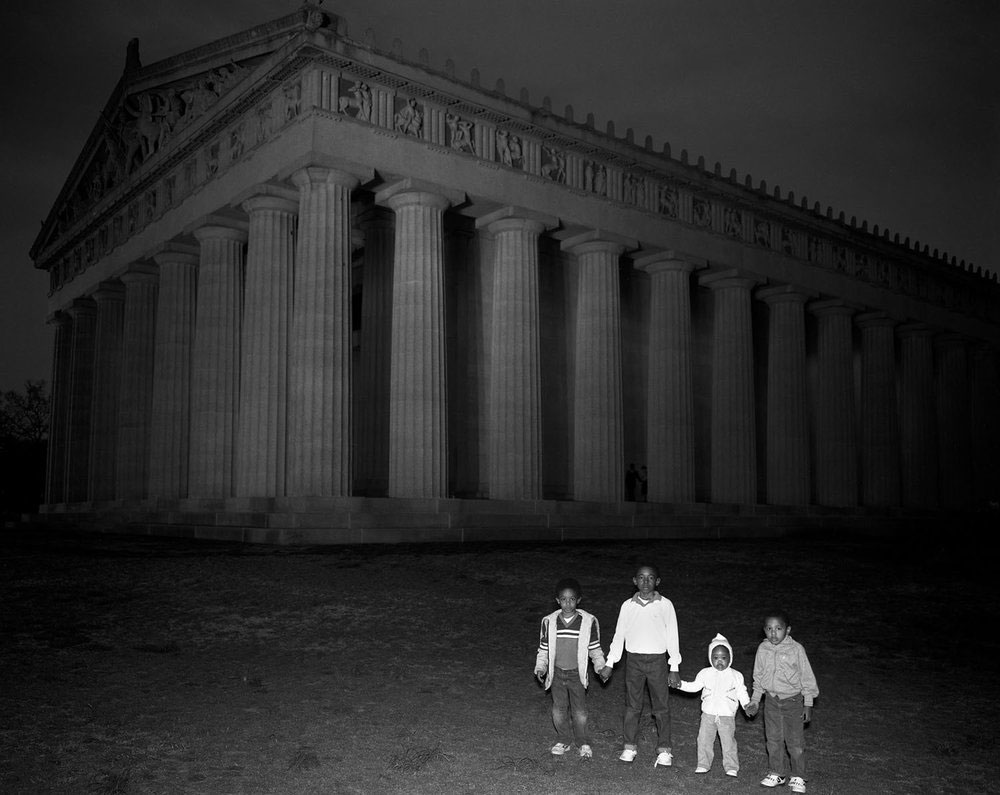
 

Baldwin Lee (American, b. 1951) 'Nashville, Tennessee' 1983


Baldwin Lee (Chinese-American, b. 1951)
Nashville, Tennessee
1983
Gelatin silver print
16 x 20 inches
Collection of the artist
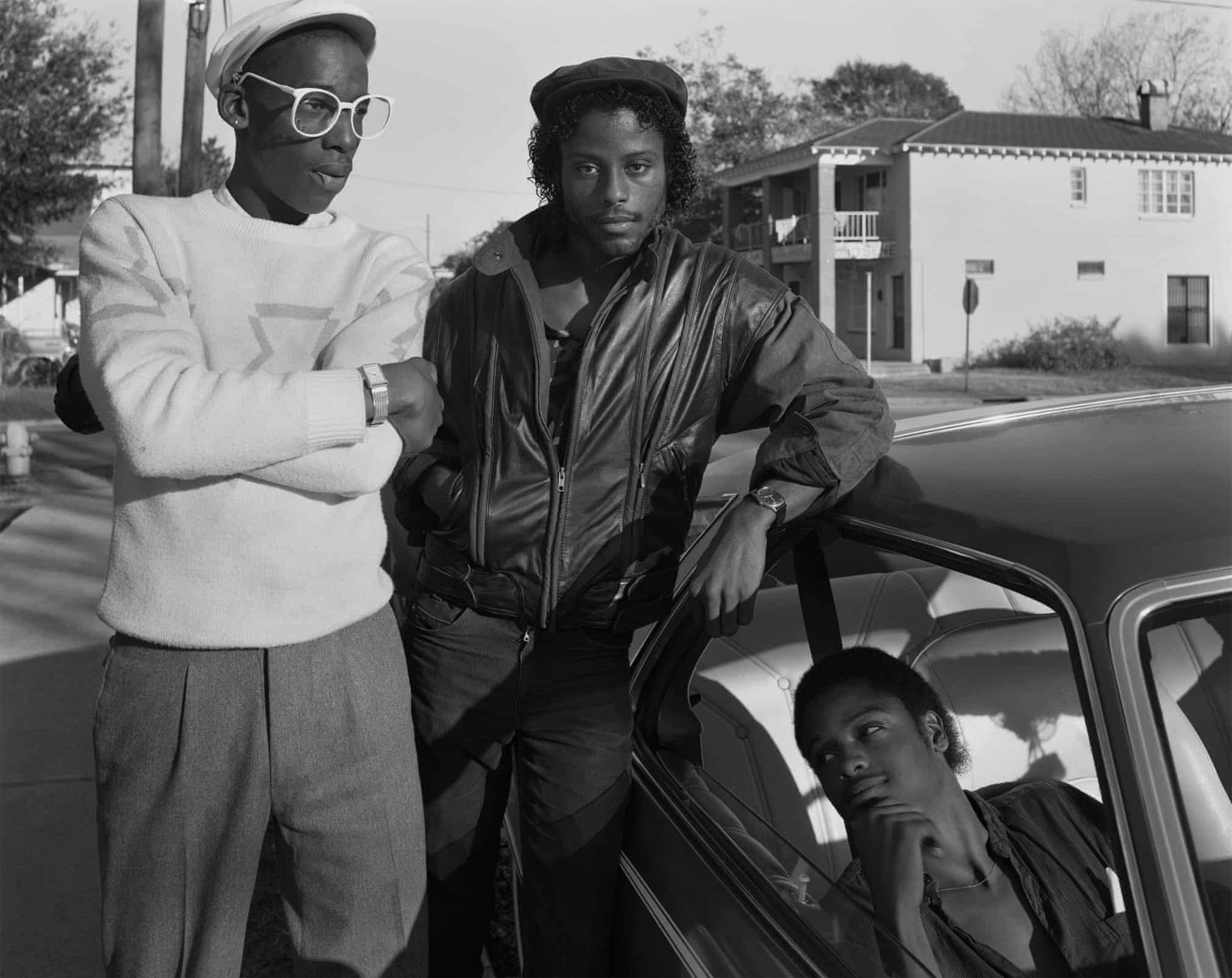
 

Baldwin Lee (Chinese-American, b. 1951) 'Untitled' 1983-1989


Baldwin Lee (Chinese-American, b. 1951)
Untitled
1983-1989
Gelatin silver print
16 x 20 inches
Collection of the artist
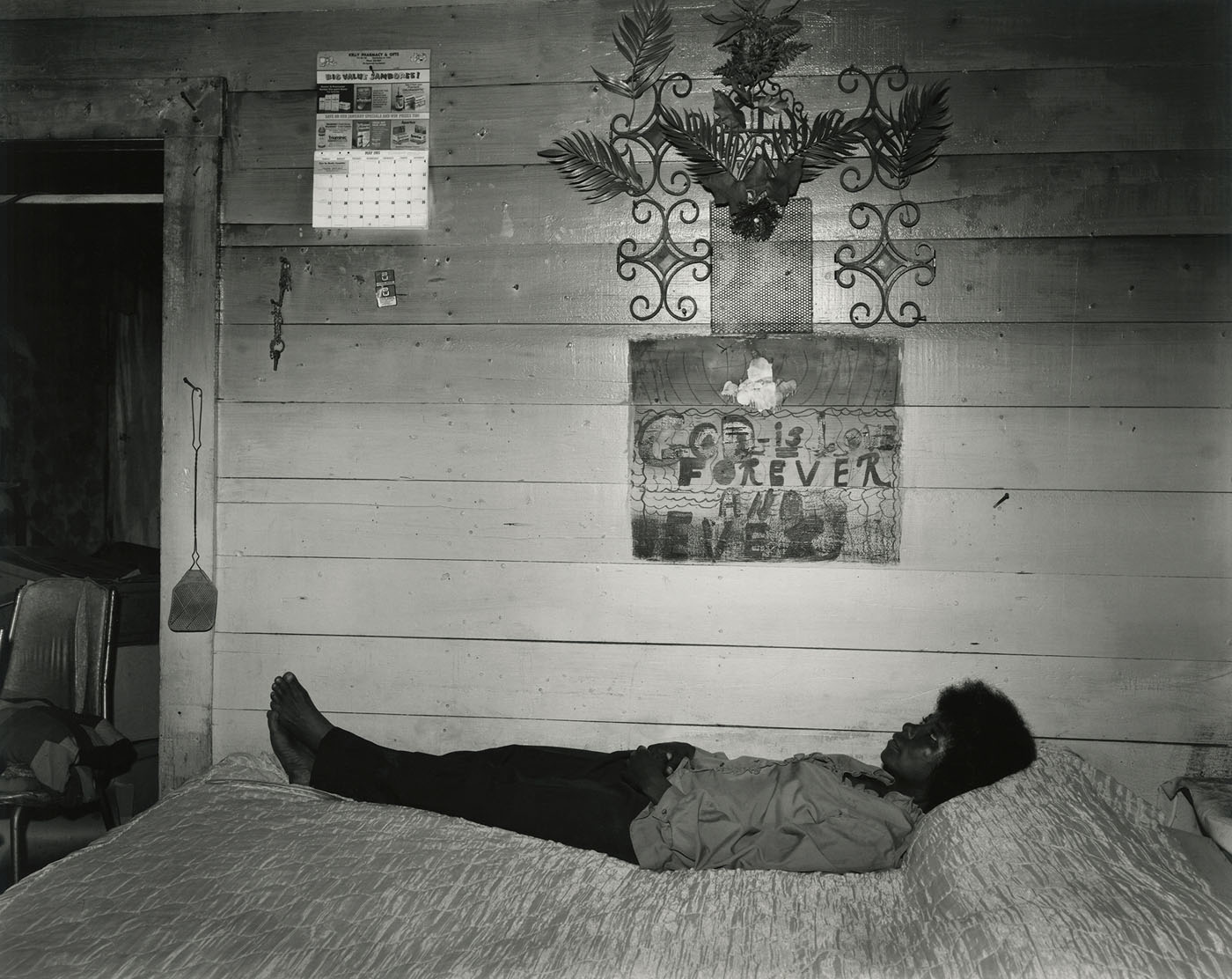
 

Baldwin Lee (Chinese-American, b. 1951) 'Plain Dealing, Louisiana' 1985


Baldwin Lee (Chinese-American, b. 1951)
Plain Dealing, Louisiana
1984
Gelatin silver print
16 x 20 inches
Collection of the artist
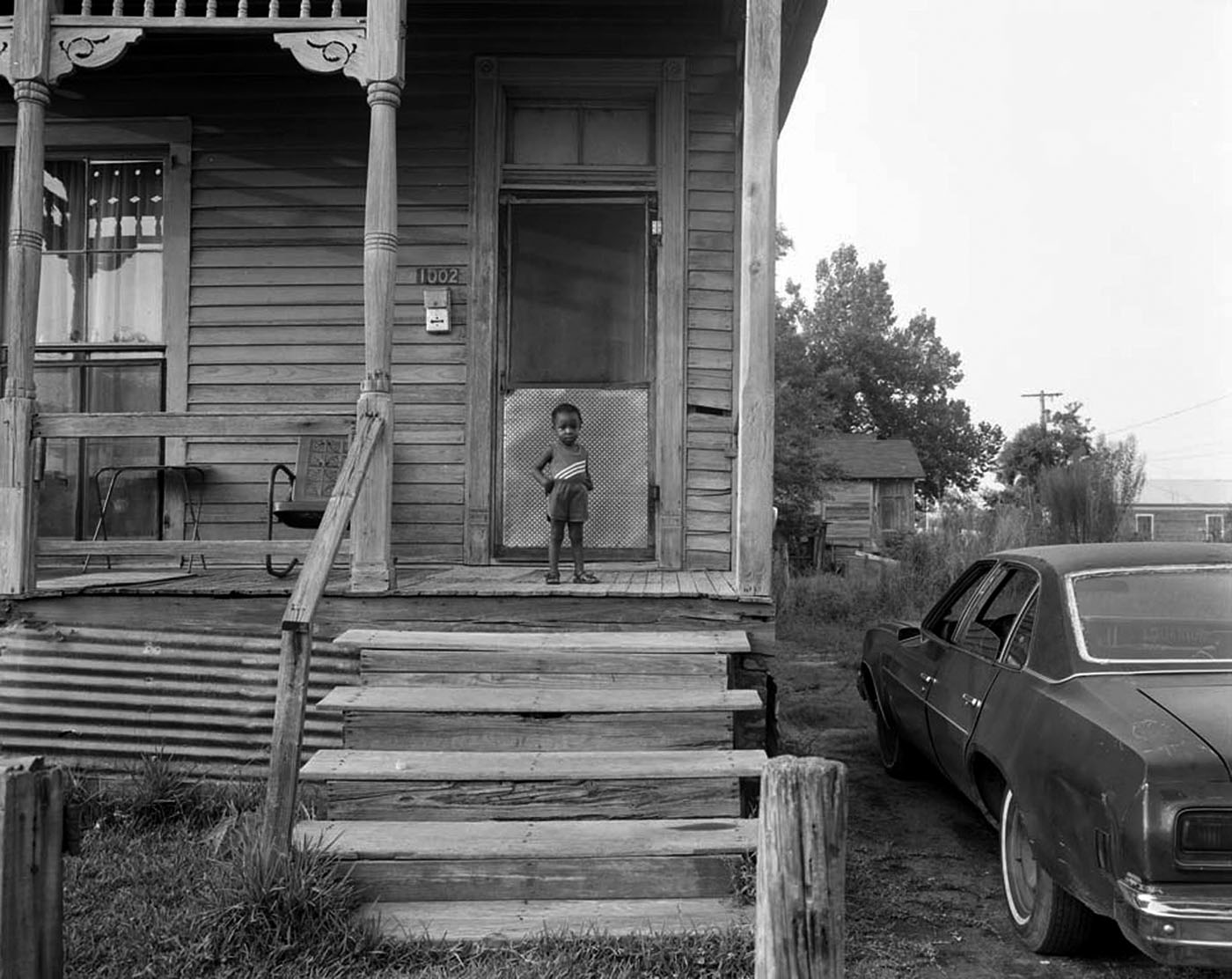
 

Baldwin Lee (Chinese-American, b. 1951) 'Mobile, Alabama' 1983


Baldwin Lee (Chinese-American, b. 1951)
Mobile, Alabama
1985
Gelatin silver print
16 x 20 inches
Collection of the artist
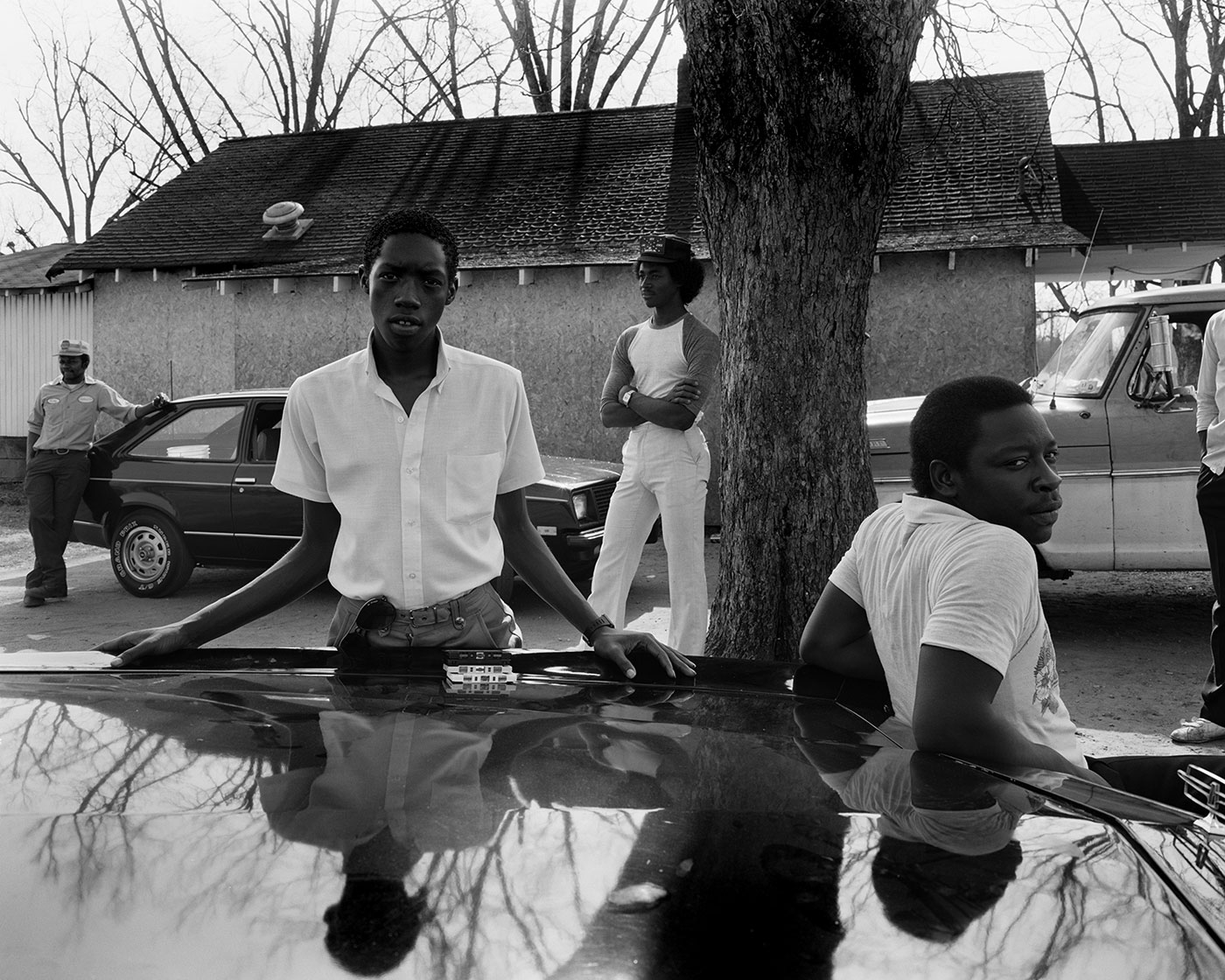
 

Baldwin Lee (American, b. 1951) 'DeFuniak Springs, Florida' 1984


Baldwin Lee (Chinese-American, b. 1951)
Defuniak Springs, Florida
1984
Gelatin Silver Print
16 x 20 inches
Collection of the Artist


Baldwin Lee (Chinese-American, b. 1951) 'Untitled' 1983-1989


Baldwin Lee (Chinese-American, b. 1951)
Untitled
1983-1989
Gelatin silver print
16 x 20 inches
Collection of the artist
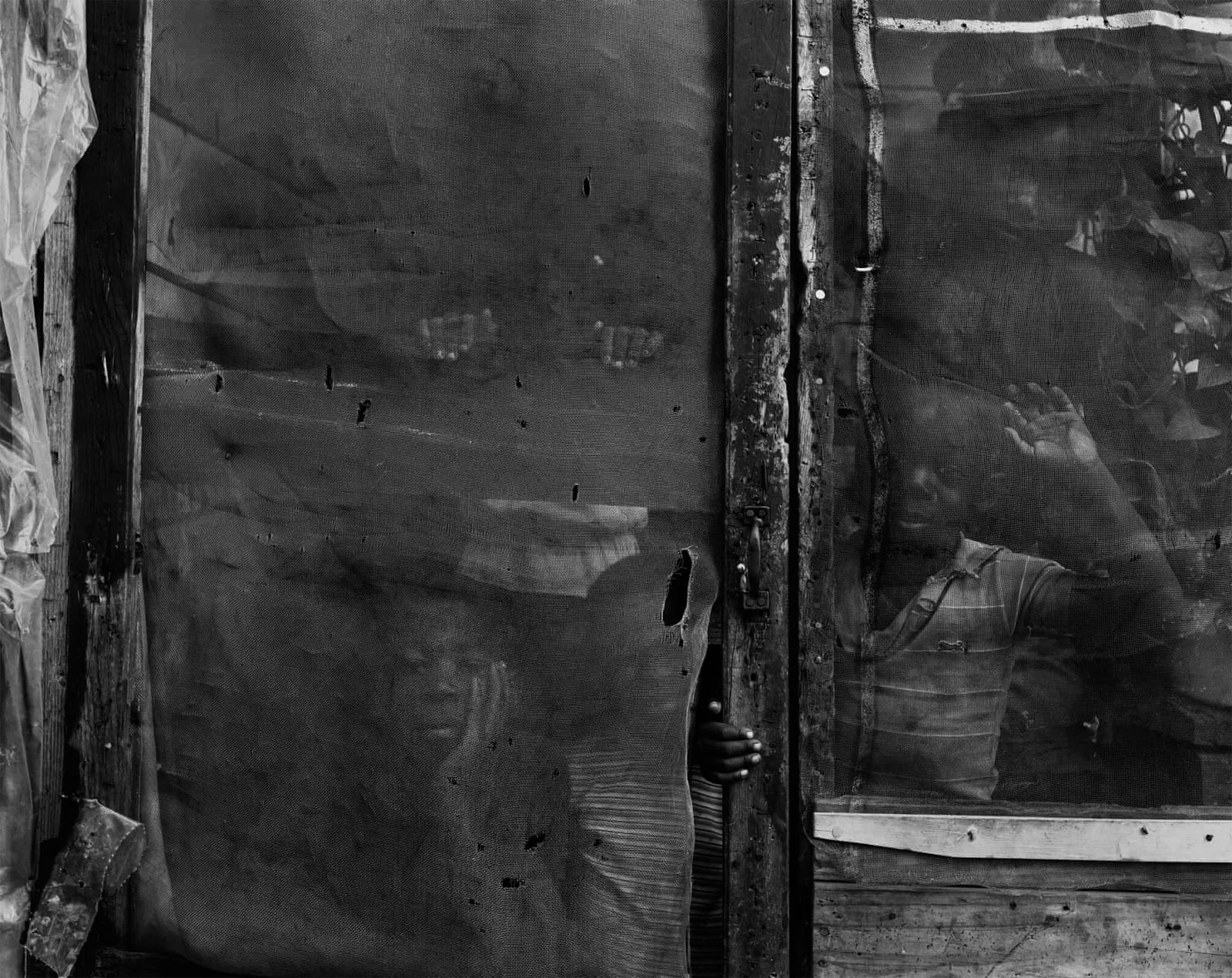
 

Baldwin Lee (Chinese-American, b. 1951) 'Rosedale, Mississippi' 1984


Baldwin Lee (Chinese-American, b. 1951)
Rosedale, Mississippi
1984
Archival pigment print
40 x 50 inches
Collection of the artist


‘The process I adopted in successive road trips during my seven-year project involved splitting time between revisiting places I had previously photographed and seeking out new locations. The families who lived on this street in Rosedale, Mississippi, knew me from prior visits. Children were always thrilled at my arrival, and they delighted in taking turns shrouding their heads under my black focusing cloth that allowed them to peer at the dim image projected on the ground glass of my view camera. They were more than eager to arrange themselves for this photograph’

Text from The Guardian website
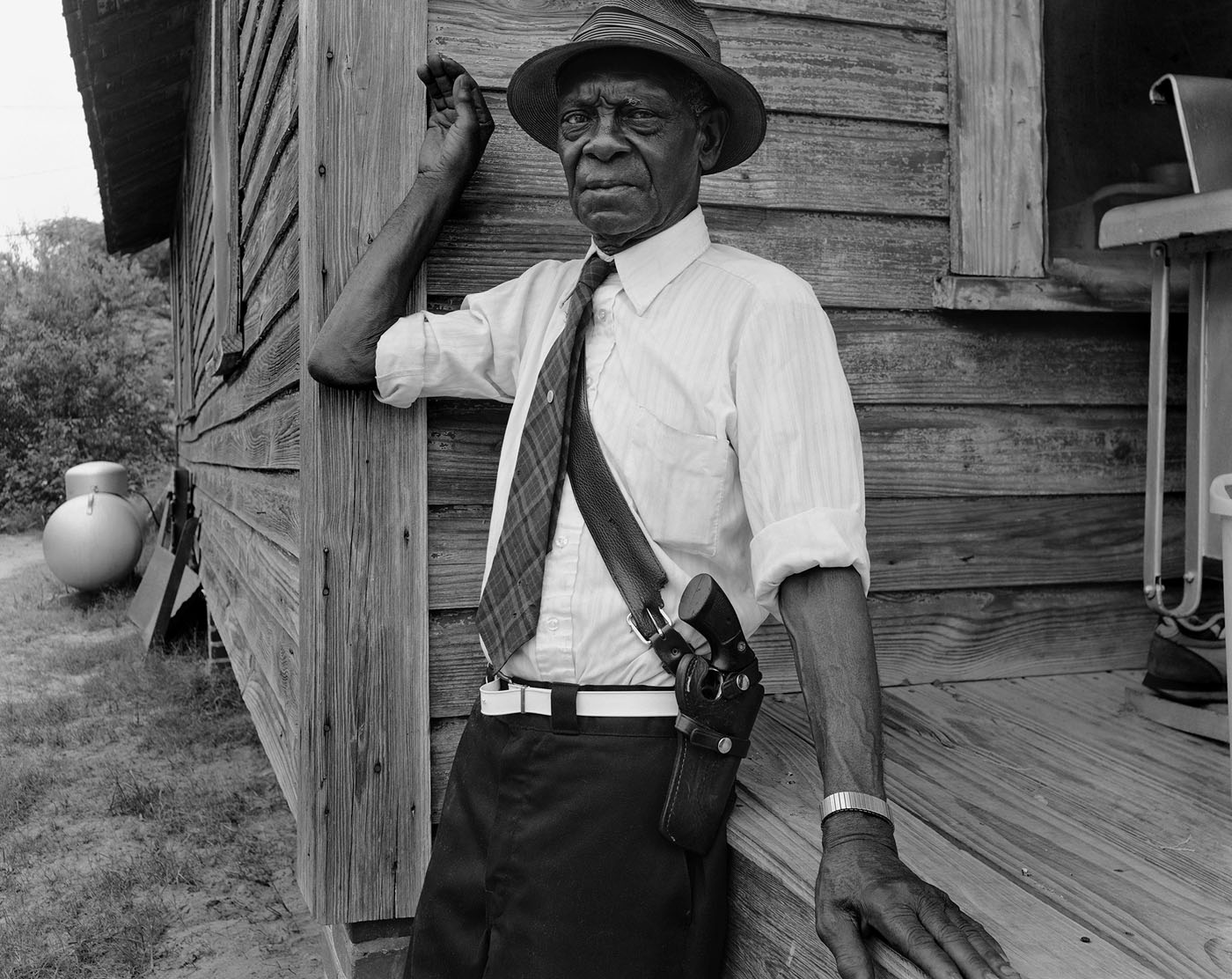
 

Baldwin Lee (Chinese-American, b. 1951) 'Valdosta, Georgia' 1984


Baldwin Lee (Chinese-American, b. 1951)
Valdosta, Georgia
1985
Archival pigment print
40 x 50 inches
Collection of the artist
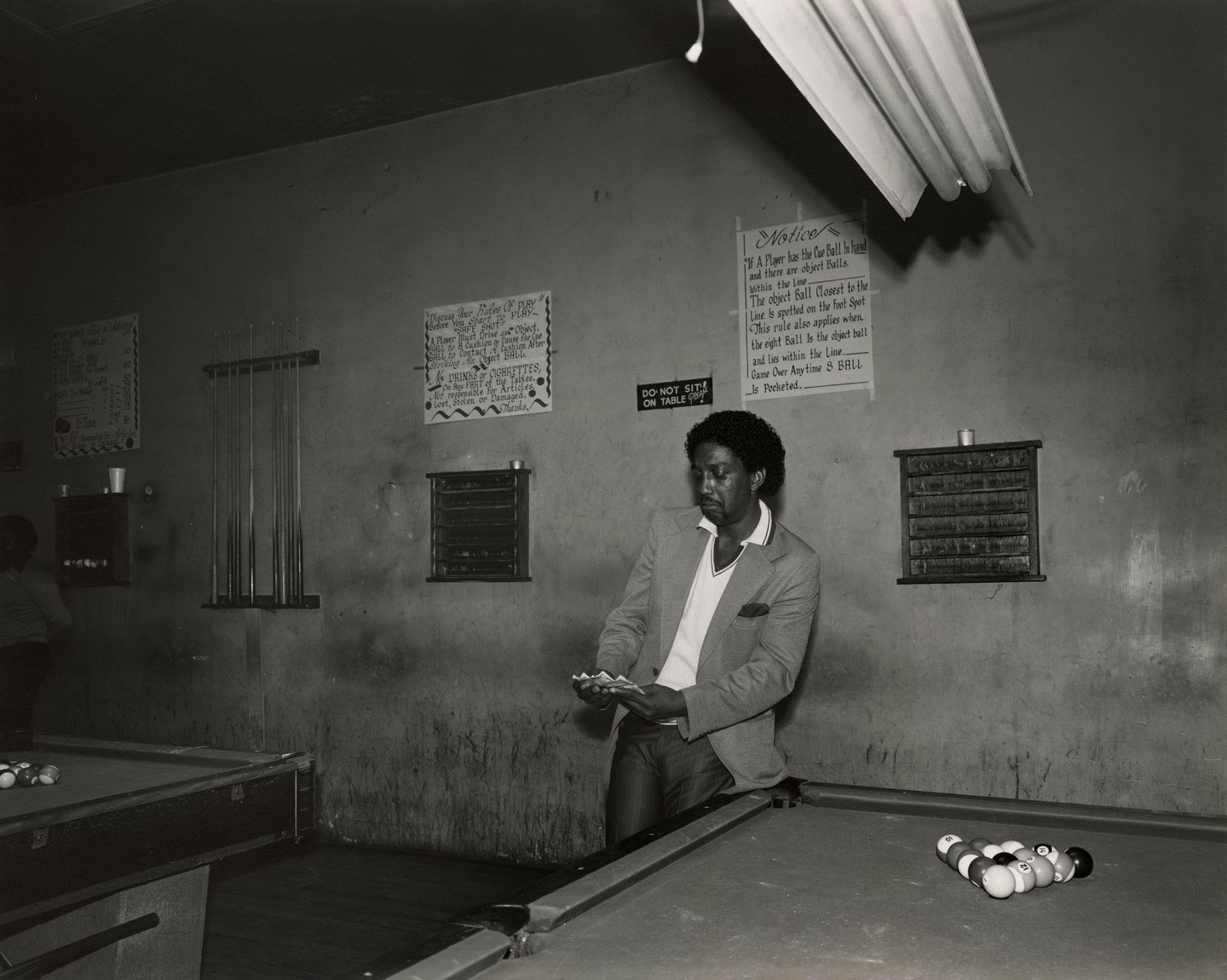
 

Baldwin Lee (Chinese-American, b. 1951) 'Chattanooga, Tennessee' 1983


Baldwin Lee (Chinese-American, b. 1951)
Chattanooga, Tennessee
1983
Vintage gelatin silver print
16 x 20 inches
Collection of the artist
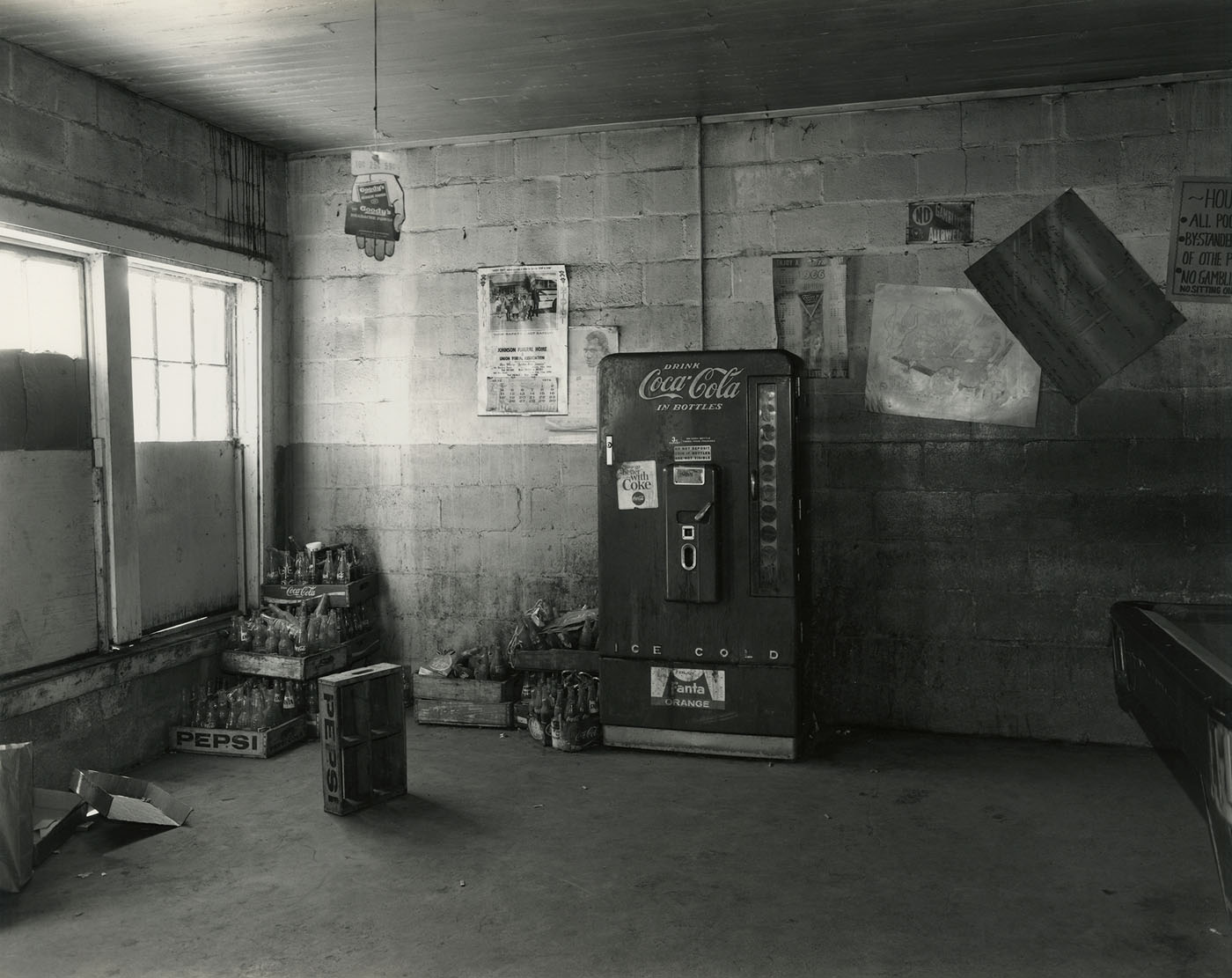
 

Baldwin Lee (Chinese-American, b. 1951) 'Untitled' 1983-1989


Baldwin Lee (Chinese-American, b. 1951)
Untitled
1983-1989
Gelatin silver print
16 x 20 inches
Collection of the artist
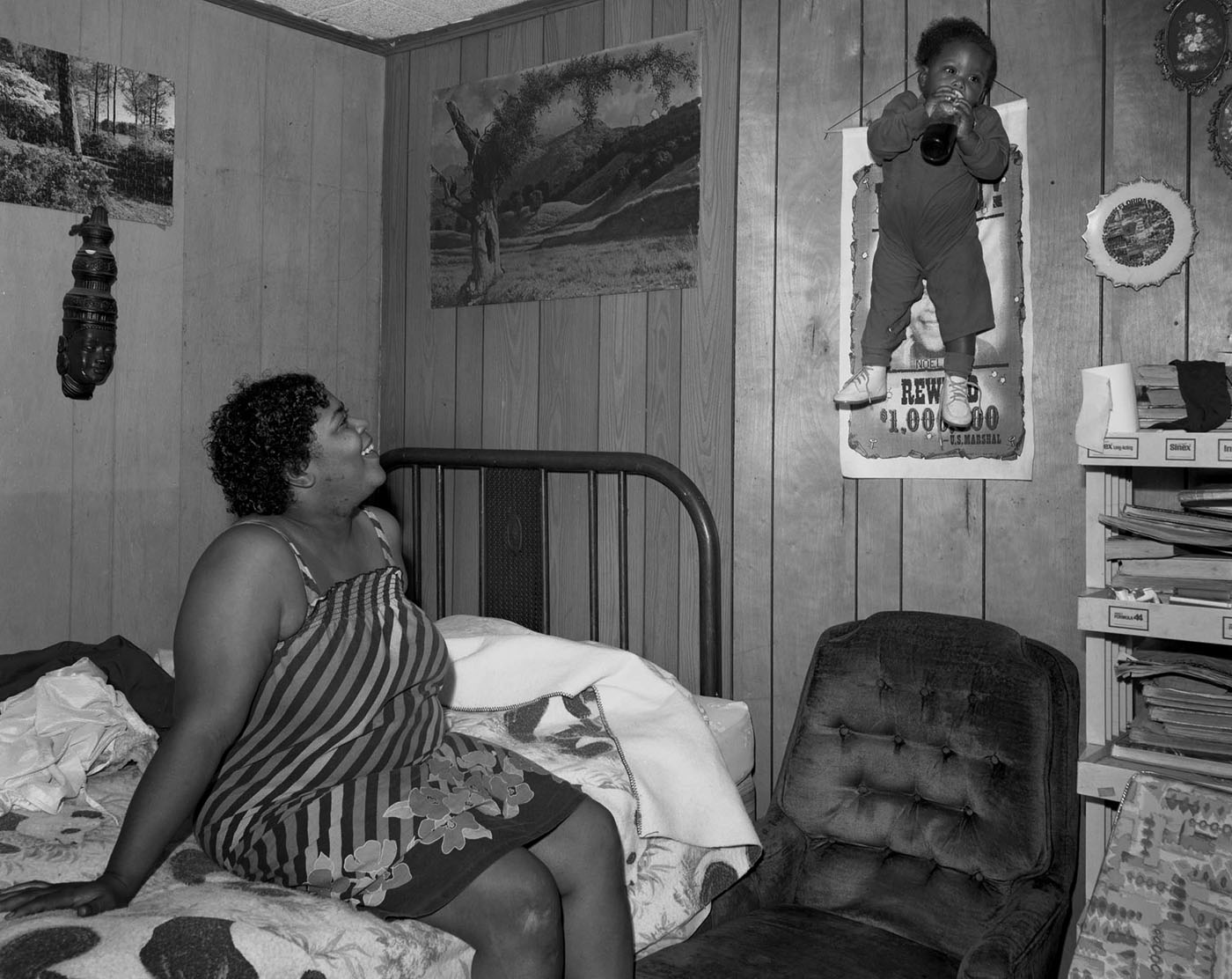
 

Baldwin Lee (Chinese-American, b. 1951) 'Rosedale, Mississippi' 1985


Baldwin Lee (Chinese-American, b. 1951)
Rosedale, Mississippi
1985
Gelatin silver print
16 x 20 inches
Museum Purchase with Funds Provided by The Charles D. Urstadt Chairman Emeritus Acquisition Fund
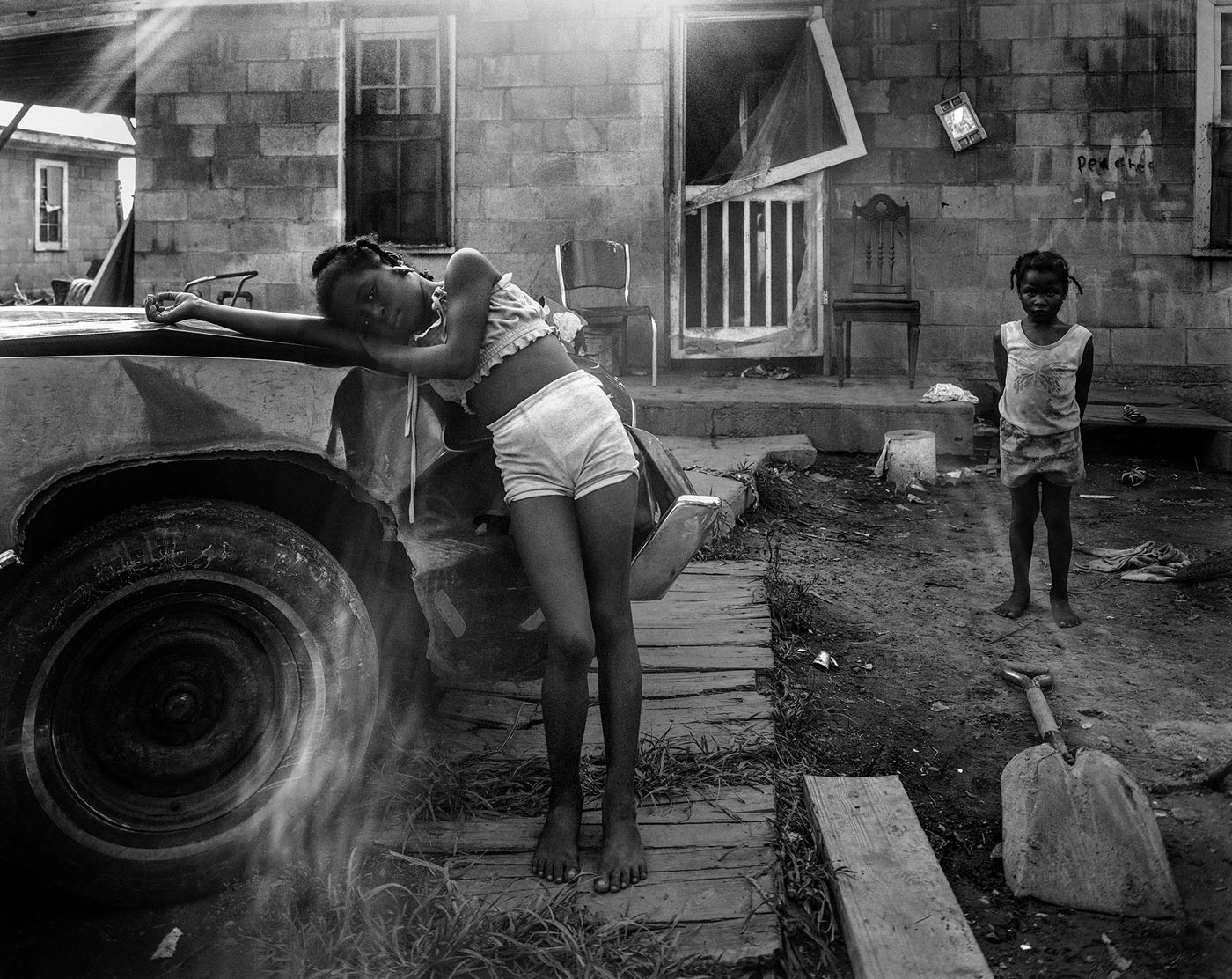
 

Baldwin Lee (Chinese-American, b. 1951) 'Walls, Mississippi' 1984


Baldwin Lee (Chinese-American, b. 1951)
Walls, Mississippi
1984
Gelatin silver print
16 x 20 inches


Ogden Museum of Southern Art
925 Camp Street, New Orleans, LA

Opening hours:
Monday: 10.00am – 5.00pm
Tuesday: 10.00am – 5.00pm
Wednesday: 10.00am – 5.00pm
Thursday: 10.00am – 5.00pm
Friday: 10.00am – 5.00pm
Saturday: 10.00am – 5.00pm
Sunday: 10.00am – 5.00pm

Ogden Museum of Southern Art website

LIKE ART BLART ON FACEBOOK

Back to top

Exhibition: ‘Dawoud Bey & Carrie Mae Weems: In Dialogue’ at the J. Paul Getty Museum, Los Angeles

Exhibition dates: 4th April – 9th July, 2023


Dawoud Bey (American, b. 1953) 'Two Women at a Parade' 1978 from the exhibition 'Dawoud Bey & Carrie Mae Weems: In Dialogue' at the J. Paul Getty Museum, Los Angeles, April-  July, 2023


Dawoud Bey (American, b. 1953)
Two Women at a Parade
1978
Gelatin silver print
Grand Rapids Art Museum, Michigan Museum purchase
© Dawoud Bey
Courtesy of Stephen Daiter Gallery


Engaging each other in light

Dialogue: Old English dialogas (plural), from Latin from Greek dialogos, from dia ‘through’ + logos ‘word’

“As we define it, dialogue is “a communicative process in which people with different perspectives seek understanding.” To be in dialogue means that participants are not only engaging each other in light of their different views, but they are also striving to achieve a degree of mutual understanding.”

Jason Combs. “What is Dialogue?” on the University of Dayton website Monday October 28, 2019 [Online] Cited 01/07/2023


Short and sweet because I’m not feeling well.

What an inspired pairing for an exhibition. “Each [artist] addresses race, class, representation, and systems of power in their work, creating photographic series grounded in Black history and realities that speak to the human condition.”

From street-based photographs of everyday life to conceptual excavations of Black Histories, they produce incisive thought provoking works “that intermingle past and present, referenc[ing] African Americans whose lives and stories have been co-opted or lost.”

I love them both for their commitment to and passion for life in all its different forms. Bringing people together. Expressing a degree of mutual understanding.

#BlackLivesMatter #AllLivesMatter

Dr Marcus Bunyan


Many thankx to the J. Paul Getty Museum for allowing me to publish the photographs in the posting. Please click on the photographs for a larger version of the image.


Dawoud Bey and Carrie Mae Weems have been friends and colleagues for more than 40 years. Each addresses race, class, representation, and systems of power in their work, creating photographic series grounded in Black history and realities that speak to the human condition. This exhibition sheds light on their unique trajectories and modes of presentation, and their shared consciousness and principles. Organised by the Grand Rapids Art Museum.


Dawoud Bey (American, b. 1953) 'The Woman in the Light, Harlem, NY' 1980 from the exhibition 'Dawoud Bey & Carrie Mae Weems: In Dialogue' at the J. Paul Getty Museum, Los Angeles, April-  July, 2023


Dawoud Bey (American, b. 1953)
The Woman in the Light, Harlem, NY
1980
Gelatin silver print
© Dawoud Bey
Courtesy of Stephen Daiter Gallery


Dawoud Bey (American, b. 1953) 'Self and Shadow, New York, NY' 1980 from the exhibition 'Dawoud Bey & Carrie Mae Weems: In Dialogue' at the J. Paul Getty Museum, Los Angeles, April-  July, 2023


Dawoud Bey (American, b. 1953)
Self and Shadow, New York, NY
1980
Gelatin silver print
© Dawoud Bey
Courtesy of Stephen Daiter Gallery


Dawoud Bey (American, b. 1953) 'A Young Man Resting on an Exercise Bike, Amityville, NY' 1988


Dawoud Bey (American, b. 1953)
A Young Man Resting on an Exercise Bike, Amityville, NY
1988
Gelatin silver print
© Dawoud Bey
Courtesy of Stephen Daiter Gallery


Dawoud Bey (American, b. 1953) 'Couple in Prospect Park, Brooklyn, NY' 1990


Dawoud Bey (American, b. 1953)
Couple in Prospect Park, Brooklyn, NY
1990
Gelatin silver print Getty Museum
© Dawoud Bey


In 1976 I had been making photographs for a couple of years. I had certainly been looking at a lot more photographs than I had actually made. From looking at photographs in books and magazines and going to exhibitions of pictures by Mike Disfarmer at MoMA, Richard Avedon at Marlborough, and haunting whatever other places there were to see photographs in New York in the early 1970s, I had begun to educate myself, with the intent of adding something to the conversation through my own pictures.

The artist Janet Henry, who was from the same Jamaica, Queens neighborhood that I lived in, had gotten a job in the Education Department at the Studio Museum in Harlem, then located above a Kentucky Fried Chicken on 125th Street and Fifth Avenue in a large second floor loft space. When Frank Stewart, the museum’s staff photographer and photo teacher, left to do a commissioned project in Cuba, Janet called me and asked if I would take over the class. On the first day of class a few students straggled in. One of them, a seemingly shy woman with big expressive eyes, introduced herself, “Hi, my name is Carrie. Do you think I could be a photographer?” she asked, holding her Leica camera in her hand. That began what has now been 33 years of friendship and camaraderie with one of the most brilliant people I know.

From the very beginning, Carrie Mae Weems has had a sharp intelligence that was looking for a way into the world. From her early documentary photographs to the more expansive and materially varied recent works, she has consistently set out to visually define the world on her own terms and to redefine for all of us the nature of the world that we are in. After all these years I still anticipate her work with a fresh sense of wonderment, knowing that her restless search for the deeper meaning of things will yield a continuing rich trove of objects and images. On a Sunday morning in May I called from my home in Chicago to reconnect with my dear friend while she was traveling in Seville, Spain.

Dawoud Bey quoted in “Carrie Mae Weems by Dawoud Bey,” on the BOMB Magazine website July 1, 2009 [Online] Cited 18/06/2023


Dawoud Bey (American, b. 1953) 'Taneesha' 1999


Dawoud Bey (American, b. 1953)
Taneesha
1999
Dye diffusion prints
Collection of Jack and Sandra Guthman
© Dawoud Bey
Courtesy of Stephen Daiter Gallery


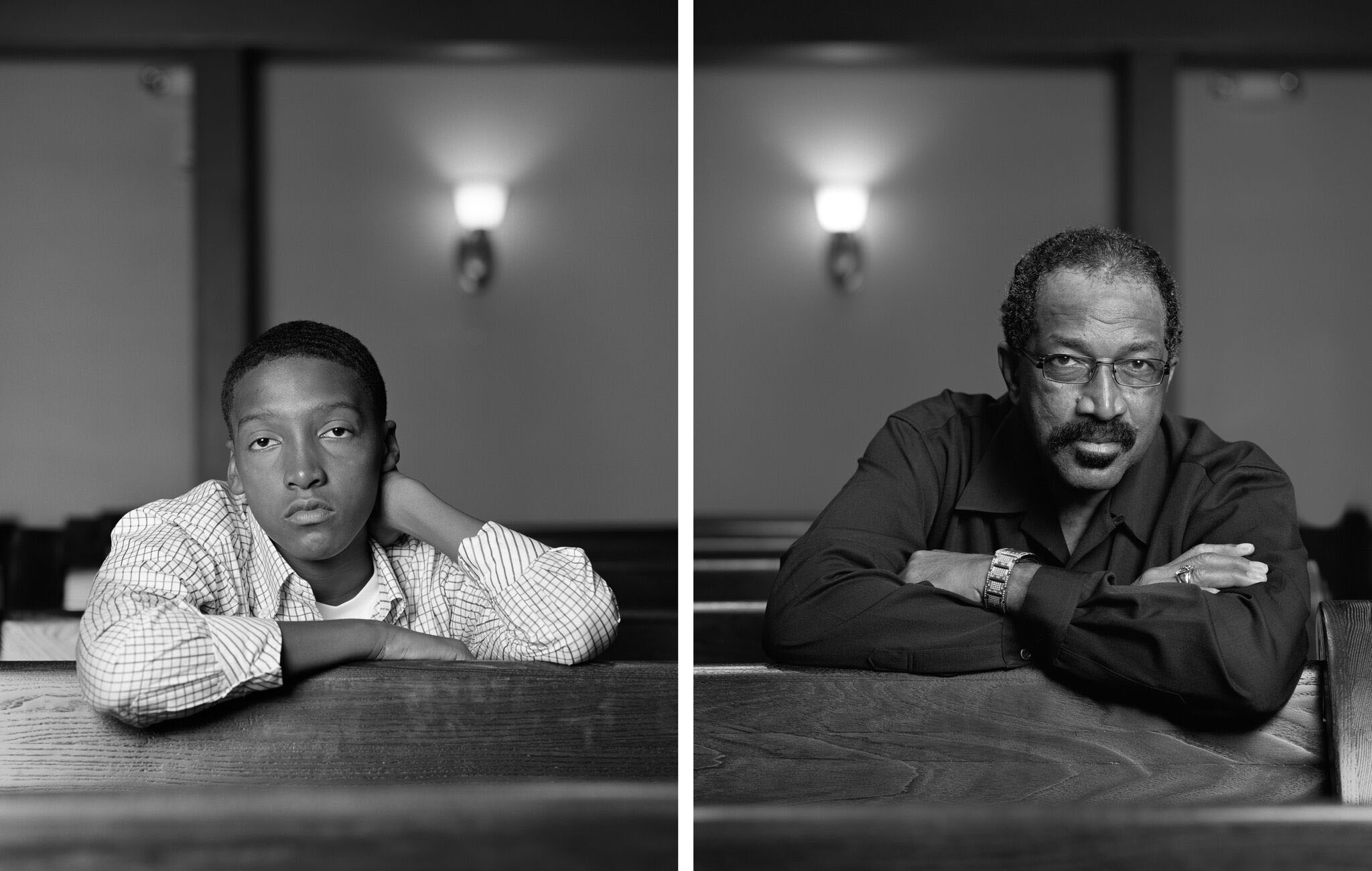
Dawoud Bey (American, b. 1953) 'The Birmingham Project: Wallace Simmons and Eric Allums' 2012


Dawoud Bey (American, b. 1953)
The Birmingham Project: Wallace Simmons and Eric Allums
2012
Inkjet prints
Rennie Collection, Vancouver
© Dawoud Bey
Courtesy of Stephen Daiter Gallery


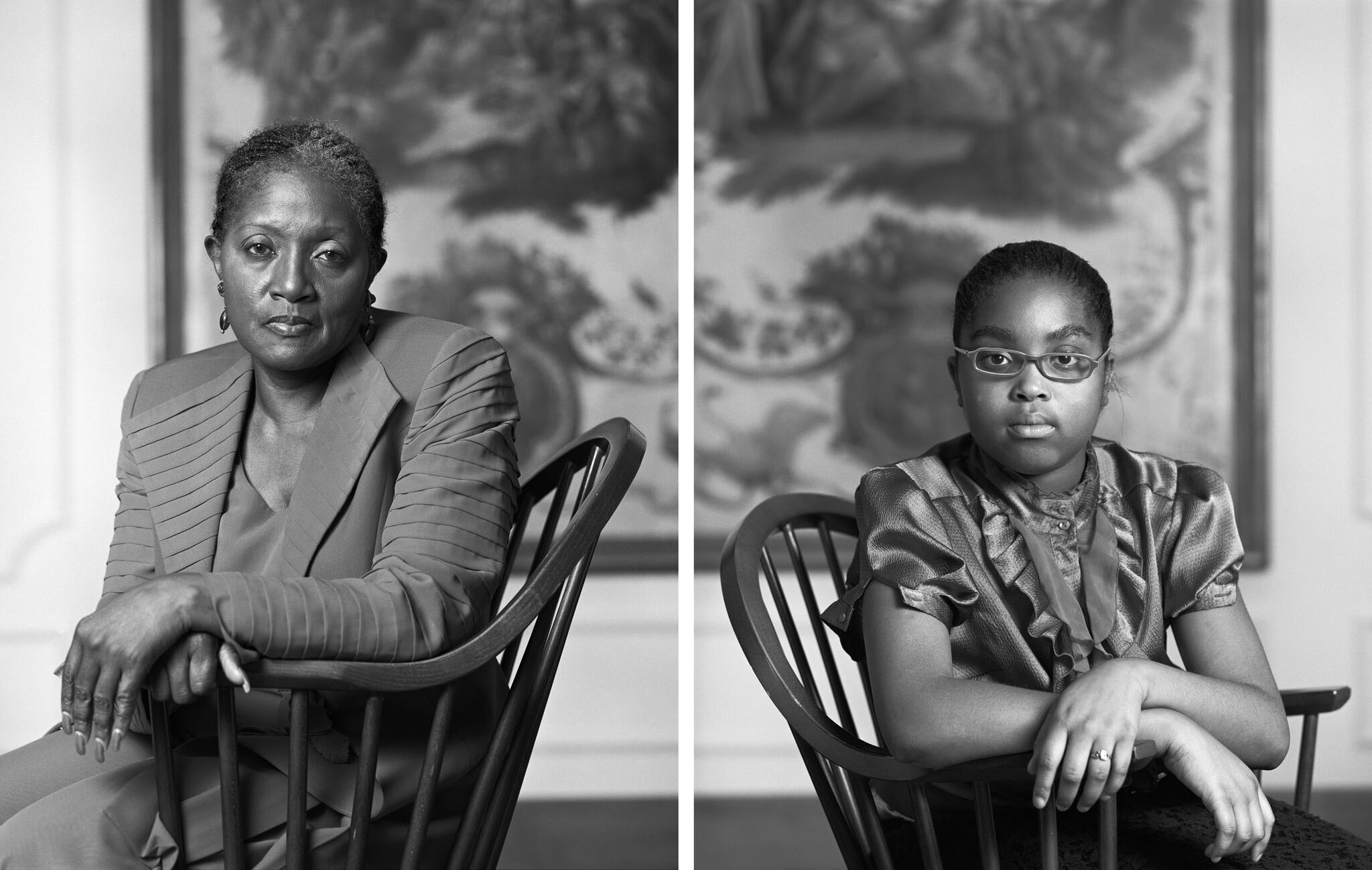
Dawoud Bey (American, b. 1953) 'The Birmingham Project: Taylor Falls and Deborah Hackworth' 2012


Dawoud Bey (American, b. 1953)
The Birmingham Project: Taylor Falls and Deborah Hackworth
2012
Inkjet prints
Rennie Collection, Vancouver
© Dawoud Bey
Courtesy of Stephen Daiter Gallery


Dawoud Bey (American, b. 1953) 'Braxton McKinney and Lavone Thomas, Birmingham, AL' 2012


Dawoud Bey (American, b. 1953)
The Birmingham Project: Braxton McKinney and Lavone Thomas
2012
Inkjet prints
Rennie Collection, Vancouver
© Dawoud Bey
Courtesy of Stephen Daiter Gallery


Dawoud Bey (American, b. 1953) 'Betty Selvage and Faith Speights, Birmingham, AL' 2012


Dawoud Bey (American, b. 1953)
The Birmingham Project: Betty Selvage and Faith Speights
2012
Inkjet prints
Rennie Collection, Vancouver
© Dawoud Bey
Courtesy of Stephen Daiter Gallery


Dawoud Bey (American, b. 1953) 'Boy on Skateboard, Harlem, NY' 2014


Dawoud Bey (American, b. 1953)
Boy on Skateboard, Harlem, NY
2014
Inkjet print
© Dawoud Bey
Courtesy of Stephen Daiter Gallery


Dawoud Bey (American, b. 1953) 'Former Renaissance Ballroom Site, Harlem, NY' 2015


Dawoud Bey (American, b. 1953)
Former Renaissance Ballroom Site, Harlem, NY
2015
Inkjet print
© Dawoud Bey
Courtesy of Stephen Daiter Gallery


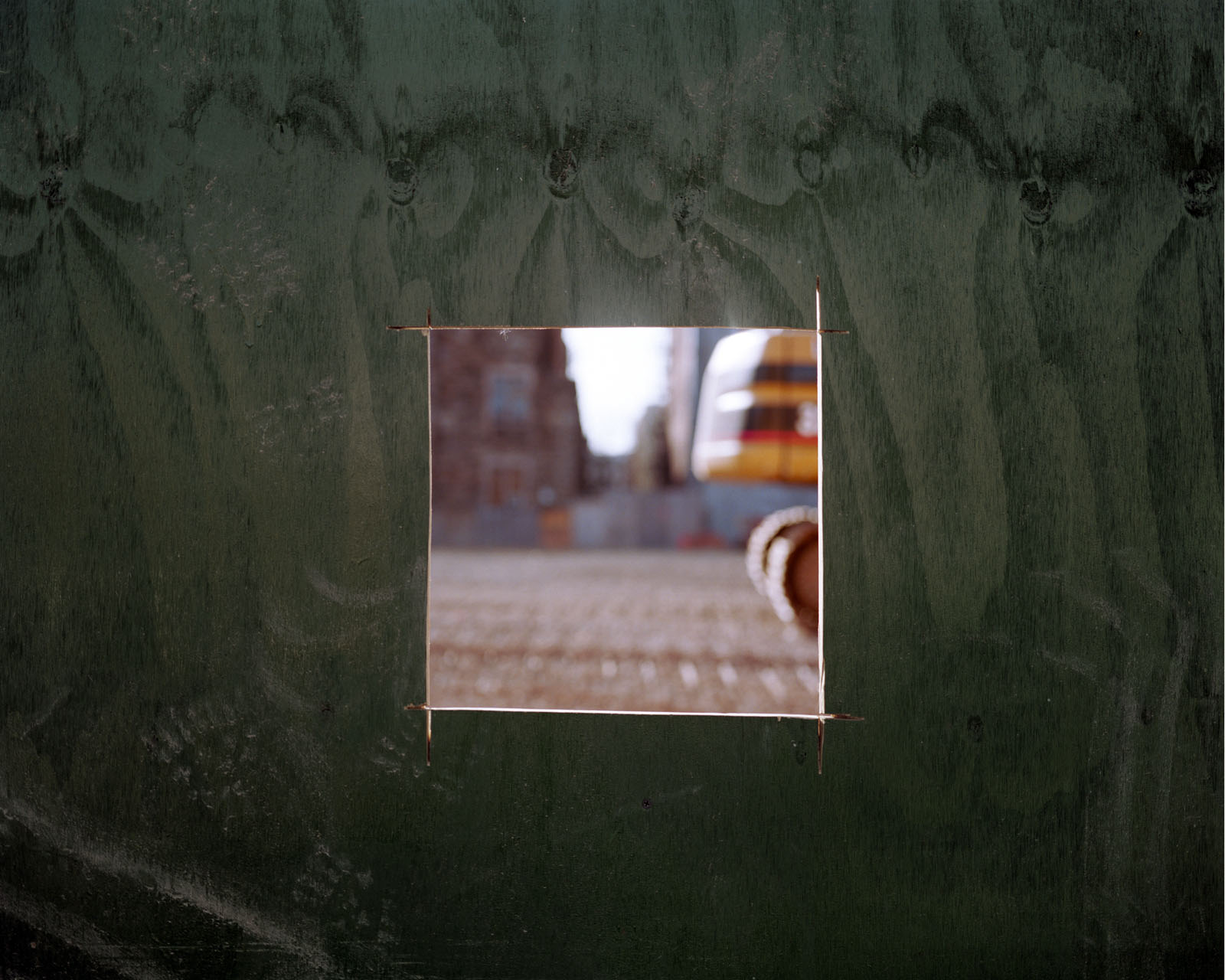
Dawoud Bey (American, b. 1953) 'Untitled #15 (Forest with Small Trees)' 2017


Dawoud Bey (American, b. 1953)
Untitled #15 (Forest with Small Trees)
2017
Gelatin silver print
Getty Museum, purchased with funds provided by the Photographs Council
© Dawoud Bey


Since meeting at the Studio Museum in Harlem in 1977, Dawoud Bey and Carrie Mae Weems have been intellectual colleagues and companions.

From the outset of their careers, both have operated from a deep social commitment to participate in, describe, and define culture. In seeking to express themselves fully, each has expanded possibilities within photography and video to address their chosen subjects.

Dawoud Bey & Carrie Mae Weems: In Dialogue, on view April 4 through July 9, 2023, brings together for the first time a focused selection of work from a period of over 40 years by two of today’s most important and influential photo-based artists. Each grapples with issues of race, class, and representation in their work, making art grounded in the experiences and realities of Black Americans while also speaking to the broader human condition.

“The Museum’s Department of Photographs has made great strides in recent years in building an exhibitions program that highlights more expansive narratives of photographic history,” says Timothy Potts, Maria Hummer-Tuttle and Robert Tuttle Director of the J. Paul Getty Museum. “Dawoud Bey and Carrie Mae Weems are two artists who reframe American traumas that have been ignored or simplified in the national historical record. We are proud to showcase their work in dialogue with one another.”

Jim Ganz, senior curator of photographs, adds, “These artists are two of the most dynamic and insightful of our time. As presented in this extraordinary exhibition, their eloquent dialogue gives unique perspective on their shared concerns as image makers.”

Dawoud Bey (American, born 1953) creates photographs that focus on individuals, communities, and important but often overlooked American histories. His carefully composed images convey the dignity and rich inner lives of his subjects. Carrie Mae Weems (American, born 1953) first gained recognition in the 1980s for exploring identity, race, power, and history, themes that still fuel her art. Over her career, Weems has turned increasingly to staged photography and the use of text to heighten the emotional intensity of her work.

This exhibition is divided into five sections, starting with early pictures that both artists made in the photodocumentary tradition and followed by ambitious, groundbreaking explorations of the medium as it developed technologically and artistically. The exhibition then focuses on how both artists moved beyond candid pictures of everyday life and began making larger scale work that is more planned than spontaneous. Bey’s portraiture evolved from street-based glimpses of the world made with a handheld camera to portraits that are formal but intimate, in which his subjects appear at ease and engage directly with the lens. With her Kitchen Table Series, Weems transitioned from representing real people in their natural environments to creating staged photo essays. For each artist, the techniques developed in this period became the foundation for future projects.

In Resurrecting Black Histories, each artist addresses the 19th century and its legacies in distinctive ways. Bey’s carefully composed landscapes evoke the experience of fleeing along the Underground Railroad, the clandestine network that helped enslaved people escape the South. Weems, by incorporating texts that intermingle past and present, references African Americans whose lives and stories have been co-opted or lost.

In Memorial & Requiem, Bey and Weems reference traumatic 20th-century events. They worked with community partners to stage scenes meant to reinvigorate discussion of the American legacy of racial violence. Each photographer also created a related video, bringing their own sensibility – Bey’s searching, intimate gaze; Weems’ choreographed social commentary – to the moving image, using sequencing and sound to deepen engagement with American history.

The exhibition ends with Revelation in the Landscape, where both Bey and Weems contemplate the built environments in which we live and how those spaces affect our perceptions of the world and ourselves. Bey returns to the Harlem neighbourhoods he photographed in the late 1970s, tracking the changes wrought by gentrification. Weems photographs imposing sites in Rome, inserting herself into historical places imbued with power and legacy. Both series reveal the economic and institutional forces that shape daily life.

In conjunction with the exhibition Getty has created a community program inspired by the exhibition, L.A.: In Dialogue. This program brings Dawoud Bey & Carrie Mae Weems: In Dialogue to a wider Los Angeles community, furthering the influence of the two artists and introducing their work to a new generation of artists and viewers. The artist-led program will host educational workshops for local teens and young adult photographers, and will teach participants techniques in black-and-white photography and the artistic practice of capturing portraiture and place. They will explore themes from the exhibition, collaborate with peers, and explore their local communities: Culver City (Black Image Center), South L.A. (LA Commons), Downtown L.A. (Inner-City Arts), and Venice Beach (Venice Arts). This program will result in a satellite exhibition that will open in June 2023.

Related programming includes Dawoud Bey and Carrie Mae Weems in Conversation on Tuesday, April 4 at 4pm. That evening at 7pm, the Museum presents master saxophonist David Murray in concert with his newly formed quartet as part of the exhibition programming.

Press release from the J. Paul Getty Museum


Carrie Mae Weems (American, b. 1953) 'First Self Portrait' 1975 from the exhibition 'Dawoud Bey & Carrie Mae Weems: In Dialogue' at the J. Paul Getty Museum, Los Angeles, April-  July, 2023


Carrie Mae Weems (American, b. 1953)
First Self Portrait
1975
Gelatin silver print
© Carrie Mae Weems
Courtesy of the artist and Jack Shainman Gallery, New York


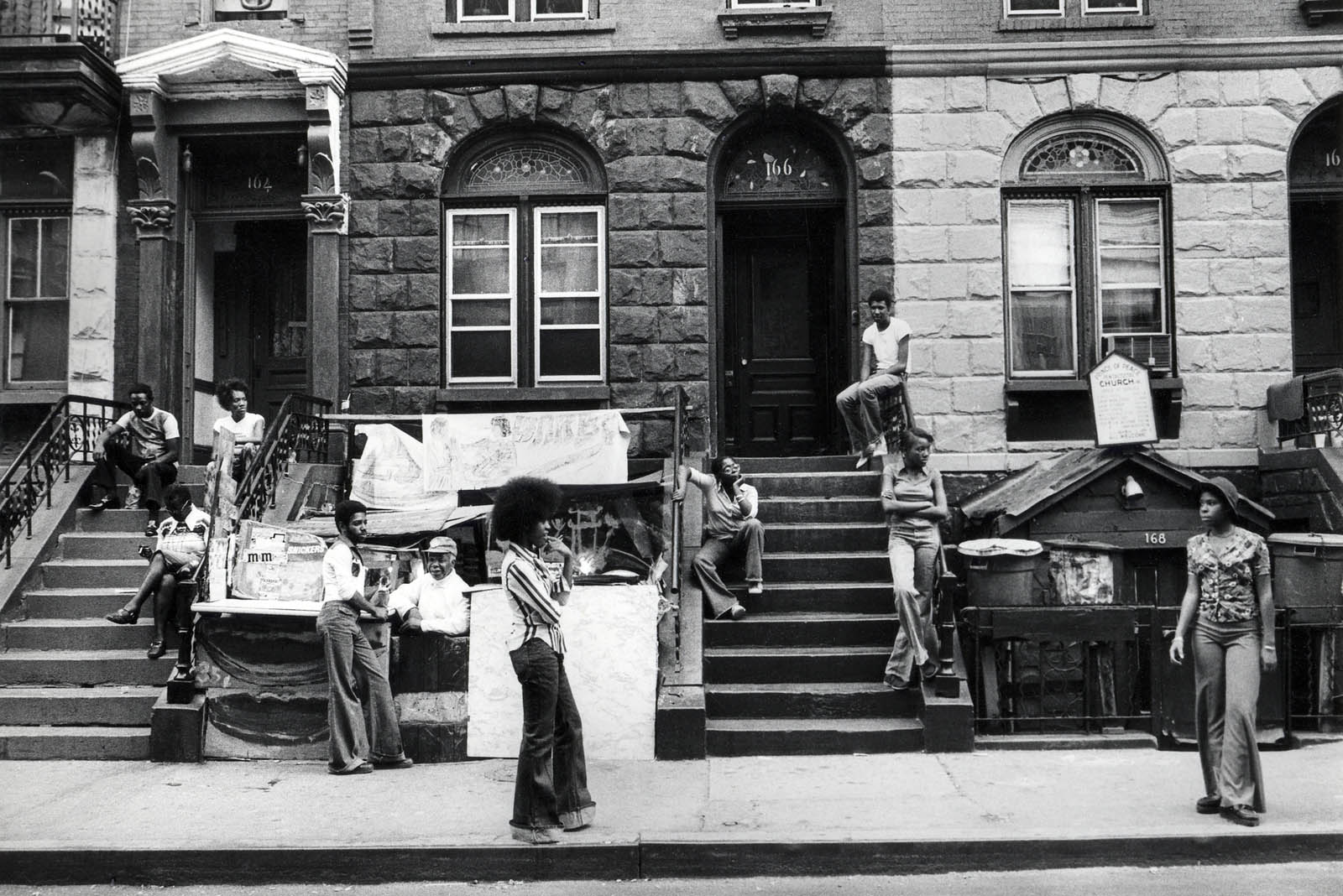
Carrie Mae Weems (American, b. 1953) 'Harlem Street' 1976-1977 from the exhibition 'Dawoud Bey & Carrie Mae Weems: In Dialogue' at the J. Paul Getty Museum, Los Angeles, April-  July, 2023


Carrie Mae Weems (American, b. 1953)
Harlem Street
1976-1977
Gelatin silver print
© Carrie Mae Weems
Courtesy of the artist and Jack Shainman Gallery, New York


Carrie Mae Weems (American, b. 1953) 'Woman in Shorts, Boardwalk, Santa Monica' 1980-1982


Carrie Mae Weems (American, b. 1953)
Woman in Shorts, Boardwalk, Santa Monica
1980-1982
Gelatin silver print
© Carrie Mae Weems
Courtesy of the artist and Jack Shainman Gallery, New York


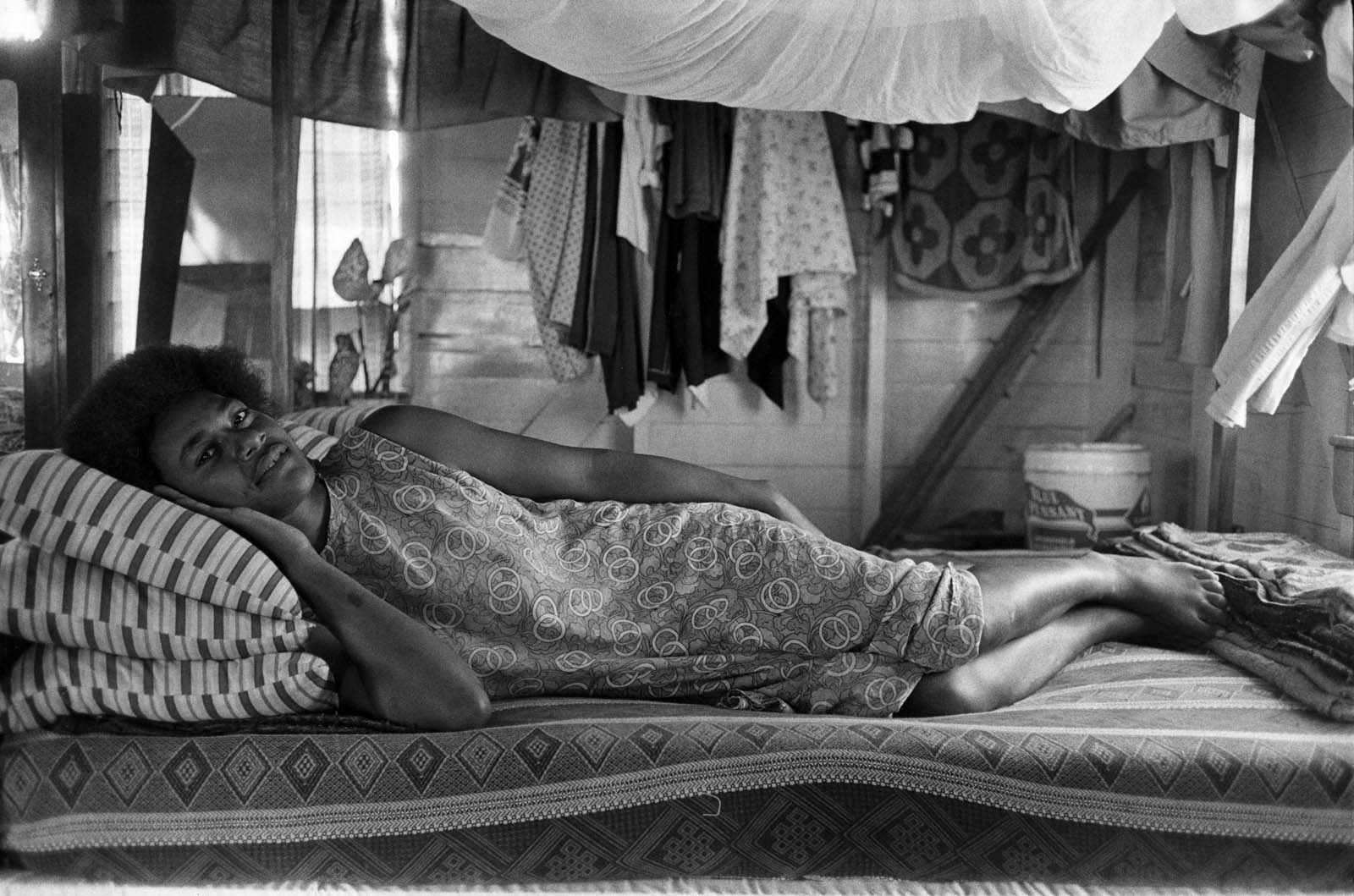
Carrie Mae Weems (American, b. 1953) 'Reclining Girl, Fiji' 1982-1983


Carrie Mae Weems (American, b. 1953)
Reclining Girl, Fiji
1982-1983
Gelatin silver print
© Carrie Mae Weems
Courtesy of the artist and Jack Shainman Gallery, New York


Carrie Mae Weems (American, b. 1953) 'Untitled (Woman and daughter with children)' 1990


Carrie Mae Weems (American, b. 1953)
Untitled (Woman and daughter with children)
1990
Gelatin silver print
© Carrie Mae Weems
Courtesy of the artist and Jack Shainman Gallery, New York


Carrie Mae Weems (American, b. 1953) 'Untitled (Woman standing alone)' 1990


Carrie Mae Weems (American, b. 1953)
Untitled (Woman standing alone)
1990
Gelatin silver print
© Carrie Mae Weems
Courtesy of the artist and Jack Shainman Gallery, New York


Carrie Mae Weems (American, b. 1953) 'Untitled (Woman and Daughter with Makeup)' 1990


Carrie Mae Weems (American, b. 1953)
Untitled (Woman and Daughter with Makeup)
1990
Gelatin silver print
© Carrie Mae Weems
Courtesy of the artist and Jack Shainman Gallery, New York


Carrie Mae Weems (American, b. 1953) 'See No Evil' 1991


Carrie Mae Weems (American, b. 1953)
See No Evil
1991
Dye diffusion print (Polaroid Polacolor)
61 × 50.5cm (24 × 19 7/8 in.)
The J. Paul Getty Museum, Los Angeles, Gift of Daniel Greenberg and Susan Steinhauser
© Carrie Mae Weems


Carrie Mae Weems (American, b. 1953) 'Road Sign' 1991-1992


Carrie Mae Weems (American, b. 1953)
Road Sign
1991-1992
Gelatin silver print
© Carrie Mae Weems
Courtesy of the artist and Jack Shainman Gallery, New York


Carrie Mae Weems (American, b. 1953) 'Untitled (Ebo Landing)' 1992


Carrie Mae Weems (American, b. 1953)
Untitled (Ebo Landing)
1992
Two gelatin silver prints and one screenprinted text panel
© Carrie Mae Weems
Courtesy of the artist and Jack Shainman Gallery, New York


Carrie Mae Weems (American, b. 1953) 'You Became a Scientific Profile / An Anthropological Debate / A Negroid Type / A Photographic Subject' 1995-1996


Carrie Mae Weems (American, b. 1953)
You Became a Scientific Profile / An Anthropological Debate / A Negroid Type / A Photographic Subject
1995-1996
From From Here I Saw What Happened and I Cried
© Carrie Mae Weems
Courtesy of the artist and Jack Shainman Gallery, New York


Carrie Mae Weems (American, b. 1953) 'The Edge of Time – Ancient Rome' 2006


Carrie Mae Weems (American, b. 1953)
The Edge of Time – Ancient Rome
2006
Chromogenic print
© Carrie Mae Weems


Carrie Mae Weems (American, b. 1953) 'The Tragedy of Hiroshima' 2008


Carrie Mae Weems (American, b. 1953)
The Tragedy of Hiroshima
2008
Inkjet print
© Carrie Mae Weems
Courtesy of the artist and Jack Shainman Gallery, New York


The pose of the figures, other than the obvious reference to the Pieta, reminds me of that famous and most moving Eugene W. Smith photograph Tomoko and Mother in the Bath (1971)


The J. Paul Getty Museum
1200 Getty Center Drive
Los Angeles, California 90049

Opening hours:
Daily 10am – 5pm

The J. Paul Getty Museum website

LIKE ART BLACK ON FACEBOOK

Back to top

Exhibition: ‘Bare Witness: Photographs by Gordon Parks’ at the Phoenix Art Museum

Exhibition dates: 20th August – 6th November 2011


Many thankx to the Phoenix Art Museum for allowing me to publish the photographs in the posting. Please click on the photographs for a larger version of the image.


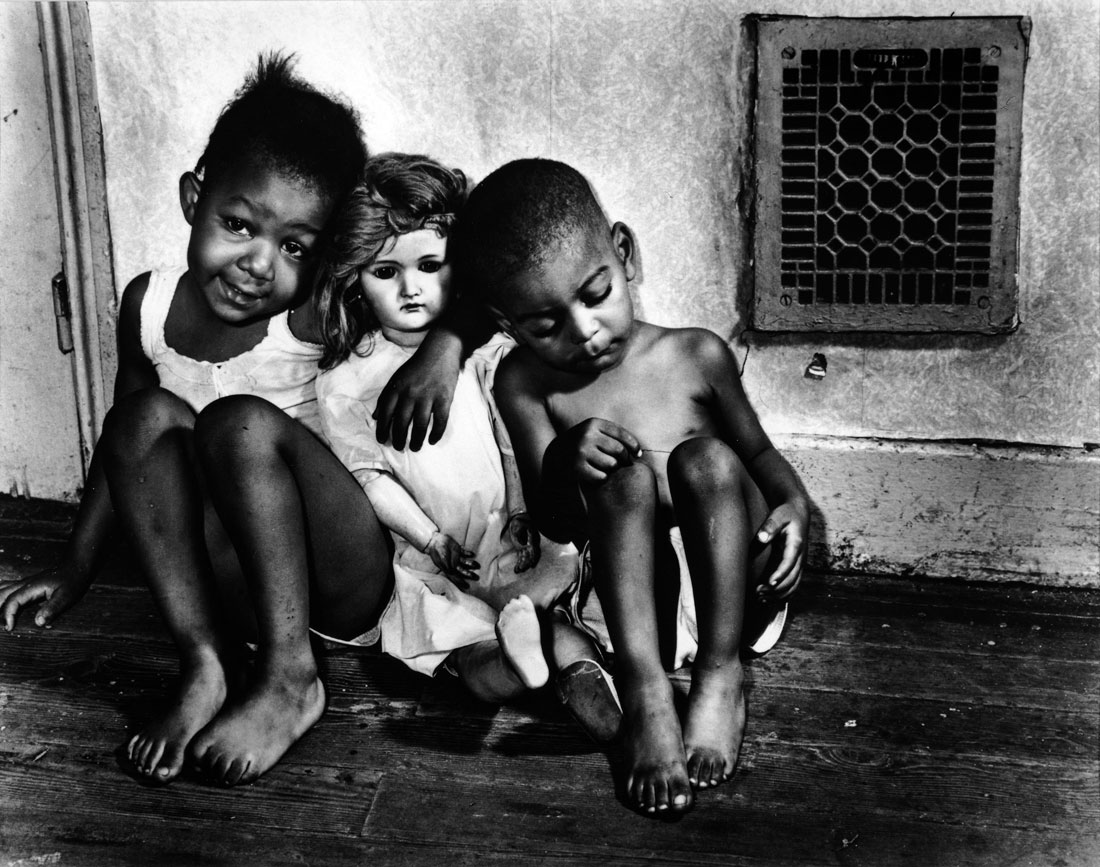
Gordon Parks (American, 1912-2006) 'Children with Doll (Ella Watson’s Grandchildren)' 1942


Gordon Parks (American, 1912-2006)
Children with Doll (Ella Watson’s Grandchildren)
1942
Gelatin silver print
11 x 14 inches
Lent by The Capitol Group Foundation
© 2006 The Gordon Parks Foundation


Gordon Parks (American, 1912-2006) 'Ingrid Bergman at Stromboli' 1949


Gordon Parks (American, 1912-2006)
Ingrid Bergman at Stromboli
1949
Gelatin silver print
16 x 20 inches
Lent by The Capitol Group Foundation
© 2006 The Gordon Parks Foundation


Gordon Parks (American, 1912-2006) 'Black Muslim Rally' New York, 1963


Gordon Parks (American, 1912-2006)
Black Muslim Rally
New York, 1963
Gelatin silver print
16 x 20 inches
Lent by The Capitol Group Foundation
© 2006 The Gordon Parks Foundation


Gordon Parks (American, 1912-2006) 'Alberto Giacometti, Paris' 1951


Gordon Parks (American, 1912-2006)
Alberto Giacometti, Paris
1951
Gelatin silver print
16 x 20 inches
Lent by The Capitol Group Foundation
© 2006 The Gordon Parks Foundation


Gordon Parks spent the majority of his professional career at the crossroads of the glamorous and the ghetto – two extremes the noted photographer knew well.  Perhaps best recognised for his works chronicling the African-American experience, Parks was also an accomplished fashion photographer. Bare Witness: Photographs by Gordon Parks provides a revealing look at the diversity and breadth of Parks’s most potent imagery. Featuring 73 works specifically selected by Parks for the photographic collection of the Los Angeles-based Capital Group, Bare Witness divulges heart wrenching images, iconic moments, celebrities and slices of everyday life.

Born in 1912 in Fort Scott, Kansas, Parks, who died in 2006 at age 93, was an African American photographer who began working professionally in the 1930’s. Parks tackled the harsh truth and dignity of the black urban and rural poor in the United States. He photographed aspects of the Civil Rights movements and individuals associated with the Black Panthers and Black Muslims. For nearly 25 years, from 1948 to 1972, he served as staff photographer for Life magazine. He also established himself as a foremost fashion photographer, providing spreads for respected magazines such as Vogue.

Bare Witness features many of Parks’s most memorable images such as “American Gothic.” Taken during Parks’s brief time with the Farm Security Agency, the photograph depicts a black cleaning woman named Ella Watson standing stiffly in front of an American flag, a mop in one hand and a broom in the other. Also included in the exhibition is a series of photos from Parks’s most famous Life magazine essay about Flavio da Silva, a malnourished and asthmatic boy living in a Rio de Janerio slum. Portraits of Muhammad Ali, Duke Ellington, Alexander Calder, Ingrid Bergman, Langston Hughes and Malcolm X among others will also be on view.

“Whether photographing celebrities or common folk, children or the elderly, Harlem gang leaders or fellow artists, Parks brought his straightforward, sympathetic ear and mind to bear witness to late 20th century civilisation,” commented Hilarie Faberman, the Robert M. and Ruth L. Halperin Curator of Modern and Contemporary Art at Cantor Arts Center and organiser of the exhibition. “His photographs balance the dichotomies of black and white, rich and poor, revealing his strengths and struggles as an artist and a man.”

In addition to his documentary and fashion photography, Parks was a filmmaker, author, musician and publisher. He was the first black artist to produce and direct a major Hollywood film, “The Learning Tree” in 1969, which was based on his early life experiences. He subsequently directed the popular action films “Shaft” and “Shaft’s Big Score.” He was a founder and editorial director of Essence magazine and wrote several autobiographies, novels and poems. In 1988, he received the National Medal of Arts award and throughout his lifetime was the recipient of 40 honorary doctorates from colleges and universities in the United States and England.

“Parks was a renaissance man whose career embodied the American ideal of equality and whose art was deeply personal. This exhibition is an exciting opportunity for Museum visitors to experience the poignant images he made over five decades,” commented Rebecca Senf, Norton Curator of Photography, Phoenix Art Museum.

The exhibition includes an illustrated catalogue with an essay by photography scholar Maren Stange who writes frequently on modern American culture. This exhibition has already enjoyed a five-venue tour, where the photographs were received with great excitement. The exhibition has been revived for a final showing at the Phoenix Art Museum. Bare Witness: Photographs by Gordon Parks was organised by the Iris & B. Gerald Cantor Center for Visual Arts at Stanford University. The exhibition and its accompanying catalogue are made possible by generous support from The Capital Group Foundation, the Cantor Arts Center’s Hohbach Family Fund, and Cantor Arts Center’s Members.

Press release from the Phoenix Museum of Art website


Gordon Parks (American, 1912-2006) 'American Gothic' 1942


Gordon Parks (American, 1912-2006)
American Gothic
1942
Gelatin silver print
24 x 20 inches
Lent by The Capitol Group Foundation
© 2006 The Gordon Parks Foundation


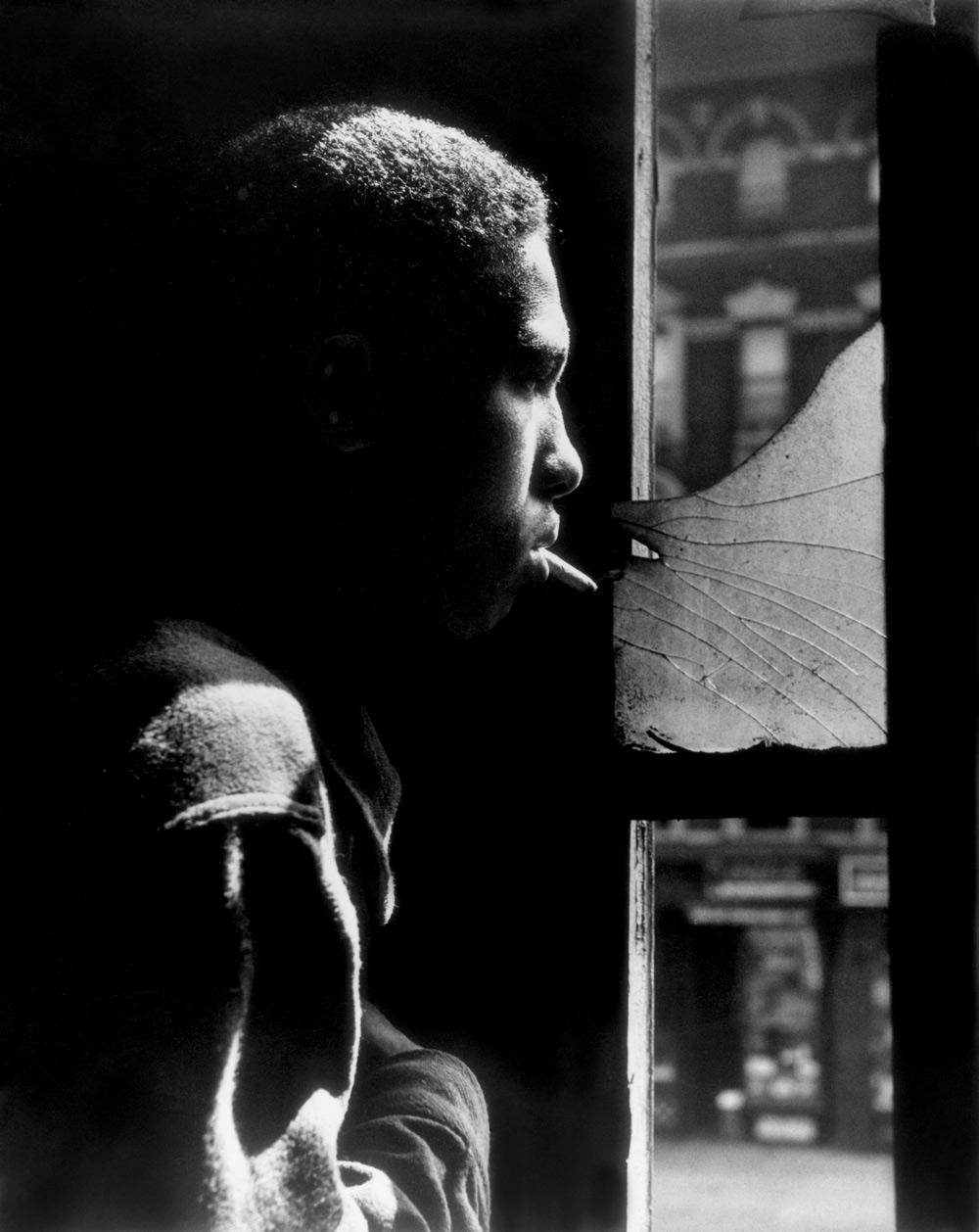
Gordon Parks (American, 1912-2006) 'Red Jackson, Harlem' 1948


Gordon Parks (American, 1912-2006)
Red Jackson, Harlem
1948
Gelatin silver print
Lent by The Capitol Group Foundation
© 2006 The Gordon Parks Foundation


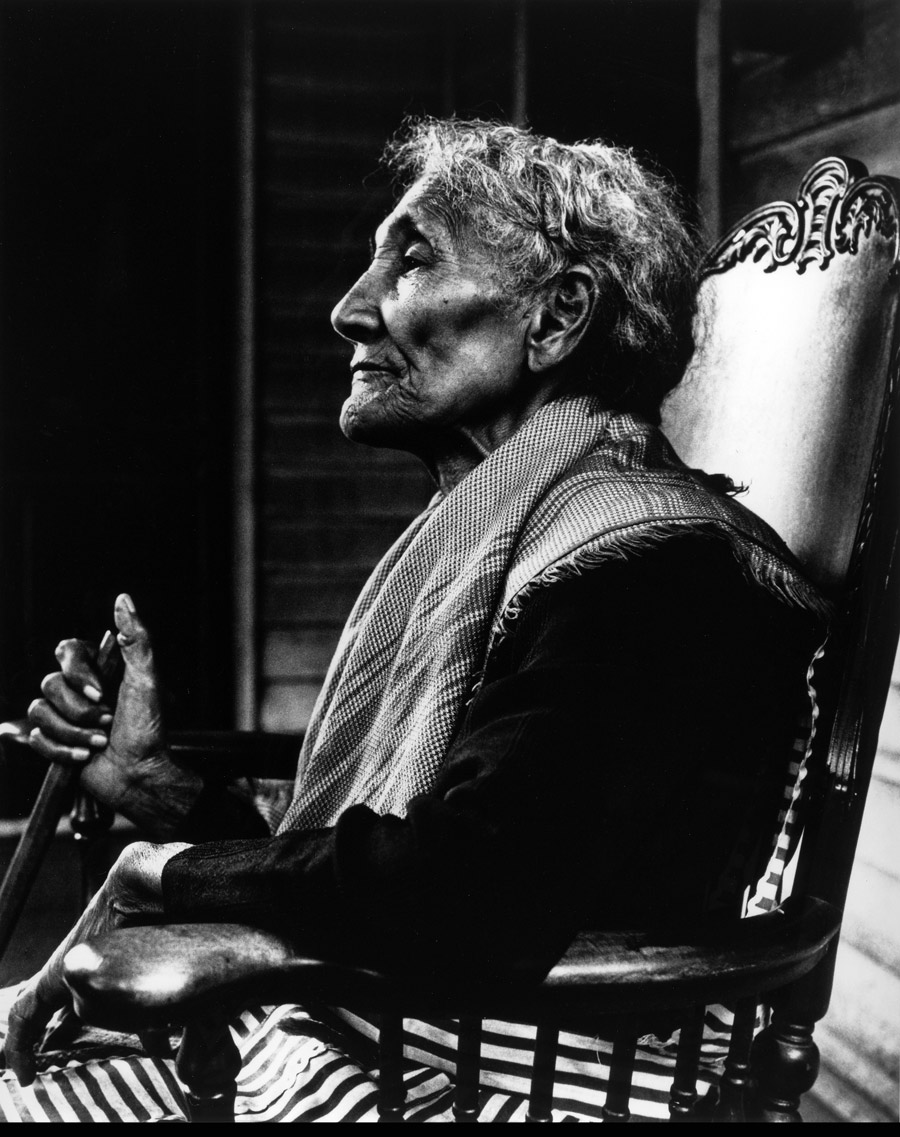
Gordon Parks (American, 1912-2006) 'Mrs. Jefferson, Fort Scott' 1949


Gordon Parks (American, 1912-2006)
Mrs. Jefferson, Fort Scott
1949
Gelatin silver print
20 x 16 inches
Lent by The Capitol Group Foundation
© 2006 The Gordon Parks Foundation


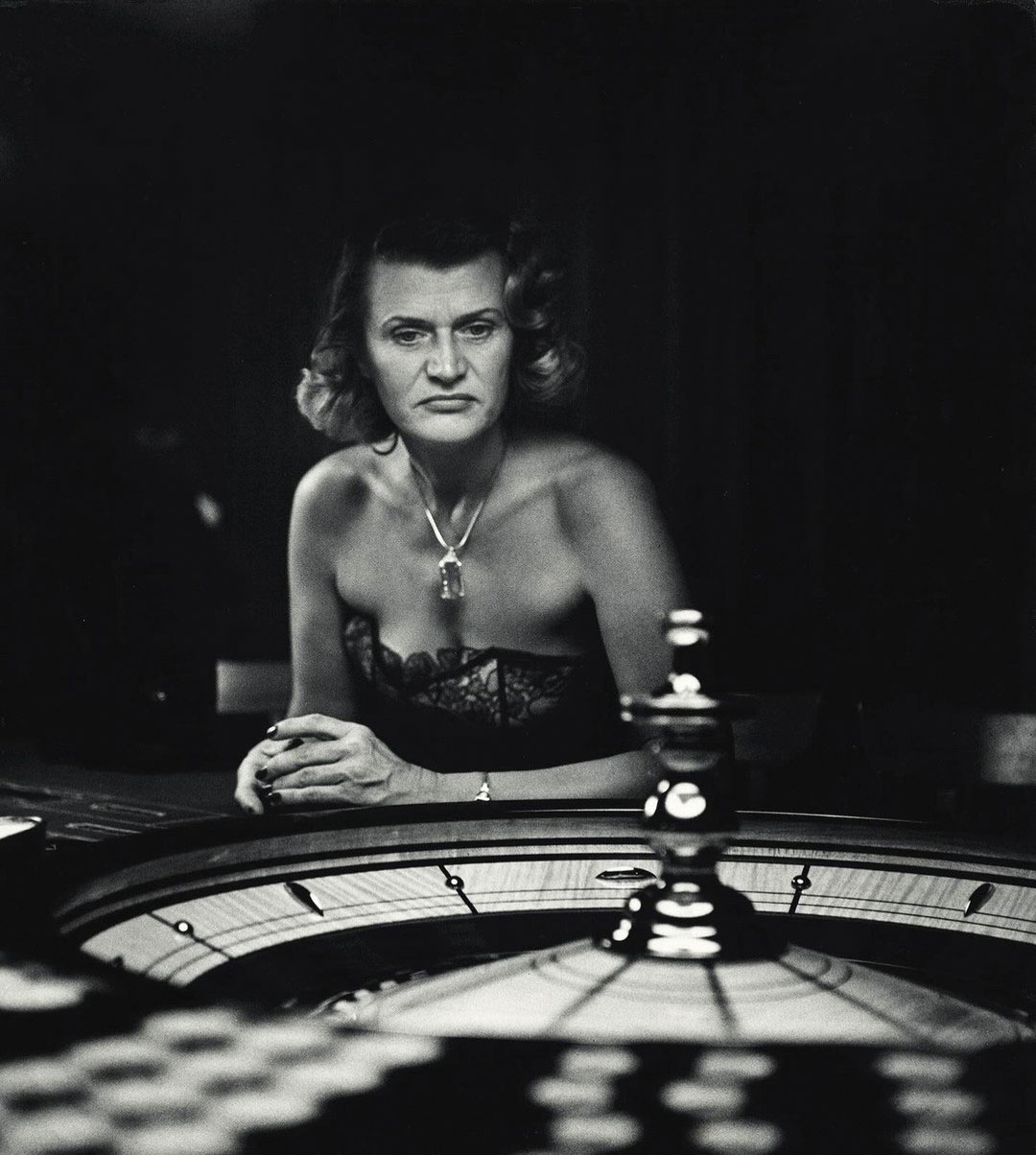
Gordon Parks (American, 1912-2006) 'A Gambling Woman, Caribe Hilton Hotel, San Juan, Puerto Rico' December 1949


Gordon Parks (American, 1912-2006)
A Gambling Woman, Caribe Hilton Hotel, San Juan, Puerto Rico
December 1949
Gelatin silver print
20 x 16 inches
Lent by The Capitol Group Foundation
© 2006 The Gordon Parks Foundation


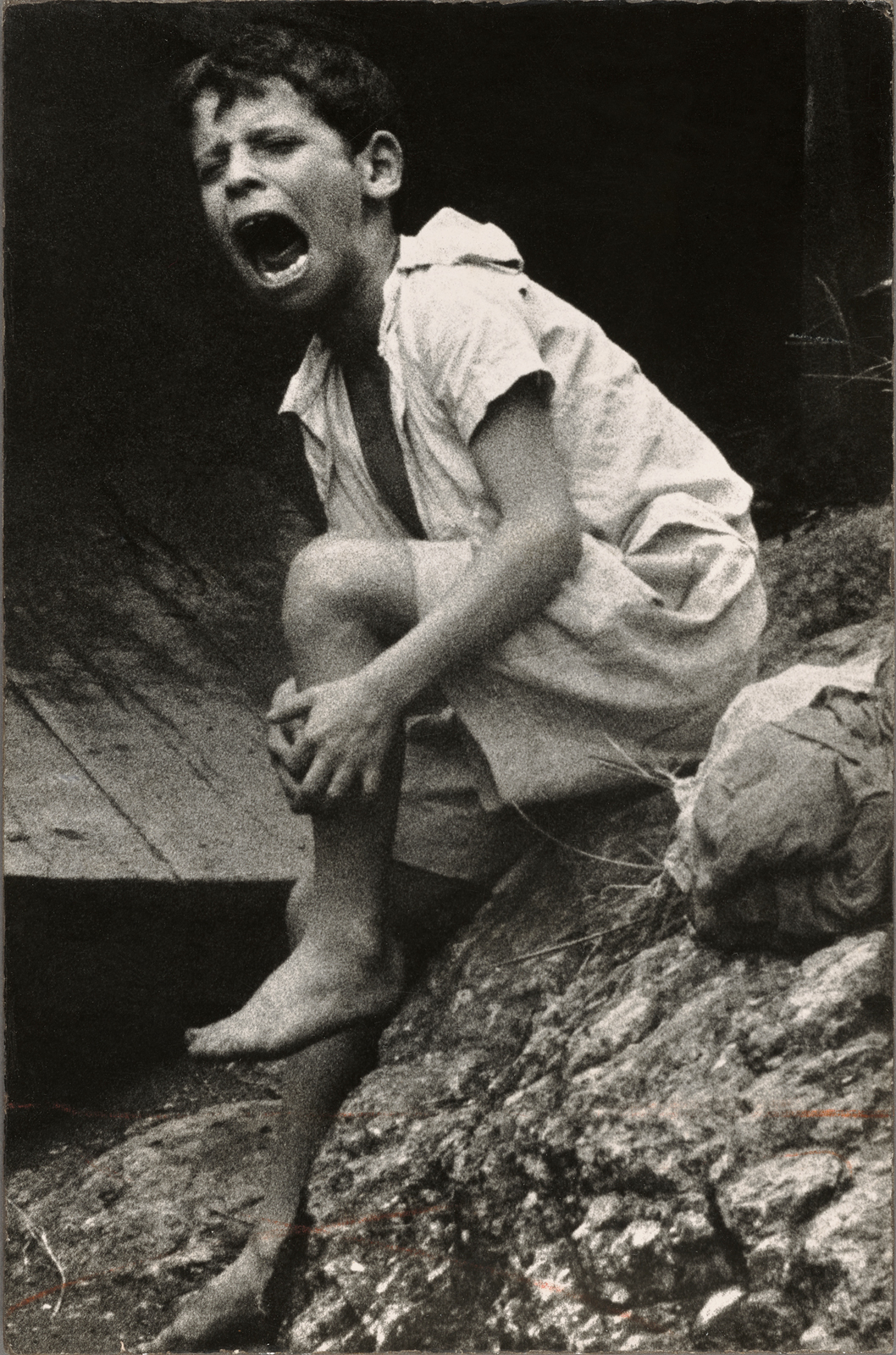
Gordon Parks (American, 1912-2006) 'Mário da Silva, Crying after Being Bitten by Dog, Rio de Janeiro, Brazil' 1961


Gordon Parks (American, 1912-2006)
Mário da Silva, Crying after Being Bitten by Dog, Rio de Janeiro, Brazil
1961
Gelatin silver print
14 x 11 inches
Lent by The Capitol Group Foundation
© 2006 The Gordon Parks Foundation


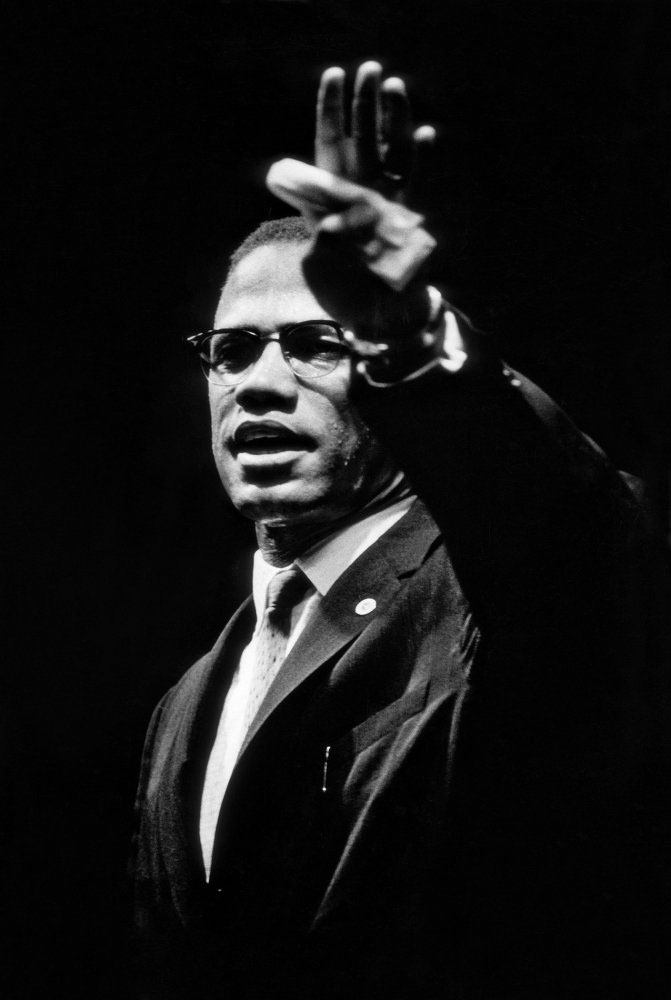
Gordon Parks (American, 1912-2006) 'Malcolm X at Rally, Chicago, Illinois' 1963


Gordon Parks (American, 1912-2006)
Malcolm X at Rally, Chicago, Illinois
1963
From the series Chicago Muslim Story (1963)
Gelatin silver print
Lent by The Capitol Group Foundation
© 2006 The Gordon Parks Foundation


Gordon Parks relocated from Minnesota to Chicago’s South Side in 1940, immersing himself in the local art community while operating a portrait studio out of the South Side Community Art Center. In 1941 he was awarded a Rosenwald Fellowship for a portfolio of photographs he created on the South Side; the award gave him the means to move east to Washington, DC. By 1948 Life magazine hired him as its first African American staff photographer.

In 1963 Parks returned to Chicago on assignment for Life to report on the Nation of Islam, newly headquartered in the city. Parks gained unprecedented access to this radical civil rights movement through his friendship with Malcolm X, who arranged a meeting with Elijah Muhammad, the group’s leader, so that Parks could obtain permission to proceed with the story. Parks spent weeks with the Black Muslim community, documenting a range of its activities – from self-defense training to religious services led by Malcolm X.

Parks’s photo-essay ran in the May 31, 1963, issue of Life, along with an essay by Parks that reflects on his dual status as insider and outsider. The text begins with his return to Chicago after nearly a decade and his memories of “the hopelessness that seeped into the black souls of that jungle.” Parks goes on to describe his current position: “I was a Black Man in White Man’s clothing, sent by the very ‘devils’ [Elijah Muhammad] criticized so much… . I wondered whether or not my achievements in the white world had cost me a certain objectivity.” He concludes, “I sympathize with much of what they say, but I also disagree with much of what they say… . Nevertheless, I acknowledge that the circumstance of common struggle has willed us brothers.”

Text from the Art Institute of Chicago website 


Gordon Parks (American, 1912-2006) 'Muhammad Ali' c. 1970


Gordon Parks (American, 1912-2006)
Muhammad Ali
c. 1970
Gelatin silver print
24 x 20 inches
Lent by The Capitol Group Foundation
© 2006 The Gordon Parks Foundation


Gordon Parks (American, 1912-2006) 'Muhammad Ali' 1970


Gordon Parks (American, 1912-2006)
Muhammad Ali
1970
Cibachrome
20 x 16 inches
Lent by The Capitol Group Foundation
© 2006 The Gordon Parks Foundation


Phoenix Art Museum
McDowell Road & Central Avenue
1625 N. Central Avenue
Phoenix, AZ 85004

Opening hours:
Monday Closed
Tuesday Closed
Wednesday 10am – 9pm
Thursday – Sunday 10am – 5pm

Phoenix Art Museum website

LIKE ART BLART ON FACEBOOK

Back to top