
Exhibition dates: 26th May – 18th October, 2015
Curator: Arpad Kovacs, Assistant Curator of Photographs at the J. Paul Getty Museum
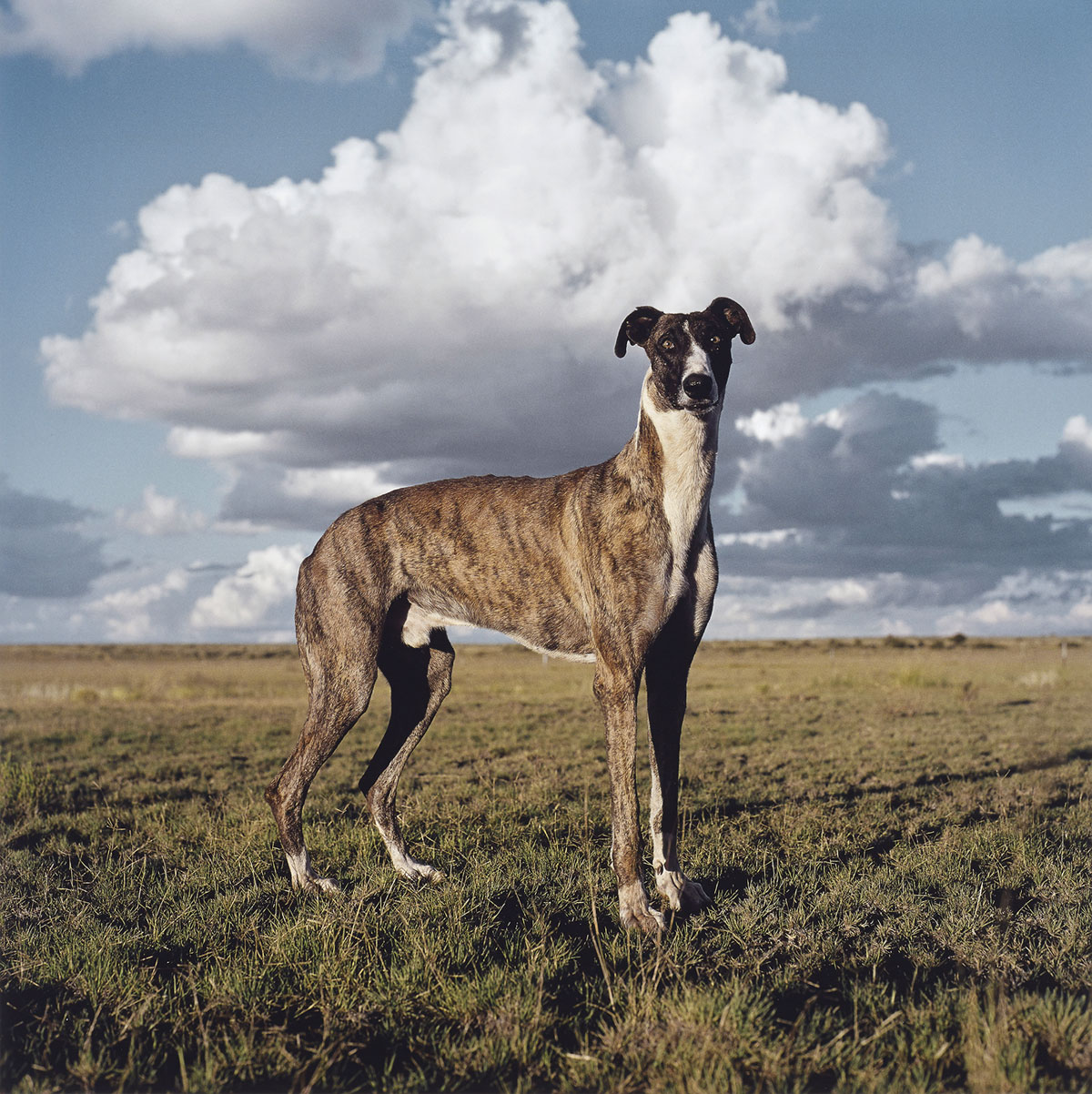
Daniel Naudé (South African, b. 1984)
Africanis 17. Danielskuil, Northern Cape, 25 February 2010
2010
Chromogenic print
60 x 60cm (23 5/8 x 23 5/8 in.)
The J. Paul Getty Museum, Los Angeles
© Daniel Naudé
Some of the photographs in this posting are sad, others are just gruesome.
One animal’s in/humanity to many others.
Dr Marcus Bunyan
Many thankx to the J. Paul Getty Museum for allowing me to publish the photographs in the posting. Please click on the photographs for a larger version of the image.
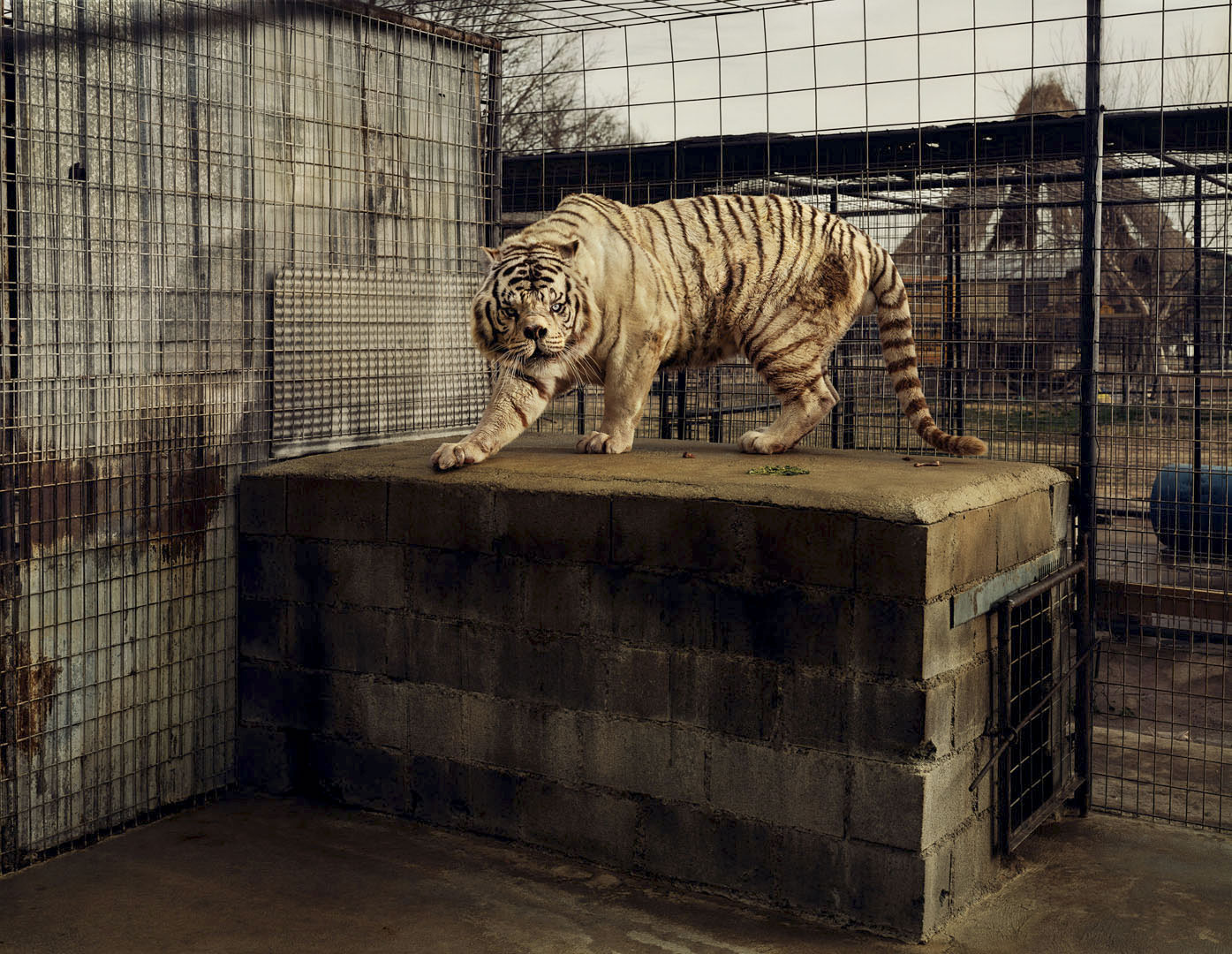
Taryn Simon (American, b. 1975)
White Tiger (Kenny), Selective Inbreeding Turpentine Creek Wildlife Refuge and Foundation Eureka Springs, Arkansas
2007
The J. Paul Getty Museum, Los Angeles
© Taryn Simon
In the United States, all living white tigers are the result of selective inbreeding to artificially create the genetic conditions that lead to white fur, ice-blue eyes and a pink nose. Kenny was born to a breeder in Bentonville, Arkansas on February 3, 1999. As a result of inbreeding, Kenny is mentally retarded and has significant physical limitations. Due to his deep-set nose, he has difficulty breathing and closing his jaw, his teeth are severely malformed and he limps from abnormal bone structure in his forearms. The three other tigers in Kenny’s litter are not considered to be quality white tigers as they are yellow-coated, crosseyed, and knock-kneed.
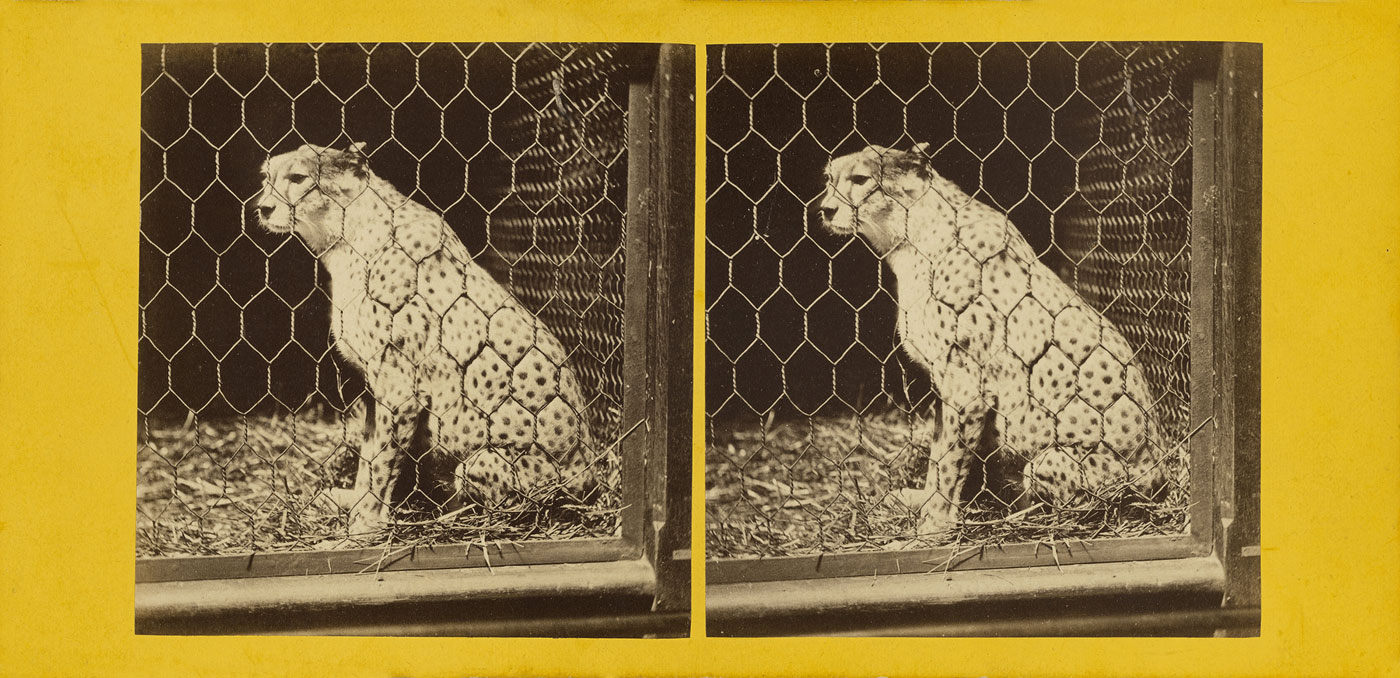
Frank Haes (British, 1832-1916)
The South African Cheetah (Felis Jubata.)
c. 1865
Albumen silver print
8.2 x 17.2cm (3 1/4 x 6 3/4 in.)
The J. Paul Getty Museum, Los Angeles
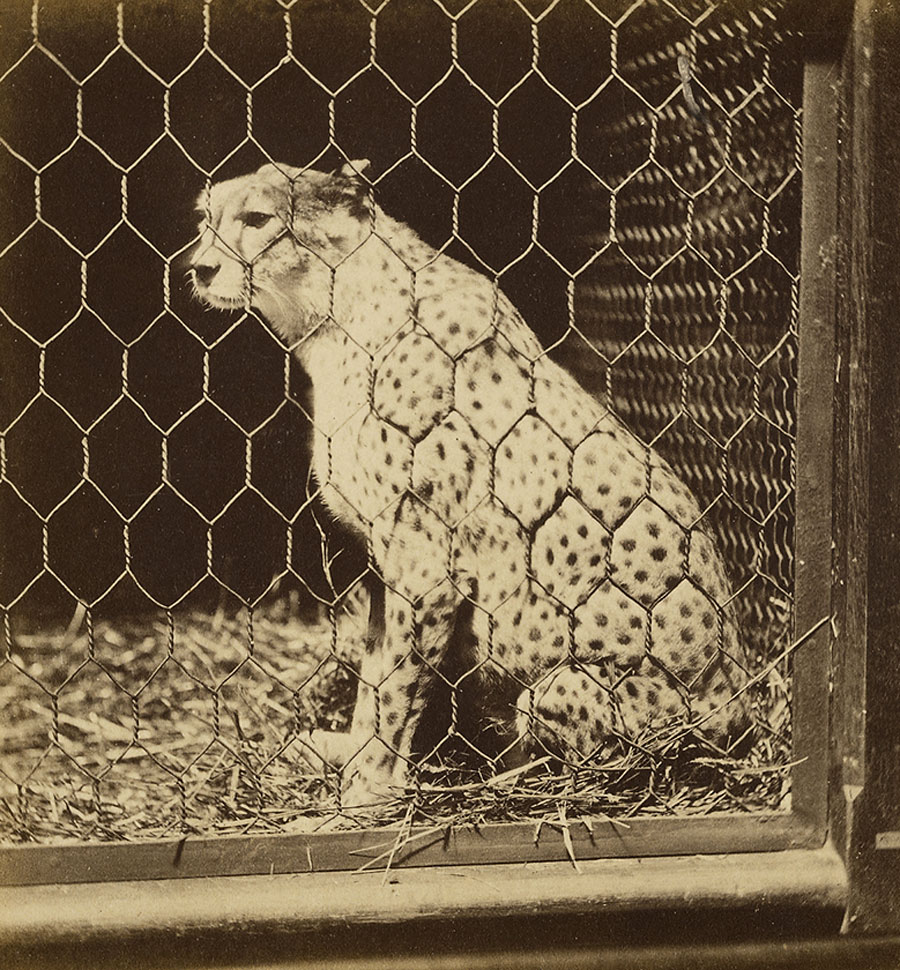
Frank Haes (British, 1832-1916)
The South African Cheetah (Felis Jubata.) (detail)
c. 1865
Albumen silver print
8.2 x 17.2cm (3 1/4 x 6 3/4 in.)
The J. Paul Getty Museum, Los Angeles
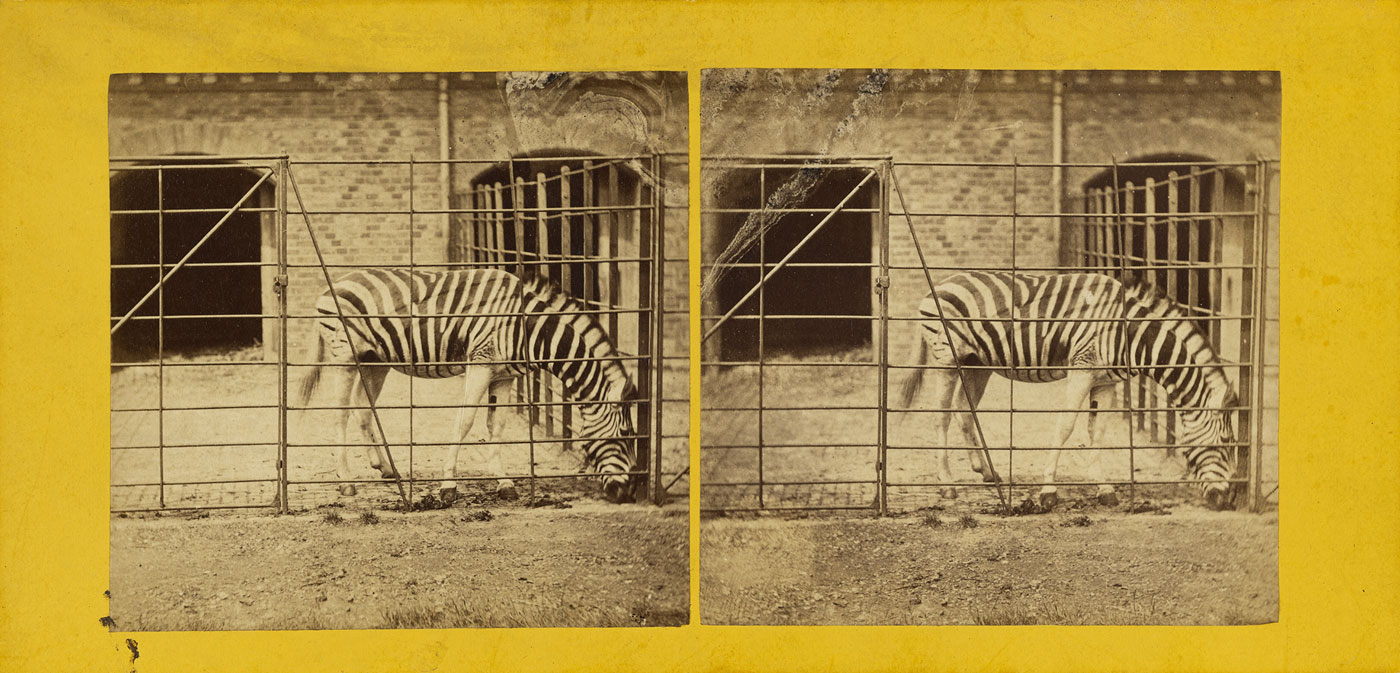
Frank Haes (British, 1832-1916)
The Zebra, Burchell’s, or Dauw. (Asinus Burchellii.)
c. 1865
Albumen silver print
8.3 x 17.2cm (3 1/4 x 6 3/4 in.)
The J. Paul Getty Museum, Los Angeles
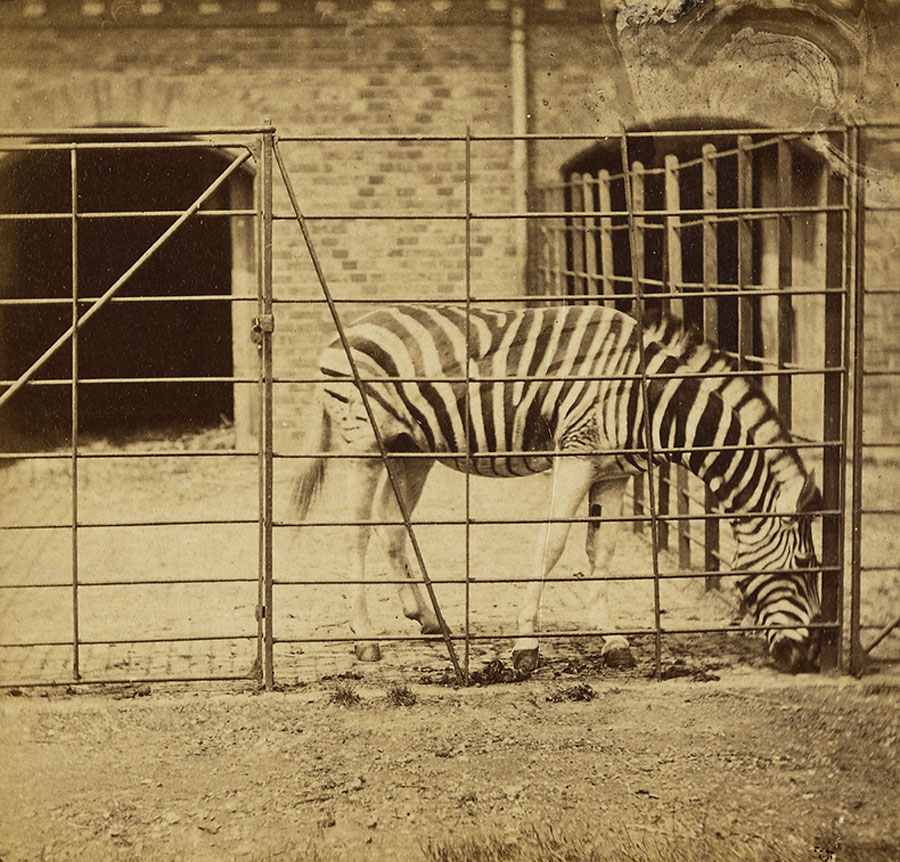
Frank Haes (British, 1832-1916)
The Zebra, Burchell’s, or Dauw. (Asinus Burchellii.) (detail)
c. 1865
Albumen silver print
8.3 x 17.2cm (3 1/4 x 6 3/4 in.)
The J. Paul Getty Museum, Los Angeles
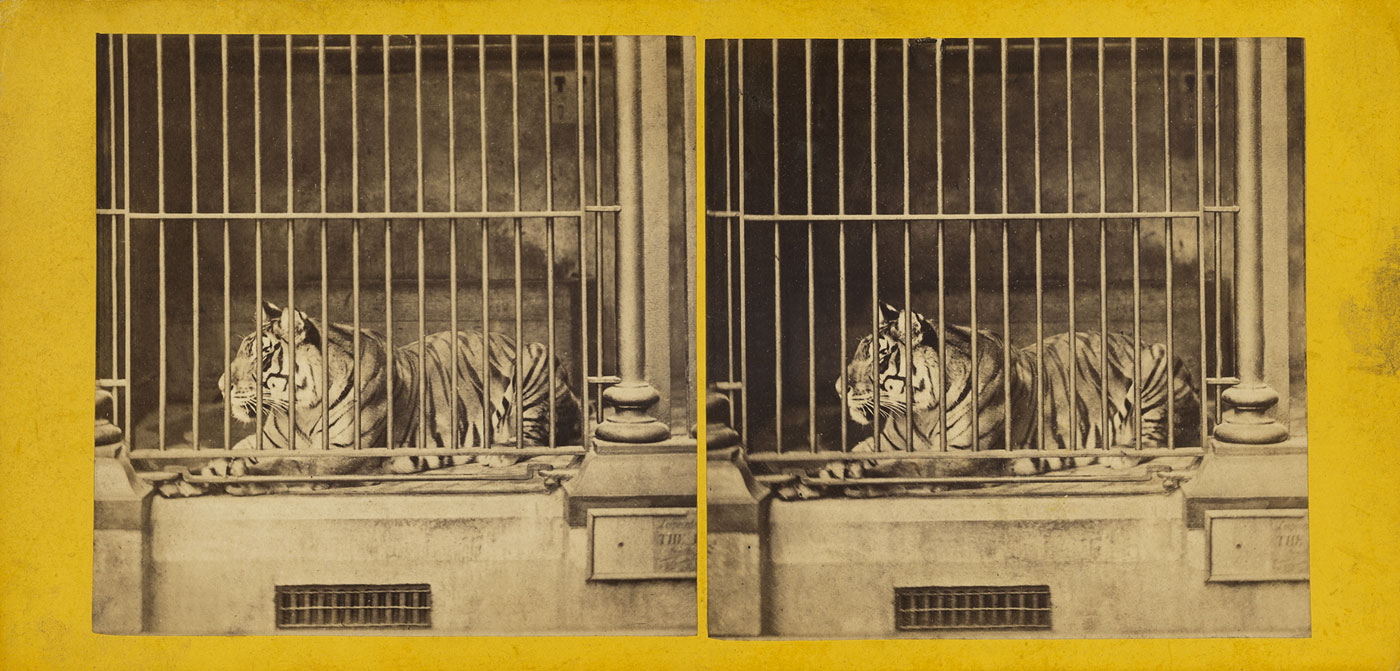
Frank Haes (British, 1832-1916)
The Tiger. (Felis Tigris.)
c. 1865
Albumen silver print
8.2 x 17.1cm (3 1/4 x 6 3/4 in.)
The J. Paul Getty Museum, Los Angeles
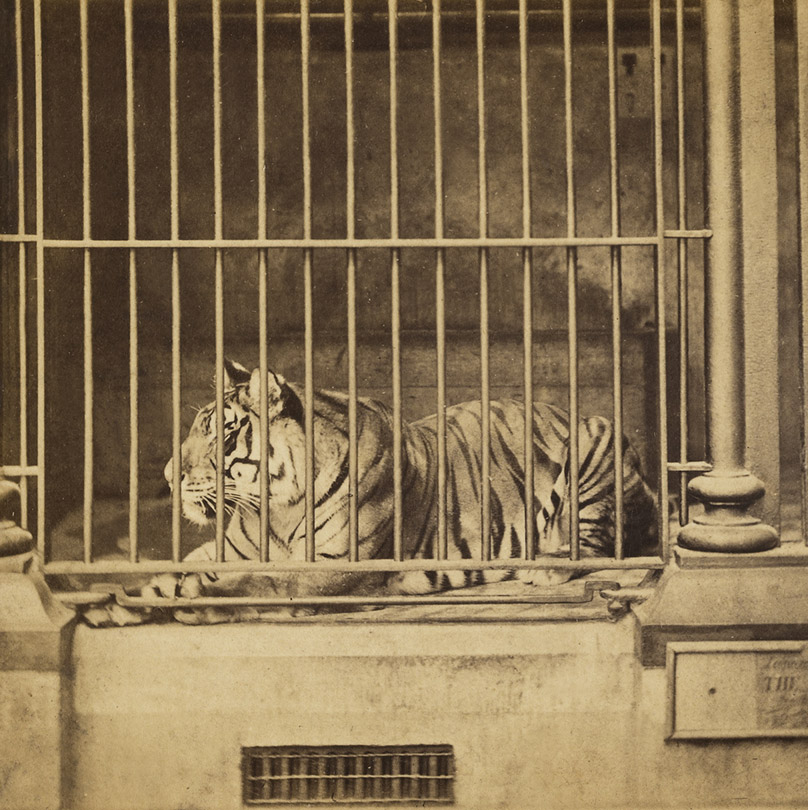
Frank Haes (British, 1832-1916)
The Tiger. (Felis Tigris.) (detail)
c. 1865
Albumen silver print
8.2 x 17.1cm (3 1/4 x 6 3/4 in.)
The J. Paul Getty Museum, Los Angeles
![Capt. Horatio Ross (British, 1801-1886) '[Dead stag in a sling]' c. 1850s - 1860s](https://artblart.com/wp-content/uploads/2015/10/gm_05996801-web.jpg "Capt. Horatio Ross (British, 1801-1886) '[Dead stag in a sling]' c. 1850s - 1860s")
Capt. Horatio Ross (British, 1801-1886)
[Dead stag in a sling]
c. 1850s – 1860s
Albumen silver print
27.9 x 33.2cm (11 x 13 1/16 in.)
The J. Paul Getty Museum, Los Angeles
![Capt. Horatio Ross (British, 1801-1886) '[Dead stag in a sling]' c. 1850s - 1860s (detail)](https://artblart.com/wp-content/uploads/2015/10/gm_05996801-detail.jpg "Capt. Horatio Ross (British, 1801-1886) '[Dead stag in a sling]' c. 1850s - 1860s (detail)")
Capt. Horatio Ross (British, 1801-1886)
[Dead stag in a sling] (detail)
c. 1850s – 1860s
Albumen silver print
27.9 x 33.2cm (11 x 13 1/16 in.)
The J. Paul Getty Museum, Los Angeles
Animals have never been camera shy – almost since the introduction of the medium in 1839, they have appeared in photographs. While early photographs typically depicted animals that were tame, captive, or dead, modern and contemporary artists have delved into the interdependent relationship between man and beast.
Drawn entirely from the J. Paul Getty Museum’s photographs collection, In Focus: Animalia, on view May 26-October 18, 2015 at the Getty Center, illustrates some of the complex relationships between people and animals. From an intimate studio portrait with dog and owner to the calculated cruelty of inbreeding practices, these photographs offer nuanced views of the animal kingdom.
“It is easy to understand why artists choose animals for their subject matter – their lives are profoundly intertwined with our own, often eliciting powerful emotions,” says Timothy Potts, Director of the J. Paul Getty Museum. “Whether seen as beloved pets, kept in zoos, or threatened by human activity, animals continue to fascinate and act as catalysts for artistic creativity. This exhibition highlights the many different ways in which animals as subject matter have served as an endearing theme for photographers throughout history right up to the present day.”
Photographs of pets, working animals, taxidermied game, and exotic beasts in newly opened zoos circulated widely during the second half of the 19th century. Early daguerreotypes required a subject to remain still for several minutes to ensure that the image would not blur, so photographing moving animals posed a problem. In Study of a White Foal (about 1845) the Swiss nobleman and amateur daguerreotypist Jean-Gabriel Eynard (1775-1863), focused the lens of his camera on a foal at rest, a moment when its movements were limited, in order to make a successful picture.
By the early 1850s most major cities in Europe and America could boast studios specialising in daguerreotype photography. Customers sat for portraits in order to preserve their own images, and also commissioned photographs of their family members and loved ones, including pets. In Dog Sitting on a Table (about 1854; artist unknown) an eager dog is photographed sitting on a tasseled pedestal. The slight blurring of the head, indicating movement during exposure, betrays the barely contained energy of this otherwise well-trained animal.
The mid-19th century saw increasing demand for stereoscopic photographs – two nearly identical prints made with a double lens camera that created a three-dimensional image when viewed in a stereoscope viewer. Frank Haes (British, 1832-1916) made a reputation for himself by photographing animals at the London Zoo, much to the delight of those fascinated by hippos, lions, zebras, and other exotic beasts. Eadweard J. Muybridge’s (American, born England, 1830-1904) pioneering work in motion studies are best remembered for his depictions of animals. Devising a system for successively tripping the shutters of up to 24 cameras, Muybridge created the illusion of movement in a galloping horse.
Artists have also relied on animals to convey symbolism and to represent fantastical worlds. A photograph by Alfred Stieglitz (American, 1864-1946) of a harnessed and castrated horse serves as a critical metaphor for American identity in the early 1920s, which Stieglitz viewed as materialist and culturally bankrupt. An elaborately staged photograph by Sandy Skoglund (American, b. 1946) presents a dreamlike atmosphere filled with handmade, larger-than-life sculptures of goldfish that create a scene at once playful and disturbing. Recently-acquired works by Daniel Naudé (South African, b. 1984) depict portraits of wild dogs the photographer found on the arid plains of South Africa. Made from a low vantage point, individual dogs are cast against broad views of the landscape, and the photographs harken back to the equestrian portrait tradition popular during the 17th century. Taryn Simon’s photograph of a caged white tiger (American, b. 1975) demonstrates the oftentimes debilitating results of the inbreeding practices utilised to obtain highly desired traits such as a white coat. This work illuminates the mistakes and failures of human intervention into a territory governed by natural selection.
In Focus: Animalia is on view May 26 – October 18, 2015 at the J. Paul Getty Museum, Getty Center. The exhibition will be accompanied by the publication of Animals in Photographs (Getty Publications) by Arpad Kovacs.
Press release from the J. Paul Getty Museum website
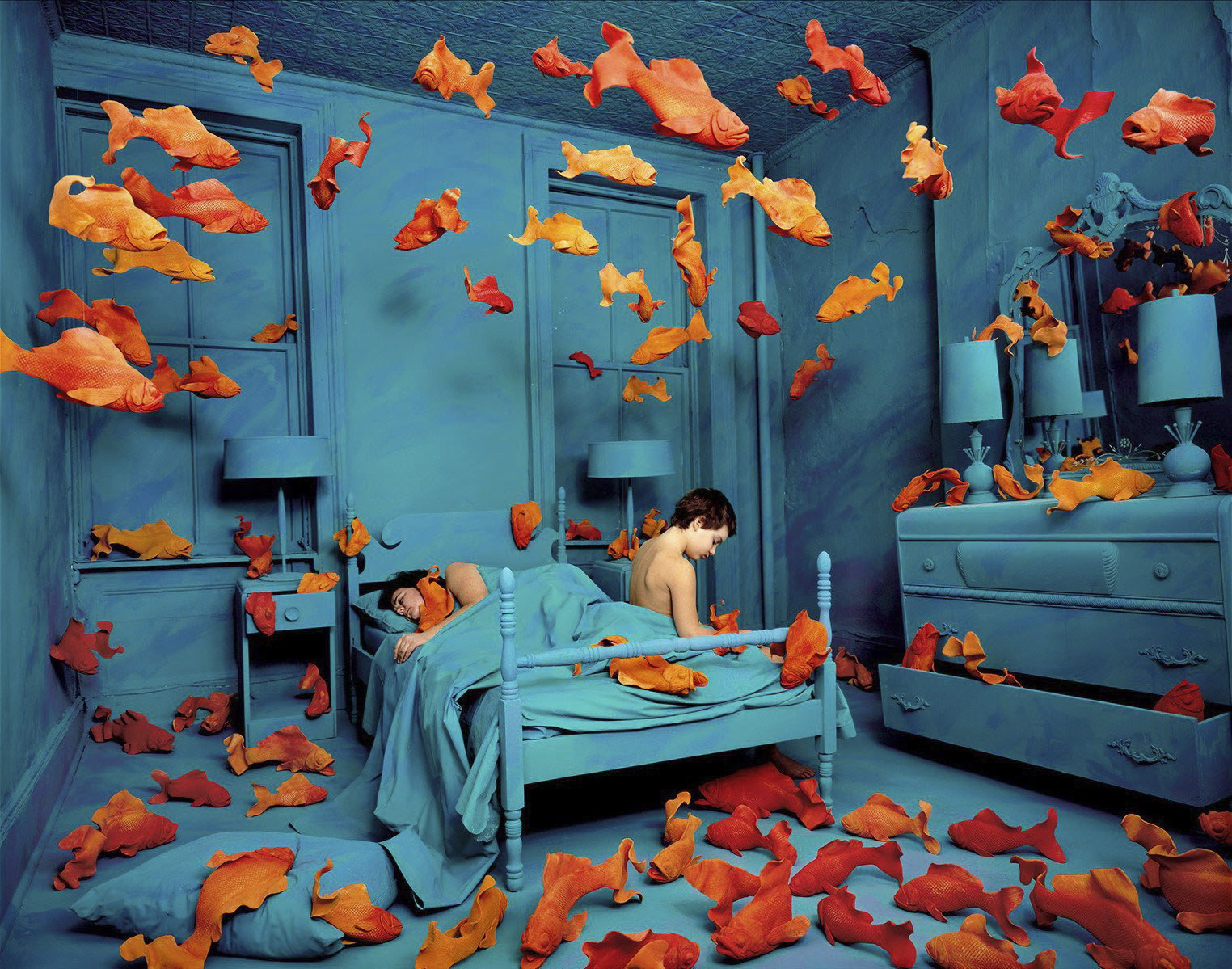
Sandy Skoglund (American, b. 1946)
Revenge of the Goldfish
1981
Color photograph
27 1/2″ x 35″
Individually hand-made ceramic goldfish by the artist, with live models in painted set
The J. Paul Getty Museum, Los Angeles
© 1981 Sandy Skoglund
Like many of her other works, such as Radioactive Cats and Fox Games, the piece is a set composed of props and human models, which Skoglund poses and then photographs. In the piece, a child sits on the edge of a bed while an adult sleeps next to him. The set of the scene is a monochromatic blue, with contrasting bright orange goldfish floating through the room. The goldfish in the piece were sculpted by Skoglund out of terracotta and bring an element of fantasy to an otherwise normal scene. According to Skoglund, “If the fish are eliminated the image shows nothing unusual; just a room with two people in bed.” The piece was first on display at the Saint Louis Art Museum in 1981. Since then, the piece has been in several collections at various museums, including Smith College Museum of Art, Dallas Museum of Art, Akron Art Museum, and Amon Carter Museum of American Art. Smith College Museum of Art also owns the original installation.
Text from the Wikipedia website
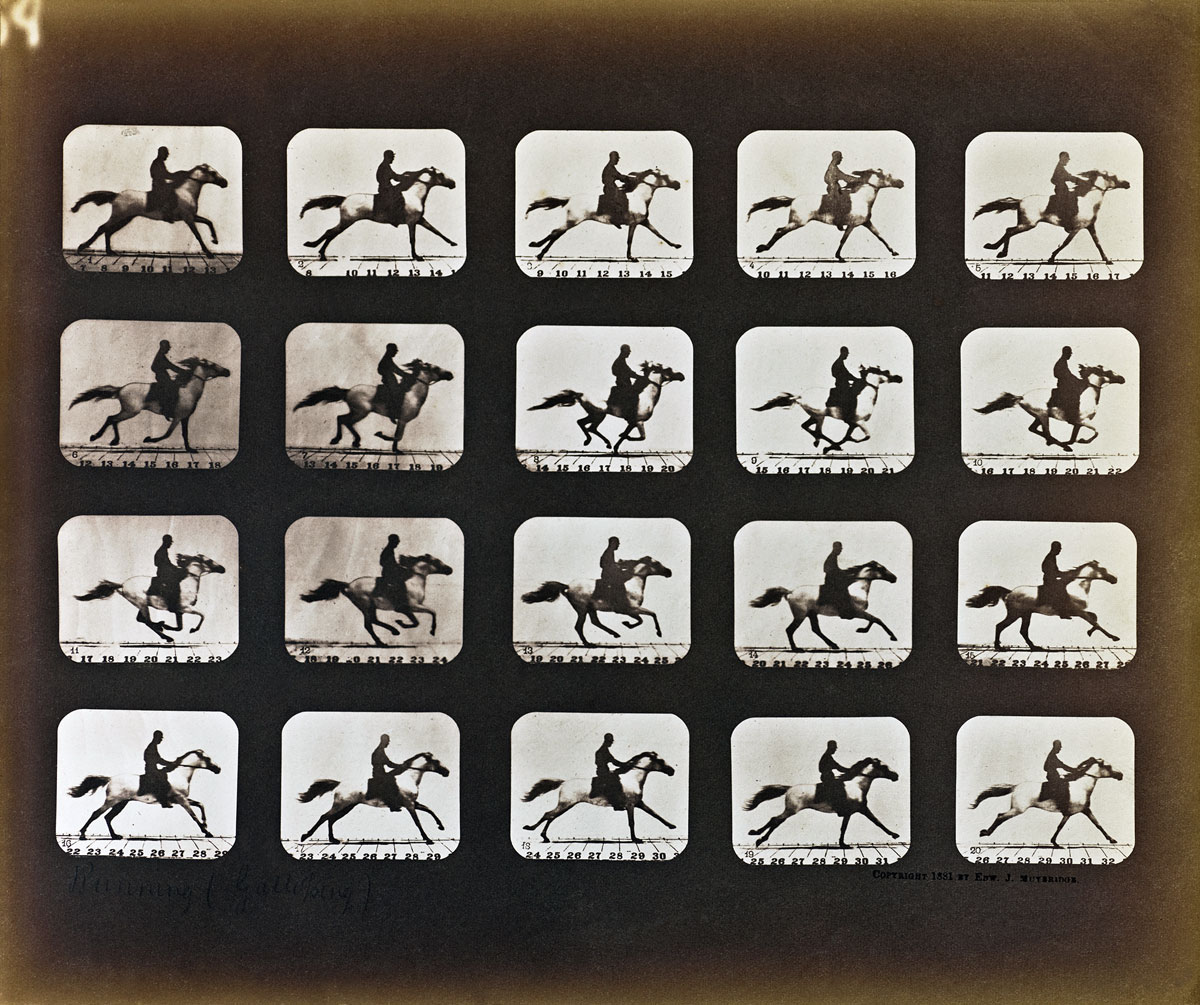
Eadweard J. Muybridge (American born England, 1830-1904)
Running (Galloping)
1878-1881
Iron salt process
18.9 x 22.6cm (7 7/16 x 8 7/8 in.)
The J. Paul Getty Museum, Los Angeles
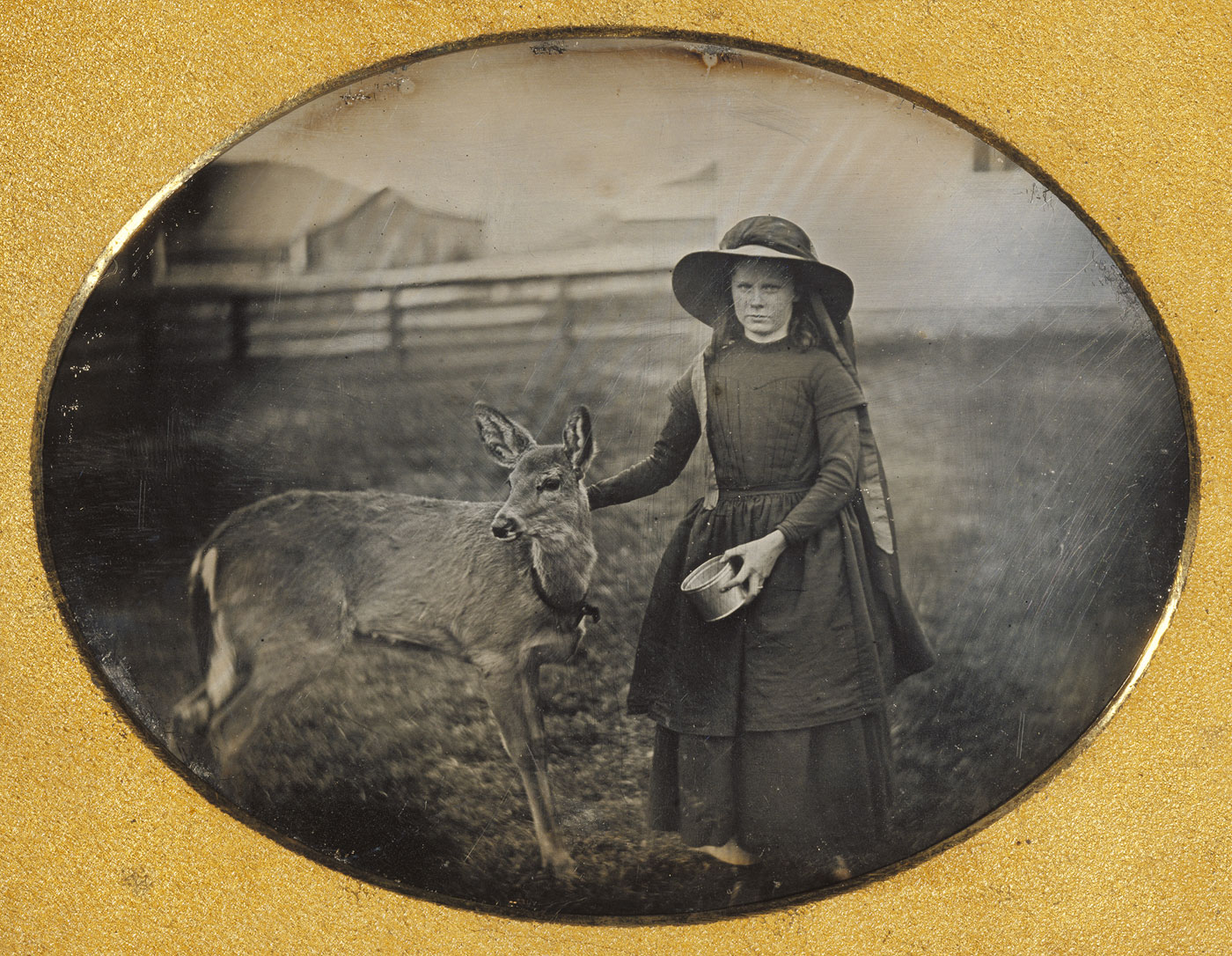
Unknown maker (American)
Portrait of a Girl with her Deer
c. 1854
Daguerreotype 1/4 plate
Image: 6.9 x 9cm (2 11/16 x 3 9/16 in.)
Plate: 8.1 x 10.7cm (3 3/16 x 4 3/16 in.)
Mat: 8.2 x 10.6cm (3 3/16 x 4 3/16 in.)
The J. Paul Getty Museum, Los Angeles
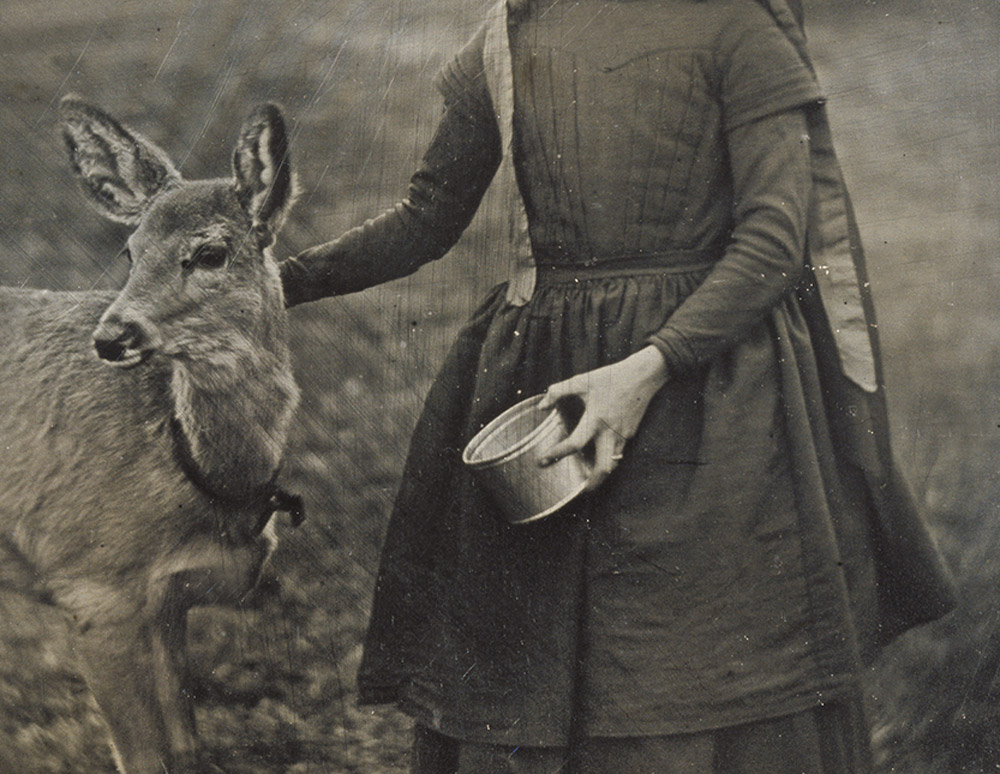
Unknown maker (American)
Portrait of a Girl with her Deer (detail)
c. 1854
Daguerreotype 1/4 plate
Image: 6.9 x 9cm (2 11/16 x 3 9/16 in.)
Plate: 8.1 x 10.7cm (3 3/16 x 4 3/16 in.)
Mat: 8.2 x 10.6cm (3 3/16 x 4 3/16 in.)
The J. Paul Getty Museum, Los Angeles
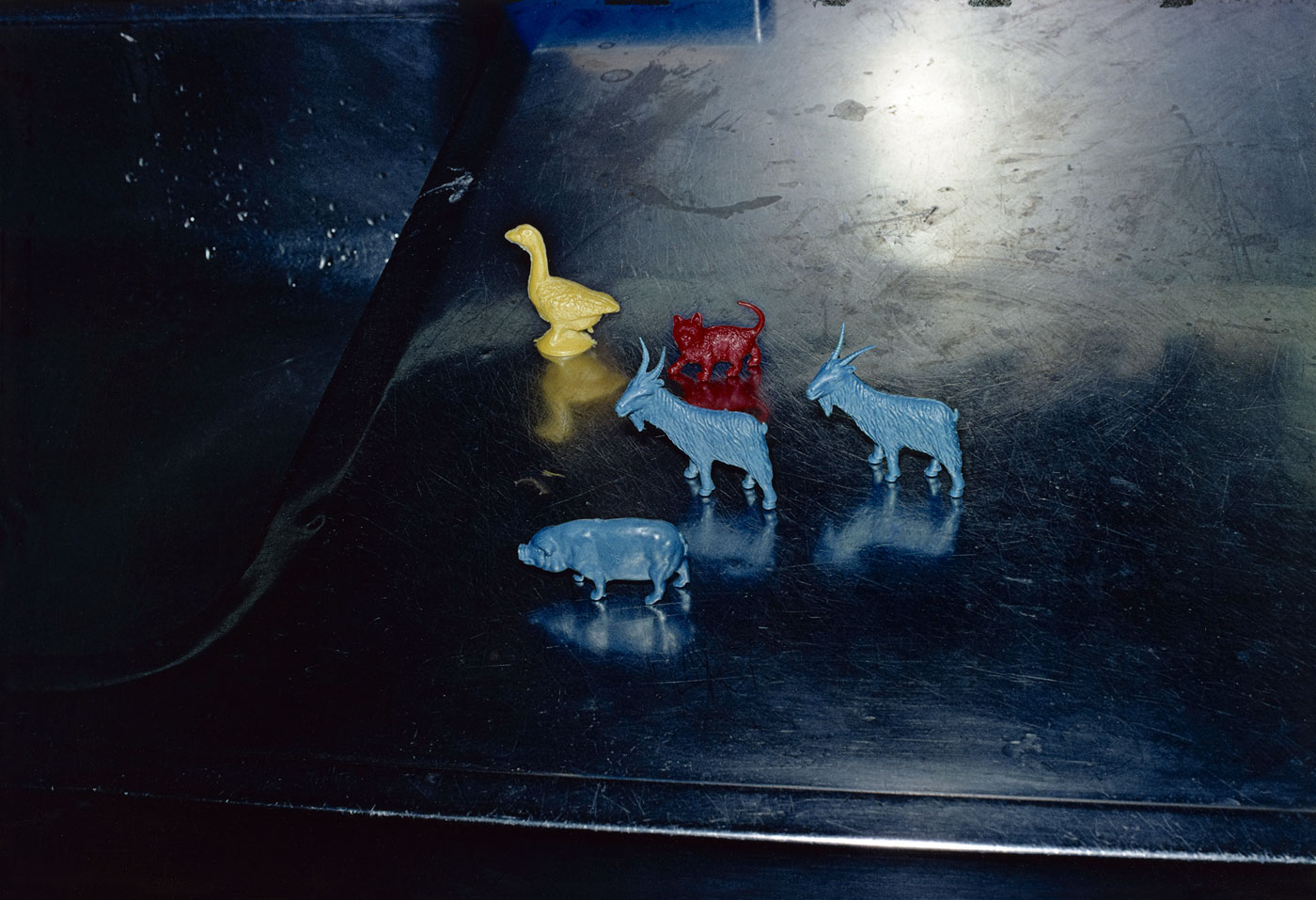
William Eggleston (American, b. 1939)
Memphis
Negative 1971; print 1974
Dye imbibition print
32.9 x 47.9cm (12 15/16 x 18 7/8 in.)
The J. Paul Getty Museum, Los Angeles
© Eggleston Artistic Trust
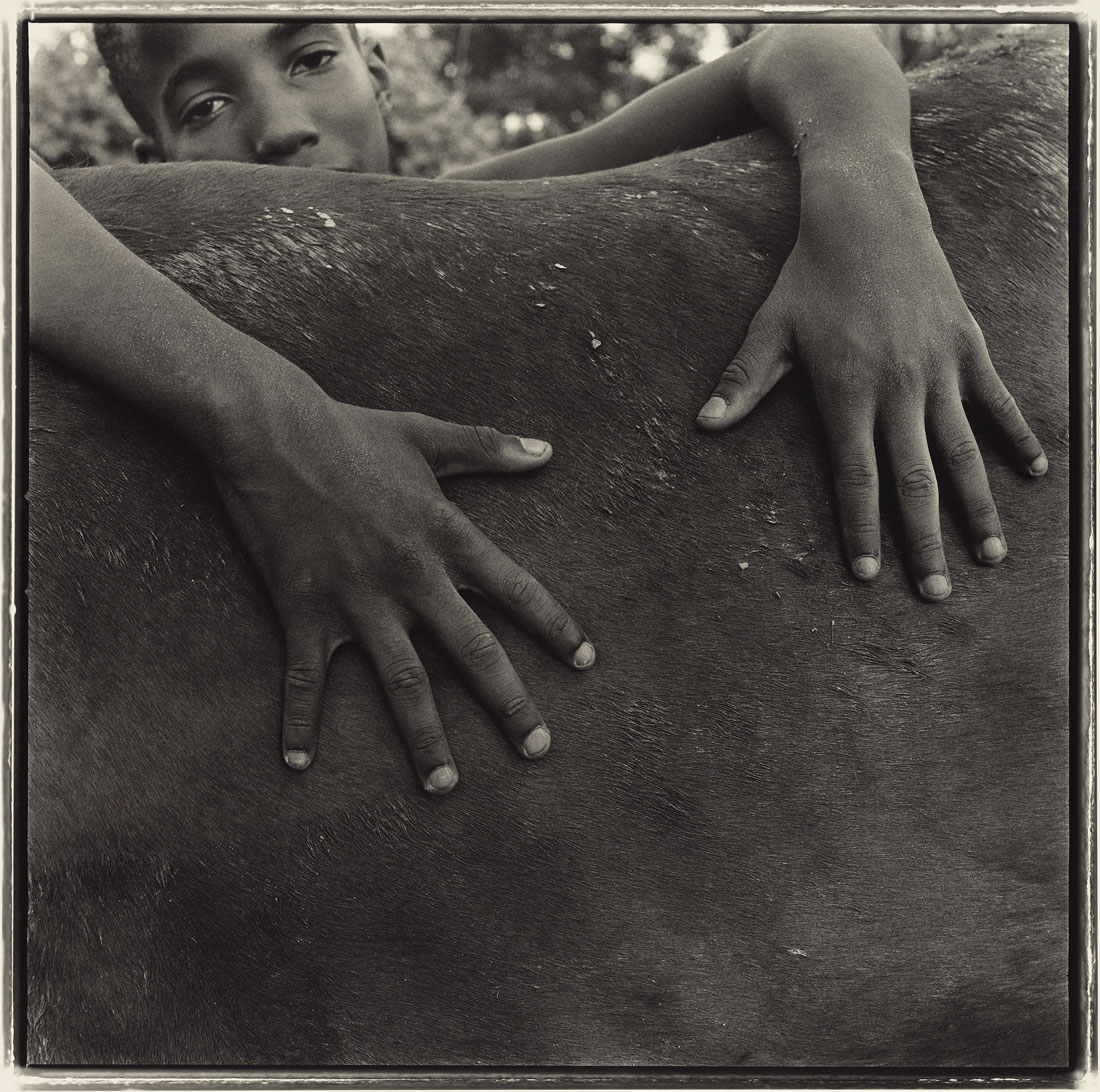
Keith Carter (American, b. 1948)
Goodbye to a Horse
1993
Gelatin silver print
39 x 39.2cm (15 3/8 x 15 7/16 in.)
The J. Paul Getty Museum, Los Angeles, Gift of Daniel Greenberg and Susan Steinhauser
© Keith Carter
![André Kertész (American born Hungary, 1894-1985) '[Wooden Mouse and Duck]' 1929](https://artblart.com/wp-content/uploads/2015/10/gm_04006701-web.jpg "André Kertész (American born Hungary, 1894-1985) '[Wooden Mouse and Duck]' 1929")
André Kertész (American born Hungary, 1894-1985)
[Wooden Mouse and Duck]
1929
Gelatin silver print
20.9 x 16.7cm (8 1/4 x 6 9/16 in.)
The J. Paul Getty Museum, Los Angeles
© Estate of André Kertész
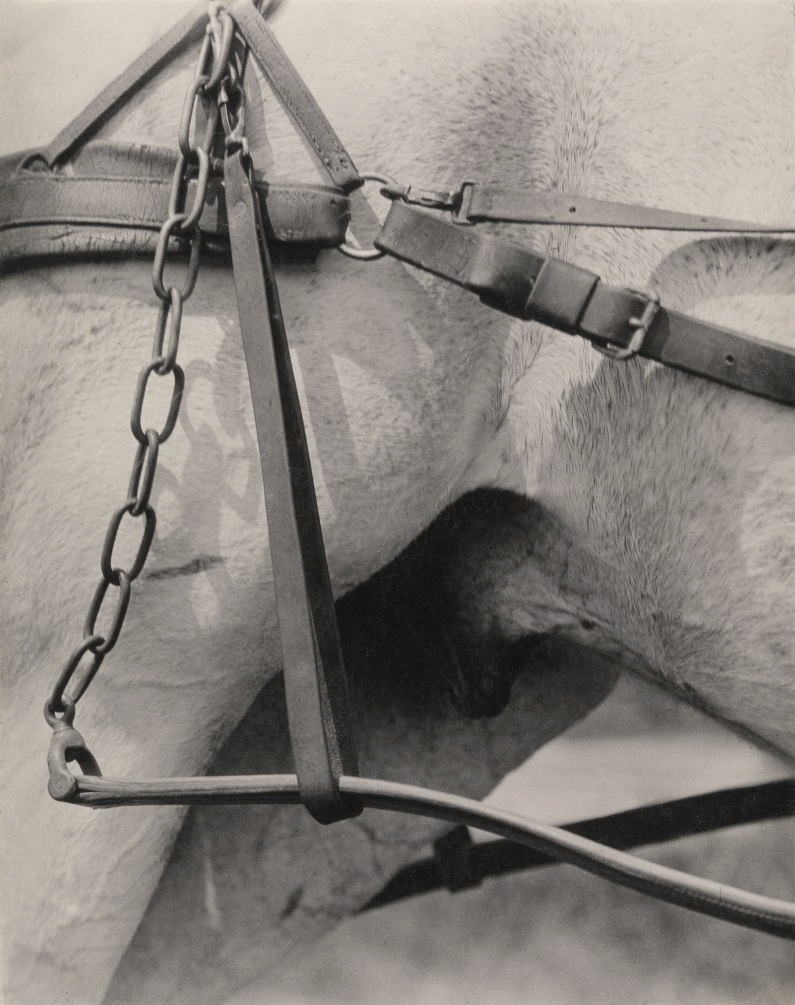
Alfred Stieglitz (American, 1864-1946)
Spiritual America
1923
Gelatin silver print
The J. Paul Getty Museum, Los Angeles
![Unknown maker (American) '[Dog sitting on a table]' c. 1854](https://artblart.com/wp-content/uploads/2015/10/gm_05620501-web.jpg "Unknown maker (American) '[Dog sitting on a table]' c. 1854")
Unknown maker (American)
[Dog sitting on a table]
c. 1854
Hand-coloured daguerreotype 1/6 plate
Image: 6.8 x 5.7cm (2 11/16 x 2 1/4 in.)
Mat: 8.3 x 7cm (3 1/4 x 2 3/4 in.)
The J. Paul Getty Museum, Los Angeles
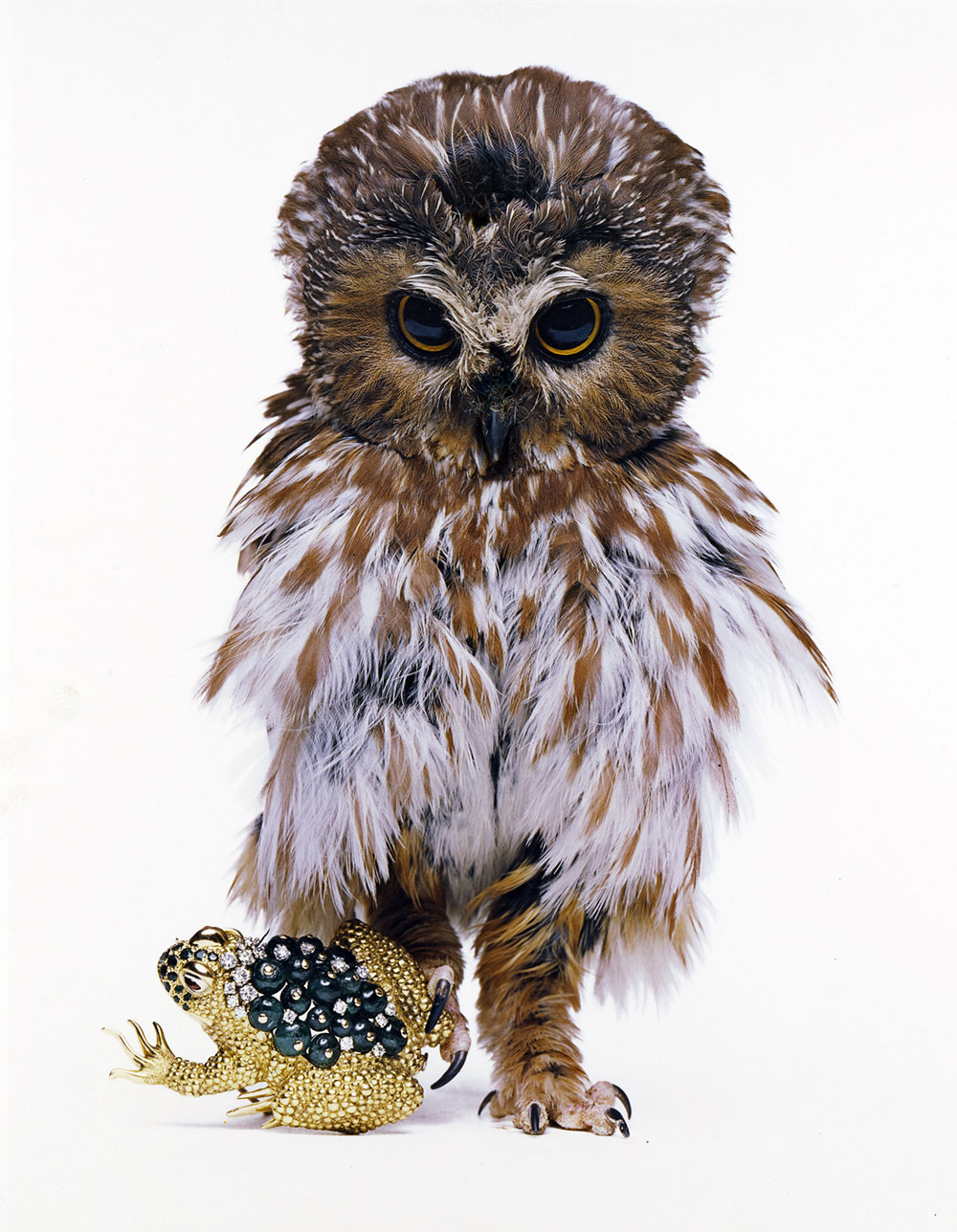
Hiro (American born China, 1930-2021)
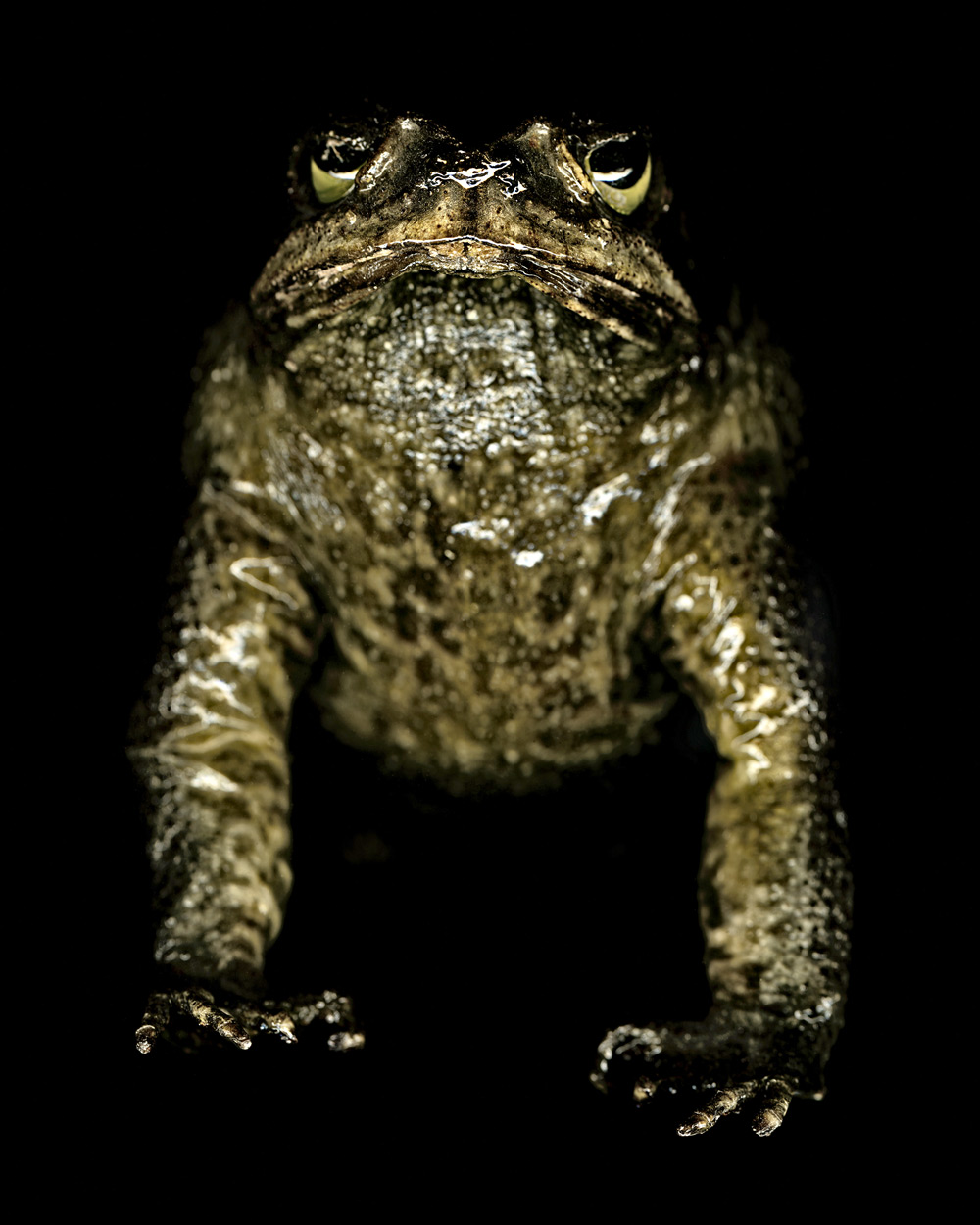
David Webb, Jeweled Toad, New York, 1963
1963
Dye imbibition print
50.2 x 39.1cm (19 3/4 x 15 3/8 in.)
The J. Paul Getty Museum, Los Angeles, Purchased with funds provided by the Photographs Council
© Hiro
Legendary photographer Yasuhiro Wakabayashi, known as “Hiro,” the man whose fashion photography revolutionized the medium as an art form and defined the aesthetic of a generation, died this week at the age of 90.
Though the son of Japanese parents, Hiro was born in Shanghai, China, in 1930, one year before the outbreak of the Sino-Japanese War. He and his family eventually repatriated to Japan in 1946, but it wasn’t long after that he relocated to New York City. There, Hiro became an apprentice to Richard Avedon, whose iconic and exclusively black-and-white photography brought a new facet to fashion photography: stark portraiture that bordered on the surreal and often showed celebrities and other high-profile figures as they were, not gilded by fashion editors.
By 1956, Hiro had become a staff photographer for the fashion magazine Harper’s Bazaar, where he remained until the mid-1970s. He opened his own New York studio in 1958, just months after the untimely death of fashion icon Christian Dior. A decade earlier, Dior had debuted his “New Look,” which was a strikingly architectural approach to fashion that emphasized the female figure by casting it in dresses designed to accentuate a “figure eight,” with pronounced shoulders and hips and a tiny waist. Dior’s simple silhouettes dominated the fashion and art world just as Hiro was coming of age into it.
Hiro, similar to his mentor Avedon, dealt in stark, clean images with elements of the surreal. One collector described his work as a “simple but elegant design with sophisticated technique and striking color.”
“A diamond-and-ruby Harry Winston necklace draped on the hoof of a Black Angus steer. A pyramid of Cartier watches set in a luminous lunar landscape of vivid green and shocking blue. A mysterious woman in the dunes at twilight, floating like a ghost off the ground in a windblown black nightgown,” wrote the New York Times’s Robert D. McFadden in a description of Hiro’s most famous images. His work was more “brilliant and infinitely more beautiful than reality.”
Beyond simply beautiful, Hiro’s photography is known for its precision: light, lines, objects all precisely placed and measured to create works reminiscent of surrealist artists such as Salvador Dali and Renee Magritte. The effect was something phantasmagorical but adamantly, elegantly real.
His life itself was surreal. His father was a Japanese linguist living in Shanghai putatively for the purpose of creating a Japanese-Chinese dictionary. However, the New York Times noted in Hiro’s obituary, his father might have actually been a spy. Following the end of World War II, Hiro and his family returned home to a changed, and occupied, Japan reeling in the aftermath of Hiroshima and Nagasaki. Amid that chaos, Hiro became “fascinated with Jeeps, Red Fox beer cans and other artifacts of American culture.” He collected fashion magazines and saved for a camera, honing his skills until he could travel to the United States, where he worked entry-level jobs until he was able to score the coveted New York apprenticeship with Avedon.
He became an American citizen in 1990.
Hiro eventually became so influential in fashion photography that American Photographer dedicated an issue entirely devoted to Hiro’s work, provocatively asking, “Is this man America’s greatest photographer?”
“Hiro stands as one of the pre-eminent photographers of his adopted country,” the 1982 magazine said. “With the pragmatic brilliance of a Renaissance master, Hiro has changed the way photographs look, and with an endlessly inventive technique has changed the way photographers work.”
Yasuhiro Wakabayashi is survived by his wife, designer Elizabeth Clark, two sons, and several grandchildren, as well as a remarkable body of work that will continue to live on far after.
Emily Zanotti. “Hiro Wakabayashi, 1930-2021,” on the Yahoo News! website August 20, 2021 [Online] Cited 25/12/2022. No longer available online
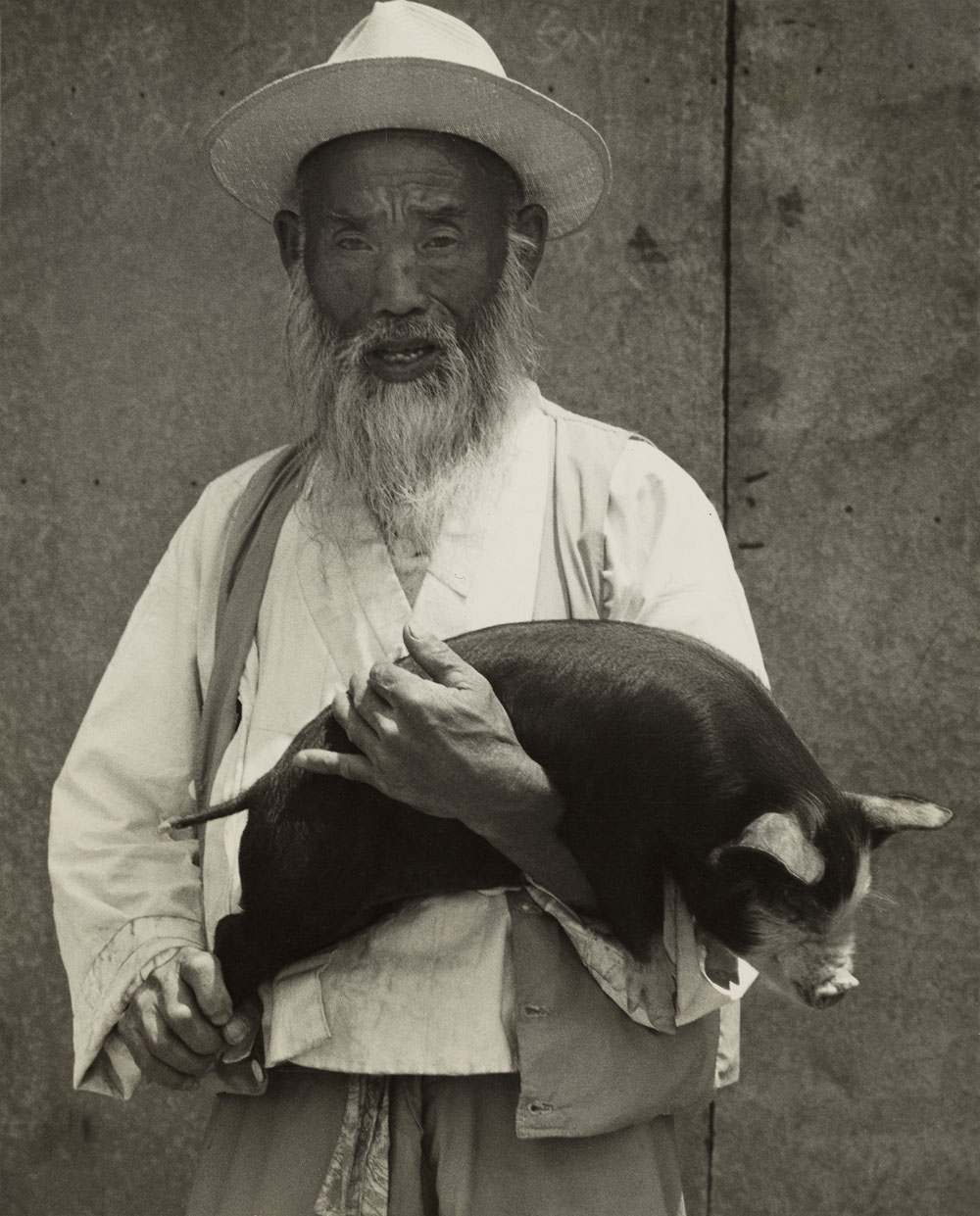
Soon Tae (Tai) Hong (South Korean, b. 1934)
Chong Ju
1970
Gelatin silver print
24.8 x 20cm (9 3/4 x 7 7/8 in.)
The J. Paul Getty Museum, Los Angeles
© Hong Soon Tae (Tai)
![William Wegman (American, b. 1943) 'In the Box/Out of the Box [right]' 1971](https://artblart.com/wp-content/uploads/2015/10/gm_32612201-web.jpg "William Wegman (American, b. 1943) 'In the Box/Out of the Box [right]' 1971")
William Wegman (American, b. 1943)
In the Box/Out of the Box [right]
1971
Gelatin silver print
35.4 x 27.7cm (13 15/16 x 10 7/8 in.)
The J. Paul Getty Museum, Los Angeles
© William Wegman
![William Wegman (American, b. 1943) 'In the Box/Out of the Box [left]' 1971](https://artblart.com/wp-content/uploads/2015/10/gm_32612101-web.jpg "William Wegman (American, b. 1943) 'In the Box/Out of the Box [left]' 1971")
William Wegman (American, b. 1943)
In the Box/Out of the Box [left]
1971
Gelatin silver print
35.5 x 27.7cm (14 x 10 7/8 in.)
The J. Paul Getty Museum, Los Angeles
© William Wegman
The J. Paul Getty Museum
1200 Getty Center Drive
Los Angeles, California 90049
Opening hours:
Daily 10am – 5pm


 Art Blart _ art and cultural memory archive
You must be logged in to post a comment.