Exhibition: ‘ARTIST ROOMS: Celmins, Gallagher, Hirst, Katz, Warhol, Woodman’ at the Scottish National Gallery of Modern Art, Edinburgh

Exhibition dates: 14th March – 18th November, 2009
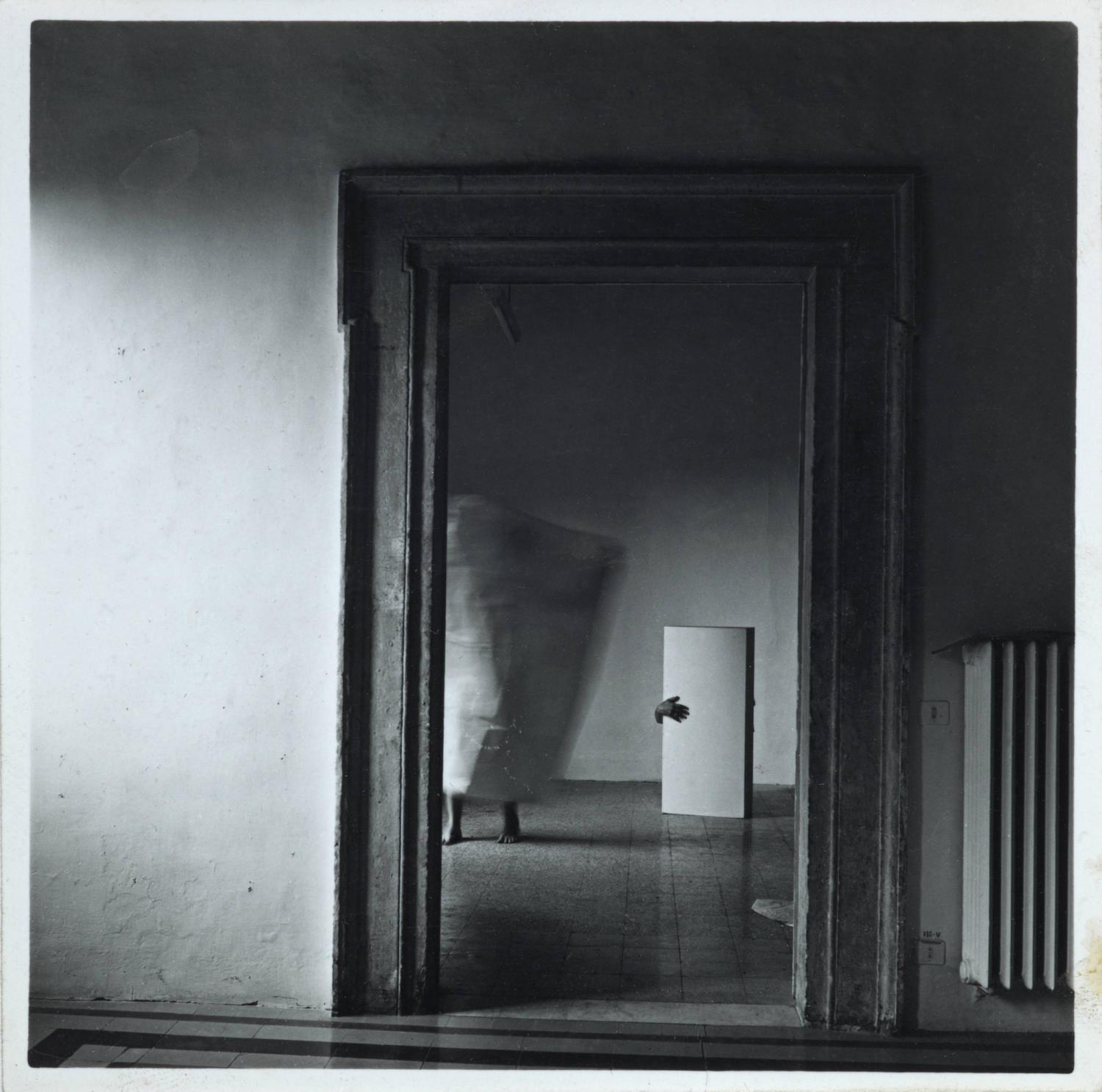
 

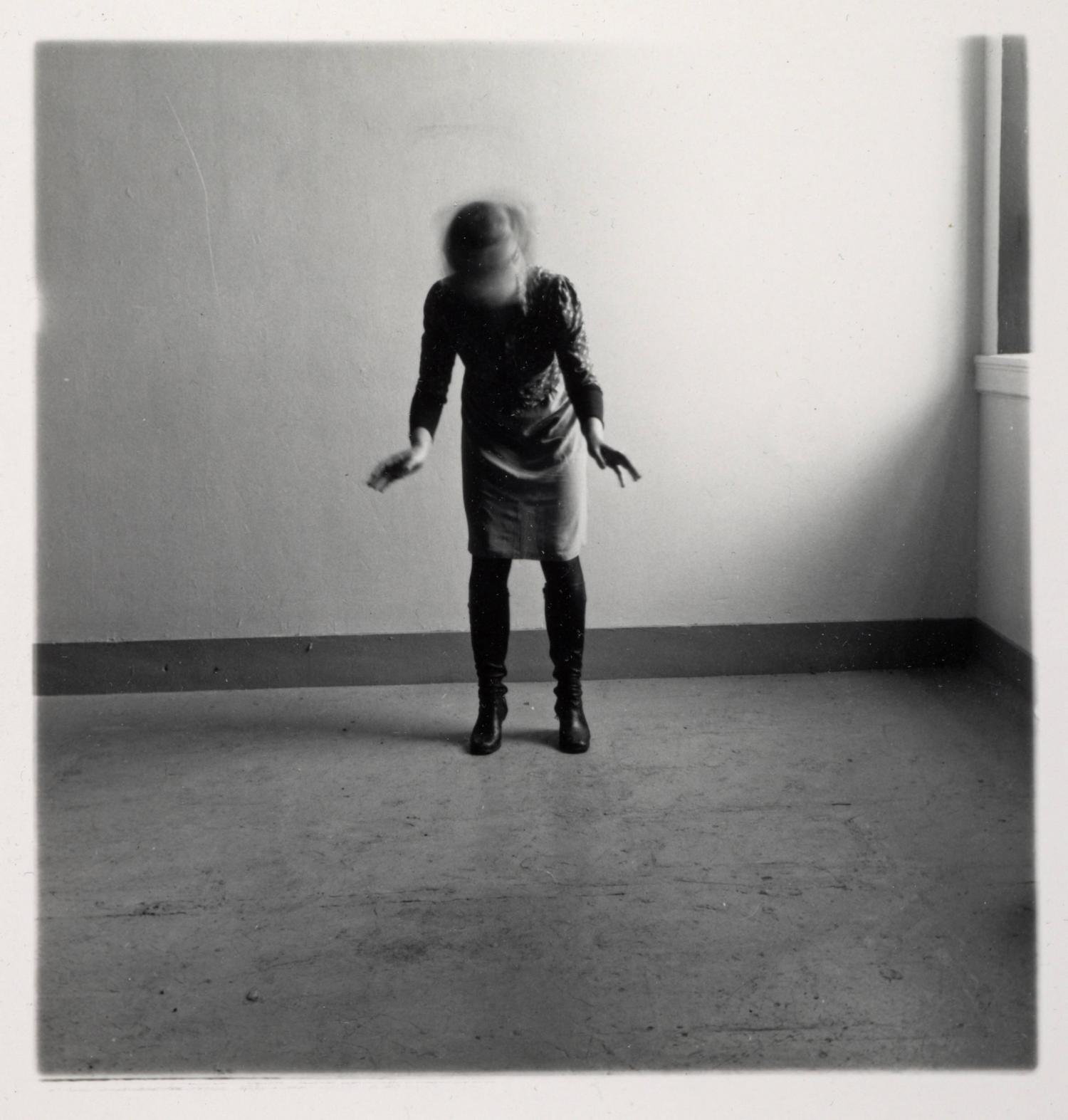
Francesca Woodman (American, 1958-1981) 'From Angel Series, Roma, September 1977' 1977


Francesca Woodman (American, 1958-1981)
From Angel Series, Roma, September 1977
1977
Gelatin silver print
93 x 93 mm
Acquired jointly with the Tate through The d’Offay Donation with assistance from the National Heritage Memorial Fund and the Art Fund 2008
© Courtesy of George and Betty Woodman


Shining brightly in the firmament the star of the show is, undoubtedly, the supremely talented Francesca Woodman. What an artist – both photographer and subject, here and there, enigmatic, sensual, psychotic, beautiful, playful, and desperate. Who is she; who are we.

Baldly put, “Francesca Woodman’s photographs explore issues of gender and self, looking at the representation of the body in relation to its surroundings… Found objects and suggestive props are carefully placed to create unsettling, surreal or claustrophobic scenarios. Her photographs are produced in thematic series’, relating to specific props, places or situations. In combining performance, play and self-exposure, Woodman’s photographs create extreme and often disturbing psychological states.”

Her photographs are so much more. They promote in the attentive viewer a ghostly insistence that you could be her – in vulnerability, in presence, in fear of suffering, for our death. Who are we that is represented, what is our place in this lonely world, how do we interact with our shadow? “In concealing or encrypting her subjects she reminds the viewer that photographs flatten and distort, never offering the whole truth about a subject.” No. This is no truth.

It is that they offer glimpses of another world, not flattened or distorted, but a lens to focus on the microcosm of the infinite spirit. The personal as universal truth.

Dr Marcus Bunyan


Many thankx to the Scottish National Gallery of Modern Art for allowing me to publish the photographs in the posting. Please click on the photographs for a larger version of the image.


Francesca Woodman (American, 1958-1981) 'Space², Providence, Rhode Island, 1975-1978' 1975-1978


Francesca Woodman (American, 1958-1981)
Space², Providence, Rhode Island, 1975-1978
1975-1978
Gelatin silver print on paper
139 x 139 mm
Acquired jointly with the Tate through The d’Offay Donation with assistance from the National Heritage Memorial Fund and the Art Fund 2008
© Courtesy of George and Betty Woodman


Throughout 2009, 18 museums and galleries across the UK will be showing over 30 ARTIST ROOMS from the collection created by the dealer and collector, Anthony d’Offay, and acquired by Tate and the National Galleries of Scotland in February 2008. This is the first time a national collection has been shared and shown simultaneously across the UK, and has only been made possible through the exceptional generosity of independent charity The Art Fund and, in Scotland, of the Scottish Government.

The opening displays at the Scottish National Gallery of Modern Art in Edinburgh this spring will include the work of Vija Celmins, Ellen Gallagher, Damien Hirst, Alex Katz, Andy Warhol, and Francesca Woodman. Highlights will include Celmins’ beautiful, delicate images of seas, deserts and the night sky, a complete series of landscape and portrait paintings by the American painter Alex Katz and Francesca Woodman’s intimate, surrealist-influenced photographs. Damien Hirst, the most prominent British artist of today, will feature in an expanded display across several rooms. This will bring together works from ARTIST ROOMS – such as the iconic Away from the Flock (an early example of Hirst’s animals in formaldehyde) and a recent butterfly painting – with additional loans from further collections.

The ARTIST ROOMS display at the Gallery of Modern Art is dedicated to Vija Celmins’ ethereal images of seas, deserts and the night sky, a complete series of landscape and portrait paintings by Alex Katz, and Francesca Woodman’s intimate, surrealist-influenced photographs. Photographs by Warhol and paintings by Ellen Gallagher will also be included. Damien Hirst will feature in an expanded display, which will bring together works from ARTIST ROOMS – such as the iconic Away from the Flock and a recent butterfly painting – with additional loans from further collections.

American artist Vija Celmins makes paintings, drawings and prints. Using charcoal, graphite and erasers she produces delicate images based on photographs of the sea, deserts, the night sky and other natural phenomena.

The ARTIST ROOMS collection comprises 24 works on paper by Celmins, including three unique drawings. Web #1 is typical of her fragile images and is the first of nine works on the theme of the spider’s web. It is accompanied by a series of four ‘web’ prints which echo the web-like construction of the universe. Other works in the collection include an important series from the entitled Concentric Bearings which explores different images of turning space.

Celmins works focus on something small and individual in the context of vastness. The images they depict seem fragile because they record a specific human glimpse through a telescope or camera which is temporary and frozen in time. …

Damien Hirst is the most prominent artist to have emerged from the British art scene in the 1990s. Hirst’s work forces viewers to question their understanding of issues such as the fragility of life, our reluctance to confront death and decay and other dilemmas of human existence.

He is best known for his Natural History works – large-scale sculptures featuring dead animals floating in Minimalist looking vitrines – but also for his mirrored pharmacy cabinets lined with shelves full of evenly spaced drug bottles, pills, sea shells or cigarette butts, and his paintings, which he produces in series.

An example of these, included in ARTIST ROOMS, is the early Controlled Substances Key Painting (Spot 4a). Also included in ARTIST ROOMS is the key work Away from the Flock, featuring a sheep floating in formaldehyde. The large butterfly diptych Monument to the Living and the Dead, 2006 was made specifically for ARTIST ROOMS. …

American photographer Francesca Woodman has eighteen rare vintage black and white photographs in ARTIST ROOMS. They have a timeless unique quality. The artist began taking photographs at the age of thirteen and though she was only twenty two when she took her own life, she left behind a substantial body of work.

Francesca Woodman’s photographs explore issues of gender and self, looking at the representation of the body in relation to its surroundings. She puts herself in the frame most often, although these are not conventional self-portraits as she is either partially hidden, or concealed by slow exposures that blur her moving figure into a ghostly presence.

Found objects and suggestive props are carefully placed to create unsettling, surreal or claustrophobic scenarios. Her photographs are produced in thematic series’, relating to specific props, places or situations. In combining performance, play and self-exposure, Woodman’s photographs create extreme and often disturbing psychological states.

Andy Warhol is one of the most influential American artists to emerge in the post-war period. ARTIST ROOMS includes an impressive selection of 232 works which span the artist’s entire work. This display focuses on a group of stitched photographs from the collection.

After graduating and moving to New York in 1949, Warhol quickly became established as one of the city’s most sought after commercial illustrators, working for magazines such as Glamour and Harper’s Bazaar. However, it was in the early-sixties that he began to produce the work for which he is most celebrated.

As the most famous proponent of Pop Art, his earliest ‘pop’ works depict consumer goods and images from the press. This evolved to reveal his enduring fascination with celebrity and mortality, with many of his most powerful images touching on these themes.

ARTIST ROOMS comprises a superb array of important works representing all phases of Warhol’s career and a cross-section of media. Warhol explored the medium of photography extensively and began producing stitched photographs in 1986. Returning to his earlier predilection for repetition, Warhol used multiple prints of the same photographs that he then had sewn together to form a composite work of art. By repeating the same image, Warhol could extend the abstract design to the whole work and emphasise the broader significance of what might seem to be peculiarly singular and oddball.”

Text from the Scottish National Gallery of Modern Art website [Online] Cited 25/06/2009. No longer available online
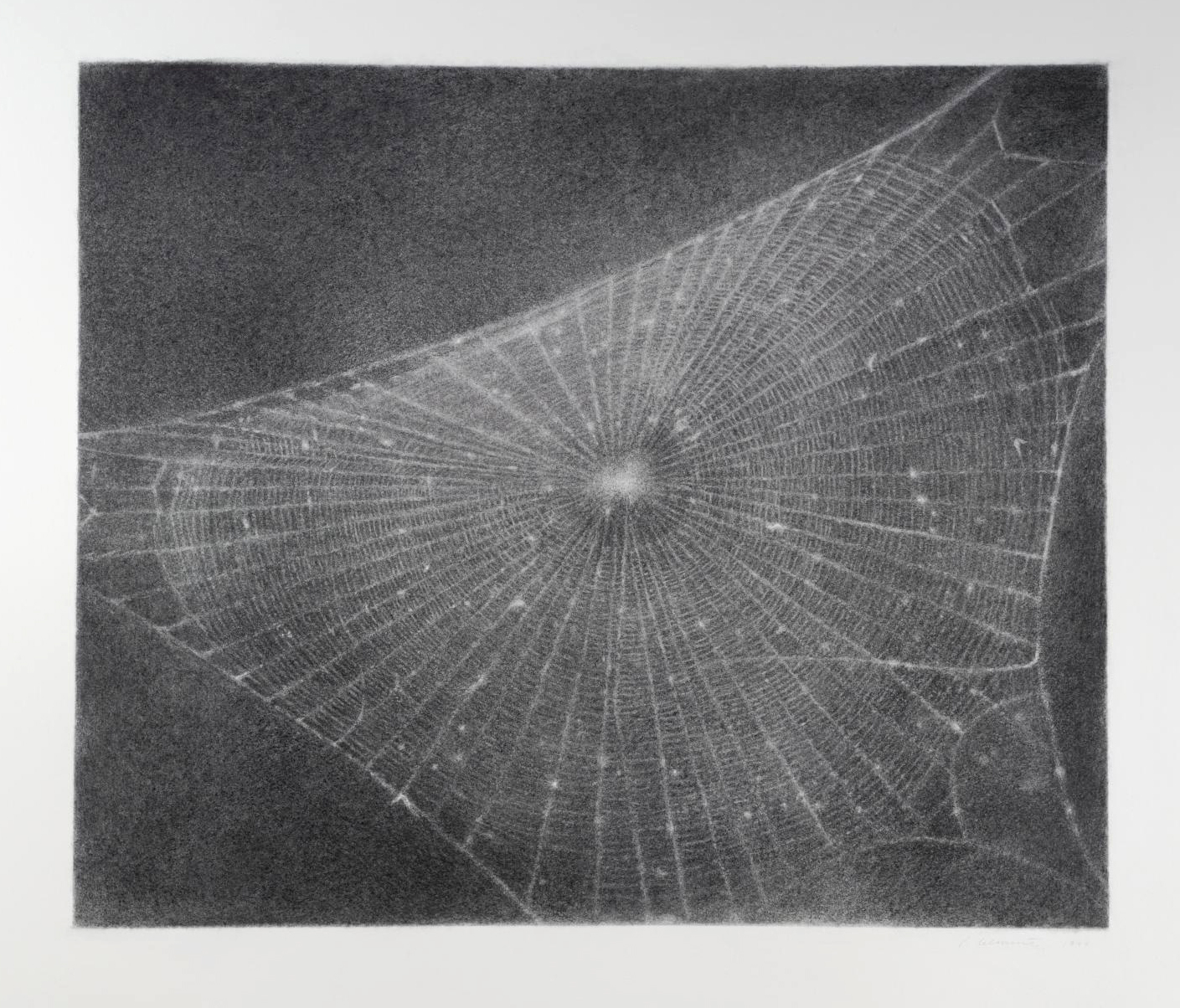
 

Vija Celmins (Latvian-American, b. 1938) 'Web #1' 1999


Vija Celmins (Latvian-American, b. 1938)
Web #1
1999
Mezzotint on paper
Acquired jointly with the Tate through The d’Offay Donation with assistance from the National Heritage Memorial Fund and the Art Fund 2008
© Vija Celmins


Celmins’s intense monochromatic images, based on photographs, focus on small and individual marks in the context of vastness. The images seem fragile because they record a specific human glimpse through a camera which is ephemeral and frozen in time. Celmins’s serial exploration of her subjects, including spider webs, allows the artist to exploit the distinct characteristics of the variety of media she uses. This meticulous, translucent web is typical of her apparently fragile, ephemeral images. These images echo the web-like construction of the universe, a further preoccupation of the artist. Celmins has explained: “Maybe I identify with the spider. I’m the kind of person who works on something forever and then works on the same image again the next day.”

Text from the Tate website
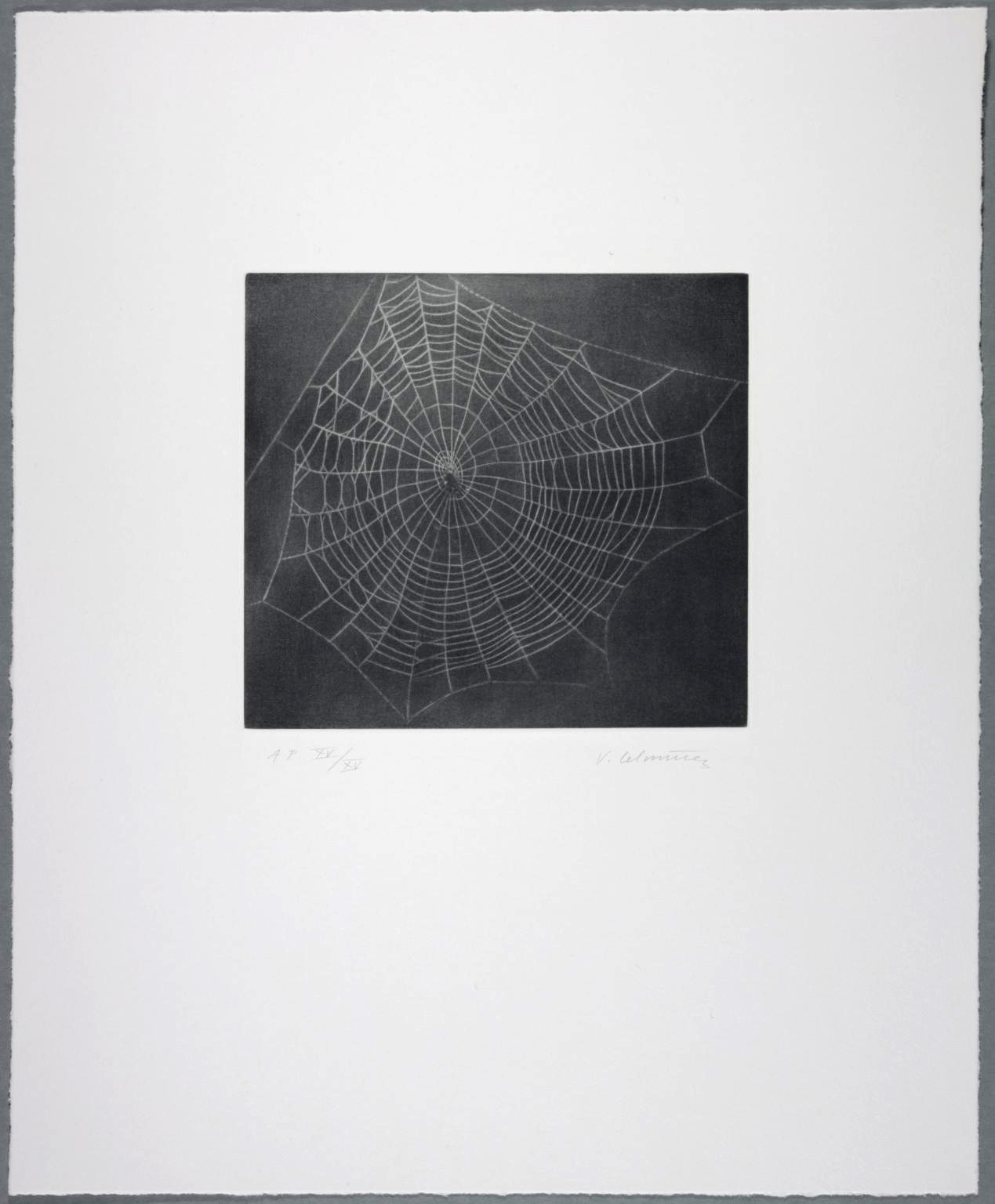
 

Vija Celmins (Latvian-American, b. 1938) 'Untitled (Web 1)' 2001


Vija Celmins (Latvian-American, b. 1938)
Untitled (Web 1)
2001
Mezzotint on paper
175 x 194 mm
Acquired jointly with the Tate through The d’Offay Donation with assistance from the National Heritage Memorial Fund and the Art Fund 2008
© Vija Celmins
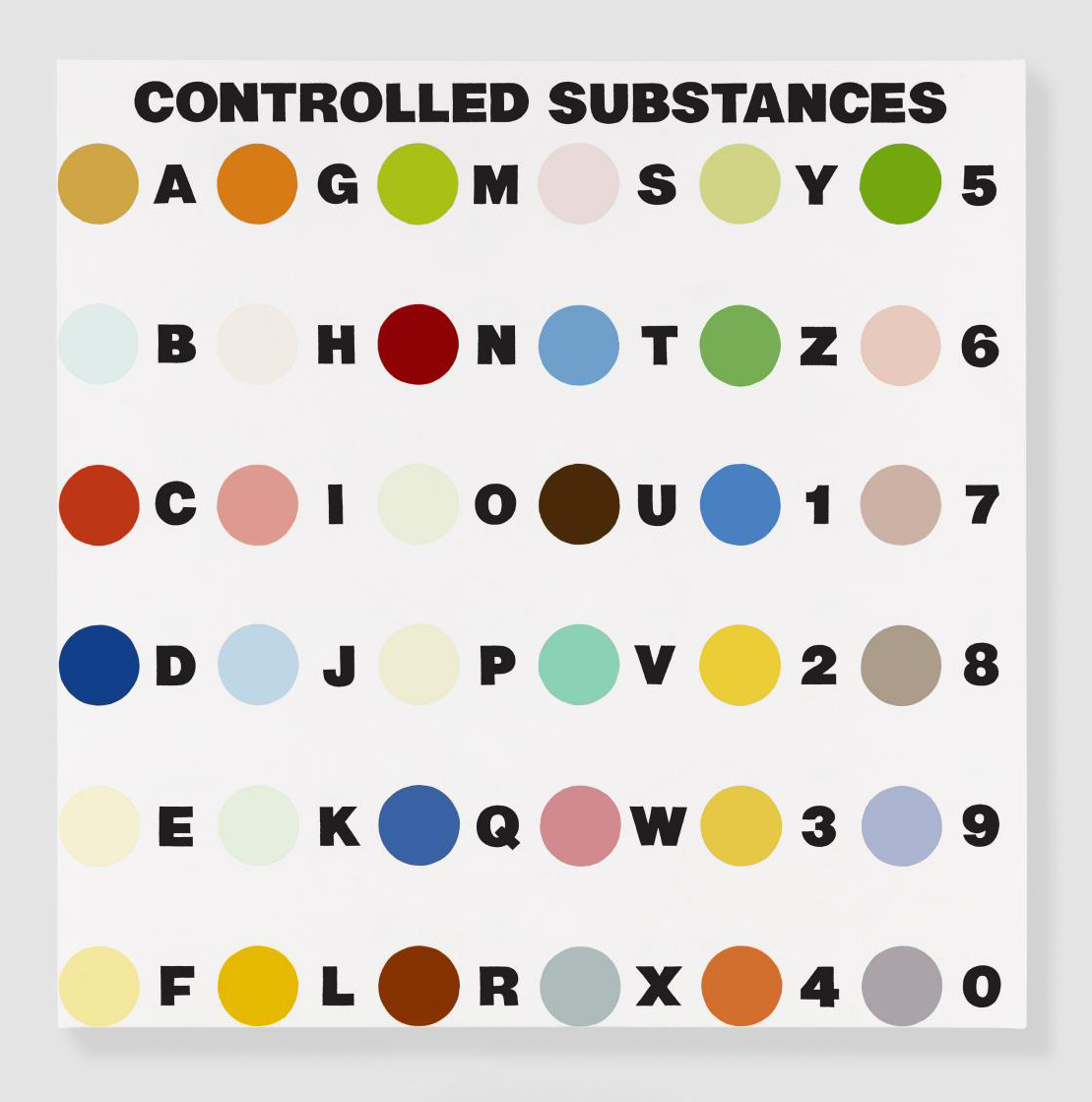
 

Damien Hirst (English, b. 1965) 'Controlled Substances Key Painting (Spot 4a)' 1994


Damien Hirst (English, b. 1965)
Controlled Substances Key Painting (Spot 4a)
1994
Acrylic paint on canvas
Support: 1220 x 1224 x 40 mm
Frame: 1307 x 1303 x 81 mm
Acquired jointly with the Tate through The d’Offay Donation with assistance from the National Heritage Memorial Fund and the Art Fund 2008


This canvas is constructed using a grid of dots of different colours, accompanied by letters in alphabetical order that seem to dissect and reorganise the very matter of painting into cells. Hirst has said that he only painted five of his spot paintings himself, since he found them so boring to paint and could not do them as well as his assistants. But the key thing about these works is their conceptual clarity – the potentiality of making an infinite number and variety of paintings, based on size and colour of the dots and size and shape of the canvases. Like Andy Warhol, whom Hirst greatly admires, Hirst has set up a sort of factory with assistants to help him make his works of arts. Like Warhol, Hirst retains central control of what and how it is produced.

Text from the Tate website
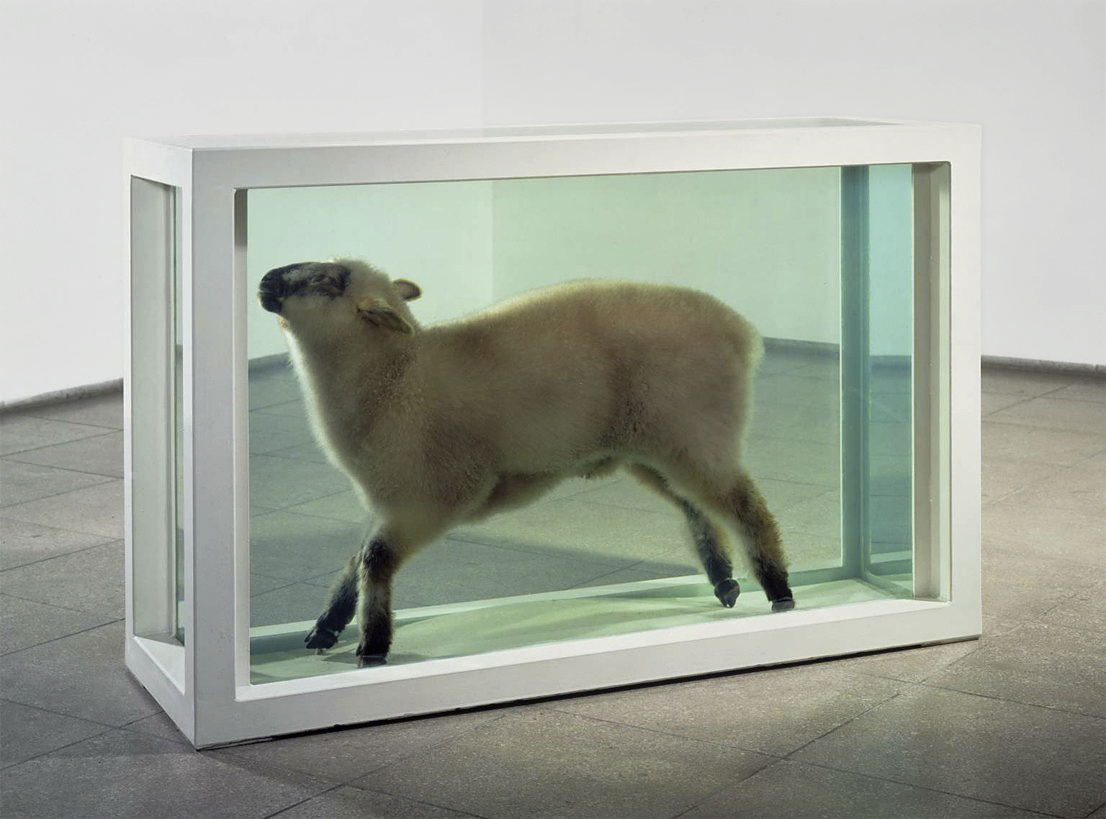
 

Damien Hirst (English, b. 1965) 'Away from the flock' 1995


Damien Hirst (English, b. 1965)
Away from the flock
1995
Glass, stainless steel, Perspex, acrylic paint, lamb and formaldehyde solution
960 x 1490 x 510 mm
Acquired jointly with the Tate through The d’Offay Donation with assistance from the National Heritage Memorial Fund and the Art Fund 2008
© Damien Hirst and Science Ltd. All rights reserved, DACS 2019
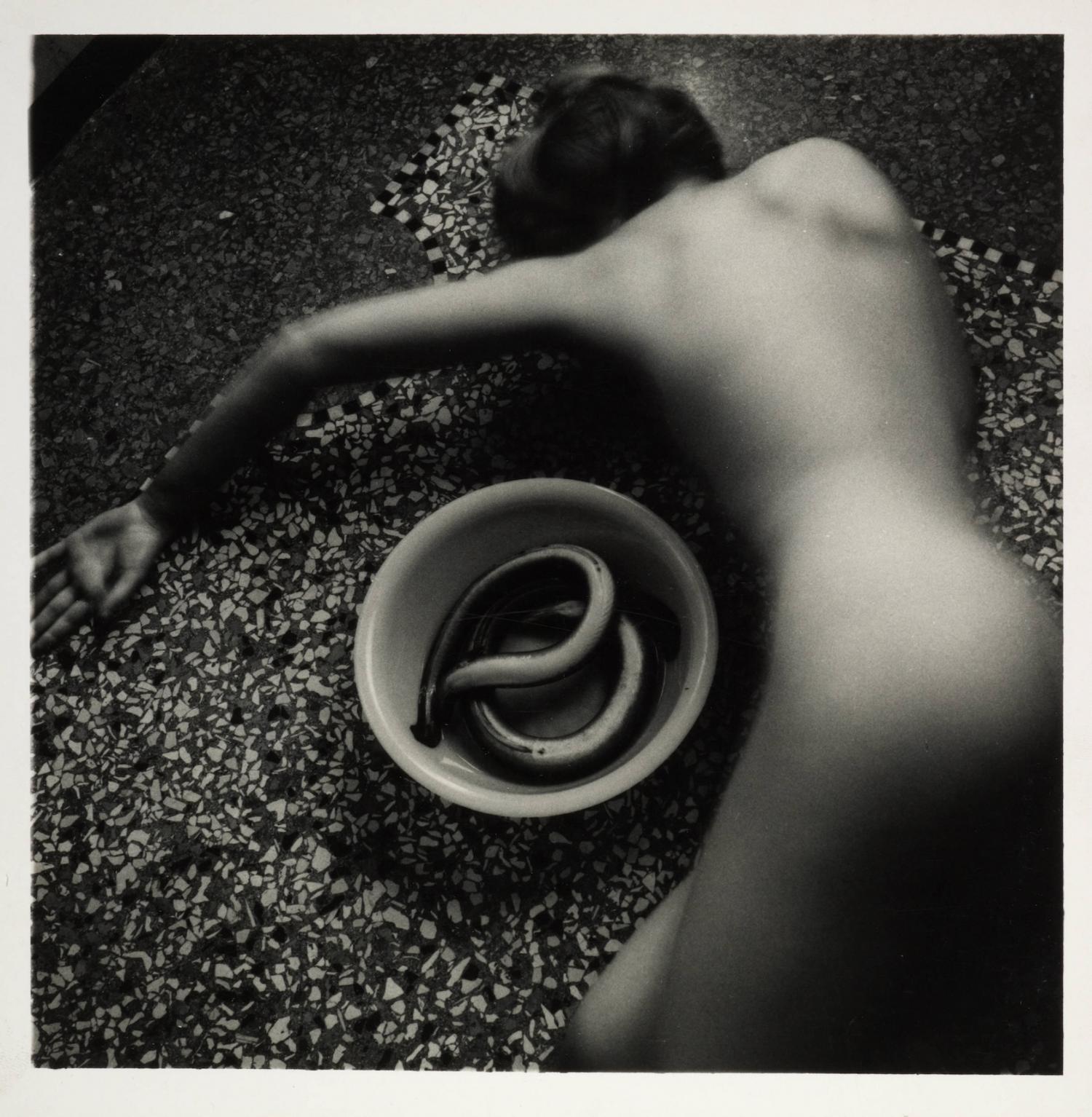
 

Francesca Woodman (American, 1958-1981) 'Eel Series, Roma, May-August 1977' 1977


Francesca Woodman (American, 1958-1981)
Eel Series, Roma, May 1977 – August 1978
1977
Gelatin silver print
219 x 219 mm
Acquired jointly with the Tate through The d’Offay Donation with assistance from the National Heritage Memorial Fund and the Art Fund 2008
© Courtesy of George and Betty Woodman


Woodman lies naked, in a vulnerable state, the curve of her body echoing the curved form of the eel. She has printed several similar versions of this image with her body on either side of the eel. While Woodman was studying in Rome between 1977 and 1978 she came into contact with the Symbolist work of Max Klinger, whose influence can be seen in this series. The image is sexually charged, yet in placing herself on both sides of the camera Woodman hovers between being in control and being defenceless, exploring the ways in which femininity can be portrayed. The photograph is not a self-portrait in the conventional sense, as it explores the possibilities of representation, instead of revealing the artist’s identity.

Text from the Tate website
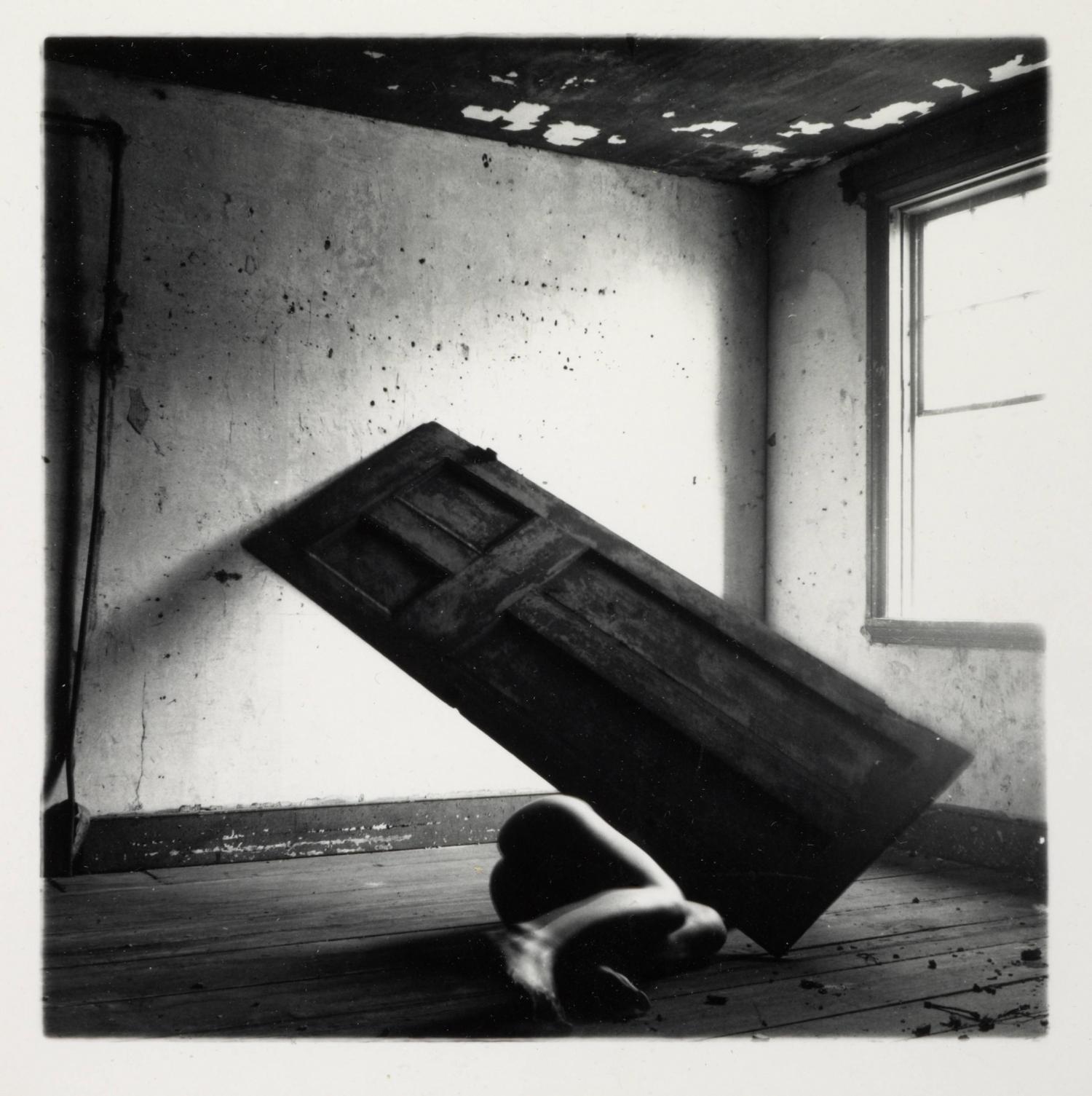
 

Francesca Woodman (American, 1958-1981) 'Untitled, 1975-1980' 1975-1980


Francesca Woodman (American, 1958-1981)
Untitled, 1975-1980
1975-1980
Gelatin silver print on paper and ink
144 x 144 mm
Acquired jointly with the Tate through The d’Offay Donation with assistance from the National Heritage Memorial Fund and the Art Fund 2008
© Courtesy of George and Betty Woodman
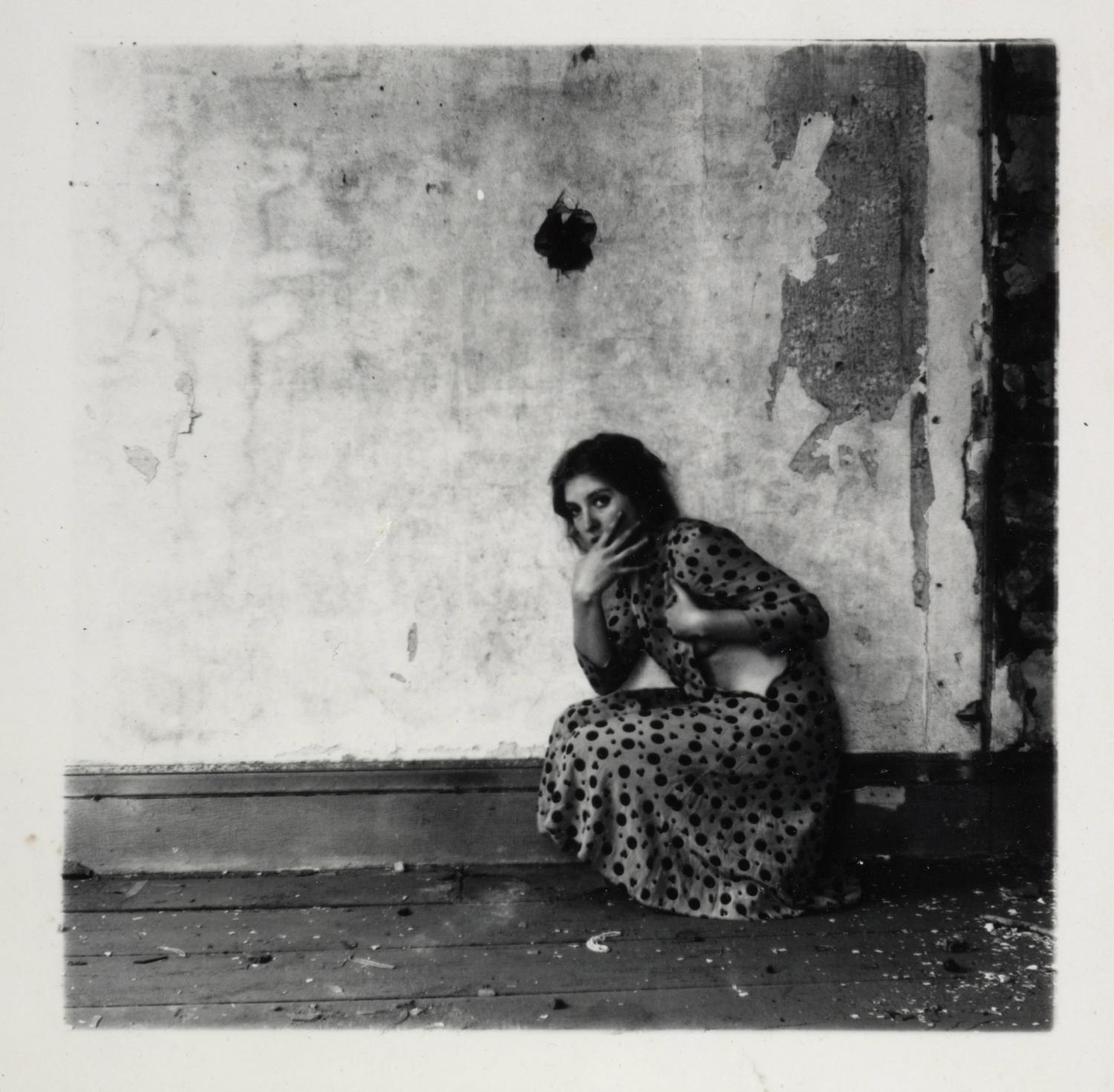
 

Francesca Woodman (American, 1958-1981) 'Untitled, 1975-1980' 1975-1980


Francesca Woodman (American, 1958-1981)
Untitled, 1975-1980
1975-1980
Gelatin silver print on paper
141 x 140 mm
Acquired jointly with the Tate through The d’Offay Donation with assistance from the National Heritage Memorial Fund and the Art Fund 2008
© Courtesy of George and Betty Woodman


Crouched against a dilapidated interior, Woodman conceals her face with her hand. The combination between the vintage pattern of her dress and the peeling wall behind her create an antique, romantic air. Woodman’s photographs exhibit many influences, from Symbolism and Surrealism to fashion photography and Baroque painting. She explores issues of gender and self, looking at the representation of the body in relation to its surroundings. Woodman usually puts herself in the frame, although these are not conventional self-portraits, since as she is either partially hidden, or concealed by slow exposures that blur her moving figure into a ghostly presence. This underlying fragility is emphasised by the small and intimate format of the photographs.


ARTISTS ROOMS Essay

American photographer Francesca Woodman has eighteen rare vintage black and white photographs in ARTIST ROOMS, acquired from a collection once owned by the artist’s boyfriend. Woodman’s photographs exhibit many influences, from symbolism and surrealism to fashion photography and Baroque painting. They have a timeless quality that is ethereal and unique.

The artist began taking photographs at the age of thirteen, and though she was only twenty two when she took her own life, she left behind a substantial body of work. Francesca Woodman’s photographs explore issues of gender and self, looking at the representation of the body in relation to its surroundings.

She puts herself in the frame most often, although these are not conventional self-portraits as she is either partially hidden, or concealed by slow exposures that blur her moving figure into a ghostly presence. This underlying vulnerability is further emphasised by the small and intimate format of the photographs. We often see her in otherwise deserted interior spaces, where her body seems to merge with its surroundings, covered by sections of peeling wallpaper, half hidden behind the flat plane of a door, or crouching over a mirror. Found objects and suggestive props are carefully placed to create unsettling, surreal or claustrophobic scenarios.

Her photographs are produced in thematic series, relating to specific props, places or situations. Woodman was exposed to the symbolic work of Max Klinger whilst studying in Rome from 1977-78 and his influence can clearly be seen in many photographic series, such as Eel Series, Roma and Angel Series, Roma.

In combining performance, play and self-exposure, Woodman’s photographs create extreme and often disturbing psychological states. In concealing or encrypting her subjects she reminds the viewer that photographs flatten and distort, never offering the whole truth about a subject.

Text from the Scottish National Gallery of Modern Art website [Online] Cited 05/03/2019
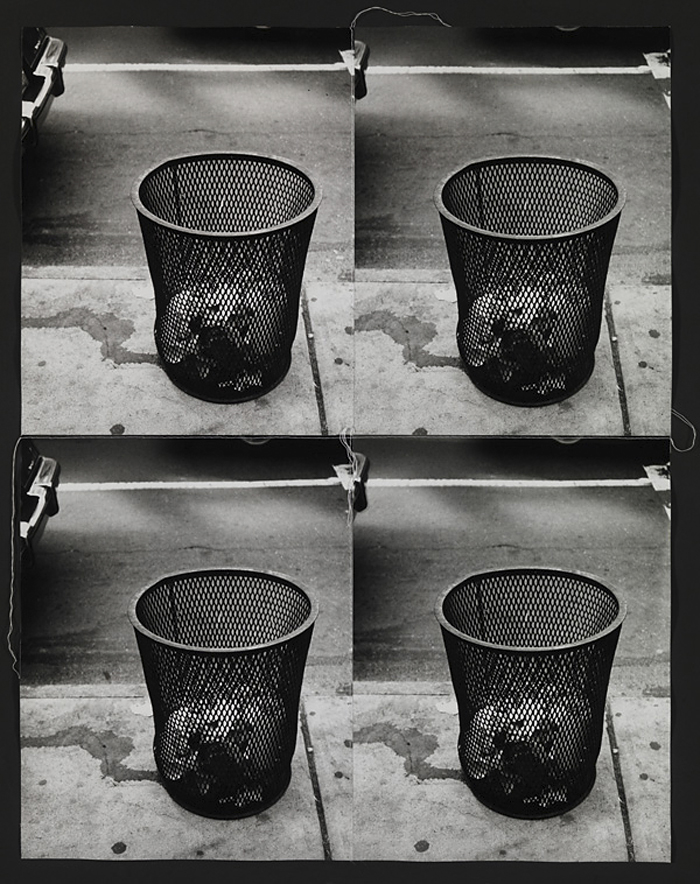
 

Andy Warhol (American, 1928-1987) 'Trash cans' 1986


Andy Warhol (American, 1928-1987)
Trash cans
1986
4 photographs, gelatin silver print on paper and thread
Support: 698 x 543 mm
Acquired jointly with the Tate through The d’Offay Donation with assistance from the National Heritage Memorial Fund and the Art Fund 2008


Warhol’s stitched photographs depict a wide range of subjects including signs, objects, celebrities, nude models and buildings. Trash Cans is one of many that focus on everyday and ordinary objects and can be related to some of Warhol’s best-known pop works, in which common objects and consumer goods (for example Brillo boxes, Coca-Cola bottles, and Campbell’s soup cans) are isolated from their everyday context so as to foreground their individual aesthetic value. Many of Warhol’s pop works are also composed of repetitious images, for example his screenprints in which identical images are repeated numerous times across a canvas, such as Marilyn Diptych 1962 (Tate T03093). It is thus useful to compare Trash Cans with Warhol’s screenprints featuring multiple images of Campbell’s soup cans – especially given the similarities between the shapes of the different receptacles.

Text from the Tate website
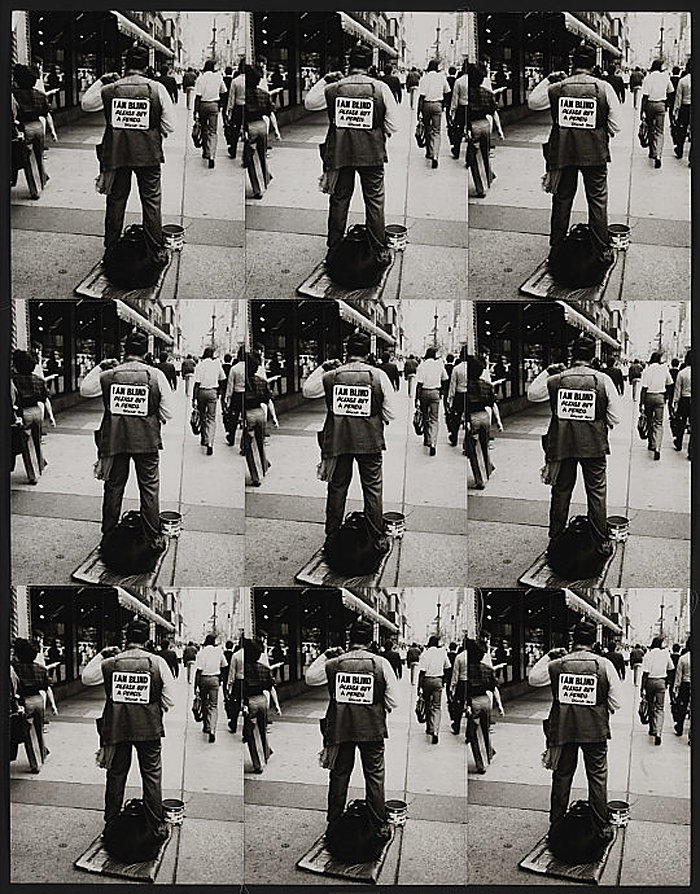
 

Andy Warhol (American, 1928-1987) 'I am blind' 1976-1986


Andy Warhol (American, 1928-1987)
I am blind
1976-1986
9 photographs, gelatin silver print on paper
Frame: 1315 x 1066 x 26 mm
Acquired jointly with the Tate through The d’Offay Donation with assistance from the National Heritage Memorial Fund and the Art Fund 2008
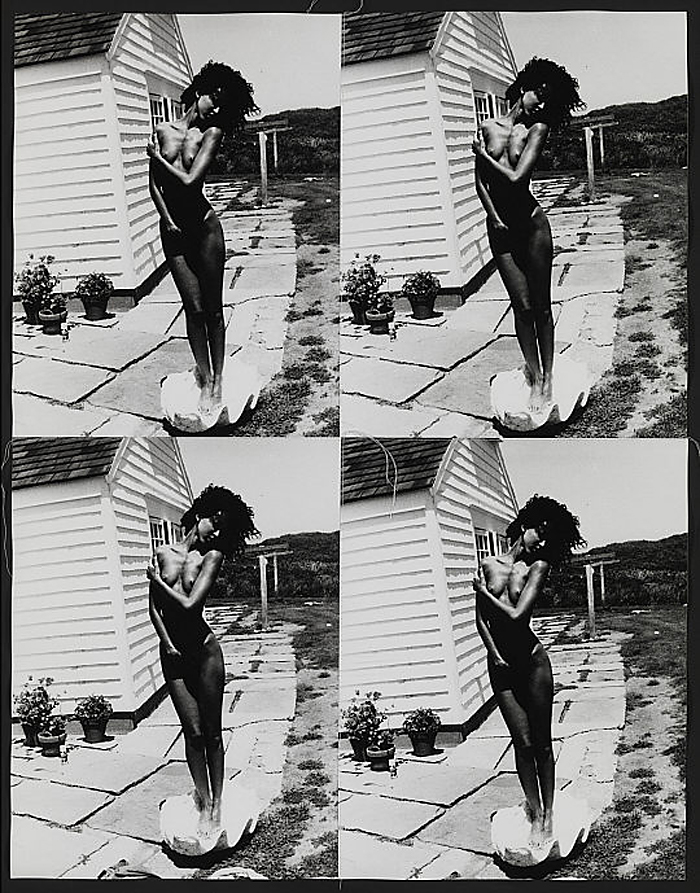
 

Andy Warhol (American, 1928-1987) 'Venus in Shell' 1976-1986


Andy Warhol (American, 1928-1987)
Venus in Shell
1976-1986
4 photographs, gelatin silver print on paper and thread
700 x 542 mm
Acquired jointly with the Tate through The d’Offay Donation with assistance from the National Heritage Memorial Fund and the Art Fund 2008


Scottish National Gallery of Modern Art
75 Belford Road, Edinburgh, EH4 3DR

Opening hours:
Open daily, 10am – 5pm
Admission free

Scottish National Gallery of Modern Art website

LIKE ART BLART ON FACEBOOK

Back to top

Exhibition: ‘Daidō Moriyama: Tokyo Photographs’ at Philadelphia Museum of Art

Exhibition dates: 28th February – 31st July, 2009

Curator: Peter Barberie, Curator of Photographs


Many thankx to Philadelphia Museum of Art for allowing me to publish the photographs in the posting. Please click on the photographs for a larger version of the image.


Daido Moriyama (Japanese, b. 1938) 'Untitled' from the series 'Memory of Dog' 1982 from the exhibition 'Daidō Moriyama: Tokyo Photographs' at Philadelphia Museum of Art, Feb - July, 2009


Daidō Moriyama (Japanese, b. 1938)
Untitled from the series Memory of Dog
1982
Gelatin silver print
Image: 8 1/16 × 11 13/16 inches (20.5 × 30cm)
Purchased with funds contributed by the E. Rhodes and Leona B. Carpenter Foundation, 1990
Philadelphia Museum of Art
© Daidō Moriyama


Daidō Moriyama often calls himself a “stray dog,” a reference to one of his iconic early pictures of a roaming mongrel, but also to his preferred incidental vantage points in relation to his subjects and his beguiled yet wary stance toward modernising Japanese society. In the series Memory of Dog, he revisited photographic scenarios and motifs from his previous two decades of work, overlaying his peripheral approach with another quality that he finds crucial to photography: its relationship to memory.


Daidō Moriyama (Japanese, born 1938) 'Untitled (Rose)' 1984 from the exhibition 'Daidō Moriyama: Tokyo Photographs' at Philadelphia Museum of Art, Feb - July, 2009


Daidō Moriyama (Japanese, b. 1938)
Untitled (Rose)
1984
Gelatin silver print
© Daidō Moriyama


Daidō Moriyama (Japanese, born 1938) 'Viaduct 1, Bunkyo-ku, Tokyo' 1981


Daidō Moriyama (Japanese, b. 1938)
Viaduct 1, Bunkyo-ku, Tokyo
1981
Gelatin silver print
© Daidō Moriyama


Daidō Moriyama (Japanese, born 1938) 'Untitled (Bottle)' from the series 'Light and Shadow' 1982


Daidō Moriyama (Japanese, b. 1938)
Untitled (Bottle) from the series Light and Shadow
1982
Gelatin silver print
Image: 7 13/16 x 11 13/16 inches (19.8 x 30cm)
Purchased with funds contributed by the E. Rhodes and Leona B. Carpenter Foundation, 1990
© Daidō Moriyama


Daidō Moriyama is one of the most important and exciting Japanese photographers of our time, having made prolific, often experimental pictures of modern urban life since the 1960s. This exhibition showcases a group of approximately 45 photographs made in and around Tokyo in the 1980s, when Moriyama focused his mature aesthetic on the city with renewed intensity.

Moriyama approaches the world with an equalising eye, capturing disparate peripheral details that in themselves account for little, but together add up to a powerful diagnosis of modern experience. In 1980s Japan such details encompassed the disorienting and sometimes brutal juxtaposition of traditional culture and modernisation, most visible in the glut of consumer goods and images. But in Moriyama’s photographs these subjects appear alongside the banal elements of any streetscape: a derelict patch of pavement and wall, a car with an aggressive key scratch running its full length, even a single rose blossom.

Moriyama’s urban imagery shares some of its qualities with other great street photography of the 20th century, and he has cited the photographs of William Klein as a major influence. But his work involves strong responses to a wide range of modern art and literature, including photographs and graphic designs by many of his Japanese contemporaries, Andy Warhol’s silkscreens, and the novels of Jack Kerouac and James Baldwin. Moriyama’s mix of international and Japanese trends to represent modern Tokyo is one source of his photography’s power, and the exhibition will include a small number of works by other artists to demonstrate his visual sensibility, including prints and photographs by Warhol, Klein, Shomei Tomatsu, and Tadanori Yokoo.

Text from the Philadelphia Museum of Art website [Online] Cited 23/03/2009


Daidō Moriyama (Japanese, born 1938) 'Memory of Dog 2' 1981


Daidō Moriyama (Japanese, b. 1938)
Memory of Dog 2
1981
Gelatin silver print
© Daidō Moriyama


Daidō Moriyama (Japanese, born 1938) 'Untitled' c. 1981-1985


Daidō Moriyama (Japanese, b. 1938)
Untitled
c. 1981-1985
Gelatin silver print
Image: 8 1/4 x 11 7/8 inches (21 x 30.2cm)
Purchased with funds contributed by the E. Rhodes and Leona B. Carpenter Foundation, 1990
© Daidō Moriyama


Daidō Moriyama (Japanese, born 1938) 'Untitled' from the series 'Light and Shadow' 1982


Daidō Moriyama (Japanese, b. 1938)
Untitled from the series Light and Shadow
1982
Gelatin silver print
Image: 7 3/4 x 11 13/16 inches (19.7 x 30cm)
Purchased with funds contributed by the E. Rhodes and Leona B. Carpenter Foundation, 1990
© Daidō Moriyama


Daidō Moriyama (Japanese, b. 1938) 'Untitled (Twin Chairs)' 1986


Daidō Moriyama (Japanese, b. 1938)
Untitled (Twin Chairs)
1986
Gelatin silver print
© Daidō Moriyama


Daidō Moriyama (Japanese, born 1938) 'On the Road (Chair)' from the series 'Light and Shadow' 1981


Daidō Moriyama (Japanese, b. 1938)
On the Road (Chair) from the series Light and Shadow
1981
Gelatin silver print
Image: 7 3/4 x 11 13/16 inches (19.7 x 30cm)
Purchased with funds contributed by the E. Rhodes and Leona B. Carpenter Foundation, 1990
© Daidō Moriyama


Since the 1960s Japanese photographer Daidō Moriyama (born 1938) has been making dynamic, often experimental images of modern urban life, establishing a reputation as one of the most important and exciting photographers of our time. The Philadelphia Museum of Art will present an exhibition of approximately 45 photographs by Moriyama, made in and around Tokyo in the 1980s, when the artist focused his mature aesthetic on the city with renewed intensity. The exhibition will be on view from February 28-June 30, 2009 in the Julien Levy Gallery at the Ruth and Raymond G. Perelman Building.

Born in 1938 in Ikeda-cho (now Ikeda-shi), Osaka, Moriyama witnessed the dramatic changes that swept over Japan in the decades following World War II. After his father’s death in a train accident, he began working as a freelance graphic designer at age 20. He was intrigued by the graphic possibilities of screenprinting, the cheapest and most prolific form for printed imagery, and by international trends in contemporary art. These interests, along with attention to the various forms of visual stimuli that populate the urban landscape have been a hallmark of Moriyama’s career.

In 1960 Moriyama took up the study of photography under Takeji Iwamiya and one year later moved to Tokyo hoping to join the eminent photographers’ group VIVO, a short-lived cooperative whose members were exploring and confronting the revolution in modern Japanese society in their work. Although VIVO disbanded a week after Moriyama’s arrival in the capital, the visual and existential turmoil they explored would become one of the core subjects in Moriyama’s photographs. His gritty, black and white images of streets and highways express the conflicting realities of contemporary Japan, the disorienting and sometimes brutal juxtaposition of traditional culture and modernisation. 

“It is a pleasure to present this group of photographs from the Museum’s collection reflecting the distinctive vision of Daidō Moriyama, who is undoubtedly among the great urban photographers of the 20th century,” Curator of Photographs Peter Barberie said. These particular images focus on the visual experience of modern-day Tokyo, but through them Moriyama is documenting broader global trends of modernisation, and at the same time exploring the unique aesthetic qualities of his medium.”

His early images from the 1960s and 70s tested the notion of photographic artistry in an extreme fashion. He chose seemingly arbitrary subjects, and experimented with motion and overexposure to create blurred or nearly blank images, adopting an anti-aesthetic position. Other Japanese photographers were also working in this vein, but Moriyama’s 1972 book Bye Bye Photography became the defining statement of this particular style. The later photographs presented in this exhibition are generally sharper in focus but maintain the peripheral vantage point that Moriyama so often employed, as well as the seemingly random content. His images capture with an equalising eye the kinds of disparate peripheral details that litter the modern urban experience: shadows, cars, and abandoned corners, as well as the glut of consumer goods and commodities. 

Profoundly influenced by Japanese photographers Eikoh Hosoe and Shomei Tomatsu, Moriyama’s vision was also enriched by his acquaintance with the work of American photographers William Klein and Robert Frank. Like them he practiced a new, more action-oriented street photography. His images are often out of focus, vertiginously tilted, or invasively cropped. 

His work also involves strong responses to a wide range of modern art and literature, including photographs and graphic designs by many of his Japanese contemporaries, Andy Warhol’s silkscreens, and the novels of Jack Kerouac and James Baldwin. The exhibition will include a small number of works by other artists to demonstrate his visual sensibility, including prints and photographs by Warhol, Klein, Shomei Tomatsu, and Tadanori Yokoo.

Press release from the Philadelphia Museum of Art


Daidō Moriyama (Japanese, born 1938) 'Tunnel' 1982


Daidō Moriyama (Japanese, b. 1938)
Tunnel
1982
Gelatin silver print
Image: 7 15/16 x 11 7/8 inches (20.2 x 30.2cm)
Purchased with funds contributed by the E. Rhodes and Leona B. Carpenter Foundation, 1990
© Daidō Moriyama


Daidō Moriyama (Japanese, born 1938) 'Untitled' from the series 'Light and Shadow' 1982


Daidō Moriyama (Japanese, b. 1938)
Untitled from the series Light and Shadow
1982
Gelatin silver print
Image: 7 3/4 × 11 3/4 inches (19.7 × 29.8cm)
Purchased with funds contributed by the E. Rhodes and Leona B. Carpenter Foundation, 1990
© Daidō Moriyama


Daidō Moriyama (Japanese, b. 1938) 'Untitled' c. 1981-1985


Daidō Moriyama (Japanese, b. 1938)
Untitled
c. 1981-1985
Gelatin silver print
Image: 8 3/8 × 11 5/8 inches (21.2 × 29.6cm)
Sheet: 10 × 11 15/16 inches (25.4 × 30.4cm)
Purchased with funds contributed by the E. Rhodes and Leona B. Carpenter Foundation, 1990
© Daidō Moriyama


Daidō Moriyama (Japanese, b. 1938) 'Untitled', from the series 'Light and Shadow' 1982


Daidō Moriyama (Japanese, b. 1938)
Untitled, from the series Light and Shadow
1982
Gelatin silver print
Image: 7 3/4 x 11 13/16 inches (19.7 x 30cm)
Sheet: 10 x 12 1/8 inches (25.4 x 30.8cm)
Purchased with funds contributed by the E. Rhodes and Leona B. Carpenter Foundation, 1990
© Daidō Moriyama


Daidō Moriyama (Japanese, b. 1938) 'Setagaya-ku, Tokyo, Midnight' 1986


Daidō Moriyama (Japanese, b. 1938)
Setagaya-ku, Tokyo, Midnight
1986
Gelatin silver print
© Daidō Moriyama


Philadelphia Museum of Art
26th Street and the Benjamin Franklin Parkway
Philadelphia, PA 19130

Opening hours:
Thursday – Monday, 10.00am – 5.00pm
Closed Tuesday and Wednesday

Daido Moriyama website

Philadelphia Museum of Art website

LIKE ART BLART ON FACEBOOK

Back to top

Exhibition: ‘Yayoi Kusama: Mirrored Rooms’ at Museum of Contemporary Art (MCA), Sydney

Exhibition dates: 24th February – 8th June, 2009

Curators: Jaap Guldemond (Museum Boijmans Van Beuningen), Franck Gautherot & Seungduk Kim (Le Consortium, Dijon)

MCA Curatorial Liaison: Judith Blackall


“Discover the work of internationally acclaimed Japanese artist Yayoi Kusama with this major exhibition that spans decades of her artistic practice.

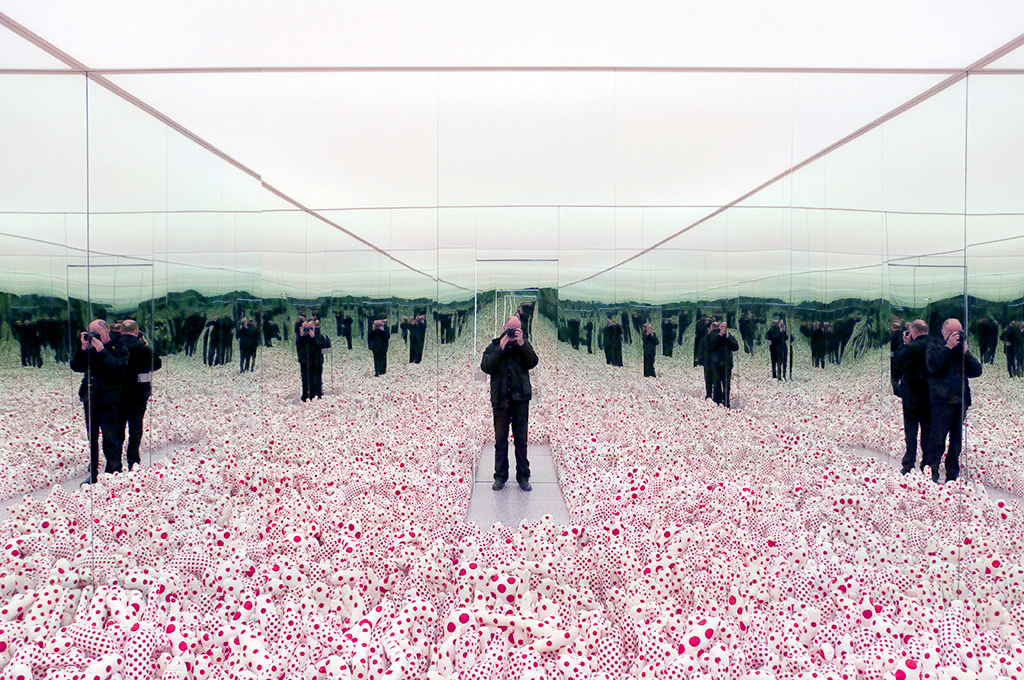
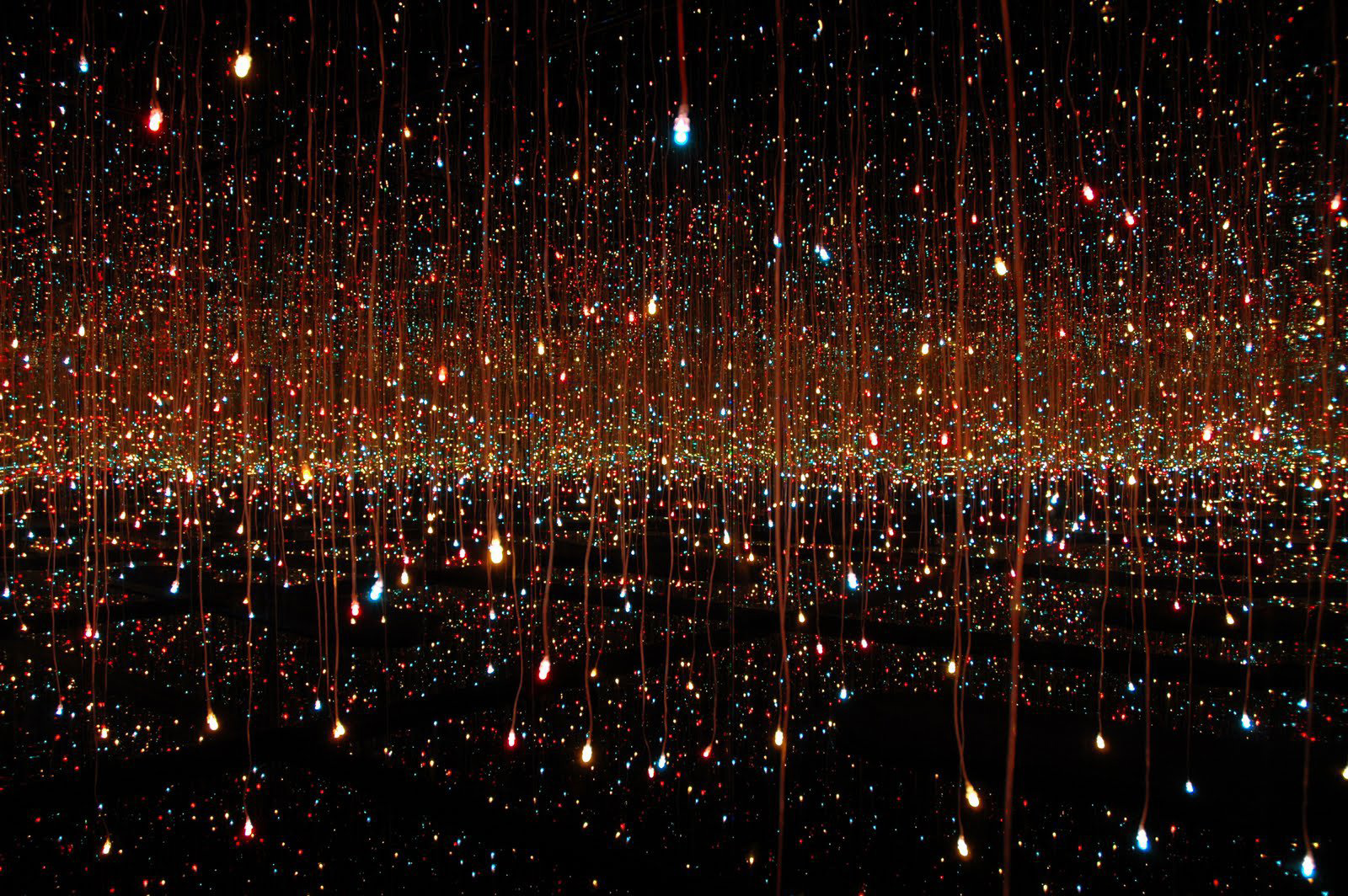
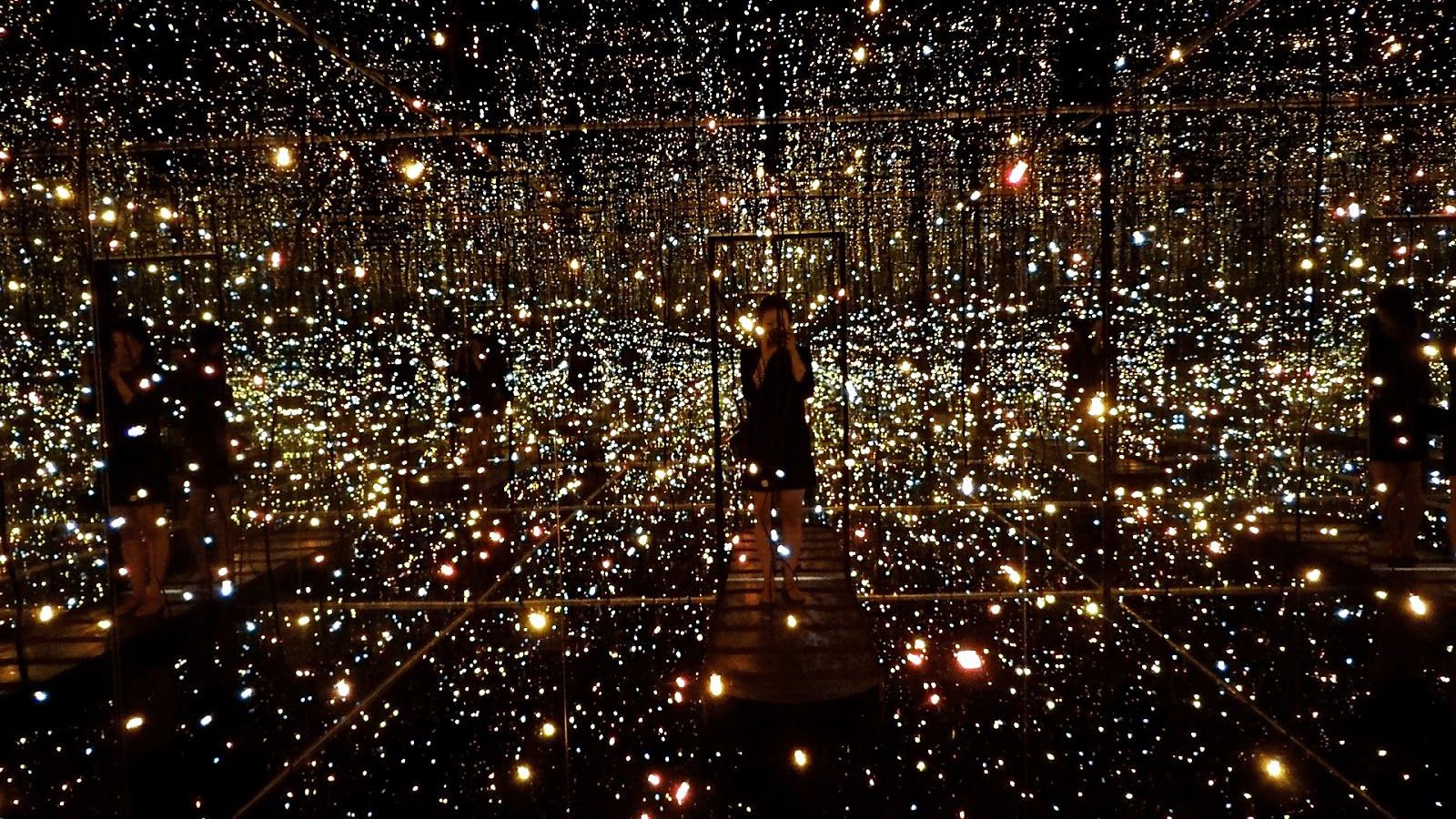
Yayoi Kusama: Mirrored Years demonstrates the enduring force of Yayoi Kusama. Renowned early installations such as Infinity Mirror Room – Phalli’s Field (1965) along with recent immersive environments including Fireflies on the Water (2000) and Clouds (2008) provide insight into the creative energy of this extraordinary artist and her lifelong preoccupation with the perceptual, visual and physical worlds.

Working across different media and forms that include painting, collage, sculpture, installation and film, as well as performance and its documentation, Kusama creates works that reveal a fixation with repetition, pattern and accumulation. Describing herself as an “obsessive artist”, her work is intensely sensual, infused with autobiographical, psychological and sexual content.”

Text from the MCA website [Online] Cited 12/03/2009. No longer available online


Many thanks to Ed Jansen for the use of his installation photographs of this exhibition at Museum Boijmans Van Beuningen, Rotterdam in 2008. See the whole set of his photographs on Flickr. Please click on the photographs for a larger version of the image.


Yayoi Kusama (Japanese, b. 1929) 'Infinity Mirror Room - Phalli's Field' 1965 from the exhibition 'Yayoi Kusama: Mirrored Rooms' at Museum of Contemporary Art (MCA), Sydney, Feb - June, 2009


Yayoi Kusama (Japanese, b. 1929)
Infinity Mirror Room – Phalli’s Field
1965


Yayoi Kusama (Japanese, b. 1929) 'Infinity Mirror Room - Phalli's Field' 1965 from the exhibition 'Yayoi Kusama: Mirrored Rooms' at Museum of Contemporary Art (MCA), Sydney, Feb - June, 2009

Yayoi Kusama (Japanese, b. 1929) 'Infinity Mirror Room - Phalli's Field' 1965


Yayoi Kusama (Japanese, b. 1929)
Infinity Mirror Room – Phalli’s Field
1965
Museum Boijmans Van Beuningen, Rotterdam, 2008
Photo: Ed Jansen


Rewind 1960

Visual hallucinations of polka dots since childhood have inspired the most significant works of this avant-gardist, who says creating art “saved” her during her lifelong battle with mental illness.

Interview by Natalie Reilly

This photograph [see above, top, for the image of her in 1965] shows a creative work that I made in New York in 1960. I was 31 years old at the time and my inspiration was the inundation and proliferation of polka dots. The work represents the evolution of my original formative process. Of all the pieces I have made, I like this one the best. It was my intention to create an interminable image by using mirrors and multiplying red polka dots.

I was born in Nagano Prefecture , a mountainous region in Japan. The youngest of four children, I have one sister and two brothers.

Since childhood, I have loved to paint pictures and create art forms. [Kusama has suffered from obsessive thinking and visual hallucinations since early childhood. the hallucinations – often of polka dots, or “nets” as she calls them – have become the inspiration for much of her work.] I did many artworks in great numbers in my younger days.

I went to Seattle in 1957 where I had my first solo exhibition in the US. I moved  to New York in 1958. Japan in those days was too conservative for avant-garde art to be accepted. [By 1961, Kusama was an active participant in the avant-garde movement in New York. Her art, which often included performance and controversial themes such as nudity and protests against the Vietnam War, drew acclaim for art critics and other artists such as Andy Warhol and Claes Oldenburg.]

I was deeply moved by the efforts the artists in New York were making then to develop a new history for art. I owe what I am today to many people in the art circles in Japan, the US and Europe who enthusiastically supported my art and gave me a boost into the international art scene.

Artists Georgia O’Keefe and Joseph Cornell were among the many friends who helped me, including Donald Judd and [writer and activist] Lucy Lippard who appreciated the originality of my art.  [In 1962 at the height of her success in New York, Kusama’s mental health began to suffer as she grew more paranoid about other artists copying her work. Late that year, she covered up all the windows in her studio in an attempt to “shut out the world”, and by November she was hospitalised after suffering a nervous breakdown.]

I came back to Japan in 1973, because my health had deteriorated. I wanted to create art in a quiet atmosphere. I once said, “if it were not for art, I would have killed myself a long time ago” an that’s still true. I do art in order to pursue my philosophy of life seeking truth in art.

Reilly, Natalie. “Rewind 1960,” in Boleyn, Alison (ed.,). Sunday Life: The Sunday Age Magazine. Melbourne: Fairfax Magazines. February 15th 2009, p. 30.


Yayoi Kusama (Japanese, b. 1929) 'Clouds' 1999 and 'Love Forever' 2005 from the exhibition 'Yayoi Kusama: Mirrored Rooms' at Museum of Contemporary Art (MCA), Sydney, Feb - June, 2009


Yayoi Kusama (Japanese, b. 1929)
Clouds 1999 and Love Forever 2005
Museum Boijmans Van Beuningen, Rotterdam, 2008
Photo: Ed Jansen


Yayoi Kusama (Japanese, b. 1929) 'Clouds' 2008 (installation view at MCA)


Yayoi Kusama (Japanese, b. 1929)
Clouds (installation view at MCA)
2008
Image courtesy the artist, Yayoi Kusama Studio, Victoria Miro Gallery, London and Ota Fine Arts, Tokyo and © the artist


Yayoi Kusama (Japanese, b. 1929) 'Stars Infinity (A.B.C)' 2003 (installation view MCA)


Yayoi Kusama (Japanese, b. 1929)
Stars Infinity (A.B.C) (installation view at MCA)
2003
Image courtesy and © the artist


This exhibition explored the extraordinary work of Japanese artist Yayoi Kusama. It revealed the coherence of her practice over many years and highlighted the freshness and innovation she brings to themes investigated throughout her life. Describing herself as an ‘obsessive artist’, her work is intensely sensual, infused with autobiographical, psychological and sexual content.

Kusama was born in 1929, in Matsumoto City, Nagano Prefecture, Japan. She demonstrated a passion for art from an early age and went on to study Nihonga painting, a formal Japanese technique using ground pigment and animal glues. Excited by the promise of the post-war international art scene, Kusama moved to New York in 1958. Her first New York solo exhibition a year later was an outstanding success and she became renowned as an innovative and adventurous young artist with her large Infinity Net canvases; Accumulation sculptures of everyday objects completely covered with soft, sewn and stuffed protuberances; environments such as the Infinity Mirror Room-Phalli’s Field (1965) and performances and Happenings. In 1966 she exhibited Narcissus Garden, a field of mirrored spheres in the gardens of the Venice Biennale, creating a sensation with an extraordinarily beautiful and compelling new version of her accumulations.

Kusama was energetic, talented, strategic and courageous at a time of fervent development in the art world, in a city that was exciting and notoriously competitive. During the ‘60s and ‘70s she was an active presence in Europe as well – in 1962 she was the only female artist to take part in the widely acclaimed Nul (Zero) international group exhibition at the Stedelijk Museum in Amsterdam. She returned to Tokyo in 1973.

Yayoi Kusama: Mirrored Years juxtaposed seminal works from the 1960s with more recent installations, films, paintings, floor pieces and silkscreen prints on canvas, and included major new works. The exhibition reflected Kusama’s lifelong obsession with repetition, pattern and aggregation, and her perceptions – visual, physical and sensory. It demonstrated her originality, creativity and uncompromising vision across many different techniques. Her work has been highly influential to new generations of artists and designers and she remains one of the most respected artists working today.

Organised by Museum Boijmans Van Beuningen, Rotterdam, Netherlands.
Presented in association with City Gallery, Wellington, New Zealand.

Anonymous. “Yayoi Kusama: Mirrored Years,” on the MCA website Nd [Online] Cited 13/06/2022


Yayoi Kusama (Japanese, b. 1929) 'Fireflies on the Water' 2000

Yayoi Kusama (Japanese, b. 1929) 'Fireflies on the Water' 2000


Yayoi Kusama (Japanese, b. 1929)
Fireflies on the Water
2000


Yayoi Kusama (Japanese, b. 1929) 'The Moment of Regeneration' 2004


Yayoi Kusama (Japanese, b. 1929)
The Moment of Regeneration
2004


Yayoi Kusama (Japanese, b. 1929) 'The Moment of Regeneration' 2004 (installation view at MCA)


Yayoi Kusama (Japanese, b. 1929)
The Moment of Regeneration (installation view at MCA)
2004
Image courtesy the artist, Yayoi Kusama Studio, Victoria Miro Gallery, London and Ota Fine Arts, Tokyo and © the artist


Yayoi Kusama (Japanese, b. 1929) 'Walking on the Sea of Death' 1981 (installation view at MCA)


Yayoi Kusama (Japanese, b. 1929)
Walking on the Sea of Death (installation view at MCA)
1981
Image courtesy the artist, Yayoi Kusama Studio, Victoria Miro Gallery, London and Ota Fine Arts, Tokyo and © the artist


Yayoi Kusama (Japanese, b. 1929) 'Narcissus Garden' 1966


Yayoi Kusama (Japanese, b. 1929)
Narcissus Garden (at the Venice Biennale, Italy)
1966


Yayoi Kusama (Japanese, b. 1929) 'The Earth in Late Summer' 2004 (installation view MCA)


Yayoi Kusama (Japanese, b. 1929)
The Earth in Late Summer (installation view MCA)
2004
Image courtesy the artist, Yayoi Kusama Studio, Victoria Miro Gallery, London and Ota Fine Arts, Tokyo and © the artist


Yayoi Kusama (Japanese, b. 1929) 'I'm here but nothing' 2000- (installation view MCA)


Yayoi Kusama (Japanese, b. 1929)
I’m here but nothing (installation view MCA)
2000-
Image courtesy the artist, Yayoi Kusama Studio, Victoria Miro Gallery, London and Ota Fine Arts, Tokyo and © the artist


Yayoi Kusama (Japanese, b. 1929) 'Invisible Life' 2000


Yayoi Kusama (Japanese, b. 1929)
Invisible Life
2000


Museum of Contemporary Art (MCA)
140 George Street
The Rocks, Sydney, Australia

Opening hours:
Daily 11am – 5pm

Yayoi Kusama website

Museum of Contemporary Art website

LIKE ART BLART ON FACEBOOK

Back to top

Exhibition: ‘Polaroids and Portraits: A Photographic Legacy of Andy Warhol’ at the Krannert Art Museum, Champaign IL

Exhibition dates: 30th January – 24th May, 2009

Curator: Kathryn Koca


Many thank to the Krannert Art Museum, Champaign IL for allowing me to publish the photographs in the posting. Please click on the photographs for a larger version of the image.


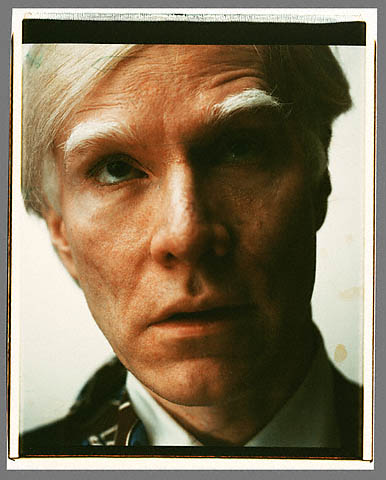
Andy Warhol (American, 1928-1987) 'Self portrait' Polaroid 1979 from the exhibition 'Polaroids and Portraits: A Photographic Legacy of Andy Warhol' at the Krannert Art Museum, Champaign IL, jan - May, 2009


Andy Warhol (American, 1928-1987)
Self portrait
1979
Polaroid


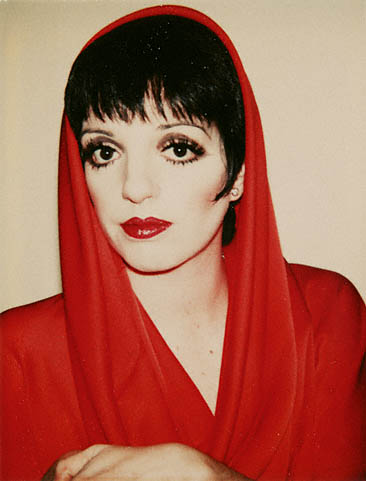
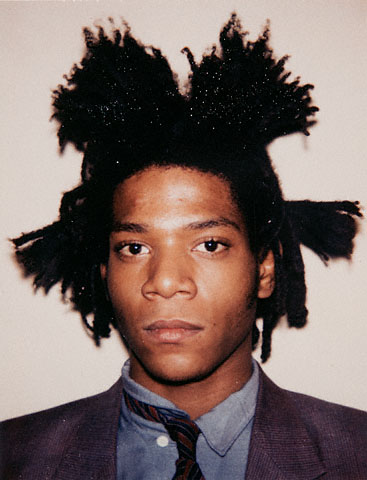
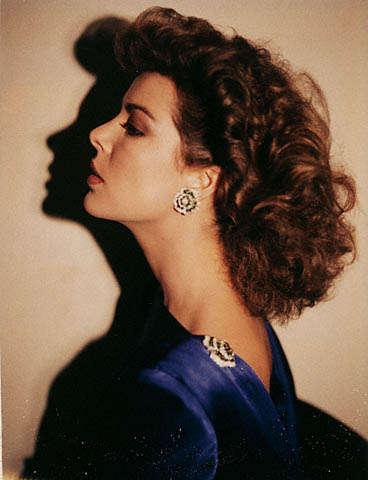
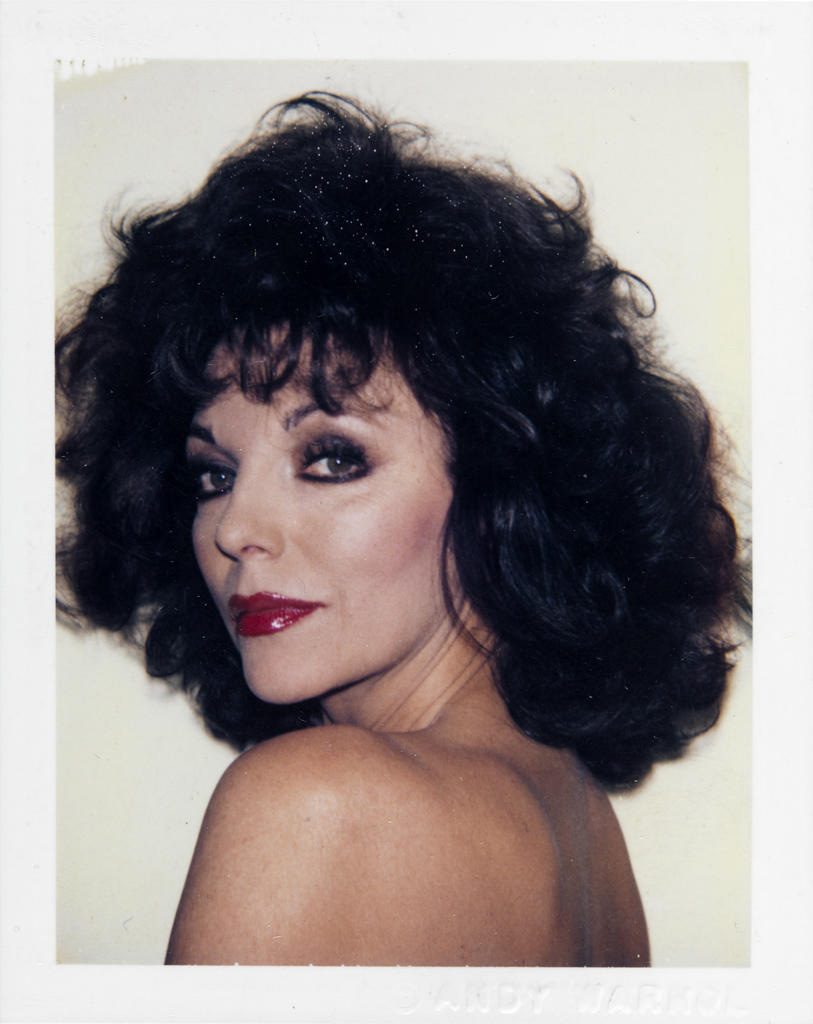
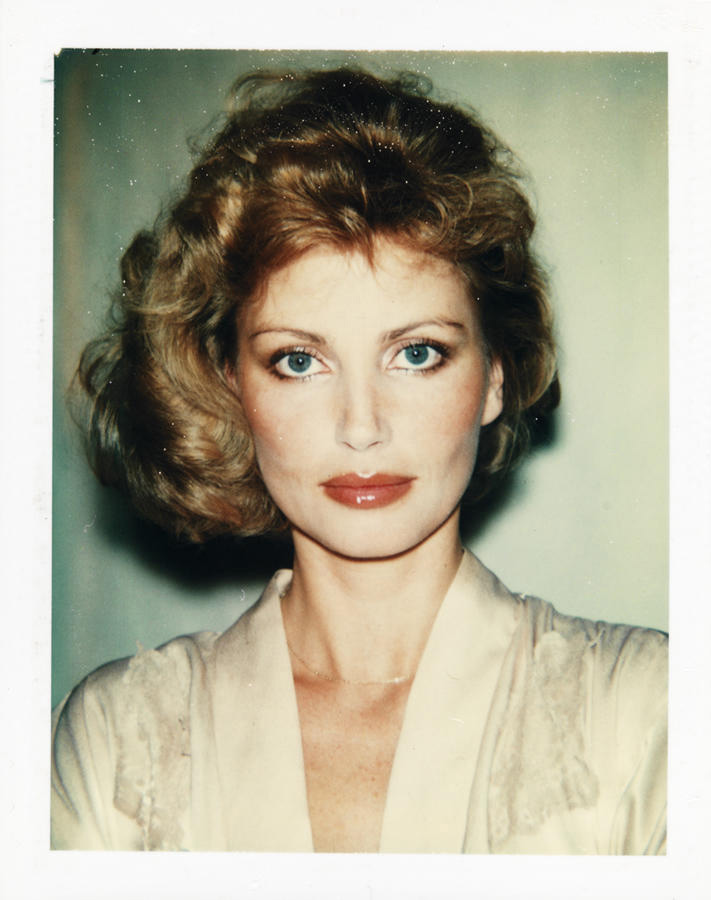
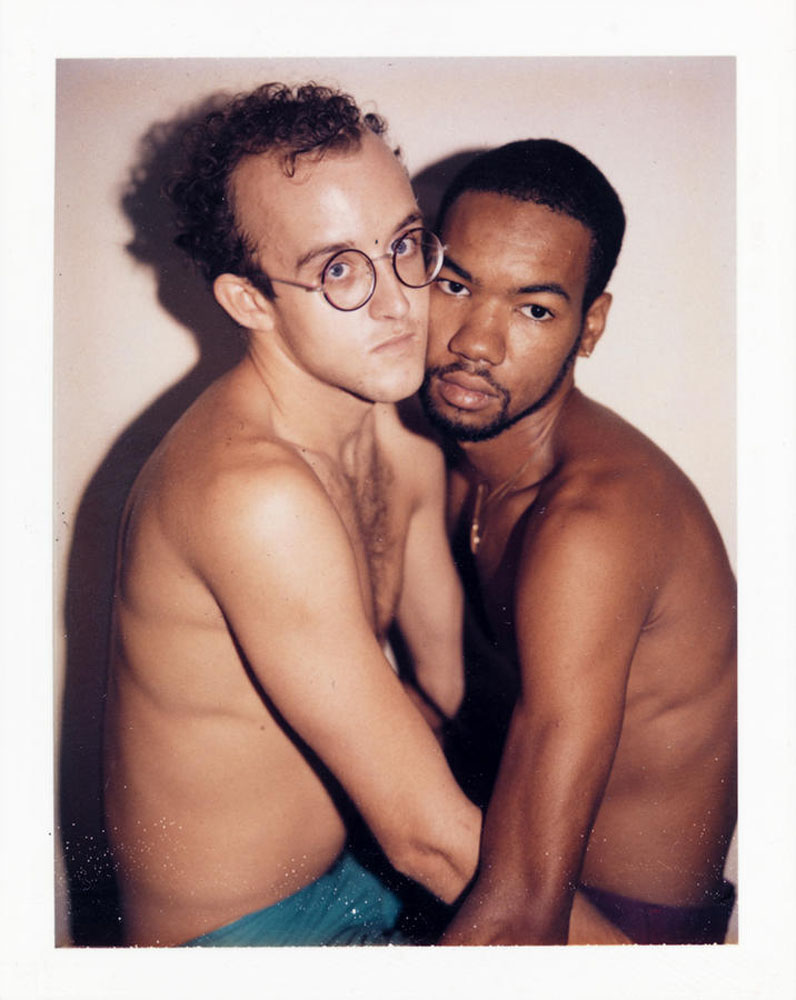
Polaroids and Portraits presents a selection of the 152 photographs that the Krannert Art Museum graciously received from the Andy Warhol Photographic Legacy Program. Established in 2007 to commemorate the Warhol Foundation’s twentieth anniversary, the Legacy Program gifted over 28,500 original photographs to 183 college and university museums and galleries across the country with the hope of enabling wider access to these more seldom seen works. This exhibition displays both Polaroid and silver gelatin portraits of celebrities, socialites, and unknowns, all photographed with varying degrees of wit, humour, and intimacy. These photographs complicate our notion of the artist’s persona as wholly immersed in this world of glamour, presenting Warhol as not only a prolific photographer, but a man grappling with his own identity as a famous artist.

Text from the Krannert Art Museum website


Andy Warhol (American, 1928-1987) 'Liza Minnelli' Polaroid 1977 from the exhibition 'Polaroids and Portraits: A Photographic Legacy of Andy Warhol' at the Krannert Art Museum, Champaign IL, jan - May, 2009


Andy Warhol (American, 1928-1987)
Liza Minnelli
1977
Polaroid


Andy Warhol (American, 1928-1987) 'Jean-Michel Basquiat' Polaroid 1982


Andy Warhol (American, 1928-1987)
Jean-Michel Basquiat
1982
Polaroid


Andy Warhol (American, 1928-1987) 'Princess Caroline of Monaco' Polaroid 1981


Andy Warhol (American, 1928-1987)
Princess Caroline of Monaco
1981
Polaroid


Andy Warhol (American, 1928-1987) 'Joan Collins' 1985


Andy Warhol (American, 1928-1987)
Joan Collins
1985
Polaroid


Andy Warhol (American, 1928-1987) 'Evelyn Kuhn' 1978


Andy Warhol (American, 1928-1987)
Evelyn Kuhn
1978
Polaroid


Andy Warhol (American, 1928-1987) 'Keith Haring and Juan Dubose' 1983


Andy Warhol (American, 1928-1987)
Keith Haring and Juan Dubose
1983
Polaroid


Krannert Art Museum
500 East Peabody Drive
Champaign, Illinois 61820
United States
Phone: (217) 244-0516

Opening hours:
Tuesday – Saturday 10am – 4pm
Thursday open until 8pm when classes are in session
Closed Sunday and Monday

The Krannert Museum of Art website

LIKE ART BLART ON FACEBOOK

Back to top