Exhibition: ‘Teller on Mapplethorpe’ at Alison Jacques Gallery, London

Exhibition dates: 18th November, 2016 – 7th January, 2017

Curator: Juergen Teller

PLEASE NOTE: SINCE THIS POSTING, I ACKNOWLEDGE THAT THE ALISON JACQUES GALLERY, LONDON HAS UPDATED THEIR WEBSITE TO INCLUDE A MORE REPRESENTATIVE SELECTION OF MAPPLETHORPE’S IMAGES – INCLUDING SOME OF MAPPLETHORPE’S PHOTOGRAPHIC INVESTIGATION INTO THE SEXUAL BODY AND MORE WORKS FROM THE EXHIBITION – IN ALL THEIR GLORY! PLEASE SEE THE IMAGES ON THEIR WEBSITE AND REMEMBER, IF YOU DON’T LIKE, DON’T LOOK.
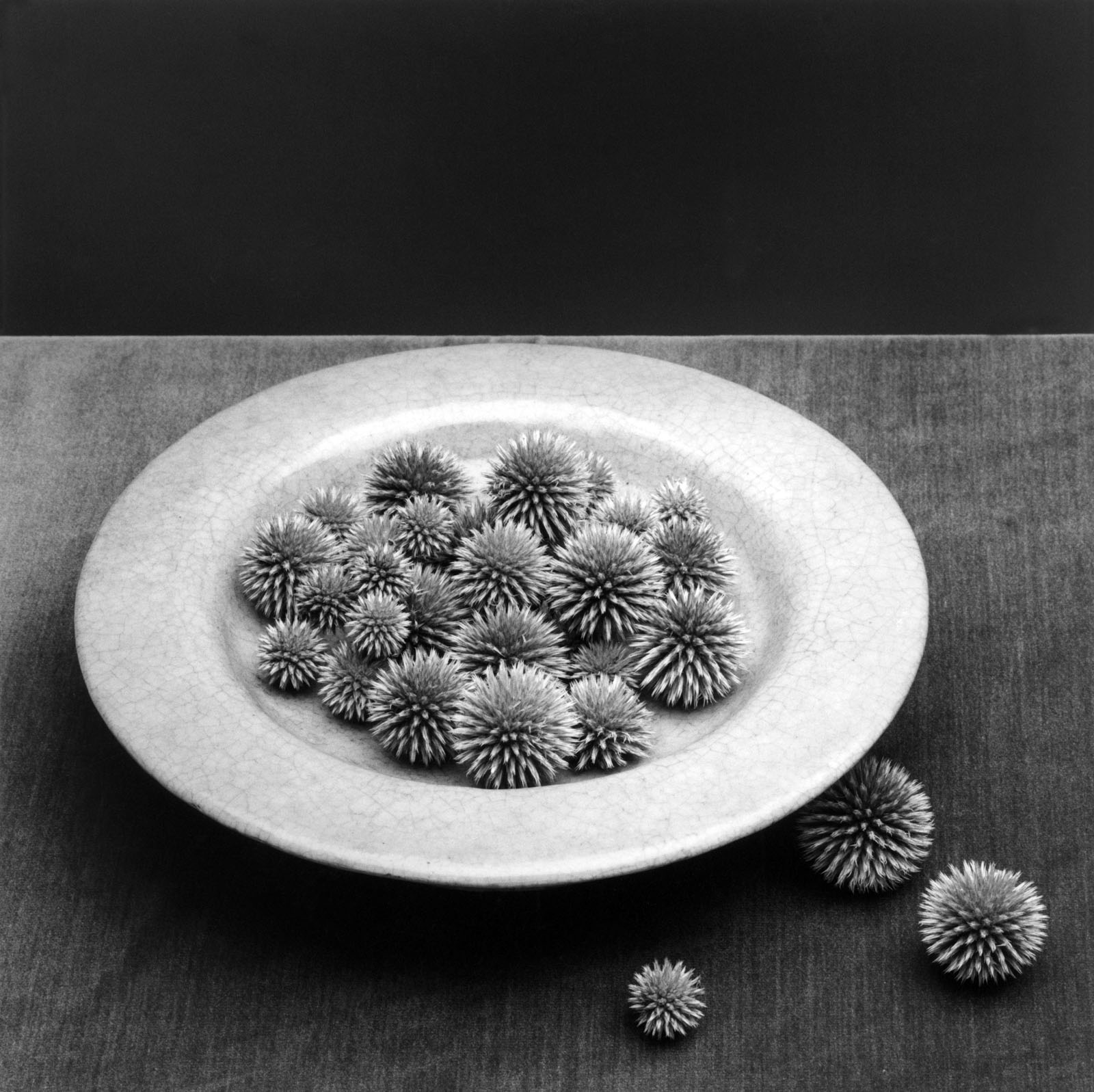
 

Robert Mapplethorpe (American, 1946-1989) 'Pods' 1985 from the exhibition 'Teller on Mapplethorpe' at Alison Jacques Gallery, London, Nov 2016 - Jan 2017


Robert Mapplethorpe (American, 1946-1989)
Pods
1985
© Robert Mapplethorpe Foundation
Used by permission Courtesy Alison Jacques Gallery, London


Nothing SALACIOUS

to see here


According to a tartly written denigration of Mapplethorpe in particular and more generally of photography as art by Guardian critic Jonathan Jones, “Cocks abound. Huge ones. Right at the centre of the main room, just so you don’t miss this basic Mapplethorpian theme, is a giant blow up of a man whose penis would be impressive even in a much smaller print. “Hey, don’t you get it?” Teller in effect is yelling. “This guy was all about cocks!””


Cocks. Cocks. Cocks. Cocks. Cocks. Cocks. Cocks. Cocks. Cocks. Cocks. Cocks.


There, I’ve said it… because I can’t show it.


I’d really LOVE to refute this man’s drivel about Mapplethorpe’s work: “Teller succeeds brilliantly in making Mapplethorpe raw and immediate. Yet he also exposes him as very silly. For if Mapplethorpe was just wildly and naughtily picturing everything in life, willy nilly (but mostly willy), why the heavy monochrome aesthetic?”

But I can’t.

Why not?

Because of the

un/solicitous

(caring in a discriminatory way, as though to protect an image or reputation)

and

innocuous


set of press images that I can officially use to illustrate such a daring and radical rethinking of Mapplethorpe’s work by Juergen Teller.

Not the fault of the gallery at all, they have been marvellous sending me the images.


But they were authorised by The Robert Mapplethorpe Foundation for press sharing.

And there’s the rub.

LIKE RUBBING TWO COCKS TOGETHER.

The paradox of Mapplethorpe’s work: erect genitalia, orifices and violent sex acts teamed with corn, kittens and frogs can be seen in the flesh – but oh, NO!

We can’t have them being seen online

Cocks forbidden


How can you then judge, from a distance, what the effect of Teller’s pairings are; what delightful nuances of meaning are elicited, are illicit, in those very pairings, if we can’t see them? We can’t. Jones observes that, “Teller strips away that respectability and restores the shock to Robert Mapplethorpe … [revealing] hilarious double entendres in the way Mapplethorpe photographed nature.”

How can we understand the exhibition and the shock of these images … and then critique negative reviews like Jones’ if The Robert Mapplethorpe Foundation continues the sanitisation of his work online.

No comment is possible.

Dr Marcus Bunyan


Many thankx to Alison Jacques Gallery for allowing me to publish the photographs in the posting. Please click on the photographs for a larger version of the image.


“Every picture is so strongly composed, and you feel that he really wanted to make that photograph. Not everything is erotic, but he has an interest in life, people, animals and landscapes, and his interest always comes through. I think life is what life is. It has day and night, sunny and grey, and he sees similar characteristics in different things. He cared enormously about how things looked. It all has this same intensity. Within all of that there’s a lot of sensitivity and romanticism in his work too, and a lot of clarity.”


Juergen Teller
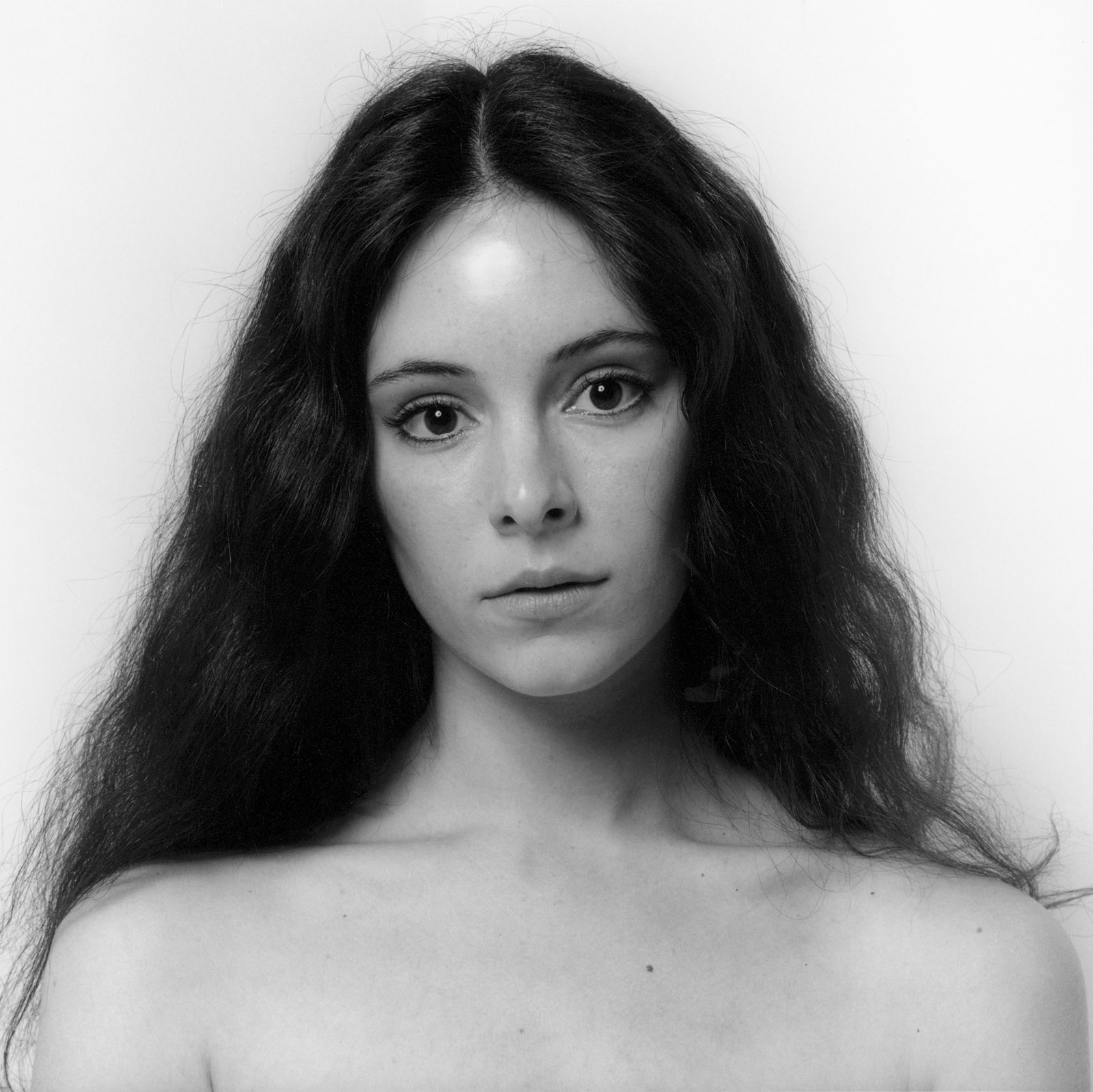


Robert Mapplethorpe (American, 1946-1989) 'Madeline Stowe' 1982 from the exhibition 'Teller on Mapplethorpe' at Alison Jacques Gallery, London, Nov 2016 - Jan 2017


Robert Mapplethorpe (American, 1946-1989)
Madeline Stowe
1982
© Robert Mapplethorpe Foundation. Used by permission
Courtesy Alison Jacques Gallery, London
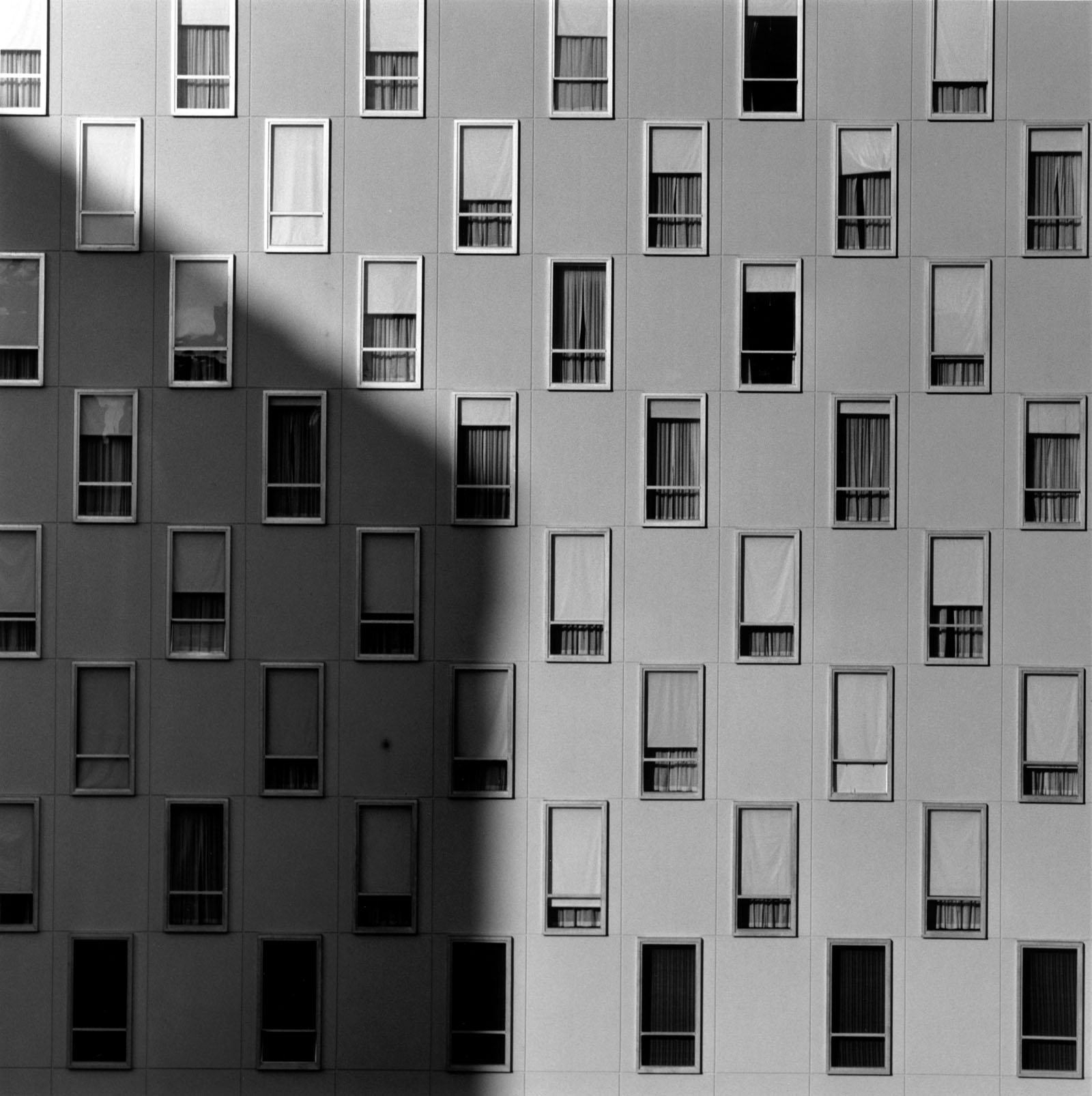
 

Robert Mapplethorpe (American, 1946-1989) 'Apartment Window' 1977


Robert Mapplethorpe (American, 1946-1989)
Apartment Window
1977
© Robert Mapplethorpe Foundation
Used by permission Courtesy Alison Jacques Gallery, London
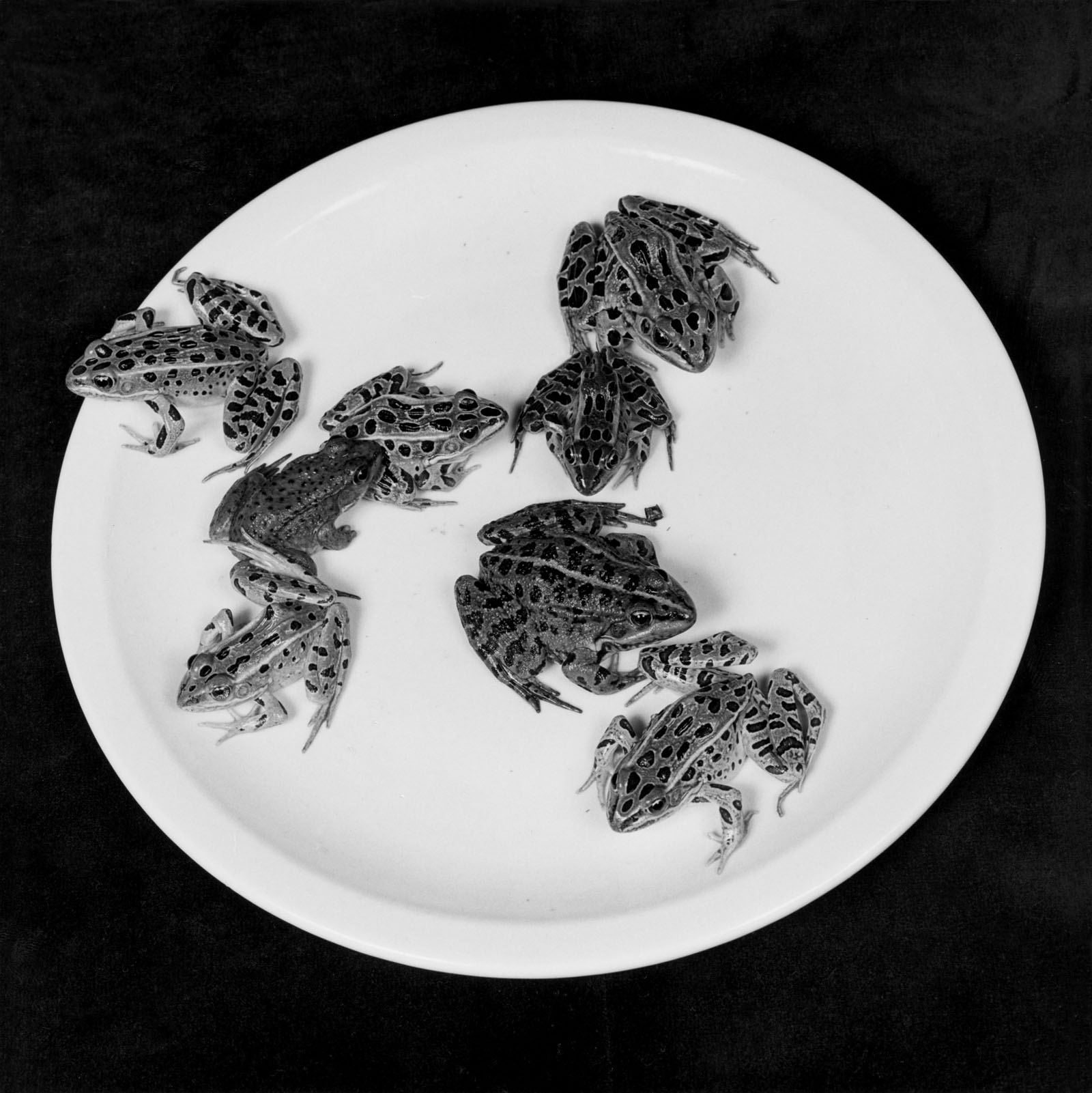
 

Robert Mapplethorpe (American, 1946-1989) 'Frogs' 1984


Robert Mapplethorpe (American, 1946-1989)
Frogs
1984
© Robert Mapplethorpe Foundation
Used by permission Courtesy Alison Jacques Gallery, London


To coincide with what would have been the 70th birthday of the iconic American photographer Robert Mapplethorpe, Alison Jacques has invited acclaimed UK-based, German-born photographer Juergen Teller to curate an exhibition of Mapplethorpe’s work. Teller worked in collaboration with The Robert Mapplethorpe Foundation in New York to make his selection.

Considered one of the most important photographers of the 20th century, Robert Mapplethorpe is currently the subject of a major touring retrospective The Perfect Medium, which opened at the J. Paul Getty Museum and Los Angeles County Museum of Art (LACMA), Los Angeles in 2016. The exhibition is currently on view at the Montreal Museum of Fine Arts, Canada (until 22 January 2017) and will travel to the Art Gallery of New South Wales, Sydney, Australia (October 2017 – February 2018). Mapplethorpe is also the subject of a recently released, Emmy nominated, HBO documentary Look at the Pictures (2016).

Juergen Teller is one of a few artists who, since Mapplethorpe, has been able to operate successfully both in the art world and the world of commercial fashion photography. Alison Jacques, who has represented Robert Mapplethorpe in the UK since 1999, said: “Provocative and subversive, making images which are the antithesis of conventional fashion photography, Juergen Teller was the only choice to curate this special exhibition of Robert’s work. There are obvious parallels between these two artists and I believe Juergen’s eye will bring a new reading of Robert’s work.”

With the permission of The Robert Mapplethorpe Foundation, Teller has enlarged two images, each over 4 metres in scale, which, pasted directly onto the gallery’s walls will provide a backdrop to the entire show. One wall will show Mapplethorpe’s first partner David Croland wearing a gag and the other features the model Marty Gibson from Mapplethorpe’s later work posing nude on a beach. Teller’s selection of 48 images exposes works within Mapplethorpe’s archive that have rarely been exhibited before and span Mapplethorpe’s entire career, ranging from the unique Polaroids of the early 1970s to his iconic medium of silver gelatin photographs from the mid-70s through to the late 80s.

Still life features as a prominent theme with unusual subjects including a spoon full of coffee, a set of antique silverware, two coconuts, a television set, and prickly unopened seedpods on a plate. Teller has also chosen a number of images depicting animals, a subject matter that Mapplethorpe is not famously associated with, including a hanging bat, plate of frogs, reclining dog, kitten on a sofa, and horses. Human subjects include some of Mapplethorpe’s key female muses such as Lisa Lyon, but also lesser-known personalities including Cookie Mueller, Lisa Marie Smith and Susan Sarandon’s daughter, Eva Amurri, as a small child. Well-known people in Mapplethorpe’s life are represented including Patti Smith, David Croland and Sam Wagstaff. Teller has also responded to his own German heritage and selected lesser-known portraits of German figures of the time, such as Hans Gert and the photojournalist Gisele Freund. The image of Gert was the first that Tom Baril worked on for Mapplethorpe from his Bond Street Darkroom. Baril continued to be Mapplethorpe’s exclusive printer for over 15 years.

Sexually-explicit images also feature in the exhibition but by interrelating these to a more romantic view of Mapplethorpe’s work, Teller has brought out the essential mission of Mapplethorpe’s work: a life-long quest for perfection of form whatever the subject matter may be.

Short biographies

Robert Mapplethorpe (b. New York, USA, 1946; d. Boston, USA, 1989) mounted over 50 solo exhibitions during his lifetime, including numerous museum shows in the USA, Europe and Japan. Since his death he has continued to be the subject of major institutional exhibitions. In recent years the Tate, in conjunction with other UK museums, acquired 64 works by Mapplethorpe through the Artists Rooms Art Fund and The d’Offay Donation, which culminated in an exhibition at Tate Modern in 2014.

Juergen Teller (b. 1964, Erlangen, Germany) moved to London in 1986, two years after graduating from Munich’s Bayerische Staatslehranstalt für Photographie. Since the late 1980s, his photographic works have gained critical acclaim and been featured in an array of influential international publications such as Vogue, W Magazine, I-D and Purple. With his unique photographic sensibility, Teller manages to strike a rare balance between creativity and commercialism, blurring the boundaries of art and advertising, and creating world-class images for collaborators such as Marc Jacobs, Céline, Yves Saint Laurent and Vivienne Westwood. Teller’s solo exhibition Woo! at the ICA in London in 2013 was the most well-attended exhibition in the ICA’s history, and in 2016 he had a major solo museum exhibition in Germany, Enjoy Your Life at Kunsthalle Bonn.

Press release from Alison Jacques Gallery
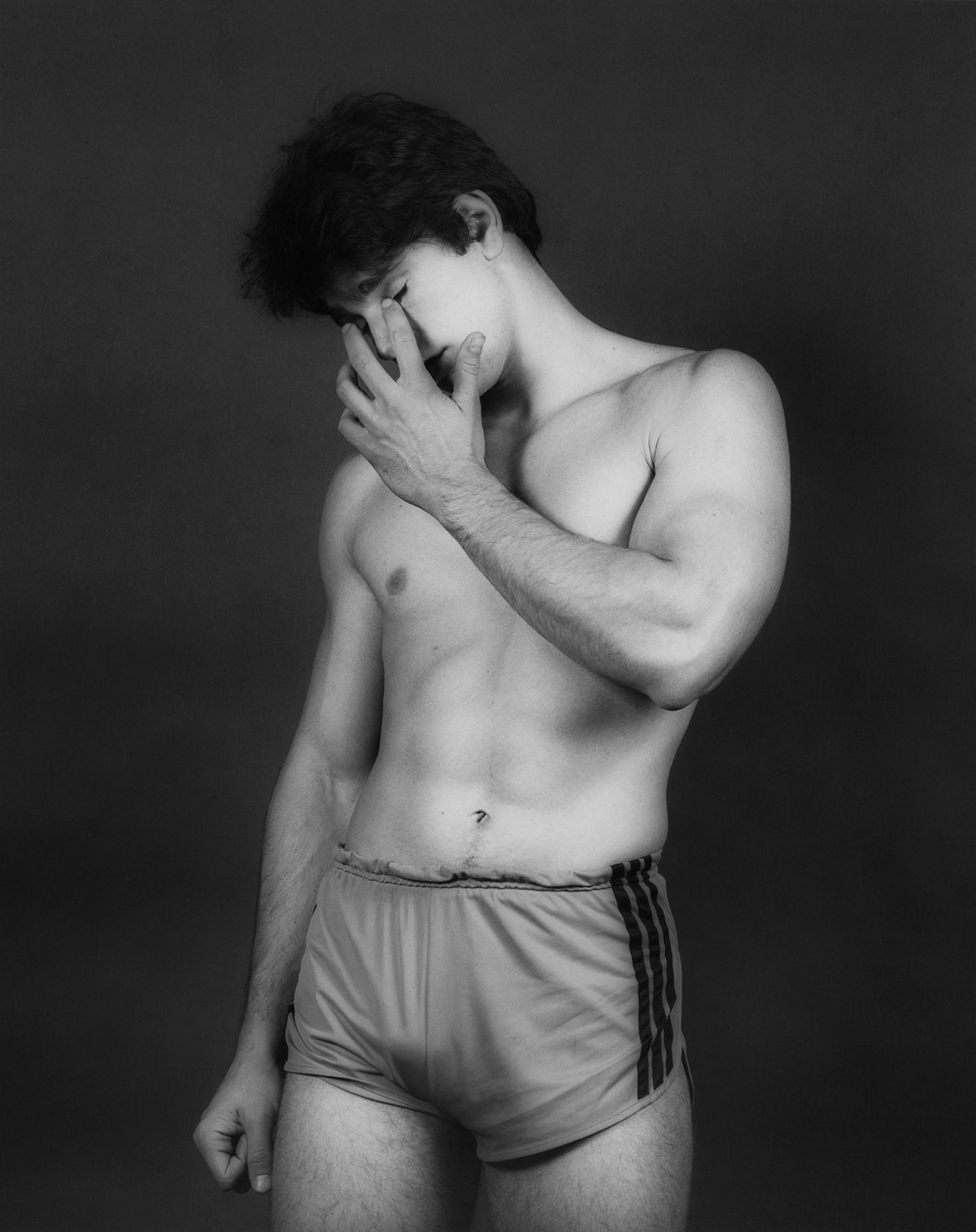
 

Robert Mapplethorpe (American, 1946-1989) 'Arthur Diovanni' 1982


Robert Mapplethorpe (American, 1946-1989)
Arthur Diovanni
1982
© Robert Mapplethorpe Foundation
Used by permission Courtesy Alison Jacques Gallery, London
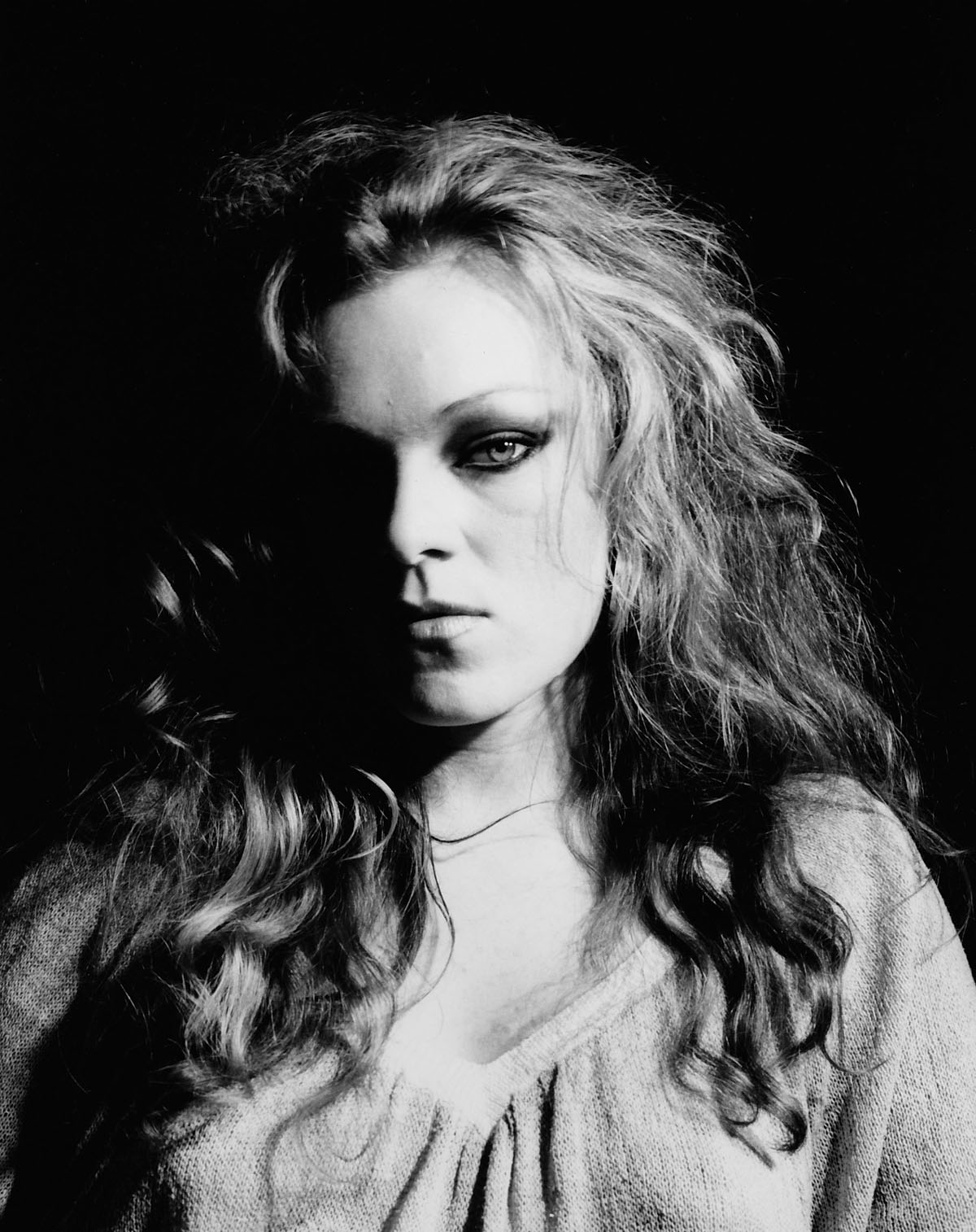
 

Robert Mapplethorpe (American, 1946-1989) 'Cookie Mueller' 1978


Robert Mapplethorpe (American, 1946-1989)
Cookie Mueller
1978
© Robert Mapplethorpe Foundation
Used by permission Courtesy Alison Jacques Gallery, London
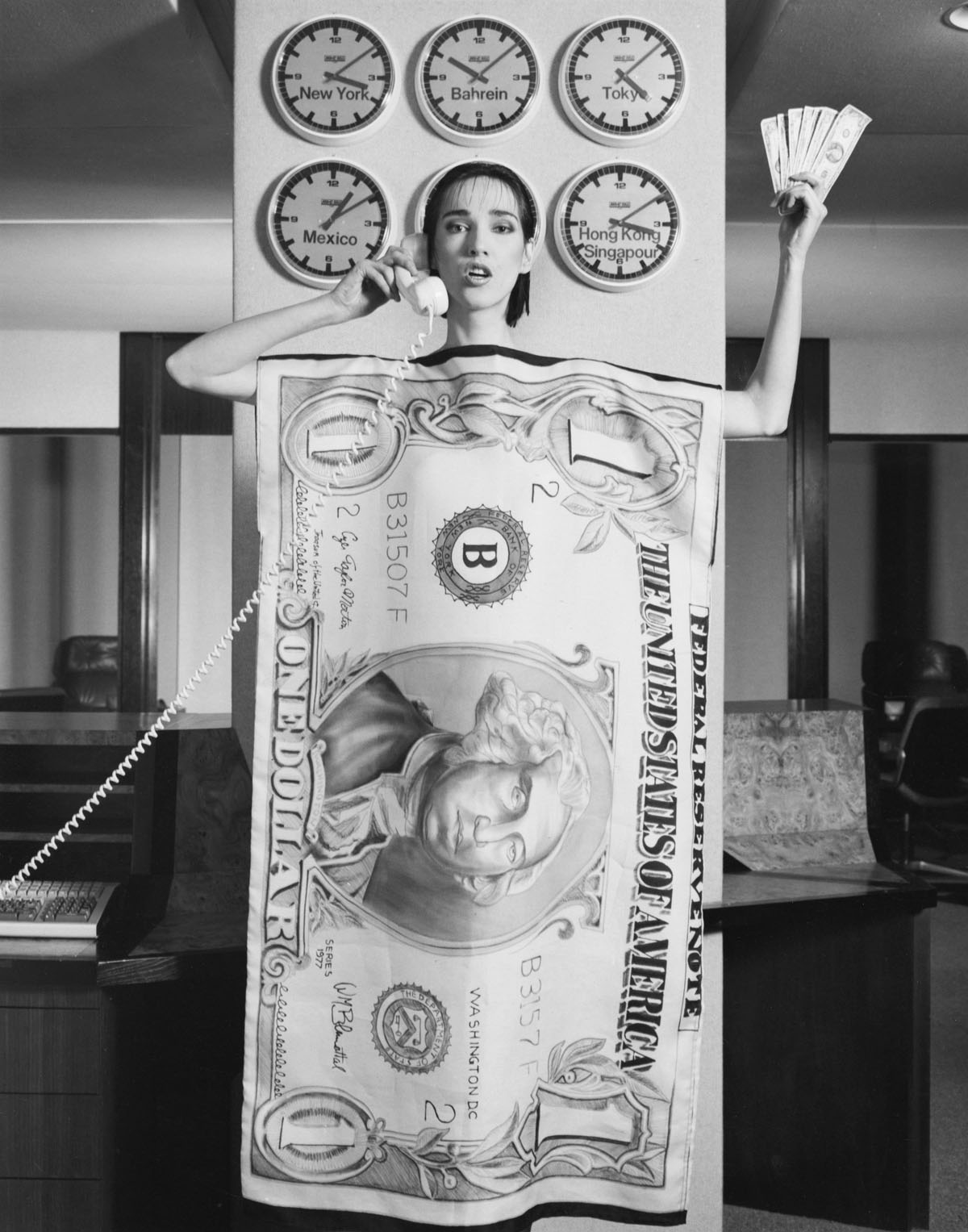
 

Robert Mapplethorpe (American, 1946-1989) 'Paris Fashion Dovanna' 1984


Robert Mapplethorpe (American, 1946-1989)
Paris Fashion Dovanna
1984
© Robert Mapplethorpe Foundation
Used by permission Courtesy Alison Jacques Gallery, London
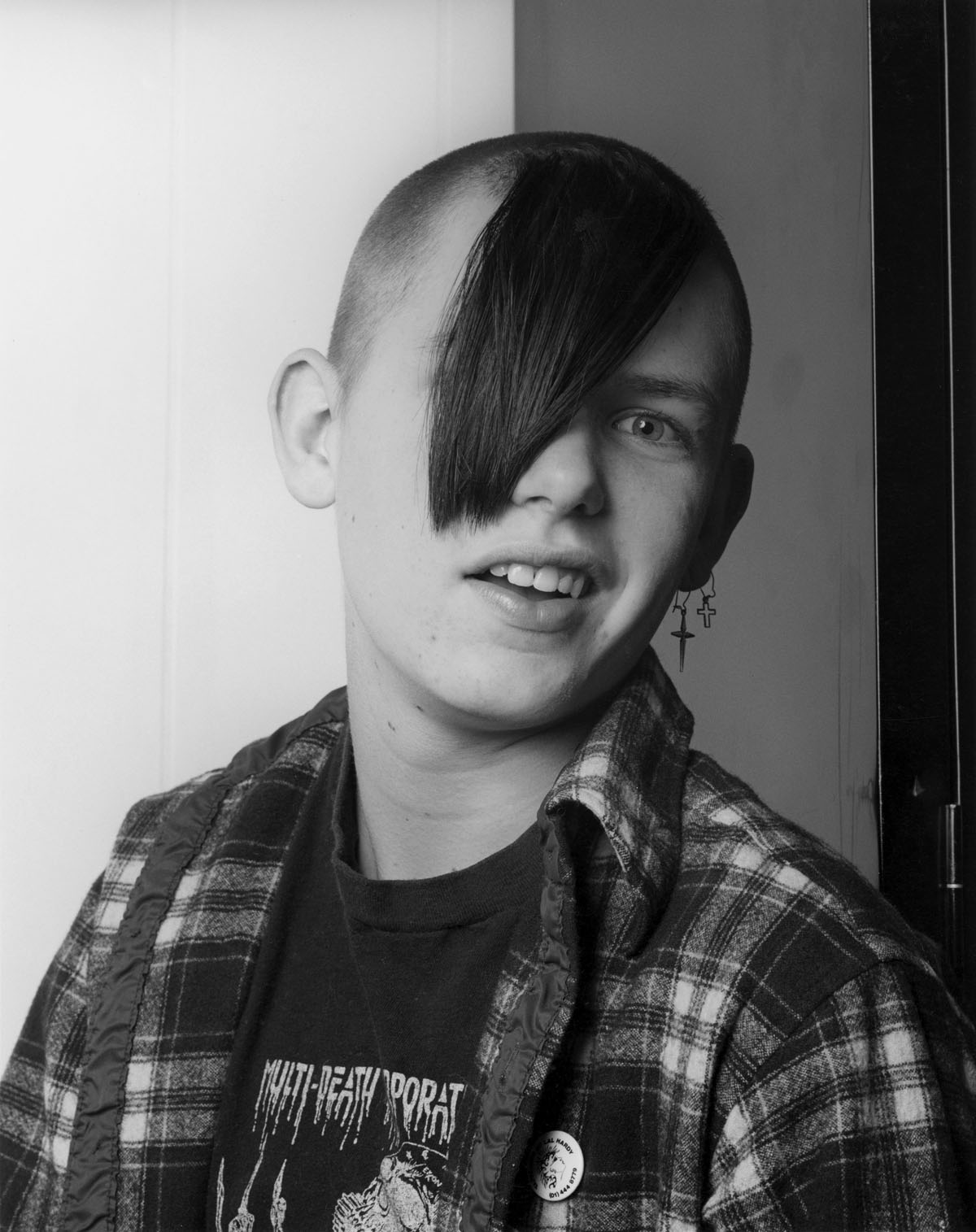
 

Robert Mapplethorpe (American, 1946-1989) 'Tattoo Artists' Son' 1984


Robert Mapplethorpe (American, 1946-1989)
Tattoo Artists’ Son
1984
© Robert Mapplethorpe Foundation
Used by permission Courtesy Alison Jacques Gallery, London
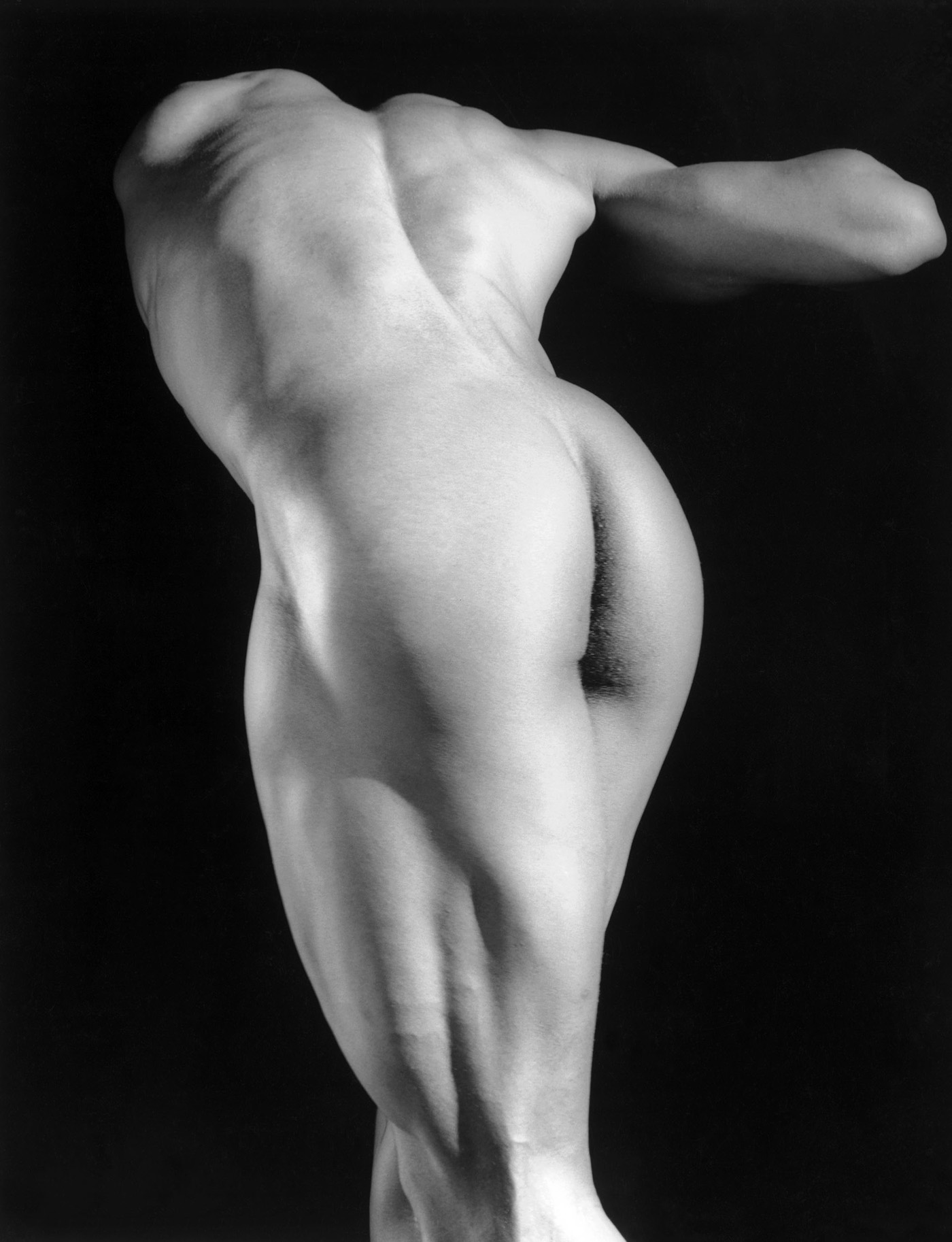
 

Robert Mapplethorpe (American, 1946-1989) 'Michael Reed' 1987


Robert Mapplethorpe (American, 1946-1989)
Michael Reed
1987
© Robert Mapplethorpe Foundation
Used by permission Courtesy Alison Jacques Gallery, London
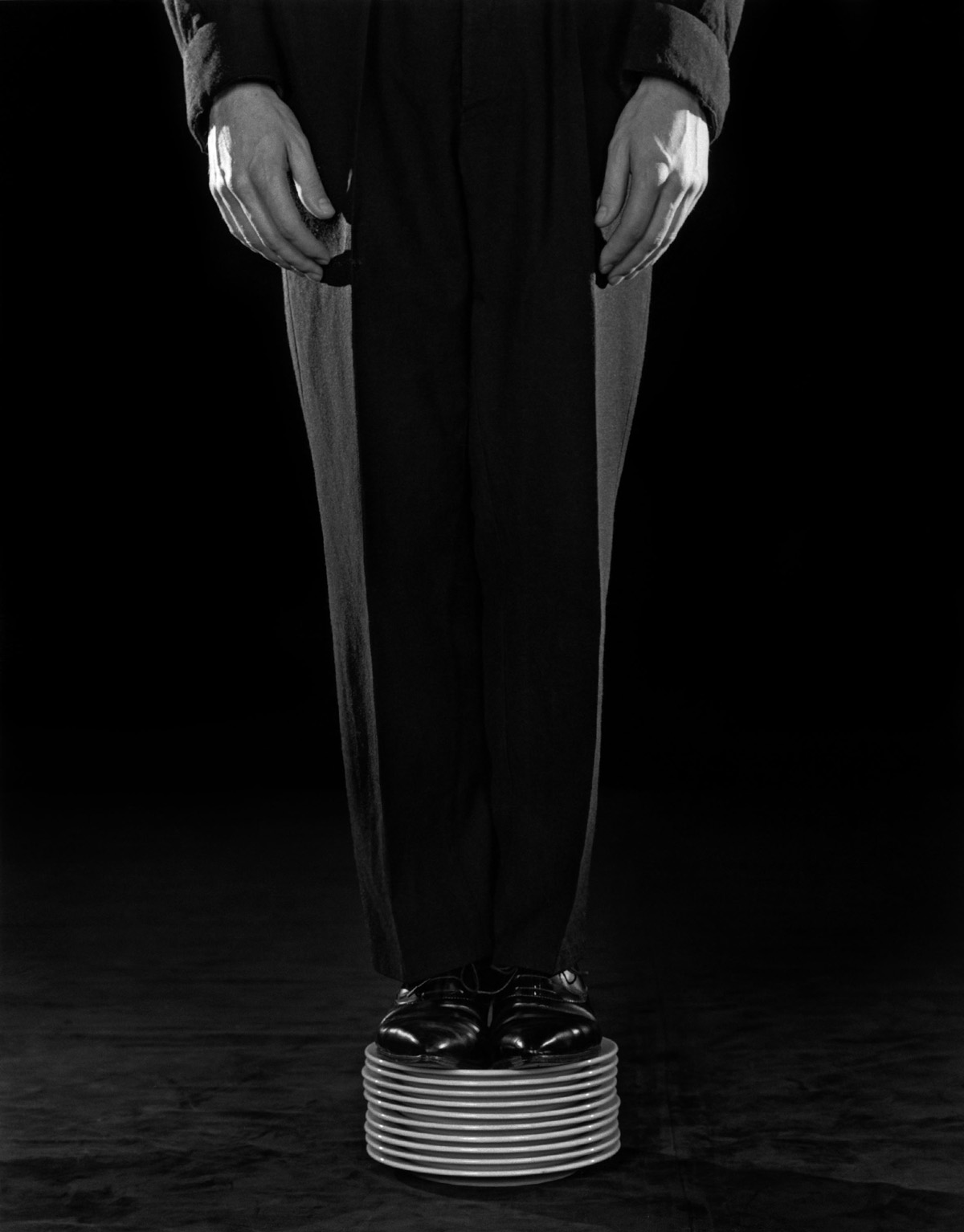
 

Robert Mapplethorpe (American, 1946-1989) 'Shoes on Plates' 1984


Robert Mapplethorpe (American, 1946-1989)
Shoes on Plates
1984
© Robert Mapplethorpe Foundation
Used by permission Courtesy Alison Jacques Gallery, London


Alison Jacques Gallery
Orwell House, 16-18 Berners Street
London W1T 3LN
Phone: +44 (0)20 7631 4720

Opening hours:
Tuesday – Saturday 11am – 6pm
Closed Sunday and Monday
Alison Jacques Gallery website

LIKE ART BLART ON FACEBOOK

Back to top

Photographs: Thomas Eakins photography

July 2015


Please click on the photography for a larger version of the image.

Marcus


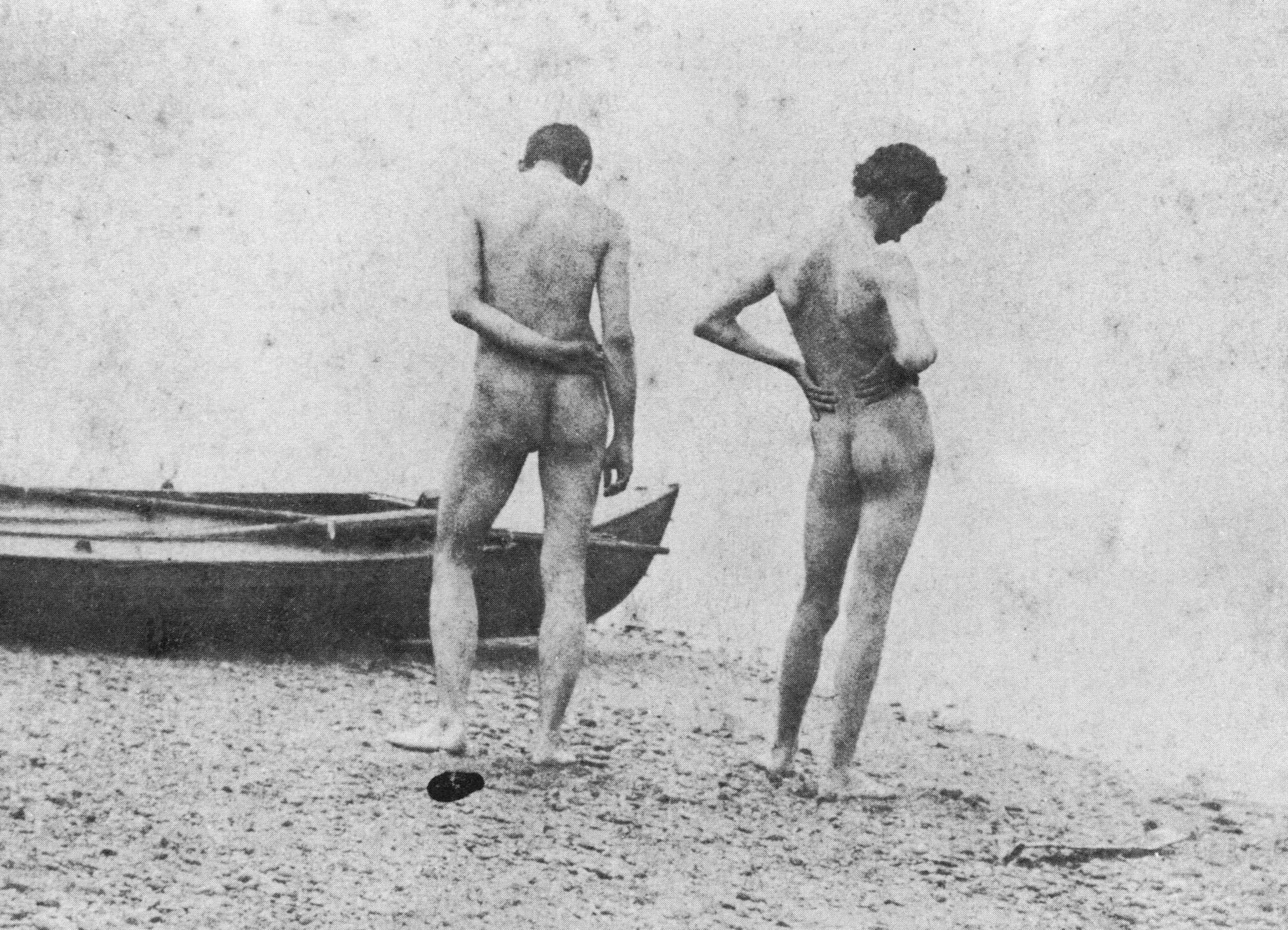
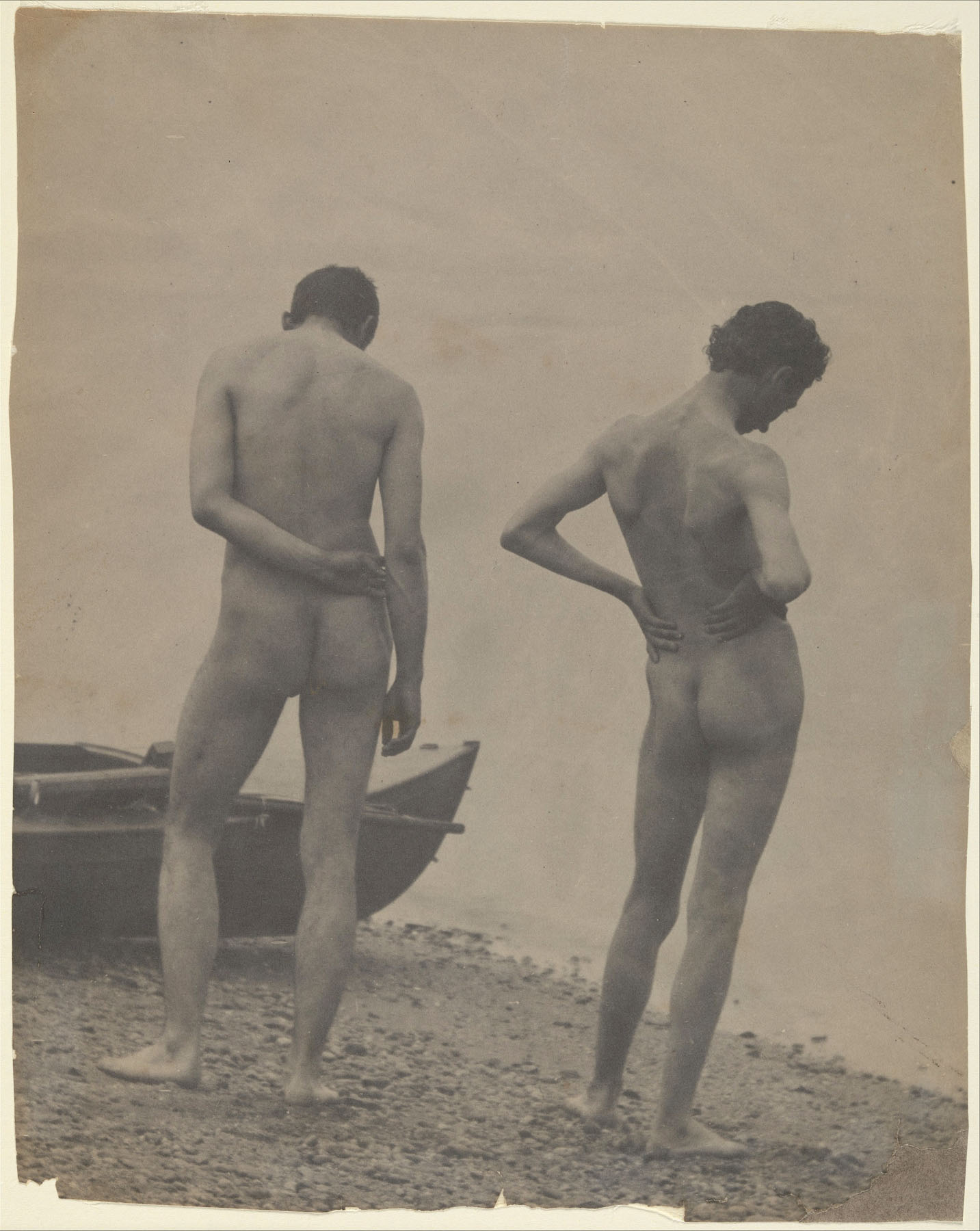
Thomas Eakins (American, 1844-1916) '(Thomas Eakins and John Laurie Wallace on a Beach)' c. 1883


Thomas Eakins (American, 1844-1916)
(Thomas Eakins and John Laurie Wallace on a Beach)
c. 1883
Public domain


The great American painter and photographer Thomas Eakins was devoted to the scientific study of the human form and committed to its truthful representation. While he and his students at the Pennsylvania Academy of the Fine Arts were surrounded by casts of classical sculpture, Eakins declared that he did not like “a long study of casts. … At best they are only imitations, and an imitation of imitations cannot have so much life as an imitation of life itself.” Photography provided an obvious solution.

This photograph, in which Eakins and a student affected the elegant contrapposto stances of classical sculpture, was probably taken during an excursion with students to Manasquan Inlet at Point Pleasant, New Jersey, during the summer of 1883. Valuing his photographs not only as studies for paintings but also for their own sake, Eakins carefully printed the best images on platinum paper. In this case, he went to the additional trouble of enlarging the original, horizontally formatted image and cropping it vertically to better contain the perfectly balanced figures.

Text from The Metropolitan Museum of Art website


Thomas Eakins (American, 1844-1916) 'Nude, Playing Pipes' c. 1883


Thomas Eakins (American, 1844-1916)
Nude, Playing Pipes
c. 1883
Platinum print
22.7 x 16.6cm (8 15/16 x 6 9/16 in.) irregular
Metropolitan Museum of Art
David Hunter McAlpin Fund, 1943
Public domain


Thomas Eakins (American, 1844-1916) 'Standing Male Nude with Pipes' 1880s


Thomas Eakins (American, 1844-1916)
Standing Male Nude with Pipes
1880s
Platinum print
22.9 x 17.3cm (9 x 6 13/16 in.)
Metropolitan Museum of Art
David Hunter McAlpin Fund, 1943
Public domain


Thomas Eakins (American, 1844-1916) 'Bill Duckett nude, reclining on side, hand on knee' c. 1889


Thomas Eakins (American, 1844-1916)
Bill Duckett nude, reclining on side, hand on knee
c. 1889
Platinum print
2 15/16 x 4 5/16 in. (7.46252 x 10.95502cm)
Pennsylvania Academy of the Fine Arts
Charles Bregler’s Thomas Eakins Collection, purchased with the partial support of the Pew Memorial Trust
Public domain


In January 1886, Thomas Eakins removed the loincloth from a male model while lecturing about the pelvis to an anatomy class that included female students at the Pennsylvania Academy of the Fine Arts. Angry protests by parents and students soon forced him to resign from the Academy at the request of the board. Following Eakins’ departure, however, thirty-eight of his male students resigned from the Academy and formed the Art Students’ League of Philadelphia, providing him with a new forum for his life classes and for the creation of many of the paintings and photographs of the 1880s, including this nude study of Bill Duckett, an amateur athlete. The relaxed atmosphere of the Art Students’ League, where Eakins and his students governed themselves, permitted greater freedom in the photography of models than had prevailed at the Pennsylvania Academy. This photograph is an excellent example of Eakins’ unabashed exploration of frontal male nudity.

Text from the Metropolitan Museum of Art website


For Eakins, the camera was a teaching device comparable to anatomical drawing, a tool the modern artist should use to train the eye to see what was truly before it.


In the 1880s, through a series of technical advances that greatly simplified its practice, photography had expanded from being the province solely of the specialist into an activity accessible to the millions. To define photography as a discipline distinct from its casual, commercial, and scientific applications became the overriding goal of many American artists in the last two decades of the century, who claimed for it a place commensurate with those artistic endeavours that celebrated the complex, irreducible subjectivity of their makers. The photographs of Thomas Eakins are a perfect example of this development.

In addition to being an accomplished painter, watercolorist, and teacher, Thomas Eakins was a dedicated and talented photographer. Working with a wooden view camera, glass plate negatives, and the platinum print process, he distinguished himself from most other painters of his generation by mastering the technical aspects of the new medium and requiring his students to do the same. For Eakins, the camera was a teaching device comparable to anatomical drawing (43.87.23; 43.87.19), a tool the modern artist should use to train the eye to see what was truly before it.

Although it is not known from whom or when Eakins learned photography, it is clear that by 1880 he had already incorporated the camera into his professional and personal life. The vast majority of photographs attributed to Eakins are figure studies (nude and clothed) and portraits of his pupils (43.87.17), extended family (including himself) (43.87.23), and immediate friends (41.142.2). More than 225 negatives survive in the Bregler collection at the Pennsylvania Academy of the Fine Arts and approximately 800 images are currently attributed to Eakins and his circle – ample proof of the intensity with which Eakins worked with the camera.

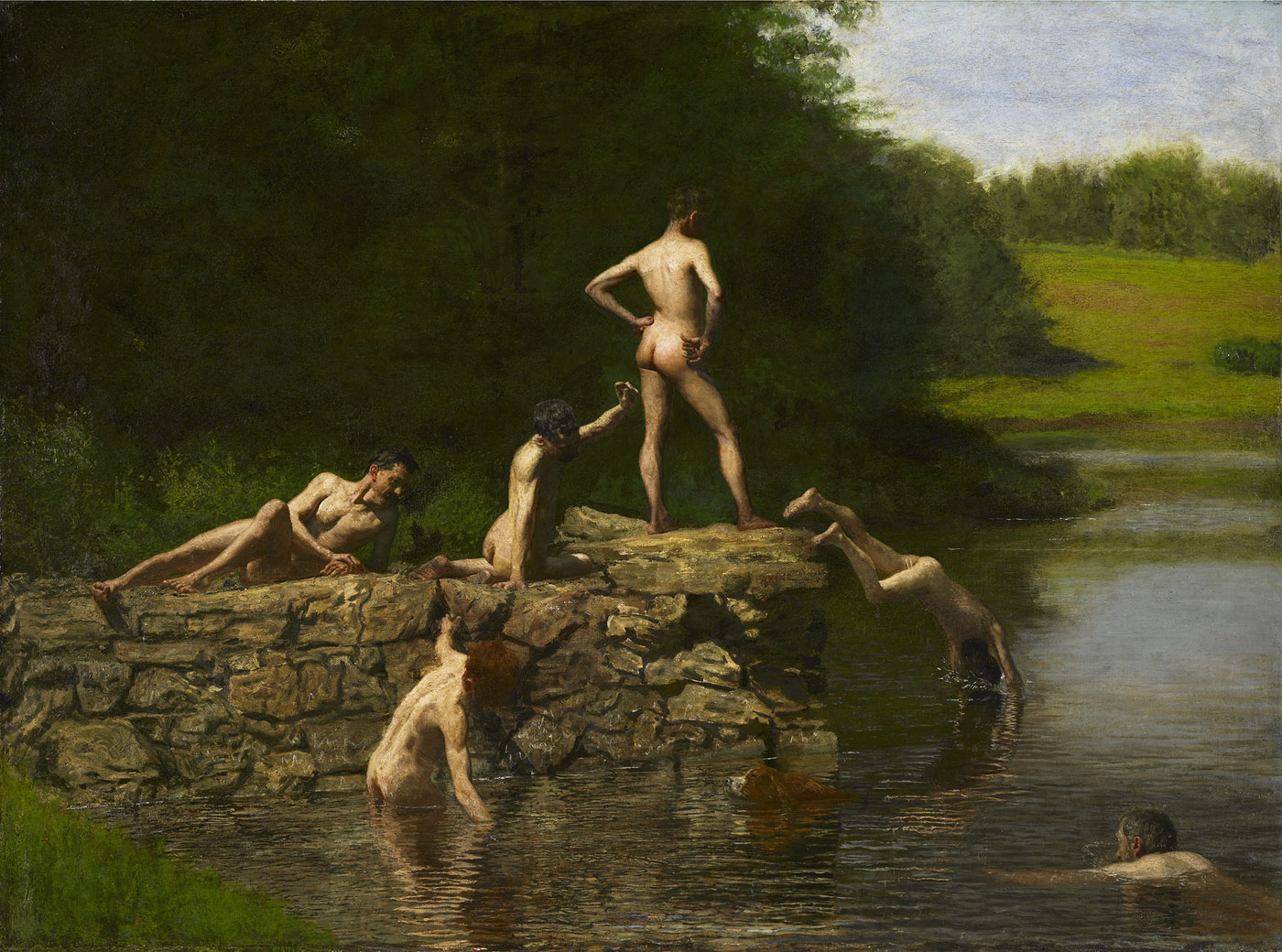
Eakins did not generally use photographs as a preparatory aid to painting, although there are a small number of oils which have direct counterparts in existing photographs: the Amon Carter Museum’s The Swimming Hole [below] and the Metropolitan’s Arcadia [below] being the foremost examples. To the contrary, Eakins saw a different role for photography – one related to his extraordinary interest in knowing the figure and improving his sensitivity to complex figure-ground relationships. Committed to teaching close observation through the practice of dissection and preparatory wax and plaster sculpture, Eakins introduced the camera to the American art studio. At first his photographs were likely quick studies of pose and gesture; later, perhaps during the process of editing and cropping the negatives, and then making enlarged platinum prints, he saw the photographs as discrete works of art on paper, at their best on equal status with his watercolours.

The artistic freedom of the classical world that Eakins strove to bring to life in his academic programs at the Pennsylvania Academy of the Fine Arts (and in his Arcadian paintings) also appears as an important element in many of his nude studies (43.87.19) with the camera. These photographs, far more than the paintings, celebrate the male physique; even today, more than a century after their creation, their unabashed frontal nudity still has the power to shock contemporary eyes.

Text from The Metropolitan Museum of Art website October 2004 [Online] Cited 16/08/2021

Citation: Department of Photographs. “Thomas Eakins (1844-1916): Photography, 1880s-90s,” in Heilbrunn Timeline of Art History. New York: The Metropolitan Museum of Art, 2000


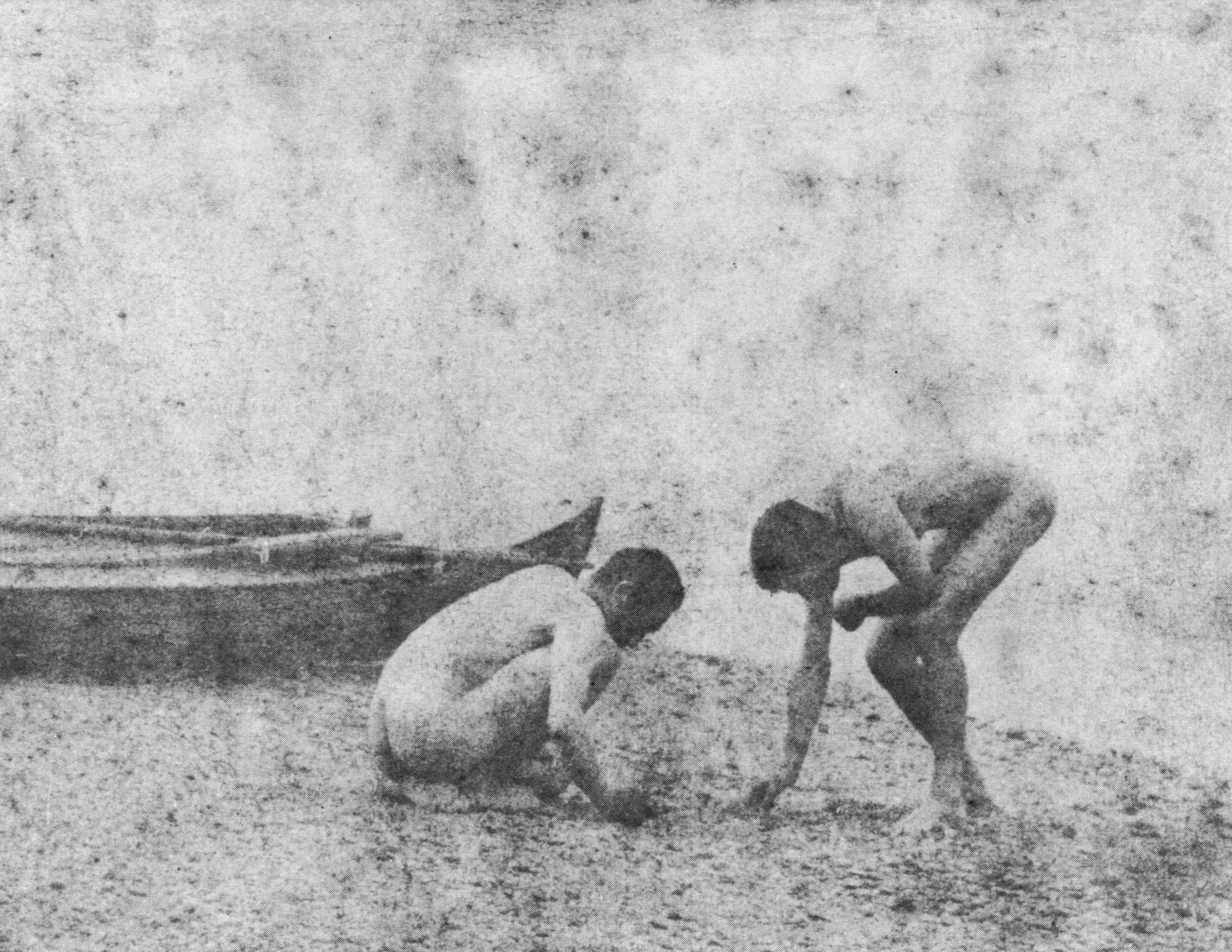
Thomas Eakins (American, 1844-1916) 'Thomas Eakins and J. Laurie Wallace at the Shore' 1883


Thomas Eakins (American, 1844-1916)
Thomas Eakins and J. Laurie Wallace at the Shore
1883
Public domain


Thomas Eakins (American, 1844-1916) 'Thomas Eakins and J. Laurie Wallace at the Shore' 1883


Thomas Eakins (American, 1844-1916)
Thomas Eakins and J. Laurie Wallace at the Shore
1883
Public domain


Thomas Eakins (American, 1844-1916) 'Thomas Eakins and J. Laurie Wallace at the Shore' 1883


Thomas Eakins (American, 1844-1916)
Thomas Eakins and J. Laurie Wallace at the Shore
1883
Public domain


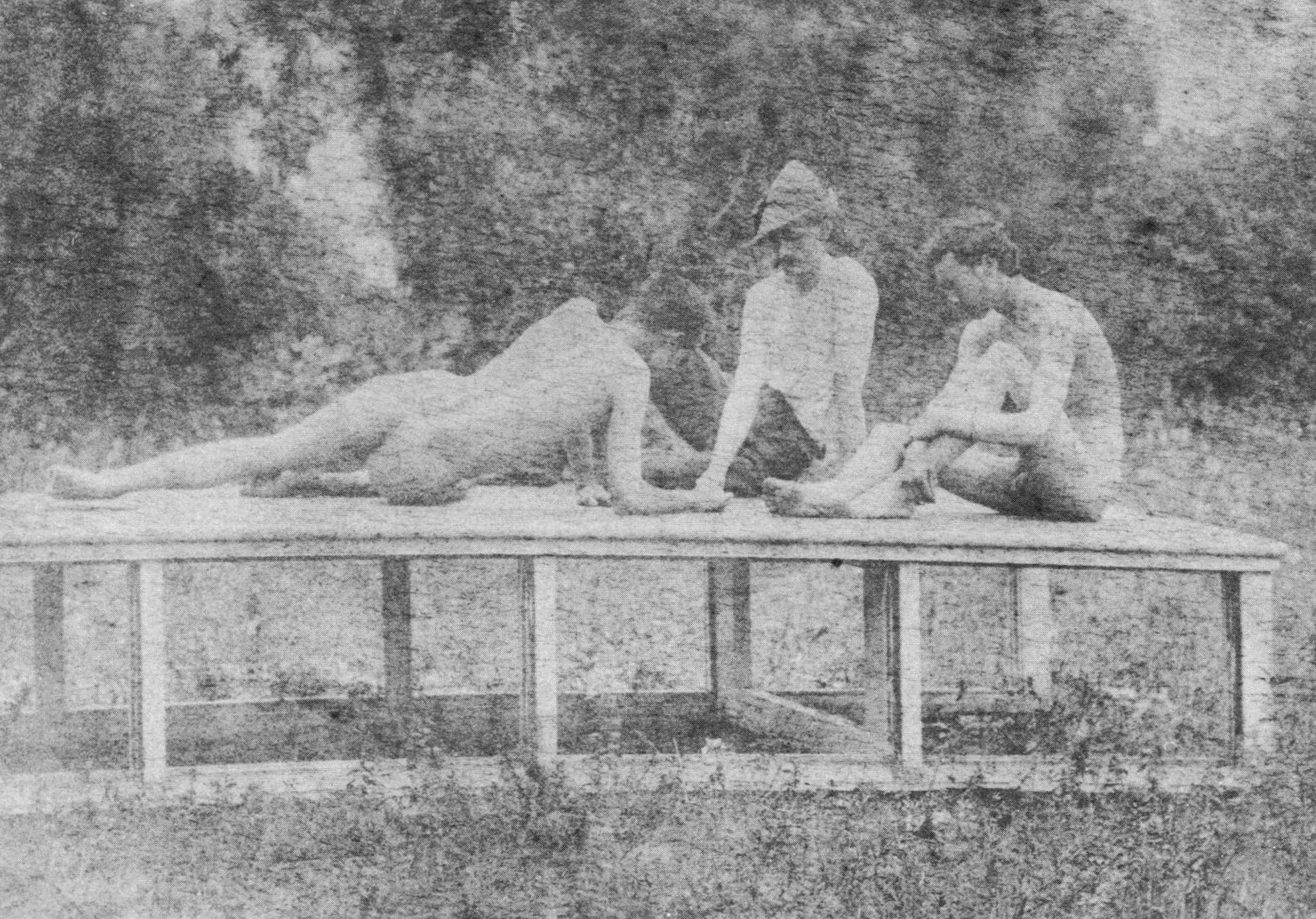
Thomas Eakins (American, 1844-1916) 'Unidentified model, Thomas Anschutz and J. Laurie Wallace' 1883


Thomas Eakins (American, 1844-1916)
Unidentified model, Thomas Anschutz and J. Laurie Wallace
1883
Public domain


Thomas Eakins (American, 1844-1916) 'Unidentified model, Thomas Anschutz and J. Laurie Wallace' 1883


Thomas Eakins (American, 1844-1916)
Unidentified model, Thomas Anschutz and J. Laurie Wallace
1883
Public domain


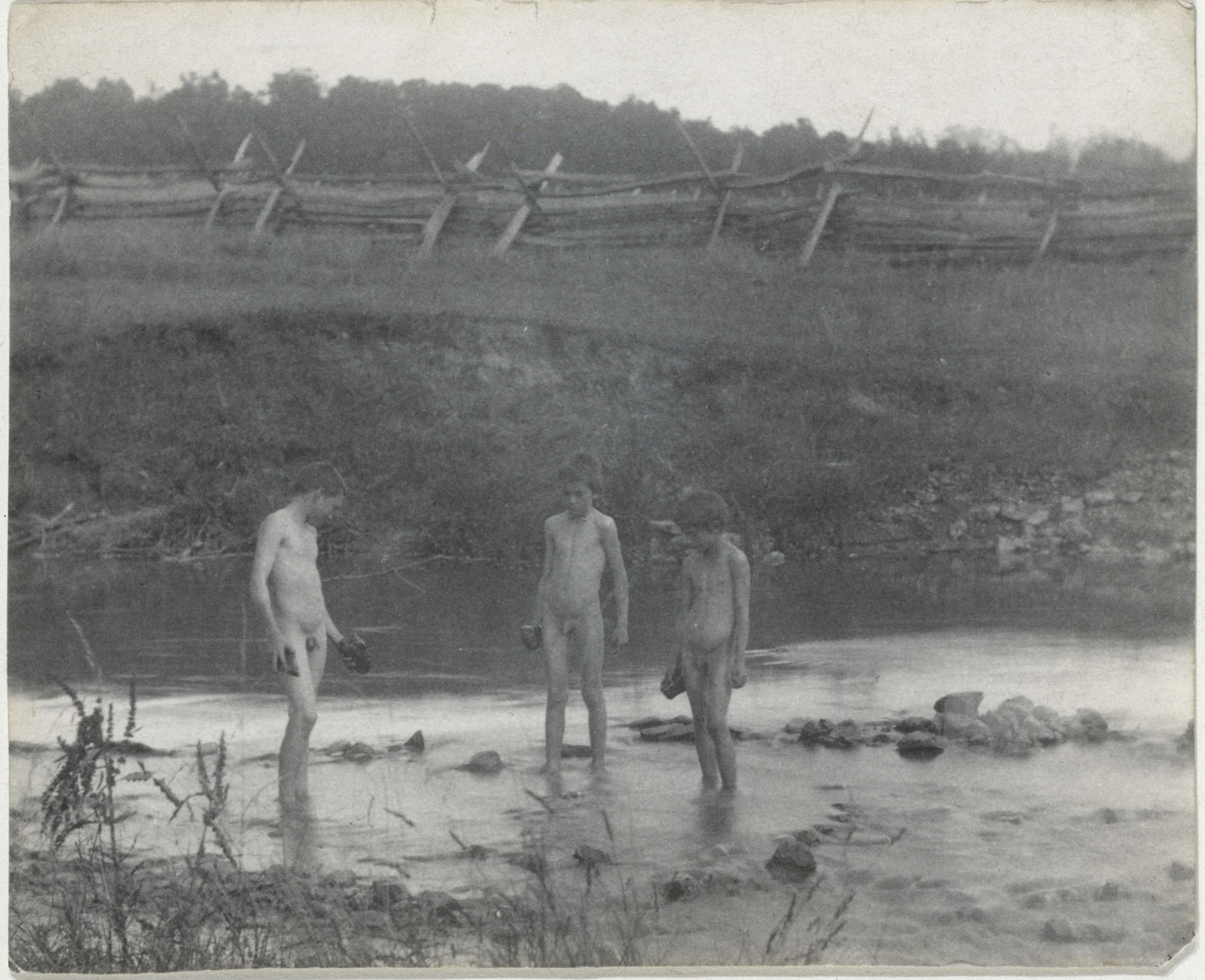
Thomas Eakins (American, 1844-1916) '(Three Boys Wading in a Creek)' 1883


Thomas Eakins (American, 1844-1916)
(Three Boys Wading in a Creek)


In 1882, Thomas Eakins was promoted to the post of director of schools at the Pennsylvania Academy of the Fine Arts, where he became known as a charismatic and innovative teacher who advocated intensive study of the nude figure. Committed to teaching close observation through every means possible, Eakins turned his school into a laboratory of photographic experimentation. He and his students (male and female) made negatives of each other – in lithe repose or in action, nude or in costume. At times, Eakins must have realised that he was pushing the limits of Philadelphia decorum. This small 4 x 5 albumen silver print shows several of Eakins’ nephews playing in a creek on the property of the artist’s sister Frances and her husband, William J. Crowell. In the 1880s, Eakins spent much of his free time at the Crowell family home in Avondale, Pennsylvania, thirty miles southwest of Philadelphia. Distant from urban distractions, the idyllic farm soon became a refuge for him. The Crowell children delighted Eakins and he made many photographs of their spirited games.

Text from The Metropolitan Museum of Art website


Thomas Eakins (American, 1844-1916) 'Arcadia' c. 1883


Thomas Eakins (American, 1844-1916)
Arcadia
c. 1883
Oil on canvas
98.1 × 114.3cm (38.6 × 45 in)
Metropolitan Museum of Art


Circle of Thomas Eakins (American, 1844-1916) 'Thomas Eakins and students, swimming nude' c. 1883


Circle of Thomas Eakins (American, 1844-1916)
Thomas Eakins and students, swimming nude
c. 1883
Public domain


The Swimming Hole (1884-1885) features Eakins’ finest studies of the nude, in his most successfully constructed outdoor picture. The figures are those of his friends and students, and include a self-portrait. Although there are photographs by Eakins which relate to the painting, the picture’s powerful pyramidal composition and sculptural conception of the individual bodies are completely distinctive pictorial resolutions. The work was painted on commission, but was refused.


Thomas Eakins (American, 1844-1916) 'Swimming / The swimming hole' 1885


Thomas Eakins (American, 1844-1916)
Swimming / The swimming hole
1885
Oil on canvas
27.625 × 36.625 in (70.2 × 93cm)
Amon Carter Museum of American Art


Thomas Eakins (American, 1844-1916) 'Wrestlers in Eakins's studio' 1899


Thomas Eakins (American, 1844-1916)
Wrestlers in Eakins’s studio
1899
Platinum print on paper
3 5/8 x 6 in. (9.0 x 15.2cm)
Hirshhorn Museum and Sculpture Garden, Smithsonian Institution, Washington, DC
Gift of Joseph H. Hirshhorn, 1966
Public domain


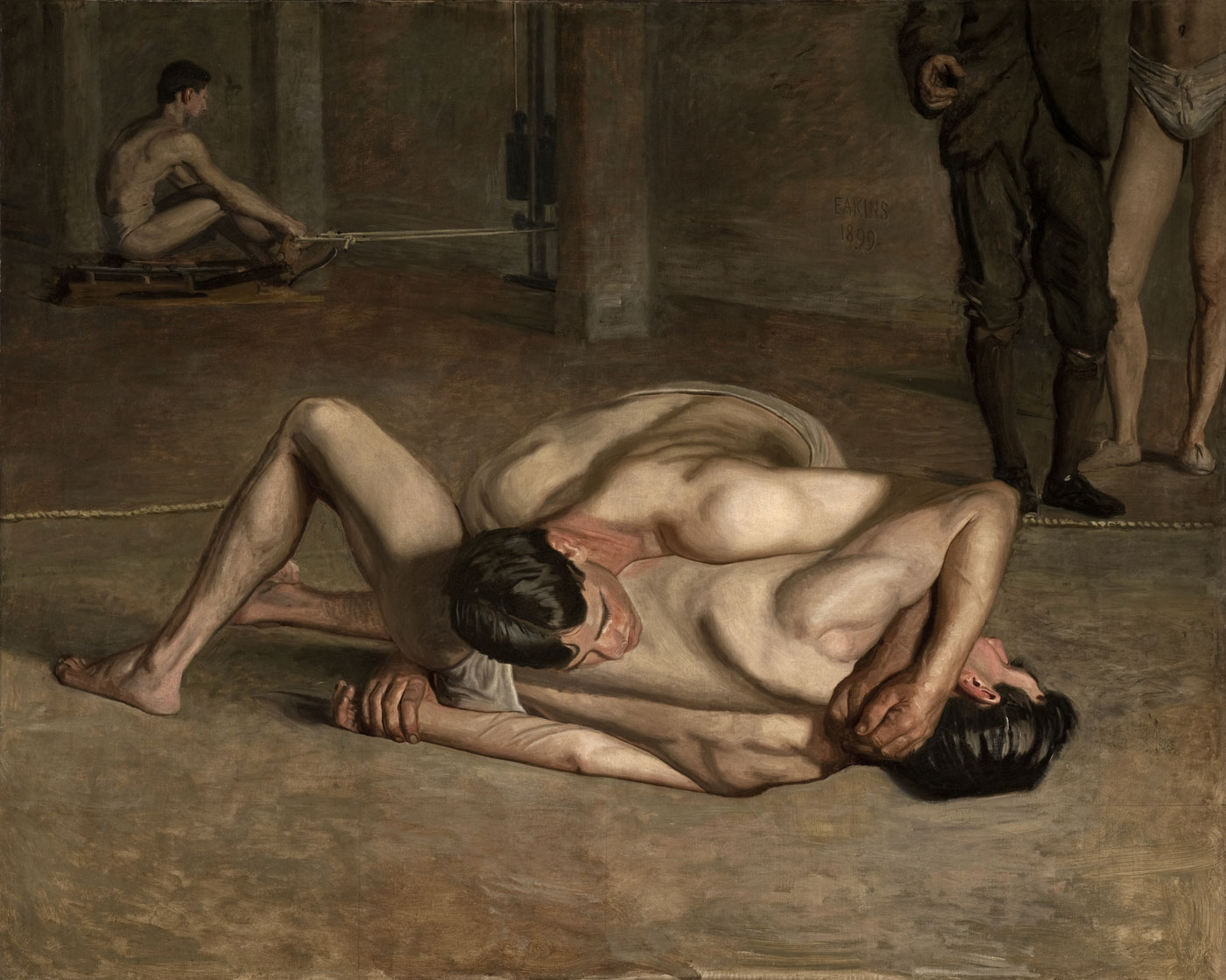
On May 22, 1899, Eakins had two wrestlers pose in his 4th-floor studio at 1729 Mount Vernon Street, Philadelphia. Three days earlier, he had written to his friend, sportswriter Clarence Cranmer: “I am going to start the wrestling picture on Monday at half past two. I wish you could find it convenient to be at the studio and help us with advice as to positions and so forth.” The artist’s protégé Samuel Murray may have been present; he modelled a small sculpture of the wrestlers that is also dated 1899. Eakins painted the works from the live models and from a nearly identical photograph, that may have been taken that day. The photograph shows the wrestler on top holding the other in a half nelson and crotch hold.

Text from the Wikipedia website


Thomas Eakins (American, 1844-1916) 'Wrestlers' 1899


Thomas Eakins (American, 1844-1916)
Wrestlers
1899
Oil on canvas
48 3/8 x 60 in. (122.87 x 152.4cm)
Image: Museum Associates/LACMA
Los Angeles County Museum of Art (LACMA) Image Library


Circle of Thomas Eakins (American, 1844-1916) 'Reclining Male Nude from The Grafly Album' 1886


Circle of Thomas Eakins (American, 1844-1916)
Reclining Male Nude from The Grafly Album
1886
Albumen print
Mounting Sheet: 6 7/8 x 10 in. (17.5 x 25.4cm)
Photo: 4 1/2 x 7 in. (11.5 x 17.8cm)
Acquired by the Clark, 2001
The Clark Art Institute
Public domain


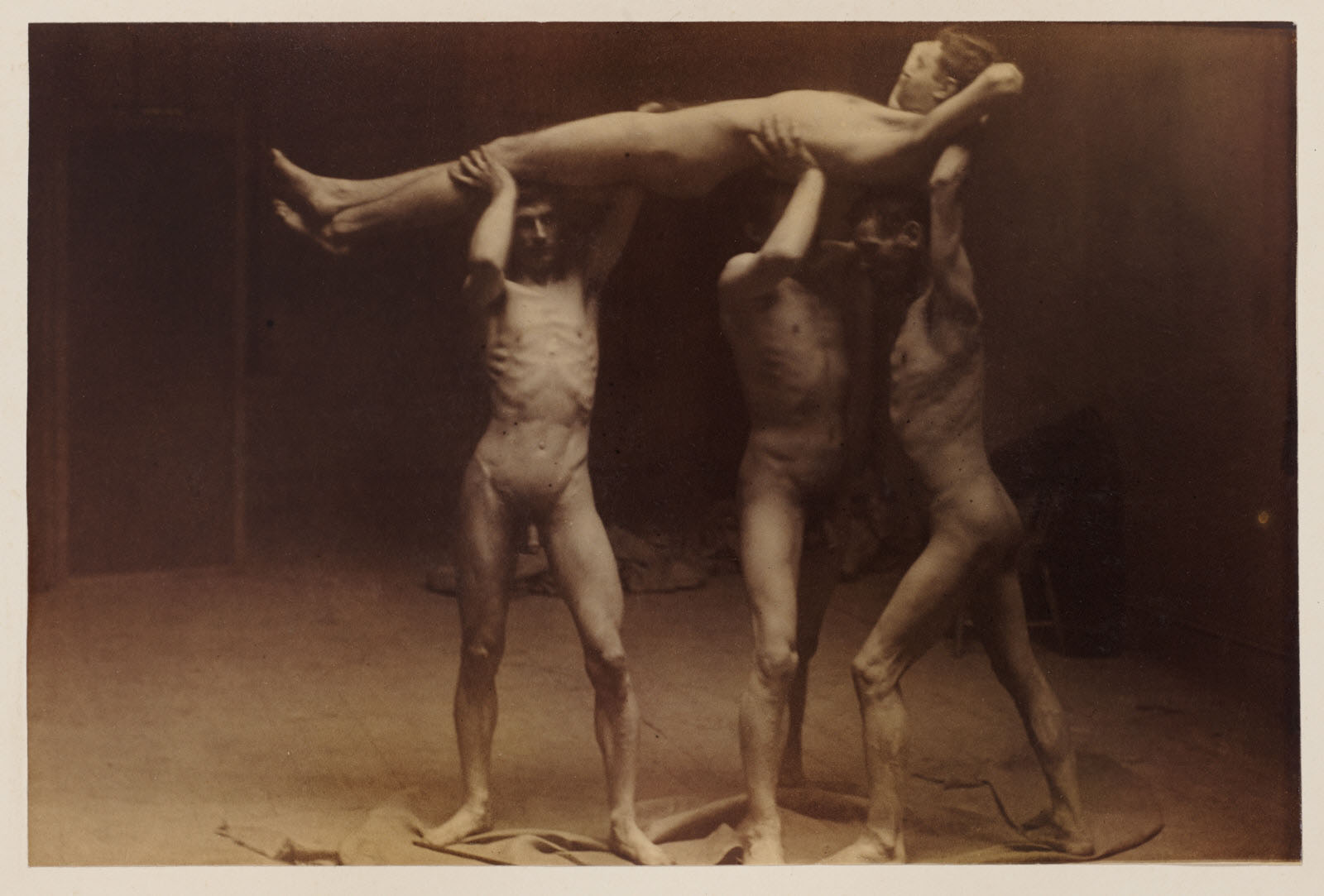
Circle of Thomas Eakins (American, 1844-1916) 'Three Male Nude Models Supporting a Reclining Fourth Model, from The Grafly Album' 1886


Circle of Thomas Eakins (American, 1844-1916)
Three Male Nude Models Supporting a Reclining Fourth Model, from The Grafly Album
1886
Albumen print
Mounting Sheet: 6 7/8 x 10 in. (17.5 x 25.4cm)
Photo: 4 1/2 x 7 in. (11.5 x 17.8cm)
Acquired by the Clark, 2001
The Clark Art Institute
Public domain


Circle of Thomas Eakins (American, 1844-1916) 'Four Standing Male Nudes, Frontal View, from The Grafly Album' 1886


Circle of Thomas Eakins (American, 1844-1916)
Four Standing Male Nudes, Frontal View, from The Grafly Album
1886
Albumen print
Mounting Sheet: 6 7/8 x 10 in. (17.5 x 25.4cm)
Photo: 4 1/2 x 7 in. (11.5 x 17.8cm)
Acquired by the Clark, 2001
The Clark Art Institute
Public domain


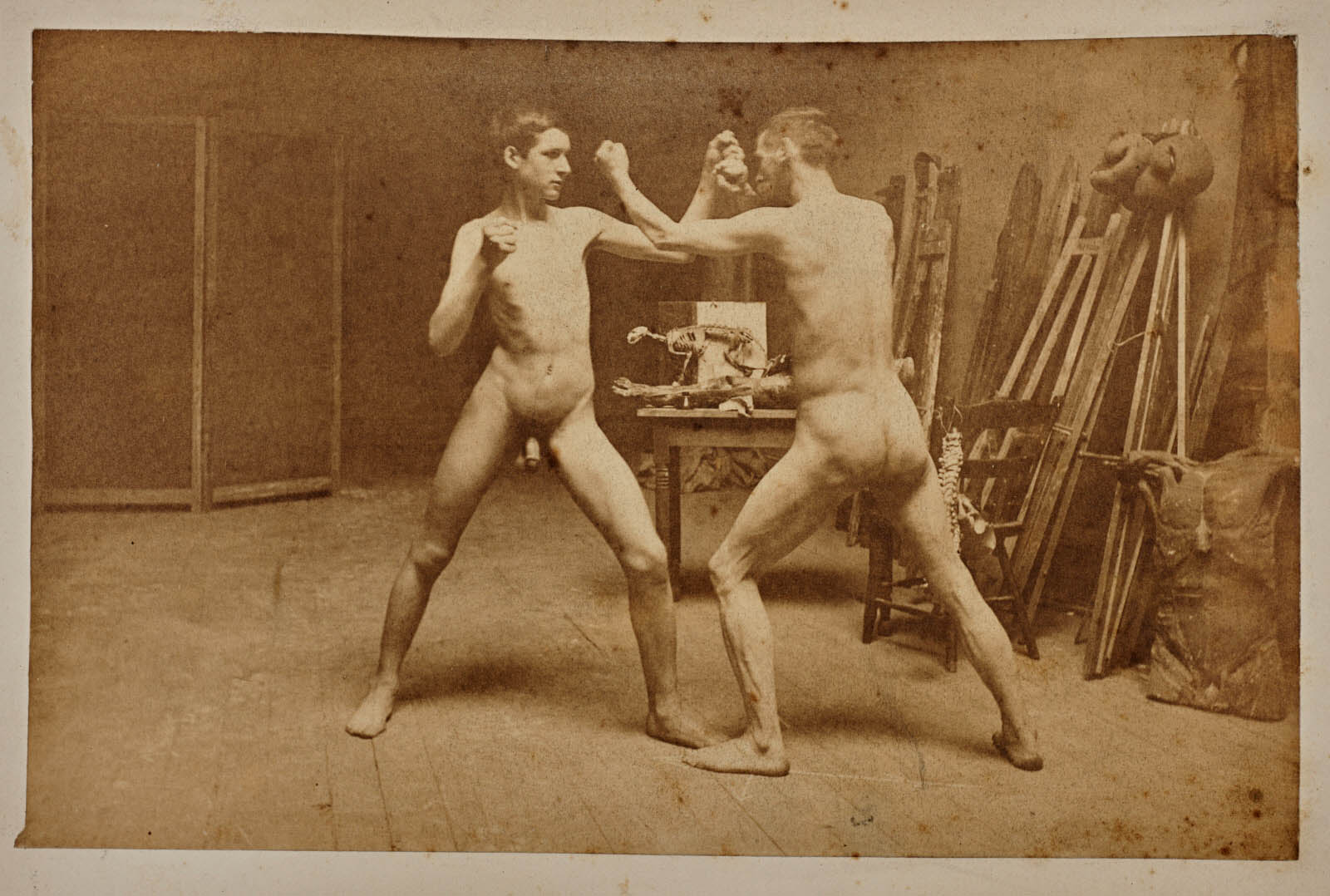
Circle of Thomas Eakins (American, 1844-1916) 'Two Male Nude Models Posing as Boxers, from The Grafly Album' 1886


Circle of Thomas Eakins (American, 1844-1916)
Two Male Nude Models Posing as Boxers, from The Grafly Album
1886
Albumen print
Mounting Sheet: 6 7/8 x 10 in. (17.5 x 25.4cm)
Photo: 4 1/2 x 7 in. (11.5 x 17.8cm)
Acquired by the Clark, 2001
The Clark Art Institute
Public domain


LIKE ART BLART ON FACEBOOK

Back to top