Exhibition: ‘Ellsworth Kelly: Postcards’ at the Frances Young Tang Teaching Museum and Art Gallery, Skidmore College, Saratoga Springs, New York

Exhibition dates: 10th July – 28th November, 2021

Curated by Ian Berry in collaboration with the Ellsworth Kelly Studio, and with Jessica Eisenthal, Independent Curator
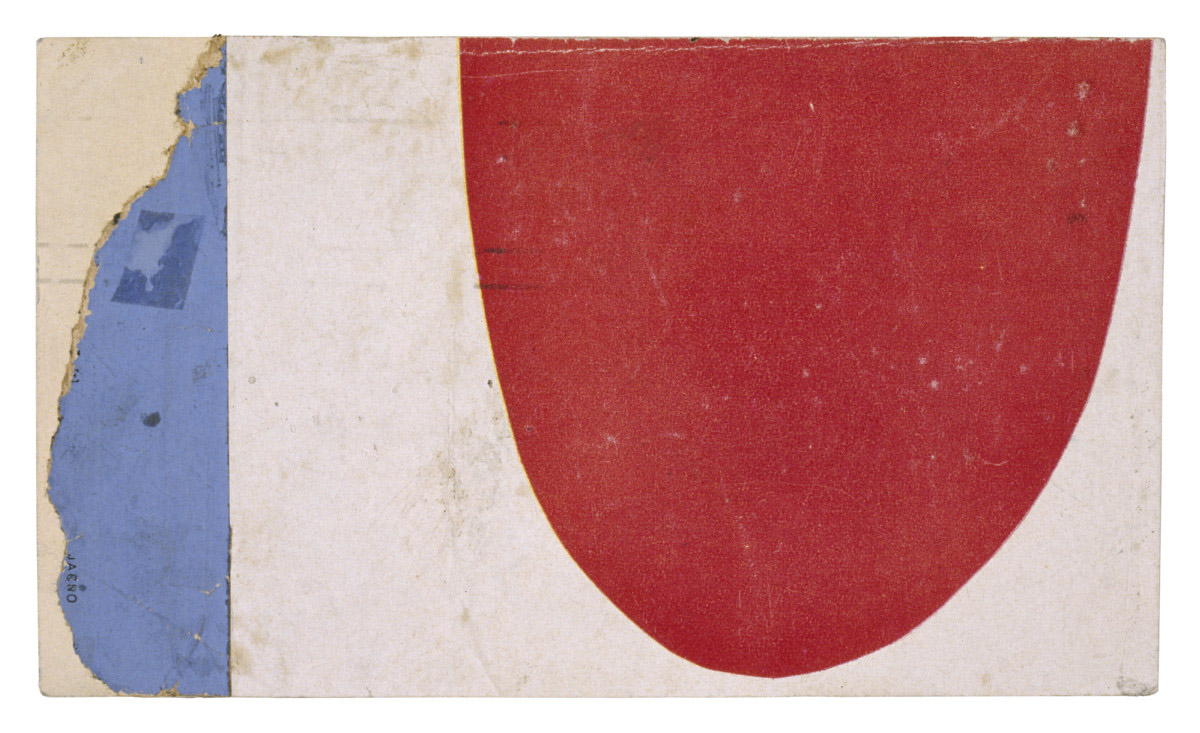
 

Ellsworth Kelly (American, 1923-2015) 'Gauloise Blue with Red Curve' 1954 from the exhibition 'Ellsworth Kelly: Postcards' at the Frances Young Tang Teaching Museum and Art Gallery, Skidmore College, Saratoga Springs, New York, July - Nov, 2021


Ellsworth Kelly (American, 1923-2015)
Gauloise Blue with Red Curve
1954
Collection of Ellsworth Kelly Studio and Jack Shear
© Ellsworth Kelly Foundation


An intimate change of pace now.

I love these playful interventions which “catch something that’s a flash, a mysterious thing, the beginning of something, a primal thing.”

Starting with the solid base of a printed postcard Kelly constructs and abstracts his collages on their surface, using shifting positions, using his vision rather than his mind. He intuitively feels what is needed, what essence is required to compliment or complicate the existing scene.

As Dr. Jessica Eisenthal insightfully observes, “The collages involve a fundamental interplay between concealment and exposure, with every card containing both a secret and its revelation, a construction and a deconstruction.”

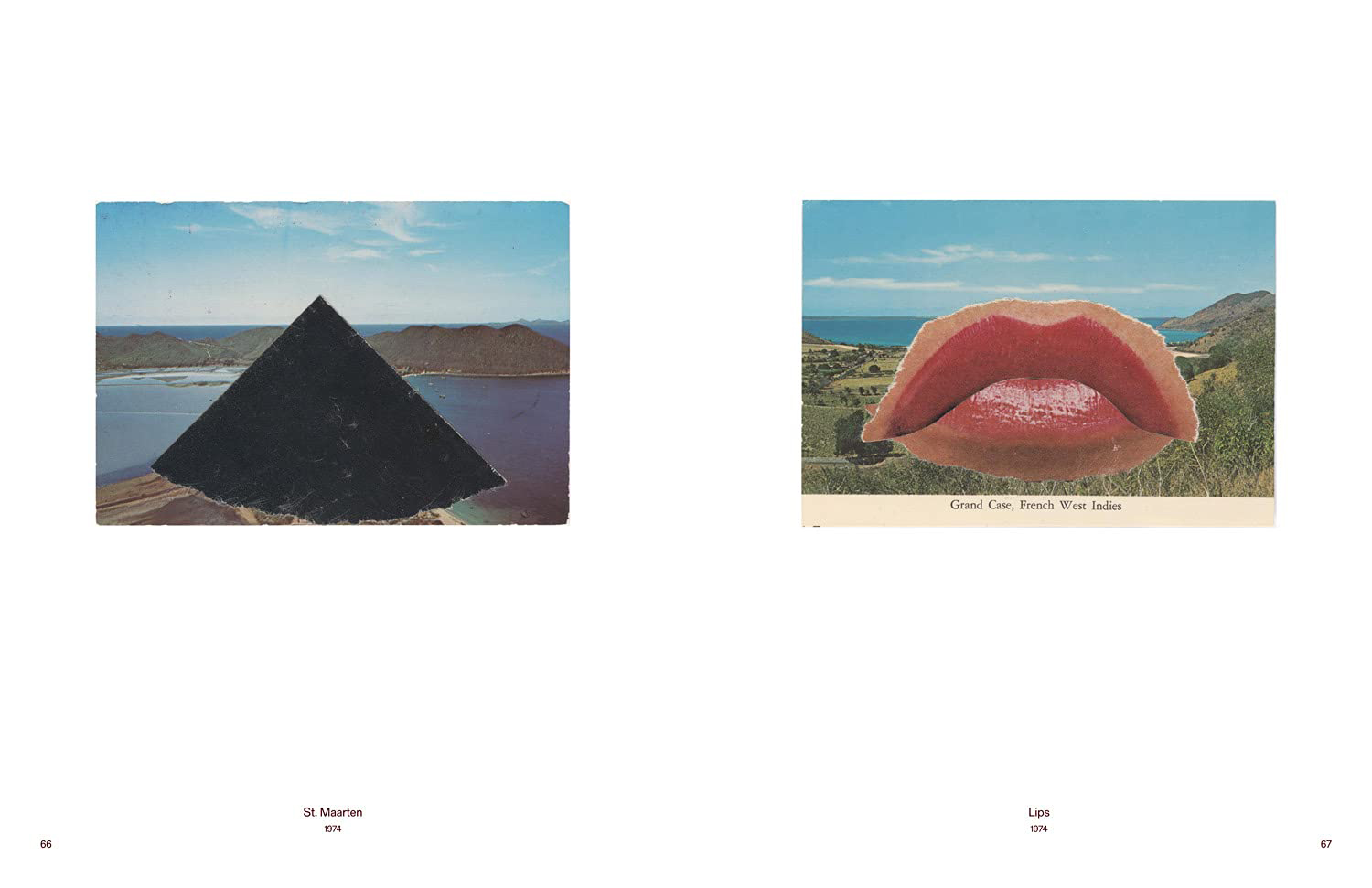
And then there is the simplicity and beauty of his interventions. The clear seeing and feeling expressed in a few pieces of cut or torn paper, promising “a compilation of experiences, a journal of travel, creative play, and relationships.” The thickness and irregularity of the white line over Statue of Liberty (1957); the emptiness and ambiguity of the blue in Moon Over Manhattan (1964); the abstraction of a black “diamond” over Cincinnati Riverfront Stadium (1980) baseball park; and the textural beauty of three disparate bodies of water in St. Martin – Baie Rouge (2005).

Reminding me of the felt immediacy of Gerhard Richter’s overpainted photographs, Kelly’s postcards speak to the heart rather than the head. Their intimate, jewel-like size draw the viewer in to imbibe of the transformative scene, to drink in an unbounded space of creative freedom those glances that we sometimes catch – in the light of revelation – of our life dis/continuous. The fabric and structure of existence itself.

Dr Marcus Bunyan


Many thankx to the Frances Young Tang Teaching Museum and Art Gallery for allowing me to publish the art works in the posting. Please click on the art work for a larger version of the image.


In all his postcards, Kelly’s drive to upset perception, to create moments of uncertainty and “mystery,” is apparent. As he explained in 1991:

“As we move, looking at hundreds of different things, we see many different kinds of shapes. Roofs, walls, ceilings are all rectangles, but we don’t see them that way. In reality they’re very elusive forms. The way the view through the rungs of a chair changes when you move even the slightest bit – I want to capture some of that mystery in my work. In my paintings I’m not inventing; my ideas come from constantly investigating how things look.47

While his goal was to achieve visual ambiguity, Kelly began with images of visual certainty, from the postcard images themselves to the photographic reproductions from which he cut or tore his fragments, for example, those of celebrities, advertisements, or homoeroticism.


Tricia Y. Paik. “Sights of His Life,” in Berry, Ian and Eisenthal, Jessica (eds.,). Elsworth Kelly: Postcards. Delmonico Books, 2021, pp. 318-319.
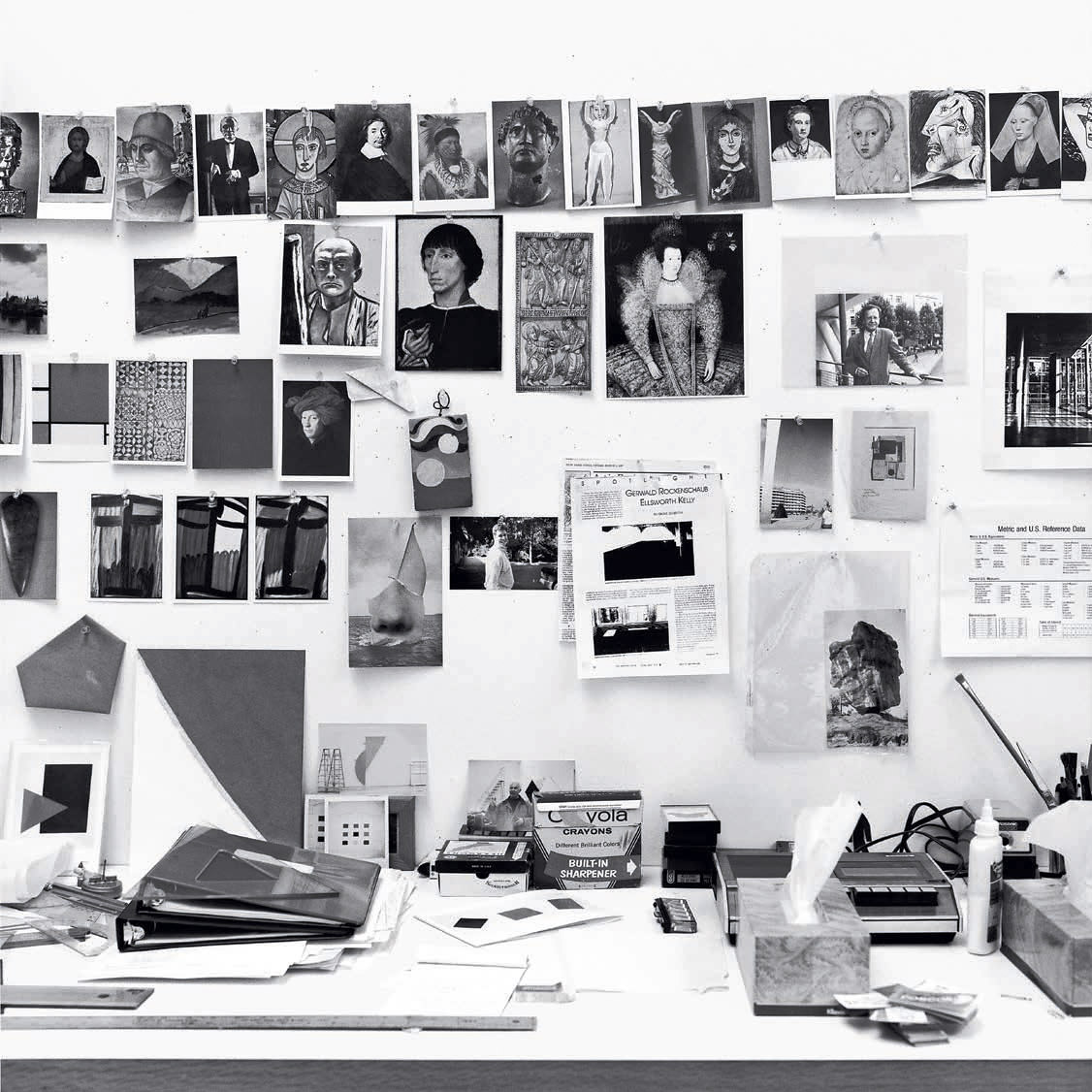


Jack Shear (American) 'Ellsworth Kelly's Studio' 1994


Jack Shear (American)
Ellsworth Kelly’s Studio
1994
Photo: Courtesy Ellsworth Kelly Studio


Over the course of more than 50 years, renowned American artist Ellsworth Kelly made approximately 400 postcard collages, some of which served as exploratory musings and others as studies for larger works in other mediums. They range from his first monochrome in 1949 through his last postcard collages of crashing ocean waves, in 2005.

Together, these works show an unbounded space of creative freedom and provide an important insight into the way Kelly saw, experienced and translated the world in his art. Many postcards illustrate specific places where he lived or visited, introducing biography and illuminating details that make these pieces unique among his broader artistic production. Ellsworth Kelly: Postcards is the most extensive publication of Kelly’s lifelong practice of collaged postcards.

Ellsworth Kelly (1923-2015) was born in Newburgh, New York. In 1948 he moved to France, where he came into contact with a wide range of classical and modern art. He returned to New York in 1954 and two years later had his first exhibition at the Betty Parsons Gallery. The Museum of Modern Art, New York, organised his first retrospective in 1973. Subsequent exhibitions have been held at museums around the world, including the Solomon R. Guggenheim Museum in New York, Tate in London, Haus der Kunst in Munich and the Centre Pompidou in Paris.
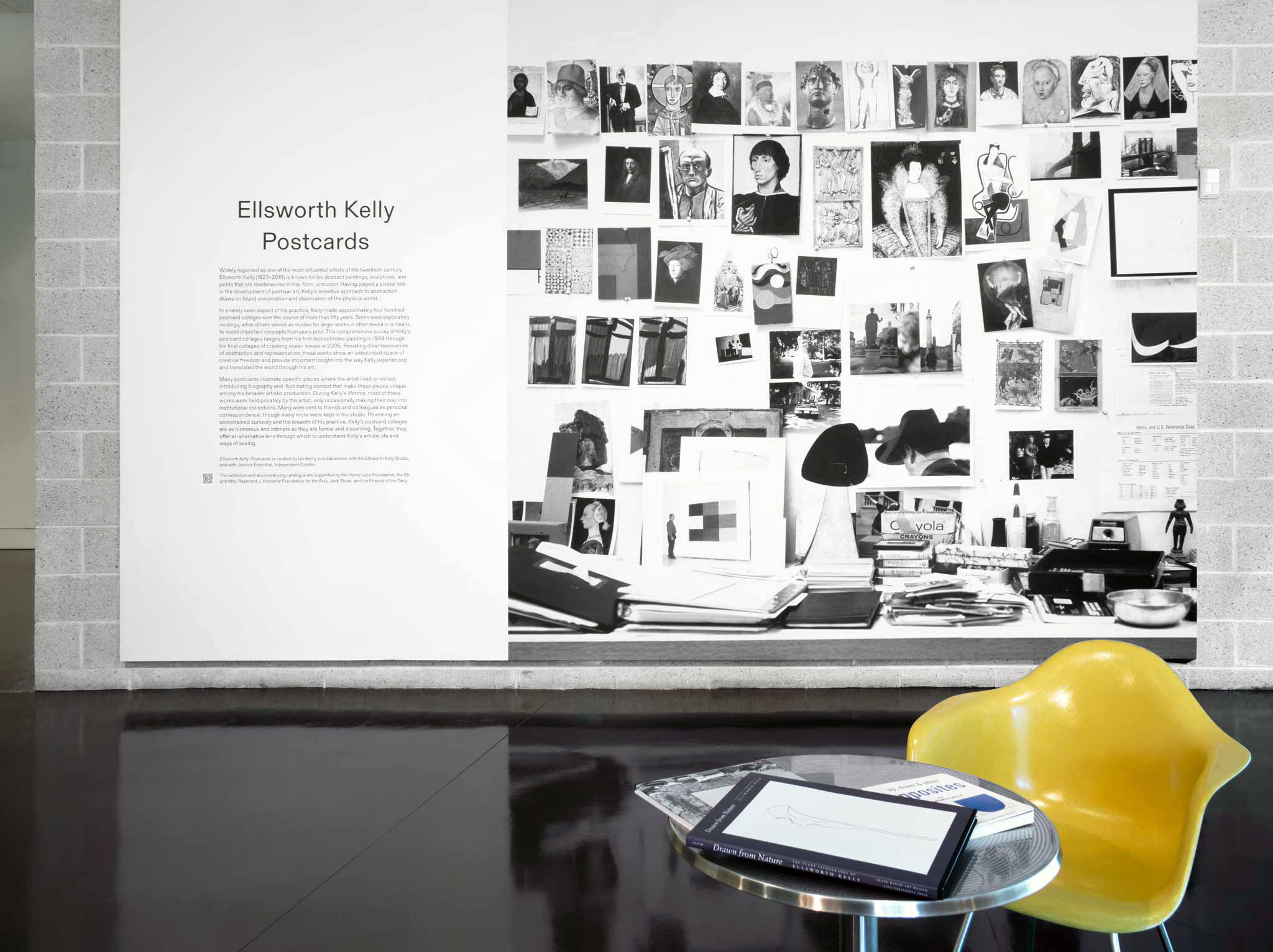
 

Installation view of the title wall of exhibition 'Ellsworth Kelly: Postcards' at the Frances Young Tang Teaching Museum and Art Gallery, Skidmore College


Installation view of the title wall of the exhibition Ellsworth Kelly: Postcards at the Frances Young Tang Teaching Museum and Art Gallery, Skidmore College
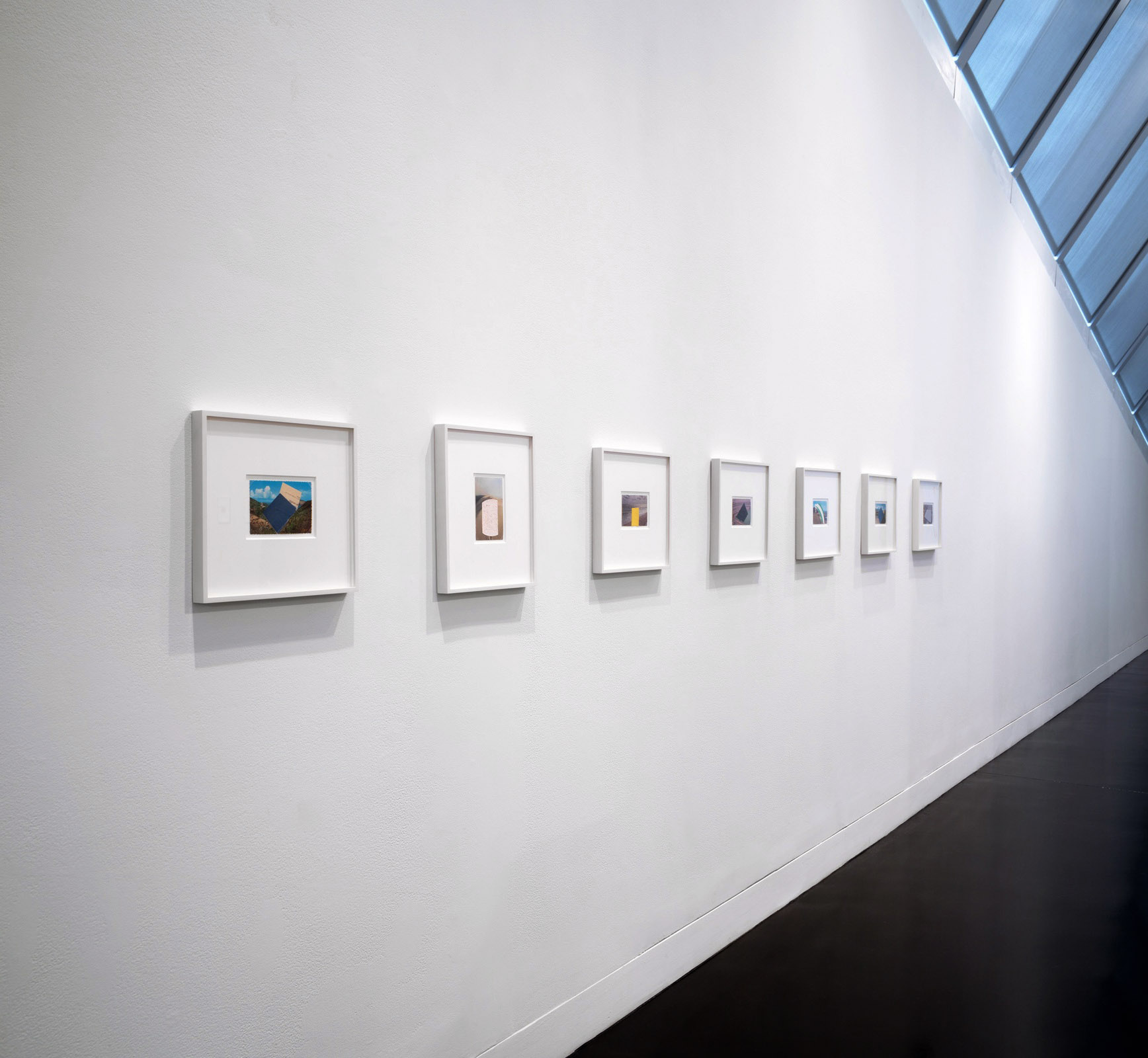
 

Installation view of Gallery A of the exhibition 'Ellsworth Kelly: Postcards' at the Frances Young Tang Teaching Museum and Art Gallery, Skidmore College


Installation view of Gallery A of the exhibition Ellsworth Kelly: Postcards at the Frances Young Tang Teaching Museum and Art Gallery, Skidmore College
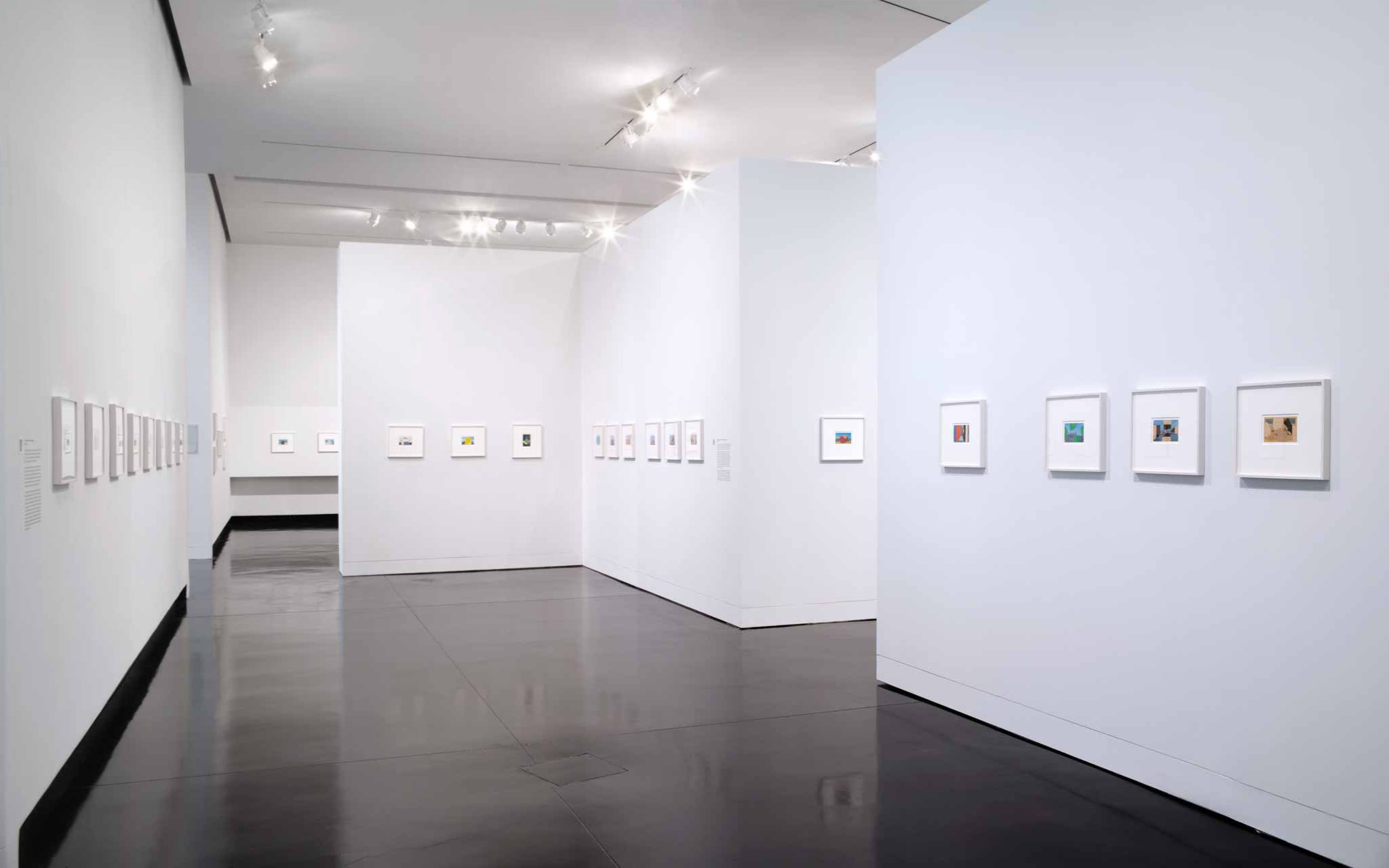
 

Installation view of Gallery B of the exhibition 'Ellsworth Kelly: Postcards' at the Frances Young Tang Teaching Museum and Art Gallery, Skidmore College


Installation view of Gallery B of the exhibition Ellsworth Kelly: Postcards at the Frances Young Tang Teaching Museum and Art Gallery, Skidmore College


American painter Ellsworth Kelly (1923-2015) is one of the most important artists of the twentieth century. His abstract paintings, sculptures, and prints are masterworks in the exploration of line, form, and colour. In a lesser-known part of his practice, Kelly made collaged postcards, some of which served as exploratory musings and others as preparation for larger works in other media. From 1949 to 2005, Kelly made just over 400 postcard works. They show a playful, unbounded space of creative freedom for the artist and provide an important insight into the way Kelly saw, experienced, and translated the world in his art.

Ellsworth Kelly: Postcards will present a comprehensive survey of Kelly’s postcard collages, with 150 works on view. Many postcards reveal specific places where Kelly lived or visited, such as Paris, where Kelly lived in the late 1940s and early 1950s, and where he often returned, or other areas in New York City – My New Studio (1970), is a picture postcard of downtown Old Chatham, New York, with a stapled arrow pointing to the second-floor windows of his new studio building.

This kind of overt biography and revealing details make the postcard collages unique among Kelly’s works. Flashes of the artist’s playfulness show through, which is less visible in his formally rigorous paintings and sculpture.

The exhibition will be accompanied by a full-colour catalogue featuring newly commissioned writings and never-before published images.

Text from the Frances Young Tang Teaching Museum and Art Gallery website


Ellsworth Kelly (American, 1923-2015) 'EK as Velázquez' 1988 from the exhibition 'Ellsworth Kelly: Postcards' at the Frances Young Tang Teaching Museum and Art Gallery, Skidmore College, Saratoga Springs, New York, July - Nov, 2021


Ellsworth Kelly (American, 1923-2015)
EK as Velázquez
1988


Foreword to catalogue

Widely regarded as one of the most influential artists of the twentieth century, Ellsworth Kelly (1923-2015) is known for paintings, sculptures, drawings, and prints that are masterworks in line, form, and colour. Having played a pivotal role in the development of postwar abstract art, Kelly’s inventive approach to abstraction draws on found composition and observation of the physical world. In a rarely seen aspect of his practice, Kelly made approximately four hundred postcard collages over the course of six decades. Some were exploratory musings, while others served as studies for larger works in other media or a means to revisit important concepts from years prior. Ellsworth Kelly: Postcards is the first survey of Kelly’s postcard collages, starting with his first monochrome painted on a postcard in 1949 and ending with his final collages of crashing ocean waves made in 2005. Resisting clear taxonomies of abstraction and representation, these works show an unbounded space of creative freedom and provide important insight into the way Kelly saw, experienced, and translated the world in his art.

Many postcards illustrate specific places where the artist lived or visited, introducing biography and context that make these works unique among his broader artistic production. During his lifetime, most of these works were held privately by the artist, only occasionally making their way into institutional collections. Many were sent to friends and colleagues as personal correspondences, though many more were kept in his studio. Revealing an unrestrained curiosity and the breadth of his practice, Kelly’s postcard collages are as humorous and intimate as they are formal and discerning.

Kelly began his studies at Pratt Institute in New York from 1941 to 1942, then continued at the School of the Museum of Fine Arts in Boston from 1946 to 1948. While on his tour of duty in Europe during World War II he visited Paris for the first time. He returned with funds from the GI Bill in 1948 and stayed until 1954. Those years in France were formative; this was when Kelly first painted and collaged on picture postcards, which, at the time, he mostly sent to artist and friend Ralph Coburn. In 1954, Kelly moved from Paris to New York, where he rented a studio in Coenties Slip in downtown Manhattan, as part of a community of artists that included Robert Indiana, Agnes Martin, James Rosenquist, and Jack Youngerman. The influence of that fertile time can be seen in several New York postcards of the 1950s.

Throughout the literature on Kelly’s oeuvre, scholars have consistently noted the cyclical process of his art making, his tendency to revisit ideas from years, even decades, earlier. In keeping, the production of the postcard collages was rhythmic and episodic, punctuated by other artistic and life activities. One can trace the years of prolific and less prolific output to align with important life events, including new bodies of work, retrospectives, and studio moves. For instance, Kelly made a great number of cards in 1970, the year he moved to Spencertown, New York, and in 1974 while traveling in Europe following his 1973 Museum of Modern Art retrospective.

Mapping the postcard collage production onto a timeline of Kelly’s life and work also reveals that the postcards were not a part of his general studio practice, but rather constituted a kind of freedom from the studio. In this sense, they comprise a compilation of experiences, a journal of travel, creative play, and relationships. The decade of the 1970s includes a significant number of cards made in St. Martin in the Caribbean, where he would travel to stay with artist Jasper Johns, who had a home on the island. The mid-1980s – particularly around the time he met photographer Jack Shear, who would become his life partner – was another prolific period for Kelly’s postcard collages. This intensity of collage production waned in the 1990s, in part due to the decline in print quality of mass-produced picture postcards, which Kelly did not appreciate.

The postcard collages use a wide variety of found materials, including pieces of vinyl records, newspaper clippings, ticket stubs, wine labels, and even sections of his own prints. For example, in 1964, Kelly used torn proofs from his own lithographs in a series of postcard collages with Paris monuments, as studies for sculptures. This source material is discussed in a new essay for this book by Dr. Tricia Y. Paik. Her essay reviews Kelly’s biography and outlines key features of his iconic work that can be found in specific examples of the postcard collages. Dr. Lynda Klich surveys the advent of the picture postcard itself and points to the use of postcards by modernist artists of the early twentieth century – from Art Nouveau and Futurism, to Surrealism and Dada. Dr. Jessica Eisenthal focuses on the mostly hidden, double-sided aspect of the postcard collages. She reveals that Kelly not only used the backs of the cards for personal notes but also to continue compositions and create even more experimental and, at times, teasing imagery. The book begins with the artist’s own words from a brochure that accompanied the exhibition Kelly organised from MoMA’s collection in 1990, Artist’s Choice: Ellsworth Kelly, Fragmentation and the Single Form. In this essay, Kelly discusses breaking up the visual world into fragments and provides key insights into his ways of seeing and presenting his art.

The vast majority of the postcard collages in the plates section of this book have never before been reproduced. Over the course of this project, new works were discovered in the artist’s archive, and others came to light from personal collections. May this project be the start of more discovery and continued scholarship on this distinctive and revealing body of work.

Ian Berry (curator)
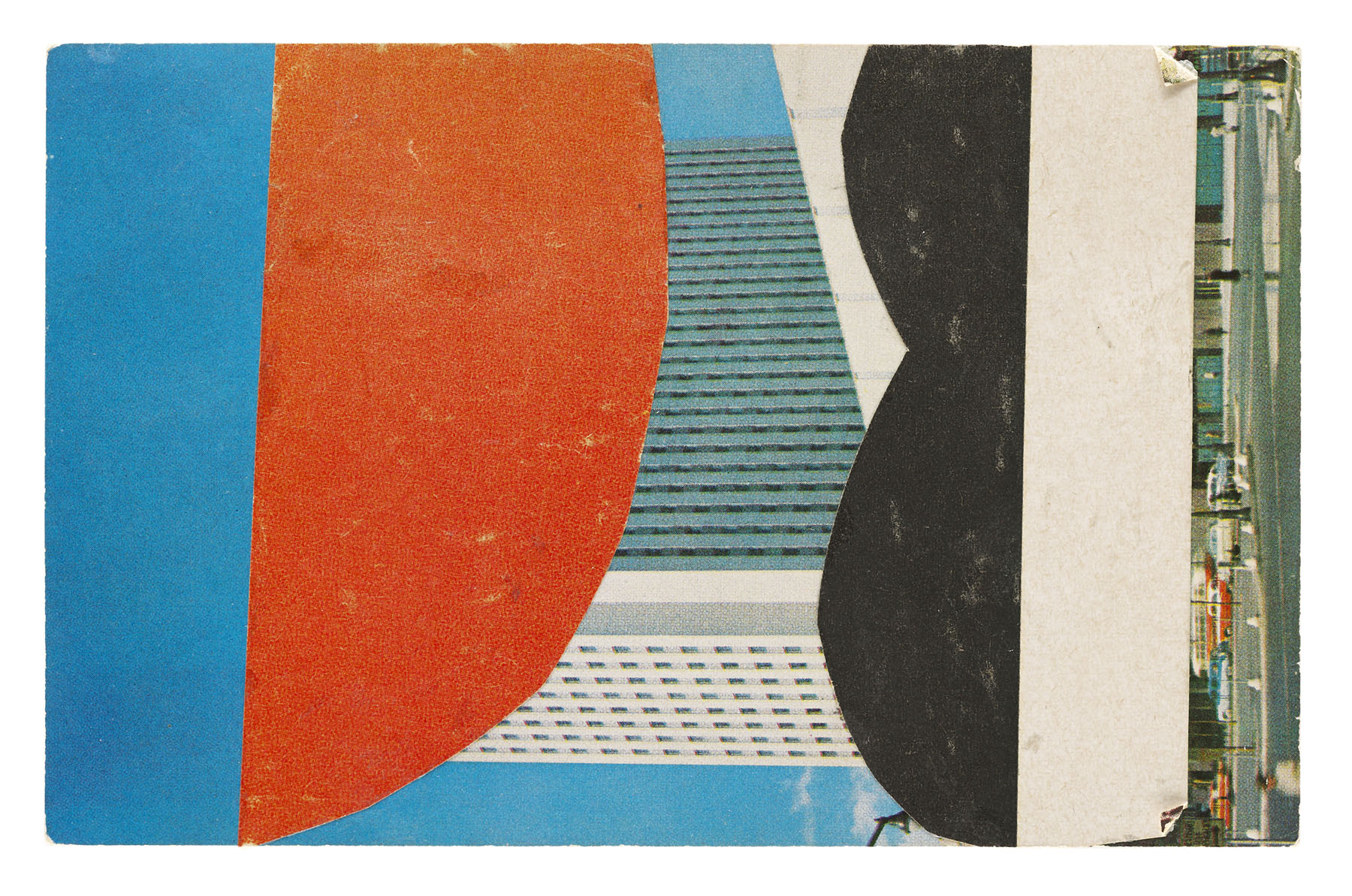
 

Ellsworth Kelly (American, 1923-2015) 'Columbus Circle' 1957 from the exhibition 'Ellsworth Kelly: Postcards' at the Frances Young Tang Teaching Museum and Art Gallery, Skidmore College, Saratoga Springs, New York, July - Nov, 2021


Ellsworth Kelly (American, 1923-2015)
Columbus Circle
1957
Postcard collage
5 1/2 x 3 1/2 inches
Collection of Ellsworth Kelly Studio and Jack Shear
© Ellsworth Kelly Foundation
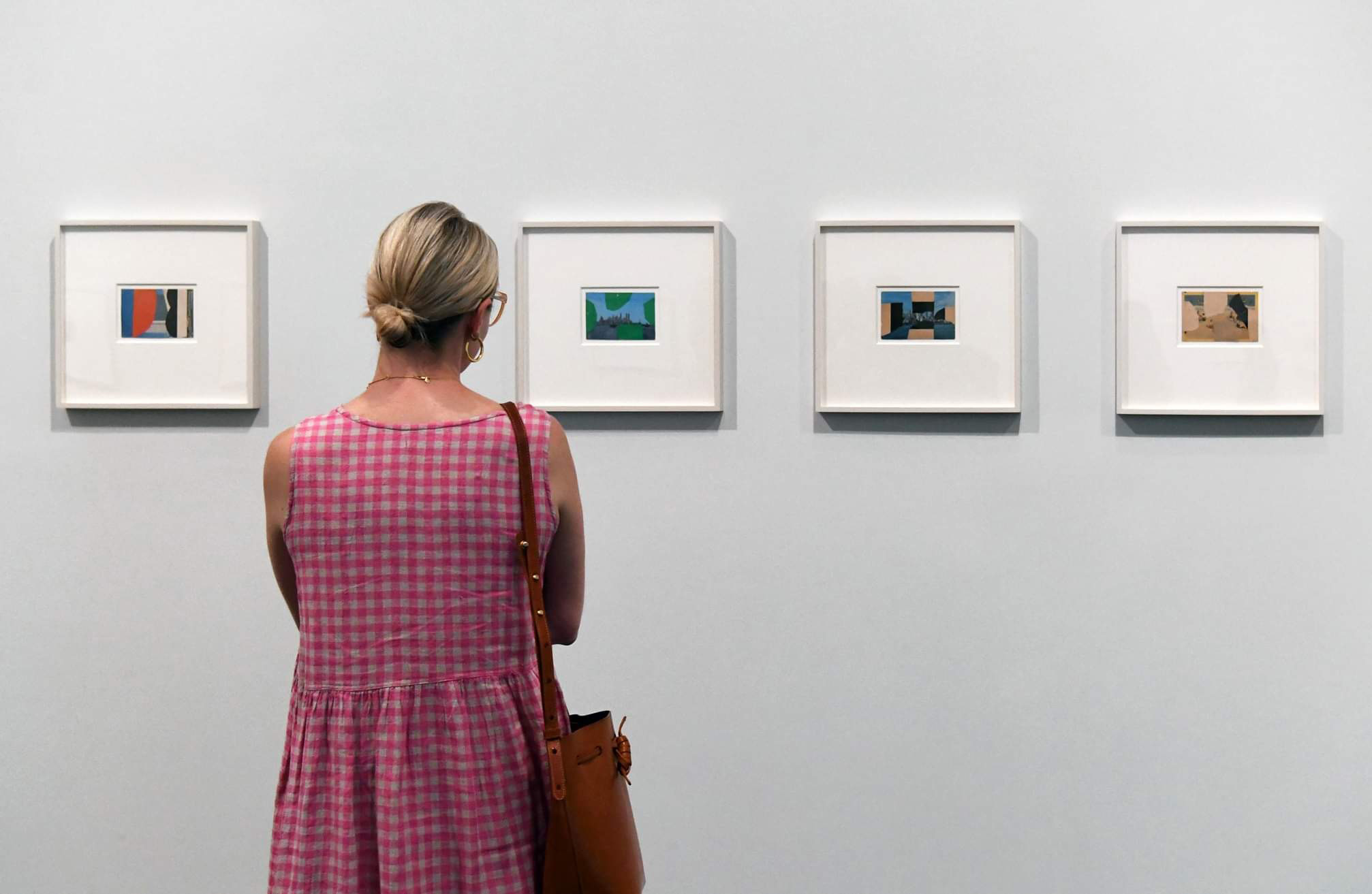
 

Installation view of the exhibition 'Ellsworth Kelly: Postcards' at the Frances Young Tang Teaching Museum and Art Gallery, Skidmore College showing at left, 'Columbus Circle' 1957; and at second left, 'Four Greens, Upper Manhattan Bay' 1957


Installation view of the exhibition Ellsworth Kelly: Postcards at the Frances Young Tang Teaching Museum and Art Gallery, Skidmore College showing at left, Columbus Circle 1957 (above); and at second left, Four Greens, Upper Manhattan Bay, 1957 (below)


Ellsworth Kelly (American, 1923-2015) 'Four Greens, Upper Manhattan Bay' 1957


Ellsworth Kelly (American, 1923-2015)
Four Greens, Upper Manhattan Bay
1957
Postcard collage
Collection of Ellsworth Kelly Studio and Jack Shear
© Ellsworth Kelly Foundation
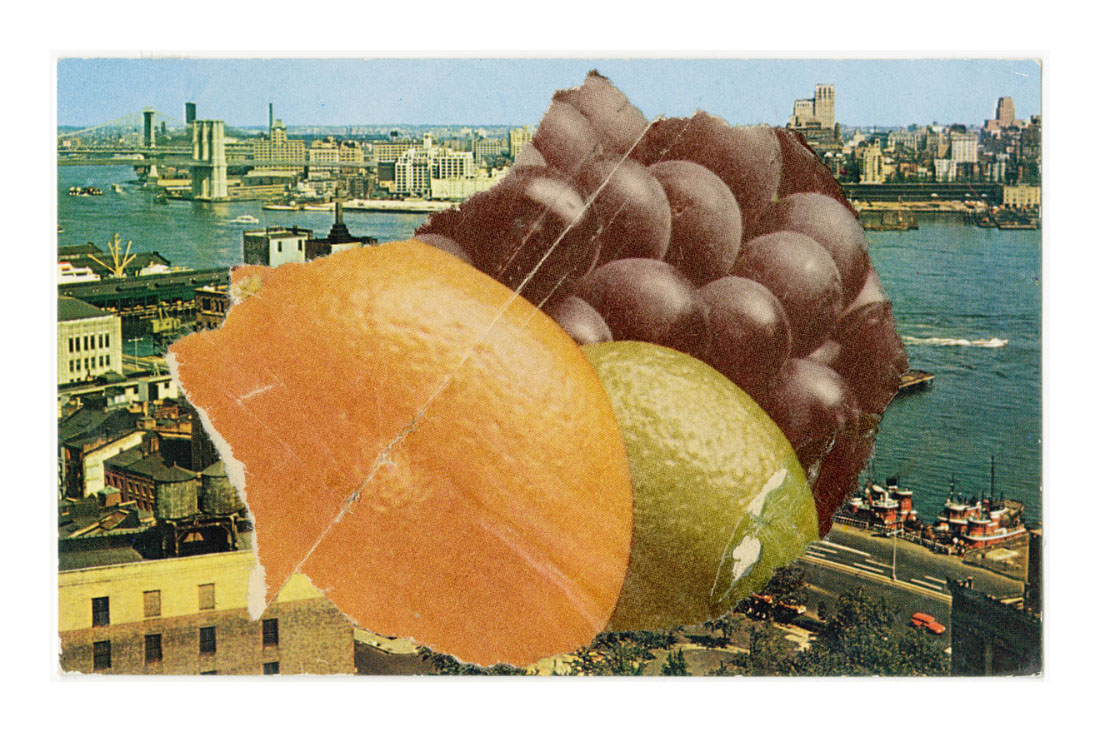
 

Ellsworth Kelly (American, 1923-2015) 'Coenties Slip' 1957


Ellsworth Kelly (American, 1923-2015)
Coenties Slip
1957
Postcard collage
Collection of Ellsworth Kelly Studio and Jack Shear
© Ellsworth Kelly Foundation
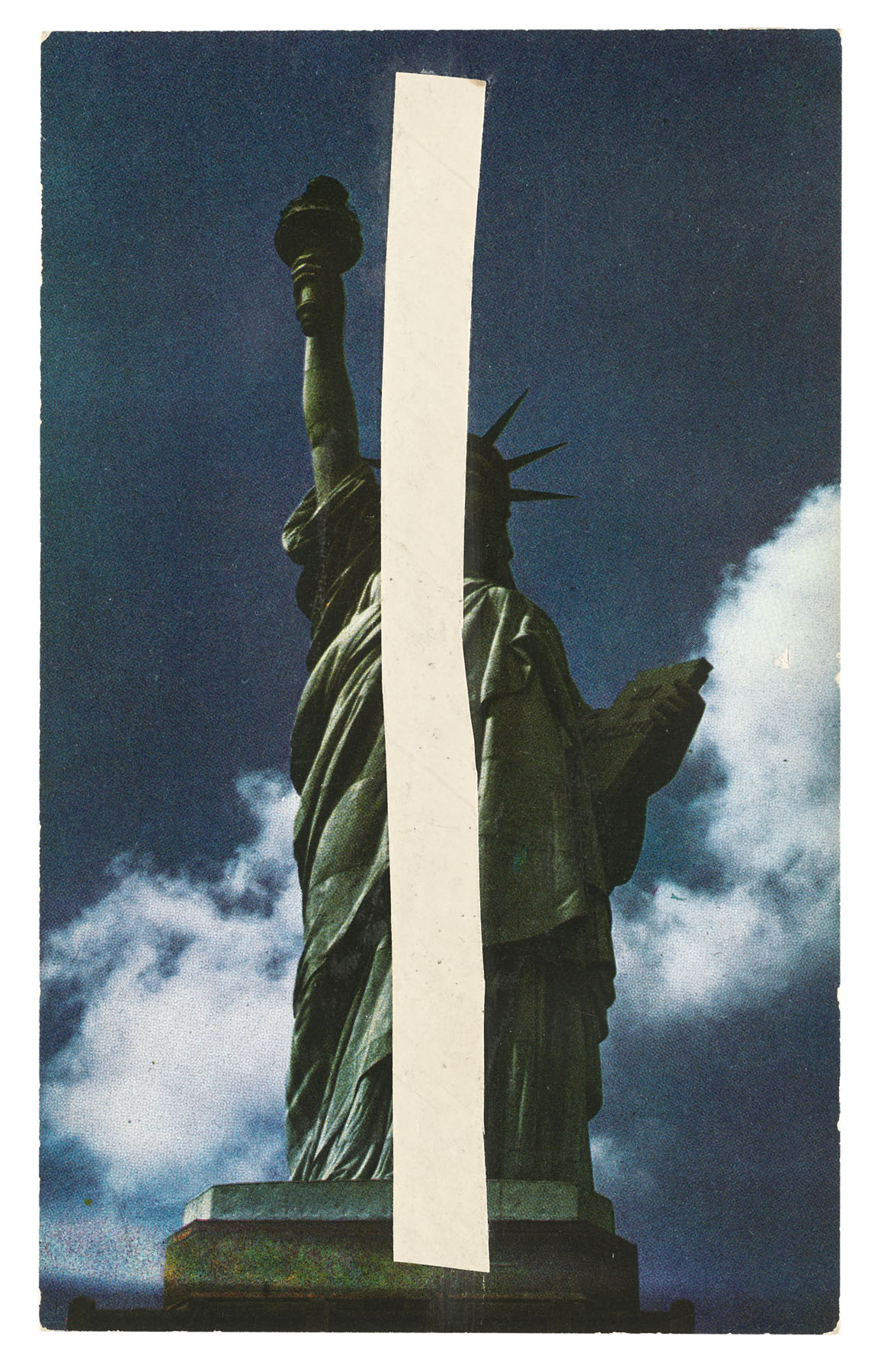
 

Ellsworth Kelly (American, 1923-2015) 'Statue of Liberty' 1957


Ellsworth Kelly (American, 1923-2015)
Statue of Liberty
1957
Postcard collage
5 1/2 x 3 1/2 inches
Collection of Ellsworth Kelly Studio and Jack Shear
© Ellsworth Kelly Foundation


Kelly’s Strategies through Postcard Analogies


“During the day, we see so much at one time. I want to catch something that’s a flash, a mysterious thing, the beginning of something, a primal thing.”

~ Ellsworth Kelly, 2008


Aided with the clarity of five decades of hindsight, this exhibition and catalogue afford us the opportunity to observe the breadth of Kelly’s postcard experimentation, the myriad ways he explored strategies, ideas, and shapes to which he returned time and time again. It can be argued that these postcard objects, more than his other works on paper, allow us the closest entrée into what caught his eye, what he pondered, and what he altered, giving us glimpses into his intuitive and transformative vision. These postcard collages allow us to revisit some of “the sights of his lifetime,” how he found what looked “right” to him at different moments during more than half a century. Indeed, his manipulated postcards tangibly analogise how the artist investigated vision. In 1973, at the time of his mid-career retrospective at MoMA, Kelly admitted to his intriguing relationship with the real world; despite his important reliance on empirical observation, he confessed, “I’ve always felt competitive with reality.”34 Postcards – unchanging templates of predetermined realities – offered him controlled environments with which he could actively compete through his pasted papers.

To create his abstractions drawn from the real world, Kelly relied on various artistic impulses that he learned to follow and trust. He explained in 1992:

“I automatically distance the idea of what I’m looking at. I play with what I see, forget what it is, which colour it is, perceive the changes through my shifting positions. I don’t look at it with a thinking mind but with the possibilities of my vision.”35


Kelly enacted this strategy of distancing through collage, both “placing” and “ellipsis” as previously described by Motherwell. In doing so, he was able to “compete” with reality by obscuring and fragmenting the view. In 1973, the artist explained, “I’ve always been interested in fragmentation, through apertures, doors and windows. When you look through them, that fragmented view changes as you move, and you get a series of different pictures.”36 Through fragmentation, he was able to isolate his forms to arrive at singular shapes. Collage also allowed Kelly to deploy another key artistic goal that further distanced his art from his original sources – to reiterate flatness through the flat piece of collage itself, to push out space, to “flatten”37 the experience of vision. Kelly’s act of collage, his intrusion into the scene, also results in a shaped obstruction, an “ellipsis” of the original postcard view, diminishing our ability to discern and recognise the entire scene and thus achieving the ambiguity he desired, “an open, incomplete situation.”38

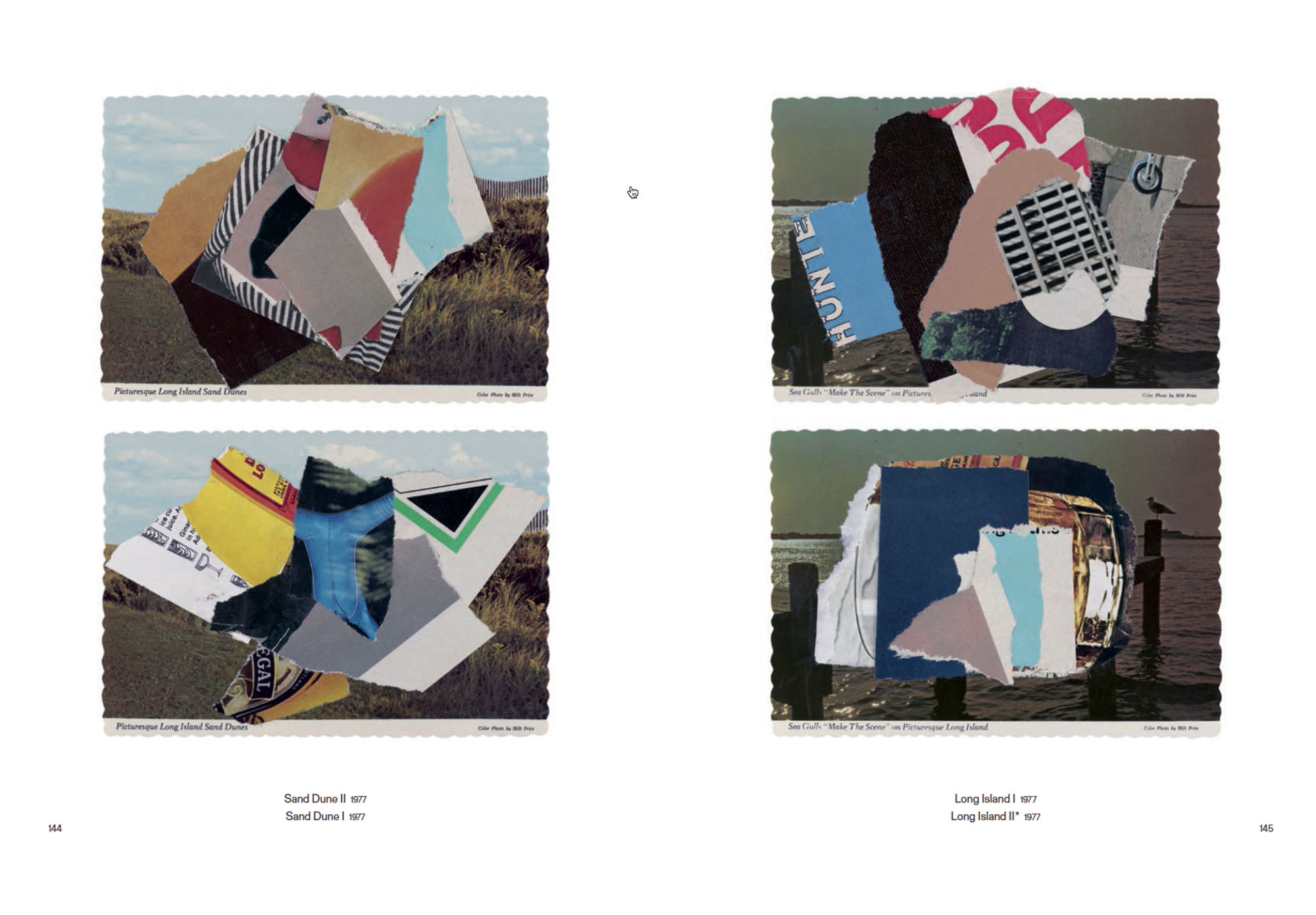
Now considering Kelly’s postcard output holistically, there is no observable consistency in how these objects relate to his finished body of work. Sometimes his postcard explorations correlate with what he was exploring in paintings and sculptures at the time, while sometimes there is minimal connection. Although most do not serve as actual studies per se for a completed work, a small number of these postcards, in fact, do. Other times his postcard collages are retrospective, returning to shapes and ideas already produced in work finished years prior – such as La dune du Pyla III, 1983 (p. 183); Blue Yellow (Saint-Michel, Paris), 1985 (p. 267); Seascape, 1985 (p. 274); and Blue Red Rocker / St. Martin, 1986 (p. 275).39 While some postcards appear deliberate and “worked,” some can be understood as quickly collaged “sketches.” During the period of his postcard output from 1949 to 2005, there are specific years when Kelly regularly manipulated the postcard – 1957, 1964, 1974, 1977-1978, and 1984-1985; in particular, 1974, 1977, and 1984-1985 proved to be periods of great experimentation, with as many as seventy-six documented postcards from 1984, the most in any given year.40 In some years there is no documented evidence of any activity; however, perhaps in the future, postcards that Kelly might have made and sent out during the mid to late 1960s (from which only one extant card remains) or other years could resurface. One consistent fact is how much delight Kelly took with the postcard, whether as communication mailed to those within his circle, or as private visual dialogue saved for himself.

Tricia Y. Paik. “Sights of His Life,” in Berry, Ian and Eisenthal, Jessica (eds.,). Elsworth Kelly: Postcards. Delmonico Books, 2021, pp. 316-318.
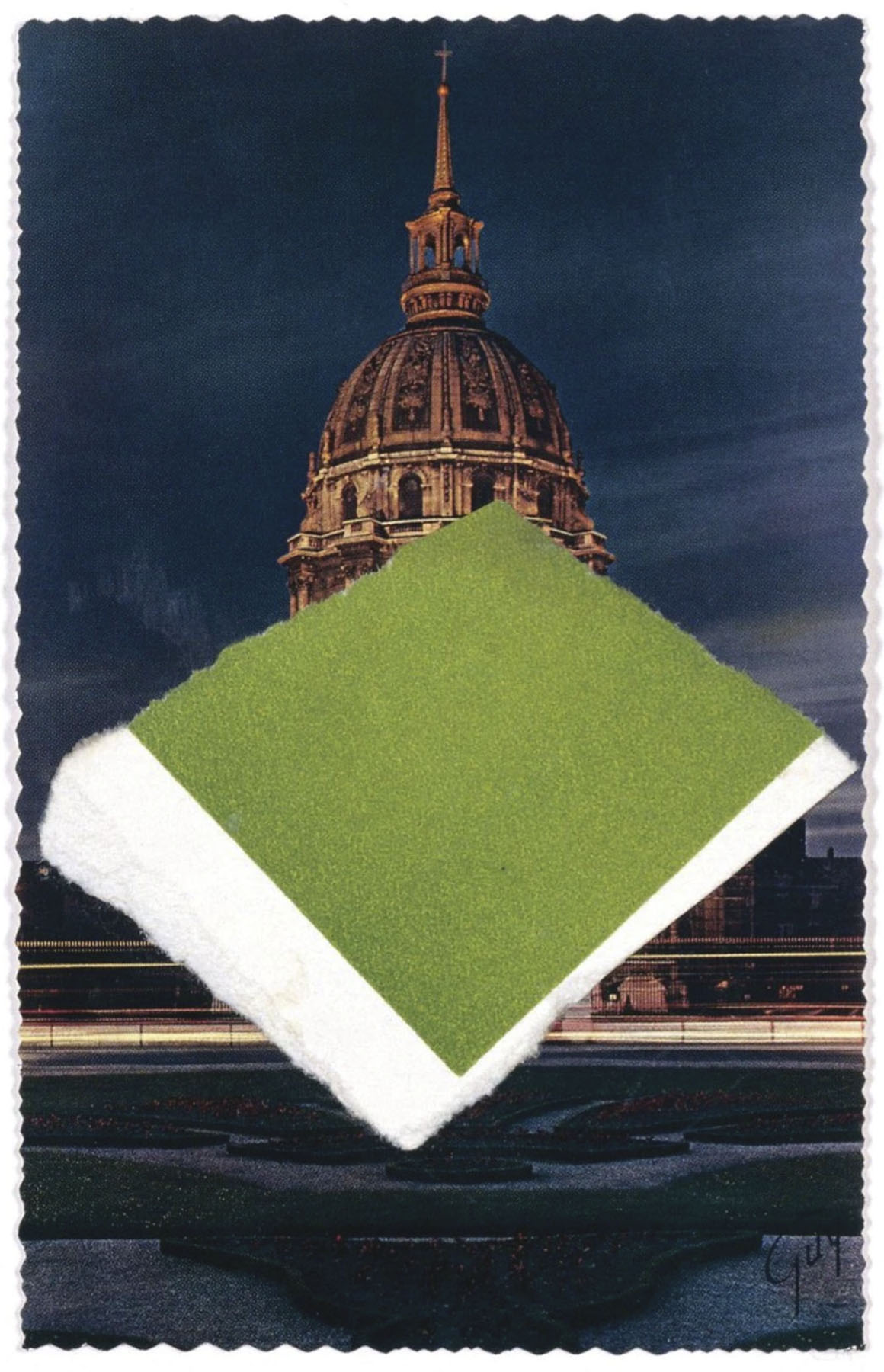
 

Ellsworth Kelly (American, 1923-2015) 'Study for Green and White Sculpture for les Invalides' 1964


Ellsworth Kelly (American, 1923-2015)
Study for Green and White Sculpture for les Invalides
1964
Postcard collage
Collection of Ellsworth Kelly Studio and Jack Shear
© Ellsworth Kelly Foundation
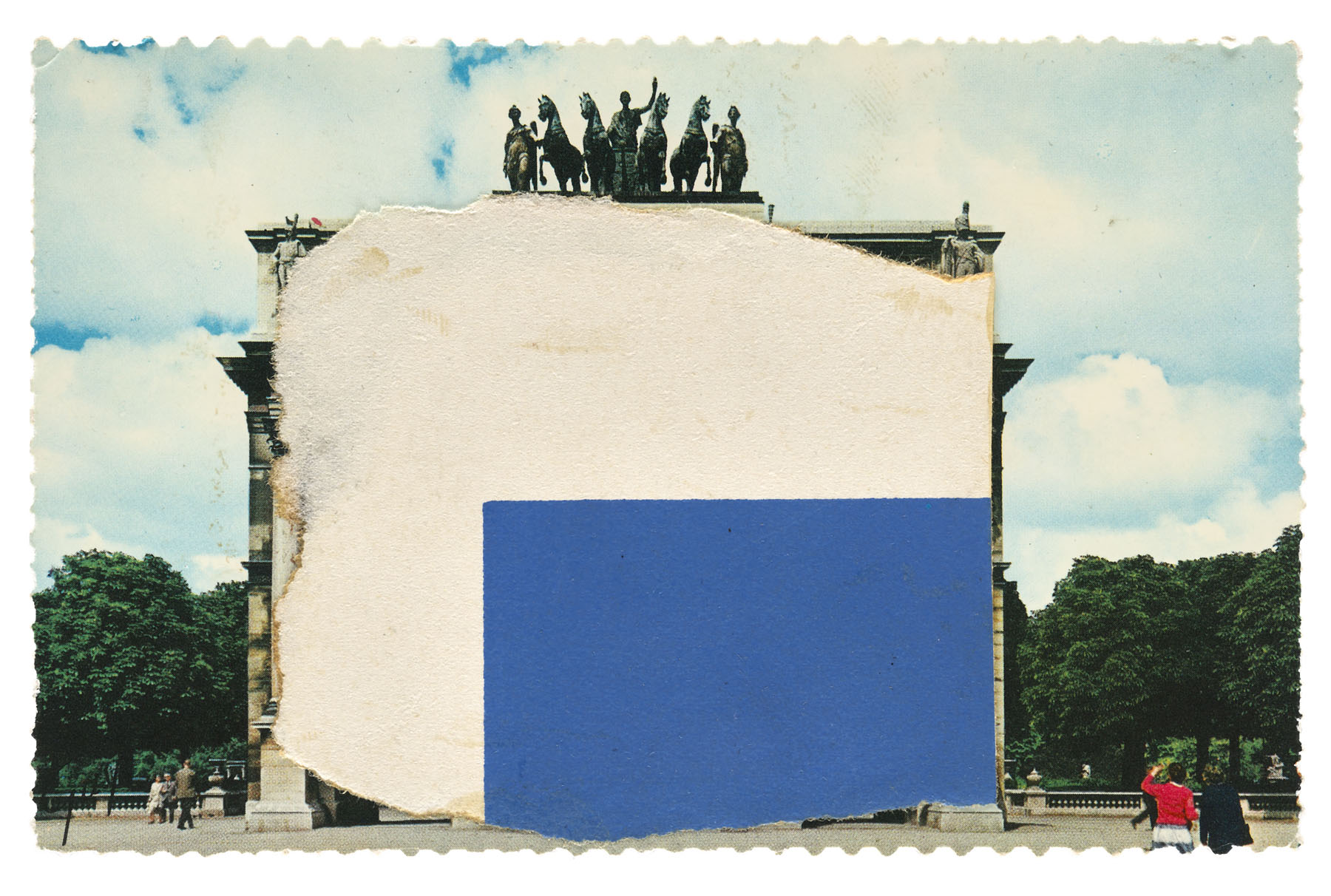
 

Ellsworth Kelly (American, 1923-2015) 'Study for Blue and White Sculpture for Les Tuileries' 1964


Ellsworth Kelly (American, 1923-2015)
Study for Blue and White Sculpture for Les Tuileries
1964
Postcard collage
3 1/2 x 5 1/2 inches
Collection of Ellsworth Kelly Studio and Jack Shear
© Ellsworth Kelly Foundation
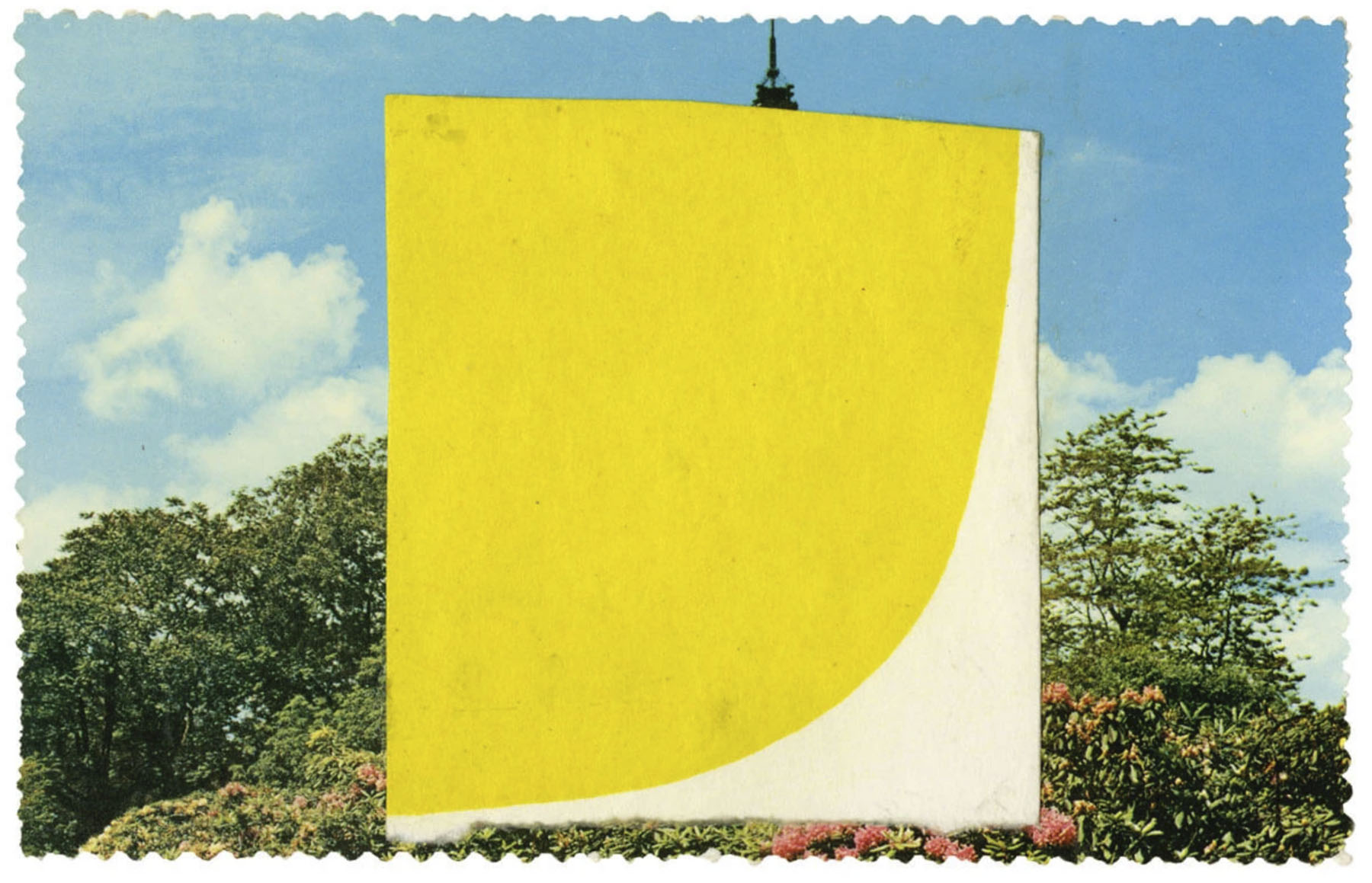
 

Ellsworth Kelly (American, 1923-2015) 'Study for Yellow and White Sculpture for la Tour Eiffel' 1964


Ellsworth Kelly (American, 1923-2015)
Study for Yellow and White Sculpture for la Tour Eiffel
1964
Postcard collage
Collection of Ellsworth Kelly Studio and Jack Shear
© Ellsworth Kelly Foundation
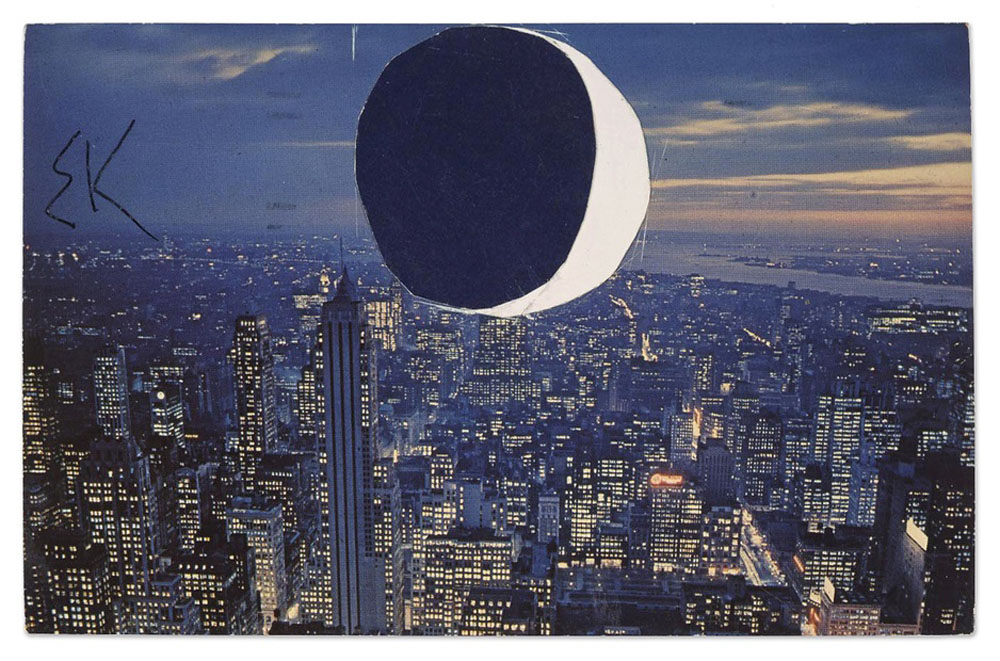
 

Ellsworth Kelly (American, 1923-2015) 'Moon Over Manhattan' 1964


Ellsworth Kelly (American, 1923-2015)
Moon Over Manhattan
1964
Postcard collage
3 1/2 x 5 1/2 inches
Private collection
© Ellsworth Kelly Foundation


Ellsworth Kelly (American, 1923-2015) 'Nose / Sailboat' 1974


Ellsworth Kelly (American, 1923-2015)
Nose / Sailboat
1974
5 1/2 x 3 1/2 inches
Collection of Ellsworth Kelly Studio and Jack Shear
© Ellsworth Kelly Foundation
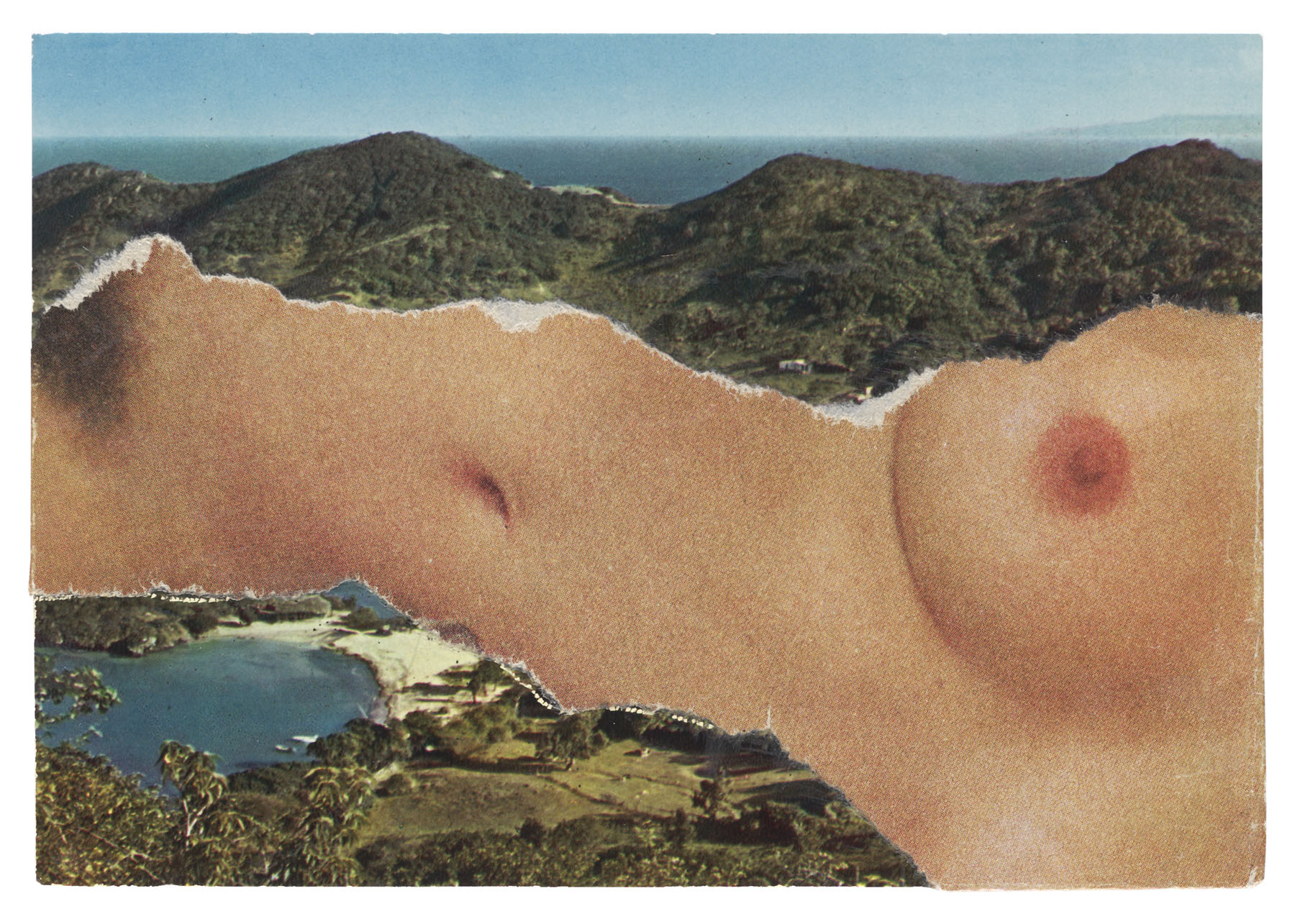
 

Ellsworth Kelly (American, 1923-2015) 'Horizontal Nude or St. Martin Landscape' 1974


Ellsworth Kelly (American, 1923-2015)
Horizontal Nude or St. Martin Landscape
1974
4 x 5 7/8 inches
Collection of Ellsworth Kelly Studio and Jack Shear
© Ellsworth Kelly Foundation
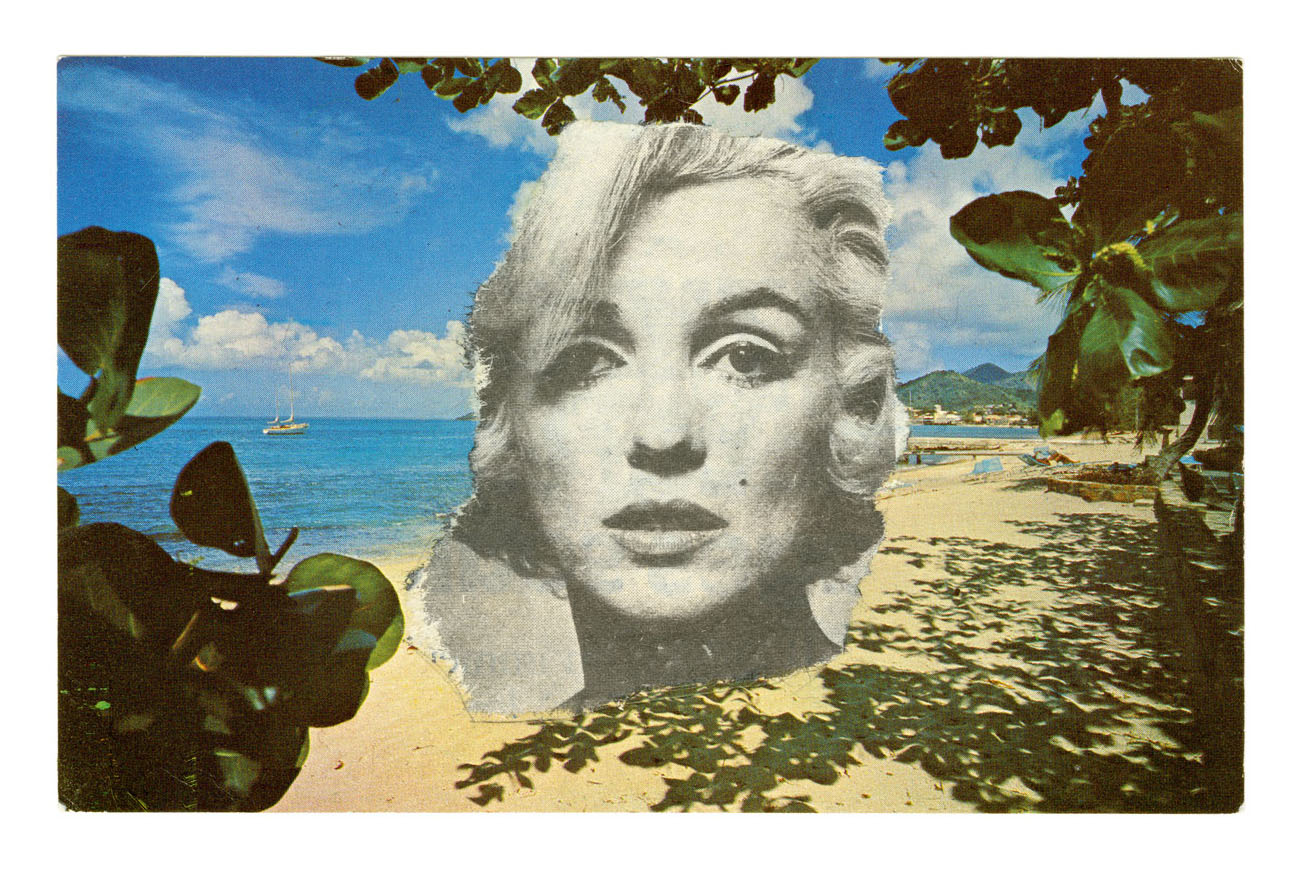
 

Ellsworth Kelly (American, 1923-2015) 'Marilyn Monroe / Shadows' 1974


Ellsworth Kelly (American, 1923-2015)
Marilyn Monroe / Shadows
1974
Collection of Ellsworth Kelly Studio and Jack Shear
© Ellsworth Kelly Foundation


Ellsworth Kelly (American, 1923-2015) 'Study for Dark Gray and White Rectangle I' 1977


Ellsworth Kelly (American, 1923-2015)
Study for Dark Gray and White Rectangle I
1977
4 x 6 inches
Collection of Ellsworth Kelly Studio and Jack Shear
© Ellsworth Kelly Foundation
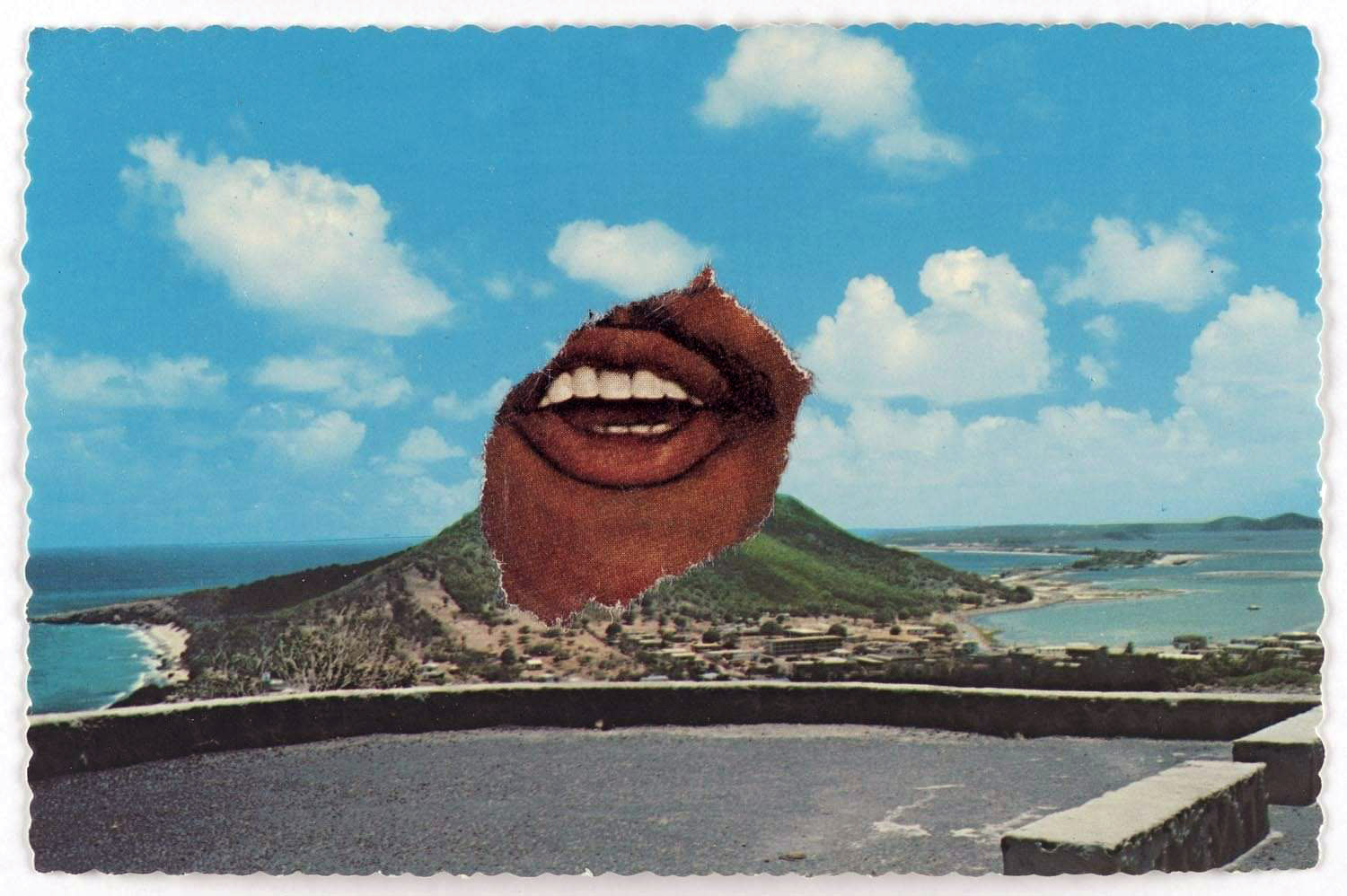
 

Ellsworth Kelly (American, 1923-2015) 'Volcano' 1977


Ellsworth Kelly (American, 1923-2015)
Volcano
1977
Collection of Ellsworth Kelly Studio and Jack Shear
© Ellsworth Kelly Foundation


Ellsworth Kelly (American, 1923-2015) 'Amsterdam' 1979


Ellsworth Kelly (American, 1923-2015)
Amsterdam
1979
4 x 5 7/8 inches
Collection of Ellsworth Kelly Studio and Jack Shear
© Ellsworth Kelly Foundation
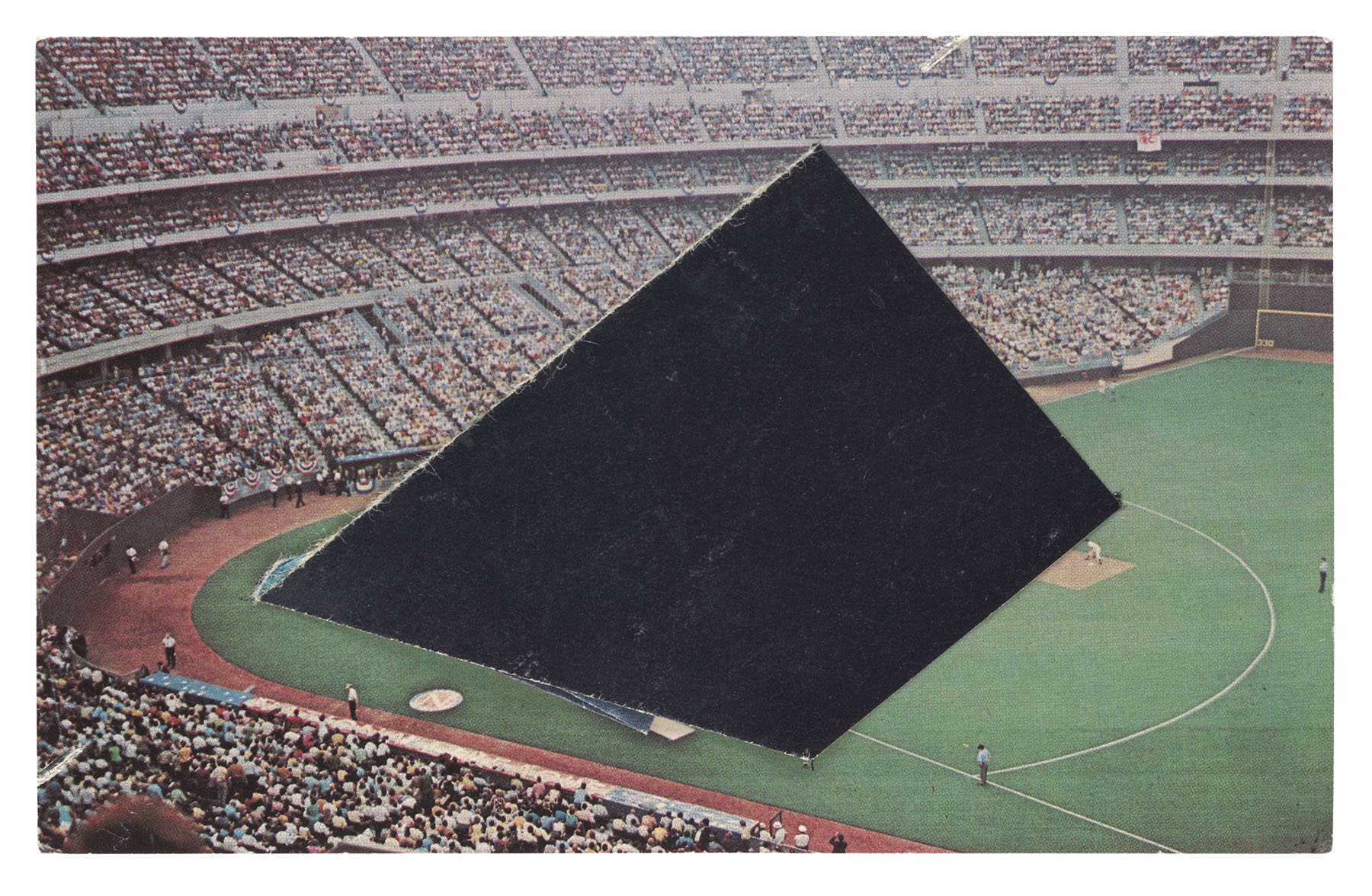
 

Ellsworth Kelly (American, 1923-2015) 'Cincinnati Riverfront Stadium' 1980


Ellsworth Kelly (American, 1923-2015)
Cincinnati Riverfront Stadium
1980
3 1/2 x 5 1/2 inches
Collection of Ellsworth Kelly Studio and Jack Shear
© Ellsworth Kelly Foundation
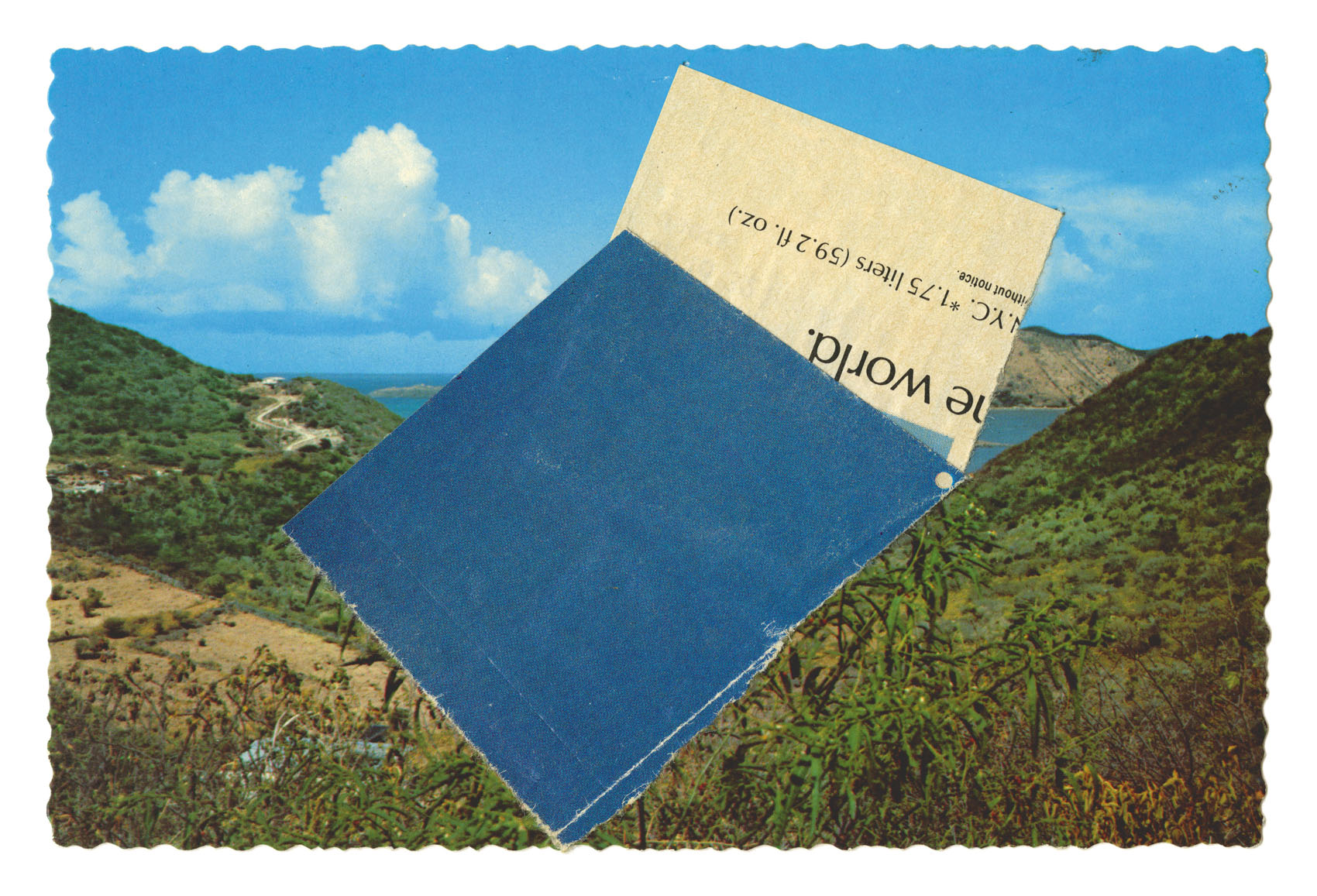
 

Ellsworth Kelly (American, 1923-2015) 'Study for Blue White' 1980


Ellsworth Kelly (American, 1923-2015)
Study for Blue White
1980
Collection of Ellsworth Kelly Studio and Jack Shear
© Ellsworth Kelly Foundation


Ellsworth Kelly (American, 1923-2015) 'The Young Spartans' 1984


Ellsworth Kelly (American, 1923-2015)
The Young Spartans
1984
4 1/8 x 5 7/8 inches
Collection of Ellsworth Kelly Studio and Jack Shear
© Ellsworth Kelly Foundation
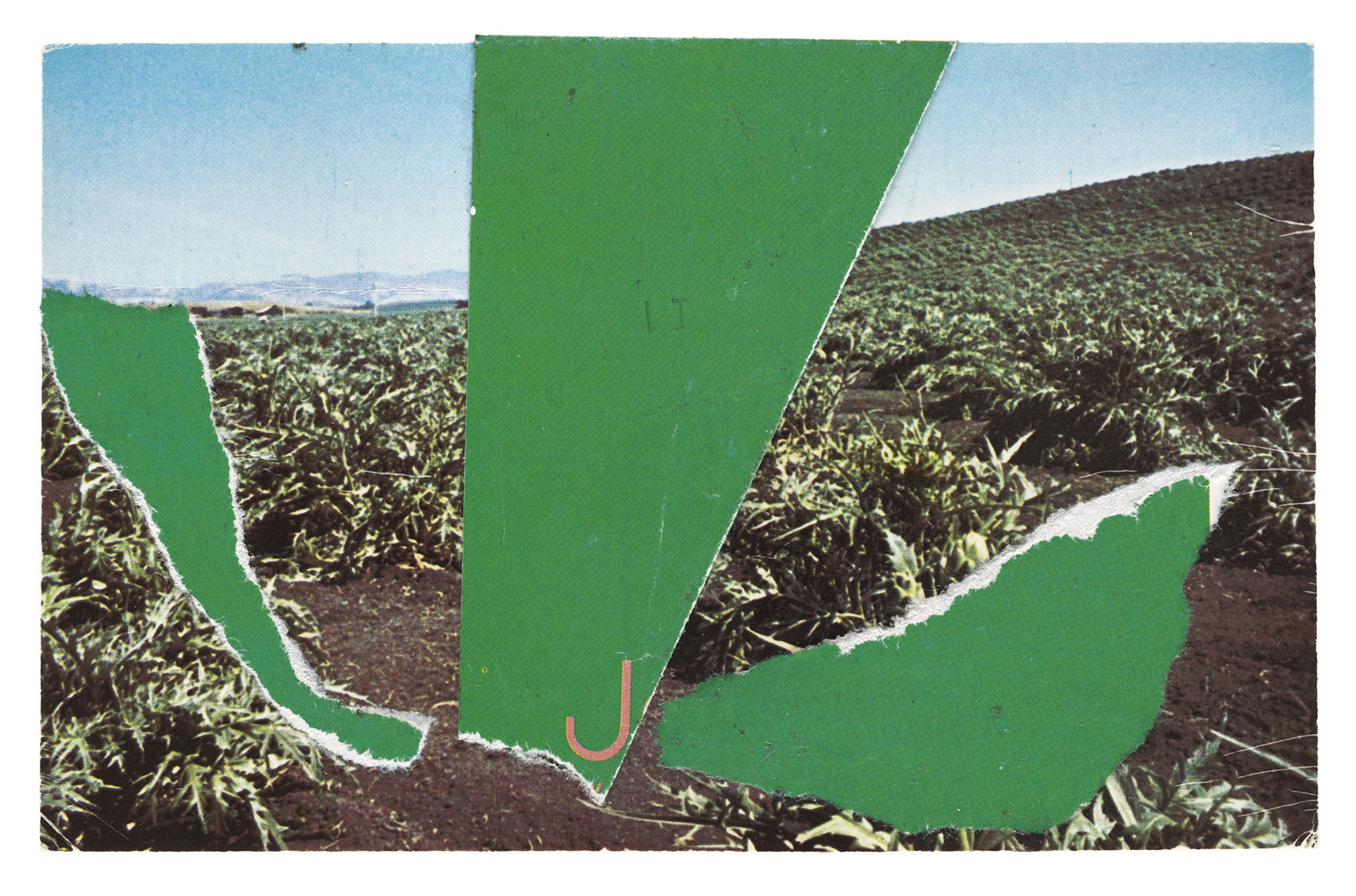
 

Ellsworth Kelly (American, 1923-2015) 'Giant Artichoke' 1984


Ellsworth Kelly (American, 1923-2015)
Giant Artichoke
1984
3 1/2 x 5 1/2 inches
Collection of Ellsworth Kelly Studio and Jack Shear
© Ellsworth Kelly Foundation
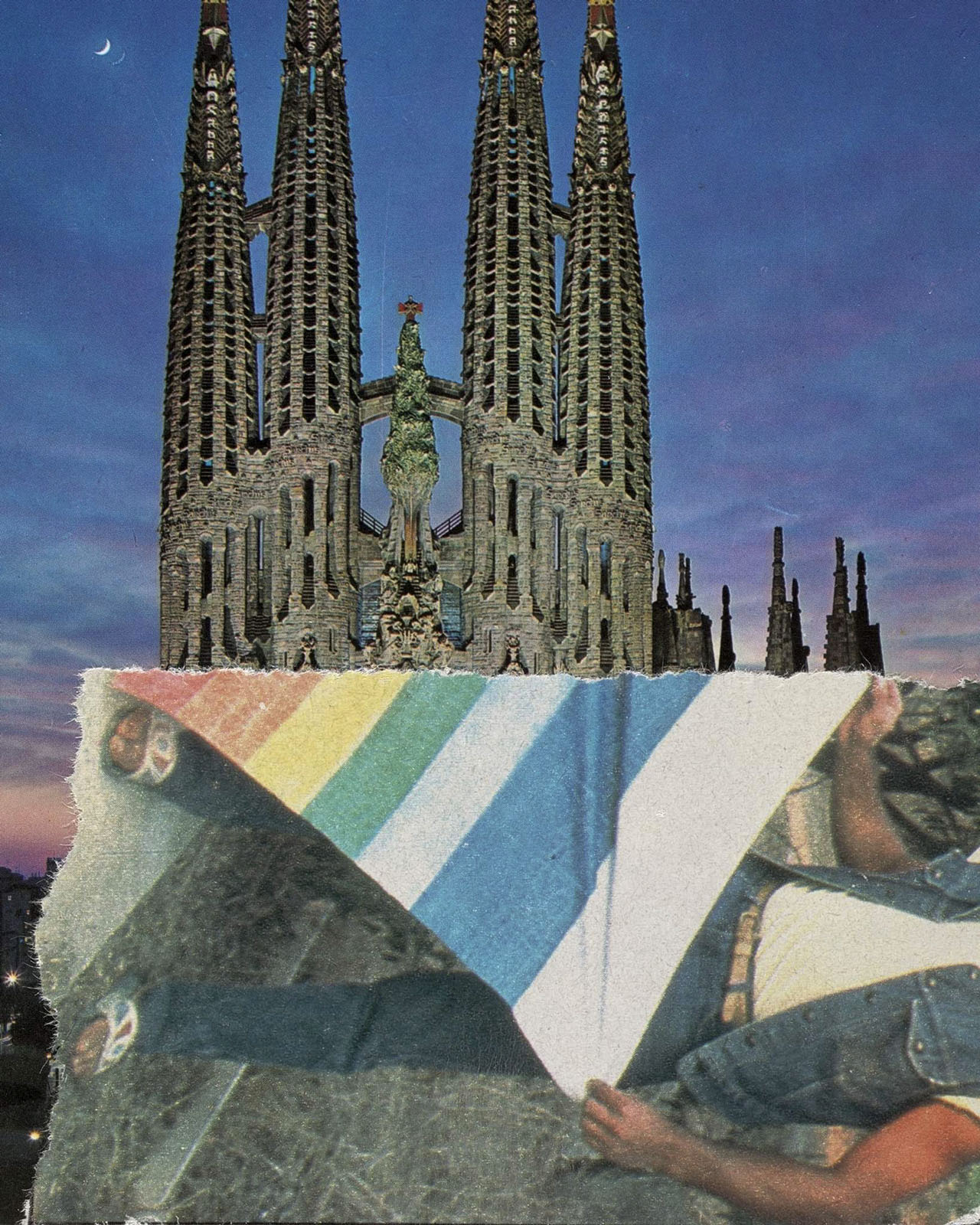
 

Ellsworth Kelly (American, 1923-2015) 'Sagrada Familia I' 1985


Ellsworth Kelly (American, 1923-2015)
Sagrada Familia I
1985
Collection of Ellsworth Kelly Studio and Jack Shear
© Ellsworth Kelly Foundation
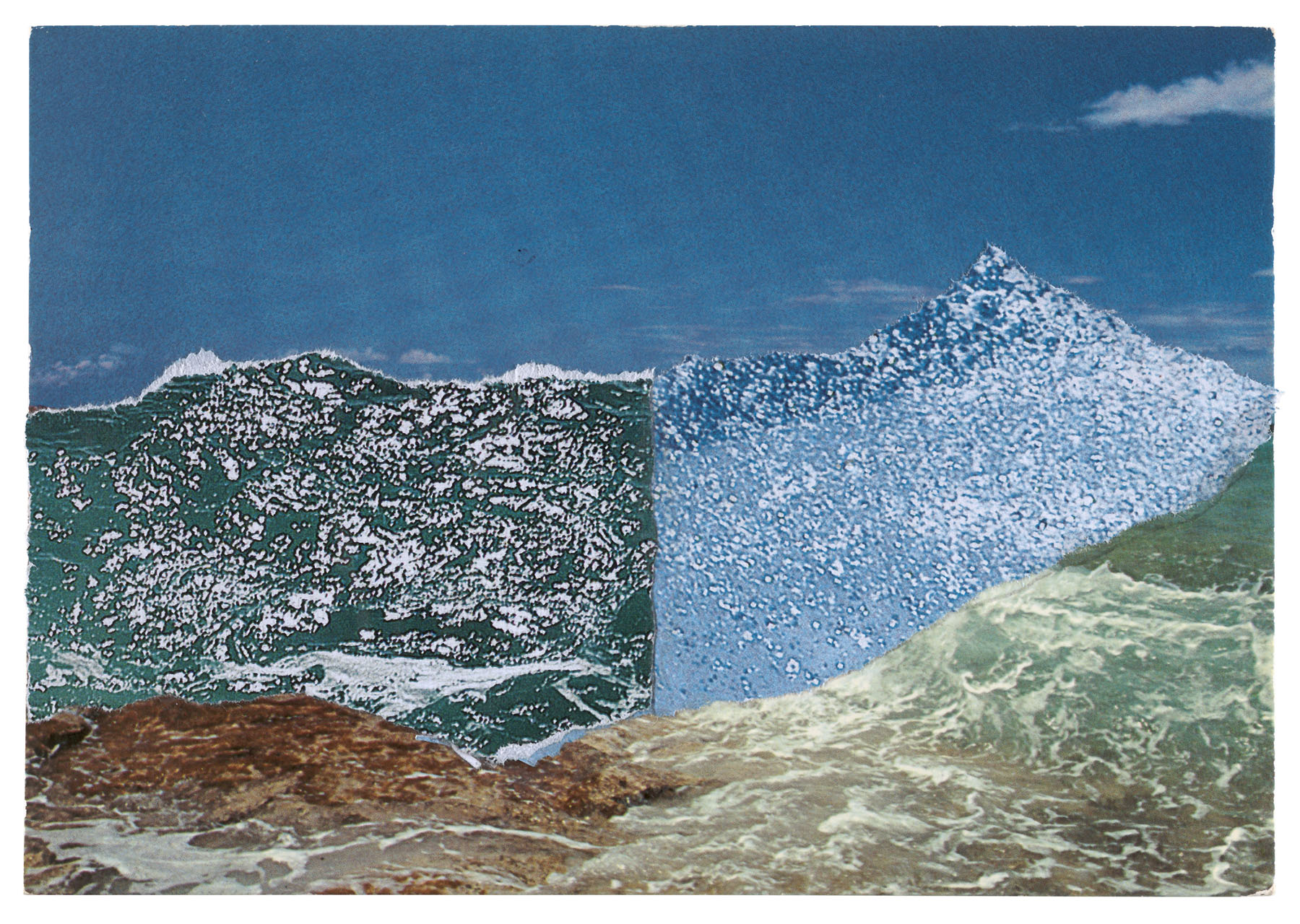
 

Ellsworth Kelly (American, 1923-2015) 'St. Martin – Baie Rouge' 2005


Ellsworth Kelly (American, 1923-2015)
St. Martin – Baie Rouge
2005
4 5/8 x 6 3/4 inches
Collection of Ellsworth Kelly Studio and Jack Shear
© Ellsworth Kelly Foundation
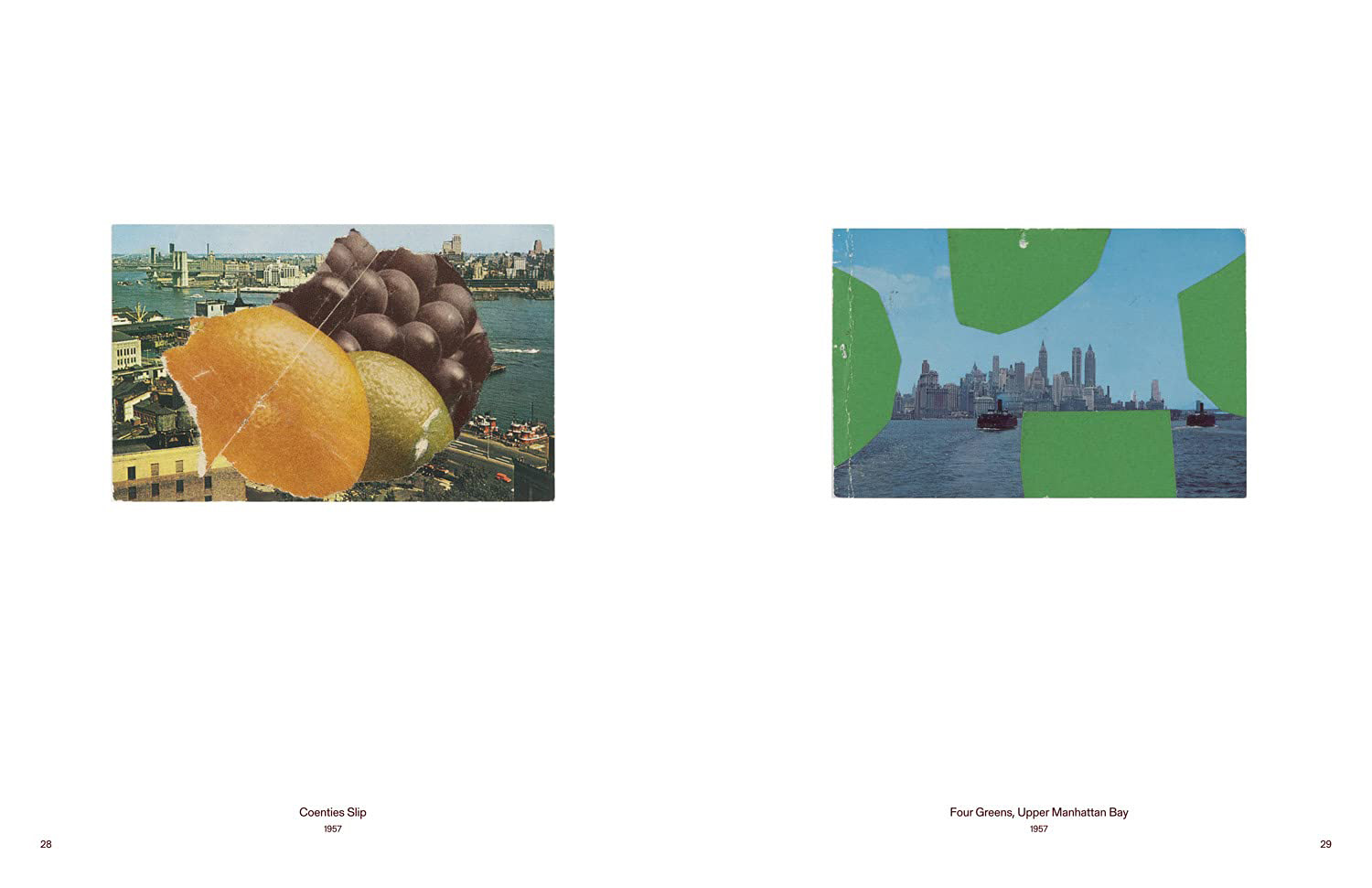
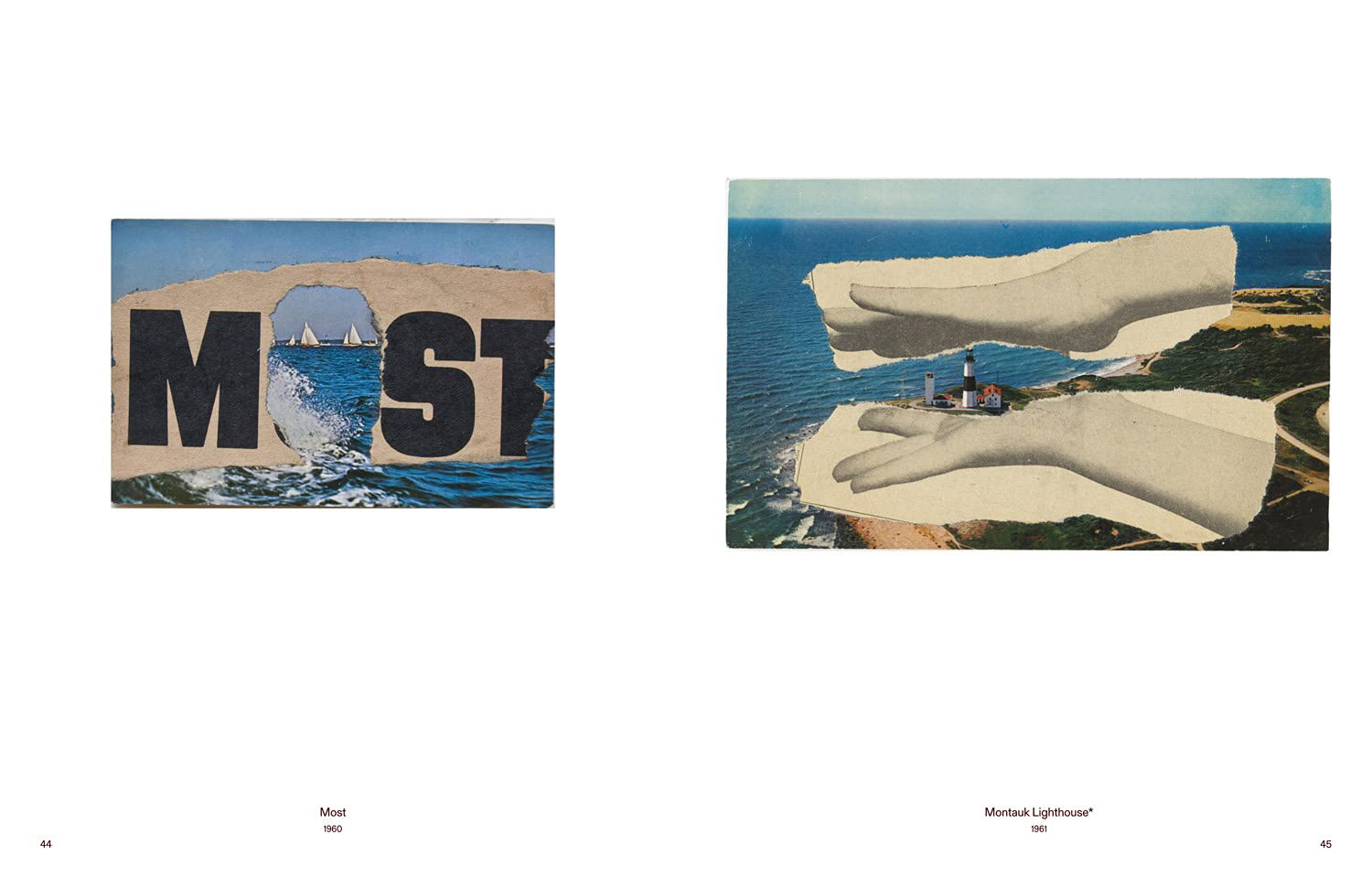
 

Pages from the catalogue for the exhibition 'Elsworth Kelly: Postcards'

Pages from the catalogue for the exhibition 'Elsworth Kelly: Postcards'

Pages from the catalogue for the exhibition 'Elsworth Kelly: Postcards'

Pages from the catalogue for the exhibition 'Elsworth Kelly: Postcards'


Pages from the catalogue by Berry, Ian and Eisenthal, Jessica (eds.,). Elsworth Kelly: Postcards. Delmonico Books, 2021


Frances Young Tang Teaching Museum and Art Gallery at Skidmore College
815 North Broadway
Saratoga Springs, NY 12866
Phone: 518-580-8080

Opening hours:
Tuesday 12.00 – 5.00pm
Wednesday 12.00 – 5.00pm
Thursday 12.00 – 9.00pm
Friday 12.00 – 5.00pm
Saturday 12.00 – 5.00pm
Sunday 12.00 – 5.00pm
Closed Mondays and major holidays

Frances Young Tang Teaching Museum and Art Gallery website

LIKE ART BLART ON FACEBOOK

Back to top

Exhibition: ‘One and One Is Four: The Bauhaus Photocollages of Josef Albers’ at The Museum of Modern Art (MoMA), New York

Exhibition dates: 23rd November, 2016 – 2nd April, 2017

Curators: Sarah Hermanson Meister, Curator in the Department of Photography and Nancy Newhall Curatorial Fellow, Department of Photography


Josef Albers (American born Germany, 1888-1976) 'El Lissitzky, Dessau' 1930/1932 from the exhibition 'One and One Is Four: The Bauhaus Photocollages of Josef Albers' at The Museum of Modern Art (MoMA), New York, Nov 2016 - April 2017


Josef Albers (American born Germany, 1888-1976)
El Lissitzky, Dessau
1930/1932
Gelatin silver prints mounted to board
11 5/8 × 16 3/8″ (29.5 × 41.6cm) overall
The Museum of Modern Art, New York
Acquired through the generosity of Jo Carole and Ronald S. Lauder, and Jon L. Stryker
© 2016 The Josef and Anni Albers Foundation / Artists Rights Society (ARS), New York
Photo: John Wronn


NEARLY A WEEK SINCE MY LAST POSTING SO LET’S MAKE THIS A GOOD ONE…

A fabulous posting on the photocollages of that most excellent of artists, Josef Albers, where the selection of images and their pairings “take on questions of duality, time, and narrative…” – to which I might add, questions of perspective and context. These photocollages are a revelation to me.

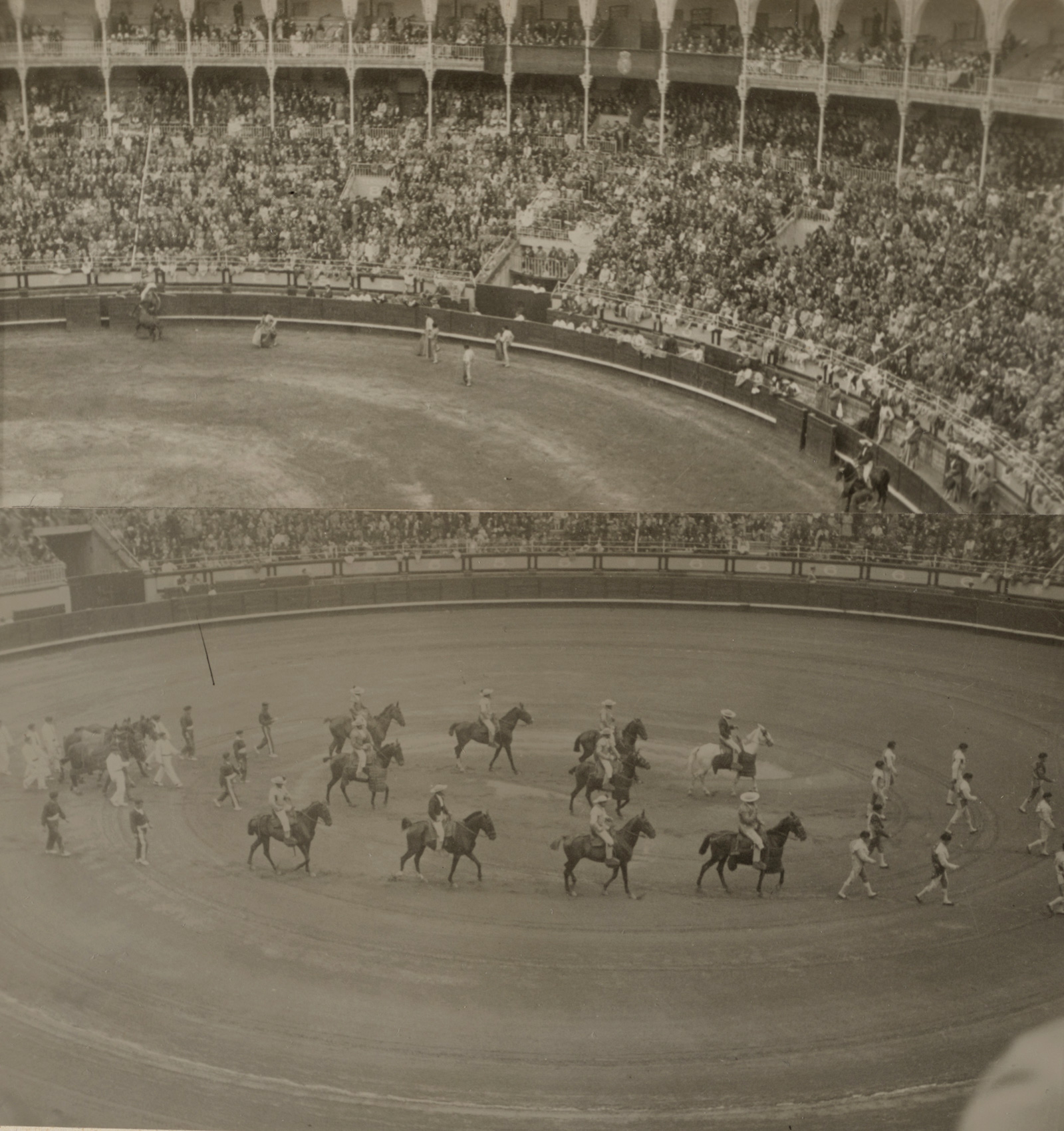
The complex photo narratives move image across time and space. This can be seen in the photomontage Untitled (Bullfight, San Sebastian) (1930/1932, below) where the multitude of photographs of a bullfight in San Sebastien, “can be read as a short story or experimental film, where we as viewers recognise that we are being transported to a distant time and place…”

Here the visual plane is fragmented, the scale mixed, shape, direction and space / time continuity confused. Structures are repeated; time is overlaid; perspective is shifted; narrative is multiplied. This is complex, New Vision image making, not just the downwards or upward looking objectivity of Russian constructivism, but a more nuanced splicing of time and space. The bullfight is magnificent in its “in the round” picturing … the splitting of the arena in the central images confuses direction, scale and circularity.

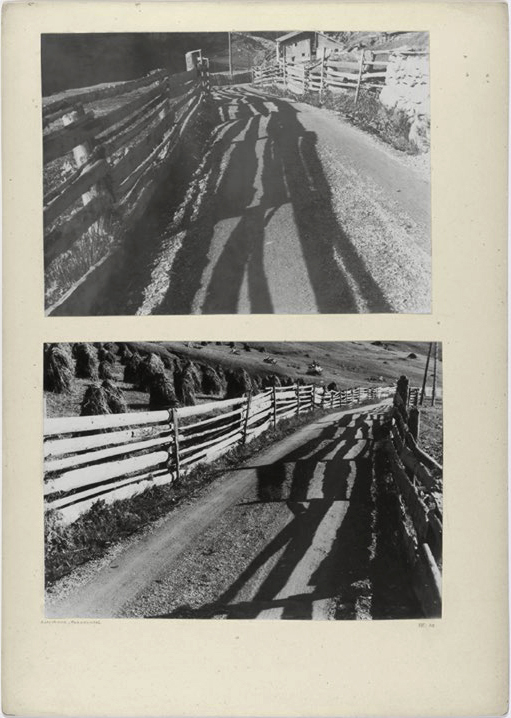
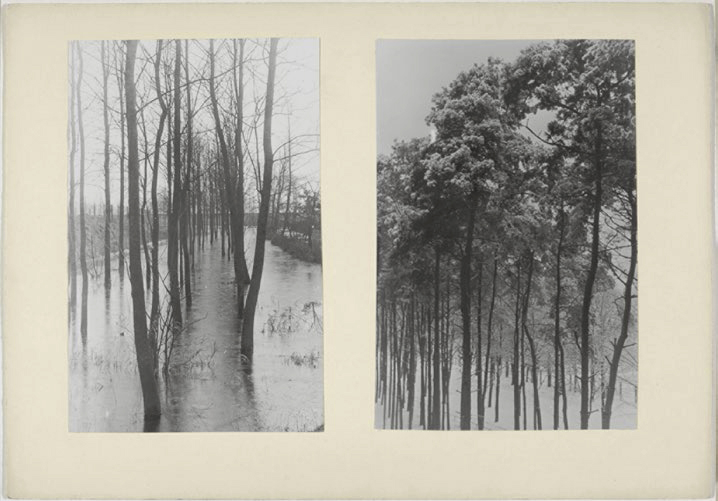
There are further “in the round” elements (mimicking Renaissance triple portrait painting such as Triple Portrait of Cardinal de Richelieu (1642) in the National Gallery of Art, London), seen in the work Amédée Ozenfant, summer 1931 (below) which, while objectifying the human countenance, contains that nugget of truth: that portraiture is an expression of humanism. Other photocollages, for example Road, Paznauntal, July 1930; Hotel staircases, Geneva, 1929 (with its Escher-like construction); Flooded trees and forest; and Dessau, end of winter, 1931 (all below), challenge our orientation in the world both physically and spiritually.

These photocollages, 70 of which were made between 1928 and 1932, were never discovered until after Albers was dead. No one ever knew he took photographs, but it was obviously important to him that he did so. Would he be able to say whether he was being serious, or he was having fun? Probably both. What a shame that they are often mutually exclusive in the last 30 -40 years.

It’s all very well to be able to say you are having fun – but what about being in this state (i.e. Albers state when he was compositing the photographs) and not even knowing … not even thinking of the question. Perhaps his was a private form of meditation on the nature of vision.

Dr Marcus Bunyan

(Written using dictation software, the rest all cut and paste)


Many thankx to MoMA for allowing me to publish the photographs in the posting. Please click on the photographs for a larger version of the image.


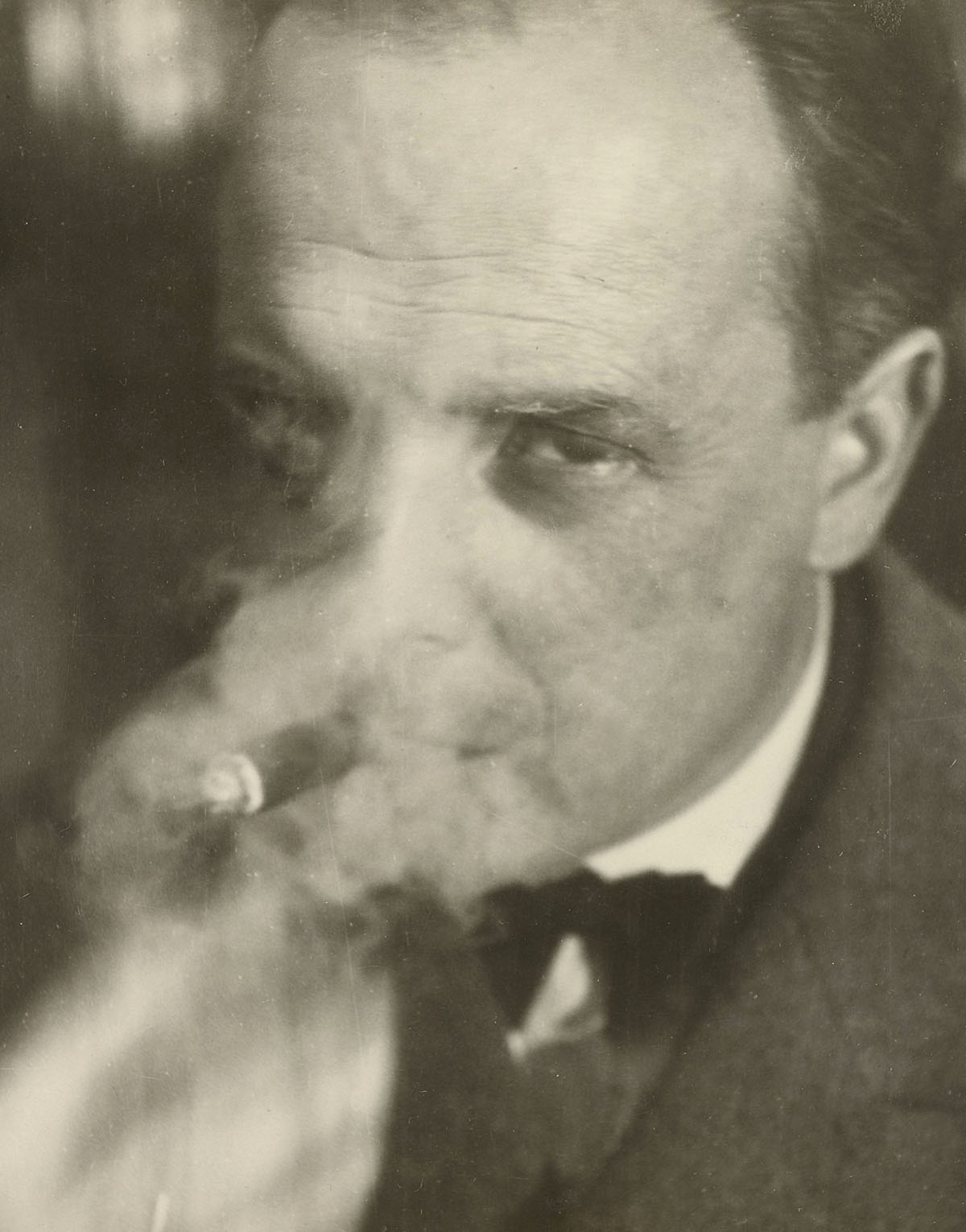
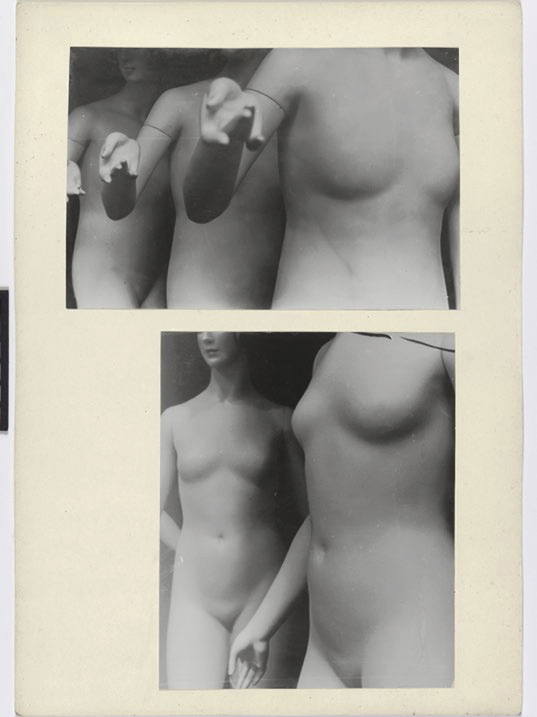
“Beginning at the Bauhaus in 1928, Albers made hundreds, perhaps thousands, of photographs with his handheld Leica camera, and he made thousands more, mostly while traveling, in the decades following his emigration to the United States in 1933. But we concern ourselves here with a group of seventy photocollages mounted to A3 boards, established as a standard size in Germany in 1922 at 29.7 by 42 centimetres (11 3/4 by 16 1/2 inches). No record exists of Albers ever having exhibited these collages in his lifetime, nor does he appear to have spoken of them. Yet in their rigorous construction and allusive potential, they represent a singularly creative body of work. The images Albers used to make these collages fall rather neatly into four categories – portraits, mannequins, the natural world, and the built environment – and Albers attends to a remarkably narrow subsection within each of these: The portraits feature only people Albers knew well – fellow Bauhäusler, family, and friends. The primary urban motif is the mannequin, which was also featured in the photographs of contemporaries such as Eugène Atget, Bill Brandt, Manuel Álvarez Bravo, Horacio Coppola, and scores of others who were attentive to the figures’ Surrealist echoes. His images of nature consist of mostly waves, some trees, and a few mountains, and there are only a handful of man-made structures. Albers’s limited range of subjects achieves new significance in his collages, where their selection and pairings take on questions of duality, time, and narrative, topics that resist being infused into single images of similar subjects.”


Sarah Hermanson Meister. “Josef Albers: An Open Mind for the Newer and Nearer,” from One and One Is Four: The Bauhaus Photocollages of Josef Albers, Museum of Modern Art, New York, 2016, pp. 11-12.


“The abstract language that Albers adopted for the great majority of his oeuvre precludes temporal specificity, which makes the close study of a number of his photocollages all the more compelling, specifically in Albers’s attentiveness to the complexity engendered by incorporating multiple photographs – each captured in a fraction of a second, but inevitably across time – into a single work.”


Sarah Hermanson Meister. “Josef Albers: An Open Mind for the Newer and Nearer,” from One and One Is Four: The Bauhaus Photocollages of Josef Albers, Museum of Modern Art, New York, 2016, p. 15.


“The image on the left shows Lissitzky smiling warmly, almost conspiratorially, at Albers. The background divides neatly into three tones – black, white, and gray – each of which corresponds loosely to Lissitzky’s (black) tie, (white) shirt, and the middle shades of the photographic spectrum that echo Lissitzky’s tanned complexion and balding pate. The horizontal image on the right is the same width but half the height of the vertical image, and in it we see Lissitzky almost in profile, looking toward his other likeness. This time the asymmetry of his placement within the frame is even more pronounced: his nose is cropped by the left edge, his forehead by the top, but the right half of the image is virtually empty. While we feel confident that these photographs were captured at the same meeting, the darker background in the right-hand image and the differentiation between Lissitzky’s shirt and collar (which, on the left, seem identical) remind the viewer of the variability of photographic representation. Albers mounted these prints with their top edges roughly aligned and with nearly equivalent space between their outside edges and the sides of the board: there is no evident rhyme or reason in the interstitial spaces. This irregularity draws the viewer’s attention to the geometric forms within each image and to the prints themselves, which might be construed as Albers’s nod to the dynamic geometric vocabulary that Lissitzky employed in his own art and design.”

Sarah Hermanson Meister. “Josef Albers: An Open Mind for the Newer and Nearer,” from One and One Is Four: The Bauhaus Photocollages of Josef Albers, Museum of Modern Art, New York, 2016, pp. 13-14.


Josef Albers (American born Germany, 1888-1976) 'El Lissitzky, Dessau' 1930/1932 (detail)


Josef Albers (American born Germany, 1888-1976)
El Lissitzky, Dessau (detail)
1930/1932
Gelatin silver prints mounted to board
11 5/8 × 16 3/8″ (29.5 × 41.6cm) overall
The Museum of Modern Art, New York
Acquired through the generosity of Jo Carole and Ronald S. Lauder, and Jon L. Stryker
© 2016 The Josef and Anni Albers Foundation / Artists Rights Society (ARS), New York
Photo: John Wronn


Josef Albers (American born Germany, 1888-1976) 'Untitled (Bullfight, San Sebastian)' 1930/1932 from the exhibition 'One and One Is Four: The Bauhaus Photocollages of Josef Albers' at The Museum of Modern Art (MoMA), New York, Nov 2016 - April 2017


Josef Albers (American born Germany, 1888-1976)
Untitled (Bullfight, San Sebastian)
1930/1932
Gelatin silver prints mounted to board
11 5/8 × 16 3/8″ (29.5 × 41.6cm) overall
The Museum of Modern Art, New York
Acquired through the generosity of Jo Carole and Ronald S. Lauder, and Jon L. Stryker
© 2016 The Josef and Anni Albers Foundation / Artists Rights Society (ARS), New York
Photo: John Wronn


“Nowhere does Albers change the rules of the game more profoundly than in his collages that feature a multitude of photographs. His collage of a bullfight in San Sebastian can be read as a short story or experimental film, where we as viewers recognise that we are being transported to a distant time and place, no less enchanting for its impossibility.

At the centre we find the nominal subject: a procession of banderilleros, picadors, and matadors. Surrounding this are three views of the arena filled with crowds, whose choreographed disjunction evokes the rhythm of the event they are gathered to see. The sweep of the arcade is plainly elevated in the central view, with a nearly symmetrical relationship to those architectural forms on the left and right, whereas the cropped edge of the ring awkwardly intersects its corresponding form, an oblique allusion, perhaps, to the impossibility of predicting the outcome of this highly ritualised event. The two images that anchor the bottom of the collage show more dramatic vantage points. A plethora of boater hats, caps, and a scattering of bare heads, each precisely described, is juxtaposed against a mass of automobiles presumably parked outside. These horizonless seas of repeated forms were common motifs for avant-garde photographers of the period. It is the tightly woven – but not flawless – relationships between these individual components, akin to cuts in a film, that reward our reconsideration of these elements with respect to the whole.”

Sarah Hermanson Meister. “Josef Albers: An Open Mind for the Newer and Nearer,” from One and One Is Four: The Bauhaus Photocollages of Josef Albers, Museum of Modern Art, New York, 2016, pp. 14-15.


Josef Albers (American born Germany, 1888-1976) 'Untitled (Bullfight, San Sebastian)' 1930/1932 (detail)

Josef Albers (American born Germany, 1888-1976) 'Untitled (Bullfight, San Sebastian)' 1930/1932 (detail)


Josef Albers (American born Germany, 1888-1976)
Untitled (Bullfight, San Sebastian) (details)
1930/1932
Gelatin silver prints mounted to board
11 5/8 × 16 3/8″ (29.5 × 41.6cm) overall
The Museum of Modern Art, New York
Acquired through the generosity of Jo Carole and Ronald S. Lauder, and Jon L. Stryker
© 2016 The Josef and Anni Albers Foundation / Artists Rights Society (ARS), New York
Photo: John Wronn


Josef Albers (American born Germany, 1888-1976) 'Paris, Eiffel Tower' 1929/1932


Josef Albers (American born Germany, 1888-1976)
Paris, Eiffel Tower
1929/1932
Gelatin silver prints mounted to board
11 5/8 × 16 3/8″ (29.5 × 41.6cm) overall
The Museum of Modern Art, New York
Acquired through the generosity of Jo Carole and Ronald S. Lauder, and Jon L. Stryker
© 2016 The Josef and Anni Albers Foundation / Artists Rights Society (ARS), New York
Photo: John Wronn


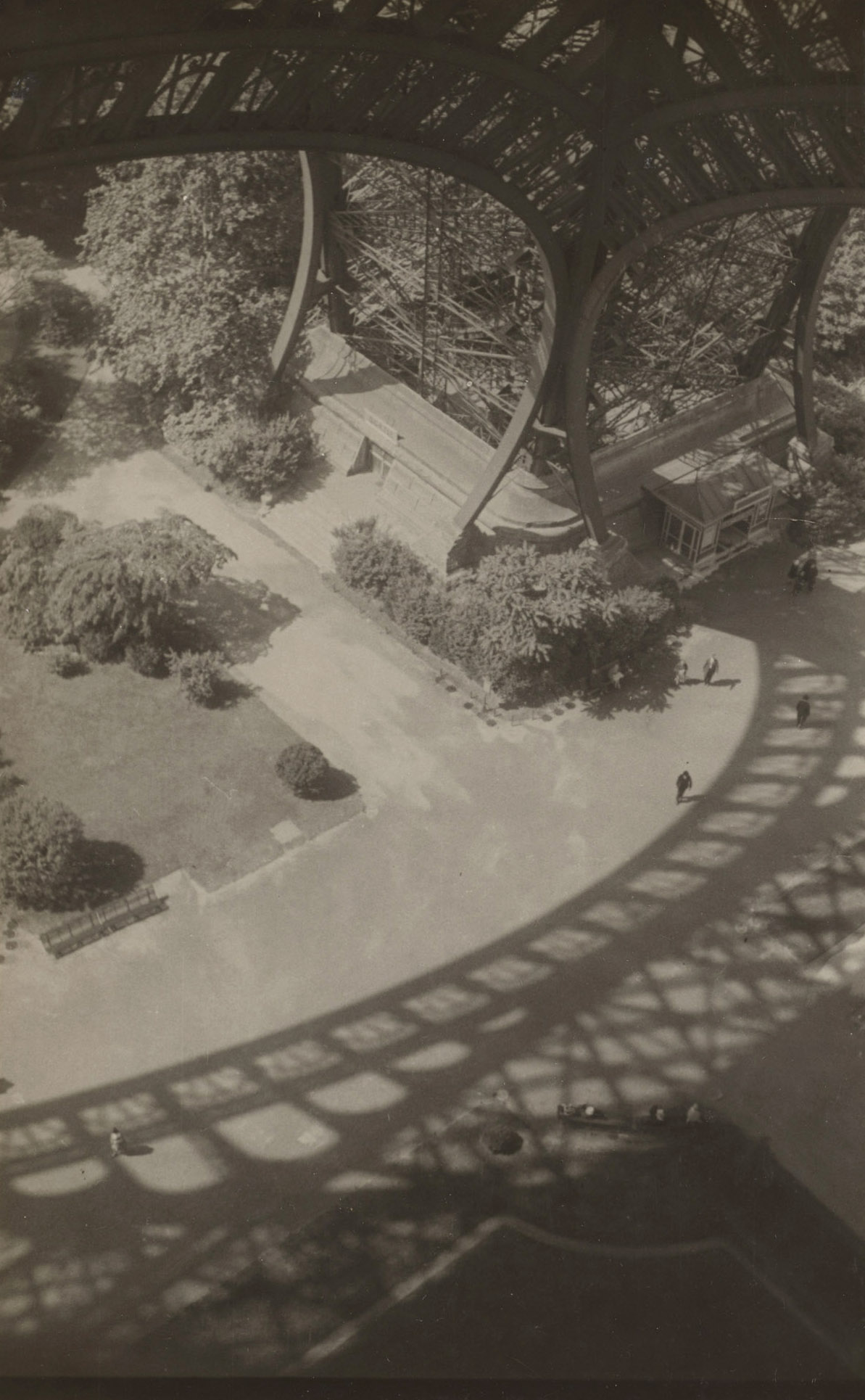
“Of the seventy photocollages Albers made at this time, more than half feature but two photographic prints: their placement reveals both formal innovation and a sensitivity to the unique characteristics of the individual photographs. Albers’s photographs of the Eiffel Tower, made during a summer break from teaching, suggest his attentiveness to the range of possibilities offered by his Leica, and the close relationship between his work and that of his contemporaries. Both images in his collage feature plunging perspectives; the sunlight and shadow in the image on the left draw our attention to the diminutive figures below. Albers was not a particularly fastidious printer, yet he was surely attuned to the fact that every tone in the photograph on the right exists on the continuum of tones between the highlights and shadows on the left. Lest the viewer suspect that these are purely mechanical byproducts of the process, Albers trims each image with a subtly but noticeably irregular hand, underscoring the artist’s creative agency. This marriage of industry and craft was a hallmark of the Bauhaus. To further emphasise the aesthetic, non-documentary function of these photographs, Albers anchors them at the top left of his board, pointedly shifting the viewer’s perspective.”

Sarah Hermanson Meister. “Josef Albers: An Open Mind for the Newer and Nearer,” from One and One Is Four: The Bauhaus Photocollages of Josef Albers, Museum of Modern Art, New York, 2016, p. 14.


Josef Albers (American born Germany, 1888-1976) 'Paris, Eiffel Tower' 1929/1932 (detail)


Josef Albers (American born Germany, 1888-1976)
Paris, Eiffel Tower (detail)
1929/1932
Gelatin silver prints mounted to board
11 5/8 × 16 3/8″ (29.5 × 41.6cm) overall
The Museum of Modern Art, New York
Acquired through the generosity of Jo Carole and Ronald S. Lauder, and Jon L. Stryker
© 2016 The Josef and Anni Albers Foundation / Artists Rights Society (ARS), New York
Photo: John Wronn


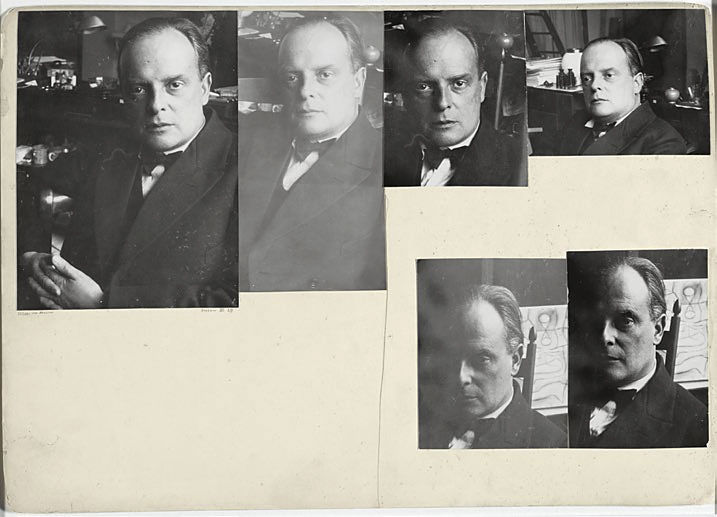
Josef Albers (American born Germany, 1888-1976) 'Paul Klee in his studio, Dessau, November 1929'


Josef Albers (American born Germany, 1888-1976)
Paul Klee in his studio, Dessau, November 1929
November 1929
Gelatin silver prints mounted to board
11 5/8 × 16 3/8″ (29.5 × 41.6cm) overall
The Museum of Modern Art, New York
Acquired through the generosity of Jo Carole and Ronald S. Lauder, and Jon L. Stryker, 2015
© 2016 The Josef and Anni Albers Foundation / Artists Rights Society (ARS), New York
Photo: John Wronn


Josef Albers (American born Germany, 1888-1976). 'Paul Klee, Dessau, November 1929' 1929/1932


Josef Albers (American born Germany, 1888-1976)
Paul Klee, Dessau, November 1929
1929/1932
Gelatin silver prints mounted to board
11 11/16 x 16 7/16″ (29.7 x 41.8cm) overall
The Museum of Modern Art, New York
Gift of The Josef and Anni Albers Foundation
© 2016 The Josef and Anni Albers Foundation / Artists Rights Society (ARS), New York
Photo: John Wronn


Josef Albers (American born Germany, 1888-1976). 'Paul Klee, Dessau' 1929/1932 (detail)


Josef Albers (American born Germany, 1888-1976)
Paul Klee, Dessau, November 1929 (detail)
1929/1932
Gelatin silver prints mounted to board
11 11/16 x 16 7/16″ (29.7 x 41.8cm) overall
The Museum of Modern Art, New York
Gift of The Josef and Anni Albers Foundation
© 2016 The Josef and Anni Albers Foundation / Artists Rights Society (ARS), New York
Photo: John Wronn


Josef Albers (American born Germany, 1888-1976) 'Amédée Ozenfant, summer 1931'


Josef Albers (American born Germany, 1888-1976)
Amédée Ozenfant, summer 1931
1931
Gelatin silver prints mounted to board
11 5/8 × 16 3/8″ (29.5 × 41.6cm) overall
The Museum of Modern Art, New York
© 2016 The Josef and Anni Albers Foundation / Artists Rights Society (ARS), New York
Photo: John Wronn


Josef Albers (American born Germany, 1888-1976) 'Vasily Kandinsky, master on the terrace at Hannes Meyer’s, spring 1929; May 1930'


Josef Albers (American born Germany, 1888-1976)
Vasily Kandinsky, master on the terrace at Hannes Meyer’s, spring 1929; May 1930
1929/1930
Gelatin silver prints mounted to board
11 5/8 × 16 3/8″ (29.5 × 41.6cm) overall
The Museum of Modern Art, New York
© 2016 The Josef and Anni Albers Foundation / Artists Rights Society (ARS), New York
Photo: John Wronn


Josef Albers (American born Germany, 1888-1976). 'Marli Heimann, All During an Hour' 1931/1932


Josef Albers (American born Germany, 1888-1976)
Marli Heimann, All During an Hour
1931/1932
Gelatin silver prints mounted to board
11 11/16 x 16 7/16″ (29.7 x 41.8cm) overall
The Museum of Modern Art, New York
Gift of The Josef and Anni Albers Foundation, 1988
© 2016 The Josef and Anni Albers Foundation / Artists Rights Society (ARS), New York
Photo: John Wronn


Josef Albers (American born Germany, 1888-1976) 'Oskar Schlemmer, April 1929; Schlemmer in the Bauhaus Masters' Council, 1928; Schlemmer with Hans Wittwer, Ernst Kállai, and Marianne Brandt, Preliminary Course Exhibition, 1927/28; Schlemmer and Tut, summer 1928; Schlemmer, April 1930; Schlemmer, 1928' 1927/1929


Josef Albers (American born Germany, 1888-1976)
Oskar Schlemmer, April 1929; Schlemmer in the Bauhaus Masters’ Council, 1928; Schlemmer with Hans Wittwer, Ernst Kállai, and Marianne Brandt, Preliminary Course Exhibition, 1927/28; Schlemmer and Tut, summer 1928; Schlemmer, April 1930; Schlemmer, 1928
1927/1929
Gelatin silver prints mounted on board
11 5/8 × 16 3/8″ (29.5 × 41.6cm) overall
Acquired through the generosity of Jo Carole and Ronald S. Lauder, and Jon L. Stryker
© 2016 The Josef and Anni Albers Foundation / Artists Rights Society (ARS), New York
Photo: John Wronn


Josef Albers (American born Germany, 1888-1976) 'Oskar Schlemmer, April 1929; Schlemmer in the Bauhaus Masters' Council, 1928; Schlemmer with Hans Wittwer, Ernst Kállai, and Marianne Brandt, Preliminary Course Exhibition, 1927/28; Schlemmer and Tut, summer 1928; Schlemmer, April 1930; Schlemmer, 1928' 1927/1929 (detail)


Josef Albers (American born Germany, 1888-1976)
Oskar Schlemmer, April 1929; Schlemmer in the Bauhaus Masters’ Council, 1928; Schlemmer with Hans Wittwer, Ernst Kállai, and Marianne Brandt, Preliminary Course Exhibition, 1927/28; Schlemmer and Tut, summer 1928; Schlemmer, April 1930; Schlemmer, 1928 (detail)
1927/1929
Gelatin silver prints mounted on board
11 5/8 × 16 3/8″ (29.5 × 41.6cm) overall
Acquired through the generosity of Jo Carole and Ronald S. Lauder, and Jon L. Stryker
© 2016 The Josef and Anni Albers Foundation / Artists Rights Society (ARS), New York
Photo: John Wronn


Josef Albers (American, born Germany, 1888-1976) is a central figure in 20th-century art, both as a practitioner and as a teacher at the Bauhaus, Black Mountain College, and Yale University. Best known for his iconic series Homages to the Square, Albers made paintings, drawings, and prints and designed furniture and typography. The least familiar aspect of his extraordinary career is his inventive engagement with photography, which was only discovered after his death. The highlight of this work is undoubtedly the photocollages featuring photographs he made at the Bauhaus between 1928 and 1932. At once expansive and restrained, this remarkable body of work anticipates concerns that Albers would pursue throughout his career: seriality, perception, and the relationship between handcraft and mechanical production.

The first serious exploration of Albers’s photographic practice occurred in a modest exhibition at MoMA in 1988, The Photographs of Josef Albers. In 2015, the Museum acquired 10 photocollages by Albers – adding to the two donated by the Josef and Anni Albers Foundation almost three decades ago – making its collection the most significant anywhere outside the Foundation. This installation celebrates both this landmark acquisition and the publication of One and One Is Four: The Bauhaus Photocollages of Josef Albers, which focuses exclusively on this deeply personal and inventive aspect of Albers’s work and makes many of these photocollages available for the first time.

Book

The Museum of Modern Art announces the release of One and One Is Four: The Bauhaus Photocollages of Josef Albers, the first publication to reproduce all 70 photocollages created by Josef Albers at the Bauhaus using photographs he made between 1928 and 1932. Hailed in his own lifetime as among the most important figures of 20th-century art, both as a practitioner and as a teacher at the Bauhaus, Black Mountain College, and Yale University, Albers (1888-1976) achieved widespread acclaim across a range of mediums, from glassworks and furniture design to printmaking and painting. Yet Albers’s engagement with modernist photography remained largely hidden until after his death, and it is only now that the entire series of unique photocollages the artist produced at the famed art school – before he and his wife fled Nazi Germany for the US – has been published together, many for the first time. At once expansive and restrained, this remarkable body of work anticipates concerns that Albers would pursue throughout his career: seriality, perception, and the relationship between handcraft and mechanical production.

One and One Is Four reveals an Albers at once familiar and unexpected – playful yet disciplined, personal yet enigmatic – through a body of work whose genius becomes fully apparent when considered as a whole. “Albers’s photocollages stand as remarkable contributions to the medium in their own right,” explains Sarah Hermanson Meister, Curator in the Department of Photography and the author of the book, “while they anticipate in important ways key concerns that would animate the artist’s work throughout his career, including his iconic Homages to the Square.” An essay by art historian and Bauhaus scholar Elizabeth Otto underscores the originality of Albers’s achievement through a survey of photocollages by Albers’s fellow Bauhäusler, and a contribution by MoMA conservator Lee Ann Daffner examines the artist’s materials to suggest new insights into these works, the discovery of which has been celebrated as one of the great art finds of the past century. The publication also includes a transcription of a lecture delivered by Albers at Black Mountain College in February 1943 titled “Photos as Photography and Photos as Art” – Albers’s sole public statement about the medium – and a preface by Nicholas Fox Weber, Executive Director of The Josef and Anni Albers Foundation.

The first serious exploration of Albers’s photographic practice occurred in a modest exhibition of 38 photographs organised by John Szarkowski at MoMA in 1988, The Photographs of Josef Albers. At the time, the Josef and Anni Albers Foundation donated two photocollages to the Museum. In 2015, the Museum acquired 10 additional photocollages by Albers, making its collection the most significant anywhere outside the Foundation. A new installation featuring 16 photocollages, on view from November 23, 2016, through April 2, 2017, in the Museum’s fifth-floor galleries, celebrates both the publication and this landmark acquisition. The exhibition is organised by Sarah Meister with Kristen Gaylord, Beaumont and Nancy Newhall Curatorial Fellow, Department of Photography. The exhibition is supported by the Annual Exhibition Fund.

Press release from MoMA


Josef Albers (American born Germany, 1888-1976) 'Mannequins' c. 1930


Josef Albers (American born Germany, 1888-1976)
Mannequins
c. 1930
Gelatin silver prints mounted to board
16 3/8 x 11 5/8″ (41.6 x 29.5cm) overall
The Museum of Modern Art, New York
© 2016 The Josef and Anni Albers Foundation / Artists Rights Society (ARS), New York
Photo: John Wronn


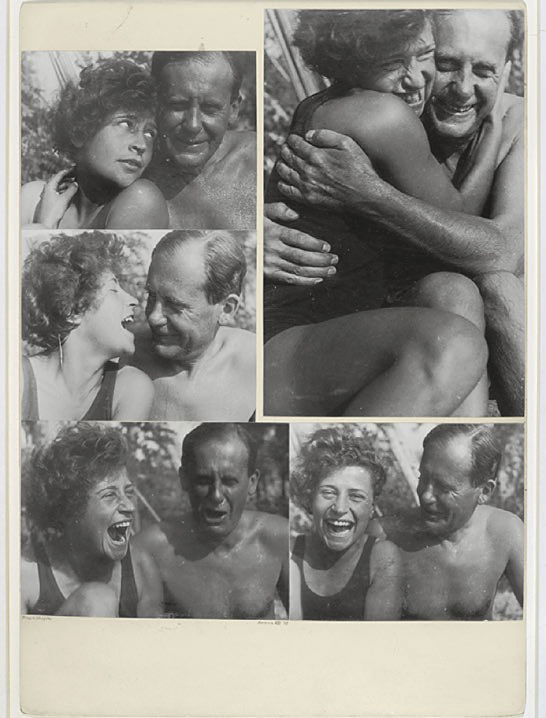
Josef Albers (American born Germany, 1888-1976) 'Walter Gropius and Schifra Canavesi, Ascona August 1930'


Josef Albers (American born Germany, 1888-1976)
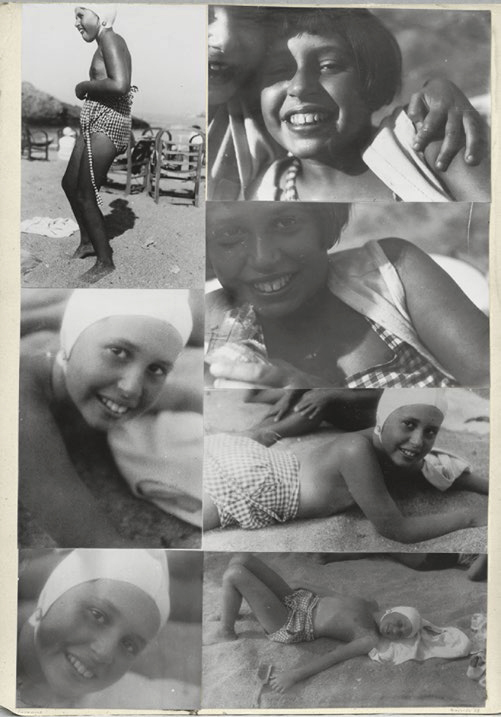
Walter Gropius and Schifra Canavesi, Ascona, August 1930
August 1930
Gelatin silver prints mounted to board
16 3/8 x 11 5/8″ (41.6 x 29.5cm) overall
The Museum of Modern Art, New York
© 2016 The Josef and Anni Albers Foundation / Artists Rights Society (ARS), New York
Photo: John Wronn


Josef Albers (American born Germany, 1888-1976) 'Susanne, Biarritz, August 1929'


Josef Albers (American born Germany, 1888-1976)
Susanne, Biarritz, August 1929
August 1929
Gelatin silver prints mounted to board
16 3/8 x 11 5/8″ (41.6 x 29.5cm) overall
The Museum of Modern Art, New York
© 2016 The Josef and Anni Albers Foundation / Artists Rights Society (ARS), New York
Photo: John Wronn


Josef Albers (American born Germany, 1888-1976) 'Mrs. Lewandowski of Munich, Ascona, August 1930'


Josef Albers (American born Germany, 1888-1976)
Mrs. Lewandowski of Munich, Ascona, August 1930
August 1930
Gelatin silver prints mounted to board
16 3/8 x 11 5/8″ (41.6 x 29.5cm) overall
The Museum of Modern Art, New York
© 2016 The Josef and Anni Albers Foundation / Artists Rights Society (ARS), New York
Photo: John Wronn


Josef Albers (American born Germany, 1888-1976) 'Road, Paznauntal, July 1930'


Josef Albers (American born Germany, 1888-1976)
Road, Paznauntal, July 1930
July 1930
Gelatin silver prints mounted to board
16 3/8 x 11 5/8″ (41.6 x 29.5cm) overall
The Museum of Modern Art, New York
© 2016 The Josef and Anni Albers Foundation / Artists Rights Society (ARS), New York
Photo: John Wronn


Josef Albers (American born Germany, 1888-1976) 'Hotel staircases, Geneva, 1929'


Josef Albers (American born Germany, 1888-1976)
Hotel staircases, Geneva, 1929
1929
Gelatin silver prints mounted to board
11 5/8 × 16 3/8″ (29.5 × 41.6cm) overall
The Museum of Modern Art, New York
Acquired through the generosity of Jo Carole and Ronald S. Lauder, and Jon L. Stryker, 2015
© 2016 The Josef and Anni Albers Foundation / Artists Rights Society (ARS), New York
Photo: John Wronn


Josef Albers (American born Germany, 1888-1976) 'Flooded trees and forest' c. 1931


Josef Albers (American born Germany, 1888-1976)
Flooded trees and forest
c. 1931
Gelatin silver prints mounted to board
11 5/8 × 16 3/8″ (29.5 × 41.6cm) overall
The Museum of Modern Art, New York
© 2016 The Josef and Anni Albers Foundation / Artists Rights Society (ARS), New York
Photo: John Wronn


Josef Albers (American born Germany, 1888-1976) 'Dessau, end of winter, 1931'


Josef Albers (American born Germany, 1888-1976)
Dessau, end of winter, 1931
1931
Gelatin silver prints mounted to board
11 5/8 × 16 3/8″ (29.5 × 41.6cm) overall
The Museum of Modern Art, New York
Acquired through the generosity of Jo Carole and Ronald S. Lauder, and Jon L. Stryker, 2015
© 2016 The Josef and Anni Albers Foundation / Artists Rights Society (ARS), New York
Photo: John Wronn


Josef Albers (American born Germany, 1888-1976) 'Brackish water, Biarritz, August 1929'


Josef Albers (American born Germany, 1888-1976)
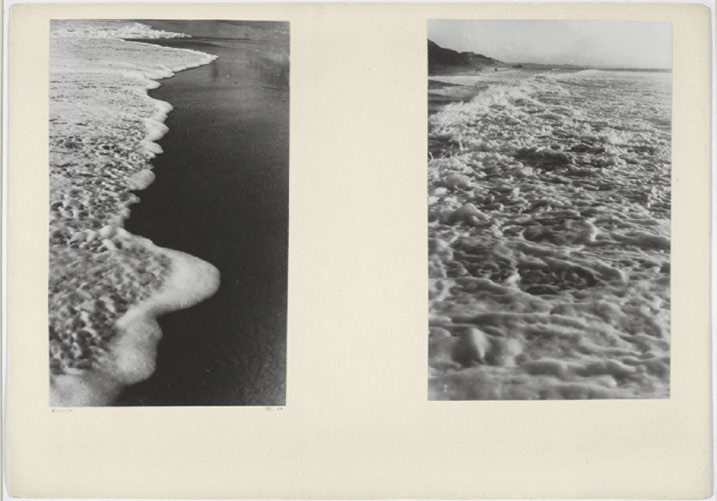
Brackish water, Biarritz, August 1929
August 1929
Gelatin silver prints mounted to board
11 5/8 × 16 3/8″ (29.5 × 41.6cm) overall
The Museum of Modern Art, New York
© 2016 The Josef and Anni Albers Foundation / Artists Rights Society (ARS), New York
Photo: John Wronn


Josef Albers (American born Germany, 1888-1976) 'Biarritz, August 1929'


Josef Albers (American born Germany, 1888-1976)
Biarritz, August 1929
August 1929
Gelatin silver prints mounted to board
11 5/8 × 16 3/8″ (29.5 × 41.6cm) overall
The Museum of Modern Art, New York
Acquired through the generosity of Jo Carole and Ronald S. Lauder, and Jon L. Stryker, 2015
© 2016 The Josef and Anni Albers Foundation / Artists Rights Society (ARS), New York
Photo: John Wronn


The Museum of Modern Art
11 West 53 Street
New York, NY 10019
Phone: (212) 708-9400

Opening hours:
10.30am – 5.30pm
Open seven days a week

MoMA website

LIKE ART BLART ON FACEBOOK

Back to top