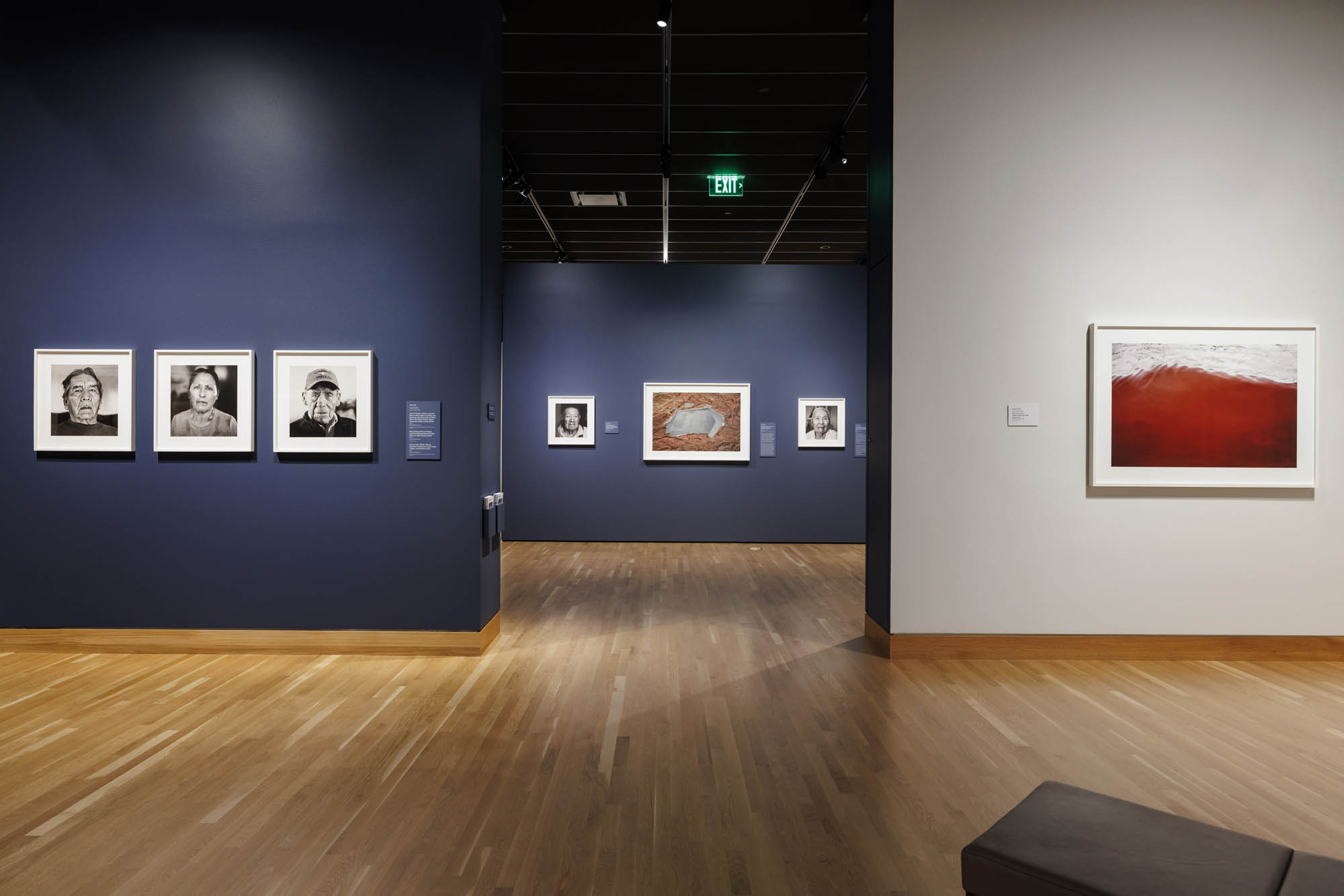
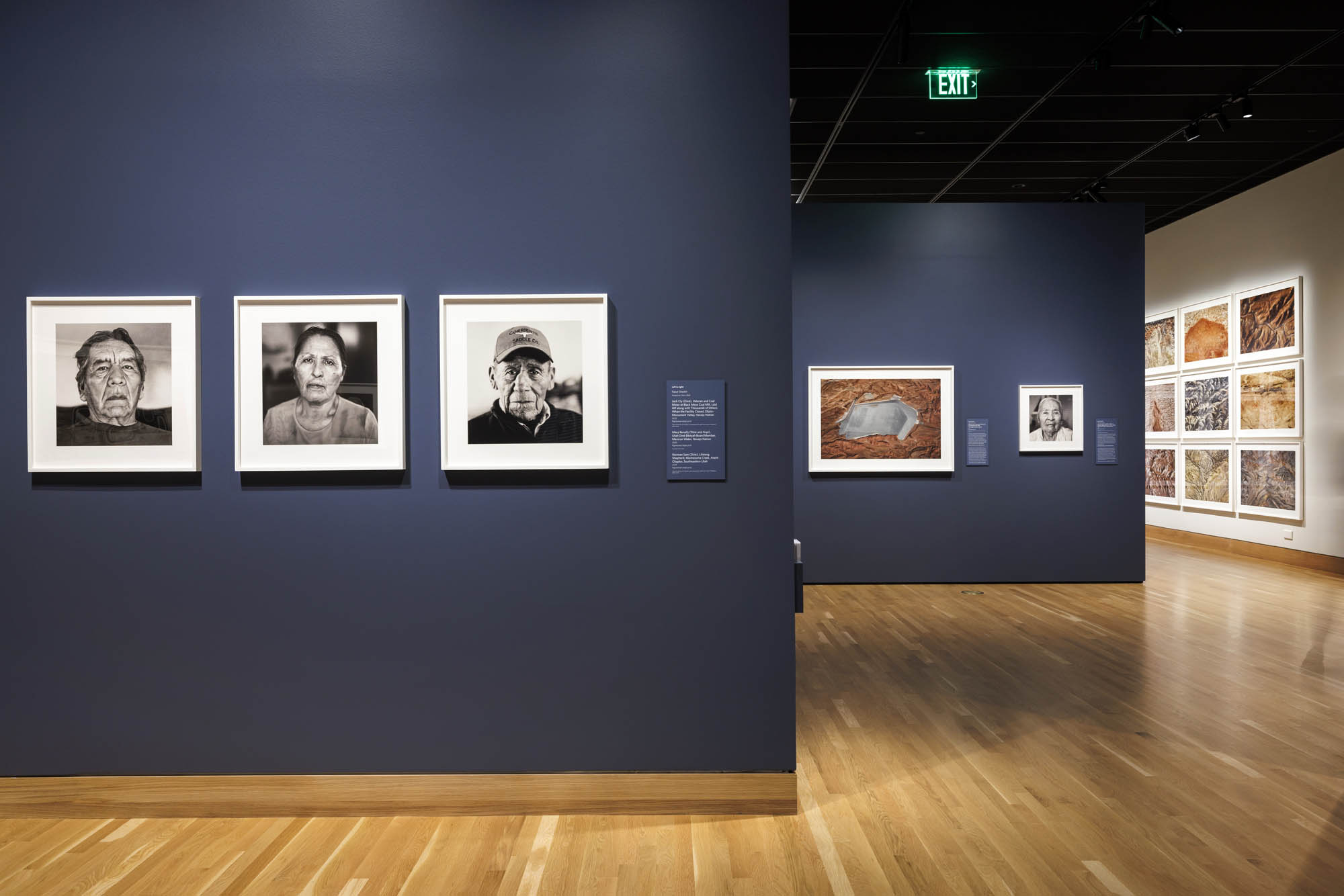
Exhibition: ‘A Different Light – First Photographs of Aotearoa’ at the Auckland War Memorial Museum, New Zealand

Exhibition dates: 11th April – 1st September 2024

This exhibition is a collaboration between Tāmaki Paenga Hira Auckland War Memorial Museum, Alexander Turnbull Library, and Hocken Collections Uare Taoka o Hākena


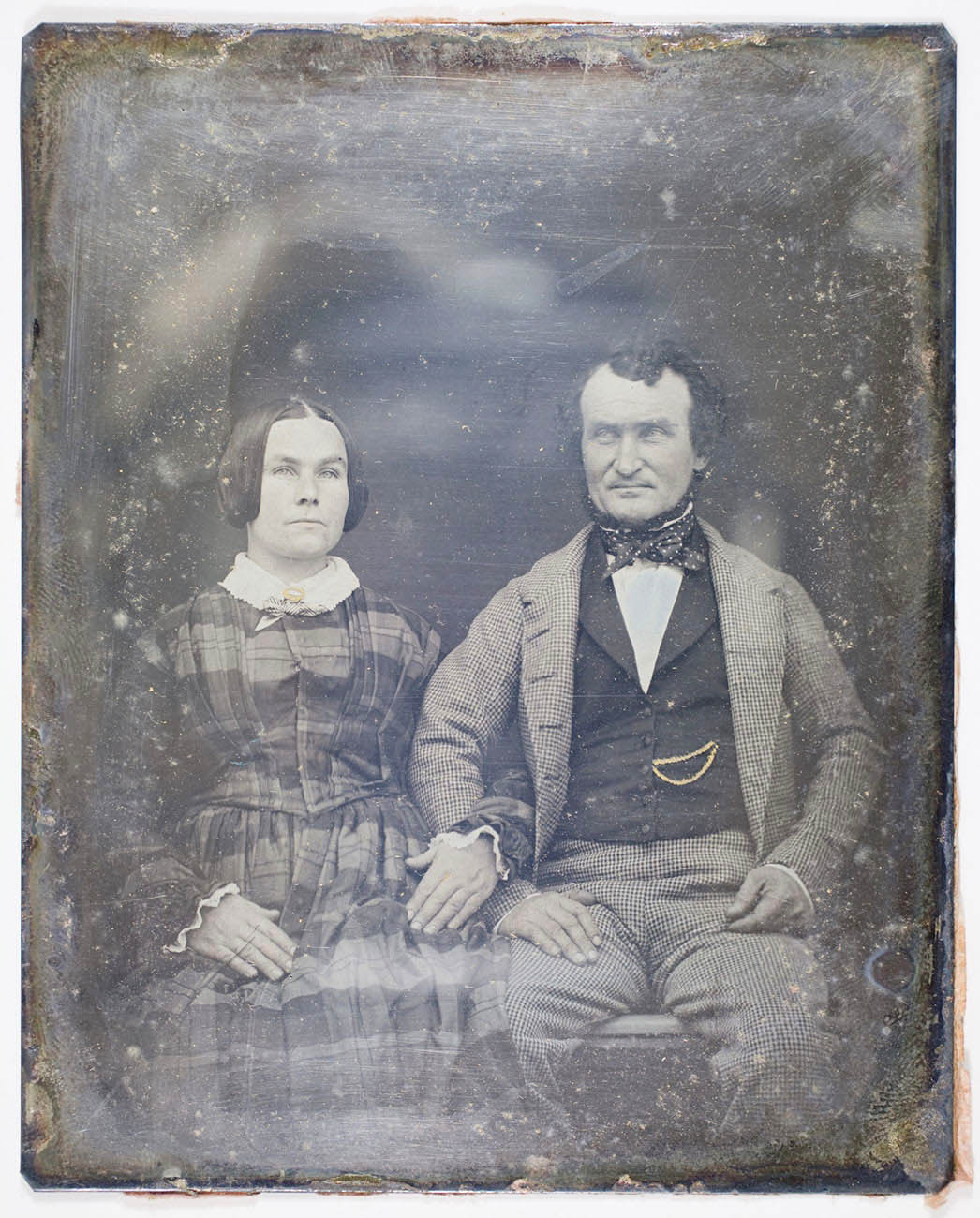
Hartley Webster (New Zealand, 1818-1906) (Attributed to) 'Jane and Alexander Alison' 30 June 1852


Hartley Webster (New Zealand, 1818-1906) (Attributed to)
Jane and Alexander Alison
30 June 1852
Half-plate daguerreotype, passe-partout mount
130 mm. x 100 mm. (plate)
Auckland Museum Collection


Hartley Webster was Auckland’s first resident professional photographer, but despite his longevity and his unique role in the growth of photography in 19th century New Zealand his death in 1906 passed without an obituary.

~ Keith Giles


Then and now

I went to the annual Melbourne Rare Book Fair at the University of Melbourne recently. There, albums of early photographs of Aotearoa were available to purchase for nearly AUD$7,000. These days, colonial photographs from both Australia and New Zealand are only for those that can afford them – to on sell, to secrete away in collections, to act as memento mori.

The colonial settler lens focused on landscape photography and portrait photographs of white settlers and Indigenous people, Māori “captured” by the camera. Professor Angela Wanhalla observes that, “Photographs are complicit in colonialism because they were used to document the impacts of migration, settlement and land transformation.”1

Through the use of material culture studies – an interdisciplinary field that examines the relationship between people and their things, the making, history, preservation, and interpretation of objects – we can study colonial photographs and the albums that hold them in order to understand how photographs are complicit in colonialism, and how colonial photographs can become a “rich sources for historians trying to uncover and understand late-nineteenth-century life.”2

Historian Jules Prown outlined material culture and a suggested approach. He wrote:

“Material culture as a study is based upon the obvious fact that the existence of a man-made object is concrete evidence of the presence of a human intelligence operating at a time of fabrication. The underlying premise is that objects made or modified by man reflect, consciously or unconsciously, directly or indirectly, the beliefs of individuals who made, commissioned, purchased, or used them, and by extension the beliefs of the larger society to which they belonged.”3


Colonial photographers and their photographs then, reflect the dominant hegemonic, patriarchal society to which they belong. According to Jarrod Hore they were engaged in “settler colonial work” because they “mobilised and visually reorganised local environments in the service of broader settler colonial imperatives.”4

Evidence of this reorganisation and the loss of individual and cultural identity can be found in the photographs Māori people. While the names of the Pākehā commercial photographic studios that took photographs of Māori might be known, the identity of the Māori subjects were often not recorded. Sapeer Mayron observes that, “Māori in particular were often photographed and their names and identities not preserved, called instead “Māori celebrities” and dressed with props in the artists’ studios” while in the same article Shaun Higgins, Auckland Museum pictures curator and curator of this exhibition observes, “When you’re documenting, you’re not this invisible entity that’s just documenting everything, you are making choices. You are, in effect, not documenting neutrally, but with your own agenda.”5 Again, photographers using material culture to record what was around them, reflecting, “consciously or unconsciously, directly or indirectly, the beliefs of individuals who made, commissioned, purchased, or used them, and by extension the beliefs of the larger society to which they belonged.”

But while Pākehā commercial photography captured Māori as ethnographic photographic subjects, conversely the Māori themselves were not always passive subjects in their own representation, posing for the camera as they wanted to be seen, or using the camera themselves to document family and culture. Indeed (and applicable to early New Zealand photographs as well as early Australian ones), academics such as the Australian Jane Lydon in her important books Eye Contact: Photographing Indigenous Australians (2005) and Photography, Humanitarianism, Empire (2016) note that these photographs were not solely a tool of colonial exploitation. Lydon articulates an understanding in Eye Contact that the residents of Coranderrk, an Aboriginal settlement near Healsville, Melbourne, “had a sophisticated understanding of how they were portrayed, and they became adept at manipulating their representations.”

Professor Angela Wanhalla also enunciates that the relationship between the camera and the Māori whānau (extended family group) is multilayered and complicated:

“At different times, and depending on the context, Māori embraced or rejected photography. Because of its colonial implications, Māori whānau and communities have a complicated relationship with the camera. But, as scholars Ngarino Ellis and Natalie Robertson argue, there is evidence it was regarded as friend as much as foe. …

Colonial photographs are culturally dynamic. Their integration into Māori life means they do not just depict relationships but are imbued with them. As such, photographs are taonga (treasures) and connect people across time and space.”6


Then and now, through the photographs ‘materiality’ and their role as sensory things that are held and used as well as viewed – the photographs imbued with the spirit of people long past – images of Indigenous ancestors taken by Māori and Pākehā act as talisman against the vicissitudes of colonial oppression.

They picture a land and culture which has irrevocably changed but the photographs can can still bring past stories into present life, which then regenerate the spirit of the ancestors into the presence of contemporary Māori families. With the recent acts of regression against the Māori people by the current New Zealand government, any object, any taonga (treasures) which connect people across time and space and make them stronger, is to be valued, especially if the photographs upend the tropes of colonial power and control.

As Joyce Campbell observes of these photographs, “The living connection to the sitter was the same as to a carved ancestor, or any other manifestation… It is easy to see that how they lived intersects with how we live now, and also to recognize the ways in which it does not. If these photographs are technically rough, or worn, we easily look past all that to engage with an image of another person or place. The images defy the notion that we need hyper-reality, immersion, massive scale, vivid colour or idealised beauty in order to achieve psychic proximity.”

In psychic proximity and unity, across time.

Strength people, strength. Hope, spirit, respect, strength.

Dr Marcus Bunyan


1/ Extract from Professor Angela Wanhalla. “The past in a different light: how Māori embraced – and rejected – the colonial camera lens,” on The Conversation website April 11, 2024 [Online] Cited 10/08/2024

2/ Jill Haley. “Otago’s Albums: Photographs, Community and Identity,” in New Zealand Journal of History, 52, 1, 2018, p. 24 on the Academia website 2018 [Online] Cited 28/08/2024

3/ Jules Prown, ‘Mind in Matter: An Introduction to Material Culture Theory and Method’, Winterthur Portfolio, 17, 1 (1982), pp. 1-2 quoted in Haley, Op. cit., p. 24.

4/ Jarrod Hore. “Capturing Terra Incognita: Alfred Burton, ‘Maoridom’ and Wilderness in the King Country,” in Australian Historical Studies Volume 50, Issue 2, 2019, pp. 188-211 quoted in Professor Angela Wanhalla Op. cit.,

5/ Shaun Higgins, Auckland Museum pictures curator quoted in Sapeer Mayron. “A Different Light: A chance to see 19th-century Aotearoa as our first photographers saw it,” on The Post website April 7, 2024 [Online] Cited 28/06/2024.

6/ Professor Angela Wanhalla, Op. cit.,

7/ Joyce Campbell. “A Different Light: First Photographs of Aotearoa,” on the New Zealand Review of Books website May 14, 2024 [Online] Cited 23/06/2024


Many thankx to the Auckland War Memorial Museum for allowing me to publish the photographs in the posting. Please click on the photographs for a larger version of the image.


“For Māori there was another dimension. The living connection to the sitter was the same as to a carved ancestor, or any other manifestation. Wharenui would eventually feature photographs of ancestors located where at one time they would have been depicted in other forms. But their presence has the same significance.” …

In Natalie Marshall’s essay ‘Camera Fiends and Snapshooters: Early Amateur Photography in Aotearoa’, it is the immediacy of photographs by James Coutts Crawford, Henry Wright and Robina Nicol that ‘pricks’ me, as Roland Barthes would have it. These photographers working far from the global centre of their craft are freed to explore domesticity and love. Their photographs are suffused with intimacy, warmth, pregnancy, yawning and easy comradery. It is easy to see that how they lived intersects with how we live now, and also to recognize the ways in which it does not. If these photographs are technically rough, or worn, we easily look past all that to engage with an image of another person or place. The images defy the notion that we need hyper-reality, immersion, massive scale, vivid colour or idealised beauty in order to achieve psychic proximity.

Joyce Campbell. “A Different Light: First Photographs of Aotearoa,” on the New Zealand Review of Books website May 14, 2024 [Online] Cited 23/06/2024


A Different Light: First Photographs of Aotearoa – from the curators

Hear from the curators of A Different Light: First Photographs of Aotearoa, from from Auckland Museum, Hocken Collections, and Alexander Turnbull Library, as they speak to some of their favourite objects from this new exhibition that explores the captivating evolution of photography in 19th-century New Zealand.


Witness the dawn of photography in Aotearoa New Zealand. Through precious, original photographs, explore its beginnings as an expensive luxury, through to becoming a part of everyday life.

Step into A Different Light: First Photographs of Aotearoa and explore the captivating evolution of photography in 19th-century New Zealand. Delve into the advances that took photography from its beginnings for an exclusive few in the mid-1800s, to being a part of daily life by the turn of the century.

Experience the 19th-century studio as you pose for your own digital Victorian portrait, and explore the wonder of this new technology that changed the way we see ourselves forever.

Featuring precious, original photographs from Auckland Museum, Hocken Collections, and Alexander Turnbull Library, this exhibition offers a unique glimpse into our visual heritage.

Text from the Auckland War Memorial Museum website


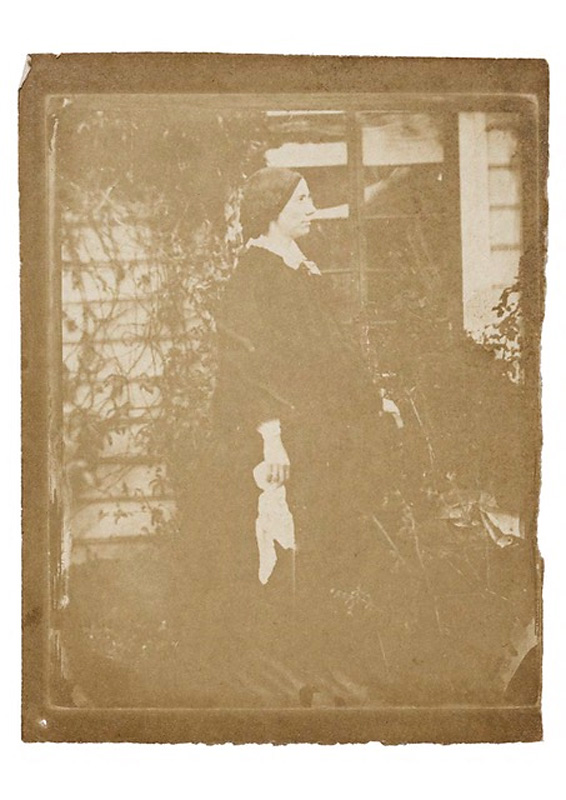
James Coutts Crawford (New Zealand born Scotland, 1817-1889) 'Jessie Crawford, probably outside the Crawfords' home in Thorndon, Wellington' c.  1859


James Coutts Crawford (New Zealand born Scotland, 1817-1889)
Jessie Crawford, probably outside the Crawfords’ home in Thorndon, Wellington
c.  1859
Salted paper print
143 × 110 mm
Alexander Turnbull Library


A rare image of a heavily pregnant Victorian woman, shot outdoors in a domestic garden.


James Coutts Crawford (New Zealand born Scotland, 1817-1889) 'Nurse Edgar [left] and Jessie Crawford' c. 1860


James Coutts Crawford (New Zealand born Scotland, 1817-1889)
Nurse Edgar [left] and Jessie Crawford
c. 1860
Salted paper print
Alexander Turnbull Library Collection


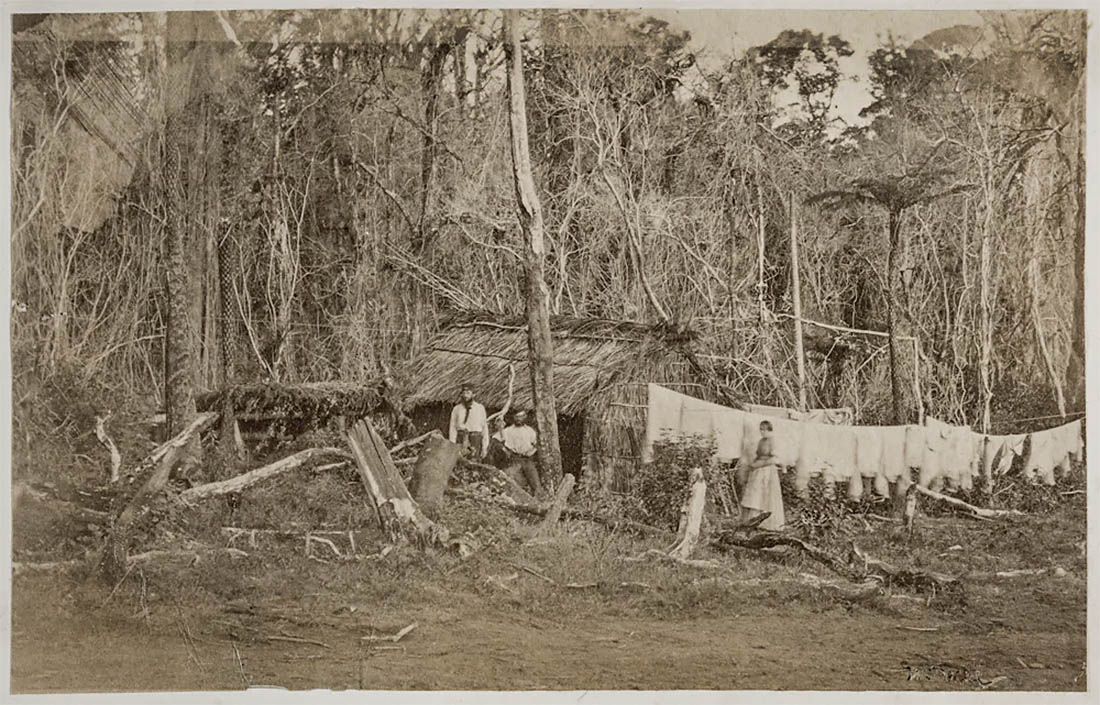
William Temple (New Zealand born Ireland, 1833-1919) 'The Bush at Razorback, Great North Road New Zealand' 1862-1863


William Temple (New Zealand born Ireland, 1833-1919)
The Bush at Razorback, Great North Road New Zealand
1862-1863
Tāmaki Paenga Hira Auckland War Memorial Museum


Medical officer with Imperial forces during New Zealand Wars; photographer. Born Co Monaghan, Ireland, son of William Temple MD and Anne Temple. Entered army service 1858, and served as Assistant Surgeon with the Royal Artillery in the Taranaki (1860-1861) and Waikato (1863-1865) campaigns. He was awarded the Victoria Cross for gallantry at Rangiriri. Died in London.

Text from the National Library of New Zealand website


“… every single photograph is taken with purpose. The photographer chooses what’s in the frame. There is always a bit of an edit in that regard.

“When you’re documenting, you’re not this invisible entity that’s just documenting everything, you are making choices. You are, in effect, not documenting neutrally, but with your own agenda.”

While many of the pictures have full captions detailing not only who took the photo but who is featured in it, some people’s names were lost – or possibly were never recorded at all, Higgins says.

Māori in particular were often photographed and their names and identities not preserved, called instead “Māori celebrities” and dressed with props in the artists’ studios.

“Sadly we sometimes know the studio, but we don’t know who they are, we don’t know answers to questions why they were taken. Did you walk away with your own picture, but did you know that that would then be sold to collectors for their albums?

“You might see someone and say, ‘Oh, they’re sitting with their taonga’. Well, not necessarily, they might be sitting with the studio’s prop and dressed up for a certain image.

“Photos like these are why throughout the exhibition you might see the question: Do you know who is in this picture? Higgins hopes with a bit of luck, some of the “orphan pictures” with no names might be identified.

“Our own institution and others play a part. We collect from collectors and photos end up in an institution with no name,” Higgins says.

“The best thing we can do is put them out and say, ‘Do you know who these people are?’ and hopefully we find out more about these orphan photographs that have made their journey through time in albums collected by largely white men.

“We don’t have answers, but we can pose the questions. I hope people walk away from an exhibition like this questioning some of the things they’ve seen and maybe looking at things in a different light.”

Shaun Higgins, Auckland Museum pictures curator quoted in Sapeer Mayron. “A Different Light: A chance to see 19th-century Aotearoa as our first photographers saw it,” on The Post website April 7, 2024 [Online] Cited 28/06/2024.


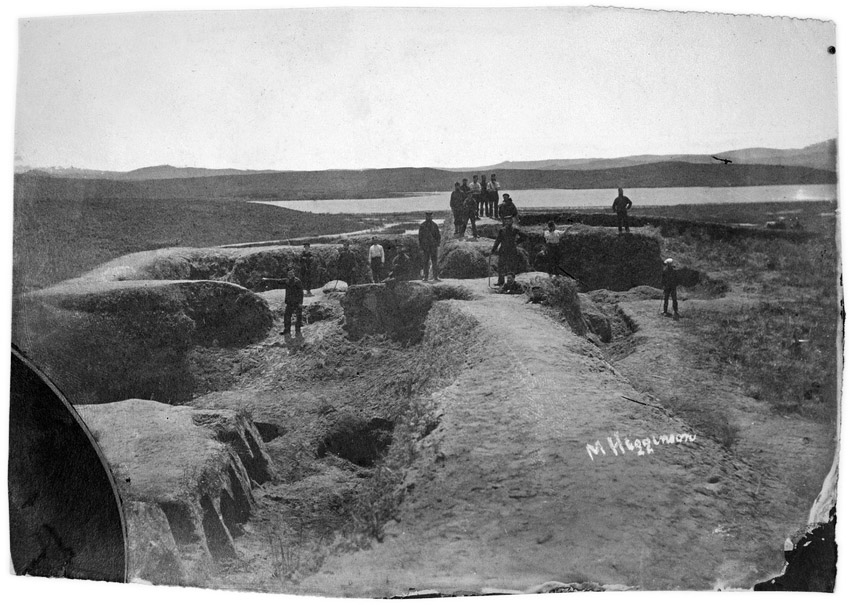
Montagu Higginson (English, 1840-1910) 'The Native Earthworks at Rangiriri partially destroyed' November 1863


Montagu Higginson (English, 1840-1910)
The Native Earthworks at Rangiriri partially destroyed
November 1863
Auckland Museum


In 2006 Auckland Museum acquired the album Photographs of the South Sea Islands; a photograph album featuring the work of a hitherto unknown photographer, one George Montagu John Higginson (Auckland War Memorial Museum 2006:28). Known commonly as Montagu Higginson (Illustrated London News vol. 045 XLV:91), this amateur photographer produced many images of  the Waikato campaign that are either new, or at the very least previously of unknown authorship.  There are also many images which cross over to other albums compiled by other photographers indicating the strong possibility of trading. This notion has been considered by Main and Turner (1993:10) with regard to other photographers such as Daniel Manders Beere.

Shaun Higgins. “Brothers in Glass: Montage Higginson and the Photographers of the Waikato War,” Auckland Museum Records, 2012


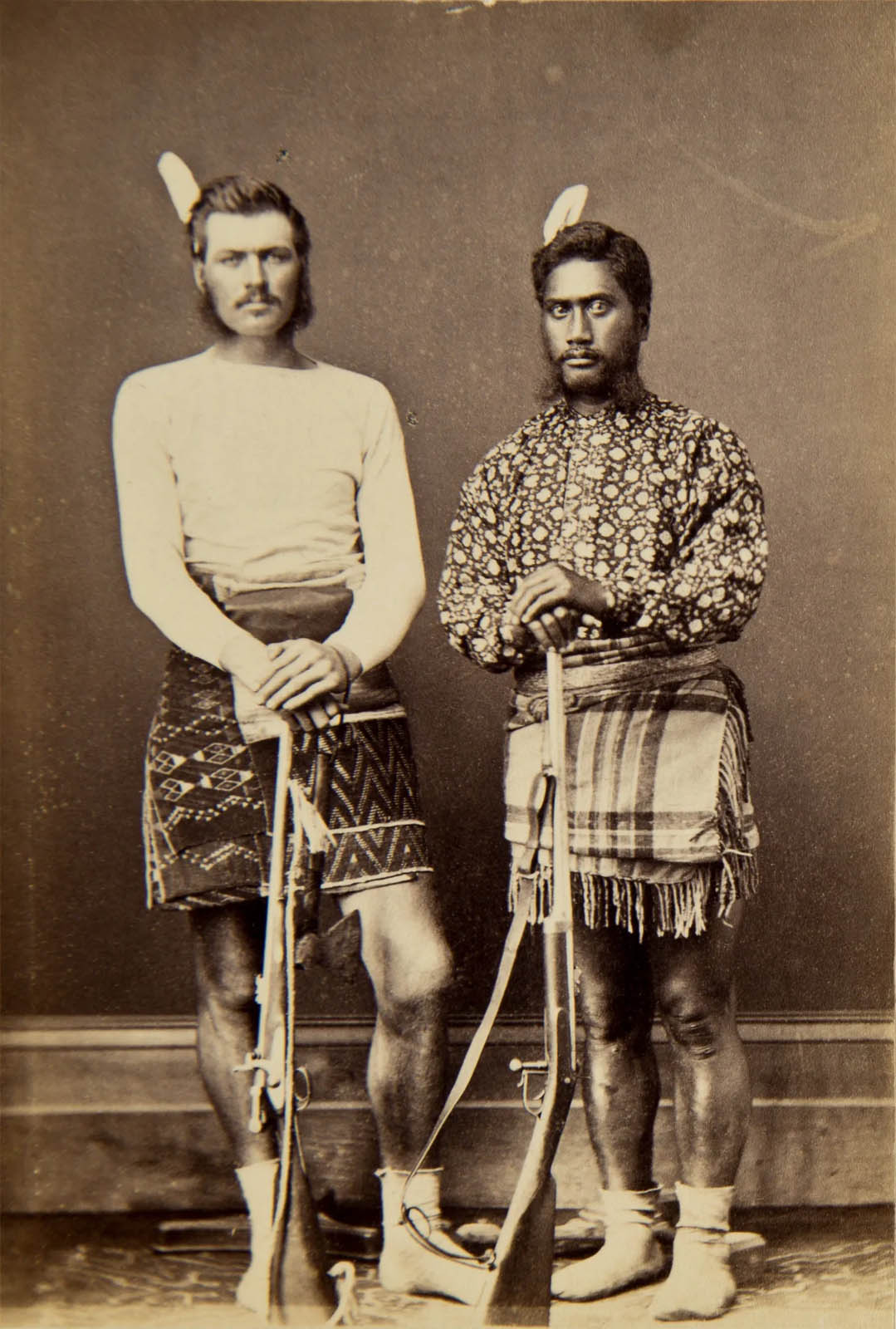
Batt & Richards (firm) (finished January 1874) 'Tom Adamson and Wiremu Mutumutu, Wanganui' c. 1867-1874


Batt & Richards (firm) (finished January 1874)
Tom Adamson and Wiremu Mutumutu, Wanganui
c. 1867-1874
Hocken


This studio carte de visite provides striking evidence of cultural exchange in the way of Māori and European fabrics and designs, with Tom Adamson on the left wearing a woven flax kaitaka with a geometric tāniko border, and Wiremu Mutumutu on the right wearing a fringed tartan rug, both in the manner of kilts. Adamson worked alongside Māori as a military scout and guide, hunting down dissidents in the dense native bush for pro-government forces during the New Zealand Wars. This service earned him a New Zealand Cross in 1876.


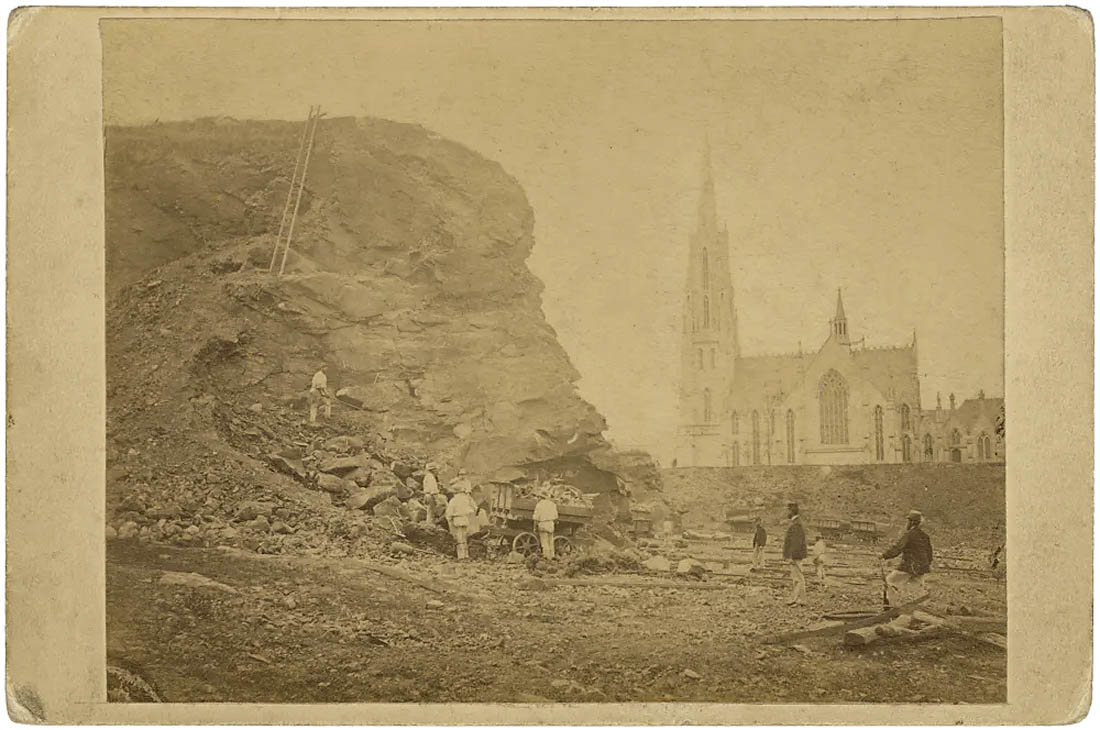
John McGregor (New Zealand born Scotland, 1831-1894) 'Bell Hill' c. 1875


John McGregor (New Zealand born Scotland, 1831-1894)
Bell Hill
c. 1875
Hocken Collections Uare Taoka o Hākena


Photographer, Stuart St, Dunedin, fl 1863-1884. Awarded first class certificate at The New Zealand Exhibition 1865 (Source: Photography in New Zealand / Hardwicke Knight and back of photograph). Died 12 Oct 1894, aged 63 years. 32 years in New Zealand, formerly of Glasgow, Scotland. Buried at Southern Cemetery, Dunedin (Source: Dunedin online cemetery database).


In 1848, two decades after a French inventor mixed daylight with a cocktail of chemicals to fix the view outside his window onto a metal plate, photography arrived in Aotearoa. How did these ‘portraits in a machine’ reveal Māori and Pākehā to themselves and to each other? Were the first photographs ‘a good likeness’ or were they tricksters? What stories do they capture of the changing landscape of Aotearoa?

From horses laden with mammoth photographic plates in the 1870s to the arrival of the Kodak in the late 1880s, New Zealand’s first photographs reveal Kīngi and governors, geysers and slums, battles and parties. They freeze faces in formal studio portraits and stumble into the intimacy of backyards, gardens and homes.

A Different Light brings together the extraordinary and extensive photographic collections of three major research libraries – Tāmaki Paenga Hira Auckland War Memorial Museum, Alexander Turnbull Library and Hocken Collections Uare Taoka o Hākena – to coincide with a touring exhibition of some of the earliest known photographs of Aotearoa.

Text from the Auckland War Memorial Museum website


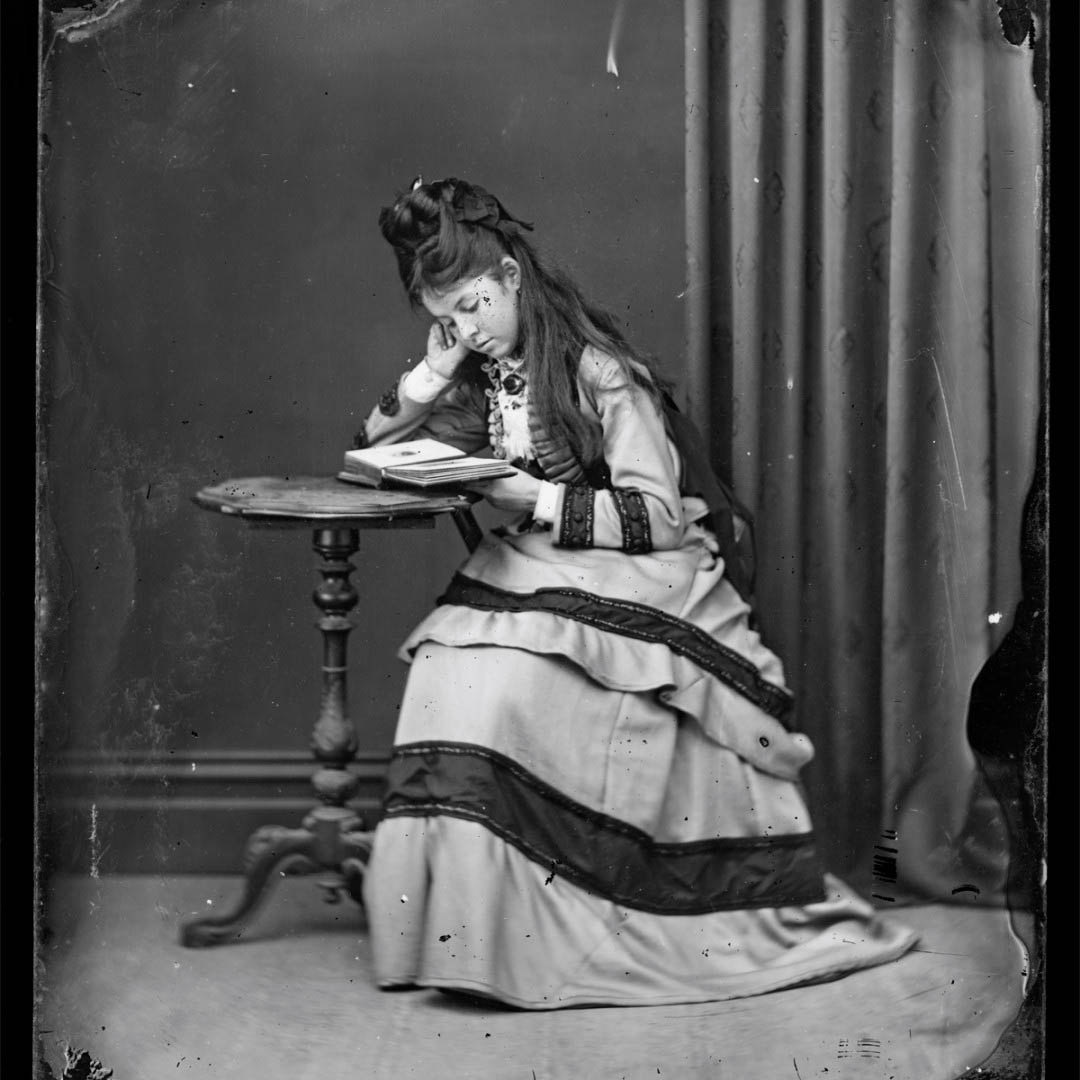
William James Harding (New Zealand born England, 1826-1899) 'Young woman looking at photograph album' c. 1870s


William James Harding (New Zealand born England, 1826-1899)
Young woman looking at photograph album
c. 1870s
Quarter-plate collodion silver glass negative
Alexander Turnbull Library Collection


William and Annie Harding arrived in New Zealand in 1855. Two brothers had already emigrated – John in 1842 and Thomas in 1848. The three brothers, and Annie, were followers of Emanuel Swedenborg, and strong supporters of the Total Abstinence Society. William and Annie settled in Wanganui, where William set up briefly as a cabinet-maker but in 1856 established a photographic studio. By the 1860s his studio was installed in a two-storeyed, corrugated-iron building on Ridgway Street.

Text from the Wikipedia website


William James Harding founded his studio in Wanganui in 1856. In 1889 he sold it to Alfred Martin, who had previously practiced in Christchurch. During his tenure, Harding occasionally hired out his studio to other photographers, and there are images in the 1/4 plate sequence which the Library also holds as cartes-de-visite by the photographers D Thomson and T Tuffin. Alfred Martin sold the business to Frank Denton in 1899. Denton in turn sold out to Mark Lampe around 1930, but retained Harding’s negatives, and Martin’s 10 x 8 and 10 x 12 negatives, himself.

Text from the National Library of New Zealand website


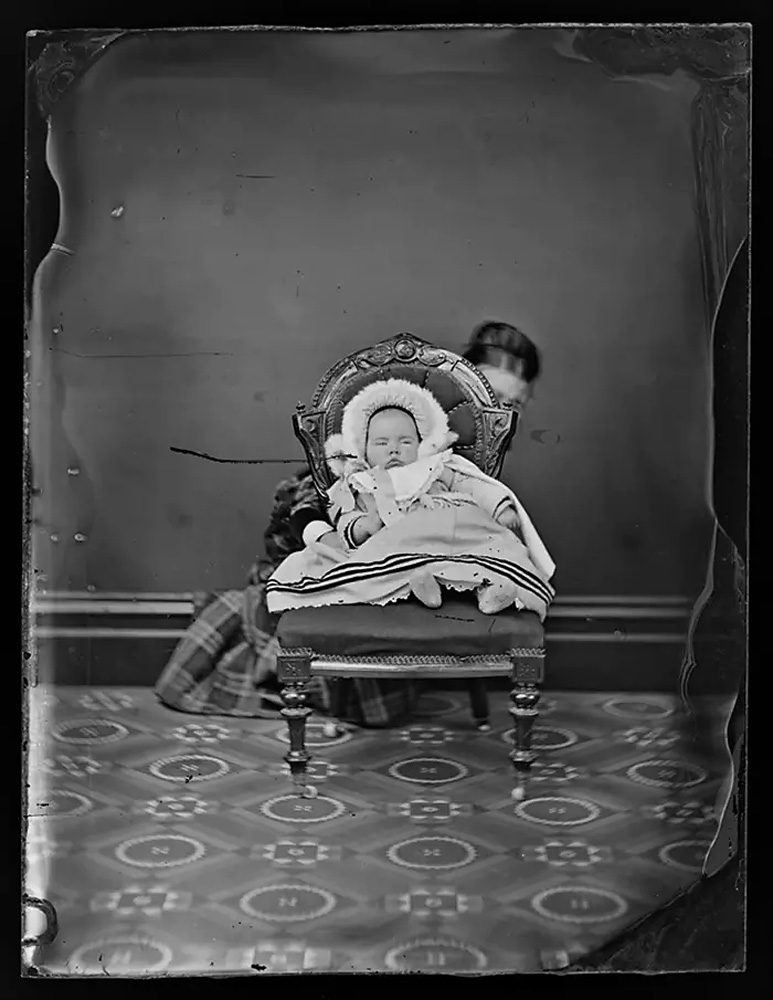
William James Harding (New Zealand born England, 1826-1899) 'Studio portrait of a woman and child' 1870s


William James Harding (New Zealand born England, 1826-1899)
Studio portrait of a woman and child
1870s
Reproduction from quarter-plate collodion silver glass negative
Alexander Turnbull Library Collection


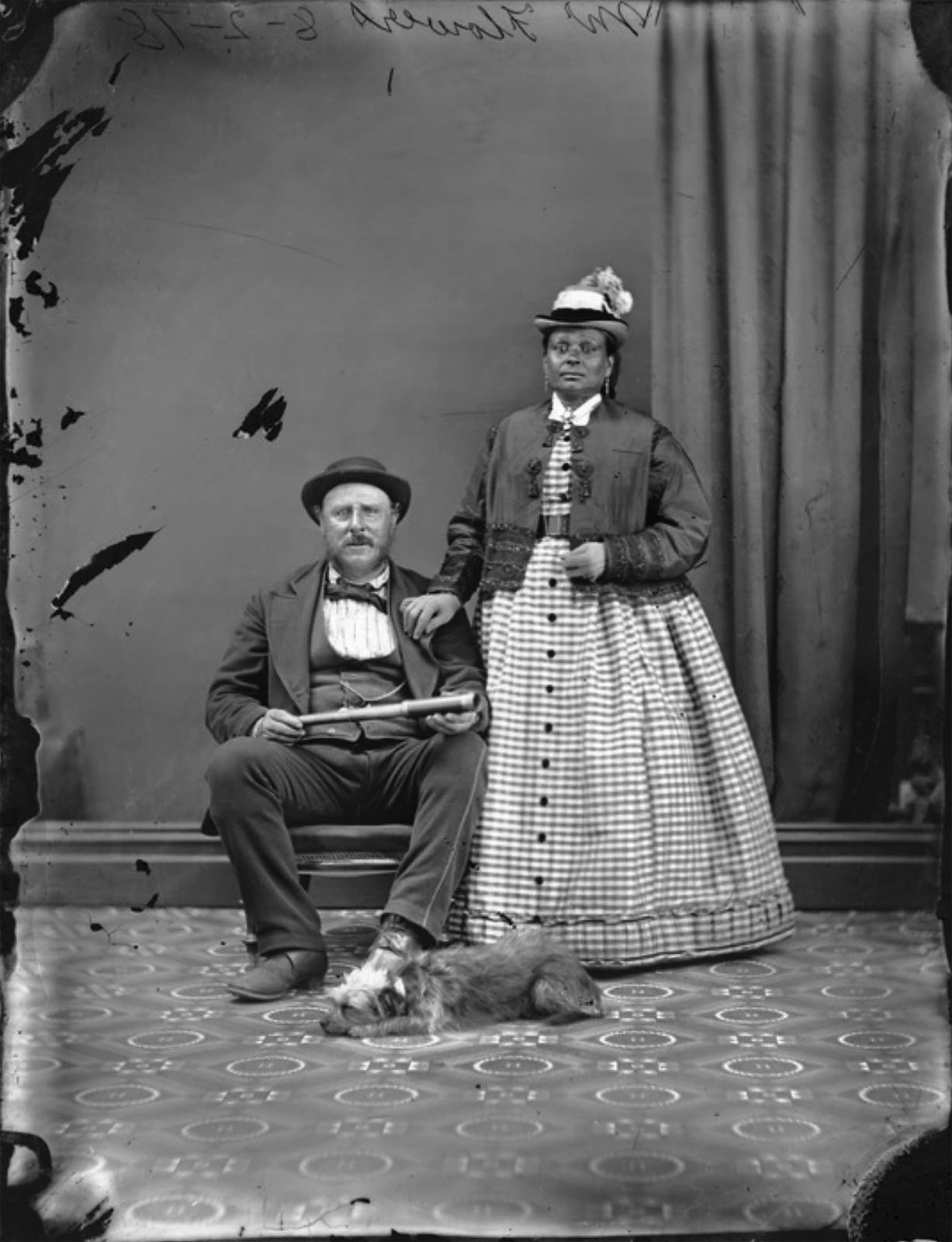
William James Harding (New Zealand, 1826-1899) 'Captain Nathaniel Flowers and wife Margaret, with a dog' 1878


William James Harding (New Zealand born England, 1826-1899)
Captain Nathaniel Flowers and wife Margaret, with a dog
February 1878
Glass negative
4.25 x 3.25 inches
Negatives of Wanganui district
Alexander Turnbull Library, Wellington, New Zealand


When Nathaniel and Margaret Flowers visited the Whanganui photographic studio of W.J. Harding (1826-99) in February 1878, they engaged with a technology that was only a few decades old but one that had been rapidly embraced by ordinary people such as themselves. By the 1870s, people – as individuals, couples and families – could have their likenesses made for a small fee. Harding photographed people from an array of backgrounds, from social elites to imperial and colonial soldiers, as we as interracial couples such as Nathaniel and Margaret. As soon as photography was invented, it was used by individuals, families and communities to fashion their social identities around age, class, ethnicity and gender. It was quickly integrated into society through social and cultural practices such as the making and keeping of photograph albums.

Text from the Introduction to the book A Different Light – First Photographs of Aotearoa


Elizabeth Pulman (New Zealand born England, 1836-1900) 'King Tāwhiao' 1882


Elizabeth Pulman (New Zealand born England, 1836-1900)
King Tāwhiao
1882
Carte de visite
Tāmaki Paenga Hira Auckland War Memorial Museum


Blackman, Elizabeth, 1836-1900, Chadd, Elizabeth, 1836-1900 Auckland photographer. Married George Pulman (d. 1871). Worked with him in his photographic studio in Shortland Street, specialising in scenic photographs and portraits. Elizabeth continued Pulman’s Photographic Studio for almost 30 years until the business was sold shortly before her death in 1900. After George Pulman’s death she married John Blackman (d 1893). She continued to be known professionally as Elizabeth Pulman.

Text from the National Library of New Zealand website


In the early years of photography it was relatively uncommon for women to take photographs, let alone work as professional photographers. Elizabeth Pulman was quite possibly New Zealand’s first female professional photographer.

Born in Lymm, Cheshire, England in 1836, she married George Pulman in 1859, and emigrated to New Zealand in 1861. Although a joiner and draughtsman by training, in 1867 George Pulman opened a photographic studio in Auckland, specialising in scenic photographs and portraits. Elizabeth assisted George with the business and after he died in 1871 she continued the work of the studio.

She married John Blackman in 1875, and was once more widowed in 1893. But for almost 30 years, until the business was sold to the Government Tourist Bureau shortly before her death, she carried on Pulman’s Photographic Studio, almost single-handedly managing the upbringing of nine children, running a successful business, and the problems of a period of rapidly changing technology in photography.

Pulman’s Photographic Studio left a legacy of many prints of historical interest, in both portrait and scenic subjects. Among the portraits are photographs of many important Maori chiefs of the North Island, including Tawhiao, the second Maori King, taken in Auckland shortly after he left his King Country stronghold.

Adapted by Andy Palmer from the DNZB biography by Phillip D. Jackson published as “Elizabeth Pulman,” on the New Zealand History website updated 


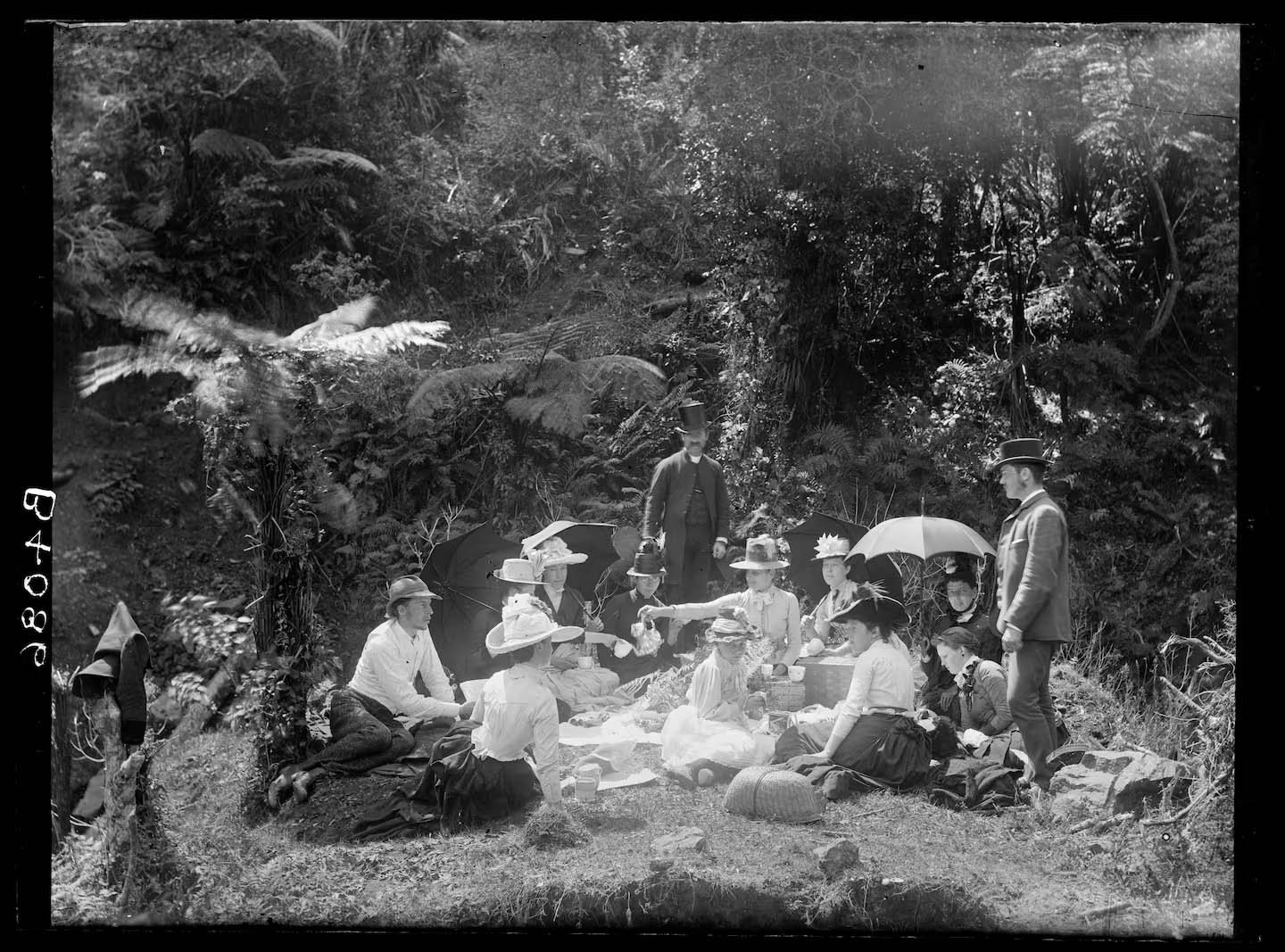
John Martin Hawkins Lush (New Zealand, 1854-1893) 'Picnic party at Thames' c. 1884


John Martin Hawkins Lush (New Zealand, 1854-1893)
Picnic party at Thames
c. 1884
Half-plate gelatin silver glass negative
Auckland Museum Collection


Unknown photographer. 'Three men in hats' c. 1880s


Unknown photographer
Three men in hats
c. 1880s
Ferrotype
Hocken Collections


Charles Spencer (New Zealand born England, 1854-1933) 'Cold Water Baths White Terrace' c. 1880s


Charles Spencer (New Zealand born England, 1854-1933)
Cold Water Baths White Terrace
c. 1880s
Cyanotype
Auckland Museum Collection


New Zealand photographer operating in Tauranga from 1879. Active in Auckland from the 1880s to 1917. Was one of Stephenson Percy Smith’s survey party at Mount Tarawera after the 1886 eruption. Took a series of photographs on White Island in late 1890s.

For more information on the photographer see Charles Spencer, Photographer (Part I) May 2019 and Charles Spencer, Photographer (Part II) July 2019 on the Tauranga Historical Society website


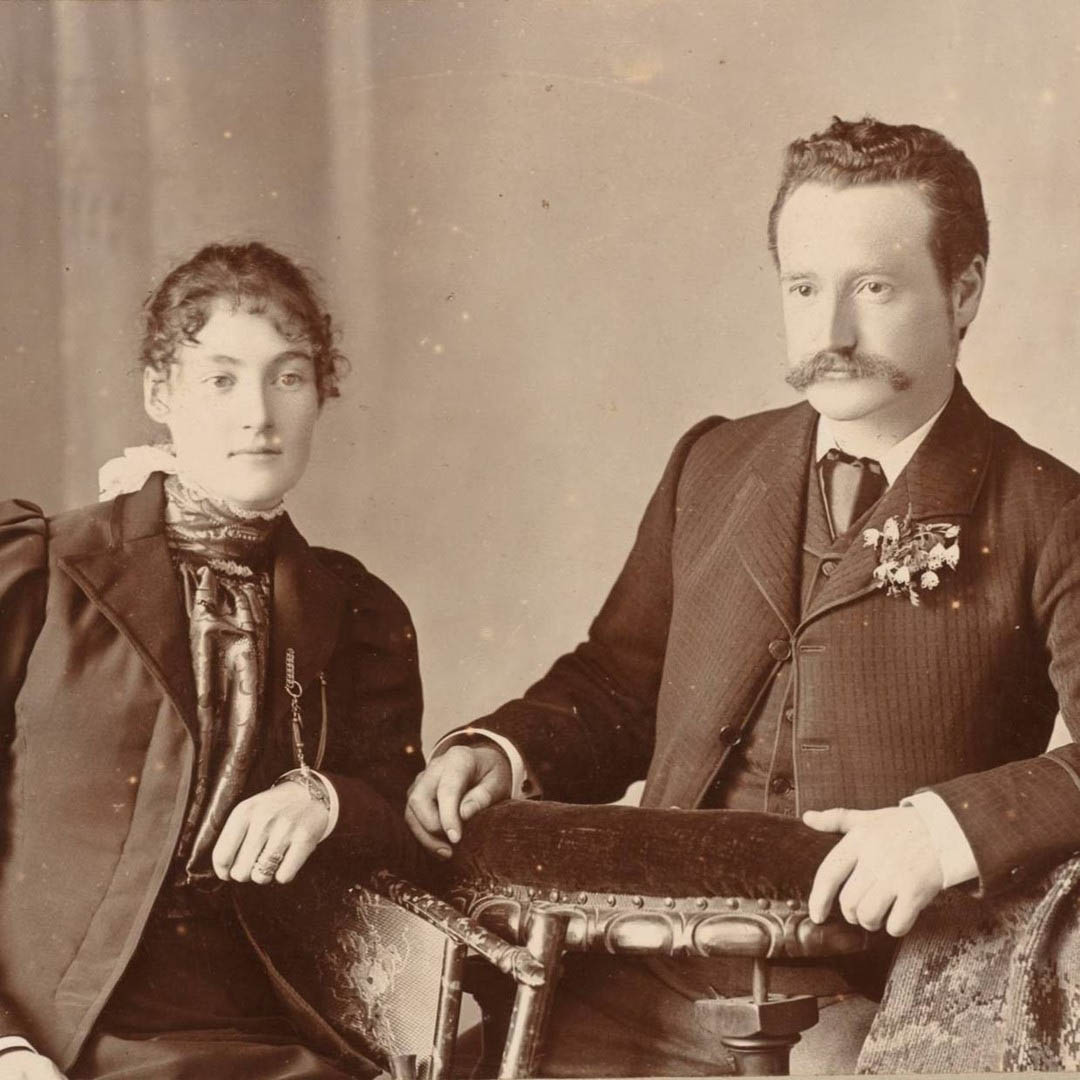
Josiah Martin (New Zealand born England, 1843-1916) 'Portrait of an unidentified sitter from the Teutenberg family album' c. 1880s


Josiah Martin (New Zealand born England, 1843-1916)
Portrait of an unidentified sitter from the Teutenberg family album
c. 1880s
Albumen silver print, cabinet card
Auckland Museum Collection


Josiah Martin was born in London, England, on 1 August 1843 and, in 1864, married Caroline Mary Wakefield. They emigrated to New Zealand a few years later with an infant daughter and eventually settled in Auckland. Martin founded a private academy, where he was headmaster until 1874 and proved to be a gifted teacher but retired from the profession in 1879 due to failing health.

He then concentrated on photography. During 1879 he returned to Europe, and while in London studied the latest innovations in photographic techniques and processes. On his return to Auckland he opened a photographic business with a studio on the corner of Queen and Grey streets in partnership with W.H.T. Partington. After the partnership was dissolved he opened another studio in Queen Street, later selling the portrait business and transferring premises to Victoria Arcade. Martin visited the area of Tarawera and Rotomahana many times and was there on the eve of the eruption of Mt Tarawera in 1886; some of the photographs he took after the eruption were reproduced in the Auckland Evening Star. He also appears to have visited several Pacific Islands, including Fiji and Samoa, in 1898, and in 1901 travelled there with S. Percy Smith. He published an account of this trip in Sharland’s New Zealand Photographer and also contributed articles and photographs to the Auckland Weekly News and the New Zealand Illustrated Magazine.

Martin gained an international reputation for his ethnological and topographical photographs. His work was exhibited in London at the Colonial and Indian Exhibition of 1886 and he won a gold medal at the Exposition coloniale in Paris in 1889. He was also editor of Sharland’s New Zealand Photographer for several years and lectured frequently, not only on photography but also on scientific subjects.

Josiah Martin died on 29 September 1916 at his home in Northcote, Auckland, aged 73. His photographs provide a record of changed landscapes and societies. Martin was one of the first photographers to realise the commercial potential of photography to encourage tourism, but he was also aware of the need for conservation of the landscape and of the role of photography in providing a documentary record (Orange 1993, pp.313-314).

Orange, Claudia ed. (1993), The dictionary of New Zealand biography, volume 2, 1870-1900, Wellington: Bridget Williams Books Limited and the Department of Internal Affairs.


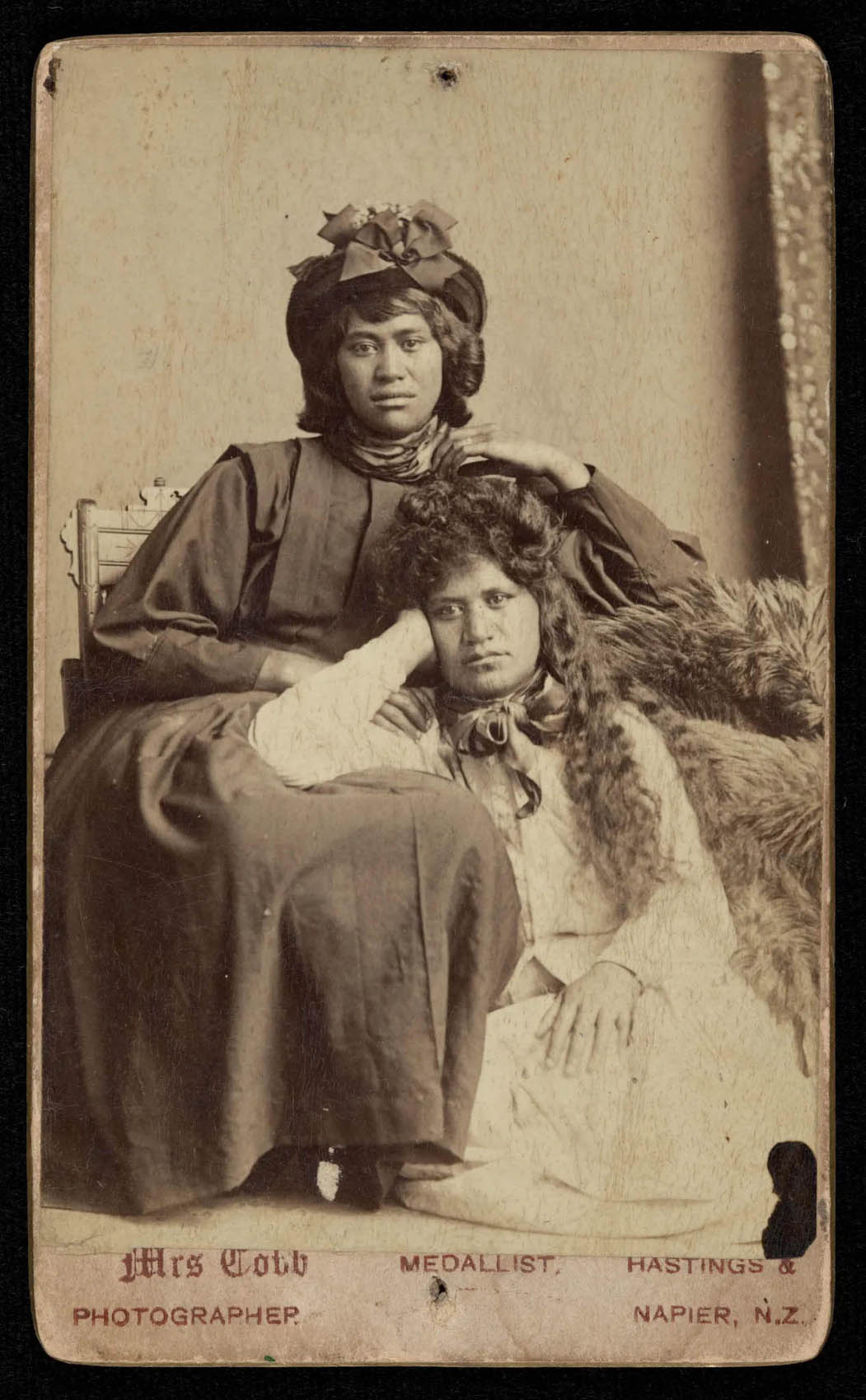
Harriet Cobb (New Zealand born England, 1846-1929) 'Two wāhine' c. 1887-1890


Harriet Cobb (New Zealand born England, 1846-1929)
Two wāhine
c. 1887-1890
Albumen silver print, carte de visite
Alexander Turnbull Library Collection


The word “wahine” came into English in the late 18th century from Maori, the language of a Polynesian people native to New Zealand; it was originally used for a Maori woman, especially a wife. The word is also used for a woman in Hawaiian and Tahitian, though spelled “vahine” in the latter.


Harriet Sophia Cobb (née Day, 10 February 1846 – 18 December 1929) was a New Zealand photographer. Her works are held in the collection of the Museum of New Zealand Te Papa Tongarewa. Cobb operated two successful photography studios in the late 1800s and into the 20th century.

In 1866 she married Joseph Edward Cobb, and they went on to have 15 children… In 1884 Cobb and her husband emigrated from the United Kingdom to New Zealand with their nine children and set up a photographic studio in the Hawke’s Bay. They arrived in Wellington on the Lady Jocelyn.

The couple operated two studios known as JE & H Cobb in Napier (from 1884) and Hastings (from 1885), but in 1887 after Joseph’s bankruptcy, Cobb won a plea to operate the businesses in her name until she retired in 1911… Cobb died on 18 December 1929 in Ōtāhuhu, Auckland.

Text from the Wikipedia website


Ambitious and creative

Harriet was a busy and ambitious woman – having a sensibility for the photographic trade learnt from her father that was out of step in the sleepy colony of New Zealand. Her work in the 1885 Industrial Exhibition in Wellington caught the attention of Julius von Haast who selected it for inclusion in the New Zealand court at the 1886 Colonial and Indian Exhibition in London.

Cobb’s work was described by a reviewer as being portraiture of mostly female subjects. By being included in the exhibition, Cobb’s work inserted the visual existence of family life and women’s lives in the colony into the multitude of industrial and scenic exhibits that dominated the New Zealand court at the London exhibition.

An art photographer

Cobb advertised herself as an ‘art photographer’, which was a way of claiming that her work was of higher quality than other photographers. In one of Cobb’s advertisements she claimed that the basics of photography could be learnt by any school boy in a week but not the skills, experience, and eye for creating quality photographs that she had.

Cobb’s marketing targeted a broad clientele and emphasised quality service in a quality establishment run by herself. She wanted it understood that her studios were respectable places for women to go unaccompanied by men.

Extract from Lissa Mitchell. “Inspiring stories about NZ women photographers – Harriet Cobb (1846-1929),” on the Museum of New Zealand / Te Papa Tongarewa website 16 Oct 2018 [Online] Cited 10/08/2024


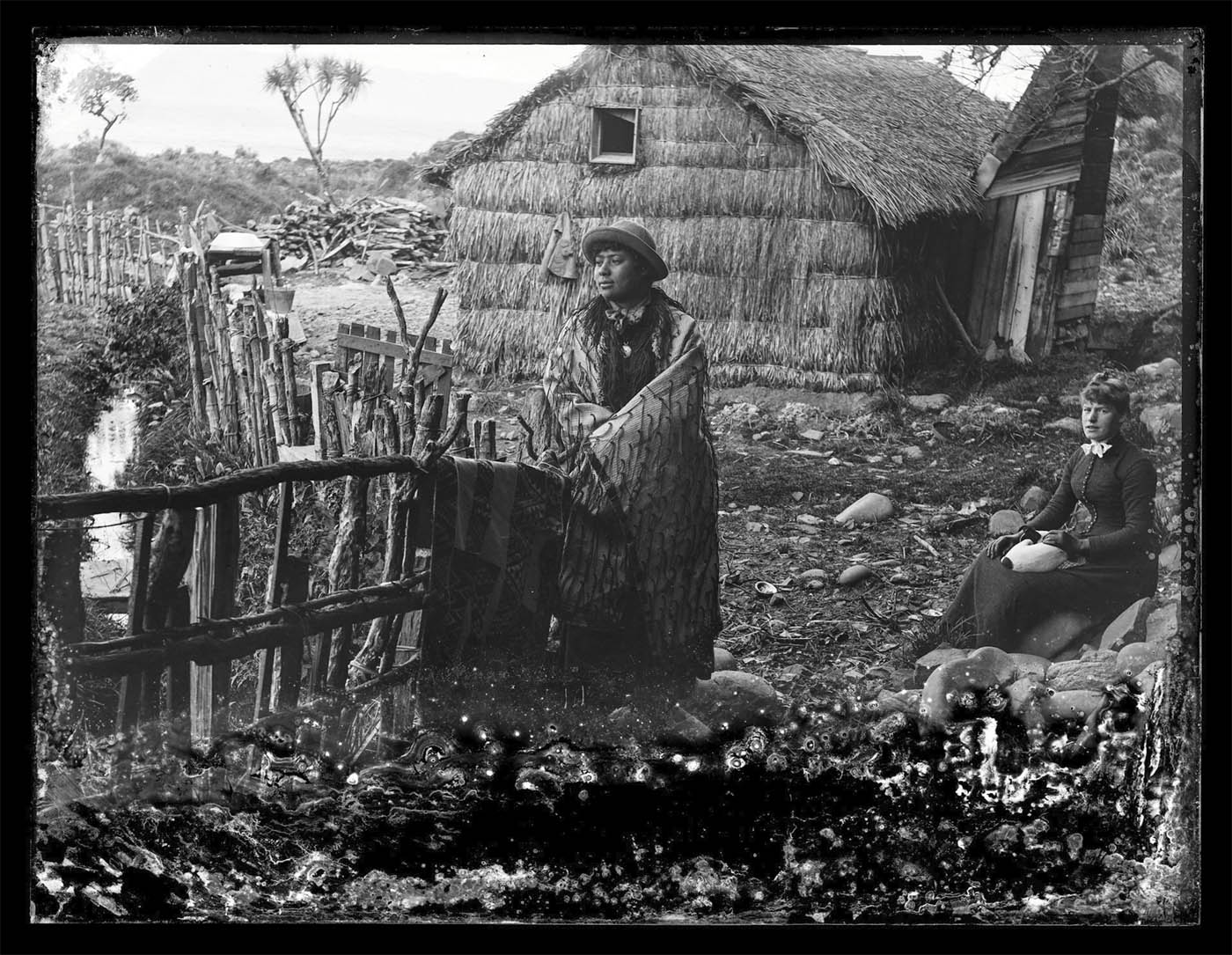
Henry Wright (New Zealand, 1844-1936) 'Māori woman in a tag cloak (possibly Rīpeka Te Puni) and Amy Elizabeth Wright, Wellington' c. 1885


Henry Wright (New Zealand, 1844-1936)
Māori woman in a tag cloak (possibly Rīpeka Te Puni) and Amy Elizabeth Wright, Wellington
c. 1885
Alexander Turnbull Library


John Kinder (New Zealand born England, 1819-1903) 'Mount Tarawera' 1886


John Kinder (New Zealand born England, 1819-1903)
Mount Tarawera
1886
Albumen silver print mounted on album page
151 × 200 mm
Tāmaki Paenga Hira Auckland War Memorial Museum


While he [Kinder] was at Ayr Street Kinder also practised as an amateur photographer. There is no indication that he had taken an active interest in photography in England. Rather, it seems likely that he learned the wet-plate photographic process in Auckland about 1860-61. He was friendly with Hartley Webster, a prominent professional, who was the Kinder family photographer in the 1860s. He also collected prints of the work of Daniel Manders Beere, a photographer working in Auckland at the same time, whose photography has some affinities with his own.

Kinder was primarily a landscape and architectural photographer, although he did take a few portraits of family and friends, including Celia Kinder and the Reverend Vicesimus Lush, vicar of Howick. One of his best-known photographs is the portrait of Wiremu Tāmihana, which was used as the frontispiece for John Gorst’s The Māori King (1864). There are also a few fine photographs of Māori artefacts, including canoes and canoe prows. He took photographs of Parnell in the 1860s, especially of Anglican buildings such as the first St Mary’s Church, St Stephen’s Chapel and Bishopscourt (Selwyn Court). These provide a good historical record as well as having high artistic merit. Kinder also travelled extensively and his paintings and photographs are not confined to Auckland. After his sisters Mary and Sarah settled in Dunedin in 1878 he made several trips to the South Island.

In his photographs and paintings Kinder imposed a sense of order on his views, as if regulating them to current conventions of composition where clarity and intelligibility were paramount. This tidiness, combined with the serene calmness of the depicted weather conditions, can give a Utopian or idealised dimension to his colonial scenes. While there is a high degree of objectivity in his works, this does not exclude an element of interpretation – an adaptation of landforms and buildings to an ideal. His art expresses a positive view of the colonising process. It is worth noting that many of his finished paintings were made late in life, during his retirement, when he was looking back through rose-tinted glasses to a time of great achievement and rapid progress. In an unpublished autobiography, written in his later years, he recalled with pride how the city of Auckland had grown from the humble beginnings he encountered in 1855, when there were only one or two decent buildings to be seen.

Extract from Michael Dunn. “Kinder, John,” first published in the Dictionary of New Zealand Biography in 1993 digitally published on the Te Ara – the Encyclopedia of New Zealand website [Online] Cite 11/08/2024


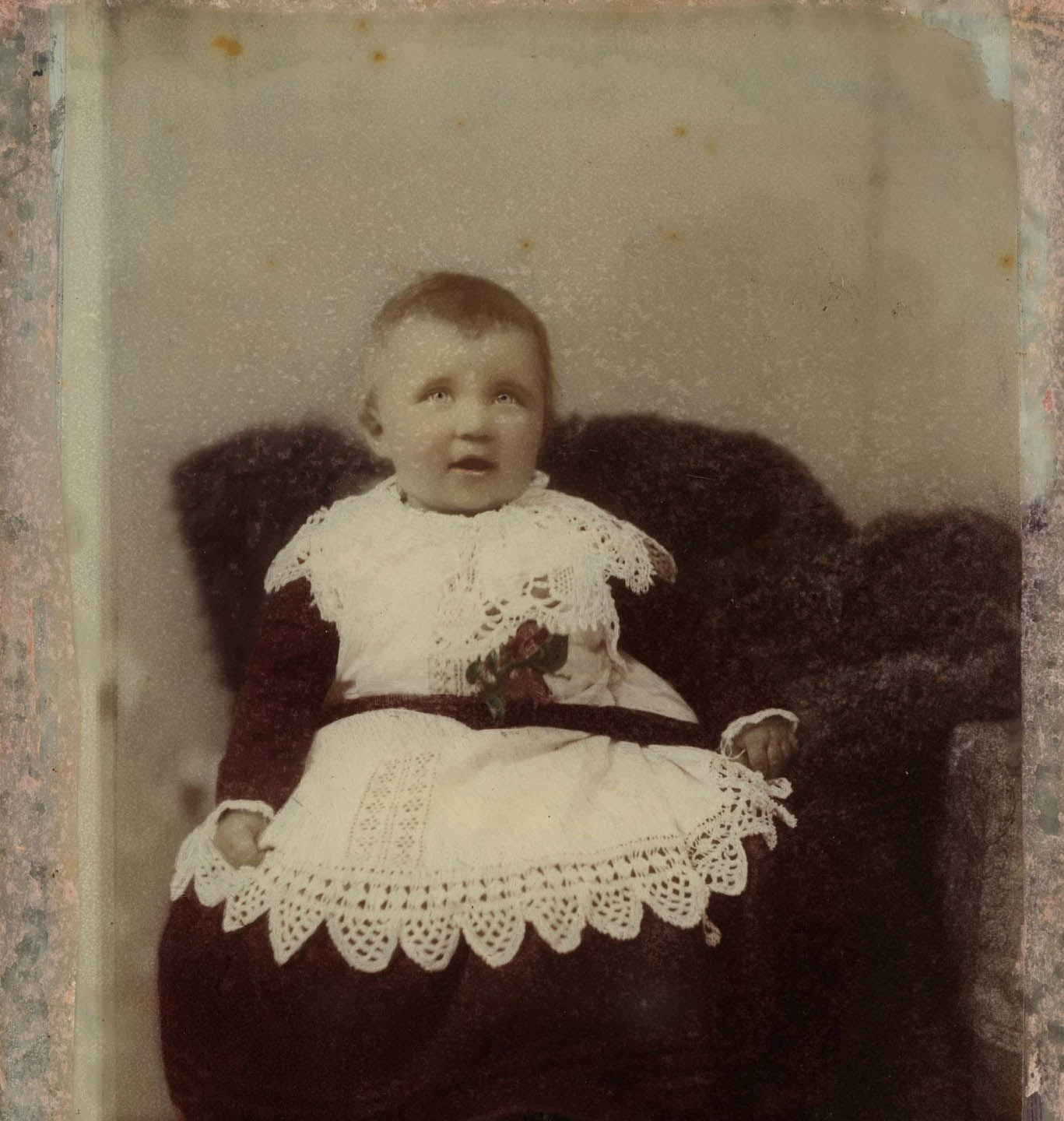
Unknown photographer. 'Portrait of an unidentified child' c. 1890


Unknown photographer
Portrait of an unidentified child
c. 1890
Crystoleum
Auckland Museum Collection


Elite Photographers. 'Portrait of the Thompson family, with drawn-on eyes and eyebrows' 1893


Elite Photographers
Portrait of the Thompson family, with drawn-on eyes and eyebrows
1893
Opalotype
Auckland Museum Collection


The settler lens

Photographs are complicit in colonialism because they were used to document the impacts of migration, settlement and land transformation. For example, they illustrate the advance of settlement and the subjugation of Māori after the Waikato War (1863-1864).

Imperial officers such as William Temple, who was active in military campaigns to advance European settlement, photographed two icons of colonisation: roads and military camps.

An Irish-born soldier, Temple followed the Great South Road on foot and with his camera as the route advanced towards the border of Kiingitanga territory. One of his photographs (The Bush at Razorback, Great North Road New Zealand, 1862-1863) demonstrates the impacts of the Great South Road on the local environment.

Photography’s commercial interests also aligned with colonial propaganda, especially as landscape photography grew in popularity from the 1870s. Historian Jarrod Hore has demonstrated how landscape photographers helped shape settler attitudes to the environment, but also documented colonial progress.

Photographs were used to illustrate engineering successes and the advancing tide of settlement. For instance, John McGregor’s 1875 photograph (Bell Hill, c. 1875) depicts the clearing of Bell Hill in Dunedin. In the background, the church embodies the possibilities of colonial advancement enabled by environmental transformation.

Our early photographers were, in Hore’s words, engaged in “settler colonial work” because they “mobilised and visually reorganised local environments in the service of broader settler colonial imperatives.”

The photograph as taonga

Indigenous peoples were a particular focus of early photography in other settler colonial societies. New Zealand followed this pattern and Māori feature prominently in our colonial photographic record.

As soon as photography arrived in the colony, Māori were captured by the camera. Itinerant daguerreotype photographers travelled the new colony in the 1840s and 1850s to exploit the commercial opportunities available in new colonies such as New Zealand.

Reproduction of colonial tropes became common in commercial photography, reflecting the collectability of Māori as photographic subjects. The carte-de-visite, popular from the 1860s and of a size that could easily be posted, meant images of Māori found their way into albums all around the world.

Such images became an important part of the business for studio photographers in the colonial period.

At different times, and depending on the context, Māori embraced or rejected photography. Because of its colonial implications, Māori whānau and communities have a complicated relationship with the camera. But, as scholars Ngarino Ellis and Natalie Robertson argue, there is evidence it was regarded as friend as much as foe.

Māori have long integrated visual likenesses into customary practices, such as tangihanga (funerals), while portraits adorn the walls of wharenui [meeting house, large house] across the country.

Colonial photographs are culturally dynamic. Their integration into Māori life means they do not just depict relationships but are imbued with them. As such, photographs are taonga (treasures) and connect people across time and space.

Te Whiti and the camera

Māori also took up the camera. Canon Hākaraia Pāhewa, for instance, was a skilled photographer who took his camera on his pastoral rounds, during which he recorded scenes of daily life.

He depicted people at work and documented transformations of landscapes, important cultural events, religious service and domestic routines. These photographs bring to light the diversity and richness of Māori life in the early 20th century.

Māori whānau [basic extended family group] already valued and used photographs in a variety of ways in the 19th century. Photographs were memory containers, mementos of family, markers of personal transformation, and generators of social connection.

Designed to be shared and displayed, photographs were prompts for discussion and storytelling. They are visual records of whakapapa [Whakapapa is a fundamental principle in Māori culture. Reciting one’s whakapapa proclaims one’s Māori identity, places oneself in a wider context, and links oneself to land and tribal groupings and their mana], identity and notions of belonging. They also mark Indigenous presence and survival in the face of settler colonialism.

At the same time, though, photography’s role in advancing colonialism meant Māori were cautious about the reproduction of images. There was an awareness of what could happen to photographs once they were out of the subject’s control.

Extract from Professor Angela Wanhalla. “The past in a different light: how Māori embraced – and rejected – the colonial camera lens,” on The Conversation website April 11, 2024 [Online] Cited 10/08/2024

This article is republished from The Conversation under a Creative Commons license. Read the original article.


Henry Wright (New Zealand, 1844-1936) 'Rahui Te Kiri Tenetahi [right] and her daughter Ngāpeka Te Roa of Ngāti Manuhiri' 1893


Henry Wright (New Zealand, 1844-1936)
Rahui Te Kiri Tenetahi [right] and her daughter Ngāpeka Te Roa of
Ngāti Manuhiri
1893
Full-plate gelatin silver glass negative
216 × 165 mm
Alexander Turnbull Library


Rahui Te Kiri Tenetahi (right) and her daughter Ngapeka Te Roa, of Ngati Manuhiri, alongside a building made of ponga logs, Little Barrier Island, 1893. They hold dahlia flowers.

Henry Wright was a prominent Wellington businessman. He was also a keen amateur photographer. Negatives found in two wooden boxes under house at 117 Mein Street, originally the home of Henry Wright, who had lived there from 1896 until his death in 1936.


Henry Wright spent nearly three months living on the island and produced a report for the government on its value as a bird reserve. After the government purchased the island from iwi and it was declared a forest reserve and bird sanctuary, Wright was appointed its first ranger. Wright’s series of photographs capture the vegetation, coastline and the last of the mana whenua [the right of a Maori tribe to manage a particular area of land], Ngāti Manuhiri, to live and sustain themselves on the island, including Rāhui Te Kiri Tenetahi, her daughter Ngāpeka Te Roa, and her second husband Wiremu Tenetahi, who were forcibly evicted just three years after Wright had visited the island.

Text from the book A Different Light: First Photographs of Aotearoa


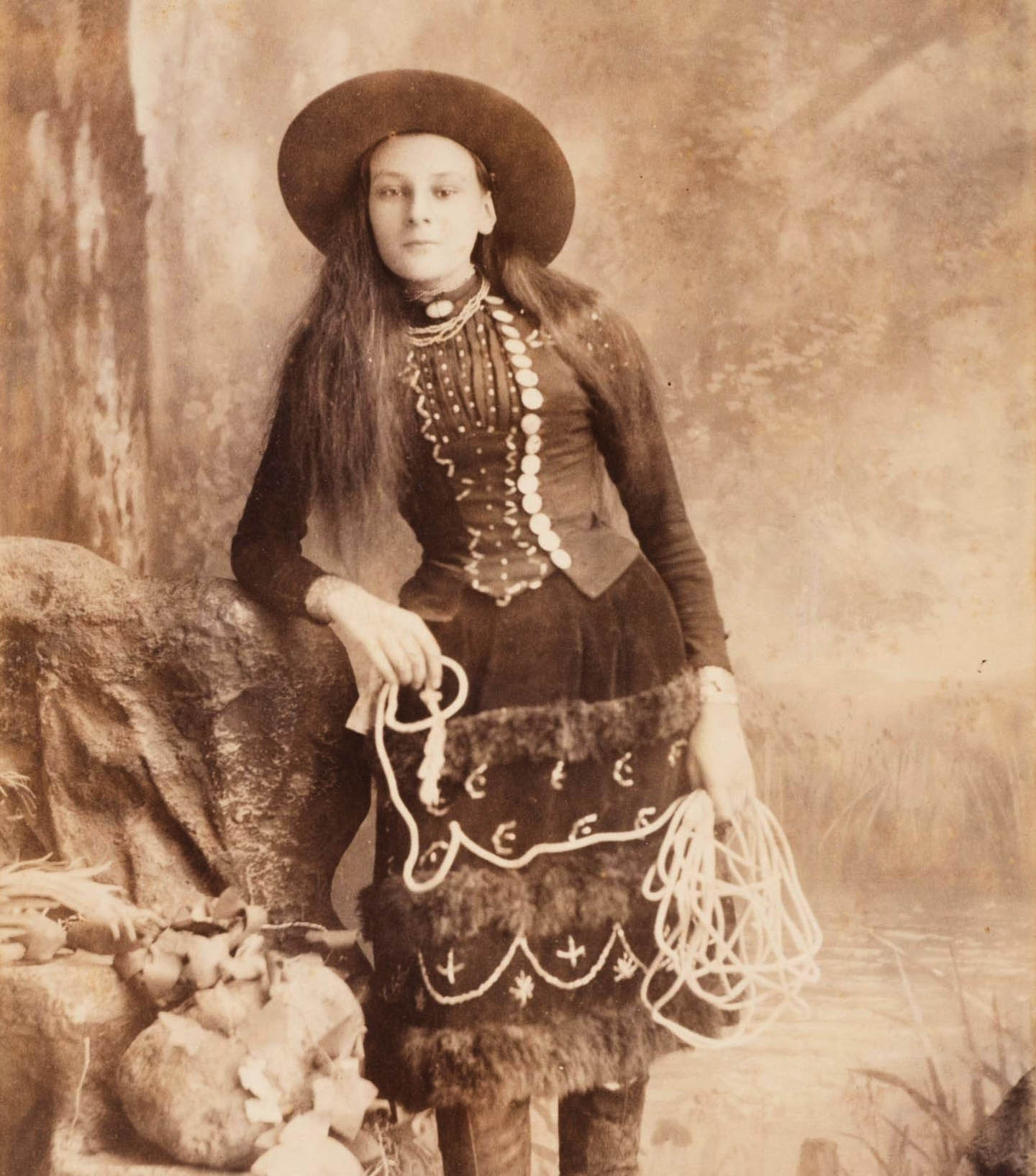
John Robert Hanna (New Zealand born Ireland, 1850-1915) 'Portrait of unidentified sitters' c. 1895


John Robert Hanna (New Zealand born Ireland, 1850-1915)
Portrait of unidentified sitters
c. 1895
Gelatin silver print, cabinet card
Auckland Museum Collection


Photographer of Auckland. Born Ireland in 1850, eldest son of Eliza Crawford and Robert Hanna of Drum, County Monaghan, Ireland; arrived in Auckland per ‘Ganges’ in 1865; began his photographic career in Auckland with R H Bartlett whose business he managed for some time. Then managed the firm of Hemus & Hanna for 10 years before business dissolved in 1885. Bought the business of J Crombie (which had been established in 1855) in Queen Street. Died in 1915.

Text from the National Library of New Zealand website


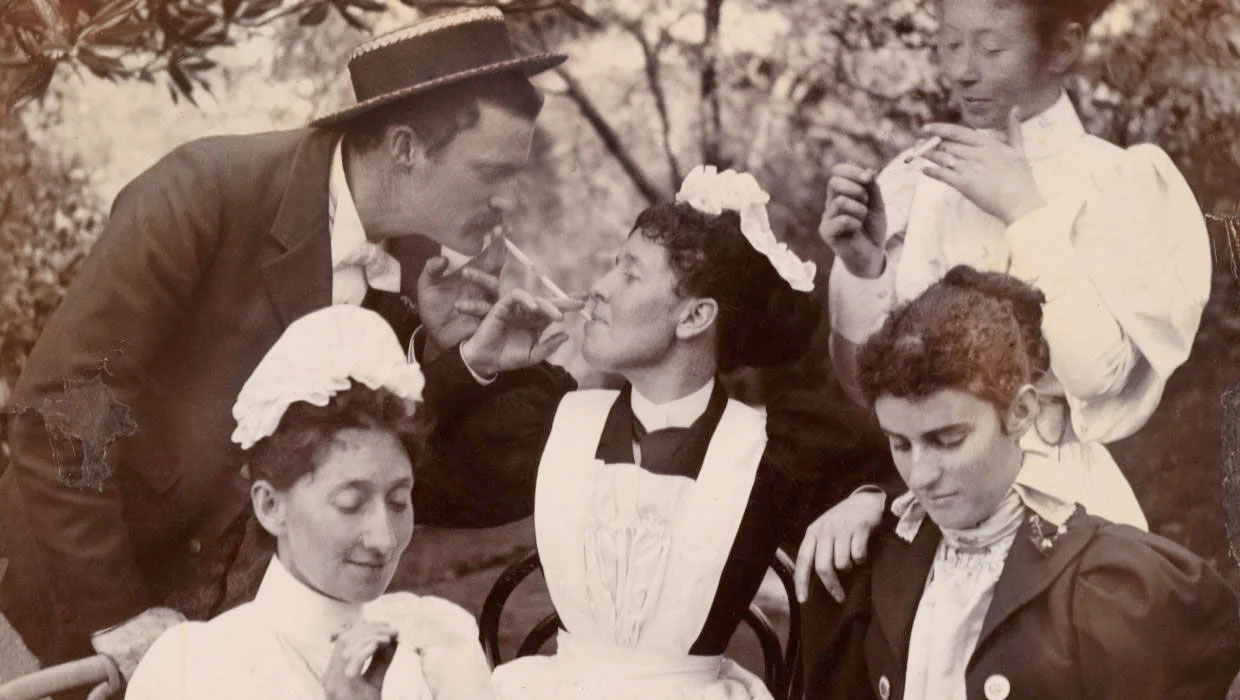
Margaret Matilda White (New Zealand born Northern Ireland, 1868-1910) 'Nurse Pierce and Bessie McKay smoking with Mr Hodson and other nurses at Huia Private Hospital' 1895


Margaret Matilda White (New Zealand born Northern Ireland, 1868-1910)
Nurse Pierce and Bessie McKay smoking with Mr Hodson and other nurses at Huia Private Hospital
1895
Gelatin silver print
Auckland Museum Collection


Margaret Matilda White

Margaret Matilda White came to New Zealand in the 1880s to join her family when she was 18 years old. She was acquainted with the photographer Hanna, possibly working in his studio. She established her own photographic business, which was not a success, but continued to photograph on an amateur or semi-professional basis until her early death in 1910.

Margaret Matilda White is best known for her photographs of the Auckland Mental Hospital, known at times as the Whau Lunatic Asylum, Oakley Mental Hospital or Carrington Mental Hospital.  She photographed the buildings and the staff, making pictures of nurses and attendants with her characteristic structured group poses.

The Museum has a large collection of her glass plates, donated by her son Albert Sherlock Reed, in 1965.

Text from the Auckland Museum website


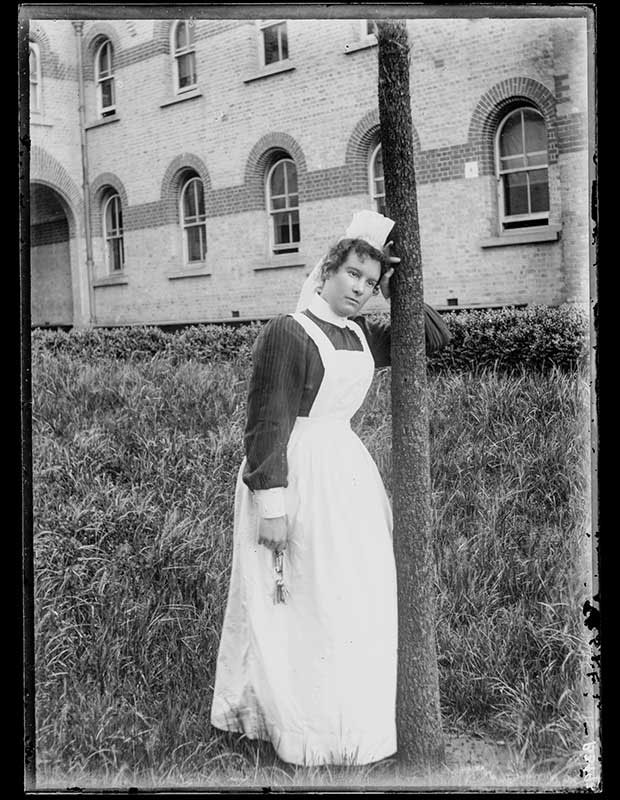
Margaret Matilda White (New Zealand born Northern Ireland, 1868-1910) 'Self Portrait' c.  1897


Margaret Matilda White (New Zealand born Northern Ireland, 1868-1910)
Self Portrait
c.  1897
Half-plate gelatin silver glass negative
164 × 120 mm
Tāmaki Paenga Hira Auckland War Memorial Museum


A series of photographs taken around 1897 by Margaret Matilda White (1868-1910) at the Whau Lunatic Asylum, also known as the Avondale Asylum, show a rare example of what appear as deliberately staged images of staff in the grounds. Starting as an apprentice to Hanna in 1890, White briefly operated a studio in Queen Street. She spent some time working as an attendant at the asylum, photographing the staff on location using a dry-plate camera. The playful approach White takes shows an unexpected side to her sitters, despite their formal uniforms. Arranged in the grounds, sitting together for a portrait, the men and women who worked at the asylum appear to have shed the formality of the studio. Even when they appear lined up in rows, they all look in different directions as a man peers through the window behind them. One image, thought to be a self-portrait, shows White in her uniform holding a set of keys. An informal portrait taken at Huia Private Hospital shows staff smoking together on a break: a far cry from the wooden poses of early likenesses.

Text from the book A Different Light: First Photographs of Aotearoa


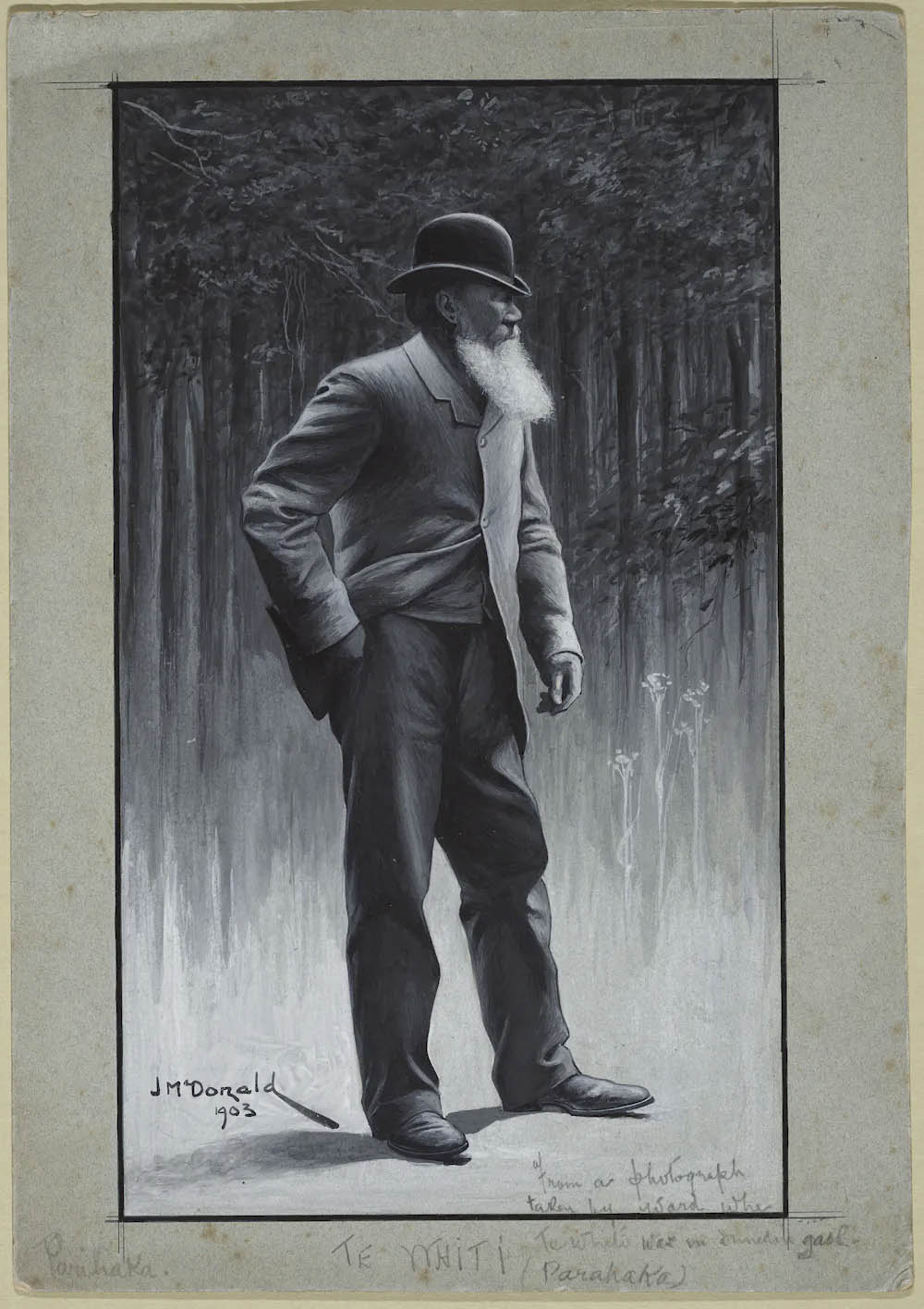
James Ingram McDonald (New Zealand 1865-1935) 'Te Whiti' c. 1903


James Ingram McDonald (New Zealand 1865-1935)
Te Whiti
c. 1903
Alexander Turnbull Library


James Ingram McDonald (11 June 1865 – 13 April 1935) was a New Zealand painter, photographer, film-maker, museum director, cultural ambassador film censor, and promoter of Maori arts and crafts.

James McDonald was born in Tokomairiro, South Otago, New Zealand on 11 June 1865. He began painting early in his life and took art lessons as a young man in Dunedin with James Nairn, Nugent Welch and Girolamo Nerli. He continued his art studies in Melbourne, Australia, but returned to New Zealand in 1901, where he worked as a photographer. From 1905 he was a museum assistant and draughtsman in the Colonial Museum, later to become the Dominion Museum and even later the Museum of New Zealand Te Papa Tongarewa). He began making films about various scenic sights. At the museum he was responsible for the maintenance of the photographic collection and the production of paintings, drawings and photographs for the Dominion Museum bulletins.

He began to gather information about Māori tribal traditions. His films show poi dances and whai string games. He was probably the earliest known ethnographic filmmaker in New Zealand. In 1920 he filmed the gathering of the Māori tribes in Rotorua, when they welcomed the Prince of Wales, and other aspects of the royal journey. He filmed traditional skills and activities, including the make of fishing nets and traps, weaving, digging kumara camps and cooking food in a hangi. Most of his often unedited and fragmentary negatives became only known in 1986 after restoration by the New Zealand film archive. …

He died in Tokaanu on 13 April 1935 and was buried at Taupo cemetery. The School of Applied Arts, which he had founded, doesn’t exist anymore, but many examples of McDonald’s work have been preserved. Many hundreds of his photographic negatives are kept by the Museum of New Zealand Te Papa Tongarewa. There are prints of his works in the collections of the Alexander Turnbull Library and the Bernice P. Bishop Museum in Hawaii. The four ethnographic films he has made are preserved in the collection of the New Zealand Film Archive Nga Kaitiaki or Nga Taonga Whitiahua.

Text from the Wikipedia website


Te Whiti o Rongomai III (c.  1830 – 18 November 1907) was a Māori spiritual leader and founder of the village of Parihaka, in New Zealand’s Taranaki region.

Te Whiti established Parihaka community as a place of sanctuary and peace for Māori many of whom seeking refuge as their land was confiscated in the early 1860s. Parihaka became a place of peaceful resistance to the encroaching confiscations. On 5 November 1881, the village was invaded by 1500 Armed Constabulary with its leaders arrested and put on trial. Te Whiti was sent to Christchurch at the Crown’s insistence after it was clear the crown was losing its case in New Plymouth. The trial, however, was never reconvened and Te Whiti, along with Tohu were held for two years. Te Whiti and Tohu returned to Parihaka in 1883, seeking to rebuild Parihaka as a place of learning and cultural development though land protests continued. Te Whiti was imprisoned on two further occasions after 1885 before his death in 1907.

Text from the Wikipedia website


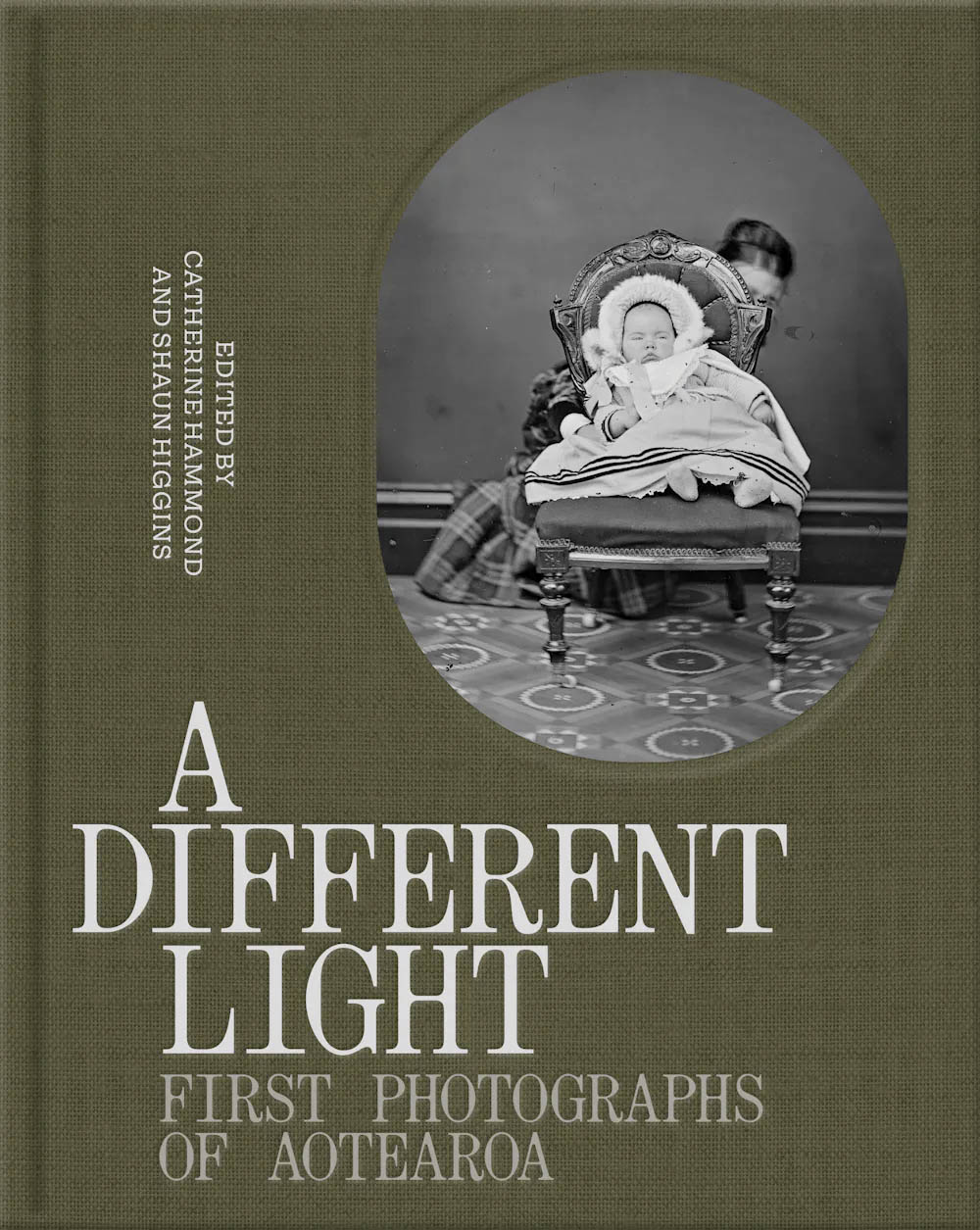
'A Different Light – First Photographs of Aotearoa' book cover


A Different Light – First Photographs of Aotearoa book cover


The mīhini mīharo reveals nineteenth-century Aotearoa as never before.

In 1848, two decades after a French inventor mixed daylight with a cocktail of chemicals to fix the view outside his window onto a metal plate, photography arrived in Aotearoa. How did these ‘portraits in a machine’ reveal Māori and Pākehā to themselves and to each other? Were the first photographs ‘a good likeness’ or were they tricksters? What stories do they capture of the changing landscape of Aotearoa?

From horses laden with mammoth photographic plates in the 1870s to the arrival of the Kodak in the late 1880s, New Zealand’s first photographs reveal Kīngi and governors, geysers and slums, battles and parties. They freeze faces in formal studio portraits and stumble into the intimacy of backyards, gardens and homes.

A Different Light brings together the extraordinary and extensive photographic collections of three major research libraries – Tāmaki Paenga Hira Auckland War Memorial Museum, Alexander Turnbull Library and Hocken Collections Uare Taoka o Hākena – to coincide with a touring exhibition of some of the earliest known photographs of Aotearoa.

Editors

Catherine Hammond is the director of collections and research at Tāmaki Paenga Hira Auckland War Memorial Museum. She was formerly Hocken Librarian at the University of Otago Te Whare Wānanga o Ōtākou, and before that head of documentary heritage at Tāmaki Paenga Hira Auckland War Memorial Museum and research library manager at Auckland Art Gallery Toi o Tāmaki.

Shaun Higgins is curator pictorial at Tāmaki Paenga Hira Auckland War Memorial Museum. He has worked on exhibitions for two decades, most recently Robin Morrison: Road Trip (2023). He has an MA, BA and PGDip from the University of Auckland in anthropology, art history and museum studies, and further qualifications in photography and care and identification of photographs.

Alongside the editors, A Different Light includes essays by Angela Wanhalla (Kāi Tahu), professor of History at the University of Otago; Paul Diamond (Ngāti Hauā, Te Rarawa, Ngāpuhi), curator, Māori at the Alexander Turnbull Library; Anna Petersen, curator, Photographs at Hocken Collections Uare Taoka o Hākena; and Natalie Marshall, formerly curator, Photographs at Alexander Turnbull Library.

Text from the Auckland University Press website


'A Different Light – First Photographs of Aotearoa' Introduction to book


A Different Light – First Photographs of Aotearoa Introduction to book


'A Different Light – First Photographs of Aotearoa' book pages

'A Different Light – First Photographs of Aotearoa' book pages


A Different Light – First Photographs of Aotearoa book pages


Auckland War Memorial Museum
The Auckland Domain Parnell,
Auckland New Zealand
+6493090443

Opening hours:
Open weekdays from 10am – 5pm.
Open Saturdays, Sundays, and public holidays from 9am – 5pm.
Open late every Tuesday evening until 8.30pm

Auckland War Memorial Museum website

LIKE ART BLART ON FACEBOOK

Back to top

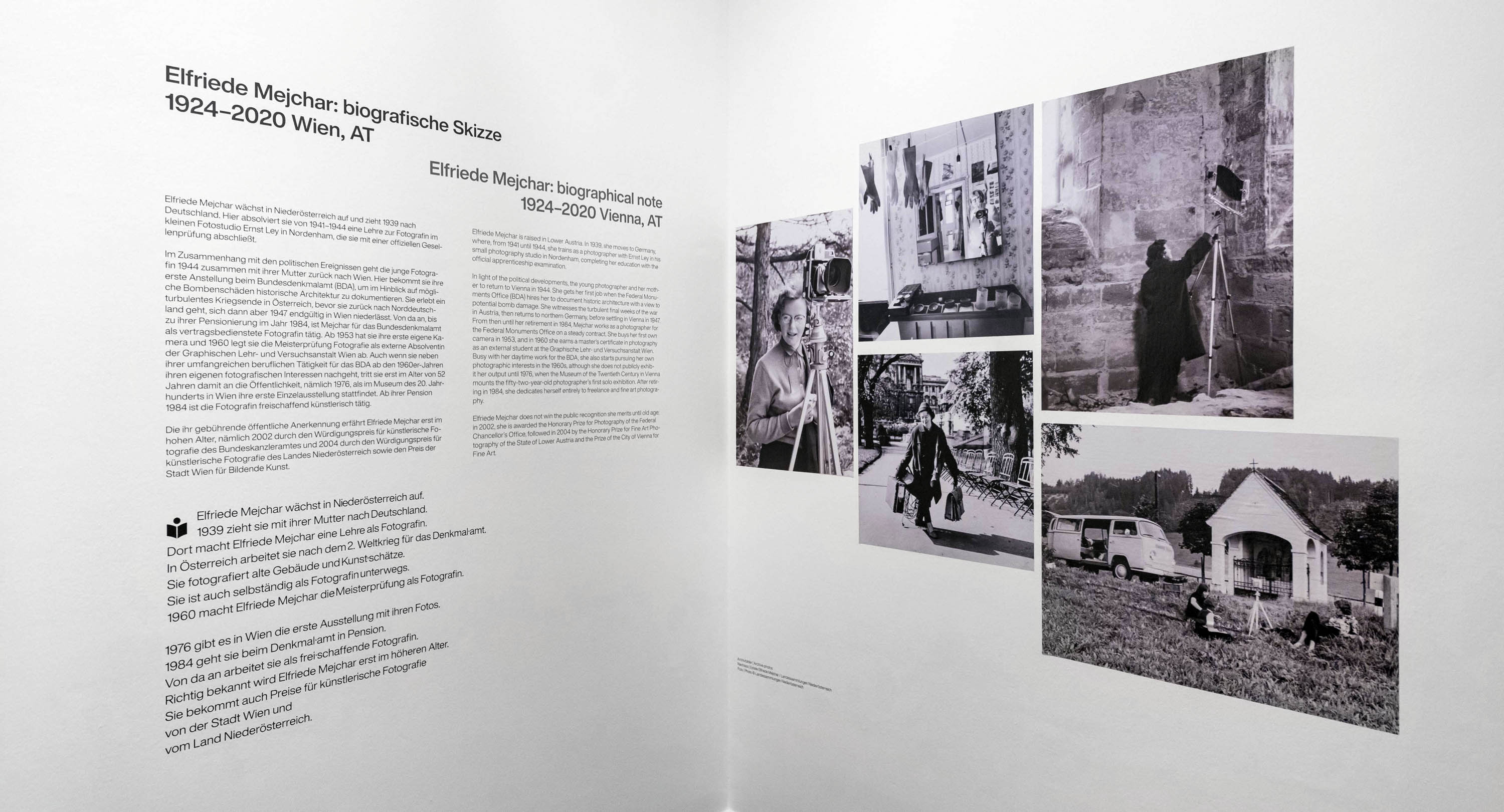
Exhibition: ‘On Her Own. The photographer Elfriede Mejchar’ at Wien Museum MUSA, Vienna

Exhibition dates: 18th April – 1st September, 2024

Curators: Anton Holzer, Frauke Kreutler


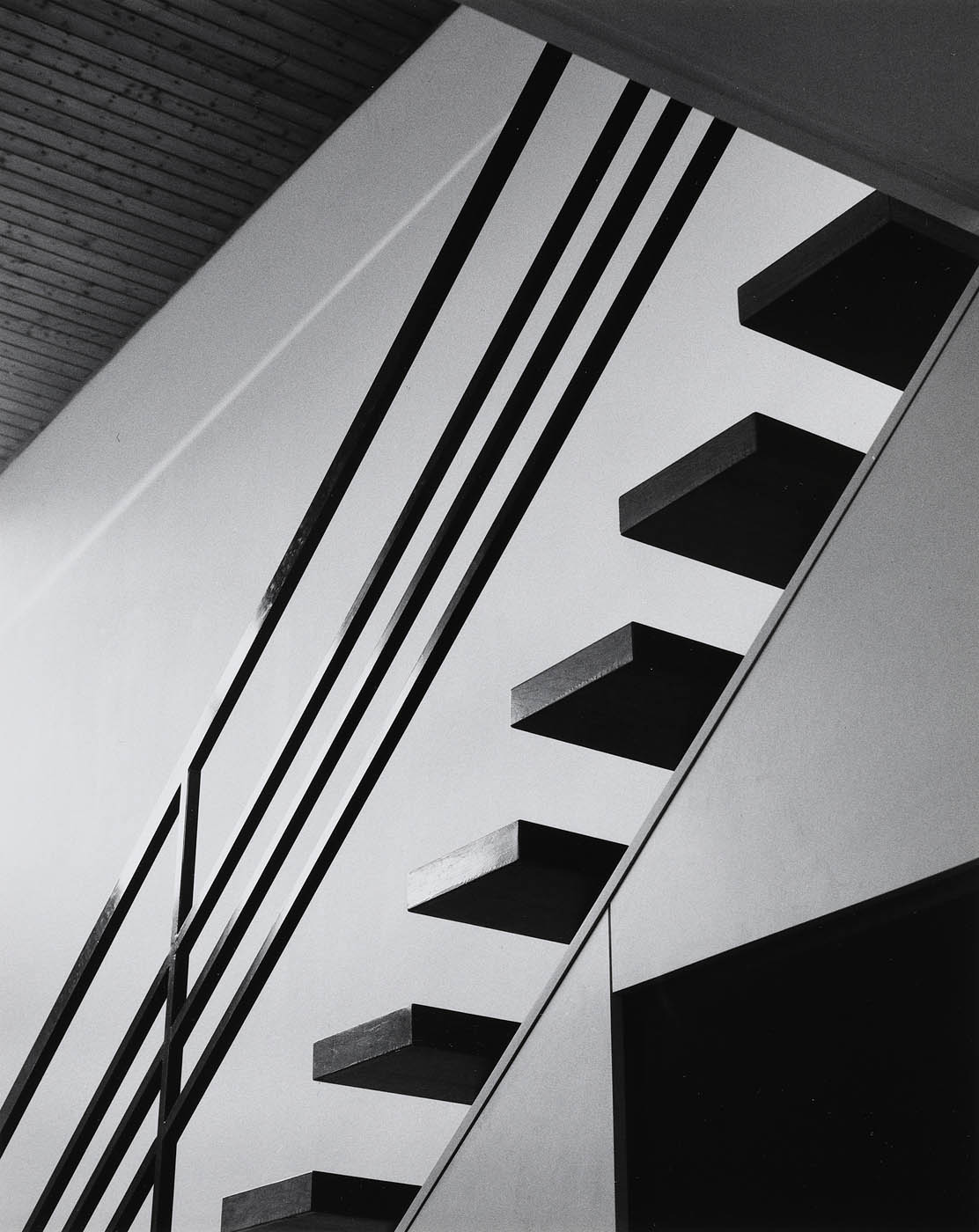
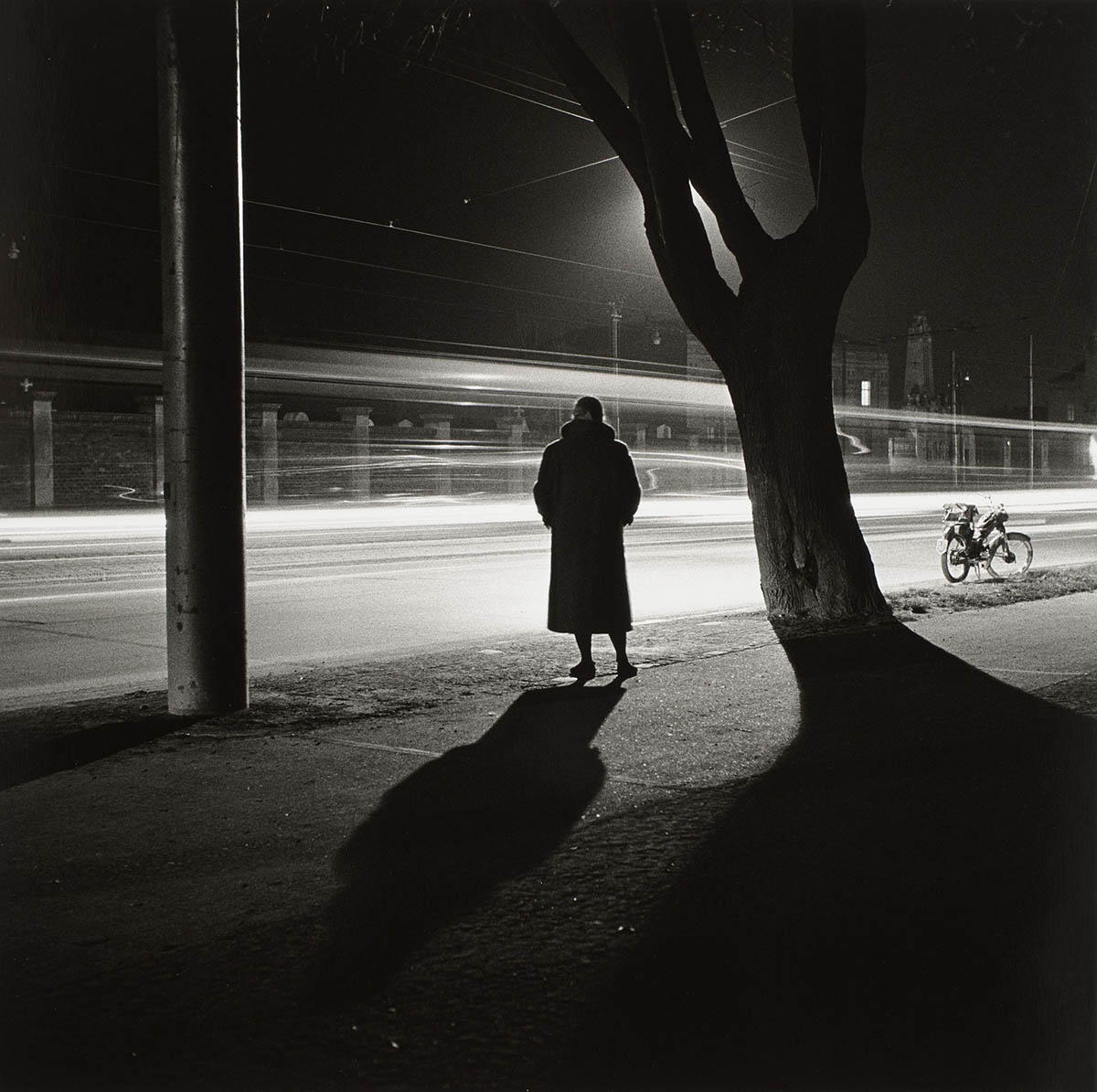
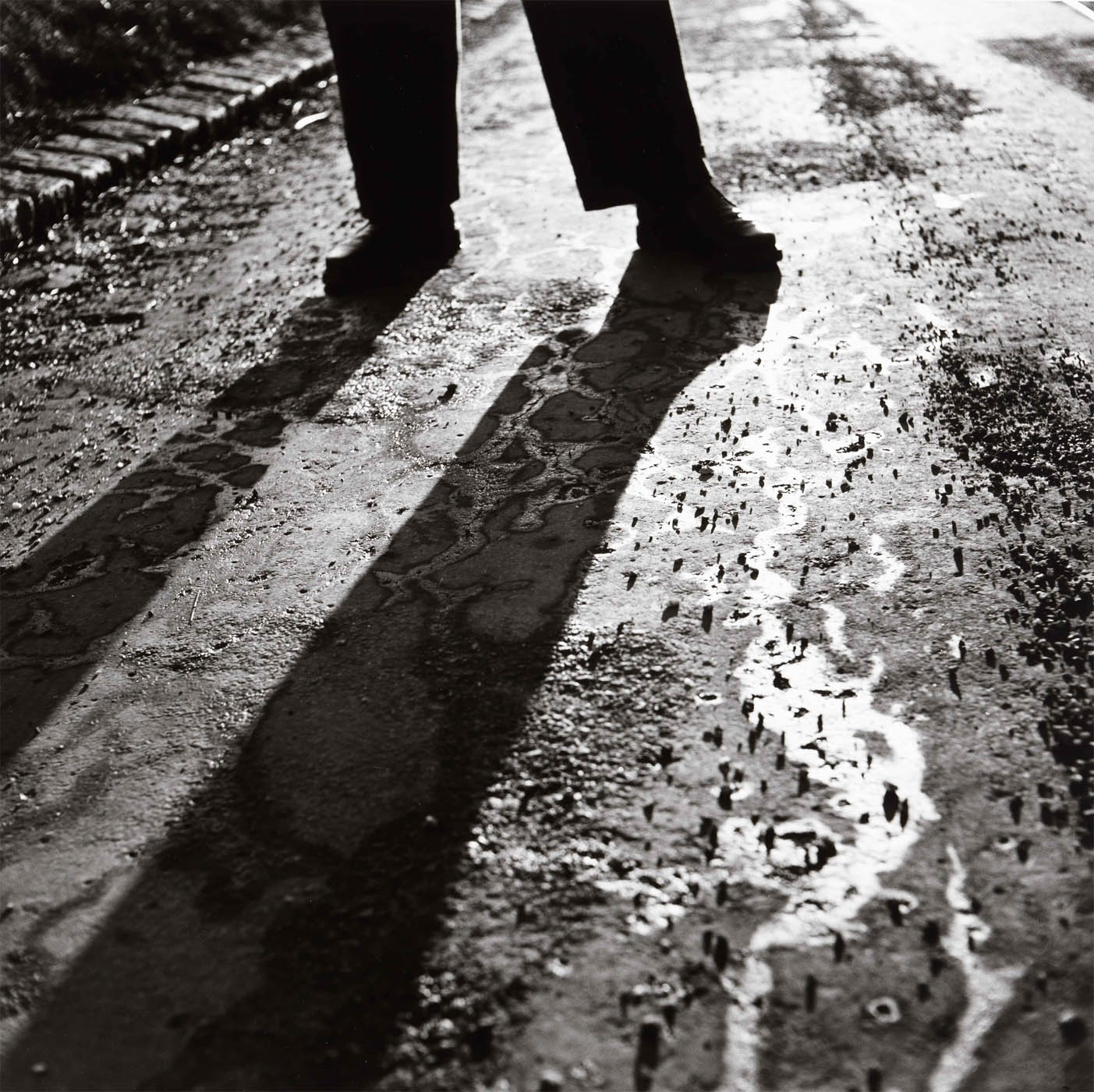
Elfriede Mejchar (Austrian, 1924-2020) 'Light and Shade' 1958 from the exhibition 'On Her Own. The photographer Elfriede Mejchar' at Wien Museum MUSA, Vienna, April - Sept 2024


Elfriede Mejchar (Austrian, 1924-2020)
Light and Shade
1958
Wien Museum
© Bildrecht, Vienna 2023


Comment on this magnificent Austrian photographer unknown to me until now will be forthcoming in the future posting on the simultaneous exhibition The Poetry of the Everyday. Photographs by Elfriede Mejchar at Museum der Moderne Salzburg.

Marcus


Many thankx to the Wien Museum for allowing me to publish the photographs in the posting. Please click on the photographs for a larger version of the image.


“I am not an artist, I am a photographer.”


Elfriede Mejchar


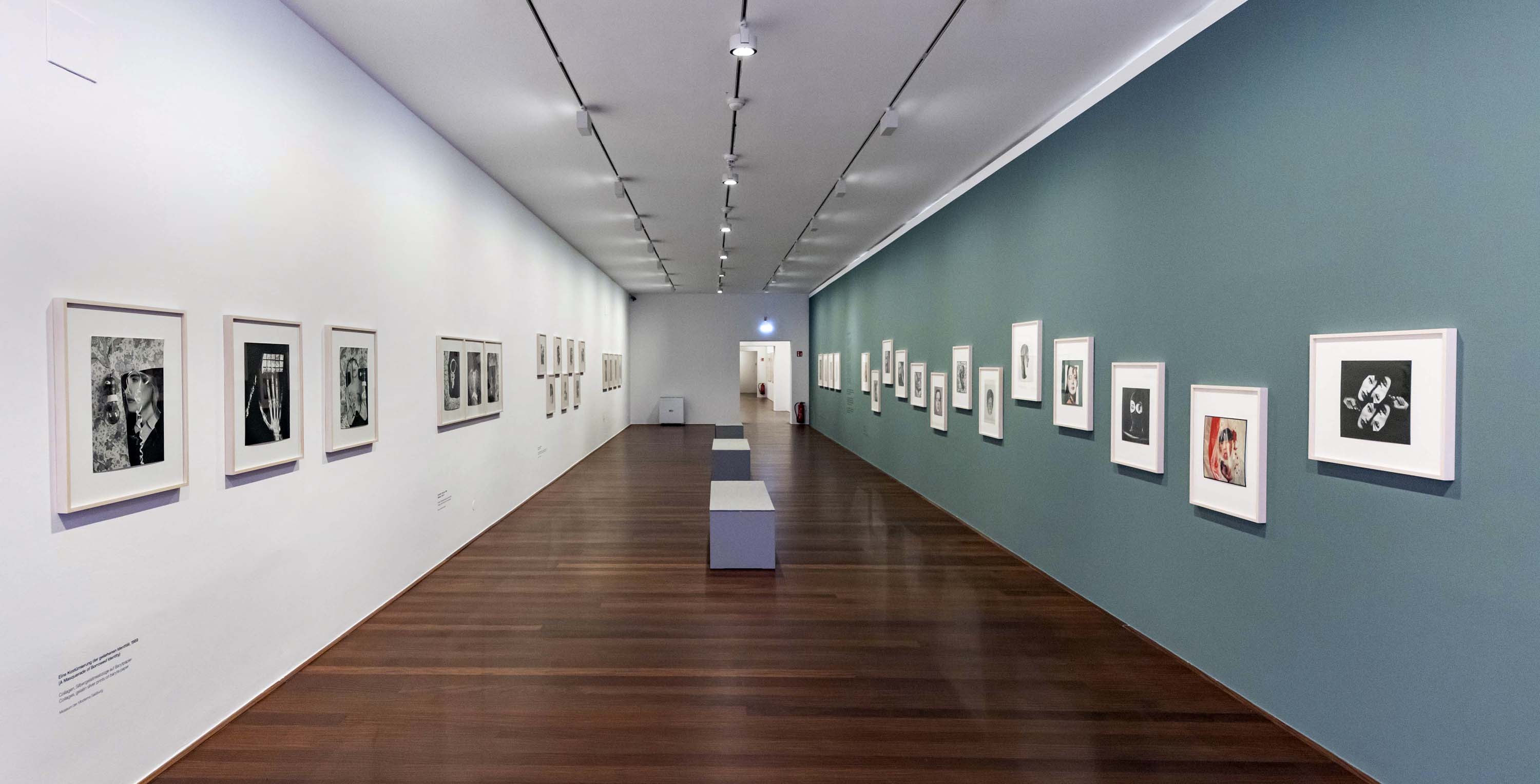
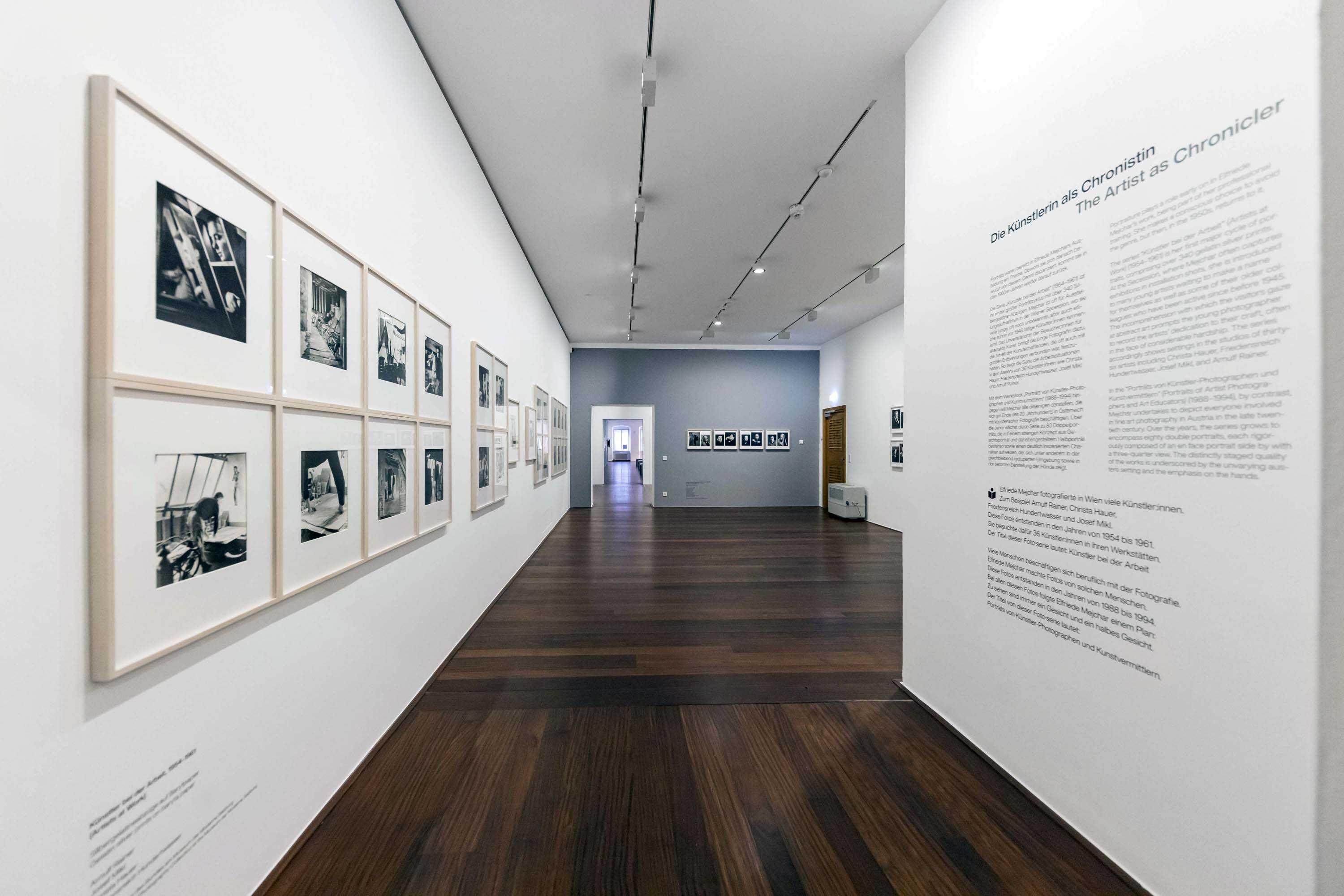
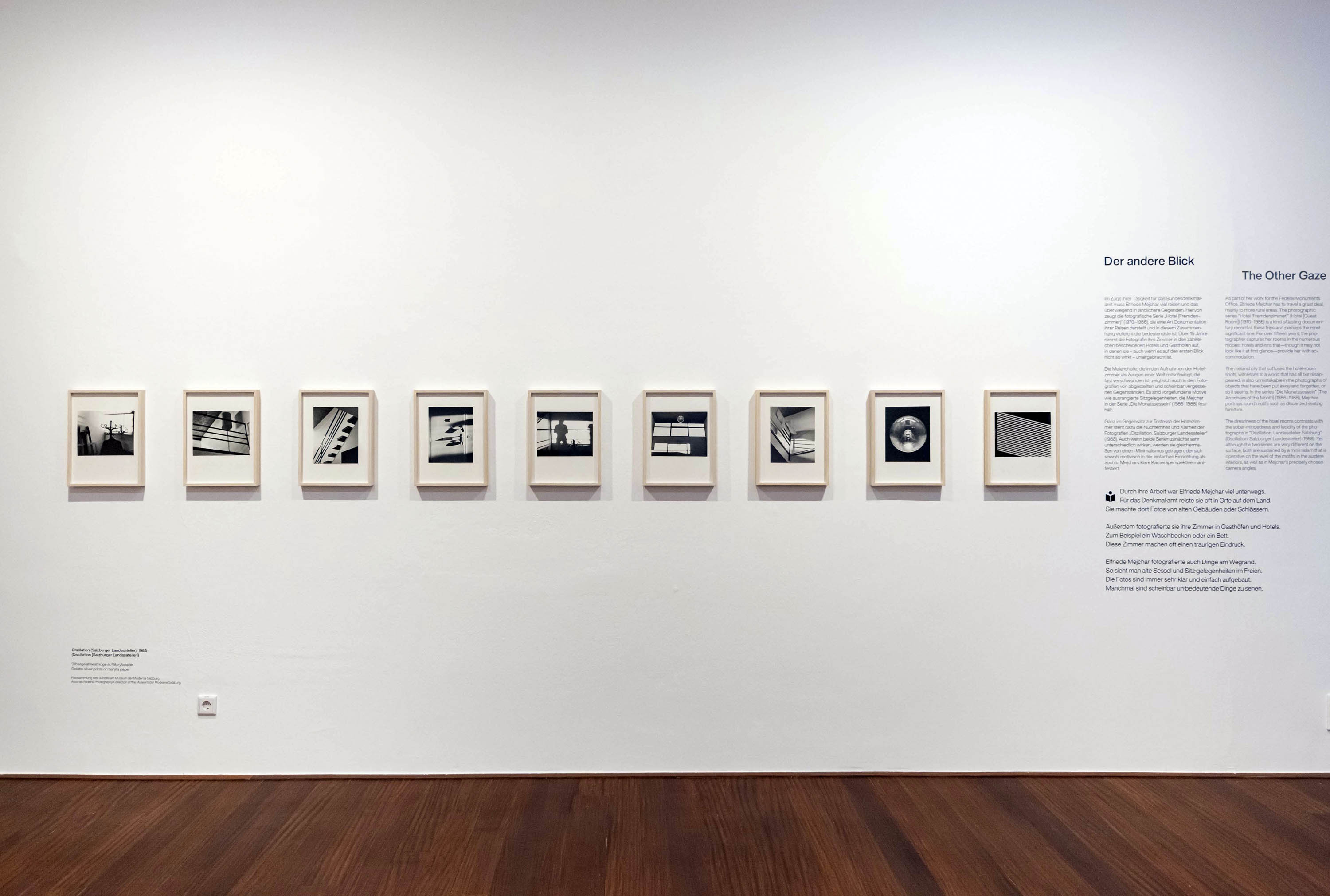
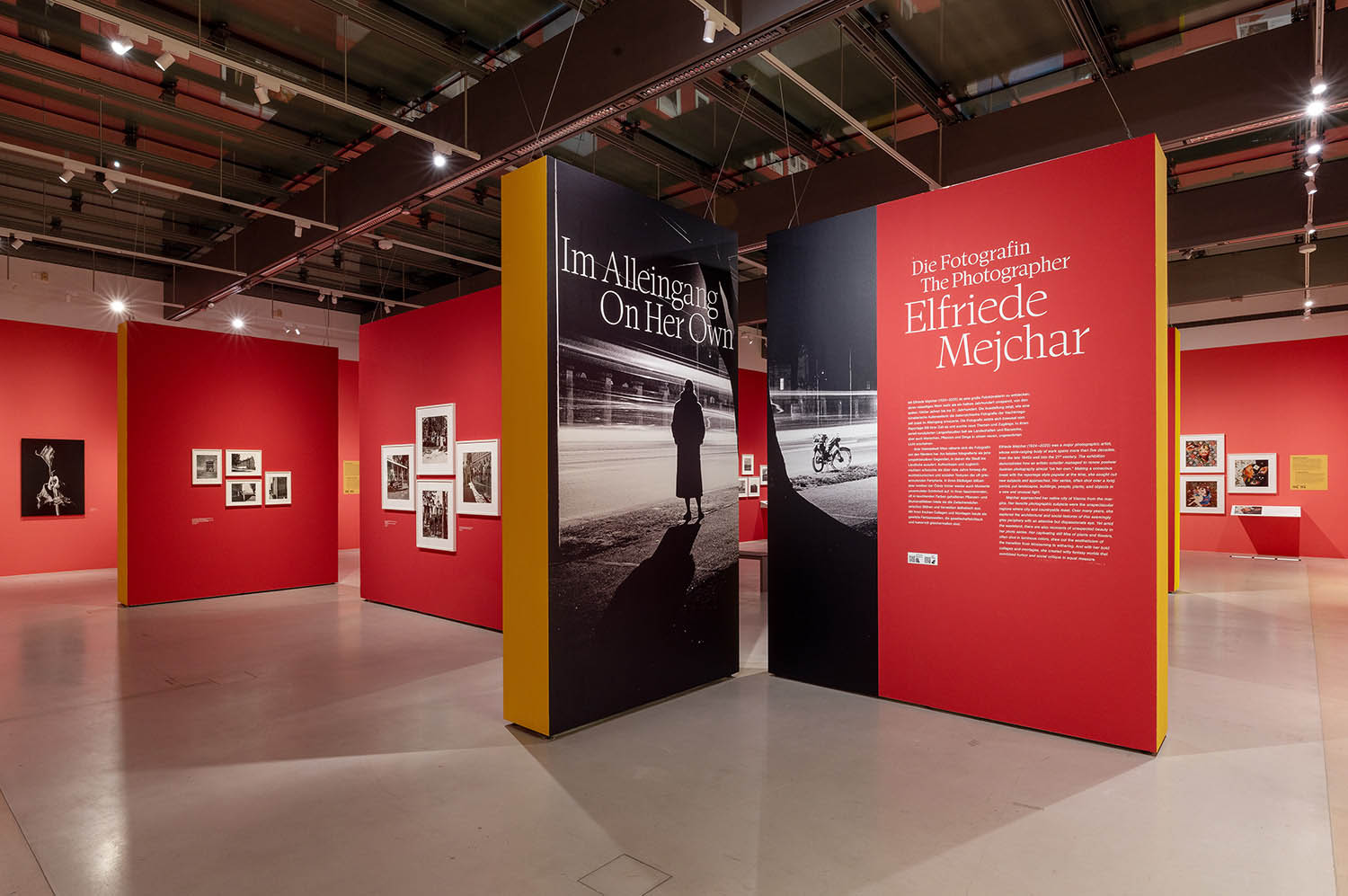
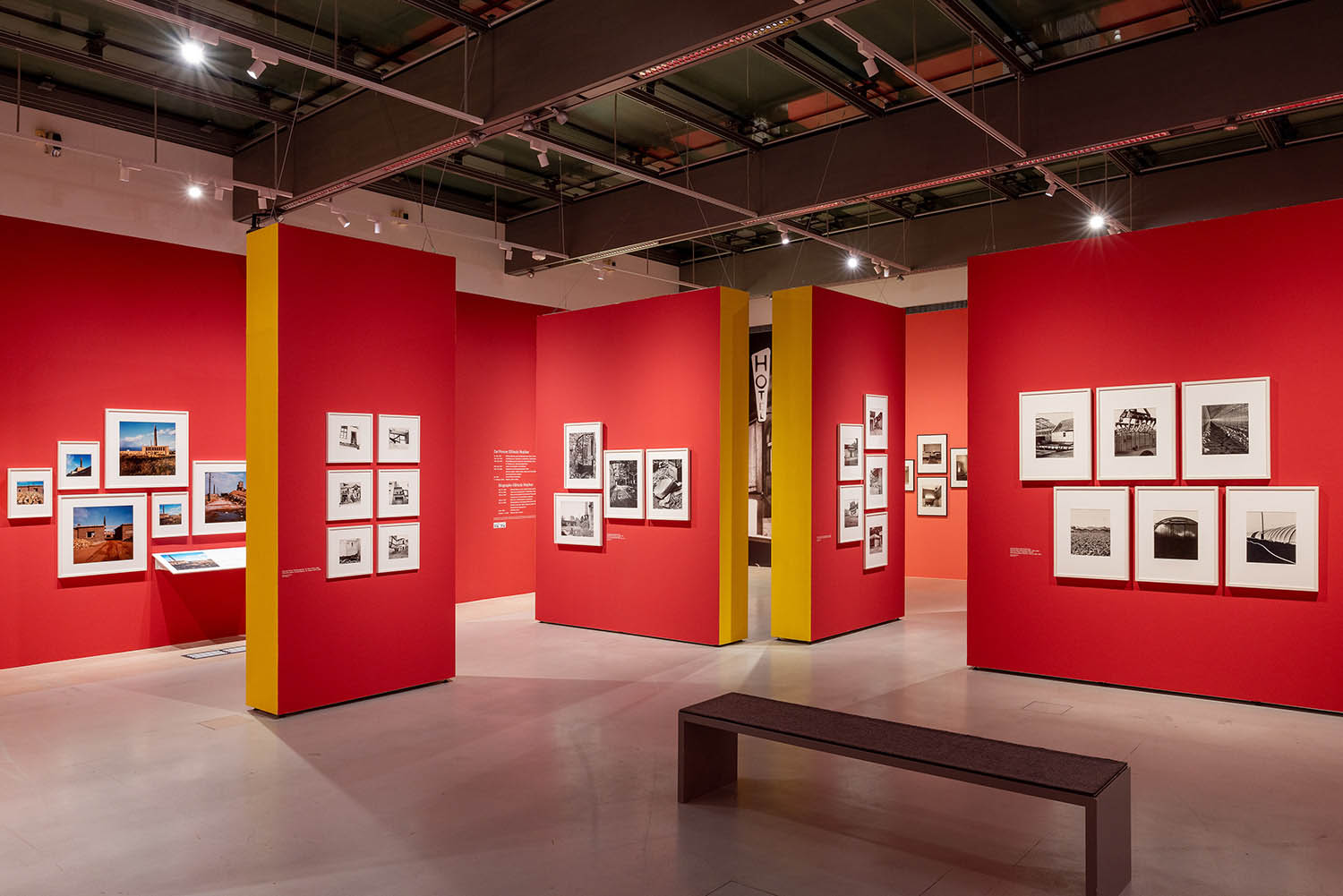
Installation view of the exhibition 'On Her Own. The photographer Elfriede Mejchar' at Wien Museum musa, Vienna

Installation view of the exhibition 'On Her Own. The photographer Elfriede Mejchar' at Wien Museum musa, Vienna

Installation view of the exhibition 'On Her Own. The photographer Elfriede Mejchar' at Wien Museum musa, Vienna

Installation view of the exhibition 'On Her Own. The photographer Elfriede Mejchar' at Wien Museum musa, Vienna

Installation view of the exhibition 'On Her Own. The photographer Elfriede Mejchar' at Wien Museum musa, Vienna

Installation view of the exhibition 'On Her Own. The photographer Elfriede Mejchar' at Wien Museum musa, Vienna

Installation view of the exhibition 'On Her Own. The photographer Elfriede Mejchar' at Wien Museum musa, Vienna


Installation views of the exhibition On Her Own. The photographer Elfriede Mejchar at Wien Museum musa, Vienna


Elfriede Mejchar (1924-2020) was a major photographic artist, whose richly-varied oeuvre spans more than five decades, from the late 1940s well into the 21st century. The Viennese photographer, who only achieved recognition as an artist towards the end of her career, is now regarded as one of the most important representatives of the Austrian and the international photography scenes. May 10, 2024 marks the hundredth anniversary of her birth.

The exhibition at the Wien Museum presents a broad cross-section of the work of this artistic outsider, and demonstrates how the renewal of postwar Austrian photography was almost “all her own work.” Elfriede Mejchar consciously broke away from the photographic mainstream and the reportage style that was popular at the time. Rather than searching for the so-called “decisive moment,” she approached her subjects in a strongly conceptual and serial manner. She focused not on the extraordinary but on the unspectacular and the commonplace, the everyday and the banal, repeatedly addressing these in new ways in her photographic series.

In an Austria-wide cooperation between the Wien Museum, the State Gallery of Lower Austria, and the Museum der Moderne Salzburg, Elfriede Mejchar’s extensive oeuvre is being presented in 2024 for the first time, simultaneously, in three locations across the country. The exhibitions in Vienna, Krems, and Salzburg approach the work of Mejchar from different perspectives. And the three presentations are accompanied by a jointly conceived catalog published by Hirmer Verlag.

A cooperation between the State Gallery of Lower Austria, the Wien Museum and the Museum der Moderne Salzburg.

Text from the Wien Museum website


Elfriede Mejchar (Austrian, 1924-2020) 'Light and Shade' 1958 from the exhibition 'On Her Own. The photographer Elfriede Mejchar' at Wien Museum MUSA, Vienna, April - Sept 2024


Elfriede Mejchar (Austrian, 1924-2020)
Light and Shade
1958
Wien Museum
© Bildrecht, Vienna 2023


Elfriede Mejchar (Austrian, 1924-2020) 'Untitled' 1950-1960  From the series 'Light and Shade' from the exhibition 'On Her Own. The photographer Elfriede Mejchar' at Wien Museum MUSA, Vienna, April - Sept 2024


Elfriede Mejchar (Austrian, 1924-2020)
Untitled
1950-1960
From the series Light and Shade
Wien Museum
© Bildrecht, Vienna 2023


Elfriede Mejchar (Austrian, 1924-2020) 'Untitled (Waiting for the Tram)' 1950-1960


Elfriede Mejchar (Austrian, 1924-2020)
Untitled (Waiting for the Tram)
1950-1960
From the series Light and Shade
Wien Museum
© Bildrecht, Vienna 2023


Elfriede Mejchar (Austrian, 1924-2020) 'Vienna 10, Hasengasse 53' 1950-1960


Elfriede Mejchar (Austrian, 1924-2020)
Vienna 10, Hasengasse 53
1950-1960
Wien Museum
© Bildrecht, Vienna 2023


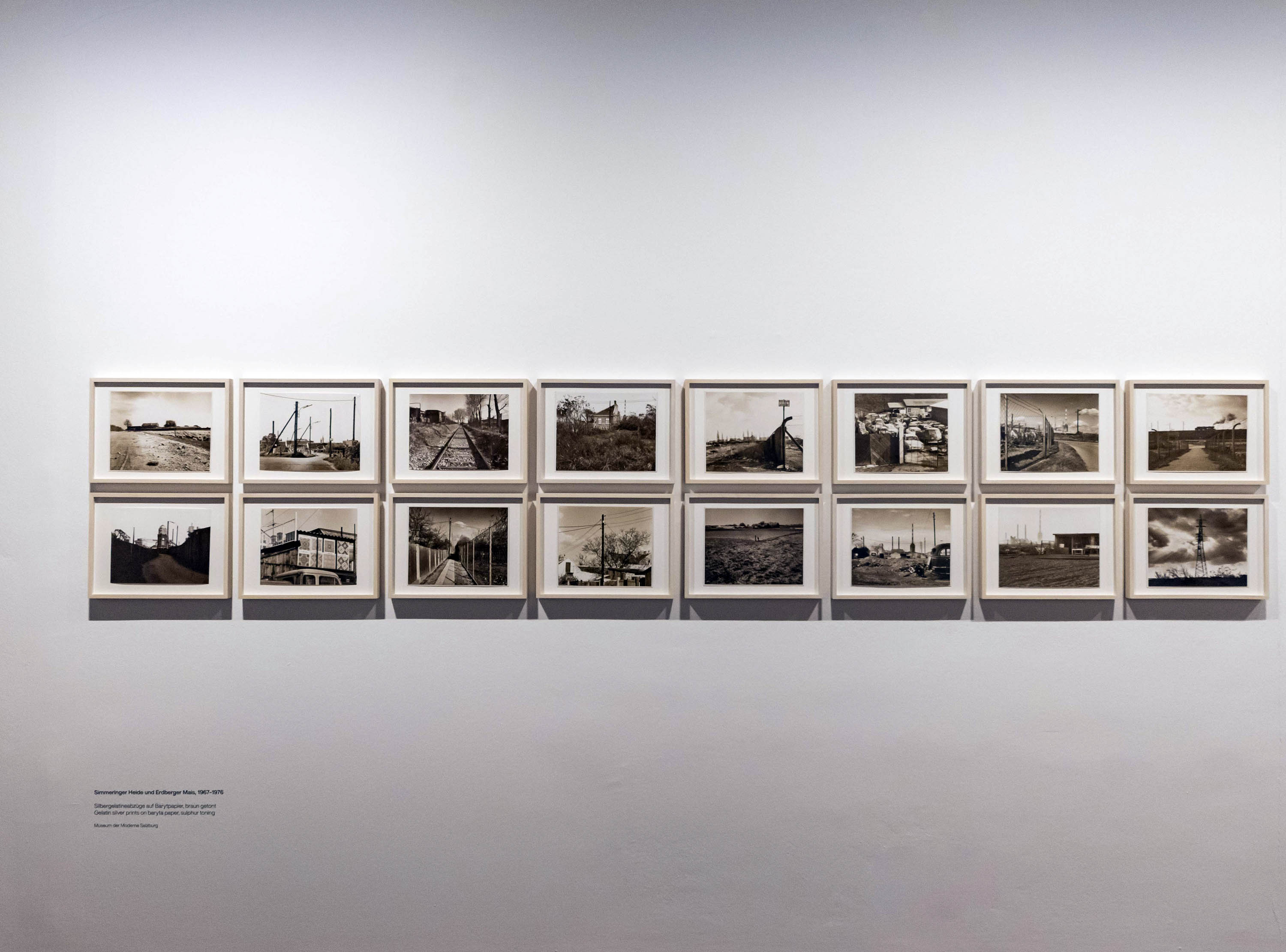
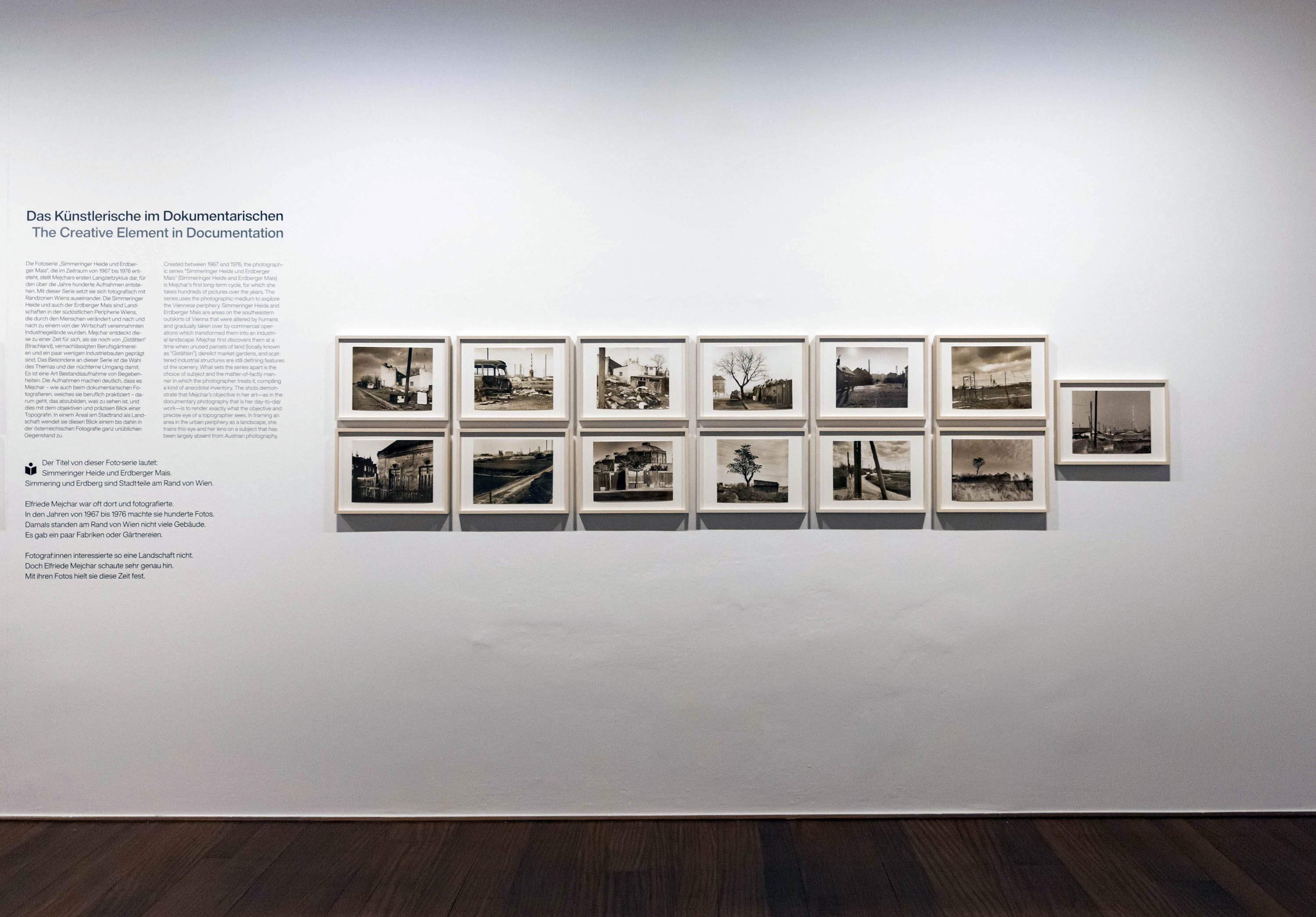
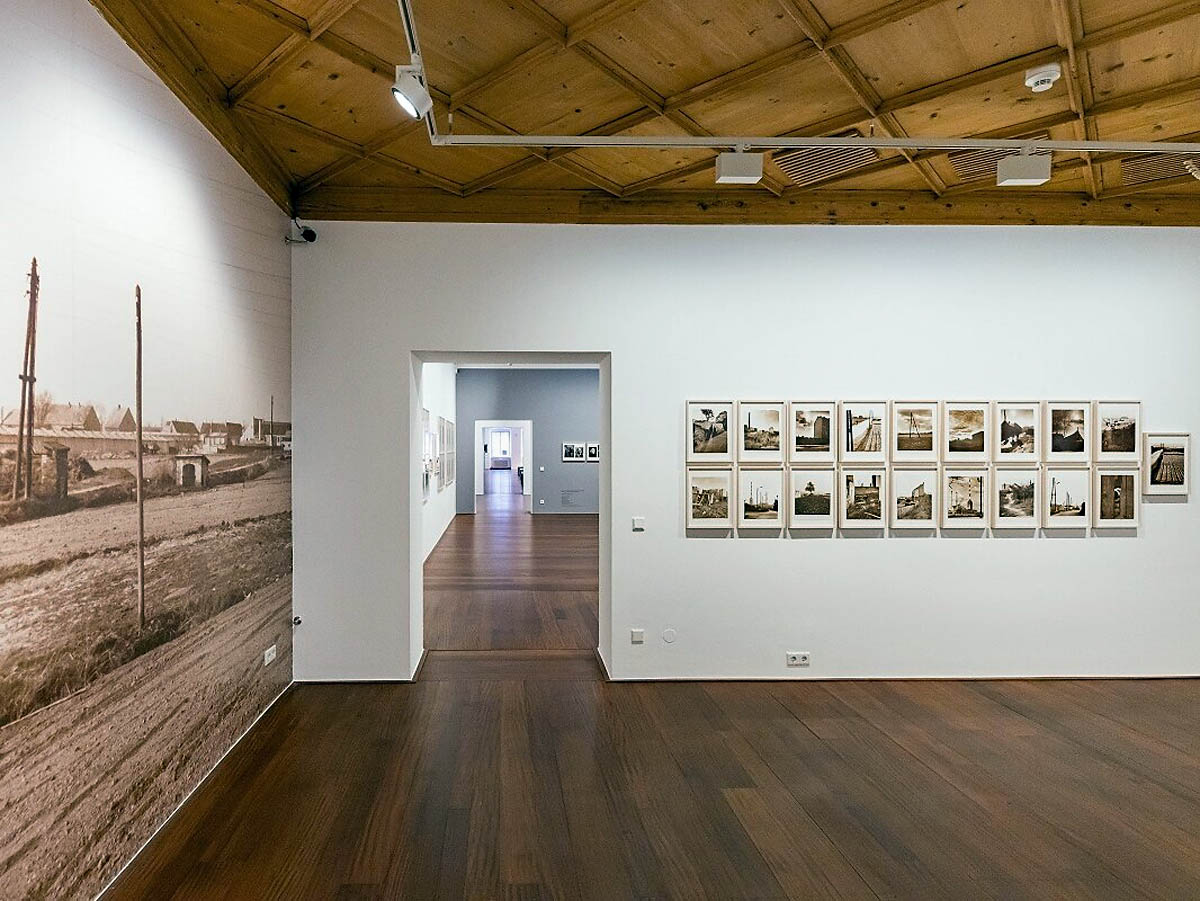
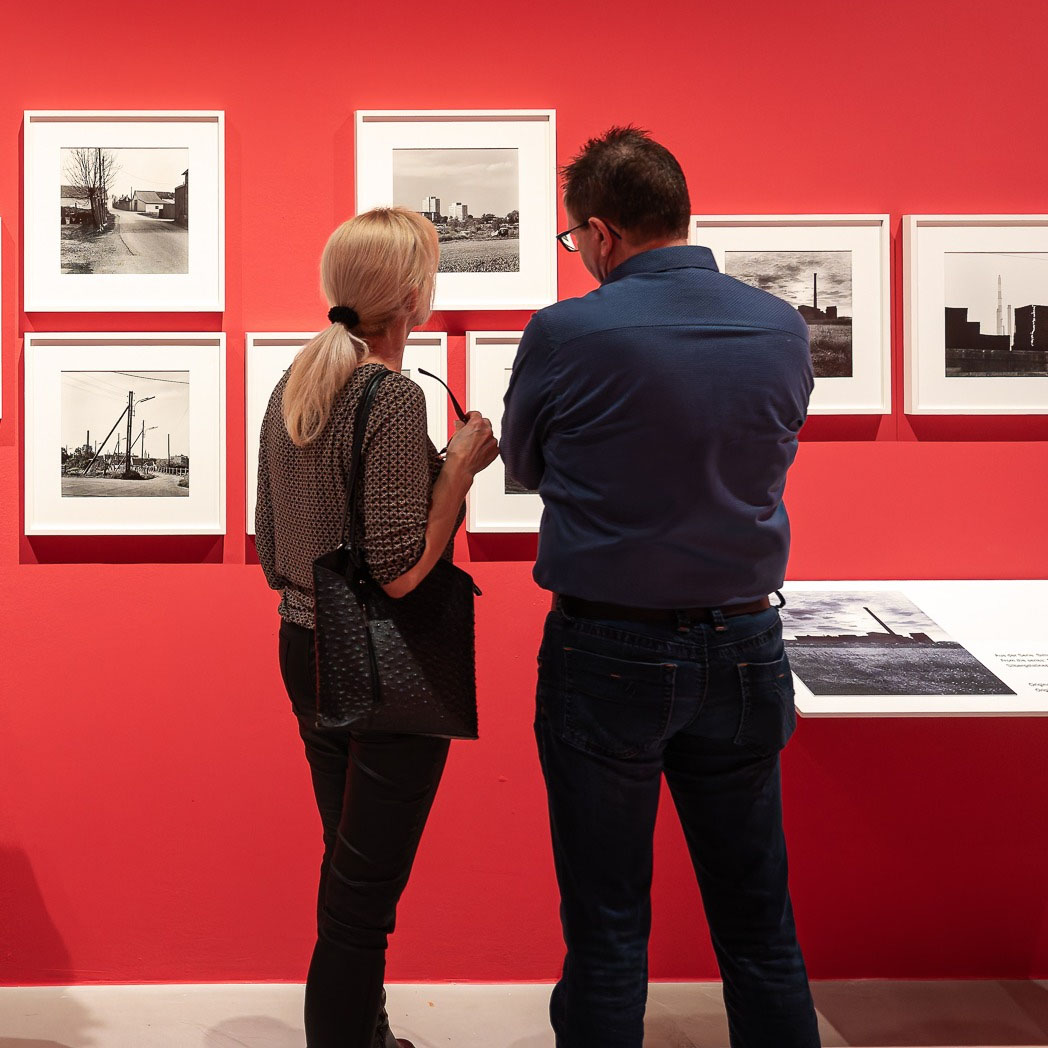
Installation view of the exhibition 'On Her Own. The photographer Elfriede Mejchar' at Wien Museum musa, Vienna Installation view of the exhibition On Her Own. The photographer Elfriede Mejchar at Wien Museum musa, Vienna showing photographs from Mejchar's series 'Simmering Heide and Erdberg Mais' (1967-1976)


Installation view of the exhibition On Her Own. The photographer Elfriede Mejchar at Wien Museum musa, Vienna showing photographs from Mejchar’s series Simmering Heide and Erdberg Mais (1967-1976, below)


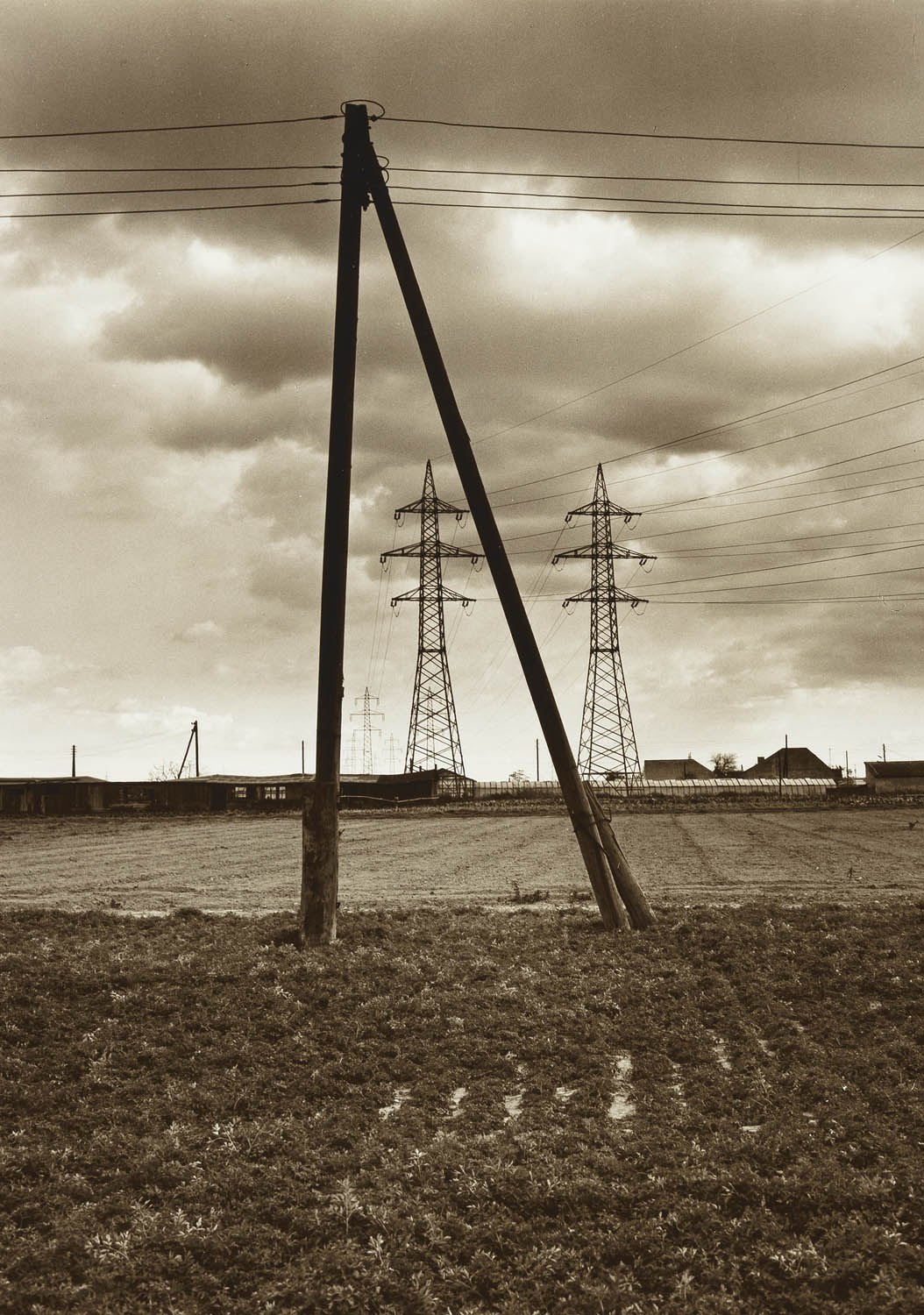
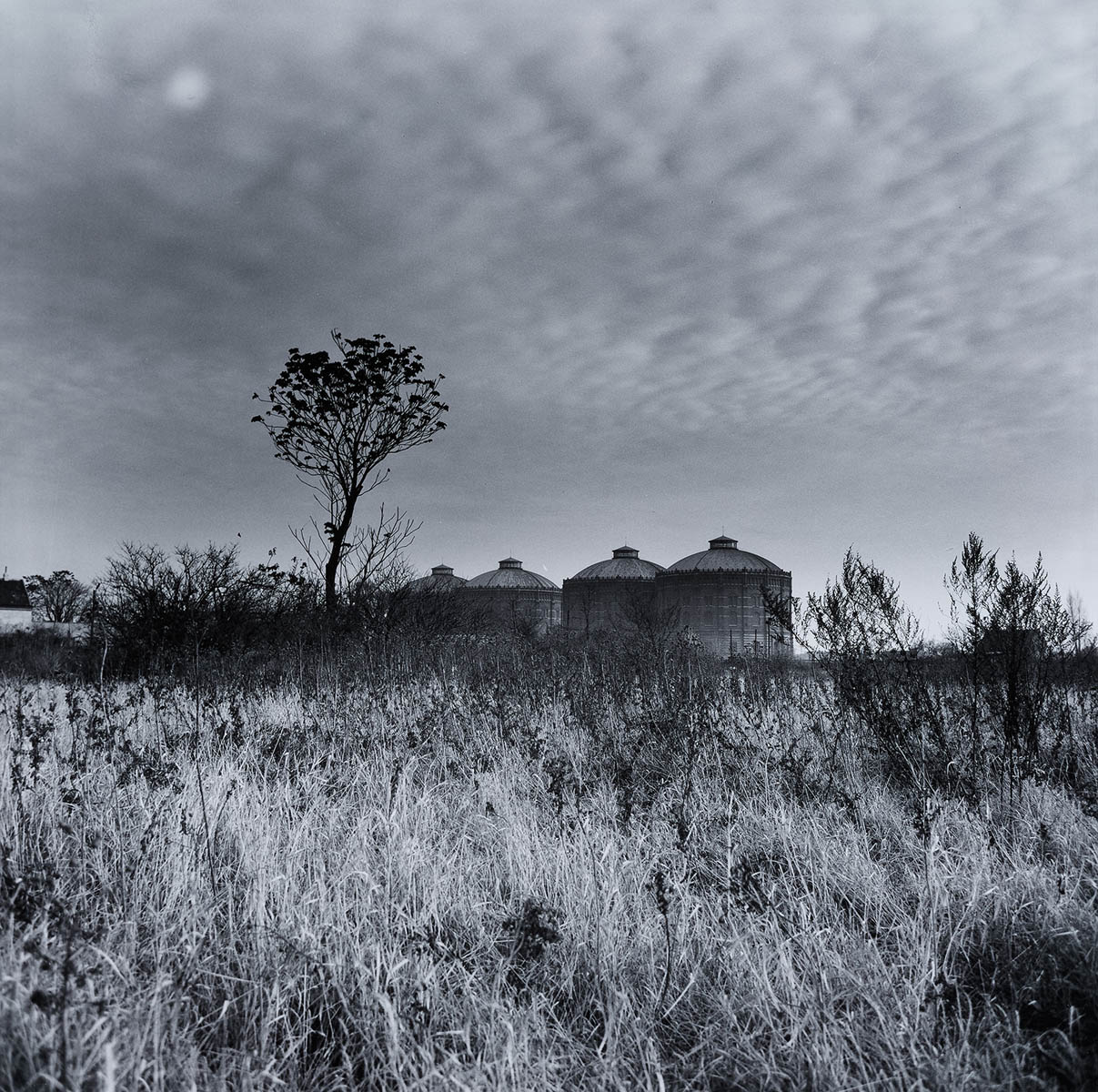
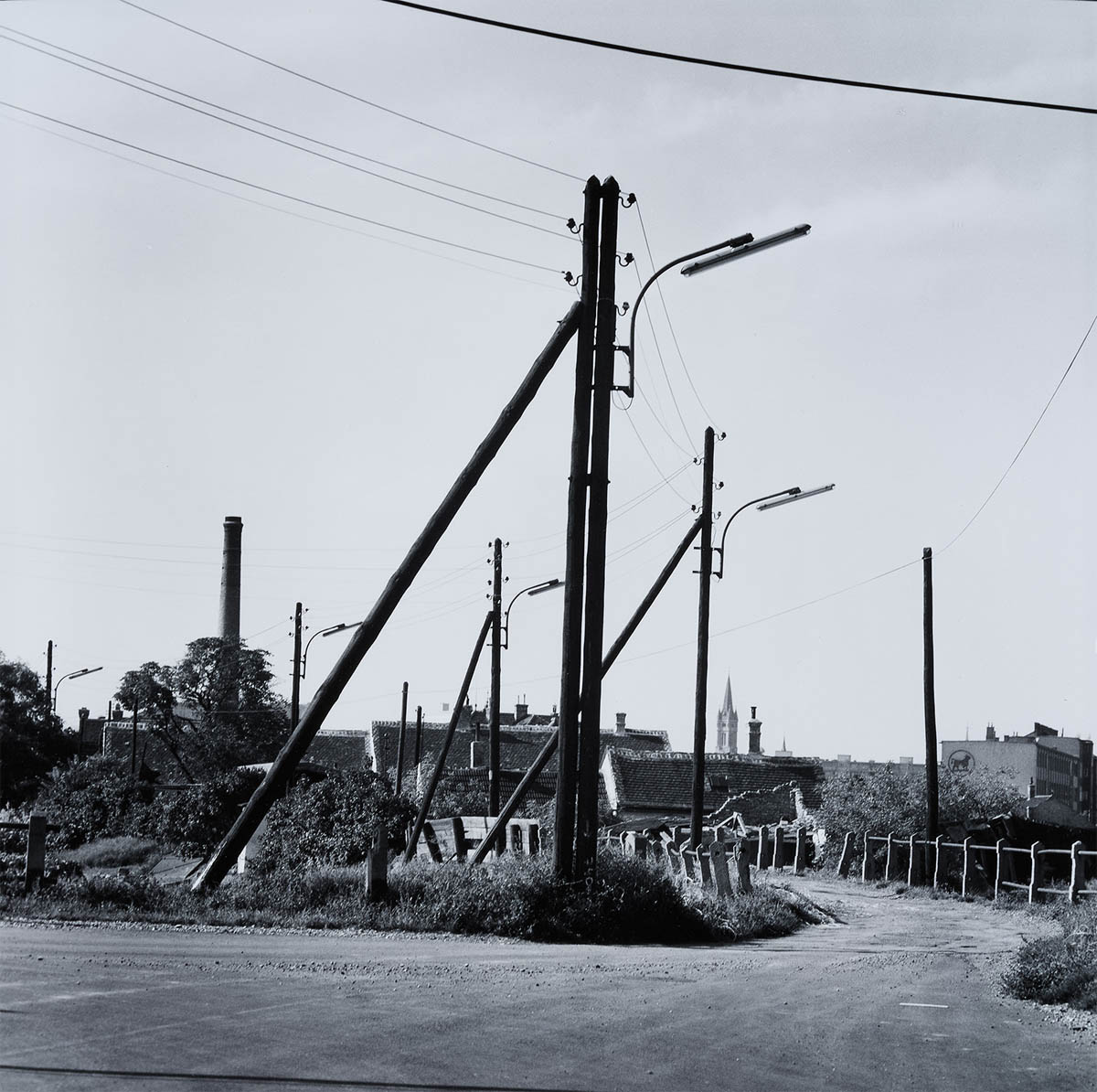
Elfriede Mejchar (Austrian, 1924-2020) 'Simmering Heide and Erdberg Mais' 1967-1976


Elfriede Mejchar (Austrian, 1924-2020)
Simmering Heide and Erdberg Mais
1967-1976
Wien Museum
© Bildrecht, Vienna 2023


Elfriede Mejchar (Austrian, 1924-2020) 'Simmering Heide and Erdberg Mais' 1967-1976


Elfriede Mejchar (Austrian, 1924-2020)
Simmeringer Heide and Erdberger Mais
1967-1976
Wien Museum
© Bildrecht, Vienna 2023


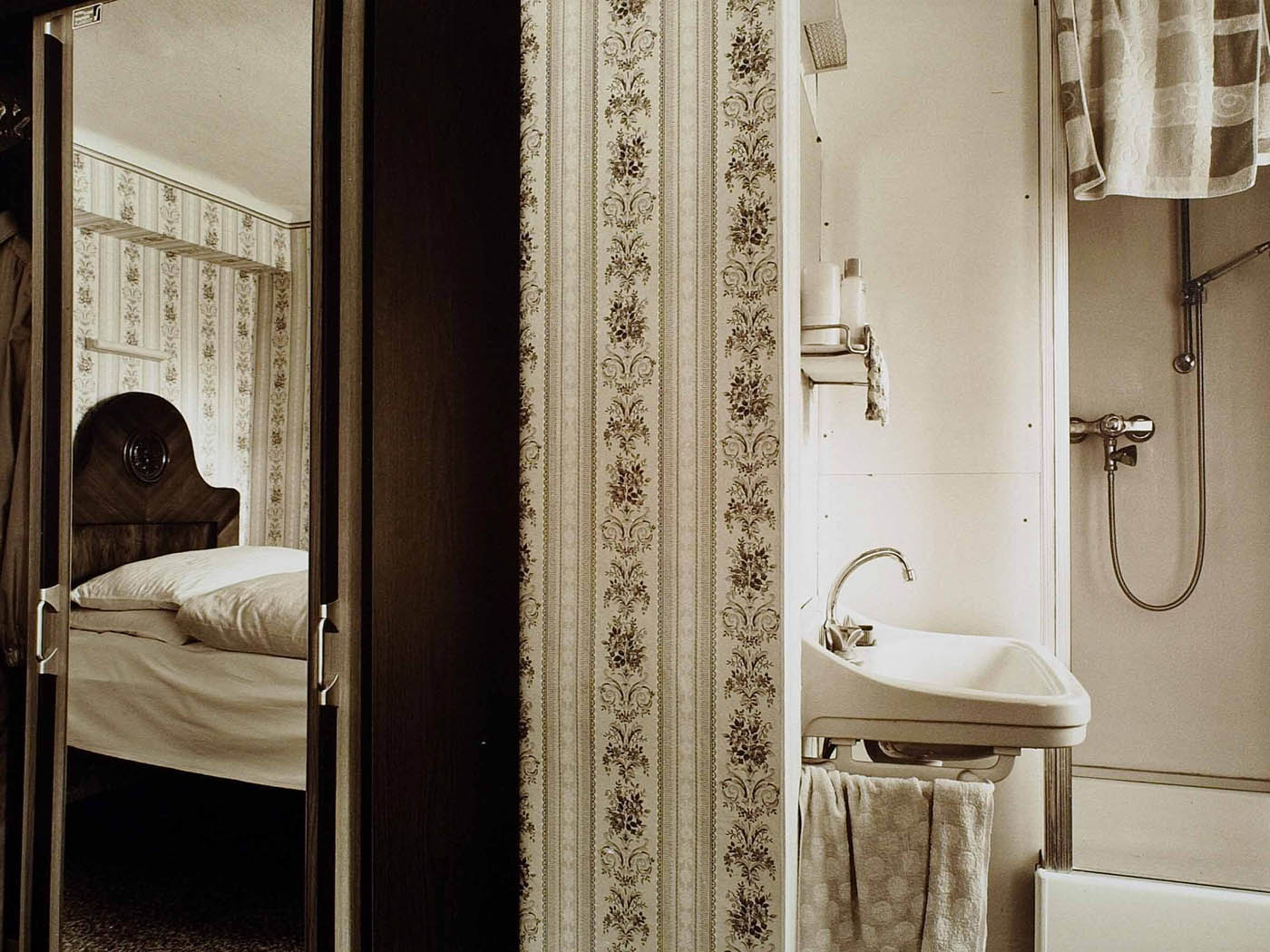
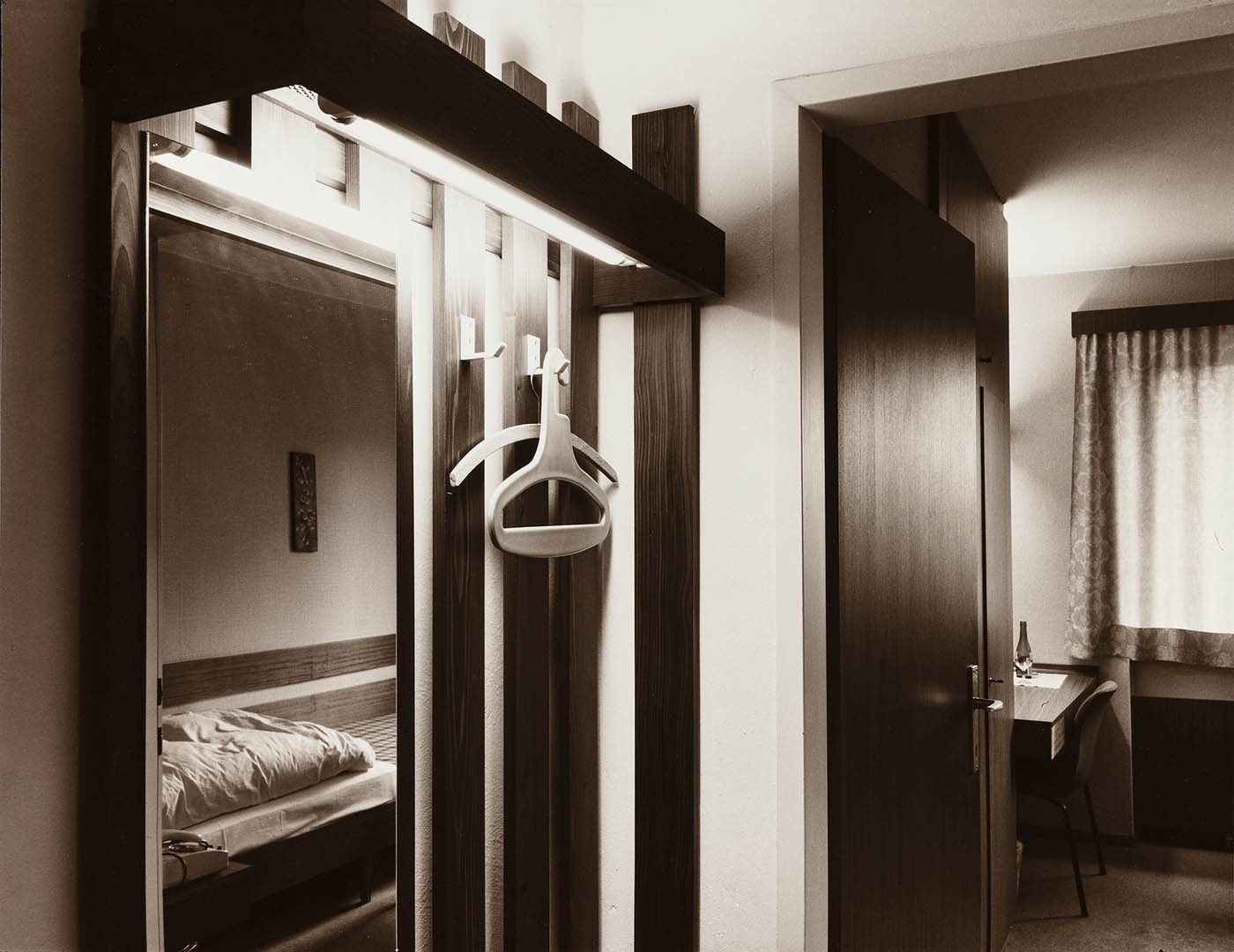
Elfriede Mejchar (Austrian, 1924-2020) 'At the Hotel' Around 1980


Elfriede Mejchar (Austrian, 1924-2020)
At the Hotel
Around 1980
Wien Museum
© Bildrecht, Vienna 2023


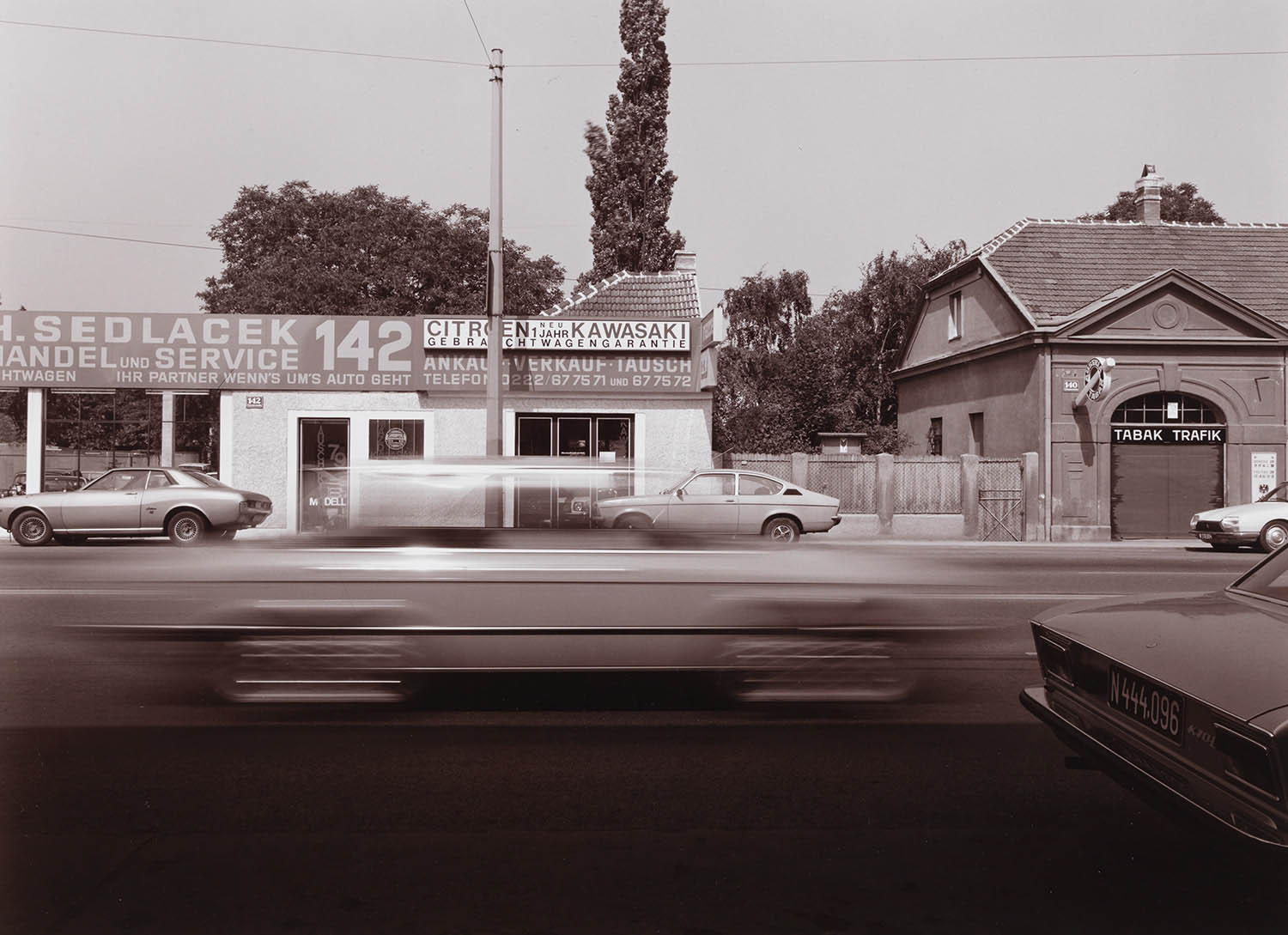
Elfriede Mejchar (Austrian, 1924-2020) 'Triester Strasse' 1982-1983


Elfriede Mejchar (Austrian, 1924-2020)
Triester Strasse
1982-1983
Wien Museum
© Bildrecht, Vienna 2023


Elfriede Mejchar (1924-2020) was a major photographic artist, whose richly-varied oeuvre spans more than five decades, from the late 1940s well into the 21st century. The Viennese photographer, who only achieved recognition as an artist towards the end of her career, is now regarded as one of the most important representatives of the Austrian and the international photography scenes. May 10, 2024 marks the hundredth anniversary of her birth.

The exhibition in musa presents a broad cross-section of the work of this artistic outsider, and demonstrates how the renewal of postwar Austrian photography was almost “all her own work.” Elfriede Mejchar consciously broke away from the photographic mainstream and the reportage style that was popular at the time. Rather than searching for the so-called “decisive moment,” she approached her subjects in a strongly conceptual and serial manner. She focused not on the extraordinary but on the unspectacular and the commonplace, the everyday and the banal, repeatedly addressing these in new ways in her photographic series.

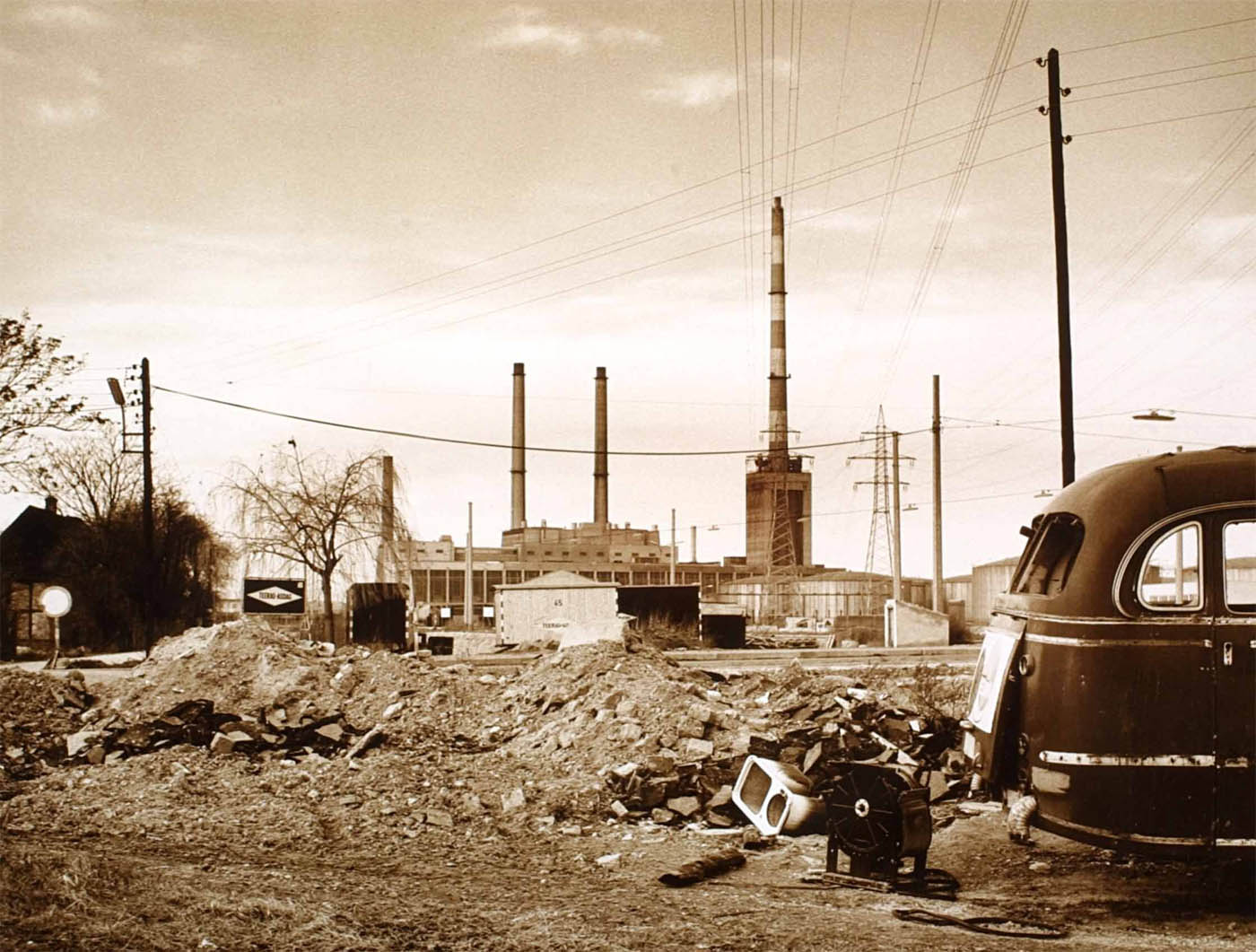
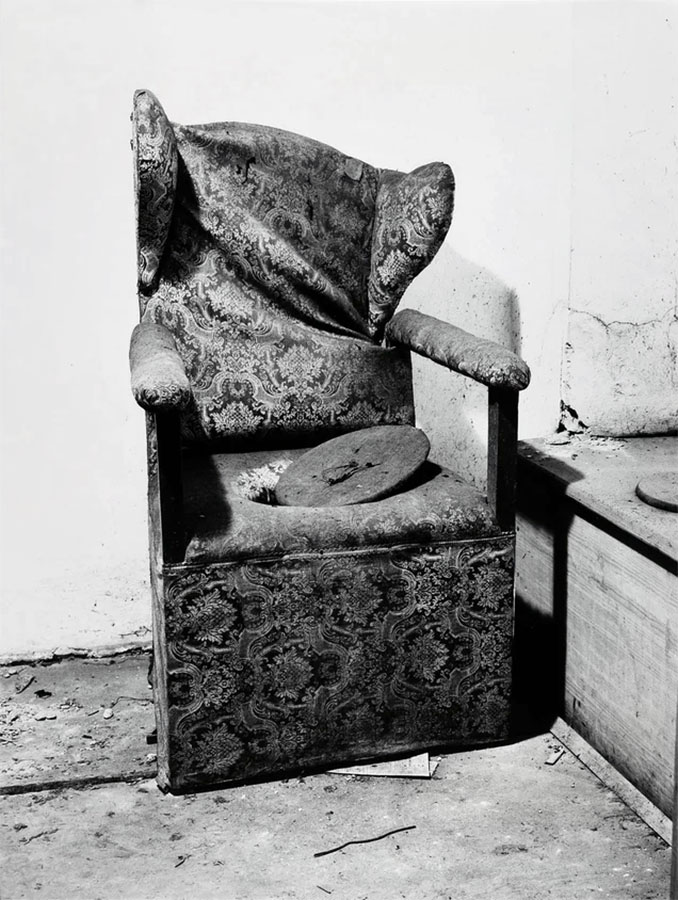
Elfriede Mejchar revealed her hometown Vienna from the periphery and had little interest in its iconic center, which was already the subject of countless thousands of photographs. As a photographer, she was at home where the city became rural, at the meeting point between urban development zones, derelict sites, green spaces, and post-industrial decay. In her long-term studies she documented the architectural and social textures of Vienna’s suburbs in a way that was both attentive and sober: new buildings advancing ever further onto green land, the monotony of endless arterial roads, derelict industrial complexes, market gardens and ageing gasometers, run-down housing and forgotten areas of landfill and decay. For Mejchar, however, the image of the urban periphery is not grey and the wasteland and its dereliction are repeatedly brightened by moments of unsuspected beauty.

Even if the urban and architectural photography of Vienna plays a major role in Elfriede Mejchar’s oeuvre, the range of subjects addressed in her work is far broader. Just as the photographer sheds a new photographic light on forgotten landscapes and buildings, she also approaches people and plants, places and things, in unexpected and surprising ways. In her incomparable series “Hotels,” she studies the interiors and typologies of Austrian accommodation in great detail, producing fascinating and often brightly coloured still lifes of plants and flowers as a means of aesthetically investigating the intermediate stages between blooming and withering. And in her bold collages and montages, a complex of work that continued to occupy her into her latter years, she created clever fantasy worlds, whose social criticism is only matched by their humour.

In an Austria-wide cooperation between the Wien Museum, the State Gallery of Lower Austria, and the Museum der Moderne Salzburg, Elfriede Mejchar’s extensive oeuvre is being presented in 2024 for the first time, simultaneously, in three locations across the country. The exhibitions in Vienna, Krems, and Salzburg approach the work of Mejchar from different perspectives:

Landesgalerie Niederösterreich. Elfriede Mejchar. Pushing the Boundaries of Photography April 13, 2024 to February 16, 2025 Tuesday – Sunday, 10am-6pm

musa. On her own. The photographer Elfriede Mejchar April 18 to September 1, 2024 Tuesday – Sunday, 10am-6pm

Museum der Moderne Salzburg. The Poetry of Everyday. Photographs by Elfriede Mejchar April 26 to September 15, 2024 Tuesday – Sunday, 10am-6pm

Biography of Elfriede Mejchar

Elfriede Mejchar (1924-2020) is undisputedly one of the most important personalities in Austrian photography. It was only at an advanced age that she received the public recognition she deserved, and in 2002 she was awarded the Federal Chancellery Prize for Artistic Photography and in 2004 the Lower Austrian Prize for Artistic Photography and the City of Vienna Prize for Fine Arts. In 2013, Elfriede Mejchar donated her entire oeuvre to the Province of Lower Austria. The Provincial Collections of Lower Austria have taken on the task of safeguarding this unique oeuvre for future generations and gradually making it accessible to the public. Her work is also prominently represented in the art collection of the Wien Museum, in the Federal Photography Collection and in the SpallArt Collection.

Press release from Wien Museum, Vienna


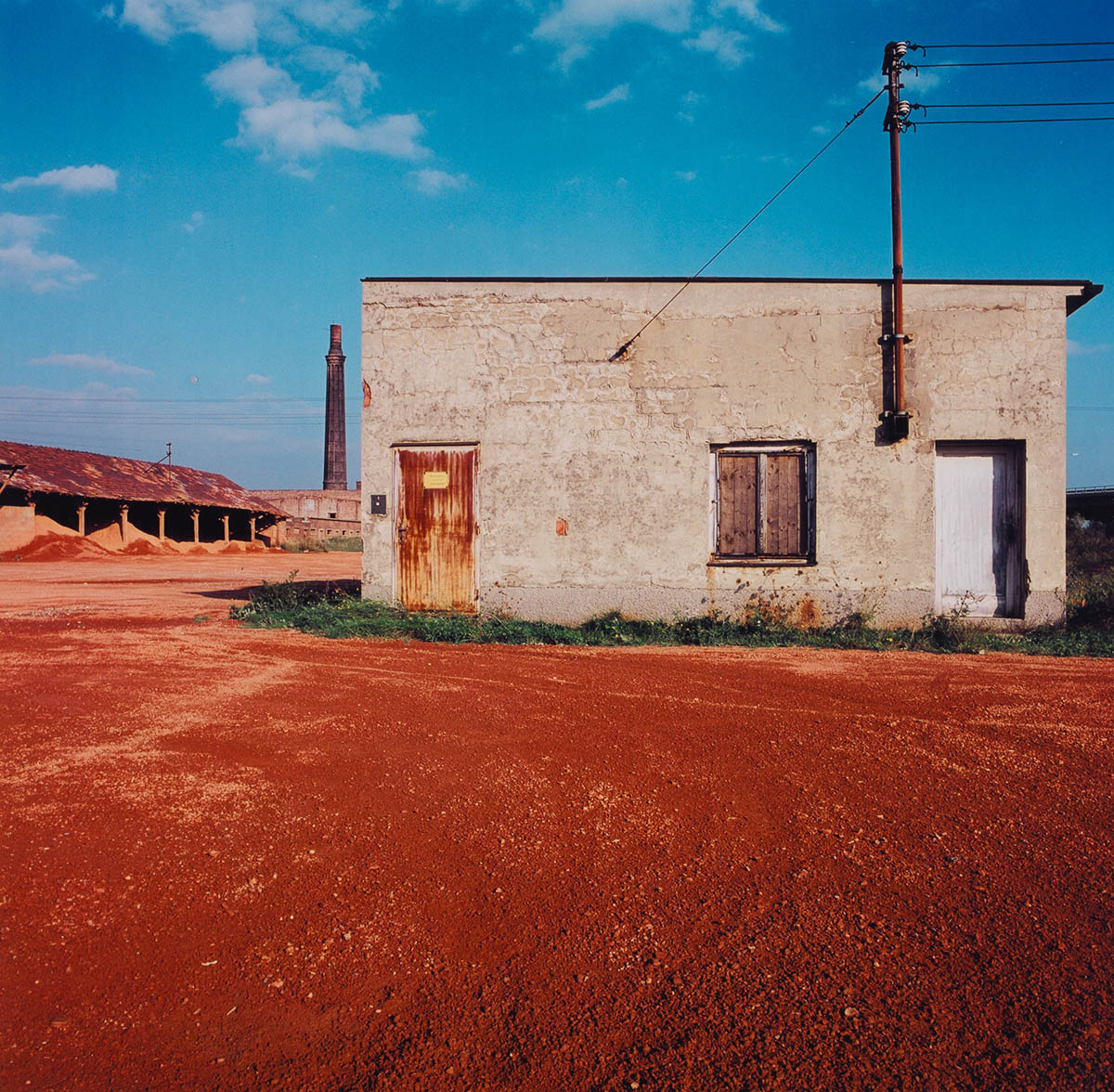
Elfriede Mejchar (Austrian, 1924-2020) 'Wienerberger Brick Kilns and Housing Estates' 1979-1981


Elfriede Mejchar (Austrian, 1924-2020)
Wienerberger Brick Kilns and Housing Estates
1979-1981
Wien Museum
© Bildrecht, Vienna 2023


Elfriede Mejchar (Austrian, 1924-2020) 'Wienerberger Brick Kilns and Housing Estates' 1979-1981


Elfriede Mejchar (Austrian, 1924-2020)
Wienerberger Brick Kilns and Housing Estates
1979-1981
Wien Museum
© Bildrecht, Vienna 2023


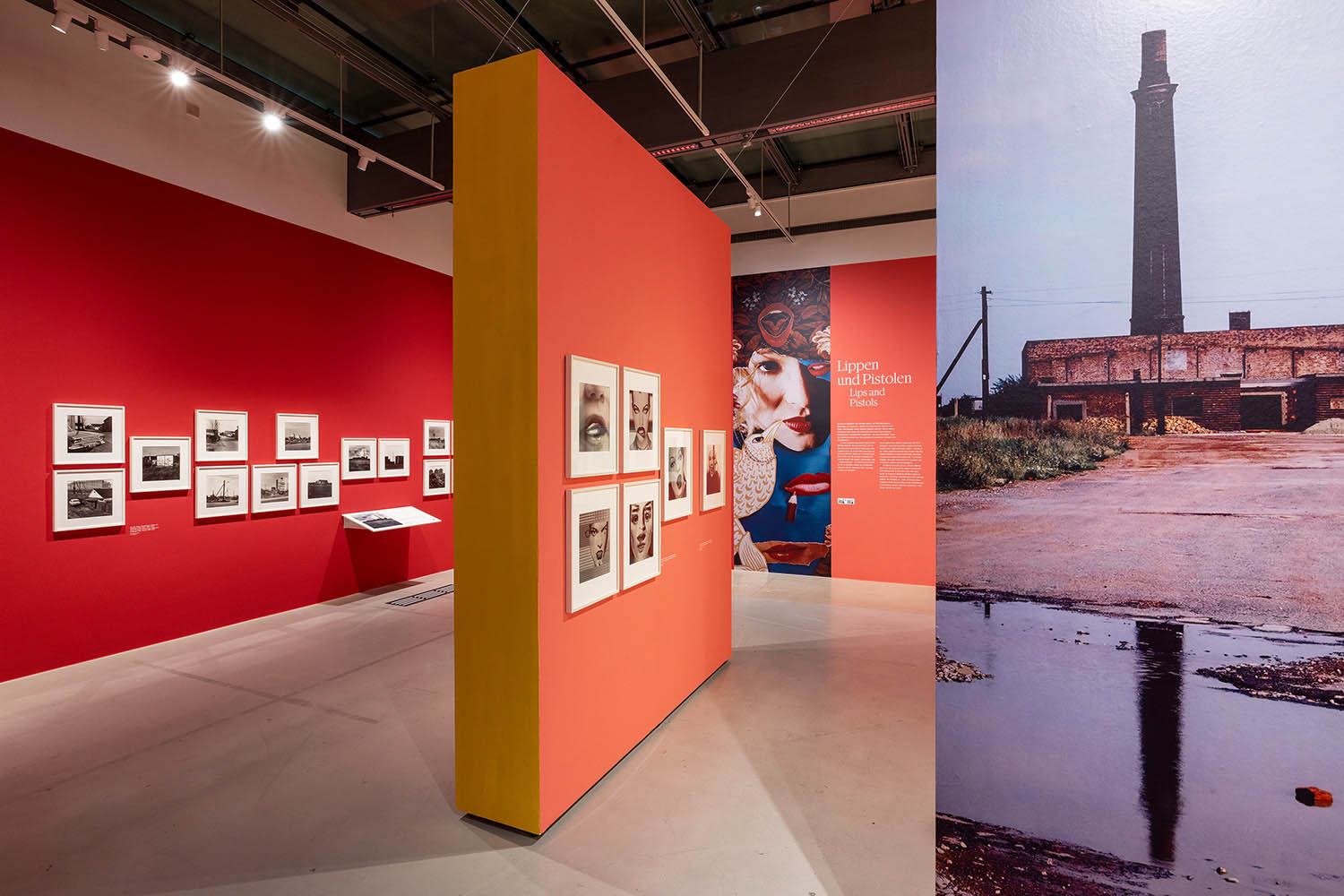
Installation view of the exhibition 'On Her Own. The photographer Elfriede Mejchar' at Wien Museum musa, Vienna showing text and photographs from the section 'Allure of the Everyday'


Installation view of the exhibition On Her Own. The photographer Elfriede Mejchar at Wien Museum musa, Vienna showing text and photographs from the section ‘Allure of the Everyday’


Exhibition texts

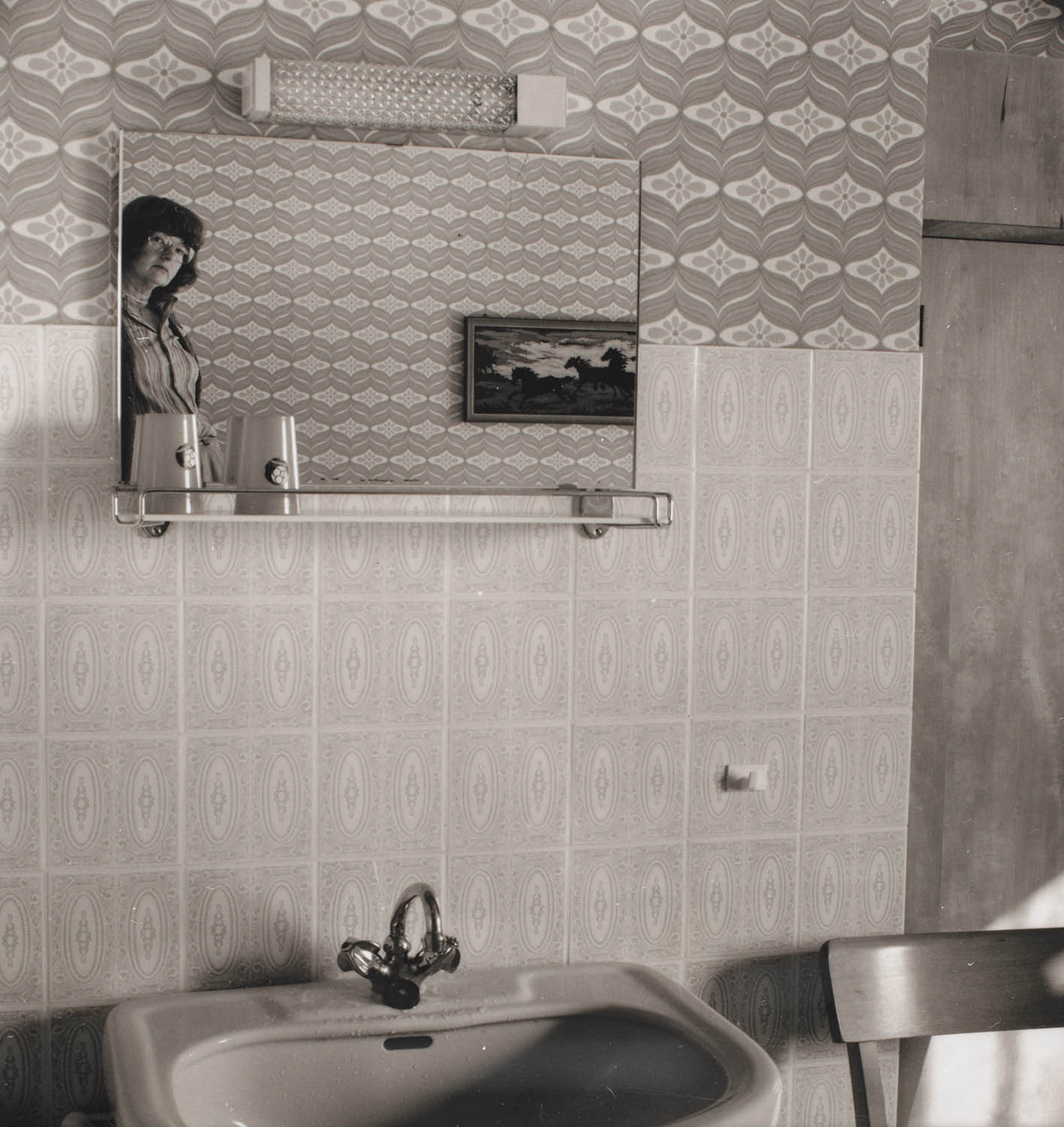
“I always marvelled at the wallpaper” (Prologue)

Elfriede Mejchar had two faces as a photographer: one in her day job, and one as an artist. Working for the Federal Monuments Office, she spent many years touring Austria, extensively documenting buildings and artworks in the provinces. On the side, she was a freelance photographic artist. When “at work,” she was bound by the strict criteria of art documentation. As an artist, she forged her own, very different paths.

While in her day job she photographed “great art,” in her free time she focused on the banality of everyday life, for example by taking interior shots of her accommodation over the years. The expenses covered by “the office,” she explained, “were not very generous, and I was always looking for lower-end lodgings. They could be very odd, anything was possible. In particular, I always marvelled at the wallpaper.”

1. Allure of the Everyday

A backlit trash can or advertising column, people waiting on the street, youths in the Bohemian Prater, the geometry of washing lines – even in her early series dating from the 1950s and 1960s, Mejchar’s fascination with scenes from everyday life is clear. She used her camera to record what she saw in the city in a matter-of-fact style, without judgment: the buildings and streets, cars and advertisements, traffic lights and posters. Only occasionally do people feature in her images. Often they seem a little lost. In contrast to many other photographers of her era, Mejchar was not looking for a quick snapshot or the “decisive moment.” “Speed doesn’t suit me,” she once said. Frequently she worked in series, often created over several years. Her focus was not on the extraordinary but on the unspectacular and the commonplace.

Working in Series

“I don’t like single photos very much,” said Elfriede Mejchar, thus describing one of the fundamental features of her photography. For almost 30 years, she explored Vienna’s peripheral zones on the southeast edge of the city. Again and again she returned to these uninviting places on the outskirts, where few people spent much time. In the main she photographed the landscapes, roads, and neighbourhoods in series, usually in parallel, but sometimes as a chronological sequence. For Mejchar as a photographer, the single image could not capture the complexity of this desolate and yet, in her eyes, beautiful landscape. It was the series that allowed her to show the different facets of a subject from ever new perspectives. Through her artistic and conceptual practice, Mejchar forged a completely new path in Austrian photography.

2. Evil Blooms

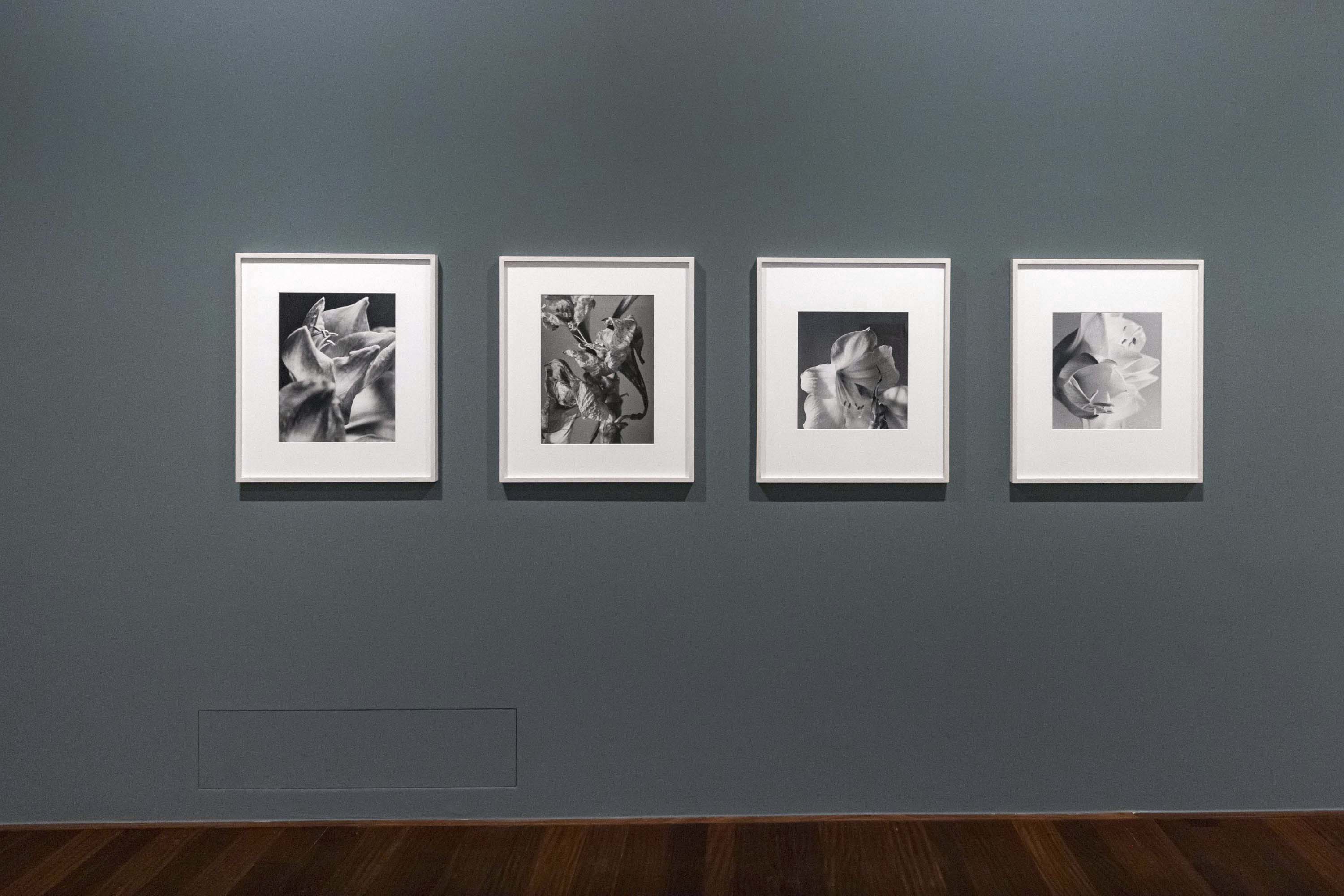
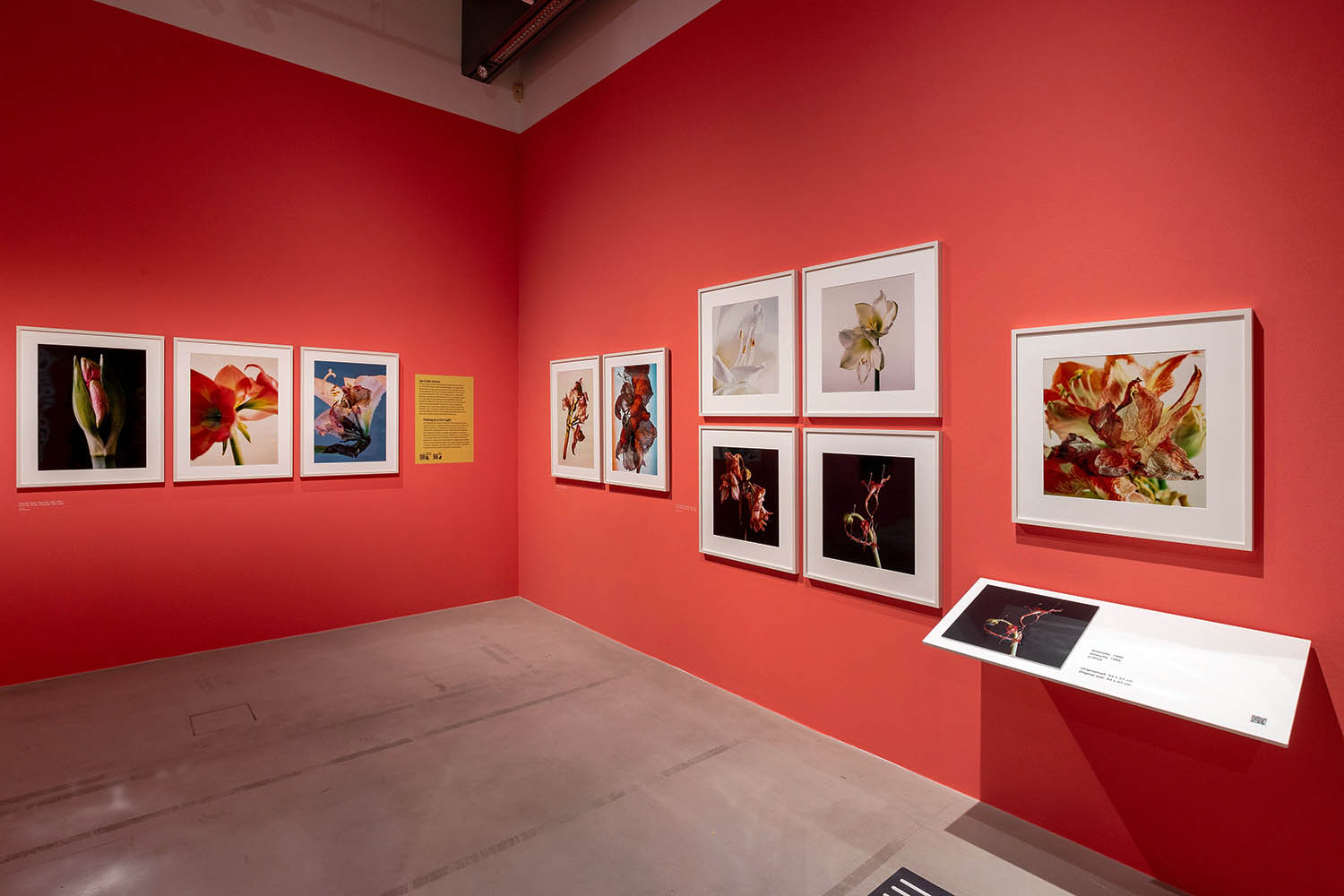
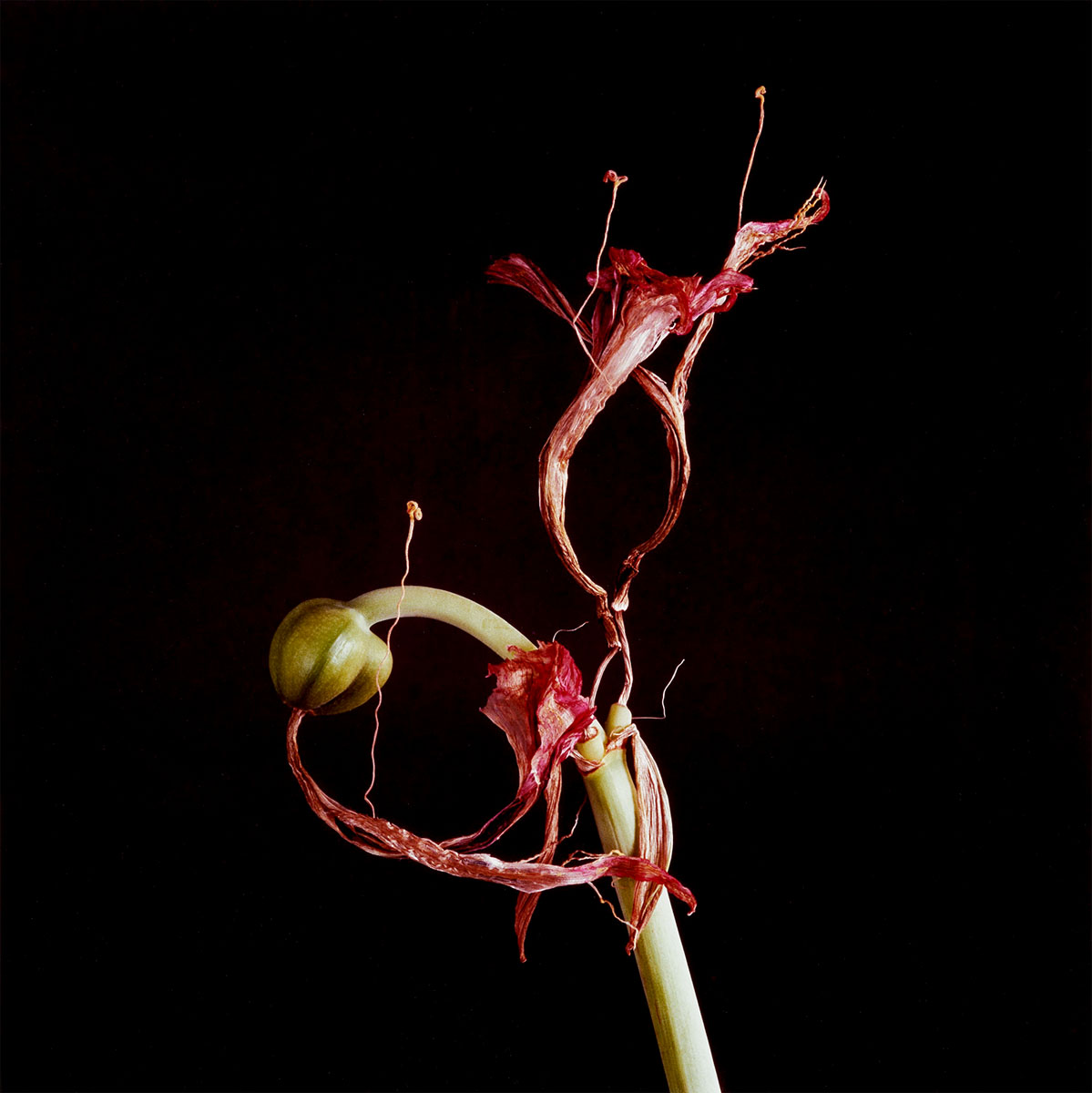
Throughout her working life, Mejchar photographed art, in other words, things created to last. Her images of flowers were a late counter-project. In these plant studies, some shot in luminous colour, the photographer brought transience and decay into focus, drawing out the fascinating transitions between blooming and withering. “I am not afraid of pathos, nor of kitsch,” Mejchar once said.

Elfriede Mejchar paid no heed to photographic conventions in her freelance work. Unabashed, she took delight in arranging and staging the plants and objects for her photographs in ways that opened up a range of associations. Some of her objects seem almost to come to life under her lens, while others wither away. Yet others invoke images of sexuality and desire.

Putting in a New Light

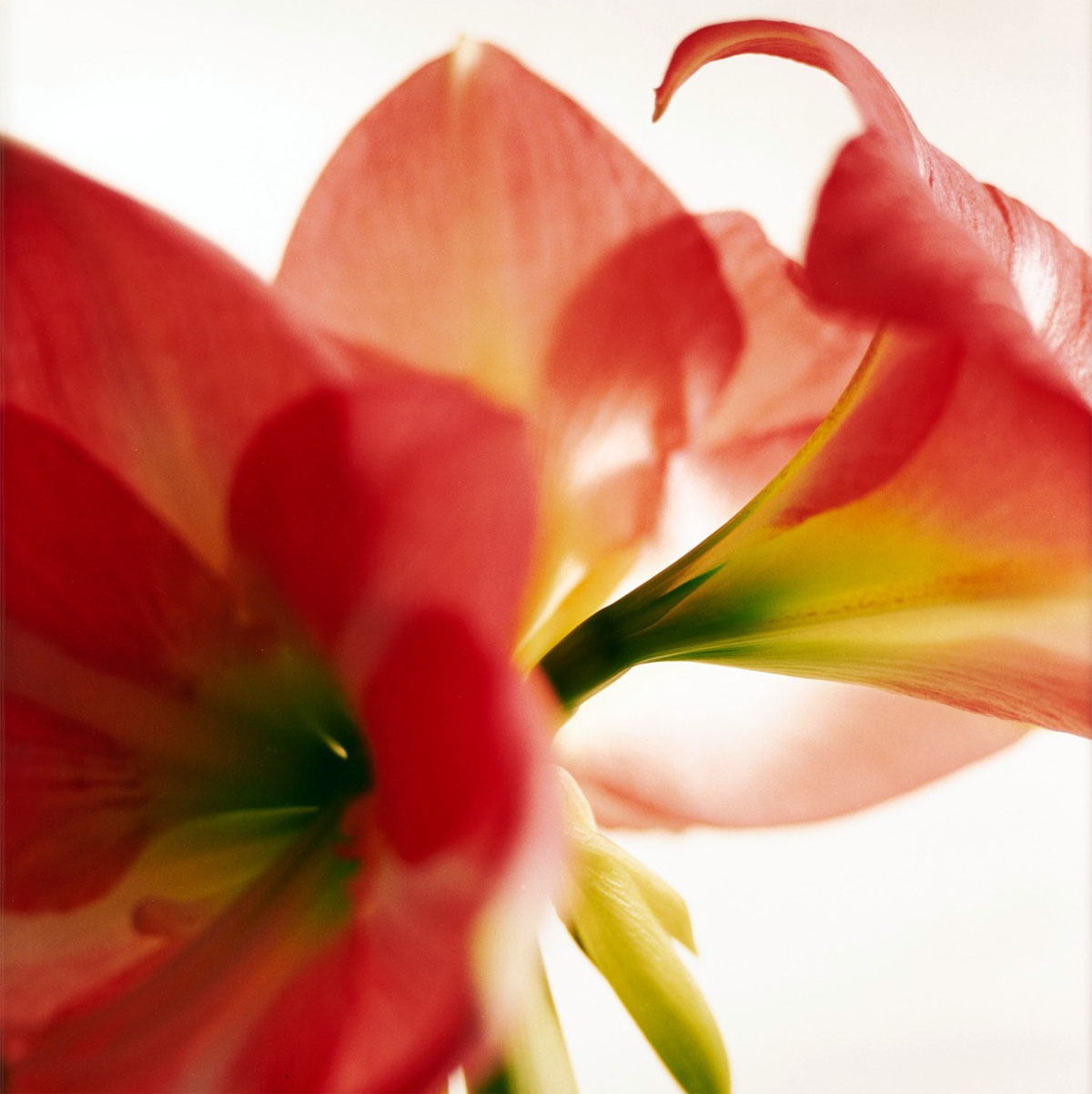
As a photographic subject, flowers are often dismissed as being romantic, kitsch, or unserious. Mejchar was not afraid of kitsch, but neither was she ever interested in the sweetness of the tulips or amaryllis she photographed. For her, flowers were like sculptures that needed to be shown in a proper light. Mejchar’s “merciless” gaze extended beneath the surface. It drilled into the very substance of the petals, laying bare the skeleton that emerged as the flower withered and capturing the bizarre forms of the dying plant. Yet the artist could not break free entirely of the strong metaphorical imagery of flowers. Sometimes, her shots of them in full bloom or with their inner parts exposed carried a sensual or sexual charge.

3. Measuring the Periphery

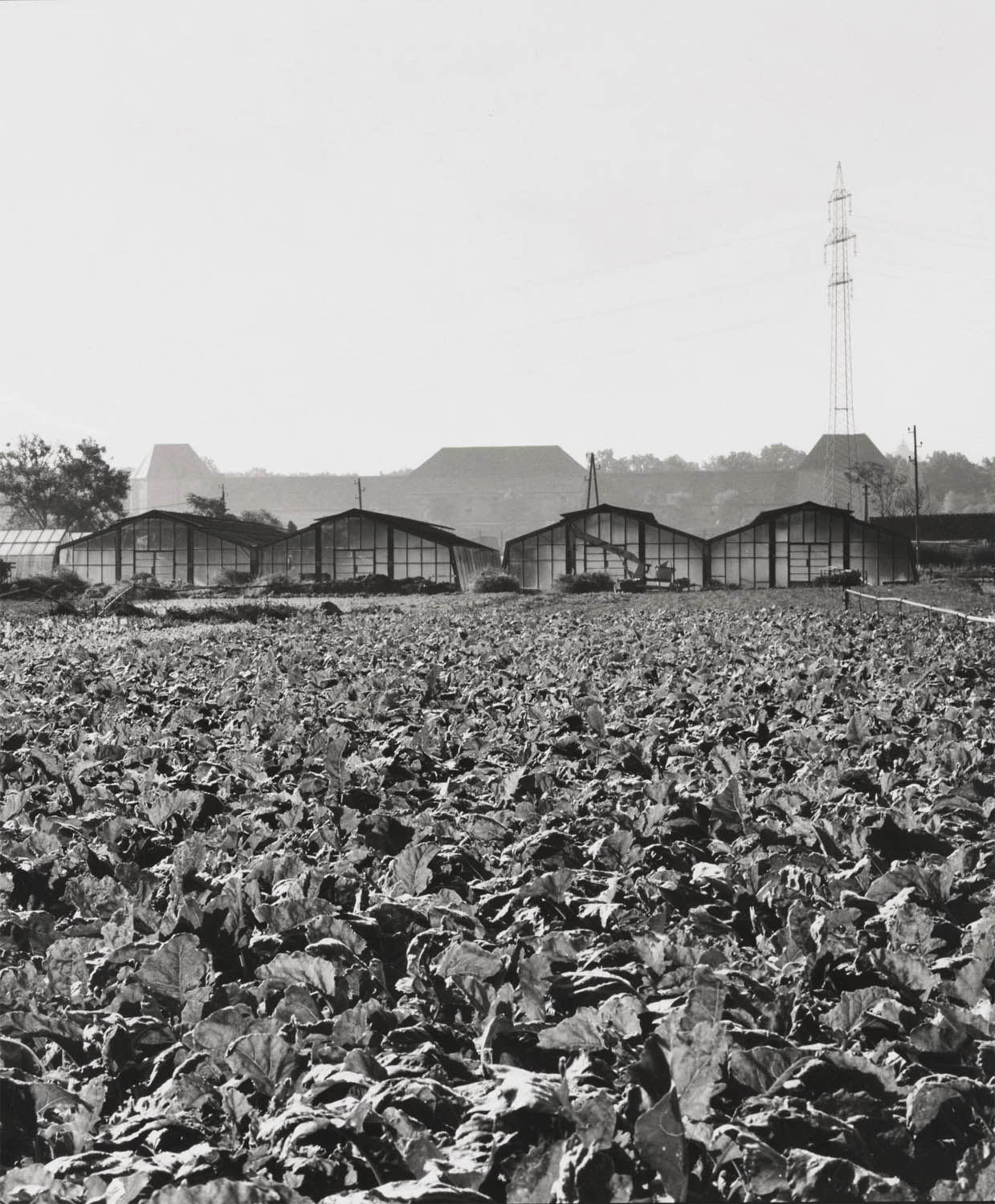
New builds encroaching ever further on the countryside, abandoned factories, fields of vegetables, ageing gasometers, the monotony of interminable highways, makeshift housing, wastelands – as a photographer, Elfriede Mejchar was especially keen on these forgotten landscapes on the margins of the Viennese metropolis. “It was the changes that I was concerned with.”

Starting in the 1960s, Mejchar roamed the city’s peripheral zones with her camera. “These were the sites that interested me the most. Where countryside and city collide.” Her long-term series “Simmeringer Heide and Erdberger Mais,” begun in the 1960s and first shown in 1976 in a solo exhibition at the Museum of the 20th Century, established Mejchar’s reputation as leading photo artist.

Constructing Space

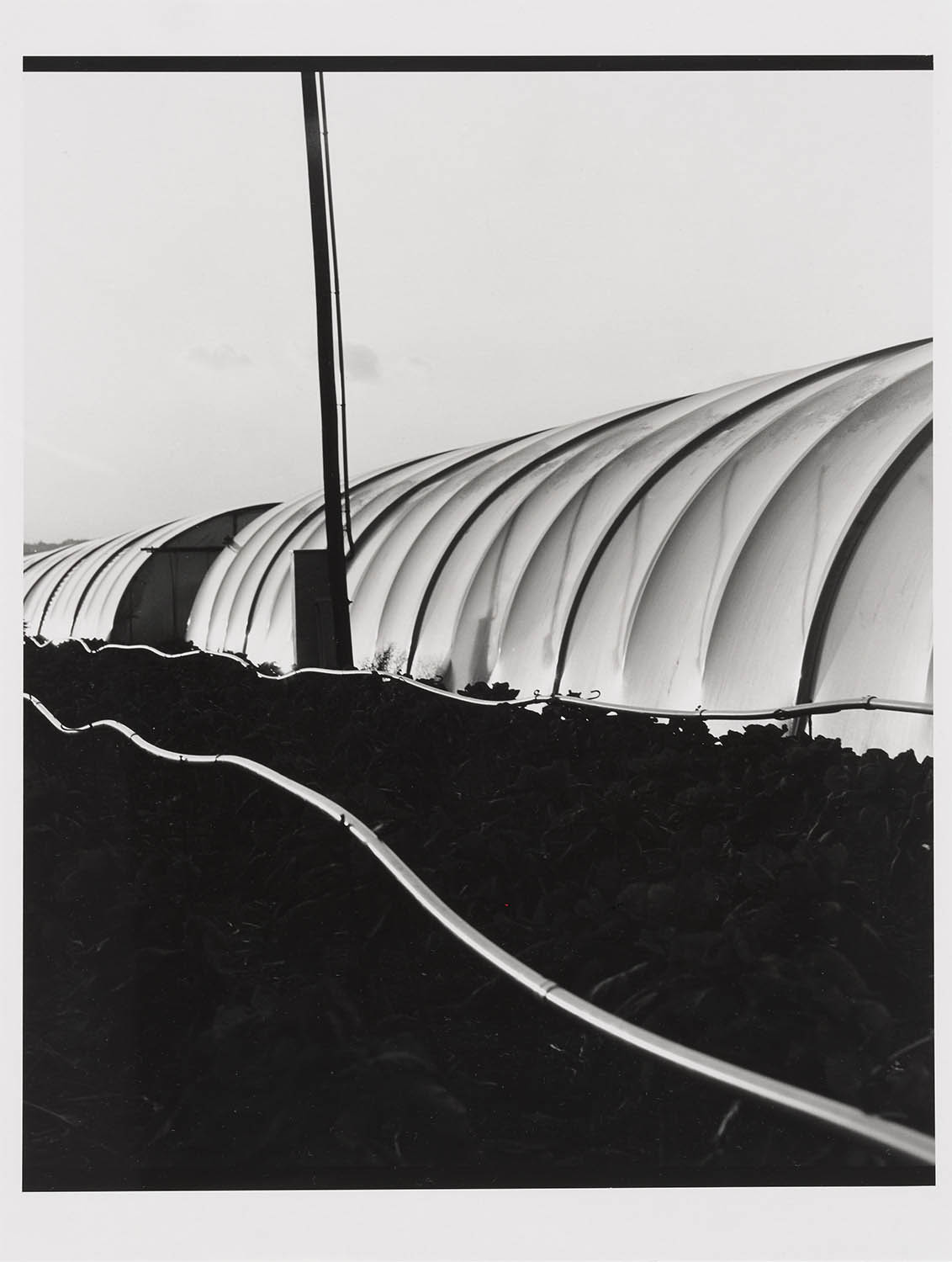
Row upon row of plants, damp soil blanketed by the early morning mist, distant greenhouses, lettuces covering the ground, interspaced with sprinklers – Elfriede Mejchar documented every facet of Vienna’s market gardens at the edge of the city, from detached general views to shots that capture the smallest detail. Her images use a deep depth of field, making it seem almost as if the viewer could reach out and touch the clumps of soil or individual leaves in the foreground. But she also regularly translated landscapes, buildings, and spaces into abstract forms by setting up contrasting oppositions between individual motifs, or by reducing an image to monochrome surfaces.

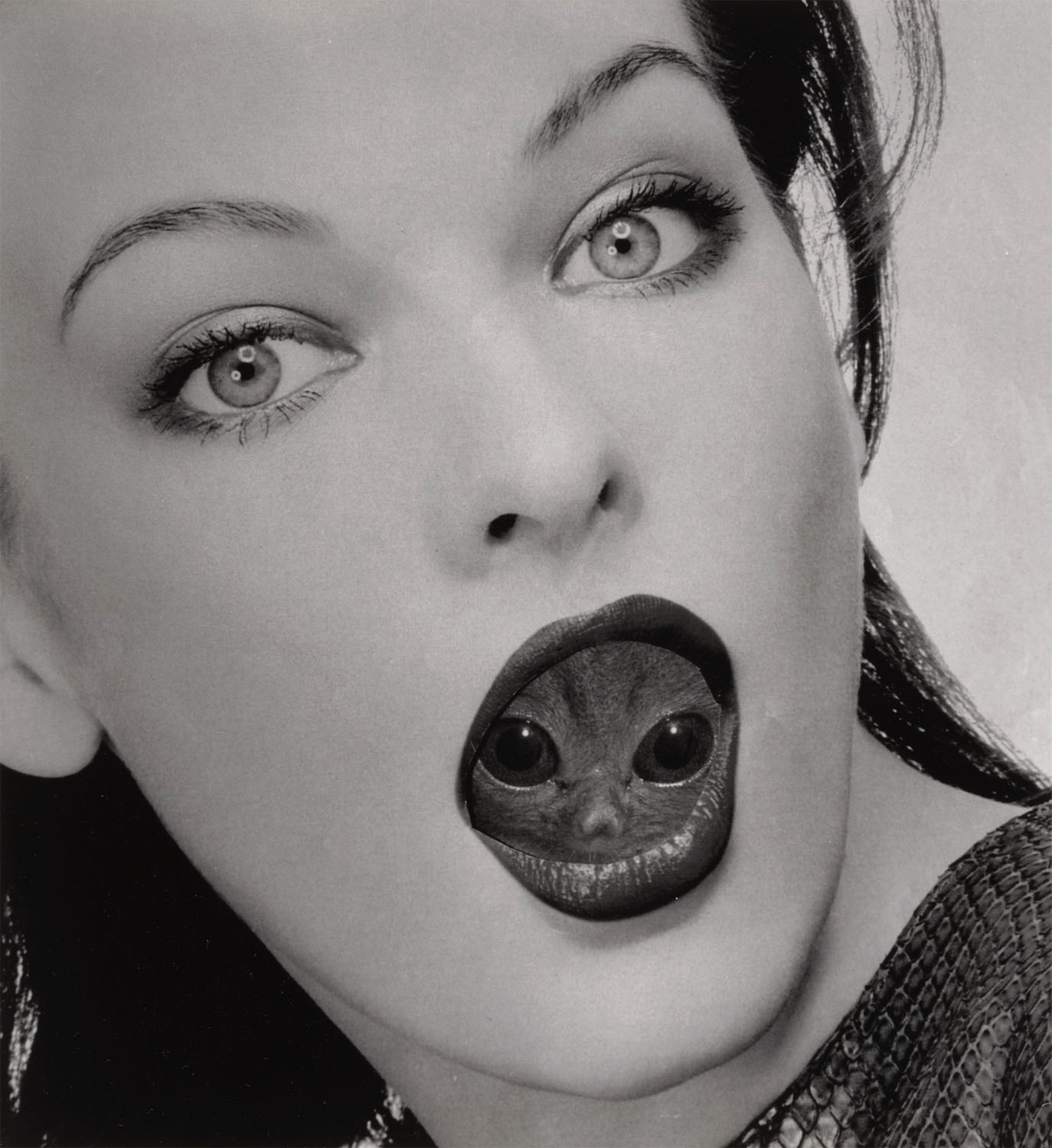
4. Lips and Pistols

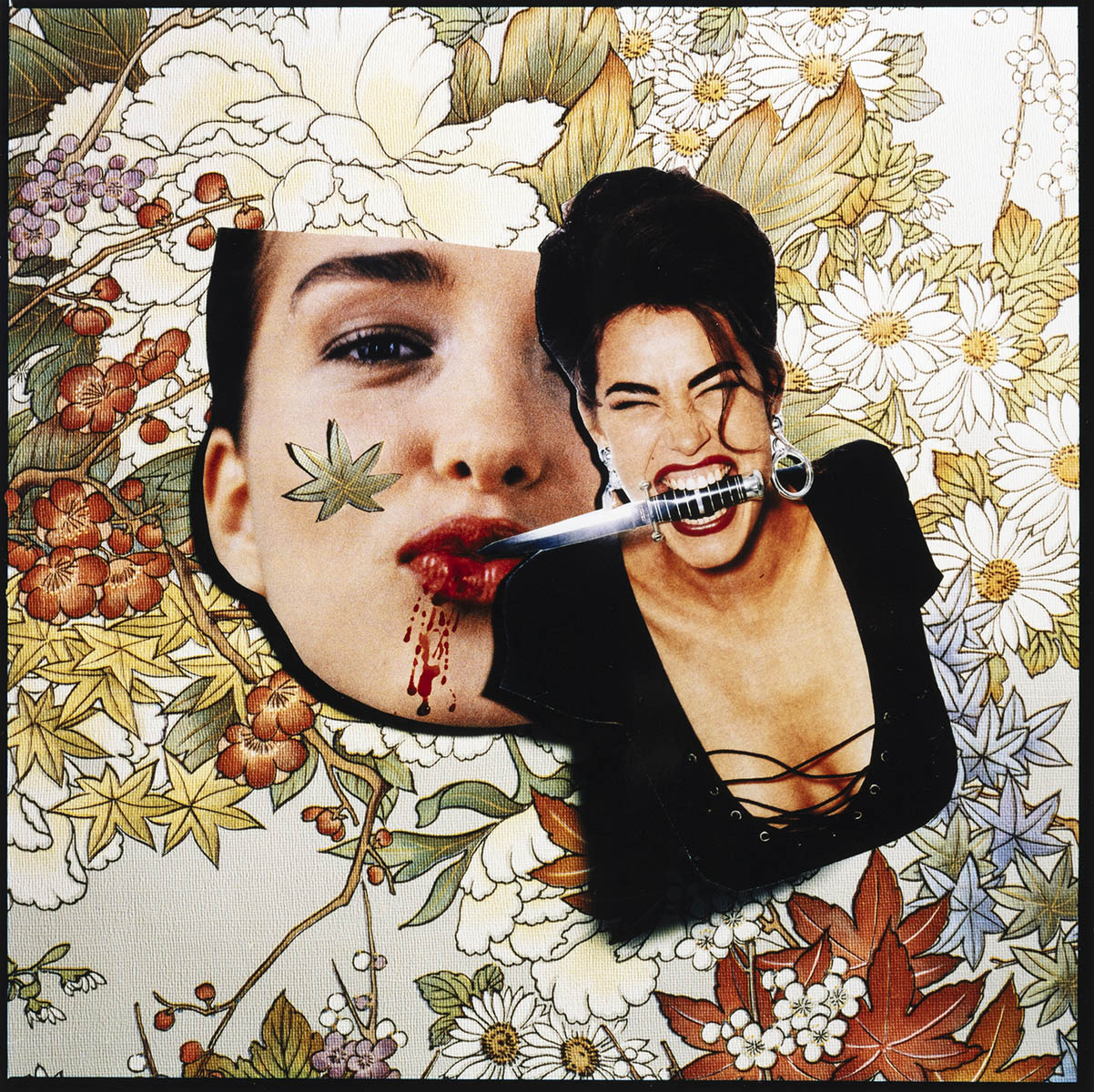
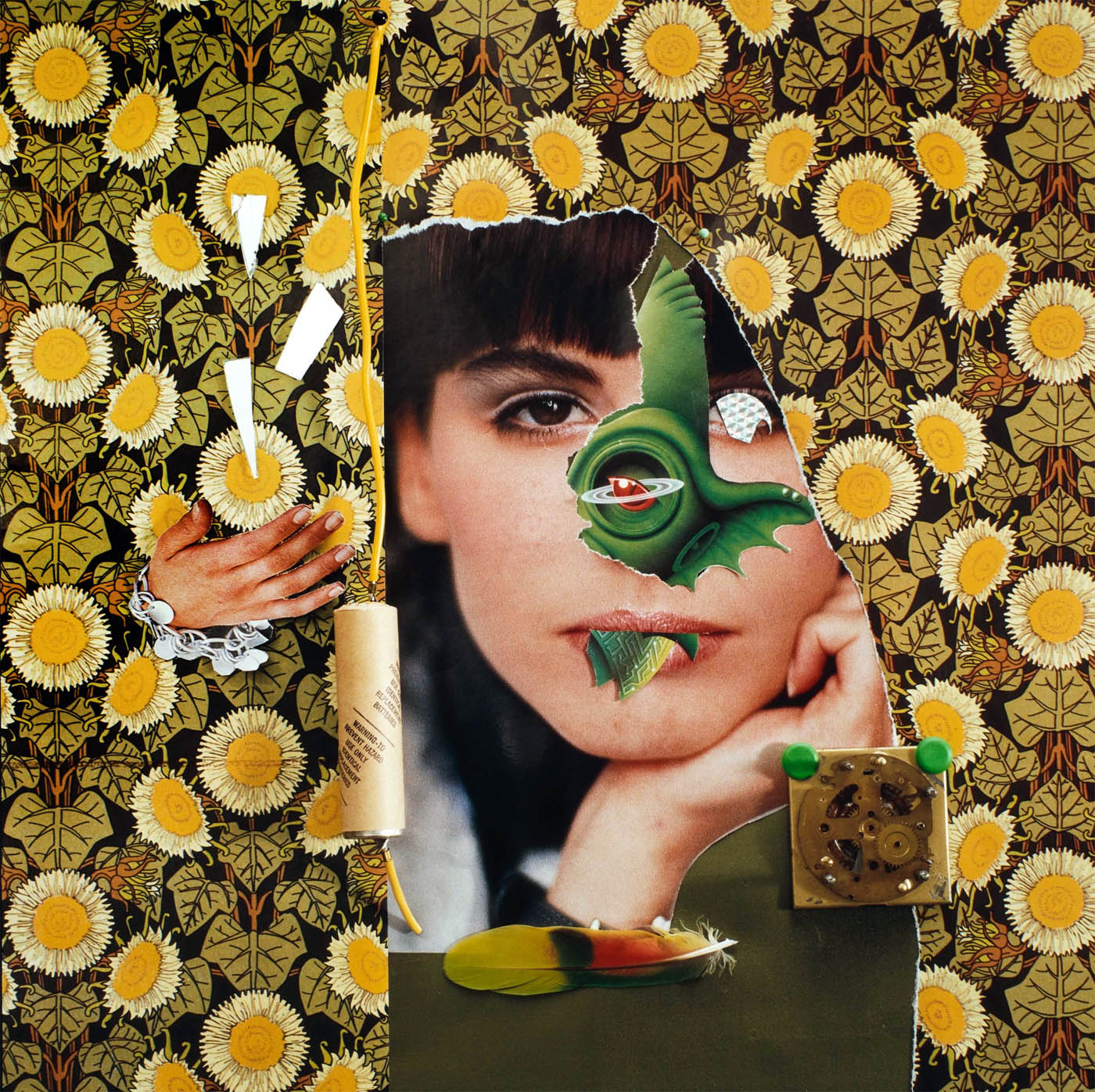
Faces ripped from fashion magazines and floral wallpaper, cogs and cigarettes, spools and dressmaking pins, small chains and cables – starting in the 1980s, Mejchar jumbled these found, everyday objects together to create small-scale, theatrical arrangements laced with acerbic wit. “I construct images,” the artist once said of her sarcastic and subversive collages and assemblages. In these composite scenes, Elfriede Mejchar gave free rein to an anarchic desire to assemble and disassemble. At the same time, she used humour and irony to lampoon society’s ideals of perfection, “adorning” beautiful faces with everyday objects, for example, or – with a knowing wink – targeting James Bond’s pistol on the eroticised lips of the beauty industry. Mejchar’s summary: “I like things colourful and crazy.”

Arranging Objects

After retiring from paid employment, Mejchar increasingly concentrated on her work in the studio, which now became a stage for herself and her camera. Here she created ironic, acerbic, and frequently bizarre object combinations, often as an exploration of gender stereotypes. In her collages, she dismantled and critiqued the fashion industry’s preformed ideals of beauty with zest and humour. She took pleasure in experimenting with a whole range of props, rearranging them into new scenes again and again. Fragmented faces from fashion magazines were combined with torn and cut wallpaper, then garnished with cogs, feathers, and cables. She literally nailed the beauty industry to the wall.

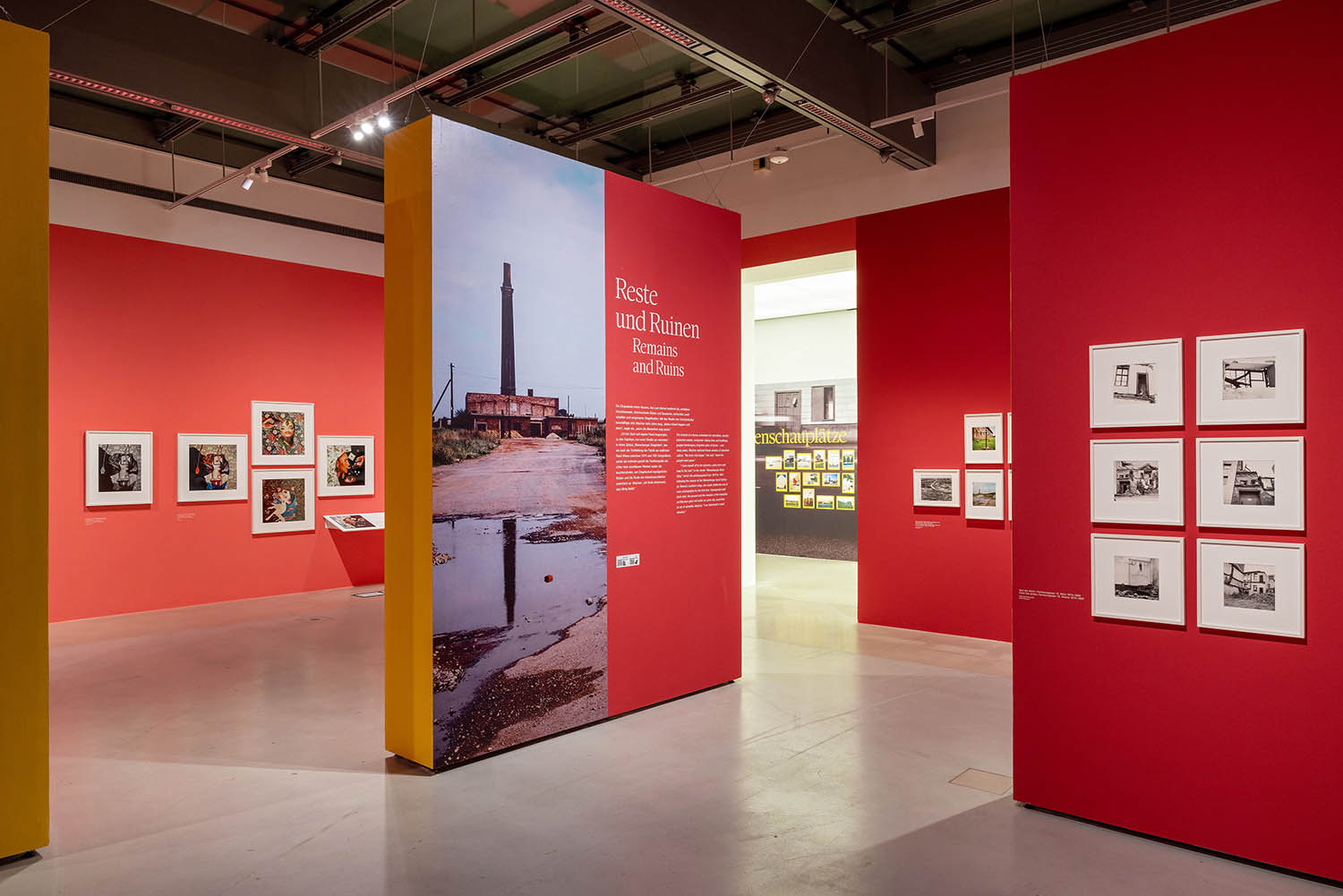
5. Remains and Ruins

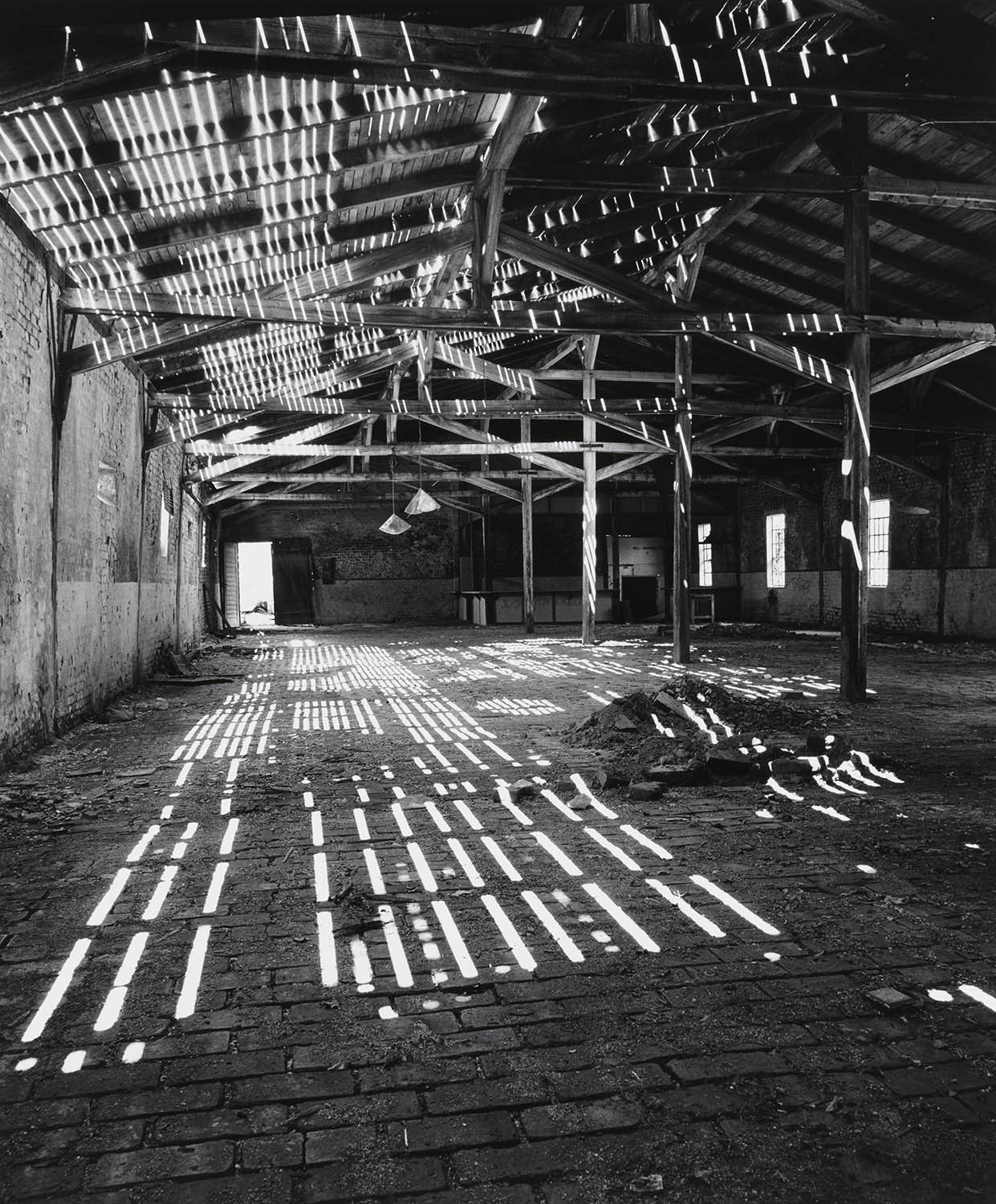
The innards of a house scheduled for demolition, derelict industrial estates, overgrown railway lines and buildings, gouged landscapes, forgotten piles of bricks – over many years, Mejchar explored these remains of industrial culture. “My work only began,” she said, “when the people were gone.”

“I took myself off to the factories, going from one road to the next.” In her series “Wienerberger Brick Kilns,” which she photographed from 1979 to 1981 following the closure of the Wienerberger brick factory on Vienna’s southern edge, she made deliberate use of colour photography for the first time. Impregnated with brick dust, the ground and the remains of the industrial architecture glow red under an azure sky, assuming an air of unreality. Mejchar: “I am interested in what remains.”

Seeing in Color

During the first decades of her career as a photographer, Elfriede Mejchar worked in black and white because colour photography was too expensive. All the more astonishing, therefore, is the confidence and precision with which she employed colour as an aesthetic element in the photo series “Wienerberger Brick Kilns” in the late 1970s and early 1980s. Similar to the New Color Photography movement in the USA, Mejchar’s photographic explorations focused primarily on the borders between urban and rural spaces. Her main interest was in landscapes subjected to human interventions. She documented these run-down locations using vivid lighting and brilliant colours, producing unsentimental photographs of high aesthetic quality. In doing so, she opened up an entirely new approach to documentary photography in Austria.


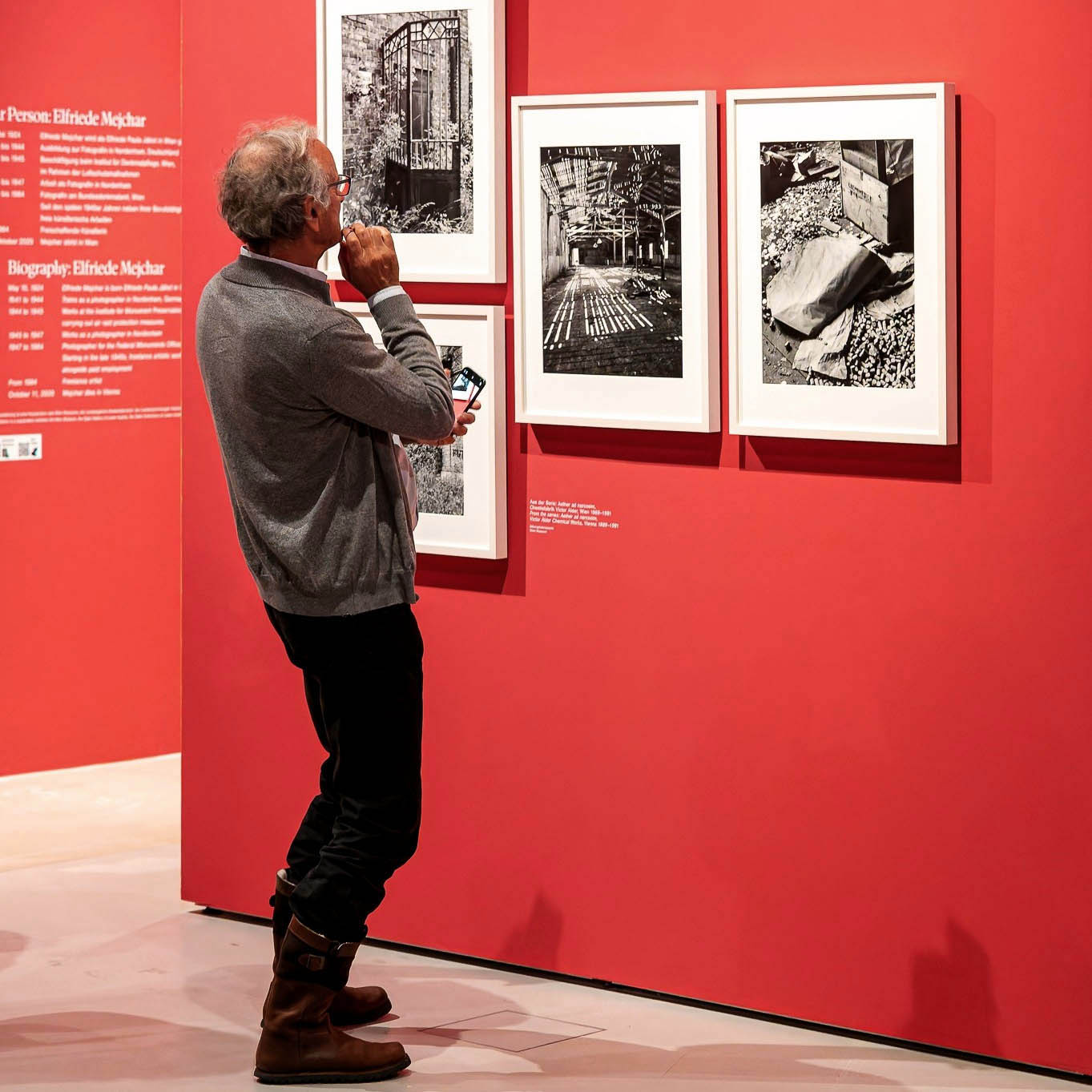
Installation view of the exhibition 'On Her Own. The photographer Elfriede Mejchar' at Wien Museum musa, Vienna showing at second right, Mejchar's 'Aether and narcosim' (1989-1991)


Installation view of the exhibition On Her Own. The photographer Elfriede Mejchar at Wien Museum musa, Vienna showing at second right, Mejchar’s Aether and narcosim (1989-1991, below)


Elfriede Mejchar (Austrian, 1924-2020) 'Aether and narcosim' 1989-1991


Elfriede Mejchar (Austrian, 1924-2020)
Aether and narcosim
1989-1991
Wien Museum
© Bildrecht, Vienna 2023


Elfriede Mejchar (Austrian, 1924-2020) 'Vegetable Tunnels. Simmering Market Gardens' 1990-1994


Elfriede Mejchar (Austrian, 1924-2020)
Vegetable Tunnels. Simmering Market Gardens
1990-1994
Wien Museum
© Bildrecht, Vienna 2023


Elfriede Mejchar (Austrian, 1924-2020) 'Vegetable Tunnels. Simmering Market Gardens' 1990-1994


Elfriede Mejchar (Austrian, 1924-2020)
Vegetable Tunnels. Simmering Market Gardens
1990-1994
Wien Museum
© Bildrecht, Vienna 2023


Elfriede Mejchar (Austrian, 1924-2020) 'A Costume of Borrowed Identity' 1990-1991


Elfriede Mejchar (Austrian, 1924-2020)
A Costume of Borrowed Identity
1990-1991
Wien Museum
© Bildrecht, Vienna 2023


Elfriede Mejchar (Austrian, 1924-2020) 'A Costume of Borrowed Identity' 1990-1991


Elfriede Mejchar (Austrian, 1924-2020)
A Costume of Borrowed Identity
1990-1991
Wien Museum
© Bildrecht, Vienna 2023


Elfriede Mejchar (Austrian, 1924-2020) 'Amaryllis' 1996


Elfriede Mejchar (Austrian, 1924-2020)
Amaryllis
1996
Wien Museum
© Bildrecht, Vienna 2023


Elfriede Mejchar (Austrian, 1924-2020) 'Amaryllis' 2001


Elfriede Mejchar (Austrian, 1924-2020)
Amaryllis
2001
Wien Museum
© Bildrecht, Vienna 2023


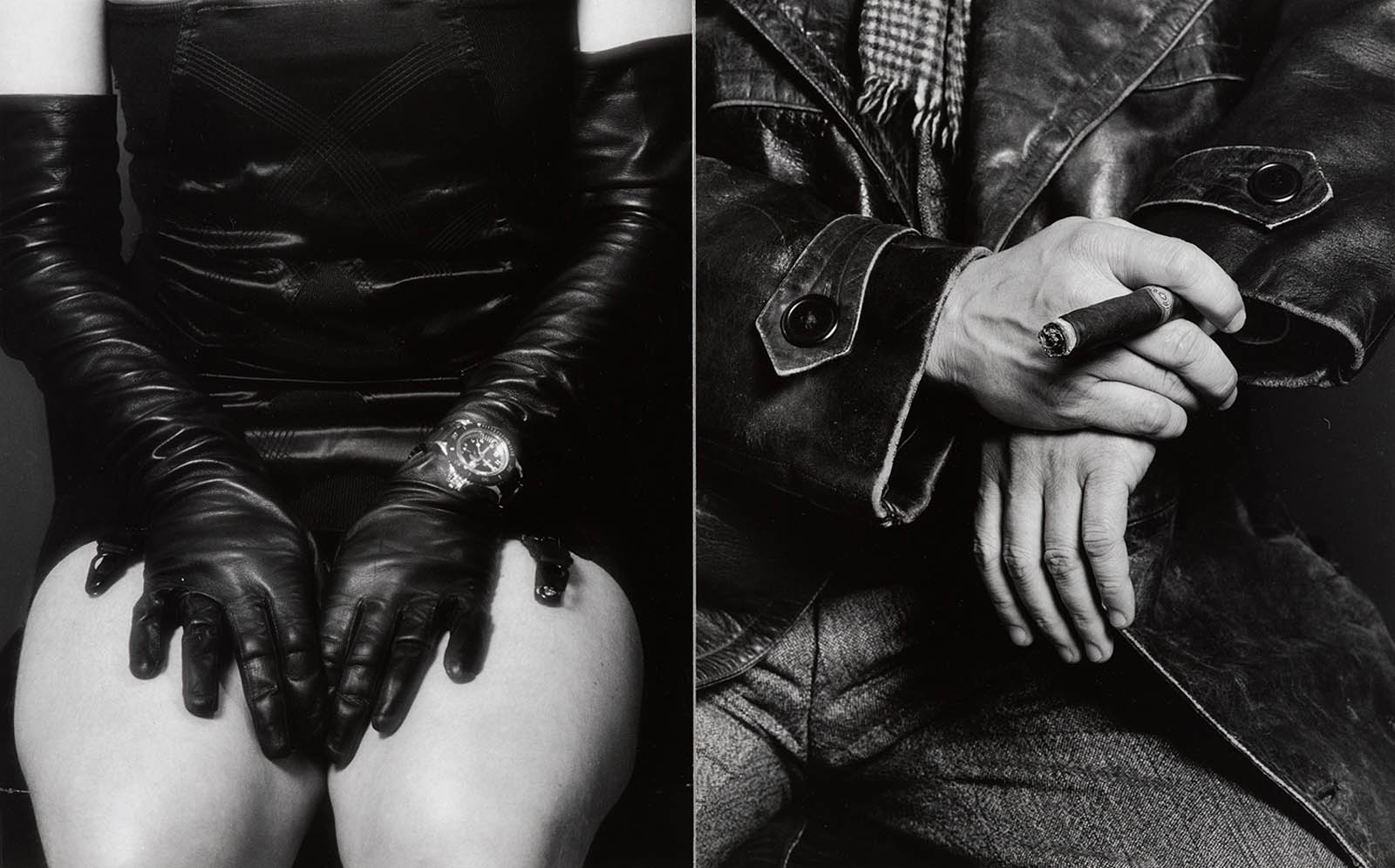
Elfriede Mejchar (Austrian, 1924-2020) 'Hands in Lap' 2002


Elfriede Mejchar (Austrian, 1924-2020)
Hands in Lap
2002
Wien Museum
© Bildrecht, Vienna 2023


Elfriede Mejchar (Austrian, 1924-2020) From the series 'Nobody is Perfect' 1989-2007


Elfriede Mejchar (Austrian, 1924-2020)
From the series Nobody is Perfect
1989-2007
© Bildrecht, Vienna 2024


Elfriede Mejchar (Austrian, 1924-2020) From the series 'Nobody is Perfect' 1989-2007


Elfriede Mejchar (Austrian, 1924-2020)
From the series Nobody is Perfect
1989-2007
© Bildrecht, Vienna 2024


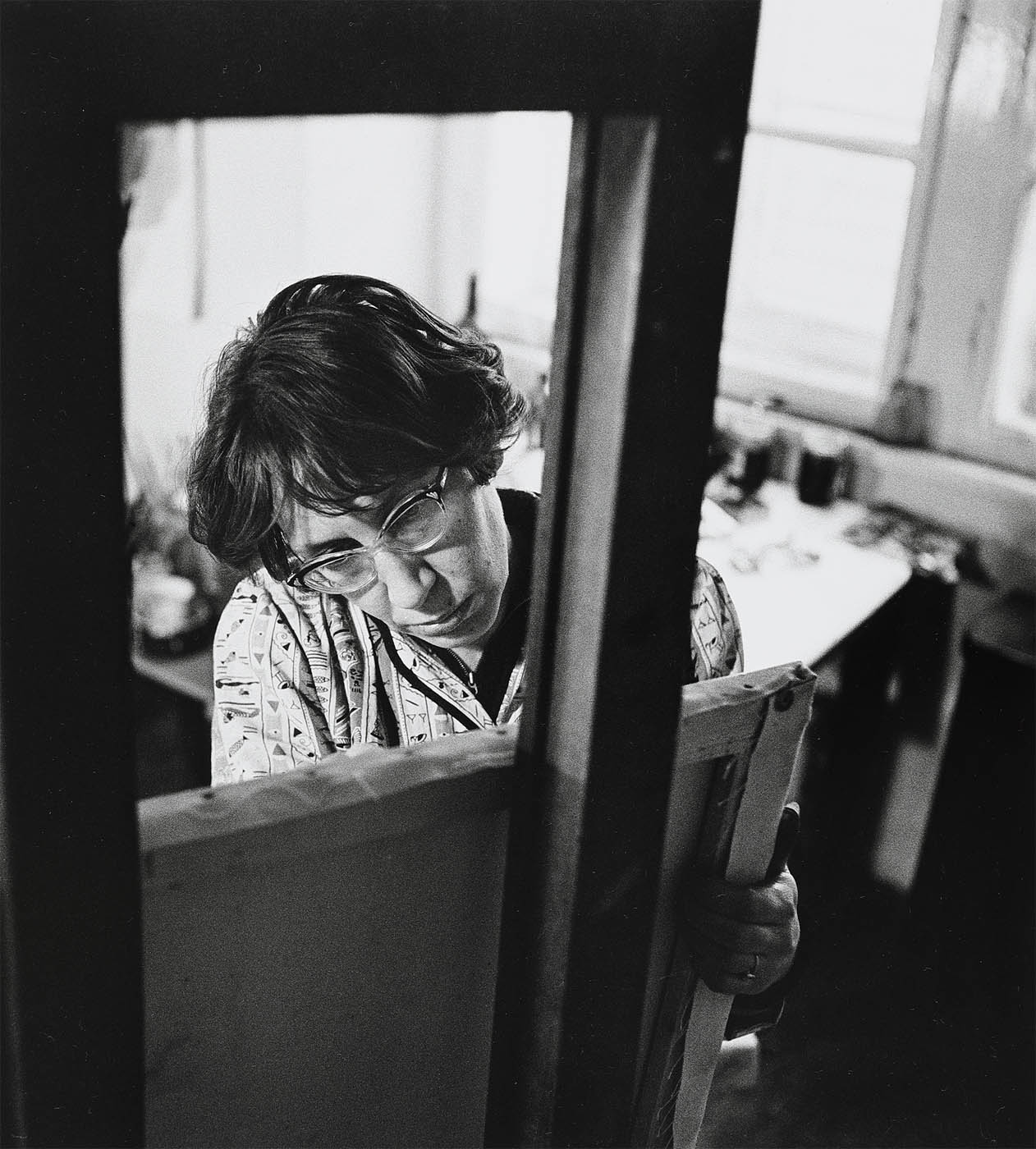
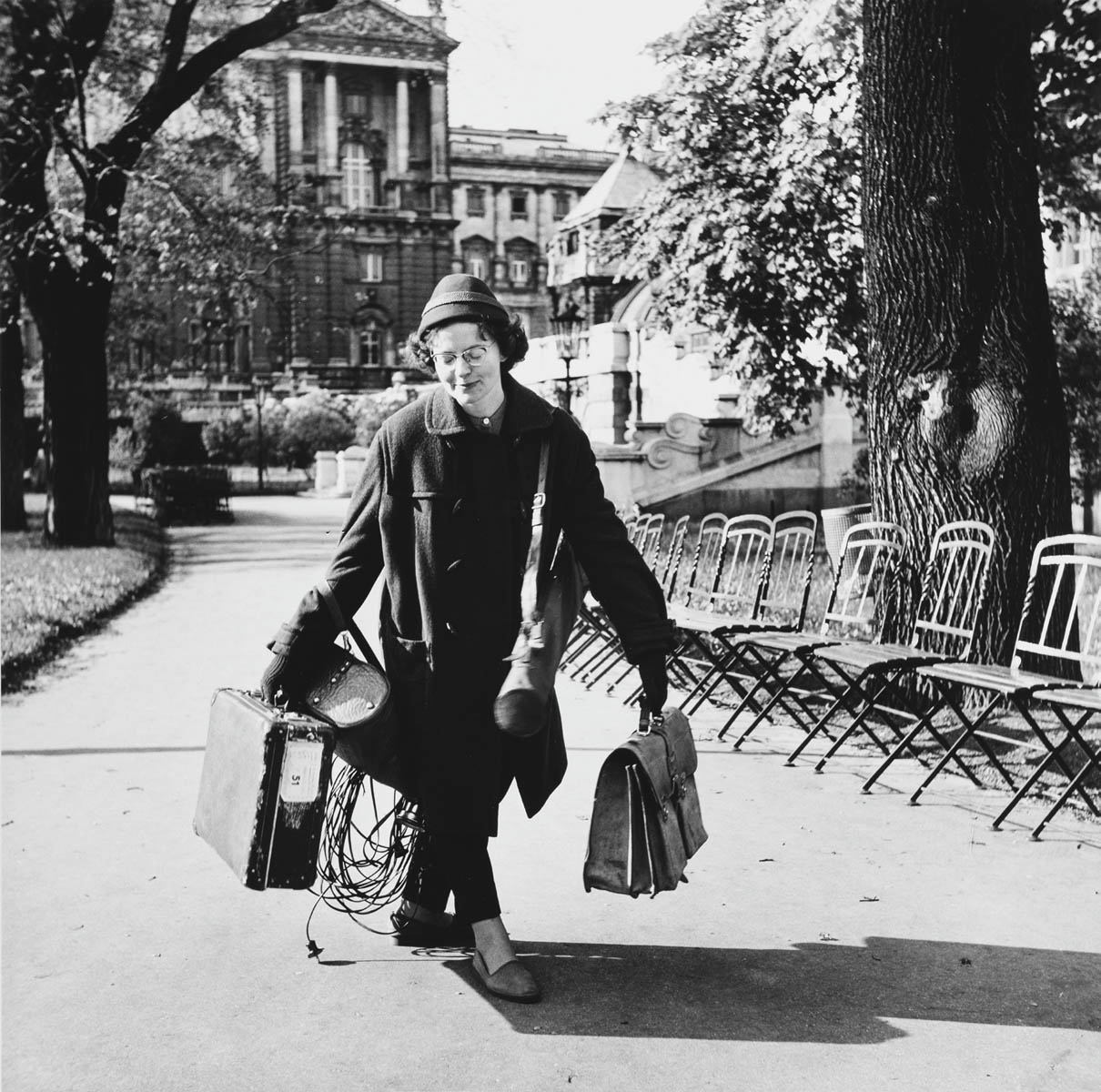
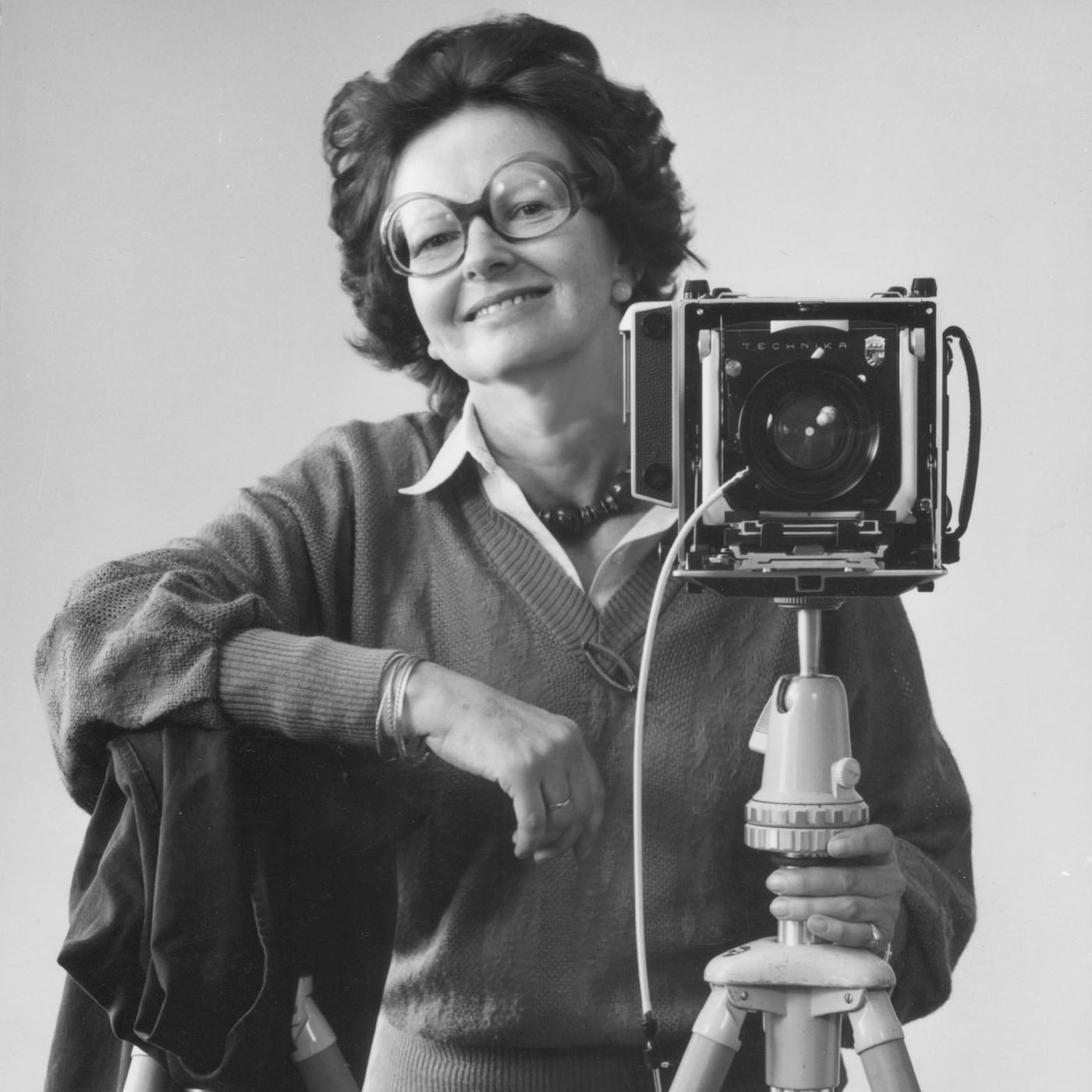
Unknown photographer. 'Elfriede Mejchar with Linhof camera and tripod in the Federal Monuments Office' Late 1970s


Unknown photographer
Elfriede Mejchar with Linhof camera and tripod in the Federal Monuments Office
Late 1970s
State Collections of Lower Austria


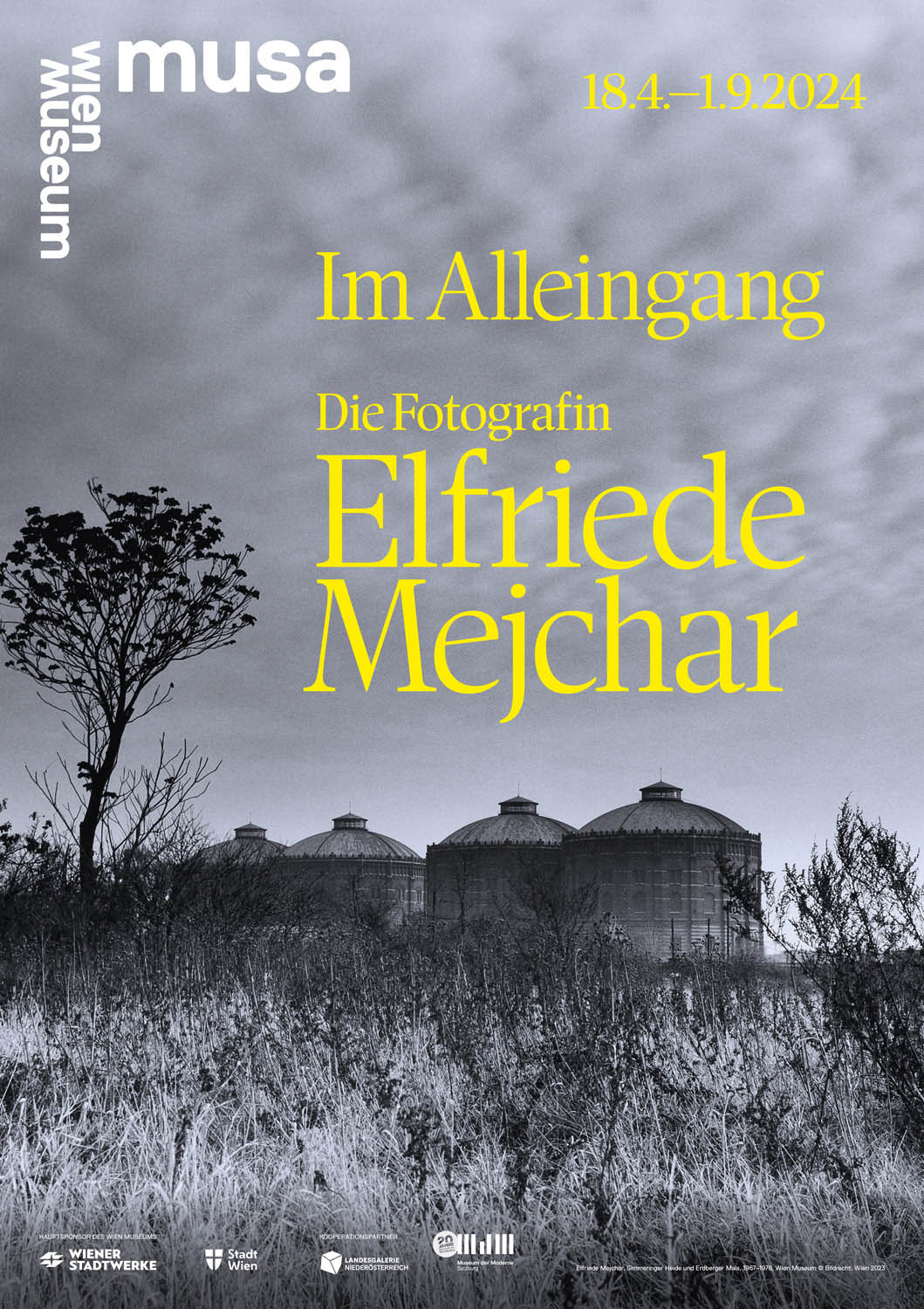
Poster for the exhibition 'On Her Own. The Photographer Elfriede Mejchar'


Poster for the exhibition On Her Own. The Photographer Elfriede Mejchar
Graphic: Studio Kehrer


Wien Museum MUSA
1010 Vienna, Felderstraße 6-8

Opening hours:
Tuesday to Sunday 10am – 6pm

Wien Museum website

LIKE ART BLART ON FACEBOOK

Back to top
Exhibition: ‘The Staged Photograph’ at the Chau Chak Wing Museum at The University of Sydney

Exhibition dates: 22nd April 2023 – 4th August 2024


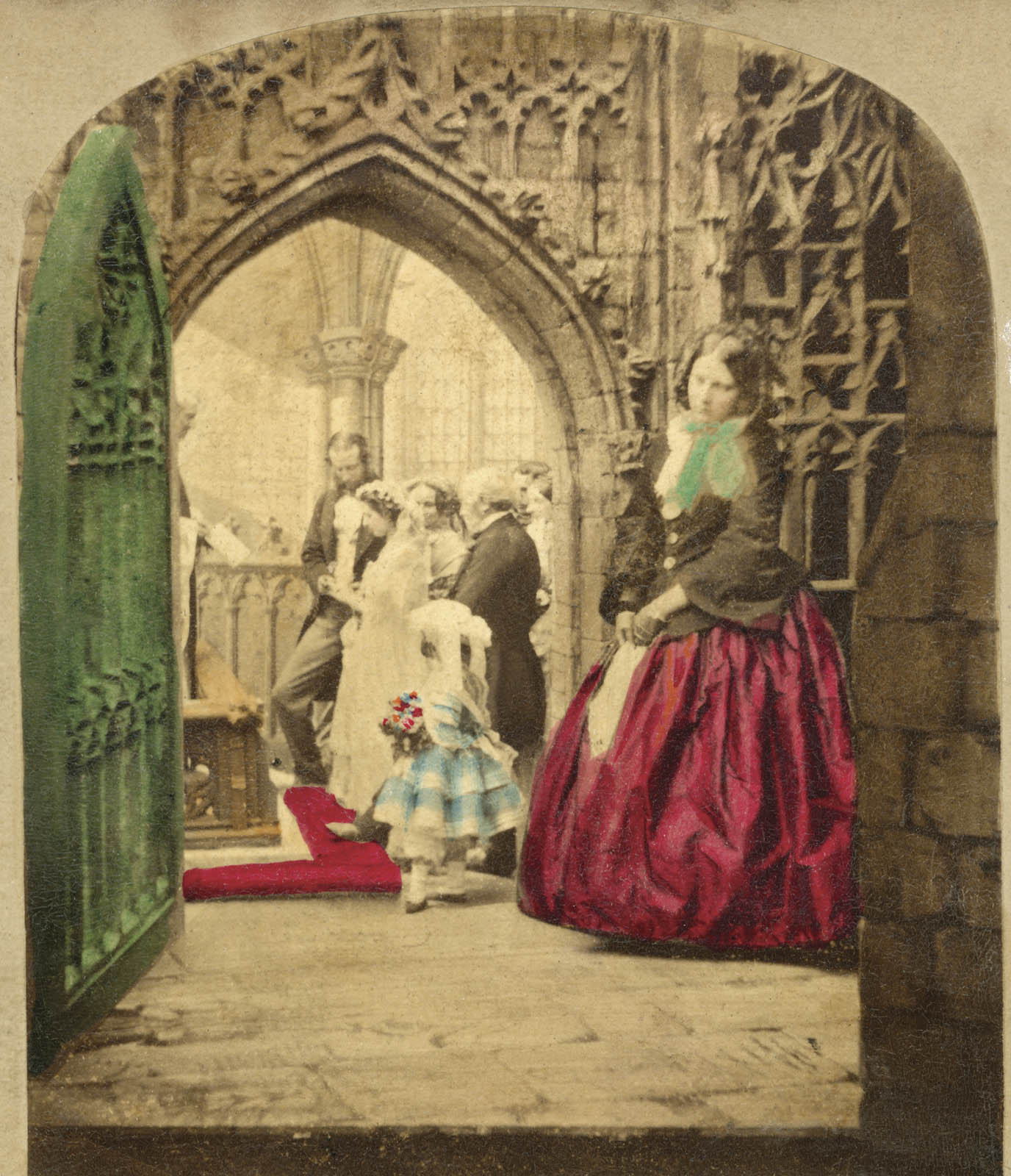
James Elliott (British) 'A Week after the Derby' c. 1855-1860


James Elliott (British)
‘A Week after the Derby’
c. 1855-1860
Hand-coloured stereograph (single image)
Chau Chak Wing Museum, The University of Sydney
Donated by Sandra Savides, 2014


A short text this week as I’m not well.

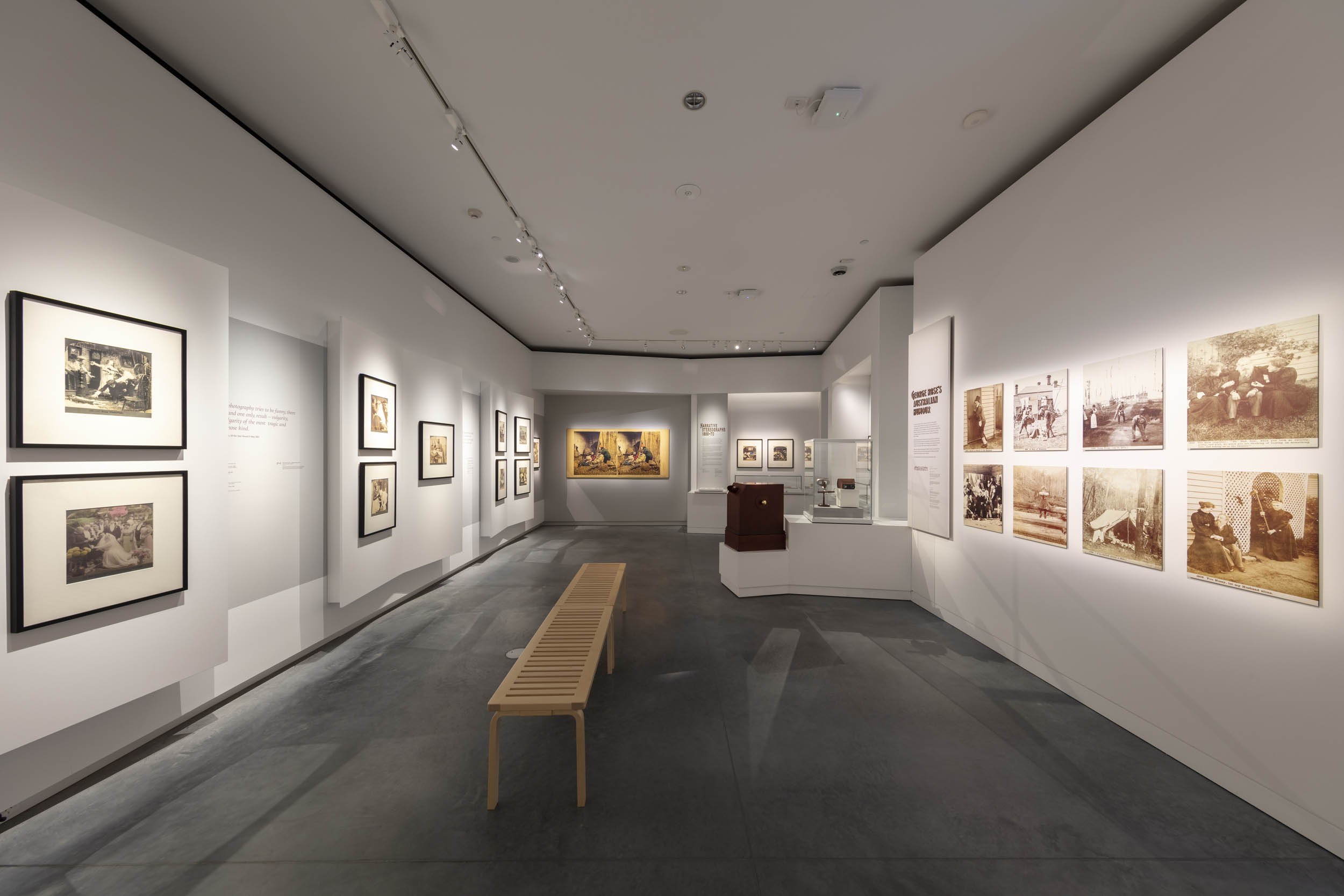
What a delightful exhibition – a clean installation showcasing some beautiful, contemplative, witty and humorous images on an interesting subject.

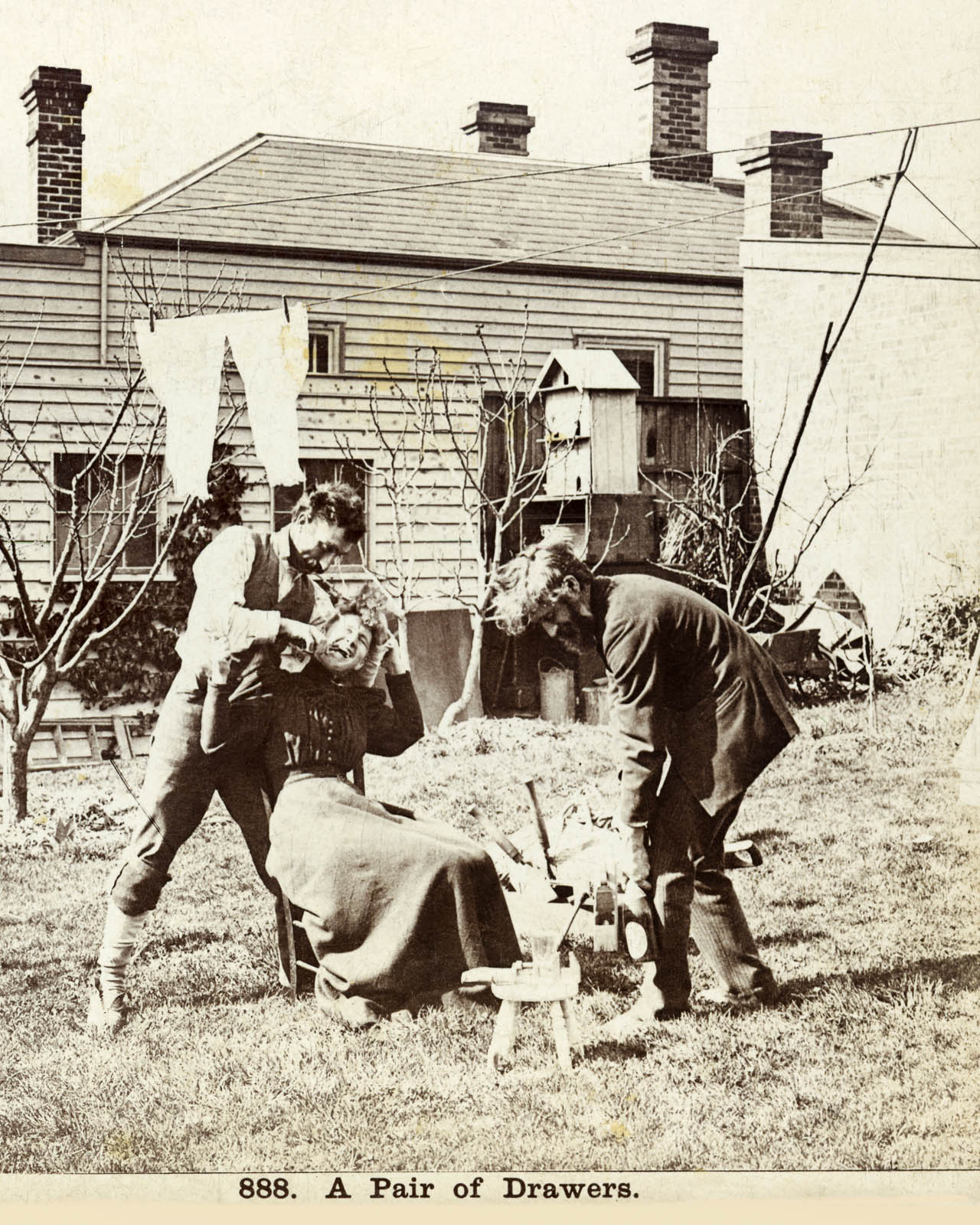
The pathos of A Week after the Derby (c. 1855-1860, above); the gruesome humour of A Pair of Drawers (c. 1895, below); the Australian humour of The Great Australian Bite (Bight) (c. 1895, below). Staged for the camera, posed for the viewer, possessed of innocence, national pride and the delightful joy of living.

To flesh out the posting I have added bibliographic information for the artists and publishers where possible.

Dr Marcus Bunyan


Many thankx to the Chau Chak Wing Museum for allowing me to publish the photographs in the posting. Please click on the photographs for a larger version of the image.


From costume portraits to comic and sentimental stereographs

This exhibition presents staged photographs taken between the mid-19th and early 20th centuries, illuminating the popular culture of the time.
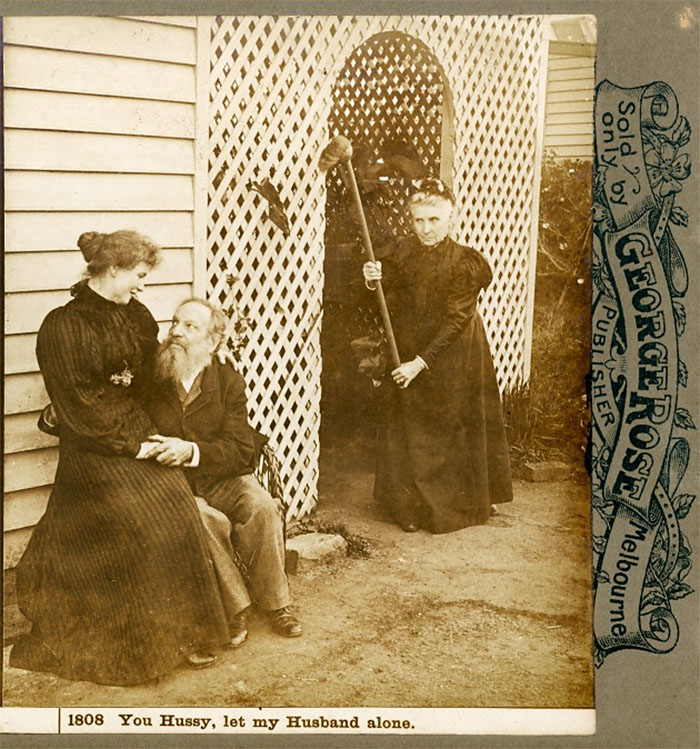
These photographs were created in the photographic studio, with its painted backgrounds and props, where people came to have fancy dress or special outfits captured. Studio photographers also created tableaux, using posed models to stage scenes to tell stories, sentimental or comic. The most popular format was the stereograph. Even the home backyard became a stage for family portraits, posed in the manner of the studio.

Featuring enlarged reproductions, and original examples of glass negatives and stereographs from the historic photograph collection, The Staged Photograph is a fascinating delve into an unfamiliar photographic history.

Text from the Chau Chak Wing Museum website


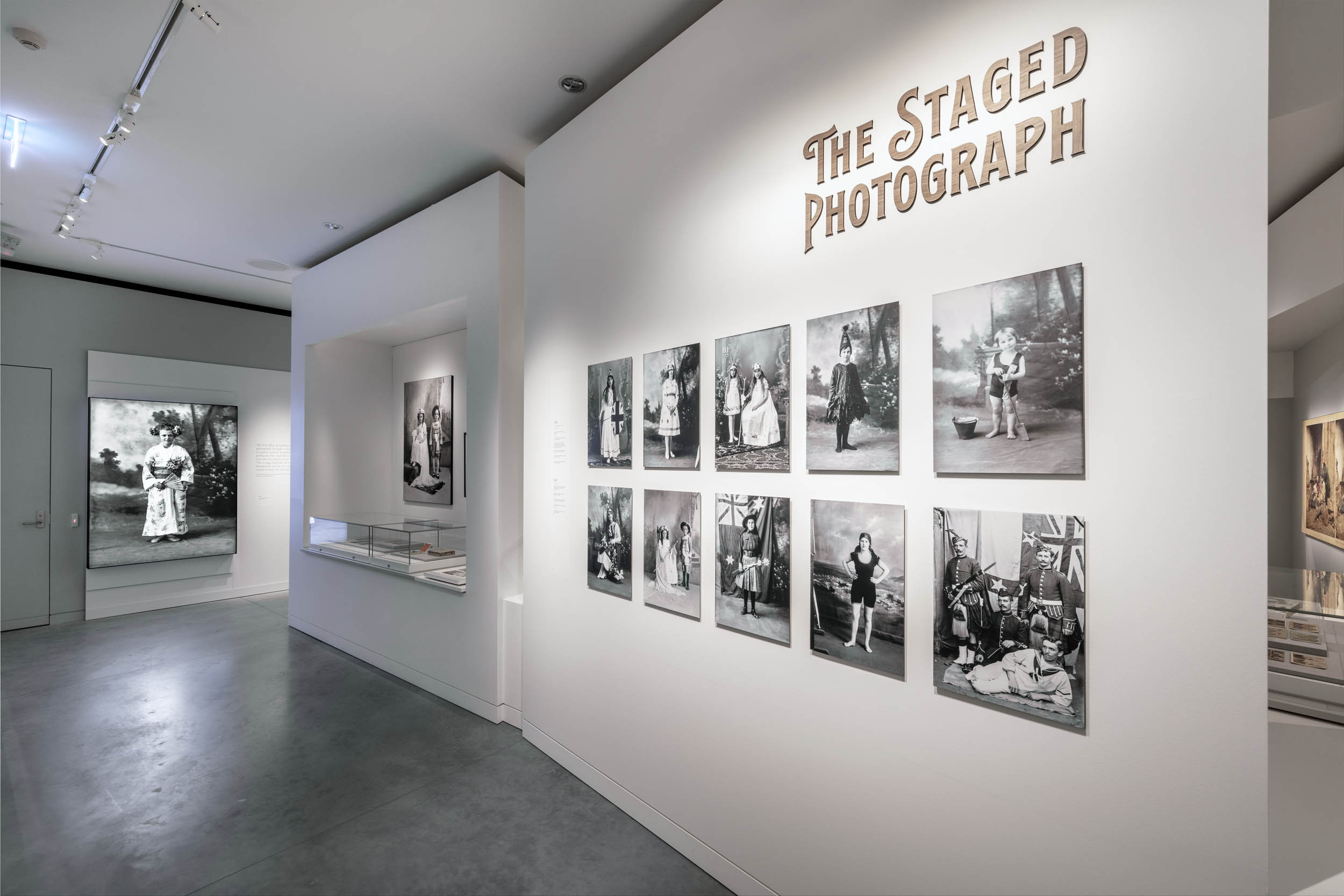
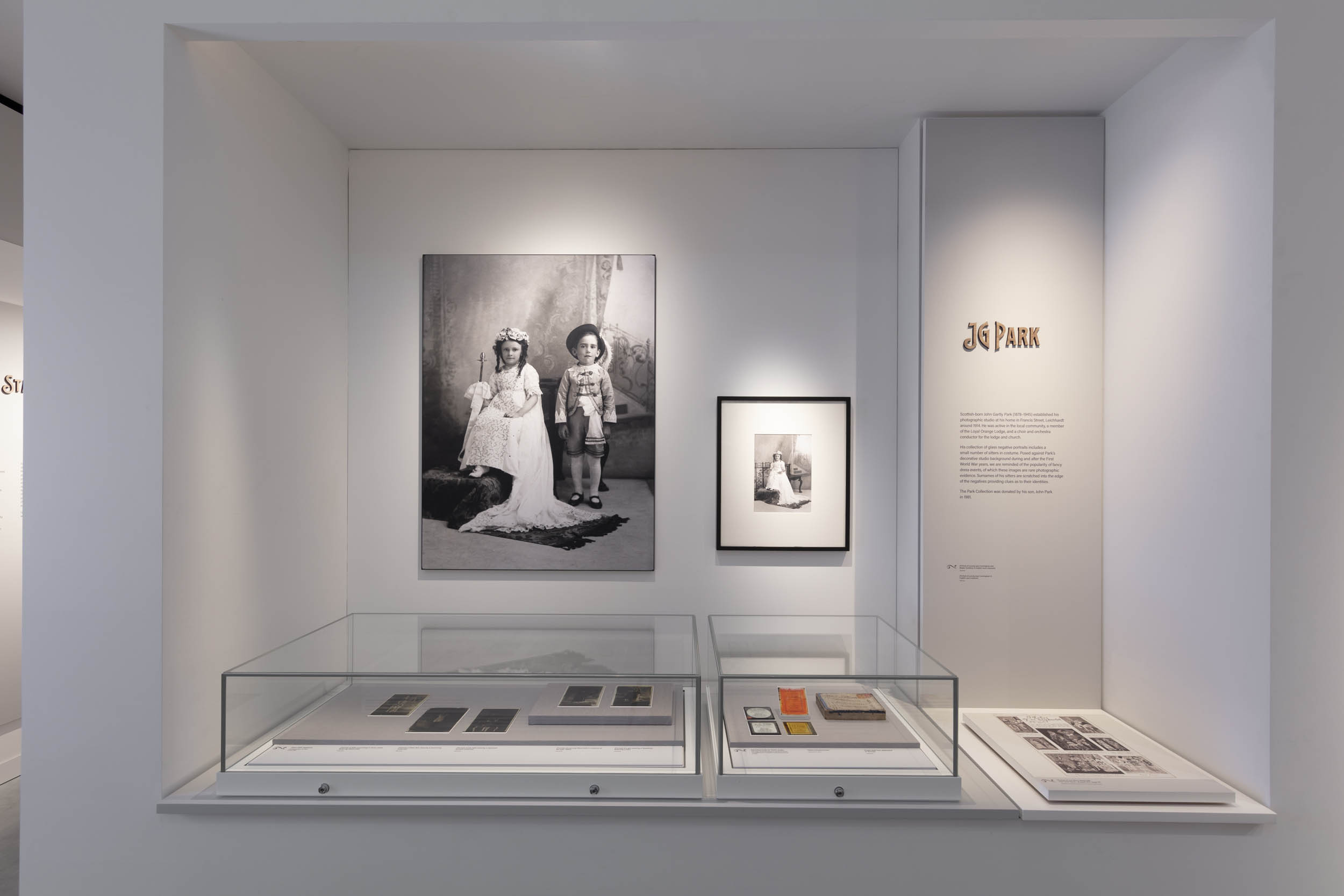
Installation view of the exhibition 'The Staged Photograph' at the Chau Chak Wing Museum at The University of Sydney

Installation view of the exhibition 'The Staged Photograph' at the Chau Chak Wing Museum at The University of Sydney

Installation view of the exhibition 'The Staged Photograph' at the Chau Chak Wing Museum at The University of Sydney

Installation view of the exhibition 'The Staged Photograph' at the Chau Chak Wing Museum at The University of Sydney

Installation view of the exhibition 'The Staged Photograph' at the Chau Chak Wing Museum at The University of Sydney

Installation view of the exhibition 'The Staged Photograph' at the Chau Chak Wing Museum at The University of Sydney

Installation view of the exhibition 'The Staged Photograph' at the Chau Chak Wing Museum at The University of Sydney

Installation view of the exhibition 'The Staged Photograph' at the Chau Chak Wing Museum at The University of Sydney


Installation views of the exhibition The Staged Photograph at the Chau Chak Wing Museum at The University of Sydney with the exhibition texts in the bottom photograph to be seen below…


The Staged Photograph

Created in the theatrical space of the 19th century photographic studio, a staged photograph used the artifice of painted backgrounds and props against which to pose costumed sitters or models arranged in a tableau.

Sitters often used this studio stage to capture a special fancy dress or other costume worn to be photographed either on the way to, or sometimes after, the ball. From the time of the popular cartes-de-visite of the 1860s into the early 20th century, these private memories, storied in albums or framed on walls, give us rare visuals of the costumes worn.

The studio photographer also found a business line in selling staged fictional scenes, which told a story or posed a humorous moment. The most popular were the genre or narrative stereographs, featuring scenes of everyday life, sentimental or comic. Beginning in the late 1850s, this market changed from a middle-class parlour entertainment to a broader popular entertainment, and the views depicted reflect this change as a new century began.

With the advent of easier amateur photography through the Kodak revolution, rather than visiting the studio, the home photographer found a stage in the backyard. Family members were posed in the manner of the studio, with a suspended curtain on the washing line or a pot plant on a stand, often still capturing a special fancy dress costume.

This exhibition explores a range of these staged photographs, a window into popular culture of the time, revealing cultural and social values.

Costume Portraits

Photographers’ studios were theatrical spaces, with props and backgrounds that could give context to a fancy dress or other costume. In Sydney in 1879, photographer E. Riisfeldt advertised that he had ‘specially painted 12 SCENES by one of the finest scenic artists, suitable for any fancy costume’. (Sydney Morning Herald, 24 February 1879)

Costume balls were a popular feature of Sydney life from the 1830s. Balls were held to raise money for charities, including children’s fancy dress balls and poster balls, popular from 1900 in Australia where costumes featured in advertisements.

While there are long accounts in newspapers of the attendees, with lists of names and costumes worn, photography offered the possibility of capturing what an outfit looked like.

Wall text from the exhibition


James Elliott (British) 'Broken Vows' c. 1857


James Elliott (British)
‘Broken Vows’
c. 1857
Hand-coloured stereograph (single image)
Chau Chak Wing Museum, The University of Sydney
Donated by Sandra Savides, 2014


James Elliott operated in London from approximately 1856 to 1861 and produced stereocards. According to Michael Pritchard’s Directory of London Photographers 1841-1908 he operated from two London addresses simultaneously: 9, Albany Court Yard and 48, Piccadilly.

Most famous for several hundred outstanding genre, usually beautifully tinted, on SCMs; most were elaborate studio sets, with large casts and complex accessories; several were in sets, such as “The Eve of Waterloo”; “The Wedding”, etc.; made views of England, esp. London on SCMs, which are much rarer and fairly ordinary. Often but not always used label with his name, or blind-stamp; views were extensively pirated both in England and US; he also pub. photos by W.M. Grundy.

Credit: National Stereoscopic Association with corrections and additions by Alan Griffiths and others.

Text from the Luminous-Lint website


Mark Anthony (Marc Antoine Gaudin) (French, 1804-1880)(attributed) '[Staged scene featuring five women, their fingers pointing upwards]' England c. 1855-1865


Mark Anthony (Marc Antoine Gaudin) (French, 1804-1880)(attributed)
[Staged scene featuring five women, their fingers pointing upwards]
England c. 1855-1865
Half stereograph (single image)
Macleay Collections, Chau Chak Wing Museum
Donated by Alison Skeels, 1982


Freeman Brothers, Sydney (Australian) '[Portrait of two girls in fancy dress]' c. 1855-1865


Freeman Brothers, Sydney (Australian)
[Portrait of two girls in fancy dress]
c. 1855-1865
Carte-de-visite
Chau Chak Wing Museum, The University of Sydney


One of the largest and most celebrated Sydney photographic studios was run by the Freeman Brothers, whose skilful portraits were much admired. This pair of entrepreneurial photographers used the latest processes, building a large, well-appointed studio and actively promoting their work through display in international exhibitions. James Freeman was also extremely well versed in the potential uses of the medium, delivering a comprehensive lecture on the topic to a Sydney society in 1858.

Text from the exhibition Colony: Australia 1770-1861 at NGV Australia 2018


Freeman and Co was established by the professional photographers William and James who arrived in Sydney from London in 1853 and 1854 respectively. Trading as Freeman Brothers, the pair opened Freeman’s Sydney Gallery of Photographic Art in 1855, specialising initially in daguerreotype portraits. James Freeman is credited with introducing the ambrotype process to the colony in 1856, and the company adopted this medium after this date. By the 1860s, the studio was busy producing carte de visite portraits, amassing nearly 30,000 negatives by 1870. In 1866 the brothers collaborated with the renowned English photographer Victor Prout, capitalising on his fine reputation in the colony and advertising themselves as ‘photographers to their Royal Highnesses the Prince and Princess of Wales and His Excellency the Governor.’ After William Freeman retired around 1890, the company passed into the hands of employee William Rufus George. Under George’s management in the 1890s the firm targeted a wealthy clientele, producing expensive platinum prints. The company still operates in Sydney, specialising in corporate, wedding, architectural and portrait photography.

Text from the Art Gallery of New South Wales website


G.H. Nicholas, Sydney (Australian) '[Portrait of a child holding a stereoscope]' c. 1870


G.H. Nicholas, Sydney (Australian)
[Portrait of a child holding a stereoscope]
c. 1870
Carte-de-visite
Chau Chak Wing Museum, The University of Sydney
Donated by Judith Mackinolty, 1982


These unique photos offer an intriguing insight into pop culture history

The Chau Chak Wing Museum presents The Staged Photograph, an exhibition exploring images from the mid-19th and early 20th centuries from Australia, Britain and the United States.

Australians embraced photography long before smartphone cameras enabled us to capture and curate every moment of our lives.

A new exhibition of rarely seen images at the Chau Chak Wing Museum transports us to a time when costumes had to be captured in a studio, and when fictional photographs, posing models in a story or comic scene, were sold and bought for home entertainment.

The Staged Photograph presents images taken between the mid-19th and early 20th centuries, by professional and amateur photographers, from Australia, Britain and the United States.

Exhibition curator Jan Brazier said: “The Staged Photograph is a fascinating dive into an unfamiliar photographic history. Its images are a diverse and intriguing insight into the role staged photographs played in our lives and the popular culture of the time.”

Studio: from the ballroom to bath soap

Costume balls were immensely popular from the 1830s. From the 1860s, families in their fancy dress costumes or special outfits could be professionally photographed in a studio complete with props and a painted background.

“These photos were private memories kept in frames or the family album, where undoubtedly many are still to be found,” said Jan Brazier.

Communities held balls to raise money for good causes and from 1900 they included the ‘poster ball’ when businesses would pay fundraisers to have someone wear a costume festooned with advertisements for their products. These balls were as popular in high society as in country towns and suburbs. Costumes for Sunlight Soap, Silver Starch laundry powder, Jelline jelly crystals and Silver Drop self-raising flour can be seen in the exhibition.

Stereograph, mass home entertainment

The ‘online’ experience of the 19th century, the stereograph used two nearly identical photographs to create a 3D image when seen through a viewer called a stereoscope. Originally a middle-class activity, with the family gathering in the parlour to enjoy the images, it became more affordable by the 1890s and the mass home entertainment of its time. Its transformation saw millions of stereographs in use worldwide.

Views of exotic locations were by far the most popular stereographs for ‘armchair travelling’, but commercial photographers also created fictional s­­­­­­­­cenes using actors and props to tell highly theatrical stories. Sentimental and comical scenes were big sellers.

Some of the most popular themes are still familiar – love, courtship, marriage, children and drunkenness – but others are of their time, taken from vaudeville jokes or the prejudices of the age. Both Irish servant women and African American plantation workers were held up to racist ridicule. One popular genre was college girls taking part in dormitory ‘larks and pranks’. Another was financial ruin from horse racing.

“The visual humour revealed in these stereographs provides a way for us to understand and interrogate a previous era’s cultural and social values,” said Jan Brazier.

The Home Studio

Home photography took off when smaller, more portable cameras became available, and the Kodak revolution arrived in the early 20th century. Amateur photographers captured special family moments using the backyard as a set. Family members posed as if in a studio, with a suspended curtain on the washing line or a pot plant on a stand, often still capturing a special costume. There was also a practical reason to work outdoors: better light.

Our photographic collection

All photographs are drawn from the Macleay Collections of the Chau Chak Wing Museum. These photographs are some of the more than 60,000 in the University’s social history photograph collection. The majority were donated and cover the mid-19th to 20th century.

“It doesn’t surprise me the Museum’s historical photographic exhibitions are so popular as people make a direct connection with our past ways of seeing ourselves. Anyone interested in Australia’s photography, history and early pop culture will enjoy this current exhibition,” Jan Brazier said.

Text from the Chau Chak Wing Museum website


Rose Stereograph Company, Melbourne (Australian)(publisher) 'A Pair of Drawers' c. 1895


Rose Stereograph Company, Melbourne (Australian)(publisher)
‘A Pair of Drawers’
c. 1895
Stereograph (single image)
Chau Chak Wing Museum, The University of Sydney
Donated by Sandra Savides, 2014


Rose Stereograph Company, Melbourne (Australian)(publisher) 'You Hussy, let my Husband alone' c. 1895


Rose Stereograph Company, Melbourne (Australian)(publisher)
‘You Hussy, let my Husband alone’
c. 1895
Stereograph (single image)
Macleay Collections, Chau Chak Wing Museum
donated by Sandra Savides, 2014


The Rose Stereograph Company

The publishing output of this long-lived firm (which operated from about 1880 until it went into liquidation in 2017) was phenomenal, and when the remains of what must have been a vast photographic archive went on sale in June 2021 with Lloyds Auctions…

According to a brief history by postcard collector Leo Fitzgerald, the Rose story began when Cornish sea captain William Rose came to the Victorian Ballarat gold fields from California and married Grace Ash at Ballarat in 1861. The couple’s son, George, was born in 1862 at the town of Clunes. He worked in his father’s shoe shop in Chapel Street, Prahran, between 1877 and 1880 (apparently producing his earliest photos from those premises) and began spending his Sundays selling photos to picnic parties in the Dandenong hills. Finding his niche in photography, he moved to a new address at Armadale and founded his own firm publishing stereographic views. Over the years he travelled to many countries and recorded numerous important historic events with his stereographic camera equipment, opening offices in Sydney, Wellington and London. His images from Korea have become especially celebrated in Korea, where they represent an extremely rare glimpse of the nation in 1904, before the onset of the destruction wrought by the wars of the 20th century. …

Collector and researcher Ron Blum, whose excellent books built on Leo Fitzgerald’s work, wrote that George’s son Walter took over the business sometime before 1931, selling it in that year to long-time employees Edward Gilbert and Herbert Cutts… George’s wife, Elizabeth, died in 1929, and both George’s sons died before him. With no longer any legal interest in the company he had founded, George kept on taking photographs for the old firm, travelling around Australia in a mobile darkroom and camping along the way. He worked almost until his death in 1942, aged 80… The Rose Stereographic Company continued under the stewardship of Herbert “Bert” Cutts, who brought his son Neil into the business in the 1950s.

Greg Ray. “The Rose Stereograph Company: a snapshot,” on the Photo Time Tunnel website July 16, 2021 [Online] Cited 23/09/2023


Rose Stereograph Company, Melbourne (Australian)(publisher) 'The Great Australian Bite (Bight)' c. 1895


Rose Stereograph Company, Melbourne (Australian)(publisher)
‘The Great Australian Bite (Bight)’
c. 1895
Stereograph (single image)
Chau Chak Wing Museum, The University of Sydney
Donated by Sandra Savides, 2014


George Rose was born in Clunes, Victoria, in 1861. He did not follow his father into boot-making, but was interested in astronomy and natural history. He was unconventional, of rather eccentric and Bohemian character. After moving to Melbourne in 1876, George developed his skills as a photographer, especially in the stereoscopic field – what is known as 3D photography today. He founded the Rose Stereographic Company in 1880. In 1901 George recorded the celebrations for the visit of the Duke and Duchess of York, and in the following years travelled across Australia and over 35 countries taking three-dimensional photos. By 1907 his business employed six people – two males and four females; at its peak, staff numbered around 20. In 1913 the Rose Stereographic Company began manufacturing “real photo” postcards. George’s son Walter managed the company, allowing his father to concentrate on taking the photographs. In 1931 the business was sold to two long-time employees, Edward Gilbert and Herbert (Bert) Cutts. George Rose died of cancer in 1942, having outlived both his sons, but the business remained in the Cutts family for many years before it finally closed down in March 2017.

Information from the book George Rose – The Postcard Era by Ron Blum.


C.H. Graves, Universal Photo Art Co (American) 'How Bridget served the POTATOES UNDRESSED. 'I'll not take off another STITCH if I lose me JOB'' c. 1897


C.H. Graves, Universal Photo Art Co (American)
‘How Bridget served the POTATOES UNDRESSED. ‘I’ll not take off another STITCH if I lose me JOB’ ‘
c. 1897
Stereograph (single image)
Chau Chak Wing Museum, The University of Sydney
Donated by Sandra Savides, 2014


The Universal Photo Art Company was one of several business titles under which photographer Carlton Harlow Graves sold his photographs late in his career. He was the son of Jesse Albert Graves, an important early worker who was based in the Delaware Water Gap area of Pennsylvania in the 1860-1880 time frame and produced some 500 generally fine scenic views of the western part of the state. Carlton learned the photographic art from his father and moved to Philadelphia to began producing on his own in about 1880. In his early years, he seems to have taken all the views which he published, but he soon began to buy or pirate images from others. Stereoviews issued under his own name are extremely rare.

At its peak, The Universal Photo Art Company seems to have been a rather substantial outfit. In addition to the headquarters offices and production facilities in Philadelphia, there was a western branch in Naperville, Ill., under F. A. Messerschmidt as general manager. There are numbers listed to almost to 5,000, although the number of individual photos actually used is only about 1,300. By the late 1890’s, C. H. Graves company became a major publisher offering “Art Nouveau Stereographs” on light gray curved mounts. His trade list offered excellent views of hunting scenes, Jamaica, Japan, Java, New York City, Palestine and others. To compete with low priced lithographs and copies, Graves offered his “Universal Series” or “Universal Views” on black mounts with no credit to himself. These have the number and the title in the negative and were sold at a reduced price from the regular “Art Nouveau” issues. Graves also offered boxed sets but they were not sold in the quantities of Underwood and Underwood, the Keystone View Company and H. C. White. The company seems to have been active until about 1910 when its stock of negatives were sold to Underwood & Underwood and presumably went from there to the Keystone View Company with the rest of the Underwood photos.

Paul Rubinstein. “Universal Photo Art Company,” on the Yellowstone stereoviews website Nd [Online] Cited 07/07/2024


C.H. Graves, Universal Photo Art Co (American) 'Rocky Mountain telephone line' 1895-1905


C.H. Graves, Universal Photo Art Co (American)
‘Rocky Mountain telephone line’
1895-1905
Stereograph (single image)
Chau Chak Wing Museum, The University of Sydney
Donated by Sandra Savides, 2014


Keystone View Company (American) 'Bliss disturbed' c. 1903


Keystone View Company (American)
‘Bliss disturbed’
c. 1903
Stereograph
Chau Chak Wing Museum, The University of Sydney
Donated by Sandra Savides, 2014


The Keystone View Company was founded in 1892 in Meadville, Pennsylvania, U.S.A. by amateur photographer B. L. Singley (Benneville Lloyd Singley). The trade list at the end of 1892 consisted of only a hundred titles but by 1940 they had commercially produced more than 40,000 titles. …

The views sold by the company in the U.K. from 1898 to 1906 were distributed under the name ‘The Fine-Art Photographers’ Publishing Co.’ and included instructions on how to view them with a ‘Realistiscope’; the company were manufacturing and selling stereoscopes from 1898 onwards.

There was an increased popularity of stereographs between 1898 and 1906, during which Keystone (like Underwood & Underwood) entered the box-set market. Along with topographical, nature, events and genre-view scenes, Keystone also began an Educational department in 1898 which issued sets illustrating geography, commerce, technology, history and natural studies.

After 1920 the Keystone View Company was the major global publisher of stereoviews, between 1915 and 1921 they had bought the negatives of nearly all of their competitors. With offices all over the world at this time the company was successful, especially from the sales of World War I stereoview sets.

The Keystone View Company maintained regular production right up until 1939 but continued to manufacture views for optometric purposes, with individual orders for stereoviews being filled up until the early 1970s.

Rebecca. “Keystone View Company,” on The Stereoscopy Blog 3rd January 2021 [Online] Cited 07/07/2024


Lorna Studios, Glebe (Australian) '[Sunlight Soap Girl]' 1905-1915


Lorna Studios, Glebe (Australian)
[Sunlight Soap Girl]
1905-1915
Cabinet card
Chau Chak Wing Museum, The University of Sydney
Donated from Lydia Bushell, 1983


George Henry Hawkins, Sydney (Australian) '[Four children in fancy dress featuring the products, Jelline and Silver Drop Flour]' 1910-1930


George Henry Hawkins, Sydney (Australian)
[Four children in fancy dress featuring the products, Jelline and Silver Drop Flour]
1910-1930
Glass negative, half-plate
Chau Chak Wing Museum, The University of Sydney
Donated by R. Hawkins, 1988


George Henry Hawkins, Sydney (Australian) '[Lily dressed in costume as 'Victoria']' 1910-1930


George Henry Hawkins, Sydney (Australian)
[Lily dressed in costume as ‘Victoria’]
1910-1930
Glass negative, quarter-plate
Chau Chak Wing Museum, The University of Sydney
Donated by R. Hawkins, 1988


J.G. Park, Leichhardt (Australian) '[Portrait of a young Jean Cunningham and Master Hurlstone in English court costumes]' c. 1914-1920s


J.G. Park, Leichhardt (Australian)
[Portrait of a young Jean Cunningham and Master Hurlstone in English court costumes]
c. 1914-1920s
Glass negative
Chau Chak Wing Museum, The University of Sydney
Donated by J. Park, 1981


Scottish-born John Gartly Park (1878-1945) established his photographic studio at his home in Francis Street, Leichhardt around 1914. He was active in the local community, a member of the Loyal Orange Lodge, and a choir and orchestra conductor for the lodge and church.

His collection of glass negative portraits includes a small number of sitters in costume. Posed against Park/s decorative studio background during and after the First World War years, we are reminded of the popularity of fancy dress events, of which these images are rare photographic evidence. Surnames of his sitters are scratched into the edge of the negatives providing clues as to the identities.

The Park Collection was donated by his son, John Park in 1981.

Wall text from the exhibition


J.G. Park, Leichhardt (Australian) '[Portrait of Miss Orr in fancy dress as Britannia]' c. 1914-1920s


J.G. Park, Leichhardt (Australian)
[Portrait of Miss Orr in fancy dress as Britannia]
c. 1914-1920s
Glass negative
Chau Chak Wing Museum, The University of Sydney
Donated by J Park, 1981


J.G. Park, Leichhardt (Australian) '[Portrait of Miss Larsen wearing a Silver Star Starch costume]' c. 1914-1920s


J.G. Park, Leichhardt (Australian)
[Portrait of Miss Larsen wearing a Silver Star Starch costume]
c. 1914-1920s
Glass negative Chau Chak Wing Museum, The University of Sydney
Donated by J. Park, 1981


Oliver Emery, Sydney (Australian) '[Three boys posed outside against a makeshift backdrop]' c. 1914-1930


Oliver Emery, Sydney (Australian)
[Three boys posed outside against a makeshift backdrop]
c. 1914-1930
Glass negative, half-plate
Chau Chak Wing Museum, The University of Sydney
Donated by O. Emery, 1983


Chau Chak Wing Museum – The University of Sydney
Level 1, University Place, Camperdown, NSW 2006
Phone: 02 9351 2812

Opening hours:
Monday to Friday (until 9pm Thursdays) 9am – 5pm
Saturday and Sunday 12 – 4pm
Closed public holidays

Chau Chak Wing Museum website

LIKE ART BLART ON FACEBOOK

Back to top
Exhibition: ‘Hippolyte Bayard: A Persistent Pioneer’ at the J. Paul Getty Museum, Los Angeles

Exhibition dates: 9th April – 7th July 2024


Hippolyte Bayard (French, 1801-1887) William Henry Fox Talbot (English, 1800-1877) Samuel Buckle (British, 1808-1860) Nicolaas Henneman (British, 1813-1893) Reverend Calvert Jones (British, 1804-1877) David Kinnebrook (English, 1819-1865) M.H. Nevil Story-Maskelyne (British, 1823-1911) Unknown maker. 'Cover of Dessins photographiques sur Papier. Recueil No. 2. [The "Bayard Album"]' 1839-1855


Hippolyte Bayard (French, 1801-1887) William Henry Fox Talbot (English, 1800-1877) Samuel Buckle (British, 1808-1860) Nicolaas Henneman (British, 1813-1893) Reverend Calvert Jones (British, 1804-1877) David Kinnebrook (English, 1819-1865) M.H. Nevil Story-Maskelyne (British, 1823-1911) Unknown maker
Cover of Dessins photographiques sur Papier. Recueil No. 2. [The “Bayard Album”]
1839-1855
The J. Paul Getty Museum, Los Angeles
Public domain


Shock of the new

At the moment the archive is going through a veritable feast of wonderful exhibitions on 19th century photography, this exhibition at the Getty a companion to last week’s posting on the exhibition Nineteenth-Century Photography Now also at the J. Paul Getty Museum. What a delight!

This posting on the important photographer and inventor Hippolyte Bayard (French, 1801-1887) – one of the pioneers of photography who was finally acknowledged as such during his lifetime and received due recognition – offers the visitor the opportunity to view fragile photographs from the Getty’s treasured Bayard album, one of the first photographic albums ever created, before the leaves of the album are reassembled after restoration.

“The album includes 145 of Bayard’s experiments with different photographic processes on paper, primarily salted paper prints from paper negatives from about 1839 to the late 1840s… Bayard divided the album into four sections: still lifes, portraits, urban and rural landscapes, and an assortment of miscellaneous images. The inclusion of twenty-two photographs by British photographers, including William Henry Fox Talbot, provides evidence of Bayard’s interactions with his fellow pioneers across the English Channel. …

Inscriptions found on the Getty album pages and versos of its photographs support the theory that the artist himself – or someone with firsthand knowledge of the chemicals he used – compiled this volume. Thus, this treasure offers intriguing insights into Bayard’s practice, aesthetic choices, and strategies for presenting himself through the order and arrangement of the photographs.”1

The full album and layout can be viewed on the Getty’s website.

What I find delightful about this “album of experiments” – other than Bayard’s perceptive, inquisitive self-portraits and delicate, atmospheric cyanotype and salted paper print photograms – is the colour (including hand coloured), size and placement of the photographic prints on the pages of the album. Sometimes gridded, sometimes singular in grand isolation, sometimes asymmetrical with empty pages between images, the album seems to flow allow like a river… only for the viewer then to have to change orientation, as vertical images on one page are then abutted next to a page of images that need to be viewed in a horizontal format but turning the album through 90 degrees.

It’s as if the compiler of the album, probably Bayard himself, applied this prick of consciousness to the viewing of the album, to stop the viewer skimming over the images but forcing them to be attentive, to be aware, of the progression of the story that the artist was telling, to be aware of a certain “disposition” in the viewer in order to – a/ disrupt the tendency of something to act in a certain manner under given circumstances and b/ impinge on a person’s inherent quality of mind and character. To offer a new dispensation on reality.

In other words, the artist challenges the viewer as to how photographs are read and interpreted through changes to the perception and point of view said “reader”. I don’t think I have ever seen such an early photo book that proposes such a daring reorientation of consciousness as does this album.

New technologies, new aesthetics, new dispositions.

The shock of the new.

Dr Marcus Bunyan


1/ Carolyn Peter, J. Paul Getty Museum, Department of Photographs, 2024


Many thankx to the J. Paul Getty Museum for allowing me to publish the photographs in the posting. Please click on the photographs for a larger version of the image.


Parisian bureaucrat by day and tireless inventor after hours, Hippolyte Bayard (French, 1801-1887) was one of the most important, if lesser-known, pioneers of photography. During his thirty-year career, he invented the direct positive process and several other photographic techniques on paper. This exhibition presents an extraordinarily rare opportunity to view some of Bayard’s highly fragile photographs dating from the 1840s – the first decade of the new medium. The exhibition journeys back to the 19th century to unveil a collection of Bayard’s delicately crafted photographs, offering an extraordinarily rare glimpse into his unique processes, subjects, and persistent curiosity. He brought an artistic sensitivity into capturing the first staged self-portraits and set precedents for photography as we know it today. It highlights Getty’s treasured Bayard album, one of the first photographic albums ever created.

This exhibition is presented in English and Spanish.

Text from the J. Paul Getty Museum website


Hippolyte Bayard (French, 1801-1887) William Henry Fox Talbot (English, 1800-1877) Samuel Buckle (British, 1808-1860) Nicolaas Henneman (British, 1813-1893) Reverend Calvert Jones (British, 1804-1877) David Kinnebrook (English, 1819-1865) M.H. Nevil Story-Maskelyne (British, 1823-1911) Unknown maker. 'Title page of Dessins photographiques sur Papier. Recueil No. 2. [The "Bayard Album"] with Hippolyte Bayard 's [Self-Portrait in the Garden] June 1845' 1839-1855


Hippolyte Bayard (French, 1801-1887) William Henry Fox Talbot (English, 1800-1877) Samuel Buckle (British, 1808-1860) Nicolaas Henneman (British, 1813-1893) Reverend Calvert Jones (British, 1804-1877) David Kinnebrook (English, 1819-1865) M.H. Nevil Story-Maskelyne (British, 1823-1911) Unknown maker
Title page of Dessins photographiques sur Papier. Recueil No. 2. [The “Bayard Album”] with Hippolyte Bayard’s [Self-Portrait in the Garden] June 1845
1839-1855
The J. Paul Getty Museum, Los Angeles
Public domain

Text above the photograph: Bromure d’argent vapeurs de Mercure (Silver bromide Mercury vapors)


Hippolyte Bayard’s self-portrait at his garden gate [Self-Portrait in the Garden] introduces the contents of this 184-page album, one of the earliest photographic albums ever created…

Titled Dessins photographiques sur Papier. Receuil No. 2 [Photographic Drawings on Paper. Collection No. 2], the album includes 145 of Bayard’s experiments with different photographic processes on paper, primarily salted paper prints from paper negatives from about 1839 to the late 1840s. Twenty-two photographs by six of his British peers are also interspersed through the album. With its green-and-black marbled covers, it is similar in style to the other known album devoted to Bayard – Album d’essais [Album of Experiments] – owned by the Société française de photographie (SFP) in Paris. Inscriptions found on the Getty album pages and versos of its photographs support the theory that the artist himself – or someone with firsthand knowledge of the chemicals he used – compiled this volume. Thus, this treasure offers intriguing insights into Bayard’s practice, aesthetic choices, and strategies for presenting himself through the order and arrangement of the photographs.

Bayard divided the album into four sections: still lifes, portraits, urban and rural landscapes, and an assortment of miscellaneous images. The inclusion of twenty-two photographs by British photographers, including William Henry Fox Talbot, provides evidence of Bayard’s interactions with his fellow pioneers across the English Channel.

This album has passed through several owners over its 180-plus year life. While gaps still exist, we have traced much of its provenance, or history of ownership. Working back in time, the Getty Museum purchased the album in 1984 from the American collector Arnold Crane (1932-2014) as part of its foundational photography collection. Crane had acquired it in 1970 from Alain Brieux (1922-1985), a Parisian book dealer. By the early 1950s, the album was in the possession of the commune of Breteuil-sur-Noye, Bayard’s hometown, or its mayor, François Monnet (1890-1970). A member of Bayard’s extended family may have given or sold the album to Breteuil. Moving further back into the nineteenth century, Bayard’s family likely chose to keep the album at the time of his death in 1887. We believe that Bayard possessed the album from its creation until he passed away.

Over time different individuals have added inscriptions, numbering systems, correspondence, a biography, and a souvenir from a 1959-1960 exhibition on Bayard in Essen, Germany. At the top left corner of pages, an early inventory system notes the page number, the number of images on the page, and total number of photographs in the album up to that point. Numbers under each photograph represent a second system. At the bottom of the pages, Getty Museum staff and Crane each assigned an accession number to identify the album within their collections. Note that Getty numbers begin with “84.XO.968.” and Crane numbers with “A58.”.

With each change of hands, the album has adopted new meanings. It started as an artist’s notebook and portfolio. Upon Bayard’s death it became a family memento and then a symbol of a commune’s pride. Later in the twentieth century, it shifted from an antiquarian book dealer’s curious commodity to a collector’s treasure. Today it is a museum object valued for what it tells us about processes, subject matter, and sophisticated lines of communication between photographers during the earliest years of photography.

Carolyn Peter, J. Paul Getty Museum, Department of Photographs, 2024

For more information see:

~ Hellman, Karen and Carolyn Peter, eds. Hippolyte Bayard and the Invention of Photography. Los Angeles: J. Paul Getty Museum, 2024.
~ Peter, Carolyn. “The Many Lives of the Getty Bayard Album.” Getty Research Journal 15 (2022): 67-86.


Hippolyte Bayard (French, 1801-1887) William Henry Fox Talbot (English, 1800-1877) Samuel Buckle (British, 1808-1860) Nicolaas Henneman (British, 1813-1893) Reverend Calvert Jones (British, 1804-1877) David Kinnebrook (English, 1819-1865) M.H. Nevil Story-Maskelyne (British, 1823-1911) Unknown maker. 'Dessins photographiques sur Papier. Recueil No. 2. [The "Bayard Album"]' 1839-1855 showing at top left Hippolyte Bayard's '[Three Feathers]' about 1842-1843


Hippolyte Bayard (French, 1801-1887) William Henry Fox Talbot (English, 1800-1877) Samuel Buckle (British, 1808-1860) Nicolaas Henneman (British, 1813-1893) Reverend Calvert Jones (British, 1804-1877) David Kinnebrook (English, 1819-1865) M.H. Nevil Story-Maskelyne (British, 1823-1911) Unknown maker
Dessins photographiques sur Papier. Recueil No. 2. [The “Bayard Album”] showing at top left Hippolyte Bayard’s [Three Feathers] About 1842-1843 
1839-1855
The J. Paul Getty Museum, Los Angeles
Public domain


Hippolyte Bayard (French, 1801-1887) '[Three Feathers]' About 1842-1843


Hippolyte Bayard (French, 1801-1887)
[Three Feathers]
About 1842-1843
Part of Dessins photographiques sur Papier. Recueil No. 2. [The “Bayard Album”] 1839-1855
Cyanotype
13.8 x 11.1cm (5 7/16 x 4 3/8 in.)
The J. Paul Getty Museum, Los Angeles
Public domain


Hippolyte Bayard (French, 1801-1887) William Henry Fox Talbot (English, 1800-1877) Samuel Buckle (British, 1808-1860) Nicolaas Henneman (British, 1813-1893) Reverend Calvert Jones (British, 1804-1877) David Kinnebrook (English, 1819-1865) M.H. Nevil Story-Maskelyne (British, 1823-1911) Unknown maker. 'Dessins photographiques sur Papier. Recueil No. 2. [The "Bayard Album"]' 1839-1855 showing at top right, Hippolyte Bayard's 'Arrangement of Flowers' about 1839-1843


Hippolyte Bayard (French, 1801-1887) William Henry Fox Talbot (English, 1800-1877) Samuel Buckle (British, 1808-1860) Nicolaas Henneman (British, 1813-1893) Reverend Calvert Jones (British, 1804-1877) David Kinnebrook (English, 1819-1865) M.H. Nevil Story-Maskelyne (British, 1823-1911) Unknown maker
Dessins photographiques sur Papier. Recueil No. 2. [The “Bayard Album”] showing at top right, Hippolyte Bayard’s Arrangement of Flowers about 1839-1843
1839-1855
The J. Paul Getty Museum, Los Angeles
Public domain


Hippolyte Bayard (French, 1801-1887) 'Arrangement of Flowers' About 1839-1843


Hippolyte Bayard (French, 1801-1887)
Arrangement of Flowers
About 1839-1843
Part of Dessins photographiques sur Papier. Recueil No. 2. [The “Bayard Album”] 1839-1855
Salted paper print
17.5 × 21.3cm (6 7/8 × 8 3/8 in.)
The J. Paul Getty Museum, Los Angeles
Public domain


Hippolyte Bayard (French, 1801-1887) William Henry Fox Talbot (English, 1800-1877) Samuel Buckle (British, 1808-1860) Nicolaas Henneman (British, 1813-1893) Reverend Calvert Jones (British, 1804-1877) David Kinnebrook (English, 1819-1865) M.H. Nevil Story-Maskelyne (British, 1823-1911) Unknown maker. 'Dessins photographiques sur Papier. Recueil No. 2. [The "Bayard Album"] showing at bottom right, Hippolyte Bayard's [Portrait of a Man] 1843-1845' 1839-1855


Hippolyte Bayard (French, 1801-1887) William Henry Fox Talbot (English, 1800-1877) Samuel Buckle (British, 1808-1860) Nicolaas Henneman (British, 1813-1893) Reverend Calvert Jones (British, 1804-1877) David Kinnebrook (English, 1819-1865) M.H. Nevil Story-Maskelyne (British, 1823-1911) Unknown maker
Dessins photographiques sur Papier. Recueil No. 2. [The “Bayard Album”] showing at bottom right, Hippolyte Bayard’s [Portrait of a Man] 1843-1845
1839-1855
The J. Paul Getty Museum, Los Angeles
Public domain


Hippolyte Bayard (French, 1801-1887) '[Portrait of a Man]' 1843-1845


Hippolyte Bayard (French, 1801-1887)
[Portrait of a Man]
1843-1845
Part of Dessins photographiques sur Papier. Recueil No. 2. [The “Bayard Album”] 1839-1855
Salted paper print
Image: 15.3 × 11.6 cm (6 × 4 9/16 in.)
Sheet: 15.7 × 12 cm (6 3/16 × 4 3/4 in.)
The J. Paul Getty Museum, Los Angeles
Public domain


Hippolyte Bayard (French, 1801-1887) '[In Bayard's Studio]' About 1845


Hippolyte Bayard (French, 1801-1887)
[In Bayard’s Studio]
About 1845
Part of Dessins photographiques sur Papier. Recueil No. 2. [The “Bayard Album”] 1839-1855
Salted paper print
23.5 × 17.5cm (9 1/4 × 6 7/8 in.)
The J. Paul Getty Museum, Los Angeles
Public domain


Hippolyte Bayard is one of the earliest photographers to explore self-portraiture using a camera. The Getty Museum’s collection includes seven of Bayard’s self-portraits (see 84.XO.968.1, 84.XO.968.166, 84.XO.968.20).* While Bayard is not present in this image, it too can be considered a self-portrait of sorts as it offers the viewer a window onto his artistic world. The seemingly casual composition shows a make-shift photographic studio with wood doors leaning up against a brick wall to form the principal back wall. The floor is rough; it isn’t clear whether it is made of tile, wood, or simply dirt. Bayard featured the tools of his trade – glass bottles filled with chemicals, a beaker, a funnel, a dark canvas backdrop, and a light curtain or coverlet as well as some of his favourite subjects – three plaster casts and a porcelain vase. The Société française de photographie (SFP) collection in Paris has two versions of this image; one of them is hand-coloured. The overpainting with watercolour heightens the various patterns and adds colours that the photographic process was unable to capture.

Many of these same props can be found in a number of Bayard’s photographs. The vase with its elaborate floral design as well as the small figure with arms extended, the coverlet, backdrop, and bench are integral parts of Bayard’s most famous self-portrait, Le Noyé [The Drowned Man], now housed at the SFP.

*Four of the Getty’s Bayard self-portraits are part of a portfolio printed in 1965 by M. Gassmann and Son from Bayard’s original negatives that are housed in the SFP collection. (See: 84.XO.1166.1, 84.XO.1166.2, 84.XO.1166.8, and 84.XO.1166.25).

Carolyn Peter. J. Paul Getty Museum, Department of Photographs
2019


Hippolyte Bayard (French, 1801-1887) William Henry Fox Talbot (English, 1800-1877) Samuel Buckle (British, 1808-1860) Nicolaas Henneman (British, 1813-1893) Reverend Calvert Jones (British, 1804-1877) David Kinnebrook (English, 1819-1865) M.H. Nevil Story-Maskelyne (British, 1823-1911) Unknown maker. 'Dessins photographiques sur Papier. Recueil No. 2. [The "Bayard Album"] showing at bottom right, Hippolyte Bayard's [Galerie de la Madeleine with Scaffolding, Place de la Madeleine] 1843' 1839-1855


Hippolyte Bayard (French, 1801-1887) William Henry Fox Talbot (English, 1800-1877) Samuel Buckle (British, 1808-1860) Nicolaas Henneman (British, 1813-1893) Reverend Calvert Jones (British, 1804-1877) David Kinnebrook (English, 1819-1865) M.H. Nevil Story-Maskelyne (British, 1823-1911) Unknown maker
Dessins photographiques sur Papier. Recueil No. 2. [The “Bayard Album”] showing at bottom right, Hippolyte Bayard’s [Galerie de la Madeleine with Scaffolding, Place de la Madeleine] 1843
1839-1855
The J. Paul Getty Museum, Los Angeles
Public domain


Hippolyte Bayard (French, 1801-1887) '[Galerie de la Madeleine with Scaffolding, Place de la Madeleine]' 1843


Hippolyte Bayard (French, 1801-1887)
[Galerie de la Madeleine with Scaffolding, Place de la Madeleine]
1843
Part of Dessins photographiques sur Papier. Recueil No. 2. [The “Bayard Album”] 1839-1855
Salted paper print
Image: 16.5 × 22cm (6 1/2 × 8 11/16 in.)
Sheet: 16.8 × 22.3cm (6 5/8 × 8 3/4 in.)
The J. Paul Getty Museum, Los Angeles
Public domain


Hippolyte Bayard (French, 1801-1887) William Henry Fox Talbot (English, 1800-1877) Samuel Buckle (British, 1808-1860) Nicolaas Henneman (British, 1813-1893) Reverend Calvert Jones (British, 1804-1877) David Kinnebrook (English, 1819-1865) M.H. Nevil Story-Maskelyne (British, 1823-1911) Unknown maker. 'Dessins photographiques sur Papier. Recueil No. 2. [The "Bayard Album"] showing at top right, Hippolyte Bayard's [Rue des Batignolles] about 1845' 1839-1855


Hippolyte Bayard (French, 1801-1887) William Henry Fox Talbot (English, 1800-1877) Samuel Buckle (British, 1808-1860) Nicolaas Henneman (British, 1813-1893) Reverend Calvert Jones (British, 1804-1877) David Kinnebrook (English, 1819-1865) M.H. Nevil Story-Maskelyne (British, 1823-1911) Unknown maker
Dessins photographiques sur Papier. Recueil No. 2. [The “Bayard Album”] showing at top right, Hippolyte Bayard’s [Rue des Batignolles] about 1845
1839-1855
The J. Paul Getty Museum, Los Angeles
Public domain


Hippolyte Bayard (French, 1801-1887) '[Rue des Batignolles]' about 1845


Hippolyte Bayard (French, 1801-1887)
[Rue des Batignolles]
About 1845
Part of Dessins photographiques sur Papier. Recueil No. 2. [The “Bayard Album”] 1839-1855
Salted paper print
15.4 x 11 cm (6 1/16 x 4 5/16 in.)
The J. Paul Getty Museum, Los Angeles
Public domain


Hippolyte Bayard (French, 1801-1887) '[Bitch in profile]' about 1865


Hippolyte Bayard (French, 1801-1887)
[Bitch in profile]
About 1865
Part of Dessins photographiques sur Papier. Recueil No. 2. [The “Bayard Album”] 1839-1855
Albumen silver print
Mount: 10 x 6.1cm (3 15/16 x 2 3/8 in.)
J. Paul Getty Museum, Los Angeles
Public domain


Hippolyte Bayard (French, 1801-1887) '[Unidentified woman standing, leaning against a credenza]' about 1861


Hippolyte Bayard (French, 1801-1887)
[Unidentified woman standing, leaning against a credenza]
About 1861
Albumen silver print
Mount: 10.4 x 6.1 cm (4 1/8 * 2 3/8 in.)
The J. Paul Getty Museum, Los Angeles
Public domain


Hippolyte Bayard (French, 1801-1887) William Henry Fox Talbot (English, 1800-1877) Samuel Buckle (British, 1808-1860) Nicolaas Henneman (British, 1813-1893) Reverend Calvert Jones (British, 1804-1877) David Kinnebrook (English, 1819-1865) M.H. Nevil Story-Maskelyne (British, 1823-1911) Unknown maker. 'Dessins photographiques sur Papier. Recueil No. 2. [The "Bayard Album"]' 1839-1855


Hippolyte Bayard (French, 1801-1887) William Henry Fox Talbot (English, 1800-1877) Samuel Buckle (British, 1808-1860) Nicolaas Henneman (British, 1813-1893) Reverend Calvert Jones (British, 1804-1877) David Kinnebrook (English, 1819-1865) M.H. Nevil Story-Maskelyne (British, 1823-1911) Unknown maker
Dessins photographiques sur Papier. Recueil No. 2. [The “Bayard Album”]
1839-1855
The J. Paul Getty Museum, Los Angeles
Public domain


Hippolyte Bayard (French, 1801-1887) '[Two Men and a Girl in a Garden]' About 1847


Hippolyte Bayard (French, 1801-1887)
[Two Men and a Girl in a Garden]
About 1847
Part of Dessins photographiques sur Papier. Recueil No. 2. [The “Bayard Album”] 1839-1855
Albumenised salted paper print
12.9 x 15.6cm (5 1/16 x 6 1/8 in.)
The J. Paul Getty Museum, Los Angeles
Public domain


Hippolyte Bayard

Frenchman Hippolyte Bayard was one of the earliest experimenters in photography, though few will recognise his name today. While working as a civil servant in the Ministry of Finance in the late 1830s and early 1840s, he devoted much of his free time to inventing processes that captured and fixed images from nature on paper using a basic camera, chemicals, and light. The announcement of the inventions of his fellow countryman Louis-Jacques Mandé Daguerre’s daguerreotype on January 7, 1839, and Englishman William Henry Fox Talbot’s photogenic drawing soon after greatly diminished opportunities for recognition of Bayard’s contributions. He was most likely persuaded by François Arago, the head of the French Academy of Sciences, to keep quiet about his own distinct process until after the announcement of Daguerre’s process and subsequent celebration in August of 1839.

Bayard nonetheless continued his investigations and submitted letters detailing three photographic recipes to the Academy of Sciences. Though he exhibited examples of his work in what has been recognised as the first public exhibition of photography in July 1839 and presented his direct positive process at the Academy of Fine Arts in November of 1839, where it was lauded as an important tool for artists, he remained in the shadows of Daguerre and Talbot.

Bayard is best known today for his 1840 self-portrait as a drowned man, to which he added text protesting the lack of recognition for his invention. The humorous, yet biting text read:

The corpse of the gentleman you see here…. is that of Monsieur Bayard, inventor of the process that you have just seen…. As far as I know this ingenious and indefatigable experimenter has been occupied for about three years with perfecting his discovery…. The Government, who gave much to Monsieur Daguerre, has said it can do nothing for Monsieur Bayard, and the poor wretch has drowned himself. Oh! The precariousness of human affairs! …


In reality, of the three inventors, it was Bayard who actively continued to photograph the longest. He was a founding member in the 1850s of the Société héliographique and its successor, the Société française de photographie. He kept up with the latest developments in the world of photography and integrated new processes into his practice. He was one of only five photographers selected to be part of the Missions héliographiques in 1851, charged with the task of documenting France’s historic architecture for the Commission des Monuments historiques. He exhibited regularly in the universal expositions and, in the 1860s after his retirement from the Ministry of Finance, opened a photographic portrait studio in Paris with Charles Albert d’Arnoux, known as Bertall (1820-1882). During his lifetime, Bayard was described as the “Grandfather of Photography” by several commentators. The Légion d’honneur (still considered today the highest order of military and civil decoration in France) awarded him the first level of merit – Chevalier – in 1863. In the late 1860s he left Paris and moved to Nemours near his lifelong friend, the actor and painter Edmond Geffroy (1804-1895). Bayard died there in 1887.

Text from the J. Paul Getty Museum website


Hippolyte Bayard (French, 1801-1887) '[Self-Portrait in the Garden]' 1847


Hippolyte Bayard (French, 1801-1887)
[Self-Portrait in the Garden]
1847
Salted paper print
Image: 16.5 × 12.3cm (6 1/2 × 4 13/16 in.)
Sheet: 17.1 × 12.5cm (6 3/4 × 4 15/16 in.)
The J. Paul Getty Museum, Los Angeles
Public domain


By October 1840, a little over a year after several competing photographic processes had been made public, Hippolyte Bayard began staging elaborate self-portraits in his garden and other locations. His best known, Le Noyé [The Drowned Man], was made on October 18, 1840 (three variants are now part of the collection of the Société française de photographie in Paris).

The Getty Museum’s collection includes six other self-portraits by Bayard in addition to this 1847 Self-portrait in the Garden (See: 84.XO.968.1, 84.XO.968.166).* In five of the seven self-portraits, he placed himself in garden settings. This was, in part, a practical decision since natural light was required to make photographs at the time. However, his choice of setting also reflects his passion for plants. He came from a family of gardeners – his maternal grandfather worked in the extensive grounds of the abbey in Breteuil, the village where Bayard grew up. His father, a justice of the peace, was a passionate amateur gardener who grew peaches in an orchard attached to the family home. The garden(s) featured in Bayard’s self-portraits may indeed be part of the family property in Breteuil or his own home in Batignolles – an area that was just on the outskirts of Paris.

The setting becomes an integral aspect of these portraits; Bayard, the man, merges with his environment. In this particular image, he is surrounded by vegetation and is seated in a wooden chair whose arms and legs resemble vine branches. The lower portion of his legs merges into the darkened lower foreground as if he too is rooted in the earth and has sprouted from it. He shares the foreground with a tall leafy plant that bursts into blossoms at the top. The artist’s choice of clothing, including his cravat, brimmed cap, as well as his direct gaze, all combine to convey a sense of confidence.

Another image found mounted on a separate page in the same album in which this one appears offers a slightly more distant view of almost all the same elements. Bayard is no longer part of the composition, which instead features a watering can and an extra pot (See 84.XO.968.85). Perhaps this photograph was a study in preparation for this self-portrait.

*Four of the Getty’s Bayard self-portraits are part of a portfolio printed in 1965 by M. Gassmann and Son from Bayard’s original negatives that are housed in the SFP collection. (See: 84.XO.1166.1, 84.XO.1166.2, 84.XO.1166.8, and 84.XO.1166.25).

Carolyn Peter, J. Paul Getty Museum, Department of Photograph
2019


Hippolyte Bayard (French, 1801-1887) '[Self-Portrait in the Garden]' June 1845


Hippolyte Bayard (French, 1801-1887)
[Self-Portrait in the Garden]
June 1845
Hand-coloured
Salted paper print
12 1/4 × 9 13/16 in.
The J. Paul Getty Museum, Los Angeles
Public domain


The 19th-Century Selfie Pioneer

Before Instagram influencers, there was Hippolyte Bayard

More than 160 years before smartphones and selfie sticks allowed even the most inexperienced shutterbug to snap a photo of themselves, Hippolyte Bayard was turning his camera on himself.

The year was 1840. Several competing photographic processes had just been made public for the first time the year before, effectively introducing the medium of photography to the world. Bayard, a bureaucrat who worked at the Ministry of Finance in Paris and took pictures on weekends or his lunch hour, was one of the first photographers to practice the art of the self-portrait. Examples of these are on view in the new Getty Center exhibition Hippolyte Bayard: A Persistent Pioneer.

With himself as the subject, Bayard could experiment with new photographic processes, set a scene, and pose in front of the camera, creating images that represented his hobbies, frustrations, and achievements. Sound familiar?

“The earliest photographers wanted to capture people in photographs. Bayard was one of the first to actually succeed,” says Carolyn Peter, the exhibition’s co-curator. He also demonstrated that photography was a new art form. “The public was so taken by the realistic depictions of the world in photography, but he was saying that you can also make things up. You can stage things.”

Bayard in the Garden

Self-portraits were an appealing solution in those early days of photography largely because taking a picture required a long, labor-intensive process, explains Peter. Photographers had to set their cameras in front of their (motionless) subjects for anywhere between 20 minutes and three hours – a daunting ask for any human being – to expose the sensitised surface (metal, paper, or glass) to enough light to create the image.

“He probably didn’t want to subject others to this endurance test, but he still wanted to try and work on his photography techniques. Gradually, the amount of time it took to make a photo shortened, maybe down to around 10 minutes, and finally down to seconds,” Peter said.

In a series of self-portraits from the 1840s, Bayard posed himself in his or his family’s gardens, among plants and tools, emphasising his passion for horticulture. The outdoor setting was a necessity as it offered plenty of natural light. He adopted several different configurations of items and positions in each portrait. Notice how in one image (above left) he hid his feet behind greenery, as if he were planted in the earth.

“Today artists, along with the rest of us, still try a lot of different positions and poses with slight variations when we are making self-portraits,” Peter says.


Hippolyte Bayard (French, 1801-1887) '[Self-Portrait in the Garden]' About 1845-1849


Hippolyte Bayard (French, 1801-1887)
[Self-Portrait in the Garden]
About 1845-1849
Salted paper print
Image: 15.9 × 12.7 cm (6 1/4 × 5 in.)
Sheet: 16.3 × 13.1 cm (6 7/16 × 5 3/16 in.)
The J. Paul Getty Museum, Los Angeles
Public domain


Bayard as Dramatist

Perhaps Bayard’s best-known photo is his Drowned Man (1840), in which he slumps over, partially covered by a sheet, eyes closed, as if he had perished. Bayard created three versions of the image, changing the pose and props in each one, and eventually added this over-the-top lament to the back of the final version:

“The corpse of the gentleman that you see here… is that of M. Bayard, inventor of the process you have just seen…. To my knowledge, for about three years this ingenious and indefatigable researcher has been working to perfect his invention…. The Government, which has given so much to M. Daguerre, said it could do nothing for M. Bayard, and the unfortunate man drowned himself. Oh! The precariousness of human affairs!”


Clearly, Bayard had a few frustrations about his position in the photography world and about how little respect he felt he had been given in comparison to fellow photographer Louis Daguerre. This self-portrait allowed him to express his woes in a humorous and, yes, dramatic way, perhaps inspired by his connections to the theater.

“One of his very best friends from childhood on was Edmond Geffroy, a famous actor, so Bayard hung out with actors and theater people as well as fine artists and writers,” Peter says. “He had this connection to theatricality and theater. He attended a lot of plays. So I think that influenced him.”

A Special Effects Pioneer

In the 1860s, Bayard opened a portrait studio where customers could pay to have their pictures taken. Exposure times had been dramatically reduced, making it significantly easier for ordinary folks to sit for photographs. Bayard continued to experiment, using himself as a subject. Here he combined two negatives to make it look as though he is having a conversation with himself (or an imaginary identical twin?). This is 100 years before The Parent Trap was released!

“He’s just got this sense of humour and this desire to keep playing around,” says Peter.

A Self-Portrait of Pride

Bayard might have felt profoundly under acknowledged for his work in the 1840s, but it turns out he just needed to wait a little to get his due. In 1863 he was awarded the cross of the French Legion of Honor, a prestigious award bestowed in recognition of his contributions to photography. He took the portrait above while wearing the badge, showing off what must have been one of his proudest achievements. Bayard retired from photography soon after.

Bayard’s selfies are now more than 160 years old, but selfie-takers of today seem to be (unconsciously) following the same principles Bayard experimented with. He was one of the first to show that photography could represent not just the literal world but also how you wanted to present yourself. While selfies may appear to be a new phenomenon spawned by the reverse-camera button on smartphones, selfie aficionados should pay proper homage to Bayard for pioneering this art form.

“Today, selfies often include humour. Photographers invest a lot of strategic thought into how they want to present themselves. Selfies are performative and create something that isn’t fully realistic. Bayard was also conscious of the power of photography to visually imagine other worlds and invent different versions of himself.”

Erin Migdol. “The 19th-Century Selfie Pioneer,” on the J. Paul Getty Museum website Apr 09, 2024 [Online] Cited 12/04/2024


The J. Paul Getty Museum
1200 Getty Center Drive
Los Angeles, California 90049

Opening hours:
Daily 10am – 5pm

The J. Paul Getty Museum website

LIKE ART BLART ON FACEBOOK

Back to top

Exhibition: ‘Nineteenth-Century Photography Now’ at the J. Paul Getty Museum, Los Angeles

Exhibition dates: 9th April – 7th July, 2024

Curators: the exhibition is curated by Karen Hellman, former associate curator in the Department of Photographs. Carolyn Peter, assistant curator in the Department of Photographs, Getty Museum, served as organising curator with assistance from Claire L’Heureux, former Department of Photographs graduate intern and Antares Wells, curatorial assistant


At left, Julia Margaret Cameron (British born India, 1815-1879) 'Florence after the Manner of the Old Masters' 1872; and at right, Carrie Mae Weems (American, b. 1953) 'After Manet' 2003


At left, Julia Margaret Cameron (British born India, 1815-1879) Florence after the Manner of the Old Masters 1872; and at right, Carrie Mae Weems (American, b. 1953) After Manet 2003

from the ‘Identity’ section of the exhibition


Magdalene Keaney, curator of the exhibition Francesca Woodman and Julia Margaret Cameron: Portraits to Dream In, observes that the exhibition “poses questions about how we might think in new ways about relationships between 19th and 20th century photographic practice…”

As does this exhibition:

~ Everything emerges from something. One must be “mindful of the origins and essence of photography.” (Moriyama)

~ History often repeats itself in different forms.

~ Memory often returns in fragmentary form.

~ The wisdom and spirit of the past speaks to the practitioners of the future.

Dr Marcus Bunyan


NB: Transubstantiation, an un/explainable change in form, substance, or appearance (from the Latin roots trans, “across or beyond,” and substania, “substance”)


Many thankx to the J. Paul Getty Museum for allowing me to publish the photographs in the website. Please click on the photographs  for a larger version of the image.


The earliest photographs – often associated with small, faded, sepia-toned images – may seem to belong to a bygone era, but many of the conventions established during photography’s earliest years persist today. Organised around five themes dating back to the medium’s beginnings, this exhibition explores nineteenth-century photographs through the work of twenty-one contemporary artists. These interchanges between the first decades of the medium and the most recent invite us to reimagine nineteenth-century photography while exploring its complexities.

Text from the J. Paul Getty Museum website


“Ms. Hellman, a former associate curator, inspired by her work with the Bayard materials, conceived “Nineteenth-Century Photography Now” as a way to access the influence that early photographers still have. The exhibition includes work from the past by 23 named and three anonymous photographers plus an additional 16 included in an album; there are 21 present-day artists. It is organised around five themes: Identity, Time, Spirit, Landscape and Circulation. The picture that serves as an introduction to the show is “Untitled ‘point de vue'” (1827) by Joseph Nicéphore Niépce, a faded heliograph on pewter, that Daido Moriyama keeps a reproduction in his studio; the wall text quotes him saying, “it serves as a gentle daily reminder to be mindful of the origins and essence of photography.” There are two photographs by Mr. Moriyama prompted by Niépce’s bit of primitive technology.”


William Meyers. “Photography’s Past and Present at the Getty Center,” on The Wall Street Journal website May 29, 2024 [Online] Cited 16/06/2024


Julia Margaret Cameron (British born India, 1815-1879) 'Florence after the Manner of the Old Masters' 1872


Julia Margaret Cameron (British born India, 1815-1879)
Florence after the Manner of the Old Masters
1872
Albumen silver print
Image: 34 × 25.6cm (13 3/8 × 10 1/16 in.)
Mount: 43.3 × 32.4cm (17 1/16 × 12 3/4 in.)
The J. Paul Getty Museum, Los Angeles


Portrait of Florence Fisher posing with a rose stem with the leaves attached. She holds the rose in place with one arm folded across her chest.


Carrie Mae Weems (American, b. 1953) 'After Manet' 2003


Carrie Mae Weems (American, b. 1953)
After Manet
2003
From the series May Days Long Forgotten
Chromogenic print
Object: 84.3cm (33 3/16 in.)
The J. Paul Getty Museum, Los Angeles
© Carrie Mae Weems


The black and white photograph – one from the nine-part series May Days Long Forgotten – depicts four African American girls in summer dresses, with garlands in their hair, reclining on a lawn. The piece is mounted in a circular frame prepared by the artist, and is number five of an edition of eight.


Joseph Nicéphore Niépce (French, 1765-1833) 'Untitled 'point de vue'' 1827


Joseph Nicéphore Niépce (French, 1765-1833)
Untitled ‘point de vue’
1827
Heliograph on pewter
16.7 x 20.3 x .15cm


The invention of photography was announced simultaneously in France and England in 1839, dazzling the public and sending waves of excitement around the world. These astonishing breakthroughs depended upon centuries of developments in chemistry, optics, and the visual arts, accelerating in the decades after 1790. The Niépce Heliograph was made in 1827, during this period of fervent experimentation. It is the earliest photograph produced with the aid of the camera obscura known to survive today.

Text from the Harry Ransom Center website


At left, André Adolphe-Eugène Disdéri (French, 1819-1889) 'Uncut Sheet of Cartes-de-Visite Portraits', 1860s; and at right, Paul Mpagi Sepuya (American, b. 1982) 'Daylight Studio with Garden Cuttings (_DSF0340)' 2022


At left, André Adolphe-Eugène Disdéri (French, 1819-1889) Uncut Sheet of Cartes-de-Visite Portraits, 1860s; and at right, Paul Mpagi Sepuya (American, b. 1982) Daylight Studio with Garden Cuttings (_DSF0340) 2022


William Henry Fox Talbot (English, 1800-1877) '[A Stem of Delicate Leaves of an Umbrellifer]' probably 1843-1846


William Henry Fox Talbot (English, 1800-1877)
[A Stem of Delicate Leaves of an Umbrellifer]
probably 1843-1846
Photogenic drawing negative
Image: 18.1 × 22.1cm (7 1/8 × 8 11/16 in.)
The J. Paul Getty Museum, Los Angeles


The exceptional boldness of this image conveys a visual impression that at first may seem quite unlike other of William Henry Fox Talbot’s pictures. He made it with the same photogenic drawing process he used for much of his work by placing the stem of leaves directly on top of the prepared paper and then exposing to sunlight without the aid of a camera. Although the original plant was delicate, its sharply delineated white shadow on the rich dark brown background creates a graphic, two-tone effect. The same specimen was used in a slightly different orientation to make a negative that is preserved in one of the family albums formerly at the Fox Talbot Museum in Lacock and now at the British Library, London.

Other visually similar works in Talbot’s oeuvre help us to understand what we are seeing here. Some of them show the interior structure of the plant specimens he photographed, proving that the negatives at first had fuller details. Because the most vulnerable sections of the silver-based images are those that are light in tone, these areas will fade disproportionately faster than the darker parts. In this case, the lightest tones would have been in the interior spaces of the plant, and these at some point faded. It is unlikely that Talbot saw the same picture we see today, at least not when he first made it, but the boldness of the present state reminds us that changes over time can create as well as destroy.

Adapted from Larry Schaaf. William Henry Fox Talbot, In Focus: Photographs from the J. Paul Getty Museum (Los Angeles: Getty Publications, 2002), 68. © 2002 J. Paul Getty Trust


Hiroshi Sugimoto (Japanese, b. 1948) 'A Stem of Delicate Leaves of an Umbrellifer, circa 1843-1846' 2009


Hiroshi Sugimoto (Japanese, b. 1948)
A Stem of Delicate Leaves of an Umbrellifer, circa 1843-1846
2009
Toned gelatin silver print
Image: 93.7 × 74.9cm (36 7/8 × 29 1/2 in.)
The J. Paul Getty Museum, Los Angeles
Gift of the artist
© Hiroshi Sugimoto


“To look at Fox Talbot’s earliest experiments, the blurred and hazy images suffuse the excited anticipation of discovering how light could transfer the shape of things onto paper. … I decided to collect Fox Talbot’s earliest negatives, from a time in photographic history very likely before positive images existed, and print the photographs that not even he saw.”

~ Hiroshi Sugimoto (p. 349, in Hiroshi Sugimoto, Ostfildern-Ruit, 2005)


Hiroshi Sugimoto visited the Getty Museum in 2007 to study the earliest photographs in the collection. After photographing some of William Henry Fox Talbot’s photogenic drawing negatives, he produced large-scale prints and coloured them with toning agents to replicate the hues of the paper negatives. The scale of the enlarged prints reveals the fibers of the original paper, which create delicate patterns embedded in the images.


At left, Herbert Bell et al, '[Amateur World Tour Album, taken with early Kodak cameras, plus purchased travel photographs by various photographers]' (2 page spread); and at right, Stephanie Syjuco (American born Philippines, b. 1974) 'Herbaria' 2021 (detail)


At left, Herbert Bell et al, [Amateur World Tour Album, taken with early Kodak cameras, plus purchased travel photographs by various photographers] (2 page spread); and at right, Stephanie Syjuco (American born Philippines, b. 1974)
Herbaria 2021 (detail)


Herbert Bell (English, 1856-1946) Frederick Nutt Broderick (English, about 1854-1913) Gustave Hermans (Belgian, 1856-1934) Anthony Horner (English, 1853-1923) Michael Horner (English, 1843-1869) C. W. J. Johnson (American, 1833-1903) Léon & Lévy (French, active 1864-1913 or 1920) Léopold Louis Mercier (French, b. 1866) Neurdein Frères (French, founded 1860s, dissolved 1918) Louis Parnard (French, 1840-1893) Alfred Pettitt (English, 1820-1880) Francis Godolphin Osborne Stuart (British born Scotland, 1843-1923) Unknown maker Valentine & Sons (Scottish, founded 1851, dissolved 1910) L. P. Vallée (Canadian, 1837-1905) York and Son J. Kühn (French, active Paris, France 1885 - early 20th century) '[Amateur World Tour Album, taken with early Kodak cameras, plus purchased travel photographs by various photographers]' (2 page spread)


Herbert Bell (English, 1856-1946)
Frederick Nutt Broderick (English, about 1854-1913)
Gustave Hermans (Belgian, 1856-1934)
Anthony Horner (English, 1853-1923)
Michael Horner (English, 1843-1869)
C. W. J. Johnson (American, 1833-1903)
Léon & Lévy (French, active 1864-1913 or 1920)
Léopold Louis Mercier (French, b. 1866)
Neurdein Frères (French, founded 1860s, dissolved 1918)
Louis Parnard (French, 1840-1893)
Alfred Pettitt (English, 1820-1880)
Francis Godolphin Osborne Stuart (British born Scotland, 1843-1923)
Unknown maker
Valentine & Sons (Scottish, founded 1851, dissolved 1910)
L. P. Vallée (Canadian, 1837-1905)
York and Son
J. Kühn (French, active Paris, France 1885 – early 20th century)
[Amateur World Tour Album, taken with early Kodak cameras, plus purchased travel photographs by various photographers] (2 page spread)
Albumen silver print
Closed: 35.4 × 28 × 3.5cm (13 15/16 × 11 × 1 3/8 in.)
The J. Paul Getty Museum, Los Angeles
Google Arts & Culture website


Includes amateur photographs taken with early Kodak cameras, including the original Kodak or Kodak no. 1, and Kodak no. 2 cameras, as well as commercially produced images.


Stephanie Syjuco (American born Philippines, b. 1974) 'Herbaria' 2021 (detail)


Stephanie Syjuco (American born Philippines, b. 1974)
Herbaria (detail)
2021
From the series Pileups
Hand-assembled pigmented inkjet prints on Hahnemühle Baryta
Framed [Outer Dim]: 121.9 × 91.4cm (48 × 36 in.)
The J. Paul Getty Museum, Los Angeles
© Stephanie Syjuco


A collage composed of diverse naturalist archival sources, including photographs of bones, foliage, and crystal formations.


At left, Paul-Marie-Léon Regnard (French, 1850-1927) 'Passionate Ecstatic Position/Expression' 1878; and at right, Laura Larson (American, b. 1965) 'The Mind Is a Muscle' 2019


At left, Paul-Marie-Léon Regnard (French, 1850-1927) Passionate Ecstatic Position/Expression 1878; and at right, Laura Larson (American, b. 1965)
The Mind Is a Muscle 2019


Paul-Marie-Léon Regnard (French, 1850-1927) 'Passionate Ecstatic Position/Expression' 1878 Part of 'Iconographie Photographique de la Salpetriere' (Service de M. Charcot)


Paul-Marie-Léon Regnard (French, 1850-1927)
Passionate Ecstatic Position/Expression
1878
Part of Iconographie Photographique de la Salpetriere (Service de M. Charcot)
Photogravure
Image: 10.3 × 7.1cm (4 1/16 × 2 13/16 in.)
The J. Paul Getty Museum, Los Angeles


Laura Larson (American, b. 1965) 'The Mind Is a Muscle' 2019


Laura Larson (American, b. 1965)
The Mind Is a Muscle
2019
from the series City of Incurable Women
Inkjet print
The J. Paul Getty Museum, Los Angeles
Courtesy of and © Laura Larson


At first glance, photographs made in the 19th century may seem like faded relics of an increasingly distant and forgotten age, yet they persist in inspiring, challenging, and resonating with artists today.

Nineteenth-Century Photography Now, on view April 9 through July 7, 2024 at the Getty Center, offers new perspectives on early photography by looking through the lens of contemporary artists who respond directly to their historical themes and subject matter.

“This exhibition provides an opportunity to connect visitors with some of the earliest photographs in the Museum’s collection, now almost two centuries old, via the responses of contemporary makers,” says Timothy Potts, Maria Hummer-Tuttle and Robert Tuttle Director of the J. Paul Getty Museum. “The revelatory ability of early photography to capture images of the world around us still resonates with practitioners today, and bridges between past and present photography are as active and relevant as they have ever been.”

Organised around five themes, dating back to the medium’s beginnings, Identity, Time, Spirit, Landscape, and Circulation, this exhibition explores 19th-century photographs through the work of 21 contemporary artists. Reflecting the inventiveness of early practitioners as well as the more disturbing historical aspects of their era, these interchanges between the first decades of the medium and the most recent invite us to reimagine 19th century photography while exploring its complexities.

In their work, artists Daido Moriyama, Hanako Murakami, and Carrie Mae Weems look back to the invention of photography to convey a sense of how this revolutionary discovery changed people’s perceptions.

As is still the case today, the most popular subjects for the camera in the 19th century were people. In the galleries focused on Identity, Paul Mpagi Sepuya and Myra Greene respond to the complex history of photographic portraiture while Laura Larson, Stephanie Solinas, and Fiona Tan investigate the pseudosciences of the 19th century and how they reinforced stereotypes and identification systems that impact us today.

Photography and Time have been inextricably linked ever since early inventors struggled to permanently fix a fleeting moment on a sheet of paper. This section includes work by Lisa Oppenheim and Liz Deschenes exploring 19th-century photographers’ technical innovations and the ways in which the medium affects our perception of time.

The genre of Spirit photography emerged from the Victorian obsession with death in Europe and North America. Photographers exploited the ability to manipulate photographic images, employing multiple exposures and staged photography to create otherworldly scenes or to summon loved ones back from the dead. In this section, Khadija Saye and Lieko Shiga respond to the possibilities that spirit photography offers in rendering the unseen.

19th-century photographers went to great lengths to make images of remote Landscapes. Government-sponsored surveys and expeditionary programs employed the camera to justify the expansion and to record the resulting military conflicts. Mark Ruwedel, Michelle Stuart, and An-My Lê re-envision some of these same historical landscapes and offer up new ones that bring the past closer to our present.

By the middle of the 19th century, thousands of photographs were in Circulation worldwide, the result of photographers’ ability to reproduce the same image multiple times. Pictures of historical events, tourist destinations, and anthropological expeditions made the world seem more accessible, but with time and distance, they became disconnected from their original contexts. In this section, early photographs appear next to projects that make these historical absences present. Wendy Red Star, Stephanie Syjuco, Ken Gonzales-Day, and Andrea Chung recover what has been lost, calling out the residual effects of the 19th-century photograph on our present knowledge of global cultures and histories.

“Through the works of these visionary contemporary artists, 19th-century photography is not faded and dead but very much alive, an active material that enables us to rethink the medium and our relationship to it,” says Karen Hellman, curator of the exhibition.

Nineteenth-Century Photography Now is curated by Karen Hellman, former associate curator in the Department of Photographs. Carolyn Peter, assistant curator in the Department of Photographs, Getty Museum, served as organising curator with assistance from Claire L’Heureux, former Department of Photographs graduate intern and Antares Wells, curatorial assistant.

Related programming includes Who or What is Missing in Nineteenth-Century Photography?, a discussion featuring artists Laura Larson, Wendy Red Star, and Paul Mpagi Sepuya in a conversation about their artistic practices and how they are engaging with, and critiquing photography from the 19th century, and Art Break: The Precarious Nature of Photography, Society, and Life, June 6, 12pm. Artist Phil Chang talks with curator Carolyn Peter about his series “Unfixed” on view in Nineteenth-Century Photography Now and how an economic crisis and a pandemic inspired him to create photographs that will intentionally fade away to express the fragility of societal systems and life.

Press release from the J. Paul Getty Museum website


Introduction


At left, Maker unknown. 'Kuroda Yasaburo, 50 Years Old' January 6, 1882; and at right, Myra Greene (American, b. 1975) 'Undertone #10' 2017-2018


At left, Maker unknown Kuroda Yasaburo, 50 Years Old January 6, 1882; and at right, Myra Greene (American, b. 1975) Undertone #10 2017-2018


Introduction

The earliest photographs – often associated with small, faded, sepia-toned images – may seem to belong to a bygone era, but many of the conventions established during photography’s earliest years persist today. Organised around five themes dating back to the medium’s beginnings, this exhibition explores nineteenth-century photographs through the work of twenty-one contemporary artists. Reflecting the inventiveness of early practitioners as well as the more disturbing historical aspects of their era, these interchanges between the first decades of the medium and the most recent invite us to reimagine nineteenth-century photography while exploring its complexities.


Maker unknown. 'Kuroda Yasaburo, 50 Years Old' January 6, 1882


Maker unknown
Kuroda Yasaburo, 50 Years Old
January 6, 1882
Ambrotype
Closed: 11.5 × 9 × 1cm (4 1/2 × 3 9/16 × 3/8 in.)
The J. Paul Getty Museum, Los Angeles
Gift of Virginia Heckert in memory of Gordon Baldwin


Myra Greene (American, b. 1975) 'Undertone #10' 2017-2018


Myra Greene (American, b. 1975)
Undertone #10
2017-2018
Ambrotype
The J. Paul Getty Museum, Los Angeles
© Myra Greene


__________________________________________

Identity


At left, Various makers. 'Pickpockets at the Universal Exposition of 1889' 1889; and at right, Fiona Tan (Indonesia, b. 1966) 'Marie Thiriot' 2021


At left, Various makers Pickpockets at the Universal Exposition of 1889 1889; and at right, Fiona Tan (Indonesia, b. 1966) Marie Thiriot 2021


Fiona Tan (Indonesia, b. 1966) 'Marie Thiriot' 2021


Fiona Tan (Indonesia, b. 1966)
Marie Thiriot
2021
From the series Pickpockets
HD video installation, stereo, flat-screen monitor
Courtesy of the artist and Frith Street Gallery, London
© Fiona Tan
Photo: Frith Street Gallery CC


‘As an artist working almost entirely with time-based and lens-based media, time is one of my major tools … time is both tool with which to shape and chisel and material to fold, distort and configure.’

Fiona Tan (b. 1966, Pekanbaru) explores history and time and our place within them, working within the contested territory of representation. Deeply embedded in all of Tan’s works is her fascination with the mutability of identity, the deceptive nature of representation and the play of memory across time and space in a world increasingly shaped by global culture. She investigates how we represent ourselves and the mechanisms that determine how we interpret the representation of others. …

A testament to Tan’s passion for archives, her video installation Pickpockets (2020) stems from an album of photographs she came across when in residence at the Getty Research Center, Los Angeles. It contained early examples of mugshots taken of pickpockets apprehended at the World’s Fair in Paris in 1889. Fascinated by the subjects of these portraits, their names and countries of origin, and their unknown stories, she invited a group of writers to devise monologues from the point of view of these individuals, which were then performed and recorded by actors.

Anonymous. “Fiona Tan,” on the Frith Street Gallery website Nd [Online] Cited 29/04/2024


[The identity section] has “Affaire Alaux, Faubourg St. Honoré – L’Assassin” (Nov. 2, 1902), a print by Alphonse Bertillon, the inventor of the mug shot, showing the mustached villain full-face and in profile; it is accompanied by over 20 pictures of sites that played a significant role in Bertillon’s life taken in 2012 by Stéphanie Solinas employing a “crime scene” approach.

William Meyers. “Photography’s Past and Present at the Getty Center,” on The Wall Street Journal website May 29, 2024 [Online] Cited 16/06/2024


At left, Attributed to Alphonse Bertillon (French, 1853-1914) 'Affaire Alaux, Faubourg St. Honoré – L'Assassin' November 2, 1902; and at right, Stéphanie Solinas (French, b. 1978) 'Untitled (M. Bertillon) – Two Faces' 2012


At left, Attributed to Alphonse Bertillon (French, 1853-1914) Affaire Alaux, Faubourg St. Honoré – L’Assassin November 2, 1902; and at right, Stéphanie Solinas (French, b. 1978) Untitled (M. Bertillon) – Two Faces 2012


Identity

As is still the case today, the most popular subjects for the camera in the nineteenth century were people. Early commercial portrait photographers set up studios and established standards for posing and props, serving clients who eagerly shared these prized images with family and friends. Other portraits of the time, however, such as the mug shot and studies of female “hysterics,” reinforced questionable forms of objectification. Paul Mpagi Sepuya and Myra Greene respond to the complex history of photographic portraiture. Fiona Tan, Laura Larson, and Stéphanie Solinas investigate the nineteenth century pseudosciences that relied on the perceived accuracy of the new medium.


Attributed to Alphonse Bertillon (French, 1853-1914) 'Affaire Alaux, Faubourg St. Honoré – L'Assassin' November 2, 1902


Attributed to Alphonse Bertillon (French, 1853-1914)
Affaire Alaux, Faubourg St. Honoré – L’Assassin
November 2, 1902
Gelatin silver print
Image: 7.9 × 12.7cm (3 1/8 × 5 in.)
The J. Paul Getty Museum, Los Angeles


The mugshot of Henri-Léon Scheffer, the man who murdered Joseph Reibel.


CAUGHT BY A FINGER PRINT

A unique piece of detective work has been accomplished in Paris by a retiring scientist. A mysterious murder had been committed. The detectives arrested one wrong man dis charged him, and were preparing .to arrest another when to their chief came the quiet scientist, saying,

“The assassin’s name is Henri Léon Scheffor. Here is his photograph, his description and past record.” M. Cochefert, chief of the police hesitated. “My men know nothing of this person.” he said. “How shall we accuse him ?”

“Arrest him,” insisted the other, “and should he prove to innocent I will pay him 1,000 francs as an indemnity.”

“But what basis have you for your certainty of his guilt ?” asked M. Cochefert.

“Some finger prints he left on a piece of broken glass,” replied the man of science.

It was not necessary to pay the indemnity. He who was thus strangely accused was arrested and confessed his crime. The quiet man of science was M. Alphonse Bertillon, already celebrated as the founder and present chief of tho anthropometric service of tho Paris prefecture of police. Alphonse Bertillon has the gentle, weary smile of the over-worked and nervous student. He speaks mildly, moves softly, like one on his guard against strain and haste, until now and again, his thoughtful face will light up with enthusiasm as he lets himself go. Then his conversation becomes rapid and eloquent ; he runs through books and documents with ardour, pulls down boxes from high shelves, spreads out charts, explains them, performs experiments to illustrate his statements and darts back by a short cut to tho point where he had left off; tho whole man is transformed. Thus we heard the tale of the Accusing Finger Prints.

“A man named Joseph Reibel, porter to tho dentist Allaux, in his apartment and offices in the Rue du Faubourg Saint-Honore, was found choked to death and clumsily tied, lying in his master’s office,” began M. Bertillon. “The place had been looted hastily, closets and drawers being open and their contents tossed about. In particular a handsome cabinet holding a collection of coins was found with its glass door broken and its gold coins absent. There were- practically no clues to the identity of the assassin, the janitress at the street door, having a confused memory as to visitors, which set the detectives on more than one wrong scent. They arrested one man and the papers published his portrait. Then the newspapers at least began to suspect the innocent dentist himself.

“They had taken a flashlight photograph of the office,” continued M. Bertillon. “Looking at that photograph one day, I noticed two glittering little white marks on the edge of the broken glass of the coin cabinet. I asked my self what they could be. They might be defects in the printing ; but, on the other hand their situation suggested that they might be finger prints – and finger-prints are very much in my line ! The thought wore upon me until at last I jumped into a cab and drove to tho place. Examining the edge of the glass I found tho marks to be really finger-marks, and in spite of the thousand chances still in good condition.

“Being composed of tiny quantities of grease and dirt they made the glass slightly opaque, so that they came out bright by contrast in the photograph. Except when looked at in a favourable light they were practically invisible to the naked eye. There were marks of a right-hand thumb in one place and of the same thumb and four fingers in another. I had the two pieces of glass cut out with a diamond. I gave one to a policeman, instructing him to hold it just so, and saw him start off to my office with it in a cab. Then I gave tho other piece to a second policeman, with the same instructions, and started him off in a second cab, so that if an accident should happen to one of the pieces the other might be spared.

“In the workrooms of the anthropometric service I had the finger-marks immediately photographed. At first I admit I did not attach overmuch importance to them. They might be the prints of one of the detectives, or of the dentist Allaux – naturally solicitous of his broken cabinet – or even the finger-prints of M. Cochefert ! One by one I took their finger-prints for comparison. One by one I found that they did not at all correspond with those on the glass. This started me in earnest,” admitted M. Bertillon. “I began to ask myself, if among the thousands of criminals, swindlers and violent and suspicious characters photo-graphed, measured, and, finger-printed yearly by the anthropometric service the author of these finger-prints might not, at some time or other, himself have passed.” Here M. Bertillon called our attention to the thumb mark (“pouce”) of Scheffer, the assassin, Just below his full-face and profile photographs. Though small it was very distinct.

“Look at the central point of that thumb-print,” he exclaimed. “Look where the innermost loop moves up and over a single diagonal. Now jumping two loops from that interior diagonal, towards tho direct left you see a plain little fork in tho third loop. It is the exact reproduction of just such another in the thumb-mark on the broken glass ! Tho next thing was to arrest Scheffer though it took a little time to find him. Here, again, the information obtainable from his ‘fiche’ in the anthropometric service rendered service. It was seen that he had been a native of Aubervilliers (the Paris suburb and had worked in the government match factory. When arrested he confessed, at the same time trying to make out a case of extenuating circumstances. According to his story, Reibel planned that they should simulate a burglary of his master’s premises. They quarrelled over the division of the spoils and Scheffer says he thought he had merely choked his friend into un-consciousness and left him tied – according to original agreement. And all discovered through an accidental finger-print which the assassin had left as an index to the crime. “Science Siftings.”

Anonymous. “Caught by a Finger Print,” in the Balmain Observer and Western Suburbs Advertiser (NSW: 1884-1907), Sat 4 Mar 1905, Page 2 on the Trove website [Online] Cited 29/04/2024

__________________________________________

Time


Gustave Le Gray (French, 1820-1884) 'An Effect of Sunlight – Ocean No. 23' 1857-1858


Gustave Le Gray (French, 1820-1884)
An Effect of Sunlight – Ocean No. 23
1857-1858
Albumen silver print from glass negatives
12 5/8 × 16 7/16 in.
The J. Paul Getty Museum, Los Angeles


Lisa Oppenheim (American, b. 1975) 'An Effect of Sunlight – Ocean No. 23 (1857/2019)' 2019


Lisa Oppenheim (American, b. 1975)
An Effect of Sunlight – Ocean No. 23 (1857/2019)
2019
Gelatin silver print, exposed to sunlight and toned with silver
Framed [Outer Dim]: 35.6 × 47.7 × 3.7cm (14 × 18 3/4 × 1 7/16 in.)
The J. Paul Getty Museum, Los Angeles
© Lisa Oppenheim


Time

Photography and time have been inextricably linked ever since early inventors such as William Henry Fox Talbot struggled to permanently fix a fleeting moment on a sheet of paper. The development of the camera coincided with new discoveries about how we perceive an instant in time or an object in motion, and people praised photography for its ability to “stop time” and record what the unaided eye could not see. Lisa Oppenheim and Liz Deschenes respond to nineteenth century photographers’ technical innovations and the ways in which the medium affects our perception of time. Phil Chang and Hiroshi Sugimoto address the fate of photographs across minutes or even centuries.


At left, Étienne-Jules Marey (French, 1830-1904) and Michel Berthaud (French, active 1860s-1880s) 'Walking/Running' (La Marche/La Course Rapide) about 1890, published 1893; and at right, Liz Deschenes (American, b. 1966) 'FPS (120)' 2018-2021


At left, Étienne-Jules Marey (French, 1830-1904) and Michel Berthaud (French, active 1860s-1880s) Walking/Running (La Marche/La Course Rapide) about 1890, published 1893; and at right, Liz Deschenes (American, b. 1966) FPS (120) 2018-2021


Étienne-Jules Marey (French, 1830-1904) and Michel Berthaud (French, active 1860s-1880s) 'Walking/Running' (La Marche/La Course Rapide) about 1890, published 1893


Étienne-Jules Marey (French, 1830-1904) and Michel Berthaud (French, active 1860s-1880s)
Walking/Running (La Marche/La Course Rapide)
about 1890, published 1893
Collotype
Image: 11.3 × 17.6cm (4 7/16 × 6 15/16 in.)
The J. Paul Getty Museum, Los Angeles

__________________________________________

Spirit


At left, William H. Mumler (American, 1832-1884) 'Mrs. Swan' 1869-1878; and at right, Khadija Saye (Gambian-British, b. 1992) 'Nak Bejjen' [Cow's Horn] 2017-2018


At left, William H. Mumler (American, 1832-1884) Mrs. Swan 1869-1878; and at right, Khadija Saye (Gambian-British, b. 1992) Nak Bejjen [Cow’s Horn] 2017-2018


Spirit

The genre of spirit photography – which used photographic tricks to insert ghostly figures among the living – emerged during the nineteenth century from the Victorian obsession with death, séances, and mediums in Europe and North America and from the losses of the Civil War in the United States. Photographers exploited the ability to manipulate photographic images, employing multiple exposures and staged photography to create otherworldly scenes or to summon loved ones back from the dead. Khadija Saye and Lieko Shiga respond to the possibilities that spirit photography offers in rendering the unseen.


William H. Mumler (American, 1832-1884) 'Mrs. Swan' 1869-1878


William H. Mumler (American, 1832-1884)
Mrs. Swan
1869-1878
Albumen silver print
Image: 8.9 × 5.7cm (3 1/2 × 2 1/4 in.)
The J. Paul Getty Museum, Los Angeles
Public domain


Khadija Saye (Gambian-British, b. 1992) 'Nak Bejjen' [Cow's Horn] 2017-2018


Khadija Saye (Gambian-British, b. 1992)
Nak Bejjen [Cow’s Horn]
2017-2018
From the series in this space we breathe
Silkscreen print
The J. Paul Getty Museum, Los Angeles
Purchased with funds provided by the Photographs Council
© Estate of Khadija Saye


At left, Unknown maker (American) '[Seated Woman with "Spirit" of a Young Man]' about 1865-1875; and at right, Lieko Shiga (Japanese, b. 1980) 'Talking with Me' 2005 From the series 'Lilly'


At left, Unknown maker (American) [Seated Woman with “Spirit” of a Young Man] about 1865-1875; and at right, Lieko Shiga (Japanese, b. 1980) Talking with Me 2005 From the series Lilly


Unknown maker (American) '[Seated Woman with "Spirit" of a Young Man]' about 1865-1875


Unknown maker (American)
[Seated Woman with “Spirit” of a Young Man]
about 1865-1875
Tintype
Image: 8.7 × 6.4cm (3 7/16 × 2 1/2 in.)
The J. Paul Getty Museum, Los Angeles


Lieko Shiga (Japanese, b. 1980) 'Talking with Me' 2005


Lieko Shiga (Japanese, b. 1980)
Talking with Me
2005
From the series Lilly


‘Lilly’ is a photographic essay that was initiated in 2005 when Lieko Shiga was living in London. During that period she produced a series of images of her neighbours that lived alongside her in a block of East London council flats, drawing techniques and inspiration from paranormal photographs that were popular in the early days of photography. Haunting, mysterious, playful and captured in an array of muted colours, the photographs [are] grouped around different subjects…

Publisher’s Description

__________________________________________

Landscape


At left, Roger Fenton (English, 1819-1869) 'Plateau of Sebastopol II' 1855; and at right, An-My Lê (Vietnamese American, b. 1960) 'Security and Stabilization Operations, Iraqi Police' 2003-2004


At left, Roger Fenton (English, 1819-1869) Plateau of Sebastopol II 1855; and at right, An-My Lê (Vietnamese American, b. 1960) Security and Stabilization Operations, Iraqi Police 2003-2004


Roger Fenton (English, 1819-1869) 'Plateau of Sebastopol II' 1855


Roger Fenton (English, 1819-1869)
Plateau of Sebastopol II
1855
Albumen silver print
Image: 22.2 × 34.4cm (8 3/4 × 13 9/16 in.)
The J. Paul Getty Museum, Los Angeles
Public domain


An-My Lê (Vietnamese-American, b. 1960) 'Security and Stabilization Operations, Iraqi Police' 2003-2004


An-My Lê (Vietnamese American, b. 1960)
Security and Stabilization Operations, Iraqi Police
2003-2004
From the series 29 Palms
Gelatin silver print
The J. Paul Getty Museum, Los Angeles
Courtesy of the artist and Marian Goodman Gallery
© An-My Lê


Landscape

Nineteenth-century photographers went to great lengths to make images of remote landscapes, which required traveling with large format cameras, glass plates, and chemicals. Ideological forces drove many of these journeys, with the ultimate goal of imperial expansion through industrial development and war. Government sponsored surveys and expeditionary programs employed the camera to justify the expansion and to record the resulting military conflicts. Mark Ruwedel, Michelle Stuart, and An-My Lê re-envision some of these same historical landscapes and offer up new ones that bring the past closer to our present.


At left, Timothy O'Sullivan (American, about 1840-1882) 'Desert Sand Hills Near Sink of Carson, Nevada' 1867; and at right, Michelle Stuart (American, b. 1933) 'Timeless Land' 2021


At left, Timothy O’Sullivan (American, about 1840-1882) Desert Sand Hills Near Sink of Carson, Nevada 1867; and at right, Michelle Stuart (American, b. 1933) Timeless Land 2021


Timothy O'Sullivan (American, about 1840-1882) 'Desert Sand Hills Near Sink of Carson, Nevada' 1867


Timothy O’Sullivan (American, about 1840-1882)
Desert Sand Hills Near Sink of Carson, Nevada
1867
Albumen silver print
The J. Paul Getty Museum, Los Angeles
Public domain


Timothy O’Sullivan’s darkroom wagon, pulled by four mules, entered the frame at the right side of the photograph, reached the center of the image, and abruptly U-turned, heading back out of the frame. Footprints leading from the wagon toward the camera reveal the photographer’s path. Made at the Carson Sink in Nevada, this image of shifting sand dunes reveals the patterns of tracks recently reconfigured by the wind. The wagon’s striking presence in this otherwise barren scene dramatises the pioneering experience of exploration and discovery in the wide, uncharted landscapes of the American West.

O’Sullivan’s photographs from the 1867 Geological Exploration of the Fortieth Parallel expedition were intended to provide information for the purpose of expanding railroads and industry, yet they demonstrate his eye for poetic beauty.

Text from the J. Paul Getty Museum website


Michelle Stuart (American, b. 1933) 'Timeless Land' 2021


Michelle Stuart (American, b. 1933)
Timeless Land
2021
Ambrotypes
The J. Paul Getty Museum, Los Angeles
Purchased with funds provided by the Photographs Council
© Michelle Stuart


A.J. Russell (American, 1830-1902) 'Embankment No. 3 West of Granite Cannon [Wyoming]' April 1868


A.J. Russell (American, 1830-1902)
Embankment No. 3 West of Granite Cannon [Wyoming]
April 1868
Albumen silver print
Image: 21.9 × 29.4 cm (8 5/8 × 11 9/16 in.)
Mount: 34.1 × 43.1 cm (13 7/16 × 16 15/16 in.)
The J. Paul Getty Museum, Los Angeles


Mark Ruwedel (American/Canadian, b. 1954) 'Union Pacific #67 (after A.J. Russell)' 1996


Mark Ruwedel (American/Canadian, b. 1954)
Union Pacific #67 (after A.J. Russell)
1996
Gelatin silver print
Image: 18.9 × 23.9cm (7 7/16 × 9 7/16 in.)
The J. Paul Getty Museum, Los Angeles
© Mark Ruwedel


Mark Ruwedel’s statement in a wall text notes that “The legacy of nineteenth-century expeditionary photography was most important to me when working on my Westward series.” He cites Timothy O’Sullivan, Alexander Gardner and A.J. Russell. The Landscape section has a print by A.J. Russell, “Embankment No. 3 West of Granite Cannon. [Wyoming]” (April 1868), and seven pictures by Mr. Ruwedel: “Union Pacific #39 (After A.J. Russell)” and “Union Pacific #67 (After A.J. Russell)” (1994 and 1996, respectively) and five others with no specific acknowledgments but clearly influenced by his 19th-century mentors.

William Meyers. “Photography’s Past and Present at the Getty Center,” on The Wall Street Journal website May 29, 2024 [Online] Cited 16/06/2024


At left, Carleton Watkins (American, 1829-1916) 'Cathedral Spires – Yo Semite' 1861; and at right, Ken Gonzales-Day (American, b. 1964) 'At daylight the miserable man was carried to an oak…' Negative 2002; print 2021


At left, Carleton Watkins (American, 1829-1916) Cathedral Spires – Yo Semite 1861; and at right, Ken Gonzales-Day (American, b. 1964) At daylight the miserable man was carried to an oak… Negative 2002; print 2021


Carleton Watkins (American, 1829-1916) 'Cathedral Spires – Yo Semite' 1861


Carleton Watkins (American, 1829-1916)
Cathedral Spires – Yo Semite
1861
Albumen silver print
Image (Dome-Topped): 52.2 × 40.3cm (20 9/16 × 15 7/8 in.)
The J. Paul Getty Museum, Los Angeles


When Carleton Watkins photographed the remote Yosemite wilderness, America was not yet a century old. Conscious of their country’s lack of a national cultural identity, Americans adopted particularly dramatic geologic formations such as Cathedral Spires as their version of ancient ruins and soaring Gothic churches. The great pine tree in the foreground here became another form of this uniquely American history. Watkins’s images helped define America’s preference for landscape views depicting rugged wilderness and celebrating spectacular landforms on the grandest of scales.


Ken Gonzales-Day (American, b. 1964) 'At daylight the miserable man was carried to an oak…' Negative 2002; print 2021


Ken Gonzales-Day (American, b. 1964)
At daylight the miserable man was carried to an oak…
Negative 2002; print 2021
From the series Searching for California’s Hang Trees
Pigment print
Image: 92.7 × 117.5cm (36 1/2 × 46 1/4 in.)
© Ken Gonzales-Day

This print: Smithsonian American Art Museum, Museum purchase through the Luisita L. and Franz H. Denghausen Endowment


Through meticulous research, Gonzales-Day documented approximately 350 lynching incidents that occurred in California between 1850 and 1935, most of which involved victims of Mexican descent. To create the series Searching for California Hang Trees, the artist visited many of these sites and captured the likeness of trees that may have borne witness to these events. Gonzales-Day’s landscapes unearth traces of this little-known history.

Our America: The Latino Presence in American Art, 2013

__________________________________________

Circulation


Charles M. Bell (American, 1848-1893) 'Manulitó, Chief of the Navajos' 1874


Charles M. Bell (American, 1848-1893)
Manulitó, Chief of the Navajos
1874
Albumen silver print
Image (Arched): 18.4 × 14.9cm (7 1/4 × 5 7/8 in.)
The J. Paul Getty Museum, Los Angeles
Public domain


Wendy Red Star (American/Apsáalooke, b. 1981) 'Peelatchiwaaxpáash / Medicine Crow (Raven)' 2014


Wendy Red Star (American/Apsáalooke, b. 1981)
Peelatchiwaaxpáash / Medicine Crow (Raven)
2014
From the series Crow Peace Delegation
Inkjet print
Nasher Museum of Art at Duke University
Museum purchase with funds provided by Jennifer McCracken New and Jason G. New
© Wendy Red Star
Image courtesy of the Nasher Museum of Art


Artist-manipulated digitally reproduced photograph by C.M. (Charles Milton) Bell, National Anthropological Archives, Smithsonian Institution, 24 x 16 9/20 inches


Circulation

By the middle of the nineteenth century, thousands of photographs were in circulation worldwide, the result of photographers’ ability to reproduce the same image multiple times. Pictures of historical events, tourist destinations, and anthropological expeditions made the world seem more accessible, but with time and distance, they became disconnected from their original contexts. Many eventually ended up in archives (including at Getty). Early photographs appear next to projects that make these historical absences present. Wendy Red Star, Stephanie Syjuco, Ken Gonzales-Day, and Andrea Chung recover what has been lost, calling out the residual effects of the nineteenth-century photograph on our present knowledge of global cultures and histories.

Text from the J. Paul Getty Museum


At left, Anna Atkins (British, 1799-1871) possibly with Anne Dixon (British, 1799-1877) 'Ceylon/Fern' about 1854; and at right, Andrea Chung (American, b. 1978) 'Untitled' 2016


At left, Anna Atkins (British, 1799-1871) possibly with Anne Dixon (British, 1799-1877) Ceylon/Fern about 1854; and at right, Andrea Chung (American, b. 1978) Untitled 2016


Anna Atkins (British, 1799-1871) possibly with Anne Dixon (British, 1799-1877) 'Ceylon/Fern' about 1854


Anna Atkins (British, 1799-1871) possibly with Anne Dixon (British, 1799-1877)
Ceylon/Fern
about 1854
Cyanotype
Image: 34.8 × 24.7cm (13 11/16 × 9 3/4 in.)
Sheet: 48.3 × 37.5cm (19 × 14 3/4 in.)
The J. Paul Getty Museum, Los Angeles
Public domain


Cyanotypes of British and Foreign Flowering Plants

After completing the highly ambitious, decade-long project Photographs of Blue Algae: Cyanotype Impressions in the summer of 1853, Anna Atkins turned to new botanical subjects. She would eventually produce several unique presentation albums with cyanotypes of ferns and flowering plants. Atkins most likely collaborated on these albums with her dear friend, Anne Dixon. Dixon came to Halstead Place for an extended stay in the summer of 1852 to comfort Atkins who was deeply shaken by the death of her father and frequent scientific partner John George Children earlier that year. Photo historian Larry Schaaf suggests that it was during this stay or perhaps one the next summer that Dixon began assisting Atkins and creating her own cyanotypes. Thus, it becomes difficult to know whether surviving works from this time period were created by Atkins, Dixon, or both.1

These seven pieces in the J. Paul Getty Museum Collection (figs. 1-7) were extracted from an 1854 presentation album Cyanotypes of British and Foreign Flowering Plants given by Anna Atkins to Anne Dixon in 1854. The album remained intact until sometime around 1981, when it was broken up after being sold at auction.

Atkins and Dixon shared a deep interest in botany, a science that was considered well suited to women since it could be studied locally, even in one’s own garden. Serious “lady botanists” could join the Botanical Society in London, one of the first scientific organisations to admit women. Atkins joined in 1839. The two friends’ interest in botany is documented in a letter of 1851 from Children to Sir William Hooker in which he discussed the two women’s longtime plant collecting. Later, in a letter that Atkins wrote to Hooker in 1864, she extended an offer from Dixon to send him samples of any of the plants from her own collection.2

Carolyn Peter, J. Paul Getty Museum, Department of Photographs
2019
© J. Paul Getty Trust
Creative Commons Attribution 4.0 International License

1/ Larry Schaaf, Sun Gardens: Cyanotypes by Anna Atkins (New York: The New York Public Library, 2018), 77
2/ Ibid, 80


Andrea Chung (American, b. 1978) 'Untitled' 2016


Andrea Chung (American, b. 1978)
Untitled
2016
From the series Anthropocene
Cyanotypes
The J. Paul Getty Museum, Los Angeles
© Andrea Chung


Anna Atkins was a 19th-century botanist who documented plant specimens to make the world’s first photo book.

Today, artist Andrea Chung makes images of lionfish. Invasive to the Caribbean, they stand as a metaphor for the impact of colonisation in the region.

Text and photograph from the Getty Museum X web page


The J. Paul Getty Museum
1200 Getty Center Drive
Los Angeles, California 90049

Opening hours:
Daily 10am – 5pm

The J. Paul Getty Museum website

LIKE ART BLACK ON FACEBOOK

Back to top

Exhibition: ‘Francesca Woodman and Julia Margaret Cameron: Portraits to Dream In’ at the National Portrait Gallery, London

Exhibition dates: 21st March – 16th June 2024

Curator: Magdalene Keaney


Julia Margaret Cameron (British born India, 1815-1879) 'The Dream (Mary Hillier)' 1869


Julia Margaret Cameron (British born India, 1815-1879)
The Dream (Mary Hillier)
1869
Albumen silver print
Wilson Centre for Photography


Mary Ann Hilliar was born on the Isle of Wight, and as well as being Julia Margaret Cameron’s favourite model was employed by her as a house maid. She often poised in religious themed photos looking noble and melancholy. As well as modelling for Mrs Cameron she was painted by G F Watts.

She married Thomas Gilbert and had 8 children, descendants of whom still live on the Isle of Wight. Mary Ann lived to the age of 88, although in her later years she suffered badly from rheumatism and was almost blind due to cataracts. She is buried just a few feet away from the Tennyson grave.

Text from the National Portrait Gallery website


Otherworldy beings: the materialisations and transformations of Francesca Woodman and Julia Margaret Cameron

To pair these two artists together is curatorial inspiration from the gods!

In both artist’s work the notion of materialisation (the process of coming into being) and transformation is a powerful creative tool.

Cameron‘s photographs are exterior to the artist, outward facing creations which capture in the sitter an emanation of spirit. These ethereal creatures mainly based on biblical, mythological, or literary figures … these beautiful apparitions who seem to hover before us were, at the time, seen as radical photographs. Their striking presences and emotive sensibility create a psychological connection with the viewer, photographs imaged / imagined as if they were seen in a dream.

“Cameron’s portraits are famously a pictorialist stagecraft: a pantomime of Christian archetypes, Pre-Raphaelite aesthetics, and the influence of contemporary poets such as Shelley, Keats and Tennyson. What would be considered as potential subject matter for this nascent thirty-year-old medium was formative and cautious, and the conventions of beauty and gender, static” opines Stephen Frailey in an article commenting on the exhibition on the Aperture website (see below). Nothing could be further from the truth.

The artist envisions CHIMERICAL CREATURES. At the time of their production, Cameron’s shimmering portraits were seen as anything but cautious, they were seen as radical and ephemeral: a unique vision, different from everyone else: “directed light, soft focus, and long exposures that allowed the sitters’ slight movement to register in her pictures, instilling them with a sense of breath and life.”1 And, despite their soft focus, I believe that they are never “Pictorialist” photographs – they are “modern” photographs of a radical nature which may have later influenced the Pictorialist aesthetic. As I have commented before,

“She has, of course, been seen as a precursor to Pictorialism, but personally I do not get that feeling from her photographs, even though the artists are using many of the same techniques. Her work is based on the reality of seeing beauty, whereas the Pictorialists were trying to make photography into art by emulating the techniques of etching and painting. While the form of her images owes a lot to the history of classical sculpture and painting, to Romanticism and the Pre-Raphaelites, she thought her’s was already art of the highest order. She did not have to mask its content in order to imitate another medium. Others, such as the curator of the exhibition Marta Weiss, see her as a proto-modernist, precursor to the photographs of Stieglitz and Sander and I would agree. There is certainly a fundamental presence to JMC’s photographs, so that when you are looking at them, they tend to touch your soul, the eyes of some of the portraits burning right through you; while others, others have this ambiguity of meaning, of feeling, as if removed from the everyday life.”2

Contemporary commentators condemned Cameron’s photographs for sloppy craftsmanship (they were out of focus, the plates contained fingerprints, dust, debris, streak marks and swirls of collodion on her negatives). Others mocked her for claiming to have photographed a historical figure ‘from the life’. The kinds of images being made at the time did not interest Cameron. The artist would focus her lens until she thought the subject was beautiful “instead of screwing on the lens to the more definite focus which all other photographers insist upon.” (JMC) “Her photographic vision was a rejection of ‘mere conventional topographic photography – map-making and skeleton rendering of feature and form’ in favour of a less precise but more emotionally penetrating form of portraiture.”3

Woodman‘s photographs are interior to the artist, inward facing creations which capture her/self and the female form in space as a flux or metamorphosis of spirit.

“Francesca Woodman’s photographs explore issues of gender and self, looking at the representation of the body in relation to its surroundings. She puts herself in the frame most often, although these are not conventional self-portraits as she is either partially hidden, or concealed by slow exposures that blur her moving figure into a ghostly presence.”4

They promote in the attentive viewer a ghostly insistence that you could be her – in vulnerability, in presence, in fear of suffering, for our death. Who are we that is represented, what is our place in this lonely world, how do we interact with our shadow? They offer glimpses of another, dream-like world, the microcosm of a life focusing a lens on (her) infinite spirit.

“The artist is a CHIMERICAL CREATURE. Imaginary, visionary. Woodman’s transformations, her interior elements, become part of the wall or the house. She vanishes “from the room, out of the picture, at any given second.”5 A preoccupation with the body / her own body, and the dichotomy of subject-object, also adds multiple meanings and complexity to Woodman’s work. Her many angel images (and also images of umbrellas – Mary Poppins was released in 1964 when Woodman was growing up) suggest movement and the ability to fly, a fascination that found its ultimate expression when she jumped off a building in lower Manhattan at the age of 22.”6

Both Cameron, a woman taking photographs for just fifteen years within the first twenty five years of the birth of commercial photography, using rudimentary technology and chemicals – and Woodman, a woman taking photographs for just eight years, whose practice of staging her body and her face in interior spaces so influenced a later generation of female artists – have left an indelible mark on the history of photography and identity formation.

Working “at times when women were marginal in the history of art and photography” both women are now regarded as important artists, in the upper echelons of photographers who have ever lived. The unique quality of their work shines through, each materialising a distinctive handwriting  which could only ever be a Cameron or  a Woodman (the atmospheric radiance of the one and a sense of vulnerability in the other). In their photographs I feel the transformative potential of that vision (it rumbles through my body, it impinges on my consciousness). Their ability to see things not as others see them, away from the too-rough fingers of the world.

Oh how I would like to see this exhibition in the flesh, to observe the synergies and differences between both artist’s works, to listen to the conversations across time and space through centuries of art practice. I will just have to buy the catalogue instead, but that is no substitute  for physically standing in front of their “beautiful, subtle, intricate, and beguiling” prints.

To feel the vibrations of energy from these otherworldy beings…

Dr Marcus Bunyan


1/ Press release from the exhibition Julia Margaret Cameron at The Metropolitan Museum of Art, New York, August 2013 – January 2014

2/ Marcus Bunyan. “The road less travelled,” on the exhibition ‘Julia Margaret Cameron: from the Victoria and Albert Museum, London’ at the Art Gallery of New South Wales (AGNSW), Sydney on the Art Blart website 24th October 2015 [Online] Cited 11/06/2024

3/ Anonymous. “A Study of the Cenci,” on the V&A website Nd [Online] Cited 11/06/2024

4/ Text from the Scottish National Gallery of Modern Art website [Online] Cited 25/06/2009. No longer available online

5/ Anna Tellgren. Francesca Woodman: On Being an Angel (50kb pdf). 2015, p. 11

6/ Marcus Bunyan. “The artist as chimerical creature,” on the exhibition ‘Francesca Woodman. On Being an Angel’ at Moderna Museet, Stockholm on the Art Blart website 4th December 2015 [Online] Cited 11/06/2024

Other exhibitions on Julia Margaret Cameron and Francesca Woodman on Art Blart


Many thankx to the National Portrait Gallery for allowing me to publish the photographs in the posting. Please click on the photographs for a larger version of the image.


The Dream Keeper

Bring me all of your dreams,
You dreamers,
Bring me all of your
Heart melodies
That I may wrap them
In a blue cloud-cloth
Away from the too-rough fingers
Of the world


Langston Hughes


Major exhibition at the National Portrait Gallery to showcase rare vintage prints by two of art history’s most influential photographers – Francesca Woodman and Julia Margaret Cameron

More than 160 rare vintage prints will be exhibited as part of Francesca Woodman and Julia Margaret Cameron: Portraits to Dream In, as the two photographers – who worked 100 years apart – are presented in parallel for the first time.

The exhibition will present a thematic exploration of the photographic work produced throughout both artists’ entire careers, including their best known and less familiar work. Artist’s books by Francesca Woodman, which have never been exhibited in the UK, will be on display.


Julia Margaret Cameron. 'The Dream' 1869


Julia Margaret Cameron (British born India, 1815-1879)
The Dream
1869
Albumen print from wet collodion glass negative
Given by Alan S. Cole, 19 April 1913
© Victoria and Albert Museum, London


John Milton’s poem On his deceased Wife (about 1658) tells of a fleeting vision of his beloved returning to life in a dream.


L-R: 'The Dream (Mary Hillier)' by Julia Margaret Cameron, 1869; 'Untitled', 1979 by Francesca Woodman; 'Annie (My very first success in Photography)', by Julia Margaret Cameron, 1864; 'Self Portrait' at Thirteen by Francesca Woodman, 1972


L-R: The Dream (Mary Hillier) by Julia Margaret Cameron, 1869. Wilson Centre for Photography; Untitled, 1979 by Francesca Woodman. Courtesy Woodman Family Foundation © Woodman Family Foundation / DACS, London; Annie (My very first success in Photography), by Julia Margaret Cameron, 1864. The J. Paul Getty Museum, Los Angeles; Self Portrait at Thirteen by Francesca Woodman, 1972. Courtesy Woodman Family Foundation © Woodman Family Foundation / DACS, London


This spring, the National Portrait Gallery in London has staged an unexpected pairing of Francesca Woodman and Julia Margaret Cameron, whose bodies of photographic work were made a hundred years apart. The lushly titled Portraits to Dream In, the result of a thoughtful and imaginative curatorial inquiry, provides a compelling guide to their posthumous resemblances and describes a cultural arc of Romanticism from the mid-nineteenth-century to the turn of the twentieth, from luminous and pastoral to haunted and opaque. Both artists were engaged with the past, and the exhibition places them in a shared classicism of figuration and myth – a revelatory insight for Woodman. Both practiced photography for less than fifteen years. Both of their biographies often eclipse their critical reception. At times their congruence feels magnetic; at times their differences are as illuminating as their similarities.

The exhibition is organised by curator Magda Keaney in tidy themes that support affinities between the two women, among them “Angels and Otherworldly Beings,” “Mythology,” “Doubling,” and “Nature and Femininity.” Much of this is informative and, indeed, suggests a universal lexicon beyond this survey of dual sensibilities. Some of the rhymes are less plausible: a section entitled “Men” fails to persuade that Cameron’s depictions of eminent male political and cultural figures mirror Woodman’s male portraits. Unclothed men make rare appearances in Woodman’s photographs, where they do little to diminish the images as self-portraits. Festooned with a seashell, egg, pomegranate, or dead bird, the men serve as playful surrogates for the photographer herself.

Portraits to Dream In is an occasion to revel in the sumptuous texture of the photographic print, born from technologies decades apart. For both photographers, darkroom manipulation and tactility contribute to the pictures’ emotional mood, however diametric. For Cameron, the shallow depth of field and long shutter speed of the glass plate negative and wet collodion process renders a picture that flutters as if provisional, a vision subject to light glinting off an immaterial surface. They are as ethereal and transparent as Woodman’s are submersed in shadow; a moth bounding away from flame. One body of work, despite its soft patina, feels rooted in a sense of presence, the other by absence: fraught and confessional without evident disclosure.

Extract from Stephen Frailey. “An Unexpected Pairing of Francesca Woodman and Julia Margaret Cameron,” on the Aperture website May 16, 2024 [Online] Cited 03/06/2024


L-R: 'The Dream (Mary Hillier)' by Julia Margaret Cameron, 1869; 'Untitled', 1979 by Francesca Woodman


L-R: The Dream (Mary Hillier) by Julia Margaret Cameron, 1869. Wilson Centre for Photography; Untitled, 1979 by Francesca Woodman. Courtesy Woodman Family Foundation © Woodman Family Foundation / DACS, London


L-R: 'Annie (My very first success in Photography)', by Julia Margaret Cameron, 1864; 'Self Portrait at Thirteen' by Francesca Woodman, 1972


L-R: Annie (My very first success in Photography), by Julia Margaret Cameron, 1864. The J. Paul Getty Museum, Los Angeles; Self Portrait at Thirteen by Francesca Woodman, 1972. Courtesy Woodman Family Foundation © Woodman Family Foundation / DACS, London


Francesca Woodman (American, 1958-1981) 'Untitled' 1979


Francesca Woodman (American, 1958-1981)
Untitled
1979
Courtesy Woodman Family Foundation
© Woodman Family Foundation/DACS London


Julia Margaret Cameron (British born India, 1815-1879) 'Annie (My very first success in Photography)' 1864


Julia Margaret Cameron (British born India, 1815-1879)
Annie (My very first success in Photography)
1864
Albumen silver print
A photographic portrait of Annie Wilhemina Philpot (1857-1936)
The J. Paul Getty Museum, Los Angeles


A photographic portrait of Annie Wilhemina Philpot (1857-1936), taken by Julia Margaret Cameron (1815-1879) in 1864. This albumen print forms part of the Herschel Album, created by Cameron for her friend Sir John Herschel (1792-1871). Annie was the daughter of Rev. William Benamin Philpot, a poet and friend of Alfred Tennyson (1809-1892).

Julia Margaret Cameron is one of the most significant figures in nineteenth century photography. Born in Calcutta, she moved to Britain where she lived at Freshwater on the Isle of Wight. In 1863, aged forty-eight, she was given a camera by her daughter as a gift. From then on she took portraits of her family, friends and servants, as well as many eminent Victorians. Cameron was strongly influenced by classical art and many of her portraits are pictorial allegories based on religious or literary themes. In 1875 Cameron moved to Sri Lanka (Ceylon), where she died.

Text from the V&A website


Francesca Woodman (American, 1958-1981) 'Self Portrait at Thirteen' 1972


Francesca Woodman (American, 1958-1981)
Self Portrait at Thirteen
1972
Courtesy Woodman Family Foundation
© Woodman Family Foundation / DACS, London


L-R: 'Untitled', from the 'Caryatid' series by Francesca Woodman, 1980; 'House #3' by Francesca Woodman, 1976; 'Untitled' by Francesca Woodman, 1977-1978


L-R: Untitled, from the Caryatid series by Francesca Woodman, 1980. Courtesy Woodman Family Foundation © Woodman Family Foundation / DACS, London; House #3 by Francesca Woodman, 1976. Courtesy Woodman Family Foundation © Woodman Family Foundation / DACS, London; Untitled by Francesca Woodman, 1977-1978 Courtesy Woodman Family Foundation © Woodman Family Foundation / DACS, London


Francesca Woodman (American, 1958-1981) 'Untitled' 1980 From the 'Caryatid' series


Francesca Woodman (American, 1958-1981)
Untitled
1980
From the Caryatid series
Courtesy Woodman Family Foundation
© Woodman Family Foundation / DACS, London


Francesca Woodman (American, 1958-1981) 'House #3' 1976


Francesca Woodman (American, 1958-1981)
House #3
1976
Courtesy Woodman Family Foundation
© Woodman Family Foundation / DACS, London


Francesca Woodman (American, 1958-1981) 'Untitled' 1977-1978


Francesca Woodman (American, 1958-1981)
Untitled
1977-1978
Courtesy Woodman Family Foundation
© Woodman Family Foundation / DACS, London


From 21 March to 16 June 2024, the National Portrait Gallery will display a major retrospective exhibition of work by two of the most significant photographers in the history of the medium – Julia Margaret Cameron (1815-1879) and Francesca Woodman (1958-1981). Bringing their work together for the first time in an exhibition of this scale, it will showcase more than 160 rare vintage prints from galleries, museums and private collections, including 96 works by Woodman and 71 by Cameron, spanning the entire careers of both photographers – who worked 100 years apart.

Francesca Woodman and Julia Margaret Cameron: Portraits to Dream In will offer a new way to consider these two artists, by moving away from the biographical emphasis that has often been the focus of how their work is understood. The exhibition challenges this approach in its insistence on experiencing the physical print, taking the picture making of Woodman and Cameron as a starting point for consideration of their work. While neither artist aimed for technical perfection in their printing, for each it was a dynamic and essential aspect of their creative process used to explore and extend the possibilities of photographic image making.

After an extensive curatorial research period, works by Julia Margaret Cameron have been selected for loan from major museums internationally including the Getty, Los Angeles; the Metropolitan Museum, New York City; the Victoria and Albert Museum, London; the National Science and Media Museum, Bradford; the Ashmolean Museum, Oxford; and the National Portrait Gallery’s own Collection. Prints made by Francesca Woodman in her lifetime, nearly 20 of which have not been previously published or exhibited, have been loaned primarily from the Woodman Family Foundation in New York, who have collaborated closely on the making of the exhibition and accompanying publication, with further loans from Tate and the Rhode Island School of Design

The exhibition’s title, Portraits to Dream In, suggests that when seen side by side, both artists conjure a dream state within their work as part of their shared exploration of appearance, identity, the muse, gender and archetypes. The title of the exhibition comes from an observation made by Woodman that photographs could be ‘places for the viewer to dream in’. Both Woodman and Cameron produced work that was deeply rooted in mythology and storytelling and each made portraits of those close to them to represent these narratives. Further, both women explored portraiture beyond its ability to record appearance.

Following a thematic approach, visitors will experience the work of Woodman and Cameron moving forward and back in time between the nineteenth and twentieth century; and also within the relatively short span of years that each artist was active – neither worked for more than fifteen years. Themes on display will comprise: Declaring intentions & claiming space; Angels & Otherworldly Beings; Mythology; Doubling; Nature & femininity; Caryatids & the classical form; Men and Models & Muses.

Key works on display will include the first forays both artists made into the medium of photography, as they began to portray their unique perspectives and carve out distinctive styles. These include Cameron’s self-declared ‘first success’, a portrait of Annie Wilhemina Philpot in 1864, accompanied by Woodman’s ‘Self-portrait at thirteen’, taken during a summer holiday in Antella, Italy in 1972. Photographs depicting angelic and otherworldly figures will be presented in a dense constellation with pieces from Woodman’s evocative and often abstracted Angels series contrasted against Cameron’s more direct representations of cherubic beings and winged cupids. Not to be missed images by Francesca Woodman will include Polka Dots #5 and House #3 both made in 1976, seen alongside ethereal portraits of the British actress Ellen Terry made by Julia Margaret Cameron in 1864.

Other defining works by Woodman include Caryatid pieces from a major photographic project developed in the last year of her life in which she experimented with large scale diazotype prints, including depictions of herself and other models as caryatids – carved female figures which take the place of columns in ancient Greek temples. The exhibition will be the first to draw significant attention to Woodman’s portraits of men as well as exploring the importance of her ongoing photographs of friends. Providing additional insight into her practice, contact sheets and examples of Woodman’s artist’s books will be on display, exhibited in the UK for the first time.

The exhibition will include many of Julia Margaret Cameron’s most famous and much loved portraits, including those of her niece and favourite model, Julia Jackson, who would later be the mother to Bloomsbury artists Virginia Wolf and Vanessa Bell; her striking depiction of Alice Liddell as the goddess Pomona; her portraits of prominent Victorian men including John Frederick William Herschel who she captured as he posed dramatically in The Astronomer (1867); and her frequent muses, May Prinsep and Mary Ann Hillier.

“It is a great pleasure to bring together the work of Francesca Woodman and Julia Margaret Cameron for the first time in this innovative and imaginative exhibition at the National Portrait Gallery. Though, of course, Cameron could not have known Woodman, and Woodman did not explicitly reference Cameron, they shared thematic and formal interests uncovered through the exhibition. Paired in this way, we see their work – individually and together – in a new light; one that feels contemporary and timeless. We are immensely grateful to our lead curator Magdalene Keaney for conceptualising this exhibition with great expertise and for the team at the Woodman Family Foundation in New York who have been wonderfully collaborative partners.”

Dr. Nicholas Cullinan OBE
Director, National Portrait Gallery

“Both Francesca Woodman and Julia Margaret Cameron were utterly committed to the practice of photography and to their practice as artists without reservation. They both worked incredibly hard at times when women were marginal in the history of art and photography. I hope that visitors relish the physical experience of seeing such a large collection of prints that each artist made. They are beautiful, subtle, intricate, and beguiling. Then of course to come away knowing more about these two women artists who have defined the history of photography. I hope it poses questions about how we might think in new ways about relationships between 19th and 20th century photographic practice and what a portrait is and can be.”

Magdalene Keaney
Curator, Francesca Woodman and Julia Margaret Cameron: Portraits to Dream In

The exhibition will be accompanied by the publication, Francesca Woodman and Julia Margaret Cameron: Portraits to Dream In by curator Magdalene Keaney, which will include essays and contributions from the collections curator of the Woodman Family Foundation, Katarina Jerinic, and leading photography historian, Helen Ennis.

Press release from the National Portrait Gallery

All images National Portrait Gallery, London and © National Portrait Gallery, London unless otherwise stated


Julia Margaret Cameron (British born India, 1815-1879) 'I Wait (Rachel Gurney)' 1872


Julia Margaret Cameron (British born India, 1815-1879)
I Wait (Rachel Gurney)
1872
Albumen silver print
32.7 × 25.4cm (12 7/8 × 10 in.)
The J. Paul Getty Museum, Los Angeles


Francesca Woodman (American, 1958-1981) 'Untitled' 1977 From the 'Angels' series


Francesca Woodman (American, 1958-1981)
Untitled
1977
From the Angels series
Courtesy Woodman Family Foundation
© Woodman Family Foundation / DACS, London


Throughout her career, the young American photographer Francesca
Woodman revisited the theme of angels. In On Being an Angel (1976), she is
seen bending backward as light falls on her white body. A black umbrella is
in the distance. The following year she made a new version – an image with
a darker mood in which she shows her face. Woodman developed the angel
motif during a visit to Rome, where she photographed herself in a large,
abandoned building. In these images, she is wearing a white petticoat, but
her chest is bare. White pieces of cloth in the background are like wings. She
called these photographs From Angel series (1977) and From a series on
Angels (1977). There are also a number of pictures simply called Angels
(1977-1978), and among them is one where again she is bending backward, but this time in front of a graffitied wall. These angels are but a few examples of Francesca Woodman’s practice of staging her body and her face.

Anna Tellgren. Francesca Woodman: On Being an Angel (50kb pdf). 2015, p. 9


Julia Margaret Cameron (British born India, 1815-1879) 'Cherub and Seraph' 1866


Julia Margaret Cameron (British born India, 1815-1879)
Cherub and Seraph
1866
Albumen silver print
A photographic study of William Frederick ‘Freddy’ Gould (born 1861) and Elizabeth ‘Topsy’ Keown (born 1859)
National Science and Media Museum


A photographic study of William Frederick ‘Freddy’ Gould (born 1861) and Elizabeth ‘Topsy’ Keown (born 1859), taken by Julia Margaret Cameron (1815-1879) in 1866. This albumen print forms part of the Herschel Album, created by Cameron for her friend Sir John Herschel (1792-1871).


Julia Margaret Cameron (British born India, 1815-1879) 'Sadness (Ellen Terry)' 1864


Julia Margaret Cameron (British born India, 1815-1879)
Sadness (Ellen Terry)
1864
Albumen silver print
22.2 x 17.6cm (8 3/4 x 6 15/16 in.)
Albumen silver print
The J. Paul Getty Museum, Los Angeles


Dame Alice Ellen Terry GBE (27 February 1847 – 21 July 1928) was a leading English actress of the late 19th and early 20th centuries.

Born into a family of actors, Terry began performing as a child, acting in Shakespeare plays in London, and toured throughout the British provinces in her teens. At 16, she married the 46-year-old artist George Frederic Watts, but they separated within a year. She soon returned to the stage but began a relationship with the architect Edward William Godwin and retired from the stage for six years. She resumed acting in 1874 and was immediately acclaimed for her portrayal of roles in Shakespeare and other classics.

In 1878 she joined Henry Irving’s company as his leading lady, and for more than the next two decades she was considered the leading Shakespearean and comic actress in Britain. Two of her most famous roles were Portia in The Merchant of Venice and Beatrice in Much Ado About Nothing. She and Irving also toured with great success in America and Britain.

In 1903 Terry took over management of London’s Imperial Theatre, focusing on the plays of George Bernard Shaw and Henrik Ibsen. The venture was a financial failure, and Terry turned to touring and lecturing. She continued to find success on stage until 1920, while also appearing in films from 1916 to 1922. Her career lasted nearly seven decades.

Text from the Wikipedia website


Francesca Woodman (American, 1958-1981) 'Polka Dots #5' 1976


Francesca Woodman (American, 1958-1981)
Polka Dots #5
1976
Courtesy Woodman Family Foundation
© Woodman Family Foundation / DACS, London


Julia Margaret Cameron (British born India, 1815-1879) 'Julia Prinsep Stephen (née Jackson, formerly Mrs Duckworth)' 1867


Julia Margaret Cameron (British born India, 1815-1879)
Julia Prinsep Stephen (née Jackson, formerly Mrs Duckworth)
1867
Albumen silver print
National Portrait Gallery, London


Julia Prinsep Stephen (née Jackson; formerly Duckworth; 7 February 1846 – 5 May 1895) was an English Pre-Raphaelite model and philanthropist. She was the wife of the biographer Leslie Stephen and mother of Virginia Woolf and Vanessa Bell, members of the Bloomsbury Group.

Julia Prinsep Jackson was born in Calcutta to an Anglo-Indian family, and when she was two her mother and her two sisters moved back to England. She became the favourite model of her aunt, the celebrated photographer Julia Margaret Cameron, who made more than 50 portraits of her. Through another maternal aunt, she became a frequent visitor at Little Holland House, then home to an important literary and artistic circle, and came to the attention of a number of Pre-Raphaelite painters who portrayed her in their work.

Married to Herbert Duckworth, a barrister, in 1867 she was soon widowed with three infant children. Devastated, she turned to nursing, philanthropy and agnosticism, and found herself attracted to the writing and life of Leslie Stephen, with whom she shared a friend in Anny Thackeray, his sister-in-law.

After Leslie Stephen’s wife died in 1875 he became close friends with Julia and they married in 1878. Julia and Leslie Stephen had four further children, living at 22 Hyde Park Gate, South Kensington, together with his seven-year-old mentally disabled daughter, Laura Makepeace Stephen. Many of her seven children and their descendants became notable. In addition to her family duties and modelling, she wrote a book based on her nursing experiences, Notes from Sick Rooms, in 1883.

She also wrote children’s stories for her family, eventually published posthumously as Stories for Children and became involved in social justice advocacy. Julia Stephen had firm views on the role of women, namely that their work was of equal value to that of men, but in different spheres, and she opposed the suffrage movement for votes for women. The Stephens entertained many visitors at their London home and their summer residence at St Ives, Cornwall. Eventually the demands on her both at home and outside the home started to take their toll. Julia Stephen died at her home following an episode of rheumatic fever in 1895, at the age of 49, when her youngest child was only 11. The writer Virginia Woolf provides a number of insights into the domestic life of the Stephens in both her autobiographical and fictional work.

Text from the Wikipedia website


Julia Margaret Cameron (British born India, 1815-1879) 'The Astronomer (Sir John Frederick William Herschel)' 1867


Julia Margaret Cameron (British born India, 1815-1879)
The Astronomer (Sir John Frederick William Herschel)
1867
Albumen silver print
Courtesy of the RISD Museum, Providence, RI


Sir John Frederick William Herschel, 1st Baronet KH FRS (7 March 1792 – 11 May 1871) was an English polymath active as a mathematician, astronomer, chemist, inventor, and experimental photographer who invented the blueprint and did botanical work.

Herschel originated the use of the Julian day system in astronomy. He named seven moons of Saturn and four moons of Uranus – the seventh planet, discovered by his father Sir William Herschel. He made many contributions to the science of photography, and investigated colour blindness and the chemical power of ultraviolet rays. His Preliminary Discourse (1831), which advocated an inductive approach to scientific experiment and theory-building, was an important contribution to the philosophy of science. …

Photography

Herschel made numerous important contributions to photography. He made improvements in photographic processes, particularly in inventing the cyanotype process, which became known as blueprints, and variations, such as the chrysotype. In 1839, he made a photograph on glass, which still exists, and experimented with some colour reproduction, noting that rays of different parts of the spectrum tended to impart their own colour to a photographic paper. Herschel made experiments using photosensitive emulsions of vegetable juices, called phytotypes, also known as anthotypes, and published his discoveries in the Philosophical Transactions of the Royal Society of London in 1842. He collaborated in the early 1840s with Henry Collen, portrait painter to Queen Victoria. Herschel originally discovered the platinum process on the basis of the light sensitivity of platinum salts, later developed by William Willis.

Herschel coined the term photography in 1839. Herschel was also the first to apply the terms negative and positive to photography.

Herschel discovered sodium thiosulfate to be a solvent of silver halides in 1819, and informed Talbot and Daguerre of his discovery that this “hyposulphite of soda” (“hypo”) could be used as a photographic fixer, to “fix” pictures and make them permanent, after experimentally applying it thus in early 1839.

Herschel’s ground-breaking research on the subject was read at the Royal Society in London in March 1839 and January 1840.

Text from the Wikipedia website


Julia Margaret Cameron (British born India, 1815-1879) 'Pomona (Alice Liddell)' 1872


Julia Margaret Cameron (British born India, 1815-1879)
Pomona (Alice Liddell)
1872
Albumen silver print
The Metropolitan Museum of Art., New York
David Hunter McAlpin Fund, 1963


Pomona was the goddess of fruit trees, gardens, and orchards. Unlike many other Roman goddesses and gods, she does not have a Greek counterpart, though she is commonly associated with Demeter. She watches over and protects fruit trees and cares for their cultivation.

Symbolically, Pomona and her fruit garden represent abundance, nurture and the simple pleasure derived from nature. She is often depicted in a garden full of life, colour and opulence, with her milky soft flesh on display and a cornucopia of fruit and flowers on her lap.


Julia Margaret Cameron (British born India, 1815-1879) 'The Gardener's Daughter' 1867


Julia Margaret Cameron (British born India, 1815-1879)
The Gardener’s Daughter
1867
Albumen silver print
A photographic study of Mary Ryan (1848-1914)
National Science and Media Museum


A photographic study of Mary Ryan (1848-1914), taken by Julia Margaret Cameron (1815-1879) in 1867. This albumen print forms part of the Herschel Album, created by Cameron for her friend Sir John Herschel (1792-1871).

‘The Gardener’s Daughter’ was the title of a poem by Alfred Tennyson (1809-1892). Cameron’s photograph was inspired by the lines: ‘Gown’d in pure white, that fitted to the shape, Holding the bush, to fix it back, she stood.’


Julia Margaret Cameron (British born India, 1815-1879) 'Iago – study from an Italian' 1867


Julia Margaret Cameron (British born India, 1815-1879)
Iago – study from an Italian
1867
Albumen silver print
A photographic portrait of the artist’s model, Angelo Colarossi (born about 1839)
National Science and Media Museum


A photographic portrait of the artist’s model, Angelo Colarossi (born about 1839), taken by Julia Margaret Cameron (1815-1879) in 1867. The print forms part of the Herschel Album, created by Cameron for her friend Sir John Herschel (1792-1871).

This is the only existing print known of ‘Iago’. The negative may have been destroyed intentionally by Cameron, and it is believed that the print was taken for George Frederic Watts (1817-1904) to work from for a painting.

Iago was the villain of Shakespeare’s play ‘Othello’.


'Francesca Woodman and Julia Margaret Cameron: Portraits to Dream In' book front cover


Francesca Woodman and Julia Margaret Cameron: Portraits to Dream In book front cover


'Francesca Woodman and Julia Margaret Cameron: Portraits to Dream In' book back cover


Francesca Woodman and Julia Margaret Cameron: Portraits to Dream In book back cover


'Francesca Woodman and Julia Margaret Cameron: Portraits to Dream In' book


Francesca Woodman and Julia Margaret Cameron: Portraits to Dream In book p. 11


'Francesca Woodman and Julia Margaret Cameron: Portraits to Dream In' book


Francesca Woodman and Julia Margaret Cameron: Portraits to Dream In book back cover pp. 70-71


Francesca Woodman and Julia Margaret Cameron: Portraits to Dream In

Magdalene Keaney (Editor), Katarina Jerinic (Contributor), Helen Ennis (Contributor)

Hardcover – 26 June 2024


Francesca Woodman and Julia Margaret Cameron: Portraits to Dream In draws parallels between two of the most significant practitioners in the history of photography, presenting fresh research, rare vintage prints, and previously unseen archival works.

‘I feel that photographs can either document and record reality or they can offer images as an alternative to everyday life: places for the viewer to dream in.’
~ Francesca Woodman, 1980

Living and working over a century apart, Julia Margaret Cameron (1815-1879) and Francesca Woodman (1958-1981) experienced very different ways of making and understanding photographs. Francesca Woodman and Julia Margaret Cameron: Portraits to Dream In accompanies the exhibition of the same name opening at the National Portrait Gallery, London, in March 2024. Spanning the careers of both artists, the beautifully illustrated catalogue includes their best-known photographs as well as less familiar images. The exhibition works are arranged into eight thematic sections with feature essays, offering an accessible, engaging opportunity to consider both artists in a new light.

This publication presents the artists’ exploration of portraiture as a ‘dream space’. It makes new connections between their work, which pushed the boundaries of the photographic medium and experimented with ideas of beauty, symbolism, transformation and storytelling to produce some of art history’s most compelling and admired photographs.

National Portrait Gallery Publications
208 pages

Text from the Amazon Australia website


National Portrait Gallery
St Martin’s Place
London, WC2H 0HE

Opening hours:
Open daily: 10.30 – 18.00
Friday and Saturday: 10.30 – 21.00

National Portrait Gallery website

LIKE ART BLART ON FACEBOOK

Back to top

Exhibition: ‘Hill & Adamson: The Clarkson Stanfield Album’ at the Harry Ransom Center, Austin, Texas

Exhibition dates: 9th March – 2nd June, 2024


Hill & Adamson (Scottish, active 1843-1847) Robert Adamson (Scottish, 1821-1848) David Octavius Hill (Scottish, 1802-1870) '100 Calotypes by D. O. Hill, R.S.A., and R. Adamson album front cover' 1845


Hill & Adamson (Scottish, active 1843-1847)
Robert Adamson (Scottish, 1821-1848)
David Octavius Hill (Scottish, 1802-1870)
100 Calotypes by D. O. Hill, R.S.A., and R. Adamson album front cover
1845
60.9 x 43.1cm
Hill & Adamson Photography Collection
Gernsheim Collection
Harry Ransom Center, The University of Texas at Austin
Public domain


Album of 109 salted paper prints from calotype negatives by Hill & Adamson (Scottish, active 1843-1847). Assembled and sold to marine painter Clarkson Stanfield (English, 1793-1867) in 1845. Six prints tipped in over other prints; these are likely the prints sent by Hill to Stanfield in January 1846.


The Clarkson Stanfield Album: an album of 109 salted paper prints from calotype negatives compiled by Hill & Adamson (Scottish, active 1843-1847), the photographs created by the painter (Hill) and photographer (Adamson) during a four year partnership that only ended with the untimely death of Robert Adamson at the age of 26 years. What a truly beautiful album full of the most meditative portrait photographs that you could ever lay your eyes on.

Reminiscent of the characteristics of Mannerism in the Renaissance, the figures and hands dance in convoluted poses of asymmetrical elegance. Witness the sway of body and sinuousness of hands in James Drummond, Artist, Edinburgh (1843-1845, below) with the oppositional direction of the hands, one pointing up and the other down. Or the directional composition of My Sister (1843-1845, below) where the sitter looks left in profile, the hand clutching a book (probably the bible) points in the other direction, whilst the other hand touches the earth. The use of chiaroscuro is magnificent. Other masterpieces of the photographic art are replete with the sensitivity of both artists: the double profile portrait of Jas & Thomas Duncan; A Study (1843-1844, below), both staring intently out of the pictorial frame, one brother clutching the other’s shoulder and arm along with his spectacles. Wonderfully intense and atmospheric.

“As artistic director, Hill composed each picture, placing his sitters as they might appear in the finished painting. Adamson operated the camera and carried out the chemical manipulations. Hill and Adamson were a perfect team. Hill, twenty years older than Adamson, was trained as a painter and had important connections in artistic and social circles in Edinburgh; he easily attracted a distinguished clientele to the team’s portrait studio at Adamson’s home, Rock House… Both men had a profound understanding of the way the world would translate into monochrome pictures.”1

Hill & Adamson also had a profound understanding of how the spirit of a person could be captured by the camera. The Newhaven portraits of fishermen and fishwives – “part of a social-documentary project, the first in photography, that the team carried out in Newhaven and other small but vital fishing towns near Edinburgh”2 – are still to this day some of the most engaging of the early portrait photographs in the history of photography. They capture the character of these people who after all this time still speak to us of their tough life and work through romantic photographs such as the barefooted boy “King Fisher” with his willow basket on a low table or Jeanie Wilson, Newhaven (1843-1845, below) dressed in traditional striped apron and woollen petticoat.

“Hill and Adamson presented Newhaven as a model community bound by tradition, honest labor, and mutual support – qualities emphasised by the careful posing of figures and by the graphic strength and gritty effect of the medium itself.”2

But as Fraser Linklater observes in his article, “‘They put a creel aroond my back and bid me call my haddies’: The Newhaven Fishwives, Preserving Lost Community History and Cultural Transmission Through Generations,” these were staged photographs: “the fact that the Newhaven fisherwomen were wearing ‘gala-dress’ in these pictures reveals it was not an accurate portrayal of them going about their daily work, but instead a picture of a romanticised and imagined community based on some form of semi-truth… Understanding these small details greatly assists us in, once again, grounding their experiences in reality, avoiding polishing their stories to an image that dissuades further thinking and investigation.”

“Nowadays, the village sits subsumed within it’s larger neighbours, Edinburgh and Leith, both in physicality but also, in the last half century culturally…”3

So all we have left of this culture, much like the romanticised photographs of the “Vanishing Race” of the North American Indian by Edward S. Curtis, or the gritty, realist photographs of Skinningrove by Cris Killip eighty or so years later, are these remembrances of times past.

During their brief but prolific partnership Hill & Adamson captured the spirit of these people living in an Industrial Age, photographs that don’t necessarily represent reality but are a performative view of their life and existence at that time (they were performing for the camera, dressed up in their best, posed for effect). But this romanticisation of the people in Hill & Amadson’s Newhaven portraits doesn’t make them any less valuable as representations of that time and place, for that is now all we have.

Indeed, their photographs “show us today some things that we may no longer have access to and give us a window into eyes of real human beings”4 as they go about their daily lives, however staged the photographs might be. Even as evolution would ultimately destroy that way of life forever, so the spirit of past times echoes down to us through these photographs, ripples in a pond caused by a pebble dropped into water.

Dr Marcus Bunyan


1/ Daniel, Malcolm. “David Octavius Hill (1802-1870) and Robert Adamson (1821-1848).” In Heilbrunn Timeline of Art History. New York: The Metropolitan Museum of Art, 2000–. http://www.metmuseum.org/toah/hd/hlad/hd_hlad.htm (October 2004)

2/ Anonymous. “Newhaven Fishwives,” on The Metropolitan Museum of Art website Nd [Online] Cited 31/05/2024

3/ Fraser Linklater. “‘They put a creel aroond my back and bid me call my haddies’: The Newhaven Fishwives, Preserving Lost Community History and Cultural Transmission Through Generations,” on the Scotland Sounds wdebste, 3 September 2020 [Online] Cited 31/05/2024

4/ Shannon Keller O’Loughlin (Choctaw) of the Association on American Indian Affairs (AAIA) in an email to the author, 1 June 2018


Many thankx to the Harry Ransom Center for allowing me to publish the photographs in the posting. Please click on the photographs for a larger version of the image. The photographs in the posting are in the order they appear in the album. You can view all 109 photographs on the Harry Ransom Center website.

PLEASE NOTE: the photographs in the posting are not necessarily the photographs in the exhibition. I have selected my favourite photographs from the online resources of the complete album which are free to download and are in the public domain.


Hill & Adamson (Scottish, active 1843-1847) Robert Adamson (Scottish, 1821-1848) David Octavius Hill (Scottish, 1802-1870) '100 Calotypes by D. O. Hill, R.S.A., and R. Adamson album endpaper' 1845


Hill & Adamson (Scottish, active 1843-1847)
Robert Adamson (Scottish, 1821-1848)
David Octavius Hill (Scottish, 1802-1870)
100 Calotypes by D. O. Hill, R.S.A., and R. Adamson album endpaper
1845
60.9 x 43.1cm
Hill & Adamson Photography Collection
Gernsheim Collection
Harry Ransom Center, The University of Texas at Austin
Public domain


Hill & Adamson (Scottish, active 1843-1847) Robert Adamson (Scottish, 1821-1848) David Octavius Hill (Scottish, 1802-1870) 'Robert Adamson' 1843-1844


Hill & Adamson (Scottish, active 1843-1847)
Robert Adamson (Scottish, 1821-1848)
David Octavius Hill (Scottish, 1802-1870)
Robert Adamson
1843-1844
Salted paper print
9 x 6.4cm (arched top)
Hill & Adamson Photography Collection
Gernsheim Collection
Harry Ransom Center, The University of Texas at Austin
Public domain


Robert Adamson (1821-1848), photography pioneer. Page inscribed with Clarkson Stanfield’s initials and date


Hill & Adamson (Scottish, active 1843-1847) Robert Adamson (Scottish, 1821-1848) David Octavius Hill (Scottish, 1802-1870) 'D. O. Hill, R.S.A.' 1843


Hill & Adamson (Scottish, active 1843-1847)
Robert Adamson (Scottish, 1821-1848)
David Octavius Hill (Scottish, 1802-1870)
D. O. Hill, R.S.A.
1843
Salted paper print
19.8 x 14.1cm
Hill & Adamson Photography Collection
Gernsheim Collection
Harry Ransom Center, The University of Texas at Austin
Public domain


David Octavius Hill (1802-1870), artist and photography pioneer. Mounted on title page with lettering by Hill


Hill & Adamson (Scottish, active 1843-1847) Robert Adamson (Scottish, 1821-1848) David Octavius Hill (Scottish, 1802-1870) 'Rev Jas Julius Wood, Late of Greyfriars, Edinb.' 1843


Hill & Adamson (Scottish, active 1843-1847)
Robert Adamson (Scottish, 1821-1848)
David Octavius Hill (Scottish, 1802-1870)
Rev Jas Julius Wood, Late of Greyfriars, Edinb.
1843
Salted paper print
20 x 14.4cm
Hill & Adamson Photography Collection
Gernsheim Collection
Harry Ransom Center, The University of Texas at Austin
Public domain


Rev. Dr James Julius Wood (1800-1877), Free Church minister. Secondary inscription by Helmut Gernsheim


Hill & Adamson (Scottish, active 1843-1847) Robert Adamson (Scottish, 1821-1848) David Octavius Hill (Scottish, 1802-1870) 'Rev Jas Julius Wood, Late of Greyfriars, Edinb.' 1843 (detail)


Hill & Adamson (Scottish, active 1843-1847)
Robert Adamson (Scottish, 1821-1848)
David Octavius Hill (Scottish, 1802-1870)
Rev Jas Julius Wood, Late of Greyfriars, Edinb. (detail)
1843
Salted paper print
20 x 14.4cm
Hill & Adamson Photography Collection
Gernsheim Collection
Harry Ransom Center, The University of Texas at Austin
Public domain


Hill & Adamson (Scottish, active 1843-1847) Robert Adamson (Scottish, 1821-1848) David Octavius Hill (Scottish, 1802-1870) 'Miss Rigby' 1843-1845


Hill & Adamson (Scottish, active 1843-1847)
Robert Adamson (Scottish, 1821-1848)
David Octavius Hill (Scottish, 1802-1870)
Miss Rigby
1843-1845
20.3 x 14.4cm
Hill & Adamson Photography Collection
Gernsheim Collection
Harry Ransom Center, The University of Texas at Austin
Public domain


Jane Rigby (1806-1896), sister of Elizabeth, Lady Eastlake (née Rigby)


Don’t miss this unprecedented exhibition of the Clarkson Stanfield Album, a superb volume of early photographs by the celebrated Scottish partnership of Hill & Adamson. Launching their collaboration in Edinburgh in 1843, the established painter David Octavius Hill (1802-1870) and the young photographer Robert Adamson (1821-1848) combined their aesthetic sensitivity and technical brilliance to produce an unparalleled body of portraits, architectural and landscapes scenes, and pioneering social documents. Their work endures today as one of the earliest sustained explorations of photography as an artform.

In the fall of 1845 Hill & Adamson prepared an album of their finest work, arranging over 100 salted paper prints from their calotype negatives into a folio bound in rich purple leather with intricate gold tooling, and sold it to the prominent English marine painter Clarkson Frederick Stanfield (1793-1867). Now known as the Clarkson Stanfield Album, it is one of only a few such unique albums assembled in the years before Adamson’s death at age 26.

More than 175 years later the album is undergoing structural repair, providing the first opportunity since 1845 to view several sections at once before conservators return them to the original binding. The exhibition includes 39 salted paper prints from the Clarkson Stanfield Album, as well as examples of Adamson’s earliest photographic trials and two of Hill’s painted landscapes. The exhibition is drawn entirely from the Gernsheim Collection, acquired by the Ransom Center in 1963.

Text from the Harry Ransom Center website


Hill & Adamson (Scottish, active 1843-1847) Robert Adamson (Scottish, 1821-1848) David Octavius Hill (Scottish, 1802-1870) 'James Drummond, Artist, Edinburgh' 1843-1845


Hill & Adamson (Scottish, active 1843-1847)
Robert Adamson (Scottish, 1821-1848)
David Octavius Hill (Scottish, 1802-1870)
James Drummond, Artist, Edinburgh
1843-1845
Salted paper print
20 x 14.4cm
Hill & Adamson Photography Collection
Gernsheim Collection
Harry Ransom Center, The University of Texas at Austin
Public domain


James Drummond (1816-1877), history painter, Curator of the National Gallery of Scotland


Hill & Adamson (Scottish, active 1843-1847) Robert Adamson (Scottish, 1821-1848) David Octavius Hill (Scottish, 1802-1870) 'James Drummond, Artist, Edinburgh' 1843-1845 (detail)


Hill & Adamson (Scottish, active 1843-1847)
Robert Adamson (Scottish, 1821-1848)
David Octavius Hill (Scottish, 1802-1870)
James Drummond, Artist, Edinburgh (detail)
1843-1845
Salted paper print
20 x 14.4cm
Hill & Adamson Photography Collection
Gernsheim Collection
Harry Ransom Center, The University of Texas at Austin
Public domain


Hill & Adamson (Scottish, active 1843-1847) Robert Adamson (Scottish, 1821-1848) David Octavius Hill (Scottish, 1802-1870) 'My Sister' 1843-1845


Hill & Adamson (Scottish, active 1843-1847)
Robert Adamson (Scottish, 1821-1848)
David Octavius Hill (Scottish, 1802-1870)
My Sister
1843-1845
21.1 x 14.8cm
Hill & Adamson Photography Collection
Gernsheim Collection
Harry Ransom Center, The University of Texas at Austin
Public domain


Mary Watson (née Hill), sister of David Octavius Hill. Secondary inscription by Helmut Gernsheim


Hill & Adamson (Scottish, active 1843-1847) Robert Adamson (Scottish, 1821-1848) David Octavius Hill (Scottish, 1802-1870) 'My Sister' 1843-1845 (detail)


Hill & Adamson (Scottish, active 1843-1847)
Robert Adamson (Scottish, 1821-1848)
David Octavius Hill (Scottish, 1802-1870)
My Sister (detail)
1843-1845
21.1 x 14.8cm
Hill & Adamson Photography Collection
Gernsheim Collection
Harry Ransom Center, The University of Texas at Austin
Public domain


Hill & Adamson (Scottish, active 1843-1847) Robert Adamson (Scottish, 1821-1848) David Octavius Hill (Scottish, 1802-1870) 'Miss Parker' 1844-1845


Hill & Adamson (Scottish, active 1843-1847)
Robert Adamson (Scottish, 1821-1848)
David Octavius Hill (Scottish, 1802-1870)
Miss Parker
1844-1845
20 x 14.4cm
Hill & Adamson Photography Collection
Gernsheim Collection
Harry Ransom Center, The University of Texas at Austin
Public domain


Possibly Jane Sophia Barker (née Harden) (1807-1876)


Hill & Adamson (Scottish, active 1843-1847) Robert Adamson (Scottish, 1821-1848) David Octavius Hill (Scottish, 1802-1870) 'Jas & Thomas Duncan; A Study' 1843-1844


Hill & Adamson (Scottish, active 1843-1847)
Robert Adamson (Scottish, 1821-1848)
David Octavius Hill (Scottish, 1802-1870)
Jas & Thomas Duncan; A Study
1843-1844
11.5 x 14.9cm
Hill & Adamson Photography Collection
Gernsheim Collection
Harry Ransom Center, The University of Texas at Austin
Public domain


James Duncan; Thomas Duncan (1807-1845), artist


Hill & Adamson (Scottish, active 1843-1847) Robert Adamson (Scottish, 1821-1848) David Octavius Hill (Scottish, 1802-1870) 'Jas & Thomas Duncan; A Study' 1843-1844 (detail)


Hill & Adamson (Scottish, active 1843-1847)
Robert Adamson (Scottish, 1821-1848)
David Octavius Hill (Scottish, 1802-1870)
Jas & Thomas Duncan; A Study (detail)
1843-1844
11.5 x 14.9cm
Hill & Adamson Photography Collection
Gernsheim Collection
Harry Ransom Center, The University of Texas at Austin
Public domain


“100 Calotypes by D. O. Hill, R.S.A., and R. Adamson,” commonly known as the Clarkson Stanfield Album, is a unique album assembled and sold to English marine painter Clarkson Stanfield (1793-1867) before October 1, 1845. The folio, bound in purple leather with gold tooling, contains a total of 109 salted paper prints from calotype negatives made between 1843 and 1845. As originally assembled, the album begins with portraits of Adamson and Hill, followed by 100 plates and a final photograph, perhaps serving as a visual epilogue or postscript. The major themes of Hill & Adamson’s work are represented: the 100 principal plates comprise, in this order, 44 portraits, including two presbytery groups; 10 scenes in Greyfriars churchyard; 2 scenes at Leith; 31 photographs of fisherfolk, mainly at Newhaven; 1 photograph at St. Andrews; and 11 views of monuments and architecture in and around Edinburgh. Titles of most plates are inscribed in Hill’s hand. Six additional salted paper prints were added later; these are likely the prints sent by Hill to Stanfield in January 1846, added to the album by Stanfield. Of these six prints, five are Newhaven photographs and one is a portrait. This is one of Hill & Adamson’s earliest albums, and one of only a few assembled in Adamson’s lifetime. It provides a view into their partnership at its midpoint, and into which images they understood to be some of their strongest thus far. As an object, the album offers a sense of what the partners may have envisioned for other deluxe volumes they announced but never realised. The album is part of the Gernsheim Collection, purchased in 1963.

While the title suggests there are 100 images contained in the album, there are actually 109 salted paper prints, most of which are accompanied by inscriptions provided by either Hill or Adamson. The images are of prominent men and women of the day, friends and acquaintances of Hill and Adamson, and scenes of Edinburgh, Newhaven and St. Andrews, and Scottish architecture and art. The nine additional images can explained in several ways. First, six images cover/originally covered other images. It appears that Hill and Adamson did not like their original choice of several images and later mounted different images over the originals. In most cases, the covered image is very similar to another image in the album (compare 964:0048:0044, a covered image, with 964:0048:0045). Second, the first two images in the book appear on the half-title and title page, and therefore may not have been counted as part of the “100” referred to on the title page. And, a third explanation may be that the cover for the album was printed before Hill and Adamson’s selection of images to be included.

Text from the Harry Ransom Center website


Hill & Adamson (Scottish, active 1843-1847) Robert Adamson (Scottish, 1821-1848) David Octavius Hill (Scottish, 1802-1870) 'Edinburgh Castle from the Greyfriars' 1843-1845


Hill & Adamson (Scottish, active 1843-1847)
Robert Adamson (Scottish, 1821-1848)
David Octavius Hill (Scottish, 1802-1870)
Edinburgh Castle from the Greyfriars
1843-1845
11.6 x 15.9cm
Hill & Adamson Photography Collection
Gernsheim Collection
Harry Ransom Center, The University of Texas at Austin
Public domain


Greyfriars Churchyard; a group of monuments including the Chalmers and Jackson Monuments, with Edinburgh Castle in the background


Hill & Adamson (Scottish, active 1843-1847) Robert Adamson (Scottish, 1821-1848) David Octavius Hill (Scottish, 1802-1870) 'Edinburgh Castle from the Greyfriars' 1843-1845 (detail)


Hill & Adamson (Scottish, active 1843-1847)
Robert Adamson (Scottish, 1821-1848)
David Octavius Hill (Scottish, 1802-1870)
Edinburgh Castle from the Greyfriars (detail)
1843-1845
11.6 x 15.9cm
Hill & Adamson Photography Collection
Gernsheim Collection
Harry Ransom Center, The University of Texas at Austin
Public domain


Hill & Adamson (Scottish, active 1843-1847) Robert Adamson (Scottish, 1821-1848) David Octavius Hill (Scottish, 1802-1870) 'Newhaven Fisherman' 1843-1845


Hill & Adamson (Scottish, active 1843-1847)
Robert Adamson (Scottish, 1821-1848)
David Octavius Hill (Scottish, 1802-1870)
Newhaven Fisherman
1843-1845
20.1 x 14.7cm
Hill & Adamson Photography Collection
Gernsheim Collection
Harry Ransom Center, The University of Texas at Austin
Public domain


James or “Sandy” Linton


Hill & Adamson (Scottish, active 1843-1847) Robert Adamson (Scottish, 1821-1848) David Octavius Hill (Scottish, 1802-1870) 'Newhaven Fisherman' 1843-1845 (detail)


Hill & Adamson (Scottish, active 1843-1847)
Robert Adamson (Scottish, 1821-1848)
David Octavius Hill (Scottish, 1802-1870)
Newhaven Fisherman (detail)
1843-1845
20.1 x 14.7cm
Hill & Adamson Photography Collection
Gernsheim Collection
Harry Ransom Center, The University of Texas at Austin
Public domain


Hill & Adamson (Scottish, active 1843-1847) Robert Adamson (Scottish, 1821-1848) David Octavius Hill (Scottish, 1802-1870) 'Jeanie Wilson & Annie Linton, Newhaven' 1843-1845


Hill & Adamson (Scottish, active 1843-1847)
Robert Adamson (Scottish, 1821-1848)
David Octavius Hill (Scottish, 1802-1870)
Jeanie Wilson & Annie Linton, Newhaven
1843-1845
19.2 x 14.7cm
Hill & Adamson Photography Collection
Gernsheim Collection
Harry Ransom Center, The University of Texas at Austin
Public domain


Hill & Adamson (Scottish, active 1843-1847) Robert Adamson (Scottish, 1821-1848) David Octavius Hill (Scottish, 1802-1870) 'Jeanie Wilson & Annie Linton, Newhaven' 1843-1845 (detail)


Hill & Adamson (Scottish, active 1843-1847)
Robert Adamson (Scottish, 1821-1848)
David Octavius Hill (Scottish, 1802-1870)
Jeanie Wilson & Annie Linton, Newhaven (detail)
1843-1845
19.2 x 14.7cm
Hill & Adamson Photography Collection
Gernsheim Collection
Harry Ransom Center, The University of Texas at Austin
Public domain


David Octavius Hill (1802–1870) and Robert Adamson (1821-1848)

Malcolm Daniel

In the mid-1840s, the Scottish painter-photographer team of Hill and Adamson produced the first substantial body of self-consciously artistic work using the newly invented medium of photography. William Henry Fox Talbot’s patent restrictions on his “calotype” or “Talbotype” process did not apply in Scotland, and, in fact, Talbot encouraged its use there. Among the fellow scientists with whom he corresponded and to whom he sent examples of the new art, was the physicist Sir David Brewster, principal of the United Colleges of Saint Salvator and Saint Leonard at Saint Andrews University, just north of Edinburgh. By 1841, Brewster and his colleague John Adamson, curator of the College Museum and professor of chemistry, were experimenting with the calotype process, and the following year they instructed Adamson’s younger brother Robert in the techniques of paper photography. By May 1843, Robert Adamson, then just twenty-one years old, was prepared to move to Edinburgh and set up shop as the city’s first professional calotypist.

As important as Brewster’s introduction of Adamson to the calotype was, another introduction proved even more consequential. Just weeks after Adamson had established himself in Edinburgh, Brewster saw an opportunity to send business his way. On May 18, 1843, the Church of Scotland met in General Assembly amid great dispute over the role of the crown and landowners in appointing ministers. As the Assembly opened, the moderator, Rev. Dr. David Welsh, read an Act of Protest and led 155 ministers – more than one-third of those present – from the Assembly and through the streets of Edinburgh to Tanfield Hall, where in the days that followed they signed a Deed of Demission, resigning their positions and livelihoods, and established the Free Church of Scotland. Their act of conscience, at great personal risk and sacrifice, seemed heroic to many who were present, including Sir David Brewster and David Octavius Hill.

Hill was a locally prominent and well-connected painter of romantic landscapes and secretary of the Royal Scottish Academy of Fine Arts in Edinburgh. With the encouragement of the new Free Church, he resolved to paint a large historical painting of the signing of the Deed of Demission and, as was often the case for works of this nature, proposed to finance his painting through the sale of reproductive engravings of the finished work. In his advertisement for the engravings, issued within a week of the Disruption (as the upheaval was called), Hill wrote, “The Picture, the execution of which, it is expected will occupy the greater portion of two or three years, is intended to supply an authentic commemoration of this great event in the history of the Church … will contain Portraits, from actual sittings, in as far as these can be obtained, of the most venerable fathers, and others of the more eminent and distinguished ministers and elders.”

Brewster, sensing that Hill’s intention to sketch each of the several hundred ministers before they returned to the far corners of Scotland would be close to impossible, suggested that the painter use the services of the newly established Adamson to make photographic sketches instead. “I got hold of the artist,” Brewster wrote to Talbot in early June, “showed him the Calotype, & the eminent advantage he might derive from it in getting likenesses of all the principal characters before they were dispersed to their respective homes. He was at first incredulous, but went to Mr. Adamson, and arranged with him preliminaries for getting all the necessary portraits.” Within weeks Hill was completely won over, and the two were working seamlessly in partnership. As artistic director, Hill composed each picture, placing his sitters as they might appear in the finished painting.

Adamson operated the camera and carried out the chemical manipulations. Hill and Adamson were a perfect team. Hill, twenty years older than Adamson, was trained as a painter and had important connections in artistic and social circles in Edinburgh; he easily attracted a distinguished clientele to the team’s portrait studio at Adamson’s home, Rock House. Most of all, he possessed a geniality, a “suavity of manner and absence of all affectation,” that immediately set people at ease and permitted him to pose his sitters without losing their natural sense of posture and expression. Adamson was young but had learned his lessons well. He was a consummate technician, excelling in – and even improving upon – the various optical and chemical procedures developed by Talbot. Both men had a profound understanding of the way the world would translate into monochrome pictures.

If in May Hill had been incredulous, by June he was convinced; by July he was proud to exhibit the first photographs as “preliminary studies and sketches” for his picture, and by the end of the year he and his partner had photographed nearly all the figures who would have a place in his grand painting. Their hundreds of preparatory “sketches” ranged from single portraits to groups of as many as twenty-five ministers posed as Hill envisioned them in his ambitious composition. Some portraits, such as that of Thomas Chalmers, first moderator of the Free Church, were used as direct models for the finished work. However, at each sitting, Hill and Adamson made numerous photographs in various poses, and many photographs of the ministers have no direct correspondence with the painting. Still other portraits, of people who were not present for the signing of the Deed of Demission – but whom Hill apparently thought should have been – were used as models for the painting.

“The pictures produced are as Rembrandt’s but improved,” wrote the watercolorist John Harden on first seeing Hill and Adamson’s calotypes in November 1843, “so like his style & the oldest & finest masters that doubtless a great progress in Portrait painting & effect must be the consequence.” In actuality, though, it was so easy to make the portrait “sketches” by means of photography that Hill’s painting was ultimately overburdened by a surfeit of recognisable faces: 450 names appear on his key to the painting. The final composition – not completed for two decades and as dull a work as one can imagine – lacks not only the fiery dynamism of Hill’s first sketches of the event but also the immediacy and graphic power of the photographs that were meant to serve it.

By August 1844, Hill and Adamson clearly understood the value of their calotypes as works of art in their own right and decided to expand their collaboration far beyond the original mission, announcing a forthcoming series of volumes illustrated with photographs of subjects other than the ministers of the Free Church: The Fishermen and Women of the Firth of Forth; Highland Character and Costume; Architectural Structures of Edinburgh; Architectural Structures of Glasgow, &c.; Old Castles, Abbeys, &c. in Scotland; and Portraits of Distinguished Scotchmen. Although these titles were never issued as published volumes, photographs intended for each survive, and those made in the small fishing town of Newhaven are a particularly noteworthy group.

In a time as pervaded as ours is by photographic imagery, it is difficult to conceive that within the first few weeks of their collaboration, Hill and Adamson made more photographs than the two together had ever seen. In four-and-a-half years and nearly 3,000 images, they pioneered the aesthetic terrain of photography and created a body of work that still ranks among the highest achievements of photographic portraiture. Their collaboration ended not because of any artistic falling out between the partners but rather because Adamson, sickly from childhood, fell ill in late 1847 and returned to Saint Andrews to be cared for by his family. He died in January 1848.

Daniel, Malcolm. “David Octavius Hill (1802-1870) and Robert Adamson (1821-1848).” In Heilbrunn Timeline of Art History. New York: The Metropolitan Museum of Art, 2000–. http://www.metmuseum.org/toah/hd/hlad/hd_hlad.htm (October 2004)


Hill & Adamson (Scottish, active 1843-1847) Robert Adamson (Scottish, 1821-1848) David Octavius Hill (Scottish, 1802-1870) 'Newhaven' 1843-1845


Hill & Adamson (Scottish, active 1843-1847)
Robert Adamson (Scottish, 1821-1848)
David Octavius Hill (Scottish, 1802-1870)
Newhaven
1843-1845
15.6 x 11.5cm
Hill & Adamson Photography Collection
Gernsheim Collection
Harry Ransom Center, The University of Texas at Austin
Public domain


David Young (left); unidentified man


Hill & Adamson (Scottish, active 1843-1847) Robert Adamson (Scottish, 1821-1848) David Octavius Hill (Scottish, 1802-1870) 'Newhaven' 1843-1845 (detail)


Hill & Adamson (Scottish, active 1843-1847)
Robert Adamson (Scottish, 1821-1848)
David Octavius Hill (Scottish, 1802-1870)
Newhaven (detail)
1843-1845
15.6 x 11.5cm
Hill & Adamson Photography Collection
Gernsheim Collection
Harry Ransom Center, The University of Texas at Austin
Public domain


Hill & Adamson (Scottish, active 1843-1847) Robert Adamson (Scottish, 1821-1848) David Octavius Hill (Scottish, 1802-1870) 'Jeanie Wilson, Newhaven' 1843-1845


Hill & Adamson (Scottish, active 1843-1847)
Robert Adamson (Scottish, 1821-1848)
David Octavius Hill (Scottish, 1802-1870)
Jeanie Wilson, Newhaven
1843-1845
20.2 x 14.5cm
Hill & Adamson Photography Collection
Gernsheim Collection
Harry Ransom Center, The University of Texas at Austin
Public domain


Hill & Adamson (Scottish, active 1843-1847) Robert Adamson (Scottish, 1821-1848) David Octavius Hill (Scottish, 1802-1870) 'Newhaven' 1843-1845


Hill & Adamson (Scottish, active 1843-1847)
Robert Adamson (Scottish, 1821-1848)
David Octavius Hill (Scottish, 1802-1870)
Newhaven
1843-1845
19.9 x 14.5cm
Hill & Adamson Photography Collection
Gernsheim Collection
Harry Ransom Center, The University of Texas at Austin
Public domain


Unidentified boy; has also been called “King Fisher” or “His Faither’s Breeks”


Hill & Adamson (Scottish, active 1843-1847) Robert Adamson (Scottish, 1821-1848) David Octavius Hill (Scottish, 1802-1870) 'Newhaven Fisherman' 1843-1845


Hill & Adamson (Scottish, active 1843-1847)
Robert Adamson (Scottish, 1821-1848)
David Octavius Hill (Scottish, 1802-1870)
Newhaven Fisherman
1843-1845
20.6 x 14.4cm
Hill & Adamson Photography Collection
Gernsheim Collection
Harry Ransom Center, The University of Texas at Austin
Public domain


Willie Liston


Hill & Adamson (Scottish, active 1843-1847) Robert Adamson (Scottish, 1821-1848) David Octavius Hill (Scottish, 1802-1870) 'Newhaven Fisherman' 1843-1845 (detail)


Hill & Adamson (Scottish, active 1843-1847)
Robert Adamson (Scottish, 1821-1848)
David Octavius Hill (Scottish, 1802-1870)
Newhaven Fisherman (detail)
1843-1845
20.6 x 14.4cm
Hill & Adamson Photography Collection
Gernsheim Collection
Harry Ransom Center, The University of Texas at Austin
Public domain


Hill & Adamson (Scottish, active 1843-1847) Robert Adamson (Scottish, 1821-1848) David Octavius Hill (Scottish, 1802-1870) 'A Newhaven Pilot' 1843-1845


Hill & Adamson (Scottish, active 1843-1847)
Robert Adamson (Scottish, 1821-1848)
David Octavius Hill (Scottish, 1802-1870)
A Newhaven Pilot
1843-1845
20.3 x 14.6cm
Hill & Adamson Photography Collection
Gernsheim Collection
Harry Ransom Center, The University of Texas at Austin
Public domain


Hill & Adamson (Scottish, active 1843-1847) Robert Adamson (Scottish, 1821-1848) David Octavius Hill (Scottish, 1802-1870) 'Newhaven' 1843-1845


Hill & Adamson (Scottish, active 1843-1847)
Robert Adamson (Scottish, 1821-1848)
David Octavius Hill (Scottish, 1802-1870)
Newhaven
1843-1845
14.7 x 20.1cm
Hill & Adamson Photography Collection
Gernsheim Collection
Harry Ransom Center, The University of Texas at Austin
Public domain


Group of unidentified women


Hill & Adamson (Scottish, active 1843-1847) Robert Adamson (Scottish, 1821-1848) David Octavius Hill (Scottish, 1802-1870) 'Newhaven' 1843-1845 (detail)


Hill & Adamson (Scottish, active 1843-1847)
Robert Adamson (Scottish, 1821-1848)
David Octavius Hill (Scottish, 1802-1870)
Newhaven (detail)
1843-1845
14.7 x 20.1cm
Hill & Adamson Photography Collection
Gernsheim Collection
Harry Ransom Center, The University of Texas at Austin
Public domain


Harry Ransom Center
300 West 21st Street
Austin, Texas 78712

Opening hours:
Tuesday – Friday 10am – 5pm
Saturday – Sunday Noon – 5pm
Closed Mondays

Harry Ransom Center website

LIKE ART BLART ON FACEBOOK

Back to top
Exhibition: ‘What They Saw: Historical Photobooks by Women, 1843-1999’ at the Museo Nacional Centro de Arte Reina Sofía, Madrid

Exhibition dates: 23rd February – 7th June 2024

Curators: Russet Lederman and Olga Yatskevich


'What They Saw: Historical Photobooks by Women, 1843-1999' (Nueva York, 10×10 Photobooks, 2021) cover images


What They Saw: Historical Photobooks by Women, 1843-1999 (Nueva York, 10×10 Photobooks, 2021) cover images
Design: Ayumi Higuchi
Photography: Jeff Gutterman


A mid-week posting!

I wouldn’t have forgiven myself if I had missed this important exhibition about an interesting subject, the “underexposed and undocumented photobooks by women made between 1843 and 1999.”

So I thought I would squeeze it into the posting schedule which stretches a couple of months into the future…

Other than the group photographs of the book covers and installation photographs of the exhibition (below), there were no individual book covers nor details about some of the books in the media images, so I have added a few were it has been possible along with accompanying text.

I have also included photographs from what I think is one of the most iconic photobooks, even though I am not sure it is in the exhibition: Marion Palfi’s There is No More Time: An American Tragedy (1949).

So many important photobooks by so many glorious photographers.

Dr Marcus Bunyan


Many thankx to the Museo Nacional Centro de Arte Reina Sofía for allowing me to publish the photographs in the posting. Please click on the photographs for a larger version of the image.


'What They Saw: Historical Photobooks by Women, 1843-1999' (Nueva York, 10×10 Photobooks, 2021) cover images (detail)


What They Saw: Historical Photobooks by Women, 1843-1999 (Nueva York, 10×10 Photobooks, 2021) cover images (detail)
Design: Ayumi Higuchi
Photography: Jeff Gutterman


'What They Saw: Historical Photobooks by Women, 1843-1999' (Nueva York, 10×10 Photobooks, 2021) cover images (detail)


What They Saw: Historical Photobooks by Women, 1843-1999 (Nueva York, 10×10 Photobooks, 2021) cover images (detail)
Design: Ayumi Higuchi
Photography: Jeff Gutterman


'What They Saw: Historical Photobooks by Women, 1843-1999' (Nueva York, 10×10 Photobooks, 2021) cover images (detail)


What They Saw: Historical Photobooks by Women, 1843-1999 (Nueva York, 10×10 Photobooks, 2021) cover images (detail)
Design: Ayumi Higuchi
Photography: Jeff Gutterman


What They Saw project, a touring exhibition accompanied by a publication and series of public programs, is a means to ignite interest in underexposed and undocumented photobooks by women made between 1843 and 1999 and to begin a process of filling in the gaps. The present show is organised in collaboration with 10×10 Photobooks, a nonprofit organisation with a mission to share photobooks globally and encourage their appreciation and understanding.

In seeking out the omissions in photobook history, the standard definition of the photobook: a bound volume with photographic illustrations published by the author, an independent publisher or a commercial publisher, needed to be expanded to incorporate those who do not call themselves photographers or artists but who nevertheless put together a “book” composed of photographs taken by themselves or others: individual albums, slim exhibition pamphlets, scrapbooks, mock-ups, fanzines and artists’ books to be more inclusive.

This iteration of the What They Saw exhibition includes 60 books of the more than 250 volumes highlighted in the associated publication. Most of these publications are from the collection of the Museo Reina Sofía’s Library and Documentation Centre. They are presented chronologically and show examples of books from around the globe. From the pioneers, such as Anna Atkins, who was the first person ever to print and distribute a photobook, or Isabel Agnes Cowper, who used photography to document museum objects, subsequently reproduced in numerous books, to the independent and self-published photobooks of the 1990s, including Colored People: A Collaborative Book Project by Adrian Piper or Twinspotting by Ketaki Seth, this selection allows for greater inclusion of previously marginalised photographic communities, including women, queer communities, people of colour and artists from outside Europe and North America.

Although only twenty-five years old, photobook history has been written primarily by men and has focused on publications authored by men. Very few books by women photographers appear in past anthologies documenting photobook history, and those included are already quite well known. This exhibition of women’s role in the production, dissemination, and authoring of photobooks is a necessary step in unwriting the current photobook history and rewriting an updated photobook history that is more equitable and inclusive.

Text from the Museo Nacional Centro de Arte Reina Sofía website


Anna Atkins, 'Photographs of British Algae: Cyanotype Impressions', 1843


Anna Atkins, Photographs of British Algae: Cyanotype Impressions, 1843


Claude Cahun (Lucy Schwob) (French, 1894-1954) 'Aveux non avenus' (Disavowals or Cancelled Confessions) 1930

Claude Cahun (1894-1954) 'Aveux Non Avenus' Paris- Éditions du Carrefour, 1930

Claude Cahun (1894-1954) 'Aveux Non Avenus' Paris- Éditions du Carrefour, 1930

Claude Cahun (1894-1954) 'Aveux Non Avenus' Paris- Éditions du Carrefour, 1930


Claude Cahun (Lucy Schwob) (French, 1894-1954) Aveux non avenus (Disavowals or Cancelled Confessions) 1930


In her 1930 publication, Aveux non Avenus, Claude Cahun used the relationship between her inwardly focused poetic writing and symbolic photomontages to construct a unique reality for self-expression. This article focuses on three chapters and respective photographic images from the publication to relate Cahun’s, and by association her partner Marcel Moore’s, discussion on sexuality and gender expression. The utopian dreamscape created investigates issues of narcissism and otherness, female homosexuality, dandyism and going beyond gender, individual and social critique, mocking the antiquated views of art and writing, accepting and breaking taboos, while allowing for other departures from the accepted norm. Through analysis of the publication and supporting evidence from early influences, it can be seen that Cahun created a world in Aveux non Avenus where she could exist in a space between the established feminine–masculine binary of 20th-century Europe.

Abstract from Erin F. Pustarfi. “Constructed Realities: Claude Cahun’s Created World in Aveux Non Avenus,” in Journal of Homosexuality, 67(5), pp. 697-711


Germaine Krull (photographer) Cover design by M. Tchimoukow. 'MÉTAL' cover 1928


Germaine Krull (photographer) Cover design by M. Tchimoukow. MÉTAL cover 1928


Germaine Krull (1897-1985) Image from the portfolio 'MÉTAL' 1928


Germaine Krull (1897-1985) Image from the portfolio MÉTAL 1928, p. 33


I did not have a special intention or design when I took the Iron photographs. I wanted to show what I see, exactly as the eye sees it. ‘MÉTAL’ is a collection of photographs from the time. ‘MÉTAL’ initiated a new visual era and open the way or a new concept of photography. ‘MÉTAL’ was the starting point which allowed photography to become an artisanal trade and which made an artist of the photographer, because it was part of this new movement, of this new era which touched all art.

Germaine Krull. Extract from the Preface to the 1976 edition of ‘MÉTAL’

See my writing on Germaine Krull’s portfolio MÉTAL.


Germaine Krull (1897-1985) Image from the portfolio 'MÉTAL' 1928 p. 37


Germaine Krull (1897-1985) Image from the portfolio MÉTAL 1928 p. 37


'Eyes on Russia' by Margaret Bourke-White. New York: Simon and Schuster, 1931


Eyes on Russia by Margaret Bourke-White. New York: Simon and Schuster, 1931


In 1951, Westbrook Pegler wrote numerous articles attacking Margaret Bourke-White for her associations with leftist politics in the 1930s. It is probably for this reason that in her autobiography, Portrait of Myself, written about ten years later, Bourke-White didn’t mention her first book, Eyes on Russia, published in 1931. And yet, this book is of extraordinary interest, not only as a landmark in Bourke-White’s career but also as a source, both visual and narrative, on the Soviet Union during its first Five Year Plan. With letters of recommendation from influential people, including the Russian film maker, Sergei Eisenstein, Bourke-White arrived in Moscow in the fall of 1930, where she obtained the official endorsement of A.B. Khalatoff, chief of the Soviet publishing house (he was later liquidated in the 1937 purges). Khalatoff supplied her with a thick roll of rubles and a guide. Bourke-White then toured some of the most important industrial and other sites and came back with stellar images of Russia under construction, which she complemented by a spritely and charming narrative of her experiences as the first foreign photographer to photograph in the Soviet Union with official permission. On her trip, she made 800 negatives, of which 40 were published in Eyes on Russia in a sepia tone. This book, along with at least eight related illustrated articles in Fortune, the New York Times Sunday Magazine, and other periodicals, significantly enhanced Bourke-White’s reputation (and commercial business). They also helped initiate relationships she established both with Soviet officials and Americans sympathetic to the U.S.S.R. She returned to Russia in 1931 and 1932 for additional photography, but Eyes on Russia, a fascinating book for a variety of reasons, remains the largest single published collection of her work in that country. It was very well received in numerous book reviews when it appeared. For a more detailed review, see my article, Gary D. Saretzky “Margaret Bourke-White: Eyes on Russia,” The Photo Review, 22: 3-4 (Summer & Fall 1999),

Text from a comment on the Amazon website


'Roll, Jordan, Roll' by Julia Peterkin (text) and Doris Ulmann (photographs) New York: Robert O. Ballo, 1933


Roll, Jordan, Roll by Julia Peterkin (text) and Doris Ulmann (photographs) New York: Robert O. Ballo, 1933


Doris Ulmann’s photographic collaboration with Julia Peterkin focuses on the lives of former slaves and their descendants on a plantation in the Gullah coastal region of South Carolina. Peterkin, who won the Pulitzer Prize in 1929, was born in South Carolina and raised by a black nursemaid who taught her the Gullah dialect before she learned standard English. She married the heir to Lang Syne in today’s Calhoun County, SC, one of the state’s richest plantations, which became the setting for Roll, Jordan, Roll. Ulmann’s soft-focus photos-rendered as tactile as charcoal drawings in the superb gravure reproductions here-straddle Pictorialism and Modernism even as they appear to dissolve into memory.

Text from the Amazon website


Leni Riefenstahl 'Schönheit im olympischen Kampf' [Beauty in the Olympic Games] Berlin: Im Deutschen Verlag, (1937)


Leni Riefenstahl Schönheit im olympischen Kampf [Beauty in the Olympic Games] Berlin: Im Deutschen Verlag, (1937)


'Leni Riefenstahl Schönheit im olympischen Kampf' [Beauty in the Olympic Games] Berlin: Im Deutschen Verlag, (1937) pp. 220-221


Leni Riefenstahl Schönheit im olympischen Kampf [Beauty in the Olympic Games] Berlin: Im Deutschen Verlag, (1937) pp. 220-221


Berenice Abbott and Elizabeth McCausland. 'Changing New York'. New York: E. P. Dutton & Company, 1939


Berenice Abbott and Elizabeth McCausland. Changing New York. New York: E. P. Dutton & Company, 1939


“The camera alone can catch
the swift surfaces of the
cities today and speaks a
language intelligible to all.”

~ Berenice Abbott


Abbott’s landmark work on New York, illustrated with 97 halftone plates that display “the historical importance of the documentary model its power as a medium of personal expression” (Parr & Badger).


In January 1929, after eight years in Europe, Abbott boarded an ocean liner to New York City for what was meant to be a short visit. Upon arrival, she was struck by the rapid transformation of the built landscape and saw the city as ripe with photographic potential. “When I saw New York again, and stood in the dirty slush, I felt that here was the thing I had been wanting to do all my life,” she recalled. “Old New York is fast disappearing,” Abbott observed. “At almost any point on Manhattan Island, the sweep of one’s vision can take in the dramatic contrasts of the old and the new and the bold foreshadowing of the future. This dynamic quality should be caught and recorded immediately in a documentary interpretation of New York City. The city is in the making and unless this transition is crystallised now in permanent form, it will be forever lost…. The camera alone can catch the swift surfaces of the cities today and speaks a language intelligible to all.”

On the eve of the Great Depression, she began a series of documentary photographs of the city that, with the support of the Works Progress Administration’s Federal Art Project from 1935 to 1939, debuted in 1939 as the traveling exhibition and publication Changing New York.

With a handheld camera, Abbott traversed the city, photographing its skyscrapers, bridges, elevated trains, and neighbourhood street life. She pasted these “tiny photographic notes” into a standard black-page album, arranging them by subject and locale.

Consisting of 266 small black-and-white prints arranged on thirty-two pages, Abbott’s New York album marks a key turning point in her career – from her portrait work in Paris to the urban documentation that became one of her lasting legacies.

From 1935 to 1965, Berenice Abbott and art critic Elizabeth McCausland (1899-1965) lived and worked in two flats they shared on the fourth floor of the loft building at 50 Commerce Street.

Lannyl Stephens. “Berenice Abbott’s Changing New York,” on the Village Preservation website July 17, 2023 [Online] Cited 26/05/2024


Berenice Abbott and Elizabeth McCausland. 'Changing New York'. New York: E. P. Dutton & Company, 1939


Berenice Abbott and Elizabeth McCausland. Changing New York. New York: E. P. Dutton & Company, 1939


'An American Exodus: A Record of Human Erosion'. Photographs by Dorothea Lange; text by Paul Taylor. New York: Reynal & Hitchcock, 1939


An American Exodus: A Record of Human Erosion. Photographs by Dorothea Lange; text by Paul Taylor. New York: Reynal & Hitchcock, 1939


“We need to be reminded these days about what women have been, and can be. It’s a question of their really deep and fundamental place in society. I have a feeling that women need to be reminded of it. They are needed.”

~ Dorothea Lange


First published in 1939, An American Exodus is one of the masterpieces of the documentary genre. Produced by incomparable documentary photographer Dorothea Lange with text by her husband, Paul Taylor, An American Exodus was taken in the early 1930s while the couple were working for the Farm Security Administration (FSA) The book documents the rural poverty of the depression-era exodus that brought over 300,000 migrants to California in search of farm work, a westward mass migration driven by economic deprivation as opposed to the Manifest Destiny of 19th century pioneers.

Text from the Google Books website


In 1938, Dorothea Lange and her husband Paul Taylor began sorting through the stacks of photographs she had made documenting migrant farmworkers and homeless drought refugees. Their goal was to create a book that would reveal the human dimension of the crisis to the American people and, hopefully, prompt government relief. One of several books released in the late 1930s that made use of the Farm Security Administration photo archive, An American Exodus: A Record of Human Erosion was innovative in several ways. Rather than tell the story from their own perspective, Lange and Taylor used direct quotes from the migrants themselves, which Lange had painstakingly collected in the field. Released as war tensions were building in Europe and Asia, An American Exodus was largely overlooked at the time. In the years since its publication, the book has gained power, presenting an iconic image of the Dust Bowl era that has shaped the way we think of those difficult years.

Text from the Dorothea Lange Digital Archive, Oakland Museum of California website


Eslanda Goode Robeson. 'African Journey'. New York: John Day Company, 1945


Eslanda Goode Robeson. African Journey. New York: John Day Company, 1945


Eslanda Robeson’s 1936 African journal with her own photographs. Africa seen through the eyes of an African American. She went to South Africa, Kenya, Uganda, and Congo, and visited African kings and British governors, villages, gold mines, plantations, herdswomen, and modern African leaders.

Eslanda Goode Robeson (1895-1965) was an American anthropologist, author, actress, and civil rights activist. She was born in Washington, D.C., graduated from Columbia University in 1917 with a degree in chemistry, and in 1921 married the singer and actor Paul Robeson. In 1936, she received her degree in anthropology from the London School of Economics, and in 1946, the year following the publication of African Journal, earned her anthropology Ph.D. from Hartford Seminary where she specialised in African studies and race relations.

Text from the Boyd Books website


'Wrens in Camera' by Lee Miller


Wrens in Camera by Lee Miller (London: Hollis and Carter, 1945)


During the Second World War Lee Miller was the official war photographer for Vogue magazine. The images contained in Wrens in Camera were commissioned by the Admiralty and show the female navy officers and workers fulfilling their war duties. There are signallers, technicians, trainers, housekeepers and transport crews. The whole is an important document of women’s roles in war-time Britain.

Text from the Beaux Books website


'Wrens in Camera' by Lee Miller (London: Hollis and Carter, 1945) p. 47


Wrens in Camera by Lee Miller (London: Hollis and Carter, 1945) p. 47


Marion Palfi (American born Germany, 1907-1978) 'Untitled (Black woman with a white child)' 1949


Marion Palfi (American born Germany, 1907-1978)
Untitled (Black woman with a white child)
1949
From the book There Is No More Time: An American Tragedy
Marion Palfi/Center for Creative Photography
© All Rights Reserved


Marion Palfi (American born Germany, 1907-1978) 'Untitled (Portrait of Mrs. Caleb Hill, widow of a lynching victim)' 1949


Marion Palfi (American born Germany, 1907-1978)
Untitled (Portrait of Mrs. Caleb Hill, widow of a lynching victim)
1949
From the book There Is No More Time: An American Tragedy
Marion Palfi/Center for Creative Photography
© All Rights Reserved


“As a photographer, she was as interested in the discriminator as in the victims of discrimination. Long before what we tend to think of as the crux of the civil rights struggle in the 1960s, Palfi went to Georgia at a particularly dangerous time. In 1949, she was drawn to do an in-depth portrait of Irwinton, a small community where a young black man had been torn out of jail and shot by a lynch mob. The tremendous public outcry over this barbaric incident included front-page coverage and editorials by the New York Times. Obviously, the presence of a photographer in such a community would attract unwanted attention and might have endangered her life. But by a happy stroke of luck, the Vice-President of the Georgia Power Company was interested in her work. Warning her that she must “photograph the South as it really is, not as the North slanders it,” he wanted her to get to meet the “right” people. As it happened, the “right” people turned out to be the very discriminators she wanted to photograph. Left in the protection of the local postmistress, she proceeded to take terms, objective pictures of overseers and white-suited politicians.

Even if the press had not indicted Irwinton for its racism, the extreme conservatism and tension were evident in the faces of its citizens. She found a white supremacist group, “The Columbians,” whose insignia was a thunderbolt, the symbol of Hitler’s elite guard. “Mein Kampf was their bible,” she believed. Meanwhile, the wife of the lunch victim said, simply, “Caleb was a good man … he believed in his rights and therefore he died.”

Elizabeth Lindquist-Cock. “Marion Palfi: An Appreciation,” in The Archive Research Series Number 19, September 1983, Center for Creative Photography, University of Arizona, pp. 7-8.


Marion Palfi (American born Germany, 1907-1978) 'Untitled (A woman explained: "If a white man buys something...")' 1949


Marion Palfi (American born Germany, 1907-1978)
Untitled (A woman explained: “If a white man buys something…”)
1949
From the book There Is No More Time: An American Tragedy
Marion Palfi/Center for Creative Photography
© All Rights Reserved


'Acapulco en el sueño' by Francisco Tario (text) with photographs by Lola Alvarez Bravo, 1951


Acapulco en el sueño by Francisco Tario (text) with photographs by Lola Alvarez Bravo, 1951


“If my photographs have any meaning, it’s that they stand for a Mexico that once existed.”

~ Lola Alvarez Bravo


Dare Wright. 'The Lonely Doll'. New York: Doubleday & Co, 1957


Dare Wright. The Lonely Doll. New York: Doubleday & Co, 1957


Once there was a little doll. Her name was Edith. She lived in a nice house and had everything she needed except someone to play with. She was lonely! Then one morning Edith looked into the garden and there stood two bears! Since it was first published in 1957, The Lonely Doll has established itself as a unique children’s classic. Through innovative photography Dare Wright brings the world of dolls to life and entertains us with much more than just a story. Edith, the star of the show, is a doll from Wright’s childhood, and Wright selected the bear family with the help of her brother. With simple poses and wonderful expressions, the cast of characters is vividly brought to life to tell a story of friendship.

Text from the Amazon website


'Mourka, the autobiography of a Cat', by Tanaquil Le Clercq and Martha Swope. Stein and Day 1964


Mourka, the autobiography of a Cat, by Tanaquil Le Clercq and Martha Swope. Stein and Day 1964


Le Clercq is the wife of choreographer George Balanchine; she wrote this book after Mourka became famous because of the photograph of Martha Swope in Life magazine, where George Balanchine assists Mourka in his grand jeté. Mourka writes about his exercises in dance and his aspirations to travel in outer space.

Text from the Cats in Books albums Facebook page


'Mourka, the autobiography of a Cat', by Tanaquil Le Clercq and Martha Swope. Stein and Day 1964


Mourka, the autobiography of a Cat, by Tanaquil Le Clercq and Martha Swope. Stein and Day 1964


'A Way of Seeing', 1965. Photographs by Helen Levitt


A Way of Seeing, 1965. Photographs by Helen Levitt


'Dublin: A Portrait' by V.S. Pritchett (text) and Evelyn Hofer (photographs). New York: Harper & Row, 1967


Dublin: A Portrait by V.S. Pritchett (text) and Evelyn Hofer (photographs). New York: Harper & Row, 1967


The starting point for this book is Evelin Hofer’s Dublin: A Portrait, which features an in-depth essay by V. S. Pritchett and photos by Hofer, and enjoyed great popularity upon its original publication in 1967. Dublin: A Portrait is an example of Hofer’s perhaps most important body of work, her city portraits: books that present comprehensive prose texts by renowned authors alongside her self-contained visual essays with their own narratives. Dublin: A Portrait was the last book published in this renowned series. …

In Dublin Hofer repeatedly turned her camera to sights of the city, but mainly to the people who constituted its essence. She made numerous portraits – be they of writers and public figures or unknown people in the streets. Her portraits give evidence of an intense, respectful engagement with her subjects, who participate as equal partners in the process of photographing.

Text from The Eye of Photography Magazine website


'Diane Arbus: An Aperture Monograph', 1972


Diane Arbus: An Aperture Monograph, 1972


When Diane Arbus died in 1971 at the age of forty-eight, she was already a significant influence-even something of a legend-among serious photographers, although only a relatively small number of her most important pictures were widely known at the time. The publication of Diane Arbus: An Aperture Monograph in 1972 – along with the posthumous retrospective at The Museum of Modern Art – offered the general public its first encounter with the breadth and power of her achievements. The response was unprecedented.

The monograph of eighty photographs was edited and designed by the painter Marvin Israel, Diane Arbus’s friend and colleague, and by her daughter Doon Arbus. Their goal in making the book was to remain as faithful as possible to the standards by which Diane Arbus judged her own work and to the ways in which she hoped it would be seen. Universally acknowledged as a classic, Diane Arbus: An Aperture Monograph is a timeless masterpiece with editions in five languages and remains the foundation of her international reputation.

Nearly half of a century has done nothing to diminish the riveting impact of these pictures or the controversy they inspire. Arbus’s photographs penetrate the psyche with all the force of a personal encounter and, in doing so, transform the way we see the world and the people in it.

Text from the Fraenkel Gallery Shop website


Jill Freedman. 'Circus Days'. New York: Harmony Books/Crown, 1975


Jill Freedman. Circus Days. New York: Harmony Books/Crown, 1975


A photographic documentation of the Beatty-Cole Circus, recording and portraying the customs, activities, animals, and singular personalities of an endangered way of life.


Jill Freedman. 'Circus Days'. New York: Harmony Books/Crown, 1975


Jill Freedman. Circus Days. New York: Harmony Books/Crown, 1975


Susan Meiselas (American, b. 1948) 'Carnival Strippers' book cover 1975


Susan Meiselas. Carnival Strippers book cover 1975


From 1972 to 1975, Susan Meiselas spent her summers photographing women who performed striptease for small-town carnivals in New England, Pennsylvania and South Carolina. As she followed the shows from town to town, she captured the dancers on stage and off, their public performances as well as their private lives, creating a portrait both documentary and empathetic: “The recognition of this world is not the invention of it. I wanted to present an account of the girl show that portrayed what I saw and revealed how the people involved felt about what they were doing.” Meiselas also taped candid interviews with the dancers, their boyfriends, the show managers and paying customers, which form a crucial part of the book.

Meiselas’ frank description of these women brought a hidden world to public attention, and explored the complex role the carnival played in their lives: mobility, money and liberation, but also undeniable objectification and exploitation. Produced during the early years of the women’s movement, Carnival Strippers reflects the struggle for identity and self-esteem that characterised a complex era of change.

Text from the Booktopia website [Online] Cited 22/04/2022


Claudia Andujar, 'Amazônia', 1978


Claudia Andujar, Amazônia, 1978


Since the early 1970s, Claudia Andujar has been committed to the cause of the Yanomami Indians living in the heart of the Amazon rainforest and is the author of the most important photographic work dedicated to them to date. A founding member of the Brazilian NGO Comissão Pró Yanomami (CCPY), the photographer has played a fundamental role in the recognition of their territory by the Brazilian government. …

Claudia Andujar first met the Yanomami in 1971 while working on an article about the Amazon for Realidade magazine. Fascinated by the culture of this isolated community, she decided to embark on an in-depth photographic essay on their daily life after receiving a Guggenheim fellowship to support the project. From the very beginning, her approach differed greatly from the straightforward documentary style of her contemporaries. The photographs she made during this period show how she experimented with a variety of photographic techniques in an attempt to visually translate the shamanic culture of the Yanomami. Applying Vaseline to the lens of her camera, using flash devices, oil lamps and infrared film, she created visual distortions, streaks of light and saturated colors, thus imbuing her images with a feeling of the otherworldly.

Text from the Fondation Cartier pour l’art contemporain website


Cover image of 'Eye to Eye: Portraits of Lesbians' (1979). Photographs by JEB (Joan E. Biren)


Cover image of Eye to Eye: Portraits of Lesbians (1979). Photographs by JEB (Joan E. Biren)


In 1979, JEB (Joan E. Biren) self-published her first book, Eye to Eye: Portraits of Lesbians. Revolutionary at that time, JEB made photographs of lesbians from different ages and backgrounds in their everyday lives-working, playing, raising families, and striving to remake their worlds. The photographs were accompanied by testimonials from the women pictured in the book, as well as writings from icons including Audre Lorde, Adrienne Rich and a foreword from Joan Nestle. Eye to Eye signalled a radical new way of seeing – moving lesbian lives from the margins to the centre, and reversing a history of invisibility. More than just a book, it was an affirmation of the existence of lesbians that helped to propel a political movement. Reprinted for the first time in forty years and featuring new essays from photographer Lola Flash and former soccer player Lori Lindsey, Eye to Eye is a faithful reproduction of a work that continues to resonate in the queer community and beyond.

Text from the Amazon website


Jo Spence. 'Putting Myself In The Picture: A Political, Personal, and Photographic Autobiography'. London: Camden Press Ltd, 1986


Jo Spence. Putting Myself In The Picture: A Political, Personal, and Photographic Autobiography. London: Camden Press Ltd, 1986


Photographer Jo Spence challenges the assumptions of conventional photography in this groundbreaking visual autobiography, which traces her journey from self-censorship to self-healing.


Nan Goldin, 'The Ballad of Sexual Dependency', 1986


Nan Goldin, The Ballad of Sexual Dependency, 1986


Cristina García Rodero. 'España Oculta'. 1989


Cristina García Rodero. España Oculta. 1989


When Spanish photographer Cristina Garcia Rodero went to study art in Italy, in 1973, she fully understood the importance of home. Yet her time abroad formented a deeper interest in was happening in her own country and, as a result, at the age of 23, Garcia Rodero returned to Spain and started a project that she hoped would capture the essence of the myriad Spanish traditions, religious practices and rites that were already fading away. What started as a five-year project ended up lasting 15 years and came to be the book España Oculta (Hidden Spain) published in 1989. At 39 years old, Garcia Rodero had managed to compile a kind of anthropological encyclopedia of her country. The work also captured a key moment in Spain’s history – with Spanish dictator Franco dying in 1975, and the country commencing a period of transition – something that would come to have a huge effect on the way the nation’s cultural traditions and rites were experienced and performed from then on.

Text from the Google Books website


'Barbara Kruger: Thinking of You'. The MIT Press & The Museum of Contemporary Art, 1999


Barbara Kruger: Thinking of You. The MIT Press & The Museum of Contemporary Art, 1999


This is the most comprehensive publication ever produced on the work of American artist Barbara Kruger. Kruger, one of the most influential artists of the last three decades, uses pictures and words through a wide variety of media and sites to raise issues of power, sexuality, and representation. Her works include photographic prints on paper and vinyl, etched metal plates, sculpture, video, installations, billboards, posters, magazine and book covers, T-shirts, shopping bags, postcards, and newspaper op-ed pieces.

This book serves as the catalog for the first major one-person exhibition of Kruger’s work to be mounted in the United States. The book, designed by Lorraine Wild in collaboration with the artist, contains texts by Rosalyn Deutsche, Katherine Dieckmann, Ann Goldstein, Steven Heller, Gary Indiana, Carol Squiers, and Lynne Tillman on subjects associated with Kruger’s work, including photography, graphic design, public space, power, and representation, as well as an extensive exhibition history, bibliography, and checklist of the exhibition. The cover features a new piece by Kruger, entitled Thinking of You, created especially for the catalog.

Text from the Amazon website


Graciela Iturbide. 'Juchitán de las Mujeres'. Mexico: Ediciones Toledo, 1991


Graciela Iturbide. Juchitán de las Mujeres. Mexico: Ediciones Toledo, 1991


In 1979 Graciela Iturbide took a series of photographs of the Zapotec culture, published as Juchitán de la mujeres. This is certainly the best known of all her works. It is the result of ten years of work, numerous trips to the Isthmus of Tehuantepec, and a prolonged experience of living among its inhabitants. None of the subjects of these photographs was captured candidly; all were carefully posed.


Photobook history is a relatively recent area of study, with one of the first “book-on-books” anthologies published in 1999 with the release of Fotografía Pública / Photography in Print 1919-1939, a catalogue associated with an exhibition of the same title at the Museo Nacional Centro de Arte Reina Sofía. Over the past two decades, a virtual cottage industry of books-on-photobooks has emerged, documenting photographically illustrated books based on geography or around a theme. Photobooks by women are in short supply in most of these anthologies, which is why 10×10 Photobooks launched the How We See: Photobooks by Women touring reading room and associated publication in 2018. Focusing on contemporary photobooks by women from 2000 to 2018, the project was the first step in 10×10 Photobooks’ ongoing interest in reassessing photobook history as it relates to women. Although only twenty-five years old, photobook history has been written primarily by men and has focused on publications authored by men. Very few books by women photographers appear in past photobook anthologies, and those included are already quite well known.

As a nonprofit organisation with a mission to share photobooks globally and encourage their appreciation and understanding, the 10×10 Photobooks team frequently discusses how photobook history was – and continues to be – written from a skewed perspective and that a “new” history needs to emerge. Early in our discussions, we recognised photobook history as needing to be “rewritten,” but this implied we accepted the partial history already in existence, which we did not. Instead, we concluded that photobook history needs to be “unwritten,” as the existing history is riddled with omissions. What is left out is not by mistake – it indicates bias and incomplete research by the current gatekeepers. To present a more inclusive and diverse vision, we must collectively address these omissions.

What They Saw: Historical Photobooks by Women, 1843-1999, a touring reading room accompanied by a publication and series of public programs, is a means to ignite interest in some of the underexposed and undocumented photobooks by women made between 1843 and 1999 and to begin a process of filling in the gaps. We say “some photobooks” because we are keenly aware that much work is still required, and we have only opened the door a crack. In several cases, particularly for books done before 1900 in regions other than North America and Europe or by women of colour, we heard about an artist who may have produced a photographically illustrated book or album, but we were unable to find any further documentation other than a brief mention before the trail went cold. Other impediments emerged among the cohort of women who collaborated with their husbands. Many of their collaborative books are credited only with their husbands’ names, and their contributions, if mentioned at all, are included as footnotes. In some cases, women authors marked their works with a gender-neutral signature that used only their studio name or first initial and last name. In addition, our initial research was impeded by the standard definition of a photobook: a bound volume with photographic illustrations published by the author, an independent publisher, or a trade publisher.

We found that we had to widen the frame to include individual albums, slim exhibition pamphlets, scrapbooks, maquettes, zines, and artists’ books in order to be more inclusive. This wider frame necessitated redefining a photobook author to incorporate those who may not call themselves a photographer or artist but who nonetheless assembled a “book” composed of photographs taken by themselves or others. Funding was another limitation. Many women photographers who actively exhibited their work either lacked the personal resources to produce a book or could not find anyone willing to underwrite such a venture.

This iteration of the What They Saw reading room includes 60 books of the more than 250 volumes highlighted in the associated publication. Most of these publications are kept in the collection of the Museo Reina Sofía’s Library and Documentation Centre. They are presented chronologically and show examples of books from around the globe. We begin with Anna Atkins, a British botanist, who was the first person ever to print and distribute a photobook. Her simple desire to share images of her algae specimens ushered in a new art form that presents photography in the book format. In the following years, women such as Isabel Agnes Cowper, the Official Museum Photographer at the South Kensington Museum (now the Victoria and Albert Museum), used photography to document museum objects, subsequently reproduced in numerous books. Until recently, her name was forgotten, as none of the South Kensington Museum publications credit her as the photographer.

In the early twentieth-century, women authors of photobooks gained some visibility. Fine-art photographer Germaine Krull published numerous books that approached photography from a creative and inventive perspective. Margaret Bourke-White emerged as a well-regarded photojournalist who traveled worldwide photographing for Fortune and Life magazines and producing countless books. In the 1930s, in Russia, Varvara Stepanova collaborated with her husband, Aleksandr Rodchenko, to create books filled with experimental photomontages. As the century progressed, women in other parts of the world also found their voices in photobooks. African American anthropologist Eslanda Cardozo Goode Robeson traveled to Uganda and South Africa and published African Journey in 1945, one of the earliest books written on Africa by a female scholar of color. In Mexico in 1951, Lola Álvarez Bravo contributed photographs to Acapulco en el sueño, a bold publication created to attract tourism to Acapulco. A few years later, Fina Gómez Revenga, a Venezuelan photographer, worked in Paris with the famed French printing house Draeger Frères to illustrate the poems of Surrealist poet Lise Deharme.

With the arrival of the 1960s, women emerged from the sidelines and began to produce widely distributed, often socially focused, photobooks. A New York City street photographer, Helen Levitt, published A Way of Seeing in 1965, while Carla Cerati collaborated on Morire di classe in 1969, a visually compelling commentary on the appalling conditions in Italian psychiatric hospitals. With the women’s movement finding its full voice in the 1970s, women photographers took center stage in the last three decades of the twentieth-century, releasing a steady flow of photobooks. A year after her death in 1971, Aperture published Diane Arbus’s monograph, a photobook that continues to influence generations of photographers. Barbara Brändli, a Swiss immigrant to Venezuela, documents the energy and rapid transformations of Caracas, while activist-photographer JEB (Joan E. Biren) toured the United States, capturing lesbian pride events. In South Africa, Lesley Lawson, a member of the Afrapix photo agency, combined interviews and her photographs to reveal the working conditions of Black women in Johannesburg. Cameroonian Angèle Etoundi Essamba shares the beauty and spirit of Black women in Passion (1989), while American Donna Ferrato unflinchingly explores domestic violence in Living with the Enemy (1991), and Nan Goldin exposes violent love and loss in her personal narrative, The Ballad of Sexual Dependency (1986). In books centered on cultural explorations, Wang Hsin photographs the fading traditions of Lanyu (Orchid Island) off the coast of Taiwan, Cristina García Rodero records religious festivals and rituals in her native Spain, and Ketaki Sheth documents twins and triplets in the Indian Gujarati community.

In reaching out to the far corners of the world, we uncovered numerous forgotten books, but many remain undiscovered. For example, we learned about a nineteenth-century woman in Iran who kept her husband’s diary and most probably added her photographs to the volume, but no visual documentation of this diary could be found. We also discovered several books that featured the participation of women in collaboration with male photographers where the women’s contributions were ambiguous. There were several “leads” of this nature, and we decided that leaving them out would be a missed opportunity. Therefore, in the associated anthology, we have included a “timeline” that presents several historically significant publishing, magazine, small press, photography, and feminist events that may or may not have produced a photobook, but have undoubtedly influenced its history. To support further exploration of these unresolved “leads,” 10×10 Photobooks has launched a research grant program to encourage scholarship on underexplored topics in photobook history.

From its inception, What They Saw has sought to include a diverse group of photographically illustrated publications by women. For photobook history to become more inclusive, it requires everyone (men, women, nonbinary, white, Black, Asian, African, Latinx, Indigenous, Western, Eastern, etc.) to contribute. We see this reading room of women’s role in the production, dissemination, and authoring of photobooks as a necessary step in the unwriting of the current photobook history and a rewriting of a photobook history that is more equitable and inclusive. We invite future researchers to take the next steps to explore further women and other marginalised people’s historical impact in the realm of photobooks and to expand upon the books we present in this reading room and its associated anthology.

Text from the Museo Nacional Centro de Arte Reina Sofía


Installation view of the exhibition 'What They Saw: Historical Photobooks by Women, 1843-1999' at the Museo Nacional Centro de Arte Reina Sofía, Madrid

Installation view of the exhibition 'What They Saw: Historical Photobooks by Women, 1843-1999' at the Museo Nacional Centro de Arte Reina Sofía, MadridInstallation view of the exhibition 'What They Saw: Historical Photobooks by Women, 1843-1999' at the Museo Nacional Centro de Arte Reina Sofía, Madrid

Installation view of the exhibition 'What They Saw: Historical Photobooks by Women, 1843-1999' at the Museo Nacional Centro de Arte Reina Sofía, Madrid

Installation view of the exhibition 'What They Saw: Historical Photobooks by Women, 1843-1999' at the Museo Nacional Centro de Arte Reina Sofía, Madrid

Installation view of the exhibition 'What They Saw: Historical Photobooks by Women, 1843-1999' at the Museo Nacional Centro de Arte Reina Sofía, Madrid

Installation view of the exhibition 'What They Saw: Historical Photobooks by Women, 1843-1999' at the Museo Nacional Centro de Arte Reina Sofía, Madrid

Installation view of the exhibition 'What They Saw: Historical Photobooks by Women, 1843-1999' at the Museo Nacional Centro de Arte Reina Sofía, Madrid

Installation view of the exhibition 'What They Saw: Historical Photobooks by Women, 1843-1999' at the Museo Nacional Centro de Arte Reina Sofía, Madrid

Installation view of the exhibition 'What They Saw: Historical Photobooks by Women, 1843-1999' at the Museo Nacional Centro de Arte Reina Sofía, Madrid

Installation view of the exhibition 'What They Saw: Historical Photobooks by Women, 1843-1999' at the Museo Nacional Centro de Arte Reina Sofía, Madrid

Installation view of the exhibition 'What They Saw: Historical Photobooks by Women, 1843-1999' at the Museo Nacional Centro de Arte Reina Sofía, Madrid

Installation view of the exhibition 'What They Saw: Historical Photobooks by Women, 1843-1999' at the Museo Nacional Centro de Arte Reina Sofía, Madrid

Installation view of the exhibition 'What They Saw: Historical Photobooks by Women, 1843-1999' at the Museo Nacional Centro de Arte Reina Sofía, Madrid

Installation view of the exhibition 'What They Saw: Historical Photobooks by Women, 1843-1999' at the Museo Nacional Centro de Arte Reina Sofía, Madrid

Installation view of the exhibition 'What They Saw: Historical Photobooks by Women, 1843-1999' at the Museo Nacional Centro de Arte Reina Sofía, Madrid

Installation view of the exhibition 'What They Saw: Historical Photobooks by Women, 1843-1999' at the Museo Nacional Centro de Arte Reina Sofía, Madrid

Installation view of the exhibition 'What They Saw: Historical Photobooks by Women, 1843-1999' at the Museo Nacional Centro de Arte Reina Sofía, Madrid

Installation view of the exhibition 'What They Saw: Historical Photobooks by Women, 1843-1999' at the Museo Nacional Centro de Arte Reina Sofía, Madrid

Installation view of the exhibition 'What They Saw: Historical Photobooks by Women, 1843-1999' at the Museo Nacional Centro de Arte Reina Sofía, Madrid

Installation view of the exhibition 'What They Saw: Historical Photobooks by Women, 1843-1999' at the Museo Nacional Centro de Arte Reina Sofía, Madrid

Installation view of the exhibition 'What They Saw: Historical Photobooks by Women, 1843-1999' at the Museo Nacional Centro de Arte Reina Sofía, Madrid

Installation view of the exhibition 'What They Saw: Historical Photobooks by Women, 1843-1999' at the Museo Nacional Centro de Arte Reina Sofía, Madrid

Installation view of the exhibition 'What They Saw: Historical Photobooks by Women, 1843-1999' at the Museo Nacional Centro de Arte Reina Sofía, Madrid

Installation view of the exhibition 'What They Saw: Historical Photobooks by Women, 1843-1999' at the Museo Nacional Centro de Arte Reina Sofía, Madrid


Installation views of the exhibition What They Saw: Historical Photobooks by Women, 1843-1999 at the Museo Nacional Centro de Arte Reina Sofía, Madrid


Museo Nacional Centro de Arte Reina Sofía
Sabatini Building
Santa Isabel, 52
Nouvel Building
Ronda de Atocha (with plaza del Emperador Carlos V)
28012 Madrid
Phone: (34) 91 774 10 00

Opening hours:
Monday 10.00am – 9.00pm
Tuesday Closed
Wednesday – Saturday 10.00am – 9.00pm
Sunday 12.30am – 2.30pm

Museo Nacional Centro de Arte Reina Sofía website

LIKE ART BLART ON FACEBOOK

Back to top
Exhibition: ‘Jakob Tuggener – The 4 Seasons’ at the Fotostiftung Schweiz, Winterthur, Zurich, Switzerland

Exhibition dates: 10th February – 20th May, 2024


Jakob Tuggener (Swiss, 1904­-1988) 'Threshing machine in the Töss Valley' (Dreschmaschine im Tösstal) 1950s


Jakob Tuggener (Swiss, 1904­-1988)
Threshing machine in the Töss Valley (Dreschmaschine im Tösstal)
1950s
© Jakob Tuggener Stiftung / Fotostiftung Schweiz


The Swiss photographer Jakob Tuggener (1904-1988) is well known for his revolutionary book Fabrik (Factory) (1943) – subtitled Ein Bildepos der Technik “A picture of technology” – which tells a subjective story of the relationship between human and machine through pairings of modernist images, through “a modern new style of photography showing not just how things looked, but how it felt to be there.” Tuggener portrays the mundanity of the “operational sequence” (la chaîne opératoire) of the machine, where the human becomes the oil used to grease the cogs of the ever-demanding “mechanical monsters.”

“As Arnold Burgaurer cogently states in his introduction, Tuggener is a jack-of-all-trades: he exhibits, ‘the sharp eye of the hunter, the dreamy eye of the painter; he can be a realist, a formalist, romantic, theatrical, surreal.’ Tuggener’s moves effortlessly between large-format lucidity and grainy, blurred impressionism, in a book that is a decade ahead of its time.” (Martin Parr and Gerry Badger. The Photobook: A History Volume I, Phaidon Press, 2005, p. 144.)

These pastoralist, romantic photographs of the seasons and of country life were unknown to me. While still exhibiting formal, romantic, theatrical and blurred impressionist qualities, these sensitive photographs by an expressionist photographer ask the viewer to stop and contemplate the cycles of land and life.

“After he had already composed four unique book pieces on the themes spring, summer, autumn and winter during the 1940s, he created completely new versions of these “farm books” under the title The 4 Seasons in 1973 and 1974, at the age of almost 70 years. They are devoted to simple life in the countryside, reflecting in sensitively observed, atmospherically charged, yet never picturesque recordings, the recurring cycle of nature and are at the same time a reflection on human life and transience.” (book description)

A gathering of chickens, farmers bread in a wheelbarrow, two bicyclists riding in the spring wind captured in a blurred moment of stasis, or the grizzled gamekeeper, pipe clamped between his lips, cleaning his shotgun while his wife darns socks behind surmounted by a stuffed animal overseeing both… all are beautifully observed.

These are images to imbibe so that we soak up their essence, so that we absorb their energy into our soul. It is the power of poet-photographer Tuggener’s pictures that they expand our experience and consciousness of the earth from which we come, taking us back to childhood, play, land, laughter, people, life through expressions of each season of the year.

As Tuggener observed in December 1950, “Everyone is at a loss when it comes to contemplating a picture without the aid of a text. And yet with a text, an image can only be explained, not experienced. That is because the soul resides at a greater depth, which words cannot reach. This realm is much larger than the periphery of the mind.”

Fo more information on the artist see my text “Rare magician, strange alchemist, tells stories through visuals” on the exhibition Jakob Tuggener – Machine time at at Fotostiftung Schweiz in 2018.

Dr Marcus Bunyan


Many thankx to the Fotostiftung Schweiz for allowing me to publish the photographs in the posting. Please click on the photographs for a larger version of the image.


The Expressionist Photographer

The expressionist photographer does not exist in the commercial register. He is the freest of the free. Unbound by any purpose, he photographs only the pleasure of his experience. He is the artist seeking to express himself with his instrument, in this case the camera. Indeed, art is not art at all until an idea has been crystallised, visualised or set to music, and it does not matter which instrument we use to achieve this. However, the key factor is not reproduction, but the desire to make something. Ten years ago, I began to use photography as my language and to speak in self-contained books: about ball nights, about iron, about ships, about everything that particularly moves and excites my soul. The public, or rather the publishers, have no confidence in this approach. They say people would not understand a book without words, merely to be seen with the eyes. Yes, we are made more superficial by illustrated magazines and by reading: Everyone is at a loss when it comes to contemplating a picture without the aid of a text. And yet with a text, an image can only be explained, not experienced. That is because the soul resides at a greater depth, which words cannot reach. This realm is much larger than the periphery of the mind.


Jak. Tuggener
Schweizerische Photorundschau 23, 8th of December 1950


Jakob Tuggener (Swiss, 1904­-1988) 'In the moor, near Brüttelen' 1944


Jakob Tuggener (Swiss, 1904­-1988)
In the moor, near Brüttelen
1944
© Jakob Tuggener Stiftung / Fotostiftung Schweiz


Jakob Tuggener (Swiss, 1904­-1988) 'Belfry, Rümlang' 1934


Jakob Tuggener (Swiss, 1904­-1988)
Belfry, Rümlang
1934
© Jakob Tuggener Stiftung / Fotostiftung Schweiz


Jakob Tuggener (Swiss, 1904­-1988) 'Rain' 1949


Jakob Tuggener (Swiss, 1904­-1988)
Rain
1949
© Jakob Tuggener Stiftung / Fotostiftung Schweiz


Jakob Tuggener (Swiss, 1904­-1988) 'In the spring wind' (Im Frühlingswind) 1950s


Jakob Tuggener (Swiss, 1904­-1988)
In the spring wind (Im Frühlingswind)
1950s
© Jakob Tuggener Stiftung / Fotostiftung Schweiz


The work of Jakob Tuggener (1904­-1988) is well positioned within 20th-century photography. His expressive photographs of glittering ball nights are legendary and his 1943 book Fabrik (Factory) is seen as a milestone in the history of the photo book. However, Tuggener was also captivated by a third subject: simple life in the countryside.

His countless sensitively observed, atmospherically charged, but never picturesque depictions of everyday farming life reflect the cycle of nature, while simultaneously contemplating life and its transience. In 1973/74, Tuggener compiled four individual book maquettes under the title Die 4 Jahreszeiten (The 4 Seasons): unique ready-to-print books, which he designed himself.

In addition to those book maquettes, this exhibition displays other photographs by Jakob Tuggener, which demonstrate how intensively this outstanding photographer devoted himself to the theme of country life for more than 30 years.

In parallel to the exhibition, Die 4 Jahreszeiten will also be presented in a book. In close collaboration with the Jakob Tuggener Foundation and Steidl Verlag, Fotostiftung Schweiz is thus providing new insight into the series of around 70 books that Jakob Tuggener himself considered the centrepiece of his oeuvre, even though they remained unpublished during his lifetime.

The exhibition is accompanied by the publication Jakob Tuggener – The 4 Seasons, published by Steidl Verlag, edited by Fotostiftung Schweiz, Jakob Tuggener-Stiftung and Martin Gasser.

Text from the Fotostiftung Schweiz website


Jakob Tuggener (Swiss, 1904­-1988) 'Chicken yard' (Hühnerhof) 1950s


Jakob Tuggener (Swiss, 1904­-1988)
Chicken yard (Hühnerhof)
1950s
© Jakob Tuggener Stiftung / Fotostiftung Schweiz


Jakob Tuggener (Swiss, 1904­-1988) 'Bauernbrot, Brüttelen' (Farmers bread, Brüttelen) 1944


Jakob Tuggener (Swiss, 1904­-1988)
Bauernbrot, Brüttelen (Farmers bread, Brüttelen)
1944
© Jakob Tuggener Stiftung / Fotostiftung Schweiz


Jakob Tuggener (Swiss, 1904­-1988) 'Yoke of oxen, Küssnacht am Rigi' (Ochsengespann, Küssnacht am Rigi) 1943


Jakob Tuggener (Swiss, 1904­-1988)
Yoke of oxen, Küssnacht am Rigi (Ochsengespann, Küssnacht am Rigi)
1943
© Jakob Tuggener Stiftung / Fotostiftung Schweiz


Jakob Tuggener (Swiss, 1904­-1988) 'Manure spread in February, Oeschgen' (Ausgebrachte Jauche im Februar, Oeschgen) 1942


Jakob Tuggener (Swiss, 1904­-1988)
Manure spread in February, Oeschgen (Ausgebrachte Jauche im Februar, Oeschgen)
1942
© Jakob Tuggener Stiftung / Fotostiftung Schweiz


Jakob Tuggener (Swiss, 1904­-1988) 'Holiday guests at La Forclaz, Val d'Herens' (Feriengäste des La Forclaz, Val d'Herens) 1957


Jakob Tuggener (Swiss, 1904­-1988)
Holiday guests at La Forclaz, Val d’Herens (Feriengäste des La Forclaz, Val d’Herens)
1957
© Jakob Tuggener Stiftung / Fotostiftung Schweiz


Jakob Tuggener The 4 Seasons

Jakob Tuggener (1904-1988) is one of the exceptional figures in 20th-century Swiss photography. He had the confidence to consider himself an artist from the outset. His expressive photographs of glittering ball nights are legendary and his book Fabrik (Factory) from 1943 is seen as a milestone in the history of the photo book. However, it has so far gone largely unnoticed that Tuggener was also captivated by a third subject: simple life in the countryside.

Already in the early 1930s, after his brief artistic education at the Reimann School in Berlin, Tuggener began to take an interest in rural life and the traditions of his homeland. This focus certainly had to do with the political developments in Europe, which prompted Switzerland to reflect on its own values and to disseminate them via the illustrated press. While Tuggener was earning his living as a freelance industrial photographer, he managed to make a name for himself with photographs of everyday country life, livestock markets and folk festivals, until the Second World War began. During his subsequent active army service, he still had enough time to pursue the subject further and also capture the changes of the seasons with his camera. As early as 1942/43, he compiled four individual book maquettes from the photographs he had taken since the mid-1930s – unique books that he designed himself and were ready to print. However, as was also the case with all his later book maquettes, Tuggener never found a publisher willing to publish them exactly as he had imagined. Only a small selection of images were presented by Arnold Kübler in the magazine Du in 1946. “Tuggener tries to hint at the inner workings of people and things in pictures,” wrote Kübler, also pointing out Tuggener’s special way of using the sequencing and juxtaposition of photographs to achieve a manner of artistic expression that went far beyond the documentary.

In the military

After the outbreak of the Second World War in autumn 1939, Tuggener was called up for active service, like all Swiss men of military age. Naturally, he had his camera with him in his kit, so to speak, as he aimed to provide the illustrated magazines with pictures of daily soldiering life. This was only possible for a short time though, as censorship became increasingly strict and prohibited the publication of images with military content. Tuggener kept taking photographs, just for himself, but was beginning to run out of subjects. Although most of his time was spent on guard duty, Tuggener was certainly able to get something positive out of it: “When I stand guard at night,” he wrote home, “I contemplate the full splendour of nature, because before us, there lies a marvellous land and a mighty, open sky.”

During the winter of 1942, Tuggener was in the valley Fricktal, serving as a guard in the Oeschgen internment camp. It was a camp for Polish soldiers who had found refuge in Switzerland in June 1940 after being surrounded by Hitler’s Wehrmacht on the French-Swiss border. They were subsequently distributed among camps set up at short notice, where they lived in safety until after the war, but were strictly kept apart from the local population. Compared to a number of larger camps in places like Büren an der Aare or Wettingen, Oeschgen was a relatively small and manageable one, so Tuggener was soon able to approach these foreign men he was supposed to be watching over and strove to establish a rapport with them. Despite language difficulties, he succeeded in doing so very well, thanks to his camera – particularly as he came up with the idea of taking portrait photos of all the internees, then offering these to them for sale. As his financial situation was anything but a bed of roses during the war years, he appreciated this source of extra income, but was also pursuing a completely different goal with it: He was planning to publish a book about the internment camp, but it never materialised. Only a book maquette compiled shortly after his service in Oeschgen under the title Polen-Wache (Pole Watch) has survived. It is primarily a portrait book, a lively group portrait that visibly reveals Tuggener’s sympathy for the interned men and shows that he treated them as equals, even in his role as a guard. The portraits are complemented by wintry atmospheric images and by photographs of the monotonous daily camp routine, from morning roll call to working in the forest, or attending to the barbed wire fences in the surrounding area.

Book maquettes

Almost thirty years later, in a societal environment characterised by fears of foreign infiltration, Tuggener once again compiled four book maquettes, under the title Die 4 Jahreszeiten (The 4 Seasons). They were created during the preparations for his first major retrospective at Helmhaus Zurich in 1974, which he conceived as a kind of arc, with sections ranging from ‘Nature of Switzerland’ to ‘Peace and Earth in Farm Life’. With photographs from the years 1932 to 1973, these four book maquettes are among the last and most extensive that Tuggener created during his long career. Together, they convey a traditional image of the four seasons, as is familiar from music and painting. In sensitively observed, atmospherically charged, but never picturesque photographs, they reflect the recurring cycle of nature, while simultaneously contemplating life and transience. Alongside Tuggener’s four unique books, the exhibition at Fotostiftung Schweiz also presents many other photographs that demonstrate how intensively this master of black-and-white photography devoted himself to the theme of ‘country life’ for more than 30 years.

The book maquettes

During the long months of active service that Jakob Tuggener spent in small villages in the canton of Aargau, in Bernese Seeland and in Ticino, he would travel around with his Leica whenever off duty, capturing what increasingly fascinated him: farmers at work, village scenes, and modest still lifes in barns and inns. He also photographed private rooms though, such as kitchens or bedrooms, when granted access. People always took centre stage; he captured them in their familiar surroundings, as rawly and authentically as possible.

Tuggener developed and enlarged his photographs when at home on leave. In 1942/43, almost at the same time as the publication of his book Fabrik (Factory), he compiled four individual book maquettes with the titles Frühling, Sommer, Herbst and Winter (Spring, Summer, Autumn and Winter). With these ‘farmer books’, he created his own personal counter-world to the world of the factory. Jakob Tuggener also felt in his element in rural surroundings. In a later interview with Magnum employee Inge Bondi, he spoke very fondly about the smell of fresh manure in a snow-covered field, which he could still remember.

None of the book maquettes that Tuggener created during the war years were published, not even the one called Uf em Land (In the Countryside), which he compiled in 1953 using variations on earlier photographs and many new ones. Nevertheless, thirty years later, in connection with his first retrospective at Helmhaus Zurich, he returned to the theme and, between March 1973 and February 1974, put together new individual volumes on spring, summer, autumn and winter, under the title Die 4 Jahreszeiten. Compared to the original versions from 1942/43, these are about four times as extensive. Most of the photographs were new, which shows how intensively Tuggener had addressed the subject. The format of the maquettes, still 30×24 cm, had not changed though, and he had also retained the same simple layout for the pictures: single images, arranged either each on one page (very rarely in non-page-filling landscape formats) or as borderless double pages. The major themes relating to the seasons also remained the same: from tilling the fields in spring to haymaking in summer, to harvesting in autumn and through to forest work in winter. This time perhaps not so much a counter-world to factory work, but to the hectic pace of the modern city, Die 4 Jahreszeiten, encompassing more than 300 photographs, reflects how, in nature, things come into being and disappear, and it is simultaneously an allegory of the cycle of human life.

Like all earlier maquettes, Die 4 Jahreszeiten from 1973/74 contain juxtapositions and sequences of images that evoke certain associations or feelings. Tuggener believed in the suggestive power of images and the narrative potential of montage, as used to great effect in German expressionist film during the 1920s. The fact that these unique books remained unpublished during his lifetime is probably due to their author’s uncompromising nature: Tuggener insisted that his photographic compositions needed no explanatory text or captions. He saw them as an independent and viable means of expression – an attitude that put him far ahead of his time.

Zürcher Oberland (Zurich highlands)

In June 1955, Tuggener was commissioned by the printing house Wetzikon und Rüti to photographically document the region Zürcher Oberland for a photo book. This suited Tuggener well, as he was already quite familiar with the area. He worked on the project for a year and, for once, was well paid. The book came out in 1956 under the title Zürcher Oberland with the aim, as the publisher put it, of showing “the beauty of the […] so scenically diverse areas, and of their inhabitants in their homes and workplaces.” It is an idyllic world that appears in Tuggener’s 240 photos, arranged in a somewhat restless-looking layout, with snow-covered Alps in the background, and peaceful lakes and ponds in the foreground. There are also plenty of pictures of the grain harvest and haymaking, as well as photos that thematise the area’s rich cultural heritage. However, at the end of the pictorial section of this ‘ideal-world book’, a portrait of a contemplative man is juxtaposed with a nocturnal landscape in a manner that seems to call much into question. It is not surprising that Tuggener used only a few images from this book in his later book maquettes.

Forum alpinum

In 1964, Jakob Tuggener contributed photographs to the ‘Mountain Farmers Exhibition’ in the ‘Field and Forest’ pavilion at the Swiss National Exhibition (Expo 64) in Lausanne. He was also involved in a follow-up publication, which was meant to comprehensively present the problems of mountain regions. While the exhibition was still running, the book was advertised for sale by subscription, as a “contribution to the clarification of our mountain population’s current existential issues” and was published in 1965 as a 400-page volume of texts and images, entitled Forum alpinum. It covers seven Swiss mountain regions: western Switzerland (Jura and Gruyère), Valais, Bernese Oberland, central Switzerland, Ticino, Graubünden, and eastern Switzerland (Appenzell and St Galler Oberland). For each of the seven regions, there is a picture section with photographs by Jakob Tuggener, almost 130 in total. The interspersed blocks of text are about the people, agriculture, art, customs and music. There are also map extracts, aerial photographs and numerous woodcuts by Bruno Gentinetta. Forum alpinum has an almost square format and was designed by Kurt Büchel. Tuggener was busy for months, researching in his archive, travelling to take pictures in all the regions to be covered and working in his darkroom.

In the new photographs that Tuggener produced, it is evident that he was endeavouring to depict as many regional features as possible, without compromising his artistic standards. Naturally though, such a broad collection of images taken over many years presents itself as very heterogeneous. The photographs are mostly arranged as juxtapositions: of old and new, for instance, or of inner and outer. They are visual contrasts like those that characterise Tuggener’s own book maquettes, but in Forum alpinum, there are always comments inserted in between, which interrupt the images’ dialogue and reduce it to a message that is easy to grasp. In the book, for example, a photograph of a jukebox in Saint-Ursanne is juxtaposed with the evangelists on a cathedral’s medieval capitals. In the comment, it is noted with disappointment that young people are less interested in tradition and more open “to the superficial and international allure of the ‘juke box’.”

The exhibition

Alongside Tuggener’s four unique books, the exhibition at Fotostiftung Schweiz also presents many other photographs that demonstrate how intensively this master of black-and-white photography devoted himself to the theme of ‘country life’ for more than 30 years. In the exhibition The 4 Seasons and the accompanying publication of the same name, Fotostiftung Schweiz is delighted to present a previously unknown work by Jakob Tuggener to the public. This follows on from numerous projects with which it, together with the Jakob Tuggener Foundation, has gradually provided access to Tuggener’s oeuvre: In addition to various exhibitions and publications, the online collection, which now shows a comprehensive representative cross-section of Tuggener’s work, also serves this purpose. None of this would have been possible without the artist’s widow, Maria Euphemia Tuggener, who deposited his photographic estate at Fotostiftung Schweiz in 2004.

Text from the Fotostiftung Schweiz


Jakob Tuggener (Swiss, 1904­-1988) 'Lüscherz' 1944


Jakob Tuggener (Swiss, 1904­-1988)
Lüscherz
1944
© Jakob Tuggener Stiftung / Fotostiftung Schweiz


Jakob Tuggener (Swiss, 1904­-1988) 'Fasnacht, Sennhof' (Carnival, Sennhof) 1935


Jakob Tuggener (Swiss, 1904­-1988)
Fasnacht, Sennhof (Carnival, Sennhof)
1935
© Jakob Tuggener Stiftung / Fotostiftung Schweiz


Jakob Tuggener (Swiss, 1904­-1988) 'Sleeping chamber, Oeschgen' (Schlafkammer, Oeschgen) 1942


Jakob Tuggener (Swiss, 1904­-1988)
Sleeping chamber, Oeschgen (Schlafkammer, Oeschgen)
1942
© Jakob Tuggener Stiftung / Fotostiftung Schweiz


Jakob Tuggener (Swiss, 1904­-1988) 'Gamekeeper of Sternenberg with his wife' 1956


Jakob Tuggener (Swiss, 1904­-1988)
Gamekeeper of Sternenberg with his wife
1956
© Jakob Tuggener Stiftung / Fotostiftung Schweiz


Jakob Tuggener (Swiss, 1904­-1988) 'Potato harvest, Müntschemier' (Kartoffelernte, Müntschemier) 1944


Jakob Tuggener (Swiss, 1904­-1988)
Potato harvest, Müntschemier (Kartoffelernte, Müntschemier)
1944
© Jakob Tuggener Stiftung / Fotostiftung Schweiz


Jakob Tuggener (Swiss, 1904­-1988) 'Farmer from Heiden' (Bauer aus Heiden) 1934


Jakob Tuggener (Swiss, 1904­-1988)
Farmer from Heiden (Bauer aus Heiden)
1934
© Jakob Tuggener Stiftung / Fotostiftung Schweiz


Jakob Tuggener (Swiss, 1904­-1988) 'Forestry worker, Strahlegg' (Waldarbeiter, Strahlegg) Around 1954


Jakob Tuggener (Swiss, 1904­-1988)
Forestry worker, Strahlegg (Waldarbeiter, Strahlegg)
Around 1954
© Jakob Tuggener Stiftung / Fotostiftung Schweiz


Jakob Tuggener (Swiss, 1904­-1988) 'Farmer's wife, Brüttelen' (Bauernfrau, Brüttelen) 1944


Jakob Tuggener (Swiss, 1904­-1988)
Farmer’s wife, Brüttelen (Bauernfrau, Brüttelen)
1944
© Jakob Tuggener Stiftung / Fotostiftung Schweiz


Jakob Tuggener 'Die 4 Jahreszeiten' catalogue book cover


Jakob Tuggener Die 4 Jahreszeiten catalogue book cover


Often, artists take a new curve in their final phase of creation, their language and attitude changes, other themes and motifs come to the fore. The Swiss photographer Jakob Tuggener, on the other hand, remained true to himself and his work in an almost irritating way. After he had already composed four unique book pieces on the themes spring, summer, autumn and winter during the 1940s, he created completely new versions of these “farm books” under the title The 4 Seasons in 1973 and 1974, at the age of almost 70 years. They are devoted to simple life in the countryside, reflecting in sensitively observed, atmospherically charged, yet never picturesque recordings, the recurring cycle of nature and are at the same time a reflection on human life and transience. While the world and society changed fundamentally between 1940 and 1970 – life in the countryside no less than life in the city – Tuggener allowed himself to assemble recordings from this entire period into a new, very personal epic. Especially the constancy in Tuggener’s work, this unwavering confidence in the power of the pictures, is one of the special qualities of The 4 Seasons.

Text from the Amazon website


Jakob Tuggener 'Die 4 Jahreszeiten' exhibition poster


Jakob Tuggener Die 4 Jahreszeiten exhibition poster


Fotostiftung Schweiz
Grüzenstrasse 45
CH-8400 Winterthur (Zürich)
Phone: +41 52 234 10 30

Opening hours:
Tuesday to Sunday 11am – 6pm
Wednesday 11am – 8pm (with free admission from 5 pm!)
Closed on Mondays

Fotostiftung Schweiz website

LIKE ART BLART ON FACEBOOK

Back to top
Exhibition: ‘Weegee, Autopsy of the Spectacle’ at the Foundation Henri Cartier-Bresson, Paris

Exhibition dates: 30th January – 19th May, 2024

Exhibition curator: Clément Chéroux, director, Fondation Henri Cartier-Bresson


Weegee (American, 1899-1968) 'Self-Portrait, Weegee with Speed Graphic Camera' 1950


Weegee (American, 1899-1968)
Self-Portrait, Weegee with Speed Graphic Camera
1950
Gelatin silver print
© International Center of Photography. Collection Friedsam


To see ourselves as others see us

This exhibition attempts to reconcile the two sides of the work of American photographer Weegee (Arthur Felig, 1899-1968) – “First are his stories for the New York press from 1935-1945. Then, photo-caricatures of public personalities developed during his Hollywood period, between 1948-1951, which he continued to produce for the rest of his life” – by showing that, beyond formal differences, the photographer’s approach is a critically coherent investigation into the omnipresence of the spectacle in modern society.

The spectacle is a central notion in the Situationist theory, developed by Guy Debord in his 1967 book The Society of the Spectacle:

“Debord traces the development of a modern society in which authentic social life has been replaced with its representation… The spectacle is the inverted image of society in which relations between commodities have supplanted relations between people, in which “passive identification with the spectacle supplants genuine activity”. “The spectacle is not a collection of images,” Debord writes, “rather, it is a social relation among people, mediated by images.””1


While both halves of Weegee’s photographic work picture the spectacle, I believe that they are a different but connected order of being. Like yin and yang, Weegee’s scenes of chaos “Murder is my business” and “photo-caricatures” emerge from the same psyche but image equal opposites which both repel, attract and complement each other.

Weegee’s photographs which tell stories for the New York press are external representations or emanations captured from the world around us, whereas his later photo-caricatures of public personalities feel to me to be internalised, dream-like representations of his own feelings towards the celebrity people he observed and photographed as much as they are offer insights into their personality.2 Thus, Weegee’s photographs are an examination of a body (an autopsy) both external and internal.

Personally I don’t think that it is necessary to reconcile both halves of Weegee’s work. The bodies exist for what they are: perceptive insights into the existence and spirit of the world and the human race, spec(tac)ular images that mirror a social relation among people which don’t necessarily have to be conflated one with the other.

Dr Marcus Bunyan


1/ Debord, Guy (1994)[1967] The Society of the Spectacle, translation by Donald Nicholson-Smith (New York: Zone Books), p. 4 quoted in “The Society of the Spectacle,” on the Wikipedia website [Online] Cited 10/05/2024

2/ “external exaggeration high-lights internal character and distortion offers surprising insights into personality”
“How your TV heroes look to Weegee’s magic camera” in Look magazine


Many thank to the Foundation Henri Cartier-Bresson for allowing me to publish the photographs in the posting. Please click on the photographs for a larger version of the image.


“The curious […], they’re always in a hurry […], but they still find the time to stop and look.


Weegee


“Crime was my oyster,” Weegee wrote in his 1961 memoir, Weegee by Weegee. “I was friend and confidant to them all. The bookies, madams, gamblers, call girls, pimps, con men, burglars and jewel fencers.” … Weegee’s photos from the 1930s and ’40s defined Manhattan as a film noir nightscape of gangsters, bums, slumming swells and tenement dwellers.”


John Strausbaugh. “Crime Was Weegee’s Oyster,” on The New York Times website June 20, 2008 [Online] Cited 13/04/2024


“Weegee is not the first nor the only person to have taken interest in people watching. Not long before him, in 1937, Henri Cartier-Bresson photographed spectators at the Coronation of George VI for Ce Soir. And a quarter century prior, in 1912, Eugène Atget photographed passers-by observing a solar eclipse at Place de la Bastille. But Weegee took the idea even further. He systematised it. He made it a principle he never shied from applying at the first opportunity. It’s a way of placing things at a distance, pushing the viewers to ask themselves about the manner in which they look, making them aware of the fact that they themselves, like the people watching in the photo, are in a voyeuristic position. It’s also a critique of how American society transforms news into spectacle.”


Clément Chéroux


The specular image, then, is accompanied by anxiety-anxiety that it will “soon dissolve like a cloud.” It is the nature of visions (apparitions) to dissolve before our very eyes without disclosing their secrets, just as dream-images are quickly forgotten upon awakening.


Craig Owens. “Posing,” in Difference: On Representation and Sexuality. New York: The New Museum of Contemporary Art, 1985, p. 12


There’s still a mystery to Weegee. The American photographer’s career seems to be split in two. First are his stories for the New York press from 1935-1945. Then, photo-caricatures of public personalities developed during his Hollywood period, between 1948-1951, which he continued to produce for the rest of his life. How can these diametrically opposed bodies of work coexist? Critics have enjoyed highlighting the opposition between the two periods, praising the former and disparaging the latter. This project seeks to reconcile the two parts of Weegee by showing that, beyond formal differences, the photographer’s approach is critically coherent.

The spectacle is omnipresent in Weegee’s work. In the first part of his career, coinciding with the rise of the tabloid press, he was an active participant in transforming news into spectacle. To show this, he often included spectators or other photographers in the foreground of his images. In the second half of his career, Weegee mocked the Hollywood spectacular, its ephemeral glory, adoring crowds, and social scenes. Some years before the Situationist International, his photography presented an incisive critique of the Society of the Spectacle.

Curator Clément Chéroux

Wall text from the exhibition


Installation view of the exhibition 'Weegee, Autopsy of the Spectacle' at the Foundation Henri Cartier-Bresson, Paris


Installation view of the exhibition Weegee, Autopsy of the Spectacle at the Foundation Henri Cartier-Bresson, Paris showing at left, Self-Portrait, Weegee with Speed Graphic Camera (1950, above); at second left, “Chevrolet”. Weegee in front of his typewriter, installed in the trunk of a 1938 Chevrolet, New York (c. 1943, below); at third left bottom, Weegee covering the morning line-up at police headquarters, New York (c.  1939, below); at fourth left, Self-portrait (1950,below); at fifth left, Frank Pape, Arrested for Homicide (1944, below); at sixth left, Charles Sodokoff and Arthur Webber Use Their Top Hats to Hide Their Faces (1942, below); and at eighth left, Man Arrested for Cross-Dressing, New York (Gay Deceiver) (1939, below)


Weegee (American, 1899-1968) '"Chevrolet". Weegee in front of his typewriter, installed in the trunk of a 1938 Chevrolet, New York' c. 1943


Weegee (American, 1899-1968)
“Chevrolet”. Weegee in front of his typewriter, installed in the trunk of a 1938 Chevrolet, New York
c. 1943
Gelatin silver print
© Weegee Archive / International Center of Photography, New York / Collection Galerie Berinson, Berlin


Weegee Himself: “I have always been a doer and not a thinker.” Weegee enjoyed putting himself in front of the camera, re-enacting circumstances he was confronted with in his daily work. In the name of pedagogy, and probably a little out of narcissism and self-advertisement, he took pictures of himself writing captions for his photographs in the back of his car, in police wagons and behind bars, never without his camera.

Wall text from the exhibition


Unidentified photographer. 'Untitled [Weegee covering the morning line-up at police headquarters, New York]' c. 1939


Unidentified photographer
Untitled [Weegee covering the morning line-up at police headquarters, New York]
c.  1939
Gelatin silver print
© International Center of Photography


Weegee (American, 1899-1968) 'Self-portrait' 1950


Weegee (American, 1899-1968)
Self-portrait
1950
Gelatin silver print
© International Center of Photography


Weegee Tells How

Arthur Fellig, better known as Weegee, was a New York city freelance news photographer from the 1930s to the 1950s. Here he talks about his career and gives advice to those wanting to become news photographers.


Weegee (American, born Ukraine (Austria), Złoczów (Zolochiv) 1899 - 1968 New York) 'Frank Pape, Arrested for Homicide' 1944


Weegee (American, 1899-1968)
Frank Pape, Arrested for Homicide
1944
Gelatin silver print
© International Center of Photography


Weegee (American, 1899-1968) 'Charles Sodokoff and Arthur Webber Use Their Top Hats to Hide Their Faces' 1942


Weegee (American, 1899-1968)
Charles Sodokoff and Arthur Webber Use Their Top Hats to Hide Their Faces
1942
Gelatin silver print
© International Center of Photography. Louis Stettner Archives, Paris


Weegee (American, 1899-1968) 'Man Arrested for Cross-Dressing, New York (Gay Deceiver)' 1939


Weegee (American, 1899-1968)
Man Arrested for Cross-Dressing, New York (Gay Deceiver)
1939
Gelatin silver print
© International Center of Photography. Louis Stettner Archives, Paris


Installation view of the exhibition 'Weegee, Autopsy of the Spectacle' at the Foundation Henri Cartier-Bresson, Paris showing at second left, Weegee's 'Man Arrested for Cross-Dressing, New York (Gay Deceiver)' (1939); and at top right, a magazine print of his photograph 'Untitled [Young man smoking cigarette in crashed car while waiting for ambulance, New York]' (1941)
 

Installation view of the exhibition Weegee, Autopsy of the Spectacle at the Foundation Henri Cartier-Bresson, Paris showing at second left, Weegee’s Man Arrested for Cross-Dressing, New York (Gay Deceiver) (1939, above); and at top right, a magazine print of his photograph Untitled [Young man smoking cigarette in crashed car while waiting for ambulance, New York] (1941, below)
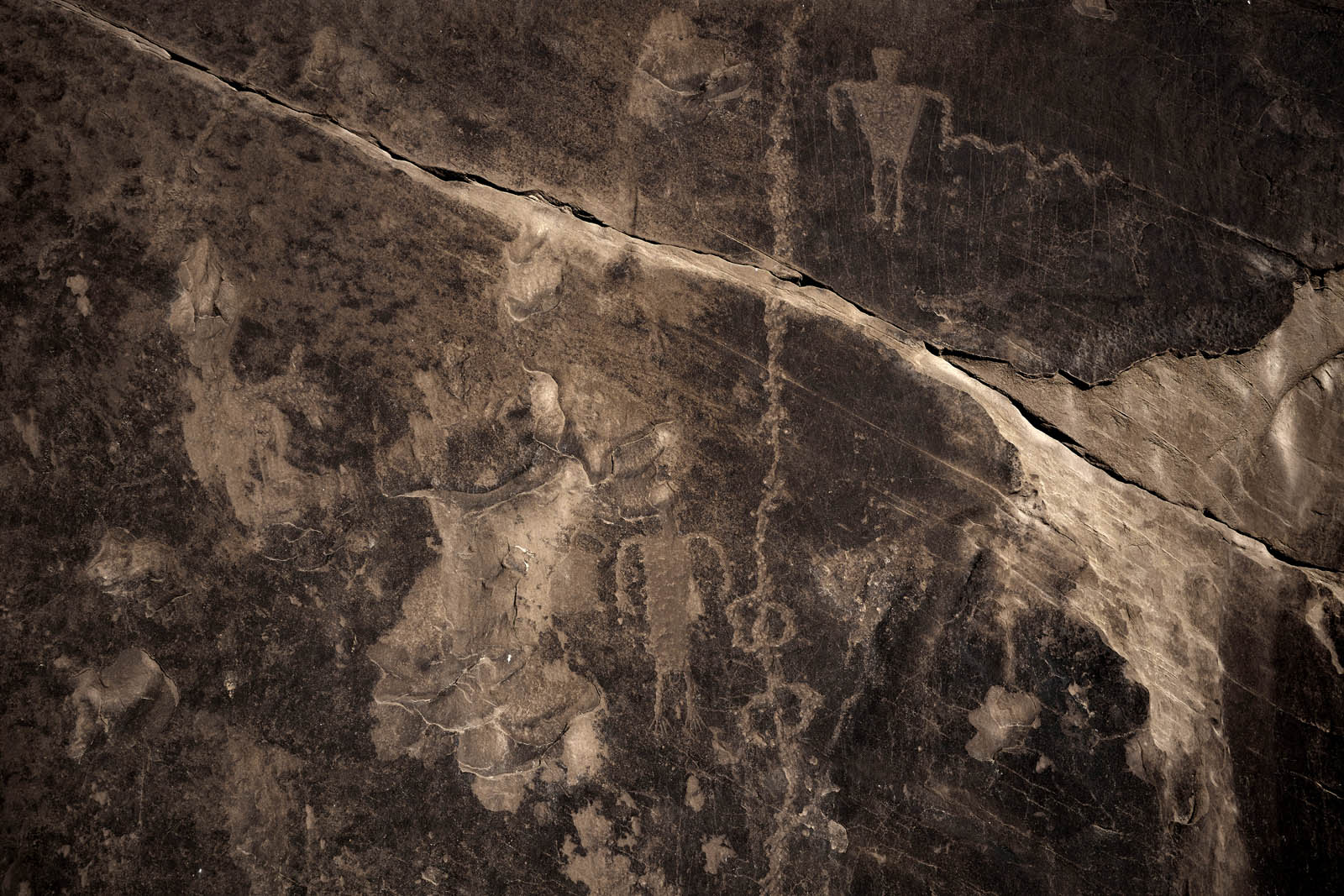
 

Off Road: “Sudden death for one… sudden shock for the other.” American culture is fascinated by twisted metal. In the 19th century, a railroad company staged public collisions between locomotives destined for the junkyard. Weegee photographed many traffic accidents introducing the “car crash” genre, later adopted by other figures, such as Andy Warhol, J.G. Ballard, David Cronenberg, etc.

Wall text from the exhibition


Weegee (American, 1899-1968) 'Untitled [Young man smoking cigarette in crashed car while waiting for ambulance, New York]' 1941


Weegee (American, 1899-1968)
Untitled [Young man smoking cigarette in crashed car while waiting for ambulance, New York]
1941
Gelatin silver print
© Photo Weegee/ICP New York


Installation view of the exhibition Weegee, Autopsy of the Spectacle at the Foundation Henri Cartier-Bresson, Paris showing at right, Weegee's photograph 'Henry Rosen (left) and Harvey Stemmer (centre) cover their faces with handkerchiefs after their arrest for bribery and conspiracy to fix a US college basketball match' (25 January 1945)


Installation view of the exhibition Weegee, Autopsy of the Spectacle at the Foundation Henri Cartier-Bresson, Paris showing at right, Weegee’s photograph Henry Rosen (left) and Harvey Stemmer (centre) cover their faces with handkerchiefs after their arrest for bribery and conspiracy to fix a US college basketball match (25 January 1945)


Weegee (American, 1899-1968) 'Holiday Accident in the Bronx' 1941


Weegee (American, 1899-1968)
Holiday Accident in the Bronx
1941
Gelatin silver print
© International Center of Photography


Exhibition

There’s a mystery to Weegee. The American photographer’s career seems to be split in two. One side includes his sensational photography printed in North American tabloids: corpses of gangsters lying in pools of their own blood, bodies trapped in battered vehicles, kingpins looking sinister behind the bars of prison wagons, dilapidated slums consumed by fire, and other harrowing documents on the lives of the underprivileged in New York from 1935 to 1945. Then come the festive photographs – glamorous parties, performances by entertainers, jubilant crowds, openings and premieres – to which we must add a vast array of portraits of public figures that Weegee delighted in distorting using a rich palette of tricks between 1948 and 1951, a practice he pursued until the end of his life.

How can these diametrically opposed bodies of work coexist? Critics have enjoyed highlighting the opposition between the two periods, praising the former and disparaging the latter. The exhibition Autopsy of the Spectacle seeks to reconcile the two parts of Weegee by showing that, beyond formal differences, the photographer’s approach is critically coherent.

The spectacle is omnipresent in Weegee’s work. In the first part of his career, which coincides with the rise of the tabloid press, he was an active participant in transforming news into spectacle. To show this, he often included spectators, or other photographers, in the foreground of his images. In the second half of his career, Weegee mocked the Hollywood spectacular: its ephemeral glory, adoring crowds and social scenes. Some years before the Situationist International, his photography presented an incisive critique of the Society of the Spectacle.

With a new perspective on Weegee’s oeuvre, Autopsy of the Spectacle presents the photographer’s iconic images beside lesser-known works, including images not-yet-exhibited in France.

Biography

Weegee was born Usher Fellig on June 12, 1899, to a Jewish family in Zolochiv, a small town in Galicia, then part of the Austro-Hungarian Empire, today in western Ukraine. At 11 years old, he joined his father who’d emigrated to the United States. At the immigration station Ellis Island, he became Arthur Fellig. Living in the slums of the Lower East Side, he left school at 14 to earn money to support his family. After working in different professions, he became a traveling photographer, worked for photographers Duckett & Adler, then in the lab of ACME Newspictures agency.

Starting in 1935, he was self-employed as photo-reporter. Towards 1937, he began using the pseudonym Weegee, and around 1941, started marking the backs of his prints with a stamp in the form of a self-fulfilling prophecy: “Weegee the Famous.” For 10 years, connected to Police radio, he took photographs, mainly at night, of crime, arrests, fires, accidents and other news items. Though the photographer most certainly had connections within the Police, without whom his work would not have been possible, he also frequented left-wing circles. He was very close to the Photo League, a group of independent photographers who firmly believed in emancipation through the image and fought for social justice. In 1945, he published his best photographs in a book entitled Naked City, which met with great success both in its reception and sales.
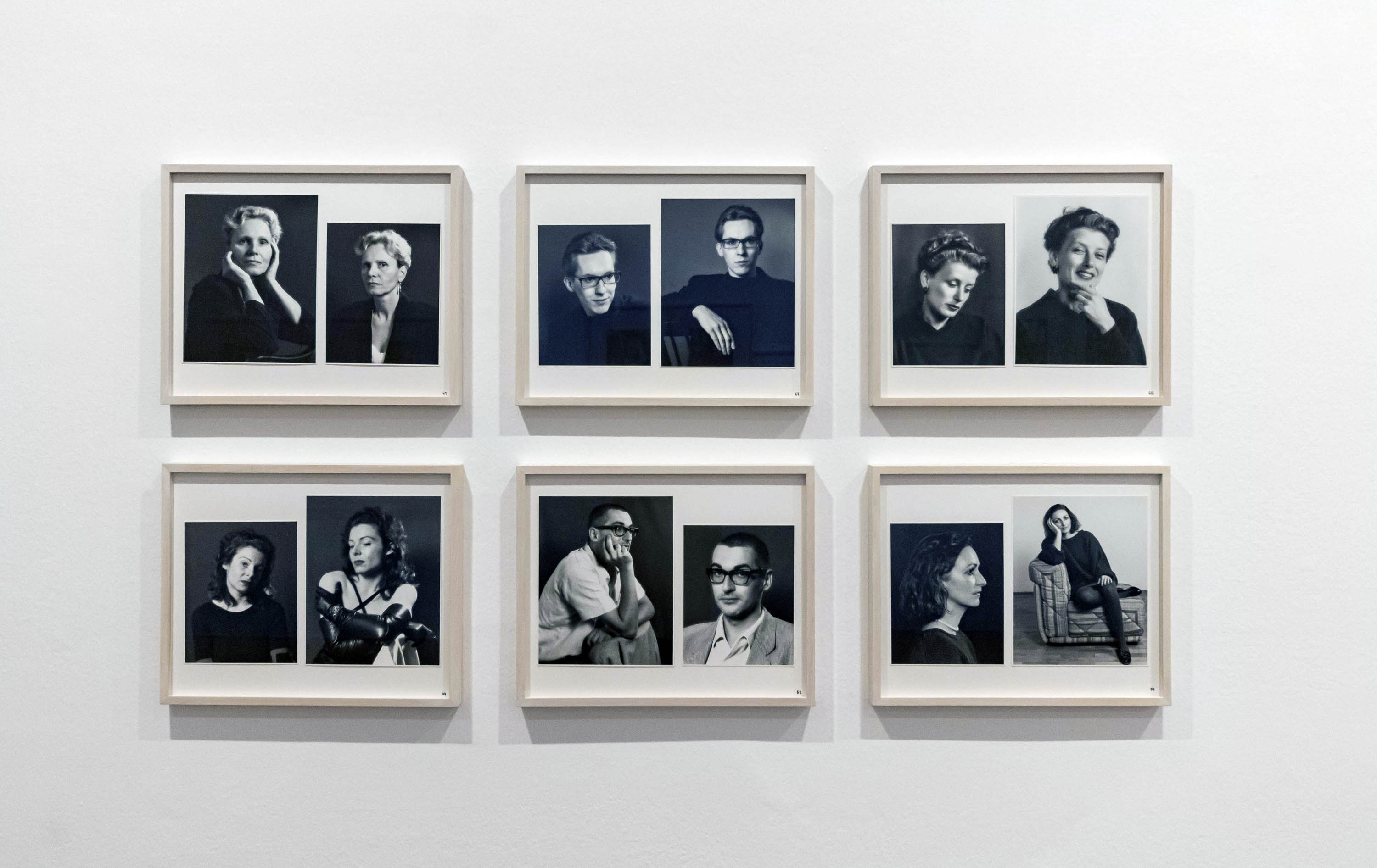
In the spring of 1948, he moved to Hollywood to work in cinema as a technical advisor, sometimes as an actor. He photographed the endless party and developed different photographic techniques used to create his caricatures of celebrities. In December of 1951, after four years on the West Coast, he returned to New York with no intention of resuming his former practice. Up until his death on December 26, 1968, the majority of his work involved taking advantage of his notoriety to publish other books, go on tour, and promote his photo-caricatures in newspapers.

Text from the Foundation Henri Cartier-Bresson website


Installation view of the exhibition 'Weegee, Autopsy of the Spectacle' at the Foundation Henri Cartier-Bresson, Paris showing at centre, 'Afternoon Crowd at Coney Island, Brooklyn' (1940)

Installation view of the exhibition 'Weegee, Autopsy of the Spectacle' at the Foundation Henri Cartier-Bresson, Paris


Installation view of the exhibition Weegee, Autopsy of the Spectacle at the Foundation Henri Cartier-Bresson, Paris showing at left, Performer Jimmy Armstrong (c. 1943, below); at second left, Ladies keep their money in their stockings… (1944, below); and at centre, Afternoon Crowd at Coney Island, Brooklyn (1940, below)
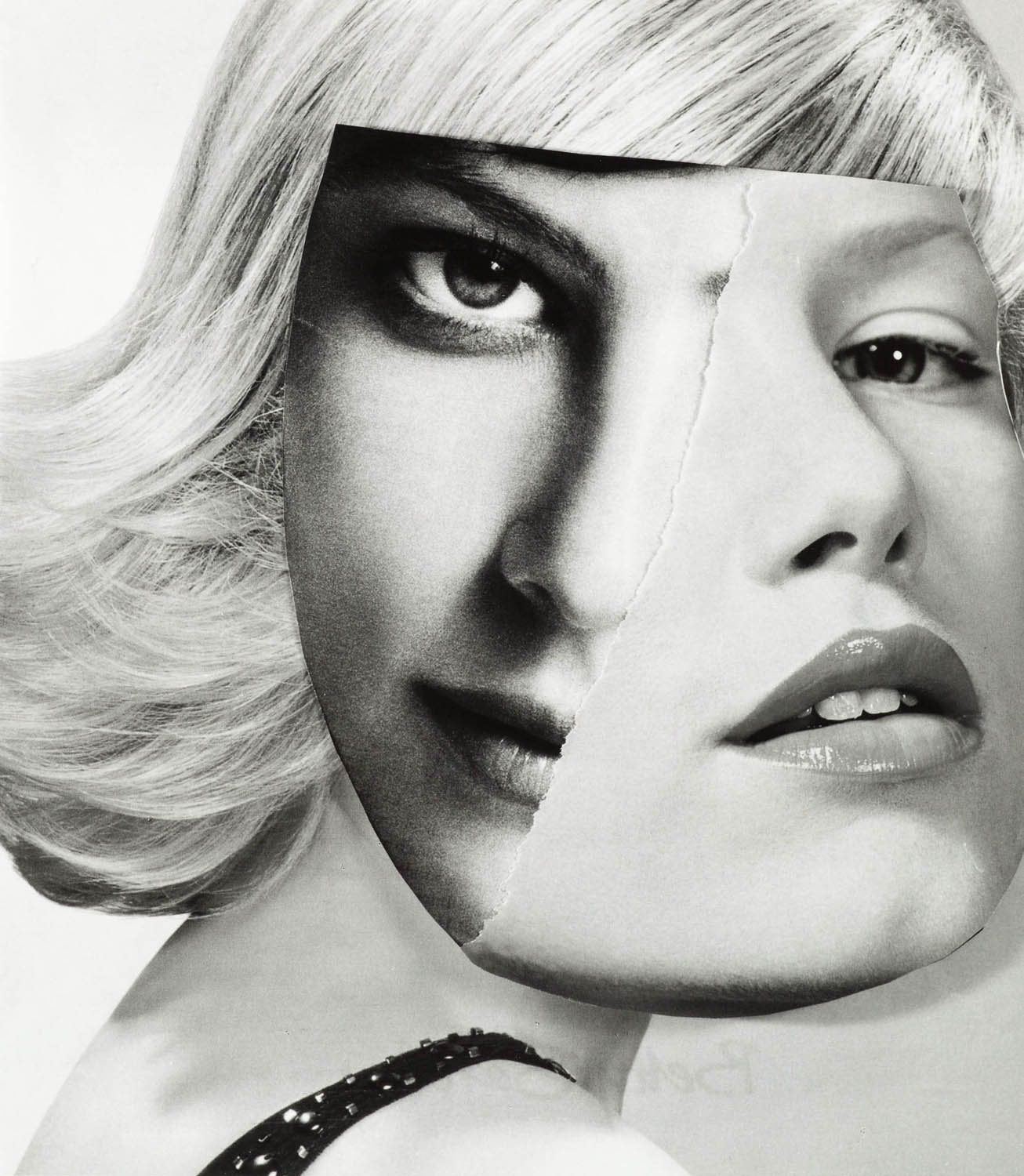
 

Weegee (American, 1899-1968) 'Performer Jimmy Armstrong' c. 1943


Weegee (American, 1899-1968)
Performer Jimmy Armstrong
c. 1943
Gelatin silver print
© International Center of Photography


Weegee (American, 1899-1968) 'Ladies keep their money in their stockings...' 1944


Weegee (American, 1899-1968)
Ladies keep their money in their stockings…
1944
Gelatin silver print
© International Center of Photography


“There is no cover charge nor cigarette girl, and a vending machine dispenses cigarettes. Neither is there a hat check girl. Patrons prefer to dance with their hats and coats on. But there is a lively floor show… the only saloon in the Bowery with a cabaret license.”

Weegee


Weegee (American, 1899-1968) 'Afternoon Crowd at Coney Island, Brooklyn' 1940


Weegee (American, 1899-1968)
Afternoon Crowd at Coney Island, Brooklyn
1940
Gelatin silver print
© International Center of Photography. Courtesy Galerie Berinson, Berlin


Weegee (American, 1899-1968) 'Sleeping at the Circus, Madison Square Garden, New York' 1943


Weegee (American, 1899-1968)
Sleeping at the Circus, Madison Square Garden, New York
1943
Gelatin silver print
© International Center of Photography


Installation view of the exhibition 'Weegee, Autopsy of the Spectacle' at the Foundation Henri Cartier-Bresson, Paris


Installation view of the exhibition Weegee, Autopsy of the Spectacle at the Foundation Henri Cartier-Bresson, Paris showing at centre left, Opening night at the Metropolitan Opera (1943); In the Lobby at the Metropolitan Opera, Opening Night (1943); and at centre right, The Critic (1943, below)


Weegee (American, 1899-1968) 'The Critic' November 22, 1942


Weegee (American, 1899-1968)
The Critic
November 22, 1942
Gelatin silver print
© International Center of Photography. Collection Friedsam


Even his most popular photograph was a set-up, says Wallis: “The Critic, which was taken in 1943, was surely staged and shows the wealthy Mrs George Washington Cavanaugh and Lady Decies arriving at the opera, greeted by a staggering drunk who seems to be mocking them and who Weegee reportedly rounded up at Sammy’s bar on the Bowery.

“This picture is a good example of how Weegee previsualized a scene, developed a punchy satirical narrative, and staged the picture. The Critic was widely reproduced at the time, and even shown at the Museum of Modern Art.”

Boo Paterson. “Big guns to big top: Weegee at circus,” on the Boo York City website [Online] Cited 13/04/2024


In Weegee’s day similar culture clashes happened at Sammy’s Bowery Follies (267 Bowery, between East Houston and Stanton Streets), which from 1934 to 1970 attracted what The New York Times once described as a mixed crowd of “drunks and swells, drifters and celebrities, the rich and the forgotten.” …

Among the regulars, he wrote in his 1945 book, “Naked City,” was a woman they called Pruneface and a midget who walked the streets dressed as a penguin to promote cigarettes. When the midget got drunk, Weegee wrote, he “offered to fight any man his size in the house.”

Weegee held two book parties there. At the photography center Mr. George showed me silent-film footage taken in 1946 at the party for Weegee’s second book, “Weegee’s People.” Pretty uptown blondes and dowagers in pearls mingle with toothless crones and panhandlers, as models parade in their foundation garments, and a man with a flea circus puts his tiny performers through their paces.

John Strausbaugh. “Crime Was Weegee’s Oyster,” on The New York Times website June 20, 2008 [Online] Cited 13/04/2024


Installation view of the exhibition 'Weegee, Autopsy of the Spectacle' at the Foundation Henri Cartier-Bresson, Paris showing Weegee's photographs in magazine layouts


Installation view of the exhibition Weegee, Autopsy of the Spectacle at the Foundation Henri Cartier-Bresson, Paris showing his photographs in magazine layouts


"Il Fotografo cattivo", Epoca, Vol. XIII, No. 636, December 1962


“Il Fotografo cattivo”, Epoca, Vol. XIII, No. 636, December 1962
© International Center of Photography. Collection privée Paris


"Weegee Looks At Dali"


Weegee Looks At Dali


Weegee spoofs the new spring hats 1957


Weegee spoofs
the
new spring hats

Custom milliners often go to extremes. This spring, the have outdone themselves by creating 1957 version of the most exaggerated hats of the last fifty years. Here again are the flapper cloche, the slouch had Garbo wore in the ’30’s, the heavy veiling of the early 1900’s, the turban of the World War I era, the perennial mad profusion of fruit and flowers. Look had Michael A. Vaccaro photograph examples of these hats as they really are. Then camera artist Weegee turned out satirical prints, with these startling results.

Look magazine 1957


"How your TV heroes look to Weegee's magic camera" in Look magazine


WAIT. Don’t reach for a drink. Don’t reach for your glasses. And don’t – please don’t – write us an indignant letter. What you think you see on these pages is there, all right. It’s the work of a zany photographer named Weegee (few know his first name) who has a wicked sense of caricature and an outrageous sense of humor.

The subjects were not photographed under water. Wedge simply prints his negatives through bubbles glass, wire screens, press, kaleidoscopes or whatever gives him the characterization he is after. It’s a sort of three-way-stretch technique in which Weegee is assisted by photographic color expert Mike Lavelle.

The results of Weegee’s impudent manipulation of reality are both perceptive and astonishing: Faces take on a certain ga-ga verity; external exaggeration high-lights internal character and distortion offers surprising insights into personality. Weegee calls this “Photo-Caricature.” There was a man who might have enjoyed revelations like these. His name was Bobbie Burns and he wrote in one of his poems: “O wad some Pow’r the giftie gie us to see oursels as others see us.”

“How your TV heroes look to Weegee’s magic camera” in Look magazine


Weegee Modern Women Aren't Human!


“”Modern Women Aren’t Human!’ … If You Don’t Believe It … This Man Tells Why” in the National Enquirer, 1967


There’s a mystery to Weegee. The American photographer’s career seems to be split in two. One side includes his sensational photography printed in North American tabloids: corpses of gangsters lying in pools of their own blood, bodies trapped in battered vehicles, kingpins looking sinister behind the bars of prison wagons, dilapidated slums consumed by fire, and other harrowing documents on the lives of the underprivileged in New York from 1935 to 1945. Then come the festive photographs – glamorous parties, performances by entertainers, jubilant crowds, openings and premieres – to which we must add a vast array of portraits of public figures that Weegee delighted in distorting using a rich palette of tricks between 1948 and 1951, a practice he pursued until the end of his life. How can these diametrically opposed bodies of work coexist? Critics have enjoyed highlighting the opposition between the two periods, praising the former and disparaging the latter. The exhibition Autopsy of the Spectacle seeks to reconcile the two parts of Weegee by showing that, beyond formal differences, the photographer’s approach is critically coherent.

The spectacle is omnipresent in Weegee’s work. In the first part of his career, which coincides with the rise of the tabloid press, he was an active participant in transforming news into spectacle. To show this, he often included spectators, or other photographers, in the foreground of his images. In the second half of his career, Weegee mocked the Hollywood spectacular: its ephemeral glory, adoring crowds and social scenes. Some years before the Situationist International, his photography presented an incisive critique of the Society of the Spectacle.

With a new perspective on Weegee’s oeuvre, Autopsy of the Spectacle presents the photographer’s iconic images beside lesser-known works, including images not-yet-exhibited in France.

Curator Clément Chéroux

Press release from the Henri Cartier-Bresson Foundation


Weegee (American, 1899-1968) 'Their First Murder' c. 1936


Weegee (American, 1899-1968)
Their First Murder
c. 1936
Gelatin silver print
© Weegee Archive / International Center of Photography


Weegee (American, 1899-1968) 'Drowning victim, Coney Island' c. 1940


Weegee (American, 1899-1968)
Drowning victim, Coney Island
c. 1940
Gelatin silver print
© Weegee Archive / International Center of Photography, New York / Collection Galerie Berinson, Berlin


Weegee (American, 1899-1968) 'Mrs Bernice Lythcott and her son Leonard looking through a window broken by stones thrown by thugs, Harlem, New York' October 18, 1943


Weegee (American, 1899-1968)
Mrs Bernice Lythcott and her son Leonard looking through a window broken by stones thrown by thugs, Harlem, New York
October 18, 1943
Gelatin silver print
© Photo Weegee/ICP New York


Weegee (American, 1899-1968) 'Untitled [Tenement sleeping during heat spell, Lower East Side, New York]' May 23, 1941


Weegee (American, 1899-1968)
Untitled [Tenement sleeping during heat spell, Lower East Side, New York]
May 23, 1941
Gelatin silver print
© Photo Weegee/ICP New York


Son of a Jewish immigrant from Ukraine, Weegee knew the slums, like those children seeking coolness on the fire escape ladder. He produced “real social documents” on the living conditions of the poor.


“In Central Park the lawns were crowded before darkness with family groups,” reported the July 10, 1936 New York Times; the temperature had reached an astounding 106 degrees the day before. “On the Lower East Side traffic was seriously impeded as small armies of persons emerged from tenement houses with chairs, boxes and even beds which they set up in the streets.”

And from the Times on August 4, 1938, when the mercury hit 93 degrees:

“More than 3,000 persons slept on the sand at Coney Island and Brighton Beach to escape the heat last night, the police estimated. Ten additional patrolmen were assigned to the area to prevent molestation of the sleepers, many of whom brought blankets and sheets.”

Anonymous. “How New Yorkers survived hot summer nights,” on the Ephemeral New York website Nd [Online] Cited 14/04/2024


Weegee (American, 1899-1968) 'Untitled [Fire in loft building, New York]' 1947


Weegee (American, 1899-1968)
Untitled [Fire in loft building, New York]
1947
Gelatin silver print
© Photo Weegee/ICP New York


Weegee (American, 1899-1968) 'Simply adding boiling water' 1943


Weegee (American, 1899-1968)
Simply adding boiling water
1943
Gelatin silver print
© Photo Weegee/ICP New York


Weegee (American, 1899-1968) 'Lovers at the Palace Theater' c. 1953


Weegee (American, 1899-1968)
Lovers at the Palace Theater
c. 1953
Gelatin silver print
© Photo Weegee/ICP New York


Weegee (American, 1899-1968) 'Anthony Esposito, Booked on Suspicion of Killing a Policeman' 1941


Weegee (American, 1899-1968)
Anthony Esposito, Booked on Suspicion of Killing a Policeman
1941
Gelatin silver print
© International Center of Photography. Louis Stettner Archives, Paris


At noon Fifth Avenue was crowded. Alfred Klausman, middle-aged office manager of a linen firm, walked across the street from his office to the bank on the corner and drew the weekly pay roll: $649.

As the genial, round-faced Klausman walked back, two men silently threaded through the crowd behind him, two strange, grey-coated creatures washed up from the depths of New York City’s criminal world. One was Anthony Esposito, 35, a long-nosed, horse-faced hoodlum who had been in & out of New York’s prisons and reformatories for 16 years, had once been deported to Italy and sneaked back in. His brother William, 29, had robbed drunks, snatched pocketbooks, done a seven-year stretch in Sing Sing. Their father had served time for forgery. Their brother was in Clinton Prison, Dannemora, N. Y. for parole violation. Their lives had been spent in squalor, petty crime, prison and torpid, hard-eyed loafing.

Klausman entered the elevator to his office. The Esposito brothers stepped in after him. Between the second and third floors they drew revolvers from their overcoat pockets, ordered the operator to stop, face the door. He heard Klausman cry “No! No! No!” – then one of the gunmen put his revolver to Klausman’s head and pulled the trigger.

They ordered the operator to take the elevator down, ducked out into the street, disappeared into B. Altman’s big department store.

Out into the street the operator yelled “Holdup! Murder!” The cry spread. Two patrolmen raced from the corner, into the store, a long way behind.

Down the crowded aisles of the store darted the Espositos, through the block-long building. At the far entrance they climbed into a cab, put a gun at the driver’s head. But Madison Avenue was jammed with traffic; they were trapped. “Get going. Make it fast. Get moving or we’ll kill you.” Back in the store panic was spreading as police with drawn revolvers moved down the aisles shouting, “Get down!” The cab stalled behind a bus. Like men leaping over a cliff, the brothers jumped out into the traffic. At sight of the two running men, waving revolvers, people flattened themselves against the buildings or ducked to the sidewalk. A taxi driver ran to Patrolman Edward Maher, directing traffic on the corner, yelled “Stick-up!” and pointed at the fleeing men. Maher raced after them, only 20 feet behind, afraid to shoot into the crowd. Motorists left their cars and joined the chase. Maher saw a clear space, shot twice, and William Esposito staggered sideways, fell face downward, one arm outstretched, one twisted under him, apparently dead.

A little crowd collected around him. Patrolman Maher held the gunman by the overcoat, started to turn him over, turned to warn the crowd away. “Back up, please,” he said, “someone’s liable to get hurt.” As he rolled William over, the gunman’s .38 came up. William Esposito pulled the trigger and Patrolman Maher slumped over, dead.

The crowd surged back, then forward. A taxi driver named Leonard Weisberg leaped on the prone gunman. He grabbed for the revolver, missed. Esposito jerked it back a few inches, fired again. Weisberg, clutching his throat, gasping for breath, fell to the sidewalk.

Esposito, still lying down, drew another gun from his overcoat pocket. Two men leaped on him. Then the crowd closed in, kicking and beating.

Anthony ran on when his brother fell. Behind him the police fired into the air. He shot a few times, wildly, apparently to clear crowds out of his way on Fifth Avenue. He ducked into Woolworth’s, bowling over the women shoppers. He plunged to the basement, put away his guns, walked up again to hide in the crowd – and met six policemen at the head of the stairs, went down with revolver butts thudding on his skull.

The Espositos went to the hospital, to the lineup, to indictment for murder. Leonard Weisberg, recovering from his throat wound, was promised a new cab of his own, and won a hero’s praise. The Nazi press gleefully played up the crime as evidence of democratic depravity.

Anonymous. “National Affairs: SLAUGHTER ON FIFTH AVENUE,” in TIME Monday, Jan. 27, 1941 on the TIME website [Online] Cited 14/04/2024


Weegee (American, born Ukraine (Austria), Złoczów (Zolochiv) 1899 - 1968 New York) '[Outline of a Murder Victim]' 1942


Weegee (Arthur Fellig) (American born Ukraine (Austria), Złoczów (Zolochiv) 1899 – 1968 New York)
[Outline of a Murder Victim]
1942
Gelatin silver print
33.9 x 27.4cm (13 3/6 x 10 13/16 in.)
Gift of Bruce A. Kirstein, in memory of Marc S. Kirstein, 1978
© Weegee / International Center of Photography


Weegee (American, 1899-1968) 'Harry Maxwell shot in a car' 1941


Weegee (American, 1899-1968)
Harry Maxwell shot in a car
1941
Gelatin silver print
© Photo Weegee/ICP New York


Weegee (American, 1899-1968) '"Hopper's Topper" Hedda Hopper Hollywood' c. 1948


Weegee (American, 1899-1968)
“Hopper’s Topper” Hedda Hopper Hollywood
c. 1948
Gelatin silver print
© Photo Weegee/ICP New York


Weegee (American, 1899-1968) 'Marilyn Monroe, Distortion' c. 1955


Weegee (American, 1899-1968)
Marilyn Monroe, Distortion
c. 1955
Gelatin silver print
© Weegee Archive / International Center of Photography, New York / Friedsam Collection, Frankfurt am Main


Weegee (American, 1899-1968) 'Charlie Chaplin, Distortion' 1950


Weegee (American, 1899-1968)
Charlie Chaplin, Distortion
1950
© International Center of Photography


Weegee (American, 1899-1968) 'Self-Portrait' 1963


Weegee (American, 1899-1968)
Self-Portrait
1963
Gelatin silver print
© International Center of Photography


This book accompanies the exhibition 'Weegee, Autopsie du Spectacle' presented from January 30, 2024 to May 19, 2024 at the Henri Cartier-Bresson Foundation


Weegee (author)
Textual, Henri Cartier-Bresson Foundation (editor)
January, 2024 (release)
ISBN 9782845979901
208 pages
55 euros

This book accompanies the exhibition Weegee, Autopsie du Spectacle presented from January 30, 2024 to May 19, 2024 at the Henri Cartier-Bresson Foundation.

There is a Weegee conundrum. His photographs fall into two distinct categories. On the one hand, there are his images of news items taken in New York during the 1940s, in a documentary, direct and raw approach. And on the other, photographs of starlets, politicians and other socialites taken in Hollywood in the following decade, for which he willingly resorted with special effects. Declaring himself “bewitched by the mystery of the murders,” Weegee stood out for his ability to arrive promptly at the crime scene or to wait for the salad baskets to arrive on the steps of the police stations to capture the defendants on the spot. Nevertheless, he strives to bring onlookers, often from the working classes, into his framework, or even to be interested only in them. Made up of around a hundred photographs – the best known, but also many images never highlighted – this book shows the coherence of Weegee’s work based on a radical and incisive critique of the Society of the Spectacle, borrowing from an unexpected empathy towards the disadvantaged.

Weegee (1899-1968) was an American photojournalist known for his images of a New York marked by crime. In 1941, New York’s Photo League dedicated an exhibition to him which was followed by that of MoMA in 1943. He published his first book Naked City in 1945 and his autobiography Weegee by Weegee in 1961.

Hardcover
20 x 26cm
Texts by Isabelle Bonnet, David Campany,
Clément Chéroux and Cynthia Young.
Texts in French

Translated from the French by Google Translate from the Foundation Henri Cartier-Bresson website


Fondation Henri Cartier-Bresson
79 rue des Archives
75003 Paris

Opening hours:
Tuesday – Sunday 11am – 7pm
Closed Mondays

Henri Cartier-Bresson Foundation website

LIKE ART BLART ON FACEBOOK

Back to top