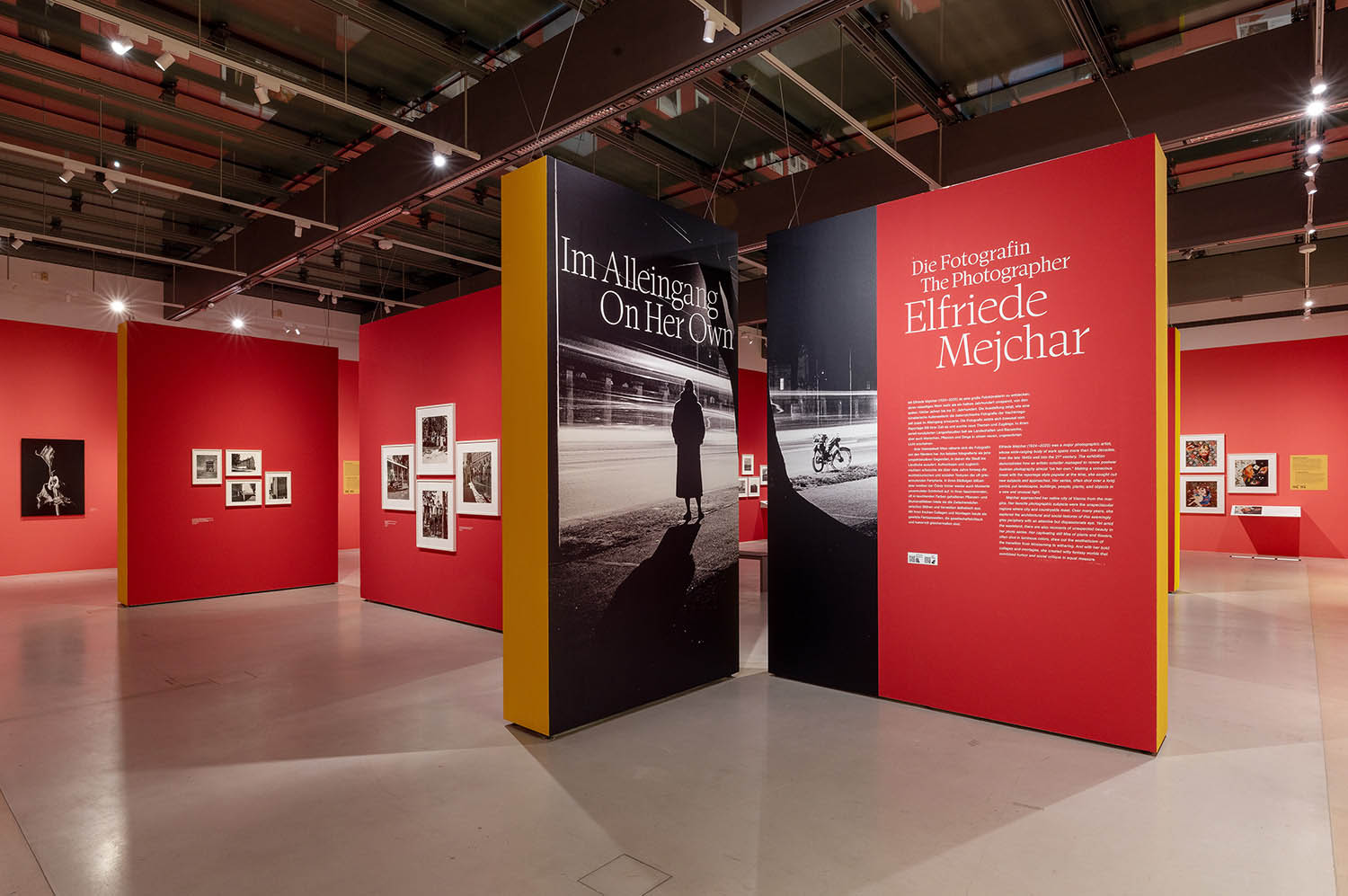
Exhibition: ‘The Poetry of the Everyday. Photographs by Elfriede Mejchar’ at Museum der Moderne Salzburg

Exhibition dates: 26th April – 15th September 2024

Altstadt (Rupertinum)

Curator: Katharina Ehrl


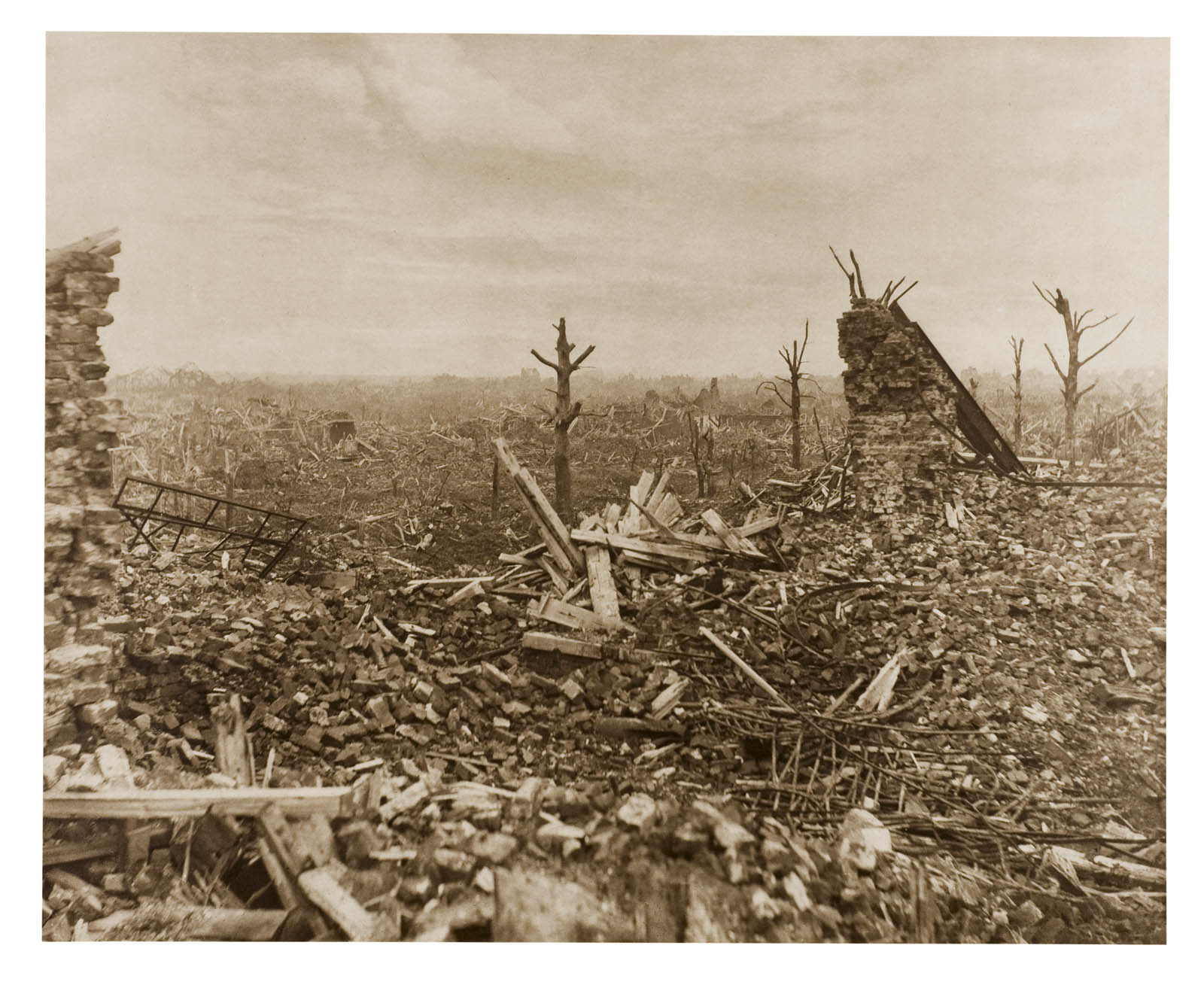
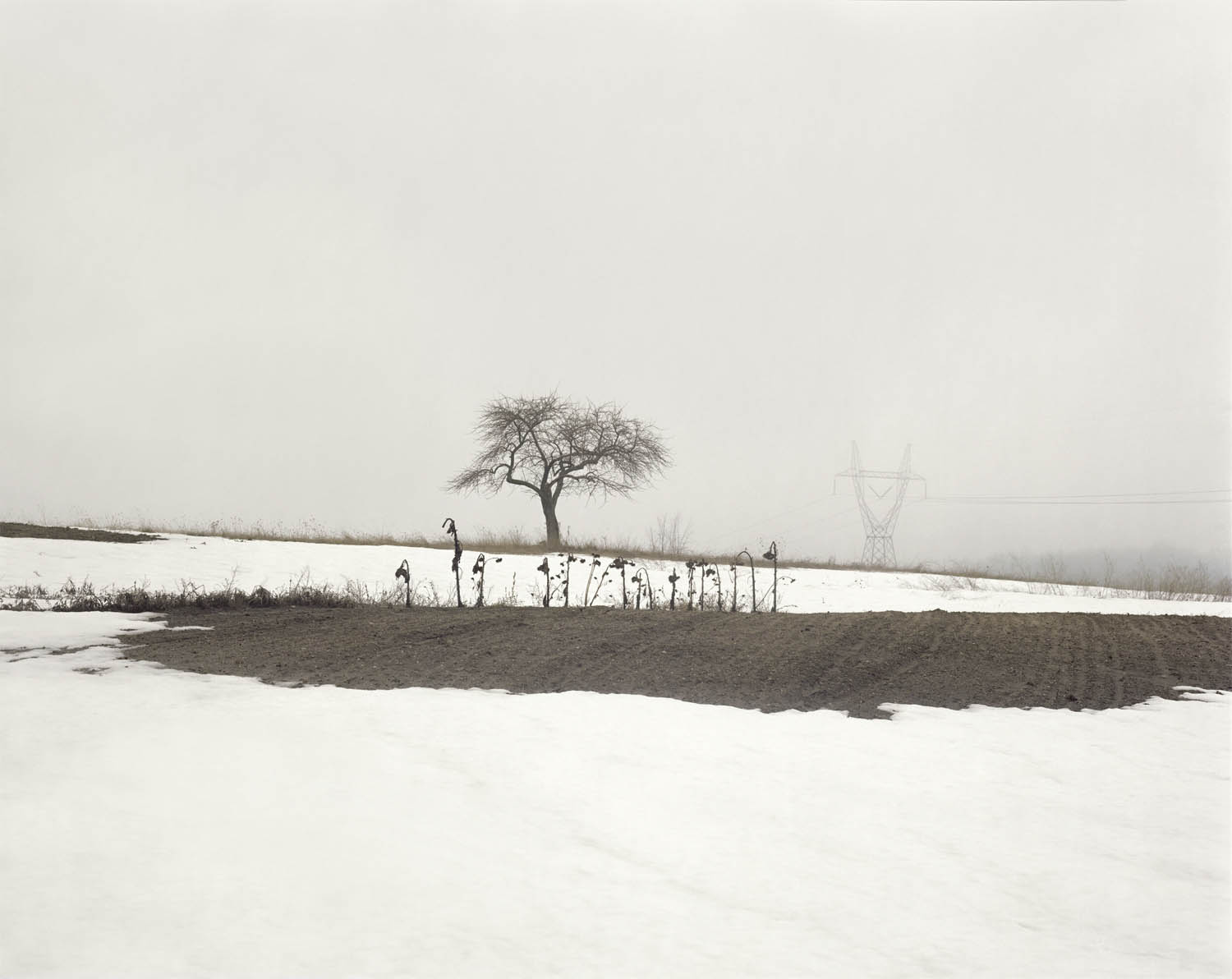
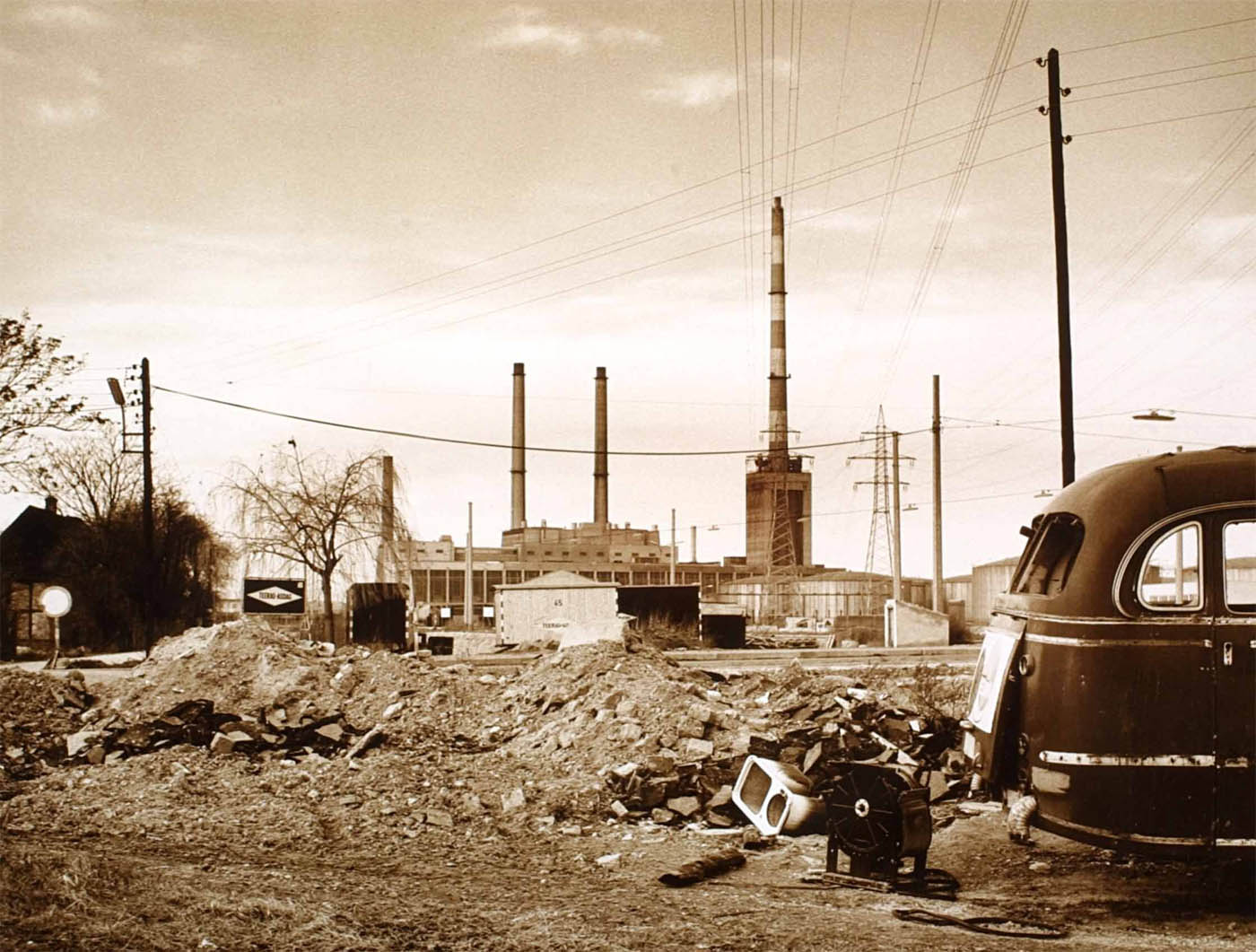
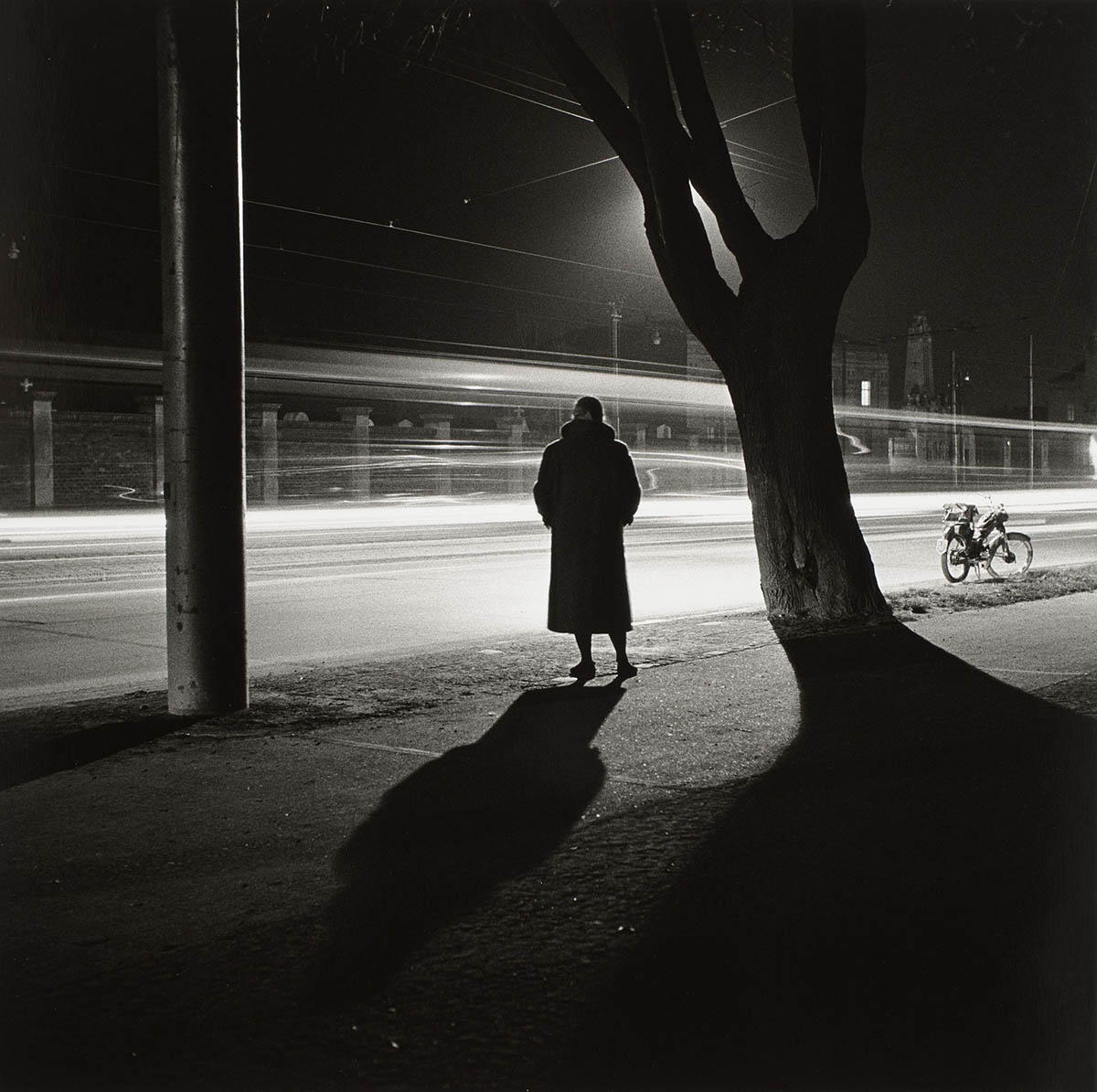
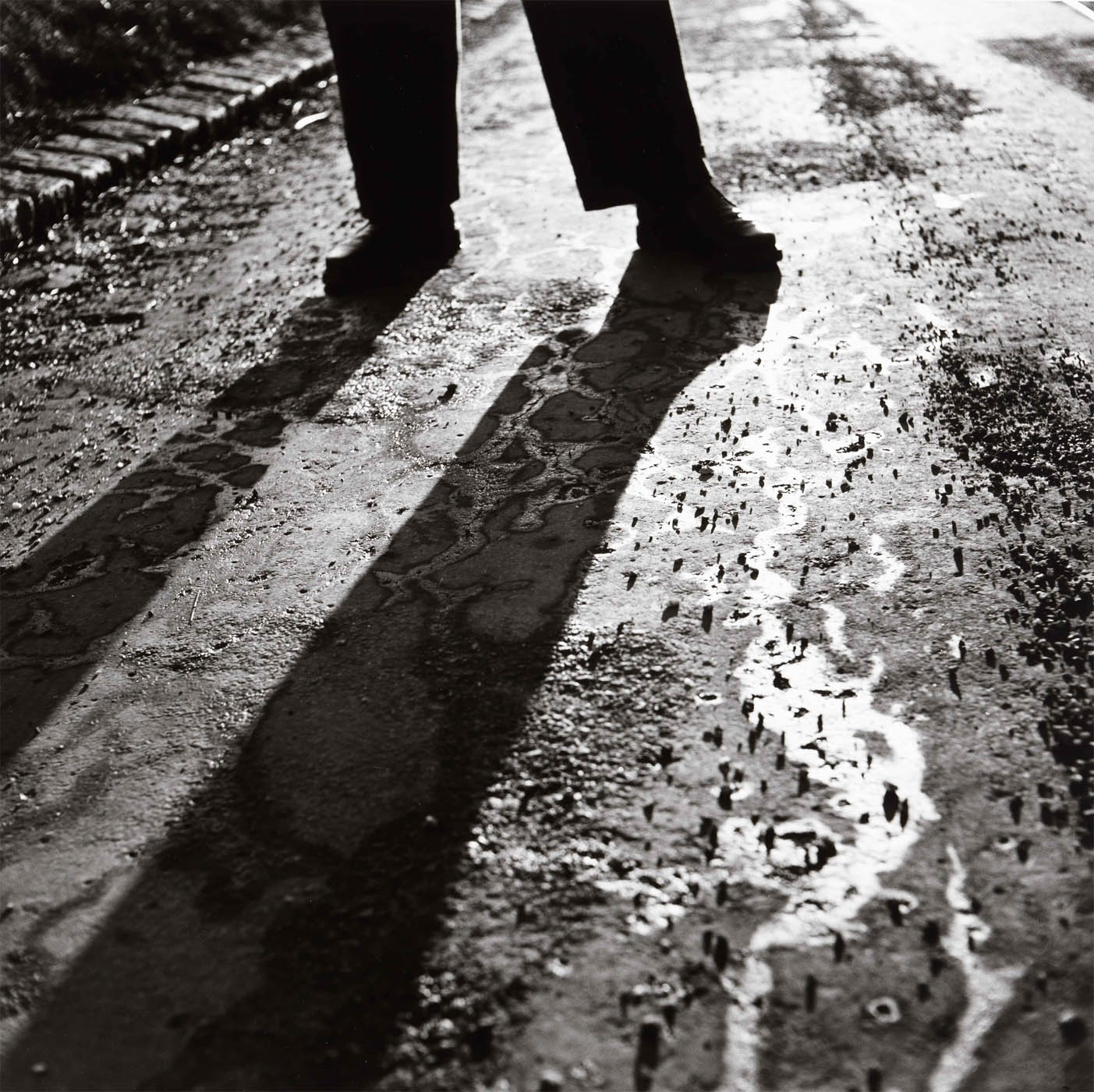
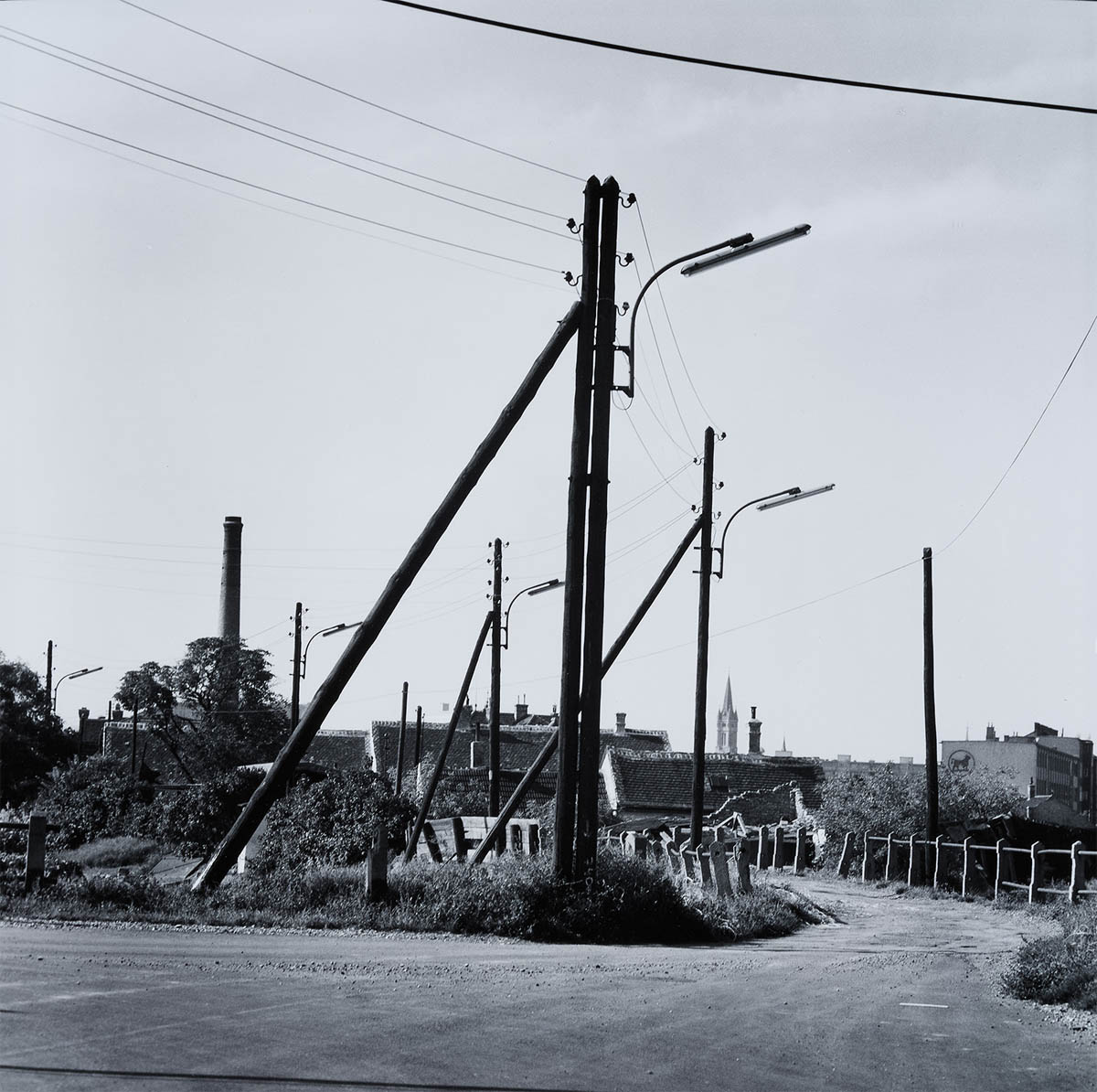
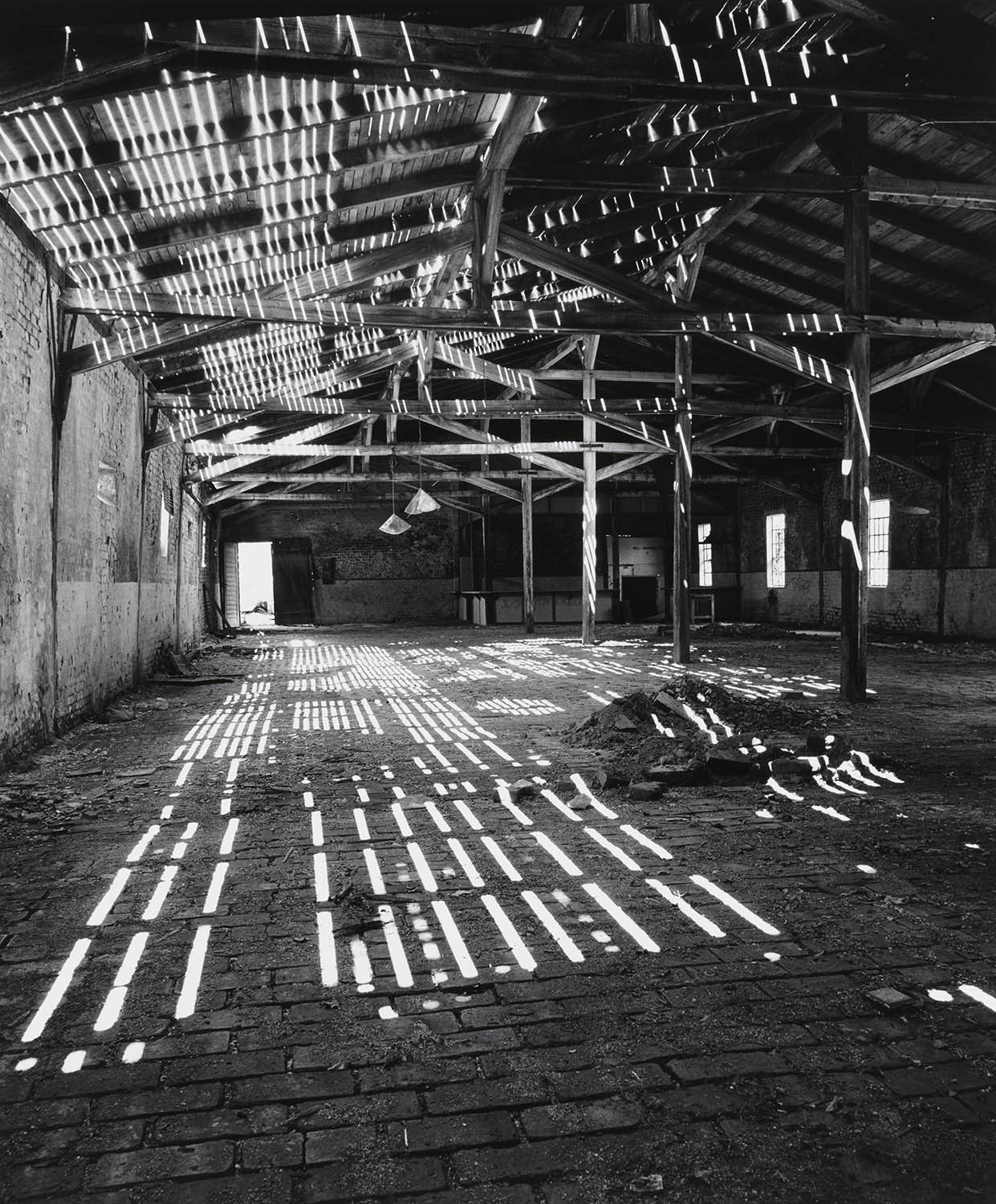
Elfriede Mejchar (Austrian, 1924-2020) From the series 'Simmeringer Heide und Erdberger Mais', 1967-1976


Elfriede Mejchar (Austrian, 1924-2020)
From the series Simmeringer Heide und Erdberger Mais, 1967-1976
Silver gelatine print on baryta paper, brown toned
Museum der Moderne Salzburg
© Bildrecht, Vienna 2024


Deriving pleasure from the dérive

In recent weeks Art Blart has posted on social documentary photographers of the urbanscape: David Goldblatt documenting social conditions in South Africa under apartheid and Roger Mayne with his “mixture of reality and unreality” photographs of the communities of Southam Road and surrounds, London.

One could argue that both could be seen as a focused urban male flâneur (or flâneuse in the case of a female), who saunters around the city observing society – the serendipitous Mayne more so than the working in series focused Goldblatt. And here we have another photographer of the urbanscape until recently unknown to me, that of the magnificent Austrian photographer Elfriede Mejchar (1924-2020) who – according to the exhibition text – is another flâneur, “her flaneur-like practice underlying her earlier bodies of work.”

But Mejchar’s was a very concentrated photographic practice, one in which the photographer again and again “explored Vienna’s peripheral zones on the southeast edge of the city” to create photographic series often created over several years. Therefore, rather than being a wandering dilettante photographer, I believe that Mejchar was a focused conceptual artist who used Guy Debord’s “Theory of the Dérive” (1956)1 (or “drift”) to ground her photographic practice.

With its focused flow of acts, its gestures, its strolls, its encounters, one of the goals of the dérive includes studying the terrain of the city (psychogeography), the exploration of urban environments that emphasises interpersonal connections to places. The pyschogeography of the urbanscape.2

A quotation by Grant W. Ray is instructive in this regard:

“Debord’s Dérive is not simple a walk through the streets of the city, of chance encounters. Instead one must move rapidly and decisively through the urban space, with intention… They should be aware of their surroundings, of the “… ecological analysis of the absolute or relative character of fissures in the urban network, of the role of microclimates, of distinct neighborhoods with no relation to administrative boundaries, and above all of the dominating action of centers of attraction…” Thus the most talented photographers who’s oeuvre includes the investigation of the urbanscape. The walk itself, the interaction of operator, camera, and site breaks down the normal relationship we have with public urban spaces. Their activity alone is the Dérive.”3


Working decisively and with intention, at the edge of the city, in spaces with no boundaries, where there were few people, or using different typologies of the city such as hotel rooms in which she stayed during her everyday job, Mejchar focused on the pyschogeography of the urbanscape through her reflective, non-decisive moment photographs, capturing “the complexity of this desolate and yet, in her eyes, beautiful landscape” and the changes that were happening to the urbanscape.

“Elfriede Mejchar consciously broke away from the photographic mainstream and the reportage style that was popular at the time. Rather than searching for the so-called “decisive moment,” she approached her subjects in a strongly conceptual and serial manner. She focused not on the extraordinary but on the unspectacular and the commonplace, the everyday and the banal, repeatedly addressing these in new ways in her photographic series.” (Text from the Wien Museum website)

Working with the periphery, the borders between urban and rural spaces, the non-decisive moment, landscapes subjected to human interventions and photographs in series, Mejchar’s photographs are more than mere representation of these sites: they challenge the viewer to “instigate more than just chance encounters for the viewer looking at the photographs,” through an understanding of the “subtle variations of the daily social realities created and maintained through public works and layout.”4 “The photographers activity of finding these sites is the dérive, the photograph itself is the pyschogeography, the questioning.”4

With her training as a classical photographer in the manner of Sudek, Brassaï or Tudor-Hart (see the first two photographs in the posting On Her Own. The photographer Elfriede Mejchar) grounding her later objective conceptual photographs, Mejchar’s point of departure is the pleasure she derives from the focused dérive and the results of her activity (through the objective and precise eye of a topographer a la Bernd and Hiller Becher) – the questioning photographs – brought to the attention of the viewer.

Mejchar investigates “traces of civilisation that humans leave in nature or along the edges of the urban fabric” and in so doing brings peripheral things (and her ideas about them) to the centre of our attention, making them psychologically valuable for all of us. The artist derives pleasure from her measured dérive and investigation of the evanescent, posing important questions about seemingly mundane things before they pass out of sight, memory, and existence.

And in her pleasure, is ours.

Dr Marcus Bunyan

See another posting about the artist’s work: On Her Own. The photographer Elfriede Mejchar at Wien Museum MUSA, Vienna, 18th April – 1st September, 2024


1/ “Psychogeography describes the effect of a geographical location on the emotions and behaviour of individuals.

How do different places make us feel and behave? The term psychogeography was invented by the Marxist theorist Guy Debord in 1955 in order to explore this. Inspired by the French nineteenth century poet and writer Charles Baudelaire’s concept of the flâneur – an urban wanderer – Debord suggested playful and inventive ways of navigating the urban environment in order to examine its architecture and spaces.”

Anonymous. “Psychogeography,” on the Tate website Nd [Online] Cited 13/09/2024

2/ Guy Debord (November 1956). “Theory of the Dérive”. Les Lèvres Nues (9). Translated by Ken Knabb.

3/ Guy Debord, “Theory of the Dérive,” 1958 on the Bureau of Public Secrets website Nd quoted in Grant W. Ray. “Dérive,” on the Silverpoetics website 13 July 2009 [Online] Cited 20/08/2024

4/ Ibid.,


Many thankx to the Museum der Moderne Salzburg for allowing me to publish the photographs in the posting. Please click on the photographs for a larger version of the image.


Poesie des Alltäglichen. Fotografien von Elfriede Mejchar / The poetry of the everyday

To mark the centenary of her birth, in 2024 three museums in Austria host exhibitions of works by the photographer Elfriede Mejchar (1924-2020, Vienna, AT). The Museum der Moderne Salzburg presents the artist as a portraitist. Curator Katharina Ehrl guides you through the exhibition in this short film.


In 2024, three museums host exhibitions of works by the Austrian photographer Elfriede Mejchar (1924-2020, Vienna, AT). The Museum der Moderne Salzburg is collaborating with the Landesgalerie Niederösterreich and the Wien Museum to honor the artist’s work at three different locations on the occasion of her 100th birthday, with each location offering a different focus.

Salzburg’s contribution to this collaborative project will present the artist’s portraits. With her series of works entitled “Artists at work” (1954-1961), for example, Mejchar demonstrates impressively how she engages with the artistic personalities of Christa Hauer, Friedensreich Hundertwasser, Josef Mikl and Arnulf Rainer by mapping their working situation in their studios. But she also demonstrated the same precision of perception when encountering the inanimate objects in her surroundings, thereby giving landscapes, flowers and discarded furniture the appearance of animated portraits.

The photo collections at the Museum der Moderne Salzburg hold a total of 665 photographs by Mejchar. Otto Breicha, the first director of the Museum’s predecessor institution, was a long-time colleague of Mejchar who recognised the artistic value of her photographic work and helped to promote it. As early as 1982, one year before the official opening of the Rupertinum, a comprehensive collection of her work was added to the photographic collection that later grew through further purchases and donations and today constitutes a focal point of the Museum’s photographic holdings.

Text from the Museum der Moderne Salzburg website


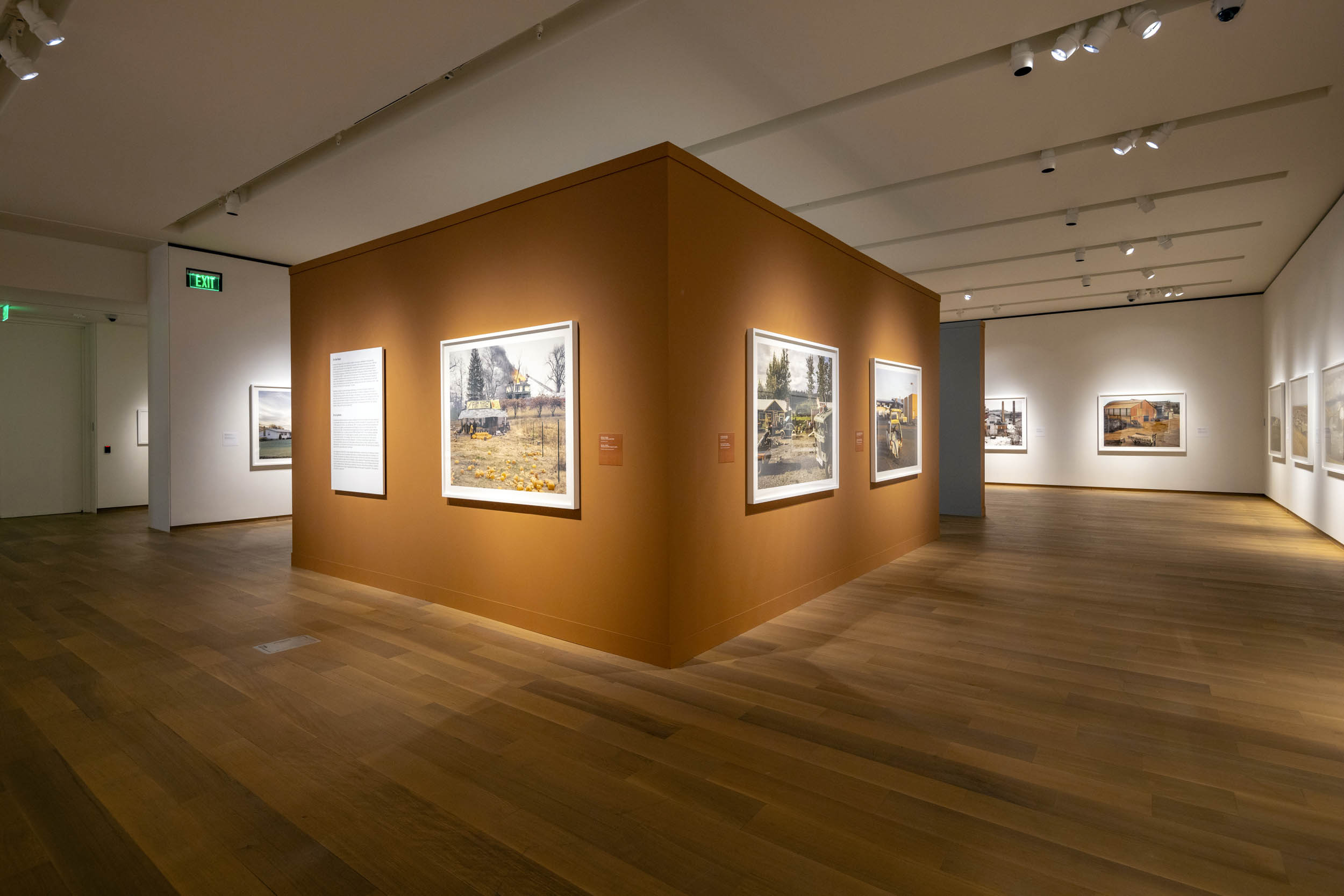
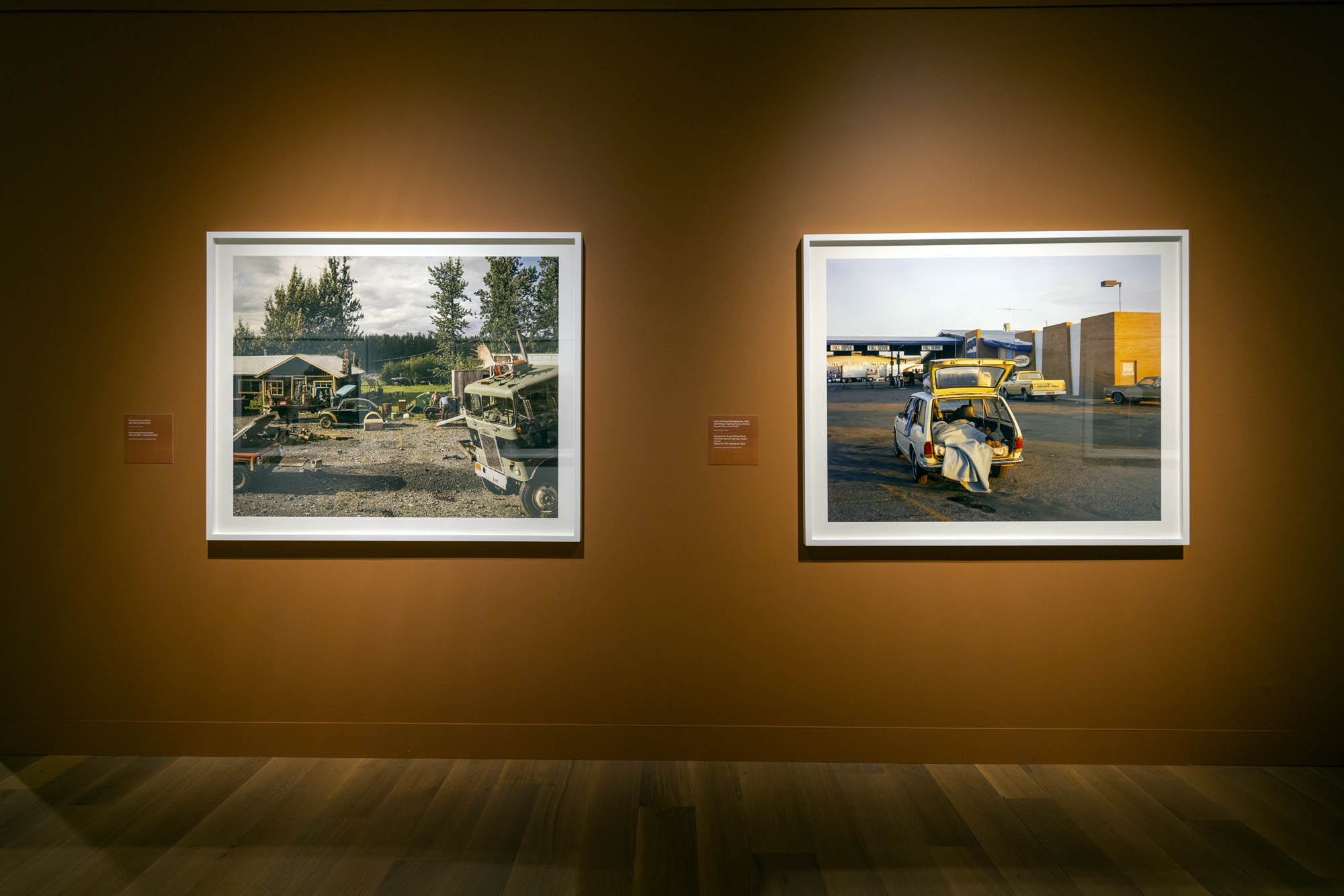
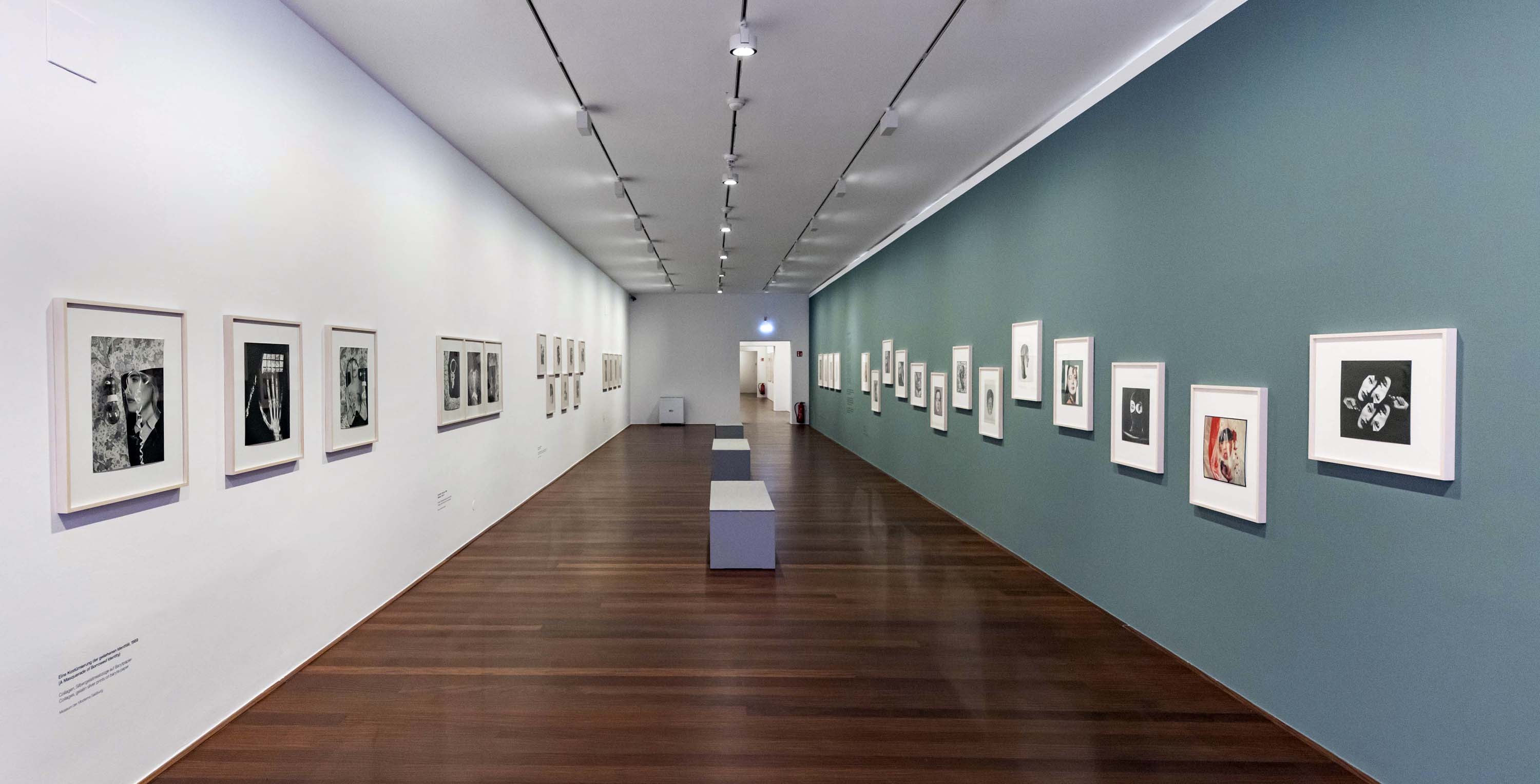
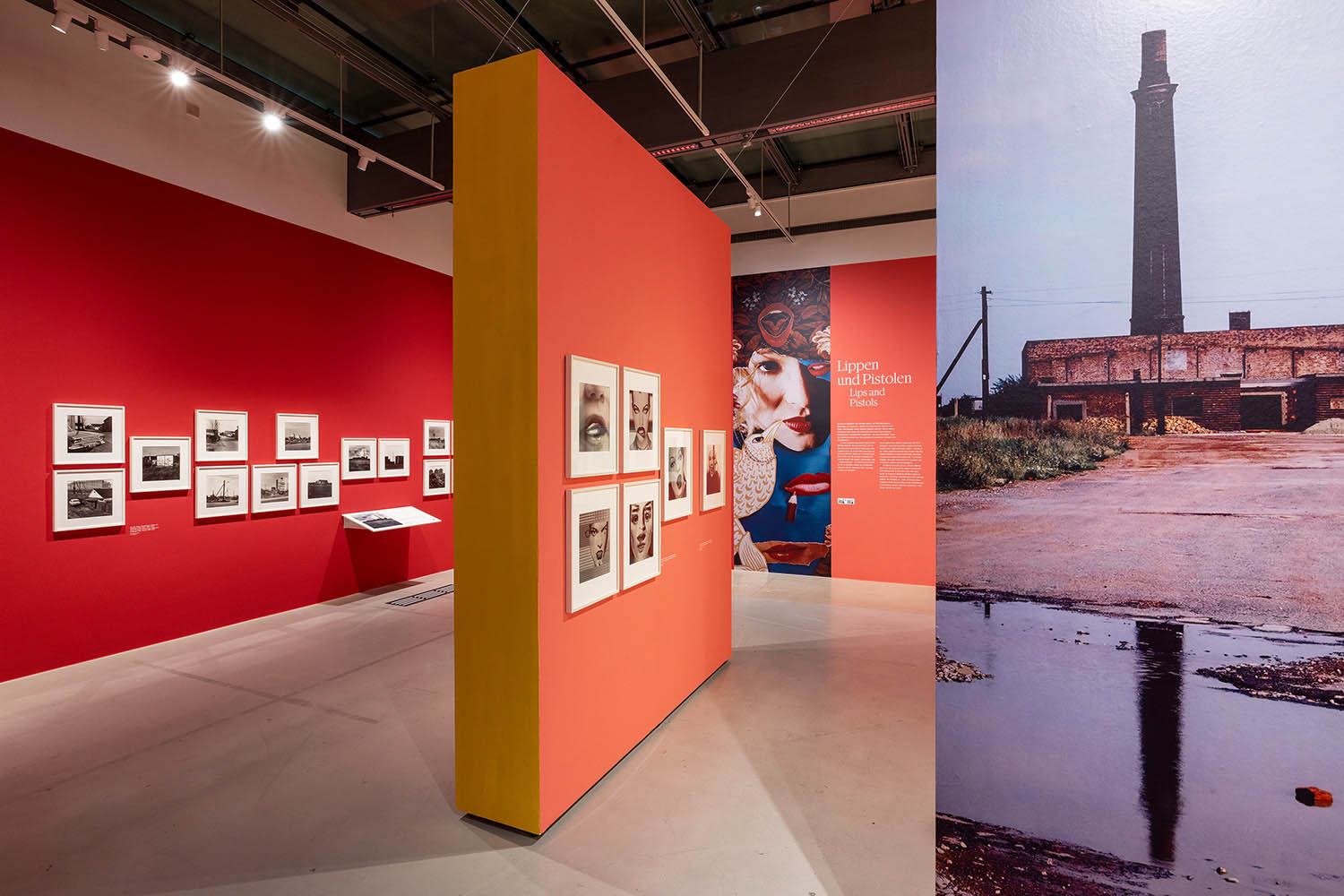
Installation view of the exhibition 'The Poetry of the Everyday. Photographs by Elfriede Mejchar', Museum der Moderne Salzburg 2024


Installation view of the exhibition The Poetry of the Everyday. Photographs by Elfriede Mejchar, Museum der Moderne Salzburg 2024 showing at left, work from Mejchar’s series Eine Kostümierung der geliehenen Identität (A Masquerade of Borrowed Identity) (below); and at right, photographs from the series Nobody is Perfect (below)
© Museum der Moderne Salzburg
Photo: wildbild/Günter Freund


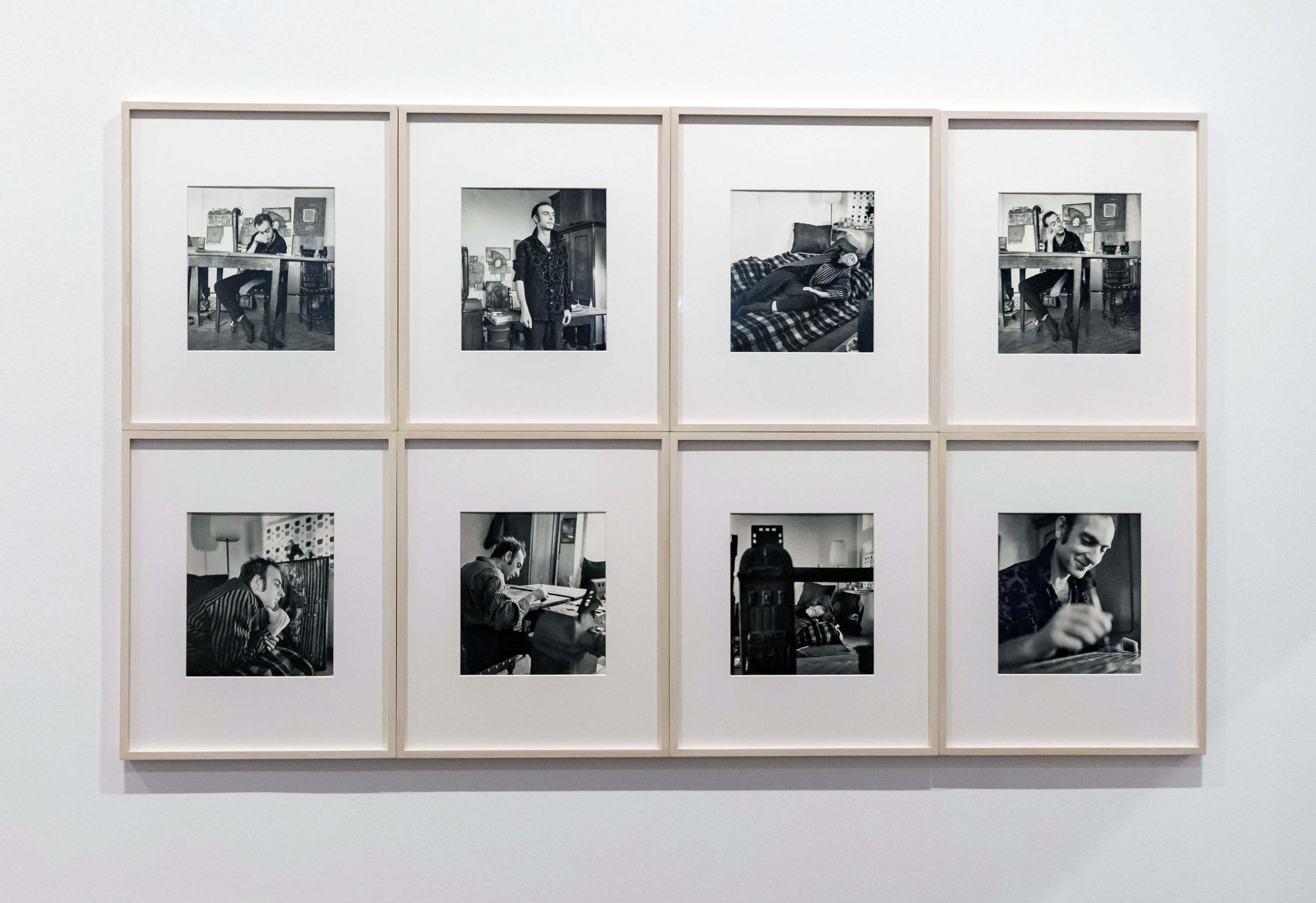
Installation view of the exhibition 'The Poetry of the Everyday. Photographs by Elfriede Mejchar', Museum der Moderne Salzburg 2024 showing work from Mejchar's series 'Künstler bei der Arbeit, 1954-1961' (Artists at work, 1954–1961)


Installation view of the exhibition The Poetry of the Everyday. Photographs by Elfriede Mejchar, Museum der Moderne Salzburg 2024 showing work from Mejchar’s series Künstler bei der Arbeit, 1954-1961 (Artists at work, 1954-1961) (below)
© Museum der Moderne Salzburg
Photo: wildbild/Günter Freund


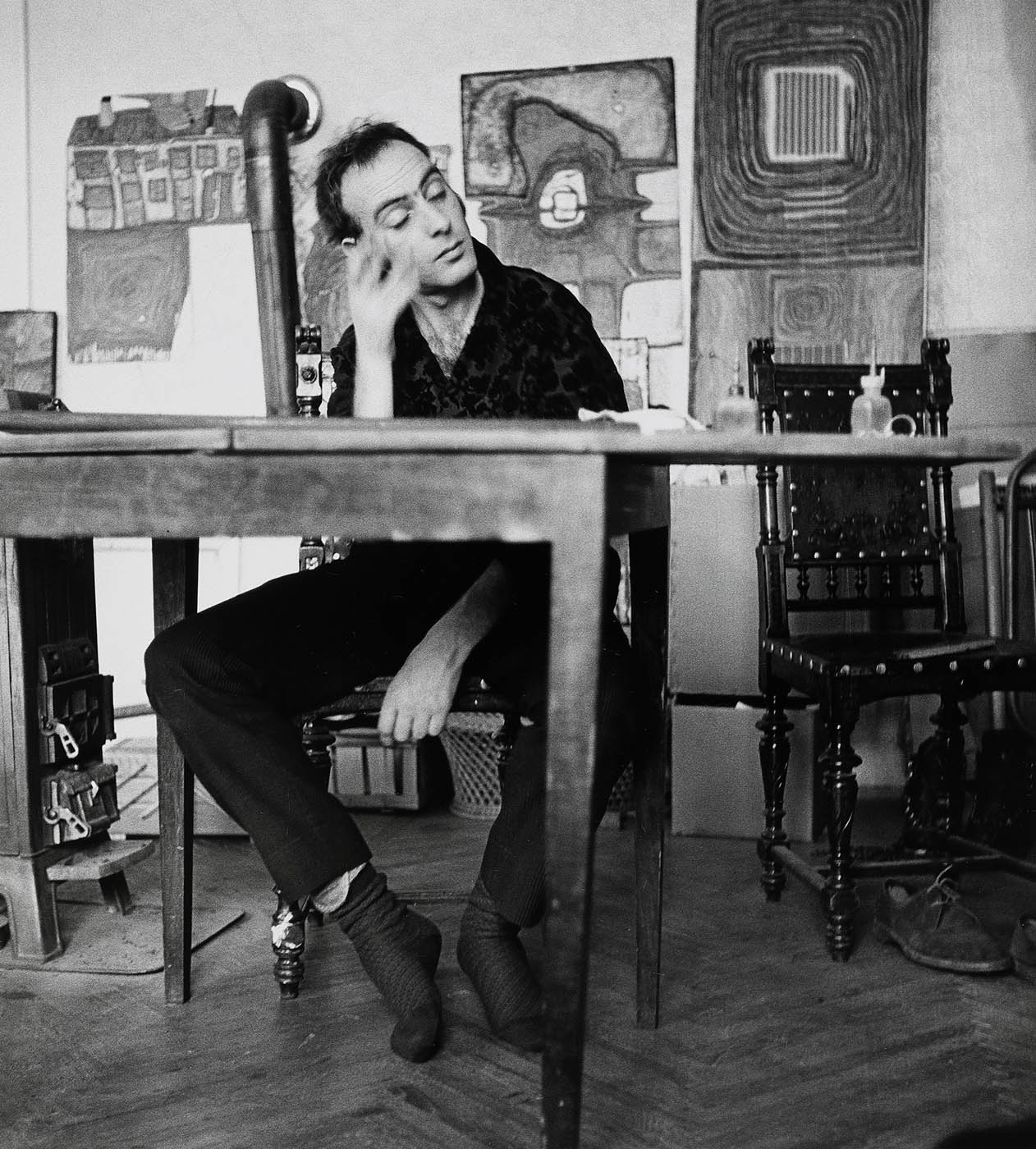
Elfriede Mejchar (Austrian, 1924-2020) 'Arnulf Rainer' 1954-1961


Elfriede Mejchar (Austrian, 1924-2020)
Arnulf Rainer
1954-1961
From the series Künstler bei der Arbeit, 1954-1961 (Artists at work, 1954-1961)
Silver gelatin print on baryta paper
Federal Photography Collection at the Museum der Moderne Salzburg


Arnulf Rainer (Austrian, b. 1929)

Arnulf Rainer (born 8 December 1929) is an Austrian painter noted for his abstract informal art.

Rainer was born in Baden, Austria. During his early years, Rainer was influenced by Surrealism. In 1950, he founded the Hundsgruppe (dog group) together with Ernst Fuchs, Arik Brauer, and Josef Mikl. After 1954, Rainer’s style evolved towards Destruction of Forms, with blackenings, overpaintings, and maskings of illustrations and photographs dominating his later work. He was close to the Vienna Actionism, featuring body art and painting under the influence of drugs. He painted extensively on the subject of Hiroshima such as it relates to the nuclear bombing of the Japanese city and the inherent political and physical fallout.

Text from the Wikipedia website 


Elfriede Mejchar (Austrian, 1924-2020) 'Christa Hauer' 1954-1961


Elfriede Mejchar (Austrian, 1924-2020)
Christa Hauer
1954-1961
From the series Künstler bei der Arbeit, 1954-1961 (Artists at work, 1954–1961)
Silver gelatin print on baryta paper
Federal Photography Collection at the Museum der Moderne Salzburg


Christa Hauer-Fruhmann (Austrian, 1925-2013)

Christa Hauer-Fruhmann (b. March 13, 1925 in Vienna; d. March 21, 2013 in St. Pölten) was an Austrian painter. …

She was initially under the artistic influence of her father and created representational works such as landscapes, portraits and nude drawings. At the end of her stay in the USA, around 1960, she turned to abstract painting, particularly action painting, color field painting and informal art. Later, cosmic forms and a turn to nature determined her works.

Text from the German Wikipedia website translated by Google Translate


Elfriede Mejchar (Austrian, 1924-2020) 'Friedensreich Hundertwasser' 1954-1961


Elfriede Mejchar (Austrian, 1924-2020)
Friedensreich Hundertwasser
1954-1961
From the series Künstler bei der Arbeit, 1954-1961 (Artists at work, 1954-1961)
Silver gelatin print on baryta paper
Federal Photography Collection at the Museum der Moderne Salzburg


Friedensreich Hundertwasser (Austrian, 1928-2000)

Friedensreich Hundertwasser Regentag Dunkelbunt (born Friedrich Stowasser, born December 15, 1928 in Vienna; died February 19, 2000 on board the Queen Elizabeth 2 off Brisbane) was an Austrian artist, who worked primarily as a painter, but also in the fields of architecture and environmental protection. …

Artistically, he was an opponent of the “straight line” and any kind of standardisation throughout his life. This is particularly evident in his work in the field of building design, which is characterised by imaginative liveliness and individuality, but above all by the inclusion of nature in architecture.

Text from the German Wikipedia website translated by Google Translate


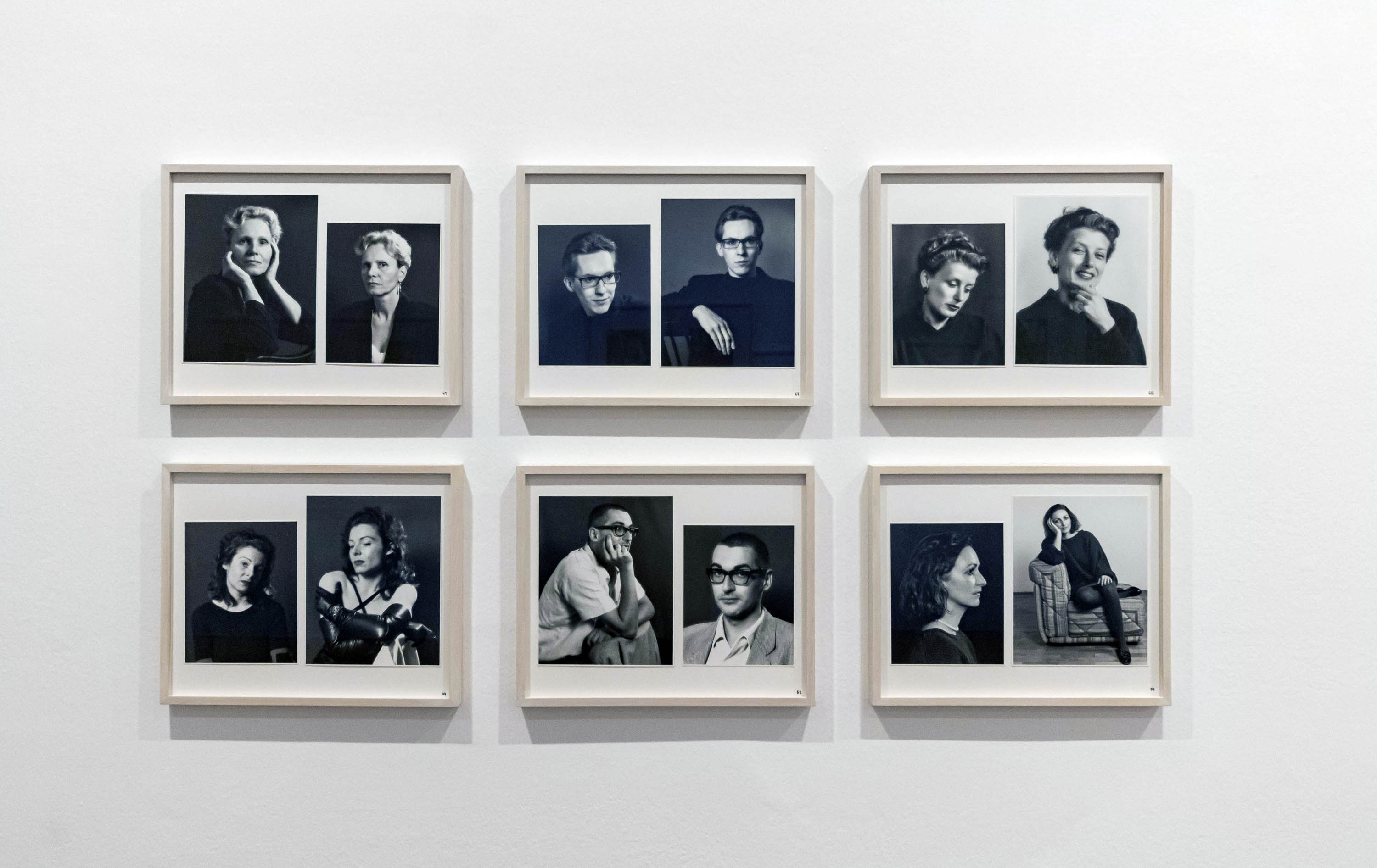
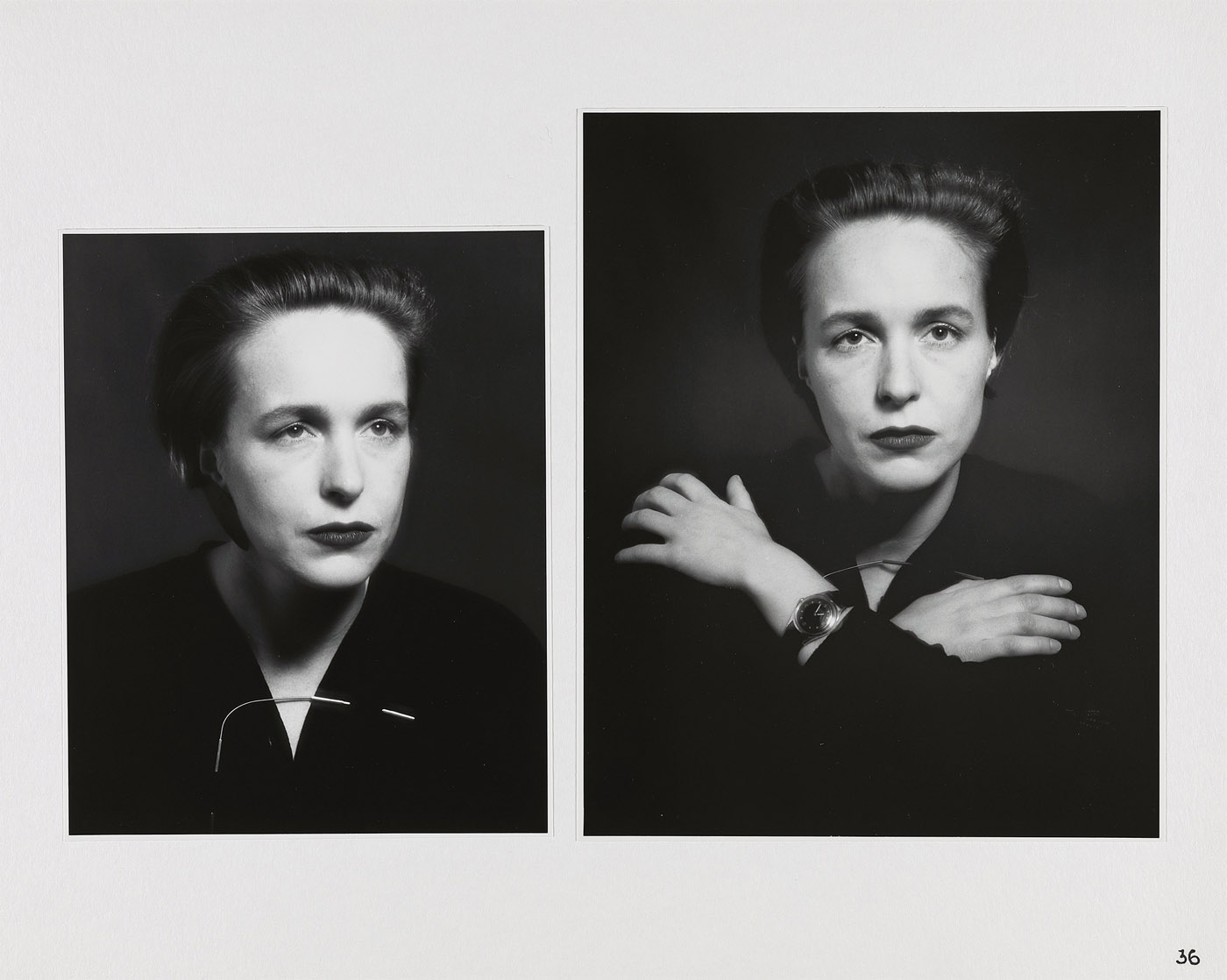
Installation view of the exhibition 'The Poetry of the Everyday. Photographs by Elfriede Mejchar', Museum der Moderne Salzburg 2024 showing photographs from Mejchar's series 'Porträts von Künstler-Photographen und Kunstvermittlern' (Portraits of Artist Photographers and Art Educators)

Installation view of the exhibition 'The Poetry of the Everyday. Photographs by Elfriede Mejchar', Museum der Moderne Salzburg 2024 showing photographs from Mejchar's series 'Porträts von Künstler-Photographen und Kunstvermittlern' (Portraits of Artist Photographers and Art Educators)


Installation view of the exhibition The Poetry of the Everyday. Photographs by Elfriede Mejchar, Museum der Moderne Salzburg 2024 showing photographs from Mejchar’s series Porträts von Künstler-Photographen und Kunstvermittlern (Portraits of Artist Photographers and Art Educators) (below)
© Museum der Moderne Salzburg, photo: wildbild/Günter Freund


Elfriede Mejchar (Austrian, 1924-2020) 'Aglaia Konrad' 1988


Elfriede Mejchar (Austrian, 1924-2020)
Aglaia Konrad
1988
From the series Porträts von Künstler-Photographen und Kunstvermittlern (Portraits of Artist Photographers and Art Educators)
Silver gelatin print on baryta paper
Federal Photography Collection at the Museum der Moderne Salzburg


Aglaia Konrad (Austrian, b. 1960)

Aglaia Konrad (born 1960) is an Austrian photographer and educator living in Brussels. …

Konrad’s photographs explore urban space in large cities. Konrad’s work has been to known to be distinctly international in that it highlights urban elements independent of cultural markers. Her work highlights the ubiquitous elements of urban life through methods like filming a city from the perspective of a moving car or compiling a series of aerial views of skyscrapers.

Text from the Wikipedia website


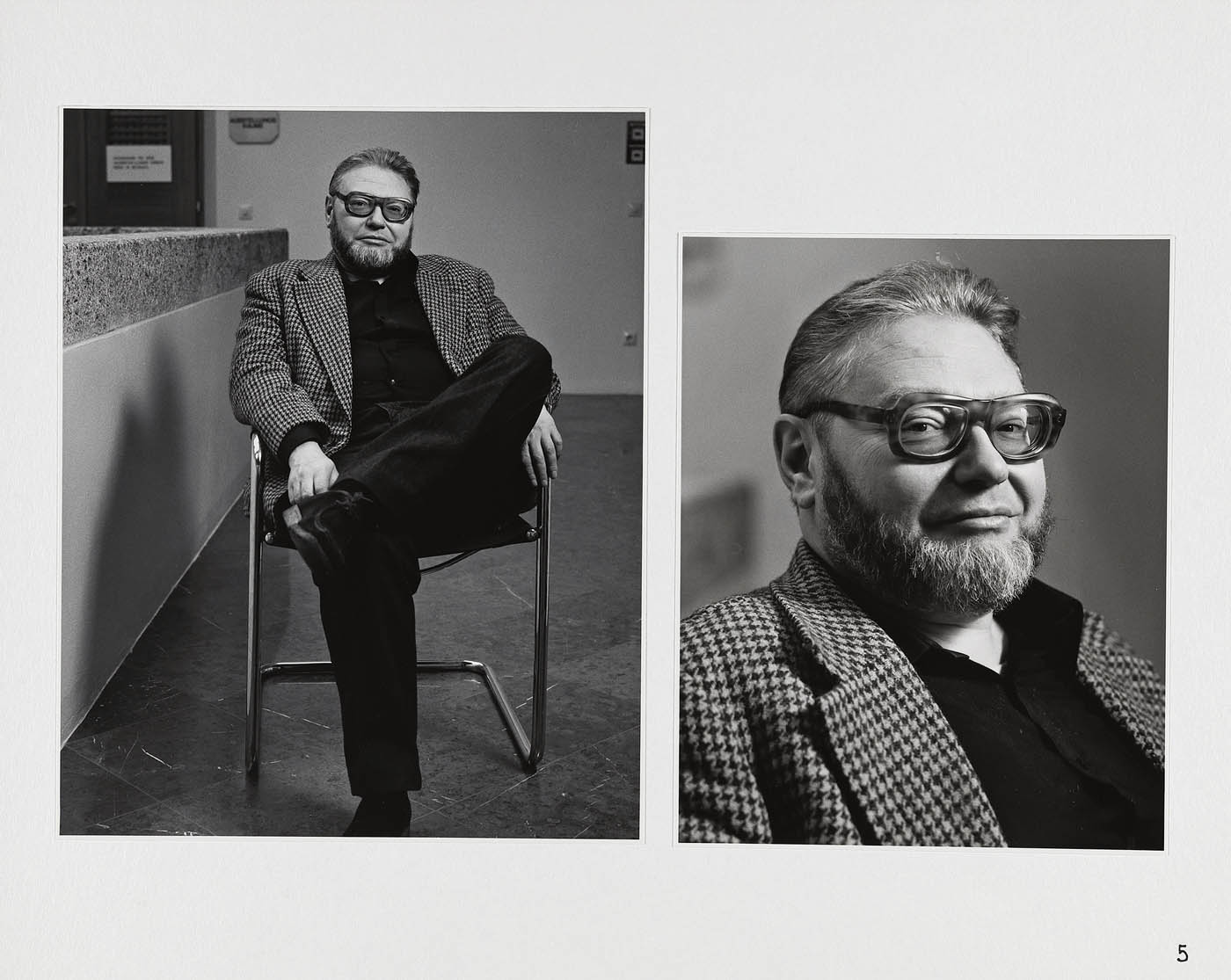
Elfriede Mejchar (Austrian, 1924-2020) 'Prof. Dr. Otto Breicha' 1988


Elfriede Mejchar (Austrian, 1924-2020)
Prof. Dr. Otto Breicha
1988
From the series Porträts von Künstler-Photographen und Kunstvermittlern (Portraits of Artist Photographers and Art Educators)
Silver gelatin print on baryta paper
Federal Photography Collection at the Museum der Moderne Salzburg


Otto Breicha (Austrian, 1932-2003)

Otto Breicha (b. 26 July 1932 in Vienna; d, 28 December 2003 in Vienna) was an Austrian art historian, publicist and museum director. …

Breicha is considered an important integration figure in the Austrian art and literature scene of the 1960s. As director of the Rupertinum he collected works by Kurt Moldovan, Günter Brus, Fritz Wotruba and Gotthard Muhr, among others. He edited portfolios by Karl Anton Fleck, Gotthard Muhr, Peter Pongratz, Alois Riedl, Karl Rössing, Johannes Wanke, Max Weiler and many others.

Breicha built up an important photo collection in the Rupertinum. He also took photos of authors himself, especially during his time at the Austrian Society for Literature from 1962 to 1972.

Text from the German Wikipedia website translated by Google Translate


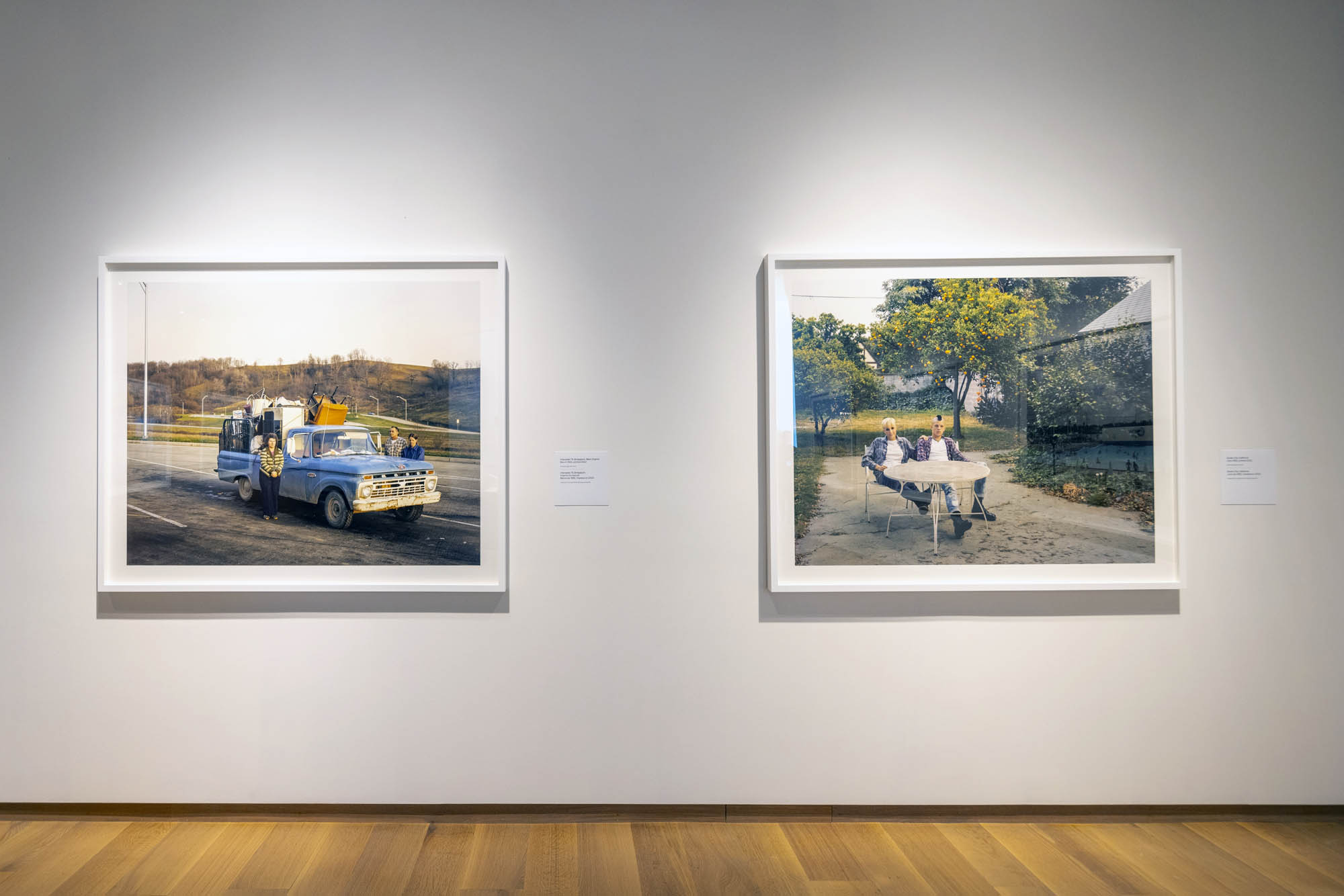
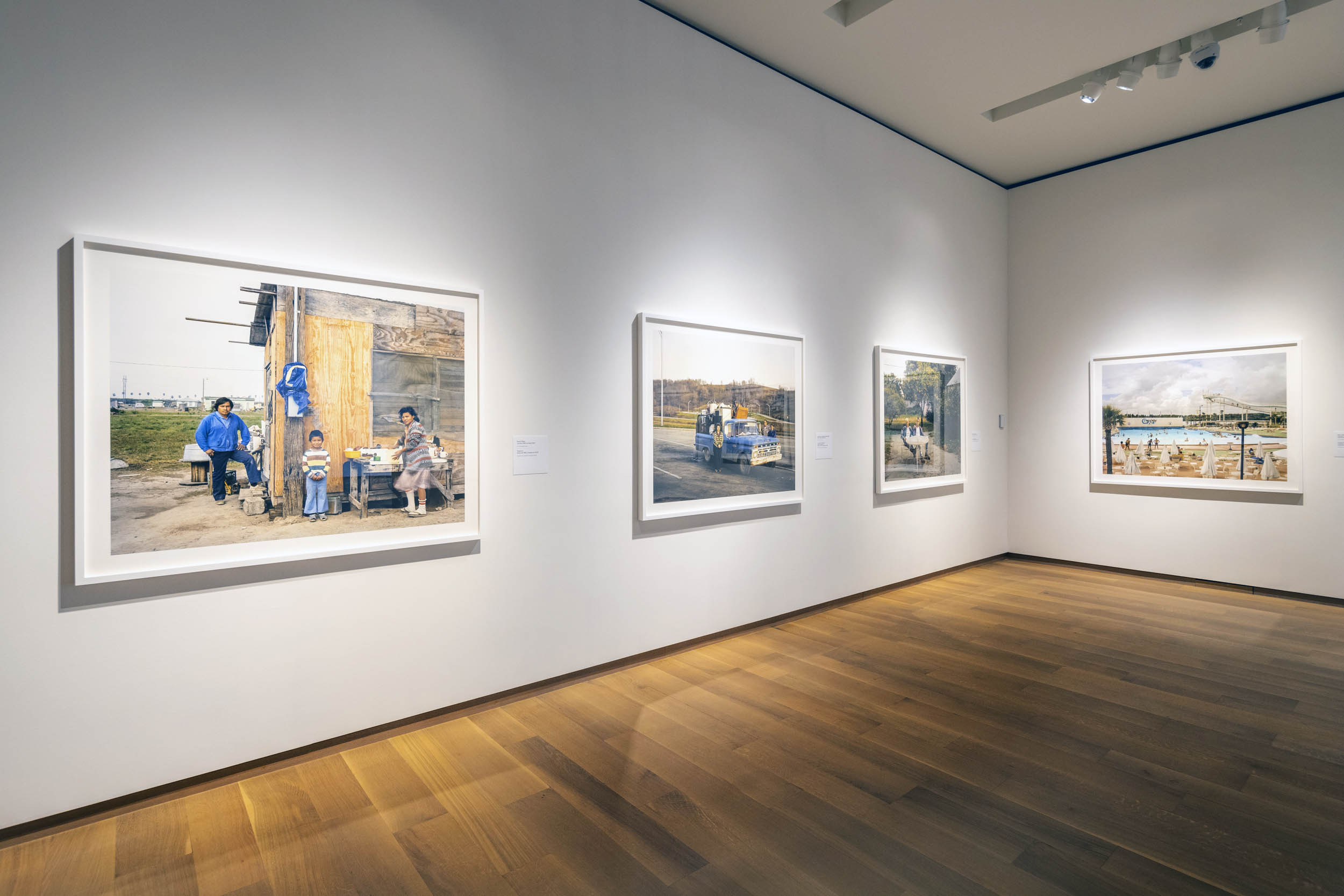
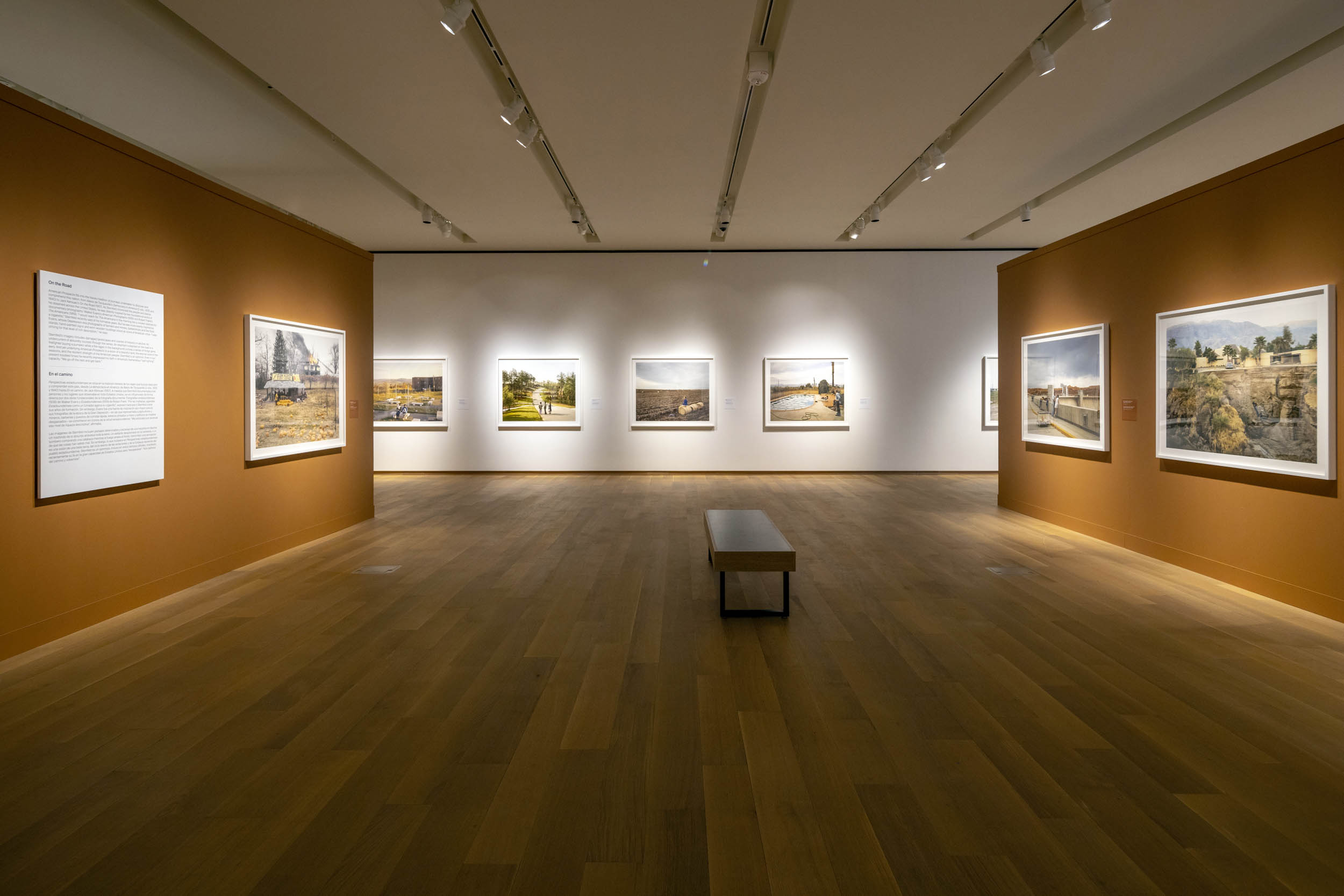
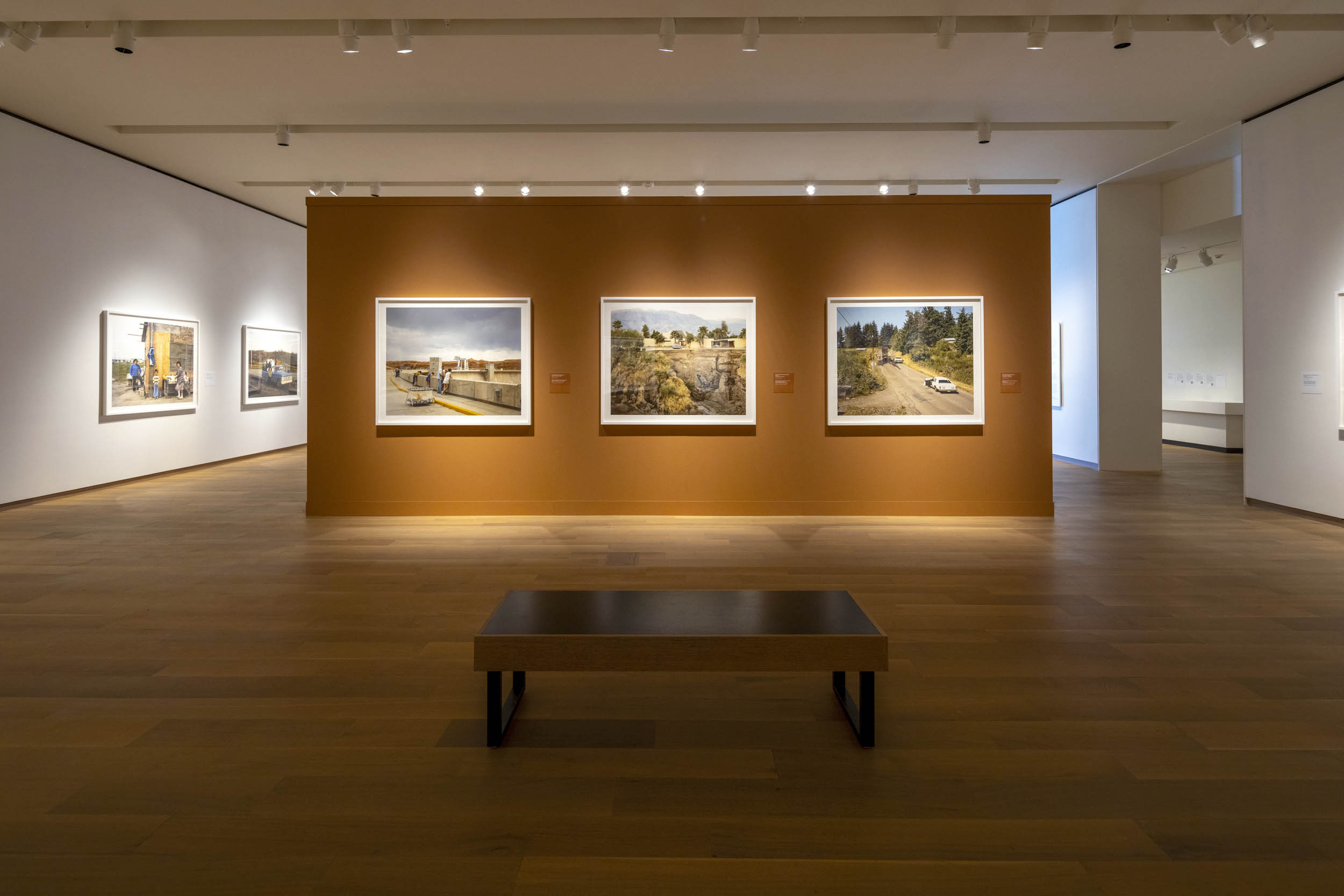
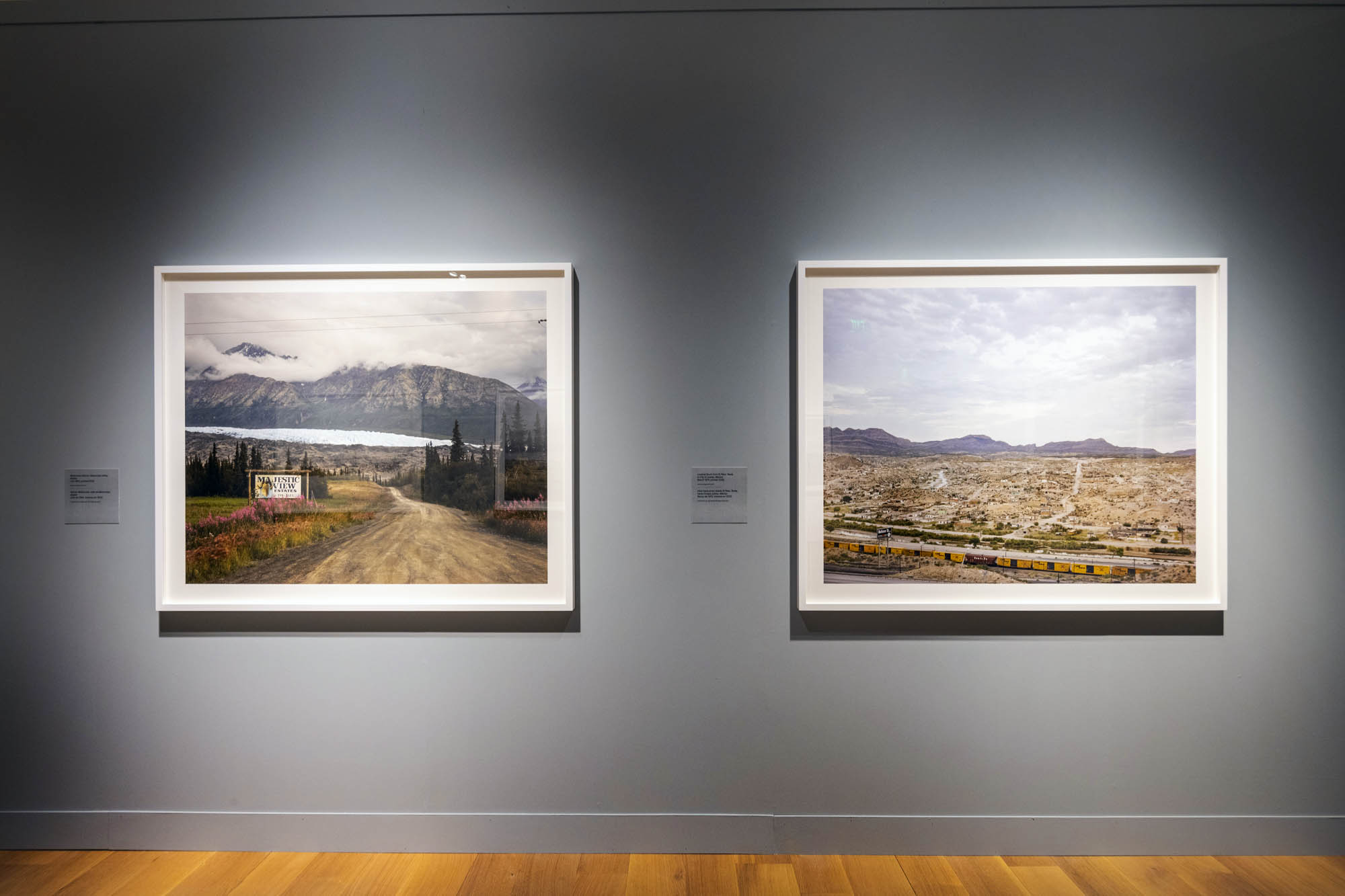
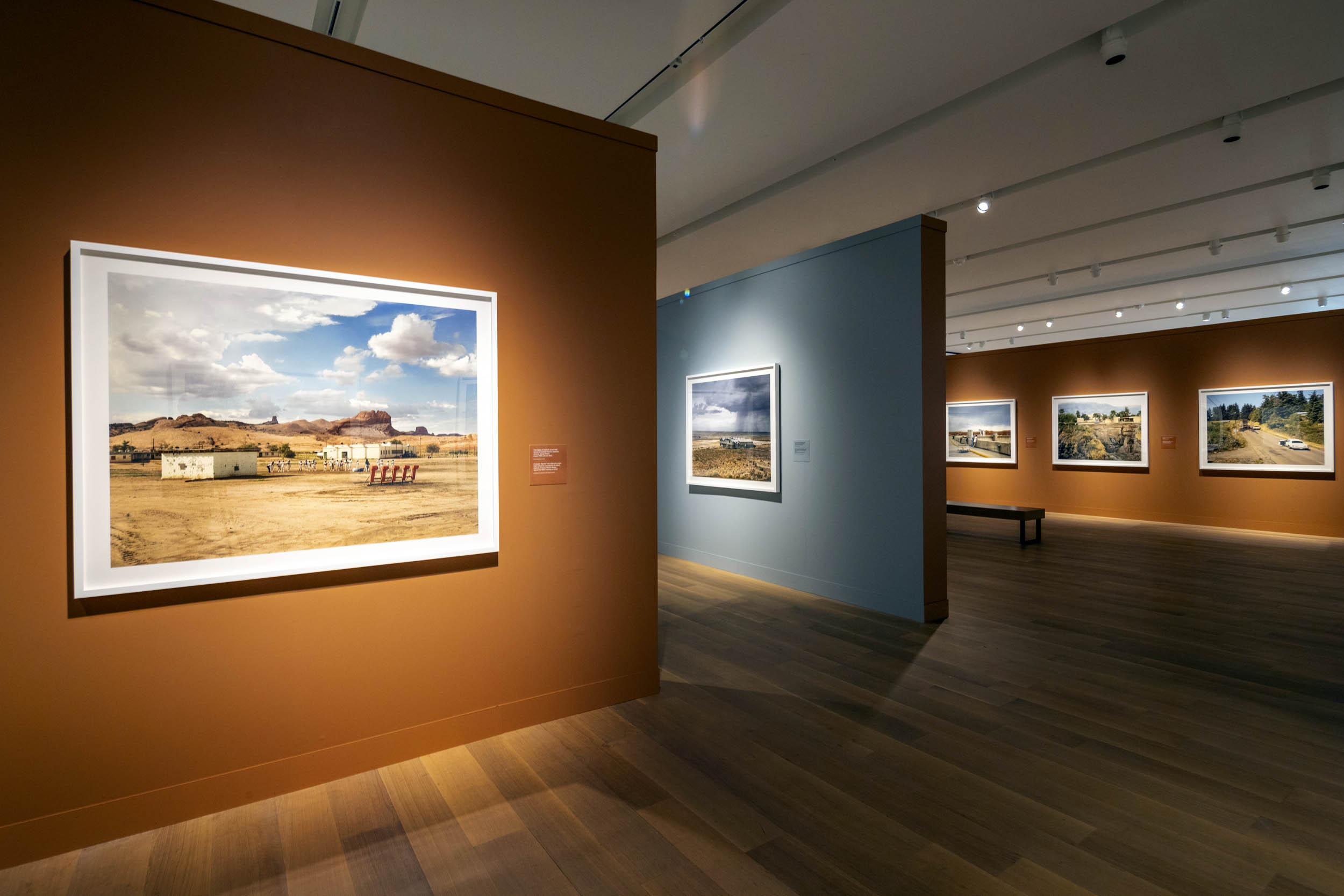
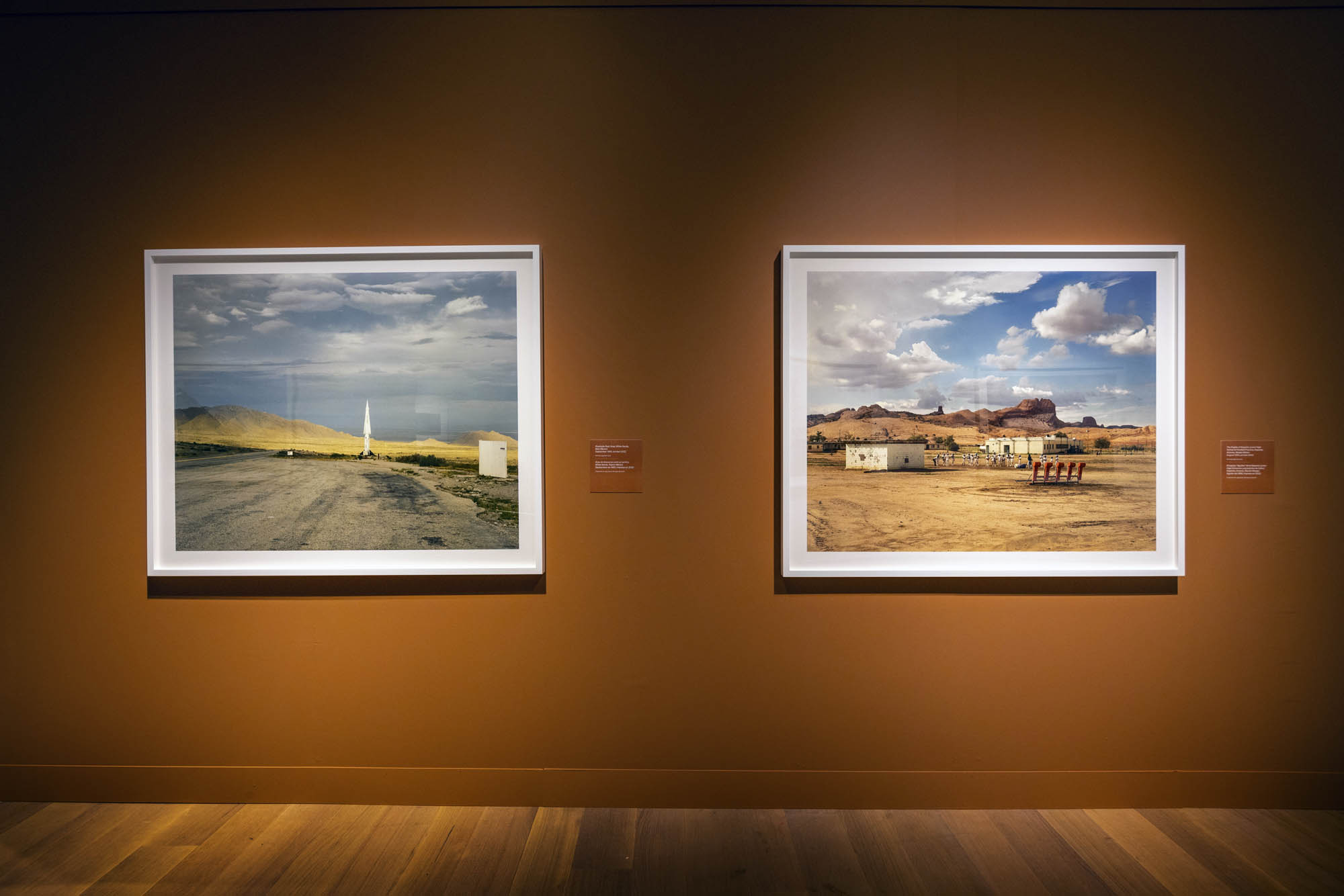
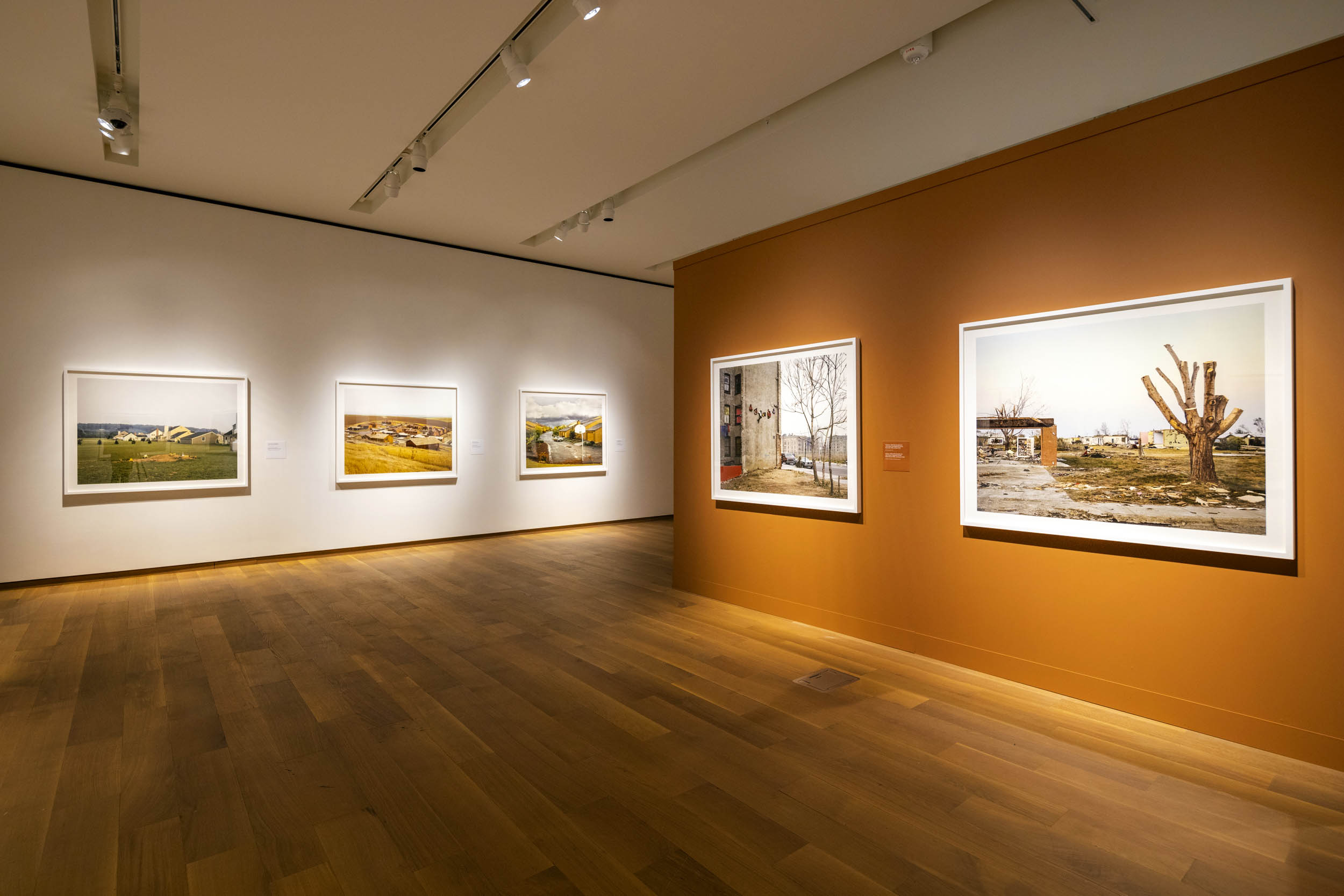
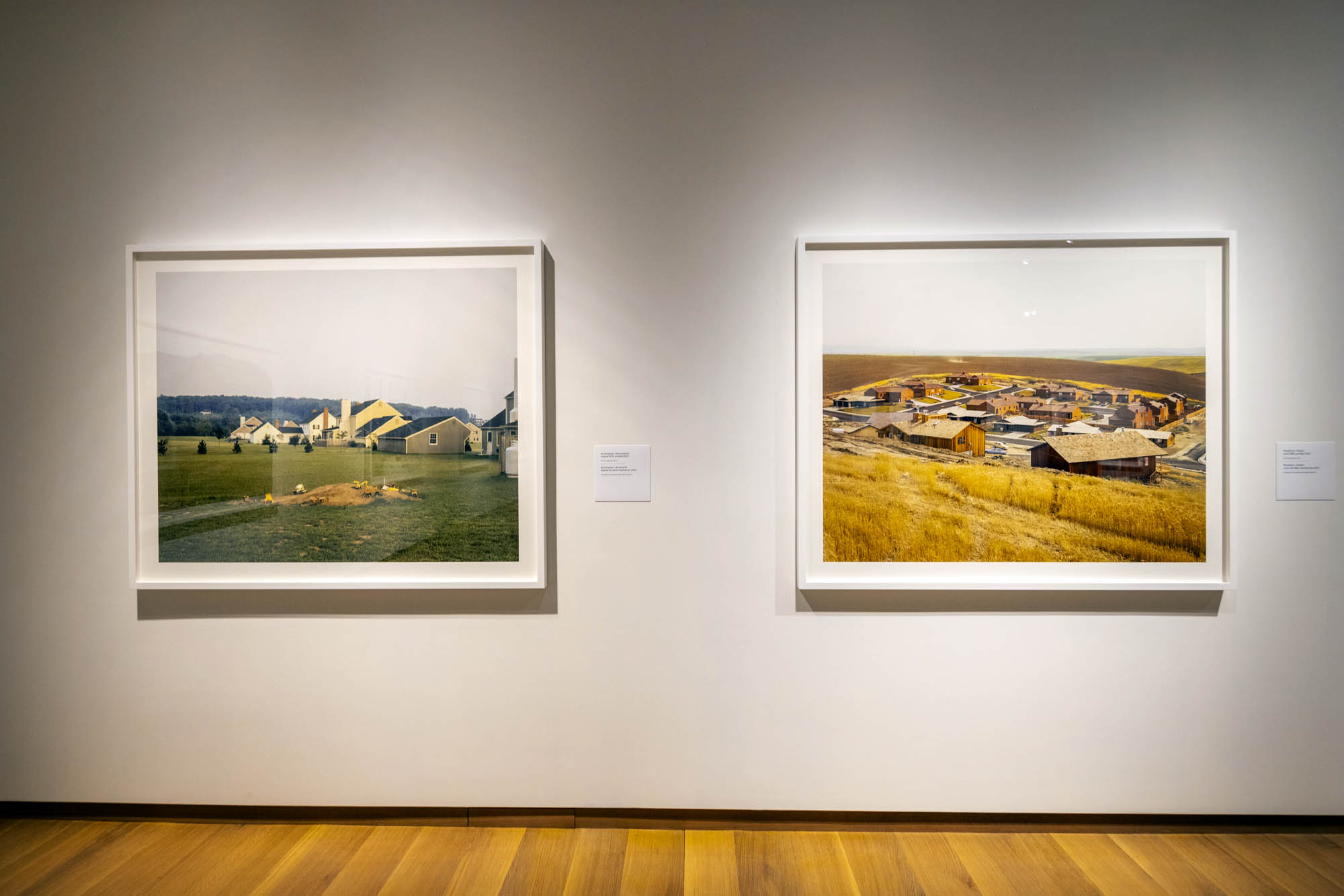
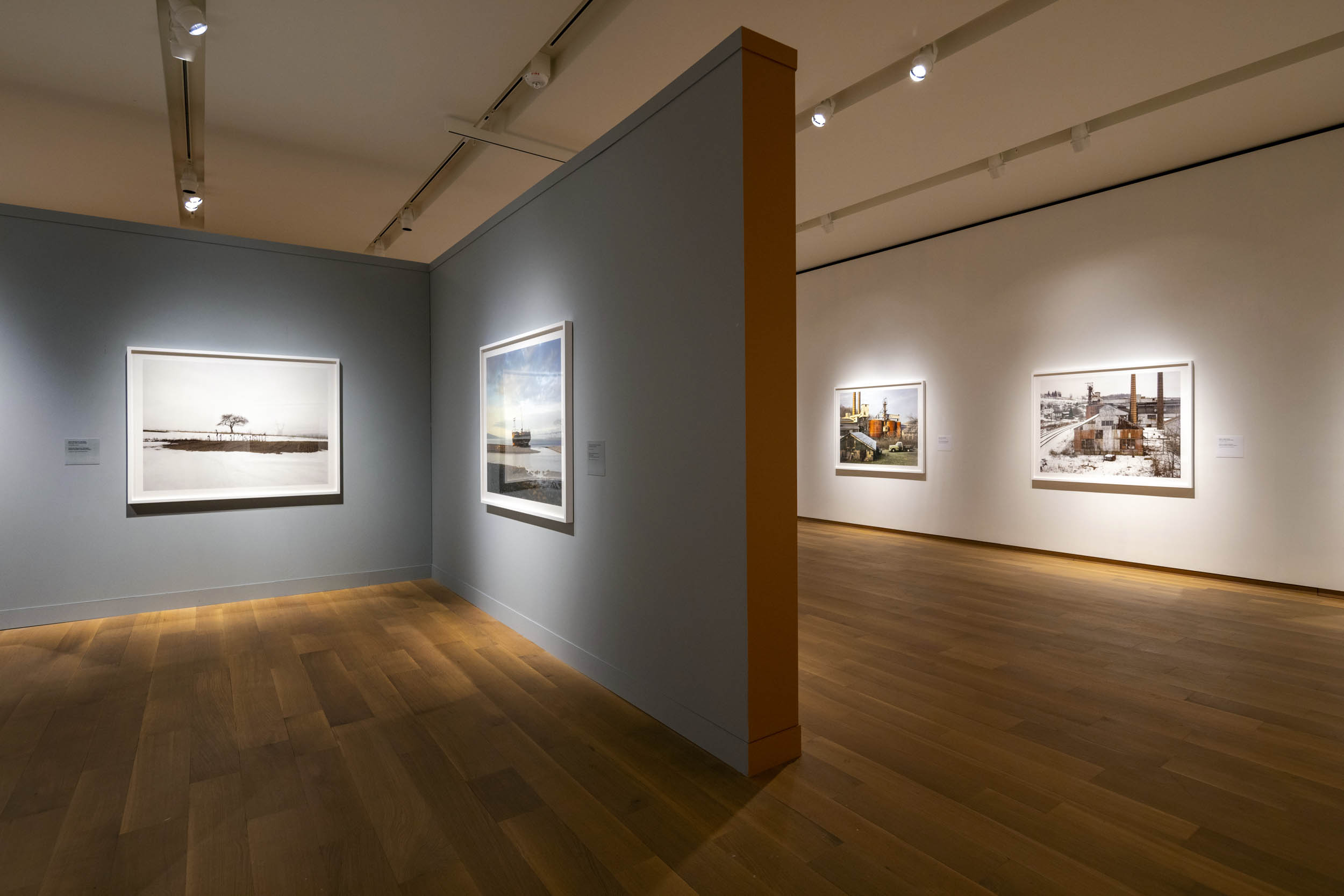
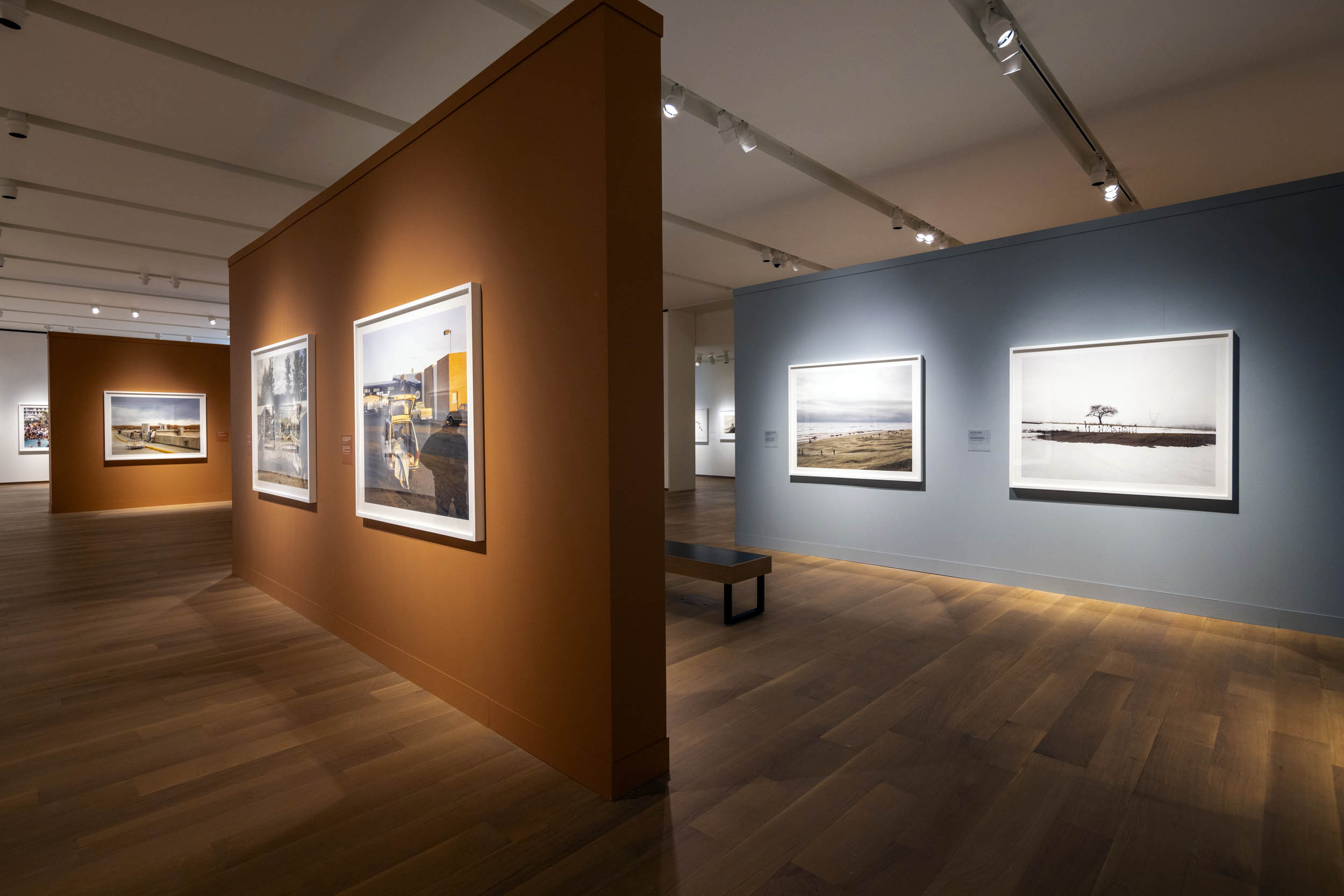
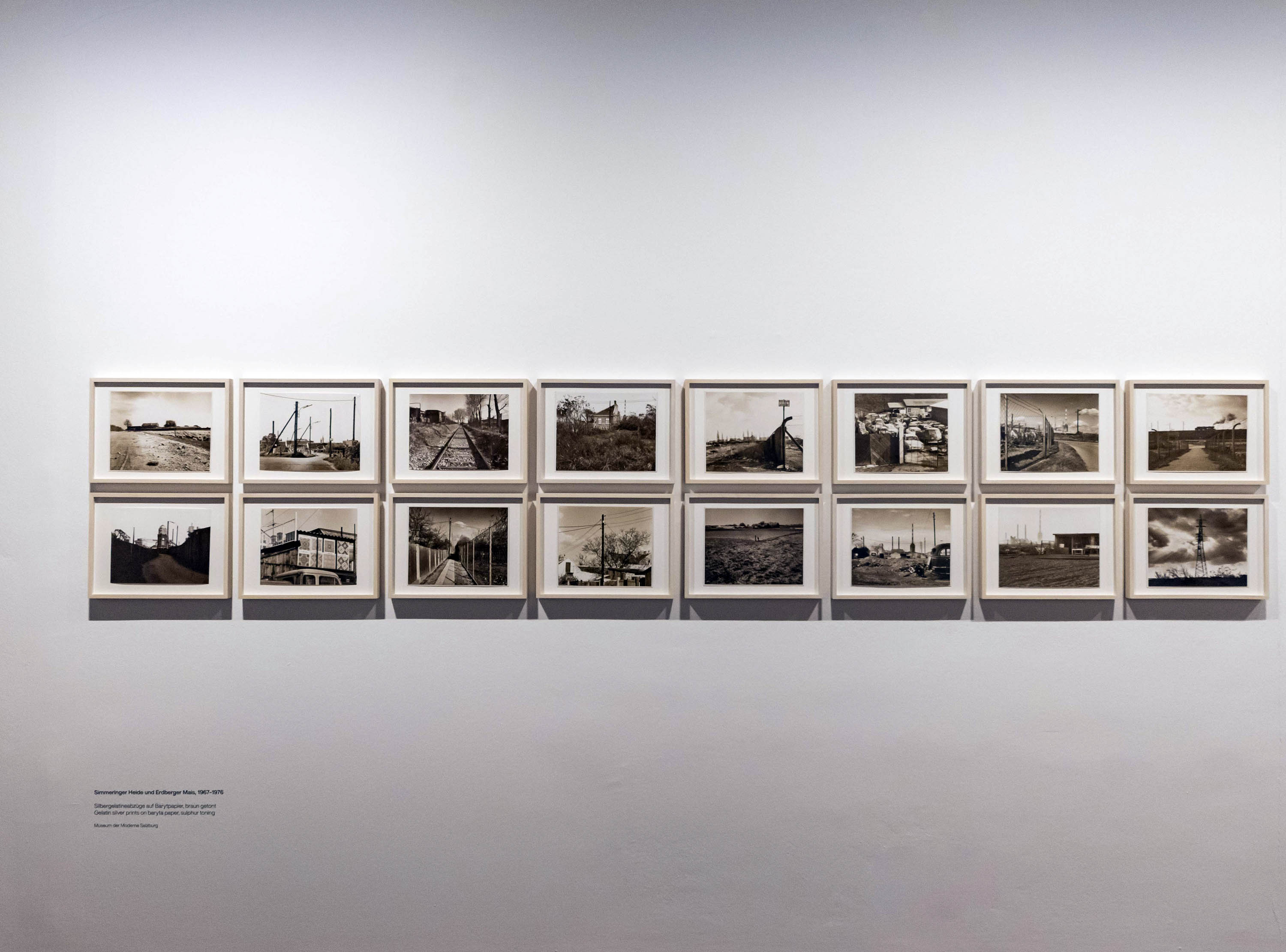
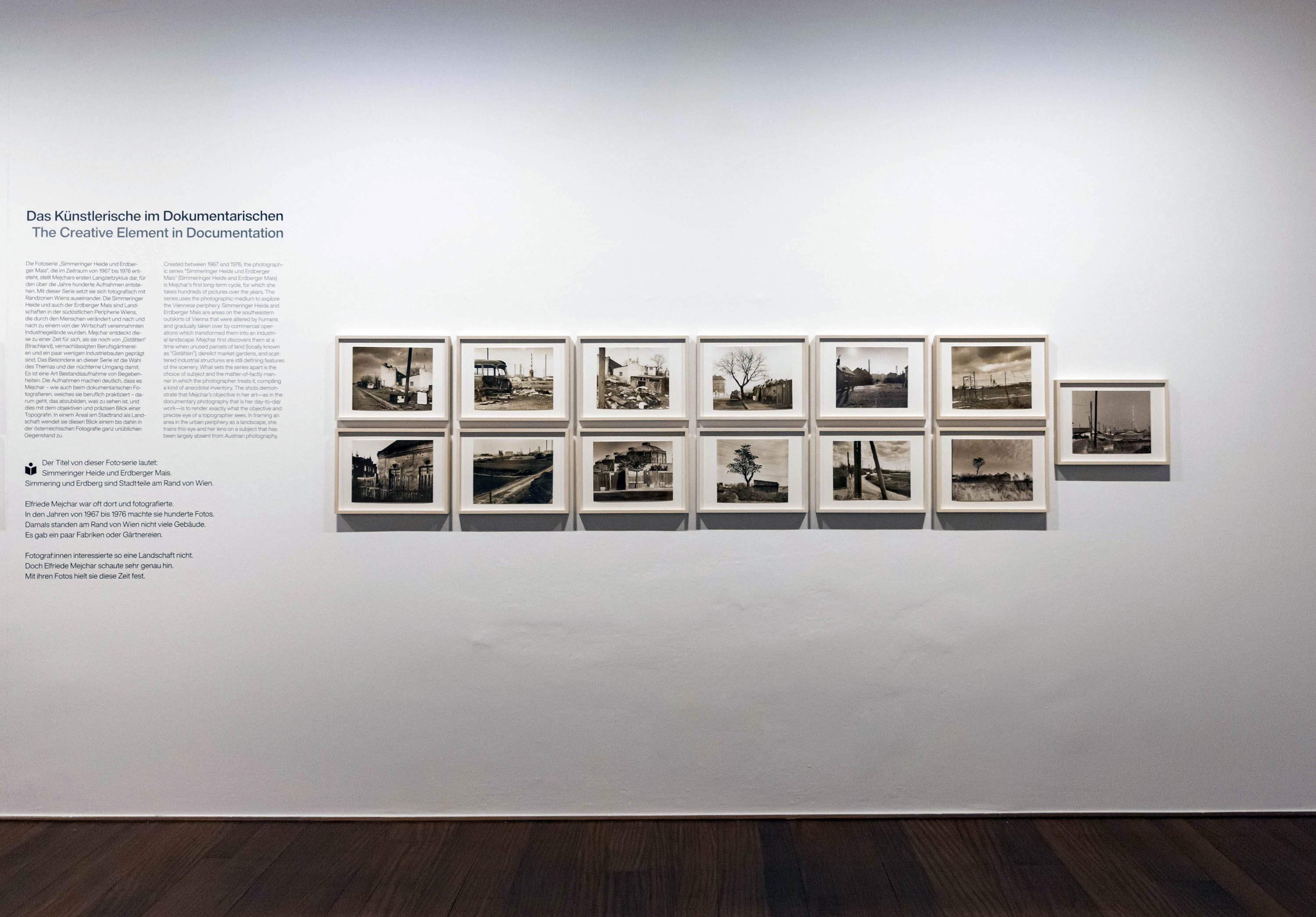
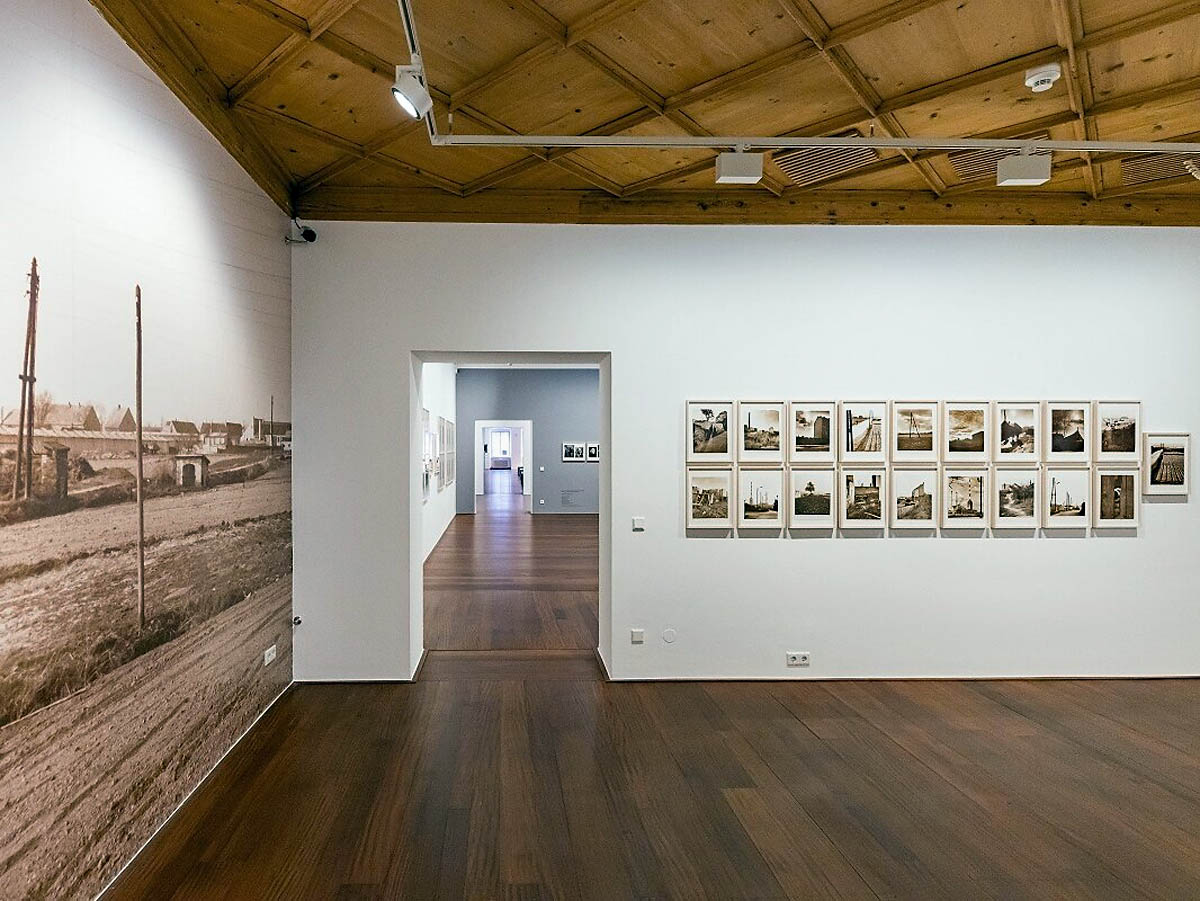
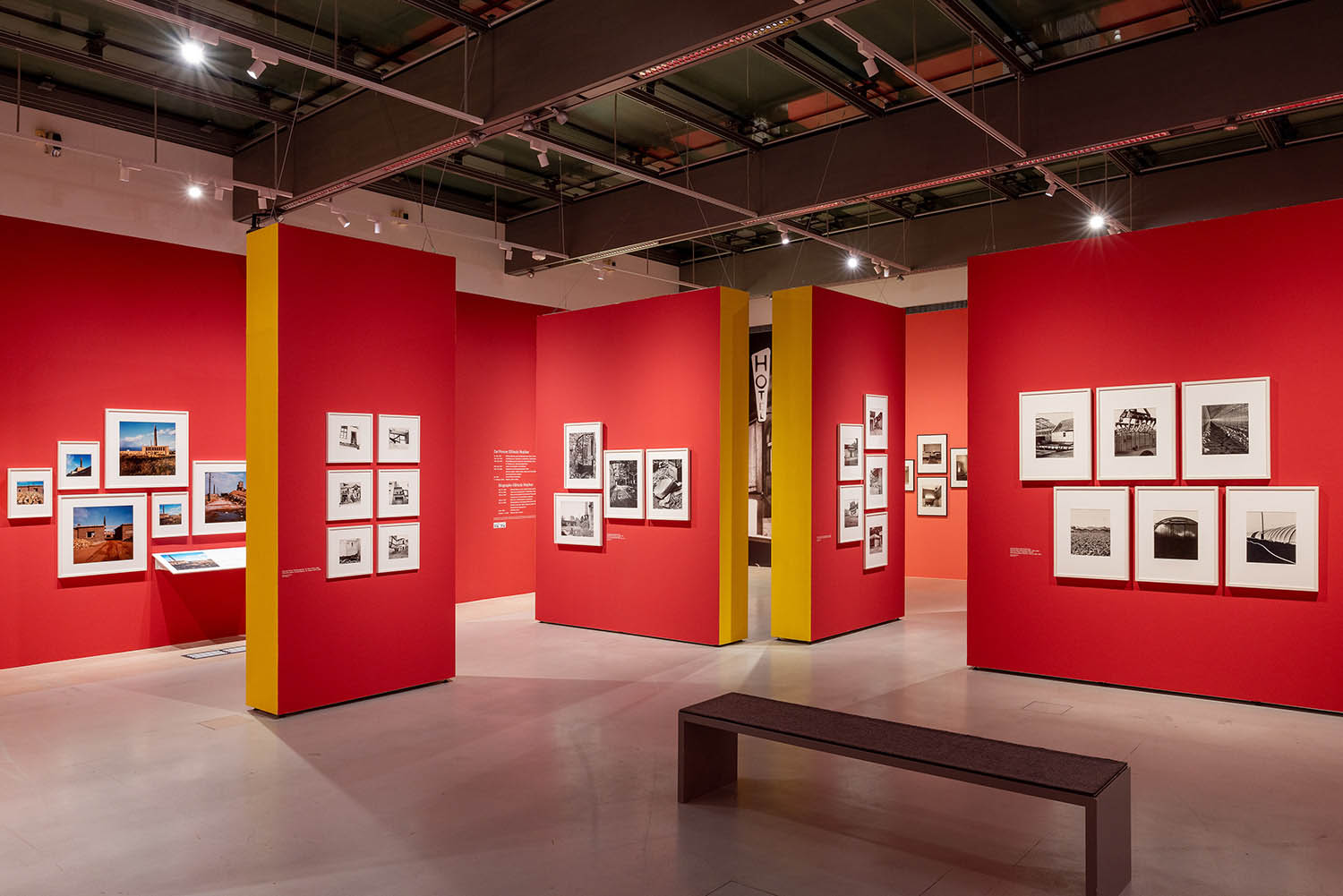
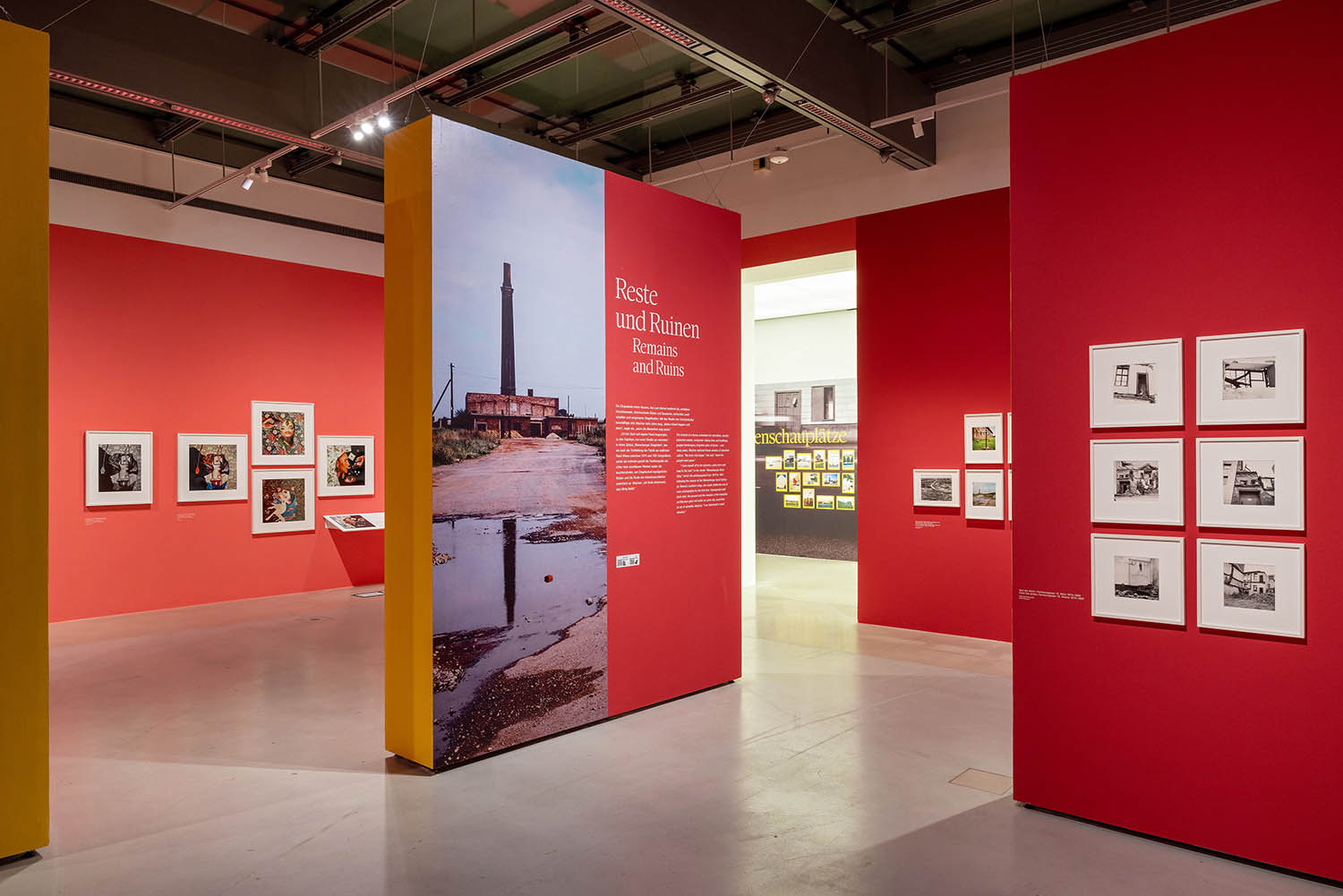
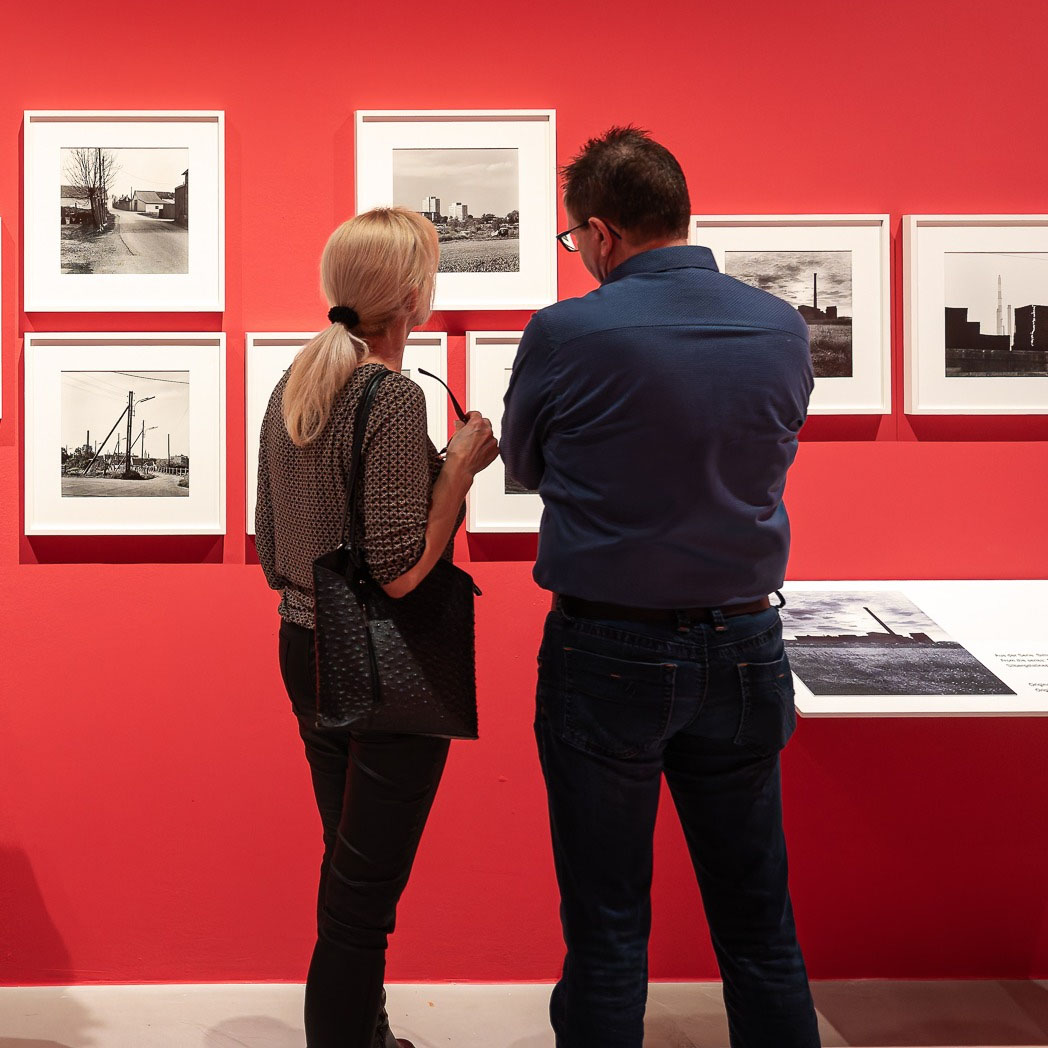
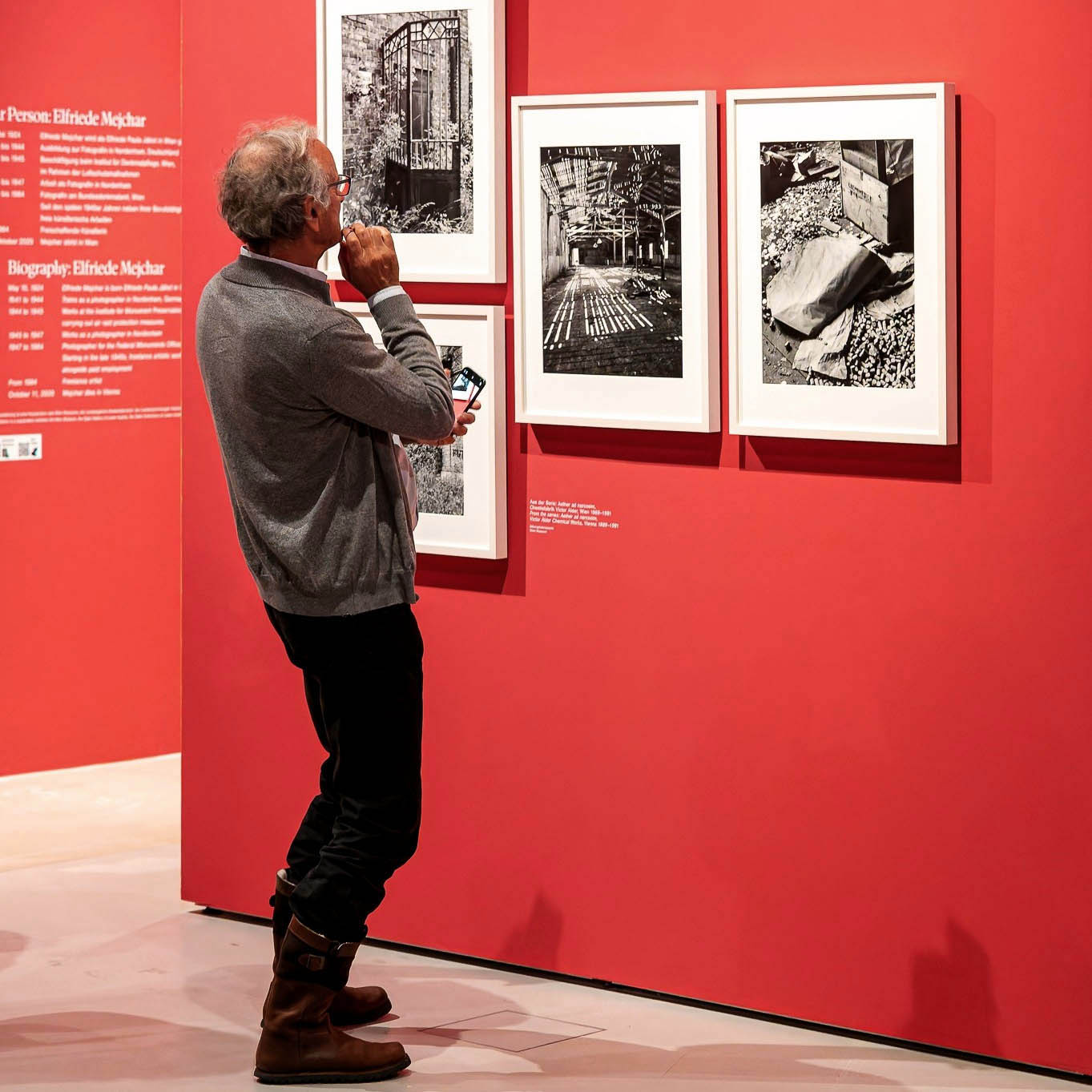
Installation view of the exhibition 'The Poetry of the Everyday. Photographs by Elfriede Mejchar', Museum der Moderne Salzburg 2024 showing photographs from Mejchar's series 'Simmeringer Heide und Erdberger Mais, 1967-1976'

Installation view of the exhibition 'The Poetry of the Everyday. Photographs by Elfriede Mejchar', Museum der Moderne Salzburg 2024 showing photographs from Mejchar's series 'Simmeringer Heide und Erdberger Mais, 1967-1976'

Installation view of the exhibition 'The Poetry of the Everyday. Photographs by Elfriede Mejchar', Museum der Moderne Salzburg 2024 showing photographs from Mejchar's series 'Simmeringer Heide und Erdberger Mais, 1967-1976'

Installation view of the exhibition 'The Poetry of the Everyday. Photographs by Elfriede Mejchar', Museum der Moderne Salzburg 2024 showing photographs from Mejchar's series 'Simmeringer Heide und Erdberger Mais, 1967-1976'


Installation view of the exhibition The Poetry of the Everyday. Photographs by Elfriede Mejchar, Museum der Moderne Salzburg 2024 showing photographs from Mejchar’s series Simmeringer Heide und Erdberger Mais, 1967-1976 (below)
© Museum der Moderne Salzburg, photo: wildbild/Günter Freund


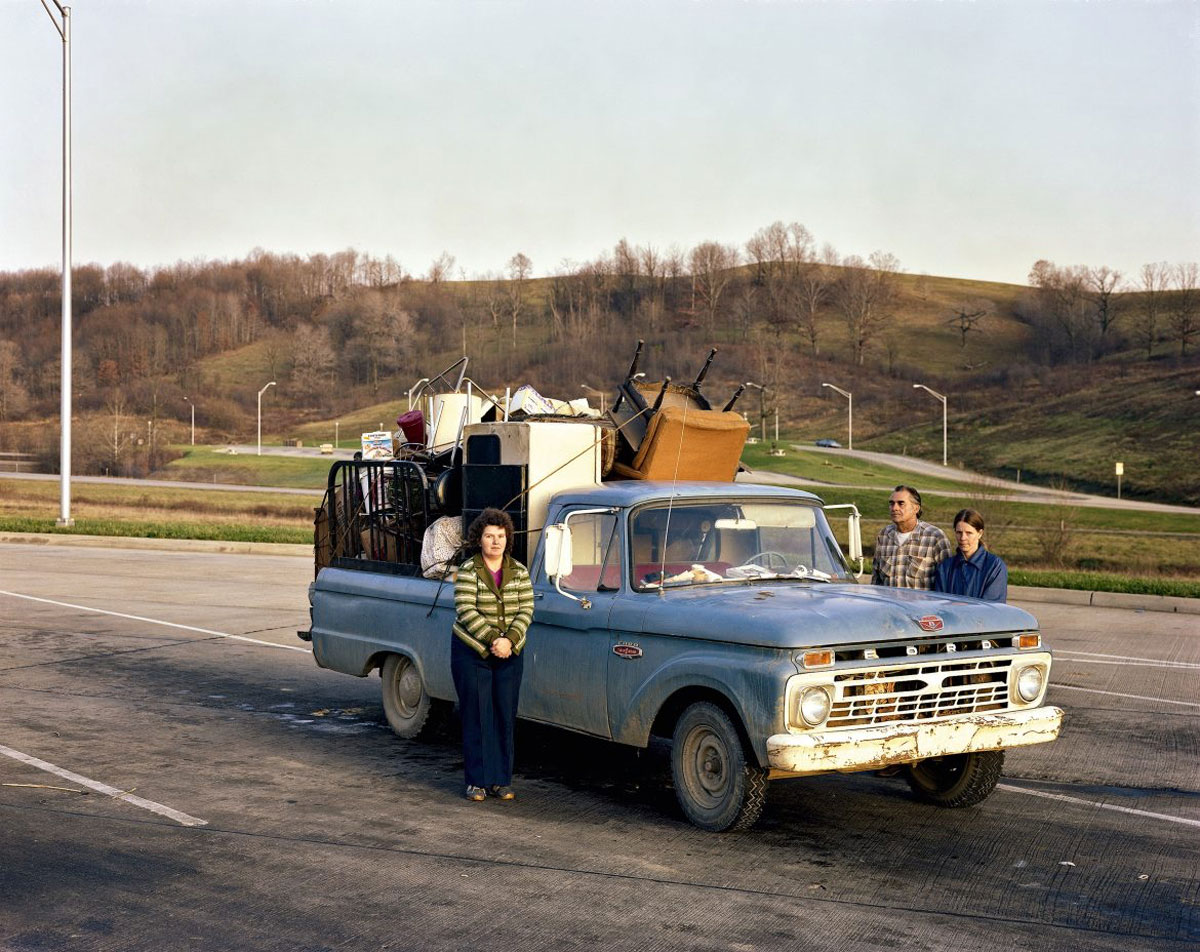
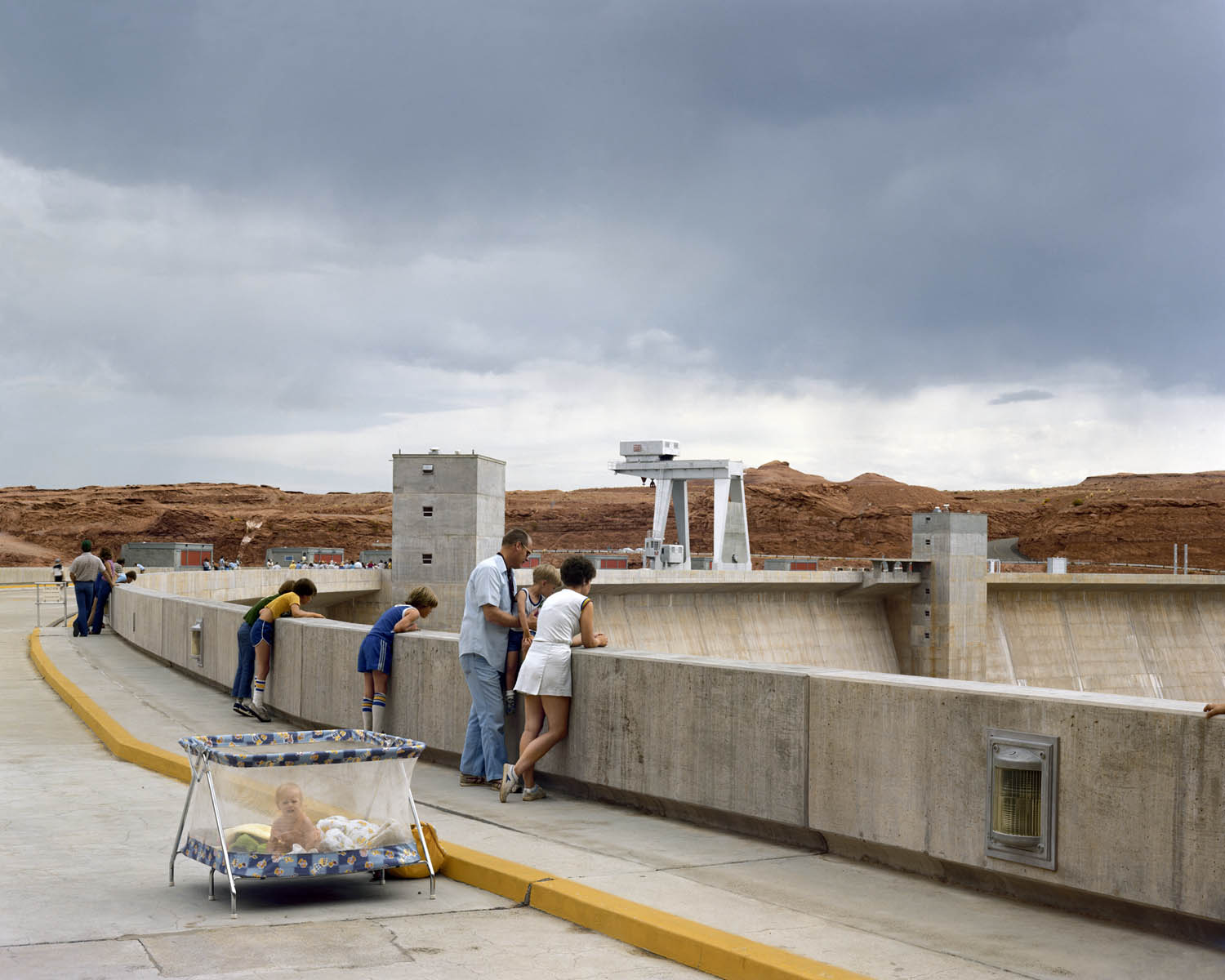
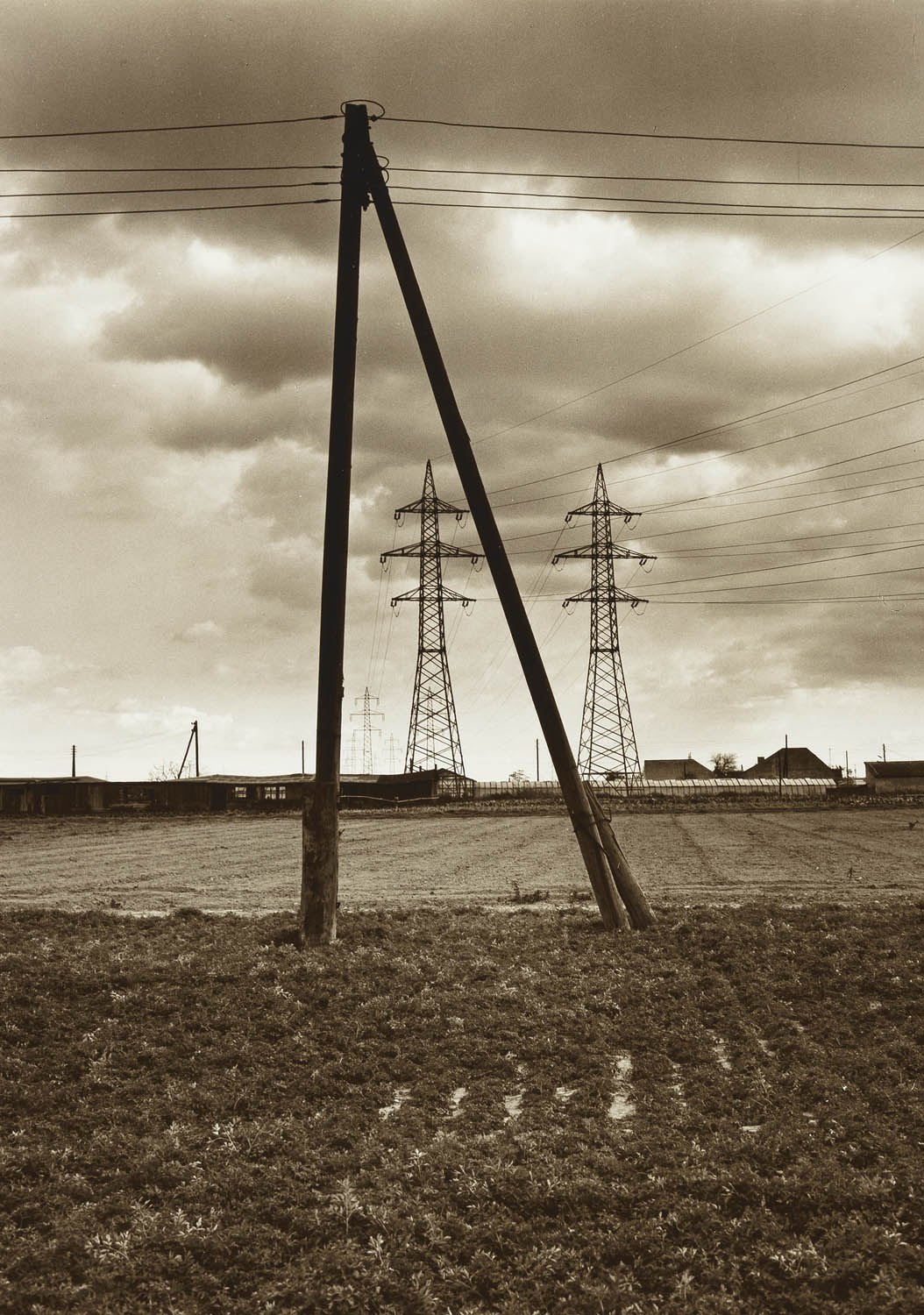
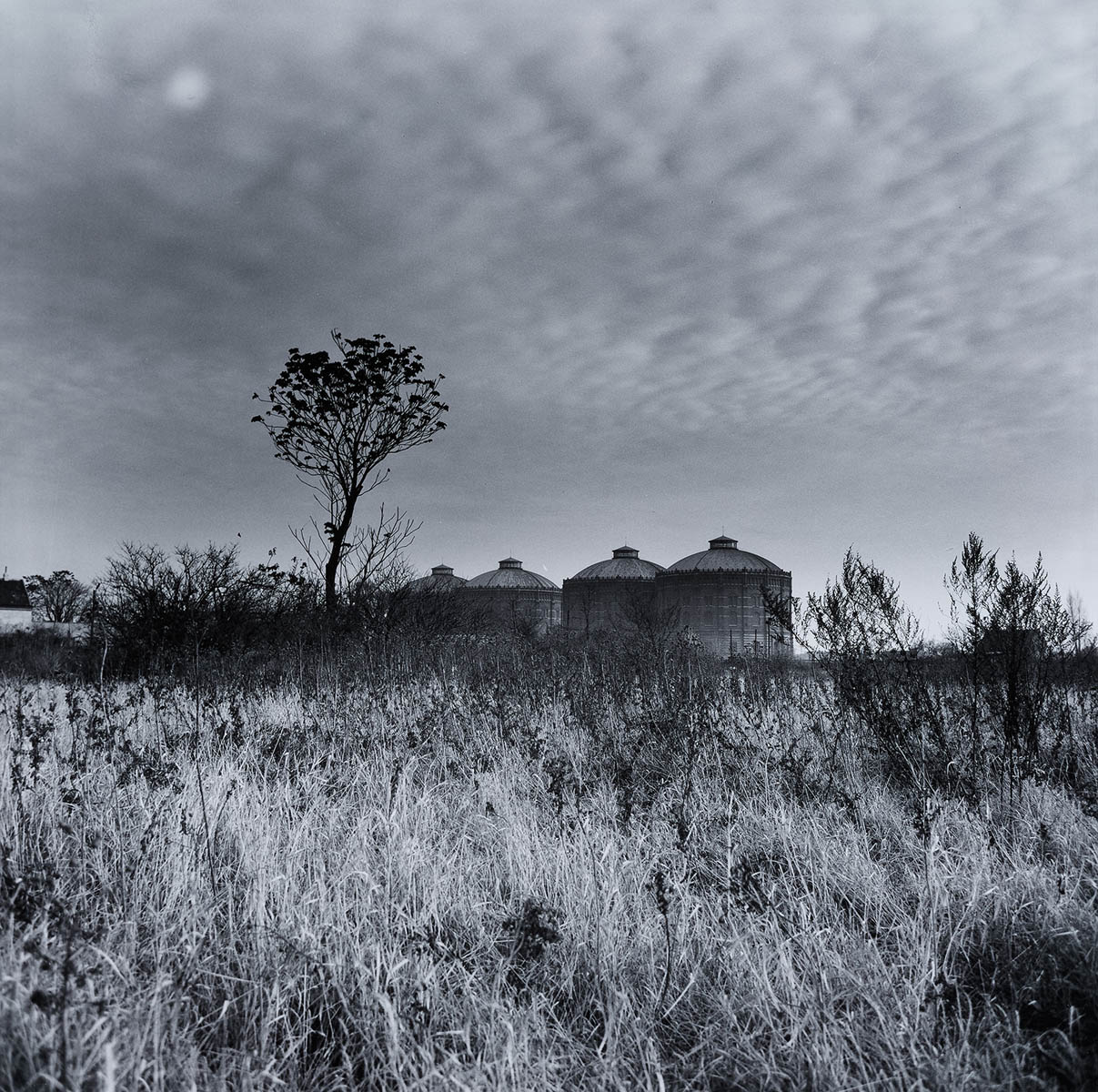
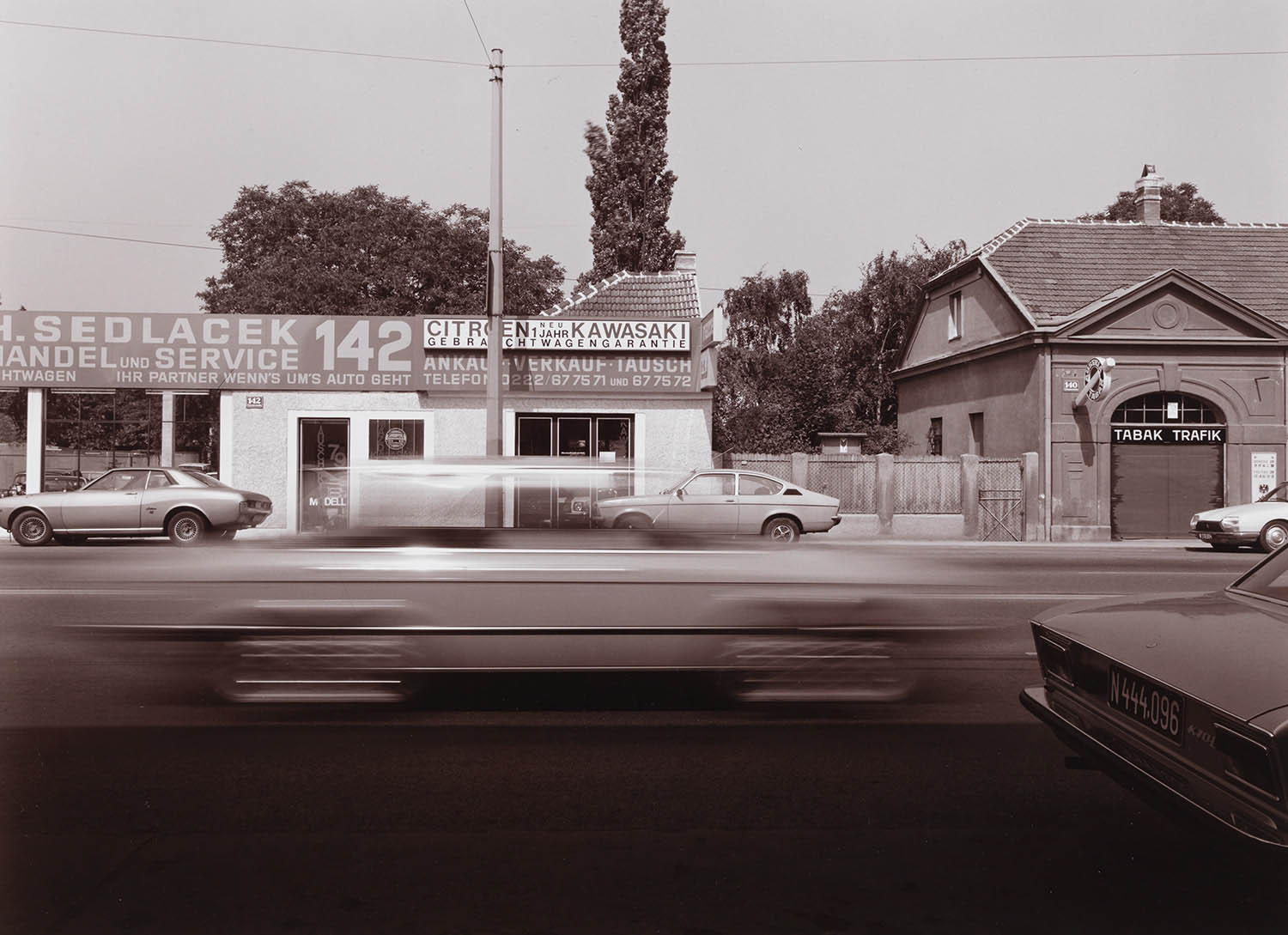
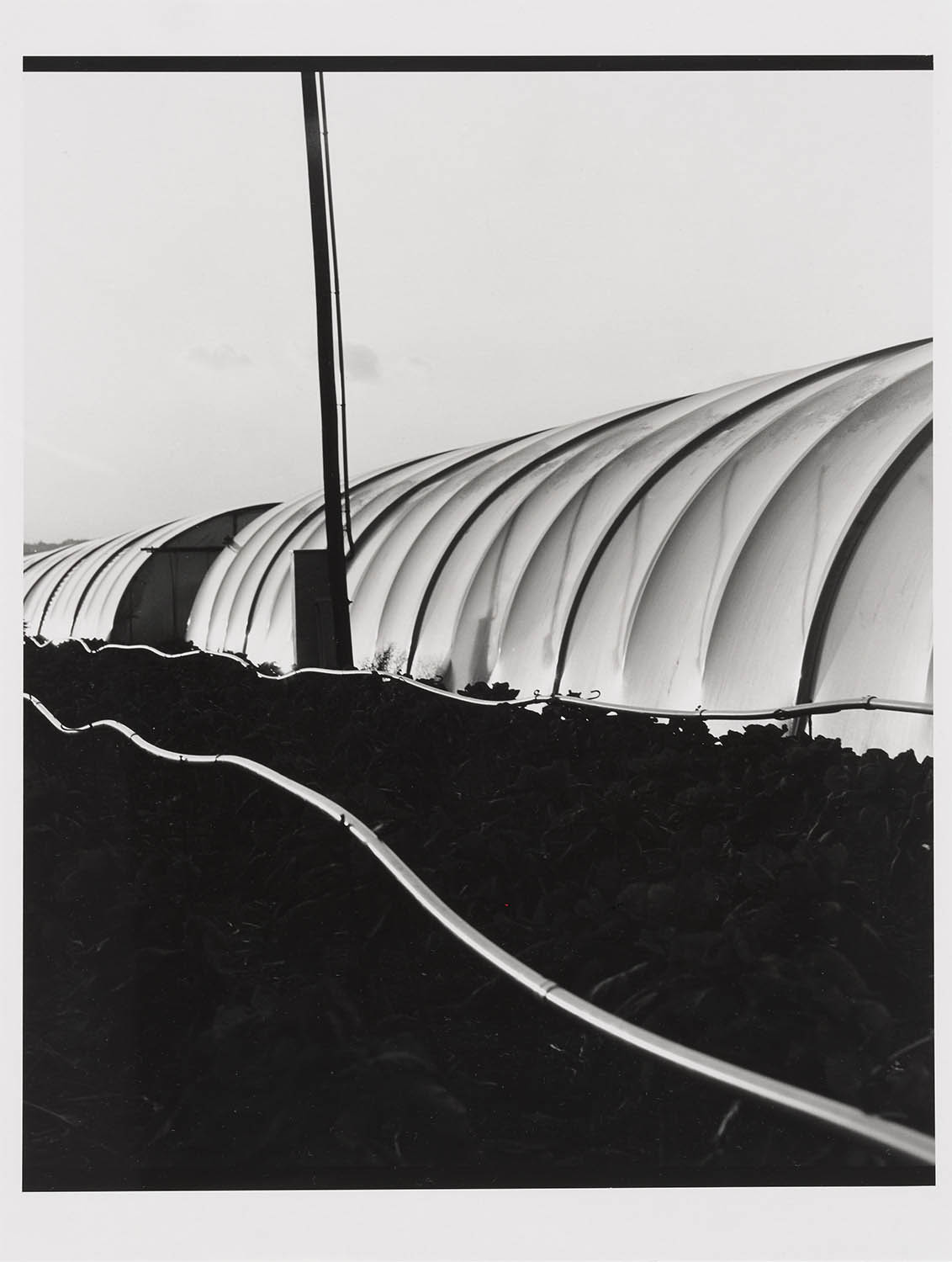
Elfriede Mejchar (Austrian, 1924-2020) From the series 'Simmeringer Heide und Erdberger Mais', 1967-1976


Elfriede Mejchar (Austrian, 1924-2020)
From the series Simmeringer Heide und Erdberger Mais, 1967-1976
Silver gelatine print on baryta paper, brown toned
Museum der Moderne Salzburg
© Bildrecht, Vienna 2024


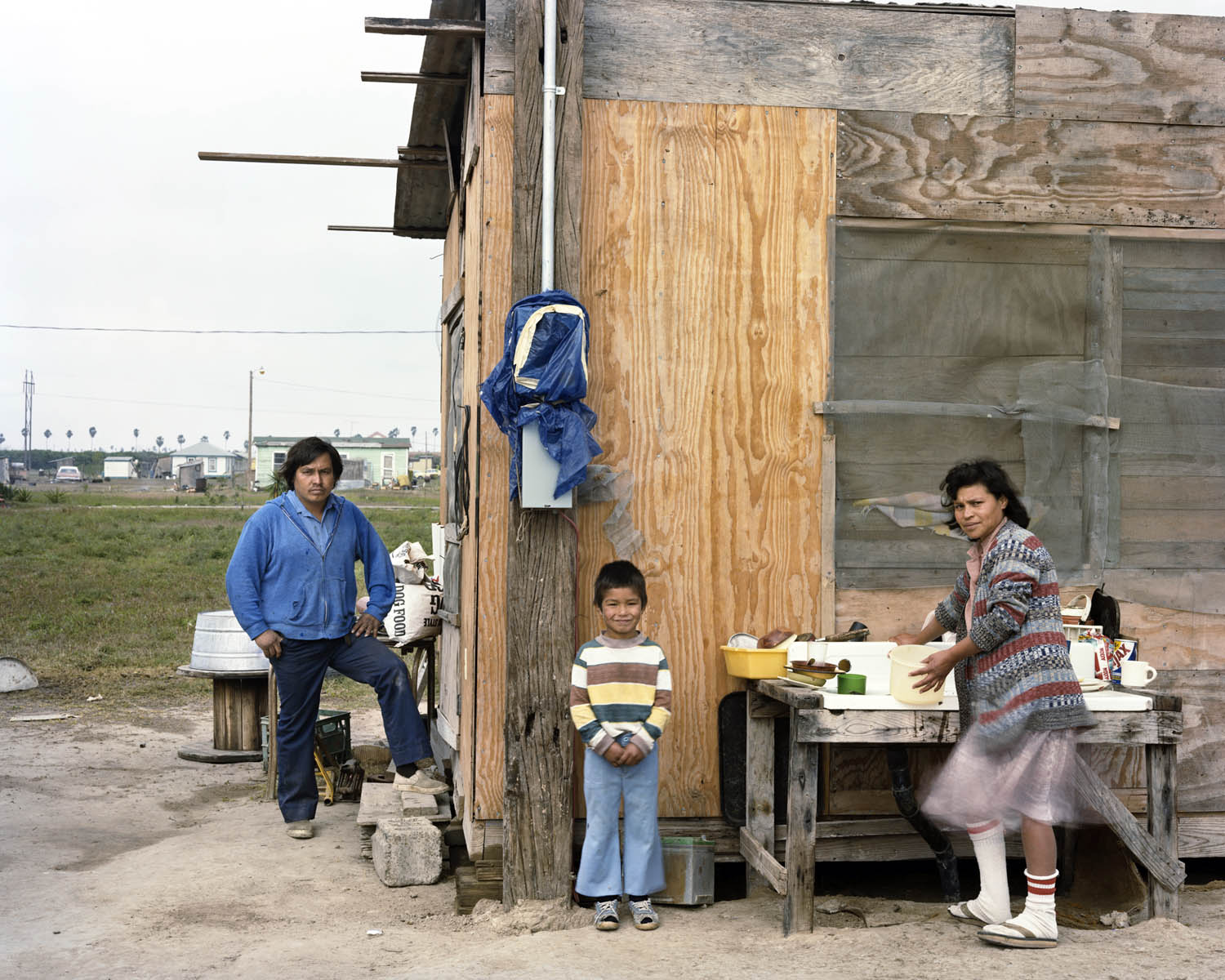
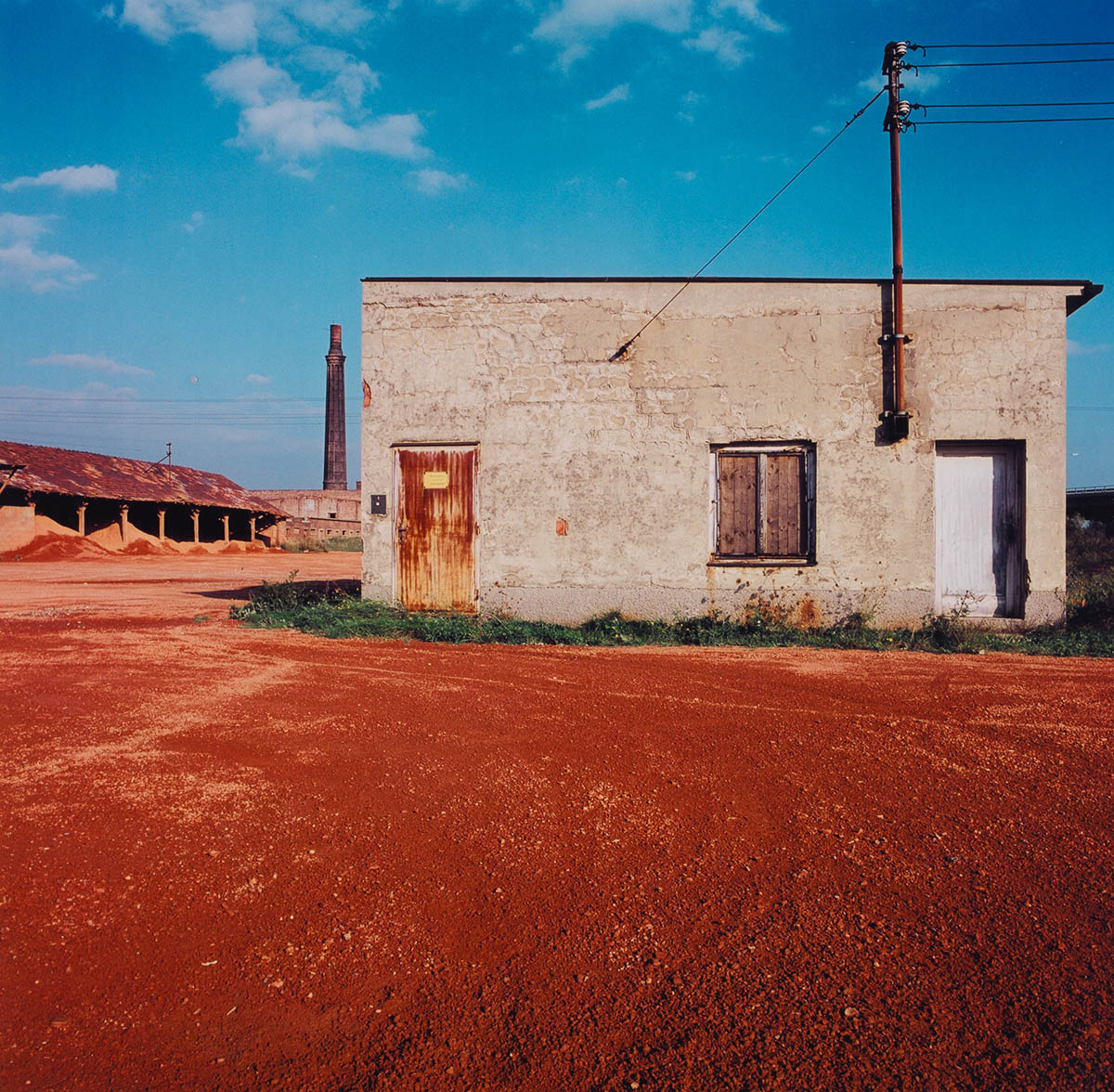
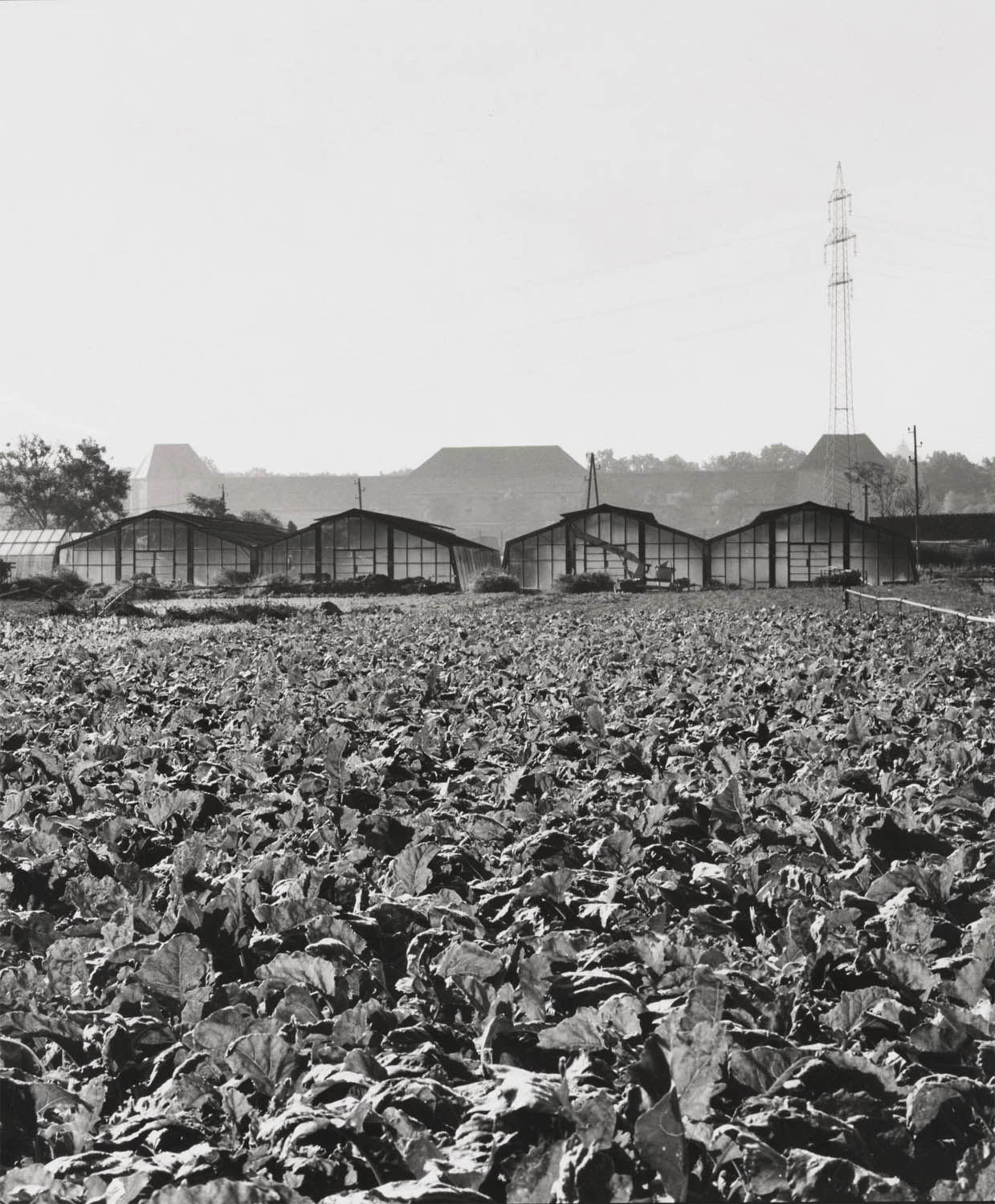
Elfriede Mejchar (Austrian, 1924-2020) From the series 'Simmeringer Heide und Erdberger Mais, 1967-1976'


Elfriede Mejchar (Austrian, 1924-2020)
From the series Simmeringer Heide und Erdberger Mais, 1967-1976
Silver gelatine print on baryta paper, brown toned
Museum der Moderne Salzburg
© Bildrecht, Vienna 2024


The Creative Element in Documentation

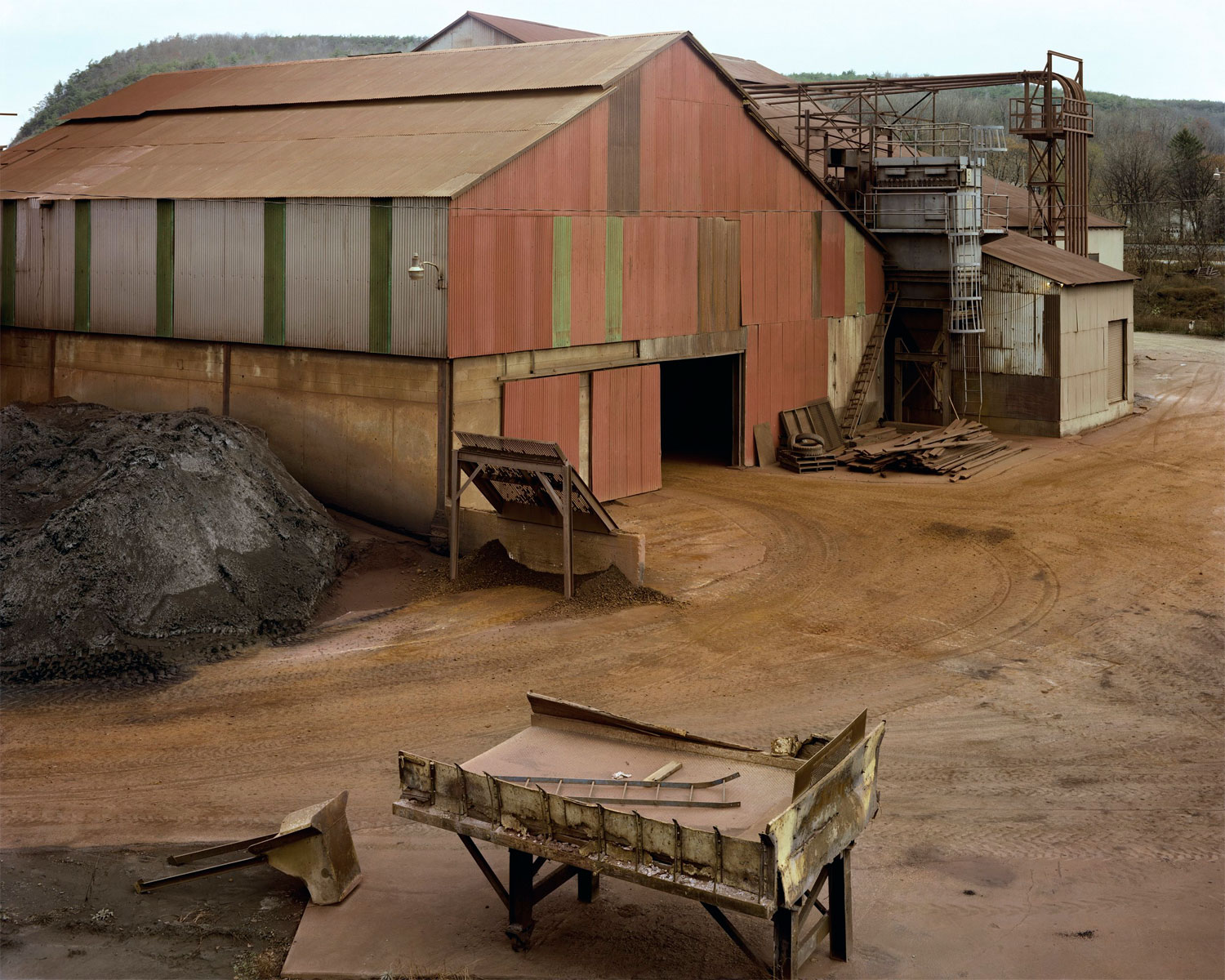
Created between 1967 and 1976, the photographic series “Simmeringer Heide und Erdberger Mais” (Simmeringer Heide and Erdberger Mais) is Mejchar’s first long-term cycle, for which she takes hundreds of pictures over the years. The series uses the photographic medium to explore the Viennese periphery. Simmeringer Heide and Erdberger Mais are areas on the southeastern outskirts of Vienna that were altered by humans and gradually taken over by commercial operations which transformed them into an industrial landscape. Mekchav first discovers them at a time when unused parcels of land (locally known as “Gstatten”), derelict market gardens, and scattered industrial structures are still defining features of the scenery. What sets the series apart is the choice of subject and the matter-of-fact manner in which the photographer treats it, compiling a kind of anecdotal inventory. The shots demonstrate that Mejchar’s objective in there art – as in the documentary photography that is her day-to-day work – is to render exactly what the objective and precise eye of a topographer sees. In framing an area in the urban periphery as a landscape, she trains this eye and her lens on a subject that has been largely absent from Austrian photography.

Wall text from the exhibition


Installation view of the exhibition 'The Poetry of the Everyday. Photographs by Elfriede Mejchar', Museum der Moderne Salzburg 2024 showing work from Mejchar's series 'Hotel (Fremdenzimmer), 1970-1986' (Hotel (Guest Room), 1970-1986)


Installation view of the exhibition The Poetry of the Everyday. Photographs by Elfriede Mejchar, Museum der Moderne Salzburg 2024 showing work from Mejchar’s series Hotel (Fremdenzimmer), 1970-1986 (Hotel (Guest Room), 1970-1986) (below)
© Museum der Moderne Salzburg, photo: wildbild/Günter Freund


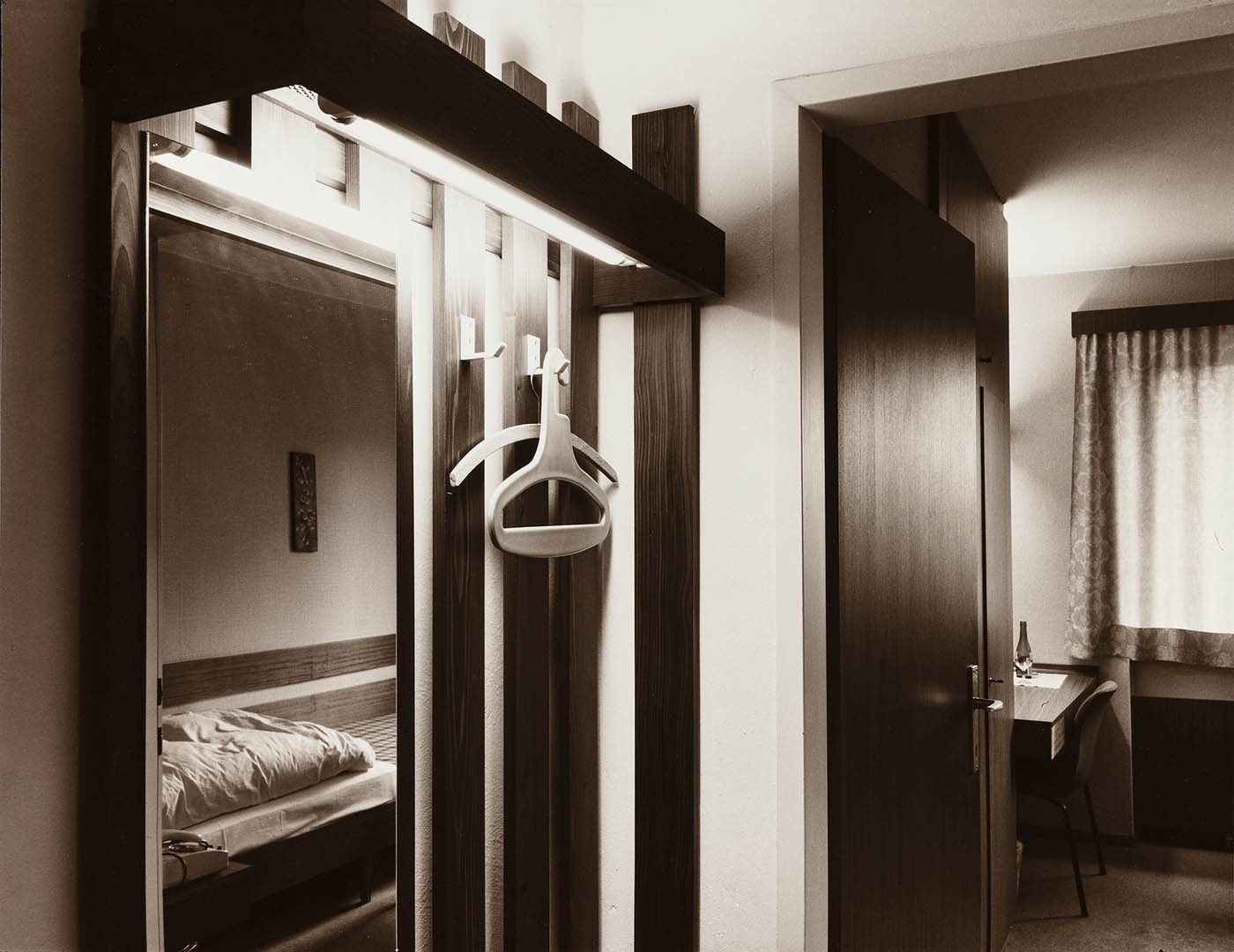
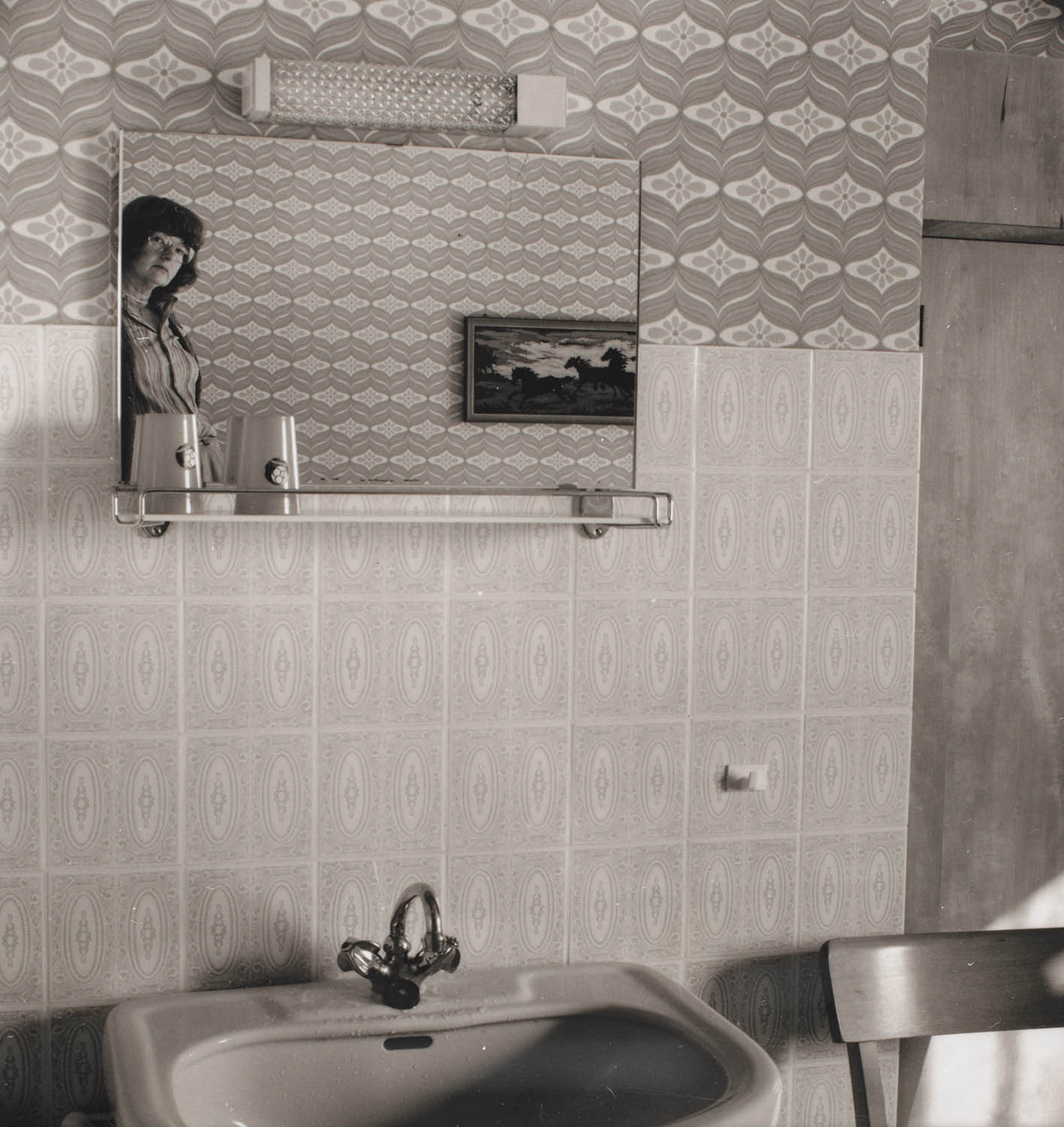
Elfriede Mejchar (Austrian, 1924-2020) From the series 'Hotel (Fremdenzimmer)', 1970-1986 (Hotel (Guest Room), 1970-1986)


Elfriede Mejchar (Austrian, 1924-2020)
From the series Hotel (Fremdenzimmer), 1970-1986 (Hotel (Guest Room), 1970-1986)
Silver gelatin print on baryta paper, brown tones
Federal Photography Collection at the Museum der Moderne Salzburg


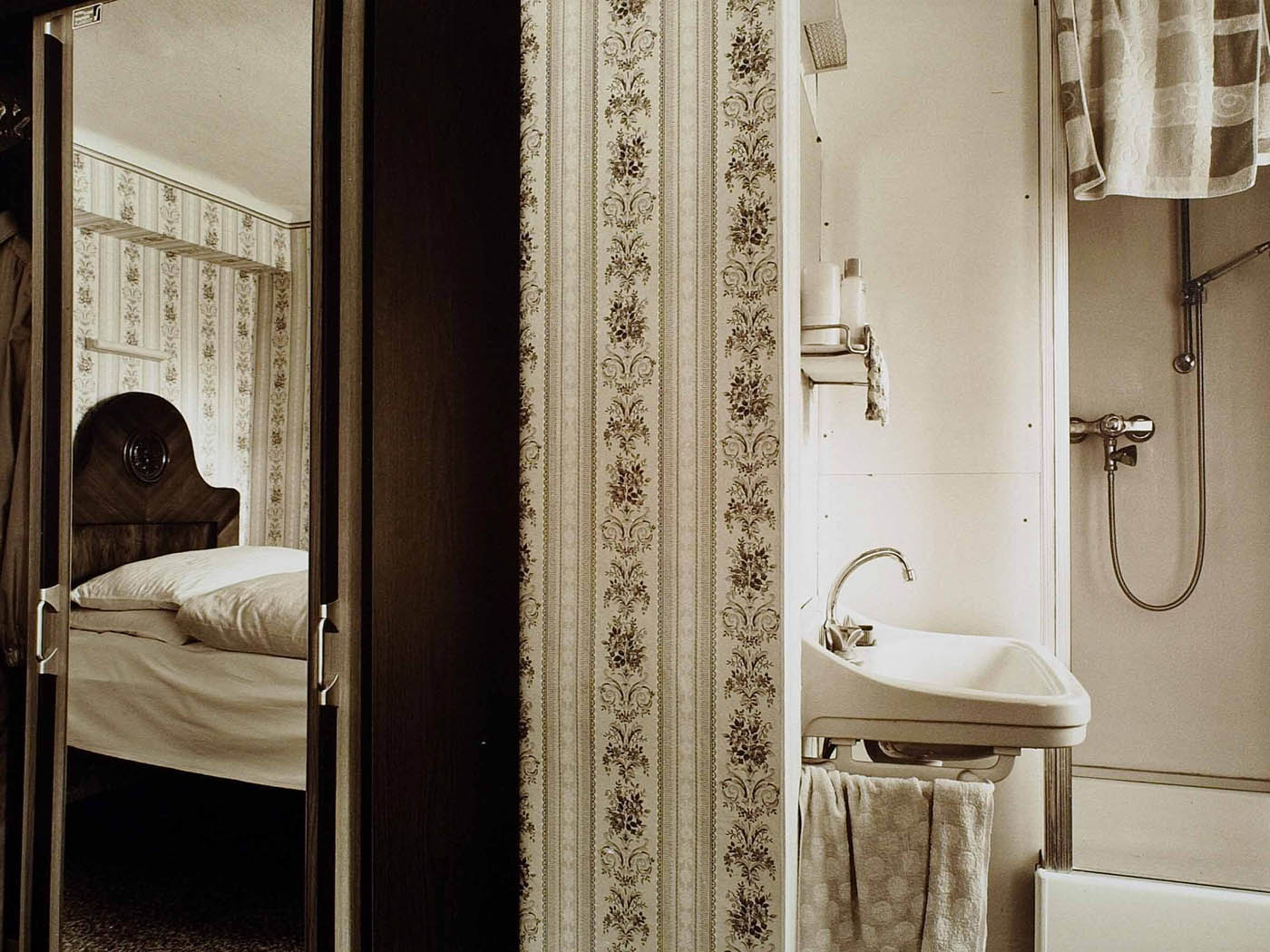
Elfriede Mejchar (Austrian, 1924-2020) From the series 'Hotel (Fremdenzimmer)', 1970-1986 (Hotel (Guest Room), 1970-1986)


Elfriede Mejchar (Austrian, 1924-2020)
From the series Hotel (Fremdenzimmer), 1970-1986 (Hotel (Guest Room), 1970-1986)
Silver gelatin print on baryta paper, brown tones
Federal Photography Collection at the Museum der Moderne Salzburg
© Bildrecht, Vienna, 2024
Photo: Andrew Phelps


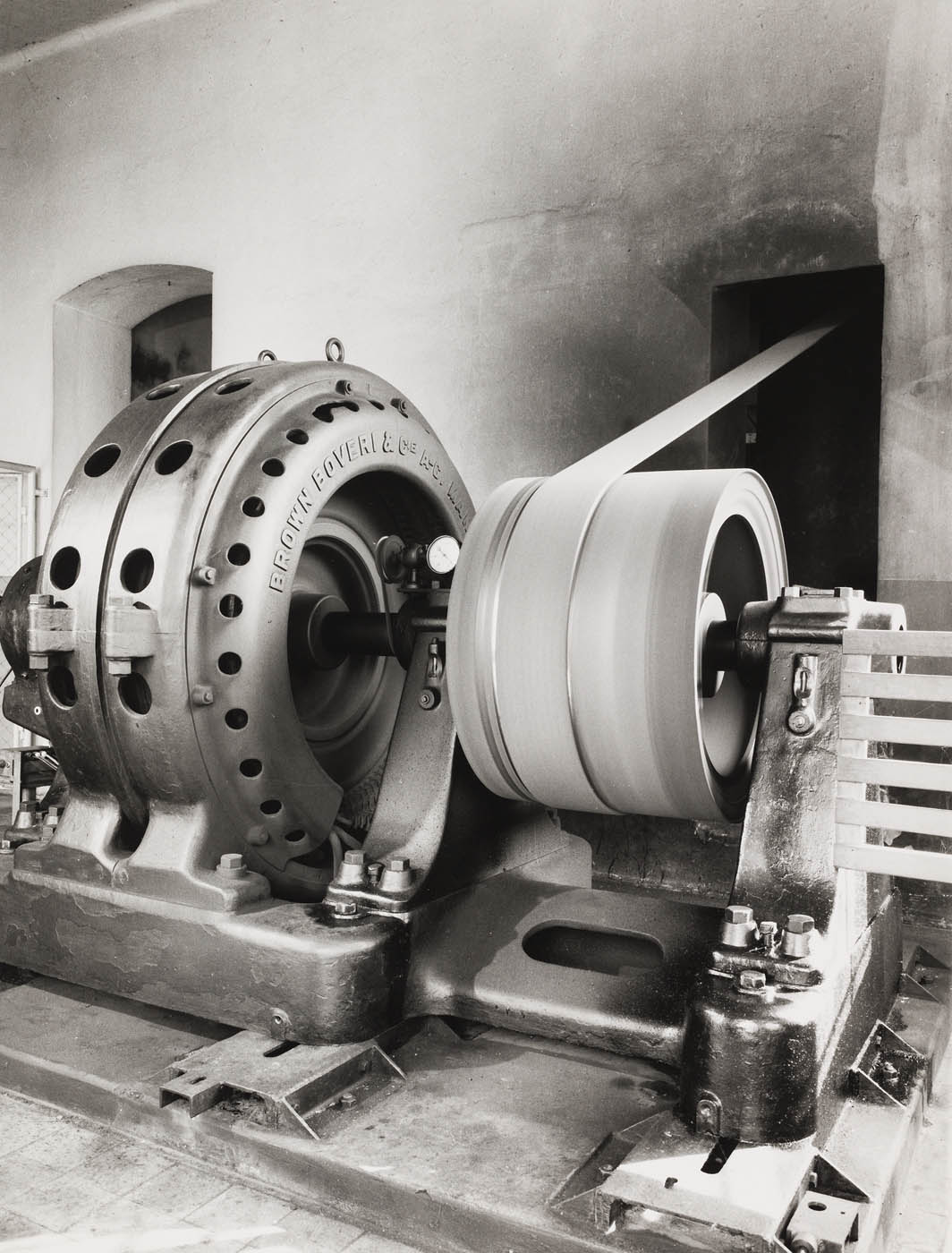
Elfriede Mejchar (Austrian, 1924-2020) 'Flachsspinnerei in Stadl-Paura' (Flax spinning mill in Stadl-Paura) 1986


Elfriede Mejchar (Austrian, 1924-2020)
Flachsspinnerei in Stadl-Paura (Flax spinning mill in Stadl-Paura)
1986
© Elfriede Mejchar/Landessammlungen NÖ


Installation view of the exhibition 'The Poetry of the Everyday. Photographs by Elfriede Mejchar', Museum der Moderne Salzburg 2024 showing work from Mejchar's series 'Die Monatssesseln, 1986-1988' (The Armchairs of the Month, 1986-1988)

Installation view of the exhibition 'The Poetry of the Everyday. Photographs by Elfriede Mejchar', Museum der Moderne Salzburg 2024 showing work from Mejchar's series 'Die Monatssesseln, 1986-1988' (The Armchairs of the Month, 1986-1988)


Installation view of the exhibition The Poetry of the Everyday. Photographs by Elfriede Mejchar, Museum der Moderne Salzburg 2024 showing work from Mejchar’s series Die Monatssesseln, 1986-1988 (The Armchairs of the Month, 1986-1988) (below)
© Museum der Moderne Salzburg, photo: wildbild/Günter Freund


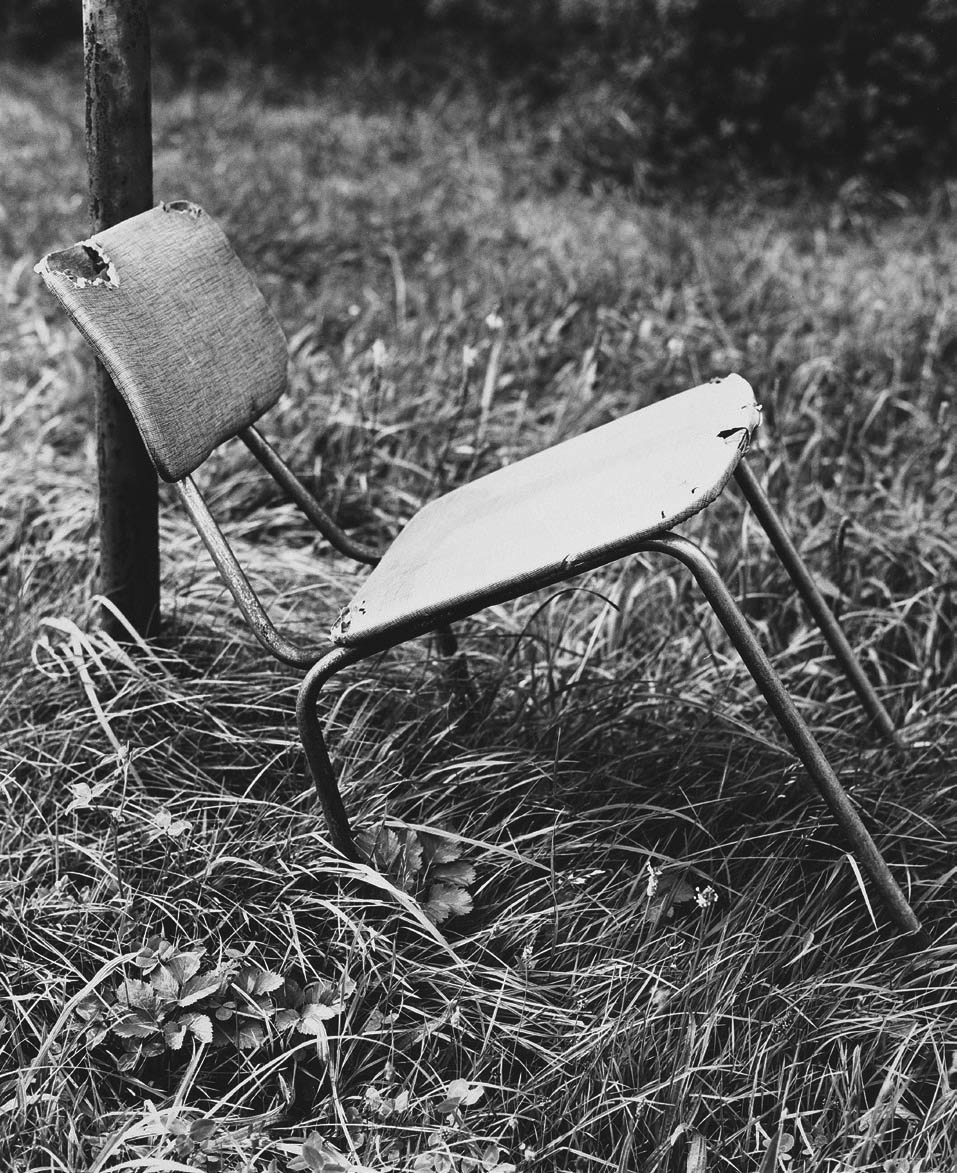
Elfriede Mejchar (Austrian, 1924-2020) From the series 'Die Monatssesseln, 1986-1988' (The Armchairs of the Month, 1986-1988)


Elfriede Mejchar (Austrian, 1924-2020)
From the series Die Monatssesseln, 1986-1988 (The Armchairs of the Month, 1986-1988)
Federal Photography Collection at the Museum der Moderne Salzburg


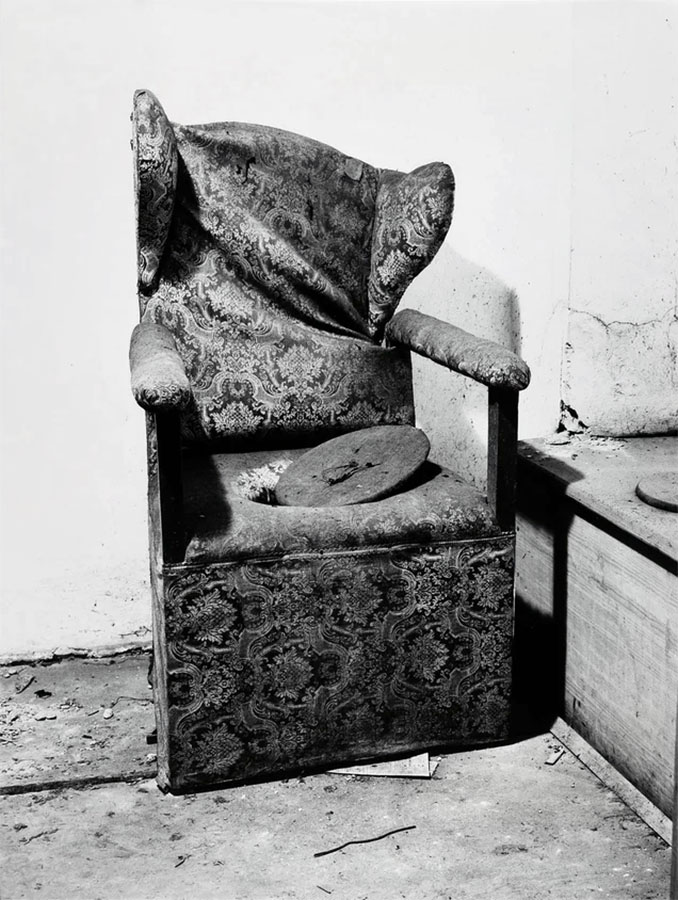
Elfriede Mejchar (Austrian, 1924-2020) From the series 'Die Monatssesseln, 1986-1988' (The Armchairs of the Month, 1986-1988)


Elfriede Mejchar (Austrian, 1924-2020)
From the series Die Monatssesseln, 1986-1988 (The Armchairs of the Month, 1986-1988)
Federal Photography Collection at the Museum der Moderne Salzburg


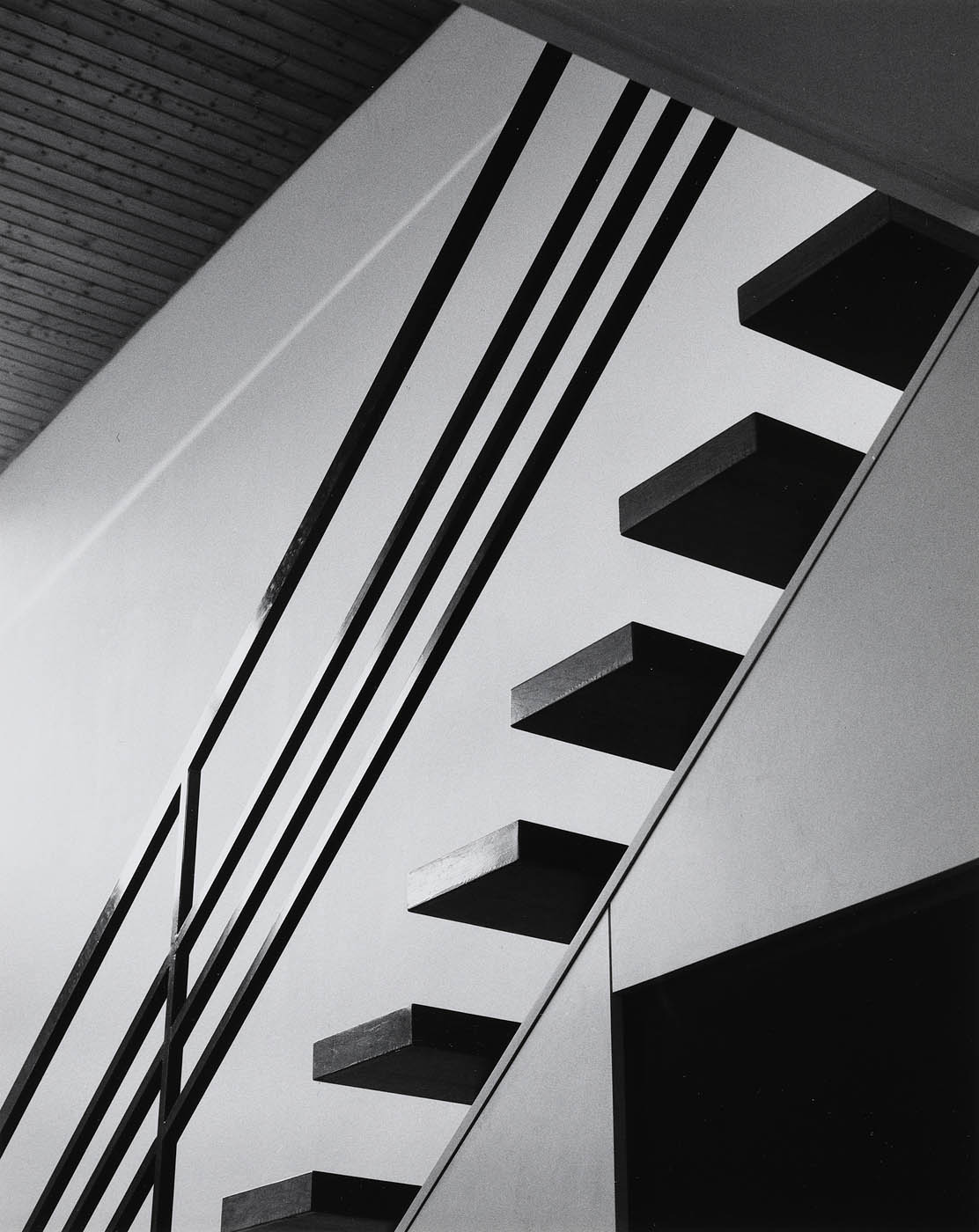
Elfriede Mejchar (Austrian, 1924-2020) From the series 'Oscillation (Salzburger Landesatelier)' (Oscillation (Salzburg State Studio)) 1988


Elfriede Mejchar (Austrian, 1924-2020)
From the series Oscillation (Salzburger Landesatelier) (Oscillation (Salzburg State Studio))
1988
Silver gelatin print on baryta paper
Federal Photography Collection at the Museum der Moderne Salzburg


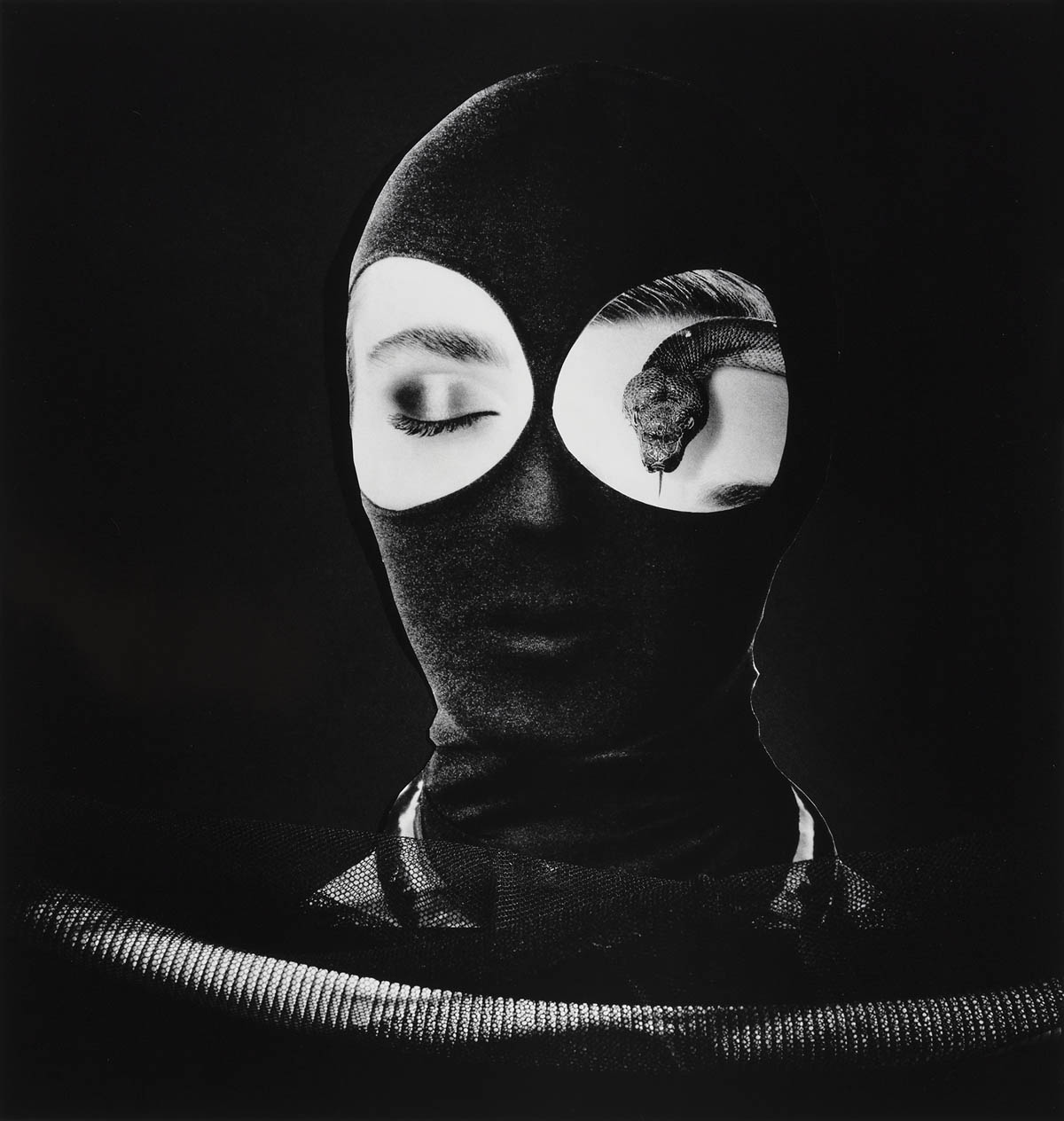
Installation view of the exhibition 'The Poetry of the Everyday. Photographs by Elfriede Mejchar', Museum der Moderne Salzburg 2024 showing work from the Mejchar's series 'Eine Kostümierung der geliehenen Identität' (A Masquerade of Borrowed Identity)


Installation view of the exhibition The Poetry of the Everyday. Photographs by Elfriede Mejchar, Museum der Moderne Salzburg 2024 showing work from the Mejchar’s series Eine Kostümierung der geliehenen Identität (A Masquerade of Borrowed Identity) (below)
© Museum der Moderne Salzburg, photo: wildbild/Günter Freund


Elfriede Mejchar (Austrian, 1924-2020) From the series 'Eine Kostümierung der geliehenen Identität' (A Masquerade of Borrowed Identity) 1989


Elfriede Mejchar (Austrian, 1924-2020)
From the series Eine Kostümierung der geliehenen Identität (A Masquerade of Borrowed Identity)
1989
Gelatin silver print on baryta paper
Museum der Moderne Salzburg
© Bildrecht, Vienna, 2024
Photo: Andrew Phelps


Introduction

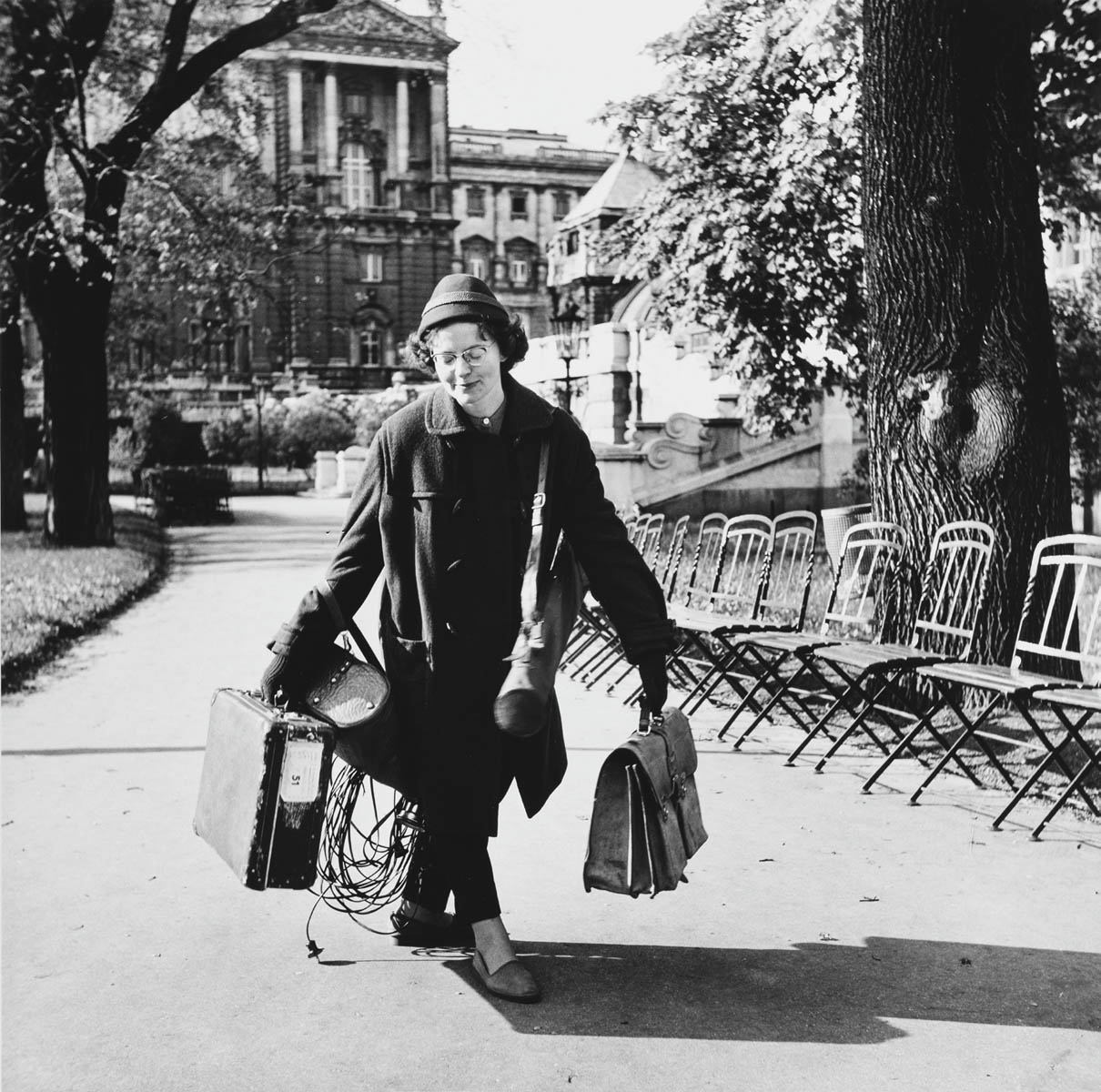
Elfriede Mejchar (1924-2020 Vienna, AT), the grande dame of Austrian photography, was in the employ of the Federal Monuments Office for almost forty years. Meanwhile, she also began her groundbreaking work on the outskirts of Vienna. Harnessing the photographic series as a documentary and investigative medium, she limned an imposing portrait of the urban landscape. Her work, which had a lasting influence on the evolution of photography in Austria, now also stands as an important documentary record of the country in the postwar period.

As a professional photographer, Mejchar traveled to various regions throughout Austria, including in Lower and Upper Austria and Styria, to capture buildings and cultural assets of art-historical significance in photographs. Yet she also used her official trips and her scant free time to pursue her own photographic interests, which focused on the small and seemingly trivial and the traces of civilisation that humans leave in nature or along the edges of the urban fabric and that receive little if any attention. It may seem that the documentary dimension is less important in the resulting works, that it is eclipsed by the narrative element. In fact, Mejchar fuses both, scrutinising her motifs with an attentive eye that picks up on the singular or peculiar and registers it without manipulation.

Elfriede Mejchar was not interested in the so-called “pivotal moment” and did not care for the conventional photojournalistic style of her time. Her work began when people had left, and she approached her themes from a very conceptual angle. Both the documentary series she created under the open sky and the object photographs, still lifes, and collages she made in her studio reflect this approach. She photographed the “evanescent before it evanesces”, in urban and rural landscapes and everyday scenes, capturing the changes that affected the particular scenery and its distinctive atmosphere.

The Creative Element in Documentation

Produced between 1967 and 1976, the photographic series “Simmeringer Heide and Erdberger Mais” is Mejchar’s first long-term cycle, for which she takes hundreds of pictures over the years. The series uses the photographic medium to explore the Viennese periphery. Simmeringer Heide and Erdberger Mais are areas on the southeastern outskirts of Vienna that were altered by humans and gradually taken over by commercial operations which transformed them into an industrial landscape. Mejchar first discovers them at a time when unused parcels of land (locally known as “Gstätten”), derelict market gardens, and scattered industrial structures are still defining features of the scenery. What sets the series apart is the choice of subject and the matter-of-factly manner in which the photographer treats it, compiling a kind of anecdotal inventory – empty lots, paths and roads, utility poles and a select few close-ups. The shots demonstrate that Mejchar’s objective in her art – as in the documentary photography that is her day-to-day work – is to render exactly what the objective and precise eye of a topographer sees. In framing an area in the urban periphery as a landscape, she trains this eye and her lens on a subject that has been largely absent from Austrian photography.

The use of a sulfur-based solution to tone the photographs – which is the cause of the brownish tinge – reflects a recurring concern in Mejchar’s photographs: existence in time and impermanence. In this instance, the technique’s purpose is not to alter the colour, but rather to make it more durable.


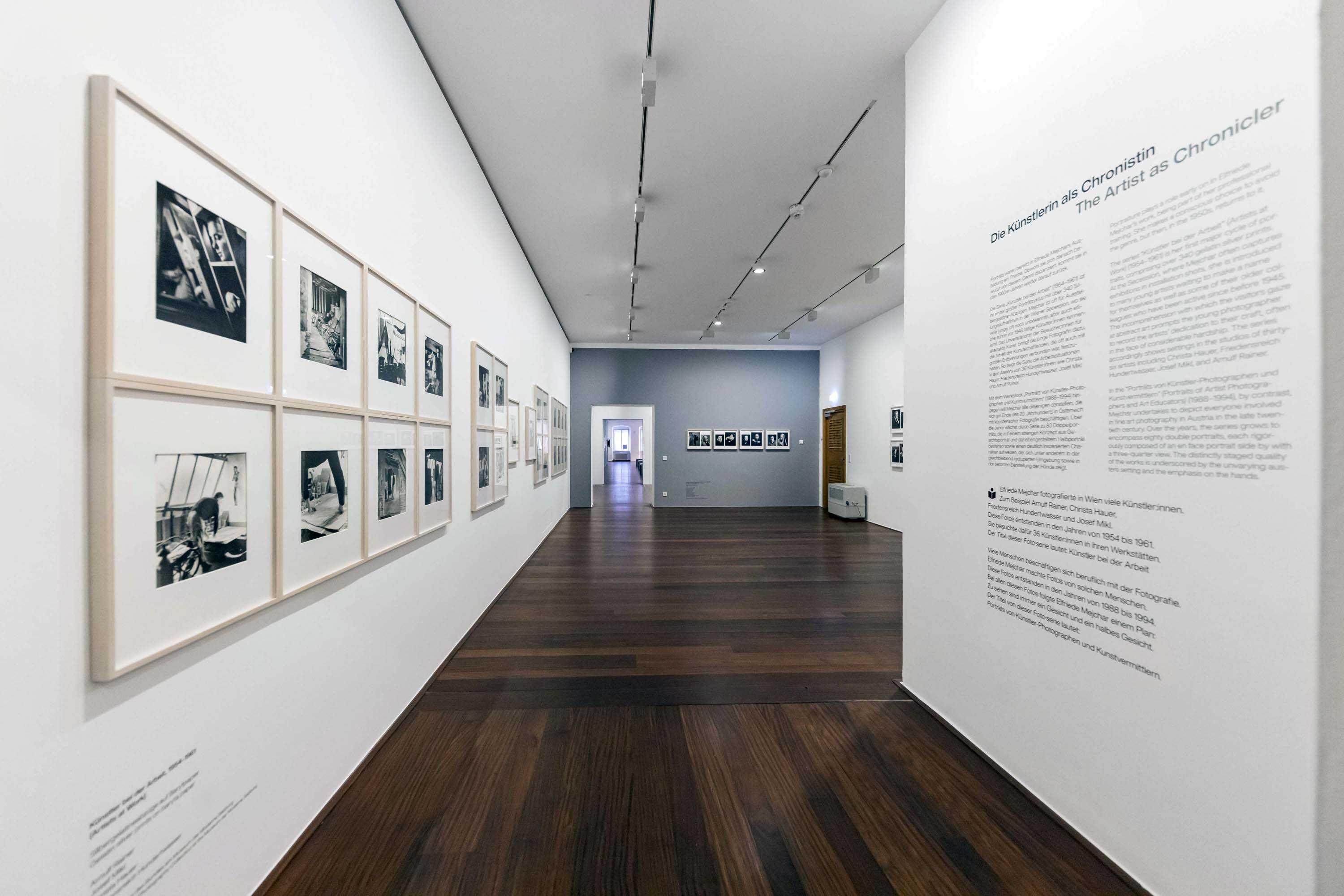
Installation view of the exhibition 'The Poetry of the Everyday. Photographs by Elfriede Mejchar', Museum der Moderne Salzburg 2024 showing at left, work from Mejchar's series 'Künstler bei der Arbeit, 1954-1961' (Artists at work, 1954-1961); and at right, the wall text 'The Artist as Chronicler'


Installation view of the exhibition The Poetry of the Everyday. Photographs by Elfriede Mejchar, Museum der Moderne Salzburg 2024 showing at left, work from Mejchar’s series Künstler bei der Arbeit, 1954-1961 (Artists at work, 1954-1961); and at right, the wall text ‘The Artist as Chronicler’
© Museum der Moderne Salzburg, photo: wildbild/Günter Freund


The Artist as Chronicler

Portraiture plays a role early on in Elfriede Mejchar’s work; she receives her professional training in a portrait studio. She subsequently makes a conscious choice to avoid the genre, but then, in the 1950s, returns to it.

“Künstler bei der Arbeit”, 1954-1961 (Artists at Work)

The series “Künstler bei der Arbeit” (Artists at Work) is her first major cycle of portraits, comprising over 340 gelatin silver prints. Mejchar is often brought in to capture exhibitions in installation shots, especially at the Vienna Secession, where she is introduced to many young artists waiting to make a name for themselves as well as some of their older colleagues who have been active since before 1945. The incomprehension with which the visitors gaze at abstract art that does not represent anything with any accuracy prompts the young photographer to record the intensity and seriousness with which the artists dedicate themselves to their craft, often braving considerable hardship. The series accordingly focuses on visualising the real studio and workplace settings of thirty-six artists, including Christa Hauer, Friedensreich Hundertwasser, Josef Mikl, and Arnulf Rainer.

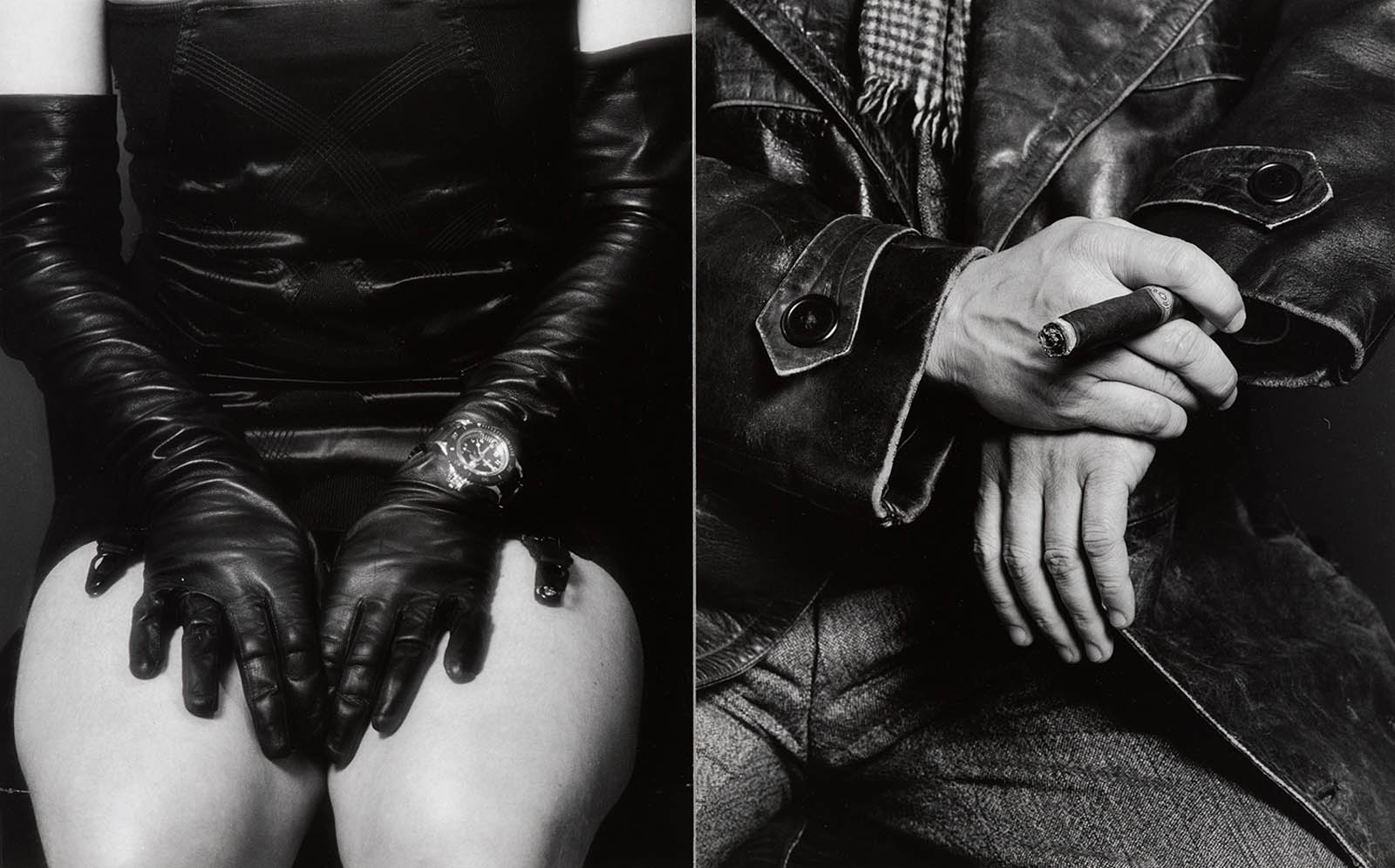
“Porträts von Künstler-Photographen und Kunstvermittlern”, 1988-1994 (Portraits of Artist Photographers and Art Educators)

In the body of work “Porträts von Künstler-Photographen und Kunstvermittlern” (Portraits of Artist Photographers and Art Educators), by contrast, Mejchar undertakes to depict everyone involved in fine art photography in Austria in the late twentieth century. Over the years, the series grows to comprise eighty double portraits, each composed, in accordance with a rigorous conception, of an en face portrait side by with a three-quarter view. The works have a distinctly staged quality, underscored by the unvarying austere setting and the emphasis on the hands, among other aspects. In this respect they recall Mejchar’s final examination, in which she had to realise a portrait both in profile and en face to demonstrate her command of photographic lighting designing and the handling of human sitters.

With these two projects, Mejchar becomes an important chronicler of the Austrian arts scene.


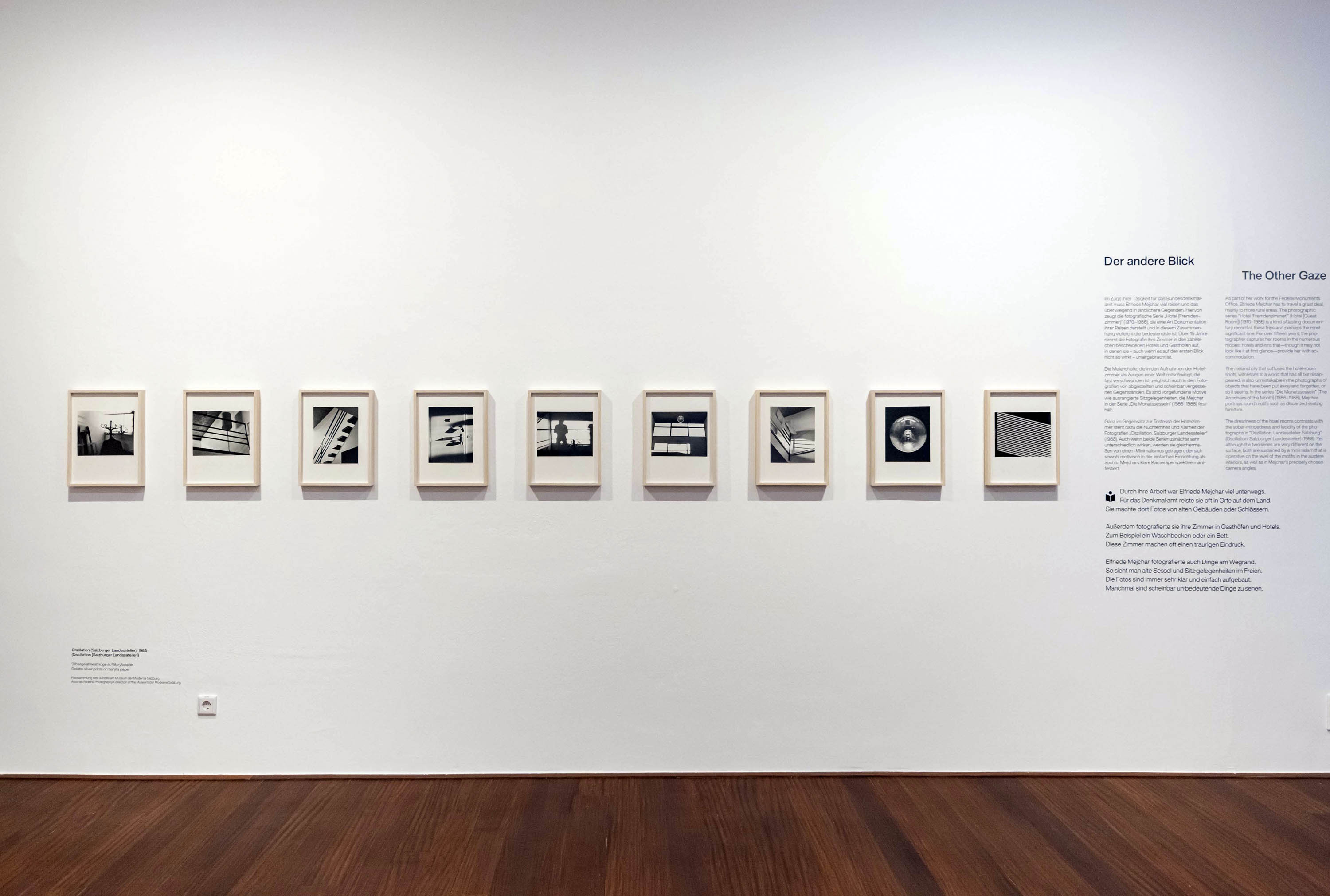
Installation view of the exhibition 'The Poetry of the Everyday. Photographs by Elfriede Mejchar', Museum der Moderne Salzburg 2024 showing at left, work from Mejchar's series 'Oscillation (Salzburger Landesatelier)' (Oscillation (Salzburg State Studio)) (above); and at right, the wall text 'The Other Gaze' (below)


Installation view of the exhibition The Poetry of the Everyday. Photographs by Elfriede Mejchar, Museum der Moderne Salzburg 2024 showing at left, work from Mejchar’s series Oscillation (Salzburger Landesatelier) (Oscillation (Salzburg State Studio)) (above); and at right, the wall text ‘The Other Gaze’ (below)
© Museum der Moderne Salzburg, photo: wildbild/Günter Freund


The Other Gaze

“Hotel (Fremdenzimmer)”, 1970-1986 (Hotel (Guest Room))

As part of her work for the Federal Monuments Office, Elfriede Mejchar has to travel a great deal, mainly to more rural areas. The photographic series “Hotel (Fremdenzimmer)” (Hotel (Guest Room)) is a kind of lasting documentary record of these trips and perhaps the most significant one. Bed, table, chair, mirror, wardrobe, patterned wallpaper, and sometimes a washbasin: for over fifteen years, the photographer captures her rooms with their often spartan furnishings in the numerous modest hotels and inns that – though it may not look like it at first glance – provide her with accommodation. Here and there one does espy a toothbrush, a pair of shoes, a ruffled bedcover, all traces that reveal the ostensibly absent photographer’s presence. A certain melancholy suffuses these shots of hotel rooms as witnesses to a world that has all but disappeared

“Die Monatssesseln”, 1986-1988 (The Armchairs of the Month)

The same melancholy is also unmistakable in the photographs of objects that have outlived their usefulness and been discarded and, it seems, forgotten. In the series “Die Monatssesseln” (The Armchairs of the Month) Mejchar portrays found motifs such as discarded seating furniture. The series shows a wide variety of such items, from kitchen chairs to living-room armchairs and even car seats, that have become part of the natural or other scene where they were dumped. No less diverse than the pieces of furniture and their environments are the feelings they elicit; as Mejchar puts it, “a mess can be beautiful in its own way.”

“Oszillation (Salzburger Landesatelier)”, 1988

The dreariness of the hotel rooms contrasts with the sober-mindedness and lucidity of the photographs in “Oszillation (Salzburger Landesatelier)” (Oscillation (Salzburger Landesatelier)). Yet although the two series are very different on the surface, both are sustained by a minimalism that is operative on the level of the motifs, in the austere interiors, as well as in Mejchar’s precisely chosen camera angles. These photographs capture the rooms of the State of Salzburg’s studio residence for visiting artists, located, like the Salzburger Kunstverein, in the historic Künstlerhaus. Mejchar herself lives there for a while in 1988, a change of working environment that is reflected in her output from the period.

Nobody Is Perfect

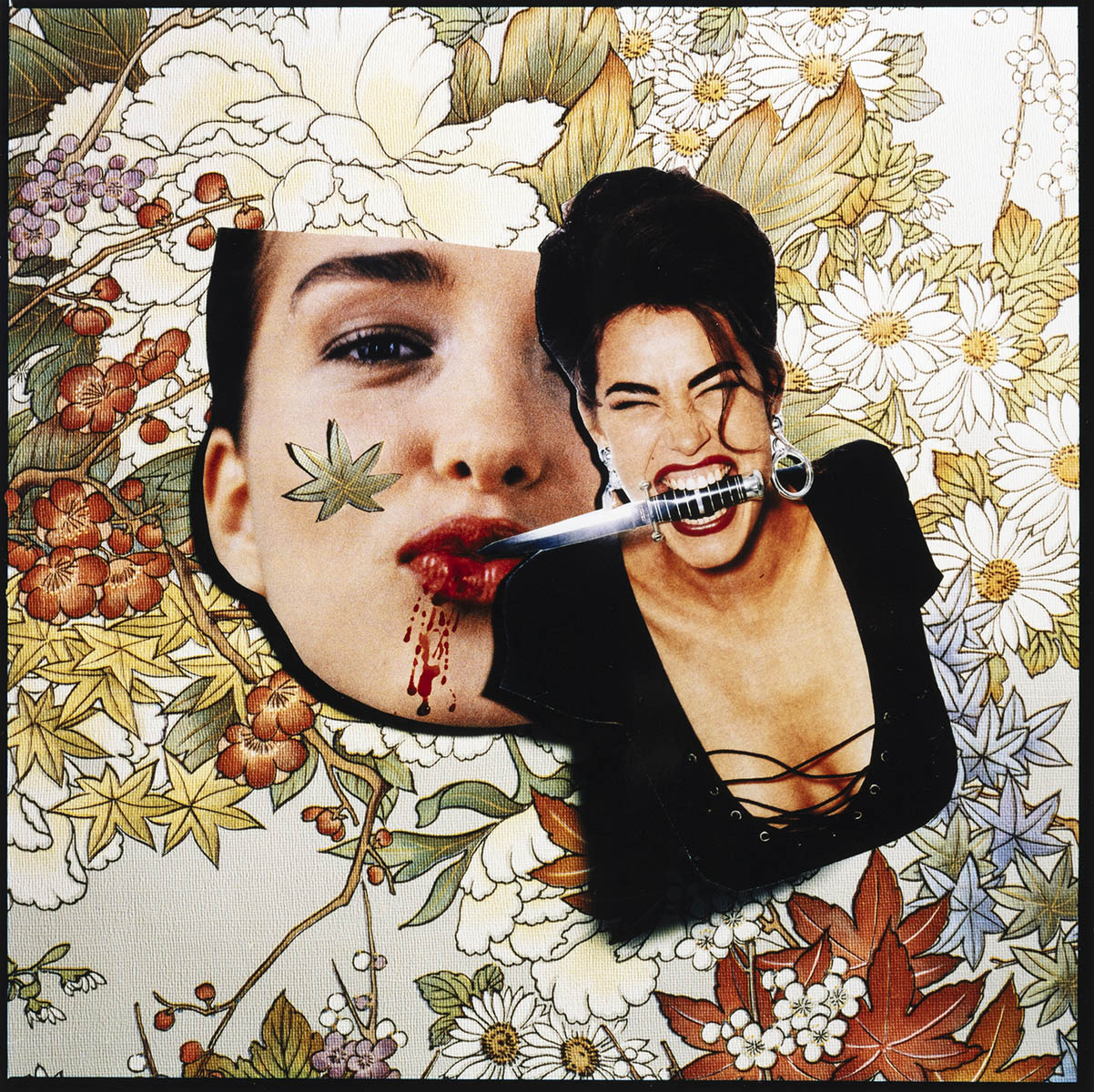
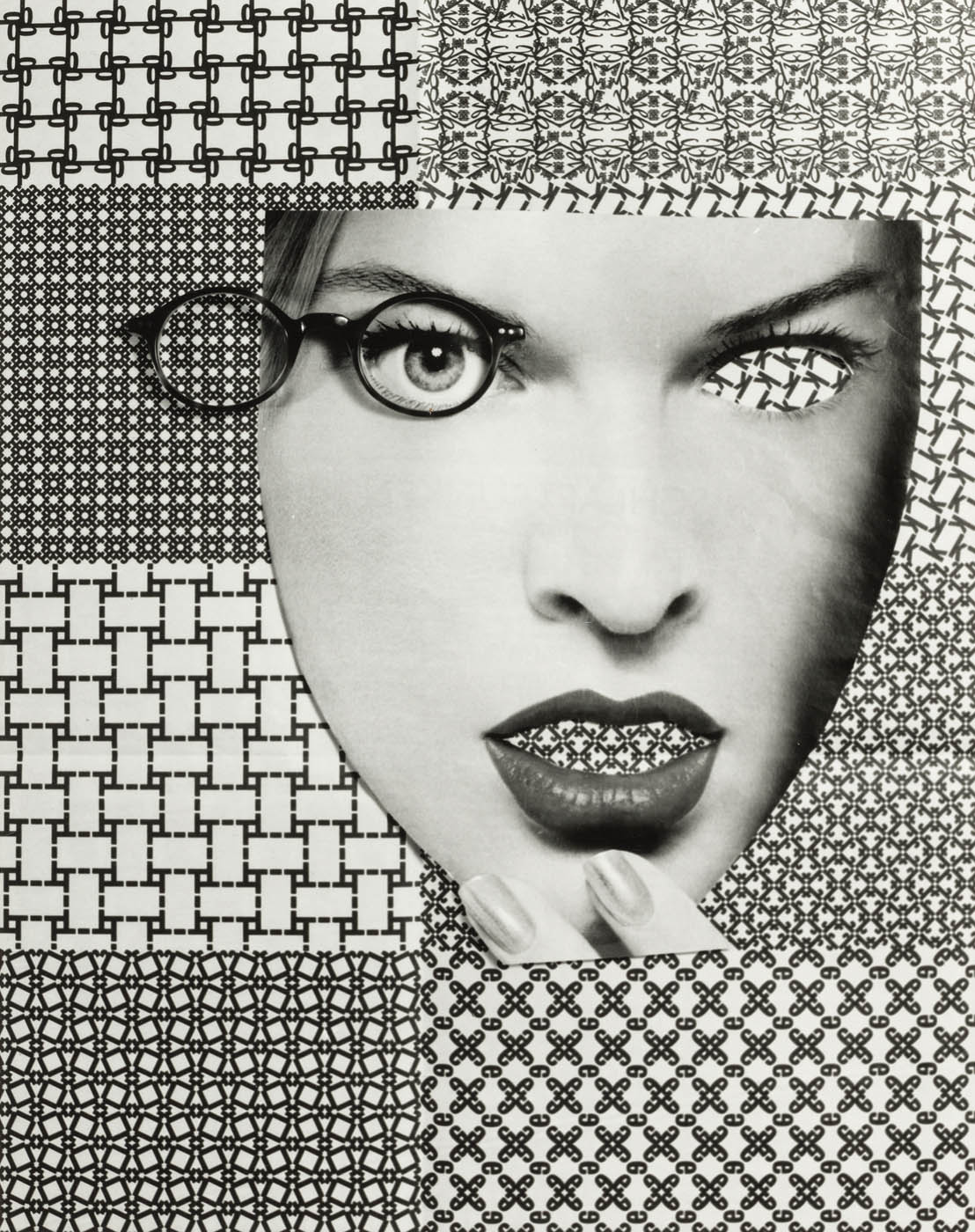
In the late 1980s, Elfriede Mejchar branches out in a fresh creative direction. She has been retired for some years and feels free to take on new challenges. Setting aside the flaneur-like practice underlying her earlier bodies of work, she starts photographing in the studio.

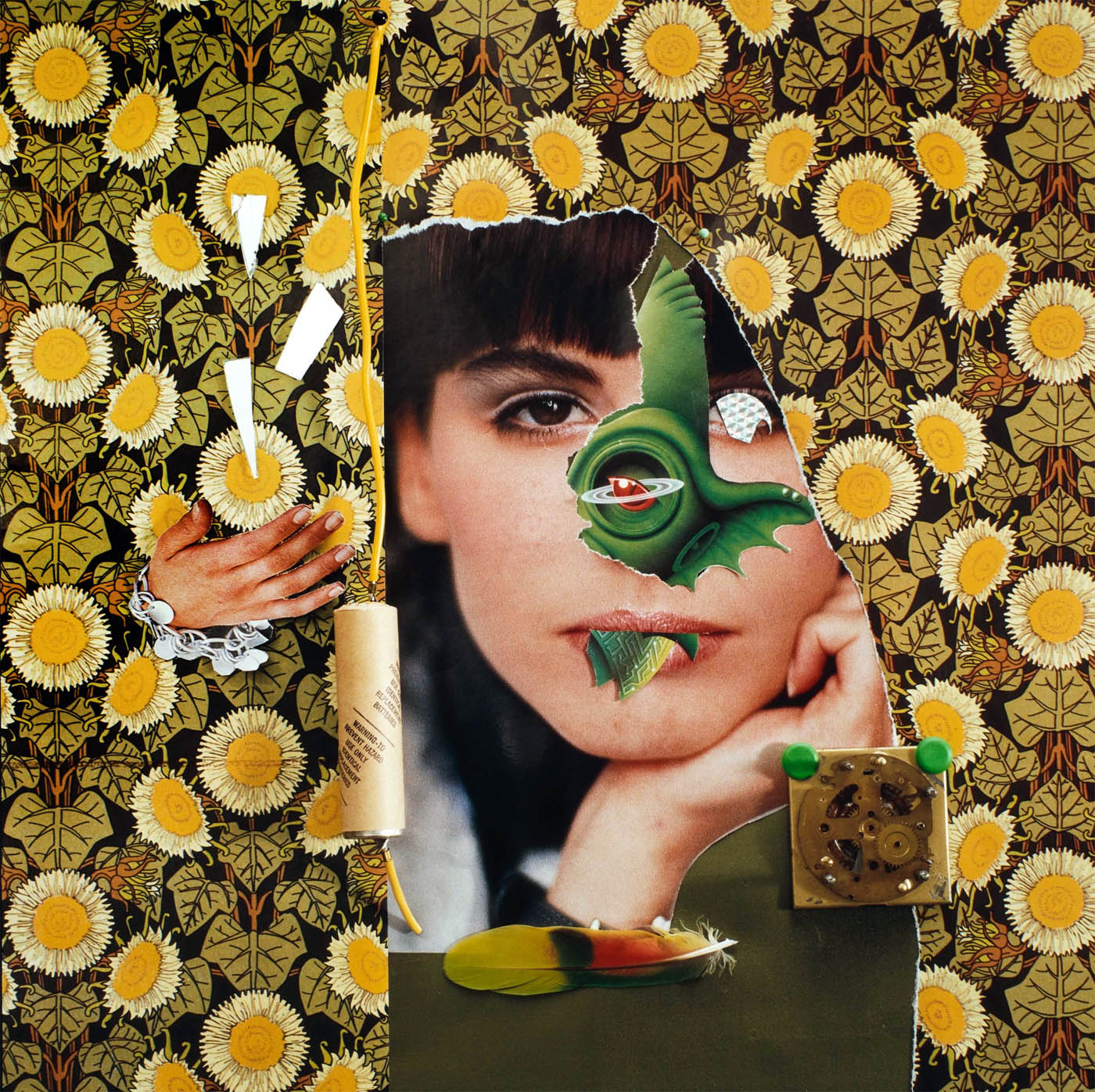
Tapetenbild. Triptychon, 1988 (Wallcover Picture. Tryptic) “Eine Kostümierung der geliehenen Identität”, 1989 (A Costume for the borrowed Identity) “Tagebuch Jänner 1988”, 1988 (Diary January 1988) “Nobody Is Perfect”, 1996

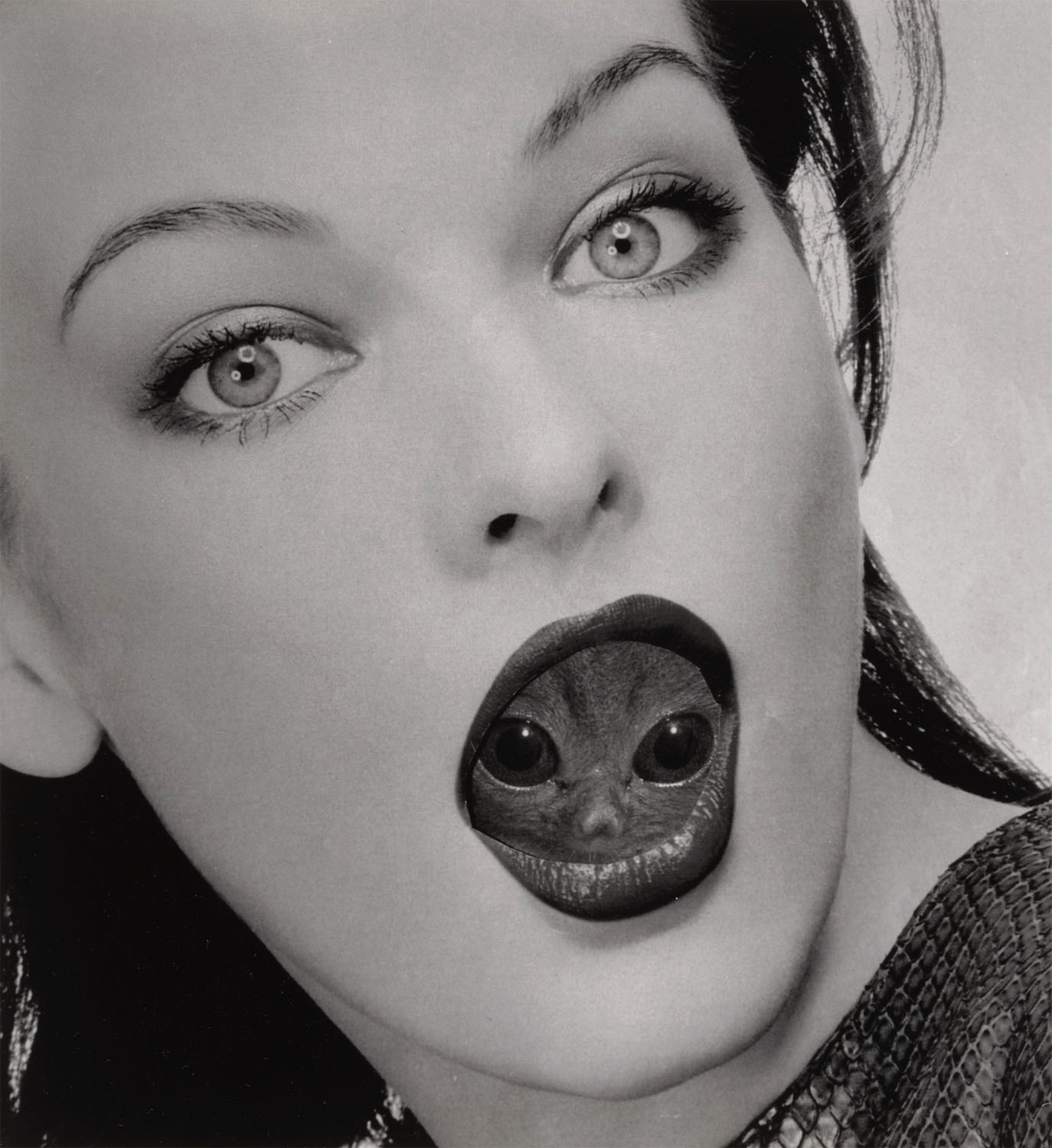
Faces change shapes, snakes coil around heads, open and closed eyes alternate. For the collages in “Tagebücher Jänner 1988,” Mejchar reuses her own photographs; in other series, by contrast, she works with found images such as shots of female models from print advertisements or fuses figural representations with fabric and wallpaper patterns. The works are rapidly composed out of visual fragments that she often only loosely places side by side or in overlapping arrangements, dispelling their aura of perfection. “I build pictures for myself on the wall, from materials that are at hand in the public sphere, that are on public display, but I strip away the ideal of flawless beauty that is constantly rubbed in our faces by dismembering it or covering it up.” It is the temporary and easily mutable that fascinates Mejchar, qualities that had had no place in her professional work.

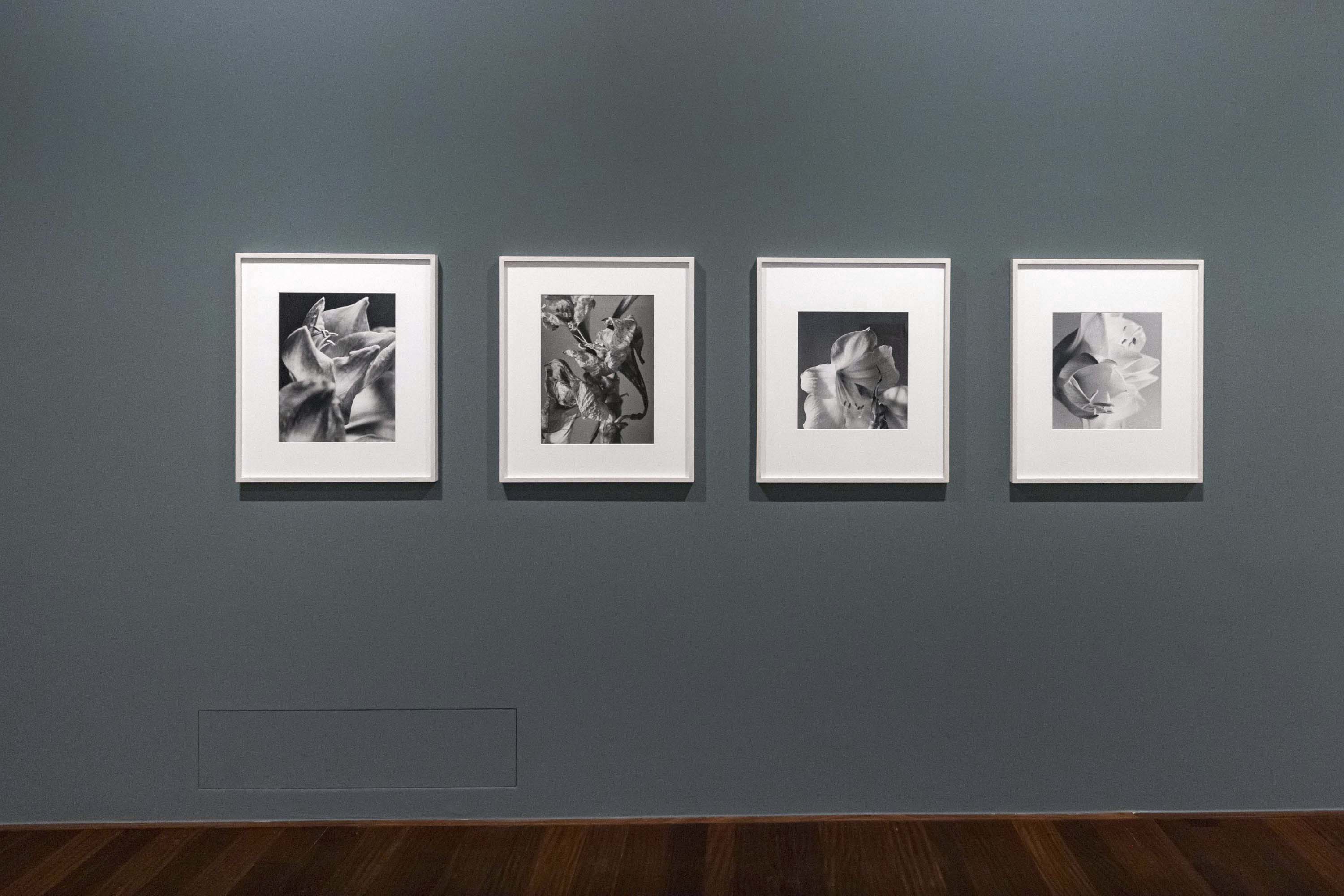
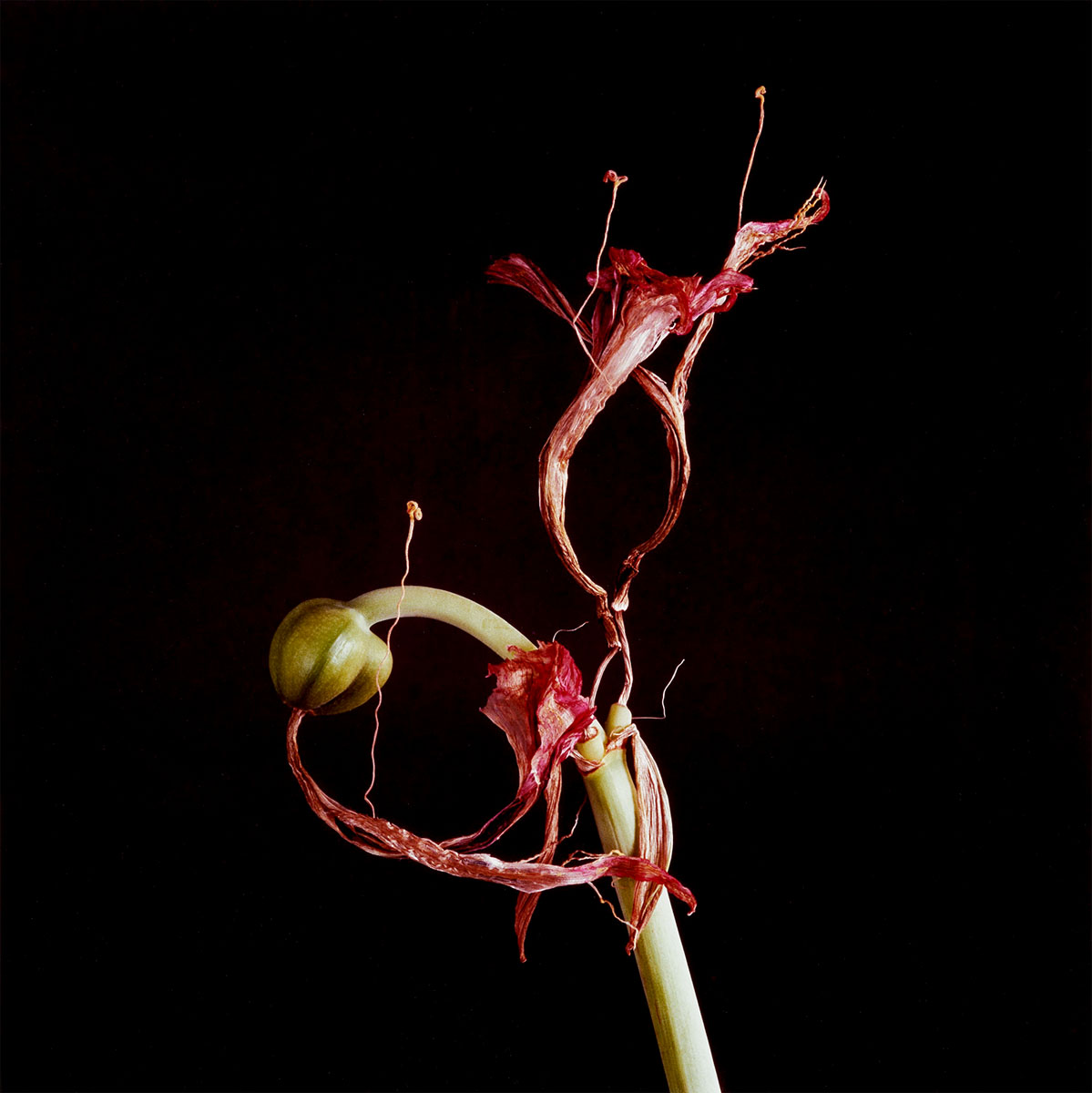
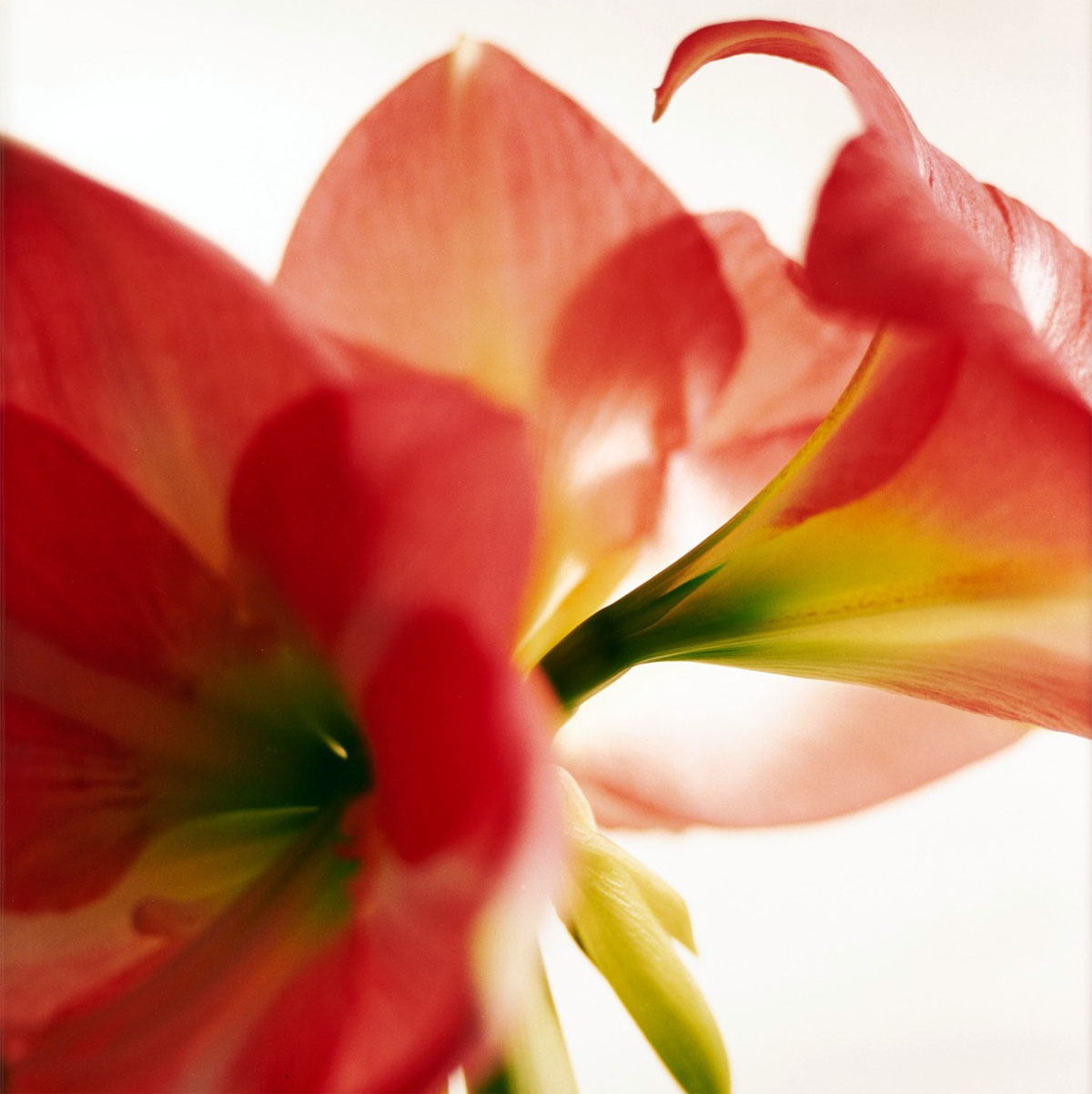
“Amaryllis”, 1994-1997

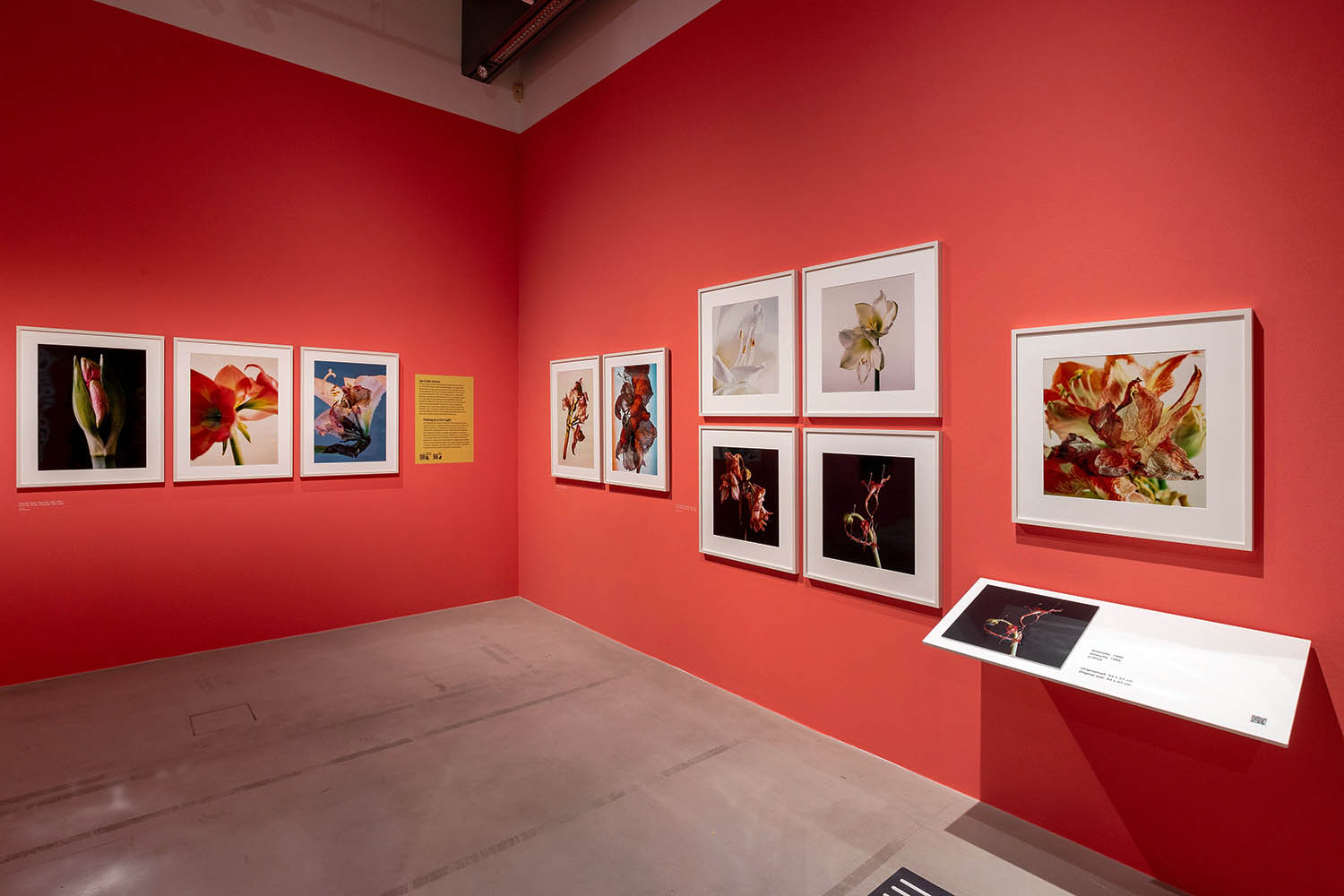
Pictures of flowers in fine art, whether painted or photographed, inevitably have a clichéd dimension. Mejchar photographs only a special selection of flowers such as amaryllises, lilies, and tulips that she grows in her own garden. In the studio, rather than recording the flowers with a romantic gesture, she captures their gradual transformations – full blossoms, some full of delicate life, some already wilting and recognisably perishable. Showing them between florescence and decay, in a kind of liminal instant, she revisits a theme that surfaces throughout her oeuvre: the capturing of a state of affairs at a defined point in time.


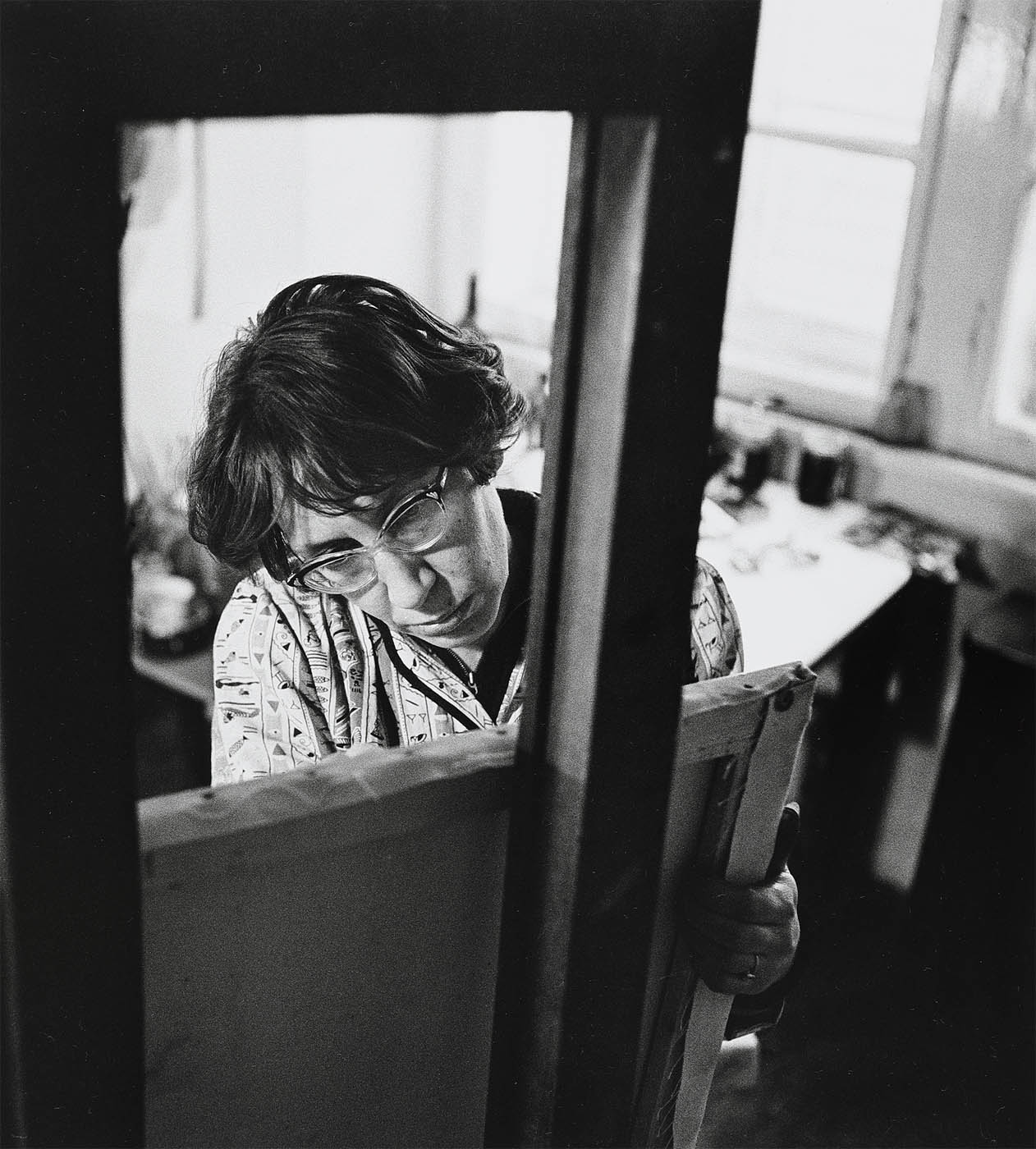
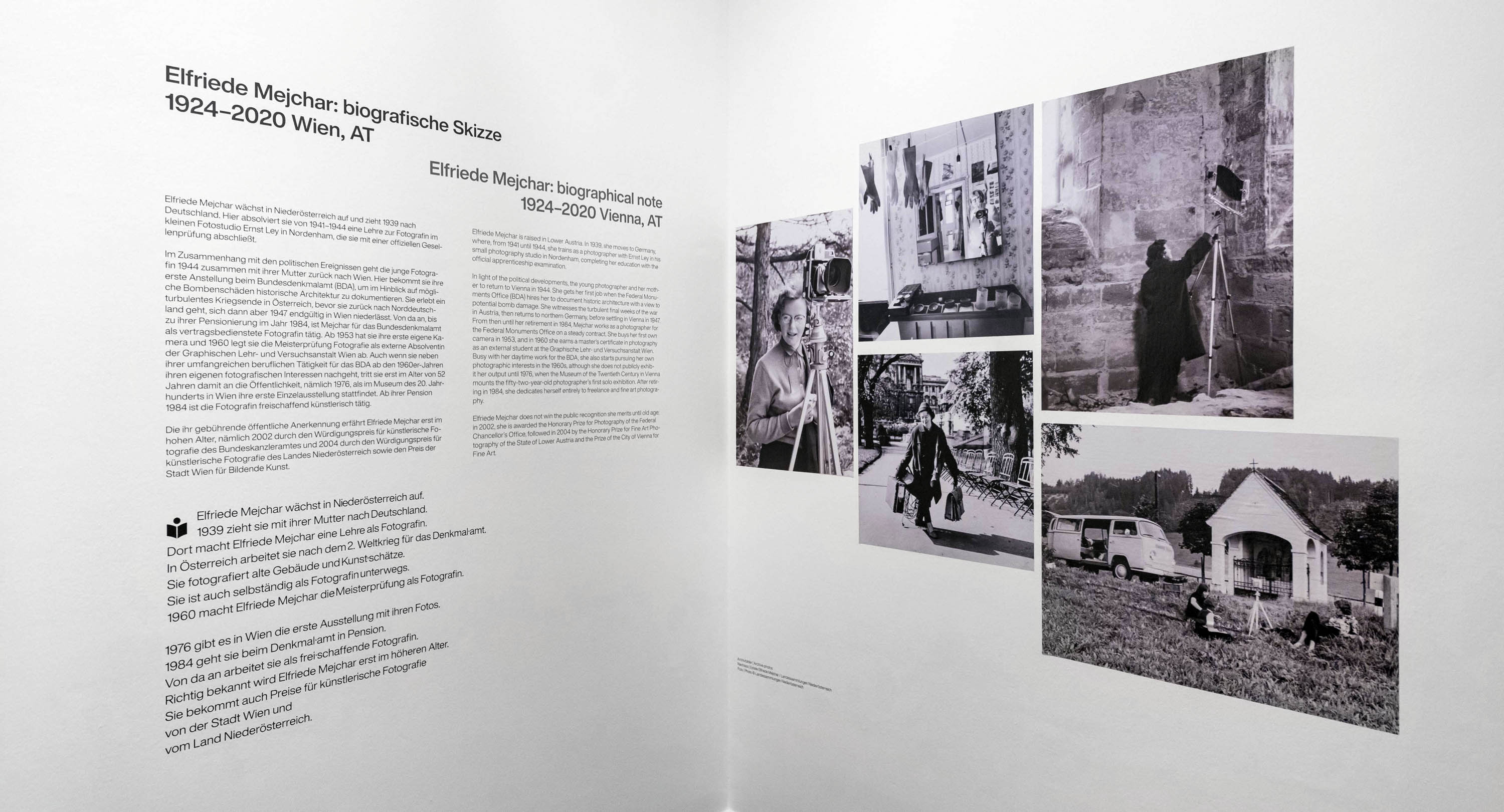
Installation view of the exhibition 'The Poetry of the Everyday. Photographs by Elfriede Mejchar', Museum der Moderne Salzburg 2024 showing the wall text 'Elfriede Mejchar: biographical note 1924-2020 Vienna, AT'; and some photographs of Elfriede Mejchar working


Installation view of the exhibition The Poetry of the Everyday. Photographs by Elfriede Mejchar, Museum der Moderne Salzburg 2024 showing the wall text Elfriede Mejchar: biographical note 1924-2020 Vienna, AT; and some photographs of Elfriede Mejchar working
© Museum der Moderne Salzburg, photo: wildbild/Günter Freund


Elfriede Mejchar: biographical note 1924-2020 Vienna, AT

Elfriede Mejchar is raised in Lower Austria. In 1939, she moves to Germany, where, from 1941 until 1944, she trains as a photographer with Ernst Ley in his small photography studio in Nordenham, completing her education with the official apprenticeship examination.

In light of the political developments, the young photographer and her mother to return to Vienna in 1944. She gets her first job when the Federal Monuments Office (BDA) hires her to document historic architecture with a view to potential bomb damage. She witnesses the turbulent final weeks of the war in Austria, then returns to northern Germany, before settling in Vienna in 1947. From then until her retirement in 1984, Mejchar works as a photographer for the Federal Monuments Office on a steady contract. She buys her first own camera in 1953, and in 1960 she earns a master’s certificate in photography as an external student at the Graphische Lehr- und Versuchsanstalt Wien. Busy with her daytime work for the BDA, she also starts pursuing her own photographic interests in the 1960s, although she does not publicly exhibit her output until 1976, when the Museum of the Twentieth Century in Vienna mounts the fifty-two-year-old photographer’s first solo exhibition. After retiring in 1984, she dedicates herself entirely to freelance and fine art photography.

Elfriede Mejchar does not win the public recognition she merits until old age; in 2002, she is awarded the Honorary Prize for Photography of the Federal Chancellor’s Office, followed in 2004 by the Honorary Prize for Fine Art Photography of the State of Lower Austria and the Prize of the City of Vienna for Fine Art.

Text from the exhibition


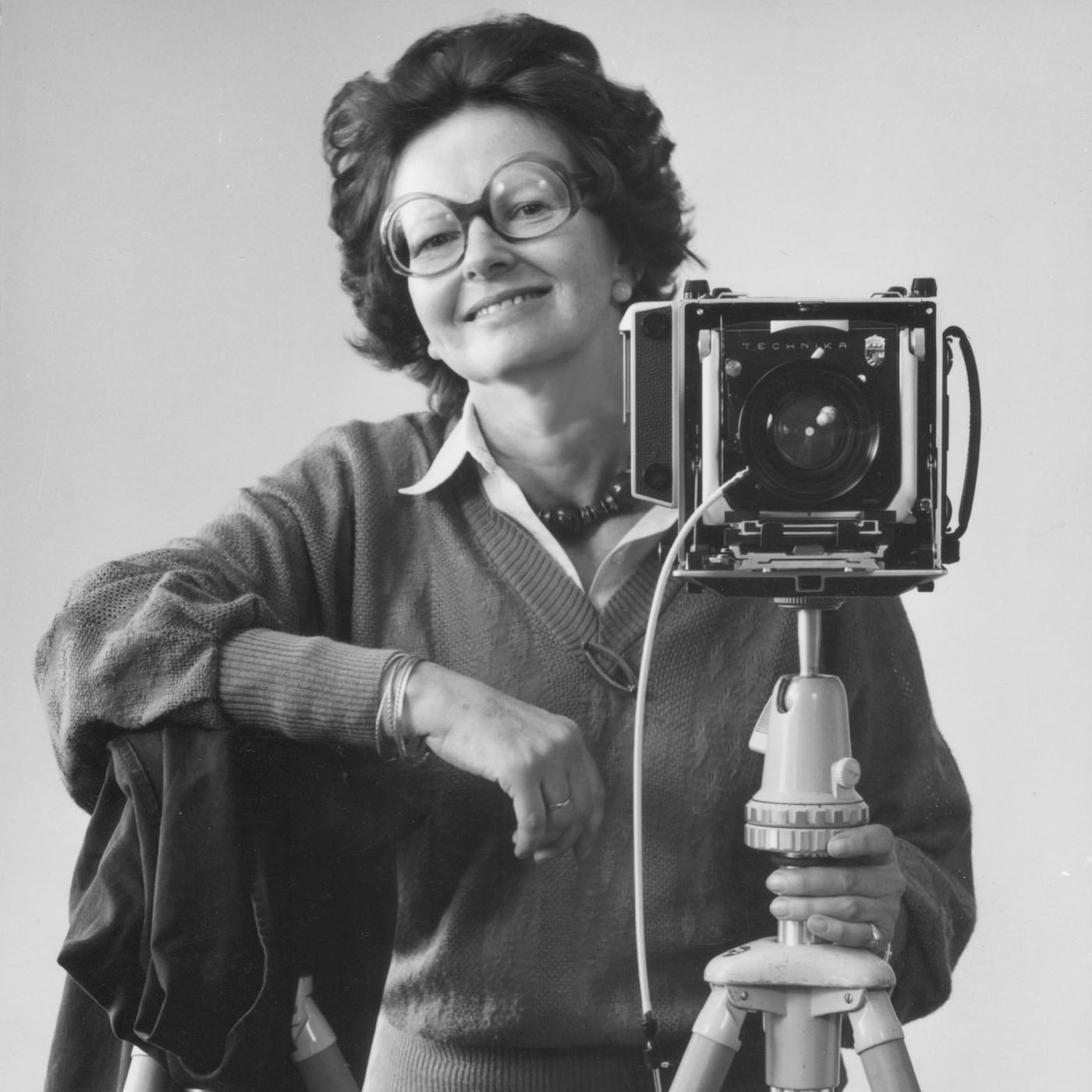
Anonymous photographer. 'Elfriede Mejchar' Nd


Anonymous photographer
Elfriede Mejchar
Nd
Gelatin silver print


Installation view of the exhibition 'The Poetry of the Everyday. Photographs by Elfriede Mejchar', Museum der Moderne Salzburg 2024 showing photographs of Mejchar's flower series


Installation view of the exhibition The Poetry of the Everyday. Photographs by Elfriede Mejchar, Museum der Moderne Salzburg 2024 showing photographs of Mejchar’s flower series


Elfriede Mejchar (Austrian, 1924-2020) 'Amaryllis' 1997


Elfriede Mejchar (Austrian, 1924-2020)
Amaryllis
1997
© Elfriede Mejchar/Landessammlungen NÖ


Elfriede Mejchar (Austrian, 1924-2020) From the series 'Nobody is perfect' 1996


Elfriede Mejchar (Austrian, 1924-2020)
From the series Nobody is perfect
1996
Chromogenic print
Federal Photography Collection at the Museum der Moderne Salzburg
© Bildrecht, Vienna, 2024
Photo: Andrew Phelps


Elfriede Mejchar (Austrian, 1924-2020) From the series 'Nobody is perfect' 1996


Elfriede Mejchar (Austrian, 1924-2020)
From the series Nobody is perfect
1996
Chromogenic print
Federal Photography Collection at the Museum der Moderne Salzburg
© Bildrecht, Vienna, 2024
Photo: Andrew Phelps


Elfriede Mejchar (Austrian, 1924-2020) From the series 'Nobody is perfect' 2003


Elfriede Mejchar (Austrian, 1924-2020)
From the series Nobody is perfect
2003
© Elfriede Mejchar/Landessammlungen NÖ


Museum der Moderne Salzburg
Altstadt (Rupertinum)

Wiener-Philharmoniker-Gasse 9
5020 Salzburg
Austria

Opening hours:
Daily 10am – 6pm

Museum der Moderne Salzburg website

LIKE ART BLART ON FACEBOOK

Back to top

Exhibition: ‘Rosario de Velasco’ at the Museo Nacional Thyssen-Bornemisza, Madrid

Exhibition dates: 18th June to 15th September 2024

Curators: Toya Viudes de Velasco and Miguel Lusarreta


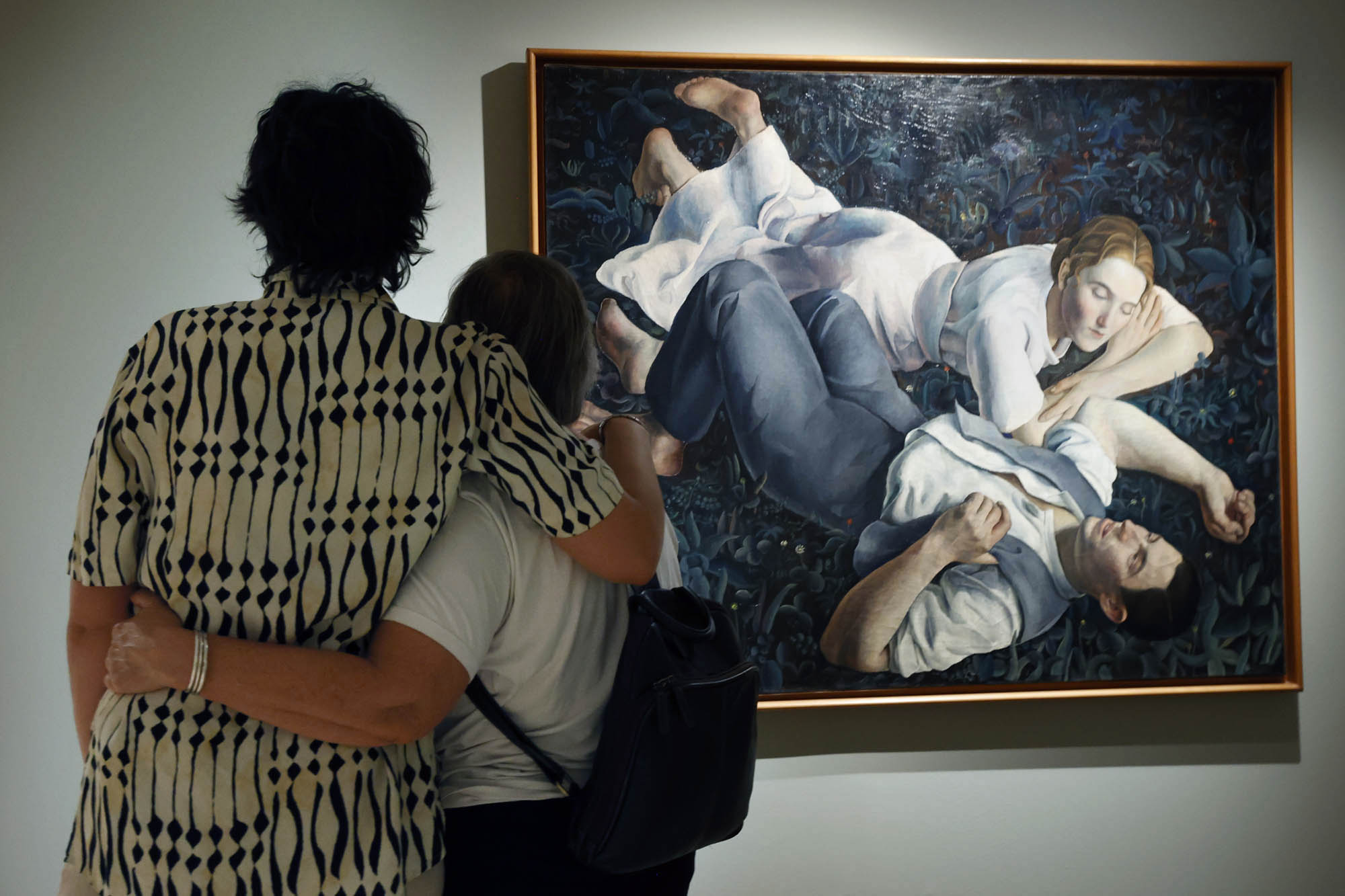
Rosario de Velasco (Spanish, 1904-1991) 'Adam and Eve' (Adán y Eva) 1932


Rosario de Velasco (Spanish, 1904-1991)
Adam and Eve (Adán y Eva)
1932
Oil on canvas
109 x 134cm
Museo Nacional Centro de Arte Reina Sofía, Madrid
Photo credit: Museo Nacional Centro de Arte Reina Sofía Photographic Archive
© Rosario de Velasco, VEGAP, Madrid, 2024


(hidden) in plain sight

When Museo Nacional Thyssen-Bornemisza, Madrid sent me an email about this exhibition I was captivated by the beautiful paintings of Rosario de Velasco, an artist who I had never hear of before, and I decided to do a posting on the exhibition.

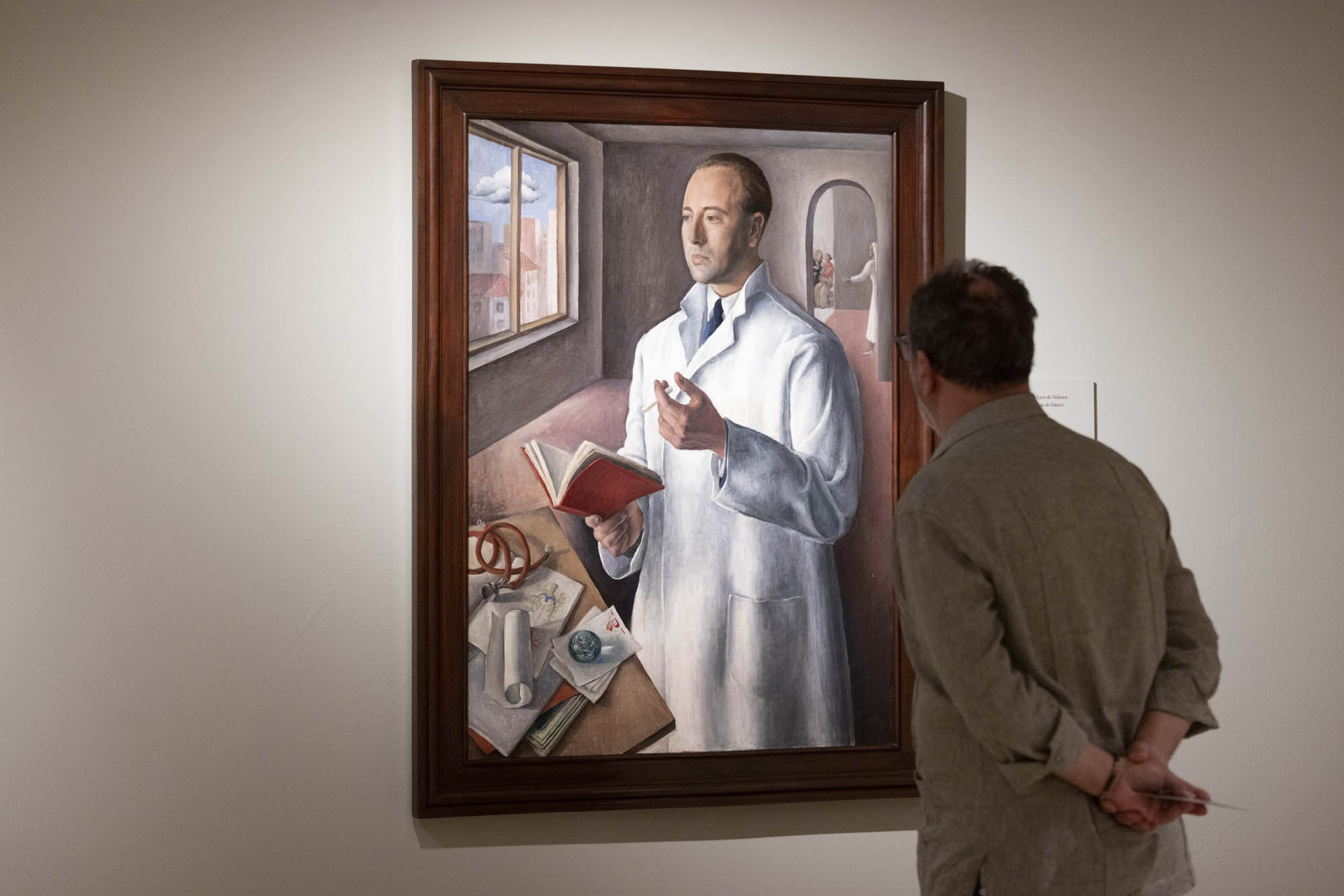
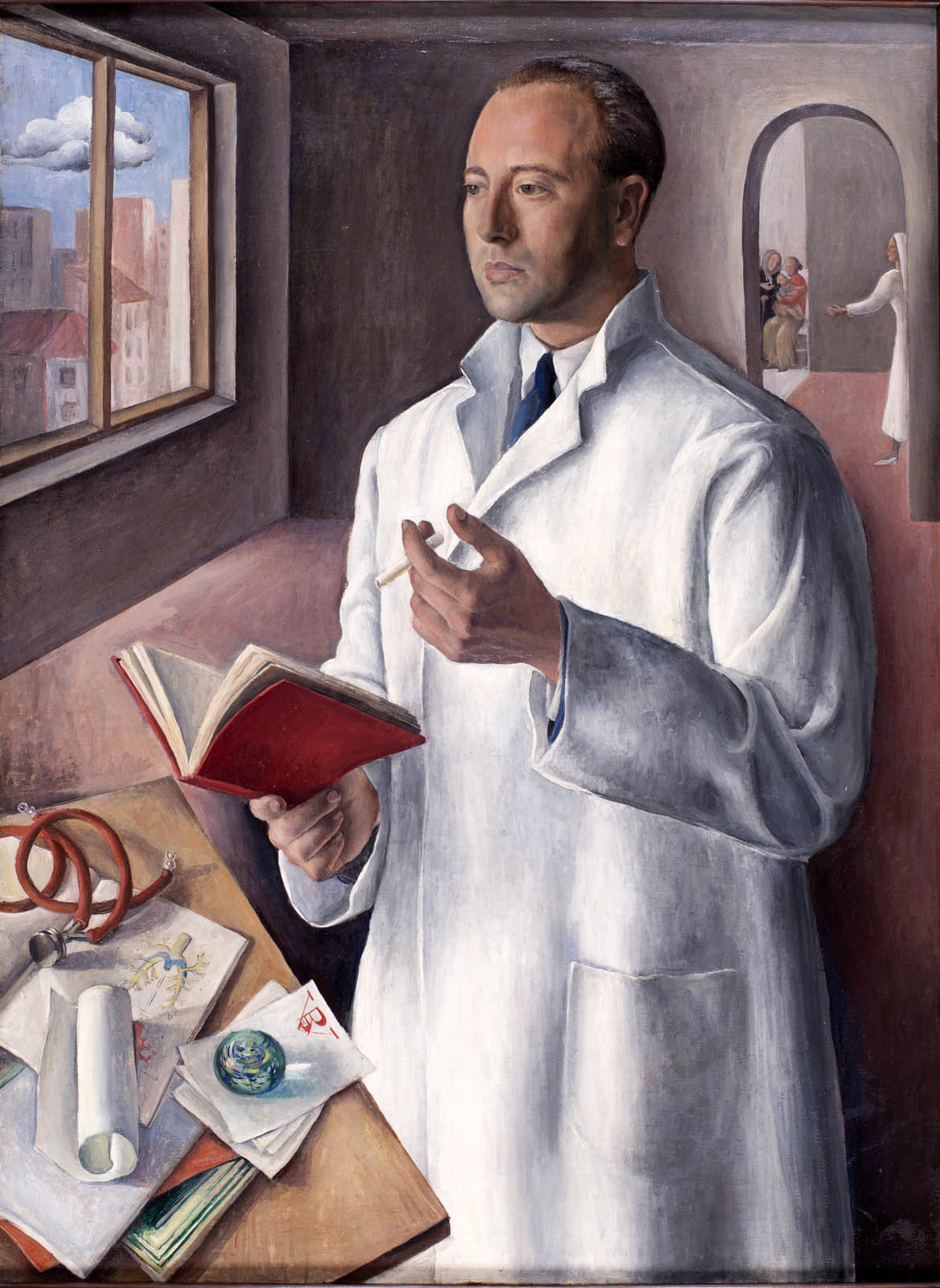
Rosario de Velasco was part of the “return to order” movement in Spain which was a style that combined tradition and modernity, associated with a revival of classicism and realistic painting. The paintings are stylish with clean lines and finely honed forms. Among other influences, they evoke Cubism in the tilting of perspective and De Chirico in the slightly twisted perspective of the architectural landscape scenes (for example, see Portrait of Doctor Luis de Velasco (Retrato del doctor Luis de Velasco) c. 1933 below) … while also incorporating magic realism (a style which presents a realistic view of the world while incorporating magical elements) in their story telling.


The press release and various commentators link de Velasco’s paintings to the Italian Novecento and German New Objectivity (Neue Sachlichkeit) movements and there are visible connections to these movements in the work. De Velasco stated that Novecento was an influence on her art practice. But while there are surface similarities in style to the likes of Christian Schad, for example, I believe that de Velasco’s work is of a different order: for New Objectivity was described by art historian G.F. Hartlaub, as ‘new realism bearing a socialist flavour’. And while de Velasco’s work bears a working class flavour it is anything but socialist.

While New Objectivity mines the satirical, debauched air of decadence of the Weimar Republic, de Velasco’s paintings are a paen (perhaps even a sermon) to motherhood, heterosexuality, religiosity, utopianism and the fascist desire for a clean, lean and muscular art. Figurative stylisation and idealisation are used to evidence this desire for wholesomeness in her paintings of gypsies, peasants and working people (just as the stereotypical form of modern realist painting imposed by Stalin following his rise to power after the death of Lenin in 1924 crushed all extant art movements in Russia including the wonderful, briefly flowering Ukrainian modernist movement).

Indeed, glossed over by the press release in a paragraph or two, is the fact that de Velasco believed in the ideas of the Spanish fascists, in “the ideas of the Falange Española de las JONS and José Antonio Primo de Rivera [which] led her to collaborate with the magazine Vértice between 1937 and 1946, where she illustrated the ideology of the new regime.”1 Her art was placed at the service of propaganda and as an artist she benefitted from being on the side of the regime.

It’s a prickly question: Is her ideology complicit with her art? Can you separate the artist from the art?

And the answer is, no you can’t.

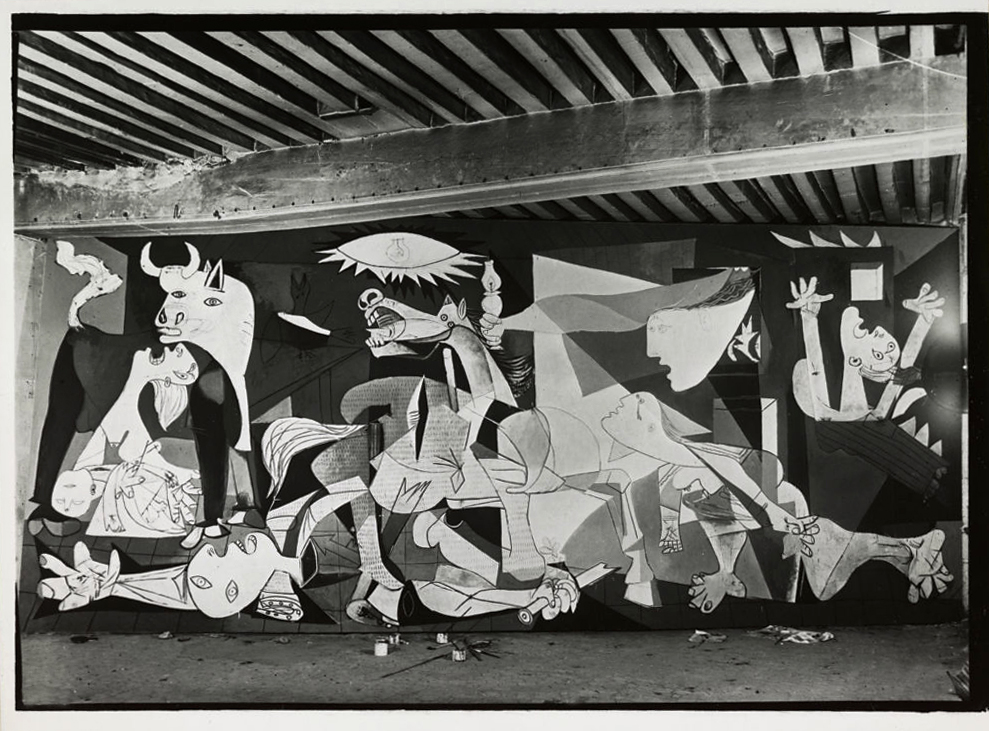
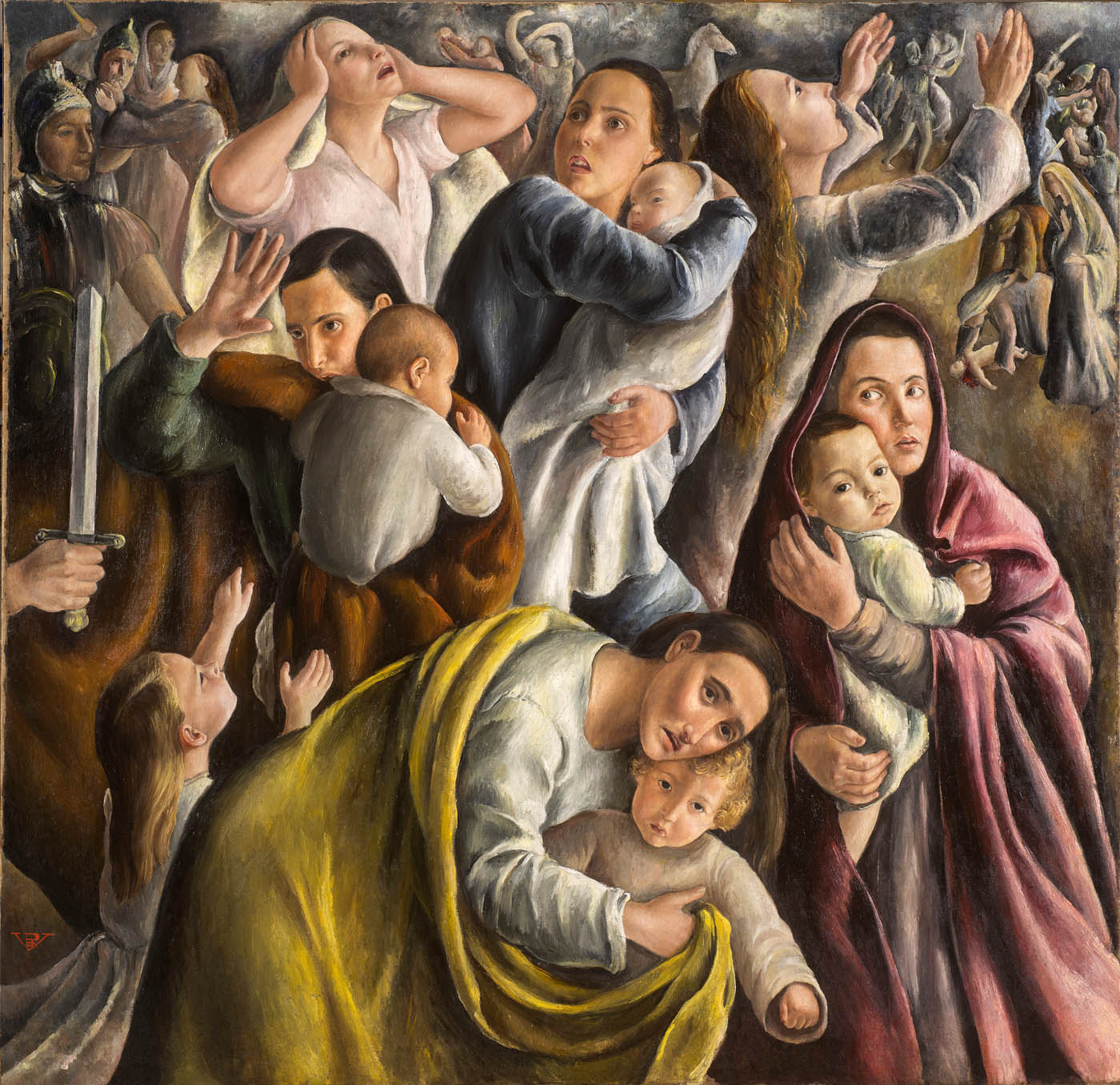
In Rosario de Velasco’s paintings the ideology slips behind the surface but it is still there. Witness the diabolical power of destruction rained down on a civilian population in Picasso’s painting Guernica (1937) – “an emotional response to war’s senseless violence ” – when compared to de Resario’s very Catholic, idealistic preternatural interpretation of a massacre in her The Massacre of the Innocents (La matanza de los inocentes) (1936, below). “She covers up with religious aura what was actually going on.”2

With the transition to democracy in Spain starting after the death of Franco in November 1975, “the exiled and forgotten republican artists were recovered, Rosario de Velasco was ignored both for her genre and for her ideology.”3 But now with her rehabilitation – noun: the action of restoring someone to former privileges or reputation after a period of disfavour – in her privilege, her special right to speak as an artist to all, we must not be blinded to the fact that de Velasco’s art is authoritarian utopian erasing social libertarian hiding dystopian destruction.

As my good friend, writer and philosopher Associate Professor James McArdle commented on Rosario de Velasco’s work: “I think we can admire the art but we must be knowing of its seduction, and be prepared to see straight through it to that layer of ideology ‘hidden in plain sight’.”4

Personally, I believe that it’s not so much hidden in plain sight, but right there in plain sight. If you are an informed, aware, sentient human being you know these things, you feel these things, and you can see these things.

There is never any excuse for a collective forgetting or cultural amnesia of the ideologies of the past for, with the rise of the far right around the world, they are returning to haunt us.

Dr Marcus Bunyan


1/ Anonymous. “La matanza de los inocentes,” on the  on the Museo Belles Arts Valencia website Nd [Online] Cited 05/09/2024. Translated by Google Translate from the Spanish text

2/ Associate Professor James McArdle email to the author, 04/09/2024

3/ Anonymous. “La matanza de los inocentes,” on the  on the Museo Belles Arts Valencia website Nd [Online] Cited 05/09/2024. Translated by Google Translate from the Spanish text

4/ Associate Professor James McArdle email to the author, 04/09/2024


Many thankx to the Museo Nacional Thyssen-Bornemisza for allowing me to publish the photographs in the posting. Please click on the photographs for a larger version of the image.


“Rosario de Velasco is part of the “return to order” movement in Spain, parallel to the German New Objectivity and the Italian Novecento, with a style that combines tradition and modernity. The artist admired masters such as Giotto, Mantegna, Piero de la Francesca, Durero, Velázquez and Goya, but also the vanguardists, such as De Chirico, Braque or Picasso and the protagonists of that return to order in Germany and Italy that she met through of magazines and exhibitions held in the 1920s in Madrid.”


Cristina Perez. “La fuerza bíblica de Rosario de Velasco ilumina el Museo Thyssen,” (The biblical force of Rosario de Velasco illuminates the Thyssen Museum) on the rtve website 18.06.2024 [Online] Cited 14/08/2024. Translated from the Spanish by Google Translate
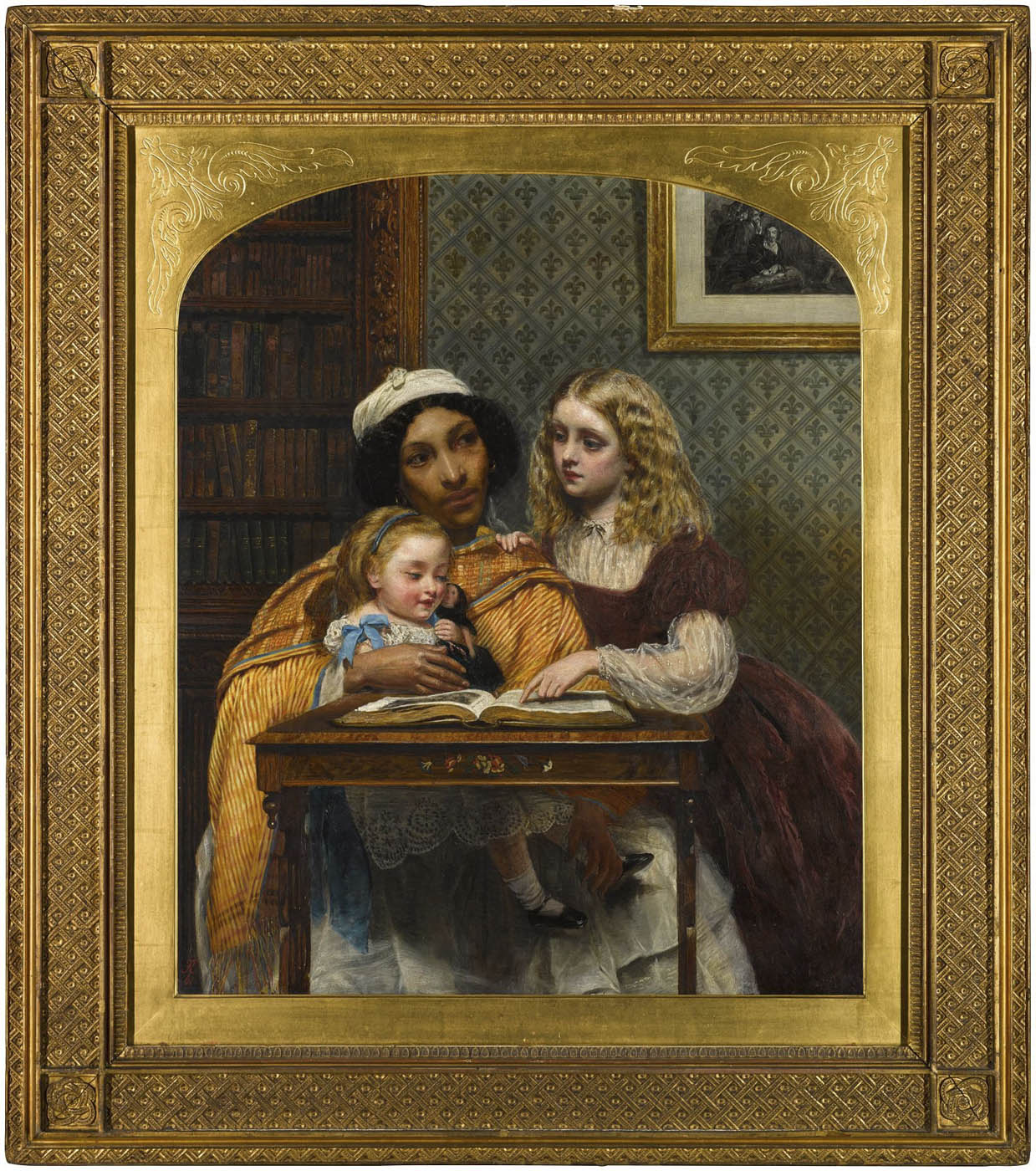
 

The return to order (French: retour à l’ordre) was a European art movement that followed the First World War, rejecting the extreme avant-garde art of the years up to 1918 and taking its inspiration from classical art instead. The movement was a reaction to the war. Cubism was partially abandoned even by its co-creator Picasso. Futurism, which had praised machinery, dynamism, violence and war, was rejected by most of its adherents. The return to order was associated with a revival of classicism and realistic painting.


Text from the Wikipedia website


Installation view of the exhibition 'Rosario de Velasco' at the Museo Nacional Thyssen-Bornemisza 

Installation view of the exhibition 'Rosario de Velasco' at the Museo Nacional Thyssen-Bornemisza 

Installation view of the exhibition 'Rosario de Velasco' at the Museo Nacional Thyssen-Bornemisza 

Installation view of the exhibition 'Rosario de Velasco' at the Museo Nacional Thyssen-Bornemisza showing Velasco's 'Adam and Eve' (1932)


Installation view of the exhibition Rosario de Velasco at the Museo Nacional Thyssen-Bornemisza showing in the bottom image, Velasco’s Adam and Eve (1932, above)


Installation view of the exhibition 'Rosario de Velasco' at the Museo Nacional Thyssen-Bornemisza showing Velasco's 'Portrait of Doctor Luis de Velasco' (c. 1933)


Installation view of the exhibition Rosario de Velasco at the Museo Nacional Thyssen-Bornemisza showing Velasco’s Portrait of Doctor Luis de Velasco (c. 1933, below)


Rosario de Velasco (Spanish, 1904-1991) 'Portrait of Doctor Luis de Velasco' (Retrato del doctor Luis de Velasco) c. 1933


Rosario de Velasco (Spanish, 1904-1991)
Portrait of Doctor Luis de Velasco (Retrato del doctor Luis de Velasco)
c. 1933
Oil on canvas
114 x 84cm
José A. de Velasco Collection
© Rosario de Velasco, VEGAP, Madrid, 2024


Otto Dix (German, 1891-1969) 'The Jeweller Karl Krall' (Der Juwelier Karl Krall) 1923


Otto Dix (German, 1891-1969)
The Jeweller Karl Krall (Der Juwelier Karl Krall)
1923
Oil on canvas
Kunst- und Museumsverein im Von der Heydt-Museum Wuppertal

This painting is not in the exhibition and is used under fair use conditions for the purposes of education and research.


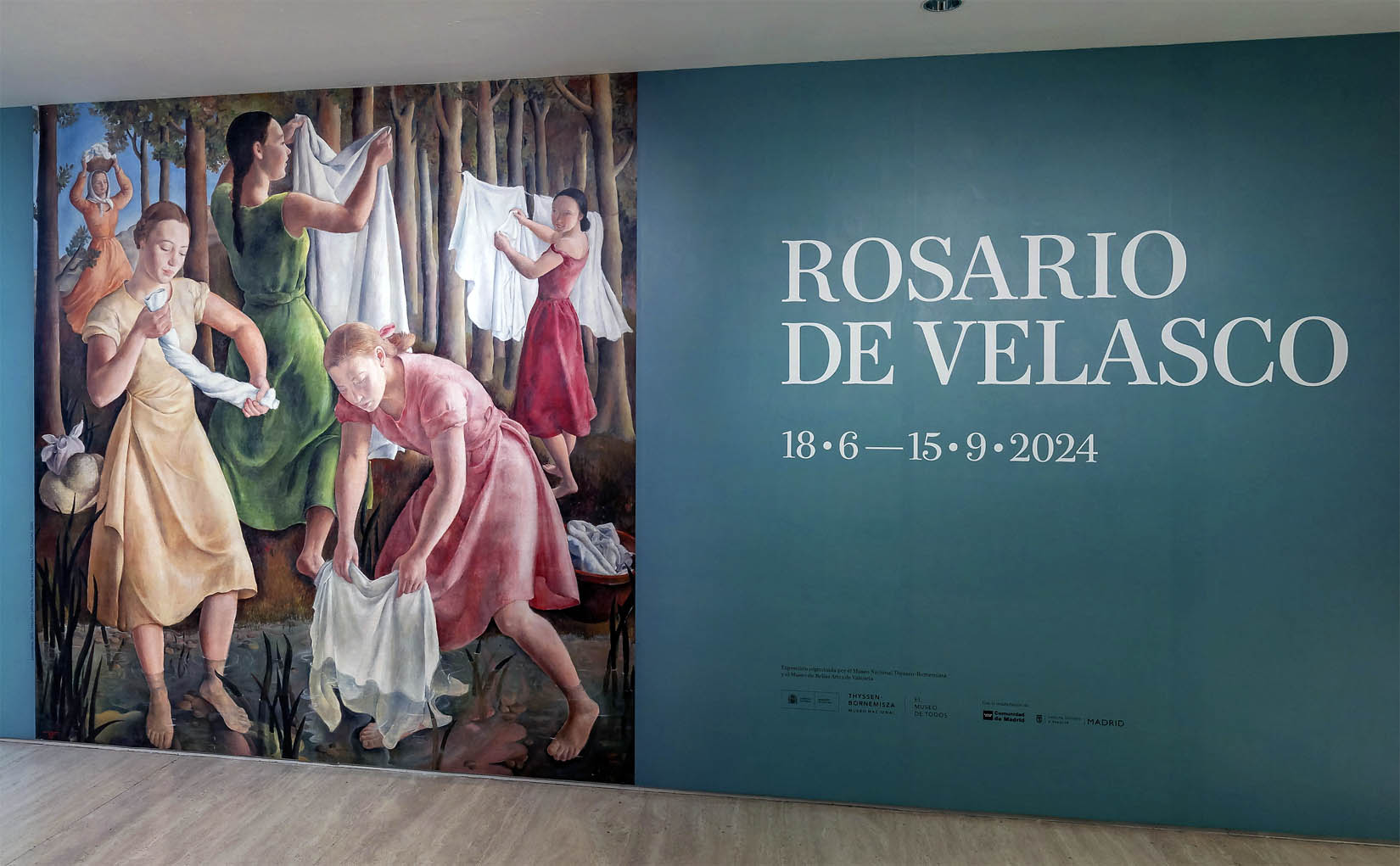
The Museo Nacional Thyssen-Bornemisza is jointly organising with the Museo de Bellas Artes de Valencia an exhibition on the Spanish figurative painter Rosario de Velasco (Madrid, 1904 – Barcelona, 1991).

Curated by Miguel Lusarreta and Toya Viudes de Velasco, the artist’s great-niece, the exhibition features 30 paintings from the 1920s to 1940s (the earliest and the most important from Velasco’s career) and a section on her activities as an illustrator. Alongside well known works from museum collections, such as the famous oil Adam and Eve from the Museo Nacional Centro de Arte Reina Sofía, with which the artist obtained the second-prize medal for painting at the National Fine Arts Exhibition in 1932, or The Massacre of the Innocents (1936) from the Museo de Bellas Artes de Valencia, there will be others on display for the first time that have remained with Velasco’s family and in private collections, some unlocated until recently and only found and identified in the past few years.

Through a selection of paintings, drawings and illustrations and employing an approach that combines general art-historical issues and also explores aesthetic, social and political aspects, the exhibition aims to rediscover and reassess the work of one of the great Spanish women artists of the first half of the 20th century.

Following its showing in Madrid the exhibition will be seen at the Museo de Bellas Artes de Valencia from 7 November 2024 to 16 February 2025.

Text from the Museo Nacional Thyssen-Bornemisza website


Rosario de Velasco (Spanish, 1904-1991) 'Seamstress Asleep' (Costurera dormida) c. 1930


Rosario de Velasco (Spanish, 1904-1991)
Seamstress Asleep
c. 1930
Oil on canvas
56 × 75cm
Private collection
Photo: Jonás Bel
© Rosario de Velasco, VEGAP, Madrid, 2024


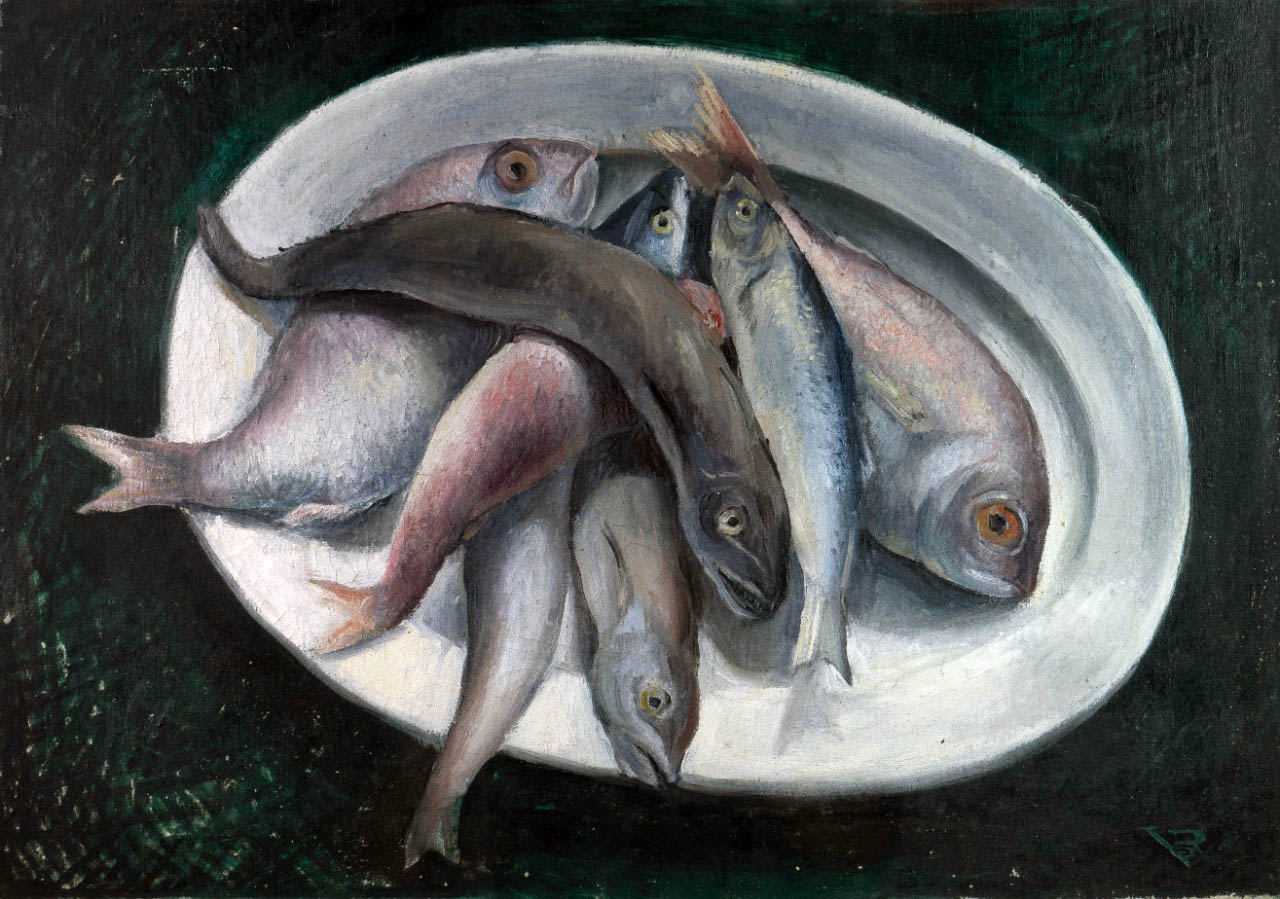
Rosario de Velasco (Spanish, 1904-1991) 'Still Life with Fish' (Bodegón con peces) c. 1930


Rosario de Velasco (Spanish, 1904-1991)
Still Life with Fish (Bodegón con peces)
c. 1930
Oil on canvas
42 × 60cm
Ibáñez Museum Collection, Olula del Rio
© Rosario de Velasco, VEGAP, Madrid, 2024


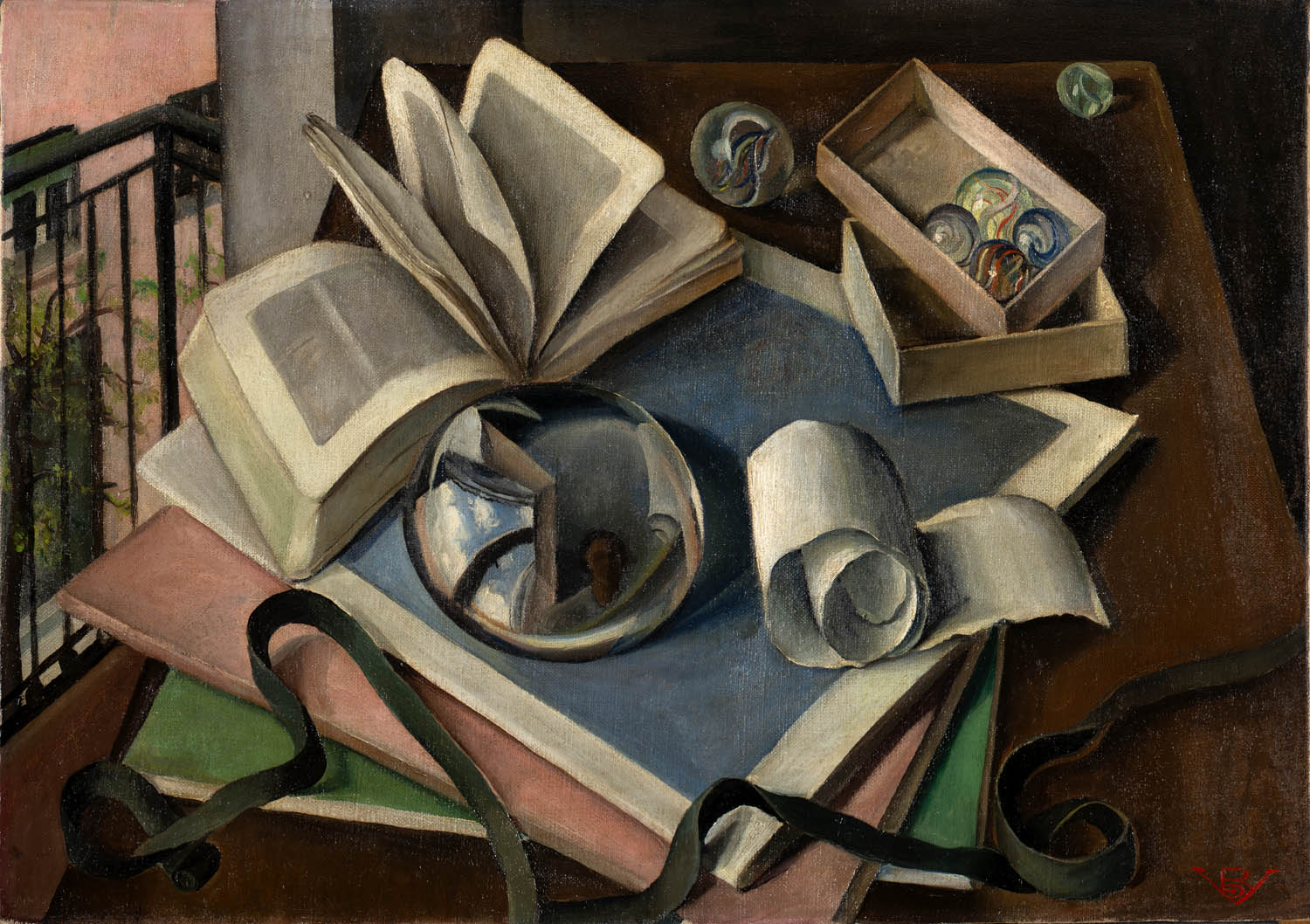
Rosario de Velasco (Spanish, 1904-1991) 'Things' (Cosas) 1933


Rosario de Velasco (Spanish, 1904-1991)
Things (Cosas)
1933
Oil on canvas
45.5 × 65.5cm
Private collection
© Rosario de Velasco, VEGAP, Madrid, 2024


Rosario de Velasco (Spanish, 1904-1991) 'Untitled, (The Children's Room)' / Sin título (El cuarto de los niños) 1932-1933


Rosario de Velasco (Spanish, 1904-1991)
Untitled, (The Children’s Room) / Sin título (El cuarto de los niños)
1932-1933
Oil on canvas
55 × 73cm
Museo Nacional Centro de Arte Reina Sofía, Madrid
Photo: Archivo Fotográfico Museo Nacional Centro de Arte Reina Sofía
© Rosario de Velasco, VEGAP, Madrid, 2024


Rosario de Velasco remains one of the least known artists of the 1930s in Spain. Her academic training in Madrid took place alongside Fernando Álvarez de Sotomayor and, above all, was the result of her avid curiosity for the Italian Novecento and the German New Objectivity. This interest came to her through magazines and the contemplation of the work of authors such as Carlo Carrà, Felice Casorati and Ardengo Soffici at the Palacio de Exposiciones del Retiro in 1928.

Her approach to the ideas of the Falange Española de las JONS and José Antonio Primo de Rivera led her to collaborate with the magazine Vértice between 1937 and 1946, where she illustrated the ideology of the new regime. In this context we must place the canvas The Massacre of the Innocents (1936), in which Rosario de Velasco used a religious theme to create a work with clear political content created with the aim of mobilising society. The work was presented at the National Exhibition of Fine Arts inaugurated on July 4, 1936 by the President of the Republic, Manuel Azaña, at the Palacio de Cristal in Madrid.

This drift from realism towards political action was a frequent trend at a turbulent time in the history of Spain when art was placed at the service of propaganda. However, with democracy, the exiled and forgotten republican artists were recovered, Rosario de Velasco was ignored both for her genre and for her ideology. The flood of 1957 only deepened the marginalisation of The Massacre of the Innocents and left the painting covered in mud and with water marks for years. The magnificent and disturbing work was attributed to Ricardo Verde based on the monogram with which Rosario de Velasco signed her works, with the initials of her name, RV, until in 1995 its authorship was returned to the artist.

Anonymous. “La matanza de los inocentes,” on the  on the Museo Belles Arts Valencia website Nd [Online] Cited 05/09/2024. Translated by Google Translate from the Spanish text


The Spanish Civil War marked a turning point in Rosario’s life. Her Falangist militancy and her family environment led her to leave Madrid, traveling first to Valencia and then to Barcelona, ​​where she met the doctor Javier Farrerons, who would become her husband. Thanks to Farrerons, Rosario was released from the Modelo prison in Barcelona, ​​where she was detained. After the war, he settled in Barcelona with his family and continued to participate in various exhibitions, albeit less frequently.

In 1939, she participated in the National Exhibition of Painting and Sculpture in Valencia, and in 1940 she presented her first individual exhibition in Barcelona. Over the following years, she also exhibited in Madrid, at events such as the National Exhibition of Fine Arts in 1941 and 1954, as well as in various galleries. In 1944, she was selected for the II Salón de los Once, organised by the Academia Breve de Crítica de Arte, an initiative by Eugenio d’Ors to promote post-war art.

Redacción. “Rosario de Velasco: Entre Giotto y Picasso, un estilo único en la pintura española,” (Rosario de Velasco: Between Giotto and Picasso, a unique style in Spanish painting) on the GenexiGente website 28/05/2024 [Online] Cited 14/08/2024, Translated from the Spanish by Google Translate


The outbreak of the Civil War, her Falangist militancy and her family environment lead her to leave Madrid. She travels first to Valencia and then to Barcelona, ​​in Sant Andreu de Llavaneres, where she meets the ophthalmologist Javier Farrerons, her future husband, and who managed to free her from the Modelo prison in Barcelona, ​​where she was detained. Viudes de Velasco explains that “thanks to God, she was in prison for one night because she had the immense luck that the doctor in the prison was a very good friend of the one who later became her husband, and that same night they took her out. The next day her cellmate was shot. That marked her life and she didn’t want to talk about the war again.”

Cristina Perez. “La fuerza bíblica de Rosario de Velasco ilumina el Museo Thyssen,” (The biblical force of Rosario de Velasco illuminates the Thyssen Museum) on the rtve website 18.06.2024 [Online] Cited 14/08/2024. Translated from the Spanish by Google Translate


Dora Maar (French, 1907-1997) 'Guernica' May-June, 1937


Dora Maar (French, 1907-1997)
Guernica
May-June, 1937
Gelatin silver print

This photograph is not in the exhibition and is used under fair use conditions for the purposes of education and research.


Rosario de Velasco (Spanish, 1904-1991) 'The Massacre of the Innocents' (La matanza de los inocentes) 1936


Rosario de Velasco (Spanish, 1904-1991)
The Massacre of the Innocents (La matanza de los inocentes)
1936
Oil on canvas
164 × 167.5cm
Museo de Bellas Artes de Valencia
Photo: Museo de Bellas Artes de Valencia
© Rosario de Velasco, VEGAP, Madrid, 2024


The Museo Nacional Thyssen-Bornemisza is jointly presenting with the Museo de Bellas Artes de Valencia an exhibition on the Spanish figurative painter Rosario de Velasco (Madrid, 1904 – Barcelona, 1991). Curated by Miguel Lusarreta and Toya Viudes de Velasco, the artist’s great-niece, the exhibition brings together around 30 paintings from the 1920s to the 1940s – the earliest and the most important from Velasco’s career – and also has a section on her work as an illustrator.

The exhibition, which is benefiting from the support of the Region of Madrid and the City Council of Madrid, aims to present and draw attention to the work of one of the great Spanish women artists of the first half of the 20th century. In addition to well-known paintings from museum collections, such as the famous oil Adam and Eve (1932) from the Museo Nacional Centro de Arte Reina Sofía, The Massacre of the Innocents (1936) from the Museo de Bellas Artes de Valencia, Maragatos (1934) from the Museo del Traje, Madrid, and Carnival (before 1936) from the Centre Pompidou, Paris, the exhibition features works still with the artist’s family and in private collections and others that have only been rediscovered and located in the past few months. Following its showing in Madrid, the exhibition will be presented at the Museo de Bellas Artes de Valencia from 7 November 2024 to 16 February 2025.

Rosario de Velasco’s work represents an outstanding example of the so-called “return to order” in Spain, a movement parallel to German New Objectivity and Italian Novecento with a style that combined tradition and modernity. Velasco admired painters such as Giotto, Masaccio, Piero della Francesca, Mantegna, Velázquez and Goya, but also avant-garde figures such as De Chirico, Braque, Picasso and the exponents of the “return to order” in Germany and Italy, whom she encountered via magazines and exhibitions held in Madrid in the 1920s.

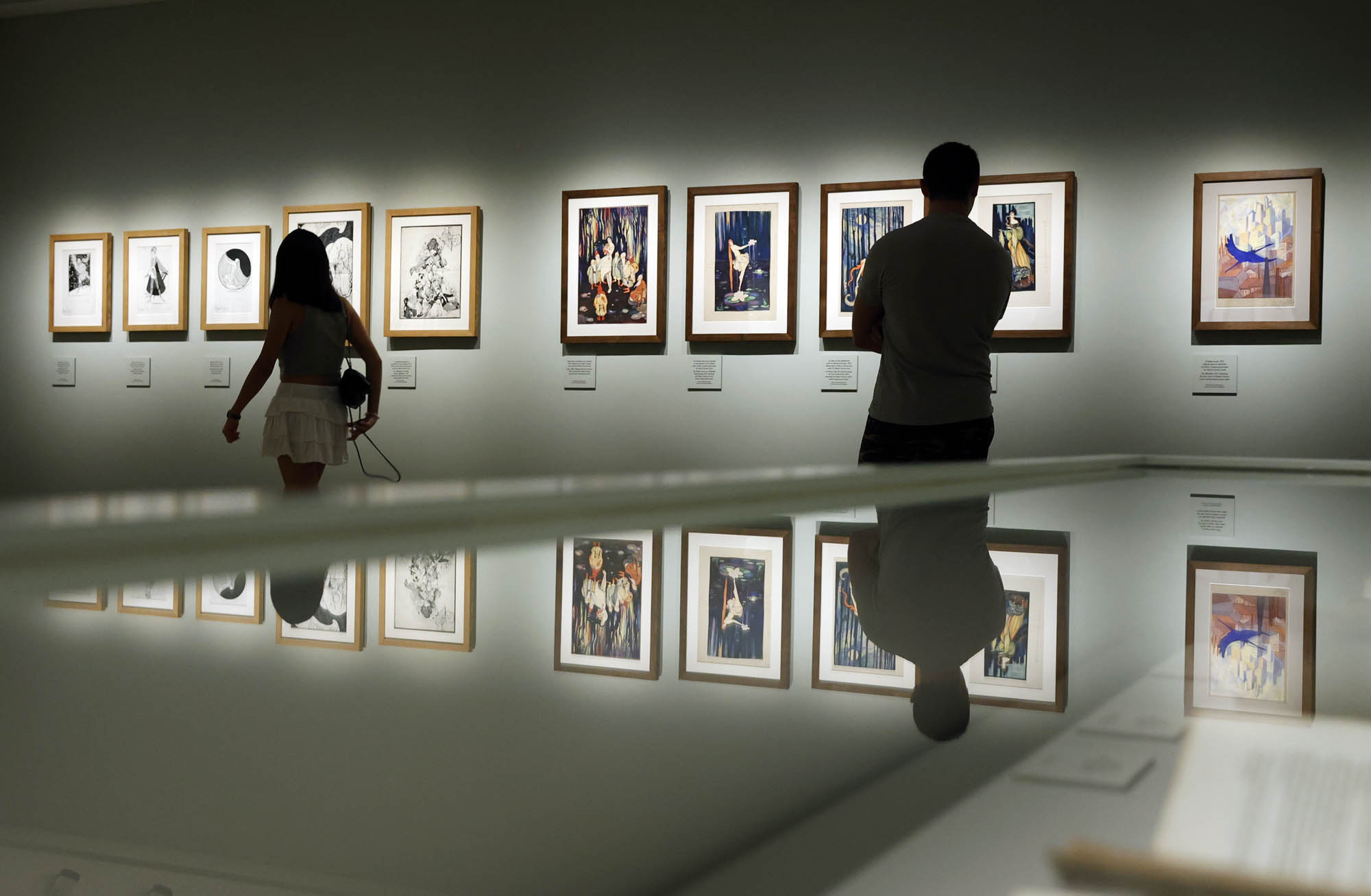
The exhibition also focuses on Velásco’s activities as an illustrator, revealing a graphic artist of great versatility. This is evident, for example, in her illustrations for the 1928 edition of Stories for dreaming by María Teresa León and Stories for my grandchildren (1932) by Carmen Karr.

Rosario de Velasco (Madrid, 1904 – Barcelona, 1991)

Born into a very traditional and religious family in Madrid, Rosario de Velasco began to study art aged fifteen at the academy of the genre painter Fernando Álvarez de Sotomayor, a member of the Royal San Fernando Academy of Fine Arts and two-time director of the Museo del Prado. Dating from that period is her Self-portrait (1924), which she signed with a monogram consisting of the initials R, D and V. Inspired by Dürer’s monogram, it has been fundamental to locating some of the artist’s paintings.

The young artist was, however, aware that she needed to go beyond tradition and assimilate the new trends and avant-gardes in her desire to compete as an equal in a largely male world. Her openness and cultural curiosity led her to associate with numerous creators of her generations, particularly women painters and writers such as Maruja Mallo, Rosa Chacel and María Teresa León. Other women friends included Mercedes Noboa, Matilde Marquina, Concha Espina and Lilí Álvarez, the tennis champion whom Velasco painted in the 1930s and with whom she enjoyed playing the sport. De Velasco was also a tireless traveller and enjoyed mountaineering, skiing and rock climbing.

In 1924, the year she completed her studies, the artist participated in the National Fine Arts Exhibition in Madrid and also produced her first illustrations. By the 1930s Rosario de Velasco had established a considerable reputation, taking part in numerous group shows and competitions, such as the National Fine Arts Exhibition of 1932 in which she presented the canvas Adam and Eve, which earned her a second prize medal in the Painting category. The work was exhibited together with all the other entries in the Palacio de Exposiciones in the Retiro park and in various exhibitions organised by the Society of Iberian Artists held in Copenhagen and Berlin, where it was warmly praised by critics for its power and originality and Velasco was singled out as the major discovery of the season. The work is startling in its play of perspective, employing a bird’s-eye view, a device also used in various still lifes and in (Untitled) The Children’s Room (1932-33), another work in the collection of the Museo Reina Sofía, in which the artist disrupts the space through an original arrangement of objects that recalls Cubism.

The majority of Velasco’s most important works date from that decade: Maragatos, which was awarded second prize in the National Painting competition of 1932; The Massacre of the Innocents (1936), which for many years was attributed to Ricardo Verde due to the signature “RV”, until it was correctly attributed to De Velasco in 1995; and Laundresses (1934), a wedding gift to her brother, Dr Luis de Velasco, who appears in another work in the present exhibition.

In 1935 Gypsies was selected to participate in the Carnegie International, an exhibition of artists from different countries organised by the Carnegie Museum of Art in Pittsburgh. Velasco’s work shared space with that of Carlo Carrá, Otto Dix, Edward Hopper and Georgia O’Keeffe, as well as Picasso and Dalí. Lost for years, the painting has only recently been located and is one of the major discoveries made during the preparation of this exhibition.

On the outbreak of the Spanish Civil War the artist’s membership of the Falange and her family context led her to leave Madrid. She went first to Valencia and later to Barcelona, to Sant Andreu de Llavaneres where she met a doctor, Javier Farrerons, who later became her husband and who succeeded in liberating her from the Modelo prison in Barcelona where she was being held. After the war the artist settled in Barcelona with her husband and their daughter María del Mar.

In 1939 Velasco participated in the National Exhibition of Painting and Sculpture in Valencia and in 1940 presented her first solo exhibition, in Barcelona. Over the following years she continued to exhibit in Madrid although less often, for example at the National Fine Arts Exhibitions of 1941 and 1954, and at various galleries. In 1944 Velasco was selected for the 2nd Salón de los Once, organised by the Academia Breve de Crítica de Arte, founded by Eugenio d’Ors to promote art of the immediate post-war period. D’Ors was one of the well known figures in the artist and her husband’s circle of friends, together with Dionisio Ridruejo, Pere Pruna and Carmen Conde, among others.

The recent search for works by Velasco which was undertaken via the social media and the media in general has resulted in the identification in private collections of both celebrated works of which all trace had been lost, such as Things (1933), Motherhood (1933), Gypsies (1934) and Pensive Woman (1935), as well as various illustrations for books and a preparatory drawing for the oil painting Carnival (before 1936). It has also brought to light some previously completely unknown works such as Still Life with Fish (c. 1930) and Girls with a Doll (1937).

Press release from the Museo Nacional Thyssen-Bornemisza


Rosario de Velasco (Spanish, 1904-1991) ''The Bluebird', drawing for the cover of María Teresa León's book 'Cuentos para soñar'' (El pájaro azul 1927. Dibujo para la cubierta del libro Cuentos para soñar de María Teresa León, 1927) 1927


Rosario de Velasco (Spanish, 1904-1991)
The Bluebird, drawing for the cover of María Teresa León’s book Cuentos para soñar (El pájaro azul 1927. Dibujo para la cubierta del libro Cuentos para soñar de María Teresa León, 1927)
1927
Mixed media on paper
41 x 27.5cm
Gonzalez Rodriguez Collection
Photo: Jonás Bel
© Rosario de Velasco, VEGAP, Madrid, 2024


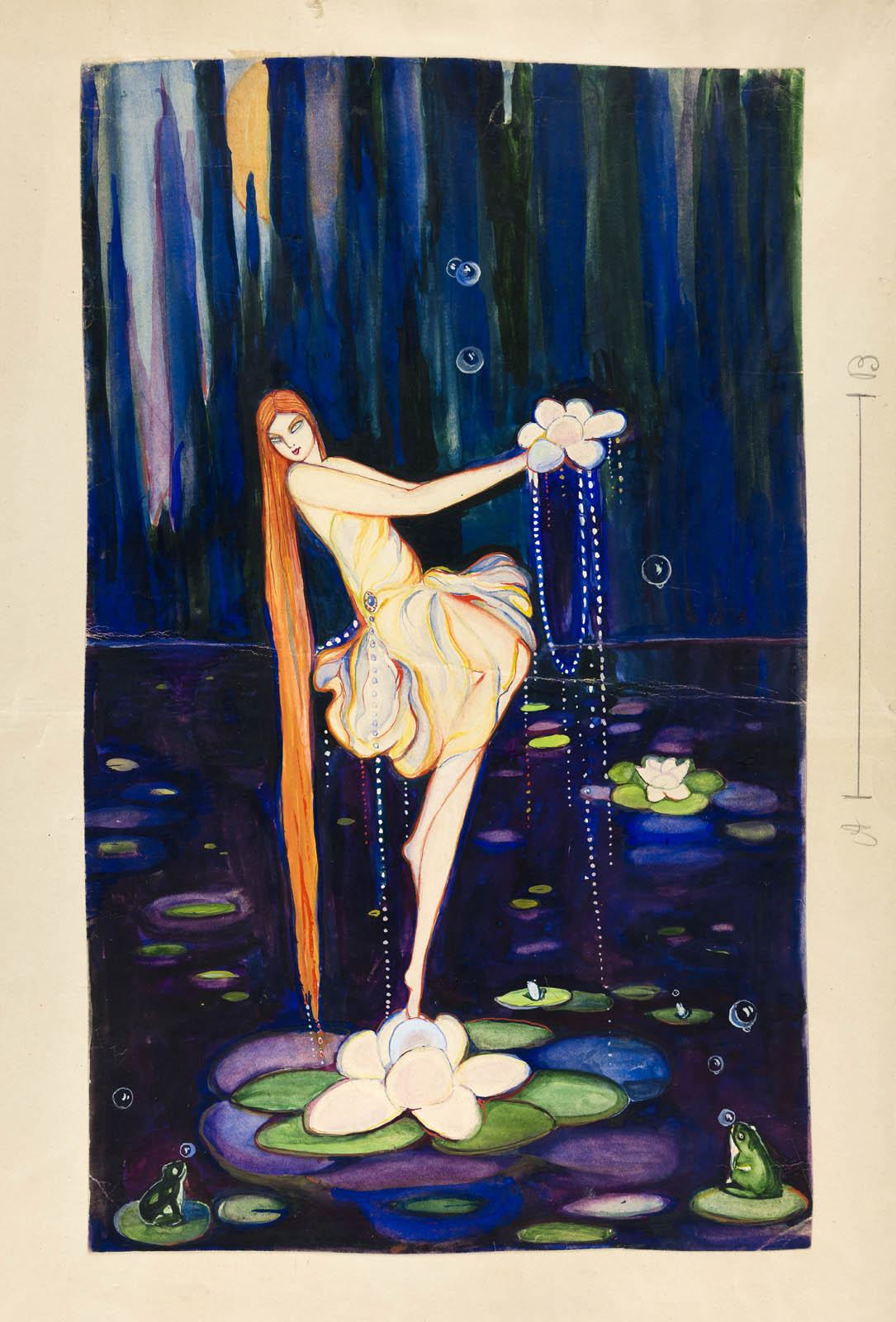
Rosario de Velasco (Spanish, 1904-1991) ''The White Leaves of a Waterlily Half Opened', drawing for María Teresa León's book 'Cuentos para soñar'' (Las blancas hojas de nenúfar se entreabrieron, 1927. Dibujo para el libro Cuentos para soñar de María Teresa León) 1927


Rosario de Velasco (Spanish, 1904-1991)
The White Leaves of a Waterlily Half Opened, drawing for María Teresa León’s book Cuentos para soñar (Las blancas hojas de nenúfar se entreabrieron, 1927. Dibujo para el libro Cuentos para soñar de María Teresa León)
1927
Mixed media on paper
50 × 32.3cm
Gonzalez Rodriguez Collection
Photo: Jonás Bel
© Rosario de Velasco, VEGAP, Madrid, 2024


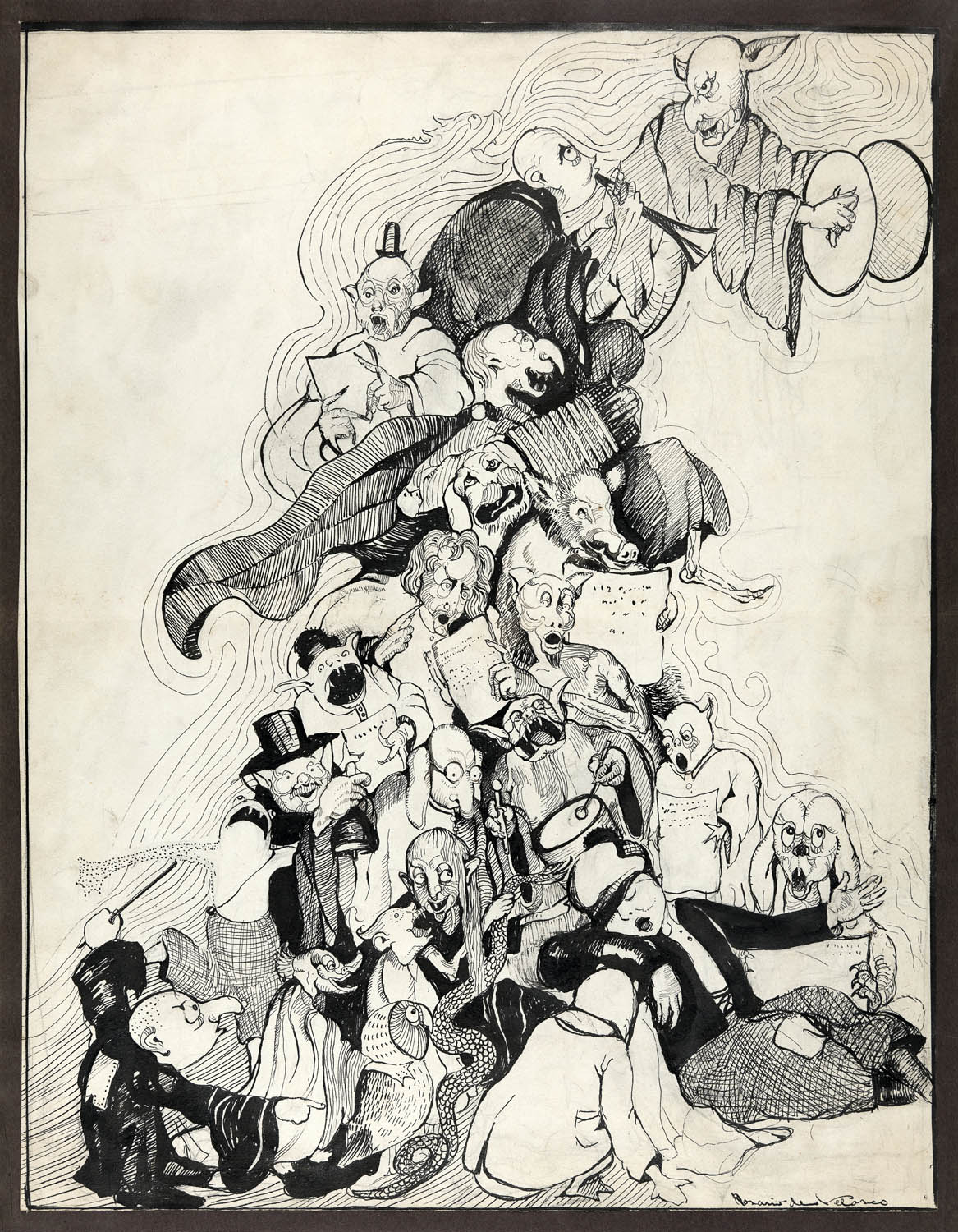
Rosario de Velasco (Spanish, 1904-1991) ''The Hullabaloo Gave Him Serious Nightmares', drawing for María Teresa León’s book 'Cuentos para soñar' (Tales to dream about)' (La algarabía ciudadana proporcionó serias pesadillas 1927. Dibujo para el libro Cuentos para soñar de María Teresa León) 1927


Rosario de Velasco (Spanish, 1904-1991)
The Hullabaloo Gave Him Serious Nightmares, drawing for María Teresa León’s book Cuentos para soñar (Tales to dream about) (La algarabía ciudadana proporcionó serias pesadillas, 1927. Dibujo para el libro Cuentos para soñar de María Teresa León)
1927
Ink on paper
42.3 × 32.5cm
Gonzalez Rodriguez Collection
Photo: Jonás Bel
© Rosario de Velasco, VEGAP, Madrid, 2024


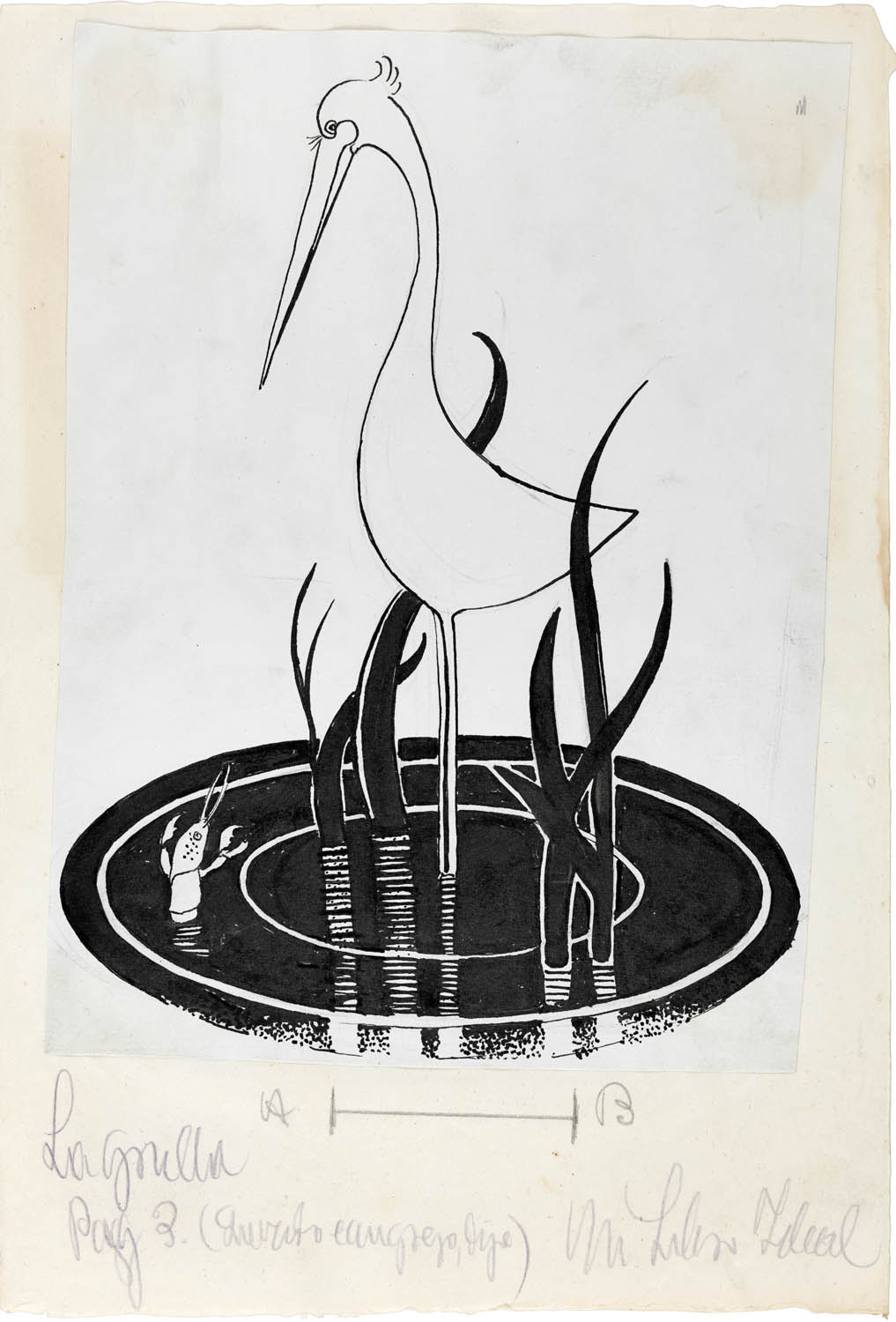
Rosario de Velasco (Spanish, 1904-1991) ''Dear Crab, Leave the Crane', drawing for 'Mi libro ideal'' (Querido cangrejo, deja la grulla, 1933. Dibujo para Mi libro ideal de varios autores) 1933


Rosario de Velasco (Spanish, 1904-1991)
Dear Crab, Leave the Crane, drawing for Mi libro ideal (Querido cangrejo, deja la grulla, 1933. Dibujo para Mi libro ideal de varios autores)
1933
Ink on paper
31.2 × 21.4cm
Gonzalez Rodriguez Collection
Photo: Jonás Bel
© Rosario de Velasco, VEGAP, Madrid, 2024


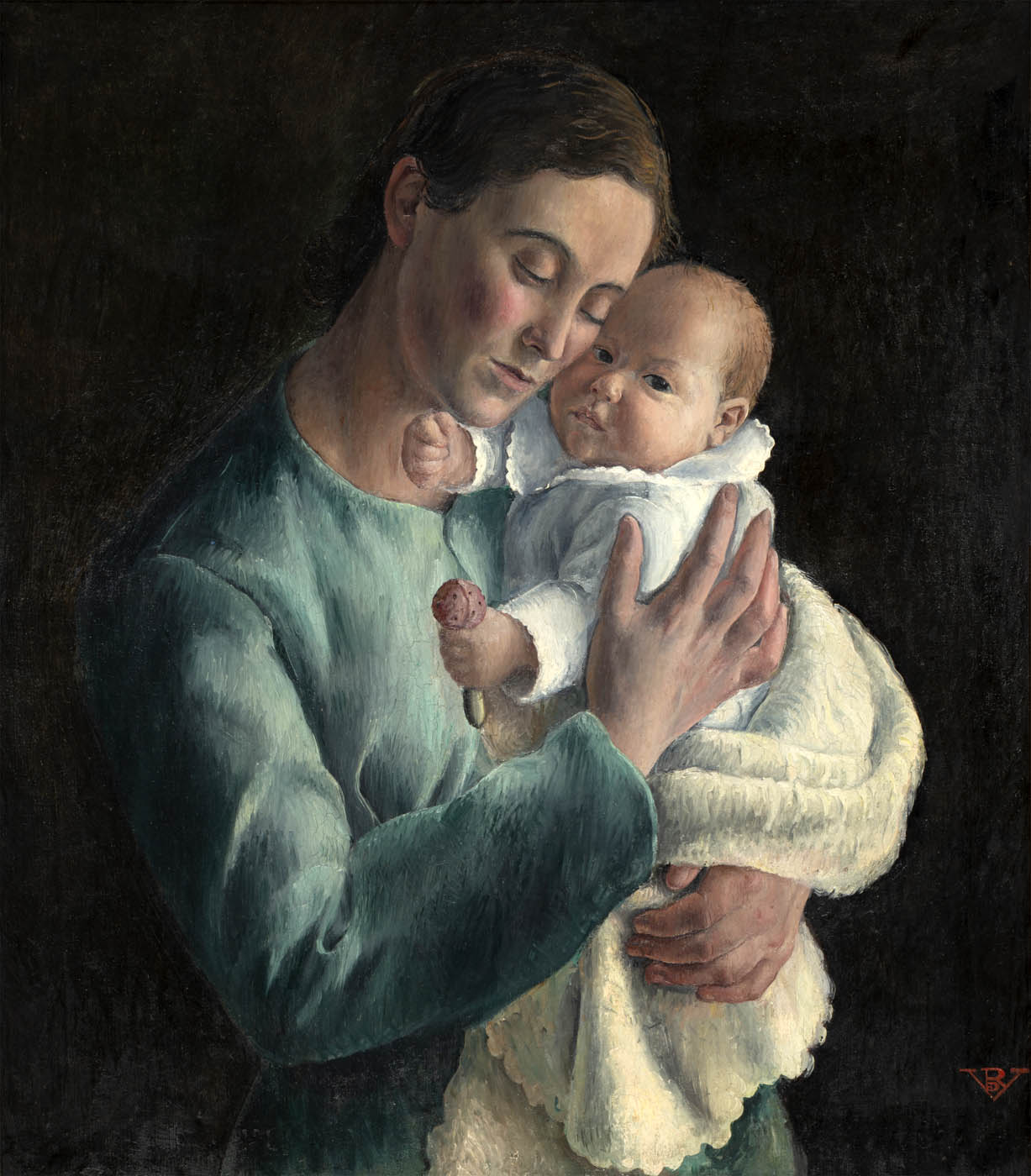
Rosario de Velasco (Spanish, 1904-1991) 'Motherhood' (Maternidad) 1933


Rosario de Velasco (Spanish, 1904-1991)
Motherhood (Maternidad)
1933
Oil on canvas
99 × 89cm
Private collection
© Rosario de Velasco, VEGAP, Madrid, 2024


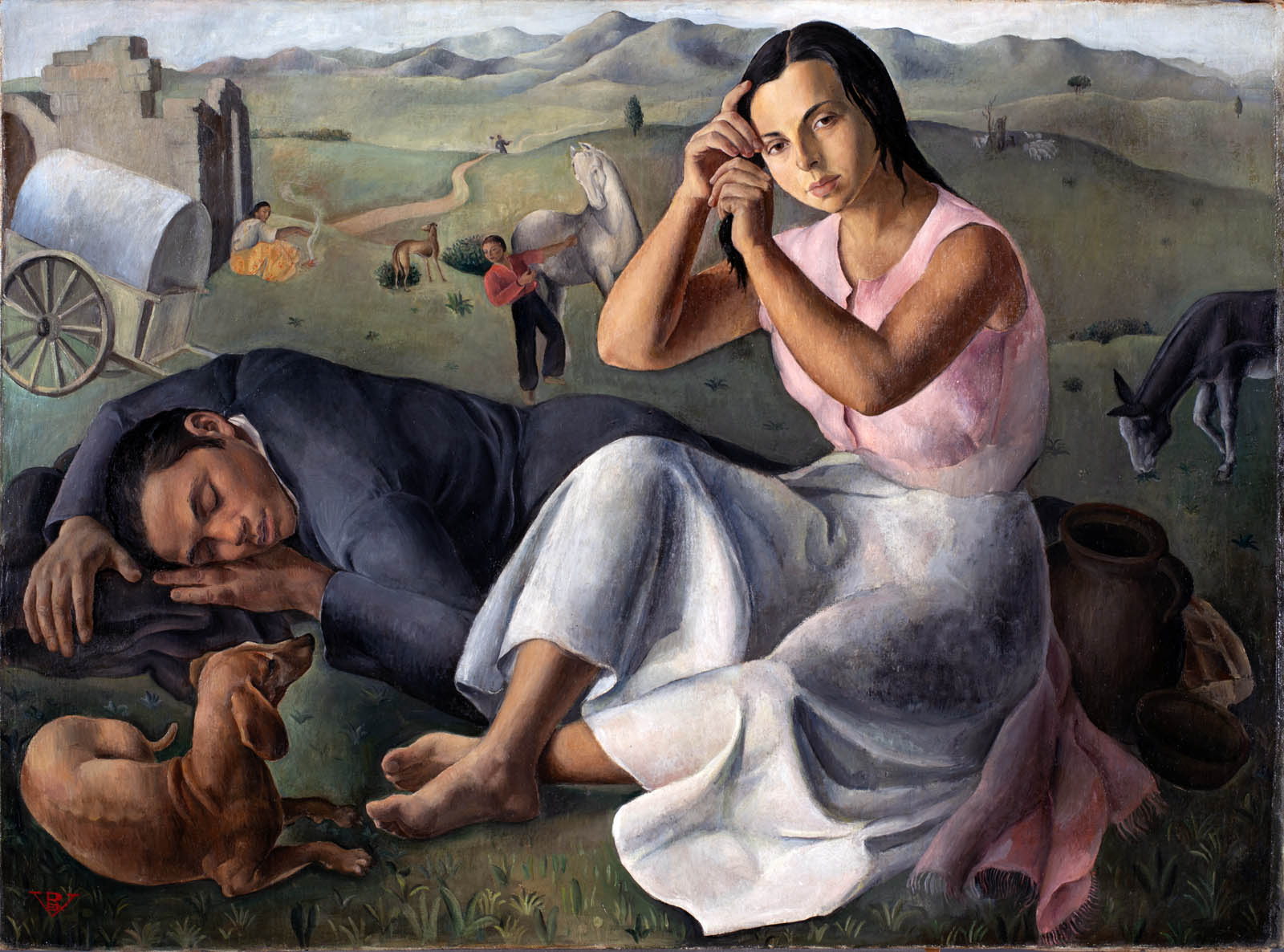
Rosario de Velasco (Spanish, 1904-1991) 'Gypsies' (Gitanos) 1934


Rosario de Velasco (Spanish, 1904-1991)
Gypsies (Gitanos)
1934
Oil on canvas
95 × 132cm
Private collection
© Rosario de Velasco, VEGAP, Madrid, 2024


Otto Dix (1891-1969) 'Reclining Woman on a Leopard Skin' 1927


Otto Dix (German, 1891-1969)
Reclining Woman on a Leopard Skin
1927
Oil paint on panel
680 x 980mm
© DACS 2017. Collection of the Herbert F. Johnson Museum of Art, Cornell University. Gift of Samuel A. Berger

This painting is not in the exhibition and is used under fair use conditions for the purposes of education and research.


Dix was a key supporter of the New Objectivity (Neue Sachlichkeit) movement, a name coined after an exhibition held in Mannheim, Germany in 1925. Described by art historian G.F. Hartlaub, as ‘new realism bearing a socialist flavour’, the movement sought to depict the social and political realities of the Weimar Republic.


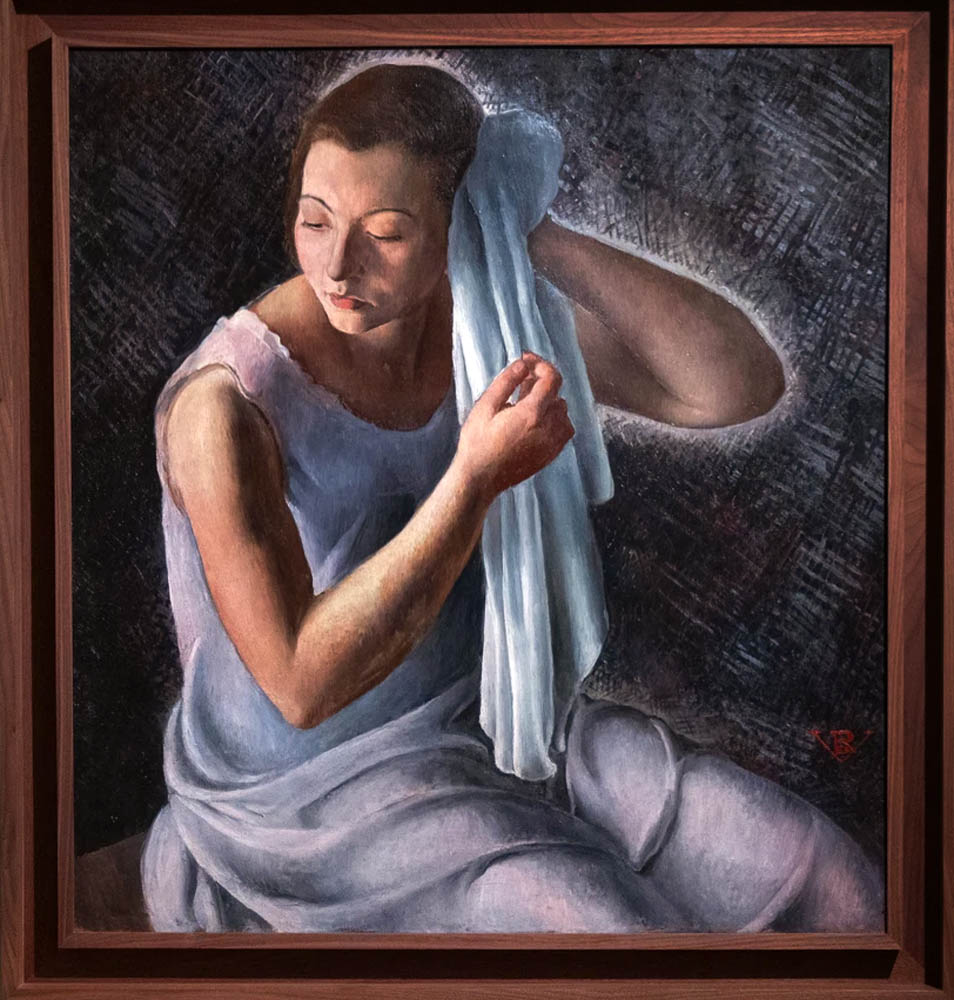
Rosario de Velasco (Spanish, 1904-1991) 'Woman with Towel' (Mujer con toalla) 1934


Rosario de Velasco (Spanish, 1904-1991)
Woman with Towel (Mujer con toalla)
1934
Oil on canvas
82 × 76cm
Private collection
© Rosario de Velasco, VEGAP, Madrid, 2024


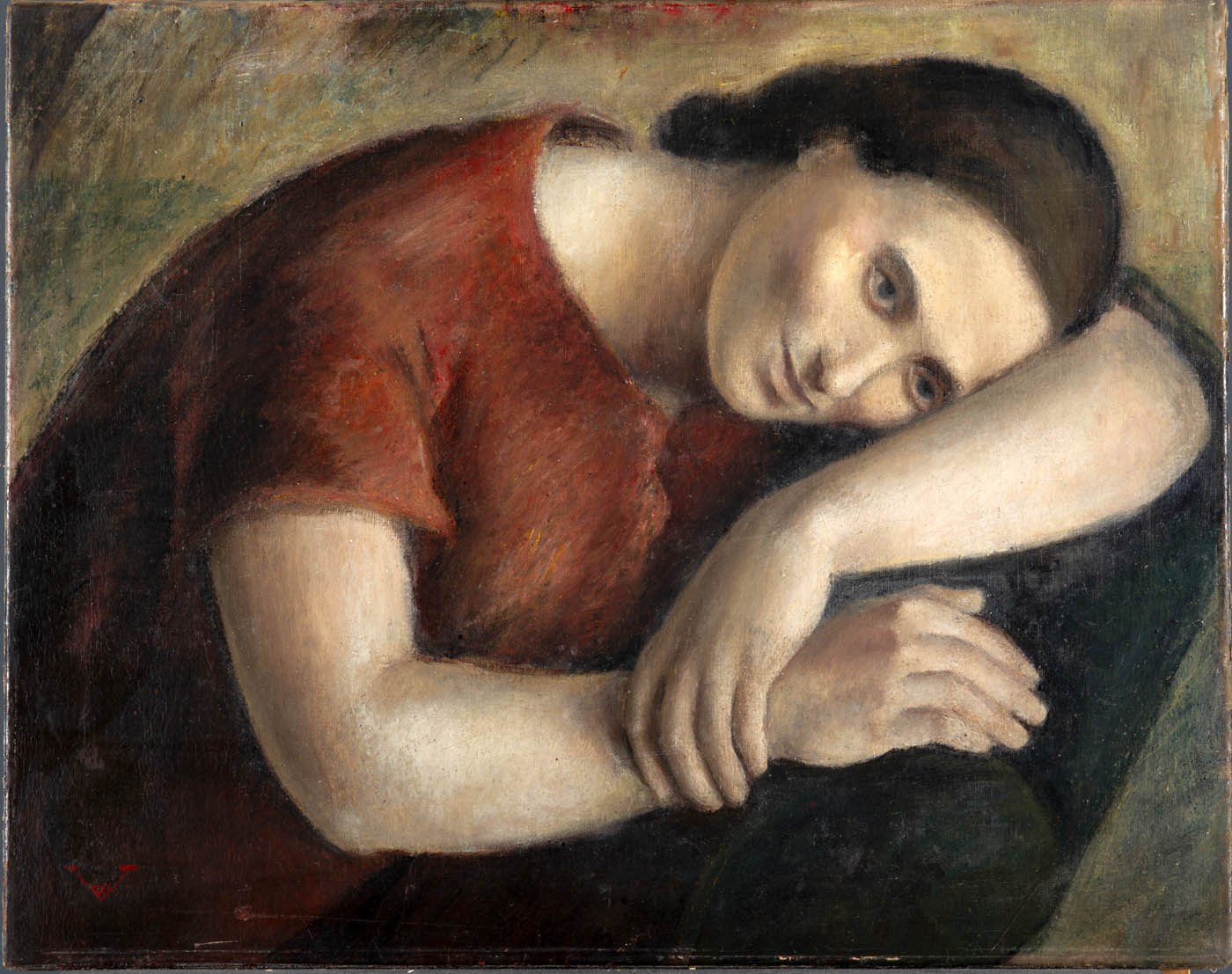
Rosario de Velasco (Spanish, 1904-1991) 'Pensive Woman' (Pensativa) 1935


Rosario de Velasco (Spanish, 1904-1991)
Pensive Woman (Pensativa)
1935
Oil on canvas
57.5 × 72cm
Emilia Casal Piga and Guillermo González Hernández Collection
© Rosario de Velasco, VEGAP, Madrid, 2024


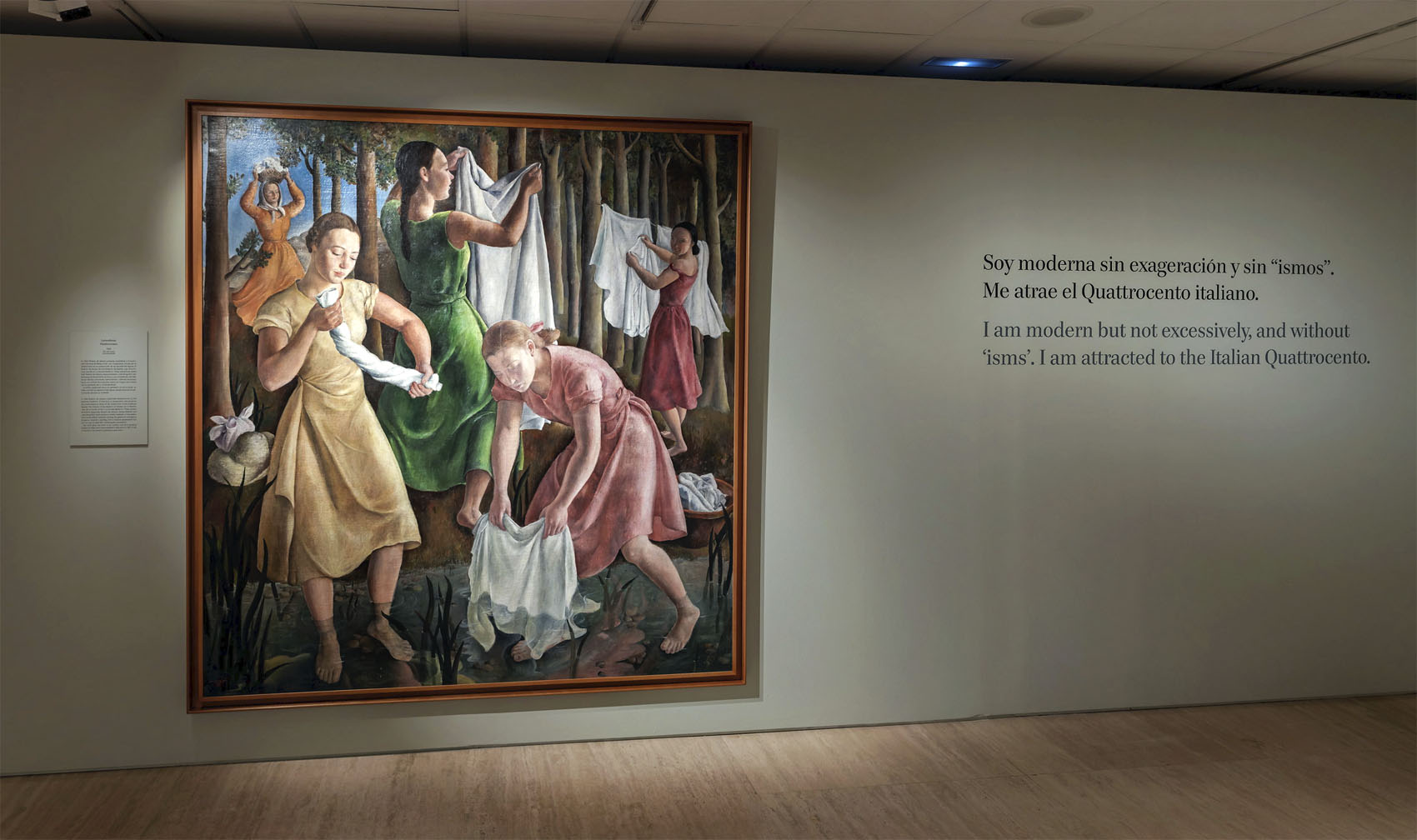
Installation view of the exhibition 'Rosario de Velasco' at the Museo Nacional Thyssen-Bornemisza showing at left, de Velsaco's 'Laundresses / The Washerwomen' (Lavanderas) 1934


Installation view of the exhibition Rosario de Velasco at the Museo Nacional Thyssen-Bornemisza showing at left, de Velsaco’s Laundresses / The Washerwomen (Lavanderas) 1934 (below)


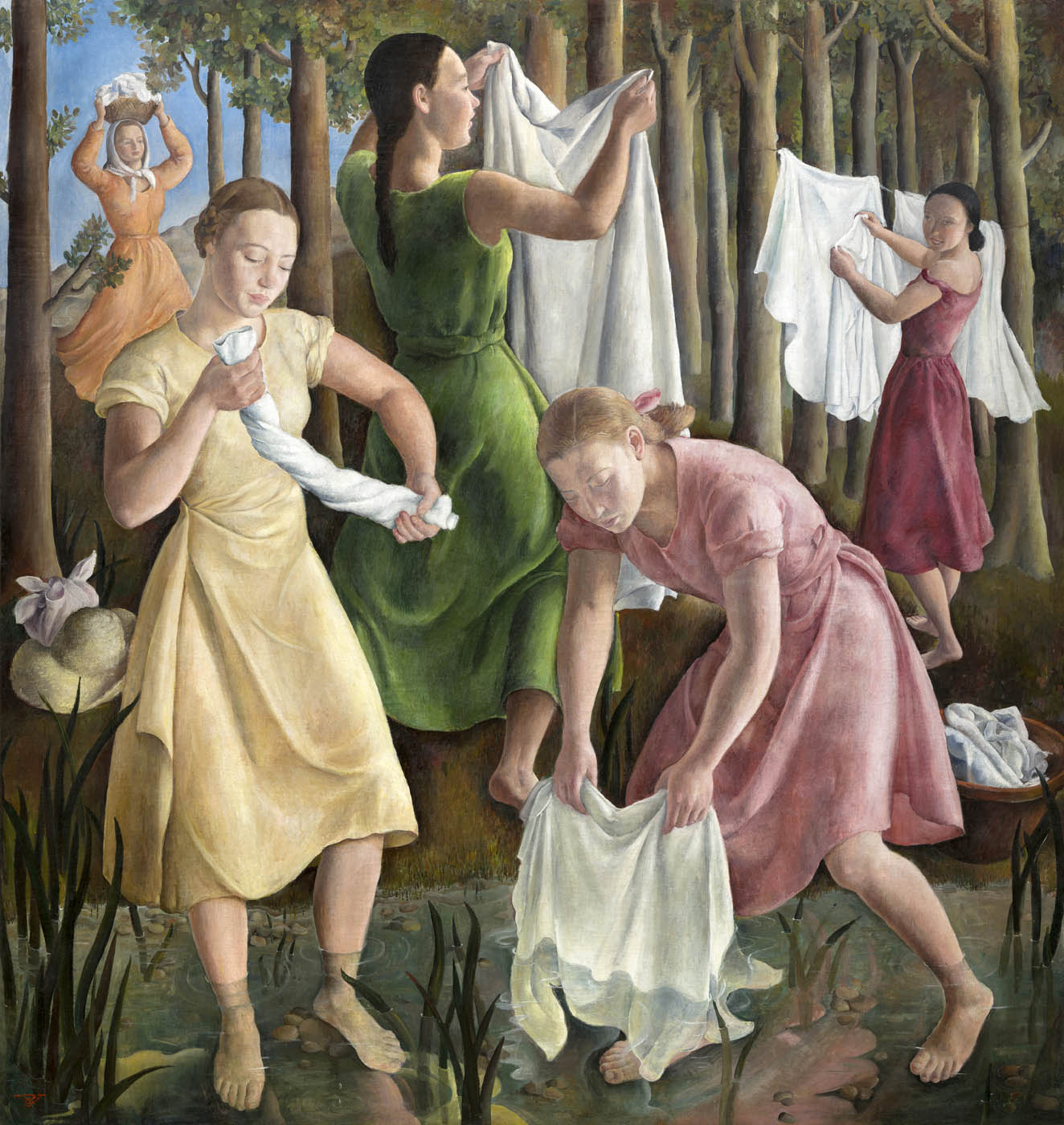
Rosario de Velasco (Spanish, 1904-1991) 'Laundresses or The Washerwomen' (Lavanderas) 1934


Rosario de Velasco (Spanish, 1904-1991)
Laundresses / The Washerwomen (Lavanderas)
1934
Oil on canvas
209 × 197cm
Private collection
Photo: Jonás Bel
© Rosario de Velasco, VEGAP, Madrid, 2024


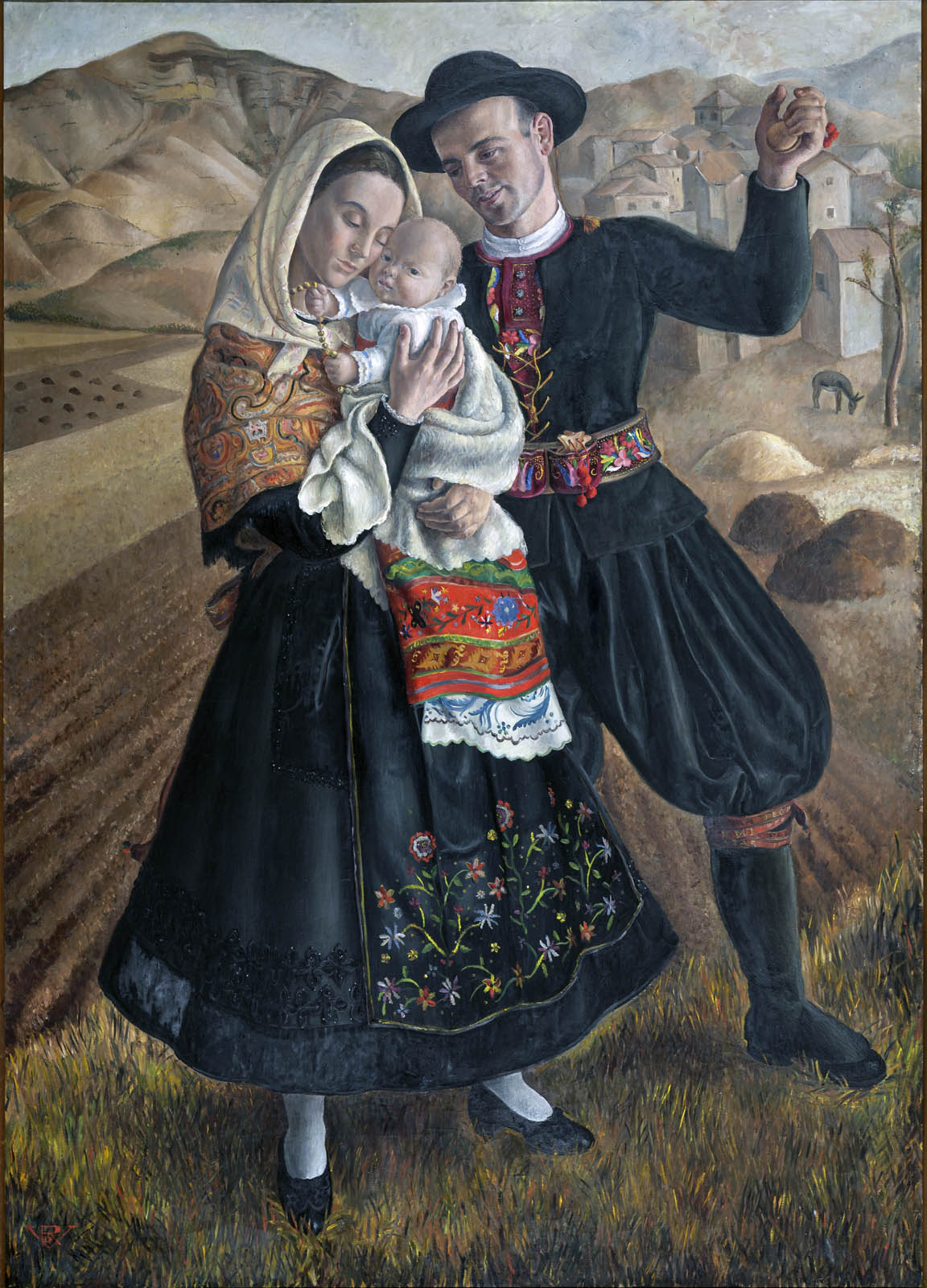
Rosario de Velasco (Spanish, 1904-1991) 'Maragatos' 1934


Rosario de Velasco (Spanish, 1904-1991)
Maragatos
1934
Oil on canvas
210 × 150cm
Museo del Traje, Madrid
Photo: Museo del Traje. Centro de Investigación del Patrimonio Etnológico, Madrid
© Rosario de Velasco, VEGAP, Madrid, 2024


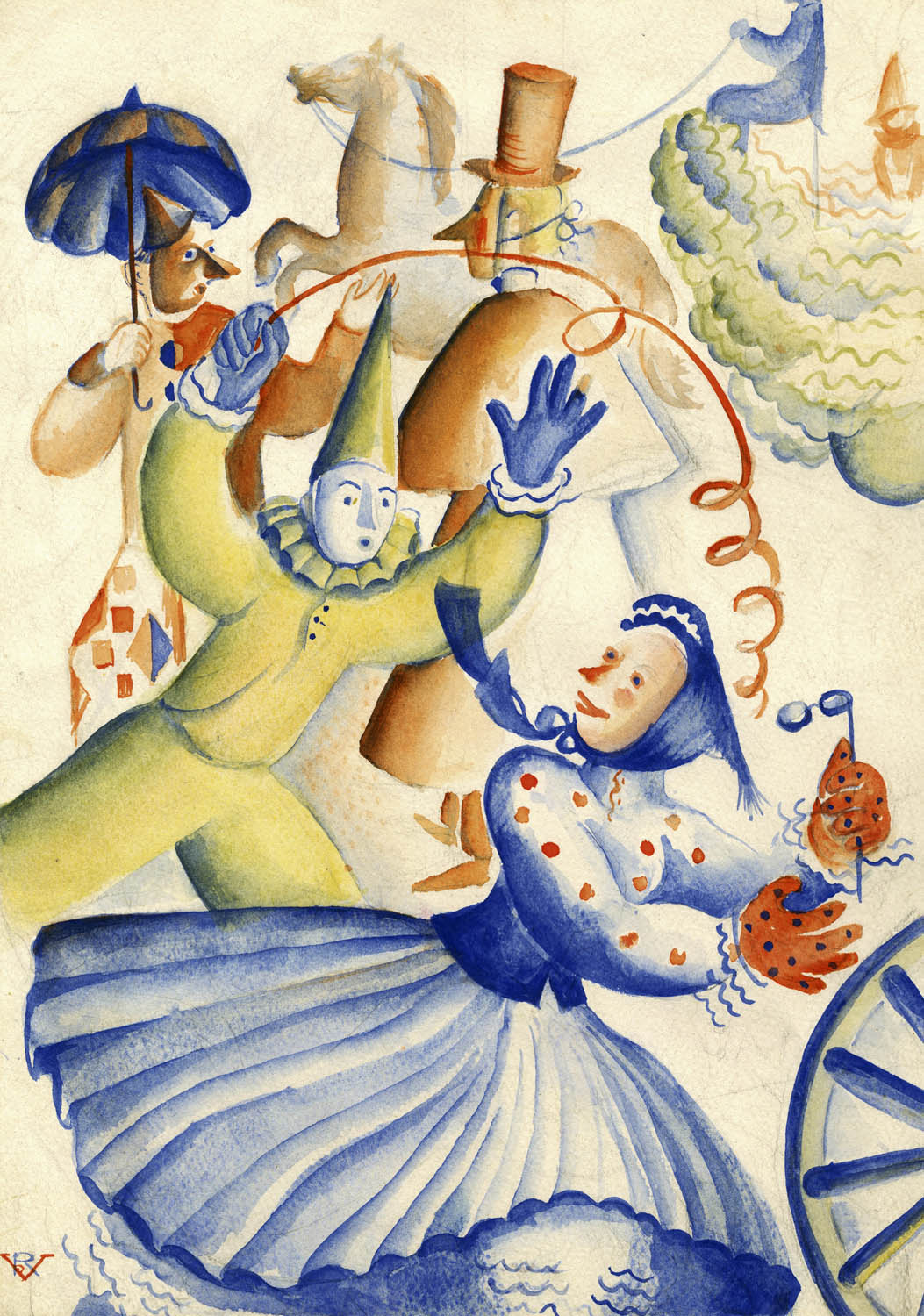
Rosario de Velasco (Spanish, 1904-1991) 'Carnival' (Carnavalina) 1936


Rosario de Velasco (Spanish, 1904-1991)
Carnival (Carnavalina)
1936
Watercolour and graphite on cardboard
29.7 × 21.2cm
Fundación Colección ABC
© Rosario de Velasco, VEGAP, Madrid, 2024


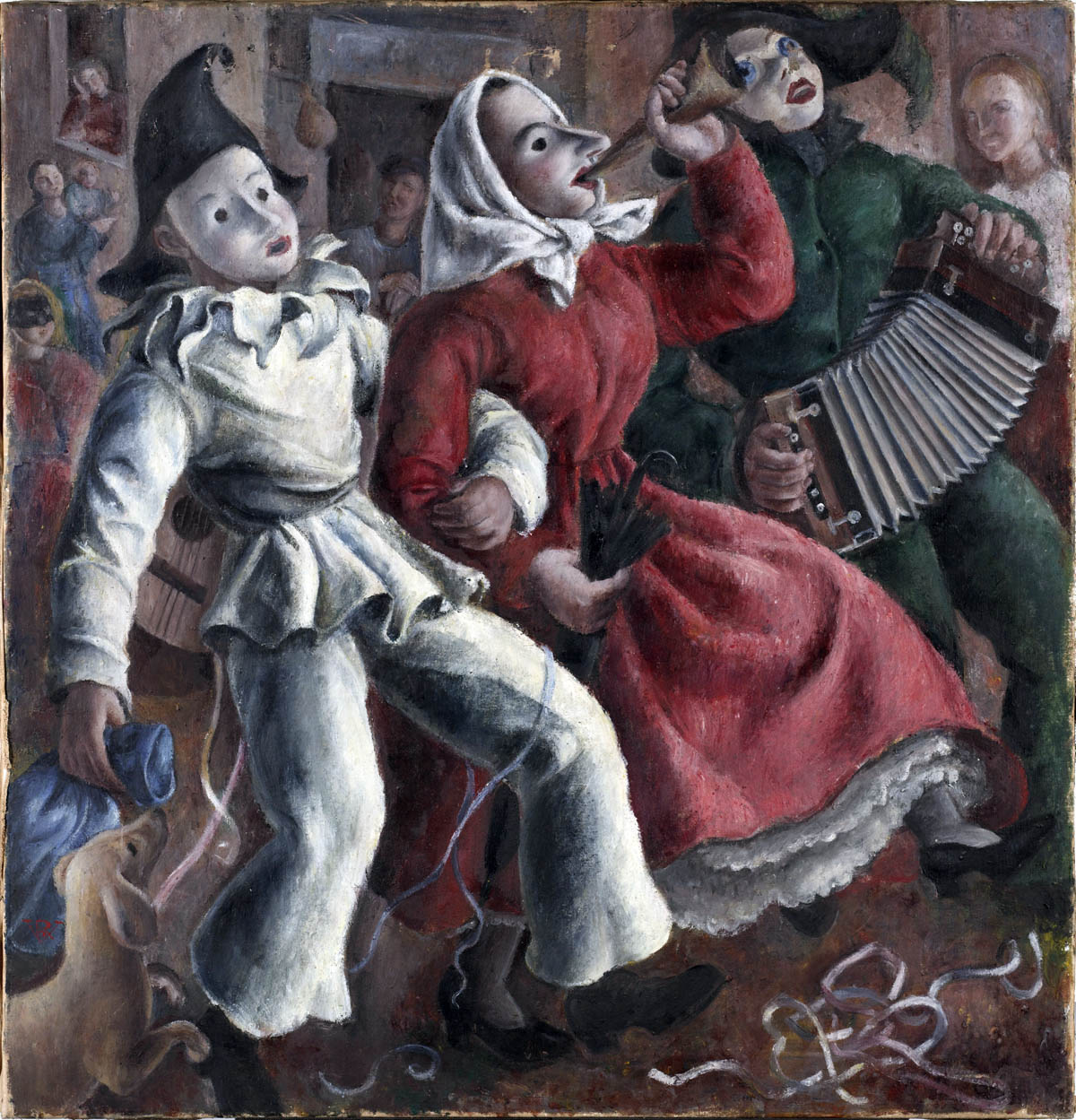
Rosario de Velasco (Spanish, 1904-1991) 'Carnival' (Carnaval) Prior to 1936


Rosario de Velasco (Spanish, 1904-1991)
Carnival (Carnaval)
Prior to 1936
Oil on canvas
115 × 110cm
Centre Pompidou, París, Musée national d’art moderne/Centre de création industrielle, adquisición del Estado, 1936
Photo: Centre Pompidou, MNAM-CCI, Dist. GrandPalaisRmn / Bertrand Prévost
© Rosario de Velasco, VEGAP, Madrid, 2024


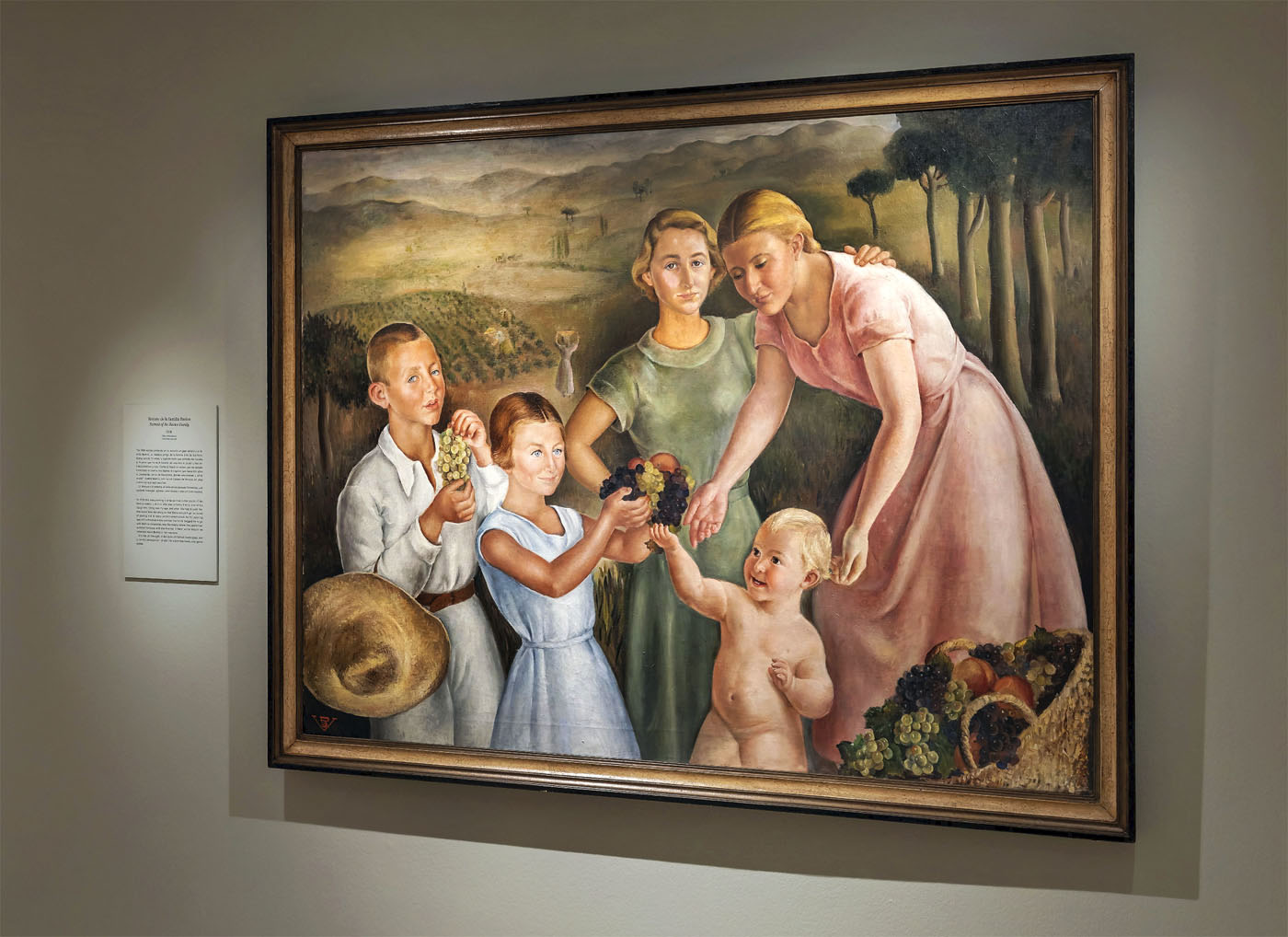
Installation view of the exhibition 'Rosario de Velasco' at the Museo Nacional Thyssen-Bornemisza showing de Velsaco's 'Retrato de la familia Bastos' (Portrait of the Bastos family) 1936 Oil on canvas


Installation view of the exhibition Rosario de Velasco at the Museo Nacional Thyssen-Bornemisza showing de Velsaco’s Retrato de la familia Bastos (Portrait of the Bastos family) 1936 Oil on canvas


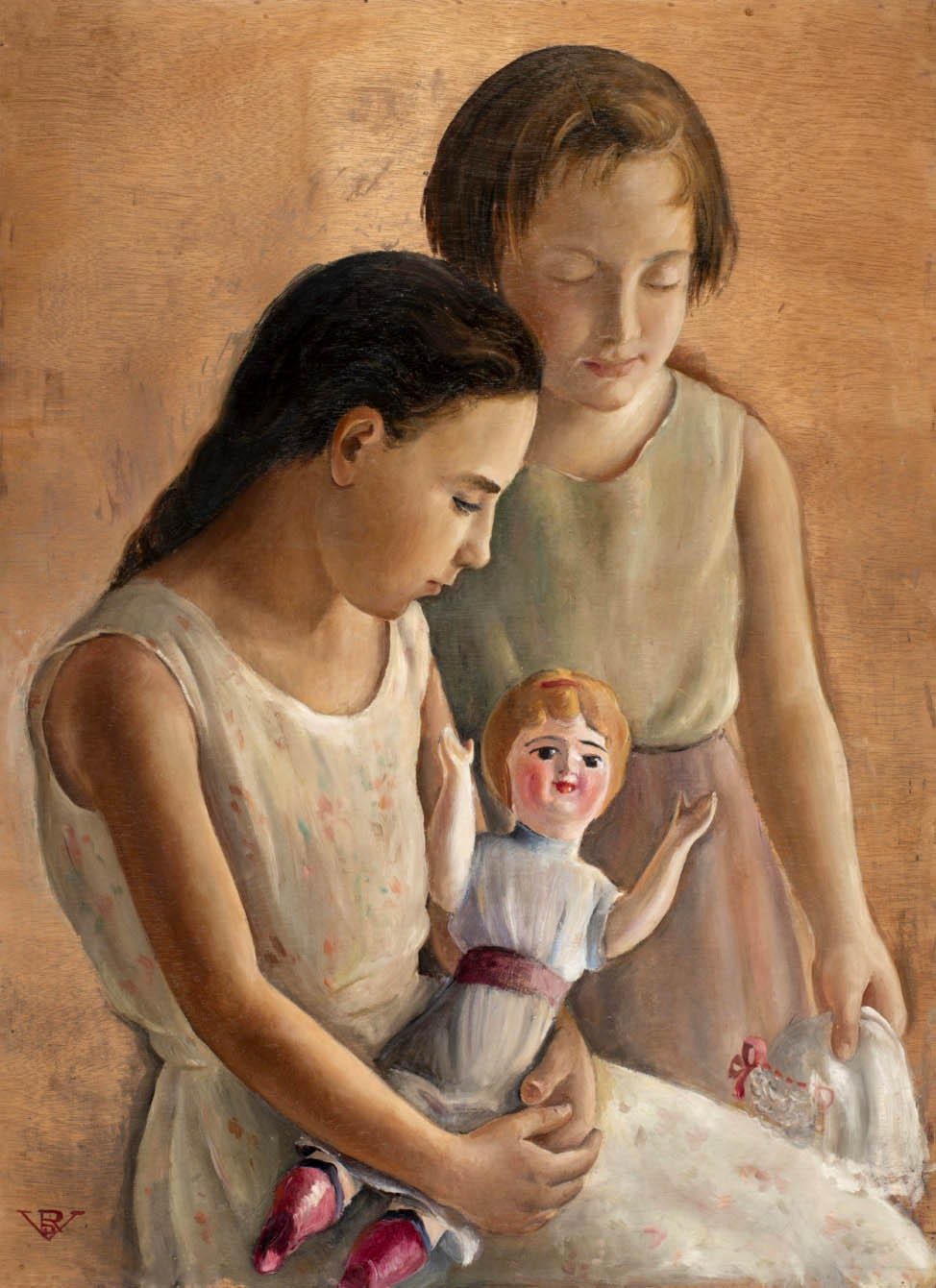
Rosario de Velasco (Spanish, 1904-1991) 'Girls with Doll' (Niñas con muñeca) 1937


Rosario de Velasco (Spanish, 1904-1991)
Girls with Doll (Niñas con muñeca)
1937
Oil on canvas
84.7 × 61.8cm
Private collection
© Rosario de Velasco, VEGAP, Madrid, 2024


Installation view of the exhibition 'Rosario de Velasco' at the Museo Nacional Thyssen-Bornemisza showing at left, de Velsaco's 'Lilí Álvarez' 1938


Installation view of the exhibition Rosario de Velasco at the Museo Nacional Thyssen-Bornemisza showing at left, de Velsaco’s Lilí Álvarez 1938 (below)


Rosario de Velasco (Spanish, 1904-1991) 'Lilí Álvarez' 1938


Rosario de Velasco (Spanish, 1904-1991)
Lilí Álvarez
1938
Oil on board
97.8 × 71.8cm
Lopez-Chicheri Daban Family Collection
Photo: Jonás Bel
© Rosario de Velasco, VEGAP, Madrid, 2024


Rosario de Velasco (Spanish, 1904-1991) 'María del Mar en Vilanova' 1943


Rosario de Velasco (Spanish, 1904-1991)
María del Mar en Vilanova
1943
Oil on canvas
117 × 89cm
Private collection
© Rosario de Velasco, VEGAP, Madrid, 2024


Anonymous photographer. 'Rosario de Velasco painting' 1920s


Anonymous photographer
Rosario de Velasco painting
1920s


Anonymous photographer. 'Rosario de Velasco painting 'Laundresses / The Washerwomen' (Lavanderas)' 1934


Anonymous photographer
Rosario de Velasco painting ‘Laundresses / The Washerwomen’ (Lavanderas)
1934
Archive of the Rosario de Velasco family


Museo Nacional Thyssen-Bornemisza
Paseo del Prado, 8. 28014, Madri

Opening hours:
Tuesday – Sunday, 10am – 7pm
Saturdays, 10 am – 9 pm
Closed on Mondays

Museo Nacional Thyssen-Bornemisza website

LIKE ART BLART ON FACEBOOK

Back to top

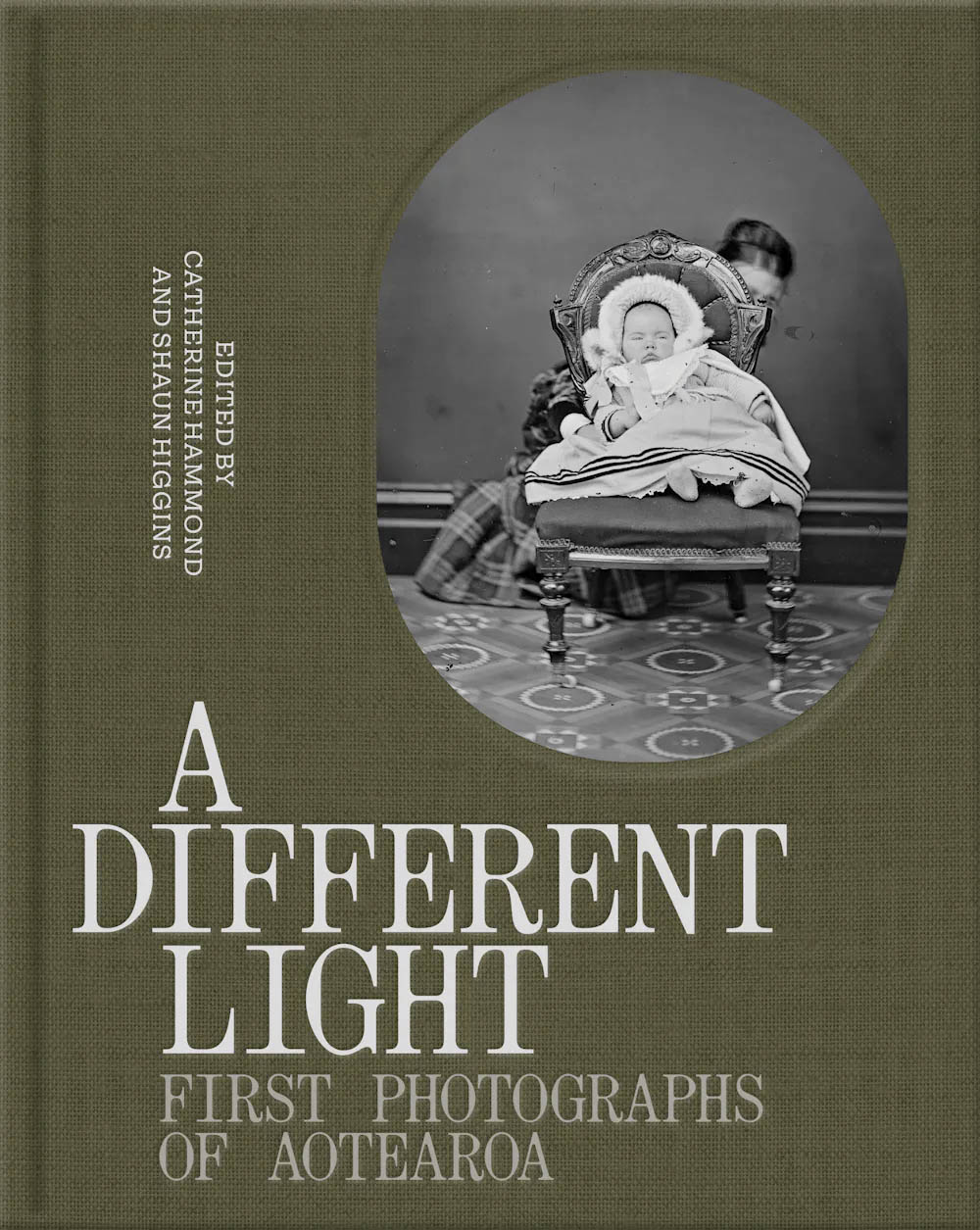
Exhibition: ‘A Different Light – First Photographs of Aotearoa’ at the Auckland War Memorial Museum, New Zealand

Exhibition dates: 11th April – 1st September 2024

This exhibition is a collaboration between Tāmaki Paenga Hira Auckland War Memorial Museum, Alexander Turnbull Library, and Hocken Collections Uare Taoka o Hākena


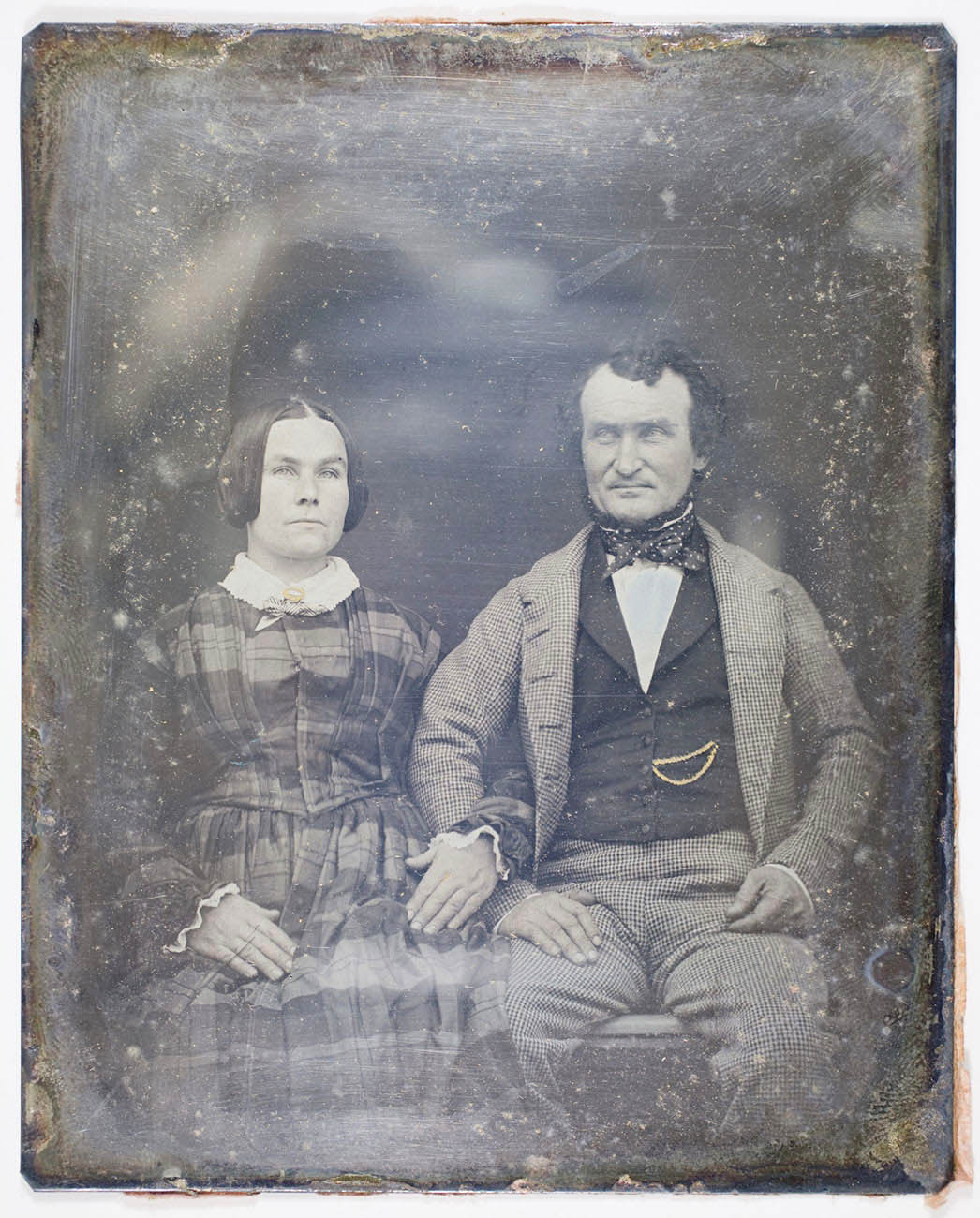
Hartley Webster (New Zealand, 1818-1906) (Attributed to) 'Jane and Alexander Alison' 30 June 1852


Hartley Webster (New Zealand, 1818-1906) (Attributed to)
Jane and Alexander Alison
30 June 1852
Half-plate daguerreotype, passe-partout mount
130 mm. x 100 mm. (plate)
Auckland Museum Collection


Hartley Webster was Auckland’s first resident professional photographer, but despite his longevity and his unique role in the growth of photography in 19th century New Zealand his death in 1906 passed without an obituary.

~ Keith Giles


Then and now

I went to the annual Melbourne Rare Book Fair at the University of Melbourne recently. There, albums of early photographs of Aotearoa were available to purchase for nearly AUD$7,000. These days, colonial photographs from both Australia and New Zealand are only for those that can afford them – to on sell, to secrete away in collections, to act as memento mori.

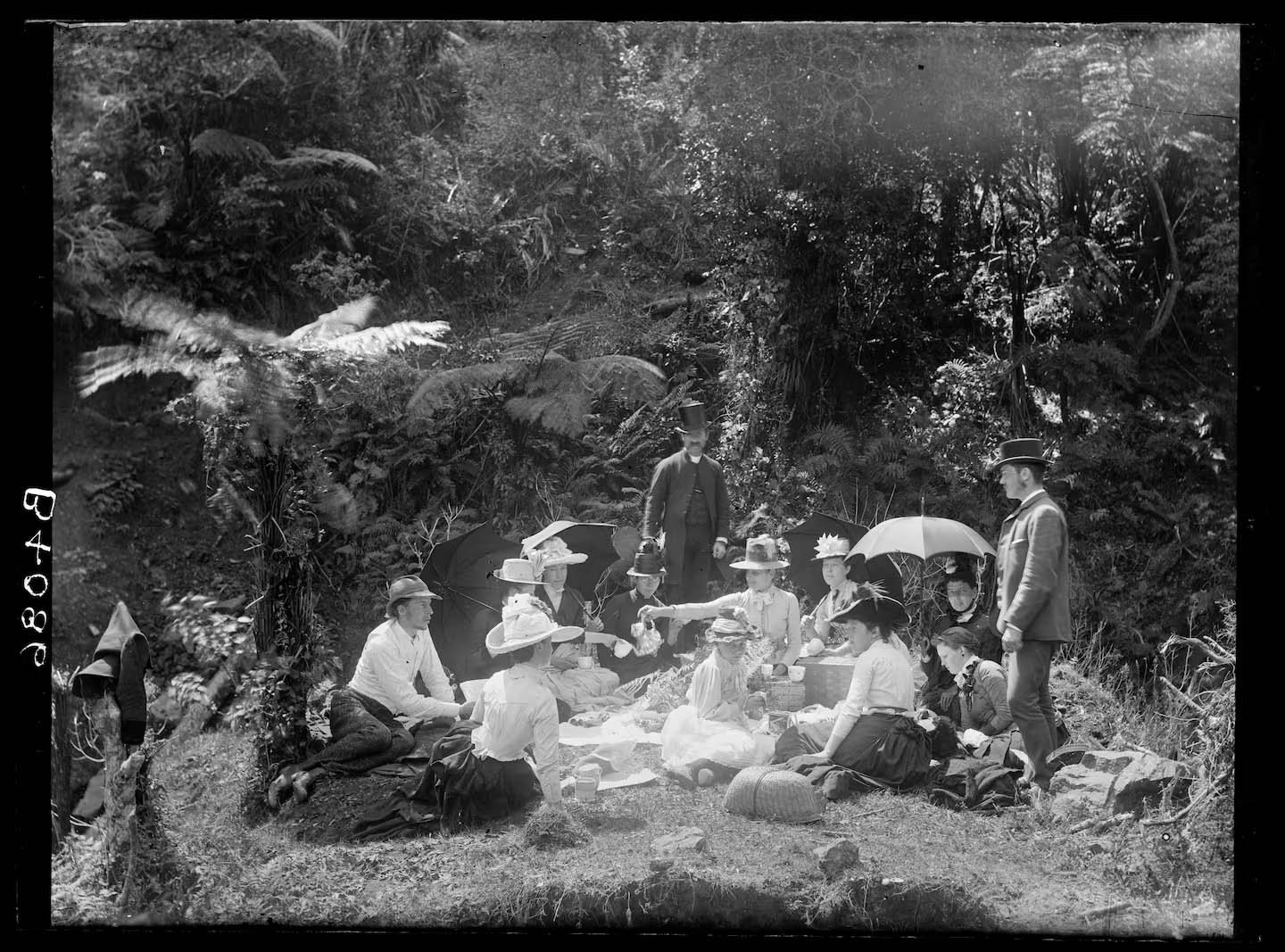
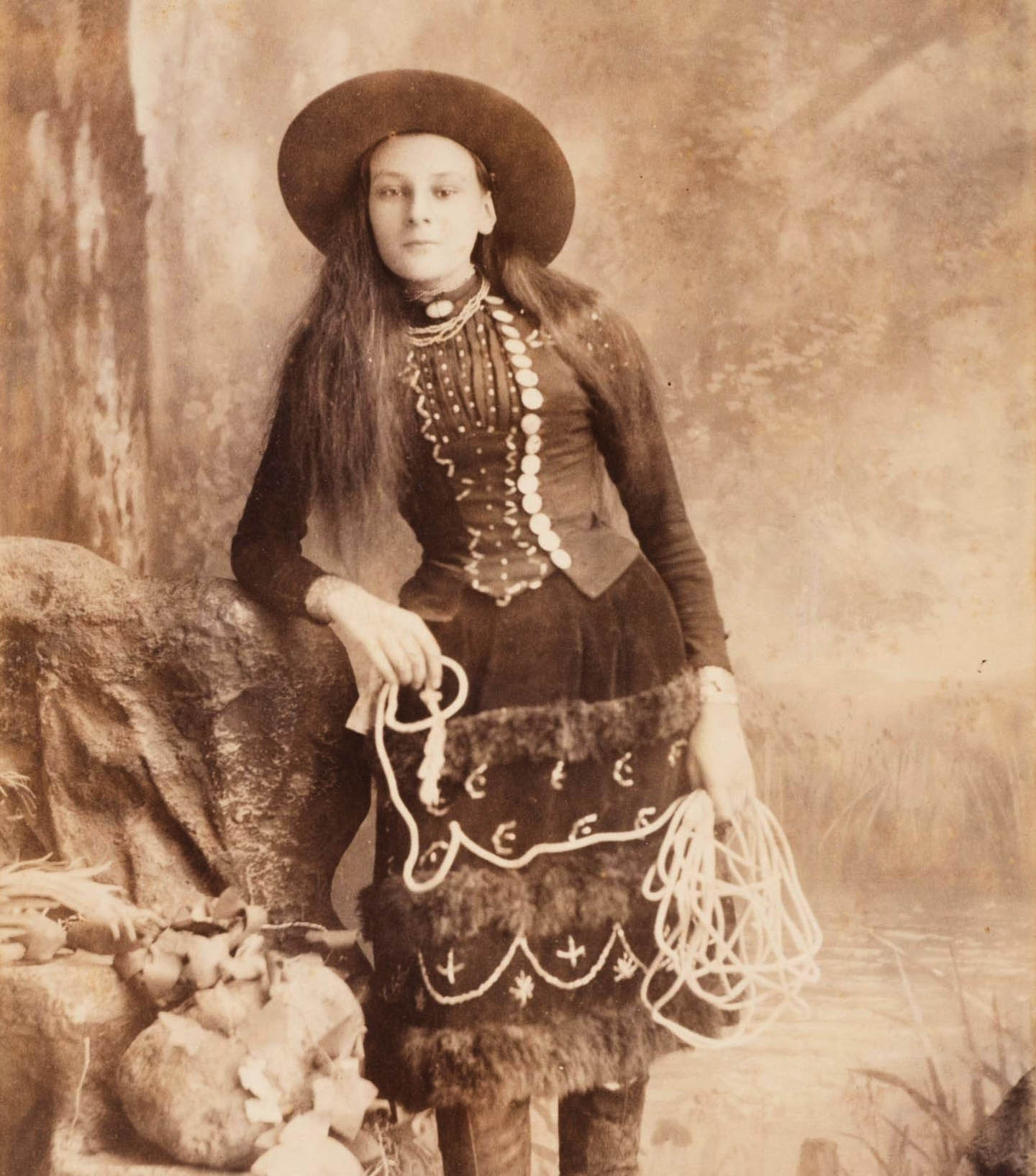
The colonial settler lens focused on landscape photography and portrait photographs of white settlers and Indigenous people, Māori “captured” by the camera. Professor Angela Wanhalla observes that, “Photographs are complicit in colonialism because they were used to document the impacts of migration, settlement and land transformation.”1

Through the use of material culture studies – an interdisciplinary field that examines the relationship between people and their things, the making, history, preservation, and interpretation of objects – we can study colonial photographs and the albums that hold them in order to understand how photographs are complicit in colonialism, and how colonial photographs can become a “rich sources for historians trying to uncover and understand late-nineteenth-century life.”2

Historian Jules Prown outlined material culture and a suggested approach. He wrote:

“Material culture as a study is based upon the obvious fact that the existence of a man-made object is concrete evidence of the presence of a human intelligence operating at a time of fabrication. The underlying premise is that objects made or modified by man reflect, consciously or unconsciously, directly or indirectly, the beliefs of individuals who made, commissioned, purchased, or used them, and by extension the beliefs of the larger society to which they belonged.”3


Colonial photographers and their photographs then, reflect the dominant hegemonic, patriarchal society to which they belong. According to Jarrod Hore they were engaged in “settler colonial work” because they “mobilised and visually reorganised local environments in the service of broader settler colonial imperatives.”4

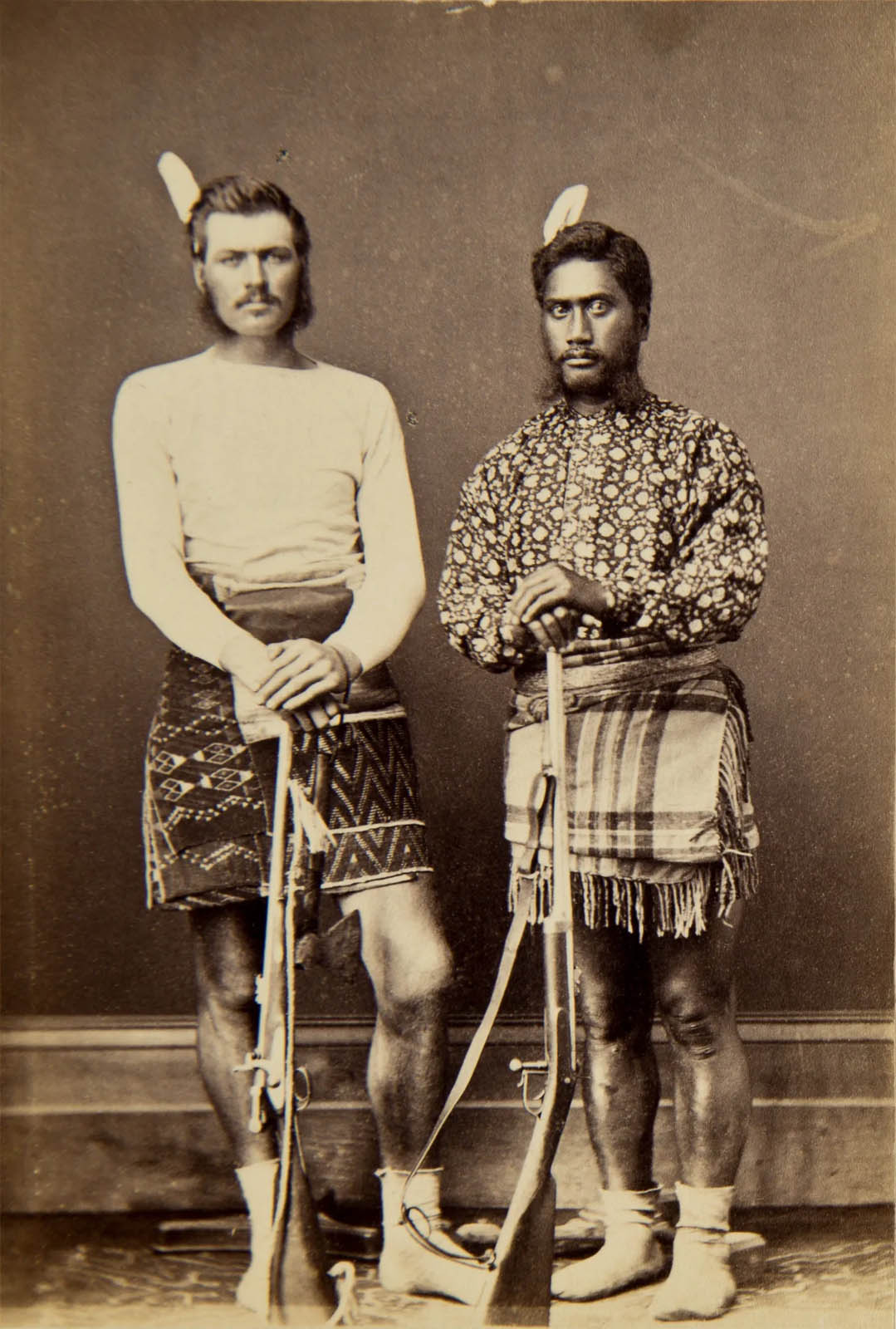
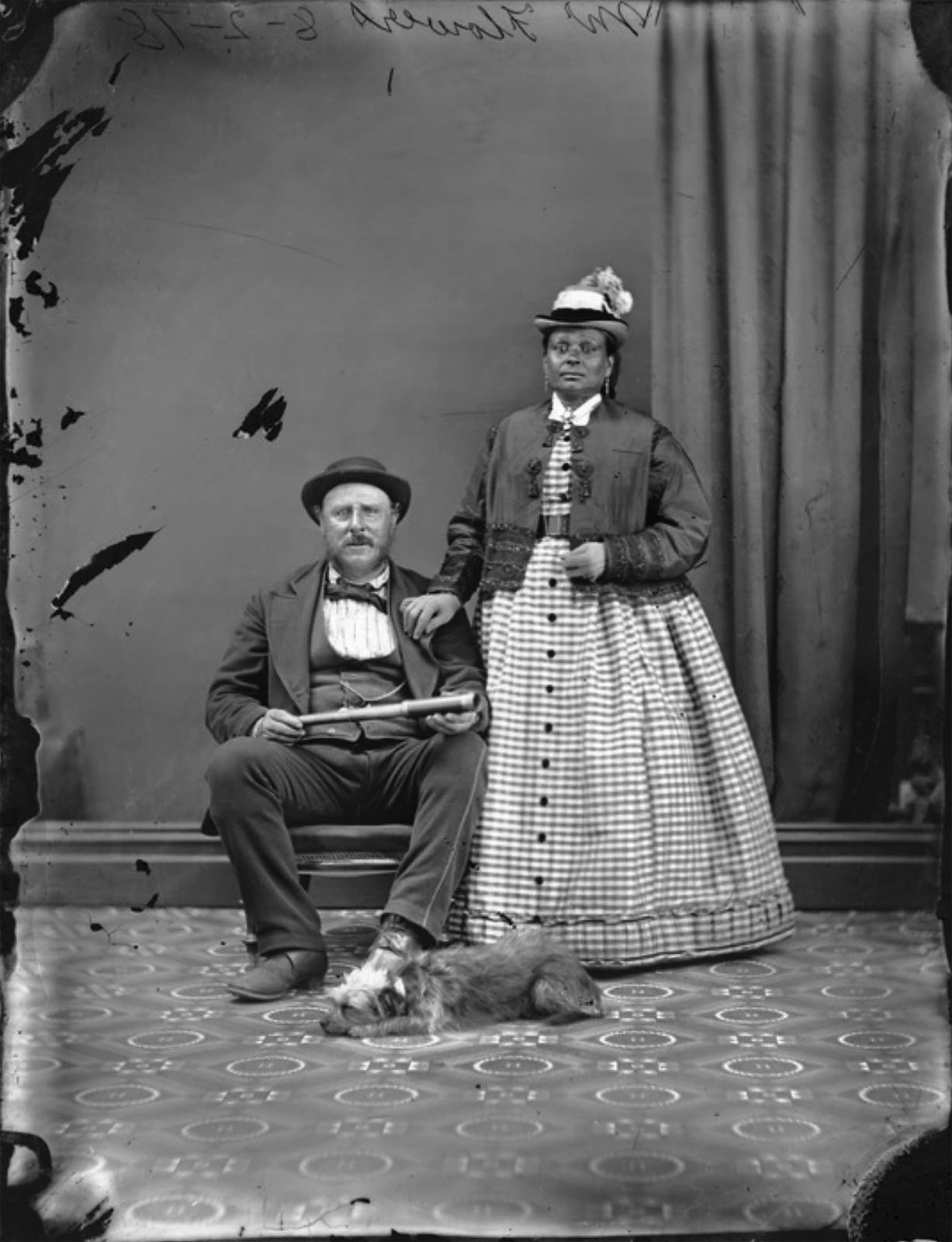
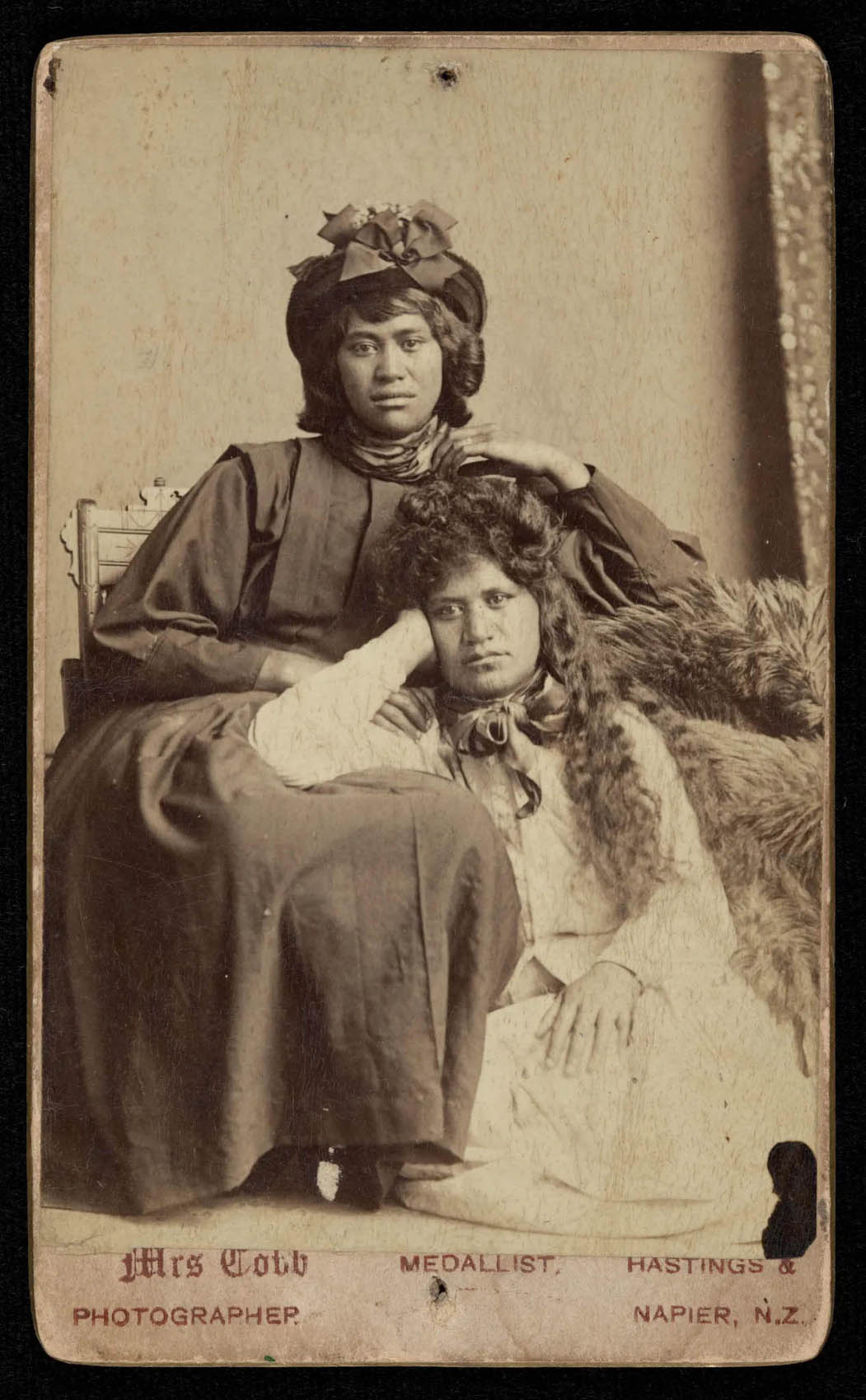
Evidence of this reorganisation and the loss of individual and cultural identity can be found in the photographs Māori people. While the names of the Pākehā commercial photographic studios that took photographs of Māori might be known, the identity of the Māori subjects were often not recorded. Sapeer Mayron observes that, “Māori in particular were often photographed and their names and identities not preserved, called instead “Māori celebrities” and dressed with props in the artists’ studios” while in the same article Shaun Higgins, Auckland Museum pictures curator and curator of this exhibition observes, “When you’re documenting, you’re not this invisible entity that’s just documenting everything, you are making choices. You are, in effect, not documenting neutrally, but with your own agenda.”5 Again, photographers using material culture to record what was around them, reflecting, “consciously or unconsciously, directly or indirectly, the beliefs of individuals who made, commissioned, purchased, or used them, and by extension the beliefs of the larger society to which they belonged.”

But while Pākehā commercial photography captured Māori as ethnographic photographic subjects, conversely the Māori themselves were not always passive subjects in their own representation, posing for the camera as they wanted to be seen, or using the camera themselves to document family and culture. Indeed (and applicable to early New Zealand photographs as well as early Australian ones), academics such as the Australian Jane Lydon in her important books Eye Contact: Photographing Indigenous Australians (2005) and Photography, Humanitarianism, Empire (2016) note that these photographs were not solely a tool of colonial exploitation. Lydon articulates an understanding in Eye Contact that the residents of Coranderrk, an Aboriginal settlement near Healsville, Melbourne, “had a sophisticated understanding of how they were portrayed, and they became adept at manipulating their representations.”

Professor Angela Wanhalla also enunciates that the relationship between the camera and the Māori whānau (extended family group) is multilayered and complicated:

“At different times, and depending on the context, Māori embraced or rejected photography. Because of its colonial implications, Māori whānau and communities have a complicated relationship with the camera. But, as scholars Ngarino Ellis and Natalie Robertson argue, there is evidence it was regarded as friend as much as foe. …

Colonial photographs are culturally dynamic. Their integration into Māori life means they do not just depict relationships but are imbued with them. As such, photographs are taonga (treasures) and connect people across time and space.”6


Then and now, through the photographs ‘materiality’ and their role as sensory things that are held and used as well as viewed – the photographs imbued with the spirit of people long past – images of Indigenous ancestors taken by Māori and Pākehā act as talisman against the vicissitudes of colonial oppression.

They picture a land and culture which has irrevocably changed but the photographs can can still bring past stories into present life, which then regenerate the spirit of the ancestors into the presence of contemporary Māori families. With the recent acts of regression against the Māori people by the current New Zealand government, any object, any taonga (treasures) which connect people across time and space and make them stronger, is to be valued, especially if the photographs upend the tropes of colonial power and control.

As Joyce Campbell observes of these photographs, “The living connection to the sitter was the same as to a carved ancestor, or any other manifestation… It is easy to see that how they lived intersects with how we live now, and also to recognize the ways in which it does not. If these photographs are technically rough, or worn, we easily look past all that to engage with an image of another person or place. The images defy the notion that we need hyper-reality, immersion, massive scale, vivid colour or idealised beauty in order to achieve psychic proximity.”

In psychic proximity and unity, across time.

Strength people, strength. Hope, spirit, respect, strength.

Dr Marcus Bunyan


1/ Extract from Professor Angela Wanhalla. “The past in a different light: how Māori embraced – and rejected – the colonial camera lens,” on The Conversation website April 11, 2024 [Online] Cited 10/08/2024

2/ Jill Haley. “Otago’s Albums: Photographs, Community and Identity,” in New Zealand Journal of History, 52, 1, 2018, p. 24 on the Academia website 2018 [Online] Cited 28/08/2024

3/ Jules Prown, ‘Mind in Matter: An Introduction to Material Culture Theory and Method’, Winterthur Portfolio, 17, 1 (1982), pp. 1-2 quoted in Haley, Op. cit., p. 24.

4/ Jarrod Hore. “Capturing Terra Incognita: Alfred Burton, ‘Maoridom’ and Wilderness in the King Country,” in Australian Historical Studies Volume 50, Issue 2, 2019, pp. 188-211 quoted in Professor Angela Wanhalla Op. cit.,

5/ Shaun Higgins, Auckland Museum pictures curator quoted in Sapeer Mayron. “A Different Light: A chance to see 19th-century Aotearoa as our first photographers saw it,” on The Post website April 7, 2024 [Online] Cited 28/06/2024.

6/ Professor Angela Wanhalla, Op. cit.,

7/ Joyce Campbell. “A Different Light: First Photographs of Aotearoa,” on the New Zealand Review of Books website May 14, 2024 [Online] Cited 23/06/2024


Many thankx to the Auckland War Memorial Museum for allowing me to publish the photographs in the posting. Please click on the photographs for a larger version of the image.


“For Māori there was another dimension. The living connection to the sitter was the same as to a carved ancestor, or any other manifestation. Wharenui would eventually feature photographs of ancestors located where at one time they would have been depicted in other forms. But their presence has the same significance.” …

In Natalie Marshall’s essay ‘Camera Fiends and Snapshooters: Early Amateur Photography in Aotearoa’, it is the immediacy of photographs by James Coutts Crawford, Henry Wright and Robina Nicol that ‘pricks’ me, as Roland Barthes would have it. These photographers working far from the global centre of their craft are freed to explore domesticity and love. Their photographs are suffused with intimacy, warmth, pregnancy, yawning and easy comradery. It is easy to see that how they lived intersects with how we live now, and also to recognize the ways in which it does not. If these photographs are technically rough, or worn, we easily look past all that to engage with an image of another person or place. The images defy the notion that we need hyper-reality, immersion, massive scale, vivid colour or idealised beauty in order to achieve psychic proximity.

Joyce Campbell. “A Different Light: First Photographs of Aotearoa,” on the New Zealand Review of Books website May 14, 2024 [Online] Cited 23/06/2024


A Different Light: First Photographs of Aotearoa – from the curators

Hear from the curators of A Different Light: First Photographs of Aotearoa, from from Auckland Museum, Hocken Collections, and Alexander Turnbull Library, as they speak to some of their favourite objects from this new exhibition that explores the captivating evolution of photography in 19th-century New Zealand.


Witness the dawn of photography in Aotearoa New Zealand. Through precious, original photographs, explore its beginnings as an expensive luxury, through to becoming a part of everyday life.

Step into A Different Light: First Photographs of Aotearoa and explore the captivating evolution of photography in 19th-century New Zealand. Delve into the advances that took photography from its beginnings for an exclusive few in the mid-1800s, to being a part of daily life by the turn of the century.

Experience the 19th-century studio as you pose for your own digital Victorian portrait, and explore the wonder of this new technology that changed the way we see ourselves forever.

Featuring precious, original photographs from Auckland Museum, Hocken Collections, and Alexander Turnbull Library, this exhibition offers a unique glimpse into our visual heritage.

Text from the Auckland War Memorial Museum website


James Coutts Crawford (New Zealand born Scotland, 1817-1889) 'Jessie Crawford, probably outside the Crawfords' home in Thorndon, Wellington' c.  1859


James Coutts Crawford (New Zealand born Scotland, 1817-1889)
Jessie Crawford, probably outside the Crawfords’ home in Thorndon, Wellington
c.  1859
Salted paper print
143 × 110 mm
Alexander Turnbull Library


A rare image of a heavily pregnant Victorian woman, shot outdoors in a domestic garden.


James Coutts Crawford (New Zealand born Scotland, 1817-1889) 'Nurse Edgar [left] and Jessie Crawford' c. 1860


James Coutts Crawford (New Zealand born Scotland, 1817-1889)
Nurse Edgar [left] and Jessie Crawford
c. 1860
Salted paper print
Alexander Turnbull Library Collection


William Temple (New Zealand born Ireland, 1833-1919) 'The Bush at Razorback, Great North Road New Zealand' 1862-1863


William Temple (New Zealand born Ireland, 1833-1919)
The Bush at Razorback, Great North Road New Zealand
1862-1863
Tāmaki Paenga Hira Auckland War Memorial Museum


Medical officer with Imperial forces during New Zealand Wars; photographer. Born Co Monaghan, Ireland, son of William Temple MD and Anne Temple. Entered army service 1858, and served as Assistant Surgeon with the Royal Artillery in the Taranaki (1860-1861) and Waikato (1863-1865) campaigns. He was awarded the Victoria Cross for gallantry at Rangiriri. Died in London.

Text from the National Library of New Zealand website


“… every single photograph is taken with purpose. The photographer chooses what’s in the frame. There is always a bit of an edit in that regard.

“When you’re documenting, you’re not this invisible entity that’s just documenting everything, you are making choices. You are, in effect, not documenting neutrally, but with your own agenda.”

While many of the pictures have full captions detailing not only who took the photo but who is featured in it, some people’s names were lost – or possibly were never recorded at all, Higgins says.

Māori in particular were often photographed and their names and identities not preserved, called instead “Māori celebrities” and dressed with props in the artists’ studios.

“Sadly we sometimes know the studio, but we don’t know who they are, we don’t know answers to questions why they were taken. Did you walk away with your own picture, but did you know that that would then be sold to collectors for their albums?

“You might see someone and say, ‘Oh, they’re sitting with their taonga’. Well, not necessarily, they might be sitting with the studio’s prop and dressed up for a certain image.

“Photos like these are why throughout the exhibition you might see the question: Do you know who is in this picture? Higgins hopes with a bit of luck, some of the “orphan pictures” with no names might be identified.

“Our own institution and others play a part. We collect from collectors and photos end up in an institution with no name,” Higgins says.

“The best thing we can do is put them out and say, ‘Do you know who these people are?’ and hopefully we find out more about these orphan photographs that have made their journey through time in albums collected by largely white men.

“We don’t have answers, but we can pose the questions. I hope people walk away from an exhibition like this questioning some of the things they’ve seen and maybe looking at things in a different light.”

Shaun Higgins, Auckland Museum pictures curator quoted in Sapeer Mayron. “A Different Light: A chance to see 19th-century Aotearoa as our first photographers saw it,” on The Post website April 7, 2024 [Online] Cited 28/06/2024.


Montagu Higginson (English, 1840-1910) 'The Native Earthworks at Rangiriri partially destroyed' November 1863


Montagu Higginson (English, 1840-1910)
The Native Earthworks at Rangiriri partially destroyed
November 1863
Auckland Museum


In 2006 Auckland Museum acquired the album Photographs of the South Sea Islands; a photograph album featuring the work of a hitherto unknown photographer, one George Montagu John Higginson (Auckland War Memorial Museum 2006:28). Known commonly as Montagu Higginson (Illustrated London News vol. 045 XLV:91), this amateur photographer produced many images of  the Waikato campaign that are either new, or at the very least previously of unknown authorship.  There are also many images which cross over to other albums compiled by other photographers indicating the strong possibility of trading. This notion has been considered by Main and Turner (1993:10) with regard to other photographers such as Daniel Manders Beere.

Shaun Higgins. “Brothers in Glass: Montage Higginson and the Photographers of the Waikato War,” Auckland Museum Records, 2012


Batt & Richards (firm) (finished January 1874) 'Tom Adamson and Wiremu Mutumutu, Wanganui' c. 1867-1874


Batt & Richards (firm) (finished January 1874)
Tom Adamson and Wiremu Mutumutu, Wanganui
c. 1867-1874
Hocken


This studio carte de visite provides striking evidence of cultural exchange in the way of Māori and European fabrics and designs, with Tom Adamson on the left wearing a woven flax kaitaka with a geometric tāniko border, and Wiremu Mutumutu on the right wearing a fringed tartan rug, both in the manner of kilts. Adamson worked alongside Māori as a military scout and guide, hunting down dissidents in the dense native bush for pro-government forces during the New Zealand Wars. This service earned him a New Zealand Cross in 1876.


John McGregor (New Zealand born Scotland, 1831-1894) 'Bell Hill' c. 1875


John McGregor (New Zealand born Scotland, 1831-1894)
Bell Hill
c. 1875
Hocken Collections Uare Taoka o Hākena


Photographer, Stuart St, Dunedin, fl 1863-1884. Awarded first class certificate at The New Zealand Exhibition 1865 (Source: Photography in New Zealand / Hardwicke Knight and back of photograph). Died 12 Oct 1894, aged 63 years. 32 years in New Zealand, formerly of Glasgow, Scotland. Buried at Southern Cemetery, Dunedin (Source: Dunedin online cemetery database).


In 1848, two decades after a French inventor mixed daylight with a cocktail of chemicals to fix the view outside his window onto a metal plate, photography arrived in Aotearoa. How did these ‘portraits in a machine’ reveal Māori and Pākehā to themselves and to each other? Were the first photographs ‘a good likeness’ or were they tricksters? What stories do they capture of the changing landscape of Aotearoa?

From horses laden with mammoth photographic plates in the 1870s to the arrival of the Kodak in the late 1880s, New Zealand’s first photographs reveal Kīngi and governors, geysers and slums, battles and parties. They freeze faces in formal studio portraits and stumble into the intimacy of backyards, gardens and homes.

A Different Light brings together the extraordinary and extensive photographic collections of three major research libraries – Tāmaki Paenga Hira Auckland War Memorial Museum, Alexander Turnbull Library and Hocken Collections Uare Taoka o Hākena – to coincide with a touring exhibition of some of the earliest known photographs of Aotearoa.

Text from the Auckland War Memorial Museum website


William James Harding (New Zealand born England, 1826-1899) 'Young woman looking at photograph album' c. 1870s


William James Harding (New Zealand born England, 1826-1899)
Young woman looking at photograph album
c. 1870s
Quarter-plate collodion silver glass negative
Alexander Turnbull Library Collection


William and Annie Harding arrived in New Zealand in 1855. Two brothers had already emigrated – John in 1842 and Thomas in 1848. The three brothers, and Annie, were followers of Emanuel Swedenborg, and strong supporters of the Total Abstinence Society. William and Annie settled in Wanganui, where William set up briefly as a cabinet-maker but in 1856 established a photographic studio. By the 1860s his studio was installed in a two-storeyed, corrugated-iron building on Ridgway Street.

Text from the Wikipedia website


William James Harding founded his studio in Wanganui in 1856. In 1889 he sold it to Alfred Martin, who had previously practiced in Christchurch. During his tenure, Harding occasionally hired out his studio to other photographers, and there are images in the 1/4 plate sequence which the Library also holds as cartes-de-visite by the photographers D Thomson and T Tuffin. Alfred Martin sold the business to Frank Denton in 1899. Denton in turn sold out to Mark Lampe around 1930, but retained Harding’s negatives, and Martin’s 10 x 8 and 10 x 12 negatives, himself.

Text from the National Library of New Zealand website


William James Harding (New Zealand born England, 1826-1899) 'Studio portrait of a woman and child' 1870s


William James Harding (New Zealand born England, 1826-1899)
Studio portrait of a woman and child
1870s
Reproduction from quarter-plate collodion silver glass negative
Alexander Turnbull Library Collection


William James Harding (New Zealand, 1826-1899) 'Captain Nathaniel Flowers and wife Margaret, with a dog' 1878


William James Harding (New Zealand born England, 1826-1899)
Captain Nathaniel Flowers and wife Margaret, with a dog
February 1878
Glass negative
4.25 x 3.25 inches
Negatives of Wanganui district
Alexander Turnbull Library, Wellington, New Zealand


When Nathaniel and Margaret Flowers visited the Whanganui photographic studio of W.J. Harding (1826-99) in February 1878, they engaged with a technology that was only a few decades old but one that had been rapidly embraced by ordinary people such as themselves. By the 1870s, people – as individuals, couples and families – could have their likenesses made for a small fee. Harding photographed people from an array of backgrounds, from social elites to imperial and colonial soldiers, as we as interracial couples such as Nathaniel and Margaret. As soon as photography was invented, it was used by individuals, families and communities to fashion their social identities around age, class, ethnicity and gender. It was quickly integrated into society through social and cultural practices such as the making and keeping of photograph albums.

Text from the Introduction to the book A Different Light – First Photographs of Aotearoa


Elizabeth Pulman (New Zealand born England, 1836-1900) 'King Tāwhiao' 1882


Elizabeth Pulman (New Zealand born England, 1836-1900)
King Tāwhiao
1882
Carte de visite
Tāmaki Paenga Hira Auckland War Memorial Museum


Blackman, Elizabeth, 1836-1900, Chadd, Elizabeth, 1836-1900 Auckland photographer. Married George Pulman (d. 1871). Worked with him in his photographic studio in Shortland Street, specialising in scenic photographs and portraits. Elizabeth continued Pulman’s Photographic Studio for almost 30 years until the business was sold shortly before her death in 1900. After George Pulman’s death she married John Blackman (d 1893). She continued to be known professionally as Elizabeth Pulman.

Text from the National Library of New Zealand website


In the early years of photography it was relatively uncommon for women to take photographs, let alone work as professional photographers. Elizabeth Pulman was quite possibly New Zealand’s first female professional photographer.

Born in Lymm, Cheshire, England in 1836, she married George Pulman in 1859, and emigrated to New Zealand in 1861. Although a joiner and draughtsman by training, in 1867 George Pulman opened a photographic studio in Auckland, specialising in scenic photographs and portraits. Elizabeth assisted George with the business and after he died in 1871 she continued the work of the studio.

She married John Blackman in 1875, and was once more widowed in 1893. But for almost 30 years, until the business was sold to the Government Tourist Bureau shortly before her death, she carried on Pulman’s Photographic Studio, almost single-handedly managing the upbringing of nine children, running a successful business, and the problems of a period of rapidly changing technology in photography.

Pulman’s Photographic Studio left a legacy of many prints of historical interest, in both portrait and scenic subjects. Among the portraits are photographs of many important Maori chiefs of the North Island, including Tawhiao, the second Maori King, taken in Auckland shortly after he left his King Country stronghold.

Adapted by Andy Palmer from the DNZB biography by Phillip D. Jackson published as “Elizabeth Pulman,” on the New Zealand History website updated 


John Martin Hawkins Lush (New Zealand, 1854-1893) 'Picnic party at Thames' c. 1884


John Martin Hawkins Lush (New Zealand, 1854-1893)
Picnic party at Thames
c. 1884
Half-plate gelatin silver glass negative
Auckland Museum Collection


Unknown photographer. 'Three men in hats' c. 1880s


Unknown photographer
Three men in hats
c. 1880s
Ferrotype
Hocken Collections


Charles Spencer (New Zealand born England, 1854-1933) 'Cold Water Baths White Terrace' c. 1880s


Charles Spencer (New Zealand born England, 1854-1933)
Cold Water Baths White Terrace
c. 1880s
Cyanotype
Auckland Museum Collection


New Zealand photographer operating in Tauranga from 1879. Active in Auckland from the 1880s to 1917. Was one of Stephenson Percy Smith’s survey party at Mount Tarawera after the 1886 eruption. Took a series of photographs on White Island in late 1890s.

For more information on the photographer see Charles Spencer, Photographer (Part I) May 2019 and Charles Spencer, Photographer (Part II) July 2019 on the Tauranga Historical Society website


Josiah Martin (New Zealand born England, 1843-1916) 'Portrait of an unidentified sitter from the Teutenberg family album' c. 1880s


Josiah Martin (New Zealand born England, 1843-1916)
Portrait of an unidentified sitter from the Teutenberg family album
c. 1880s
Albumen silver print, cabinet card
Auckland Museum Collection


Josiah Martin was born in London, England, on 1 August 1843 and, in 1864, married Caroline Mary Wakefield. They emigrated to New Zealand a few years later with an infant daughter and eventually settled in Auckland. Martin founded a private academy, where he was headmaster until 1874 and proved to be a gifted teacher but retired from the profession in 1879 due to failing health.

He then concentrated on photography. During 1879 he returned to Europe, and while in London studied the latest innovations in photographic techniques and processes. On his return to Auckland he opened a photographic business with a studio on the corner of Queen and Grey streets in partnership with W.H.T. Partington. After the partnership was dissolved he opened another studio in Queen Street, later selling the portrait business and transferring premises to Victoria Arcade. Martin visited the area of Tarawera and Rotomahana many times and was there on the eve of the eruption of Mt Tarawera in 1886; some of the photographs he took after the eruption were reproduced in the Auckland Evening Star. He also appears to have visited several Pacific Islands, including Fiji and Samoa, in 1898, and in 1901 travelled there with S. Percy Smith. He published an account of this trip in Sharland’s New Zealand Photographer and also contributed articles and photographs to the Auckland Weekly News and the New Zealand Illustrated Magazine.

Martin gained an international reputation for his ethnological and topographical photographs. His work was exhibited in London at the Colonial and Indian Exhibition of 1886 and he won a gold medal at the Exposition coloniale in Paris in 1889. He was also editor of Sharland’s New Zealand Photographer for several years and lectured frequently, not only on photography but also on scientific subjects.

Josiah Martin died on 29 September 1916 at his home in Northcote, Auckland, aged 73. His photographs provide a record of changed landscapes and societies. Martin was one of the first photographers to realise the commercial potential of photography to encourage tourism, but he was also aware of the need for conservation of the landscape and of the role of photography in providing a documentary record (Orange 1993, pp.313-314).

Orange, Claudia ed. (1993), The dictionary of New Zealand biography, volume 2, 1870-1900, Wellington: Bridget Williams Books Limited and the Department of Internal Affairs.


Harriet Cobb (New Zealand born England, 1846-1929) 'Two wāhine' c. 1887-1890


Harriet Cobb (New Zealand born England, 1846-1929)
Two wāhine
c. 1887-1890
Albumen silver print, carte de visite
Alexander Turnbull Library Collection


The word “wahine” came into English in the late 18th century from Maori, the language of a Polynesian people native to New Zealand; it was originally used for a Maori woman, especially a wife. The word is also used for a woman in Hawaiian and Tahitian, though spelled “vahine” in the latter.


Harriet Sophia Cobb (née Day, 10 February 1846 – 18 December 1929) was a New Zealand photographer. Her works are held in the collection of the Museum of New Zealand Te Papa Tongarewa. Cobb operated two successful photography studios in the late 1800s and into the 20th century.

In 1866 she married Joseph Edward Cobb, and they went on to have 15 children… In 1884 Cobb and her husband emigrated from the United Kingdom to New Zealand with their nine children and set up a photographic studio in the Hawke’s Bay. They arrived in Wellington on the Lady Jocelyn.

The couple operated two studios known as JE & H Cobb in Napier (from 1884) and Hastings (from 1885), but in 1887 after Joseph’s bankruptcy, Cobb won a plea to operate the businesses in her name until she retired in 1911… Cobb died on 18 December 1929 in Ōtāhuhu, Auckland.

Text from the Wikipedia website


Ambitious and creative

Harriet was a busy and ambitious woman – having a sensibility for the photographic trade learnt from her father that was out of step in the sleepy colony of New Zealand. Her work in the 1885 Industrial Exhibition in Wellington caught the attention of Julius von Haast who selected it for inclusion in the New Zealand court at the 1886 Colonial and Indian Exhibition in London.

Cobb’s work was described by a reviewer as being portraiture of mostly female subjects. By being included in the exhibition, Cobb’s work inserted the visual existence of family life and women’s lives in the colony into the multitude of industrial and scenic exhibits that dominated the New Zealand court at the London exhibition.

An art photographer

Cobb advertised herself as an ‘art photographer’, which was a way of claiming that her work was of higher quality than other photographers. In one of Cobb’s advertisements she claimed that the basics of photography could be learnt by any school boy in a week but not the skills, experience, and eye for creating quality photographs that she had.

Cobb’s marketing targeted a broad clientele and emphasised quality service in a quality establishment run by herself. She wanted it understood that her studios were respectable places for women to go unaccompanied by men.

Extract from Lissa Mitchell. “Inspiring stories about NZ women photographers – Harriet Cobb (1846-1929),” on the Museum of New Zealand / Te Papa Tongarewa website 16 Oct 2018 [Online] Cited 10/08/2024


Henry Wright (New Zealand, 1844-1936) 'Māori woman in a tag cloak (possibly Rīpeka Te Puni) and Amy Elizabeth Wright, Wellington' c. 1885


Henry Wright (New Zealand, 1844-1936)
Māori woman in a tag cloak (possibly Rīpeka Te Puni) and Amy Elizabeth Wright, Wellington
c. 1885
Alexander Turnbull Library


John Kinder (New Zealand born England, 1819-1903) 'Mount Tarawera' 1886


John Kinder (New Zealand born England, 1819-1903)
Mount Tarawera
1886
Albumen silver print mounted on album page
151 × 200 mm
Tāmaki Paenga Hira Auckland War Memorial Museum


While he [Kinder] was at Ayr Street Kinder also practised as an amateur photographer. There is no indication that he had taken an active interest in photography in England. Rather, it seems likely that he learned the wet-plate photographic process in Auckland about 1860-61. He was friendly with Hartley Webster, a prominent professional, who was the Kinder family photographer in the 1860s. He also collected prints of the work of Daniel Manders Beere, a photographer working in Auckland at the same time, whose photography has some affinities with his own.

Kinder was primarily a landscape and architectural photographer, although he did take a few portraits of family and friends, including Celia Kinder and the Reverend Vicesimus Lush, vicar of Howick. One of his best-known photographs is the portrait of Wiremu Tāmihana, which was used as the frontispiece for John Gorst’s The Māori King (1864). There are also a few fine photographs of Māori artefacts, including canoes and canoe prows. He took photographs of Parnell in the 1860s, especially of Anglican buildings such as the first St Mary’s Church, St Stephen’s Chapel and Bishopscourt (Selwyn Court). These provide a good historical record as well as having high artistic merit. Kinder also travelled extensively and his paintings and photographs are not confined to Auckland. After his sisters Mary and Sarah settled in Dunedin in 1878 he made several trips to the South Island.

In his photographs and paintings Kinder imposed a sense of order on his views, as if regulating them to current conventions of composition where clarity and intelligibility were paramount. This tidiness, combined with the serene calmness of the depicted weather conditions, can give a Utopian or idealised dimension to his colonial scenes. While there is a high degree of objectivity in his works, this does not exclude an element of interpretation – an adaptation of landforms and buildings to an ideal. His art expresses a positive view of the colonising process. It is worth noting that many of his finished paintings were made late in life, during his retirement, when he was looking back through rose-tinted glasses to a time of great achievement and rapid progress. In an unpublished autobiography, written in his later years, he recalled with pride how the city of Auckland had grown from the humble beginnings he encountered in 1855, when there were only one or two decent buildings to be seen.

Extract from Michael Dunn. “Kinder, John,” first published in the Dictionary of New Zealand Biography in 1993 digitally published on the Te Ara – the Encyclopedia of New Zealand website [Online] Cite 11/08/2024


Unknown photographer. 'Portrait of an unidentified child' c. 1890


Unknown photographer
Portrait of an unidentified child
c. 1890
Crystoleum
Auckland Museum Collection


Elite Photographers. 'Portrait of the Thompson family, with drawn-on eyes and eyebrows' 1893


Elite Photographers
Portrait of the Thompson family, with drawn-on eyes and eyebrows
1893
Opalotype
Auckland Museum Collection


The settler lens

Photographs are complicit in colonialism because they were used to document the impacts of migration, settlement and land transformation. For example, they illustrate the advance of settlement and the subjugation of Māori after the Waikato War (1863-1864).

Imperial officers such as William Temple, who was active in military campaigns to advance European settlement, photographed two icons of colonisation: roads and military camps.

An Irish-born soldier, Temple followed the Great South Road on foot and with his camera as the route advanced towards the border of Kiingitanga territory. One of his photographs (The Bush at Razorback, Great North Road New Zealand, 1862-1863) demonstrates the impacts of the Great South Road on the local environment.

Photography’s commercial interests also aligned with colonial propaganda, especially as landscape photography grew in popularity from the 1870s. Historian Jarrod Hore has demonstrated how landscape photographers helped shape settler attitudes to the environment, but also documented colonial progress.

Photographs were used to illustrate engineering successes and the advancing tide of settlement. For instance, John McGregor’s 1875 photograph (Bell Hill, c. 1875) depicts the clearing of Bell Hill in Dunedin. In the background, the church embodies the possibilities of colonial advancement enabled by environmental transformation.

Our early photographers were, in Hore’s words, engaged in “settler colonial work” because they “mobilised and visually reorganised local environments in the service of broader settler colonial imperatives.”

The photograph as taonga

Indigenous peoples were a particular focus of early photography in other settler colonial societies. New Zealand followed this pattern and Māori feature prominently in our colonial photographic record.

As soon as photography arrived in the colony, Māori were captured by the camera. Itinerant daguerreotype photographers travelled the new colony in the 1840s and 1850s to exploit the commercial opportunities available in new colonies such as New Zealand.

Reproduction of colonial tropes became common in commercial photography, reflecting the collectability of Māori as photographic subjects. The carte-de-visite, popular from the 1860s and of a size that could easily be posted, meant images of Māori found their way into albums all around the world.

Such images became an important part of the business for studio photographers in the colonial period.

At different times, and depending on the context, Māori embraced or rejected photography. Because of its colonial implications, Māori whānau and communities have a complicated relationship with the camera. But, as scholars Ngarino Ellis and Natalie Robertson argue, there is evidence it was regarded as friend as much as foe.

Māori have long integrated visual likenesses into customary practices, such as tangihanga (funerals), while portraits adorn the walls of wharenui [meeting house, large house] across the country.

Colonial photographs are culturally dynamic. Their integration into Māori life means they do not just depict relationships but are imbued with them. As such, photographs are taonga (treasures) and connect people across time and space.

Te Whiti and the camera

Māori also took up the camera. Canon Hākaraia Pāhewa, for instance, was a skilled photographer who took his camera on his pastoral rounds, during which he recorded scenes of daily life.

He depicted people at work and documented transformations of landscapes, important cultural events, religious service and domestic routines. These photographs bring to light the diversity and richness of Māori life in the early 20th century.

Māori whānau [basic extended family group] already valued and used photographs in a variety of ways in the 19th century. Photographs were memory containers, mementos of family, markers of personal transformation, and generators of social connection.

Designed to be shared and displayed, photographs were prompts for discussion and storytelling. They are visual records of whakapapa [Whakapapa is a fundamental principle in Māori culture. Reciting one’s whakapapa proclaims one’s Māori identity, places oneself in a wider context, and links oneself to land and tribal groupings and their mana], identity and notions of belonging. They also mark Indigenous presence and survival in the face of settler colonialism.

At the same time, though, photography’s role in advancing colonialism meant Māori were cautious about the reproduction of images. There was an awareness of what could happen to photographs once they were out of the subject’s control.

Extract from Professor Angela Wanhalla. “The past in a different light: how Māori embraced – and rejected – the colonial camera lens,” on The Conversation website April 11, 2024 [Online] Cited 10/08/2024

This article is republished from The Conversation under a Creative Commons license. Read the original article.


Henry Wright (New Zealand, 1844-1936) 'Rahui Te Kiri Tenetahi [right] and her daughter Ngāpeka Te Roa of Ngāti Manuhiri' 1893


Henry Wright (New Zealand, 1844-1936)
Rahui Te Kiri Tenetahi [right] and her daughter Ngāpeka Te Roa of
Ngāti Manuhiri
1893
Full-plate gelatin silver glass negative
216 × 165 mm
Alexander Turnbull Library


Rahui Te Kiri Tenetahi (right) and her daughter Ngapeka Te Roa, of Ngati Manuhiri, alongside a building made of ponga logs, Little Barrier Island, 1893. They hold dahlia flowers.

Henry Wright was a prominent Wellington businessman. He was also a keen amateur photographer. Negatives found in two wooden boxes under house at 117 Mein Street, originally the home of Henry Wright, who had lived there from 1896 until his death in 1936.


Henry Wright spent nearly three months living on the island and produced a report for the government on its value as a bird reserve. After the government purchased the island from iwi and it was declared a forest reserve and bird sanctuary, Wright was appointed its first ranger. Wright’s series of photographs capture the vegetation, coastline and the last of the mana whenua [the right of a Maori tribe to manage a particular area of land], Ngāti Manuhiri, to live and sustain themselves on the island, including Rāhui Te Kiri Tenetahi, her daughter Ngāpeka Te Roa, and her second husband Wiremu Tenetahi, who were forcibly evicted just three years after Wright had visited the island.

Text from the book A Different Light: First Photographs of Aotearoa


John Robert Hanna (New Zealand born Ireland, 1850-1915) 'Portrait of unidentified sitters' c. 1895


John Robert Hanna (New Zealand born Ireland, 1850-1915)
Portrait of unidentified sitters
c. 1895
Gelatin silver print, cabinet card
Auckland Museum Collection


Photographer of Auckland. Born Ireland in 1850, eldest son of Eliza Crawford and Robert Hanna of Drum, County Monaghan, Ireland; arrived in Auckland per ‘Ganges’ in 1865; began his photographic career in Auckland with R H Bartlett whose business he managed for some time. Then managed the firm of Hemus & Hanna for 10 years before business dissolved in 1885. Bought the business of J Crombie (which had been established in 1855) in Queen Street. Died in 1915.

Text from the National Library of New Zealand website


Margaret Matilda White (New Zealand born Northern Ireland, 1868-1910) 'Nurse Pierce and Bessie McKay smoking with Mr Hodson and other nurses at Huia Private Hospital' 1895


Margaret Matilda White (New Zealand born Northern Ireland, 1868-1910)
Nurse Pierce and Bessie McKay smoking with Mr Hodson and other nurses at Huia Private Hospital
1895
Gelatin silver print
Auckland Museum Collection


Margaret Matilda White

Margaret Matilda White came to New Zealand in the 1880s to join her family when she was 18 years old. She was acquainted with the photographer Hanna, possibly working in his studio. She established her own photographic business, which was not a success, but continued to photograph on an amateur or semi-professional basis until her early death in 1910.

Margaret Matilda White is best known for her photographs of the Auckland Mental Hospital, known at times as the Whau Lunatic Asylum, Oakley Mental Hospital or Carrington Mental Hospital.  She photographed the buildings and the staff, making pictures of nurses and attendants with her characteristic structured group poses.

The Museum has a large collection of her glass plates, donated by her son Albert Sherlock Reed, in 1965.

Text from the Auckland Museum website


Margaret Matilda White (New Zealand born Northern Ireland, 1868-1910) 'Self Portrait' c.  1897


Margaret Matilda White (New Zealand born Northern Ireland, 1868-1910)
Self Portrait
c.  1897
Half-plate gelatin silver glass negative
164 × 120 mm
Tāmaki Paenga Hira Auckland War Memorial Museum


A series of photographs taken around 1897 by Margaret Matilda White (1868-1910) at the Whau Lunatic Asylum, also known as the Avondale Asylum, show a rare example of what appear as deliberately staged images of staff in the grounds. Starting as an apprentice to Hanna in 1890, White briefly operated a studio in Queen Street. She spent some time working as an attendant at the asylum, photographing the staff on location using a dry-plate camera. The playful approach White takes shows an unexpected side to her sitters, despite their formal uniforms. Arranged in the grounds, sitting together for a portrait, the men and women who worked at the asylum appear to have shed the formality of the studio. Even when they appear lined up in rows, they all look in different directions as a man peers through the window behind them. One image, thought to be a self-portrait, shows White in her uniform holding a set of keys. An informal portrait taken at Huia Private Hospital shows staff smoking together on a break: a far cry from the wooden poses of early likenesses.

Text from the book A Different Light: First Photographs of Aotearoa


James Ingram McDonald (New Zealand 1865-1935) 'Te Whiti' c. 1903


James Ingram McDonald (New Zealand 1865-1935)
Te Whiti
c. 1903
Alexander Turnbull Library


James Ingram McDonald (11 June 1865 – 13 April 1935) was a New Zealand painter, photographer, film-maker, museum director, cultural ambassador film censor, and promoter of Maori arts and crafts.

James McDonald was born in Tokomairiro, South Otago, New Zealand on 11 June 1865. He began painting early in his life and took art lessons as a young man in Dunedin with James Nairn, Nugent Welch and Girolamo Nerli. He continued his art studies in Melbourne, Australia, but returned to New Zealand in 1901, where he worked as a photographer. From 1905 he was a museum assistant and draughtsman in the Colonial Museum, later to become the Dominion Museum and even later the Museum of New Zealand Te Papa Tongarewa). He began making films about various scenic sights. At the museum he was responsible for the maintenance of the photographic collection and the production of paintings, drawings and photographs for the Dominion Museum bulletins.

He began to gather information about Māori tribal traditions. His films show poi dances and whai string games. He was probably the earliest known ethnographic filmmaker in New Zealand. In 1920 he filmed the gathering of the Māori tribes in Rotorua, when they welcomed the Prince of Wales, and other aspects of the royal journey. He filmed traditional skills and activities, including the make of fishing nets and traps, weaving, digging kumara camps and cooking food in a hangi. Most of his often unedited and fragmentary negatives became only known in 1986 after restoration by the New Zealand film archive. …

He died in Tokaanu on 13 April 1935 and was buried at Taupo cemetery. The School of Applied Arts, which he had founded, doesn’t exist anymore, but many examples of McDonald’s work have been preserved. Many hundreds of his photographic negatives are kept by the Museum of New Zealand Te Papa Tongarewa. There are prints of his works in the collections of the Alexander Turnbull Library and the Bernice P. Bishop Museum in Hawaii. The four ethnographic films he has made are preserved in the collection of the New Zealand Film Archive Nga Kaitiaki or Nga Taonga Whitiahua.

Text from the Wikipedia website


Te Whiti o Rongomai III (c.  1830 – 18 November 1907) was a Māori spiritual leader and founder of the village of Parihaka, in New Zealand’s Taranaki region.

Te Whiti established Parihaka community as a place of sanctuary and peace for Māori many of whom seeking refuge as their land was confiscated in the early 1860s. Parihaka became a place of peaceful resistance to the encroaching confiscations. On 5 November 1881, the village was invaded by 1500 Armed Constabulary with its leaders arrested and put on trial. Te Whiti was sent to Christchurch at the Crown’s insistence after it was clear the crown was losing its case in New Plymouth. The trial, however, was never reconvened and Te Whiti, along with Tohu were held for two years. Te Whiti and Tohu returned to Parihaka in 1883, seeking to rebuild Parihaka as a place of learning and cultural development though land protests continued. Te Whiti was imprisoned on two further occasions after 1885 before his death in 1907.

Text from the Wikipedia website


'A Different Light – First Photographs of Aotearoa' book cover


A Different Light – First Photographs of Aotearoa book cover


The mīhini mīharo reveals nineteenth-century Aotearoa as never before.

In 1848, two decades after a French inventor mixed daylight with a cocktail of chemicals to fix the view outside his window onto a metal plate, photography arrived in Aotearoa. How did these ‘portraits in a machine’ reveal Māori and Pākehā to themselves and to each other? Were the first photographs ‘a good likeness’ or were they tricksters? What stories do they capture of the changing landscape of Aotearoa?

From horses laden with mammoth photographic plates in the 1870s to the arrival of the Kodak in the late 1880s, New Zealand’s first photographs reveal Kīngi and governors, geysers and slums, battles and parties. They freeze faces in formal studio portraits and stumble into the intimacy of backyards, gardens and homes.

A Different Light brings together the extraordinary and extensive photographic collections of three major research libraries – Tāmaki Paenga Hira Auckland War Memorial Museum, Alexander Turnbull Library and Hocken Collections Uare Taoka o Hākena – to coincide with a touring exhibition of some of the earliest known photographs of Aotearoa.

Editors

Catherine Hammond is the director of collections and research at Tāmaki Paenga Hira Auckland War Memorial Museum. She was formerly Hocken Librarian at the University of Otago Te Whare Wānanga o Ōtākou, and before that head of documentary heritage at Tāmaki Paenga Hira Auckland War Memorial Museum and research library manager at Auckland Art Gallery Toi o Tāmaki.

Shaun Higgins is curator pictorial at Tāmaki Paenga Hira Auckland War Memorial Museum. He has worked on exhibitions for two decades, most recently Robin Morrison: Road Trip (2023). He has an MA, BA and PGDip from the University of Auckland in anthropology, art history and museum studies, and further qualifications in photography and care and identification of photographs.

Alongside the editors, A Different Light includes essays by Angela Wanhalla (Kāi Tahu), professor of History at the University of Otago; Paul Diamond (Ngāti Hauā, Te Rarawa, Ngāpuhi), curator, Māori at the Alexander Turnbull Library; Anna Petersen, curator, Photographs at Hocken Collections Uare Taoka o Hākena; and Natalie Marshall, formerly curator, Photographs at Alexander Turnbull Library.

Text from the Auckland University Press website


'A Different Light – First Photographs of Aotearoa' Introduction to book


A Different Light – First Photographs of Aotearoa Introduction to book


'A Different Light – First Photographs of Aotearoa' book pages

'A Different Light – First Photographs of Aotearoa' book pages


A Different Light – First Photographs of Aotearoa book pages


Auckland War Memorial Museum
The Auckland Domain Parnell,
Auckland New Zealand
+6493090443

Opening hours:
Open weekdays from 10am – 5pm.
Open Saturdays, Sundays, and public holidays from 9am – 5pm.
Open late every Tuesday evening until 8.30pm

Auckland War Memorial Museum website

LIKE ART BLART ON FACEBOOK

Back to top

Exhibition: ‘On Her Own. The photographer Elfriede Mejchar’ at Wien Museum MUSA, Vienna

Exhibition dates: 18th April – 1st September, 2024

Curators: Anton Holzer, Frauke Kreutler


Elfriede Mejchar (Austrian, 1924-2020) 'Light and Shade' 1958 from the exhibition 'On Her Own. The photographer Elfriede Mejchar' at Wien Museum MUSA, Vienna, April - Sept 2024


Elfriede Mejchar (Austrian, 1924-2020)
Light and Shade
1958
Wien Museum
© Bildrecht, Vienna 2023


Comment on this magnificent Austrian photographer unknown to me until now will be forthcoming in the future posting on the simultaneous exhibition The Poetry of the Everyday. Photographs by Elfriede Mejchar at Museum der Moderne Salzburg.

Marcus


Many thankx to the Wien Museum for allowing me to publish the photographs in the posting. Please click on the photographs for a larger version of the image.


“I am not an artist, I am a photographer.”


Elfriede Mejchar


Installation view of the exhibition 'On Her Own. The photographer Elfriede Mejchar' at Wien Museum musa, Vienna

Installation view of the exhibition 'On Her Own. The photographer Elfriede Mejchar' at Wien Museum musa, Vienna

Installation view of the exhibition 'On Her Own. The photographer Elfriede Mejchar' at Wien Museum musa, Vienna

Installation view of the exhibition 'On Her Own. The photographer Elfriede Mejchar' at Wien Museum musa, Vienna

Installation view of the exhibition 'On Her Own. The photographer Elfriede Mejchar' at Wien Museum musa, Vienna

Installation view of the exhibition 'On Her Own. The photographer Elfriede Mejchar' at Wien Museum musa, Vienna

Installation view of the exhibition 'On Her Own. The photographer Elfriede Mejchar' at Wien Museum musa, Vienna


Installation views of the exhibition On Her Own. The photographer Elfriede Mejchar at Wien Museum musa, Vienna


Elfriede Mejchar (1924-2020) was a major photographic artist, whose richly-varied oeuvre spans more than five decades, from the late 1940s well into the 21st century. The Viennese photographer, who only achieved recognition as an artist towards the end of her career, is now regarded as one of the most important representatives of the Austrian and the international photography scenes. May 10, 2024 marks the hundredth anniversary of her birth.

The exhibition at the Wien Museum presents a broad cross-section of the work of this artistic outsider, and demonstrates how the renewal of postwar Austrian photography was almost “all her own work.” Elfriede Mejchar consciously broke away from the photographic mainstream and the reportage style that was popular at the time. Rather than searching for the so-called “decisive moment,” she approached her subjects in a strongly conceptual and serial manner. She focused not on the extraordinary but on the unspectacular and the commonplace, the everyday and the banal, repeatedly addressing these in new ways in her photographic series.

In an Austria-wide cooperation between the Wien Museum, the State Gallery of Lower Austria, and the Museum der Moderne Salzburg, Elfriede Mejchar’s extensive oeuvre is being presented in 2024 for the first time, simultaneously, in three locations across the country. The exhibitions in Vienna, Krems, and Salzburg approach the work of Mejchar from different perspectives. And the three presentations are accompanied by a jointly conceived catalog published by Hirmer Verlag.

A cooperation between the State Gallery of Lower Austria, the Wien Museum and the Museum der Moderne Salzburg.

Text from the Wien Museum website


Elfriede Mejchar (Austrian, 1924-2020) 'Light and Shade' 1958 from the exhibition 'On Her Own. The photographer Elfriede Mejchar' at Wien Museum MUSA, Vienna, April - Sept 2024


Elfriede Mejchar (Austrian, 1924-2020)
Light and Shade
1958
Wien Museum
© Bildrecht, Vienna 2023


Elfriede Mejchar (Austrian, 1924-2020) 'Untitled' 1950-1960  From the series 'Light and Shade' from the exhibition 'On Her Own. The photographer Elfriede Mejchar' at Wien Museum MUSA, Vienna, April - Sept 2024


Elfriede Mejchar (Austrian, 1924-2020)
Untitled
1950-1960
From the series Light and Shade
Wien Museum
© Bildrecht, Vienna 2023


Elfriede Mejchar (Austrian, 1924-2020) 'Untitled (Waiting for the Tram)' 1950-1960


Elfriede Mejchar (Austrian, 1924-2020)
Untitled (Waiting for the Tram)
1950-1960
From the series Light and Shade
Wien Museum
© Bildrecht, Vienna 2023


Elfriede Mejchar (Austrian, 1924-2020) 'Vienna 10, Hasengasse 53' 1950-1960


Elfriede Mejchar (Austrian, 1924-2020)
Vienna 10, Hasengasse 53
1950-1960
Wien Museum
© Bildrecht, Vienna 2023


Installation view of the exhibition 'On Her Own. The photographer Elfriede Mejchar' at Wien Museum musa, Vienna Installation view of the exhibition On Her Own. The photographer Elfriede Mejchar at Wien Museum musa, Vienna showing photographs from Mejchar's series 'Simmering Heide and Erdberg Mais' (1967-1976)


Installation view of the exhibition On Her Own. The photographer Elfriede Mejchar at Wien Museum musa, Vienna showing photographs from Mejchar’s series Simmering Heide and Erdberg Mais (1967-1976, below)


Elfriede Mejchar (Austrian, 1924-2020) 'Simmering Heide and Erdberg Mais' 1967-1976


Elfriede Mejchar (Austrian, 1924-2020)
Simmering Heide and Erdberg Mais
1967-1976
Wien Museum
© Bildrecht, Vienna 2023


Elfriede Mejchar (Austrian, 1924-2020) 'Simmering Heide and Erdberg Mais' 1967-1976


Elfriede Mejchar (Austrian, 1924-2020)
Simmeringer Heide and Erdberger Mais
1967-1976
Wien Museum
© Bildrecht, Vienna 2023


Elfriede Mejchar (Austrian, 1924-2020) 'At the Hotel' Around 1980


Elfriede Mejchar (Austrian, 1924-2020)
At the Hotel
Around 1980
Wien Museum
© Bildrecht, Vienna 2023


Elfriede Mejchar (Austrian, 1924-2020) 'Triester Strasse' 1982-1983


Elfriede Mejchar (Austrian, 1924-2020)
Triester Strasse
1982-1983
Wien Museum
© Bildrecht, Vienna 2023


Elfriede Mejchar (1924-2020) was a major photographic artist, whose richly-varied oeuvre spans more than five decades, from the late 1940s well into the 21st century. The Viennese photographer, who only achieved recognition as an artist towards the end of her career, is now regarded as one of the most important representatives of the Austrian and the international photography scenes. May 10, 2024 marks the hundredth anniversary of her birth.

The exhibition in musa presents a broad cross-section of the work of this artistic outsider, and demonstrates how the renewal of postwar Austrian photography was almost “all her own work.” Elfriede Mejchar consciously broke away from the photographic mainstream and the reportage style that was popular at the time. Rather than searching for the so-called “decisive moment,” she approached her subjects in a strongly conceptual and serial manner. She focused not on the extraordinary but on the unspectacular and the commonplace, the everyday and the banal, repeatedly addressing these in new ways in her photographic series.

Elfriede Mejchar revealed her hometown Vienna from the periphery and had little interest in its iconic center, which was already the subject of countless thousands of photographs. As a photographer, she was at home where the city became rural, at the meeting point between urban development zones, derelict sites, green spaces, and post-industrial decay. In her long-term studies she documented the architectural and social textures of Vienna’s suburbs in a way that was both attentive and sober: new buildings advancing ever further onto green land, the monotony of endless arterial roads, derelict industrial complexes, market gardens and ageing gasometers, run-down housing and forgotten areas of landfill and decay. For Mejchar, however, the image of the urban periphery is not grey and the wasteland and its dereliction are repeatedly brightened by moments of unsuspected beauty.

Even if the urban and architectural photography of Vienna plays a major role in Elfriede Mejchar’s oeuvre, the range of subjects addressed in her work is far broader. Just as the photographer sheds a new photographic light on forgotten landscapes and buildings, she also approaches people and plants, places and things, in unexpected and surprising ways. In her incomparable series “Hotels,” she studies the interiors and typologies of Austrian accommodation in great detail, producing fascinating and often brightly coloured still lifes of plants and flowers as a means of aesthetically investigating the intermediate stages between blooming and withering. And in her bold collages and montages, a complex of work that continued to occupy her into her latter years, she created clever fantasy worlds, whose social criticism is only matched by their humour.

In an Austria-wide cooperation between the Wien Museum, the State Gallery of Lower Austria, and the Museum der Moderne Salzburg, Elfriede Mejchar’s extensive oeuvre is being presented in 2024 for the first time, simultaneously, in three locations across the country. The exhibitions in Vienna, Krems, and Salzburg approach the work of Mejchar from different perspectives:

Landesgalerie Niederösterreich. Elfriede Mejchar. Pushing the Boundaries of Photography April 13, 2024 to February 16, 2025 Tuesday – Sunday, 10am-6pm

musa. On her own. The photographer Elfriede Mejchar April 18 to September 1, 2024 Tuesday – Sunday, 10am-6pm

Museum der Moderne Salzburg. The Poetry of Everyday. Photographs by Elfriede Mejchar April 26 to September 15, 2024 Tuesday – Sunday, 10am-6pm

Biography of Elfriede Mejchar

Elfriede Mejchar (1924-2020) is undisputedly one of the most important personalities in Austrian photography. It was only at an advanced age that she received the public recognition she deserved, and in 2002 she was awarded the Federal Chancellery Prize for Artistic Photography and in 2004 the Lower Austrian Prize for Artistic Photography and the City of Vienna Prize for Fine Arts. In 2013, Elfriede Mejchar donated her entire oeuvre to the Province of Lower Austria. The Provincial Collections of Lower Austria have taken on the task of safeguarding this unique oeuvre for future generations and gradually making it accessible to the public. Her work is also prominently represented in the art collection of the Wien Museum, in the Federal Photography Collection and in the SpallArt Collection.

Press release from Wien Museum, Vienna


Elfriede Mejchar (Austrian, 1924-2020) 'Wienerberger Brick Kilns and Housing Estates' 1979-1981


Elfriede Mejchar (Austrian, 1924-2020)
Wienerberger Brick Kilns and Housing Estates
1979-1981
Wien Museum
© Bildrecht, Vienna 2023


Elfriede Mejchar (Austrian, 1924-2020) 'Wienerberger Brick Kilns and Housing Estates' 1979-1981


Elfriede Mejchar (Austrian, 1924-2020)
Wienerberger Brick Kilns and Housing Estates
1979-1981
Wien Museum
© Bildrecht, Vienna 2023


Installation view of the exhibition 'On Her Own. The photographer Elfriede Mejchar' at Wien Museum musa, Vienna showing text and photographs from the section 'Allure of the Everyday'


Installation view of the exhibition On Her Own. The photographer Elfriede Mejchar at Wien Museum musa, Vienna showing text and photographs from the section ‘Allure of the Everyday’


Exhibition texts

“I always marvelled at the wallpaper” (Prologue)

Elfriede Mejchar had two faces as a photographer: one in her day job, and one as an artist. Working for the Federal Monuments Office, she spent many years touring Austria, extensively documenting buildings and artworks in the provinces. On the side, she was a freelance photographic artist. When “at work,” she was bound by the strict criteria of art documentation. As an artist, she forged her own, very different paths.

While in her day job she photographed “great art,” in her free time she focused on the banality of everyday life, for example by taking interior shots of her accommodation over the years. The expenses covered by “the office,” she explained, “were not very generous, and I was always looking for lower-end lodgings. They could be very odd, anything was possible. In particular, I always marvelled at the wallpaper.”

1. Allure of the Everyday

A backlit trash can or advertising column, people waiting on the street, youths in the Bohemian Prater, the geometry of washing lines – even in her early series dating from the 1950s and 1960s, Mejchar’s fascination with scenes from everyday life is clear. She used her camera to record what she saw in the city in a matter-of-fact style, without judgment: the buildings and streets, cars and advertisements, traffic lights and posters. Only occasionally do people feature in her images. Often they seem a little lost. In contrast to many other photographers of her era, Mejchar was not looking for a quick snapshot or the “decisive moment.” “Speed doesn’t suit me,” she once said. Frequently she worked in series, often created over several years. Her focus was not on the extraordinary but on the unspectacular and the commonplace.

Working in Series

“I don’t like single photos very much,” said Elfriede Mejchar, thus describing one of the fundamental features of her photography. For almost 30 years, she explored Vienna’s peripheral zones on the southeast edge of the city. Again and again she returned to these uninviting places on the outskirts, where few people spent much time. In the main she photographed the landscapes, roads, and neighbourhoods in series, usually in parallel, but sometimes as a chronological sequence. For Mejchar as a photographer, the single image could not capture the complexity of this desolate and yet, in her eyes, beautiful landscape. It was the series that allowed her to show the different facets of a subject from ever new perspectives. Through her artistic and conceptual practice, Mejchar forged a completely new path in Austrian photography.

2. Evil Blooms

Throughout her working life, Mejchar photographed art, in other words, things created to last. Her images of flowers were a late counter-project. In these plant studies, some shot in luminous colour, the photographer brought transience and decay into focus, drawing out the fascinating transitions between blooming and withering. “I am not afraid of pathos, nor of kitsch,” Mejchar once said.

Elfriede Mejchar paid no heed to photographic conventions in her freelance work. Unabashed, she took delight in arranging and staging the plants and objects for her photographs in ways that opened up a range of associations. Some of her objects seem almost to come to life under her lens, while others wither away. Yet others invoke images of sexuality and desire.

Putting in a New Light

As a photographic subject, flowers are often dismissed as being romantic, kitsch, or unserious. Mejchar was not afraid of kitsch, but neither was she ever interested in the sweetness of the tulips or amaryllis she photographed. For her, flowers were like sculptures that needed to be shown in a proper light. Mejchar’s “merciless” gaze extended beneath the surface. It drilled into the very substance of the petals, laying bare the skeleton that emerged as the flower withered and capturing the bizarre forms of the dying plant. Yet the artist could not break free entirely of the strong metaphorical imagery of flowers. Sometimes, her shots of them in full bloom or with their inner parts exposed carried a sensual or sexual charge.

3. Measuring the Periphery

New builds encroaching ever further on the countryside, abandoned factories, fields of vegetables, ageing gasometers, the monotony of interminable highways, makeshift housing, wastelands – as a photographer, Elfriede Mejchar was especially keen on these forgotten landscapes on the margins of the Viennese metropolis. “It was the changes that I was concerned with.”

Starting in the 1960s, Mejchar roamed the city’s peripheral zones with her camera. “These were the sites that interested me the most. Where countryside and city collide.” Her long-term series “Simmeringer Heide and Erdberger Mais,” begun in the 1960s and first shown in 1976 in a solo exhibition at the Museum of the 20th Century, established Mejchar’s reputation as leading photo artist.

Constructing Space

Row upon row of plants, damp soil blanketed by the early morning mist, distant greenhouses, lettuces covering the ground, interspaced with sprinklers – Elfriede Mejchar documented every facet of Vienna’s market gardens at the edge of the city, from detached general views to shots that capture the smallest detail. Her images use a deep depth of field, making it seem almost as if the viewer could reach out and touch the clumps of soil or individual leaves in the foreground. But she also regularly translated landscapes, buildings, and spaces into abstract forms by setting up contrasting oppositions between individual motifs, or by reducing an image to monochrome surfaces.

4. Lips and Pistols

Faces ripped from fashion magazines and floral wallpaper, cogs and cigarettes, spools and dressmaking pins, small chains and cables – starting in the 1980s, Mejchar jumbled these found, everyday objects together to create small-scale, theatrical arrangements laced with acerbic wit. “I construct images,” the artist once said of her sarcastic and subversive collages and assemblages. In these composite scenes, Elfriede Mejchar gave free rein to an anarchic desire to assemble and disassemble. At the same time, she used humour and irony to lampoon society’s ideals of perfection, “adorning” beautiful faces with everyday objects, for example, or – with a knowing wink – targeting James Bond’s pistol on the eroticised lips of the beauty industry. Mejchar’s summary: “I like things colourful and crazy.”

Arranging Objects

After retiring from paid employment, Mejchar increasingly concentrated on her work in the studio, which now became a stage for herself and her camera. Here she created ironic, acerbic, and frequently bizarre object combinations, often as an exploration of gender stereotypes. In her collages, she dismantled and critiqued the fashion industry’s preformed ideals of beauty with zest and humour. She took pleasure in experimenting with a whole range of props, rearranging them into new scenes again and again. Fragmented faces from fashion magazines were combined with torn and cut wallpaper, then garnished with cogs, feathers, and cables. She literally nailed the beauty industry to the wall.

5. Remains and Ruins

The innards of a house scheduled for demolition, derelict industrial estates, overgrown railway lines and buildings, gouged landscapes, forgotten piles of bricks – over many years, Mejchar explored these remains of industrial culture. “My work only began,” she said, “when the people were gone.”

“I took myself off to the factories, going from one road to the next.” In her series “Wienerberger Brick Kilns,” which she photographed from 1979 to 1981 following the closure of the Wienerberger brick factory on Vienna’s southern edge, she made deliberate use of colour photography for the first time. Impregnated with brick dust, the ground and the remains of the industrial architecture glow red under an azure sky, assuming an air of unreality. Mejchar: “I am interested in what remains.”

Seeing in Color

During the first decades of her career as a photographer, Elfriede Mejchar worked in black and white because colour photography was too expensive. All the more astonishing, therefore, is the confidence and precision with which she employed colour as an aesthetic element in the photo series “Wienerberger Brick Kilns” in the late 1970s and early 1980s. Similar to the New Color Photography movement in the USA, Mejchar’s photographic explorations focused primarily on the borders between urban and rural spaces. Her main interest was in landscapes subjected to human interventions. She documented these run-down locations using vivid lighting and brilliant colours, producing unsentimental photographs of high aesthetic quality. In doing so, she opened up an entirely new approach to documentary photography in Austria.


Installation view of the exhibition 'On Her Own. The photographer Elfriede Mejchar' at Wien Museum musa, Vienna showing at second right, Mejchar's 'Aether and narcosim' (1989-1991)


Installation view of the exhibition On Her Own. The photographer Elfriede Mejchar at Wien Museum musa, Vienna showing at second right, Mejchar’s Aether and narcosim (1989-1991, below)


Elfriede Mejchar (Austrian, 1924-2020) 'Aether and narcosim' 1989-1991


Elfriede Mejchar (Austrian, 1924-2020)
Aether and narcosim
1989-1991
Wien Museum
© Bildrecht, Vienna 2023


Elfriede Mejchar (Austrian, 1924-2020) 'Vegetable Tunnels. Simmering Market Gardens' 1990-1994


Elfriede Mejchar (Austrian, 1924-2020)
Vegetable Tunnels. Simmering Market Gardens
1990-1994
Wien Museum
© Bildrecht, Vienna 2023


Elfriede Mejchar (Austrian, 1924-2020) 'Vegetable Tunnels. Simmering Market Gardens' 1990-1994


Elfriede Mejchar (Austrian, 1924-2020)
Vegetable Tunnels. Simmering Market Gardens
1990-1994
Wien Museum
© Bildrecht, Vienna 2023


Elfriede Mejchar (Austrian, 1924-2020) 'A Costume of Borrowed Identity' 1990-1991


Elfriede Mejchar (Austrian, 1924-2020)
A Costume of Borrowed Identity
1990-1991
Wien Museum
© Bildrecht, Vienna 2023


Elfriede Mejchar (Austrian, 1924-2020) 'A Costume of Borrowed Identity' 1990-1991


Elfriede Mejchar (Austrian, 1924-2020)
A Costume of Borrowed Identity
1990-1991
Wien Museum
© Bildrecht, Vienna 2023


Elfriede Mejchar (Austrian, 1924-2020) 'Amaryllis' 1996


Elfriede Mejchar (Austrian, 1924-2020)
Amaryllis
1996
Wien Museum
© Bildrecht, Vienna 2023


Elfriede Mejchar (Austrian, 1924-2020) 'Amaryllis' 2001


Elfriede Mejchar (Austrian, 1924-2020)
Amaryllis
2001
Wien Museum
© Bildrecht, Vienna 2023


Elfriede Mejchar (Austrian, 1924-2020) 'Hands in Lap' 2002


Elfriede Mejchar (Austrian, 1924-2020)
Hands in Lap
2002
Wien Museum
© Bildrecht, Vienna 2023


Elfriede Mejchar (Austrian, 1924-2020) From the series 'Nobody is Perfect' 1989-2007


Elfriede Mejchar (Austrian, 1924-2020)
From the series Nobody is Perfect
1989-2007
© Bildrecht, Vienna 2024


Elfriede Mejchar (Austrian, 1924-2020) From the series 'Nobody is Perfect' 1989-2007


Elfriede Mejchar (Austrian, 1924-2020)
From the series Nobody is Perfect
1989-2007
© Bildrecht, Vienna 2024


Unknown photographer. 'Elfriede Mejchar with Linhof camera and tripod in the Federal Monuments Office' Late 1970s


Unknown photographer
Elfriede Mejchar with Linhof camera and tripod in the Federal Monuments Office
Late 1970s
State Collections of Lower Austria


Poster for the exhibition 'On Her Own. The Photographer Elfriede Mejchar'


Poster for the exhibition On Her Own. The Photographer Elfriede Mejchar
Graphic: Studio Kehrer


Wien Museum MUSA
1010 Vienna, Felderstraße 6-8

Opening hours:
Tuesday to Sunday 10am – 6pm

Wien Museum website

LIKE ART BLART ON FACEBOOK

Back to top

Exhibition: ‘The Staged Photograph’ at the Chau Chak Wing Museum at The University of Sydney

Exhibition dates: 22nd April 2023 – 4th August 2024


James Elliott (British) 'A Week after the Derby' c. 1855-1860


James Elliott (British)
‘A Week after the Derby’
c. 1855-1860
Hand-coloured stereograph (single image)
Chau Chak Wing Museum, The University of Sydney
Donated by Sandra Savides, 2014


A short text this week as I’m not well.

What a delightful exhibition – a clean installation showcasing some beautiful, contemplative, witty and humorous images on an interesting subject.

The pathos of A Week after the Derby (c. 1855-1860, above); the gruesome humour of A Pair of Drawers (c. 1895, below); the Australian humour of The Great Australian Bite (Bight) (c. 1895, below). Staged for the camera, posed for the viewer, possessed of innocence, national pride and the delightful joy of living.

To flesh out the posting I have added bibliographic information for the artists and publishers where possible.

Dr Marcus Bunyan


Many thankx to the Chau Chak Wing Museum for allowing me to publish the photographs in the posting. Please click on the photographs for a larger version of the image.


From costume portraits to comic and sentimental stereographs

This exhibition presents staged photographs taken between the mid-19th and early 20th centuries, illuminating the popular culture of the time.
These photographs were created in the photographic studio, with its painted backgrounds and props, where people came to have fancy dress or special outfits captured. Studio photographers also created tableaux, using posed models to stage scenes to tell stories, sentimental or comic. The most popular format was the stereograph. Even the home backyard became a stage for family portraits, posed in the manner of the studio.

Featuring enlarged reproductions, and original examples of glass negatives and stereographs from the historic photograph collection, The Staged Photograph is a fascinating delve into an unfamiliar photographic history.

Text from the Chau Chak Wing Museum website


Installation view of the exhibition 'The Staged Photograph' at the Chau Chak Wing Museum at The University of Sydney

Installation view of the exhibition 'The Staged Photograph' at the Chau Chak Wing Museum at The University of Sydney

Installation view of the exhibition 'The Staged Photograph' at the Chau Chak Wing Museum at The University of Sydney

Installation view of the exhibition 'The Staged Photograph' at the Chau Chak Wing Museum at The University of Sydney

Installation view of the exhibition 'The Staged Photograph' at the Chau Chak Wing Museum at The University of Sydney

Installation view of the exhibition 'The Staged Photograph' at the Chau Chak Wing Museum at The University of Sydney

Installation view of the exhibition 'The Staged Photograph' at the Chau Chak Wing Museum at The University of Sydney

Installation view of the exhibition 'The Staged Photograph' at the Chau Chak Wing Museum at The University of Sydney


Installation views of the exhibition The Staged Photograph at the Chau Chak Wing Museum at The University of Sydney with the exhibition texts in the bottom photograph to be seen below…


The Staged Photograph

Created in the theatrical space of the 19th century photographic studio, a staged photograph used the artifice of painted backgrounds and props against which to pose costumed sitters or models arranged in a tableau.

Sitters often used this studio stage to capture a special fancy dress or other costume worn to be photographed either on the way to, or sometimes after, the ball. From the time of the popular cartes-de-visite of the 1860s into the early 20th century, these private memories, storied in albums or framed on walls, give us rare visuals of the costumes worn.

The studio photographer also found a business line in selling staged fictional scenes, which told a story or posed a humorous moment. The most popular were the genre or narrative stereographs, featuring scenes of everyday life, sentimental or comic. Beginning in the late 1850s, this market changed from a middle-class parlour entertainment to a broader popular entertainment, and the views depicted reflect this change as a new century began.

With the advent of easier amateur photography through the Kodak revolution, rather than visiting the studio, the home photographer found a stage in the backyard. Family members were posed in the manner of the studio, with a suspended curtain on the washing line or a pot plant on a stand, often still capturing a special fancy dress costume.

This exhibition explores a range of these staged photographs, a window into popular culture of the time, revealing cultural and social values.

Costume Portraits

Photographers’ studios were theatrical spaces, with props and backgrounds that could give context to a fancy dress or other costume. In Sydney in 1879, photographer E. Riisfeldt advertised that he had ‘specially painted 12 SCENES by one of the finest scenic artists, suitable for any fancy costume’. (Sydney Morning Herald, 24 February 1879)

Costume balls were a popular feature of Sydney life from the 1830s. Balls were held to raise money for charities, including children’s fancy dress balls and poster balls, popular from 1900 in Australia where costumes featured in advertisements.

While there are long accounts in newspapers of the attendees, with lists of names and costumes worn, photography offered the possibility of capturing what an outfit looked like.

Wall text from the exhibition


James Elliott (British) 'Broken Vows' c. 1857


James Elliott (British)
‘Broken Vows’
c. 1857
Hand-coloured stereograph (single image)
Chau Chak Wing Museum, The University of Sydney
Donated by Sandra Savides, 2014


James Elliott operated in London from approximately 1856 to 1861 and produced stereocards. According to Michael Pritchard’s Directory of London Photographers 1841-1908 he operated from two London addresses simultaneously: 9, Albany Court Yard and 48, Piccadilly.

Most famous for several hundred outstanding genre, usually beautifully tinted, on SCMs; most were elaborate studio sets, with large casts and complex accessories; several were in sets, such as “The Eve of Waterloo”; “The Wedding”, etc.; made views of England, esp. London on SCMs, which are much rarer and fairly ordinary. Often but not always used label with his name, or blind-stamp; views were extensively pirated both in England and US; he also pub. photos by W.M. Grundy.

Credit: National Stereoscopic Association with corrections and additions by Alan Griffiths and others.

Text from the Luminous-Lint website


Mark Anthony (Marc Antoine Gaudin) (French, 1804-1880)(attributed) '[Staged scene featuring five women, their fingers pointing upwards]' England c. 1855-1865


Mark Anthony (Marc Antoine Gaudin) (French, 1804-1880)(attributed)
[Staged scene featuring five women, their fingers pointing upwards]
England c. 1855-1865
Half stereograph (single image)
Macleay Collections, Chau Chak Wing Museum
Donated by Alison Skeels, 1982


Freeman Brothers, Sydney (Australian) '[Portrait of two girls in fancy dress]' c. 1855-1865


Freeman Brothers, Sydney (Australian)
[Portrait of two girls in fancy dress]
c. 1855-1865
Carte-de-visite
Chau Chak Wing Museum, The University of Sydney


One of the largest and most celebrated Sydney photographic studios was run by the Freeman Brothers, whose skilful portraits were much admired. This pair of entrepreneurial photographers used the latest processes, building a large, well-appointed studio and actively promoting their work through display in international exhibitions. James Freeman was also extremely well versed in the potential uses of the medium, delivering a comprehensive lecture on the topic to a Sydney society in 1858.

Text from the exhibition Colony: Australia 1770-1861 at NGV Australia 2018


Freeman and Co was established by the professional photographers William and James who arrived in Sydney from London in 1853 and 1854 respectively. Trading as Freeman Brothers, the pair opened Freeman’s Sydney Gallery of Photographic Art in 1855, specialising initially in daguerreotype portraits. James Freeman is credited with introducing the ambrotype process to the colony in 1856, and the company adopted this medium after this date. By the 1860s, the studio was busy producing carte de visite portraits, amassing nearly 30,000 negatives by 1870. In 1866 the brothers collaborated with the renowned English photographer Victor Prout, capitalising on his fine reputation in the colony and advertising themselves as ‘photographers to their Royal Highnesses the Prince and Princess of Wales and His Excellency the Governor.’ After William Freeman retired around 1890, the company passed into the hands of employee William Rufus George. Under George’s management in the 1890s the firm targeted a wealthy clientele, producing expensive platinum prints. The company still operates in Sydney, specialising in corporate, wedding, architectural and portrait photography.

Text from the Art Gallery of New South Wales website


G.H. Nicholas, Sydney (Australian) '[Portrait of a child holding a stereoscope]' c. 1870


G.H. Nicholas, Sydney (Australian)
[Portrait of a child holding a stereoscope]
c. 1870
Carte-de-visite
Chau Chak Wing Museum, The University of Sydney
Donated by Judith Mackinolty, 1982


These unique photos offer an intriguing insight into pop culture history

The Chau Chak Wing Museum presents The Staged Photograph, an exhibition exploring images from the mid-19th and early 20th centuries from Australia, Britain and the United States.

Australians embraced photography long before smartphone cameras enabled us to capture and curate every moment of our lives.

A new exhibition of rarely seen images at the Chau Chak Wing Museum transports us to a time when costumes had to be captured in a studio, and when fictional photographs, posing models in a story or comic scene, were sold and bought for home entertainment.

The Staged Photograph presents images taken between the mid-19th and early 20th centuries, by professional and amateur photographers, from Australia, Britain and the United States.

Exhibition curator Jan Brazier said: “The Staged Photograph is a fascinating dive into an unfamiliar photographic history. Its images are a diverse and intriguing insight into the role staged photographs played in our lives and the popular culture of the time.”

Studio: from the ballroom to bath soap

Costume balls were immensely popular from the 1830s. From the 1860s, families in their fancy dress costumes or special outfits could be professionally photographed in a studio complete with props and a painted background.

“These photos were private memories kept in frames or the family album, where undoubtedly many are still to be found,” said Jan Brazier.

Communities held balls to raise money for good causes and from 1900 they included the ‘poster ball’ when businesses would pay fundraisers to have someone wear a costume festooned with advertisements for their products. These balls were as popular in high society as in country towns and suburbs. Costumes for Sunlight Soap, Silver Starch laundry powder, Jelline jelly crystals and Silver Drop self-raising flour can be seen in the exhibition.

Stereograph, mass home entertainment

The ‘online’ experience of the 19th century, the stereograph used two nearly identical photographs to create a 3D image when seen through a viewer called a stereoscope. Originally a middle-class activity, with the family gathering in the parlour to enjoy the images, it became more affordable by the 1890s and the mass home entertainment of its time. Its transformation saw millions of stereographs in use worldwide.

Views of exotic locations were by far the most popular stereographs for ‘armchair travelling’, but commercial photographers also created fictional s­­­­­­­­cenes using actors and props to tell highly theatrical stories. Sentimental and comical scenes were big sellers.

Some of the most popular themes are still familiar – love, courtship, marriage, children and drunkenness – but others are of their time, taken from vaudeville jokes or the prejudices of the age. Both Irish servant women and African American plantation workers were held up to racist ridicule. One popular genre was college girls taking part in dormitory ‘larks and pranks’. Another was financial ruin from horse racing.

“The visual humour revealed in these stereographs provides a way for us to understand and interrogate a previous era’s cultural and social values,” said Jan Brazier.

The Home Studio

Home photography took off when smaller, more portable cameras became available, and the Kodak revolution arrived in the early 20th century. Amateur photographers captured special family moments using the backyard as a set. Family members posed as if in a studio, with a suspended curtain on the washing line or a pot plant on a stand, often still capturing a special costume. There was also a practical reason to work outdoors: better light.

Our photographic collection

All photographs are drawn from the Macleay Collections of the Chau Chak Wing Museum. These photographs are some of the more than 60,000 in the University’s social history photograph collection. The majority were donated and cover the mid-19th to 20th century.

“It doesn’t surprise me the Museum’s historical photographic exhibitions are so popular as people make a direct connection with our past ways of seeing ourselves. Anyone interested in Australia’s photography, history and early pop culture will enjoy this current exhibition,” Jan Brazier said.

Text from the Chau Chak Wing Museum website


Rose Stereograph Company, Melbourne (Australian)(publisher) 'A Pair of Drawers' c. 1895


Rose Stereograph Company, Melbourne (Australian)(publisher)
‘A Pair of Drawers’
c. 1895
Stereograph (single image)
Chau Chak Wing Museum, The University of Sydney
Donated by Sandra Savides, 2014


Rose Stereograph Company, Melbourne (Australian)(publisher) 'You Hussy, let my Husband alone' c. 1895


Rose Stereograph Company, Melbourne (Australian)(publisher)
‘You Hussy, let my Husband alone’
c. 1895
Stereograph (single image)
Macleay Collections, Chau Chak Wing Museum
donated by Sandra Savides, 2014


The Rose Stereograph Company

The publishing output of this long-lived firm (which operated from about 1880 until it went into liquidation in 2017) was phenomenal, and when the remains of what must have been a vast photographic archive went on sale in June 2021 with Lloyds Auctions…

According to a brief history by postcard collector Leo Fitzgerald, the Rose story began when Cornish sea captain William Rose came to the Victorian Ballarat gold fields from California and married Grace Ash at Ballarat in 1861. The couple’s son, George, was born in 1862 at the town of Clunes. He worked in his father’s shoe shop in Chapel Street, Prahran, between 1877 and 1880 (apparently producing his earliest photos from those premises) and began spending his Sundays selling photos to picnic parties in the Dandenong hills. Finding his niche in photography, he moved to a new address at Armadale and founded his own firm publishing stereographic views. Over the years he travelled to many countries and recorded numerous important historic events with his stereographic camera equipment, opening offices in Sydney, Wellington and London. His images from Korea have become especially celebrated in Korea, where they represent an extremely rare glimpse of the nation in 1904, before the onset of the destruction wrought by the wars of the 20th century. …

Collector and researcher Ron Blum, whose excellent books built on Leo Fitzgerald’s work, wrote that George’s son Walter took over the business sometime before 1931, selling it in that year to long-time employees Edward Gilbert and Herbert Cutts… George’s wife, Elizabeth, died in 1929, and both George’s sons died before him. With no longer any legal interest in the company he had founded, George kept on taking photographs for the old firm, travelling around Australia in a mobile darkroom and camping along the way. He worked almost until his death in 1942, aged 80… The Rose Stereographic Company continued under the stewardship of Herbert “Bert” Cutts, who brought his son Neil into the business in the 1950s.

Greg Ray. “The Rose Stereograph Company: a snapshot,” on the Photo Time Tunnel website July 16, 2021 [Online] Cited 23/09/2023


Rose Stereograph Company, Melbourne (Australian)(publisher) 'The Great Australian Bite (Bight)' c. 1895


Rose Stereograph Company, Melbourne (Australian)(publisher)
‘The Great Australian Bite (Bight)’
c. 1895
Stereograph (single image)
Chau Chak Wing Museum, The University of Sydney
Donated by Sandra Savides, 2014


George Rose was born in Clunes, Victoria, in 1861. He did not follow his father into boot-making, but was interested in astronomy and natural history. He was unconventional, of rather eccentric and Bohemian character. After moving to Melbourne in 1876, George developed his skills as a photographer, especially in the stereoscopic field – what is known as 3D photography today. He founded the Rose Stereographic Company in 1880. In 1901 George recorded the celebrations for the visit of the Duke and Duchess of York, and in the following years travelled across Australia and over 35 countries taking three-dimensional photos. By 1907 his business employed six people – two males and four females; at its peak, staff numbered around 20. In 1913 the Rose Stereographic Company began manufacturing “real photo” postcards. George’s son Walter managed the company, allowing his father to concentrate on taking the photographs. In 1931 the business was sold to two long-time employees, Edward Gilbert and Herbert (Bert) Cutts. George Rose died of cancer in 1942, having outlived both his sons, but the business remained in the Cutts family for many years before it finally closed down in March 2017.

Information from the book George Rose – The Postcard Era by Ron Blum.


C.H. Graves, Universal Photo Art Co (American) 'How Bridget served the POTATOES UNDRESSED. 'I'll not take off another STITCH if I lose me JOB'' c. 1897


C.H. Graves, Universal Photo Art Co (American)
‘How Bridget served the POTATOES UNDRESSED. ‘I’ll not take off another STITCH if I lose me JOB’ ‘
c. 1897
Stereograph (single image)
Chau Chak Wing Museum, The University of Sydney
Donated by Sandra Savides, 2014


The Universal Photo Art Company was one of several business titles under which photographer Carlton Harlow Graves sold his photographs late in his career. He was the son of Jesse Albert Graves, an important early worker who was based in the Delaware Water Gap area of Pennsylvania in the 1860-1880 time frame and produced some 500 generally fine scenic views of the western part of the state. Carlton learned the photographic art from his father and moved to Philadelphia to began producing on his own in about 1880. In his early years, he seems to have taken all the views which he published, but he soon began to buy or pirate images from others. Stereoviews issued under his own name are extremely rare.

At its peak, The Universal Photo Art Company seems to have been a rather substantial outfit. In addition to the headquarters offices and production facilities in Philadelphia, there was a western branch in Naperville, Ill., under F. A. Messerschmidt as general manager. There are numbers listed to almost to 5,000, although the number of individual photos actually used is only about 1,300. By the late 1890’s, C. H. Graves company became a major publisher offering “Art Nouveau Stereographs” on light gray curved mounts. His trade list offered excellent views of hunting scenes, Jamaica, Japan, Java, New York City, Palestine and others. To compete with low priced lithographs and copies, Graves offered his “Universal Series” or “Universal Views” on black mounts with no credit to himself. These have the number and the title in the negative and were sold at a reduced price from the regular “Art Nouveau” issues. Graves also offered boxed sets but they were not sold in the quantities of Underwood and Underwood, the Keystone View Company and H. C. White. The company seems to have been active until about 1910 when its stock of negatives were sold to Underwood & Underwood and presumably went from there to the Keystone View Company with the rest of the Underwood photos.

Paul Rubinstein. “Universal Photo Art Company,” on the Yellowstone stereoviews website Nd [Online] Cited 07/07/2024


C.H. Graves, Universal Photo Art Co (American) 'Rocky Mountain telephone line' 1895-1905


C.H. Graves, Universal Photo Art Co (American)
‘Rocky Mountain telephone line’
1895-1905
Stereograph (single image)
Chau Chak Wing Museum, The University of Sydney
Donated by Sandra Savides, 2014


Keystone View Company (American) 'Bliss disturbed' c. 1903


Keystone View Company (American)
‘Bliss disturbed’
c. 1903
Stereograph
Chau Chak Wing Museum, The University of Sydney
Donated by Sandra Savides, 2014


The Keystone View Company was founded in 1892 in Meadville, Pennsylvania, U.S.A. by amateur photographer B. L. Singley (Benneville Lloyd Singley). The trade list at the end of 1892 consisted of only a hundred titles but by 1940 they had commercially produced more than 40,000 titles. …

The views sold by the company in the U.K. from 1898 to 1906 were distributed under the name ‘The Fine-Art Photographers’ Publishing Co.’ and included instructions on how to view them with a ‘Realistiscope’; the company were manufacturing and selling stereoscopes from 1898 onwards.

There was an increased popularity of stereographs between 1898 and 1906, during which Keystone (like Underwood & Underwood) entered the box-set market. Along with topographical, nature, events and genre-view scenes, Keystone also began an Educational department in 1898 which issued sets illustrating geography, commerce, technology, history and natural studies.

After 1920 the Keystone View Company was the major global publisher of stereoviews, between 1915 and 1921 they had bought the negatives of nearly all of their competitors. With offices all over the world at this time the company was successful, especially from the sales of World War I stereoview sets.

The Keystone View Company maintained regular production right up until 1939 but continued to manufacture views for optometric purposes, with individual orders for stereoviews being filled up until the early 1970s.

Rebecca. “Keystone View Company,” on The Stereoscopy Blog 3rd January 2021 [Online] Cited 07/07/2024


Lorna Studios, Glebe (Australian) '[Sunlight Soap Girl]' 1905-1915


Lorna Studios, Glebe (Australian)
[Sunlight Soap Girl]
1905-1915
Cabinet card
Chau Chak Wing Museum, The University of Sydney
Donated from Lydia Bushell, 1983


George Henry Hawkins, Sydney (Australian) '[Four children in fancy dress featuring the products, Jelline and Silver Drop Flour]' 1910-1930


George Henry Hawkins, Sydney (Australian)
[Four children in fancy dress featuring the products, Jelline and Silver Drop Flour]
1910-1930
Glass negative, half-plate
Chau Chak Wing Museum, The University of Sydney
Donated by R. Hawkins, 1988


George Henry Hawkins, Sydney (Australian) '[Lily dressed in costume as 'Victoria']' 1910-1930


George Henry Hawkins, Sydney (Australian)
[Lily dressed in costume as ‘Victoria’]
1910-1930
Glass negative, quarter-plate
Chau Chak Wing Museum, The University of Sydney
Donated by R. Hawkins, 1988


J.G. Park, Leichhardt (Australian) '[Portrait of a young Jean Cunningham and Master Hurlstone in English court costumes]' c. 1914-1920s


J.G. Park, Leichhardt (Australian)
[Portrait of a young Jean Cunningham and Master Hurlstone in English court costumes]
c. 1914-1920s
Glass negative
Chau Chak Wing Museum, The University of Sydney
Donated by J. Park, 1981


Scottish-born John Gartly Park (1878-1945) established his photographic studio at his home in Francis Street, Leichhardt around 1914. He was active in the local community, a member of the Loyal Orange Lodge, and a choir and orchestra conductor for the lodge and church.

His collection of glass negative portraits includes a small number of sitters in costume. Posed against Park/s decorative studio background during and after the First World War years, we are reminded of the popularity of fancy dress events, of which these images are rare photographic evidence. Surnames of his sitters are scratched into the edge of the negatives providing clues as to the identities.

The Park Collection was donated by his son, John Park in 1981.

Wall text from the exhibition


J.G. Park, Leichhardt (Australian) '[Portrait of Miss Orr in fancy dress as Britannia]' c. 1914-1920s


J.G. Park, Leichhardt (Australian)
[Portrait of Miss Orr in fancy dress as Britannia]
c. 1914-1920s
Glass negative
Chau Chak Wing Museum, The University of Sydney
Donated by J Park, 1981


J.G. Park, Leichhardt (Australian) '[Portrait of Miss Larsen wearing a Silver Star Starch costume]' c. 1914-1920s


J.G. Park, Leichhardt (Australian)
[Portrait of Miss Larsen wearing a Silver Star Starch costume]
c. 1914-1920s
Glass negative Chau Chak Wing Museum, The University of Sydney
Donated by J. Park, 1981


Oliver Emery, Sydney (Australian) '[Three boys posed outside against a makeshift backdrop]' c. 1914-1930


Oliver Emery, Sydney (Australian)
[Three boys posed outside against a makeshift backdrop]
c. 1914-1930
Glass negative, half-plate
Chau Chak Wing Museum, The University of Sydney
Donated by O. Emery, 1983


Chau Chak Wing Museum – The University of Sydney
Level 1, University Place, Camperdown, NSW 2006
Phone: 02 9351 2812

Opening hours:
Monday to Friday (until 9pm Thursdays) 9am – 5pm
Saturday and Sunday 12 – 4pm
Closed public holidays

Chau Chak Wing Museum website

LIKE ART BLART ON FACEBOOK

Back to top
Exhibition: ‘Nineteenth-Century Photography Now’ at the J. Paul Getty Museum, Los Angeles

Exhibition dates: 9th April – 7th July, 2024

Curators: the exhibition is curated by Karen Hellman, former associate curator in the Department of Photographs. Carolyn Peter, assistant curator in the Department of Photographs, Getty Museum, served as organising curator with assistance from Claire L’Heureux, former Department of Photographs graduate intern and Antares Wells, curatorial assistant


At left, Julia Margaret Cameron (British born India, 1815-1879) 'Florence after the Manner of the Old Masters' 1872; and at right, Carrie Mae Weems (American, b. 1953) 'After Manet' 2003


At left, Julia Margaret Cameron (British born India, 1815-1879) Florence after the Manner of the Old Masters 1872; and at right, Carrie Mae Weems (American, b. 1953) After Manet 2003

from the ‘Identity’ section of the exhibition


Magdalene Keaney, curator of the exhibition Francesca Woodman and Julia Margaret Cameron: Portraits to Dream In, observes that the exhibition “poses questions about how we might think in new ways about relationships between 19th and 20th century photographic practice…”

As does this exhibition:

~ Everything emerges from something. One must be “mindful of the origins and essence of photography.” (Moriyama)

~ History often repeats itself in different forms.

~ Memory often returns in fragmentary form.

~ The wisdom and spirit of the past speaks to the practitioners of the future.

Dr Marcus Bunyan


NB: Transubstantiation, an un/explainable change in form, substance, or appearance (from the Latin roots trans, “across or beyond,” and substania, “substance”)


Many thankx to the J. Paul Getty Museum for allowing me to publish the photographs in the website. Please click on the photographs  for a larger version of the image.


The earliest photographs – often associated with small, faded, sepia-toned images – may seem to belong to a bygone era, but many of the conventions established during photography’s earliest years persist today. Organised around five themes dating back to the medium’s beginnings, this exhibition explores nineteenth-century photographs through the work of twenty-one contemporary artists. These interchanges between the first decades of the medium and the most recent invite us to reimagine nineteenth-century photography while exploring its complexities.

Text from the J. Paul Getty Museum website


“Ms. Hellman, a former associate curator, inspired by her work with the Bayard materials, conceived “Nineteenth-Century Photography Now” as a way to access the influence that early photographers still have. The exhibition includes work from the past by 23 named and three anonymous photographers plus an additional 16 included in an album; there are 21 present-day artists. It is organised around five themes: Identity, Time, Spirit, Landscape and Circulation. The picture that serves as an introduction to the show is “Untitled ‘point de vue'” (1827) by Joseph Nicéphore Niépce, a faded heliograph on pewter, that Daido Moriyama keeps a reproduction in his studio; the wall text quotes him saying, “it serves as a gentle daily reminder to be mindful of the origins and essence of photography.” There are two photographs by Mr. Moriyama prompted by Niépce’s bit of primitive technology.”


William Meyers. “Photography’s Past and Present at the Getty Center,” on The Wall Street Journal website May 29, 2024 [Online] Cited 16/06/2024


Julia Margaret Cameron (British born India, 1815-1879) 'Florence after the Manner of the Old Masters' 1872


Julia Margaret Cameron (British born India, 1815-1879)
Florence after the Manner of the Old Masters
1872
Albumen silver print
Image: 34 × 25.6cm (13 3/8 × 10 1/16 in.)
Mount: 43.3 × 32.4cm (17 1/16 × 12 3/4 in.)
The J. Paul Getty Museum, Los Angeles


Portrait of Florence Fisher posing with a rose stem with the leaves attached. She holds the rose in place with one arm folded across her chest.


Carrie Mae Weems (American, b. 1953) 'After Manet' 2003


Carrie Mae Weems (American, b. 1953)
After Manet
2003
From the series May Days Long Forgotten
Chromogenic print
Object: 84.3cm (33 3/16 in.)
The J. Paul Getty Museum, Los Angeles
© Carrie Mae Weems


The black and white photograph – one from the nine-part series May Days Long Forgotten – depicts four African American girls in summer dresses, with garlands in their hair, reclining on a lawn. The piece is mounted in a circular frame prepared by the artist, and is number five of an edition of eight.


Joseph Nicéphore Niépce (French, 1765-1833) 'Untitled 'point de vue'' 1827


Joseph Nicéphore Niépce (French, 1765-1833)
Untitled ‘point de vue’
1827
Heliograph on pewter
16.7 x 20.3 x .15cm


The invention of photography was announced simultaneously in France and England in 1839, dazzling the public and sending waves of excitement around the world. These astonishing breakthroughs depended upon centuries of developments in chemistry, optics, and the visual arts, accelerating in the decades after 1790. The Niépce Heliograph was made in 1827, during this period of fervent experimentation. It is the earliest photograph produced with the aid of the camera obscura known to survive today.

Text from the Harry Ransom Center website


At left, André Adolphe-Eugène Disdéri (French, 1819-1889) 'Uncut Sheet of Cartes-de-Visite Portraits', 1860s; and at right, Paul Mpagi Sepuya (American, b. 1982) 'Daylight Studio with Garden Cuttings (_DSF0340)' 2022


At left, André Adolphe-Eugène Disdéri (French, 1819-1889) Uncut Sheet of Cartes-de-Visite Portraits, 1860s; and at right, Paul Mpagi Sepuya (American, b. 1982) Daylight Studio with Garden Cuttings (_DSF0340) 2022


William Henry Fox Talbot (English, 1800-1877) '[A Stem of Delicate Leaves of an Umbrellifer]' probably 1843-1846


William Henry Fox Talbot (English, 1800-1877)
[A Stem of Delicate Leaves of an Umbrellifer]
probably 1843-1846
Photogenic drawing negative
Image: 18.1 × 22.1cm (7 1/8 × 8 11/16 in.)
The J. Paul Getty Museum, Los Angeles


The exceptional boldness of this image conveys a visual impression that at first may seem quite unlike other of William Henry Fox Talbot’s pictures. He made it with the same photogenic drawing process he used for much of his work by placing the stem of leaves directly on top of the prepared paper and then exposing to sunlight without the aid of a camera. Although the original plant was delicate, its sharply delineated white shadow on the rich dark brown background creates a graphic, two-tone effect. The same specimen was used in a slightly different orientation to make a negative that is preserved in one of the family albums formerly at the Fox Talbot Museum in Lacock and now at the British Library, London.

Other visually similar works in Talbot’s oeuvre help us to understand what we are seeing here. Some of them show the interior structure of the plant specimens he photographed, proving that the negatives at first had fuller details. Because the most vulnerable sections of the silver-based images are those that are light in tone, these areas will fade disproportionately faster than the darker parts. In this case, the lightest tones would have been in the interior spaces of the plant, and these at some point faded. It is unlikely that Talbot saw the same picture we see today, at least not when he first made it, but the boldness of the present state reminds us that changes over time can create as well as destroy.

Adapted from Larry Schaaf. William Henry Fox Talbot, In Focus: Photographs from the J. Paul Getty Museum (Los Angeles: Getty Publications, 2002), 68. © 2002 J. Paul Getty Trust


Hiroshi Sugimoto (Japanese, b. 1948) 'A Stem of Delicate Leaves of an Umbrellifer, circa 1843-1846' 2009


Hiroshi Sugimoto (Japanese, b. 1948)
A Stem of Delicate Leaves of an Umbrellifer, circa 1843-1846
2009
Toned gelatin silver print
Image: 93.7 × 74.9cm (36 7/8 × 29 1/2 in.)
The J. Paul Getty Museum, Los Angeles
Gift of the artist
© Hiroshi Sugimoto


“To look at Fox Talbot’s earliest experiments, the blurred and hazy images suffuse the excited anticipation of discovering how light could transfer the shape of things onto paper. … I decided to collect Fox Talbot’s earliest negatives, from a time in photographic history very likely before positive images existed, and print the photographs that not even he saw.”

~ Hiroshi Sugimoto (p. 349, in Hiroshi Sugimoto, Ostfildern-Ruit, 2005)


Hiroshi Sugimoto visited the Getty Museum in 2007 to study the earliest photographs in the collection. After photographing some of William Henry Fox Talbot’s photogenic drawing negatives, he produced large-scale prints and coloured them with toning agents to replicate the hues of the paper negatives. The scale of the enlarged prints reveals the fibers of the original paper, which create delicate patterns embedded in the images.


At left, Herbert Bell et al, '[Amateur World Tour Album, taken with early Kodak cameras, plus purchased travel photographs by various photographers]' (2 page spread); and at right, Stephanie Syjuco (American born Philippines, b. 1974) 'Herbaria' 2021 (detail)


At left, Herbert Bell et al, [Amateur World Tour Album, taken with early Kodak cameras, plus purchased travel photographs by various photographers] (2 page spread); and at right, Stephanie Syjuco (American born Philippines, b. 1974)
Herbaria 2021 (detail)


Herbert Bell (English, 1856-1946) Frederick Nutt Broderick (English, about 1854-1913) Gustave Hermans (Belgian, 1856-1934) Anthony Horner (English, 1853-1923) Michael Horner (English, 1843-1869) C. W. J. Johnson (American, 1833-1903) Léon & Lévy (French, active 1864-1913 or 1920) Léopold Louis Mercier (French, b. 1866) Neurdein Frères (French, founded 1860s, dissolved 1918) Louis Parnard (French, 1840-1893) Alfred Pettitt (English, 1820-1880) Francis Godolphin Osborne Stuart (British born Scotland, 1843-1923) Unknown maker Valentine & Sons (Scottish, founded 1851, dissolved 1910) L. P. Vallée (Canadian, 1837-1905) York and Son J. Kühn (French, active Paris, France 1885 - early 20th century) '[Amateur World Tour Album, taken with early Kodak cameras, plus purchased travel photographs by various photographers]' (2 page spread)


Herbert Bell (English, 1856-1946)
Frederick Nutt Broderick (English, about 1854-1913)
Gustave Hermans (Belgian, 1856-1934)
Anthony Horner (English, 1853-1923)
Michael Horner (English, 1843-1869)
C. W. J. Johnson (American, 1833-1903)
Léon & Lévy (French, active 1864-1913 or 1920)
Léopold Louis Mercier (French, b. 1866)
Neurdein Frères (French, founded 1860s, dissolved 1918)
Louis Parnard (French, 1840-1893)
Alfred Pettitt (English, 1820-1880)
Francis Godolphin Osborne Stuart (British born Scotland, 1843-1923)
Unknown maker
Valentine & Sons (Scottish, founded 1851, dissolved 1910)
L. P. Vallée (Canadian, 1837-1905)
York and Son
J. Kühn (French, active Paris, France 1885 – early 20th century)
[Amateur World Tour Album, taken with early Kodak cameras, plus purchased travel photographs by various photographers] (2 page spread)
Albumen silver print
Closed: 35.4 × 28 × 3.5cm (13 15/16 × 11 × 1 3/8 in.)
The J. Paul Getty Museum, Los Angeles
Google Arts & Culture website


Includes amateur photographs taken with early Kodak cameras, including the original Kodak or Kodak no. 1, and Kodak no. 2 cameras, as well as commercially produced images.


Stephanie Syjuco (American born Philippines, b. 1974) 'Herbaria' 2021 (detail)


Stephanie Syjuco (American born Philippines, b. 1974)
Herbaria (detail)
2021
From the series Pileups
Hand-assembled pigmented inkjet prints on Hahnemühle Baryta
Framed [Outer Dim]: 121.9 × 91.4cm (48 × 36 in.)
The J. Paul Getty Museum, Los Angeles
© Stephanie Syjuco


A collage composed of diverse naturalist archival sources, including photographs of bones, foliage, and crystal formations.


At left, Paul-Marie-Léon Regnard (French, 1850-1927) 'Passionate Ecstatic Position/Expression' 1878; and at right, Laura Larson (American, b. 1965) 'The Mind Is a Muscle' 2019


At left, Paul-Marie-Léon Regnard (French, 1850-1927) Passionate Ecstatic Position/Expression 1878; and at right, Laura Larson (American, b. 1965)
The Mind Is a Muscle 2019


Paul-Marie-Léon Regnard (French, 1850-1927) 'Passionate Ecstatic Position/Expression' 1878 Part of 'Iconographie Photographique de la Salpetriere' (Service de M. Charcot)


Paul-Marie-Léon Regnard (French, 1850-1927)
Passionate Ecstatic Position/Expression
1878
Part of Iconographie Photographique de la Salpetriere (Service de M. Charcot)
Photogravure
Image: 10.3 × 7.1cm (4 1/16 × 2 13/16 in.)
The J. Paul Getty Museum, Los Angeles


Laura Larson (American, b. 1965) 'The Mind Is a Muscle' 2019


Laura Larson (American, b. 1965)
The Mind Is a Muscle
2019
from the series City of Incurable Women
Inkjet print
The J. Paul Getty Museum, Los Angeles
Courtesy of and © Laura Larson


At first glance, photographs made in the 19th century may seem like faded relics of an increasingly distant and forgotten age, yet they persist in inspiring, challenging, and resonating with artists today.

Nineteenth-Century Photography Now, on view April 9 through July 7, 2024 at the Getty Center, offers new perspectives on early photography by looking through the lens of contemporary artists who respond directly to their historical themes and subject matter.

“This exhibition provides an opportunity to connect visitors with some of the earliest photographs in the Museum’s collection, now almost two centuries old, via the responses of contemporary makers,” says Timothy Potts, Maria Hummer-Tuttle and Robert Tuttle Director of the J. Paul Getty Museum. “The revelatory ability of early photography to capture images of the world around us still resonates with practitioners today, and bridges between past and present photography are as active and relevant as they have ever been.”

Organised around five themes, dating back to the medium’s beginnings, Identity, Time, Spirit, Landscape, and Circulation, this exhibition explores 19th-century photographs through the work of 21 contemporary artists. Reflecting the inventiveness of early practitioners as well as the more disturbing historical aspects of their era, these interchanges between the first decades of the medium and the most recent invite us to reimagine 19th century photography while exploring its complexities.

In their work, artists Daido Moriyama, Hanako Murakami, and Carrie Mae Weems look back to the invention of photography to convey a sense of how this revolutionary discovery changed people’s perceptions.

As is still the case today, the most popular subjects for the camera in the 19th century were people. In the galleries focused on Identity, Paul Mpagi Sepuya and Myra Greene respond to the complex history of photographic portraiture while Laura Larson, Stephanie Solinas, and Fiona Tan investigate the pseudosciences of the 19th century and how they reinforced stereotypes and identification systems that impact us today.

Photography and Time have been inextricably linked ever since early inventors struggled to permanently fix a fleeting moment on a sheet of paper. This section includes work by Lisa Oppenheim and Liz Deschenes exploring 19th-century photographers’ technical innovations and the ways in which the medium affects our perception of time.

The genre of Spirit photography emerged from the Victorian obsession with death in Europe and North America. Photographers exploited the ability to manipulate photographic images, employing multiple exposures and staged photography to create otherworldly scenes or to summon loved ones back from the dead. In this section, Khadija Saye and Lieko Shiga respond to the possibilities that spirit photography offers in rendering the unseen.

19th-century photographers went to great lengths to make images of remote Landscapes. Government-sponsored surveys and expeditionary programs employed the camera to justify the expansion and to record the resulting military conflicts. Mark Ruwedel, Michelle Stuart, and An-My Lê re-envision some of these same historical landscapes and offer up new ones that bring the past closer to our present.

By the middle of the 19th century, thousands of photographs were in Circulation worldwide, the result of photographers’ ability to reproduce the same image multiple times. Pictures of historical events, tourist destinations, and anthropological expeditions made the world seem more accessible, but with time and distance, they became disconnected from their original contexts. In this section, early photographs appear next to projects that make these historical absences present. Wendy Red Star, Stephanie Syjuco, Ken Gonzales-Day, and Andrea Chung recover what has been lost, calling out the residual effects of the 19th-century photograph on our present knowledge of global cultures and histories.

“Through the works of these visionary contemporary artists, 19th-century photography is not faded and dead but very much alive, an active material that enables us to rethink the medium and our relationship to it,” says Karen Hellman, curator of the exhibition.

Nineteenth-Century Photography Now is curated by Karen Hellman, former associate curator in the Department of Photographs. Carolyn Peter, assistant curator in the Department of Photographs, Getty Museum, served as organising curator with assistance from Claire L’Heureux, former Department of Photographs graduate intern and Antares Wells, curatorial assistant.

Related programming includes Who or What is Missing in Nineteenth-Century Photography?, a discussion featuring artists Laura Larson, Wendy Red Star, and Paul Mpagi Sepuya in a conversation about their artistic practices and how they are engaging with, and critiquing photography from the 19th century, and Art Break: The Precarious Nature of Photography, Society, and Life, June 6, 12pm. Artist Phil Chang talks with curator Carolyn Peter about his series “Unfixed” on view in Nineteenth-Century Photography Now and how an economic crisis and a pandemic inspired him to create photographs that will intentionally fade away to express the fragility of societal systems and life.

Press release from the J. Paul Getty Museum website


Introduction


At left, Maker unknown. 'Kuroda Yasaburo, 50 Years Old' January 6, 1882; and at right, Myra Greene (American, b. 1975) 'Undertone #10' 2017-2018


At left, Maker unknown Kuroda Yasaburo, 50 Years Old January 6, 1882; and at right, Myra Greene (American, b. 1975) Undertone #10 2017-2018


Introduction

The earliest photographs – often associated with small, faded, sepia-toned images – may seem to belong to a bygone era, but many of the conventions established during photography’s earliest years persist today. Organised around five themes dating back to the medium’s beginnings, this exhibition explores nineteenth-century photographs through the work of twenty-one contemporary artists. Reflecting the inventiveness of early practitioners as well as the more disturbing historical aspects of their era, these interchanges between the first decades of the medium and the most recent invite us to reimagine nineteenth-century photography while exploring its complexities.


Maker unknown. 'Kuroda Yasaburo, 50 Years Old' January 6, 1882


Maker unknown
Kuroda Yasaburo, 50 Years Old
January 6, 1882
Ambrotype
Closed: 11.5 × 9 × 1cm (4 1/2 × 3 9/16 × 3/8 in.)
The J. Paul Getty Museum, Los Angeles
Gift of Virginia Heckert in memory of Gordon Baldwin


Myra Greene (American, b. 1975) 'Undertone #10' 2017-2018


Myra Greene (American, b. 1975)
Undertone #10
2017-2018
Ambrotype
The J. Paul Getty Museum, Los Angeles
© Myra Greene


__________________________________________

Identity


At left, Various makers. 'Pickpockets at the Universal Exposition of 1889' 1889; and at right, Fiona Tan (Indonesia, b. 1966) 'Marie Thiriot' 2021


At left, Various makers Pickpockets at the Universal Exposition of 1889 1889; and at right, Fiona Tan (Indonesia, b. 1966) Marie Thiriot 2021


Fiona Tan (Indonesia, b. 1966) 'Marie Thiriot' 2021


Fiona Tan (Indonesia, b. 1966)
Marie Thiriot
2021
From the series Pickpockets
HD video installation, stereo, flat-screen monitor
Courtesy of the artist and Frith Street Gallery, London
© Fiona Tan
Photo: Frith Street Gallery CC


‘As an artist working almost entirely with time-based and lens-based media, time is one of my major tools … time is both tool with which to shape and chisel and material to fold, distort and configure.’

Fiona Tan (b. 1966, Pekanbaru) explores history and time and our place within them, working within the contested territory of representation. Deeply embedded in all of Tan’s works is her fascination with the mutability of identity, the deceptive nature of representation and the play of memory across time and space in a world increasingly shaped by global culture. She investigates how we represent ourselves and the mechanisms that determine how we interpret the representation of others. …

A testament to Tan’s passion for archives, her video installation Pickpockets (2020) stems from an album of photographs she came across when in residence at the Getty Research Center, Los Angeles. It contained early examples of mugshots taken of pickpockets apprehended at the World’s Fair in Paris in 1889. Fascinated by the subjects of these portraits, their names and countries of origin, and their unknown stories, she invited a group of writers to devise monologues from the point of view of these individuals, which were then performed and recorded by actors.

Anonymous. “Fiona Tan,” on the Frith Street Gallery website Nd [Online] Cited 29/04/2024


[The identity section] has “Affaire Alaux, Faubourg St. Honoré – L’Assassin” (Nov. 2, 1902), a print by Alphonse Bertillon, the inventor of the mug shot, showing the mustached villain full-face and in profile; it is accompanied by over 20 pictures of sites that played a significant role in Bertillon’s life taken in 2012 by Stéphanie Solinas employing a “crime scene” approach.

William Meyers. “Photography’s Past and Present at the Getty Center,” on The Wall Street Journal website May 29, 2024 [Online] Cited 16/06/2024


At left, Attributed to Alphonse Bertillon (French, 1853-1914) 'Affaire Alaux, Faubourg St. Honoré – L'Assassin' November 2, 1902; and at right, Stéphanie Solinas (French, b. 1978) 'Untitled (M. Bertillon) – Two Faces' 2012


At left, Attributed to Alphonse Bertillon (French, 1853-1914) Affaire Alaux, Faubourg St. Honoré – L’Assassin November 2, 1902; and at right, Stéphanie Solinas (French, b. 1978) Untitled (M. Bertillon) – Two Faces 2012


Identity

As is still the case today, the most popular subjects for the camera in the nineteenth century were people. Early commercial portrait photographers set up studios and established standards for posing and props, serving clients who eagerly shared these prized images with family and friends. Other portraits of the time, however, such as the mug shot and studies of female “hysterics,” reinforced questionable forms of objectification. Paul Mpagi Sepuya and Myra Greene respond to the complex history of photographic portraiture. Fiona Tan, Laura Larson, and Stéphanie Solinas investigate the nineteenth century pseudosciences that relied on the perceived accuracy of the new medium.


Attributed to Alphonse Bertillon (French, 1853-1914) 'Affaire Alaux, Faubourg St. Honoré – L'Assassin' November 2, 1902


Attributed to Alphonse Bertillon (French, 1853-1914)
Affaire Alaux, Faubourg St. Honoré – L’Assassin
November 2, 1902
Gelatin silver print
Image: 7.9 × 12.7cm (3 1/8 × 5 in.)
The J. Paul Getty Museum, Los Angeles


The mugshot of Henri-Léon Scheffer, the man who murdered Joseph Reibel.


CAUGHT BY A FINGER PRINT

A unique piece of detective work has been accomplished in Paris by a retiring scientist. A mysterious murder had been committed. The detectives arrested one wrong man dis charged him, and were preparing .to arrest another when to their chief came the quiet scientist, saying,

“The assassin’s name is Henri Léon Scheffor. Here is his photograph, his description and past record.” M. Cochefert, chief of the police hesitated. “My men know nothing of this person.” he said. “How shall we accuse him ?”

“Arrest him,” insisted the other, “and should he prove to innocent I will pay him 1,000 francs as an indemnity.”

“But what basis have you for your certainty of his guilt ?” asked M. Cochefert.

“Some finger prints he left on a piece of broken glass,” replied the man of science.

It was not necessary to pay the indemnity. He who was thus strangely accused was arrested and confessed his crime. The quiet man of science was M. Alphonse Bertillon, already celebrated as the founder and present chief of tho anthropometric service of tho Paris prefecture of police. Alphonse Bertillon has the gentle, weary smile of the over-worked and nervous student. He speaks mildly, moves softly, like one on his guard against strain and haste, until now and again, his thoughtful face will light up with enthusiasm as he lets himself go. Then his conversation becomes rapid and eloquent ; he runs through books and documents with ardour, pulls down boxes from high shelves, spreads out charts, explains them, performs experiments to illustrate his statements and darts back by a short cut to tho point where he had left off; tho whole man is transformed. Thus we heard the tale of the Accusing Finger Prints.

“A man named Joseph Reibel, porter to tho dentist Allaux, in his apartment and offices in the Rue du Faubourg Saint-Honore, was found choked to death and clumsily tied, lying in his master’s office,” began M. Bertillon. “The place had been looted hastily, closets and drawers being open and their contents tossed about. In particular a handsome cabinet holding a collection of coins was found with its glass door broken and its gold coins absent. There were- practically no clues to the identity of the assassin, the janitress at the street door, having a confused memory as to visitors, which set the detectives on more than one wrong scent. They arrested one man and the papers published his portrait. Then the newspapers at least began to suspect the innocent dentist himself.

“They had taken a flashlight photograph of the office,” continued M. Bertillon. “Looking at that photograph one day, I noticed two glittering little white marks on the edge of the broken glass of the coin cabinet. I asked my self what they could be. They might be defects in the printing ; but, on the other hand their situation suggested that they might be finger prints – and finger-prints are very much in my line ! The thought wore upon me until at last I jumped into a cab and drove to tho place. Examining the edge of the glass I found tho marks to be really finger-marks, and in spite of the thousand chances still in good condition.

“Being composed of tiny quantities of grease and dirt they made the glass slightly opaque, so that they came out bright by contrast in the photograph. Except when looked at in a favourable light they were practically invisible to the naked eye. There were marks of a right-hand thumb in one place and of the same thumb and four fingers in another. I had the two pieces of glass cut out with a diamond. I gave one to a policeman, instructing him to hold it just so, and saw him start off to my office with it in a cab. Then I gave tho other piece to a second policeman, with the same instructions, and started him off in a second cab, so that if an accident should happen to one of the pieces the other might be spared.

“In the workrooms of the anthropometric service I had the finger-marks immediately photographed. At first I admit I did not attach overmuch importance to them. They might be the prints of one of the detectives, or of the dentist Allaux – naturally solicitous of his broken cabinet – or even the finger-prints of M. Cochefert ! One by one I took their finger-prints for comparison. One by one I found that they did not at all correspond with those on the glass. This started me in earnest,” admitted M. Bertillon. “I began to ask myself, if among the thousands of criminals, swindlers and violent and suspicious characters photo-graphed, measured, and, finger-printed yearly by the anthropometric service the author of these finger-prints might not, at some time or other, himself have passed.” Here M. Bertillon called our attention to the thumb mark (“pouce”) of Scheffer, the assassin, Just below his full-face and profile photographs. Though small it was very distinct.

“Look at the central point of that thumb-print,” he exclaimed. “Look where the innermost loop moves up and over a single diagonal. Now jumping two loops from that interior diagonal, towards tho direct left you see a plain little fork in tho third loop. It is the exact reproduction of just such another in the thumb-mark on the broken glass ! Tho next thing was to arrest Scheffer though it took a little time to find him. Here, again, the information obtainable from his ‘fiche’ in the anthropometric service rendered service. It was seen that he had been a native of Aubervilliers (the Paris suburb and had worked in the government match factory. When arrested he confessed, at the same time trying to make out a case of extenuating circumstances. According to his story, Reibel planned that they should simulate a burglary of his master’s premises. They quarrelled over the division of the spoils and Scheffer says he thought he had merely choked his friend into un-consciousness and left him tied – according to original agreement. And all discovered through an accidental finger-print which the assassin had left as an index to the crime. “Science Siftings.”

Anonymous. “Caught by a Finger Print,” in the Balmain Observer and Western Suburbs Advertiser (NSW: 1884-1907), Sat 4 Mar 1905, Page 2 on the Trove website [Online] Cited 29/04/2024

__________________________________________

Time


Gustave Le Gray (French, 1820-1884) 'An Effect of Sunlight – Ocean No. 23' 1857-1858


Gustave Le Gray (French, 1820-1884)
An Effect of Sunlight – Ocean No. 23
1857-1858
Albumen silver print from glass negatives
12 5/8 × 16 7/16 in.
The J. Paul Getty Museum, Los Angeles


Lisa Oppenheim (American, b. 1975) 'An Effect of Sunlight – Ocean No. 23 (1857/2019)' 2019


Lisa Oppenheim (American, b. 1975)
An Effect of Sunlight – Ocean No. 23 (1857/2019)
2019
Gelatin silver print, exposed to sunlight and toned with silver
Framed [Outer Dim]: 35.6 × 47.7 × 3.7cm (14 × 18 3/4 × 1 7/16 in.)
The J. Paul Getty Museum, Los Angeles
© Lisa Oppenheim


Time

Photography and time have been inextricably linked ever since early inventors such as William Henry Fox Talbot struggled to permanently fix a fleeting moment on a sheet of paper. The development of the camera coincided with new discoveries about how we perceive an instant in time or an object in motion, and people praised photography for its ability to “stop time” and record what the unaided eye could not see. Lisa Oppenheim and Liz Deschenes respond to nineteenth century photographers’ technical innovations and the ways in which the medium affects our perception of time. Phil Chang and Hiroshi Sugimoto address the fate of photographs across minutes or even centuries.


At left, Étienne-Jules Marey (French, 1830-1904) and Michel Berthaud (French, active 1860s-1880s) 'Walking/Running' (La Marche/La Course Rapide) about 1890, published 1893; and at right, Liz Deschenes (American, b. 1966) 'FPS (120)' 2018-2021


At left, Étienne-Jules Marey (French, 1830-1904) and Michel Berthaud (French, active 1860s-1880s) Walking/Running (La Marche/La Course Rapide) about 1890, published 1893; and at right, Liz Deschenes (American, b. 1966) FPS (120) 2018-2021


Étienne-Jules Marey (French, 1830-1904) and Michel Berthaud (French, active 1860s-1880s) 'Walking/Running' (La Marche/La Course Rapide) about 1890, published 1893


Étienne-Jules Marey (French, 1830-1904) and Michel Berthaud (French, active 1860s-1880s)
Walking/Running (La Marche/La Course Rapide)
about 1890, published 1893
Collotype
Image: 11.3 × 17.6cm (4 7/16 × 6 15/16 in.)
The J. Paul Getty Museum, Los Angeles

__________________________________________

Spirit


At left, William H. Mumler (American, 1832-1884) 'Mrs. Swan' 1869-1878; and at right, Khadija Saye (Gambian-British, b. 1992) 'Nak Bejjen' [Cow's Horn] 2017-2018


At left, William H. Mumler (American, 1832-1884) Mrs. Swan 1869-1878; and at right, Khadija Saye (Gambian-British, b. 1992) Nak Bejjen [Cow’s Horn] 2017-2018


Spirit

The genre of spirit photography – which used photographic tricks to insert ghostly figures among the living – emerged during the nineteenth century from the Victorian obsession with death, séances, and mediums in Europe and North America and from the losses of the Civil War in the United States. Photographers exploited the ability to manipulate photographic images, employing multiple exposures and staged photography to create otherworldly scenes or to summon loved ones back from the dead. Khadija Saye and Lieko Shiga respond to the possibilities that spirit photography offers in rendering the unseen.


William H. Mumler (American, 1832-1884) 'Mrs. Swan' 1869-1878


William H. Mumler (American, 1832-1884)
Mrs. Swan
1869-1878
Albumen silver print
Image: 8.9 × 5.7cm (3 1/2 × 2 1/4 in.)
The J. Paul Getty Museum, Los Angeles
Public domain


Khadija Saye (Gambian-British, b. 1992) 'Nak Bejjen' [Cow's Horn] 2017-2018


Khadija Saye (Gambian-British, b. 1992)
Nak Bejjen [Cow’s Horn]
2017-2018
From the series in this space we breathe
Silkscreen print
The J. Paul Getty Museum, Los Angeles
Purchased with funds provided by the Photographs Council
© Estate of Khadija Saye


At left, Unknown maker (American) '[Seated Woman with "Spirit" of a Young Man]' about 1865-1875; and at right, Lieko Shiga (Japanese, b. 1980) 'Talking with Me' 2005 From the series 'Lilly'


At left, Unknown maker (American) [Seated Woman with “Spirit” of a Young Man] about 1865-1875; and at right, Lieko Shiga (Japanese, b. 1980) Talking with Me 2005 From the series Lilly


Unknown maker (American) '[Seated Woman with "Spirit" of a Young Man]' about 1865-1875


Unknown maker (American)
[Seated Woman with “Spirit” of a Young Man]
about 1865-1875
Tintype
Image: 8.7 × 6.4cm (3 7/16 × 2 1/2 in.)
The J. Paul Getty Museum, Los Angeles


Lieko Shiga (Japanese, b. 1980) 'Talking with Me' 2005


Lieko Shiga (Japanese, b. 1980)
Talking with Me
2005
From the series Lilly


‘Lilly’ is a photographic essay that was initiated in 2005 when Lieko Shiga was living in London. During that period she produced a series of images of her neighbours that lived alongside her in a block of East London council flats, drawing techniques and inspiration from paranormal photographs that were popular in the early days of photography. Haunting, mysterious, playful and captured in an array of muted colours, the photographs [are] grouped around different subjects…

Publisher’s Description

__________________________________________

Landscape


At left, Roger Fenton (English, 1819-1869) 'Plateau of Sebastopol II' 1855; and at right, An-My Lê (Vietnamese American, b. 1960) 'Security and Stabilization Operations, Iraqi Police' 2003-2004


At left, Roger Fenton (English, 1819-1869) Plateau of Sebastopol II 1855; and at right, An-My Lê (Vietnamese American, b. 1960) Security and Stabilization Operations, Iraqi Police 2003-2004


Roger Fenton (English, 1819-1869) 'Plateau of Sebastopol II' 1855


Roger Fenton (English, 1819-1869)
Plateau of Sebastopol II
1855
Albumen silver print
Image: 22.2 × 34.4cm (8 3/4 × 13 9/16 in.)
The J. Paul Getty Museum, Los Angeles
Public domain


An-My Lê (Vietnamese-American, b. 1960) 'Security and Stabilization Operations, Iraqi Police' 2003-2004


An-My Lê (Vietnamese American, b. 1960)
Security and Stabilization Operations, Iraqi Police
2003-2004
From the series 29 Palms
Gelatin silver print
The J. Paul Getty Museum, Los Angeles
Courtesy of the artist and Marian Goodman Gallery
© An-My Lê


Landscape

Nineteenth-century photographers went to great lengths to make images of remote landscapes, which required traveling with large format cameras, glass plates, and chemicals. Ideological forces drove many of these journeys, with the ultimate goal of imperial expansion through industrial development and war. Government sponsored surveys and expeditionary programs employed the camera to justify the expansion and to record the resulting military conflicts. Mark Ruwedel, Michelle Stuart, and An-My Lê re-envision some of these same historical landscapes and offer up new ones that bring the past closer to our present.


At left, Timothy O'Sullivan (American, about 1840-1882) 'Desert Sand Hills Near Sink of Carson, Nevada' 1867; and at right, Michelle Stuart (American, b. 1933) 'Timeless Land' 2021


At left, Timothy O’Sullivan (American, about 1840-1882) Desert Sand Hills Near Sink of Carson, Nevada 1867; and at right, Michelle Stuart (American, b. 1933) Timeless Land 2021


Timothy O'Sullivan (American, about 1840-1882) 'Desert Sand Hills Near Sink of Carson, Nevada' 1867


Timothy O’Sullivan (American, about 1840-1882)
Desert Sand Hills Near Sink of Carson, Nevada
1867
Albumen silver print
The J. Paul Getty Museum, Los Angeles
Public domain


Timothy O’Sullivan’s darkroom wagon, pulled by four mules, entered the frame at the right side of the photograph, reached the center of the image, and abruptly U-turned, heading back out of the frame. Footprints leading from the wagon toward the camera reveal the photographer’s path. Made at the Carson Sink in Nevada, this image of shifting sand dunes reveals the patterns of tracks recently reconfigured by the wind. The wagon’s striking presence in this otherwise barren scene dramatises the pioneering experience of exploration and discovery in the wide, uncharted landscapes of the American West.

O’Sullivan’s photographs from the 1867 Geological Exploration of the Fortieth Parallel expedition were intended to provide information for the purpose of expanding railroads and industry, yet they demonstrate his eye for poetic beauty.

Text from the J. Paul Getty Museum website


Michelle Stuart (American, b. 1933) 'Timeless Land' 2021


Michelle Stuart (American, b. 1933)
Timeless Land
2021
Ambrotypes
The J. Paul Getty Museum, Los Angeles
Purchased with funds provided by the Photographs Council
© Michelle Stuart


A.J. Russell (American, 1830-1902) 'Embankment No. 3 West of Granite Cannon [Wyoming]' April 1868


A.J. Russell (American, 1830-1902)
Embankment No. 3 West of Granite Cannon [Wyoming]
April 1868
Albumen silver print
Image: 21.9 × 29.4 cm (8 5/8 × 11 9/16 in.)
Mount: 34.1 × 43.1 cm (13 7/16 × 16 15/16 in.)
The J. Paul Getty Museum, Los Angeles


Mark Ruwedel (American/Canadian, b. 1954) 'Union Pacific #67 (after A.J. Russell)' 1996


Mark Ruwedel (American/Canadian, b. 1954)
Union Pacific #67 (after A.J. Russell)
1996
Gelatin silver print
Image: 18.9 × 23.9cm (7 7/16 × 9 7/16 in.)
The J. Paul Getty Museum, Los Angeles
© Mark Ruwedel


Mark Ruwedel’s statement in a wall text notes that “The legacy of nineteenth-century expeditionary photography was most important to me when working on my Westward series.” He cites Timothy O’Sullivan, Alexander Gardner and A.J. Russell. The Landscape section has a print by A.J. Russell, “Embankment No. 3 West of Granite Cannon. [Wyoming]” (April 1868), and seven pictures by Mr. Ruwedel: “Union Pacific #39 (After A.J. Russell)” and “Union Pacific #67 (After A.J. Russell)” (1994 and 1996, respectively) and five others with no specific acknowledgments but clearly influenced by his 19th-century mentors.

William Meyers. “Photography’s Past and Present at the Getty Center,” on The Wall Street Journal website May 29, 2024 [Online] Cited 16/06/2024


At left, Carleton Watkins (American, 1829-1916) 'Cathedral Spires – Yo Semite' 1861; and at right, Ken Gonzales-Day (American, b. 1964) 'At daylight the miserable man was carried to an oak…' Negative 2002; print 2021


At left, Carleton Watkins (American, 1829-1916) Cathedral Spires – Yo Semite 1861; and at right, Ken Gonzales-Day (American, b. 1964) At daylight the miserable man was carried to an oak… Negative 2002; print 2021


Carleton Watkins (American, 1829-1916) 'Cathedral Spires – Yo Semite' 1861


Carleton Watkins (American, 1829-1916)
Cathedral Spires – Yo Semite
1861
Albumen silver print
Image (Dome-Topped): 52.2 × 40.3cm (20 9/16 × 15 7/8 in.)
The J. Paul Getty Museum, Los Angeles


When Carleton Watkins photographed the remote Yosemite wilderness, America was not yet a century old. Conscious of their country’s lack of a national cultural identity, Americans adopted particularly dramatic geologic formations such as Cathedral Spires as their version of ancient ruins and soaring Gothic churches. The great pine tree in the foreground here became another form of this uniquely American history. Watkins’s images helped define America’s preference for landscape views depicting rugged wilderness and celebrating spectacular landforms on the grandest of scales.


Ken Gonzales-Day (American, b. 1964) 'At daylight the miserable man was carried to an oak…' Negative 2002; print 2021


Ken Gonzales-Day (American, b. 1964)
At daylight the miserable man was carried to an oak…
Negative 2002; print 2021
From the series Searching for California’s Hang Trees
Pigment print
Image: 92.7 × 117.5cm (36 1/2 × 46 1/4 in.)
© Ken Gonzales-Day

This print: Smithsonian American Art Museum, Museum purchase through the Luisita L. and Franz H. Denghausen Endowment


Through meticulous research, Gonzales-Day documented approximately 350 lynching incidents that occurred in California between 1850 and 1935, most of which involved victims of Mexican descent. To create the series Searching for California Hang Trees, the artist visited many of these sites and captured the likeness of trees that may have borne witness to these events. Gonzales-Day’s landscapes unearth traces of this little-known history.

Our America: The Latino Presence in American Art, 2013

__________________________________________

Circulation


Charles M. Bell (American, 1848-1893) 'Manulitó, Chief of the Navajos' 1874


Charles M. Bell (American, 1848-1893)
Manulitó, Chief of the Navajos
1874
Albumen silver print
Image (Arched): 18.4 × 14.9cm (7 1/4 × 5 7/8 in.)
The J. Paul Getty Museum, Los Angeles
Public domain


Wendy Red Star (American/Apsáalooke, b. 1981) 'Peelatchiwaaxpáash / Medicine Crow (Raven)' 2014


Wendy Red Star (American/Apsáalooke, b. 1981)
Peelatchiwaaxpáash / Medicine Crow (Raven)
2014
From the series Crow Peace Delegation
Inkjet print
Nasher Museum of Art at Duke University
Museum purchase with funds provided by Jennifer McCracken New and Jason G. New
© Wendy Red Star
Image courtesy of the Nasher Museum of Art


Artist-manipulated digitally reproduced photograph by C.M. (Charles Milton) Bell, National Anthropological Archives, Smithsonian Institution, 24 x 16 9/20 inches


Circulation

By the middle of the nineteenth century, thousands of photographs were in circulation worldwide, the result of photographers’ ability to reproduce the same image multiple times. Pictures of historical events, tourist destinations, and anthropological expeditions made the world seem more accessible, but with time and distance, they became disconnected from their original contexts. Many eventually ended up in archives (including at Getty). Early photographs appear next to projects that make these historical absences present. Wendy Red Star, Stephanie Syjuco, Ken Gonzales-Day, and Andrea Chung recover what has been lost, calling out the residual effects of the nineteenth-century photograph on our present knowledge of global cultures and histories.

Text from the J. Paul Getty Museum


At left, Anna Atkins (British, 1799-1871) possibly with Anne Dixon (British, 1799-1877) 'Ceylon/Fern' about 1854; and at right, Andrea Chung (American, b. 1978) 'Untitled' 2016


At left, Anna Atkins (British, 1799-1871) possibly with Anne Dixon (British, 1799-1877) Ceylon/Fern about 1854; and at right, Andrea Chung (American, b. 1978) Untitled 2016


Anna Atkins (British, 1799-1871) possibly with Anne Dixon (British, 1799-1877) 'Ceylon/Fern' about 1854


Anna Atkins (British, 1799-1871) possibly with Anne Dixon (British, 1799-1877)
Ceylon/Fern
about 1854
Cyanotype
Image: 34.8 × 24.7cm (13 11/16 × 9 3/4 in.)
Sheet: 48.3 × 37.5cm (19 × 14 3/4 in.)
The J. Paul Getty Museum, Los Angeles
Public domain


Cyanotypes of British and Foreign Flowering Plants

After completing the highly ambitious, decade-long project Photographs of Blue Algae: Cyanotype Impressions in the summer of 1853, Anna Atkins turned to new botanical subjects. She would eventually produce several unique presentation albums with cyanotypes of ferns and flowering plants. Atkins most likely collaborated on these albums with her dear friend, Anne Dixon. Dixon came to Halstead Place for an extended stay in the summer of 1852 to comfort Atkins who was deeply shaken by the death of her father and frequent scientific partner John George Children earlier that year. Photo historian Larry Schaaf suggests that it was during this stay or perhaps one the next summer that Dixon began assisting Atkins and creating her own cyanotypes. Thus, it becomes difficult to know whether surviving works from this time period were created by Atkins, Dixon, or both.1

These seven pieces in the J. Paul Getty Museum Collection (figs. 1-7) were extracted from an 1854 presentation album Cyanotypes of British and Foreign Flowering Plants given by Anna Atkins to Anne Dixon in 1854. The album remained intact until sometime around 1981, when it was broken up after being sold at auction.

Atkins and Dixon shared a deep interest in botany, a science that was considered well suited to women since it could be studied locally, even in one’s own garden. Serious “lady botanists” could join the Botanical Society in London, one of the first scientific organisations to admit women. Atkins joined in 1839. The two friends’ interest in botany is documented in a letter of 1851 from Children to Sir William Hooker in which he discussed the two women’s longtime plant collecting. Later, in a letter that Atkins wrote to Hooker in 1864, she extended an offer from Dixon to send him samples of any of the plants from her own collection.2

Carolyn Peter, J. Paul Getty Museum, Department of Photographs
2019
© J. Paul Getty Trust
Creative Commons Attribution 4.0 International License

1/ Larry Schaaf, Sun Gardens: Cyanotypes by Anna Atkins (New York: The New York Public Library, 2018), 77
2/ Ibid, 80


Andrea Chung (American, b. 1978) 'Untitled' 2016


Andrea Chung (American, b. 1978)
Untitled
2016
From the series Anthropocene
Cyanotypes
The J. Paul Getty Museum, Los Angeles
© Andrea Chung


Anna Atkins was a 19th-century botanist who documented plant specimens to make the world’s first photo book.

Today, artist Andrea Chung makes images of lionfish. Invasive to the Caribbean, they stand as a metaphor for the impact of colonisation in the region.

Text and photograph from the Getty Museum X web page


The J. Paul Getty Museum
1200 Getty Center Drive
Los Angeles, California 90049

Opening hours:
Daily 10am – 5pm

The J. Paul Getty Museum website

LIKE ART BLACK ON FACEBOOK

Back to top

Exhibition: ‘Jakob Tuggener – The 4 Seasons’ at the Fotostiftung Schweiz, Winterthur, Zurich, Switzerland

Exhibition dates: 10th February – 20th May, 2024


Jakob Tuggener (Swiss, 1904­-1988) 'Threshing machine in the Töss Valley' (Dreschmaschine im Tösstal) 1950s


Jakob Tuggener (Swiss, 1904­-1988)
Threshing machine in the Töss Valley (Dreschmaschine im Tösstal)
1950s
© Jakob Tuggener Stiftung / Fotostiftung Schweiz


The Swiss photographer Jakob Tuggener (1904-1988) is well known for his revolutionary book Fabrik (Factory) (1943) – subtitled Ein Bildepos der Technik “A picture of technology” – which tells a subjective story of the relationship between human and machine through pairings of modernist images, through “a modern new style of photography showing not just how things looked, but how it felt to be there.” Tuggener portrays the mundanity of the “operational sequence” (la chaîne opératoire) of the machine, where the human becomes the oil used to grease the cogs of the ever-demanding “mechanical monsters.”

“As Arnold Burgaurer cogently states in his introduction, Tuggener is a jack-of-all-trades: he exhibits, ‘the sharp eye of the hunter, the dreamy eye of the painter; he can be a realist, a formalist, romantic, theatrical, surreal.’ Tuggener’s moves effortlessly between large-format lucidity and grainy, blurred impressionism, in a book that is a decade ahead of its time.” (Martin Parr and Gerry Badger. The Photobook: A History Volume I, Phaidon Press, 2005, p. 144.)

These pastoralist, romantic photographs of the seasons and of country life were unknown to me. While still exhibiting formal, romantic, theatrical and blurred impressionist qualities, these sensitive photographs by an expressionist photographer ask the viewer to stop and contemplate the cycles of land and life.

“After he had already composed four unique book pieces on the themes spring, summer, autumn and winter during the 1940s, he created completely new versions of these “farm books” under the title The 4 Seasons in 1973 and 1974, at the age of almost 70 years. They are devoted to simple life in the countryside, reflecting in sensitively observed, atmospherically charged, yet never picturesque recordings, the recurring cycle of nature and are at the same time a reflection on human life and transience.” (book description)

A gathering of chickens, farmers bread in a wheelbarrow, two bicyclists riding in the spring wind captured in a blurred moment of stasis, or the grizzled gamekeeper, pipe clamped between his lips, cleaning his shotgun while his wife darns socks behind surmounted by a stuffed animal overseeing both… all are beautifully observed.

These are images to imbibe so that we soak up their essence, so that we absorb their energy into our soul. It is the power of poet-photographer Tuggener’s pictures that they expand our experience and consciousness of the earth from which we come, taking us back to childhood, play, land, laughter, people, life through expressions of each season of the year.

As Tuggener observed in December 1950, “Everyone is at a loss when it comes to contemplating a picture without the aid of a text. And yet with a text, an image can only be explained, not experienced. That is because the soul resides at a greater depth, which words cannot reach. This realm is much larger than the periphery of the mind.”

Fo more information on the artist see my text “Rare magician, strange alchemist, tells stories through visuals” on the exhibition Jakob Tuggener – Machine time at at Fotostiftung Schweiz in 2018.

Dr Marcus Bunyan


Many thankx to the Fotostiftung Schweiz for allowing me to publish the photographs in the posting. Please click on the photographs for a larger version of the image.


The Expressionist Photographer

The expressionist photographer does not exist in the commercial register. He is the freest of the free. Unbound by any purpose, he photographs only the pleasure of his experience. He is the artist seeking to express himself with his instrument, in this case the camera. Indeed, art is not art at all until an idea has been crystallised, visualised or set to music, and it does not matter which instrument we use to achieve this. However, the key factor is not reproduction, but the desire to make something. Ten years ago, I began to use photography as my language and to speak in self-contained books: about ball nights, about iron, about ships, about everything that particularly moves and excites my soul. The public, or rather the publishers, have no confidence in this approach. They say people would not understand a book without words, merely to be seen with the eyes. Yes, we are made more superficial by illustrated magazines and by reading: Everyone is at a loss when it comes to contemplating a picture without the aid of a text. And yet with a text, an image can only be explained, not experienced. That is because the soul resides at a greater depth, which words cannot reach. This realm is much larger than the periphery of the mind.


Jak. Tuggener
Schweizerische Photorundschau 23, 8th of December 1950


Jakob Tuggener (Swiss, 1904­-1988) 'In the moor, near Brüttelen' 1944


Jakob Tuggener (Swiss, 1904­-1988)
In the moor, near Brüttelen
1944
© Jakob Tuggener Stiftung / Fotostiftung Schweiz


Jakob Tuggener (Swiss, 1904­-1988) 'Belfry, Rümlang' 1934


Jakob Tuggener (Swiss, 1904­-1988)
Belfry, Rümlang
1934
© Jakob Tuggener Stiftung / Fotostiftung Schweiz


Jakob Tuggener (Swiss, 1904­-1988) 'Rain' 1949


Jakob Tuggener (Swiss, 1904­-1988)
Rain
1949
© Jakob Tuggener Stiftung / Fotostiftung Schweiz


Jakob Tuggener (Swiss, 1904­-1988) 'In the spring wind' (Im Frühlingswind) 1950s


Jakob Tuggener (Swiss, 1904­-1988)
In the spring wind (Im Frühlingswind)
1950s
© Jakob Tuggener Stiftung / Fotostiftung Schweiz


The work of Jakob Tuggener (1904­-1988) is well positioned within 20th-century photography. His expressive photographs of glittering ball nights are legendary and his 1943 book Fabrik (Factory) is seen as a milestone in the history of the photo book. However, Tuggener was also captivated by a third subject: simple life in the countryside.

His countless sensitively observed, atmospherically charged, but never picturesque depictions of everyday farming life reflect the cycle of nature, while simultaneously contemplating life and its transience. In 1973/74, Tuggener compiled four individual book maquettes under the title Die 4 Jahreszeiten (The 4 Seasons): unique ready-to-print books, which he designed himself.

In addition to those book maquettes, this exhibition displays other photographs by Jakob Tuggener, which demonstrate how intensively this outstanding photographer devoted himself to the theme of country life for more than 30 years.

In parallel to the exhibition, Die 4 Jahreszeiten will also be presented in a book. In close collaboration with the Jakob Tuggener Foundation and Steidl Verlag, Fotostiftung Schweiz is thus providing new insight into the series of around 70 books that Jakob Tuggener himself considered the centrepiece of his oeuvre, even though they remained unpublished during his lifetime.

The exhibition is accompanied by the publication Jakob Tuggener – The 4 Seasons, published by Steidl Verlag, edited by Fotostiftung Schweiz, Jakob Tuggener-Stiftung and Martin Gasser.

Text from the Fotostiftung Schweiz website


Jakob Tuggener (Swiss, 1904­-1988) 'Chicken yard' (Hühnerhof) 1950s


Jakob Tuggener (Swiss, 1904­-1988)
Chicken yard (Hühnerhof)
1950s
© Jakob Tuggener Stiftung / Fotostiftung Schweiz


Jakob Tuggener (Swiss, 1904­-1988) 'Bauernbrot, Brüttelen' (Farmers bread, Brüttelen) 1944


Jakob Tuggener (Swiss, 1904­-1988)
Bauernbrot, Brüttelen (Farmers bread, Brüttelen)
1944
© Jakob Tuggener Stiftung / Fotostiftung Schweiz


Jakob Tuggener (Swiss, 1904­-1988) 'Yoke of oxen, Küssnacht am Rigi' (Ochsengespann, Küssnacht am Rigi) 1943


Jakob Tuggener (Swiss, 1904­-1988)
Yoke of oxen, Küssnacht am Rigi (Ochsengespann, Küssnacht am Rigi)
1943
© Jakob Tuggener Stiftung / Fotostiftung Schweiz


Jakob Tuggener (Swiss, 1904­-1988) 'Manure spread in February, Oeschgen' (Ausgebrachte Jauche im Februar, Oeschgen) 1942


Jakob Tuggener (Swiss, 1904­-1988)
Manure spread in February, Oeschgen (Ausgebrachte Jauche im Februar, Oeschgen)
1942
© Jakob Tuggener Stiftung / Fotostiftung Schweiz


Jakob Tuggener (Swiss, 1904­-1988) 'Holiday guests at La Forclaz, Val d'Herens' (Feriengäste des La Forclaz, Val d'Herens) 1957


Jakob Tuggener (Swiss, 1904­-1988)
Holiday guests at La Forclaz, Val d’Herens (Feriengäste des La Forclaz, Val d’Herens)
1957
© Jakob Tuggener Stiftung / Fotostiftung Schweiz


Jakob Tuggener The 4 Seasons

Jakob Tuggener (1904-1988) is one of the exceptional figures in 20th-century Swiss photography. He had the confidence to consider himself an artist from the outset. His expressive photographs of glittering ball nights are legendary and his book Fabrik (Factory) from 1943 is seen as a milestone in the history of the photo book. However, it has so far gone largely unnoticed that Tuggener was also captivated by a third subject: simple life in the countryside.

Already in the early 1930s, after his brief artistic education at the Reimann School in Berlin, Tuggener began to take an interest in rural life and the traditions of his homeland. This focus certainly had to do with the political developments in Europe, which prompted Switzerland to reflect on its own values and to disseminate them via the illustrated press. While Tuggener was earning his living as a freelance industrial photographer, he managed to make a name for himself with photographs of everyday country life, livestock markets and folk festivals, until the Second World War began. During his subsequent active army service, he still had enough time to pursue the subject further and also capture the changes of the seasons with his camera. As early as 1942/43, he compiled four individual book maquettes from the photographs he had taken since the mid-1930s – unique books that he designed himself and were ready to print. However, as was also the case with all his later book maquettes, Tuggener never found a publisher willing to publish them exactly as he had imagined. Only a small selection of images were presented by Arnold Kübler in the magazine Du in 1946. “Tuggener tries to hint at the inner workings of people and things in pictures,” wrote Kübler, also pointing out Tuggener’s special way of using the sequencing and juxtaposition of photographs to achieve a manner of artistic expression that went far beyond the documentary.

In the military

After the outbreak of the Second World War in autumn 1939, Tuggener was called up for active service, like all Swiss men of military age. Naturally, he had his camera with him in his kit, so to speak, as he aimed to provide the illustrated magazines with pictures of daily soldiering life. This was only possible for a short time though, as censorship became increasingly strict and prohibited the publication of images with military content. Tuggener kept taking photographs, just for himself, but was beginning to run out of subjects. Although most of his time was spent on guard duty, Tuggener was certainly able to get something positive out of it: “When I stand guard at night,” he wrote home, “I contemplate the full splendour of nature, because before us, there lies a marvellous land and a mighty, open sky.”

During the winter of 1942, Tuggener was in the valley Fricktal, serving as a guard in the Oeschgen internment camp. It was a camp for Polish soldiers who had found refuge in Switzerland in June 1940 after being surrounded by Hitler’s Wehrmacht on the French-Swiss border. They were subsequently distributed among camps set up at short notice, where they lived in safety until after the war, but were strictly kept apart from the local population. Compared to a number of larger camps in places like Büren an der Aare or Wettingen, Oeschgen was a relatively small and manageable one, so Tuggener was soon able to approach these foreign men he was supposed to be watching over and strove to establish a rapport with them. Despite language difficulties, he succeeded in doing so very well, thanks to his camera – particularly as he came up with the idea of taking portrait photos of all the internees, then offering these to them for sale. As his financial situation was anything but a bed of roses during the war years, he appreciated this source of extra income, but was also pursuing a completely different goal with it: He was planning to publish a book about the internment camp, but it never materialised. Only a book maquette compiled shortly after his service in Oeschgen under the title Polen-Wache (Pole Watch) has survived. It is primarily a portrait book, a lively group portrait that visibly reveals Tuggener’s sympathy for the interned men and shows that he treated them as equals, even in his role as a guard. The portraits are complemented by wintry atmospheric images and by photographs of the monotonous daily camp routine, from morning roll call to working in the forest, or attending to the barbed wire fences in the surrounding area.

Book maquettes

Almost thirty years later, in a societal environment characterised by fears of foreign infiltration, Tuggener once again compiled four book maquettes, under the title Die 4 Jahreszeiten (The 4 Seasons). They were created during the preparations for his first major retrospective at Helmhaus Zurich in 1974, which he conceived as a kind of arc, with sections ranging from ‘Nature of Switzerland’ to ‘Peace and Earth in Farm Life’. With photographs from the years 1932 to 1973, these four book maquettes are among the last and most extensive that Tuggener created during his long career. Together, they convey a traditional image of the four seasons, as is familiar from music and painting. In sensitively observed, atmospherically charged, but never picturesque photographs, they reflect the recurring cycle of nature, while simultaneously contemplating life and transience. Alongside Tuggener’s four unique books, the exhibition at Fotostiftung Schweiz also presents many other photographs that demonstrate how intensively this master of black-and-white photography devoted himself to the theme of ‘country life’ for more than 30 years.

The book maquettes

During the long months of active service that Jakob Tuggener spent in small villages in the canton of Aargau, in Bernese Seeland and in Ticino, he would travel around with his Leica whenever off duty, capturing what increasingly fascinated him: farmers at work, village scenes, and modest still lifes in barns and inns. He also photographed private rooms though, such as kitchens or bedrooms, when granted access. People always took centre stage; he captured them in their familiar surroundings, as rawly and authentically as possible.

Tuggener developed and enlarged his photographs when at home on leave. In 1942/43, almost at the same time as the publication of his book Fabrik (Factory), he compiled four individual book maquettes with the titles Frühling, Sommer, Herbst and Winter (Spring, Summer, Autumn and Winter). With these ‘farmer books’, he created his own personal counter-world to the world of the factory. Jakob Tuggener also felt in his element in rural surroundings. In a later interview with Magnum employee Inge Bondi, he spoke very fondly about the smell of fresh manure in a snow-covered field, which he could still remember.

None of the book maquettes that Tuggener created during the war years were published, not even the one called Uf em Land (In the Countryside), which he compiled in 1953 using variations on earlier photographs and many new ones. Nevertheless, thirty years later, in connection with his first retrospective at Helmhaus Zurich, he returned to the theme and, between March 1973 and February 1974, put together new individual volumes on spring, summer, autumn and winter, under the title Die 4 Jahreszeiten. Compared to the original versions from 1942/43, these are about four times as extensive. Most of the photographs were new, which shows how intensively Tuggener had addressed the subject. The format of the maquettes, still 30×24 cm, had not changed though, and he had also retained the same simple layout for the pictures: single images, arranged either each on one page (very rarely in non-page-filling landscape formats) or as borderless double pages. The major themes relating to the seasons also remained the same: from tilling the fields in spring to haymaking in summer, to harvesting in autumn and through to forest work in winter. This time perhaps not so much a counter-world to factory work, but to the hectic pace of the modern city, Die 4 Jahreszeiten, encompassing more than 300 photographs, reflects how, in nature, things come into being and disappear, and it is simultaneously an allegory of the cycle of human life.

Like all earlier maquettes, Die 4 Jahreszeiten from 1973/74 contain juxtapositions and sequences of images that evoke certain associations or feelings. Tuggener believed in the suggestive power of images and the narrative potential of montage, as used to great effect in German expressionist film during the 1920s. The fact that these unique books remained unpublished during his lifetime is probably due to their author’s uncompromising nature: Tuggener insisted that his photographic compositions needed no explanatory text or captions. He saw them as an independent and viable means of expression – an attitude that put him far ahead of his time.

Zürcher Oberland (Zurich highlands)

In June 1955, Tuggener was commissioned by the printing house Wetzikon und Rüti to photographically document the region Zürcher Oberland for a photo book. This suited Tuggener well, as he was already quite familiar with the area. He worked on the project for a year and, for once, was well paid. The book came out in 1956 under the title Zürcher Oberland with the aim, as the publisher put it, of showing “the beauty of the […] so scenically diverse areas, and of their inhabitants in their homes and workplaces.” It is an idyllic world that appears in Tuggener’s 240 photos, arranged in a somewhat restless-looking layout, with snow-covered Alps in the background, and peaceful lakes and ponds in the foreground. There are also plenty of pictures of the grain harvest and haymaking, as well as photos that thematise the area’s rich cultural heritage. However, at the end of the pictorial section of this ‘ideal-world book’, a portrait of a contemplative man is juxtaposed with a nocturnal landscape in a manner that seems to call much into question. It is not surprising that Tuggener used only a few images from this book in his later book maquettes.

Forum alpinum

In 1964, Jakob Tuggener contributed photographs to the ‘Mountain Farmers Exhibition’ in the ‘Field and Forest’ pavilion at the Swiss National Exhibition (Expo 64) in Lausanne. He was also involved in a follow-up publication, which was meant to comprehensively present the problems of mountain regions. While the exhibition was still running, the book was advertised for sale by subscription, as a “contribution to the clarification of our mountain population’s current existential issues” and was published in 1965 as a 400-page volume of texts and images, entitled Forum alpinum. It covers seven Swiss mountain regions: western Switzerland (Jura and Gruyère), Valais, Bernese Oberland, central Switzerland, Ticino, Graubünden, and eastern Switzerland (Appenzell and St Galler Oberland). For each of the seven regions, there is a picture section with photographs by Jakob Tuggener, almost 130 in total. The interspersed blocks of text are about the people, agriculture, art, customs and music. There are also map extracts, aerial photographs and numerous woodcuts by Bruno Gentinetta. Forum alpinum has an almost square format and was designed by Kurt Büchel. Tuggener was busy for months, researching in his archive, travelling to take pictures in all the regions to be covered and working in his darkroom.

In the new photographs that Tuggener produced, it is evident that he was endeavouring to depict as many regional features as possible, without compromising his artistic standards. Naturally though, such a broad collection of images taken over many years presents itself as very heterogeneous. The photographs are mostly arranged as juxtapositions: of old and new, for instance, or of inner and outer. They are visual contrasts like those that characterise Tuggener’s own book maquettes, but in Forum alpinum, there are always comments inserted in between, which interrupt the images’ dialogue and reduce it to a message that is easy to grasp. In the book, for example, a photograph of a jukebox in Saint-Ursanne is juxtaposed with the evangelists on a cathedral’s medieval capitals. In the comment, it is noted with disappointment that young people are less interested in tradition and more open “to the superficial and international allure of the ‘juke box’.”

The exhibition

Alongside Tuggener’s four unique books, the exhibition at Fotostiftung Schweiz also presents many other photographs that demonstrate how intensively this master of black-and-white photography devoted himself to the theme of ‘country life’ for more than 30 years. In the exhibition The 4 Seasons and the accompanying publication of the same name, Fotostiftung Schweiz is delighted to present a previously unknown work by Jakob Tuggener to the public. This follows on from numerous projects with which it, together with the Jakob Tuggener Foundation, has gradually provided access to Tuggener’s oeuvre: In addition to various exhibitions and publications, the online collection, which now shows a comprehensive representative cross-section of Tuggener’s work, also serves this purpose. None of this would have been possible without the artist’s widow, Maria Euphemia Tuggener, who deposited his photographic estate at Fotostiftung Schweiz in 2004.

Text from the Fotostiftung Schweiz


Jakob Tuggener (Swiss, 1904­-1988) 'Lüscherz' 1944


Jakob Tuggener (Swiss, 1904­-1988)
Lüscherz
1944
© Jakob Tuggener Stiftung / Fotostiftung Schweiz


Jakob Tuggener (Swiss, 1904­-1988) 'Fasnacht, Sennhof' (Carnival, Sennhof) 1935


Jakob Tuggener (Swiss, 1904­-1988)
Fasnacht, Sennhof (Carnival, Sennhof)
1935
© Jakob Tuggener Stiftung / Fotostiftung Schweiz


Jakob Tuggener (Swiss, 1904­-1988) 'Sleeping chamber, Oeschgen' (Schlafkammer, Oeschgen) 1942


Jakob Tuggener (Swiss, 1904­-1988)
Sleeping chamber, Oeschgen (Schlafkammer, Oeschgen)
1942
© Jakob Tuggener Stiftung / Fotostiftung Schweiz


Jakob Tuggener (Swiss, 1904­-1988) 'Gamekeeper of Sternenberg with his wife' 1956


Jakob Tuggener (Swiss, 1904­-1988)
Gamekeeper of Sternenberg with his wife
1956
© Jakob Tuggener Stiftung / Fotostiftung Schweiz


Jakob Tuggener (Swiss, 1904­-1988) 'Potato harvest, Müntschemier' (Kartoffelernte, Müntschemier) 1944


Jakob Tuggener (Swiss, 1904­-1988)
Potato harvest, Müntschemier (Kartoffelernte, Müntschemier)
1944
© Jakob Tuggener Stiftung / Fotostiftung Schweiz


Jakob Tuggener (Swiss, 1904­-1988) 'Farmer from Heiden' (Bauer aus Heiden) 1934


Jakob Tuggener (Swiss, 1904­-1988)
Farmer from Heiden (Bauer aus Heiden)
1934
© Jakob Tuggener Stiftung / Fotostiftung Schweiz


Jakob Tuggener (Swiss, 1904­-1988) 'Forestry worker, Strahlegg' (Waldarbeiter, Strahlegg) Around 1954


Jakob Tuggener (Swiss, 1904­-1988)
Forestry worker, Strahlegg (Waldarbeiter, Strahlegg)
Around 1954
© Jakob Tuggener Stiftung / Fotostiftung Schweiz


Jakob Tuggener (Swiss, 1904­-1988) 'Farmer's wife, Brüttelen' (Bauernfrau, Brüttelen) 1944


Jakob Tuggener (Swiss, 1904­-1988)
Farmer’s wife, Brüttelen (Bauernfrau, Brüttelen)
1944
© Jakob Tuggener Stiftung / Fotostiftung Schweiz


Jakob Tuggener 'Die 4 Jahreszeiten' catalogue book cover


Jakob Tuggener Die 4 Jahreszeiten catalogue book cover


Often, artists take a new curve in their final phase of creation, their language and attitude changes, other themes and motifs come to the fore. The Swiss photographer Jakob Tuggener, on the other hand, remained true to himself and his work in an almost irritating way. After he had already composed four unique book pieces on the themes spring, summer, autumn and winter during the 1940s, he created completely new versions of these “farm books” under the title The 4 Seasons in 1973 and 1974, at the age of almost 70 years. They are devoted to simple life in the countryside, reflecting in sensitively observed, atmospherically charged, yet never picturesque recordings, the recurring cycle of nature and are at the same time a reflection on human life and transience. While the world and society changed fundamentally between 1940 and 1970 – life in the countryside no less than life in the city – Tuggener allowed himself to assemble recordings from this entire period into a new, very personal epic. Especially the constancy in Tuggener’s work, this unwavering confidence in the power of the pictures, is one of the special qualities of The 4 Seasons.

Text from the Amazon website


Jakob Tuggener 'Die 4 Jahreszeiten' exhibition poster


Jakob Tuggener Die 4 Jahreszeiten exhibition poster


Fotostiftung Schweiz
Grüzenstrasse 45
CH-8400 Winterthur (Zürich)
Phone: +41 52 234 10 30

Opening hours:
Tuesday to Sunday 11am – 6pm
Wednesday 11am – 8pm (with free admission from 5 pm!)
Closed on Mondays

Fotostiftung Schweiz website

LIKE ART BLART ON FACEBOOK

Back to top
Exhibition: ‘Consuelo Kanaga. Catch the Spirit’ at the KBr Photography Center KBr Fundación MAPFRE, Barcelona

Exhibition dates: 15th February – 12th May, 2024

Curator: Drew Sawyer


Consuelo Kanaga (American, 1894-1978) 'Self-portrait' Nd


Consuelo Kanaga (American, 1894-1978)
Self-portrait
Nd
Gelatin silver print
20 1/16 × 15 1/16 × 1 1/2 in. (51 × 38.3 × 3.8cm) framed
Brooklyn Museum, Gift of Wallace B. Putnam from the Estate of Consuelo Kanaga
© Brooklyn Museum
Photo: Brooklyn Museum


What have you got to say?

We must acknowledge the importance of the Consuelo Kanaga, a strong, compassionate human being, an under recognised photographer. What a trailblazer for future female and male photographers such as Dorothea Lange, Imogen Cunningham, Berenice Abbott and Milton Rogovin.

Kanaga is a story teller. Her photographs are strongly modernist, realist compositions. The portraits are direct and revealing, no external flourishes necessary in capturing the essence of the person; her landscapes, dark and brooding atmospheric iterations of land and spirit.

Consuelo Kanaga:

~ one of the pioneers of modern American photography

~ one of the first women photojournalists on staff at a newspaper (1918)

~ a great supporter and a confidant for Imogen Cunningham, Louise Dahl-Wolfe, Dorothea Lange, Alma Lavenson, Tina Modotti, and Eiko Yamazawa, among many others

~ passionate about social justice … social marginalisation, poverty, racial harassment, inequality… especially in relation to the African-American population in the United States.

~ maintained a close relationship with avant-garde circles, in San Francisco with the f.64 Group and in New York with the Photo League

~ focused on marginal day to day and political motifs, including workers, African Americans, objects, and buildings that were often in a state of disrepair

~ interested in worker’s rights and the worker movement

~ became very active in civil rights and took part in and photographed many demonstrations and marches in the 1960s


Whatever type of photograph Kanaga took (and there are many) her photographs are always perceptive = having or showing sensitive insight.

The sensitivity of Hands (1930, below); the tired eyes and clasped hands of the Widow Watson (1922-1924 below) contrasting with the mannerist hands of the boy staring off camera; the stoicism of the mother in Tree of Life (1950, below) with her children’s faces in deep shadow coupled with the subconscious symbology of the unyielding, white brick wall behind; and the dark mesa of Landscape Near Taos, New Mexico (Nd, below) hello Georgia O’Keeffe … all reflect Kanaga’s superb handling of shadow and light, of energy and spirit.

“Her body of work, though comparatively small, is consistently exceptional.”1

Dr Marcus Bunyan

1/ Barbara Head Millstein. “A Pioneer of Realism,” in The New York Times October 9, 1993 on the New York Times website [Online] Cited 04/05/2024


Many thankx to the Fundación MAPFRE for allowing me to publish the photographs in the posting. Please click on the photographs for a larger version of the image.


“One of America’s most transcendent yet, surprisingly, least-known photographers.”


Barbara Head Millstein and Sarah M. Lowe (1992). Consuelo Kanaga, An American Photographer. Seattle: University of Washington Press. pp. 21-40.


“I could have done lots more, put in much more work and developed more pictures, but I had also a desire to say what I felt about life. Simple things like a little picture in the window or the corner of the studio or an old stove in the kitchen have always been fascinating to me. They are very much alive, these flowers and grasses with the dew on them. Stieglitz always said, “What have you got to say?” I think in a few small cases I’ve said a few things, expressed how I felt, trying to show the horror of poverty or the beauty of black people. I think that in photography what you’ve done is what you’ve had to say. In everything this has been the message of my life. A simple supper, being with someone you love, seeing a deer come around to eat or drink at the barn – I like things like that. If I could make one true, quiet photograph, I would much prefer it to having a lot of answers.”


Margaretta K. Mitchell (1979). Recollections: Ten Women of Photography. NY: Viking Press. pp. 158–160.


Consuelo Kanaga: Catch the Spirit is the first exhibition in Europe to present a comprehensive retrospective of the entire career of the American Consuelo Kanaga (Astoria, Oregon, 1894 – Yorktown Heights, New York, 1978). The exhibition covers six decades of her professional dedication to photography.

Passionate about social justice, Kanaga was more interested in people and their problems than in photography: social marginalisation, poverty, racial harassment, inequality…, especially in relation to the African-American population in the United States.

Consuelo Kanaga was one of the few women who became a professional photojournalist, and as early as the 1910s in the United States. She was also one of the few who maintained a close relationship with avant-garde circles, both in San Francisco and in New York, and whose friendship and professional support opened the way for important women photographers such as Imogen Cunningham and Dorothea Lange, among others.

Despite the fame she achieved during her lifetime, her work is still surprisingly little known. This exhibition aims to make a conclusive contribution to the recognition that Kanaga’s work undoubtedly deserves.

Exhibition organised by the Brooklyn Museum in New York in collaboration with Fundación MAPFRE and the San Francisco Museum of Modern Art.

Text from the Fundación MAPFRE website


Consuelo Kanaga (American, 1894-1978) 'Fire, New York' 1922


Consuelo Kanaga (American, 1894-1978)
Fire, New York
1922
Gelatin silver print
20 1/16 × 15 1/16 × 1 1/2 in. (51 × 38.3 × 3.8cm) framed
Brooklyn Museum, Gift of Wallace B. Putnam from the Estate of Consuelo Kanaga
© Brooklyn Museum
Photo: Brooklyn Museum


Consuelo Kanaga (American, 1894-1978) 'Untitled (Downtown New York)' 1922-1924


Consuelo Kanaga (American, 1894-1978)
Untitled (Downtown New York)
1922-1924
Gelatin silver print
20 1/16 × 15 1/16 × 1 1/2 in. (51 × 38.3 × 3.8cm) framed
Brooklyn Museum, Gift of Wallace B. Putnam from the Estate of Consuelo Kanaga
© Brooklyn Museum
Photo: Brooklyn Museum


Consuelo Kanaga (American, 1894-1978) 'Untitled' 1920s


Consuelo Kanaga (American, 1894-1978)
Untitled
1920s
Gelatin silver print
20 1/16 × 15 1/16 × 1 1/2 in. (51 × 38.3 × 3.8cm) framed
Brooklyn Museum, Gift of Wallace B. Putnam from the Estate of Consuelo Kanaga
© Brooklyn Museum
Photo: Brooklyn Museum


Consuelo Kanaga (American, 1894-1978) 'Untitled' c. 1925


Consuelo Kanaga (American, 1894-1978)
Untitled
c. 1925
Toned gelatin silver print with graphite
20 1/16 × 15 1/16 × 1 1/2 in. (51 × 38.3 × 3.8cm) framed
Brooklyn Museum, Gift of Wallace B. Putnam from the Estate of Consuelo Kanaga
© Brooklyn Museum
Photo: Brooklyn Museum


Consuelo Kanaga (American, 1894-1978) 'Louise Dahl-Wolfe' c. 1928


Consuelo Kanaga (American, 1894-1978)
Louise Dahl-Wolfe
c. 1928
Gelatin silver print, printed 2023
4 × 5 in. (10.2 × 12.7cm)
Brooklyn Museum, Gift of Wallace B. Putnam from the Estate of Consuelo Kanaga
© Brooklyn Museum
Photo: Brooklyn Museum


Louise Emma Augusta Dahl-Wolfe (November 19, 1895 – December 11, 1989) was an American photographer. She is known primarily for her work for Harper’s Bazaar, in association with fashion editor Diana Vreeland. At Harper’s Bazaar she pioneered a new standard in colour photography. …

Among the celebrated fashion photographers of the 20th century, Louise Dahl-Wolfe was an innovator and influencer who significantly contributed to the fashion world. She was most widely known for her work with Harper’s Bazaar. Dahl-Wolfe was considered a pioneer of the ‘female gaze’ in the fashion industry and credited for creating a new image of strong, independent American women during World War II.

From 1943, Dahl-Wolfe introduced the “New American Look” to fashion photography, which Vicki Goldberg describes as “all clean hair, glowing skin and a figure both lithe and strong”. Dahl-Wolfe was known for taking photographs outdoors, with natural light in distant locations from South America to Africa in what became known as “environmental” fashion photography. The outdoor settings helped to evoke “a mood of freedom and optimism” associated with women’s liberation. Her photographs brought a new naturalism to fashion photography which had previously been dominated by a stiff and haughty “European” or “Germanic” studio style. Dahl-Wolfe described it as “that heavy, heavy look, with everybody looking very clumsy”. Her methodology in using natural sunlight and shooting outdoors became the industry standard even now.

Her models appear to pose candidly, almost as if Dahl-Wolfe had just walked in on them. In fact the poses are highly, constructed with an “almost abstract formal perfection” which she credited partly to the influence of Diaghilev’s Ballets Russes. Dahl-Wolfe innovatively used colour in photography and mainly concerned with the qualities of natural lighting, composition, and balance. Compared to other photographers at the time who were using red undertones, Dahl-Wolfe opted for cooler hues and also corrected her own proofs, with one example of her pulling proofs repeatedly to change a sofa’s colour from green to a dark magenta.

Text from the Wikipedia website


Consuelo Kanaga (American, 1894-1978) 'House Plant' 1930


Consuelo Kanaga (American, 1894-1978)
House Plant
1930
Bromide print
20 1/16 × 15 1/16 × 1 1/2 in. (51 × 38.3 × 3.8cm) framed
Brooklyn Museum, Gift of Wallace B. Putnam from the Estate of Consuelo Kanaga
© Brooklyn Museum
Photo: Brooklyn Museum


Consuelo Kanaga (American, 1894-1978) 'Kenneth Spencer' 1933


Consuelo Kanaga (American, 1894-1978)
Kenneth Spencer
1933
Gelatin silver print
20 1/16 × 15 1/16 × 1 1/2 in. (51 × 38.3 × 3.8cm) framed
Brooklyn Museum, Gift of Wallace B. Putnam from the Estate of Consuelo Kanaga
© Brooklyn Museum
Photo: Brooklyn Museum


Kenneth Spencer (25 April 1913 – 25 February 1964), was an American operatic singer and actor. Spencer starred in a few Broadway musicals and musical films in the United States during the 1940s. Frustrated with the racial prejudice he experienced in the United States as a black man, Spencer moved to West Germany in 1950 where he had a successful singing career. He also appeared in a number of German films. His career was cut short when he died in the crash of Eastern Air Lines Flight 304.

Text from the Wikipedia website


Consuelo Kanaga (American, 1894-1978) 'Clapboard Schoolhouse' 1930s


Consuelo Kanaga (American, 1894-1978)
Clapboard Schoolhouse
1930s
Gelatin silver print
20 1/16 × 15 1/16 × 1 1/2 in. (51 × 38.3 × 3.8cm) framed
Brooklyn Museum, Gift of Wallace B. Putnam from the Estate of Consuelo Kanaga
© Brooklyn Museum
Photo: Brooklyn Museum


A Pioneer of Realism

Consuelo Kanaga (1894-1978) was one of America’s most important photographers. Yet largely because she disdained wealth, fame and self-promotion, her transcendent images have never received the acclaim they deserve. The photographs on this page appear in the first major retrospective of her work, “Consuelo Kanaga: An American Photographer,” which will open Friday at the Brooklyn Museum.

Born in Astoria, Ore., Kanaga was hired in 1915 as a reporter at The San Francisco Chronicle but quickly became more interested in the work of the paper’s photographers. She took a job in the darkroom and was eventually named a staff photographer.

Inspired by the images in Alfred Stieglitz’s magazine, Camera Work, she left the newspaper and moved to New York in 1922. She soon became closely associated with such photographers as Edward Weston, Imogen Cunningham, Dorothea Lange and Louise Dahl. In 1932, Miss Kanaga was represented in the landmark “f.64” exhibition in San Francisco, the first major photography show that stressed realism over romanticism.

Her talent was rooted in an almost mystical belief that photography was a sacred trust — she felt obligated to capture the true essence of her subject. Her drive to fulfill this trust helped Kanaga, who was white, to understand the lives of blacks and to produce some of the most moving works ever done in African-American portraiture. She was equally talented in still-life and landscape photography, and her feeling for urban architecture was stimulated by her involvement with the socially committed New York Photo League during the 1930’s.

She continued to work into her 70’s, despite suffering from emphysema and cancer, which were probably caused by the chemicals used in creating her prints. Her body of work, though comparatively small, is consistently exceptional. Consuelo Kanaga died virtually unknown in 1978, but her talent endures.

Barbara Head Millstein. “A Pioneer of Realism,” in The New York Times October 9, 1993 on the New York Times website [Online] Cited 04/05/2024


Consuelo Kanaga (American, 1894-1978) 'Sargent Johnson' 1934


Consuelo Kanaga (American, 1894-1978)
Sargent Johnson
1934
Gelatin silver print
20 1/16 × 15 1/16 × 1 1/2 in. (51 × 38.3 × 3.8cm) framed
Brooklyn Museum, Gift of Wallace B. Putnam from the Estate of Consuelo Kanaga
© Brooklyn Museum
Photo: Brooklyn Museum


Sargent Claude Johnson (November 7, 1888 – October 10, 1967) was one of the first African-American artists working in California to achieve a national reputation. He was known for Abstract Figurative and Early Modern styles. He was a painter, potter, ceramicist, printmaker, graphic artist, sculptor, and carver. He worked with a variety of media, including ceramics, clay, oil, stone, terra-cotta, watercolour, and wood.

Text from the Wikipedia website


Consuelo Kanaga (American, 1894-1978) 'Untitled' 1930s


Consuelo Kanaga (American, 1894-1978)
Untitled
1930s
Toned gelatin silver print
20 1/16 × 15 1/16 × 1 1/2 in. (51 × 38.3 × 3.8cm) framed
Brooklyn Museum, Gift of Wallace B. Putnam from the Estate of Consuelo Kanaga
© Brooklyn Museum
Photo: Brooklyn Museum


Consuelo Kanaga (American, 1894-1978) 'Horse's Eye' 1930s


Consuelo Kanaga (American, 1894-1978)
Horse’s Eye
1930s
Gelatin silver print
4 × 3 1/2 in. (10.2 × 8.9cm)
Brooklyn Museum, Gift of Wallace B. Putnam from the Estate of Consuelo Kanaga
© Brooklyn Museum
Photo: Brooklyn Museum


Consuelo Kanaga (American, 1894-1978) 'The Bowery' 1935


Consuelo Kanaga (American, 1894-1978)
The Bowery
1935
Toned gelatin silver print
22 13/16 × 16 13/16 × 1 1/2 in. (57.9 × 42.7 × 3.8cm) framed
Brooklyn Museum, Gift of Wallace B. Putnam from the Estate of Consuelo Kanaga
© Brooklyn Museum
Photo: Brooklyn Museum


Consuelo Kanaga (American, 1894-1978) 'Angelo Herndon' 1936


Consuelo Kanaga (American, 1894-1978)
Angelo Herndon
1936
Gelatin silver print
20 1/16 × 15 1/16 × 1 1/2 in. (51 × 38.3 × 3.8cm) framed
Brooklyn Museum, Gift of Wallace B. Putnam from the Estate of Consuelo Kanaga
© Brooklyn Museum
Photo: Brooklyn Museum


Angelo Braxton Herndon (May 6, 1913 – December 9, 1997) was an African-American labor organiser arrested and convicted of insurrection after attempting to organise black and white industrial workers in 1932 in Atlanta, Georgia. The prosecution case rested heavily on Herndon’s possession of “communist literature”, which police found in his hotel room.

Herndon was defended by the International Labor Defense, the legal arm of the Communist Party of America, which hired two young local attorneys, Benjamin J. Davis Jr. and John H. Geer, and provided guidance. Davis later became prominent in leftist circles. Over a five-year period, Herndon’s case twice reached the United States Supreme Court, which ruled that Georgia’s insurrection law was unconstitutional, as it violated First Amendment rights of free speech and assembly. Herndon became nationally prominent because of his case, and Southern justice was under review. By the end of the 1940s he left the Communist Party, moved to the Midwest, and lived there quietly.

Text from the Wikipedia website


Consuelo Kanaga (American, 1894-1978) 'Untitled' 1936


Consuelo Kanaga (American, 1894-1978)
Untitled
1936
Gelatin silver print, printed 2023
4 × 5 in. (10.2 × 12.7cm)
Brooklyn Museum, Gift of Wallace B. Putnam from the Estate of Consuelo Kanaga
© Brooklyn Museum
Photo: Brooklyn Museum


Consuelo Kanaga (American, 1894-1978) 'Two Women, Harlem' c. 1938


Consuelo Kanaga (American, 1894-1978)
Two Women, Harlem
c. 1938
Toned gelatin silver print
22 13/16 × 16 13/16 × 1 1/2 in. (57.9 × 42.7 × 3.8cm) framed
Brooklyn Museum, Gift of Wallace B. Putnam from the Estate of Consuelo Kanaga
© Brooklyn Museum
Photo: Brooklyn Museum


Consuelo Kanaga (American, 1894-1978) 'Untitled (New York)' c. 1940


Consuelo Kanaga (American, 1894-1978)
Untitled (New York)
c. 1940
Gelatin silver print
20 1/16 × 15 1/16 × 1 1/2 in. (51 × 38.3 × 3.8cm) framed
Brooklyn Museum, Gift of Wallace B. Putnam from the Estate of Consuelo Kanaga
© Brooklyn Museum
Photo: Brooklyn Museum


For the first time in Spain and Europe, Consuelo Kanaga. Catch the Spirit features the work of this North American photographer spanning her entire career. Kanaga (1894-1978) is considered today a key figure in the history of contemporary photography, both for her contribution toward the recognition of women in this field and for the intensity with which her images confront the spectator with the great social issues of our time, particularly the conditions of African Americans in the United States.

The exhibition

Consuelo Kanaga. Catch the Spirit features six decades of work by this key figure in the history of modern Photography. With this new project, Fundación MAPFRE renews its commitment to promote the work of women photographers. On this occasion, despite having garnered much notoriety in life, the artist’s work is today surprisingly little known. This exhibition aims to contribute conclusively toward the recognition that Kanaga’s oeuvre undoubtedly deserves.

Consuelo Kanaga (Astoria, Oregon, 1894 – Yorktown Heights, New York, 1978) was truly passionate about social justice. She was most interested in people and issues such as marginalisation, poverty, racial harassment, and inequality, particularly in relation to African Americans in the United States. These were some of the fundamental matters she addressed through her work. Likewise, she also defended the formal and poetic possibilities of photography as an art form.

An unconventional figure, Kanaga was able to become a professional photojournalist in the United States as early as the 1910s. She was also one of the few women involved in the avant-garde circles both in San Francisco with the f.64 Group and in New York with the Photo League, whose friendship and professional support paved the way for other important women photographers. However, gender inequalities and social conventions limited her ability to dedicate herself completely to her artistic work. Kanaga worked full time jobs during many years and was only able to practice her art on weekends. She repeatedly put her career on hold for her partners; these are but a few reasons why her work is not more recognised today.

Organised around the Brooklyn Museum’s collection – the institution that has preserved the artist’s archive – the exhibition features nearly 180 photographs and a wide range of documentary material; contextualising Consuelo Kanaga’s work while focusing on some of her most iconic images and her portrayal of African American life in the 1930s through her photography.

Exhibition organised by the Brooklyn Museum in New York in collaboration with Fundación MAPFRE and the San Francisco Museum of Modern Art. Curated by Drew Sawyer, former Phillip Leonian and Edith Rosenbaum Curator of Photography, Brooklyn Museum.

Keys

New Negro Movement: From the late 19th century, magazines and novels published by black men and women began to emerge as a response to the prevailing racism in cities such as San Francisco, Washington, and New York. This literary explosion was the precedent of what became known as the New Negro Movement, which developed in Harlem, New York, between 1920 and 1930; a movement that also lent its name to the most comprehensive anthology dedicated to said cultural renaissance, written by Alain Locke and considered at the time as “the fundaments of the black canon”. Not only did black artists flourish during this time, white artists were also encouraged to join this movement in defence of the freedom, rights, and equality of African Americans through culture.

Kanaga Photojournalist: In 1915, when she was only 21 years old, Consuelo Kanaga began to write for the San Francisco Chronicle, where she learned photography in order to illustrate her assignments: “For my articles requiring photographs, I went with the photographer to help make the pictures more interesting,” she later recalled. “The editor liked the results and encouraged me to learn photography, ‘from scratch’.” In 1918 she began to work as a photographer for the newspaper and was also hired by the Daily News the following year. Kanaga was undoubtedly one of the first women photojournalists on staff at a newspaper; as her friend Dorothea Lange remarked: “she was the first newspaper photographer I’d ever met. She was a person way ahead of her time.”

Kanaga and Women Photographers: Kanaga’s career was interwoven with a solid and broad circle of women photographers who she cultivated special relationships with over the course of five decades. She was a great supporter and a confidant for Imogen Cunningham, Louise Dahl-Wolfe, Dorothea Lange, Alma Lavenson, Tina Modotti, and Eiko Yamazawa, among many others, who she advised and shared her company and connections in the art world with. These women inspired her and likewise she was an inspiration for them. Despite the fact her accomplishments were as relevant as those of her colleagues, her oeuvre received much less attention. Kanaga spent little time self-promoting since she was always more interested in cultivating the affective bonds with the people closest to her.

Biography

Consuelo Delesseps Kanaga was born on May 15th, 1894, in Astoria, Oregon. The daughter of a lawyer who was interested in agriculture and of the writer Mathilda Carolina Hartwing, she helped her parents with tasks related to editing from a very young age, eventually leading her to study journalism. In 1915 she began writing for the San Francisco Chronicle. Three years later, she became staff photographer. Kanaga met Imogen Cunningham, Edward Weston, and Dorothea Lange at the California Camera Club and became interested in artistic photography thanks to Alfred Stieglitz’s Camera Work. Between 1927 and 1928 she travelled through Europe and northern Africa. Throughout her adult life, she lived both in San Francisco and New York, was married three times, and established her first portrait studio in San Francisco in 1932. She also participated in the f.64 Group and her images were exhibited for the first time at the M.H. de Young Memorial Museum in San Francisco in 1932. Kanaga participated in West Coast liberal politics. After returning from New York in 1935, she became associated with the Photo League in 1938. Edward Steichen defended her photography and included her work in the renowned exhibition The Family of Man in 1955. In 1974 Kanaga held a solo exhibition at the Lerner-Heller gallery in New York and in 1976 she produced a small yet relevant retrospective at the Brooklyn Museum. In 1977 she exhibited her work at Wave Hill in Riverdale, New York. She passed away at her Yorktown Heights (New York) home in 1978. One year later, Kanaga’s work was included in the exhibition Recollections: Ten Women of Photography at the ICP and was the subject of a retrospective at the Brooklyn Museum of Art in 1992, where most of her work is currently preserved.

Press release from the Fundación MAPFRE


Consuelo Kanaga (American, 1894-1978) 'After Years of Hard Work (Tennessee)' 1948


Consuelo Kanaga (American, 1894-1978)
After Years of Hard Work (Tennessee)
1948
Toned gelatin silver print
20 1/16 × 15 1/16 × 1 1/2 in. (51 × 38.3 × 3.8cm) framed
Brooklyn Museum, Gift of Wallace B. Putnam from the Estate of Consuelo Kanaga
© Brooklyn Museum
Photo: Brooklyn Museum


Consuelo Kanaga (American, 1894-1978) 'Young Girl in Profile' 1948


Consuelo Kanaga (American, 1894-1978)
Young Girl in Profile
1948
Toned gelatin silver print
22 13/16 × 16 13/16 × 1 1/2 in. (57.9 × 42.7 × 3.8cm) framed
Brooklyn Museum, Gift of Wallace B. Putnam from the Estate of Consuelo Kanaga
© Brooklyn Museum
Photo: Brooklyn Museum


Consuelo Kanaga (American, 1894-1978) 'Tennessee' 1950


Consuelo Kanaga (American, 1894-1978)
Tennessee
1950
Gelatin silver print
20 1/16 × 15 1/16 × 1 1/2 in. (51 × 38.3 × 3.8cm) framed
Brooklyn Museum, Gift of Wallace B. Putnam from the Estate of Consuelo Kanaga
© Brooklyn Museum
Photo: Brooklyn Museum


Consuelo Kanaga (American, 1894-1978) 'Barbara Deming' c. 1964


Consuelo Kanaga (American, 1894-1978)
Barbara Deming
c. 1964
Gelatin silver print
20 1/16 × 15 1/16 × 1 1/2 in. (51 × 38.3 × 3.8cm) framed
Brooklyn Museum, Gift of Wallace B. Putnam from the Estate of Consuelo Kanaga
© Brooklyn Museum
Photo: Brooklyn Museum


Barbara Deming (1917-1984) was one of the most dearly loved civil rights and feminist activists of her time. Born in New York City in 1917 and educated there at the Friends Meeting House Quaker School, she later studied literature and drama at Bennington College and earned a master’s degree in drama from Case Western Reserve University in 1941.

Deming began her career as a poet, professional writer, and film critic, and turned to political writing and human rights activism in the middle of her life. …

In the 1960s Deming joined demonstrations against Polaris submarines, took part in the 1962 San Francisco-to-Moscow walk for peace, and attended the International Peace Brigade in Europe. Protesting nuclear-weapons testing at the Atomic Energy Commission led to her first experience with being jailed for civil disobedience, this time at the Women’s House of Detention in New York City.

Acting on her belief that the struggles for racial equality and for peace were one effort, Deming marched in the bi-racial Nashville-to-DC walk for peace alongside SNCC members. In 1963 she joined black activists protesting segregation in Alabama and Georgia as well as attended the House Un-American Activities Committee hearings. In 1964 she participated in the 2800-mile Quebec-Guantanamo walk for peace and freedom, a racially integrated protest over US actions in Cuba. During this march, she was arrested and jailed in Albany, Georgia, an experience she describes in her book Prison Notes.

Deming participated in political actions whenever and wherever individual rights and human dignity were being threatened. In 1965-1967 Deming traveled to North and South Vietnam to protest the war. In the 1970s she demonstrated for gay rights and feminist causes. In 1983 she was arrested on the march through Seneca Falls, organised by the Women’s Peace Encampment to protest the deployment of cruise missiles in Europe. Despite failing health, she was once again jailed.

Anonymous. “Barbara Deming,” on the Barbara Deming Memorial Fund website Nd [Online] Cited 03/04/2024


Photojournalism and the City

After having opted for journalism, influenced perhaps by her parents, Kanaga began to write for the San Francisco Chronicle in 1915, where she learned to produce photographs for her articles encouraged by the newspaper editor. In 1918 she became staff photographer, and the following year was hired by the Daily News, another San Francisco newspaper.

Between 1920 and 1950 she worked for newspapers and magazines in Denver and New York, capturing scenes of urban life and images of economic and racial inequality; as in The Widow Watson (1922-1924 below), which was taken while she was working for the newspaper New York American and depicts a woman suffering from tuberculosis next to her son.

Photojournalism led Kanaga to become aware of photography’s potential as an art form. Around 1918 she joined the California Camera Club in San Francisco. Not only did she gain access to a dark room and photographic equipment, but also books and magazines on the medium. The publication Camera Work by Alfred Stieglitz and the works of New York and San Francisco photographers, such as Arnold Genthe, who portrayed street scenes and urban architecture in their images, influenced her greatly.


Consuelo Kanaga (American, 1894-1978) 'The Widow Watson' 1922-1924


Consuelo Kanaga (American, 1894-1978)
The Widow Watson
1922-1924
Gelatin silver print
20 1/16 × 15 1/16 × 1 1/2 in. (51 × 38.3 × 3.8cm) framed
Brooklyn Museum, Gift of Wallace B. Putnam from the Estate of Consuelo Kanaga
© Brooklyn Museum
Photo: Brooklyn Museum


Portrait Gallery

Kanaga began to produce portraits for additional income as a complement to her journalistic work, initially in San Francisco and later in New York. She opened her first studio in the early 1920s and was able to support herself and her partners financially for the rest of her life by taking photographs of wealthy clients and friends who were part of the avant-garde movements in San Francisco and New York. Thus, the portrait became the main focus of Kanaga’s creative production. It is also important to note that while most of her work as a photojournalist was lost, her portraits remain well represented among the negatives and prints that have been preserved.

Influenced by Stieglitz, in her portraits Kanaga experimented with poses, cropping, lighting, and printing in order to highlight the expressive capabilities of her images. Aside from flash, she used dark room techniques such as over-and underexposure, manipulating exposure times in specific parts of a photographic print to accentuate the contrast between light and shade, which generated a theatrical effect. The artist also frequently toned her prints with metals such as gold, adding pencil or graphite to highlight certain features.


Consuelo Kanaga (American, 1894-1978) 'Portrait of a Woman' c. 1925


Consuelo Kanaga (American, 1894-1978)
Portrait of a Woman
c. 1925
Gelatin silver print
20 1/16 × 15 1/16 × 1 1/2 in. (51 × 38.3 × 3.8cm)
Brooklyn Museum, Gift of Wallace B. Putnam from the Estate of Consuelo Kanaga
© Brooklyn Museum
Photo: Brooklyn Museum


North Americans Abroad

One of the fundamental experiences in Kanaga’s formative development was her time in Europe and northern Africa between 1927 and 1928, made possible through the financial support of the patron Albert M. Bender. Kanaga spent close to a year travelling through France, Germany, Italy, Hungary, and Tunisia, taking photographs and visiting museums, monuments, and churches. The artist also sought opportunities to learn modern photographic techniques. In Kairouan (Tunisia) she came into contact with a community of ex-pat artists and produced three photo albums portraying the city and its people, consolidating her interest in portraiture.

Consuelo Kanaga began to express her opinions on racism in the United States during these trips. A subject she would explore in more depth through photography during the 1930s. “I am sick of seeing colored men and women abused by stupid white people.”

Photography and the American Scene

Beyond portraiture, Kanaga practiced numerous genres and styles throughout her career. Like other North American artists, she was attracted to what she encountered in the “American Scene”; naturalist and descriptive representations of national and regional heritage and everyday life. Kanaga mostly focused on marginal day to day and political motifs, including workers, African Americans, objects, and buildings that were often in a state of disrepair.

Her first portraits of African Americans were aligned with the New Negro Movement that arose in the 1920s and 30s. Black intellectuals and artists tried to redefine and celebrate African American identities through cultural self-expression, economic independence, and progressive policies. Likewise, they advocated for the creation of inspiring images of their community and of negritude at a time when lynchings and racial terror were some of the most pressing legal and ethical issues. Within this context, Kanaga’s photographs can be considered a true statement of intent: Hands (1930 below) is the first preserved photograph that captures her anti-racist ideals. She also portrayed the singer Kenneth Spencer, the poet Langston Hughes, and the painter and ceramist Sargent Johnson, among others.

Along with her interest in African American communities, Kanaga became interested in worker’s rights and the worker movement that emerged in the Soviet Union and Germany during the 1920s. After moving to New York in 1935, she took photographs for leftist publications and became involved with the Photo League. At a time marked by the will to promote solidarity among workers beyond race and gender, Kanaga focused on the experiences of African Americans and Workers in particular.


Consuelo Kanaga (American, 1894-1978) 'Hands' 1930


Consuelo Kanaga (American, 1894-1978)
Hands
1930
Gelatin silver print
23 1/16 × 29 1/16 × 1 1/2 in. (58.6 × 73.8 × 3.8cm) framed
Brooklyn Museum, Gift of Wallace B. Putnam from the Estate of Consuelo Kanaga
© Brooklyn Museum
Photo: Brooklyn Museum


Portraits of Artists

Throughout the 1930s and 40s, Kanaga produced portraits of artists, writers, actors, and musicians. She met many of them thanks to her relationship with several photography clubs and collectives, as well as during her trips through the United States and Europe. Her images include portraits of the photographers Alfred Stieglitz and W. Eugene Smith, the painters Milton Avery and Mark Rothko, and of designers such as Wharton Esherick.

Conversely, Kanaga’s career was especially linked to a solid and broad circle of women photographers whose relationships she cultivated throughout her time as an artist. She was a great supporter and confidant for a series of photographers who often photographed each other, such as Berenice Abbott, Imogen Cunningham, Louse Dahl-Wolfe, Dorothea Lange, Alma Lavenson, Tina Modotti, and Eiko Yamazawa.


Consuelo Kanaga (American, 1894-1978) 'Wharton Esherick' 1940


Consuelo Kanaga (American, 1894-1978)
Wharton Esherick
1940
Bromide print
20 1/16 × 15 1/16 × 1 1/2 in. (51 × 38.3 × 3.8cm) framed
Brooklyn Museum, Gift of Wallace B. Putnam from the Estate of Consuelo Kanaga
© Brooklyn Museum
Photo: Brooklyn Museum


Wharton Esherick (July 15, 1887 – May 6, 1970) was an American sculptor who worked primarily in wood, especially applying the principles of sculpture to common utilitarian objects. Consequently, he is best known for his sculptural furniture and furnishings. Esherick was recognised in his lifetime by his peers as the “dean of American craftsmen” for his leadership in developing nontraditional designs and for encouraging and inspiring artists and artisans by example. Esherick’s influence is evident in the work of contemporary artisans, particularly in the Studio Craft Movement. His home and studio in Malvern, Pennsylvania, are part of the Wharton Esherick Museum, which has been listed as a National Historic Landmark since 1993.

Text from the Wikipedia website


Trips to the Southern United States

Between the late 1940s and early 60s, Kanaga went on numerous trips through the southern United States where she continued to photograph black children and workers. While in Florida, she produced a series of photographs dedicated to black families and farmhands working in recovered swamp lands known as mucklands. During those trips, she took one of her most renowned photographs titled She is a Tree of Life (1950 below), which depicts a stoic mother with her son and daughter on either side. In 1950 she also photographed self-taught black artist William Edmondson next to his carved stone sculptures.

In 1964, amidst the struggle for freedom of Black Americans in the United States, the activist and writer Barbara Deming invited Kanaga to photograph the Quebec-Washington-Guantanamo Walk for Peace in protest of United States actions against Cuba. During the march, Deming and other activists were arrested for demanding that all demonstrators be allowed to walk together on a “white only” sidewalk. The book Prison Notes, published by Deming in 1966, includes photographs by Kanaga.


Consuelo Kanaga (American, 1894-1978) 'She is a Tree of Life' 1950


Consuelo Kanaga (American, 1894-1978)
She is a Tree of Life
1950
Gelatin silver print
22 13/16 × 16 13/16 × 1 1/2 in. (57.9 × 42.7 × 3.8cm) framed
Brooklyn Museum, Gift of Wallace B. Putnam from the Estate of Consuelo Kanaga
© Brooklyn Museum
Photo: Brooklyn Museum


Studies of Nature

In 1940 Kanaga and her husband, the painter Wallace Putnam, purchased a house outside the city, in Yorktown Heights, seventy kilometres north of Manhattan. They moved there permanently in 1950. Meanwhile, Kanaga continued taking photographs for household magazines in order to support herself and her husband financially. Perhaps this is one of the reasons why, after having her work exhibited in important exhibitions during the 1940s, Kanaga’s artistic output decreased during the following two decades. Nevertheless, she photographed the natural environment surrounding her house and in 1948 one of the pictures she took of the pond in their back yard was included in the exhibition In and Out of Focus: A Survey of Today’s Photography, held at the Museum of Modern Art in New York.

Catalogue

The catalogue that accompanies this exhibition has been published in English, Spanish, and Catalan by Fundación MAPFRE and the Brooklyn Museum. It features an essay by the show’s curator Drew Sawyer and texts by Shalon Parker, Ellen Macfarlane, and Shana Lopes. The publication includes a complete overview of the artist’s life and work.

Press release from the Fundación MAPFRE


Consuelo Kanaga (American, 1894-1978) '[Untitled] (Landscape Near Taos, New Mexico)' Nd


Consuelo Kanaga (American, 1894-1978)
[Untitled] (Landscape Near Taos, New Mexico)
Nd
Gelatin silver print
4 3/4 x 7 3/4 in. (12.1 x 19.7cm)
Brooklyn Museum, Gift of Wallace B. Putnam from the Estate of Consuelo Kanaga
© Brooklyn Museum
Photo: Brooklyn Museum


Consuelo Kanaga (American, 1894-1978) '[Untitled] (Landscape with Farmhouse)' Nd


Consuelo Kanaga (American, 1894-1978)
[Untitled] (Landscape with Farmhouse)
Nd
Gelatin silver print
3 5/8 x 4 3/4 in. (9.2 x 12.1cm)
Brooklyn Museum, Gift of Wallace B. Putnam from the Estate of Consuelo Kanaga
© Brooklyn Museum
Photo: Brooklyn Museum


KBr Photography Center
Avenida Litoral, 30 – 08005 Barcelona
Phone: +34 93 272 31 80

(Attention only during the opening hours of the exhibition hall)

Opening hours:
Mondays (except holidays): Closed
Tuesday to Sundays (and holidays): 11am – 8pm

Fundación MAPFRE website

LIKE ART BLART ON FACEBOOK

Back to top
Exhibition: ‘Siam: Through the Lens of John Thomson (1865-66)’ at the Russell-Cotes Art Gallery and Museum, Bournemouth, England

Exhibition dates: 21st October 2023 – 14th April 2024


John Thomson (Scottish, 1837-1921) 'A Siamese monk holding a fan' 1865


John Thomson (Scottish, 1837-1921)
A Siamese monk holding a fan
1865
Photograph from a glass photonegative, wet collodion
Public domain


A bridge between past and present

An Easter Monday posting.

Magnificent large format photographs of the landscape and people of Siam (now Thailand), just two decades after the invention of photography. The photographs give “us a glimpse into some characteristics of people and places of Siam in the 1860s.”

In the portrait photographs the engagement revealed by the photographer of the subject with the camera lens is masterful. To elicit this response from people unused to posing in front of a large, bulky camera shows how the photographer must have been empathetic to his subjects and put them at their ease with the process of having their photograph taken.

The subjects are not apprehensive of the camera. The images show them directly: composed, reserved, non-declamatory and possessing a powerful presence. The exchange between subject and photographer evidences a direct line of communication with the sitter.

The eyes of A Siamese boy (1865, below) drill into mine and I feel a profound engagement with his questioning gaze. I am pierced by his gaze … which forces me to confront my own identity, and mortality.

As a viewer of these human beings all these decades later (a bridge between past and present), it’s as if I could reach out and touch their humanity. Their soul.

Dr Marcus Bunyan


Many thankx to the Russell-Cotes Art Gallery and Museum for allowing me to publish the photographs in the posting. Please click on the photographs for a larger version of the image.


In the mid-19th century, John Thomson arrived in Siam with a fairly new invention of those days photography….

Step back in time and immerse yourself in the wonders of 19th-century Southeast Asia as seen through the lens of the intrepid adventurer and photographer, John Thomson. The Russell-Cotes Art Gallery & Museum is proud to present an enchanting new exhibition Siam: Through the Lens of John Thomson on display from 21 October 2023 to 14 April 2024, inviting visitors to embark on a captivating journey through time and space. This extraordinary showcase offers a unique glimpse into the captivating landscapes, diverse cultures, and fascinating history of Southeast Asia.

A British photographer with an exceptional eye for detail, Thomson embarked on a groundbreaking journey to Siam during the late Victorian era, with a fairly new invention in those days: photography, capturing scenes that had been scarcely witnessed before in the Western world. Throughout his remarkable career, Thomson ventured into uncharted territories and documented the exotic beauty and cultural richness of Thailand and Cambodia in stunning detail. Featuring dramatic images developed from negatives preserved in London’s Wellcome Collection, this exhibition introduces the sights and people of nineteenth-century Thailand and Cambodia as witnessed by Thomson first hand. In this new exhibition, visitors to the Russell-Cotes Art Gallery & Museum will have the privilege of witnessing many meticulously preserved photographs taken by Thomson during his travels, carefully curated to provide an insightful narrative of his exploration. Each image tells a story of its own, serving as a bridge between the past and the present, enabling visitors to forge a deeper connection with the cultures and history of Thailand and Cambodia.

Text from the Russell-Cotes Art Gallery and Museum website


Siam Through the Lens of John Thomson, 1865-66: In-Focus audio tour with Jo O’Rourke when the exhibition was at Chester Beatty

This exhibition gives us a glimpse into some characteristics of people and places of Siam in the 1860s. We are guided through a wonderful collection of images taken with great sensitivity by one of the pioneers of photojournalism John Thomson (1837-1921).


John Thomson (Scottish, 1837-1921) 'The Chao Phraya River and Rattanakosin Island from the Prang of Wat Arun' 1865

John Thomson (Scottish, 1837-1921) 'The Chao Phraya River as seen from the main spire of Wat Arun' 1855-1866

John Thomson (Scottish, 1837-1921) 'The Chao Phraya River and Rattanakosin Island from the Prang of Wat Arun' 1865


John Thomson (Scottish, 1837-1921)
The Chao Phraya River and Rattanakosin Island from the Prang of Wat Arun
1865
Panorama of three photographs from a glass photonegatives, wet collodion
Public domain


John Thomson (Scottish, 1837-1921) 'King Mongkut (King Rama IV) in the uniform of a French Field Marshall' 1865


John Thomson (Scottish, 1837-1921)
King Mongkut (King Rama IV) in the uniform of a French Field Marshall
1865
Photograph from a glass photonegative, wet collodion
Public domain


“A shrill blast of horns heralded the approach of the King and caused us hastily to descend into the court,” Thomson wrote of the occasion. “His Majesty entered through a massive gateway, and I must confess that I felt much impressed by his appearance, as I had never been in the presence of an anointed sovereign before. He stood about five feet eight inches, and his figure was erect and commanding; but an expression of severe gravity was settled on his somewhat haggard face. His dress was a robe of spotless white, which reached right down to his feet; his head was bare.

“All was prepared beneath a space in the court when, just as I was about to take the photograph, His Majesty changed his mind, and without a word to anyone, passed suddenly out of sight. We patiently waited, and at length the King reappeared, dressed this time in a sort of French Field Marshal’s uniform. The portrait was a great success, and His Majesty afterwards sat in his court robes, requesting me to place him where and how I pleased.”

In the photo of the King in the field marshal’s regalia, he wears the sash of the Legion d’honneur and the Star First Class presented to him on behalf of Emperor Napoleon III by the admiral of the French fleet in Indochina. On a side able rests a small telescope, reflecting the king’s interest in astronomy and its Western means of study.

Anonymous. “How the world first saw Siam,” on The Nation website Thursday January 22nd, 2015 [Online] Cited 14/03/2024


John Thomson (Scottish, 1837-1921) 'King Mongkut (King Rama IV) in state attire' 1865


John Thomson (Scottish, 1837-1921)
King Mongkut (King Rama IV) in state attire
1865
Photograph from a glass photonegative, wet collodion
Public domain


John Thomson (Scottish, 1837-1921) 'Prince Chulalongkorn' 1865


John Thomson (Scottish, 1837-1921)
Prince Chulalongkorn
1865
Photograph from a glass photonegative, wet collodion
Public domain


Prince Chulalongkorn, subsequently King Chulalongkorn (1853-1910), aged 12 years, wearing a top-knot, fine traditional Thai clothes and jewellery. Standing in a courtyard of the Grand Palace, Bangkok, between an ornamental table and an urn.


John Thomson (Scottish, 1837-1921) 'Royal Barge Anantanakkharat / A Royal Barge Procession marks the Buddhist Kathin festival on Oct. 14, 1865' 1865


John Thomson (Scottish, 1837-1921)
Royal Barge Anantanakkharat / A Royal Barge Procession marks the Buddhist Kathin festival on Oct. 14, 1865
1865
Photograph from a glass photonegative, wet collodion
Public domain


John Thomson (Scottish, 1837-1921) 'Offering lunch to Buddhist monks' 1865-1866


John Thomson (Scottish, 1837-1921)
Offering lunch to Buddhist monks
1865-1866
Photograph from a glass photonegative, wet collodion
Public domain


John Thomson (Scottish, 1837-1921) 'Khon and Lakhon troupe' 1865-1866


John Thomson (Scottish, 1837-1921)
Khon and Lakhon troupe
1865-1866
Photograph from a glass photonegative, wet collodion
Public domain


John Thomson (Scottish, 1837-1921) 'A white elephant belonging to King Mongkut' 1865-1866


John Thomson (Scottish, 1837-1921)
A white elephant belonging to King Mongkut
1865-1866
Photograph from a glass photonegative, wet collodion
Public domain


John Thomson (Scottish, 1837-1921) 'Siam (Thailand)' 1865


John Thomson (Scottish, 1837-1921)
Siam (Thailand)
1865
Photograph from a glass photonegative, wet collodion
Public domain


John Thomson (Scottish, 1837-1921) 'A Siamese boy' 1865


John Thomson (Scottish, 1837-1921)
A Siamese boy
1865
Photograph from a glass photonegative, wet collodion
Public domain


John Thomson (Scottish, 1837-1921) 'Portrait of a princess with her maidservant (possibly a daughter of Prince Nilarat, Prince of Alongkot Kitpreecha)' 1865


John Thomson (Scottish, 1837-1921)
Portrait of a princess with her maidservant (possibly a daughter of Prince Nilarat, Prince of Alongkot Kitpreecha)
1865
Photograph from a glass photonegative, wet collodion
Public domain


Step back in time and immerse yourself in the wonders of 19th-century Southeast Asia as seen through the lens of the intrepid adventurer and photographer, John Thomson. The Russell-Cotes Art Gallery & Museum is proud to present an enchanting new exhibition Siam: Through the Lens of John Thomson on display from 21 October 2023 to 14 April 2024, inviting visitors to embark on a captivating journey through time and space. This extraordinary showcase offers a unique glimpse into the captivating landscapes, diverse cultures, and fascinating history of Southeast Asia, as captured by the illustrious Scottish Victorian photographer, John Thomson.

A Scottish photographer with an exceptional eye for detail, Thomson embarked on a groundbreaking journey to Siam during the late Victorian era, with a fairly new invention in those days: photography, capturing scenes that had been scarcely witnessed before in the Western world. Throughout his remarkable career, Thomson ventured into uncharted territories and documented the exotic beauty and cultural richness of Thailand and Cambodia in stunning detail. His evocative photographs offer an invaluable historical record and a testament to his artistic sensibility and his photographic vision marks him out as one of history’s most important travel photographers.

The founders of the Russell-Cotes Art Gallery and Museum, Merton and Annie Russell-Cotes travelled extensively in their lifetime, bringing back crates full of ‘objets d’art’,as Merton described them in his memoirs. These were to fill almost every room of the house alongside Merton’s vast art collection and, in some cases, inspired the Russell-Cotes to alter and adapt rooms to a particular theme. As they visited almost every continent during their grand worldwide tours, it is only fitting that this exhibition works in collaboration with the vast collections from around the world on display at the Russell-Cotes Art Gallery and Museum today. Annie and Merton witnessed similar scenes to John Thomson, but chose to collect objects, rather than images.

Featuring dramatic images developed from negatives preserved in London’s Wellcome Collection, this exhibition introduces the sights and people of nineteenth-century Thailand and Cambodia as witnessed by Thomson first hand. In this new exhibition, visitors to the Russell-Cotes Art Gallery & Museum will have the privilege of witnessing many meticulously preserved photographs taken by Thomson during his travels, carefully curated to provide an insightful narrative of his exploration. Each image tells a story of its own, serving as a bridge between the past and the present, enabling visitors to forge a deeper connection with the cultures and history of Thailand and Cambodia.

The photographs on display encompass a diverse range of subjects, including awe-inspiring temples, architectural marvels, picturesque landscapes, and enchanting portraits of everyday life, ceremonies royalty, tradition, and customs. Each photograph serves as a testament to Thomson’s skill as a storyteller, highlighting the allurement of these distant lands. Thomson also received special permission to visit Angkor Wat (then under Siam’s control), becoming the first to photograph its famous ruins.

He used the wet-collodion process as his method for taking photographs, so called because an exposure was made onto a glass negative. His process had to be carried out in complete darkness, requiring a portable darkroom tent and a large amount of equipment. He travelled around Siam with many crates of glass negatives and bottles of potentially harmful chemicals, which was remarkable considering the difficult terrain and unfamiliar regions he often visited. Despite these challenges, Thomson was able to capture the natural beauty of the land as well as the daily lives of the people he encountered. His style has been described as “photo-journalistic,” a term which acknowledges his ability to capture authentic and natural moments through his photography.

In addition to the captivating photographs, the exhibition will also feature informative panels, present day photographs and an exciting calendar of insightful talks and workshops. Visitors will have the opportunity to engage with historical context of the time and gain insights into Thomson’s wet collodion photography methods and techniques to understand the cultural significance of his work in Southeast Asia and the world of photography.

Press release from Russell-Cotes Art Gallery and Museum


John Thomson (Scottish, 1837-1921) 'Phra Chom Klao Bridge, Phetchaburi River' 1865-1866


John Thomson (Scottish, 1837-1921)
Phra Chom Klao Bridge, Phetchaburi River
1865-1866


The Phra Chom Klao bridge over the Phetchaburi river.


John Thomson (Scottish, 1837-1921) 'The wife of the Prime Minister (Kralahom) of Siam' 1865


John Thomson (Scottish, 1837-1921)
The wife of the Prime Minister (Kralahom) of Siam
1865
Photograph from a glass photonegative, wet collodion
Public domain


John Thomson (Scottish, 1837-1921) 'Siamese boatman' 1865


John Thomson (Scottish, 1837-1921)
Siamese boatman
1865
Photograph from a glass photonegative, wet collodion
Public domain


John Thomson (Scottish, 1837-1921) 'Face-towers of the Bayon temple, Angkor Wat' 1866


John Thomson (Scottish, 1837-1921)
Face-towers of the Bayon temple, Angkor Wat
1866
Photograph from a glass photonegative, wet collodion
Public domain


John Thomson (Scottish, 1837-1921) 'Elephants outside Angkor Wat' 1866


John Thomson (Scottish, 1837-1921)
Elephants outside Angkor Wat
1866
Photograph from a glass photonegative, wet collodion
Public domain


John Thomson (Scottish, 1837-1921) 'The western Gopura, Angkor Wat' 1866


John Thomson (Scottish, 1837-1921)
The western Gopura, Angkor Wat
1866
Photograph from a glass photonegative, wet collodion
Public domain


'Siam: Through the Lens of John Thomson (1865-66)' poster


Siam: Through the Lens of John Thomson (1865-66) poster


Russell-Cotes Art Gallery & Museum
East Cliff Promenade, Bournemouth, BH1 3AA

Opening hours:
Tuesdays – Sundays and Bank Holiday
Mondays, 10am – 5pm

Russell-Cotes Art Gallery & Museum website

LIKE ART BLART ON FACEBOOK

Back to top
Photographs: Marcus Bunyan. ‘Tell Me Why’

from the series Travelling the wonderful loneliness 2019-2024

March 2024


Marcus Bunyan (Australian, b. 1958) 'Untitled' 2019 from the sequence 'Tell Me Why' 2019-2024


The third sequence from my new series.

Urban wandering, or travel as Hadjicostis writes, “more than any other activity
cultivates the art of asking questions.“1

During 2019 I took a photographic journey through Europe. The trip was an ascetic experience, hardly talking to anyone for 2 months, immersed in photography, taking almost 10,000 photographs on three digital cameras. I have whittled these photographs down to around 120 images in four sequences.
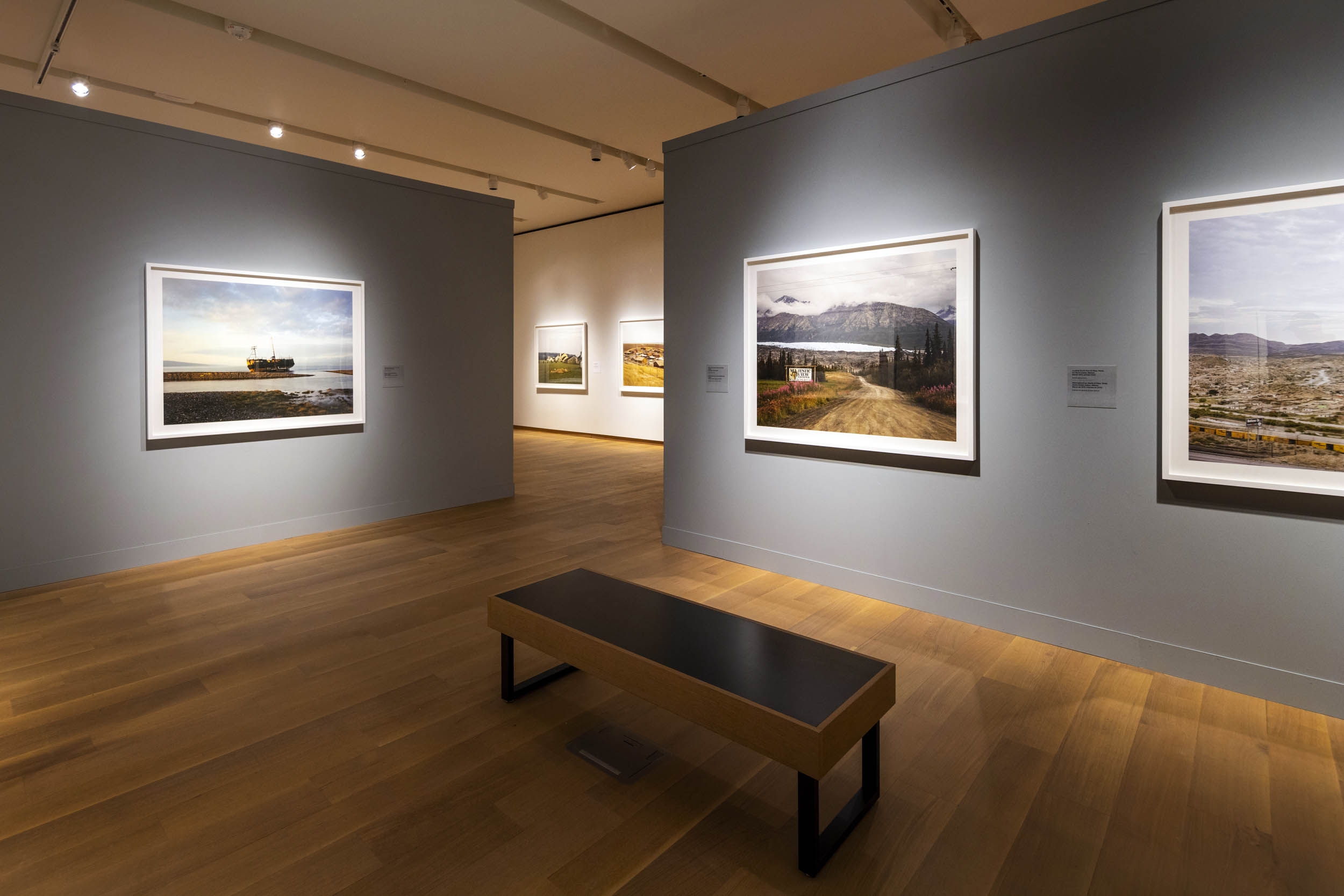
This sequence, Tell Me Why, is one of the four sequences in the series collectively titled Travelling the wonderful loneliness (2019-2024).

Other sequences in the series include (How I) Wish You Were Here; Material Witness; and Dark Light (all 2019-2024).
Dr Marcus Bunyan


1/ Nicos Hadjicostis. Destination Earth : A New Philosophy of Travel by a World-Traveler. Bamboo Leaf Press, 2016, p. 85 quoted in quoted in Olivia Schlichting. “Women in Cities & the Art of the Flaneuse,” in Urban Space & Women paper November 30, 2018, p. 11.

34 images
© Marcus Bunyan

Please click on the photographs for a larger version of the image.


Marcus Bunyan (Australian, b. 1958) 'Elongation' 2019 from the sequence 'Tell Me Why' 2019-2024


Marcus Bunyan (Australian, b. 1958) 'Untitled' 2019 from the sequence 'Tell Me Why' 2019-2024
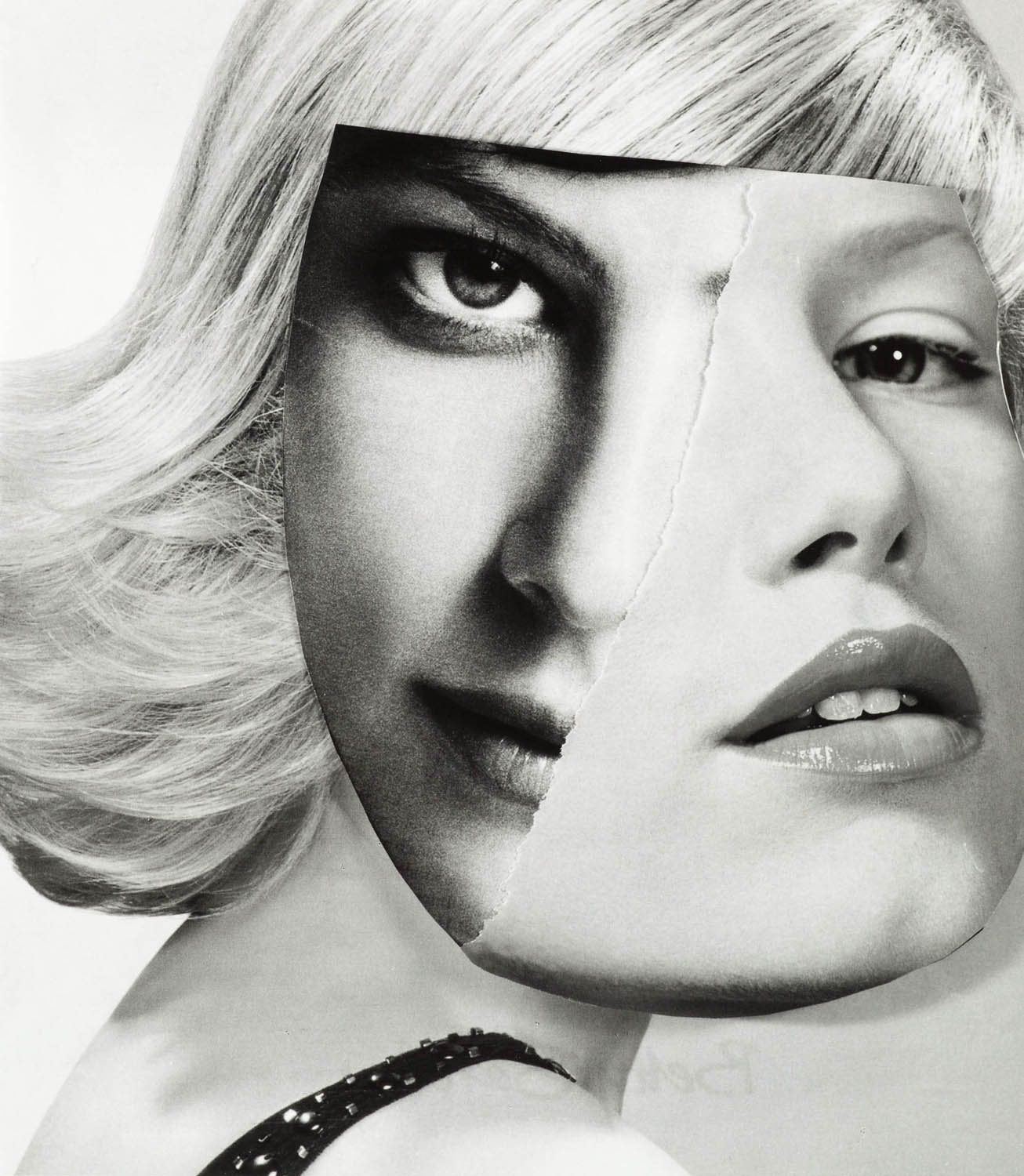


Marcus Bunyan (Australian, b. 1958) 'The Red Car' 2019 from the sequence 'Tell Me Why' 2019-2024
The Red Car
Marcus Bunyan (Australian, b. 1958) 'Man in blue' 2019 from the sequence 'Tell Me Why' 2019-2024
Man in blue


Marcus Bunyan (Australian, b. 1958) 'The Green Man' 2019 from the sequence 'Tell Me Why' 2019-2024
The Green Man


Marcus Bunyan (Australian, b. 1958) 'Clare Castle, England' 2019 from the sequence 'Tell Me Why' 2019-2024
Clare Castle, England


Marcus Bunyan (Australian, b. 1958) 'Suspension' 2019 from the sequence 'Tell Me Why' 2019-2024


Marcus Bunyan (Australian, b. 1958) 'Three cracked eggs' 2019 from the sequence 'Tell Me Why' 2019-2024
Three cracked eggs


Marcus Bunyan (Australian, b. 1958) 'Untitled' 2019 from the sequence 'Tell Me Why' 2019-2024


Marcus Bunyan (Australian, b. 1958) 'Silver' 2019 from the sequence 'Tell Me Why' 2019-2024


Marcus Bunyan (Australian, b. 1958) 'Southbound Northbound' 2019 from the sequence 'Tell Me Why' 2019-2024
Marcus Bunyan (Australian, b. 1958) 'Untitled' 2019 from the sequence 'Tell Me Why' 2019-2024


Marcus Bunyan (Australian, b. 1958) 'Push' 2019 from the sequence 'Tell Me Why' 2019-2024


Marcus Bunyan (Australian, b. 1958) 'Catch' 2019 from the sequence 'Tell Me Why' 2019-2024
Marcus Bunyan (Australian, b. 1958) 'Untitled' 2019 from the sequence 'Tell Me Why' 2019-2024


Marcus Bunyan (Australian, b. 1958) 'The profit of industry' 2019 from the sequence 'Tell Me Why' 2019-2024
The profit of industry


Marcus Bunyan (Australian, b. 1958) 'Untitled' 2019 from the sequence 'Tell Me Why' 2019-2024


Marcus Bunyan (Australian, b. 1958) 'Rue des Ursulines, Paris' 2019 from the sequence 'Tell Me Why' 2019-2024
Rue des Ursulines, Paris


Marcus Bunyan (Australian, b. 1958) 'Untitled' 2019 from the sequence 'Tell Me Why' 2019-2024


Marcus Bunyan (Australian, b. 1958) 'Photospheres' 2019 from the sequence 'Tell Me Why' 2019-2024
Photospheres
Marcus Bunyan (Australian, b. 1958) 'In Memory Of' 2019 from the sequence 'Tell Me Why' 2019-2024
In Memory Of
(In Memory of the forty three people who died as a result of the tragic accident at Moorgate Underground Station on the 28th February 1975)


Marcus Bunyan (Australian, b. 1958) 'Christmas in October' 2019 from the sequence 'Tell Me Why' 2019-2024
Christmas in October


Marcus Bunyan (Australian, b. 1958) 'The Riding School, England' 2019 from the sequence 'Tell Me Why' 2019-2024
The Riding School, England


Marcus Bunyan (Australian, b. 1958) 'The Blue Fan' 2019 from the sequence 'Tell Me Why' 2019-2024
The Blue Fan


Marcus Bunyan (Australian, b. 1958) 'The Casualities of War' 2019 from the sequence 'Tell Me Why' 2019-2024
The Casualities of War


Marcus Bunyan (Australian, b. 1958) 'Untitled' 2019 from the sequence 'Tell Me Why' 2019-2024


Marcus Bunyan (Australian, b. 1958) 'Atget (colour)' 2019 from the sequence 'Tell Me Why' 2019-2024
Atget (colour)


Marcus Bunyan (Australian, b. 1958) 'Untitled' 2019 from the sequence 'Tell Me Why' 2019-2024


Marcus Bunyan (Australian, b. 1958) 'Untitled' 2019 from the sequence 'Tell Me Why' 2019-2024


Marcus Bunyan (Australian, b. 1958) 'Suspension' 2019 from the sequence 'Tell Me Why' 2019-2024


Marcus Bunyan (Australian, b. 1958) 'Untitled' 2019 from the sequence 'Tell Me Why' 2019-2024


Marcus Bunyan (Australian, b. 1958) 'Self-portrait with dog' 2019 from the sequence 'Tell Me Why' 2019-2024
Self-portrait with dog


Marcus Bunyan (Australian, b. 1958) 'After (Hokusai)' 2019 from the sequence 'Tell Me Why' 2019-2024
After (Hokusai)


Photographs are available from this series for purchase. As a guide, a digital colour 16″ x 20″ print costs $1,000 plus tracked and insured shipping. For more information please see the Store web page.


Marcus Bunyan website

LIKE ART BLART ON FACEBOOK

Back to top